APPLE REHAB COLCHESTER
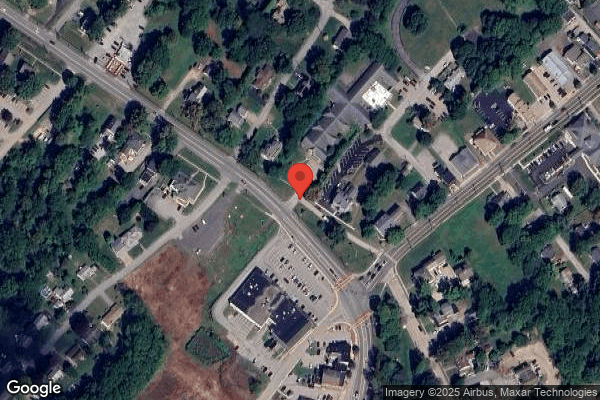
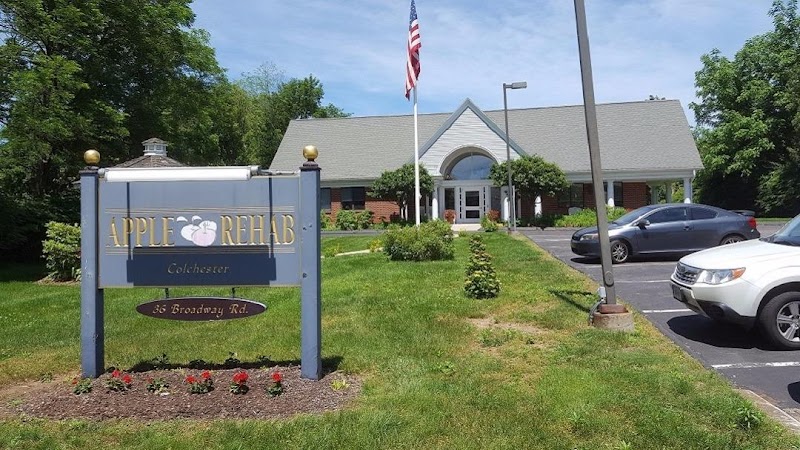
36 BROADWAY STREET, COLCHESTER, CT 06415 (860) 537-4606
For profit - Corporation 60 Beds APPLE REHAB Data: November 2025 3 Immediate Jeopardy citations
Trust Grade
0/100
#112 of 192 in CT
Last Inspection: August 2025

Inspected within the last 6 months. Data reflects current conditions.

Overview

Apple Rehab Colchester has received a Trust Grade of F, indicating significant concerns about the quality of care provided. It ranks #112 out of 192 nursing homes in Connecticut, placing it in the bottom half of facilities in the state, and #39 out of 64 in Capitol County, meaning there are only a few local options that perform better. The facility is reportedly improving, with issues decreasing from 19 in 2024 to just 3 in 2025, but staffing remains a concern with a 64% turnover rate, significantly higher than the state average of 38%. The facility has accumulated $51,534 in fines, which is higher than 95% of Connecticut facilities, indicating repeated compliance problems. While it has better RN coverage than 89% of state facilities, recent inspector findings revealed critical incidents, including allegations of rough care and failure to investigate reports of abuse, highlighting serious weaknesses that families should consider.

Trust Score
F
0/100
In Connecticut
#112/192
Bottom 42%
Safety Record
High Risk
Review needed
Inspections
Getting Better
19 → 3 violations
Staff Stability
⚠ Watch
64% turnover. Above average. Higher turnover means staff may not know residents' routines.
Penalties
✓ Good
$51,534 in fines. Lower than most Connecticut facilities. Relatively clean record.
Skilled Nurses
✓ Good
Each resident gets 51 minutes of Registered Nurse (RN) attention daily — more than average for Connecticut. RNs are trained to catch health problems early.
Violations
⚠ Watch
42 deficiencies on record. Higher than average. Multiple issues found across inspections.
★★☆☆☆
2.0
Overall Rating
★★☆☆☆
2.0
Staff Levels
★★★☆☆
3.0
Care Quality
★★☆☆☆
2.0
Inspection Score
Stable
2024: 19 issues
2025: 3 issues

The Good

  • Full Sprinkler Coverage · Fire safety systems throughout facility
  • No fines on record

Facility shows strength in fire safety.

The Bad

2-Star Overall Rating

Below Connecticut average (3.0)

Below average - review inspection findings carefully

Staff Turnover: 64%

18pts above Connecticut avg (46%)

Frequent staff changes - ask about care continuity

Federal Fines: $51,534

Above median ($33,413)

Moderate penalties - review what triggered them

Chain: APPLE REHAB

Part of a multi-facility chain

Ask about local staffing decisions and management

Staff turnover is elevated (64%)

16 points above Connecticut average of 48%

The Ugly 42 deficiencies on record

3 life-threatening 1 actual harm
Aug 2025 3 deficiencies
CONCERN (D)

Potential for Harm - no one hurt, but risky conditions existed

Free from Abuse/Neglect (Tag F0600)

Could have caused harm · This affected 1 resident

**NOTE- TERMS IN BRACKETS HAVE BEEN EDITED TO PROTECT CONFIDENTIALITY** Based on review of the clinical record, facility documentation, facility policy and interviews for 1 of 6 residents (Resident #2...

Read full inspector narrative →
**NOTE- TERMS IN BRACKETS HAVE BEEN EDITED TO PROTECT CONFIDENTIALITY** Based on review of the clinical record, facility documentation, facility policy and interviews for 1 of 6 residents (Resident #25) reviewed for abuse, the facility failed to ensure the resident was free from inappropriate touching by Resident #41, who had a history of inappropriate touching. The findings include: 1a. Resident #25 was admitted to the facility in April 2024 with diagnoses that included dementia, psychotic disturbance, mood disturbance, anxiety disorder, and major depressive disorder.The care plan dated 4/3/25 identified Resident #25 was involved in a resident-to-resident physical interaction (Resident #25 was inappropriately touched by Resident #41). Interventions included Resident #25 will be encourage not to engage in a kiss and hug with male peer. Offer psychiatric and social services support. The annual MDS dated [DATE] identified Resident #25 had severely impaired cognition and required setup or clean up assistance with bed mobility, transfer, and walk 150 feet. Additionally, Resident #25 had no physical and verbal behaviors directed toward others. The physician's order dated 7/29/25 directed the resident be independent with transfers and gait with rollator walker.The nurse's note dated 8/1/25 at 6:50 PM by the RN Supervisor (RN #4) identified Resident #25 was touched by Resident #41. RN assessment performed and APRN notified. The care plan dated 8/1/25 identified Resident #25 was involved in a resident-to-resident physical interaction. Resident #41 touched Resident #25 inappropriately. Interventions included resident will be seated with female peers not with male peers when participating in recreational activities. Offer psychiatric and social services support.The social services note dated 8/4/25 at 10:59 AM identified a wellness visit was done following an incident Resident #25 had with Resident #41. Resident #25 reports he/she recalled the incident but has no ill effects noted. Social service support and will remain involved as needed.The psychiatric APRN note dated 8/7/25 identified she was asked to see Resident #25 after an alleged incident with Resident #41. Resident #25 does not remember the incident. Resident #25 indicated he/she feels safe at the facility and feels comfortable around all his/her peers. Monitor behavior for depression, loss of interest in activities and isolation. b. Resident #41 was admitted to the facility in May 2024 with diagnoses that included Parkinson's disease with dyskinesia and anxiety disorder.The care plan dated 4/3/25 identified Resident #41 was involved in a resident-to-resident physical interaction. Resident #41 was witnessed kissing female peer (Resident #25). Interventions included offering psychiatric and social services support. RN assessment. Notify the physician and resident representative.The quarterly MDS dated [DATE] identified Resident #41 had intact cognition and had exhibited physical and verbal behavioral symptoms directed towards others. The reportable event form dated 8/1/25 identified Resident #41 was witnessed with arms around the waist of Resident #25. Residents were separated, Resident #25 was assessed by an RN, and Resident #41 was placed on 1:1 monitoring. The Administrator, police, APRN, psychiatric APRN, both power of attorneys were notified. The nurse's note dated 8/1/25 at 4:51 PM by RN #4 identified Resident #41 spoke with the psychiatric APRN via telehealth video conference. Psychiatric APRN felt Resident #41 was safe to come off 1:1 monitoring and to being monitored every 15 minutes. The care plan dated 8/1/25 identified Resident #41 was witnessed touching female peer inappropriately. Interventions included 1:1 monitoring until cleared by psychiatry and then every 15 minutes checks. Encourage resident to sit with male residents at recreation activities. Supervise during recreation activities. Psychiatric and social services follow up. The psychiatric APRN note dated 8/1/25 at 5:17 PM identified she was asked to see Resident #41 today for recent inappropriate sexual comments. Met with Resident #41 via telehealth. Resident #41 is not currently a danger to self or others. Nursing reports Resident #41 without further behavior at this time. This behavior for Resident #41 is not new. Resident #41 reports not making a comment. Discussed overall behaviors and what is not appropriate. Will discontinue 1:1 supervision and used every 15 minutes checks until seen by psychiatrist.The resident locator form dated 8/1/25 at 3:19 PM identified Resident #41 started on every 15 minutes monitor on 8/1/25 at 5:30 PM through 8/6/25 at 6:45 AM.A written statement by RN #4 dated 8/1/25 at 3:19 PM identified NA #4 reported to her that a few residents reported to NA #4 that Resident #41 was touching and cuddling Resident #25. RN #4 immediately went to the location which was A wing dining room and observed Resident #41 leaning into Resident #25's lap with his/her hand on Resident #25's thigh area rubbing and ultimately holding his/her hands. RN #4 indicated she separated the two residents immediately. RN #4 indicated she wheeled Resident #41 out of the dining room into the lobby area where the Administrator was and reported to the Administrator what was reported to her and what she observed. Resident #41 was placed on 1:1 monitoring. The DNS, both power of attorneys, police, and the psychiatrist were notified. A written statement by NA #4 dated 8/1/25 at 3:19 PM identified she came in at 3:00 PM and was informed by a couple of residents that Resident #41 was in the dining room with his/her hands on Resident #25 pants.A written interview by RN #4 on 8/1/25 at 3:19 PM with Resident #56 identified he/she saw Resident #41 holding hands with Resident #25. Resident #56 indicated he/she saw Resident #41 hands on Resident #25 lap and between his/her legs.A written interview by RN #4 on 8/1/25 at 3:19 PM with Resident #39 and Resident #48 indicated both residents stated they saw Resident #41 lean into Resident #25's lap snuggling. Both residents indicated Resident #41 hands were on Resident #25 lap.The APRN note dated 8/4/25 at 11:00 AM identified the DNS notified her there was an incident whereby Resident #41 touched Resident #25 inappropriately and Resident #25 reported at the time it made him/her uncomfortable. Resident #25 was asked about the incident today and fortunately secondary to his/her dementia Resident #25 had no recall of incident. The summary report dated 8/5/25 at 8:45 PM identified during an afternoon activity both residents were seated next to each other. When the activity had ended both residents were observed by other residents holding hands. RN #4 was called and arrived at the dining room and witnessed Resident #41 leaning into Resident #25 lap rubbing his/her thigh and then holding his/her hands. Both residents were separated immediately. Resident #41 indicated he/she didn't do anything wrong, and they were just friendly. Resident #25 was unable to recall the incident. Two residents that attended recreation activity were interviewed and stated, Resident #25 and Resident #41 they were just holding hands and maybe they are lonely and wanted each other's company. Psychiatrist and social services follow up. Care plans updated. Interview with the DNS on 8/12/25 at 8:00 AM identified she was aware of the alleged incident of Resident #41 leaning into Resident #25's lap and rubbing Resident #25 thigh and both residents holding hands. The DNS demonstrated that it was reported to her that Resident #41 hands were above Resident #25 knees on his/her lap/thigh area rubbing the thigh area. The DNS indicated Resident #41 was placed on 1:1 monitoring immediately until seen by the psychiatrist, and both residents care plans were revised. The DNS indicated Resident #41 was placed on every 15 minutes monitoring for a few days and discontinued. Interview with the Administrator on 8/12/25 at 8:45 AM identified she was aware of the alleged incident between Resident #25 and Resident #41. The Administrator indicated RN #4 immediately separated the two residents and placed Resident #41 on 1:1 until evaluated by psychiatry, and an RN assessment was performed on Resident #25. The Administrator indicated an investigation was initiated, and both residents care plans were revised. The Administrator indicated both residents were assessed by the psychiatrist, and Resident #41 was placed on every 15 minutes monitoring after the 1:1 was discontinued by the psychiatrist APRN. Interview with RN #4 on 8/12/25 at 10:47 AM (who worked the 3:00 PM - 11:00 PM shift on 8/1/25 as the RN Supervisor) identified at 3:20 PM NA #4 came and got her. RN #4 indicated she does not remember exactly what NA #4 said. RN #4 indicated she went to the first-floor dining room where recreation had just ended and as she was walking towards the dining room, she observed Resident #41 leaning and rubbing Resident #25 thigh. Resident #25 took Resident #41 hand, and they were holding hands by the time she reached both residents. RN #4 indicated she immediately separated both residents. Interview with Resident #41 on 8/12/25 at 10:26 AM identified Resident #41 indicated he/she does not remember the alleged incident on 8/1/25 at 3:19 PM with Resident #25.Interview with Resident #39 on 8/12/25 at 10:30 AM identified he/she does not remember the alleged incident on 8/1/25 at 3:19 PM involving Resident #25 and Resident #41.Interview with Resident #48 on 8/12/25 at 10:35 AM identified he/she does not remember the alleged incident on 8/1/25 at 3:19 PM involving Resident #25 and Resident #41.Interview with Resident #56 on 8/12/25 at 10:38 AM identified he/she does not remember the alleged incident on 8/1/25 at 3:19 PM involving Resident #25 and Resident #41.Interview with Recreation Director on 8/12/25 at 10:45 AM identified she did not work on 8/1/25 but heard of the alleged incident on 8/2/25. The Recreation Director indicated she had never observed Resident #41 being inappropriate with any of the residents during recreation activities. The Recreation Director indicated she was not aware of Resident #41's history of inappropriately touching Resident #25 because she was not employed by the facility at that time. The Recreation Director indicated she was not directed to keep Resident #25 and Resident #41 separated during recreation activity prior to the alleged incident on 8/1/25. Interview with Recreation Staff #1 on 8/12/25 at 11:03 AM identified on 8/1/25 during the movie activity Resident #25 and Resident #41 were seated next to each other. Recreation Staff #1 indicated she did not observe any inappropriate touching between the two residents. Recreation Staff #1 indicated she left the dining room at 3:06 PM and became aware of the alleged incident the next day. Recreation Staff #1 indicated she had heard and observed Resident #41 touching other residents but was never directed on how to manage Resident #41 behavior or any restrictions until after the most recent incident on 8/1/25. Recreation Staff #1 indicated she was not aware of any incident with Resident #41 prior to 8/1/25. Recreation Staff #1 indicated she had observed Resident #41 rubbing Resident #30's shoulder during a recreation activity sometime in June 2025. She also indicated she had observed Resident #41 touching other residents as well, for example touching their arms, nothing inappropriately. Recreation Staff #1 indicated she would separate the residents and let the nursing staff know. Recreation Staff #1 indicated no residents have ever come to her and complained about Resident #41. A written statement by Recreation Staff #1 on 8/12/25 identified in June 2025 at the start of a recreation program. Resident #41 was heading to a table and stopped next to Resident #30 and said hi, and slightly rubbed his/her shoulder in an unmalicious manner. Recreation Staff #1 indicated she redirected and educated Resident #41 that he/she cannot touch other residents even while saying hi. Recreation Staff #1 indicated Resident #41 went to his/her table and she notified the nursing staff.Interview with the DNS on 8/12/25 at 12:06 PM identified she was not aware of any issues regarding Resident #41 in the month of June. The DNS indicated she would educate and in-service all the staff regarding Resident #41 behavior. The DNS indicated she would discuss with the interdisciplinary team regarding Resident #41's behavior and better intervention.Interview with LPN #1 on 8/12/25 at 12:30 PM identified she does not remember Recreation Staff #1 notifying her of Resident #41 touched Resident #30 sometime in June 2025. Although attempted, an interview with NA #4 was not obtained.Review of the facility abuse policy identified abuse or mistreatment of any kind toward a resident is strictly prohibited. Any allegation of abuse by a staff member, visitor, family member, or resident must be reported immediately to a facility supervisor. All allegations will be thoroughly investigated, and appropriate action will be taken. Sexual abuse: Any form of sexual harassment, coercion, or assault, including unwanted touching between residents.
CONCERN (D)

Potential for Harm - no one hurt, but risky conditions existed

Accident Prevention (Tag F0689)

Could have caused harm · This affected 1 resident

**NOTE- TERMS IN BRACKETS HAVE BEEN EDITED TO PROTECT CONFIDENTIALITY** Based on review of the clinical record, facility documentation, facility policy, and interviews for 1 of 4 residents (Resident #...

Read full inspector narrative →
**NOTE- TERMS IN BRACKETS HAVE BEEN EDITED TO PROTECT CONFIDENTIALITY** Based on review of the clinical record, facility documentation, facility policy, and interviews for 1 of 4 residents (Resident #10) reviewed for falls, the facility failed to ensure that 2 staff members were present during care per the care card and physician's orders. The findings include: Resident #10 was admitted to the facility in February 2025 with diagnoses that included chronic obstructive pulmonary disease, urinary retention, and dementia.The quarterly MDS dated [DATE] identified Resident #10 had severely impaired cognition, was frequently incontinent of bowel, required a urinary catheter for bladder, and required substantial assistance with bathing, dressing, and transfers.The care plan dated 6/10/25 identified Resident #10 had a history of falls. Interventions included close/frequent observation due to poor safety awareness.Review of the clinical record identified Resident #10 was hospitalized from [DATE] - 7/16/25 for UTI and metabolic encephalopathy. A nurse's note dated 7/16/25 at 10:44 PM by RN #4 identified Resident #10 was aggressive and lashing out during bedtime care. RN #4 identified that Resident #10 had not exhibited aggressive behaviors previously and identified interventions would include 2 persons with all care and that the intervention had been added to the care card.Review of the RN supervisor shift report book for 7/16/25 identified multiple report notes written by RN #4 for Resident #10 which included that Resident #10 was to have 2 persons with care at all times. Review of the care card identified Resident #10 was a fall risk and required 2 persons with all care. A physician's order dated 7/17/25 directed to provide assistance of 2 with transfers and a rolling walker.A reportable event form dated 7/17/25, completed by RN #5 (7:00 AM - 3:00 PM RN Supervisor) identified Resident #10 had a witnessed fall at 9:30 AM. The form identified that NA #3 was attempting to transfer Resident #10 from his/her bed to a shower chair with the use of a rolling walker. The form further identified that during the transfer, NA #2 had not utilized a gait belt to assist and Resident #10's knees buckled and the resident was lowered to the floor by NA #3. The form identified Resident #10 had no injuries as a result of the fall and identified NA #3 was the only witness to the fall. RN #5 identified interventions to prevent future falls included use of a gait belt. Interview with RN #4 (3:00 PM - 11:00 PM RN Supervisor) on 8/12/25 at 9:00 AM identified she was called into assess Resident #10 following aggressive behaviors with the nurse aide at bedtime care. RN #4 identified Resident #10 had just been readmitted from the hospital earlier in the shift and had not exhibited aggressive behaviors previously but had a weeklong hospitalization due to a UTI. RN #4 identified that due to the change in behaviors, the hospitalization, and the resident's underlying dementia, she added 2 persons with all care to the resident's care card and also added the order for assist of 2 with rolling walker. RN #4 also identified that she also added the information to the RN supervisor shift report book. RN #4 identified that all nurse aides were responsible to review the care cards for all residents assigned to them as the care cards were a living document and often were changed or had new or additional interventions added for residents. RN #4 also identified that all RN supervisors coming onto shift were responsible to review for the prior 24 hours as well as to update the book with any changes as well. Interview with PT #1 (Director of Rehab) identified that in the last year, the facility had changed its gait belt policy to identify that facility staff were able to use discretion regarding whether or not to use a gait belt with transfers. PT #1 identified that she had not provided any in-service training to staff regarding transferring residents safety without the use of a gait belt and it was her practice, as well as all the therapists and assistants in her department, to always utilize a gait belt with any resident who required an assist of 1 or more. Interview with RN #5 on 8/12/25 at 9:47 AM identified she completed the investigation and reportable event form for Resident #10's witnessed fall on 7/17/25 at 9:30 AM. RN #5 identified that NA #3 was attempting to transfer Resident #10 from the bed to a shower chair when Resident #10 began to fall. RN #5 identified NA #3, who was positioned behind Resident #10, put her arms under Resident #10's armpits and lowered him/her to the floor. RN #5 identified that NA #3 reported she was the only staff member present at the time of the fall and had not utilized a gait belt during the transfer and based on this she added the gait belt as an intervention. RN #5 identified she had been employed at the facility for 3 months and had not received any training or in-services on when to use a gait belt, but she had worked at other facilities, and it was her practice to always use a gait belt for anyone who was a risk for falls. RN #5 also identified that she had been notified by multiple staff at the facility that use of gait belts were optional for all staff. RN #5 identified that the resident care card was typically reviewed by the nurse aides, but she reviewed the RN supervisor book every morning. Upon review of the notes entered by RN #4, RN #5 identified did not recall seeing any notes related to Resident #10 requiring 2 persons with all care and may have missed the notes regarding this.Interview with NA #3 on 8/12/25 at 10:42 AM identified that she was attempting to transfer Resident #10 from the bed to a shower chair on 7/17/25 at 9:30 AM when Resident #10 fell. NA #3 identified she positioned Resident #10's rolling walker next to Resident #10's bed and was standing behind him/her. NA #3 identified Resident #10 had shoes on and a facility provided gown which was open in the back and no other clothing, and Resident #10 was positioned directly in front of NA #3 with Resident #10's back facing NA #3. NA #3 identified that she was unsure if she had her hands on Resident #10's hips while Resident #10 began to transfer and identified she did not routinely utilize a gait belt as it was not required by the facility. NA #3 observed Resident #10 begin to be unable to bear weight and his/her knees buckle, and NA #3 placed her arms under Resident #10's armpits but had to reach up to do so, as Resident #10 was taller than her. NA #3 identified she lowered Resident #10 to the floor but identified it was difficult due to Resident #10's height and inability to bear any weight. NA #3 identified she used her body and arms to lower Resident #10 to the floor and then called for help. NA #3 identified prior to Resident #10's hospital stay, he/she required an assist of 1 with transfers and she had not had any issues transferring Resident #10 prior to 7/17/25. NA #3 identified that for a new resident or a resident she had not provided care for, she would review the care card, but since she typically provided care for Resident #10 since she was assigned to Resident #10's unit and was familiar with him/her, she had not reviewed Resident #10's care card on 7/17/25. NA #3 identified she was not aware that Resident #10 had any issues following his/her return from the hospital on 7/16/25 or that Resident #10 was supposed to have 2 persons with all care. NA #3 also identified that she recently left the facility but had been employed for over a year, and in that time had not received any training on how to assess when to utilize a gait belt.Interview with the DNS on 8/12/25 at 11:17 AM identified she was not aware of any behaviors that occurred with Resident #10 on 7/16/25 or that Resident #10 had been changed to 2 persons with all care. The DNS identified that she felt, even if there had been 2 staff members present or NA #3 had used a gait belt during Resident #10's transfer on 7/17/25 at 9:30 AM, Resident #10 would likely still have fallen but was unable to elaborate why.Although requested, the facility failed to provide policies related to resident transfer assistance. The facility policy on gait belts directed that the policy was to provide guidance on the optional use of gait belts during transfer and ambulation to promote safety and prevent injury for both residents and staff, and that gait belts were available for staff to use as a tool to ensure safe handling and transfers of residents. The policy further directed that staff use their judgment to decide if a gait belt was appropriate, that all staff involved in resident transfers and ambulation should be trained on proper use of gait belts and regular competency checks.The facility policy on falls directed that the facility would identify residents at risk for falls and implement interventions to minimize fall related injuries. The policy further directed that the resident care cards should reflect the resident's fall risk and corresponding precautions.
CONCERN (D)

Potential for Harm - no one hurt, but risky conditions existed

Infection Control (Tag F0880)

Could have caused harm · This affected 1 resident

**NOTE- TERMS IN BRACKETS HAVE BEEN EDITED TO PROTECT CONFIDENTIALITY** Based on observation, review of the clinical record, facility documentation, facility policy, and interviews for 1 resident (Res...

Read full inspector narrative →
**NOTE- TERMS IN BRACKETS HAVE BEEN EDITED TO PROTECT CONFIDENTIALITY** Based on observation, review of the clinical record, facility documentation, facility policy, and interviews for 1 resident (Resident #6) reviewed for tracheostomy care, the facility failed to ensure that appropriate infection control practices were implemented during tracheostomy care. The findings include: Resident #6 was admitted to the facility in July 2024 with diagnoses that included myocardial infarction, epilepsy, and tracheostomy. A physician's order dated 9/11/24 directed to change disposable inner tracheostomy cannula everyday shift and as needed. The quarterly MDS dated [DATE] identified Resident #6 had severely impaired cognition, was dependent on staff assistance with eating, bathing, and toileting. The MDS also identified Resident #6 required tracheostomy care. The care plan dated 6/30/25 identified Resident #6 had a tracheostomy related to respiratory failure. Interventions included to provide tracheostomy care as ordered and maintain enhanced barrier precautions per facility protocol.An enhanced barrier precautions line list dated 8/6/25 identified Resident #6 was on enhanced barrier precautions (EBP) for a tracheostomy.Observation 8/12/25 at 11:50 AM directly outside of Resident 6's doorway identified a PPE cart with signage posted outside the room door which identified enhanced barrier precautions. The signage directed that everyone entering the room must clean their hands before entering and when leaving the room. The signage also directed that providers and staff must also wear gloves and a gown for high contact resident care activities including device care for tracheostomies.Observation of Resident #6's tracheostomy care beginning at 8/12/25 at 11:50 AM identified RN #5 and LPN #1 were standing inside the room at Resident #6's bedside wearing disposable gloves, and LPN #1 also wearing a disposable surgical mask. Both RN #5 and LPN #1 were without the benefit of gowns. LPN #1 identified she was going to begin to provide tracheostomy care and RN #5 identified she was assisting LPN #1. LPN #1 reached for Resident #6's tracheostomy straps. Prior to LPN #1 initiating care of Resident #6's tracheostomy and following surveyor inquiry related to EBP, LPN #1 and RN #5 identified they were aware that Resident #6 was on enhanced barrier precautions and were then observed dropping their gloves and utilizing hand sanitizer prior to exiting the room. RN #5 and LPN #1 were then observed donning new gloves and a disposable gown in the hallway and reentering Resident #6's room subsequent to surveyor inquiry. Observation at 11:52 AM identified LPN #1 used a bedside table to place the unopened sterile tracheostomy care and cleaning tray without wiping the table down or placing a barrier on the table. LPN #1 was observed touching multiple areas on the table including the underside of the table and then began to touch the suction machine located on Resident #6's night stand. After checking the suction machine, LPN #1 removed a newly opened suction tip from its packaging and touched the tip multiple times with the same gloved hands. At 11:55 AM, LPN #1 removed her gloves but was not observed performing hand hygiene initially. Subsequent to surveyor inquiry, LPN #1 proceeded to Resident #6's bathroom and used the sink to wash her hands with soap and water. At 11:58 AM, LPN #1 was observed opening the sterile tracheostomy care and cleaning kit and began to remove items from the kit including a sterile cup and lid and sterile gloves with her hands. LPN #1 was observed with her hands inside of the kit touching exposed portions of the sterile gloves. During this observation, RN #5 was positioned on the opposite side of Resident #6's bed and was not observed providing any instruction or direction to LPN #1. LPN #1 identified that the items she removed from the kit were to be used sterile and subsequent to surveyor inquiry identified that the items were in fact no longer sterile due to the way they were removed. At 12:05 PM, RN #5 identified she would attempt to locate RN #1 (IP nurse), to assist LPN #1, and exited the room. LPN #1 then identified that while she had performed tracheostomy care and utilized PPE and the sterile cleaning kit previously, she was nervous and frozen due to observation by this surveyor. Observation at 12:08 PM identified RN #1 entered the room and was notified by LPN #1 that she would be unable to complete the tracheostomy care due to being nervous. RN #1 identified she would assist LPN #1 with the tracheostomy care but that a new tracheostomy care and cleaning kit would need to be used due to the previous kit no longer being sterile. RN #1 exited the room and returned at 12:10 PM with a new kit along with being gowned and gloved prior to entering the room. RN #1 and LPN #1 were observed from 12:10 PM - 12:35 PM performing tracheostomy care utilizing a new sterile kit for Resident #6. During the entirety of observation, LPN #1 required substantial direction which included step by step instruction from RN #1 to complete the treatment. Interview with RN #1 at 12:36 PM immediately following the tracheostomy care observations identified that she was unsure what happened and that she was not aware of any issues related to LPN #1 performing tracheostomy care in the past. RN #1 identified that she felt LPN #1 was very nervous due to surveyor observation. RN #1 identified that the facility had provided education to LPN #1 regarding tracheostomy care including use of a sterile cleaning and care kit in 2025 and the education included online modules and in person competencies. RN #1 identified she was also the facility staff development nurse and she would provide additional 1:1 education and hands on training with LPN #1 due to the issues identified during Resident #6's tracheostomy care. Review of LPN #1's education for 2025 materials provided included clinical in-service sign in sheets dated 6/9/25 that identified LPN #1's signature. The in-service education included facility policies related to enhanced barrier precautions, isolation precautions, hand sanitizer use, and hand washing. Further review of the education identified that LPN #1 completed online competencies and nursing skills evaluation related to tracheostomy care on 7/10/25. The documentation provided failed to identify the specific education and skills related to tracheostomy care that were reviewed. The facility policy on enhanced barrier precautions directed that it was the policy of the facility to adhere with CDC and CMS guidelines related to EBP to prevent the transmission of multi drug resistant organisms while promoting resident quality of life. The policy further directed that the facility would implement EBP during high contact resident care activities which included device care for tracheostomies. The policy Further directed that staff would perform hand hygiene and don PPE before providing high contact care to the resident and would doff PPE and perform hand hygiene after providing high contact care to the resident.The facility policy on tracheostomy care directed that the purpose of the policy was to maintain a patent airway and an infection free stoma. Procedure for tracheostomy care directed that a licensed nurse providing the care would wash his/her hands then set up the equipment needed to provide the care which would include a tracheostomy care kit, normal saline, plastic bag, sterile gloves, suction catheter, and suction machine. The procedure also directed that the suction catheter should be applied to the tubing and left in its package, and the tracheostomy care kit should be opened with sterile normal saline poured into containers provided within the kit, the nurse to don the sterile gloves prior to providing suction to the resident.The facility policy on hand washing directed that the purpose of the policy was to ensure that staff washed their hands as a means of preventing the spread of infection, and that all staff would wash their hands including the following conditions: before resident contact, after resident contact, and after handling contaminated items or equipment.The facility policy on use of instant hand sanitizer directed that the purpose of the policy was to prevent the spread of infection and contamination by blood borne pathogens. The policy further directed that when sinks were not readily available, instant hand sanitizer may be used between tasks that normally required hand washing unless hands were visibly soiled and that hand should be washed with soap and water at the first opportunity.
Aug 2024 13 deficiencies 3 IJ
CRITICAL (J) 📢 Someone Reported This

A family member, employee, or ombudsman was alarmed enough to file a formal complaint

Immediate Jeopardy (IJ) - the most serious Medicare violation

Free from Abuse/Neglect (Tag F0600)

Someone could have died · This affected 1 resident

**NOTE- TERMS IN BRACKETS HAVE BEEN EDITED TO PROTECT CONFIDENTIALITY** Based on clinical record review, facility documentation review, facility policy review, and interviews, for 4 of 18 residents (R...

Read full inspector narrative →
**NOTE- TERMS IN BRACKETS HAVE BEEN EDITED TO PROTECT CONFIDENTIALITY** Based on clinical record review, facility documentation review, facility policy review, and interviews, for 4 of 18 residents (Residents 4, 1, 21 and 23) who alleged rough care was provided by staff and alleged incontinent care was not provided timely, the Facility failed to protect the residents' right to be free from abuse and/or neglect. The failures resulted in a finding of Immediate Jeopardy. Cross reference F610 1. Resident #4's diagnoses included spinal stenosis (narrowing of the space around the spinal cord) and anxiety disorder. The quarterly MDS assessment dated [DATE] identified Resident #4 had severe cognitive impairment. Review of a nursing note dated 6/18/2024 at 3:38 AM identified that at 12:30 AM, Resident #4 alleged he/she had been harmed by a NA during care on the evening of 6/17/2024. Resident #4 identified that NA #1 stated he/she was like moving a thousand pounds and that NA #1 was not hurting her back to move Resident #4. Resident #4 further stated that NA #1 is rough with care, used a stern/unfriendly tone when answering the call bell, and had pushed him/her hard several times and hit Resident #4's head into the nightstand. The resident reported slight pain to the left eyebrow and the nurse observed a 2-centimeter by 2-centimeter area of faint swelling and redness to the left brow. Resident #4 indicated that NA #2 witnessed the incident. Review of the RN assessment dated [DATE] at 8:03 AM, signed by the DNS, identified that redness was noted to Resident #4's left brow, and he/she complained of a headache. Facility incident report dated 6/18/2024 identified Resident #4 alleged staff were rough during a Hoyer lift transfer that occurred on 6/17/2024 and hit his/her left eyebrow on the nightstand. The report included two (2) statements from NA #2 dated 6/18/2024 that she witnessed the interaction between NA #1 and Resident #4 and identified no abuse was witnessed. Review of the Concern Form (grievance) dated 6/20/2024, signed by Administrator #2 and SW #1 identified Resident #4 reported that staff were rough during a Hoyer lift transfer on 6/18/2024 and his/her left eyebrow was bumped on the nightstand. No injury was noted, and staff were provided with education. Interview with Social Worker #1 on 8/6/2024 at 10:08 AM identified although Resident #4 had a diagnosis of dementia, he/she had consistent recall of the incident and was an accurate reporter. Interview with NA #2 on 8/5/2024 at 2:52 PM identified that on 6/17/2024 on the 3 to 11 PM shift she witnessed NA #1 speak to Resident #4 disrespectfully and forcefully pushed Resident #1, hitting the left side of Resident #4's head on the nightstand. NA #2 stated the area was reddish purple after the incident. NA #2 stated that her written statements dated 6/18/2024 were not accurate of the events she witnessed. NA #2 stated when the DNS interviewed her about the incident, she had NA #1 present. Because she is afraid of NA #1, she did not report the abuse. NA #2 stated she had verbally told the DNS that she witnessed the incident, but because she was interviewed in front of NA #1, she did not write it on her statement. NA #2 further stated NA #1 had been verbally abusive to her in the past and she was afraid of retaliation. Interview with NA #5 on 8/5/2024 at 3:11 PM identified on 6/18/2024 Resident #4 reported to her and another NA (NA #4) that NA #1 shoved him/her forcefully to the left side in the bed (the evening before) and he/she hit his/her head. NA #5 stated she notified RN #9 (11-7 supervisor). Interview with RN #9 on 8/6/2024 at 1:09 PM identified on 6/18/2024, NA #5 reported Resident #4's allegation that NA #1 was rough with care and made verbal comments. RN #9 stated she called and texted the DNS, notified the local police, and completed an incident report. Interview with NA #4 on 8/7/2024 at 1:05 PM identified that Resident #4 alleged NA #1 was rough with care and Resident #4 was afraid of NA #1. Interview with the DNS on 8/8/2024 at 11:45 AM identified although Resident #4's story remained consistent, and NA #2 stated she witnessed NA #1 provide rough care to the resident, the facility did not substantiate the allegation of abuse. The DNS was unable to explain why the allegation of abuse was not substantiated. 2. Resident #1's diagnoses included chronic kidney disease. The annual Minimum Data Set (MDS) assessment dated [DATE] identified Resident #1 was alert and oriented, exhibited no behaviors, required moderate assistance for transfers and toileting, and Resident #1 was frequently incontinent of bowel and bladder. The Resident Care Plan dated 3/13/2024 identified that Resident #1 required staff assistance with ADLs and toileting. Interventions directed to assist with toileting needs. Review of the Concern Form (grievance) dated 7/15/2024 identified Resident #1's family member alleged staff were rough when toileting Resident #1 and expressed a concern about the way staff spoke to Resident #1 on 7/14/2024. The form was signed by the Social Worker. Late entry Social Service note dated 7/15/2024 at 1:09 PM identified the DNS, SW #1 and the Administrator spoke with Resident #1's family member on 7/15/2024 about their concerns and wrote a grievance. Review of the facility Incident Report dated 7/22/2024 (8 days after the incident) identified on 7/14/2024 at 4:00 PM, a family member reported while on a phone call with Resident #1, he/she overheard staff yelling at the resident stating he/she was exhausting, no one wants to come in his/her room and that he/she was the reason why staff was leaving. Statements from Resident #1 and his/her roommate (Resident #8) were obtained by Social Worker #1 on 7/15/2024. Written statement from RN #1 dated 7/14/2024 (day of the incident) identified the family notified him on 7/14/2024 at 5 PM that he/she heard staff yelling at Resident #1 that he/she is exhausting, and the resident was afraid of retaliation. RN #1 spoke with Resident #1 who stated when he/she drinks a lot, he/she urinates a lot and the NA yells at him/her for ringing the call bell. Resident #1 described the accused NA, and the NA was subsequently identified as NA #1. Review of the facility daily punch details for NA #1 identified that she worked on 7/14, 7/15, 7/17, 7/18, 7/19, 7/22 and 7/23/2024 with a comment that indicated NA #1 was suspended on 7/23/2024. NA #1 returned to work on 7/26/2024. The investigative summary dated 7/25/2024 identified NA #1 was not using a professional tone during care, and that Hoyer lift (mechanical lift) transfers need to be gentler. NA #1 was suspended on 7/23/2024 (9 days after the allegation) and provided with customer service education, sensitivity training and random observations of care (abuse education provided was attached to the summary). Review of Psychiatric APRN note dated 7/16/2024 identified Resident #1 reported he/she was upset with how staff handled him/her when assisting with toileting and the way the NA spoke to him/her while providing care. Interview with Resident #1 on 8/1/2024 at 8:54 AM identified on 7/14/2024, he/she rang the call bell because he/she needed to have a bowel movement and waited for three hours because the NAs kept turning off the call bell. The resident identified when NA #1 entered the room to provide care, NA #1 started yelling at him/her and stated that no one wants to take care of him/her because he/she has to use the toilet too often. Resident #1 indicated when NA #1 transferred him/her to the commode, she pushed him/her hard, hitting Resident #1 into the commode and stated it was painful. Resident #1 also indicated shortly after the incident, his/her family visited and reported they had overheard the staff comments when they were on the phone. Interview with Person #2 on 8/1/2024 at 9:38 AM identified he/she received a call from Resident #1 on 7/14/2024 and she heard a female voice yelling at Resident #1 that he/she was exhausting, and the facility was short staffed because of Resident #1. Person #2 stated that while on the phone with the resident, he/she received a call from Resident #8 (Resident #1's roommate), and he/she put the call with Resident #1 on hold. Resident #8 told him/her that Resident #1 needed help awfully bad, stating he/she was wet and requested that Person #2 come to help Resident #1. Person #2 hung up with Resident #8 and drove to the facility while remaining on the call with Resident #1. When Person #2 arrived in Resident #1's room he/she observed a soiled brief in the waste basket (wet and with feces). Resident #1 asked Person #2 to not report the incident as he/she was concerned that NA #1 would be rough and was afraid of NA #1. Interview with NA #2 on 8/1/2024 at 12:49 PM identified at the beginning of her shift at 3 PM on 7/14/2024, Resident #1's roommate (Resident #8) reported Resident #1 got man handled and he/she was afraid for him/her, and the family arrived at that time and reported the incident to staff. Interview with NA #1 on 8/1/2024 at 1:34 PM identified she denied the allegations that she was rough with or made inappropriate comments to Resident #1. NA #1 further stated Resident #1 had an overactive bladder and that it was not realistic to toilet him/her as often as he/she rings the call bell. Interview with SW #1 on 8/1/24 at 10:19 AM identified that she was aware that a grievance is a minor concern and was aware of the definitions of abuse in accordance with Federal regulations and the requirement for investigations to be completed. SW #1 further stated she follows the direction of the Administrator for grievances and allegations of abuse. She indicated that when she receives a grievance, she notifies the Administrator and the department that the grievance/concern relates to so that an investigation can be initiated. She reported she was concerned regarding the allegation of abuse regarding Resident #1 and notified the Administrator on 7/15/2024. Although SW #1 was concerned about the allegation, she was directed by Administrator #2 to complete a Concern Form. Additionally, she indicated that there have been many issues and complaints from both families and staff regarding NA #1 and stated NA #1 was imposing and intense. SW #1 reported that she was worried for the residents on the weekends when there is no oversight and no social worker present in the facility, however she stated she did not discuss her concerns with the corporate office. Interview with RN #1 (3-11 supervisor) on 8/1/24 at 12:52 PM identified on 7/14/2024 at 3:30 PM, Person #2 (Resident #1's family member) reported to him and LPN #1 that he/she overheard a staff member talking abusively to Resident #1 and reported to RN #1 that the same NA was rough with care. RN #1 identified that it was an allegation of abuse, however, he did not remove the staff member from the schedule. Interview, facility documentation and record review with DNS and DNS #2 (Regional DNS) on 8/1/2024 at 12:20 PM, DNS #2 stated she was aware of the 7/14/2024 allegation of abuse. Interview identified that NA #1 should not have made the comments and should not have been rough when providing care. Interview identified although Resident #1 was alert and oriented, and the incident was heard by Person #2, NA #1 was given disciplinary action for an inappropriate interaction and inappropriate language with a resident, the facility did not substantiate the allegation of abuse. Interview identified although the allegation should have been addressed on 7/14/2024 when it was first reported to RN #1, staff failed to follow facility policy on protecting the residents while an investigation was being conducted. Interview with Administrator #2 (former Administrator) on 8/1/2024 at 11:32 AM identified he was the Administrator when the incident occurred, stated the allegation was abuse, he was directed to report all allegations of abuse to corporate for direction, and in this case was directed to complete a grievance of the allegation. Administrator #2 stated that the incident should not have occurred, and staff failed to implement their policy to remove the accused staff member pending investigation to ensure all residents are protected. Administrator #2 further indicated there had been numerous complaints regarding NA #1 from residents and families, and that there was a folder on NA #1 in the Administrators office. Interview with RN #2 on 8/7/2024 at 3:05 PM identified that NA #1 was irate about being taken off the schedule on 7/23/2024 pending investigation. She indicated that NA #1 was repeatedly calling the facility and staff members personal phones on 8/2/2024, threatening to drive to the facility if she wasn't given information on the investigation. RN #2 indicated that the facility called the police and then NA #1 subsequently called the facility back and stated she was resigning on 8/7/2024. 3. Resident #21 had diagnoses that included dementia. The quarterly Minimum Data Set (MDS) assessment dated [DATE] identified Resident #21 had moderate cognitive impairment and required assistance with ADLs. Facility incident report dated 7/29/2024 identified Resident #21 reported he/she was in bed too long and was not changed to the point that his/her skin was burning from laying in urine. Resident #21 also complained that he/she had not had a shower in over a month, and NA #5 told him/her and Resident #11 to keep your mouth shut, you both talk too much. Interview on 8/5/2024 at 3:11 PM with NA #5 (worked 11PM - 7:00AM shift) identified on 7/29/2024 at the start of her shift she observed both Resident #11 and #21 (roommates) were incontinent. NA #5 stated she heard NA #1 say to Residents #11 and #21 to mind their own business and she notified RN #3 the residents were incontinent and what she overheard NA #1 say to the residents. Interview with RN #3 on 8/6/2024 at 12:24 PM identified he worked the 3 to 11 PM shift on 7/29/2024, and at the end of his shift NA #5 reported Resident #11 stated the NAs on 3-11 shift were too busy to give care to Resident #11 and #21. RN #5 stated he directed NA #1 and #6 (worked 3-11 PM shift), to provide care that had been omitted for Residents #11 and 21. RN #3 stated did not know what care was given during the shift. Interviews with NA #1 was unable to be obtained during the survey. During interview with NA #6 on 8/8/2024 at 10:45 AM stated they were short staffed and gave care when they could during the shift. NA #6 was unable to identify when Resident #11 and 21 last received care. 4. Resident #23's diagnosis included a history of recent C-difficile infection. The RCP dated 7/11/2024 identified Resident #23 required assistance with ADLS. Interventions directed to assist as needed to meet needs. The 5-day quarterly MDS assessment dated [DATE] identified Resident #23 was alert and oriented and required assistance with mobility and toileting. The Facility grievance dated 8/6/2024 identified two (2) nights ago at 1 AM, Resident #23 rang the bell and requested to be changed (incontinent care). NA #12 responded in a not nice manner that Resident #23 would have to wait, because Resident #23 was just changed. Resident #23 waited until 3:13 AM (two hours and thirteen minutes later) and put the call light on again and the care was provided. Review of the facility incident report dated 8/6/2024 at 4 PM alleged staff was not nice and was nasty when Resident #23 asked to be changed, and Resident #23 rang to request care at 1 AM, and care was not provided until 3:15 AM. NA #12 statement identified she indicate she provided resident care at 1, 4 and 6 AM. Interview with Resident #23 on 8/8/2024 at 1:15 PM confirmed the allegations as described in the grievance and stated he/she had loose stools when he/she requested care. Interview, clinical record review, and facility documentation review with the DNS on 8/8/2024 at 9:35 AM identified Resident #23 was having loose stools related to the C-difficile, and on 8/6/2024 Resident #23 reported that on Saturday night (8/4/2024) he/she requested to be changed about 1 AM. NA #12 answered the call bell and told Resident #23 that she had just provided care and Resident #23 would have to wait. Resident #23 did not ring the bell again until 3 AM because he/she thought the NA was coming back, and care was provided at 3 AM (2 hours after requested). The DNS stated the care should have been provided when Resident #23 requested care at 1 AM. Further, the DNS stated care should have been provided every two (2) hours, not at 1, 4 and 6 AM. The DNS was unable to explain why the allegation was not investigated as an allegation of abuse/neglect, in accordance with facility policy. Although attempted, NA #12 was unavailable for interview during the survey. Review of facility Abuse Policy (undated) directed in part, residents will be free from abuse, and the accused staff will be immediately suspended pending the findings of the investigation.
CRITICAL (J) 📢 Someone Reported This

A family member, employee, or ombudsman was alarmed enough to file a formal complaint

Immediate Jeopardy (IJ) - the most serious Medicare violation

Report Alleged Abuse (Tag F0609)

Someone could have died · This affected 1 resident

**NOTE- TERMS IN BRACKETS HAVE BEEN EDITED TO PROTECT CONFIDENTIALITY** Based on clinical record review, facility documentation review, facility policy review, and interviews for five (5) of twenty-th...

Read full inspector narrative →
**NOTE- TERMS IN BRACKETS HAVE BEEN EDITED TO PROTECT CONFIDENTIALITY** Based on clinical record review, facility documentation review, facility policy review, and interviews for five (5) of twenty-three residents (Resident #1, 4, 11, 5, and 2), reviewed for abuse and/or neglect, the facility failed to ensure allegations of abuse were reported immediately to the State Agency as required (within 2 hours if resulted in serious bodily injury or not later that 24 hours if no bodily injury). The findings include: 1. Resident #1's diagnoses included chronic kidney disease. The annual MDS assessment dated [DATE] identified Resident #1 was alert and oriented, required moderate assistance for transfers and toileting, and Resident #1 was frequently incontinent of bowel and bladder. The Resident Care Plan dated 3/13/2024 identified that Resident #1 required staff assistance with ADLs and toileting. Interventions directed to assist with toileting needs. Review of the Concern Form (grievance) dated 7/15/2024 identified Resident #1's family member alleged staff were rough when toileting Resident #1 and expressed a concern about the way staff spoke to Resident #1 on 7/14/2024. The summary indicated a NA was not using a professional tone during care, and Hoyer lift (mechanical lift) transfers need to be gentler. Late entry social service note dated 7/15/2024 at 1:09 PM identified the DNS, SW #1 and the Administrator spoke with Resident #1's family member on 7/15/2024 about their concerns and wrote a grievance. Review of the facility Incident Report dated 7/22/2024 (8 days after the incident) identified on 7/14/2024 at 4:00 PM, a family member reported while on a phone call with Resident #1 he/she overheard staff yelling at the resident and stating he/she was exhausting, no one wants to come in his/her room and that he/she was the reason why staff was leaving. Statements from Resident #1 and roommate (Resident #8) were obtained by Social Worker #1 on 7/15/2024. The report further identified the NA #2 was suspended. A written statement from RN #1 dated 7/14/2024 (day of the incident) identified the family notified him on 7/14/2024 at 5 PM that he/she heard staff yelling at Resident #1, telling Resident #1 that he/she was exhausting, and the resident was afraid of retaliation. RN #1 spoke with Resident #1 who stated when he/she drinks a lot, he/she urinates a lot and the NA yells at him/her for ringing the call bell. RN #1 passed a written note onto the next shift for management and the social worker to follow up. Additional information identified Resident #1 described the accused NA, and the NA was subsequently identified as NA #1. Review of the State Agency Reportable Events website verified that the State Agency was notified of the allegation of abuse on 7/22/2024, eight (8) days after the allegation was made. Interview with Administrator #2 (former Administrator) on 8/1/2024 at 11:32 AM identified he was the Administrator when the incident occurred and stated the allegation was abuse. Administrator #2 stated was directed to report all allegations of abuse to corporate for direction, and in this case was directed by corporate to complete a grievance form for this allegation. Administrator #2 stated that the incident should not have occurred, and the facility did not notify the State Agency of the allegation timely. 2. Resident #4's diagnoses included spinal stenosis (narrowing of the space around the spinal cord) and anxiety disorder. The quarterly MDS assessment dated [DATE] identified Resident #4 had severe cognitive impairment and was dependent on staff for ADLs and maximum assist of two for bed mobility. Review of a nursing note dated 6/18/2024 at 3:38 AM identified at 12:30 AM, Resident #4 alleged he/she had been harmed by a NA during care on the evening of 6/17/2024. Resident #4 alleged that NA #1 stated that he/she was like moving a thousand pounds and that NA #1 was not hurting her back to move Resident #4. Resident #4 further stated that NA #1 is rough with care, used a stern/unfriendly tone when answering the call bell, and had pushed him/her hard several times and hit Resident #4's head into the nightstand. The resident reported slight pain to the left eyebrow and the nurse observed a 2-centimeter by 2-centimeter area of faint swelling and redness to the left brow. Resident #4 indicated that NA #2 witnessed the incident. Facility incident report dated 6/18/2024 identified Resident #4 alleged staff were rough during a Hoyer lift transfer on 6/17/2024 and hit his/her left eyebrow on the nightstand. Review of the Concern Form (grievance) dated 6/20/2024, signed by the Administrator and SW #1, identified Resident #4 reported that staff were rough during a Hoyer lift transfer on 6/18/2024. The grievance summary indicated Resident #4 reported staff were rough during a Hoyer lift transfer and his/her left eyebrow was bumped on the nightstand. During interview with the DNS on 8/8/2024 at 11:45 AM the DNS stated she investigated the allegation, and the facility did not substantiate the allegation, so the allegation was not reported to the State Agency. The DNS stated she was unaware that allegations of abuse were required to be reported within a specified time frame, and believed she could investigate allegations first, and then report only substantiated abuse. The DNS was unable to identify why abuse was not substantiated. 3. Resident #11's diagnoses included cerebral infarction (stroke) affecting the right dominated side and major depressive disorder. The quarterly MDS assessment dated [DATE] identified Resident #11 had moderate cognitive impairment and required assistance with ADLs. Resident #11 reported during the Resident Council meeting held on 7/29/2024 with the Ombudsman that NA #1 has told him/her and his/her roommate to keep their mouths shut and that they talk too much. Resident #11 was reluctant to bring up staff names due to fear of retaliation. The meeting minutes indicated Resident #11's roommate (Resident #21 - MDS dated [DATE] identified moderate cognitive impairment) made the same allegation. The notes further indicated Resident #11 reported that on 7/27/2024, he/she heard NA #1 talking with another staff member about how she was waiting to beat up another staff member. Review of Resident #11's statement dated 8/2/2024 identified that he/she did not want to talk or say anything because he/she was afraid of retaliation from NA #1. Resident #11 alleged a delay in NA #1 providing care, Resident #11 and his/her roommate have had to wait for incontinent care, and NA #1 tells both residents to, shut your mouth, you talk too much. Interview with Resident #11 on 8/6/2024 at 8:52 AM identified NA #1 was disrespectful to both him/her and his/her roommate. Resident #11 indicated NA #1 talks in a threatening manner, and he/she was afraid to report the behavior in fear of retaliation from NA #1. Interview with the Administrator on 8/1/2024 at 2:18 PM identified the Ombudsman notified him of the concerns raised during the Resident Council meeting on 7/29/24, and he did not ask about the specific complaints, and he was preoccupied and did not look at the concerns until 7/30/2024. Further, he reported he did not get a copy of the full meeting minutes until 8/1/2024 and the allegations were reported to the State Agency on 8/2/2024 (four days after the Ombudsman reported the allegations). Interview with RN #2/Corporate Nurse on 8/2/2024 at 10:11 AM identified that she spoke with Resident #11 on 8/1/2024, three (3) days after the resident council meeting, who shared he/she was afraid for his/her roommate. RN #2 stated she did not feel the comments required follow up, so she did not document the information. RN #2 spoke with Resident #11 again the next day (8/2/2024) and the resident stated he/she was afraid of NA #1 and RN #2 notified the State Agency (four days after the allegation was made). Review of the facility incident report dated 7/29/2024 identified the State Agency was notified of the allegations of abuse on 8/2/2024 (four days after the allegation was made). 4. Resident #5's diagnoses included chronic pain syndrome, adjustment disorder with anxiety, and depressed mood. The quarterly MDS assessment dated [DATE] identified Resident #5 was alert and oriented and required maximal assistance for bed mobility and toileting. The RCP dated 5/1/2024 identified Resident #5 required assistance with all ADL's. Interventions directed to assist with ADLs and provide incontinence care. Interview with Resident #5 on 8/1/2024 at 1:53 PM identified that NA #1 is mouthy, at times, verbally bites his/her head off, and speaks in a way that residents should never be spoken to. Surveyor notified RN #2/Corporate Nurse on 8/1/2024 at 2:18 PM of allegations made by Resident #5. RN #2 stated she would look into it. Interview with NA #2 on 8/1/2024 at 12:49 PM identified that Residents #2, 3, 4 and 5 do not want NA #1 to provide care. When she works with NA #1, she provides care for Residents #2, 3, 4 and 5 because they alleged NA #1 turns off the call bell, makes them wait for care and they do not like the way NA #1 talks to them. Interview failed to identify that NA #2 had reported the allegations. Interview with the DNS on 8/8/2024 at 11:45 AM identified that she was not aware that Resident #5 did not want NA #1 caring for him/her. 5. Resident #2's diagnoses included Parkinson's disease and anxiety disorder. The quarterly MDS assessment dated [DATE] identified Resident #2 was alert and oriented, required moderate assistance for bed mobility, maximal assistance for transfers, and was dependent on staff for toileting. The Resident's Care Plan dated 5/31/2024 identified that Resident #2 required staff assistance with ADL's. Review of the Resident Council Concerns written during a Council meeting with the Ombudsman on 7/29/2024 identified Resident #2 reported that it sometimes takes up to an hour before call bells are answered. Resident #2 further alleged that sometimes call bells are turned off and the resident is told to wait because they are short staffed or staff are on break, and alleged residents are made to wait when they are incontinent of urine and feces. The notes indicated that additional residents voiced the same concern. Further, the form identified NA #3 reprimanded Resident #1's roommate and Resident #1 was told that NA #1 and NA #3 were not allowed in his/her room. Review of the facility incident form dated 7/29/2024 and the State Agency reportable event website identified although an incident report was completed regarding Resident #2 concerns reported on 7/29/2024, the State Agency was not notified of the allegation until 8/2/2024, four (4) days after the allegation was made. Interview with Resident #2 on 8/1/2024 at 1:36 PM identified that NA #1 often refused to help him/her when he/she requested to be changed. Resident #2 alleged NA #1 often turns off the call bell and states, I'll send someone else. In addition, Resident #2 stated there was an incident (date unidentified) when he/she needed assistance to get off the toilet. NA #1 refused to help and walked away. Resident #2 indicated she reported the incident to SW #1, and since then, NA #1 is rough when pulling up his/her pants. Surveyor notified RN #2/Corporate Nurse on 8/1/2024 at 2:18 PM of Resident #2's new allegation reported to the surveyor on 8/1/2024. Interview and facility documentation review with RN #2/Corporate Nurse and RN #10/Corporate Nurse on 8/8/2024 at 12:28 PM failed to identify the facility reported the allegation of abuse/neglect to the State Agency. Review of the facility Grievance Policy dated 11/2013 directed in part, if the concern/complaint is a questionable abuse allegation, the facility's abuse policy and procedure will be followed. Review of facility Abuse Policy (undated) directed in part, to notify the State Agency of allegations of abuse within two (2) hours. The policy further directed the accused staff will be immediately suspended pending the findings of the investigation, and an investigation will be conducted.
CRITICAL (J) 📢 Someone Reported This

A family member, employee, or ombudsman was alarmed enough to file a formal complaint

Immediate Jeopardy (IJ) - the most serious Medicare violation

Investigate Abuse (Tag F0610)

Someone could have died · This affected 1 resident

**NOTE- TERMS IN BRACKETS HAVE BEEN EDITED TO PROTECT CONFIDENTIALITY** Based on record review, and interviews for twelve of twenty-three residents (Residents #13, 14, 15, 12, 11, 1, 7, 10, 4, 9, 2, a...

Read full inspector narrative →
**NOTE- TERMS IN BRACKETS HAVE BEEN EDITED TO PROTECT CONFIDENTIALITY** Based on record review, and interviews for twelve of twenty-three residents (Residents #13, 14, 15, 12, 11, 1, 7, 10, 4, 9, 2, and 5) reviewed for allegations of abuse, the facility failed to provide evidence that allegations of abuse and/or neglect were thoroughly investigated and failed to ensure an accused staff member was immediately suspended pending investigation to ensure all residents were protected from potential abuse in accordance with facility policy. The failures resulted in a finding of Immediate Jeopardy. The findings include: 1. Resident #13's diagnoses included convulsions (rapid, involuntary muscle contractions and relaxations resulting in uncontrolled shaking and limb movement), weakness, and anxiety. The admission MDS assessment dated [DATE] identified Resident #13 had moderate cognitive impairment, exhibited no behaviors and required moderate assistance with ADLs and toileting. The Resident Care Plan dated 7/30/2023 identified Resident #13 required staff assistance with ADLs. Interventions directed to assist as needed to meet toileting needs, and incontinent care per policy. Review of the Concern Form dated 7/30/2023 alleged Resident #13 required incontinent care, and a family member rang the call bell several times with no response. The family went into the hallway and observed NA #10 (assigned NA) at the desk talking and then NA #10 then went into a different room; the form indicated the complainant felt as if NA #10 ignored him/her and the ringing call bell. The family member then reported the incident to the nurse who then got the Administrator. The remainder of the form was blank. Interview with DNS #3 on 8/7/2024 at 2:42 PM identified that she was not aware of the allegation and stated if she were notified, she would have requested more information as to how long the resident waited and when care was provided. DNS #3 stated she would possibly report it as an allegation of neglect to the State Agency, and then complete an investigation. DNS #3 stated during July 2023, grievances/concerns would be reviewed during morning meeting and she did not know why she was not made aware of the allegation. Documentation review with DNS #3 on 8/7/2024 failed to identify an investigation was initiated after the allegation on 7/30/2023. 2. Resident #14 had diagnoses that included anxiety and hemiplegia/hemiparesis (muscle weakness or paralysis of one side). The RCP dated 7/13/2024 identified Resident #14 required assistance with ADLs. Interventions directed to assist with ADLs and toileting. The admission Minimum Data Set (MDS) assessment dated [DATE] identified Resident #14 was alert and oriented and required extensive assistance of one staff for toileting and transfers. Review of the Concern Form (grievance) dated 7/30/2023 and signed by RN #7, identified Resident #14's family complained they did not like the way staff members (LPN #5 or NA #7) spoke with and acted toward Resident #14. Resident #14 further complained that NA #7 showered him/her with two other employees present, and while Resident #14 was naked and cold, the employees sprayed each other with water and laughed. The form further identified NA #7 answered the call bell when Resident #14 asked to use the restroom in the middle of the night. NA #7 stated Resident #14 would have to use the bedpan because she was busy. Resident #14 alleged that NA #7 forcefully placed a pad under Resident #14 and roughly placed a bedpan under the resident. When NA #7 removed the bedpan, she raised her voice to direct Resident #14 to roll over. Additional review of the grievance identified the NA was no longer to be assigned to Resident #14. Interview and record review with RN #7 on 8/6/2024 at 3:28 PM identified although she did not recall the specifics of the complaint, she stated she completed the grievance, and she would have given the form to the DNS and the social worker. Interview and record review with the DNS on 8/7/2024 at 12:28 PM identified the grievance form had no investigation attached, and the DNS was unable to provide documentation that an investigation was completed. 3. Resident #15's diagnoses included Parkinson's disease (brain condition that causes slowed movements, rigidity and tremors), depression and anxiety. The quarterly MDS assessment dated [DATE] identified Resident #15 was alert and oriented and required limited assistance hygiene and toileting. The RCP dated 8/15/2023 identified Resident #15 required staff assistance with ADLs. Interventions directed to assist as needed to meet toileting needs, incontinent care per policy, and assist with ADLs. Review of the Concern Form (grievance) dated 8/15/2023 alleged on an unidentified date/time, shower times for Resident #15 varied, the shower was missed on the assigned day, and Resident #15's brief was not changed in a timely manner. Although the allegation was made on 8/15/2024, documentation review with the DNS on 8/7/2024 at 12:28 PM failed to identify an investigation was initiated. 4. Resident #12's diagnoses included displaced fracture of the left femur, Parkinson's disease with dyskinesia (involuntary muscle movement) and depressed mood. The quarterly MDS assessment dated [DATE] identified Resident #12 had moderate cognitive impairment and required maximal assistance with toileting. The RCP dated 8/28/2023 identified Resident #12 required staff assistance with ADLs. Interventions directed to assist as needed to meet toileting needs and incontinent care per policy. Review of the nursing note dated 10/6/2023 at 4:26 PM identified Resident #12 voiced concerns regarding toileting and transfers. Review of an undated and unsigned Concern Form (grievance) identified Resident #12 had a concern that his/her transfers were not going smoothly, and he/she was not getting to the bathroom timely. The form indicated that the Administrator and the DNS were notified on 10/6/2023. Attached staff education dated 10/6/2023 identified to move Resident #12 at his/her speed, however, failed to address the concern regarding toileting. Interview with RN #2/Corporate Nurse on 8/2/24 at 10:11 AM identified there was no documentation of an investigation being completed, and stated an investigation should have been done. 5. Resident #11's diagnoses included cerebral infarction (stroke) affecting the right dominant side, and major depressive disorder. The admission MDS assessment dated [DATE] identified Resident #11 was alert and oriented and was dependent on staff with toileting. The RCP dated 12/8/2023 identified that Resident #11 required staff assistance with ADLs. Interventions directed to assist as needed to meet toileting needs and provide incontinent care. a. The Concern Form dated 12/8/2023 alleged when NA #11 provided care, Resident #11's clothing and bed linens were noted to be heavily saturated. Social service note dated 12/8/2023 at 12:44 PM identified Resident #11 was unable to reach his/her call bell to call for toileting assistance. b. Review of the Resident Council Concerns recorded during a 7/29/2024 meeting with the Ombudsman identified Resident #11 was reluctant to bring up staff names in the meeting due to fear of retaliation. Per the notes, Resident #11 later identified that NA #1 has told him/her and his/her roommate to keep their mouths shut and that they talk too much. The notes indicated Resident #11's roommate (Resident #21) made the same allegation. The notes further indicated Resident #11 reported that on 7/27/2024, he/she heard NA #1 talking with another staff member about how she was waiting to beat up another staff member. Review of Resident #11's statement dated 8/2/2024 identified that he/she did not want to talk or say anything because he/she was afraid of retaliation from NA #1. Resident #11 alleged a delay in NA #1 providing care, Resident #11 and his/her roommate have had to wait for incontinent care, and NA #1 tells both residents to, shut your mouth, you talk too much. Interview with Resident #11 on 8/6/2024 at 8:52 AM identified NA #1 was disrespectful to both him/her and his/her roommate. Resident #11 indicated NA #1 talks in a threatening manner, and he/she was afraid to report the behavior in fear of retaliation from NA #1. Interview with the Administrator on 8/1/2024 at 2:18 PM identified the Ombudsman notified him of the concerns raised during the Resident Council meeting on 7/29/24, and he did not ask about the specific complaints, and he was preoccupied and did not look at the concerns until 7/30/2024. Further, he reported he did not get a copy of the full meeting minutes until 8/1/2024 and the allegations were reported to the State Agency on 8/2/2024 (four days after the Ombudsman reported the allegations). Interview with RN #2/Corporate Nurse on 8/2/2024 at 10:11 AM identified that she spoke with Resident #11 on 8/1/2024 who indicated he/she was worried/afraid for his/her roommate (Resident #21) and RN #2 felt the allegation did not seem concerning, so she did not document the information. RN #2 spoke with Resident #11 again on 8/2/2024 and asked if Resident #11 had a fear of reporting. Resident #11 indicated he/she was afraid of NA #1, and the investigation was initiated at that time (4 days after the allegation was made). 6. Resident #1's diagnoses included chronic kidney disease. The annual Minimum Data Set (MDS) assessment dated [DATE] identified Resident #1 was alert and oriented, required moderate assistance for transfers and toileting, and Resident #1 was frequently incontinent of bowel and bladder. The Resident Care Plan dated 3/13/2024 identified that Resident #1 required staff assistance with ADLs and toileting. Interventions directed to assist with toileting needs. a. Review of the Concern Form (grievance) dated 3/5/2024, signed by the Administrator and Social Worker (SW) #1, identified there was a concern with Resident #1's bedtime routine and continent care. The summary identified on an unidentified date and time, Resident #1 was not offered the bedpan when requested and was helped to bed around dinner time. The summary identified staff was provided education regarding resident care and dignity. Interview and facility documentation review with RN #2/Corporate Nurse and RN #10/Corporate Nurse on 8/8/2024 at 12:28 PM failed to provide evidence that an investigation was initiated for the allegation reported on 3/5/2024. b. Review of the Concern Form (grievance) dated 5/16/2024, signed by the Administrator and Social Worker (SW) #1, identified Resident #1 reported on an unidentified date and time, the call light was shut off after staff told him/her that they could not assist him/her, and they would come back later. The form indicated staff were provided education to not to turn off resident call lights unless the resident's request was attended to. Interview and facility documentation review with RN #2/Corporate Nurse and RN #10/Corporate Nurse on 8/8/2024 at 12:28 PM failed to provide evidence that an investigation was completed for the allegation reported on 5/16/2024. c. Review of the Concern Form (grievance) dated 7/15/2024 and signed by the Social Worker identified Resident #1's family member alleged staff were rough when toileting Resident #1 and expressed a concern about the way staff spoke to Resident #1 on 7/14/2024. The summary indicated a NA was not using a professional tone during care, and Hoyer lift (mechanical lift) transfers need to be gentler. Review of late entry social service note dated 7/15/2024 at 1:09 PM identified the DNS, SW #1 and the Administrator spoke with Resident #1's family member on 7/15/2024 about their concerns and wrote a grievance. Review of facility Incident Report dated 7/22/2024 (8 days after the allegation was reported to the facility by the family member) identified on 7/14/2024 at 4:00 PM a family member reported while he/she was on a phone call with Resident #1 he/she overheard staff yelling at the resident and stating he/she was exhausting, no one wants to come in his/her room and that he/she was the reason why staff was leaving. Statements from Resident #1 and roommate (Resident #8) were obtained by Social Worker #1 on 7/15/2024. The report further identified the NA #2 was suspended. Written statement from RN #1 dated 7/14/2024 (day of the incident) identified the family notified him on 7/14/2024 at 5 PM that he/she heard staff yelling at Resident #1, telling Resident #1 that he/she was exhausting, and the resident was afraid of retaliation. RN #1 spoke with Resident #1 who stated when he/she drinks a lot, he/she urinates a lot and the NA yells at her for ringing the call bell. Resident #1 was educated to ask for a supervisor when an incident of staff yelling occurs, and a written note was passed onto the next shift for management and the social worker to follow up. Additional information identified Resident #1 described the accused NA, and the NA was subsequently identified as NA #1. Interview and record review with RN #1 on 8/1/2024 at 12:52 PM identified he was notified by Person #2 on 7/14/2024 at approximately 3:30 PM that Person #2 heard a staff member talking abusively to Resident #1 and stated the same NA was rough when providing care on 7/14/2024. RN #1 stated it was an allegation of abuse, and he did not investigate who the NA was that provided care and did not remove a staff member from duty. Although RN #1 was notified of the allegations of abuse, he failed to initiate an investigation and failed to remove a staff member from duty to protect residents in accordance with the facility policy. Interview with DNS and DNS #2 (Regional DNS) on 8/1/2024 at 12:20 PM failed to identify an investigation was initiated when the allegation of abuse was made on 7/14/2024. 7. Resident #7's diagnoses included spondylosis (age-related wear of the spinal discs), major depressive disorder and anxiety disorder. Review of the Reportable Event dated 3/19/2024 identified that Resident #7 reported to the Social Worker that on 3/18/2024 he/she asked NA #1 for assistance. Resident #7 alleged NA #1 would not assist him/her, and that NA #1 spoke to them in an unkind manner. Interview with Resident #7 on 8/1/2024 at 2:24 PM stated NA #1 refused to help with toileting, was disrespectful and NA #1 stated it wasn't her job. Resident #7 reported the incident to Administrator #2. Resident #7 spoke with Administrator #2 again the next day and he told him/her that there was no proof that the incident happened. Interview with NA #5 on 8/5/2024 at 3:11 PM identified that Resident #7 had communicated to her that NA #1 would go in Resident #7's room at night, not say anything and would turn off the call bell. She indicated that Resident #7 had stated to her that he/she feared NA #1, and NA #5 reported it to DNS #4. Although attempted, DNS #4 was unavailable for interview. Interview with RN #8 on 8/6/2024 at 8:05 AM identified that she heard NA #1 talk disrespectfully to Resident #7 and tell him/her they needed to wait on 3/18/2024. RN #8 did not report the incident, she stated the resident wanted to report the incident to the Administrator him/herself so she respected his/her wishes. Although attempted, NA #1 was unavailable for interview. Interview with the DNS on 8/5/2024 at 2:05 PM identified when the allegation was made, NA #1 should have been removed from the schedule and an investigation initiated, however, this was not done. 8. Resident #10's diagnoses included spinal stenosis (narrowing of the spinal cord space, causing pain), chronic pain, and weakness. The RCP dated 5/9/2024 identified Resident #10 required staff assistance with ADLs and was incontinent. Interventions directed to assist with toileting and provide incontinent care. Review of the Concern Form (grievance) dated 6/3/2024 identified on unidentified dates/times, Resident #10 was often soiled in the wheelchair. Interview and facility documentation review with RN #2/Corporate Nurse and RN #10/Corporate Nurse on 8/8/2024 at 12:28 PM failed to identify the facility was able to provide evidence an investigation for the allegation reported on 6/3/2024 was conducted. 9. Resident #4's diagnoses included spinal stenosis (narrowing of the space around the spinal cord) and anxiety disorder. The quarterly MDS assessment dated [DATE] identified Resident #4 had severe cognitive impairment and was dependent on staff for ADLs and maximum assist of two for bed mobility. Review of nursing note dated 6/18/2024 at 3:38 AM identified at 12:30 AM, Resident #4 alleged that during care on the evening of 6/17/2024, NA #1 stated that he/she was like moving a thousand pounds and that NA #1 was not hurting her back to move Resident #4. Resident #4 further stated that NA #1 is rough with care, used a stern/unfriendly tone when answering the call bell, and had pushed him/her hard several times and hit Resident #4's head into the nightstand. Resident #4 indicated that NA #2 witnessed the incident. Facility incident report dated 6/18/2024 identified Resident #4 alleged staff were rough during a Hoyer lift transfer on 6/18/2024 and hit his/her left eyebrow on the nightstand. Review of the Concern Form (grievance) dated 6/20/2024, signed by the Administrator and SW #1, identified Resident #4 reported that staff were rough during a Hoyer lift transfer on 6/18/2024. The grievance summary indicated Resident #4 reported staff were rough during a Hoyer lift transfer and his/her left eyebrow was bumped on the nightstand. No injury was noted, and staff were provided with education regarding how to transfer a resident with a mechanical lift. Interview with NA #4 on 8/7/2024 at 1:05 PM identified that Resident #4 reported to her that NA #1 hit his/her head on the nightstand while forcefully turning him/her in bed, and she observed a red mark above his/her left eyebrow. NA #4 notified RN #9 immediately. Although documentation review identified an incident report (6/18/2024) and grievance form (6/20/2024) were completed, review failed to identify an investigation was completed. Interview and facility documentation review with RN #2/Corporate Nurse and RN #10/Corporate Nurse on 8/8/2024 at 12:28 PM failed to identify the facility conducted an investigation for the allegation reported on 6/20/2024. 10. Resident #9's diagnoses included Alzheimer's disease. The 5-day MDS assessment dated [DATE] identified Resident #9 had moderate cognitive impairment, had no rejection of care, and required maximal assistance with toileting and ADLs. The RCP dated 7/3/2024 identified Resident #9 required staff assistance with ADLs. Interventions directed to assist with ADLs and bathing, administer medications as ordered. Review of the Concern Form (grievance) dated 7/16/2024 alleged, on an unidentified date/time, that assistance with showers, washing up and clothing change was not provided. The summary indicated that Resident #9 refused showers and washing up. Review of the RCP failed to identify a care plan for resident refusals of care. Review of progress notes for July 2024 failed to identify any resident refusals of care. Interview and facility documentation review with RN #2/Corporate Nurse and RN #10/Corporate Nurse on 8/8/2024 at 12:28 PM failed to identify the facility was able to provide evidence of an investigation when concerns were reported on 7/16/2024. 11. Resident #2's diagnoses included Parkinson's disease and anxiety disorder. The quarterly MDS assessment dated [DATE] identified Resident #2 was alert and oriented, required moderate assistance for bed mobility, maximal assistance for transfers, was dependent on staff for toileting. The Resident Care Plan dated 5/31/2024 identified that Resident #2 required staff assistance with ADL's. Interventions directed to assist with ADLs. a. Review of the Resident Council Concerns written during a meeting Council meeting with the Ombudsman on 7/29/2024 identified Resident #2 reported that it sometimes takes up to an hour before call bells are answered. Resident #2 further alleged that sometimes call bells are turned off and the resident is told to wait because they are short staffed or staff are on break, and alleged residents are made to wait when they are incontinent of urine and feces. The notes indicated that additional residents voiced the same concern. Facility documentation identified that the facility initiated an investigation on 8/2/24 although allegations were made on 7/29/2024. b. Interview with Resident #2 on 8/1/2024 at 1:36 PM identified that NA #1 often refused to help him/her when he/she requested to be changed. Resident #2 alleged NA #1 often turns off the call bell and states, I'll send someone else. Resident #2 stated there was an incident (date unidentified) when he/she needed assistance to get off the toilet. NA #1 refused to help and walked away. Resident #2 indicated he/she reported the incident to SW #1, and since then, NA #1 is rough when pulling up his/her pants. The Surveyor notified RN #2 on 8/1/2024 at 2:18 PM of Resident #2's above allegation. Interview and facility documentation review with RN #2/Corporate Nurse and RN #10/Corporate Nurse on 8/8/2024 at 12:28 PM failed to identify the facility initiated an investigation for the allegation reported on 8/1/2024. 12. Resident #5's diagnoses included chronic pain syndrome, adjustment disorder with anxiety, and depressed mood. The quarterly MDS assessment dated [DATE] identified Resident #5 was alert and oriented and required maximal assistance for bed mobility and toileting. The RCP dated 5/1/2024 identified Resident #5 required assistance with all ADL's. Interventions directed to assist with ADLs and provide incontinence care. Interview with Resident #5 on 8/1/2024 at 1:53 PM identified that NA #1 is mouthy, at times, verbally bites his/her head off and speaks in a way that residents should never be spoken to. Surveyor notified RN #2 on 8/1/2024 at 2:18 PM of allegations made by Resident #5. RN #2 stated she would look into it. Interview with NA #2 on 8/1/2024 at 12:49 PM identified that when she works with NA #1, Residents #2, 3, 4 and 5 do not want NA #1 to provide care because they alleged NA #1 turns off the call bell, makes them wait for care and they do not like the way NA #1 talks to them. Interview and facility documentation review with RN #2/Corporate Nurse and RN #10/Corporate Nurse on 8/8/2024 at 12:28 PM failed to provide evidence that an investigation was initiated for concerns shared on 8/1/2024. 13. Review of the 6/27/2024 Resident Council Meeting minutes identified that residents expressed concerns with care, having to wait long periods for care, delay in call bell response, and attitudes of certain NAs. The meeting minutes indicated the concerns were addressed, and in one case an investigation led to disciplinary action against the staff in question. Interview with the Recreation Director on 8/6/2024 at 8:56 AM identified he takes the notes during the Resident Council meetings and then presents them to the Administrator to review and sign. The Recreation Director stated he was directed by Administrator #2 to only write basic notes in the meeting minutes and not identify any staff by name. He reported that at the 6/27/2024 Resident Council meeting, he showed residents a video on the Courage to Speak (about abuse and reporting abuse). The Recreation Director stated after the video, some of the residents complained that NA #1 was rude and dismissive to them and withholding of care. The Recreation Director stated he notified the DNS and was told there was no proof of the allegations, and the residents were demented and didn't know when they were last changed. The Recreation Director was unable to provide documentation of meeting attendance due to a computer issue on 7/19/2024. Interview with the DNS on 8/8/2024 at 10:12 AM identified that she could not recall the conversation with the Recreation Director following the 6/27/2024 Resident Council Meeting and was unable to provide documentation that the concerns were investigated. Review of the facility Concern Forms for Residents #1, 2, 4, and 9 during the period of 5/16/2024 through 7/29/2024 and interview with RN #2/Corporate Nurse on 8/2/2024 at 10:11 AM failed to identify the concerns were investigated. RN #2/Corporate Nurse stated she did not know why that was not done. Further, RN #2/Corporate Nurse stated staff spoke with Residents #2, 4, 5, and 6 following their allegations of abuse and/or neglect to the Surveyor, but reported the facility did not feel that the concerns (from Resident's #2, 4, 5, and 6) needed to be investigated as the residents could not provide enough details to substantiate their claims. Interview with the DNS on 8/7/2024 at 12:36 PM identified she was not aware the facility had a grievance book and would expect any nursing or care issues to be brought to her as soon as possible and to be discussed in morning report. Additionally, she identified that the Concern Forms for Resident's #1, 4, and 9 appeared to be allegations of abuse and/or neglect. She identified that she would investigate and then report them to the State Agency if the allegation was substantiated. The DNS indicted she was not aware that she should report allegations to the State Agency regardless of the outcome of the investigation. Review of the facility Grievance Policy dated 11/2013 directed in part, if the concern/complaint is a questionable abuse allegation, the facility's abuse policy and procedure will be followed. Review of facility Abuse Policy (undated) directed in part, that the facility would conduct an investigation into allegations of abuse and the the accused staff will be immediately suspended pending the findings of the investigation.
CONCERN (D) 📢 Someone Reported This

A family member, employee, or ombudsman was alarmed enough to file a formal complaint

Potential for Harm - no one hurt, but risky conditions existed

Deficiency F0565 (Tag F0565)

Could have caused harm · This affected 1 resident

**NOTE- TERMS IN BRACKETS HAVE BEEN EDITED TO PROTECT CONFIDENTIALITY** Based on clinical record review, facility documentation review, facility policy review, and interviews for eight of nine residen...

Read full inspector narrative →
**NOTE- TERMS IN BRACKETS HAVE BEEN EDITED TO PROTECT CONFIDENTIALITY** Based on clinical record review, facility documentation review, facility policy review, and interviews for eight of nine residents (Resident #13, #14, 15, 12, 11, 1, 10 and 9) reviewed for grievances, the facility failed to ensure grievances were responded to timely and failed to ensure the complainant was notified of the results timely. The findings include: 1. Resident #13's diagnoses included convulsions (rapid, involuntary muscle contractions and relaxations resulting in uncontrolled shaking and limb movement), weakness, and anxiety. The admission MDS assessment dated [DATE] identified Resident #13 had moderate cognitive impairment, exhibited no behaviors and required moderate assistance with ADLs and toileting. The Resident Care Plan dated 7/30/2023 identified Resident #13 required staff assistance with ADLs. Interventions directed to assist as needed to meet toileting needs, and incontinent care per policy. Review of the Concern Form dated 7/30/2023 alleged Resident #13 required incontinent care, and a family member rang the call bell several times with no response. The family went into the hallway and observed NA #10 (assigned NA) at the desk talking and then NA #10 then went into a different room; the form indicated the complainant felt as if NA #10 ignored him/her and the ringing call bell. The family member then reported the incident to the nurse who then got the Administrator. Although Concern Form included a description of the concern, departments contact and signatures by the Administrator and Social Services signatures dated 8/1/2023, the form failed to include a summary, actions taken and a response to the concerned person. Interview with DNS #3 on 8/7/2024 at 2:42 PM identified that she was not aware of the allegation and stated if she were notified, she would have requested more information as to how long the resident waited and when care was provided. DNS #3 stated during July 2023, grievances/concerns were reviewed during morning meeting and she did not know why she was not made aware of the allegation. Interview with NA #10 on 8/8/2024 at 9:39 AM identified he was not aware of the above concern and indicated no one questioned him about it or requested that he write a statement. Documentation review with DNS #3 on 8/7/2024 failed to identify an investigation was initiated after the allegation on 7/30/2023. 2. Resident #14 had diagnoses that included anxiety and hemiplegia/hemiparesis (muscle weakness or paralysis of one side). The RCP dated 7/13/2024 identified Resident #14 required assistance with ADLs. Interventions directed to assist with ADLs and toileting. The admission Minimum Data Set (MDS) assessment dated [DATE] identified Resident #14 was alert and oriented, and required extensive assistance of one staff for toileting and transfers. Review of facility grievance dated 7/30/2023 and signed by RN #7, identified Resident #14's family complained they did not like the way a staff member (LPN #5 or NA #7) spoke with and acted toward Resident #14. Resident #14 further complained that NA #7 showered him/her with two other employees present, and while Resident #14 was naked and cold, the employees sprayed each other with water and laughed. The form further identified NA #7 answered the call bell when Resident #14 asked to use the restroom in the middle of the night. NA #7 stated Resident #14 would have to use the bedpan because she was busy. Resident #14 alleged that NA #7 forcefully placed a pad under Resident #14 and roughly placed a bedpan under the resident. When NA #7 removed the bedpan, she raised her voice to direct Resident #14 to roll over. Additional review of the grievance identified the NA was no longer to be assigned to Resident #14 (the NA was not identified), and the form was not completed to indicate a response was communicated to the person that made the complaint. Record review identified Resident #14 last received a shower prior to the grievance on 7/15/2023 from NA #11. Interview and record review with RN #7 on 8/6/2024 at 3:28 PM identified although she did not recall the specifics of the complaint, she stated she completed the grievance, and she would have given the form to the DNS and the social worker. Interview and record review with SW #1 on 8/7/2024 at 11:30 AM identified although she was aware of the grievance, and she signed the grievance, interview failed to identify the complaint was investigated. Interview and record review with the DNS on 8/7/2024 at 12:28 PM identified the grievance form had no investigation attached, and the DNS was unable to provide documentation that an investigation was completed. Although the grievance identified the staff involved was either LPN #5 or NA #7, the interview identified neither staff worked on 7/29 or 7/30/2023. Further, the DNS was unable to identify what staff was no longer to provide care for Resident #14. The DNS stated the form should be completed to identify the person who made the complaint was notified of the resolution, and she did not know why it was not done. The DNS stated she was new in the position and was unable to explain why there was no investigation completed into the grievance. 3. Resident #15's diagnoses included Parkinson's disease (brain condition that causes slowed movements, rigidity and tremors), depression and anxiety. The quarterly MDS assessment dated [DATE] identified Resident #15 was alert and oriented and required limited assistance hygiene and toileting. The RCP dated 8/15/2023 identified Resident #15 required staff assistance with ADLs. Interventions directed to assist as needed to meet toileting needs, incontinent care per policy, and assist with ADLs. Review of the Concern Form (grievance) dated 8/15/2023 alleged on an unidentified date/time, shower times for Resident #15 varied, the shower was missed on the assigned day, and Resident #15's brief was not changed in a timely manner. Documentation review with the DNS on 8/7/2024 at 12:28 PM identified although the allegation was made on 8/15/2024, and a shower was given on 8/15, 2024, the Form failed to identify an investigation was initiated regarding missed showers and a brief not changed timely. 4. Resident #12's diagnoses included displaced fracture of the left femur, Parkinson's disease with dyskinesia (involuntary muscle movement) and depressed mood. The quarterly MDS assessment dated [DATE] identified Resident #12 had moderate cognitive impairment and required maximal assistance with toileting. The RCP dated 8/28/2023 identified Resident #12 required staff assistance with ADLs. Interventions directed to assist as needed to meet toileting needs and incontinent care per policy. Review of an undated and unsigned Concern Form (grievance) identified Resident #12 had a concern that his/her transfers were not going smoothly, and he/she was not getting to the bathroom timely. The Form indicated that the Administrator and the DNS were notified on 10/6/2023 and staff were educated on 10/6/2023 to move Resident #12 at his/her speed, however, education failed to address the concern regarding toileting. Although the form identified Resident #12 was to be seen by rehab and the APRN for follow-up, the form was not dated or signed by rehab. Further, the form was not completed to indicate a response was communicated to the person that made the complaint, and the lines for the Administrator and Social Services signatures were blank. Interview with RN #2/Corporate Nurse on 8/2/24 at 10:11 AM identified there was no documentation of an investigation being completed. RN #2/Corporate Nurse stated an investigation should have been done and the Concern Form should have been completed. 5. Resident #11's diagnoses included cerebral infarction (stroke) affecting the right dominant side, and major depressive disorder. The admission MDS assessment dated [DATE] identified Resident #11 was alert and oriented and was dependent on staff with toileting. The RCP dated 12/8/2023 identified that Resident #11 required staff assistance with ADLs. Interventions directed to assist as needed to meet toileting needs and provide incontinent care. The Concern Form dated 12/8/2023 alleged when NA #11 provided care, Resident #11's clothing and bed linens were noted to be heavily saturated. The form did not identify any further details or the date and time that the allegation occurred. The summary was blank with no provided information. The actions taken identified that an RN assessment and skin check were completed, call bell placement was verified, NA education and voiding diary education were provided although no education was attached or provided. The form was not completed to indicate a response was communicated to the person that made the complaint. Interview with RN #2/Corporate Nurse on 8/2/2024 at 10:11 AM failed to identify response was communicated to the person that made the complaint. 6. Resident #1's diagnoses included chronic kidney disease. The annual MDS assessment dated [DATE] identified Resident #1 was alert and oriented, required moderate assistance for transfers and toileting, and Resident #1 was frequently incontinent of bowel and bladder. The Resident Care Plan dated 3/13/2024 identified that Resident #1 required staff assistance with ADLs and toileting. Interventions directed to assist with toileting needs. Review of the Concern Form dated 5/16/2024, signed by the Administrator and Social Worker (SW) #1 identified Resident #1 reported on an unidentified date and time, the call light was shut off after staff told him/her that they could not assist him/her, and they would come back later. No additional information was included on the form regarding the allegation. The summary line was left blank. It reported that the action taken included education to staff not to turn off call lights unless the resident's request was attended to. Further, the form was not completed to indicate a response was communicated to the person that made the complaint. Interview with RN #2/Corporate Nurse on 8/2/2024 at 10:11 AM failed to identify a summary of the investigation was included and a response was communicated to the person that made the complaint. 7. Resident #10's diagnoses included spinal stenosis (narrowing of the spinal cord space, causing pain), chronic pain, and weakness. The RCP dated 5/9/2024 identified Resident #10 required staff assistance with ADLs and was incontinent. Interventions directed to assist with toileting and provide incontinent care. Review of the Concern Form (grievance) dated 6/3/2024 identified on unidentified dates/times, Resident #10 was often soiled in the wheelchair. Interview and facility documentation review with RN #2/Corporate Nurse and RN #10/Corporate Nurse on 8/8/2024 at 12:28 PM failed to identify the facility was able to provide documentation that an investigation for the allegation reported on 6/3/2024 was conducted. Interview with RN #2/Corporate Nurse on 8/2/2024 at 10:11 AM failed to identify a summary of the investigation was included and a response was communicated to the person that made the complaint. 8. Resident #9's diagnoses included Alzheimer's disease. The 5-day MDS assessment dated [DATE] identified Resident #9 had moderate cognitive impairment, had no rejection of care, and required maximal assistance with toileting and ADLs. The RCP dated 7/3/2024 identified Resident #9 required staff assistance with ADLs. Interventions directed to assist with ADLs and bathing, administer medications as ordered. Review of an undated Concern Form identified when Resident #9 was served a meal at an unidentified time, Resident #9 stated he/she did not want the meal and subsequently did not eat. Although the Form indicated the DNS and Dietician were notified on 5/20/2024, the Form failed to identify who completed the form and the staff member who was told Resident #9 did not want the meal. The summary section was blank and was not completed to indicate a response was communicated to the person that made the complaint. Interview with RN #2/Corporate Nurse on 8/2/2024 at 10:11 AM failed to identify a summary of the investigation was included and a response was communicated to the person that made the complaint. Review of facility Grievance Policy dated 11/2013 directed, in part, that an internal investigation will be conducted as soon as possible when a complaint/concern regarding any aspect of resident care is brought to the attention of staff. The complaint/concern will be reviewed with the Administrator and Director of Nursing to determine the severity and investigation process. The complaint/concern will be addressed with the appropriate department who is most directly responsible to ensure prompt and reasonable resolution. The Social Worker will address the complaint/concern with the resident and/or responsible party and document in the resident's record in the Social Work section. The Administrator or designee is responsible for following up on the concern/complaint, ensuring appropriate staff is investigating the concern/complaint and there is documentation regarding a reasonable resolution. The Social Worker or designee will ensure all concern forms are completed. Each form will contain the concern, the resolution and the person who was responsible for resolving the concern. The Social Worker will document the resolution and notification of the resolution to the resident/responsible in the resident's record.
CONCERN (D) 📢 Someone Reported This

A family member, employee, or ombudsman was alarmed enough to file a formal complaint

Potential for Harm - no one hurt, but risky conditions existed

Comprehensive Care Plan (Tag F0656)

Could have caused harm · This affected 1 resident

**NOTE- TERMS IN BRACKETS HAVE BEEN EDITED TO PROTECT CONFIDENTIALITY** Based on clinical record review, facility documentation review, facility policy review, and interviews for two (2) of eighteen (...

Read full inspector narrative →
**NOTE- TERMS IN BRACKETS HAVE BEEN EDITED TO PROTECT CONFIDENTIALITY** Based on clinical record review, facility documentation review, facility policy review, and interviews for two (2) of eighteen (18) residents, (Resident #9 and 10), reviewed for abuse, the facility failed to ensure a comprehensive care plan was developed timely to include resident refusals of care. The findings include: 1. Resident #9's diagnoses included Alzheimer's disease, encephalopathy (disturbance of brain function), polyneuropathy (damage of multiple peripheral nerves), unstageable pressure ulcer of back and failure to thrive. The 5-day Minimum Data Set (MDS) assessment dated [DATE] identified Resident #9 was had moderate cognitive impairment, exhibited no behaviors and required moderate assistance with bed mobility and transfers and maximal assistance with toileting. The Resident Care Plan dated 7/3/2024 identified that Resident #9 required staff assistance with Activities of Daily Living (ADL's) with interventions that directed to assist as needed to meet toileting needs, incontinent care per policy, assist with feeding as needed, and to keep commonly used/needed items within reach. Review of Concern Form dated 7/16/2024 alleged that clothing was not being changed, medications were being handed to Resident #9 in a cup and nursing was not supervising the resident taking the medications, and questions whether showering and/or bathing was being completed. The summary indicated that Resident #9 refuses showers and washing up. Review of July 2024 progress notes failed to identify any resident refusals. Although requested, Nurse Aide documentation for July 2024 was not obtained. The care card for Resident #9 did not indicate any instructions related to care refusals. 2. Resident #10's diagnoses included spinal stenosis (narrowing of the space around the spinal cord putting pressure on the spinal cord and nerves, causing pain), chronic pain, atrial fibrillation, and weakness. The quarterly MDS assessment dated [DATE] identified Resident #10 was moderate cognitive impairment, exhibited no behaviors and required moderate assistance with bed mobility, transfers, personal hygiene and transfers. The Resident Care Plan dated 5/9/2024 identified that Resident #10 required staff assistance with ADL's and had a history of a traumatic left arm amputation with interventions that directed to assist as needed to meet toileting needs, incontinent care per policy, assist the resident to get out of bed prior to breakfast per preference, keep commonly used/needed articles within reach, side rails per physician's orders to assist with bed mobility and transfers per physician's orders. Review of Concern Form dated 6/3/2024 identified that Resident #10 was often soiled in the wheelchair, however, it did not include any further details as to the date, time or shift that the allegation occurred. The summary/findings indicated that Resident #10 doesn't want to wear depends (pull-up briefs) and will not report when he/she is soiled. Review of progress notes for June 2024 failed to identify any refusals. Review of Behavior Monitoring for June 2024 failed to indicate any behaviors for Resident #10. Interview and clinical record review with the DNS on 8/7/2024 at 12:36 PM identified that residents with known refusals should have a care plan to indicate the refusals, what they refuse and interventions to encourage the resident to participate in their plan of care and it should be indicated on their care card. She indicated that the interdisciplinary team will discuss resident updates and changes in morning report and that the MDS nurses attend daily and the MDS nurses are responsible for keeping the comprehensive care plans updated. She identified that neither Resident #9 nor Resident #10 were care planned for refusals but indicated that they should have been. Although requested, a policy on resident refusals was not obtained. Review of the Care Planning policy dated 10/30/2020 directed, in part, that the care plan will include a statement of the problem/focus, reasonable and measurable goals, interventions to achieve goals and the discipline responsible for carrying out the interventions.
CONCERN (D) 📢 Someone Reported This

A family member, employee, or ombudsman was alarmed enough to file a formal complaint

Potential for Harm - no one hurt, but risky conditions existed

Deficiency F0657 (Tag F0657)

Could have caused harm · This affected 1 resident

**NOTE- TERMS IN BRACKETS HAVE BEEN EDITED TO PROTECT CONFIDENTIALITY** Based on clinical record review, facility documentation review, facility policy review, and interviews for two (2) of eighteen (...

Read full inspector narrative →
**NOTE- TERMS IN BRACKETS HAVE BEEN EDITED TO PROTECT CONFIDENTIALITY** Based on clinical record review, facility documentation review, facility policy review, and interviews for two (2) of eighteen (18) residents, (Resident #1 and #7), reviewed for abuse, the facility failed to ensure Resident Care Conferences were held with the resident and/or resident representative quarterly in accordance with facility policy. The findings include: 1. Resident #1's diagnoses included multiple myeloma (cancer of white blood cells in the bone marrow), type II diabetes mellitus, anemia and chronic kidney disease. The annual Minimum Data Set (MDS) assessment dated [DATE] identified Resident #1 was cognitively intact, exhibited no behaviors, required moderate assistance for transfers and toileting, and Resident #1 was frequently incontinent of bowel and bladder. The Resident Care Plan (RCP) identified that Resident #1 required staff assistance with Activities of Daily Living (ADL's) and toileting with interventions that directed to assist with toileting needs. Prior to the 3/3/2024 MDS, the ADL RCP was last revised on 3/28/2023. Review of the clinical record for Resident #1 failed to identify any documented Resident Care Conferences (RCC) or Care Plan reviews. The facility was only able to provide RCC documentation dated 6/6/2024 at 10:30 AM. 2. Resident #7's diagnoses included spondylosis (age-related wear of the spinal discs), major depressive disorder and anxiety disorder. The quarterly MDS assessment dated [DATE] identified Resident #7 was cognitively intact, exhibited no behaviors and was independent with bed mobility, transfers and toileting. The RCP identified that Resident #7 required assistance with ADL's with interventions that directed to provide incontinent care per policy, and keeping articles within reach. Prior to the 1/17/2024 MDS, the ADL RCP was last revised on 4/14/2022. The facility was able to provide Resident Care Conference documentation that was dated August 1 (no year specified). Interview with Registered Nurse (RN) #10/Corporate Nurse on 8/20/2024 at 2:28 PM identified that although Resident Care Conferences should be conducted quarterly, they were unable to provide either paper or electronic documentation that they had been completed every quarter for Resident # 1 and Resident #7 Review of the Care Planning policy dated 10/30/2020 directed, in part, that a Care Conference to discuss the plan of care will be held at least quarterly. The resident and/or family/responsible party will be invited to attend all care plan conferences. The Care Plan is reviewed and updated at least quarterly and as necessary to reflect changes in the resident's status.
CONCERN (D) 📢 Someone Reported This

A family member, employee, or ombudsman was alarmed enough to file a formal complaint

Potential for Harm - no one hurt, but risky conditions existed

Quality of Care (Tag F0684)

Could have caused harm · This affected 1 resident

**NOTE- TERMS IN BRACKETS HAVE BEEN EDITED TO PROTECT CONFIDENTIALITY** Based on clinical record review, facility documentation review, facility policy review, and interviews for one (1) of eighteen (...

Read full inspector narrative →
**NOTE- TERMS IN BRACKETS HAVE BEEN EDITED TO PROTECT CONFIDENTIALITY** Based on clinical record review, facility documentation review, facility policy review, and interviews for one (1) of eighteen (18) residents, (Resident #22), reviewed for abuse, the facility failed to ensure monitoring was provided in accordance with the plan of care and/or in accordance with physician orders. The findings include: Resident #22's diagnoses included Alzheimer's disease, epilepsy (seizure disorder), dementia with psychotic disturbances and an adjustment disorder. The admission Minimum Data Set (MDS) assessment dated [DATE] identified Resident #22 had moderate cognitive impairment, exhibited no behaviors and required supervision assistance with bed mobility, transfers, personal hygiene and toileting. The Resident Care Plan dated 1/26/2024 identified Resident #22 had a history of being impulsive and was not consistently able to control his/her behavior. Interventions directed to offer clear and simple explanations of tasks and occurrences, avoid information overload when he/she is angry or aggressive, with change in behavior assist him/her to another area and spend a few minutes in quiet conversation until anger subsides. Physician's order dated 3/5/2024 directed that Resident #22 was on every 30 minute checks, all shifts. Review of a facility Reportable Event dated 3/14/2024 identified that Resident #22 was placed on one to one observation following a resident-to-resident altercation on 3/14/2024 at 1:00 AM where Resident #4 alleged that Resident #22 hit him/her on both feet. A nursing note dated 3/14/2024 at 12:55 AM identified that Resident #22 had no observed behaviors prior to the incident and Resident #22 reported he/she didn't remember putting his/her hands on Resident #4. The note further identified that Resident #22 was placed on one to one observation following the incident. Review of the facility staffing schedule dated 3/13 and 3/14/2024 failed to identify any staff responsible for the one to one observation for Resident #22 for the 11:00 PM to 7:00 AM and 7:00 AM to 3:00 PM shift until Resident #22 was cleared by psychiatric services. Psychiatric Advanced Practice Registered Nurse (APRN) note dated 3/14/2024 at 4:20 PM identified that Resident #22 was not considered a danger to him/herself or others and to discontinue the one to one observation. A Physician's order dated 3/14/2024 directed to discontinue one to one monitoring on Resident #22 and to continue every 30 minute checks. Review of the facility census identified that Resident #4's room was not changed until 3/15/2024, one day after the allegation against Resident #22. Review of facility documentation failed to identify every 30-minute checks every shift were completed from 3/5/2024 through 6/5/2024 per physician's orders, and that one to one monitoring was completed on 3/14/2024. Interview and clinical record review with the DNS and RN #2 (Regional DNS) on 8/7/2024 at 8:53 AM identified that they were unable to provide documentation for Resident #22 for both the one to one observation on 3/14/2024, and the every 30-minute checks per physician's orders from 3/5/2024 through 6/5/2024. She identified when a resident is placed on a one to one observation it is a nursing measure and does not require a physician's order. She identified that she would expect the staff dedicated to providing one to one observation indicated/identified on the staffing schedule for each shift and there should be one to one observation documentation in the clinical record each shift. She reported she was unable to provide the names of the staff who provided the one to one observation on 3/14/2024 and was unsure if it was provided each shift until Resident #22 was cleared by the psychiatric APRN. Further, she indicated that the every 30 minute checks should have been completed per physician's orders and located in the clinical record and was unsure why it could not be located. Interview with the DNS on 8/8/2024 at 11:45 AM identified that Nurse Aide staff has resident assignments but could not provide documentation of them to identify which NA's had which residents. Additionally, she indicated that the assignments are not transcribed onto the working schedule. Review of the Close Monitoring of a Resident policy (undated) directed, in part, that residents who are exhibiting behaviors that pose a high risk for harm or injury to self or others will be assessed by the RN or designee for close monitoring. If the resident condition is managed by the facility, one to one observation will remain in place until the DNS, ADNS and/or Nursing Supervisor assess the resident's behavior and determines one to one monitoring is no longer necessary. The resident's care plan will reflect the close monitoring. The close monitoring will be documented in the resident's medical record.
CONCERN (D) 📢 Someone Reported This

A family member, employee, or ombudsman was alarmed enough to file a formal complaint

Potential for Harm - no one hurt, but risky conditions existed

Deficiency F0725 (Tag F0725)

Could have caused harm · This affected 1 resident

**NOTE- TERMS IN BRACKETS HAVE BEEN EDITED TO PROTECT CONFIDENTIALITY** Based on clinical record review, facility documentation review, facility policy review, and interviews for one sampled resident ...

Read full inspector narrative →
**NOTE- TERMS IN BRACKETS HAVE BEEN EDITED TO PROTECT CONFIDENTIALITY** Based on clinical record review, facility documentation review, facility policy review, and interviews for one sampled resident (Resident #4) reviewed for care and services, the facility failed to ensure adequate staffing to ensure resident care was provided timely to include transfer out of bed before lunch in accordance with resident wishes. The findings include: Resident #4 's diagnoses included myoneural disorder (weakened muscles due to improper nerve and muscle signal transmission), spinal stenosis (narrowing of the space around the spinal cord putting pressure on the spinal cord and nerves, causing pain), functional quadriplegia, contractures of the right hand, left hand and right elbow, and anxiety disorder. The quarterly Minimum Data Set assessment dated [DATE] identified Resident #4 was severely cognitively impaired, exhibited no behaviors and was dependent on staff for bed mobility, and transfers. The Resident Care Plan dated 5/2/2024 identified that Resident #4 required assistance with all Activities of Daily Livings (ADL's), has contractures and utilizes a customized motorized wheelchair with interventions that directed the use of adaptive equipment as ordered, an air mattress, the application of splints as ordered, incontinent care in accordance with facility policy, keeping articles within reach, ROHO cushion (used to help prevent and treat pressure ulcers) to wheelchair as ordered and transfers in accordance with physician's orders. Interview and observation of Resident #4 on 8/5/2024 at 1:23 PM identified Resident #4 in bed wearing a johnny. Resident #4 indicated that he/she had wanted to attend a Resident Council Meeting at 2:00 PM, however, morning care had not yet been completed. Interview with RN #3 on 8/5/2024 at 1:27 PM identified that he was not aware that Resident #4 was still in bed and identified that he would have the Nurse Aide's (NA) get him/her out of bed as requested. Review of the nursing staffing schedule dated 8/5/2024 identified that NA #2, 9 and 13 were assigned to the A-unit where Resident #4 resided. NA # 2 did not start the shift on 8/5/24 until 12:00 PM, from 7:00 AM until 12:00 PM there were 2 NA's on the unit for a total of 31 residents. Interview with NA #9 on 8/7/2024 at 12:17 PM identified that she worked with NA #13 on the 7:00 AM to 3:00 PM shift on 8/5/2024, they were short-staffed and that the call lights kept going off and they didn't have enough time to do everything. She reported she hadn't worked at the facility in several months and could not identify Resident #4 by name, so she was unsure when he/she received care and got out of bed for the day on 8/5/2024. Interview with NA #13 on 8/7/2024 at 1:45 PM identified that she was assigned to Resident #4 on 8/5/2024 for the 7:00 AM to 3:00 PM shift. She indentified that the A-unit had at least 9 residents who were total care and that she worked together with NA #9, starting at one end of the hallway and working their way down to complete morning care. She reported that NA #2 was working a partial shift and did not come in until 12:00 PM, so to get all the residents up out of bed prior to lunch was not feasible. She indicated that she was aware that Resident #4 prefers to get out of bed early, however, she identified on 8/5/2024 she had started on the opposite end of the unit and did not get Resident #4 out of bed until after lunch. Interview and facility documentation review with the DNS on 8/8/2024 at 10:12 AM identified that Resident #4 should have been given care and assisted out of bed prior to lunch per his/her wishes.
CONCERN (D) 📢 Someone Reported This

A family member, employee, or ombudsman was alarmed enough to file a formal complaint

Potential for Harm - no one hurt, but risky conditions existed

Deficiency F0730 (Tag F0730)

Could have caused harm · This affected 1 resident

Based on review of facility documentation and interviews for two (2) of five (5) nurse's aides reviewed for performance evaluations, the facility failed to ensure nurse's aides received annual perform...

Read full inspector narrative →
Based on review of facility documentation and interviews for two (2) of five (5) nurse's aides reviewed for performance evaluations, the facility failed to ensure nurse's aides received annual performance evaluations. The findings included: 1) NA #6 had a hire date of 9/26/2022 and was due to have his/her annual performance review in 2023, however documentation of his/her performance review was not available for review in his/her personnel file and could not be located. 2) NA #8 had a hire dare of 10/6/2022 was due to have his/her annual performance review on 2023, however documentation of his/her performance review was not available for review in his/her personnel file and could not be located. Interview with the Director of Clinical Services (DCS) on 8/5/2024 at 2:50 PM identified the NA performance evaluations were to be completed annually by the Director of Nurses. The DCS further indicated performance evaluation documentation should have been completed for both NA #6 and NA #8 for their annual performance review, but the facility was unable to locate their performance documentation. Review of the Certified Nurse Aide Evaluation policy directs CNAs to undergo an annual evaluation process to assess their performance, skills, and adherence to facility standards.
CONCERN (D) 📢 Someone Reported This

A family member, employee, or ombudsman was alarmed enough to file a formal complaint

Potential for Harm - no one hurt, but risky conditions existed

Deficiency F0745 (Tag F0745)

Could have caused harm · This affected 1 resident

**NOTE- TERMS IN BRACKETS HAVE BEEN EDITED TO PROTECT CONFIDENTIALITY** Based on clinical record review, facility documentation review, facility policy review, and interviews for seven (6) of twenty-t...

Read full inspector narrative →
**NOTE- TERMS IN BRACKETS HAVE BEEN EDITED TO PROTECT CONFIDENTIALITY** Based on clinical record review, facility documentation review, facility policy review, and interviews for seven (6) of twenty-three (23) residents, (Resident #1, 10, 11, 12, 13, and 14), reviewed for abuse, the facility failed to ensure the residents were provided social services support timely after an allegation of mistreatment. The findings include: 1. Resident #1's diagnoses included multiple myeloma (cancer of white blood cells in the bone marrow), type II diabetes mellitus, anemia, and chronic kidney disease. The annual Minimum Data Set (MDS) assessment dated [DATE] identified Resident #1 was cognitively intact, exhibited no behaviors and required moderate assistance for bed mobility, transfers and toileting and was frequently incontinent of both bowel and bladder. The Resident Care Plan dated 3/13/2024 identified that Resident #1 required staff assistance with Activities of Daily Living (ADLs) with interventions that directed to assist as needed with toileting needs. a. Review of the Concern Form dated 7/15/2024, signed by SW #1 and the Administrator identified that Resident #1's family member expressed concern about the way staff were speaking to the resident and that care can be rough during toileting. The form did not identify any further details or the date and time that the allegation occurred. The summary reported that a NA was not using a professional tone during care, and Hoyer lift (mechanical lift) transfers needed to be more gentle. A late entry social service note dated 7/15/2024 at 1:09 PM identified that the DNS, Social Worker #1 and the Administrator spoke with Resident #1's family member about their concerns. The form indicated that the concerns were written up as a grievance and statements were obtained from Resident #1 and Resident #8 (roommate). A late entry social service note dated 7/16/2024 at 1:35 PM identified that SW #1 offered support to Resident #1 who reported that he/she was doing okay, and that care was being received. A review of social service notes failed to identify any further follow-up with Resident #1 until 7/24/2024. b. Review of the Concern Form dated 5/16/2024, signed by SW #1 and the Administrator identified that Resident #1 reported that the call light was shut off after staff told him/her that they could not get to him/her and would come back later to help. The form did not identify any further details or the date and time that the allegation occurred. Review of social service notes failed to identify any documentation related to the 5/16/2024 grievance/concern for Resident #1. c. Review of the Concern Form dated 3/5/2024 and signed by Social Worker (SW) #1 and the Administrator identified that there were concerns with Resident #1's bedtime routine and incontinent care. The summary indicated that the resident wasn't offered the bedpan when requested and the resident was helped to bed around dinner time. The form failed to identify any further details or the date and time that the allegation occurred. Review of social service notes failed to identify any documentation on Resident #1 for March 2024. 2. Resident #10's diagnoses included spinal stenosis (narrowing of the space around the spinal cord putting pressure on the spinal cord and nerves, causing pain), chronic pain, atrial fibrillation and weakness. The quarterly MDS assessment dated [DATE] identified Resident #10 had moderate cognitive impairment, exhibited no behaviors and required moderate assistance with bed mobility, transfers, personal hygiene, and transfers. The Resident Care Plan dated 5/9/24 identified that Resident #10 required staff assistance with ADL's and had a history of a traumatic left arm amputation with interventions that directed to assist as needed to meet toileting needs, and to provide incontinent care per policy. A Concern Form dated 6/3/2024 identified on unidentified dates/times, Resident #10 was often soiled in the wheelchair. The summary/findings indicated that Resident #10 does not want to wear briefs (pull-up briefs) and does not report when he/she is soiled. The actions taken included checking Resident #10 every two (2) hours for incontinence. Review of social service notes for June 2024 failed to identify the 6/3/2024 concern. 3. Resident #11's diagnoses included cerebral infarction (stroke) affecting the right dominant side, cardiomyopathy (disease of the heart muscle that makes it difficult for the heart to pump blood to the rest of the body), ventricular tachycardia (fast, irregular heartbeat), weakness, difficulty in walking and major depressive disorder. The admission MDS assessment dated [DATE] identified Resident #11 was cognitively intact, exhibited no behaviors and required moderate assistance with bed mobility, maximal assistance with transfers, and was dependent on staff for toileting. The Resident Care Plan dated 12/8/2023 identified that Resident #11 required staff assistance with ADL's with interventions that directed to assist as needed to meet toileting needs, and to provide incontinent care per policy. Review of Concern Form dated 12/8/2023 and signed by SW #1 and the Administrator alleged that NA #11 went to provide care on Resident #11 and he/she was heavily saturated with urine and a full bed change had to be done. The form did not identify any further details or the date and time that the allegation occurred. A Social service note dated 12/8/2023 at 12:44 PM identified that Resident #11 was unable to reach her call bell to call for toileting assistance and this was relayed to the DNS who will provide education to staff. Review of social service notes failed to identify any further communication or follow-up with Resident #9 regarding the 12/8/2023 incident. 4. Resident #12's diagnoses included displaced fracture of the left femur, Parkinson's disease with dyskinesia (uncontrolled, involuntary muscle movement), muscle weakness, difficulty in walking, repeated falls, adjustment disorder with anxiety and depressed mood, bilateral hearing loss, syncope and collapse and atrial fibrillation (irregular heartbeat). The quarterly MDS assessment dated [DATE] identified Resident #12 was moderately cognitively impaired, exhibited no behaviors, required moderate assistance with bed mobility and transfers and required maximal assistance with toileting. The Resident Care Plan dated 8/28/2023 identified that Resident #12 required staff assistance with ADL's with interventions that directed to assist as needed to meet toileting needs, and to provide incontinent care per policy. Review of Concern Form undated and unsigned indicated that Resident #12 had a concern that his/her transfers were not going smoothly and was not getting to the bathroom timely enough. The form indicated that the Administrator and the DNS were notified on 10/6/2023. A nursing note dated 10/6/2024 at 4:26 PM identified that Resident #12 expressed concerns regarding toileting and transfers and stated he/she did not feel that they were going smoothly. Review of social service notes failed to identify documentation or follow-up regarding the 10/6/2023 concern. 5. Resident #15's diagnoses included Parkinsonism (brain condition that causes slowed movements, rigidity and tremors), repeated falls, depression, anxiety disorder and hallucinations. The quarterly MDS assessment dated [DATE] identified Resident #15 was cognitively intact, exhibited no behaviors and required limited assistance with bed mobility and personal hygiene and extensive assistance with transfers and toileting. The Resident Care Plan dated 8/15/2023 identified that Resident #15 required staff assistance with ADL's with interventions that directed to assist as needed to meet toileting needs, and to provide incontinent care per policy. Review of the Concern Form dated 8/15/2023 and signed by SW #1 alleged that Resident #15's shower times varied, and shower day was missed on the assigned day. The concern form also indicated that the resident's brief was not changed in a timely manner. Social service note dated 8/16/23 at 1:39 PM identified Resident #15 reported he/she received a shower on 8/15/23. Review of social service notes failed to identify the initial 8/15/2023 grievance/concern or follow-up regarding care after the 8/16/2023 note 6. Resident #14 had diagnoses that included anxiety and hemiplegia/hemiparesis (muscle weakness or paralysis of one side). The RCP dated 7/13/2024 identified Resident #14 required assistance with ADLs with interventions that directed to assist with ADLs and toileting. The admission Minimum Data Set (MDS) assessment dated [DATE] identified Resident #14 was alert and oriented, and required extensive assistance of one staff for toileting and transfers. Review of facility grievance dated 7/30/2023 and signed by RN #7, identified Resident #14's family complained they did not like the way a staff member (LPN #5 or NA #7) spoke with and acted toward Resident #14. Resident #14 further complained that NA #7 showered him/her with two other employees present, and while Resident #14 was naked and cold, the employees sprayed each other with water and laughed. The form further identified NA #7 answered the call bell when Resident #14 asked to use the restroom in the middle of the night. NA #7 stated Resident #14 would have to use the bedpan because she was busy. Resident #14 alleged that NA #7 forcefully placed a pad under Resident #14 and roughly placed a bedpan under the resident. When NA #7 removed the bedpan, she raised her voice to direct Resident #14 to roll over. Additional review of the grievance identified the NA was no longer to be assigned to Resident #14 (the NA was not identified), and the form was not completed to indicate a response was communicated to the person that made the complaint. Record review failed to identify any support was provided for Resident #14; review failed to identify any social service support visits were provided, or any nursing notes that indicated support was provided. Interview and clinical record review with SW #1 on 8/5/2024 at 2:11 PM identified that the Concern Forms need to include more details as to the date and time an incident occurs and who was involved to help guide an investigation. She identified that departments should be notified and given a copy if the concern pertains to them and then they conduct the investigation. She indicated that she is to ensure that all sections of the form are filled out completely, and then she notifies the complainant of the resolution. She identified that although she signed all the Concern Forms, she was unsure why the forms for Residents #1, 4, 9, 10, 11, 12, 13 and 15 were either incomplete or lacking an investigation, and she was unable to provide documentation indicating that she provided support and followed-up with the residents following the allegations. She identified that she spends a lot of time answering call bells, helping to set up residents for meals and transporting them around the building for various activities, but is now aware of the documentation deficits and lack of follow-up related to these allegations. She reported that following a resident concern/grievance, she should be following up with the resident and documenting the interactions daily for at least 3 days and as needed in the resident's clinical record. Interview with the Director of Nurses on 8/5/24 at 2:33 PM the social worker is expected to follow up after any allegations of abuse or neglect for a minimum of three (3) days and document in the medical record. Review of the Director of Social Services job description identified that the Director of Social Services will follow facility policy regarding documenting grievances and resident complaints and is responsible for documenting interim notes regarding any resident changes/communication.
CONCERN (D) 📢 Someone Reported This

A family member, employee, or ombudsman was alarmed enough to file a formal complaint

Potential for Harm - no one hurt, but risky conditions existed

Medical Records (Tag F0842)

Could have caused harm · This affected 1 resident

**NOTE- TERMS IN BRACKETS HAVE BEEN EDITED TO PROTECT CONFIDENTIALITY** Based on clinical record review, facility documentation review, facility policy review, and interviews for two of eighteen resid...

Read full inspector narrative →
**NOTE- TERMS IN BRACKETS HAVE BEEN EDITED TO PROTECT CONFIDENTIALITY** Based on clinical record review, facility documentation review, facility policy review, and interviews for two of eighteen residents (Resident #4 and #21) reviewed for abuse, the facility failed to ensure the clinical record was complete and accurate to include documentation of meal intakes and weekly showers. The findings include: 1. Resident #4's diagnoses included spinal stenosis (narrowing of the space around the spinal cord) and dysphagia. The quarterly MDS assessment dated [DATE] identified Resident #4 had severe cognitive impairment and was dependent on staff for ADLs and maximum assist for ADLs and eating. The Resident Care Plan dated 5/2/2024 identified Resident #4 required assistance with all ADLs, had contractures and utilizes a customized motorized wheelchair. Interventions directed assist with ADLs. Physician order dated 4/17/2024 directed to assist Resident #4 for feeding. Interview with Recreation Aide (RA) #2 on 8/1/2024 at 1:02 PM identified on 7/31/2024 at 1:30 PM when she entered the (front) dining room to start an activity, she observed Resident #4 was sitting alone at a table (no staff were in the dining room) with his/her lunch tray sitting in front of him/her and the food was untouched. RA #2 stated Resident #4 told her that he/she had not eaten. RA #2 stated she notified the nurse and the staff removed Resident #4 from the dining room. Interview and observation with Resident #4 on 8/1/2024 at 1:47 PM identified Resident #4 stated he/she was not fed lunch yesterday (on 7/31/2024). Surveyor notified RN #2 on 8/1/2024 at 2:18 PM of reports that Resident #4 was not assisted/fed lunch on 7/31/2024 and RN #2 stated she would follow up. Review of NA Point of Care Documentation for meal amount eaten from 7/12 through 8/6/2024 identified no meal intake was documented for Resident #4 from 7/13 through 7/17/2024, and some meals were missing documentation on 7/19, 7/23, 7/23, 7/27, and from 8/1 through 8/4/2024. Interview with RN #2 on 8/7/2024 at 3:05 PM identified RN #2 was unable to provide documentation that Resident #4 received his/her lunch meal on 7/31/2024. RN #2 stated meals intakes should be documented and was unable to identify why all Resident #4's meals were not documented from 7/13 through 8/4/2024. Although requested, a policy on NA documentation was not obtained. 2. Resident #21 had diagnoses that included dementia. The quarterly Minimum Data Set (MDS) assessment dated [DATE] identified Resident #21 had moderate cognitive impairment and required assistance with ADLs. Facility incident report dated 7/29/2024 identified Resident #21 reported he/she had not had a shower in over a month. Review of facility documentation identified Resident #21 was scheduled for weekly showers every Friday during the 7 AM to 3 PM shift. Record review identified weekly skin checks were completed on shower days, however review failed to identify showers were provided. Although multiple requests were made for documentation of showers provided, the facility did not provide documentation for surveyor review.
CONCERN (F) 📢 Someone Reported This

A family member, employee, or ombudsman was alarmed enough to file a formal complaint

Potential for Harm - no one hurt, but risky conditions existed

Administration (Tag F0835)

Could have caused harm · This affected most or all residents

Based on clinical record review, facility documentation review, facility policy review, and interviews for facility Administration review, the facility failed to ensure the facility administered its r...

Read full inspector narrative →
Based on clinical record review, facility documentation review, facility policy review, and interviews for facility Administration review, the facility failed to ensure the facility administered its resources effectively and to ensure effective administrative oversight of staff and resident care timely to maintain the highest practicable physical, mental and psychosocial well-being of residents. The findings include: The facility administration failed to: • Ensure continued compliance with the plan of correction from a prior survey to ensure the State Agency was notified timely of reportable events. • Ensure allegations of abuse were investigated timely. • Ensure staff accused of abuse were removed from the schedule timely. • Ensure residents were treated with respect and dignity. • Ensure grievances were responded to timely. • Ensure care plans were reviewed and updated timely. • Ensure annual performance evaluations were completed timely. • Ensure support visits were provided for residents after an allegation of abuse. • Ensure the clinical record was complete and accurate. • Ensure staffing met resident needs and/or the Public Health Code. Please cross reference F550, F565, 600, F609, and F610, F656, F657, F725, F730, F745, F842 and F865. Interview with the Administrator on 8/5/2024 at 2:33 PM identified he had been at the facility for 2 weeks, indicated the facility administration was aware of all the grievances reported as they were signed by the Administrator. The Administrator stated he was unaware if the grievances were reported in a timely manner, and that the grievances regarding abuse should first have been reported to the State Agency and then investigated by the facility (to substantiate or unsubstantiate the allegation). Interview with the Administrator on 8/8/2024 at 10:19 AM failed to identify a process for administrative oversight of the facility processes for allegations of abuse, reporting allegations of abuse, investigating allegations of abuse, and maintaining compliance with a prior plan of correction. The State Agency conducted a survey with an exit date of 2/22/2024 with findings of abuse and findings that the State Agency was not notified timely of a reportable event. The Plan of Correction identified the facility would conduct staff education, audits and QAPI to ensure the State Agency was notified timely, with a correction date of 5/8/2024. Please cross reference F600 and F609 findings. Interview with the Administrator, DNS, RN #2/Corporate Nurse and RN #10/Corporate Nurse on 8/8/2024 at 3 PM identified although the facility was put back into compliance with the abuse findings and the reporting to the State Agency findings as of 5/8/2024, the facility no longer conducted audits after that time. Interview failed to identify the facility was able to sustain compliance with the previously cited findings. Based on the deficiencies during the survey, immediate jeopardy and substandard care was identified in the areas of Freedom from Abuse, Reporting of Alleged Violations, and Investigate/prevent/correct Alleged Violation. The facility failed to utilize resources effectively to attain/maintain the resident's well-being. Review of the Administrator Job Description identified the responsibility of the Administrator was to plan, organize, develop, and direct the overall operations of the facility in accordance with current federal, state, and local standards and regulations, and to ensure the highest quality care was given at all times in a safe and secure facility.
CONCERN (F) 📢 Someone Reported This

A family member, employee, or ombudsman was alarmed enough to file a formal complaint

Potential for Harm - no one hurt, but risky conditions existed

Deficiency F0865 (Tag F0865)

Could have caused harm · This affected most or all residents

Based on facility documentation review, facility policy review and interviews for facility QAPI review, the facility failed to ensure the facility was able to maintain compliance with deficiencies pre...

Read full inspector narrative →
Based on facility documentation review, facility policy review and interviews for facility QAPI review, the facility failed to ensure the facility was able to maintain compliance with deficiencies previously identified. The findings include: A complaint survey was completed on 2/22/2024 with findings related to abuse and reporting allegations of abuse to the State Agency timely. The Facility plan of correction (POC) identified audits would be conducted for 30 days or until substantial compliance with QAPI oversight. Facility documentation review identified nine (9) grievances (Residents #1, 4, 9, 10, 11, 12, 13, 14 and 15) regarding allegations of lack of care and/or allegations of abuse/mistreatment that were not reported to the State Agency timely and lacked documentation of comprehensive investigations. Review of the 4/22 and 7/11/2024 QAPI meetings failed to identify the meetings included a review of allegations of abuse/mistreatment and/or grievances. Additional review failed to identify the QAPI directed to discontinue the audits. Review of facility documentation identified the following grievances with allegations of abuse before the POC: • 7/30/2023, Resident #13 • 7/30/2023, Resident #14 • 10/6/2023, Resident #12 • 12/8/2023, Resident #11 Review of facility documentation identified the following grievances with allegations of abuse during the POC: • 3/5/2024, Resident #1 Review of facility documentation identified the following grievances with allegations of abuse after the POC: • 5/16 and 7/15/2024, Resident #1 • 6/3/2024, Resident #10 • 6/20/2024, Resident #4 • 7/16/2024, Resident #9 Interview and facility documentation and grievance review with the Administrator on 8/8/2024 at 10:19 AM identified although the State Agency reviewed facility POC documentation on 5/24/2024 and indicated the facility was back into compliance as of 5/8/2024, the Administrator was unable to explain how the facility maintained compliance after that date. The Administrator stated the QAPI meeting conducted on 4/11/2024 included notations that a complaint survey was conducted with four (4) deficiencies identified, and the plan of correction was not yet approved. The 7/11/2024 QAPI meeting included a notation that the facility was put back into compliance for surveys that occurred in February and March 2024. The Administrator was unable to provide documentation that the QAPI meetings included continued oversight regarding abuse and reporting allegations to the State Agency. Please cross reference F600, F609 and F610.
May 2024 2 deficiencies
CONCERN (D) 📢 Someone Reported This

A family member, employee, or ombudsman was alarmed enough to file a formal complaint

Potential for Harm - no one hurt, but risky conditions existed

Quality of Care (Tag F0684)

Could have caused harm · This affected 1 resident

**NOTE- TERMS IN BRACKETS HAVE BEEN EDITED TO PROTECT CONFIDENTIALITY** Based on clinical record reviews, facility documentation, facility policies and interviews for three of nine sampled residents (...

Read full inspector narrative →
**NOTE- TERMS IN BRACKETS HAVE BEEN EDITED TO PROTECT CONFIDENTIALITY** Based on clinical record reviews, facility documentation, facility policies and interviews for three of nine sampled residents (Residents #2, #3, and #7) who had an alteration in skin integrity, the facility failed to change the wound dressings in accordance with the physician's order. The findings include: 1. Resident #2's diagnoses included dementia, contractures of the lower leg, right hand, right elbow, and left hand, neuromuscular dysfunction of the bladder, neurogenic bowel, and dermatitis to the buttocks. The quarterly Minimum Data Set (MDS) assessment dated [DATE] identified Resident #2 had some short- and long-term memory deficits, was dependent on staff for activities of daily living, had an indwelling urinary catheter, was always incontinent of bowel, and had no skin breakdown. The Resident Care Plan (RCP) dated 1/19/24 identified Resident #2 required assistance with activities of daily living, was incontinent of bowel, was at risk of skin breakdown, and had moisture associated skin damage (MASD). Interventions directed lotion to skin daily, keep skin clean and dry, turning and repositioning per standard nursing practice, incontinent care, barrier cream, monitor skin for redness or breakdown, assist with frequent repositioning, pressure reducing mattress and ROHO cushion to adaptive wheelchair, wound care consults as needed, wound care treatments per the physician's order. A physician's order dated 3/29/24 directed antifungal powder to bilateral buttocks every shift and as needed, Triad cream to bilateral buttocks as needed for incontinent care, and no brief while in bed. The Advanced Nurse Practitioner's (ANP) #1, progress note dated 3/28/24 identified Resident #2 was evaluated on 3/28/24, the assessment indicated wound #1 was bilateral buttock MASD. The treatment recommendations directed to cleanse with soap and water, pat dry, apply Triad, Miconazole powder and leave open to air every shift. ANP #1's progress note dated 4/4/24 identified Resident #2 was evaluated and noted to have a dressing to the bilateral buttocks in place, the dressing was removed, the dermatitis remained, the recommendation directed to keep open to air, use Triad and antifungal powder, and the plan of care was discussed with the facility's wound care nurse. ANP #1's progress note dated 4/11/24 identified Resident #2 had a dressing to the bilateral buttocks and ischium in place that was dated 4/7/24. The note indicated when the dressing was removed the rash was noted to be worsening with a new green drainage consistent with pseudomonas. ANP #1 directed to wash the buttock with 0.125% Dakin's (1/4 strength) solution, then apply Gentamicin ointment, Calcium Alginate to the base of the wound and secure with a dry clean dressing twice a day and as needed, and the plan of care was discussed with the facility's wound care nurse. Interview with ANP #1 on 5/6/24 at 1:10 PM identified Resident #2 was not supposed to have a dressing covering his/her buttocks and she directed the buttocks was to be left open to air prior to the 4/11/24 change in treatment. ANP #1 stated on 4/4/24 and 4/11/24 she noted dressings were covering the buttocks area, the site worsened, a green drainage consistent with pseudomonas which required antibiotic treatment and a change in the wound care treatment. 2. Resident #3's diagnoses included Parkinson's Disease and a skin tear to the left elbow. The Resident Care Plan (RCP) dated 2/15/24 identified Resident #3 was at risk for skin breakdown. Interventions directed assistance as needed with activities of daily living, caution with transfers and ambulation to prevent injury to extremities, Geri sleeves, pressure reducing air mattress, monitor skin for redness or breakdown, wound consults as needed, and wound care as ordered. The quarterly Minimum Data Set (MDS) assessment dated [DATE] identified Resident #3 had some short- and long-term memory deficits and had no skin breakdown. A physician's order dated 3/21/24 directed to cleanse the left elbow skin tear with normal saline, apply xeroform followed by a dressing, change every other day. The Advanced Nurse Practitioner's (ANP) #1, progress note dated 3/21/24 identified Resident #3 was evaluated for a left elbow skin tear, the wound status was not healed, and measurements were 4 cm x 2 cm x 0.1 cm. The note indicated the recommendations directed to cleanse the left elbow skin tear with normal saline, followed by Xeroform and a bordered foam dressing every other day. ANP #1's progress note dated 3/28/24 identified Resident #3 was seen for evaluation of the progression, the wound status was stable, and measured 1 cm x 1.5 cm x 0.1 cm with 100 % granulation tissue. The recommendations directed to cleanse the left elbow skin tear with normal saline, followed by Xeroform and a bordered foam dressing every day and as needed. Interview with ANP #1 on 5/6/24 at 1:10 PM identified Resident #3 was evaluated on 3/28/24 and when she changed the old dressing to the left elbow, the dressing she removed was dated 3/22/24. 3. Resident #7's diagnoses included dementia, contractures of the right and left knee, and right second toe arterial ulcer. The quarterly Minimum Data Set (MDS) assessment dated [DATE] identified Resident #7 rarely or never made decisions regarding tasks of daily living and had no skin breakdown. The Resident Care Plan (RCP) dated 1/21/24 identified Resident #7 was at risk for skin breakdown. Interventions directed assistance as needed with activities of daily living, monitor skin for redness or breakdown, assist with frequent repositioning, moisturize feet with care twice daily, off load pressure to heels, pressure reducing mattress and cushion for wheelchair, wound care consults as needed, and wound care treatments per physician's order. The Advanced Nurse Practitioner's (ANP) #1, progress note dated 3/21/24 identified Resident #7 was evaluated, wound #1 was a right second toe full thickness arterial ulcer that measured 0.5 cm x 0.7 cm x 0.2 cm. The progress note identified the old dressing removed on 3/13/24 was dated 3/7/24 and the old dressing removed on 3/21/24 was dated 3/13/24. The recommendations directed to cleanse with normal saline, apply alginate, followed by a bordered foam dressing, and change every three (3) days. Interview with ANP #1 on 5/6/24 at 1:10 PM identified she evaluated Residents #2, #3, and #7. ANP #1 stated on multiple occasions while making rounds and evaluating the residents' wounds she would remove the old dressing and the dates indicated to her the dressing had not been changed in accordance with the orders. ANP #1 indicated she had informed the Director of Nursing (DON) that she had concerns regarding staff following wound care orders as she had prescribed. Interview with former interim Director of Nursing (DON) on 5/6/24 at 2:18 PM identified she recalled speaking with ANP #1 regarding the concerns about wound care not being done as ordered. Facility Policy on Wound Prevention/Interventions, last revised 2018, identified the wound care consultants would be utilized for wound care issues as needed.
CONCERN (D) 📢 Someone Reported This

A family member, employee, or ombudsman was alarmed enough to file a formal complaint

Potential for Harm - no one hurt, but risky conditions existed

Pressure Ulcer Prevention (Tag F0686)

Could have caused harm · This affected 1 resident

**NOTE- TERMS IN BRACKETS HAVE BEEN EDITED TO PROTECT CONFIDENTIALITY** Based on clinical record reviews, facility documentation, facility policies and interviews for four of nine sampled residents (R...

Read full inspector narrative →
**NOTE- TERMS IN BRACKETS HAVE BEEN EDITED TO PROTECT CONFIDENTIALITY** Based on clinical record reviews, facility documentation, facility policies and interviews for four of nine sampled residents (Residents #1, #4, #5, and #6) who had a pressure ulcer, the facility failed to change the wound dressings in accordance with the physician's order. The findings include: 1. Resident #1's diagnoses included Stage Four (4) pressure ulcer to the right hand, dementia, and contractures of the right and left hands. The quarterly Minimum Data Set (MDS) assessment dated [DATE] identified Resident #1 rarely or never made decisions regarding tasks of daily living and had no skin injuries. The Resident Care Plan (RCP) dated 4/6/24 identified Resident #1 was at risk for changes in skin integrity. Interventions directed weekly skin checks, hand splints, occupational therapy services as ordered, pressure reducing air mattress, wound care consults as needed, and wound care treatments per physician's order. The physician's progress note dated 4/8/24 at 9:41 AM identified the right 4th digit wound was still present, staff were to continue with wound dressing orders as directed by the wound care provider. A physician's order initially written on 3/21/24 and continued through 4/11/24 directed to cleanse with normal saline apply calcium alginate, followed by a foam dressing and change every day shift. The Advanced Nurse Practitioner's (ANP) #1, progress note dated 4/11/24 identified Resident #1's wound on the right hand was evaluated. The note indicated the tendons remained exposed, there was no change noted from the previous visit on 4/4/24, the wound measured 0.7 centimeters (cm) x 1cm x 0.3 cm, the wound base was 100% granulation, the peri wound was macerated, there was a small amount of serosanguineous drainage and the old dressing that was removed prior to the assessment was dated 4/8/24, three (3) days earlier. The note identified the treatment recommendation was changed to cleanse with normal saline, apply Bacitracin ointment, calcium alginate to the base of the wound, secure with bordered foam, change daily and as needed. 2. Resident #4's diagnoses included type 2 diabetes mellitus, vascular dementia, and generalized muscle weakness. The quarterly Minimum Data Set (MDS) assessment dated [DATE] identified Resident #4 rarely or never made decisions regarding tasks of daily living and had one (1) Stage two (2) pressure ulcer. The Resident Care Plan (RCP) dated 2/1/24 identified Resident #4 required assistance with activities of daily living, was incontinent of bowel and bladder, was at risk for falls, and was at risk for skin breakdown. Interventions directed assistance as needed with activities of daily living, incontinent care, barrier cream, monitor skin for redness or breakdown, assist with frequent repositioning, pressure reducing mattress and cushion for wheelchair, wound care consults as needed, wound care treatments per physician's order. The Advanced Nurse Practitioner's (ANP) #1, progress note dated 3/21/24 identified Resident #4 was evaluated, the assessment identified wound #6 was a Stage two (2) pressure ulcer on the left buttock, the wound status was not healed, and the ulcer measured 0.5 cm x 0.8 cm x 0.2 cm. The note identified ANP #1 removed the old dressing that was dated 3/19/24. The recommendations directed to cleanse with normal saline, apply alginate with silver, cover with bordered foam dressing, change daily and as needed. 3. Resident #5's diagnoses included metabolic encephalopathy and Stage three (3) pressure ulcer of the sacrum. A physician's order dated 3/7/24 directed to cleanse the coccyx with normal saline, followed by collagen powder and a bordered foam dressing daily and as needed. The quarterly Minimum Data Set (MDS) assessment dated [DATE] identified Resident #5 rarely or never made decisions regarding tasks of daily living and had one (1) Stage three (3) pressure ulcer. The Resident Care Plan (RCP) dated 3/11/24 identified Resident #5 was at risk for skin breakdown. Interventions directed assistance as needed with activities of daily living, incontinent care, barrier cream, monitor skin for redness or breakdown, assist with frequent repositioning, pressure reducing mattress and cushion for wheelchair, wound care consults as needed, and wound care treatments per physician's order. The Advanced Nurse Practitioner's (ANP) #1, progress note dated 3/21/24 identified Resident #5 was evaluated, wound #1 was a Stage three (3) pressure ulcer that measured 0.7 cm x 0.5 cm x 0.1 cm, and the old dressing that was removed was dated 3/18/24. The recommendation directed to cleanse with normal saline, apply collagen, followed by a dry clean dressing daily and as needed. **Resident #6's diagnoses included a carcinoma, severe protein-calorie malnutrition, and a Stage three (3) pressure ulcer on the coccyx. A physician's order dated 3/13/24 directed to cleanse the coccyx with normal saline, followed by xeroform followed by a foam dressing, change every other day. The quarterly Minimum Data Set (MDS) assessment dated [DATE] identified Resident #6 was alert and oriented and had one (1) Stage three (3) pressure ulcer. The Resident Care Plan (RCP) dated 3/21/24 identified Resident #6 was at risk for skin breakdown. Interventions directed assistance as needed with activities of daily living, incontinent care, barrier cream, monitor skin for redness or breakdown, assist with frequent repositioning, pressure reducing mattress and cushion for wheelchair, wound care consults as needed, and wound care treatments per physician's order. The Advanced Nurse Practitioner's (ANP) #1, progress note dated 3/21/24 identified Resident #6 was evaluated, wound #1 was a left buttock deep tissue pressure injury, and the wound measured 11 cm x 6 cm x 0.1 cm. The note indicated the old dressing that was removed was dated 3/17/24. The recommendations directed to cleanse with normal saline, apply xeroform, followed by a bordered foam dressing, and change every other day. Interview with ANP #1 on 5/6/24 at 1:10 PM identified she evaluated Residents #1, #4, #5, and #6. ANP #1 stated on multiple occasions while making rounds and evaluating the residents' wounds she would remove the old dressing and the dates indicated to her the dressing had not been changed in accordance with the orders. ANP #1 indicated she had informed the Director of Nursing (DON) that she had concerns regarding staff following wound care orders as she had prescribed. Interview with former interim Director of Nursing (DON) on 5/6/24 at 2:18 PM identified she recalled speaking with ANP #1 regarding the concerns about wound care not being done as ordered. Facility Policy on Wound Prevention/Interventions, last revised 2018, identified the wound care consultants would be utilized for wound care issues as needed.
Feb 2024 4 deficiencies
CONCERN (D) 📢 Someone Reported This

A family member, employee, or ombudsman was alarmed enough to file a formal complaint

Potential for Harm - no one hurt, but risky conditions existed

Notification of Changes (Tag F0580)

Could have caused harm · This affected 1 resident

**NOTE- TERMS IN BRACKETS HAVE BEEN EDITED TO PROTECT CONFIDENTIALITY** Based on review of the clinical record, facility documentation, facility policy, and interviews for one (1) of three (3) residen...

Read full inspector narrative →
**NOTE- TERMS IN BRACKETS HAVE BEEN EDITED TO PROTECT CONFIDENTIALITY** Based on review of the clinical record, facility documentation, facility policy, and interviews for one (1) of three (3) residents (Resident #2) reviewed for abuse, the facility failed to ensure a change in condition was reported timely to the physician and the responsible party. The findings include: Please cross reference F 600 1. Resident # 1 had diagnoses that include Alzheimer's disease, epilepsy, and essential hypertension. The care plan dated 1/5/2024 identified Resident #1 can be impulsive and not always able to control behavior with interventions that directed if Resident #1's mood is changing, becoming angry offer to assist to another area, spend a few minutes in quiet conversation until any anger subsides. The admission MDS dated [DATE] identified Resident #1 had moderately impaired cognition, was frequently incontinent of bowel, occasionally incontinent of bladder and required assistance with bed mobility, transfers, dressing, toileting, personal hygiene, and supervision with use of a rolling walker with ambulation. 2. Resident #2 had diagnoses that included Alzheimer's disease, dementia without behavioral disturbance, generalized anxiety disorder, and generalized muscle weakness. The care plan dated 11/4/2023 identified Resident #2 as impulsive at times and not always able to control behaviors with interventions that directed to offer a clear simple explanation of anything about to occur, avoid information overload because it may make the resident angry or aggressive. The quarterly MDS dated [DATE] identified Resident #2 had severely impaired cognition, always incontinent of bowel, frequently incontinent of bladder, and required extensive assistance with bed mobility, transfers, dressing, toileting, personal hygiene, and supervision with eating. a) The nurse's note dated 1/23/2024 at 7:04 A.M. LPN #2 identified during care Resident #1 had an erection and asked NA#4 if he/she wanted to touch it. NA #4 replied no I don't, and I need to get you dressed Resident #1 complied, and the supervisor was notified. Interview with LPN #2 on 2/22/2024 at 8:45 A.M. she identified on 1/23/2024 when NA#4 reported to her that Resident #1 asked NA #4 if he/she wanted to touch his/her erection she reported the incident to RN #3. Interview with RN #3 on 2/22/2024 at 9:36 A.M. she indicated on 1/23/2024 she was never made aware by LPN #2 that Resident #1 had asked NA #4 to touch Resident #1's erection. RN #3 identified if she had been aware she would have reported the incident to the APRN and DNS. Interview with the DNS on 2/22/2024 at 10:35 A.M. identified she had no knowledge that on 1/23/2024 that Resident #1 asked NA #4 if she wanted to touch Resident #1's erection. The DNS identified she would have expected to be notified when Resident #1 was sexually inappropriate with NA #4. Interview with APRN #1 on 2/23/2024 at 9:05 A.M. she identified she was not notified of the incident with Resident #1 on 1/23/2024. APRN #1 identified she would have expected to be notified on 1/23/2024 when Resident #1 was displaying sexually inappropriate behaviors. b) A review of the Facility's Reportable Event form dated 1/24/2024 identified that around 3:15 A.M. Resident #1 was standing by Resident #2's bedside. Resident #2's bed covers were down, and his/her brief was pulled to one side. Resident #2 stated he/she wanted to touch Resident #1's private area. The incident was immediately reported to RN #3 by the nurse aide. RN #3 immediately assessed Resident #2 with no signs of trauma, redness, or indications that she was touched inappropriately. RN #3 immediately reported the event to the DNS. Resident #1 was immediately removed from the Resident 2's room and placed on 1:1 observation. The nurse's note dated 1/24/2024 (late entry) at 2:30 A.M. by RN #3 identified RN #3 completed a body audit on Resident #2 related to an incident concerning Resident #1. Resident #2 has no new areas noted on his/her body, free of redness, bruising, or skin tears. Resident #2 does not have any signs of trauma to his/her body. Resident #2 was calm and did not appear upset in any way. The social worker's note (late entry) dated 1/31/2024 (7 days after the 1/24/2024 incident occurred) at 2:10 P.M. SW #1 identified she and the Administrator spoke with Resident #2's daughter to provide an update on the ongoing investigation with Resident #1 entering Resident #2's room. A care plan dated 2/1/2024 identified Resident #2 had a male resident (Resident #1) in his/her room on the 11-7 shift, Resident #2's covers were off, and Resident #2's brief was off to one side exposing Resident #2's private area with interventions that directed to investigation per house policy, stop sign at doorway, watch for any signs of mental distress: increased anxiety, change in mood state, and report to the physician. Interview with SW #1 on 2/22/2024 at 10:00 A.M. she identified the incident that occurred on 1/24/2024 involving Resident #2 was not communicated to Resident #2's family on 1/24/2024. SW #1 identified on 1/31/2024 ( 1 week after the incident) she called Resident #2's daughter to notify her of the incident that occurred between Resident #1 and Resident #2 on 1/24/2024 and inform Resident #2's daughter an investigation was occurring. SW #1 identified Resident #2's daughter told her she had not been notified on 1/24/2024 and this was the first time she was hearing that Resident #1 was found in Resident #2's room. An APRN note dated 2/1/2024 at 4:14 P.M. APRN #2 identified she was asked to evaluate Resident #2 following an incident with Resident #1 that occurred on 1/24/2024 ( 8 days subsequent to the incident). Staff reported Resident #1 was found in Resident #2's room touching h/her inappropriately. Nursing assessments following the incident reportedly revealed no acute injury. Resident #2 has a history of advanced dementia and cannot recall the above-mentioned event. Resident #2 offers no complaints. Interview with the DNS on 2/22/2024 at 10:35 A.M. identified that Resident #2's family and MD should have been notified of the incident on 1/24/24. Interview with the Medical Director on 2/22/2024 at 2:50 P.M. he identified he would expect to be notified on the incidents that happened between Resident #1 and Resident #2. Review of the clinical record failed to identify that the physician had been notified of the incident. Review of facility change in resident condition policy identified when there is a significant change in the condition of a resident's physical, mental, or emotional status, or in the event of an accident involving the resident the resident's attending physician will be notified, the family or responsible party will be notified.
CONCERN (D) 📢 Someone Reported This

A family member, employee, or ombudsman was alarmed enough to file a formal complaint

Potential for Harm - no one hurt, but risky conditions existed

Free from Abuse/Neglect (Tag F0600)

Could have caused harm · This affected 1 resident

**NOTE- TERMS IN BRACKETS HAVE BEEN EDITED TO PROTECT CONFIDENTIALITY** Based on review of the clinical record, facility documentation, facility policy, and interviews for one (1) of three (3) residen...

Read full inspector narrative →
**NOTE- TERMS IN BRACKETS HAVE BEEN EDITED TO PROTECT CONFIDENTIALITY** Based on review of the clinical record, facility documentation, facility policy, and interviews for one (1) of three (3) residents (Resident #2) reviewed for abuse, the facility failed to ensure residents were free from abuse. The findings include: 1. Resident # 1 had diagnoses that include Alzheimer's disease, epilepsy, and essential hypertension. The care plan dated 1/5/2024 identified Resident #1 can be impulsive and not always able to control behavior with interventions that directed if Resident #1's mood is changing, becoming angry offer to assist to another area, spend a few minutes in quiet conversation until any anger subsides. The admission MDS dated [DATE] identified Resident #1 had moderately impaired cognition, was frequently incontinent of bowel, occasionally incontinent of bladder and required assistance with bed mobility, transfers, dressing, toileting, personal hygiene, and supervision with use of a rolling walker with ambulation. 2. Resident #2 had diagnoses that include Alzheimer's disease, dementia without behavioral disturbance, generalized anxiety disorder, and generalized muscle weakness. The care plan dated 11/4/2023 identified Resident #2 can be impulsive at times and not always able to control behaviors with interventions that directed to offer a clear simple explanation of anything about to occur, avoid information overload when angry or aggressive. The quarterly MDS dated [DATE] identified Resident #2 had severely impaired cognition, always incontinent of bowel, frequently incontinent of bladder, and required extensive assistance with bed mobility, transfers, dressing, toileting, personal hygiene, and supervision with eating. A nurse's note dated 1/23/2024 at 7:04 A.M. LPN #2 identified during care Resident #1 had an erection and asked NA#4 if he/she wanted to touch it. NA #4 replied no I don't, and I need to get you dressed Resident #1 complied, and the supervisor was notified. (The clinical recird failed to reflect this comment was reported to the physician). A review of the Facility's Reportable Event form identified the date of the event as 1/24/2024 at around 3:15 A.M. it was reported that Resident #1 entered Resident #2's room. Resident #1 was standing by Resident #2's bedside with Resident #2's bed covers down, and his/her brief was pulled to one side. Resident #2 stated he/she wanted to touch Resident #1's private area. The incident was immediately reported to RN #3 by the nurse aide. RN #3 immediately assessed Resident #2 with no signs of trauma, redness, or indications that she was touched inappropriately. RN #3 immediately reported the event to the DNS. RN #3 indicated that staff intervened before any contact was made. Resident #1 was immediately removed from the room and placed on 1:1 supervision. The nurse's note dated 1/24/2024 at 2:30 A.M. by RN #3 identified RN #3 completed a body audit on Resident #2 related to an incident concerning Resident #1. Resident #2 has no new areas noted on his/her body, free of redness, bruising, or skin tears. Resident #2 does not have any signs of trauma to his/her body. Resident #2 was calm and did not appear upset in any way. A care plan dated 2/1/2024 identified Resident #2 had a male resident (Resident #1) who was h/her room on the 11-7 shift, covers were off, and the brief was to one side exposing my private area with interventions that directed to investigation per house policy, stop sign at doorway, watch me for any signs of mental distress: increased anxiety, change in mood state, and report to my physician. Interview with RN #3 on 2/22/2024 at 9:36 A.M. she identified on 1/24/2024 NA #5 reported to her that she found Resident #1 in Resident #2's room standing over Resident #2. NA #5 reported she observed Resident #2's blankets pulled down to his/her ankles, the brief was undone exposing Resident #2's private area. NA #5 asked Resident #1 what he/she was doing, Resident #1 stated I was touching his/her vagina. RN #3 indicated she assessed Resident #2 he/she had no signs of trauma. RN #3 identified she immediately placed Resident #1 on 1:1 monitoring and then notified the DNS of the incident. Interview with the DNS on 2/22/2024 at 10:35 A.M. she identified on 1/24/2024 RN #3 called her at approximately 2:00 A.M., reported Resident #1 was found in Resident #2's room by NA #5, when NA #5 asked Resident #1 what he/she was doing in Resident #2's room Resident #1 stated touching her vagina. The DNS identified RN #3 reported that NA #5 found Resident #2's covers pulled down, Resident #2's brief was to one side, and staff did not observe Resident #1 touching Resident #2. RN #3 identified NA #5 redirected Resident #1 out of the room, and Resident #1 was placed on 1:1 observation. The DNS indicated RN #3 assessed Resident #2 and Resident #2 had no signs of any trauma. Review of facility abuse policy identified in part abuse or mistreatment of any kind is strictly prohibited and any alleged abuse is thoroughly investigated.
CONCERN (D) 📢 Someone Reported This

A family member, employee, or ombudsman was alarmed enough to file a formal complaint

Potential for Harm - no one hurt, but risky conditions existed

Report Alleged Abuse (Tag F0609)

Could have caused harm · This affected 1 resident

**NOTE- TERMS IN BRACKETS HAVE BEEN EDITED TO PROTECT CONFIDENTIALITY** Based on review of the clinical record, facility documentation, facility policy, and interviews for three (3) of three (3) resid...

Read full inspector narrative →
**NOTE- TERMS IN BRACKETS HAVE BEEN EDITED TO PROTECT CONFIDENTIALITY** Based on review of the clinical record, facility documentation, facility policy, and interviews for three (3) of three (3) residents (Resident #1, Resident #2 and Resident #3) reviewed for abuse, the facility failed to report two residents to resident sexual incidents to the state agency within the required time frame. The findings include: Please cross reference F 600 1. Resident # 1 was admitted to the facility with diagnoses that include Alzheimer's disease, epilepsy, and essential hypertension. The care plan dated 1/5/2024 identified Resident #1 can be impulsive and not always able to control behavior with interventions that directed if Resident #1's mood is changing, becoming angry offer to assist me to another area, spend a few minutes in quiet conversation with me until my anger subsides. The admission MDS dated [DATE] identified Resident #1 had moderately impaired cognition, was frequently incontinent of bowel, occasionally incontinent of bladder and required assistance with bed mobility, transfers, dressing, toileting, personal hygiene, and supervision with use of a rolling walker with ambulation. 2. Resident #2 was admitted to the facility with diagnoses that include Alzheimer's disease, dementia without behavioral disturbance, generalized anxiety disorder, and generalized muscle weakness. The care plan dated 11/4/2023 identified Resident #2 can be impulsive at times and not always able to control behaviors with interventions directed to offer a clear simple explanation of anything about to occur, avoid information overload because when I am angry or aggressive, I am not able to assimilate many details. The quarterly MDS dated [DATE] identified Resident #2 had severely impaired cognition, always incontinent of bowel, frequently incontinent of bladder, and required extensive assistance with bed mobility, transfers, dressing, toileting, personal hygiene, and supervision with eating. The nurse's note dated 1/24/2024 at 2:30 A.M. by RN #3 identified RN #3 completed a body audit on Resident #2 related to an incident concerning Resident #1. Resident #2 has no new areas noted on his/her body, free of redness, bruising, or skin tears. Resident #2 does not have any signs of trauma to his/her body. A care plan dated 2/1/2024 identified Resident #2 had a male resident (Resident #1) who was in my room on the 11-7 shift, my covers were off, and my brief was to one side exposing my vaginal area with interventions that directed to investigate per house policy, a stop sign at doorway, watch me for any signs of mental distress: increased anxiety, change in mood state, and report to my physician. A review of the Facility's Reportable Event form identified the date of the event as 1/24/2024 at around 3:15 A.M. it was reported that Resident #1 entered Resident #2's room. Resident #1 was standing by Resident #2's bedside. Resident #2's bed covers were down, and his/her brief was pulled to one side. Resident #2 stated he/she wanted to touch Resident #1's vagina. The incident was immediately reported to RN #3 by the nurse aide. RN #3 immediately assessed Resident #2 with no signs of trauma, redness, or indications that she was touched inappropriately. RN #3 immediately reported the event to the DNS. RN #3 indicated that staff intervened before any sexual contact was made. Resident #1 was immediately removed from the room and placed on 1:1. Review of the State's Reportable Event portal identified the reportable event for Resident #1 and Resident #2 on 1/24/2024 was not initiated until 1/31/2024 at 6:41 P.M. with a completed time stamped date of 2/1/2024 with the date first known as 1/24/2024. The summary completion date of 2/5/2024. Interview with the DNS on 2/22/2024 at 10:35 A.M. she identified on 1/24/2024 RN #3 called her at approximately 2:00 A.M., reported Resident #1 was found in Resident #2's room by NA #5, when NA #5 asked Resident #1 what he/she was doing in Resident #2's room Resident #1 stated 'touching her vagina'. The DNS identified RN #3 reported that NA #5 found Resident #2's covers pulled down, Resident #2's brief was to one side, and staff did not observe Resident #1 touching Resident #2. The DNS indicated when she asked RN #3 where Resident #1 was when he/she was found in Resident #2's room RN #3 reported Resident #1 was standing by a recliner in Resident #2's room. RN #3 identified NA #5 redirected Resident #1 out of the room. The DNS indicated RN #3 assessed Resident #2 and Resident #2 had no signs of any trauma. The DNS identified a Class B reportable event needs to be reported in the State Agency's submission portal within 2 hours of the incident.The DNS identified she did not initiate a Class B reportable event on 1/24/2024 for Resident #1 and Resident #2 because when she was notified by RN #3 of the incident it appeared there was nothing to report to the state agency. The DNS indicated when she became aware of the staff's concerns regarding the incident that took place between Resident #1 and Resident #2 on 1/24/2024 she initiated a Class B in the State Agency's portal on 1/31/2024 ( 7 days after the incident). Review of facility abuse policy identified in part an accident and investigation will be completed for each resident involved, document a description of the incident in each resident's nursing notes, the Administrator/DNS or designee will immediately notify the conduct and investigation with a submission to FLIS within 2 hours of notification of alleged allegation of abuse, and follow up with DPH reporting a conclusion and/or actions taken within 5 days of the alleged incident.
CONCERN (D) 📢 Someone Reported This

A family member, employee, or ombudsman was alarmed enough to file a formal complaint

Potential for Harm - no one hurt, but risky conditions existed

Comprehensive Care Plan (Tag F0656)

Could have caused harm · This affected 1 resident

**NOTE- TERMS IN BRACKETS HAVE BEEN EDITED TO PROTECT CONFIDENTIALITY** Based on review of the clinical record, facility documentation, facility policy, and interviews for one (1) of three (3) residen...

Read full inspector narrative →
**NOTE- TERMS IN BRACKETS HAVE BEEN EDITED TO PROTECT CONFIDENTIALITY** Based on review of the clinical record, facility documentation, facility policy, and interviews for one (1) of three (3) residents (Resident #1) reviewed for abuse, the facility failed to ensure a comprehensive care plan with appropriate interventions was implemented for a resident with wandering behaviors. The findings include: Resident #1 had diagnoses that include Alzheimer's disease, epilepsy, and essential hypertension. The nursing admission assessment dated [DATE] identified Resident #1 had wandering behavior. The care plan dated 1/5/2024 identified Resident #1 can be impulsive and not always able to control behavior with interventions that directed if Resident #1's mood is changing, becoming angry offer to assist to another area, spend a few minutes in quiet conversation until any anger subsides. The nurse's note dated 1/7/2024 at 4:26 A.M. LPN #2 identified Resident #1 was confused, wandering in the hallway and his/her room. The nurse's note dated 1/7/2024 at 11:27 P.M. LPN #2 identified Resident #1 was wandering into the hallway. The admission MDS dated [DATE] identified Resident #1 had moderately impaired cognition, was frequently incontinent of bowel, occasionally incontinent of bladder and required assistance with bed mobility, transfers, dressing, toileting, personal hygiene, and supervision with use of a rolling walker with ambulation. The APRN's note dated 1/19/2024 at 9:23 A.M. identified Resident #1 has a diagnosis of Alzheimer's dementia with behaviors which include restlessness, agitation, and wandering. The nurses report Resident #1 wanders throughout the unit and does not sleep well at night. The nurse's note dated 1/24/2024 at 2:30 A.M. by RN #3 she identified during rounds NA #5 informed RN #3 that she found Resident #1 in Resident #2's room. Resident #1 was bending over Resident #2 by his/her bedside. When NA #5 asked Resident #1 what he/she was doing Resident #1 made an inappropriate comment stating what his/her intentions were. Resident #1 was redirected to his room and 1:1 monitoring was initiated. RN #3 indicated that this appears to be a quick escalation in Resident #1's inappropriate behaviors. Psych notified. A review of the Facility's Reportable Event form dated 1/24/2024 identified that around 3:15 A.M. Resident #1 was standing by Resident #2's bedside. Resident #2's bed covers were down, and his/her brief was pulled to one side. Resident #2 stated he/she wanted to touch Resident #1's private area. The incident was immediately reported to RN #3 by the nurse aide. RN #3 immediately assessed Resident #2 with no signs of trauma, redness, or indications that she was touched inappropriately. RN #3 immediately reported the event to the DNS. RN #3 indicated that staff intervened before any contact was made. Resident #1 was immediately removed from Resident #2's room and placed on 1:1 observation. Interview with LPN #2 on 2/22/2024 at 8:45 A.M. she identified Resident #1 would wander throughout the unit in the hallways. Interview with NA #5 on 2/22/2024 at 2:15 P.M. she identified Resident #1 had wandering behaviors and Resident #1 would wander in the hallways. Interview and clinical record review with the DNS on 2/22/2024 at 1:43 P.M. she identified she was aware that Resident #1 had wandering behaviors. The DNS identified Resident #1 would wander throughout the unit in the hallways. The DNS was unable to provide documentation to reflect that Resident #1 had a care plan implemented to address Resident #1's wandering behavior with appropriate interventions. Review of the facility care plan policy identified in part a comprehensive and individualized plan of care will be developed for each resident. The care plan will include a statement of the problem; reasonable and measurable goals; and interventions to achieve these goals.
May 2023 9 deficiencies 1 Harm
SERIOUS (G)

Actual Harm - a resident was hurt due to facility failures

Pressure Ulcer Prevention (Tag F0686)

A resident was harmed · This affected 1 resident

**NOTE- TERMS IN BRACKETS HAVE BEEN EDITED TO PROTECT CONFIDENTIALITY** Based on clinical record reviews, observations, review of facility's documentation and interviews for two of four sampled reside...

Read full inspector narrative →
**NOTE- TERMS IN BRACKETS HAVE BEEN EDITED TO PROTECT CONFIDENTIALITY** Based on clinical record reviews, observations, review of facility's documentation and interviews for two of four sampled resident (Resident #14 & #46) with facility acquired pressure ulcers, the facility failed to ensure interventions were consistently implemented to prevent the development and subsequent treatment of a pressure ulcer/injury by ensuring the residents' heels were off loaded per the plan of care and physician's orders. The findings include: 1. Resident #14's diagnoses included Alzheimer's disease, heart failure, disorders of plasma- protein metabolism, contracture (shortening and hardening of muscles and tendons or tissue leading to deformity or rigidity of joints) to right hip and knee, contracture to left hip and knee and poly-osteoarthritis. The annual Minimum Data Set (MDS) assessment dated [DATE] identified Resident #14 had severe cognitive impairment with no behavioral issues, was totally dependent for all activities of daily living (ADLs), was always incontinent of bowel and bladder and had no issues with swallowing. A review of the Resident Care Plan dated 12/05/2022 identified Resident #14 was at risk for skin breakdown with interventions that included: off load pressure to heels with a pillow and provide a pressure reduction cushion for the chair/wheelchair. The nurse's note dated 1/19/2023 at 11:25 PM identified the nurse was asked to look at Resident #14's left heel. An assessment of heel identified an area of redness. The supervisor was notified and determined the area was DTI (deep tissue injury). A heel protector boot with an opening on the heel was applied to the resident's left leg/foot and the leg was then elevated on a pillow. A wound tracking note written by RN #2 (wound nurse) dated 1/19/2023 identified Resident #14 had a deep tissue injury to the left heel that measured 2.3 centimeters by 1.6 centimeters (length x width), that was purple in color, skin was intact, and no odor noted. The note further identified that the APRN was updated. The nurse's note dated 1/20/2023 at 11:59 AM identified Resident #14's left heel had dark maroon discoloration that measured 2.3cm by 1.6 cm and skin was intact. The note further noted an order for skin prep three times daily along with a wound consultation and bootie to left heel and APRN updated and aware. A physician's order dated 1/20/2023 directed to apply a soft bootie to left heel while out of bed and elevate heels with pillow while in bed and monitor for skin integrity every shift. APRN #2's note dated 1/25/2023 identified Resident #14 had a left heel deep tissue pressure injury that was persistent non-blanchable deep red with maroon or purple discoloration. The pressure ulcer received a status of not healed. Initial wound encounter measurements were 1.5 centimeters (cm) in length by 2 cm in width x 0 cm in depth, with an area of 3 square cm and a volume of 0 cubic cm. There was no drainage noted. The skin surrounding the wound was normal. A nutritional assessment dated [DATE] identified Resident #14 had a regular diet ordered, pureed with thin liquids, milkshake supplements with meals and was not on any fluid restrictions. The note further identified that Resident #14 had no swallowing or chewing issues and required total assistance with feeding. In addition, the assessment identified Resident #14 did not have any significant weight loss in the last 30 days and had a varied oral intake between 50-75 percent. The quarterly MDS dated [DATE] identified Resident #14 had difficulty swallowing, had loss of liquids/solids from mouth when eating or drinking, was at risk for developing pressure ulcers, and had two stage three unhealed pressure ulcers, one of which had presented as a deep tissue injury. A review of the Resident #14's Care Card (utilized by the nurse aids to know what care/assistance the resident requires) identified Resident #14 was totally dependent on assistance and was to have a bootie to the left heel while out of bed and to elevate the left heel on a pillow while in bed. APRN #1's note dated 3/17/2023 identified the left heel was now open and reclassified as a stage three (3) pressure wound that measured at 1 cm in length x 1 cm in width x 0.2 cm in depth, and an area. The note further noted there was a small amount of drainage noted which had no odor, the wound bed was noted to have 76-100% granulation, the skin surrounding the wound was noted to be normal in appearance and, skin moisture was normal. Observations on 5/8/2023, 5/9/2023 and 5/11/2023 between 2:30 PM and 3:30 PM identified Resident #14 lying in bed with his/her feet resting directly on the bed and without the benefit of the left heel being elevated on a pillow. An interview with APRN #1 on 5/11/2023 at 10:13 AM identified Resident #14 had no underlying chronic medical condition like diabetes or peripheral vascular diseases that could have contributed to the development of the pressure ulcer. She further identified that Resident #14 did have lower extremity contractures and without the benefit of the heel elevated on a pillow Resident #14 could have developed a pressure area to the heel and the healing process can be delayed if the heel was not elevated as ordered. An interview with LPN #3 on 5/11/23 identified that as a charge nurse he/she usually tried to follow up and perform checks to ensure the nurse aids are offloading Resident #14's heels, however, due to workload it is not always possible. Interview and observation with RN #2 on 5/11/23 at 2:30 PM identified Resident #14 lying in bed with booties on the feet and the feet were not offloaded but were resting on the mattress. Surveyor observations made on 5/8/23 and 5/9/23 were shared with RN #2. She identified that it was the expectation that staff be consistent with offloading Resident #14's heels. RN #2 identified that failure to offload the resident's heel could have contributed to the development and delayed heeling of the pressure ulcer. Interview with NA #3 on 5/11/2023 at 2:46 PM identified that she usually checks the care card or asks the nurse to determine the resident's level of care. She further identified that she was aware that Resident #14's heels should be offloaded on a pillow but because she was called to an in-service that day and got distracted it was not done. Interview with DNS on 5/16/23 at 11:43 AM identified that Nurse's aides (NAs) and Nurses are responsible to ensure Residents care needs are met. She further identified that NAs are expected to check the care card to determine the Resident's care needs, while the nurses are expected to check the Treatment administration record. Then they are expected to perform activities as directed per MD or plan of care. Review of the facility's wound prevention policy identified that interventions are directed to minimize and eliminate any negative effects of the casual/ contributing factors such as pressure, moisture, friction, shear, and poor nutrition for all residents admitted to the facility. Prevention interventions included weekly body audits, applying, and removing splints and similar devices as ordered and note condition of skin, use pillows to elevate heels while in bed or other pressure reducing devices for feet in the bed or chair. A review of the facility's wound and skin care protocols policy identified that the purpose of the policy was to prevent pressure ulcer formation by identifying those residents who are at risk for pressure ulcers and to develop appropriate interventions, to provide a systematic approach and monitoring process for promoting healthy skin integrity and providing pressure ulcer care and to promote healing of pressure ulcers in a timely manner. The policy further identified that the care plan including the admission and readmission will address prevention and treatment of pressure ulcer. 2. Resident # 46's diagnoses included left great toe amputation, dementia, Raynaud's syndrome, hypothyroid and hypertension. Review of nursing admission assessment dated [DATE] identified Resident #46 was admitted with a surgical incision to the left great toe, scabbed area to the right finger and bruise to the right forearm. The assessment did not identify any other skin issues. Review of the Braden scale dated 11/22/22 identified Resident #46 scored 19 out of 23 which is indicative of the resident being at low risk for the development of a pressure ulcer. The Resident Care Plan (RCP) dated 11/23/22 identified Resident #46 was at risk for skin breakdown due to decreased mobility, incontinence, pronounced body prominence, poor circulation, altered sensation and mechanical forces. Care plan interventions directed to keep skin clean and dry, Braden scale completed upon admission/re-admission as per facility policy, pressure reducing mattress, turn and re-position per standard of nursing practice and off load heels while in bed. The admission MDS assessment dated [DATE] identified Resident #46 had moderate cognitive impairment, long and short-term memory deficits, required limited assistance with bed mobility, ambulation in the room, dressing and personal hygiene. The assessment further identified Resident #46 required extensive assistance with transfers and toilet use, had a functional limitation in range of motion to a lower extremity, utilized a walker and wheelchair for mobility, had a surgical wound, was at risk for the development of pressure ulcers but did not have any pressure ulcers. Review of the Braden scale dated 12/6/22 identified a score of 21 out of 23 which is indicative of Resident #46 being at low risk for the development of pressure ulcers. The nurse's note dated 12/12/22 at 5:53 PM identified Resident #46 had purple non-blanchable discoloration to the lateral side of the foot that measured 2.0 cm (centimeter) in length by 1.0 cm in width. A physician's order dated 12/12/22 directed skin prep to the left posterior foot every shift to treat the DTI. Review of the Treatment Administration Record (TAR) from 11/22/22 through 12/13/22 failed to reflect documentation that Resident #46's bilateral heels were offloaded while in bed. A physician's order dated 12/14/22 directed to offload heels while in bed every shift for DTI. The Wound Specialist's progress note dated 12/14/22 at 4:50 PM identified Resident #46 had a DTI to the left lateral foot with persistent non-blanchable deep red, maroon/purple discoloration pressure ulcer that measured 1.3 cm in length by 4.5 cm in width by 0 cm in depth with a total area of 5.85 square cm. The Wound Specialist's progress note dated 3/24/23 at 8:58 PM identified Resident #46 had eschar removed from the pressure wound on the left lateral foot. The left lateral foot DTI (pressure wound) was re-classified to a stage 3 pressure ulcer. The note further identified that the pressure wound to left lateral foot measured 1 cm in length by 0.7 cm in width by 0.1 cm in depth with a total area measurement of 0.7 square cm. The physician's order dated 4/15/23 directed to cleanse the left lateral foot with normal saline followed by Medihoney (ointment) to wound bed then Alginate and cover with foam dressing. Observation with LPN #3 on 5/10/23 at 8:40 AM identified Resident #46 lying on the bed with the affected left lateral foot positioned on top of the bed mattress without the benefit of being elevated. Interview with LPN #3 on 5/10/23 at 9:00 AM identified Resident #46's feet should be offloaded with pillows. She indicated that Resident #46 usually kicks the pillow(s) away; however, upon observation, LPN #3 could not locate a pillow on the resident's bed or in the room that would have been utilized to offload the resident's feet. Interview with RN #2 (wound Nurse) on 5/10/23 at 10:50 AM identified that she was responsible for monitoring Resident #46's wound on a weekly basis and conduct wound rounds with the wound specialist. She identified that Resident #46's DTI to the left lateral foot was first identified on 12/12/22 but that the wound had progressed to a stage 3 pressure ulcer. She also identified that the wound was evaluated by the wound specialist on 12/14/22 and the wound specialist confirmed the diagnosis of DTI to the left lateral foot. RN #2 further identified Resident #46 was assessed as a low risk for skin breakdown. She also indicated that Resident #46 had a plan of care to offload heels while in bed prior to the development of the DTI. In addition, RN #2 identified that Resident #46 should not have developed the DTI to the left lateral foot if the nursing staff had consistently offloaded the resident's heels/feet. Interview with the DNS on 5/10/23 at 11:10 AM identified that she identified the DTI to Resident #46's left lateral foot. She further identified that Resident #46 had a plan of care to offload bilateral heels while in bed. The DNS noted that the resident was at low risk for the development of a pressure ulcer and should not have developed a pressure wound. She further noted that the nursing staff was responsible for consistent monitoring of the resident's skin integrity and the implementation of effective interventions when a decline is noticed. Interview with APRN #1 (wound specialist) on 5/11/23 at 11:00 AM identified that the DTI to the left lateral foot was caused by constant pressure but she could not identify what caused the constant pressure to the area. In addition, APRN #1 identified that she expects the nursing staff to monitor the resident's skin integrity and to ensure that offloading is implemented to prevent the development of a pressure ulcer/wound. Review of the Wound Prevention/Interventions for All Residents policy identified interventions are directed toward minimizing and/or eliminating any negative effects of the causal or contributing factor such as pressure, moisture, friction/shear, and poor nutrition for all residents admitted in the facility. The policy further identified that prevention interventions include the nursing assistant observing the skin at least daily for resident's requiring assistance and to utilize pillows to elevate heels while in bed or other pressure reducing devices for the feet while in bed or seated in a chair.
CONCERN (D)

Potential for Harm - no one hurt, but risky conditions existed

Deficiency F0578 (Tag F0578)

Could have caused harm · This affected 1 resident

**NOTE- TERMS IN BRACKETS HAVE BEEN EDITED TO PROTECT CONFIDENTIALITY** Based on review of the clinical record, review of facility policy, and interviews for one of nineteen residents (Resident #356) ...

Read full inspector narrative →
**NOTE- TERMS IN BRACKETS HAVE BEEN EDITED TO PROTECT CONFIDENTIALITY** Based on review of the clinical record, review of facility policy, and interviews for one of nineteen residents (Resident #356) reviewed for advance directives, the facility failed to ensure there was a physician's order indicating the resident's wishes related to cardiopulmonary code status, hospitalization, and intravenous fluids. The findings include: Resident #356's diagnoses included displaced right humerus fracture, heart failure, and mitral valve disease. The Nursing admission assessment dated [DATE] identified Resident #356 was cognitively intact, required the assistance of one person with transfers and positioning, and was non-weight bearing to the right upper extremity. The Resident Care Plan dated [DATE] identified Resident #356 required assistance with activities of daily living with an intervention to provide advance directives per the physician orders. Review of the clinical record identified a Medical Interventions Consent form that was signed by the resident's representative, as well as LPN #2 on [DATE] and signed by APRN #2 on [DATE] that identified Resident #356 elected a cardiopulmonary code status of do not resuscitate and/or do not intubate (DNR/DNI) as well the decisions to accept intravenous medication and to not be hospitalized . Review of physician's orders for the period of [DATE], through [DATE], failed to identify an order that addressed the resident's wishes elected on the Medical Interventions Consent form to have the status of DNR/DNI and/or the choice to accept intravenous fluids and to not be sent to the hospital. Interview with LPN #2 on [DATE] at 9:35 AM identified that if Resident #356 had a life-threatening emergency where she would need to provide CPR or withhold CPR, she would look in the physical clinical record under the legal section and review the Medical Interventions Consent form and the physician's orders to identify the resident's code status. After reviewing the physician's orders LPN #2 noted that there were no physician's orders addressing the resident's code status or choice to accept intravenous fluids or to not be hospitalized . Interview with the DNS on [DATE] at 10:06 AM identified that the facility's code status policy directed that advance directives are reviewed on admission with the resident and/or the resident's representative, and once signed, a physician's order is obtained and transcribed into the resident's electronic medical record (EMR). She noted that the charge nurses on the unit or the physician could transcribe the orders into the EMR once the form is signed by all parties. The DNS did not provide a reason for the lack of an order addressing code status for Resident #356. A second interview with LPN #2 on [DATE] at 2:16 PM identified that she was the nurse who reviewed the Medical Interventions Consent Form with Resident #356's representative on [DATE] and placed the consent in the Advance Practice Registered Nurse (APRN) communication book to be signed because the APRN was due to come to the facility the next day. Interview with APRN #2 on [DATE] at 1:54 PM identified that she reviewed and signed the Medical Interventions Consent form on [DATE]. She further noted that she had written an order addressing the resident's code status nor had she written a progress note regarding the code status. In addition, APRN #2 identified that she would routinely write the order and enter the order into the electronic health record system after confirming the code status with the resident and/or the resident's representative. Review of the facility's policy on Advance Directives identified that advanced directives would be reviewed with the resident and/or resident's substitute decision maker by a health care provider. The policy further identified that a physician's progress note would address the resident's advance directives and a physician's order would be obtained related to the resident's advance directives.
CONCERN (D)

Potential for Harm - no one hurt, but risky conditions existed

ADL Care (Tag F0677)

Could have caused harm · This affected 1 resident

**NOTE- TERMS IN BRACKETS HAVE BEEN EDITED TO PROTECT CONFIDENTIALITY** Based on observations, clinical record review, review of facility's documentation and interviews for one sampled resident (Resid...

Read full inspector narrative →
**NOTE- TERMS IN BRACKETS HAVE BEEN EDITED TO PROTECT CONFIDENTIALITY** Based on observations, clinical record review, review of facility's documentation and interviews for one sampled resident (Resident #28) who required extensive assistance with personal care, the facility failed to ensure that the resident was free of facial hair. The findings include: Resident #28's diagnoses included severe protein malnutrition, dementia, Parkinson's disease, orthostatic hypotension, iron deficiency anemia, syncope and collapse, and anxiety disorder. The quarterly MDS assessment dated [DATE] identified Resident #28 was cognitively intact with no mood or behavioral issues, required supervision with eating, and extensive assistance with personal hygiene and all other activities of daily living, was non-ambulatory and utilized a wheelchair for mobility. Intermittent observations on 05/08/2023, 05/09/23, 05/11/2023 and 05/16/2023 identified Resident #28 involved in activities in the dining room with visible long, white facial hair noted below the lower lip. Interview with Resident #28 on 05/08/2023 at 1:15 PM identified Resident #28 was unaware of the presence of the facial hair. The resident appeared confused and was unable to explain how he/she was feeling. Interview with NA #4 on 05/16/2023 at 12:30 PM identified that he/she normally assists the residents with shaving and grooming but did not notice Resident #28's facial hairs and noted that it was an oversite on her part. Interview with the DNS on 05/16/2023 at 2:40 PM identified that the nurses' aids are expected to help all residents that require assistance with grooming meet their grooming needs. She further identified that this information is provided on orientation, yearly in-services and reinforced in facility's policy. A review of the facility's AM care/ ADLs policy identified that individualized assistance is provided to residents in preparation for daily activities according to their wishes and plan of care. Nursing staff will assist with care for each resident daily as needed and some procedures include shaving residents if needed, trimming nails, and washing hands.
CONCERN (D)

Potential for Harm - no one hurt, but risky conditions existed

Quality of Care (Tag F0684)

Could have caused harm · This affected 1 resident

**NOTE- TERMS IN BRACKETS HAVE BEEN EDITED TO PROTECT CONFIDENTIALITY** Based on clinical record reviews, review of facility documentation and interviews for one of six sampled residents (Resident #28...

Read full inspector narrative →
**NOTE- TERMS IN BRACKETS HAVE BEEN EDITED TO PROTECT CONFIDENTIALITY** Based on clinical record reviews, review of facility documentation and interviews for one of six sampled residents (Resident #28) receiving an antipsychotic medication and one of four sampled residents (Resident #46) reviewed for pressure ulcers, the facility failed to ensure physician's orders were followed regarding the monitoring of orthostatic blood pressures and failed to ensure that the dietician was notified timely after a new pressure ulcer wound was identified. The findings include: 1. Resident #28's diagnoses included severe protein malnutrition, orthostatic hypotension, iron deficiency anemia, syncope and collapse, and anxiety disorder. The quarterly Minimum Data Set (MDS) assessment dated [DATE] identified Resident #28 had no cognitive impairment mood or behavioral issues, required supervision with eating, and extensive assistance with other activities of daily living. MDS also identified that Resident #28 received antipsychotic, antidepressant, and antianxiety medications. A review of the Resident Care Plan dated 1/22/2023 identified Resident #28 had Anemia and may become fatigued quickly and exhibited shortness of breath with activities and that Resident #28 was administered psychiatric medications and was at risk for potential adverse effects. Care plan interventions included monitoring vital signs, mood, and behaviors. A physician's order dated 1/3/2023 directed to monitor Resident #28's orthostatic blood pressure monthly starting 1/20/2023, every day shift starting on the 20th and ending on the 20th every month. A review of pharmacy recommendation for May 2023 identified that the facility needed to educate staff to complete Resident #28's orthostatic blood pressures. A review of the medication administration record, treatment administration record and clinical record on 5/10/23 for the period of January/2023 through April/2023 failed to identify that orthostatic blood pressures had been completed as ordered. Subsequently, on 5/10/23 orthostatic blood pressures were completed for Resident #28. A nurse's note dated 5/10/2023 at 3:21 PM identified Resident #28's orthostatic blood pressure was 130/82 sitting, and 124/74 lying down. There was not a standing blood pressure taken because the resident is unable to stand independently. Interview on 5/11/2023 with LPN #3, identified that she is the regular charge nurse for Resident #28, and noted that she worked on the days that the orthostatic blood pressures were ordered to be completed but acknowledged that she had not ensured that the blood pressures were completed. She further noted that she had completed the orthostatic blood pressures for Resident #28 on 5/10/23 because she had been instructed to do so. Interview on 5/16/2023 at 2:40 PM with the DNS identified that she reviewed the order and noted that it was in the medication administration record, but she could not give a reason as to why the physician ordered orthostatic blood pressures were not completed. 2. Resident # 46's diagnoses included dementia, Raynaud's syndrome, hypothyroid and hypertension. The admission Minimum Data Set (MDS) assessment dated [DATE] identified Resident #46 had severe cognitive impairment and required limited to extensive assist of one to two people with bed mobility, transfers, toileting, hygiene, and ambulation. The Resident Care Plan (RCP) dated 11/23/22 identified Resident #46 was at risk for skin breakdown due to decreased mobility, incontinence, pronounced body prominence, poor circulation, altered sensation and mechanical forces with interventions that directed; keep skin clean and dry, Braden scale completed upon admission/re-admission as per facility policy, pressure reducing mattress, turn and re-position per standard of nursing practice and off load heels while in bed. The nurse's note dated 12/12/22 at 5:53 PM identified Resident #46 had purple non-blanchable discoloration to the lateral side of the foot that measured 2.0 cm (centimeter) in length by 1.0 cm in width. The dietician's note dated 3/8/23 at 4:21 PM identified that she was notified by the wound nurse of the deep tissue injury (DTI) to the left lateral foot and noted that she started Resident #46 with a multi-vitamin, Vitamin C and Zinc Sulfate to aid with wound healing. Interview with the Registered Dietician (RD #1) on 5/10/23 at 11:20 AM identified that she expected the nursing staff to notify her of any pressure ulcer wound development and she identified that once notified she would evaluate the resident's nutritional needs. RD #1 further identified that she comes to the facility once a week and the nursing staff should notify her of any residents with a new pressure ulcer wound. She also indicated that the facility started a communication binder located at the nurse station a few weeks ago to notify her of any resident's nutritional needs. She further indicated that she was not made aware of Resident #47's pressure ulcer wound until 3/8/23. She identified that she would like the nursing staff to notify her within a week of any new development of pressure ulcer wounds so that she can evaluate the resident's nutritional needs. Interview with the Director of Nursing Services (DNS) on 5/10/23 at 10:30 AM identified that she would expect the nurse or the wound nurse to notify the dietician of the development of any pressure ulcer wounds so that the dietitian can evaluate the resident's nutritional needs. She identified that RD #1 comes to the facility weekly to evaluate the residents' nutritional needs. She further indicated that the nurse should have notified RD #1 immediately upon the Resident #46's development of the DTI. Review of the facility's Wound Prevention/Interventions for All Residents policy identified that interventions were directed toward minimizing and/or eliminating any negative effects of the causal or contributing factor such as pressure, moisture, friction/shear, and poor nutrition for all residents admitted in the facility. It further noted that prevention interventions included adequate nutrition inclusive of supplements as recommended by the dietician.
CONCERN (D)

Potential for Harm - no one hurt, but risky conditions existed

Deficiency F0688 (Tag F0688)

Could have caused harm · This affected 1 resident

**NOTE- TERMS IN BRACKETS HAVE BEEN EDITED TO PROTECT CONFIDENTIALITY** Based on observation, clinical record review, facility policy review, and interviews for one sampled resident (Resident #27) rev...

Read full inspector narrative →
**NOTE- TERMS IN BRACKETS HAVE BEEN EDITED TO PROTECT CONFIDENTIALITY** Based on observation, clinical record review, facility policy review, and interviews for one sampled resident (Resident #27) reviewed for limited range of motion, the facility failed to ensure splints were applied per the physician's orders. The findings include: Resident # 27's diagnoses included functional quadriplegia, right elbow contracture, left hand contracture, cerebral vascular accident, and dementia. The quarterly MDS assessment dated [DATE] identified Resident #27 had severe cognitive impairment, required extensive assistance for bed mobility, dressing, eating, toilet use, and personal hygiene. The assessment further identified the resident required total assistance with transfers, was non-ambulatory, had functional limitations in range of motion to bilateral upper extremities and bilateral lower extremities and utilized a wheelchair for mobility. The Resident Care Plan (RCP) dated 3/9/23 identified Resident #27 was at risk for contractures of the right elbow and the left hand due to cerebral vascular accident. Care plan interventions included: provide physical or occupational therapy as needed, monitor skin for redness, right elbow splint on with morning care for 4 to 6 hours as tolerated, left ring finger splint on with morning care for 3 hours as tolerated. Review of the current orders for the month of May/2023 identified an order that directed to apply the right elbow splint with morning care and remove with afternoon care. Further review of the physician's orders identified that the order had been effective since 10/6/22. In addition, the May orders identified an order that instructed to apply left hand splint with morning care and removed with afternoon care, the origination date of this order was 2/14/23. An observation on 5/8/23 at 10:30 AM identified Resident #27 lying on his/her bed, dressed in day clothes with his/her arms crossed on his/her chest. The resident was not wearing any splints and a blue splint was noted on top of the bedside table. An observation on 5/8/23 at 12:30 PM identified Resident #27 seated in a customized wheelchair in the dining room with arms cross over his/her chest without the benefit of the splints. Interview with LPN #4 on 5/8/23 at 1:00 PM identified that NA #1 was responsible for applying Resident #27's splints. She identified that the nurse was responsible for ensuring that the resident's splints were applied correctly according to physician's orders. Following the interview with LPN #4, she brought the resident back to his/her room and applied the resident's splints to the left hand and the right elbow. LPN #4 further identified that the splints should have been applied right after morning care. Interview with NA #1 on 5/8/23 at 1:10 PM identified that she was responsible for applying the resident's splints. She also noted that the instruction to apply the splints is located on the resident's care card located in the nurses' station. She further noted that Resident #27 should have splints applied to the left hand and right elbow after morning care. She acknowledged that she failed to apply the splints after she provided morning care. Review of the facility's Splints and Orthotic Devices policy identified that splints were given to maintain range of motion to enable proper joint alignment, promote skin integrity, enhance functional ability, and prevent further deformity. A physician's order would be obtained for the positioning device and orders would include the type of device and the wearing schedule.
CONCERN (D)

Potential for Harm - no one hurt, but risky conditions existed

Accident Prevention (Tag F0689)

Could have caused harm · This affected 1 resident

**NOTE- TERMS IN BRACKETS HAVE BEEN EDITED TO PROTECT CONFIDENTIALITY** Based on review of the clinical records, review of facility documentation, review of facility policy and interviews for one of t...

Read full inspector narrative →
**NOTE- TERMS IN BRACKETS HAVE BEEN EDITED TO PROTECT CONFIDENTIALITY** Based on review of the clinical records, review of facility documentation, review of facility policy and interviews for one of two sampled residents (Resident #356) who acquired assistance with transfers and was reviewed for accidents, the facility failed to ensure the utilization of a gait belt during a transfer. The findings include: Resident #356's diagnoses included displaced right humerus fracture, heart failure, and mitral valve disease. The Nursing admission assessment dated [DATE] identified Resident #356 was cognitively intact and required the assistance of one person with transfers, and positioning. The assessment further identified the resident was non-weight bearing to the right upper extremity. The Resident Care Plan dated 4/30/23 identified that Resident #356 required assistance with activities of daily living with an intervention for one-person physical assistance with transfers. Review of the Reportable Event report and investigation dated 5/8/23 identified Resident #356 alleged that on 5/7/23 on the 3:00 PM to 11:00 PM shift, a staff member was rough during a transfer. A social service note dated 5/9/23 at 8:52 AM identified that during the transfer, NA #5 used the resident's right arm during the transfer from chair to the bed and Resident #256 identified that this caused her pain. Interview with NA #5 on 5/11/23 at 3:11 PM identified that on the evening shift on 5/7/23, she answered Resident #356's light. She noted that Resident #356 was seated in the recliner chair with the right arm in a sling and the resident complained of being in pain and wanted to be transferred to bed. NA #5 noted that she removed the sling and assisted Resident #356 with the removal of his/her shirt and then she assisted the resident to put on a pajama shirt after which she reapplied the sling. NA #5 further noted that the resident utilized the mechanical lift on the recliner and braced herself on a quad cane. NA #5 identified that she had her hand on the resident's back but did not touch the right arm. The resident ambulated to the bed and sat down. She then lifted the resident's legs on the bed, and she applied pajama pants and she also provided incontinent care. In addition, NA #5 identified that she was on orientation at that time and noted that she had not utilized a gait belt with the transfer from the recliner to the bed. She further noted that she had not been oriented to the use of a gait belt and had not been provided with a gait belt but was familiar with the use of a gait belt. Interview with the DNS on 5/16/23 at 12:42 PM identified that it is the policy of the facility to use a gait belt during transfers and ambulation and noted that gait belts are located on all units at the nurses' station and sometimes in the residents' rooms. The DNS further identified that NA #5 attended new employee orientation on 4/26/23 and received instruction on the use of gait belts in the facility as part of the orientation/on boarding process. Observation with the DNS on 5/16/23 at 1:11 PM identified that gait belts were stored at the nurses' station in a drawer. The DNS removed a gait belt from the drawer and placed it in Resident #356's room. Interview with PT #1 and OT #1 on 5/16/23 at 1:28 PM identified that it was the facility's policy to use a gait belt with transfers. PT #1 and OT #1 further indicated that during a transfer the gait belt should be placed around the resident's waist and the nursing assistant's hands should be placed on the gait belt to provide physical assistance during the transfers and ambulation. The facility's Gait Belt policy identified that gait belts would be used for transfers of residents who require assistance.
CONCERN (D)

Potential for Harm - no one hurt, but risky conditions existed

Deficiency F0692 (Tag F0692)

Could have caused harm · This affected 1 resident

**NOTE- TERMS IN BRACKETS HAVE BEEN EDITED TO PROTECT CONFIDENTIALITY** Based on clinical record review, review of facility policy, and interviews, for one of four sampled residents (Resident #24) rev...

Read full inspector narrative →
**NOTE- TERMS IN BRACKETS HAVE BEEN EDITED TO PROTECT CONFIDENTIALITY** Based on clinical record review, review of facility policy, and interviews, for one of four sampled residents (Resident #24) reviewed for nutrition, the facility failed to ensure a dietician's recommendation was followed. The findings include: Resident #24's diagnoses included Diabetes Mellitus, Hypertension, Myocardial Infarction (Heart Attack). The quarterly Minimum Data Set assessment dated [DATE] identified Resident #24 was cognitively intact, requiring extensive assistance of two staff for mechanical lift transfers and, after set up, was able to eat with supervision. Review of the care plan dated 3/22/23 identified a significant weight gain. Resident #24 was at risk for proper nutrient utilization related to Diabetes Mellitus. Interventions directed to provide diet as ordered, offer preferred foods, refer to Registered Dietician evaluation and recommendations as needed. Review of the clinical record identified that the Dietician had made a recommendation to discontinue the fortified mashed potatoes on 3/22/23 due to weight gain. The Dietician indicated that, according to her clinical judgment, fortified foods were no longer warranted, and it was her recommendation to discontinue fortified foods. Review of the physician's order dated 3/22/23 directed to discontinue the supplemental fortified mashed potatoes and fortified cereal. Interview with RN #1 on 5/10/23 at 2:18 PM, indicated that when the Dietician makes a recommendation for a change to dietary orders, the physician or APRN must approve the recommendation, then the licensed staff send's a dietary slip to reflect the changes to the kitchen. RN#1 indicated dietary slips to communicate the change were not kept or saved. RN #1 identified that although she remembered the change, she could not remember if the slip was ever sent to the kitchen. Review of the facility policy identified that the Registered Dietician would communicate recommendations in writing to the nursing staff, nursing staff would notify the physician, and the physician would approve the recommendation. The policy failed to identify how the kitchen was notified of the change in the physician's order.
CONCERN (D)

Potential for Harm - no one hurt, but risky conditions existed

Deficiency F0808 (Tag F0808)

Could have caused harm · This affected 1 resident

**NOTE- TERMS IN BRACKETS HAVE BEEN EDITED TO PROTECT CONFIDENTIALITY** Based on clinical record review, review of facility policy, and interviews, for one of four sampled residents (Resident #24) rev...

Read full inspector narrative →
**NOTE- TERMS IN BRACKETS HAVE BEEN EDITED TO PROTECT CONFIDENTIALITY** Based on clinical record review, review of facility policy, and interviews, for one of four sampled residents (Resident #24) reviewed for nutrition, the facility failed to ensure a dietician's recommendation was followed. The findings include: Resident #24's diagnoses included Diabetes Mellitus, Hypertension, Myocardial Infarction (Heart Attack). The quarterly Minimum Data Set assessment dated [DATE] identified Resident #24 was cognitively intact, requiring extensive assistance of two staff for mechanical lift transfers and, after set up, was able to eat with supervision. Review of the care plan dated 3/22/23 identified a significant weight gain. Resident #24 was at risk for proper nutrient utilization related to Diabetes Mellitus. Interventions directed to provide diet as ordered, offer preferred foods, refer to Registered Dietician evaluation and recommendations as needed. Review of the clinical record identified that the Dietician had made a recommendation to discontinue the fortified mashed potatoes on 3/22/23 due to weight gain. The Dietician indicated that, according to her clinical judgment, fortified foods were no longer warranted, and it was her recommendation to discontinue fortified foods. Review of the physician's order dated 3/22/23 directed to discontinue the supplemental fortified mashed potatoes and fortified cereal. Interview with RN #1 on 5/10/23 at 2:18 PM, indicated that when the Dietician makes a recommendation for a change to dietary orders, the physician or APRN must approve the recommendation, then the licensed staff send's a dietary slip to reflect the changes to the kitchen. RN#1 indicated dietary slips to communicate the change were not kept or saved. RN #1 identified that although she remembered the change, she could not remember if the slip was ever sent to the kitchen. Review of the facility policy identified that the Registered Dietician would communicate recommendations in writing to the nursing staff, nursing staff would notify the physician, and the physician would approve the recommendation. The policy failed to identify how the kitchen was notified of the change in the physician's order.
MINOR (C)

Minor Issue - procedural, no safety impact

Safe Environment (Tag F0921)

Minor procedural issue · This affected most or all residents

Based on observations, review of facility policy, and interviews, the facility failed to ensure the laundry room where clean linen was stored was free of dust. The findings include: A tour of the laun...

Read full inspector narrative →
Based on observations, review of facility policy, and interviews, the facility failed to ensure the laundry room where clean linen was stored was free of dust. The findings include: A tour of the laundry area with the Laundry Supervisor on 5/16/23 at 9:48 AM identified two fans attached to the wall in the washer room, the fans were blowing air and appeared to have a heavy buildup of dust and debris. The folding room also contained a fan attached to the wall that was on and was lightly covered with dust and debris blowing over uncovered clean clothing and linens. Further observations in the folding room identified a paper-like item hanging and blocking a ceiling vent that was surrounded by dust and debris. The blocked vent was located above uncovered clean laundered clothing and linens. In addition, the wall adjacent to the folding table that contained clean laundry had a light covering of dust and debris. Interview with the Laundry Supervisor on 5/16/23 at 9:48 AM identified that the grey matter was lint, and she could not identify the last time the fans were cleaned. Interview with the Maintenance Supervisor on 5/16/23 at 10:00 AM identified that he noticed the fans were dirty the other day and noted the fans needed to be cleaned. The Maintenance Supervisor further identified that he was responsible for cleaning the fans and that the fans were usually cleaned every three months. The facility's policy for cleaning the laundry room and equipment indicated that fans, vents, and ceiling vents would be cleaned every three months and as needed.
Apr 2023 2 deficiencies
CONCERN (D) 📢 Someone Reported This

A family member, employee, or ombudsman was alarmed enough to file a formal complaint

Potential for Harm - no one hurt, but risky conditions existed

Deficiency F0557 (Tag F0557)

Could have caused harm · This affected 1 resident

**NOTE- TERMS IN BRACKETS HAVE BEEN EDITED TO PROTECT CONFIDENTIALITY** Based on clinical record review, facility documentation review, facility policy review, and interviews, for one of three residen...

Read full inspector narrative →
**NOTE- TERMS IN BRACKETS HAVE BEEN EDITED TO PROTECT CONFIDENTIALITY** Based on clinical record review, facility documentation review, facility policy review, and interviews, for one of three residents (Resident #1) reviewed for abuse, the facility failed to ensure the resident was treated with respect and dignity. The findings include: Resident #1 was admitted with diagnoses that included stroke, major depression, heart failure and diabetes mellites. A quarterly Minimum Data Set (MDS) assessment dated [DATE] identified Resident #1 had moderately impaired cognition, wore a hearing aid, and required extensive assistance bed mobility, transfers, toileting, and personal hygiene. The Resident Care Plan (RCP) dated 10/6/2022 identified Resident #1 had increased agitation at times due to cognitive impairment. Interventions directed to provide assist of two (2) with care when irritable or agitated due to accusatory behaviors, provide antidepressants as ordered, to watch for signs of mental distress, increased anxiety or change in mood, offer psychiatric consult and to maintain a consistent daily routine. A nursing progress note dated 3/8/2023 at 4:58 PM identified Resident #1 alleged that a NA had talked to Resident #1 inappropriately. A facility incident report dated 3/8/2023 identified Resident #1 reported when NA #1 was providing care, NA #1 had stated Resident #1 was miserable and complained all the time. The facility investigation indicated Resident #1's roommate (Resident #5), who was alert and oriented, witnessed the incident. Resident #5 indicated Resident #1 had called NA #1 derogatory names, and NA #1 responded by telling Resident #1 he/she did not have to talk that way to NA #1 and NA #1 should not have to listen to that. Resident #1 responded that NA #1 was a miserable person, and NA #1 responded that Resident #1 was the one who was miserable, complaining all the time. Interview with the Director of Nurses on 4/3/2023 at 12 PM identified that on 3/8/2023 Resident #1 reported that at 1 AM that morning, NA #1 came into Resident #1's room to provide care. Resident #1 had her/his hearing aide in and every time Resident #1 asked what, NA #1's response was louder and that upset Resident #1 leading to a disagreement where words were exchanged between Resident #1 and NA #1. Resident #1 indicated NA #1 told him/her that he/she was miserable and complained all the time and Resident #1 felt that no resident should be talked to like that. The DNS indicated NA #1 should not have spoken to Resident #1 in that manner; should not have said what was said. The facility Residents' [NAME] of Rights Policy dated 7/2021, directed in part, residents have the right to be treated with consideration, respect and full recognition of their dignity and individuality.
CONCERN (E) 📢 Someone Reported This

A family member, employee, or ombudsman was alarmed enough to file a formal complaint

Potential for Harm - no one hurt, but risky conditions existed

Deficiency F0692 (Tag F0692)

Could have caused harm · This affected multiple residents

Based on observations, facility documentation review, facility policy review, and interviews for one of two units (unit B) reviewed for facility review, the facility failed to ensure residents had fre...

Read full inspector narrative →
Based on observations, facility documentation review, facility policy review, and interviews for one of two units (unit B) reviewed for facility review, the facility failed to ensure residents had free access to fluids/a water pitcher was accessible. The findings include: Observations on 4/3/2023 at 11:45 AM identified residents on Unit A had access to water pitchers at the bedside or next to their chair when out of bed. Continued observations identified the residents (25 residents) on Unit B (dementia unit) had no water pitchers at the bedside or within reach (in bed or out of bed). Interview with the DON at the time of the observation identified residents on Unit B were not given water pitchers because they were more likely to spill the water and create a fall risk hazard due to dementia/confusion. The DON indicated Resident #4 was the only resident on the unit that was provided a water pitcher. Observation of Resident #4 identified he/she was in a bedside chair and had no water pitcher or fluids within reach. The DON further indicated Resident #4 should have been given a water pitcher. Subsequent to surveyor injury, Resident #4 was provided fluids. Review of facility undated Water Pitcher Policy directed fresh water shall be made available to each resident at all times unless contraindicated by physician order.
Dec 2020 9 deficiencies
CONCERN (D)

Potential for Harm - no one hurt, but risky conditions existed

Deficiency F0604 (Tag F0604)

Could have caused harm · This affected 1 resident

**NOTE- TERMS IN BRACKETS HAVE BEEN EDITED TO PROTECT CONFIDENTIALITY** Based on clinical record review, observations, review of facility documentation, facility policy review, and interviews for one ...

Read full inspector narrative →
**NOTE- TERMS IN BRACKETS HAVE BEEN EDITED TO PROTECT CONFIDENTIALITY** Based on clinical record review, observations, review of facility documentation, facility policy review, and interviews for one sampled resident (Resident #10) who was reviewed for the use of a physical restraint, the facility failed to utilize a lap tray on the wheelchair in accordance with the physician's order to ensure the resident's movement was not restricted and failed to conduct restraint evaluations to determine if the lap tray was utilized as a restraint. The findings include: Resident #10's diagnoses included Alzheimer's disease, non-Alzheimer's dementia with behavioral disturbances, ataxic gait, and dysphasia (difficulty or discomfort with swallowing). The quarterly Minimum Data Set assessment dated [DATE] identified Resident #10 rarely or never made decisions regarding tasks of daily life, and exhibited both physical and verbal behavioral symptoms, such as hitting, kicking, scratching, grabbing, verbal threats or screaming at others. The assessment identified Resident #10 required extensive one (1) to two (2) person assistance with eating, dressing, personal hygiene, toileting and transfers, was always incontinent of bowel and bladder, was non-ambulatory and utilized a wheelchair for mobility, had a history of falls, received antipsychotic and antidepressant medications daily, utilized bed and chair alarms and no physical restraints were used. The resident care plan dated 9/12/20 identified Resident #10 required assistance with activities of daily living. Intervention included a tilt in space wheelchair with lap tray for meals only as directed. The care plan identified Resident #10 was risk for falls due to impaired balance, pain, poor safety awareness. Interventions directed an alarming positioning seat belt while in the wheelchair, when restless put Resident #10 in a common area where staff can view the resident and to provide a sensor alarm when in the bed and wheelchair. Observations on 12/14/20 at 10:00 AM, 11:00 AM, 12:00 PM and 2:00 PM identified Resident #10 seated in a custom wheelchair in the hallway near the nurse's station with a lap tray that clipped in the back of the wheelchair which prevented Resident #10 from being able to reach the clip. Resident #10 did not have any items food or beverage items on top of the lap tray during the observations and Resident #10 was noted to be moving his/her legs but his/her knees where hitting the bottom side of the lap tray limiting Resident #10's leg movement. Observations on 12/15/20 from 9:20 AM-9:45 AM and from 11:50 AM-12:10 PM identified Resident #10 seated in the hallway in the custom wheelchair with the lap tray in place on the wheelchair without any drinks or food. Resident #10 was sitting calmly with their hands folded on top of lap tray and at 11:50 AM Resident #10 attempted to touch the left leg with the left hand but was not able to reach around the lap tray. An interview with the 7AM-3PM nurse aide, Nurse Aide (NA) #3, on 12/15/20 at 1:25 PM identified the lap tray was used all day because tray helped Resident #10 to stay in the wheelchair because at times Resident #10 tried to get up. Interview with the Director of Rehab on 12/16/20 at 8:05 AM identified the therapist gives the recommendations to nursing to get a physician's order. The Director of Therapy indicated it was the nurse's responsibility to update Resident #10's care card regarding the lap tray for meals only. In an interview with the 7AM-3PM charge nurse, Licensed Practical Nurse, (LPN) #1, on 12/16/20 at 10:28 AM identified Resident #10's care card did not address the lap tray. LPN #1 indicated since she had been the regular nurse on that unit about 4 months the lap tray had been left on all the time. An interview with the former Director of Nursing (DON) #1, on 12/16/20 at 10:45 AM identified the lap tray was to be used for meals only or a snack and not to be left on all the time. DNS #1 indicated the lap tray was not for trunk control it was only for meals. An interview with the Director of Rehab on 12/16/20 at 11:45 AM identified Resident #10 received the custom wheelchair with a seat belt for pelvic positioning and the lap tray was for meals only because in the dining room when up to the table Resident #10 had a difficult time feeding him/herself. The Director of Rehab indicated the lap tray allows Resident #10 to rest his/her elbows on the tray and reach the food and drinks better and be more independent. The Director of Rehab identified if the lap tray was left on for more than the mealtime, the tray would be a restraint because Resident #10 cannot take it off and was unable to kick his/her legs because the lap tray blocks the movement. Review of the clinical record from 4/20through 12/16/20 failed to reflect documentation restraint evaluations had been completed to determine if the lap tray was considered a restraint. Subsequent to surveyor inquiry on 12/16/20 a restraint evaluation was completed by DON #2. The restraint evaluation identified Resident #10 had cognitive impairment due to the diagnosis of dementia, had one (1) fall in the past three (3) months, was non ambulatory and had a custom wheelchair for positioning. The evaluation indicated a lap tray was used for meals and was to be removed upon completion of the meal. The conclusion and action plan was to reeducate staff on removing the lap tray after Resident #10 completed the meal. An interview with the Occupational Therapist (OT) #1, on 12/21/20 at 12:40 PM identified the lap tray was for meals only to assist with positioning Resident #10 upright to reach the food due to Resident #10 having very poor vision and the food and drink where closer to him/her than if seated at a regular table and the lap tray supported Resident #10's elbows when eating. OT #1 indicated although Resident #10 would be able to move his/her legs a little with the lap tray on movement would be limited and Resident #10 would not be able to reach his/her legs. Review of facility policy Resident Profile/Care Cards identified the purpose was to ensure information related to the residents' plan of care is communicated and available to all staff who assist the resident on a daily basis. The care/profile card will guide caregivers in providing residents with assistance with care to achieve and maintain their highest practical level of well-being. The resident care/profile cards will be updated by nursing staff as needed to reflect changes made to the residents' plan of care. Review of facility policy on Restraint Assessments indicated the facility creates and maintains an environment that fosters no use of restraints. The purpose of selective restraint use is to enhance resident quality of life by assuring and promoting an optimal level of function and safety for the resident. The need for restraint use is assessed when the resident has a history of severe falls or is at risk of having a life-threatening fall. Also, is neurologically, orthopedically, or muscularly impaired. The initial restraint assessment will be completed when it is determined that a restraint is necessary. The restraint form serves as multi-disciplinary assessment tool and will be completed when a restraint is initiated, annually, quarterly, and with a change of condition.
CONCERN (D)

Potential for Harm - no one hurt, but risky conditions existed

Accident Prevention (Tag F0689)

Could have caused harm · This affected 1 resident

**NOTE- TERMS IN BRACKETS HAVE BEEN EDITED TO PROTECT CONFIDENTIALITY** Based on clinical record review, review of facility documentation and interviews for one sampled resident (Resident #15) who was...

Read full inspector narrative →
**NOTE- TERMS IN BRACKETS HAVE BEEN EDITED TO PROTECT CONFIDENTIALITY** Based on clinical record review, review of facility documentation and interviews for one sampled resident (Resident #15) who was reviewed for non-pressure skin conditions, the facility failed to monitor and ensure the manufacturer's guidelines related to a heat therapy treatment device were followed to prevent the resident from sustaining a burn. The findings include: Resident #15's diagnoses included spinal stenosis, and contractures of the left hip and left knee. The quarterly Minimum Data Set assessment dated [DATE] identified Resident #15 had no cognitive impairment, required extensive assistance of two (2) staff with bed mobility, and had functional limitation in the range of motion to the lower extremities (hip, knee, ankle, foot) on both sides. The Resident Care Plan dated 6/21/20 identified Resident #15 was at risk for skin breakdown. Interventions directed to inspect skin when giving care for signs and symptoms of breakdown. A physician's physical therapy order dated 8/13/20 directed electrical stimulation (estim) (for other than wounds). The Reportable Event Form dated 9/2/20 at 12:30 PM identified Resident #15 was in physical therapy receiving estim therapy, a reddened area inside the upper left thigh was noted, the area measured 5.0 centimeters (cm) by 3.0 cm, had a yellow area and darkened center in the center of the reddened area and a cold compress was applied and a decrease in the redness was noted. A second area was noted on the inner lower thigh that measured 0.75 cm with a yellow center and white surrounding tissue. The facility investigation identified that the estim pads caused a stage one skin injury and an open blister burn to inner left thigh. Subsequent to the incident the estim machine was sent back to manufacturer. The nurse's note dated 9/2/20 at 2:39 PM identified while Resident #15 was in physical therapy receiving estim, Resident #15 sustained a reddened area inside the upper left thigh, had a yellow area and darkened center in the center of the reddened area and distal thigh from the estim pads. Reddened skin was noted to both areas and an open blister was noted. The skin was white and yellow with dark spots in the center. A cold compress was applied with effect. The physical therapy daily treatment note dated 9/2/20 at 3:39 PM identified the estim was applied to the bilateral adductor muscles following protocol for motor block nerve for fifteen (15) minutes, set to Resident #15's tolerance. Resident #15 was accommodating after about three (3) minutes, and the intensity was increased. The note indicated following estim, active range of motion, isometric contraction and prolong stretching for bilateral adductors, as well as relaxation and desensitization techniques, once increased range of motion was gained a blister/burn was noted on the left lower extremity, later when checking on Resident #15 a second blister/burn was noted at the distal pad placement on the left lower extremity. Requested for the vendor company to assess the machine, and the estim machine was returned to the vendor for instigation. Interview with a physical therapist, Physical Therapist (PT) #1, on 12/18/20 at 9:20 AM identified that after contacting the manufacturer of the estim equipment, the problem stemmed from the electrodes use. PT #1 indicated that the physical therapy staff were overusing the electrodes. PT #1 identified that per manufacturer recommendations electrode pads were to be used up to ten (10) times, unless the electrodes pads did not stick, then the pad was to be thrown out. PT #1 indicated that on the electrode package there were ten (10) slots to document the number of uses and the physical therapy staff did not document or crossed over the number of times the electrode pads were used, and the electrode pads were being overused. PT #1 indicated that the staff were now documenting the number of times electrode pads were being used and electrodes packets were being checked weekly to ensure the electrodes that reached ten (10) sessions maximum were being discarded. Interview with the manufacturer's technical support person on 12/21/20 at 1:05 PM identified that per manufacturer guidelines electrical pads were to be used between five (5) and ten (10) times and the electrical pads were to be discarded after ten (10) times and not reused. Review of vendor Electrode Application and Safety information, dated 2018, identified in part, voltage must be low and current distribution uniform. If a hot spot is present, the current will travel to that location and current density will increase causing pain, tissue damage or both. Causes of hot spots: dried out electrodes, electrodes with dry skin and hair adhering. To avoid hot spots: store electrodes properly and use electrodes fewer times. The information further directs to remove and store the electrodes, mark the patient's name on the electrode pouch and clear tack sheets.
CONCERN (D)

Potential for Harm - no one hurt, but risky conditions existed

Deficiency F0745 (Tag F0745)

Could have caused harm · This affected 1 resident

**NOTE- TERMS IN BRACKETS HAVE BEEN EDITED TO PROTECT CONFIDENTIALITY** Based on clinical record reviews, review of facility documentation and interviews for one of three residents (Resident #14) who ...

Read full inspector narrative →
**NOTE- TERMS IN BRACKETS HAVE BEEN EDITED TO PROTECT CONFIDENTIALITY** Based on clinical record reviews, review of facility documentation and interviews for one of three residents (Resident #14) who were reviewed for allegation of mistreatment, the facility failed to ensure psychosocial support was provided to the resident after the incident. The findings include: Resident #14's diagnoses included Alzheimer's disease, major depressive disorder and anxiety. The quarterly Minimum Data Set assessment dated [DATE] identified Resident #14 had severe cognitive impairment, required extensive assistance with bed mobility, transfers, supervision with walking in room, corridor, and locomotion on the unit. The Resident Care Plan dated 6/17/20 identified Resident #14 was at risk for an alteration in mood, behaviors due to psychiatric and cognition diagnosis, confusion, weepiness and restlessness at time. Interventions directed to be aware of changes in Resident #14's mood and behavior. The Reportable Event Form dated 7/25/20 identified Resident #14 reported to a nurse aide that Resident #11 fondled his/her breasts. The nurse's note dated 7/25/20 at 11:43 PM identified Resident #14 reported that another resident reached out and grabbed his/her breast and Resident #14 was not okay with that. Review of Resident #14's clinical record failed to reflect documentation that psychosocial support was provided for Resident #14 after the allegation of mistreatment (no nurse's notes, psychosocial visits or social service notes). Interview and clinical record review with the Director of Nursing (DON) on 12/18/20 at 12:05 PM identified that the expectation was for social worker to follow up with Resident #14 to see if he/she had any concerns, issues as a result of the altercation. Interview with Social Worker #1 on 12/18/20 at 12:20 PM identified that Resident #14 had severe dementia and when Resident #14 talked about it later he/she did not remember the incident. Social Worker #1 indicated that the expectation was for her to follow up with Resident #14 for a couple of days the monitor Resident #14's well-being. Social Worker #1 indicated that she was unsure as to why she did not follow up with Resident #14 after an allegation of mistreatment, and she should have provided visits for support. Review of the Director of Socials Services job description, included in part, to develop and maintain relationships with residents in order to promote the overall psychological, social and emotional well-being of each resident.
CONCERN (D)

Potential for Harm - no one hurt, but risky conditions existed

Deficiency F0757 (Tag F0757)

Could have caused harm · This affected 1 resident

Based on clinical record review, review of facility documentation, review of facility policy, and interviews for one of five residents reviewed for unnecessary medications residents (Resident #20), th...

Read full inspector narrative →
Based on clinical record review, review of facility documentation, review of facility policy, and interviews for one of five residents reviewed for unnecessary medications residents (Resident #20), the facility failed to discontinue a medication as needed on the medication adminstration record and the monthly physican's order sheets after the phsyician had discontinued the medication. The findings include: Resident #20's diagnoses included diverticulitis, history of abdominal pain, and vascular dementia. A physician's order dated 9/1/20 directed to give Dicyclomine (Bentyl) 20 milligrams (mg) tablet one (1) tablet four (4) times daily as needed for abdominal cramping. A physician's order dated 9/24/20 directed to discontinue the Dicyclomine (Bentyl) 20mg tablet four times daily as needed. Review of the September 2020 Medication Administration Record (MAR) identified the Dicyclomine was discontinued on 9/24/20. Review of the physician's orders and Medication Administration Records for October, November and December of 2020 identified that the Dicyclomine (Bentyl) 20 mg tablet order had not been discontinued and remained written on the physician's order sheets and the M Medication Administration Records. Upon further review of the Medication Administration Records for October, November, and December of 2020 identified that the medication was not administered. Interview with the current Director of Nursing (DON) on 12/16/20 at 1:45PM indicated that the facility does have a system in place to ensure that medication orders are verified and transcribed correctly onto the Medication Administration Record for every month and the night shift nurse is responsible to complete a twenty-four (24) hour check on all of the resident's medications and verify that for the next month the orders are correctly transcribed. The facility did not provide a policy to address the practice of verifying the monthly Medication Administration Records change over.
CONCERN (D)

Potential for Harm - no one hurt, but risky conditions existed

Medication Errors (Tag F0758)

Could have caused harm · This affected 1 resident

**NOTE- TERMS IN BRACKETS HAVE BEEN EDITED TO PROTECT CONFIDENTIALITY** Based on clinical record review, review of facility documentation and interviews for one of five sampled residents (Resident #18...

Read full inspector narrative →
**NOTE- TERMS IN BRACKETS HAVE BEEN EDITED TO PROTECT CONFIDENTIALITY** Based on clinical record review, review of facility documentation and interviews for one of five sampled residents (Resident #18) reviewed for unnecessary psychotropic medication use, the facility failed to monitor orthostatic blood pressures in accordance with the physician's order and facility policy, and the facility failed to monitor targeted behaviors specific to antipsychotic medication use. The findings include: Resident #18's diagnoses included dementia with behavioral disorder, Alzheimer's disease, and major neurocognitive disorder. The admission Minimum Data Set assessment dated [DATE] identified Resident #18 rarely or never made decisions regarding tasks of daily living, no mood issues, no behaviors or rejection of care, and ambulated and transferred independently. The resident care plan dated 9/15/20 identified a potential for adverse effects secondary psychotropic drug use. Interventions included to monitor for medication side effects and conduct orthostatic blood pressures per facility policy. A physician's order dated 9/15/20 directed to administer Seroquel 25 milligrams (mg) by mouth every evening. A physician's order dated 9/22/20 directed orthostatic blood pressure monitoring once a week for four (4) weeks. Review of the physician's monthly orders from October through December failed to reflect orders that directed monthly orthostatic blood pressure monitoring per the facility policy. Review of the Medication Administration Record failed to identify orthostatic blood pressures were documented on 9/23 and 10/7/20. Interview and review of the Medication Administration Record with the 7AM-3PM charge nurse, Licensed Practical Nurse (LPN) #1 on 12/16/20 at 2:45PM identified monthly orthostatic blood pressures were not completed Interview with the current Director of Nursing (DON) #2, on 12/16/20 2:50 PM identified orthostatic blood pressures were not monitored in November and December because there were no physician's orders and she did not why. DON #2 indicated it was the policy of the facility to monitor orthostatic blood pressures every week for four (4) weeks when an antipsychotic medication was started, or with any dosage change and then monthly. Subsequent to surveyor inquiry, a physician's order dated 12/16/20 directed to obtain monthly orthostatic blood pressures. Interview with the Advanced Practice registered Nurse (APRN) #1, on 12/21/20 at 9:45AM identified Resident #18 took Seroquel and Trazadone and should have had orthostatic blood pressures monitored monthly because the medications could cause possible orthostatic blood pressure changes. APRN #1 indicated she did not write an order for orthostatic blood pressures because she assumed the order was already in the chart because it was usually written as a standing order. Review of the facility policy entitled orthostatic blood pressure measurements identified in part, that residents who receive antipsychotic medications may need frequent monitoring of orthostatic blood pressures and should be completed weekly for one month when there is an increase in dose or symptoms and when a new antipsychotic initiated. Additionally, the practitioner would assist in determining the need for orthostatic blood pressures to be completed monthly for those residents who have been on the medication for an extended period, for non-ambulatory residents and when other medications with syncopal effects are initiated. Review of the behavior monitoring flow sheets from October through December 2020 identified staff monitored behaviors that included withdrawn, restlessness and wandering. Interview with LPN #1 on 12/16 at 2PM identified Resident #18 received Seroquel (antipsychotic) daily because he/she had behavior issues that included pacing, exit seeking, urinating on floor, agitation, and took items from others. LPN #1 further identified that Resident #18 did not have delusions or hallucinations and was not paranoid. Interview with the DON #1 on 12/16/2020 at 2:30 PM identified the behaviors noted on the behavior monitoring flow sheet should have been more specific behaviors to support the use of antipsychotic medications such as intrusive, aggressive and agitated resistance to care. Interview with APRN #1 at 9:45 AM identified the targeted behaviors of withdrawn, restless and wandering did not support the use of Seroquel by themselves and staff should have monitored the specific behaviors that Resident #18 exhibited, which included screaming, yelling, striking/assaultive combative behavior and documented them on behavior monitoring flow sheets. Review of the facility policy entitled Behavior Monitoring Policy identified in part, that residents who receive antipsychotic medications will have specific target behaviors, specific to antipsychotics, monitored every shift and target behaviors included biting, continuous pacing, extreme fear, hallucinations, head banging, slapping, throwing objects, continuous crying, danger to self, fighting, paranoia, kicking, spitting, continuous screaming/yelling, danger to others, finger painting feces, delusions, scratching and striking out.
CONCERN (D)

Potential for Harm - no one hurt, but risky conditions existed

Deficiency F0760 (Tag F0760)

Could have caused harm · This affected 1 resident

**NOTE- TERMS IN BRACKETS HAVE BEEN EDITED TO PROTECT CONFIDENTIALITY** Based on clinical record review, observations, review of facility documentation, review of facility policy, and interviews for t...

Read full inspector narrative →
**NOTE- TERMS IN BRACKETS HAVE BEEN EDITED TO PROTECT CONFIDENTIALITY** Based on clinical record review, observations, review of facility documentation, review of facility policy, and interviews for three of seven sampled residents (Resident #8, #29 and #38) observed during medication administration, the facility failed to ensure that residents wore identification band or the charge nurse verified the resident's identify by another form of visible identified to prevent a medication error. The findings include: Resident #38's diagnoses included Alzheimer's disease and anxiety. The quarterly Minimum Data Set assessment dated [DATE] identified Resident #38 was not able to make decisions regarding tasks of daily life. A physician's order dated 11/29/20 directed to give Trazadone 25mg by mouth daily at 12:00PM and Artificial Tears 1.4% 1 drop in both eyes four (4) times a day and to check the resident's identification band prior to medication administration. Resident #8's diagnoses included bipolar disorder and adjustment disorder. The quarterly Minimum Data Set assessment dated [DATE] identified Resident #8 had some difficulty with making decisions regarding tasks of daily life. A physician's order dated 11/29/20 directed to give Divalproex Sodium (Depakote) 250mg tablets by mouth three (3) times a day and to check the resident's identification band prior to medication administration. Resident #29's diagnoses included dementia, chronic pain, anxiety, and asthma. The quarterly Minimum Data Set assessment dated [DATE] identified Resident #29 was not able to make decisions regarding tasks of daily life. A physician's order dated 11/29/20 directed to give Trazadone 50mg by mouth three (3) times a day (8AM, 12:00PM, and 4:00PM), Acetaminophen 650mg by mouth every four (4) hours as needed for pain, and Albuterol Sulfate HFA (inhaler) 90mcg inhale one (1) puff by mouth every four (4) hours as needed for wheezing and to check the resident's identification band prior to medication administration. During the medication administration pass with the 7AM-3PM charge nurse, Registered Nurse (RN) #1, on 12/14/20 between 11:45 AM-12:05 PM with all three residents, Resident #38, Resident #8, and Resident #29) were observed without an identification band on. Interview with RN #1 on 12/14/20 at 12:06 PM indicated that some of the residents take off their name bands and that if the identification bands are off, that a picture in the Medication Administration Record (MAR) is used with another staff person to identify the resident and the care plan should be updated to reflect that the resident refused to wear the identification band. Reviewing the Medication Administration Records for Resident #38, #8 and #29 with RN #1 failed to reflect a resident picture had been placed in their Medication Administration Records. RN #1 indicated that she did not check the identification bands before the medication administration and should have verified that the residents had the identification bands on their wrist. Review of the Facility's Identification of the Resident Policy directed that all residents shall be provided with a means of identification. An identification bracelet shall be placed on the wrist of each resident at the time of admission. Residents in the facility must have an identification bracelet at all times unless they refuse. Attempts will be made by staff to try alternative placement of ID bracelets and a photograph will be required if a resident refuses the ID bracelet.
CONCERN (D)

Potential for Harm - no one hurt, but risky conditions existed

Deficiency F0761 (Tag F0761)

Could have caused harm · This affected 1 resident

Based on observation and interviews for one of two medication rooms and two of three medication carts, the facility failed to ensure medications were secured in a locked medication storage area. The f...

Read full inspector narrative →
Based on observation and interviews for one of two medication rooms and two of three medication carts, the facility failed to ensure medications were secured in a locked medication storage area. The findings include: 1. Observations on the secured dementia unit on 12/16/20 at 6:40 AM identified the Medication Storage Room door was propped completely open using an oxygen cylinder tank and a medication cart inside the room was unlocked and there was a water basin with six (6) blister packs of medication on the back counter. In the hallway near the nurse's station Resident #22 was ambulating independently. An interview with the 11PM-7AM charge nurse, Licensed Practical Nurse (LPN) #3 on 12/16/20 at 6:45 AM identified at times she leaves the medication storage room propped open. LPN #3 indicated she had gone down the hall to bring the hoyer lift to a nurse aide. An interview with the former Director of Nursing, (DON) #1, on 12/16/20 at 6:46 AM identified LPN #3 should always have the medication room door closed and locked and the medication carts should be locked if the nurse was not directly with the cart. 2. Observations on the secured dementia unit on 12/16/20 at 9:15 AM identified a medication cart was in the center of the hallway against the wall and the cart was not locked. LPN #1 was noted to be down the hall in a resident's room therefore the medication cart was not visible to LPN #1. Resident #22 was noted to be wandering in the hallway and there was another resident in a wheelchair self-propelling in the hallway near the unlocked medication cart. An interview with LPN #1 on 12/16/20 at 9:20 AM identified she had a resident ambulating into another resident's room, and she wanted to redirect the resident back to his/her own room. LPN #1 indicated that she had to put on full PPE to enter the residents' room and that took more time than she thought it would, and she thought she locked the cart. An interview with the DON #1 on 12/16/20 at 9:21 AM indicated that LPN #1 should have locked her medication cart because it was not in sight. Although requested, a facility policy for medication storage it was not provided.
CONCERN (D)

Potential for Harm - no one hurt, but risky conditions existed

Deficiency F0810 (Tag F0810)

Could have caused harm · This affected 1 resident

**NOTE- TERMS IN BRACKETS HAVE BEEN EDITED TO PROTECT CONFIDENTIALITY** Based on clinical record reviews, observations, review of facility documentation, facility policy review, and interviews for one...

Read full inspector narrative →
**NOTE- TERMS IN BRACKETS HAVE BEEN EDITED TO PROTECT CONFIDENTIALITY** Based on clinical record reviews, observations, review of facility documentation, facility policy review, and interviews for one sampled resident (Resident #10) who was reviewed for the utilization of adaptive equipment during meals, the facility failed to provide the resident with a special beverage cup to maintain promote, or improve their ability to eat or drink independently. The findings include: Resident #10's diagnoses included Alzheimer's disease, non-Alzheimer's dementia with behavioral disturbances, ataxic gait, and dysphasia (difficulty or discomfort with swallowing). The quarterly Minimum Data Set assessment dated [DATE] identified Resident #10 rarely or never made decisions regarding tasks of daily life and required extensive one (1) person assistance with eating. The resident care plan dated 9/12/20 identified altered nutrition, impaired hydration, inadequate intake related to impaired cognition. Interventions directed to provide set up of meals, provide prompting, cueing as needed, and feed during times of decreased alertness and adaptive equipment as ordered. The Adaptive Device List updated on 11/13/20 indicated the dietary staff were responsible to make sure that adaptive equipment items were provided at mealtimes because the residents need these items to assist them with eating their meals. The list identified Resident #10 was to have a two (2) handled sippy cup. A physician's order dated 12/4/20 directed to utilize a two (2) handled mug with spout cover. Observations on 12/14/20 at 1:30 PM identified Resident #10 seated in his/her room in a custom wheelchair with the lap tray in place on the wheelchair being feed by a nurse aide, Nurse Aide (NA) #3 and NA #3 gave Resident #10 a wide clear hard plastic cup to drink from. Observations of the beverage cart brought to the unit by the dietary staff identified there were no two (2) handled sippy cup with lip on the cart. Review of Resident #10's meal ticket dated 12/15/20 identified a sippy cup was to be used for meals. Observations on 12/16/20 at 9:00 AM identified Resident #10 seated at the nurse's station with lap tray on, at 9:35 AM, NA #4 was noted to bring Resident #10 to the resident's room and NA #4 began feeding Resident #10. NA #4 indicated Resident #10 can feed him/herself sometimes and she gave Resident #10 the large round hard plastic cup located on the tray but Resident #10 was not able to grip the large cup. An interview with NA #4 on 12/16/20 at 9:45 AM she indicated she did not see a special cup on Resident #10's tray in the past. NA #4 indicated it was up to the person bringing in the food and the person that would feed a resident to read the meal ticket. Review of the meal ticket with NA #4 identified Resident #10 was supposed to use a sippy cup. Interview with the Director of Dietary on 12/16/20 at 9:50 AM identified Resident #10 was supposed to get a two (2) handled clear sippy cup with a lid for meals. The Director of Dietary indicated the dietary staff put the adaptive equipment on the beverage cart for the nursing staff when they handout drinks. The Director of Dietary did not know why Resident #10 did not receive the adaptive cup with meals because none of the nursing staff have called down requesting a cup. An interview with a dietary aide and the Director of Dietary present on 12/16/20 at 9:55 AM the dietary aide identified he sets up the beverage cart for meals and does not put out any of the two (2) handled clear sippy cups with lids he only puts out a blue cup for another resident. The Director of Dietary showed the two (2) handled clear sippy cup to the dietary aide and he indicated he had not been using that cup for any residents. An interview with the former Director of Nursing (DON) #1, on 12/16/20 at 10:35 AM identified speech therapy gives the order for a sippy cup and dietary was responsible to bring out the sippy cup for meals. DON #1 indicated the nurses get an order from the physician then sends a slip to dietary and writes it on the resident care card. DON #1 indicated the nursing staff that was going to assist Resident #10 with his/her meal was to read the ticket and make sure Resident #10 received the sippy cup per the physician's order. Interview with the Occupational Therapist (OT) #1 on 12/21/20 at 12:40 PM identified she ordered the two (2) handled cup because Resident #10 was using two (2) hands to hold onto and drink from a regular cup and so she/he wouldn't spill the liquid. Review of facility policy Adaptive Feeding Equipment identified the purpose was to provide the resident with appropriate equipment for eating to promote optimal level of independence with meals. Adaptive equipment will be implemented per the recommendation of rehab. Place the therapy recommendations into the residents' care plan and the C.N.A care card. If the adaptive equipment is not received with the meal notify the kitchen before assisting the resident to eat. After completion of meal sent adaptive equipment to the kitchen.
CONCERN (D)

Potential for Harm - no one hurt, but risky conditions existed

Infection Control (Tag F0880)

Could have caused harm · This affected 1 resident

Based on observations, review of facility documentation, facility policy review, and interviews, the facility failed to implement infection control techniques to prevent the possible transmission of C...

Read full inspector narrative →
Based on observations, review of facility documentation, facility policy review, and interviews, the facility failed to implement infection control techniques to prevent the possible transmission of COVID-19. The findings include: An interview with the former Director of Nursing (DON) #1, on 12/14/ 20 at 10:00 AM identified all residents on the secured dementia unit were on Droplet/Contact precautions due to COVID-19 exposure. DON #1 indicated that all staff were required to wear a face shield, surgical mask, isolation gown and gloves when entering resident rooms, and to remove when exiting resident rooms. 1. Observations on the secured dementia unit on 12/14/20 at 11:50 AM identified a nurse aide, Nurse Aide (NA) #7, stood near the resident rooms with a box of surgical masks while NA #3 was observed to enter resident room and apply a surgical mask on the resident. NA #3 was observed to enter the rooms of Resident #19, Resident #25, Resident #4, Resident #9 and R #6 without wearing an isolation gown or gloves. NA #3 was observed to apply a face mask to each resident, touching each residents face, hair and wheelchairs, and she did not perform hand hygiene between Resident #19 and #25, and Resident #4 and #9. An interview with NA #3 on 12/14/20 at 11:55 AM identified all residents were on droplet precautions for COVID-19 exposure. NA #3 indicated that she was educated previously that droplet precautions required staff to don isolation gowns, gloves, a surgical mask and face shield before entering a room and she should remove the gown and gloves before exiting the room. NA #3 indicated that she should have worn an isolation gown and gloves when placing the resident's face masks. 2. Observations on the secured dementia unit on 12/14/20 at 1:50 PM identified Resident #21 and Resident #41 were roommates on droplet precautions. Resident #21 was observed in a wheelchair and Resident #41 was in a wheelchair self-propelling in the doorway of the room in and out of the room, both residents were not wearing a mask. DON #1 was observed wearing a surgical mask and a face shield when she entered an isolation room. DON #1 was observed to remove cloths from Resident #41's top dresser drawer, place them into a bag on the bed and remove the bag from the room. DON #1 was in the exposed isolation room without the benefit of wearing an isolation gown or gloves. An interview with DON #1 on 12/14/20 at 1:54 PM identified she should have worn an isolation gown and gloves when she entered the isolation room and removed the PPE before exiting the room. The DNS indicated she was in a hurry and just forgot they were on isolation. 3. Observations on the secured dementia unit on 12/14/20 at 1:55 PM identified the Laundry Supervisor was wearing a face shield and surgical mask when she delivered personal laundry on the unit, which was considered to be an exposed unit. The Laundry Supervisor was observed to take clean laundry into Resident #19 and Resident #25's isolation room and put the laundry in the closets without the benefit of wearing an isolation gown or gloves when she entered the droplet precautions isolation room. The Laundry Supervisor was then observed to take personal laundry into Resident #6's isolation room, Resident #10 and #37's room, and Resident #21 and #41's rooms. In each room she was observed to place the resident's clean laundry over her shoulder, with the clean laundry touching her uniform on her shoulder and back while she put the laundry into the closet. The Laundry Supervisor did not use hand sanitizer when exiting Resident #10 and #37 and Resident #21 and 41's rooms and was not observed to wear an isolation gown or gloves when she was in the resident droplet isolation rooms. During an interview with The Laundry Supervisor on 12/14/20 at 2:05 PM she indicated that she only needed to wear a face shield and surgical mask when delivering laundry to exposed resident rooms. The Laundry Supervisor did see the droplet precaution signs on the doorway to enter the rooms but was told she didn't need wear a gown or gloves. The Laundry Supervisor indicated that she has to use hand sanitizer between rooms and did not use it when she left Resident #10 and Resident #37's room because there was no a hand sanitizer on the wall outside of the rooms or at that end of the hallway, so she went on to the next room. In an interview with DON #1 and the current DON, DON #2, on 12/14/20 at 2:07 PM identified that all staff, including laundry staff delivering laundry, must wear a surgical mask, face shield, isolation gown and gloves when entering a resident isolation rooms on the exposed unit and remove all Personal Protective Equipment (PPE) when exiting the room and then perform hand hygiene. The laundry person should not place the resident's clean personal laundry over her shoulder touching their clothing. Subsequent to surveyor inquiry, DON #1 and DON #2 indicated they would reeducate the nursing staff and laundry staff about the isolation precautions needed. 4. Observations on 12/14/20 at 2:10 PM identified the Director of Maintenance coming out of Resident #17 and Resident #3's room with his surgical mask not covering his nose or lips (sitting on his chin covering his facial hair) going into Resident #15 and Resident #16's room. The Director of Maintenance exited the room with the surgical mask still not covering his nose and mouth. An interview with the Director of Maintenance on 12/14/20 at 2:15 PM indicated he was in a hurry to flush out the water lines in the bathrooms because the water was too hot, and he did not realize his mask was not on. The Director of Maintenance indicated that he should have had his mask on covering his nose and mouth when he was on resident units. 5. Observations on 12/16/20 at 6:25 AM identified DON #1 was in the Beauty Parlor with Licensed Practical Nurse (LPN) #2. DON #1 and LPN #2 were observed standing within four (4) feet of each other, and DON #1 was not wearing a face mask (LPN #2 was wearing a face mask). Observation identified the DNS and LPN #2 were not social distancing at least six (6) feet apart. An interview with DON #1 on 12/16/20 at 6:27 AM identified she had just come into work and had not put on a mask yet. DON #1 indicated that all employees are supposed to me wearing a mask while at work, but she had just arrived and had not applied a mask. Review of the signage posted on the resident doors on the Secure Dementia Unit identified Special Droplet/Contact Precautions and only essential personal should enter the room. The signage further directed, prior to entering to clean hands, wear a face mask and eye protection, and put on a gown and gloves at the door. Review of facility policy for Droplet Precautions directed in part, to ensure precautions are in place to prevent the spread of infection via droplet transmission, to wear a mask when working within three (3) feet of the resident. Review of the facility COVID-19 Policy Infection Prevention and Control Recommendations for Patients with Suspected or Confirmed COVID-19, identified in part, the purpose of transmission-based precautions are designed for patients documented or suspected to be infected with highly transmissible microorganisms for which additional precautions are needed to interrupt transmission in the facility.
Understanding Severity Codes (click to expand)
Life-Threatening (Immediate Jeopardy)
J - Isolated K - Pattern L - Widespread
Actual Harm
G - Isolated H - Pattern I - Widespread
Potential for Harm
D - Isolated E - Pattern F - Widespread
No Harm (Minor)
A - Isolated B - Pattern C - Widespread

Questions to Ask on Your Visit

  • "What changes have you made since the serious inspection findings?"
  • "What safeguards are in place to prevent abuse and neglect?"
  • "Why is there high staff turnover? How do you retain staff?"
  • "Can I speak with families of current residents?"
  • "What's your RN coverage like on weekends and overnight?"

Our Honest Assessment

Strengths
  • • Licensed and certified facility. Meets minimum state requirements.
Concerns
  • • Multiple safety concerns identified: Federal abuse finding, 3 life-threatening violation(s), 1 harm violation(s), $51,534 in fines, Payment denial on record. Review inspection reports carefully.
  • • 42 deficiencies on record, including 3 critical (life-threatening) violations. These warrant careful review before choosing this facility.
  • • $51,534 in fines. Extremely high, among the most fined facilities in Connecticut. Major compliance failures.
  • • Grade F (0/100). Below average facility with significant concerns.
Bottom line: This facility has a substantiated abuse finding. Extreme caution advised. Explore alternatives.

About This Facility

What is Apple Rehab Colchester's CMS Rating?

CMS assigns APPLE REHAB COLCHESTER an overall rating of 2 out of 5 stars, which is considered below average nationally. Within Connecticut, this rating places the facility higher than 0% of the state's 100 nursing homes. A rating at this level reflects concerns identified through health inspections, staffing assessments, or quality measures that families should carefully consider.
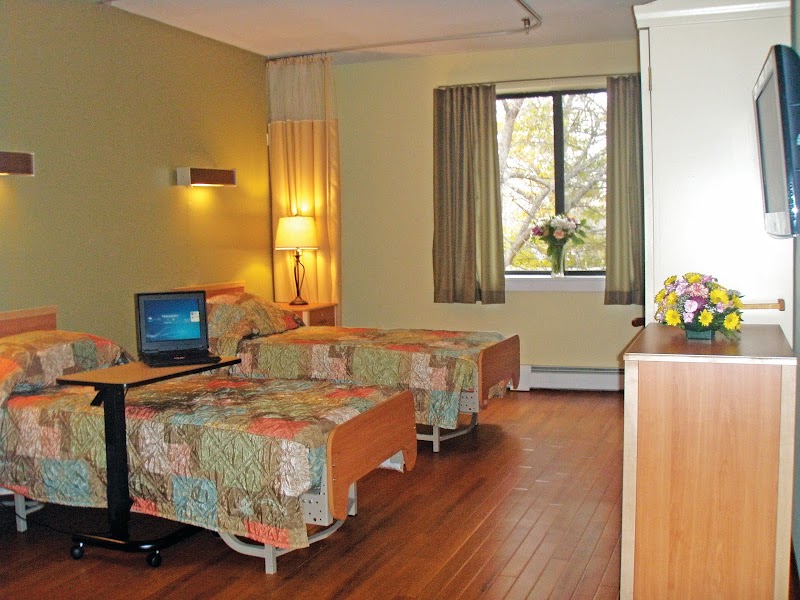
How is Apple Rehab Colchester Staffed?

CMS rates APPLE REHAB COLCHESTER's staffing level at 2 out of 5 stars, which is below average compared to other nursing homes. Staff turnover is 64%, which is 18 percentage points above the Connecticut average of 46%. High turnover can affect care consistency as new staff learn residents' individual needs. RN turnover specifically is 78%, which is notably high. RNs provide skilled clinical oversight, so turnover in this role can affect medical care quality.

What Have Inspectors Found at Apple Rehab Colchester?

State health inspectors documented 42 deficiencies at APPLE REHAB COLCHESTER during 2020 to 2025. These included: 3 Immediate Jeopardy (the most serious level, indicating potential for serious harm or death), 1 that caused actual resident harm, 37 with potential for harm, and 1 minor or isolated issues. Immediate Jeopardy findings are rare and represent the most serious regulatory concerns. They require immediate corrective action.
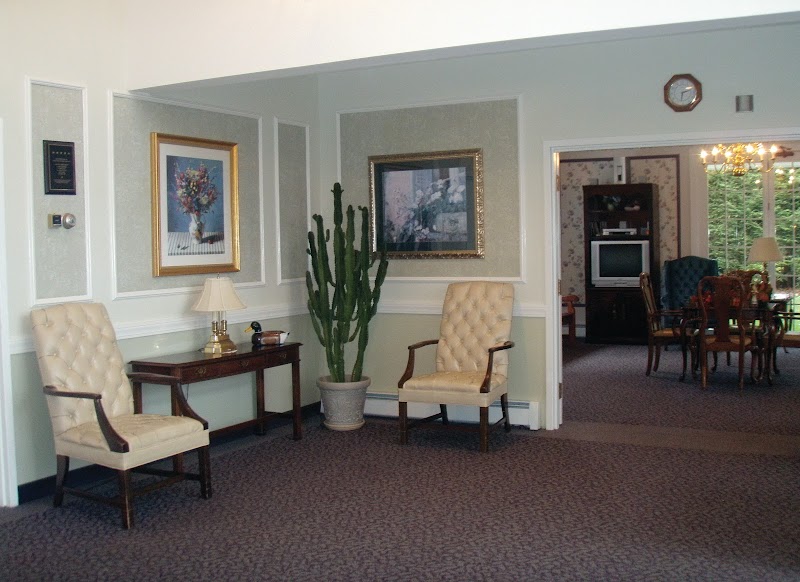
Who Owns and Operates Apple Rehab Colchester?

APPLE REHAB COLCHESTER is owned by a for-profit company. For-profit facilities operate as businesses with obligations to shareholders or private owners. The facility is operated by APPLE REHAB, a chain that manages multiple nursing homes. With 60 certified beds and approximately 53 residents (about 88% occupancy), it is a smaller facility located in COLCHESTER, Connecticut.
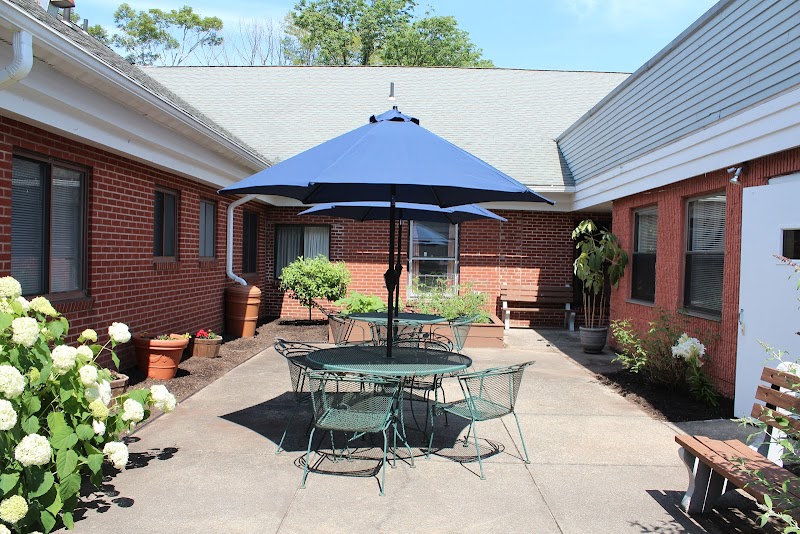
How Does Apple Rehab Colchester Compare to Other Connecticut Nursing Homes?

Compared to the 100 nursing homes in Connecticut, APPLE REHAB COLCHESTER's overall rating (2 stars) is below the state average of 3.0, staff turnover (64%) is significantly higher than the state average of 46%, and health inspection rating (2 stars) is below the national benchmark.

What Should Families Ask When Visiting Apple Rehab Colchester?

Based on this facility's data, families visiting should ask: "What changes have been made since the serious inspection findings, and how are you preventing similar issues?" "What safeguards and monitoring systems are in place to protect residents from abuse or neglect?" "How do you ensure continuity of care given staff turnover, and what is your staff retention strategy?" "Can you walk me through typical staffing levels on day, evening, and night shifts?" These questions are particularly relevant given the facility's Immediate Jeopardy citations, the substantiated abuse finding on record, the facility's high staff turnover rate, and the below-average staffing rating.

Is Apple Rehab Colchester Safe?

Based on CMS inspection data, APPLE REHAB COLCHESTER has documented safety concerns. The facility has 1 substantiated abuse finding (meaning confirmed case of resident harm by staff or other residents). Inspectors have issued 3 Immediate Jeopardy citations (the most serious violation level indicating risk of serious injury or death). The facility has a 2-star overall rating and ranks #100 of 100 nursing homes in Connecticut. Families considering this facility should ask detailed questions about what corrective actions have been taken since these incidents.

Do Nurses at Apple Rehab Colchester Stick Around?

Staff turnover at APPLE REHAB COLCHESTER is high. At 64%, the facility is 18 percentage points above the Connecticut average of 46%. Registered Nurse turnover is particularly concerning at 78%. RNs handle complex medical decisions and coordinate care — frequent RN changes can directly impact care quality. High turnover means new staff may not know residents' individual needs, medications, or preferences. It can also be disorienting for residents, especially those with dementia who rely on familiar faces. Families should ask: What is causing the turnover? What retention programs are in place? How do you ensure care continuity during staff transitions?

Was Apple Rehab Colchester Ever Fined?

APPLE REHAB COLCHESTER has been fined $51,534 across 3 penalty actions. This is above the Connecticut average of $33,594. Fines in this range indicate compliance issues significant enough for CMS to impose meaningful financial consequences. Common causes include delayed correction of deficiencies, repeat violations, or care failures affecting resident safety. Families should ask facility leadership what changes have been made since these penalties.

Is Apple Rehab Colchester on Any Federal Watch List?

APPLE REHAB COLCHESTER is not on any federal watch list. The most significant is the Special Focus Facility (SFF) program, which identifies the bottom 1% of nursing homes nationally based on persistent, serious quality problems. Not being on this list means the facility has avoided the pattern of deficiencies that triggers enhanced federal oversight. This is a positive indicator, though families should still review the facility's inspection history directly.