MEADOWBROOK OF GRANBY
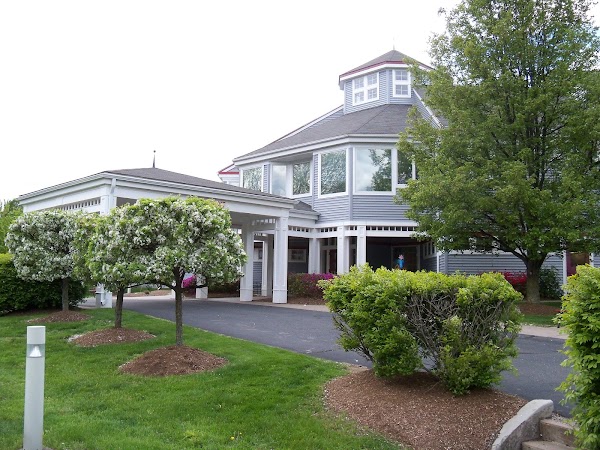
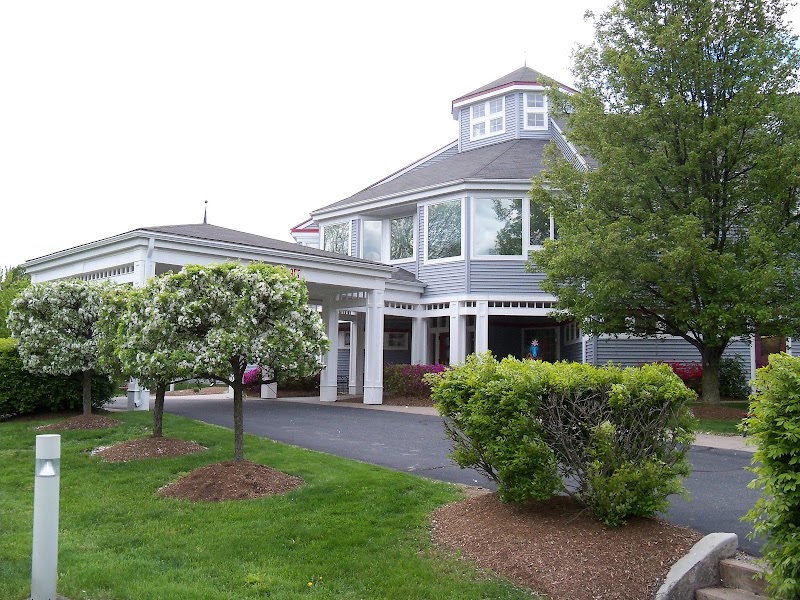
350 SALMON BROOK STREET, GRANBY, CT 06035 (860) 653-9888
For profit - Corporation 90 Beds ATHENA HEALTHCARE SYSTEMS Data: November 2025
Trust Grade
63/100
#101 of 192 in CT
Last Inspection: January 2024

Within standard 12-15 month inspection cycle. Federal law requires annual inspections.

Overview

Meadowbrook of Granby has a Trust Grade of C+, which means it is slightly above average but not particularly strong compared to other facilities. It ranks #101 out of 192 nursing homes in Connecticut, placing it in the bottom half, and #35 out of 64 in Capitol County, indicating that only a few local options are better. The facility is worsening, with issues increasing from 1 in 2023 to 17 in 2024. Staffing is a strength, rated 4 out of 5 stars with a turnover rate of 27%, which is below the state average, showing that staff members are likely to stay and build relationships with residents. There have been no fines, which is a positive sign, but there are concerns: for example, the facility failed to ensure a safe environment in the nourishment room, and they did not develop a proper care plan for a resident with fractured ribs. Additionally, there were delays in notifying a physician about critical lab results for a resident with serious infections, which raises concerns about the quality of care.

Trust Score
C+
63/100
In Connecticut
#101/192
Bottom 48%
Safety Record
Low Risk
No red flags
Inspections
Getting Worse
1 → 17 violations
Staff Stability
✓ Good
27% annual turnover. Excellent stability, 21 points below Connecticut's 48% average. Staff who stay learn residents' needs.
Penalties
✓ Good
No fines on record. Clean compliance history, better than most Connecticut facilities.
Skilled Nurses
○ Average
Each resident gets 32 minutes of Registered Nurse (RN) attention daily — about average for Connecticut. RNs are the most trained staff who monitor for health changes.
Violations
⚠ Watch
31 deficiencies on record. Higher than average. Multiple issues found across inspections.
★★★☆☆
3.0
Overall Rating
★★★★☆
4.0
Staff Levels
★★★★☆
4.0
Care Quality
★★★☆☆
3.0
Inspection Score
Stable
2023: 1 issues
2024: 17 issues

The Good

  • 4-Star Staffing Rating · Above-average nurse staffing levels
  • 4-Star Quality Measures · Strong clinical quality outcomes
  • Low Staff Turnover (27%) · Staff stability means consistent care
  • Full Sprinkler Coverage · Fire safety systems throughout facility
  • No fines on record
  • Staff turnover is low (27%)

    21 points below Connecticut average of 48%

Facility shows strength in staffing levels, quality measures, staff retention, fire safety.

The Bad

3-Star Overall Rating

Near Connecticut average (3.0)

Meets federal standards, typical of most facilities

Chain: ATHENA HEALTHCARE SYSTEMS

Part of a multi-facility chain

Ask about local staffing decisions and management

The Ugly 31 deficiencies on record

Jul 2024 1 deficiency
CONCERN (D) 📢 Someone Reported This

A family member, employee, or ombudsman was alarmed enough to file a formal complaint

Potential for Harm - no one hurt, but risky conditions existed

Deficiency F0655 (Tag F0655)

Could have caused harm · This affected 1 resident

**NOTE- TERMS IN BRACKETS HAVE BEEN EDITED TO PROTECT CONFIDENTIALITY** Based on a clinical record review, review of facility documentation and staff interviews for one of three sampled residents revi...

Read full inspector narrative →
**NOTE- TERMS IN BRACKETS HAVE BEEN EDITED TO PROTECT CONFIDENTIALITY** Based on a clinical record review, review of facility documentation and staff interviews for one of three sampled residents reviewed for hospitalization (Resident #1), for the newly admitted resident, the facility failed to ensure a baseline care plan was developed and implemented to address the residents fractured (broken) ribs. The findings include: Resident #1 was admitted to the facility on [DATE] with diagnoses that included diabetes, hypertension, metabolic encephalopathy and dementia with behavioral disturbances. Review of Resident #1's Chest CT (computed tomography) performed at Hospital #1 on 4/15/23 (prior to admission to the long term care facility) identified the resident with an acute/subacute nondisplaced left posterior, 10th rib fracture. Further review of hospital documentation identified the resident with pleural effusion and a malignancy was suspected. Review of Hospital #1's Discharge summary dated [DATE] (printed on 7/3/24) identified the resident with recurrent falls and an acute/subacute nondisplaced left posterior 10th rib fracture. Review of Hospital #1's Inter-Agency Referral Report (W-10) dated 4/22/23 failed to identify that the resident had a rib fracture. Review of Resident #1's clinical record identified a handwritten, undated note with the resident's name written on top of the page. Further review of this documentation identified the resident had a fall, was incontinent, and had bruising with intact skin and had a R (right) rib fracture. Review of a pain evaluation dated 4/22/23 identified the resident was unable to vocalize pain. Non-verbal pain evaluation identified the resident with non-verbal symptoms present, facial expressions, protective body movements or posture and the resident was able to point and/or indicate level of pain hurts even more. Review of the History and Physical Examination Form dated 4/23/23 by MD #1 identified the resident had a fall with R (right) sided rib #. Further review directed to monitor rib pain and administer Tylenol (analgesic) as needed. The nurse's note dated 4/23/23 identified that Resident #1 was alert and confused lying in bed moaning, restless and rubbing rib area. Tylenol was given with good relief; and the resident fell asleep. Review of Resident #1's care plan initiated on 4/24/23 and last revised on 4/28/23, identified there was no documented evidence that facility's staff developed a care plan with goals and interventions to address the resident's fractured ribs. The APRN #1 progress note dated 4/25/23 identified Resident #1 was admitted to the facility following hospitalization after a fall without injuries. The resident denied pain. Review of Resident #1's 72 Hour Meet and Greet admission Meeting form dated 4/25/23 failed to identify that the resident had rib fracture. A Resident Care Card (communication mechanism to caregivers) last updated on 4/26/23 indicated Resident #1 was incontinent of bowel and bladder and required assistance of two staff with care. However, no interventions addressing the resident's rib fracture injury were identified. The 5-day MDS assessment dated [DATE] identified Resident #1 had severe impaired cognition and required extensive assistance of two for bed mobility, transfer, dressing, toilet use and personal hygiene. Review of Resident #1's clinical record identified the resident had two falls while at the facility on 4/25/23 and on 4/28/23, the resident was assessed after each fall and no injuries were noted. The nurses note dated 4/28/23 identified Resident #1 had abnormal blood work results, APRN was notified and ordered to send the resident to the hospital. Further review failed to provide evidence that the hospital was notified of the resident's rib fracture. Review of Resident #1's whole-body CT performed at Hospital #2 on 4/29/23 identified the resident with multiple acute nondisplaced right 4th through 10th rib fracture, pleural effusion and age-indeterminate T6 fracture. Further review identified the assessment and plan included optimizing pain control for rib fractures as well as respiratory optimization with breathing treatments as much as the resident can tolerate. Interview and physical therapy note review with the Director of Physical Therapy on 7/3/24 at 10:50 AM identified the rehabilitation department should have been notified of the resident's diagnosed rib fracture on admission to the facility. Had they been notified PT and OT would have assessed the resident and not necessarily have changed the treatment but would have exercised caution of his/her rib pain, especially when the resident had no complaints of pain during therapy. Additionally, on 4/27/23 physical therapy documented Resident #1's participation was limited by complaints of pain, but the resident had difficulty expressing exactly where the pain was. It was further stated during this interview, if aware,the rehabilitation department would have worked with nursing on developing and implementing a plan of care to improve the resident's comfort and increase participation in care. Interview and clinical record review with ADNS on 7/3/24 at 12:51 PM identified she would have expected Resident #1 to have had a care plan addressing his/her diagnosed rib fracture. The ADNS further identified the handwritten note filed in the resident's clinical record with the resident's name and medical information including right rib fracture information, it was a report from the hospital taken on the telephone by the facility nurse prior to the resident's admission to the facility on 4/22/23. The ADNS identified the Inter-Agency Referral Report (W-10) dated 4/22/23 was available for nursing staff to review when the resident was admitted to the facility, but the report had no information about the resident's rib fracture. The ADNS further identified that although the hospital Discharge summary dated [DATE] identified the resident with a nondisplaced left 10th rib fracture, the handwritten report from the hospital written by the facility nurse identified right rib fracture, and MD #1 examination form dated 4/23/23 identified concern with right sided rib, the information probably was not available and/or not reviewed by the facility. Additionally, the ADNS failed to identify a care plan that was developed to reflect the resident had fractured ribs and therefore no interventions were in place to address on how to care for the resident with multiple rib fractures. The facility failed to communicate that the resident had a fractured rib and failed to notify the hospital when the resident was transferred on 4/29/23. Although attempted, an interview with MD #1 was not obtained. Interview with RN #2 on 7/3/24 at 2:40 PM identified that had he been aware that Resident #1 had a rib fracture, he would have requested the rehabilitation department to assess the resident to direct the resident's care needs. Interview with the Administrator on 7/3/24 at 2:48 PM identified the facility will investigate the incident to determine where this information that the resident had fractured ribs came into a halt and will train staff to ensure that this will never happen again. After surveyor enquiry, on 7/3/24, MD #2 at Hospital #1 reviewed Chest CT images dated 4/15/23 and identified that in addition to left rib fracture, the resident also had nondisplaced fractures of a few right-sided ribs. Evaluation was limited due to decreased bone mineral density and respiratory artifact affecting multiple ribs. Further review identified there was a subtle irregularity of the right 7th, 8th, 9th and 10th rib. All these fractures were nondisplaced and might be acute, subacute, or chronic in nature. Interview with MD #2 on 7/3/24 at 3:05 PM identified the resident's rib fractures were consistent with falls. The resident had recurrent falls and diagnosed rib fractures prior to admission to the facility. MD #2 further identified if the facility had questions about the rib fractures identified at the hospital, they should have called Hospital #1 for clarification. Review of the facility Care Planning policy identified an interim plan of care is developed within 24-hours of admission to the facility based on information obtained during the admission process as a guide for care until the interdisciplinary care plan is developed. The process included to obtain physician orders upon admission, complete the nursing admission assessment, begin interdisciplinary assessment process, review inquiry and transfer information, interview resident and family if appropriate, develop interim plan of care and initiate care plan.
Jun 2024 3 deficiencies
CONCERN (D) 📢 Someone Reported This

A family member, employee, or ombudsman was alarmed enough to file a formal complaint

Potential for Harm - no one hurt, but risky conditions existed

Notification of Changes (Tag F0580)

Could have caused harm · This affected 1 resident

**NOTE- TERMS IN BRACKETS HAVE BEEN EDITED TO PROTECT CONFIDENTIALITY** Based on review of the clinical record, facility documentation, facility policy, and interviews for one of three residents (Resi...

Read full inspector narrative →
**NOTE- TERMS IN BRACKETS HAVE BEEN EDITED TO PROTECT CONFIDENTIALITY** Based on review of the clinical record, facility documentation, facility policy, and interviews for one of three residents (Resident #1) reviewed for quality of care, the facility failed to notify the physician of critical lab values timely. The findings include: Resident #1's diagnoses included methicillin resistant staphylococcus aureus infection, urinary tract infection, dysphagia, and depression. The RCP dated 1/21/2024 identified Resident #1 was receiving intravenous (IV) therapy (Vancomycin) for recurrent UTI's (urinary tract infection). Interventions directed to monitor intake and output every shift, and to administer IV Vancomycin as ordered. A physician order dated 1/21/2024 directed to obtain lab work for CBC (complete blood count) with differential, CMP (comprehensive metabolic panel), ESR (erythrocyte sedimentation rate), CRP (c-reactive protein), and a Vancomycin trough weekly on Mondays. The admission Minimum Data Set assessment dated [DATE] identified Resident #1 had severely impaired cognition and received IV antibiotics. Nursing note dated 2/5/2024 (a Monday) identified Resident #1 had a vancomycin trough drawn at 9:50 AM. Review of Resident #1's lab results dated 2/5/2024 (a Monday) at 4:15 PM identified the lab results were called into the facility and reported to Joan by Lab Technician (LT) #1. Results were read back to the caller and results have been faxed to the requester. Resident #1 had the following critical labs results: 1. BUN was 77 (normal range is 10-24). 2. Creatinine was 4.1 (normal range is 0.7-1.5). 3. Vancomycin Trough was greater than 50 (normal 10 to 20). Review of the Fax Results/Received History for the facility identified Resident #1's lab results were faxed to the facility on 2/5/2024. Although requested, the facility was unable to provide the cover page included for Resident #1's lab results sent on 2/5/2024. Review of the SBAR Communication Form and Progress Note dated 2/6/2024 at 1:00 PM by the ADON identified Resident #1 had elevated Vancomycin trough and declining kidney function labs. Reported to MD #1 with new recommendation to transfer Resident #1 to the hospital. Family and NP #1 were in the facility and aware. Clinical record review failed to identify the facility called for lab results, or acted on lab results prior to 2/6/2024 at 1 PM (28 hours after the labs were drawn). Review of Person #1's provided documentation identified on 2/6/2024 at 1:04 PM, Person #1 notified the Infectious Disease (ID) office nurse/RN #2 regarding Resident #1's critical lab values from 2/5/2024, and the ID office was not aware of the critical lab values. The documentation indicated the ID office nurse/RN #2 then called the facility regarding the lab results. Review of the clinical record failed to identify the ID physician was notified of the critical lab values prior to notification by Person #1 at 1:04 PM (28 hours after the lab work was drawn). Interview with the ADON on 6/5/2024 at 12:45 PM identified the RN supervisor during the shift is responsible for handling any incoming lab results that are sent to the facility. The ADON stated lab results will also be faxed to the facility, and the results will be printed in the secretary's office. The ADON stated she was unaware if any staff reported the critical lab results to MD #1's office, and was unable to provide documentation that MD #1 was notified of the lab results prior to 1 PM (28 hours after the lab work was drawn). Further, the ADON identified the facility does not have an employee named Joan and was unable to verify who the results were reported to. Interview with RN #2 (Outpatient Infectious Disease RN) on 6/5/2024 at 1:05 PM identified on 2/6/2024, the office received a phone call from Person #1 indicating Resident #1 had critical lab values and wanted to ensure if MD #1 was aware. RN #2 identified at that time; the office had not received any results from the facility and had not received any messages requesting a call back or messages during off hours with results. RN #2 called the facility and spoke to the ADON, who verified the critical lab results for Resident #1. RN #2 questioned the ADON as to why the office was not notified sooner, and the ADON responded they were working on the issue. RN #2 reported the results to MD #1, and MD #1 called the facility and directed to transfer Resident #1 to the hospital for evaluation. Interview and review of physician documentation with MD #1 on 6/5/2024 at 1:15 PM identified reviewing his own notes, he was notified of Resident #1's critical lab values by his office team on 2/6/2024 and stated the facility did not update him or his office of the critical lab values. MD #1 stated when he was notified on 2/6/2024 he called the facility to direct Resident #1 to be transferred to the hospital. although interview identified MD #1 would have wanted to be notified of the critical lab results on 2/5/2024, and he was aware it was alleged Resident #1 received an extra dose of Vancomycin, the extra dose would not have harmed or impacted Resident #1's overall scenario. MD #1 stated the hospital nephrologist indicated Resident #1 was admitted with acute kidney failure related to acute tubular necrosis secondary to Vancomycin toxicity and worsening of hypotension, and the treatment plan was IV fluids. Interview and record review with the DON on 6/5/2024 at 3:40 PM identified MD #1 should have been contacted regarding Resident #1's critical lab values and was unable to provide an explanation why the physician was not notified timely by the facility staff. Review of the Physician Notification Policy dated 11/2016 identified the facility will provide or obtain laboratory and other diagnostic services ordered by a physician, physician assistant or nurse practitioner and report results to the physician, physician assistant or nurse practitioner. Although requested, a facility policy for reporting critical lab results was not provided for surveyor review.
CONCERN (D) 📢 Someone Reported This

A family member, employee, or ombudsman was alarmed enough to file a formal complaint

Potential for Harm - no one hurt, but risky conditions existed

Quality of Care (Tag F0684)

Could have caused harm · This affected 1 resident

**NOTE- TERMS IN BRACKETS HAVE BEEN EDITED TO PROTECT CONFIDENTIALITY** Based on clinical record review, facility documentation review, facility policy review, and interviews for one of three resident...

Read full inspector narrative →
**NOTE- TERMS IN BRACKETS HAVE BEEN EDITED TO PROTECT CONFIDENTIALITY** Based on clinical record review, facility documentation review, facility policy review, and interviews for one of three residents (Resident #1) reviewed for quality of care, the facility failed to ensure IV antibiotics were administered timely in accordance with physician orders. The findings include: Resident #1's diagnoses included methicillin resistant staphylococcus aureus infection, urinary tract infection, dysphagia, and depression. The RCP dated 1/21/2024 identified Resident #1 was receiving intravenous (IV) therapy (Vancomycin) for recurrent UTI's (urinary tract infection). Interventions directed to monitor intake and output every shift, and to administer IV Vancomycin as ordered. The admission Minimum Data Set assessment dated [DATE] identified Resident #1 had severely impaired cognition and received IV antibiotics. a. A physician order dated 1/21/2024 directed to administer Vancomycin HCI Intravenous Solution 1500 mg/300 ml, every 18 hours, IV. Review of the January 2024 eMAR (electronic medication administration record) identified the following: 1. Resident #1 received IV Vancomycin on 1/28/2024 at 1:30 PM. The next dose was administered on 1/29/2024 at 9:30 AM. A total of twenty (20) hours between doses; the dose was administered 1 hour late. 2. Resident #1 received IV Vancomycin on 1/29/2024 at 9:30 AM. The next dose was administered on 1/30/2024 at 12:43 AM. A total of fifteen (15) hours and thirteen (13) minutes between doses; the dose was administered one(1) hour and 47 minutes early. Interview with DON on 6/5/2024 at 3:40 PM identified the nursing staff are expected to administer medications according to physician orders within one hour before and after the scheduled time. The DON was unable to explain why the IV medication was not administered in accordance with physician orders. b. Physician order dated 1/30/2024 directed to discontinue Vancomycin IV every 18 hours. A nursing progress note dated 2/5/2024 at 10:31 AM by the ADON identified MD #1 (Infectious Disease physician) called the facility with new orders to discontinue Vancomycin and start Daptomycin IV daily, through 2/11/2024. Review of the February 2023 eMAR failed to reflect that Vancomycin was administered on 2/5/2024. Review of Person #1's photograph identified an empty Vancomycin IV bag on an IV pole labeled with Resident #1's name, the facility name, and Vancomycin 1.24 grams (gm) in 250 ml of normal saline. The directions on the label directed to infuse every 18 hours. The label also had handwritten 2/5 and 1:30 PM on the label indicating the Vancomycin was administered on 2/5/2024 (6 days after the order was discontinued). Interview with the ADON on 6/5/2024 at 12:45 PM identified Person #1 had alleged Resident #1 received an extra dose of Vancomycin but indicated on the day that Person #1 verbalized the concern, there was an old Vancomycin IV bag that was labeled 2/4/2024 at 8:05 PM (5 days after the Vancomycin was ordered to be discontinued). Interview with DON on 6/5/2024 at 3:40 PM identified although she did not think Resident #1 received an extra dose of IV Vancomycin, the DON was unable to explain the IV bags labeled 2/4 and 2/5/2024. The DON identified nursing staff should administer medications per physician's orders. Although requested, the facility did not provide a policy regarding IV administration.
CONCERN (D) 📢 Someone Reported This

A family member, employee, or ombudsman was alarmed enough to file a formal complaint

Potential for Harm - no one hurt, but risky conditions existed

Deficiency F0692 (Tag F0692)

Could have caused harm · This affected 1 resident

**NOTE- TERMS IN BRACKETS HAVE BEEN EDITED TO PROTECT CONFIDENTIALITY** Based on clinical record review, facility documentation review, facility policy review, and interviews for one of three resident...

Read full inspector narrative →
**NOTE- TERMS IN BRACKETS HAVE BEEN EDITED TO PROTECT CONFIDENTIALITY** Based on clinical record review, facility documentation review, facility policy review, and interviews for one of three residents (Resident #1) reviewed for hydration, the facility failed to ensure intake and output was monitored in accordance with physician orders, and failed to perform a dehydration evaluation timely for a resident not meeting their estimated daily fluid needs. The findings include: Resident #1's diagnoses included methicillin resistant staphylococcus aureus infection, urinary tract infection, dysphagia, and depression. A physician order dated 1/20/2024 directed to monitor intake and output (I & O), every shift for 72 hours, upon admission/readmission, and to document on I & O paper flowsheet. Review of Resident #1's Nutrition Evaluation dated 1/20/2024 identified Resident #1's estimated daily fluid needs totaled 1875 milliliters (mls). The care plan dated 1/25/2024 identified Resident #1 as at risk for malnutrition related to severe cognitive changes, variable oral intake, slight weight loss, aspiration risk, and on antibiotics. Interventions directed to monitor oral intake, and lab work as ordered. The admission Minimum Data Set assessment dated [DATE] identified Resident #1 had severely impaired cognition and required set up assistance for eating/drinking. Review of the I & O Paper Flowsheet identified the following: • The facility failed to provide I & O records for 1/20, 1/21, and 1/22/2024. • On 1/20/2024, Resident #1's total intake was 760 ml (1115 ml under the daily recommendation). • On 1/23/2024 Resident #1's total intake was 660 ml (1215 ml under the daily recommendation). • The facility failed to provide I & O records for 1/25, 1/26, and 1/27/2024. • On 1/28/2024, Resident #1's total intake was 180 ml (1695 ml under the daily recommendation). • The facility failed to provide I & O records for 1/29, 1/30, 1/31, 2/1, 2/2, 2/3, and 2/4/2024. • On 2/5/2024, Resident #1's total intake was 450 ml (11425 ml under the daily recommendation). Interview with DON and ADON on 6/5/2024 at 3:40 PM identified I & O's are entered by any nursing staff, but are tallied/finalized by the night shift nurses. The DON indicated if a resident is not meeting their fluid goal, the nursing staff should notify the physician. The DON stated she was unaware Resident #1 was missing I & O Flowsheets and was unable to explain why the low intake levels were not addressed when Resident #1 did not meet the recommended daily fluid intake. Subsequent to surveyor inquiry, the facility was not able to provide the missing I & O Flowsheets for Resident #1. Review of the Intake and Output Monitoring Policy dated 4/2015 identified intake and output will be monitored initially for 72 hours after a resident is admitted or readmitted . Continued monitoring may be required based on the resident's risk factors for dehydration, as outlined in the Hydration Policy, or based on the results of a Dehydration Evaluation, if conducted. a. Interview with DON and ADON on 6/5/2024 at 3:40 PM identified it is not the facility policy to perform a dehydration risk evaluation upon admission. The DON identified the nursing staff utilize other assessment measures (such as assessing skin turgor or mucous membranes) to determine if a resident is a dehydration risk. The DON was unable to explain when Resident #1 did not meet his/her estimated daily fluid needs on 1/20, 1/23, 1/28 and 2/5/2024 why a dehydration assessment was not completed. Review of the facility Hydration Policy dated 4/2015 identified residents identified for potential to be at risk for dehydration will be placed on intake and output monitoring until adequate hydration status is achieved or until I & O monitoring is no longer clinically indicated. If the resident has consumed less than their estimated needs for three (3) consecutive days, complete a Dehydration Evaluation.
Jan 2024 13 deficiencies
CONCERN (D) 📢 Someone Reported This

A family member, employee, or ombudsman was alarmed enough to file a formal complaint

Potential for Harm - no one hurt, but risky conditions existed

Free from Abuse/Neglect (Tag F0600)

Could have caused harm · This affected 1 resident

**NOTE- TERMS IN BRACKETS HAVE BEEN EDITED TO PROTECT CONFIDENTIALITY** Based on clinical record review, review of facility policy and interviews for 1 of 2 residents reviewed for abuse (Resident #333...

Read full inspector narrative →
**NOTE- TERMS IN BRACKETS HAVE BEEN EDITED TO PROTECT CONFIDENTIALITY** Based on clinical record review, review of facility policy and interviews for 1 of 2 residents reviewed for abuse (Resident #333), the facility failed to ensure administration was notified immediately of the resident's threatening statement about NA # 9 per facility practice. The findings include: Resident #333's diagnoses included diabetes mellitus, Type 2, Benign Prostatic Hyperplasia (BPH), and adjustment disorder. The admission Minimum Data Set (MDS) assessment dated [DATE] indicated Resident #333 was moderately cognitively impaired and required extensive assistance with toilet use, dressing and personal hygiene. A nursing note dated 10/3/22 at 4:18 PM by the Director of Nursing Services (DNS) identified Resident #333 expressed concerns related to care received during the 11:00 PM to 7:00 AM shift. Resident #333 indicated his/her sweatpants were removed and placed on the bedside chair while care was given. The DNS explained the standard of care to the resident, the rounding process, and how hygienic care was given. Resident #333 had agreed to continue receiving care at night, however, indicated s/he did not want a Nurse Assistant (#9) to provide his/her care during the night shift. Review of the completed grievance sheet dated 10/3/22 by the DNS indicated Resident #333 reported the nursing assistant removed his/her sweatpants and placed them on the bedside chair which made him/her cold. The resulting plan of action from the 10/3/22 grievance involved removing Resident #333 from NA # 9 's assignment as requested. The Resident Care Plan revised on 10/4/2022 identified Resident #333 with an Activities of Daily Living (ADL) deficit and was at risk for incontinence due to decreased mobility. Interventions directed to provide bed level ADL care with the assistance of one and to promote privacy. A nursing note dated 10/10/22 at 8:50 AM by Registered Nurse (RN# 4) identified he/she was on rounds on Unit 1 at 1:00 AM when s/he heard Resident #333 complaining about not wanting (NA #9) in his/her room. RN #4 further indicated Resident #333 had threatened to call the state police, shoot NA #9 with a gun if he had it on him/her, and stated s/he (Resident #333) would come back to shoot NA #9 dead after leaving the facility. RN #4 also indicated the Director of Nursing Services (DNS) was updated. Review of the late entry nursing note dated 10/10/22 at 11:30 AM identified the DNS and Social Worker (SW#1) met with Resident #333 regarding the comment made to shoot NA #9 and explained a comment like that could be considered a threat and involve the police. Resident #333 indicated /he was not aware, would not say it again and the resident was placed on one-to-one supervision until seen by the psychiatric team. The psychiatric note dated 10/10/22 at 11:23 AM by the Physician Assistant (PA #1) identified Resident #333 did not want the NA from the 11:00 PM to 7:00 AM shift caring for him/her because s/he removed Resident # 333's pants, which made him/her cold, had laughed at Resident #333 because s/he was cold. NA # 9 was not allowed to care for Resident #333 or go into his/her room but had entered his/her room at 1:30 AM for no known reason. Resident #333 reported to PA #1 that he/she was afraid of NA# 9 and in fear as he/she was unable to run from him/her and reported making remarks, saying if he/she had a handgun, he/she would not be afraid to use it. Resident #333 also identified to PA #1 that he/she did not have or own a gun, that he/she had a moment of anger, anxiety, and fear, and was apologetic stating he/she did not want to hurt him/herself or others. PA #1 cleared Resident #333 of one-to-one supervision, indicated the resident was not a threat to him/herself or others and indicated the resident did make remarks out of extreme anxiety and fear but indicated s/he did not want to hurt her/himself or others. A late entry noted dated 10/10/22 at 11:35 AM by the DNS indicated he/she followed up on Resident #333's concern regarding NA #9 had entered his/her room and was laughing at her/him. The DNS further indicated, according to the night staff that evening, Resident #333 was cared for by the nurse and another female nursing assistant all night on the 11:00 PM to 7:00 AM shift. A nursing note dated 10/10/22 at 4:55 PM by the DNS indicated Resident #333 was afraid because he/she saw NA #9 enter her/his room to provide care causing Resident # 333 to become afraid for his/her life, and that he/she threatened NA #9's life with a gun. The DNS further noted Resident #333 became upset as he/she felt NA #9 had entered his/her room and was laughing at him/her. Resident #333 was offered a room change to another unit, to which s/he agreed, and was assessed by the psychiatric PA, deemed not a real danger to others at this time as s/he did not have access to a gun, and was sent to the hospital for a psychiatric follow-up. Review of the grievance sheet completed on 10/10/22 by the DNS indicated Resident #333 had reported a NA was in his/her room laughing at him/her. The plan of action from the 10/10/22 grievance identified an investigation was completed, NA # 9 was never in Resident #333's room throughout the 11:00 PM to 7:00 AM shift and when care was provided to the resident two staff members were present (nurse and NA together). A hospital psychiatric consultation note dated 10/10/22 identified Resident #333 had reported receiving poor treatment, especially by NA #9, who had deliberately removed Resident #333's pants for prolong periods of time in the cold temperature while verbally mocking and waking Resident #333 up at inappropriate times. Resident #333 indicated the staff at the facility had used Resident #333's diarrhea-soiled clothes to cover and clean his/her open groin wound, and that after being provoked and mistreated by NA #9, who stayed in the vicinity of Resident #333 during the night shift despite being asked to leave, had become frustrated and stated if I had a gun, I would shoot you (NA #9). A review of the clinical record on 10/10/22 failed to reflect the facility the DNS and the administrator had been notified of Resident # 333's concerns regarding allegations of abuse by NA # 9 and Resident # 333's threatening statement to staff about NA # 9. The On-the-Job Training dated 10/19/22 for Notification As Soon As Possible (ASAP) of Emergency Incident in the facility lecture given by the DNS for RN # 4. Objective /Purpose of Training Session was to ensure the DNS is called immediately for all emergency situations involving residents or staff at the facility. Additionally directed to notify the DNS and administrator immediately of any resident-to-resident injury, staff to resident injury, any verbal abuse or any lift threatening event from resident to staff and any abuse. Review of the Abuse Prohibition Policy, revised on 1/3/24, directed the facility is responsible for ensuring that each resident has the right to be free from abuse, mistreatment, neglect, exploitation through identification of events, occurrences, patterns, and trends of potential abuse for residents. The policy also directs staff to perform internal facility investigations of alleged violations and identification of staff members responsible for investigating incidents and the reporting of same to proper authorities. Interview with DNS on 1/22/24 at 9:55 AM identified he/she was not aware of the allegations Resident #333 had made during his/her psychiatric consultation at the hospital on [DATE] until 10/17/22 as the nurse supervisor scheduled at the time the resident was readmitted to the facility did not review the hospital discharge paperwork.
CONCERN (D) 📢 Someone Reported This

A family member, employee, or ombudsman was alarmed enough to file a formal complaint

Potential for Harm - no one hurt, but risky conditions existed

Report Alleged Abuse (Tag F0609)

Could have caused harm · This affected 1 resident

**NOTE- TERMS IN BRACKETS HAVE BEEN EDITED TO PROTECT CONFIDENTIALITY** Based on clinical record reviews, facility documentation, facility policy and interviews for 2 of 2 residents reviewed for abuse...

Read full inspector narrative →
**NOTE- TERMS IN BRACKETS HAVE BEEN EDITED TO PROTECT CONFIDENTIALITY** Based on clinical record reviews, facility documentation, facility policy and interviews for 2 of 2 residents reviewed for abuse (Resident #75 and Resident #333), the facility failed to ensure timely reporting of allegations of abuse and/or threats to the state facility. The findings included: 1. Resident #75's diagnosis' included diabetes mellitus, chronic kidney disease, acute kidney failure and anxiety. The admission Minimum Data Set (MDS) assessment dated [DATE] indicated Resident #75 was cognitively intact. The Resident Care Plan (RCP) dated 12/18/2023 indicated Resident #75 had a history of anxiety Interventions included in part to provide a calm quiet environment and to offer support and reassurance. An Admissions Progress Note dated 1/21/2024 at 10:44 AM indicated in part, while speaking with a family member it was identified that the person did not want to hold Resident #75's bed while hospitalized secondary to Resident #75 was yelled at by a nurse. The resident was unable to identify the staff member. On 1/21/2024 at 6:00PM a Reportable Event was filed at the state agency which identified during a telephone conversation with the facility's Admissions Director a family member of Resident #75 stated Resident # 75 was yelled at by a nurse when being transferred to the hospital for respiratory distress. The report further indicated the facility was unable to identify who the nurse was at the time of the incident. The report indicated the date and time of the event was first known on 1/21/2024 at 6:00 PM. However, the incident was not reported to the state agency until 7:51 PM. On 1/22/2024 at 9:00 AM an interview with the DNS indicated an allegation of abuse was submitted to the state agency on 1/21/2024 at 6:00PM and an investigation was started. The DNS indicated while reviewing progress notes on 1/22/2024 at 6:00PM he/she read the admission Director's note from earlier in the day indicating during a phone call with Resident #75's family member it was alleged Resident #75 was yelled at by a nurse. The DNS further indicated at this time the facility was unable to pinpoint a day, time, or exact nurse to be able to suspend the staff member while investigating. The DNS further indicated the Admissions Director reported the incident to the Administrator who instructed staff to complete a grievance. However, when the DNS read the Admissions Director's note s/he realized the incident was an allegation of abuse that needed to be reported to the state agency. An interview and record review on 1/22/2024 at 1:43 PM with the admission Director identified s/he made a call on 1/21/2024 to Resident #75's family member regarding holding the resident's bed while in the hospital. The family member indicated s/he would call back the next day to discuss the matter. The Admissions Director indicated receiving a call from the family member in the morning on Sunday 1/22/24, in which s/he called the Administrator into the admissions office to listen and indicated the Administrator was present briefly but had to leave. The conversation included concerns with care of Resident #75 who was yelled at by a nurse. The Admissions Director indicated reporting the allegation to the Administrator by updating the Administrator on concerns that upset the family member which included Resident #75 being yelled at by a nurse and family not wanting to hold bed during hospitalization. The admission Director further indicated that he/she was new to the position and had received training on abuse during onboarding with the facility. An interview with the Administrator on 1/22/24 at 2:30 PM indicated the Admissions Director had called him/her into his/her office while the family member was on the phone and s/he overheard some of the conversation but had to step out briefly but heard the family member indicate feeling the facility missed something when transferring the resident to the hospital, so the Admissions Director was directed to complete a grievance form. The Administrator further indicated not perceiving the family member as saying Resident #75 was yelled at by a nurse, it was only later when speaking with the Director of Nursing Services (DNS) who read the admission Directors note in the medical record when it was determined an allegation of abuse was made and needed to be reported. The Administrator further indicated if there had been clearer communication between the admission Director and the Administrator at the time of the family members phone call, the allegation would have been reported to the state agency at that time and an investigation started. The Administrator also indicated the investigation was still in progress and abuse re-education with all staff including the Admissions Director would be completed. On 1/23/24 at 10:30 AM an interview with the DNS indicated s/he reported the incident to the state agency as soon as s/he became aware of the allegation on 1/21/24 at 6:00 PM when reading the Admissions Director's note in the medical record (6 hours 16 minutes after the allegation was made). The facility abuse policy labeled Abuse, Neglect and Exploitation dated 2/2023, indicated in part, abuse includes verbal abuse, and an alleged violation is a situation or occurrence that is observed or reported by staff, resident, relative or others but has not yet been investigated and if verified could be indicative of non-compliance with federal requirements. The policy further indicated reporting of all allegations to the required facility personnel and state and other agencies would be done immediately but no later than 2 hours after the allegation was made. 2. Resident #333's diagnoses included diabetes mellitus, Type 2, Benign Prostatic Hyperplasia (BPH), and adjustment disorder. The admission Minimum Data Set (MDS) assessment dated [DATE] indicated Resident #333 was moderately cognitively impaired and required extensive assistance with toilet use, dressing and personal hygiene. A nursing note dated 10/3/22 at 4:18 PM by the Director of Nursing Services (DNS) identified Resident #333 expressed concerns related to care received during the 11:00 PM to 7:00 AM shift. Resident #333 indicated his/her sweatpants were removed and placed on the bedside chair while care was given. The DNS explained the standard of care to the resident, the rounding process, and how hygienic care was given. Resident #333 had agreed to continue receiving care at night, however, indicated s/he did not want a Nurse Assistant (#9) to provide his/her care during the night shift. Review of the completed grievance sheet dated 10/3/22 by the DNS indicated Resident #333 reported the nursing assistant removed his/her sweatpants and placed them on the bedside chair which made him/her cold. The resulting plan of action from the 10/3/22 grievance involved removing Resident #333 from NA # 9 's assignment as requested. The Resident Care Plan revised on 10/4/2022 identified Resident #333 with an Activities of Daily Living (ADL) deficit and was at risk for incontinence due to decreased mobility. Interventions directed to provide bed level ADL care with the assistance of one and to promote privacy. A nursing note dated 10/10/22 at 8:50 AM by Registered Nurse (RN# 4) identified he/she was on rounds on Unit 1 at 1:00 AM when s/he heard Resident #333 complaining about not wanting (NA #9) in his/her room. RN #4 further indicated Resident #333 had threatened to call the state police, shoot NA #9 with a gun if he had it on him/her, and stated s/he (Resident #333) would come back to shoot NA #9 dead after leaving the facility. RN #4 also indicated the Director of Nursing Services (DNS) was updated. Review of the late entry nursing note dated 10/10/22 at 11:30 AM identified the DNS and Social Worker (SW#1) met with Resident #333 regarding the comment made to shoot NA #9 and explained a comment like that could be considered a threat and involve the police. Resident #333 indicated /he was not aware, would not say it again and the resident was placed on one-to-one supervision until seen by the psychiatric team. The psychiatric note dated 10/10/22 at 11:23 AM by the Physician Assistant (PA #1) identified Resident #333 did not want the NA from the 11:00 PM to 7:00 AM shift caring for him/her because s/he removed Resident # 333's pants, which made him/her cold, had laughed at Resident #333 because s/he was cold. NA # 9 was not allowed to care for Resident #333 or go into his/her room but had entered his/her room at 1:30 AM for no known reason. Resident #333 reported to PA #1 that he/she was afraid of NA# 9 and in fear as he/she was unable to run from him/her and reported making remarks, saying if he/she had a handgun, he/she would not be afraid to use it. Resident #333 also identified to PA #1 that he/she did not have or own a gun, that he/she had a moment of anger, anxiety, and fear, and was apologetic stating he/she did not want to hurt him/herself or others. PA #1 cleared Resident #333 of one-to-one supervision, indicated the resident was not a threat to him/herself or others and indicated the resident did make remarks out of extreme anxiety and fear but indicated s/he did not want to hurt her/himself or others. A late entry noted dated 10/10/22 at 11:35 AM by the DNS indicated he/she followed up on Resident #333's concern regarding NA #9 had entered his/her room and was laughing at her/him. The DNS further indicated, according to the night staff that evening, Resident #333 was cared for by the nurse and another female nursing assistant all night on the 11:00 PM to 7:00 AM shift. A nursing note dated 10/10/22 at 4:55 PM by the DNS indicated Resident #333 was afraid because he/she saw NA #9 enter her/his room to provide care causing Resident # 333 to become afraid for his/her life, and that he/she threatened NA #9's life with a gun. The DNS further noted Resident #333 became upset as he/she felt NA #9 had entered his/her room and was laughing at him/her. Resident #333 was offered a room change to another unit, to which s/he agreed, and was assessed by the psychiatric PA, deemed not a real danger to others at this time as s/he did not have access to a gun, and was sent to the hospital for a psychiatric follow-up. Review of the grievance sheet completed on 10/10/22 by the DNS indicated Resident #333 had reported a NA was in his/her room laughing at him/her. The plan of action from the 10/10/22 grievance identified an investigation was completed, NA # 9 was never in Resident #333's room throughout the 11:00 PM to 7:00 AM shift and when care was provided to the resident two staff members were present (nurse and NA together). A hospital psychiatric consultation note dated 10/10/22 identified Resident #333 had reported receiving poor treatment, especially by NA #9, who had deliberately removed Resident #333's pants for prolong periods of time in the cold temperature while verbally mocking and waking Resident #333 up at inappropriate times. Resident #333 indicated the staff at the facility had used Resident #333's diarrhea-soiled clothes to cover and clean his/her open groin wound, and that after being provoked and mistreated by NA #9, who stayed in the vicinity of Resident #333 during the night shift despite being asked to leave, had become frustrated and stated if I had a gun, I would shoot you (NA #9). The hospital crisis clinician contacted the facility and was told by RN #5 he/she was not working over the weekend the threat was made; however, Resident # 333's overall mood was okay, there was no psychiatric history, and Resident #333 would need a no harm letter to return to the facility. A review of the clinical record on 10/10/22 failed to reflect the facility the DNS and the administrator had been notified of Resident # 333's concerns regarding allegations of abuse by NA # 9 and Resident # 333's threatening statement to staff about NA # 9. The On-the-Job Training dated 10/19/22 for Notification As Soon As Possible (ASAP) of Emergency Incident in the facility lecture given by the DNS for RN # 4. Objective /Purpose of Training Session was to ensure the DNS is called immediately for all emergency situations involving residents or staff at the facility. Additionally directed to notify the DNS and administrator immediately of any resident-to-resident injury, staff to resident injury, any verbal abuse or any lift threatening event from resident to staff and any abuse. The nursing note dated 10/11/22 at 7:25 AM identified Resident #333 was readmitted to the facility at 6:50 AM and transferred to his/her new room. Review of the Facility Licensing and Investigation Section Reportable Event Report identified the allegation involving Resident #333 was reported on 10/17/22 at 3:00 PM. Review of the Abuse Prohibition Policy Reporting/Documentation Requirements (revised on 1/3/24) directs all alleged violations involving abuse, neglect, exploitation, or mistreatment, including injuries of unknown source and misappropriation of resident property are reported immediately, but not later than 2 hours after the allegation is made. Interview with DNS on 1/22/24 at 9:55 AM identified he/she was not aware of the allegations Resident #333 had made during his/her psychiatric consultation at the hospital on [DATE] until 10/17/22 as the nurse supervisor scheduled at the time the resident was readmitted to the facility did not review the hospital discharge paperwork. The DNS further indicated he/she submitted the Reportable Event to the Facility Licensing and Investigation Section website as soon as he/she learned of the allegation on 10/17/22 (6 days) later. .
CONCERN (D)

Potential for Harm - no one hurt, but risky conditions existed

Comprehensive Assessments (Tag F0636)

Could have caused harm · This affected 1 resident

**NOTE- TERMS IN BRACKETS HAVE BEEN EDITED TO PROTECT CONFIDENTIALITY** Based on clinical record review, observation, and interviews for 1 of 1 resident (Resident #54) reviewed for Communication-Senso...

Read full inspector narrative →
**NOTE- TERMS IN BRACKETS HAVE BEEN EDITED TO PROTECT CONFIDENTIALITY** Based on clinical record review, observation, and interviews for 1 of 1 resident (Resident #54) reviewed for Communication-Sensory, the facility failed to ensure a resident's ability to hear was comprehensively assessed prior to coding the Minimum Data Set (MDS) assessment. The findings include. Resident #54's diagnosis' included fall with hip fracture, depression, and generalized anxiety disorder. The admission nursing assessment dated [DATE] indicated minimal difficulty hearing with no hearing aid. The Recreation assessment dated [DATE] indicated Resident #54's hearing was poor. The admission Minimum Data Set (MDS) assessment dated [DATE] indicated Resident #54's ability to hear was adequate, could understand others and indicated the resident was cognitively intact. The Care plan dated 12/19/2023 indicated in part, Resident #54 had a history of anxiety. Interventions included encouraging participation in activities of interest and encourage verbalizing thoughts and feelings. An observation on 1/17/2023 at 9:23 AM indicated Resident #54 was hard of hearing having to speak up louder and leaning ear toward his/her hearing speaker. On 1/22/24 at 10:30 AM an interview and record review with the Recreation Director indicated the recreation evaluation completed on 12/3/2023 indicated poor hearing. The Recreation Director indicated if hearing concerns were noted which required staff assistance, the resident would be offered a device for the television or a hearing device if residents had no hearing aids. The Recreation Director indicated part of the assessment of a resident is visual and the other is what the resident indicates they want. The Recreation Director further indicated having ongoing observations and talking with Resident #54 as to how recreation activities were in general, and no concerns were noted or given by the resident. The Recreation Director further indicated the hearing item on the evaluation has only two choices good or poor, so if a resident has some difficulty with hearing, poor is chosen. Review of the Recreation Care plan for Resident #54 made no mention of the poor hearing as indicated on the evaluation. Interventions included monitoring or assisting the resident. The Recreation Director further indicated recreation staff continue to monitor the resident and if a problem was noted or the resident indicated a concern, an intervention would be offered and added as needed. An interview on 1/22/24 at 11:00 AM with Nurse Aide (NA #7) indicated he/she had to raise his/her voice slightly at times for Resident #54 to hear what was being said, but not all the time. An interview and record review on 1/22/24 at 11:15 AM with the MDS Coordinator RN # 3 indicated the decision to code Resident #54's hearing as adequate on the MDS was solely based on his/her own interaction with Resident #54 during the 72-hour meeting where the resident was able to understand what was said. RN # 3 further indicated s/he did not read other team members' assessment and recreational evaluation or speak with staff regarding the resident hearing. RN #1 indicated the RAI manual provides guidance on how to evaluate residents for hearing to code the hearing section of the MDS accurately. During review, the RAI manual section for hearing notes in part to talk with the resident and to gain input from other departments like recreation as well as talking with staff. RN # 3 further indicated a modification of the admission MDS assessment would be made. RN # 3 indicated the MDS staff would be re-educated on how to complete and code the hearing assessment as outlined in the RAI manual.
CONCERN (D)

Potential for Harm - no one hurt, but risky conditions existed

Comprehensive Care Plan (Tag F0656)

Could have caused harm · This affected 1 resident

**NOTE- TERMS IN BRACKETS HAVE BEEN EDITED TO PROTECT CONFIDENTIALITY** Based on clinical record review, observation, and interviews for 1 of 1 resident (Resident #54) reviewed for Communication-Senso...

Read full inspector narrative →
**NOTE- TERMS IN BRACKETS HAVE BEEN EDITED TO PROTECT CONFIDENTIALITY** Based on clinical record review, observation, and interviews for 1 of 1 resident (Resident #54) reviewed for Communication-Sensory, the facility failed to ensure the resident had comprehensive person-centered care plan to address the resident's hearing needs. The finding include: Resident #54's diagnosis' included fall with hip fracture, depression, and generalized anxiety disorder. The admission nursing assessment dated [DATE] indicated minimal difficulty hearing with no hearing aid. The Recreation assessment dated [DATE] indicated Resident #54's hearing was poor. The admission Minimum Data Set (MDS) assessment dated [DATE] indicated Resident #54's ability to hear was adequate, could understand others and indicated the resident was cognitively intact. The Care plan dated 12/19/2023 indicated in part, Resident #54 had a history of anxiety. Interventions included encouraging participation in activities of interest and encourage verbalizing thoughts and feelings. An observation on 1/17/2023 at 9:23 AM indicated Resident #54 was hard of hearing having to speak up louder and lean in toward ear to his/her hear speaker. On 1/22/24 at 10:30 AM an interview and record review with the Recreation Director indicated the recreation evaluation completed on 12/3/2023 indicated poor hearing. The Recreation Director indicated if hearing concerns were noted which required staff assistance, the resident would be offered a device for the television or a hearing device if residents had no hearing aids. The Recreation Director indicated part of the assessment of a resident is visual and the other is what the resident indicates they want. The Recreation Director further indicated having ongoing observations and talking with Resident #54 as to how recreation activities were in general, and no concerns were noted or given by the resident. The Recreation Director further indicated the hearing item on the evaluation has only two choices good or poor, so if a resident has some difficulty with hearing, poor is chosen. Review of the Recreation Care plan for Resident #54 made no mention of the poor hearing as indicated on the evaluation. Interventions included monitoring or assisting the resident. The Recreation Director further indicated recreation staff continue to monitor the resident and if a problem was noted or the resident indicated a concern, an intervention would be offered and added as needed. An interview on 1/22/24 at 11:00 AM with Nurse Aide (NA #7) indicated he/she had to raise his/her voice slightly at times for Resident #54 to hear what was being said, but not all the time. An interview and record review on 1/22/24 at 11:15 AM with the MDS Coordinator RN # 3 indicated a care plan was being entered now for risk of difficulty understanding.
CONCERN (D)

Potential for Harm - no one hurt, but risky conditions existed

Deficiency F0657 (Tag F0657)

Could have caused harm · This affected 1 resident

**NOTE- TERMS IN BRACKETS HAVE BEEN EDITED TO PROTECT CONFIDENTIALITY** Based on clinical record review, policy review and interview for 1 of 5 residents (Resident #184) reviewed for unnecessary medic...

Read full inspector narrative →
**NOTE- TERMS IN BRACKETS HAVE BEEN EDITED TO PROTECT CONFIDENTIALITY** Based on clinical record review, policy review and interview for 1 of 5 residents (Resident #184) reviewed for unnecessary medications, the facility failed to review and revise the residents care plan related to Activities of Daily Living (ADL) and feeding. The findings include: Resident #184 diagnoses include Alzheimer's disease, dementia, and generalized weakness. The physician's orders dated 1/1/24 directed regular diet. The admission MDS assessment dated [DATE] indicated Resident #184 was moderately cognitively impaired and required partial/moderate assistance in eating, toileting, and hygiene. The occupational orders dated 1/9/24 indicated Resident #184 was a total assistance self-feed. The rehabilitation screening dated 1/9/24 failed to screen Resident #184 for feeding abilities. The Resident Care Plan (RCP) dated 1/9/24 indicated Resident #184 has an ADL deficit related to generalized weakness and recent hospitalization for seizures with goals for the resident to participate in ADLs as able times 90 days. Interventions included Occupational Therapy Evaluation and treat as ordered, 2 assist with ADL/toileting bed level, assist with gathering and setting up clothing, toiletries, and equipment, encourage resident out of bed (OOB) with all meals, provide privacy while bathing/dressing. The care plan failed to indicate or identify Residents #184's feeding abilities. The occupational therapy notes dated 1/13/24 indicated that Resident #184 completed the breakfast meal with set/up assistance, cues to attend to task. The readmission MDS assessment dated [DATE] indicated that Resident #184 was moderately cognitively intact and required moderate assistance with eating and was dependent for toileting and dressing. The Dietary/nutritional evaluation dated 1/18/24 indicated Resident #184's eating abilities was feed/self. The occupational therapy notes dated 1/19/24 indicated Resident #184 consumed the breakfast meal with intermittent supervision. The resident care [NAME] provided by the Director of Nursing on 1/18/24 indicated Resident #184 was a regular diet and failed to identify any need for assistance related to nutrition/feeding/eating. After surveyor's inquiry, the RCP dated 1/22/24 was revised to indicate Resident #184 has an ADL deficit related to generalized weakness and recent hospitalization for seizures with goals for the resident to participate in ADLs as able times 90 days. Interventions included Occupational therapy evaluation, treatment as ordered, 2 assist with ADL/toileting bed level, assist with gathering and setting up clothing, toiletries, and equipment, encourage resident out of bed (OOB) with all meals, provide privacy while bathing/dressing, set up for feeding. The Resident Care [NAME] dated 1/22/24 indicated Resident #184 was a set up with assistance on a regular diet for nutrition. Interview on 1/22/24 at 10:30 AM with the Assistant Director of Nursing indicated she was not aware of what the order total assistance self feeding meant. She further indicated that she would have to get clarification in regards to the order and to ask a NA. Policy review dated 1/3/24 for comprehensive care plans notes care plans are a combination of data concerning the resident that is obtained from the physician, clinical records, evaluations completed by professional and other disciplines, the resident and/or family goals for treatment and acute/chronic events, behaviors, and/or illness.
CONCERN (D)

Potential for Harm - no one hurt, but risky conditions existed

Deficiency F0658 (Tag F0658)

Could have caused harm · This affected 1 resident

**NOTE- TERMS IN BRACKETS HAVE BEEN EDITED TO PROTECT CONFIDENTIALITY** Based on clinical record reviews, policy review and interviews for 1 of 1 resident (Resident #78) reviewed for death, the facili...

Read full inspector narrative →
**NOTE- TERMS IN BRACKETS HAVE BEEN EDITED TO PROTECT CONFIDENTIALITY** Based on clinical record reviews, policy review and interviews for 1 of 1 resident (Resident #78) reviewed for death, the facility failed to obtain a physician's order for the release of the resident's body resident and for 1 of 1 resident (Resident #184) reviewed for nutrition, the facility failed to obtain a physician's order to clarify the resident's feeding abilities. The findings included. 1. Resident #78's diagnoses included atherosclerotic heart disease and heart failure. A physician's order dated [DATE] directed Resident #78's code status as Do Not Resuscitate (DNR), Do Not Intubate (DNI), and directed an RN may pronounce at the time of death. The quarterly Minimum Data Set (MDS) assessment dated [DATE] indicated Resident #78 was cognitively intact. The care plan dated [DATE] identified Resident #78 for advanced directives included DNR and DNI. The progress note labeled RN Pronouncement of Death dated [DATE] at 2:27 PM for a completion on [DATE] at 2:20 PM by the Assistant Director of Nursing Services (ADNS) after Resident #78 had expired. The note further indicated the medical provider and receiving facility for the body were notified. Interview and record review with the DNS and ADNS on [DATE] at 12:20 PM indicated the documentation to whom the body was released would be found under the RN pronouncement note written on [DATE] at 2:47 PM was blank. They were also unable to locate a physician's order to release the body from the facility within the electronic chart. Interview and record review on [DATE] at 12:25 PM with the ADNS indicated s/he was unable to locate a physician's order to release the body from the facility after the death of Resident # 78. Although a policy and procedure were requested for Death of a resident but was not provided. 2. Resident #184 diagnoses include Alzheimer's disease, dementia, and generalized weakness. The physician's orders dated [DATE] directed regular diet. The admission MDS assessment dated [DATE] indicated Resident #184 was moderately cognitively impaired and required partial/moderate assistance in eating, toileting, and hygiene. The occupational orders dated [DATE] indicated Resident #184 was a total assistance self-feed. The rehabilitation screening dated [DATE] failed to screen Resident #184 for feeding abilities. The Resident Care Plan (RCP) dated [DATE] indicated Resident #184 has an ADL deficit related to generalized weakness and recent hospitalization for seizures with goals for the resident to participate in ADLs as able times 90 days. Interventions included Occupational Therapy Evaluation and treat as ordered, 2 assist with ADL/toileting bed level, assist with gathering and setting up clothing, toiletries, and equipment, encourage resident out of bed (OOB) with all meals, provide privacy while bathing/dressing. The care plan failed to indicate or identify Residents #184's feeding abilities. The occupational therapy notes dated [DATE] indicated that Resident #184 completed the breakfast meal with set/up assistance, cues to attend to task. The readmission MDS assessment dated [DATE] indicated that Resident #184 was moderately cognitively intact and required moderate assistance with eating and was dependent for toileting and dressing. The Dietary/nutritional evaluation dated [DATE] indicated Resident #184's eating abilities was feed/self. The occupational therapy notes dated [DATE] indicated Resident #184 consumed the breakfast meal with intermittent supervision. The resident care [NAME] provided by the Director of Nursing on [DATE] indicated Resident #184 was a regular diet and failed to identify any need for assistance related to nutrition/feeding/eating. After surveyor's inquiry, the RCP dated [DATE] was revised to indicate Resident #184 has an ADL deficit related to generalized weakness and recent hospitalization for seizures with goals for the resident to participate in ADLs as able times 90 days. Interventions included Occupational therapy evaluation, treatment as ordered, 2 assist with ADL/toileting bed level, assist with gathering and setting up clothing, toiletries, and equipment, encourage resident out of bed (OOB) with all meals, provide privacy while bathing/dressing, set up for feeding. Interview on [DATE] at 10:30 AM with the Assistant Director of Nursing indicated she was not aware of what the order total assistance self feeding meant. She further indicated that she would have to get clarification in regards to the order and to ask a NA. Interview on [DATE] at 10:33 AM with NA #6 indicated she was not aware of what the order total assistance self feeding meant. She further indicated that Resident #184 feeds is a self-feed and she has never seen any staff assist the resident with eating. Interview and observation on [DATE] at 12:18 PM with the DNS indicated she also was not aware of what the order total assistance self feeding was and that the order was unclear and she would have to speak to therapy in order to understand what it meant.
CONCERN (D)

Potential for Harm - no one hurt, but risky conditions existed

Deficiency F0660 (Tag F0660)

Could have caused harm · This affected 1 resident

**NOTE- TERMS IN BRACKETS HAVE BEEN EDITED TO PROTECT CONFIDENTIALITY** Based on clinical record review, facility documentation review, facility policy review and interviews for 1 of 1 resident (Resid...

Read full inspector narrative →
**NOTE- TERMS IN BRACKETS HAVE BEEN EDITED TO PROTECT CONFIDENTIALITY** Based on clinical record review, facility documentation review, facility policy review and interviews for 1 of 1 resident (Resident #80) reviewed for discharge, the facility failed to follow their policy regarding an unplanned discharge, provide an Inter-Agency Referral Report and notify the Ombudsman with correct information regarding of discharge. The findings included: Resident #80's diagnoses included: orthostatic hypotension (low blood pressure), diabetes mellitus, and anemia. An admission MDS assessment dated [DATE] indicated the resident was cognitively intact and required supervision or touching assistance with personal hygiene, dressing, bathing, transfers, ambulation and was independent with rolling side to side, sitting and standing up and eating. a. An RCP dated 10/20/23 identified Resident #80 had not been care planned for discharge within 48 hours of the resident's admission to present. The hospital discharge Inter-Agency Patient Referral Report form dated 10/20/23 indicated the resident had a hospital stay from 10/16/23 through 10/20/23 for complaints of lightheadedness and low blood pressure. The resident's Hospital Problem List diagnoses included: orthostatic hypotension and pre-syncope. A Nursing admission assessment dated [DATE] indicated Resident #80 was alert, oriented to person and place, able to respond appropriately, anxious, able to express ideas and wants, consider both verbal and non-verbal expression and able to understand verbal content. A physician's History and Physical noted dated 10/21/23 indicated the resident was awake, alert, and oriented x 3 (person, place, and time), not in distress, and was feeling better in terms of lightheadedness, but had complaints of lightheadedness with prolonged walking. A Physical Therapy Evaluation dated 10/22/23 indicated resident was oriented, pleasant, cooperative, and able to make needs known with some confusion and memory deficits, the physical therapist had noted that the resident had no documented diagnosis of cognitive decline/memory impairment. An Advanced Practice Registered Nurse's progress note dated 10/22/23 indicated patient was seen for an initial visit, the resident insistent on leaving facility and returning home, family member present at bedside indicating s/he felt her/his mother was more agitated since being at the facility. The Advanced Practice Registered Nurse (APRN)'s note further indicated all questions were answered, and noted a discussion that no homecare or nursing referrals can be sent with the patient leaving the facility today due to his/her discharge secondary to the resident considered leaving against medical advice. Resident's family member expressed the resident's options were to go home or come to the facility for short term rehabilitation, APRN's note indicated that leaving the facility included having the social worker set up services which would not be able to be done until at least tomorrow. Resident # 80 was adamant about leaving against medical advice (AMA), discharge summary from the hospital including medication was given to the patient and he/she was educated to return to the emergency department if something else occurred along with following up with his/her primary care provider for additional prescriptions and homecare referral. An Advanced Practice Registered Nurse's order dated 10/22/23 directed discharge from facility AMA per patient request. A Release from Responsibility for Discharge form dated 10/22/23, time 2:20 PM indicated Resident #80 had been discharged against the advice of the attending physician/care provider and the facility administration and family member had acknowledged and signed the form. A discharge MDS assessment dated [DATE] indicated Resident #80 was cognitively intact and had no acute mental status or behavioral changes and required set-up assistance for upper body dressing supervision or touching assistance with personal hygiene, lower body dressing, bathing, transfers and noted independent with tolling side to side, sitting and standing up and eating. On 1/22/24 at 12:42 PM a telephone conversation with discharged resident (Resident #80) identified he/she was not pleased with the care at the facility, the facility would not let her/him take a shower alone, medications were not being passed out, and when when/he asked for something, they were very rude and unprofessional, prescribed diet was not honored instead was given regular diet food. Staff sat around all night but could not recall the names of staff. When s/he indicated s/he wanted to leave discharge staff became angry when they had to come in on Sunday. Resident # 80 said her/his family member picked him/her up at noon to go to family home and had home care services, nurse, OT, and PT. On 1/23/24 at 12:12 PM interview and review of facility policy titled Discharge Against Medical Advice (AMA) with DNS indicated she felt the nurse practitioner did everything she could and while the facility policy indicates that if a resident insists upon leaving the facility prior to the completion of the W-10 (Inter-Agency Referral Report and a Discharge Plan and Summary, arrangements will be made for the documents to be mailed or delivered to the resident's destination, if known, within 72 hours of the discharge. She was unable to provide any additional information or documentation. b. Interview and facility documentation review with the DNS on 1/23/24 at 10:07 AM indicated that medication is usually given to residents when they leave, and the facility provides this service as a courtesy. Residents are instructed to reach out and follow up with their primary care physician when their last dose of medication is taken. However, the facility failed to provide documentation and evidence that the resident was provide documentation on when his/her last dose of medication were given, when next dose was due, or provide proof of a referral to home care, or the facility notification to the resident's community primary care provider of Resident # 80 s leaving the facility AMA. On 1/23/24 at 9:04 AM telephone call to (Resident #80) indicated he/she was not given medication discharge instructions, just a pill pack, he/she was not educated on when his/her last dose was given of medication was given at the facility or when to take the next dose of medication. Resident #80 further indicated he/she was in the process of changing primary physician's and did not recall if primary had been notified of his/her leaving the facility. Resident # 80 further indicated he/she contacted his/her insurance provider and the insurance company set up services for the visiting nurse, therapy (Occupational and Physical Therapy) for while he/she stayed at his/her family member's home. The facility policy for discharge notes Director of Nursing or her/his designee shall instruct licensed nursing staff and other involved disciplines to complete a W-10 and the nursing summary section of the Discharge Plan and Summary. Whenever possible, all appropriate disciplines shall provide the resident or their responsible party with necessary discharge consultation. Discharge information may include the following: Medical findings, diagnosis(es), and treatment orders, Summary of care, treatment, and services provided and progress towards achieving goals, Diet orders and medication orders, Behavioral status, ambulation status, nutrition status and rehabilitation potential, Residents physical and psychosocial status, Nursing information useful in resident care, Advance directives, Referrals provided to the resident, A notation that the discharge is against medical advice, Physician's orders for residents immediate care, Instructions given to the resident before discharge, Physician who has agreed to be responsible for the resident's medical care and treatment, if other than the referring physician, anticipated need for continued care, treatment and services after discharge. c. Review of facility documentation and interview on 1/23/24 at 9:38 AM with Social Worker (SW #2), identified that she is responsible for emailing the Ombudsman monthly a list of residents discharged . Review of memo with attached list of discharged residents indicated that the Ombudsman was notified: via email on 11/6/23 sent by SW #2, she indicated that she does not complete the entry regarding resident's discharge status, as that is completed by nursing and nursing chooses the discharge status and they do the ADT, which she indicated stood for (Admission/Discharge/Transfer). Additionally, she indicated that she does not review it before sending it to the Ombudsman but should have reviewed. The Form indicated resident's Action Code was AMA (AMA), Discharge Status on form indicated resident discharged /Transferred to home under care of organized home health service organization. Interview and facility documentation review with the DNS on 1/23/24 at 10:07 AM indicated the Discharge Status in PCC (clinical documentation software system) is completed at ADT (Admission/Discharge/Transfer) by a supervisor. She was able to provide a written AMA discharge order. She indicated that while home care was talked about the day before the nurse practitioner cannot send a referral because the resident went AMA because it was a Sunday, we could not do a home care referral. Additionally, she indicated that she believed her supervisor, put in the information that is used by finance regarding discharge status, and further indicated that she put in the wrong thing and that she should have chosen: Discharge AMA instead of discharged /Transferred to home under care of organized home health service organization. On 1/23/24 at 12:21 PM interview and review of facility policy titled Discharge Against Medical Advice (AMA) with SW #2 indicated that she was not aware of the facility's policy indicated that if a resident insists upon leaving the facility prior to the completion of the W-10 and a Discharge Plan and Summary, arrangements will be made for the documents to be mailed or delivered to the resident's destination, if known, within 72 hours of the discharge and that she did not send a W-10 . Review of facility policy annual review dated 1/3/24 titled Discharge Against Medical Advice (AMA) identified the facility will not detain a resident/patient against their wishes unless he or she has been adjudicated incompetent by a court of law. Procedure (CT) staff member informed by the resident of the resident's intention will then notify the Director of Nurses, Director of Nurses will notify the attending physician, the Administrator and the Director of Social Work or her/his designee shall be notified as soon as possible when an AMA discharge is anticipated and will discuss and document with the resident and/or the resident's legal responsible party, the factors that should be considered before making a decision to be discharged against medical advice (AMA). If the attending physician determines that the discharge will be made against medical advice, the Director of Nursing or her/his designee shall as necessary: ascertain from the attending physician whether the resident's medications, or prescription(s) should be released with the resident at time of discharge, (physicians may choose not to release all the resident's current medications), ascertain from the attending physician whether the attending physician will sign a W-10 (Inter-Agency Referral report) to accompany the resident at the time of discharge, and facilitate the completion by the attending physician of the physician's summary section of a Discharge Plan and Summary. The policy for discharge notes staff will provide education about how to obtain further care, treatment, and services to meet the resident's identified needs, when indicated and when possible, services needed and the facility's arrangement for such services to meet the resident's needs after discharge. Social Work staff shall provide the residents' needs after discharge. Social Work shall provide the resident and/or their responsible party with a list of at least three (3) home health agencies that serve the area where the resident plans to reside and with an offer to attempt referrals on the resident's behalf to any appropriate community agencies. The Social Worker will also determine whether a physician will sign the necessary orders for home health service and if so, will provide this information when making referrals. A completed W-10, with or without a physician's signature, including the resident's vital signs, current medical conditions, diet and medications with last dosage administration and a Discharge Plan and Summary (in a form the resident can understand), must accompany the resident at time of discharge, if time allows. If the resident insists upon leaving the facility prior to the completion of the W-10 and a Discharge Plan and Summary, arrangements will be made for the documents to be mailed or delivered to the resident's destination, if known, within 72 hours of the discharge.
CONCERN (D)

Potential for Harm - no one hurt, but risky conditions existed

Quality of Care (Tag F0684)

Could have caused harm · This affected 1 resident

**NOTE- TERMS IN BRACKETS HAVE BEEN EDITED TO PROTECT CONFIDENTIALITY** Based on clinical record reviews, policy review and interviews for 1 of 1 resident (Resident #78) reviewed for death, the facili...

Read full inspector narrative →
**NOTE- TERMS IN BRACKETS HAVE BEEN EDITED TO PROTECT CONFIDENTIALITY** Based on clinical record reviews, policy review and interviews for 1 of 1 resident (Resident #78) reviewed for death, the facility failed to obtain a physician's order for the release of the resident's body resident and 1 of 4 sampled residents (Resident #4) reviewed for Nutrition, the facility failed to follow the physician's order for 1:1 supervision during meals. The findings included: 1. Resident #78's diagnoses included atherosclerotic heart disease and heart failure. A physician's order dated 7/6/2022 directed Resident #78's code status as Do Not Resuscitate (DNR), Do Not Intubate (DNI), and directed an RN may pronounce at the time of death. The quarterly Minimum Data Set (MDS) assessment dated [DATE] indicated Resident #78 was cognitively intact. The care plan dated 11/28/2023 identified Resident #78 for advanced directives included DNR and DNI. The progress note labeled RN Pronouncement of Death dated 12/21/2023 at 2:27 PM for a completion on 12/21/2023 at 2:20 PM by the Assistant Director of Nursing Services (ADNS) after Resident #78 had expired. The note further indicated the medical provider and receiving facility for the body were notified. Interview and record review with the DNS and ADNS on 1/22/2024 at 12:20 PM indicated the documentation to whom the body was released would be found under the RN pronouncement note written on 12/21/2023 at 2:47 PM was blank. They were also unable to locate a physician's order to release the body from the facility within the electronic chart. Interview and record review on 1/22/2024 at 12:25 PM with the ADNS indicated s/he was unable to locate a physician's order to release the body from the facility after the death of Resident # 78. 2. Resident #4's diagnoses included dysphagia, paranoid schizophrenia, and anxiety. The annual Minimum Data Set assessment dated [DATE] identified Resident #4 as moderately cognitively impaired, independent with eating, and required moderate assistance with toileting, dressing, and personal hygiene. The Resident Care Plan revised on 12/26/23 identified a history of weight loss, risk for aspiration, variable food intake, and increased behaviors. Interventions directed to one-to-one supervision with cues for small bites/small sips, to slow down, and to chew food completely before swallowing. A physician's order dated 10/19/23 directed self-feeding and set up with supervision for occasional cues. Observations on 1/18/24 identified Resident #4, sitting upright on the edge of his/her bed with the bed table in front of him/her and served lunch by the Recreation Assistant at 12:28 PM. At 12:29 PM, Resident #4 was left unsupervised while eating his/her lunch and his/her room door halfway closed. At 12:32 PM, Resident #4 continued consuming his/her lunch unsupervised while three nursing assistants were seen in the hallway leading to the resident's room with no one checking in on the resident. At 12:36 PM, a nurse and two nursing assistants were observed in the hallway leading to the resident's room. One of the nursing assistants quickly looked in on the resident to see if he/she was okay, and then left. At 12:38 PM, NA #3 checked in on Resident #4 and removed his/her tray as the resident indicated he/she was finished with his/her meal. Resident #4 had consumed 100% of what was served on his/her plate. Interview with NA#3 on 1/18/24 at 12:40 PM indicated staff would set-up Resident #4's meal, the resident would get up and eat whatever he/she wanted then to return to bed. NA #3 further indicated the unit nursing assistants would frequently go back and forth checking in on Resident #4 during meals, the resident would let them know if he/she needed anything, the resident was independent with eating, and that he/she was not sure if Resident #4 needed to be supervised during meals. Interview and clinical record review with Licensed Practical Nurse LPN #7 at 12:45 on 1/18/24 identified an MD order for self-feeding with meal set-up and supervision with occasional cues. LPN #7 indicated the facility policy to follow MD orders and s/he was unsure as to why it was not followed. LPN #7 further identified special instructions for residents were normally given at report and nursing assistants were reminded daily to check the resident's care cards for instructions. LPN #7 indicated nurses can supervise residents during mealtimes as well, but rely on nursing assistants to communicate when they need help or assistance before nurses fill in. A review of Resident #4's care card directed 1:1 supervision with cues for small bites, small sips, and to slow down and chew food completely before swallowing. Interview with NA #4 on 1/18/24 at 1:00 PM identified he/she was assigned to Resident #4 and Resident #4 needed assistance and supervision during meals. NA #4 further identified it was the assigned nursing assistant's responsibility to supervise the resident during meals, anyone could supervise Resident #4 during meals and indicated LPN #7 was informed Resident #4 needed to be supervised during his/her meal. NA #4 acknowledged she was responsible for supervising Resident #4 during meals and failed to communicate, specifically to other nursing staff, that he/she needed someone to watch Resident #4 during lunch as he/she was tending to another resident. NA #4 identified the facility policy was to ensure Resident #4 was supervised during lunch, to follow MD orders and the resident needed to be supervised during meals. Interview with NA #3 on 1/18/24 at 1:17 PM identified he/she was not aware Resident #4 was to be supervised during meals because he/she always ate by his/herself and did not want staff in his/her room. NA #3 was passing out lunch trays to residents on 1/18/24 and walked into the resident's room to see if he/she needed anything. NA #3 was told by RN # 2 to check on residents but was not directed to supervise Resident #4 during his/her meal. Interview with Director of Nursing Services on 1/19/24 at 8:01 AM identified staff are directed to follow the physician's order for supervision with additional cues during meals for Resident #4.
CONCERN (D)

Potential for Harm - no one hurt, but risky conditions existed

Deficiency F0692 (Tag F0692)

Could have caused harm · This affected 1 resident

**NOTE- TERMS IN BRACKETS HAVE BEEN EDITED TO PROTECT CONFIDENTIALITY** Based on clinical record reviews, observations, review of policy and interviews for 2 of 4 residents (Residents #56 and #184) re...

Read full inspector narrative →
**NOTE- TERMS IN BRACKETS HAVE BEEN EDITED TO PROTECT CONFIDENTIALITY** Based on clinical record reviews, observations, review of policy and interviews for 2 of 4 residents (Residents #56 and #184) reviewed for nutrition, the facility failed to ensure weights were obtained per the physician order. The findings included: 1. Resident #56's diagnoses included aortic stenosis, atherosclerotic heart disease and diabetes mellitus. The physician's orders dated 1/4/2024 directed to provide a controlled carbohydrate diet of regular consistency texture with thin liquids and to obtain a weight on admission and for 4 consecutive weeks post admission then reassess the need to obtain every Tuesday for 4 weeks (admission 1/4/2024, Tuesday 1/9/24, 1/16/24 and 1/23/24). The admission Minimum Data Set (MDS) assessment dated [DATE] indicated Resident #56 was cognitively impaired, required a set up for feeding and was dependent of staff for transfer from bed to chair and back and did not ambulate. A physician's note dated 1/14/2023 identified the resident was examined due to fever and vomiting with resulting diagnosis of positive with Covid 19 and indicated the resident was clinically stable. The mini nutritional assessment completed by the dietician on Wednesday 1/17/2024 at 2:42 PM indicated a weight of 124 pounds and a height of 70 inches (approximately 5 foot 8 inches tall) obtained on 1/9/2024 at 2:04 PM (8 days ago). The results of the mini nutritional assessment indicated Resident #56 was malnourished. An interview with LPN #3 on 1/18/24 at 8:45 AM indicated she was unaware of how a resident on isolation precautions would get weighed and would call the infection Preventionist to find the answer. On 1/18/2024 at 8:55 AM an interview with NA #1 indicated usually a nurse sends out a list of the weights that are needed for the day, but no list was provided for weights on this day (Thursday, 2 days after Resident #54 was due to have a weekly weight completed) NA #1 further indicated if a weight was needed for Resident #54 a Hoyer lift would be used. A physician's note dated 1/18/2023 indicated Resident #54 had abnormal weight loss and directed to monitor weights, meal intake, monitor for any difficulties with chewing or swallowing and to add supplemental shakes to the diet. An interview and record review on 1/18/2024 at 10:00 AM with the Dietitian indicated she is made aware all the resident's weights for the week when running a report in the facility electronic charting system. The dietician also indicated if no weight is found he/she would ask for the weight to be obtained by nursing, ideally the same day, but within the next couple of days. While reviewing the electronic record of the weights it was identified Resident #54 was admitted on [DATE] with no weight obtained until 1/7/2024(Sunday, 3 days after admission) with a weight of 129.6 pounds. It was further noted a weight was obtained again on 1/9/2024(Tuesday as ordered by the physician) of 124 pounds (a 4.6-pound loss in 2 days). The dietician indicated he/she had been out for 2 weeks and the first day back was yesterday with another dietician covering during the absence. The dietician indicated seeing Resident #54 yesterday 1/17/2024 (8 days after the last weight and 1 day after the weekly weight was ordered for Tuesday). The Dietician indicated his/her evaluation note did not make any indication regarding the lack of an available weekly weight due on Tuesday 1/16/2024 for Resident #54 but indicated making recommendations for a juice supplement between meals and to monitor intake. Reviewing Resident #54's oral intake consisted of many refusals of meals and eating 0-25% of other meals. After surveyor inquiry regarding no weekly weight due 2 days ago and no physician; s order found or the supplement recommended per 1/17/2024 dietary recommendation, the dietician indicated he/she still needed to submit the request for the juice supplement to the DNS today and would ask nursing for Resident #54's weight to be obtained today. An interview and record review with LPN #3 on 1/18/2023 at 12:25 PM indicated s/he could not explain why a weight was not obtained on Tuesday 1/16/2024 as ordered and why the medication administration record where the information is entered was blank. She did indicate the weight was obtained today at 11:23 AM with the weight of 115.5 pounds via mechanical lift (9.5 pounds lost since the last weight was obtained on 1/9/2024 and 14.1 pounds lost since admission to the facility 14 days ago). Interview and record review with the DNS on 1/18/2024 at 12:35 PM indicated Resident #54 may have refused a weight on 1/4/2024 and may not have been documented as such but would check with the nurse who was working on that date. The DNS further indicated during the record review while noting no weight was obtained on Tuesday 1/16/2024 further indicated the next shift should have attempted to obtain the weight and it is nursing's responsibility to obtain weights. Interview with APRN #1 in the presence of the DNS on 1/18/2024 at 12:36 indicated Resident #54 had a change of condition which may be the reason the weight was not obtained that day. The DNS indicated he/she would expect nursing staff to obtain the weight on Tuesday as ordered but since the order also indicates the word weekly the weight could be obtained at another time during the week. The APRN indicated this is the first weight indicating a significant weight loss and he/she would be evaluating the resident and reaching out to the responsible party for direction moving forward. APRN #1 further indicated in the past the responsible party did not want advanced measures. On 1/22/2024 at 8:50 AM an interview with the DNS indicated the ADNS return to work after being and wrote a late entry note for 1/4/2024 regarding Resident #54 refusing a weight on admission due to feeling sad over the prior loss of a spouse. Even though the late entry note indicated reporting to the next shift to reproach to obtain a weight, no weight was obtained until 1/7/2024 (day 4 after admission). Although Resident #54's physician orders indicated to obtain a weight on admission and then every Tuesday for 4 consecutive weeks thereafter, the facility weight policy labeled Weights dated 2/2023 indicated in part newly admitted residents and residents with a physician's order for weekly weights are weighed weekly x 4. 2. Resident #184's diagnoses include Alzheimer's disease, dementia, and generalized weakness. The resident was admitted to the facility on [DATE]. The physician's orders dated 1/1/24 directed regular diet and weight on admission and for 4 consecutive weeks post admission and then reassess every day shift every Tuesday for 4 weeks. The admission MDS assessment dated [DATE] indicated Resident #184 was moderately cognitively impaired and required partial/moderate assistance in eating, toileting, and hygiene. The Treatment Administration Record (TAR) dated 1/1/24 through 1/31/24 directed for Resident #184 to have a weight on admission and for 4 consecutive weeks post admission and then to reassess every day shift every Tuesday for 4 weeks starting on 1/1/24 but was discontinued on 1/5/24. The TAR additionally noted a weight of 107.5 pounds was obtained on 1/1/24 and a weight of 107.5 pounds was obtained on Tuesday 1/2/24. The TAR dated 1/1/24 through 1/31/24 identified an order for Resident #184 to have a weight on admission. Additionally, TAR noted on 1/9/24 the resident had a weight of 105.4 pounds obtained on 1/8/24 and another weight of 106 pounds obtained on Tuesday 1/9/24. The TAR dated 1/1/24 through 1/31/24 for Resident #184 failed to identify weights were obtained 1/16/24 and 1/30/24 in the month of January 2024. The Dietary/nutritional evaluation dated 1/18/24 indicated Resident #184 was 106 pounds on 1/9/24 with a 76-100% oral intake. The dietary evaluation further indicated the dietician questioned a possible 13-pound weight loss from the hospital and based on the nutritional evaluation the resident triggered for malnutrition and indicated that weight order for weights weekly x 4. The RCP for Resident #184 dated 1/18/24 identified the resident triggered for malnutrition related to a history of weight loss and dementia. Goals included no further weight loss and consuming greater than 76% of meals. Interventions related to this goal included Regular diet, weight per MDO (medical doctor order), laboratory as ordered, monitor by mouth, feed as needed, 8 oz house mild shake twice a day. Interview via phone on 1/23/24 at 12:00 PM with the Registered Dietician (RD) indicated that she, herself does not track the individual weights of the residents or physician's orders. The report she prints to follow weight loss only goes off the last weight entered the computer, and she cannot accurately assess the residents if the weights are not kept up to date. Policy review dated 1/3/24 for weights identified the following residents/patients are weighted weekly x 4: Newly admitted residents/patients, newly readmitted resident/patients, residents/patients with an MD order for weekly weights. The policy further indicated that weights are documented in the residents/patient's medical record and/ or weight book.
CONCERN (D)

Potential for Harm - no one hurt, but risky conditions existed

Respiratory Care (Tag F0695)

Could have caused harm · This affected 1 resident

**NOTE- TERMS IN BRACKETS HAVE BEEN EDITED TO PROTECT CONFIDENTIALITY** Based on clinical record, observations, review of policy and interviews for 2 of 2 residents (Resident #15 and #32) reviewed for...

Read full inspector narrative →
**NOTE- TERMS IN BRACKETS HAVE BEEN EDITED TO PROTECT CONFIDENTIALITY** Based on clinical record, observations, review of policy and interviews for 2 of 2 residents (Resident #15 and #32) reviewed for respiratory care, the facility failed to post cautionary and safety signs indicating the use of oxygen outside a resident's room and failed to ensure oxygen was infusing at an appropriate concentration. The findings included: 1. Resident #15's diagnoses include congestive heart failure (CHF), persistent asthma, and chronic respiratory failure with hypoxia (Hypoxemia is a below-normal level of oxygen in your blood, specifically in the arteries). The RCP dated 10/16/23 identified the resident had COPD (chronic obstructive pulmonary disease) with interventions directing to administer oxygen and monitor effectiveness by checking saturation as indicated. The MDS assessment dated [DATE] identified Resident #15 as moderately cognitively impaired and required maximum assistance with personal hygiene and noted the resident was completely dependent for assistance with bathing and toileting. Additionally, noted the utilization of oxygen therapy. The physician's orders dated 11/22/23 directed oxygen therapy at 3 liters per minute via nasal cannula continuously every shift. On 1/17/24 during surveyor's initial tour the resident was awake and alert, resting in bed with a nasal cannula in place with oxygen administered at 3 liters per minute. No cautionary or safety signs indicating oxygen therapy were visible in Resident #15's room or prior to entry to the room. Observation and interview on 1/17/24 at 9:35 AM with NA #2 indicated Resident #15 was actively using oxygen and that NA #2 was unable to visualize a sign in or outside the resident's room indicating the use of oxygen therapy. Observation and interview on 1/17/24 at 9:40 AM with LPN #4 indicated Resident #15 was actively using oxygen and LPN #4 was unable to visualize a sign in or outside the resident's room indicating the use of oxygen therapy. LPN #4 further indicated she had not seen any oxygen therapy signs posted outside resident's rooms identifying oxygen in use and she was unsure of the oxygen policy. The facilities policy for Oxygen Administration Nasal Cannula dated 1/4/24 indicated to place No Smoking- Oxygen in Use signs outside resident's rooms. 2. Resident #32's diagnoses included: heart failure, chronic obstructive pulmonary disease, atrial fibrillation, and dementia. An annual MDS assessment dated [DATE] identified Resident # 32 as moderately cognitively impaired and required partial/moderate assistance for transfers, bathing, toilet use, dressing, personal hygiene, independent with eating and oxygen therapy. A Resident Care Plan dated 12/19/23 indicated the resident needed assistance with ADL (Activities of Daily Living) related to impaired mobility, and episodes of anxiety/history of anxiety at times exhibiting as shortness of breath. Interventions included: to provide the assistance of one partial/moderate assistance with ADL, transfers, ambulation in room with rolling walker, assistance with breathing exercises, slowing down breathing, deep breaths, verbalization of thoughts and feelings, provide reassurance, and a calm, quiet environment. On 1/16/24 during surveyor's initial tour the resident was awake and alert. Resident # 32 indicated s/he does not touch her oxygen concentrator and believed it should be at 2 liters per minute. An Advanced Practice Registered Nurse's order dated 1/17/24 directed oxygen via nasal cannula at 2 liters per minute, and to check pulse oximetry (oxygen) level every shift. On 1/17/24 at 1:29 PM observation and interview with LPN #2 of Resident #32's oxygen concentrator identified the oxygen setting level was at 3.5 liters per minute. LPN # 2 then proceeded to check the resident's oxygen order was for oxygen 2 liters per minute every shift. She indicated that she would go change the level to 2 liters per minute. LPN # 2 further indicated she had checked resident's oxygen level after lunch and that it was 96% on room air and 97% on the nasal cannula at 3.5 liters/minute. A nurse's progress note dated 1/17/24 entered at 2:34 PM indicated the resident had experienced increased anxiety while eating downstairs in dining room, was medicated, pulse oximetry at 96% on room air, 98% on oxygen at 2 liters per minute and was calm and resting in bed with no abnormalities observed. Review of Vitals Summary indicated Resident #32's oxygen status was frequently checked on room air and whether on oxygen or room air, pulse oximetry levels from 1/1/24 through 1/18/24 every shift ranged from 94% to 97%. Review of the facility's policy dated 1/3/24 titled Oxygen Administration Nasal Cannula policy is to deliver low flow oxygen, per the physician's order via nasal cannula. Procedure directs setting the oxygen liter flow to the prescribed liters flow per minute, verify oxygen is flowing through tips of the cannula, document flow rate and the resident's condition and response in the medical record as indicated.
CONCERN (D)

Potential for Harm - no one hurt, but risky conditions existed

Deficiency F0761 (Tag F0761)

Could have caused harm · This affected 1 resident

Based on observation, review of facility policy and interview for 1 of 2 medication carts. The facility failed to ensure a medication cart was not unlocked in a resident area to ensure a safe environm...

Read full inspector narrative →
Based on observation, review of facility policy and interview for 1 of 2 medication carts. The facility failed to ensure a medication cart was not unlocked in a resident area to ensure a safe environment. The finding include: Observation on 1/18/24 at 12:05 PM on second floor, Unit III, identified a medication cart was located outside a resident's room in 232, the cart was observed to be unlocked and unattended while residents were noted to be sitting in hall area near nursing station not within eyesight of a licensed staff. Interview with charge nurse, LPN #5 identified she thought the medication cart was locked. She further indicated that there were cognitively impaired residents on this unit and that it was the facility practice to leave a medication cart unlocked. LPN # 5 then proceeded to immediately lock the cart. The 1/3/24 policy titled Medication Storage Room/Medication Cart Policy notes, the facility provides pharmaceutical services that are conducted in accordance with ethical and professional standards of practice and that meet applicable Federal, State and Local Laws, rules, and regulations. Medications are stored primarily in a locked medication cart which is accessible only to licensed nursing personnel. The medication cart is to be kept locked at all times when not in use by the nurse.
CONCERN (D)

Potential for Harm - no one hurt, but risky conditions existed

Infection Control (Tag F0880)

Could have caused harm · This affected 1 resident

Based observation, review of the facility policy and interview for 1 of 5 residents reviewed for Medication Administration (Resident #22), the facility failed to perform hand hygiene following glove r...

Read full inspector narrative →
Based observation, review of the facility policy and interview for 1 of 5 residents reviewed for Medication Administration (Resident #22), the facility failed to perform hand hygiene following glove removal. The findings include: Observation and interview with LPN #6 on 1/19/24 at 6:27 AM identified s/he failed to perform hand hygiene following glove removal after performing a blood glucose test. LPN #6 identified s/he was supposed to perform hand hygiene following glove removal, policy directed to perform hand hygiene following glove removal. Interview with DNS on 1/19/24 at 7:55 AM indicated staff is directed to follow policy and perform hand hygiene following glove removal. Review of the Hand Hygiene Policy revised on 1/3/24, directed to utilize hand sanitizer before putting on gloves and after removing gloves.
CONCERN (E)

Potential for Harm - no one hurt, but risky conditions existed

Food Safety (Tag F0812)

Could have caused harm · This affected multiple residents

Based on observation of the kitchen and nourishment room and interview for 1 of 2 nourishment rooms, the failed to failed provide a safe and sanitary ice maker and ensure safe nourishment room cabinet...

Read full inspector narrative →
Based on observation of the kitchen and nourishment room and interview for 1 of 2 nourishment rooms, the failed to failed provide a safe and sanitary ice maker and ensure safe nourishment room cabinet without in disrepair. The findings include: Observation on 1/16/24 at 11:16 AM of second floor, Unit II nourishment room, identified the door was open and accessible to residents. The ice maker dispensing machine was streaked with a large amount of whitish colored scale-like build-up and rusted black/gray grates on the ice maker machine's catch tray. The catch tray also contained brown-reddish colored areas, the countertop edge and door were flaking with lifting or missing laminate, brownish streaks were observed dried and dripping down inner side of cabinet door, and the cabinet area under and in the sink's cabinet wood was lumpy and swollen. On 1/16/24 at 11:21 AM interview and observation of second floor, Unit II nourishment room with LPN #1 identified the ice machine was not cleaned. She indicated that the ice maker had been cleaned on 1/15/24, as per paper hanging on the machine titled the ice machine need to be cleaned monthly. Additionally, she indicated that residents do use the ice maker and residents do come to get their own ice from the ice making machine. On 1/16/24 at 11:27 AM interview and observation of the nourishment room ice maker with Housekeeper #1, indicated the ice maker was cleaned on 1/15/24, there was rust on the grill of the ice maker's catch basin, that on the area behind where the ice comes out she had tried all kinds of things including stainless steel polish to clean the machine but the white substance would not come off and the ice machine had been present since her employment 5 years ago. The manufacturer's maintenance specifications for the Manitowoc ice maker directed the machine to be cleaned/sanitized a minimum of once every six months.
Jan 2023 1 deficiency
CONCERN (D) 📢 Someone Reported This

A family member, employee, or ombudsman was alarmed enough to file a formal complaint

Potential for Harm - no one hurt, but risky conditions existed

Quality of Care (Tag F0684)

Could have caused harm · This affected 1 resident

**NOTE- TERMS IN BRACKETS HAVE BEEN EDITED TO PROTECT CONFIDENTIALITY** Based on clinical record review, facility documentation review, facility policy review, and interviews for one of three resident...

Read full inspector narrative →
**NOTE- TERMS IN BRACKETS HAVE BEEN EDITED TO PROTECT CONFIDENTIALITY** Based on clinical record review, facility documentation review, facility policy review, and interviews for one of three residents (Resident #1) reviewed for a change in condition, the facility failed to ensure an RN assessment was completed timely for a resident with a change in condition. The findings include: Resident #1's diagnoses included endocarditis, heart failure, kidney disease, atrial fibrillation, hypertension, insomnia, and dementia. The admission Minimum Data Set (MDS) assessment dated [DATE] identified Resident #1 had severe cognitive impairment and required extensive assistance with bed mobility, transfer, dressing and personal hygiene. The Resident Care Plan (RCP) dated 10/28/2022 identified Resident #1 had trouble sleeping during the night. Interventions directed to offer medications as ordered. The nurses note dated 10/30/2022 at 1:14 PM identified Resident #1 was up late at night and slept all morning, required assistance with breakfast and was fed by staff. After breakfast, Resident #1 fell back asleep until lunch when Resident #1 feeding him/herself with supervision and was talkative with visiting family. Resident #1 was referred to psychiatric evaluation to evaluate medications for sleep. The nurse's note dated 10/31/2022 at 3:07 PM identified Resident #1 worked with therapy, tolerated breakfast. The note further described Resident #1 refused lunch due to lethargy, during the afternoon Resident #1 was very lethargic and went back to bed. The nurse's notes dated 10/31/2022 at 10:31 PM, written by LPN #2 identified Resident #1 continued with lethargy. Resident #1 was in bed, moving lower extremities around, noted to be snoring, was arousable, and his/her eyes were closed. The staff were unable to wake Resident #1 for medication administration, dinner, or fluids. Vital signs were assessed (no temperature and lungs were clear). MD #1 was updated and requested to have the APRN see the resident the next day and directed to call the provider back if Resident #1's condition worsened. A new physician's order was obtained to decrease Atarax (used to treat itching) medication dosage, and the family was to be updated in the morning. Review of the clinical record failed to identify an RN assessment was completed when Resident #1 was noted to continue with lethargy and unable to take medications, food or fluids on 10/31/2022 during the 3 to 11 PM shift. Interview with LPN #2 on 1/5/2023 at 11:30 AM, identified she worked on 10/31/22 during 3 to 11 PM shift and during the 3 PM report, she was told by the previous shift nurse that Resident #1 was very sleepy and went to bed. She indicated Resident #1 was arousable but fell back to sleep immediately, was snoring and was kicking her/his legs around in bed. LPN #2 indicated Resident #1 was too lethargic, and she was unable to administer Resident #1's medications by mouth. LPN #2 further identified that she did not know the resident but was aware Resident #1 liked to be awake during the night and to sleep during the day, therefore she let Resident #1 sleep in the beginning of the shift but when Resident #1 was unable to stay awake later, she notified the nursing supervisor. LPN #2 indicated the nursing supervisor went into Resident #1's room and called MD #1. Record review failed to identify an RN assessment was completed on 10/31/2022. Interview and clinical record review with RN #1 on 1/3/2023 at 1 PM identified Resident #1 started to become increasingly lethargic on afternoon on 10/31/2022. RN #1 was unable to provide documentation that an RN assessment was completed prior to the ADNS assessment on 11/1/2022. Interview and record review with the ADNS on 1/3/2023 at 1:01 PM identified Resident #1 started to become increasingly lethargic beginning in the afternoon of 10/31/2022. The ADNS indicated although she was called to assess Resident #1 on 11/1/2022 at approximately 10:45 AM, she was unable to provide documentation that Resident #1 was assessed by an RN on 10/31/2022. The ADNS indicated the RN (RN #1) should have completed and documented an assessment on 10/31/2022 when Resident #1 had the change in condition. a. Review of the Medication Administration Record (MAR) dated 11/1/2022 identified the 9 AM scheduled medications due at 9 AM, and milkshake supplement due at 9 AM and 1 PM were marked with a 9 code to identify see nurse's notes. Additional nurse's notes review identified the following notes on 11/1/2022: at 1:32 AM Resident #1 was sleeping; at 12:10 PM, staff were unable to administer milkshake supplements due to Resident #1 was in a deep sleep. The nurse's note dated 11/1/2022 at 12:15 PM (late entry for an unspecified time) written by the ADNS, identified Resident #1 was more lethargic than when last assessed by the nurse in the morning. Resident #1 appeared somnolent (sleepy) and responded to a sternal rub only, was dyspneic (difficulty breathing) with visible increase work of breathing observed, coarse lung sounds, and a respiration rate in the 30's (normal 12 to 20). Resident #1 was hypoxic (low oxygen blood level) with oxygen saturation at 85% (normal 90% and above) on room air. Resident #1 was immediately placed on a non-rebreather mask at 15 liters of oxygen, with improvement noted; oxygen saturation improved to 95%. The resident was tachycardiac (rapid heart rate) with a heart rate was in 120's, and blood pressure stable with systolic (upper reading number) in the 130's. The APRN was notified, 911 was called and at 11:45 AM Resident #1 was transferred to the hospital for evaluation. Review of the ambulance run sheet identified emergency services (EMS) were called on 11/1/2022 at 11:24 AM. Review of hospital record identified Resident #1 was admitted to the hospital on [DATE] for a work-up due to encephalopathy, atrial fibrillation with rapid ventricular response and hypoxemia (low oxygen level). Resident #1 expired at the hospital on [DATE] with a diagnoses of left middle cerebral artery stroke and acute encephalopathy. Review of the clinical record identified although on 10/31/2022 the physician had directed staff to call the provider back if Resident #1's condition worsened, clinical record review failed to identify staff re-assessed Resident #1's condition timely and on 11/1/2022 staff were unable to wake Resident #1 to administer 9 AM medications and supplements; EMS was activated at 11:24 AM. Interview with LPN #1 on 1/4/2023 at 4:00 PM identified she was the charge nurse on 11/1/2022 during the 7AM to 3PM shift. LPN #1 indicated that she was unable to administer morning medications to Resident #1 because Resident #1 moved his/her head to the side, opened his/her eyes but did not open his/her mouth, so she did not want to force the medications. LPN #1 indicated Resident #1 seemed fine to me, so I gave him/her some time to rest. LPN #1 further indicated when she went back later to attempt to administer the medications, Resident #1 was breathing heavy and opened his/her eyes only to a sternal rub, so she notified the supervisor (RN #1) to evaluate the resident. Interview with MD #1 on 1/3/2023 at 11:35 AM identified on 10/31/22 when Resident #1 was noted to be lethargic with stable vital signs, he would expect the resident to be monitored and assessed. MD #1 further indicated if Resident #1 was assessed to have a continued change in condition or if the resident's condition worsened, he would have directed the facility to send Resident #1 to the hospital for evaluation. He indicated he would want to the staff to monitor and supervise Resident #1 frequently, and if the Resident remained the same, had no improvement, or worsened within a few hours, he would direct to transfer Resident #1 to the hospital for evaluation. Interview with RN #2 on 1/5/2023 at 12:00 PM, identified she worked on 10/31/2022 during the 11 PM to 7 AM shift. RN #2 indicated she was unable to recall that night's events and was unable to provide documentation of an RN assessment. RN #2 further indicated she was unable to explain the lack of Resident #1's nursing assessment documentation during her shift. Interview and record review with the ADNS on 1/3/2023 at 1:01 PM identified although LPN #2 notified the physician on 10/31/2022 of the change in condition, the ADNS was unable to provide documentation that an RN assessment was completed after the change in condition was identified on 10/31/2022 at 10:31 PM, prior to her completing an assessment on 11/1/2022. The ADNS indicated the RN supervisors should have completed and documented an assessment on 10/31/2022 when Resident #1 had the change in condition, and Resident #1's condition should have been monitored prior to her completing an assessment, and she did not know why it was not done. Interview with the Staff Development Nurse/RN #3 identified there was no Nursing Assessment facility policy for surveyor review, however the expectation was that an assessment should have been done. Subsequent to surveyor inquiry, RN #3 indicated that Change in Condition in-service was started on 1/3/2023 directing that any change in resident's condition must be reported immediately to the physician. Lethargy should be described in detail, and staff must follow up with the physician with updates. A Registered Nurse (RN) assessment is required for all change in condition. The in-service further directed staff to compare resident's admission assessment with current assessment and update responsible party.
Oct 2021 4 deficiencies
CONCERN (D)

Potential for Harm - no one hurt, but risky conditions existed

Deficiency F0578 (Tag F0578)

Could have caused harm · This affected 1 resident

**NOTE- TERMS IN BRACKETS HAVE BEEN EDITED TO PROTECT CONFIDENTIALITY** Based on review of the clinical record, facility documentation, facility policy and interviews for 1 of 2 residents (Resident #3...

Read full inspector narrative →
**NOTE- TERMS IN BRACKETS HAVE BEEN EDITED TO PROTECT CONFIDENTIALITY** Based on review of the clinical record, facility documentation, facility policy and interviews for 1 of 2 residents (Resident #38) who was reviewed for advance directives, the facility failed to establish the resident's wishes regarding code status, (what measures to take if the resident experiences cardiopulmonary arrest) and ensure those wishes were documented in the clinical record. The findings include: Resident #38 diagnoses included urinary tract infection, seizure disorder, and cognitive communication deficit. The care plan dated 9/4/21 failed to reflect the residents wishes regarding advance directive or living will. Physician's orders dated 9/4/21 failed to address Resident's #38's code status. The admission MDS dated [DATE] identified Resident #38 had moderately impaired cognition, no potential indicators of psychosis, had indwelling Foley catheter and feeding tube, did not ambulate and was totally dependent requiring extensive assistance with all activities of daily living. The MDS also identified Resident #38 was on insulin and anticoagulant medications. Interview with LPN #1 on 10/14/21 at 2:39 PM identified that residents code status or living will is normally obtained on admission by the nurse performing admission. LPN #1 identified that in an emergency, the code status is in the resident's clinical record or electronic medical/physician's orders record. A review of Resident #38's clinical record and electronic record with LPN #1 failed to reflect Resident #38's code status. LPN #1 added that a resident was presumed full code if the code status cannot be found. Interview and clinical record review with the DNS on 10/14/21 at 3:00 PM identified that the clinical record failed to reflect documentation of Resident #38's advance directive or living will. The DNS identified that it was usually the admission nurse's responsibility to ensure the advance directive consent was in place and indicated the expectation was that the advance directive consent be completed within 48 hours of admission if the resident was coherent and if the resident was not coherent then efforts would be made to retrieve consent or direction from responsible representative. Subsequent to the surveyor's inquiry, on 10/14/21, the advance directive was obtained, and physician orders were updated to identify Resident #38's code status. Review of the Advanced Directive policy directed that prior to or upon admission, the director of admissions or designee will discuss with the resident and/or responsible party whether they have executed any form of advance directives. If the resident is incapacitated upon admission, and has not executed an advanced directive, the advance directive information will be given to family and or surrogate decision maker.
CONCERN (D)

Potential for Harm - no one hurt, but risky conditions existed

Deficiency F0658 (Tag F0658)

Could have caused harm · This affected 1 resident

**NOTE- TERMS IN BRACKETS HAVE BEEN EDITED TO PROTECT CONFIDENTIALITY** Based on clinical record reviews, review of facility policies, and interviews for one of three sampled residents (Resident #278)...

Read full inspector narrative →
**NOTE- TERMS IN BRACKETS HAVE BEEN EDITED TO PROTECT CONFIDENTIALITY** Based on clinical record reviews, review of facility policies, and interviews for one of three sampled residents (Resident #278) who were reviewed for medication administration, the facility failed to clarify the strength of a medication and failed to enter a medication onto the Medication Administration Record on admission. The findings include: Resident #278's diagnoses included recurrent depressive disorder and anxiety. a. The Smoking Evaluation and Safety Screen dated 10/23/19 identified Resident #278 was a current smoker, did not wish to smoke and two (2) weeks ago was the last time Resident #278 smoked. The hospital discharge instructions dated 10/23/19 directed to administer Nicotine 14 milligrams (mg) per 24 hours place one (1) patch onto the skin daily. A physician's order dated 10/23/19 directed Nicotine Kit 21-14-7 milligrams/24 hours apply one (1) patch transdermally one (1) time a day for tobacco use and remove per schedule. Review of the October 2019 Medication Administration Record identified that first dose of Nicotine Kit 21-14-7 mg/24 hours was administered on 10/24/19 at 9:00 AM. A physician's order dated 10/26/21 directed Nicotine patch 24 hour apply 14 mg/24 hours transdermally one (1) time a day for nicotine withdrawal. Interview and clinical record review with the 7AM-3 PM charge nurse, Licensed Practical Nurse (LPN) #6, on 10/25/21 at 3:05 PM identified she would have applied the Nicotine 14 mg/24 hour patch, and the nicotine patch was available as a house stock. Interview and clinical record review with the 7AM-3 PM charge nurse, Licensed Practical Nurse (LPN) #4, on 10/26/21 at 10:30 AM identified she did not remember what Nicotine patch dose she applied. LPN #4 indicated she would call the supervisor to clarify the order for the Nicotine patch, call the pharmacy and make sure that the appropriate dose of medication was applied since three (3) different doses of the nicotine patch were listed in the order. Interview with Pharmacist #1 on 10/26/21 at 11:23 AM identified on 10/23/19 at 3:26 PM an electronic new order was sent from the facility for Nicotine Kit 21-14-7 mg/24 hour. Pharmacist #1 indicated pharmacy staff spoke to RN #4 on 10/23/19 at 6:33 PM regarding the need for the Nicotine order to be re-entered and re-sent to the pharmacy, not as a kit, clarifying what strength and duration Resident #278 was currently on. Pharmacist #1 identified the nicotine patch order was not filled by the pharmacy on 10/23/19. Pharmacist #1 indicated on 10/26/19 at 11:41 AM an electronic order to cancel the Nicotine kit 21-14-7 mg/24 hour was sent from the facility. Pharmacist #1 identified on 10/26/19 at 11:45 AM an electronic new order was sent from the facility for Nicotine 14 mg, the pharmacy filled the medication order and the Nicotine medication was delivered to the facility on [DATE] at 12:26 AM. Although LPN #6 stated she applied a correct strength of Nicotine patch on 10/24/19, the order for Nicotine patch was not clarified on 10/23/19 as directed per the pharmacy staff, the order was not clarified until 10/26/19, three (3) days later. Interview and clinical record review with the Director of Nursing (DON) on 10/26/21 at 2:00 PM identified the expectation was for the nurse to call the physician or Advanced Practice Registered Nurse (APRN) and clarify the Nicotine patch strength prior to administration. The Smoking Nursing Policy and Procedure directed residents who wished to discontinue use of tobacco were going to be offered assistance with smoking cessation as prescribed by the staff under the advisement of their primary care physician. RN #4 was unavailable for an interview. b. The hospital discharge instructions dated 10/23/19 directed Effexor-XR (an antidepressant medication) 150 mg by mouth daily. Review of the October 2019 Medication Administration Record failed to reflect documentation the Effexor was entered into the electronic record to be administered as per the hospital discharge instructions. Interview and clinical record review with the Director of Nursing (DON) on 10/26/21 at 12:55 PM identified the Effexor was listed on the hospital discharge summary, however the order for Effexor was not transcribed upon Resident #278 admission to the facility on [DATE]. The DON indicated the admitting nurse should have had double checked the admission orders with another nurse and verified that all medications from the hospital discharge summary were transcribed into the new admissions orders. RN #5 was unavailable for an interview. The Medication Reconciliation Nursing Policy and Procedure directed the admitting nurse to obtain the current list of medications the resident was currently taking. The admitting nurse will also review any previous inpatient discharge summary for medication history.
CONCERN (D)

Potential for Harm - no one hurt, but risky conditions existed

Accident Prevention (Tag F0689)

Could have caused harm · This affected 1 resident

**NOTE- TERMS IN BRACKETS HAVE BEEN EDITED TO PROTECT CONFIDENTIALITY** Based on observation, review of the clinical record, facility documentation, facility policy, and interviews for 1 of 3 resident...

Read full inspector narrative →
**NOTE- TERMS IN BRACKETS HAVE BEEN EDITED TO PROTECT CONFIDENTIALITY** Based on observation, review of the clinical record, facility documentation, facility policy, and interviews for 1 of 3 residents (Resident #8) reviewed for accidents, the facility failed to ensure a safe environment and that interventions were put into place for the resident's safety after an elopement. The findings include: Resident #8 was admitted with diagnoses that included dementia without behavioral disturbance, vertigo, repeated falls, and anxiety disorder. A care plan dated 4/7/21 identified Resident #8 was at risk for wandering and was occasionally exit seeking. Interventions included to provide specific diversional activity such as magazines, socializing with peers and staff, and to place wander-guard to left ankle (device to trigger exit alarm), checking function every night, and checking placement every shift. An elopement risk assessment dated [DATE] identified Resident #8 was at risk for elopement and wandering. The quarterly MDS dated [DATE] identified Resident #8 had moderately impaired cognition, was independent for bed mobility, transfers, and walking. A nurse's note dated 8/28/21 identified that at approximately 1:30 PM the supervisor was notified by Person #1 that she had seen a resident walking down the road, and she was bringing the resident back. Upon Resident #8's return, a second wander guard was placed on the resident's left ankle, and Resident #8 was placed on every 15-minute checks. A body assessment was completed, and no skin tears or other injuries were noted. The care plan dated on 8/30/21 identified Resident #8had eloped on 8/28/21. Interventions included wander guard was replaced and put on left ankle. A statement dated 8/28/21, by the RN Supervisor, (RN #1) (day supervisor) identified that upon notification to the DNS, he was directed to place Resident #8 on every 15-minute checks and to place a second wander guard. Attempts to place the second wander guard were unsuccessful as Resident #8 was combative. Additionally, RN #1 indicated he told the nurse caring for Resident #8 to wait a ½ hour for the resident to calm down and followed up in 45 minutes and the second wander guard was applied. RN #1 continued by identifying that he did not report to the DNS the 2nd incident of Resident #8's attempt to elope, or that the wander guard was not placed at the time of instruction. A statement dated 8/28/21 by Person #1 indicated he/she was visiting and had left the building at approximately 1:35 PM. As Person #1 was leaving, he/she identified hearing alarms sounding, and that it was not the elevator alarm, as Person #1 was in the elevator. Person #1 indicated as he/she left the parking lot and turned on the main road in front of the facility, he/she noticed an older person about an eighth to a quarter of a mile down the road and indicated that no one walks along that road because it is too busy. Person #1 indicated he/she stopped and that, the elderly person, (Resident #8) was very upset saying that he/she was going home and needed to get away from that place. Additionally, at that point Person #1 told Resident #8 that he/she would drive him/her home and Resident #8 entered Person #1's car. Person #1 returned the resident to the facility noting that he/she saw facility staff members coming towards them, but he/she waved them off because he/she was afraid that Resident #8 would not get into the car so she could get her back to the facility. A mandatory in-service attendance sheet dated 8-30-21 directs that staff can't leave the front desk at any given time and if a break is needed, staff must be relieved by another staff member and that the supervisor will relieve the front desk on the weekends. A facility pretermination checklist dated 9/7/21 identified that RN #1 did not follow directives for an emergency concerning a resident that needed to be reported. The document indicated RN #1 withheld information that was vital to the case and that he did not tell the truth regarding some of the information pertaining to the situation and subsequently, RN #1 was terminated. Interview with LPN #6 on 10/18/21 at 10:00 AM identified that verification of wander guard device placement is completed every shift with function checked on the 11-7 shift once daily. She continued by stating that the elevator opens without a code, but a wander guard device will trigger an alarm that would disable the elevator. A code is entered to stop the alarm and reactivate the elevator function. Residents can enter the elevator without assistance but if they have a wander guard device on, it will activate the alarm once the wander guard device enters the elevator disabling the elevator. Interview with RN #2 on 10/18/21 at 12:15 PM identified that the front door opens without a code but if a resident has a wander guard device on, that device will trigger an alarm like the elevator and the front door, and those doors will automatically lock. When the doors are locked, a code is entered to stop the alarm and unlock the door. The alarm is a proximity alarm that is activated when a resident with a wander guard is close to the door, locking the door so the resident cannot exit. RN #2 indicated on 8/28/21, she was the charge nurse on the 1st floor unit and sometime after lunch she heard the front door alarm, saw a nurse aide walk towards the alarm and immediately followed her to the front door. RN #2 identified that no one was seated at the receptionist desk at the time, and she proceeded out the door to check the immediate parking area outside. RN #2 indicated she did not observe anyone in the area and as she was entering back into the lobby, she met the supervisor who told her it was ok, and that the resident was found, and someone was bringing the resident back. RN #2 added that the receptionist had called her earlier to inform her that she had directed the phones to the extension on her unit and that she had locked the front door as she was going on break. RN #2 continued that locking the front door would only prevent someone from entering the facility and that someone could still exit. Interview with NA #4 on 10/18/21 at 12:28 PM identified that at approximately 3:45 PM on 8/28/21, she heard the front door alarm and started towards it. The floor nurse (RN #2) saw her and followed her to the front entrance. RN #2 proceeded outside, and NA #3 went upstairs to the second-floor unit. Upon arrival on the second floor, the nurse on that unit told her that it was all set, and that the resident was on his/her way back. Interview with the Receptionist on 10/18/21 at 1:00 PM identified that she had notified the supervisor (RN #1) that she needed lunch coverage. The Receptionist stated that RN #1 told her to go to lunch, direct the phones to unit 1 and lock the door. The Receptionist continued by stating she offered to clear her desk for him, but he told her not to bother adding that she assumed he was getting her coverage and she left the facility for lunch. The Receptionist identified that later that same day, she was by the front door when she turned and saw Resident #8 right behind her around 3:45 PM. She did not recall that the alarm had activated, and she placed herself between the resident, who became combative, and the door, just as a nurse aide was walking by. The nurse aide and the supervisor were eventually able to redirect the resident and escort him/her back upstairs. Interview with NA #3 on 10/18/21 at 1:16 PM identified that when she was walking through the lobby on 8/28/21 at approximately 3:45 PM she saw the Receptionist and Resident #8 by the front door and Resident #8 was pushing the Receptionist. NA #3 went over and attempted to calm Resident #8 down, and the supervisor arrived and assisted her to redirect Resident #8. NA #3 noted that there was no audible alarm activated despite the resident being by the door. The supervisor escorted Resident #8 back to the second floor. Interview with the DNS on 10/18/21 at 1:30 PM identified that the front desk should have had someone sitting there on 8/28/21 in the afternoon when Resident #8 was found to have left the building (eloped) and she expected that the supervisor would have coordinated coverage. Additionally, the DNS identified that she would have expected the supervisor (RN #1) to notify her that the resident had not had the second wander guard placed as she had directed stating had she been notified, she would have directed to place Resident #8 on a 1 to 1 observation. The DNS clarified that she wanted a new wander guard device placed in addition to the old one so that she could test the old wander guard device herself the following day to determine its functionality. When she tested the old wander guard, she identified that it did not always activate the elevator alarm, which is a threshold alarm, and determined it to be what caused Resident #8 to be able to elope outside the building. The DNS added that the supervisor (RN #1) also did not contact her to report the second attempted elopement and had she been notified, she would have directed that Resident #8 be placed on a 1 to 1 observation. The DNS further stated that based on her investigation, the second attempted elopement occurred before the new wander guard had been placed. The DNS indicated that RN #1's employment was terminated due to the issue. Attempts to reach Person #1 and RN #1 were unsuccessful. The facility failed to maintain a safe environment leaving the front desk unstaffed allowing Resident #8 to leave the facility (elope) undetected. Additionally, the facility failed to implement interventions to prevent Resident #8 from leaving the second floor undetected via the elevator and proceeding to the facility's front door in a second attempt to leave the facility later that same day.
CONCERN (D)

Potential for Harm - no one hurt, but risky conditions existed

Deficiency F0694 (Tag F0694)

Could have caused harm · This affected 1 resident

**NOTE- TERMS IN BRACKETS HAVE BEEN EDITED TO PROTECT CONFIDENTIALITY** Based on observation, review of the clinical record, facility's documentation, facility's policy and interviews for 1 resident (...

Read full inspector narrative →
**NOTE- TERMS IN BRACKETS HAVE BEEN EDITED TO PROTECT CONFIDENTIALITY** Based on observation, review of the clinical record, facility's documentation, facility's policy and interviews for 1 resident (Resident #66) who was reviewed for intravenous infusion (IV) therapy, the facility failed to provide care according to professional standard regarding the resident's central line. The findings include: Resident #66's diagnoses included diabetes and congestive heart failure. The admission MDS dated [DATE] identified Resident #66 had no cognitive impairment with no behavioral indicators of psychosis, required extensive assistance of 1 or more persons to complete activities of daily living, and used a wheelchair or walker. Further, the MDS indicated Resident #66 was status post repair of the pelvis/hip. The hospital Discharge summary dated [DATE] identified a tunneled catheter, double lumen was placed in the residents right internal jugular on 9/15/21 at 2:56 PM. The care plan dated 9/16/21 to 10/1/21 identified Resident #66 is receiving IV antibiotic therapy for hip infection via PICC. Interventions directed to change IV tubing as per facility's policy, monitor labs, monitor input - output every shift, observe site for signs or symptoms of infection and administer IV as per order. The nurse's note dated 9/16/21 at 11:52 PM identified Resident #66 returned from hospital and was readmitted to facility status post prosthetic hip infection. Will be treated with cefepime and vancomycin antibiotics via IV for 40 days (has a [NAME] catheter in place). A physician's order dated 10/11/21 directed to administer Vancomycin 750mg (antibiotic) intravenously (IV) one time a day for left hip infection until 10/28/21 at 11:59 PM. Observation on 10/19/21 at 10:40 AM identified that before administering Vancomycin via the double lumen central line (double access), LPN #2 used a sterile saline syringe to flush the central line, then withdrew from the line, explaining to the resident she was checking for patency. After infusing 10 ml's of saline LPN #2 attempted again to withdraw from the line with another sterile saline syringe explaining she was looking for evidence of blood return to validate patency of the line. LPN #2 repeated the same for the other lumen. Interview and with LPN #2 on 10/19/21 at 12:30 PM identified that she has been withdrawing to check patency all her nursing career and was not trained by the facility to do so. Review of the clinical record at that time with LPN #2 identified a pharmacy infusion order form dated 9/28/21 that identified Resident #66 had a non-tunneled central venous device with 2 lumens that were non-valved. Clinical record and physician's order prior to 10/19/21 failed to reflect a specific flushing procedure for Resident #66's specific device as per facility's policy. Interview with the Staff Development Nurse, RN #5 on 10/19/21 at 1:10 PM failed to identify what his expectations were for nurses at the facility when flushing a central line. RN #5 reported that he could not comment at that time and he would have to check his notes first. RN #5 returned 30 minutes later with facility's central venous catheter flushing policy and education notes. After surveyor's inquiry, on 10/20/21, a physician's order for flushing the central line was obtained. Interview with the Assistant Nurse Manager (from the facility where the central line was placed), on 10/21/21 at 10:15 AM identified that per review of the department's documentation, a valve with chlorohexidine cap was placed on each end of both lumens before Resident #66 was discharged from institution. Interview and clinical record review with DNS on 10/21/21 at 1:20 PM identified that the clinical record failed to reflect correct documentation of Resident #66's central line device. The DNS explained that it is the expectation that the person doing the admission call and verify information, example type/function of device (if not documented in discharge summary) with discharging institution. Nurses are not to withdraw from central lines when flushing, it is not the facility's practice to do so. Review of the central venous catheter flushing policy directed that a physician's order is required to flush a central venous catheter. The order must include the flushing agent, the amount, and the frequency. Specific flush orders must be documented, flushing is performed to ensure and maintain catheter patency and to prevent the mixing of incompatible medications or solutions. If resistance is met when flushing (and catheter is not clamped), no further attempts to flush shall be made, and the IV consultant RN or physician will be contacted.
Jun 2019 9 deficiencies
CONCERN (D)

Potential for Harm - no one hurt, but risky conditions existed

Notification of Changes (Tag F0580)

Could have caused harm · This affected 1 resident

**NOTE- TERMS IN BRACKETS HAVE BEEN EDITED TO PROTECT CONFIDENTIALITY** Based on clinical record reviews, review of facility documentation and interviews for one of two sampled residents (Resident #32...

Read full inspector narrative →
**NOTE- TERMS IN BRACKETS HAVE BEEN EDITED TO PROTECT CONFIDENTIALITY** Based on clinical record reviews, review of facility documentation and interviews for one of two sampled residents (Resident #327) who was reviewed for hospitalization and had a history of urinary tract infection, the facility failed to notify the physician and/or Advanced Practice Registered Nurse when the resident experienced a change in condition. The findings include: Resident #327's diagnoses included atrial fibrillation, urinary retention and pulmonary hypertension. The quarterly Minimum Data Set assessment dated [DATE] identified Resident #327 had no memory recall problems and required extensive assistance of one (1) person for toilet use and personal hygiene. The Resident Care Plan dated 6/11/18 identified a Foley catheter secondary to a Stage IV pressure ulcer. Interventions included catheter care every shift, and to monitor the urine output for odor, color, consistency, amount, blood and/or sediment. The nurse's note dated 6/19/18 indicated dark color urine was observed in the drainage bag, fluids were encourage and a three (3) day monitoring for Suspected Urinary Tract Infections was initiated. Review of the three (3) day monitoring for Suspected Urinary Tract Infections dated 6/20, 6/21 and 6/22/18 failed to reflect documentation for two (2) of nine (9) shifts and although the documentation indicated resident was afebrile, the record failed to reflect documentation the resident's temperature and/or blood pressure were obtained. In an interview with the former Director of Nursing, Registered Nurse (RN) #10, on 6/7/19 at 12:05 PM she indicated that the three (3) day urinary tract infection monitoring was completed on 6/22/18, the Nursing Supervisor was responsible to ensure that monitoring was completed and the findings reported to the physician of 6/23/18. RN #10 stated the information was not reported to the Advanced Practice Registered Nurse (APRN) until 6/26/18 and at that time the information reported was inaccurate. The nurse's note dated 7/3/18 at 12:11 PM indicated Resident #327 complained of a headache, had a poor appetite, denied nausea, complained of abdominal discomfort, Tylenol was administered and a call was placed to the APRN. The note dated 7/3/18 at 4:30 PM indicated a follow-up call was placed to the APRN who was updated on the resident's complaint of poor appetite and dark colored urine and an order was received to obtain labs on 7/5/18. The nurse's note dated 7/4/18 at 11:43 PM indicated Resident #327 presented with hypothermia, was shivering, the blood pressure was 96/54, pulse 28 and temperature 94.6. The note identified the physician was updated and ordered for bloodwork to be drawn immediately, however responsible party requested for Resident #327 to be transferred to acute care hospital. A call was placed to the physician and the resident was transferred to the Emergency Department (ED). The hospital Discharge summary dated [DATE] indicated that upon arrival to the ED on 7/4/18 Resident #327's temperature was 103.4 F, pulse 74, blood pressure 122/68, bloodwork revealed a white blood cell count of 3.1 (normal 4.3-10.8) an elevated creatinine of 1.3 (normal range 0.6-1.2) and Resident #327 was admitted with sepsis due to a urinary tract infection and acute hypoxic respiratory failure. The summary identified the abdominal and pelvic CT scan results showed an obstructing four (4) millimeter renal calculus in the right mid ureter with mild proximal hydroureter and hydronephrosis and a non-obstructing renal calculus in the inferior pole of the right kidney. The summary indicated on 7/5/18 a cystoscopy with an insertion of a stent was done and a cystoscopy retrograde stent exchange was performed on 7/10/18. In an interview with an Advanced Practice Registered Nurse, APRN #1, on 6/5/18 at 11:15 AM she indicated that on 7/3/18 she was informed Resident #327 had poor appetite and dark urine. APRN #1 stated she was not informed the resident had complained of a headache and/or abdominal discomfort. APRN #1 indicated that if she was aware of the additional change in condition symptoms she would have ordered stat bloodwork and urine specimens and/or sent Resident #327 to the hospital on 7/3/18.
CONCERN (D)

Potential for Harm - no one hurt, but risky conditions existed

Free from Abuse/Neglect (Tag F0600)

Could have caused harm · This affected 1 resident

**NOTE- TERMS IN BRACKETS HAVE BEEN EDITED TO PROTECT CONFIDENTIALITY** Based on review of the clinical record, facility documentation, facility policy, and interviews for 1 of 3 residents (Resident #...

Read full inspector narrative →
**NOTE- TERMS IN BRACKETS HAVE BEEN EDITED TO PROTECT CONFIDENTIALITY** Based on review of the clinical record, facility documentation, facility policy, and interviews for 1 of 3 residents (Resident #46) reviewed for abuse, the facility failed to ensure the resident was free from neglect when incontinent care was not provided for over 6 hours, and the resident was found by his/her family with a urine odor and saturated with urine. The findings include: Resident #46 was admitted to the facility on [DATE] with diagnoses that included diabetes, hypertension, and unspecified dementia. A bladder and bowel assessment dated [DATE] identified that Resident #46 was incontinent of bowel and bladder and required assistance to use the toilet, bed pan, and/or to change incontinence pads. Furthermore, the bladder and bowel assessment identified that Resident #46 had impaired mobility, confusion/dementia, and was taking diuretics (diuretics, also called water pills are drugs that increase urine production in the kidneys, promoting the removal of salt and fluid from the body). Recommendations included Resident #46 be toileted before and after meals, at hour of sleep, and as needed. The care plan dated 5/6/18 identified Resident #46 had cognitive loss and/or dementia necessitating the need for assistance with activities of daily living. Interventions included to assist Resident #46 with toileting, and to utilize 2 caregivers should Resident #46 become restless or agitated. Additionally, the care plan identified Resident #46 was incontinent of bowel and bladder. Interventions included to offer Resident #46 an opportunity to use the toilet or commode before leaving his/her room, before activities, meals and/or ambulation. The care plan failed to reflect the provision of incontinent care. The annual MDS dated [DATE] identified Resident #46 had severely impaired cognition, was occasionally incontinent of bowel and frequently incontinent of bladder. Additionally, Resident #46 required extensive assistance with bed mobility, dressing, personal hygiene and toilet use, and received a diuretic daily. A physician's order dated 5/11/18 directed to encourage Resident #46 to take fluids, to strictly monitor Resident #46's intake and output each shift, to utilize 2 staff when transferring Resident #46 from bed to the wheelchair and from wheelchair to toilet. Additionally, the physician's order directed to administer Lasix (a diuretic medication) 20 mg every other day. The MAR dated 6/11/18 identified that Resident #46 received Lasix 20 mg at 9:00 AM. The TAR dated 6/11/18 for the 7:00 AM to 3:00 PM, and 3:00 PM to 11:00 PM shifts documented that Resident #46 was encouraged to take fluids. A nurse's note dated 6/11/18 at 10:46 PM identified that Resident #46 was incontinent of a large amount of urine at the change of shift and the family who were visiting reported the resident smelled of urine. Subsequently, incontinent care was provided. A grievance communication sheet dated 6/11/18 identified that Resident #46 was observed incontinent of urine by his/her family, and that the resident's wheelchair was wet with urine. The form identified that the incident was communicated to nursing on 6/11/18, and on 6/14/18 the form identified that the follow up response and plan of action included immediate cleaning and changing of Resident #46, and immediate cleaning of the resident's wheelchair. Additionally, the form identified that an on the job training was provided to NA #4, and was signed by the DNS and the Social Worker. An investigative statement, undated, by NA #4 identified that she started her shift on 6/11/18 at 7:00 AM, and at that time Resident #46 was already dressed and in bed. NA #4 checked Resident #46 before getting him/her out of bed for breakfast, and Resident #46 was dry. NA #4 indicated she got Resident #46 up to a chair, and gave the resident breakfast. Resident #46 did not ask for help to use the bathroom. Usually, Resident #46 askes to go to the bathroom if needed. An investigative statement dated 6/11/18 by LPN #2 identified that when she arrived on 6/11/18 at 3:00 PM she overheard multiple family members stating that Resident #46 smelled like he/she needed to be changed. When LPN #2 assisted Resident #46, the resident had a saturated brief and the wheelchair cushion was saturated with urine and urine puddles. One of the family members was very upset and LPN #2 requested the ADNS look at Resident #46's wheelchair. An investigative statement dated 6/11/18 by NA #3 identified that she arrived at work on 6/11/18 at 3:00 PM and Resident #46 was meeting with family who indicated that the resident needed to be changed. NA #3's statement identified that when NA #3 changed Resident #46, the resident was still in his/her night brief, which was soaked and heavy, and had leaked in the wheelchair. NA #3's statement identified that Resident #46's family was not happy the resident had an odor in front of company. Subsequently, Resident #46 was washed up, changed and put into different clothes. Review of an on the job training dated 6/14/18 identified that NA #4 was provided education on checking on all of her residents during care rounds, including checking on residents that usually ask for help when needed. Interview with the DNS on 6/6/19 at 1:00 PM identified that a reportable event form could not be located for the incident on 6/11/18 involving Resident #46. Interview with NA #4 on 6/6/19 at 2:17 PM identified that on 6/11/18 she changed Resident #46 while the resident was in bed, without assistance, before 8:30 AM, (this is in conflict with the undated investigative statement by NA #4 which documented Resident #46 was already dressed and in bed when she arrived on 6/11/19 at 7:00 AM), and then got the resident up to the wheelchair and sat the resident out near the nursing station/common area. NA #4 identified that at the beginning of the shift there were 3 nurse aides, but 1 nurse aide had to go home, which only left 2 nurse aides, and it was busy. NA #4 identified that she did not have time to change Resident #46's brief from the time she got Resident #46 out of bed, sometime before 8:30 AM, to the end of the shift, 3:00 PM (6 ½ hours), as it was busy and short staffed. Although NA #4 recalled telling someone in nursing that they needed more staff, she could not recall with whom she spoke. Additionally, NA #4 identified that when she returned to work after 6/11/18, the DNS shared that Resident #46 had not been changed and that the family was upset. NA #4 identified she had to sign a paper after speaking with the DNS about the incident. Interview and record review with DNS on 6/6/19 at 3:21 PM identified that although she has only been the DNS at the facility for 6 months, reading the grievance and communication sheet and the investigative statements related to the 6/11/18 incident, she would consider the incident neglect. Additionally, the DNS would have reported the incident of suspected neglect to DPH and ensured a plan of care was in place to monitor Resident #46's bladder habits and offer toileting/incontinence care for Resident #46 every 2 hours if indicated. Review of the facility's abuse policy identified neglect is the failure of the facility, it's employees and or service providers to provide goods and services to a resident that are necessary to avoid physical harm, pain, mental anguish or emotional distress. Although Resident #46 had severely impaired cognition, was incontinent of urine and required extensive assistance with toilet use, the facility failed to ensure the resident was free from neglect on 6/11/18 when staff did not provide toileting and/or incontinent care for over 6 hours during the 7:00 AM to 3:00 PM shift. Further, when LPN #2 arrived to work at 3:00 PM and assisted Resident #46, the resident had a saturated brief and the wheelchair cushion was saturated with urine and urine puddles.
CONCERN (D)

Potential for Harm - no one hurt, but risky conditions existed

Report Alleged Abuse (Tag F0609)

Could have caused harm · This affected 1 resident

**NOTE- TERMS IN BRACKETS HAVE BEEN EDITED TO PROTECT CONFIDENTIALITY** Based on review of the clinical record, facility documentation, facility policy, and interviews for 2 of 3 residents (Residents ...

Read full inspector narrative →
**NOTE- TERMS IN BRACKETS HAVE BEEN EDITED TO PROTECT CONFIDENTIALITY** Based on review of the clinical record, facility documentation, facility policy, and interviews for 2 of 3 residents (Residents #46) reviewed for abuse, the facility failed to report an allegation of neglect in accordance with state law and established procedures. The findings include: Resident #46 was admitted to the facility on [DATE] with diagnoses that included diabetes, hypertension, and unspecified dementia. A bladder and bowel assessment dated [DATE] identified that Resident #46 was incontinent of bowel and bladder and required assistance to use the toilet, bed pan, and/or to change incontinence pads. Furthermore, the bladder and bowel assessment identified that Resident #46 had impaired mobility, confusion/dementia, and was taking diuretics (diuretics, also called water pills are drugs that increase urine production in the kidneys, promoting the removal of salt and fluid from the body). Recommendations included Resident #46 be toileted before and after meals, at hour of sleep, and as needed. The care plan dated 5/6/18 identified Resident #46 had cognitive loss and/or dementia necessitating the need for assistance with activities of daily living. Interventions included to assist Resident #46 with toileting, and to utilize 2 caregivers should Resident #46 become restless or agitated. Additionally, the care plan identified Resident #46 was incontinent of bowel and bladder. Interventions included to offer Resident #46 an opportunity to use the toilet or commode before leaving his/her room, before activities, meals and/or ambulation. The annual MDS dated [DATE] identified Resident #46 had severely impaired cognition, was occasionally incontinent of bowel and frequently incontinent of bladder. Additionally, Resident #46 required extensive assistance with bed mobility, dressing, personal hygiene and toilet use, and received a diuretic daily. A physician's order dated 5/11/18 directed to encourage Resident #46 to take fluids, to strictly monitor Resident #46's intake and output each shift, to utilize 2 staff when transferring Resident #46 from bed to the wheelchair and when transferring Resident #46 from wheelchair level to toilet. Additionally, the physician's order directed to administer Lasix (a diuretic medication) 20 mg every other day. The MAR dated 6/11/18 identified that Resident #46 received Lasix 20 mg at 9:00 AM. The TAR dated 6/11/18 for the 7:00 AM to 3:00 PM, and 3:00 PM to 11:00 PM shifts documented that Resident #46 was encouraged to take fluids. A nurse's note dated 6/11/18 at 10:46 PM identified that Resident #46 was incontinent of a large amount of urine at the change of shift and the family who were visiting reported the resident smelled of urine. Subsequently, incontinent care was provided. A grievance communication sheet dated 6/11/18 identified that Resident #46 was observed incontinent of urine by his/her family, and that the resident's wheelchair was wet with urine. The form identified that the incident was communicated to nursing on 6/11/18, and on 6/14/18 the form identified that the follow up response and plan of action included immediate cleaning and changing of Resident #46, and immediate cleaning of the resident's wheelchair. Additionally, the form identified that an on the job training was provided to NA #4, and was signed by the DNS and the social worker. An investigative statement, undated, by NA #4 identified that she started her shift on 6/11/18 at 7:00 AM, and at that time Resident #46 was already dressed and in bed. NA #4 checked Resident #46 before getting him/her out of bed for breakfast, and Resident #46 was dry. NA #4 indicated she got Resident #46 up to a chair, and gave the resident breakfast. Resident #46 did not ask for help to use the bathroom. Usually, Resident #46 askes to go to the bathroom if needed. An investigative statement dated 6/11/18 by LPN #2 identified that when she arrived on 6/11/18 at 3:00 PM she overheard multiple family members stating that Resident #46 smelled like he/she needed to be changed. When LPN #2 assisted Resident #46, the resident had a saturated brief and the wheelchair cushion was saturated with urine and urine puddles. One of the family members was very upset and LPN #2 requested the ADNS look at Resident #46's wheelchair. An investigative statement dated 6/11/18 by NA #3 identified that she arrived at work on 6/11/18 at 3:00 PM and Resident #46 was meeting with family who indicated that the resident needed to be changed. NA #3's statement identified that when NA #3 changed Resident #46, the resident was still in his/her night brief, which was soaked and heavy, and had leaked in the wheelchair. NA #3's statement identified that Resident #46's family was not happy the resident had an odor in front of company. Subsequently, Resident #46 was washed up, changed and put into different clothes. Review of an on the job training dated 6/14/18 identified that NA #4 was provided education on checking on all of her residents during care rounds, including checking on residents that usually ask for help when needed. Interview with the DNS on 6/6/19 at 1:00 PM identified that a reportable event form could not be located for the incident on 6/11/18 involving Resident #46. Interview with NA #4 on 6/6/19 at 2:17 PM identified that on 6/11/18 she changed Resident #46 while the resident was in bed, without assistance, before 8:30 AM, (this is in conflict with the undated investigative statement by NA #4 which documented Resident #46 was already dressed and in bed when she arrived on 6/11/19 at 7:00 AM), and then got the resident up to the wheelchair and sat the resident out near the nursing station/common area. NA #4 identified that at the beginning of the shift there were 3 nurse aides, but 1 nurse aide had to go home, which only left 2 nurse aides, and it was busy. NA #4 identified that she did not have time to change Resident #46's brief from the time she got Resident #46 out of bed, sometime before 8:30 AM, to the end of the shift, 3:00 PM (6 ½ hours), as it was busy and short staffed. Although NA #4 recalled telling someone in nursing that they needed more staff, she could not recall with whom she spoke. Additionally, NA #4 identified that when she returned to work after 6/11/18, the DNS shared that Resident #46 had not been changed and that the family was upset. NA #4 identified she had to sign a paper after speaking with the DNS about the incident. Interview and record review with DNS on 6/6/19 at 3:21 PM identified that although she has only been the DNS at the facility for 6 months, reading the grievance and communication sheet and the investigative statements related to the 6/11/18 incident, she would consider the incident neglect. Additionally, the DNS would have reported the incident of suspected neglect to DPH and ensured a plan of care was in place to monitor Resident #46's bladder habits and offer toileting/continence care for Resident #46 every 2 hours if indicated. Review of the facility's abuse policy identified neglect is the failure of the facility, it's employees and/or service providers to provide goods and services to a resident that are necessary to avoid physical harm, pain, mental anguish or emotional distress. Furthermore, the policy identified that any incidents of actual or suspected abuse must have an incident report completed and the supervisory personnel are responsible to ensure that the initial investigation regarding the incident occurs timely and that appropriate interventions are put into place to ensure resident safety and protection from additional harm. Additionally, the Administrator, DNS or their designee assumes responsibility for notification of all allegations of abuse or neglect to the Department of Public Health immediately and no later than 2 hours after the allegation is made. Review of the reportable event policy identified that accidents and incidents that occur in the facility will be documented and reported in accordance with the requirements of the Department of Public health for the state of Connecticut. Reportable events shall be documented using the state specific format according to the Public Health Code of the State of Connecticut. Class B events indicate a complaint of patient abuse and require immediate notice to the Department of Public Health and confirmation via written report within 72 hours of said event. The facility failed to report an allegation of neglect on 6/11/18 after Resident #46's family reported that the resident smelled of urine and staff had not provided toileting and/or incontinent care for over 6 hours during the 7:00 AM to 3:00 PM shift. Further, when LPN #2 arrived to work at 3:00 PM on 6/11/18 and assisted Resident #46, the resident had a saturated brief and the wheelchair cushion was saturated with urine and urine puddles.
CONCERN (D)

Potential for Harm - no one hurt, but risky conditions existed

Incontinence Care (Tag F0690)

Could have caused harm · This affected 1 resident

**NOTE- TERMS IN BRACKETS HAVE BEEN EDITED TO PROTECT CONFIDENTIALITY** Based on clinical record reviews, review of facility documentation and interviews for one of two sampled residents (Resident #32...

Read full inspector narrative →
**NOTE- TERMS IN BRACKETS HAVE BEEN EDITED TO PROTECT CONFIDENTIALITY** Based on clinical record reviews, review of facility documentation and interviews for one of two sampled residents (Resident #327) who was reviewed for a suspected infection, the facility failed to ensure an assessment and monitoring was completed according to facility protocol. The findings include: Resident #327's diagnoses included atrial fibrillation, urinary retention and pulmonary hypertension. The quarterly Minimum Data Set assessment dated [DATE] identified Resident #327 had no memory recall problems and required extensive assistance of one (1) person for toilet use and personal hygiene. The Resident Care Plan dated 6/11/18 identified a Foley catheter secondary to a Stage IV pressure ulcer. Interventions included catheter care every shift, and to monitor the urine output for odor, color, consistency, amount, blood and/or sediment. The nurse's note dated 6/19/18 indicated dark color urine was observed in the drainage bag, fluids were encourage and a three (3) day monitoring for Suspected Urinary Tract Infections was initiated. Review of the three (3) day monitoring for Suspected Urinary Tract Infections dated 6/20, 6/21 and 6/22/18 failed to reflect documentation for two (2) of nine (9) shifts and although the documentation indicated resident was afebrile, the record failed to reflect documentation the resident's temperature and/or blood pressure were obtained. Further review of the three day monitoring form indicated resident with indwelling catheter must have one of the following symptoms which included fever, shaking chills, new onset of hypotension, purulent discharge around catheter, new flank or suprapubic pain or tenderness, worsening of mental status and acute functional decline. The nurse's note dated 7/3/18 at 12:11 PM indicated Resident #327 complained of a headache, had a poor appetite, denied nausea, complained of abdominal discomfort, Tylenol was administered and a call was placed to the APRN. The note dated 7/3/18 at 4:30 PM indicated a follow-up call was placed to the APRN who was updated on the resident's complaint of poor appetite and dark colored urine and an order was received to obtain labs on 7/5/18. The nurse's note dated 7/4/18 at 11:43 PM indicated Resident #327 presented with hypothermia, was shivering, the blood pressure was 96/54, pulse 28 and temperature 94.6. The note identified the physician was updated and ordered for bloodwork to be drawn immediately, however responsible party requested for Resident #327 to be transferred to acute care hospital. A call was placed to the physician and the resident was transferred to the Emergency Department (ED). The hospital Discharge summary dated [DATE] indicated that upon arrival to the ED on 7/4/18 Resident #327's temperature was 103.4 F, pulse 74, blood pressure 122/68, bloodwork revealed a white blood cell count of 3.1 (normal 4.3-10.8) an elevated creatinine of 1.3 (normal range 0.6-1.2) and Resident #327 was admitted with sepsis due to a urinary tract infection and acute hypoxic respiratory failure. The summary identified the abdominal and pelvic CT scan results showed an obstructing four (4) millimeter renal calculus in the right mid ureter with mild proximal hydroureter and hydronephrosis and a non-obstructing renal calculus in the inferior pole of the right kidney. The summary indicated on 7/5/18 a cystoscopy with an insertion of a stent was done and a cystoscopy retrograde stent exchange was performed on 7/10/18. In an interview with the 7AM-3PM Nursing Supervisor and charge nurse, Registered Nurse (RN) #1, on 6/4/19 at 1:55 PM she indicated that the urinary tract infection monitoring is reviewed by the Nursing Supervisor who then updates the physician and/or the Advanced Practice Registered Nurse, (APRN). In an interview with APRN #1 on 6/5/19 at 11:15 AM she indicated that the three day urinary tract infection monitoring was incomplete and it failed to reflect Resident #327's temperature and blood pressure. APRN #1 stated that the facility should have repeated the monitoring to accurately assess and identify symptoms of a urinary tract infection. In an interview with RN #10 on 6/7/19 at 12:05 PM she indicated that the urinary tract infection monitoring was incomplete and nursing staff should have conducted another monitoring and/or obtained a urine sample for testing.
CONCERN (D)

Potential for Harm - no one hurt, but risky conditions existed

Deficiency F0692 (Tag F0692)

Could have caused harm · This affected 1 resident

**NOTE- TERMS IN BRACKETS HAVE BEEN EDITED TO PROTECT CONFIDENTIALITY** Based on observation, review of the clinical record, facility documentation, facility policy and interview, for 1 of 2 residents...

Read full inspector narrative →
**NOTE- TERMS IN BRACKETS HAVE BEEN EDITED TO PROTECT CONFIDENTIALITY** Based on observation, review of the clinical record, facility documentation, facility policy and interview, for 1 of 2 residents (Resident #52) reviewed for nutrition, the facility failed to ensure weights were monitored per policy when a significant weight loss was identified and/or failed to address and implement dietary recommendations in a timely manner. The findings include: Resident #52 was admitted to the facility on [DATE] with diagnoses that included hypertension, hypothyroidism and dementia. A weight and vital signs summary dated 1/22/19 identified Resident #52 weighed 145 lbs. The physician's order dated 1/23/19 directed to provide a regular diet with regular consistency texture and thin liquids. The dietitian's admission nutrition assessment dated [DATE] identified Resident #52 was admitted to the facility and presented with confusion. Oral intake had been poor but appeared to be improving. The resident's BMI was just out of normal range and the weight was down 9 lbs. since May 2018. Additionally, Resident #52 was at risk for weight loss due to dementia. Recommendations included a goal to consume greater than 76% of meals, and resident weight to remain 145 lbs. plus or minus 5 lbs. A weight and vital signs summary dated 1/29/19 identified Resident #52 weighed 147 lbs. A weight and vital signs summary dated 2/5/19 identified Resident #52 weighed 145 lbs. A weight and vital signs summary dated 2/12/19 identified Resident #52 weighed 144 lbs. The PPS MDS dated [DATE] identified Resident #52 had severely impaired cognition, required extensive assistance with eating, was 63 inches tall and weighed 145 lbs. The care plan dated 2/21/19 identified Resident #52 required assistance with all care related to cognitive loss. Interventions included to provide assistance of 1 with feeding, and provide verbal cues, prompts, redirection and hand-over-hand assistance as needed. A nurse's note dated 3/22/19 identified Resident #52 continued with poor appetite, and the resident representative expressed concern regarding resident's lack of appetite. Additionally the note indicated Resident #52 was weighed and required a reweight. A physician's order dated 3/23/19 directed to administer Remeron 7.5mg in the evening for appetite stimulant. A weight and vital signs summary dated 3/31/19 identified Resident #52 weighed 132.2 lbs. a weight loss of 11.2 lbs. (greater than 8%). A dietitian's note dated 4/2/19 identified Resident #52 had a 13.2 lb. weight loss in the past 2 months, oral intake was frequently poor at less than 25% and the resident had many behavioral issues. Recommendations included to provide 4 ounces of sugar free med pass 4 times per day to prevent further weight loss. A physician's order dated 4/10/19, 8 days after the dietitian's recommendation, directed to provide 4 ounces of med pass 4 times per day for supplemental nutrition. Interview and review of the clinical record with LPN #1 on 6/6/19 at 11:00 AM identified that although she weighed Resident #52 on 3/22/19 because the resident representative was concerned about the resident's poor appetite, a weight was not documented until the weighty of 3/31/19. LPN #1 indicated that she may not have documented the weight because she noted a discrepancy and wanted a reweight to verify, however, no weight or reweight could be found for 3/22/19. LPN #1 identified that it was the responsibility of the charge nurse to ensure weights were obtained according to facility policy. Additionally, that the resident should have been weighed weekly after the significant weight loss was identified. Interview with the Dietitian on 6/6/19 at 12:30 PM identified that although she was aware of the resident's significant weight loss on 3/31/19, she was not aware that weekly weights were not being monitored per facility policy since that time. Further interview with the Dietitian on 6/10/19 at 9:30AM identified that she was only in the facility 2 days per week. The Dietitian identified that although she usually follows up on residents with weight loss at least monthly, she did not realize Resident #52 had not been weighed weekly until an additional significant loss of 16 lbs. was identified on 5/15/19. Interview with RN #8 on 6/10/19 at 12:00 PM identified that dietitian recommendations were placed in mailboxes for RN #8, the DNS and the Administrator. RN #8 identified that whoever addressed the recommendations first would document done indicating the recommendation was addressed and completed. Additionally, that recommendations requiring physician's approval typically get addressed within 24-48 hours of receipt. RN #8 identified that he/she could not recall why the Dietitian's recommendation dated 4/2/19 was not addressed until 4/10/19, indicating he/she received multiple recommendations and did not remember the specific order. Interview with the DNS on 6/10/19 at 12:15 PM identified that the charge nurses were responsible for monitoring resident weights per their policy and weekly weights should have been obtained when a significant weight was identified. Additionally, the Dietitian's recommendations made on 4/2/19 should have been addressed within a day of receiving them, not 8 days later. Review of the facility's weight policy identified that all weight loss/gain of 5 lbs. or more on a resident weighing 100 lbs. or more requires a reweigh for verification. A reweigh is done on the same scale, with a licensed nurse present. If a significant weight loss/gain is identified (greater than 5% in 30 days or greater than 10% in 6 months), the interdisciplinary team (IDT) dietitian, physician and family are notified. All residents with a significant weight loss are reviewed by the IDT and the resident/responsible party and interventions implemented as appropriate and are monitored weekly.
CONCERN (D)

Potential for Harm - no one hurt, but risky conditions existed

Deficiency F0697 (Tag F0697)

Could have caused harm · This affected 1 resident

**NOTE- TERMS IN BRACKETS HAVE BEEN EDITED TO PROTECT CONFIDENTIALITY** Based on observation, review of the clinical record, facility documentation, facility policy, and interviews for 2 of 3 resident...

Read full inspector narrative →
**NOTE- TERMS IN BRACKETS HAVE BEEN EDITED TO PROTECT CONFIDENTIALITY** Based on observation, review of the clinical record, facility documentation, facility policy, and interviews for 2 of 3 residents (Resident #33 and 178) reviewed for pain management, the facility failed to ensure that pain management was provided in accordance with professional standards of practice, the comprehensive person-centered care plan, and the residents' goals and/or preferences. The findings include: 1. Resident #33 was admitted to the facility on [DATE] with diagnoses that included atrial fibrillation, coronary artery disease, multiple rib fractures, wedge compression fracture of first lumbar vertebrae, pathological fracture of left femur and pain. A physician's order dated [DATE] directed Resident #33's pain be monitored every shift, and to administer oxycodone (pain medication) 5 mg every 6 hours as needed (prn) for pain. A physician's order dated [DATE] directed to administer oxycodone 10 mg every 6 hours prn for severe pain. The admission MDS dated [DATE] identified Resident #33 had intact cognition, was frequently incontinent of bowel and occasionally incontinent of bladder, required extensive assistance with bed mobility, dressing, toilet use and personal hygiene and received opioid medications. The care plan dated [DATE] identified Resident #33 had potential pain related to a rib fracture, a left femur hairline fracture and a left knee hematoma. Interventions included the administration of pain medications as ordered, assessment of Resident #33's pain location and severity, and discussion with Resident #33 about the importance of requesting pain medication before pain becomes severe. Interview with the DNS on [DATE] at 3:47 PM identified that it is her expectation that if a resident is receiving prn pain medications, and identifies they are in pain, the pain medication should be administered as soon as possible. Interview with Resident #33 on [DATE] at 9:55 AM identified the resident was upset about having to wait over 2.5 hours for a nurse to administer pain medications one evening. Although Resident #33 was unable to recall the exact date of the incident, he/she identified that NA #1 was caring for him/her that day, and could speak to the event that involved RN #7. Resident #33 identified he/she had waited for pain medications other times, but felt that 2.5 hours was too long to wait when in pain. Resident #33 further identified that he/she requested the supervisor, RN #2 be involved as he/she felt it was wrong to have to wait so long for pain medications. Interview with NA #1 on [DATE] at 12:33 PM identified that Resident #33 complained to her of needing pain medication one evening, which NA #1 immediately reported this to RN #7 who was passing medications at the time. NA #1 identified that she then told Resident #33 that RN #7 was made aware of the request for pain medication. NA #1 identified she proceeded to care for other residents on her assignment. NA #1 identified that at 10:30 PM, she followed up with Resident #33 and learned that the resident was still in pain and had not received any pain medication. Resident #33 requested to see the nursing supervisor, (RN # 2), to report not having received pain medications. NA #1 identified that RN #2 and RN #5 met with Resident #33 to discuss the pain medication not having been given as requested. Although NA #1 was certain she clearly communicated to RN #7 that Resident #33 wanted pain medications at 7:30 PM, NA #1 could not explain why RN #7 still had not administered pain medications to Resident #33 by 10:30 PM that night, 3 hours later. Interview with RN #2 on [DATE] at 3:36 PM identified that although he could not recall the specific incident with Resident #33's concerns about a delay in receiving pain medications, he did identify that a resident waiting 2.5 hours for pain medications to be administered would not be an acceptable practice. RN #2 identified that it is his practice to work to resolve issues when he is a supervisor and that he may have met with Resident #33, RN #2 and NA #1 at some point. Interview with the DNS on [DATE] at 5:11 PM identified that she had been working with RN #7 and personally oriented her related to assessments, behaviors, and medication stop dates. Additionally, the DNS identified that RN #2 had shared concerns about RN #7's delay in pain medication administration for Resident #33. Interview with RN #7 on [DATE] at 5:31 PM identified that although she denied any recollection of NA #1 telling her that Resident #33 needed pain medications, RN #7 did recall having a meeting with RN #2 and NA #1 in Resident # 33's room related to the resident being upset about waiting for pain medications. RN #7 identified that at that time they apologized to Resident #33 for having to wait for pain medication but she could not recall what day this occurred. Additionally, RN #7 identified that it was possible that NA #1 reported Resident #33 needed pain medications and she did not hear NA #1 as RN #7 identified that on that evening she was busy with admissions. Review of the pain management policy identified that the resident's perception of pain is always considered reality and the resident's goals for pain management will be honored. 2. Resident #178 was admitted to the facility on [DATE] with diagnoses that included multiple fractures of pelvis, and a fracture of left acetabulum. The admission assessment of [DATE] identified Resident #178 was alert, oriented to person, place and time, and able to provide appropriate verbal responses using clear and normal speech. Additionally, the assessment identified that Resident #178 was cooperative with care, well-adjusted and required assistance for toileting, transferring and ambulation. A physician's order dated [DATE] directed to monitor Resident #178 for pain every shift using a 0 - 10 scale, and to administer oxycodone 5 mg every 6 hours prn for severe pain for 3 days. A pain assessment dated [DATE] identified Resident #178 was able to vocalize pain, had continuous pain in the rib, hip and shoulder precipitated by movement and relieved by medicine. Additionally, the pain assessment identified that up to 6 of 10 was a tolerable pain level. The care plan dated [DATE] identified Resident #178 had a fracture of the left pelvis. Interventions included discussing with Resident #178 the need to request pain medications before pain becomes severe, assess pain, monitor and manage pain, and provide pain medications. The MAR identified that on [DATE] at 7:18 PM, Resident #178 had a pain level of 7 out of 10, and was medicated with oxycodone 5 mg. Facility documentation identified that on [DATE], Resident #178 had a pain level of 0 of 10 from 11:00 PM to 7:00 AM, and had a 7 out of 10 pain level from 7:00 AM to 3:00 PM. Interview with Resident #178 on [DATE] at 10:30 AM identified that he/she had fallen and sustained a hip fracture necessitating an admission for short term rehabilitation for pain management and physical therapy with the goal of being able to go home and return to work. Resident #178 identified that since 1:30 AM this morning ([DATE]) he/she has been experiencing a pain level of 7 out of 10 in the hip area. Resident #178 indicated he/she had reported the pain to the nurse at that time, and then again early on the day shift of [DATE]. Resident #178 identified that although he/she had received acetaminophen around the clock, the hip pain continued to be 7 of 10 on the pain scale, which was why he/she requested oxycodone. Resident #178 identified that approximately 9 hours after requesting the oxycodone, he/she had still had not received any pain medication. Resident #178 identified that the nurses told him/her there was no order for oxycodone, as the original order was only good for 3 days. A nurse's note dated [DATE] at 12:56 PM identified that Resident #178 was requesting oxycodone that had been discontinued after 3 days, and RN #5 identified that she had tried to contact the APRN. Observation on [DATE] at 1:00 PM identified the DNS directed RN #5 to contact the nurse practitioner and/or the physician to obtain pain medication for Resident #178. A physician's order dated [DATE] directed to administer oxycodone 5 mg every 6 hours prn pain. The [DATE] MAR identified that on [DATE] at 1:49 PM Resident #178 received oxycodone 5 mg for pain, (more than 12 hours after the resident initially requested medication for pain.) Interview and record review with RN #5 on [DATE] at 2:29 PM identified that she was told by the night nurse that Resident #178 had requested oxycodone during the morning hours of [DATE]. RN #5 identified that Resident #178 did not receive pain medication on the night shift when he/she requested it, as the order for oxycodone had expired. RN #5 identified that Resident #178 had asked him/her why the oxycodone medication was no longer ordered for pain management. RN #5 was unable to locate where she documented Resident #178's pain level in the clinical record, however, RN #5 identified that she did not think Resident #178 was in excruciating pain on the morning of [DATE]. RN #5 identified that it was not until the DNS spoke with RN #5 on [DATE] in the afternoon about Resident #178 having had an issue related to pain management that RN #5 understood the need to obtain an order for oxycodone for Resident #178. RN #5 identified that upon reflection, Resident #178 may have thought the nurses understood that he/she was in pain because Resident #178 was asking about the discontinuation of the pain medication. RN #5 identified that after the DNS spoke with her, she attempted to contact the APRN to obtain an order for pain medication for Resident #178 following her discussion about pain medication with the DNS. Interview with the DNS on [DATE] at 3:47 PM identified that she had spoken with Resident #178 on [DATE] about his/her concern related to the discontinuation of oxycodone and her pain. The DNS identified that she directed RN #5 to contact the APRN or physician to obtain pain medication for Resident #178 on [DATE]. Additionally, the DNS identified that a resident's pain is to be addressed by nursing and the expectation would be for the nurse to diligently work to contact a physician or APRN on the night shift or day shift to obtain an order for pain medication or intervention to address a resident's pain. Review of the pain management policy identified that the resident's perception of pain is always considered reality and the resident's goals for pain management will be honored. Although Resident #178 had requested oxycodone during the morning hours of [DATE], due to pain, the facility staff failed to provide pain management to the resident, who continued to experience pain for over 11 hours.
CONCERN (D)

Potential for Harm - no one hurt, but risky conditions existed

Deficiency F0725 (Tag F0725)

Could have caused harm · This affected 1 resident

**NOTE- TERMS IN BRACKETS HAVE BEEN EDITED TO PROTECT CONFIDENTIALITY** Based on review of the clinical record, facility documentation, facility policy, and interviews for 1 of 3 residents (Resident #...

Read full inspector narrative →
**NOTE- TERMS IN BRACKETS HAVE BEEN EDITED TO PROTECT CONFIDENTIALITY** Based on review of the clinical record, facility documentation, facility policy, and interviews for 1 of 3 residents (Resident #46) reviewed for abuse, the facility failed to provide sufficient nurse staffing to prevent neglect. The findings include: Resident #46 was admitted to the facility on [DATE] with diagnoses that included atherosclerotic heart disease of native coronary artery, diabetes, hypertension, and unspecified dementia. A bladder and bowel assessment dated [DATE] identified that Resident #46 was incontinent of bowel and bladder and required assistance to use the toilet, bed pan, and/or to change incontinence pads. Furthermore, the bladder and bowel assessment identified that Resident #46 had impaired mobility, confusion/dementia, and was taking diuretics (diuretics, also called water pills are drugs that increase urine production in the kidneys, promoting the removal of salt and fluid from the body). Recommendations included Resident #46 be toileted before and after meals, at hour of sleep, and as needed. The care plan dated 5/6/18 identified Resident #46 had cognitive loss and/or dementia necessitating the need for assistance with activities of daily living. Interventions included to assist Resident #46 with toileting, and to utilize 2 caregivers should Resident #46 become restless or agitated. Additionally, the care plan identified Resident #46 was incontinent of bowel and bladder. Interventions included to offer Resident #46 an opportunity to use the toilet or commode before leaving his/her room, before activities, meals and/or ambulation. The annual MDS dated [DATE] identified Resident #46 had severely impaired cognition, was occasionally incontinent of bowel and frequently incontinent of bladder. Additionally, Resident #46 required extensive assistance with bed mobility, dressing, personal hygiene and toilet use, and received a diuretic daily. A physician's order dated 5/11/18 directed to encourage Resident #46 to take fluids, to strictly monitor Resident #46's intake and output each shift, to utilize 2 staff when transferring Resident #46 from bed to the wheelchair and when transferring Resident #46 from wheelchair level to toilet. Additionally, the physician's order directed to administer Lasix (a diuretic medication) 20 mg every other day. Review of facility documentation dated 6/11/18 identified that although 3 nurse aides were scheduled to work, one of the nurse aides clocked in at 7:03 AM and clocked out at 8:05 AM. A nurse's note dated 6/11/18 at 10:46 PM identified that Resident #46 was incontinent of a large amount of urine at the change of shift and the family who were visiting reported the resident smelled of urine. Subsequently, incontinent care was provided. A grievance communication sheet dated 6/11/18 identified that Resident #46 was observed incontinent of urine by his/her family, and that the resident's wheelchair was wet with urine. The form identified that the incident was communicated to nursing on 6/11/18, and on 6/14/18 the form identified that the follow up response and plan of action included immediate cleaning and changing of Resident #46, and immediate cleaning of the resident's wheelchair. Additionally, the form identified that an on the job training was provided to NA #4, and was signed by the DNS and the social worker. An investigative statement, undated, by NA #4 identified that she started her shift on 6/11/18 at 7:00 AM, and at that time Resident #46 was already dressed and in bed. NA #4 checked Resident #46 before getting him/her out of bed for breakfast, and Resident #46 was dry. NA #4 indicated she got Resident #46 up to a chair, and gave the resident breakfast. Resident #46 did not ask for help to use the bathroom. Usually, Resident #46 askes to go to the bathroom if needed. An investigative statement dated 6/11/18 by LPN #2 identified that when she arrived on 6/11/18 at 3:00 PM she overheard multiple family members stating that Resident #46 smelled like he/she needed to be changed. When LPN #2 assisted Resident #46, the resident had a saturated brief and the wheelchair cushion was saturated with urine and urine puddles. One of the family members was very upset and LPN #2 requested the ADNS look at Resident #46's wheelchair. An investigative statement dated 6/11/18 by NA #3 identified that she arrived at work on 6/11/18 at 3:00 PM and Resident #46 was meeting with family who indicated that the resident needed to be changed. NA #3's statement identified that when NA #3 changed Resident #46, the resident was still in his/her night brief, which was soaked and heavy, and had leaked in the wheelchair. NA #3's statement identified that Resident #46's family was not happy the resident had an odor in front of company. Subsequently, Resident #46 was washed up, changed and put into different clothes. Interview with NA #4 on 6/6/19 at 2:17 PM identified that on 6/11/18 she changed Resident #46 while the resident was in bed, without assistance, before 8:30 AM, (this is in conflict with the undated investigative statement by NA #4 which documented Resident #46 was already dressed and in bed when she arrived on 6/11/19 at 7:00 AM), and then got the resident up to the wheelchair and sat the resident out near the nursing station/common area. NA #4 identified that at the beginning of the shift there were 3 nurse aides, but 1 nurse aide had to go home, which only left 2 nurse aides, and it was busy. NA #4 identified that she did not have time to change Resident #46's brief from the time she got Resident #46 out of bed, sometime before 8:30 AM, to the end of the shift, 3:00 PM (6 ½ hours), as it was busy and short staffed. Although NA #4 recalled telling someone in nursing that they needed more staff, she could not recall with whom she spoke. Additionally, NA #4 identified that when she returned to work after 6/11/18, the DNS shared that Resident #46 had not been changed and that the family was upset. NA #4 identified she had to sign a paper after speaking with the DNS about the incident. Although requested, a facility policy on nurse staffing was not provided. The facility failed to provide adequate nurse staffing on 6/11/18 during the day shift to ensure Resident #46 received incontinent care. Additionally, according to NA #4, who was caring for the resident, she did not have time to change Resident #46's brief from the time she got the resident out of bed, sometime before 8:30 AM, to the end of the shift, 3:00 PM (6 ½ hours), as it was busy and short staffed. Further, when LPN #2 arrived to work at 3:00 PM and assisted Resident #46, the resident had a saturated brief and the wheelchair cushion was saturated with urine and urine puddles.
CONCERN (D)

Potential for Harm - no one hurt, but risky conditions existed

Deficiency F0757 (Tag F0757)

Could have caused harm · This affected 1 resident

**NOTE- TERMS IN BRACKETS HAVE BEEN EDITED TO PROTECT CONFIDENTIALITY** Based on clinical record reviews, review of facility documentation and interviews for one of two sampled residents (Resident #32...

Read full inspector narrative →
**NOTE- TERMS IN BRACKETS HAVE BEEN EDITED TO PROTECT CONFIDENTIALITY** Based on clinical record reviews, review of facility documentation and interviews for one of two sampled residents (Resident #327) who was reviewed for change in condition, the facility failed to assess the resident prior to administering an as needed medication and after the administration for the effectiveness of the medication. The findings include: Resident #327's diagnoses included atrial fibrillation, urinary retention and pulmonary hypertension. The quarterly Minimum Data Set assessment dated [DATE] identified Resident #327 had no memory recall problems and required extensive assistance of one (1) person for toilet use and personal hygiene. The Resident Care Plan dated 6/11/18 identified a Foley catheter secondary to a Stage IV pressure ulcer. Interventions included catheter care every shift, and to monitor the urine output for odor, color, consistency, amount, blood and/or sediment. Review of the clinical record and the Medication Administration Record (MAR) indicated that on 7/2/28 Tylenol 650 milligrams (mg) was administered at 5:58 AM, 11:45 AM, and again at 1:15 PM 7/2/18 and Zofran 4mg was administered at 11:15 PM. The records identified Tylenol 650mg was administered on 7/3/18 at 2:34 AM and again at 11:48 AM and Zofran 4mg was administered on 7/3/18 at 2:33 AM. Upon further review, the clinical record indicated that although Tylenol 650mg was administered five (5) times and Zofran 4mg was administered two (2) times from 7/2/18 through 7/3/18, the clinical record failed to reflect documentation that a nursing assessment was conducted prior to each administration to reflect the reason why the medication was administered and/or the effectiveness of the medication had. The nurse's note dated 7/4/18 at 11:43 PM indicated Resident #327 presented with hypothermia, was shivering, the blood pressure was 96/54, pulse 28 and temperature 94.6. The note identified the physician was updated and ordered for bloodwork to be drawn immediately, however responsible party requested for Resident #327 to be transferred to acute care hospital. A call was placed to the physician and the resident was transferred to the Emergency Department (ED). The hospital Discharge summary dated [DATE] indicated that upon arrival to the ED on 7/4/18 Resident #327's temperature was 103.4 F, pulse 74, blood pressure 122/68, bloodwork revealed a white blood cell count of 3.1 (normal 4.3-10.8) an elevated creatinine of 1.3 (normal range 0.6-1.2) and Resident #327 was admitted with sepsis due to a urinary tract infection and acute hypoxic respiratory failure. The summary identified the abdominal and pelvic CT scan results showed an obstructing four (4) millimeter renal calculus in the right mid ureter with mild proximal hydroureter and hydronephrosis and a non-obstructing renal calculus in the inferior pole of the right kidney. The summary indicated on 7/5/18 a cystoscopy with an insertion of a stent was done and a cystoscopy retrograde stent exchange was performed on 7/10/18. In an interview with RN #10 on 6/7/19 at 12:05 PM she indicated that whenever as needed medication is administered to a resident, the charge nurse should document in the nursing notes reason why the medication was given and also if the medication was effective. In an interview with RN #11 on 6/7/19 at 12:20 PM she indicated that whenever there is a change in condition the nursing staff should document an assessment in the clinical record.
CONCERN (D)

Potential for Harm - no one hurt, but risky conditions existed

Unnecessary Medications (Tag F0759)

Could have caused harm · This affected 1 resident

**NOTE- TERMS IN BRACKETS HAVE BEEN EDITED TO PROTECT CONFIDENTIALITY** Based on observation, review of the clinical record, facility documentation, facility policy and interviews for 3 of 10 resident...

Read full inspector narrative →
**NOTE- TERMS IN BRACKETS HAVE BEEN EDITED TO PROTECT CONFIDENTIALITY** Based on observation, review of the clinical record, facility documentation, facility policy and interviews for 3 of 10 residents (Resident #23, 53 and 178) observed during medication administration, the facility failed to ensure the medication error rate was less than 5%. The findings include: 1. Resident #178 was admitted to the facility on [DATE] with diagnoses that included diabetes and iron deficiency anemia. Physician's order dated 5/31/19 directed to administer one FerrouSul tablet by mouth 2 times per day for anemia. Observation on 6/6/19 at 5:20 PM identified RN #2 administered ferrous sulfate 325 mg to Resident #178. Interview and observation with RN #2 on 6/6/19 at 5:45 PM identified the physician's order did not direct how many milligrams of ferrous sulfate to be administered. RN #2 further identified that on 5/31/19 he/she had transcribed the order for the ferrous sulfate and failed to enter the dose strength. Subsequent to surveyor inquiry, the Physician order was clarified to include the dosage strength of 325 milligrams. 2. Resident #23 was admitted to the facility on [DATE] with diagnoses that included dementia, heart failure, muscle weakness and anxiety. Physician's order dated 5/17/19 directed to administer one multi-vitamin with minerals in the morning as a supplement. Observation on 6/10/19 at 8:40 AM identified RN #9 administered a multivitamin without minerals to Resident #23. Interview with RN #9 on 6/10/19 at 9:30 AM identified he/she could not recall if the vitamins he/she had administered to Resident #23 on 6/10/19 at 8:40 AM contained minerals or not. 3. Resident #53 was admitted to the facility on [DATE] with diagnoses that included dementia, depression and Parkinson's disease. Physician's order dated 5/1/19 directed to administer one Mucinex extended release tablet (600 milligrams guaifenesin) by mouth twice a day for a cough. Observation on 6/10/19 at 9:00 AM identified RN #9 dispensed Mucinex DM (1,200 milligrams guaifenesin) and attempted to administer the medication to Resident #53. Observation and interview with RN #2 at that time identified although RN #9 intended to administer 1,200 mg of guaifenesin to Resident #53, he/she was stopped by the surveyor. RN #9 identified he/she misread the box of Mucinex. Subsequent to surveyor inquiry, RN #9 obtained Mucinex extended release (600 milligrams guaifenesin) for administration to Resident #53. A review of the facility's medication administration policy identified before a medication is administered to a resident the medication name, strength, route, and dose should be checked three times. The facility failed to ensure the medication error rate was less than 5%. The medication error rate was calculated at 11.11%.
Understanding Severity Codes (click to expand)
Life-Threatening (Immediate Jeopardy)
J - Isolated K - Pattern L - Widespread
Actual Harm
G - Isolated H - Pattern I - Widespread
Potential for Harm
D - Isolated E - Pattern F - Widespread
No Harm (Minor)
A - Isolated B - Pattern C - Widespread

Questions to Ask on Your Visit

  • "Can I speak with families of current residents?"
  • "What's your RN coverage like on weekends and overnight?"

Our Honest Assessment

Strengths
  • • No major safety red flags. No abuse findings, life-threatening violations, or SFF status.
  • • No fines on record. Clean compliance history, better than most Connecticut facilities.
  • • 27% annual turnover. Excellent stability, 21 points below Connecticut's 48% average. Staff who stay learn residents' needs.
Concerns
  • • 31 deficiencies on record. Higher than average. Multiple issues found across inspections.
Bottom line: Mixed indicators with Trust Score of 63/100. Visit in person and ask pointed questions.

About This Facility

What is Meadowbrook Of Granby's CMS Rating?

CMS assigns MEADOWBROOK OF GRANBY an overall rating of 3 out of 5 stars, which is considered average nationally. Within Connecticut, this rating places the facility higher than 0% of the state's 100 nursing homes. This mid-range rating indicates the facility meets federal standards but may have areas for improvement.
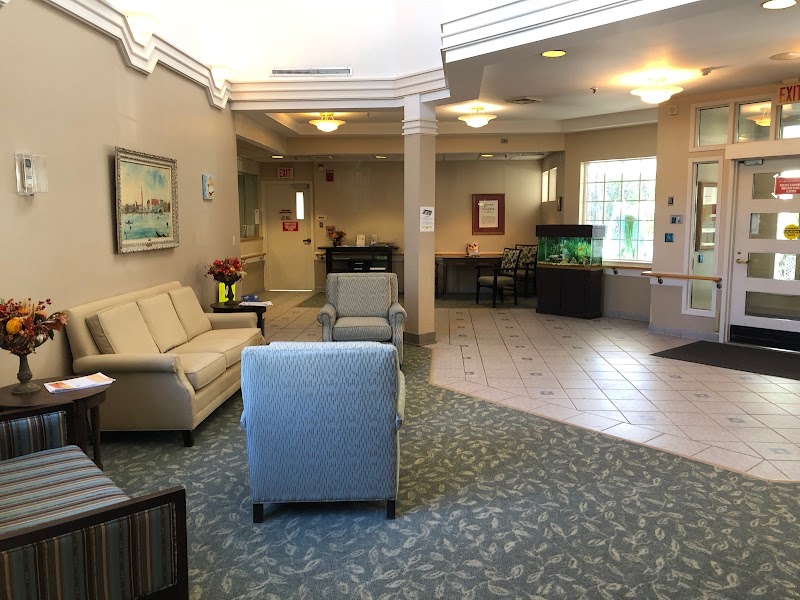
How is Meadowbrook Of Granby Staffed?

CMS rates MEADOWBROOK OF GRANBY's staffing level at 4 out of 5 stars, which is above average compared to other nursing homes. Staff turnover is 27%, compared to the Connecticut average of 46%. This relatively stable workforce can support continuity of care.

What Have Inspectors Found at Meadowbrook Of Granby?

State health inspectors documented 31 deficiencies at MEADOWBROOK OF GRANBY during 2019 to 2024. These included: 31 with potential for harm.
Who Owns and Operates Meadowbrook Of Granby?

MEADOWBROOK OF GRANBY is owned by a for-profit company. For-profit facilities operate as businesses with obligations to shareholders or private owners. The facility is operated by ATHENA HEALTHCARE SYSTEMS, a chain that manages multiple nursing homes. With 90 certified beds and approximately 72 residents (about 80% occupancy), it is a smaller facility located in GRANBY, Connecticut.
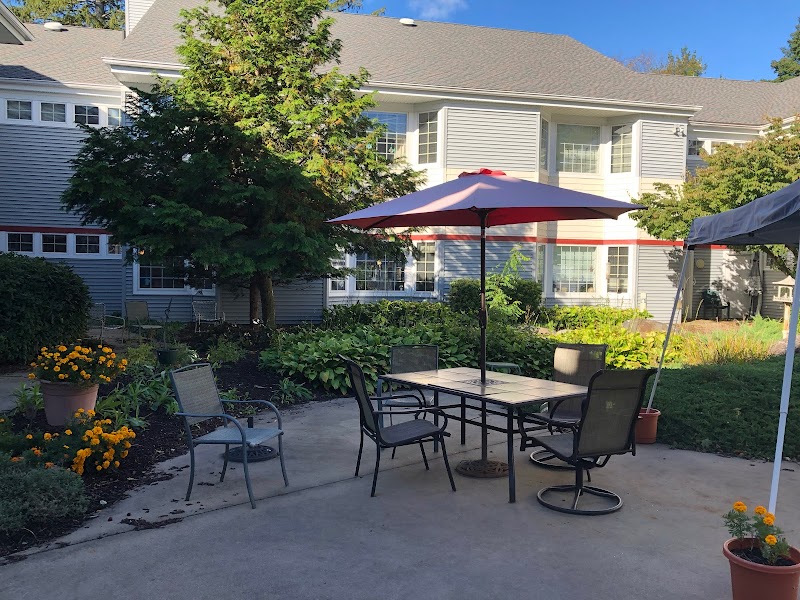
How Does Meadowbrook Of Granby Compare to Other Connecticut Nursing Homes?

Compared to the 100 nursing homes in Connecticut, MEADOWBROOK OF GRANBY's overall rating (3 stars) is below the state average of 3.0, staff turnover (27%) is significantly lower than the state average of 46%, and health inspection rating (3 stars) is at the national benchmark.

What Should Families Ask When Visiting Meadowbrook Of Granby?

Based on this facility's data, families visiting should ask: "Can I visit during a mealtime to observe dining assistance and food quality?" "How do you handle medical emergencies, and what is your hospital transfer rate?" "Can I speak with family members of current residents about their experience?"

Is Meadowbrook Of Granby Safe?

Based on CMS inspection data, MEADOWBROOK OF GRANBY has a clean safety record: no substantiated abuse findings (meaning no confirmed cases of resident harm), no Immediate Jeopardy citations (the most serious violation level indicating risk of serious injury or death), and is not on the Special Focus Facility watch list (a federal program monitoring the lowest-performing 1% of nursing homes). The facility has a 3-star overall rating and ranks #100 of 100 nursing homes in Connecticut. While no facility is perfect, families should still ask about staff-to-resident ratios and recent inspection results during their visit.

Do Nurses at Meadowbrook Of Granby Stick Around?

Staff at MEADOWBROOK OF GRANBY tend to stick around. With a turnover rate of 27%, the facility is 19 percentage points below the Connecticut average of 46%. Low turnover is a positive sign. It means caregivers have time to learn each resident's needs, medications, and personal preferences. Consistent staff also notice subtle changes in a resident's condition more quickly.

Was Meadowbrook Of Granby Ever Fined?

MEADOWBROOK OF GRANBY has no federal fines on record. CMS issues fines when nursing homes fail to meet care standards or don't correct problems found during inspections. The absence of fines suggests the facility has either maintained compliance or corrected any issues before penalties were assessed. This is a positive indicator, though families should still review recent inspection reports for the full picture.

Is Meadowbrook Of Granby on Any Federal Watch List?

MEADOWBROOK OF GRANBY is not on any federal watch list. The most significant is the Special Focus Facility (SFF) program, which identifies the bottom 1% of nursing homes nationally based on persistent, serious quality problems. Not being on this list means the facility has avoided the pattern of deficiencies that triggers enhanced federal oversight. This is a positive indicator, though families should still review the facility's inspection history directly.