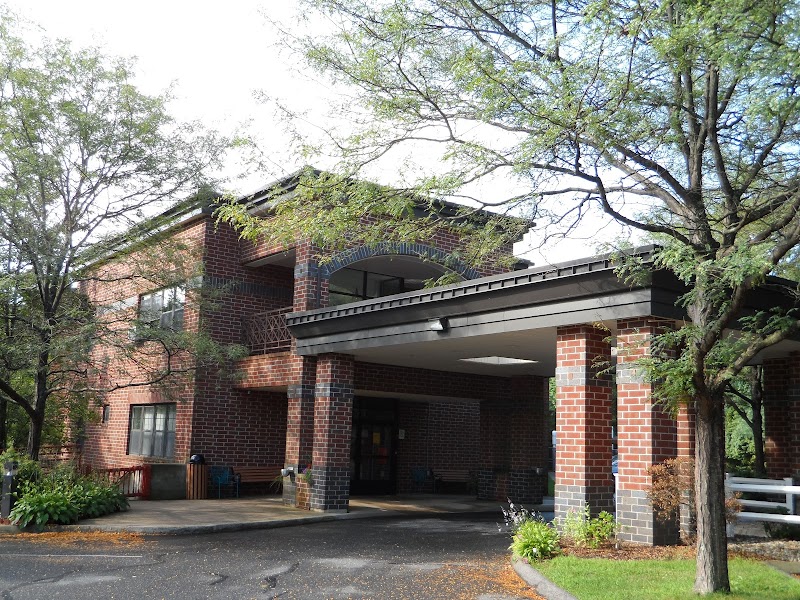
BEACON BROOK CENTER FOR HEALTH & REHABILITATION

89 WIED DRIVE, NAUGATUCK, CT 06770 (203) 729-9889
For profit - Corporation 126 Beds NATIONAL HEALTH CARE ASSOCIATES Data: November 2025 1 Immediate Jeopardy citation
Trust Grade
24/100
#166 of 192 in CT
Last Inspection: May 2024

Within standard 12-15 month inspection cycle. Federal law requires annual inspections.

Overview

Beacon Brook Center for Health & Rehabilitation in Naugatuck, Connecticut has a Trust Grade of F, indicating significant concerns and poor overall performance. It ranks #166 out of 192 facilities in the state, placing it in the bottom half, and #20 out of 22 in the local county, suggesting limited local options are better. However, the facility is improving its issues, reducing from 21 in 2024 to just 2 in 2025. Staffing is a relative strength with a 4 out of 5-star rating and a low turnover rate of 28%, indicating that staff are stable and familiar with residents. Despite these strengths, there are serious weaknesses, including critical findings related to inadequate supervision of smoking for a resident and failures in wound care for others, which could lead to further health complications. Additionally, timely physician visits were not ensured for several residents, which raises concerns about proper medical oversight. The facility also has fines of $16,801, which is average compared to others in Connecticut, and its RN coverage is deemed average as well. Overall, families should weigh these strengths and weaknesses carefully when considering this facility.

Trust Score
F
24/100
In Connecticut
#166/192
Bottom 14%
Safety Record
High Risk
Review needed
Inspections
Getting Better
21 → 2 violations
Staff Stability
✓ Good
28% annual turnover. Excellent stability, 20 points below Connecticut's 48% average. Staff who stay learn residents' needs.
Penalties
⚠ Watch
$16,801 in fines. Higher than 81% of Connecticut facilities, suggesting repeated compliance issues.
Skilled Nurses
○ Average
Each resident gets 32 minutes of Registered Nurse (RN) attention daily — about average for Connecticut. RNs are the most trained staff who monitor for health changes.
Violations
⚠ Watch
37 deficiencies on record. Higher than average. Multiple issues found across inspections.
★☆☆☆☆
1.0
Overall Rating
★★★★☆
4.0
Staff Levels
★★★☆☆
3.0
Care Quality
★☆☆☆☆
1.0
Inspection Score
Stable
2024: 21 issues
2025: 2 issues

The Good

  • 4-Star Staffing Rating · Above-average nurse staffing levels
  • Low Staff Turnover (28%) · Staff stability means consistent care
  • Full Sprinkler Coverage · Fire safety systems throughout facility
  • No fines on record
  • Staff turnover is low (28%)

    20 points below Connecticut average of 48%

Facility shows strength in staffing levels, staff retention, fire safety.

The Bad

1-Star Overall Rating

Below Connecticut average (3.0)

Significant quality concerns identified by CMS

Federal Fines: $16,801

Below median ($33,413)

Minor penalties assessed

Chain: NATIONAL HEALTH CARE ASSOCIATES

Part of a multi-facility chain

Ask about local staffing decisions and management

The Ugly 37 deficiencies on record

1 life-threatening 1 actual harm
Jun 2025 1 deficiency
CONCERN (D) 📢 Someone Reported This

A family member, employee, or ombudsman was alarmed enough to file a formal complaint

Potential for Harm - no one hurt, but risky conditions existed

Deficiency F0692 (Tag F0692)

Could have caused harm · This affected 1 resident

**NOTE- TERMS IN BRACKETS HAVE BEEN EDITED TO PROTECT CONFIDENTIALITY** Based on review of the clinical record, facility documentation, facility policy, and interviews for one of three Residents (Resi...

Read full inspector narrative →
**NOTE- TERMS IN BRACKETS HAVE BEEN EDITED TO PROTECT CONFIDENTIALITY** Based on review of the clinical record, facility documentation, facility policy, and interviews for one of three Residents (Resident #1) reviewed for nutrition, the facility failed to provide a timely Dietician evaluation to address a documented significant weight loss. The findings include: Resident #1 was admitted to the facility with diagnoses that included Diabetes Mellitus, dysphagia, anemia, heart failure and chronic kidney disease. The Resident Care Plan (RCP) dated 4/1/2025 identified Resident #1 had nutrition related diagnoses of increased nutrient needs, malnutrition, a chronic wound and altered gastrointestinal status due to constipation, nausea and reflux. The RCP directed to allow Resident #1 time to eat, line of sight supervision at meals and a ground texture, thin consistency diet. A Dietician evaluation dated 5/6/2025 identified Resident #1 as a high risk for weight loss/nutritional needs and noted a 5 % weight loss over a month and a 11.4 % weight loss over a 6-month time frame. A protein supplement and weekly weights were ordered. A weight dated 5/9/2025 at 2:26 PM was 130.9 pounds (lbs.). A reweight dated 5/23/2025 at 1:48 PM was 121 lbs. A 9.9 lbs. (7.6 %) weight loss in 2 weeks. A quarterly Minimum Data Set (MDS) assessment dated [DATE] identified Resident #1 had severe cognitive impairment (Brief Interview for Mental Status (BIMS) score of 6), required maximal assistance for eating and was dependent for care. A reweight dated 6/2/2025 at 2:50 PM was 113.8 lbs. A 17.1 lbs. (13 %) weight loss in 3 weeks. A Nutrition note dated 6/3/2025 at 12:43 PM identified Resident #1 was seen for follow up and re-evaluation of weights. Resident #1's diet was house minced, moist and mildly thickened liquids noting intake at 0-100 % consumption of meals with a liquid protein supplement daily. Resident #1 had a stage 3 pressure wound to the right foot and unstageable pressure wounds to the sacrum and right lateral foot. A weight on 6/2/2025 was 113.8 lbs. with a weight on 5/2/2025 of 132.6 lbs. A severe weight loss times 1 month was identified. Recommendations included continuing with weekly weights and supplement changed to frozen nutrition cup three times a day. The liquid protein supplement was increased to twice a day. Interview with the Dietician on 6/18/2025 at 11:44 AM identified she last evaluated Resident #1 prior to 6/3/2025 on 5/6/2025 as part of a readmission review. She identified that she evaluated residents on admission, readmission, quarterly and for a significant change in condition including weight loss. She indicated she printed a weight/dietician report from the electronic medical record system (EMR) when in the facility and reviewed the report in the morning on her scheduled workdays (3 days per week) to determine what residents she needed to evaluate. She further indicated the nursing staff would add residents to her report through the EMR to notify her that an evaluation was needed. She identified she checked weights for high-risk residents such as Resident #1 when she reviewed the weight report each time she worked. She could not recall if she identified Resident #1's 5/23/2025 weight or weight loss. She indicated that there were a lot of residents on the weight report who were high risk and at times she had to prioritize who she would see. She identified that the 5/23/2025 weight of 121 lbs. was a 7.6 % loss in 2 weeks. She defined a significant weight loss as 5 % or greater weight loss in 30 days or 10 % weight loss in 6 months or 180 days. Interview with the Director of Nurses (DNS) on 6/18/2025 at 1:00 PM identified that a weight change of 5% or more should be reported to the supervisor who would contact the Dietician. She did not know why LPN #1 did not notify the supervisor of the weight change on 5/23/2025 and indicated the Dietician should have evaluated Resident #1 immediately or within a few days of the identified weight change. She did not know why the Dietician did not evaluate Resident #1 prior to 6/4/2025 as the weight reports that are generated included all of Resident #1's recorded weights. Attempts to contact LPN #1 were unsuccessful during the survey. The facility policy Weight policy and procedure dated 10/2023 directed in part significant weight change are verified and if the verified weight (reweigh) indicated a significant weight change, the interdisciplinary team will be notified and the plan of care revised as appropriate. Parameters for evaluating the significance of weight loss was 5 % in 30 days, 7.5 % in 90 days and 10% in 180 days. Although requested, the facility identified they did not have a policy that addressed the dietician evaluation of a significant weight loss.
Feb 2025 1 deficiency
CONCERN (D) 📢 Someone Reported This

A family member, employee, or ombudsman was alarmed enough to file a formal complaint

Potential for Harm - no one hurt, but risky conditions existed

Quality of Care (Tag F0684)

Could have caused harm · This affected 1 resident

**NOTE- TERMS IN BRACKETS HAVE BEEN EDITED TO PROTECT CONFIDENTIALITY** Based on review of the clinical record, facility documentation, facility policy, and interviews for one (1) of three (3) residen...

Read full inspector narrative →
**NOTE- TERMS IN BRACKETS HAVE BEEN EDITED TO PROTECT CONFIDENTIALITY** Based on review of the clinical record, facility documentation, facility policy, and interviews for one (1) of three (3) residents (Resident #1 and #3) reviewed for pressure injuries, the facility failed to complete and document skin risk assessment weekly post re-admission per facility protocol. The findings include: 1. Resident #1 was admitted to the facility with diagnoses that included dementia, peripheral vascular disease and sepsis. The quarterly MDS dated [DATE] identified Resident #1 had a Brief Mental Interview for Mental Status (BIMS) of ninety-nine (99) indicative of impaired cognition, was at risk for developing pressure ulcers/injuries, was frequently incontinent of bowel and required extensive assistance of two staff with activities of daily living (ADL's). The care plan dated 9/3/24 identified Resident #1 had impaired skin integrity and was at risk for further skin breakdown with interventions that included a low air loss (LAL) mattress, educate on risks to wound healing, inspect skin during care, offload heels and keep blue boot on Resident #1 while in bed to prevent pressure on the heel. A skin assessment dated [DATE] identified Resident #1 had no new wounds. Resident #1 failed to have a skin assessment completed on 10/10/24. Review of Resident #1's medical record identified Resident #1 was sent to an in-patient psychiatric facility on 10/11/24 and then was admitted to the hospital from [DATE] - 11/9/24. Resident #1's discharge summary identified ulceration to the left anterior toe, anterior foot and distal planter. A physician's order dated 11/9/24 directed Braden scale (measures patients risk of developing pressure injuries) completed for four weeks on admission and then annual and as needed. The Braden scale dated 11/9/24 identified Resident #1 was a moderate risk. However, review of Resident #3's medical record did not identify weekly ski assessments thereafter for four (4) weeks in accordance with physicians orders. 2. Resident #3 was admitted to the facility with diagnoses that included metabolic encephalopathy and heart failure. The Braden scale dated 1/21/25 identified Resident #3 was a moderate risk. The admission assessment dated [DATE] identified Resident #3 was alert and orientated to person, place and time and had no impairments with ADL's. Review of Resident #3's medical record identified Resident #3 was in the hospital from [DATE] - 1/30/25. Review of Resident #3's medical record failed to identify Resident #3 had a Braden scale completed upon re-admission to the facility and weekly thereafter for four (4) weeks in accordance with physicians orders. The care plan 1/31/24 identified Resident #2 had a stage three pressure ulcer on the coccyx with interventions included encourage and assist to reposition off back frequently, treatment as ordered, weekly wound evaluation and low air loss mattress. Interview with the Clinical Director on 2/20/25 at 1:00 PM identified per policy, Braden evaluations are to be completed on admission/re-admission and then weekly for four weeks. Review of the pressure injury prevention policy directed the licensed nurse will complete a Braden/[NAME] evaluation for all residents upon admission/re-admission. The Braden/[NAME] evaluation will be completed weekly x 4 weeks post admission/re-admission.
Oct 2024 2 deficiencies
CONCERN (D) 📢 Someone Reported This

A family member, employee, or ombudsman was alarmed enough to file a formal complaint

Potential for Harm - no one hurt, but risky conditions existed

Free from Abuse/Neglect (Tag F0600)

Could have caused harm · This affected 1 resident

**NOTE- TERMS IN BRACKETS HAVE BEEN EDITED TO PROTECT CONFIDENTIALITY** Based on observation, clinical record review, facility documentation review, facility policy review, and interviews for one of t...

Read full inspector narrative →
**NOTE- TERMS IN BRACKETS HAVE BEEN EDITED TO PROTECT CONFIDENTIALITY** Based on observation, clinical record review, facility documentation review, facility policy review, and interviews for one of three residents (Resident #1) reviewed for abuse, the facility failed ensure the resident was free from neglect and care was provided timely. The findings include: Resident #1 was admitted with diagnoses that included a stroke with hemiplegia/hemiparesis (weakness/loss of movement) affecting the right dominant side. A quarterly MDs assessment dated [DATE] identified Resident #1 BIMs was 99, indicating Resident #1 was severely cognitively impaired and could not complete the interview, and Resident #1 did not speak, rarely understood verbal content and had highly impaired vision. Resident #1 was at risk for pressure ulcers, was incontinent, was dependent for all care, required two (2) staff for bed mobility and transfers. The RCP dated 8/12/2024 identified Resident #1 was incontinent of bowel and bladder. The RCP directed to provide incontinent care every two (2) to three (3) hours and use of incontinent briefs. A facility incident report dated 10/21/2024 identified an event of neglect: on 10/21/2024 at 4:00 PM. The report indicated Resident #1 was aphasic (unable to speak), and required total care for ADLs, and it was observed that Resident #1's bed linen had a yellow dried ring under the resident's buttocks. Incontinent care was not provided for two (2) hours beyond the care planned time frame and NA #1 was suspended pending investigation. A facility event summary dated 10/25/2024 identified there were no known negative effects due to extended hours of before incontinent care was provided (beyond what was care planned). Resident #1's skin was intact without maceration, redness or open areas. Resident #1 was bathed and showered after the event was discovered. The summary indicated NA #1 was new to the facility and new to a long-term care setting, there was no intent, and education was provided for NA #1. RN #1's written statement dated 10/21/2024 identified at approximately 4 PM she observed Resident #1 lying in bed and the drawsheet was stained with a dry yellow ring under his/her buttocks, and the brief was soiled but drying, and was wearing two (2) briefs. Incontinent care was not provided in a timely manner. NA #1 written statement dated 10/21/2024 identified care was NA #1 provided personal care at 11 AM and placed one (1) brief under and one (1) brief over Resident #1. The statement further indicated although she repositioned Resident #1 after 11 AM, NA #1 was unsuccessful providing future care (during the shift) due to Resident #1 was resisting and she was struggling to complete her assignment. Statement review identified NA #1 did not provide care between 11 AM and 3 PM. Interview with RN #1 on 10/30/2024 at 11:33 PM identified she was the nursing supervisor on 10/21/2024 when about 4:00 PM, Resident #1's visitor (Person #1) requested her to look at Resident #1. RN #1 stated the draw sheet under Resident #1 had a large yellow ring, there were two (2) briefs both saturated with urine in place and Resident #1's clothing appeared dry without stains. Resident #1's skin had no open areas or visible redness, she immediately notified the DON and asked NA #3 to provide care (5 hours after incontinent care was provided by NA #1). She identified that incontinent residents should be provided incontinence care every two (2) hours. Interview with NA #1 on 10/31/2024 at 10:30 AM identified she was assigned Resident #1 on 10/21/2024 and was the only NA on that wing of the unit. NA #1 stated she had not worked in long-term care previously, had recently ended her orientation and had not worked with the residents on that unit. NA #1 stated she knew Resident #1 required two (2) staff for care, and needed to be repositioned and checked for incontinence every two (2) hours. NA #1 identified that she provided care at 11 AM by herself as she could not find any other available staff to assist her, so she did not get Resident #1 out of bed as per his/her routine. She continued that she attempted to turn and position Resident #1 every two (2) hours but could only turn him/her slightly to the side to tuck a pillow under him/her because she did not have a second staff to assist, and she did not check each time for incontinence. NA #1 stated went over to the other side of the unit to ask for help, but everyone seemed very busy, and she did not notify the nurse (LPN #2). Interview with LPN #2 on 10/30/2024 at 12:30 PM identified she was the charge nurse on 10/21/2024 on the day shift and she was not aware Resident #1 did not receive care timely. LPN #2 stated she was not notified that NA #1 was unable to provide the care timely and there other NAs available that NA #1 could have also asked for help. Interview with the DON on 10/30/2024 at 1:50 PM identified that she expected the staff to provide every two (2) hour incontinence care for dependent residents. NA #1 identified she provided incontinent care for Resident #1 on 10/21/2024 at 11:00 AM but did not provide any additional incontinence care for the remainder of her shift (4 hours from 11 AM to 3 PM) on 10/21/2024. The DON stated NA #1 was off orientation and the workload that day was too much for NA #1, and she fell behind. The DON stated NA #1 should have asked for help, and she was unable to explain why NA #1 did not ask for help or let other staff know that she could not complete her assignment. Further, LPN #1 should have checked in or followed up with NA #1 to ensure care was provided timely. Subsequent to the incident, NA #1 was provided with additional orientation time. The facility policy Abuse dated 12/2023 directed in part, that all residents have the right to be free from abuse and neglect. Neglect is defined as the failure of the facility its employees or service providers to provide goods and services to a resident that are necessary to avoid physical harm, pain, mental anguish or emotional distress. Facility documentation review identified staff education was initiated on 10/21/2024 and included providing personal care and incontinent care timely and to report refusals of care to the nurse. Random audits were initiated on 10/21/2024 and a QAPI meeting was held on 10/24/2024. Based on review of facility documentation, past non-compliance was identified.
CONCERN (D) 📢 Someone Reported This

A family member, employee, or ombudsman was alarmed enough to file a formal complaint

Potential for Harm - no one hurt, but risky conditions existed

Quality of Care (Tag F0684)

Could have caused harm · This affected 1 resident

**NOTE- TERMS IN BRACKETS HAVE BEEN EDITED TO PROTECT CONFIDENTIALITY** Based on observation, clinical record review, facility documentation review, facility policy review, and interviews for one of t...

Read full inspector narrative →
**NOTE- TERMS IN BRACKETS HAVE BEEN EDITED TO PROTECT CONFIDENTIALITY** Based on observation, clinical record review, facility documentation review, facility policy review, and interviews for one of three residents (Resident #1) reviewed for abuse, the facility failed to ensure care was provided in accordance with physician orders and failed to ensure the NA reported when she could not provide care timely, resulting in a delay in care. The findings include: Resident #1 was admitted with diagnoses that included a stroke with hemiplegia/hemiparesis (weakness/loss of movement) affecting the right dominant side. A quarterly MDs assessment dated [DATE] identified Resident #1 BIMs was 99, indicating Resident #1 was severely cognitively impaired and could not complete the interview, and Resident #1 did not speak, rarely understood verbal content and had highly impaired vision. Resident #1 was at risk for pressure ulcers, was incontinent, was dependent for all care, required two (2) staff for bed mobility and transfers. The RCP dated 8/12/2024 identified Resident #1 was incontinent of bowel and bladder. The RCP directed to provide incontinent care every two (2) to three (3) hours and use of incontinent briefs. A physician order dated 10/8/2024 directed activities of daily living (ADL) assist of two for all ADL care. A facility incident report dated 10/21/2024 identified Resident #1 was aphasic (unable to speak), required total care for ADLs, and was observed that Resident #1's bed linen had a yellow dried ring under the resident's buttocks. Incontinent care was not provided for two (2) hours beyond the care planned time frame and NA #1 was suspended pending investigation. RN #1's written statement dated 10/21/2024 identified she observed Resident #1 lying in bed and the drawsheet was stained with a dry yellow ring under his/her buttocks, and the brief was soiled but drying, and was wearing two (2) briefs. Incontinent care was not provided in a timely manner. NA #1 written statement dated 10/21/2024 identified care was NA #1 provided personal care at 11 AM and placed one (1) brief under and one (1) brief over Resident #1. The statement further indicated although she repositioned Resident #1 after 11 AM, NA #1 was unsuccessful providing future care (during the shift) due to Resident #1 was resisting and she was struggling to complete her assignment. Statement review identified NA #1 did not provide care between 11 AM and 3 PM. Interview with RN #1 on 10/30/2024 at 11:33 PM identified she was the nursing supervisor on 10/21/2024 when about 4:00 PM, Resident #1's visitor (Person #1) requested her to look at Resident #1. RN #1 stated the draw sheet under Resident #1 had a large yellow ring, there were two (2) briefs both saturated with urine in place and Resident #1's clothing appeared dry without stains. Resident #1's skin had no open areas or visible redness, she immediately notified the DON and asked NA #3 to provide care (5 hours after incontinent care was provided by NA #1). She identified that incontinent residents should be provided incontinence care every two (2) hours. Interview with NA #1 on 10/31/2024 at 10:30 AM identified she was assigned Resident #1 on 10/21/2024 and was the only NA on that wing of the unit. NA #1 stated she had not worked in long-term care previously, had recently ended her orientation and had not worked with the residents on that unit. NA #1 stated she knew Resident #1 required two (2) staff for care and needed to be repositioned. NA #1 identified that she provided care at 11 AM by herself as she could not find any other available staff to assist her, so she did not get Resident #1 out of bed as per his/her routine. She continued that she attempted to turn and position Resident #1 every two (2) hours but could only turn him/her slightly to the side to tuck a pillow under him/her because she did not have a second staff to assist, and she did not check Resident #1 for incontinence each time she tucked a pillow under the resident. NA #1 stated went over to the other side of the unit to ask for help, but everyone seemed very busy so she did not ask, and she did not notify the nurse (LPN #2). Interview with LPN #2 on 10/30/2024 at 12:30 PM identified she was the charge nurse on 10/21/2024 on the day shift and gave NA #1 her assignment at the beginning of the shift. LPN #2 stated she was not aware Resident #1 did not receive care timely after 11 AM (four hours). LPN #2 stated she was not notified that NA #1 was unable to provide the care timely and there other NAs available that NA #1 could have also asked for help to ensure two (2) staff provided care as ordered. Interview with the DON on 10/30/2024 at 1:50 PM identified that she expected staff to provide care as ordered and per the resident plan of care. The DON stated NA #1 was newly off her orientation and the workload was too much for NA #1. The DON stated NA #1 should have asked for help from a second NA to provide care (as ordered) and NA #1 should have notified the nurse that she was not able to provide the care. The DON indicated she did not know why NA #1 did not ask for help or let other staff know that she could not complete her assignment, and she should have notified someone to ensure care could be provided timely. The facility policy Activity of Daily living (ADLs) dated 6/2023 directed in part, to provide assistance to complete ADL activities per the person-centered evaluation and plan for care. Facility documentation review identified staff education was initiated on 10/21/2024 and included providing personal care and incontinent care timely and to report refusals of care to the nurse. Random audits were initiated on 10/21/2024 and a QAPI meeting was held on 10/24/2024. Although review identified education was provided, review failed to identify education and audits were completed regarding notification when staff are unable to provide care time or get a resident out of bed, and to ensure the required number of staff provide care in accordance with physician orders and the plan of care. Based on documentation review, past non-compliance was not identified.
Aug 2024 1 deficiency
CONCERN (D) 📢 Someone Reported This

A family member, employee, or ombudsman was alarmed enough to file a formal complaint

Potential for Harm - no one hurt, but risky conditions existed

Accident Prevention (Tag F0689)

Could have caused harm · This affected 1 resident

**NOTE- TERMS IN BRACKETS HAVE BEEN EDITED TO PROTECT CONFIDENTIALITY** Based on clinical record reviews, review of facility documentation and interviews for one (1) of three (3) sampled residents (Re...

Read full inspector narrative →
**NOTE- TERMS IN BRACKETS HAVE BEEN EDITED TO PROTECT CONFIDENTIALITY** Based on clinical record reviews, review of facility documentation and interviews for one (1) of three (3) sampled residents (Resident #1) who were required staff assistance with personal hygiene, the facility failed to maintain safety to prevent the resident from falling out of the bed while turning and repositioning the resident when incontinent care was provided. The findings include: Resident #1's diagnoses included neurocognitive disorder with Lewy bodies and dementia. The annual Minimum Data Set assessment dated [DATE] identified Resident #1 made poor decisions regarding tasks of daily life, was dependent on staff with rolling from side to side, toileting, and personal hygiene, had functional limitation in range of motion impairments on both sides of the upper and lower extremities, and was always incontinent of urine and bowel. The Resident Care Plan dated 5/14/24 identified Resident #1 had an activities of daily living deficit related to generalized weakness, recent hospitalization, and impaired bilateral lower extremity range of motion, and was incontinent of bowel and bladder. Interventions directed to provide incontinent care every two (2) hours, and as needed. Review of the resident care card identified Resident #1 required an assist of two (2) with transferring in and out of the bed and chair via a mechanical (hoyer) lift, however the care card failed to identify the type of assistance required with turning and repositioning when in bed. The Facility Reported Incident report dated 7/13/24 at 6:30 PM identified while the nurse aide was providing care, Resident #1 fell off the bed to the ground. The investigation summary related to the 7/13/24 incident identified the nurse aide, Nurse Aide (NA) #1, was turning Resident #1 several times in bed as Resident #1 began to urinate during incontinent care, NA #1 had rushed a bit to prevent the bed linens and personal night gown from becoming soiled with urine, and when adjusting the night gown Resident #1 had rolled out of bed and NA #1 was able to partially break Resident #1's fall. The investigation identified NA #1 had pushed and pulled Resident #1, turning him/her side to side and not in a gentle manner while providing care, Resident #1 had fallen out of the bed and NA #1 was located on the opposite side of the bed at time the fell. In a statement attached to the investigation dated 7/16/24, the 3-11PM charge nurse, Licensed Practical Nurse (LPN) #2, indicated that on 7/13/24 she entered Resident #1's room and saw Resident #1 on the floor between the two (2) beds and NA #1 was standing next to Resident #1. LPN #2 identified NA #1 informed her while she was pulling the bedsheet, Resident #1 had jumped at her, and subsequently fell. LPN #2 indicated Resident #1's roommate, Resident #5, had also reported NA #1 was repeatedly pulling the sheet when Resident #1 fell to the ground. LPN #2 subsequently informed the nursing supervisor. Interview with the Occupational Therapist, OT #1, on 8/1/24 at 2:18 PM identified Resident #1 could not contribute to bed mobility, which included rolling side to side, going from lying to sitting position, sitting to lying position, and independently changing his/her position. Interview with NA #1 on 8/1/24 at 4:52 PM identified Resident #1 was bedridden and had contractures and she had performed incontinent care to Resident #1 on 7/13/24 during the 3-11PM shift. NA #1 indicated, while attempting to adjust Resident #1's pajama gown, she had turned Resident #1 away from her onto the left side and that was when Resident #1 started to slide off the bed. NA #1 indicated she was able to break Resident #1's fall as she had grasped the pajamas with her left hand and guided Resident #1 on to the floor. Interview with the Assistant Director of Nurses (ADON) on 8/1/24 at 5:40 PM identified facility practice was to ensure the resident was in the center of their bed prior to turning and positioning to prevent the resident from rolling off the bed and the resident was never to be rolled onto their side, away from you, while turning and positioning. The ADON was unable to provide education/inservices/competencies for NA #1 related to turning and positioning as NA #1 worked for an agency and the agency managed their employee's education, inservices, and competencies related to this skill set. Although requested, the ADON was unable to provide a policy and procedure for turning and positioning a resident.
Jul 2024 1 deficiency
CONCERN (D) 📢 Someone Reported This

A family member, employee, or ombudsman was alarmed enough to file a formal complaint

Potential for Harm - no one hurt, but risky conditions existed

Free from Abuse/Neglect (Tag F0600)

Could have caused harm · This affected 1 resident

**NOTE- TERMS IN BRACKETS HAVE BEEN EDITED TO PROTECT CONFIDENTIALITY** Based on record review, and staff interviews for 1 of 3 residents (Resident #1) reviewed for neglect the facility failed to prov...

Read full inspector narrative →
**NOTE- TERMS IN BRACKETS HAVE BEEN EDITED TO PROTECT CONFIDENTIALITY** Based on record review, and staff interviews for 1 of 3 residents (Resident #1) reviewed for neglect the facility failed to provide incontinent care in a timely manner. The findings include: Resident #1 was admitted to the facility with diagnoses that included hemiplegia and hemiparesis following cerebral infarction, anxiety, and aphasia (impaired ability to communicate). A quarterly minimum data set (MDS) dated [DATE] identified Resident #1 had moderately impaired cognition, required assistance with bed mobility and ADLs, and was incontinent of bowel and bladder. The Resident Care Plan dated 5/20/2024 identified Resident #1 required assistance with ADLS. Interventions directed to assist with toileting and provide incontinent care as needed. Facility incident report dated 6/17/2024 at 12:15 PM identified Resident #1 was alert and aphasic alert, aphasic and alleged neglect on 6/16/2024 at 9:30 PM. The report identified Resident #1 was alleged to have not received incontinent care for most of the evening shift on 6/16/2024. Resident #1 was incontinent of a large amount stool and urine, dried stool on one hand and bed linens. The facility summary dated 6/22/2024 identified on 6/16/2024 Resident #1's visitor alleged Resident #1 did not receive incontinent care during the evening shift. Facility investigation identified Resident #1 required two (2) staff assist for care, and NA #1 checked on Resident #1 at the beginning of his shift, again between 6 and 7 PM, and again about 9:30 PM. The summary further indicated when a second caregiver was available, care was provided. Review of NA #1's written statement dated 6/17/2024 included with the incident report dated 6/17/2024 identified he checked Resident #1 for incontinent care needs at 3:45 PM and Resident #1 was dry. NA #1's statement further indicated he checked Resident #1 again between 6 and 7 PM and identified Resident #1 was slightly wet with no stool noted and he sought another NA to assist with care. Interview with NA #1 on 7/9/2024 at 2:52 PM identified Resident #1 required two (2) staff for care, and was incontinent of urine between 6 and 7 PM on 6/16/2024. NA #1 stated he went to find help, but no additional staff were available to provide assistance for incontinent care. NA #1 further stated that he did not provide incontinent care until 9 PM (two to three hours after he identified Resident #1 required incontinent care). NA #1 further stated Resident #1 should have been changed/incontinent care provided when he first identified the resident was wet between 6 and 7 PM. NA #1 also stated he did not notify the charge nurse or the nursing supervisor that he needed assistance to provide the care. Interview with the DNS on7/9/24 at 3:30 PM identified although NA #1 identified Resident #1 was incontinent of urine between 6 and 7 PM, but NA #1 did not provide care until 9:30 PM (2 ½ to 3 ½ hours after Resident #1 was identified as incontinent) because the other NAs were busy and not available to provide assistance. The DNS stated residents should receive incontinent care as soon as possible, and at least every two (2) hours. Review of the facility Incontinence Care Policy dated April 2015 directed in part, residents who are incontinent of bowel or bladder, or who need assistance in hygiene after toileting will receive incontinence care. Review of the facility policy for Abuse and Policy Procedure dated January 2023 directed in part, that neglect means the failure to provide goods and services to a resident that are necessary to avoid physical harm, pain, mental anguish, or emotional distress.
Jun 2024 1 deficiency
CONCERN (D) 📢 Someone Reported This

A family member, employee, or ombudsman was alarmed enough to file a formal complaint

Potential for Harm - no one hurt, but risky conditions existed

Comprehensive Care Plan (Tag F0656)

Could have caused harm · This affected 1 resident

**NOTE- TERMS IN BRACKETS HAVE BEEN EDITED TO PROTECT CONFIDENTIALITY** Based on clinical record reviews, observations, facility documentation, facility policy and interviews for one of three sampled ...

Read full inspector narrative →
**NOTE- TERMS IN BRACKETS HAVE BEEN EDITED TO PROTECT CONFIDENTIALITY** Based on clinical record reviews, observations, facility documentation, facility policy and interviews for one of three sampled residents (Resident #1) who were reviewed for the implementation of their care plan, the facility failed to ensure the care plan intervention of two (2) staff members for all care for Resident #1 was followed. The findings include: Resident #1's diagnoses included depression, anxiety, mood disorder and psychosis. The quarterly Minimum Data Set assessment dated [DATE] identified Resident #1 made poor decisions regarding tasks of daily life, required extensive assistance with turning and repositioning while in bed, was dependent with toileting and required two (2) staff members for transfers in and out of the bed and chair via a mechanical lift, Hoyer lift. The Resident Care Plan dated 2/2/24 identified Resident #1 had accusatory behaviors towards staff. Interventions directed two (2) staff to always be present in the room, one (1) for care and one (1) for support and assign staff that work best with the resident. The nurse's note dated 4/3/24 written at 10:32 PM identified Resident #1 reported to the 3-11PM charge nurse that the 3-11PM nurse aide assigned to Resident #1 attempted to suffocate him/her twice by putting a pillow over his/her face and he/she had to overpower the nurse aide to get the pillow away from his/her face. The Facility Reported Incident form dated 4/3/24 at 8:10 PM identified Resident #1 alleged while receiving care, a 3-11PM nurse aide attempted to suffocate him/her twice by putting a pillow over his/her head until he/she overpowered the nurse aide. Review of the statement dated 4/3/24 written by the 3-11PM nurse aide, Nurse Aide (NA) #2, identified she noticed Resident #1 appeared uncomfortable with the pillow and asked Resident #1 if she could fix the pillow. NA #2 explained that she raised Resident #1's head of bed and pushed the pillow into the middle behind Resident #1's head and never lifted the pillow from the bed. Interview with the 3-11PM Nursing Supervisor, Registered Nurse (RN) #1, on 6/24/24 at 2:11 PM identified Resident #1 reported the nurse aide took a pillow and put it over his/her head and pushed down on the pillow. RN #1 identified NA #2 was providing care to Resident #1 alone. Interview and clinical record review with the Director of Nursing (DON) on 6/25/24 at 9:03 AM identified Resident #1 has a history of accusatory behaviors and does have an intervention in the care plan that directed for two (2) staff members to be in the room when care was being provided. The DON identified NA #2 did not want to delay care and went into Resident #1's room without the benefit of another staff member present. Interview with NA #2 on 6/25/24 at 9:16 AM identified she was assigned to Resident #1 on 4/3/24 and was providing personal care to Resident #1. NA #2 identified she did not review Resident #1's care plan for any changes prior to providing care and went into Resident #1's without another staff member. NA #2 identified at no time did she place a pillow over Resident #1's face but did adjust the pillow behind Resident #1's head for comfort prior to exiting the room. Review of the facility policy titled Care Plans, directed, in part, the facility is committed to providing residents with all necessary care and services to enable them to achieve the highest quality of life, recognizing each resident as an individual, the facility identifies and meets those needs in a resident-centered environment. Care plans are oriented toward preventing avoidable decline in clinical and functional levels, maintaining a specific level of functioning, and reflecting resident preferences and right to refuse certain services or treatment.
May 2024 16 deficiencies 1 IJ
CRITICAL (J)

Immediate Jeopardy (IJ) - the most serious Medicare violation

Accident Prevention (Tag F0689)

Someone could have died · This affected 1 resident

**NOTE- TERMS IN BRACKETS HAVE BEEN EDITED TO PROTECT CONFIDENTIALITY** Based on review of the clinical record, review of facility documentation, and staff interviews for 1 of 1 sampled resident (Resi...

Read full inspector narrative →
**NOTE- TERMS IN BRACKETS HAVE BEEN EDITED TO PROTECT CONFIDENTIALITY** Based on review of the clinical record, review of facility documentation, and staff interviews for 1 of 1 sampled resident (Resident #101) reviewed for non-compliance with smoking, the facility failed to provide adequate supervision and failed to implement interventions to prevent an accident hazard after repeated incidents of noncompliance related to smoking. These failures resulted in a finding of Immediate Jeopardy. The findings include: 1. Resident #101 was admitted to the facility on [DATE]. The resident's diagnoses included cellulitis of abdominal wall, alcohol abuse and nicotine dependence. Resident #101 had a conservator of both estate and person. The admission Smoking Evaluation assessment dated [DATE] identified no desire to smoke at the time of the admission. The Resident Care Plan (RCP) dated 3/14/24 identified both short- and long-term memory loss. Interventions included referring to time of day, date, and recent events with interactions, and to utilize simple direct communication, verbal cues, and task segmentation. The quarterly Minimum Data Set (MDS) assessment dated [DATE] identified Resident #101 as moderately cognitively impaired and noted the resident utilized a walker for mobility. 2. Resident # 95 was admitted to the facility on [DATE] who shared a room with Resident # 101. The resident's diagnoses included dependency on supplemental oxygen and Chronic Obstructive Pulmonary Disease (COPD. The RCP for diagnosis of COPD dated 3/12/24 with a revision on 3/14/24. Interventions included administering oxygen at 2-3 liters/minute via nasal cannula continuously and to monitor effectiveness by checking saturation as indicated. The admission MDS assessment dated [DATE] identified the resident as cognitively intact, independent with self-care, utilized a wheelchair for mobility and noted continuous oxygen therapy. The physician admission orders dated March 3/13/24 through 4/22/24 directed to administer oxygen via nasal cannula at 2-3 liters /minute and to check pulse oximetry every shift. The social service notes dated 3/15/24 at 1:40 PM identified Social Worker (SW #1) observed Resident #101 and a visitor smoking in the visitor's car in the facility's parking lot. SW #1 indicated both were informed there is no smoking on facility's grounds even if the resident signed out on a Leave of Absence (LOA). SW #1 indicated she met with Resident #101's Conservator of Person and Estate (Resident # 95) who indicated s/he was unaware of Resident #101 smoking on LOA. The charge nurse and Administrator were made aware of the incident. Additionally, SW #1 advised the charge nurse to search Resident # 101 upon return to the facility. A review of the clinical record dated 3/15/24 through 3/20/24 failed to identify the facility conducted a new Smoking Evaluation Assessment when Resident # 101 was found smoking in the car on facility grounds. The social service notes dated 3/21/24 at 10:33 AM identified SW #1 met with Resident #101 as s/he attempted to leave the building to walk over to the street to smoke a cigarette. Resident #101 was advised s/he could not leave the facility on LOA without the responsible party's permission. SW #1 also advised Resident # 101 that smoking materials are not allowed or kept on his/her person. When asked to hand over smoking materials, Resident #101 aggressively threw a bag containing 2 cigarettes. Resident # 101 emptied her/his pocket, and two cigarette butts were found but no lighting material. Resident # 101 was escorted back to her/his room and the Director of Nursing Services (DNS) was updated. The RCP dated 3/22/24 for Resident # 101 identified a history of smoking with interventions which included offering nicotine patches, social services to address smoking cessation, social service to provide emotional support to address smoking cessation and to conduct every fifteen- minute checks. The social service notes by SW#1 of 3/26/24 at 11:12 AM identified she found a lighter on Resident #101's tray table. The charge nurse, supervisor, and DNS were made aware. However, the clinical record failed to provide evidence that interventions were implemented at the time of the non-compliance with the possession of smoking materials. The social services notes by SW #1 on 4/2/24 at 3:07 PM identified she spoke to Resident # 95 (conservator for Resident # (101) about transfer to a skilled nursing facility that permits smoking and Resident # 95 indicated s/he would speak to Resident # 101. A nurse's note on 4/4/24 at 5:05 PM identified Resident #101 returned from LOA at 5:00 PM, a room search was conducted, cigarettes and a lighter were found. Resident #101 was educated on the facility's no smoking policy. The clinical record failed to provide evidence that interventions were implemented at the time of the non-compliance with the possession of smoking materials. The nurse's notes dated 4/4/24 at 7:57 PM identified Resident # 101 returned from LOA at 5:00 PM. Upon Resident # 101 returning to the facility, the charge nurse entered the resident's room and noted a strong cigarette smell. When asked if s/he (Resident # 101) was smoking s/he denied smoking in the room. The charged nurse advised the resident s/he would need to be searched for cigarettes. Upon checking Resident # 101, a pack of cigarettes and lighter were found. Resident # 101 was educated on the importance of following facility rules and no smoking as well as safety when oxygen is in use. Resident # 101 expressed s/he was going to find a facility that allows smoking, and the supervisor was updated. The nurse's notes dated 4/4/24 at 10:25 PM identified Resident # 101 was found smoking again in her/his room by the charge nurse. Resident #101 was educated again that s/he cannot smoke in the facility or on facility grounds. Resident # 101 was educated again that Resident # 95 was in the room on oxygen and her/his smoking could cause a fire while smoking. Resident #101's smoking materials were confiscated. The nurse's note on 4/4/24 at 10:58 PM identified Resident #101 was found on her/his bed smoking a cigarette, room search conducted again identified another pack of cigarettes and two liquor bottles. Resident # 101 was intoxicated, and the staff was directed to transfer the resident to an acute care facility for an evaluation. The nurse's notes dated 4/4/24 also directed to conduct every fifteen- minute check. A nurse's note on 4/4/24 at 11:27 PM identified Resident #101 refused to go to the acute care facility and 15-minute check were maintained. A review of every fifteen- minutes check from 3/24/24 through 4/5/24 identified missing checks for 3/11/24 to 3/14/24, 3/22/24 to 3/31/24 and 4/1/24 to 4/3/24. The social services note dated 4/5/24 at 8:50 AM by SW #1 identified she and the Assistant Director of Nursing Services (ADNS) met with Resident # 101 as cigarettes, vape cartridges and empty alcohol containers were found in the resident's room. When questioned about the empty alcohol containers Resident #101 indicated s/he drank the alcohol at the facility. Resident # 101 was educated again on facility non-smoking policy. SW#1 informed Resident # 101 she had found a smoking facility that would take the resident. However, Resident # 101 declined transferring to a smoking facility. Upon further inspection of Resident # 101 bathroom, cigarettes were found in the trash and a strong smell of cigarettes was evident. Resident # 101 denies smoking in the bathroom and was educated that this behavior cannot continue. Resident # 101 was offered again a skilled nursing bed at a smoking facility which s/he declined and indicated s/he would call a friend to see if s/he could live with the friend. The social services notes by SW#1 on 4/5/24 at 12:22 PM identified she and the ADNS informed Resident #101 s/he would be receiving a room change. The reason for the room change was secondary to Resident # 101 smoking in the bathroom and Resident # 95 was on oxygen. SW#1 also explained the room change was to keep both residents safe. SW#1 discussed Resident # 101 moving to a smoking facility on Monday 4/8/24 and Resident # 101 declined and indicated s/he would sign out Against Medical Advice (AMA). Interview with SW #1 on 4/16/24 at 11:25 AM identified when Resident #101 leaves for LOA s/he returns to his/her apartment. SW #1 identified she believed Resident #101 continues to be a smoking risk and matters regarding smoking non-compliance have been reported to both Administrator and the DNS. Interview and clinical record review with the DNS 4/16/24 at 11:40 AM identified Resident #101 is conserved by Resident #95. The DNS identified Resident #101 has physician's orders for a LOA with a responsible party. The DNS also failed to identify any additional interventions to maintain safety of the residents as Resident #101 continued to smoke in the facility. The DNS identified the facility had concern with how to maintain Resident #101's Resident's Rights for LOA and safety and how to address the multiple non-compliance with smoking. The DNS indicated she recognized a pattern of non-compliance smoking shortly after Resident #101 returned from the LOAs at which time she spoke to the party who signs Resident #101 out of the facility for the LOAs. However, the DNS was unable to provide any documentation to support the conversation(s). The DNS indicated a smoking cessation patch was offered to Resident #101 however, the patch was declined. The DNS failed to provide documentation to support the cessation patch offering. Interview with the Administrator on 4/16/24 at 3:40 PM. identified she could not provide an explanation as to why a discharge notice for Resident #101 who was non-compliant with the smoking policy was not implemented and failed to provide any additional interventions to keep the residents of the facility safe. Interview and clinical record review with the DNS and the Administrator on 4/22/24 at 10:47 AM and 1:05 PM identified when Resident # 101 was admitted to the facility on [DATE] during the smoking evaluation the resident indicated s/he had no desire to smoke. Resident # 101 also refused smoking cessation patches. The DNS was unable to provide documentation that a smoking reassessment was conducted when Resident # 101 violated the smoking policy after admission. The Administrator indicated the facility was concerned with not violating Resident# 101's LOA and Residents Rights and they did not know how to manage the resident's non-compliance with smoking without violating the resident's right. The DNS indicated on 4/5/24 when Resident # 101 was noted smoking in the room with Resident # 95 who utilized continuous oxygen, the social worker offered a room change. Resident # 101 was offered several transfers to a smoking skilled nursing facility, but she kept declining. The DNS indicated although the facility had instituted every fifteen-minute checks on 3/11/24 per care plan for history of smoking, she was unable to provide the missing every fifteen-minute checks for 3/11/24 to 3/14/24, 3/22/24 to 3/31/24 and 4/1/24 to 4/3/24. The DNS also indicated s/he could not provide any additional interventions put in place to monitor the resident's non-compliance with smoking after every fifteen-minute check on 3/11/24 identified on the care plan. The DNS indicated staff did conduct occasional room searches. The DNS further indicated now that she thought about the incident, she could have instituted 1:1 monitoring for Resident # 101 smoking non-compliance. Interview with the Medical Director on 4/22/24 at 1:35 PM identified Resident # 101 was offered a nicotine patch but Resident # 101 declined because Resident # 101 did not feel s/he needed the patch. The Medical Director indicated s/he would expect the facility to follow the smoking policy as it pertains to non-compliance with smoking. The Smoke-Free Environment policy states that smoking by residents is prohibited in all indoors and on facility outdoor grounds. Residents who violate the smoking prohibition will have their contraband confiscated, counseled by social services, and be advised their right to seek alternate placement at a facility where smoking may be permitted. If the resident does not agree to observe the smoke-free environment policy and procedure, a discharge notice will be issued, and discharge planning will be implemented. The resident will be monitored to ensure compliance with the facility smoke-free environment policy until a safe discharge is arranged. The facility failure to supervise and implement interventions to address Resident # 101's several non-compliance with smoking and smoking in the presence of oxygen therapy resulting in a finding of Immediate Jeopardy. The Administrator was presented with the Immediate Jeopardy Template on 4/22/24 at 2:00 PM for F689 Free of Accident Hazards/supervision /devices. The facility submitted a removal plan on 4/22/24 with revision on 4-23-24 which included: 1. Any resident has the potential to be affected by this alleged deficient practice. 2. The facility policy titled Smoking Policy was reviewed and remains current. 3. All licensed staff prior to working were provided education on the facility smoking policy, all licensed staff was provided education on the use of oxygen present with a smoking resident, education provided on significant harm that could occurred, education provided on at risk factors involved in active smoking resident in the facility, staff educated on supervision needed to be provided with cognitively impaired residents who wishes to smoke. 4. All residents will be educated on the facility smoking policy and educated the facility is a non-smoking facility. Residents will be educated on risk factors involved with smoking materials, contraband usage in the facility. Current residents in the facility will be educated immediately, and all new admissions will be educated upon admission. 5. Smoking evaluations audits will be performed on all residents currently in the facility immediately, and quarterly, and any resident who chooses to smoke in the facility will be offered a transfer to a smoking facility, the resident will be assessed to determine if a nicotine patch is appropriate, audit will be conducted to ensure all assessments have been done for all residents, concerns for any resident will be addressed immediately and the physician and family will be notified of any concerns. 6. Random audits will be completed 5 times a week for one month, 3 times a week for one month and then weekly for 3 months. The results of the audit will be presented at Quality Assurance and Improvement Program as required. 7. The DNS or designee is responsible for the completion of this Plan of Correction. 8. The facility alleges the removal of the Immediate Jeopardy was on 4/22/24.
SERIOUS (G) 📢 Someone Reported This

A family member, employee, or ombudsman was alarmed enough to file a formal complaint

Actual Harm - a resident was hurt due to facility failures

Pressure Ulcer Prevention (Tag F0686)

A resident was harmed · This affected 1 resident

**NOTE- TERMS IN BRACKETS HAVE BEEN EDITED TO PROTECT CONFIDENTIALITY** Based on observation, review of the clinical record reviews, facility policy, and interviews for 2 of 4 residents (Resident # 41...

Read full inspector narrative →
**NOTE- TERMS IN BRACKETS HAVE BEEN EDITED TO PROTECT CONFIDENTIALITY** Based on observation, review of the clinical record reviews, facility policy, and interviews for 2 of 4 residents (Resident # 418) reviewed for pressure ulcers, the facility failed to perform wound care as prescribed by the physician to prevent further skin breakdown and for (Resident # 90), the facility failed to ensure weekly skin audits were completed in accordance with the facility policy. The findings included: 1. Resident #418 was admitted to the facility on [DATE]. The resident's diagnoses included Alzheimer's disease, traumatic spinal cord dysfunction, and paraplegia (paralysis of the legs and lower body). The care plan dated 6/20/22 for at risk for further skin breakdown. Interventions included to inspect skin for redness, irritation or break down during care., to apply a low air loss mattress, offer turning and repositioning approximately every two hours and when needed, pressure reducing cushion/mattress when needed, weekly skin inspections and treatment as ordered. The quarterly Minimum Data Set (MDS) assessment dated [DATE] identified Resident #418 required extensive assistance from at least two people for bed mobility and transfers. Additionally, the MDS identified Resident #418 had two stage 3 pressure ulcers. The physician's orders 6/17/22 through 7/27/22 directed to offload heels every shift as tolerated. A wound physician progress note dated 8/2/22 identified a new wound on the left heel. The wound was noted as a Deep Tissue Injury (DTI) with maroon or purple discoloration. The wound measured 0.5 cm in length x 0.5 cm in width x 0.0 cm depth. The wound was noted with no drainage. New recommendations for treatment directed the application of skin prep, an abdominal pad dressing, and a rolled gauze dressing daily and when needed. A nursing pressure injury evaluation dated 8/3/22 indicated an initial evaluation for a left heel unstageable pressure ulcer with a healthy wound edge and no drainage. The size of the wound measured 0.5 cm L x 0.8 cm W x 0 cm D. The nursing evaluation further indicated the physician was notified and treatment orders included daily and as-needed dressing changes with skin prep, an abdominal pad dressing, and a kerlix (rolled gauze) dressing. The nurse's notes dated 8/3/22 at 4:13 PM identified a left heel Deep Tissue Injury (DTI) measuring 0.5 cm by 0.8 cm by 0.0 cm. Resident # 418 was seen by the wound specialist and denied pain. A new treatment order directed to apply skin prep, followed by kerlix change, encourage resident to keep heels offload. A wound physician's progress note dated 8/9/22 identified a left heel pressure injury was reclassified as a stage 2 pressure ulcer. The wound physician's progress notes further identified the wound as deteriorating. The wound had a moderate amount of sero-sanguineous drainage and measured 0.5 cm L x 0.5 cm W x 0.1 cm D. New recommendations for treatment included daily and as-needed dressing changes with Dakin's ¼ strength, silver alginate with the application of a bordered foam dressing. A wound physician's progress note dated 8/16/22 identified a left heel stage 2 pressure ulcer was overall stable with a moderate amount of sero-sanguineous drainage and measured 0.5 cm L x 0.5 cm W x 0.1 cm D. New recommendations for treatment included daily and as needed dressing changes with Dakin's ¼ strength, application of alginate, application of Medihoney, and application of a bordered foam dressing. A wound physician's progress note dated 8/23/22 identified a left heel stage 2 pressure ulcer with increased drainage and maceration that measured 2.0 cm L x 2.0 cm W x 0.1 cm D. New recommendations for treatment included daily and as-needed dressing changes with Dakin's ¼ strength, application of Santyl, application of alginate dressing, and application of a bordered foam dressing. Additionally, the wound physician's progress note identified the wound was deteriorating and indicated facility staff were educated on proper dressing changes. A review of the nurse's notes and Treatment Administration Record (TAR) and the Medication Administration Record (MAR) from 8/1/22 through 8/30/22 failed to identify that a daily left heel dressing change was performed by staff from 8/2/22 through 8/23/22. The first documented dressing to the left heel pressure ulcer was on 8/24/22 with Santyl, calcium alginate, and a silicone dressing, 22 days after the left heel pressure ulcer was discovered and initial recommendations made by the wound specialist. On 4/16/24 at 2:39 PM, an interview and record review with the wound nurse Registered Nurse (RN#1) failed to identify physician's orders or treatment administration records for Resident #418's left heel pressure ulcer prior to 8/22/22. Additionally, RN#1 indicated although she was not the wound nurse in August 2022, she conducts rounds with the wound physician and transcribes wound orders into the computer based on physician's recommendations and progress note. On 4/17/24 at 11:32 AM, an interview and record review with the Director of Nursing Services (DNS) failed to identify dressing change orders for the left heel pressure ulcer from 8/2/2022 through 8/22/2022. The DNS further indicated she would expect the process would remain the same in which the wound nurse would round with the wound physician and transcribe physician's orders from the physician's notes and recommendations. On 4/17/24 at 12:19 PM, an interview with Licensed Practical Nurse (LPN#4) who provided care to Resident #418 on 8/3, 8/4, 8/13, 8/14, 8/17, and 8/18/22 indicated she remembered the resident but did not recall the resident's wounds or treatments involved. LPN#4 indicated her practice would include following the physician's orders in the electronic medical record and the TAR to determine what treatments to perform for a specific resident. On 4/17/24 at 12:21 PM, an interview with LPN#1, who provided care to Resident# 418 on 8/1, 8/2, 8/10, 8/11,8/15, and 8/19/22, identified s/he did not recall the resident. LPN#1 identified the TAR would direct her as to what treatments need to be performed for a specific resident. On 4/17/24 at 12:39 PM an interview with LPN#9 indicated she did not recall the resident. LPN#9 indicated she performs some dressing changes on the evening shift, and she would look at the physician orders and the TAR to determine what treatments are provided. On 4/17/24 at 1:50 PM, an interview and record review with the wound specialist (MD#3) identified wound specialist progress notes are recommendations and the facility is responsible for accepting the recommendations and transcribing physician's orders into the electronic medical records. MD#3 indicated although s/he was not involved in Resident # 418's care in August of 2022 s/he could not definitively identify that the lack of dressing changes to the left heel caused further breakdown of the pressure ulcer but indicated not following the recommended treatment could have been a contributing factor to further skin breakdown. On 5/1/24 at 1:49 PM an interview with RN#2 indicated she was training as a wound nurse in August of 2022. RN#2 indicated she would round with the wound specialist in August 2022 and transcribed orders from the wound specialist per recommendations. RN#2 indicated she remembered Resident #418 but did not remember the specifics of the resident's wounds or treatments. RN#2 was unable to indicate why the wound physician's orders were not in place for Resident #418's left heel pressure injury from 8/2/22 through 8/22/22. A review of the facility policy for Prevention and Management of Pressure Injuries indicated wound treatments are performed per physician's orders and the determination for dressing changes for stage 1 and stage 2 pressure ulcers are based on the individual physician's clinical judgement. 2. Resident #90's diagnoses included type 2 diabetes mellitus, quadriplegia, dissection of the vertebral artery, and stiffness of: the left and right hands, left and right elbows, and left and right shoulders. A physician's order dated 7/26/23 directed nursing staff to complete weekly skin checks on bath/shower day. The Norton Plus skin assessment dated [DATE] identified Resident #90 received a score of an 8 which indicated very high risk for pressure ulcers. The quarterly Minimum Data Set (MDS) assessment dated [DATE] identified Resident #90 had severely impaired cognition, was dependent on staff for rolling left to right and chair to bed transfers, was frequently incontinent of bowel and bladder, was at risk for developing pressure ulcers, and noted the resident had 1 stage 3 pressure ulcer. The physician's order dated 12/29/23 directed Traid to coccyx every shift. The pressure injury evaluation dated 1/6/24, completed by the Infection Control Nurse/Wound Nurse (RN #1), identified a new facility acquired stage 2 pressure injury to the coccyx measuring 2.0 Centimeter cm x 1.0 cm x 0.1 cm. The physician and responsible party were notified. The active physician's orders 12/20/23 through January 2024 direct for right lateral foot to cleanse with Normal Saline followed by collagen then silcone dressing daily and when needed dressing for autolytic debridement as needed for dislodgement or soilage. The care plan dated 1/16/24 identified Resident #90 at risk for skin breakdown. Interventions included: offloading heels every shift as tolerated, inspecting skin for redness, irritation, or breakdown, to offer turning and repositioning approximately every 2 hours, providing treatments as ordered, and conducting weekly skin inspections. The care plan dated 1/16/24 for right lateral foot stage 3 pressure ulcer. Interventions included skin checks per facility protocol and weekly wound care specialist consultations. The pressure injury evaluation document dated 2/27/24, completed by RN #1, identified a new facility acquired suspected deep tissue injury (DTI) to the ball of the left foot measuring 3.0 cm x 2cm x 0.0 cm. The physician and responsible party were notified. Observation of the right lateral foot during the survey identified the wound treatment was conducted as prescribed and wound healing. The nurse's notes dated 1/6/24 through 1/30/24 failed to reflect a new facility acquired stage 2 pressure injury to the coccyx measuring 2.0 Centimeter cm x 1.0 cm x 0.1 cm. The nurse's notes dated 2/27/24 noted Resident # 90 returned from a visit with a physician at which time a new order to start betadine daily to foot wounds and to follow up in one month. The pressure injury evaluation document dated 2/27/24 identified a facility acquired Deep Tissue Injury pressure area on the ball of the left foot that measured 3.0 cm by 2.0 cm by 0.0 cm. The ball of the left foot was noted with drainage and healthy surrounding skin. The nurse's note also failed to identify if any new pressure ulcers were reported to the nursing supervisor, wound nurse, or physician. A review of the clinical record dated 12/2023 through 3/20/24 identified 12 occasions Resident # 90's weekly skin audits were not performed per facility practice. Interview and clinical record review with Registered Nurse (RN #1) on 4/17/24 at 10:09 AM failed to identify Resident #90 had weekly skin audits conducted per the physician's order. RN #1 identified that she would expect weekly skin audits to be completed per the physician's order and facility policy, by the assigned nurse; any newly identified areas should be reported to her or the nursing supervisor for an assessment. RN #1 further identified in January 2024, she had identified a problem with weekly skin audits not being completed routinely by nursing staff; she began conducting chart audits of weekly skin audits and documentation, in the resident's clinical record. RN #1 indicated Resident #90 was at risk for developing pressure ulcers due to her/his medical comorbidities and decreased functional status, multiple preventative measures were in place including: off-loading boots to be worn at all times, repositioning every 2 hours, low air loss mattress set to his/her weight, getting the resident out of bed daily to a tilt in space wheel chair, the daily application of skin protectant cream, and treatment plans for identified pressure injuries and ulcers. Interview and clinical record review with the Director of Nursing Services (DNS) on 4/17/24 at 11:09 AM failed to identify Resident #90 had weekly skin audits conducted per the physician's order. The DNS indicated her expectation is that weekly skin audits are completed and documented by the charge nurse, per the physician's order and facility policy. The DNS further identified any concerns identified during the skin audit should be reported to the wound nurse who will conduct an assessment. Interview with Licensed Practical Nurse (LPN #8) on 4/17/24 at 11:28 AM identified Resident #90 was scheduled for weekly skin audits on Mondays, during the 3-11 PM shift. LPN #8 further identified the charge nurse is responsible for completing the skin audit during the scheduled shift. LPN #8 further indicated she works 7:00 AM to 3:00 PM on the unit, and there are different nurses that cover the unit during the 3-11 PM shift, including per diem nurses. LPN #8 further identified that weekly skin audits should be completed per the physician's order on the scheduled day/shift and if an area of concern is identified notifications should be made to the nursing supervisor, wound nurse, and Advance Practice Registered Nurse (APRN). Interview with the wound specialist consultant Medical Doctor (MD #3) on 4/17/24 at 12:10 PM identified Resident #90 was at risk for developing pressure injuries due to his/her lower body contractures which decreases arterial blood flow to the extremities and the contractures also limit how staff could reposition him/her. MD #3 further identified that his role at the facility relates to the treatment of pressure related wounds and injuries, but he would expect that the facility staff to follow facility's policies related to pressure ulcer prevention, including weekly skin assessments. Interview with the Medical Director (MD #1) on 4/17/24 at 12:36 PM identified Resident #90's impaired mobility and contractures were significant risk factors for developing pressure ulcers, which could take off quickly prior to detection. MD #1 further identified that he would expect weekly skin audits to be completed per the physician's order and facility policy. MD #1 indicated that pressure ulcers don't start off as stage 2 and that missing skin audits could play into later detection. The facility's Weekly Body Audit policy directs all residents to have a body audit to address any skin issues, on a weekly basis. If an alteration in skin integrity is discovered, the alteration will be documented on the weekly skin audit form as soon as the nurse observes the area. The policy further directs a licensed nurse to conduct a weekly body audit, looking for any alteration in skin integrity. It is recommended that this be completed on shower day. The licensed nurse will complete the weekly skin evaluation. In the interim, the nurse aide will report any identified skin impairment to the charge nurse. If a new area is discovered, the charge nurse is responsible for starting the appropriate documentation and notifying the unit manager or supervisor. If no alterations in skin integrity are found, the nurse will note this on the weekly body evaluation.
CONCERN (D) 📢 Someone Reported This

A family member, employee, or ombudsman was alarmed enough to file a formal complaint

Potential for Harm - no one hurt, but risky conditions existed

Notification of Changes (Tag F0580)

Could have caused harm · This affected 1 resident

**NOTE- TERMS IN BRACKETS HAVE BEEN EDITED TO PROTECT CONFIDENTIALITY** Based on review of the clinical record interviews and facility policy for 1 of 1 resident (Resident #268) reviewed for change in...

Read full inspector narrative →
**NOTE- TERMS IN BRACKETS HAVE BEEN EDITED TO PROTECT CONFIDENTIALITY** Based on review of the clinical record interviews and facility policy for 1 of 1 resident (Resident #268) reviewed for change in condition , the facility failed to ensure staff notified the physician and the responsible party when the resident experienced a change in condition and for 1 of 3 residents (Resident #418) reviewed for pressure ulcers, the facility failed to notify physician when a treatments were not provided. The findings included: 1. Resident # 268's diagnoses included Cerebral infarction, aphasia following cerebral infarction, dysphagia, and atrial fibrillation. A physician's order dated 12/2/2022 directed Eliquis (Anticoagulant) 5 Milligrams ( MG) tablet orally twice daily for a Deep Vein Thrombosis (blood clot) of the left lower extremity for 12 weeks. The quarterly Minimum Data Set (MDS) assessment dated [DATE] indicated Resident #268 was cognitively intact. The care plan dated 12/15/2022 indicated Resident #268 had a diagnosis of Atrial Fibrillation with interventions to provide medications as ordered and look for signs of atrial fibrillation. A nursing progress noted dated 12/26/2022 at 2:06 PM indicated Resident #268 stated his/her speech was a little off that morning no facial droop, hand grasp firm and the resident was able to communicate effectively with no complaints of pain or headache. The nursing supervisor was made aware of the concerns of the resident. A nursing progress note labeled late entry dated 12/26/2022 at 2:39 PM indicated Resident #268 stated s/he did not want to go to the hospital. A nursing progress note labeled Late entry dated 12/26/2022 at 3:02 PM written by the nursing supervisor indicated at approximately 1:00 PM a Nurse's Aide (NA) assigned to Resident #268 reported the resident had indicated s/he was feeling funning in the morning. The resident was assessed and noted with bilateral hand grasps equal, able to smile, raise eyebrows, and stick out tongue without unilateral weakness, no complaints of chest pain or shortness of breath. However, the resident had difficulty finding words and Resident #268 had verbalized not wanting to go to the hospital. An SBAR Communication Form and progress note dated 12/26/22 at 5:15 PM identified Resident # 268 was observed with a left sided mouth droop, speech slightly affected and Resident #268 indicated feeling something occurring earlier in the morning at 6:00 AM. The SBAR form further indicated the Advanced Practice Registered Nurse ( APRN) was notified and the resident transfer to the emergency room. A nursing progress note dated 12/26/2022 at 5:00 PM and 6:00 PM indicated temperature was 97.0 ( normal range), pulse 79 ( normal range), and respiration 20 with an oxygen saturation of 95% on room air ( both normal range). The note further indicated when the writer (charge nurse) entered the room Resident #268 spoke and the left side of the mouth drooped with voice slurred. Resident # 268 was able to understand words and stated s/he did not want to go to the hospital. The progress note further indicated reporting resident condition to the supervisor immediately. The nurse told the resident in presence of a family member s/he should go to the hospital to be evaluated and Resident # 268 agreed to go to the hospital. 911 was called and the resident was transferred to an acute care facility at approximately 5:25 PM. The hospital Discharge summary dated [DATE] at 5:41 PM indicated a discharge diagnosis of right frontal lobe acute lacunar infarct and a 5 mm left middle cerebral aneurysm, history of a stroke. A consult with the neurologist indicated not a candidate for thrombolytics given current status of anticoagulation with Eliquis. The discharge summary further indicated the facial droop resolved, able to move all extremities, no focal neurological deficit with a plan was to discharge resident back to the facility in stable condition. On 2/2/2024 a Duplex scan of the left lower extremity indicated extensive clot formation noted elsewhere throughout the deep venous system with impression of extensive Deep Vein Thrombosis ( DVT). A telephone interview with Licensed Practical Nurse ( LPN#12 )on 4/15/2024 at 11:25 AM indicated s/he could not recall any complaints by Resident #268 were made on her/his shift. A telephone interview on 4/15/2024 at 11:26 AM with LPN #11 indicated no concerns were voiced by Resident #268 on the 11-7 AM shift on 12/26/2023. An interview and record review with RN Supervisor RN #4 indicated Resident #268 had indicated s/he was feeling funny at about 1:00PM which was not usual for the resident. RN #4 further indicated per the progress note written regarding the 1:00 PM notification his/her assessment did not reveal a change in condition even though the note indicated the resident not wanting to go to the hospital. An interview and review of the progress notes 12/26/2024 10:10 AM on 4/15 2024 at 2:10 PM with LPN #3 indicated s/he believed Resident #268 had told the Nurse Aide about feeling funning in the afternoon when care was provided care. LPN # 3 indicated s/he spoke with the resident who appeared fine and notified the RN supervisor but cannot recall if the RN supervisor went in at that time to assess Resident # 268. S/he checked on the resident at 2:00 PM and Resident # 268 was his/her normal self and asked the resident if s/he wanted to go to the hospital to be evaluate and the resident said no. On 4/15/2024 at 2:45 PM a telephone interview with LPN #7 indicated remembers the shift well worked on the other unit on the same floor 7-3 PM shift and indicated NA#2 from 7-3 PM shift came to him/her and the charge nurse on unit LPN #13, and indicated he/she noted a difference in the resident earlier in the day but the charge nurse said nothing was wrong. LPN #7 indicated s/he visually noticed a facial droop on Resident #268 which was not usual so s/he reported to RN#4 supervisor. RN #4 and the charge nurse LPN #13 discussed assessing the resident. A telephone interview with NA#3 who worked the 7-3 PM shift on 12/26/2024 indicated Resident #268 was fine and made no complaints. The resident seemed usual self and indicated NA #2 was usually assigned to Resident #268. A telephone interview on 4/15/2024 at 2:30 PM with NA #2 indicated noticing Resident #268's speech was off and s/he reported to the charge nurse (LPN #13) and nursing supervisor RN #4 who went in to see the resident and discussed also talking with the other charge nurse LPN #5 as the Charge Nurse (LPN #13) was new employee. NA #2 further indicated checking on Resident #268 frequently as she knew there was something wrong and around 12:00 PM Resident #268 had trouble finding words and slight facial droop and reported having a headache which NA # 2 reported to the supervisor who indicated Resident #268 may just have been tired. NA#2 further indicated s/he had not notiifed the DNS about her/his concern when s/he felt a change was not being addressed but did give a statement at later date. NA # 2 indicated the DNS told her/him to call the DNS in the future if s/he has a concern and thought in-servicing may have been done on the matter. Although attempts were made to contact LPN #13 via telephone on 4/15/2024 at 2:06 PM the attempts were unsuccessful. An interview and record review with RN #4 on 4/16/2024 at 9:54 AM indicated even though Resident #268 had word fining trouble s/he did not notify the physician and did not recall if any other staff member indicated this was change from the resident's usual baseline. RN #4 indicated his/her assessment found Resident #268 more or less at his/her baseline even though there was word finding difficulty. Interview with the DNS on 4/16/2024 at 10:05 AM indicated based on the note written by RN#4 at 15:02 that refers to 1:00 PM note on the day in question s/he would expect a family member and the physician to be contacted. Interview via telephone on 4/16/2024 at 4:23 PM with MD #4 indicated He/she would have expected the supervisor upon noticing word fining difficulty to have notified the APRN or the physician. MD # 4 also indicated it was difficult to say if there was a delay in sending Resident #268 to the hospital (4.5 hours after the word fining difficulty) would have had a better outcome due to Resident #268's overall condition and the resident was not a candidate for anticoagulation/thrombolytics in the hospital. On 4/16/2024 at 12:00 PM an interview and review of a facility document in-service attendance sheet dated 12/22 (the actual day left blank) with Target Group RN/LPN labeled Family Notification with only RN #4 in attendance and the content indicated families as part of the facility's team should be updated with health changes including resident's responsible for themselves if alert and oriented. The DNS further indicated he/she had thought the physician was notified after the 1:00 PM findings but seen now the physician had not be notified. The facility policy labeled Condition: Significant Change indicted in part staff will communicated with the physician, resident and family regarding changes in condition to provide timely communication of resident status changes which is essential to quality care management. 2. Resident #418 was admitted to the facility on [DATE]. The resident's diagnoses included Alzheimer's disease, traumatic spinal cord dysfunction, and paraplegia (paralysis of the legs and lower body). The quarterly Mininum Data Set ( MDS) assessment dated [DATE] identified Resident #418 required extensive assistance from at least two people for bed mobility and transfers. Additionally, the MDS identified Resident #418 had two stage 3 pressure ulcers. a.A care plan dated 6/29/22 identified Resident #418 had two stage 3 pressure ulcers to the right and left buttocks. Interventions included a low air loss mattress, turning and positioning every 2 hours, and providing treatments as ordered. The physician's orders dated 6/17/22 with start date 6/18/22 directed wound vac to right and left buttock bridge to one another , 125MMHG continous change dressing Tuesday, Thursday and Saturday every day shift. The physician's orders dated 6/27/22 with start date 7/27/22 directed wound vac to right and left buttock bridge to one another , 125MMHG continous change dressing Tuesday, Thursday and Saturday every day shift. The physician's orders dated 7/26/22 through 8/31/22 directed right buttocks cleanse with ¼ Dakins solution followed by silver alginate f/b silicone dressing every day and when needed . Wound observations during survey b.The physician's orders dated 6/17/22 directed skin prep to heels twice a day for 14 days every day and evening shift until 7/1/22. The physician's order 6/17/22 through 7/27/22 directed offload heels every shift as tolerated. A wound physician progress note dated 8/2/22 identified a new wound on the left heel. The wound was described as a deep tissue pressure injury with a maroon or purple discoloration. The wound measured 0.5 CM in length x 0.5 CM in width x 0.0 CM depth and noted no drainage. New recommendations for treatment directed the application of skin prep, application of an abdominal pad dressing, and application of a rolled gauze dressing daily and when needed. A nursing pressure injury evaluation dated 8/3/22 indicated an initial evaluation for a left heel unstageable pressure ulcer with a healthy wound edge and no drainage. The size of the wound was 0.5 CM L x 0.8 CM W x 0 CM D. The nursing evaluation further indicated the physician was notified and treatment orders included daily and as-needed dressing changes with skin prep, an abdominal pad dressing, and a kerlix (rolled gauze) dressing. A nursing progress note dated 8/3/22 identified a left heel pressure injury was evaluated by a wound specialist and a wound treatment order was obtained which directed the application of skin prep and a kerlix dressing daily and keeping the resident's heels offloaded. No further nursing progress notes were identified in the medical record that indicated additional dressing changes were performed after ( what date ) A wound physician progress note dated 8/9/22 identified a left heel pressure injury was reclassified as a stage 2 pressure ulcer. The wound physician's progress notes further identified the wound as deteriorating. The wound had a moderate amount of sero-sanguineous drainage and measured 0.5 CM L x 0.5 CM W x 0.1 CM D. New recommendations for treatment included daily and as-needed dressing changes with Dakin's ¼ strength, application of alginate with silver, and application of a bordered foam dressing. A nursing pressure injury evaluation dated 8/9/22 indicated a follow-up weekly evaluation of a left heel stage 2 pressure ulcer with a healthy wound edge and a moderate amount of serosanguineous drainage. The size of the wound was 0.5 CM L x 0.5 CM W x 0.1 CM D. No nursing progress note was identified in the medical record indicated a new order for a left heel dressing change was obtained or that a dressing change was performed. ( for how long). A wound physician progress note dated 8/16/22 identified a left heel stage 2 pressure ulcer was overall stable with a moderate amount of sero-sanguineous drainage and measured 0.5 CM L x 0.5 CM W x 0.1 CM D. New recommendations for treatment included daily and as needed dressing changes with Dakin's ¼ strength, application of alginate, application of Medihoney, and application of a bordered foam dressing. A nursing pressure injury evaluation dated 8/16/22 indicated a follow-up weekly evaluation of a left heel stage 2 pressure ulcer with healthy wound edge and no drainage. The size of the wound was 0.5 CM L x 0.5 CM W x 0.1 CM D. No nursing progress note was identified in the medical record which indicated a new order for a left heel dressing change was obtained or that a dressing change was performed ( how long) A physician's order dated 8/22/22 directed the application of silver alginate with a silicone dressing to the left heel daily and as needed. The order was noted to have been subsequently discontinued on 8/23/22. ( Who discontinued the order and why) A wound physician progress note dated 8/23/22 identified a left heel stage 2 pressure ulcer with increased drainage and maceration that measured 2.0 CM L x 2.0 CM W x 0.1 cm D. New recommendations for treatment included daily and as-needed dressing changes with Dakin's ¼ strength, application of Santyl, application of alginate dressing, and application of a bordered foam dressing. Additionally, the wound physician's progress note identified the wound was deteriorating and indicated facility staff were educated on proper dressing changes. A nursing pressure injury evaluation dated 8/23/22 indicated a follow-up weekly evaluation of a left heel stage 2 pressure ulcer with an unhealthy wound edge and with moderate sero-sanguineous drainage. The size of the wound was 2.0 cm L x 2.0 cm W x 0.1 cm D. A nursing progress note dated 8/28/22 indicated a left heel dressing was changed as ordered . A review of physician orders from 7/15/22 through 8/22/22 identified active orders that directed the offloading of the residents' heels and the use of a low air loss mattress. The review of physician's orders from 7/15/22 through 8/22/22 failed to identify orders for dressing changes to the left heel pressure ulcer ( Is this accurate given wound consult and progress notes with treatment . The first identified treatment order for the left heel was dated 8/22/22, 20 days after the left heel pressure ulcer was discovered and recommendations made by the wound specialist. A review of the Treatment Administration Record (TAR) and the Medication Administration Record (MAR) from 8/1/22 through 8/30/22 failed to identify that a daily left heel dressing change was performed by staff from 8/2/22 through 8/23/22. The first documented dressing to the left heel pressure ulcer was on 8/24/22 with Santyl, calcium alginate, and a silicone dressing, 22 days after the left heel pressure ulcer was discovered and initial recommendations made by the wound specialist. A review of nursing progress notes from 8/1/22 through 8/30/22 failed to identify daily left heel dressing change were performed from 8/2/22 to 8/23/22. On 4/16/24 at 2:39 PM, an interview and record review with the wound nurse (RN#1) failed to identify orders or treatment administration records for Resident #418's left heel pressure ulcer prior to 8/22/22. Additionally, RN#1 indicated she rounds with the wound physician and transcribes orders into the computer from the physician's recommendations and progress notes. However, she indicated that she was not the wound nurse at the facility in August of 2022. On 4/17/24 at 11:32 AM, an interview and record review with the DNS failed to identify dressing change orders for the left heel pressure ulcer from 8/2/22 through 8/22/23. The DNS indicated RN#1 had trained Registered Nurse ( RN#7) as the wound nurse and RN#7 was the wound nurse during August of 2022. The DNS indicated that she would have expected the process would remain the same, where the wound nurse would round with the wound physician and transcribe orders from the physician's notes and recommendations. Additionally, the DNS was able to provide the names and dates of some staff members who provided care to Resident # 418 between 8/2/22 and 8/22/22. On 4/17/24 at 12:19 PM, an interview with LPN#4 who provided care to Resident #418 on 8/3, 8/4, 8/13, 8/14, 8/17, and 8/18/22 indicated she remembered the resident but did not recall the resident's wounds or treatments involved. LPN#4 indicated she would use the physician's orders in the electronic medical record and the TAR to determine what treatments to perform for a specific resident. On 4/17/24 at 12:21 PM, an interview with LPN#1, who took care of Resident# 418 on 8/1, 8/2, 8/10, 8/11,8/15, and 8/19/22, identified s/he did not recall the resident. LPN#1 identified the TAR would indicate to her what treatments need to be performed for a specific resident. Additionally, LPN#1 indicated she would usually go to the wound nurse if she had any questions regarding wound care for a resident. On 4/17/24 at 12:39 PM an interview with LPN#9 indicated she did not recall the resident. LPN#9 indicated she performs some dressing changes in the evening shift and she would look at the physician orders and the TAR to determine what treatments to provide. On 4/17/24 at 1:50 PM, an interview and record review with the wound specialist (MD#3) identified wound specialist progress notes are recommendations and the facility is responsible for accepting those recommendations and transcribing orders into the electronic medical records. MD#3 was not involved in the resident's care in August of 2022, and MD#3 could not definitively identify the lack of dressing changes to the left heel caused further breakdown of the pressure ulcer but indicated not following the recommended treatment could have been a contributing factor to further skin breakdown. A review of the facility policy for Prevention and Management of Pressure Injuries indicated that wound treatments are done per provider orders and that the determination for the need of a dressing for stage 1 and stage 2 pressure ulcers are based on the individual provider's clinical judgement.
CONCERN (D)

Potential for Harm - no one hurt, but risky conditions existed

Grievances (Tag F0585)

Could have caused harm · This affected 1 resident

**NOTE- TERMS IN BRACKETS HAVE BEEN EDITED TO PROTECT CONFIDENTIALITY** Based on interview, review of facility grievance file for 1 of 2 residents ( Resident #74) reviewed for dignity, the facility fa...

Read full inspector narrative →
**NOTE- TERMS IN BRACKETS HAVE BEEN EDITED TO PROTECT CONFIDENTIALITY** Based on interview, review of facility grievance file for 1 of 2 residents ( Resident #74) reviewed for dignity, the facility failed to ensure a residents grievance was addressed timely. The findings include: Resident #74's diagnoses included neuromuscular disfunction of the bladder and diabetes mellitus The quarterly Minimum Data Set (MDS) dated [DATE] indicated Resident #74 was cognitively intact. The Resident Care Plan ( RCP) dated 3/4/2024 indicated ADL deficit related to generalized weakness and a neuromuscular condition with lower extremity weakness. Intervention included : to keep the call bell and needed items within reach and to provide assistance and or cueing to maximize current level of function. 0n 4/11/24 at 1:05 PM the Director of Nursing Services ( DNS) was updated regarding allegations Resident #74 made regarding change of shift noise at 7:00 AM on the unit and a 3-11 PM staff member (not identified) was not answering the call light timely. The DNS indicated s/he would look into the matter. An interview with the DNS on 4/16/24 at 1:30 PM indicated s/he completed a grievance regarding the noise level and discussed the concern with Resident #74 and Staff Development was going to in-service staff. Resident #74 was unable to identify the nurse aide but the DNS recalls speaking to the nurse aide assigned to Resident #74 on the day in question. However the DNS was unable to provide evidence of the follow up with staff and would check with staff development. On 4/17/24 at 9:25 AM an interview and facility document review with the DNS indicated the grievance completed by the facility only addressed the concern made about the noise level on 7:00 AM but not the timely call bell. A second request for the documentation for addressing timely call bells were requested by was not provided.
CONCERN (D)

Potential for Harm - no one hurt, but risky conditions existed

Deficiency F0645 (Tag F0645)

Could have caused harm · This affected 1 resident

**NOTE- TERMS IN BRACKETS HAVE BEEN EDITED TO PROTECT CONFIDENTIALITY** Based on review of the clinical record, facility documentation, facility policy, and interviews for 1 of 5 residents (Resident #...

Read full inspector narrative →
**NOTE- TERMS IN BRACKETS HAVE BEEN EDITED TO PROTECT CONFIDENTIALITY** Based on review of the clinical record, facility documentation, facility policy, and interviews for 1 of 5 residents (Resident #92) reviewed for Preadmission Screening and Resident Reviews (PASRR), the facility failed to ensure a resident had a PASRR II or Level of Care re-screen completed upon admission to the facility. The findings include: Resident #92 was admitted to the facility on [DATE] with diagnoses that included a cerebral infarction, dementia, anxiety disorder, and depressive disorder. The Notice of Care Determination dated 7/7/22 identified Resident #92 was approved for long term care based on the submission data which included the following diagnoses: cerebral infarction, atrial fibrillation, hypertensive encephalopathy, transient ischemic attack, irritable bowel syndrome, head laceration, sequela, leukemoid reaction, headache syndrome, nausea, anxiety disorder, depressive episodes, and heart failure. The Inter-Agency Patient Referral report date 8/7/23 identified Resident #92's pertinent history (including diagnosis, mental and behavioral health history, and surgical history) included delusional disorder, suicidal ideations, and dementia with an unspecified severity and other behavioral disturbances. The admission Minimum Data Set (MDS) dated [DATE] identified Resident #92 had severely impaired cognition, was not considered by the state level 2 PASRR process to have a serious mental illness or related condition. The MDS further identified Resident #92 had active diagnoses that included non-Alzheimer's dementia, anxiety disorder, depression, psychotic disorder, and suicidal ideations and had taken medications from the following pharmacological classifications during the last 7 days: antipsychotic, antianxiety, and antidepressant. The care plan dated 8/22 identified Resident #92 uses psychotropic medications. Interventions included administering psychotropic medications as ordered by the physician, monitor, document and report adverse reactions, and monitor/record target behavior symptoms. Interview and clinical record review with the Director of Social Services (SW #1) on 4/15/24 at 11:03 AM identified Resident #92 was transferred from another long-term care (LTC) facility with long-term care approval, based on the level of care determination dated 7/7/22. SW #1 further identified Resident #92 was new to her care and at the time of his/her admission to the facility, Resident #92 was under the care of the prior Director of Social Services, who no longer works at the facility. SW #1 indicated she was unaware that Resident #92 had a history of suicidal ideation or a delusional disorder. SW #1 identified she would have to review the psychiatric evaluation notes further to identify if the delusional disorder was a result of medication side effects or a new psychiatric diagnosis. SW #1 indicated that she would have expected another level of care determination to be submitted once Resident #92 was identified as having suicidal ideations, upon admission to this facility by the social worker assigned to his/her care after reviewing his/her mental and behavioral health diagnoses. SW #1 further indicated she would resubmit a level of care evaluation, to include Resident #92's history of having suicidal ideations. The state PASRR and Level of Care Screening Procedures for Long Term Care Services directs that a person with a known or suspected mental illness who is requesting admission to a Medicaid certified nursing facility must be evaluated through the PASRR process. Anytime a resident with mental illness or intellectual disability or related conditions experiences changes that affect his/her placement or service decisions, the nursing facility staff must contact the appropriate agency to report that change.
CONCERN (D)

Potential for Harm - no one hurt, but risky conditions existed

Comprehensive Care Plan (Tag F0656)

Could have caused harm · This affected 1 resident

**NOTE- TERMS IN BRACKETS HAVE BEEN EDITED TO PROTECT CONFIDENTIALITY** Based on review of the clinical records, review of policy and interviews for 1 of 5 residents reviewed for unnecessary medicatio...

Read full inspector narrative →
**NOTE- TERMS IN BRACKETS HAVE BEEN EDITED TO PROTECT CONFIDENTIALITY** Based on review of the clinical records, review of policy and interviews for 1 of 5 residents reviewed for unnecessary medications( Resident #74), the facility failed to failed to ensure that the resident's care plan address the resident's use of antipsychotic medications per plan and for 1 of 5 residents (Resident #92) reviewed for PASSR, the facility failed to ensure the facility developed a comprehensive care plan for a resident with a history of mental disorder. The findings included: 1. Resident #74's diagnoses included a blood disorder not yet in remission and iron deficiency anemia. The quarterly Minimum Data Set (MDS) assessment dated [DATE] indicated Resident #74 was cognitively intact. The care plan dated 3/4/2024 indicated Resident #74 had a blood disorder not yet achieving remission and noted utilization of medication to treat the disorder. Intervention included in part to provide medications as ordered, to encourage consumption of fluids and to report any adverse medication side effects to the physician. A physician's order dated 3/14/2024 at 8:00 AM directed to provide Zyprexa (Antipsychotic medication) Oral Tablet 5 Milligrams (MG) by mouth one time a day for secondary prophylaxes for Nausea. However, review of the care plans from 2/29/24 to present failed to identify a care plan to address the residents. An interview and record review with the RN#3 on 4/17/2024 at 11:15 AM indicated he/she did not find a care reflecting antipsychotic use for Resident #74 and indicated s/he would follow up with the care plan. The facility policy labeled Psychotropic Medication Management indicated in part to care plan for psychoactive medications and review with the plan with the interdisciplinary team when admitted , quarterly annually, and as needed for changes in resident status and revise as necessary. 2. Resident #92 was admitted to the facility on [DATE] with diagnoses that included a cerebral infarction, dementia, anxiety disorder, and depressive disorder. The admission Minimum Data Set (MDS) dated [DATE] identified Resident #92 had severely impaired cognition, was not considered by the state level 2 PASRR process to have a serious mental illness or related condition. The MDS further identified Resident #92 had active diagnoses that included non-Alzheimer's dementia, anxiety disorder, depression, psychotic disorder, and suicidal ideations and had taken medications from the following pharmacological classifications during the last 7 days: antipsychotic, antianxiety, and antidepressant. The care plan dated 2/13/24 failed to identify Resident #92 had a comprehensive care plan addressing goals and interventions for diagnoses of suicidal ideation. Interview and clinical record review with the Director of Social Services (SW #1) on 4/15/24 at 11:03 AM identified Resident #92 was new to her care; when Resident #92 was transferred from another facility he/she had been under the care of the prior Director of Social Services, who no longer works at the facility. SW #1 indicated she was unaware Resident #92 had a history of suicidal ideation or a delusional disorder. SW #1 identified that she would have to review the psychiatric evaluation notes further to identify if the delusional disorder was a result of medication side effects or a psychiatric diagnosis. SW #1 further indicated she would have expected the prior social worker to have created a care plan for suicidal ideation and shared the information with the interdisciplinary team. SW #1 indicated that she would update the comprehensive care plan to include interventions and goals for Resident #92's history of suicidal ideation and ensure a behavioral treatment and a safety plan were in place. Interview and clinical record review with the Director of Nursing Services (DNS) on 4/17/24 at 11:01 AM indicated Resident #92's care plan identified he/she had diagnoses of depression and anxiety, interventions included monitoring for medication side effects, including delusions and suicidal ideation, were in place. The DNS further indicated she would also expect the care plan to be inclusive of suicidal ideation as a care plan focus, with appropriate goals and interventions. Interview and clinical record review with the Corporate Registered Nurse (RN #3) on 4/17/24 at 11:38 AM identified she was a float nurse covering the primary MDS Coordinator, while she was on vacation. RN #3 identified that the process for developing and updating the comprehensive care plan is an interdisciplinary approach. Each department will evaluate and assess the resident and create a care plan for the diagnosis that falls under their specialty, then the interdisciplinary team will discuss the resident's care needs during the care plan meeting. RN #3 further identified it is ultimately the MDS Coordinator's responsibility to ensure that all resident's diagnoses have been reviewed and oversee the development and updates of the comprehensive care plan. The Comprehensive Care Plan policy directs that the comprehensive care plan is to be developed by the interdisciplinary team for each resident, including measurable objectives and timelines to accommodate preferences, special medical, nursing, and psychosocial needs identified in the resident assessment instrument and by the interdisciplinary team. Care plans are a combination of: data concerning the resident that is obtained by the physician, clinical records such as the hospital discharge summary, evaluations, resident, or family goals for treatment.
CONCERN (D)

Potential for Harm - no one hurt, but risky conditions existed

Deficiency F0657 (Tag F0657)

Could have caused harm · This affected 1 resident

**NOTE- TERMS IN BRACKETS HAVE BEEN EDITED TO PROTECT CONFIDENTIALITY** Based on review of the clinical record, facility documentation, facility policy and interviews for 1 of 1 resident (Resident # 1...

Read full inspector narrative →
**NOTE- TERMS IN BRACKETS HAVE BEEN EDITED TO PROTECT CONFIDENTIALITY** Based on review of the clinical record, facility documentation, facility policy and interviews for 1 of 1 resident (Resident # 101) reviewed for smoking in a non-smoking facility, the facility failed to review and revise the resident's care plan to ensure safety as the resident continued to be non-compliant with smoking in the facility The finding include: Resident #101 was admitted to the facility on [DATE]. The resident's diagnoses included cellulitis of abdominal wall, alcohol abuse and nicotine dependence. Resident #101 had a conservator of both estate and person. The admission Smoking Evaluation assessment dated [DATE] identified no desire to smoke at the time of the admission. The Resident Care Plan (RCP) dated 3/14/24 identified both short- and long-term memory loss. Interventions included referring to time of day, date, and recent events with interactions, and to utilize simple direct communication, verbal cues, and task segmentation. The quarterly Minimum Data Set (MDS) assessment dated [DATE] identified Resident #101 as moderately cognitively impaired and noted the resident utilized a walker for mobility. The social service notes dated 3/15/24 at 1:40 PM identified Social Worker (SW #1) observed Resident #101 and a visitor smoking in the visitor's car in the facility's parking lot. SW #1 indicated both were informed there is no smoking on facility's grounds even if the resident signed out on a Leave of Absence (LOA). SW #1 indicated she met with Resident #101's Conservator of Person and Estate (Resident # 95) who indicated s/he was unaware of Resident #101 smoking on LOA. The charge nurse and Administrator were made aware of the incident. Additionally, SW #1 advised the charge nurse to search Resident # 101 upon return to the facility. A review of the clinical record dated 3/15/24 through 3/20/24 failed to identify the facility conducted a new Smoking Evaluation Assessment when Resident # 101 was found smoking in the car on facility grounds. The social service notes dated 3/21/24 at 10:33 AM identified SW #1 met with Resident #101 as s/he attempted to leave the building to walk over to the street to smoke a cigarette. Resident #101 was advised s/he could not leave the facility on LOA without the responsible party's permission. SW #1 also advised Resident # 101 that smoking materials are not allowed or kept on his/her person. When asked to hand over smoking materials, Resident #101 aggressively threw a bag containing 2 cigarettes. Resident # 101 emptied her/his pocket, and two cigarette butts were found but no lighting material. Resident # 101 was escorted back to her/his room and the Director of Nursing Services (DNS) was updated. The RCP dated 3/22/24 for Resident # 101 identified a history of smoking with interventions which included offering nicotine patches, social services to address smoking cessation, social service to provide emotional support to address smoking cessation and to conduct every fifteen- minute checks. The social service notes by SW#1 of 3/26/24 at 11:12 AM identified she found a lighter on Resident #101's tray table. The charge nurse, supervisor, and DNS were made aware. However, the clinical record failed to provide evidence that interventions were implemented at the time of the non-compliance with the possession of smoking materials. The social services notes by SW #1 on 4/2/24 at 3:07 PM identified she spoke to Resident # 95 (conservator for Resident # (101) about transfer to a skilled nursing facility that permits smoking and Resident # 95 indicated s/he would speak to Resident # 101. A nurse's note on 4/4/24 at 5:05 PM identified Resident #101 returned from LOA at 5:00 PM, a room search was conducted, cigarettes and a lighter were found. Resident #101 was educated on the facility's no smoking policy. The clinical record failed to provide evidence that interventions were implemented at the time of the non-compliance with the possession of smoking materials. The nurse's notes dated 4/4/24 at 7:57 PM identified Resident # 101 returned from LOA at 5:00 PM. Upon Resident # 101 returning to the facility, the charge nurse entered the resident's room and noted a strong cigarette smell. When asked if s/he (Resident # 101) was smoking s/he denied smoking in the room. The charged nurse advised the resident s/he would need to be searched for cigarettes. Upon checking Resident # 101, a pack of cigarettes and lighter were found. Resident # 101 was educated on the importance of following facility rules and no smoking as well as safety when oxygen is in use. Resident # 101 expressed s/he was going to find a facility that allows smoking, and the supervisor was updated. The nurse's notes dated 4/4/24 at 10:25 PM identified Resident # 101 was found smoking again in her/his room by the charge nurse. Resident #101 was educated again that s/he cannot smoke in the facility or on facility grounds. Resident # 101 was educated again that Resident # 95 was in the room on oxygen and her/his smoking could cause a fire while smoking. Resident #101's smoking materials were confiscated. The nurse's note on 4/4/24 at 10:58 PM identified Resident #101 was found on her/his bed smoking a cigarette, room search conducted again identified another pack of cigarettes and two liquor bottles. Resident # 101 was intoxicated, and the staff was directed to transfer the resident to an acute care facility for an evaluation. The nurse's notes dated 4/4/24 also directed to conduct every fifteen- minute check. A nurse's note on 4/4/24 at 11:27 PM identified Resident #101 refused to go to the acute care facility and 15-minute check were maintained. The social services note dated 4/5/24 at 8:50 AM by SW #1 identified she and the Assistant Director of Nursing Services (ADNS) met with Resident # 101 as cigarettes, vape cartridges and empty alcohol containers were found in the resident's room. When questioned about the empty alcohol containers Resident #101 indicated s/he drank the alcohol at the facility. Resident # 101 was educated again on facility non-smoking policy. SW#1 informed Resident # 101 she had found a smoking facility that would take the resident. However, Resident # 101 declined transferring to a smoking facility. Upon further inspection of Resident # 101 bathroom, cigarettes were found in the trash and a strong smell of cigarettes was evident. Resident # 101 denies smoking in the bathroom and was educated that this behavior cannot continue. Resident # 101 was offered again a skilled nursing bed at a smoking facility which s/he declined and indicated s/he would call a friend to see if s/he could live with the friend. The social services notes by SW#1 on 4/5/24 at 12:22 PM identified she and the ADNS informed Resident #101 s/he would be receiving a room change. The reason for the room change was secondary to Resident # 101 smoking in the bathroom and Resident # 95 was on oxygen. SW#1 also explained the room change was to keep both residents safe. SW#1 discussed Resident # 101 moving to a smoking facility on Monday 4/8/24 and Resident # 101 declined and indicated s/he would sign out Against Medical Advice (AMA). Interview with SW #1 on 4/16/24 at 11:25 AM identified when Resident #101 leaves for LOA s/he returns to his/her apartment. SW #1 identified she believed Resident #101 continues to be a smoking risk and matters regarding smoking non-compliance have been reported to both Administrator and the DNS. Interview and clinical record review with the DNS 4/16/24 at 11:40 AM identified Resident #101 is conserved by Resident #95. The DNS identified Resident #101 has physician's orders for a LOA with a responsible party. The DNS also failed to identify any additional interventions to maintain safety of the residents as Resident #101 continued to smoke in the facility. The DNS identified the facility had concern with how to maintain Resident #101's Resident's Rights for LOA and safety and how to address the multiple non-compliance with smoking. The DNS indicated she recognized a pattern of non-compliance smoking shortly after Resident #101 returned from the LOAs at which time she spoke to the party who signs Resident #101 out of the facility for the LOAs. However, the DNS was unable to provide any documentation to support the conversation(s). The DNS indicated a smoking cessation patch was offered to Resident #101 however, the patch was declined. The DNS failed to provide documentation to support the cessation patch offering. The DNS also failed to provide interventions, or updates to care plan to support the facility's actions or plans to eliminate the continued possibility of Resident #101's smoking in the building. The Comprehensive Care Plan policy directs that the comprehensive care plan is to be developed by the interdisciplinary team for each resident, including measurable objectives and timelines to accommodate preferences, special medical, nursing, and psychosocial needs identified in the resident assessment instrument and by the interdisciplinary team and reviewed by the team. Care plans are a combination of: data concerning the resident that is obtained by the physician, clinical records such as the hospital discharge summary, evaluations, resident, or family goals for treatment.
CONCERN (D)

Potential for Harm - no one hurt, but risky conditions existed

Deficiency F0658 (Tag F0658)

Could have caused harm · This affected 1 resident

**NOTE- TERMS IN BRACKETS HAVE BEEN EDITED TO PROTECT CONFIDENTIALITY** Based on review of the clinical record review, facility policy, and interviews for 1 of 4 residents (Resident # 418) reviewed fo...

Read full inspector narrative →
**NOTE- TERMS IN BRACKETS HAVE BEEN EDITED TO PROTECT CONFIDENTIALITY** Based on review of the clinical record review, facility policy, and interviews for 1 of 4 residents (Resident # 418) reviewed for pressure ulcers, the facility failed to ensure wound treatments were transcribed and preformed per physician's orders. The findings include: Resident #418 was admitted to the facility on [DATE]. The resident's diagnoses included Alzheimer's disease, traumatic spinal cord dysfunction, and paraplegia (paralysis of the legs and lower body). The quarterly Minimum Data Set (MDS) assessment dated [DATE] identified Resident #418 required extensive assistance from at least two people for bed mobility and transfers. Additionally, the MDS identified Resident #418 had two stage 3 pressure ulcers. A care plan dated 6/29/22 identified Resident #418 had two stage 3 pressure ulcers to the right and left buttocks. Interventions included a low air loss mattress, turning and positioning every 2 hours, and providing treatments as ordered. The physician's order 6/17/22 through 7/27/22 directed offload heels every shift as tolerated. A wound physician progress note dated 8/2/22 identified a new wound on the left heel. The wound was described as a Deep Tissue Injury (DTI) with maroon or purple discoloration. The wound measured 0.5 CM in length x 0.5 CM in width x 0.0 CM depth. The wound was noted with no drainage. New recommendations for treatment directed the application of skin prep, an abdominal pad dressing, and a rolled gauze dressing daily and when needed. A nursing pressure injury evaluation dated 8/3/22 indicated an initial evaluation for a left heel unstageable pressure ulcer with a healthy wound edge and no drainage. The size of the wound was 0.5 CM L x 0.8 CM W x 0 CM D. The nursing evaluation further indicated the physician was notified and treatment orders included daily and as-needed dressing changes with skin prep, an abdominal pad dressing, and a kerlix (rolled gauze) dressing. The nurse's notes dated 8/3/22 at 4:13 PM identified a left heel Deep Tissue Injury (DTI) measuring 0.5 CM by 0.8 CM by 0.0 CM. Resident # 418 was seen by the wound specialist and denied pain. A new treatment order directed to apply skin prep, followed by kerlix change, encourage resident to keep heels offload and noted the resident's family and Medical Doctor (MD) was updated about left heel treatment. A nursing progress note dated 8/3/22 identified a left heel pressure injury was evaluated by a wound specialist and a wound treatment order was obtained to apply skin prep and a kerlix dressing daily and to keep the resident's heels offloaded. A nursing pressure injury evaluation dated 8/9/22 indicated a follow-up weekly evaluation of a left heel stage 2 pressure ulcer with a healthy wound edge and a moderate amount of serosanguineous drainage. The size of the wound was 0.5 CM L x 0.5 CM W x 0.1 CM D. A wound physician's progress note dated 8/9/22 identified a left heel pressure injury was reclassified as a stage 2 pressure ulcer. The wound physician's progress notes further identified the wound as deteriorating. The wound had a moderate amount of sero-sanguineous drainage and measured 0.5 CM L x 0.5 CM W x 0.1 CM D. New recommendations for treatment included daily and as-needed dressing changes with Dakin's ¼ strength, application of alginate with silver, and application of a bordered foam dressing. A nursing pressure injury evaluation dated 8/16/22 indicated a follow-up weekly evaluation of a left heel stage 2 pressure ulcer with healthy wound edge and no drainage. The size of the wound was 0.5 CM L x 0.5 CM W x 0.1 CM D. A wound physician's progress note dated 8/16/22 identified a left heel stage 2 pressure ulcer was overall stable with a moderate amount of sero-sanguineous drainage and measured 0.5 CM L x 0.5 CM W x 0.1 CM D. New recommendations for treatment included daily and as needed dressing changes with Dakin's ¼ strength, application of alginate, application of Medihoney, and application of a bordered foam dressing. A nursing pressure injury evaluation dated 8/23/22 indicated a follow-up weekly evaluation of a left heel stage 2 pressure ulcer with an unhealthy wound edge and with moderate sero-sanguineous drainage. The size of the wound was 2.0 cm L x 2.0 cm W x 0.1 cm D. A wound physician's progress note dated 8/23/22 identified a left heel stage 2 pressure ulcer with increased drainage and maceration that measured 2.0 CM L x 2.0 CM W x 0.1 cm D. New recommendations for treatment included daily and as-needed dressing changes with Dakin's ¼ strength, application of Santyl, application of alginate dressing, and application of a bordered foam dressing. Additionally, the wound physician's progress note identified the wound was deteriorating and indicated facility staff were educated on proper dressing changes. A review of the nurse's notes and Treatment Administration Record (TAR) and the Medication Administration Record (MAR) from 8/1/22 through 8/30/22 failed to identify that a daily left heel dressing change was performed by staff from 8/2/22 through 8/23/22. The first documented dressing to the left heel pressure ulcer was on 8/24/22 with Santyl, calcium alginate, and a silicone dressing, 22 days after the left heel pressure ulcer was discovered and initial recommendations made by the wound specialist. On 4/16/24 at 2:39 PM, an interview and record review with the wound nurse Registered Nurse (RN#1) failed to identify physician's orders or treatment administration records for Resident #418's left heel pressure ulcer prior to 8/22/22. Additionally, RN#1 indicated although she was not the wound nurse in August 2022, she conducts rounds with the wound physician and transcribes wound orders into the computer based on physician's recommendations and progress note. On 4/17/24 at 11:32 AM, an interview and record review with the Director of Nursing Services (DNS) failed to identify dressing change orders for the left heel pressure ulcer from 8/2/22 through 8/22/23. The DNS indicated RN#1 assisted with training Registered Nurse (RN#7) who was the wound nurse in August of 2022. The DNS further indicated she would expect the process would remain the same in which the wound nurse would round with the wound physician and transcribe physician's orders from the physician's notes and recommendations. On 4/17/24 at 12:19 PM, an interview with Licensed Practical Nurse (LPN#4) who provided care to Resident #418 on 8/3, 8/4, 8/13, 8/14, 8/17, and 8/18/22 indicated she remembered the resident but did not recall the resident's wounds or treatments involved. LPN#4 indicated her practice would include following the physician's orders in the electronic medical record and the TAR to determine what treatments to perform for a specific resident. On 4/17/24 at 12:39 PM an interview with LPN#9 indicated she did not recall the resident. LPN#9 indicated she performs some dressing changes on the evening shift, and she would look at the physician orders and the TAR to determine what treatments are provided. On 4/17/24 at 1:50 PM, an interview and record review with the wound specialist (MD#3) identified wound specialist progress notes are recommendations and the facility is responsible for accepting the recommendations and transcribing physician's orders into the electronic medical records. On 5/1/24 at 1:49 PM an interview with RN#2 indicated she was training as a wound nurse in August of 2022. RN#2 indicated she would round with the wound specialist in August 2022 and transcribed orders from the wound specialist per recommendations. RN#2 indicated she remembered Resident #418 but did not remember the specifics of the resident's wounds or treatments. RN#2 was unable to indicate why the wound physician's orders were not in place for Resident #418's left heel pressure injury from 8/2/22 through 8/22/22. A review of the facility policy for Prevention and Management of Pressure Injuries indicated wound treatments are performed per physician's orders.
CONCERN (D)

Potential for Harm - no one hurt, but risky conditions existed

Quality of Care (Tag F0684)

Could have caused harm · This affected 1 resident

**NOTE- TERMS IN BRACKETS HAVE BEEN EDITED TO PROTECT CONFIDENTIALITY** Based on review of the clinical record, facility documentation, facility policy and interviews for 1 of 1 resident (Resident #10...

Read full inspector narrative →
**NOTE- TERMS IN BRACKETS HAVE BEEN EDITED TO PROTECT CONFIDENTIALITY** Based on review of the clinical record, facility documentation, facility policy and interviews for 1 of 1 resident (Resident #101) reviewed for bowel and bladder, the facility failed to assess the resident ability for self-care of a colostomy secondary to resident's refusals to allow staff to provide the care. The findings include: Resident #101 was admitted to the facility on [DATE]. The resident's diagnoses included cellulitis of abdominal wall, alcohol abuse and nicotine dependence. Resident #101 has a COP. The physician's order dated 3/11/24 directed to provide colostomy care every shift, and to apply Triad cream to macerated/reddened areas to abdomen, groin, and perineal area every shift for cellulitis. The hospital Discharge summary dated [DATE] at 5:28 PM identified because of a wellness check, Resident #101's colostomy stoma was covered with a diaper resulting in extensive redness, and skin breakdown in the abdominal area extending to the groin. Resident #101 acknowledged consuming alcohol for pain management. Resident #101 was diagnosed with abdominal cellulitis, encephalopathy, and hypoxemic respiratory failure (insufficient oxygen in blood) secondary volume overload. The quarterly MDS assessment dated [DATE] identified Resident #101 as moderately cognitively impaired, used a walker for mobility, and noted an ostomy appliance. The care plan dated 3/14/24 identified concerns with short- and long-term memory loss. Interventions included refer to time of day, date, and recent events with interactions, and to utilize simple direct communication, verbal cues, and task segmentation. Review of the clinical record identified Resident #101 provided ostomy care multiple times (22 occurrences) independently after refusing to allow staff to provide as noted below: 1. 3/13/24 6:16 AM-refused ostomy care 2. 3/15/24 1:36 PM-uncooperative with care 3. 3/16/24 1:31 PM-allowed stoma/ostomy care 4. 3/18/24 2:49 PM uncooperative with care 5. 3/18/24 10:06 PM colostomy care done by resident, offered to provide assistance, and refused, said leave her/him alone s/he can do it her/himself. 6. 3/19/24 2:30 PM resident completed colostomy care independently refused any help from staff 7. 3/20/24 6:43 AM colostomy care provided by resident x1 8. 3/20/24 11:17 AM completed colostomy care independently, refused any help with care 9. 3/21/24 6:27 AM colostomy care provided by resident x1 10. 3/24/24 6:59 AM colostomy care provided by resident x1 11. 3/24/24 12:24 PM colostomy care provided by resident 12. 3/25/24 6:53 AM colostomy care provided by resident x1 13. 3/25/24 10:52 PM colostomy appliance changed by resident per resident request, writer offered to change appliance to observe skin and site, resident declined, stating I can do it myself. 14. 3/27/24 6:54 PM colostomy care provided by resident x1 15. 3/27/2 4 8:45 PM colostomy active and intact, appliance changed by resident 16. 3/28/24 6:57 AM colostomy care provided by resident x1 17. 3/29/24 7:18 AM colostomy care provided by resident x1 18. 3/30/24 7:04 AM colostomy care provided by resident x1 19. 4/1/24 1:15 PM refused help with colostomy care 20. 4/2/24 7:29 AM colostomy care provided by resident x1 21. 4/3/24 7:40 PM colostomy changed x1 by resident 22. 4/14/23 12:28 PM resident emptied colostomy pouch and reapplied, nurse offered to assist but the resident refused Interview and clinical record review with the DNS 4/16/24 at 11:40 AM identified Resident #101 is conserved by Resident #95. The DNS identified Resident #101 is a readmission and has had the ostomy appliance for some time. The DNS failed to provide an assessment of Resident #101's ability to care for the stoma/ostomy site, or care plans to support Resident #101's desire to provide self-care. A policy for self-care was requested, however not provided.
CONCERN (D)

Potential for Harm - no one hurt, but risky conditions existed

Respiratory Care (Tag F0695)

Could have caused harm · This affected 1 resident

**NOTE- TERMS IN BRACKETS HAVE BEEN EDITED TO PROTECT CONFIDENTIALITY** Based on observation, clinical record review, and staff interviews for 1 of 1 resident reviewed for oxygen (Resident #80), the f...

Read full inspector narrative →
**NOTE- TERMS IN BRACKETS HAVE BEEN EDITED TO PROTECT CONFIDENTIALITY** Based on observation, clinical record review, and staff interviews for 1 of 1 resident reviewed for oxygen (Resident #80), the facility failed to ensure the resident received oxygen therapy as prescribed. The findings include: Resident #80's diagnoses included chronic obstructive pulmonary disease (COPD) and heart failure. The annual Minimum Data Set (MDS) assessment dated [DATE] indicated Resident#80 was cognitively intact and did not exhibit any behaviors of rejecting evaluation or care. Additionally, the MDS indicated the resident was independent with toileting and personal hygiene and required setup or cleanup assistance with eating and bathing. The care plan dated 2/19/24 identified a diagnosis of COPD, shortness of breath on exertion, and oxygen dependence. Interventions included: administering oxygen and monitoring effectiveness, educating on the importance of wearing a BiPAP (a machine used to help to breathe during sleep), and elevating the head of the bed to assist in avoiding shortness of breath. Additionally, the care plan dated 2/19/24 identified the resident as having altered respiratory status related to COPD, respiratory failure, and non-compliance with oxygen use. Interventions included education regarding not removing oxygen, administering oxygen by a nasal cannula per physician's order, and encouraging the use of BiPAP. A physician order dated 2/12/24 directed 2 liters of oxygen per minute (L/min) via nasal cannula every shift for preventative maintenance. The order was discontinued on 3/23/24. A physician's order dated 4/1/24 directed 2 L/min of oxygen via nasal cannula to maintain oxygen saturations greater than 92% as needed. A nursing progress note dated 4/10/24 indicated Resident #80 was on oxygen at 2 L/min via nasal cannula. No nursing progress note was noted for 4/11/24. On 4/12/24 at 10:05 AM, an interview and observation identified Resident #80 in the room, lying in bed with the head of the bed elevated. The resident was wearing a nasal cannula appropriately. The liter flow on the oxygen concentrator was noted to be set at 3 L/min. The resident indicated that s/he does not touch the oxygen flow and the facility staff are the ones who adjust the oxygen. The resident indicated that's/he thought s/he was on 2L/min at all times. A nursing note dated 4/12/24 at 10:54 AM indicated that Resident #80 was on 2 L/min via nasal cannula. On 4/12/24 at 1:15 PM, an interview and record review with LPN#1 indicated Resident#80 was on 2L/min of oxygen via nasal cannula. LPN#1 also indicated the resident's oxygen saturation was stable and Resident # 80 did not titrate the oxygen flow him/herself. LPN#1 further indicated that for a while, the resident was non-compliant with oxygen and would take it off his/her nose or put it under the chin; however, LPN#1 indicated she had not seen the resident do this recently. LPN#1 indicated that at times, the resident would need additional oxygen up to 3 L/min when doing strenuous activity like physical therapy but would require it only for about 30 minutes and not for hours. Observation with LPN #1 in Resident#80's room identified the resident was lying in bed with the head of the bed elevated and appropriately wearing the nasal cannula. The oxygen concentrator was noted to be set at 3 L/min. LPN#1 indicated she did not know why the resident was on 3 L/min or for how long but indicated that perhaps the night shift had bumped up the resident's oxygen. LPN#1 further indicated she sometimes would go in the afternoon to check the liter flow but identified this morning, she was not able to check the liter flow due to the time it takes to complete medication passes for all the residents. After inquiry, Resident #80's order for 2L/min of oxygen was discontinued on 4/12/24 at 2:24 PM and replaced with an order for oxygen at 2-3 L/min via nasal cannula to maintain oxygen saturation of greater than 92%. On 4/15/24 at 3:00 PM an interview with the nursing supervisor (RN#4) indicated the resident was not meeting his/her oxygen saturation threshold on 2L/min of oxygen and the oxygen order was changed in consultation with the provider. RN#4 further indicated that the last time the resident had low oxygen saturation was on 4/6/24. On 4/15/24 at 3:15 PM an interview with the Advanced Practice Registered Nurse (APRN#1) identified that she was not aware of any decreased oxygen saturations on 4/12/24, additionally, APRN#1 indicated she would expect staff to notify her if there were no physician's orders for a specific situation and to follow orders in place. Additionally, APRN#1 indicated she trusted the nursing staff judgement as long as they are adjusting the oxygen within the orders given. On 4/16/24 at 11:05 AM an interview with the DNS identified the expectation is for nurses to check a residents oxygen flow to ensure settings are accurate. A review of the facility policy for oxygen administration via nasal cannula identified oxygen will be delivered per physician's order and that the oxygen liter flow should be set to the prescribed liter flow per minute.
CONCERN (D)

Potential for Harm - no one hurt, but risky conditions existed

Drug Regimen Review (Tag F0756)

Could have caused harm · This affected 1 resident

**NOTE- TERMS IN BRACKETS HAVE BEEN EDITED TO PROTECT CONFIDENTIALITY** Based on review of the clinical record, interview, and policy for 1 of 5 residents (Resident #74) reviewed for unnecessary medic...

Read full inspector narrative →
**NOTE- TERMS IN BRACKETS HAVE BEEN EDITED TO PROTECT CONFIDENTIALITY** Based on review of the clinical record, interview, and policy for 1 of 5 residents (Resident #74) reviewed for unnecessary medications, the facility failed to ensure pharmacy recommendations were obtained and reviewed and failed to ensure an AIMS assessment was completed timely for a resident who was started on an antipsychotic medication. The findings included. Resident #74's diagnoses included a blood disorder not yet in remission and iron deficiency anemia. The quarterly Minimum Data Set (MDS) assessment dated [DATE] indicated Resident #74 was cognitively intact. The care plan dated 3/4/2024 indicated Resident #74 had a blood disorder not yet achieving remission and noted utilization of medication to treat the disorder. Intervention included in part to provide medications as ordered, to encourage consumption of fluids and to report any adverse medication side effects to the physician. A physician's order dated 3/14/2024 at 8:00 AM directed to provide Zyprexa (Antipsychotic medication) Oral Tablet 5 Milligrams (MG) by mouth one time a day for secondary prophylaxes for Nausea. An interview with the DNS on 4/16/2024 at 1:25 PM indicated s/he was not able to locate an Abnormal Involuntary Movement Scale (AIMS) completed for Resident # 74 upon start of the Zyprexa. The DNS also indicated since psychiatric services had not ordered the medication it would be nursing's responsibility to complete the assessment. The DNS provided a copy of the AIMS assessment dated [DATE] at 11:53PM completed subject to surveyor inquiry (34 days after the initiation of the antipsychotic medication, Zyprexa). A telephone interview on 4/2/2024 at 3:13 PM with Pharmacist #1 indicated on 4/3/2024 he/she wrote recommendations for orthostatic blood pressure and for an AIMS on a separate sheet in addition to the insulin recommendation written on 4/3/2024. The facility provided as the most recent consulting pharmacy recommendation was 4/4/2024 and indicated recommendations for insulin only. Pharmacist #1 further indicated he/she would fax the additional recommendation sheet to the DNS. On 4/17/2024 at 9:40 AM and interview with the DNS indicated she/she had a conversation via phone call with the consulting pharmacist and had only received the one page of recommendations from 4/4/2024. Although the DNS indicated he/she would provide a copy of the second pharmacy recommendation from being sent by the pharmacist it was not provided. The facility policy labeled Psychotropic Medication Management indicted in part that psychoactive medication management would include adequate monitoring that complies with the federal and state guidelines and perform a baseline AIMS assessment upon initiation of any Antipsychotic medication and every 6 months thereafter.
CONCERN (D)

Potential for Harm - no one hurt, but risky conditions existed

Medical Records (Tag F0842)

Could have caused harm · This affected 1 resident

**NOTE- TERMS IN BRACKETS HAVE BEEN EDITED TO PROTECT CONFIDENTIALITY** Based on review of the clinical record, facility documentation, facility policy, and interview for 1 of 1 resident (Resident # 1...

Read full inspector narrative →
**NOTE- TERMS IN BRACKETS HAVE BEEN EDITED TO PROTECT CONFIDENTIALITY** Based on review of the clinical record, facility documentation, facility policy, and interview for 1 of 1 resident (Resident # 101) reviewed for smoking, the facility failed to ensure that a copy of the resident's conservatorship was in the clinical record in accordance with accepted professional standards and practices of complete an accurate medical record. The findings include: Resident #101 was admitted to the facility on [DATE]. The resident's diagnoses included cellulitis of abdominal wall, alcohol abuse and nicotine dependence. Resident #101 had a conservator of both estate and person. The admission Smoking Evaluation assessment dated [DATE] identified no desire to smoke at the time of the admission. The Resident Care Plan (RCP) dated 3/14/24 identified both short- and long-term memory loss. Interventions included referring to time of day, date, and recent events with interactions, and to utilize simple direct communication, verbal cues, and task segmentation. The quarterly Minimum Data Set (MDS) assessment dated [DATE] identified Resident #101 as moderately cognitively impaired and noted the resident utilized a walker for mobility. The social service notes dated 3/15/24 at 1:40 PM identified Social Worker (SW #1) observed Resident #101 and a visitor smoking in the visitor's car in the facility's parking lot. SW #1 indicated both were informed there is no smoking on facility's grounds even if the resident signed out on a Leave of Absence (LOA). SW #1 indicated she met with Resident #101's Conservator of Person and Estate (Resident # 95) who indicated s/he was unaware of Resident #101 smoking on LOA. However, review of the clinical record during the survey failed to reflect a copy of the resident's conservatorship. Interview and clinical record review with the DNS 4/16/24 at 11:40 AM identified Resident #101 is conserved by Resident #95. The DNS also indicated the conservatorship document was unavailable at the time of the request to review the document. A request for a policy on clinical record, resident file maintenance, or conservatorship was requested but was not provided.
CONCERN (D)

Potential for Harm - no one hurt, but risky conditions existed

Infection Control (Tag F0880)

Could have caused harm · This affected 1 resident

**NOTE- TERMS IN BRACKETS HAVE BEEN EDITED TO PROTECT CONFIDENTIALITY** Based on observations, clinical record reviews, review of policy and interviews for 1 of 1 resident (Resident #74) reviewed for ...

Read full inspector narrative →
**NOTE- TERMS IN BRACKETS HAVE BEEN EDITED TO PROTECT CONFIDENTIALITY** Based on observations, clinical record reviews, review of policy and interviews for 1 of 1 resident (Resident #74) reviewed for urinary catheter the facility failed to ensure the catheter collection bag was stored in a sanitary manner and for 1 of 1 resident ( Resident # 101) observed during a tour of the facility, the facility failed to ensure that resident equipment was stored in a sanitary manner to prevent the spread of infection. The findings include: 1.Resident #74's diagnosis included neuromuscular disfunction of the bladder and diabetes mellitus. The quarterly Minimum Data Set (MDS) assessment dated [DATE] indicated Resident #74 was cognitively intact. The care plan dated 3/4/2024 indicated Resident #74 had a foley catheter due to neurogenic bladder and was at risk for infection. Interventions included: to change the foley catheter and bag per physician's order and the catheter monthly, to provide catheter care every shift and to attach a securement device to the foley catheter. Observation on 4/11/24 11:30AM noted Resident # 74's urinary drainage bag lying on the side on the floor in the room. On 4/11/2024 at 11:35 AM observation and interview with charge nurse LPN #3 identified the urinary drainage bag should not be on the floor and s/he would obtain a new bag to replace it. The facility policy labeled Urine Drainage Bags indicated appropriate urinary drainage bags will be used to contain urinary catheter drainage and to hang the urinary drainage bag on the residents in a privacy bag. 2. Resident #101's diagnosis included cellulitis of the abdominal wall, falls, and seizure disorder. The quarterly Minimum Data Set assessment (MDS) dated [DATE] identified Resident #101 was moderately cognitively impaired and was independent with personal hygiene, bathing, transfers, and toileting, Additionally the MDS identified Resident #101 required setup and clean up assistance. Observations on 4/11/24 at 10:42 AM, identified a basin unlabeled left on the floor in Resident #101's bathroom with a container of antifungal powder (3 ounce), Chlorhexidine Gluconate cloth containing a package of 6 wipes, and 40-ounce bottle of medicated chest rub. Another unlabeled basin was identified on the floor which was empty. A second observation made with LPN #2 on 4/15/24 at 11:54 AM identified Resident #101's bathroom had one basin left on the sink not labeled with a container of antifungal powder (3 ounce), Chlorhexidine Gluconate package of 6 cloth wipes, and a 40-ounce bottle of medicated chest rub. Another basin was noted on the floor which was not labeled. A bed pan was observed on the bedside table of Resident #101. LPN#2 stated the resident's roommate does not utilize that bathroom. Interview with RN #1 on 4/15/24 at 11:59 AM identified that bed pans and basin should be bagged, labeled, and not placed on the floor. Review of the facilities policy for Bedpan/Urinal Use of after use of bedpan or urinal to empty the bedpan or urinal into the toilet or designated waste area. Rinse with water and clean it thoroughly. Dry, cover, and return it to the resident's/patient's bedside stand bagged.
CONCERN (E)

Potential for Harm - no one hurt, but risky conditions existed

Deficiency F0711 (Tag F0711)

Could have caused harm · This affected multiple residents

**NOTE- TERMS IN BRACKETS HAVE BEEN EDITED TO PROTECT CONFIDENTIALITY** Based on clinical record reviews, review of facility policy and interviews for 11 of 12 sample residents (Resident #20, Resident...

Read full inspector narrative →
**NOTE- TERMS IN BRACKETS HAVE BEEN EDITED TO PROTECT CONFIDENTIALITY** Based on clinical record reviews, review of facility policy and interviews for 11 of 12 sample residents (Resident #20, Resident #21, Resident #44, Resident #45, Resident #54, Resident #61, Resident #72, Resident #76, Resident #98, Resident #102, and Resident #109) reviewed for timely physician's visits, the facility failed to ensure physician's visits were conducted timely. The findings included: 1 Resident # 20's was admitted to the facility on [DATE] with diagnoses that included respiratory failure, type 2 diabetes mellitus, dysphagia, psychosis, and depression. The quarterly MDS assessment dated [DATE] identified Resident #20 had moderate cognitive impairment, and required extensive assistance with bed mobility, toileting, hygiene, and transfer. Review of the physician's orders from August 2023 through May 2, 2024, identified Resident #20 physician's orders were not renewed and signed every 60 days. The most current physician's orders were last signed on 7/23/23. 2. Resident # 21's was admitted to the facility on [DATE] with diagnoses that included bilateral osteoarthritis of knee, congestive heart failure, anemia, and hypertension. The quarterly MDS assessment dated [DATE] identified Resident #21 had moderate cognitive impairment and required extensive assistance with bed mobility, toileting, hygiene, and transfer. Review of the physician's orders from August 2023 through May 2, 2024, identified Resident #21 physician's orders were not renewed and signed every 60 days. The most current physician's orders were signed on 7/23/23. 3. Resident # 44's was admitted to the facility on [DATE] with diagnoses that included dementia, Chronic Obstructive Pulmonary Disease (COPD), dysphagia, and hemiplegia and hemiparesis following cerebral infarction affect the right dominant side. The quarterly MDS assessment dated [DATE] identified Resident #44 had severe cognitive impairment and required extensive assistance with bed mobility, toileting, hygiene, and transfer. Review of the physician's orders from 11/21/23 through 5/2/24 identified Resident #44 physician's orders were not signed on admission and not renewed every 30 days for 90 days. Additionally, for Residents # 45, # 54, # 61, # 72, # 76, # 98 the physician's orders should have been signed on 11/23/23 (48 hours after admission) and renewed every 30 days for 90 days and then 60 days thereafter. 4. Resident # 102's was admitted to the facility on [DATE] with diagnoses that included dysphagia, dementia, anxiety, psychosis, and hypertension. The quarterly MDS assessment dated [DATE] identified Resident #102 had severe cognitive impairment and required extensive assistance with bed mobility, toileting, hygiene, and transfer. Review of the physician's orders from August 2023 through 5/2/24 identified Resident #102 physician's orders were not renewed and signed every 60 days. The most current physician's orders were signed on 7/10/23. 5. Resident # 109's was admitted to the facility on [DATE] with diagnoses that included Chronic Obstructive Pulmonary Disease (COPD), heart failure, low back pain, and atrial fibrillation. The quarterly MDS assessment dated [DATE] identified Resident #109 with intact cognition and required limited assistance with bed mobility, toileting, hygiene, and transfer. Review of the physician's orders from 12/7/23 through 5/2/24 identified Resident #109's physician's orders were not signed on admission and not renewed every 30 days for 90 days. The physician's orders should have been signed on 12/9/23 (48 hours after admission) and renewed every 30 days for 90 days and then 60 days thereafter. Review of Quality Improvement (QA) and Performance Improvement (PI) dated 4/18/24 identified the facility had an issue with physician's orders are signed timely. The facility would educate the physician to sign their orders timely, the physician orders would be audited by the medical record clerk, and the physician would be given an opportunity to sign the physician orders on paper. Interview with DNS on 5/2/24 at 2:30 PM identified the facility was responsible for tracking and ensuring the physician signed the physician's orders timely. She also identified the physician needed to sign the physician's orders on admission, and then every 30 days for the next 60 days and every 60 days thereafter and the physician should be signing the physician orders in the electronic medical record. The DNS also knew that the physician was not signing the physician orders timely and had started a QAPI to ensure the physician was signing the orders timely. She further identified that she had thought that the physician had caught up on signing the physician's orders. Although requested, the facility policy was not provided.
CONCERN (E)

Potential for Harm - no one hurt, but risky conditions existed

Deficiency F0761 (Tag F0761)

Could have caused harm · This affected multiple residents

**NOTE- TERMS IN BRACKETS HAVE BEEN EDITED TO PROTECT CONFIDENTIALITY** Based on observations, review of facility policy and interview for 4 nursing units, the facility failed to ensure medications st...

Read full inspector narrative →
**NOTE- TERMS IN BRACKETS HAVE BEEN EDITED TO PROTECT CONFIDENTIALITY** Based on observations, review of facility policy and interview for 4 nursing units, the facility failed to ensure medications stored in the medication carts were labeled, refrigerator temperatures that contain vaccines were taken and documented consistently twice daily and for 1 of 1resident (Resident #101) observed on tour, the facility failed to properly secure medications. The findings include: 1.Observation and interview of the [NAME] view medication cart on 4/16/2024 at10:20 AM with LPN#6 identified a bottle of Humalog insulin without a prescription label, box/bag or when the medication was first opened was found in the top drawer of the medication cart along with an auto injector of epinephrine 0.3mg without label, box/bag of who it belonged to. A clear bag of medications was found in the bottom of the medication cart without labels and LPN #6 indicated s/he did not know who the medication belonged to and would consult with the RN supervisor as to what to do with the medications. 2.Observation and interview with LPN #7 charge on 4/16/24 at 11:40 AM of the BB2 medication cart and nurse found one multi single dose card of Cyclosporin 0.05% ophthalmic eye drops without prescription label or who the medication belonged to in the top drawer of the medication cart. LPN #7 indicated she believed the medication belonged inside a box in the lower drawer for a particular resident and further indicated the medication should have been in the box. LPN # 7 indicated s/he had not administered the medication. 4/16/2024 at 12:10 PM interview and observation with the Supervisor RN #4 indicated the insulin and epinephrine auto injectors found without labels were most likely house stock, the insulin may have been taken from the emergency box and the epinephrine was house stock not belonging to a particular resident, all should have been labeled or in the original box with the label. RN #4 further indicated the insulin would be discarded and reordered for the emergency box. 3 a 4/16/2024 at 12:20 PM interview and observation of the Valley View Medication room with LPN #7 found refrigerator temperatures VV (Valley view Magic Chef fridge temperature log to be missing entries in the PM on 4/4, 4/5, 4/8, 4/9, 4/13, and 4/14/2024. The form labeled Medication Refrigerator Temperature Log indicated Temp checks must be done twice per day. The second medication refrigerator labeled smaller plain black, had temperature documentation missing on the medication Refrigerator Temperature Log for the PM shift on 4/4, 4/5, 4/8 and 4/9, 4/13 and 4/14/2024. Inside the Refrigerator was found an opened PPD vial opened 3/6/2024 and 3 individual doses of Prevnar 20 vaccine. b4/17/2024 at 12:10 PM interview and observation with LPN #7 of the BV unit medication room revealed Medication Refrigerator Temperature log labeled BV Bigger Plain Black noted missing refrigerator temperatures for the PM shift on 4/4, 4/5, 4/8, 4/9, 4/10, 4/13 and 4/14/2024. The Temperature log for the BV Gray Dunby medication refrigerator had temperature log omissions for 4/12, 4/13, and 4/14/2024. The forms labeled Medication Refrigerator Temperature Log indicated Temp checks must be done twice per day. Vaccines in the refrigerators were 3 Prevnar, 2 flu/RSV, and one opened PPD vial. Interview with the DNS on 4/17/2024 at 12:25 PM indicated refrigerator temperatures need to be taken twice daily and would provide the facility policy. The facility policy labeled Medication Storage Room / Medication Cart Policy indicated in part, the facility provides pharmaceutical services that are conducted in accordance with accepted ethical and professional standards of practice and that meet applicable Federal, State and Local laws, rules, and regulations. 4. Resident #101's diagnosis included cellulitis of the abdominal wall, falls, and seizure disorder. The Self Administration of Medication form dated 3/11/24 identified Resident #101 declined the desire to self-medicate. The quarterly Minimum Data Set assessment (MDS) dated [DATE] identified Resident #101 as moderately cognitively impaired and independent with personal hygiene, bathing, transfers, and toileting, Additionally the MDS identified Resident #101 required setup and clean up assistance with eating, and oral hygiene. Observations on 4/11/24 at 10:42 AM, identified a basin left on the sink in Resident #101's bathroom with a container of antifungal powder (3 ounce), Chlorhexidine Gluconate cloth containing a package of 6 wipes, and 40-ounce bottle of medicated chest rub. A second observation made with LPN #2 on 4/15/24 at 11:54 AM identified Resident #101's bathroom had one basin with a container of antifungal powder (3 ounce), Chlorhexidine Gluconate package of 6 cloth wipes, and a 40-ounce bottle of medicated chest rub. LPN#2 stated Resident # 101's roommate does not utilize that bathroom. Review of the Medication Administration Record for March 2024 and April 2024 failed to identify Resident #101 had a physician order for antifungal powder, Chlorhexidine Gluconate, or chest rub. Interview with RN #1 on 4/15/24 at 11:59 AM identified chest rub, and antifungal powder are considered medications and cannot be left at the bedside or with the resident. Review of the facilities policy for Medication Storage identified medication is stored primarily in a locked mobile medication cart which is accessible only to licensed nursing personnel. Storage for other medications will be limited to a locked medication room.
CONCERN (E)

Potential for Harm - no one hurt, but risky conditions existed

Food Safety (Tag F0812)

Could have caused harm · This affected multiple residents

Based on observation, review of facility policy and interviews, the facility failed to ensure dietary staff applied a beard guard when preparing food to ensure a sanitary environment. The findings inc...

Read full inspector narrative →
Based on observation, review of facility policy and interviews, the facility failed to ensure dietary staff applied a beard guard when preparing food to ensure a sanitary environment. The findings include: Observation on 4/15/24 at 11:37 AM during the tray line with the Director of Dietary identified during plating of food from the cooking area to steam tables, [NAME] # 1 stirring a tray of beef stew at steam table #3. [NAME] #1 during the platting of food was observed with a beard and without the benefit of a beard guard. An interview with [NAME] #1 identified he had been told to wear a beard guard in the past. [NAME] #1 further indicated he had forgotten to use a beard guard since he usually does not have a long beard. After, [NAME] #1 proceeded to don a beard guard. An interview with the Director of Dietary identified Cook#1 should have been wearing a beard guard. A review of the facility's Uniform Policy notes in part that chefs or cooks should wear an apron, chef coat or shirt, chef pants, shoes, chef hat, hairnet or cap, and beard guards.

Feb 2022 7 deficiencies
CONCERN (D)

Potential for Harm - no one hurt, but risky conditions existed

Deficiency F0578 (Tag F0578)

Could have caused harm · This affected 1 resident

**NOTE- TERMS IN BRACKETS HAVE BEEN EDITED TO PROTECT CONFIDENTIALITY** Based on observation, review of the clinical record, facility documentation, facility policy, and interviews for one of twelve r...

Read full inspector narrative →
**NOTE- TERMS IN BRACKETS HAVE BEEN EDITED TO PROTECT CONFIDENTIALITY** Based on observation, review of the clinical record, facility documentation, facility policy, and interviews for one of twelve residents reviewed for Advance Directives (Resident #25), the facility failed to obtain a physician's order related to the resident's preferred code status. The findings include: Resident #25's diagnoses included dementia without behavioral disturbances, alcohol abuse, anxiety disorder and adjustment disorder with depressed mood. A Resident Care Plan dated [DATE] identified Resident #25 had an established Advance Directive and wished to be a Do Not Resuscitate (DNR). Interventions included to do not administer Cardio Pulmonary Resuscitation (CPR), review Advanced Directives with resident and/or healthcare decision maker quarterly, and RN may pronounce (RNP). The quarterly MDS assessment dated [DATE] identified Resident #25 was severely cognitively impaired and required extensive assistance with one person for physical assist for all activities of daily living. An Advanced Directives Declaration Code Status form dated [DATE] identified on [DATE] Resident #25's responsible party wished the healthcare providers to not provide resuscitation efforts or place a breathing tube. The Advanced Directives Code Status form was signed by all parties including the Nurse Practitioner and identified a physician's signature was not considered an order. Physician orders from [DATE] through [DATE] failed to reflect a code status for Resident #25. Interview with LPN #1 on [DATE] at 2:20 PM identified code status should be reflected from the Advanced Directives form and physician orders. LPN #1 identified on the electronic charting system there were no physician orders for a DNR/DNI status. LPN #1 identified the expectation should be a physician order matching the resident's Advanced Directive. LPN #1 ensured she would notify the physician to have a corresponding physician order in place for Resident #25's code status. Subsequent to surveyor's inquiry, a physician's order dated [DATE] at 2:22 PM directed Resident #25 as a DNR/DNI. Interview with the DNS on [DATE] at 3:35 PM identified it was the responsibility of the nursing staff to ensure an Advanced Directive and physician order was documented and in place during the admission or readmission process. Review of the facility's admission Procedure Advanced Directive policy identified prior to or upon admission the Director of Admissions or designee will provide each resident and/or responsible party with written information regarding the resident's rights under state law to make decisions regarding his or her medical care, including the right to accept or refuse treatment and to formulate advance directives.
CONCERN (D)

Potential for Harm - no one hurt, but risky conditions existed

Free from Abuse/Neglect (Tag F0600)

Could have caused harm · This affected 1 resident

**NOTE- TERMS IN BRACKETS HAVE BEEN EDITED TO PROTECT CONFIDENTIALITY** Based on review of clinical records, facility documentation, facility policy and interviews for two sampled residents (Residents...

Read full inspector narrative →
**NOTE- TERMS IN BRACKETS HAVE BEEN EDITED TO PROTECT CONFIDENTIALITY** Based on review of clinical records, facility documentation, facility policy and interviews for two sampled residents (Residents #16 and #94) reviewed for abuse, the facility failed to ensure the residents were free from mistreatment. The findings include: 1. Resident #16's diagnoses included dementia, adjustment disorder, anxiety, depression, encephalitis and macular degeneration. The annual MDS assessment dated [DATE] identified Resident #16 was severely cognitively impaired, was independent with ambulation and locomotion, required supervision with dressing and personal hygiene and had no behavioral symptoms. The Resident Care Plan (RCP) dated 11/24/21 identified sometimes when seated close to others, the resident reached out and touched them, the resident was not mindful of what she/he was doing. Interventions included for staff to not seat resident too close to other residents. The RCP further identified Residents #16 had impaired cognitive function, dementia and impaired thought process related to difficulty making decisions, impaired decision making, long term memory loss and short term memory loss. Interventions included to cue, reorient and supervise as needed. 2. Resident #94's diagnoses included Alzheimer's disease, end stage renal disease and hypertension. The quarterly MDS assessment dated [DATE] identified Resident #94 had short term and long term memory impairments, was independent with ambulation and locomotion on the unit, required supervision with dressing and personal hygiene and had no behavioral symptoms. The Resident Care Plan dated 11/9/21 identified Residents #16 had impaired cognition related to dementia. Interventions included for staff to identify self, speak slowly and clearly, explain all procedures and use simple, direct communication, verbal cues, task segmentation. A Reportable Event form dated 1/21/22 identified at 7:15 PM, Nurse Aide (NA) #1 and Licensed Practical Nurse (LPN) #1 observed Resident #16 and Resident #94 engaged in sexual activity. Additionally both residents had their pants down to their knees and Resident #94's front was up against Resident #16's back. The report further identified that no penetration was witnessed. Both residents were immediately separated, assessed, placed on one-to-one supervision, a room change was performed, emotional support was given, Psychiatric and Social Services were provided. The Psychiatric Evaluation and Consultation dated 1/22/22 noted Resident #16 was evaluated after complaint of a sexual encounter. Resident #16 was identified as alert and oriented to self but not to time and place. Resident #16 remembered the incident and stated the other resident touched her/him on her/his neck but did physically hurt her/him. Resident #16 was tearful stating she/he was upset by everyone rushing in and by the incident. Resident was anxious and tearful. The resident was not considered a danger to self or others. The Psychiatric Evaluation and Consultation dated 1/22/22 noted Resident #94 was evaluated after complaint of a sexual encounter. Resident #94 was identified as alert, confused, having problems answering questions, not oriented to time or place. The resident did not remember the incident. The resident was not considered a danger to self or others. Interview with NA #2 on 2/8/22 at 3:15 PM identified on 1/21/22 after dinner, she saw Resident #16 and #94 together walking towards the end of the hallway and into the lounge area. NA #2 went to get a bottle of water from the lounge area and saw that both residents started to take their pants down. NA #2 identified she was in shock from what she witnessed, and she ran to get LPN #3. NA #2 ran past seven rooms, past the nursing station, past utility room, down to another hallway, past another two rooms until she met up with LPN #3 and they both ran back to the lounge area. Resident #16 had her/his pants pulled down with body parts exposed and Resident #94 was leaning on her/his back with her/his pants also pulled down and genitalia exposed. NA #2 further identified that both resident's fully exposed body parts were touching. The residents were separated immediately at that time. Additionally, NA #2 could not explain the reason she did not intervene and separate Resident #16 and Resident #94 prior to leaving them to get help from LPN #3. Interview with the DNS on 02/08/22 at 3:40 PM identified she would expect NA #2 first to separate both residents when she saw them starting to take their pants down, made sure that both residents were safe and then report the incident to the nurse. Review of the facility's Abuse Prohibition policy identified that the facility has the responsibility to ensure that each resident has the right to be free from abuse, mistreatment, neglect, exploitation, and misappropriation of his or her personal property. Protection of Residents from Harm component directed staff to take immediate action 1. Remove the resident from the alleged abuser or remove the abuser from the resident. Separate residents if a resident to resident altercation. 2. Notify the supervisor.
CONCERN (D)

Potential for Harm - no one hurt, but risky conditions existed

Accident Prevention (Tag F0689)

Could have caused harm · This affected 1 resident

**NOTE- TERMS IN BRACKETS HAVE BEEN EDITED TO PROTECT CONFIDENTIALITY** Based on observation, review of the clinical record, facility documentation, facility policy, and interviews for 1 of 2 sampled ...

Read full inspector narrative →
**NOTE- TERMS IN BRACKETS HAVE BEEN EDITED TO PROTECT CONFIDENTIALITY** Based on observation, review of the clinical record, facility documentation, facility policy, and interviews for 1 of 2 sampled residents (Resident #50) reviewed for accidents, the facility failed to ensure adequate supervision during a meal and failed to follow the facility aspiration precautions policy. The findings include: Resident #50 was admitted to the facility with diagnoses that included intestinal obstruction, a degenerative nerve disease, gastroenteritis, colitis, disease of stomach and duodenum, and irritable bowel syndrome. A Speech Therapy Discharge summary dated [DATE] indicated swallow strategies were to take small, single bites, eat slowly, avoid talking while chewing immediately after swallowing with continual supervision. The physician's order dated 12/21/21 directed a controlled carbohydrate diet with no added salt, regular consistency and thin liquids. Aspiration precautions directed to encourage resident to take small bites, eat slowly, and avoid talking with food in the mouth. The Medicare 5-day MDS assessment dated [DATE] identified Resident #50 was severely cognitively impaired, required supervision with one person for dressing, personal hygiene, and toilet use. Additionally, the MDS assessment identified Resident #50 was independent after set up from staff for eating. The Resident Care Plan dated 1/4/22 identified Resident #50 had swallowing problems related to complaints of difficulty chewing, swallowing, and coughing during meals. Interventions included to instruct Resident #50 to eat in an upright position, to eat slowly, and to chew each bite thoroughly. Additional interventions included to encourage Resident #50 to take small bites, eat slowly, alternate food and liquids and provide supervision for all meals. The lunch meal ticket dated 2/7/22 identified Resident #50 received 3 ounces of roasted turkey, 1/2 cup mashed potatoes, and 1/2 cup green beans. Resident #50 eats in room. An alert on the meal ticked indicated aspiration precautions and supervision during meals. The Nursing Assistant (NA) care card located in Resident #50's room noted to provide Resident #50 with supervision for all meals, encourage Resident #50 to take small bites, eat slowly, and avoid talking with food in his/her mouth. The NA assignment book sheet labeled Residents Who Need Supervision and/or Assistance during Meals identified Resident #50 highlighted in yellow as supervision for all meals. Observations on 2/7/22 at 12:45 PM identified Resident #50 was seated in a wheelchair at the foot of the bed with the overbed table in front of him/her. At 12:45 PM, NA #1 was noted to bring Resident #50's covered plate of food into room, did not uncover the plate and indicated she needed to get silverware for Resident #50. At 12:47 PM, NA #1 returned and left the silverware on the overbed table but did not remove the clear lid covering the meal, did not set up Resident #50's meal tray or cut the thick slice of turkey that was on the plate, prior to exiting the room. At 12:51 PM, Resident #50 was observed yelling he/she needed a drink and yelled to his/her roommate that the staff did not give him/her anything to drink. Resident #50 started to cough while he/she was self feeding at 12:53 PM for approximately 40 seconds and did not have any liquids on the overbed table in the room where she/he was eating lunch. Observation of the meal plate was mashed potatoes, cut pieces of green beans, and a whole slice of turkey, a small bowl of salad with dressing, and a small bowl of pudding. Observation there were no staff that responded or were noted in the hallway. Observation with NA #1 identified Resident #50's piece of turkey was whole and not cut up. Resident #50 at 1:00 PM covered her plate of food with the clear cover and rolled the over bed table to the doorway and Resident #50 informed NA #1 she did not give her anything to drink and that she needed a drink. NA #1 indicated to Resident #50 she must have forgotten and would get a drink for him/her. Interview with NA #1 on 2/7/22 at 1:05 PM indicated it was her responsibility to provide all residents their drinks and silverware prior to the meal arriving onto the unit. NA #1 noted she must have forgotten to give Resident #50 drinks with her lunch. NA #1 indicated that Resident #50 did not require supervision with meals (despite a speech recommendation, physician order, NA care card and a Residents Who Require Supervision form indicating Resident #50 was to be provided supervision with meals). NA #1 indicated she had been a full-time NA on that unit for a long time and had never supervised Resident #50 for meals. NA #1 indicated she was unaware Resident #50 needed supervision for meals but did note it would be on the meal ticket if supervision was required. Review of Resident #50's meal ticket with NA #1 indicated the meal ticket did indicate Resident #50 was to be supervised for all meals and NA #1. NA #1 indicated she should have cut the meat for Resident #50, all residents should have drinks with their meal and she did not know how she forgot Resident #50. NA #1 indicated that supervision for all meals means that a NA must stay with the resident when the resident has food, observe the resident and cue the resident during the meal. Interview with LPN #2 on 2/7/22 at 1:08 PM indicated supervision for all meals means a staff member had to be present in the room while Resident #50 was eating or drinking but in the dining room someone can watch multiple residents at the same time. LPN #2 noted the NAs were to pass the drinks before food arrived on the unit. LPN #2 noted the NA #1 was responsible to provide Resident #50 his/her liquids with the meal, cut up the food, and to stay in the room while Resident #50 ate. LPN #2 noted the NA's assignment sheet pertaining to Resident #50 directed to provide supervision with all meals, encourage Resident #50 to take small bites, eat slowly and to discourage Resident #50 from talking with food in his/her mouth. Interview with the Speech/Language Therapist (ST) #1 on 2/9/22 at 10:00 AM indicated that supervision for all meals means the resident must be in the line of sight at all times during a meal. ST #1 further indicated if Resident #50 was in the Dining Room or in the resident room, the staff person could be no further than the doorway when Resident #50 was eating. ST #1 noted aspiration precautions (as noted in the physician's order) meant Resident #50 must sit upright while eating or drinking, the food must be cut into manageable bites, at the end of the meal, staff to look in the resident's mouth for residue and any coughing was to be reported to the nurse. ST #1 indicated all residents should be provided drinks with their meal, but it was important for Resident #50 to be provided drinks with his/her meal in order to alternate liquids with the food. ST #1 noted Resident #50 shovels in food quickly and so it was important to alternate food with liquids because alternating with liquids helps clean out the mouth for any residual food. Interview with the DNS on 2/9/22 at 11:51 AM indicated Resident #50 was to have supervision with meals and that meant someone had to be with Resident #50 through the entire meal while he/she ate and drank, telling him/her to eat and drink slowly, and further indicated Resident #50 was to have liquids during the meal and his/her food cut up. Review of facility Standard Aspiration Precautions Policy identified aspiration precautions are interventions to reduce the risk of aspiration of food, liquids, and or secretions during swallowing process. These interventions include cut food into small pieces, bite sized pieces, check the mouth before eating to make sure it is clear of food, avoid distractions when eating, and give close or or distant supervision as directed by the health care team. Immediately report to nursing staff all changes to the person's baseline especially for increased coughing, increased secretions, and changes in respiratory status.
CONCERN (D)

Potential for Harm - no one hurt, but risky conditions existed

Deficiency F0692 (Tag F0692)

Could have caused harm · This affected 1 resident

**NOTE- TERMS IN BRACKETS HAVE BEEN EDITED TO PROTECT CONFIDENTIALITY** Based on observation, review of the clinical record, facility documentation, facility policy and interviews for 2 of 5 residents...

Read full inspector narrative →
**NOTE- TERMS IN BRACKETS HAVE BEEN EDITED TO PROTECT CONFIDENTIALITY** Based on observation, review of the clinical record, facility documentation, facility policy and interviews for 2 of 5 residents (Resident #77 and Resident #99) reviewed for a significant weight loss, that facility failed to document the amount consumed from a nutritional supplement (Resident #77), failed to obtain a re-admission weight and failed to consistently obtain daily weights per physician orders for Resident #99. The findings include: 1. Resident #77 was admitted to the facility on [DATE] with diagnoses that included a Stage 3 pressure ulcer, Type 2 Diabetes Mellitus, and Alzheimer's Disease. An admission Minimum Data Set (MDS) assessment dated [DATE] identified Resident #77 was severely cognitively impaired and required extensive assistance of two for bed mobility. The MDS further identified Resident #77 required extensive assistance of one for dressing and was totally dependent on one staff for eating, toilet use and personal hygiene. Additionally, the MDS identified Resident #77's weight was 80 pounds (lbs) and did not experience a weight loss of 5 percent (%) in the last month. A weight record identified Resident #77 weighed 81 lbs on 1/7/22, weighed 73.1 lbs on 1/17/22 (which was a 7.9 lb/9.7% loss in 1 week). A Nutritional Assessment completed by the Dietician and dated 1/17/22 identified Resident #77's usual body weight was between 70 lbs to 80 lbs, was on a dysphagia Level 1, puree diet, and usually consumed 50 % to 100 % of meals. Additionally, the Dietician recommended to reweigh Resident #77, a House Supplement of 180 cc twice daily/document the amount taken, and Prosource 30 cc twice daily. A physician's telephone order dated 1/17/22 directed to administer a House Supplement 180 cc twice daily. A Resident Care Plan dated 1/17/22 identified Resident #77 had a potential for impaired nutrition due to being on a mechanically altered diet, had variable oral intakes, was post Covid-19, had dysphagia, was underweight, was at risk for aspiration and had a pressure ulcer. Interventions included to allow Resident #77 adequate time to consume meals, assist with meals as needed, nutritional supplements as ordered and to document the % of solids/fluids consumed. On 2/9/22 at 11:03 AM, interview and review of the Medication Administration Record (MAR) from 1/17/22 through 2/8/22 with the Nursing Supervisor identified Resident #77 received a House Supplement 180 cc twice daily, but failed to identify the amount (%) consumed. Further interview with the Nursing Supervisor identified that the reason the % of House Supplement consumed was not identified was because when nursing entered the physician's order into the computer, the supplementary documentation area was not checked off and therefore a % consumed area was not included on the MAR. 2. Resident #99's diagnoses included Diabetes Mellitus, unspecified protein/calorie malnutrition and edema. A Resident Care Plan dated 9/18/21 identified a problem with having the potential for impaired nutritional status due to grade 2 obesity, being non-adherent to a therapeutic diet and variable oral (po) intake. An admission MDS assessment dated [DATE] identified Resident #99 was cognitively intact and required extensive assistance of 1 with bed mobility, transfers, dressing, personal hygiene and toilet use. The MDS further identified Resident #99 required supervision with 1 person for eating and had no significant weight loss, with a 5% weight gain within the last 6 months which was not physician prescribed. A readmission nurse's assessment dated [DATE] at 5:00 PM identified Resident #99 was readmitted to the facility from the acute care hospital. Advanced Practice Registered Nurse (APRN) #2 orders dated 12/20/21 directed to obtain weight on admission and then daily one time only for one day and then every day shift. Nurse's notes dated 12/21/21 at 10:58 PM identified Resident #99 was status post readmission (from an acute care hospital/day number 2) for cervical stenosis with 37 staples in place. Review of the Medication Administration Record (MAR) with the Nursing Supervisor on 2/9/22 at 2:05 PM failed to identify a re-admission weight was obtained for Resident #99 on 12/20/21 and APRN #2 directed daily weights did not commence until 12/27/21 per the MAR, despite the APRN order directing daily weights on 12/20/21. The Nursing Supervisor located Nurse Aide worksheets (that were located in an office and not part of the clinical record) that indicated Resident #99 refused daily weights on 12/21/21 and 12/22/21, but failed to identify daily weights were completed for 12/23/21, 12/24/21, 12/25/21 and 12/26/21. Additionally, the Nursing Supervisor could not provide a reason daily weights were not initiated until 12/27/21. Interview with APRN #2 on 2/9/22 at 2:30 PM identified she directed daily weights because Resident #99 had kidney disease, was on diuretics, was not eating well, was on Intravenous fluids and was fragile upon re-admission from the hospital. The facility failed to obtain a re-admission weight and daily weights from 12/23/21 through 12/26/21 (for 4 days) per the APRN's order.
CONCERN (D)

Potential for Harm - no one hurt, but risky conditions existed

Deficiency F0745 (Tag F0745)

Could have caused harm · This affected 1 resident

**NOTE- TERMS IN BRACKETS HAVE BEEN EDITED TO PROTECT CONFIDENTIALITY** Based on review of the clinical record, facility documentation, facility policy, and interviews for 1 resident (Resident #109) r...

Read full inspector narrative →
**NOTE- TERMS IN BRACKETS HAVE BEEN EDITED TO PROTECT CONFIDENTIALITY** Based on review of the clinical record, facility documentation, facility policy, and interviews for 1 resident (Resident #109) reviewed for discharge, the facility failed to ensure Social Services documented Resident #109 leaving Against Medical Advice (AMA), failed to follow up with Resident #109/Person #2 after leaving AMA and failed to notify Elderly Protective (EPS) when Person #1 signed Resident #109 out Against Medical Advice (AMA). The findings include: Resident #109 was admitted to the facility on [DATE] with diagnoses that included altered mental status and diabetes. The face sheet identified Resident #109 was responsible for him/herself and Person #2 was the emergency contact for Resident #109. The Hospital Discharge summary dated [DATE] at 6:13 AM indicated Resident #109 was discharged from the hospital with a diagnosis of encephalopathy from toxic causes and other diagnosis of diabetes, hyperlipidemia, Vitamin B-12 deficiency, and orthostatic hypotension. The Discharge summary further identified Resident #109 was confused to person and place for the previous 10 days to date of hospital discharge. Resident #109 had been having conversations with imaginary people. Additionally, Resident #109 had an unwitnessed fall at home a few days prior to the hospital admission. A physician's order dated 11/30/21 directed to provide assistance of 1 with a rolling walker. Additionally, Resident #109 required a skilled nursing facility level of care for 30 days and continue orders for 30 days. A physician's order dated 11/30/21 directed to obtain finger sticks for blood glucose two times a day for 7 days. A Functional Abilities and Goals Form (not dated) indicated Resident #109 was maximum assistance where the helper does more than half the effort for upper and lower body dressing and putting on and off footwear. Resident #109 needed partial to moderate assistance for sitting to standing or lying down and toilet transfers. The APRN progress note dated 11/30/21 at 2:36 PM indicated Resident #109 was seen by the APRN for admission to the facility. The nurse's note dated 11/30/21 at 2:48 PM identified Resident #109 was admitted with altered mental status and hallucinations. Resident #109 was alert and oriented to self only. The nurse's note dated 11/30/21 at 7:06 PM identified Person #2 came into facility and told the receptionist that he/she wanted to take Resident #109 home because he/she was not aware there was Covid-19 in the facility and did not want to put Resident #109 at risk. Person #2 signed Resident #109 out AMA and Resident #109 left the facility accompanied by Person #2 at 7:05 PM. The Release Form Responsibility for discharge date d 11/30/21 at 7:00 PM identified that Person #2 signed that Resident #109 was being discharged from the facility against the advice of the attending physician and the facility administration. Person #2 acknowledged that he/she had been informed of the risks involved and hereby released the attending physician and the facility from all responsibility for all ill effects which may result from such discharge. Interview with Director of Social Work (SW) #1 on 2/8/22 at 3:08 PM indicated when a resident or responsible party wants to sign a resident out AMA, the SW will check with nursing and the physician. The SW or nursing can call the physician and the physician will decide if the resident will be leaving AMA or if the resident would be safe to go home with services. SW #1 indicated if the resident or responsible party signs the AMA paperwork the SW was responsible to document that the resident was discharged AMA and to notify Elderly Protective Services (EPS). SW #1 indicated in regard to Resident #109, SW #2 was responsible to notify EPS and document the notification in the progress note section of Resident #109's electronic medical record. Interview with SW #2 on 2/8/22 at 3:15 PM indicated Resident #109 left the facility AMA after hours and she would have called EPS the next day. SW #2 indicated she was aware she was responsible to notify EPS and indicated she would have notified EPS via a phone call because she does not email or fax EPS but had no documentation that this had occurred. Interview with the DNS on 2/8/22 at 3:21 PM indicated the SW was responsible to notify EPS the next day and document that. Interview with SW #2 on 2/9/22 at 8:51 AM indicated she did not call Resident #109 or Person #2 as to the reason of leaving AMA or if they needed home care services. SW #2 indicated she could not set up services for someone who left AMA but could inform Person #2 that he/she would need to call the primary care physician to assist with setting up home care services. Review of facility Discharge Against Medical Advise (AMA) Policy and Procedure identified the staff member informed by the residents of the resident's intention will then notify the Director of Nursing. The Director of Social Work shall be notified as soon as possible when an AMA discharge is anticipated and will discuss and document with the resident and/or the legal responsible party the factors that should be considered before making the decision to be discharged AMA. If the facility has determined that the circumstances of discharge will place the resident at risk of harm, the SW or Licensed staff shall notify the appropriate community protection and advocacy agencies within 24 hours, prior to or as soon as possible following the resident leaving AMA. The Social Worker must comprehensively document any such contrasts and discussions making an AMA discharge.
CONCERN (D)

Potential for Harm - no one hurt, but risky conditions existed

Medical Records (Tag F0842)

Could have caused harm · This affected 1 resident

**NOTE- TERMS IN BRACKETS HAVE BEEN EDITED TO PROTECT CONFIDENTIALITY** Based on review of the clinical record, facility documentation, facility policy, and interviews for 1 resident (Resident #109) r...

Read full inspector narrative →
**NOTE- TERMS IN BRACKETS HAVE BEEN EDITED TO PROTECT CONFIDENTIALITY** Based on review of the clinical record, facility documentation, facility policy, and interviews for 1 resident (Resident #109) reviewed for discharge, the facility failed to document the notification to the physician/Advanced Practice Registered Nurse when Person #2 signed Resident #109 out Against Medical Advice (AMA).The findings include: Resident #109 was admitted to the facility on [DATE] with diagnoses that included altered mental status and diabetes. The face sheet identified Resident #109 was responsible for him/herself and Person #2 was the emergency contact for Resident #109. The Hospital Discharge summary dated [DATE] at 6:13 AM indicated Resident #109 was discharged from the hospital with a diagnosis of encephalopathy from toxic causes and other diagnosis of diabetes, hyperlipidemia, Vitamin B-12 deficiency, and orthostatic hypotension. The Discharge summary further identified Resident #109 was confused to person and place for the previous 10 days to date of hospital discharge and had been having conversations with imaginary people. Additionally, Resident #109 had an unwitnessed fall at home a few days prior to the hospital admission. A physician's order dated 11/30/21 directed to provide assistance of 1 with a rolling walker. Additionally, Resident #109 required a skilled nursing facility level of care for 30 days and continue orders for 30 days. A physician's order dated 11/30/21 directed to obtain finger sticks for blood glucose two times a day for 7 days. A Functional Abilities and Goals Form (not dated) indicated Resident #109 was maximum assistance where the helper does more than half the effort for upper and lower body dressing and putting on and off footwear. Resident #109 needed partial to moderate assistance for sitting to standing or lying down and toilet transfers. The APRN progress note dated 11/30/21 at 2:36 PM indicated Resident #109 was seen by the APRN for admission to the facility. The nurse's note dated 11/30/21 at 2:48 PM identified Resident #109 was admitted with altered mental status and hallucinations. Resident #109 was alert and oriented to self only. The nurse's note dated 11/30/21 at 7:06 PM identified Person #2 came into facility and told the receptionist that he/she wanted to take Resident #109 home because he/she was not aware there was Covid-19 in the facility and did not want to put Resident #109 at risk. Person #2 signed Resident #109 out AMA and Resident #109 left the facility accompanied by Person #2 at 7:05 PM. The Release Form Responsibility for discharge date d 11/30/21 at 7:00 PM identified that Person #2 signed that Resident #109 was being discharged from the facility against the advice of the attending physician and the facility administration. Person #2 acknowledged that he/she had been informed of the risks involved and hereby released the attending physician and the facility from all responsibility for all ill effects which may result from such discharge. Interview with the DNS on 2/8/22 at 3:21 PM indicated the expectation was the Nursing Supervisor would call the APRN who covered for the physician and inform the APRN if she felt Resident #109 was well enough to go home safely. The DNS noted the APRN would make the judgement call if it was a safe discharge or not. The DNS noted the APRN would try to encourage the resident to stay at least until the morning with services versus going AMA without services. The DNS indicated she was notified when this occurred by RN #1 and the DNS indicated she then called the Administrator and the Social Worker. The DNS indicated after review of the clinical record RN #1 should have documented that the APRN and DNS was notified. An interview with RN #1 on 2/9/22 at 9:18 AM noted she calls the APRN every evening at 9:15 PM and would have told the APRN that Resident #109 left the facility AMA. RN #1 indicated she had spoken with the family member and asked if it would be a safe discharge. RN #1 indicated she then called the DNS to notify her that the Resident #109 was leaving AMA. RN #1 indicated she was responsible to document that the APRN and the DNS were notified and could not provide a reason she did not document the notification. RN #1 indicated she did provide the family member a copy of the AMA paperwork. Review of facility Discharge Against Medical Advise (AMA) Policy and Procedure identified in part, the staff member informed by the residents of the resident's intention will then notify the Director of Nursing. The Director of Nursing will notify the attending physician, the Administrator, and the Director of Social Worker. Documentation will be made in the clinical record with details of the discharge to include persons notified.
CONCERN (E)

Potential for Harm - no one hurt, but risky conditions existed

Dental Services (Tag F0791)

Could have caused harm · This affected multiple residents

**NOTE- TERMS IN BRACKETS HAVE BEEN EDITED TO PROTECT CONFIDENTIALITY** Based on observation, review of the clinical record, facility documentation, facility policy, and interviews for 2 of 3 resident...

Read full inspector narrative →
**NOTE- TERMS IN BRACKETS HAVE BEEN EDITED TO PROTECT CONFIDENTIALITY** Based on observation, review of the clinical record, facility documentation, facility policy, and interviews for 2 of 3 residents (Resident #87 and Resident #94) reviewed for dental services, the facility failed to ensure Resident #87 and Resident #94 were seen by dentist in a timely manner. The findings include: 1. Resident #87 was admitted to the facility with diagnoses that included a degenerative nerve disease, dementia without behaviors, gastro-esophageal reflux disease, and dysphagia. A Dental consultative form dated 11/12/19 identified Resident #87 was seen by the dentist and noted a moderate amount of plaque, gingivitis and recommended annual exams and a prophylactic fluoride varnish in 6 months. The Dental consult also identified Resident #87 was missing tooth #7 and #32, #28 was fractured and #24, #25, #26 retained root. A Dental consultative form dated 6/22/20 indicated Resident #87 was seen by the Dental Hygienist for prophylaxis with a fluoride varnish and tooth #7 was not missing but retained root, #32 was fractured not missing. Additionally, teeth #24, #25, and #26 identified 50% of a retained root. Recommendations included an annual exam and prophylaxis every 6 months with a fluoride varnish. A Dental consultative form dated 7/19/21 by the Dental Hygienist identified Resident #87's oral health history was reviewed, root tips/broken teeth appear asymptomatic; will monitor, Patient had no complaints.; Patient independent with their oral hygiene.; Mod plaque upper anterior facial. The quarterly MDS assessment dated [DATE] identified Resident #87 had severely impaired cognition, and required extensive assist of 1 physical assistance for dressing, personal hygiene and toileting. The Nursing Oral assessment dated [DATE] indicated natural teeth with 4 or more decayed or broken teeth and no dentures. The Resident Care Plan dated 11/22/21 identified a swallowing problem related to difficulty chewing. Interventions included to provide distant supervision during meals and the resident would benefit from cues during meals to continue eating. The Nursing Oral assessment dated [DATE] indicated natural teeth with 1 to 3 decayed or broken and no dentures. The APRN progress notes dated 12/29/21 indicated Resident #87 had complaints of loss of appetite and indicated a plan was to increase Remeron at bedtime. The APRN progress notes dated 1/6/22 indicated Resident #87 had multiple sclerosis and dysphasia. The Nursing Oral assessment dated [DATE] indicated an assessment was not completed. A physician's order dated 1/19/22 directed to provide a mechanically soft (dental) ground diet. The significant change of condition MDS assessment dated [DATE] identified Resident #87 had moderately impaired cognition and required extensive assist of 1 for dressing, personal hygiene, and toilet use. Additionally, the MDS identified Resident #87 had a weight loss of 5% or more in the last month or 10% or more in the last 6 months and was not on a physician-prescribed weight loss regimen. The MDS further noted there were no natural teeth or tooth fragments (edentulous). Observation on 2/7/22 at 11:54 AM identified Resident #87 was sitting in an adaptive wheelchair and had missing bilateral upper teeth and missing posterior upper and lower teeth. Interview with Resident #87 on 2/7/22 at 12:00 PM indicated he/she would have to arrange for transportation and go outside of the facility to see a dentist. Resident #87 noted in the past there was a dentist at the facility, but doesn't come to the facility anymore. Resident #87 indicated it was hard at times to chew food. Resident #87 indicated he/she really enjoys when his/her family member comes in weekly with pizza, but it was difficult to chew without teeth sometimes. Resident #87 indicated he/she may benefit from dentures or a partial but would have to see a dentist to know. Interview with then Unit Secretary #1 on 2/9/22 at 9:37 AM indicated she was responsible for arranging dental services. Unit Secretary #1 noted if there was a request by a resident or staff member for a resident to be seen or a complaint, she calls the dental service and would have the resident added to the list to be seen next time the dentist comes in. Unit Secretary #1 indicated residents that were signed up for dental services get seen by the dentist annually and was not sure how often they are seen by the dental hygienist but if there were problems in between visits they would be seen. Unit Secretary #1 noted that dental services tracks which residents need to be seen be the dental hygienist and dentist, she will print out the list of residents that need to be seen and post it for nursing. Additionally, Unit Secretary #1 indicated after the dentist or hygienist visit, she prints out list of who was seen and a separate sheet for the residents' chart and files it. Interview with the DNS on 2/9/22 at 12:00 PM indicated every 6 months for the dentist to see the residents unless problem then sooner. The DNS indicated due to Covid, the dentist was not in facility from March 2020 to March 2021. The DNS indicated her expectation was Resident #87 would have been seen on April 26, 2021, when the dentist started back at the facility. The DNS noted the dentist was at the facility 4 times since then and Resident #87 had not been seen. Subsequent to surveyor inquiry, the DNS indicated she would call the dental services to inquire the reason Resident #87 hasn't been seen. Interview with VP #1 at Dental Services on 2/9/22 at 2:05 PM indicated residents were seen 2 times a year every 6 months by the hygienist and dentist as needed based on the hygienist evaluation or if requested to see dentist. VP #1 indicated only in Connecticut there was a code that the hygienist can do the annual exam instead of a dentist and if questionable findings then the dentist would be called in. VP #1 noted Resident #87 was seen by the hygienist 12/10/19, was not seen in December 2020 but should have been seen and when the dental services started back in facility in April 2021 Resident #87 should have been seen but was missed. VP #1 indicated Resident #87 was also due in January 2022 for a cleaning and for services but was not seen. VP #1 indicated the dental hygienist and dentist were at the facility multiple times but did not see Resident #87. VP #1 noted the dentist was also in for emergency visits on 4/11/21 and 5/11/21 but did not see Resident #87. VP #1 noted the last time Resident #87 was seen by the dentist was November 2019. VP #1 indicated she would make sure Resident #87 was on the list to be seen by the dentist on 2/21/22. An interview with the DNS on 2/9/22 at 3:00 PM indicated she had spoken with the dental services and they had taken responsibility for Resident #87 not being seen timely for the dental visits. The dentist was in the facility for 4 routine visits from May 2021 to November 2021 and 2 emergency visits but did not see Resident #87. The Dental Hygienist was in the facility for 5 visits from May 2021 to January 2022 but did not see Resident #87. The dentist was scheduled to come in February 2022 but Resident #87 was not on the list to be seen until after surveyor inquiry. 2. Resident #94's diagnoses included Alzheimer's disease, anemia, malnutrition, and end stage renal disease. A Dental consult dated 4/26/21 identified Resident #94 with adequate, worn condition of full upper dentures with no benefit for replacement. The dental consult further identified normal lower roots without new recommendations. Oral Health form dated 5/30/21 identified Resident #94 with dentures that had no broken area or teeth and they were regularly worn. Lower teeth were identified decayed or broken with roots or teeth very worn down. The resident had no pain and no swallowing problems with routine mouth care. The annual MDS assessment dated [DATE] identified Resident #94 had moderately impaired cognition, was independent with transfer, walking, personal hygiene, required assistance with dressing and had no dental problems identified. The Resident Care Plan dated 6/14/21 identified Resident #94 was mostly independent with activities of daily living (ADL) that may fluctuate with dementia. Interventions included for staff to provide assistance and cueing to maximize current level of function and to provide privacy while bathing and dressing. The Attending Physician Request for Service/Consultation Form dated 7/19/21 identified the resident with poor oral hygiene and ill-fitting dentures that needed adjustment. Observation on 2/7/22 at 12:06 PM and 2/8/22 at 2:20 PM identified Resident #94 was wearing loose upper dentures, was missing multiple lower teeth and had teeth that were short and dark in appearance. Review of the clinical record failed to reflect that follow up to the attending physician request for dental service/consultation dated 7/19/21 was completed or scheduled. Interview with the DNS on 2/8/22 at 2:39 PM identified Resident #94 was not seen by the dentist since 4/26/21 dental consult. Subsequent to surveyor inquiry, the DNS followed up with the dental office on 2/8/22 and although the facility requested a dental consult for loose upper dentures and poor lower teeth condition in July 2021, the dental office failed to schedule dental visits for this resident. Further interview with the DNS identified that it was the facility responsibility to follow up with the dental office to ensure that the request for dental service was implemented and she was unclear as to the reason that was not done for Resident #94. Interview with Dental Representative #1 on 2/9/22 at 11:30 AM indicated the dental office was notified on 7/19/21 of Resident #94's ill-fitting dentures but the dental office staff failed to add the resident to the next scheduled visit on 9/7/21, 11/16/21 or 2/7/22. There were no further requests for a dental service consult by the facility until 2/8/22. The facility's policy Dental Services/Dentures directs in part that staff will assist residents in obtaining routine dental care and that nursing personnel will be responsible for supervision, and implementation of any prescribed changes made by the dentist and authorized by the resident's attending physician.
Aug 2019 7 deficiencies
CONCERN (D)

Potential for Harm - no one hurt, but risky conditions existed

Quality of Care (Tag F0684)

Could have caused harm · This affected 1 resident

**NOTE- TERMS IN BRACKETS HAVE BEEN EDITED TO PROTECT CONFIDENTIALITY** Based on clinical record review, review of facility documentation, review of facility policy, and interviews, for one of four sa...

Read full inspector narrative →
**NOTE- TERMS IN BRACKETS HAVE BEEN EDITED TO PROTECT CONFIDENTIALITY** Based on clinical record review, review of facility documentation, review of facility policy, and interviews, for one of four sampled residents (Resident #25) reviewed for falls, the facility failed to conduct neurological checks in accordance with the facility policy, and/or four of four sampled residents (Resident #25, Resident #366, Resident #367, and Resident #368) reviewed for medication errors, the facility failed ensure a physician's order was transcribed accordingly to prevent a medication error and/or failed to follow physician's order, and/or for one of three residents sampled (Resident #315) reviewed for medication administration the facility failed to follow physician's order when administering an intravenous medication, and/or for one sample resident (Resident #517) reviewed for mood and behavior, the facility failed to consistently provide one to one monitoring per physician's order. The findings include: a. Resident #25 was admitted to the facility on [DATE] with diagnoses included chronic obstructive pulmonary disease (COPD). inferior subluxation of the right humerus, difficulty in walking, unsteady on feet, syncope and collapse, and history of falling. The quarterly Minimum Data Set (MDS) assessment dated [DATE] identified Resident #25 was without cognitive impairment, required extensive assistance with transfers and toileting, and walked with the physical assistance of one person. A physician's order dated 2/1/19 directed to transfer with the assistance of one and a roller walker. The Resident Care Plan (RCP) dated 2/20/19 identified Resident #25 was a risk for falls. Interventions directed to assist with one staff for transfers with a roller walker and ambulation. The nurse's note dated 2/28/19 at 6:56 PM identified that Resident #25 had fallen in the bathroom while being transferred to the toilet. Per Nurse Aide (NA) #1, when he/she turned to close the bathroom door, the resident's legs became weak and Resident #25 fell. Resident #25 reported hitting his/her head on the wall. Resident #25's representative was present. An x-ray of the head/neck was ordered. The Reportable Event dated 2/28/19 at 6:45 PM identified that while being transferred to the toilet, Resident #25's legs became weak and he/she fell. Interview and review of facility documentation with the Director of Nurses (DNS) on 08/21/19 at 11:15 AM identified that NA #1 stood Resident #25, had him/her hold the grab bar, turned to close the door, and that's when Resident #25 fell. Review of the neurological check sheet identified that Resident #25 had fallen on 2/28/19 at 6:45 PM and had discharged to the hospital at 8:00 PM. Documentation of Neurological checks was not present for 7:00 PM, 7:15 PM, and 7:30 PM. The DNS identified that if neurological checks were to be done, the neurological check sheet should have been completely filled out during the time that Resident #25 remained in the facility and/or vital signs placed in the electronic record under vitals. The DNS was unable to identify what time Resident #25 actually left the facility. Interview and review of the clinical record with RN #3 on 8/21/19 at 12:06 PM identified that Resident #25 fell in the bathroom and hit his/her head. Shortly after, Resident #25 developed a headache and was send to the Emergency Department at the hospital. Review of the ambulance run log identified that dispatch was contacted at 7:34 PM, was en route at 7:35 PM and was at the resident's side at 7:40 PM, after the time (7:00 PM, 7:15 PM and 7:30 PM) that neurological checks were due to be conducted. Facility policy regarding Neurological Signs identified in part that if a resident sustains a head injury or when a head injury is suspected, neurological signs will be conducted as follows: every fifteen (15) minutes for one (1) hour, every thirty (30) minutes for one (1) hour, and every hour (1) for four (4) hours. Attempts to reach Licensed Practical Nurse (LPN) #6, who was the nurse assigned to Resident #25 at the time of the incident, were unsuccessful. b. Resident #25 was admitted to the facility on [DATE] with diagnoses that included subluxation of right humerus, sciatica, cervicalgia, congestive heart failure, disorder of bone density, subluxation of right shoulder joint, pain in right shoulder, and pain in left shoulder. The admission Minimum Data Set (MDS) assessment dated [DATE] identified Resident #25 was without cognitive impairment and required extensive assistance with personal hygiene. The medication administration record dated 11/6/18 - 11/30/18 identified Kenalog Suspension 40 mg/ml 1 ml was administered intramuscularly one time only for left shoulder pain on 11/6/18 at 1:43 AM by LPN #10. The reportable event form dated 11/6/18 during the 11-7 shift identified Resident #25 was given Kenalog intramuscular (IM) injection by the nurse when the medication should have been given intra-articularly and by the physiatrist. Resident #25 is alert and oriented. Advanced Practice Registered Nurse (APRN) was notified at 10:00 AM. The medication incident report dated 11/6/18 identified date of incident found 11/6/18. Kenalog was signed off as given IM on the 11pm-7am shift when the medication was supposed to be given intra-articularly. DNS was notified at 9:30 AM. LPN #10 administered the injection. LPN #12 transcribed the medication order and did not document the medication was to be given by the physiatrist. Education on transcription was given. The nurse's note dated 11/6/18 at 2:21 PM identified that LPN #11 documented Kenalog injection given to the left deltoid by the nurse. Physiatrist notified. An interview with the Administrator on 8/21/19 at 1:57 PM identified he/she was not aware of the medication error. The Administrator identified he/she has been employed by the facility since 1/10/19. He/she indicated the expectation of the facility was that all licensed nurses are to follow the physician's order when administering medications to prevent errors. He/she indicated the facility will educate and/or in-service all licensed nurses regarding medication administration. An interview with the DNS on 8/21/19 at 2:04 PM identified he/she has been employed by the facility for one year. Further interview identified the DNS indicated all licensed nurses are to follow the physician's orders and the 5 rights of medication administration when administering medications. An interview with LPN #11 on 8/22/19 at 10:51 AM indicated he/she documented in the nurses note incorrectly. LPN #11 indicated he/she documented LPN #10 administered the injection and the physiatrist was in the building on 11/6/18 and administered another injection to Resident #25. An interview with LPN #12 on 8/22/19 at 10:59 AM identified the physiatrist was in the building on 11/6/18 and gave he/she a verbal order for Kenalog. LPN #12 indicated he/she transcribed the order for Kenalog incorrect and did not document the injection was to be given by the physiatrist. The facility failed to ensure that a medication order was transcribed correctly. c. Resident #366 was admitted to the facility on [DATE] with diagnoses that included panic disorder, displaced spiral fracture of shaft of humerus, left arm, displaced bi-malleolar fracture of right lower leg, fracture of neck of left femur, and major depressive disorder. A physician's order dated 11/26/18 identified an order for Alprazolam (Xanax) Tablet 0.25mg, give one tablet by mouth as needed for anxiety for 14 days, two times a day as needed for anxiety. The medication administration record dated 11/1/18 - 11/30/18 identified on 11/27/18 at 9:20 PM Xanax 0.25mg was administered to Resident #366. The investigation statement dated 11/27/18 identified LPN #13 reflected Resident #366 medication change for as needed (PRN) Oxycodone 5mg to 5mg (one tablet) for pain scale between 2-5 and Oxycodone 5mg (two tablets) for pain scale 6-10. Resident #366 has order for Xanax 0.25mg. LPN #13 documented at approximately 9:00 PM Resident #366 was given two PRN Xanax 0.25mg tablets instead of two PRN Oxycodone 5mg tablets. No ill effects noted. The reportable event form dated 11/28/18 identified Resident #366 was given two Xanax 0.25mg tablets instead of one tablet. Resident #366 was alert and oriented times three. APRN was notified at 8:00 AM. Monitor for negative effectiveness. The medication incident report dated 11/28/18 identified date incident found was on 11/27/18. Resident #366 was given two Xanax 0.25mg tablets instead of one tablet. DNS, APRN, and responsible party was notified. The Resident Care Plan (RCP) dated 11/28/18 identified Resident #366 had episodes of anxiety/history of anxiety and Resident #366 was given the wrong dose of Xanax. Interventions directed to administer anti-anxiety per order and monitor for effectiveness and monitor for change in mentation related to wrong medication dose. The admission Minimum Data Set (MDS) assessment dated [DATE] identified Resident #366 was without cognitive impairment and required extensive assistance with personal hygiene. An interview with the DNS on 8/21/19 at 2:04 PM identified he/she has been employed by the facility for one year. DNS indicated all licensed nurses are to follow the physician's orders and the 5 rights of medication administration when administering medications. The facility failed to ensure a medication was administered as ordered. d. Resident #367 was admitted to the facility on [DATE] with diagnoses that included malignant neoplasm of abdomen, surgical aftercare following surgery, colostomy, ascites, fibromyalgia, and chronic pain. The admission Minimum Data Set (MDS) assessment dated [DATE] identified Resident #367 was without cognitive impairment and required extensive assistance with personal hygiene. A physician's order dated 11/27/18 identified Oxycodone HCL tablet 30mg, give one tablet by mouth every 3 hours as needed for pain. The Resident Care Plan (RCP) dated 11/28/18 identified Resident #367 had pain/potential for pain related to fibromyalgia. On 11/29/18 and 11/30/18 Resident #367 was given incorrect pain medication. Interventions directed to administer pain medications as ordered. Observe for sign and symptom of lethargy, hypotension. The controlled substance disposition record dated 11/28/18 identified OxyContin tablet 30mg directed to administer one tablet by mouth every twelve hours for 14 days. Do not crush. OxyContin 30mg was administered and signed out on 11/29/18 at 5:00 AM, 11/29/18 at 8:00 PM, and 11/30/18 at 5:00 AM. The nurse's note dated 11/29/28 at 8:36 AM identified RN #4 documented Resident #367 requested as needed (PRN) medication for pain. RN #4 discovered that the last three times Resident #367 requested pain medication he/she had been given OxyContin instead of Oxycodone. Upon assessment Resident #367 was alert and oriented times three. He/she did not have any respiratory distress. The reportable event form dated 11/30/18 identified date of event 11/29/18 and 11/30/18 and identified Resident #367 was given OxyContin 30mg tablet instead of Oxycodone 30mg tablet three times (11/29/18 at 5:00 AM, 11/29/18 at 8:00 PM, and 11/30/18 at 5:00 AM). Resident #367 was alert and oriented times three. Monitor respiratory depression and hypotension. APRN was notified on 11/30/18 at 11:00 AM and responsible party notified. The medication incident report dated 11/30/18 identified date incident found 11/30/18. Date of incident 11/29/18 and 11/30/18. There was no order in the computer for OxyContin 30mg tablet. The medication OxyContin 30mg tablet had been signed out of the controlled substance disposition record three times. The APRN progress note dated 11/30/18 at 1:16 PM identified APRN #1 documented Resident #367 had extra OxyContin in error; no ill effects. Start OxyContin 30mg by mouth every 12 hours. The physician's order dated 11/30/18 identified Oxycontin tablet ER 12 hour Abuse-Deterrent 30mg (Oxycodone HCL ER) give 1 tablet by mouth every 12 hours for pain. The medication administration in-service dated 12/6/18 identified staff was educated on the importance to always ensure you are giving the correct medication during medication pass. The five rights of a medication pass should be checked for every single medication you are administering. The tools exists to ensure residents are receiving the correct medications. To review the five rights, they are as follows: right patient, right drug, right dose, right route, and right time. An interview with the DNS on 8/21/19 at 2:04 PM identified he/she has been employed by the facility for one year. DNS indicated all licensed nurses are to follow the physician's orders and the 5 rights of medication administration when administering medications. The facility failed to ensure a resident did not receive a medication in error. e. Resident #368 was admitted to the facility on [DATE] with diagnoses that included cellulitis of left upper limb, cutaneous abscess of left lower limb, type 2 diabetes mellitus with ketoacidosis, chronic kidney disease, absence of toes, and chronic ulcer of lower leg. The schedule II prescription order form dated 11/26/18 identified Resident #368 had a prescription for Oxycodone 5mg one tablet by mouth every 6 hours as needed for pain scale 2-5; Two tablets by mouth every 6 hours as needed for pain scale 6-10. Quantity 60. The controlled substance disposition record dated 11/27/18 identified Oxycodone tablet 5mg. One tablet by mouth every 6 hours as needed for pain scale 2-5. Prescription expires 1/25/19; Two tablets (10mg) by mouth every six hours as needed for pain scale 6-10. Prescription expires 1/2/5/19. Oxycodone was administered and signed out on 11/28/18 at 5:30 AM and 11/29/18 at 1:00 PM. Review of the clinical record for 11/26/18 to 11/29/19 failed to reflect a physician's order for Oxycodone 5mg one tablet by mouth every 6 hours as needed for pain scale 2-5; Two tablets by mouth every 6 hours as needed for pain scale 6-10. The reportable event form dated 12/1/18 at 10:30 AM identified status post medication error. Resident #368 was given Oxycodone without active order. Resident #368 was alert and oriented. APRN notified. Staff educated. The medication incident report dated 12/1/18 identified RN #5 looked for PRN medication and noticed Resident #368 doesn't have order for Oxycodone but has a narcotic sheet stating that medication was given recently. On admission order was not put in. No active order for Oxycodone as needed. The investigation statement dated 12/1/18 identified Resident #368 requested pain medication. LPN #9 looked up as needed medication and only noticed Tylenol. LPN #9 notice Resident #368 having pain medication in the narcotic drawer with no active order since admission. Narcotic sheet noted Resident #368 received medication twice. The nurse's note dated 12/1/18 at 12:54 PM identified RN #5 documented LPN #9 reported that Resident #368 doesn't have order for Oxycodone since admission but has narcotic cart with Oxycodone and medication was administered twice since admission. APRN notified at 11:30 AM and new order put in. Resident #368 made aware and medication given prior to dressing change. The nurse's note dated 12/1/18 at 2:21 PM identified that RN #5 documented APRN was notified of medication error at 11:30 AM, and DNS made aware. New order put in for Oxycodone PRN. Resident #368 made aware and to be discharge home that afternoon. An interview with the DNS on 8/21/19 at 2:04 PM identified he/she has been employed by the facility for one year. DNS indicated all licensed nurses are to follow the physician's orders and the 5 rights of medication administration when administering medications. An interview with LPN #9 on 8/22/19 at 10:29 AM identified he/she found the error. LPN #9 indicated he/she notified RN #5 immediately and notified APRN #2 and obtained an order for the Oxycodone as needed. An interview with LPN #4 on 8/22/19 at 11:19 AM identified he/she made the medication error on 11/29/18 by administering a medication without a physician's order. LPN #4 identified the medication was in the narcotic box and he/she just prepared the medication and administered the medication to Resident #368. LPN #4 indicated he/she did not review for a physician's order in the computer medication administration record. LPN #4 indicated he/she was in-service. Review of facility medication administration policy identified in part verify medication order on medication administration record (MAR). Check against physician's order. Compare the medication label to the resident's/patient's MAR. Verify that the medication is being administered at the proper time, in the prescribed dose, & by the correct route. The facility failed to ensure a physician's order was in place prior to administering a medication. f. Resident #315's diagnoses included bacteremia, cellulitis of right lower limb, and urinary tract infection. The admission MDS assessment dated [DATE] identified that the resident was without cognitive impairment. The Resident Care Plan (RCP) dated 9/3/18 identified a urinary tract infection with interventions directed to give intravenous antibiotics per physician order, offer fluids of choice, and monitor for fever. A physician's order dated 9/4/18 directed to give Ceftriaxone (an antibiotic) sodium solution reconstituted 1gram every day for 7days intravenously. The medication was administered every day at 5:00 AM. Review of the Facility's Reportable Event dated 9/11/18 identified that when RN#1 went into Resident #315's room at 5:00 AM to start the intravenous antibiotic (Ceftriaxone). The Ceftriaxone IV medication which was still in a bottle in powder form and was not mixed with the normal saline solution that was supposed to be administered on 9/10/18 at 5:00 AM. The APRN was contacted immediately and on 9/12/18 ordered Ceftriaxone IV sodium solution reconstituted one gram intravenously to be given one time only for one day. Resident #315 did not have any ill effects noted. LPN#1 was re-educated on 9/12/18 on mixing intravenous medications before hanging and administering them. Interview with LPN#1 on 8/20/19 at 10:30 AM indicated that most of the antibiotics that are ordered intravenously are already mixed and prepared by the pharmacy. He/she indicated that the incident on 9/10/18, he/she did not break the seal enough to ensure that the normal saline solution was mixed with the antibiotic powder completely. He/she further indicated that the resident did receive the normal saline but not the antibiotic. Review of the Continuous Infusion of Medications and Solutions Policy and Procedure directed that medications must be administered as ordered to maintain a therapeutic response in the resident. g. Resident #517 was admitted to the facility on [DATE] with diagnoses that included unspecified dementia with behavioral disturbances and hypertension. The Nursing admission assessment dated [DATE] identified Resident #517 was anxious, alert, confused, unable to verbalize orientation to the facility, and required supervision with transfers and ambulation. A physician's order dated 8/16/19 directed to administer Trazodone 25mg every 8 hours as needed for agitation. The nurse admission note dated 8/16/19 at 4:19 PM identified Resident #517 stated he/she wanted to die. Resident #517 was subsequently placed on one to one monitoring. The Resident Care Plan (RCP) dated 8/16/19 identified Resident #517 had behavioral problems exhibited by a statement of wanting to die and possibly harm self. Interventions directed to initiate one to one monitoring and provide for immediate safety of the resident and others. The nurse aide care card dated 8/16/19 identified Resident #517 was on one to one supervision for safety. The nurse note dated 8/17/19 at 11:08 AM identified psychiatry was contacted to request an evaluation for Resident #517 and the resident remained on one to one monitoring. The initial psychiatric evaluation dated 8/17/19 identified physician (MD) #2 was asked to evaluate Resident #517 for his/her combative behaviors. MD #2 identified Resident #517 was on special close observation for safety of self and others. MD #2 attempted to meet with Resident #517 three times, however, Resident #517 appeared very restless and edgy and at one point lifted his/her walker banging it on the floor. Resident #517 was swearing presenting overall with volatile mood and behavior. MD #2 directed for Resident # 517 to continue with special close observation until re-evaluated by psychiatry within 48 to 72 hours. The nurse's note dated 8/17/19 at 3:05 PM identified Resident #517 was seen by MD #2 who directed to administer a one-time dose of Risperidone 0.5 milligrams (mg) now. Resident #517 had numerous outbursts of yelling and voiced twice that he/she wished he/she were dead. Resident #517 continued on one to one monitoring. A physician's order dated 8/17/19 directed to continue special close observation until further notice when he/she is re-evaluated by psychiatry within 48-72 hours, administer Risperidone 0.25 mg for psychosis every morning and every afternoon, administer Risperidone 0.5mg once per day at bedtime, and administer Trazodone 25 mg every 8 hours as needed for breakthrough agitation. The nurse note dated 8/17/19 at 11:36 PM identified Resident #517 continued on one to one monitoring. Resident #517 was verbally and physically aggressive. He/she continued to refer to killing someone or himself/herself. He/she threatened to choke the sitter with the gait belt and he/she hit the sitter twice this shift. The nurse's note dated 8/20/19 at 1:29 AM identified Resident #517 continued with one to one monitoring. Resident #517 stated ' lord please let me die I want to die please help me die'. A review of the one to one monitoring flow sheets dated 8/16/19 through 8/21/19 identified one to one behavior monitoring documentation was not entered on the flowsheet on 8/16/19 from 7:00 AM to 3:00 PM or from 11:00 PM to 7:00 AM; on 8/17/19 from 11:00 AM until 11:00 PM, or on 8/18/19 from 3:00 PM through 8/21/19 at 11:00 AM. An observation on 8/21/19 from 8:20 AM through 8:35 AM identified Resident # 517 was alone in his/her room with the bedroom door slightly ajar. An interview and observation with LPN #4 on 8/21/19 at 8:35 AM identified LPN #4 was unsure if Resident #517 was still on one to one monitoring. LPN #4 checked the current physician's orders and indicated Resident #517 was to be on one to one monitoring. LPN #4 could not recall the last time Resident #517 had one to one monitoring. LPN #4 indicated his/her shift started at 7:00 AM that morning and although LPN #4 was assigned to care for Resident #517 that day he/she could not explain why the resident was alone in his/her room without a staff member. Subsequent to surveyor inquiry LPN #4 re-initiated one to one monitoring for Resident #517. Interview and clinical record review with the DNS on 8/21/19 at 8:45 AM identified he/she thought Resident #517's one to one monitoring was discontinued. The DNS indicated he/she would expect that if Resident #517 was on one to one monitoring a staff member would be present with the resident at all times. An interview with MD #2 on 8/21/19 at 9:00 AM. MD #2 identified he/she did see Resident #517 on 8/17/19 and directed to continue Resident #517 on special close observation until the resident was re-evaluated by psychiatry within 48-72 hours. MD #2 identified he/she was not asked by the facility to re-evaluate Resident #517 and had not been back to see the resident. In addition MD #2 defined special close observation as staff keeping 'eyes' on the resident at all times. MD #2 indicated he/she was on-call on 8/17/19 and was not Resident # 517's regular provider and he/she would need to be contacted by the facility in order to return to re-evaluate Resident #517. Review of the clinical record failed to reflect that Resident #517 was seen by a psychiatrist following the visit by MD #2 on 8/17/19. MD #2's progress note dated 8/21/19 identified he/she was asked to see Resident #517 to re-evaluate the resident for special close observation and monitoring. MD #2 indicated Resident #517 had not had appreciable progress since last week. MD #2 further indicated special close observation at all times will be discontinued and start special close observation for maintaining safety while awake. Review of facility policy titled One to One Behavioral Monitoring identified initiating one to one monitoring is indicated to prevent residents from injuring themselves and is limited to the following behaviors immediate or/high elopement risk, actively suicidal, or self-injurious behaviors. The procedure is for the licensed nurse to initiate the one to one monitoring for any resident at risk and initiate the one to one monitoring tool. The nurse aide will complete the one to one monitoring tool and report documented findings to the licensed nurse. The resident will remain on one to one monitoring until no longer at risk and/or cleared by psychiatry. The facility lacked documentation that the one to one monitoring was consistently completed as ordered.
CONCERN (D)

Potential for Harm - no one hurt, but risky conditions existed

Accident Prevention (Tag F0689)

Could have caused harm · This affected 1 resident

**NOTE- TERMS IN BRACKETS HAVE BEEN EDITED TO PROTECT CONFIDENTIALITY** Based on clinical record review, review of facility documentation, review of facility policy, and interviews for one of four sam...

Read full inspector narrative →
**NOTE- TERMS IN BRACKETS HAVE BEEN EDITED TO PROTECT CONFIDENTIALITY** Based on clinical record review, review of facility documentation, review of facility policy, and interviews for one of four sampled residents, (Resident #25), reviewed for falls, the facility failed to provide appropriate assistance during a transfer resulting in a fall with a major injury and/or for one sampled resident, (Resident #415), reviewed for smoking, the facility failed to ensure a smoking assessment was completed. The findings include: a. Resident #25's diagnoses included chronic obstructive pulmonary disease (COPD) inferior subluxation of the right humerus, difficulty in walking, unsteady on feet, syncope and collapse, and history of falling. The quarterly Minimum Data Set (MDS) assessment dated [DATE] identified Resident #25 was without cognitive impairment, required extensive assistance with transfers and toileting, and walked with the physical assistance of one person. A physician's order dated 2/1/19 directed to transfer with the assistance of one and a roller walker. The Resident Care Plan (RCP) dated 2/20/19 identified Resident #25 was at risk for falls. Interventions directed to assist with one staff for transfers with a roller walker and ambulation. A fall risk assessment dated [DATE] identified a score of 11 indicating Resident #25 was at risk to fall. The nurse's note dated 2/28/19 at 6:56 PM identified that Resident #25 had fallen in the bathroom while being transferred to the toilet. Per the Nursing Assistant (NA), when he/she turned to close the bathroom door, the resident's legs became weak and Resident #25 fell. Resident #25 reported hitting his/her head on the wall. An X-ray of the head/neck was ordered. The Reportable Event dated 2/28/19 at 6:45 PM identified while being transferred to the toilet, Resident #25's legs became weak and he/she fell. The Reportable Event form dated 3/3/19 identified on 2/28/19 Resident #25 fell, complained of head and neck pain, was transferred to the emergency department (ED) and had a CT scan and neck X-rays, both of which were negative. Resident #25 returned to the facility (the same day), but on Sunday 3/3/19 complained of right shoulder pain. An X-ray was ordered which revealed a minimal, inferior subluxation of the right shoulder joint. The reportable event summary dated 3/5/19 identified when NA #1 was toileting the resident, he/she stood up, held the grab bar and when NA #1 turned to close the door the resident fell. Subsequent to the incident, NA's were educated to close the bathroom door prior to assisting the residents to a standing position. An APRN progress note date 3/4/19 identified that Resident #25 had decreased range of mothion and should have on a sling at all times. A Social Services note dated 3/7/19 identified Resident #25 expressed being upset over having to wear a sling and being a hoyer lift. Interview with Resident #25 and Person #3 on 8/20/19 at 12:25 PM identified he/she was in the first bed in the room, approximately 1-2 feet from the bathroom door. Resident #25 identified when NA #1 went to take him/her to the bathroom, NA #1 stated he/she would just hold his/her hand without the benefit of using a walker or wheelchair. Resident #25 identified NA #1 took his/her left hand, stood him/her and started to walk to the bathroom. Resident #25 identified he/she took very small, shuffling steps. Resident #25 identified that he/she knew that he/she should have taken the wheelchair, but that maybe he/she would be able to walk with NA #1 holding his/her hand. Resident #25 identified that NA #1 opened the door, went into the bathroom and while Resident #25 was backing up toward the toilet NA #1 dropped his/her hand, turned away from the resident and that was when Resident #25 fell. Resident #25 identified that NA #1 did not use a gait belt and/or a walker for the transfer. Interview and review of facility documentation with Occupational Therapist (OT) #1 on 8/20/19 at 1:48 PM identified according to previous documentation, Resident #25 required supervision/contact guard assistance (CGA) of one staff and a roller walker. Additionally, that at no time should NA #1 have let go of Resident #25 during the transfer. Interview and review of facility documentation with NA #1 on 8/21/19 at 9:12 AM identified he/she took Resident #25, via wheelchair, into the bathroom, closed the door and stood Resident #25 at the handicap rail by having the resident hold onto the grab bar and assisted by grabbing the back of Resident #25's pants. NA #1 identified that he/she heard the television get louder and saw the door had swung open. NA #1 left Resident #25 standing at the grab bar unattended, and turned his/her back to the resident to close the door. When NA #1 turned around, he/she saw Resident #25 on the floor. Interview and review of facility documentation with the Director of Nurses (DNS) on 8/21/19 at 11:15 AM identified that NA #1 stood Resident #25, had him/her hold the grab bar, turned to close the door and that's when Resident #25 fell. The DNS was unable to remember if he/she asked if a gait belt was used but that the use of gait belts was the facility the policy and he/she should have documented whether NA #1 used a gait belt. The DNS identified that close contact guard (CGA) meant hands on assistance at all times without letting go of the resident. The DNS identified that it would be acceptable to use the grab bar instead of a roller walker if it was just a transfer otherwise, if Resident #25 required a walker, the walker should have been used. Interview and review of the clinical record with Registered Nurse (RN) #3 on 8/21/19 at 12:06 PM identified that Resident #25 fell in the bathroom and hit his/her head. Shortly after, Resident #25 developed a headache and was send to the emergency room for an evaluation. RN #3 identified that Resident #25 is alert and oriented for the most part. RN #3 was unable to remember if Resident #25 had been walked to the bathroom, had used a walker or a wheelchair and/or if the resident was wearing a gait belt. Re-interview with OT #1 on 08/22/19 09:20 AM identified that prior to the fall, Resident #25's level of function was supervised assistance for bed mobility, transfers required supervised assistance/CGA, and that grooming and self feed had been with set up assistance. Following the fall, Resident #25 required moderate assistance with bed mobility, a mechanical lift with two staff for transfers, and because Resident #25's dominant hand was the right, Resident #25 required moderate assistance with grooming and self feeding. The facility failed to enusre measures were in place to prevent a fall with an injury. b. Resident #415 was admitted on [DATE] with a diagnosis of nicotine dependence. The nursing admission assessment dated [DATE] identified Resident #415 was alert and oriented. A nurse's note dated 8/8/19 identified that the social worker had informed the nurse that the resident was observed smoking by a staff member, Resident #415 was reminded of the smoking policy, and with Resident #415's permission, a room search was done and a pouch with eight cigarette butts in it and a pack of cigarettes with a lighter in it was found, items confiscated and given to the supervisor. The care plan dated 8/9/19 identified Resident #415 had a smoking history with interventions including to inform the resident about facility policies on smoking. Observation on 8/19/19 at 9:10AM identified Resident #415 with cigarettes while outside the building. Interview with the Assistant Director of Nurses (ADNS) on 8/19/19 at 9:13AM identified that the facility holds Resident #415's cigarettes. Interview with the Director of Nurses (DNS) on 8/19/19 at 9:21 AM identified that the Resident's Smoking Evaluation was not fully completed, only the section titled smoking history was completed, and this identified that the Resident was a current smoker. The DNS identified the other sections, including sections for safety and cessation option were not completed. The DNS does not know why this was not completed and further identified that this is a nursing responsibility. The facility policy for Smoke-Free Environment identified that the facility provides a smoke-free environment for all Residents. The facility failed to complete a smoking assessment for Resident #415 and/or implement interventions addressing such.
CONCERN (D)

Potential for Harm - no one hurt, but risky conditions existed

Deficiency F0740 (Tag F0740)

Could have caused harm · This affected 1 resident

**NOTE- TERMS IN BRACKETS HAVE BEEN EDITED TO PROTECT CONFIDENTIALITY** Based on observations, clinical record review, review of facility documentation, review of facility policy, and interviews, for ...

Read full inspector narrative →
**NOTE- TERMS IN BRACKETS HAVE BEEN EDITED TO PROTECT CONFIDENTIALITY** Based on observations, clinical record review, review of facility documentation, review of facility policy, and interviews, for one sampled resident, (Resident #517), reviewed for mood and behavior, the facility failed to ensure the resident was re-evaluated by psychiatry prior to discontinuing one to one monitoring. The findings include: Resident #517 was admitted to the facility on [DATE] with diagnoses that included unspecified dementia with behavioral disturbances and hypertension. The Nursing admission assessment dated [DATE] identified Resident #517 was anxious, alert, confused, and unable to verbalize orientation to the facility. A physician's order dated 8/16/19 directed to administer Trazodone 25mg every 8 hours as needed for agitation. The nurse admission note dated 8/16/19 at 4:19 PM identified Resident #517 stated he/she wanted to die. Resident #517 was placed on one to one monitoring. The Resident Care Plan (RCP) dated 8/16/19 identified Resident #517 had behavioral problems exhibited by a statement of wanting to die and possibly harm himself. Interventions directed to initiate one to one monitoring and provide for immediate safety of the resident and others. The nurse aide care card dated 8/16/19 identified Resident #517 was on one to one supervision for safety. The nurse note dated 8/17/19 at 11:08 AM identified psychiatry was contacted to request an evaluation for Resident #517. Resident #517 remained on one to one monitoring. The initial psychiatric evaluation dated 8/17/19 identified Physician (MD) #2 was asked to evaluate Resident #517 for his/her combative behaviors. MD #2 identified Resident #517 was on special close observation for safety of self and others. MD #2 attempted to meet with Resident #517 three times, however, Resident #517 appeared very restless and edgy and at one point lifted his/her walker banging it on the floor. Resident #517 was swearing presenting overall with volatile mood and behavior. MD #2 directed for Resident #517 for staff to continue with special close observation until re-evaluated by psychiatry within 48 to 72 hours. The nurse's note dated 8/17/19 at 3:05 PM identified Resident #517 was seen by MD #2 who directed to administer a one time dose of Risperidone 0.5 milligrams (mg) now. Resident # 517 had numerous outbursts of yelling and voiced twice that he/she wished he/she were dead. Resident #517 continued on one to one monitoring. A physician's order dated 8/17/19 directed to continue special close observation until further notice when re-evaluated by psychiatry within 48-72 hours, administer Risperidone 0.25 mg for psychosis every morning and every afternoon, administer Risperidone 0.5mg once per day at bedtime, and administer Trazodone 25 mg every 8 hours as needed for breakthrough agitation. The nurse note dated 8/17/19 at 11:36 PM identified Resident #517 continued on one to one monitoring. Resident #517 was verbally and physically aggressive. He/she continued to refer to killing someone or himself/herself. He/she threatened to choke the sitter with the gait belt and he/she hit the sitter twice this shift. The nurse's note dated 8/20/19 at 1:29 AM identified Resident #517 continued with one to one monitoring. Resident #517 stated 'lord please let me die I want to die please help me die'. A review of the one to one monitoring flow sheets dated 8/16/19 through 8/21/19 identified one to one behavior monitoring documentation was not entered on the flowsheet on 8/16/19 on the 7:00 AM to 3:00 PM shift or the 11:00 PM to 7:00 AM shift; on 8/17/19 from 11:00 AM until 11:00 PM, on 8/18/19 from 3:00 PM through 8/21/19 at 11:00 AM. An observation on 8/21/19 from 8:20 AM through 8:35 AM identified Resident #517 was alone in his/her room with the bedroom door slightly ajar. An interview and observation with Licensed Practical Nurse (LPN) #4 on 8/21/19 at 8:35 AM identified LPN #4 was unsure if Resident #517 was still on one to one monitoring. LPN #4 checked the current physician's orders and indicated Resident #517 was supposed to be on one to one monitoring. LPN #4 was unable to identify the last time Resident #517 had one to one monitoring. Subsequent to surveyor inquiry LPN #4 re-initiated one to one monitoring for Resident #517. Interview and clinical record review with the Director of Nurses (DNS) on 8/21/19 at 8:45 AM indicated he/she thought Resident #517's one to one monitoring was discontinued, however did not provide documentation reflecting such. The DNS indicated he/she if Resident # 517 was still on one to one monitoring he/she would expect a staff member present with him/her at all times. An interview with physician (MD) #2 on 8/21/19 at 9:00 AM identified he/she did see Resident #517 on 8/17/19. MD # 2 directed to continue Resident # 517 on special close observation until the resident was re-evaluated by psychiatry within 48-72 hours. In addition MD #2 defined special close observation as staff keeping 'eyes' on the resident at all times. MD #2 indicated he/she was on-call on 8/17/19 and is not Resident # 517's regular provider he/she would need to be contacted by the facility in order to return to re-evaluate Resident #517. Review of the clinical record failed to reflect that Resident #517 was seen by the psychiatrist following the visit by MD #2. Subsequent to surveyor inquiry, the DNS contacted MD #2 and requested he/she return to the facility to re-evaluate Resident #517's need for special close monitoring and observation. MD #2's progress note dated 8/21/19 identified MD #2 was asked to re-evaluate Resident #517 for special close observation. MD #2 indicated Resident #517 has not had appreciable progress since last week. MD #2 further indicated special close observation at all times will be discontinued and to start special close observation for maintaining safety while awake. The physician's orders dated 8/22/19 directed to continue special observation for maintaining safety while awake. Review of facility policy titled One to One Behavioral Monitoring identified initiating one to one monitoring is indicated to prevent residents from injuring themselves and is limited to the following behaviors immediate or/high elopement risk, actively suicidal, or self-injurious behaviors. The procedure is for the licensed nurse to initiate the one to one monitoring for any resident at risk and initiate the one to one monitoring tool. The nurse aide will complete the one to one monitoring tool and report documented findings to the licensed nurse. The resident will remain on one to one monitoring until no longer at risk and/or cleared by psychiatry.
CONCERN (D)

Potential for Harm - no one hurt, but risky conditions existed

Pharmacy Services (Tag F0755)

Could have caused harm · This affected 1 resident

**NOTE- TERMS IN BRACKETS HAVE BEEN EDITED TO PROTECT CONFIDENTIALITY** Based on observations, clinical record review, review of facility documentation, review of facility policy, and interviews, for ...

Read full inspector narrative →
**NOTE- TERMS IN BRACKETS HAVE BEEN EDITED TO PROTECT CONFIDENTIALITY** Based on observations, clinical record review, review of facility documentation, review of facility policy, and interviews, for one sampled resident, (Resident #111), the facility failed to ensure physician prescribed medications were made available to be administered per the physician's order. The findings include: Resident #111 was admitted to the facility on [DATE] with diagnoses that included, diabetes mellitus with chronic kidney disease, congestive heart failure, malignant neoplasm of prostate, and vascular dementia. The quarterly Minimum Data Set (MDS) assessment dated [DATE] identified Resident #111 was mildly cognitively impaired and required assistance of one person to complete activities of daily living. The Resident Care Plan (RCP) dated 8/3/19 related to Resident #111's insulin dependent diabetes mellitus identified interventions directing blood sugar monitoring and to administer insulin utilizing sliding scale as ordered. The Physician's orders dated 7/21/19 identified to administer Insulin Lispro Solution per the following sliding scale; if blood sugar is 250 -300 give 2 units; 301-350 give 4 units; 351-400 give 6 units; 401-450 give 8 units; 451-500 give10 units, and if greater than 500 call Advanced Practice Registered Nurse (APRN); administer medication subcutaneously before meals and at bedtime related to Type 2 Diabetes Mellitus with Diabetic Chronic Kidney Disease. Review of the Medication Administration Record (MAR) for Resident #111, for the month of August 2019, identified that on 47 different occasions out of 77 possible times, from 8/1/19 to 8/20/19, Resident #111, received as needed Lispro insulin for blood glucose levels above 250. An observation on 8/19/19 at 11:45AM identified Licensed Practical Nurse (LPN) #9, performed a glucose blood test on Resident #111. The blood glucose result was 383, which the nurse identified as not being unusual for Resident #111. LPN #9, checked the medication cart and he/she identified that there was no insulin for Resident #111 in the cart. LPN #9 retreated into the medication room, came out with a new bottle of Lispro insulin and drew up the insulin and administered insulin subcutaneously into the Resident #111's right upper arm. The surveyor identified that while the bottle identified it contained Lispro insulin, the name on the insulin bottle read that of Resident #102. The surveyor handed the bottle of insulin to LPN #9. LPN #9, identified that the name on the bottle was that of Resident #102 and not Resident # 111. LPN #9 indicated he/she needed to borrow the insulin from Resident #102 because Resident #111 did not have any insulin in the medication supply refrigerator. LPN #9 further indicated he/she did the same thing earlier that day. LPN #9 identified that it was a new bottle of insulin that he/she opened to use for Resident #111, therefore it should make no difference, as Resident #102 had another bottle in the refrigerator. LPN #9 indicate he/she felt the response was the best as the emergency medication supply box did not have insulin in it so he/she borrowed a new bottle from another resident. LPN #9 identified that he/she did not think immediately to call and notify the nursing supervisor. Subsequent to surveyor inquiry LPN #9 identified that he/she did proceed to order insulin stat from the pharmacy for Resident #111. An interview with the Director of Nurses (DNS) on 8/19/19 at 11:55 AM identified the emergency medication box in the medication room had Lispro insulin. In addition the DNS identified that the LPN could have contacted the nursing supervisor about Resident #111, not having any insulin and he/she would have obtained insulin from the emergency medication box supply. The DNS indicated the facility policy is not to borrow medications from other residents An interview on 8/20/19 at 1:25 PM with LPN #6 who indicated he/she was working on 8/18/19 during the 3:00 PM -11:00 PM shift, identified that he/she recalled the blood glucose level of Resident #111 as being high above 250 or more and he/she believed he/she administered insulin per the sliding scale twice that evening to Resident #111. LPN #6 could not recall how much insulin Resident #111 had remaining for future doses. An interview on 8/20/19, at 2:00 PM, with LPN #15 identified that he/she only works per-diem at the facility and that he/she did work 7:00 AM to 3:00 PM on 8/18/19. LPN #15 identified he/she did give sliding scale insulin to Resident #111 on 8/18/19. LPN #15, identified that the insulin bottle was very low in contents. LPN #15 identified that he/she ordered the insulin through the computer by pushing the re-order square on the computer. LPN #15 indicated he/she usually orders the medications via fax to the pharmacy, but the fax/copier machine at the nurse station on the unit was out of order. An interview with LPN #4 and LPN #11 on 8/21/19 at 9:40 AM, identified that the most frequent way they ordered or re-ordered medication was by using the fax to the pharmacy, as then there is a fax sheet to show the medication was ordered. Both LPN's identified that the computer method of re-ordering was not always successful. An interview on 8/21/19 at 10:00 AM, with Registered Nurse (RN) #6, supervisor for the unit, identified that the computer system for ordering medications has not been 100 % successful, because if the nurse does not check off that a medication has been received the computer does not let the nurse know that another re-order does not go through. RN #6 identified that he/she has told the nurses to order all medications by fax to the pharmacy. RN #6 also added that with insulin re-orders a copy of the original order must also be sent and that does not happen with computer re-orders. RN #6 identified that the fax/copier machine on the unit has been out of order, but there were other copiers/fax machines to use in the building. Review of the facility policy Titled Ordering and Obtaining Medications regarding Medication Order Renewal identified in part the nurse forwarding the prescriptions to the pharmacy for filling should order only those drugs needed by the resident. The policy further identified demand items and as needed medications should be ordered from the pharmacy when the quantity remaining is equal to a 3-day supply or less. The facility failed to ensure that medications were ordered and procured in a timely manner to ensure medications were available to administer per physician's order and/or failed to ensure medications were not borrowed from another resident.
CONCERN (D)

Potential for Harm - no one hurt, but risky conditions existed

Medical Records (Tag F0842)

Could have caused harm · This affected 1 resident

**NOTE- TERMS IN BRACKETS HAVE BEEN EDITED TO PROTECT CONFIDENTIALITY** Based on review of the clinical record, interviews, and review of facility documentation, for one of two residents reviewed for ...

Read full inspector narrative →
**NOTE- TERMS IN BRACKETS HAVE BEEN EDITED TO PROTECT CONFIDENTIALITY** Based on review of the clinical record, interviews, and review of facility documentation, for one of two residents reviewed for hospitalization, (Resident #6), the facility failed to ensure a complete clinical record and/or for one sampled resident reviewed for mood and behavior, (Resident #517) the facility failed to ensure documentation was completed per the facility policy. The findings include: a. Resident #6 was admitted on [DATE]. Diagnoses included dementia, diabetes, congestive heart failure, and chronic kidney disease. The quarterly Minimum Data Set (MDS) assessment dated [DATE] identified Resident #6 had moderate cognitive impairment, required extensive assistance of one staff for bed mobility, transfers, dressing, toilet use and personal hygiene, was independent with eating after set up help, was at risk for pressure ulcers, did not have any pressure ulcers, and did have a moisture associated skin damage wound. The care plan dated 5/29/19 identified Resident #6 was at risk for skin impairment with interventions that included to evaluate skin integrity and report any changes to the physician/Advanced Practice Registered Nurse (APRN) promptly and to complete weekly body audits. Physician's orders dated 7/9/19 directed to cleanse entire area to right shin with normal saline and pat dry, followed by skin prep to closed/intact area and Bacitracin to open areas, followed by non-adherent gauze, followed by Kerlix dressing, every evening shift for seven days. Review of the clinical record failed to reflect an APRN note evaluating Resident #6's shin. Subsequent to surveyor inquiry, the Director of Nurses (DNS) provided an APRN progress note that identified evaluation for a right shin wound, identified as a late entry effective 7/9/19, created on 8/21/19 at 2:52 PM. The DNS further identified that this was obtained subsequent to surveyor inquiry and should have been in the clinical record but was not entered at that time by APRN #2. The facility policy for Thinning of the Clinical Record identified that all progress notes are to be maintained in the record for the current year. The facility failed to ensure documentation was complete in the clinical record. b. Resident #517 was admitted to the facility on [DATE] with diagnoses that included unspecified dementia with behavioral disturbances and hypertension. The Nursing admission assessment dated [DATE] identified Resident #517 was anxious, alert, confused, was unable to verbalize orientation to the facility, and required supervision with transfers and ambulation. A physician's order dated 8/16/19 directed to administer Trazodone 25mg every 8 hours as needed for agitation. The nurse admission note dated 8/16/19 at 4:19 PM identified Resident #517 stated he/she wanted to die. Resident #517 was placed on one to one monitoring. The nurse aide care card dated 8/16/19 identified Resident #517 was on one to one supervision for safety. The initial psychiatric evaluation dated 8/17/19 identified Physician (MD) #2 was asked to see Resident #517 related to his/her combative behaviors. In addition Resident #517 was on special close observation for safety of self and others. MD #2 attempted to meet with Resident #517 three times; however, Resident #517 appeared very restless and edgy and at one point lifted his/her walker banging it on the floor. Resident #517 was swearing and presented with an overall volatile mood and behavior. Resident #517 to continue with special close observation until he/she is re-evaluated by psychiatry within 48 to 72 hours. A review of the one to one monitoring flow sheets dated 8/16/19 through 8/21/19 identified one to one behavior monitoring documentation was not entered on the flowsheet on 8/16/19 on the 7:00 AM to 3:00 PM shift or the 11:00 PM to 7:00 AM shift; on 8/17/19 from 11:00 AM until 11:00 PM, and/or on 8/18/19 from 3:00 PM through 8/21/19 at 11:00 AM. An interview with the Director of Nurses (DNS) on 8/21/19 at 9:00 AM identified he/she would expect the one to one behavior monitoring flow sheets to be completed with documentation every shift. Review of facility policy titled One to One Behavioral Monitoring identified initiating one to one monitoring is indicated to prevent residents from injuring themselves and is limited to the following behaviors, immediate or/high elopement risk, actively suicidal, or self-injurious behaviors. The procedure is for the licensed nurse to initiate the one to one monitoring for any resident at risk and initiate the one to one monitoring tool. The nurse aide will complete the one to one monitoring tool and report documented findings to the licensed nurse. The resident will remain on one to one monitoring until no longer at risk and/or cleared by psychiatry.
CONCERN (D)

Potential for Harm - no one hurt, but risky conditions existed

Infection Control (Tag F0880)

Could have caused harm · This affected 1 resident

**NOTE- TERMS IN BRACKETS HAVE BEEN EDITED TO PROTECT CONFIDENTIALITY** Based on observations, clinical record reviews, review of facility documentation, review of facility policy, and interviews for ...

Read full inspector narrative →
**NOTE- TERMS IN BRACKETS HAVE BEEN EDITED TO PROTECT CONFIDENTIALITY** Based on observations, clinical record reviews, review of facility documentation, review of facility policy, and interviews for one of two sampled resident reviewed for hospitalization (Resident #465), the facility failed to appropriately cohort Resident #465 with Resident #50 upon Resident #465's re-admission and/or for two of two sampled residents reviewed for infection control (Resident #465, Resident #516) the facility failed to ensure signage was posted to direct persons to see the nurse before entering the room related to isolation precautions. The findings include: a. Resident #50 was admitted to the facility on [DATE] with diagnoses that included schizoaffective disorder, and Methicillin Resistant Staphylococcus Aureus (MRSA). An annual Minimum Data Set assessment dated [DATE] identified Resident #50 was cognitively intact and required extensive assistance of one for bed mobility, dressing, toilet use and personal hygiene. A resident care plan dated 6/27/19 identified a problem with a history of MRSA in the sputum with interventions that included to initiate precautions if symptoms reoccur, to educate the resident/family regarding issues involved with organism precautions, and practice good hand washing. b. Resident #465 was admitted to the facility on [DATE] with diagnoses that included chronic pulmonary edema and hyperlipidemia. A quarterly Minimum Data Set (MDS) assessment dated [DATE] identified Resident #465 was cognitively intact and required extensive assistance of two for bed mobility. Additionally, the MDS identified Resident #465 required extensive assistance of one for dressing, toilet use, personal hygiene, and was frequently incontinent of urine (7 or more episodes of urinary incontinence, but at least one episode of continent voiding). A Resident Care Plan (RCP) dated 6/11/19 identified a problem with being incontinent of bladder with interventions that included to administer medication as physician ordered. Nurse's notes dated 8/13/19 at 6:16 AM identified Resident #465 complained of right sided chest pain at a level of 10/10 and requested to be transferred to the Emergency Department (ED). Resident #465 was transferred to the ED and admitted to the hospital with a diagnoses of polynephritis. Nurse's notes dated 8/15/19 at 9:50 PM identified that Resident #465 was re-admitted to the facility from the hospital for a diagnoses of Extended Spectrum Beta-lactamases (ESBL) in the urine. Review of facility MDRO tracking identified that Resident #465 was re-admitted to his/her original room after being diagnosed with ESBL on 8/15/19 despite his/her roomate having a diagnoses of MRSA in the sputum. Interview with the Infection Control Nurse (ICN) on 8/22/19 at 10:38 AM identified that on 8/19/19 she became aware that Resident #465 was cohorted with Resident #50 (despite both residents having different MDRO's) and subsequently had Resident #465 moved to a different room at that time. The ICN also identified that the hospital should have communicated Resident #465's new diagnoses of ESBL to the Director of Admissions prior to sending the resident back to the facility and/or the Nursing Supervisor should have identified the diagnoses of ESBL when reviewing the hospital paperwork upon re-admission to have prevented inappropriate cohorting. Interview with the Director of Admissions on 8/22/19 at 12:49 PM identified she is a Licensed Practical Nurse and also responsible for facility admissions. The Director of Admissions further identified that she received the referral from the hospital on 8/14/19 identifying that Resident #465 was being discharged back to the facility on 8/15/19, but the hospital referral did not contain any patient data. Additionally, the Director of Admissions identified there was not patient data because Resident #465 was a re-admission to the facility and not a new admission. The Director of admission further identified that she does not routinely contact the hospital to inquire if there is any new significant information related to a re-admission and therefore was unaware that Resident #465 had a new MDRO diagnoses of ESBL. Resident #465 was admitted to his/her previous room on 8/15/19 upon being re-admitted to the facility with ESBL in the urine and therefore was cohorted inappropriately with Resident #50 who had a diagnoses of MRSA in the sputum. Resident #465 remained cohorting with Resident #50 until Resident #465's room change on 8/19/19 (4 days later). Facility policy for Control of MDRO Infection and Colonization identified that a private room is preferred for active MDRO infections, if available. Residents with similiar MDRO infections can be cohorted whenever possible. Residents with MRSA should not be cohorted with residents with CRE, ESBL or Vancomycin Resistant Enterococci (VRE). c. Resident # 465 was admitted on [DATE] with diagnoses that included diabetes and urinary tract infection. The quarterly MDS dated [DATE] identified Resident #465 had intact cognition, required extensive assistance of one for toileting and was frequently incontinent. The current care plan dated 6/11/19 identified that Resident #465 was incontinent of bowel and bladder and did not reflect contact precautions. A nurse's note dated 8/15/19 at 9:50 PM identified that Resident #465 was re-admitted to the facility from the hospital for a diagnoses of Extended Spectrum Beta-lactamases (ESBL) in the urine. A physician's orders dated 8/16/19 directed contact precautions. A nurse's note dated 08/19/19 at 10:37 PM identified that Resident #465 was moved to the third floor after lunch today; related to contact precautions for ESBL. Observation and interview with NA #2 on 8/21/19 at 6:12 AM identified an isolation cart at the exterior door of room [ROOM NUMBER]. NA #2 identified that the person in the first bed, Resident #465, was on isolation precautions, there was no sign posted in the area of the door/room identifying that the resident was on contact isolation. NA #2 indicated he/she would notify the nurse. Interview with LPN # 2 on 8/21/19 at 6:14 AM identified that the staff likely left the signage on the prior room when the resident was transferred from the other floor. The LPN directed NA #2 to go to see if the sign was there and bring it up if it was. LPN #2 identified that the sign should have been put in place when Resident #465 was moved. LPN # 2 identified nursing is responsible for this. Interview with NA #2 on 8/21/19 at 6:19 AM identified that the sign was on Resident #465's prior room downstairs and was now moved to the Resident 465#'s doorway of his/her current room. Interview with the DNS on 8/21/19 at 6:32 AM identified there should have been a sign and nursing forgot to move the sign when Resident # 465 was moved. d. Resident # 516 was admitted on [DATE] with diagnoses that included Methicillin Resistant Staphylococcus Aureus (MRSA) infection and diabetes. The admission MDS dated [DATE] identified Resident #516 had intact cognition, required extensive assistance of two for bed mobility and transfer. The care plan dated 8/15/19 identified infection with a multidrug resistant organism: MRSA. A physician's order dated 8/15/19 directed contact precautions for Methicillin Resistant Staphylococcus Areas (MRSA). Observation on 8/21/19 6:22 AM identified an isolation cart outside of Resident # 516's room but no signage was present. Interview with LPN #3 on 8/21/19 at 6:23 AM, when asked why there is an isolation cart, but no sign present outside Resident #516's room [ROOM NUMBER] LPN #3 identified that no signage was needed for Resident # 516's room as the resident was no longer on precautions. LPN # 3 further identified that there was no longer any residents on the floor on any isolation precautions. Interview and observation with LPN #4 on 8/21/19 at 7:28 AM identified that Resident #516 was still on isolation precautions and there was no sign on the door of room [ROOM NUMBER]. LPN # 4 indicated that the sign may have fallen off. Interview with LPN #3 on 8/21/19 at 7:36 AM identified that he/she had thought Resident #516 was off precautions; however, now realized Resident #516 was still on contact precautions and should have had a sign outside his/her room. The facility procedure for Isolation identified staff are to obtain appropriate signage and post outside the door frame.
CONCERN (D)

Potential for Harm - no one hurt, but risky conditions existed

Safe Environment (Tag F0921)

Could have caused harm · This affected 1 resident

Based on observation, interviews, and review of facility documentation, for one exterior area reviewed during the kitchen review, the facility failed to ensure cigarette butts were disposed of safely....

Read full inspector narrative →
Based on observation, interviews, and review of facility documentation, for one exterior area reviewed during the kitchen review, the facility failed to ensure cigarette butts were disposed of safely. The findings include: Interview and observation of the exterior of the building near the facility dumpsters and the staff smoking gazebo on 8/19/19 at 10:10 AM with the Dining Facility Manager (DFM) identified the exterior area near the facility dumpsters, between a storage shed and the facility, on a layer of pine needles, were 18 used cigarette butts, and two more butts were on the cement at the staff entry door to the facility in this area. The DFM further identified that there are signs posted on the shed identifying Danger, No Smoking, No Open Flames, No Sparks, and a sign identifying No Smoking. The DFM identified that the facility staff should ensure cigarette butts were disposed of safely in the cigarette receptacle. He/She further identified the receptacle was located at the smoking gazebo which was in proximity to the area where the discarded cigarette butts were noted. Interview and observation with the Administrator on 8/19/19 10:20 AM identified that the cigarette butts should not be there and would be removed. Interview with the Administrator on 08/19/19 10:50 AM identified that there was no specific policy related to this issue.
Understanding Severity Codes (click to expand)
Life-Threatening (Immediate Jeopardy)
J - Isolated K - Pattern L - Widespread
Actual Harm
G - Isolated H - Pattern I - Widespread
Potential for Harm
D - Isolated E - Pattern F - Widespread
No Harm (Minor)
A - Isolated B - Pattern C - Widespread

Questions to Ask on Your Visit

  • "What changes have you made since the serious inspection findings?"
  • "Can I speak with families of current residents?"
  • "What's your RN coverage like on weekends and overnight?"

Our Honest Assessment

Strengths
  • • 28% annual turnover. Excellent stability, 20 points below Connecticut's 48% average. Staff who stay learn residents' needs.
Concerns
  • • Multiple safety concerns identified: 1 life-threatening violation(s), 1 harm violation(s). Review inspection reports carefully.
  • • 37 deficiencies on record, including 1 critical (life-threatening) violation. These warrant careful review before choosing this facility.
  • • $16,801 in fines. Above average for Connecticut. Some compliance problems on record.
  • • Grade F (24/100). Below average facility with significant concerns.
Bottom line: Trust Score of 24/100 indicates significant concerns. Thoroughly evaluate alternatives.

About This Facility

What is Beacon Brook Center For Health & Rehabilitation's CMS Rating?

CMS assigns BEACON BROOK CENTER FOR HEALTH & REHABILITATION an overall rating of 1 out of 5 stars, which is considered much below average nationally. Within Connecticut, this rating places the facility higher than 0% of the state's 100 nursing homes. A rating at this level reflects concerns identified through health inspections, staffing assessments, or quality measures that families should carefully consider.

How is Beacon Brook Center For Health & Rehabilitation Staffed?

CMS rates BEACON BROOK CENTER FOR HEALTH & REHABILITATION's staffing level at 4 out of 5 stars, which is above average compared to other nursing homes. Staff turnover is 28%, compared to the Connecticut average of 46%. This relatively stable workforce can support continuity of care.

What Have Inspectors Found at Beacon Brook Center For Health & Rehabilitation?

State health inspectors documented 37 deficiencies at BEACON BROOK CENTER FOR HEALTH & REHABILITATION during 2019 to 2025. These included: 1 Immediate Jeopardy (the most serious level, indicating potential for serious harm or death), 1 that caused actual resident harm, and 35 with potential for harm. Immediate Jeopardy findings are rare and represent the most serious regulatory concerns. They require immediate corrective action.

Who Owns and Operates Beacon Brook Center For Health & Rehabilitation?

BEACON BROOK CENTER FOR HEALTH & REHABILITATION is owned by a for-profit company. For-profit facilities operate as businesses with obligations to shareholders or private owners. The facility is operated by NATIONAL HEALTH CARE ASSOCIATES, a chain that manages multiple nursing homes. With 126 certified beds and approximately 115 residents (about 91% occupancy), it is a mid-sized facility located in NAUGATUCK, Connecticut.

How Does Beacon Brook Center For Health & Rehabilitation Compare to Other Connecticut Nursing Homes?

Compared to the 100 nursing homes in Connecticut, BEACON BROOK CENTER FOR HEALTH & REHABILITATION's overall rating (1 stars) is below the state average of 3.0, staff turnover (28%) is significantly lower than the state average of 46%, and health inspection rating (1 stars) is much below the national benchmark.

What Should Families Ask When Visiting Beacon Brook Center For Health & Rehabilitation?

Based on this facility's data, families visiting should ask: "What changes have been made since the serious inspection findings, and how are you preventing similar issues?" "Can I visit during a mealtime to observe dining assistance and food quality?" "How do you handle medical emergencies, and what is your hospital transfer rate?" "Can I speak with family members of current residents about their experience?" These questions are particularly relevant given the facility's Immediate Jeopardy citations.

Is Beacon Brook Center For Health & Rehabilitation Safe?

Based on CMS inspection data, BEACON BROOK CENTER FOR HEALTH & REHABILITATION has documented safety concerns. Inspectors have issued 1 Immediate Jeopardy citation (the most serious violation level indicating risk of serious injury or death). The facility has a 1-star overall rating and ranks #100 of 100 nursing homes in Connecticut. Families considering this facility should ask detailed questions about what corrective actions have been taken since these incidents.

Do Nurses at Beacon Brook Center For Health & Rehabilitation Stick Around?

Staff at BEACON BROOK CENTER FOR HEALTH & REHABILITATION tend to stick around. With a turnover rate of 28%, the facility is 18 percentage points below the Connecticut average of 46%. Low turnover is a positive sign. It means caregivers have time to learn each resident's needs, medications, and personal preferences. Consistent staff also notice subtle changes in a resident's condition more quickly.

Was Beacon Brook Center For Health & Rehabilitation Ever Fined?

BEACON BROOK CENTER FOR HEALTH & REHABILITATION has been fined $16,801 across 1 penalty action. This is below the Connecticut average of $33,247. While any fine indicates a compliance issue, fines under $50,000 are relatively common and typically reflect isolated problems that were subsequently corrected. Families should ask what specific issues led to these fines and confirm they've been resolved.

Is Beacon Brook Center For Health & Rehabilitation on Any Federal Watch List?

BEACON BROOK CENTER FOR HEALTH & REHABILITATION is not on any federal watch list. The most significant is the Special Focus Facility (SFF) program, which identifies the bottom 1% of nursing homes nationally based on persistent, serious quality problems. Not being on this list means the facility has avoided the pattern of deficiencies that triggers enhanced federal oversight. This is a positive indicator, though families should still review the facility's inspection history directly.