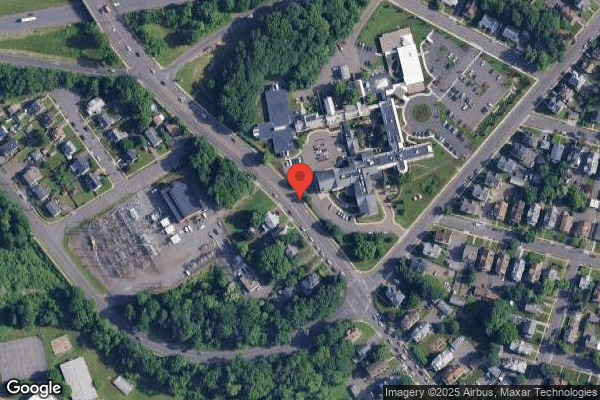
JEROME HOME

975 CORBIN AVENUE, NEW BRITAIN, CT 06052 (860) 229-3707
Non profit - Other 94 Beds Independent Data: November 2025
Trust Grade
58/100
#64 of 192 in CT
Last Inspection: February 2025

Within standard 12-15 month inspection cycle. Federal law requires annual inspections.

Overview

Jerome Home in New Britain, Connecticut, has a Trust Grade of C, which means it is average, sitting in the middle of the pack among nursing homes. It ranks #64 out of 192 facilities in the state, placing it in the top half, and #22 out of 64 in the county, indicating there are only 21 local options that perform better. Unfortunately, the facility’s trend is worsening, with issues increasing from 1 in 2024 to 12 in 2025, highlighting a need for improvement. Staffing is a significant strength, earning a 5/5 star rating with a turnover rate of 31%, which is better than the state average, suggesting that staff members are familiar with the residents' needs. However, there are concerning fines of $8,018, which is average but could indicate compliance issues. Specific incidents include a serious case where a resident fell and fractured their leg due to staff not using a gait belt during ambulation, despite the care plan calling for assistance. Additionally, another resident suffered a burn from hot liquid that spilled because adaptive equipment was not used correctly. Residents have also reported that food is often served cold, affecting meal satisfaction. Overall, while the facility has strong staffing and good ratings in some areas, the recent increase in issues and specific safety incidents raise concerns for families considering this nursing home.

Trust Score
C
58/100
In Connecticut
#64/192
Top 33%
Safety Record
Moderate
Needs review
Inspections
Getting Worse
1 → 12 violations
Staff Stability
○ Average
31% turnover. Near Connecticut's 48% average. Typical for the industry.
Penalties
○ Average
$8,018 in fines. Higher than 63% of Connecticut facilities. Some compliance issues.
Skilled Nurses
✓ Good
Each resident gets 60 minutes of Registered Nurse (RN) attention daily — more than 97% of Connecticut nursing homes. RNs are the most trained staff who catch health problems before they become serious.
Violations
⚠ Watch
21 deficiencies on record. Higher than average. Multiple issues found across inspections.
★★★★☆
4.0
Overall Rating
★★★★★
5.0
Staff Levels
★★★☆☆
3.0
Care Quality
★★★☆☆
3.0
Inspection Score
Stable
2024: 1 issues
2025: 12 issues

The Good

  • 5-Star Staffing Rating · Excellent nurse staffing levels
  • Full Sprinkler Coverage · Fire safety systems throughout facility
  • No fines on record
  • Staff turnover below average (31%)

    17 points below Connecticut average of 48%

Facility shows strength in staffing levels, fire safety.

The Bad

Staff Turnover: 31%

15pts below Connecticut avg (46%)

Typical for the industry

Federal Fines: $8,018

Below median ($33,413)

Minor penalties assessed

The Ugly 21 deficiencies on record

2 actual harm
Jul 2025 1 deficiency
CONCERN (D) 📢 Someone Reported This

A family member, employee, or ombudsman was alarmed enough to file a formal complaint

Potential for Harm - no one hurt, but risky conditions existed

Comprehensive Care Plan (Tag F0656)

Could have caused harm · This affected 1 resident

**NOTE- TERMS IN BRACKETS HAVE BEEN EDITED TO PROTECT CONFIDENTIALITY** Based on review of the clinical record, facility documentation, facility policy, and interviews for one (1) of three (3) residen...

Read full inspector narrative →
**NOTE- TERMS IN BRACKETS HAVE BEEN EDITED TO PROTECT CONFIDENTIALITY** Based on review of the clinical record, facility documentation, facility policy, and interviews for one (1) of three (3) residents (Resident #3) reviewed for falls, the facility failed to ensure the resident had a fall care plan with interventions when identified as a high risk for falls. The findings include:Resident #3 was admitted to the facility on [DATE] with diagnoses that included left artificial hip joint, type II diabetes and Alzheimer's disease. The Resident Care Plan (RCP) dated 1/19/25 identified Resident #3 needed assistance with activities of daily living (ADL) skills due to physical and mental impairments, recent hospitalization and deconditioning. Interventions included half-side rails for bed mobility and offer toileting upon arising, before/after meals, at hour of sleep and as neededA Fall Risk assessment dated [DATE] identified Resident #3's score was eighteen (18) indicative of being a high fall risk.The admission Minimum Data Set (MDS) assessment dated [DATE] identified Resident #3 had severely impaired cognition for making decisions regarding tasks of daily life (Brief Interview for Mental Status (BIMS) of ninety-nine (99) indicative of being unable to complete the interview) and had a fall in the last month prior to admission.The Accident and Incident (A & I) form dated 3/3/25 at 10:55 AM identified during ambulation from the bathroom using a rolling walker and gait belt, Resident #3 was lowered to the floor due to a sudden loss of balance. Resident #3 complained of right knee pain and was transported to the emergency department. Resident #3 was diagnosed with a right knee femur fracture adjacent to total knee arthroplasty and had surgical repair to the right femur on 3/4/25.The RCP dated 3/3/25 (subsequent to the fall on 3/3/25) identified Resident #3 was at risk for falls due to weakness, abnormal gait, history of falls and dementia. Interventions included call bell within reach at all times, encourage resident to seek assistance prior to attempts to get out of bed, adequate lighting in the room and bathroom, encourage Resident #3 to wear shoes or non-skid socks when ambulating, ensure bed is locked and at its lowest position and keep room clean and clutter free. Although Resident #3 was identified as a high fall risk on 1/20/25, a fall care plan was not initiated until 3/3/25, after Resident #3's fall with major injury.Interview and record review with the DNS on 7/25/25 at 2:30 PM identified she was not aware Resident #3 did not have a fall risk care plan and identified a care plan should be implemented for residents identified as a high fall risk.Review of the fall prevention program policy directed that the nurse will refer to the facilities high risk or low/moderate risk protocols when determining primary interventions. It further directed the high risk protocols used for a score greater than thirteen (13) on the fall assessment include that the Resident would be placed on the facility's fall prevention program and to indicate fall risk on care plan.
Feb 2025 11 deficiencies
CONCERN (D)

Potential for Harm - no one hurt, but risky conditions existed

Notification of Changes (Tag F0580)

Could have caused harm · This affected 1 resident

**NOTE- TERMS IN BRACKETS HAVE BEEN EDITED TO PROTECT CONFIDENTIALITY** Based on interviews, review of the clinical record, and facility policy for 1 of 2 residents (Resident #343) reviewed for transm...

Read full inspector narrative →
**NOTE- TERMS IN BRACKETS HAVE BEEN EDITED TO PROTECT CONFIDENTIALITY** Based on interviews, review of the clinical record, and facility policy for 1 of 2 residents (Resident #343) reviewed for transmission-based precautions, the facility failed to notify the social worker, physician, and psychiatrist after a suicidal ideation statement was made, per the facility policy. The findings included: Resident #343 was admitted to the facility on [DATE] with diagnoses that included homicidal ideation, sepsis, chronic combined systolic and diastolic heart failure, and muscle weakness. A facility consult form for psychiatry services dated 1/24/25 and signed by Resident #343 identified the reason for the referral was due to a comment made in the ICU (at the hospital and prior to facility admission) regarding homicidal ideation, knives, glass, cans were withheld in the hospital. (Psychiatry at the Long Term Care facility was not updated regarding Resident #343's psychosocial behavior in the hospital). A physician's order dated 1/24/25 directed for consultations as needed, to include, but not limited to dental, podiatry, audiology, ophthalmology, behavioral health, and wound care. The admission Minimum Data Set (MDS) assessment dated [DATE] identified Resident #343 was cognitively intact, was fully dependent on staff for upper and lower dressing and required substantial/maximal assistance to roll from a sitting to lying position in bed. Additionally, the MDS identified that in the 2 weeks prior to admission, Resident #343 felt down, depressed or hopeless for several days (frequency identified as 2-6 days). A nursing note dated 1/31/25 at 11:04 PM and written by Licensed Practical Nurse (LPN) #2 identified writer walked down to check on resident and observed him/her on the floor next to his/her bed lying on his/her belly with a pillow, when asked what were you trying to do just before you fell, resident stated he/she was trying to jump out the window. The nursing note failed to identify further assessments by the charge nurse (Registered Nurse), or documentation that the nursing supervisor, social services, physician, or psychiatrist were notified. A nursing note dated 2/3/25 at 8:18 AM identified a request for Resident #343 to be seen by psychiatry was put in the psychiatric book secondary to Resident #343 stating he/she was trying to jump out the window (3 days after the statement was made, and 10 days after admission). An interview with Registered Nurse (RN) #4 on 2/4/25 at 3:17 PM identified she was the nursing supervisor on 1/31/25 but was not notified Resident #343 stated he/she wanted to jump out the window. Additionally, the facility policy for residents with suicidal statements was to have 15-minute checks or be put on 1:1 observation. An interview with LPN #2 on 2/4/25 at 3:26 PM identified the facility policy on suicidal statements was to complete 15-minute checks on the resident, have them be seen by psychiatry, and maintain close observation. LPN #2 identified she did not notify anyone (supervisor, social worker, physician/APRN) of Resident #343's statement that he/she wanted to jump out the window because she did not interpret the statement as suicidal since the resident had been saying he/she wanted to go home. An interview with Social Worker #1 on 2/4/25 at 3:52 PM identified that it was part of the facility policy to notify the social worker when suicidal statements were made so that the resident could be further assessed and behavioral health involved if needed. Social Worker #1 identified that she was not notified about Resident #343's statements, but due to the time of the incident (Friday after hours) she would have expected nursing to institute protocol by calling the on call psychiatric services and/or starting 1:1 observation. The Resident Care Plan dated 2/4/25 (developed subsequent to surveyor inquiry) identified Resident #343 made a vague provocative comment that he/she was trying to go out the window, he/she had recently been more angry, discouraged, refused to attend short term therapy and declined medications. Interventions included psychiatric evaluation as ordered and report changes in behavior to the doctor. An interview with APRN #1 on 2/5/25 at 10:07 AM identified that she was not notified of Resident #343's statement regarding jumping out the window, and she would expect to be notified of suicidal statements. If she had been notified, she would have gotten clarity from Resident #343 about the statement by asking additional questions, then, if necessary, instituted 1:1 or sent him/her out to the emergency room. Review of the Suicide Precaution Policy dated 11/12 directed in part that suicide precaution will be initiated when a resident has put his/her safety in question. Subsequently notifying the nursing supervisor and /or social worker, notifying the physician or psychiatrist, placing the resident on 1:1 by staff until otherwise directed by the physician or psychiatrist.
CONCERN (D)

Potential for Harm - no one hurt, but risky conditions existed

Deficiency F0603 (Tag F0603)

Could have caused harm · This affected 1 resident

**NOTE- TERMS IN BRACKETS HAVE BEEN EDITED TO PROTECT CONFIDENTIALITY** Based on observation, review of the clinical record, facility policy, and interviews for 1 of 3 residents, (Resident #35), revie...

Read full inspector narrative →
**NOTE- TERMS IN BRACKETS HAVE BEEN EDITED TO PROTECT CONFIDENTIALITY** Based on observation, review of the clinical record, facility policy, and interviews for 1 of 3 residents, (Resident #35), reviewed for abuse, the facility failed to ensure a resident exposed to a communicable illness was free to exit their room when wearing appropriate Personal Protective Equipment (PPE). The findings include: Resident #35's diagnoses included ischemic cardiomyopathy, adjustment disorder, dementia, and stage 3 chronic kidney disease. The quarterly Minimum Data Set assessment dated [DATE] identified Resident #35 was severely cognitively impaired, required supervision from a sit to stand position, required moderate assistance in walking 150 feet, and had no history of wandering. The Resident Care Plan (RCP) identified Resident #35 required assistance with activities of daily living. Interventions included providing staff assistance for ambulation using a wheeled walker on first and second shifts. A nurse progress note dated 1/30/25 identified Resident #35's roommate had tested positive for Respiratory Syncytial Virus (RSV), Resident #35 had no fever, cough, cold symptoms, or congestion, and was on contact and droplet precautions. A nurse progress note dated 1/31/25 identified Resident #35 to be free from fever, cough, cold symptoms, or congestion, and was on contact and droplet precautions. Nurse progress notes dated 2/1/25, 2/2/25, and 2/3/25 identified Resident #35 was not experiencing any signs or symptoms associated with RSV (congestion, cough, fever, and runny nose). Review of physician order's dated 12/3/24 through 2/3/25 failed to identify Resident #35 had been tested for RSV or had an order for placement on droplet or contact precautions and/or isolation An observation on 2/3/25 at 3:27 PM identified a sign indicating contact and droplet precautions outside of Resident #35's room. Resident #35 was not visible from the doorway, he/she was observed seated behind a privacy curtain, and lacked any engaging activities such as television, radio, or personal activity, and sat silently. A nurse progress note dated 2/5/25 identified Resident #35 had no RSV symptoms, was on contact and droplet precautions, and he/she slept in long naps throughout the shift. An observation on 2/5/25 at 12:21 PM identified Resident #35 was seated behind a closed privacy curtain, not visible from the doorway of the room, eating alone, silently, without any type of any engaging activities such as television, radio, or personal activity. Resident #35's roommate's television was playing. An interview with Nurse Aide, (NA), #3 on 2/5/25 at 12:53 PM identified the facility practice was to keep both the resident who tested positive for an illness, and their roommate on droplet and contact precautions even when only 1 resident had become ill. Further, Resident #35 was encouraged not to leave his/her room and that if Resident #35 wanted to leave the room, access was denied through a physical barricade at the door. NA #3 demonstrated how the physical barrier was implemented by standing in the doorway and extending her arms open across the doorway leading from the room to the hallway. NA #3 indicated that when Resident #35 left the bathroom, s/he turned right, and attempted to exit the room and that was when she would physically block Resident #35's exit and redirect him/her to return and sit in a chair within the room, behind the curtain. An interview with Licensed Practical Nurse, (LPN), #1 on 2/5/25 at 1:14 PM indicated Resident #35 had not been allowed to leave his/her room since his/her roommate became ill and staff were keeping the resident in his/her room intentionally as s/he was considered a high risk for RSV development. An interview with the Recreation Coordinator on 2/6/25 at 10:05 AM indicated that she was informed by nursing that all roommates of RSV positive residents were to stay in their rooms and not attend activities. An interview with the Director of Recreation and the Recreation Coordinator on 2/6/25 at 10:26 AM identified that Resident #35 had not been as active and napping more than usual during the daytime shift recently. The Director of Recreation further indicated that Resident #35 was usually very active with recreation activities. If the resident was currently allowed out of the room s/he would have been able to participate socially in activity programs for stimulation. The increased napping had not been reported to nursing or social services. An interview with the Director of Nursing Services (DNS) on 2/6/25 at 1:39 PM identified that all roommates of any resident who had tested positive for RSV was confined to their room. The DNS identified the risk of spreading RSV between roommates was addressed by utilizing the barrier curtain, keeping it closed, between residents in the shared room. The DNS indicated that it was unsafe for the roommate of an RSV positive resident to leave the room due to exposure of being in the same room without a mask, however, no roommate of an RSV positive resident had ever tested positive for RSV after cohorting. Although Resident #35 had never have been tested for RSV, he/she was kept in his/her room as this was the least restrictive way to prevent exposure of other residents. The DNS indicated that it was safe for staff to enter and exit Resident #35's room while wearing a mask, but that Resident #35 had never been trialed for mask use or for compliance to be out of his/her room with a mask in place. An interview with RN #4, (Infection Control Nurse), on 2/10/25 at 9:57 AM identified that prior to Resident #35's roommate testing positive for RSV on 1/30/25, he/she was allowed and observed to leave the room wearing a mask without any issues. RN #4 indicated the facility followed the Centers for Disease Control (CDC) Directory of Infectious Diseases to determine isolation or precautions for residents. She indicated that the outbreak control guidance was used as the basis for keeping the roommates of positive residents confined to their room for the duration of the positive resident's isolation period. RN #4 was unable to identify where in the guidance the Directory of Infectious Diseases applied to roommates of RSV positive residents. RN #4 was unaware of the CDC guideline for RSV which stated when cohorting permitted, patients must have the same infection/condition with no concurrent infections. RN #4 indicated that there was guidance to restrict access for symptomatic residents to their room, however, failed to identify that residents without symptoms were required to remain in their rooms due to residing with a positive resident per the Directory of Infectious Diseases. An interview with the DNS on 2/10/25 at 11:52 AM identified she believed restricting Resident #35 from leaving his/her room could not qualify as involuntary seclusion as he/she had a roommate and if he/she felt secluded the resident would have told someone (the resident was assessed to be severely cognitively impaired per the MDS). The DNS failed to identify within the facility policy how the definition of involuntary seclusion applied to restricting residents from leaving their room. Review of the facility's Transmissions-Based Precautions policy identified residents who are known or to be suspected to be infected with an infectious agent that required additional controls to prevent transmission would have an order for isolation placed. That isolation would be the least restrictive possible for the residents under the circumstances. Review of the facility's Abuse policy identified, in part, all residents have the right to be free of abuse, neglect, mistreatment, exploitation, and misappropriation of property. Abuse was defined as any unreasonable infliction of confinement resulting in physical harm, pain, or mental anguish. Abuse included deprivation by an individual including a caretaker, of care, goods, or services that are necessary to attain or maintain physical mental, and psychosocial well-being.
CONCERN (D)

Potential for Harm - no one hurt, but risky conditions existed

Report Alleged Abuse (Tag F0609)

Could have caused harm · This affected 1 resident

**NOTE- TERMS IN BRACKETS HAVE BEEN EDITED TO PROTECT CONFIDENTIALITY** Based on review of the clinical record, review of facility documentation, review of facility policy, and interviews for 1 of 3 r...

Read full inspector narrative →
**NOTE- TERMS IN BRACKETS HAVE BEEN EDITED TO PROTECT CONFIDENTIALITY** Based on review of the clinical record, review of facility documentation, review of facility policy, and interviews for 1 of 3 residents, (Resident #10), reviewed for abuse, the facility failed to ensure that an injury of unknown source was reported to the state agency. The findings include: Resident #10's diagnoses included dementia, psychosis, restlessness, and agitation. The quarterly Minimum Data Set (MDS) assessment dated [DATE] identified Resident #10 was severely cognitively impaired, dependent with transfers and toileting, required extensive assistance of 2 staff for bed mobility, was non-ambulatory, and had no functional limitations in range of motion. The Resident Care Plan dated 11/13/24 identified Resident #10 had discoloration to the left forehead and a memory deficit with impaired judgement. Interventions included the nurse to observe transfers for 7 days and to observe skin discoloration every shift. Further interventions included providing a calm and consistent environment using a calm and gentle approach. A nurse's note dated 1/21/25 at 5:15 AM identified Resident #10 was found with a bruise on the forehead that measured 5.0 centimeters (cm) by 3.5 cm which was red with a purplish color. There were no witnesses to the incident, but it was suspected that the cross bar of the mechanical lift used on the prior shift was the source of the bruising. The resident was noted to be combative at times when transferred in and out of bed and subsequent family notification and a report would be completed by the charge nurse. A Reportable Event Report dated 1/21/25 identified Resident #10 had a red discoloration to the left forehead measuring 5.0 cm by 3.5 cm. A review of the report identified that although the incident was unwitnessed and the resident was unable to indicate how the injury occurred, the injury had a state classification (E) indicating it was not an incident which required reporting to the state agency. Additionally, the area indicating that the incident was reported to the state agency was blank. A nurse's note dated 1/21/25 at 7:42 AM identified Resident #10 was reported to have redness to the left side of the forehead with swelling observed. Resident #10 was unable to communicate what occurred to cause the area, neurological checks were initiated, and the responsible party was notified. An Advanced Practice Registered Nurse (APRN) progress note dated 1/21/25 at 2:50 PM identified Resident #10 was being evaluated after being noted to have an area of discoloration to the forehead and staff had suspected the resident may have bumped his/her head on the horizontal bar of the mechanical lift during a transfer on the prior shift (1/20/25 3:00 PM to 11:00 PM shift). The APRN note indicated Resident #10 had an area of erythema and evolving ecchymosis with slight swelling to the left forehead measuring approximately 3.5 cm by 5 cm. The APRN note further identified that Resident #10 had advanced dementia and was unable to indicate how the bruise to his/her left forehead had occurred. Interview and review of the clinical record with the Director of Nursing Services (DNS) on 2/5/25 at 11:20 AM identified that Resident #10's injury on 1/21/25 was of an unknown source and an injury of unknown source should have been reported to the state agency. Review of Resident #10's progress notes for 1/21/25 failed to identify that there were witnesses to the incident which had resulted in Resident #10's injury to the forehead. The DNS indicated she needed to locate additional documents related to the 1/21/25 incident. Interview and review of the clinical record with the Administrator on 2/5/25 at 11:28 AM identified that Resident #10's injury on 1/21/25 was of unknown source and an injury of unknown source should have been reported to the state agency. Review of Resident #10's progress notes for 1/21/25 failed to identify that there was a witness to the incident which had resulted in Resident #10's injury to the forehead. The Administrator indicated that she or the DNS would have been responsible to report Resident #10's injury of unknown source to the state agency. Interview and review of NA #1's statement with NA #1 on 2/5/25 at 3:06 identified she had transferred Resident #10 back to bed with the mechanical lift on 1/20/25 on the 3:00 PM to 11:00 PM shift. NA #1 indicated that although Resident #10 was restless and grabbed the bar of the mechanical lift with his/her hand during the transfer, she did not witness Resident #10 hit his/her head on any part of the mechanical lift nor did she witness anything strike the resident's head. NA #1 identified that she did not observe any redness or signs of injury to Resident #10's face after the transfer was completed and if she had she would have reported the injury to the charge nurse. NA #1 indicated 2 staff had transferred the resident. Re-interview, review of the clinical record, and review of witness' statements with the DNS on 2/6/25 at 9:05 AM identified that accidents and incidents are usually discussed in morning huddles and she could not explain why she was under the impression the origin of the bruise was witnessed, yet there were no statements or other documentation to validate that the bruise was from a known source. The DNS further identified she or the administrator should have reported Resident #10's 1/21/25 injury of unknown source to the state agency. Review of the facility Abuse, Neglect, Mistreatment, Exploitation, and Misappropriation of Resident Property policy, revised 8/2022, directed, in part that an injury of unknown source was one that was not observed by any person, or the source of the injury could not be explained by the resident. The policy further directed that all allegations of abuse, including injuries of unknown source, would be reported to the state agency, in accordance with regulations, immediately but no less than 2 hours after the allegation is made.
CONCERN (D)

Potential for Harm - no one hurt, but risky conditions existed

Investigate Abuse (Tag F0610)

Could have caused harm · This affected 1 resident

**NOTE- TERMS IN BRACKETS HAVE BEEN EDITED TO PROTECT CONFIDENTIALITY** Based on review of the clinical record, review of facility documentation, review of facility policy, and interviews for 1 of 3 r...

Read full inspector narrative →
**NOTE- TERMS IN BRACKETS HAVE BEEN EDITED TO PROTECT CONFIDENTIALITY** Based on review of the clinical record, review of facility documentation, review of facility policy, and interviews for 1 of 3 residents, (Resident #10), reviewed for abuse the facility failed to ensure a complete investigation and summary were completed for a resident with an injury of unknown source. The findings include: Resident #10's diagnoses included dementia, psychosis, restlessness, and agitation. The quarterly Minimum Data Set (MDS) assessment dated [DATE] identified Resident #10 was severely cognitively impaired, was dependent with transfers and toileting, required extensive assistance of 2 staff for bed mobility, was non-ambulatory, and had no functional limitations in range of motion. The Resident Care Plan dated 11/13/24 identified Resident #10 had discoloration to the left forehead and a memory deficit with impaired judgement. Interventions included the nurse to observe transfers for 7 days and to observe skin discoloration every shift. Further interventions included providing a calm and consistent environment using a calm and gentle approach. A nurse's note dated 1/21/25 at 5:15 AM identified Resident #10 was found with a bruise on the forehead that measured 5.0 centimeters (cm) by 3.5 cm which was red with a purplish color. There were no witnesses to the incident, but it was suspected that the cross bar of the mechanical lift on the prior shirt was the source of the bruising. The resident was noted to be combative at times when transferred in and out of bed and subsequent family notification and a report would be completed by the charge nurse. A Reportable Event Report dated 1/21/25 identified Resident #10 had a red discoloration to the left forehead measuring 5.0 cm by 3.5 cm. A review of the report identified that the incident was unwitnessed and lacked an indication as to how the injury occurred. A nurse's note dated 1/21/25 at 7:42 AM identified Resident #10 was reported to have redness to the left side of the forehead with swelling observed. Resident #10 was unable to communicate what occurred to cause the area. An Advanced Practice Registered Nurse (APRN) progress note dated 1/21/25 at 2:50 PM identified Resident #10 was being evaluated after being noted to have an area of discoloration to the forehead and staff had suspected the resident may have bumped his/her head on the horizontal bar of the mechanical lift during a transfer on the prior shift (1/20/25 3:00 PM to 11:00 PM shift). The APRN note further identified that Resident #10 had advanced dementia and was unable to indicate how the bruise to his/her left forehead had occurred. Interview and review of NA #1's statement with NA #1 on 2/5/25 at 3:06 identified she had transferred Resident #10 back to bed with the mechanical lift on 1/20/25 on the 3:00 PM to 11:00 PM shift. NA #1 indicated that although Resident #10 was restless and grabbed the bar of the mechanical lift with his/her hand during the transfer, she did not witness Resident #10 hit his/her head on any part of the mechanical lift nor did she witness anything strike the resident's head. NA #1 identified that she did not observe any redness or signs of injury to Resident #10's face after the transfer was completed and if she had, she would have reported the injury to the charge nurse. NA #1 indicated that 2 staff had transferred the resident. Interview, review of the clinical record, and review of witness' statements with the DNS on 2/6/25 at 9:05 AM identified although she had obtained statements from staff for Resident #10's 1/21/25 incident, the investigation was incomplete and lacked documentation indicating the cause of the injury. The DNS indicated that she did not have a statement from the second NA who assisted NA #1. Additionally, the DNS stated that she had not written a summary because she thought the cause of the bruise was known (witnessed). The DNS indicated that accidents and incidents are usually discussed in morning huddles and she could not explain why she was under the impression the origin of the bruise was witnessed, yet there were no statements or other documentation to validate that the bruise was from a known source. Review of the facility Abuse, Neglect, Mistreatment, Exploitation, and Misappropriation of Resident Property policy, revised 8/2022, directed, in part that an injury of unknown source was one that was not observed by any person, or the source of the injury could not be explained by the resident. The policy further directed that a thorough investigation should be conducted for any injury of unknown source and the results of the investigation must be documented in a report and completed within 72 hours.
CONCERN (D)

Potential for Harm - no one hurt, but risky conditions existed

Deficiency F0655 (Tag F0655)

Could have caused harm · This affected 1 resident

**NOTE- TERMS IN BRACKETS HAVE BEEN EDITED TO PROTECT CONFIDENTIALITY** Based on interviews, review of the clinical records and facility policy for 1 of 2 residents (Resident #343) reviewed for transm...

Read full inspector narrative →
**NOTE- TERMS IN BRACKETS HAVE BEEN EDITED TO PROTECT CONFIDENTIALITY** Based on interviews, review of the clinical records and facility policy for 1 of 2 residents (Resident #343) reviewed for transmission-based precautions, the facility failed to ensure the baseline care plan included statements/behaviors of homicidal ideation that were made prior to admission. The findings included: Resident #343 was admitted to the facility on [DATE] with diagnoses that included homicidal ideation, sepsis, chronic combined systolic and diastolic heart failure, and muscle weakness. A hospitalist progress note from the hospital (prior to Resident #343's facility admission) dated 1/20/25 at 3:36 PM identified Resident #343 was very emotional but no longer suicidal-per psychiatry held off on Lexapro (a medication indicated for depression). A facility consult form for psychiatry services dated 1/24/25 and signed by Resident #343 identified the reason for the referral was due to a comment made in the ICU (at the hospital and prior to facility admission) regarding homicidal ideation, knives, glass, cans were withheld in the hospital. (Psychiatry at the Long Term Care facility was not updated regarding Resident #343's psychosocial behavior in the hospital). The Resident Care Plan Dated 1/27/25 (3 days after admission) failed to identify any psychosocial concerns or behaviors. A nursing note dated 1/31/25 at 11:04 PM and written by Licensed Practical Nurse (LPN) #2 identified writer walked down to check on resident and observed him/her on the floor next to his/her bed lying on his/her belly with a pillow, when asked what were you trying to do just before you fell, resident stated he/she was trying to jump out the window. A Resident Care Plan dated 2/4/25 (developed subsequent to surveyor inquiry) identified Resident #343 made a vague provocative comment that he/she was trying to go out the window, he/she had recently been more angry, discouraged, refused to attend short term therapy and declined medications. Interventions included psychiatric evaluation as ordered and report changes in behavior to the doctor. An interview with Registered Nurse (RN) #3 on 2/6/25 at 9:43 AM identified that it was facility policy to have a resident centered baseline care plan developed within 24 hours of admission for all residents, and the expectation was that residents with a signed psychiatry consent or identified psychosocial or behavioral issues would have a resident care plan in place. Additionally, RN #3 identified that Resident #343 should have had a baseline care plan reflecting his/her psychosocial status but did not because Resident #343 did not have any behaviors during his/her previous admission at the facility. Review of the Baseline Care Plan Policy dated November 2017 identified in part that the facility will develop a baseline care plan within 48 hours of a resident's admission and include at minimum healthcare information necessary to properly care for a resident.
CONCERN (D)

Potential for Harm - no one hurt, but risky conditions existed

Quality of Care (Tag F0684)

Could have caused harm · This affected 1 resident

**NOTE- TERMS IN BRACKETS HAVE BEEN EDITED TO PROTECT CONFIDENTIALITY** Based on observations, review of the clinical record, facility documentation, facility policy, and interviews for 1 of 4 residen...

Read full inspector narrative →
**NOTE- TERMS IN BRACKETS HAVE BEEN EDITED TO PROTECT CONFIDENTIALITY** Based on observations, review of the clinical record, facility documentation, facility policy, and interviews for 1 of 4 residents (Resident #53) reviewed for accidents, the facility failed to ensure floor mats were in place per the physician's order. The findings include: Resident #53's diagnoses included dementia, hypotension, and unspecified abnormalities of gait and mobility. Review of the clinical record identified a Fall Risk Assessment Tool dated 1/20/24 indicated Resident #53 was a high risk for falls. The annual Minimum Data Set (MDS) assessment dated [DATE] identified Resident #53 was severely cognitively impaired, required extensive assistance of 2 staff for transfers and bed mobility, and was dependent with toileting. The Resident Care Plan dated 2/1/25 identified falls. Interventions included fall prevention with placement of floor mats to the left and right side of the bed. A physician's order dated 2/1/25 directed to place floor mats to the left and right side of the bed every shift. Review of the Nurse Aide Card (individualized resident assignment) identified Resident #53 was bed fast and refused to get out of bed. The nurse aide care card indicated to place floor mats to the left and right side of the bed every shift. Observations on 2/3/25 at 11:40 AM and 2/5/25 at 10:40 AM identified Resident #53 was in bed without the benefit of a floor mat to the window side of the bed. A fall mat was observed folded-up and leaning against the wall; the tray table was placed away from the bed and next to the window. Interview and observation with Nurse Aide (NA) #1 on 2/5/25 at 2:05 PM identified Resident #53 was in bed with 1 floor mat in place to the door side of the bed but the resident was without the benefit of a floor mat on the window side of bed. NA #1 identified that Resident #53's tray table was placed against the window, and she should have made sure the second floor mat was in place after Resident #53 had finished lunch. NA #1 further indicated that she needed to reference Resident #53's Nurse Aide Care Card on the computer as it was not posted in the resident's room. Interview and observation with Licensed Practical Nurse (LPN) #1 on 2/6/25 at 8:58 AM identified Resident #53 had a history of falls and being found on the floor. LPN #1 indicated Resident #53 was in bed without the benefit of a fall mat on the window side of the bed. LPN #1 identified that she or the NA should have made sure the second mat was in place after the resident had finished breakfast. Interview with the Director of Nursing Services (DNS) on 2/6/25 at 2:05 PM identified that Resident #53 should have had floor mats in place to both sides of the bed. The DNS identified that both nurses and NAs were responsible for the placement of the floor mats but could not explain the reason staff failed to put the floor mats in place. Review of the facility policy, Fall Prevention Program, dated 10/7/19, directed each resident would be assessed for the risk of falling and receive care and services in accordance with the level of risk to minimize the likelihood of falls. The policy further directed the nurse would indicate the resident's fall risk and initiate interventions on the care plan and implement environmental interventions as measured by the fall risk assessment tool.
CONCERN (D)

Potential for Harm - no one hurt, but risky conditions existed

Deficiency F0742 (Tag F0742)

Could have caused harm · This affected 1 resident

**NOTE- TERMS IN BRACKETS HAVE BEEN EDITED TO PROTECT CONFIDENTIALITY** Based on interviews, review of the clinical records and facility policy for 1 of 2 residents (Resident #343) reviewed for transm...

Read full inspector narrative →
**NOTE- TERMS IN BRACKETS HAVE BEEN EDITED TO PROTECT CONFIDENTIALITY** Based on interviews, review of the clinical records and facility policy for 1 of 2 residents (Resident #343) reviewed for transmission-based precautions, the facility failed to provide appropriate treatment and services for a resident who displayed psychosocial behaviors. The findings included: Resident #343 was admitted to the facility on [DATE] with diagnoses that included homicidal ideation, sepsis, chronic combined systolic and diastolic heart failure, and muscle weakness. A hospitalist progress note from the hospital (prior to Resident #343's facility admission) dated 1/20/25 at 3:36 PM identified Resident #343 was very emotional but no longer suicidal-per psychiatry, held off due to being on Lexapro (a medication indicated for depression). A hospitalist progress note from the hospital (prior to Resident #343's facility admission) dated 1/22/25 at 7:28 AM identified psychiatry was consulted due to suicidal statements made by Resident #343. After further interview, it was determined Resident #343 was just joking around and had no intention of hurting himself/herself. A facility consult form for psychiatry services dated 1/24/25 and signed by Resident #343 identified the reason for the referral was due to a comment made in the ICU (at the hospital and prior to facility admission) regarding homicidal ideation, knives, glass, cans were withheld in the hospital. (Psychiatry at the Long Term Care facility was not updated regarding Resident #343's psychosocial behavior in the hospital). A physician's order dated 1/24/25 directed for consultations as needed, to include, but not limited to dental, podiatry, audiology, ophthalmology, behavioral health, and wound care. The admission Minimum Data Set (MDS) assessment dated [DATE] identified Resident #343 was cognitively intact, was fully dependent on staff for upper and lower dressing and required substantial/maximal assistance to roll from sitting to lying position in bed. Additionally, the MDS identified that in the 2 weeks prior to admission, Resident #343 felt down, depressed or hopeless for several days (frequency identified as 2-6 days). A nursing note dated 1/31/25 at 11:04 PM and written by Licensed Practical Nurse (LPN) #2 identified writer walked down to check on resident and observed him/her on the floor next to his/her bed lying on his/her belly with a pillow, when asked what were you trying to do just before you fell, resident stated he/she was trying to jump out the window. The nursing note failed to identify further assessments by the charge nurse (Registered Nurse), or documentation that the nursing supervisor, social services, physician or psychiatrist were notified. A nursing note dated 2/3/25 at 8:18 AM identified a request for Resident #343 to be seen by psychiatry was put in the psychiatric book secondary to Resident #343 stating he/she was trying to jump out the window (3 days after the statement was made, and 10 days after admission). An interview with Registered Nurse (RN) #4 on 2/4/25 at 3:17 PM identified she was the nursing supervisor on 1/31/25 when Resident #343 made the statement of trying to jump out the window and was not notified of Resident #343's statement regarding jumping out the window. Additionally, it was facility policy for residents with suicidal statements to have 15-minute checks or be put on 1:1 observation. An interview with LPN #2 on 2/4/25 at 3:26 PM identified the facility policy on suicidal statements was to complete 15-minute checks on the resident, have them be seen by psychiatry and maintain close observation. LPN #2 identified she did not notify anyone (supervisor, social worker, physician/APRN) of Resident #343's statement about trying to jump out the window because she did not interpret the statement as suicidal since the resident had been saying that he/she wants to go home. An interview with Social Worker #1 on 2/4/25 at 3:52 PM identified that psychiatry consents were signed by all newly admitted residents, but that psychiatry services needed to be notified of the need to be seen. Further, due to Resident #343's referral reason (homicidal ideation while at the hospital), psychiatric services should have been provided closer to the admission dated and he/she should have been seen the week of 1/27/25. The Resident Care Plan dated 2/4/25 (developed subsequent to surveyor inquiry) identified Resident #343 made a vague provocative comment that he/she was trying to go out the window, he/she had recently been more angry, discouraged, refused to attend short term therapy and declined medications. Interventions included psychiatric evaluation as ordered and report changes in behavior to the doctor. An interview with APRN #1 on 2/5/25 at 10:07 AM identified that she was not notified about Resident #343's statement regarding jumping out the window, and she would expect to be notified of suicidal statements. If she had been notified, she would have gotten clarity from Resident #343 about the statement by asking additional questions, then, if necessary, instituted 1:1 or sent him/her out to the emergency room. An interview with the DNS on 2/10/25 at 9:15 AM identified psychiatric consents were signed by all new admissions in case services were needed and that psychiatric services were in the facility Monday through Friday. Although she could not identify how soon after being admitted residents should be seen by psychiatry services, in Resident #343's case due to the note on the consent, the admitting nurse should have called psychiatric services for evaluation. Additionally for statements made by Resident #343 on 1/31/25, the DNS identified that LPN #2 should have followed the facility policy which included contacting and notifying psychiatry services of the statement. Review of the Suicide Precaution Policy dated 11/12 directed in part that suicide precautions will be initiated when a resident has put his/her safety in question. The procedure included the charge nurse to assess the immediate situation by observing the resident's behavior, engaging the resident in conversation to determine their feelings and thoughts regarding the threat and attempt to determine if the resident has a plan to harm self. Subsequently notifying the Nursing Supervisor and /or Social Worker, notifying the physician or psychiatrist, placing the resident on 1:1 by staff until otherwise directed by the physician or psychiatrist. Review of the Behavioral Health Services Policy dated 10/1/22 directed in part that the facility utilizes the comprehensive assessment process for identifying and assessing a resident's mental and psychosocial status and providing person centered care. This process includes in part, obtaining history from medical records, MDS and care area assessments, ongoing monitoring of mood and behavior and care plan development and implementation.
CONCERN (D)

Potential for Harm - no one hurt, but risky conditions existed

Drug Regimen Review (Tag F0756)

Could have caused harm · This affected 1 resident

**NOTE- TERMS IN BRACKETS HAVE BEEN EDITED TO PROTECT CONFIDENTIALITY** Based on review of the clinical record, facility policy and interviews for 1 of 5 residents (Resident #53) reviewed for unnecess...

Read full inspector narrative →
**NOTE- TERMS IN BRACKETS HAVE BEEN EDITED TO PROTECT CONFIDENTIALITY** Based on review of the clinical record, facility policy and interviews for 1 of 5 residents (Resident #53) reviewed for unnecessary medications, the pharmacist failed to identify irregularities for a resident receiving an antipsychotic (psychotic disorder) medication. The findings include: Resident #53's diagnoses included dementia, adjustment disorder with depressed mood and anxiety disorder. The quarterly Minimum Data Set (MDS) assessment dated [DATE] identified Resident #53 was severely cognitively impaired and required partial to moderate assistance with bed mobility and was dependent with toileting and transfers. The MDS indicated Resident #53 was receiving an antipsychotic medication. The Resident Care Plan (RCP) dated 12/5/23 identified antipsychotic medication use. Interventions included observing changes in mood and behavior, complete and thorough documentation in the nursing notes, and report behavioral changes to the Medical Doctor (MD). The physician's orders in effect from 12/5/23 through 8/15/24 directed staff to administer Risperidone (an antipsychotic medication). Review of the Medication Administration Record (MAR) identified that behavior monitoring had occurred for Resident #53 from 12/5/23 through 2/14/24, but no further behavioral monitoring had been completed on the MAR through 8/15/24. On 8/15/24 the physician discontinued all of Resident #53's Risperidone dosing. Physician's orders dated 9/4/24 identified that Resident #53's Risperidone was re-started and continued through 2/6/25. Review of the MAR failed to identify any behavioral monitoring from 9/4/24 through 2/6/25. Psychiatric progress notes written by APRN #2 dated 7/18/24 and 12/22/24 identified that although she was in to assess Resident #53 for ongoing psychiatric monitoring and medication management, the last AIMS assessment had been completed on 12/16/23 (14 months prior). Interview and review of the clinical record with the DNS on 2/6/25 at 2:08 PM failed to identify an AIMS assessment which had been completed for Resident #53 since 12/16/23 (14 months prior). The DNS indicated that according to facility policy AIMS assessments should be completed every 6 months. The DNS was unable to identify why the AIMS assessments had not been conducted per the facility policy, but the facility had contracted with a new psychiatric provider as of 1/1/25. Interview and review of the clinical record with the consulting pharmacist on 2/10/25 at 4:30 PM identified that AIMS assessments should be conducted every 6 months for a resident receiving an antipsychotic medication. The consulting pharmacist indicated that although she conducted medication regimen reviews (MRR's) on a monthly basis, review of the 7/18/24 and 12/22/24 psychiatric progress notes for Resident #53 identified the last AIMS assessment completion date was 12/16/23. Continued Review of the clinical record for Resident #53 failed to indicate behavior monitoring had been completed since 2/14/24. The consultant pharmacist was unable to explain the lack of behavioral monitoring, but since Resident #53 continued receiving an antipsychotic after 2/14/24, the facility should have continued to complete behavior monitoring while the Risperidone was being administered. The consulting pharmacist indicated that although she completed MRR's for Resident #53 on 12/28/24 and 1/24/25, she had made no recommendations to conduct an AIMS assessment and/or to complete behavior monitoring on either consultation report. The consulting pharmacist stated that the recommendations should have been made. Although requested, copies of Resident #53's MRR's for 12/2023 through 2/10/25 were not provided by the facility. The facility provided 4 consultation reports dated December 2023, January 2024, February 2024, and October 2024, that failed to recommend the completion of an AIMS or to begin behavior monitoring. Review of the facility policy, Medication Regimen Review, dated 12/1/07, directed that the facility and consultant pharmacist will follow guidance outlined in the CMS State Operations Manual Appendix PP and current practice guidelines, for the appropriate provision of pharmaceutical care. The policy further directed that the facility should maintain readily available copies of the consultant pharmacists reports on file in the facility, and as part of the resident's permanent health record.
CONCERN (D)

Potential for Harm - no one hurt, but risky conditions existed

Medication Errors (Tag F0758)

Could have caused harm · This affected 1 resident

**NOTE- TERMS IN BRACKETS HAVE BEEN EDITED TO PROTECT CONFIDENTIALITY** Based on clinical record reviews, staff interviews, and facility policies for 2 of 5 residents (Resident #1 and Resident #53) re...

Read full inspector narrative →
**NOTE- TERMS IN BRACKETS HAVE BEEN EDITED TO PROTECT CONFIDENTIALITY** Based on clinical record reviews, staff interviews, and facility policies for 2 of 5 residents (Resident #1 and Resident #53) reviewed for unnecessary medications, the facility failed to monitor behaviors for residents receiving psychotropic (drugs that affect the brain and nervous system) medications and for Resident #53, the facility failed to conduct an Abnormal Involuntary Movement Scale (AIMS) assessment (test for abnormal movement) for a resident receiving an antipsychotic (psychotic disorder) medication. The findings include: 1. Resident #1's diagnosis included dementia, anxiety, and depression. The quarterly Minimum Data Set (MDS) assessment dated [DATE] identified that Resident #1 was moderately cognitively impaired and was dependent for bathing, dressing, and personal hygiene, and ate independently. The Resident Care Plan (RCP) dated 12/3/24 identified Resident #1 had been experiencing the following: agitation and restlessness, refusal of medications, treatments, and care with periods of anger and yelling. Interventions included monitor behavior episodes, administer and monitor the effectiveness and side effects of medications as ordered. The RCP further identified Resident #1 was at risk for periods of restlessness and/or anxiety with interventions that directed behavior tracking, observe for changes in behavior, irritability, facial frowning, complaints of anxiety, fast speech, being easily annoyed, or flustered. The Psychiatric Evaluation and Consultation note dated 12/15/24 by Advanced Practice Registered Nurse (APRN) #2 recommended Depakote (a mood stabilizer) 125 milligrams (mg) 1 tablet by mouth every morning with monitoring of worsening of mood, behaviors, or sleep. Review of the Medication Administration Record (MAR) identified that Resident #1 was directed by the physician to start Depakote 125 mg on 12/17/24 in the morning. The MAR failed to indicate staff were conducting behavioral monitoring. Review of nursing and psychological services supportive care notes dated12/17/24 through 2/5/25 identified documentation by nursing 3 times (1/31/25, 2/2/25, and 2/4/25) and by supportive services 4 times (12/27/24, 1/3/25, 1/10/25, and 1/15/25) for a total of 7 out of 51 behavioral documenting opportunities. An Interview on 2/6/25 at 2:10 PM with Licensed Practical Nurse (LPN) #1 identified that she did not have a physician's order for behavior monitoring and was unsure of what the RCP intervention meant when it referenced monitor behavioral episodes. LPN #1 further identified that the MDS nurse would be able to identify the meaning of behavior monitoring. An interview and Review of the RCP on 2/6/25 at 2:16 PM with LPN #3 (MDS Nurse) identified that since Resident #1 was taking Depakote, the nurse should have been monitoring the resident's behaviors. Behavior monitoring documentation would occur in the observation section of the Electronic Medical Record (EMR). LPN #3 indicated that sometimes there was a physician order to monitor behaviors but not always. LPN #3 reviewed the Psychiatric note dated 12/15/24 which recommended behavior monitoring but she was unable to locate any behavior monitoring in the clinical record that had occurred stating that the nurse on the unit was responsible to ensure behavior monitoring had been completed. An interview on 2/10/25 at 10:31 AM with APRN #2 identified that Resident #1 was ordered Depakote due to behaviors, further identifying that the behaviors should have been monitored at least daily for resistance to care or the lack of exhibiting behaviors. 2. Resident #53's diagnoses included dementia, adjustment disorder with depressed mood and anxiety disorder. The quarterly Minimum Data Set (MDS) assessment dated [DATE] identified Resident #53 was severely cognitively impaired and required partial to moderate assistance with bed mobility and was dependent with toileting and transfers. The MDS indicated Resident #53 was receiving an antipsychotic medication. The Resident Care Plan (RCP) dated 12/5/23 identified antipsychotic medication use. Interventions included observing changes in mood and behavior, complete and thorough documentation in the nursing notes, and report behavioral changes to the Medical Doctor (MD). A. The physician's orders in effect from 12/5/23 through 2/14/24 directed staff to administer Risperidone (an antipsychotic medication) and to monitor behaviors (yelling, screaming, kicking, hitting) every shift. Physician's orders in effect from 2/14/24 through 8/15/24 identified that Resident #53 continued to receive Risperidone daily but failed to direct facility staff to monitor Resident #53's behaviors. On 8/15/24 the physician discontinued all of Resident #53's Risperidone dosing. Physician's orders dated 9/4/24 identified that Resident #53's Risperidone was re-started and continued through 2/6/25, but the physician's orders failed to direct facility staff to monitor Resident #53's behaviors. Review of the Medication Administration Record (MAR) from 12/5/23 to 2/14/24 identified behavior monitoring had been documented for Resident #53 every shift. Although the physician's orders continued to direct the administration of Risperidone, further review of the MAR from 2/15/24 to 8/15/24 and again from 9/4/24 to 2/6/25 failed to identify behavior monitoring had occurred for Resident #53. Review of the nursing progress notes from 2/14/24 through 8/15/24 and again from 9/4/24 through 2/6/25 identified only intermittent behavioral monitoring. Interview and review of the clinical record with LPN #1 on 2/6/25 at 2:20 PM identified that there was no documented behavior monitoring in Resident #53's MAR since 2/14/24. LPN #1 indicated that although the care plan for Resident #53 indicated monitoring changes in mood and behavior, there was not a current physician's order for Resident #53 to have behavior monitoring completed. LPN #1 indicated that without a physician's order, she would not have known to complete the behavior monitoring and she was not sure why the physician's order was not there. Interview and review of the clinical record with the MDS nurse (LPN #3) on 2/6/25 at 2:16 PM identified that there was no documented behavior monitoring in Resident #53's MAR since 2/14/24. LPN #3 indicated that although there was not a current physician's order for behavior monitoring for Resident #53, it was the responsibility of the charge nurse to ensure behaviors were still monitored based on the resident's care plan and use of Risperidone. LPN #3 was unable to explain why Resident #53's behavior monitoring abruptly stopped after 2/14/24, since the resident continued to receive the antipsychotic medication. LPN #3 identified Resident #53's behavior monitoring should have continued per the facility policy, and it should have been completed by Resident #53's charge nurse. Interview and review of the clinical record with the psychiatric APRN (APRN #2) on 2/10/25 at 10:31 AM identified Resident #53 should have had behavioral (monitoring completed and that she would have expected the documentation to be in the MAR. Review of the clinical record and MAR with APRN #2 failed to indicate that any behavior monitoring had occurred for Resident #53 since 2/14/24. APRN #2 identified that because Resident #53 was receiving the antipsychotic Risperidone, he/she should have had an order for behavior monitoring every shift to track the resident's mood and behavior. APRN #2 was unable to explain why Resident #53's behavior monitoring had not occurred since 2/14/24 but that her company was no longer working at the facility. Review of the facility policy, Use of Psychotropic Medications, dated 10/1/22, directed that the indications for initiating, withdrawing, or withholding medications would be determined by assessing the resident's current signs, symptoms and expressions. This would be demonstrated by monitoring and documentation of the resident's response to the medication. Additionally, the policy directed the resident's response to the medication, including the presence or absence of adverse consequences would be documented in the resident's medical record. Review of the facility policy, Behavioral Health Services, dated 10/1/22, directed that the facility utilizes the comprehensive assessment process for identifying and assessing a resident's mental and psychosocial status and this process should include ongoing monitoring of mood and behavior. B. The physician's orders in effect from 12/5/23 through 8/15/24 and again from 9/4/24 through 2/6/25 directed the daily administration of Risperidone (an antipsychotic medication). Review of the clinical record from 12/5/23 through 2/6/25 identified Resident #53 had 1 AIMS assessment completed on 12/16/23. Review of a psychiatric progress note written by APRN #2 dated 7/18/24 at 3:54 PM identified that although APRN #2 had assessed Resident #53 on 7/18/24 the note failed to identify an AIMS assessment had been completed and the last AIMS screening had occurred on 12/16/23 (7 months prior). A psychiatric progress note written by APRN #2 dated 12/22/24 identified Resident #53 was being assessed for ongoing psychiatric monitoring and medication management. The note indicated that Resident #53 was to continue Risperidone as ordered and to monitor mood and behaviors. The progress note identified the AIMS screening assessment had last been completed on 12/16/23 (12 months prior). Interview and review of the clinical record with the DNS on 2/6/25 at 2:08 PM failed to identify an AIMS assessment that had been completed for Resident #53 since 12/16/23 (14 months prior) and that the psychiatric provider was responsible for conducting AIMS assessments. The DNS indicated that according to facility policy, AIMS assessments should be completed every 6 months. The DNS was unable to identify why the AIMS assessments had not been conducted per the facility policy, but the facility had contracted with a new psychiatric provider as of 1/1/25. Subsequent to surveyor inquiry, the DNS indicated she would contact the new psychiatric provider to have an AIMS assessment completed for Resident #53. Interview and review of the clinical record with the previous psychiatric APRN (APRN #2) on 2/10/25 at 10:31AM identified an AIMS assessment should be completed quarterly (every 3 months) for a resident on an antipsychotic medication to appropriately monitor for adverse effects. APRN #2 identified that she or the psychiatrist would have been responsible to ensure timely completion of the AIMS assessment and APRN #2 was unsure why a current AIMS assessment had not been completed for Resident #53 since 12/16/23 but that her company was no longer working at the facility. Subsequent to surveyor inquiry, an AIMS assessment document dated 2/7/25 was completed and identified Resident #53 was receiving Risperidone. Review of the facility policy, Use of Psychotropic Medications, dated 10/1/22, directed that psychotropic drugs include antipsychotics and residents who receive an antipsychotic medication will have an AIMS test performed no less than every 6 months and as needed.
CONCERN (E)

Potential for Harm - no one hurt, but risky conditions existed

Deficiency F0804 (Tag F0804)

Could have caused harm · This affected multiple residents

Based on a tour of the Dietary Department, interviews and facility documentation, the facility failed to ensure foods were at appropriate temperatures for palatability. The findings included: Intervie...

Read full inspector narrative →
Based on a tour of the Dietary Department, interviews and facility documentation, the facility failed to ensure foods were at appropriate temperatures for palatability. The findings included: Interview with Resident #83 on 2/3/25 at 11:17 AM identified that food was sometimes cold. Interview with Resident #28 on 2/3/25 at 11:45 AM identified that hot food was often served cold. Interview with Resident #33 on 2/3/25 at 2:51 PM identified that hot food comes cold by the time he/she receives the meal. Interview with Resident #22 on 2/3/25 at 3:12 PM identified that the food was not tasting good. An interview with the Food Services Director on 2/5/25 at 12:27 PM identified the process to ensure foods were hot included the cook taking temperatures in the kitchen and recording them in the temperature log, plates kept in a plate warmer prior to plating, and metal meal covers to keep the food temperature hot. A review of the temperature log for the week of 2/3/25 identified temperatures were taken daily for breakfast, lunch and dinner and met the food code standard. On 2/5/25 at 12:27 PM, a test/temperature tray was conducted with the Food Services Director. The following was identified: A lunch meal was plated in the main dining room at 12:34 PM, the truck arrived on East Wing at 12:36 PM. At 12:37 PM, 2 Nurses' Aides were observed to begin passing out the meal trays to residents and the last tray was delivered at 12:42 PM. A temperature tray was conducted (from an entree that was plated on a white ceramic dish that was taken from a plate warmer), covered with a stainless steel cover (similar to what resident's were served on) and temperatures were conducted with the Food Services Director at that time (12:42 PM) and identified the following: a. The meatballs' internal temperature was 121.3 degrees Fahrenheit from the surveyor's thermometer and 119 degrees Fahrenheit from the Food Services Director's thermometer. The Food Service Director identified that the internal temperature should be 135 degrees Fahrenheit. b. The spaghetti internal temperature was 119.7 degrees Fahrenheit from the surveyor's thermometer and 115 degrees Fahrenheit from the Food Services Director's thermometer. The Food Services Director identified that the internal temperature should be 135 degrees Fahrenheit. c. The green beans internal temperature was 120.6 degrees Fahrenheit from the surveyor's thermometer and 119 degrees Fahrenheit from the Food Services Director's thermometer. The Food Services Director identified that the internal temperature should be 135 degrees Fahrenheit. An interview with the Food Services Director on 2/5/25 at 12:46 PM identified the temperatures for the lunch tray were low because it takes a while for the food to travel from the plating area to the unit. A review of the Record of Food Temperatures Policy dated 6/1/19 directed in part that hot foods will be held at 135 degrees Fahrenheit or greater.
MINOR (B)

Minor Issue - procedural, no safety impact

Safe Environment (Tag F0584)

Minor procedural issue · This affected multiple residents

Based on observations and staff interviews for 2 of 6 common areas, the facility failed to maintain a clean environment for two large vents on the North and East units. The findings include: During a ...

Read full inspector narrative →
Based on observations and staff interviews for 2 of 6 common areas, the facility failed to maintain a clean environment for two large vents on the North and East units. The findings include: During a tour of the East wing on 2/3/25 at 10:30 AM, and 2/5/25 at 12:00 PM, a large vent measuring approximately 2.5 feet by 5.0 feet tall located in the open common area, was observed to have significant amount of debris, dark in color, within the slats of the vent. During a tour of the North unit on 2/4/25 at 10:30 AM, a large vent, approximately 2.5 feet by 5.0 feet on the wall in the open common area was observed to have a significant amount of dark colored debris visible throughout the slats and inside of the vent. Interview with the Director of Facilities on 2/5/25 at 1:15 PM, identified vent cleaning was the responsibility of the housekeeping staff, that the vents were supposed to be vacuumed weekly, and required cleaning. Subsequent to survey inquiry, the Director of Facilities identified that the housekeeping staff reported directly to him, the vents had been cleaned, and that going forward he would ensure that the housekeeping staff were vacuuming the debris from the large vents.
Dec 2024 1 deficiency 1 Harm
SERIOUS (G) 📢 Someone Reported This

A family member, employee, or ombudsman was alarmed enough to file a formal complaint

Actual Harm - a resident was hurt due to facility failures

Accident Prevention (Tag F0689)

A resident was harmed · This affected 1 resident

**NOTE- TERMS IN BRACKETS HAVE BEEN EDITED TO PROTECT CONFIDENTIALITY** Based on clinical record reviews, review of facility documentation and policies, and interviews for one (1) of three (3) sampled...

Read full inspector narrative →
**NOTE- TERMS IN BRACKETS HAVE BEEN EDITED TO PROTECT CONFIDENTIALITY** Based on clinical record reviews, review of facility documentation and policies, and interviews for one (1) of three (3) sampled residents (Resident #1) who required staff assistance of one (1) when ambulating, the facility failed to utilize a gait belt when ambulating Resident #1 resulting in a fall and left lower leg fractures. The findings include: Resident #1's diagnoses included acute respiratory failure, weakness, difficulty walking, osteoporosis and generalized osteoarthritis. The admission Minimum Data Set assessment dated [DATE] identified Resident #1 had a BIMS of thirteen (13) indicating Resident #1 was alert and oriented, required extensive one (1) person assistance with toileting, limited one (1) person assistance with transfers and walking, the resident's balance when walking was not steady, and a walker and wheelchair were utilized. The Resident Care Plan dated 4/19/23 identified Resident #1 required assistance with activities of daily living. Interventions directed to ambulate with one (1) staff up to fifty (50) feet using a two (2) wheeled walker and gait belt for support. The nurse's note dated 4/21/23 at 10:56 AM identified the nurse aide called the charge nurse into Resident #1's room. Upon entering the room Resident #1 was noted to be laying on the floor stating he/she broke his/her leg. The nurse aide stated when she assisted Resident #1 to the floor, the left leg twisted. The Advanced Practice Registered Nurse (APRN) assessed Resident #1 and directed to transfer Resident #1 to the Emergency Department. The Facility Reported Incident form dated 4/21/23 identified Resident #1 was walking from the bathroom to the bed with the nurse aide when he/she started to lean to the left at which time the nurse aide lowered Resident #1 to the floor. The report identified Resident #1 did not have a gait belt around his/her waist and was using a walker. The hospital admission note dated 4/21/23 identified Resident #1 was admitted for close hemodynamic monitoring after becoming hypotensive in the emergency department. The note identified Resident #1 sustained a left comminuted displaced proximal tibia fracture and a left comminuted mildly displaced proximal fracture. The plan was to treat non-operatively with a splint and an immobilizer over the splint. Review of a statement obtained by the Assistant Director of Nursing (ADON) dated 4/24/23 identified she interviewed the nurse aide, Nurse Aide (NA) #1 on 4/24/23 regarding Resident #1's fall. NA #1 explained she had ambulated Resident #1 to the bathroom for morning care, after care was completed, she was following Resident #1 out of the bathroom and managing the oxygen tubing as to prevent it from becoming a trip hazard. NA #1 explained Resident #1 began leaning to the left, so she wrapped her arms around Resident #1 and assisted him/her to the floor. NA #1 identified although Resident #1 did utilize a walker, she did not utilize a gait belt. Interview with the Director of Nursing (DON) on 12/3/24 at 2:45 PM identified on 4/21/23, Resident #1 was ambulating with NA #1, without the benefit of a gait belt and sustained a fall. The DON identified it is the facility's policy that each staff member uses a gait belt while ambulating any resident. Review of NA #1's personnel file identified she was given and signed that she read and understood the facility gait belt policy and agreed to adhere to it as outlined on 3/9/23. Review of the facility policy titled Gait Belt Policy, dated 11/2015, directed as part of the facilities safety program, all nursing staff are required to have their own gait belt and gait belts are to be used for all resident transfers and ambulation that require assistance. Review of the facility policy titled Fall prevention policy, dated 2/1/2013, directed, in part, caregivers are to use gait belts.
Jan 2023 5 deficiencies
CONCERN (D)

Potential for Harm - no one hurt, but risky conditions existed

Report Alleged Abuse (Tag F0609)

Could have caused harm · This affected 1 resident

**NOTE- TERMS IN BRACKETS HAVE BEEN EDITED TO PROTECT CONFIDENTIALITY** Based on review of the clinical record, facility documentation, facility policy, and interviews for 1 of 3 residents for (Reside...

Read full inspector narrative →
**NOTE- TERMS IN BRACKETS HAVE BEEN EDITED TO PROTECT CONFIDENTIALITY** Based on review of the clinical record, facility documentation, facility policy, and interviews for 1 of 3 residents for (Resident # 11) reviewed for abuse, the facility failed to report an allegation of staff to resident physical mistreatment to the overseeing state agency within required two hours after the suspected time of the abuse. The findings include: Resident #11's diagnoses included unspecified dementia, paranoid schizophrenia, adjustment disorder with mixed anxiety and depressed mood. The quarterly Minimum Data Set (MDS) assessment dated [DATE] identified Resident # 11 was without cognitive impairment and required extensive two person assist with bed mobility, transfers and one person assist with personal care. The care plan dated 2/9/21 identified Resident #11 with diagnoses of major depressive disorder, schizophrenia, adjustment disorder with mixed anxiety and depressed mood with a history of hallucinations and delusions. Interventions included supportive counseling from facility staff, provision of structure, cueing, supervision, and support during periods of confusion. The investigative statement dated 2/21/21 with a date of occurrence on 2/21/21 at 12:40AM from Nurse Aide (NA #1) identified during first rounds (on the 11:00PM-7:00AM shift), Resident #11 complained of pain in the genital region. Resident #11 reported an aide (NA# 3) on the previous 3:00PM-11:00PM shift was rough with care while performing peri care earlier. The charge nurse was notified and went to investigate. The investigative statement (no date) with a date of occurrence on 2/21/21 at 12:40AM from Registered Nurse ( RN #2) identified she was notified by a NA (NA #1) Resident #11 had reported sore genitals due to a NA in the evening shift being too rough. RN #2 spoke with Resident #11 who reported the NA#3 was rough and rushing with care. Resident #11 did not report the incident to the 3:00PM-11:00PM nurse. An assessment was completed with no skin tears or redness noted and Resident#11 denied pain on palpation. The supervisor was made aware and the Assistant Director of Nursing Services ( ADNS) was notified by the supervisor. The Reportable Event dated 2/22/21 at 9:00AM identified Resident #11 stated that during care around 10:00 PM a staff member was rushing during incontinence care, talking very loudly and was rough with care. The Advanced Practice Registered Nurse (APRN), Police and family were notified. A physical examination was attempted but resident refused. The social worker progress note dated 2/22/21 at 3:26 PM identified Resident #11 made a complaint on Saturday evening 2/20/21 stating during incontinent care when a NA was putting on her/his brief, it felt like a fist in her/his genital region. The responsible party was made aware of the complaint and an investigation was initiated. The nursing progress note dated 2/22/21 5:42 PM identified Resident#11 reported that around 10:00 PM the previous Saturday, NA # 3 came into his/her room to provide incontinent care and while putting on a new brief, the resident reported feeling like there was a fist in his/her genital region, The responsible party was made aware and an investigation was initiated. The Reportable Event Summary dated 2/25/21 noted after investigation the facility concluded the allegation of abuse was not substantiated. During different interviews Resident #11 had changed her/his description of the event multiple times and was in and out of sleep while the care was being provided. When asked, Resident # 11 stated s/he was not exactly sure of what happened. The Corrective Action included changing the functional level for Resident #11 to assist of 2 for care for 3 days. NA # 3 that was caring for the resident at time of the incident would not care for her/him in the future per resident's request, and education would be provided to NA# 3 regarding increased communication while providing care to a resident by giving step by step instructions while providing care, and ensuring that when a resident was sleeping having a gentle approach of waking them so they are aware of what care is presently being provided. An interview on 1/31/23 at 11:31AM with Social Worker ( SW #1) identified she followed up with Resident #11 regarding an incident involving an nurse aide the previous Saturday s/he had reported. SW #1 indicated she was made aware of the incident after being notified by a staff member who (SW#1) was unable to recall. An interview on 1/31/23 at 10:23AM with NA #3 identified she provided personal care to Resident #11 on last rounds on the 3:00PM-11:00PM shift on 2/21/21. NA #3 indicated Resident #11 was sleeping. NA #3 nudged him/her explaining what care she would provide. During repositioning, Resident #11 said Ow. NA #2 asked if s/he Resident #11 was ok and s/he did not answer. NA #3 completed care without incident. An interview on 1/31/23 at 11:40 AM with the Director of Nursing Services ( DNS) identified she was the ADNS at the time the incident occurred. The DNS indicated for any allegation of mistreatment the involved staff and resident(s) will be interviewed, alleged perpetrator removed from the schedule, and an investigation conducted to determine if education and assignment changes were necessary. The DNS was unable to recall the details of the incident and could not provide an explanation as to why the allegation was not reported to an overseeing state agency. Attempts to reach NA #1 and RN #2 were unsuccessful. The facility policy for Recognizing, Reporting, and Preventing Abuse notes if abuse is suspected, the allegation will be reported immediately and no later than two hours after the suspected time of abuse.
CONCERN (D)

Potential for Harm - no one hurt, but risky conditions existed

Investigate Abuse (Tag F0610)

Could have caused harm · This affected 1 resident

**NOTE- TERMS IN BRACKETS HAVE BEEN EDITED TO PROTECT CONFIDENTIALITY** Based on review of the clinical record, facility documentation, facility policy, and interviews for 1 of 3 residents, resident (...

Read full inspector narrative →
**NOTE- TERMS IN BRACKETS HAVE BEEN EDITED TO PROTECT CONFIDENTIALITY** Based on review of the clinical record, facility documentation, facility policy, and interviews for 1 of 3 residents, resident (Resident # 11) reviewed for abuse, the facility failed to prevent further potential abuse following a report of staff to resident physical mistreatment. The findings include: Resident #11's diagnoses included unspecified dementia, paranoid schizophrenia, adjustment disorder with mixed anxiety and depressed mood. The quarterly Minimum Data Set (MDS) assessment dated [DATE] identified Resident # 11 was without cognitive impairment and required extensive two person assist with bed mobility, transfers and one person assist with personal care. The care plan dated 2/9/21 identified Resident #11 with diagnoses of major depressive disorder, schizophrenia, adjustment disorder with mixed anxiety and depressed mood with a history of hallucinations and delusions. Interventions included supportive counseling from facility staff, provision of structure, cueing, supervision, and support during periods of confusion. The investigative statement dated 2/21/21 with a date of occurrence on 2/21/21 at 12:40AM from Nurse Aide (NA #1) identified during first rounds (on the 11:00PM-7:00AM shift), Resident #11 complained of pain in the genital region. Resident #11 reported an aide on the previous 3:00PM-11:00PM shift was rough with care while performing peri care earlier. The charge nurse was notified and went to investigate. The investigative statement (no date) with a date of occurrence on 2/21/21 at 12:40AM from Registered Nurse (RN #2) identified she was notified by a NA (NA #1) Resident #11 had reported sore genitals due to a NA in the evening shift being too rough. RN #2 spoke with Resident #11 who reported the NA was rough and rushing with care. Resident #11 did not report the incident to the 3:00PM-11:00PM nurse. An assessment was completed with no skin tears or redness noted and Resident#11 denied pain on palpation. The supervisor was made aware, and the Assistant Director of Nursing Services (ADNS) was notified by the supervisor. The timecard dated 2/14/21 through 2/27/21 for NA #3 identified on 2/21/21 she reported to work at 2:49 PM and worked through 11:05 PM during the time of the investigation. The Reportable Event dated 12/22/21 at 9:00AM identified Resident #11 stated that during care around 10:00 PM the staff member (NA #3) was rushing during incontinence care, talking very loudly and was rough with care. The APRN, Police and family were notified. A physical examination was attempted but resident refused. Reportable Event summary dated 2/25/21 noted after being notified of the resident having a complaint Resident # 11 was interviewed by ADNS, Social Worker, and Administrator. Based on the resident's statements the facility determined at this time to implement our abuse policy. The accused staff member was interviewed. After investigation we can conclude that the allegation of abuse is not substantiated. An interview on 1/31/23 at 10:23AM with NA #3 identified she provided personal care to Resident #11 on last rounds on the 3:00PM-11:00PM shift on 2/21/21. NA #3 indicated Resident #11 was sleeping. NA #3 nudged him/her explaining what care she would provide. During repositioning, Resident #11 said Ow. NA #2 asked if s/he Resident #11 was ok and s/he did not answer. NA #3 completed care without incident. NA # indicated s/he was contacted the following day and told Resident #11 alleged that she was rough with care and told the police, I stuck a fist into his/her genitals. NA #3 indicated she was not removed from the schedule and was permitted to work that evening. An interview on 1/31/23 at 11:40 AM with the DNS identified she was the ADNS at the time the incident occurred. The DNS indicated for any allegation of mistreatment, the involved staff and resident(s) are interviewed, alleged perpetrator removed from the schedule, and an investigation conducted to determine if education and assignment changes were necessary. Attempts to reach RN #2 were unsuccessful. The facility policy for Abuse directs an employee accused of alleged abuse will be immediately removed from the facility and remain removed pending investigation.
CONCERN (D)

Potential for Harm - no one hurt, but risky conditions existed

Deficiency F0688 (Tag F0688)

Could have caused harm · This affected 1 resident

**NOTE- TERMS IN BRACKETS HAVE BEEN EDITED TO PROTECT CONFIDENTIALITY** Based on observations, review of the clinical record, facility documentation, facility policy and interviews for 1 resident (Res...

Read full inspector narrative →
**NOTE- TERMS IN BRACKETS HAVE BEEN EDITED TO PROTECT CONFIDENTIALITY** Based on observations, review of the clinical record, facility documentation, facility policy and interviews for 1 resident (Resident #58 ) reviewed for positioning and mobility, the facility failed to complete a recommended Occupational Therapy (OT) or Physical Therapy (PT) evaluation after a quarterly therapy screen. The findings include: Resident #58's diagnoses included dementia, muscle weakness and abnormal posture. An annual MDS assessment dated [DATE] identified Resident #58 was moderately impaired for daily decision-making skills and was totally dependent with 2 staff members for personal hygiene and bed mobility. The MDS assessment also identified Resident #58 was not receiving active therapy and did not utilize splints. A quarterly rehabilitation screen progress note dated 7/22/22 at 2:47 PM identified Resident #58 was seen in collaboration with the unit nurse and APRN and that Resident #58 was noted with both arms contractures at the elbows and both legs contractures at the knees, The note further indicated Resident #58 was a maximum lift for all transfers and was non-ambulatory at the time recommending Occupational Therapy (OT) /Physical therapy (PT) evaluation. A care plan dated 8/2/22 identified Resident #58 had contractures of both arms and legs. Interventions included: to apply splints as ordered, to observe for pain during range of motion and PT/OT screens as ordered. A rehabilitation progress note dated 8/29/22 at 12:28 PM identified the resident was evaluated per nursing request for wheelchair positioning and eating recommending further assessment by OT/PT for wheelchair positioning. However, the rehabilitation process note lacked any evaluation of Resident #58's contractures. An OT Evaluation and Plan of Treatment to address positioning dated 9/22/22 identified Resident #58's arms had impaired(contracted) range of motion with tone described as spastic and a severity level of 4 (considerable increase). Interview with the Director of Rehabilitation on 1/27/23 at 1:00 PM identified quarterly screening is completed at the time of the quarterly MDS assessment completion. At which time a screen is completed, and recommendations can be made. The therapist assigned to complete the screen will generally collaborate with nursing team and the provider at the time of the screen. If an evaluation is recommended, the nurse will either get them physician's order from the provider for an evaluation or if the provider was present, the provider with write the order. Either way the nurses usually send the rehabilitation department an email that an evaluation needs to be done for whatever concern was identified. When the email is received in the department, we clear it with insurance and the evaluation gets assigned to a therapist. She also indicated that in review of the department's emails, an email regarding the request for an evaluation based on the 7/22/22 recommendations was not received. The Rehabilitation Director further indicated she had reviewed the medical record and had the documented screening note on 7/22/22 and the request for the PT/OT evaluation. However, she was not sure why it had not been done. She continued by identifying that the PT/OT evaluation would be completed within 3 days of the request. Interview with Certified Occupation Therapy Assistant ( COTA #1) on 1/30/23 at 11:00 AM identified she completed the 7/22/22 screen and observed Resident # 58 who appeared to have contractures of both the arms and legs at which time s/he recommended a PT/OT evaluation. She continued by indicating that the process would have included having a treating therapist review the screen and cosign the screen acting on any of the recommendations. COTA #1 continued by indicating that the actual screening form was cosigned by an OT. She was not sure of the process for communication of the recommendation to the therapy department to schedule. Interview with the Director of Rehabilitation on 1/30/23 at 1:00 PM identified she never received an email from the nursing staff and determined this to be a human error as to why the recommendation was never acted upon. She was unclear if the therapist conferred with nursing or the provider to obtain the order or if they did confer and the nurse did not get an order. The facility policy, Screening Residents for Rehabilitation Services, directs that if further intervention is indicated by the therapy department, a written or verbal request for an evaluation will be given to the charge nurse who will be responsible for contacting the physician for appropriate orders. Subsequent to surveyor observation an OT evaluation to assess for possible contractures was completed on 1/30/23.
CONCERN (D)

Potential for Harm - no one hurt, but risky conditions existed

Food Safety (Tag F0812)

Could have caused harm · This affected 1 resident

Based on observations, facility documentation review, facility policy review, and interviews for two of four sanitizing solutions in the kitchen, the facility failed to maintain the sanitizing solutio...

Read full inspector narrative →
Based on observations, facility documentation review, facility policy review, and interviews for two of four sanitizing solutions in the kitchen, the facility failed to maintain the sanitizing solutions at sanitary levels. The findings include: 1a. Observation on 1/25/23 at 10:00 AM of the kitchen identified a red plastic bucket, labeled the bucket contained a sanitizing solution on a food preparation table in the middle of the kitchen. The bucket contained a liquid and 2 wiping cloths. The Director of Dietary identified the bucket in use contained a sanitizing solution. The Director of Dietary tested the solution with of quaternary ammonia QAC QR® test strips, Item #85-1244, 100 strips/container, and the test strip indicated the solution was less than 100 parts per million (PPM) of Quaternary Ammonia Compound (QAC). The Dietary Director indicated the PPM should be maintained at 200 PPM of QAC. Additionally, the Director of Dietary identified since it was right after breakfast, the solution was getting weak. The weak solution was refilled and was tested by the Director of Dietary and results were noted to be 200 PPM. Another red bucket, labeled as containing sanitizing solution, was also observed on a food preparation table located by the coffee dispenser. The solution was tested, and the results indicted a QAC level of 200 PPM. The Director of Dietary indicated the cooks and dining room manager had a daily task of testing the sanitizing solution 3-times per day, during each meal service. Although not listed specifically as part of their Sanitation Inspection policy, it was part of their assignments. An automatic dispenser of QAC was observed at the 3-bay sink in the dishwashing room. The Director of Dietary indicated the buckets of sanitizing solution were dispensed through this apparatus. On 1/26/23 at 1:10 PM during observation of the facility's kitchen identified A red plastic bucket, labeled with a sanitizing solution observed on the same food preparation table in the middle of the kitchen as on 1/25/23. The bucket contained a liquid with no wiping cloths in it. The Director of Dietary identified the bucket in use contained a sanitizing solution. The Director of Dietary Director tested the solution, and the test strip indicated the solution was less than 100 PPM. The Director of Dietary then opened a new package of test strips for QAC, and the strip indicated the solution was less than 100 PPM. The Director of Dietary further indicated it was right after lunch, so the solution was getting weak. The weak solution was refilled and tested by Director of Dietary, and results were 200 PPM. Another red bucket containing sanitizing solution, was observed on a food preparation table by the coffee dispenser. It tested 200 PPM of QAC. The Dietary Director showed a monthly January 2023 log of testing the sanitizer on the food preparation line 3-times per day. The log indicated all solutions had tested 200 PPM during the current month. b. Observations on 1/31/22 11:15 AM a Dining Assistant was observed using a wiping cloth to sanitize the food preparation table located in the middle of the kitchen. The Director of Dietary tested the sanitizing solution and the solution tested 200 PPM. The facility failed to maintain sanitizing solutions at within accordance to facility practice and manufactures guideline.
MINOR (B)

Minor Issue - procedural, no safety impact

Staffing Information (Tag F0732)

Minor procedural issue · This affected multiple residents

**NOTE- TERMS IN BRACKETS HAVE BEEN EDITED TO PROTECT CONFIDENTIALITY** Based on review of the facility's posted staffing, observation and interviews, the facility failed to record an accurate residen...

Read full inspector narrative →
**NOTE- TERMS IN BRACKETS HAVE BEEN EDITED TO PROTECT CONFIDENTIALITY** Based on review of the facility's posted staffing, observation and interviews, the facility failed to record an accurate resident census and number of direct care staff that was available for residents in the facility for and public view. The findings include: Observation of facility posted daily nurse staffing form at the main entrance dated 1/30/23 at 11:30 AM identified the resident census was 86 + 23 (RCH residents) and number of direct care staff which included the license staff and nursing assistant working at [NAME] unit the Residential Care Home (RCH). Review of facility daily nurse staffing form from 1/1/23 through 1/29/23 identified the RCH residents were included 23 times out of 28 opportunities in the resident census and the skilled nursing residents census were noted blank on 1/15/23, 1/17/23, 1/20/23 and 1/27/23. Interview with Registered Nurse (RN#3) on 1/30/23 at 11:50 AM identified the nursing supervisor was responsible for updating the number of direct care staff on the nurse staffing form. She also identified the 11-7 AM shift would fill out the 7-3 shift staffing, the 7-3 shift would fill out the 3-11 PM shift and 3-11 PM shift would fill out the 11-7 AM shift nursing staffing. She also indicated the nurse staffing form was posted at the main entrance. Interview with the DNS on 1/30/23 at 1:30 PM identified the facility practice was to include the RCH residents and the direct care staffs for RCH residents in the daily nurse staffing form that is posted at the main entrance. She also identified that at times the nursing assistant or license staff from [NAME] unit would help in the skilled nursing unit when needed. She also indicated she was not aware that residents and direct care staffs from RCH should not be included in the daily nurse staffing form skilled nursing. Interview with Administrator on 1/30/22 at 2:00 PM identified she was not aware the nursing staff had been including the residents and direct care staffs from the RCH in the daily nurse staffing form posted. She further indicated she was aware that the daily nurse staffing form should only include the residents and direct care staffs from the skilled nursing. The facility failed to provide an accurate number of resident census and the direct care staff responsible for the skilled nursing in accordance to federal guidelines.
Jan 2020 3 deficiencies 1 Harm
SERIOUS (G)

Actual Harm - a resident was hurt due to facility failures

Accident Prevention (Tag F0689)

A resident was harmed · This affected 1 resident

**NOTE- TERMS IN BRACKETS HAVE BEEN EDITED TO PROTECT CONFIDENTIALITY** Based on review of the clinical record, facility documentation and interview for 1 of 3 residents (Resident #89) reviewed for ac...

Read full inspector narrative →
**NOTE- TERMS IN BRACKETS HAVE BEEN EDITED TO PROTECT CONFIDENTIALITY** Based on review of the clinical record, facility documentation and interview for 1 of 3 residents (Resident #89) reviewed for accidents, the facility failed to appropriately utilize adaptive equipment which caused the hot liquid to spill resulting in a burn on the resident's leg, and for 1 nourishment kitchenette, the facility failed to ensure chemicals were stored in a locked cabinet and away from resident access. The findings include: 1 Resident #89 was admitted to the facility on [DATE] with diagnoses that included Parkinson's disease and dementia. The quarterly MDS assessment dated [DATE] identified Resident #89 had severely impaired cognition and required supervision with eating. Physician's orders dated 2/1/19 directed staff to provide a [NAME] Cup (a spill proof drinking cup that is used with a straw) with all meals. A nurse's note dated 2/9/19 at 10:59 PM identified Resident #89 spilled hot coffee on his/her lap. The resident was put back to bed and the area checked. The right inner thigh was red and the resident stated it's burning. The left thigh was pink without burning. Ice was applied to the right thigh, on 15 minutes and off 15 minutes until burning sensation was resolved. A Reportable Event Form dated 2/9/19 at 5:00 PM identified Resident #89 picked up a cup and spilled coffee on his/her right upper inner thigh and left thigh. Review of an APRN note recorded as late entry on 2/12/19 identified nursing staff requesting evaluation of resident who spilled coffee on his/her lap on 2/9/19. On exam this evening, the resident was lying in bed, complaints of some discomfort to right thigh. Stated something fell off of the counter and burned me. Right upper, inner thigh with 4 distinct linear, brown/deep red, flat discolorations. Anterior portion of right upper thigh with 2cm diameter intact, fluid filled blister. No further blistering noted. Second degree burn due to coffee spill. Recommendations include: nursing staff to monitor, dry clean dressing to blister until healed. A wound care note dated 2/12/19 identified the right medial thigh with mixed first degree and second degree burns - total area 9.5 cm x 11.5 cm with intact blister, second degree burn superiorly. Recommendations include no current treatment needed, if blister should open, start the following daily and as needed, rinse with normal saline, apply Xeroform and foam dressing. A written statement dated 2/15/19 by DA #1 identified on 2/9/19 she served Resident #89's coffee in the [NAME] Cup. The top was off because the resident usually requests it to be left off. DA #1 indicated she walked away and a couple minutes later Resident #89 started screaming because the coffee spilled. A memo dated 2/15/19 to all staff: When serving a resident that requires a [NAME] Cup for hot liquids, after pouring the hot liquid in, please make sure you put the lid back on and secure it before giving the cup to the resident. This will help ensure residents safety that the liquid will not spill when the resident picks up the cup. A wound care note dated 2/19/19 identified resolved first degree burn right thigh, second degree burn right thigh moderately improved. Review of the Summary Report dated 2/19/19 identified Resident #89 was served coffee during the meal by dining staff. The resident reached for the coffee and spilt it on his/her lap. The Corrective Action Plan to prevent reoccurrence identified resident's with hot beverages will be served in a [NAME] Cup with the cover on it. A wound care note dated 3/3/19 identified first degree burns healed, now scars remain. Second degree burn to right thigh healed and now scar. Resident denies any pain to area. Interview with the DNS on 1/28/20 at 9:00 AM identified per the statement from DA #1, the resident didn't want the lid on the [NAME] Cup, and staff would have to weigh the resident's preferences regarding the lid use. Additionally, although requested, a care plan indicating the resident preference to not use the [NAME] Cup lid was not provided. Interview with the Dietary Director on 1/28/20 at 9:45 AM identified Resident #89 used the [NAME] Cup for coffee. Additionally, the Dietary Director indicated the lid should be on the cup. Interview with DA #1 on 1/28/20 at 10:05 AM and review of her written statement dated 2/15/19 identified she thinks Resident #89 used the [NAME] Cup because the resident was shaky and to prevent liquid from spilling. DA #1 indicated although Resident #89 would ask that the top not be put on, DA #1 did not notify nursing the resident was not using the top. Although requested, the facility lacked a policy for use of the [NAME] Cup. 2. Observation of the nourishment kitchenette on the North 1 unit, on 1/22/20 at 10:02AM identified under the sink in an unlocked cabinet was a white container labeled PDI wipes (germicidal wipes), a gallon container labeled bleach with a clear strong odorous substance inside, a gallon container labeled dishwashing soap, with green thick liquid substance inside, 3 gallons of chemicals that were connected by hoses to the dishwasher. The observation identified that residents have unrestricted access to the kitchenette at all times. Interview with the Director of Dietary at that time identified the chemicals under the sink were used for sanitation, and there was one container of stainless steel cleaner. Additionally, the Director of Dietary indicated, per policy, chemicals should not be left unattended in areas that were accessible to residents. Review of Environmental Services Safety Procedures policy identified staff will ensure equipment/chemicals are properly stored and not left unattended in areas that are accessible to residents. When not in use, equipment will be stored in a locked closet, cabinet or storage area for safety.
CONCERN (D)

Potential for Harm - no one hurt, but risky conditions existed

Deficiency F0685 (Tag F0685)

Could have caused harm · This affected 1 resident

**NOTE- TERMS IN BRACKETS HAVE BEEN EDITED TO PROTECT CONFIDENTIALITY** Based on observation, review of the clinical record, facility documentation, facility policy, and interviews for 1 resident (Res...

Read full inspector narrative →
**NOTE- TERMS IN BRACKETS HAVE BEEN EDITED TO PROTECT CONFIDENTIALITY** Based on observation, review of the clinical record, facility documentation, facility policy, and interviews for 1 resident (Resident #4) reviewed for communication and sensory, the facility failed to provide timely follow when the resident lost his/her hearing aids. The findings include: Resident #4 was admitted to the facility on [DATE] with diagnoses that included diabetes, hyperlipidemia and hypertension. A physician's order dated 5/2/19 directed to apply Resident #4's hearing aids to both ears every morning at 6:00 AM and to remove the hearing aids at hour of sleep daily and place in the medication cart. The quarterly MDS dated [DATE] identified Resident #4 had moderately impaired cognition, hearing loss and utilized hearing aids. The corresponding care plan identified Resident #4 had hearing difficulty and was at risk for impaired communication due to complaints of difficulty hearing and rhythmic sound in his/her ears. Interventions included an audiology consult, to ensure hearing and communication devices were available and functioning, and to face the resident when speaking. Additionally, Resident #4 to obtain bilateral behind the ear hearing aids with canal ear molds. A nurse's note dated 10/19/19 at 10:00 PM identified Resident #4 stated after lunch he/she wrapped up the hearing aids in a tissue and tucked them in the sleeve of his/her sweater. Subsequently, the staff was unable to find Resident #4's hearing aids after a room and clothing search. Review of a missing items form dated 10/19/19 identified Resident #4 was missing his/her hearing aids, and the last place the hearing aids had been seen was at lunch. Resident #4 indicated he/she wrapped the hearing aids up in a tissue and placed them in the sleeve of his/her sweater. Resident #4's clothing and room were searched and laundry and dining had been contacted. A nurse's note dated 10/20/19 at 10:27 PM identified that Resident #4's hearing aids were still missing. The resident's room was searched again and the social worker and resident's family were notified that the resident's hearing aids were missing. A missing items form identified Resident #4's daughter was notified of the missing hearing aids by nursing on 10/20/19. A missing items form dated 11/1/19 identified that the Director of Social Service, (SW #1), spoke with Resident #4's family about writing a letter to the audiologist to see if the hearing aids could be replaced at no cost. A social work note dated 11/5/19 at 5:07 PM identified that social services had a conversation with the resident's family about the lost hearing aids. The family did not purchase hearing aid insurance when the hearing aids were purchased in February, but wanted to have the hearing aids replaced. Per the family's request, SW #2 called the audiology provider to see if there might be any way to have the hearing aids replaced. The audiology provider requested that SW #2 send him a letter explaining how the hearing aids were lost, and what would be done to prevent them from being lost again. SW#2 sent the letter to the audiologist on 11/5/19. The audiologist stated that he would attempt to have the hearing aids replaced upon receipt of the letter. Observations and interview with Resident #4 on 1/22/20 at 1:30 PM identified Resident #4 was without the benefit of hearing aids. When asked a question by the surveyor, Resident #4 cupped his/her hand to his/her ear and stated he/she has trouble hearing, and requested the surveyor repeat what was said with a louder voice. Observation and interview with Resident #4 on 1/23/20 at 8:30 AM identified Resident #4 was dressed and in a chair, without the benefit of hearing aids in place. Resident #4 identified the hearing aids helped him/her to communicate but had been lost a long time ago. Resident #4 identified he/she missed being able to use the hearing aids. Resident #4 identified he/she had reported the missing hearing aids to nursing but had no idea what the plan was to replace the hearing aids. Interview with SW #2 on 1/27/20 at 11:44 AM identified that facility replacement of lost resident items was up to the discretion of the administrator. SW #2 identified that Resident #4 had lost his/her hearing aids, had not purchased hearing aid replacement insurance, and the resident's family was going to see if the hearing aids could be covered by Title 19. SW #2 identified she composed a letter in November 2019 and sent it to the audiology provider at the family request explaining how the hearing aids were lost and what the facility would do to prevent them from being lost again. SW #2 identified it was her understanding that the audiology provider and the family would follow up about the hearing aids. SW #2 did not follow up with the audiology provider related to receipt of the letter and denied knowing anything further about the hearing aids noting that she took direction from her boss, SW #1. SW #2 identified she had not requested that the administrator replace Resident #4's hearing aids. Interview and clinical record review with SW #1 on 1/27/20 at 11:51 AM identified she was responsible for follow up related to resident's missing items and identified that staff would fill out a missing item document and she would follow up. SW #1 identified that the missing items were also discussed during neighborhood huddles. Review of Resident #4's clinical record failed to identify any follow up about Resident #4's missing hearing aids since 11/5/19, 12 weeks ago. SW #1 identified that the resident's family had purchased the hearing aids and not obtained replacement insurance. SW #1 identified that the resident's family was aware of the missing hearing aids and wanted to see if Title 19 would cover the cost of the replacement hearing aids. SW #1 identified that a letter had been sent to the audiology provider by the facility to explain how the hearing aids had been lost and what the facility would do to prevent further loss on 11/5/19, however, SW #1 did not follow up with the provider to ensure receipt of the correspondence. SW #1 identified she spoke with Resident #4's family on occasion, however, was not certain if the replacement hearing aids would be covered by Title 19. SW #1 identified the hearing aids were important to Resident #4 for communication and it had been her responsibility to follow up with the family related to their replacement. SW #1 identified that although she had followed up about Resident #4's hearing aids in November 2019, she had not documented any follow up with the resident's family and was not aware of the status of Resident #4's replacement hearing aids since that time. Interview and record review with the Nursing Supervisor, (RN #1), on 1/27/20 at 12:20 PM identified she was the day supervisor for the facility. RN #1 identified she was not aware Resident #4's hearing aids had been missing since October. RN #1 identified that nursing reports missing items to social services. Review of the resident record failed to reflect facility documentation about Resident #4's missing hearing aids since 11/5/19. RN #1 identified she would expect to see documentation that reflected a plan related to the missing hearing aids. Interview with Administrator on 1/27/20 at 1:02 PM identified that Resident #4's family agreed the facility should not have to pay for the resident's hearing aids and the plan had been to follow up to see if Title 19 would cover the cost of the hearing aids. Review of the Missing Items policy identified that the social service director will distribute communication of missing items to the appropriate departments for investigation of missing items. Results of the investigation should be reported back to social services within one week. Although Resident #4 lost his/her hearing aids on 10/19/19, and a social service note dated 11/5/19 identified the resident's family wanted the hearing aids replaced, the facility staff failed to follow up with the audiology provider between 11/5/19 - 1/27/20, 12 weeks, to ensure timely replacement of hearing aids.
CONCERN (E)

Potential for Harm - no one hurt, but risky conditions existed

Food Safety (Tag F0812)

Could have caused harm · This affected multiple residents

Based on observation, review of facility documentation, facility policy, and interviews the facility failed to maintain sanitizing solutions at appropriate levels. The findings include: Observation on...

Read full inspector narrative →
Based on observation, review of facility documentation, facility policy, and interviews the facility failed to maintain sanitizing solutions at appropriate levels. The findings include: Observation on 1/22/20 at 9:30 AM with the Director of Dietary identified 2 red gallon size buckets filled with liquid solution on top of the food preparation table. The Director of Dietary identified the solution in the buckets are used to clean surfaces in the kitchen, and that the buckets were filled by Kitchen Staff #1 a short time before. The Director of Dietary tested the solution in the first bucket twice, and the reading was zero both times. The Director of Dietary tested the second solution in the second bucket, and the results were zero. The Dietary Director identified that the solution in the buckets should contain sanitizer at approximately 200 parts per million (ppm), per policy, and that he is not sure why they were both reading zero. Interview with Kitchen Staff #1 at that time identified that she had filled the buckets a short time ago, and was using them to sanitize the counters and other items. Kitchen Staff #1 further identified that the buckets are changed first thing in the morning, and again around 11:00 AM, then again at shift change. Kitchen Staff #1 demonstrated how she fills the buckets and ensures they have the appropriate sanitizing level. During the demonstration, Kitchen Staff #1 turned the incorrect dial, and did not add the sanitizer. Subsequently Kitchen Staff #1, utilized the correct procedure and after the bucket was filled, the Director of Dietary tested the solution and it read 200ppm. Interview with Director of Dietary at that time identified despite having had previous infection control training, Kitchen Staff #1 had incorrectly filled the buckets and failed to add the sanitizing solution. Review of facility manual Ware Washing policy identified ware washing basins used for washing and rinsing equipment shall be tested by a kit or other device that accurately measures concentration, and that testing will occur periodically but not limited to when the sink is initially filled, once per shift, and as needed. According to the sanitizer strip-test log, the ppm should be approximately 200ppm and staff should notify supervisor if not within normal value.
Understanding Severity Codes (click to expand)
Life-Threatening (Immediate Jeopardy)
J - Isolated K - Pattern L - Widespread
Actual Harm
G - Isolated H - Pattern I - Widespread
Potential for Harm
D - Isolated E - Pattern F - Widespread
No Harm (Minor)
A - Isolated B - Pattern C - Widespread

Questions to Ask on Your Visit

  • "Can I speak with families of current residents?"
  • "What's your RN coverage like on weekends and overnight?"

Our Honest Assessment

Strengths
  • • 31% turnover. Below Connecticut's 48% average. Good staff retention means consistent care.
Concerns
  • • 21 deficiencies on record, including 2 serious (caused harm) violations. Ask about corrective actions taken.
  • • Grade C (58/100). Below average facility with significant concerns.
Bottom line: Mixed indicators with Trust Score of 58/100. Visit in person and ask pointed questions.

About This Facility

What is Jerome Home's CMS Rating?

CMS assigns JEROME HOME an overall rating of 4 out of 5 stars, which is considered above average nationally. Within Connecticut, this rating places the facility higher than 99% of the state's 100 nursing homes. This rating reflects solid performance across the metrics CMS uses to evaluate nursing home quality.

How is Jerome Home Staffed?

CMS rates JEROME HOME's staffing level at 5 out of 5 stars, which is much above average compared to other nursing homes. Staff turnover is 31%, compared to the Connecticut average of 46%. This relatively stable workforce can support continuity of care.

What Have Inspectors Found at Jerome Home?

State health inspectors documented 21 deficiencies at JEROME HOME during 2020 to 2025. These included: 2 that caused actual resident harm, 17 with potential for harm, and 2 minor or isolated issues. Deficiencies causing actual harm indicate documented cases where residents experienced negative health consequences.

Who Owns and Operates Jerome Home?

JEROME HOME is owned by a non-profit organization. Non-profit facilities reinvest revenue into operations rather than distributing to shareholders. The facility operates independently rather than as part of a larger chain. With 94 certified beds and approximately 90 residents (about 96% occupancy), it is a smaller facility located in NEW BRITAIN, Connecticut.

How Does Jerome Home Compare to Other Connecticut Nursing Homes?

Compared to the 100 nursing homes in Connecticut, JEROME HOME's overall rating (4 stars) is above the state average of 3.0, staff turnover (31%) is significantly lower than the state average of 46%, and health inspection rating (3 stars) is at the national benchmark.

What Should Families Ask When Visiting Jerome Home?

Based on this facility's data, families visiting should ask: "Can I visit during a mealtime to observe dining assistance and food quality?" "How do you handle medical emergencies, and what is your hospital transfer rate?" "Can I speak with family members of current residents about their experience?"

Is Jerome Home Safe?

Based on CMS inspection data, JEROME HOME has a clean safety record: no substantiated abuse findings (meaning no confirmed cases of resident harm), no Immediate Jeopardy citations (the most serious violation level indicating risk of serious injury or death), and is not on the Special Focus Facility watch list (a federal program monitoring the lowest-performing 1% of nursing homes). The facility has a 4-star overall rating and ranks #1 of 100 nursing homes in Connecticut. While no facility is perfect, families should still ask about staff-to-resident ratios and recent inspection results during their visit.

Do Nurses at Jerome Home Stick Around?

JEROME HOME has a staff turnover rate of 31%, which is about average for Connecticut nursing homes (state average: 46%). Moderate turnover is common in nursing homes, but families should still ask about staff tenure and how the facility maintains care continuity when employees leave.

Was Jerome Home Ever Fined?

JEROME HOME has been fined $8,018 across 1 penalty action. This is below the Connecticut average of $33,159. While any fine indicates a compliance issue, fines under $50,000 are relatively common and typically reflect isolated problems that were subsequently corrected. Families should ask what specific issues led to these fines and confirm they've been resolved.

Is Jerome Home on Any Federal Watch List?

JEROME HOME is not on any federal watch list. The most significant is the Special Focus Facility (SFF) program, which identifies the bottom 1% of nursing homes nationally based on persistent, serious quality problems. Not being on this list means the facility has avoided the pattern of deficiencies that triggers enhanced federal oversight. This is a positive indicator, though families should still review the facility's inspection history directly.