BRIDE BROOK REHABILITATION & NURSING CENTER

23 LIBERTY WAY, NIANTIC, CT 06357 (860) 739-4007
For profit - Limited Liability company 130 Beds ATLAS HEALTHCARE Data: November 2025
Trust Grade
93/100
#5 of 192 in CT
Last Inspection: April 2025

Within standard 12-15 month inspection cycle. Federal law requires annual inspections.

Overview

Bride Brook Rehabilitation & Nursing Center has received an excellent Trust Grade of A, indicating they are highly recommended and perform well in most areas. Ranked #5 out of 192 facilities in Connecticut and #2 out of 14 in the county, they are in the top tier of nursing homes in the region. However, the facility is experiencing a worsening trend, with issues increasing from 1 in 2024 to 3 in 2025. Staffing is a relative strength, with a 4/5 star rating and a turnover rate of 28%, lower than the state average, which suggests that most staff members remain long-term and are familiar with residents' needs. On the downside, the facility has reported 11 concerns, including a failure to regularly change oxygen tubing for residents and issues with the safe storage of medications. These findings highlight some lapses in care that could potentially affect residents' health and safety. Overall, while Bride Brook has many strengths, families should be aware of the recent concerns and trends when considering this nursing home for their loved ones.

Trust Score
A
93/100
In Connecticut
#5/192
Top 2%
Safety Record
Low Risk
No red flags
Inspections
Getting Worse
1 → 3 violations
Staff Stability
✓ Good
28% annual turnover. Excellent stability, 20 points below Connecticut's 48% average. Staff who stay learn residents' needs.
Penalties
✓ Good
No fines on record. Clean compliance history, better than most Connecticut facilities.
Skilled Nurses
✓ Good
Each resident gets 56 minutes of Registered Nurse (RN) attention daily — more than average for Connecticut. RNs are trained to catch health problems early.
Violations
⚠ Watch
11 deficiencies on record. Higher than average. Multiple issues found across inspections.
★★★★★
5.0
Overall Rating
★★★★☆
4.0
Staff Levels
★★★★★
5.0
Care Quality
★★★★★
5.0
Inspection Score
Stable
2024: 1 issues
2025: 3 issues

The Good

  • 4-Star Staffing Rating · Above-average nurse staffing levels
  • 5-Star Quality Measures · Strong clinical quality outcomes
  • Low Staff Turnover (28%) · Staff stability means consistent care
  • Full Sprinkler Coverage · Fire safety systems throughout facility
  • No fines on record
  • Staff turnover is low (28%)

    20 points below Connecticut average of 48%

Facility shows strength in staffing levels, quality measures, staff retention, fire safety.

The Bad

Chain: ATLAS HEALTHCARE

Part of a multi-facility chain

Ask about local staffing decisions and management

The Ugly 11 deficiencies on record

Apr 2025 2 deficiencies
CONCERN (D)

Potential for Harm - no one hurt, but risky conditions existed

ADL Care (Tag F0677)

Could have caused harm · This affected 1 resident

**NOTE- TERMS IN BRACKETS HAVE BEEN EDITED TO PROTECT CONFIDENTIALITY** Based on observation, review of the clinical record, review of facility documentation, review of facility policy/procedures and ...

Read full inspector narrative →
**NOTE- TERMS IN BRACKETS HAVE BEEN EDITED TO PROTECT CONFIDENTIALITY** Based on observation, review of the clinical record, review of facility documentation, review of facility policy/procedures and interviews for one sampled resident (Resident #5) who required assistance for nail care, the facility failed to ensure the resident's nails were clean and trimmed. The findings include: Resident #5's diagnoses included rheumatoid arthritis, lupus, and repeated falls. The quarterly MDS assessment dated [DATE] identified Resident #5 was cognitively intact, had no behaviors, required touching assistance for personal hygiene, was a partial to moderate assistance for toileting, bathing, lower body dressing, and was independent for eating, and oral hygiene. The assessment further identified the resident was able to ambulate using a walker and was dependent when using a wheelchair. The care plan dated 2/12/25 identified Resident #5 had a self-care deficit related to generalized weakness and impaired mobility, which required assistance with personal hygiene, bathing, nail care and transfers. It also indicated the resident was visually impaired, wore glasses and had interventions that included assistance with personal hygiene and nail care. Resident #5's Care Card (utilized by nurses' aides to guide care) identified his/her shower day was on Wednesday's and Saturdays on the 7-3 shift. Review of the weekly skin checks-body audits completed for February 2025; March 2025 & April 2025 did not identify any concerns with Resident #5's nails. Observation on 4/15/25 at 10:30 AM identified Resident #5's right- and left-hand ring fingers and pinky fingernails were 0.6 inches long with debris noted underneath the nails. The occupational therapy progress note dated 4/18/25 identified Resident #5's Self-Care Score was an 8 out of 12. (score 0-12, 12 is the highest functioning). Interview on 4/22/25 at 12:59 PM with Resident #5 identified he/she had not refused nail care and was unable to recall the last time his/her fingernails were cleaned, cut and filed and noted that it would be nice if they were a little shorter. Observation on 4/22/25 at 1:03 PM of Resident #5's fingernails, identified three fingers on the right hand were contracted (turned inward toward the palm of the hand), as well as the fingers on the left hand. The right-hand pointer fingernail and second fingernail on the right hand had black/brown color debris under them. Also observed the pointer finger on the left hand had debris under it. The nails were 0.6-0.7 inches long. Interview on 4/22/25 at 1:04 PM with the recreation staff on the second floor (recreation office), indicated they provide nail care for residents. They can clean the nails and paint them. Recreation staff were not allowed to cut any resident's fingernails. If or when they need to be cut, they update the nursing staff, the staff person further identified there was also an individual who could be hired to provide professional manicures if any of the residents are interested. The facility staff would coordinate with the manicurist, resident or family, for payment from the resident's account. None of the recreational staff could recall if or when they had provided nail care to Resident #5. Interview on 4/22/25 at 1:06 PM with the unit nurse (RN #4) indicated she was unsure if there was a policy regarding nail care. She further identified that if a resident's nails appeared to need grooming, they would then be cleaned and filed. RN #4 identified that nail care would also be provided upon request. Upon learning that Resident #5's nails were long with debris, RN #4 identified the nails would be cleaned and cut that day. Interview on 4/23/25 at 10:55 AM with the DNS, Administrator and RN #3 (Regional Clinical Manager) identified Resident #5 refused nail care on 4/20/25. Residents are scheduled for biweekly showers, unless they prefer weekly showers. The nail care task is attached to one of the weekly showers, there by triggering the staff to complete nail care on one of the shower days. When a resident refuses a shower or nail care, the staff should update the floor nurse, the nurse would then speak to the resident regarding the refusal. The DNS further identified that residents are reapproached when they refuse nail care. The Administrator identified that residents have the right to refuse care or nail care and showers. Following the interviews with the DNS, and Administrator, Subsequent to the interview with the DNS and the Administrator, a request for documentation of Resident #5's refusals of nail care and completed nail care. A nail care flow sheet was provided by the facility that identified the refusal of nail care on 4/20/25. It also indicated the resident received nail care on 3/20/25, 4/1/25, 4/6/25 and 4/13/25. Observation on 4/23/25 at 11:11 AM identified Resident #5 in the bathroom with a recreational staff member washing his/her hands, after which Resident #5's nails appeared clean and trimmed. Interview on 4/23/25 at 11:12 AM with Resident #5, identified he/she was happy with his/her shorter and cleaned nails. He/she further identified the staff were welcome to provide him/her with nail care any time. Review of the activities of daily living policy dated 2024 directed, that a resident who is unable to carry out activities of daily living will receive the necessary services to maintain good nutrition, grooming, personal and oral hygiene.
CONCERN (D)

Potential for Harm - no one hurt, but risky conditions existed

Quality of Care (Tag F0684)

Could have caused harm · This affected 1 resident

**NOTE- TERMS IN BRACKETS HAVE BEEN EDITED TO PROTECT CONFIDENTIALITY** Based on review of clinical records, review of facility policy, and interviews for one sample resident (Resident #61) reviewed f...

Read full inspector narrative →
**NOTE- TERMS IN BRACKETS HAVE BEEN EDITED TO PROTECT CONFIDENTIALITY** Based on review of clinical records, review of facility policy, and interviews for one sample resident (Resident #61) reviewed for skin condition, the facility failed to ensure treatment to a wound was provided timely and for one of five sampled residents (Resident #83) reviewed for unnecessary medication the facility failed to ensure that physician's orders were implemented and completed as prescribed by the physician. The findings include: 1. Resident #61 was readmitted to the facility on [DATE] with diagnoses that included foot drop, arterial disease, muscle wasting and atrophy. The admission nurse's note dated 1/3/25 at 9:16 PM identified Resident #61 was alert and oriented, had a left second toe amputation and the left third toe had a scabbed area that measured 0.5 centimeters (cm) in length by 0.5 cm in width. The 5-day MDS assessment dated [DATE] identified Resident #61 had intact cognition and required extensive assistance with toileting, personal hygiene, bed mobility, and transfers. The care plan dated 1//11/25 identified Resident #61 had actual skin impairment related to arterial disease to the left first toe, third toe, and second toe amputation. Care plan interventions directed to administer treatment per physician's order, and podiatry consult as needed. Review of the January 2025 monthly Treatment Administration Record (TAR) identified the first recorded treatment to the left third toe was on 1/11/25, Which was 8 days after it was first identified on 1/3/25. Review of physician's orders from 1/3/25 to 1/10/25 failed to identify an active physician's treatment order to the left third toe. The physician's orders dated 1/11/25 directed to administer Xeroform to the wound base and cover with dry clean dressing to the left and third toe daily. Review of the weekly wound evaluation by RN #2 (wound nurse) dated 1/24/25 identified Resident #61 had an arterial open wound to the left medial third toe on 1/3/25. The wound measurement recorded as 0.5 cm in length by 0.5 cm in width by 0.3 cm in depth with a small amount of serosanguineous drainage. The wound bed was identified with 50 percent slough (dead tissue) and 50 percent granulation (healthy tissue). The wound assessment also identified a treatment of Xeroform to the left third toe daily. Interview with RN #2 (wound nurse) on 4/22/25 at 12:45 PM identified that she was responsible for administering the daily treatment and monitoring the healing of the wound. She also identified that any open wound would have an active physician's treatment order, and it would also be documented in the TAR when the treatment was administered on the day of the onset of the wound. She identified Resident #61 had a chronic arterial wound to the left third toe related to the arterial disease. She identified that Resident #61 third toe was noted open on 1/3/25 and she obtained a Xeroform treatment to the left third toe. She further identified that first recorded treatment administered to Resident #61 left third toe was on 1/11/25 and she identified that she forgot to transcribe the treatment in the physician's order. Interview with the DNS on 4/23/24 a 10:00 AM identified RN #2 is responsible for ensuring treatment is included in the physician's order when there was a noted open wound. Review of physician's order with the DNS for Resident #61 open wound to the left third toe that was first identified on 1/6/25 and she could not find a treatment was administered in the physician's order. She further identified that Resident #61 should have a physician's treatment order when it was noted on 1/3/25. The Wound Treatment Management facility policy identified that the facility would provide an evidence-based treatment in accordance with the current standards of practice and physician orders. The facility policy also identified that the license nurse would notify the physician to obtain a treatment, and treatment would be documented on the TAR and/or in electronic medical records. 2. Resident #83's diagnoses included generalized anxiety disorder, delusional disorder, depressive disorder, and dementia. The 5-day MDS assessment dated [DATE] identified Resident #83 had moderate cognitive impairment, required extensive assist with transfers, dressing and personal hygiene, and utilized anti-psychotic (used for managing mental health disorders) medication. The care plan dated 11/15/24 identified Resident #83 used psychotropic medication to help manage his/her delusional disorder. The care plan interventions directed to administer medication as per physician's orders, monitor and record targeted behavior, monitor for adverse reaction of psychotropic medication, and psychiatry follow-up as needed. Review of physician's order dated 12/3/24 directed to administer Zyprexa 15 mg (anti-psychotic medication) by mouth at bedtime related to delusional disorder. Review of physician's order dated 12/9/24 directed to obtain orthostatic blood pressure (check resident blood pressure while lying, sitting, and standing) for resident on a new dose or dose change of anti-psychotic medication once weekly in 4 weeks. Review of the Treatment Administration Record (TAR) for December 2024 identified Resident #83 orthostatic blood pressure was signed off by the nurse as completed on 12/10/24, 12/17/24, 12/24/24, and 12/31/24; however, a review of Resident #83's clinical record failed to identify the orthostatic blood pressures were taken as ordered by the physician on 12/10/24, 12/17/24, 12/24/24, and 12/31/24 (missed 4 out 4 opportunities). Interview with RN #1 (7-3 charge nurse) on 4/22/25 at 10:15 AM identified that the charge nurse was responsible for obtaining and assessing the orthostatic blood pressure. She identified that the orthostatic blood pressure should include the blood pressure while a resident was lying, sitting and standing with 5 minutes apart each time. She also identified that the orthostatic blood pressure would be recorded in the vital sign section and indicated the resident position when the blood pressure was taken. She identified Resident #83 had a physician's order for orthostatic blood pressures because of the dosage change of the Zyprexa medication. She also identified that she worked on 12/17/24 and signed off that the orthostatic blood pressure was completed but she could not identify why the orthostatic blood pressure was not recorded properly in the vital sign record. She further identified Resident #83 was capable of standing with assistance and his/her orthostatic blood pressure should include while lying, sitting, and standing. Interview with the DNS on 4/22/25 at 10:40 AM identified that orthostatic blood pressure would be obtained by a nurse to ensure that resident was free from the adverse reaction related to the use of psychotropic medication. She identified that blood pressure would be taken while a resident was lying, sitting and standing to complete the physician's order for orthostatic blood pressure unless a resident was unable to stand up. She identified Resident #83 was capable of standing with assistance so the orthostatic blood pressure should have been taken while lying, sitting, and standing. Review of the Consulting Physician/Practitioner Orders identified that the facility would meet all current standards of nursing practice in accepting, transcribing and executing doctor's orders to ensure compliance with current standards of nursing practice a ensure the resident's needs are met.
Feb 2025 1 deficiency
CONCERN (D) 📢 Someone Reported This

A family member, employee, or ombudsman was alarmed enough to file a formal complaint

Potential for Harm - no one hurt, but risky conditions existed

Medical Records (Tag F0842)

Could have caused harm · This affected 1 resident

**NOTE- TERMS IN BRACKETS HAVE BEEN EDITED TO PROTECT CONFIDENTIALITY** Based on review of the clinical record, facility documentation, facility policy and interviews for one (1) of three (3) resident...

Read full inspector narrative →
**NOTE- TERMS IN BRACKETS HAVE BEEN EDITED TO PROTECT CONFIDENTIALITY** Based on review of the clinical record, facility documentation, facility policy and interviews for one (1) of three (3) residents (Resident #1) reviewed for pain management, the facility failed to ensure a complete and accurate medical record regarding physician notification with a change in status. The findings include: Resident #1's diagnoses included fracture of the shaft of the left femur (straight part of the thigh bone running from below the hip to the knee) and age-related osteoporosis (weak and brittle bones). The Resident Care Plan (RCP) dated 12/4/24 identified that Resident #1 had acute pain with interventions that included for staff to notify the physician if interventions are unsuccessful, or if the current complaint is a significant change from the resident's past experience of pain. The admission Minimum Data Set (MDS) assessment dated [DATE] identified Resident #1 had a Brief Mental Interview for Mental Status (BIMS) of nine (9) indicative of moderately impaired cognition and required substantial assistance for showering and was dependent on staff for bed mobility and transfers. A physician's order dated 12/3/24 directed to administer Oxycodone ( a narcotic pain medication) 5 milligrams (mg) by mouth every four (4) hours as needed for pain. A physician's order dated 12/6/24 directed to administer Acetaminophen ( over the counter pain medication) 1000 milligrams (mg) by mouth three times a day for pain. Review of the Medication Administration Record (MAR) for December 2024 identified that Resident #1 was administered the Oxycodone 5 mg on 12/4/24 at 9:32 PM for a reported pain level of four (4) out of ten (10), on 12/9/24 at 10:12 AM for a reported pain level of five (5) out of ten (10), on 12/10/24 at 2:10 AM for a reported pain level of six (6) out of ten (10), on 12/10/24 at 4:12 PM for a reported pain level of seven (7) out of ten (10), on 12/10/24 at 9:57 PM for a reported pain level of eight (8) out of ten (10), on 12/11/24 at 4:43 AM for a reported pain level of nine (9) out of ten (10) and on 12/11/24 at 10:00 AM for a reported pain level of eight (8) out of ten (10). All the aforementioned pain levels had follow up documentation that the pain was relieved. The MAR further identified that the Oxycodone 5 mg was ineffective at controlling the resident's pain on 12/10/24 at 4:12 PM, on 12/11/24 at 4:43 AM and on 12/11/24 at 10:00 AM. A nurse's follow-up note written by LPN #1 and dated 12/10/24 at 9:57 PM (5-hours and 45-minutes after the administration) identified that the 4:12 PM Oxycodone 5 mg dose was ineffective with a follow-up pain level of seven (7) out of ten (10). A nurse's follow-up note written by RN #5 and dated 12/11/24 at 7:29 AM (2-hours and 46-minutes after the administration) identified that the 4:43 AM dose of Oxycodone 5 mg was ineffective with a follow-up pain level of eight (8) out of ten (10). A nurse's note written by RN #5 and dated 12/11/24 at 11:05 AM (1-hour and 5-minutes after the administration) identified that the 10:00 AM dose of Oxycodone 5 mg was ineffective with a follow-up pain level of eight (8) out of ten (10). Review of nurse's notes identified that the provider wasn't notified of Resident #1's unrelieved pain on 12/10/24 at 4:12 PM that was unrelieved by the Oxycodone 5 mg until 12/11/24 at 12:55 PM. A Change in Condition assessment dated [DATE] at 12:55 PM identified that Resident #1 was noted with constant pain with minimal relief from the as needed Oxycodone and scheduled Acetaminophen. New orders were obtained to send the resident out for to the hospital for an x-ray and/or CT scan (detailed cross-sectional x-ray images of a specified body part) for comparison to the previous imaging. Interview with MD #1 on 2/5/25 at 12:49 PM identified that although he was unsure of the time, the facility notified him on 12/10/24 that Resident #1 was having increasing pain that was unrelieved by the as needed Oxycodone 5 mg. He reported that since the resident also had scheduled Acetaminophen three times daily and the Oxycodone 5 mg was available to be given every four (4) hours, he addressed the pain management the next day on 12/11/24, and increased the Oxycodone to 10 mg. Interview with the DNS on 2/5/25 at 1:08 PM identified that the provider should have been notified as soon as it was identified that the Oxycodone 5 mg was ineffective. She stated she reached out to RN #6 (Nursing Supervisor) who reported to her that she reached out to MD #1 and he identified that he'd address the change the following day, but stated her expectation was that all change in conditions and provider notifications be documented in the clinical record timely, and she was unsure why there was no documentation in the record when the change was identified. Further, she reported that the facility has a paper 'Change in Condition' provider communication book and stated she would check the book to see if there were any entries notating that the provider was notified. Interview with LPN #1 (evening nurse on 12/10/24) on 2/5/25 at 2:24 PM identified that she could not recall any details regarding the incident but reported that if a resident had pain that was unrelieved by pain medication or other interventions, she would have notified the Nursing Supervisor when she identified the change. Additionally, she identified that nursing should be following up on a resident's pain within an hour of medication administration and documenting the follow-up pain level, stating she was unsure when she followed-up or why the documentation from the 4:12 PM administration was over five (5) hours later. Interview with RN #5 on 2/5/25 at 3:24 PM identified that although she could not recall the time, and did not do an assessment, she reported that she notified MD #1 on 12/10/24 when she was notified by LPN #1 that Resident #1's pain medication was ineffective. She identified that MD #1 is cautious with narcotic medications and stated he would address Resident #1's pain management the next day, stating he did not give any orders or offer any alternatives until the resident was seen. RN #5 reported that she communicated with LPN #1 that MD #1 stated he would see the resident the next day, identifying that LPN #1 should have documented the change and the provider notification. Although attempted, an interview with RN #4 was not obtained. Review of the Documentation in the Medical Record policy (undated) directed, in part, that each resident's medical record shall contain an accurate representation of the actual experiences of the resident and include enough information to provide a picture of the resident's progress through complete, accurate and timely documentation. Licensed staff and interdisciplinary team members shall document all assessments, observations and services provided in the resident's medical record in accordance with state law and facility policy and the documentation shall be completed in a timely manner. Documentation shall be accurate, relevant, and complete, containing sufficient details about the resident's care and/or response to care.
Sept 2024 1 deficiency
CONCERN (D) 📢 Someone Reported This

A family member, employee, or ombudsman was alarmed enough to file a formal complaint

Potential for Harm - no one hurt, but risky conditions existed

Resident Rights (Tag F0550)

Could have caused harm · This affected 1 resident

**NOTE- TERMS IN BRACKETS HAVE BEEN EDITED TO PROTECT CONFIDENTIALITY** Based on clinical record review, interviews and review of facility policy for one (1) of three (3) residents (Resident #1) revie...

Read full inspector narrative →
**NOTE- TERMS IN BRACKETS HAVE BEEN EDITED TO PROTECT CONFIDENTIALITY** Based on clinical record review, interviews and review of facility policy for one (1) of three (3) residents (Resident #1) reviewed for resident rights, the facility failed to ensure a resident's privacy was protected. The findings included: Resident #1 had diagnoses of dementia, generalized anxiety disorder, and unspecified cerebrovascular disease. Review of the annual Minimum Data Set assessment dated [DATE] identified Resident #1 as severely cognitively impaired and required moderate assistance with oral hygiene and toileting hygiene, and supervision or touching assistance with eating. Review of Resident #1's care plan dated 6/26/24 identified a history of cerebrovascular accident/transient ischemic attacks with interventions that directed to ensure diet is the correct consistency to facilitate safe swallowing, monitor/document abilities for activities of daily living, assist as needed, and encourage the resident to do what he/she can do for his/herself. Interview with Person #1 on 9/17/24 at 9:32 AM identified he/she had witnessed that a Nurse Aide took a picture with h/her personal cell phone of a resident who had fallen a sleep with a sandwich in h/her mouth and sent it to another employee's personal cell phone (RN#1). Interview with RN #1 on 9/17/24 at 9:56 AM identified a photo of Resident #1, who appeared to be sleeping with a sandwich in her mouth, was sent to his/her personal cell phone on 8/20/24 as NA #1 requested guidance on what to do as the resident was refusing to give NA #1 his/her sandwich (although RN #1 was not working in the facility at the time the photo was taken and sent to h/her). RN #1 identified it was not appropriate to take a picture of Resident #1 to receive guidance, that it could have been explained via phone call, or by another staff member within the facility. RN #1 indicated he/she spoke with NA #1 regarding the photograph of Resident #1 that was taken and sent on 8/20/24 and informed him/her not to take photos of residents as it was a violation of the Health Insurance Portability and Accountability Act (HIPAA)( a privacy act that protects resident privacy). RN #1 further identified the facility's photograph policy directed a release to be signed for photos that were uploaded to the facility's Facebook page and during celebrations/events, however restricted photographs from being taken while a resident was receiving care. Interview with NA #1 on 9/17/24 at 10:52 AM identified he/she was feeding a sandwich to Resident #1 in the dining room on 8/20/24 and that the resident had fallen asleep as he/she was biting into the sandwich, the sandwich was hanging out of the resident's mouth. NA #1 indicated Resident #1 became agitated when he/she attempted to take the sandwich away from him/her, and not knowing what to do, had taken a picture of the resident, sent it to RN #1's personal cell phone (who was not working in the building at the time of the incident), and asked RN #1 what to do. NA #1 further identified he/she could possibly have explained the situation without sending a picture of the resident but felt sending the picture would provide a clearer understanding of the situation at hand. NA #1 indicated he/she did not take the picture to laugh or mock at the resident, show the picture of Resident #1 to any other staff, and deleted the picture right after texting RN #1 on the day of the incident. Interview with the Recreational Director on 9/17/24 at 12:01 PM identified photographs of residents were taken in relation to activities, programs and events and only of residents who had given consent (as was indicated on the Photo Consent Form). The Recreational director further identified photographs of residents were taken on the iPad as it had a secure application which the facility used for the taking and uploading of resident photographs. Interview with the ADNS on 9/17/24 at 12:01 PM identified that the photo was taken for a health related purpose and was not a privacy breach. Review of the Resident Admissions Agreement dated 9/19/22 identified the resident agrees to allow the Center to photograph or electronically record the resident as a means of identification or for health-related purposes only, that images and recordings of the resident shall otherwise be kept confidential, and that the Center would obtain written permission from the resident if it intends to use the image or recording for purposes other than those noted above. Review of the Resident's [NAME] of Rights policy directs the resident has the right to written, spoken, telephonic, and electronic communications including email and video communications and in internet research.
Jul 2023 5 deficiencies
CONCERN (D)

Potential for Harm - no one hurt, but risky conditions existed

Accident Prevention (Tag F0689)

Could have caused harm · This affected 1 resident

**NOTE- TERMS IN BRACKETS HAVE BEEN EDITED TO PROTECT CONFIDENTIALITY** Based on clinical record review, facility documentation review, facility policy review and interviews for one of five sampled re...

Read full inspector narrative →
**NOTE- TERMS IN BRACKETS HAVE BEEN EDITED TO PROTECT CONFIDENTIALITY** Based on clinical record review, facility documentation review, facility policy review and interviews for one of five sampled residents (Resident #112) reviewed for accidents, the facility failed to ensure the resident was transferred with the assistance of two staff as ordered, resulting in the resident sustaining a fall. The findings include: Resident #112 's diagnoses included cerebral infarction, hemiplegia, hemiparesis to right dominant side, aphasia, and atrial fibrillation. The admission MDS assessment dated [DATE] identified Resident #112 had severe cognitive impairment, required extensive assist for bed mobility, toileting and hygiene and transfers. Assessment further noted Resident #112 was non ambulatory and utilized a wheelchair for mobility. The Resident Care Plan (RCP) dated 4/29/23 identified Resident # 112 was at risk for falls related to poor mobility, hemiplegia, stroke and other abnormalities of gait and mobility. Care plan intervention identified: anticipate and meet resident's needs, encourage use of proper footwear, and maintain clutter free environment. A physical therapy transfer evaluation dated 6/6/23 identified Resident #112 required extensive assistance of one person and stand by assistance of another person for stand pivot transfers with the use of enabler bar and wheelchair positioned on the resident's strong side. A reportable event report dated 6/12/23 identified NA #2 was transferred Resident #112 from his/her bed to the wheelchair, during which the resident lost his/her balance and was lowered to the floor. The nurse's note dated 6/13/23 at 5:28 AM identified Resident #112 was status post fall without injury with no complaints of pain/discomfort. A physical therapy transfer evaluation dated 6/13/23 identified Resident #112 would continue with extensive assist of one person and stand by assist of another person for stand pivot transfers with the use of enabler bar and wheelchair to the strong side. Interview with NA #2 on 6/29/23 at 10:20 AM identified that she lowered Resident #112 to the floor when he/she lost his/her balance during the transfer. She also identified that the care card indicated that Resident #112 was extensive assist of 1 person and used a rolling walker and wheelchair. She further identified that she transferred Resident # 112 alone. Interview with RN #5 on 6/29/23 at 10:50 AM identified that NA #2 transferred Resident #112 by herself when the resident should have been transferred with the assistance of two staff members, during which the resident lost his/her balance and was lowered to the floor. RN #5 further noted that she had instructed NA #2 to wait for a second person to assist her with transferring Resident #112 to the wheelchair. RN #5 also conveyed that NA #2 was a new employee and that she was educated following the incident. Interview with PT #1 on 6/29/23 at 11:15 AM identified that Resident #112 was extensive assist of 1 with stand by assist from a second person. He also identified that there should be a second person in the resident room prior to transfer. Interview with the DNS on 6/29/23 at 12:20 PM identified NA #2 should have followed Resident #112's transfer order and utilized the assistance of another staff person during the transfer. He further indicated that NA #2 was educated to follow resident transfer orders. Review of facility's Fall Prevention Program policy identified that each resident would be assessed for fall risk and would receive care and services in accordance with their individualized level of risk to minimize the likelihood of falling.
CONCERN (D)

Potential for Harm - no one hurt, but risky conditions existed

Respiratory Care (Tag F0695)

Could have caused harm · This affected 1 resident

**NOTE- TERMS IN BRACKETS HAVE BEEN EDITED TO PROTECT CONFIDENTIALITY** Based on observations, clinical record reviews, interviews, and facility policy for two of three sampled residents (Resident #12...

Read full inspector narrative →
**NOTE- TERMS IN BRACKETS HAVE BEEN EDITED TO PROTECT CONFIDENTIALITY** Based on observations, clinical record reviews, interviews, and facility policy for two of three sampled residents (Resident #12, #73 and Resident #521) reviewed for respiratory therapy, the facility failed to follow a physician's order for a prescribed oxygen administration rate, failed to follow a physician's order to monitor oxygen saturation levels, and failed to have a protocol or policy to indicate settings for the titration of oxygen. The findings include: 1. Resident #12's diagnoses included spastic quadriplegic cerebral palsy, vascular dementia, and cervical disc disorder. The annual Minimum Data Set (MDS) assessment dated [DATE] identified Resident #12 was severely cognitively impaired, and was totally dependent on staff for bed mobility, transfers, dressing, toileting, and personal hygiene. Resident #12's care plan dated 4/24/19 identified Resident #12 had an altered respiratory status with interventions that included observing for signs and symptoms of respiratory distress and decreased pulse oximetry (low level of oxygen recorded in the blood). Observation on 6/26/23 at 11:20 AM identified Resident #12's nasal cannula (oxygen tubing) was connected to an oxygen concentrator and set at 3 Liters Per Minute (LPM). Observation on 6/27/23 at 9:35 AM identified Resident #12's nasal cannula was connected to an oxygen concentrator and set at 2 LPM. Observation on 6/28/23 at 11:10 AM identified Resident #12's nasal cannula was connected to an oxygen concentrator and set at 2 LPM. Review of the physician's orders from 3/14/23 to 6/9/23 directed Resident #12 to receive supplemental oxygen with the concentrator set at 2 LPM and daily oxygen saturation levels. Review of Resident #12's clinical record oxygen saturation documentation identified that for the period of 3/14/23 to 6/9/23 Resident #12 had oxygen saturation levels monitored 5 times for a total of 5 out of 87 opportunities or 82 missed opportunities. Interview with LPN #2 on 6/29/23 at 11:45 AM identified that there wasn't a physician's order in the Resident #12's chart to monitor oxygen pulse saturation levels. LPN #2 indicated that it was the responsibility of the Unit Manager to ensure oxygen pulse saturation monitoring was included on Resident #12's [NAME] for residents who required continuous oxygen therapy. LPN #2 failed to indicate why there wasn't an order directing oxygen pulse saturation levels, as she had only been employed at the facility for 7 weeks. Interview with MD #1 on 6/29/23 at 12:45 PM identified that a physician's order directing oxygen flow rate was not needed. MD #1 expressed that nurses on the unit know to notify the physician if there is a change in the resident's respiratory condition and didn't see the need for a set oxygen flow rate for Resident #12. MD #1 indicated to refer to nursing on the issue of whether an order for monitoring oxygen saturation was needed. MD #1 further indicated that if the resident was stable there wouldn't be a need to check oxygen pulse saturation frequently. Review of the facility Oxygen Storage and Assembly policy provided by the facility failed to include oxygen pulse saturation monitoring and oxygen flow rates for residents who required oxygen therapy. Resident #73's diagnoses included Chronic Obstructive Pulmonary Disease (COPD), muscle wasting and atrophy, and pulmonary nodule. 2. Resident #73's diagnoses included Chronic Obstructive Pulmonary Disease (COPD), muscle wasting and atrophy, and pulmonary nodule. The quarterly MDS assessment dated [DATE] identified Resident #73 had moderate cognitive impairment, required limited assistance for bed mobility, transfers and personal hygiene, and required extensive assistance with dressing, bathing, and toileting. Resident #73's care plan for 4/2023 identified Resident #73 had an altered respiratory status with interventions that included observing for signs and symptoms of respiratory distress and decreased Pulse oximetry. Observation on 6/26/23 at 10:51 AM identified Resident #73 with oxygen in place via nasal cannula which was connected to an oxygen concentrator set at 2 liters. Observation on 6/27/23 at 9:30 AM identified Resident #73 with oxygen in place via nasal cannula connected to an oxygen concentrator set at 2 Liters. Observation on 6/28/23 at 11:05 AM identified Resident #73 with oxygen in place via nasal cannula connected to an oxygen concentrator set at 2.5 Liters. The current physician's orders in effect for the month of June (original date of 3/15/22) directed to titrate oxygen greater than 90% every shift. The order failed to direct the oxygen flow rate parameters and failed to direct oxygen saturation monitoring. A review of Resident #73's vital sign record for the period of 4/17/23 to 6/8/23 identified that the oxygen saturation rate was obtained only 10 times. Interview with LPN #2 on 6/29/23 at 11:45 AM identified that the physician's order to titrate oxygen greater than 90% every shift was not clear, and she could not explain what the order meant. LPN #2 further identified that there wasn't an order directing oxygen saturation monitoring for Resident #73. Review of the physician's orders following the interview with LPN #2 identified a physician's order dated 6/30/23 directing oxygen pulse saturation (Pulse Oximetry) daily every shift, and a physician's order dated 7/2/23 directed oxygen at 2 Liters via nasal cannula as needed. Interview with MD #1 on 6/29/23 at 12:45 PM identified that a physician's order directing oxygen flow rate was not needed for titration as the standards to keep oxygen pulse saturation greater than 90%. MD #1 expressed that nurses on the unit know to notify the physician if there is a change in the resident's respiratory condition and didn't see the need for a set oxygen flow rate for the resident. MD #1 indicated to refer to nursing on the issue of whether an order for monitoring oxygen saturation was needed. MD #1 further indicated that if the resident was stable there wouldn't be a need to check oxygen pulse saturation frequently. Review of the facility Oxygen Storage and Assembly policy provided by the facility failed to address oxygen pulse saturation monitoring and oxygen flow rate for residents on oxygen therapy. 3. Resident #521's diagnoses included pneumonia, chronic pulmonary edema, pulmonary nodule, chronic respiratory failure, and systolic congestive heart failure. The admission Resident Care Plan dated 6/7/23 identified Resident #521 was at risk for Congestive Heart Failure (CHF). Interventions directed oxygen use as ordered and to monitor and notify the physician for any signs and symptoms of heart failure. Physician's orders dated 6/7/23 directed to observe for signs of hypoxemia every shift, and to obtain oxygen saturation levels every shift. The admission Minimum Data Set (MDS) assessment dated [DATE] identified Resident #521 was severely cognitively impaired and required extensive assist with a 1 person for bed mobility, transfers, and dressing. A Physician's order dated 6/22/23 directed to titrate (adjust up and down) oxygen to keep saturation levels (amount of oxygen recorded in the blood) above 90%. Observation on 6/26/23 at 11:13 AM identified Resident #521 was utilizing oxygen via a nasal cannula with the oxygen concentrator set to 0.5 liters per minute (LPM) Observation on 6/27/23 at 11:21 AM identified Resident #521's was utilizing oxygen via a nasal cannula with the oxygen concentrator set to 5 LPM. A nursing note dated 6/27/23 at 3:47 AM identified Resident #521 had a change in condition including a productive cough, congested lungs, shortness of breath, low grade fever, and an oxygen saturation level of 85-92% on 3 Liters Per Minute (LPM) of oxygen. The physician was notified and there were no news orders. A nursing note dated 6/27/23 at 12:26 PM noted an oxygen saturation of 91-93% on 4 LPM via nasal cannula. A nurse's transfer to the hospital summary note dated 6/27/23 at 5:57 PM identified Resident #521 had a congested productive cough and shortness of breath. The note further identified that the resident was coughing up moderate amounts of mucous, had an an oxygen saturation of 92% on 3 LPM of oxygen. Th e physician was called, and the resident was sent to the hospital to be evaluated. Interview with the DNS on 6/30/23 at 11:51 AM identified that the nursing staff of a resident in an acute situation would receive a standing oxygen order once the patient was stabilized. Interview with Physician #1 on 6/30/23 at 12:38 PM identified that although his orders directed to titrate oxygen to maintain an oxygen saturation above 90%, he did not identify a minimum or maximum amount of oxygen to be provided. Physician #1 was unable to describe a protocol as to how the facility staff nurses knew what oxygen levels were safe for each individual resident other than stating that they followed the standard. Further, Physician #1 indicated that there were orders for oxygen, but that the facility did not have the information written down anywhere, that it was not in a policy or protocol, and that maybe it was the facility practice, but that this was hard to judge. Additionally, Physician #1 indicated that he did not know how often facility staff nurses should be checking oxygen saturation rates and that was a nursing question. Interview with the DNS on 6/30/23 at 1:05 PM identified that he expected that staff caring for a newly admitted residents, when the situation was unknown, would be to check their oxygen saturation status as there are residents who will have moments of de-saturation (levels of oxygen decreasing). The DNS further stated that titration allows for turning the oxygen up or down and that if the goal was to get them discontinued from oxygen use, then they'd be checking their oxygen saturation levels more frequently. Although an oxygen titration policy or protocol was requested, the DNS identified that the facility did not currently have a policy or protocol. The facility failed to have a protocol or policy on the safe administration of titration for oxygen administration.
CONCERN (D)

Potential for Harm - no one hurt, but risky conditions existed

Deficiency F0697 (Tag F0697)

Could have caused harm · This affected 1 resident

**NOTE- TERMS IN BRACKETS HAVE BEEN EDITED TO PROTECT CONFIDENTIALITY** Based on review of the clinical record, facility documentation, facility policy, and interviews, for the one sampled resident, (...

Read full inspector narrative →
**NOTE- TERMS IN BRACKETS HAVE BEEN EDITED TO PROTECT CONFIDENTIALITY** Based on review of the clinical record, facility documentation, facility policy, and interviews, for the one sampled resident, (Resident #570), reviewed for pain, the facility failed to notify the physician when the resident requested an increase in pain medication being administered. The findings include: Resident #570 has diagnoses included muscle wasting and a history of myocardial infarction (heart attack). The initial Nursing admission assessment dated [DATE] identified Resident #570 was cognitively intact, required set up help for eating, supervision for transfers, and extensive assistance with dressing. The Resident Care Plan dated 6/20/23 identified that Resident #570 was at risk for falls, had generalized pain, and required assistance with activities of daily living. Interventions included Resident #570 should ask for assistance with mobility and staff should monitor and record the resident's pain. A physician's order dated 6/20/23 directed to observe and document pain every shift and to provide Resident #570 with regular strength Tylenol 325 milligrams (mg) to be given every 6 hours for pain. Interview and observation on 6/26/23 at 1:00 PM identified LPN #1, who was about to administer Resident #570's Tylenol, asked what s/he was being given. LPN #1 indicated that she was administering regular strength Tylenol. Resident #570 stated that s/he has been asking other staff for Extra Strength Tylenol (ES APAP), because that's what worked and what s/he had been taking at home. LPN #1 stated that she would notify the physician. Review of the nursing notes, physician orders, and Medication Administration Record (MAR) on 6/28/23 from 6/19/23 through 6/27/23 failed to identify that facility staff had addressed Resident #570's request for ES APAP. Interview on 6/28/23 at 1:45 PM with RN #2 identified that during medication pass with Resident #570 this morning, the resident requested ES APAP instead or regular strength Tylenol. RN #2 indicated that she had written the request in the Medical Directors Rounding Logbook and discussed the request with the RN supervisor. Interview and review of the physician's logbook on 6/28/23 at 1:54 PM with the Assistant Director of Nursing Services (ADNS) identified that she was the RN supervisor on 6/26/23, but LPN #1 had failed to notify her of Resident #570's request to change his/her Tylenol to ES APAP. Additionally, the ADNS reviewed the physician's logbook from 6/19/23 through 6/28/23 and failed find an entry requesting a change to Resident #570's Tylenol until RN #2 had written a request on 6/28/23. Interview on 6/29/23 at 12:03 PM with the Director of Nursing Services (DNS) identified that his expectation would be, following any resident request for changes in medication administration, the nurse would bring the request for the change to the physician who would then make the decision. Review of the Pain Management policy for the facility identified that communicating with the care team regarding pain management strategies was an important component of a successful pain management system. The facility failed to communicate Resident #570's request for further pain management interventions to ensure the physician could address Resident #570's pain.
CONCERN (D)

Potential for Harm - no one hurt, but risky conditions existed

Deficiency F0761 (Tag F0761)

Could have caused harm · This affected 1 resident

Based on observation and interview, for 1 of 4 medication carts reviewed for medication storage, the facility failed to secure a controlled substance appropriately. The findings include: During inspec...

Read full inspector narrative →
Based on observation and interview, for 1 of 4 medication carts reviewed for medication storage, the facility failed to secure a controlled substance appropriately. The findings include: During inspection of the first floor medication cart on 6/30/23 at 2:06 PM, an opened, unlabeled (no resident name or date opened) single blister pack (medication package) labeled Oxycodone HCl 5 milligrams was noted. The opened blister pack contained ½ of a white pill. Interview with LPN #3 on 6/30/23 at 2:06 PM identified that she had not administered any Oxycodone to a resident during her shift. LPN #3 identified that the blister pack did not belong to a resident and appeared to have been taken from the facility's emergency narcotic supply. Additionally, LPN #3 identified that as a narcotic, it should not have been stored in the top medication drawer but should have been double locked in the narcotic box located within a drawer of the medication cart. Interview with the DNS on 6/29/23 at 2:45 PM identified he had investigated how the medication had been placed inappropriately in the medication cart. The DNS stated that a night nurse had removed the Oxycodone from the emergency supply of medications in the facility Omnicell (emergency drug supply container), broke the tablet in half and stored the remaining half in the top drawer of the cart. The DNS indicated that the remaining half tablet was not appropriately secured.
CONCERN (E)

Potential for Harm - no one hurt, but risky conditions existed

Infection Control (Tag F0880)

Could have caused harm · This affected multiple residents

**NOTE- TERMS IN BRACKETS HAVE BEEN EDITED TO PROTECT CONFIDENTIALITY** Based on clinical record review, observations, review of facility policy and interviews for three of six sampled residents (Resi...

Read full inspector narrative →
**NOTE- TERMS IN BRACKETS HAVE BEEN EDITED TO PROTECT CONFIDENTIALITY** Based on clinical record review, observations, review of facility policy and interviews for three of six sampled residents (Residents #12, #35 and #521) reviewed for respiratory care, the facility failed to ensure that oxygen tubing was changed on a consistent basis, labeled, and dated. The finding include: 1. Resident #12's diagnoses included spastic quadriplegic cerebral palsy, vascular dementia, and cervical disc disorder. The annual Minimum Data Set (MDS) assessment dated [DATE] identified Resident #12 had severe cognitive impairment, required total dependence for bed mobility, transfers, locomotion, dressing, toileting, and personal hygiene. Observation on 6/26/23 at 11:20 AM identified Resident #12 with oxygen in place via nasal cannula at 3 Liters via concentrator. The tubing was without the benefit of a label on the tubing that consisted of the date, time, and the initial of the individual who changed the tubing. Observation on 6/27/23 at 9:35 AM identified Resident #12 with oxygen in place via nasal cannula at 2 Liters via concentrator. The tubing was without the benefit of a label on the tubing that consisted of the date, time, and the initial of the individual who changed the tubing. Observation on 6/28/23 at 11:10 AM identified Resident #12 with oxygen in place via nasal cannula at 3 Liters via concentrator. The tubing was without the benefit of a label on the tubing that consisted of the date, time, and the initial of the individual who changed the tubing. Interview with RN #4 on 6/28/23 at 3:04 PM identified she was unsure when the oxygen tubing was last changed, she reviewed the MAR and there was no documentation indicating when the tubing had been changed. She could also not identify what the facility policy was regarding the changing of oxygen tubing and the labeling of the tubing. Interview with RN #3 on 6/28/23 at 3:18 PM identified the policy was to change the tubing when soiled. She could not provide information regarding the dating and labeling of the oxygen tubing and noted that she would need to refer to the DNS because the facility had conflicting policies. Review of the Oxygen Storage and Assembly policy Revised December 2021 directed when changed, tubing should be labeled with the date of the change and the initials of the person who changed it. 2. Resident #35's diagnoses included acute respiratory failure, acute pulmonary edema, and asthma. The significant change Minimum Data Set assessment dated [DATE] identified Resident #35 had intact cognition, and required limited assistance with bed mobility, and dressing, total dependence with transfers, extensive assistance toileting, and independent eating, The Resident Care Plan dated 5/24/23 identified the resident had asthma. Interventions directed oxygen as ordered by MD. A physician's order dated 5/12/23 directed to apply O2 to maintain sats >92%. Observations on 6/26/23 at 1:44PM and 6/28/23 at 2:14 PM, identified Resident #35 was actively utilizing oxygen via a concentrator and the tubing was not dated or labeled. Interview with RN #4 on 6/28/23 at 3:04 PM identified she was unsure when the oxygen tubing was last changed, she reviewed the MAR and there was no documentation indicating when the tubing had been changed. She could also not identify what the facility policy was regarding the changing of oxygen tubing and the labeling of the tubing. Interview with RN #3 on 6/28/23 at 3:18 PM identified the policy was to change the tubing when soiled. She could not provide information regarding the dating and labeling of the oxygen tubing and noted that she would need to refer to the DNS because the facility had conflicting policies. Review of the Oxygen Storage and Assembly policy Revised December 2021 directed when changed, tubing should be labeled with the date of the change and the initials of the person who changed it. 3. Resident #521's diagnoses included pneumonia, chronic pulmonary edema, pulmonary nodule, chronic respiratory failure, and systolic congestive heart failure. The admission Resident Care Plan dated 6/7/23 identified Resident #521 was at risk for Congestive Heart Failure (CHF). Interventions directed oxygen use as ordered and to monitor and notify the physician for any signs and symptoms of heart failure. A Physician's order dated 6/7/23 directed to change oxygen tubing when visibly soiled. The admission Minimum Data Set (MDS) assessment dated [DATE] identified Resident #521 was severely cognitively impaired and required extensive assist with a 1 person for bed mobility, transfers, and dressing. Observation on 6/26/23 at 11:13 AM of Resident #521's oxygen use, identified an oxygen nasal cannula tubing that was unlabeled and undated. Observation on 6/27/23 at 11:21 AM of Resident #521's with oxygen in place via nasal cannula and the tubing in place was unlabeled and undated. Interview with RN #4 on 6/28/23 at 3:04 PM identified she was unsure when the oxygen tubing was last changed, she reviewed the MAR and there was no documentation indicating when the tubing had been changed. She could also not identify what the facility policy was regarding the changing of oxygen tubing and the labeling of the tubing. Interview with RN #3 on 6/28/23 at 3:18 PM identified the policy was to change the tubing when soiled. She could not provide information regarding the dating and labeling of the oxygen tubing and noted that she would need to refer to the DNS because the facility had conflicting policies. Review of the Oxygen Storage and Assembly policy Revised December 2021 directed when changed, tubing should be labeled with the date of the change and the initials of the person who changed it.
May 2021 2 deficiencies
CONCERN (D)

Potential for Harm - no one hurt, but risky conditions existed

Deficiency F0806 (Tag F0806)

Could have caused harm · This affected 1 resident

**NOTE- TERMS IN BRACKETS HAVE BEEN EDITED TO PROTECT CONFIDENTIALITY** Based on observations, review of the clinical record and staff interviews for one of fourteen residents (Resident #80) reviewed ...

Read full inspector narrative →
**NOTE- TERMS IN BRACKETS HAVE BEEN EDITED TO PROTECT CONFIDENTIALITY** Based on observations, review of the clinical record and staff interviews for one of fourteen residents (Resident #80) reviewed for dining services, the facility failed to ensure that a meal provided to a resident accommodated the resident's allergies, and intolerances. The findings include: Resident #80 was admitted to the facility with diagnoses that included major depression, mild cognitive impairment, and anxiety. The physician order dated 2/1/2021 and directed a regular diet. The quarterly Minimum Data Set assessment (MDS) dated [DATE] identified intact cognition and Resident #80 could eat by him/herself with set up help. Review of the Resident care plan (RCP) dated 4/13/2021 identified a list of food allergies that included avocado, banana, lettuce, melon. Additionally, the care plan identified a problem with nutrition and directed to administer diet as ordered. Observation and interview with Resident #80 on 4/30/2021 at 8:16 AM identified a breakfast tray on Resident #80's bedside table that contained strawberry banana yogurt (a food item on the allergy list), coffee cake, apple sauce, cottage cheese, a glass of milk and one packet of butter. The meal ticket located on the food tray directed a regular diet and indicated Resident #80 had food allergies to artificial sweetener, banana, melon, lettuce and avocado. Interview with Resident #80 on 4/30/2021 at 8:16 AM identified he/she received the strawberry banana yogurt, it was not the first time it had happened and Resident #80 was concerned that he/she receives items on her allergy list regularly, such as lettuce and strawberry, banana, and yogurt. Resident #80 identified she did not eat the strawberry banana yogurt, however, was frustrated and concerned for residents who had dementia and would not know if they received an item on their allergy list. Additionally, Resident #80 identified his/her allergy to banana was mild and caused a stuffy head, runny nose and nausea. Interview and observation with the Administrator, on 4/30/2021 at 8:22 AM, of the strawberry banana yogurt on Resident #80's tray identified she did not know why Resident #80 received strawberry banana yogurt on his/her breakfast tray. Observation and interview with the Food Service Director (FSD) on 4/30/2021 8:25 AM identified Resident #80 should not have had the strawberry banana yogurt on his/her tray and he did not know why it was placed on the tray. Additionally, Dietary Aide #1 was responsible to check the tickets and allergies located at the top of the meal ticket and place items on each tray according to the resident's diet, allergies and preferences. Interview on 04/30/2021 at 8:31 AM with Dietary Aide (DA) #1 identified that he grabbed the strawberry banana yogurt from the top tray and should have grabbed the strawberry yogurt from the bottom tray and did not pay attention. Additionally, although the meal ticket identified banana as an allergy, DA #1 identified he did not check the meal ticket or the allergy list because he passively thought about it and he had memorized many of the tickets because he does the job so often. Further, DA#1 indicated he should have checked the ticket and compared the ticket to what he was placing on the tray. Interview with FSD 4/30/2021 at 8:35 AM identified DA#1 should have checked the food tray ticket for allergies and place food on the tray that was listed on the ticket. Interview with NA #1 on 4/30/2021 at 8:50 AM identified she gave Resident #80 the breakfast tray with the strawberry banana yogurt and indicated she usually checked the meal tickets before giving residents their food, however she did not check Resident #80's meal ticket for allergies this morning and did not know why she did not check. Interview and review of the dietary annual competency dated 12/31/2020 with the FSD on 4/30/2021 at 11:55 AM identified DA #1 was inserviced to check allergies and food tray tickets prior to placing items on the tray, and this was documented under the safe handling of food demonstration. Interview with the DNS on 4/30/2021 at 1:30 PM identified NA #1 was responsible to compare the tray ticket to the items on the tray and double check, for textures and allergies before giving the food to the resident. Interview with the DNS on 05/04/2021 at 8:10 AM with the DNS identified the strawberry and strawberry banana yogurt container look very similar and the facility is not going to order the same brand of strawberry banana yogurt moving forward to avoid the same mistake in the future. Review of the facility policy entitled Diet History and Tray Card identified in part, that the purpose of the policy was to obtain diet history and food, beverage and meal preferences so that the resident receives food in accordance with preferences whenever possible. Although requested, the facility did not have a policy regarding the process for checking food trays on the unit after the trays left the kitchen. The facility policy entitled food Allergy policy and Procedure dated 4/30/2021 and signed by DA #1, identified in part, that is was the responsibility of every food service worker to read each resident's tray ticket in its entirety to ensure no food item is placed on the tray that the resident may be allergic. Additionally, residents who have food allergies listed on the tray ticket will be checked during tray line by the food service worker who places the meal on the tray before it leaves the kitchen. Review of a tray ticket check protocol dated 4/31/2021 subsequent to surveyor inquiry, identified the purpose was to ensure all meal trays are checked for accuracy, proper diet, and allergies before leaving the kitchen.
CONCERN (E)

Potential for Harm - no one hurt, but risky conditions existed

Deficiency F0761 (Tag F0761)

Could have caused harm · This affected multiple residents

**NOTE- TERMS IN BRACKETS HAVE BEEN EDITED TO PROTECT CONFIDENTIALITY** Based on observations, review of the clinical records, facility documentation review, facility policy review, and interviews for...

Read full inspector narrative →
**NOTE- TERMS IN BRACKETS HAVE BEEN EDITED TO PROTECT CONFIDENTIALITY** Based on observations, review of the clinical records, facility documentation review, facility policy review, and interviews for four of six residents (Resident #1, Resident #28, Resident #95 and Resident #300) reviewed for infection control, the facility failed to ensure the safe storage of prescribed medications. The findings include: 1. Resident #1 was admitted to the facility in 4/2021 with diagnoses that included cerebral infarction, hemiplegia and hemiparesis, fibromyalgia and adjustment disorder with depressed mood. The admission MDS dated [DATE] identified Resident #1 was cognitively intact. The physician's order dated 4/15/2021 directed to administer Flonase Suspension 50mcg/act, 2 sprays in each nostril in the morning for allergies. Observation of the Personal Protective Equipment (PPE) bin on 4/28/2021 at 1:45 PM located outside of Resident #1's room on the COVID Observation Unit identified an open box of Flonase Suspension 50mcg/act with an open pack of disposable gowns inside the clean and unlocked personal protective equipment (PPE) bin. 2. Resident #28 was admitted to the facility in 4/2021 with diagnoses that included spinal stenosis with neurogenic claudication, acute on chronic diastolic congestive heart failure and dementia without behavioral disturbance. The admission MDS dated [DATE] identified Resident #28 had severely impaired cognition. The physician's order dated 4/16/2021 directed to administer Hydrocortisone Cream 1%. Apply to itchy areas on back/butt topically every shift for itch for ten (10) days. Physician's order dated 4/16/21 directed to administer Nystatin Powder 100,000 unit/gm and apply to affected areas topically every day and evening. Observation of Resident #28's PPE bin on 4/28/2021 at 1:50 PM located on the COVID Observation Unit outside of Resident #28's room identified three (3) tubes of Hydrocortisone Cream and one (1) bottle of Nystatin Powder inside the clean and unlocked PPE bin. 3. Resident #95 was admitted to the facility in 4/2021 with diagnoses that included osteomyelitis, chronic obstructive pulmonary disease and diabetes mellitus. The admission MDS dated [DATE] identified Resident #95 was cognitively intact. The care plan dated 4/23/2021 identified Resident #95 has COPD and interventions directed to administer aerosol or bronchodilators as ordered. The physician's order dated 04/15/21 directed to administer Flovent HFA Aerosol 220 mcg/act (Fluticasone Propionate HFA). Administer two (2) puffs, inhale orally two times a day for COPD and rinse mouth with water after each use. Observation of Resident #95's PPE bin on 4/28/2021 at 1:55 PM located on the COVID Observation Unit outside of Resident #95's room identified an open box of Flovent HFA Aerosol 220 mcg/act together with an open pack of disposable gowns inside the clean and unlocked PPE bin. 4. Resident #300 was admitted to the facility in 4/2021 with diagnoses that included hypokalemia, glaucoma and dementia without behavioral disturbance. The admission MDS dated [DATE] identified Resident #300 had moderate cognitive impairment. The care plan dated 4/23/2021 identified a problem of impaired visual function related to Glaucoma and interventions included to administer eye drops as ordered. The Physician's order dated 4/16/2021 directed to administer Trusopt Solution 2 % (Dorzolamide HCl). Instill one (1) drop in both eyes two times a day for glaucoma. The Physician's order dated 4/17/2021 directed to administer Betagan Solution 0.5 % (Levobunolol HCl). Instill one (1) drop in the left eye in the morning for glaucoma. The Physician's order dated 4/17/2021 directed to administer Xalatan Solution 0.005 % (Latanoprost), instill one (1) drop in both eyes at bedtime for glaucoma. Observation of Resident #300's PPE bin on 4/28/2021 at 2:00 PM located on the COVID Observation Unit outside of Resident #300's room identified an open box of Trusopt Solution 2 %, Betagan Solution 0.5 % and Xalatan Solution 0.005 % together with an open pack of disposable gowns inside the clean and unlocked PPE bin . Interview and observation with RN #5 on 4/28/2021 at 2:05 PM identified she was aware the medications were stored in the unlocked PPE bins and not the medication cart in the case a resident tested positive for COVID-19, the medications would not contaminate the medication cart. Additionally, RN #5 indicated all medications should be stored in a locked area or cart. Interview with DNS on 4/28/21 at 2:10 PM identified medications needed to be in a locked area, however identified the medication was stored in the PPE bins to prevent COVID-19 cross-contamination in the medication cart should a resident test positive for COVID -19. Review of the storage and expiration dating of medications, biologicals, syringes and needles policy identified the facility should ensure all medications and biologicals, including treatment items, are securely stored in a locked cabinet/cart or locked medication room that is inaccessible by residents and visitors.
Understanding Severity Codes (click to expand)
Life-Threatening (Immediate Jeopardy)
J - Isolated K - Pattern L - Widespread
Actual Harm
G - Isolated H - Pattern I - Widespread
Potential for Harm
D - Isolated E - Pattern F - Widespread
No Harm (Minor)
A - Isolated B - Pattern C - Widespread

Questions to Ask on Your Visit

  • "Can I speak with families of current residents?"
  • "What's your RN coverage like on weekends and overnight?"

Our Honest Assessment

Strengths
  • • Grade A (93/100). Above average facility, better than most options in Connecticut.
  • • No major safety red flags. No abuse findings, life-threatening violations, or SFF status.
  • • No fines on record. Clean compliance history, better than most Connecticut facilities.
  • • 28% annual turnover. Excellent stability, 20 points below Connecticut's 48% average. Staff who stay learn residents' needs.
Concerns
  • • 11 deficiencies on record. Higher than average. Multiple issues found across inspections.
Bottom line: Generally positive indicators. Standard due diligence and a personal visit recommended.

About This Facility

What is Bride Brook Rehabilitation & Nursing Center's CMS Rating?

CMS assigns BRIDE BROOK REHABILITATION & NURSING CENTER an overall rating of 5 out of 5 stars, which is considered much above average nationally. Within Connecticut, this rating places the facility higher than 99% of the state's 100 nursing homes. This rating reflects solid performance across the metrics CMS uses to evaluate nursing home quality.

How is Bride Brook Rehabilitation & Nursing Center Staffed?

CMS rates BRIDE BROOK REHABILITATION & NURSING CENTER's staffing level at 4 out of 5 stars, which is above average compared to other nursing homes. Staff turnover is 28%, compared to the Connecticut average of 46%. This relatively stable workforce can support continuity of care.

What Have Inspectors Found at Bride Brook Rehabilitation & Nursing Center?

State health inspectors documented 11 deficiencies at BRIDE BROOK REHABILITATION & NURSING CENTER during 2021 to 2025. These included: 11 with potential for harm.
Who Owns and Operates Bride Brook Rehabilitation & Nursing Center?

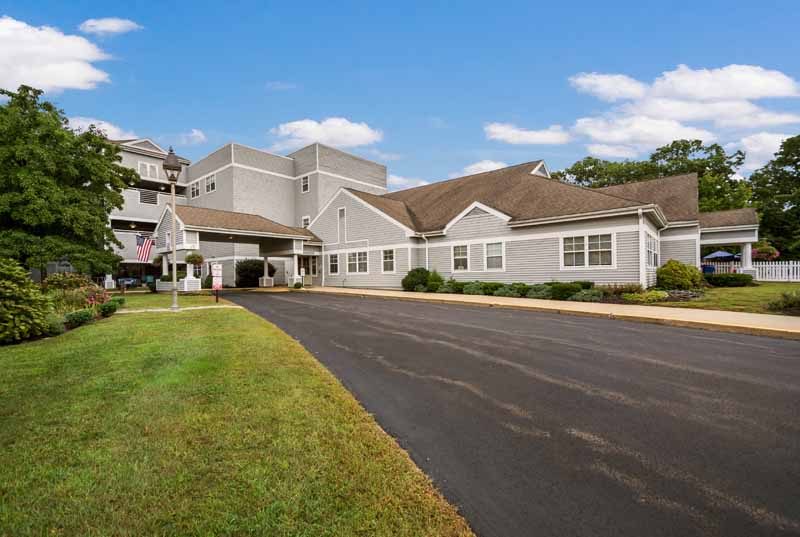
BRIDE BROOK REHABILITATION & NURSING CENTER is owned by a for-profit company. For-profit facilities operate as businesses with obligations to shareholders or private owners. The facility is operated by ATLAS HEALTHCARE, a chain that manages multiple nursing homes. With 130 certified beds and approximately 123 residents (about 95% occupancy), it is a mid-sized facility located in NIANTIC, Connecticut.

How Does Bride Brook Rehabilitation & Nursing Center Compare to Other Connecticut Nursing Homes?

Compared to the 100 nursing homes in Connecticut, BRIDE BROOK REHABILITATION & NURSING CENTER's overall rating (5 stars) is above the state average of 3.1, staff turnover (28%) is significantly lower than the state average of 46%, and health inspection rating (5 stars) is much above the national benchmark.

What Should Families Ask When Visiting Bride Brook Rehabilitation & Nursing Center?

Based on this facility's data, families visiting should ask: "Can I visit during a mealtime to observe dining assistance and food quality?" "How do you handle medical emergencies, and what is your hospital transfer rate?" "Can I speak with family members of current residents about their experience?"

Is Bride Brook Rehabilitation & Nursing Center Safe?

Based on CMS inspection data, BRIDE BROOK REHABILITATION & NURSING CENTER has a clean safety record: no substantiated abuse findings (meaning no confirmed cases of resident harm), no Immediate Jeopardy citations (the most serious violation level indicating risk of serious injury or death), and is not on the Special Focus Facility watch list (a federal program monitoring the lowest-performing 1% of nursing homes). The facility has a 5-star overall rating and ranks #1 of 100 nursing homes in Connecticut. While no facility is perfect, families should still ask about staff-to-resident ratios and recent inspection results during their visit.

Do Nurses at Bride Brook Rehabilitation & Nursing Center Stick Around?

Staff at BRIDE BROOK REHABILITATION & NURSING CENTER tend to stick around. With a turnover rate of 28%, the facility is 17 percentage points below the Connecticut average of 46%. Low turnover is a positive sign. It means caregivers have time to learn each resident's needs, medications, and personal preferences. Consistent staff also notice subtle changes in a resident's condition more quickly. Registered Nurse turnover is also low at 14%, meaning experienced RNs are available to handle complex medical needs.

Was Bride Brook Rehabilitation & Nursing Center Ever Fined?

BRIDE BROOK REHABILITATION & NURSING CENTER has no federal fines on record. CMS issues fines when nursing homes fail to meet care standards or don't correct problems found during inspections. The absence of fines suggests the facility has either maintained compliance or corrected any issues before penalties were assessed. This is a positive indicator, though families should still review recent inspection reports for the full picture.

Is Bride Brook Rehabilitation & Nursing Center on Any Federal Watch List?

BRIDE BROOK REHABILITATION & NURSING CENTER is not on any federal watch list. The most significant is the Special Focus Facility (SFF) program, which identifies the bottom 1% of nursing homes nationally based on persistent, serious quality problems. Not being on this list means the facility has avoided the pattern of deficiencies that triggers enhanced federal oversight. This is a positive indicator, though families should still review the facility's inspection history directly.