

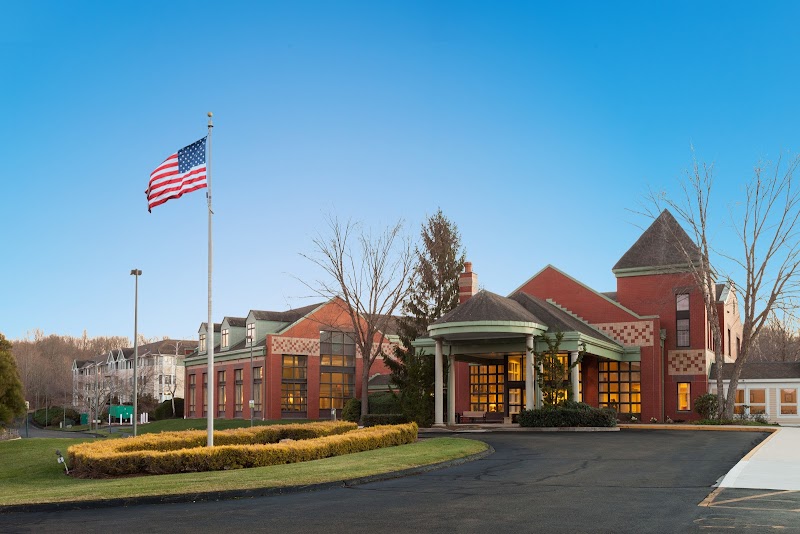
EVERGREEN WOODS

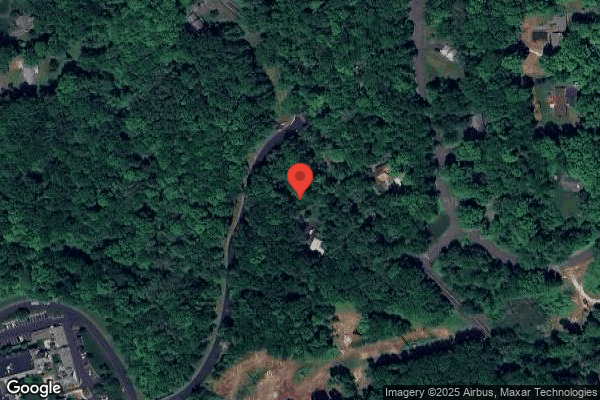
88 NOTCH HILL ROAD, NORTH BRANFORD, CT 06471 (203) 488-8000
For profit - Corporation 50 Beds SENIOR LIVING COMMUNITIES Data: November 2025
Trust Grade
90/100
#14 of 192 in CT
Last Inspection: December 2023

Within standard 12-15 month inspection cycle. Federal law requires annual inspections.

Overview

Evergreen Woods in North Branford, Connecticut, has received a Trust Grade of A, which indicates it is an excellent facility that is highly recommended. It ranks #14 out of 192 nursing homes in the state, placing it in the top half, and is the best option among 23 facilities in South Central Connecticut. However, the facility is experiencing a worsening trend, with issues increasing from 1 in 2021 to 9 in 2023. Staffing is a strength, as it boasts a 5/5 star rating with more RN coverage than 94% of other facilities, although it does have a concerning turnover rate of 53% compared to the state average of 38%. While the absence of fines is a positive sign, recent inspector findings raised some concerns, such as expired food items remaining in storage and a failure to ensure privacy for residents needing assistance with catheters. Overall, while Evergreen Woods has strengths in staffing and no fines, families should be aware of the increasing compliance issues.

Trust Score
A
90/100
In Connecticut
#14/192
Top 7%
Safety Record
Low Risk
No red flags
Inspections
Getting Worse
1 → 9 violations
Staff Stability
⚠ Watch
53% turnover. Above average. Higher turnover means staff may not know residents' routines.
Penalties
✓ Good
No fines on record. Clean compliance history, better than most Connecticut facilities.
Skilled Nurses
✓ Good
Each resident gets 99 minutes of Registered Nurse (RN) attention daily — more than 97% of Connecticut nursing homes. RNs are the most trained staff who catch health problems before they become serious.
Violations
⚠ Watch
12 deficiencies on record. Higher than average. Multiple issues found across inspections.
★★★★★
5.0
Overall Rating
★★★★★
5.0
Staff Levels
★★★☆☆
3.0
Care Quality
★★★★☆
4.0
Inspection Score
Stable
2021: 1 issues
2023: 9 issues

The Good

  • 5-Star Staffing Rating · Excellent nurse staffing levels
  • Full Sprinkler Coverage · Fire safety systems throughout facility
  • No fines on record

Facility shows strength in staffing levels, fire safety.

The Bad

Staff Turnover: 53%

Near Connecticut avg (46%)

Higher turnover may affect care consistency

Chain: SENIOR LIVING COMMUNITIES

Part of a multi-facility chain

Ask about local staffing decisions and management

The Ugly 12 deficiencies on record

Dec 2023 9 deficiencies
CONCERN (D)

Potential for Harm - no one hurt, but risky conditions existed

Resident Rights (Tag F0550)

Could have caused harm · This affected 1 resident

**NOTE- TERMS IN BRACKETS HAVE BEEN EDITED TO PROTECT CONFIDENTIALITY** Based on clinical record review, observations, facility policy, and interviews for 1 of 3 sampled residents (Resident #339) revi...

Read full inspector narrative →
**NOTE- TERMS IN BRACKETS HAVE BEEN EDITED TO PROTECT CONFIDENTIALITY** Based on clinical record review, observations, facility policy, and interviews for 1 of 3 sampled residents (Resident #339) reviewed for dignity, the facility failed to ensure a urinary privacy bag was utilized. The findings include: Resident #339's diagnosis included heart failure, diabetes, acute respiratory failure, and chronic kidney disease. The Resident Care Plan dated 12/13/23 identified Resident #339 required an indwelling Foley catheter. Interventions included providing privacy bags to the indwelling Foley catheter, empty catheter bag, and keep catheter insertion area clean. An admission Minimum Data Set (MDS) assessment dated [DATE] identified Resident #339 had intact cognition, had no impairment with upper/lower extremity range of motion and was independent with eating. The MDS further identified Resident #339 required set up assistance with oral hygiene, partial/moderate assistance with lower body dressing and personal/toilet hygiene. Additionally, the MDS identified Resident #339 had an indwelling catheter in place. Observation on 12/18/23 at 1:05 PM identified Resident #339 was sitting in a wheelchair and was being transported out of his/her room by the Rehab Director. Resident #339 was further observed to have a urinary collection bag secured to the wheelchair, which contained a large amount of yellow fluid inside without the benefit of being covered with a privacy covering. Interview with the Rehab Director on 12/18/23 at 1:05 PM identified that she was taking Resident #339 to attend a nursing meeting, was unsure of the policy of providing a urinary bag cover and could not find a privacy bag. Interview with the DNS on 12/21/23 at 12:10 PM identified the policy was located in the dignity policy and also identified the physician's order was for the bag to be covered. The DNS further identified that anyone can place a privacy bag on and the expectation was that all residents have a privacy bag always placed. The facility policy identified demeaning practices and standards of care that compromise dignity are prohibited. Staff are expected to promote dignity and assist residents: for example: helping the resident to keep urinary catheter bags covered.
CONCERN (D)

Potential for Harm - no one hurt, but risky conditions existed

Deficiency F0657 (Tag F0657)

Could have caused harm · This affected 1 resident

**NOTE- TERMS IN BRACKETS HAVE BEEN EDITED TO PROTECT CONFIDENTIALITY** Based on staff interview, clinical record review, facility documentation, and review of facility policy for 1 of 3 sampled resid...

Read full inspector narrative →
**NOTE- TERMS IN BRACKETS HAVE BEEN EDITED TO PROTECT CONFIDENTIALITY** Based on staff interview, clinical record review, facility documentation, and review of facility policy for 1 of 3 sampled residents (Resident #31) reviewed for accidents, the facility failed to revise the Resident Care Plan (RCP) to include interventions for fall prevention following Resident #31 falling. The findings include: Resident #31 was admitted to the facility on [DATE] with diagnoses that included sequelae of cerebral infarction, unsteadiness on feet, and dementia. Nursing notes dated 9/6/23 identified that Resident #31 was admitted to the facility following hospitalization for a left hip fracture related to a fall from home. A Resident Care Plan (RCP) dated 9/6/23 identified Resident #31 was at risks for falls. Interventions included gentle reminders for Resident #31 to use the call light if needing to get out of bed or chair, reminding Resident #31 to call for assistance prior to moving bed-to-chair and chair-to bed, frequent checks to decrease chance of falling, footwear fitting properly, having non-skid soles, placing call bell within easy reach, keeping areas free of obstructions to reduce risks of falls or injury, and responding promptly to calls for assistance to use the toilet. An admission Minimum Data Set (MDS) assessment dated [DATE] identified Resident #31 was severely cognitively impaired and required extensive assistance of one staff person for locomotion on the unit, dressing, toileting, and personal hygiene. Resident #31 required limited assistance of two staff for transferring. Additionally, the MDS identified Resident #31 had a history of falls over the past 6 months and had a fall within the last month prior to admission to the facility. Nursing notes dated 9/16/23 at 3:50 PM reflected Resident #31 was out of bed in his/her wheelchair most of the day on 9/16/23, with episodes of confusion and yelling and screaming during the day, and many attempts to stand from his/her wheelchair unassisted. Redirection, distraction and 1 to 1 supervision was needed for Resident #31 to calm and sit down. A facility Incident Report dated 10/8/23 at 8:13 PM identified Resident #31 had an unwitnessed fall on 10/8/23 fall at 8:13 PM. Resident #31 was found sitting on a floor mat on the side of his/her bed, with non-skid socks on, with the bed in the lowest position. Nursing staff assessed Resident #31 for injury and the physician and family were also notified. The disposition noted on the Incident Report was for Resident #31 to be offered toileting prior to hours of sleep (HS). A facility Incident Report dated 11/23/23 at 6:30 PM identified Resident #31 had a witnessed fall on 11/23/23 at 6:30 PM. Resident #31 was observed sitting in his\her wheelchair in the hallway and slid out of the wheelchair onto his/her buttocks on the floor. A staff member present near Resident #31 tried to prevent the fall. Nursing staff assessed Resident #31. The physician and family were also notified. Resident #31 was transferred back to his/her wheelchair after being assessed. The disposition noted on the Incident Report was to add dycem or larger piece if there already to prevent sliding in chair. A facility Incident Report dated 11/23/23 at 9:05 PM identified Resident #31 had a witnessed fall on 11/23/23 at 9:05 PM. Resident #31 was observed walking out of his/her room without a walker and fell in the hallway. Nursing staff assessed Resident #31 and placed at the nurses' station with staff to ensure safety. The physician and family were also notified. The disposition noted on the Incident Report was to remind Resident #31 of needing walker, and possibly signage with pictures to remind Resident #31, if needed. A facility Incident Report dated 11/25/23 at 5:50 AM identified Resident #31 was observed to have lower left leg swelling after a fall on 11/23/23. Resident #31 was assessed by nursing and the foot and ankle were elevated. The physician and family were notified. The disposition noted on the Incident Report was to refer to the fall prevention interventions identified from Resident #31's falls on 11/23/23. A facility Incident Report dated 12/15/23 at 7:50 PM identified Resident #31 had an unwitnessed fall on 12/15/23 at 7:50 PM. Resident #31 was observed on the floor in his/her room crawling toward the door. Resident #31 fell out of bed and onto the floor mat next to the bed. The bed was observed by staff to be positioned at the lowest level. Nursing assessed Resident #31 for injury. The physician and family were notified. Resident #31 was transferred to wheelchair for redirection and placed on 1 to 1 supervision until Resident #31 was calm. The disposition noted on the Incident Report was for the resident to remain in the facility. A facility Incident Report dated 12/15/23 at 11:00 PM identified Resident #31 had a witnessed fall on 12/15/23 at 11:00 PM. Resident #31 was observed standing up from the wheelchair while at the nurses' station and hitting his/her head against the railing of the desk upon falling to the floor. Nursing assessed Resident #31 and the physician and family were notified. The disposition noted on the Incident Report identified for Resident #31 to be encouraged to stay with the nurse while at the nurses' station. A facility Incident Report dated 12/18/23 at 8:40 PM identified Resident #31 had an unwitnessed fall. Resident #31 was observed by staff attempting to scoot him/herself towards the hallway while on the floor of his/her room. The bed was in the lowest position possible and fall mats were in place. Nursing assessed Resident #31 for injury. The physician and family were also notified. The disposition noted on the Incident Report identified staff was to offer to keep Resident #31 out of bed until stating his/she was ready for bed. Interview and clinical record review with the Director of Nursing Services (DNS) on 12/21/23 at 1:45 PM identified that the facility failed to ensure that the RCP for falls was updated to include fall prevention interventions following resident falls occurring on 10/8/23, 11/23/23, 12/15/23, and 12/18/23. The DNS identified the MDS Coordinator was responsible for completing the care plan updates, however, the MDS Coordinator was currently out from work. The DNS indicated being able to put in simple interventions into a care plan while the MDS Coordinator was out from work. Additionally, interview with the DNS on 12/21/23 at 1:45 PM identified the facility policy was for the Interdisciplinary Team to develop fall prevention interventions, which were based upon the disposition identified on the facility Incident Report following a fall. The DNS indicated that fall prevention interventions identified on the facility Incident Reports, dated 10/8/23, 11/23/23, 12/15/23, and 12/18/23, may not have been included in the RCP but were put into place and were communicated to the care team verbally by the supervisor. However, the DNS further indicated that it would be expected to see interventions added to the RCP after a resident had a fall. Review of facility Care Planning policy identified assessments of residents are ongoing and care plans are revised as information about the residents and the residents' conditions change. The Interdisciplinary Team reviews and updates the care plan, including when the resident has been re-admitted to facility from a hospital stay.
CONCERN (D)

Potential for Harm - no one hurt, but risky conditions existed

Deficiency F0658 (Tag F0658)

Could have caused harm · This affected 1 resident

**NOTE- TERMS IN BRACKETS HAVE BEEN EDITED TO PROTECT CONFIDENTIALITY** Based on record review, staff interview and review of facility policy for 1 of 2 residents (Resident #36) reviewed for hospitali...

Read full inspector narrative →
**NOTE- TERMS IN BRACKETS HAVE BEEN EDITED TO PROTECT CONFIDENTIALITY** Based on record review, staff interview and review of facility policy for 1 of 2 residents (Resident #36) reviewed for hospitalization, the facility failed to document the events of Resident #36's transfer to the hospital including an assessment by a Registered Nurse (RN) per professional standards. The findings include: Resident #36 was admitted to the facility on [DATE] with diagnoses that included a lumbar fracture, hypertension and respiratory failure. An admission Minimum Data Set (MDS) assessment dated [DATE] identified Resident #36 had intact cognition and required extensive assistance of 2 for bed mobility and transfers. The MDS further identified Resident #36 required extensive assistance of 1 for toilet use and dressing. Additionally, the MDS identified Resident #36 required limited assistance of 1 for personal hygiene. Nursing notes dated 8/18/23 at 6:40 AM and written by Licensed Practical Nurse (LPN) #1 identified Resident #36 was alert and oriented, tolerated medication well, complained of abdominal and back pain, abdomen was soft to touch, bowel sounds active in all 4 quadrants. Nursing notes by LPN #1 further identified Resident #36 stated I can't deal with this pain anymore, nothing helps. Additionally, LPN #1's note identified Resident #36 had no signs of cardiac distress and remained in bed for the duration of the shift. An Inter-Agency Patient Referral Report (no author/credential of author identified) dated 8/18/23 (from the facility to the Emergency Department) identified Resident #36 had increased back/abdominal pain, negative bowel sounds and a past medical history of ilius. A physician progress note dated 9/1/23 identified Resident #36 was re-admitted after being hospitalized from [DATE] to 8/31/23 due to a diagnosis of colonic fecal stasis with gaseous distension and non-specific ileus. Interview and record review with the DNS on 2:12 PM failed to identify documentation/nursing notes either electronically or in the paper chart that a Registered Nurse (RN) assessment had been completed subsequent to Resident #36 complaints of not being able to deal with this pain anymore on 8/18/23. Additionally, the DNS was unable to locate nursing notes either electronically or in the paper chart that reflect the events at the time Resident #36 was transferred to the hospital (physician/family being notified, time of transfer, Resident #36's response to the transfer, etc). The DNS also identified she would have expected an RN assessment be documented due to Resident #36's complaints of pain. Interview and record review with the ADNS on 12/22/23 at 9:30 AM identified that she was working on 8/18/23 as the ADNS when Resident #36 was transferred to the hospital, and although she assessed Resident #36 prior to contacting the physician, she did not document the assessment. Furthermore, the ADNS identified that she should have documented an assessment and write a nursing note regarding Resident #36's transfer to the hospital, but did not due to being busy. Additionally, the ADNS identified that the other licensed staff working on 8/18/23 were either agency nurses or nurses that no longer work at the facility. Facility policy regarding Charting and Documentation (revised July 2017) identified all services provided to the resident, progress toward the care plan goals, or any changes in the resident's medical, physical, functional or psychosocial condition, shall be documented in the resident's medical record. According to [NAME], Nursing 2022, The Peer-Reviewed Journal, a rule of documentation is to follow the nursing process completely. The nursing process requires assessment, diagnosis (nursing), planning, implementation and evaluation. This process must be reflected in the documentation of interactions with the patient during care.
CONCERN (D)

Potential for Harm - no one hurt, but risky conditions existed

Quality of Care (Tag F0684)

Could have caused harm · This affected 1 resident

**NOTE- TERMS IN BRACKETS HAVE BEEN EDITED TO PROTECT CONFIDENTIALITY** Based on observations, review of the clinical record, facility policy, and interviews for the only sampled resident (Resident #1...

Read full inspector narrative →
**NOTE- TERMS IN BRACKETS HAVE BEEN EDITED TO PROTECT CONFIDENTIALITY** Based on observations, review of the clinical record, facility policy, and interviews for the only sampled resident (Resident #13) reviewed for positioning, the facility failed to follow physician orders related to pressure reduction. The findings include: Resident #13's diagnoses included arteriosclerosis heart disease, fracture to the right femur, and acute kidney failure. The admission Minimum Data Set (MDS) assessment dated [DATE] identified Resident #13 was moderately cognitively impaired, dependent with lower body dressing, and required maximum assistance with bed mobility. Additionally, the MDS identified Resident #13 was at risk for pressure ulcers/injuries. The Resident Care Plan dated 10/26/23 identified a risk for alteration in skin integrity related to limited range in motion. Interventions included using pillows, pads, or wedges to reduce pressure on heels and pressure points, and to turn/reposition. A physician's order dated 10/26/23 directed Resident #13 to have heel boots and heels elevated while in bed. Observation of Resident #13 on 12/20/23 at 11:45 AM identified him/her asleep in bed, on top of the covers without the benefit of heel elevation or heel boots. No off-loading equipment was observed around Resident #13. Observation of Resident #13 on 12/20/23 at 12:14 PM and again at 1:34 PM identified him/her in bed, on top of the covers without the benefit of heel boots or heel elevation. No off-loading equipment was observed around Resident #13. Review of nursing progress and RCP from 12/1/23 through 12/20/23 failed to indicate Resident #13 was non-complaint with wearing heel boots or keeping heels elevated. Interview with the ADNS on 12/20/23 at 1:43 PM indicated Nurse Aides (NA) and nurses were responsible to ensure that when Resident #13 was in bed, heel boots were in place and that heels were elevated off the mattress. The ADNS identified that according to the physician's order, Resident #13 should have had his/her heels elevated as well as had his/her heel boots in place. The ADNS was unaware of the reason physician's orders were not being followed. Additionally, the ADNS was only able to locate 1 heel boot in Resident #13's room. Interview with Resident #13 on 12/20/23 at 1:46 PM indicated he/she had never worn heel boots. Interview and review of the clinical record, with Registered Nurse (RN) #1 on 12/20/23 at 1:59 PM identified although Resident #13 would kick off his/her boots, RN #1 was unsure if this was the reason Resident #13 did not currently have his/her heels elevated or heel boots in place. RN#1 indicated that therapy and the NAs were responsible for placing Resident #13's heel boots on and could not explain the reason Resident #13 had only 1 boot in his/her room. Interview with NA #1 on 12/20/23 at 1:59 PM indicated Resident #13 was non-compliant with treatment and this information had been reported to the charge nurses. Interview with DNS on 12/20/23 at 2:05 PM failed to identify the reason Resident #13 did not currently have his/her heels elevated or heel boots in place as ordered by the physician. The DNS indicated Resident #13 was non-compliant with treatment due to behavioral issues, however, the facility had failed to identify documentation of the refusals or if this was why heels were not elevated or heel boots were not in place. Subsequent to surveyor inquiry, observation on 12/20/23 at 2:24 PM identified Resident #13 tolerating heel boots, which were noted to be in place. Facility Prevention of Pressure Injuries indicated to reposition all residents with or at risk of pressure injuries and to review and select medical devices with consideration to the ability to minimize tissue damage.
CONCERN (D)

Potential for Harm - no one hurt, but risky conditions existed

Pressure Ulcer Prevention (Tag F0686)

Could have caused harm · This affected 1 resident

**NOTE- TERMS IN BRACKETS HAVE BEEN EDITED TO PROTECT CONFIDENTIALITY** Based on clinical record review, review of facility policy, and interviews for 1 of 3 sampled residents (Resident #339) reviewed...

Read full inspector narrative →
**NOTE- TERMS IN BRACKETS HAVE BEEN EDITED TO PROTECT CONFIDENTIALITY** Based on clinical record review, review of facility policy, and interviews for 1 of 3 sampled residents (Resident #339) reviewed for pressure ulcers, the facility failed to ensure a positioning device was appropriately applied. The findings include: Resident #339's diagnoses included heart failure, diabetes, chronic kidney failure, and acute respiratory failure. Resident #339's care plan dated 12/13/23 identified he/she was at risk for alteration in skin integrity related to impaired mobility, age, and cardiac disease. Intervention directed use pillow, pads, or wedges to reduce pressure on heels and pressure points, turn and reposition, and to apply moisture barrier. An admission Minimum Data Set (MDS) assessment dated [DATE] identified Resident #339 had intact cognition, had no impairment with upper/lower extremity range of motion and was independent with eating. The MDS further identified Resident #339 required set up assistance with oral hygiene, partial/moderate assistance with lower body dressing and personal/toilet hygiene. Additionally, the MDS identified Resident #339 had a stage 2 pressure ulcer to coccyx. A physician's order dated 12/13/23 directed a pressure reducing device for the bed, alternating air pressure mattress on bed to promote healing and provide comfort. A Dietician note dated 12/18/23 identified that Resident #339 on 12/15/23 Resident #339's weight was 121.9 pounds (lbs). Observations on 12/18/23 at 10:15 AM identified Resident #339 in bed, lying on his/her side. The setting for the alternating air mattress was set a 8 (a setting of 7-8 was a setting for a resident's weight of 300 lbs to 350 lbs). Observation on 12/19/23 at 10:15 AM identified Resident #339 was in bed, lying on his/her side, the alternating air pressure mattress was set at 8. Observation on 12/20/23 at 12:35 PM identified Resident #339 in bed lying on his/her side with the alternating air pressure mattress set at 8. Interview on 12/20/23 at 2:15 PM with the vendor for alternating air pressure mattress' identified that there was a range tag on the resident's bed and the mattress would be set up according to the range which was by weight. Interview and observation with the ADNS on 12/20/23 at 2:35 PM stated that the alternating air pressure mattress was set according to the resident's weight, observation done with ADNS who checked the setting of Resident's #339 alternating air pressure mattress and she stated that it was set at 8 which was too firm, and it should be down to 4. She denied knowing Resident #339 weight and knowing if there was a policy regarding the alternating air pressure mattress. She provided a copy of the operating, maintenance and troubleshooting card that identified settings for the bed that are specific according to the resident's weight. Review of the facility's Prevention of Pressure Ulcers/Injuries policy identified that the staff are responsible for the redistributing support surfaces are to promote comfort for all residents, prevent skin break down, promote circulation, and provide pressure relief or reduction. Subsequent to surveyor observation on 12/21/23 at 10:30 AM, Resident #339's alternating air pressure mattress was set at 2 which was the setting for a resident who weighs between 85-140 pounds per the operating, maintenance and troubleshooting card.
CONCERN (D)

Potential for Harm - no one hurt, but risky conditions existed

Accident Prevention (Tag F0689)

Could have caused harm · This affected 1 resident

**NOTE- TERMS IN BRACKETS HAVE BEEN EDITED TO PROTECT CONFIDENTIALITY** Based on staff interview, clinical record review, facility documentation, and review of facility policy for 1 of 3 sampled resid...

Read full inspector narrative →
**NOTE- TERMS IN BRACKETS HAVE BEEN EDITED TO PROTECT CONFIDENTIALITY** Based on staff interview, clinical record review, facility documentation, and review of facility policy for 1 of 3 sampled residents (Resident #31) reviewed for accidents, the facility failed to ensure fall risk assessments were completed after resident falls. The findings include: Resident #31 was admitted to the facility on [DATE] with diagnoses that included sequelae of cerebral infarction, other abnormalities of gait and mobility, and dementia. An admission Fall Risk assessment dated [DATE] identified Resident #31 ambulated with difficulty due to problems that included unsteady gait and required the use of assisted devices for ambulation. Furthermore, it was indicated that Resident #31 had a history of falls within the last 90 days and was at higher risk for falls. A Resident Care Plan (RCP) dated 9/6/23 identified Resident #31 was at risks for falls. Interventions included gentle reminders for Resident #31 to use the call light if needing to get of bed or chair, reminding Resident #31 to call for assistance prior to moving bed-to-chair and chair-to bed, frequent checks to decrease chance of falling, footwear fitting properly, having non-skid soles, placing call bell within easy reach, keeping areas free of obstructions to reduce risks of falls or injury, and responding promptly to calls for assistance to use the toilet. An admission Minimum Data Set (MDS) assessment dated [DATE] identified Resident #31 was severely cognitively impaired and required extensive assistance of one staff person for locomotion on the unit, dressing, toilet use, and personal hygiene. Resident #31 required limited assistance of two staff for transferring. Additionally, it was identified Resident #31 had a history of falls over the past 6 months and had a fall within the last month prior to admission to the facility. A Fall Risk assessment dated [DATE] identified that Resident #31 ambulated with difficulty due to problems that included unsteady gait and required the use of assisted devices for ambulation. Further, it was indicated that Resident #31 had a history of falls within the last 90 days and had a total fall risk evaluation score of 14, which indicated that Resident #31 was at higher risk for falls. Record review of facility Incident Report documentation indicated Resident #31 had falls while at the facility on 9/16/23, 9/23/23, 10/8/23, 11/15/23, 11/23/23, 12/15/23, and 12/18/23 but failed to complete a Fall Risk assessment after the falls. Interview with the DNS on 12/21/23 at 12:18 PM identified the facility policy was for a Fall Risk Assessments to be completed on admission and following falls, as part of the fall process. The DNS also indicated that fall risk assessments were scheduled to be completed routinely every 6 months for long term residents and that the next fall risk assessment for Resident #31 was scheduled for 3/4/24. Clinical record review (review of the electronic record) with the DNS on 12/21/23 at 1:41 PM identified that the facility failed to complete Fall Risk assessments for Resident #31 following Resident #31's falls at the facility and indicated that if a Fall Risk assessment was completed it would be located in the electronic medical record (EMR). Interview with the DNS on 12/21/23 at 1:43 PM identified that the facility failed to complete fall risk assessments following Resident #31's falls at the facility on 9/16/23, 9/23/23, 10/8/23, 11/15/23, 12/15/23, and 12/18/23 in accordance with facility policy and procedures. The DNS identified that the person responsible for completing a fall risk assessment was the nurse that completes the assessment of the resident following a fall. The DNS identified that a fall risk assessment should be done after every resident fall. The DNS indicated being unsure as to the reason fall risk assessments were not completed following Resident #31's falls at the facility on 9/16/23, 9/23/23, 10/8/23, 11/15/23, 11/23/23, 12/15/23, and 12/18/23. Review of the Fall Risk Assessment policy identified that nursing staff and the physician review a resident's history of falls and fall risk factors upon admission. Additionally, the policy identified that staff and the attending physical will collaborate to identify and address fall risk factors and interventions to try to minimize the consequences of fall risks factors for residents. Further, the Interdisciplinary Team, in conjunction with the attending physician, will seek to identify and document resident risk factors for falls and establish a resident-centered falls prevention plan based on relevant assessment information.
CONCERN (D)

Potential for Harm - no one hurt, but risky conditions existed

Infection Control (Tag F0880)

Could have caused harm · This affected 1 resident

**NOTE- TERMS IN BRACKETS HAVE BEEN EDITED TO PROTECT CONFIDENTIALITY** Based on observation, review of the clinical record, facility policy, and interviews for the only sampled resident (Resident #33...

Read full inspector narrative →
**NOTE- TERMS IN BRACKETS HAVE BEEN EDITED TO PROTECT CONFIDENTIALITY** Based on observation, review of the clinical record, facility policy, and interviews for the only sampled resident (Resident #339) reviewed for glucose (blood sugar) testing, the facility failed to appropriate disinfect the area prior to testing and failed to ensure proper hand hygiene. In the laundry room, the facility failed to ensure that the clean laundry was maintained appropriately. The findings include: 1. Resident #339's diagnoses included diabetes, heart attack, and kidney disease. An admission physician's order dated 12/14/23 directed to obtain a blood sugar level with breakfast, lunch, and dinner to calculate how many units of insulin to administer. The admission Resident Care Plan dated 12/18/2023 identified Resident #339 was at risk for complications related to diabetes (high and low blood sugar irregularities). Interventions included monitoring glucose levels. The admission Minimum Data Set assessment dated [DATE] identified Resident #339 was cognitively intact and required set up assistance with oral hygiene and partial assistance with personal hygiene. Observation of LPN #2 on 12/21/23 at 12:04 PM identified that she had obtained the glucose monitoring device and an alcohol wipe from the medication cart. LPN #2 explained the procedure to Resident #339, wiped Resident #339's left middle finger with the alcohol wipe, then dried the area with a facial tissue. Using a lancet (a single-use needle type device) she obtained a drop of blood from the resident's finger. LPN #2 removed her glove and placed a new pair of gloves without the benefit of first washing or sanitizing her hands. Interview with LPN #2 on 12/21/23 at 12:09 PM identified that it was not the facility policy to wipe the disinfected testing area with a tissue prior obtaining the blood and that the tissue had contaminated the disinfected area. Additionally, LPN #2 indicated that the facility policy was to wash/sanitize her hands after glove removal and prior to placing a new, clean glove. LPN #2 was unable to identify why she had wiped Resident #339's disinfected area with a tissue, or why she had not followed the facility policy for hand washing/sanitizing when gloves were removed or prior to new glove placement. Interview with the DNS on 12/21/23 at 12:37 PM identified the process for disinfecting a resident's finger for blood glucose sampling did not include wiping the area with a tissue, but that a disinfected area should be left to air dry or be dried with sterile gauze. Interview with the ADNS on 12/21/23 at 12:38 PM identified that, according to the facility policy, LPN #2 should have performed hand hygiene after removing gloves and prior to placing on a new glove. Review of the facility policy, Blood Sampling - Capillary Finger Sticks, dated 2014, directed, in part, to clean the testing area with an alcohol swab. Review of the Personal Protective Equipment Using Gloves policy dated 2010 directed, in part, to wash hands after discarding gloves. 2. Observation in the laundry room with Laundry Attendant #1 on 12/22/23 at 11:40 AM identified the following: a. On the wall facing the clean laundry folding table, a fan was noted to have a significant amount of gray material clinging to the fan guard. The fan was blowing directly on clean linen being folded by Laundry Attendant #1. b. A floor fan located to the side of the clean laundry folding table was noted to have a significant amount of gray material clinging to the fan guard. The fan was blowing directly on clean linen being folded by Laundry Attendant #1. Interview with Laundry Attendant #1 on 12/22/23 at 11:50 AM identified that the substance on the fan guards was lint from the dryer. Laundry Attendant #1 indicated that both fans required cleaning and should not have been blowing onto the clean linen. Laundry Attendant #1 identified that she had thought the wall fan was off. Additionally, she noted that the Maintenance Department was responsible for cleaning the wall fan and she should have notified them of the need for cleaning. Although the Maintenance Department was responsible for the wall fan, the floor fan was noted to have a large build-up of lint, and she was responsible for cleaning this fan but had not noticed the build-up. Interview and observation with the Administrator on 12:22/23 at 11:53 AM identified that both fans had a large build-up of debris, required cleaning, and should not have been blowing directly on the area where clean linen was being folded. Although requested a policy on fan cleanliness was not received.
CONCERN (D)

Potential for Harm - no one hurt, but risky conditions existed

Deficiency F0947 (Tag F0947)

Could have caused harm · This affected 1 resident

Based on review of facility records, interviews, and facility policy for 1 of 3 Nurse Aides reviewed for training, (NA #2), the facility failed to ensure sufficient hours of education per the regulati...

Read full inspector narrative →
Based on review of facility records, interviews, and facility policy for 1 of 3 Nurse Aides reviewed for training, (NA #2), the facility failed to ensure sufficient hours of education per the regulation. The findings include: Review of facility records on 12/22/23 at 10:48 AM indicated that NA #2 was hired March 2023, however, required trainings were all signed on 12/21/23 (during the ongoing survey). Interview with ADNS on 12/22/23 at 11:45 AM indicated staff were expected to complete all the mandatory required trainings upon hire. The ADNS identified that NA #2's required trainings were not signed until 12/21/23 (9 months post hire) due to NA #2 not being up to date. The ADNS stated that Human Resources, the DNS, and she were responsible to ensure staff completed their mandatory training requirements on hire. Review of facility documentation identified that NA #2 had worked a total of 125 hours between 11/26/23 and 12/7/23, prior to signing off on the required training. Attempts to interview NA #2 were unsuccessful. The facility In-service Training, Nurse Aide policy indicated that required trainings were communication, resident rights and facility responsibilities, abuse, neglect and exploitation of residents, quality assurance and performance improvement (QAPI), infection control, compliance and ethics, and behavioral health.
CONCERN (E)

Potential for Harm - no one hurt, but risky conditions existed

Food Safety (Tag F0812)

Could have caused harm · This affected multiple residents

Based on a tour of the Dietary Department, review of facility policy, and staff interview, the facility failed to ensure expired food was discarded. The findings included: During the initial tour of t...

Read full inspector narrative →
Based on a tour of the Dietary Department, review of facility policy, and staff interview, the facility failed to ensure expired food was discarded. The findings included: During the initial tour of the Dietary Department on 12/20/23 at 11:30 AM with the Executive Chef, the following was identified in dry storage: a. one 32-ounce box of baking soda with an expiration date of 11/27/21. b. four 28-ounce bags of refried pinto beans with an expiration date of 4/7/23. c. five 10-ounce boxes of Couscous with an expiration date of 11/21/21. Interview with the Director of Food Services on 12/21/23 at 10:30 AM identified that the Closing Manager was responsible to check for expiration dates daily and to discard expired food. Further, the Director of Food Service was unable to explain the reason expired food remained in the dry storage area, but stated it may have been due to the kitchen being short staffed. Subsequent to surveyor inquiry, the expired items were discarded. Review of the Dining Department policy (undated) directed, in part, that the executive Chef or their designee will monitor and assure that all food products are not outside of their expiration date. All expired food will be discarded immediately.
Oct 2021 1 deficiency
CONCERN (F)

Potential for Harm - no one hurt, but risky conditions existed

Deficiency F0761 (Tag F0761)

Could have caused harm · This affected most or all residents

Based on observations, facility policy review and staff interviews for one of one medication rooms and two of two medication carts, reviewed for medication storage, the facility failed to ensure medic...

Read full inspector narrative →
Based on observations, facility policy review and staff interviews for one of one medication rooms and two of two medication carts, reviewed for medication storage, the facility failed to ensure medications were not accessible to non-licensed persons. The findings include: An observation on 10/26/2021 at 3:10 PM identified the medication room door was open wide and was held open by a wedge-type of magnetic door holder under the bottom of the door. Additional observation identified no licensed staff were in the medication room or within view of the medication room. Further, located inside the unattended medication room were two medication carts that were both observed to be unlocked. Additional observation identified Resident #15 sitting in a wheelchair inside the nursing station next to the open medication room door. NA #1 and NA #2 were reviewing documentation in the corner at the far end of the nursing station, and they were not within view of the open medication door. During an interview with LPN #1 on 10/26/2021 at 3:20 PM, LPN #1 indicated that she left the area and went to grab something, and the open medication door slipped her mind. Further, LPN #1 indicated that Resident #15 was sitting inside the nursing station when she left the area with the medication room door open, and the medication carts unlocked. She indicated that the medication carts should have been locked and she should have ensured the medication room door was closed and locked. Interview and observation with the Administrator on 10/26/2021 at 3:23 PM confirmed the medication room door was left open and identified that there were medications and biologicals stored inside the unattended, unlocked medication room and medication carts. The Administrator indicated that the medication carts should have been locked and the medication room door should have been closed securely and locked. Interview with the DNS on 10/27/2021 at 10:00 AM identified the medication room door and carts should have been locked when not within view of the licensed staff to prevent unauthorized access. The DNS further identified Resident #15 had severely impaired cognition and was able to propel his/her wheelchair independently. Subsequent to surveyor inquiry, the wedge-type magnetic door holder that allowed the medication room door to be propped open was removed. Review of the facility Storage of Medication Policy and Procedure, dated 9/2018, directed in part that the medication supply shall be accessible only to licensure nursing personnel, pharmacy personnel, or staff members lawfully authorized to administer medications. The Policy further directed that medication rooms, cabinets, and supplies should remain locked when not in use or attended by persons with authorized access.
Jun 2019 2 deficiencies
CONCERN (D)

Potential for Harm - no one hurt, but risky conditions existed

Notification of Changes (Tag F0580)

Could have caused harm · This affected 1 resident

**NOTE- TERMS IN BRACKETS HAVE BEEN EDITED TO PROTECT CONFIDENTIALITY** Based on review of the clinical record, facility documentation, facility policy and interviews for 1 of 2 residents (Resident #6...

Read full inspector narrative →
**NOTE- TERMS IN BRACKETS HAVE BEEN EDITED TO PROTECT CONFIDENTIALITY** Based on review of the clinical record, facility documentation, facility policy and interviews for 1 of 2 residents (Resident #6), reviewed for accidents, the facility failed to notify the resident representative of an incident. The findings include: Resident #6 was admitted to the facility on [DATE] with diagnoses that included aphasia (inability to speak), Alzheimer's disease, and cerebral infarction. The significant change MDS dated [DATE] identified Resident #6 had severely impaired cognition and was totally dependent on the assistance of 2 people for personal hygiene. A physician's order dated 6/6/19 directed to cleanse the wound (left ring fingertip) gently with normal saline, apply bacitracin, followed by an island dressing wrapped around the fingertip and to add extra tape as necessary. A nursing progress note dated 6/7/19 at 12:42 PM (a late entry note for 6/6/19) identified when the nurse aides were cutting Resident #6's fingernails, Resident #6 made a sudden movement and obtained a 1 cm by 0.3 cm wide wound on his/her left middle fingertip. The care plan dated 6/7/19 identified Resident #6's fingertip was cut when his/her nails were clipped. Interventions included provide a treatment to the fingertip as directed in the physician's order, observe for redness and signs and symptoms of infection, and to update the physician as needed. Interview with the DNS on 6/13/19 at 9:15 AM identified she was unable to find documentation that identified Resident #6's representative was notified of the injury to the resident's finger. Interview on 6/13/19 at 10:35 AM with RN #1 identified she should have notified Resident # 6's representative of the resident's injury but forgot. A review of the facility's change in a resident's status policy identified a nurse will notify the resident's representative when the resident is involved in any accident that results in an injury.
CONCERN (D)

Potential for Harm - no one hurt, but risky conditions existed

Deficiency F0761 (Tag F0761)

Could have caused harm · This affected 1 resident

Based on observation, review of facility policy, and interviews for 1 of 2 medication carts, the facility failed to ensure medications were labeled and/or stored according to facility policy. The find...

Read full inspector narrative →
Based on observation, review of facility policy, and interviews for 1 of 2 medication carts, the facility failed to ensure medications were labeled and/or stored according to facility policy. The findings include: Observation on 6/12/19 at 8:43 AM with LPN #1 of the medication cart identified an open 10 ml vial of Humalog 100 U/ml for Resident #12 dated 4/25/19. Additionally, the cart contained an undated open bottle of Latanoprost 0.005 % for Resident #242, and an undated open bottle of Timolol 0.05 % for Resident #10. Interview with LPN #1 on 6/12/19 at 8:43 AM identified that the vial of Humalog for Resident #12 was open on 4/25/19. LPN #1 identified that although she was not certain of the discard date, it was her belief the medication was likely outdated and should not be in the medication cart. Additionally, LPN #1 identified that there was a list she was able to reference with medication expiration dates for insulins and eye drops hanging in the medication room on the unit. LPN #1 identified that nursing was responsible to ensure expired medications were not stored in the cart. LPN #1 identified that any bottle of medication, such as the eye drops, that had been opened should be labeled with an open date, and it was the responsibility of the nurse opening the medication to label the medications. LPN #1 identified that when the open medication did not contain an open date, it was not possible to identify when the medication expired. Interview and observation of medication cart with ADNS on 6/12/19 at 9:43 AM identified that the vial of Humalog for Resident #10 was outdated and that the nurses were responsible to ensure expired medications were not stored in the cart. The ADNS identified that any bottle of medication that has been opened was to be labeled with an open date, and it was the responsibility of the nurse opening the medication to label the medications. Review of facility policy for open injectable storage and handling identified multiple dose vials of medications that are open shall have the start (opening) date indicated on them. Review of facility policy for storage of medications identified that the nursing staff shall be responsible for maintaining medication storage and preparation areas. Additionally, the facility shall not use discontinued, outdated or deteriorated drugs or biologicals. All such drugs shall be returned to the dispensing pharmacy or destroyed. Review of the insulin storage guidelines identify that Humalog stored at room temperature is to be discarded after 28 days. Additionally, Latanoprost is to be discarded after 6 weeks.
Understanding Severity Codes (click to expand)
Life-Threatening (Immediate Jeopardy)
J - Isolated K - Pattern L - Widespread
Actual Harm
G - Isolated H - Pattern I - Widespread
Potential for Harm
D - Isolated E - Pattern F - Widespread
No Harm (Minor)
A - Isolated B - Pattern C - Widespread

Questions to Ask on Your Visit

  • "Can I speak with families of current residents?"
  • "What's your RN coverage like on weekends and overnight?"

Our Honest Assessment

Strengths
  • • Grade A (90/100). Above average facility, better than most options in Connecticut.
  • • No major safety red flags. No abuse findings, life-threatening violations, or SFF status.
  • • No fines on record. Clean compliance history, better than most Connecticut facilities.
Concerns
  • • 12 deficiencies on record. Higher than average. Multiple issues found across inspections.
Bottom line: Generally positive indicators. Standard due diligence and a personal visit recommended.

About This Facility

What is Evergreen Woods's CMS Rating?

CMS assigns EVERGREEN WOODS an overall rating of 5 out of 5 stars, which is considered much above average nationally. Within Connecticut, this rating places the facility higher than 99% of the state's 100 nursing homes. This rating reflects solid performance across the metrics CMS uses to evaluate nursing home quality.

How is Evergreen Woods Staffed?

CMS rates EVERGREEN WOODS's staffing level at 5 out of 5 stars, which is much above average compared to other nursing homes. Staff turnover is 53%, compared to the Connecticut average of 46%.

What Have Inspectors Found at Evergreen Woods?

State health inspectors documented 12 deficiencies at EVERGREEN WOODS during 2019 to 2023. These included: 12 with potential for harm.

Who Owns and Operates Evergreen Woods?

EVERGREEN WOODS is owned by a for-profit company. For-profit facilities operate as businesses with obligations to shareholders or private owners. The facility is operated by SENIOR LIVING COMMUNITIES, a chain that manages multiple nursing homes. With 50 certified beds and approximately 40 residents (about 80% occupancy), it is a smaller facility located in NORTH BRANFORD, Connecticut.

How Does Evergreen Woods Compare to Other Connecticut Nursing Homes?

Compared to the 100 nursing homes in Connecticut, EVERGREEN WOODS's overall rating (5 stars) is above the state average of 3.1, staff turnover (53%) is near the state average of 46%, and health inspection rating (4 stars) is above the national benchmark.

What Should Families Ask When Visiting Evergreen Woods?

Based on this facility's data, families visiting should ask: "Can I visit during a mealtime to observe dining assistance and food quality?" "How do you handle medical emergencies, and what is your hospital transfer rate?" "Can I speak with family members of current residents about their experience?"

Is Evergreen Woods Safe?

Based on CMS inspection data, EVERGREEN WOODS has a clean safety record: no substantiated abuse findings (meaning no confirmed cases of resident harm), no Immediate Jeopardy citations (the most serious violation level indicating risk of serious injury or death), and is not on the Special Focus Facility watch list (a federal program monitoring the lowest-performing 1% of nursing homes). The facility has a 5-star overall rating and ranks #1 of 100 nursing homes in Connecticut. While no facility is perfect, families should still ask about staff-to-resident ratios and recent inspection results during their visit.

Do Nurses at Evergreen Woods Stick Around?

EVERGREEN WOODS has a staff turnover rate of 53%, which is 7 percentage points above the Connecticut average of 46%. Moderate turnover is common in nursing homes, but families should still ask about staff tenure and how the facility maintains care continuity when employees leave.

Was Evergreen Woods Ever Fined?

EVERGREEN WOODS has no federal fines on record. CMS issues fines when nursing homes fail to meet care standards or don't correct problems found during inspections. The absence of fines suggests the facility has either maintained compliance or corrected any issues before penalties were assessed. This is a positive indicator, though families should still review recent inspection reports for the full picture.

Is Evergreen Woods on Any Federal Watch List?

EVERGREEN WOODS is not on any federal watch list. The most significant is the Special Focus Facility (SFF) program, which identifies the bottom 1% of nursing homes nationally based on persistent, serious quality problems. Not being on this list means the facility has avoided the pattern of deficiencies that triggers enhanced federal oversight. This is a positive indicator, though families should still review the facility's inspection history directly.