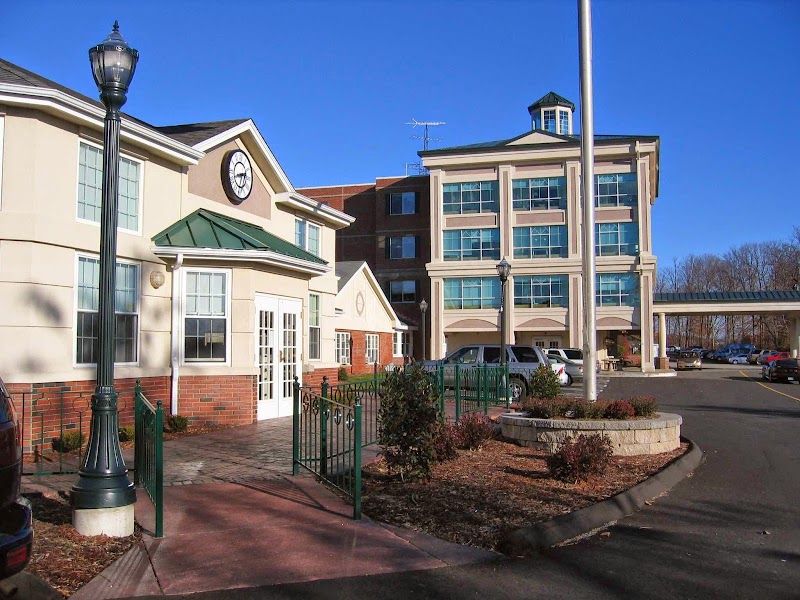
LORD CHAMBERLAIN NURSING & REHABILITATION CENTER

7003 MAIN STREET, STRATFORD, CT 06614 (203) 375-5894
For profit - Corporation 190 Beds RYDERS HEALTH MANAGEMENT Data: November 2025
Trust Grade
26/100
#178 of 192 in CT
Last Inspection: October 2024

Within standard 12-15 month inspection cycle. Federal law requires annual inspections.

Overview

Lord Chamberlain Nursing & Rehabilitation Center has received a Trust Grade of F, indicating significant concerns about its operations and care quality. It ranks #178 out of 192 facilities in Connecticut, placing it in the bottom half, and #14 out of 15 in the Greater Bridgeport County, meaning only one local facility is considered better. Unfortunately, the facility's situation is worsening, with reported issues increasing from 10 in 2022 to 30 in 2024. Staffing is a relative strength, earning a 4 out of 5 stars with a turnover rate of 25%, which is below the state average, suggesting that staff members are more stable and familiar with residents. However, there are serious concerns, including incidents where a resident did not receive critical medications as prescribed, leading to hospitalization, and another resident's significant weight gain was not communicated to a physician, which could have serious health implications. Overall, while there are strengths in staffing, the facility's overall performance raises red flags for families considering care options.

Trust Score
F
26/100
In Connecticut
#178/192
Bottom 8%
Safety Record
High Risk
Review needed
Inspections
Getting Worse
10 → 30 violations
Staff Stability
✓ Good
25% annual turnover. Excellent stability, 23 points below Connecticut's 48% average. Staff who stay learn residents' needs.
Penalties
○ Average
$7,443 in fines. Higher than 62% of Connecticut facilities. Some compliance issues.
Skilled Nurses
⚠ Watch
Each resident gets only 21 minutes of Registered Nurse (RN) attention daily — below average for Connecticut. Fewer RN minutes means fewer trained eyes watching for problems.
Violations
⚠ Watch
46 deficiencies on record. Higher than average. Multiple issues found across inspections.
★☆☆☆☆
1.0
Overall Rating
★★★★☆
4.0
Staff Levels
★★☆☆☆
2.0
Care Quality
★☆☆☆☆
1.0
Inspection Score
Stable
2022: 10 issues
2024: 30 issues

The Good

  • 4-Star Staffing Rating · Above-average nurse staffing levels
  • Low Staff Turnover (25%) · Staff stability means consistent care
  • Full Sprinkler Coverage · Fire safety systems throughout facility
  • No fines on record
  • Staff turnover is low (25%)

    23 points below Connecticut average of 48%

Facility shows strength in staffing levels, staff retention, fire safety.

The Bad

1-Star Overall Rating

Below Connecticut average (3.0)

Significant quality concerns identified by CMS

Federal Fines: $7,443

Below median ($33,413)

Minor penalties assessed

Chain: RYDERS HEALTH MANAGEMENT

Part of a multi-facility chain

Ask about local staffing decisions and management

The Ugly 46 deficiencies on record

3 actual harm
Oct 2024 24 deficiencies 3 Harm
SERIOUS (G)

Actual Harm - a resident was hurt due to facility failures

Notification of Changes (Tag F0580)

A resident was harmed · This affected 1 resident

**NOTE- TERMS IN BRACKETS HAVE BEEN EDITED TO PROTECT CONFIDENTIALITY** Based on review of the clinical record, facility policy, and interviews for 1 of 2 residents (Resident #42) reviewed for a chang...

Read full inspector narrative →
**NOTE- TERMS IN BRACKETS HAVE BEEN EDITED TO PROTECT CONFIDENTIALITY** Based on review of the clinical record, facility policy, and interviews for 1 of 2 residents (Resident #42) reviewed for a change in condition, the facility failed to ensure the physician/APRN was notified of the unavailability of a medication resulting in hospitalization, and for 2 of 2 residents (Resident #33 and Resident #38) reviewed for edema, the facility failed to notify the physician of weight increase of 5 pounds (lbs.) in one week for a resident with diagnosis of Congestive Heart Failure (CHF). The findings included: 1. Resident #42's diagnoses included Chronic inflammatory demyelinating polyneuritis (disorder of the autonomic nervous system), and dysarthria and anarthria.( a condition that results in complete or partial loss of speech due to a severe motor speech impairment). A physician's order date 7/25/24 directed to administer immunoglobulin 10% every 4 weeks. An Inter-Agency Referral Report dated 7/25/24 indicated the resident was to receive immunoglobulin 10% every 4 weeks intravenously. The admission Minimum Data Set assessment dated [DATE] identified Resident #42 was cognitively intact and required maximum assistance for toileting, showering, and personal hygiene. The Resident Care Plan dated 10/15/24 identified Resident #42 as a paraplegic related to a spinal injury. Interventions included to medicate the resident as ordered. A nurse's note dated 10/5/24 at 7:50 PM identified Resident #42 requested to go to the hospital because she/he had not received her/his immunoglobulin in 3 months and felt she/he was having an immune response. Furthermore, the resident reported stiffness and pain in his/her hands, and a burning sensation in his/her chest. Resident #42 was sent to the emergency room (ER) for an evaluation. A nurse's noted dated 10/10/24 at 12:37 PM identified the resident returned from hospital at 10:20 AM and identified the resident received 3 immunoglobulin infusions: 1 per day for 3 days while in the hospital. An interview and record review on 10/24/24 at 10:30 AM with Unit Manager RN#4 identified the hospital discharge summary and/or the Inter-Agency Referral Report were reviewed for physician's orders and the Medical Director also reviews the documents and writes physician's orders based on the facility's recommendations. Review of the clinical record indicated an order was written on 7/25/24 for the administration of IV Immunoglobulin every 4 weeks, however the clinical record identified the medication was not administered until October 2024 when Resident #42 requested to go to the hospital. RN#4 indicated she was aware of the situation with the IV Immunoglobulin. The facility was unable to administer IV Immunoglobulin because the facility could not find an infusion center that would administer the medication. RN #4 called the resident's oncologist at the end of August 2024; however, they were unable to administer the IV Immunoglobulin due to insurance restrictions. RN #4 further stated that she did not document her efforts, nor did she recall notifying the Advanced Practice Registered Nurse (APRN)/MD that she was having difficulty finding a clinic to administer the IV Immunoglobulin medication. In an interview on 10/25/24 at 9:30 AM with APRN #1 s/he identified s/he was aware Resident #42 had an order for monthly infusions of immunoglobulin. APRN #1 indicated s/he was aware Resident # 42 went to the ER on [DATE], but was unsure of the details in-between 7/25/24 and 10/5/24. APRN #1 also identified she asked nursing at the end of August 2024 the status of scheduling the infusion and was told they were working on getting it scheduled. The next time she was updated was on October 5, 2024, when the resident was sent out to an acute care facility. APRN #1 identified s/he would have sent the resident to the ED if s/he was aware that the staff was having difficulty scheduling the infusion. Review of the Policy for Medication Errors dated 8/23/2005 and currently active directs, in part, that an omission of a medication is an error. Further it defines that when a medication error has occurred the physician and the supervisor are notified immediately. According to Drug. Com Intravenous Immunoglobulin is used for treatment of primary immunodeficiency. 2. Resident #33's diagnoses included CHF, diabetes, and peripheral vascular disease. The Resident Care Plan dated 7/17/24 identified Resident #33 had potential for alterations in cardiac output related to CHF. Interventions included to monitor, document and report to the MD/APRN, as needed, any signs or symptoms of CHF (dependent edema of legs and feet, periorbital edema, weight gain unrelated to nutritional intake, and crackles or wheezes upon listening to the lungs) and weight monitoring per the facility policy. The admission Minimum Data Set assessment dated [DATE] identified Resident #33 was cognitively intact and required supervision or touching assistance with eating, was dependent with lower body dressing, and required partial/moderate assistance with rolling left and right. A physician's order dated 7/24/24 directed to obtain weights weekly every Friday before breakfast. Physician's order in effect from 8/1/24 through 8/13/24 directed to notify the Medical Doctor (MD)/Advanced Practice Registered Nurse (APRN) if there was a weight gain of 2 lbs. or more in 1 day or 5 lbs. or more in 1 week. Resident #33 was admitted to the hospital from [DATE] through 8/26/24. Physician's orders dated 8/26/24 directed to obtain a daily weight before breakfast and notify the MD/APRN if there was a weight gain of 2 lbs. or more in 1 day or 5 lbs. or more in 1 week. Physician's orders dated 9/4/24 directed to discontinue the daily weight before breakfast and a new order directed to obtain a weight weekly on Friday. Review of weight documentation in Resident #33's clinical record for 7/16/24 through 10/18/24 identified 3 occurrences of weight gain of 5 lbs. or more in 1 week. Between 7/26/24 (231 lbs.) and 8/2/24 (241 lbs.) a gain of 10 lbs. was noted. Between 9/1/24 (225.4 lbs.) and 9/6/24 (236.6 lbs.) a gain of 11.2 lbs. Between 9/13/24 (230 lbs.) and 9/20/24 (235 lbs.) a gain of 5 lbs. Although a review of the Medication Administration Records for August 2024 and September 2024 identified the MD/APRN was notified of the weight gains, a review of nurses' progress notes between 8/2/24 and 9/20/24 failed to identify documentation of MD/APRN notification of a weight gain of 5 lbs. or more in 1 week. Interview with APRN #1 on 10/25/24 at 12:00 PM identified that she had not been notified by the nurses of a 5 lbs. or more weight gain for Resident #33 on 8/2/24, 9/6/24 and 9/20/24, and that if she had been notified she would have evaluated Resident #33's lungs, checked for edema, looked for a trend for weight gain, evaluated Resident #33's current medications, and she would have looked at documentation of Resident #33's ejection fraction (amount of blood pumped out with each heart beat) and if stable would have considered medication changes. 3. Resident #38's diagnoses included CHF, diabetes, and aphasia following a stroke. The annual Minimum Data Set assessment dated [DATE] identified Resident #38 was severely cognitively impaired and was dependent for eating, oral hygiene, and rolling left and right. The Resident Care Plan in effect from 5/1/24 through 5/31/24 identified Resident #38 had potential for alterations in cardiac status related to CHF. Interventions included to monitor, document and report to the MD/APRN as needed any signs or symptoms of CHF (dependent edema of legs and feet, periorbital edema, weight gain unrelated to nutritional intake, and crackles or wheezes upon listening to the lungs) and weight monitoring per policy. Physician's orders dated 5/1/24 directed to obtain weights weekly every Monday and notify the MD/APRN if there is a weight gain of 2 lbs. or more in 1 day or 5 lbs. or more in 1 week. Review of weight documentation in Resident #38's clinical record for 5/1/24 through 5/31/24 identified 2 occurrences of weight gain of 2 or more lbs. in 1 day or 5 lbs. or more in 1 week. Between 5/13/24 (215.0 lbs.) and 5/13/24 (218.0 lbs.) gain of 3 lbs. in the same day. Between 5/17/24 (217.6 lbs.) and 5/20/24 (228.5 lbs.) a gain of 10.8 lbs. in 3 days was noted. Although a review of the Medication Administration Record for May 2024 identified the MD/APRN was notified of the weight gains, a review of the nurses' progress notes between 5/13/24 through 5/27/24 failed to identify documentation of MD/APRN notification of a weight gain of 2 or more lbs. in 1 day or 5 lbs. or more in 1 week. Interview with APRN #3 on 10/25/24 at 10:15 AM identified he could not recall being updated by nurses of a weight gain of 2 or more lbs. in 1 day or 5 lbs. or more in 1 week for Resident #38 and if he had been updated, he would have requested for the nurse to provide him with information about Resident #38's lung sounds and any presence of edema. He further stated that if the information the nurse provided revealed acute signs or symptoms of CHF, he would have provided orders to the nurse right away and he would have visited the resident the next day. If the information provided by the nurse revealed non-acute signs or symptoms of CHF there wouldn't have been a need for immediate orders, but Resident #38 would have received an APRN visit the next day. Review of APRN #3's progress notes from 5/13/24 to 5/27/24 failed to identify a visit for follow-up related to a notification of weight gain of 2 or more lbs. in 1 day or 5 lbs. or more in 1 week. Although attempted, interviews with nursing staff from 5/13/24 and 5/20/24 were unable to be obtained. Review of the CHF policy directed, in part, that residents with a diagnosis of congestive heart failure would be managed according to physician recommendations and weights would be taken as prescribed per physician orders. Review of the Weight Assessment and Intervention policy failed to identify directives for management of weight gain related to a resident disease process. ___________________________________
SERIOUS (G)

Actual Harm - a resident was hurt due to facility failures

Quality of Care (Tag F0684)

A resident was harmed · This affected 1 resident

**NOTE- TERMS IN BRACKETS HAVE BEEN EDITED TO PROTECT CONFIDENTIALITY** Based on review of the clinical record, facility documentation, facility policy and interviews for 1 of 2 residents (Resident #4...

Read full inspector narrative →
**NOTE- TERMS IN BRACKETS HAVE BEEN EDITED TO PROTECT CONFIDENTIALITY** Based on review of the clinical record, facility documentation, facility policy and interviews for 1 of 2 residents (Resident #42) reviewed for change in condition, the facility failed to administer the resident's medication as prescribed to ensure the resident was free of a significant medication error. The findings include Resident #42's diagnoses included Chronic inflammatory demyelinating polyneuritis (disorder of the autonomic nervous system), and dysarthria and anarthria.( a condition that results in complete or partial loss of speech due to a severe motor speech impairment). A physician's order date 7/25/24 directed to administer immunoglobulin 10% every 4 weeks via intravenously. An Inter-Agency Referral Report and hospital Discharge summary dated [DATE] indicated the resident was to receive immunoglobulin 10% every 4 weeks intravenously. The admission Minimum Data Set assessment dated [DATE] identified Resident #42 was cognitively intact and required maximum assistance for toileting, showering, and personal hygiene. The Resident Care Plan dated 10/15/24 identified Resident #42 as a paraplegic related to a spinal injury. Interventions included to medicate the resident as ordered. A nurse's note dated 10/5/24 at 7:50 PM identified Resident #42 requested to go to the hospital because she/he had not received her/his immunoglobulin in 3 months and felt she/he was having an immune response. Furthermore, the resident reported stiffness and pain in his/her hands, and a burning sensation in his/her chest. Resident # 42 was sent to emergency room (ER) for an evaluation. A nurse's noted dated 10/10/24 at 12:37 PM identified the resident returned from hospital at 10:20 AM and identified the resident received 3 immunoglobulin infusions: 1 per day for 3 days while in the hospital. An interview and record review on 10/24/24 at 10:30 AM with Unit Manager RN#4 identified the hospital discharge summary and/or the Inter-Agency Referral Report are reviewed for physician's orders and the Medical Director also review the documents and write physician's orders based on the facility's recommendations. Review of the clinical record indicated an order was written on 7/25/24 for the administration of IV Immunoglobulin every 4 weeks, however the clinical record identified the medication was not administered until October 2024 when Resident #42 requested to go to the hospital. RN#4 indicated she was aware of the situation with the IV Immunoglobulin. The facility was unable to administer IV Immunoglobulin because the facility could not find an infusion center that would administer the medication. RN # 4 called the resident's oncologist the end of August 2024; however, they were unable to administer the IV Immunoglobulin due to insurance restrictions. RN # 4 further stated that she did not document her efforts, nor did she recall notifying the Advanced Practice Registered Nurse (APRN)/MD that she was having difficulty finding a clinic to administer the IV Immunoglobulin medication. In an interview on 10/25/24 at 9:30 AM with APRN #1 s/he identified s/he was aware Resident #42 had an order for monthly infusions of immunoglobulin. APRN #1 indicated s/he was aware Resident # 42 went to the ER on [DATE], but was unsure of the details in-between 7/25/24 and 10/5/24. APRN #1 also identified she asked nursing at the end of August 2024 the status of scheduling the infusion and was told they were working on getting it scheduled. The next time she was updated was on October 5, 2024, when the resident was sent out to an acute care facility. APRN # 1 identified s/he would have sent the resident to the ED if s/he was aware that the staff was having difficulty scheduling the infusion. Review of the Policy for Medication Errors dated 8/23/2005 and currently active directs, in part, that an omission of a medication is an error. Further it defines that when a medication error has occurred the physician and the supervisor are notified immediately. According to Drug. Com Intravenous Immunoglobulin is used for treatment of primary immunodeficiency
SERIOUS (G)

Actual Harm - a resident was hurt due to facility failures

Deficiency F0760 (Tag F0760)

A resident was harmed · This affected 1 resident

**NOTE- TERMS IN BRACKETS HAVE BEEN EDITED TO PROTECT CONFIDENTIALITY** Based on review of the clinical record, facility documentation, facility policy and interviews for 1 of 2 residents (Resident #4...

Read full inspector narrative →
**NOTE- TERMS IN BRACKETS HAVE BEEN EDITED TO PROTECT CONFIDENTIALITY** Based on review of the clinical record, facility documentation, facility policy and interviews for 1 of 2 residents (Resident #42) reviewed for change in condition, the facility failed to ensure the resident was free of a significant medication error. The findings include: .Resident #42's diagnoses included Chronic inflammatory demyelinating polyneuritis (disorder of the autonomic nervous system), and dysarthria and anarthria. A physician's order date 7/25/24 directed to administer immunoglobulin 10% every 4 weeks. An Inter-Agency Referral Report dated 7/25/24 indicated the resident was to receive immunoglobulin 10% every 4 weeks intravenously. The admission Minimum Data Set assessment dated [DATE] identified Resident #42 was cognitively intact and required maximum assistance for toileting, showering, and personal hygiene. The Resident Care Plan dated 10/15/24 identified Resident #42 as a paraplegic related to a spinal injury. Interventions included to medicate the resident as ordered. A nurse's note dated 10/5/24 at 7:50 PM identified Resident #42 requested to go to the hospital because she/he had not received her/his immunoglobulin in 3 months and felt she/he was having an immune response. Furthermore, the resident reported stiffness and pain in his/her hands, and a burning sensation in his/her chest. Resident # 42 was sent to emergency room (ER) for an evaluation. A nurse's noted dated 10/10/24 at 12:37 PM identified the resident returned from hospital at 10:20 AM and identified the resident received 3 immunoglobulin infusions: 1 per day for 3 days while in the hospital. An interview and record review on 10/24/24 at 10:30 AM with Unit Manager RN#4 identified the hospital discharge summary and/or the Inter-Agency Referral Report are reviewed for physician's orders and the Medical Director also review the documents and write physician's orders based on the facility's recommendations. Review of the clinical record indicated an order was written on 7/25/24 for the administration of IV Immunoglobulin every 4 weeks, however the clinical record identified the medication was not administered until October 2024 when Resident #42 requested to go to the hospital. RN#4 indicated she was aware of the situation with the IV Immunoglobulin. The facility was unable to administer IV Immunoglobulin because the facility could not find an infusion center that would administer the medication. RN # 4 called the resident's oncologist the end of August 2024; however, they were unable to administer the IV Immunoglobulin due to insurance restrictions. RN # 4 further stated that she did not document her efforts, nor did she recall notifying the Advanced Practice Registered Nurse (APRN)/MD that she was having difficulty finding a clinic to administer the IV Immunoglobulin medication. In an interview on 10/25/24 at 9:30 AM with APRN #1 s/he identified s/he was aware Resident #42 had an order for monthly infusions of immunoglobulin. APRN #1 indicated s/he was aware Resident # 42 went to the ER on [DATE], but was unsure of the details in-between 7/25/24 and 10/5/24. APRN #1 also identified she asked nursing at the end of August 2024 the status of scheduling the infusion and was told they were working on getting it scheduled. The next time she was updated was on October 5, 2024, when the resident was sent out to an acute care facility. APRN # 1 identified s/he would have sent the resident to the ED if s/he was aware that the staff was having difficulty scheduling the infusion. Review of the Policy for Medication Errors dated 8/23/2005 and currently active directs, in part, that an omission of a medication is an error.
CONCERN (D)

Potential for Harm - no one hurt, but risky conditions existed

Investigate Abuse (Tag F0610)

Could have caused harm · This affected 1 resident

**NOTE- TERMS IN BRACKETS HAVE BEEN EDITED TO PROTECT CONFIDENTIALITY** Based on clinical record review, facility policy review and interviews for 1 of 1 sampled resident (Resident #71) reviewed for d...

Read full inspector narrative →
**NOTE- TERMS IN BRACKETS HAVE BEEN EDITED TO PROTECT CONFIDENTIALITY** Based on clinical record review, facility policy review and interviews for 1 of 1 sampled resident (Resident #71) reviewed for dignity, the facility failed to investigate an allegation of mistreatment. The finding include: Resident #71's diagnosis included depression, anxiety, and breast cancer. The Resident Care Plan (RCP) dated 7/13/24 identified Resident #71 had a history of suicidal thoughts or actions due to potential or actual mood and impaired coping. Interventions included to assess the resident for potential harm to self or others. The RCP also identified Resident #71 had psychotropic drug use related to anxiety, insomnia and bipolar disorder. Intervention included to monitor for a decline in mood, and behavior. The quarterly Minimum Data set (MDS) assessment dated [DATE] identified Resident #71 was cognitively intact, independent with eating, toileting, personal hygiene, and transfers, and required supervision with bathing. An interview with Resident #71 on 10/21/24 at 11:30 AM identified that some of the Nurse Aides (NA) can be disrespectful when s/he asks for things by saying get it yourself. Resident #71 stated she/he reported this to RN #1. Review of the grievance log failed to identify any grievances were filed for Resident #71 regarding above. An interview with RN #1 on 10/25/24 at 9:25 AM identified Resident #71 had spoken to RN #1 about the NAs at times speaking to him/her disrespectfully and RN #1 failed to complete an investigation. An interview with the Director of Nursing Services (DNS) on 10/25/24 at 9:45 AM identified that if a supervisor was aware of an incident, a formal investigation should be completed and that was in the facility policy regarding abuse and mistreatment. The DNS also stated she was unsure of the reason this incident was not investigated. Review of the facility policy directed a concern or complaint be brought to the attention of the charge nurse/nursing supervisor, the concern/complaint should be brought and/or documented (on a concern form) and submitted to the Director of Social Services. All concerns/complaints are investigated, and findings reviewed with the Administrator.
CONCERN (D)

Potential for Harm - no one hurt, but risky conditions existed

Pressure Ulcer Prevention (Tag F0686)

Could have caused harm · This affected 1 resident

**NOTE- TERMS IN BRACKETS HAVE BEEN EDITED TO PROTECT CONFIDENTIALITY** Based on observation, staff interview, and facility policy for 1 of 4 residents, (Resident #44) reviewed for pressure ulcers, th...

Read full inspector narrative →
**NOTE- TERMS IN BRACKETS HAVE BEEN EDITED TO PROTECT CONFIDENTIALITY** Based on observation, staff interview, and facility policy for 1 of 4 residents, (Resident #44) reviewed for pressure ulcers, the facility failed to ensure pressure ulcer treatments were performed in accordance with infection control standards. The findings include: Resident #44's diagnoses included congestive heart failure, anxiety disorder, and unspecified atrial fibrillation (an irregular and fast heartbeat). The quarterly Minimum admission Set assessment dated [DATE] identified Resident #44 was severely cognitively impaired and was dependent for eating, toileting and transfers. Additionally, the MDS identified Resident #44 was at risk for developing pressure ulcers and had two Stage 3 pressure ulcers. The Resident Care Plan dated 10/11/24 identified Resident #44 was at risk for skin issues due to fragile skin, and decreased activity and mobility. Interventions included to follow facility policies/protocols for the prevention/treatment of skin breakdown and obtain wound measurements and documentation of findings per policy and as needed. The physician's orders dated 10/25/24 directed a daily treatment for 30 days to the right hip wound was to cleanse with Normal Saline, ¼ strength Dakins solution (an antiseptic used to prevent infections), followed by packing with ¼ strength Dakins solution soaked gauze and cover with an Allevyn dressing (foam dressing). Additional physician orders directed a daily treatment for 30 days to the coccyx was to cleanse the coccyx wound with ¼ strength Dakins solution, pack with ¼ strength Dakins solution-soaked gauze followed by an Allevyn dressing, and a daily treatment for 30 days to the left hip was to cleanse with ¼ strength Dakins solution, apply gauze soaked with Dakins and cover with an Allevyn dressing. Observation of the treatments to Resident #44 left hip, coccyx and right hip on 10/25/24 at 10:25 AM identified Licensed Practical Nurse (LPN) #5, and Registered Nurse (RN) #5 appropriately donned personal protective equipment indicated for enhanced barrier precautions which consisted of a gown, then LPN #5 performed hand hygiene utilizing Sani-Hand wipes and donned gloves, RN #5 also performed hand hygiene utilizing Sani-Hand wipes and donned 2 pairs of gloves (double gloving). While LPN #5 was to the left of Resident #44 preparing the supplies on a sterile field (Sani Hands alcohol-based hand wipes container noted to be on the table), RN #5 was on the right-side aiding in Resident #44's positioning. RN #5 removed the Allevyn dressing to the left hip which was dated 10/23/24 (2 days prior, physician orders directed daily dressing changes), removed the gauze packing from the wound, then removed the first pair of gloves, discarding all contents, exposing the second pair of gloves, then donned another pair of gloves over the first pair of gloves without the benefit of hand hygiene. LPN #5 cleaned the wound with ¼ strength Dakins solution, discarded the gauze, changed her gloves without the benefit of performing hand hygiene, applied Dakins soaked gauze, covered the wound with an Allevyn dressing dated 10/25/24, then removed her gloves without performing hand hygiene. While RN #5 gently turned the resident to expose the coccyx, after performing the treatment to Resident #44's left hip, LPN #5 donned a pair of gloves without the benefit of hand hygiene, removed the Allevyn dressing dated 10/23/24, cleaned the area with ¼ strength Dakin solution, discarded the dressing and gauze, changed her gloves without the benefit of hand hygiene, packed the wound with ¼ Dakin solution soaked gauze, applied the Allevyn dressing dated 10/25/24 and removed her gloves without performing hand hygiene. Resident #44 was then repositioned to her left side, LPN #5 applied gloves, removed the Allevyn dressing dated 10/23/24 on the right hip, removed the gauze, discarded the dirty contents, cleaned the area with ¼ Dakins solution, packed the wound with the ¼ Dakins solution-soaked gauze, and applied the Allevyn dressing dated 10/25/24 without the benefit of changing gloves or performing hand hygiene (after performing the treatment to Resident #44's left hip and coccyx) when going from dirty to clean during a dressing change. Interview with LPN #5 on 10/25/24 at 10:48 AM identified she did not perform hand hygiene between glove changes because she did not want to leave her area to wash her hands and could not provide an explanation as to the reason she did not utilize the Sani Hands that were available and within reach. She also could not recall the reason she did not change her gloves when going from dirty to clean during the dressing change on the right hip. Interview with RN #5 on 10/25/24 at 10:50 AM identified double gloving was not a standard practice and didn't believe she touched anything, so she didn't believe she had to perform hand hygiene when changing gloves. Interview with the Infection Prevention Registered Nurse (RN) identified that the policy on hand hygiene during dressing changes was that hands should be washed between each glove change, gloves are changed when going from dirty to clean and double gloving is absolutely not practiced. Review of the Hand Washing Policy and Gloves Policy directed in part to wash hands after removing gloves, and that the use of gloves does not replace hand washing. Review of Procedure for Clean Dressing Technique Policy directed in part after removing an old dressing to remove gloves and wash hands, then apply clean gloves prior to cleaning the wound.
CONCERN (D)

Potential for Harm - no one hurt, but risky conditions existed

Accident Prevention (Tag F0689)

Could have caused harm · This affected 1 resident

**NOTE- TERMS IN BRACKETS HAVE BEEN EDITED TO PROTECT CONFIDENTIALITY** Based on clinical record reviews, facility policy review and staff interviews for 1 of 8 residents reviewed for accidents and ha...

Read full inspector narrative →
**NOTE- TERMS IN BRACKETS HAVE BEEN EDITED TO PROTECT CONFIDENTIALITY** Based on clinical record reviews, facility policy review and staff interviews for 1 of 8 residents reviewed for accidents and hazards (Resident #232), the facility failed to provide a safe and complete transfer from a chair to bed for a resident requiring assistance, resulting in a fall with major injury and for 1 of 3 sampled resident (Resident #71) who was reviewed for dignity, the facility failed to maintain an accident-free environment and for 2 of 8 residents (Resident # 24) who required supervision during meals, the facility failed to provide appropriate supervision for a resident on aspiration precautions. The findings included: 1. Resident #232 had diagnoses that included dementia with psychotic disturbance. The annual Minimum Data Set (MDS) assessment dated [DATE] identified Resident #232 was severely cognitively impaired, required hands on one-person moderate assist with bed mobility, transfers, toileting, and self-propelled using a wheelchair. The Resident Care Plan dated 7/3/24 identified Resident #232 was at risk for falls, had a history of falls, and a deficit in activities of daily living (ADL). Interventions directed to provide verbal reminders of individual limitation, provide assist of one with a rolling walker for transfers and ambulation as ordered. Physician orders dated 8/1/24 directed assist of one stand pivot transfers with a rolling walker. Physical Therapy Evaluation and Plan of Treatment dated 8/7/24 identified Resident #232 was referred for services due to a decline in decline in dynamic balance, functional mobility and strength. Static and dynamic sitting were assessed as 'Good'. A nurses note dated 9/26/24 at 7:42 PM identified at 7:00 PM, Resident #232 experienced an unwitnessed fall. Resident #232 was being assisted to bed and fell off the bed when Nurse aide, NA #1 assisted Resident#232 to a sitting position, turned to move the chair and heard a 'boom' when s/he hit the floor. Resident #232 sustained a forehead laceration and a swollen nose. Resident #232 had complaints of pain, there was no change to h/her mental status and was subsequently transferred to a community hospital. The facility Reportable Event dated 9/26/24 identified at 7:00 PM identified Resident #232 was sitting on a regular chair when NA #1 attempted to transfer h/her from chair to bed. After placing Resident #232 on the side of the bed in a seated position, NA #1 turned to move the chair out of the way when Resident #232 fell to the ground, hitting h/her head on the floor. The nurse and nursing supervisor were immediately notified. Upon assessment, Resident #232 was observed with a laceration to the forehead, swelling to the nose and complained of a headache. The head was kept immobile while pressure was applied to stop the bleeding. The Advance Practice Registered Nurse, APRN and responsible party were notified, and Resident #232 was transported to the community hospital for further evaluation, where she was subsequently admitted . The Hospital Discharge summary dated [DATE] identified Resident #232 identified Resident #232 sustained a mechanical fall resulting in a subarachnoid hemorrhage along the right parietal, left parietal and left frontal regions (of the brain). Type 2 dens fracture (second or cervical 2 spine), [NAME] fracture (bone fracture of the cervical 1 spine), multiple facial fractures and minimally displaced fracture of the C 5 right lamina. Incidental findings included, splenic calcified aneurysms, grade 4 occlusion of the right vertebral artery and 1.1 cm calculus in the renal pelvis. Resident #232 was admitted to the intensive care unit for hourly neurological testing and CT scans every (4) hours. On 9/29/24, Resident #232 had increased confusion/lethargy and poor oral intake. A stat CT head showed new onset intraparenchymal hemorrhage (a bleed that occurs within the brain parenchyma, or functional tissue in the brain caused by stroke or trauma). The responsible party was contacted, and the decision was made to change the code status to DNR/DNI. On 9/30/24, Resident #232 became more obtunded (reduced consciousness), was not following commands or moving extremities, making shallow breaths and gasping for air. At 10: 47 AM, Resident #232 was noted to be in asystole (no heart rate) and death was pronounced at 10:50 AM. The Medical examiner was notified, and accepted the case due to trauma as the etiology of the admission The Certificate of Death dated 9/30/24 identified Resident #232's immediate cause of death as hypertensive and arteriosclerotic cardiovascular disease with blunt injuries of the head as significant conditions contributing to death but not resulting in the underlying cause. The facility Reportable Event Summary dated 10/3/24 identified Resident #232 was evaluated on 9/5/24 and had good sitting posture and was able to hold position while sitting at the edge of the bed briefly as she has done many times before. Nothing changed in Resident #232's nightly routine. Based on hospital records it was likely Resident#232 had a syncopal episode (dizzy spell) that resulted in the fall. Staff Education Documentation Record dated 9/26/24 directed that Resident #232 must be laying in bed, not sitting, before attending to anything else and was signed by (5) NA staff including NA #1 and (2) LPN's. An interview with the Medical Director on 10/22/24 at 1:03 PM identified that while he was the Resident #232's primary physician, he was aware of the incident and reviewed the Reportable Event and Hospital Discharge Summary. The Medical Director identified Resident #232 was stable in the hospital until a subsequent brain hemorrhage resulted in a change of condition and subsequent death. The Medial Director further identified it was hard to know what could have occurred during hospitalization with the new onset of an additional brain bleed. However, the Medical Director felt the fall that occurred at the facility was avoidable and significantly contributed to Resident #232's death. An interview with NA #1 on 10/23/24 at 9:00 AM identified she was the assigned nurse aide for Resident #232 during the 3:00 PM to 11:00 PM shift on 9/26/24 and that Resident #232 was well known to her. NA #1 identified she assisted Resident #232 in toileting and personal care in the bathroom and then wheeled h/her to the side of the bed closest to the window. NA #1 assisted Resident #232 with the transfer, using a gait belt, to the bed and left h/her in a seated position on the edge of the bed which was placed in the low position. NA #identified she then left Resident #232's side still in the seated position in bed, to move around the back of the wheelchair and turn around to place the wheelchair next to the dresser, a measured distance of 6' ft 8 from the middle of the bed to the front edge of the dresser. NA #1 identified she heard a 'boom', turned around and observed Resident #232 face down on the floor, against the back all with h/her head pointing towards the end of the bed. NA #1 observed blood coming from somewhere in the head region and immediately notified the nurse and Nursing Supervisor who rendered care. An interview with Medical Doctor, MD #2 on 10/23/24 at 11:35 AM identified he was Resident #232's primary physician and was notified of the incident and hospital transfer. MD #2 identified it was his opinion that the consequences of the fall resulting in injury would be trauma first, then comorbidities. MD #2 further identified the brain bleed would have most likely contributed to the death. An interview with the Director of Rehabilitation on 10/23/24 on 12:34 PM identified Resident #232 was assessed and determined to have 'good' dynamic sitting, meaning s/he can sit at the edge of the bed and hold h/herself up, but would require constant eyes on supervision when sitting on the bed. Staff were educated upon hire that when completing a transfer for a resident requiring moderate assist, the transfer was considered complete when the resident was placed from a sitting position on the bed to a laying position. Staff should not be leaving the resident until the transfer is completed and resident was left in a laying position. An interview with the Director of Nursing, DNS on 10/23/24 at 1:49 PM identified the root cause of injury was related to NA #1 not completing a full transfer. Resident #232 should have been transferred completely from a sitting position on the bed to a laying position before the aide left h/er side. The DNS further identified that although education had been completed, it was limited to just the staff on the unit at the time and limited to just resident #232 as the DNS thought the Staff Development nurse, RN #2 would have completed a more comprehensive training for facility staff. An interview and facility documentation with RN #2 on 10/23/24 at 2:00 PM identified she was responsible for staff development at the facility. RN #2 identified she provided fall prevention education for the facility on a continuous basis to staff prior to the incident. Staff were educated to never leave a resident who required hands on assistance in a sitting position without first laying them down on the bed when transferring to bed with one person assist. RN #2 further identified that following the event, she did not initiate any education to the remainder of the facility staff beyond what was provided to the initial (7) staff on 9/26/24. A second interview with NA #1 on 10/24/24 at 8:59 AM identified when placing Resident #232 to bed, s/he 'scooted' herself back into bed, so h/er feet were no longer touching the floor. NA #1 further identified that just a gait belt, not a rolling walker was used during the transfer and that due to the distance, she would not have been able to reach Resident #232 if s/he began to fall. A subsequent interview with the Director of Rehabilitation on 10/25/24 at 11:30 AM identified Residents were assessed for sitting balance with both feet securely on the ground. For Resident #232, the trunk would become more unstable once the feet were off the floor. Although requested a facility policy or education for resident transfer from chair to bed was not provided. Occupational Safety & Health Administration Guidelines for Nursing Homes, 2009 recommends assisting the resident in standing by holding the gait belt while they push off a chair. Pivot the resident by gently guiding as they face the bed. Guide the resident to sit on the bed with their feet touching the floor. Once seated encourage them to scoot back. Once seated, assist the resident swing their legs onto the bed and guide them to lie down making sure they are comfortable and properly aligned. 2. Resident #71's diagnoses included glaucoma, falls, and breast cancer. The Resident Care Plan dated 7/13/24 identified Resident #71 had a fall with an intervention to have a walker at the bedside. Interventions included: Resident #71 had a history of suicidal thoughts or actions due to potential or actual mood and impaired coping. Interventions directed to remove all potential harmful items from the room, provide plastic utensils with all meals, and no knives. The quarterly Minimum Data set (MDS) assessment dated [DATE] identified Resident #71 was cognitively intact, independent with eating, toileting, personal hygiene, and transfers, and required supervision with bathing. An observation on 10/21/24 at 11:30 AM of Resident #71's room identified the radiator cover by Resident #71's bed had a metal piece that was broken inside of the vent and was protruding. A second observation of Resident #71's radiator cover identified bent sharp edges that were protruding out. Resident #71 reported the radiator had been like that since she/he was admitted over a year ago and maintenance came in the other day and put extra screws in the radiator cover, but 2 areas continue to protrude out with sharp, metal edges noted. Interview with the Director of Maintenance on 10/25/24 at 9:22 AM identified he had his assistant fix the radiator cover yesterday but it appeared to be more dangerous than it was and not fixed correctly. The Maintenance Director also identified it was not safe, and the radiator cover needed to be replaced not repaired. After surveyor inquiry, the Maintenance Director indicated he/she was going to the store to purchase a replacement for the radiator cover. 3. Resident #24 's diagnoses included dysphagia, gastro-esophageal reflux disease, and chronic obstructive pulmonary disease. The quarterly Minimum Data Set (MDS) assessment dated [DATE] identified Resident #24 was severely cognitively impaired, and required set up for eating, supervision/touch assist for transfers and toileting. Additionally, the MDS identified Resident #24 was on a mechanically altered diet and a therapeutic diet. The Resident Care Plan dated 8/26/24 identified Resident #24 was on aspiration precautions and demonstrated some risk to potentially aspirate food or liquids as well as general problems with chewing and/or swallowing. Interventions included to provide assistance per physician's order based on therapy recommendations, to observe the resident during mealtimes for signs/symptoms of aspiration or difficulty swallowing and utilize safe swallowing techniques such as chin tuck, keep resident in an upright position at 90 degrees for meals and maintain an upright position for 30 to 45 minutes after eating. The physician's order dated 9/30/24 directed for aspiration precautions to be maintained every shift due to an aspiration risk that included Resident #24 was in line of sight/ supervision during meals to ensure use of slow rate, and small bites/sips every shift. The Nurse Aide (NA) task documentation identified Resident #24 was an assist of 1 for eating, with direction to supervise self-feeding. Observation and interview on 10/22/24 at 9:02 AM identified Resident #24 lying on her/his left side self-feeding, unsupervised, in her/his bed that was in the prone (flat) position, with the side rail up. The bedside table was parallel to the side of the bed with a breakfast tray on it, Resident #24 was reaching over the side rail with her/his right hand to feed her/himself oatmeal, and a plate with scrambled eggs and a cup of liquid was noted next to the oatmeal bowl. Resident#24 was not in view of staff. Interview with Nurse Aide #4 at that time, (who was in the hallway), who identified that Resident #24 preferred to eat like that. Observation and interview on 10/22/24 at 9:10 AM with Licensed Practical Nurse (LPN) #3 identified that she was not sure how Resident #24 usually ate because she works another shift. Subsequent to surveyor inquiry, LPN #3 assisted Resident #24 to a sitting position, with the head of the bed up, and the bedside table over the bed, no supervision was provided was provided to Resident #24. Observation on 10/23/24 at 8:54 AM identified Resident #24 laying on her/his left side self-feeding, unsupervised, in her/his bed that was in the prone (flat) position, with the side rail up. The bedside table was slightly over the bed, with Resident #24 eating oatmeal with her/his right hand, a cup of liquid and a plate containing French toast was noted next to the oatmeal bowl. Resident was not in view of staff. Observation on 10/24/24 at 8:58 AM identified NA #4 brought breakfast into Resident #24's room, sat the resident upright to eat in her/his chair and left the room. Interview with the Speech Language Therapist (SLT) #1 on 10/23/24 at 10:15 AM identified that an aspiration precaution order and line of sight meant that Resident #24 should be in view during medication administration and eat in the dining room or hallway where the staff can see Resident #24. Additionally, failure to supervise Resident #24 might result in a struggle with swallowing, aspiration or possibly choking. Interview and the NA care card review with Registered Nurse (RN) #5 on 10/24/24 at 12:32 PM identified that the facility policy for aspiration precautions meant that Resident #24 had an evaluation and order put in by SLT, and nursing staff were responsible for sitting Resident #24 upright for meals. Additionally, nursing staff would know orders were in place by checking the physician's orders and care card. Review of the he Nurse Aide (NA) unit care card identified Resident #24 was an assist of 1 with Activities of Daily Living, a feed and a choking risk. RN #5 could not identify the reason physician's order were not being followed for keeping Resident #24 in line of sight/ supervision during meals to ensure use of slow rate, and small bites/sips every shift. Interview with NA #3 on 10/24/24 at 1:50 PM identified she was the regular NA for Resident #24 and was aware of the aspiration precautions as well as sitting the resident up for meals. However, she did not sit her/him up during the meal because she felt Resident #24 could be challenging and the regular charge nurse that usually assists was not working. The Aspiration Precautions Policy directed in part that the purpose of the precautions was to prevent aspiration for those residents who are deemed at risk per the speech pathologist, additionally the head of bed may be elevated to a minimum 30 degrees except during care, and supervision at meals may be identified and noted on the care plan.
CONCERN (D)

Potential for Harm - no one hurt, but risky conditions existed

Deficiency F0699 (Tag F0699)

Could have caused harm · This affected 1 resident

**NOTE- TERMS IN BRACKETS HAVE BEEN EDITED TO PROTECT CONFIDENTIALITY** Based on clinical record reviews, facility policy and interviews for 1 sampled resident (Resident #139) reviewed for trauma info...

Read full inspector narrative →
**NOTE- TERMS IN BRACKETS HAVE BEEN EDITED TO PROTECT CONFIDENTIALITY** Based on clinical record reviews, facility policy and interviews for 1 sampled resident (Resident #139) reviewed for trauma informed care, the facility failed to ensure a resident with history of trauma was addressed to include identification of life event(s), triggers/stressors and management of care to prevent re-traumatization. The findings include: Resident #139's diagnoses included post-traumatic stress disorder (PTSD) and dementia. The Social Service Initial assessment dated [DATE] identified Resident #139 was alert, oriented, confused at times with a history of depression. The quarterly Minimum Data Set assessment dated [DATE] identified Resident #139 was moderately cognitively impaired, required two person assist with activities of daily living and had an active diagnosis that included post-traumatic stress disorder, depression and anxiety. The Resident Care Plan dated 10/2/24 identified Resident had a diagnosis of depression, anxiety and was cognitively impaired. Interventions directed to explain what you are doing during care and to provide psychiatric consultation as needed. The Psychiatric Consultations dated 5/13/24 through 10/7/24 identify services were being provided to Resident #139 for confusion, anxiety and depression. Past psychiatric history identified depression. The Resident Care Plan and psychiatric consultations failed to reflect documentation of Resident #139's personal history of trauma, any triggers/stressors and how care was managed to prevent re-traumatization. An interview and clinical record review with Advanced Practice Registered Nurse, APRN #2 identified that while he never personally provided psychiatric services to Resident #139, he was part of a group that provided ongoing psychiatric support to Resident #139. APRN #2 identified the diagnosis of post traumatic stress disorder was included in Resident #139's problem list. But not mentioned in any consultations. APRN #2 further identified a resident with PTSD should be included as part of a psychiatric evaluation to obtain a history and identify triggers even with a resident with dementia to better manage their care. An interview with Social Worker, SW #1 on 10/24/24 at 1:19 PM identified an initial assessment specifically for PTSD was never completed for Resident #139 on admission or thereafter and that all services related to PTSD would be supported by psychiatric services. An interview with the DNS on 10/24/24 at 1:40 PM identified any history and triggers should be assessed by social services on admission and further managed by psychiatric services and medications. Although requested a policy for trauma informed care was not provided. A review of the facility education for Trauma Informed Care (no date) identified that trauma informed care is a way of giving behavioral health care where the caregiver understands trauma, how trauma impacts an individual, and how certain institutional practices may re-traumatize individuals. Key Elements include realizing the prevalence of trauma, providing safety to prevent re-traumatization by recognizing trauma symptoms, developing new coping skills, establishing clear treatment goals and provide support by encouraging participation with those with similar experiences.
CONCERN (D)

Potential for Harm - no one hurt, but risky conditions existed

Deficiency F0711 (Tag F0711)

Could have caused harm · This affected 1 resident

**NOTE- TERMS IN BRACKETS HAVE BEEN EDITED TO PROTECT CONFIDENTIALITY** Based on clinical record review, observation and staff interviews for 1 of 4 residents (Resident # 123) reviewed for physician v...

Read full inspector narrative →
**NOTE- TERMS IN BRACKETS HAVE BEEN EDITED TO PROTECT CONFIDENTIALITY** Based on clinical record review, observation and staff interviews for 1 of 4 residents (Resident # 123) reviewed for physician visits, the facility failed to ensure electronic physician's orders were signed timely. The findings include: Resident #123's diagnosis included Congestive Heart Failure (CHF), acute respiratory failure and chronic kidney disease. The quarterly Minimum Data Set (MDS) assessment dated [DATE] indicated Resident #123 was cognitively impaired and was taking antidepressant, diuretic and anticonvulsant medication. An observation and record review with RN #1 and Unit secretary #1 on 10/24/2024 at 10:45 AM identified s/he was not able to find the resident's signed physician's orders (written or electronic signed by the physician for 30- or 60-day review and renew of orders). A review of Resident # 123's clinical record with Unit Secretary indicated s/he knows the physician reviewed the physician's orders because a progress note was written. RN #1 indicated the facility had only been utilizing the electronic system for a few months. Observation of the electronic record indicated in bold red lettering in the order section orders 55 days overdue. RN #1 and Unit secretary #1 could not recall any educational training for using the physicians order system in the new electronic medical record. RN #1 further indicated the Medical Director was the only physician using the electronic system at this time the other physicians sign the orders on paper. An interview and record review with Corporate Staff RN #8 on 10/24/2024 at 11:10 AM with RN #1 in attendance indicated she/he would have to check the system and see if Resident #123's physician's orders had been signed or in fact overdue. RN #8 further indicated the Medical Director had requested the use of the electronic system and already knew how to use it, so no training was needed for the physician for use at this time. RN #8 further indicated s/he would try to run a report of the Medical Directors residents' physician's orders for review. An interview with the DNS and the Staff Development Nurse RN#3 on 10/24/2024 at 11:40 AM indicated no educational training had been provided to the licensed staff regarding their role in ensuring the physician's orders are signed timely and how to determine if the orders are in effect for 30 days or 60 days. The DNS and Staff Development Nurse indicated they did not know this was an issue and indicated they would ensure the issue was resolved. On 10/25/2024 at 9:50 AM RN #8 indicated Resident #123's physician's orders were not signed by the physician and s/he also did not provide a report of the Medical Directors residents' physician's orders. On 10/25/2024 at 2:15 PM the facility provided an electronic print out of physician orders for Resident #123 as of 8/1/2024. Printed electronic orders were also provided dated 9/5/2024 (date of readmission to the facility) which indicated a telephone order taken from a physician by an RN on 9/5/2024 with no time indicated. Both physician's order sheets did not indicate the physician who signed the paper orders (the section Physician was left blank) but had signatures (illegible) in the signature section dated 8/15/2024 and no date on the readmission orders of 9/5/2024. In addition, neither order indicated the time frame the physician's orders were in effect for.
CONCERN (D)

Potential for Harm - no one hurt, but risky conditions existed

Deficiency F0726 (Tag F0726)

Could have caused harm · This affected 1 resident

Based on observation, clinical record review and staff interviews for 1 of 4 residents (Resident #123) reviewed for physician's orders, the facility failed to ensure staff were trained in the procedur...

Read full inspector narrative →
Based on observation, clinical record review and staff interviews for 1 of 4 residents (Resident #123) reviewed for physician's orders, the facility failed to ensure staff were trained in the procedure for using the electronic physician order system and their responsibility in ensuring physician orders were signed timely. The findings include: An observation and record review with RN #1 and Unit secretary #1 on 10/24/2024 at 10:45 AM identified s/he was not able to find Resident # 123's signed physician's orders (written or electronic signed by the physician for 30- or 60-day review and renew of orders). A review of Resident # 123's clinical record with Unit Secretary indicated s/he knows the physician reviewed the physician's orders because a progress note was written. RN #1 indicated the facility had only been utilizing the electronic system for a few months. Observation of the electronic record indicated in bold red lettering in the order section orders 55 days overdue. RN #1 and Unit secretary #1 could not recall any educational training for using the physicians order system in the new electronic medical record. RN #1 further indicated the Medical Director was the only physician using the electronic system at this time the other physicians sign the orders on paper. An interview and record review with Corporate Staff RN #8 on 10/24/2024 at 11:10 AM with RN #1 in attendance indicated she/he would have to check the system and see if Resident #123's physician's orders had been signed or in fact overdue. RN #8 further indicated the Medical Director had requested the use of the electronic system and already knew how to use it, so no training was needed for the physician for use at this time. RN #8 further indicated s/he would try to run a report of the Medical Directors residents' physician's orders for review. An interview with the DNS and the Staff Development Nurse RN#3 on 10/24/2024 at 11:40 AM indicated no educational training had been provided to the licensed staff regarding their role in ensuring the physician's orders are signed timely and how to determine if the orders are in effect for 30 days or 60 days.
CONCERN (D)

Potential for Harm - no one hurt, but risky conditions existed

Deficiency F0757 (Tag F0757)

Could have caused harm · This affected 1 resident

**NOTE- TERMS IN BRACKETS HAVE BEEN EDITED TO PROTECT CONFIDENTIALITY** Based on staff interviews, review of the clinical record, and facility policy for 1 of 5 residents (Resident #33) reviewed for u...

Read full inspector narrative →
**NOTE- TERMS IN BRACKETS HAVE BEEN EDITED TO PROTECT CONFIDENTIALITY** Based on staff interviews, review of the clinical record, and facility policy for 1 of 5 residents (Resident #33) reviewed for unnecessary medications, the facility failed to prevent the administration of an unnecessary medication for constipation. The findings include: Resident #33's diagnoses included osteoarthritis, chronic pain, and polyneuropathy. The admission Minimum Data Set assessment dated [DATE] identified Resident #33 was cognitively intact and required supervision or touching assistance with eating, partial/moderate assistance for rolling left and right, and was dependent with moving from lying to sitting on the side of the bed. A physician's re-admission order dated 8/26/24 directed to administer naloxegol oxalate 25 milligrams (mg) by mouth daily for Gastrointestinal (GI) upset. A nursing note dated 8/26/24 at 2:20 PM identified that MD #3 had been called following Resident #33's re-admission and all Resident #33's medications were reviewed and approved by MD #3. An Advanced Practice Registered Nurse (APRN) #1 note dated 8/26/24 at 12:19 PM identified that she was requested to see Resident #33 following his/her return from the hospital after 13 days of inpatient treatment of a urinary tract infection. The note further identified that medications were reviewed by APRN #1. The Resident Care Plan dated 8/27/24 identified Resident #33 was at risk for constipation related to decreased mobility and pain management and was at risk for pain related to neuropathy and chronic pain. Interventions included to maintain a bowel regime and have the Medical Doctor (MD) evaluate the drug regimen if indicated. Further interventions included to administer pain medications as ordered and monitor for potential side effects (altered mental status, constipation, and anxiety). Review of physician's orders dated 8/28/24 and APRN #1 orders dated 9/10/24 directed naloxegol oxalate (a medication for constipation due to opioid use) 25 mg by mouth daily for GI upset. Further review of the physician orders failed to direct the administration of any opioid medications. Review of the Medication Administration Records (MAR) dated 8/27/24 through 10/25/24 identified documentation that naloxegol oxalate 25mg was administered daily to Resident #33 from 8/27/24 through 10/25/24 (except on 10/8/24). The MAR failed to identify an active order for an opioid medication to be administered. Interview with APRN #1 on 10/25/24 at 12:00 PM identified that she evaluated resident medication orders for polypharmacy monthly, but that some of the attending physicians prefer to independently manage their own resident orders. She stated that MD #3 would make the determination of discontinuing medications for the reason of non-necessity for Resident #33. APRN #1 stated that administration of naloxegol oxalate was not necessary for a resident who was not receiving an opioid medication. Interview with MD #3 on 10/25/24 at 1:00 PM identified that she reviewed and signed the re-admission orders for Resident #33, and that she preferred to manage her own resident medications. When she was unavailable, the facility nurses could utilize the APRNs. MD #3 stated that she evaluated her residents for polypharmacy with each visit and stated that she had seen Resident #33 in August and reviewed his/her medications. MD #3 was not aware that Resident #33 was on naloxegol oxalate in the absence of opioid medication administration. Subsequent to surveyor inquiry MD #3 stated that she would be in later in the day and after verifying that an opioid medication was not ordered she would discontinue the naloxegol oxalate. Review of the Physician visit policy directed, in part, that a comprehensive medical history and medical examination shall be completed for each resident within 48 hours of admission.
CONCERN (D)

Potential for Harm - no one hurt, but risky conditions existed

Medication Errors (Tag F0758)

Could have caused harm · This affected 1 resident

**NOTE- TERMS IN BRACKETS HAVE BEEN EDITED TO PROTECT CONFIDENTIALITY** Based on staff interviews, review of the clinical record, and facility policy for 1 of 5 residents (Resident #33) reviewed for u...

Read full inspector narrative →
**NOTE- TERMS IN BRACKETS HAVE BEEN EDITED TO PROTECT CONFIDENTIALITY** Based on staff interviews, review of the clinical record, and facility policy for 1 of 5 residents (Resident #33) reviewed for unnecessary medications, the facility failed to implement a stop date for a psychotropic (drugs used to treat mental illness) medication. The findings include: Resident #33 's diagnoses included depression, anxiety disorder, and insomnia. The admission Minimum Data Set assessment dated [DATE] identified Resident #33 was cognitively intact and required supervision or touching assistance with eating, partial/moderate assistance with personal hygiene, and was dependent with moving from lying to sitting on the side of the bed. The physician's re-admission orders dated 8/26/24 directed to administer trazodone 50 milligrams (mg) by mouth at bedtime for sleep and administer trazodone 25 mg by mouth 3 times a day as needed. The order lacked a stop date. A nursing note dated 8/26/24 at 2:20 PM identified that MD #3 had been called following Resident #33's re-admission and all of Resident #33's medications were reviewed and approved by MD #3. The Resident Care Plan dated 8/27/24 identified Resident #33 was at risk of alteration in mood and used psychotropic medications due to anxiety, depression and insomnia. Interventions included to monitor periods of anxiety, administer anti-anxiety medication per the physician order and monitor for effectiveness, and consult with the physician for medication adjustments as needed. Review of physician's orders in the clinical record identified that the physician's order for trazodone 25 mg by mouth three times a day as needed for anxiety was renewed by Advanced Practice Registered Nurse (APRN) #1 on 9/1/24 and lacked a stop date. The Medication Administration Records from September 2024 and October 2024 identified that Resident #33 had received 8 PRN (as needed) doses of trazodone 25 mg on 9/15/24, 9/17/24, 9/21/24, 9/22/24, 9/23/24, 9/24/24, 9/28/24, and 10/12/24 which was greater than 14 days from the date the order was initially written, on 8/26/24, and greater than 14 days from the APRN renewal date on 9/1/24. A medication regimen review (MRR) resident list by the consultant pharmacist dated 9/27/24 identified that there were no recommendations to add a stop date to Resident #33's PRN Trazadone. Interview with APRN #1 on 10/25/24 at 12:00 PM indicated that the attending physician reviewed the admission/re-admission orders and that the physician who signed off the admission/re-admission orders was responsible for ensuring that an end date was in place for PRN psychotropic medications. APRN #1 stated that Resident #33's Medical Doctor (MD) #3 preferred to review and manage medications for her own residents, and that the pharmacy consultant usually identified if there were missing end dates for PRN psychotropic medications when the monthly Medication Regimen Review (MRR) was conducted. Interview with MD #3 on 10/25/24 at 1:00 PM identified that she reviewed and signed the re-admission orders for Resident #33. MD #3 stated that the PRN trazodone order did not require an end date and that her rationale for not adding the end date was that trazodone was not an antipsychotic medication so did not require an end date. MD #3 did not indicate if she was aware of the requirement for all PRN psychotropics to have a 14 day stop date. Review of the Antipsychotic Medication Use policy directed, in part, that the need to continue PRN orders for psychotropic medications beyond 14 days required the practitioner to document the rationale for the extended order and to include the duration of the PRN order within the order.
CONCERN (D)

Potential for Harm - no one hurt, but risky conditions existed

Deficiency F0761 (Tag F0761)

Could have caused harm · This affected 1 resident

**NOTE- TERMS IN BRACKETS HAVE BEEN EDITED TO PROTECT CONFIDENTIALITY** Based on observations, facility policy review and staff interviews, the facility failed to ensure medications were secured durin...

Read full inspector narrative →
**NOTE- TERMS IN BRACKETS HAVE BEEN EDITED TO PROTECT CONFIDENTIALITY** Based on observations, facility policy review and staff interviews, the facility failed to ensure medications were secured during medication administration, and failed to discard expired heparin flushes and the facility failed to store a narcotic liquid medication securely, ensure expired over the counter medications were not in the medication cart for use and failed to ensure an insulin bottle was labeled with the resident's name and the date the medication was opened. The findings included: 1. a. An observation on 10/22/24 at 8:35 AM during medication administration identified Licensed Practical Nurse, LPN #2 dispense (3) medications from their blister packs, pick up the medication cup with medications and a drink and began entering resident room [ROOM NUMBER] without first securing (3) medication blister packs left on top of the medication cart and locking the cart. Surveyor intervene before LPN #2 entered room [ROOM NUMBER]. An interview with LPN #2 on 10/22/24 at 8:35 AM identified medications should not be left on top of the medication cart and the cart secured before leaving the area. LPN #2 identified s/he did not secure the medications and medication cart because it was an oversight as she/he was nervous during observed medication administration by a surveyor. b. A second observation on 10/22/24 at 8:45 AM during medication administration identified LPN #2 dispense (4) medications from their blister packs, pick up a medication cup with medications and a drink and began entering resident room [ROOM NUMBER] without first securing (4) medication blister packs left on top of the medication cart and locking the cart. Surveyor intervene before LPN #2 entered room [ROOM NUMBER] and further medication observation suspended. An interview with the DNS on 10/24/24 at 1:40 PM identified she would expect nursing staff to ensure medications are secured in the medication cart and the medication cart locked before leaving the area. 2. Observation of 4th floor medication storage room on 10/24/24 at 11:30 AM, identified 50 expired 5 ml heparin lock flushes (30 expired 6/30/23 and 20 expired 7/21/23). Interview with Registered Nurse (RN) #5 on 10/24/24 at 12:10 PM identified s/he was unaware there were expired heparin flushes, she/he could not identify why the expired medications were there, and stated the facility did not currently have anyone with an intravenous device on the unit. RN #5 stated that expired and discontinued medications were brought to the Director of Nursing Services's office and placed inside the plastic bin in front of her desk for pick up by the pharmacy. Review of the Medication Storage in the Facility-Storage of Medications policy directed, in part, that all medications and biologicals were to be stored safely, securely, and properly and that outdated medications are immediately removed from inventory and disposed of according to procedures for medication disposal. 3 a. An observation and interview on 10/25/2024 at 10:30 AM with the Nursing Supervisor RN #1 identified 1 of 4 medication refrigerators located in the 3rd floor medication room and an unlocked refrigerator with a lock box connected to the inside of the refrigerator with a bent chain on the top of the box. Further observations identified RN #1 was able to manually open the box without a key which contained a bottle of lorazepam oral solution (narcotic antianxiety medication) inside. RN #1 indicated the box /lock was broken and immediately called maintenance for a new box and relocated the narcotic to another unit double lock system. The narcotic count sheet and the remaining solution were found to be correct. b An observation of the medication cart located on the 3rd floor and interview with LPN # 6 on 10/25/2024 at 10:24 AM identified an open bottle of Cetirizine (an over-the-counter antiallergy medication) with an expiration date of 9/2024 (25 days past expiration date) which LPN #6 removed for disposal. Further observations identified an open bottle of Lantus insulin unlabeled without indication of who the medication was prescribed for and noted no date the insulin was opened. The facility policy labeled Medication Storage in the Facility, ID1: Storage of Medications notes medications dispensed by the pharmacy are to be stored in the container with the pharmacy label, outdated medications are to be immediately removed from inventory. The policy further indicated controlled substances requiring refrigeration are to be stored within a locked box within the refrigerator which is attached to the refrigerator. The policy also indicated when the original manufacturers seal is broken the container or vial needs to be dated with the date opened and drugs dispensed in the manufacturers original container has the manufacturers date of expiration, good to use until the expiration date is reached.
CONCERN (D)

Potential for Harm - no one hurt, but risky conditions existed

Deficiency F0800 (Tag F0800)

Could have caused harm · This affected 1 resident

**NOTE- TERMS IN BRACKETS HAVE BEEN EDITED TO PROTECT CONFIDENTIALITY** Based on observation, facility policy and interview for 1 of 2 residents (Resident #10) reviewed for dinning, the facility faile...

Read full inspector narrative →
**NOTE- TERMS IN BRACKETS HAVE BEEN EDITED TO PROTECT CONFIDENTIALITY** Based on observation, facility policy and interview for 1 of 2 residents (Resident #10) reviewed for dinning, the facility failed to honor resident's food choices. The findings include: Resident #10's diagnoses included dysphagia, hypertension, and hyperlipidemia. A physician's order dated 4/19/24 directed to provide a no added salt, regular texture, thin diet. The quarterly Minimum Data Set (MDS) assessment dated [DATE] identified Resident #10 as cognitively intact and required set up assistance with eating and maximum assistance with bathing and dressing. The Resident Care Plan dated 10/15/24 identified resident had a potential nutritional risk. Interventions included to provide a no added salt diet and regular thin diet with food preferences as possible. In the initial screening with Resident #10 on 10/21/24 11:40 AM she/he identified s/he does not get the foods s/he chooses and gets food items that s/he does not like. For example, s/he does not like chicken on a bun and received the food for dinner. Resident # 10 indicated s/he never ate a hamburger in her/his life, that was also served to her/ him. Resident # 10 also indicated s/he doesn't always get his/her 2 slices of toast for breakfast. An observation on 10/22/24 at 12:50 PM of the resident's lunch ticket noted extra gravy on the side, however, the resident did not get any gravy. Interview with Dietary Manager on 10/25/24 at 9:15 AM identified the process to determine Resident's food preferences is that a dietary staff member will interview the resident to determine food preferences, any dislikes, allergies, and portion sizes. The Dietary Manager also identified that each resident receives a menu and circles their food choices which goes into the Geri-menu software and a ticket is printed for each meal. The Dietary Manager stated that the dietary aides and the nurse's aides should be matching the ticket to the meal that is being served. There is not a dedicated dietary aide in the food line that checks to tickets. The Dietary Director was unsure why Resident #10 had issues with his/her menu choices. Further, he stated when that happens it is because the dietary aide has not checked the ticket. Review of the Resident Food Preferences policy, undated, directed in part, that upon the resident's admission or within 24 hours after admission the Dietician or nursing staff will identify a resident's food preferences.
CONCERN (D)

Potential for Harm - no one hurt, but risky conditions existed

Menu Adequacy (Tag F0803)

Could have caused harm · This affected 1 resident

**NOTE- TERMS IN BRACKETS HAVE BEEN EDITED TO PROTECT CONFIDENTIALITY** Based on observations of the breakfast, policy review and staff interviews for 2 of 6 residents reviewed for food (Residents #67...

Read full inspector narrative →
**NOTE- TERMS IN BRACKETS HAVE BEEN EDITED TO PROTECT CONFIDENTIALITY** Based on observations of the breakfast, policy review and staff interviews for 2 of 6 residents reviewed for food (Residents #67 and # 146), the facility failed to follow the resident meal ticket which resulted in food items missing from the breakfast meal. The findings include: 1. Resident #67 was admitted with diagnoses that included diabetes mellitus and heart failure. The annual MDS assessment dated [DATE] identified Resident #67 was cognitively intact and independent with eating. A physician's order dated 9/30/2024 directed a heart-healthy regular-textured diet. A care plan dated 10/1/2024 indicated the resident had a potential nutrition risk related to diabetes mellitus and heart failure. Interventions included providing a cardiac regular texture diet with food preferences as possible. On 10/24/2024 at 9:10 AM during an observation with LPN #9 and RN #1 identified Resident #67 had received his/her breakfast tray that consisted only of two slices of toast on a white plate. Resident #67 questioned LPN #9 if that was all being served for breakfast that day. The meal ticket indicated the resident should have received 4 oz of apple juice, one packet of diet jelly or margarine, 4 oz of skim milk, 4 oz of scrambled egg whites, 6 oz of cream of wheat, one slice of rye toast and 6 oz of coffee. RN #1 then obtained a new breakfast tray for Resident #67. On 10/24/2024 at 9:50 AM, an interview with the Dietary Director indicated that the resident did not get eggs because the facility had run out of egg whites and that the resident should have been asked if s/he was agreeable to receiving regular scrambled eggs. Additionally, the Dietary Director indicated the resident should have received the other items on the ticket, such as the cream of wheat. However, the Dietary Director could not indicate why items had been omitted from the resident's dietary tray. 2. Resident #146 's diagnoses included dementia, severe protein-calorie malnutrition, and insomnia. The annual Minimum Data Set assessment dated [DATE] identified Resident #146 was severely cognitively impaired and independent with eating, dependent for personal hygiene, and independent with sit to stand. The Resident Care Plan dated 10/7/24 identified Resident #146 had a potential nutrition risk related to his/her dementia and history of malnutrition. Interventions included to provide a regular diet with thin liquids including food preferences as possible, and to set up and assist at meals as needed. The Nurse Aide (NA) care card in effect on 10/22/24 identified Resident #146 required set up for meals and was on a regular diet with thin liquids. Observation on 10/22/24 at 8:39 AM, identified Resident #146's breakfast plate was covered and on the bedside table. The plate was visible through the cover and contained 1 slice of French toast and 1 slice of white toast. There were no drinks with the meal. The printed meal ticket resting on top of the plate cover listed the items that should be included with Resident #146's breakfast meal: 2 slices of French toast, cranberry juice, milk, Maypo, and coffee. Resident #146 was in the hallway. Staff brought him/her into room, but Resident #146 didn't want to sit in his/her room, staff brought the plate of food into the hallway with his/her chair, and bedside table and encouraged Resident #146 to sit and eat. Staff cut up the food and provided Resident #146 a cup of apple juice. Resident # 146 started independently eating his/her food. Milk, cranberry juice, coffee, and Maypo were never provided to Resident #146 during his/her breakfast meal.
CONCERN (D)

Potential for Harm - no one hurt, but risky conditions existed

Deficiency F0805 (Tag F0805)

Could have caused harm · This affected 1 resident

**NOTE- TERMS IN BRACKETS HAVE BEEN EDITED TO PROTECT CONFIDENTIALITY** Based on observations of the noon meal, review of facility policy and staff interviews for 1 of 6 residents reviewed for nutriti...

Read full inspector narrative →
**NOTE- TERMS IN BRACKETS HAVE BEEN EDITED TO PROTECT CONFIDENTIALITY** Based on observations of the noon meal, review of facility policy and staff interviews for 1 of 6 residents reviewed for nutrition (Resident #82), the facility failed to provide appropriate food consistency for a resident on a pureed diet. The findings include: Resident #82 was admitted with diagnoses that included tongue cancer and a hip replacement. The quarterly MDS assessment dated [DATE] identified Resident #82 was cognitively intact and independent with eating. The MDS assessment also indicated the resident did not have a swallowing disorder but had been on a mechanically altered diet while a resident at the facility. A care plan dated 8/8/2024 identified that Resident #82 had a risk of swallowing difficulty, had a diagnosis of tongue cancer, and the resident requested pureed food. Interventions included monitoring the resident's response to the diet and serving requested foods if the diet allowed. An observation of Resident #82's lunch tray on 10/21/2024 at 1:03 PM identified the resident's meal ticket indicated a vegan puree diet consisting of pureed peas, pureed baked beans, and pureed spinach. An observation of the noon meal identified a plate with three different pureed items of a runny consistency whose edges touched each other and the rim of the plate. Resident #82 indicated her/his meals usually looked like that because the resident prefers to eat the same three things for every meal. An observation with the Dietary Manager with the surveyor on 10/23/24 at 12:05 PM identified the pureed food being served in the tray line was runny or thin in consistency and did not keep its form when plated. The Dietary Director indicated to the kitchen surveyor that chefs puree the food and then add cornstarch to thicken the food so that it is less watery. A follow-up interview with the Dietary Manager on 10/23/2024 at 1:00 PM indicated Resident #82's meal should not be a thin consistency and the pureed peas, pureed baked beans, and pureed spinach should not be running into each other on the plate. Additionally, the Dietary Director indicated that the pureed baked beans would not be thickened because it would mean the resident would get fuller faster and would end up eating less protein. A review of the resident's last dietary note dated 1/11/2024 indicated the resident's protein supplement was discontinued, the resident's weight was stable, and no new recommendations were made. The facility policy for puree meals notes puree textured meals should be blended to a pudding like consistency and should not be runny unless it is for an unthicken diet.
CONCERN (D)

Potential for Harm - no one hurt, but risky conditions existed

Infection Control (Tag F0880)

Could have caused harm · This affected 1 resident

**NOTE- TERMS IN BRACKETS HAVE BEEN EDITED TO PROTECT CONFIDENTIALITY** Based on observation, review of the clinical record, facility policy, and interviews for 1 of 2 residents (Resident #38) reviewe...

Read full inspector narrative →
**NOTE- TERMS IN BRACKETS HAVE BEEN EDITED TO PROTECT CONFIDENTIALITY** Based on observation, review of the clinical record, facility policy, and interviews for 1 of 2 residents (Resident #38) reviewed for limited range of motion, the facility staff failed to wear appropriate Personal Protective Equipment (PPE) when direct care for a feeding tube was provided to a resident who required Enhanced Barrier Precautions (EBP). The findings include: Resident #38's diagnoses included dysphagia, placement of a feeding tube, and aphasia following a stroke. The quarterly Minimum Data Set assessment dated [DATE] identified Resident #38 was severely cognitively impaired and was dependent for eating, personal hygiene, and rolling left and right. The Resident Care Plan dated 8/23/24 identified Resident #38 was at risk of alteration in nutrition related to requirement of tube feeding due to dysphagia and history of a stroke. Interventions included to administer the tube feeding per physician's order, perform feeding tube site care per physician's order, and maintain EBP every shift related to presence of a feeding tube. Physician's orders dated 10/1/24 directed to administer Glucerna 1.2 calorie tube feed around the clock at 50 milliliters (ml) per hour, check feeding tube for placement prior to starting the tube feed and maintain EBP related to the presence of an enteral feeding tube. Observation on 10/23/24 at 12:10 PM, identified signage on the door for EBP and a cart outside the door containing PPE. Licensed Practical Nurse (LPN) #1 was observed to enter the room without the benefit of wearing a gown (PPE). LPN #1 walked around the end of Resident #38's bed holding the end of the feed tubing in her left hand with her left arm reaching across the bed over Resident #38, then walked behind the privacy curtain and stood on the left side of Resident #38 who was seated in the wheelchair. When LPN #1 finished and opened the privacy curtain, the tube feeding tube was observed to be hooked up to Resident #38 and extended from the Resident #38's abdomen to the feeding pump located near the window on the right side of the bed. LPN #1 walked around the bed and restarted the feeding pump before she exited the room. Interview with LPN #1 on 10/23/24 at 12:15 PM identified that she was aware Resident #38 was on EBP due to presence of a feeding tube. LPN #1 stated she should have been wearing PPE when she was in hooking up Resident #38's tube feeding. Review of the Enhanced Barrier Precautions policy directed, in part, that EBP required the use of gown and gloves during specific high-contact resident activities including device care for indwelling medical devices which included feeding tubes. Signage would be posted on the door of a resident room which indicated the need for EBP, and a cart with appropriate PPE would be placed outside the resident's room.
CONCERN (E)

Potential for Harm - no one hurt, but risky conditions existed

Comprehensive Care Plan (Tag F0656)

Could have caused harm · This affected multiple residents

**NOTE- TERMS IN BRACKETS HAVE BEEN EDITED TO PROTECT CONFIDENTIALITY** Based on record review, facility policy review and interviews for 1 of 2 sampled residents (Resident #128) reviewed for anticoag...

Read full inspector narrative →
**NOTE- TERMS IN BRACKETS HAVE BEEN EDITED TO PROTECT CONFIDENTIALITY** Based on record review, facility policy review and interviews for 1 of 2 sampled residents (Resident #128) reviewed for anticoagulation, the facility failed to develop a comprehensive care plan for Resident #128 who was receiving an anticoagulant and for 1 of 2 residents (Resident #160) reviewed for urinary catheters, the facility failed to implement a care plan for a resident with a urinary catheter. The findings included: 1.Resident #128's diagnosis included dementia, hypertension, and respiratory failure. The physician's orders dated 5/6/24 directed to administer Lovenox (an anticoagulant medication) 40 ( MG) milligrams, to be injected subcutaneously at bedtime for prophylaxis. The Medication Administration Record from 5/7/24 through 10/23/24 further identified Resident #128 was receiving the anticoagulant Lovenox 40 MB every day at bedtime. The quarterly Minimum Data Set assessment (MDS) assessment dated [DATE] identified Resident #128 was severely cognitively impaired and dependent for toileting, showering, dressing, personal hygiene, and transfers. Also, the MDS identified Resident #128 was receiving an anticoagulant. The Resident Care Plan failed to include comprehensive plan of care that included Resident #12 on an anticoagulant and failed to include interventions for bleeding precautions. An interview on 10/24/24 at 9:58 AM with Registered Nurse ( RN #1) identified Resident #128 was on an anticoagulant and that the RCP failed to identify Resident #128 was on anticoagulant therapy and should have been monitored for bleeding precautions. Also identified by RN #1 was the resident's anticoagulant therapy was started on 5/6/24 and the policy was for the RCP to have included this. An interview on 10/24/24 at 10:39 AM with the DNS identified the RCP should have included that Resident #128 was on anticoagulant therapy (Lovenox) and should have included monitoring for bleeding precautions. The DNS also identified when the order for anticoagulant was started the care plan should have reflected interventionf for bleeding. A facility policy for anticoagulant therapy was requested but the DNS stated the facility did not have one specific for Lovenox. However surveyor was provided a policy for Coumadin which is also an anticoagulant. The facility policy for Coumadin Protocol identified that any resident receiving anticoagulant therapy was to have been monitored for signs and symptoms of bleeding. The facility policy for Care Planning identified that ongoing changes in the residents' status shall be updated by nursing and/or the Interdisciplinary Team. Also identified that the Care Planning/Interdisciplinary Team was responsible for the development of an individualized comprehensive care plan for each resident. 2. Resident #160 's diagnoses included neuromuscular dysfunction of bladder and urinary retention. The quarterly Minimum Data Set assessment dated [DATE] identified Resident # 160 was moderately cognitively impaired and was dependent with toileting hygiene. The MDS also identified Resident #160 had an indwelling catheter. A physician's order dated 9/22/24 directed to insert a foley catheter for Resident #160 secondary to urinary retention. A nurse's note dated 9/22/24 at 2:25 PM identified Resident # 160 continued to have urinary retention, bladder scan was completed, and a foley catheter was placed. A physician's order dated 10/6/24 for Resident # 160 directed to add diagnosis of neurogenic bladder and keep the foley catheter in place. A physician's note dated 10/7/24 at 1:45 PM identified Resident #160 was seen by urology and a suggestion was made to keep the urinary catheter in place due to a neurogenic bladder. In an interview and clinical record review with the MDS Manager (RN #7) on 10/25/24 at 10:26 AM, the care plan failed to reflect documentation for a urinary catheter for Resident #160. RN #7 identified a care plan should be in place for a urinary catheter, and it was the responsibility of the Interdisciplinary Team to ensure that a care plan had been put in place to ensure appropriate monitoring. Review of the Care Planning - Interdisciplinary Team policy identified that the facility's care planning/ interdisciplinary team is responsible for the development of an individualized comprehensive care plan for each reside. Additionally, the policy identified that ongoing changes in residents' status shall be updated by Nursing and/or the Interdisciplinary Team as needed.
CONCERN (E)

Potential for Harm - no one hurt, but risky conditions existed

Deficiency F0657 (Tag F0657)

Could have caused harm · This affected multiple residents

**NOTE- TERMS IN BRACKETS HAVE BEEN EDITED TO PROTECT CONFIDENTIALITY** Based on clinical record reviews, review of facility documentation, review of facility policy, and staff interviews for 1 of 3 s...

Read full inspector narrative →
**NOTE- TERMS IN BRACKETS HAVE BEEN EDITED TO PROTECT CONFIDENTIALITY** Based on clinical record reviews, review of facility documentation, review of facility policy, and staff interviews for 1 of 3 sampled residents (Resident #27) reviewed for Advance Directives, the facility failed to revise the care plan when the resident changed his/her code status from a Full Code to Do Not Resuscitate (DNR) and for 2 of 8 residents reviewed for care planning (106, 113) the facility failed to revise the care plan timely. For Resident #232, the facility failed to revise the resident care plan following an unwitnessed fall, and for 1 of 8 residents (Resident #65), the facility failed to invite a resident to care plan meetings. The findings included: 1. Resident #27's diagnosis included Alzheimer's disease, hypertension, and heart failure. Review of the Advance Directive dated 6/8/23 identified Resident #27 was a Full Code and on 4/29/24 the code status was changed to Do Not Resuscitate (DNR). The physician's orders dated 4/29/24 identified that Resident #27 was a DNR. The quarterly Minimum Data Set assessment (MDS) dated [DATE] identified Resident #27 was cognitively intact and required extensive assist of 2 people for bed mobility, and transfers, totally dependent for toileting and supervision for eating. The Resident Care Plan on 10/20/24 failed to identify Resident #27's care plan was revised when Resident #27 code status was changed on 4/29/24 to DNR. An interview on 10/24/24 at 10:06 AM with RN #1 identified Resident #27's care plan was not reviewed until 10/21/24 and was not revised when the code status had changed on 4/29/24 from being a Full Code to DNR. She also identified per the facility Care Planning Policy that ongoing changes in residents' status shall be updated. RN #1 further identified everyone was responsible to update the Resident Care Plan including herself. An interview on 10/24/24 at 10:39 AM with the Director of Nursing Services (DNS) identified Resident #27's care plan was not updated timely and that it should have been updated when the new Advance Directives were put in place on 4/29/24. The DNS also identified all the nurses were responsible for updating the Resident Care Plan, it was an oversight and should have been done with any new orders and reviewed every quarter. The facility policy for Care Planning identified that ongoing changes in the residents' status shall be updated by nursing and/or the Interdisciplinary Team. Additionally noted, Care Planning/Interdisciplinary Team was responsible for the development of an individualized comprehensive care plan for each resident. 2. Resident #113 's diagnoses included acquired absence of the right toe, non-pressure chronic ulcer of the left foot, diabetes mellitus, peripheral vascular disease, end stage renal disease, dependence on end stage renal disease with specialized treatment, and polyneuropathy. The Resident Care Plan dated 2/15/24 identified wounds necessitate the use of a wound vac due to excessive exudates and need for optimal wound healing. Interventions include pressure reduction support surface on bed, change dressing every 48 hours and as needed for impaired dressing seal integrity, wound vac therapy per physician order, wound measurements every week and to notify the physician of no progress or deterioration. The quarterly Minimum Data Set assessment dated [DATE] identified Resident # 113 was cognitively intact and was independent with eating and required partial moderate assistance with bed mobility and required total assistance with hygiene, dressing, transfers, and toileting. The resident had unstageable (covered by dead tissue) pressure wounds as well as surgical wounds. Additionally noted specialized treatment Monday, Wednesday and Fridays. A physician's order dated 9/24/24 directed to change dressing to both feet right foot old surgical site and left foot heel every other day with betadine-soaked gauze cover with an abdominal pad and Keflex every morning shift Tuesday, Thursday and Saturday on hold. A physician's order dated 10/16/24 directed for dressing change to be done at the wound care center, right foot wound culture proteus mirabilis. Start cephalexin (antibiotic) 500 milligrams twice a day for 7 days. Follow up in 1 week on 10/23/24. A physician's order on 10/23/24 directed to discontinue cephalexin and change to ciprofloxacin (antibiotic) 500 milligrams every 12 hours for 7 days and start floras tor 250 milligrams orally for 10 days. Bilateral heel lift boots to be worn in and out of bed unless with therapy. Observation on 10/22/24 at 11:21 AM identified dressing on both feet with heel lift boots intact to both feet. Interview with RN #1 on 10/23/24 at 11:00 AM identified the resident previously had a wound vac but no longer has it. An interview and clinical record review with RN #6 on 10/24/24 at 10:31 AM identified every nursing staff can update the care plan. The care plans are updated after morning meeting as things occur, quarterly and with changes of condition. RN # 6 identified Resident # 113 was not her resident. An interview and record review with RN # 7 on 10/24/24 at 11:00 AM identified care plans are updated every 3 months with each MDS assessment. The nurse managers, supervisors and nurses can update care plans. RN # 7 identified that she would expect Resident # 113's care plans would have been updated in May 2024. RN # 7 identified the current care plan indicates the wound vac on the care plan. Additionally, identified the physician's order dated 3/2 24 discontinued the wound vac order. RN #7 identified that she would expect the care plan to be updated when the order was noted. RN # 7 did not know why the care plan was not updated. Review of the policy care planning interdisciplinary team directed, in part, ongoing changes in resident status shall be updated by nursing and/or interdisciplinary team (IDT) as needed. 3. Resident #106's diagnosis included dementia, Parkinson's disease, and falls. The Resident Care Plan dated 7/25/24 identified a problem with falls. Interventions included to redirect the resident to use call light and keep resident in an area of close monitoring (dining room) for activities, and hallway for socialization with other residents. The quarterly Minimum Data Set assessment (MDS) dated [DATE] identified Resident #106 was severely cognitively impaired and was dependent for toilet hygiene, bathing, personal hygiene and dressing. The MDS also identified Resident #106 required set up for eating and had a history of falls. A nursing note dated 9/26/24 at 11:35 AM identified Resident #106 had an unwitnessed fall on 9/26/24 and received a 1.5-centimeter laceration to the back of his/her head. Resident #106 was sent to the emergency room to be evaluated. A Reportable Event form dated at 9/26/24 identified Resident #106 was trying to self-toilet and fell backwards when trying to open the bathroom door. Disposition and actions taken was Resident #106's laceration to the back of the head was cleansed, attempted to stop the bleeding and checked the resident's range of motions to extremities. A nursing note dated 9/26/24 at 10:34 PM identified Resident #106 returned from the emergency room and had 2 staples placed to the back of head laceration. Review of the Resident Care Plan on 10/22/24 at 9:41 AM failed to identify the RCP was reviewed and revised to include the fall with injury from 9/26/24 and failed to include additional interventions to prevent further falls. After surveyor inquiry with the DNS on 10/22/24, the RCP was updated and back dated for 9/26/24 to include the fall from 9/26/24 and interventions updated which directed staff to keep Resident #106 in the hallway and in activities so she/he can be watched and she/he will state need for toileting. Also, Resident #106 can sit in the recliner chair if family is present. The facility policy for Care Planning identified that ongoing changes in the residents' status shall be updated by nursing and/or the Interdisciplinary Team. Also identified the Care Planning/Interdisciplinary Team was responsible for the development of an individualized comprehensive care plan for each resident. 4. Resident #232's diagnoses included dementia with psychotic disturbance. The quarterly Minimum Data Set (MDS) assessment dated [DATE] identified Resident #232 was severely cognitively impaired, required hands on one-person moderate assist with bed mobility, transfers, toileting, and self-propelled using a wheelchair. The Resident Care Plan dated 3/6/24 identified Resident #232 was at risk for falls, had a history of falls, and a deficit in activities of daily living (ADL). Interventions directed to provide verbal reminders of individual limitation, provide assist of one with a rolling walker for transfers and ambulation as ordered. A facility Reportable Event dated 4/25/24 at 8:50 AM identified Resident #232 experienced an unwitnessed fall. The Investigation identified Resident #232 was last checked for incontinence care at 8:00 AM where s/he was in bed. Resident #232 was subsequently found on the floor in h/her room. Resident #232 reported s/he was self-ambulating and lost balance. Resident #232 reported hitting h/her head, had complaints of rib pain, headache and blurred vision. The right hip was observed to be externally rotated. Resident #232 was subsequently transferred to the emergency room for further evaluation and returned the same day with no new orders. The care plan failed to reflect that the fall was reviewed and or any additional interventions to reduced risk of further falls. An interview with the Director of Nursing Services on 10/23/24 at 1:49 PM identified she should have updated the care plan following the fall on 4/25/24. A review of the facility policy for Care Planning (no date) directed that the care plan is based on the resident's comprehensive assessment and developed by the interdisciplinary team. Ongoing changes in residents' status shall be updated by Nursing/Interdisciplinary team as needed. 5. Resident #65's diagnoses included fusion of the spine, difficulty walking, and adjustment disorder. The quarterly MDS assessment dated [DATE] identified Resident #65 was cognitively intact and participated in the quarterly assessment process. A review of the paper clinical record identified an interdisciplinary care conference attendance record dated 5/16/24. The record had four staff signatures and did not contain a resident signature or indication that the resident had attended or had declined an invitation. Additionally, all other sections of the interdisciplinary care conference attendance record were blank. A social services quarterly note dated 5/17/2024 indicated a resident care conference was held and plans for discharge to the community. The social services note did not indicate if the resident had attended the care conference or if the resident had been invited to attend. On 10/21/2024 at 3:11 PM, during screening, Resident #65 indicated s/he did not know what a care conference was but would be interested in attending if one was held. Resident #65 did indicate s/he is able to see the social worker whenever s/he needs something. On 10/23/2024 at 1:30 PM, an interview with Social Worker (SW) #2 indicated the MDS Coordinator schedules and runs the care conference meetings and writes the care conference notes. Social Worker #2 indicated that the last care conference meeting would have been around the time of the resident's last quarterly note, but she could not recall if the resident attended the conference. Social Worker #2 also identified the social worker, recreation, the head nurse, and the MDS Coordinator usually attend the care conferences. On 10/23/2024 at 1:31 PM, an interview with RN #1 indicated she could not recall when the last care conference meeting was and whether the Resident # 65 attended. RN #1 did indicate that if she could not attend the care conference meeting, she would give her update to the MDS Coordinator and sign the attendance sheet afterward. Additionally, RN # 1 indicated the MDS Coordinator would go see the residents to update them and see if they have any questions. On 10/23/2024 at 2:30 PM, an interview with the MDS Coordinator (RN#10) indicated Resident #65 are invited to the care plan meetings, and if the resident declines, she updates them afterward. RN #10 indicated residents are invited by a letter that is sent out by the unit secretary. RN #10 also indicated that she checks with the residents on the day of the care conference meeting to see if they will be attending. RN #10 further indicated when a resident has declined to attend the care conference meeting, she would write it on the care conference attendance record and the paper care conference record is the only documentation of the care conference, since it is not documented on the electronic health record. A record review with RN #10 during the interview identified the last documented quarterly care conference meeting was on 5/16/2024. RN #10 was unable to identify if a care conference was held in August 2024, the time the next quarterly care conference would have been due to be held. On 10/24/2024 at 9:14 AM an interview with Unit Secretary #1 indicated Resident #65 does not get a letter because the resident does not have an address other than the facility address. Unit Secretary #1 indicated that she does not hand deliver the letters because she was unsure if the letters could be delivered by hand or had to be stamped. Unit Secretary #1 indicated she was not aware of how else the resident would be informed of the care conference date. On 10/24/2024 at 12:00 PM, an interview with the MDS Supervisor (RN # 7) indicated that there should have been a care conference meeting in August 2024, but the MDS supervisor could not identify a reason for the absence of a care conference meeting. Additionally, RN #7 indicated that Resident #65 was on the schedule for a care conference on 11/7/2024. Interdisciplinary care conference attendance records from 1/1/2023 to 10/24/2024 were requested from the facility, however, only the care conference attendance record for 5/16/2024 was received. On 10/25/2024 at 10:00 AM an interview with the DNS indicated the facility looked for the missing care conference attendance records but were unable to locate them. The facility policy for care planning notes every effort should be made to schedule a care plan meeting at the best time of the day for resident and family. The facility policy did not address how a resident is encouraged to participate in the development of the care plan or how they are invited to the care conference.
CONCERN (E)

Potential for Harm - no one hurt, but risky conditions existed

Deficiency F0688 (Tag F0688)

Could have caused harm · This affected multiple residents

**NOTE- TERMS IN BRACKETS HAVE BEEN EDITED TO PROTECT CONFIDENTIALITY** Based on observation, review of the clinical record, facility policy, and interviews for 1 of 2 residents (Resident #38) reviewe...

Read full inspector narrative →
**NOTE- TERMS IN BRACKETS HAVE BEEN EDITED TO PROTECT CONFIDENTIALITY** Based on observation, review of the clinical record, facility policy, and interviews for 1 of 2 residents (Resident #38) reviewed for a limited Range Of Motion (ROM), the facility failed to apply hand splints per the physician's order. The findings include: Resident #38 's diagnoses included congestive heart failure, obesity, and diabetes. A physician order dated 8/21/23 directed a left resting hand splint and right grip roll hand splint to be applied with personal care at bedtime and removed in the morning with care. The quarterly Minimum Data Set assessment dated [DATE] identified Resident #38 was severely cognitively impaired and dependent with upper body dressing, rolling left and right, with chair/bed to chair transfers, and had a functional limitation of range of motion on 1 side of the upper extremity. The Resident Care Plan dated 8/23/24 identified Resident #38 had neurological risks related to his/her history of a stroke and seizures. Interventions included to place and remove his/her left hand and right hand splints per physician order. Physician's orders dated 10/20/24 directed Resident #38's left resting hand splint and right grip roll hand splint were to be applied with care at bedtime and removed with care in the morning. An additional order directed a right resting hand split was to be applied every morning after care and removed at bedtime. Observation on 10/22/24 at 9:30AM identified Resident #38 in bed without the benefit of any hand splints, one hand splint was visible and stored on the dresser. Observation and interview with Nurse Aide (NA) #5 on 10/22/24 at 10:11 AM identified a hand splint stored on Resident #38's dresser. NA #5 indicated that she had provided care to Resident #38 but had not been instructed by the nurse to apply the hand splint, so she had not. NA #5 stated that there was only 1 hand splint available for Resident #38 in his/her room. NA #5 subsequently left the room without applying Resident #38's hand splint. Observations on 10/23/24 at 8:34 AM identified that a hand splint was on Resident #38's dresser in same location and position as the observation on 10/22/24. Resident #38 was not observed to be wearing a splint on his/her left or right hand. A second observation on 10/23/24 at 11:50 AM identified that Resident #38 was wearing a splint to the right hand. Interview with the Rehabilitation Director, Physical Therapist (PT) #2, on 10/23/24 at 1:50 PM identified that she was unaware that Resident #38 had two splint orders in the Electronic Medical Record (EMR). PT #2 indicated that the order dated 8/21/24 was entered without specific administration directions and this resulted in the order not appearing on the Medication Administration Record (MAR) or Treatment Administration Record (TAR) which would have directed nursing staff to apply the hand splints, at bedtime, per the physician order dated 8/21/24. Interview with Occupational Therapist (OT) #2 on 10/23/24 at 2:15 PM identified that Resident #38's current order, dated 8/21/23, should have been for a left hand resting splint and right grip roll hand splint to be applied with care at bedtime and removed with care in the morning. OT #2 indicated that the previous (older) order for the right hand splint to be applied in the morning and removed with care at bedtime should have been discontinued when the new order was generated on 8/21/23. OT #2 further identified that she was unaware the order entered on 8/21/23 had been entered without specific directions resulting in the order not appearing on the MAR or TAR to direct nurses to correctly apply both splints in the evening. OT #2 stated that Resident #38 not wearing his/her left and right hand splints as directed could result in the development of, or worsening of, his/her hand contractures. In an interview and clinical record review of current orders with Registered Nurse (RN) #5 on 10/23/24 at 2:45 PM, it was identified that RN #5 had erroneously entered the OT recommendation for a left resting hand splint and right grip roll hand splint to be applied and worn at bedtime without specific administration directions. Further review of the clinical record with RN #5 indicated that the 8/21/23 order did not appear on the MAR or TAR so the nursing staff would not have been directed to apply Resident #38's splints. RN #5 was unable to identify how she had entered the order incorrectly and stated, I made a mistake. RN #5 stated that she would put in a request for an occupational therapy evaluation to verify that the order was still appropriate for Resident #38 due to her not receiving a splint to the left hand since OT #2's recommendation on 8/21/23 (14 months earlier). Interview and review of the new Occupational Therapy Evaluation with OT #1 on 10/25/24 at 2:30 PM identified that although Resident #38 did not have a decline in ROM compared to the previous evaluation, new hand splint orders were recommended for Resident #38 to wear hand splints to both hands. Review of the Policy for Monitoring Resident with Splints directed, in part, to maintain the schedule of splint application and removal given by the Therapist and physician orders. Based on observations, medical recored review, staff interviews, and facility policy review for 1 of 3 residents reviewed for range of motion (Resident #38), the facility failed to implement utilization of physician ordered splints for a resident with limited ROM.
CONCERN (E)

Potential for Harm - no one hurt, but risky conditions existed

Food Safety (Tag F0812)

Could have caused harm · This affected multiple residents

Based on observations of the kitchen and dry storage area, facility policy review and interviews, the facility failed to ensure the kitchen and dry storage area were kept in a clean and sanitary condi...

Read full inspector narrative →
Based on observations of the kitchen and dry storage area, facility policy review and interviews, the facility failed to ensure the kitchen and dry storage area were kept in a clean and sanitary condition, and food temperature thermometers were sanitized prior to taking the temperature of food items per facility policy and failed to ensure opened unlabeled food items/supplements were labeled when opened and discarded. The findings included: 1.a. Tour of the facility kitchen, observation and interview with the Dietary Manager on 10/21/2024 starting at 10:10 AM and concluding at 11:10 AM identified an open paper bag containing cornstarch left open and not labeled, a large open bag of rice with rice spillage on the bag and surrounding area, an open unlabeled bag of brown sugar, a bag of opened unlabeled powdered cheese and a bin containing a large bag of breadcrumbs left open. Upon moving the bin off the shelf, a cobweb like debris was noted suspended from the back of the bin onto the back of the breadcrumb bag. The Dietary Manger disposed of the breadcrumbs further indicating the dry storage once opened should be placed in a covered container labeled and dated. b. Further observation of the kitchen identified an opened half bag of brownie mix with no date opened to air and a staff members personal beverage on one of the dry goods shelves. Additionally, noted flour and brown sugar spilled on the tops of cans and on the floor of the dry goods storage area. 2 unopened half gallons of milk in the walk-in refrigerator which expired on 10/16/2024 (5 days old). Observation and interview with the Dietary Manager continued into the walk-in freezer to find an open box and bag of frozen egg patties per the Dietary Manager. Although the dietary manager was able to provide a daily list of duties for the dietary department staff, s/he was unable to show evidence staff was documenting the completion of each task throughout the day. The Dietary Manager further indicated the brownie mix should have been put into a covered container and labeled when opened and staff should not have personal items in the storage area. 2. An observation and interview on 12/23/2024 at 12:15 PM identified Dietary Aide #1 using a clean piece of paper toweling to wipe the thermometer between each food item before temping. An interview with Executive Chef #1 indicated alcohol wipes should be used to sanitize the thermometer between food items and she/he would obtain and stock the steam table areas on each unit. On 10/24/2024 at 9:30 AM the Dietary Manger indicated and provided evidence of dietary staff training regarding the food storage and food temperature procedures and cleaning of the thermometer. A facility policy labeled, Temping and sanitizing of thermometer notes the proper method for taking temperatures of potentially hazardous foods is to start with a clean calibrated and sanitized thermometer and once the thermometer has been placed into one food item upon removal the device must be sanitized using an alcohol wipe before temping the next item. 3. An observation and interview on 10/24/2024 at 12:55 PM with LPN # 8 on the 3rd floor kitchen refrigerator found 2 opened bottles of a liquid high calorie supplement opened and unlabeled. LPN #8 indicated the supplements should not have been in the dining unit. LPN # 8 further indicated the supplement in the refrigerator, should have been dated when opened and would discard the remainder of the contents. 10/24/2024 at 9:45 AM with LPN #8 indicated the liquid high calorie supplement should be discarded after 48 hours. A facility policy labeled Policy Interpretation and Implementation indicated in part dietary staff will store all food items not requiring refrigeration will be kept in a clean and dry area at all times free of contamination, condensation, leakage rodents and vermin. the policy further indicated all food items would be labeled and dated to allow for rotation of supplies.
MINOR (B)

Minor Issue - procedural, no safety impact

Resident Rights (Tag F0550)

Minor procedural issue · This affected multiple residents

**NOTE- TERMS IN BRACKETS HAVE BEEN EDITED TO PROTECT CONFIDENTIALITY** Based on observations, review of the clinical record, facility policy, and interviews for 3 dining rooms (Resident #17, 43, 79, ...

Read full inspector narrative →
**NOTE- TERMS IN BRACKETS HAVE BEEN EDITED TO PROTECT CONFIDENTIALITY** Based on observations, review of the clinical record, facility policy, and interviews for 3 dining rooms (Resident #17, 43, 79, 80, 102, 105, 110, 154, 163) reviewed for dining, the facility failed to provide a dignified dining experience. The findings include: 1. Resident #17's diagnoses included dementia, anorexia, and adult failure to thrive. The quarterly Minimum Data Set assessment dated [DATE] identified Resident #17 was severely cognitively impaired and was independent with eating, required setup or clean-up assistance with oral hygiene and partial/moderate assistance with chair/bed to chair transfers. The Resident Care Plan dated 8/23/24 identified Resident #17 was at risk for decreased nutrition related to dementia and failure to thrive. Interventions included monitor oral intake and set up and assist with meals as needed. Further identified was Resident #17 required assistance with activities of daily living (ADLs) related to failure to thrive. Interventions included to consider appropriate setting for feeding where Resident #17 has supportive assistance. 2. Resident #43's diagnoses included Alzheimer's disease, dysphagia, and left hand contracture. The quarterly Minimum Data Set assessment dated [DATE] identified Resident #43 was severely cognitively impaired and was dependent with eating, oral hygiene and chair/bed to chair transfers. The Resident Care Plan dated 8/28/24 identified Resident #43 was at risk for aspiration related to dysphagia and having no teeth. Interventions included supervision of all meals to monitor for signs and symptoms of aspiration (cough, tearing eyes, respiratory distress). Further identified was Resident #43 required assistance with activities of daily living (ADLs) related to his/her left hand contracture. Interventions included to assist with eating as ordered. 3. Resident #79's diagnoses included dementia, anxiety, and hypertension. The quarterly Minimum Data Set assessment dated [DATE] identified Resident #79 was severely cognitively impaired and was independent with eating, dependent for oral hygiene and independent with chair/bed to chair transfers. The Resident Care Plan dated 10/14/24 identified Resident #79 was at risk for decreased nutrition related to dementia. Interventions included to set up and assist with meals as needed. 4. Resident #80's diagnoses included vascular dementia, dysphagia, and anxiety. The admission Minimum Data Set assessment dated [DATE] identified Resident #80 was severely cognitively impaired and was independent with eating, required supervision or touching assistance for oral hygiene and partial/moderate assistance with chair/bed to chair transfers. The Resident Care Plan dated 10/14/24 identified Resident #80 was at risk for aspiration related to dysphagia. Interventions included supervision of all meals to monitor for signs and symptoms of aspiration (cough, tearing eyes, respiratory distress). 5. Resident #102's diagnoses included dysphagia, anxiety, and dementia. The quarterly Minimum Data Set assessment dated [DATE] identified Resident #102 was severely cognitively impaired and required setup and clean-up assistance with eating, was dependent for personal hygiene and required partial/moderate assistance with chair/bed to chair transfers. The Resident Care Plan dated 8/29/24 identified Resident #102 was at risk for aspiration related to dysphagia and dementia. Interventions included supervision of all meals to monitor for signs and symptoms of aspiration (cough, tearing eyes, respiratory distress) and check for pocketing of food with all oral intake. 6. Resident #105's diagnoses included dementia, diabetes, and Barrett's esophagus. The quarterly Minimum Data Set assessment dated [DATE] identified Resident #105 was severely cognitively impaired and independent with eating, required substantial/maximal assistance with oral hygiene and chair/bed to chair transfers. The Resident Care Plan dated 8/13/24 identified Resident #105 was at risk for decreased nutrition related to diabetes and dementia. Interventions included monitor oral intake and set up and assist with meals as needed. 7. Resident #110's diagnoses included Alzheimer's dementia, diabetes, and osteoporosis. The quarterly Minimum Data Set assessment dated [DATE] identified Resident #110 was moderately cognitively impaired and independent with eating, required setup or clean-up assistance with oral hygiene and partial/moderate assistance with chair/bed to chair transfers. The Resident Care Plan dated 10/8/24 identified Resident #110 was at risk for decreased nutrition related to diabetes and dementia. Interventions included set up and assistance with meals as needed. 8. Resident #154's diagnoses included dementia, dysphagia, and depression. The quarterly Minimum Data Set assessment dated [DATE] identified Resident #154 was severely cognitively impaired and required partial/moderate assistance with eating, oral hygiene and chair/bed to chair transfers. The Resident Care Plan dated 8/20/24 identified Resident #154 was at risk for weight loss related to dysphagia. Interventions included to monitor dietary intake as ordered. Further identified was Resident #154 was at risk for aspiration related to dysphagia. Interventions included to observe during mealtimes for any signs and symptoms of aspiration or difficulty swallowing. 9. Resident #163's diagnoses included dementia, diabetes, and insomnia. The quarterly Minimum Data Set assessment dated [DATE] identified Resident #163 was severely cognitively impaired and independent with eating, dependent for oral hygiene and required substantial/maximal assistance with chair/bed to chair transfers. The Resident Care Plan dated 9/24/24 identified Resident #163 required assistance with activities of daily living. Interventions included to encourage Resident #163 to feed him/herself and assist with set up as needed. Observation on 10/24/24 at 8:45 AM identified Resident # 17, 43, 79, 80, 102, 105, 110, 154, 163 eating their breakfast meal in the hallway lined up in a train like formation, 1 resident behind another, down one side of the hallway, with each resident seated with their overbed table and meal in front of them. Interview with RN #5 on 10/24/24 at 12:18 PM identified that Resident #17, 43, 79, 80, 102, 105, 110, 154, 163 ate their breakfast meal in the hallway instead of in the dining room due to the 4th floor unit having more residents requiring assistance with feeding than the other units, and in order to provide the necessary morning care efficiently the staffing levels for the 4th floor unit did not support dedication of a nurse aide to the dining room to supervise breakfast. Interview with NA #5 on 10/24/24 at 12:25 PM identified that the 4th floor unit used to have more nurse aides scheduled for the day shift and 1 nurse aide would be assigned to the dining room to assist with supervision of meals and feeding of residents, but that no longer was the case. Although requested, the facility was unable to provide documentation of when the day shift staffing for the 4th floor was dropped to 7 nurse aides which the 4th floor head nurse felt did not support staffing of the dining room for breakfast. Although requested, a policy on facility dining was not provided.
MINOR (B)

Minor Issue - procedural, no safety impact

Deficiency F0567 (Tag F0567)

Minor procedural issue · This affected multiple residents

Based on review of the Resident Trust Accounts, interviews and facility policy for 2 of 2 sampled residents (Resident #94 and Resident #100) reviewed for personal funds, the facility failed to ensure ...

Read full inspector narrative →
Based on review of the Resident Trust Accounts, interviews and facility policy for 2 of 2 sampled residents (Resident #94 and Resident #100) reviewed for personal funds, the facility failed to ensure interest was provided to the resident account. The findings On 10/24/24 at 9:10 AM, review of the Resident Trust Accounts with the Business Office Manager identified the following: 1. Resident #94 was admitted to the facility in March 2023 and currently has a payor source of Medicaid. On 10/24/24 at 9:10 AM, review of the Resident Trust Accounts with the Business Office Manager identified on 12/13/23 Resident #94 had a balance of 100.00 dollars ($), although interest was posted to other Resident Trust Accounts within the facility on 1/2/24, the Resident Fund Statement identified Resident #94 did not receive interest. On 2/1/24, Resident #94 had a balance of $65.00, interest was posted to other Resident Trust Accounts within the facility on 2/1/24, but Resident #94 did not receive interest. On 3/1/24, Resident #94 had a balance of $65.00, interest was posted to other Resident Trust Accounts within the facility on 3/1/24, but Resident #94 did not receive interest. On 4/1/24, Resident #94 had a balance of $65.00, interest was posted to other Resident Trust Accounts within the facility on 4/1/24, but Resident #94 did not receive interest. On 5/1/24, Resident #94 had a balance of $165.00, interest was posted to other Resident Trust Accounts within the facility on 5/1/24, but Resident #94 did not receive interest. Resident #94 did receive interest of $0.01 on 7/1/24, 8/1/24 and 9/3/24 for a balance of $127.02 in the Resident Trust Account. On 10/1/24, Resident #94 had a balance of $89.04, interest was posted to other Resident Trust Accounts within the facility on 10/1/24, but Resident #94 did not receive interest. 2. Resident #100 was admitted to the facility in January 2024 and currently has a payor source of Medicaid pending. On 10/24/24 at 9:30 AM, review of the Resident Trust Accounts with the Business Office Manager identified on 3/30/24, 4/1/24, 5/1/24 and 6/1/24, Resident #100's balance in the Resident Trust Account was 100.00 dollars ($). Interest was posted to other Resident Trust Accounts within the facility on 4/1/24, 5/1/24, and 6/23/24, but Resident #100 did not receive interest. On 7/1/24 and 8/1/24 Resident #100's balance in the Resident Trust Account was $80.00, interest was posted to other Resident Trust Accounts within the facility on 7/1/24 and 8/1/24, but Resident #100 did not receive interest. On 9/3/24, Resident #100's balance in the Resident Trust Account was $60.00, interest was posted to other Resident Trust Accounts within the facility on 9/3/24, but Resident #100 did not receive interest. On 10/24/24 at 11:00 AM, interview with the Business Office Manager identified that she contacted the company that manages the Resident Trust Accounts and the procedure for posting interest was they distribute interest to the residents with the highest balances descending downward. The Facility Account Specialist submitted the policy for posting interest to Resident Trust Accounts and identified interest was allocated to each resident based on their daily accrual throughout the month. Additionally, the system allocated the earned interest of $0.01 or more based on the daily balance and will post interest to only those resident with the highest balances. Interview with the Facility Account Specialist customer service on 10/25/24 at 10:59 AM identified that the management system assigned to the Resident Trust Account was in contact with banking to identify the issue with posting of interest.
MINOR (B)

Minor Issue - procedural, no safety impact

Deficiency F0570 (Tag F0570)

Minor procedural issue · This affected multiple residents

Based on facility documentation and interviews for Resident Trust Accounts, the facility failed to ensure a Surety Bond was in place prior to October 24, 2024. The findings include: On 10/25/24 at 9:1...

Read full inspector narrative →
Based on facility documentation and interviews for Resident Trust Accounts, the facility failed to ensure a Surety Bond was in place prior to October 24, 2024. The findings include: On 10/25/24 at 9:10 AM, interview with the Business Office Manager identified the Resident Trust Account balance was over 94,759.89 dollars ($). A review of the Resident Trust Fund Surety bond on 10/25/24 at 9:10 AM with the Business Office Manager identified the Resident Trust Fund Surety bond was in effect on 10/24/24 for $100,000.00 but was unable to provide a Surety Bond that was in effect prior to 10/24/24. An interview with the Business Office Manager on 10/25/24 at 9:15 AM identified the facility did not have a copy of the previous Resident Trust Fund Surety bond and would reach out to their corporate office to obtain a copy. A phone interview with the underwriter assistant on 10/25/24 at 9:26 AM identified that the facility had a Resident Trust Fund Surety Bond with an effective date from 10/24/24 to 10/24/25. Additionally, the interview identified through a search of their data base there was no record of a previous Resident Trust Fund Surety Bond for the facility prior to 10/24/24.
MINOR (B)

Minor Issue - procedural, no safety impact

Deficiency F0625 (Tag F0625)

Minor procedural issue · This affected multiple residents

**NOTE- TERMS IN BRACKETS HAVE BEEN EDITED TO PROTECT CONFIDENTIALITY** Based on clinical record reviews, facility policy and staff interviews for 2 of 4 residents reviewed for hospitalizations (Resid...

Read full inspector narrative →
**NOTE- TERMS IN BRACKETS HAVE BEEN EDITED TO PROTECT CONFIDENTIALITY** Based on clinical record reviews, facility policy and staff interviews for 2 of 4 residents reviewed for hospitalizations (Residents #63 and 167), the facility failed to provide the responsible party notice of the facility bed hold of the bed hold at the time of a facility transfer. The findings include: 1. Resident #63's diagnoses included gastroenteritis, Type II diabetes mellitus and dementia. The quarterly Minimum Data Set assessment dated [DATE] identified Resident #63 was moderately cognitively impaired and dependent (2 person assist) with activities of daily living (ADL) care, one person assists with eating. The Resident Care Plan dated 5/29/24 identified Resident #63 had an Activities of Daily Living (ADL) deficit and was at risk for constipation. Interventions directed to be upright for all meals and feed with every meal in small bites. A review of the admission clinical record identified Resident #63 was not self-responsible. A nurse's note dated 7/27/24 at 6:24 PM identified Resident #63 was transferred to the community hospital at the request of the responsible party after s/he was noted to be sleepy with poor intake for the preceding two days. Resident #63 was subsequently admitted and treated for colitis. A review of the clinical record failed to reflect the bed hold policy detailing reason for transfer and duration of the bed hold was provided to the responsible party at the time of transfer. An interview with the Admissions Director on 10/24/24 at 12:53 PM identified she was not responsible for providing the bed hold policy to the responsible party at the time of transfer. An interview with the Social Worker, SW #1 on 10/24/24 at 1:34 PM identified she was not responsible for providing the bed hold policy to the responsible party at the time of transfer. An interview with the DNS on 10/24/24 at 1:40 PM identified that although a copy of the bed hold policy was provided to residents and responsible parties on admission, she thought either Social Services or Admissions provided the bed hold policy detailing reason and duration of bed hold at the time of transfer. The DNS further identified she learned, subject to surveyor inquiry, the provision of bed hold policy at the time of admission was not being done. A review of the facility policy for Reservation of the Resident's Bed if the Resident is hospitalized (no date) directs that prior to transfers and therapeutic leaves, the resident/representative will be informed in writing of the bed hold/ return policy. Prior to the transfer, written information will be given to the resident /representative that explains the duration of the bed hold, the reserve bed payment policy as indicated by the state plan and the details of the transfer. 2. Resident #167 's diagnoses included enterocolitis due to clostridium difficile, pseudomonas aeruginosa, extended spectrum beta lactamase resistance, acute and chronic respiratory failure, and Chronic Obstructive Pulmonary Disease (COPD). The Resident Care Plan dated 6/20/24 identified discharge plan was to return to community living. Interventions include to evaluate discharge planning needs taking into consideration plan of care, the resident's goals, cognitive skill level, functional level and need for assistive devices. Additionally, to plan with required community resources to support independence post discharge and refer to a home care agency. The admission Minimum Data Set assessment dated [DATE] identified Resident #167 was cognitively intact could eat without assistance and required set up assistance with hygiene, total assistance with toileting, and dressing, substantial maximum assistance with bed mobility and indicated the resident was unable to transfer out of bed due to medical conditions. Clinical record review failed to identify a bed hold policy was given to the resident at the time of transfer to the hospital Interview with admission Director on 10/24/24 at 12:53 PM identified she does not provide the bed hold policy when a resident is transferred to the hospital. Interview with the Social Worker #identified that she does not complete the bed hold policy for transfers. Interview with DNS on 10/24/24 at 1:40 PM identified that either social services or admissions was overseeing this process. After surveyor inquiry it was determined that no one was completing the bed hold form or notifying the resident or representative of the right to hold the bed and return to the facility. Review of the notice regarding reservation of the resident's bed if the resident is hospitalized policy directed, in part, that prior to transfer, written information will be given to the resident and representative that explain the duration of the bed hold for Medicaid assisted residents, for residents with Medicare A, Managed care, commercial insurance coverage and private pay.
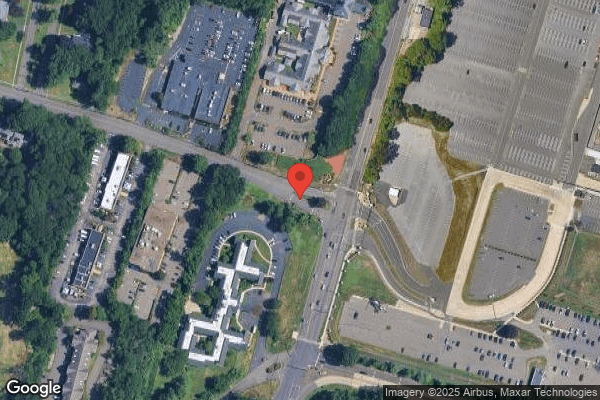
Apr 2024 2 deficiencies
CONCERN (D) 📢 Someone Reported This

A family member, employee, or ombudsman was alarmed enough to file a formal complaint

Potential for Harm - no one hurt, but risky conditions existed

Quality of Care (Tag F0684)

Could have caused harm · This affected 1 resident

**NOTE- TERMS IN BRACKETS HAVE BEEN EDITED TO PROTECT CONFIDENTIALITY** Based on review of the clinical record, facility documentation, facility policy, and interviews for one (1) of three (3) residen...

Read full inspector narrative →
**NOTE- TERMS IN BRACKETS HAVE BEEN EDITED TO PROTECT CONFIDENTIALITY** Based on review of the clinical record, facility documentation, facility policy, and interviews for one (1) of three (3) residents, (Resident #1), reviewed for change in condition, the facility failed to ensure the physician was notified when a resident refused medications. The findings include: Resident #1 had diagnoses that included depression, spondylolysis lumbar region, hypertension, and anxiety. An admission MDS dated [DATE] identified Resident #1 had intact cognition, required moderate assistance with dressing upper body, maximal assistance personal hygiene, bed mobility, toileting, and was dependent with dressing lower body. A care plan dated 2/14/2024 identified Resident #1 had an ineffective airway clearance related to excessive tenacious secretions and exudate secondary to congestion. Interventions directed to auscultate for decreased breath sounds, wheezing, or any abnormality, assess respiratory rate, and administer bronchodilator per physician orders. A nurse's note dated 2/14/2024 at 6:31 A.M. written by LPN #2 identified Resident #1 had increased phlegm and was expelling clear discharge. LPN #2 indicated she put a note in the APRN book to have Resident #1 assessed by the APRN. A APRN's note dated 2/14/2024 at 9:22 A.M. written by APRN #1 identified she seen Resident #1 for an acute visit for a cough and congestion with clear sputum. APRN #1 identified Resident #1 was having an episode of acute respiratory tract congestion with a cough. APRN #1 identified her plan was to order nebulizer treatments every shift for 3 days and continue Robitussin every shift as needed. A physician's order dated 2/14/2024 directed to continue to administer Albuterol Sulfate Inhalation Nebulization ( a medication used to treat spasms in the lungs) Solution (2.5 MG/3ML) 0.083% (Albuterol Sulfate) every shift for three days. A nurse's note dated 2/14/2024 at 2:29 P.M. written by LPN #3 identified Resident #1 was noted to have an occasional cough offered Robitussin several times Resident #1 refused. An APRN note dated 2/16/2023 at 9:36 A.M. written by APRN #1 identified seen Resident #1 today to follow up and assess Resident #1's cough and congestion. APRN #1 identified Resident #1 has been on albuterol every shift for 2 days with a positive effect. APRN #1 identified she would continue with Albuterol and Robitussin over the weekend. A physician's order dated 2/16/2024 directed to administer Albuterol Sulfate Inhalation Nebulization Solution (2.5 MG/3ML) 0.083% (Albuterol Sulfate) every shift for three days and administer Robitussin 10 ML every shift for 7 days. A nurse's note dated 2/23/2024 at 4:22 P.M. written by RN #1 she identified Resident #1 was complaining of congestion again. RN #1 identified Resident #1 had completed his/her ordered albuterol nebulizer solution. RN #1 identified she called APRN #1 and obtained new orders for Resident #1's nebulizer treatments and Mucinex. A physician's order dated 2/23/2024 directed to administer Albuterol Sulfate Inhalation Nebulization Solution (2.5 MG/3ML) 0.083% (Albuterol Sulfate) every shift for five days and administer Mucinex 600 MG every 12 hours for 7 days ( an expectorant). The nurse's note dated 2/23/2024 at 5:42 A.M. LPN #4 identified Resident #1 refused his/her ordered Guaifenesin ( a cough medicine) Oral Liquid 100MG/5ML. The nurse's note dated 2/25/2024 at 9:45 P.M. LPN #1 identified Resident #1 refused his/her nebulizer treatment of Albuterol Sulfate Inhalation Nebulization Solution (2.5 MG/3ML) 0.083% (Albuterol Sulfate). Review of Resident #1's February 2024 Medication Administration Record identified Resident #1 refused the physician's ordered nebulizer treatments of Albuterol Sulfate Inhalation Nebulization Solution (2.5 MG/3ML) 0.083% (Albuterol Sulfate) on 2/15/2024 on the 3 P.M. to 11 P.M. shift and on 2/25/2024 on the 11 P.M. to 7 A.M. shift. Review of Resident #1's February 2024 Medication Administration Record identified Resident #1 refused the physician's ordered Guaifenesin (Robitussin) 100 MG/5ML oral liquid doses on 2/18/2024 at 2:00 P.M, on 2/20/2024 at 2:00 P.M., on 2/21/2024 at 6:00 A.M. and 2:00 P.M., on 2/22/2024 at 6:00 A.M. and 2:00 P.M., and on 2/23/2024 at 6:00 A.M. Resident #1 refused a total of 7 doses of Guaifenesin. Review of Resident #1's February 2024 Medication Administration Record identified Resident #1 refused the physician's ordered Guaifenesin ER 600 MG 12-hour tablets on 2/25/2024 at 8:30 P.M. Interview and review of the facility's medication administration policy with the Assistant Director of Nurse's on 4/22/2024 at 11:00 A.M. identified that her expectations are when a resident refuses any medications or treatments the nurse notifies the physician and the responsible party. Interview with APRN #1 on 4/22/2024 at 1:43 P.M. identified she was not notified when Resident #1 refused his/her medications and nebulizer treatments. APRN #1 indicated the nurses usually leave her a note in the APRN book when a resident refuses medications or treatments, however, there were no notes left. APRN #1 identified she would not expect a call when a resident refuses a medication or treatment that is not life threatening. Review of the facility's undated medication administration guideline policy, in part, directs that medication refusals must be reported to the prescriber after (XX) number of doses are refused and there must be documentation of prescriber notification of such (the facility was unable to identify how many times (XX) meant)
CONCERN (D) 📢 Someone Reported This

A family member, employee, or ombudsman was alarmed enough to file a formal complaint

Potential for Harm - no one hurt, but risky conditions existed

Respiratory Care (Tag F0695)

Could have caused harm · This affected 1 resident

Based on review of the clinical record, facility documentation, facility policy, and interviews for one (1) of three (3) residents (Resident #1) reviewed for change in condition, the facility failed t...

Read full inspector narrative →
Based on review of the clinical record, facility documentation, facility policy, and interviews for one (1) of three (3) residents (Resident #1) reviewed for change in condition, the facility failed to ensure vital signs were obtained and respiratory assessments was performed prior to and after administering respiratory treatments. The findings include: Resident #1 had diagnoses that included depression, spondylolysis lumbar region, hypertension, and anxiety. A care plan dated 2/14/2024 identified Resident #1 had an ineffective airway clearance related to excessive tenacious secretions and exudate secondary to congestion with interventions that directed to auscultate for decreased breath sounds, wheezing, or any abnormality, assess respiratory rate, and administer bronchodilators per physician orders. A nurse's note dated 2/14/2024 at 6:31 A.M. written by LPN #2 identified Resident #1 had increased phlegm and was expelling clear discharge. LPN #2 indicated she put a note in the APRN book to have Resident #1 assessed by the APRN. A APRN's note dated 2/14/2024 at 9:22 A.M. written by APRN #1 identified she seen Resident #1 for an acute visit for a cough and congestion with clear sputum. APRN #1 identified Resident #1 was having an episode of acute respiratory tract congestion with a cough. APRN #1 identified Resident #1 will continue with nebulizer treatments every shift for 3 days. A physician's order dated 2/14/2024 directed to continue to administer Albuterol Sulfate Inhalation Nebulization Solution (2.5 MG/3ML) ( medication that helps helps with spasms in the lung) 0.083% (Albuterol Sulfate) every shift for three days. Review of Resident #1's Medication Administration Record from 2/14/2024 to 2/15/2024 identified Resident #1 was administered Albuterol Sulfate Inhalation Nebulization Solution (2.5 MG/3ML) 0.083% (Albuterol Sulfate) on 2/14/2024 on the 3 P.M. to 11 P.M. shift and 11 P.M. to 7 A.M. shift, on 2/15/2024 on the 7 A.M. to 3 P.M. shift and on the 11 P.M. to 7 A.M. shift. Review of Resident #1's vital signs record and nurse's progress notes from 2/14/2024 to 2/15/2024 failed to identify prior to administering Resident #1's Albuterol Sulfate Inhalation Nebulization Solution (2.5 MG/3ML) 0.083% (Albuterol Sulfate) Resident #1's pulse, respiratory rate, and lung sounds were assessed and post treatment Resident #1's pulse, respiratory rate, and lung sounds were assessed. An APRN's note dated 2/16/2024 at 9:36 A.M. written by APRN #1 identified seen Resident #1 today to follow up and assess Resident #1's cough and congestion. APRN #1 identified Resident #1 has been on albuterol every shift for 2 days with a positive effect. A physician's order dated 2/16/2024 directed to administer Albuterol Sulfate Inhalation Nebulization Solution (2.5 MG/3ML) 0.083% (Albuterol Sulfate) every shift for three days. Review of Resident #1's Medication Administration Record from 2/16/2024 to 2/19/2024 identified Resident #1 was administered Albuterol Sulfate Inhalation Nebulization Solution (2.5 MG/3ML) 0.083% (Albuterol Sulfate) on 2/16/2024 at 10:30 P.M, on 2/17/2024 at 8:30 A.M., at 3:30 P.M., and at 10:30 P.M., and on 2/18/2024 at 8:30 A.M. and at 3:30 P.M. Review of Resident #1's vital signs record and nurse's progress notes from 2/16/2024 to 2/19/2024 failed to identify prior to administering Resident #1's Albuterol Sulfate Inhalation Nebulization Solution (2.5 MG/3ML) 0.083% (Albuterol Sulfate) Resident #1's pulse, respiratory rate, and lung sounds were assessed and post treatment Resident #1's pulse, respiratory rate, and lung sounds were assessed. The nurse's note dated 2/23/2024 at 4:22 P.M. identified Resident #1 complained of congestion nebulizer order completed. Telephone call to the MD and new orders were obtained for to administer nebulizer treatments to Resident #1. A physician's order dated 2/23/2024 directed to administer Albuterol Sulfate Inhalation Nebulization Solution (2.5 MG/3ML) 0.083% (Albuterol Sulfate) every shift for three days. Review of Resident #1's Medication Administration Record from 2/23/2024 to 2/27/2024 identified Resident #1 was administered Albuterol Sulfate Inhalation Nebulization Solution (2.5 MG/3ML) 0.083% (Albuterol Sulfate) on 2/23/2024 at 10:00 P.M, on 2/24/2024 at 6:00 A.M., on 2/25/2024 at 2:00 P.M, on 2/26/2024 at 6:00 A.M., at 2:00 P.M., and at 10:00 P.M., on 2/27/2024 at 6:00 A.M. and at 2:00 P.M. Review of Resident #1's vital signs record and nurse progress notes from 2/23/2024 to 2/27/2024 failed to identify prior to administering Resident #1's Albuterol Sulfate Inhalation Nebulization Solution (2.5 MG/3ML) 0.083% (Albuterol Sulfate) Resident #1's pulse, respiratory rate, and lung sounds were assessed and post treatment Resident #1's pulse, respiratory rate, and lung sounds were assessed. Interview and clinical record review with the Assistant Director of Nurses on 4/22/2024 at 11:55 A.M., she was unable to provide documentation to reflect that vital signs were obtained and respiratory assessments were conducted on Resident #1 prior to the administration of Albuterol Sulfate Inhalation Nebulization Solution. Interview with APRN #1 on 4/22/2024 at 1:43 P.M. identified she would expect prior to Resident #1's administration of a nebulizer treatment the nurse would conduct a respiratory assessment and post treatment Resident #1 would of had a respiratory assessment conducted by the nurse. APRN #1 further identified the respiratory assessments identify if the treatments were effective. Although attempted, an interview with Respiratory Therapist #1 was not obtained. Review of facility administering medication through a small volume nebulizer identified prior to administering aerosolized medications into the resident's airway obtain baseline pulse, respiratory rate, and lung sounds and post-treatment obtain pulse, respiratory rate, and lung sounds.
Mar 2024 2 deficiencies
CONCERN (D) 📢 Someone Reported This

A family member, employee, or ombudsman was alarmed enough to file a formal complaint

Potential for Harm - no one hurt, but risky conditions existed

Free from Abuse/Neglect (Tag F0600)

Could have caused harm · This affected 1 resident

**NOTE- TERMS IN BRACKETS HAVE BEEN EDITED TO PROTECT CONFIDENTIALITY** Based on review of the clinical record, facility documentation, facility policy, and interviews for one (1) of three (3) residen...

Read full inspector narrative →
**NOTE- TERMS IN BRACKETS HAVE BEEN EDITED TO PROTECT CONFIDENTIALITY** Based on review of the clinical record, facility documentation, facility policy, and interviews for one (1) of three (3) residents, (Resident #2), reviewed for abuse, the facility failed to ensure a resident was free from physical abuse. The findings include: 1. Resident #2 had diagnoses that included encephalopathy, heart failure, and hypertension. The quarterly Minimum Data Set (MDS) dated [DATE] identified Resident #2 had severely impaired cognition, was occasionally incontinent of bowel, frequently incontinent of bladder, and was dependent with Activities of Daily Living. The care plan dated 2/14/2024 identified Resident #2 has cognitive loss with interventions that directed to use simple, direct communication, verbal cues, task segmentation, encourage socialization and recreation activity. 2. Resident #3 had diagnoses that included bipolar disorder, neurocognitive disorder with Lewy bodies, and Parkinson's disease. The quarterly MDS dated [DATE] identified Resident #3 had moderately impaired cognition, was always incontinent of bowel and bladder, and required supervision with ADL's. The care plan dated 3/6/2024 identified Resident #3 has behavior problems that include being intrusive, difficult to redirect, verbally abusive toward staff, and intimidating attitude with interventions that directed to attempt to identify sources of anxiety and assist to resolve as possible and decrease visual or auditory stressors when over stimulated. A social worker note dated 3/16/2024 at 12:00 A.M. by SW #1 indicated a session was held with Resident #3 in the hallway. SW #1 identified she had met with Resident #3 in the hallway because Resident #3 was very frustrated with the fact that his roommate (Resident #2) consistently coughs. SW #1 identified Resident #3 was having high anxiety, was afraid of getting sick, and Resident #3 has very few coping skills for this situation. SW #1 identified Resident #3 felt being in the hallway was a safer place to be. SW #1 identified that Resident #2 is a new roommate for Resident #3 and hopes Resident #3 will be able to get along with Resident #2. The nurse's note dated 3/17/2024 at 6:16 A.M. by LPN #1 she identified that at 4:15 A.M. she was standing in the hallway at her medication cart when she heard a pounding sound coming from a resident's room and heard a resident stating they need help. LPN #1 identified when she entered the room, Resident #3 was not in his/her bed and the curtain was closed between the beds of Resident #2 and Resident #3. LPN #1 identified she and NA #1 opened the curtain and witnessed Resident #3 hitting Resident #2 over the head with a shoe. LPN #1 indicated she and NA #1 separated Resident #3 and Resident #2. LPN #1 identified Resident #3 stated Resident #2 kept coughing and wouldn't stop. LPN #1 identified the on-call APRN was called, and new orders obtained to transfer Resident #3 to the emergency room for a psychiatric evaluation. LPN #1 identified she called 911, EMS arrived and transferred Resident #3 to the hospital. The nurse's note dated 3/17/2024 at 10:54 A.M. by RN #1 she identified she was called to the unit for a disturbance. RN #1 identified Resident #3 was in his/her wheelchair in the hallway and Resident #2 was in his/her bed. RN #1 identified her assessment of Resident #2 identified 3 small skin tears with bruising above the bridge of his/her nose and eyebrows and was stable. RN #1 identified Resident #3 was transferred to the hospital. A review of the Facility's Reportable Event form identified the date of the event as 3/17/2024 at 4:30 A.M. Resident #3 was observed hitting Resident #2 over the head with a shoe. Resident #3 was sent to the emergency room for a psychiatric evaluation. Resident #2 was noted with skin tears, bruises to left and right forehead and on the bridge of nose. Interview with SW #1 on 3/27/2024 at 10:20 A.M. identified that she had seen Resident #3 on 3/16/2024 for a session. SW #1 identified she met with Resident #3 out in the hallway due to his/her frustration and anxiety regarding his/her roommate Resident #2's coughing and fear of getting sick. SW #1 identified Resident #3 had very few coping skills and she was hoping Resident #3 would be able to get along with Resident #2. SW #1 identified she did not report Resident #3's concerns to the charge nurse on 3/16/2024 that Resident #3 was feeling frustrated, anxious, and afraid of getting sick due to his/her roommate's (Resident #2) coughing. SW #1 indicated she did not mention it to the nursing staff because Resident #3 knows staff at the facility. Interview with LPN #1 on 3/17/2024 at 11:00 A.M. identified on 3/17/2024 at 4:15 A.M. while she was at her medication cart, she heard a banging noise. LPN #1 identified as she approached Resident #3's room she heard a moaning sound and noticed Resident #3 was not in his/her bed, she noted that the curtain was pulled between Resident #3 and Resident #2's beds. LPN #1 identified she and NA #1 opened the curtain and she witnessed Resident #3 hitting Resident #2 over the head 4-5 times with a shoe. LPN #1 identified she and NA #1 immediately separated Resident #3 from Resident #2. LPN #1 identified RN #1 came to the unit, the on call APRN was contacted, a verbal order was obtained to transfer Resident #2 to the emergency room. LPN #1 identified she called 911, EMS arrived, and Resident #2 was transferred to the hospital. Interview with the DNS on 3/17/2024 at 12:50 P.M. identified she was not aware on 3/16/2024 SW #1 met with Resident #3 out in the hallway due to Resident #3's fear of getting sick, nor that Resident #3 was frustrated and anxious about his/her roommate Resident #2 constantly coughing. The DNS identified Resident #3 had recently moved in with Resident #2 and there had not been any issues or concerns prior to 3/17/2024. The DNS identified if she had been made aware on 3/16/2024 by SW #1 that Resident #3 was feeling afraid, frustrated, and anxious due to Resident #2's coughing she would have made a room change immediately. The DNS further identified the resident-to-resident altercation between Resident #3 and Resident #2 could have been prevented if a room change was made. Review of facility abuse/resident policy identified in part that prevention is to identify, correct, and intervene in situations in which abuse, neglect, and/or misappropriation of resident property is more likely to occur.
CONCERN (D) 📢 Someone Reported This

A family member, employee, or ombudsman was alarmed enough to file a formal complaint

Potential for Harm - no one hurt, but risky conditions existed

Comprehensive Care Plan (Tag F0656)

Could have caused harm · This affected 1 resident

**NOTE- TERMS IN BRACKETS HAVE BEEN EDITED TO PROTECT CONFIDENTIALITY** Based on review of the clinical record, facility documentation, facility policy, and interviews for one (1) of three (3) residen...

Read full inspector narrative →
**NOTE- TERMS IN BRACKETS HAVE BEEN EDITED TO PROTECT CONFIDENTIALITY** Based on review of the clinical record, facility documentation, facility policy, and interviews for one (1) of three (3) residents, (Resident #1), reviewed for accidents, the facility failed to ensure a care plan was implemented to include interventions for a resident with impaired cognition and was at risk for falls who frequently got up unassisted resulting in falls. The findings include: Resident #1 had diagnoses that included dementia, anxiety, insomnia, history of falling, and muscle weakness. The fall risk evaluation dated 2/16/2024 identified Resident #1 at risk for falls. Review of a physical therapy evaluation dated 2/16/24 identified that the resident required assistance of one for transfers and ambulation. The care plan dated 2/17/2024 identified Resident #1 as a risk for falls with interventions that directed to keep the call bell within reach, encourage use of call bell, to educate based on current knowledge base and ability to learn. A nurse's note dated 2/17/2024 at 10:34 P.M. written by RN #6 identified Resident #1 has consistently tried to stand up from wheelchair, and staff were taking turns sitting 1:1 with Resident #1 to keep him/her occupied. A nurse's note dated 2/18/2024 at 10:38 P.M. written by RN #6 identified Resident #1 had family visit and since the family left Resident #1 was frequently attempting to get out his/her wheelchair. A nurse's note dated 2/19/2024 at 6:45 A.M. written by LPN #5 identified Resident #1 was in wheelchair at desk on 1:1 monitoring for this shift. A nurse's note dated 2/20/2024 at 2:46 P.M. written by LPN #2 identified Resident #1 was confused and sat at nurse's station for most of shift for safety. A nurse's note dated 2/21/2024 at 2:30 P.M. written by LPN #2 identified Resident #1 was observed in the hallway pushing a bedside table, Resident #1 was placed next to her near nurse station for safety. A nurse's note dated 2/22/2024 at 1:19 A.M. written by RN #5 identified at 11:15 P.M. Resident #1 had an unwitnessed fall and was found on the floor lying next to his/her bed. RN #5 identified the reason for Resident #1's fall was unclear as Resident #1 was a poor historian and was unable to communicate what prompted the fall. The admission MDS dated [DATE] identified Resident #1 had severely impaired cognition, was frequently incontinent of bowel and bladder, had a fracture related to a fall, and required moderate assistance with bed mobility, transfers, ambulation, toileting, dressing, and personal hygiene. An updated care plan dated 2/23/2024 identified Resident #1 was found lying on the floor next to the bed with interventions that directed to keep bed in low position, have mats at the bed side, and assess the underlying reason for falls. A nurse's note dated 2/27/2024 at 2:53 P.M. written by LPN #2 identified she went to check on Resident #1 to ensure bed was in the lowest position and upon arrival to the room she observed Resident #1 sitting up at the edge of the bed. LPN #2 identified she got Resident #1 out of bed into the wheelchair and kept Resident #1 at the nurse's station for safety. A nurse's note dated 2/28/2024 at 10:34 P.M. written by RN #2 identified Resident #1 had an unwitnessed fall out of the wheelchair and was found on the floor in hallway. RN #2 identified Resident #1 had 3 or more falls in the past three months and the contributing factors for falls were related to Resident #1's poor safety awareness and intermittent confusion. RN #2 identified Resident #1 had a raised red area over left eye and abrasions around left eye and was transferred to the hospital for evaluation. A review of the Facility's Reportable Event form dated 2/28/2024 identified at 8:40 P.M. Resident #1 had an unwitnessed fall and was observed laying face down in the hallway with wheelchair beside him/her. Resident #1 sustained a left frontal scalp hematoma and an abrasion to the left eye. Resident #1 was sent out to the hospital for evaluation and treatment. The facility was notified on 2/29/2024 Resident #1 was admitted to the hospital with a fracture of the C7 anterior osteophyte (bone spur) from the fall. The nurse's note dated 3/6/2024 at 1:55 P.M. by the DNS identified Resident #1 is expected to be re-admitted to the facility, Resident #1 has had 2 falls at the facility. The DNS identified despite different activities given to Resident #1 prior to the falls Resident #1 continued to be restless. The nurse's note dated 3/10/2024 at 4:49 P.M. identified Resident #1 arrived back to the facility with a soft neck collar in place to be on around the clock. The care plan dated 3/12/2024 identified Resident #1 was found on the floor lying on the floor next to bed on 2/28/24 with interventions directing to provide assist of one with ADL's at wheelchair level, assist of one with toileting with rolling walker, and occupational therapy 5-6 times per week for 30 days. Interview with NA #4 on 3/26/2024 at 10:00 A.M. identified Resident #1 was at risk for falls and she must keep a close eye on Resident #1 to try to prevent another fall because Resident #1 does not call for assistance when attempting to get up. Interview with RN #2 on 3/26/2024 at 10:56 A.M. identified Resident #1 as a high fall risk and Resident #1 does not call for help before attempting to get out of the bed or wheelchair. Interview with LPN #2 on 3/26/2024 at 11:30 A.M. identified Resident #1 has poor safety awareness, is confused, impulsive, gets up unassisted from the wheelchair frequently. Interview with NA #2 on 3/26/2024 at 12:40 P.M. identified Resident #1 is confused NA #2 gets up unassisted frequently. Interview and clinical record review with the DNS on 3/26/2024 at 12:05 P.M. identified Resident #1 as a high fall risk. The DNS identified Resident #1 has had 2 falls at the facility and is not compliant with calling for help. Resident #1 does not have a plan of care in place with interventions to address Resident #1's non-compliance getting up unassisted. The DNS identified she would not expect a care plan to be implemented to address Resident #1's non-compliance with getting up unassisted because Resident #1 has dementia. Review of facility care planning policy identified the interdisciplinary team is responsible for the development of an individualized comprehensive care plan for each resident.
Jan 2024 2 deficiencies
CONCERN (D) 📢 Someone Reported This

A family member, employee, or ombudsman was alarmed enough to file a formal complaint

Potential for Harm - no one hurt, but risky conditions existed

Deficiency F0557 (Tag F0557)

Could have caused harm · This affected 1 resident

Based on clinical record reviews, facility documentation, facility policy and interviews for one (1) of two (2) residents, (Resident #1) who were reviewed for care and services, the facility failed to...

Read full inspector narrative →
Based on clinical record reviews, facility documentation, facility policy and interviews for one (1) of two (2) residents, (Resident #1) who were reviewed for care and services, the facility failed to ensure a resident was treated in a dignified manner. The findings include: Resident #1's diagnoses included wedge compression fracture of thoracic 11-12 vertebra (mid spine). An inter-agency referral report dated 11/18/23 identified recommendations that included assist of one with a rolling walker to transfer from the bed to the commode. A nursing admission note dated 11/18/23 at 2:57 PM identified Resident #1 was alert and oriented to person, place, and time, communicated verbally with clear speech, was able to understand and be understood when speaking. A nurse's note dated 11/18/23 at 11:15 PM identified Resident #1 reported a complaint of being unhappy with care. Attempted to reassure h/her that the situation would be addressed. Resident #1 refused to accept the response. The RN supervisor was notified. A Grievance dated 11/18/23 identified Resident #1 was concerned that s/he was not given the best care based on an interaction with a nurse aide, NA #1. Resident #1 verbalized NA #1 was unable to meet her needs effectively without aggravating h/her symptoms of pain. The grievance findings identified a miscommunication between Resident #1 and staff with a possible language barrier. The Nurse aide was removed from Resident #1's assignment and educated on patient care related to chronic pain. Resident #1 and resident representative were notified of the resolution and on 11/18/23. A statement dated 11/18/23 completed by Nurse Aide #1 identified Resident #1 requested assistance to use the bathroom. NA #1 instructed Resident #1 to Go (to the bathroom) in h/her diaper and NA #1 would then clean h/her. Resident #1 declined before being offered a bedpan and then subsequently provided assistance to the bathroom after experiencing discomfort while using the bedpan. An interview with NA #1 on 1/8/23 at 1:42 PM and on 1/9/24 at 10:23 AM identified Resident #1 requested to use the bathroom. NA #1 offered a bedpan which Resident #1 initially accepted and then was unable to tolerate due to discomfort then subsequently assisted h/her to the toilet. NA #1 stated she instructed Resident #1 to go in h/her brief prior to offering the bedpan. NA #1 was informed later in the shift that Resident #1 complained about her care and was removed from Resident #1's assignment. An interview and review of staff education dated 11/22/23 with the Director of Nursing, DNS on 1/9/24 at 1:00 PM identified that Resident #1 had not undergone an initial physical therapy evaluation following admission. A bedpan would be offered as indicated until completion of the evaluation. According to the DNS, NA #1 should not have instructed Resident #1 to go in h/her brief. The DNS indicated and that all residents should be treated in a dignified manner. A review of the policy for Resident Rights directed that all residents have the right to be treated with consideration, respect and full recognition of dignity and individuality.
CONCERN (D) 📢 Someone Reported This

A family member, employee, or ombudsman was alarmed enough to file a formal complaint

Potential for Harm - no one hurt, but risky conditions existed

Quality of Care (Tag F0684)

Could have caused harm · This affected 1 resident

**NOTE- TERMS IN BRACKETS HAVE BEEN EDITED TO PROTECT CONFIDENTIALITY** Based on clinical record reviews, facility documentation, facility policy and interviews for one (1) of two (2) sampled resident...

Read full inspector narrative →
**NOTE- TERMS IN BRACKETS HAVE BEEN EDITED TO PROTECT CONFIDENTIALITY** Based on clinical record reviews, facility documentation, facility policy and interviews for one (1) of two (2) sampled residents, (Resident #1), who were reviewed for care and services, the facility failed to ensure neurological assessments were initiated in accordance with facility policy. The findings include: Resident #1's diagnoses included wedge compression fracture of thoracic 11-12 vertebra (mid spine). The admission Minimum Data Set (MDS) assessment dated [DATE] identified Resident #1 was without cognitive impairment and required supervised minimal touch assist with bed mobility, transfer, and toileting. The Resident Care Plan (RCP) dated 11/30/23 identified Resident #1 Resident #1 exhibited a decline in the ability to ambulate, transfer, toilet, and positioning self in the bed with interventions that directed to provide assist of one with bed mobility, transfers, and toileting. Physician orders dated 12/22/23 directed modified independence with toileting using the wheelchair and grab bar. A facility Reportable Event dated 1/6/24 at 3:30PM identified Resident #1 reported while being assisted in the bathroom with toileting, h/her head bumped against the wall. The physician was notified and an evaluation regarding transfers would be completed for the 11-7 shift. A Nurse's note dated 1/6/24 at 7:09PM identified Resident #1 reported bumping h/her head during toileting and transfer during the night (before). No bruising, abrasions were noted on the forehead. A statement dated 1/6/24 with no identified signature identified Resident #1 reported that on 1/5/24 at 3:30AM, the nurse aide, NA #2 was assisting with her pants when h/her head banged against the wall. A review of the clinical record did not identify documented neurological assessments having been conducted for Resident #1. An interview with the Director of Nursing, DNS on 1/9/23 at 1:40PM identified neurological assessments should have been completed for Resident #1 following the incident. An interview with RN #1 on 1/9/23 at 3:56PM identified she was the assigned nursing supervisor on 1/6/23 during the first shift when Resident #1 reported s/he had banged h/her head against the wall after toileting when the assigned nurse aide, NA #2 was pulling up h/her pants. RN #1 stated she assessed Resident #1 for signs of injury but did not initiate neurological assessments as Resident #1 stated she had only banged h/her head slightly, was not injured and that the event was reported to her the following day. A review of the facility policy for Neurological Assessment directed observation of neurological signs will be performed on any resident who hits their head to detect clinical manifestations of increased intercranial pressure. After a head injury, neurological signs and vital signs are monitored every 15 minutes x (4), then every 2 hours for (4) hours, every (4) hours for (6) hours and then every shift for (5) shifts for a total of 72 hours.
Jul 2022 10 deficiencies
CONCERN (D)

Potential for Harm - no one hurt, but risky conditions existed

Deficiency F0553 (Tag F0553)

Could have caused harm · This affected 1 resident

**NOTE- TERMS IN BRACKETS HAVE BEEN EDITED TO PROTECT CONFIDENTIALITY** Based on review of the clinical record, facility documentation, facility policy, and interview for 1 resident (Resident #115) re...

Read full inspector narrative →
**NOTE- TERMS IN BRACKETS HAVE BEEN EDITED TO PROTECT CONFIDENTIALITY** Based on review of the clinical record, facility documentation, facility policy, and interview for 1 resident (Resident #115) reviewed for care planning, the facility failed to ensure the resident had the right to participate in the development and implementation of his or her person-centered plan of care. The findings include: Resident #115 was admitted to the facility on [DATE] with diagnoses that included heart failure, hypertension, and atrial fibrillation. The care plan dated 1/4/22 identified a discharge plan with interventions to provide ongoing communication to the interdisciplinary team members, physician, and resident about the discharge process. The admission MDS dated [DATE] identified Resident #115 had intact cognition and required limited assistance for transfers, dressing, toileting, and personal hygiene. Additionally, the MDS identified it was very important for the resident to choose own clothing, take care of personal belongings, and his/her bedtime. The social services quarterly progress notes dated 3/31 and 6/23/22 identified that the care plan meeting identified the resident ' s current placement remains Long Term Care (LTC). Interview with Resident #115 on 7/17/22 at 8:39 AM indicated he/she has not attended or had meetings with the team and that he/she had not been invited to discuss his/her plan of care. Resident #115 indicated he/she did not know there was a meeting to discuss his/her plan of care and would have attended if notified and invited. Interview with RN #1 on 7/18/22 at 7:55 AM indicated the care plan sheet was not in Resident #115's medical record. RN #1 indicated she would contact the MDS nurse (RN #3) to ask if she has the sign in sheet. Interview with RN #3 on 7/18/22 at 8:22 AM indicated she was responsible to schedule and attend the care plan meetings quarterly and annually. RN #3 noted the social worker was responsible to invite the resident, including Resident #115, the day of care conference meeting and bring the resident to the meeting. RN #3 did not recall if Resident #115 attended the resident care meetings in March 2022 or June 2022 but could not recall if Resident #115 was invited and had refused to attend. RN #3 indicated it was the social workers responsibility to document if the resident had refused to attend. RN #3 noted everyone that was in attendance would have signed the interdisciplinary care conference attendance form but indicated she had not used the form since the pandemic started. RN #3 noted if a family was called, it would be documented on that form. RN #3 noted dietary does not attend the meetings but will email RN #3 and the social worker with information needed for the meeting regarding weights and if there was a significant change. RN #3 noted the social worker made a progress note of the meeting in March 2022 and June 2022 but did not note who attended and if Resident #115 was invited and attended. RN #3 noted she does not attend the 48-hour admission interdisciplinary meeting. Interview SW #2 on 7/18/22 at 8:45 AM indicated she does not attend the quarterly or annual resident care conferences as she was only responsible for the admission 48-hour interdisciplinary resident care meetings. SW #2 noted she would meet with the resident or family and when possible, the interdisciplinary team would attend. SW #2 noted Resident #115 was responsible for him/herself and would be the person to attend the resident care plan meetings. SW #2 noted it should be on the 48-hour meeting form for Resident #115 and the interdisciplinary team members to sign for attendance and it would be in a book in the social worker office. SW #2 noted with review of Resident #115's clinical record and the book in the third-floor social workers office, the form for Resident #115 was not present. SW #2 noted the team was usually busy and did not attend so she would do the meeting with the residents by herself. SW #2 noted in the electronic medical record there was a 48-hour discharge plan meeting dated 12/30/21 that had not been filled in and was blank and noted as in progress. SW #2 noted the resident and staff must sign the form if there was a meeting and who attended. Interview with SW #1 on 7/18/22 at 8:57 AM indicated the MDS nurse was responsible to bring in the interdisciplinary care conference form for Resident #115 ' s meetings and have Resident #115 sign and the interdisciplinary staff to sign for attendance. SW #1 noted the expectation was to have everyone sign the form and after the meeting to place the form in the resident's medical record. SW #1 noted after clinical record review there was not an attendance form for the admission, or the March 2022 or June 2022 meetings. SW #1 noted she did not know who was invited or attended the meeting because there wasn't a form, and the progress note did not indicate or who attended. SW #1 noted if a resident did refuse to attend the meeting, they do not document it in the progress note or on the attendance form and it should be clearer, and the social worker should document that. Interview with the DNS on 7/18/22 at 9:50 AM indicated the expectation was Resident #115 would have a resident care conference within the first 48 hours of admission and then the quarterly meetings would include the interdisciplinary team including the social worker, the charge nurse, the unit manager, the rehab department, MDS nurse, and recreation. The DNS noted Resident #115 and the staff present at the meeting would sign a form that they were present at the meeting, and it would be in the clinical record. The DNS noted the social worker would be responsible to write a progress note of who attended and what was discussed during the meeting. Review of the Introductory Meeting Form identified there were designated signature places for the resident, resident responsible party, nursing, social worker, rehab, MDS, and other. Review of Care Planning policy identified the facility care planning/interdisciplinary team was responsible for the development of an individualized comprehensive care plan for each resident. The care plan was based on the residents comprehensive assessment and was developed by the care planning/interdisciplinary team which includes, the attending physician, the registered nurse responsible for the resident, the dietary manager or dietician, the social worker, the activities director, therapists (speech, occupational and physical therapy), the charge nurse and nursing assistants responsible for the residents' care. The resident, residents' family are encouraged to participate in the development of and revisions to the residents' plan of care. Review of facility Resident Rights identified the right to be informed of, and participate in, his/her care planning and treatment.
CONCERN (D)

Potential for Harm - no one hurt, but risky conditions existed

Quality of Care (Tag F0684)

Could have caused harm · This affected 1 resident

**NOTE- TERMS IN BRACKETS HAVE BEEN EDITED TO PROTECT CONFIDENTIALITY** Based on observation, review of the clinical record, facility documentation, facility policy, and interviews for 1 resident (Res...

Read full inspector narrative →
**NOTE- TERMS IN BRACKETS HAVE BEEN EDITED TO PROTECT CONFIDENTIALITY** Based on observation, review of the clinical record, facility documentation, facility policy, and interviews for 1 resident (Resident #15) reviewed for dialysis, the facility failed to ensure an emergency pressure dressing kit was at bedside per facility policy and for 1 of 3 residents (Resident #136) reviewed for pressure ulcers, the facility failed to obtain a physician order for a specialized pressure relieving mattress,. The findings include: 1. Resident #15 was admitted to the facility in August 2020 with diagnoses that included chronic kidney disease stage 5, dependence on renal dialysis, and type 2 diabetes with diabetic peripheral angiopathy. The care plan dated 4/7/22 identified in the event of emergency: AV shunt begins to leak, or bleeding, maintain standard precautions, apply pressure to upper arm with tourniquet or pressure dressing to site of bleeding, vital signs every 15 minutes and immediately call attending physician and 911 per physician. The quarterly MDS dated [DATE] identified Resident #15 had severely impaired cognition and required extensive assistance with personal hygiene. The physician's order for the month of July 2022 directed for emergency care, AV shunt for bleeding: Apply pressure to upper arm with tourniquet or pressure dressing to site of bleeding. Vital signs are taken every 15 minutes. Immediately call attending physician and 911 per physician as needed. Observation in the resident ' s room on 7/17/22 at 10:33 AM with RN #5 failed to reflect an emergency pressure dressing kit was at bedside. Interview with RN #5 on 7/17/22 at 10:35 AM identified she was not aware that the emergency pressure dressing kit was not at the bedside. Subsequent to surveyor inquiry RN #5 placed an emergency pressure dressing kit at the resident ' s bedside. Review of the dialysis policy identified licensed staff are to monitor any central line catheter to ensure the dressing in place not to remove it and in emergency keep at the bedside a pressure dressing kit and a clamp and report any abnormal events to the physician. 2. Resident #136's diagnoses included Stage 4 pressure ulcer of the sacral region, spondylosis of the lumbosacral region, diabetes, and heart failure. A physician's order dated 1/27/21 directed to obtain a bariatric bed when available. A weight record identified Resident #13 weighed 164 lbs. on 6/9/22. The quarterly MDS dated [DATE] identified Resident #136 had intact cognition, required extensive 2 persons assistance with bathing and transfer, supervision for eating, and extensive assistance for toileting. The care plan dated 6/29/22 identified the resident had a Stage IV pressure ulcer to coccyx. Interventions included to follow the facility skin care protocol, measure, and document any areas on admission, preventative measures to remain in place, razors were to be kept and disposed of by staff, reposition as it meets resident's needs, and to obtain a dietary consult as needed. The care plan further indicated to report any new areas to the physician, provide pressure redistributing devices as ordered, and to obtain a wound evaluation with the wound MD as needed. Observation on 7/19/22 at 7:08 AM with RN #2 identified an air mattress on Resident #13's bed was set at 150 lbs. Interview and review of the clinical record with RN #2 on 7/18/22 at 9:30 AM indicated that there should have been a physician ' s order for the pressure relieving mattress when it was obtained. RN #2 further indicated that there is no policy for pressure relieving mattress's as they follow manufacturers recommendations and provided for review. The facility failed to obtain a physician's order for use of a specialized pressure relieving mattress.
CONCERN (D)

Potential for Harm - no one hurt, but risky conditions existed

Pressure Ulcer Prevention (Tag F0686)

Could have caused harm · This affected 1 resident

**NOTE- TERMS IN BRACKETS HAVE BEEN EDITED TO PROTECT CONFIDENTIALITY** Based on observation, review of the clinical record, facility documentation, facility policy, and interviews for 1 of 3 resident...

Read full inspector narrative →
**NOTE- TERMS IN BRACKETS HAVE BEEN EDITED TO PROTECT CONFIDENTIALITY** Based on observation, review of the clinical record, facility documentation, facility policy, and interviews for 1 of 3 residents (Resident #69) reviewed for pressure ulcers, the facility failed to ensure weekly assessments of the pressure ulcer. The findings include: Resident #69 was admitted to the facility on [DATE] with diagnoses that included stroke dysphasia, and dementia. The quarterly MDS dated [DATE] identified Resident #69 had severely impaired cognition, had a feeding tube that provided over 51% of the calories per day and was at risk for a pressure ulcer or skin injury. A physician's order dated 3/21/22 directed to cleanse the skin under the flange of the feeding tube with normal saline, apply Aquacel AG and a dry dressing daily on the evening shift. The care plan dated 6/2/22 identified the resident had a skin integrity irritation around the feeding tube with interventions that included to complete treatments as ordered by the physician, keep wound dry and clean, and complete wound measurements at least weekly. The nurse's note dated 6/29/22 at 5:31 AM, written by a LPN, identified the tube feeding dressing was soiled with large amounts of brownish/yellow drainage and some bleeding on the side. Placed in APRN communication book. The APRN progress note dated 6/29/22 indicated Resident #69 ' s feeding tube site had yellow drainage with old blood and had drainage at site. Recommendations included to cleanse the area with soap and water followed by Bactroban daily for 7 days. A physician's order dated 6/29/22 directed to cleanse around g tube every morning with soap and water then apply Bactroban and dry protective dressing daily for 7 days and keep the aqua cell AG dressing as ordered. The nurse's note dated 6/30/22 at 4:41 AM, by a LPN, identified the feeding tube dressing was soiled throughout with tan drainage and a slight odor. The APRN progress note dated 7/15/22 indicated Resident #69 had a moderate amount of yellow drainage around the feeding tube site. Assessment: cellulitis around feeding tube site with recommendations for Bactroban twice a day for 21 days and Doxycycline every 12 hours for 10 days Interview with LPN #3 on 7/17/22 at 1:00 PM identified he was responsible for all the wound measurements, and he made weekly wound rounds with the wound physician. LPN #3 indicated Resident #69 had a pressure area due to the pressure from the external phalange from the feeding tube. LPN #3 indicated he did not have any wound measurements for this pressure area as it was a chronic wound. Further, LPN #3 identified the Wound Physician does not see Resident #69 currently. LPN #3 indicated Resident #69 was being followed by the Gastroenterology Physician and the house APRN. LPN #3 indicated this area has been open since at least January 2022. Interview with APRN #1 on 7/19/22 at 9:40 AM identified Resident #69 has an area around the feeding tube site she first observed on 6/29/22 which was the circumference around the feeding tube, approximately 60% around the open area. APRN #1 noted there was minimal yellow drainage, but it was not localized so she ordered Bactroban for 7 days. APRN #1 noted she was asked again to see the area on 7/15/22 and noted the pressure area had a moderate amount of drainage and was open around 60 % of the feeding tube insertion site. APRN #1 noted it appeared to be infected and she diagnosed the resident with cellulitis and ordered an antibiotic and Bactroban for 21 days. APRN #1 indicated she would classify the area as a pressure ulcer from the phalange around the feeding tube applying pressure to the skin causing the wound, and with Resident #69's having many comorbidities that was contributing to the drainage and potentially causing the infection. APRN #1 indicated her expectation would be the wound nurse would do weekly measurements and document the appearance of the wound since it was identified on 6/29/22. APRN #1 indicated if staff were unable to measure the area, they could document the percentage around the feeding tube insertion site and the appearance weekly. Interview with LPN #3 on 7/19/22 at 11:50 AM indicated subsequent to surveyor inquiry on 7/18/22 he had reviewed the clinical record and indicated Resident #69 has a chronic unstageable pressure area from the phalange of the feeding tube caused by the mucosal membrane. LPN #3 noted he did not see or follow this wound because the APRN had seen it and the APRN was responsible to follow it unless the APRN put in an order for the wound team at the facility and a consult of the wound physician. LPN #3 noted he has not followed Resident #69's wound because it was the responsibility of the APRN and the GI physician. Observation with RN #1 and LPN #3 on 7/19/22 at 12:05 PM noted the feeding tube had a dressing on it in the right upper quadrant. LPN #3 removed the dressing and there was on open area from the feeding tube insertion site at 3 o'clock that measured 0.7 cm x 2.0 cm x 0.5 cm from horizontal to the left abdomen area with a moderate amount of thick creamy yellow drainage with a green tint. Unable to visualize the wound bed due to drainage but the peri wound was a dark purplish red color. Resident #69 indicated you're hurting me multiple times while LPN #1 was taking the measurements and swabbing the drainage from the wound bed. Interview with LPN #3 on 7/19/22 at 12:10 PM indicted this was the first time this area had been measured and he believes he may have seen the wound about a week ago but did not measure it or do an assessment. LPN #3 noted there was no documentation of measurements in the clinical record. LPN # 3 indicated he thinks the wound appears approximately the same as last week except it looks a little weepier. LPN #3 indicated the wound was an unstageable pressure area. LPN #3 indicated the GI physician had seen Resident #69 prior and he/she needed a different style feeding tube but was waiting for this feeding tube to come out or have a problem before they would change it. LPN #3 after clinical record review noted the last time Resident #69 had seen the GI physician was 7/24/21. LPN #3 indicated after surveyor inquiry on 7/17/22 the nurse had made an appointment for 7/20/22 with the GI physician and Resident #69 was added for the wound physician to see on 7/20/22. LPN # 3 noted Resident #69 was not part of his patient case load for wounds and it was to be managed by the house APRN. LPN #3 indicated because the house APRN and GI physician follow this wound he had not seen it. Interview with RN # 1 on 7/19/22 at 12:15 PM identified she did not do an assessment or measurements for the wound on 6/29/22 or 7/15/22. RN #1 noted after surveyor inquiry about Resident #69's wound she had called the GI physician's office and made an appointment with the GI physician for 7/20/22. RN #1 indicated in the past she was aware that Resident #69 has had an open area from the phalange of the feeding tube, but it was being followed by the GI physician and the house APRN. The nurse's note dated 7/19/22 at 12:28 PM by LPN #3 identified that Resident #69 ' s feeding tube site wound was noted with yellow-green drainage, no odor, mucus membrane open area 0.7 cm x 2.0 cm x 0.5 cm. Resident #69 noted with some discomfort when assessing and measuring area. Treatment done at this time. Resident #69 to be seen by Wound Physician on rounds on 7/20/22. The nurse's note dated 7/19/22 at 12:52 PM by RN #1 indicated RN #1 was in with wound care to assess wound noted to left of feeding tube site. No odor, mucous membrane with open area measuring 0.7 cm x 2.0 cm x 0.5 cm noted with some yellow-green drainage. Order obtained by APRN for wound physician week of 7/20/22. Transportation arranged for appointment to GI physician tomorrow. Interview with RN #2, the Wound Nurse/IP, on 7/19/22 at 1:20 PM identified she was responsible to oversee the wound management program which includes overseeing the work of LPN #3. RN #2 noted if there was a new wound, and she is notified, she would assess the wound and document the wound in the electronic medical record in the weekly wound measurements section. RN #2 indicated she was informed Resident # 69 had an area at the feeding tube site during morning report but thought it was just irritation not a pressure ulcer. RN #2 indicated she did not hear anything specific about a wound for Resident #69 and was not asked to look at it. RN #2 noted her expectation was the charge nurse or unit manager would call her and notify her of a new pressure area and she would have gone to assess the area on 6/29/22. RN #2 noted her expectation was that Resident #69's wound have been assessed at least weekly and any time there was a change with the wound. RN #2 noted she was not aware of the area and did not see the area. RN #2 noted if she was aware of the area, she would have looked at it and they would have determined if it was pressure or not. RN #2 noted after she assessed the wound then she could determine if the wound physician needed to see it or not. RN #2 noted after review of clinical record there was no documentation of measurements or appearance of this wound. Interview and clinical record review with the Infection control nurse RN #2 and wound LPN #3 on 7/19/22 at 1:30 PM, failed to provide documentation that Resident #69's abdominal wound was assessed with measurements and description of the wound on 6/29/22 and when there was a change in drainage and odor on 6/30/22 and the change on 7/15/22. The facility NPIAC Pressure Ulcer Stages Policy identified that a mucosal membrane pressure ulcer is a mucosal membrane injury found on mucous membranes with a history of a medical device in use at the location of the injury. Due to the anatomy of the tissue these ulcers cannot be staged. Review of facility wound care and documentation policy identified to provide wound care as needed and to record care given. Wound assessment documentation will be completed as least weekly and as changes in the wound are apparent. Weekly documentation will include a description of the area, including color, size, depth, location, extent of any drainage, condition of the wound area, as well as surrounding areas, assess for pain, determine any isolation precautions needed. Document length x width x depth in centimeters. Document on the weekly wound tracking sheets in the electronic system and document in the Residents weekly wound assessment in the clinical record and if any signs of infection and obtained cultures include the date and time obtained. Document notification of the family and physician. Documentation guidelines notify
CONCERN (D)

Potential for Harm - no one hurt, but risky conditions existed

Accident Prevention (Tag F0689)

Could have caused harm · This affected 1 resident

**NOTE- TERMS IN BRACKETS HAVE BEEN EDITED TO PROTECT CONFIDENTIALITY** Based on review of the clinical record, facility documentation, facility policy, and interviews for 1 of 2 residents (Resident #...

Read full inspector narrative →
**NOTE- TERMS IN BRACKETS HAVE BEEN EDITED TO PROTECT CONFIDENTIALITY** Based on review of the clinical record, facility documentation, facility policy, and interviews for 1 of 2 residents (Resident #78) reviewed for accidents, the facility failed to ensure the residents bed was locked to prevent a fall. The findings include: Resident #78 was admitted to the facility with diagnoses that included dementia, pneumonia, and respiratory failure with a tracheostomy. A physician's order dated 6/1/22 directed to provide assistance of one staff with rolling walker for transfers. The significant change of condition MDS dated [DATE] identified Resident #78 had intact cognition and required extensive assistance for bed mobility and transfers. A reportable event form dated 6/15/22 a 12:30 PM identified LPN #9 witnessed Resident #78 attempt to sit on the bed, which was not locked, and the resident slid to the floor. Resident #78 indicated as he/she went to sit on the bed it moved and was unlocked, and he/she slid to the floor. The care plan dated 6/15/22 identified an actual fall (sat on bed which was not locked and slid to a sitting position). Interventions included to educate staff to make sure the beds are locked. Review of an on the job training (OJT) form dated 6/15/22 indicated staff are to check the residents' beds to make sure they are locked. This will help prevent falls. The OJT form contained the signatures of 3 nursing assistants. Interview with LPN #9 on 7/14/22 at 10:13 AM indicated Resident #78 required the assistance of 1 for transfers but was not always compliant with asking for assistance. LPN #9 indicated she was walking past Resident #78's room when she saw Resident #78 in between the wheelchair and the bed. It appeared Resident #78 was attempting to get up in a semi sitting position almost on the floor. LPN #9 indicated while Resident #78 was on the floor, the bed was not locked and was pushed back away from the resident. LPN #9 noted the wheels to the bed were not locked and identified that someone would have had to use their foot for the lever on the wheels to lock and unlock them. LPN #9 noted Resident #9 was not able to lock and unlock the bed and staff were responsible to make sure the beds are kept locked. Interview with the ADNS on 7/19/22 at 10:30 AM indicated she was responsible to investigate and review the fall for Resident #78. The ADNS noted there was a physician's order for Resident #78 to be an assist of 1 with a rolling walker for transfers. The ADNS indicated the fall occurred on 6/15/22 on the 3 - 11 shift and she did not know if Resident #78 was transferring with a staff member or independently at the time of the fall. The ADNS noted the staff member that was transferring Resident #78 at the time of the fall was responsible to make sure the bed was locked prior to transferring the resident. The ADNS noted Resident #78 would not be able to stand and lock and unlock the bed independently. The ADNS noted at the time of the fall the bed was not locked. The ADNS noted the intervention was to educate staff to make sure the bed was locked prior to transferring residents. The ADNS indicated she had only done OJT with 3 nursing assistants and not all the nursing assistants and nurses. The ADNS indicated since Resident #78's bed was not locked at the time of the fall, the fall could have been prevented if staff had locked the bed. Review of the facility fall prevention policy identified the fall prevention program was a program focused on preventing residents from falls and/or injuries.
CONCERN (D)

Potential for Harm - no one hurt, but risky conditions existed

Deficiency F0692 (Tag F0692)

Could have caused harm · This affected 1 resident

**NOTE- TERMS IN BRACKETS HAVE BEEN EDITED TO PROTECT CONFIDENTIALITY** Based on review of the clinical record, facility documentation, facility policy and interviews for 1 of 3 residents (Resident #1...

Read full inspector narrative →
**NOTE- TERMS IN BRACKETS HAVE BEEN EDITED TO PROTECT CONFIDENTIALITY** Based on review of the clinical record, facility documentation, facility policy and interviews for 1 of 3 residents (Resident #158) reviewed for nutrition, the facility failed to ensure follow the policy and reweigh the resident when a significant weight loss was identified. The findings included: Resident #158's diagnoses included stroke, epilepsy, diabetes, septicemia, sacral pressure ulcer, Alzheimer's disease, dementia and psychotic disorder. The care plan dated 6/20/22 identified Resident #158 had a potential nutrition risk related to dementia and need for tube feeding. Interventions included to monitor weight and nothing by mouth (NPO). The significant change in condition MDS dated [DATE] identified Resident #158 had severely impaired cognition, required extensive assistance with bed mobility, dressing, eating, toilet use and personal hygiene, the resident weighed 160 lbs., had a feeding tube, had a stage IV pressure ulcer and was receiving nutrition and hydration intervention to manage skin problems. The weight record dated 7/8/22 identified Resident #158 weighed 162.5 lbs. The physician's order dated 7/14/22 directed NPO, enteral feeding, administer Glucerna 1.2 at 65 cc/hour, around the clock via feeding pump, flush feeding tube with 110 cc of water every 4 hours and 10-30 cc of water between each medication. Further, administer Prostat 30cc three times a day via feeding tube. The dietary note dated 7/14/22 identified Resident #158 received tube feeding Glucerna 1.2 at 65 ml/hour x 24 hours providing 1872 kcal, 93 g protein, and 1255 ml free water. BMI 25.8 within normal limits for older adult. The resident was NPO, had a stage IV pressure ulcer to coccyx and was receiving Prostat 30 ml three times daily. Weight appeared stable. Resident was on weekly weights and there were no new recommendations. Dietitian to continue to monitor per protocol and as needed. The weight record dated 7/15/22 identified Resident #158 weighed 147 lbs., a 15.5 lbs. loss in 7 days. No other weights were found. Interview and review of the clinical record with the Dietitian #1 on 7/18/22 at 8:37 AM identified she was not notified that Resident #158 had lost over 15 lbs. on 7/15/22. Dietitian #1 further identified that the weight of 147 lbs. was a significant weight loss and she will request a re-weigh to be done immediately and will assess the resident to determine if the weight loss was accurate and what interventions the resident required, especially because the resident was receiving a tube feeding. The weight record dated 7/18/22 (re-weight) identified Resident #158 weighed 144 lbs. (18.5 lbs., 11.38% loss) was documented. The resident was re-weighed with a different hoyer lift scale that staff borrowed from another unit and weight of 155 lbs. was documented (7.5 lbs. loss). Further interview with Dietitian #1 on 7/18/22 at 2:10 PM identified she requested to increase tube feeding, Glucerna 1.2 to 70 ml/hour around the clocks and re-weights daily for three days. Dietitian #1 identified she will report the resident's weight to the APRN. Interview with the DNS on 7/18/22 at 2:27 PM identified the weight documentation by LPN #8 on 7/15/22 reflected significant weight loss. The DNS further identified nursing staff were responsible to ensure that the dietitian and APRN were notified at the time when significant weight loss was identified and that re-weights were initiated. Interview with APRN #1 on 7/18/22 at 5:20 PM identified she was not informed of 15.5 lbs. significant weight loss documented on 7/15/22. APRN #1 further identified she expected that nursing staff would have obtained a re-weight by the next day, and she would order dietary evaluation, bloodwork, weights with the same scale, at the same time for three consecutive days, consult with the wound specialist, and she would evaluate the resident and most likely increase the tube feeding amount. Interview with LPN #8 on 7/19/22 at 6:18 AM identified she assisted in obtaining the residents weight after supper on 7/15/22 and documented the resident's weight of 147 lbs. which was a significant weight loss. LPN #8 identified she did not notify the nursing supervisor but left the residents roster with a note that Resident #158 needed reweight for the 7-3 shift nurse who was late coming to work on 7/16/22 and the nurse possibly missed that note. LPN #8 further identified, the following days she worked 12-hour shifts but had forgotten to follow up on the resident's weight. Review of facility Weight Assessment and Intervention policy identified the multidisciplinary team will strive to prevent, monitor, and intervene for undesirable weight loss for residents. Any weight change of 5% or more since the last weight assessment will be retaken the next day for confirmation. If the weight is verified, nursing will immediately notify the Dietician in writing. Verbal notification must be confirmed in writing. The Dietician will respond within 24 hours of receipt of written notification.
CONCERN (D)

Potential for Harm - no one hurt, but risky conditions existed

Deficiency F0761 (Tag F0761)

Could have caused harm · This affected 1 resident

**NOTE- TERMS IN BRACKETS HAVE BEEN EDITED TO PROTECT CONFIDENTIALITY** Based on observation, review of the clinical record, facility documentation, facility policy, and interviews for 2 residents (Re...

Read full inspector narrative →
**NOTE- TERMS IN BRACKETS HAVE BEEN EDITED TO PROTECT CONFIDENTIALITY** Based on observation, review of the clinical record, facility documentation, facility policy, and interviews for 2 residents (Resident #126 and 147) reviewed for Medication Storage, the facility failed to ensure insulin pens/vials where dated when opened per facility policy. The findings include: 1. Resident #126 was admitted to the facility with diagnoses that included uncontrolled diabetes and cerebral infarction. The significant change of condition MDS dated [DATE] identified Resident #126 had intact cognition and required limited assistance for dressing and personal hygiene. Additionally, receives insulin injections 7 days a week. The care plan dated 3/3/22 identified a type 2 diabetes with interventions that included to monitor blood sugars and medications as ordered. A physician's order dated 6/29/22 directed to administer Levemir (Insulin) 62 units in the morning, Levemir (Insulin) 70 units at bedtime, Humalog (Insulin) 24 units before meals and a Lispro (Insulin) sliding scale starting at 150 to 399 and over 400 call the physician. Additionally, do not give Humalog if meal is not present or patient skips the meal. Review of blood sugars dated 7/1/22 - 7/17/22 identified that ranges from 88-390. 2. Resident #147 was admitted to the facility with diagnoses that included diabetes, obesity, and congestive heart failure. The quarterly MDS dated [DATE] identified Resident #147 had intact cognition and required supervision for dressing, personal hygiene and transfers. The care plan dated 7/7/22 identified at risk for hyper/hypoglycemia with interventions that included to monitor for signs of hypoglycemia, blood sugar checks per physician order. A physician's order dated 7/18/22 directed to give Lantus pen injector 12 units at bedtime, Humalog injector pen per sliding scale before meals and bedtime starting with 150 - 400 and call physician if over 400. Review of blood sugars dated 7/1/22 - 7/17/22 identified that the blood sugars range from 88-180. Observation on 7/17/22 at 9:05 AM identified LPN #2 preparing Resident #126's medications and insulin. Resident #126 informed LPN #1 he/she would not take the insulin until he/she had received breakfast. An interview with LPN #2 on 7/17/22 at 9:05 AM noted he would wait to give Resident #126 the medications and scheduled insulin until the resident receives the breakfast tray. Observation on 7/17/22 at 10:15 AM identified LPN #2 administered the Lispro Insulin 24 units to Resident #126 in the right upper quadrant of the abdomen and the Levemir 62 units in the right lower quadrant. An interview with LPN #2 on 7/17/22 at 10:20 AM noted the 2 insulin pens he had just used for Resident #126 were not dated when they were opened. LPN #2 noted a third insulin pen for Resident #126, Lispro insulin pen, was in the medication cart that had 5 units remaining was also not dated when opened but was being used. LPN #2 identified in the medication cart Resident #147 had 2 insulin pens Lispro 100 units/ml and Lantus 100 units/ml both were partially used and were not dated when they were opened. LPN #2 noted the charge nurse that opens a new insulin vial or insulin pen must put the date on the vial or pen. LPN #2 indicated the insulin must be discarded after 30 days from the open date. LPN #2 noted he did not know why they were not dated. An interview with RN #1 on 7/17/22 at 10:55 AM she observed and noted the 3 insulin pens for Resident #126 and the 2 insulin pens for Resident #147 were in the medication cart and being used. RN #1 noted they were not dated when opened. RN #1 indicated the charge nurse was responsible to date the insulin when opened and then they were to be discarded in 30 days. An interview with DNS on 7/18/22 at 2:30 PM noted the insulin vials and insulin pens must be dated when opened and discarded in 30 days. Review of the Use of Insulin Pens policy identified when the individual insulin pen is removed from refrigeration it will be marked with residents name and date of expiration. The pen will be kept in the medication cart after opening. Each pen will be discarded after the appropriate expiration and a new pen removed from the refrigerator, labeled and dated. Humalog (Lispro) pen, Lantus (Glargine) pen once opened expires in 28 days. Levemir insulin pen expires in 42 days.
CONCERN (E)

Potential for Harm - no one hurt, but risky conditions existed

Respiratory Care (Tag F0695)

Could have caused harm · This affected multiple residents

**NOTE- TERMS IN BRACKETS HAVE BEEN EDITED TO PROTECT CONFIDENTIALITY** Based on observation, review of the clinical record, facility documentation, facility policy, and interviews for 3 residents (Re...

Read full inspector narrative →
**NOTE- TERMS IN BRACKETS HAVE BEEN EDITED TO PROTECT CONFIDENTIALITY** Based on observation, review of the clinical record, facility documentation, facility policy, and interviews for 3 residents (Resident # 40, 51 and 161) reviewed for respiratory care, the facility failed to ensure oxygen tubing was changed and dated on a weekly basis. Further, for Resident #40 the facility failed to obtain Covid testing following the development of respiratory symptoms in a timely manner, and for Resident #51, the facility failed to ensure respiratory equipment was stored according to policy and infection control standards and failed to respond to a specialty service recommendation to determine the ongoing need for oxygen therapy following the initiation of oxygen therapy. The findings include: 1. Resident #40 was admitted with diagnoses that included chronic obstructive pulmonary disease (COPD), polyneuropathy and Type II diabetes. The annual MDS dated [DATE] identified Resident #40 had intact cognition and required assist with personal care. The care plan dated 5/12/22 identified Resident #40 had a diagnosis of congestive heart failure, and COPD with interventions that included administer oxygen and monitor effectiveness, elevate head of bed to assist and maintain maximal lung expansion and, completing assessments as needed/as ordered. Physician's orders dated 7/1/22 directed to administer oxygen at 0 - 15liters/minute via NC or non-rebreather mask as needed if oxygen saturation falls below 92%. Nursing progress notes dated 7/8/22 and 7/13/22 noted Resident #40 had an oxygen saturation of 96% on oxygen (O2) at 2L/minute via nasal cannula. An APRN progress note dated 7/17/22 at 1:00 PM identified Resident #40 was noted to have shortness of breath on exertion, +1 edema (swelling) to the lower extremities and scattered rhonchi (abnormal breath sounds). Nursing Progress note dated 7/17/22 at 1:26 PM noted Resident #40 was unable to taper oxygen, had shortness of breath (SOB), today noted congested cough and crackles bilaterally. APRN in to assess resident, chest x-ray was ordered stat, nebulizer treatments scheduled and Lasix. Resident #40 stated he/she felt winded today, RN #1 called and updated the responsible party on the above, also reviewed medical directives the responsible party and resident who would remain full code. Awaiting chest x-ray. An observation on 7/17/22 at 7:56 AM identified Resident #40 was receiving oxygen at 3L liters/min via nasal cannula. The oxygen tubing was dated for 7/6/22, 11 days prior. Physician order dated 7/17/22 directed chest x ray stat (immediately), Lasix 20 mg daily, O2 at 4 liters with attempts to taper off O2, keep saturation greater than or equal to 92%, administer Avelox 400mg daily for a positive chest x-ray. An interview and clinical record review on 7/17/22 at 8:22 AM with LPN #11 identified she believed the O2 tubing was required to be changed every 2 - 3 weeks. Additionally, it was noted there was no physician orders for routine changing of O2 tubing for Resident #40. An interview on 7/17/22 at 10:42 AM with the DNS identified O2 tubing should have been changed weekly, dated and include a corresponding physician order directing the O2 tubing change. An interview and clinical record review on 7/19/22 at 7:35AM with RN #1 identified Resident #40 experienced some congestion and coughing on the overnight shift 7/16/22 - 7/17/22 where Resident #40 was placed on oxygen. RN #1 indicated she did not test for Covid as she was busy completing other tasks and that Resident #40 should have been tested with the onset of respiratory symptoms. An interview on 7/19/22 at 8:00 AM with RN #2 identified she was the Infection Preventionist IP for the facility. RN #2 indicated Covid testing was to be done on admission, 5 days following admission and if symptomatic for Covid. An interview on 7/19/22 at 8:11 AM with LPN #10 identified she did not perform testing for Resident #40 on 7/17/22. An interview on 7/19/22 at 8:05 AM with the DNS identified Covid testing was not required for symptomatic residents if fully vaccinated. Electronic communication on 7/19/22 at 9:13 AM with State Epidemiologist #1 identified residents who have respiratory symptoms regardless of vaccination status should be tested for Covid 19. An interview on 7/19/22 at 11:58 AM with APRN #3 identified she did not feel Covid testing would have been needed for Resident #40 as the resident was fully vaccinated had no fever and was not dyspneic (labored breathing). Centers for Disease Control and Prevention CDC guidance, dated 6/2022, recommended Residents in Long Term Care who were fully vaccinated should be tested if experiencing symptoms similar to Covid. Although a policy was requested, none was provided. Subsequent to surveyor inquiry Resident was tested for Covid on 7/19/22 which was negative. 2. Resident #51 was admitted with diagnoses that included acute kidney failure, hypertension and Sarcoidosis. The quarterly MDS dated [DATE] identified Resident #51 was without cognitive impairment and required assist with personal care. The care plan dated 5/26/22 identified Resident #51 had an alteration in respiratory status with cough with interventions that included O2 as ordered, monitor O2 saturation as indicated and encourage resident to pace activities to prevent episodes of dyspnea and fatigue. Physician's order dated 7/1/22 directed oxygen 0 - 15liters/minute via NC or non-rebreather mask as needed if oxygen saturation falls below 92%. Orders also directed Albuterol Sulfate Nebulization solution (2.5mg/3ml) 0.083% via nebulizer two times daily. An observation on 7/17/22 at 8:22 AM identified Resident #51 was receiving oxygen (O2) at 2 liters/min via nasal cannula. The oxygen tubing was without a date. A nebulizer mask attached to tubing and connected to a nebulizing machine was also observed on the bedside table next to Resident #51 without the benefit of a storage bag. An interview and clinical record review on 7/17/22 at 8:22 AM with LPN #10 identified she believed the O2 tubing was required to be changed every 2 - 3 weeks. Additionally, it was noted there was no physician orders for routine changing of the O2 tubing for Resident #51. An interview on 7/17/22 at 10:42 AM with the DNS identified O2 tubing should be changed weekly, dated and include a corresponding physician order directing the O2 tubing change. The DNS also indicated all respiratory equipment should have been clean and stored in a plastic bag following use. An interview on 7/19/22 at 6:21 AM with NA #5 identified she had been working at the facility for 5 months and that Resident#51 had been using oxygen at as long as she had been working at the facility. An interview and clinical record review on 7/19/22 at 7:35 AM and 7/19/21 at 10:41 AM with RN #1 indicated she was the Head Nurse where Resident #51 was well known to her. RN #1 indicated Resident 51 was admitted in February 2022 for short term rehabilitation following Covid. On 2/25/22, Resident #51 experienced wheezing and had been experiencing some low O2 saturation readings. Resident #51 was placed on oxygen at that time and evaluated by the facility Respiratory Therapist (RT #1). RT #1 was to refer Resident #51 to the Pulmonologist who consulted with the facility on a weekly basis but confirmed Resident #51 was never evaluated by Pulmonology. RN #1 indicated RT #1 would have been responsible for referring Resident #51 to Pulmonology. An interview on 7/19/22 at 12:25 PM with RT #1 identified she assessed Resident #51 as a matter of routine for a new admission and that there were no issues. There had been no further issues, so RT #1 did not see Resident #51 again. RT #1 stated she was informed yesterday Resident #51 was placed on O2 so the resident would be evaluated later in the evening by the pulmonologist. Resident #51 was not seen earlier as other residents took priority, so she was removed from the list. A subsequent interview on 7/19/22 at 2:02 PM with RN #1 identified Resident #51 was moved to her unit already on oxygen. RN #1 spoke with the unit nurses who indicated because Resident #51 arrived on oxygen, it was assumed the resident was always on continuously and believed that is why the issue got missed over time. Subsequent to surveyor inquiry, Resident #51was scheduled for a Pulmonary consult on the evening of 7/19/22. The facility policy for Oxygen Administration - Nasal Cannula directs nasal cannula and nebulizer tubing to be changed weekly by the SWC Pharmacy and monitored by the licensed nurses every Wednesday on 11-7 shift. The SWC technician will validate the weekly change and submit a monthly report to the DNS. The policy for Nebulizer Treatments direct once treatment is completed, the mask was to be removed, emptied of any remaining drops of solution, rinse with sterile water, dry and store in a bag for future use. Although a policy for following recommendations from specialty services was requested none was provided. 3. Resident #161 was admitted to the facility with diagnoses that included heart failure, hypertension, and atrial fibrillation. A physician's order dated 7/1/22 directed to give oxygen at 0 - 15 liters per minute via nasal cannula or non-rebreather mask as need if saturation level below 92%. Keep oxygen saturation 92% and call MD immediately. The Medicare 5-day MDS dated [DATE] identified Resident #161 had intact cognition and required limited assistance for dressing and personal hygiene. Additionally, required oxygen therapy while a resident at the facility. A physician's order dated 7/7/22 directed to apply O2 via Nasal Canula to maintain O2 Sat 92% or greater. The care plan dated 7/15/22 identified a congestive heart failure and anticoagulant therapy. Interventions directed to administer medications as ordered. The nurse's note dated 7/15/22 at 4:13PM identified that clear lung sounds to auscultation continue oxygen via nasal cannula at 2 liters. Observations on 7/17/22 at 7:00 AM identified Resident #161 was lying in bed wearing a nasal cannula attached to a concentrator at 2.5 liters per minute. The oxygen tubing was dated 7/7/22, 10 days prior. An interview with LPN #1 on 7/17/22 at 7:20 AM noted that Resident #161's oxygen tubing was dated 7/7/22 and she indicated the oxygen tubing should have been changed on 7/8/22 and 7/15/22. LPN #2 indicated the oxygen tubing was the responsibility of the charge nurse to change weekly on Fridays 3-11 shift and signed off in the treatment record in the electronic medical record. Review of the clinical record LPN #1 noted there was not an order in place to change the oxygen tubing weekly, so she indicated that without the order the nurses would not have been reminded to change the oxygen tubing every Friday. An interview with RN #1 on 7/17/22 at 10:15 AM noted that Resident #161's oxygen tubing was dated 7/7/22. RN #1 indicated the oxygen tubing was expected to be changed weekly and it was the responsibility of the respiratory therapist or the charge nurse to change the oxygen tubing on a weekly basis. RN #1 noted the nurse was responsible to sign off weekly in the electronic medical record on the changing of the oxygen tubing and must date the tubing. RN #1 noted it had to be changed and went and got a new oxygen tubing and applied to Resident #161. After surveyor inquiry, A physician's order dated 7/17/22 directed to give oxygen at 2 liters and attempt to taper off, keep oxygen saturation greater than or equal to 92%, and change oxygen tubing weekly every Friday. Review of the facility oxygen administration policy identified nasal cannulas will be utilized as ordered to deliver oxygen to residents. Nasal cannulas including nebulizer tubing will be changed and dated weekly by the SWC pharmacy technician and monitored by the LPN every Wednesday on 11-7 shift.
CONCERN (E)

Potential for Harm - no one hurt, but risky conditions existed

Infection Control (Tag F0880)

Could have caused harm · This affected multiple residents

**NOTE- TERMS IN BRACKETS HAVE BEEN EDITED TO PROTECT CONFIDENTIALITY** 3. Observation on 7/17/22 at 8:55 AM identified LPN #3 obtained a blood pressure from one resident, including holding the resid...

Read full inspector narrative →
**NOTE- TERMS IN BRACKETS HAVE BEEN EDITED TO PROTECT CONFIDENTIALITY** 3. Observation on 7/17/22 at 8:55 AM identified LPN #3 obtained a blood pressure from one resident, including holding the residents left hand with an ungloved hand, and without the benefit of hand hygiene, went into another resident's room. Subsequent to surveyor identification of concern, LPN #3 stated she should have washed her hands with soap and water before going into another resident ' s room. Further, LPN#3 stated she has a packet of hand wipes in the bottom drawer of cart. LPN #3 removed the package from the drawer then used the wipes to conduct hand hygiene. 4. Observation on 7/18/22 at of wound care identified LPN #3 removed the resident's soiled dressing, placed in the trash along with the gloves he removed and applied a clean pair of gloves without conducting hand hygiene. LPN #3 picked up the clean dressing and attempted to apply it when surveyor inquired what should have occurred when the soiled gloves were removed. LPN #3 indicated he should have done hand hygiene. LPN #3 indicated he forgot. Review of Hand Washing Hygiene policy identified the use of an alcohol - based hand rub for the following situations, before and after direct contact with residents, and after removing gloves. Based on observation and interviews, the facility failed to ensure staff followed infection control practices regarding glove removal and hand hygiene. The findings include: 1. Observation on 7/17/22 at 10:05 AM identified NA #2 exited room [ROOM NUMBER] with gloves on both hands and touched a doorknob to close room door. NA #2 walked down the hallway with gloves on carrying soiled and dirty linen in hands. NA #2 indicated she should not have walked out of the room with gloves on both hands. NA #2 indicated she has been employed with the facility for 9 years. Interview on 7/17/22 at 10:10 AM with RN #5 identified she has been employed with the facility for 14 years. RN #5 indicated NA #2 did not follow the infection control practices. RN #5 indicated NA #2 should have removed one glove before exiting the room. RN #5 indicated NA #2 should not have touched the doorknob with gloved hand. 2. Observation on 7/17/22 at 10:27 AM identified LPN #5 at the medication cart in the hallway with gloved hands changing the batteries in a hearing aid. LPN #5 was observed to answer the facility land line cordless phone at the medication cart with a gloved hand. LPN #5 finished the call and went back to finish placing the batteries in the hearing aid. LPN #5 walked over to room [ROOM NUMBER] with the same gloved hands. LPN #5 failed to remove glove before answering the cordless phone and failed to change gloves. Interview on 7/17/22 at 10:33 AM with LPN #5 identified the cordless phone rang and she did answer the phone with a gloved hand and then continued to replace the batteries in the hearing aid without removing the gloves or washing hands. LPN #5 indicated she should have removed the gloves when she answered the cordless phone and washed her hands. LPN #5 indicated she should have put on clean gloves to continue changing the hearing aid batteries. Interview on 7/17/22 at 10:00 AM with RN #5 identified she was not aware of the issue. RN #5 indicated LPN #5 did not follow the infection control practices and indicated the cordless phone are carried by all the nurses during their shift. Review of the facility policy on gloves identified it is the policy of this facility that employees wear gloves when handling blood, body fluids, mucous membranes, non-intact skin, or other potentially infectious materials. The policy failed to reflect employees should not touch doorknobs, answer phones or walk in the hall with gloved hands
MINOR (B)

Minor Issue - procedural, no safety impact

Transfer Notice (Tag F0623)

Minor procedural issue · This affected multiple residents

**NOTE- TERMS IN BRACKETS HAVE BEEN EDITED TO PROTECT CONFIDENTIALITY** Based on review of the clinical record, facility documentation, facility policy and interview for 2 residents (Resident #77 and ...

Read full inspector narrative →
**NOTE- TERMS IN BRACKETS HAVE BEEN EDITED TO PROTECT CONFIDENTIALITY** Based on review of the clinical record, facility documentation, facility policy and interview for 2 residents (Resident #77 and 95), who had been transferred to the hospital, the facility failed to notify the Office of the State Long-Term Care Ombudsman of the hospital transfers. The findings include: 1. Resident #77 was admitted to the facility in June 2017 with diagnoses that included bipolar disorder, dementia, and hypertension. Review of the census form identified Resident #77 was transferred to the hospital and admitted on [DATE]. A nurse's note dated 5/19/22 at 1:51 PM identified Resident #77 was readmitted to the facility at 1:45 PM with primary diagnosis of major neurocognitive disorder due to possible Alzheimer ' s disease with behavior disturbances. Review of the admission/discharges to/from report for the month of May 2022 failed to reflect the Office of the State Long-Term Care Ombudsman had been notified of Resident #77 ' s hospitalization on 5/11/22. 2. Resident #95 was admitted to the facility on 7/2021 with diagnoses that included heart failure, type 2 diabetes, and spondylosis. Review of the census form identified the resident was transferred to the hospital on 5/21/22. Review of the admission/discharges to/from report for the month of May 2022 failed to reflect the Office of the State Long-Term Care Ombudsman had been notified of Resident 95 ' s hospitalization on 5/21/22. Review of the census form identified Resident #95 was readmitted on [DATE]. A physician's order dated 6/17/22 directed to transfer Resident #95 to the hospital for further evaluation. Review of the admission/discharges to/from report for the month of June 2022 failed to reflect the Office of the State Long-Term Care Ombudsman had been notified of Resident 95 ' s hospitalization on 6/17/22. Review of the notice of transfer or discharge identified the facility must send a copy of the notice to a representative of the Office of the State Long-Term Care Ombudsman. Sending a copy of the notice to representative of the Office of the State Long-Term Care (LTC) Ombudsman provides added protection to residents and ensures the Office of the State Long-Term Care Ombudsman is aware of facility practices and activities related to transfers and discharges.
MINOR (B)

Minor Issue - procedural, no safety impact

Medical Records (Tag F0842)

Minor procedural issue · This affected multiple residents

**NOTE- TERMS IN BRACKETS HAVE BEEN EDITED TO PROTECT CONFIDENTIALITY** Based on observation, review of the clinical record, facility documentation, facility policy, and interviews for 2 residents (Re...

Read full inspector narrative →
**NOTE- TERMS IN BRACKETS HAVE BEEN EDITED TO PROTECT CONFIDENTIALITY** Based on observation, review of the clinical record, facility documentation, facility policy, and interviews for 2 residents (Resident #40 and 51) reviewed for respiratory care, the facility failed to ensure the accuracy of the clinical record when documenting the PRN (as needed) use of oxygen therapy. The findings include: 1. Resident #40 was admitted with diagnoses that included chronic obstructive pulmonary disease (COPD), polyneuropathy and Type II diabetes. The annual MDS dated [DATE] identified Resident #40 had intact cognition and required assist with personal care. The care plan dated 5/12/22 identified Resident #40 had a diagnosis of congestive heart failure, and COPD with interventions that included administer oxygen and monitor effectiveness, elevate head of bed to assist and maintain maximal lung expansion and, completing assessments as needed/as ordered. Physician's orders dated 7/1/22 directed to administer oxygen at 0 - 15liters/minute via NC or non-rebreather mask as needed if oxygen saturation falls below 92%. Nursing progress notes dated 7/8/22 and 7/13/22 noted Resident #40 had an oxygen saturation of 96% on oxygen (O2) at 2L/minute via nasal cannula. An APRN progress note dated 7/17/22 at 1:00 PM identified Resident #40 was noted to have shortness of breath on exertion, +1 edema (swelling) to the lower extremities and scattered rhonchi (abnormal breath sounds). Nursing Progress note dated 7/17/22 at 1:26 PM noted Resident #40 was unable to taper oxygen, had shortness of breath (SOB), today noted congested cough and crackles bilaterally. APRN in to assess resident, chest x-ray was ordered stat, nebulizer treatments scheduled and Lasix. Resident #40 stated he/she felt winded today, RN #1 called and updated the responsible party on the above, also reviewed medical directives the responsible party and resident who would remain full code. Awaiting chest x-ray. An observation on 7/17/22 at 7:56 AM identified Resident #40 was receiving oxygen at 3L liters/min via nasal cannula. The oxygen tubing was dated for 7/6/22, 11 days prior. Physician order dated 7/17/22 directed chest x ray stat (immediately), Lasix 20 mg daily, O2 at 4 liters with attempts to taper off O2, keep saturation greater than or equal to 92%, administer Avelox 400mg daily for a positive chest x-ray. An observation on 7/17/22 at 7:56 AM identified Resident #40 was receiving oxygen (O2) at 3L liters/min via nasal cannula. Review of the [DATE]/1/22 through 7/18/22 noted the PRN use of oxygen was not documented. 2. Resident #51 was admitted with diagnoses that included acute kidney failure, hypertension and Sarcoidosis. The quarterly MDS dated [DATE] identified Resident #51 was without cognitive impairment and required assist with personal care. The care plan dated 5/26/22 identified Resident #51 had an alteration in respiratory status with cough with interventions that included O2 as ordered, monitor O2 saturation as indicated and encourage resident to pace activities to prevent episodes of dyspnea and fatigue. Physician's order dated 7/1/22 directed oxygen 0 - 15liters/minute via NC or non-rebreather mask as needed if oxygen saturation falls below 92%. Orders also directed Albuterol Sulfate Nebulization solution (2.5mg/3ml) 0.083% via nebulizer two times daily. An observation on 7/17/22 at 8:22 AM identified Resident #51 was receiving oxygen (O2) at 2 liters/min via nasal cannula. The oxygen tubing was without a date. A nebulizer mask attached to tubing and connected to a nebulizing machine was also observed on the bedside table next to Resident #51 without the benefit of a storage bag. An interview and clinical record review on 7/19/22 at 7:35 AM and 7/19/21 at 10:41 AM with RN #1 indicated she was the Head Nurse where Resident #51 was well known to her. RN #1 indicated Resident 51 was admitted in February 2022 for short term rehabilitation following Covid. On 2/25/22, Resident #51 experienced wheezing and had been experiencing some low O2 saturation readings. Resident #51 was placed on oxygen at that time and evaluated by the facility Respiratory Therapist (RT #1). RT #1 was to refer Resident #51 to the Pulmonologist who consulted with the facility on a weekly basis but confirmed Resident #51 was never evaluated by Pulmonology. RN #1 indicated RT #1 would have been responsible for referring Resident #51 to Pulmonology. Interview on 7/19/22 at 2:02 PM with RN #1 identified Resident #51 was moved to her unit already on oxygen. RN #1 spoke with the unit nurses who indicated because Resident #51 arrived on oxygen, it was assumed the resident was always on continuously and believed that is why the issue got missed over time. An observation on 7/17/22 at 8:22 AM identified Resident #51 was receiving oxygen (O2) at 2 liters/min via nasal cannula. Review of the [DATE]/1/22 through 7/18/22 noted the PRN use of oxygen was not documented. An interview on 7/19/22 at 5:47AM with the DNS indicated it would be her expectation that nursing document when initiating a PRN order. The facility policy for PRN medication directed staff perform and document the use of a PRN medication.
Nov 2019 6 deficiencies
CONCERN (D)

Potential for Harm - no one hurt, but risky conditions existed

Quality of Care (Tag F0684)

Could have caused harm · This affected 1 resident

**NOTE- TERMS IN BRACKETS HAVE BEEN EDITED TO PROTECT CONFIDENTIALITY** Based on clinical record review and interview for one of one resident in survey sample reviewed for fluid restriction (Resident ...

Read full inspector narrative →
**NOTE- TERMS IN BRACKETS HAVE BEEN EDITED TO PROTECT CONFIDENTIALITY** Based on clinical record review and interview for one of one resident in survey sample reviewed for fluid restriction (Resident #235), the facility failed to ensure Resident #235 did not exceed a physician directed fluid restriction. The findings included: Resident #235 was admitted to facility on 11/21/18 with diagnoses that included Congestive Heart Failure (CHF), atrial fibrillation (A-Fib), Chronic Obstructive Pulmonary Disease (COPD) and endocarditis. A Resident Care Plan (RCP) dated 11/21/18 identified a problem with alteration in cardiac /circulatory status related to A-Fib. Interventions included to monitor intake and output as indicated. A RCP dated 11/21/18 identified a problem with CHF. Interventions included to monitor resident for signs and symptoms of CHF and to notify the medical doctor regarding any abnormal findings. Physician's orders dated 11/26/18 directed to obtain brain natriuretic peptide (BNP) to morning labs (an indicator for presence of CHF), obtain chest x-ray this morning and to give Lasix (a diuretic) 40 milligrams (mg) by mouth this morning. Laboratory test dated 11/26/18 noted the results for a BNP as 6770.0 identified as high (reference normal range as 0.0 - 449.0 pg/ml.) (the higher the number indicates that heart failure is present and increased severity). A Nursing 30 Day Risk note dated 11/27/18 identified that Resident #235 had pedal edema, a laboratory brain natriuretic peptide test (BNP) result noted over 6000 pg/ml and that the APRN had ordered extra Lasix this morning due to CHF. MD #1's consultation record dated 11/27/18 identified a plan for Resident #235 that included strict intake and output (I&O's) and to limit fluid intake to 1 liter (1000 ml) or less. Physician's orders dated 11/27/18 directed to administer Lasix 40 mg by mouth now and to administer Lasix 20 mg by mouth every day. Additionally, physician's orders directed to limit fluid intake to 1 liter per day. An admission MDS assessment dated [DATE] identified Resident #235 as having no cognitive impairment, required limited assistance with activities of daily living (ADLs), had heart failure and pulmonary edema. Additionally, the MDS identified that Resident #235 received/required a diuretic for the last 7 days, received special treatments that included oxygen therapy and upon admission weighed 137 pounds (lbs). Physician's orders dated 11/28/18 directed a follow up appointment with Cardiologist (MD#2) on 12/5/18. APRN #1's progress note dated 11/28/18 identified a noted plan related to CHF that included that Cardiology was updated regarding Lasix 20 mg/day that was discontinued a few days ago and the additional 40 mgs of Lasix given today. The APRN's progress note further directed to start fluid intake to 1 Liter per day and that it was discussed with staff nurse and primary nurse. Nurse's notes dated 12/2/18 at 2:54 AM noted that Resident #235 had requested an (as needed) Trazadone for reported increased anxiety. The note further identified that +1 pitting edema was noted in Resident #235's bilateral lower extremity. Nurse's note dated 12/2/18 at 3:26 PM noted that Resident #235 reported increased bilateral lower extremity edema and weight gain. Physician's orders dated 12/2/18 directed to administer Lasix 40mg related to a 2.41 lb weight gain. Nurse's notes dated 12/2/18 at 10:23 PM noted that Resident #235 reported increased bilateral lower extremity edema and weight gain. APRN #1's progress note and corresponding physician orders dated 12/3/18 identified weight gain and fluid restriction of 1 Liter daily and a 3 day calorie count. The APRN progress note further identified, related to CHF, discontinued all Lasix, starting 20 mg Lasix alternating with Lasix 40 mg, by mouth, daily. A Nursing 30 Day Risk note dated 12/4/18 at 12:27 PM identified that Resident #235 had increased pedal edema, and weight increased to 144 pounds (a 7 lb fluid gain in 6 days). The note further identified that the resident keeps gaining weight and does become short of breath with exertion. MD #2 was made aware and directed to give a total of 60 mgs of Lasix today and increase daily Lasix dosage to 40 mgs per day, by mouth. Physician's orders dated 12/4/18 directed to increase Lasix to 40 mgs daily and to administer an extra 40 mgs once today (for total of 60 mgs) due to weight gain and edema. Nurse note dated 12/4/18 at 10:23 PM noted that Resident #235 continued to having anxiety and was asking a lot of questions. Review of Resident #235's clinical record noted fluid intake documentation from 11/27/18 through 12/5/18 noted the following fluid intake. On 11/27/18, fluid intake of 1480 mls (400 mls over the physician directed fluid restriction), 11/28/18 a fluid intake of 1900 mls (900 mls over the physician directed fluid restriction), 11/29/18 a fluid intake of 1200 mls (200 mls over the physician directed fluid restriction), 11/30/18 a fluid intake of 2040 mls (1040 mls over the physician directed fluid restriction), 12/1/18 a fluid intake of 1120 mls (120 mls over the physician directed fluid restriction), on 12/2/18 a fluid intake of 840 mls (within the physician directed fluid restriction), 12/3/18 a fluid intake of 1920 mls (920 mls over the physician directed fluid restriction), 12/4/18 a fluid intake of 1400 mls (400 mls over the fluid restriction), 12/5/18 a fluid intake of 1320 mls (320 mls over the fluid restriction). Resident #235 exceeded the physician directed fluid restriction 8 out of nine 9 opportunities from the date of physician order on 11/27/18 through 12/5/18. Nurse's notes dated 12/5/18 at 2:27 PM identified that Resident #235 was on a leave for a follow up appointment with the Cardiologist (MD #2) and was transferred to the hospital from the office of MD #2 for medical instability. Interview and review of Resident 235's clinical record with RN #1 on 11/20/19 at 1:55 PM indicated that Resident #235 exceeded his/her fluid restriction because he/she frequently requested fluids and was non-complaint with care, however, RN #1 failed to provide documentation that Resident #235 was non-complaint with the fluid restriction or evidence that Resident #235 (who was cognitively intact) was educated on the fluid restriction. Facility Congestive Heart Failure policy identified that its purpose was to ensure that residents maintain respiratory status, maintain body weight, clear lungs, heart rate and rhythm within normal limits. It further identified that the procedure implement fluid restrictions per Physician's orders. Resident #235 exceeded the physician directed fluid restriction 8 out of nine 9 opportunities from the date of physician order on 11/27/18 through 12/5/18.
CONCERN (D)

Potential for Harm - no one hurt, but risky conditions existed

Accident Prevention (Tag F0689)

Could have caused harm · This affected 1 resident

**NOTE- TERMS IN BRACKETS HAVE BEEN EDITED TO PROTECT CONFIDENTIALITY** Based on observation, review of the clinical record, facility documentation, facility policy, and interviews for 2 of 3 resident...

Read full inspector narrative →
**NOTE- TERMS IN BRACKETS HAVE BEEN EDITED TO PROTECT CONFIDENTIALITY** Based on observation, review of the clinical record, facility documentation, facility policy, and interviews for 2 of 3 residents reviewed for accidents (Resident #89 and Resident #117), the facility failed to provide adequate supervision to a resident during the administration of a nebulizer treatment to prevent a burn injury (Resident #89) and failed to report a potential injury so an assessment could be completed by the Registered Nurse (Resident #117). The findings include: 1. Resident #89 was admitted to the facility on [DATE] and diagnosis that included Chronic Obstructive Pulmonary Disease, acute and chronic respiratory failure, anxiety, and hypertension. The quarterly Minimum Data Set (MDS) assessment dated [DATE] identified Resident #89 was cognitively intact, required extensive assistance of one person for bed mobility, transfers, dressing, and personal hygiene. The Resident Care Plan dated 5/15/19 identified a problem with breathing with interventions that included to administer medication, inhalers and nebulizers as ordered. Physician's orders dated 10/8/19 directed to administer Levalbuterol HCL nebulization solution 0.63mg/3ml every 4 hours and Ipratropium Bromide Solution 0.02% via nebulizer every 4 hours. A Reportable Event (RE) form dated 11/13/19 identified Resident #89 fell asleep with the nebulizer machine next to his/her leg. Additionally, a pink area that measured 9 cm by 5.5 cm with an intact blister that measured 1 cm by 1 cm was observed on Resident #89's right lateral thigh. The RE further identified the cause of the occurrence was because the nebulizer was left in the on position, next to Resident #89's leg. Physician's order dated 11/14/19 directed to cover intact blisters to R anterior thigh with Mepore dressing and change every 4 days and as needed if blisters open. A witness statement obtained by the facility and written by Registered Nurse (RN) #3 dated 11/13/19 identified on 11/3/19 at 3:40 PM, Resident #89 and his/her family member reported the nebulizer had been left in the on position in Resident #89's bed. The statement further identified that Resident #89's family member turned the machine off and informed RN #3 and expressed concern about the safety of leaving the machine in the bed and in the on position. Additionally, the witness statement identified that the family member requested the staff check the nebulizer machine after every treatment to ensure it is turned off. Interview with Licensed Practical Nurse (LPN) #3 on 11/21/19 at 1:50 PM identified he/she administered the 12:00 PM scheduled dose of Ipratropium Bromide solution mixed with the Levalbuterol nebulization solution late, however could not recall the exact time. Additionally, LPN #3 placed the nebulizer machine on the bedside stand, turned the machine on and left the room. LPN #3 indicated Resident #89 had a history of pulling the machine off the table and onto the bed. LPN #3 further indicated Resident #89 pulled the machine from the table onto the bed after LPN #3 left the room and the heat from the motor caused the burn to Resident #89's left leg. LPN #3 further identified he/she should not have left Resident #89 alone during the treatment because Resident #89 has pulled the machine onto the bed before. Interview with the ADNS on 11/21/19 at 2:00 PM identified Resident #89 was not capable of self-administering his/her nebulizer treatment and LPN #3 should have remained with Resident #89 during the nebulizer treatment. The ADNS indicated all nebulizer machines must be kept on the bedside stand or table. Review of the medical record failed to identify documentation that Resident #89 was assessed to self-administer the nebulizer treatments and/or physicians orders directing self-administration. Review of the facility policy for nebulizer treatments identified nursing staff must stay in the room with the patient while a nebulizer medication is administered, unless the patient has been assessed to self-administer nebulizer medications. 2. Resident #117 was admitted to the facility on [DATE] with diagnoses that included compression fracture of T 11 to T 12, intractable back pain, obesity, and rheumatoid arthritis. The quarterly Minimum Data Set (MDS) assessment dated [DATE] identified Resident #117 was without cognitive impairment and required extensive one person assist with bed mobility, transfers and personal care. The Resident Care Plan dated 10/23/19 identified Resident #117 had a self-care deficit with interventions that included encouragement of participation to the fullest extent possible and gather, provide, set up all materials, supplies and equipment needed. Physician's orders dated 11/1/19 directed bed mobility with assist of one and daily weights in the morning before breakfast. An interview with Resident #117 on 11/19/19 at 11:57 AM identified he/she sustained a hit on the head with the mechanical lift earlier in the morning at 5:00 AM. Additionally, the evening before at 10:00 PM, Resident #117 reported the staff hit the right side of his/her head on the head board and that the nurse did not come to follow up after the incident. A review of the clinical record dated 11/19/19 through 11/20/19 did not include documentation detailing the event. An interview on 11/25/19 at 11:26 AM with Licensed Practical Nurse (LPN) #2 and with Registered Nurse (RN) #6 at 1:46 PM identified the incident had never been reported and that an investigation would be initiated. Subsequent to surveyor inquiry, a Reportable Event form dated 11/25/19 noted Resident #117 reported that last week he/she was hit in the head by a Hoyer lift. An assessment was completed that identified no complaints of pain, or discomfort, no bruising, and no localized edema to the affected area located on the right side of the head. The facility APRN and power of attorney were notified and the care plan was revised to include the initiation of neurological assessments and monitoring for signs of injury. The facility investigative notes dated 11/25/19 identified Nurse Aide (NA) #2 and LPN #5 were obtaining a weight for Resident #117 one day last week when the Hoyer lift touched his/her head. LPN #5 asked if Resident #117 was ok and he/she stated I'm ok. An interview on 11/26/19 at 9:24 AM with LPN #5 identified he/she and NA #2 were obtaining a weight for Resident #117 on the morning of 11/19/19 when his/her head was bumped with the Hoyer lift. LPN #5 reported Resident #117 stated he/she was ok. LPN #5 indicated while he/she was aware to notify the RN Supervisor regarding the incident, he/she forgot to do so that night, and forgot to document the event. The policy for Head Injury directs observation of neurological signs with vital signs to be conducted on all residents to detect signs of increased intracranial pressure for residents who have sustained or suspected to have sustained a head injury. LPN #3 failed to notify the RN so that an assessment could be completed, subsequent to the mechanical lift hitting Resident #117 on the head.
CONCERN (E)

Potential for Harm - no one hurt, but risky conditions existed

Pressure Ulcer Prevention (Tag F0686)

Could have caused harm · This affected multiple residents

**NOTE- TERMS IN BRACKETS HAVE BEEN EDITED TO PROTECT CONFIDENTIALITY** Based on observation, review of the clinical record, facility documentation, facility policy, and interviews for 3 of 4 sampled ...

Read full inspector narrative →
**NOTE- TERMS IN BRACKETS HAVE BEEN EDITED TO PROTECT CONFIDENTIALITY** Based on observation, review of the clinical record, facility documentation, facility policy, and interviews for 3 of 4 sampled residents reviewed for pressure ulcers (Resident #19, Resident #30 and Resident #159), the facility failed to ensure the appropriate pressure relieving device was utilized and failed to complete weekly Braden Scale assessment per physician orders (Resident #159). The findings include: 1. Based on observation, review of the clinical record, facility documentation, facility policy, and interviews for 3 of 4 sampled residents reviewed for pressure ulcers (Resident #19, Resident #30 and Resident #159), the facility failed to ensure the appropriate pressure relieving device was utilized and failed to complete weekly Braden Scale assessment per physician orders (Resident #159). The findings include: 1. Resident #19 was admitted to the facility on [DATE] with diagnoses that included atrial fibrillation, Rheumatic aortic (valve) stenosis and vascular dementia with behavioral disturbance. A quarterly Minimum Data Set assessment (MDS) dated [DATE] identified Resident #19 was without cognitive impairment and required extensive assistance of two for bed mobility and toilet use. The MDS further identified Resident #19 as requiring total assistance of two with transfers and extensive assist of one with personal care. The MDS further identified that Resident #19 was at risk for the development of pressure ulcers and did not have any unhealed pressure ulcers. A Braden Scale for Predicting Pressure Sore Risk form dated 8/29/19 noted a score of 17 indicating Resident #19 was at significant risk for the development of a pressure ulcer. The Resident Care Plan (RCP) dated 9/4/19 identified Resident #19 had a previously healed pressure ulcer, with interventions that included to utilize a pressure reduction cushion while out of bed. A nurse's note dated 11/3/2019 at 2:04 AM noted a newly opened area to the left buttock that measured 2 centimeters (cm) by 1.5 cm. Resident #19 denied discomfort. The Resident Care Plan (RCP) was updated to include a new treatment of Solosite daily followed by a dry protective dressing for 14 days, keep wound area clean and dry, reposition as indicated and to complete weekly wound measurements and evaluate treatment needs as indicated. The RCP dated 11/13/19 was revised to include a new alternate treatment to cleanse the wound with normal saline followed by Santyl Ointment and a protective dressing and to be changed as needed if soiled or dislodged for a wound measuring 2 cm by 1.5 cm to the left buttock. A Weekly Wound note dated 11/19/19 noted a left buttock wound that measured 2.0 cm by 4.5 cm by 0.1 cm. RN #4 and Dietician #1 were notified and assessed. Physician's orders dated 11/19/19 directed to offload affected area every two hours and to document refusals and Santyl Ointment was to continue until further evaluation. An observation on 11/21/19 at 8:47 AM identified Resident #19 was out of bed, seated on a gel cushion in the wheelchair. An interview with RN #4 at that time identified the cushion was appropriate for offloading. A review of the manufacturer's guidelines identified the T-Gel cushion being used was appropriate for a resident identified at moderate risk for the development of a pressure ulcer (Resident #19 was at a significant risk for the development of a pressure ulcer). An interview on 11/25/19 at 3:00 PM with RN #5 identified he/she was responsible for assessing the appropriateness of offloading devices for a resident identified at significant risk and having a newly developed pressure ulcer. RN #5 additionally identified that he/she had not yet evaluated Resident #19 as Resident #19 had been in bed. RN #5 indicated that a T-Gel cushion that Resident #19 was seated on was not appropriate, according to manufacture's guidelines and would require a more advanced cushion. Review of Pressure Reducing Device While in Chair/Wheelchair log identified Resident #19 got out of bed to his /her wheelchair daily while utilizing the offloading device. 2. Resident #30 was admitted to the facility on [DATE] with diagnoses that included difficulty walking, muscle weakness, adjustment disorder, hypertension and atrial fibrillation. An annual Minimum Data Set (MDS) assessment dated [DATE] identified Resident #30 was moderately cognitively impaired and required extensive assistance of one for bed mobility, locomotion on and off the unit, and dressing. The MDS further identified Resident #30 required extensive assistance of two for transfers, was at risk for developing a pressure ulcer, and had one Stage 2 pressure ulcer. An Occupational Therapy (OT) note dated 8/27/19 identified that OT replaced an old seat cushion and provided patient with Gel-T cushion, and Resident #30 reported increased compfort. A Braden Scale for Predicting Pressure Sore Risk form dated 9/4/19 identified that Resident #30 was at significant risk for pressure sore development. The Resident Care Plan dated 11/14/19 identified a left sacrum and right ischium pressure injuries (Unstageable at onset 11/13/19 and changed to Stage 3 on 11/22/19). Interventions included to implement and utilize a gel-cushion while sitting in the wheelchair, utilize an air mattress, and encourage Resident #30 to return to bed to side-lie after lunch to off load buttocks/coccyx. A physician's order dated 8/3/17 through November 2019 directed to utilize a therapeutic seating cushion while sitting in chair and perform Occupational Therapy evaluations as needed. A physicians order dated 11/14/19 directed to return to bed after lunch for off loading and document refusals. A Wound Assessment form dated 11/14/19 identified two new pressure wounds 11/14/19 onsets were unstageable: 1) coccyx 2) right ischium. Observations on 11/20/19 at 9:45 AM and 11/25/19 at 11:32 AM identified Resident #30 was sitting up in the wheelchair on a T-gel cushion and sleeping. Interview and review of medical record with RN #4 on 11/25/19 at 9:32 AM identified the T-gel cushion was utilized prior to the onset of the wounds, remained on the wheel chair and was a customary practice for the facility. Interview with Occupational Therapist (OT) #1 on 11/25/19 at 10:39 AM identified the T-Gel cushion recommendation was made on 8/27/19 when no pressure ulcers were present on the sacral/coccyx area. OT #1 identified this cushion was not recommended when sacral/coccyx pressure ulcers are present and a ROHO or J cushions are recommended in this case. OT #1 further identified that the Rehabilitation Department was not made aware of the new wounds and would not have recommended continued use of the Gel-T cushion and would have made new recommendations. An interview on 11/25/19 at 3:00 PM with RN #5 identified he/she was responsible for assessing the appropriateness of offloading devices for a resident identified at significant risk for the develpment of a pressure ulcer or a newly developed pressure ulcer. RN #5 further identified that he/she had not yet evaluated Resident #19 as the resident had been in bed. RN #5 indicated that a T-Gel cushion was not appropriate according to manufacture's guidelines and Resident #19 would require a more advanced cushion. The policy for the Prevention of Pressure Ulcers directed to provide pressure relief when in a wheelchair/chair while in a sitting position and that ongoing monitoring is required for residents that include those at risk and make recommendations based on interdisciplinary evaluation. 3. Resident #159 was admitted to the facility on [DATE] and diagnoses that included end stage renal disease dependent on hemodialysis, congestive heart failure, transient ischemic attacks, myocardial infarction, degenerative arthritis and left total hip replacement on 10/22/19. The admission Minimum Date Set (MDS) assessment dated [DATE] identified Resident #159 had no cognitive impairment and required extensive assistance of one for bed mobility, walking in room, dressing, toilet use, personal hygiene and bathing. Additionally, the MDS identified Resident #159 required extensive assistance of 2 for transfers and used a walker and wheelchair for mobility. The MDS also identified Resident #159 was occasionally incontinent of urine, did not reject care and had no pressure ulcers. Additionally, the MDS further identified Resident #15 was at risk for developing pressure ulcers and had a pressure reducing device for his/her chair and bed, and was on a turning and repositioning program. A physician's order dated 10/24/19 directed to complete a Braden Scale pressure sore risk assessment upon admission and every Friday for 4 weeks. The admission Nursing Evaluation dated 10/24/19 identified Resident #159 had a left hip surgical incision that was covered with foam and a negative pressure wound therapy device to promote wound healing, there were no pressure ulcers. The Braden Scale for Predicting Pressure Sore Risk assessment dated [DATE] (day of admission) indicated Resident #159 was not at risk for developing pressure injuries, although Resident #159 had undergone a surgical hip replacement and the MDS dated [DATE] identified Resident #159 required extensive assistance of two persons for bed mobility and transfers, was occasionally incontinent of urine and could not walk by him/herself. A physician's order dated 10/24/19 directed to transport Resident #159 to dialysis three times a week on Monday, Wednesday and Friday. A Resident Care Plan (RCP) dated 10/25/19 identified a problem of skin integrity and interventions included to follow facility skin care protocol, Physical Therapy (PT)/Occupational Therapy (OT) consultation as ordered for positioning, reposition as it meets resident's needs, and utilize pressure re-distribution devices as ordered. The PT note dated 11/5/19 identified education was provided to Resident #159's family that therapy progress was limited by Resident #159 prolonged periods in bed. The PT note dated 11/6/19 identified an additional cushion was added to the wheelchair to increase seat height to improve biomechanics. A nurse's note dated 11/8/19 at 10:00 AM identified Registered Nurse (RN) #6 assessed a new open area on Resident #159's coccyx that measured 4 centimeter (cm) by 2.3 cm, was covered with 80% white slough, and was unstageable. Additionally, a 2 cm by 1.5 cm pink healed area was observed on left buttock and MD #1 was notified. Review of the clinical record failed to provide evidence that the physician ordered weekly Braden scale assessment was completed on 11/1/19, one week prior to the development of the coccyx pressure ulcer on 11/8/19. The Braden Scale dated 11/8/19 (the date the pressure ulcer was identified) indicated Resident #159 was at significant risk for developing pressure ulcers. A physician's order dated 11/8/19 directed to provide a therapeutic seating cushion, turn and reposition Resident #159 every two hours and apply Allevyn foam dressing over pink healed area to left buttock daily. The RCP dated 11/8/19 identified a problem of impaired skin integrity and Resident #159 had an unstageable pressure wound on his/her coccyx. Interventions included to use a pressure reducing cushion in chair and turn and reposition Resident #159 every two hours. A physician's order dated 11/11/19 directed to cleanse coccyx wound with wound cleanser and apply Santyl (an enzymatic debriding ointment) topically to wound daily, apply an air mattress to Resident #159's bed and limit sitting to 2 hours, three times daily. The PT note dated 11/19/19 identified PT #1 had educated Resident #159 regarding the use of a foam cushion for pressure relief vs. a pillow. Additionally, the note identified Resident #159 indicated the pillow was softer. The medical record failed to identify an alternate cushion was offered. The Nurse Aide (NA) Bedside [NAME] Report indicated to turn and reposition every 2 hours and to ensure a pressure reduction cushion was in wheelchair when Resident #159 was up. Observations and interview with Resident #159 on 11/19/19 at 11:33 AM identified Resident #159 was lying in bed. His/her wheelchair was observed with a thin black foam cushion that extended from the back of the chair to cover the seat. Resident #159 indicated staff place a pillow on top of the chair cushion when he/she is out of bed and also for trips to dialysis because it is more comfortable and Resident #159 indicated he/she not been offered a different cushion. Observation of Resident #159 on 11/20/19 at 10:44 AM identified Resident #159 sitting in his/her wheelchair on a bed pillow that was covering a thin black foam cushion and NA #1 transporting Resident #159 to Physical Therapy. Observation of Resident #159 on 11/20/19 from 11:41 AM to 12:02 PM identified Resident #159 was seated in the wheelchair, sitting on a bed pillow that was on top of a pressure re-distribution cushion. Interview with Licensed Practical Nurse (LPN) #4 on 11/21/19 at 9:44 AM identified a bed pillow should not be placed on top of a pressure reducing cushion. Interview with NA #1 on 11/21/19 at 9:45 AM identified that Resident #159 sits in his/her wheelchair with a bed pillow on top of the chair cushion every day. Additionally, NA #1 indicated Resident #159 requested that NA #1 place the bed pillow on the wheelchair. Further, NA #1 identified Resident #159 has had the same chair cushion since admission (prior to developing a pressure sore). Interview with Wound Nurse #1 on 11/21/19 at 10:15 AM identified she was not aware Resident #159 was sitting on a regular pillow in her wheelchair and would expect her to sit directly on the pressure redistribution cushion. Additionally, Wound Nurse #1 identified Resident #159 spent a good amount of time out of bed and the sacral wound may be a result of both moisture and pressure. Wound Nurse #1 further identified that Resident #159 had dialysis 3 times a week and was sent with the wheelchair cushion in her chair. Additionally Wound Nurse #1 indicated Resident #159 was not offered another cushion when he/she was noncompliant with the current pressure re-distribution wheelchair cushion. Observation and interview with NA #1 and PT #1 on 11/21/19 at 11:05 AM identified a foam/gel cushion (Gel-T) on the floor between the two dressers in Resident #159's room. PT #1 identified the foam cushion that Resident #159 was currently sitting on was not adequate to treat a Stage 4 sacral pressure ulcer and the Gel-T cushion should be placed on top of the foam cushion in the chair to help with hip precautions and biomechanics. Additionally, NA #1 identified he/she was not aware the Gel-T foam cushion should be placed on top of the thin black foam cushion in Resident #159's wheelchair. Additionally, PT #1 identified he/she was not aware Resident #159 was sitting on a bed pillow every day and would have educated Resident #159. PT #1 indicated he/she did not offer Resident #159 another chair cushion. Interview with LPN #2 on 11/21/19 at 11:20 AM identified he/she was not aware that NA #1 places a pillow on top of the wheelchair cushion prior to Resident #159 sitting in the chair. LPN #2 further identified that if she had been aware, he/she would educate Resident #159 on the risk/ benefit of not sitting on the pressure reducing cushion and document refusals. Additionally, LPN #1 was not aware the Gel-T cushion provided by PT was stored between the two dressers in Resident #159's room. LPN #1 identified that Resident #159 also went to Dialysis three times a week and was sent with whatever cushion was on his/her wheelchair at that time. Interview with the Wound Care Physician (MD #1) on 11/21/19 at11:30AM identified Resident #159 should have a ROJO air cushion on the wheelchair for pressure re-distribution. E-mail correspondence with the Clinical Support Manager of the cushion manufacturer on 11/23/19 at 11:20AM identified the Gel-T cushion is used only for the prevention of pressure injuries and should not be used for a patient with a stage 4 pressure injury. Additionally, the support manager indicated the only treatment cushion the company made for Stage 4 pressure and Unstageable pressure ulcers was the [NAME]-Dish. Review of the Manufacturer's Seating Selection Guide identified the Gel-T cushion was appropriate for those patients who are at low to moderate risk for developing pressure injuries, is used for prevention, and was not used for high risk and treatment of pressure ulcers. Additionally, review of the specifications for the [NAME]- Dish identified the cushion was the most direct seating solution for those with or at high risk for pressure injuries of the ischium or coccyx. Additionally, the [NAME]-Dish is fit to the patient to provide pressure elimination and ventilation at the injury site. Further, the guidelines identified the cushion promotes healthy upright posture and reduces sacral sitting that can cause skin breakdown. Interview with the Rehabilitation Director on 11/25/19 at 2:50 PM identified he/she does recommend a ROHO cushion for the treatment of Stage 4 pressure ulcers, but identified that RN #5 did not want to use a ROHO cushion because they deflate and require maintenance. Further, the Rehabilitation Director identified it was the responsibility of RN #5 to assess and recommend cushions. Review of the Facility Policy for Support Surfaces identified that residents with limited mobility and having any stage pressure ulcer meets the criteria for a Group 1 Pressure Reducing Support Surface. Group 1 Support Surfaces may include six inch foam, alternating air, gel or air overlays. The facility did not utilize the proper seating product for residents that were at high risk for the development of a pressure ulcer or who currently had a pressure ulcer. Additionally, the facility did not complete a weekly Braden Scale for Resident #159 per physician orders.
CONCERN (E)

Potential for Harm - no one hurt, but risky conditions existed

Medication Errors (Tag F0758)

Could have caused harm · This affected multiple residents

**NOTE- TERMS IN BRACKETS HAVE BEEN EDITED TO PROTECT CONFIDENTIALITY** Based on an observation, a review of the clinical record, staff interviews, a review of the facility documentation, and the faci...

Read full inspector narrative →
**NOTE- TERMS IN BRACKETS HAVE BEEN EDITED TO PROTECT CONFIDENTIALITY** Based on an observation, a review of the clinical record, staff interviews, a review of the facility documentation, and the facility policy, for one of four residents reviewed for the use of an antipsychotic medication (Resident #131), the facility failed to consistently monitor behaviors for a resident that was administered antipsychotic medication. The findings include: Resident #131 was admitted to the facility on [DATE] with diagnoses that included Alzheimer's disease, dementia with behavioral disturbances, diabetes, hypertension, and chronic kidney disease. The Resident Care Plan (RCP) dated 10/20/19 identified Resident #131 received psychotropic medications for the treatment of Alzheimer's disease with behavioral disturbances. Interventions directed to monitor behaviors on a behavior tracking sheet and to monitor for a decline in mood. The quarterly Minimum Data Set (MDS) dated [DATE] identified severe cognitive impairment, required extensive assistance with activities of daily living, bed mobility, transfers and ambulation. A physician's order dated 3/29/18 through 11/25/19 directed to administer Zyprexa (an antipsychotic medication) 2.5 milligrams (mg) at bed time related to altered mental status. Behavior Monthly Flow Record dated September 1, 2019 through November 26, 2019 identified Resident #131's target behaviors were uncooperativeness and wandering. Further review of the Behavior Monthly Flow Record dated September 1, 2019 through November 26, 2019 identified the absence of behavioral monitoring on 91 occasions. Interview with the Assistant Director of Nursing (ADNS) on 11/25/19 at 12:16 PM identified the facility expectation was that behavior monitoring flow sheets would be completed every eight hour shift. Interview and review of the behavioral monitoring flow sheet with Advanced Practice Registered Nurse #2 on 11/25/19 at 2:01 PM identified behavior monitoring should have been documented daily and on each shift per the facility policy and standards of practice. Review of the facility Behavior Monitoring Flow Record policy dated 3/2008 identified that all residents who received antipsychotic medications would have a behavior intervention flow record initiated, and the licensed nurse would enter the appropriate data every shift daily that identified the number of episodes of the target behaviors, the interventions, outcome, and side-effects.
CONCERN (E)

Potential for Harm - no one hurt, but risky conditions existed

Deficiency F0804 (Tag F0804)

Could have caused harm · This affected multiple residents

Based on observation, staff interview, and review of the facility policy, the facility failed to maintain food holding temperatures according to facility policy. The findings include: Observation and ...

Read full inspector narrative →
Based on observation, staff interview, and review of the facility policy, the facility failed to maintain food holding temperatures according to facility policy. The findings include: Observation and interview with Dietary Aide (DA) #1 in the second floor dining room on 11/25/19 at 12:38PM identified the following holding temperatures after the last meal was served: meatballs 123.4 degrees Fahrenheit and ground meatballs 115 degrees Fahrenheit. DA #1 identified the holding temperature should be 163, 175 or 190 degrees Fahrenheit and then identified he/she was not sure of the holding temperature. Further, the food pans were stored on the steam table with hot water under the pan. Interview with the Dietary Manager on 11/25/19 at approximately 12:40 PM identified the holding temperature should be 135 degrees or above and did not know the reason temperatures were low. Additionally, the Dietary Manager identified the food temperatures should be so far above the holding temp when they come from the kitchen and should not drop that low. Further, the Dietary Manager identified the heating is wired into the system and there is a dial beneath the cabinet that is turned on 2 hours prior to meal service to heat the water and to maintain it during food service. The Dietary Manager did not know if this was done. Review of the facility policy for holding food on the steam table identified food should be held at 135 degrees or higher. The facility failed to ensure all foods were held at the appropriate temperatures during serving.
MINOR (B)

Minor Issue - procedural, no safety impact

Deficiency F0645 (Tag F0645)

Minor procedural issue · This affected multiple residents

**NOTE- TERMS IN BRACKETS HAVE BEEN EDITED TO PROTECT CONFIDENTIALITY** Based on clinical record review and interview for 1 of 2 sampled residents (Resident #108) reviewed for Pre-admission Screening ...

Read full inspector narrative →
**NOTE- TERMS IN BRACKETS HAVE BEEN EDITED TO PROTECT CONFIDENTIALITY** Based on clinical record review and interview for 1 of 2 sampled residents (Resident #108) reviewed for Pre-admission Screening and Resident Review (PASARR), the facility failed to ensure that a resident who had a thirty day exempted stay and a Level One positive screen was re-screened in a timely manner. The findings include: Resident #108 had a Level 1 PASARR with a review date of 10/7/19 that identified the resident had diagnoses that included bipolar disorder, anxiety disorder and depression. The PASARR assessment noted that Resident #108 was approved for a thirty day stay in the facility and was Level 1 positive, which indicated that the resident required a follow up Level 2 PASARR assessment to be completed at the end of the thirty day stay, if the resident remained in the facility. An admission Minimum Data Set (MDS) assessment dated [DATE] identified that the resident was admitted to the facility on [DATE] from an acute care hospital. The assessment further identified the resident had intact cognition without long or short term memory deficits, had no behaviors and required extensive assistance with activities of daily living with the exclusion of dressing. Physician's orders dated 10/7/19 directed to administer Bupropion HCL (anti-depressant) extended release 150mg by mouth once per day for depression and Latuda (antipsychotic) 20mg by mouth once per day for bipolar disorder. Also included in the orders was an order dated 10/7/19 for a psychiatric consult and treatment as indicated. A Social Services initial assessment dated [DATE] identified that Resident #108 had a history of alcohol use but had been sober for a number of years, had a history of suicidal threats and attempts with the last noted in 2007, and no noted psychosis symptoms at the time of the assessment. A Resident Care Plan (RCP) dated 10/30/19 identified that the resident had a history of suicide threats/attempts (4 occasions) with the last episode dating back to 2007. Interventions included, assess resident for potential harm to self or others, psych evaluation and/or follow up and social service visits as needed. The RCP further noted that the resident had potential for substantial change in mood related to diagnosis of bipolar disorder with interventions that included, to encourage resident to verbalize feelings and to give realistic positive feedback. A review of Resident #108's clinical record failed to identify that a subsequent PASARR assessment had been conducted at the conclusion of the thirty day approved stay period (November 6, 2019). Interview with the Assistant Director of Nurses (ADNS) on 11/21/19 at 3:00 PM identified that he/she was unaware of the process of how the Level 1 positive PASARR's were addressed and what follow up was required. Additionally, he/she noted that the Director of Nurses (DNS) handled the PASARR process and that he/she would consult with the DNS. In a second interview on 11/22/19 at 10:50 AM with the ADNS, he/she identified that the facility did not have a written policy on the PASARR process but that the DNS had an ASCENDS book with guidelines. Additionally, the ADNS further noted that Resident #108 had not had a PASARR reassessment at the end of the approved thirty day stay in the facility and ASCENDS would be notified that the resident required a PASARR reassessment.
Understanding Severity Codes (click to expand)
Life-Threatening (Immediate Jeopardy)
J - Isolated K - Pattern L - Widespread
Actual Harm
G - Isolated H - Pattern I - Widespread
Potential for Harm
D - Isolated E - Pattern F - Widespread
No Harm (Minor)
A - Isolated B - Pattern C - Widespread

Questions to Ask on Your Visit

  • "Can I speak with families of current residents?"
  • "What's your RN coverage like on weekends and overnight?"

Our Honest Assessment

Strengths
  • • 25% annual turnover. Excellent stability, 23 points below Connecticut's 48% average. Staff who stay learn residents' needs.
Concerns
  • • Multiple safety concerns identified: 3 harm violation(s). Review inspection reports carefully.
  • • 46 deficiencies on record, including 3 serious (caused harm) violations. Ask about corrective actions taken.
  • • Grade F (26/100). Below average facility with significant concerns.
Bottom line: Trust Score of 26/100 indicates significant concerns. Thoroughly evaluate alternatives.

About This Facility

What is Lord Chamberlain Nursing & Rehabilitation Center's CMS Rating?

CMS assigns LORD CHAMBERLAIN NURSING & REHABILITATION CENTER an overall rating of 1 out of 5 stars, which is considered much below average nationally. Within Connecticut, this rating places the facility higher than 0% of the state's 100 nursing homes. A rating at this level reflects concerns identified through health inspections, staffing assessments, or quality measures that families should carefully consider.

How is Lord Chamberlain Nursing & Rehabilitation Center Staffed?

CMS rates LORD CHAMBERLAIN NURSING & REHABILITATION CENTER's staffing level at 4 out of 5 stars, which is above average compared to other nursing homes. Staff turnover is 25%, compared to the Connecticut average of 46%. This relatively stable workforce can support continuity of care.

What Have Inspectors Found at Lord Chamberlain Nursing & Rehabilitation Center?

State health inspectors documented 46 deficiencies at LORD CHAMBERLAIN NURSING & REHABILITATION CENTER during 2019 to 2024. These included: 3 that caused actual resident harm, 36 with potential for harm, and 7 minor or isolated issues. Deficiencies causing actual harm indicate documented cases where residents experienced negative health consequences.

Who Owns and Operates Lord Chamberlain Nursing & Rehabilitation Center?

LORD CHAMBERLAIN NURSING & REHABILITATION CENTER is owned by a for-profit company. For-profit facilities operate as businesses with obligations to shareholders or private owners. The facility is operated by RYDERS HEALTH MANAGEMENT, a chain that manages multiple nursing homes. With 190 certified beds and approximately 180 residents (about 95% occupancy), it is a mid-sized facility located in STRATFORD, Connecticut.

How Does Lord Chamberlain Nursing & Rehabilitation Center Compare to Other Connecticut Nursing Homes?

Compared to the 100 nursing homes in Connecticut, LORD CHAMBERLAIN NURSING & REHABILITATION CENTER's overall rating (1 stars) is below the state average of 3.0, staff turnover (25%) is significantly lower than the state average of 46%, and health inspection rating (1 stars) is much below the national benchmark.

What Should Families Ask When Visiting Lord Chamberlain Nursing & Rehabilitation Center?

Based on this facility's data, families visiting should ask: "Can I visit during a mealtime to observe dining assistance and food quality?" "How do you handle medical emergencies, and what is your hospital transfer rate?" "Can I speak with family members of current residents about their experience?"

Is Lord Chamberlain Nursing & Rehabilitation Center Safe?

Based on CMS inspection data, LORD CHAMBERLAIN NURSING & REHABILITATION CENTER has a clean safety record: no substantiated abuse findings (meaning no confirmed cases of resident harm), no Immediate Jeopardy citations (the most serious violation level indicating risk of serious injury or death), and is not on the Special Focus Facility watch list (a federal program monitoring the lowest-performing 1% of nursing homes). The facility has a 1-star overall rating and ranks #100 of 100 nursing homes in Connecticut. While no facility is perfect, families should still ask about staff-to-resident ratios and recent inspection results during their visit.

Do Nurses at Lord Chamberlain Nursing & Rehabilitation Center Stick Around?

Staff at LORD CHAMBERLAIN NURSING & REHABILITATION CENTER tend to stick around. With a turnover rate of 25%, the facility is 21 percentage points below the Connecticut average of 46%. Low turnover is a positive sign. It means caregivers have time to learn each resident's needs, medications, and personal preferences. Consistent staff also notice subtle changes in a resident's condition more quickly. Registered Nurse turnover is also low at 29%, meaning experienced RNs are available to handle complex medical needs.

Was Lord Chamberlain Nursing & Rehabilitation Center Ever Fined?

LORD CHAMBERLAIN NURSING & REHABILITATION CENTER has been fined $7,443 across 1 penalty action. This is below the Connecticut average of $33,153. While any fine indicates a compliance issue, fines under $50,000 are relatively common and typically reflect isolated problems that were subsequently corrected. Families should ask what specific issues led to these fines and confirm they've been resolved.

Is Lord Chamberlain Nursing & Rehabilitation Center on Any Federal Watch List?

LORD CHAMBERLAIN NURSING & REHABILITATION CENTER is not on any federal watch list. The most significant is the Special Focus Facility (SFF) program, which identifies the bottom 1% of nursing homes nationally based on persistent, serious quality problems. Not being on this list means the facility has avoided the pattern of deficiencies that triggers enhanced federal oversight. This is a positive indicator, though families should still review the facility's inspection history directly.