INGLESIDE AT ROCK CREEK
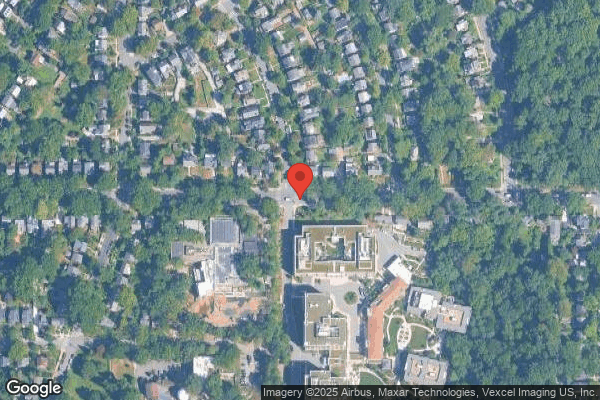

3050 MILITARY ROAD NW, WASHINGTON, DC 20015 (202) 363-8310
Non profit - Corporation 34 Beds INGLESIDE ENGAGED LIVING Data: November 2025 1 Immediate Jeopardy citation
Trust Grade
58/100
#2 of 17 in DC
Last Inspection: March 2025

Within standard 12-15 month inspection cycle. Federal law requires annual inspections.

Overview

Ingleside at Rock Creek has a Trust Grade of C, which means it is average and sits in the middle of the pack among nursing homes. It ranks #2 out of 17 facilities in Washington, D.C., indicating it is in the top half of local options. The facility's trend is improving, with issues decreasing from 16 in 2023 to 15 in 2025. Staffing is rated 5 out of 5 stars, but the turnover rate is concerning at 60%, which is higher than the state average. The facility has incurred $39,419 in fines, which is higher than 88% of other facilities in D.C., suggesting some compliance issues. On the positive side, it has more RN coverage than many facilities, which is beneficial for catching potential problems. However, there have been critical incidents, such as a resident with dementia eloping from the facility and not being monitored properly. Additionally, there were concerns about the lack of person-centered care plans for residents, which could impact their well-being. Overall, while there are strengths in staffing and RN coverage, the facility has significant areas for improvement regarding compliance and resident care.

Trust Score
C
58/100
In District of Columbia
#2/17
Top 11%
Safety Record
High Risk
Review needed
Inspections
Getting Better
16 → 15 violations
Staff Stability
⚠ Watch
60% turnover. Above average. Higher turnover means staff may not know residents' routines.
Penalties
○ Average
$39,419 in fines. Higher than 59% of District of Columbia facilities. Some compliance issues.
Skilled Nurses
✓ Good
Each resident gets 112 minutes of Registered Nurse (RN) attention daily — more than 97% of District of Columbia nursing homes. RNs are the most trained staff who catch health problems before they become serious.
Violations
⚠ Watch
42 deficiencies on record. Higher than average. Multiple issues found across inspections.
★★★★★
5.0
Overall Rating
★★★★★
5.0
Staff Levels
★★★★★
5.0
Care Quality
★★★☆☆
3.0
Inspection Score
Stable
2023: 16 issues
2025: 15 issues

The Good

  • 5-Star Staffing Rating · Excellent nurse staffing levels
  • 5-Star Quality Measures · Strong clinical quality outcomes
  • Full Sprinkler Coverage · Fire safety systems throughout facility
  • No fines on record

Facility shows strength in staffing levels, quality measures, fire safety.

The Bad

Staff Turnover: 60%

13pts above District of Columbia avg (46%)

Frequent staff changes - ask about care continuity

Federal Fines: $39,419

Above median ($33,413)

Moderate penalties - review what triggered them

Chain: INGLESIDE ENGAGED LIVING

Part of a multi-facility chain

Ask about local staffing decisions and management

Staff turnover is elevated (60%)

12 points above District of Columbia average of 48%

The Ugly 42 deficiencies on record

1 life-threatening
Mar 2025 15 deficiencies 1 IJ
CRITICAL (J) 📢 Someone Reported This

A family member, employee, or ombudsman was alarmed enough to file a formal complaint

Immediate Jeopardy (IJ) - the most serious Medicare violation

Accident Prevention (Tag F0689)

Someone could have died · This affected 1 resident

**NOTE- TERMS IN BRACKETS HAVE BEEN EDITED TO PROTECT CONFIDENTIALITY** Based on observation, record review and staff interviews for one (1) of 21 sampled residents, the facility staff failed to adequ...

Read full inspector narrative →
**NOTE- TERMS IN BRACKETS HAVE BEEN EDITED TO PROTECT CONFIDENTIALITY** Based on observation, record review and staff interviews for one (1) of 21 sampled residents, the facility staff failed to adequately monitor a resident with a history of Dementia and prior exit-seeking behaviors. Subsequently, the resident eloped from the third-floor unit located in Building One and was found wandering outside of the facility near a busy intersection. (Resident #24) Due to these failures, an Immediate Jeopardy (IJ) was identified on March 26, 2025, at 1:09 PM. The facility provided a plan of action to address the immediacy on March 26, 2025, at 6:43 PM and it was accepted. Review of the facility's plan determined that the immediate jeopardy was Past Non-Compliance due to corrections being completed prior to the start of the recertification date. The facility immediate jeoparyd existed until Janury 29, 2025. The findings included: According to CMS (Center for Medicaid and Medicare Services), an elopement score refers to a score used in elopement risk assessments and defines elopement as a resident leaving the premises or a safe area without authorization and/or any necessary supervision https://www.cms.gov. An undated facility policy titled, 'Wandering and Elopements' documented, The community will identify residents who are at risk of unsafe wandering and strive to prevent harm while maintaining the least restrictive environment for residents. Resident #24 was admitted to the facility on [DATE] with multiple diagnoses that included: Dementia, Syncope, Anxiety, Breast Cancer and Right Foot Fracture. A Physician's order dated 08/01/24 documented, Appraise and observe patient for changes in physical/mental condition every shift. An Elopement Evaluation dated 08/28/24 revealed that the facility coded the resident with an Elopement Risk Score of 9.0, indicating the resident was moderately at risk of eloping from the facility. A Care Plan dated 08/28/24 documented: -Focus: [Resident #24] is an elopement risk/wanderer (exit seeking) r/t (related to) History of attempts to leave facility unattended . Interventions: Distract [Resident #24] from wandering by offering pleasant diversions; structured activities, food, conversation, television, book; Identify pattern of wandering: Is wandering purposeful, aimless, or escapist? Is [the] resident looking for something? Does it indicate the need for more exercise? Intervene as appropriate; Provide structured activities: toileting, walking inside and outside, reorientation strategies including signs, pictures and memory boxes. -Focus: Impaired Cognitive Functioning r/t (related to): Dementia (Risk for Wandering / Elopement). Goal: [Resident #24] will not leave the faculty unattended. Interventions: Clearly identify resident's room & (and) bathroom, Engage resident in purposeful activity, Identify if there are triggers for wandering / eloping, Identify if there is a certain time of day wandering / elopement attempts occur, Identify if there is a pattern and purpose of wandering, Identify wandering / elopement de-escalation behaviors, Implement a scheduled toileting program, Implement scheduled hydration, if not contraindicated, Provide care in a calm and reassuring manner, Provide clear, simple instructions, Provide reorientation to surroundings, environment, Schedule time for regular walks / appropriate activity. A Health Status Note dated 10/01/24 documented, Resident wanders and she was redirected to her room and TV (television) area several times during this shift. A Physician's note dated 10/01/24 documented, She walks around throughout the hallway, some staff had noticed that she wanders of[f] from her floor, she was found on the west side of the third floor. Discussed with the staff to monitor her presence on the floor. A Health Status Note dated 10/08/24 documented, periods of confusion and Noted wandering on unit asking where the restroom is. She was redirected to her room as needed. An updated Anxiety care plan goal and intervention with an initiation date of 10/28/24 documented, Goal: [Resident #24] will show decreased episodes of anxiety through the review date. Intervention: Monitor/record occurrence of for [sic] target behavior symptoms (pacing, wandering, inappropriate response to verbal communication, etc.) and document per facility protocol. A Quarterly Minimum Data Set (MDS) assessment dated [DATE] documented: facility staff coded a Brief Interview for Mental Status (BIMS) summary score of 10, indicating the resident was moderately impaired. An Elopement Evaluation dated 11/28/24 revealed that the facility coded the resident with an Elopement Risk Score of 8.0, indicating the resident was moderately at risk of eloping from the facility. A PsychoGeriatric Services note dated 12/06/24 documented, Patient seen to assess for adjustment disorder post admission to SNF (Skilled Nursing Facility). Patient is alert and oriented x 1. Patient is a poor historian, noted with disorganized thought process in the setting of dementia. Patient was anxious and sundowning. Received reports of behavioral disturbance such as wandering around, exit seeking, packing belonging[s] and want[ing] to go home. A Physician's order dated 12/24/24 documented, Xanax Oral Tablet 0.5 MG (milligram) (Alprazolam) Give 1 tablet by mouth in the evening for anxiety/restless for 30 days. A PsychoGeriatric Services note dated 01/17/25 documented, Patient seen for consultation for worsening sundowning, increased confusion and restlessness as requested by facility. Patient received in hall way [hallway] pacing on the unit; patient was restless and irritated. Patient noted with confused and disorganized thought process. Staff reported worsening sundowning and going to other patient[s'] room[s], especially in the evening. Staff [are] unable to redirect patient most [of the] time. I review[ed] patient medication and start patient on Risperdal 0.5mg (milligram) at bedtime and Xanax 0.5mg daily. A Physician's order dated 01/17/25 documented, Valproic Acid level one time only for Dementia behavior with behavior disturbances. A review of the facility's staffing on 01/27/25 revealed that the census for 3-East was 16 and there was a total of nine (9) clinical staff who included RN's (Registered Nurses), LPN's (Licensed Practical Nurses) and CNA's (Certified Nursing Assistants). It should be noted that the weather forecasted on 01/27/25 was a High of 51 degrees Fahrenheit and a Low of 27 degrees Fahrenheit, with an average temperature of 41 degrees Fahrenheit between 3:15PM and 5:15PM. https://www.weatherspark.com. The Department of Health (DC Health) received the following incident report [Intake Number: DC~13409] on 01/28/25 which documented, On January 28, 2025, the Director of Nursing (DON), [Director of Nursing's name], was notified by [Certified Nursing Assistant's name], CNA, that a Dining Services employee, [Dining Services employee's name], had informed her that she had observed [Resident #24's] outside the facility walking along the sidewalk on [Street name] the previous day (01/27/25). A full investigation is underway. A review of the facility's investigative packet dated 01/28/25 revealed written Witness Statement forms from all staff who worked on 01/27/25, the day Resident #24 eloped from the facility. During a face-to-face interview conducted on 02/25/25 at 11:32 AM, Resident #24 was asked if she had left the facility unattended and without facility staff being aware and she stated, No. It should be noted that during an observation conducted while interviewing the resident, there was a Wander Guard device attached to her right ankle. During a face-to-face interview conducted on 02/28/25 at 11:35 AM, Employee #13 (RN, Registered Nurse) confirmed what she documented in her written statement during the facility's investigation, stating that she was not aware that the resident left the facility until the next day and added that, Resident #24 had showed wandering and exit-seeking behavior in the past at least one or two times a week prior to the elopement. She further stated that, She [would] always come to this door (door that leads from the resident's assigned unit on three 3-East to get to the hallway that leads to the locked door to get to the elevator exit and also to the entry onto three 3-West) trying to leave and she goes to the other unit because she knows to just wave her hand [over the entry panel] and the doors will open; and the staff from the other side would have to bring her back. I heard that she went out through the service elevator, but you have to use a staff key fob, so she must've went [sic] [gone] out behind a staff person. Now we do every 15-minute checks, we have a book that documents it [her location] and it's kept with the CNA who is assigned. Whoever sees her has to sit with her wherever she is and now she has a Wander Guard. There's an order to check the wander guard to see if it's working on the 3 to 11 (3:00PM to 11:30PM) shift. During a face-to-face interview conducted on 02/28/25 at 1:23PM, Employee #4 (Associate Executive Director) stated, It wasn't brought to my attention until January 28th, the DON (Director of Nursing) informed me that she (Resident #24) was observed outside of the building the day before around 4PM, but we had not been informed for 24 hours. We have security footage that she exited [the building] around 4:24PM on January 27th, then on video coming back [into the building] around 4:41PM escorted back by an employee who found her outside on the sidewalk on [street name]. The employee recognized her and was able to bring her back inside. She was out of the building approximately 20 minutes total. The employee was outside taking her break. She (Resident #24) exited the back door which is fob-protected now. A dining service employee was coming through with a cart, an agency staff (contracted employee) and did not know the resident, so the resident walked past her. She (the contracted dining service employee) didn't know the resident, so she didn't say anything to the resident. At the time neither elevator was fob-protected. We educated everybody on the full elopement protocol, what you do when you notice a resident missing and what to do when they return. There should be documents in the investigation of the education that was provided to the staff. During a face-to-face interview conducted on 02/28/25 at 1:40PM, Employee #2 (Director of Nursing, DON) stated, I became aware the day after on January 28th [2025] in the evening around 3[PM] or 4[PM]. It was CNA, [Employee #9's name], she said that there were rumors going around that [Resident's name] eloped yesterday. I asked why didn't anybody report it yesterday, and she said it was a rumor. I told her [she was] to act immediately, so I acted immediately and contacted [Employee #4's name] and we started our investigation. She got a head-to-toe assessment to make sure she had no injuries. During a face-to-face interview conducted on 02/28/25 at 2:09PM, Employee #16 (Director of Property Management) stated, We got the video footage at 2PM, February 1st, and I sent them the video footage when I got it at 7PM. A review of the facility's surveillance footage on 02/28/25 at 2:10PM revealed that Resident #24 was standing at a locked entry/exit door on her assigned unit of the third floor (3 East). It then showed an unidentified Dining Service employee accessing the locked door from the other side, after exiting the service elevator in the hallway, and entering the unit. The employee was pushing a cart that was approximately waist high and appeared to contain some food and drink items. As the Dining Service employee entered through the opened door, Resident #24 exited through the same doorway and proceeded to the hallway and approached the elevator. The Dining Service employee looked back toward the resident as she walked through the door, however, the employee continued to push the food cart onto the unit. The resident was then seen pushing a button on the Service Elevator door and entered once the elevator door opened. Further review of the facility's surveillance revealed that Resident #24 exited from the service elevator onto the first-floor garage level to gain access outside of the facility. It should be noted that the resident was found walking along [Street Name], approximately 1,000 feet from the facility by Employee #11 who escorted the resident back inside the building. During a face-to-face interview conducted on 03/03/25 at 9:56AM, Employee #11 (Dining Services Employee who found resident) confirmed what she documented in her written statement during the facility's investigation and added that, I went out on my break at the back of the building alongside [Street name], saw a familiar face walking toward me, and [I] noticed it was [Resident #24'sname]. She seemed sought of confused, but she seemed happy that someone knew her. I took her back inside the building and I saw one of the Nurse Supervisors [Employee #14's name] and Employees' #9 and #12's names] (CNA's) and I mentioned to all of them that I saw [Resident's name] outside and I used to see her wander to the next unit (3 West) and into other resident's rooms about three (3) to four (4) times a week. Pretty much everyone who worked on 3 East knew that she would wander around and try to leave the building. During a telephone interview conducted on 03/03/25 at 9:29AM, Employee #9 (Assigned CNA) confirmed what she documented in her written statement during the facility's investigation that she did not have any knowledge that the resident exit[ed] the building and added that, I would sometimes see her wander in another resident's room on the evening shift and other staff said they would see her do that too. [Resident's name] move around all the time trying to leave, they all know, I have to follow her around and bring her back, you can see it on the camera. She would pack her clothes trying to leave. All of them knew she did that. I told them if you open[ed] the [surveillance] camera you would see how much she did that and I had to bring her back. When Employee #9 was asked whom she was referring to as all staff, she stated the DON, ADON (Assistant Director of Nursing), all of the CNA's (Certified Nursing Assistants) and all of the Nurses knew [Resident's name] would always pack her things and try to leave. She knows to go to the exit [doors] and wait for the door to open. If she was a one-to-one (24-hour monitoring with facility staff at all times), I could watch her, but she was not so I decided to resign. During a face-to-face interview conducted on 03/05/25 at 9:40AM, Employee #14 (Nurse Supervisor) confirmed what she documented in her written statement during the facility's investigation and added that, I didn't know she left the facility. I knew the next day (01/28/25) and I heard, maybe two (2) days after that, that the dietary person brought her back into the building and handed her over to the CNA that was working with her (the resident). It was [Employee #9's name] that was assigned to her and I do know she has memory issues. During a face-to-face interview conducted on 3/05/25 at 2:20PM with Employees' #2 (Director of Nursing, DON) and #3 (Assistant Director of Nursing, ADON), they were asked about Resident #24's prior wandering and exit-seeking behaviors, in which they acknowledged the findings and stated, For nursing it's me (Employee #2), [Employee #3's name] and the Charge Nurse on the floor that's responsible for observing and identifying the resident's behaviors, then resolve it. The identified behavior is documented on the MAR (Medication Administration Record). Employee #2 further stated, It was brought up in the clinical meetings in 2024, not sure of exact dates, more so about her wandering. I was aware that she would wander to the door, but she was easily re-directed. On 03/24/25 at 4:16PM, the State Surveyor asked Employee #4 (Associate Executive Director) in writing, what was done on 02/25/25, and Employee #4's replied via email stating, The fob reader device was installed on both elevators on February 25, 2025. An email dated 03/25/25 at 12:29PM received from Employee #4 documented, Our date of compliance for the plan of correction for the identified elopement was February 25, 2025, at 8:01AM. A follow-up email dated 03/25/25 at 4:36PM from Employee #4 documented, The below email is from the technician who installed and activated the fob readers on both elevators. Upon review of the referenced email, it revealed the technician's name and email address that documented, The Fob access readers for elevators in building 1 floor 3 were installed and activated on Tuesday, February 25th at 8:00am. During a face-to-face interview conducted on 03/26/25 at approximately 1:30PM, Employees' #1 (Administrator), #2 (DON), #3 (ADON) and #4 (Associate Executive Director) were directed to provide a copy of the facility's documentation to the company requesting installation of the key fob reader for the main elevator and service elevator located on the Third Floor of Building one (1). At approximately 4:02PM on 3/26/25, Employee #1 (Administrator) was asked to provide a work order that documented the facility's request to have a key fob reader installed to both elevators on the Third Floor, Building one (1), as well as the company's work order that documented the completed installation and activation of the key fob readers. Employee #1 stated, We don't have a work order, we would've completed an invoice with the amount paid. It may not have a date and time on it. At approximately 5:30PM on 3/26/25, Employee #1 was asked to provide the invoice that documented the request for the key fob reader and the documentation the facility received back from the company that showed the date and time the request was completed and he stated, I'll see what I can find, but the documentation we have from the company we already sent that to you. Employee #1 was asked if he was referring to the email from the technician that was forwarded by Employee #4 that documented, The Fob access readers for elevators in building 1 floor 3 were installed and activated on Tuesday, February 25th at 8:00am, Employee #1 stated, Yes. It should be noted that the facility staff could not provide documented evidence of the invoice with date and time of the facility's request and completion of the installation and activation of the key fob readers for the main elevator and service elevator located in Building one (1) on the Third Floor when requested by the State Surveyor. Based on these findings, an Immediate Jeopardy (IJ)-J situation was identified on March 26, 2025, at 1:09PM. The facility staff provided their removal plan to the State Survey Team that was accepted on March 26, 2025, at 6:43PM. The plan included the following Interventions: - Medical Director notification on January 28th; - Resident's family notification (via phone) on January 28th; - Physical assessment of residents conducted on January 28th; - Ad hoc QAPI Meeting was conducted on January 28th; - BIMS assessment completed on January 28th; -Elopement assessment completed on January 28th ; - Education was conducted on all shifts for all staff members on IRC's Wandering and Elopement Policy on January 28th and 29th; -Elopement Drill was conducted on January 30th; -Meeting with resident's family conducted on January 28th; -Care plan meeting was conducted with resident's family on January; -A Psychiatric evaluation was conducted on January 31st; -As an additional precaution to the existing secure exit doors, a secondary measure of security was implemented with restricted fob access at each elevator that was initiated on January 30th and fully installed on February 25th at 8:00am.
CONCERN (D) 📢 Someone Reported This

A family member, employee, or ombudsman was alarmed enough to file a formal complaint

Potential for Harm - no one hurt, but risky conditions existed

Notification of Changes (Tag F0580)

Could have caused harm · This affected 1 resident

**NOTE- TERMS IN BRACKETS HAVE BEEN EDITED TO PROTECT CONFIDENTIALITY** Based on record review and staff interview for one (1) of 21 sampled residents, the facility's staff failed to immediately infor...

Read full inspector narrative →
**NOTE- TERMS IN BRACKETS HAVE BEEN EDITED TO PROTECT CONFIDENTIALITY** Based on record review and staff interview for one (1) of 21 sampled residents, the facility's staff failed to immediately inform the administrative staff or resident's physician that the resident accidentally spilled hot coffee on her chest and developed a blister on her chest several hours later. (Resident #1) The findings included: Resident #1 was admitted to the facility on [DATE] with multiple diagnoses including Osteoporosis, Arthritis, Dementia, Muscle weakness, and CVA with left side weakness. A care plan with a revision date of 08/20/23 documented in part, Focus- [Resident #1] had an activity of daily living self-care performance deficit related to impaired balance [and] limited mobility .Intervention [Resident #1] requires set up with meals . A quarterly Minimum Data Set (MDS) assessment dated [DATE] documented that the resident had a Brief Interview for Mental Status summary score of 9 indicating that the resident had a moderately impaired cognitive status. Additionally, the resident was coded for needing set-up with eating. An incident note dated 04/20/24 at 11:40 AM documented, At around 11:15am, resident requested for coffee then spilled it on herself in an attempt to drink the coffee. A weekly skin assessment note dated 04/30/24 at 11:40 AM documented in part, Skin condition is new, location-chest, type-blister, length- 3 centimeters (cm), width - 3 (cm), depth -0 (cm) .no pain mediation [medication] required .MD notified at 04/30/24 at 5 PM, no new orders received .[legal guardian] made aware of new skin condition on 04/30/24 at 5PM . A review of the facility's investigation related to the incident revealed a document titled Investigation Report dated 05/02/24 that documented in part, Nurse did not notify the supervisor, Director of Nursing, Assistant Director of Nursing, physician immediately after the incident. During a telephone interview on 03/03/25 at 11:30 AM, Employee #7 (assigned RN) stated that she worked for an agency and was working a double (day and evening shift) on 04/30/24. During the dayshift (7am-3PM) the resident accidentally spilled a cup of coffee on her chest. She did not report the incident until evening shift when she saw a blister on the resident's chest. Additionally, the employee said, Time just got away from me, and I didn't immediately tell anyone about the incident. And because I informed everyone later, the facility will not allow to work there anymore. During a face-to-face interview on 03/03/25 at 3:28 PM, Employee #8 (Evening Shift Supervisor/RN) stated that Employee #7 informed him at 7 PM on 04/30/24 that the resident accidentally spilled coffee on her chest at 11 AM and developed a blister on her chest on the evening shift. Employee #7 told him that she didn't notify the DON or the ADON who were here in the facility at the time of incident because the resident did not have any injuries. Additionally, Employee #8 said the employee should have informed administrative staff immediately after the incident happened. During a face-to-face interview on 03/03/25 at 4:00 PM, Employee #3 (ADON) stated that she worked on 04/30/24 and Employee #7 did not inform her of the incident. She indicated Employee #7 should have reported the incident when it happened. Also, the employee said that Employee #7 attended an in-service on Abuse, Neglect Policies and Investigation of Resident Injuries on 01/23/24, where timely reporting incidents was covered. It should be noted that review of in-service documents showed that Employee #7 attended the training.
CONCERN (D) 📢 Someone Reported This

A family member, employee, or ombudsman was alarmed enough to file a formal complaint

Potential for Harm - no one hurt, but risky conditions existed

Report Alleged Abuse (Tag F0609)

Could have caused harm · This affected 1 resident

**NOTE- TERMS IN BRACKETS HAVE BEEN EDITED TO PROTECT CONFIDENTIALITY** Based on record review and staff interviews for one (1) of 21 sampled residents, facility staff failed to report the results of ...

Read full inspector narrative →
**NOTE- TERMS IN BRACKETS HAVE BEEN EDITED TO PROTECT CONFIDENTIALITY** Based on record review and staff interviews for one (1) of 21 sampled residents, facility staff failed to report the results of an investigation of a resident elopement to the State Survey Agency within five (5) working days. (Resident #24) The findings included: An undated facility policy titled 'Wandering and Elopements' documented, The community will identify residents who are at risk of unsafe wandering and strive to prevent harm while maintaining the least restrictive environment for residents. Resident #24 was admitted to the facility on [DATE] with multiple diagnoses that included: Dementia, Syncope, Anxiety, Breast Cancer and Right Foot Fracture. An Elopement Evaluation dated 08/28/24 revealed that the facility coded the resident with an Elopement Risk Score of 9.0, indicating the resident was moderately at risk of eloping and it documented the following: 3. Does the resident have a history of elopement or attempted leaving the facility without informing staff? a. Yes. A Care Plan dated 08/28/24 documented, Focus: [Resident #24] is an elopement risk/wanderer (exit seeking) r/t (related to) History of attempts to leave facility unattended. Goal: [Resident #24] safety will be maintained through the review date. Interventions: Distract [Resident #24] from wandering by offering pleasant diversions; structured activities, food, conversation, television, book; Identify pattern of wandering . Provide structured activities: toileting, walking inside and outside, reorientation strategies including signs, pictures and memory boxes. A Care Plan dated 08/28/24 documented, Focus: Impaired Cognitive Functioning r/t (related to): Dementia (Risk for Wandering / Elopement). Goal: [Resident #24] will not leave the faculty [sic] [facility] unattended. Interventions: Clearly identify resident's room & (and) bathroom, Engage resident in purposeful activity, Identify if there are triggers for wandering / eloping, Identify if there is a certain time of day wandering / elopement attempts occur, Identify if there is a pattern and purpose of wandering, Identify wandering / elopement de-escalation behaviors. A Physician's note dated 10/01/24 documented, She walks around throughout the hallway, some staff had noticed that she wanders of[f] from her floor, she was found on the west side of the third floor. Discussed with the staff to monitor her presence on the floor. A Quarterly Minimum Data Set (MDS) assessment dated [DATE] documented: facility staff coded a Brief Interview for Mental Status (BIMS) summary score of 10, indicating the resident was moderately impaired. An Elopement Evaluation dated 11/28/24 revealed that the facility coded the resident with an Elopement Risk Score of 8.0, indicating the resident was still moderately at risk of eloping and it documented the following: 3. Does the resident have a history of elopement or attempted leaving the facility without informing staff? a. Yes. A PsychoGeriatric Services note dated 12/06/24 documented, Patient seen to assess for adjustment disorder post admission to SNF (Skilled Nursing Facility). Patient is alert and oriented x 1. Patient is a poor historian, noted with disorganized thought process in the setting of dementia. Patient was anxious and sundowning. Received reports of behavioral disturbance such as wandering around, exit seeking, packing belonging[s] and want[ing] to go home. A PsychoGeriatric Services note dated 01/17/25 documented, Patient seen for consultation for worsening sundowning, increased confusion and restlessness as requested by facility. Patient received in hall way [hallway] pacing on the unit; patient was restless and irritated. Patient noted with confused and disorganized thought process. Staff reported worsening sundowning and going to other patient[s'] room[s], especially in the evening. Staff [are] unable to redirect patient most [of the] time. An updated Care Plan dated 01/28/25 documented, Focus: 01/27/25: [Resident's name] had an actual episode of elopement; 01/28/25: [Resident's name] had a wanderguard placed to her right ankle with safety monitoring every 15 minutes. A state reportable was submitted. Goal: [Resident's name] will not have any episode of elopement through the review date and [Resident's name] will wear her wanderguard at all times to maintain safety. Interventions: Evaluate placement of wanderguard on right ankle in accordance with the 15-minute checks/as ordered. Check for comfort every shift. [Resident's name] triggers for wandering/eloping are anxiety and agitations. The resident's behaviors is de-escalated by reassuring and engaging in activities of her choice. Observe for exit seeking behaviors and redirect. Report to the nurse and MD (Medical Doctor)/NP (Nurse Practitioner). Wander guard-check functioning daily on the evening shift, to include placement and reviewing on surrounding skins. A review of the facility's investigative packet dated 01/28/25 revealed written Witness Statement forms from all staff who worked on 01/27/25, the day Resident #24 eloped from the facility, staffing assignments for units Three (3) East and Three (3) West, Elopement education and QAPI (Quality Assurance and Performance Improvement) meeting minutes of the facility's action plan. It should be noted that there was no documented evidence in the investigative packet that included the facility's full investigation into the resident's elopement, and knowledge of, or results of how the resident eloped from her assigned unit on Three (3) East to outside walking along a busy intersection, approximately 1,000 feet at the back of the facility. The Department of Health (DC Health) received the following incident report [Intake Number: DC00013409] on 01/31/25 at 8:44 PM that documented in part, A full investigation was conducted. Staff were interviewed . and Dining Services employee confirmed that on Monday, January 27, 2025, she had observed [Resident #24's name] outside the community waling along [Street name] . and a head-to-toe assessment was conducted . In-services were conducted regarding [Facility's name] Elopement Policy . Wander Guard was applied to [Resident's name] right ankle .Staff are conducting checks every 15 minutes to monitor her whereabouts. During a face-to-face interview conducted on 03/03/25 at 2:40 PM, Employee #2 (Director of Nursing) acknowledged the findings of the facility's follow-up investigation that was submitted to the State Agency, and stated, We were trying to get the follow-up submitted, at the time we didn't know how she (Resident #24) got out.
CONCERN (D) 📢 Someone Reported This

A family member, employee, or ombudsman was alarmed enough to file a formal complaint

Potential for Harm - no one hurt, but risky conditions existed

Investigate Abuse (Tag F0610)

Could have caused harm · This affected 1 resident

**NOTE- TERMS IN BRACKETS HAVE BEEN EDITED TO PROTECT CONFIDENTIALITY** Based on observation, record review and staff interviews, the facility failed to report the results of all investigations to the...

Read full inspector narrative →
**NOTE- TERMS IN BRACKETS HAVE BEEN EDITED TO PROTECT CONFIDENTIALITY** Based on observation, record review and staff interviews, the facility failed to report the results of all investigations to the State Survey Agency, within 5 working days of the incident for three (3) of 21 sampled investigations. (Residents' #1, #18, and #24) The findings included: 1. Resident #1 was admitted to the facility on [DATE] with multiple diagnoses including Dementia, CVA with left sided weakness, Osteoporosis, Arthritis, and Muscle weakness. A Situation, Background, Assessment, and Recommendation form dated 04/06/24 at 2:40 PM documented in part, Resident observed with swollen left hand, elbow and forearm. Presented with pain and withdraw affected areas to touch, medicated with scheduled Acetaminophen with slight effect. Collaborated with [physician's name] who made an assessment and x-ray ordered to left hand, forearm and left elbow due to pain and swelling . A nursing note dated 04/07/24 at 11:18 AM documented in part, patient alert and verbally responsive, able to make needs known, nurse noted abnormal x-ray results finding acute mildly displaced fracture of distal shaft of ulna. Writer called MD to notified pt c/o left wrist pain (6/10) with movement, pain med Tylenol 325mg 2 tablet PRN for pain given to patient to reduce pain .MD gave new order to send patient to ER around 10:26am transfer by EMS around 11:50am .alert with no change in mental status . A nursing note dated 04/07/24 at 8:21 pm documented in part, patient return from [hospital's name] around 8:20pm alert and verbally responsive, with final diagnosis of Displaced oblique fracture of shaft of left ulna, initial encounter for closed fracture. cast on left arm noted. patient denied pain or discomfort, numbness, tingling sensation . [vital signs] 137/65, 75, 98.3, R18 . A facility reported incident (DC~12808) dated 04/08/24 documented in part, [Resident #1] was observed with swollen left hand, elbow and forearm and expression of pain on 04/06/24. MD made aware. X-ray ordered to left hand, forearm and elbow . Result received 04/07/24. Left forearm and hand with impression acute mildly displaced fracture of the distal shaft of the ulna. 5mm well corticated fragment anterior to ulna styloid which may represent old avulsion fracture. Mild degree of osteopenia. Mild degree of osteoarthritis Left elbow x-ray result No radiographic evidence of acute fracture or dislocation .Resident interviewed prior transfer she denied any prior or recent incidents or falls . An Investigation Report form dated 04/12/24 documented that the resident had a history of cerebral vascular disease with left side weakness, osteoarthritis, and osteopenia. And the existing diagnoses can easily lead to fracture. Resident #1's medical record and the facility's investigative files lacked documented evidence that the facility provided the State Agency with results of their investigation related to Resident #1's acute mildly displaced fracture of the distal shaft of the ulna that occurred on 04/07/24. Multiple observations from 02/25/25 to 03/03/25 from 9 AM to 4 PM showed Resident #1 not wearing a cast or splint. Her left arm did not appear swollen or disfigured. And she was able to independently move upper extremities. During a face-to-face interview on 03/04/25 at approximately 2 PM, Employee #4 (Medical Director) stated that Resident #1's ulna fracture was a pathological fracture. During a face-to-face interview on 03/05/25 at approximately 10 AM, Employee #3 (ADON) stated that the investigation was conducted by the previous DON and she could not find documentation that the DON sent the results of the investigation to the State Agency. 2. Resident #86 was admitted on [DATE] with multiple diagnoses including Dementia, Pacemaker, and Muscle Weakness. A nursing note dated 08/01/24 21:46 [9:46 PM] documented in part, Stated that she was trying to transfer herself from the wheelchair to the toilet when she fell. She did not call for help. During an assessment, she could not move her right hand and right leg, screaming in pain and for the nurse to call an ambulance. Complained of severe right shoulder and right hip pain and refused to take pain medication when offered. MD was made aware and given an order to transfer to the nearest ER for evaluation . A facility reported incident dated 08/01/24 at 5:30pm documented in part, [Resident #86] observed lying on her right side in the bathroom floor in her room. During assessment, resident stated, I was trying to transfer myself from the wheelchair to the toilet when I fell. She did not call for help at this time, while the call light was within reach. Her assigned CNA had changed her brief earlier while she was in bed. On further assessment, the resident is unable to move her right hand and leg . An Investigation Report form dated 08/01/24 documented in part, [Resident #86] was high risk for fall. She had a history of unsteady gait .atrial fibrillation, history of cystitis .which have contributed her fall transferring herself without assistance was unusual for the resident. A nursing progress note dated 08/09/24 at 2301 [11:01 PM] documented in part, [Resident #86] was re-admitted to the facility on [DATE] at 21:30 [9:30 PM] from [hospital's name]. Chief Complaint: Mechanical fall. Fracture of the right pelvis, right acetabular fracture, and right Pubic ramus fracture with no surgical intervention. Pain management with Tylenol 500mg PRN for pain . Head-to-toe assessment done, no apparent distress, AOX2 .noted with multiple bruises on both upper and lower extremities. Redness on upper and lower lips . The resident's medical record and the facility's investigative files lacked documented evidence that the facility provided the State Agency with results of the investigation related to Resident #86's fall with major injury [fracture of the right pelvis, right acetabular and right pubic ramus] that occurred on 08/01/24. During a face-to-face interview on 03/05/25 at 3:33PM, Employee #8 (Evening supervisor/RN) stated that around 5:30 PM staff heard the resident yelling from her room. When he went into the room, he observed the resident lying on the floor in her bathroom. The resident could not move her left side. The resident said she fell when she was trying to transfer herself from her wheelchair to the toilet. The resident did not call staff for help. The resident was transferred to the hospital. During a face-to-face interview on 03/05/25 at approximately 3 PM, Employee #3 (ADON) stated that the investigation was conducted by the previous DON and she could not find documentation that the DON sent the results of the investigation to the State Agency. 3. Resident #24 was admitted to the facility on [DATE] with multiple diagnoses that included: Dementia, Syncope, Anxiety, Breast Cancer and Right Foot Fracture. An undated facility policy titled 'Wandering and Elopements' documented, The community will identify residents who are at risk of unsafe wandering and strive to prevent harm while maintaining the least restrictive environment for residents. An Elopement Evaluation dated 08/28/24 revealed that the facility coded the resident with an Elopement Risk Score of 9.0, indicating the resident was moderately at risk of eloping and it documented the following: 3. Does the resident have a history of elopement or attempted leaving the facility without informing staff? a. Yes. A Care Plan dated 08/28/24 documented, Focus: [Resident #24's name] is an elopement risk/wanderer (exit seeking) r/t (related to) History of attempts to leave facility unattended. Goal: [Resident #24's name] safety will be maintained through the review date. Interventions: Distract [Resident's name] from wandering by offering pleasant diversions; structured activities, food, conversation, television, book; Identify pattern of wandering . Provide structured activities: toileting, walking inside and outside, reorientation strategies including signs, pictures and memory boxes. A Care Plan dated 08/28/24 documented, Focus: Impaired Cognitive Functioning r/t (related to): Dementia (Risk for Wandering / Elopement). Goal: [Resident #24's name] will not leave the faculty [sic] [facility] unattended. Interventions: Clearly identify resident's room & (and) bathroom, Engage resident in purposeful activity, Identify if there are triggers for wandering / eloping, Identify if there is a certain time of day wandering / elopement attempts occur, Identify if there is a pattern and purpose of wandering, Identify wandering / elopement de-escalation behaviors. A Physician's note dated 10/01/24 documented, She walks around throughout the hallway, some staff had noticed that she wanders of[f] from her floor, she was found on the west side of the third floor. Discussed with the staff to monitor her presence on the floor. A Quarterly Minimum Data Set (MDS) assessment dated [DATE] documented: facility staff coded a Brief Interview for Mental Status (BIMS) summary score of 10, indicating the resident was moderately impaired. An Elopement Evaluation dated 11/28/24 revealed that the facility coded the resident with an Elopement Risk Score of 8.0, indicating the resident was still moderately at risk of eloping and it documented the following: 3. Does the resident have a history of elopement or attempted leaving the facility without informing staff? a. Yes. A PsychoGeriatric Services note dated 12/06/24 documented, Patient seen to assess for adjustment disorder post admission to SNF (Skilled Nursing Facility). Patient is alert and oriented x 1. Patient is a poor historian, noted with disorganized thought process in the setting of dementia. Patient was anxious and sundowning. Received reports of behavioral disturbance such as wandering around, exit seeking, packing belonging[s] and want[ing] to go home. A PsychoGeriatric Services note dated 01/17/25 documented, Patient seen for consultation for worsening sundowning, increased confusion and restlessness as requested by facility. Patient received in hall way [hallway] pacing on the unit; patient was restless and irritated. Patient noted with confused and disorganized thought process. Staff reported worsening sundowning and going to other patient[s'] room[s], especially in the evening. Staff [are] unable to redirect patient most [of the] time. An updated Care Plan dated 01/28/25 documented, Focus: 01/27/25: [Resident's name] had an actual episode of elopement; 01/28/25: [Resident's name] had a wanderguard placed to her right ankle with safety monitoring every 15 minutes. A state reportable was submitted. Goal: [Resident's name] will not have any episode of elopement through the review date and [Resident's name] will wear her wanderguard at all times to maintain safety. Interventions: Evaluate placement of wanderguard on right ankle in accordance with the 15-minute checks/as ordered. Check for comfort every shift. [Resident's name] triggers for wandering/eloping are anxiety and agitations. The resident's behaviors is de-escalated by reassuring and engaging in activities of her choice. Observe for exit seeking behaviors and redirect. Report to the nurse and MD (Medical Doctor)/NP (Nurse Practitioner). Wander guard-check functioning daily on the evening shift, to include placement and reviewing on surrounding skins. A review of the facility's investigative packet dated 01/28/25 revealed written Witness Statement forms from all staff who worked on 01/27/25, the day Resident #24 eloped from the facility, staffing assignments for units Three (3) East and Three (3) West, Elopement education and QAPI (Quality Assurance and Performance Improvement) meeting minutes of the facility's action plan. It should be noted that facility staff did not initiate an investigation into the resident's elopement until approximately 24 hours after she was found wandering outside of the facility by a Dining Services employee, then escorted back into the building. It should also be noted that there was no documented evidence in the investigative packet that the facility completed a thorough investigation and maintained documentation into the resident's elopement, including results of how the resident eloped from her assigned unit on Three (3) East to outside walking along a busy intersection, approximately 1,000 feet at the back of the facility. The Department of Health (DC Health) received the following incident report [Intake Number: DC00013409] on 01/28/25 that documented, On January 28, 2025, the Director of Nursing (DON), [Director of Nursing's name], was notified by [Certified Nursing Assistant's name], CNA, that a Dining Services employee, [Dining Services employee's name], had informed her that she had observed [Resident #24's name] outside the facility walking along the sidewalk on [Street name] the previous day (01/27/25) and a follow-up report submitted to the State Agency on 01/31/25 at 8:44PM that documented in part, A full investigation was conducted. Staff were interviewed . and Dining Services employee confirmed that on Monday, January 27, 2025, she had observed [Resident #24's name] outside the community walking along [Street name] . and a head-to-toe assessment was conducted . In-services were conducted regarding [Facility's name] Elopement Policy . Wander Guard was applied to [Resident's name] right ankle . Staff are conducting checks every 15 minutes to monitor her whereabouts. During a face-to-face interview conducted on 03/03/25 at 2:40PM, Employee #2 (Director of Nursing) acknowledged the findings of the facility's initial and follow-up investigations that were submitted to the State Agency.
CONCERN (D) 📢 Someone Reported This

A family member, employee, or ombudsman was alarmed enough to file a formal complaint

Potential for Harm - no one hurt, but risky conditions existed

Deficiency F0645 (Tag F0645)

Could have caused harm · This affected 1 resident

**NOTE- TERMS IN BRACKETS HAVE BEEN EDITED TO PROTECT CONFIDENTIALITY** Based on record review and staff interview, for one (1) of 21 sampled residents, facility staff failed to complete a Level I PAS...

Read full inspector narrative →
**NOTE- TERMS IN BRACKETS HAVE BEEN EDITED TO PROTECT CONFIDENTIALITY** Based on record review and staff interview, for one (1) of 21 sampled residents, facility staff failed to complete a Level I PASARR (Preadmission Screening and Resident Review) to determine if the resident had or may have had an MD (mental disability), ID (intellectual disability), or related condition for a resident that remained in the facility as a long-term care resident for longer than 30 days. Resident #15. The findings included: A review of a Level I Pre-admission Screen/Resident Review form dated 05/23/22 revealed that 'Section A' of the form documented that the resident's requirement for nursing facility services and length of stay would be less than 30 days and the remaining sections were incomplete, including Section E: Dementia which was left blank. Resident #15 was admitted to the facility on [DATE] with multiple diagnoses that included: Dementia, Bipolar Disorder, Major Depressive Disorder and Anxiety. A Quarterly Minimum Data Set (MDS) assessment dated [DATE] documented: facility staff coded a Brief Interview for Mental Status (BIMS) summary score of '01,' indicating the resident was severely impaired. It should be noted that Resident #15 had remained as a long-term care resident within the facility for over 30 days. During a face-to-face interview conducted on 02/26/25 at 1:19 PM, Employee #18 (Social Worker) acknowledged the findings and stated, It does say she would be here less than 30 days, but she needs an updated Level I [Pre-admission Screening and Resident Review] because she's been here longer. I will do an updated one. [Crossover: 22B DCMR Sec. 3231.12(e)]
CONCERN (D) 📢 Someone Reported This

A family member, employee, or ombudsman was alarmed enough to file a formal complaint

Potential for Harm - no one hurt, but risky conditions existed

Deficiency F0711 (Tag F0711)

Could have caused harm · This affected 1 resident

**NOTE- TERMS IN BRACKETS HAVE BEEN EDITED TO PROTECT CONFIDENTIALITY** Based on observation record reviews and staff interviews, for one (1) of 21 sampled residents, the physician failed to review a ...

Read full inspector narrative →
**NOTE- TERMS IN BRACKETS HAVE BEEN EDITED TO PROTECT CONFIDENTIALITY** Based on observation record reviews and staff interviews, for one (1) of 21 sampled residents, the physician failed to review a resident's total program of care, including medications and treatments, after five physician visits. Subsequently, a resident's blood pressure medication order was not clarified and corrected from 11/04/24 to 02/05/25. Resident #4 The findings included: Resident #4 was admitted to the facility on [DATE] with diagnoses that included: Dementia, Convulsions, Hypertension, Affective Mood Disorder, Anxiety Disorder, Difficulty in Walking, and Generalized Muscle Weakness. A review of Resident #4's medical record showed: A physician's order dated 08/23/24 at 9:00 AM that documented: Metoprolol Succinate Extended Release (ER)[Beta Blocker Antihypertensive] Oral Tablet 24 Hour 25 milligram (mg). Give 1 tablet by mouth one time a day for Hypertension. Hold for systolic blood pressure (SBP) less than 110 or heart rate (HR) less than 60. Administer with Metoprolol 50 mg tablet for total Metoprolol 75 mg daily. This order was discontinued on 11/4/2024. A physician's order dated 08/23/2024 at 9:00 that documented: Metoprolol Succinate Extended Release (ER) Oral Tablet 24 Hour 50 mg. Give 1 tablet by mouth one time a day. Hold for systolic blood pressure (SBP) less than 110 or heart rate (HR) less than 60. Please administer with Metoprolol 25 mg tablet for a total of Metoprolol 75 mg daily. This order was discontinued on 11/4/2024. A physician's visit note dated 08/29/24 and signed by Employee #6 (Medical Director), that documented: Thank you for referring [Name of Resident #4] number to me for evaluation. Below are my notes for the consultation for a Geriatrics House call intake visit .This patient is homebound due to multiple medical diagnoses as listed below. This patient has a history of: uncontrolled hypertension, seizures, progressive dementia, gait imbalance, and bed-bound status .Current outpatient medications on file before visit: .Metoprolol Tartrate (Lopressor) 25 milligram tablet. Take one tablet, 25 milligrams by mouth two times daily .There was no documented evidence that the physician reviewed the Metoprolol Succinate orders and reconciled them with the Resident's current medications and treatments at this visit. A written physician's order sheet dated 11/04/24 at 11:39 AM in Resident #4's paper chart that documented: 1.D/C (discontinue) previous Metoprolol order 2. Give Metoprolol Succinate ER 50 mg po (by mouth) BID (twice daily). Hold if SBP (systolic blood pressure) is less than 110 and pulse is less than 60 for HTN (Hypertension). The physician orders were checked and signed off by Employee #6 (Physician/Medical Director) and Employee #20 (Charge Nurse). A review of Resident #4's electronic health record (EHR) showed a new physician's order dated 11/04/24 at 9:00 PM that directed: Metoprolol Succinate ER Oral Tablet Extended Release 24 Hour 50 mg (Metoprolol Succinate). Give 1 tablet by mouth two times a day for hypertension. Hold for systolic blood pressure (SBP) less than 110 or heart rate (HR) less than 60. Please administer with Metoprolol 25 mg tablet for a total of Metoprolol 75mg daily. Of note the special instructions Please administer with Metoprolol 25 mg tablet for total of Metoprolol 75 mg daily, were still included in this order. The directions to: Give 1 tablet (Metoprolol 50 mg) by mouth two times (100 mg), exceeded the total dose of Metoprolol provided in the special instructions (75 mg daily). There was no documented evidence that new physician orders were initiated to clarify the total daily dose of the Resident's Metoprolol. This order was discontinued on 12/19/24. A review of Resident #4's November 2024, medication administration sheet (MAR) documented that facility staff administered Metoprolol in the following manner: 1. On 11/04/24 at 9:00 AM, Metoprolol Succinate Extended Release (ER) Oral Tablet 24 Hour 25 milligram (mg). Give 1 tablet by mouth one time a day for Hypertension .Administer with Metoprolol 50 mg tablet for total Metoprolol 75 mg daily. This order was discontinued on 11/04/24 at 6:05 PM. 2. Per the new physician's order starting on 11/04/24 at 9:00 PM, Metoprolol Succinate ER Oral Tablet Extended Release 24 Hour 50 MG (Metoprolol Succinate) Give 1 tablet by mouth two times a day for hypertension. Hold for SBP less than 110 and HR less than 60. Of note the special instructions that directed, Please administer with Metoprolol 25 mg tablet for total of Metoprolol 75mg daily, were included as part of this order - -This order had a discontinuation date of 12/19/2024. 3. Facility staff documented that the Resident had no systolic blood pressure below 110 or heart rate below 60 during November 2024. A physician's visit note dated 11/05/24 documented: .Current Medications on file prior to visit .Metoprolol tartrate (Lopressor) 25 mg tablet - Take 1 tablet 25 mg by mouth two 2) times daily . No current facility-administered medications on file prior to visit. Accurate medication list in PCC [Name of electronic health record program] . Assessment/ Plan .Hypertension (HTN), benign .Increase metoprolol . No additional instructions were documented in the physician's note for this visit. In addition, the current medications on file did not include the new physician orders for the Resident's Metoprolol that were initiated on 11/04/24. A review of a pharmacy delivery sheet dated 11/05/24 showed that 60 tablets of Metoprolol Succinate ER 50 mg were delivered to the facility for Resident #4. A Health Status Pharmacy Consult Note on 11/14/24 documented: Pharmacy Consult: MRR Completed. See Pharmacist Report for recommendations. The facility staff provided no documented evidence of the pharmacist's report for recommendations or the physician's response to the recommendations for this date. A Health Status Pharmacy Consult Note on 12/13/24 documented: Pharmacy Consult: MRR Completed. See Pharmacist Report for recommendations. The facility staff provided no documented evidence of the pharmacist's report for recommendations or the physician's response to the recommendations for this date. A physician's order dated 12/19/24 at 2:28 PM that directed: Metoprolol Succinate ER 50 mg Oral Tablet Extended Release 24 Hour. Give 2 tablet(s) by mouth one time a day for hypertension. Hold for SBP less than 110 and HR less than 60. Please administer with Metoprolol 25 mg tablet for a total of Metoprolol 75 mg daily, This order had a discontinuation date of 02/05/25. A physician visit note dated 12/20/24 and 12/30/24 and signed by Employee #6 (Medical Director that documented: .I have reviewed and reconciled the medication list with the patient today .Current Medications .Metoprolol succinate XL(Toprol-XL) 100 mg Oral Daily, Do not crush or chew .Assessment/Plan .Hypertension (HTN), benign, Improving with treatment above goal: Elevated BP (blood pressure), asymptomatic; .Increase metoprolol .There was no documented evidence that the physician reviewed the current medication changes made to the Resident's Metoprolol despite the discrepancy between the active physician's orders in the resident's electronic health record as of 12/19/24 and the physician's visit notes for 12/20/24 or 12/30/24. The active physician's orders in Resident #4's EHR directed, Metoprolol Succinate ER 50 mg Oral Tablet Extended Release 24 Hour. Give 2 tablet(s) by mouth one time a day (total daily dose would equal 100 mg). In addition, the special instructions to, Please administer 25 mg Metoprolol with 50 mg Metoprolol for a total daily dose of 75 mg, remained in the active order in the Resident's EHR. There was no documented evidence that the physician reviewed changes made to the frequency and total daily dose of the medication. A review of Resident #4's MAR for December 20-31, 2024, showed that facility staff documented that they administered Metoprolol at 9:00 AM daily per the following order: Metoprolol Succinate ER Oral Tablet Extended Release 24 Hour 50 MG (Metoprolol Succinate) Give 2 tablet(s) by mouth one time a day for hypertension. Hold for SBP less than 110 and HR less than 60. Please administer with Metoprolol 25 mg tablet for total of Metoprolol 75 mg daily. In addition, facility staff documented that the Resident had no systolic blood pressure below 110 or heart rate below 60. A physician visit note dated 01/02/25 and signed by Employee #6 (Medical Director) that documented: .I have reviewed and reconciled the medication list with the patient today .Current Medications .Metoprolol succinate XL(Toprol-XL) 100 mg Oral Daily. Do not crush or chew . There was no documented evidence that the physician reviewed or reconciled the discrepancies between the list of current medications in the physician visit note and the active order for the Metoprolol in the Resident's EHR. The special instructions to administer 25 mg Metoprolol with 50 mg Metoprolol for a total daily dose of 75 mg remained in the active order in the Resident's EHR. In addition, the current medication list for this visit did clarify the current dose and frequency of medication during the 01/02/25 physician visit. A pharmacist recommendation to physician, dated 01/14/25 documented: Resident has the following order Metoprolol (Succinate) ER 50 mg give one tablet by mouth two times a day for hypertension, hold for B/P less than 110 and HR less than 60. Please administer with Metoprolol 25 mg tablet for a total of Metoprolol 75 mg daily. Please clarify the dosage/directions for the above order. Resident does not have an order for Metoprolol 25 milligrams. Please clarify if the dosage changed and if so, please update directions. A physician visit note dated 01/16/25 and signed by Employee #6 (Medical Director) that documented: I have reviewed and reconciled the medication list with the patient today .Current Medications .Metoprolol Succinate XL(Toprol-XL) 50 mg 24 hr (hour) tablet. Take 2 tablets (100 mg) by mouth daily. Of note, as of 01/16/25, the active orders for Metoprolol Succinate 50 mg still included special instructions to Please administer with metoprolol 25 mg tablet for a total of metoprolol 75 mg daily. A physician's order dated 02/05/25 at 10:38 AM that directed: Metoprolol Succinate ER Oral Tablet Extended Release 24 Hour 50 mg. Give 1 tablet by mouth two times a day for hypertension. Hold for SBP less than 110 and HR less than 60. A physician's order dated 02/05/25 at 9:04 PM that directed: Metoprolol Tartrate Oral Tablet 50 mg. Give 1 tablet by mouth two times a day for hypertension. Hold for SBP less than 110 and HR less than 60. A review of Resident #4's MARs for January 1- February 1-5, 2025, showed that facility staff documented that they administered Metoprolol at 9:00 AM daily under the following order: Metoprolol Succinate ER Oral Tablet Extended Release 24 Hour 50 MG (Metoprolol Succinate) Give 2 tablet(s) by mouth one time a day for hypertension. Hold for SBP less than 110 and HR less than 60. Please administer with Metoprolol 25 mg tablet for a total of Metoprolol 75 mg daily. In addition, facility staff documented that the Resident had no systolic blood pressure below 110 or heart rate below 60. A review of the physician's response to the pharmacist recommendations for the MMR 01/14/25 that documented: Agree. Clarify order for Metoprolol: Patient's on 50 mg po (by mouth) BID (twice daily). The physician's response was signed and dated by Employee #6 (Medical Director) on 02/07/25. A review of Resident #4's medical record showed no documented evidence that Employee #6 (Medical Director) reviewed the Resident's total program of care, including medications and treatments during physician visits made on 08/29/24, 11/05/24, 12/20/24, 12/30/24, 01/02/25, and 01/16/25, as evidenced by: 1) Not documenting a review of the new medication orders for the resident's Metoprolol initiated on 08/23/24 at the physician visit on 08/29/24. The note contained only the list of the Resident's medication prior to the visit. 2) Not documenting a review of the new orders for the resident's Metoprolol initiated on 11/04/24 at the physician visit on 11/05/24. 3) Not documenting a review of the new orders for the resident's Metoprolol initiated on 12/19/24 at the physician visits on 12/20/24 and 12/30/24. 4) Not reconciling instructions on the current medication list to match the orders for Metoprolol during the 01/02/25 and the 01/16/25 physician visits. 5) Not documenting a physician's response to the pharmacist's recommendations for MMR 01/14/25 until 02/07/25 (22 days after the pharmacist's recommendation. During a telephone interview on 03/04/25 at 3:06 PM Employee #22(Consultant Pharmacist), stated that she recommended that the physician clarify Resident #4's Metoprolol dose 3 times before the physician responded. She stated that she documented that she had recommendations for Resident # 4 medication in the Health Status Pharmacy Consult Notes on 11/24/24, 12/13/24, and 01/14/25 and each time she faxed her recommendation to clarify the resident's Metoprolol dose on Pharmacist Recommendation to the Physician Report to the physician. She added that usually after she sends her recommendations to the physician, he or she will either respond to the form and fax it back to her, or they will update the medication order in the resident's electronic health record. She concluded the interview by stating that the physician never responded to her recommendation to clarify the resident's Metoprolol dose until 01/14/25. Of note, the facility did not provide documented evidence of the Pharmacist's Recommendation to the Physician Report, or the physician's response for 11/24/24 or 12/13/24. During a face-to-face interview on 03/05/25 at 3:27 PM, Employee #6 (Medical Director) acknowledged the finding and stated that when she conducts her physician visits with the residents, she is responsible for reviewing all medications and treatments for the Residents. She acknowledged that she changed Resident #4's Metoprolol dose several times to get the Resident's blood pressure under better control. She provided no further explanation for the lack of clarification of the Resident's Metoprolol orders after each dose change during the physician visits.
CONCERN (D) 📢 Someone Reported This

A family member, employee, or ombudsman was alarmed enough to file a formal complaint

Potential for Harm - no one hurt, but risky conditions existed

Deficiency F0726 (Tag F0726)

Could have caused harm · This affected 1 resident

**NOTE- TERMS IN BRACKETS HAVE BEEN EDITED TO PROTECT CONFIDENTIALITY** Based on record reviews and staff interviews, for one (1) of 21 sampled residents, the facility staff failed to ensure that all ...

Read full inspector narrative →
**NOTE- TERMS IN BRACKETS HAVE BEEN EDITED TO PROTECT CONFIDENTIALITY** Based on record reviews and staff interviews, for one (1) of 21 sampled residents, the facility staff failed to ensure that all licensed nurses had the specific competencies, and skill sets necessary to care for residents' needs. Resident #4. The findings included: Resident #4 was admitted to the facility on [DATE] with diagnoses that included: Dementia, Convulsions, Hypertension, Affective Mood Disorder, Anxiety Disorder, Difficulty in Walking, and Generalized Muscle Weakness. A review of Resident #4's medical record showed: A physician's order dated 08/23/24 at 9:00 AM that documented: Metoprolol Succinate Extended Release (ER) Oral Tablet 24 Hour 25 milligram (mg). Give 1 tablet by mouth one time a day for Hypertension. Hold for systolic blood pressure (SBP) less than 110 or heart rate (HR) less than 60. Administer with Metoprolol 50 mg tablet for total Metoprolol 75 mg daily. This order was discontinued on 11/4/2024. A physician's order dated 08/23/2024 at 9:00 that documented: Metoprolol Succinate Extended Release (ER) Oral Tablet 24 Hour 50 mg. Give 1 tablet by mouth one time a day. Hold for systolic blood pressure (SBP) less than 110 or heart rate (HR) less than 60. Please administer with Metoprolol 25 mg tablet for a total of Metoprolol 75 mg daily. This order was discontinued on 11/4/2024. A written physician's order sheet dated 11/04/24 at 11:39 AM in Resident #4's paper chart that documented: 1.D/C (discontinue) previous Metoprolol order 2. Give Metoprolol Succinate ER 50 mg po (by mouth) BID (twice daily). Hold if SBP (systolic blood pressure) is less than 110 and pulse is less than 60 for HTN (Hypertension). The physician orders were checked and signed off by Employee #4 (Medical Director) and Employee #20 (Charge Nurse). A review of Resident #4's electronic health record (EHR) showed a physician's order dated 11/04/24 at 9:00 PM that directed: Metoprolol Succinate ER Oral Tablet Extended Release 24 Hour 50 mg (Metoprolol Succinate). Give 1 tablet by mouth two times a day for hypertension. Hold for systolic blood pressure (SBP) less than 110 or heart rate (HR) less than 60. Please administer with Metoprolol 25 mg tablet for a total of Metoprolol 75mg daily. Of note, the special instructions to administer Metorporl 50 mg and Metoprolol 25 mg together for a total daily dose of Metoprolol 75 mg, were erroneously transcribed and included in this order. A review of Resident #4's November 2024, medication administration sheet (MAR) documented that facility staff administered Metoprolol in the following manner: 1. On 11/04/24 at 9:00 AM, Metoprolol Succinate Extended Release (ER) Oral Tablet 24 Hour 25 milligram (mg). Give 1 tablet by mouth one time a day for Hypertension .Administer with Metoprolol 50 mg tablet for total Metoprolol 75 mg daily. This order was discontinued on 11/04/24 at 6:05 PM. 2. Per the new physician's order starting on 11/04/24 at 9:00 PM, Metoprolol Succinate ER Oral Tablet Extended Release 24 Hour 50 MG (Metoprolol Succinate) Give 1 tablet by mouth two times a day for hypertension. Hold for SBP less than 110 and HR less than 60. Of note the special instructions that directed, Please administer with Metoprolol 25 mg tablet for a total of Metoprolol 75mg daily, were included as part of this order - -This order had a discontinuation date of 12/19/2024. 3. Facility staff documented that the Resident had no systolic blood pressure below 110 or heart rate below 60 during November 2024. A physician's order dated 12/19/24 at 2:28 PM that directed: Metoprolol Succinate ER 50 mg Oral Tablet Extended Release 24 Hour. Give 2 tablet(s) by mouth one time a day for hypertension. Hold for SBP less than 110 and HR less than 60. Please administer with Metoprolol 25 mg tablet for a total of Metoprolol 75 mg daily. A review of Resident #4's medication administration records (MARs) for December 20-31, 2024, January 1-31, 2025, and February 1-5, 2025, showed that facility staff documented that they administered Metoprolol at 9:00 AM daily per the following order: Metoprolol Succinate ER Oral Tablet Extended Release 24 Hour 50 MG (Metoprolol Succinate) Give 2 tablet(s) by mouth one time a day for hypertension. Hold for SBP less than 110 and HR less than 60. Please administer with Metoprolol 25 mg tablet for a total of Metoprolol 75 mg daily. In addition, facility staff documented that the Resident had no systolic blood pressure below 110 or heart rate below 60 From December 2024 to February 5, 2025. A review of the physician orders for Resident #4's Metoprolol in the electronic health record showed: 1. On 08/23/24, the Resident had physician orders for Metoprolol Succinate ER 50 mg and Metoprolol Succinate ER 25 mg, that directed facility staff to administer both doses together for a total daily dose of 75 mg Metoprolol. 2. On 11/04/24 the order for Metoprolol Succinate 25 mg was discontinued. 3. The physician order for Metoprolol Succinate ER 50 mg on 11/04/24 showed that the order was inaccurately transcribed by Employee # /Registered Nurse, and included in the special instructions to administer with Metoprolol 25 mg tablet for total of Metoprolol 75 mg daily. 4. The physician order for Metoprolol Succinate ER 50 mg on 12/19/24 showed that the order was inaccurately transcribed by Employee # /Registered Nurse, and included in the special instructions to administer with Metoprolol 25 mg tablet for total of Metoprolol 75 mg daily. This order was not discontinued until 02/05/25. 5. The medication administration records from 11/04/24 to 02/05/25 included orders for Metoprolol Succinate ER 50 mg that directed, Please administer with Metoprolol 25 mg tablet for total of Metoprolol 75 mg daily. Facility staff continued to document that they administered Metoprolol Succinate ER 50 mg with Metoprolol Succinate 25 mg for a total dose of 75 mg from 11/04/24 to 02/05/25 due to a medication transcription error made by Employee #20 (Charge Nurse). During a face-to-face interview on 03/06/25 at 9:07 AM, Employee #20 (Charge Nurse), stated that she transcribed Resident # 4's Metoprolol orders on 11/04/24 and 12/19/24. She explained that when transcribing new medication orders, she either hits the update button and types in the new medication order, or she hits the new order button and types in the new medication order. She then reviewed the orders that she transcribed on 11/04/24 and 12/19/24 and acknowledged that both orders contained special instructions to: Please administer with Metoprolol 25 mg tablet for a total of Metoprolol 75 mg daily, even though the Metoprolol 25 mg order was discontinued on 11/04/24 at 9:00 AM. The Employee acknowledged the finding and stated that she had received education and training on prescribing medication orders when she first became employed by the facility, but she was not made aware that clicking the update button transcribed special instructions from the prior medication orders into the new medication order and onto the medication administration records. During a face-to-face interview on 03/06/25 at 10:55 AM, Employee #3 (Assistant Director of Nursing/ADON )stated when the physician writes a new medication order on the Physician's Order Sheet in the resident's paper chart, the charge nurse for that Resident and the prescribing physician check the order and sign off on the orders with signature, date and time. The charge nurse then electronically transcribes the order into the Resident's electronic health record. She further explained that the charge nurse should discontinue the old orders for the medication first before entering a new order for the same medication. If the charge nurse clicks update medication order instead of clicking the new medication order, any special instructions that were included in the old medication order are automatically transcribed as special instructions into the new medication order. For this reason, we encourage the transcribing nurses not to use the update button to avoid errors. The Employee further stated that the medication administration records reflect the medication orders exactly as they were transcribed into the electronic health record. However, before administering medications the nurses should review the MAR to determine if there are any special instructions. If there is a discrepancy with any medication order on the MAR, then the nurse should call the pharmacy and/or call the physician before administering the medication. She then stated that she was immediately going to re-educate the Employee #20 (Charge Nurse).
CONCERN (D) 📢 Someone Reported This

A family member, employee, or ombudsman was alarmed enough to file a formal complaint

Potential for Harm - no one hurt, but risky conditions existed

Deficiency F0761 (Tag F0761)

Could have caused harm · This affected 1 resident

**NOTE- TERMS IN BRACKETS HAVE BEEN EDITED TO PROTECT CONFIDENTIALITY** Based on observation and staff interview for one (1) of 21 sampled residents, facility staff failed to ensure that a resident's ...

Read full inspector narrative →
**NOTE- TERMS IN BRACKETS HAVE BEEN EDITED TO PROTECT CONFIDENTIALITY** Based on observation and staff interview for one (1) of 21 sampled residents, facility staff failed to ensure that a resident's medication was properly labeled, as evidenced by an opened multi-dose bottle of a liquid supplement that was undated inside the resident's medication drawer. (Resident #4) The findings included: A facility policy titled 'Medication Storage in the Facility' with a revised date of August 2014 documented: Medications and biologicals are stored safely, securely and properly, following manufacturer's recommendations or those of the supplier and D. When the original seal of a manufacturer's container or vial is initially broken, the container or vial will be dated. 1) The nurse shall place a date opened sticker on the medication and enter the date opened and new date of expiration (Note: the best stickers to affix contain both a date opened and expiration notation line). Resident #4 was admitted to the facility on [DATE] with multiple diagnoses that included: Dementia, Seizures, Dilated Cardiomyopathy and Hypertension. A Physician's order dated 12/24/24 documented, Prosource/Active Liquid two times a day for wound healing Give 30ml (milliliter). A Significant Change in Status Minimum Data Set (MDS) assessment dated [DATE] documented that facility staff coded a Brief Interview for Mental Status (BIMS) summary score of 'Severely Impaired.' A Medication Administration Record (MAR) dated 2/1/25 - 2/28/25 documented that facility staff signed off on the MAR that the resident was being administered 'Prosource/Active Liquid' at 9:00AM and 5:00PM every day. During a medication storage observation on unit Three (3) [NAME] that was conducted on 02/25/25 at 2:29PM, it revealed that Resident #4's medication drawer contained a 887ml bottle of 'ProSource' with a pharmacy label that documented the resident's name, room number and physician's order for administration. It should be noted that the bottle of 'ProSource' was nearly empty and there was no date opened sticker on the opened bottle of liquid medication to indicate the date it was initially opened by the facility staff. During a face-to-face interview conducted on 02/25/25 at 2:30PM, Employee #21 (Registered Nurse) acknowledged the findings and stated, I will throw that out.
CONCERN (D) 📢 Someone Reported This

A family member, employee, or ombudsman was alarmed enough to file a formal complaint

Potential for Harm - no one hurt, but risky conditions existed

Food Safety (Tag F0812)

Could have caused harm · This affected 1 resident

Based on observations and staff interview, facility staff failed to prepare, and distribute foods under sanitary condition, as evidenced by one (1) of one (1) open, and expired eyewash solution in the...

Read full inspector narrative →
Based on observations and staff interview, facility staff failed to prepare, and distribute foods under sanitary condition, as evidenced by one (1) of one (1) open, and expired eyewash solution in the east-wing kitchen, one (1) of one (1) dishwashing machine in the east-wing kitchen that was leaking, one (1) of one (1) empty paper towel dispenser in the east-wing kitchen, one (1) of one (1) broken paper towel dispenser in the west-wing kitchen, one (1) of one (1) expired eyewash solution in the west-wing kitchen, no handwashing soap for one (1) of one (1) handwashing sink in the west-wing kitchen, dust and/or foreign substance accumulation in one (1) of one (1) walk-in refrigerator, and four (4) of four (4) ready-to-eat food packages that were inappropriately stored in the walk-in refrigerator. The findings included: During observations in dietary services on February 26, 2025, at approximately 9:00 AM, the following was observed: 1. A bottle of eyewash solution located in the east-wing kitchen was open and expired as of 09/2024. 2. One (1) of one (1) dishwashing machine in the east-wing kitchen leaked on both sides of the machine during the wash and rinse cycles. 3. There were no disposable paper towels provided at the hand washing sink located on the east-wing kitchen of the facility. 4. The paper towel dispenser mounted on the wall above the hand washing sink at the service kitchen located in the west-wing kitchen was broken. 5. A bottle of eyewash solution located in the west-wing kitchen expired as of 09/2024. 6. There was no handwashing soap available for use in one (1) of one (1) handwashing sink located in the west-wing kitchen. 7. Dust and/or foreign substance build-up was observed on wire guards for the air condenser fans and ceiling inside the walk-in refrigerator, and on a grate cover of the drop ceiling above hot food holding and cook line areas in the main kitchen located on the fourth floor. 8. One (1) of one package of ready-to-eat chopped celery, one (1) of one package of diced onions, one (1) of one package of diced carrots, and one (1) of one package of diced onions that were stored in the walk-in refrigerator at the main kitchen on the fourth floor showed signs of spoilage, such as discoloration, and texture change to touch. It was also observed that liquid matter accumulating inside those food packages was leaking out of the packaging materials and accumulating inside a holding pan where these food items were stored. During a face-to-face interview on March 3, 2025, at approximately 10:00 AM, Employee #17 acknowledged the findings.
CONCERN (D) 📢 Someone Reported This

A family member, employee, or ombudsman was alarmed enough to file a formal complaint

Potential for Harm - no one hurt, but risky conditions existed

Deficiency F0836 (Tag F0836)

Could have caused harm · This affected 1 resident

Based on a review of the facility's records and a staff interview, the facility failed to comply with the State Regulation (22B DCMR section 3211.5) for daily staffing ratios, as evidenced by not prov...

Read full inspector narrative →
Based on a review of the facility's records and a staff interview, the facility failed to comply with the State Regulation (22B DCMR section 3211.5) for daily staffing ratios, as evidenced by not providing the minimum daily average of at least six tenths (0.6) hours of resident care per resident by a Registered Nurse for seven (7) of 43 sampled days. The findings included: A review of the facility's daily staffing sheets revealed the following: On 03/30/24 the facility's resident census was 27. In addition, residents received 0.5 hours of direct nursing care being provided by a Registered Nurse. On 03/31/24 the facility's resident census was 27. In addition, residents received 0.2 hours of direct nursing care being provided by a Registered Nurse. On 04/30/24 the facility's resident census was 27. In addition, residents received 0.2 hours of direct nursing care being provided by a Registered Nurse. On 12/25/24 the facility's resident census was 29. In addition, residents received 0.5 hours of direct nursing care being provided by a Registered Nurse. On 12/31/24 the facility's resident census was 30. In addition, residents received 0.5 hours of direct nursing care being provided by a Registered Nurse. On 01/08/25 the facility's resident census was 29. In addition, residents received 0.5 hours of direct nursing care being provided by a Registered Nurse. On 02/11/25 the facility's resident census was 30. In addition, residents received 0.5 hours of direct nursing care being provided by a Registered Nurse. During a face-to-face interview conducted on 03/05/25 at 12:05PM, Employee #2 (Director of Nursing) was made aware of the concerns with staffing not being met. She acknowledged the findings. [Crossover: 22B DCMR Sec. 3211.5]
CONCERN (D) 📢 Someone Reported This

A family member, employee, or ombudsman was alarmed enough to file a formal complaint

Potential for Harm - no one hurt, but risky conditions existed

Room Equipment (Tag F0908)

Could have caused harm · This affected 1 resident

Based on observations and interview, facility staff failed to maintain essential kitchen equipment in good working condition as evidenced by one (1) of one (1) dishwashing machine in the east-wing kit...

Read full inspector narrative →
Based on observations and interview, facility staff failed to maintain essential kitchen equipment in good working condition as evidenced by one (1) of one (1) dishwashing machine in the east-wing kitchen that squirted a water solution on both sides of the machine during the wash and rinse cycles. The findings included: During a walkthrough of the east wing kitchen at approximately 9:00 AM, on February 26, 2025, one (1) of one (1) dishwashing machine repeatedly spurted a water solution on both sides of the machine during the wash and rinse cycles. During a face-to-face interview on March 3, 2025, at approximately 10:00 AM, Employee #17 acknowledged the findings.
CONCERN (D) 📢 Someone Reported This

A family member, employee, or ombudsman was alarmed enough to file a formal complaint

Potential for Harm - no one hurt, but risky conditions existed

Deficiency F0925 (Tag F0925)

Could have caused harm · This affected 1 resident

Based on observations and staff interview, facility staff failed to maintain an effective pest control program as evidenced by flying insects that were observed around one (1) of one (1) handwashing s...

Read full inspector narrative →
Based on observations and staff interview, facility staff failed to maintain an effective pest control program as evidenced by flying insects that were observed around one (1) of one (1) handwashing sink in the east-wing kitchen. The findings included: During observation on 2/26/2025 at approximately 9:00 am, flying insects were observed around one (1) of one (1) handwashing sink in the east-wing kitchen of the facility. During a face-to-face interview on 2/26/2025 at approximately 9:00 AM, Employee #17 stated that the facility receives pest extermination services from a professional company regularly and as needed. He added he will call the exterminator as soon as possible to address the problem. During a face-to-face interview on March 3, 2025, at approximately 10:00 AM, Employee #17 acknowledged the findings.
CONCERN (E) 📢 Someone Reported This

A family member, employee, or ombudsman was alarmed enough to file a formal complaint

Potential for Harm - no one hurt, but risky conditions existed

Comprehensive Care Plan (Tag F0656)

Could have caused harm · This affected multiple residents

**NOTE- TERMS IN BRACKETS HAVE BEEN EDITED TO PROTECT CONFIDENTIALITY** Based on record review and staff interviews for two (2) of 21 sampled residents, the facility staff failed to develop and implem...

Read full inspector narrative →
**NOTE- TERMS IN BRACKETS HAVE BEEN EDITED TO PROTECT CONFIDENTIALITY** Based on record review and staff interviews for two (2) of 21 sampled residents, the facility staff failed to develop and implement a person-centered care plan, and develop a discharge plan, for two residents. (Residents #8, #35.) The findings included: 1. The facility staff failed to develop a care plan for Resident #8's dysphagia which was documented in the medical record. Resident #8 was admitted to the facility on [DATE] with multiple diagnoses that included the following: Dementia Unspecified Severity with Agitation, Age Related Osteoporosis, Personal History of Urinary Tract Infection and Altered Mental Status. A review of a Facility Reported Incident (FRI) DC~12784, submitted to the State Agency on 04/01/24 revealed the following: At around 2.10am on 3-31-24 when the assigned charge nurse was making rounds, found patient on the floor beside her bed lying on her side, patient appear to be in no acute distress but complained of both knee and both ankle pain, suddenly 911 just arrived on the floor that patient called 911 that she fell . Patient actually confirmed that she called 911 due to pain in her ankle and knees. patient was picked up by 911 and taken [Hospital Name] Review of Resident #8's medical record revealed the following: A review of a Quarterly Minimum Data Set (MDS) assessment dated [DATE] revealed that the facility staff coded the resident as having moderate cognitive impairment, and signs and symptoms of possible swallowing disorder Coughing or choking during meals or when swallowing medications. A review of a document titled Speech Therapy SLP (speech language pathology) Evaluation and Plan of Treatment dated and signed on 11/14/24 documented the following Diagnoses Dysphagia , oral phase onset 11/13/24 Treatment Approaches May Include Oral function therapy Evaluate swallowing Frequency 2 times (s)/week duration 30 days intensity daily Cert (sp) (certification) period 11/13/24 -12/12/24 Initial Assessment /Current Level of Function & Underlying Impairments Assessment Summary, Reason for Therapy Clinical impressions Reasons for Skilled Services: Patient presents with mild oral dysphagia which necessitates skilled SLP services for dysphagia to reduce aspiration with training in postural maneuvers, instruct family/staff in compensation techniques, develop and instruct in compensatory strategies and design and implement strategies in order to improve ability to minimize aspiration , consume intake without fear/anxiety, use facilitative techniques that associated functional deficits without skilled intervention, the patient is at risk for: aspiration and compromised general health. A review of a document titled Rehab Training Form Swallowing dated 01/03/25 revealed that staff made hand written checks to the following areas for Resident #8: Nursing, Diet Consistency Mechanical soft liquid consistency, Regular (w/straw only), Program: Position resident as upright as possible, Resident to remain upright after meal for: 30 min (sp) (minute), Resident to be out of bed for meals, Low stimulus environment for meals, Cue resident to eat slowly, chew completely / no talking during chewing/swallowing, Cue resident to alternate bites and sips intermittently during meals, Resident to remain upright after meal for 30-45 minutes. It is noted that the document titled Rehab Training Form Swallowing is signed at the bottom by 2 direct care staff and the speech pathologist. A review of the medical record lacked documented evidence of a care plan for the residents' dysphagia. During a face-to-face interview conducted on 03/03/25 at 3:02 PM Employee #3 (Assistant Director Of Nursing) acknowledged the findings and stated that she is responsible for the care plan and that she would get the Rehab employee's to discuss the resident's care with the surveyors. During a face-to-face interview conducted on 03/03/25 at 3:19 PM Employee #5 (Director of Rehab) stated that the resident was seen by the speech pathologist and that he participates in the interdisciplinary team meetings, but he does not discuss the speech pathology during the interdisciplinary team meetings. During a face-to-face interview conducted on 03/04/25 at 10:00 AM Employee #19 (Speech Pathologist) stated that she had Resident #8 from 11/13/24 until 1/30/25. The resident was observed coughing when consuming food and liquids. Employee #19 went on to explain that she provides rehab training forms to the direct care staff on the unit which provides strategies to follow to minimize the risk of choking. 2. The facility staff failed to develop a discharge care plan for Resident #35. Resident #35 was admitted to the facility on [DATE] with multiple diagnoses that included the following: Malignant Neoplasm of Lower Lobe Right Bronchus or Lung, Unspecified Glaucoma, and Muscle Weakness. A review of Resident #35's medical record revealed the following: A review of a Social Services Progress note dated 12/23/24 at 3:41 PM, documented: SW (social worker) went to resident's room to complete social service assessment. Resident informed this SW (social worker) this was not a good time. Social services will continue to follow for discharge planning. A review of a physician order dated 01/03/25 documented Plan for patient to be readmitted to hospital on [DATE] for next cycle of chemo (chemotherapy) A review of a Discharge Summary Progress Note dated 01/06/25 at 7:18 PM Discharge Summary Resident discharged from facility at 6.51 via EMS (emergency medical services) accompanied by partner [Name] to [Hospital Name]. No complains of pain or any distress. A review of Resident #35's care plan showed that there was no documented evidence of a discharge care plan. During a face-to-face interview conducted on 03/05/25 at 10:55 AM, Employee #3 (Assistant Director of Nursing) acknowledged the findings and stated that the resident was discharged to the hospital for further treatments and the resident was from out of state and had plans to return to his home state. During a face-to-face interview conducted on 03/05/25 at 12:50 PM, Employee #18 (Social Worker) stated that the Resident and the resident's family did not want to participate in discharge planning and the discharge care plan is not there because it was not done.
CONCERN (E) 📢 Someone Reported This

A family member, employee, or ombudsman was alarmed enough to file a formal complaint

Potential for Harm - no one hurt, but risky conditions existed

Deficiency F0657 (Tag F0657)

Could have caused harm · This affected multiple residents

**NOTE- TERMS IN BRACKETS HAVE BEEN EDITED TO PROTECT CONFIDENTIALITY** Based on observations, record review staff interviews and resident interviews, for seven (7) of 21 sampled residents, the facili...

Read full inspector narrative →
**NOTE- TERMS IN BRACKETS HAVE BEEN EDITED TO PROTECT CONFIDENTIALITY** Based on observations, record review staff interviews and resident interviews, for seven (7) of 21 sampled residents, the facility staff failed to have documented evidence that the Interdisciplinary Team (IDT) reviewed or revised care plans or conducted care plan conferences after each Minimum Data Set (MDS) assessments. (Residents' #1, #7 #8, #13 #15, #18, and, #20). The findings included: 1. Resident #1 was admitted to the facility on [DATE] with multiple diagnoses including Osteoporosis, Arthritis, Dementia, Muscle weakness, and CVA with left side weakness. Resident #1's medical record showed the facility's staff completed the following MDS assessments: a quarterly on 08/31/24 and 12/01/24. However, further review of the record lacked documented evidence that the IDT reviewed Resident #1's care plan or conducted a care plan conference after the two (2) previously mentioned assessments. A review of the resident's face sheet revealed she had a legal guardian listed as her responsible party. An observation on 03/06/24 at approximately 9 AM showed the resident in her room laying in bed, alert and oriented to name only. Additionally, the staff was assisting the resident with breakfast. 2. Resident #7 was admitted to the facility on [DATE] with multiple diagnoses including Morbidy Obesity, Heart Disease and Breast Cancer. A review of Resident #7's medical record showed the facility's staff completed the following MDS assessments: a quarterly on 3/24/24, a comprehensive (annual) on 06/22/24 and a quarterly on 12/23/24. However, further review of the record lacked documented evidence that the IDT reviewed Resident #7's care plan or conducted a care plan conference after the three (3) previously mentioned assessments. A review of quarterly MDS assessment dated [DATE] documented that Resident #7 had a (BIMs) summary score of 14 indicating the resident had an intact cognitive status. A review of the resident's face-sheet revealed that the resident was her own responsible party. An observation on 03/06/25 at 11:00 AM showed the resident lying in bed well groomed. Additionally, the alert and oriented to name, time, place and situation. At the time of the observation, the resident stated, They don't conduct care plan conferences quarterly like are supposed too. 3. Resident #18 was admitted to the facility on [DATE] with multiple diagnoses including Dementia, Muscle Weakness, and Major Depression. A review of Resident #18's medical record showed the facility's staff completed the following MDS quarterly assessments on 01/24/24, 04/25/24, 08/20/24, and 01/20/25. However, further review of the record lacked documented evidence that the IDT reviewed Resident #18's care plan or conducted a care plan conference after the four (4) previously mentioned assessments. A review of the resident's face-sheet revealed the resident had a health care power-of-attorney as her responsible party. An observation on 03/06/25 at 9 AM showed the resident out-of-bed in a wheelchair sitting in a common area watching tv. Additionally, the resident was awake and oriented to name only and well groomed. During a face-to-face interview on 03/06/25 starting at 11:12 AM, Employee #3 (Assistant Director of Nursing) stated that the IDT reviews resident care plans and conduct care plan conferences after each quarterly and comprehensive (annual) assessment. At the time of the interview, the employee reviewed Resident #1, #7, and #18's medical records and said that she did not see documentation that the IDT reviewed the residents' care plan or when care plan conferences were conducted after each comprehensive or quarterly MDS assessment. 7. Resident #8 was admitted to the facility on [DATE] with multiple diagnoses that included the following: Dementia Unspecified Severity with Agitation, Age Related Osteoporosis, Personal History of Urinary Tract Infection and Altered Mental Status. A review of a Facility Reported Incident (FRI) DC# 00012784, submitted to the State Agency on 04/01/24 revealed the following: At around 2.10am on 3-31-24 when the assigned charge nurse was making rounds, found patient on the floor beside her bed lying on her side, patient appear to be in no acute distress but complained of both knee and both ankle pain, suddenly 911 just arrived on the floor that patient called 911 that she fell . Patient actually confirmed that she called 911 due to pain in her ankle and knees. patient was picked up by 911 and taken [Hospital Name] Review of Resident #8's medical record revealed the following: A review of the admission Minimum Data Set (MDS) assessment dated [DATE] showed that the facility staff coded the resident as having a Brief Interview for Mental Status (BIMS) Summary score of 13 indicating intact cognition, no impairment of the upper and lower extremities and no fall any time in the last month or prior to admission. A review of a [Progress Note] dated 03/31/24 at 4:03 AM, documented the following: Writer was rounding in the unit and observed Security Officer talking to resident at her bed side in (room number), while resident was laying on her right side on the floor by her bed, resident could not remember what had happened, but she had called 911 Emergency line. The Security Officer suddenly came to [Room Number] and stated that 911 had called him, apparently resident had called 911. Bed was in low position, resident's call light and bedside telephone were within reach, upon assessment resident stated that she was having pain in her ankles and knees, unable to rate her level of pain resident transferred to [Hospital Name] at 02:50AM, will continue with the plan of care. Review of a document titled After Visit Summary (hospital name) dated 03/31/24 documented the following: Start taking Cephalexin (Keflex) (Antibiotic) Reason for visit Fall Diagnosis Fall, initial encounter, Urinary tract Infection with hematuria site unspecified, Contusion of left knee initial encounter A review of Resident #8's care plan lacked any documented evidence of care plan interventions for the resident's urinary tract infection or contusion to the left knee that occurred after the residents unwitnessed fall. During a face-to-face interview conducted on 03/03/25 at 3:00 PM, Employee #3 (Assistant Director of Nursing) stated that she is the person responsible for updating the care plans and acknowledged the findings. Cross Reference 22B DCMR Sec. 3210.4 (c) 4. Resident #13 was admitted to the facility on [DATE] with multiple diagnoses that included: Dementia, Anxiety, Depression and Cerebral Atherosclerosis. A Face Sheet revealed Resident #13's daughter was her Responsible Party. An Annual Minimum Data Set (MDS) assessment dated [DATE] documented: facility staff coded a Brief Interview for Mental Status (BIMS) summary score of '04,' indicating the resident was severely impaired. It should be noted that there was no documented evidence that facility staff conducted a care plan meeting following the Quarterly MDS assessment dated [DATE]. A review of Resident #13's medical record revealed facility staff completed a Quarterly Minimum Data Set (MDS) assessment dated [DATE]. It should be noted that there was no documented evidence that facility staff conducted a care plan meeting following the Quarterly MDS assessment dated [DATE]. A review of Resident #13's medical record revealed facility staff completed a Quarterly Minimum Data Set (MDS) assessment dated [DATE]. It should be noted that there was no documented evidence that facility staff conducted a care plan meeting following the Quarterly MDS assessment dated [DATE]. A review of Resident #13's medical record revealed facility staff completed a Quarterly Minimum Data Set (MDS) assessment dated [DATE]. A Social Services note dated 10/29/24 at 17:33 (5:33PM) documented, IDT (Interdisciplinary Team) care plan meeting held today for [Resident #13's name]. A review of Resident #13's medical record revealed facility staff completed an Annual Minimum Data Set (MDS) assessment dated [DATE]. It should be noted that there was no documented evidence that facility staff conducted a care plan meeting following the Annual MDS assessment dated [DATE]. It should also be noted that Resident #13 had only one (1) care plan meeting conducted by facility staff between 01/27/24 and 03/03/25. During a face-to-face interview conducted on 03/03/25 at 2:30PM, Employees' #2 (Director of Nursing), Employee #3 (Assistant Director of Nursing) and Employee #18 (Social Worker) acknowledged the findings and stated, The comprehensive care plan is done seven (7) days after the resident assessment by each department: nursing, dietary, physical therapy, etc. The documentation for the care planning meetings will be found in the 'Progress Notes' tab under 'Social Services' for the IDT Meetings. Social Services will put in a note for the IDT (Interdisciplinary Team) meetings that were completed. 5. Resident #15 was admitted to the facility on [DATE] with multiple diagnoses that included: Cognitive Communication Deficit, Bipolar Disorder, Anxiety and Mitral Valve Prolapse. A Face Sheet revealed Resident #15 had a Responsible Party/Temporary Guardian. A Quarterly Minimum Data Set (MDS) assessment dated [DATE] documented: facility staff coded a Brief Interview for Mental Status (BIMS) summary score of '06,' indicating the resident was severely impaired. It should be noted that there was no documented evidence that facility staff conducted a care plan meeting following the Quarterly MDS assessment dated [DATE]. A review of Resident #15's medical record revealed facility staff completed a Quarterly Minimum Data Set (MDS) assessment dated [DATE]. A Social Services note dated 04/04/24 at 14:53 (2:53PM) documented, Resident had a care plan meeting with RP (Responsible Party)/POA (Power of Attorney) [name] and IDT (Interdisciplinary Team) in attendance. A review of Resident #15's medical record revealed facility staff completed a Quarterly Minimum Data Set (MDS) assessment dated [DATE] and a Significant change MDS dated [DATE]. It should be noted that there was no documented evidence that facility staff conducted a care plan meeting following the Quarterly or Significant Change MDS Assessments dated 07/01/24 and 07/29/24. A review of Resident #15's medical record revealed facility staff completed a Quarterly Minimum Data Set (MDS) assessment dated [DATE]. A Social Services noted dated 10/29/24 at 17:36 (5:36 PM) documented, IDT Care Plan meeting held for [Resident #15's name]. During a face-to-face interview conducted on 03/03/25 at 2:30PM, Employees #2 (Director of Nursing, DON), Employee #3 (Assistant Director of Nursing, ADON) and Employee #18 (Social Worker, acknowledged the findings and stated, The comprehensive care plan is done seven (7) days after the resident assessment by each department: nursing, dietary, physical therapy, etc. The documentation for the care planning meetings will be found in the 'Progress Notes' tab under 'Social Services' for the IDT Meetings. Social Services will put in a note for the IDT (Interdisciplinary Team) meetings that were completed. 6. Resident #20 was admitted to the facility on [DATE] with multiple diagnoses that included: Hypothyroidism, Venous Insufficiency, Chronic Kidney Disease and Lymphedema. A Face Sheet revealed Resident #20 was her own Responsible Party and had a Power of Attorney (POA). An admission Minimum Data Set (MDS) assessment dated [DATE] documented: facility staff coded a Brief Interview for Mental Status (BIMS) summary score of '09,' indicating the resident was moderately impaired. It should be noted that there was no documented evidence that facility staff conducted a care plan meeting following the admission MDS assessment dated [DATE]. A review of Resident #20's medical record revealed facility staff completed a Quarterly Minimum Data Set (MDS) assessment dated [DATE]. It should be noted that there was no documented evidence that facility staff conducted a care plan meeting following the Quarterly MDS assessment dated [DATE]. During a face-to-face interview conducted on 03/03/25 at 2:30PM, Employees' #2 (Director of Nursing, DON), Employee #3 (Assistant Director of Nursing) and Employee #18 (Social Worker) acknowledged the findings and stated, The comprehensive care plan is done seven (7) days after the resident assessment by each department: nursing, dietary, physical therapy, etc. The documentation for the care planning meetings will be found in the 'Progress Notes' tab under 'Social Services' for the IDT Meetings. Social Services will put in a note for the IDT (Interdisciplinary Team) meetings that were completed.
CONCERN (E) 📢 Someone Reported This

A family member, employee, or ombudsman was alarmed enough to file a formal complaint

Potential for Harm - no one hurt, but risky conditions existed

Drug Regimen Review (Tag F0756)

Could have caused harm · This affected multiple residents

**NOTE- TERMS IN BRACKETS HAVE BEEN EDITED TO PROTECT CONFIDENTIALITY** Based on record reviews and staff interviews, the attending physician failed to document in the resident's medical record a resp...

Read full inspector narrative →
**NOTE- TERMS IN BRACKETS HAVE BEEN EDITED TO PROTECT CONFIDENTIALITY** Based on record reviews and staff interviews, the attending physician failed to document in the resident's medical record a response, if applicable, to address the pharmacist identified irregularities for five (5) of 21 sampled residents. Residents' #18, #2, #8, #4 and #15. The findings included: An undated policy titled, Medication Regimen Review documented in part: - Policy Statement: The Consultant Pharmacist reviews the medication regimen of each resident at least monthly. - The attending physician documents in the medical record that the irregularities has been reviewed and what (if any) action was taken to address it. - The goal of the MRR (Medication Regimen Review) is to promote positive outcomes while minimizing adverse consequences and potential risks associated with medication[s]. - The Consultant Pharmacist provides the Director of Nursing Services and Medical Director with a written, signed and dated copy of all medication regimen reports. - Copies of medication regimen review reports, including physician responses, are maintained as part of the permanent medical record. 1. Resident #18 was admitted to the facility on [DATE] with multiple diagnoses including Osteoporosis. A physician order dated 10/29/24 instructed, Diclofenac Sodium External Gel 1 % 1GM (Topical) apply to both shoulders two times a day for shoulder pain. This order was discontinued on 02/07/24. Monthly Medication Reviews (MMR) dated 11/24/24, 12/13/24, and 01/14/25 documented, Diclofenac gel comes with a dosing care to measure the amount applied, in grams with each administration. Please clarify dosage amount, in grams, and update Point Click Care/Medication Administration Record appropriately. The resident's medical record lacked documented evidence of the physician response to address the pharmacist concerns related to clarifying the dose of Diclofenac gel noted by the pharmacist on 11/24/24 and 12/13/24. A physician order dated 02/07/25 instructed Diclofenac Sodium External Gel 1 % apply one (1) gram topically to both shoulders two times a day for shoulder pain. During a face-to-face interview on 03/05/25 at approximately 1:00 PM, Employee #6 (Attending Physician/Medical Director) stated that it was an oversight that she did not document her response for the pharmacist irregularities in the resident's record. She did, however, change the Diclofenac order on 02/07/25. 2. The facility staff failed to show documented evidence in the Resident #2's medical record of the pharmacist's recommendations and the physician's responses to those recommendations. Resident #2 was admitted to the facility 05/05/20 with multiple diagnoses that included the following: Malignant Neoplasm of Prostate, Aphasia, Adjustment disorder with Mixed Anxiety and Depressed Mood, and Major Depressive Disorder. A review of Resident #2's medical record revealed the following: A review of a Health Status Note dated 09/15/24 at 2:23 PM, documented Pharmacy Consult: MRR (Medication regimen review) See pharmacist report for recommendations. A review of a Health Status Note dated 05/20/24 at 8:37 PM documented Pharmacy Consult: MRR (Medication regimen review) See pharmacist report for recommendations. It is noted that the medical record lacked documented evidence of the pharmacist recommendations and of the physician's review or response to the recommendations. 3. The facility staff failed to show documented evidence in the medical record of the pharmacist recommendations and the physician's responses to the recommendations for Resident #8. Resident #8 was admitted to the facility on [DATE] with multiple diagnoses that included the following: Dementia Unspecified Severity with Agitation, Age Related Osteoporosis, Personal History of Urinary Tract Infection and Altered Mental Status. A Review of Resident #8's medical record revealed the following: A review of a Health Status Note dated 03/17/24 at 6:25 PM, documented Pharmacy Consult: aMRR (Medication regimen review) See pharmacist report for recommendations. A review of a Health Status Note dated 10/07/24 at 5:36 PM, documented Pharmacy Consult: MRR (Medication regimen review) See pharmacist report for recommendations. A review of a Health Status Note dated 02/09/25 at 1:30PM, documented Pharmacy Consult: MRR (Medication regimen review) See pharmacist report for recommendations. During a face-to-face interview conducted on 03/03/25 at 2:02 PM, Employee #3 (Assistant Director of Nursing) stated that the pharmacist recommendations are kept in a binder in the nursing office and that the physician reviews them every week at the risk meeting. During a face-to-face interview conducted on 03/03/25 at approximately 2:15 PM, Employee #3 and Employee #2 (Director of Nursing) both acknowledged the pharmacist recommendations and the physician's responses were not in the resident's medical records. During a telephone interview conducted on 03/04/25 at 3:18 PM, Employee #22 (Consultant Pharmacist) stated that she sends the recommendations via email to the medical director, director of nursing, assistant director of nursing and the administrator. Employee #22 stated she was not sure if she has access to the entire medical record and she does not come on site to review the paper chart that the facility keeps for each resident. 4. Resident #4 was admitted to the facility on [DATE] with diagnoses that included: Dementia, Convulsions, Hypertension, Affective Mood Disorder, Anxiety Disorder, Difficulty in Walking, and Generalized Muscle Weakness. A review of Resident #4's medical record showed: A physician's order dated 08/23/24 at 9:00 AM that documented: Metoprolol Succinate Extended Release (ER) Oral Tablet 24 Hour 25 milligram (mg). Give 1 tablet by mouth one time a day for Hypertension. Hold for systolic blood pressure (SBP) less than 110 or heart rate (HR) less than 60. Administer with Metoprolol 50 mg tablet for total Metoprolol 75 mg daily. This order was discontinued on 11/4/2024. A physician's order dated 08/23/2024 at 9:00 that documented: Metoprolol Succinate Extended Release (ER) Oral Tablet 24 Hour 50 mg. Give 1 tablet by mouth one time a day. Hold for systolic blood pressure (SBP) less than 110 or heart rate (HR) less than 60. Please administer with Metoprolol 25 mg tablet for a total of Metoprolol 75 mg daily. This order was discontinued on 11/4/2024. A written physician's order sheet dated 11/04/24 at 11:39 AM in Resident #4 's paper chart that documented: 1.D/C (discontinue) previous Metoprolol order 2. Give Metoprolol Succinate ER 50 mg po (by mouth) BID (twice daily). Hold if SBP (systolic blood pressure) is less than 110 and pulse is less than 60 for HTN (Hypertension). The physician orders were checked and signed off by Employees #6 (Medical Director) and Employee #20 (Charge Nurse). A review of Resident #4's electronic health record (EHR) showed a new physician's order initiated on 11/04/24 at 9:00 PM that directed: Metoprolol Succinate ER Oral Tablet Extended Release 24 Hour 50 mg (Metoprolol Succinate). Give 1 tablet by mouth two times a day for hypertension. Hold for systolic blood pressure (SBP) less than 110 or heart rate (HR) less than 60. Please administer with Metoprolol 25 mg tablet for a total of Metoprolol 75mg daily. Of note, the special instructions Please administer with Metoprolol 25 mg tablet for a total of Metoprolol 75 mg daily, were transcribed in this order. The order was discontinued on 12/19/24. A review of Resident #4's November 2024, medication administration sheet (MAR) documented that facility staff administered Metoprolol in the following manner: -On 11/04/24 at 9:00 AM, Metoprolol Succinate Extended Release (ER) Oral Tablet 24 Hour 25 milligram (mg). Give 1 tablet by mouth one time a day for Hypertension .Administer with Metoprolol 50 mg tablet for total Metoprolol 75 mg daily. This order was discontinued on 11/04/24 at 6:05 PM. - Per the new physician's order starting on 11/04/24 at 9:00 PM, Metoprolol Succinate ER Oral Tablet Extended Release 24 Hour 50 MG (Metoprolol Succinate) Give 1 tablet by mouth two times a day for hypertension. Hold for SBP less than 110 and HR less than 60. Of note the special instructions that directed, Please administer with Metoprolol 25 mg tablet for a total of Metoprolol 75mg daily, were included as part of this order - -This order had a discontinuation date of 12/19/2024. - Facility staff documented that the Resident had no systolic blood pressure below 110 or heart rate below 60 during November 2024. A Health Status Pharmacy Consult Note on 11/14/24 documented: Pharmacy Consult: MRR Completed. See Pharmacist Report for recommendations. The facility staff provided no documented evidence of the pharmacist's report for recommendations or the physician's response to the recommendations for this date. A Health Status Pharmacy Consult Note on 12/13/24 documented: Pharmacy Consult: MRR Completed. See Pharmacist Report for recommendations. The facility staff provided no documented evidence of the pharmacist's report for recommendations or the physician's response to the recommendations for this date. A physician's order dated 12/19/24 at 2:28 PM that directed: Metoprolol Succinate ER 50 mg Oral Tablet Extended Release 24 Hour. Give 2 tablet(s) by mouth one time a day for hypertension. Hold for SBP less than 110 and HR less than 60. Please administer with Metoprolol 25 mg tablet for a total of Metoprolol 75 mg daily, This order had a discontinuation date of 02/05/25. A review of Resident #4's MAR for December 20-31, 2024, showed that facility staff documented that they administered Metoprolol at 9:00 AM daily per the following order: Metoprolol Succinate ER Oral Tablet Extended Release 24 Hour 50 MG (Metoprolol Succinate) Give 2 tablet(s) by mouth one time a day for hypertension. Hold for SBP less than 110 and HR less than 60. Please administer with Metoprolol 25 mg tablet for a total of Metoprolol 75 mg daily. In addition, facility staff documented that the Resident had no systolic blood pressure below 110 or heart rate below 60. A pharmacist recommendation to the physician, dated 01/14/25 documented: Resident has the following order Metoprolol (Succinate) ER 50 mg give one tablet by mouth two times a day for hypertension, hold for B/P less than 110 and HR less than 60. Please administer with Metoprolol 25 mg tablet for a total of Metoprolol 75 mg daily. Please clarify the dosage/directions for the above order. Resident does not have an order for Metoprolol 25 milligrams. Please clarify if the dosage changed and if so, please update directions. A review of Resident #4's MARs for January 1- February 1-5, 2025, showed that facility staff documented that they administered Metoprolol at 9:00 AM daily under the following order: Metoprolol Succinate ER Oral Tablet Extended Release 24 Hour 50 MG (Metoprolol Succinate) Give 2 tablet(s) by mouth one time a day for hypertension. Hold for SBP less than 110 and HR less than 60. Please administer with Metoprolol 25 mg tablet for a total of Metoprolol 75 mg daily. In addition, facility staff documented that the Resident had no systolic blood pressure below 110 or heart rate below 60. On 02/07/25 a signed and dated physician's response dated to the pharmacist recommendations for the MMR 01/14/25 documented: Agree. Clarify order for Metoprolol: Patient's on 50 mg po (by mouth) BID (twice daily). This response was made 22 days after the pharmacist's recommendations on the 01/14/25 MMR. The facility provided no documented evidence of the physician's response to the pharmacist recommendations made on 11/14/24 or 12/13/24 in the resident's medical record. During a face-to-face interview on 03/03/25 at 2:21 PM, Employee #3 (Assistant Director of Nursing/ADON) stated the pharmacist MMR recommendations and physician responses for residents are kept in a binder, not in the resident's medical records. She added that the pharmacist documents her MMR recommendations on the Pharmacy Recommendation to the Prescriber Report, for each Resident and emails them to the Director of Nursing (DON), the Assistant Director of Nursing (ADON), and the Medical Director. The DON and ADON place the pharmacist's recommendations in a binder in the administrative office. The pharmacist's recommendations are then discussed during weekly risk management meetings with the physician. The physician then reviews, responds to, and signs the recommendations made by the pharmacist on the Pharmacy Recommendation to the Prescriber Report, and the reports are then placed back in the binder. A review of the binder showed no documented evidence of the physician's response to the pharmacist recommendations made on 11/14/24 or 12/13/24. The Employee acknowledged the finding and provided no further explanation for the missing pharmacist recommendations made on 11/14/24 or 12/13/24, or the physician's response, During a telephone interview on 03/04/25 at 3:06 PM, Employee #22 (Consultant Pharmacist) stated that she recommended that the physician clarify Resident #4's Metoprolol dose 3 times before the physician responded. She stated that she documented that she had recommendations for Resident # 4 medication in the Health Status Pharmacy Consult Notes on 11/24/24, 12/13/24, and 01/14/25 and each time sent a Pharmacist Recommendation to the Physician Report, with the recommendation to clarify the Resident#4'ss Metoprolol dose She added that usually after she sends the Pharmacist Recommendation to the Physician Report, to the physician, the physician either documents a response on the form and faxes it back to the pharmacist, or the physician will update the medication order in the resident's electronic health record. She concluded the interview by stating that she did not receive a response to her recommendation (on 01/14/25), to clarify Resident #4's Metoprolol dose from Employee #6 (Medical Director) until 02/07/25. 5. Resident #15 was admitted to the facility on [DATE] with multiple diagnoses that included: Dementia, Bipolar Disorder, Major Depressive Disorder and Anxiety. A Physician's order dated 05/22/22 documented, Buspirone HCl (Hydrochloride) Tablet 5 MG (milligram) Give 1 tablet by mouth two times a day for Anxiety and Sertraline HCl Tablet 50 MG Give 1 tablet by mouth one time a day for Depression/Anxiety. A Care Plan dated 06/24/24 documented: Focus - [Resident #15's name] is at risk for adverse reaction r/t (related to) PolyPharmacy .Interventions - Request physician to review and evaluate medications; Review [Resident's name] medications with MD (Medical Director)/Consulting pharmacist for: duplicate medications or prescriptions, proper dosing, timing and frequency of administration, adverse reactions, supporting diagnosis; Review Pharmacy consult recommendations, and follow up as indicated. A Health Status Note dated 11/21/24 at 07:04 (7:04AM) and e-signed (electronically signed) by the facility's Pharmacy Consultant documented, MRR Completed. See Pharmacist Report for recommendations. It should be noted that there was no documented evidence of the Pharmacist's report or recommendation, nor the Physician's response to the report/recommendations in the resident's record. A Quarterly Minimum Data Set (MDS) assessment dated [DATE] documented: facility staff coded a Brief Interview for Mental Status (BIMS) summary score of '01,' indicating the resident was severely impaired. During a face-to-face interview conducted on 02/27/25 at 9:00AM, Employee #2 (Assistant Director of Nursing) acknowledged the findings and stated, I looked everywhere and I cannot find it (the pharmacist's recommendations and the physician's response). Cross Reference 22B DCMR Sec. 3231.9
Dec 2023 16 deficiencies
CONCERN (D) 📢 Someone Reported This

A family member, employee, or ombudsman was alarmed enough to file a formal complaint

Potential for Harm - no one hurt, but risky conditions existed

Deficiency F0569 (Tag F0569)

Could have caused harm · This affected 1 resident

**NOTE- TERMS IN BRACKETS HAVE BEEN EDITED TO PROTECT CONFIDENTIALITY** Based on record review and staff interviews for two (2) of three (3) sampled residents, facility staff failed to notify Medicaid...

Read full inspector narrative →
**NOTE- TERMS IN BRACKETS HAVE BEEN EDITED TO PROTECT CONFIDENTIALITY** Based on record review and staff interviews for two (2) of three (3) sampled residents, facility staff failed to notify Medicaid residents when the amount in their account reached $200 of the SSI (supplemental security income) resource limit for both resident's accounting of funds. Residents' #6 and #7. The findings included: According to District of Columbia Department of Health Care Finance, .You may be eligible for Medicaid coverage of Long Term Care (LTC) services, if you: .Have resources up to $4,000 (asset limits) for one person . https://dhcf.dc.gov/service/long-term-care-ltc 1. Resident #6 was admitted to the facility on [DATE]. A review of the facility Trial Balance record dated 11/03/23, showed a current balance of $4,296.15 for Resident #6. 2. Resident #7 was admitted to the facility on [DATE]. A review of the facility Trial Balance record dated 11/03/23, showed a current balance of $4,497.67 for Resident #7. A face-to-face interview was conducted on 12/06/23 at 1:00PM with Employee#2, [Director of Nursing] to determine if a letter was sent and received by the residents and/or their Power of Attorney notifying them that the resident(s) reached within $200 of the SSI resource limit and they may lose eligibility for Medicaid for both residents' personal accounting funds. She stated, I will look for it.' A blank copy of the notification letter was made available to the surveyor. During a face-to-face interview on 12/07/23, at approximately 1:00 PM with Employee #2. She acknowledged the findings when a copy/receipt of the letter of notification to the resident/POAs was not presented to be reviewed by the surveyor. Facility staff failed to notify Residents' #6, #7, and/or their Power of Attorney(s) when the amount of funds in their account reached within $200 of the SSI resource limit and they may lose eligibility for Medicaid for both residents' personal accounting funds.
CONCERN (D) 📢 Someone Reported This

A family member, employee, or ombudsman was alarmed enough to file a formal complaint

Potential for Harm - no one hurt, but risky conditions existed

Deficiency F0570 (Tag F0570)

Could have caused harm · This affected 1 resident

Based on record review and staff interview, the facility staff failed to provide adequate surety bond coverage to assure the security of all residents' personal funds deposited with the facility. The ...

Read full inspector narrative →
Based on record review and staff interview, the facility staff failed to provide adequate surety bond coverage to assure the security of all residents' personal funds deposited with the facility. The Resident census on the first day of the survey was 30. The findings included: A review of the Surety Bond dated the effective date of 05/06/23, and expiration date of 05/06/24, shall be continued until canceled by the Surety Provider .or the Oblige (the Facility) in the amount of $100,000.00. A review of the Resident Funds Trust Account RMFS (Resident Fund Management Service) statements for 08/01/23, to 10/03/23, revealed the following bank account balance: Totaled for statements dated: August 2023 = $123,976.18 September 2023 = $124,237.60 October 2023 = $124,359.08 There was no evidence that the facility staff maintained a surety bond to cover the amount of funds in the resident funds account for August 2023 - October 2023. During a face-to-face interview on 12/07/23, at approximately 12:20 PM with Employee #2. She acknowledged the findings.
CONCERN (D) 📢 Someone Reported This

A family member, employee, or ombudsman was alarmed enough to file a formal complaint

Potential for Harm - no one hurt, but risky conditions existed

Notification of Changes (Tag F0580)

Could have caused harm · This affected 1 resident

**NOTE- TERMS IN BRACKETS HAVE BEEN EDITED TO PROTECT CONFIDENTIALITY** Based on record reviews, resident representative, and staff interviews, for one (1) of 22 sampled residents, the facility staff ...

Read full inspector narrative →
**NOTE- TERMS IN BRACKETS HAVE BEEN EDITED TO PROTECT CONFIDENTIALITY** Based on record reviews, resident representative, and staff interviews, for one (1) of 22 sampled residents, the facility staff failed to show documented evidence of notifying Resident #2's responsible party of a change in the resident's medical status on 12/01/22 and of the residents unwitnessed fall that occurred on 01/29/23. The findings included: A review of the facility policy titled Change in a Resident's Condition or Status with a revision date of 02/2021, instructs staff to do the following: .Unless otherwise instructed by the resident, a nurse will notify the resident's representative when: the resident is involved in any accident or incident that results in an injury including injuries of an unknown source; .Except in medical emergencies, notifications will be made within twenty-four (24) hours of a change occurring in the resident's medical/mental condition or status . Resident #2 was admitted to the facility on [DATE], with multiple diagnoses that included Dementia, Primary Generalized Osteoarthritis, and Muscle Weakness. A review of Resident #2's medical record revealed the following: A review of Resident #2's face sheet revealed that the resident has a Responsible party who is also listed as the financial-power of attorney and the care guardian- power of attorney. The resident also has four contacts with the relationship identified as friends and emergency contacts; and a nephew listed as an emergency. A review of the Quarterly Minimum Data Set (MDS) assessment dated [DATE], shows that the facility staff coded the resident as having severe cognitive impairment. [E-Interact Change in Condition Evaluation] 12/01/22 at 12:55 PM .Was called to the resident's room by nurse assistant .Observed that the resident has open and discoloration on sacral area. MD (Medical Doctor) and family made aware . It was noted during a review of the following documentation: [E Interact Change in Condition Evaluation] 12/01/22 at 12:55PM in the section titled Resident Representative Notification facility staff documented notifying the residents relative (name or relationship not documented); however, there is no documented evidence that the resident's Guardian/Power of Attorney was notified. [E-Interact Change in Condition Evaluation] 01/29/23 at 4:15 AM .Staff nurse called to room .by PCT (Patient Care Technician) while rounding on unit and resident was observed sitting on the floor and leaning on the side of the bed, when questioned, resident responded saying; she was following instructions, resident alert and forgetful, denies pain . It was noted during a review of the following documentation: [E Interact Change in Condition Evaluation] 01/29/23 at 4:15 AM, in the section titled Resident Representative Notification facility staff documented notifying the residents relative and there is no documented evidence that the resident's Guardian/Power of Attorney was notified. During a telephone interview conducted on 11/29/23, at approximately 10:00 AM, with the Power of Attorney for Medical Care and Guardian for Resident #2, stated that the facility has not communicated when there has been a change in condition with Resident #2. During a face-to-face interview conducted on 12/07/23 at approximately 10:00 AM, Employee #2 (Director of Nursing) stated that the charge nurse should contact the residents Power of Attorney or Responsible party and it was not documented in the resident's notes.
CONCERN (D) 📢 Someone Reported This

A family member, employee, or ombudsman was alarmed enough to file a formal complaint

Potential for Harm - no one hurt, but risky conditions existed

Abuse Prevention Policies (Tag F0607)

Could have caused harm · This affected 1 resident

**NOTE- TERMS IN BRACKETS HAVE BEEN EDITED TO PROTECT CONFIDENTIALITY** Based on record reviews and staff interviews for one (1) of 22 sampled residents, the facility staff failed to implement its wri...

Read full inspector narrative →
**NOTE- TERMS IN BRACKETS HAVE BEEN EDITED TO PROTECT CONFIDENTIALITY** Based on record reviews and staff interviews for one (1) of 22 sampled residents, the facility staff failed to implement its written policies and procedures for allegations of potential abuse neglect as evidenced by the facility staff failing to show documented evidence of conducting a thorough investigation into a residents fall. (Residents #135) The findings included: A review of the facility's policy titled Accident and Incident Report with a revision date of 10/2019, documented All accidents or incidents involving residents will be documented on the Accident/ Incident Report Form .The Nurse Supervisor or Charge Nurse shall initiate and complete an Accident/incident form at the time of the incident. The following data will be documented on the incident form .brief description of incident -facts only, no assumptions should be made. Document only what is observed A review of a facility policy titled Abuse, Neglect, Exploitation or Misappropriation Reporting and Investigating with a revision date of 4/2023, documented .If resident abuse, neglect, exploitation, misappropriation of resident property or injury of unknown source is suspected, the suspicion must first be reported to the supervisor, the supervisor to Licensed Nursing Home Administrator, and to other officials according to state law The Licensed Nursing Home Administrator or designee reports the allegation immediately reports his or her suspicion to the following persons or agencies: The state licensing/certification agency responsible for surveying/licensing the community; The local/state ombudsman; The resident's representative All allegations are thoroughly investigated . Within five (5) business days of the incident, the administrator will provide a follow-up investigation report . The facility staff failed to implement its policies and procedures to conduct a thorough investigation into Resident #135's unwitnessed fall that occurred on 10/12/22. Resident #135 was admitted to the facility on [DATE], with multiple diagnoses that included Unspecified Fracture of Right Femur, Subsequent Encounter for Closed Fracture with Routine Healing, Repeated Falls, Syncope and Collapse. A review of a Facility Reported Incident (FRI) DC#00011029, submitted by the facility to the State Agency on 10/13/22, documented .At about 9.10 pm, resident was observed lying on the floor in her room (on her back side) with face up. Head to toe assessment done. No injury or skin issues noted. Resident complain of pain and medicated with PRN (as needed) pain medication . A review of Resident #135's medical record revealed the following: [Health Status Note] 10/12/22 at 10:37 PM, documents .At about 9.10pm. Resident was observed on the floor in her room, lying on her back. Resident states she don't know what happen, and can't remember is (if) (Sp) she hits her head on the floor. Supervisor on duty notified. MD (medical doctor) gave an order to transfer resident to hospital for further evaluation . [Physician Order] 10/12/22 Transfer resident to nearest ER (emergency room) for further evaluation secondary to unwitnessed fall . A review of the facility's incident investigation showed that it consisted of the intake that the facility submitted to the State Agency and a document titled Incident investigation. It was noted that the incident investigation documented one staff's encounter with the resident after the resident fell on [DATE]. The facility was unable to provide documented evidence that a thorough investigation was conducted into Resident #135's unwitnessed fall that occurred on 10/12/22. During a face-to-face interview conducted on 12/07/23 at 3:33 PM, Employee # 16 (Registered Nurse Supervisor) stated that nobody witnessed what happened and the family agreed to send the resident to the hospital. During a face-to-face interview conducted on 12/07/23 at approximately 3:45 PM, Employee #2 (Director of Nursing) stated that the investigation was not complete and acknowledged the findings.
CONCERN (D) 📢 Someone Reported This

A family member, employee, or ombudsman was alarmed enough to file a formal complaint

Potential for Harm - no one hurt, but risky conditions existed

Investigate Abuse (Tag F0610)

Could have caused harm · This affected 1 resident

**NOTE- TERMS IN BRACKETS HAVE BEEN EDITED TO PROTECT CONFIDENTIALITY** Based on record reviews and staff interviews for one (1) of 22 sampled residents, the facility staff failed to show documented e...

Read full inspector narrative →
**NOTE- TERMS IN BRACKETS HAVE BEEN EDITED TO PROTECT CONFIDENTIALITY** Based on record reviews and staff interviews for one (1) of 22 sampled residents, the facility staff failed to show documented evidence of conducting a thorough investigation into a residents fall. (Resident #135) The findings included: A review of the facility's policy titled Accident and Incident Report with a revision date of 10/2019, documented All accidents or incidents involving residents will be documented on the Accident/ Incident Report Form .The Nurse Supervisor or Charge Nurse shall initiate and complete an Accident/incident form at the time of the incident. The following data will be documented on the incident form .brief description of incident -facts only, no assumptions should be made. Document only what is observed A review of a facility policy titled Abuse, Neglect, Exploitation or Misappropriation Reporting and Investigating with a revision date of 4/2023, documented .If resident abuse, neglect, exploitation, misappropriation of resident property or injury of unknown source is suspected, the suspicion must first be reported to the supervisor, the supervisor to Licensed Nursing Home Administrator, and to other officials according to state law The Licensed Nursing Home Administrator or designee reports the allegation immediately reports his or her suspicion to the following persons or agencies: The state licensing/certification agency responsible for surveying/licensing the community; The local/state ombudsman; The resident's representative . All allegations are thoroughly investigated . Within five (5) business days of the incident, the administrator will provide a follow-up investigation report . 1) The facility staff failed to conduct a thorough investigation into Resident #135's unwitnessed fall that occurred on 10/12/22. Resident #135 was admitted to the facility on [DATE], with multiple diagnoses that included Unspecified Fracture of Right Femur, Subsequent Encounter for Closed Fracture with Routine Healing, Repeated Falls, Syncope and Collapse. A review of a Facility Reported Incident (FRI) DC#00011029, submitted by the facility to the State Agency on 10/13/22, documented .At about 9.10pm, resident was observed lying on the floor in her room (on her Back side) with face up. Head to toe assessment done. No injury or skin issues noted. Resident complain of pain and medicated with PRN (as needed) pain medication . A review of Resident #135's medical record revealed the following: [Health Status Note] 10/12/22 at 10:37 PM, documents .At about 9.10pm. Resident was observed on the floor in her room, lying on her back. Resident states she don't know what happen, and can't remember is(if) (Sp) she hits her head on the floor. Supervisor on duty notified. MD (medical doctor) gave an order to transfer resident to hospital for further evaluation . [Physician Order] 10/12/22 Transfer resident to nearest ER (emergency room) for further evaluation secondary to unwitnessed fall . A review of the facility's incident investigation showed that it consisted of the intake that the facility submitted to the State Agency and a document titled Incident investigation. It was noted that the incident investigation documented one staff's encounter with the resident after the resident fell on [DATE]. The facility was unable to provide documented evidence that a thorough investigation was conducted into Resident #135's unwitnessed fall that occurred on 10/12/22. During a face-to-face interview conducted on 12/07/23 at 3:33 PM, Employee #16 (Registered Nurse Supervisor) stated that nobody witnessed what happened and the family agreed to send the resident to the hospital. During a face-to-face interview conducted on 12/07/23 at approximately 3:45 PM, Employee #2 (Director of Nursing) stated that the investigation was not complete and acknowledged the findings. Cross Reference 22B DCMR Sec. 3232.2
CONCERN (D) 📢 Someone Reported This

A family member, employee, or ombudsman was alarmed enough to file a formal complaint

Potential for Harm - no one hurt, but risky conditions existed

Deficiency F0625 (Tag F0625)

Could have caused harm · This affected 1 resident

**NOTE- TERMS IN BRACKETS HAVE BEEN EDITED TO PROTECT CONFIDENTIALITY** Based on record reviews and staff interviews for one (1) of 22 sampled residents, the facility staff failed to provide written n...

Read full inspector narrative →
**NOTE- TERMS IN BRACKETS HAVE BEEN EDITED TO PROTECT CONFIDENTIALITY** Based on record reviews and staff interviews for one (1) of 22 sampled residents, the facility staff failed to provide written notice of the bed hold policy to include the number of bed hold days to the resident or their responsible party upon transfer to the emergency room. (Resident #135) The findings Included: Resident #135 was admitted to the facility on [DATE], with multiple diagnoses that included Unspecified Fracture of Right Femur, Subsequent Encounter for Closed Fracture with Routine Healing, Repeated Falls, Syncope and Collapse. A review of a Facility Reported Incident (FRI) DC#00011029, submitted by the facility to the State Agency on 10/13/22, documented .At about 9.10 pm, resident was observed lying on the floor in her room (on her Back side) with face up. Head to toe assessment done. No injury or skin issues noted. Resident complain of pain and medicated with PRN (as needed) pain medication . A review of Resident #135's medical record revealed the following: [Health Status Note] 10/12/22 at 10:37 PM, documents .At about 9:10pm. Resident was observed on the floor in her room, lying on her back. Resident states she don't know what happen, and can't remember is (if) (Sp) she hits her head on the floor. Supervisor on duty notified. MD (medical doctor) gave an order to transfer resident to hospital for further evaluation . [Physician Order] 10/12/22 Transfer resident to nearest ER (emergency room) for further evaluation secondary to unwitnessed fall . Skilled nursing noted dated 10/13/2022 at 07:12 AM A follow up call was made to [hospital] at 05:00 am and according to (ER Nurse) resident will be admitted . Now further information received. Further review of Resident #135's medical record showed no documented evidence that facility staff provided the resident, or their responsible party written notice upon transfer to specify the proposed action, ie transfer to the hosptial; the reaseon for this action; the date of transfer; the resident's destination, the person responsibe for supervising the transfer etc . and the bed hold policy when the resident was transferred to the emergency room on [DATE]. During a face-to-face interview conducted on 12/07/23 at approximately 3:15 PM, Employee #2 (Director of Nursing) acknowledged the findings. Cross Reference - 22 B DCMR Sec. 3270.1
CONCERN (D) 📢 Someone Reported This

A family member, employee, or ombudsman was alarmed enough to file a formal complaint

Potential for Harm - no one hurt, but risky conditions existed

Assessment Accuracy (Tag F0641)

Could have caused harm · This affected 1 resident

**NOTE- TERMS IN BRACKETS HAVE BEEN EDITED TO PROTECT CONFIDENTIALITY** Based on record review and staff interviews for one (1) of 22 sampled residents facility staff failed to accurately code a resid...

Read full inspector narrative →
**NOTE- TERMS IN BRACKETS HAVE BEEN EDITED TO PROTECT CONFIDENTIALITY** Based on record review and staff interviews for one (1) of 22 sampled residents facility staff failed to accurately code a resident for hospice on a quarterly Minimum Data Set (MDS) assessment. Resident #21. The findings included: Resident #21 was admitted to the facility on [DATE] with diagnoses including Unspecified Dementia, Non-traumatic Brain Disorder, Bipolar Disorder, Anxiety, Weakness, Heart Disease, Fracture of Left Femur, and Unspecified Fall of Subsequent Encounter. A review of Resident #21's medical record revealed the following: An informed consent form dated 06/24/22 and signed by the Resident's representative for the resident to start hospice services. A physician's order dated 06/25/22 at 4:07 PM that documented: Admit to [Name of Hospice] for hospice services. Diagnosis: Cerebral Arthrosclerosis. Please call [Name of Hospice] at [Hospice Phone Number]. A Quarterly Minimum Data Set (MDS) assessment dated [DATE] showed the Resident had a Brief Interview for Mental Status Summary score of 03 indicating the resident had severely impaired cognition, required extensive assistance for all ADL (assisted daily living) care, and was not receiving hospice services. A review of Resident #21's medical record lacked documented evidence that hospice services ever stopped for the resident. During a telephone interview on 12/07/23 at 4:23 PM, Employee #18 stated that if hospice was not checked on the MDS assessment, it should have been since the Resident was receiving hospice services at the time of the assessment. Cross Refrence 22B DCMR sect 3212.1
CONCERN (D) 📢 Someone Reported This

A family member, employee, or ombudsman was alarmed enough to file a formal complaint

Potential for Harm - no one hurt, but risky conditions existed

Deficiency F0657 (Tag F0657)

Could have caused harm · This affected 1 resident

**NOTE- TERMS IN BRACKETS HAVE BEEN EDITED TO PROTECT CONFIDENTIALITY** Based on record review and staff interviews for one (1) of 22 sampled residents facility staff failed to update and revise the c...

Read full inspector narrative →
**NOTE- TERMS IN BRACKETS HAVE BEEN EDITED TO PROTECT CONFIDENTIALITY** Based on record review and staff interviews for one (1) of 22 sampled residents facility staff failed to update and revise the care plan with resident-centered goals for one (1) resident's use of bilateral hand palm protecters. (Residents' #1). The findings included: Resident #1 was admitted to the facility on [DATE], with multiple diagnoses that included: Osteoarthritis, Right-Hand Contracture, and Left-Hand Contracture. A review of the Quarterly Minimum Data Set (MDS) assessment dated [DATE] showed that the facility staff coded the resident as having a Brief Interview for Mental Status Summary score of 00 indicating the resident had severely impaired cognition, required extensive assistance for all ADL (assisted daily living) care, and had upper extremity impairment on both sides. A review of a [Physician's Order] dated 11/28/23 at 3:00 PM documented: Patient to wear left and right palm protectors for 4-5 hours a day. On 11/28/23 at 3:13 PM Resident #1 was observed by the Surveyor awake and lying-in bed with the bed linen pulled up to the resident's waist. The surveyor observed that the resident's right and left hands were contracted. Next to the Resident's bed was a nightstand. On top of the resident's nightstand were two palm protector braces-one for the left hand and one for the right. On 11/29/23 at 9:43 AM Resident #1 was observed awake, lying down, in bed. The surveyor observed that facility staff had applied a palm protector to the Resident's left and right hands. A review of the Treatment Administration Records (TAR) from 11/28/23 to 12/08/23 documented that that Resident #1 was wearing left and right palm protectors for 4-6 hours a day. A review of the [Care Plan] initiated on 09/24/21 documented: Focus: [Resident #1] has limited physical mobility r/t (related to) contractures, weakness; Goal: [Resident #1] will remain free of complications related to immobility, including contractures, thrombus formation, skin-breakdown, . Bil (bilateral) foam rolls to hands as tolerated for contracture .Provide supportive care, and assistance with mobility as needed. Document assistance as needed . A review of Resident #1's medical record lacked documented evidence that the facility staff revised and updated the Resident's care plan to include the resident's use of palm protectors for bilateral hands. During a face-to-face interview on 12/07/23 at 10:26 AM, Employee #3 (Assistant Director of Nursing), Employee #3 acknowledged that facility staff had not updated Resident #1's care plan to include the resident's use of palm protectors to bilateral hands. Cross Reference DCMR 3210.4(c)
CONCERN (D) 📢 Someone Reported This

A family member, employee, or ombudsman was alarmed enough to file a formal complaint

Potential for Harm - no one hurt, but risky conditions existed

Accident Prevention (Tag F0689)

Could have caused harm · This affected 1 resident

**NOTE- TERMS IN BRACKETS HAVE BEEN EDITED TO PROTECT CONFIDENTIALITY** Based on observation, record review, and staff interviews for two (2) of 22 sampled residents, facility staff failed to provide ...

Read full inspector narrative →
**NOTE- TERMS IN BRACKETS HAVE BEEN EDITED TO PROTECT CONFIDENTIALITY** Based on observation, record review, and staff interviews for two (2) of 22 sampled residents, facility staff failed to provide adequate supervision consistent with a resident's needs, goals, and care plan to reduce the risk of an accident, subsequently, a resident had an unwitnessed fall; facility staff failed to ensure a resident who was identified as having a high fall risk on admission received adequate supervision to prevent injury of unknown origin. Subsequently, the resident was observed with discoloration on her right eyelid and a raised area around her eyebrow; and the facility failed to provide an environment free from accident hazards as evidenced by three (3) of 51 oxygen tanks that were unsafely stored in the oxygen storage room on the [NAME] side of the facility. (Residents' #11 and #22.) The findings included: 1.Facility staff failed to provide adequate supervision consistent with Resident #11's needs, goals, and care plan to reduce the risk of an accident, subsequently, the resident had an unwitnessed fall on 11/27/23. A facility policy titled 'Fall Risk Evaluation' documented, The nursing staff, in conjunction with the Interdisciplinary Team Members will seek to identify and document resident risk factors for falls and establish a resident-centered falls management plan based on relevant evaluation information. A facility policy titled 'Assessing Falls and Their Root Cause' documented, Definition-Root Cause Analysis (RCA) is a process to find out what happened, why it happened and to determine what can be done to reduce the risk of it happening again and Review the resident's care plan to assess for any special needs of the resident and Residents must be assessed upon admission and regularly afterward for potential risk of falls. Relevant risk factors must be addressed promptly and Within 24 hours of a fall, begin to try to identify possible or likely causes of the incident. Refer to resident-specific evidence including medical history, known functional impairments, etc. A hospital admission History and Physical dated 11/04/23 documented, Resident #11's name 89yo (year old) M (male) with Alzheimer's Dementia, Paroxysmal Atrial Fibrillation, and Anxiety who was [NAME] in via EMS (emergency medical service) after being found down in his room at his nursing home [Assisted Living Facility]. Patient states that he fell down stairs, patient's son who was at bedside says this is doubtful and believes that the fall was from standing. Per patient's son, patient has fallen many times in the past, most recently 1mo (month) ago, but has never broken a bone 2/2 (secondary to) falling prior to this presentation and Patient is unable to provide a reliable history. A Hospital Discharge Summary - Hospital Course dated 11/07/23 documented, 89M with Alzheimer's dementia, paroxysmal atrial fibrillation, and anxiety who presented after fall in nursing home and was found to have L (left) hip fracture. Left intertrochanteric femur fracture: S/p (status post) unwitnessed fall at nursing home. Patient with recurrent falls, no prior broken bones. XR (Xray) with L intertrochanteric fracture. Ortho consulted, s/p ORIF (Open Reduction Internal Fixation) 11/5/23. The resident was admitted to facility on 11/07/23 with multiple diagnoses that included: Alzheimer's Dementia, Repeated Falls, Hip Fractures and other Multiple Trauma, Muscle Weakness, Atrial Fibrillation, Anemia, Anxiety and Depression. A Clinical admission Evaluation dated 11/07/23 documented, Wanders at night - Yes and Sleep - Sleeps intermittently and Resident #11's name is an [AGE] year old male transfer from [hospital name], on assessment is alert and oriented to self with confusion observed. A Fall assessment dated [DATE] documented, Type: Re-Admission; Score: 55.0; Category: High Risk for Falling; What type of gait does the resident exhibit?-Weak; Mental Status - Overestimates or forgets limits. A care plan dated 11/08/23 documented, Special instructions: HIGH FALL RISK! DO NOT LEAVE HIM UNATTENDED. A Physician History and Physical dated 11/09/23 documented, s/p (status post) fall in Assisted Living transferred to the hospital and [AGE] year old male resides in Assisted Living, previously had private aide services, ceased and sustained a fall. Work up revealed Left hip fracture. Patient is a poor historian, history of Dementia and not on anticoagulation secondary to fall history and recurrence Dementia debility and lacks safety awareness and Does not follow commands and Rehab Potential: Poor, as per rehab team with safety awareness concerned about patient's ability to fully follow rehab recommendations and treatment. An admission Minimum Data Set (MDS) assessment dated [DATE] showed the resdient had a Brief Interview for Mental Status (BIMS) summary score of '06,' indicating the resident had severely impaired cognition. The resdient was coded for functional limitation indicating of lower extremity impairment on one side, requiring assistive devices for mobility walker and wheelchair; and the resident needed assistance from staff with bathing, eating, dressing, toileting. Also, the resident was coded for having a history of falls with fracture within the last 2 to 6 months prior to admission to the facility. A care plan dated 11/19/23 documented the following: Focus area -[ Resident #11's name] is at risk for falls r/t (related to) deconditioning, history of falls. Interventions: Please offer to take me to the toilet before and/or after my meals as well as before and/or after my activities and before bed. Focus area - [Resident #11's name] has a communication problem r/t (related to) Neurological symptoms. Intervention: Anticipate and meet needs. A review of the resident's record revealed CNA (Certified Nursing Assistant) documentation dated 11/26/23 at 04:24 AM documented, Sit to Stand: The ability to come to a standing position from sitting in a chair, wheelchair, or on the side of the bed and Dependent - Helper does ALL of the effort. Resident does none of the effort to complete the activity. Or, the assistance of 2 or more helpers is required for the resident to complete the activity. A review of the resident's record revealed CNA (Certified Nursing Assistant) Documentation dated 11/26/23 at 10:25 PM documented, TRANSFER: SELF PERFORMANCE - How resident moves between surfaces including to or from: bed, chair, wheelchair, standing position (excludes to/from bath/toilet) and TOTAL DEPENDENCE - Full staff performance The aforementioned entries were documented by facility staff in the resident's electronic record on the day and evening shifts prior to the unwitnessed fall that occurred on 11/27/23, indicating that the resident was totally dependent upon staff to assist with mobility and transferring from various positions while out of bed. A review of a facility witness statement dated 11/27/23 at 12:30 PM by Employee #13 (CNA) documented, About 12:30 pm while I [was] serving lunch I heard a shout for help. I went to the room and discovered the resident on the floor. I reported [it] to the Charge Nurse. A review of a facility witness statement dated 11/27/23 at 12:30 PM by Employee #14 (LPN) documented, [Employee #13's name] called and told me that she saw the resident on the floor on his back. Assessed and no injury noted. [Employee #13's name] and me helped resident onto a couch. A care plan focus area dated 11/27/23 documented, [Resident #11's name] had an actual fall r/t (related to) poor safety awareness, cognitive impairment, Unsteady gait, poor balance, s/p (status post) left hip replacement Fall 11/27/23, Fall 11/08/23 [on Memory Care Unit] s/p (status post) Left hip replacement. Intervention: Neuro Checks as per policy. PT/OT (physical therapy/occupational therapy) consult as needed, Bed locked and in lowest position, Reduce clutter in room, PT (physical therapy) consult for strength and mobility. Frequent rounding and anticipate resident needs. A physician progress note dated 11/27/2023 at 12:45 PM documented, e (electronic) INTERACT SBAR (Situation, Background, Appearance, Review and Notify) Summary for Providers, Situation: Falls, Nursing observations, evaluation, and recommendations are: [Employee #13's name], called and told me that she saw the resident on the floor on his back and Writer and [Employee #13's name] helped resident onto a couch. An Incident Note dated 11/27/2023 at 5:22 PM documented, Resident was observed on the floor by his bedside with his wheelchair beside him. Resident is able to verbalize situation, stated, I was trying to get into my bed. Resident is at baseline with cognitive impairment and poor safety awareness. A SBAR (Situation, Background, Appearance, Review and Notify) Communication Form dated 11/27/23 documented, Functional Status Evaluation: Falls (one or more). A physician order dated 11/28/2023 AT 10:57 PM documented, 2 view bilateral hip x ray. S/P (status post) fall one time only until 11/29/2023 schedule for tomorrow 11/29/23. A Facility Investigation Report dated 11/28/23 documented, CNA informed the nurse that she saw the resident on the floor. As per resident, he tried to transfer from wheelchair to bed and Morse Fall-50, indicating the resident is a high risk for falls and Nurse evaluated resident post fall. Resident was assisted to his wheelchair. X-ray ordered and Resident has Dementia; no safety awareness and Reminding staff to do frequent rounding. Do not leave Resident unattended and Resident is a high risk for falls especially now that he is getting stronger and is capable of wheeling himself. Staff needs to anticipate his needs and continue frequent rounding. An observation was conducted on 11/29/23 at 12:12 PM, the resident was observed being wheeled to the dining area where other residents were seated at various tables awaiting lunch. The resident was positioned by facility staff at a table alone, sitting in wheelchair awaiting lunch meal. When facility staff walked away, the resident was observed self-propelling in his wheelchair away from the dining area. The resident was then observed bending over from the wheelchair trying to adjust the footrest, but was unsuccessful as he appeared unsteady. Facility staff returned approximately seven minutes later and found that the resident was not where they had left him. The resident was assisted back to the table where he was seated and left alone again. A physician progress note dated 11/30/2023 at 3:32 PM documented, patient with left femur fracture secondary to fall. with cognitive impairment, lacks safety awareness and s/p (status post) slide to floor no acute pain issues patient underwent imaging study, no hip dislocation, no pathologic left femur fracture and deconditioned state cognitive impairment. A face-to-face interview was conducted on 12/07/23 at 1:34 pm with Employee #14 (Licensed Practical Nurse) who stated, I was with a resident giving meds and [Employee #13's name] called me and after I finished passing my meds [resident's medications] she told me he was on the floor. So, I went to [the resident's] room and he was lying on his back, and I asked him what happened. He said he tried to transfer from chair to bed and slid down to the floor and I was the charge nurse for only the west side that day. He was in the hospital because of a fall then admitted to the Memory Care Unit then he was transferred here to us on 3 West. We keep an eye on him by putting him around the dining area, sometimes when I'm documenting I'll keep him near me. We (the facility staff) share being with him, so everybody is monitoring him, like teamwork. When he was on the Memory Care Unit, the family had a private duty aide for him, but not since he's been on 3 West. The CNA was serving lunch trays when the resident fell in his room. He wheeled himself to the room and fell in the room where he was alone. Sometimes he is by himself. Employee #14 was asked if she knew his care plan had special instruction item that documented, HIGH FALL RISK! DO NOT LEAVE HIM UNATTENDED and she stated, No, not aware his care plan states he should not be left unattended. After I give meds [resident's medications], especially for residents that have falls risk I will check them often. A face-to-face interview was conducted on 12/07/23 at 2:59 PM with Employee #13 (Certified Nursing Assistant) who stated, I didn't have him, but I heard him calling for help so I went to see him and saw him on the floor. I called the nurses for help and then I wrote a report. He was on the floor in his room he was sitting on his butt, so I just told him I'll be right back, got the nurse and they all come and helped with him off the floor and This happened near lunch time, and they brought him to the table to eat lunch that's why I was in that area because I was getting trays ready for lunch. I've been assigned to work with him before sometimes early in the morning if he's restless and everybody watches him because he's always trying to go somewhere or running off in his wheelchair. A face-to-face interview was conducted on 12/07/23 at 3:20 PM with Employee #15 (Registered Nurse) who stated, because of his memory status and his adjustment process to the unit, we have always gone in his room, and I bring him here to the nurse's station, but sometimes he doesn't want to be here with me. He's getting used to the unit and requires less monitoring. We never leave him unattended. Employee #15 was asked where was the resident during our interview and she stated, He was with activities, but then he said he wanted to take a nap. I think he's in his room now. When asked what happens when he wakes up and he's alone in his room and the nurse stated, The new staff for the next shift is making rounds now. He is getting used to using the call bell and he calls us, and sometimes use his call bell. He's never out of our sight unless he's taking a nap. A face-to-face interview was conducted on 12/08/23 at 1:33 PM with Employee #2 (Director of Nursing) who stated, We actually almost went to the range of 1-to-1 monitoring, I pulled one of my supervisors to be with him and of course with hospitalization. and change in environment, he had no awareness and wanted to stand then eventually he fell down and we even asked his family to consider a private duty aid, but they declined because of the cost. We're doing our best and staff taking turns to be with him. Employee #2 was asked how the staff document the frequent rounding and monitoring and she stated, It's not documented anywhere, the staff just round (check on) often for the resident's safety. Employee #2 acknowledged the resident's care plan dated 11/08/23 that documented, do not leave unattended and stated, Since that fall [on 11/27/23] he has gotten better with his awareness of the unit. Cross Reference DCMR Chapter 32 of Title 22B Section 3211.1(d). 2. The facility staff failed to ensure Resident #22 who was identified as having a high fall risk on admission received adequate supervision to prevent injury of unknown origin. Subsequently, the resident was observed with discoloration on her right eyelid and a raised area around her eyebrow. Resident #22 was admitted to the facility on [DATE], with diagnoses that included Acute Respiratory Failure, Alzheimer's Disease, Dementia, Hypertension, and Encephalopathy. A review of a health status note dated 12/1/22 at 1:12 PM documented, Writer attention was call to resident's room. Resident was observed with black eye on her right eye. Resident's stated that there wasn't such as of yesterday before he left the unit. Resident is in stable condition, and care provided tolerated well. [doctor name] made aware of incident and response pending. No acute distress/observed. Respiratory effort normal on room air and able to move all extremities within her normal limit. A review of a Health status note dated 12/01/22 at 3:02 PM documented, [Physician Name] responded and order to transfer resident to ER [emergency room]. 911 called @[at] this hour. A review of a Discharge summary dated [DATE] at 4:19 PM documented, Discharge diagnosis Accidental fall, fall on anticoagulation . Hospital course . PMHX [pass medical history] of dementia and CVA[cerebrovascular accident], BIB [brought in by] EMS [emergency services], presents to ED [emergency department] with c/o [complain of] right eye pain onset . Pt's husband says he noticed a contusion and swelling on her right eye around 10:00 this morning. He says he last saw around 1200 yesterday and the contusion was not there. He notes that the color and swelling has improved throughout the day. EMS says pt had nasal bleeding from both nostrils upon their arrival. Pt's [patient] husband says she is on anticoagulants. Denies fever, chills, n/v/d, chest pain, cough, or rash. No other acute complaints or symptoms. Primary and secondary trauma surveys were done on the patient which were significant for periorbital contusion. OMFS [oral and maxillofacial Surgery] was consulted and their recommendations were appreciated. Appropriate imaging was obtained which was negative for any acute pathology at discharge, patient was medically stable and at baseline. Patient was discharged back to nursing home. Discharge instructions: Intermittent ice to the area 10-20 minutes on and off TID (three times a day) or more, Follow up with OMFS in OMFS clinic in a week 12/8/22 at 10 AM . A review of a State Survey Agency Facility Reported Incident Form DC-00011304 submitted to the state agency on 12/2/22 at 5:41 PM shows Resident was observed with discoloration on her right eyelid and a raised area around her eyebrow. She denies feeling pain. MD [medical doctor] was made aware and ordered to send resident to the ER [emergency room] for further evaluation due to resident being on anticoagulant. Resident was picked up by ambulance to [hospital name]. Resident spouse was in the unit. A review of Resident #22's admission Minimum Data Set [MDS] assessment dated [DATE], showed that the resident had severe cognitive impairment, needed extensive assistance with one (1) person physical assist for bed mobility, transfer, locomotion on the unit, and extensive assistance with two (2) person physical assist for toilet use, and personal hygiene, range of motion with no impairment and the resident had a fall in the last month prior to her admission to the facility. Review Investigation notes dated 12/9/2022 signed by DON [director of nursing] showed that the seven (7) staff interviewed statement documentation stated they did not observe when Resident #22's injury occurred. The investigation summary conclusion stated that the etiology of the trauma is uncertain, conclusively, it can be ascertained that it is an injury of unknown origin. As a way of preventing such occurrences in the future, the resident's name has been placed on the list .for safety, and monitoring for fall . A face-to-face interview was conducted on 12/7/23 at 1:55 PM with Employee #8 [LPN] who stated, The resident had a sitter with her when she was first admitted to the unit in September of 2022. It was around the time of the incident that the private duty aide was discontinued. The staff took turns monitoring the resident by constantly visiting her, and knowing she was safe. I did not witness when her injury occurred. During a face-to-face interview with Employee #2 [Director of Nursing] on 12/7/22, at 2:44 PM, she acknowledged the findings and stated, It was an injury of unknown origin. Cross Reference DCMR Chapter 32 of Title 22B Section 3211.1(d). 3.The facility failed to provide an environment free from accident hazards as evidenced by three (3) of 51 oxygen tanks that were unsafely stored in the oxygen storage room on the [NAME] side of the facility. During an environmental walkthrough on the [NAME] side of the facility on December 1, 2023, at approximately 8:45 AM, three (3) of 51 oxygen tanks were loosely stored upright, on the floor of the oxygen storage room, and presented an accident hazard. Employee #3 who was present at the time of observation, acknowledged the above findings during a face-to-face interview on December 1, 2023, at approximately 9:00 AM.
CONCERN (D) 📢 Someone Reported This

A family member, employee, or ombudsman was alarmed enough to file a formal complaint

Potential for Harm - no one hurt, but risky conditions existed

Pharmacy Services (Tag F0755)

Could have caused harm · This affected 1 resident

**NOTE- TERMS IN BRACKETS HAVE BEEN EDITED TO PROTECT CONFIDENTIALITY** Based on record reviews and staff interviews for one (1) of 22 sampled residents, the facility staff failed to show documented e...

Read full inspector narrative →
**NOTE- TERMS IN BRACKETS HAVE BEEN EDITED TO PROTECT CONFIDENTIALITY** Based on record reviews and staff interviews for one (1) of 22 sampled residents, the facility staff failed to show documented evidence of reconciling Resident #27's prescribed controlled substance medication with the Pharmacy delivery staff on multiple occasions; and failed to record when controlled substance medication (Fentanyl patches) were received on the narcotic medication reconciliation log for the resident. The findings included: A review of the facility's policy titled Controlled Substances with a revision date of 5/2023, instructs staff to do the following: .Controlled substances are counted upon delivery. The nurse receiving the medication, along with the person delivering the medication, must count the controlled substances together. Both individuals sign the designated controlled substance record .an individual resident controlled substance record is made for each resident who will be receiving a controlled substance .the record contains: quantity received; date and time received signature of person receiving medication .Controlled substance inventory is monitored and reconciled to identify loss or potential diversion . Resident #27 was admitted to the facility on [DATE], with multiple diagnoses including Fracture of Unspecified Part of Neck of Left Femur. 1)Facility staff failed to ensure that a nurse representing the facility and the delivery person from the pharmacy signed that controlled substances were delivered from the pharmacy and received by the facility for Resident #27. A review of Resident #27's medical record revealed the following: A review of the physician's order dated 09/20/23 instructed, Fentanyl (synthetic opioid analgesic) Transdermal Patch 72-hour 12 MCG (microgram)/HR (hour) (Fentanyl) Apply 1 patch transdermally every 72 hours for pain and remove per schedule . A review of Pharmacy Delivery Sheets from 09/20/2023 to 12/02/2023 revealed the following: 09/20/2023 - Fentanyl 12 MCG/HR Patch QTY (Quantity) =5 10/20/2023 - Fentanyl 12 MCG/HR Patch QTY =10 10/31/2023 - Fentanyl 12 MCG/HR Patch QTY=12 12/02/2023 - Fentanyl 12 MCG/HR Patch QTY= 10 It was noted that only one nurse employed with the facility signed each delivery sheet which acknowledged that the Fentanyl patches were received from the pharmacy. However, there was no signature from the person delivering the medication from the pharmacy indicating that the control substances received and counted by both parties. 2) Facility staff failed to record when controlled substance medication (Fentanyl patches) were received on the narcotic medication reconciliation log for the resident. A review of facility's binder titled, Controlled Substance Book contained multiple forms with no titles. During an interview with Employee #2 (Director of Nursing) on 12/05/2023 at 1:28 PM, she stated that facility staff use the previously mentioned forms as the resident's narcotic medication reconciliation log (used to track the resident's medication delivered from pharmacy). Upon further review of the medication reconciliation form showed that when the pharmacy delivered the Fentanyl patches, facility staff failed to record the actual amount of patches delivered in the specified section of the form titled, RCD (Received) from Pharm (Pharmacy). As evidenced below: 09/20/2023 - a handwritten line was drawn in the section titled RCD from Pharm. 10/02/2023 the section titled RCD from Pharm was left blank; 10/31/2023, the section titled, quality on hand was listed as 14; in the section titled, RCD from Pharm a handwritten line drawn; 12/02/2023 a handwritten line was drawn in section titled RCD from Pharm. During a face-to-face interview conducted on 12/05/23 at approximately 4:00 PM, Employee #2 (Director of Nursing) acknowledged the findings and stated that education will be provided to the staff. There was no documented evidence that the facility staff reconciled narcotics as evidenced by Failure to have the pharmacy delivery personnel sign the delivery sheet and nursing staff failed to document when the pharmacy delivered Fentanyl 12 MCG/HR patches in Resident #27's narcotic medication reconciliation logs. 3) Review of one (1) of two (2) nursing units, the facility staff failed to account for the receipt, usage, disposition, and reconciliation of controlled medications. A review of the Medication Storage in the Facility- Controlled Substance Storage, policy revised in August 2018 documented: At each shift change, or when keys are transferred, a physical inventory of all controlled substances, including refrigerated items is conducted by two licensed nurses and is documented (See Documentation Examples, Form 8: Shift Verification Of Controlled Substances Count) . A review of the Shift count Narcotic records on Unit 3 East was completed on November 29, 2023, at approximately 9:10 AM, and it showed the following activity in the Narcotic reconciliation record for the following dates: 11/19/23 3-11 shift the same nurse signed coming on and going off duty. 11/22/23 3-11 shift the same nurse signed coming on duty and going off duty. The review of the above-mentioned dates showed the same nurse signed the Shift Narcotic Count Sheet as the nurse coming on duty and the nurse going off duty. A review of the Medication Storage in the Facility- Controlled Substance Storage, policy states, At each shift change, or when keys are transferred, a physical inventory of all controlled substances, including refrigerated items is conducted by two licensed nurses and is documented (See Documentation Examples, Form 8: Shift Verification of Controlled Substances Count) The evidence showed that licensed nursing staff failed to adhere to an acceptable standard of practice to reconcile the verification of controlled substances on the aforementioned dates and shifts. During a face-to-face interview on 12/08/23 at approximately 11:00 AM Employee # 17 (Licensed Practical Nurse) stated that on 11/19/23 and 11/22/23, she worked through the next shift, and she signed as the nurse coming on duty and the nurse going off. The Employee then acknowledged the findings.
CONCERN (D) 📢 Someone Reported This

A family member, employee, or ombudsman was alarmed enough to file a formal complaint

Potential for Harm - no one hurt, but risky conditions existed

Drug Regimen Review (Tag F0756)

Could have caused harm · This affected 1 resident

**NOTE- TERMS IN BRACKETS HAVE BEEN EDITED TO PROTECT CONFIDENTIALITY** 2. Facility staff failed to acknowledge and/or respond to the pharmacist's medication regimen review recommendations for Residen...

Read full inspector narrative →
**NOTE- TERMS IN BRACKETS HAVE BEEN EDITED TO PROTECT CONFIDENTIALITY** 2. Facility staff failed to acknowledge and/or respond to the pharmacist's medication regimen review recommendations for Resident #25. Resident #25 was admitted to the facility on [DATE] with the following diagnoses: Encounter for Palliative Care, Urinary Tract Infection, Acute Embolism and Thrombosis, Dementia, Osteoporosis, Pulmonary Edema, Anxiety and Depression. A review of Resident #25's medical record revealed: The following physician's orders dated 07/17/23: Apixaban Oral Tablet 5 mg (milligram). Give 1 tablet by mouth two times a day for DVT (Deep vein thrombosis) prophylaxis. Discontinued. Risperidone Oral Tablet 0.5 mg. Give 1 tablet by mouth one time a day for Anxiety. Discontinued. Escitalopram Oxalate Tablet 5 mg. Give 1 tablet by mouth one time a day for Anxiety/Depression. Metoprolol Succinate ER Oral Tablet Extended Release 24 Hour 100 mg. Give 1 tablet by mouth one time a day for HTN (hypertension). Hold for SBP (systolic blood pressure) < 100 or HR (heart rate) <55. Mirtazapine Oral 15 mg. Give 1 tablet by mouth at bedtime for Major Depressive Disorder. Rivastigmine Transdermal Patch 24 Hour 9.5 mg/hr (hour). Apply 1 patch transdermally one time a day for Dementia. Rotate sites of patch application and remove per schedule. Telmisartan Oral Tablet 40 mg. Give 1 tablet by mouth one time a day for HTN. Hold for SBP < 110. A Health Status Progress Note dated 07/18/23 at 5:59 PM documented: Pharmacy Consult: MMR Completed. See Pharmacist Report for Recommendations. A Health Status Progress Note dated 08/10/23 at 8: 37 PM documented: Pharmacy Consult: MMR Completed. See Pharmacist Report for Recommendations. On 12/06/23 at 4:08 PM and 12/07/23 at approximately 2:40 PM, the surveyor requested documentation of the physician's review and response to the pharmacist's monthly medication review and recommendations for Resident #25 on 07/17/23 and 08/10/23. The facility staff provided no documented evidence that the physician responded to or reviewed the pharmacist's recommendations for Resident #25 on 07/17/23 and 08/10/23. During a face-to-face interview on 12/07/23 at 2:45 PM Employee #2 (Director of Nursing) stated that she had requested a copy of the pharmacist's recommendations and the physician's response for Resident #25 on 07/17/23 and 08/10/23 from the pharmacy, but she had not received them. She then acknowledged that there was no documented evidence that the physician responded or reviewed the pharmacist's recommendations for Resident #25 in the resident's medical record. Based on record review and staff interview for two (2) of 22 sampled residents, facility staff failed to acknowledge and/or respond to the pharmacist medication regimen review recommendation. Residents' #6 and #25. The findings included: 1. Facility staff failed to acknowledge and/or respond to the pharmacist's medication regimen review recommendations for Resident #6. Resident #6 was admitted to the facility on [DATE] with diagnoses that included Cerebral Infarction, Chronic Obstructive Pulmonary Disease, Hypertension, Diabetes Mellitus, Anxiety Disorder, and Major Depressive Disorder. According to the Medication Administration Record Resident #6 nurse staff signed that the resident received the following medications: Vibryd 20mg [milligram], Tamsulosin HCL [Hydrochloride] 0.4mg capsule, Pradaxa 150mg capsule, Bevespi Aerosphere inhaler 2 puffs, Metoprolol Tarte 25mg, Furosemide 20mg, and Novolog 100unit/ml [milliliters] per sliding scale. On the following dates 2/18/23, 5/16/23, and 11/21/23 the monthly Health Status progress note completed by the Pharmacy consultant showed, MRR (Medication Regimen Review) completed. See Pharmacist note for recommendations. There were no recommendation notes found on the record. A review of Resident #6's medical record on 12/04/23 showed there were no pharmacy recommendations with the rationale of action taken by facility staff for the following dates: 02/18/23, 05/16/23, and 11/21/23. During a face-to-face interview on 12/04/23 at 11:00 AM with Employee #2 (Director of Nursing) she was asked to locate the pharmacy recommendations for the medication regimen review dates of: 02/18/23, 05/16/23, and 11/21/23. She stated she would look for them. During another face-to-face interview on 12/ 06/ 23 at approximately 1:00 PM, Employee #2, she stated, I am unable to find the Medication Regimen Review information you requested. The evidence showed that facility staff failed to acknowledge and/or respond to the pharmacy consultants, Medication Regimen Review recommendation(s) for Resident #6.
CONCERN (D) 📢 Someone Reported This

A family member, employee, or ombudsman was alarmed enough to file a formal complaint

Potential for Harm - no one hurt, but risky conditions existed

Deficiency F0760 (Tag F0760)

Could have caused harm · This affected 1 resident

**NOTE- TERMS IN BRACKETS HAVE BEEN EDITED TO PROTECT CONFIDENTIALITY** Based on record review, staff and resident representative interviews for one (1) of 22 sampled residents, the facility staff fai...

Read full inspector narrative →
**NOTE- TERMS IN BRACKETS HAVE BEEN EDITED TO PROTECT CONFIDENTIALITY** Based on record review, staff and resident representative interviews for one (1) of 22 sampled residents, the facility staff failed to ensure that Resident #27 was free from a significant medication error as evidenced by the resident being observed with three (3) Fentanyl patches on at once by the facility's staff and the residents relative. The findings included: A review of the facility's policy titled Administration Procedures for All Medications with an effective date of 8/2018, instructs staff to do the following: .Prior to removing the medication package/container from the cart/drawer. Check MAR (medication administration record)/TAR (treatment administration record) for order . A review of the facility's policy titled Medication Administration-General Guidelines with an effective date of 8/2018, documents the following: .Medications are administered in accordance with written orders of the prescriber. Resident #27 was admitted to the facility on [DATE], with multiple diagnoses that included Fracture of Unspecified Part of Neck of Left Femur, and Unspecified Dementia Severe Without Behavioral Disturbance. A review of a Facility Reported Incident (FRI) submitted to the State Agency on 12/04/23, documented the following .Suspected medication error. Residents' daughter noted her mother to be hard to be awakened when she visited today 12/4/2023 at around noontime. Daughter informed the ADON (Assistant Director of Nursing) of the condition, went to the residents room and evaluated the resident . A review of Resident #27's medical record revealed the following: A review of the physician order dated 09/20/23 at 10:30 PM, instructed, Fentanyl (synthetic opioid analgesic) Transdermal Patch 72-hour 12 MCG (microgram)/HR (hour) (Fentanyl) Apply 1 patch transdermally every 72 hours for pain and remove per schedule . Review of the medication administration record from the dates of 11/20/23 to 12/4/23 documents that staff administered Fentanyl Transdermal Patch 72-hour 12 MCG/HR and removed the previously placed patch. Review of a handwritten witness statement dated 12/4/23, located in the facility's incident investigation binder revealed the following statement written by Employee #11, .I noticed 3 fentanyl patches on her chest 2 on the upper chest and 1 on the R (Right) breast area. I took off 2 patches located on the chest and left the one on the R (right) breast area. During a face-to-face interview conducted on 12/05/23 at 11:45 AM, Resident #27's Relative stated that she came in the previous day and Resident #27 was unrousable and she had 3 patches on her chest with no date or time written on the patches. During a face-to-face interview conducted on 12/05/23 at 2:27 PM, Employee #11 (Registered Nurse) stated that she observed 3 fentanyl patches on the resident on the previous day and she removed 2 of the patches. During a face-to-face interview conducted on 12/08/23 at 10:40 AM, Employee #2 (Director of Nursing) stated that the Fentanyl patch was not removed on 11/25/23 based on the facility's investigation and education is being provided to the nursing staff. Cross Reference - 22 B DCMR Sec. 3227.18
CONCERN (D) 📢 Someone Reported This

A family member, employee, or ombudsman was alarmed enough to file a formal complaint

Potential for Harm - no one hurt, but risky conditions existed

Food Safety (Tag F0812)

Could have caused harm · This affected 1 resident

Based on observations and interview, facility staff failed to store and distribute food under sanitary condition as evidenced by expired food items such as 12 of 14, V8 vegetable drinks that were in t...

Read full inspector narrative →
Based on observations and interview, facility staff failed to store and distribute food under sanitary condition as evidenced by expired food items such as 12 of 14, V8 vegetable drinks that were in the kitchen on the East and [NAME] side of the facility. The findings included: During a walkthrough of dietary services on November 28, 2023, at approximately 12:00 PM, the following observations were made: 1. Six (6) of six (6) 5.5 fluid ounces of V8 vegetable drinks stored in the kitchen on the East side of the facility were expired as of July 17, 2023. 2. Six (6) of eight (8) 5.5 fluid ounces of V8 vegetable drinks stored in the kitchen on the [NAME] side of the facility were expired as of October 26, 2023. Employee #6 acknowledged the findings during a face-to-face interview on November 28, 2023, at approximately 12:15 PM.
CONCERN (D) 📢 Someone Reported This

A family member, employee, or ombudsman was alarmed enough to file a formal complaint

Potential for Harm - no one hurt, but risky conditions existed

Medical Records (Tag F0842)

Could have caused harm · This affected 1 resident

**NOTE- TERMS IN BRACKETS HAVE BEEN EDITED TO PROTECT CONFIDENTIALITY** Based on observation, record review and staff interviews for one (1) of 22 sampled residents, facility staff failed to show docu...

Read full inspector narrative →
**NOTE- TERMS IN BRACKETS HAVE BEEN EDITED TO PROTECT CONFIDENTIALITY** Based on observation, record review and staff interviews for one (1) of 22 sampled residents, facility staff failed to show documented evidence that a skin assessment was completed on admission, documented as ordered by the physician and weekly per the facility policy that accurately reflected a resident's change in skin condition. Resident #18. The findings included: Resident #18 was admitted to facility on 02/23/22 with multiple diagnoses that included: Dementia, Muscle Weakness, Difficulty Walking, Multiple Falls, Hypertension, Kidney Disease, Thyroid Disease and Anemia. A Quarterly Minimum Data Set (MDS) assessment dated [DATE] documented: facility staff coded a Brief Interview for Mental Status (BIMS) summary score of '12,' indicating the resident had moderately impaired cognition; and coded the resident's functional status as 2-person physical assistance with toilet use and 1-person physical assistance with bed mobility, transfers, locomotion on/off unit, dressing, eating and personal hygiene. 1A) Facility staff failed to show documented evidence that skin assessments were completed on admission and weekly per the facility policy and physician's order that accurately reflected a resident's change in skin condition. The facility policy titled 'Pressure Injury Risk Assessment' documented, The risk assessment should be conducted as soon as possible after admission, but no later than eight hours after admission is completed and Repeat the risk assessment weekly for the first four weeks, if there is a significant change in condition, or as often as is required based on the resident's condition and Conduct a comprehensive skin assessment with every risk assessment. If a new skin alteration is noted initiate a (pressure or non-pressure) form related to the type of alteration in skin. A review of Resident #18's medical record revealed: A Physician's order dated 02/24/22 documented, Complete second day admission skin evaluation and document findings in notes. A Physician's order dated 07/22/22 documented, Body Audit Complete an assessment of residents' skin and document as below: 0= No new skin alteration 1= Existing skin alteration; treatment in place 2= New skin alteration- Please complete a NEW weekly assessment for Skin Integrity Review every day shift every Fri (Friday). There was no documented evidence that facility staff completed skin assessments as ordered by the physician. 1B) Facility staff failed to record on the Documentation Survey Report that Resident #18 had a bluish discoloration to her left shin. A facility policy titled 'Charting and Documentation' documented, Policy Statement: All services provided to the resident, progress toward the care plan goals, or any changes in the resident's medical, physical, functional or psychosocial condition, shall be documented in the resident's medical record and Policy Interpretation and Implementation: The following information is to be documented in the resident medical record: Objective observations; Changes in the resident's condition; Events, incidents or accidents involving the resident and Documentation in the medical record will be objective (not opinionated or speculative), complete and accurate. A Skilled Nursing Note dated 02/12/2023 at 12:46 PM documented, Resident is alert and oriented x 3 tolerated medication and meals this shift. Resident was observed with a skin discoloration to left shin while providing personal care. Resident states she bruises easily, can't explained what happened. However resident says it was not caused by staff. Resident denies pain. No limitation with ROM (range of motion), ambulates without difficulty. MD (medical doctor) and [daughter's name] notified. Will continue with plan of care. A Weekly Skin Assessment Note dated 02/12/23 at 13:21 (1:21 PM) documented, Skin Condition Location: Left Lower Leg Front; Skin Condition Type: Bruising; Length (cm): 2 Width (cm): 2 Depth (cm): 0.00; Wound Edge is: Distinct, outline clearly visible, attached, even with wound base; Surrounding Skin is: Pink or normal for ethnic group. A Skilled Nursing Note dated 02/12/23 at 13:25 (1:25 PM) documented, Resident's daughter states she saw the bruised area on the shin, and resident states is from X-ray machine. Resident had x-ray of the left 4th finger done on 2/9/23. Resident later confirmed it was caused by x-ray machine. MD (medical doctor) updated. A review of Resident #18's medical record revealed a document titled 'Documentation Survey Report dated 02/12/23 that documented, 5 for day shift at 2:39 PM, evening shift at 4:57 PM and night shift at 05:49 AM that indicated None of the above observed on the day it was reported that Resident #18 was noted to have a bruise on her left shin. A document titled 'SBAR (Situation, Background, Appearance, Review and Notify)' Communication Form documented, Change in skin color or condition; This started on 02/12/2023, Skin Evaluation: Discoloration. A Physician order dated 02/12/23 documented, Monitor bruised area to left shin every shift, notify MD (medical doctor) of abnormal changes. A Facility Reported Incident received by the State Agency on 02/13/23 documented, Resident was observed with bluish discoloration on her left shin. ROM (range of motion), WNL (within normal limits). Denied pain on assessment. Resident able to ambulate without difficulty. Resident is alert and oriented times three. Questioned about circumstance related to discoloration, resident initially stated that she does not know how incident occurred and strongly expressed discoloration was not caused by staff. Resident later alleged at this time of reporting that discoloration was accidentally caused by the x-ray machine on 2/8/2023 when she had x-ray of her left hand done. A Care Plan Focus Area dated 02/12/23 documented, [Resident's name] has alteration in skin integrity AEB (as evidenced by) bluish discoloration on left shin. Interventions: Monitor left shin discoloration daily and report abnormalities; Monitor/document location, size of discoloration. Report abnormalities. A Skin/Wound Note dated 02/13/23 at 12:16 PM documented, Chief Complaint: Comprehensive skin and wound evaluation for Wound team asked to consult on bruises to the patient's left shin and Dermatologic - Patient has thin / fragile skin. Patient has generalized dry skin. Wounds - There are no open wounds on today's comprehensive skin examination. Bruise to right shin and PLAN - Wound plan of care: No open areas noted upon assessment today. Small, raised bruise noted to left shin. Continue to monitor site. Patient does not require wound care services at this time. A review of Resident #18's record showed no documented evidence of weekly skin assessments until 02/12/23, when a bruise was observed on the resident's left shin, which was one year after the resident was admitted to the facility. Further review of the record showed that there were no additional weekly skin assessments after 02/12/23 through 10/06/23. During a face-to-face interview conducted on 12/01/23 at 1:36 PM Employee #3 (ADON) stated, Yes, we have a Skin Assessment Policy. The weekly skin assessments are for everybody whether you have a wound or not. No order for a weekly skin assessment is needed, we do them as soon as admitted . For the admissions, we do them on the day they come in, then day 2 of admission to make sure we didn't miss anything, then again on the 3rd day to check again, then it's ongoing weekly until discharge. Employee #3 was asked if there would be a reason why the Weekly Skin Assessments are not done for any of the residents and she stated, Oh no, there should not be a reason that the weekly assessment isn't done, everyone should get it done weekly. If the resident refuses, then we should try again, but there should be a note in the chart if the resident refuses or why the weekly skin assessment wasn't done. The nurses are responsible for doing the weekly skin assessments. Once the admission assessment is done then it triggers the weekly skin assessment for each resident. If it's not done on admission, then it will not automatically trigger to do the assessments, but it should always be done for each resident. Employee #3 was then asked about documentation when residents have an alteration in their skin and she stated, If they put a '5' that means it was nothing new observed on the skin. The Surveyor showed Employee #3 the reference guide that documented, '5' - None of the above observed, '2' - Discoloration, 'N' - Not a new skin condition and showed her the resident's record that revealed that facility staff had documented '5,' indicating 'None of the above observed' for day, evening and night shifts on the same day it was reported that the resident had a bruise to her left shin. Employee #3 acknowledged the findings and stated, we need better education on how to document the skin assessments. During a face-to-face interview conducted on 12/01/23 at 3:30 PM Employee #2 (DON) stated, The policy is there, sometimes our policies overlap. That's the Weekly Skin Assessment Policy (referring to the document titled 'Pressure Injury Risk Assessment').
CONCERN (D) 📢 Someone Reported This

A family member, employee, or ombudsman was alarmed enough to file a formal complaint

Potential for Harm - no one hurt, but risky conditions existed

Safe Environment (Tag F0921)

Could have caused harm · This affected 1 resident

Based on observations and interview, facility staff failed to provide a safe environment to residents and staff, as evidenced by three (3) of 51 oxygen tanks that were unsafely stored in the oxygen st...

Read full inspector narrative →
Based on observations and interview, facility staff failed to provide a safe environment to residents and staff, as evidenced by three (3) of 51 oxygen tanks that were unsafely stored in the oxygen storage room on the [NAME] side of the facility. The findings include: During an environmental walkthrough on the [NAME] side of the facility on December 1, 2023, at approximately 8:45 AM, three (3) of 51 oxygen tanks were loosely stored upright, on the floor of the oxygen storage room, and presented an unsafe environment. Employee #3 who was present at the time of observation, acknowledged the above findings during a face-to-face interview on December 1, 2023, at approximately 9:00 AM.
CONCERN (E) 📢 Someone Reported This

A family member, employee, or ombudsman was alarmed enough to file a formal complaint

Potential for Harm - no one hurt, but risky conditions existed

Deficiency F0849 (Tag F0849)

Could have caused harm · This affected multiple residents

**NOTE- TERMS IN BRACKETS HAVE BEEN EDITED TO PROTECT CONFIDENTIALITY** Based on record reviews and staff interviews for five (5) of 22 sampled residents, the facility staff failed to ensure that resi...

Read full inspector narrative →
**NOTE- TERMS IN BRACKETS HAVE BEEN EDITED TO PROTECT CONFIDENTIALITY** Based on record reviews and staff interviews for five (5) of 22 sampled residents, the facility staff failed to ensure that residents had collaborative hospice care plans between the hospice agency and the facility that included a description of the care, services, and frequency of visits to be provided by the contracted hospice provider. (Residents' #13, #17, #16, #21, #27) The findings included: 1. Resident #13 was admitted to the facility on [DATE] with diagnoses that included: Dementia, Atrial Fibrillation, Hypothyroidism, and Anemia. A review of a [Physician's order] dated 06/09/21 documented, admitted to [Hospice provider name] for dx [diagnoses] of Cerebral Atherosclerosis. A review of the facility care plan showed [Resident #13 name] is on [hospice provider] care. Last revised 8/20/23. Goal: receives hospice treatment, she will be kept comfortable for quality of life. Interventions: Continue to receive services from [Hospice agency name] as it relates to comfort care and ensuring all medical equipment needs are being met, has received a new high back wheelchair and a Geri chair to encourage social engagement, and receives hospice treatment measures through [hospice provider]. A Quarterly Minimum Data Set (MDS) assessment dated [DATE] showed facility staff coded severely impaired cognitive skills for daily decision-making and that hospice care was being received while a resident. A Hospice (Agency) Plan of Care dated 11/01/23 documented, [Resident #13] has a terminal prognosis and admitted to [Hospice provider] diagnoses of Cerebral Atherosclerosis last revised on 11/29/23 had interventions of Periodic confusion, reorient to place, time, and day. Edema: continue to monitor. Breathing on RA [room air]: PRN [as needed] oxygen in place. Incontinent of bladder: educate facility staff to provide timely care. Generalized weakness, bed-bound: safety precautions reinforced. Stage 11 pressure ulcer on sacral area: dressing down with Calcium Alginate. Pain: PRN Morphine in place. Social Worker: continues to provide emotional support. Chaplin: not visiting at this time, DNR [do not resuscitate]: Family very involved in care. The evidence showed that facility staff failed to have a person-centered hospice care plan for Resident #13 that included a description of the care, services, and the frequency of visits to be provided by the contracted hospice provider and failed to have the most recent hospice plan of care in Resident #13's medical record. During a face-to-face interview conducted on 12/07/23 at approximately 12:05 PM, Employee #2 (Director of Nursing/DON) acknowledged the findings and stated, We will make sure that the (facility's) hospice care plan is more detailed, and that the most recent hospice plan of care is in the chart and that it aligns with our plan of care. 2. Resident #17 was admitted to the facility on [DATE] with multiple diagnoses that included: Cerebral Infarction, Parkinson's Disease, Hyperlipidemia, Seizure, General Muscle Weakness, and Major Depressive Disorder. A review of a [Physician Order] dated 11/21/23 documented, admitted to [hospice provider], Dx: Parkinson's Disease. A Hospice (Agency) Plan of Care dated 11/23/23 documented [Resident #17] has a terminal prognosis and admitted to [Hospice provider] diagnoses of Parkinson's Disease initiated 11/23/23, had interventions of Oxygen increase activity: administer oxygen and medication as ordered, rest period during ADLS [Activity of daily living] and ambulation, monitor effectiveness of oxygen and meds and report changes to MD [medical doctor]. Safe environment/cluster free: ensure environment cluster free, educate staff to lower bed lock wheel when transferring resident, educate staff to make rounds on the patient every 2 hours, educate facility staff to provide timely incontinent care to prevent pt from trying to get out of bed. Skin integrity: Assess skin each visit, reinforce work on skin breakdown wound care, reinforce, and provide an ongoing demonstration on how to provide wound care, monitor for s/s of infection, and evaluate the effectiveness of the plan of care. Medication: administer pain medication as ordered, assess for pain and report to MD, monitor for number of PRN [as needed] doses from MD, monitor the effectiveness of pain medication and report to MD. A review of the facility's care plan documented [Resident#17] is Hospice care [name of company] (11/21/23) for supportive and comfort care r/t [related to] Parkinson's Disease. Last revised 12/1/23. Goal: My caregiver team will keep me as comfortable as possible. Interventions: limit my lab tests/diagnostics as possible, collaborate with hospice to provide the best possible care, assess for signs and symptoms of pain and discomfort, treat according to the pain management prescribed, administer oxygen as needed for comfort, follow hospice care directives, and notify/consult hospice about the residents need. A review of the Quarterly Minimum Data Set (MDS) assessment dated [DATE] showed that the facility staff coded the resident as having severely impaired cognitive skills. During a face-to-face interview conducted on 12/06/23 at 11:25 AM, Employee #9 (Hospice Agency admission Nurse) stated, A Hospice caregiver comes on days assigned and stays for 4 hours. They can change, turn, and feed the resident and report any findings. The Hospice caregiver should be doing only the care I have documented to be done. I assess the Hospice resident and prepare a plan of care which includes medication orders from the Hospice doctor. After the doctor reviews and approves the plan of care this information is given to the facility nurse for follow-up care. The evidence showed that both the facility and the contracted Hospice staff failed to have a person-centered hospice care plan for Resident #17 that included a description of the care, services, and the frequency of visits to be provided by the contracted hospice provider in the hospice plan of care in Resident #17's medical record. During a face-to-face interview conducted on 12/06/23 at approximately 12:00 PM, Employee #2 (Director of Nursing) acknowledged the findings with Employee #2 stating, We will make sure that the hospice and facility care plan is in collaboration describing, and that the most recent hospice plan of care is in the chart and that it collaborates with our plan of care. 3) The facility staff failed to ensure that Resident #27 had a current written hospice care plan that included the most recent hospice plan of care in the residents' medical record. Resident #27 was admitted to the on 09/08/23, with multiple diagnoses that included Fracture of Unspecified Part of Neck of Left Femur, and Unspecified Dementia Severe Without Behavioral Disturbance. [Physicians Orders] dated 09/10/23 Admit to [Hospice name] Hospice. [Physicians Orders] dated 09/11/2023 Admit to hospice with diagnosis of ES Dementia/hip fracture . The medical record lacked documented evidence of a hospice care plan and of any collaboration between the facility staff and the hospice staff. During a face-to-face interview conducted on 12/08/23 at approximately 1045 AM, Employee #2 (Director of Nursing) acknowledged the findings. 4. Resident #21 was admitted to the facility on [DATE] with diagnoses including Unspecified Dementia, Non-traumatic Brain Disorder, Bipolar Disorder, Anxiety, Weakness, Heart Disease, Fracture of Left Femur, and Unspecified Fall of Subsequent Encounter. A review of a [Physician's order] dated 06/25/22 at 4:07 PM documented: Admit to [Name of Hospice] for hospice services. Diagnosis: Cerebral Arthrosclerosis. Please call [Name of Hospice] at [Hospice Phone Number]. A review of a Quarterly Minimum Data Set (MDS) assessment dated [DATE] showed the Resident had a Brief Interview for Mental Status Summary score of 03 indicating the resident had severely impaired cognition, required extensive assistance for all ADL (assisted daily living) care, and was not receiving hospice services. A care plan dated 03/05/23 documented: Focus: Hospice, Goal: Ensure [Resident #21] remains comfortable in all areas of medical treatment; Interventions: [Resident #21] is currently a hospice resident under [Name of Hospice Agency]' [Resident #21] will receive comfort treatment through supervision of the assigned hospice. R.N. (Registered Nurse) Hospice will be adjusted as needed and reviewed quarterly with POA (Power of Attorney). Further review of Resident #21's medical record lacked documented evidence that the Resident's hospice plan of care included the frequency of hospice visits provided by the hospice agency. In addition, there was no documented evidence that the facility staff updated the Resident's comprehensive person-centered care plan to include a description of the collaboration of care and services provided by the hospice agency and the care and services provided by the facility. During a face-to-face interview on 12/07/23 at 10: 26 AM, with Employee #2 (Director of Nursing/DON) and Employee #3 (Assistant Director of Nursing/ADON), Employee #3 acknowledged that there were no collaborative interventions or goals on Resident #21's care plan. In addition, Employee #2 acknowledged that the Resident's Hospice Plan of Care lacked documented evidence of the frequency of hospice visits for the resident. 5. The facility staff failed to ensure that Resident #16 had a current written hospice care plan that included the most recent hospice plan of care in the residents' medical record Resident #16 was admitted to the facility on [DATE] with diagnoses including Unspecified Dementia, Non-traumatic Brain Disorder, Bipolar Disorder, Anxiety, Weakness, Heart Disease, Fracture of Left Femur, and Unspecified Fall of Subsequent Encounter. A review of a [Physician's order] dated 01/19/23 documented: Admit the patient to [Name of Hospice] for hospice services. Kindly call [Hospice phone number] for any change in the patient's condition. A review of the Significant Change Minimum Data Set (MDS) assessment dated [DATE] showed the Resident had a Brief Interview for Mental Status Summary score of 04 indicating the resident had severely impaired cognition, required extensive assistance for all ADL (assisted daily living) care by one staff member and had received hospice care in the facility within the past 14 days. A care plan dated 01/26/23 documented: Focus: [Resident #16] was admitted to [Name of Hospice Agency] and is under [Name of Hospice Agency]; Goal: [Resident #16]will be comfortable and receive palliative care for quality of life; Interventions: [Resident #16] Monitor for pain and medicate as necessary; [Resident #16 ] to be kept comfortable at all times; [Resident #16] to be out of bed as tolerated daily; Resident to receive Hospice care from [Name of Hospice] and aide per [Name of Hospice] protocol.is currently a hospice resident under [Name of Hospice Agency]; [Resident #16]. Further review of Resident #16's medical record lacked documented evidence that the Resident's hospice plan of care included the frequency of hospice visits provided by the hospice agency. In addition, there was no documented evidence that the facility staff updated the Resident's comprehensive person-centered care plan to include a description of the collaboration of care by discipline and services provided by the hospice agency and the care and services provided by the facility. During a face-to-face interview on 12/07/23 at 09:58 AM, Employee # 10 (Hospice CNA/Aide) stated he comes to see Resident #16 approximately twice a week depending on his schedule. He added that he does not have a specific day or time. When asked about the gap in hospice visits between 10/20/23 and 10/30/23, he stated that he signs the Resident's Hospice log when he has the opportunity, but the sign-in sheets are not always there. He added when that happens, he lets the Resident's nurse know that he is there, and he sees the resident without signing the book. During a face-to-face interview on 12/07/23 at 10: 26 AM, with Employee #2 (Director of Nursing/DON) and Employee #3 (Assistant Director of Nursing/ADON), Employee #3 acknowledged that there were no collaborative interventions or goals on Resident #16's care plan. In addition, Employee #2 acknowledged that the Resident's Hospice Plan of Care lacked documented evidence of the frequency of hospice visits for the resident.
Aug 2022 11 deficiencies
CONCERN (D)

Potential for Harm - no one hurt, but risky conditions existed

Deficiency F0582 (Tag F0582)

Could have caused harm · This affected 1 resident

**NOTE- TERMS IN BRACKETS HAVE BEEN EDITED TO PROTECT CONFIDENTIALITY** Based on review of facility documentation and staff interview, it was determined that the facility failed to ensure that one (1)...

Read full inspector narrative →
**NOTE- TERMS IN BRACKETS HAVE BEEN EDITED TO PROTECT CONFIDENTIALITY** Based on review of facility documentation and staff interview, it was determined that the facility failed to ensure that one (1) of three (3) Beneficiary Notices contained sufficient information to ensure that the resident and/or responsible party had sufficient time to appeal the facility's decision to terminate Medicare services (Resident #133). The findings included: Resident #133 was admitted to the facility on [DATE], with diagnoses included the following: Discitis of the Cervical Region, Spinal Stenosis, Unspecified Injury of the Neck, and Need for Assistance with Personal Care. Review of an admission Minimum Data Set (MDS) dated [DATE] revealed that facility staff coded Resident #133 with a Brief Interview for Mental Status (BIMS) summary score of 14, indicating that the resident had intact cognition. Review of the instruction on the Notice of Medicare Non-Coverage (NOMNC) stipulates, How to ask for an Immediate Appeal .Your request for an immediate appeal should be made as soon as possible, but no later than noon of the day before the effective date indicated above . Review of Resident #133's medical record revealed a, Notice of Medicare Non-Coverage, that documented LCD (last day of coverage) as 06/16/22. The resident signed and dated the form on 06/16/22, indicating that the facility notified the resident on the same day his or her skilled services covered by Medicare ended. There was no evidence that facility staff provided Resident #133 with the Notice of Medicare Non-Coverage as soon as reasonably possible, so that if the resident wished to file an appeal he or she had time to do so. During a face-to-face interview on 08/25/22, at approximately 3:45 PM, Employee #1 (Administrator), after reviewing Resident #133's NOMNC, stated, The notice was provided too late to the resident.
CONCERN (D)

Potential for Harm - no one hurt, but risky conditions existed

Deficiency F0625 (Tag F0625)

Could have caused harm · This affected 1 resident

**NOTE- TERMS IN BRACKETS HAVE BEEN EDITED TO PROTECT CONFIDENTIALITY** Based on record review and staff interview for one (1) of 21 sampled residents, facility staff failed to provide written notific...

Read full inspector narrative →
**NOTE- TERMS IN BRACKETS HAVE BEEN EDITED TO PROTECT CONFIDENTIALITY** Based on record review and staff interview for one (1) of 21 sampled residents, facility staff failed to provide written notification to the resident or resident representative of the bed hold policy and the number of bed hold days remaining following residents transfer to the hospital on [DATE]. Resident #132 The findings included: Review of the facility's policy titled, Bed-Holds and Returns date revised 04/19, revealed .Prior to transfers and therapeutic leaves, residents or resident representatives will be informed in writing of the bed-hold and return policy . Resident #132 was admitted to the facility on [DATE] with multiple diagnoses that included the following: Unsteadiness on feet, Muscle Weakness, and Chronic Kidney Disease Stage 3 Unspecified. Review of a admission Minimum Data Set (MDS) dated [DATE] revealed that facility staff coded Resident #132 with a Brief Interview for Mental Status (BIMS) summary score of 14 indicating that he was cognitively intact. Review of an intake for a Facility Reported Incident (FRI) DC 00010502 received by the State Agency on 01/12/22 revealed that the facility staff reported the following: . On 1/10/2022 at 22:04, the resident was observed lying on his left side in his room. He was unresponsive and was bleeding from a laceration on his forehead. A pressure dressing was applied to the laceration noted on his forehead with significant bleeding noted. A message was left for the primary physician and 911 called at 22:07 . Review of the nursing progress notes revealed the following: 01/10/22 at 10:47 PM, .Resident was found on the floor with head injuries when nurse supervisor went to administer medication. EMS (Emergency Medical Services) was called, and Resident was transferred to hospital. The physicians' orders were reviewed and showed the following: 01/10/22 Transfer the resident to the nearest ER (emergency room) for evaluation post-fall . Review of the medical record lacked documented evidence that the facility provided written notification of the facility's bed hold policy and the number of bed hold days remaining for Resident #132 when he was transferred to the hospital. During a face-to-face interview conducted on 08/25/22 at approximately 12:00 PM, Employee #1 (Administrator) stated, We have not been able to locate it (written notification of the facility's bed hold policy and the number of bed hold days remaining).
CONCERN (D)

Potential for Harm - no one hurt, but risky conditions existed

Comprehensive Care Plan (Tag F0656)

Could have caused harm · This affected 1 resident

**NOTE- TERMS IN BRACKETS HAVE BEEN EDITED TO PROTECT CONFIDENTIALITY** Based on observation, record review and staff interview for one (1) of 21 sampled residents, facility staff failed to implement ...

Read full inspector narrative →
**NOTE- TERMS IN BRACKETS HAVE BEEN EDITED TO PROTECT CONFIDENTIALITY** Based on observation, record review and staff interview for one (1) of 21 sampled residents, facility staff failed to implement Resident #25's person-centered comprehensive care for contractures. The findings included . Resident #25 was admitted to the facility on [DATE] with multiple diagnoses including Generalized Muscle Weakness and Contracture of Right Hand and Contracture of Left. Review of a Quarterly Minimum Data Set (MDS) dated [DATE] revealed that facility staff coded Resident #25 with a Brief Interview for Mental Status (BIMS) summary score of 00, indicating that the resident had severe cognitive impairment. Under Section G (Functional Mobility), facility staff coded the resident as requiring extensive assistance for bed mobility, dressing, eating, and personal hygiene. Facility staff coded the resident as being totally dependent on staff for transfers, and toilet use. Facility staff coded that the resident had limited range of motion due to impairment on both sides to the upper and lower extremities. Review of the physician's order dated 09/16/21 directed: OT (Occupational Therapy) clarification order: Patient to wear rolled up towel (small) donned to bilateral hands for contracture mgmt. (management) and to minimize skin breakdown. Towel to be replaced every shift for skin hygiene and grooming. Review of the Care Plan section of the clinical record last revised on 08/18/22, documented: Interventions [Resident #25's] will wear rolled hand towels in both hands as tolerated (Date initiated 08/18/22) . During an observation on 08/23/22 at 1:30 PM, Resident #25 was lying on her bed. Both wrists were contracted, laying on each side of the resident's chest. There were no towel rolls placed under the resident's wrists. During a face-to-face interview on 08/23/22 at 1:30 PM, Employee #6 (3West Charge Nurse) stated that she was unsure if Resident #25 had wrist splints, but would follow up with OT. During an observation on 08/24/22 at 3:34 PM, Resident #25 was lying on her bed. Both wrists were contracted, laying on each side of the resident's chest. There were no towel rolls placed under the resident's wrists. During this observation Employee #6 observed the resident without towel rolls under her wrist. She then stated, I will fix it.
CONCERN (D)

Potential for Harm - no one hurt, but risky conditions existed

Deficiency F0658 (Tag F0658)

Could have caused harm · This affected 1 resident

Based on record review and staff interview, facility staff failed to ensure that the nurse's care and services for verification of shift count for narcotics drugs met the professional standard of prac...

Read full inspector narrative →
Based on record review and staff interview, facility staff failed to ensure that the nurse's care and services for verification of shift count for narcotics drugs met the professional standard of practice. The findings included: According to All Care Pharmacy .All controlled substances . must be counted at each shift change. Both the oncoming and outgoing nurse should look at the card and the narcotic book to ensure accuracy . www.allcarepharmacy.com/facilityresources/assets/documents/Controlled A review of the facility Control Drugs Verification Count /Shift Count Sheet for Narcotics book on August 24, 2022, showed that the space allotted for (1) correct drug count -yes/no, (2) Balance verified by a nurse coming on duty (one signature only), (3) Balance verified by a nurse going off duty (one signature only) was being signed by one nurse in both space or is being left blank. This indicated, That professional standard of practice were not being met. During a face-to-face interview conducted with Employee #10 [East medication nurse] on 08/22/22 at 11:12 AM and Employee #6 [West medication nurse] on 08/24/22 at approximately 10:30 AM, both nurses acknowledged the findings when they were made aware that there was a concern with one nurses signing on both going off and comming on duty spaces that allotted for two nurses to verify the count, and nurses leaving signature area blank did not meet professional standard of practice.
CONCERN (D)

Potential for Harm - no one hurt, but risky conditions existed

Deficiency F0660 (Tag F0660)

Could have caused harm · This affected 1 resident

**NOTE- TERMS IN BRACKETS HAVE BEEN EDITED TO PROTECT CONFIDENTIALITY** Based on record review and staff interview for one (1) of 21 sampled residents, facility staff failed to develop and complete a ...

Read full inspector narrative →
**NOTE- TERMS IN BRACKETS HAVE BEEN EDITED TO PROTECT CONFIDENTIALITY** Based on record review and staff interview for one (1) of 21 sampled residents, facility staff failed to develop and complete a discharge plan for Resident #31 that was planning to return to the community. The findings included: Resident #31 was admitted to the facility on [DATE], with multiple diagnoses that included the following: Presence of Left Artificial Knee Joint, Syncope and Collapse and Pain in Unspecified Joint. Review of the Minimum Data Set (MDS) dated [DATE], revealed that the facility staff coded the following: In section C (Cognitive Patterns) Brief Interview for Mental Status (BIMS) summary score 15 was coded indicating intact cognition. In section Q (Participation in Assessment and Goal Setting) Expects to be discharged to the community Review of the social services progress notes documented the following: 05/31/22 at 12:47 PM . (Resident #31's) discharge care plan meeting will be held on 6-1-22 at 12PM, as she will be transferring back to AL (Assisted Living) with her husband . 06/01/22 at 4:55 PM .team all met with (Resident #31) on 6-1-22 for a plan of discharge on [DATE] . The physicians' orders were reviewed and revealed the following: 06/03/22 at 1:30 PM Discharge home . Further review of the medical record which includes the care plan lacked any documented evidence of a discharge plan for Resident #31. During a face-to-face interview conducted on 08/24/22 at 5:35 PM with Employee #2 (Director of Nursing) acknowledged the finding and stated, There is no discharge plan in the record.
CONCERN (D)

Potential for Harm - no one hurt, but risky conditions existed

Deficiency F0688 (Tag F0688)

Could have caused harm · This affected 1 resident

**NOTE- TERMS IN BRACKETS HAVE BEEN EDITED TO PROTECT CONFIDENTIALITY** Based on observations, record review, and staff interview, for one (1) of 21 sampled residents, facility staff failed to ensure ...

Read full inspector narrative →
**NOTE- TERMS IN BRACKETS HAVE BEEN EDITED TO PROTECT CONFIDENTIALITY** Based on observations, record review, and staff interview, for one (1) of 21 sampled residents, facility staff failed to ensure that a resident with limited range of motion received appropriate treatment and services to prevent further decrease in range of motion. Resident #25. The findings included: Resident #25 was admitted to the facility on [DATE] with multiple diagnoses including Generalized Muscle Weakness and Contracture of Right Hand and Contracture of Left. Review of a Quarterly Minimum Data Set (MDS) dated [DATE] revealed that facility staff coded Resident #25 with a Brief Interview for Mental Status (BIMS) summary score of 00, indicating that the resident had severe cognitive impairment. Under Section G (Functional Mobility), facility staff coded the resident as requiring extensive assistance for bed mobility, dressing, eating, and personal hygiene. Facility staff coded the resident as being totally dependent on staff for transfers, and toilet use. Facility staff coded that the resident had limited range of motion due to impairment on both sides to the upper and lower extremities. Review of the physician's order dated 09/16/21 directed: OT (Occupational Therapy) clarification order: Patient to wear rolled up towel (small) donned to bilateral hands for contracture mgmt. (management) and to minimize skin breakdown. Towel to be replaced every shift for skin hygiene and grooming. 07/27/22 [Physician's Order] documented OT evaluation and treatment completed. OT skilled sessions indicated for improving both upper extremities for contracture and splint management to perform all self-care .OT skilled services for 2xs (times) a week for 30 days . 07/27/22 [OT Evaluation and Plan of Treatment] documented: Date of Service: 07/27/22 - 08/23/22. Plan of Treatment: .Initial encounter: Orthotic management and training, each 15 min (minutes) Short -Term Goal #1: Patient will tolerate wearing right and left hand splint to both upper extremities 4 out 5 times a week to decrease contractures to perform simple ADLs (assisted daily living skills) . Review of the Care Plan section of the clinical record last revised on 08/18/22, documented: Interventions [Resident #25's] will wear rolled hand towels in both hands as tolerated (Date initiated 08/18/22) . During an observation on 08/23/22 at 1:30 PM, Resident #25 was lying on her bed. Both wrists were contracted, laying on each side of the resident's chest. There were no towel rolls placed under the resident's wrists. During a face-to-face interview on 08/23/22 at 1:30 PM, Employee #6 (3West Charge Nurse) stated that she was unsure if Resident #25 had wrist splints, but would follow up with OT. During a face-to-face interview on 08/24/22 at 11:05 AM, Employee #7 (Occupational Therapist), stated, [Resident #25's Name] just came on my caseload. I work with her twice a week. I have been working with her upper extremity range of motion. I do apply towel rolls when I am working with her. The splints have been ordered. We have trained the Certified Nurse Assistants (CNAs) to apply towel rolls and orthotics. Employee #7 did not provide documented evidence of the training to CNAs for applying hand rolls and orthotics to residents with contractures, and acknowledged the finding. During an observation on 08/24/22 at 3:34 PM, Resident #25 was lying on her bed. Both wrists were contracted, laying on each side of the resident's chest. There were no towel rolls placed under the resident's wrists. During this observation Employee #6 observed the resident without towel rolls under her wrist. She then stated, I will fix it.
CONCERN (D)

Potential for Harm - no one hurt, but risky conditions existed

Pharmacy Services (Tag F0755)

Could have caused harm · This affected 1 resident

Based on record review and staff interviews for two (2) of two (2) nursing units, the facility staff failed to ensure that the system used for an acceptable standard of practice to account for the rec...

Read full inspector narrative →
Based on record review and staff interviews for two (2) of two (2) nursing units, the facility staff failed to ensure that the system used for an acceptable standard of practice to account for the receipt, usage, disposition, and reconciliation of controlled medications was followed. The findings included . 1. A review of the Shift count Narcotic records on Unit East was completed on August 24, 2022, at approximately 9:10 AM, and it showed the following activity in the Narcotic reconciliation record for the following dates: 4/11/2022 3-11 shift same nurse signed coming on and going off duty 4/15/2022 3-11 shift nurses coming on duty [blank] and 11-7 going off duty [blank] 4/26/2022 3-11 shift same nurse signed coming on and going off duty 5/8/2022 11-7 shift same nurse signed coming on and going off duty 5/22/2022 11-7 shift same nurse signed coming on and going off duty 6/20/2022 11-7 shift same nurse signed coming on and going off duty 7/12/2022 11-7 shift same nurse signed coming on and going off duty 7/30/2022 11-7 shift same nurse signed coming on and going off duty 8/13/2022 3-11 shift same nurse signed coming on and going off duty 8/14/2022 3-11 shift same nurse signed coming on and going off duty 8/18/2022 3-11 shift same nurse signed coming on and going off 2. A review of the Shift count Narcotic records on Unit [NAME] was completed on August 24, 2022, at approximately 9:30 AM, and it showed the following activity in the Narcotic reconciliation record for the following dates: 4/7/2022 3-11 shift same nurse signed coming on and going off duty 4/8/2022 3-11 shift same nurse signed coming on and going off duty 4/11/2022 3-11 shift same nurse signed coming on and going off duty 4/30/2022 11-7 shift same nurse signed coming on and going off duty 5/1/2022 3-11 shift same nurse signed coming on and going off duty 5/19/2022 7- 3 shift same nurse signed coming on and going off duty 6/7/2022 11-7 shift same nurse signed coming on and going off duty 6/15/2022 3-11 shift same nurse signed coming on and going off duty 6/17/2022 11-7 shift same nurse signed coming on and going off duty 6/19/2022 3-11 shift same nurse signed coming on and going off duty 7/3/2022 3-11 shift same nurse signed coming on and going off duty 7/9/2022 11-7 shift same nurse signed coming on and going off duty 7/16/2022 3-11 shift same nurse signed coming on and going off duty 7/17/2022 3-11 shift same nurse signed coming on and going off duty 7/19/2022 11-7 shift same nurse signed coming on and going off duty 7/20/2022 3-11 shift same nurse signed coming on and going off duty 7/21/2022 3-11 shift same nurse signed coming on and going off duty 7/26/2022 3-11 shift same nurse signed coming on and going off duty 8/1/2022 7- 3 shift same nurse signed coming on and going off duty 8/2/2022 11 -7 shift same nurse signed coming on and going off duty 8/6/2022 11-7 shift same nurse signed coming on and going off duty 8/9/2022 3-11 shift same nurse signed coming on and going off duty 8/11/2022 3-11 shift same nurse signed coming on and going off duty 8/12/2022 3-11 shift same nurse signed coming on and going off duty 8/15/2022 11-7 shift same nurse signed coming on and going off duty 8/20/2022 11-7 shift same nurse signed coming on and going off duty The review of the above-mentioned dates showed that the Shift count Narcotic on the East and [NAME] unit was missing the two (2) nurse's signatures (indicating it was not done) in the space allotted for one (1) nurse to sign coming on duty and another nurse to sign going off duty, and coming on/ going off spaces allotted for two (2) nurses signatures were left blank [no signatures]. A review of the facility Shift Verification of Accuracy of Controlled Drug Record to the Actual Narcotic Count Policy states, Reconciliation Controlled Drug Count Verification Form directed, Shift count sheet for Narcotics balance must be verified by the nurse coming on duty and nurse going off duty at each change of shift. The evidence showed that licensed nursing staff failed to adhere to an acceptable standard of practice to reconcile the verification of controlled substances on the aforementioned dates and shifts. A face-to-face interview was conducted with Employees #1 and #2 on August 24, 2022, at approximately 11:00 AM. They acknowledged the findings.
CONCERN (D)

Potential for Harm - no one hurt, but risky conditions existed

Food Safety (Tag F0812)

Could have caused harm · This affected 1 resident

Based on observation and staff interview, facility staff failed to store and prepare foods in accordance with professional standards of practice for food services safety as evidenced by food items suc...

Read full inspector narrative →
Based on observation and staff interview, facility staff failed to store and prepare foods in accordance with professional standards of practice for food services safety as evidenced by food items such as one (1) of one (1) one-gallon plastic bag with cubed pieces of ham, one (1) of one (1) container of cooked chicken wings, one (1) of one (1) one-gallon container of slaw dressing, and one (1) of one (1) one-gallon container of sweet pickle relish, that were not labeled or dated, pieces of flounder fish that were improperly being thawed, and boxes of ice cream and muffins that were inappropriately stored in one (1) of one (1) walk-in freezer. The findings included: During a walkthrough of the facility's kitchen on August 22, 2022, at approximately 10:00 AM, the following observations were made: 1. Food items in the walk-in refrigerator such as one (1) of one (1) one-gallon plastic bag with cubed pieces of ham, one (1) of one (1) container of cooked chicken wings, one (1) of one (1) one-gallon container of slaw dressing, and one (1) of one (1) one-gallon container of sweet pickle relish, were not clearly marked to indicate the date or day the food items were originally opened or stored. 2. Food service equipment such as one (1) of one (1) grease fryer, two (2) of two (2) food warmer carts, one (1) of one (1) panini grilled sandwich press, one (1) of one (1) convection oven, and 10 of 17 full sheet pans were soiled with left-over food deposits and stains. 3. Several pieces of fish (flounder) were improperly thawing in a sink full of water, with no running water. 4. In the walk-in freezer, boxes of food items such as ice cream and muffins were loosely stored directly below one (1) of one (1) ceiling mounted fire sprinkler, at less than 18 inches, and could reduce the efficacy of the fire sprinkler during a fire. During a face-to-face interview conducted at the time of the observation, Employee #12 acknowledged the findings.
CONCERN (D)

Potential for Harm - no one hurt, but risky conditions existed

Medical Records (Tag F0842)

Could have caused harm · This affected 1 resident

**NOTE- TERMS IN BRACKETS HAVE BEEN EDITED TO PROTECT CONFIDENTIALITY** Based on record review and staff interview for one (1) of 21 sampled residents, facility staff failed to ensure that Resident #1...

Read full inspector narrative →
**NOTE- TERMS IN BRACKETS HAVE BEEN EDITED TO PROTECT CONFIDENTIALITY** Based on record review and staff interview for one (1) of 21 sampled residents, facility staff failed to ensure that Resident #131's medical record did not contain inaccurate information as evidenced by staff documenting resident did not have any falls in the past 3 months on multiple falls assessment despite the resident having a documented history of falls in the medical record. Resident #131 The findings included: Resident #131 was admitted to the facility on [DATE] with multiple diagnoses that include the following: Fracture of Unspecified Part of Neck of Right Femur, Unspecified Dementia Without Behavioral Disturbance, Subsequent Encounter and Methicillin Resistant Staphylococcus Aureus Infection . Review of a admission Minimum Data Set (MDS) dated [DATE] revealed that facility staff coded Resident #131 with a Brief Interview for Mental Status (BIMS) summary score of 09, indicating that the resident's cognition is moderately impaired. Review of resident's hospital discharge documents in the medical record dated 08/16/22 in the section titled History of Present Illness/Hospital Course revealed .The patient was initially admitted to (hospital name) but had a fall while inpatient and was transferred to this hospital for orthopedic surgery . Review of the baseline care plan dated and signed on 08/18/22, in section (H) Safety Risks documented the following: Does resident have a history of falls? Yes .Did the resident have a fall any time in the last month prior to admission/entry or reentry? Yes . Specify the fall during the last month prior to admission. Had a fall and had hip fracture per D/C (discharge) summary . Review of the falls risk evaluation (falls assessment) in the medical record on the following dates 08/18/22, 08/19/22, 08/22/22 and 08/23/22 all documented that the resident has no history of falls in the last 3 months. During a face-to-face interview conducted on 08/24/22 at 5:41 PM with Employee #2 (Director of Nursing) acknowledged the findings and stated The assessment is inaccurate.
CONCERN (D)

Potential for Harm - no one hurt, but risky conditions existed

Infection Control (Tag F0880)

Could have caused harm · This affected 1 resident

**NOTE- TERMS IN BRACKETS HAVE BEEN EDITED TO PROTECT CONFIDENTIALITY** Based on observation, record review, and staff interview for one (1) of 21 sampled residents, facility staff failed to wear the ...

Read full inspector narrative →
**NOTE- TERMS IN BRACKETS HAVE BEEN EDITED TO PROTECT CONFIDENTIALITY** Based on observation, record review, and staff interview for one (1) of 21 sampled residents, facility staff failed to wear the required PPE (Personal Protective Equipment) when entering a resident's room and providing care for a resident that was on contact precautions due to MRSA (Methicillin-Resistant Staphylococcus Aureus). Resident #131 The findings included: Review of the facility's policy titled Infection Prevention and Control Program date revised 12/19, revealed the following: .Prevention of infection a. important facets of infection prevention include: (2) instituting measures to avoid complications or dissemination .educating staff and ensuring that they adhere to proper techniques and procedures; .(4) communicating the importance of standard precautions and cough etiquette to visitors and family members; .(7) Implementing appropriate isolation precautions when necessary; and (8) following established general and disease -specific guidelines such as those if the Centers for Disease Control (CDC) .The facility provides personal protective equipment , checks for its proper use, . Resident #131 was admitted to the facility on [DATE] with multiple diagnoses that include the following: Fracture of Unspecified Part of Neck of Right Femur, Subsequent Encounter for Closed Fracture with Routine Healing, Unspecified Dementia Without Behavioral Disturbance, Unspecified Fall, Subsequent Encounter and Methicillin Resistant Staphylococcus Aureus Infection as the Cause of Diseases Classified Elsewhere. An observation and face-to-face interview were conducted on 08/23/22 at approximately 12:00 PM, the surveyor observed that Resident #131's room door had a sign that read Contact Precautions and it instructed that staff and visitors must don a gown and face shield before entering room. The surveyor observed two (2) staff enter and exit room without donning the required gown and face shield. The surveyor questioned Employee #8 (private duty aide) at the time of observation about why she did not wear a gown and face shield before entering the resident's room and providing care and she stated I am [Resident #131]'s private CNA from the Assisted Living so I don't need it. Review of the physicians' orders revealed the following: 08/18/22 Contact Isolation Precautions Secondary to MRSA in Nares every shift until 08/26/22 . Review of the baseline care plan dated and signed on 08/18/22, showed the following: .Currently on Contact Isolation due to Positive MRSA in nares . During a face-to-face interview conducted on 08/25/22 at 4:20 PM, with Employee #5 (Infection Preventionist) stated that she observed Employee #8 not wearing the proper PPE and education was provided and the facility is contacting Employee #8's agency.
CONCERN (E)

Potential for Harm - no one hurt, but risky conditions existed

Deficiency F0578 (Tag F0578)

Could have caused harm · This affected multiple residents

**NOTE- TERMS IN BRACKETS HAVE BEEN EDITED TO PROTECT CONFIDENTIALITY** Based on record reviews and staff interviews for six (6) of 21 sampled residents, facility staff failed to provide documented ev...

Read full inspector narrative →
**NOTE- TERMS IN BRACKETS HAVE BEEN EDITED TO PROTECT CONFIDENTIALITY** Based on record reviews and staff interviews for six (6) of 21 sampled residents, facility staff failed to provide documented evidence that they informed and provided written information on the right to formulate an advanced directive to residents or their representatives. Residents' #16, #18, #20, #24, #25 and #131. The findings included: 1. Resident #16 was admitted to the facility on [DATE] with diagnoses including Fracture of Unspecified Part of Neck of Left Femur, Weakness, Unspecified Glaucoma, Dependence on Supplemental Oxygen, and Non-Alzheimer's Dementia. Review of an admission Minimum Data Set (MDS) dated [DATE], revealed that facility staff coded Resident #16 with a Brief Interview for Mental Status (BIMS) summary score of 00, indicating that the resident had severe cognitive impairment. Review of Resident #16's medical record revealed the following: A face sheet which documented that the resident had a representative. 05/25/22 [Physician's order] documented, Full Code. There was no documented evidence in the medical record that the facility staff informed or provided Resident #16's representative with written information on the right to formulate an advanced directive. 2. Resident #18 was admitted to the facility on [DATE] with diagnoses that included, Unspecified Dementia Without Behavioral Disturbance, History of Falling, Atrial Fibrillation, and Malnutrition. Review of an Annual Minimum Data Set (MDS) dated [DATE] revealed that facility staff coded Resident #18 with a Brief Interview for Mental Status (BIMS) summary score of 02, indicating that the resident had severe cognitive impairment. Review of Resident #18's medical record revealed: A MOST form dated 03/12/21 that documented: .The MOST (Medical Order for Scope of Treatment) does not replace an advanced directive A face sheet that documented that the resident had a representative. 10/24/21 [Care Plan] documented: [Resident's Name] requested to be DNR (Do Not Resuscitate) .Interventions Code status will be documented and reflective of resident's wishes .Code status will be reviewed and noted with Resident and Responsible Party(representative) . 04/07/22 [Physician's order] directed, DNR. There was no documented evidence in the medical record that the facility staff informed or provided Resident #18's representative with written information on the right to formulate an advanced directive. 3. Resident #20 was admitted to the facility on [DATE] with diagnoses including, Other Postherpetic Nervous System Involvement, Type 2 Diabetes Mellitus, Major Depressive Disorder, and Generalized Muscle Weakness. Review of a Quarterly Minimum Data Set (MDS) dated [DATE] revealed that facility staff coded the resident with a Brief Interview for Mental Status (BIMS) summary score of 02, indicating that the resident had severe cognitive impairment. Review of Resident #20's medical record revealed the following: A face sheet that documented that the resident had a representative. 10/24/21 [Care Plan] documented: [Resident's Name] requested her code status to be DNR .Goal [Resident's Name]'s code status request will be honored during resident's stay in the Health Center .Interventions Code status will be documented and reflective of resident's wishes .Code status will be reviewed and noted with Resident and Responsible Party (representative) . There was no documented evidence in Resident #20's medical record that the facility staff informed or provided the resident or their representative with written information on the right to formulate an advanced directive. 4. Resident #24 was admitted to the facility on [DATE], with diagnoses including, Unspecified Dementia Without Behavioral Disturbance, Repeated Falls, Need For Assistance With Personal Care, and Major Depressive Disorder. Review of a Quarterly Minimum Data Set (MDS) dated [DATE], revealed that facility staff coded Resident #24 with a Brief Interview for Mental Status (BIMS) summary score of 10, indicating that the resident had mild cognitive impairment. Review of Resident #24's electronic medical record revealed: A face sheet that documented that the resident had a representative. 10/11/21 [Physician's order] documented, Full Code. 11/02/21 [Care Plan] documented: [Resident's Name] requested her code status to be DNR .Goal [Resident's Name] code status request will be honored during resident's stay in the Health Center .Interventions Code status will be documented and reflective of resident's wishes .Code status will be reviewed and noted with Resident and Responsible Party . Review of Resident #24's medical record lacked documented evidence that facility staff informed or provided the resident or their representative with written information on the right to formulate an advanced directive. 5. Resident #25 was admitted to the facility on [DATE] with diagnoses including, Unspecified Dementia Without Behavioral Disturbance, Paranoid Schizophrenia, Type 2 Diabetes Mellitus Without Complications, Generalized Muscle Weakness, Contracture of Right Hand and Contracture of Left. Review of a Quarterly Minimum Data Set (MDS) dated [DATE] revealed that facility staff coded Resident #25 with a Brief Interview for Mental Status (BIMS) summary score of 00, indicating that the resident had severe cognitive impairment. Review of Resident #25's electronic medical record revealed: A face sheet that documented that the resident had a representative. 07/04/19 [DC (District of Columbia) Medical Orders for Scope of Treatment Form] directed, Section A: .Do Not Attempt Resuscitation (DNAR)/Allow Natural Death (AND) . Section B, Medical Interventions, documented Comfort Focused Treatment .Under Directions for Health Care Professionals, the MOST form documented, The MOST is a set of medical orders .The MOST does not replace an advanced directive 08/27/21 [Physician's order] directed, DNR. 12/19/21 [Care Plan] documented: [Resident's Name] will remain as a DNR status to be DNR (Do Not Resuscitate) .Goal [Resident's Name]'s code status request will be honored during resident's stay in the Health Center .Interventions: Code status will be reviewed with [Resident's Name] and her responsible party . Review of Resident #25's medical record lacked documented evidence that facility staff informed or provided the resident or their representative with written information on the right to formulate an advanced directive. 6. Resident #131's medical record lacked documented evidence that Resident #131 or their representatives were offered the opportunity to formulate an advanced directive. Resident #131 was admitted to the facility on [DATE] with multiple diagnoses that include the following: Fracture of Unspecified Part of Neck of Right Femur, Unspecified Dementia Without Behavioral Disturbance, Subsequent Encounter and Methicillin Resistant Staphylococcus Aureus Infection . Review of a admission Minimum Data Set (MDS) dated [DATE] revealed that facility staff coded Resident #131 with a Brief Interview for Mental Status (BIMS) summary score of 09, indicating that the resident's cognition is moderately impaired. Review of the medical record lacked any documented evidence that the facility staff offered resident the opportunity to formulate an advanced directive. During a face-to-face interview on 08/24/22 at 11:30 AM, Employee #4 (Social Services Coordinator) stated, If there is no advanced directive, they [the residents] have a MOST (District of Columbia Medical Orders for scope of Treatment) form. At the time of interview Employee #4 was asked to review the MOST form which documented .the MOST does not replace an advanced directive . Employee #4 made no further comment.
Understanding Severity Codes (click to expand)
Life-Threatening (Immediate Jeopardy)
J - Isolated K - Pattern L - Widespread
Actual Harm
G - Isolated H - Pattern I - Widespread
Potential for Harm
D - Isolated E - Pattern F - Widespread
No Harm (Minor)
A - Isolated B - Pattern C - Widespread

Questions to Ask on Your Visit

  • "What changes have you made since the serious inspection findings?"
  • "Why is there high staff turnover? How do you retain staff?"
  • "Can I speak with families of current residents?"
  • "What's your RN coverage like on weekends and overnight?"

Our Honest Assessment

Strengths
  • • Licensed and certified facility. Meets minimum state requirements.
Concerns
  • • Multiple safety concerns identified: 1 life-threatening violation(s), $39,419 in fines. Review inspection reports carefully.
  • • 42 deficiencies on record, including 1 critical (life-threatening) violation. These warrant careful review before choosing this facility.
  • • $39,419 in fines. Higher than 94% of District of Columbia facilities, suggesting repeated compliance issues.
  • • Grade C (58/100). Below average facility with significant concerns.
Bottom line: Mixed indicators with Trust Score of 58/100. Visit in person and ask pointed questions.

About This Facility

What is Ingleside At Rock Creek's CMS Rating?

CMS assigns INGLESIDE AT ROCK CREEK an overall rating of 5 out of 5 stars, which is considered much above average nationally. Within District of Columbia, this rating places the facility higher than 99% of the state's 100 nursing homes. This rating reflects solid performance across the metrics CMS uses to evaluate nursing home quality.

How is Ingleside At Rock Creek Staffed?

CMS rates INGLESIDE AT ROCK CREEK's staffing level at 5 out of 5 stars, which is much above average compared to other nursing homes. Staff turnover is 60%, which is 13 percentage points above the District of Columbia average of 46%. High turnover can affect care consistency as new staff learn residents' individual needs.

What Have Inspectors Found at Ingleside At Rock Creek?

State health inspectors documented 42 deficiencies at INGLESIDE AT ROCK CREEK during 2022 to 2025. These included: 1 Immediate Jeopardy (the most serious level, indicating potential for serious harm or death) and 41 with potential for harm. Immediate Jeopardy findings are rare and represent the most serious regulatory concerns. They require immediate corrective action.
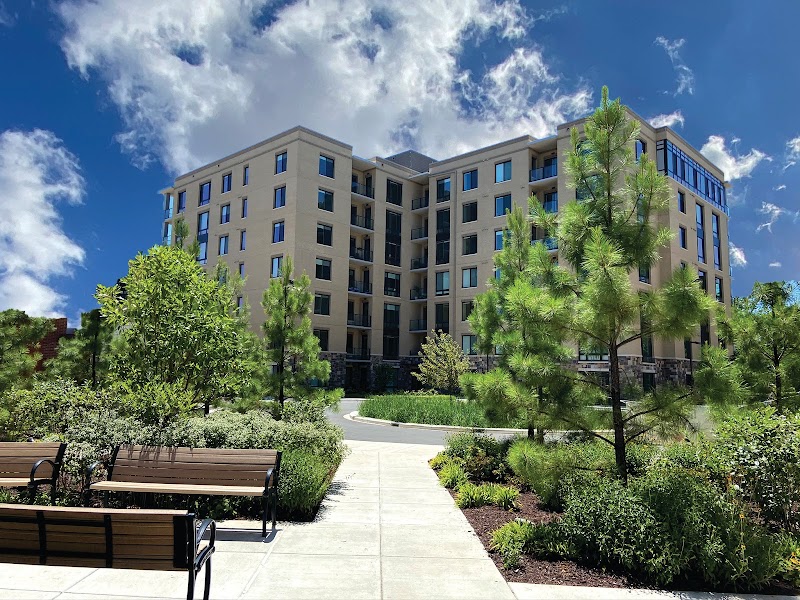
Who Owns and Operates Ingleside At Rock Creek?

INGLESIDE AT ROCK CREEK is owned by a non-profit organization. Non-profit facilities reinvest revenue into operations rather than distributing to shareholders. The facility is operated by INGLESIDE ENGAGED LIVING, a chain that manages multiple nursing homes. With 34 certified beds and approximately 30 residents (about 88% occupancy), it is a smaller facility located in WASHINGTON, District of Columbia.

How Does Ingleside At Rock Creek Compare to Other District of Columbia Nursing Homes?

Compared to the 100 nursing homes in District of Columbia, INGLESIDE AT ROCK CREEK's overall rating (5 stars) is above the state average of 3.3, staff turnover (60%) is significantly higher than the state average of 46%, and health inspection rating (3 stars) is at the national benchmark.

What Should Families Ask When Visiting Ingleside At Rock Creek?

Based on this facility's data, families visiting should ask: "What changes have been made since the serious inspection findings, and how are you preventing similar issues?" "How do you ensure continuity of care given staff turnover, and what is your staff retention strategy?" "Can I visit during a mealtime to observe dining assistance and food quality?" "How do you handle medical emergencies, and what is your hospital transfer rate?" These questions are particularly relevant given the facility's Immediate Jeopardy citations and the facility's high staff turnover rate.

Is Ingleside At Rock Creek Safe?

Based on CMS inspection data, INGLESIDE AT ROCK CREEK has documented safety concerns. Inspectors have issued 1 Immediate Jeopardy citation (the most serious violation level indicating risk of serious injury or death). The facility has a 5-star overall rating and ranks #1 of 100 nursing homes in District of Columbia. Families considering this facility should ask detailed questions about what corrective actions have been taken since these incidents.

Do Nurses at Ingleside At Rock Creek Stick Around?

Staff turnover at INGLESIDE AT ROCK CREEK is high. At 60%, the facility is 13 percentage points above the District of Columbia average of 46%. High turnover means new staff may not know residents' individual needs, medications, or preferences. It can also be disorienting for residents, especially those with dementia who rely on familiar faces. Families should ask: What is causing the turnover? What retention programs are in place? How do you ensure care continuity during staff transitions?

Was Ingleside At Rock Creek Ever Fined?

INGLESIDE AT ROCK CREEK has been fined $39,419 across 2 penalty actions. The District of Columbia average is $33,473. While any fine indicates a compliance issue, fines under $50,000 are relatively common and typically reflect isolated problems that were subsequently corrected. Families should ask what specific issues led to these fines and confirm they've been resolved.

Is Ingleside At Rock Creek on Any Federal Watch List?

INGLESIDE AT ROCK CREEK is not on any federal watch list. The most significant is the Special Focus Facility (SFF) program, which identifies the bottom 1% of nursing homes nationally based on persistent, serious quality problems. Not being on this list means the facility has avoided the pattern of deficiencies that triggers enhanced federal oversight. This is a positive indicator, though families should still review the facility's inspection history directly.