AVIATA AT EMERALD SHORES
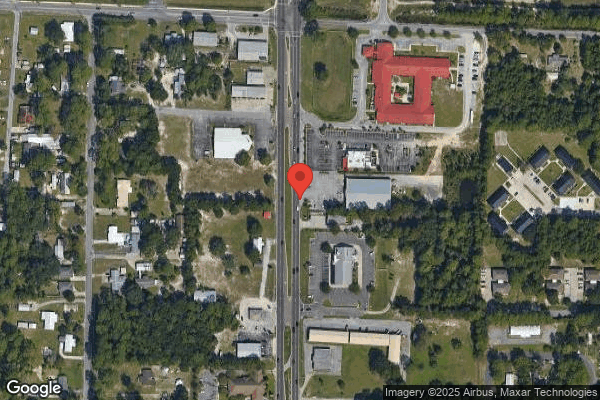
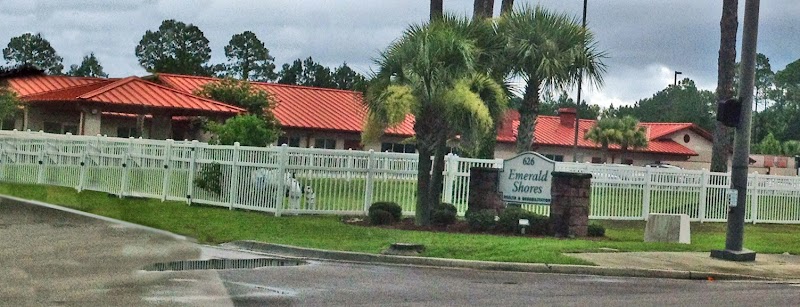
626 N TYNDALL PKWY, CALLAWAY, FL 32404 (850) 871-6363
For profit - Corporation 77 Beds AVIATA HEALTH GROUP Data: November 2025
Trust Grade
75/100
#168 of 690 in FL
Last Inspection: March 2025

Within standard 12-15 month inspection cycle. Federal law requires annual inspections.

Overview

Aviata at Emerald Shores has a Trust Grade of B, which indicates it is a good choice among nursing homes, although not the best. It ranks #168 out of 690 facilities in Florida, meaning it is in the top half of nursing homes in the state, and #3 out of 5 in Bay County, suggesting only two local options are better. However, the facility is worsening, with issues increasing from 1 in 2024 to 3 in 2025. Staffing is a concern, rated at 2 out of 5 stars with a high turnover rate of 62%, compared to the state average of 42%. Fortunately, there have been no fines, which is a positive sign, but RN coverage is only average, meaning some critical health issues may be missed. Specific incidents include a failure to provide a required notice to a resident regarding their discharge from Medicare services, which could lead to unexpected costs for the resident. Additionally, one resident did not receive proper fingernail care, leading to long and untrimmed nails that could cause discomfort or health issues. Lastly, there was a serious mix-up with enteral feedings, where two residents received each other's feedings, highlighting potential risks in medication management. Overall, while the facility has strengths, such as its good Trust Grade and no fines, the staffing issues and recent incidents raise concerns about the quality of care.

Trust Score
B
75/100
In Florida
#168/690
Top 24%
Safety Record
Low Risk
No red flags
Inspections
Getting Worse
1 → 3 violations
Staff Stability
⚠ Watch
62% turnover. Above average. Higher turnover means staff may not know residents' routines.
Penalties
✓ Good
No fines on record. Clean compliance history, better than most Florida facilities.
Skilled Nurses
○ Average
Each resident gets 33 minutes of Registered Nurse (RN) attention daily — about average for Florida. RNs are the most trained staff who monitor for health changes.
Violations
○ Average
9 deficiencies on record. Average for a facility this size. Mostly minor or procedural issues.
★★★★☆
4.0
Overall Rating
★★☆☆☆
2.0
Staff Levels
★★★★☆
4.0
Care Quality
★★★★☆
4.0
Inspection Score
Stable
2024: 1 issues
2025: 3 issues

The Good

  • 4-Star Quality Measures · Strong clinical quality outcomes
  • Full Sprinkler Coverage · Fire safety systems throughout facility
  • No fines on record

Facility shows strength in quality measures, fire safety.

The Bad

Staff Turnover: 62%

16pts above Florida avg (46%)

Frequent staff changes - ask about care continuity

Chain: AVIATA HEALTH GROUP

Part of a multi-facility chain

Ask about local staffing decisions and management

Staff turnover is elevated (62%)

14 points above Florida average of 48%

The Ugly 9 deficiencies on record

Mar 2025 3 deficiencies
CONCERN (D)

Potential for Harm - no one hurt, but risky conditions existed

Deficiency F0582 (Tag F0582)

Could have caused harm · This affected 1 resident

Based on record review, staff interview, and policy review, the facility failed to provide the Skilled Nursing Facility Advanced Beneficiary Notice of Non-coverage (SNF ABN, CMS-10055 form) to 1 of 3 ...

Read full inspector narrative →
Based on record review, staff interview, and policy review, the facility failed to provide the Skilled Nursing Facility Advanced Beneficiary Notice of Non-coverage (SNF ABN, CMS-10055 form) to 1 of 3 sampled residents reviewed for beneficiary notices. The SNF ABN provides information to beneficiaries so they can decide if they wish to continue receiving the skilled services that may not be paid for by Medicare and assume financial responsibility. (Resident #64) The findings include: Based upon facility documentation, Resident #64 was discharged from a Medicare Part A stay on 2/24/25 and remained in the facility. Review of the Beneficiary Notification review form (CMS 20052) completed by the Business Office Manager (BOM) on 3/18/25 revealed the facility initiated the discharge of Resident #64 from Medicare Part A services when benefit days were not exhausted. The form indicated the SNF ABN (CMS 10055) was not provided to the resident because the resident was not picked up under skilled Medicare Part B services. An interview was conducted with the Administrator on 3/18/25 at 1:11 PM. The Administrator confirmed the notice (SNF ABN) was not served to the resident and agreed if the resident was discharged from Part A and remained in the facility, the resident should have received the SNF ABN notice. Review of the facility policy for SNF Advance Beneficiary Notification (ABN) & Notice of Medicare Provider Non-Coverage (BO-510 revised 5/1/18) revealed that the SNF Advance Beneficiary Notification (SNF ABN) & the Notice of Non-Coverage will be used to properly notify a Medicare Part A resident and/or responsible party of the clinical team decision that the resident, no longer meets the Medicare criteria for daily skilled services. SNF's must provide the Notice of Medicare Provider Non-Coverage and the SNF ABN to Medicare beneficiaries no later than two days before the effective date of the end of the coverage that their Medicare coverage will be ending.
CONCERN (D)

Potential for Harm - no one hurt, but risky conditions existed

ADL Care (Tag F0677)

Could have caused harm · This affected 1 resident

Based on observations, record review, staff interview, and policy review, the facility failed to provide appropriate fingernail care to 1 of 1 sampled residents reviewed for activities of daily living...

Read full inspector narrative →
Based on observations, record review, staff interview, and policy review, the facility failed to provide appropriate fingernail care to 1 of 1 sampled residents reviewed for activities of daily living. (Resident #33) The findings include: Observations of Resident #33 were conducted on 3/17/25 at 11:54 AM, 3/18/25 at 11:31 AM, and 3/19/25 at 9:05 AM. During the observations, the resident's left hand was observed to be contracted and 4 of the 5 fingernails (all nails except the thumb nail) on her left hand were long and untrimmed. Further observation of Resident #33's left hand was conducted on 3/19/25 at 10:45 AM with the Director of Nursing (DON). The DON observed the nails on the resident's left hand and confirmed the resident's left hand was contracted. The DON measured the longest nail on the resident's left hand and stated it was 1 cm past the nail bed. The DON confirmed this was not an acceptable length and the resident's nails should be cut short. The DON then spoke with a certified nursing assistant (CNA) and stated the CNA reported she had attempted to trim the resident's fingernails, but they were too thick. The DON confirmed the CNA should have reported this to the nurse or manager. A review of Resident #33's record revealed a significant change minimum data set (MDS) with an assessment reference date of 1/17/25 indicating the resident was dependent for personal hygiene. A review of the last 20 days of progress notes revealed no documented refusals of nail care. Review of the task menu revealed her last documented bath or shower was performed on 3/17/25. A review of the current care plan dated 11/12/24 for Alteration in Usual Functional Performance in self-care related to activity intolerance, fatigue, impaired balance, and limited mobility revealed the resident was dependent for personal hygiene. Review of the facility policy for Bathing/Showering (N-1130 revised 9/1/17) revealed that staff should trim the resident's fingernails during bathing.
CONCERN (D)

Potential for Harm - no one hurt, but risky conditions existed

Tube Feeding (Tag F0693)

Could have caused harm · This affected 1 resident

Based upon observations, interviews and record reviews, the facility failed to provide proper enteral feedings for 2 of 2 residents observed for enteral feeding. (Resident #1 and #44) The findings inc...

Read full inspector narrative →
Based upon observations, interviews and record reviews, the facility failed to provide proper enteral feedings for 2 of 2 residents observed for enteral feeding. (Resident #1 and #44) The findings include: On 03/17/25 at 11:52 AM, Resident #1 was lying in bed with Glucerna being administered at 55 ml/hr. However, Resident #44's name was written on the tube feeding bottle. Resident #44 was being administered Jevity 1.5 at 45ml/hr but the bottle had Resident #1's name written on the tube feeding bottle. (photographic evidence obtained) As this was observed, Certified Nursing Assistant (CNA) B came into the room. She was asked to identify Resident #1 and #44. The CNA stated Resident #44 was in the B-bed and Resident #1 was in A-bed. The CNA went to get the nurse to assist further with tube feeing concerns An interview with Staff Member A, a Licensed Practical Nurse (LPN) was conducted on 3/17/25 at 12:05 PM. Nurse A was alerted to the switched tube feeding bottles. Staff Member A confirmed that Resident #1's tube feeding was not correct. Resident #1 should have Jevity infusing instead but had Glucerna infusing. Staff Member A confirmed that the tube feeding on Resident #44 was the wrong tube feeding, Resident #44 should have Glucerna infusing not Jevity. A record review on 3/17/25 at 12:30 PM revealed that Resident #1 has a diagnosis of a Cerebrovascular accident (CVA) with hemiplegia affecting the left dominant side, profound intellectual disabilities, Cerebral Palsy, Dysphagia, and Aphasia. The physician's orders states that he is to have Enteral feeding of Jevity 1.5 at 55 ml/hr for 20 hours, off at 10:00 AM, On at 2:00 PM with H20 flush at 55 ml/hr for 20 hours, off at 01:00 AM on at 02:00 AM. an A record review of Resident #44 on 3/17/25 at 12:40 PM revealed that Resident #44 has a diagnosis of cognitive communication deficit, dysphagia following CVA, Type two diabetes, and unspecified severe protein malnutrition. Physician orders state that Resident #44 had an order for Enteral Feed Glucerna 1.5 at 45 ml/hr two times a day with 80 ml/hr flush for 20 hours. On 3/17/25 at 1:00 pm, Resident #1 and Resident #44's tube feedings have been removed from the residents' room at this time. On 3/17/25 at 02:00 PM, facility policy for enteral feeding-enteral nutrition (with effective date of 11/30/2018) states that the nurse administers enteral feeding when volume control is indicated and as ordered by physician; procedure is obtain physician order and identify resident.
Dec 2024 1 deficiency
CONCERN (D) 📢 Someone Reported This

A family member, employee, or ombudsman was alarmed enough to file a formal complaint

Potential for Harm - no one hurt, but risky conditions existed

Deficiency F0726 (Tag F0726)

Could have caused harm · This affected 1 resident

Based on observation, record review, staff interviews, and policy review, the facility staff failed to demonstrate competency in skin care during 1 of 1 partial bed bath observations. (Resident #4) Th...

Read full inspector narrative →
Based on observation, record review, staff interviews, and policy review, the facility staff failed to demonstrate competency in skin care during 1 of 1 partial bed bath observations. (Resident #4) The findings include: An observation of a partial bed bath for Resident #4 was observed being performed by Employee A, a Certified Nursing Assistant, on 12/10/24 at 8:40 AM. Employee A explained the procedure to Resident #4. Employee A then obtained one pan of water from the sink in the bathroom and donned gloves. Employee A requested that Resident #4 wash his face with the wet washcloth. Employee A then placed liquid soap in the pan of water, wet the washcloth, and then washed the resident's chest and underarms with the soapy washcloth. Employee A did not rinse the soap from the resident's body. Employee A then placed more liquid soap in the pan of water, wet the washcloth with the soapy water, and washed his back with the soapy washcloth. She did not rinse the soap from the resident's back either. Employee A then placed fresh water in the pan, placed liquid soap on a washcloth, placed the washcloth with soap in the pan of water, then wrung out the washcloth. She then cleansed the resident's genitals and buttocks with the soapy washcloth. She did not rinse the soap from the resident's genitals and buttocks either. Employee A changed the water in the pan again and placed liquid soap in the water. She then washed the resident's feet with the soapy water and did not rinse the resident's feet. A review of Resident #4's electronic medical record revealed an admission minimum data set with an assessment reference date of 12/4/24, indicating that the resident required substantial/maximal assistance of staff to bathe or shower. Review of the resident's comprehensive plan of care dated 12/9/24 for alteration in usual functional performance in self-care indicated the resident required substantial/maximal assistance of one staff for showering/bathing. An interview was conducted with Employee A on 12/10/24 at 9:53 AM. Employee A stated the soap should have been rinsed from the body. She stated she was nervous and forgot the additional pan for rinse water. An interview was conducted with the Director of Nursing (DON) on 12/10/24 at 10:15 AM. The DON stated staff should use 2 pans of water during a bed bath, one for soapy water to cleanse and one for clean water to rinse. She stated the resident should be rinsed with clean water after bathing with soap. Review of the facility policy for Perineal Care (N-1170 revised 9/5/2017) indicated care to include washing, rinsing, and drying of the skin.
Dec 2023 2 deficiencies
CONCERN (D)

Potential for Harm - no one hurt, but risky conditions existed

Safe Environment (Tag F0584)

Could have caused harm · This affected 1 resident

**NOTE- TERMS IN BRACKETS HAVE BEEN EDITED TO PROTECT CONFIDENTIALITY** Based on observations, staff interview, and policy review, the facility failed to maintain restroom faucets and over bed tables ...

Read full inspector narrative →
**NOTE- TERMS IN BRACKETS HAVE BEEN EDITED TO PROTECT CONFIDENTIALITY** Based on observations, staff interview, and policy review, the facility failed to maintain restroom faucets and over bed tables in good condition in 5 of 16 sampled rooms. (Rooms 200, 203, 211, 403, and 405) The findings include: A tour of the 200 and 400 halls was conducted in the presence of the Administrator on 12/20/23 at 3:35 PM. On 12/20/23 at 3:35 PM, it was observed that the sink faucets in rooms 200, 203, 211, 403, and 405 were heavily tarnished. At this time, the Administrator acknowledged that the faucets were tarnished and housekeeping had attempted to clean them, but admitted it may have made the tarnish worse. The Administrator also observed the over bed table in room [ROOM NUMBER] B and confirmed the frame was rusted. (Photographic evidence obtained.) A review of the facility policy Maintenance Plan (effective 11/30/2014) revealed the following: The Company will hire staff or contract for services to ensure the continued maintenance of the Residence. The building and grounds will be maintained in a clean, orderly condition and in good repair either by staff or a contracted landscaper. All equipment and furnishings will be maintained in good condition.
CONCERN (D)

Potential for Harm - no one hurt, but risky conditions existed

Deficiency F0694 (Tag F0694)

Could have caused harm · This affected 1 resident

**NOTE- TERMS IN BRACKETS HAVE BEEN EDITED TO PROTECT CONFIDENTIALITY** Based on observations, interviews and facility policy review, the facility failed to ensure staff do not administer expired intr...

Read full inspector narrative →
**NOTE- TERMS IN BRACKETS HAVE BEEN EDITED TO PROTECT CONFIDENTIALITY** Based on observations, interviews and facility policy review, the facility failed to ensure staff do not administer expired intravenous antibiotics to 1 of 2 sampled residents reviewed for IV antibiotics. (Resident #19) The findings include: On [DATE] at approximately 1:09 PM, an observation was made of Resident #19. During the observation, an intravenous antibiotic bag was observed to be hanging on the intravenous pole. The antibiotic bag displayed three stickers indicating the resident's name, the name of the antibiotic (Ertapenem), and the prescribed dosage (1 gm/100 ml). There was a small, orange square shaped sticker located in the right top corner of the bag indicating an expiration date of [DATE]. On [DATE], a review of Resident #19's Medication Administration Record indicated the intravenous antibiotic was administered on [DATE] at 9:00 AM and signed off as administered by the Infection Preventionist (IP). On [DATE] at approximately 4:01 PM, a phone interview was conducted with the facility's Pharmacist. The Pharmacist was given the prescription number of the expired intravenous antibiotic for validation. The pharmacist indicated the antibiotic was delivered to the facility on [DATE] from the pharmacy. The pharmacist confirmed that the orange sticker indicates the expiration date for the antibiotic and the intravenous fluid the antibiotic was mixed within. On [DATE] at approximately 10:35 AM, an interview was conducted with the Infection Preventionist (IP). The IP confirmed she administered the expired dose of antibiotic. The IP indicated she recalled administering the antibiotic as she was working the floor the morning of [DATE]. The IP indicated she did not notice the expiration date on the intravenous antibiotic bag. On [DATE], a review of the facility's policy entitled Administering Medications (revised [DATE]) indicated, .the expiration/beyond use date on the medication label must be checked prior to administering the medication. On [DATE] at approximately 10:20 AM, an interview was conducted with the Director of Nursing (DON) regarding the expired intravenous antibiotic. The DON indicated the IP should have noticed the expiration sticker located on the intravenous antibiotic bag.
Jul 2023 1 deficiency
CONCERN (D) 📢 Someone Reported This

A family member, employee, or ombudsman was alarmed enough to file a formal complaint

Potential for Harm - no one hurt, but risky conditions existed

Pharmacy Services (Tag F0755)

Could have caused harm · This affected 1 resident

Based on record review, staff interview, and policy review, the facility failed to maintain complete and accurately documented medical records for 1 of 3 sampled residents prescribed antibiotic medica...

Read full inspector narrative →
Based on record review, staff interview, and policy review, the facility failed to maintain complete and accurately documented medical records for 1 of 3 sampled residents prescribed antibiotic medications. (Resident #4) The findings include: A review of Resident #4's electronic medical record revealed a physician order dated 5/2/23 for Meropenem intravenous solution 500 mg intravenously every 8 hours for a right hip infection for 11 days. Additional physician orders dated 5/11/23 extended the Meropenem antibiotic usage until 6/24/23. Review of the Medication Administration Record for May 2023 revealed no documentation for the administration of doses due on 5/8/23 at 2:00 PM, 5/8/23 at 10:00 PM, and 5/20/23 at 2:00 PM. An interview was conducted with the Director of Nursing (DON) on 7/13/23 at 8:53 AM. She stated during the facility review, she realized there were 3 doses of the antibiotic not signed off as administered. She interviewed the nurses, and they stated the doses were administered and they forgot to sign the medication record. The DON provided a signed statement dated 5/24/23 stating she interviewed Nurses A, B, C, and D regarding the missing documentation on Resident #4's medication record. Nurse A stated she recalled administering the intravenous medication on 5/8/23 at 2:00 PM but did not recall why she did not document on the medication record. Nurse B stated she recalled getting Nurse C to administer the intravenous medication for the scheduled dose on 5/8/23 at 10:00 PM. Nurse C stated he recalled administering the dose on 5/8/23 but did not document on the medication record. Nurse D recalled administering the intravenous medication on 5/20/23 at 2:00 PM but could not recall why she did not document the dose on the medication record. The facility policy for Clinical/Medical Records (MR-195, revised 8/25/2017) states, The resident's clinical record is readily accessible and systematically organized to facilitate retrieving and compiling information. Required clinical information pertaining to a resident's stay is centralized in the medical record. The facility policy for Administering Medications (revised April 2019) states, .#23 as required or indicated for a medication, the individual administering the medication records in the resident's medical record the date and time the medication was administered, the dosage, the route of administration, the injection site (if applicable), any complaints or symptoms for which the drug was administered, any results achieved and when those results where observed, and the signature and title of the person administering the drug.
Aug 2022 2 deficiencies
CONCERN (D)

Potential for Harm - no one hurt, but risky conditions existed

Deficiency F0645 (Tag F0645)

Could have caused harm · This affected 1 resident

Based on record review, staff interview, and policy review the facility failed to refer a resident with a mental disorder to the appropriative state-designated authority for a level II PASARR (preadmi...

Read full inspector narrative →
Based on record review, staff interview, and policy review the facility failed to refer a resident with a mental disorder to the appropriative state-designated authority for a level II PASARR (preadmission screening and resident review) evaluation and determination for 1 of 1 residents sampled for PASARR. (Resident #1) The findings include: Review of resident #1's medical record revealed an admission date of 9/16/16. Review of resident #1's PASARR dated 6/2/21 and completed by the Director of Nursing (DON) revealed section A. page 2: resident has anxiety disorder and depressive disorder and is currently receiving services for mental illness. Page 5 section 4, indicates no diagnosis or suspicion of serious mental illness or intellectual disability indicated. Level II PASARR evaluation not required. The resident record revealed the resident had medical diagnosis to include psychosis 6/3/19, bipolar type Schizoaffective disorder 9/16/16, major depressive disorder 9/16/16, and generalized anxiety disorder 9/16/16. The record did not contain evidence of a level II PASARR. An interview was conducted with the DON on 8/16/22 at approximately 2:04 PM. The DON stated she checked the wrong box on the PASARR and the facility did not request a level II PASARR for the resident. Review of the facility policy for Preadmission Screening and Resident Review (document name SS-402 revised 11/8/21) revealed The center will ensure that all Serious Mentally Ill (SMI) and Intellectually Disabled (ID) residents receive appropriate pre-admission screenings according to Federal/State guidelines. The purpose is to ensure that the residents with SMI or are ID receive the care and services they need in the most appropriate setting.
CONCERN (D)

Potential for Harm - no one hurt, but risky conditions existed

Deficiency F0757 (Tag F0757)

Could have caused harm · This affected 1 resident

**NOTE- TERMS IN BRACKETS HAVE BEEN EDITED TO PROTECT CONFIDENTIALITY** Based on record review, resident interview, and staff interview the facility failed to implement effective monitoring of bowel a...

Read full inspector narrative →
**NOTE- TERMS IN BRACKETS HAVE BEEN EDITED TO PROTECT CONFIDENTIALITY** Based on record review, resident interview, and staff interview the facility failed to implement effective monitoring of bowel activity for 2 of 2 sampled residents receiving routine or as needed medications for constipation. (Resident #1 and #6) The findings include: Review of resident #1's record revealed the resident was admitted to the facility on [DATE]. The current physician orders revealed the resident received Lactulose solution 10 grams/milliliter (ml), with instruction to give 30 ml by mouth every 8 hours daily for constipation beginning on 11/28/21 and Linzess capsule 290 micrograms by mouth every morning for chronic constipation beginning on 6/6/22. Review of the electronic record bowel movement documentation for the last 14 days revealed no bowel movement had been documented from 8/6/22 through 8/16/22. An interview was conducted with resident #1 on 8/16/22 at 3:50 PM. She stated she had not had a bowel movement in 4 days. Review of resident #6's record revealed the resident was admitted to the facility on [DATE]. The current physician orders revealed the resident received Lactulose solution 10 grams/15 ml, with instruction to give 15 ml by mouth every 12 hours as needed for constipation and Senna-plus 8.6/50 milligrams 2 by mouth every day for constipation. Review of the electronic record bowel movement documentation revealed no bowel movement had been documented from 7/28/22 through 8/15/22. The resident was discharged to the hospital on 8/16/22. An interview was conducted with the Director of Nursing (DON) on 8/16/22 at approximately 3:57 PM. The DON stated that staff were expected to document whether or not the resident had a bowel movement every shift in the task menu. She stated nursing was to check the alerts in the electronic record daily to monitor bowel movements.
Understanding Severity Codes (click to expand)
Life-Threatening (Immediate Jeopardy)
J - Isolated K - Pattern L - Widespread
Actual Harm
G - Isolated H - Pattern I - Widespread
Potential for Harm
D - Isolated E - Pattern F - Widespread
No Harm (Minor)
A - Isolated B - Pattern C - Widespread

Questions to Ask on Your Visit

  • "Why is there high staff turnover? How do you retain staff?"
  • "Can I speak with families of current residents?"
  • "What's your RN coverage like on weekends and overnight?"

Our Honest Assessment

Strengths
  • • No major safety red flags. No abuse findings, life-threatening violations, or SFF status.
  • • No fines on record. Clean compliance history, better than most Florida facilities.
Concerns
  • • 62% turnover. Above average. Higher turnover means staff may not know residents' routines.
Bottom line: Generally positive indicators. Standard due diligence and a personal visit recommended.

About This Facility

What is Aviata At Emerald Shores's CMS Rating?

CMS assigns AVIATA AT EMERALD SHORES an overall rating of 4 out of 5 stars, which is considered above average nationally. Within Florida, this rating places the facility higher than 99% of the state's 100 nursing homes. This rating reflects solid performance across the metrics CMS uses to evaluate nursing home quality.
How is Aviata At Emerald Shores Staffed?

CMS rates AVIATA AT EMERALD SHORES's staffing level at 2 out of 5 stars, which is below average compared to other nursing homes. Staff turnover is 62%, which is 16 percentage points above the Florida average of 46%. High turnover can affect care consistency as new staff learn residents' individual needs. RN turnover specifically is 58%, which is notably high. RNs provide skilled clinical oversight, so turnover in this role can affect medical care quality.

What Have Inspectors Found at Aviata At Emerald Shores?

State health inspectors documented 9 deficiencies at AVIATA AT EMERALD SHORES during 2022 to 2025. These included: 9 with potential for harm.
Who Owns and Operates Aviata At Emerald Shores?

AVIATA AT EMERALD SHORES is owned by a for-profit company. For-profit facilities operate as businesses with obligations to shareholders or private owners. The facility is operated by AVIATA HEALTH GROUP, a chain that manages multiple nursing homes. With 77 certified beds and approximately 75 residents (about 97% occupancy), it is a smaller facility located in CALLAWAY, Florida.

How Does Aviata At Emerald Shores Compare to Other Florida Nursing Homes?

Compared to the 100 nursing homes in Florida, AVIATA AT EMERALD SHORES's overall rating (4 stars) is above the state average of 3.2, staff turnover (62%) is significantly higher than the state average of 46%, and health inspection rating (4 stars) is above the national benchmark.

What Should Families Ask When Visiting Aviata At Emerald Shores?

Based on this facility's data, families visiting should ask: "How do you ensure continuity of care given staff turnover, and what is your staff retention strategy?" "Can you walk me through typical staffing levels on day, evening, and night shifts?" "Can I visit during a mealtime to observe dining assistance and food quality?" "How do you handle medical emergencies, and what is your hospital transfer rate?" These questions are particularly relevant given the facility's high staff turnover rate and the below-average staffing rating.

Is Aviata At Emerald Shores Safe?

Based on CMS inspection data, AVIATA AT EMERALD SHORES has a clean safety record: no substantiated abuse findings (meaning no confirmed cases of resident harm), no Immediate Jeopardy citations (the most serious violation level indicating risk of serious injury or death), and is not on the Special Focus Facility watch list (a federal program monitoring the lowest-performing 1% of nursing homes). The facility has a 4-star overall rating and ranks #1 of 100 nursing homes in Florida. While no facility is perfect, families should still ask about staff-to-resident ratios and recent inspection results during their visit.

Do Nurses at Aviata At Emerald Shores Stick Around?

Staff turnover at AVIATA AT EMERALD SHORES is high. At 62%, the facility is 16 percentage points above the Florida average of 46%. Registered Nurse turnover is particularly concerning at 58%. RNs handle complex medical decisions and coordinate care — frequent RN changes can directly impact care quality. High turnover means new staff may not know residents' individual needs, medications, or preferences. It can also be disorienting for residents, especially those with dementia who rely on familiar faces. Families should ask: What is causing the turnover? What retention programs are in place? How do you ensure care continuity during staff transitions?

Was Aviata At Emerald Shores Ever Fined?

AVIATA AT EMERALD SHORES has no federal fines on record. CMS issues fines when nursing homes fail to meet care standards or don't correct problems found during inspections. The absence of fines suggests the facility has either maintained compliance or corrected any issues before penalties were assessed. This is a positive indicator, though families should still review recent inspection reports for the full picture.

Is Aviata At Emerald Shores on Any Federal Watch List?

AVIATA AT EMERALD SHORES is not on any federal watch list. The most significant is the Special Focus Facility (SFF) program, which identifies the bottom 1% of nursing homes nationally based on persistent, serious quality problems. Not being on this list means the facility has avoided the pattern of deficiencies that triggers enhanced federal oversight. This is a positive indicator, though families should still review the facility's inspection history directly.