SANDGATE GARDENS REHAB AND NURSING CENTER
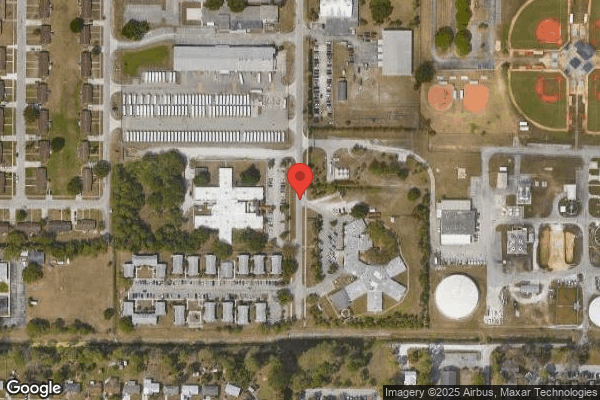
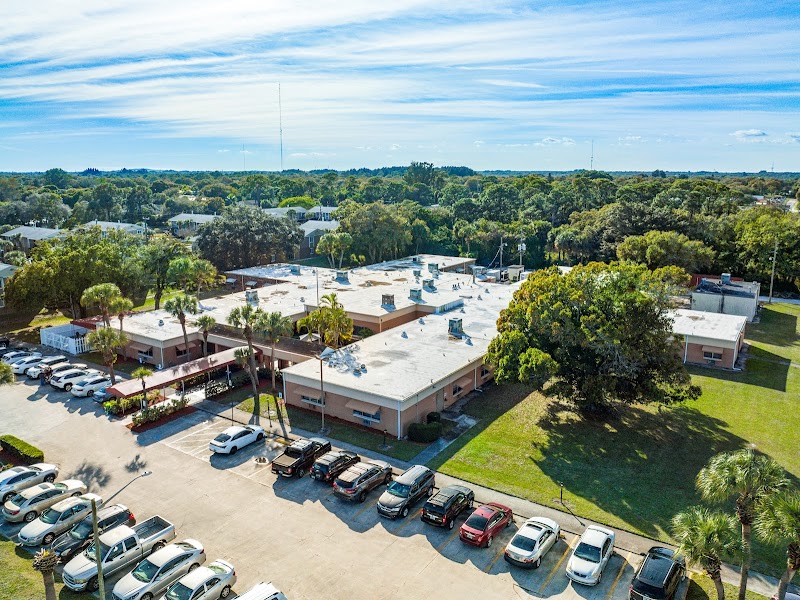
703 S 29TH ST, FORT PIERCE, FL 34947 (772) 466-3322
For profit - Limited Liability company 107 Beds ASTON HEALTH Data: November 2025
Trust Grade
45/100
#558 of 690 in FL
Last Inspection: April 2025

Within standard 12-15 month inspection cycle. Federal law requires annual inspections.

Overview

Sandgate Gardens Rehab and Nursing Center has a Trust Grade of D, which indicates below-average performance and some concerning issues. It ranks #558 out of 690 facilities in Florida, placing it in the bottom half, and #7 out of 9 in St. Lucie County, meaning only one local option is better. The facility is experiencing a worsening trend, with reported issues increasing from 17 in 2023 to 18 in 2025. Staffing is average with a 3/5 rating, but a high turnover rate of 57% is concerning, as it exceeds the state average. While the facility has not incurred any fines, which is a positive sign, there are specific incidents of concern, such as failing to follow dietary guidelines for meals affecting many residents and not providing timely treatment for pressure ulcers, which poses a risk to residents' health. Overall, while there are some strengths, such as no fines, the facility has significant weaknesses that families should consider.

Trust Score
D
45/100
In Florida
#558/690
Bottom 20%
Safety Record
Low Risk
No red flags
Inspections
Getting Worse
17 → 18 violations
Staff Stability
⚠ Watch
57% turnover. Above average. Higher turnover means staff may not know residents' routines.
Penalties
✓ Good
No fines on record. Clean compliance history, better than most Florida facilities.
Skilled Nurses
✓ Good
Each resident gets 47 minutes of Registered Nurse (RN) attention daily — more than average for Florida. RNs are trained to catch health problems early.
Violations
⚠ Watch
46 deficiencies on record. Higher than average. Multiple issues found across inspections.
★★☆☆☆
2.0
Overall Rating
★★★☆☆
3.0
Staff Levels
★★★☆☆
3.0
Care Quality
★★☆☆☆
2.0
Inspection Score
Stable
2023: 17 issues
2025: 18 issues

The Good

  • Full Sprinkler Coverage · Fire safety systems throughout facility
  • No fines on record

Facility shows strength in fire safety.

The Bad

2-Star Overall Rating

Below Florida average (3.2)

Below average - review inspection findings carefully

Staff Turnover: 57%

11pts above Florida avg (46%)

Frequent staff changes - ask about care continuity

Chain: ASTON HEALTH

Part of a multi-facility chain

Ask about local staffing decisions and management

Staff turnover is elevated (57%)

9 points above Florida average of 48%

The Ugly 46 deficiencies on record

Apr 2025 17 deficiencies
CONCERN (D)

Potential for Harm - no one hurt, but risky conditions existed

Deficiency F0561 (Tag F0561)

Could have caused harm · This affected 1 resident

**NOTE- TERMS IN BRACKETS HAVE BEEN EDITED TO PROTECT CONFIDENTIALITY** Based on observation, interview, and record review, the facility failed to ensure that resident choices of television channels w...

Read full inspector narrative →
**NOTE- TERMS IN BRACKETS HAVE BEEN EDITED TO PROTECT CONFIDENTIALITY** Based on observation, interview, and record review, the facility failed to ensure that resident choices of television channels were respected for 1 of 5 sampled residents reviewed, Resident #34. The findings included: Clinical record review showed that Resident #34 was admitted to the facility on [DATE] and again on 06/02/24, with diagnoses that included anxiety disorder and depression. The quarterly comprehensive assessment dated [DATE] indicated a Brief Interview for Mental Status (BIMS) score of 15, indicating he was cognitively intact. No mood or behavior concerns were noted. According to the quarterly activity assessment dated [DATE], Resident #34 spends time reading and watching TV (television) in his room. He enjoys sports but prefers not to participate in group programs, stating that he does not want to get out of bed. On 04/14/25 at 9:31 AM, Resident #34 expressed frustration with the facility's cable system, stating, We don't have a lot of channels. He indicated that although there were supposed to be 48-49 channels, only about 35 were available. He mentioned wanting to watch the show called The Masters on CBS the previous day but could not because the TV did not include CBS. The TV lacked WTCN, NBC, and ABC channels. On 04/15/25 at 8:41 AM, the resident was observed lying in bed watching TV. He reiterated that the facility had not addressed his concerns regarding the TV channels. On 04/18/25 at 8:37 AM, the Maintenance Director was interviewed. The surveyor informed her of Resident #34's concerns about the lack of WTCN, CBS, NBC, and ABC channels. She stated that she was unaware of these issues. Later that day, at 1:24 PM, an interview was conducted with the Maintenance Director and Resident #34. The Director presented documentation indicating that residents were supposed to have 49 channels. Upon checking, she found that ABC, WTCN, and CBS channels were not working, and NBC was stuck. These were channels preferred by Resident #34. He informed the Maintenance Director that he had previously complained about these channels to the staff, including the floor technician. When the surveyor inquired about the process for addressing environmental concerns, the Maintenance Director explained that when a resident reports an issue with the TV, staff should document it in the TELLS system, which would allow her to follow up and resolve issues. She admitted that she did not know the channels were not functioning.
CONCERN (D)

Potential for Harm - no one hurt, but risky conditions existed

Comprehensive Assessments (Tag F0636)

Could have caused harm · This affected 1 resident

**NOTE- TERMS IN BRACKETS HAVE BEEN EDITED TO PROTECT CONFIDENTIALITY** Based on record review and interview, the facility failed to complete comprehensive assessments within 14 days of admission, or ...

Read full inspector narrative →
**NOTE- TERMS IN BRACKETS HAVE BEEN EDITED TO PROTECT CONFIDENTIALITY** Based on record review and interview, the facility failed to complete comprehensive assessments within 14 days of admission, or annually in a timely manner, for 4 of 21 sampled residents, Residents #14, #61, #84, and #151. The findings included: Review of the Resident Assessment Instrument (RAI) Required Assessment Summary dated October 2024, revealed the resident's admission comprehensive assessment must have an Assessment Reference Date (ARD) no later than the 14th calendar day of the resident's admission, and must be completed no later than the 14th calendar day of the resident's admission. This document also revealed the Annual comprehensive assessment must have an ARD 366 calendar days after the last comprehensive assessment and be completed no later than 14 calendar days after that ARD. Review of the records revealed the comprehensive assessments were not completed timely for the following residents: a) Resident #14 was admitted to the facility on [DATE] and the comprehensive assessment was completed on 01/02/24, 15 days late. b) Resident #61 was admitted to the facility on [DATE], and the most recent annual assessment had an ARD of 12/06/24, and was completed on 12/23/24, four days late. c) Resident #84 was admitted to the facility on [DATE] and the comprehensive assessment was completed on 04/04/25, nine days late. d) Resident #151 was admitted to the facility on [DATE] and as of 04/17/25 the comprehensive assessment had not been completed. During an interview on 04/17/25 at 11:44 AM, when asked the timeframe for completion of the comprehensive assessments, the Minimum Data Set (MDS) Director stated they should be done within 14 days of admission to the facility, and annually thereafter. When asked why these assessments were late, the Regional MDS Director, who was also present, had no answer.
CONCERN (D)

Potential for Harm - no one hurt, but risky conditions existed

Deficiency F0638 (Tag F0638)

Could have caused harm · This affected 1 resident

Based on record review and interview, the facility failed to complete quarterly assessments no less than every 3 months for 3 of 21 sampled residents, Residents #14, #21, and #61. The findings include...

Read full inspector narrative →
Based on record review and interview, the facility failed to complete quarterly assessments no less than every 3 months for 3 of 21 sampled residents, Residents #14, #21, and #61. The findings included: Review of the Resident Assessment Instrument (RAI) Required Assessment Summary dated October 2024, revealed the resident's quarterly assessment must have an Assessment Reference Date (ARD) 92 calendar days after the previous quarterly assessment, and must be completed no later than the 14th calendar day after the ARD date. Record reviews revealed the following quarterly assessments were not completed timely: a) The quarterly assessment with an ARD of 06/10/24 for Resident #14 was completed on 07/17/24. b) The quarterly assessment with an ARD of 09/10/24 for Resident #14 was completed on 10/03/24. c) The quarterly assessment with an ARD of 03/11/25 for Resident #14 was completed on 04/14/25. e) The quarterly assessment with an ARD of 05/25/24 for Resident #21 was completed on 06/21/24. f) The quarterly assessment with an ARD of 03/06/25 for Resident #21 was completed on 04/10/24. g) The quarterly assessment with an ARD of 03/09/24 for Resident #61 was completed on 03/25/24. h) The quarterly assessment with an ARD of 06/09/24 for Resident #61 was completed on 07/16/24. d) The quarterly assessment with an ARD of 09/09/24 for Resident #61 was completed on 10/03/24. During an interview on 04/17/25 at 11:38 AM, the MDS (Minimum Data Set) Coordinator and Regional MDS Director agreed with the findings.
CONCERN (D)

Potential for Harm - no one hurt, but risky conditions existed

Assessment Accuracy (Tag F0641)

Could have caused harm · This affected 1 resident

**NOTE- TERMS IN BRACKETS HAVE BEEN EDITED TO PROTECT CONFIDENTIALITY** Based on record review and interview, the facility failed to ensure accurate Minimum Data Set (MDS) assessments for 4 of 21 samp...

Read full inspector narrative →
**NOTE- TERMS IN BRACKETS HAVE BEEN EDITED TO PROTECT CONFIDENTIALITY** Based on record review and interview, the facility failed to ensure accurate Minimum Data Set (MDS) assessments for 4 of 21 sampled residents, as evidenced by inaccurate dialysis coding for Resident #86, inaccurate medication coding for Residents #70 and #31, and inaccurate hospice coding for Resident #69. The findings included: 1. Review of the record revealed Resident #86 was admitted to the facility on [DATE]. Review of physician orders and progress notes lacked any indication the resident had received any dialysis services. During an interview on 04/14/25 at 11:15 AM, Resident #86 stated he was not receiving dialysis services, and had never received them. Review of the admission MDS assessment dated [DATE] documented the resident was receiving dialysis services. During a side-by-side record review and interview on 04/17/25 at 11:38 AM, the MDS Coordinator agreed with the inaccurate MDS for Resident #86. 2 Review of the clinical records revealed Resident #31 was admitted to the facility on [DATE] and again on 02/26/24, with diagnoses that included anxiety disorder and depression. The annual comprehensive assessment, reference date 03/27/25, indicated in section N regarding medication that the resident had received an antipsychotic during the look-back period, as evidenced by a yes recorded in subsection A. Review of the medication and treatment administration records for March 2025 did not provide any documented evidence of the resident receiving an antipsychotic during that time. On 04/18/25 at 7:43 AM, both MDS coordinators were interviewed. The record for Resident #31 was reviewed side-by-side with them, and the coordinators acknowledged the findings. 3. Review of the clinical records revealed Resident #69 was admitted to the facility on [DATE] and again on 12/13/23, with a diagnosis that included a stroke. In the quarterly comprehensive assessment conducted on 02/10/25, under section O for special treatments, procedures, and programs, no was recorded for hospice services. Review of physician orders dated 11/20/24 indicated that hospice care had been initiated on 08/05/24 for the diagnosis of late effects of a cerebrovascular accident (CVA) [stroke]. Review of the progress notes dated 08/05/24 confirmed that Resident #69 was admitted to hospice services, and family members were present with the hospice team during this time. On 04/18/25 at 7:43 AM, both MDS coordinators were interviewed. The record for Resident #69 was reviewed side-by-side with them, and the coordinators acknowledged the findings. 4. Review of records revealed Resident #70 was admitted on [DATE] with diagnosis that included Encephalopathy, unspecified, cognitive communication deficit and unspecified dementia, unspecified severity without behavioral disturbance, psychotic disturbance, mood disturbance and anxiety. Review of the MDS dated [DATE] documented that Resident #70 was receiving Antipsychotic medication. The admission nursing evaluation progress note dated 01/22/25, included, in part, that the resident is receiving antipsychotic medications that require an abnormal involuntary movement scale be completed. Review of record lacked any order for Antipsychotic medication from 01/22/25-01/29/25. During an interview on 04/16/25 at 11:48 AM, when asked why the antipsychotic medication was not provided to Resident #70 when it was listed on the MDS dated [DATE], the MDS Director responded that the medication was ordered on 01/30/25. Although the MDS Director did not state that the MDS was inaccurate, further review of records revealed that the MDS was modified immediately after the interview on 04/16/25 at 11:53 AM. and changed the Yes answer to No for Antipsychotic medication for Resident #70.
CONCERN (D)

Potential for Harm - no one hurt, but risky conditions existed

Deficiency F0676 (Tag F0676)

Could have caused harm · This affected 1 resident

**NOTE- TERMS IN BRACKETS HAVE BEEN EDITED TO PROTECT CONFIDENTIALITY** Based on observations, interview and record review, the facility failed to ensure communication with a resident who was unable t...

Read full inspector narrative →
**NOTE- TERMS IN BRACKETS HAVE BEEN EDITED TO PROTECT CONFIDENTIALITY** Based on observations, interview and record review, the facility failed to ensure communication with a resident who was unable to speak English for 1 of 2 sampled residents, Resident #60. The findings included: Review of the policy titled Standards and Guidelines: ADL [Activities of Daily Living] Care and Services issued 04/2020 and revised 01/2024, documented, 4. Appropriate care and services will be provided for residents who are unable to carry out ADLs independently, with the consent of the resident and in accordance with the plan of care, including appropriate support and assistance with: e. Communication (speech, language, and any functional communication system.) Review of the facility's current admission packet documented in the section titled Nondiscrimination & Accessibility Requirements . The facility provides the following: Free language services to people whose primary language is not English, such as: qualified interpreters; information written in other languages. Review of the record revealed Resident #60 was last admitted to the facility on [DATE] with a primary diagnosis of Chronic Obstructive Pulmonary Disease (COPD) (a lung disease that makes it difficult to breathe.) Resident #60 was actively receiving hemodialysis (a treatment to filter wastes and fluids from the blood as the kidneys did when they were healthy.) Review of the current Minimum Data Set (MDS) assessment dated [DATE] documented Resident #60 had a Brief Interview for Mental Status (BIMS) score of 9, on a 0 to 15 scale, indicating the resident was moderately cognitively impaired. This same MDS section A Identification Information documented the resident was of Hispanic, Latino or Spanish origin. The MDS documented the resident's preferred language as Spanish and her need/want of an interpreter to communicate with a doctor or health care staff. Review of the active orders revealed an order Monitor resident for pain every shift: Start Date 07/17/24. Review of the Treatment Administration Record (TAR) for all of March 2025 and April 2025 revealed documentation of a 0 pain level on a 0-10 scale; 0 being no pain and 10 being the worst pain. Review of the last wound evaluation dated 10/21/24 documented a right diabetic wound that was being treated at that time. Review of the current weekly skin check dated 04/12/25 documented no new skin issues. Review of the most current care plan dated 03/05/25 documented The resident has a communication problem related to language barrier: Spanish. Resident is noted to have a cognitive deficit and is usually understood / understands. Interventions included, Discuss with resident / family concerns or feelings regarding communication difficulty; Ask yes/no questions if appropriate, Use simple, brief, consistent words/cues, Use alternative communication tools as needed; The resident is able to communicate by a translator; Provide translator If resident needs and or wants one to communicate with the resident. During an interview conducted in Spanish on 04/14/25 at 11:26 AM, Resident #60 complained of right heel pain rated at a 10 level. Resident #60 stated that for approximately 2 months she had told staff many times about her pain but nothing had been done about it. During a follow up interview on 04/16/25 at 8:57 AM, Resident #60 stated she was in dialysis yesterday. When asked If she was in pain yesterday, she stated yes and today as well, I'm in pain everyday. When asked how she communicated with staff, Resident #60 stated I just speak but they don't speak Spanish. When asked if the resident is given any kind of translator or communication tools, she stated No, they haven't asked me but I would like a translator; that would help me communicate my needs better. Resident #60 stated it was very hard not to be able to communicate with staff. When I tell them I'm in pain, they don't understand me. When asked if any kind of pain assessment was done by the nurses taking care of her, Resident #60 stated No, I tell them my heel hurts when they get me up to the wheelchair; since they don't understand me they still get me up and I just have to deal with the pain. Resident #60 consented to have a skin check observation on 04/16/25 at 9:09 AM with Staff J, Certified Nursing Assistant (CNA). When Staff J removed the resident's sock she expressed pain; a healed wound was observed at the bottom of the right heel. Resident #60 also expressed pain when Staff J re-applied the sock back on the foot. An interview was conducted on 04/16/25 at 9:15AM with the Director of Nursing (DON) addressing the concerns regarding Resident #60's language barrier affecting her pain levels. When asked how many staff was available to speak Spanish, the DON stated she spoke Spanish herself but would get a list of Spanish speaking staff from Human Resources. This information was never provided to the surveyor. The DON stated she thought the resident spoke English. When asked what staff should normally do when a resident has a language barrier, the DON stated that the facility had a language line available they could use. Photographic Evidence Obtained. The DON agreed with the findings. During an interview on 04/16/25 at 9:24 AM, when asked how she communicated with Resident #60, Staff J stated the resident spoke English. When asked how she knew that, she stated Because she replies yes and no when I talk to her. When asked if any communication tools or communication lines were used with the Resident, Staff J replied no. During a phone interview on 04/16/25 at 10:01 AM, when asked about Resident #60's pain, the representative believed it was an arthritic pain and acknowledged being aware that the resident still complained of right heel pain and not wanting to get up due to the pain. When asked if there were any Spanish speaking staff available at the facility, Resident #60's representative stated she wasn't aware of any staff that spoke Spanish. The representative stated, It would be nice to have someone available to translate to her.
CONCERN (D)

Potential for Harm - no one hurt, but risky conditions existed

ADL Care (Tag F0677)

Could have caused harm · This affected 1 resident

**NOTE- TERMS IN BRACKETS HAVE BEEN EDITED TO PROTECT CONFIDENTIALITY** Based on observation, interview, and record review, the facility failed to provide nail care for 3 of 3 sampled residents review...

Read full inspector narrative →
**NOTE- TERMS IN BRACKETS HAVE BEEN EDITED TO PROTECT CONFIDENTIALITY** Based on observation, interview, and record review, the facility failed to provide nail care for 3 of 3 sampled residents reviewed for Activities of Daily Livings (ADLs), Residents #59, #13, and #4. The findings included: 1. Review of the policy titled Standards and Guidelines: ADL Care and Services, issued 04/2020 and Revised 01/2024, documented, 4. Appropriate care and services will be provided for residents who are unable to carry out ADLs independently, with the consent of the resident and in accordance with the plan of care, including appropriate support and assistance with: a. Hygiene (bathing, dressing, grooming, mail care and oral care . Review of the record revealed Resident #59 was initially admitted to the facility on [DATE] with diagnoses that included Dysphagia (difficulty swallowing) and Aphasia (loss of ability to understand or express speech) following cerebral infarction (a serious condition where blood flow to the brain is blocked, leading to tissue damage and death.) Review of the current Minimum Data Set (MDS) assessment dated [DATE] documented Resident #59 had a Brief Interview for Mental Status (BIMS) score of 3, on a 0 to 15 scale, indicating the resident was severely cognitively impaired. This same MDS also documented the resident had upper extremity impairment on one side of the body. Review of Resident #59's current care plan dated 1/30/25 documented, Resident has an ADL self-care deficit related to ADL needs and participation vary, chronic medical conditions, Impaired balance, Limited Mobility. Observations conducted on 04/14/25 at 9:42 AM, 04/14/25 at 2:27 PM, 04/15/25 at 9:02 AM, 04/16/25 at 8:48 AM and 04/17/25 at 9:26 AM revealed Resident #59 was found to have long, dirt-encrusted, unkempt nails on all days. During a phone interview on 04/14/25 at 2:27 PM, when asked how care was, Resident #59's representative stated she needed to tell staff to cut his fingernails as she had noticed they were long. When asked if she needed to ask staff for it to get done, she replied, yes, normally I have to ask. 2. Review of the record revealed Resident #13 was initially admitted to the facility on [DATE]. Review of the current Minimum Data Set (MDS) assessment dated [DATE] documented Resident #13 had a BIMS score of 6, on a 0 to 15 scale, indicating the resident was severely cognitively impaired. Review of Resident #13's current care plan dated 02/06/25 documented, Resident has an ADL self-care deficit related to chronic medical conditions, ADL participation and needs may vary., disease process - Dementia. Observations conducted on 04/14/25 at 9:58 AM, 04/15/25 at 9:09 AM, 04/16/25 at 8:37 AM and 04/17/25 9:28 AM revealed Resident #13 was found with untrimmed and dirty nails on all days. 3. Review of the record revealed Resident #4 was initially admitted to the facility on [DATE] with a primary diagnosis of senile degeneration of brain (a term that refers to the cognitive decline). Review of the current Minimum Data Set (MDS) assessment dated [DATE] documented Resident #4 had a Brief Interview for Mental Status (BIMS) score of 4, on a 0 to 15 scale, indicating the resident was severely cognitively impaired. An observation and interview were conducted on 04/14/25 at 10:09 AM, and Resident #4 nails were observed to be long, unkempt and with chipped nail polish. When asked if she receives nail care, Resident #4 stated, Sometimes they do my nails, and sometimes they don't. My daughter usually does my nails, but she is out of town. I would like them to help me do them. Follow up observations conducted on 04/15/25 at 9:12 AM, 04/16/25 at 8:51 AM, and 04/17/25 9:30 AM revealed Resident #4's nails were still long, unkempt and with chipped nail polish on all days. During an interview on 04/17/25 at 10:01 AM, when asked who is responsible for providing nail care to residents, Staff D, Certified Nursing Assistant (CNA), stated they were not allowed to cut fingernails and could only clean nails. When asked why they were not allowed to cut fingernails, Staff D stated it was for safety reasons. When asked how nails were cleaned, Staff D stated she used a washcloth. During an interview on 04/17/25 at 10:06 AM, when asked who is in charge of providing nail care to the residents, Staff E, CNA, stated the podiatrist was in charge of cutting nails and the CNAs were in charge of cleaning nails. An interview was conducted on 04/17/25 at 10:22 AM with Staff C, Licensed Practical Nurse (LPN), and Staff A, Unit Manager. When asked who was in charge of assigning CNAs to provide nailcare, Staff C stated she was. When asked who was in charge of providing nail care to residents, Staff C stated the CNAs should be providing nail care to residents on their shower days. When asked if CNAs were allowed to cut fingernails, Staff C stated, they were allowed to cut fingernails and the only exception was to toenails. Staff C stated she didn't know where the confusion was since they had been trained to cut nails. They were made aware of the above findings regarding Residents #59, #13, and #4's fingernails. Staff C agreed with the findings.
CONCERN (D)

Potential for Harm - no one hurt, but risky conditions existed

Quality of Care (Tag F0684)

Could have caused harm · This affected 1 resident

**NOTE- TERMS IN BRACKETS HAVE BEEN EDITED TO PROTECT CONFIDENTIALITY** Based on observation, record review, and interview, the facility failed to ensure appropriate care and services for 2 of 6 sampl...

Read full inspector narrative →
**NOTE- TERMS IN BRACKETS HAVE BEEN EDITED TO PROTECT CONFIDENTIALITY** Based on observation, record review, and interview, the facility failed to ensure appropriate care and services for 2 of 6 sampled residents, as evidenced by the lack of offloading (relieve pressure) of a surgical wound for Resident #75, and failure to follow physician ordered parameters for antihypertensive (blood pressure) medications for Resident #82. The findings included: 1. Review of the record revealed Resident #75 was admitted to the facility on [DATE]. Review of the current Minimum Data Set (MDS) assessment dated [DATE] documented the resident had a Brief Interview for Mental Status (BIMS) score of 15, indicating the resident was cognitively intact. Further review of this assessment documented the resident had a surgical wound. Review of the wound care progress note dated 04/07/24 and written by Staff G, the wound care nurse practitioner, revealed the resident was to offload her heels as per the facility protocol. A second noted dated 04/14/25 documented, in part, to continue to reduce pressure to wound area. Offloading: Implement appropriate offloading interventions based on patient needs, utilizing standard facility practices and available support surfaces to minimize pressure on affected areas. Continue to encourage compliance and assistance with offloading and turning/repositioning. During an interview on 04/14/25 at 9:50 AM, Resident #75 was sitting up in bed. When asked what brought her to the facility, Resident #75 explained she had a wound on the outer side of her left foot. An observation of the dressing revealed shadowing was present, indicating the wound was draining. When asked if she was able to offload or relieve pressure to the wound while in bed, the resident explained that she tried to, but she purposely falls asleep on her right side, but during the night she automatically rolls over onto her left side. The resident stated, when she is on her left side the wound is directly on the mattress. When asked if they had provided any device to assist offloading, like a boot to wear in the bed, the resident stated they had not. During a wound care observation with Staff G, the Nurse Practitioner (NP), and the Wound Care Nurse on 04/14/25 at 12:28 PM, Resident #75 mentioned to the NP that when she falls asleep she automatically rolls over onto her left side. The NP stated, We have a fix for that. A foam boot for when you are in bed. During an interview on 04/17/25 at approximately 10:30 AM, Resident #75 was wheeling herself from therapy. When asked if she had received the foam boot to wear in the bed, the resident stated she hadn't seen one. Staff I, Certified Nursing Assistant (CNA), for Resident #75 was nearby and was asked if she had seen any foam boot for Resident #75 to use while in bed. The CNA stated she had not, but that the resident was usually up by the time she arrived. An observation in the resident's room with the CNA lacked any foam boot. During an interview on 04/17/25 at 10:39 AM, the Unit Manager stated she was unaware of any foam boot for Resident #75. During an interview on 04/17/25 at 2:50 PM, when asked about the provision of a foam boot for Resident #75, the Wound Care Nurse stated the NP had not entered an order for the boot. The Wound Care Nurse stated he did not hear the conversation between the NP and Resident #75 during the observed wound care. 2. Review of the clinical records revealed Resident #82 was admitted to the facility on [DATE], with diagnoses that included orthostatic hypotension and fractures. The care plan, revised on 01/16/25, noted that Resident #82 had experienced falls and was at risk for further falls due to hypotension, an unsteady gait, and poor balance. Additional clinical records documented that Resident #82 had falls on the following dates: January 10, 2025; January 15, 2025; January 26, 2025; January 31, 2025; February 5, 2025; and February 13, 2025. Review of the physician's order dated 01/28/25 prescribed the administration of Midodrine 10 mg by mouth every 8 hours for low blood pressure, with a directive to hold the medication if the blood pressure exceeded 130. In the April 2025 medication and treatment administration records, it was indicated that Midodrine 10 mg was administered outside of the recommended parameters, on 04/04/25, at 6 AM, the blood pressure was recorded at 137/78, and on 04/05/25, the blood pressure was 137/72, yet the medication was still documented as administered to the resident. On 04/18/25, at 9:01 AM, an interview and a side-by-side review of Resident #82's record was conducted with the Director of Nursing (DON). The DON acknowledged the findings and agreed that Midodrine should have been withheld on those days.
CONCERN (D)

Potential for Harm - no one hurt, but risky conditions existed

Incontinence Care (Tag F0690)

Could have caused harm · This affected 1 resident

**NOTE- TERMS IN BRACKETS HAVE BEEN EDITED TO PROTECT CONFIDENTIALITY** Based on record review and interview, the facility failed to ensure appropriate and timely administration of antibiotics for 1 o...

Read full inspector narrative →
**NOTE- TERMS IN BRACKETS HAVE BEEN EDITED TO PROTECT CONFIDENTIALITY** Based on record review and interview, the facility failed to ensure appropriate and timely administration of antibiotics for 1 of 1 sampled resident, Resident #86, who had a Urinary Tract Infection (UTI). The resident was subsequently admitted to the hospital and returned to the facility with the diagnosis of sepsis secondary to the UTI, with additional orders for intravenous (IV) antibiotics. The findings included: Review of the record revealed Resident #86 was admitted to the facility on [DATE]. Urine for a urinalysis was collected by staff at the facility on 03/24/25 and the results were reported to the facility on [DATE] as positive for a Urinary Tract Infection (UTI). The culture was attached to this report and indicated, in part, that the bacteria was resistant to Cipro, an antibiotic often used to treat a UTI. This urinalysis report was not signed off as having been reviewed. Review of the orders revealed Cipro was ordered to be administered twice daily for the UTI as of 03/31/25, five days after the urinalysis report. The progress notes lacked any reference to the UTI or the use of Cipro. Record review revealed Resident #86 was sent out to the hospital on [DATE] related to a fever and decreased intake. The resident returned to the facility on [DATE]. The resident was treated in the hospital for sepsis secondary to the UTI. A care plan initiated on 04/09/25, upon return from the hospital, documented Resident #86 had an infection of sepsis with ESBL (extended-spectrum beta-lactamase/a multi-drug resistant organism) and E. Coli (Escherichia coli/a bacteria found in the intestines) bacteremia (bacteria in the bloodstream). Current physician orders included the intravenous (IV) administration of Ertapenem, an antibiotic, for E. coli in the blood. An interview was conducted on 04/17/25 at 11:24 AM with the Unit Manager and Director of Nursing (DON). When asked the process for reviewing lab results, the Unit Manager explained the nurses should notify the provider of any lab results, and the provider should review and check review on the lab result or document in a progress note. During a side-by-side review of the record the Unit Manager agreed the urinalysis was not marked as reviewed. The Unit Manager stated, I think he (Resident #86) was already on an antibiotic. The Unit Manager reviewed the record and stated the resident was started on Cipro on 03/31/25. When asked if the Cipro was an appropriate antibiotic to treat the infection, the Unit Manager was unsure. Review by the DON confirmed the bacteria identified was resistant to Cipro. The managers confirmed Resident #86 was treated for sepsis at the hospital.
CONCERN (D)

Potential for Harm - no one hurt, but risky conditions existed

Deficiency F0697 (Tag F0697)

Could have caused harm · This affected 1 resident

**NOTE- TERMS IN BRACKETS HAVE BEEN EDITED TO PROTECT CONFIDENTIALITY** 2. Review of the record revealed Resident #84 was admitted to the facility on [DATE] with diagnosis to include a right leg fract...

Read full inspector narrative →
**NOTE- TERMS IN BRACKETS HAVE BEEN EDITED TO PROTECT CONFIDENTIALITY** 2. Review of the record revealed Resident #84 was admitted to the facility on [DATE] with diagnosis to include a right leg fracture. Review of the current Minimum Data Set (MDS) assessment dated [DATE] documented that the resident had a Brief Interview of Mental Status (BIMS) score of 15, on a 0 to 15 scale, indicating the resident was cognitively intact. Review of the current physician orders documented that the resident should be administered Oxycodone 5 mg every 6 hours for pain. Review of the current care plan initiated on 03/14/25 documented that the resident had pain related to a right leg fracture. An intervention included to administer analgesia (pain) medication as per orders. During an interview on 04/16/25 at 5:11 PM, Resident #84 voiced concern with the availability of his pain medication, stating that a week ago the facility ran out of his Oxycodone for about 4 or 5 days, and they had run out again that morning. Review of the April 2025 Medication Administration Record (MAR) revealed the Oxycodone was scheduled for midnight, 6 AM, 12 noon, and 6 PM. This MAR revealed the Oxycodone was not administered because it was on order from the pharmacy on the following dates: a) On 04/02/25 at midnight. b) On 04/02/25 at 6 AM. c) On 04/02/25 at 6 PM. d) On 04/03/25 at 12 noon. e) on 04/04/25 at midnight. During an interview on 04/17/25 at 9:48 AM, Staff F, nurse practitioner (NP) for pain management, stated she was unaware of any issue at the beginning of the month. The NP stated she usually orders the pain medication a week at a time. Staff F volunteered that sometimes the pharmacy would only dispense a certain amount of the medication, and she was unsure as to why. During an interview on 04/17/25 at 10:46 AM, the Director of Nursing (DON) stated there was a delivery of Oxycodone for Resident #84 on 03/26/25, that lasted until 04/01/25. The DON stated it then took until 04/04/25 to get another prescription filled. When asked why it took three days to get another prescription, the DON was unsure. During a subsequent interview on 04/17/25 at 1:28 PM, the DON stated she spoke with pharmacy who explained they did not receive the prescription for the refill until 04/03/25, and that there were three tablets available for use out of the facility's emergency supply. The DON also explained that on 04/02/25 the nurse at midnight and 6 AM was unable to access the emergency system. On 04/02/25 at 6 PM and on 04/03/25 at 12 noon, the nurse was awaiting a code from the pharmacy. The DON agreed with the concerns. 3. Review of the record revealed Resident #86 was admitted to the facility on [DATE]. Review of the current MDS assessment dated [DATE] documented the resident had a BIMS score of 10, indicating he had moderate cognitive impairment. A care plan initiated on 02/27/25 and revised on 04/09/25 documented the resident had pain related in part related to neck and right shoulder pain. Review of a progress note by Staff F, Pain Management NP, documented Resident #86 had been having headaches that she felt were related to his neck pain. The NP ordered Tizanidine, which she documented could also help relieve migraines. Review of subsequent orders revealed the NP ordered the Tizanidine on 04/08/25 for neck pain and on 04/09/25 for muscle spasms. During an interview on 04/14/25 at 11:11 AM, Resident #86 stated he asked the nurse for his migraine medication that morning and the nurse told him she could not find it. During an interview on 04/17/25 at 9:44 AM, when asked what she had prescribed for the migraine headaches for Resident #86, Staff F, NP, stated the Tizanidine, as she thought it was related to his neck pain. When asked how a nurse would know what to give for his complaint of a migraine, the NP stated by the order. During a side-by-side review of the record, the NP agreed the Tizanidine was not ordered for migraines. During an interview on 04/17/25 at about 10:30 AM, when asked what Resident #86 was getting for his migraine headaches, the Unit Manager was unaware. When asked how a nurse would know what to give a resident for a specific complaint, the Unit Manager stated by the order. 4. Review of the policy, titled, Pain Evaluation and Management, revised 02/2024, documented, in part, Evaluation Pain: . 2. Evaluate pain using a consistent approach and a standardized pain assessment instrument appropriate to the resident's cognitive level. Review of the record revealed Resident #151 was admitted to the facility on [DATE] with diagnoses to include Endocarditis (infection of the heart) and multiple fractures. Review of the BIMS assessment dated [DATE], documented the resident was cognitively intact with a BIMS score of 15. Review of the current orders revealed the resident could have Oxycodone 10 mg every 4 hours as needed for pain. During an interview on 04/14/25 at 10:35 AM, Resident #151 stated he had a back fracture and a messed-up hip, but he was at the facility for intravenous (IV) antibiotics for an infection in his heart, before they could do surgery. The resident stated they messed up his pain medications for three days when he was first admitted to the facility. The resident stated now he has to fight for his pain meds. Resident #151 explained he has pain medications available every 4 hours as needed, and if he gets it about every 4 hours, he can maintain comfort. The resident explained that staff are not always available when it's time for his pain medication. The resident stated that one nurse told him she was going to cut him back on his pain medication. When asked if the nurses were reassessing his pain level after the administration of his medication, Resident #151 stated rarely, if ever. Review of the April 2025 MAR revealed an order was placed for the pain medication to start on 04/02/25 but was not administered until 04/03/25 at 12:32 PM. This same MAR documented with nearly every administration that the pain medication was effective. During a subsequent interview on 04/17/25 at 10:57 AM, when asked if the nurses were assessing his pain level before and after the medication, the resident again stated, rarely. Based on observation, interview and record review, the facility failed to identify and treat pain appropriately for 4 of 4 sampled residents, as evidenced by failure to identify and treat pain for Resident #60; failure to ensure pain medication availability for Resident #84; failure to ensure appropriate indication of use of medication for Resident #86; and failure to ensure pre and post assessment for PRN (as needed) pain medication for Resident #151. The findings included: Review of the policy titled, Standards and Guidelines: Pain Evaluation and Management, issued 7/2020 and revised 2/2024, documented, Guideline: Pain Management is defined as a process of alleviating the resident's pain based on his or her clinical condition and established treatment goals. Pain management is a multidisciplinary care process acute pain (or significant worsening of chronic pain) should be evaluated upon onset and re-evaluated as indicated until relief is obtained. For stable chronic pain the resident's pain and consequences of pain are evaluated at least daily .Recognize Pain: 1. Observe the resident (during rest and movement) for physiological and behavioral (non-verbal) signs of pain. 2. Observe for possible psychological signs of pain .5. Review the medication administration record to determine how often the individual requests and receives PRN pain medication, and to what extent the administered medications relieve the resident's pain .Evaluating Pain: 2. Evaluate pain using a consistent approach and a standardized pain assessment instrument appropriate to the resident's cognitive level .3. Discuss with the resident (or legal representative) his or her goals for pain management and satisfaction with current level of pain control .Identifying the cause of pain: 1, Review the MDS(Minimum Data Set) and other documentations for indications of the onset or worsening of pain symptoms .Implementing Pain Management Strategies: 3. The physician and staff will establish a treatment plan consistent with residents condition to ensure pain management is adequate, adjustments may be made as necessary. 1. Review of the record revealed Resident #60 was last admitted [DATE] with a primary diagnosis of chronic obstructive pulmonary disease (a lung disease that makes it difficult to breathe.) Resident #60 was actively receiving hemodialysis (a treatment to filter wastes and fluids from the blood as the kidneys did when they were healthy.) Review of the current Minimum Data Set (MDS) assessment dated [DATE] documented Resident #60 had a Brief Interview for Mental Status (BIMS) score of 9, on a 0 to 15 scale, indicating the resident was moderately cognitively impaired. Review of the last wound evaluation dated 10/21/24 documented a right diabetic wound that was being treated at that time. Review of the current weekly skin check dated 04/12/25 document no new skin issues. Review of the active orders revealed an order Monitor resident for pain every shift: Start Date 07/17/24. Review of the Treatment Administration Record (TAR) for all of March 2025 and April 2025 revealed documentation of a 0 pain level on a 0-10 scale: 0 being no pain and 10 being the worst pain. Further review of the active orders revealed there was no pain medication for Resident #60. The last documented pain medication that was ordered was Tramadol 50 mg by mouth every 8 hours as needed for pain for a total of 14 days from 02/27/25 to 03/13/25. Review of the current care plan dated 03/05/2025 documented, the resident has pain and/or is at risk for pain related to and general pains, arthritis. Interventions included: Administer analgesia medication as per orders; Evaluate the effectiveness of pain interventions and notify physician if interventions are unsuccessful; Monitor/record pain level as indicated. This same care plan documented, The resident has an alteration in musculoskeletal status related to arthritis. Goal: The resident will remain free from pain or at a level of discomfort acceptable to the resident through the review date. Interventions: Monitor for signs and symptoms (s/s) of pain and administer medications as ordered; Notify Medical Doctor (MD) if resident expresses or shows s/s of inadequate pain control and/or adverse side effects with current regimen; Monitor/document/report PRN s/s or complications related to arthritis: Joint pain; joint stiffness, usually worse on wakening; Swelling; Decline in mobility . During an interview conducted in Spanish on 04/14/25 at 11:26 AM, Resident #60 complained of right heel pain rated a 10. Resident #60 stated that for approximately 2 months she had told staff many times about her pain, but nothing had been done about it. During a follow up interview on 04/16/25 at 8:57 AM, Resident #60 stated she was in dialysis yesterday. When asked If she was in pain yesterday, she stated yes and today as well, I'm in pain every day. When asked how she communicated with staff, Resident #60 stated I just speak but they don't speak Spanish. Resident #60 stated it was very hard to not be able to communicate with staff. When I tell them I'm in pain, they don't understand me. When asked if any kind of pain assessment was done by the nurses taking care of her, Resident #60 stated No, I tell them my heel hurts when they get me up to the wheelchair; since they don't understand me, they still get me up and I just have to deal with the pain. Resident #60 consented to have a skin check observation on 04/16/25 at 9:09 AM with Staff J, Certified Nursing Assistant (CNA). When Staff J removed the resident's sock she expressed pain. A healed wound was observed at the bottom of her right heel. Resident #60 also expressed pain when Staff J reapplied the sock back on her foot. An interview was conducted on 04/16/25 at 9:15AM with the Director of Nursing (DON) addressing the concerns regarding Resident #60's language barrier affecting her pain levels. When asked how many staff was available to speak Spanish, the DON stated she spoke Spanish herself but would get a list of Spanish speaking staff from Human Resources. This information was never provided to the surveyor. The DON stated she thought the resident spoke English. When asked what staff should normally do when a resident has a language barrier, the DON stated that the facility has a language line available they could use. Photographic Evidence Obtained. The DON reviewed the resident's current orders and stated that she thought the resident had pain medication ordered and agreed there were no active orders after review. During a phone interview on 04/16/25 at 10:01 AM, when asked about Resident #60's pain, the representative believed it was an arthritic pain and acknowledged being aware that the resident still complained of right heel pain and not wanting to get up due to the pain.
CONCERN (D)

Potential for Harm - no one hurt, but risky conditions existed

Drug Regimen Review (Tag F0756)

Could have caused harm · This affected 1 resident

**NOTE- TERMS IN BRACKETS HAVE BEEN EDITED TO PROTECT CONFIDENTIALITY** Based on record review and interview, the facility failed to ensure appropriate drug regimen reviews for 2 of 5 sampled resident...

Read full inspector narrative →
**NOTE- TERMS IN BRACKETS HAVE BEEN EDITED TO PROTECT CONFIDENTIALITY** Based on record review and interview, the facility failed to ensure appropriate drug regimen reviews for 2 of 5 sampled residents as evidenced by the failure to follow pharmacy recommendations for Resident #151, and failure to provide rationale for physician disagreement in a pharmacy recommendation for Resident #70. The findings included: 1. Review of the record revealed Resident #151 was admitted to the facility on [DATE]. Review of the Brief Interview for Mental Status (BIMS) assessment dated [DATE], documented the resident was cognitively intact with a score of 15. Review of the pharmacy recommendation dated 04/03/25 documented the resident was recently started on a Nicotine patch 14 mg for smoking cessation without a stop date. This pharmacy review recommended to taper to 7 mg after 6 weeks, and to evaluate and add order to discontinue the order in 6 weeks, then start 7 mg for 2 weeks, then discontinue. The physician agreed with the recommendation. Review of the current orders documented the resident was receiving a 7 mg Nicotine transdermal patch daily for smoking cessation. This order was initiated on 04/13/25 for 14 days. Further review of the physician orders revealed Resident #151 was on the 14 mg transdermal patch from 04/02/25 through 04/07/25, instead of the recommended 6 weeks. During an interview on 04/17/25 at 10:57 AM, Resident #151 stated he was not informed the Nicotine patch had been decreased. During an interview on 04/17/25 at 10:59 AM, the B-Unit Manager explained the nurse practitioners put in the new orders themselves, after a pharmacy recommendation that they or the physician agree to. The B-Unit Manager stated she had to confirm orders in the computer, but did not have access to the recommendations. 2. Review of the record revealed Resident #70 was admitted on [DATE]. Further review of the record revealed a physician order dated 01/30/25 for Resident #70 for Seroquel (an antipsychotic medication) Oral Tablet 25 MG (milligrams)to be given 1 tablet by mouth at bedtime for a mood disorder. Review of the MRR [Medication Regimen Review] dated 03/01/25 had pharmacist recommendations that Resident #70 was receiving Seroquel and the pharmacist was unable to locate recent documentation of current need/effect and ability or lack of ability to taper current dose in chart and to have the prescriber please address. The prescriber response on the MRR was checked off as disagreed without a reason stated. During an interview on 04/17/25 at 12:33 PM, Staff C, A-Unit Manager, revealed that during a phone conversation on 03/07/25 with the prescriber, she told the prescriber that Resident #70 was observed to be exit seeking on 03/03/25. The prescriber then relayed to Staff C that no changes would be made to Resident #70 dose of Seroquel, but Staff C did not document the reason on the MRR form or the medical record. Staff C agreed that she had signed the form on 03/07/25 after her conversation with the provider and that this information was not added to the MRR form but it should have been.
CONCERN (D)

Potential for Harm - no one hurt, but risky conditions existed

Medication Errors (Tag F0758)

Could have caused harm · This affected 1 resident

**NOTE- TERMS IN BRACKETS HAVE BEEN EDITED TO PROTECT CONFIDENTIALITY** Based on observation, interviews and record review, the facility failed to ensure indication of use, rationale, or behavior for ...

Read full inspector narrative →
**NOTE- TERMS IN BRACKETS HAVE BEEN EDITED TO PROTECT CONFIDENTIALITY** Based on observation, interviews and record review, the facility failed to ensure indication of use, rationale, or behavior for antipsychotic use for 1 of 5 sampled residents, Resident #70, related to anti-psychotic medication. The findings included: Review of record revealed Resident #70 was admitted on [DATE] with diagnosis in part which included Encephalopathy, unspecified, cognitive communication deficit and unspecified dementia, unspecified severity without behavioral disturbance, psychotic disturbance, mood disturbance and anxiety. Review of record revealed Resident #70 was prescribed an anti-psychotic medication on 01/30/25. During observations on 04/14/25 at 9:43 AM, and 1:05 PM, on 04/15/25 at 8:25 AM, and 9:25 AM, Resident #70 was either sitting up in bed or in a wheelchair in her room willing to answer a few basic questions about her meal and how she was feeling. On 04/16/25 at 11:20 AM, Resident #70 was observed sitting in her wheelchair outside with other residents and staff from the Activities department listening to music while wearing a wander guard on her left ankle. During an interview on 04/16/25 at 9:25 AM when asked if Resident #70 has any behavior that interferes with her care, Staff A, Certified Nursing Assistant (CNA), revealed the resident is fearful of falling and at times will resist care or Resident #70 gets upset easily and will cry. When asked how often these behaviors occur, she replied daily. Staff A then added that she talks to Resident #70 calmly and reassures her during care and that usually stops the behavior. When asked who she reports the behaviors to, Staff A said she reported behaviors to the nurse. When Staff A was asked if she had ever seen the resident attempt to elope or open the exit doors she replied, no. During an interview on 04/16/25 at 11:30 AM when asked about Resident #70 and if she has any behaviors, Staff B, Licensed Practical Nurse (LPN) stated Resident #70 does not have behaviors, that Resident #70 is assessed for pain and gets Tylenol as needed and no other medications on Staff B's shift. When asked if Resident #70 is monitored for behavior, Staff B replied, I am not sure if she is getting any Psych medication on other shifts. Staff B then checked the residents records and confirmed that Resident #70 gets Seroquel at bedtime and that she enters zero in the chart for Resident #70's behaviors since she does not get any reports or see any behaviors on her shift. During an interview on 04/16/25 at 12:17 PM when asked what was the rationale and what behaviors are being monitored for Resident #70 since she has been getting Seroquel once a day since 01/30/25, the Director of Nursing (DON) reviewed the records and noted that there was no monitoring for behaviors until 02/17/25 in the Medication Administration Record (MAR) and nothing in the progress notes for January or February 2025.
CONCERN (D)

Potential for Harm - no one hurt, but risky conditions existed

Deficiency F0761 (Tag F0761)

Could have caused harm · This affected 1 resident

**NOTE- TERMS IN BRACKETS HAVE BEEN EDITED TO PROTECT CONFIDENTIALITY** Based on observation and interview, the facility failed to secure medications in 1 of 5 medication carts B unit, and ensure medi...

Read full inspector narrative →
**NOTE- TERMS IN BRACKETS HAVE BEEN EDITED TO PROTECT CONFIDENTIALITY** Based on observation and interview, the facility failed to secure medications in 1 of 5 medication carts B unit, and ensure medication was not found at the bedside for Resident#11. The findings included: On 04/14/25, at 11:05 AM, the surveyor observed a cup of pills on the bedside of Resident #11. One pill was yellow and oval, while the other was round and white. During an interview at 11:10 AM the same day, the surveyor asked Staff K, Licensed Practical Nurse (LPN), to check the room. She acknowledged the presence of the pills on the table. She explained that the yellow pill was Protonix, used for gastroesophageal reflux disease, and the white pill was Amlodipine, prescribed for hypertension. On 04/17/2025, at 9:07 AM, the medication cart in Unit B was found in front of room [ROOM NUMBER], with the drawers facing the room. The cart was left unlocked and unattended. The surveyor stood by the cart for about 3-5 minutes to monitor it. During this time, a nurse was observed exiting from another room across the hallway. On 04/18/25, at 8:35 AM, the same medication cart in Unit B was again observed to be unlocked and unattended by the same nurse. The Regional Nurse Consultant was called over, and the surveyor pointed out the unlocked cart. The Regional Nurse Consultant acknowledged the issue.
CONCERN (D)

Potential for Harm - no one hurt, but risky conditions existed

Infection Control (Tag F0880)

Could have caused harm · This affected 1 resident

**NOTE- TERMS IN BRACKETS HAVE BEEN EDITED TO PROTECT CONFIDENTIALITY** Based on observation, interview and record review, the facility failed to follow infection control practices for 1 of 5 sampled ...

Read full inspector narrative →
**NOTE- TERMS IN BRACKETS HAVE BEEN EDITED TO PROTECT CONFIDENTIALITY** Based on observation, interview and record review, the facility failed to follow infection control practices for 1 of 5 sampled residents on Enhance Barrier Precaution (EBP) and 3 of 3 sampled residents with Contact Precautions as evidenced by failure to implement Personal Protective Equipment (PPE) and EBP orders for Resident #21 who had a wound; failure to have orders and implement Contact precautions for Residents #2, #86, and #84. The findings included: Review of the policy, titled, Standards and Guidelines: Enhanced Barrier Precautions. issued 03/2024 and revised 05/28/24 documents, Definitions: Enhanced Barrier Precautions (EBP) refers ton infection control intervention designated to reduce transmission of multidrug-resistant organisms (MDRO) that employs targeted gown and glove use during high contact resident care activities .Procedure .1.Enhanced Barrier Precautions are used for resident's with any of the following: .b. Wounds and/or indwelling medical devices even if the resident is no known to be colonized with MDRO 2. Examples of MDRO include but are not limited to: . e. Methicillin-resistant Staphylococcus Aureas (MRSA) f. ESBL-producing Enterobacteriaceae 3. Contact Precautions should be used when a resident has an active MDRO infection such as a urinary tract infection or infected wound . 9. Appropriate PPE for EBP would include: a. gowns b. gloves .15. EBP should remain in place for the duration of the resident's stay or until the resolution of the wound . Review of the policy, titled, Isolation-Categories of Transmission-Based Precautions, revised 01/2012, documented, in part, 1 .Transmission-Based Precautions shall be used when caring for residents who are documented or suspected to have communicable diseases or infections that can be transmitted to others .Contact Precautions 1. In addition to Standard Precautions for residents known or suspected to be infected with microorganisms that can be transmitted by direct contact with the resident or indirect contact with environmental surfaces or resident-care items in the resident's environment .5. Gown: a. Wear a disposable gown upon entering the Contact Precautions room or cubicle .8. Signs- The facility will implement a system to alert staff to the type of precaution resident requires a. This facility utilizes the following system for identification of Contact Precautions for staff and visitors: (left blank) b. The facility will also ensure that the resident's care plan and care specialist communication system indicates the type of precautions implemented for the resident. 1. Review of the record revealed Resident #21 was last admitted to the facility on [DATE] with a primary diagnosis of acute osteomyelitis, left ankle and foot (a bone infection, typically caused by bacteria.) Review of the current Minimum Data Set (MDS) assessment dated [DATE] documented Resident #21 had a Brief Interview for Mental Status (BIMS) score of 15, on a 0 to 15 scale, indicating the resident was cognitively intact. Review of a wound evaluation from 04/14/25 documented the resident had a right lateral arterial wound that was currently being treated. Review of the current orders revealed Resident #21 had an order of Cipro Oral Tablet 500 MG (Ciprofloxacin HCl) Give 1 tablet by mouth two times a day for wound infection for 7 Days active from 04/12/25 9:00AM and ending 04/19/25. Resident #21 also had an order of an external ointment and a wound care treatment order with dressing changes daily and as needed. Observations were conducted on 04/14/25 at 10:56 AM, 04/15/25 at 8:49 AM, and 04/16/25 at 8:41 AM, and no Enhanced Barrier Precautions (EBP) sign or Personnel Protective Equipment (PPE) was observed outside or inside Resident #21's room. During an interview on 04/16/25 at 9:30 AM, when asked if Resident #21 should have an EBP order with PPE, the Infection Preventionist confirmed the resident should have had those orders and PPE in place. Follow up observations were conducted after the Infection Preventionist interview on 04/16/25 at 1:08 PM, 04/16/25 at 2:55 PM, and 04/17/25 at 9:23 AM, and there was still no EBP sign or PPE placed for Resident #21. 2. Review of the record revealed Resident #2 was last admitted to the facility 0n 04/06/25 with a diagnosis of sepsis' (a serious condition in which the body responds improperly to an infection.) Review of the electronic medical records revealed he had ESBL (extended spectrum beta-lactamase) in the wound with a current wound treatment in place. During an observation on 04/15/25 at 11:43AM, a Contact Precaution sign was observed on his door. Review of his active orders did not reveal any Contact Precaution orders. During an interview on 04/16/25 at 9:30 AM, when asked if Resident #2 should have had a Contact Precaution order, the Infection Preventionist confirmed the resident should have had an order in place. 3. Review of the record revealed Resident #86 was last admitted to the facility 04/8/25 with a primary diagnosis of Multiple Sclerosis (a disease that causes breakdown of the protective covering of nerves). Review of Resident #86's care plan dated 02/27/25 documented, The resident has infection: Sepsis with ESBL E [Escherichia] Coli Bacteremia. Goal: Implement and follow transmission based precautions per physician orders. Review of the active orders did not reveal any current Contact Precaution orders. During an interview on 04/17/25 at 9:48 AM, when asked if Resident #86 should have Contact Precaution orders, the Infection Preventionist agreed Resident #86 should have had those orders. 4. Review of the record revealed Resident #84 was admitted to the facility 03/13/25. Review of the diagnoses revealed a diagnosis of methicillin resistant staphylococcus aureus infection [MRSA], unspecified site - MRSA in right knee, thigh, and blood. Acute infections - 3/13/2025 -Diagnosis #01. Review of Resident #84's care plan dated 03/14/25 documented, The resident has infection: cellulitis and MRSA to right knee, thigh, and blood. Goal: Implement and follow transmission based precautions per physician orders. Review of the current orders revealed an EBP order and no Contact Precaution orders. During an observation on 04/17/25 at 2:17 PM, only an EBP sign with PPE was observed at the residents room. A follow up interview with the Infection Preventionist was conducted on 04/17/25 at 2:57 PM who was made aware Resident #86 did not have a Contact Precaution order. The Infection Preventionist agreed with all findings.
CONCERN (D)

Potential for Harm - no one hurt, but risky conditions existed

Antibiotic Stewardship (Tag F0881)

Could have caused harm · This affected 1 resident

**NOTE- TERMS IN BRACKETS HAVE BEEN EDITED TO PROTECT CONFIDENTIALITY** Based on record review and interview, the facility failed to administer intravenous (IV) antibiotics timely for 1 of 1 sampled r...

Read full inspector narrative →
**NOTE- TERMS IN BRACKETS HAVE BEEN EDITED TO PROTECT CONFIDENTIALITY** Based on record review and interview, the facility failed to administer intravenous (IV) antibiotics timely for 1 of 1 sampled resident, Resident #151. The findings included: Review of the policy, titled, Medication Administration revised 01/2024 documented, in part, 6. Medications are administered within one (1) hour before or after their prescribed time, unless otherwise specified (for example, before and after meal orders, at bedtime). Review of the record revealed Resident #151 was admitted to the facility on [DATE] with diagnosis to include Endocarditis (infection of the heart) and multiple fractures. Review of the Brief Interview for Mental Status (BIMS) assessment dated [DATE], documented the resident was cognitively intact with a score of 15. Review of the current orders documented Resident #151 was to be administered 'ceftriaxone 2 grams intravenously (IV) every 12 hours for Endocarditis for 38 Days'. During an interview on 04/14/25 at 10:44 AM, Resident #151 explained he was on an IV antibiotic for his heart infection, and further stated he should be getting the IV every 12 hours, but the staff were not consistent, and the administration of the medication varied by several hours. Review of the Medication Administration Record (MAR) for the month of April 2025, with the nurses time-stamped administration revealed the following: a) The 8 AM dose of ceftriaxone on 04/03/25 was administered at 12:48 PM. b) The 8 AM dose of ceftriaxone on 04/05/25 was administered at 11:22 AM. c) The 8 AM dose of ceftriaxone on 04/06/25 was administered at 11:07 AM. d) The 8 AM dose of ceftriaxone on 04/07/25 was administered at 10:24 AM. e) The 8 AM dose of ceftriaxone on 04/08/25 was administered at 10:00 AM. f) The 8 AM dose of ceftriaxone on 04/09/25 was administered at 11:20 AM. g) The 8 AM dose of ceftriaxone on 04/10/25 was administered at 12:17 PM. h) The 8 AM dose of ceftriaxone on 04/12/25 was administered at 9:11 AM. i) The 8 AM dose of ceftriaxone on 04/13/25 was administered at 9:21 AM. j) The 8 AM dose of ceftriaxone on 04/14/25 was administered at 10:17 AM. k) The 8 AM dose of ceftriaxone on 04/15/25 was administered at 11:16 AM. l) The 8 PM dose of ceftriaxone on 04/02/25 was administered at 9:48 PM. m) The 8 PM dose of ceftriaxone on 04/05/25 was administered at 11:38 PM. n) The 8 PM dose of ceftriaxone on 04/11/25 was administered at 9:39 PM. o) The 8 PM dose of ceftriaxone on 04/12/25 was administered at 9:37 PM. p) The 8 PM dose of ceftriaxone on 04/13/25 was administered at 9:48 PM. q) The 8 PM dose of ceftriaxone on 04/14/25 was administered at 9:31 PM. During an interview on 04/17/25 in the morning, the Director of Nursing (DON) agreed with the findings.
CONCERN (D)

Potential for Harm - no one hurt, but risky conditions existed

Deficiency F0883 (Tag F0883)

Could have caused harm · This affected 1 resident

**NOTE- TERMS IN BRACKETS HAVE BEEN EDITED TO PROTECT CONFIDENTIALITY** Based on interview and record review, the facility failed to provide the pneumococcal immunization for a resident with signed co...

Read full inspector narrative →
**NOTE- TERMS IN BRACKETS HAVE BEEN EDITED TO PROTECT CONFIDENTIALITY** Based on interview and record review, the facility failed to provide the pneumococcal immunization for a resident with signed consent for 1 of 5 sampled residents, Resident #24. The findings included: Review of the policy, titled, Standards and Guidelines: Immunizations-Pneumonia, issued 07/2020 and revised 02/2024, documented: 1. Upon admission, residents will be assessed for eligibility to receive the pneumococcal vaccine series, and when indicated, will be offered the vaccine series within thirty (30) days of admission to the facility unless medically contraindicated or the resident has already been vaccinated 2.Assessments of pneumococcal vaccination status will be conducted within five (5) working days of the resident's admission if not conducted prior to admission .4. Pneumococcal vaccines will be administered to residents (unless medically contraindicated, already given, or refused) in accordance with Centers for Disease Control (CDC) guidelines .6 Residents who decline the vaccine will be educated on the benefits of the vaccine and the safety protocols. Residents who decline the vaccine may elect to revoke declination at any time and consent to the vaccine. They facility will continue to offer the vaccine to residents who decline as part of ongoing education and promotion of health . Review of the record revealed the resident had a re-entry admission of 03/24/25. Review of the current Minimum Data Set (MDS) assessment dated [DATE] documented Resident #24 had a Brief Interview for Mental Status (BIMS) score of 12, on a 0 to 15 scale, indicating the resident was moderately cognitively impaired. Review of the electronic medical record revealed the resident refused the pneumococcal vaccine. Review of the uploaded documents revealed an informed consent signed by the Resident for the pneumococcal vaccine dated 03/24/25, photographic evidence obtained. During an interview on 04/16/25 at 9:30 AM when asked why the electronic medical record showed Resident #24 refused the pneumococcal vaccine but also had an uploaded informed consent to the same vaccine, the Infection Preventionist stated she would find out what happened. During a follow up interview on 04/16/25 at 11:00 AM, the Infection Preventionist stated that Resident #24 should have received the vaccine. She stated she followed up with the resident who confirmed wanting the vaccine still. The Infection Preventionist stated having to verify if the resident received the vaccine on the Florida Shot Finders website which she stated she didn't have access to. The Infection Preventionist never followed up with the surveyor on Resident #24's vaccine status.
CONCERN (E)

Potential for Harm - no one hurt, but risky conditions existed

Menu Adequacy (Tag F0803)

Could have caused harm · This affected multiple residents

Based on observation, menu review, and interview, the facility failed to follow the menu for 1 of 2 observed meals (lunch on 04/16/25) affecting 96 of 99 resident who consume food orally. The findings...

Read full inspector narrative →
Based on observation, menu review, and interview, the facility failed to follow the menu for 1 of 2 observed meals (lunch on 04/16/25) affecting 96 of 99 resident who consume food orally. The findings included: Review of the menu for the lunch meal on 04/16/25 documented the following menu items. The following observations were made on the tray line in the kitchen on 04/16/25 beginning at 11:30 AM: a) The menu for the regular Philly Beef sandwich was documented to include a cheese sauce made with a cheese sauce mix and hot water. The observed sandwiches, prepared by the cook for the regular and mechanical soft diets, was topped with shredded cheese. b) The menu for the regular lunch meal was to contain a parsley sprig for garnish. The cook added finely chopped parsley to the top of the sandwich. c) The menu for the mechanically altered Philly Beef sandwich was to contain the same cheese sauce as the regular texture, along with a parsley sprig. The cook prepared the sandwiches for this diet with shredded cheese and finely chopped parsley. d) The menu for the pureed Philly Beef sandwich was to include pureed bread, cheese sauce, and powdered parsley. The cook failed to make the cheese sauce and pureed bread. There was no powdered parsley. During an interview on 04/16/25 at 12:42 PM, Staff H, Dietary [NAME] stated he forgot to make the pureed bread. When asked about the cheese sauce, the Certified Dietary Manager (CDM) stated the residents did not like the canned cheese sauce. When asked about the cheese sauce mix to make a cheese sauce, the CDM stated he did not try to obtain that item.
CONCERN (E)

Potential for Harm - no one hurt, but risky conditions existed

Deficiency F0805 (Tag F0805)

Could have caused harm · This affected multiple residents

Based on observation and interview, the facility failed to ensure the form of food met the needs of residents who consume pureed and mechanical soft foods for 1 of 2 meals observed (lunch on 04/16/25)...

Read full inspector narrative →
Based on observation and interview, the facility failed to ensure the form of food met the needs of residents who consume pureed and mechanical soft foods for 1 of 2 meals observed (lunch on 04/16/25), affecting sampled Residents #69, #31, #82, and #30 who consume pureed foods, and affecting sampled Residents #59, #2, #73, #12, and #58 who consume mechanical soft foods. This practice had the potential to affect 12 of 99 residents who consume pureed foods, and 20 of 99 residents who consume mechanical soft foods (20). The findings included: An observation of the lunch meal on 04/16/25 revealed the main entree was a Phili Beef Sandwich. Review of the recipe for the ground meat sandwich revealed the cook was to place the cooked meat into a food processor and process lightly to a coarse consistency. During the observation of the food service line beginning on 04/16/25 at 11:30 AM, the cook had a tray of cooked beef that contained large pieces of meat. The only other meat on the food service line was a pureed meat. Review of the recipe for the pureed meat documented the cook was to place the cooked beef in a food processor and process to a fine consistency. Observation of the pureed meat revealed the pureed meat was not smooth in texture. Upon tasting the pureed meat after the lunch meal service, the meat had a gritty texture. Observation was made of the lunch meal tray line on 04/16/25 at 11:30 AM and the cook prepared all Philly Beef sandwiches for the regular and mechanical soft diets, topped with shredded cheese and finely chopped parsley (not as per menu). The meat for the pureed diets was not processed to a puree form. During an interview on 04/16/25 at 12:42 PM, when asked about the mechanical soft/ground meat for the Phili sandwich, the cook stated he had prepared the regular meat in such a way as it was chopped up for the mechanically altered meal as well. Upon observation of the meat served for both the regular and mechanically altered meal, large chunks of meat, larger than a teaspoon, was noted. Photographic Evidence Obtained. When asked if that meat was coarsely ground, the CDM agreed it was not. When asked about the texture of the pureed meat, the CDM did not agree or disagree.
Jan 2025 1 deficiency
CONCERN (E) 📢 Someone Reported This

A family member, employee, or ombudsman was alarmed enough to file a formal complaint

Potential for Harm - no one hurt, but risky conditions existed

Pressure Ulcer Prevention (Tag F0686)

Could have caused harm · This affected multiple residents

**NOTE- TERMS IN BRACKETS HAVE BEEN EDITED TO PROTECT CONFIDENTIALITY** Based on clinical and administrative record review and staff interview, the facility failed to ensure that 3 of 3 sampled reside...

Read full inspector narrative →
**NOTE- TERMS IN BRACKETS HAVE BEEN EDITED TO PROTECT CONFIDENTIALITY** Based on clinical and administrative record review and staff interview, the facility failed to ensure that 3 of 3 sampled residents, Residents #1, #2 and #3, reviewed for pressure ulcers, received the necessary treatment and services in a timely manner, consistent with professional standards of practice to promote healing, as evidenced by the staff failed to ensure that a resident who is admitted with a Stage III pressure ulcer received the necessary care and services for 10 days; failed to provide evidence that weekly skin assessments were completed; and failed to provide evidence that the prescribed treatments were performed as prescribed and documented accordingly. The findings included: 1. Review of the clinical record for Resident # 1 revealed the resident was admitted to the facility on [DATE] with diagnoses that included Metabolic Encephalopathy, Sepsis, and Traumatic Brain Injury. Review of the 11/06/24 second skin assessment documented the resident had a 1 x 0.4 x 0.9 cm open area on the right lower back / flank. Review of the hospital 3008 documented the resident had a Stage III pressure ulcer on the lower back. Review of the resident's Plan of Care, the facility identified a problem on 11/07/24, The resident is at risk for skin impairment related to fragile skin, weakness/decreased mobility Interventions include: · Encourage and assist resident to minimize pressure to bony prominences as tolerated. · Encourage and assist resident to turn and reposition as tolerated. · Encourage and assist the resident to wear protective garments as tolerated, as ordered. · Labs/Diagnostics as ordered and notify MD/NP/APRN as indicated. · Monitor/observe skin while providing routine care. Notify nurse for any area of concern as indicated. · Pressure relieving/reducing cushion to chair/mattress as ordered/indicated, as tolerated by resident. · Preventative skin treatments as ordered/indicated, as tolerated by resident. · Provide incontinence care promptly should any episodes of incontinence occur. · Skin checks weekly and as indicated. Report any s/s (signs or symptoms) of skin breakdown to MD/wound team as indicated. The record revealed the wound care physician assessed the resident on 11/11/24 (6 days later) and documented the following: Patient seen for initial wound evaluation.with a PMHx [past medical history] of Arteriosclerotic Heart Disease, COPD [Chronic Obstructive Pulmonary Disease], Seizures, Dementia, and history of TBI [traumatic brain injury] of left side, who presents for evaluation and management of wounds. Patient was recently admitted to the hospital with dehydration, complicated UTI (urinary tract infection), intra-abdominal sepsis due to malfunctioning jejunostomy tube. While admitted during abdominal CT, findings of sclerotic lesion to right pelvis were found. MRI ordered, however, unable to be completed due to patient movement. Patient does have spastic movements during examination today. Patient is alert to self today. She is able to speak a few words when spoken to. She is contracted, lying on right side. Her bilateral hands are contracted as well. She is bed bound. She has multiple areas of non-blanchable redness to bony prominences. Will cover with hydrocolloid. She has multiple areas of excoriation. Will treat with betadine and leave open to air. She has bruising in multiple areas. With bruising to left anterior upper arm; it appears her right arm hits her left arm while she is having tremors. Will protect with hydrocolloid. Her right lower back has a wound where I am unable to see wound bed. Will treat with topical antibiotic at this time to see if any response. After review of chart, I see no history of wound. Areas of note: R [right] great toe 1.5 x 1.5 cm, R mid lat [lateral] foot 1 x 1.2 cm, R medial foot 0.5 x 0.5 cm, L [left] 5th met [metatarsal] 0.8 x 0.5 cm, L mid foot 0.5 x 0.7 cm, L 5th toe 0.5 x 0.5 cm. Evidence of scarring to sacral, coccyx, and left back from what appears to be previous wounds, L lower back 0.2 x 0.2 cm, R Knee 0.6 x 0.6 cm, R thigh 3 x 1 cm cluster of excoriation, resolving bruising to R arm, L upper arm. L breast redness, applied betadine, left open to air. She has palpable bilateral pedal pulses, no protective sensation. She is incontinent of bladder and bowels. She has PEG [percutaneous endoscopic gastrostomy] tube with excoriations peri tube noted. Significant contributors for increased risk of wound incidence and/or impede healing include but not limited to generalized muscle weakness, impaired mobility, and inevitable effects of aging. Further skin breakdown may be unavoidable due to protein calorie malnourishment and contractures of bilateral lower extremities and hands. Patient is going to rely on staff for frequent repositioning and incontinence changes. She will need low air loss mattress. Applied offloading boots at today's visit. They are to be worn full time. He further identified that the resident had an active problem as Pressure ulcer of right lower back, stage 3. The prescribed wound treatment for Wound # 1 - Clean wound with wound cleanser - apply gentamycin ointment 0.1% into wound bed, wick with 1/4-inch iodoform, cover with border gauze, change daily and PRN (as needed). Further review of the Treatment Administration Record (TAR) for Resident # 1, despite the resident being admitted with a Stage 3 wound and the physician prescribing wound care on 11/11/24, the resident did not receive wound care until 11/15/24, 10 days after admission to the facility. The TAR documented wound care of Wash area to right lower back with wound cleanser and dry. Apply gentamycin 0.1 into the wound bed, wick with 1/4 iodoform and cover with border gauze every day and as needed, every day shift. Review of the 11/08/24 admission Minimum Data Set (MDS) Assessment documented the resident had 1 Stage 4 Pressure Ulcer. An interview was conducted on 01/15/24 beginning at 9:45 AM with the Wound Care Nurse (WCN) and the Director of Nursing (DON). The WCN stated that when a resident is admitted with a pressure ulcer, she will contact the wound care physician and inform her what she assessed and obtain verbal orders. She will then place the orders in the electronic medical record. She then stated she contacted the physician regarding Resident # 1 but she is unaware of the orders that were given. She later stated that she did receive orders and reiterated the gentamycin ointment orders from above but failed to input the orders into the electronic medical record. Further review of the medical record revealed that the nursing staff completed the weekly skin assessment on 11/06/24. There were no further weekly skin assessment noted. 2. Record review revealed Resident # 2 was originally admitted to the facility on [DATE] with diagnoses that included Acute Hematogenous Osteomyelitis left ankle and foot. The record documented the resident has multiple wounds on her left lower extremity, distal lateral knee, left heel, mid lateral knee, and left proximal knee. Review of the clinical record revealed the staff completed the wound evaluations for the above identified wounds but failed to complete the weekly skin assessments since 11/28/24. Review of the plan of care for Resident # 2 revealed a 11/09/24 problem, The resident is at risk for skin impairment related to diabetes, fragile skin, neuropathy, obesity, weakness/decreased mobility. The interventions include: · Encourage and assist resident to minimize pressure to bony prominences as tolerated. · Encourage and assist resident to turn and reposition as tolerated. · Encourage and assist resident with nail care as tolerated. · Labs/Diagnostics as ordered and notify MD/NP/APRN as indicated. · Monitor/observe skin while providing routine care. Notify nurse for any area of concern as indicated. · Nutritional supplements/diet as ordered. Consult with dietician as indicated/ordered. · Pressure relieving/reducing cushion to chair/mattress as ordered/indicated, as tolerated by resident. · Preventative skin treatments as ordered/indicated, as tolerated by resident. · Provide incontinence care promptly should any episodes of incontinence occur. · Skin checks weekly and as indicated. Report any s/s of skin breakdown to MD/wound team as indicated. An observation of Resident #2 was conducted on 01/09/25 at 2:15 PM. The observation revealed multiple bruises on the resident's right arm and a blood blister was also noted on this arm. An interview was conducted on 01/09/25 at 2:30 PM with nurse, Staff A caring the resident, a Licensed Practical Nurse. Staff A revealed the completion of the weekly skin assessments depends on where the resident's room is located. The resident is scheduled to be done by the evening staff on Thursday. She also looked in the electronic system and confirmed that the weekly skin assessments have not been completed since 11/28/24. An interview was conducted on 01/09/25 at approximately 3:00 PM with the DON who expressed the resident just had her intravenous line (IV) removed and maybe the bruises on her right arm were due to this. She stated she would evaluate the resident. 3. Review of the clinical record for Resident # 3 revealed the resident was admitted to the facility on [DATE] with diagnoses that included Bilateral Primary Osteoarthritis of hip and an open wound on right hip. Further review of the physician orders revealed that on 11/26/24, the physician prescribed for the resident to receive Triad Hydrophilic Wound Dress External Paste (Wound Dressings), Apply to butt/scrotum topically every day shift for preventative treatment as follows to Cleanse area with Dakins 1/4 and dry. Apply Triad everyday/prn (as needed) after incontinent episodes. Review of documentation and the TAR revealed the nurses failed to place their initials in the appropriate boxes to indicate they completed the treatment on 12/06/24, 12/11/24, 12/15/24, 12/20/24, 12/25/24, and 01/10/25. Additionally, the physician prescribed on 11/27/24 for wound care, right lateral thigh, Wash with Wound cleanser and dry. Apply Iodosorb to wound bed, lightly place calcium alginate wick and cover with border gauze every Monday Wednesday and Friday and prn (as needed) every day shift. Review of documentation and the TAR revealed the nurses failed to place their initials in the appropriate boxes to indicate they completed the treatment on 12/06/24, 12/11/24, 12/20/24, 12/25/24 and 01/10/25. An interview was conducted on 01/15/24 beginning at 9:45 AM with the Wound Care Nurse and the Director of Nursing. The WCN stated she knows her residents and she would just do the treatment. She further confirmed she would sometimes fail to go to the electronic medical record and check the orders before performing the treatment.
Dec 2023 14 deficiencies
CONCERN (D)

Potential for Harm - no one hurt, but risky conditions existed

Comprehensive Care Plan (Tag F0656)

Could have caused harm · This affected 1 resident

**NOTE- TERMS IN BRACKETS HAVE BEEN EDITED TO PROTECT CONFIDENTIALITY** Based on observations, interviews and record reviews, the facility failed to implement care plans for the use of bed rails for 2...

Read full inspector narrative →
**NOTE- TERMS IN BRACKETS HAVE BEEN EDITED TO PROTECT CONFIDENTIALITY** Based on observations, interviews and record reviews, the facility failed to implement care plans for the use of bed rails for 2 of 2 sampled residents reviewed for bed rails, Resident #20 and Resident #151. The findings included: The facility's policy, titled, Proper Use of Side Rails, revised December 2016, documented, in part, under the section for General Guidelines: 4. The use of side rails as an assistive device will be addressed in the resident care plan 1. Resident #20 was admitted on [DATE]. Review of the resident's most recent complete Medicare 5-Day Minimum Data Set (MDS) assessment, dated 11/07/23, documented Resident #20 had a Brief Interview for Mental Status (BIMS) score of 15, indicating cognition was intact. The assessment documented the resident had no impairments to the upper extremity and was frequently incontinent of bowel and bladder with no incontinent devices in use. Resident #20's diagnoses at the time of the assessment included: Acidosis, Hypertension, Malnutrition, Depression, Chronic Lung Disease, Weakness, Chronic Atrial Fibrillation, Hearing loss, Shortness Of Breath, Chest pain, Edema, Hypothyroidism, and Obesity. The MDS documented the bed rails were not used as a restraint. An admission readmission Nursing Evaluation, date 10/03/23 at 20:30 (8:30 PM), documented, Side Rail Evaluation; The resident is cognitively intact. The resident is independent for transfers / bed mobility. The resident would benefit from the use of a side rail to increase independence for transfers and bed mobility. The resident and/or the Resident's representative understands the risk and benefits of side rail use and consents to the use of it. It is determined that the resident needs side rails as an enabler to promote independence and no other appropriate alternative exists. Resident has bilateral side rails on their bed. The resident utilizes a ¼ side rail. A 'Side Rail Consent Form' signed by Resident #20 and dated 10/03/23, documented the following: B. Comparison of Potential Benefits and Risks 1. Potential benefits of bed rails/side rails: a. Aid in turning and repositioning. b. Provide a handhold for getting into or out of bed. c. Provide a feeling of comfort and security. 2. Potential risks of side rails: c. Skin bruising, cuts, scrapes A review of the resident's electronic and paper-based health records revealed that there was no care plan for the use of side rails as an enabler. On 12/19/23 at 10:08 AM, Resident #20 was observed in bed sleeping with side rails in the raised position on both sides of the resident's bed, that extended from the resident's head of the bed to the resident's mid-section. During an interview with Resident #20, on 12/19/23 at 2:21 PM, when asked about the side rails, Resident #20 replied, I use them to turn so that they can clean me after a bowel movement. They are very useful. During an interview, on 12/21/23 at 8:38 AM, with Staff A, Licensed Practical Nurse (LPN), when asked about Resident #20 benefiting from the use of side rails, Staff A replied, she would use the bed rail for turning and repositioning. Staff A confirmed that the resident has had the side rails since admission [DATE]). During an interview, on 12/21/23 at 12:20 PM, with the MDS Coordinator, she confirmed that she was responsible for implementing care plans. When asked about Resident #20 not having a care plan for side rails, the MDS Coordinator replied, when I did her care plan, the consent wasn't signed yet, so I didn't do a care plan. I need the consent and I need the order. The Unit Managers and the nurses are responsible for obtaining the orders for the bed rails. 2. Resident #151 was admitted to the facility on [DATE] with diagnoses that included Acute and Chronic Respiratory Failure with Hypercapnia, Cellulitis, Metabolic Encephalopathy, Major Depressive Disorder, Anxiety, Essential Tremor, Restless Leg Syndrome, Polyneuropathy, Muscle Weakness, and Difficulty walking. On 12/18/23 at 9:38 AM, during initial interview and observation, observation revealed a left bed rail attached to Resident #151's bed. At this time, the surveyor witnessed the resident reach over and grab the left bed rail, and the surveyor saw that the resident was able to freely move the left handrail back and forth several inches. There was no right hand rail in place at this time. On 12/20/23 at 9:15 AM, an observation by another surveyor found the left side bed rail was still attached to the bed, and the rail was loose and could be moved freely back and forth several inches. Resident #151's 'admission readmission Nursing Evaluation', dated 11/17/23, contained the following information related to the resident's Side Rail Evaluation: The resident is cognitively intact. The resident is independent for transfers/bed mobility. It is determined that the resident needs side rails as an enabler to promote independence and no other appropriate alternative exists. Resident has bilateral side rails on their bed. The resident utilizes a ¼ side rail. Review of Resident #151's 5-day MDS assessment completed on 11/24/23, documented the resident was assessed as having a BIMS score of 04 out of 15, indicating severe cognitive impairment. There was no functional limitation in range of motion, and the MDS documented that bed rails were not used. Review of Resident #151's care plans which had been completed on 11/30/23 showed no development or implementation of a care plan for the use of bed rails. There were also no consent form or physician orders found for the provision of bed rails for this resident.
CONCERN (D)

Potential for Harm - no one hurt, but risky conditions existed

ADL Care (Tag F0677)

Could have caused harm · This affected 1 resident

**NOTE- TERMS IN BRACKETS HAVE BEEN EDITED TO PROTECT CONFIDENTIALITY** Based on observation, record review, and interview, the facility failed to ensure clean and trimmed fingernails for 1 of 1 sampl...

Read full inspector narrative →
**NOTE- TERMS IN BRACKETS HAVE BEEN EDITED TO PROTECT CONFIDENTIALITY** Based on observation, record review, and interview, the facility failed to ensure clean and trimmed fingernails for 1 of 1 sampled resident reviewed for Activities of Daily Living (ADLs), Resident #13. The findings included: Record review revealed Resident #13 was admitted to the facility on [DATE], and moved to her current room on 08/14/21. Review of the current Minimum Data Set (MDS) assessment, dated 11/12/23, documented the resident had a Brief Interview for Mental Status (BIMS) score of 01, on a 0 to 15 scale, indicating the resident was severely cognitively impaired. This same MDS documented the resident needed substantial to maximum assistance for personal hygiene. The current care plans, dated 02/03/23, documented Resident #13 had an ADL (Activities of Daily Living) self-care deficit and needed assistance with all ADLs. A second care plan initiated on 02/03/23 documented the resident was resistive to care/refusing care related to dementia. Review of the recent progress notes for the past 30 days lacked any documented refusal of care. During observations on 12/18/23 at 9:29 AM, 12/18/23 at 12:12 PM while in the main dining room being fed by staff, and on 12/18/23 at 3:04 PM, the fingernails on Resident #13's left hand were long with brownish / black substance noted under the nails. The right hand fingernails were not readily visible as the resident maintained that hand in a closed fist. On 12/20/23 at 10:07 AM, Resident #13 was in bed, and the resident's left hand fingernails were in the same condition. Staff F, Certified Nursing Assistant (CNA), was in the room across the hall, saw the surveyor, and stated the resident was ready to get up and she would be doing so next. At 10:39 AM, Staff F was wheeling Resident #13 down the hall toward the Activity Room. An observation of the resident's fingernails at this time revealed they were still dirty and long. When shown to the CNA, Staff F stated, Oh, they need trimming. Usually the activity staff do the nails, but if they don't I am supposed to. During an observation on 12/20/23 at 10:42 AM with Staff G, Registered Nurse (RN), the nurse agreed and stated, Oh, they need cleaned and trimmed. The RN agreed the CNAs were to maintain the resident's nails short and clean. During an interview on 12/20/23 at 11:00 AM, Staff H, Activity Assistant, confirmed she does nail care for the residents. Staff H explained that it is a scheduled activity, they make an announcement at the time of the activity, and whoever wants will come and is welcome. Staff H further stated she goes to the room of those that do not like to get out of bed. When asked specifically about Resident #13, the Activity Assistant stated, I saw her nails really needed to be done yesterday, but got busy and didn't have time. When asked about documentation for nail care, Staff H stated she would document the provision of nail care in the computer when completed. Review of the Activity Participation in the electronic medical record for the past 30 days lacked any provision of nail care for Resident #13.
CONCERN (D)

Potential for Harm - no one hurt, but risky conditions existed

Accident Prevention (Tag F0689)

Could have caused harm · This affected 1 resident

Based on observation, interviews and record review, the facility failed to ensure a safe and secure bedrail which resulted in an injury for 1 of 2 sampled residents reviewed for siderails, Resident #1...

Read full inspector narrative →
Based on observation, interviews and record review, the facility failed to ensure a safe and secure bedrail which resulted in an injury for 1 of 2 sampled residents reviewed for siderails, Resident #151, which included failure to: a. Identify the hazard and risk; b. Evaluate and analyze the hazard(s) and risk(s) after an incident occurred; and c. Implement interventions after the incident occurred. The findings included: Review of Resident #151's admission readmission Nursing Evaluation, dated 11/17/23, documented the following information related to the resident's Side Rail Evaluation: The resident is cognitively intact. The resident is independent for transfers/bed mobility. It is determined that the resident needs side rails as an enabler to promote independence and no other appropriate alternative exists. Resident has bilateral side rails on their bed. The resident utilizes a ¼ side rail. Review of Resident #151's 5-day Minimum Data Set (MDS) assessment completed on 11/24/23, assessed this resident as having a Brief Interview for Mental Status (BIMS) Score of 04 out of 15, indicating severe cognitive impairment. There was no functional limitation in range of motion, and the MDS documented that bed rail was not used. Review of Resident #151's care plan which had been completed on 11/30/23 had no plan of care for the use of bed rails, nor was any physician orders found for the provision of bed rails. On 12/07/23 at 16:06, a Nursing Note documented, At approximately 10am, I was made aware by CNA [Certified Nursing Assistant] that pt's [patient's] arm was lodged underneath the side rail of the bed. Upon entering pt's room pt was noted to be lying on her back with her Lt. [left] arm lodged underneath the side rail of the bed. Removing her arm caused a skin tear to her Lt. upper arm. Lt. upper arm was cleansed with normal saline, skin prepped. TABO [Triple Antibiotic Ointment] applied followed by island dressing. Resident denies having any pain to her Lt. arm. MD [Medical Doctor] and Family made aware, order entered in computer. Resident resting no distress call light and table in reach. On 12/18/23 at 9:38 AM, during initial interview and observation, observation revealed a left bedrail attached to Resident #151's bed. At this time, the surveyor witnessed the resident reach over and grab the left bed rail, and the surveyor saw that the resident was able to freely move the left hand rail back and forth several inches. There was no right handrail in place at this time. On 12/20/23 at 9:15 AM, an observation by another surveyor found that the left side bedrail was still attached to the bed, and the rail was loose and could be moved freely back and forth several inches. On 12/20/23 at approximately 3:05 PM, the Maintenance Assistant was informed and shown the loose bed rail. The Maintenance Assistant decided at this time to remove the bed rail, as the resident did not require it for bed mobility. On 12/21/23 at 9:34 AM, the Maintenance Director, when asked about the 'audits' conducted on the residents' beds and bed rails, replied, I in-service the maintenance staff to check mattresses and rails . When asked for documentation of audits that had been done, the Maintenance Director provided a 'Work History Report that documented that audits were done monthly. This Log documented that the last audit of rails was completed on 12/12/23. Resident #151's bed rail was observed to still be noticeably loose on 12/18/23 at 9:38 AM and on 12/20/23 at 9:15 AM. Review of the facility Report for the 12/07/23 incident involving the bed rail lacked any evidence that an evaluation was done analyzing the hazard/risk of the bedrail after the incident. It did not contain any interventions put into place to reduce the risk of this incident occurring again until the surveyor intervened during survey. The note on the facility Report documented: 12/21/23 Upon further investigation her bed rail was removed.
CONCERN (D)

Potential for Harm - no one hurt, but risky conditions existed

Tube Feeding (Tag F0693)

Could have caused harm · This affected 1 resident

**NOTE- TERMS IN BRACKETS HAVE BEEN EDITED TO PROTECT CONFIDENTIALITY** Based on observation, interview, and record review, the facility failed to provide tube feedings in accordance with physician's ...

Read full inspector narrative →
**NOTE- TERMS IN BRACKETS HAVE BEEN EDITED TO PROTECT CONFIDENTIALITY** Based on observation, interview, and record review, the facility failed to provide tube feedings in accordance with physician's orders, and failed to ensure weights were monitored as ordered for 1 of 2 sampled residents reviewed for tube feeding, Resident #89. The findings included: Record review revealed Resident #89 was admitted to the facility on [DATE] with a diagnosis that included malnutrition. The admission Minimum Data Set (MDS) assessment, reference date 10/31/23, indicated Resident #89 had cognition impairment, and she was rarely / never understood. Review of physician order dated 10/26/23 indicated the facility was to weigh Resident (#89) daily times 3, then weekly times 4, and then monthly. It also documented to enter the weights in the weights and vitals section in the computer system. Additional review of physician order, dated 11/06/23, revealed, an order for enteral feeding two times a day with Jevity 1.2 at 70ml/hour for 20 hours. Review of care plans with revision date 11/01/23 indicated Resident #89 required tube feedings relating to difficulty eating, and that the resident had a pressure ulcer. The subsequent record review in the computer system under the weights and vitals section revealed a lack of weekly weights for the following two weeks: 11/05/23 through 11/11/23, and 11/19/23 through 11/25/23. The record lacked any evidence of a reason for not obtaining the weights. Observations were conducted on Resident #89 on the following dates: 12/18/23 at 9:05 AM, 12/19/23 at 8:26 AM, and 12/20/23 at 8:27 AM. During these observations, Resident #89 was noted receiving Jevity 1.2 at 65ml/hour, which was not as ordered by the physician. On 12/20/23 at 8:32 AM, an interview was conducted with the Speech Therapist (ST) who revealed Resident #89's primary source of nutrition was via enteral feeding. On 12/20/23 at 8:34 AM, a subsequent observation was conducted of Resident #89 accompanied with the Director Of Nursing (DON). The DON acknowledged the feeding was running at 65cc/hour. She reviewed the enteral feeding order and agreed the ordered rate was documented for 70ml/hour. On 12/20/23 at 8:52 AM, an interview was held with the Dietitian and a side-by-side review of Resident #89 records was conducted with the dietitian. She confirmed the order was for Jevity 1.2 at 70ml/hour. During this time, the dietitian was made aware that there have been three observations of the feeding rate at 65 ml/hour. At this time, an inquiry was made regarding Resident #89's weights. She confirmed the weights should have been monitored daily times 3, weekly times 4, then monthly. The dietitian reviewed the weights in the computer system and agreed with the lack of weekly weights for two weeks. On 12/20/23 at 8:57 AM, an interview was held with Staff E, Restorative Aide, who obtains the weights for residents in the facility. When asked about Resident #89's weights, she voiced she would look for them. At 10:24 AM, Staff E returned and said she couldn't find them. The weekly weights were never provided for review.
CONCERN (D)

Potential for Harm - no one hurt, but risky conditions existed

Deficiency F0697 (Tag F0697)

Could have caused harm · This affected 1 resident

**NOTE- TERMS IN BRACKETS HAVE BEEN EDITED TO PROTECT CONFIDENTIALITY** Based on interview, record review, and policy review, the facility failed to timely manage pain for 1 of 3 sampled residents rev...

Read full inspector narrative →
**NOTE- TERMS IN BRACKETS HAVE BEEN EDITED TO PROTECT CONFIDENTIALITY** Based on interview, record review, and policy review, the facility failed to timely manage pain for 1 of 3 sampled residents reviewed for pain, as evidence by Nursing staff failed to properly assess for the effectiveness of as needed pain medication, failed to notify the physician of the ineffective pain medication, and failed to timely update the change in frequency of pain medication once received from the physician for Resident #152. The findings included: Review of the policy, titled, Pain Evaluation and Management, revised 2/2023, documented, Guideline: Pain Management is defined as the process of alleviating the resident's pain based on his or her clinical condition and established treatment goals. Pain management is a multidisciplinary care process that includes the following: . g. Monitoring for the effectiveness of interventions. Acute pain should be evaluated 30 to 60 minutes after the onset and re-evaluated as indicated until relief is obtained. Monitoring and Modifying Approaches: . Monitor the following factors to determine if the resident's pain is being adequately controlled: a. the resident's response to interventions and level of comfort over time. If pain has not been adequately controlled, the multidisciplinary team, including the physician, shall reconsider approaches and make adjustments as indicated. Reporting: Report the following information to the physician or practitioner: . Prolonged, unrelieved pain despite care plan interventions. Review of the record revealed Resident #152 was admitted to the facility on [DATE], and moved to her current room on 12/05/23. Review of the admission Minimum Data Set (MDS) assessment dated [DATE] revealed it was still in progress but the section for cognitive status had been completed. This assessment documented Resident #152 had a Brief Interview for Mental Status (BIMS) score of 15, on a 0 to 15 scale, indicating the resident was cognitively intact. Review of the admission Nursing Evaluation completed 12/02/23 documented Resident #152 had had pain over the past 5 days, almost constantly present, and that it had impacted her day-to-day activities. The resident rated her worst pain at a 10, and the pain had made it difficult to sleep. This evaluation documented the pain increased with movement and was relieved with medications. Review of the record lacked any order for a pain management consult. The resident's current pain medication of Oxycodone 5 milligrams was ordered for every 6 hours as needed. Review of the corresponding Medication Administration Record (MAR) documented when pain medication was requested, the resident's pain levels ranged mostly from a 5 to 9. On four occurrences, the nurses documented the resident's initial pain level upon request of the pain medication was between 0 and 3, which was inaccurate as compared to the resident's description of her pain levels. Review of the corresponding progress notes documented of the 48 times that the Oxycodone was administered between 12/03/23 and 12/19/23, the following was noted: On three occasions, the assessed pain level prior to administration was documented at a 0 to 3. On 34 occasions, the assessed pain level after administration was documented as a 0 and effective. During an interview on 12/18/23 at 19:41 AM, Resident #152 stated she had been at the facility for 16 days and wanted to see the pain management physician. The resident explained her pain tolerance is not good, her pain level starts at a 5 (on a 0 to 10 scale), and the current medications are only lasting three to three and one-half hours, but she can only have the medication every 6 hours. Resident #152 explained that she suffered with multiple painful compression fractures. Resident #152 stated she was told she would be seen by a pain management physician, but has not been seen. Resident #152 further stated, when she requests the pain medication, by the time the nurse gets to her, 30 minutes or more have passed, making her time between pain medication doses up to 7 hours. During an interview on 12/19/23 at 2:01 PM, when asked about Resident #152's pain, Staff I, Licensed Practical Nurse (LPN), stated she had been documenting in the eMAR notes that the pain medication was ineffective. The LPN stated the pain management physician usually was at the facility on Tuesdays and Thursdays, and that Staff K, A-Wing Unit Manager, would usually come to them to see if there were any residents who needed to be seen by the physician. The LPN stated she spoke with the Unit Manger that same day about Resident #152's pain, and the Unit Manager told her the physician would be in the building and she could ask the physician to see Resident #152. The LPN stated normally they would tell the physician and he would note the resident who needed to be seen, but further stated she did not see him today. The LPN stated the pain management physician was usually on the other side of the building, where the skilled residents resided. During an interview on 12/19/23 at 2:41 PM, when asked if the pain management physician had been in the facility that day, Staff C, B-Wing (skilled) Unit Manager, confirmed he was there earlier that morning. When asked how the pain physician gets new referrals, Staff C stated she would print out the face sheet and any narcotic information she had on a resident, and would hand the information to the physician each Tuesday and Thursday. When asked about the A-side residents, residing in the long term care unit, the B-Wing Unit Manager stated the A-Wing Unit Manager should print out a face sheet of any resident who he need to be seen by the physician, and she would give the resident information to the physician. The B-Wing Unit Manager confirmed she did not receive any long term care resident face sheets for today's visit, nor had any knowledge of any long term care residents that needed to be seen. During an interview on 12/19/23 at 2:48 PM, Staff K, A-Wing Unit Manager, confirmed the pain management physician was at the facility every Tuesday and Thursday. When asked how she would make him aware of the need to see one of the residents on the A-Wing, the Unit Manager stated she would usually send him a text or call him to let him know. When asked about Resident #152, the A-Wing Unit Manager stated she was told early that morning that the resident would like to see him, so she told the nurse that he would be there that morning, and she could go tell him. When told the physician did not see Resident #152 that morning because the nurse did not see him since he was over on the B-Wing, the A-Wing Unit Manager stated, Oh, if she (the nurse) would have circled back to me, I could have caught him. During a side-by-side review of the record, the A-Wing Unit Manager agreed Resident #152 had not been seen by the pain management physician during her stay at the facility. A tele-conference was completed between the pain management physician and Resident #152 on 12/19/23 at 3:55 PM regarding the resident's pain medication. The pain management physician agreed to change the pain medication from every 6 hours to every 4 hours, as needed. During an interview on 12/20/23 at 8:43 AM, when asked about her pain medication, Resident #152 confirmed the pain medication was changed to every four hours, But it didn't kick in last night. Resident #152 stated it was started that morning. Review of the record revealed the new order was not entered into the electronic medical record until 12/19/23 at 9:45 PM. During an interview on 12/20/23 at 11:54 AM, the Director of Nursing (DON) agreed the pain management physician stated he would change the frequency of the pain medication during the tele-conference visit on 12/19/23 at about 4:00 PM. When told the order was not entered until nearly 10 PM, the DON stated the Unit Manager was waiting on the hard copy script and that she finally just changed the order in the Electronic Medical Record last night, as per his verbal order. The DON stated the pharmacy never received the script for the frequency change, and she was following up that morning. During a follow-up interview on 12/20/23 at 12:15 PM, Resident #152 again stated her pain level starts at a 5, and that she had never had pain rated less than that. When asked how long she had been telling the nurses the medication was only lasting 3 hours or so, the resident stated about a week. Resident #152 volunteered that Staff I, LPN, was the only nurse that ever asked her if she felt the medication was effective. When asked if the nurses returned to assess her pain level after receiving the medication, Resident #152 stated only Staff I had done that, and she had only taken care of her the past couple of days. Resident #152 again stated she had never verbalized a pain level of 0 to any nurse.
CONCERN (D)

Potential for Harm - no one hurt, but risky conditions existed

Deficiency F0726 (Tag F0726)

Could have caused harm · This affected 1 resident

**NOTE- TERMS IN BRACKETS HAVE BEEN EDITED TO PROTECT CONFIDENTIALITY** 2. Record review revealed Resident #80 was initially admitted to the facility on [DATE] with a re-admission on [DATE]. Review o...

Read full inspector narrative →
**NOTE- TERMS IN BRACKETS HAVE BEEN EDITED TO PROTECT CONFIDENTIALITY** 2. Record review revealed Resident #80 was initially admitted to the facility on [DATE] with a re-admission on [DATE]. Review of Physician order dated 08/25/23 indicated to verify tube placement before each use, and if unable to verify placement notify the physician. On 12/18/23 at 10:05 AM, an observation of medication administration was conducted with Staff B, RN, for Resident #80. Staff B was administering medications via enteral tubing. Before the administration, Staff B was noted to have been 'pulled for gastric content' and subsequently administered the medications. Staff B did not use a stethoscope and a syringe to determine the tube placement. At 10:35 AM after the administration, an interview was conducted with Staff B, and an inquiry made regarding checking the for placement, Staff B voiced she had a stethoscope in the medication cart, but she was taught to pull for gastric content as a way to determine the tube placement. She added she can check for placement both ways, either by using a stethoscope to listen to bowel sound as she pushes a small amount of air in the syringe or by pulling for gastric content. An interview was conducted with the Regional Nurse Consultant. She was made aware of how Staff B lacked checking for the tube placement and had conducted the medication administration. Based on observation, interview, record review and policy review, the facility failed to ensure competent nurse staffing related to medication administration for 2 of 6 sampled residents observed, as evidenced by: Staff C, Registered Nurse (RN)/B Wing Unit Manager, failed to ensure the proper dose of insulin for Resident #57; and Staff B, RN, failed to properly administer medications via enteral (tube) for Resident #80. The findings included: 1. A medication pass observation was made on 12/20/23 at 5:39 PM with Staff C, Registered Nurse (RN), for Resident #57. The RN stated she needed to check the resident's blood sugar level and administer some medications. The RN obtained the Lantus insulin pen from the cart, placed the pen on a clean disposable tray, and stated, If his blood sugar is OK, he will get 20 units. The RN obtained the items to check the resident's blood sugar, and took those items and the insulin pen into the resident's room. After obtaining the blood sugar for Resident #57, the RN took the Lantus insulin pen and stated, I'm going to give you your 30 units of insulin. Resident #57 stated, I get 20. The RN verbalized out loud, Was it 20 units or 30 units? The RN went back out to the medication cart and reviewed the eMAR (electronic Medication Administration Record), returned to the room and administered the 20 units. After the medication pass observation, Staff C, RN, stated, That's what I get for working since 7:30 this morning without lunch or any fluids. The RN agreed to her near miss and that if the resident would not have been alert and oriented, she would have administered the wrong dose of insulin. The RN also agreed the process for medication administration was to check the order and medication three times prior to administration.
CONCERN (D)

Potential for Harm - no one hurt, but risky conditions existed

Pharmacy Services (Tag F0755)

Could have caused harm · This affected 1 resident

Based on record review and interview, the facility failed to ensure accurate documentation between the medication administration records (MARs) and the medication monitoring control record for 2 of 4 ...

Read full inspector narrative →
Based on record review and interview, the facility failed to ensure accurate documentation between the medication administration records (MARs) and the medication monitoring control record for 2 of 4 sampled residents, Resident #152 and #23. The findings included: 1. On 12/21/23 at 11:51 AM during the medication storage review process at Unit A2, two residents records were selected for review. Resident #152 had an order of Alprazolam 1 mg 1 tablet by mouth every 8 hours as needed. The medication monitoring control record was compared against the December 2023 MARs. There was a discrepancy in between the records. It was revealed that the Alprazolam was documented for removal in the medication monitoring control record on the following days 12/18 at 5:25, 12/18 1:40, and 12/18 at 9:55, however the removal was not recorded in the December MARs. 2. Resident #23 had an order of Tramadol 50 mg 1 tablet by mouth every 8 hours as needed. The medication monitoring control record was compared against the December 2023 MARs. There was a discrepancy in between the records. It was revealed that the medication was documented for removal in the medication monitoring control record on the following dates: 12/10 at 09:33, and 12/10 8:39. The December 2023 MARs did not have documentation for the removal on 12/10 at 09:33. It also revealed that the Tramadol was removed on 12/13/23 at 10:19 and 9:19. There was no documented evidence for the removal on 12/13 at 10:19. On 12/21/23 at 12:55 PM, an interview was conducted with the Director Of Nursing (DON) and a side-by-side review of Resident #23 and Resident #152's records was conducted. She agreed with the findings.
CONCERN (D)

Potential for Harm - no one hurt, but risky conditions existed

Deficiency F0757 (Tag F0757)

Could have caused harm · This affected 1 resident

**NOTE- TERMS IN BRACKETS HAVE BEEN EDITED TO PROTECT CONFIDENTIALITY** Based on record review and staff interview, the facility failed to ensure that nursing staff administered insulin as per routine...

Read full inspector narrative →
**NOTE- TERMS IN BRACKETS HAVE BEEN EDITED TO PROTECT CONFIDENTIALITY** Based on record review and staff interview, the facility failed to ensure that nursing staff administered insulin as per routine physician's orders and as per physician orders with set parameters for 1 of 5 sampled residents, Resident #45. The findings included: Resident #45 was initially admitted on [DATE] and re-admitted on [DATE] with diagnoses that included Bipolar Disorder and Diabetes Mellitus (DM), Type II. Resident #45's initial Minimum Data Set (MDS) assessment completed on 09/18/23 shows the resident having a Brief Interview for Mental Status (BIMS) score of 14 of 15, indicating cognition was intact. During the look-back period for the MDS, it was documented that Resident #45 received insulin injections for 6 of the days. Review of the physician medication orders for Resident #45 showed orders as follows: a. Novolog Injection Solution Inject as per sliding scale: if 120 - 140 = 2 units; 141 - 160 = 4 units; 161 - 180 = 6 units; 181 - 300 = 8 units; 301 - 350 = 10 units; 351 - 400 = 12 units greater than 400 give 12 units and call provider; subcutaneously every 12 hours for management of diabetes b. Lantus Subcutaneous Solution 100 unit/ml, Inject 20 unit subcutaneously in the morning for DM Review of the December 2023 electronic Medication Administration Record (eMAR) showed the following concerns: a. On 12/01/23, the Novolog Injection Solution per sliding scale was not given on 12/01/23. It was noted on the eMAR that the insulin was not provided due to blood sugar (BS) reading of 137 being 'outside of parameters'. According to sliding scale order, with a BS of 137, the resident should have received 2 units. b. On 12/18/23/ and 12/19/23, the Lantus Subcutaneous Solution, 20 units in AM, was not provided to Resident #45. On both days, it is noted the insulin was not provided due to being 'outside of parameters'. The order for the Lantus Subcutaneous Solution was a routine order for 20 units injected in the AM (morning). There were no parameters set for this routine dose of insulin. On 12/21/23 at approximately 12:30 PM, during an interview with the Director of Nursing (DON), the documentation on the eMAR and the concerns regarding nursing staff not following physician's orders as it related to the insulin administration were reviewed with the DON. The DON acknowledged there were concerns with the documentation on the eMAR. She stated she would follow up and further investigate these concerns.
CONCERN (D)

Potential for Harm - no one hurt, but risky conditions existed

Deficiency F0761 (Tag F0761)

Could have caused harm · This affected 1 resident

2. On 12/21/23 at 9:18 AM, an observation was made of the supply storage room. The room was noted unlocked and unattended. In the supply storage room, there was a medication cabinet which was opened a...

Read full inspector narrative →
2. On 12/21/23 at 9:18 AM, an observation was made of the supply storage room. The room was noted unlocked and unattended. In the supply storage room, there was a medication cabinet which was opened and unattended. Inside the cabinet, there were numerous bottles of over-the-counter medications, that included: MiraLAX, acidophilus, oral pain relieve gel, multivitamin, sodium chloride, senna, calcium, vitamin D, elder tonic, antacid, Tylenol, gas relieve and other medications and supplements. There were also pain patches, Dakin's solution bottles, hydrocortisone creams, artificial tears, nasal sprays, earwax drops, enemas, suppositories and others. At 9:25 AM, one of the Regional Nurse Consultants and the Nursing Home Administrator were called to the room. They were made aware that the door had been unlocked and unattended for two days now. They acknowledged the storage room, and the medication cabinet was open and not locked. On 12/21/23 at 9:50 AM, an interview was held with Staff D, from central supply. She voiced the storage room was supposed to be always locked, and the facility uses a key to lock and unlock the storage room manually. Staff D and the B wing-1 nurse have the key, so when she leaves the facility, after-hours, the nurse can open the door for the Certified Nursing Assistant for when they need supplies. Staff D revealed about a week ago she had reported to the maintenance assistant that the lock system to the over-the-counter cabinet was broken and needed repair. Staff D was made aware that on Tuesday the storage room was unlocked and unattended. She voiced that she was out of the building Tuesday at about 11:40 AM transporting residents to dialysis. Based on observation, interview, and record review, the facility failed to properly store medications during for 1 of 6 sampled residents observed during the medication pass observation, Resident #57; and failed to properly store the extra supply of OTC (over the counter) medications in the Central Supply storage room. The facility had independently ambulatory residents in the facility at the time of the survey. The findings included: 1. A medication pass observation was made on 12/20/23 at 5:39 PM with Staff C, Registered Nurse (RN)/B Wing Unit Manager, for Resident #57. The RN stated she needed to check the resident's blood sugar level and administer some medications. The RN obtained the Lantus insulin pen from the cart, placed the pen on a clean disposable tray, and stated, If his blood sugar is OK, he will get 20 units. The RN obtained the items to check the resident's blood sugar, and took those items and the insulin pen into the resident's room. After administration of the insulin, the RN took the insulin pen and placed it on top of the medication cart. Photographic Evidence Obtained. During the continued observation on 12/20/23 at 5:48 PM, the nurse left the insulin pen on top of the medication cart and went to the medication room to look for eye drops. Staff C then went to the medication storage room on the opposite side of the building to obtain a pill. Upon return to the medication cart on 12/20/23 at 6:11 PM, the RN agreed she had left the insulin pen unattended on top of the cart on the B Wing, which was the Long Term Care unit. 2. During an observation on 12/19/23 at 11:41 AM, the Central Supply room door was closed but unlocked. Upon entering the room, there was a tall cabinet noted straight into the room, with the two doors slightly ajar and a broken lock. This cabinet was full of OTC creams and pills on the shelves. There were also OTC ointments and solutions stored on thee open shelves in the room.
CONCERN (D)

Potential for Harm - no one hurt, but risky conditions existed

Laboratory Services (Tag F0770)

Could have caused harm · This affected 1 resident

**NOTE- TERMS IN BRACKETS HAVE BEEN EDITED TO PROTECT CONFIDENTIALITY** Based on record review and interview, the facility failed to ensure laboratory services for 1 of 7 sampled residents, Resident #...

Read full inspector narrative →
**NOTE- TERMS IN BRACKETS HAVE BEEN EDITED TO PROTECT CONFIDENTIALITY** Based on record review and interview, the facility failed to ensure laboratory services for 1 of 7 sampled residents, Resident #37. The findings included: Review of the record revealed Resident #37 was admitted to the facility on [DATE], and moved to her current on 02/23/22. Review of the current Minimum Data Set (MDS) assessment dated [DATE], documented the resident had a Brief Interview for Mental Status (BIMS) score of 0, on a 0 to 15 scaled, indicating the resident was severely cognitively impaired. This MDS also lacked any documented behaviors. Review of the physician orders revealed an HbA1C (blood level to determine the overall blood sugar control) was to be drawn on 09/14/23 and then every three months thereafter. The record lacked any results for 09/14/23 or 12/14/23. Further review of the orders revealed a comprehensive metabolic panel (CMP/a variety of laboratory values) was to be drawn on 09/14/23 and then every six months thereafter. The record lacked the results for the 09/14/23 CMP. During a side-by-side record review, when asked the process to obtain ordered laboratory draws, Staff L, Licensed Practical Nurse (LPN), explained the direct care nurse at the time of the order would enter the order and print out a requisition to draw the ordered lab. The requisition would be put into the lab manual and logged into the daily sheet for the technician's use. If the resident refused the lab for some reason, the technician would let the nurse know and put a hand-written note of the refusal next to the resident's name. Review of the lab manual lacked any laboratory draws for Resident #37 for 12/14/23. Further review of the electronic medical record and the laboratory software program for results lacked any results for Resident #37 since 09/13/23, the date the above mentioned labs were ordered. The LPN had no explanation, stating the orders were entered correctly.
CONCERN (D)

Potential for Harm - no one hurt, but risky conditions existed

Deficiency F0909 (Tag F0909)

Could have caused harm · This affected 1 resident

**NOTE- TERMS IN BRACKETS HAVE BEEN EDITED TO PROTECT CONFIDENTIALITY** 2. Resident #20 was admitted on [DATE]. According to the resident's most recent complete assessment, a Medicare 5-Day Minimum Da...

Read full inspector narrative →
**NOTE- TERMS IN BRACKETS HAVE BEEN EDITED TO PROTECT CONFIDENTIALITY** 2. Resident #20 was admitted on [DATE]. According to the resident's most recent complete assessment, a Medicare 5-Day Minimum Data Set (MDS), dated [DATE], Resident #20 had a Brief Interview for Mental Status (BIMS) score of 15, indicating 'cognitively intact'. The assessment documented that the resident had no impairments to the upper extremity and was frequently incontinent of bowel and bladder with no incontinent devices in use. The MDS documented that the bed rails were not used as a restraint. Resident #20's diagnoses at the time of the assessment included: Acidosis, Hypertension, Malnutrition, Depression, Chronic lung disease, Weakness, Chronic Atrial Fibrillation, Hearing loss, SOB, Chest pain, Edema, Hypothyroidism, and Obesity. An admission / readmission Nursing Evaluation, date 10/03/23 at 20:30 (8:30 PM), documented, Side Rail Evaluation; The resident is cognitively intact. The resident is independent for transfers/bed mobility. The resident would benefit from the use of a side rail to increase independence for transfers and bed mobility. The resident and/or the Resident's representative understands the risk and benefits of side rail use and consents to the use of it. It is determined that the resident needs side rails as an enabler to promote independence and no other appropriate alternative exists. Resident has bilateral side rails on their bed. The resident utilizes a ¼ side rail. A 'Side Rail Consent Form' signed by Resident #20 and dated 10/03/23, documented: B. Comparison of Potential Benefits and Risks 1. Potential benefits of bed rails/side rails: a. Aid in turning and repositioning. b. Provide a handhold for getting into or out of bed. c. Provide a feeling of comfort and security. 2. Potential risks of side rails: c. Skin bruising, cuts, scrapes On 12/19/23 at 10:08 AM, Resident #20 was observed in bed sleeping with side rails in the raised position to both sides of the resident's bed, that extended from the resident's head of the bed to the resident's mid-section. It was noted that there was a significant gap between the mattress and the raised side rails. During an observation of Resident #20's bed, on 12/20/23 at 3:17 PM, accompanied by the Maintenance Director and the Maintenance Assistant, the Maintenance Assistant measured the space between the mattress and the bed frame with the bed rail attached and in a raised position with a tape measure. The space between measured six inches in width on the resident's right side of the bed. The Maintenance Director agreed that there should not be that much of a gap between the mattress and the bed frame and raised bed rail. During an interview, on 12/21/23 at 8:38 AM, with Staff A, Licensed Practical Nurse, when asked about Resident #20 benefiting from the use of side rails, Staff A replied, she would use the bed rail for turning and repositioning. Staff A confirmed that the resident has had the side rails since admission [DATE]). During an interview, on 12/21/23 at 9:34 AM, with the Maintenance Director, when asked about monitoring and checking the beds and bed rails for resident safety, the Maintenance Director replied, We check the mattresses and rails. They (referring to additional Maintenance staff) were in-serviced by me to check the bed itself, the mattress and the operations (making sure that the head and legs go up). The Maintenance Director provided the survey team with documentation of monthly audits completed on the residents' beds and bed rails, most recently on the 100 unit on 12/12/23. It was noted that the 'Work History Report' only documented that audits were done monthly. It did not document what observations were made of the beds and bed rails during the audits. When asked for documentation of the observations made and corrective actions taken during the observations, the Maintenance Director was not able to provide. Based on observation and interview, the facility failed to ensure the inspection of bed mattresses and bedrails to identify potential hazards, for 2 of 2 sampled residents reviewed for bedrails, Residents #20 and #151. The findings included: The facility's policy, 'Proper Use of Side Rails, revised December 2016, documented in the section titled 'General Guidance': 3. An assessment will be made to determine the resident's symptoms, risk of entrapment and reason for using side rails. When used for mobility or transfer, an assessment will include a review of the resident's: a. Bed mobility c. Risk of entrapment from the use of side rails; and d. That the bed's dimensions are appropriate for the resident's size and weight. 9. Consent for side rail use will be obtained from the resident or legal representative, after presenting a potential benefits and risks. 13. when side rail usage is appropriate, the facility will assess the space between the mattress and side rails to reduce the risk of entrapment (the amount of safe space may vary, depending on the type of bed and mattress being used. 1. Resident #151's admission readmission Nursing Evaluation, dated 11/17/23, contained the following information related to the resident's Side Rail Evaluation: The resident is cognitively intact. The resident is independent for transfers / bed mobility. It is determined that the resident needs side rails as an enabler to promote independence and no other appropriate alternative exists. Resident has bilateral side rails on their bed. The resident utilizes a ¼ side rail. Per facility report dated 12/07/23, Resident #151 had gotten her left arm lodged underneath her left bedrail. The removal of her arm resulted in a skin tear to her left upper arm. On 12/18/23 at 9:38 AM, during initial interview and observation, a surveyor observed a left bedrail attached to Resident #151's bed. At this time, the surveyor witnessed the resident reach over and grab the left bedrail, and the surveyor saw that the resident was able to freely move the left handrail back and forth several inches. There was no right handrail in place at this time. On 12/20/23 at 9:15 AM, an observation by another surveyor found that the left side bedrail was still attached to the bed, and the rail was loose and could be moved freely back and forth several inches. On 12/20/23 at approximately 3:05 PM, the Maintenance Assistant was informed and shown the loose bedrail. The Maintenance Assistant decided at this time to remove the bedrail, as the resident did not have a care plan or consent form for the bedrails and did not require it for bed mobility. On 12/21/23 at 9:34 AM, the Maintenance Director, when asked about the 'audits' conducted on the residents' beds and bedrails, the Maintenance Director replied, I in-service the Maintenance staff to check mattresses and rails . When asked for documentation of audits that had been done, the Maintenance Director provided a 'Work History Report that documented that audits were done monthly. This Log documented that the last audit of rails was completed on 12/12/23; however Resident #151's bedrail was observed to still be noticeably loose on 12/18/23 at 9:38 AM and also on 12/20/23 at 9:15 AM. Photographic Evidence Obtained.
CONCERN (E)

Potential for Harm - no one hurt, but risky conditions existed

Deficiency F0561 (Tag F0561)

Could have caused harm · This affected multiple residents

**NOTE- TERMS IN BRACKETS HAVE BEEN EDITED TO PROTECT CONFIDENTIALITY** Based on observation, interview, and record review, the facility failed to ensure the right to smoke during designated times for...

Read full inspector narrative →
**NOTE- TERMS IN BRACKETS HAVE BEEN EDITED TO PROTECT CONFIDENTIALITY** Based on observation, interview, and record review, the facility failed to ensure the right to smoke during designated times for 1 of 1 sampled resident who voiced concerns, Resident #152, and affecting 16 current residents who smoke, including an additional 5 of 6 sampled residents, Residents #32, #34, #63, #151, and #325. The findings included: During an interview on 12/18/23 at 10:14 AM, Resident #152 voiced concerns about the ability to smoke while residing at the facility. Resident #152 voiced they had designated smoking times of 9 AM, 1 PM, 4 PM, and 7 PM, but they have trouble getting it opened. When asked what she meant by that, Resident #152 stated when it's the scheduled smoking times, the area will be locked and staff won't know who is assigned to man the area. Review of the record revealed Resident #152 was admitted to the facility on [DATE]. Review of the admission Minimum Data Set (MDS) assessment dated [DATE] revealed it was still in progress but the section for cognitive status had been complete and documented Resident #152 had a Brief Interview for Mental Status (BIMS) score of 15, on a 0 to 15 scale, indicating the resident was cognitively intact. During an observation on 12/20/23 at 6:58 PM, six residents were observed in the A1 hall, just outside of the Activity Room, that led to the outside smoking area, including sampled Residents #32 and #63. A sign posted on the closed door documented the above mentioned smoking times. All six residents were voicing concerns, such as it's never open on time, sometimes staff don't show up, the door is locked again. One of the six residents, who was cognitively intact, had resided at the facility for several months and requested to remain anonymous, confirmed that more often than not, staff are 20 to 30 minutes late to open the smoking area, if they show at all. The confidential resident stated no staff opened the smoking area at 4 PM, earlier that same day. While waiting with the residents in the hallway, the Nursing Home Administrator (NHA) arrived at about 7:05 PM and unlocked the Activity Room door, but would not let the residents outside until a staff came with the smoking cart. At 7:11 PM, the Director of Nursing (DON) and a Certified Nursing Assistant arrived with the smoking cart and allowed the residents out onto the smoking patio. During the conversations, it was revealed the Staffing Coordinator was scheduled to man the smoking area at 4 PM. During an interview on 12/21/23 at 9:00 AM, the Staffing Coordinator confirmed she was scheduled to man the smoking area at 4 PM each day. When asked why she did not go to the smoking area the previous day at 4 PM, the Staffing Coordinator stated, Didn't (name of Staff E, Restorative Aide) cover for me? When asked if she requested the Restorative Aide to cover for her on the previous day, the Staffing Coordinator stated, We have a thing . We cover for each other. On 12/20/23 the previous day, while doing a medication pass observation on the A1 hall between 4:00 and 4:30 PM, the red smoking cart was noted in the hallway near the nurses' station. The smoking area was located at the end of the A1 hall. Staff E, Restorative Aide, had been pulled to cover the A1 hall that morning for the 7 AM to 3 PM shift. When seen in the hallway at about 4:20 PM, the Restorative Aide stated she was staying over until 4:30 PM, and was then observed going into a resident's room. On 12/21/23 at 9:07 AM, when Staff E was asked if she had covered for the Staffing Coordinator for the 4 PM smoking time the previous day, the Restorative aide confirmed she did not, further stating, You saw me in the hall.
CONCERN (E)

Potential for Harm - no one hurt, but risky conditions existed

Safe Environment (Tag F0584)

Could have caused harm · This affected multiple residents

**NOTE- TERMS IN BRACKETS HAVE BEEN EDITED TO PROTECT CONFIDENTIALITY** Based on observations, interviews and record review, the facility failed to provide housekeeping and maintenance services to pro...

Read full inspector narrative →
**NOTE- TERMS IN BRACKETS HAVE BEEN EDITED TO PROTECT CONFIDENTIALITY** Based on observations, interviews and record review, the facility failed to provide housekeeping and maintenance services to provide a clean, comfortable and homelike environment on 2 of 2 units, the outside smoking patio and the common areas of the facility. The findings included: During a tour of the facility conducted on 12/21/23 at 10:09 AM, accompannied by the Maintenance Director and the Maintenance Assistant, the following was observed: a. On the patio outside of the Activity Room on the 100 Unit, which is the designated smoking area, there was an accumulation of cigarette butts in the planters, the ground around the planters, and the area just outside of the door that leads from the Activity Room to the patio. b. In the Main Dining Room, the metal frames around the air conditioning vents were noted to be rusted and damaged and there were several ceiling tiles that showed signs of water damage. c. In room [ROOM NUMBER], the baseboard was not secured under the air conditioning unit, the privacy curtain between beds was stained and the plug from bed B was damaged at the point where it plugs into the wall. d. In room [ROOM NUMBER], the surfaces of the overbed tables for both beds were damaged in such a manner that the particle board underneath was exposed. e. In room [ROOM NUMBER], the wall at the baseboard throughout the room was damaged and unfinished. f. In room [ROOM NUMBER], the surface of the overbed table of the 'B' bed was damaged in such a manner that the particle board underneath was exposed. g. In room [ROOM NUMBER], the foot board of the 'A' bed showed signs of wear. h. In room [ROOM NUMBER], the surface of the overbed table for the 'A' bed was damaged in such a manner that the particle board underneath was exposed, and the linens and pillowcases were stained. i. In room [ROOM NUMBER], the sheet on 'A' Bed was torn, the wall around the air conditioning unit was damaged / unfinished, and the splash board at the hand sink in the shared restroom was damaged and not properly sealed. The wall to the left of the toilet was damaged at the baseboard, the cover to the handle of the doorknob was not secured, and there was an accumulation of debris behind headboard and nightstand 'B'. j. In room [ROOM NUMBER], the wall to the left of the entrance to the shared restroom and the wall behind the head of the 'A' bed were damaged. The floor under the hand sink was stained. k. In room [ROOM NUMBER], the surface of the overbed table for bed B was damaged in a manner that exposed the particle board underneath, the armoire showed signs of wear and damaged, and the wall to the left of the air conditioning unit was damaged / unfinished. l. In room [ROOM NUMBER], the base board was missing from the floor and wall juncture to the left side of the toilet exposing a significant gap. m. In room [ROOM NUMBER], the surface of the overbed table was held together with scotch tape, the paint was peeling from the chair-rail that was installed throughout the perimeter of the room and there was a hole in the wall over the toilet. n. In room [ROOM NUMBER], the wall at the baseboard to the left of the bathroom and underneath the window were damaged. o. In room [ROOM NUMBER], there were holes in the walls where a chair-rail had been removed from the head of the beds and a sharps container was removed exposing an old paint surface. p. In room [ROOM NUMBER], there was a puddle on the floor from what seemed to be drainage from the tube-feeding supplement. q. In room [ROOM NUMBER], there was no pull cord on the overhead light of the 'A' bed. r. In room [ROOM NUMBER], the covering on the seat of the wheelchair for the 'A' bed was damaged in such a manner that the padding underneath was exposed. The drywall behind bed 'A' was marred with scratches and gouges and needed patching and repainting. s. In room [ROOM NUMBER], the edge of the overbed table to the 'A' bed was damaged in such a manner that the particle board underneath was exposed. t. In room [ROOM NUMBER], the wall behind the 'A' Bed was damaged at the baseboard. u. In room [ROOM NUMBER], there were unidentifiable spots on the floor, and the wall underneath the air conditioner looked like it had gotten wet and was rotting. The counter in the bathroom was separating around edges and underneath, and the laminate was chipped around the edges. The over-the-bed tables were missing edging around the table, exposing rough and jagged particle board. v. In room [ROOM NUMBER], the drawer at the sink was broken. Photographic Evidence Obtained. During an Environmental tour, on 12/21/23 at 10:09 AM, accompanied by the Maintenance Director and the Maintenance Assistant, they acknowledged their understanding of the concerns. The Maintenance Director stated that the facility had received several overbed tables and are in the process of assembling the tables. The Maintenance Director further stated that the walls were left unfinished due to the paint not being received until 12/18/23 (first day of the survey).
CONCERN (E)

Potential for Harm - no one hurt, but risky conditions existed

Deficiency F0925 (Tag F0925)

Could have caused harm · This affected multiple residents

**NOTE- TERMS IN BRACKETS HAVE BEEN EDITED TO PROTECT CONFIDENTIALITY** Based on observation interview and record review, the facility failed to maintain an effective pest control program, as evidence...

Read full inspector narrative →
**NOTE- TERMS IN BRACKETS HAVE BEEN EDITED TO PROTECT CONFIDENTIALITY** Based on observation interview and record review, the facility failed to maintain an effective pest control program, as evidenced by pest sightings in the room of Resident #25, the main dining room / activities room, the 100 and 200 units' Clean Utility rooms, and documentation of pests in room [ROOM NUMBER]. The findings included: During an interview, on 12/18/23 at 11:22 AM, with Resident #25, with a documented Brief Interview for Mental Status (BIMS) score of 14, indicating 'cognitively intact', when asked of the presence of pests, Resident #25 stated that she had seen roaches on the floor the previous day. During an observation at the conclusion of the interview, live roaches were observed in all stages of life and too numerous to count, behind the resident's nightstand. During an observation in the Main Dining Room / Activities Room, on 12/18/23 at 1:44 PM, two live and mature roaches were observed in a cabinet. During an observation of the 200 unit 'Clean Utility' room, which was used as a unit pantry, on 12/20/23 at 2:32 PM, accompanied by the Certified Dietary Manager (CDM), live roaches in all stages of life and too numerous to count were observed behind the upright refrigerator freezer. During an observation of the100 unit 'Clean Utility' room, which was used as a unit pantry, on 12/20/23 at 2:38 PM, live roaches in all stages of life and too numerous to count were observed under and behind upright refrigerator/freezer. A review of 'Pest Sightings Logs' that are kept on the units revealed that there had been sightings of roaches in room [ROOM NUMBER] on 11/10/23, 11/18/23, and on 11/29/23. The Logs did not document sightings of pests in the 'Clean Utility' Rooms on the units or in the Main Dining Room. On 12/20/23 at approximately 3:00 PM, the Nursing Home Administrator was made aware of the observations of pests made by the surveyor. During an interview, on 12/21/23 at 8:33 AM, with Staff A, Licensed Practical Nurse (LPN), when asked of the presence of pests, Staff A replied, We have come by a few in a room sometimes, we put it in the log (referring to the Pest Sighting Log). Staff A stated that there had been no recent sightings. During an Environmental tour, on 10/21/23 at 10:09 AM, accompanied by the Maintenance Director and the Maintenance Assistant, they acknowledged their understanding of the concerns. The Maintenance Director provided the survey team with pest control invoices that documented weekly visits by a Pest Control company. The invoices did not document what sightings were made by the Technician.
Aug 2023 1 deficiency
CONCERN (D)

Potential for Harm - no one hurt, but risky conditions existed

Medical Records (Tag F0842)

Could have caused harm · This affected 1 resident

**NOTE- TERMS IN BRACKETS HAVE BEEN EDITED TO PROTECT CONFIDENTIALITY** Based on administrative and clinical record review and staff interview, the facility failed to ensure the clinical records accur...

Read full inspector narrative →
**NOTE- TERMS IN BRACKETS HAVE BEEN EDITED TO PROTECT CONFIDENTIALITY** Based on administrative and clinical record review and staff interview, the facility failed to ensure the clinical records accurately documented physicians orders for residents' treatment and services; and failed to accurately document the performance and administration of medications, treatment and services. This failure affected 2 of 3 sampled residents' clinical records reviewed, Residents #1 and #4. The findings included: 1. Review of the clinical record for Resident #1 revealed the resident was admitted to the facility on [DATE] with diagnoses that included Chronic Systolic Congested Heart Failure and Ischemic Cardiomyopathy. Further review of the clinical record revealed that the staff failed to consistently document that they administered the prescribed medication by placing their initials in the appropriate boxes and failed to ensure they had a physician prescription for administered treatments and transfers as follows: a. Review of the physician orders revealed that the physician prescribed for the resident to receive: Digoxin Tablet 250 mcg give 1 tablet by mouth one time a day for heart failure; Furosemide Tablet 40 mg give 1 tablet by mouth one time daily; Metopolol Tartrate 25 mg give tablet by mouth one time a day for HTN (Hypertension); Spironolactone 25 mg one tablet one time a day for diuretic; Trelegy Elipta Inhalation Aerosol Powder Breath Activated 200-62.5-25 mcg/ACT one puff inhale orally one time a day for breathing aid; Topiramate Oral 50 mg give 1 tablet two times a day for Migraine; Midodrine HCL tablet 5 mg Give 1 tablet by mouth three times daily (1:00 PM); Potassium Chloride ER Tablet Extended Release 20 Meq Give 1 tablet by mouth three times a day for hypokalemia; Combivent Aerosol 18-103 MCG/ACT 2 puffs inhale orally four times a day for shortness of breath. Review of the Medication Administration Record (MAR) revealed the nursing staff failed to document and placed their initials in the appropriate boxes to indicate they had administered various doses of the above medications on July 30, 2023 and August 4, 2023. b. Further review of the clinical record revealed the nurses documented Resident #1 wore oxygen via nasal cannula, even though oxygen saturations were being monitored for the resident. Despite the nurses' documentation and interviews during the survey that the resident was using oxygen via nasal cannula, there was no physician's prescription / order prescribing the oxygen. An interview conducted on 08/31/23 beginning at 11:50 AM with Staff A, Registered Nurse, revealed the resident wore oxygen via nasal cannula continuously but would frequently remove his oxygen. The resident would then become short of breath. Even though the nurses were aware of the resident wearing oxygen and the challenges associated with the resident's failure to continuously use the oxygen, the nurses did not obtain a physician order or prescription for the oxygen. The record documented Resident #1 was transferred to the hospital on [DATE]. The clinical record failed to provide documentation of physician prescribing / ordering for the resident to be transferred to the hospital. 2. Review of the clinical record for Resident #4 revealed the resident was originally admitted to the facility on [DATE] and had a recent readmission date of 07/03/23. The resident had diagnoses that included Chronic Obstructive Pulmonary Disease, Unspecified sequelae of Cerebral Infarction, Pneumonia, unspecified organism, and Chronic Kidney Disease. Observation of the resident on 08/28/23 at approximately 2:30 PM revealed the resident was wearing oxygen. Further review of Resident #4 clinical record failed to provide evidence of the resident having a physician order or prescription prescribing for the resident to receive oxygen. An interview was conducted with the Director of Nursing on 08/30/23 in the afternoon, who stated they would complete a search to ensure that all residents on oxygen have a corresponding order.
May 2023 1 deficiency
CONCERN (D) 📢 Someone Reported This

A family member, employee, or ombudsman was alarmed enough to file a formal complaint

Potential for Harm - no one hurt, but risky conditions existed

Deficiency F0883 (Tag F0883)

Could have caused harm · This affected 1 resident

**NOTE- TERMS IN BRACKETS HAVE BEEN EDITED TO PROTECT CONFIDENTIALITY** Based on record review, interview, and policy review, the facility failed to ensure provision of the influenza vaccine for the 2...

Read full inspector narrative →
**NOTE- TERMS IN BRACKETS HAVE BEEN EDITED TO PROTECT CONFIDENTIALITY** Based on record review, interview, and policy review, the facility failed to ensure provision of the influenza vaccine for the 2022 - 2023 season, for 2 of 5 sampled residents (Residents #5, and #7); failed to ensure evidence of the provision of influenza vaccine information with declination in the clinical record for 1 of 5 sampled residents (Residents #4); and failed to ensure documented provision of the influenza vaccine was maintained in the medical record for 2 of 5 sampled residents (Residents #6 and #8). The findings included: Review of the policy, titled, Influenza Vaccine revised October 2019 documented, in part, Policy Interpretation and Implementation: . 4. Prior to the vaccination, the resident (or resident's legal representative) or employee will be provided information and education regarding the benefits and potential side effects of the influenza vaccine. Provision of such education shall be documented in the resident's/employee's medical record. 5. For those who receive the vaccine, the date of vaccination, lot number, expiration date, person administering, and the site of vaccination will be documented in the resident's/employee's medical record. 6. A resident's refusal of the vaccine shall be documented on the Informed Consent for Influenza Vaccine and placed in the resident's medical record. 1. A side-by-side review of the records was conducted on 05/25/23 beginning at 9:30 AM with the Director of Nursing (DON), who was also the Infection Control Preventionist (ICP). The clinical records for Resident #5, who was admitted to the facility on [DATE], and Resident #7, who was admitted to the facility on [DATE], lacked any evidence of the provision, information, or declination of the influenza vaccine for the 2022 - 2023 season. The DON, who was hired November 2022, was given the opportunity to locate and find the information. The DON found a paper that documented Flu Clinic 2022 but lacked Resident #5 and #7. 2. Review of the record revealed Resident #4 was admitted to the facility on [DATE]. During the continued side-by-side review, the DON identified in the immunization tab of the electronic record that Resident #4 had refused the influenza vaccine for the 2022 - 2023 season. The DON was unable to locate and provide documented evidence that Resident #4, or the resident representative, had received information regarding the vaccine or a signed declination. 3. During this continued side-by-side review, the DON identified that Resident #6, who was admitted to the facility on [DATE], and Resident #8, who was admitted on [DATE], had both consented and received the influenza vaccine during a Walgreens Flu Clinic held on 11/01/22. The consent and administration information were not maintained in the clinical record. The DON stated she had found the information in her office.
Jan 2023 1 deficiency
CONCERN (E) 📢 Someone Reported This

A family member, employee, or ombudsman was alarmed enough to file a formal complaint

Potential for Harm - no one hurt, but risky conditions existed

Safe Environment (Tag F0584)

Could have caused harm · This affected multiple residents

**NOTE- TERMS IN BRACKETS HAVE BEEN EDITED TO PROTECT CONFIDENTIALITY** Based on observation, administrative record review and interviews, the facility failed to ensure the residents in the facility a...

Read full inspector narrative →
**NOTE- TERMS IN BRACKETS HAVE BEEN EDITED TO PROTECT CONFIDENTIALITY** Based on observation, administrative record review and interviews, the facility failed to ensure the residents in the facility are provided a clean, comfortable and homelike environment, as evidenced by the floors in the hallway and in several resident's bathroom were dirty and had dark colored staining covering the majority of the flooring; multiple ceiling air conditioner vents had black colored substances on them; multiple ceiling tiles in hallway near air conditioner vents had obvious water staining; wood paneling under the sink in one room had a hole in it; light fixtures in resident's room and hallway did not have covering; call light box covering in a bathroom was hanging, exposing the wires on the wall; and the toilet seat in a room was defaced and the enamel was discolored with dark colored staining. The findings included: An observational tour of the 100 hall was conducted on 01/10/23, beginning at approximately 10:30 AM which revealed the following irregularities: 1. The wood paneling flooring in the hallway in front of the nurses' station on the 100 wing was discolored with a black colored substance in the grout lines and throughout the wood paneling on the floor. 2. Multiple air vents on the hallway of 100 wing had a black colored substance and a few ceiling tiles around the air vents had noted brown colored staining from apparent water leakage. 3. Random checks of several room flooring in the resident's bathroom were dirty with obvious dark colored staining around the toilet area and throughout the bathroom floor. Some rooms identified were rooms: 103, 105, 106 (floor also had a small puddle of sitting water on the floor at the sink), 128, 200/201, 205, 207, 208, 209/210 and 225. 4. room [ROOM NUMBER] was missing a portion of the light fixture cover on the ceiling lights; hallway ceiling lights in front of rooms 113/114/115/116 were missing. 5. room [ROOM NUMBER]'s bathroom call light cover was off, exposing wire connections for the call light system. 6. room [ROOM NUMBER], floor board under the room sink had a hole in it, toilet seat in the room was defaced and the enamel on the toilet seat was discolored with dark colored staining. 7. Multiple rooms were in need of painting; walls were with tethered and dark colored staining on the wall or wall behind bed with white colored plaster noted being visible in rooms 126, 128, and hallway 100 wing. Photographic Evidence Obtained. An interview and tour were conducted on 01/10/23 in the afternoon with the Maintenance Director and the above observations were reviewed with him. The interview and tour revealed the following: The discoloring of the air vents and ceiling tile apparently was due to a leak from the air conditioner piping. The bathroom floors were in need to replace the lanolin flooring. He and his staff attempted to clean the bathroom floors and were unable to remove the dark colored staining. The discolored wood flooring on the 100-wing will need to be replaced. The facility will investigate options to replace the floor. The Maintenance Director denied knowledge of the missing call light covering, toilet seat and the light fixture covering in room [ROOM NUMBER]. He further confirmed that he is unable to get paint at this time. An interview was conducted on 01/10/23 at approximately 3:15 PM with the resident in room [ROOM NUMBER]. The resident utilizes a wheelchair for mobility. He reported that he has been in the facility since November, and he confirmed the appearance of the bathroom floor. He stated he just makes sure he wears shoes when going into the bathroom. Review of the facility's Maintenance Log, dated 10/01/22 through 01/10/23, revealed multiple entries for rooms 104, 105, 106, 126, 128, 208, and 210 documenting the floor being stained, looks very dirty; dark stains around toilet; floor needs to be stripped and waxed; bathroom floor; rooms need to be painted; and ceiling tile stained.
Aug 2022 11 deficiencies
CONCERN (D)

Potential for Harm - no one hurt, but risky conditions existed

Deficiency F0558 (Tag F0558)

Could have caused harm · This affected 1 resident

**NOTE- TERMS IN BRACKETS HAVE BEEN EDITED TO PROTECT CONFIDENTIALITY** Based on observation, record review and interview, the facility failed to provide enablers per resident request for 1 of 3 sampl...

Read full inspector narrative →
**NOTE- TERMS IN BRACKETS HAVE BEEN EDITED TO PROTECT CONFIDENTIALITY** Based on observation, record review and interview, the facility failed to provide enablers per resident request for 1 of 3 sampled resident's reviewed for choices, Resident #78. The findings included: Review of Resident #78's medical records revealed an admission to the facility on [DATE] with diagnoses to include Enterocolitis due to Clostridium Difficile, Hypertension, Atrial Fibrillation, Congestive Heart Failure, Chronic Obstructive Pulmonary Disease, Type II Diabetes Mellitus, Anxiety, Depression, Abnormalities of Gait and Mobility, Generalized Muscle Weakness, and Pressure Ulcer of Sacral, Left lower Back and Left Heel. Review of the MDS (Minimum Data Set) 5 day, dated 07/20/22, documented thr resident had a BIMS (Brief Interview for Mental Status) score of a 15, indicating intact cognition. Her Functional Status documented total dependence of one person for bed mobility, toileting, and bathing. She required extensive assistance of two person for transfers, dressing and hygiene. She had impairment to her lower extremity both sides. Under Physical Restraints, it documented the resident has no bed rails. Her ADL (Activities of Daily Living) Care Plan documented that she is a mechanical lift for transfers. Review of the Bed Safety policy, dated 2001 and revised 12/2007, documented in part: #1 resident's sleeping environment shall be assessed by the interdisciplinary team; #5 if bed rails are used, there shall be an interdisciplinary assessment of the resident, consultation with the attending physician and input from the resident; #6 the staff shall obtain consent for the use of side rails from the resident or the resident's legal representative prior to use; #7 After appropriate review and consent side rails may be used at the president's request to increase in the resident's sense of security; #8 side rails may be used if assessment and consultation with the attending physician has determined that they are needed to help manage a medical symptom or condition or to help the resident reposition or move in bed and transfer, and #9 advise resident and family about the benefits and potential hazards associated with side rails. Review of the Physical Therapy Evaluation and Plan of Treatment, dated 07/13/22, documented under objective progress / short term goals-new goals patient will increase RLE (right lower strength to 3+/5 to facilitate patient's ability to perform bed mobility and verbal and tactile cues with use of siderails. A review of a therapy progress notes, dated 07/29/22, documented under comments that 'patient reiterated the need for bed rails to complete mobility tasks. Patient educated to trial the facility approach of no rails on 08/12 per treating therapist, Director of Rehab and DON (Director of Nursing). Patient will be reassessed later in the week as to performance. Will refer to Nursing and Administration for further guidelines to care plan possible replacement of rails. Currently therapist is unable to replace rails per facility stance. Resident refused EOB (end of bed) or OOB (out of bed) activities until she has bed rails to assist with transfers.' During an initial interview with Resident #78 on 08/22/22 at 11:55 AM, the resident stated when she was admitted , she had side rails on her bed, they took them off the bed stating that it was against the law to have them. She has wounds and cannot move around without them. She is very upset over this and has told so many staff about this, but nothing has been done. Observations were made during survey on 08/22/22 through 08/25/22 of this resident's bed revealed no bed rails / enablers on her bed. During an interview on 08/24/22 at 11:44 AM with Staff E, Director of MDS (Minimum Data Set), she stated therapy would have to access the resident or see if there is an alternative to side rails / enablers. She then stated that side rails are a restraint or entrapment. During an interview on 08/24/22 at 11:50 AM with the DON (Director of Nursing), she was asked what the policy was on the use of side rails / enablers. The DON stated that if a resident wants enablers, therapy is the one that decides if they get an enabler; Therapy has to evaluate them might need a trapeze or something different; and we are not involved in that. During an interview on 08/24/22 at 11:53 AM with the Director of Rehab, she stated that based on a resident's therapy assessment, if recommended, we get with nursing. She was asked if the resident requests siderails / enablers, then what. She stated that they should get them. She was asked to show the surveyor the assessment completed for Resident #78. During an interview on 08/25/22 at 9:23 AM with Staff F, Physical Therapist, he stated the evaluation was done for use of side rails and they were taken off the bed because they are considered a restraint. The physical therapy evaluation was completed on 07/13/22. He stated she had side rails when evaluation was completed. She did not mention it to me but did bring it to another therapist's attention that she wanted them. During an interview on 08/25/22 at 9:32 AM, with a staff member, the staff stated we just got a new policy on enablers and I know they are supposed to be evaluated by PT. The sataff member stated that prior to two weeks ago, corporate had us remove all the side rails; I remember she (the resident) was more dependent with the side rails and less dependent without them; and Therapy has to write an order for the enablers. During a secondary interview on 08/25/22 at 10:25 AM, with Resident #78, she stated she had told so many staff that included therapy and even the Psychiatrist or Psychologist (not sure what she was). The answer I always got was someone will come in to talk to me. She stated that it was so much easier for her to pull to the side when they were cleaning her up. She says now I have to literally put my knuckle/fist to the ground, so I don't fall. While talking to resident, a physical therapy assistant (PTA) walked in to work with her. During an interview on 08/25/22 at 10:30 AM, with Staff G, PTA (Physical Therapy Assistant), she was asked if this resident ever asked her about getting side rails / enablers. She stated Yes; the resident used to have a bed that this company wanted to send back to the rental company they were renting it from and it had enablers on them. When they brought in another bed, they did not have any. Corporate decided to be a 'siderail free' facility. She said that this resident was doing good without them. The resident then interrupted and said, that is not true; Have you seen me put my knuckles / fist to the ground to make sure I don't fall out of the bed. The PTA stated that it is not up to them to get the siderails to the patient. The surveyor asked if they are required to evaluate them prior to getting the siderails. She said the Director of Rehab told us that if the resident wants them, they should get them. During an interview on 08/25/22 at 2:20 PM with the Director of Rehab, she stated that we have been up in the air with evaluating the residents to use enablers because of Corporate not wanting to use side rails. We got an updated policy, but they have been wishy washy in using it, unsure what they [corporate] want us to do.
CONCERN (D)

Potential for Harm - no one hurt, but risky conditions existed

Safe Environment (Tag F0584)

Could have caused harm · This affected 1 resident

**NOTE- TERMS IN BRACKETS HAVE BEEN EDITED TO PROTECT CONFIDENTIALITY** 4. a. Throughout the COVID unit, Rooms 100 - 110, the handrails were noted to be stained and encrusted with an unidentifiable ma...

Read full inspector narrative →
**NOTE- TERMS IN BRACKETS HAVE BEEN EDITED TO PROTECT CONFIDENTIALITY** 4. a. Throughout the COVID unit, Rooms 100 - 110, the handrails were noted to be stained and encrusted with an unidentifiable matter. The walls on the COVID unit were noted to be damaged just above the rubber baseboard that covers the floor and wall juncture. b. In the Activities room at the end of the COVID unit, the A/C units had been removed and left large holes in the walls that were not covered. The holes in the walls allowed for heat from the outside to be pulled into the room. The door of the Activities Room was held open by staff placing amounts of paper between the door and the door jamb, which created an opening that allowed the heat and humidity to get into the corridor of the COVID unit. The outside temperature during the survey time period ranged from 81 degrees Fahrenheit (F) to 94 degrees F. During an interview with Resident #11, with a Brief Interview for Mental Status (BIMS) score of 15, indicating intact cognition, the resident commented that the room was 'very uncomfortable' due to feeling 'hot'. During interviews with Staff A, CNA, and Staff B, CNA, they both stated that the corridor and unit felt warm and were only made worse by having to don Personal Protective Equipment (PPE), in the form of N95 mask, gown, gloves and face shields. c. In room [ROOM NUMBER], the plate that covered the tumbler mechanisms of the door handle, on the inside of the door, was not secured, in a manner that residents could have the potential for skin tears. The over rubber side of the over bed table of the door bed was noted to be falling away from the table exposing the particle board underneath. The padding on the back of the resident's wheelchair in the door bed was noted to be torn, damaged, and the padding on the arms of the same wheelchair were noted to be not secured. d. In room [ROOM NUMBER], the surface of the over bed table for the door bed was noted to be worn. e. In room [ROOM NUMBER], the cushion of the sampled resident's wheelchair was torn in a manner that exposed the foam padding underneath, the back of the wheelchair and the arm rests. Based on observation, record review and interview, the facility failed to provide a safe, clean comfortable homelike environment for the residents. The findings included: During tour of the facility, including resident rooms on 08/22/22 and through 08/25/22, and a secondary tour completed on 08/24/22 at 8:21 AM, with the Director of Maintenance & Housekeeping, and the Administrator, the following concerns were noted, observed, and acknowledged during tour: 1. 100 unit: a. room [ROOM NUMBER]A - Floors were dirty with debris. There were clothes piled up in the corner of the room. The resident stated he cannot get anyone to hang his clothes up for him. During the secondary tour on 08/24/22 (Thursday), two dead cockroaches were observed in the room, with one under the bed along with a dirty razor, which has been there since Monday. b. room [ROOM NUMBER]A - There was clothes piled next to bed. A sampled resident complained that staff say they don't have time to put away her clothes. Her closet was observed behind the door, labeled A. There were no clothes observed hanging in her closet, only briefs on the bottom floor of closet. During an interview on 08/24/22 at 9:20 AM with Staff I, Certified Nursing Assistant (CNA), she was brought into room [ROOM NUMBER]A, and was asked about the clothes on floor in corner. She stated she floats and does not have time to do put them away; I do not get to finish my assignment; and there is not enough staff. 2. 200 unit: a. Hallway leading to nurse's station A had vinyl baseboard peeling away from wall. b. Hallway ceiling vent by room [ROOM NUMBER] had dirty vents with black and green soot-like substance on vents and ceiling tiles. b. Hallway by room by 211 had vinyl baseboards pulling away from the wall. c. Hallway by room [ROOM NUMBER] had the vinyl baseboard pulling away from the wall. d. room [ROOM NUMBER] - the A/C (air conditioner) unit had black and green soot on and in the unit. The sampled resident's wheelchair's (W/C) left arm rest had a tear in it. e. room [ROOM NUMBER] - The floors were filthy with debris. The sampled resident's wheelchair seat and back cushion were torn. f. room [ROOM NUMBER]-A - the sampled resident's wheelchair back and seat were torn. g. room [ROOM NUMBER] - the faucet in room was corroded. h. room [ROOM NUMBER] - the resident stated on 08/22/22 at 11:29 AM that the bathroom was disgusting, so gross to use the sink, and the A/C leaks. Observations made, during the resident interview, revealed concerns that the light over toilet was not working, the sink was dripping, the faucet at sink was corroded and had a black and green soot-like substance around it. The main door to the room was warped and did not close, a dead roach was observed under the resident's wheelchair. The floors in bathroom were stained, metal around ceiling tiles were rusted, metal fan cover was coming away from ceiling tile, vinyl baseboard was peeling away from wall, and the A/C had a blanket underneath it. i. room [ROOM NUMBER] had plastic pipes lying under sink. j. room [ROOM NUMBER] - A-resident stated on 08/22/22 at 11:33 AM that the air conditioner did not work on somedays and it leaks; said he has his own fan under bed to use. Observed: a blanket under the A/C unit, bathroom caulking around toilet was missing in places and very dirty, toilet paper was all over floor, the floor was stained; two bed pans were sitting on sink countertop not labeled or bagged, along with a urinal sitting in bed pan, and the caulking on back of sink and wall was discolored. k. room [ROOM NUMBER]-B - On 08/22/2 at 9:36 AM, the sampled resident stated the covering of the toilet sit cannot stay up, and once put up, it automatically goes down. The resident voiced the toilet covering seat hurt her back 2-3 times, she told nurse on first shift yesterday and the day before, they haven't done anything about it. There was an unlabeled bedpan and basin stored directly on the sink in the bathroom, without any protective barrier, and this room was shared by 4 residents. l. room [ROOM NUMBER]-B - On 08/22/22 at 10:04 AM in bathroom that is shared by rooms 220 & 221, the inside of the toilet was dirty, stained with brown substance, 2 small live roach and 1 live cockroach were noted in the bathroom. On 08/24/22, during subsequent tour, the toilet continued to be dirty with brown substance. The resident's family in bed A stated she just killed a cockroach. It was observed on floor dead. Photographic Evidence Obtained. 3. During the secondary tour with the Director of Maintenance, he stated that housekeeping works 7:00 AM-3:00 PM and 8:00 AM-4:00 PM, and he does not have staff in the evenings. He stated that the wheelchairs are the responsibility of the rehab unit to let us know if a wheelchair needs to be replaced. We use an app called Tals and everyone has it and they input the information into the app. He stated the exhaust fans in the hallway were not working and were replaced last week. We had about 6 that were out. They had condensation on them and acknowledged that what we see on them is dust and can be mold. He was asked about the clothes on floor and stated that it is the CNA's responsibility to hang clothes up. During an interview on 08/25/22 at 1:58 PM with Staff U, CNA, when asked if a wheelchair is torn, Staff U stated, 'I tell therapy, I don't write it down I just tell them when I see them. I do not have the Tals app.' During an interview on 08/25/22 at 2:20 PM with the Director of Rehab she stated she does wheelchair audits once a month.
CONCERN (D)

Potential for Harm - no one hurt, but risky conditions existed

Assessment Accuracy (Tag F0641)

Could have caused harm · This affected 1 resident

**NOTE- TERMS IN BRACKETS HAVE BEEN EDITED TO PROTECT CONFIDENTIALITY** 3. Review of Resident #207's medical records revealed the resident was admitted to the facility on [DATE] with diagnoses to incl...

Read full inspector narrative →
**NOTE- TERMS IN BRACKETS HAVE BEEN EDITED TO PROTECT CONFIDENTIALITY** 3. Review of Resident #207's medical records revealed the resident was admitted to the facility on [DATE] with diagnoses to include Pulmonary Hypertension due to lung disease and Hypoxia, Heart Failure, Nonrheumatic Tricuspid Valve Insufficiency, Hypertension, Emphysema, Chronic Obstructive Pulmonary Disease, and Chronic Respiratory Failure. Review of the admission / Medicare 5-day MDS, dated [DATE], under section O, does not document that Resident #207 is on oxygen while not a resident and while a resident. Review of the admission Assessment completed on 08/10/22 at 3:34 PM documented the resident on O2 nasal cannula 4 lpm (liters per minute). Further review of the progress notes documented the resident was on O2 therapy via nasal cannula. Observations of Resident #207 made throughout the survey on 08/22/22 through 08/25/22 revealed resident is on oxygen nasal cannula 3 lpm (liters per minute). During an interview on 08/25/22 at 3:21 PM with Staff E, Director of MDS Coordinator, Staff E stated, she had a 7-day look back from the hospital. She stated the ARD (assessment reference date) was 08/17/22 and the look-back is 14 days from that date which would have been 08/04/22; the resident was in the hospital on this date; and there were no notes on 08/04/22 or later, so she could not code it that he was on oxygen. She then came into the conference room and stated that she had not submitted the MDS yet and acknowledged it is late. Staff E then documented on the MDS for the next ARD, 08/23/22, 2 days overdue; and for the next Medicare, due 08/17/22, and was now 8 days overdue. Based on observation, record review and interview, the facility failed to ensure accuracy of the Minimum Data Set (MDS) assessment for 2 of 22 sampled residents, as evidenced by Resident #94 was inaccurately coded as having wandering behaviors and an indwelling urinary catheter; and Resident #207 was admitted to the facility and continued to utilize oxygen, while the MDS lacked any documentation of the oxygen use. The findings included: 1. Review of the record revealed Resident #94 was admitted to the facility on [DATE], with a readmission on [DATE]. Review of the order summary report, that included discontinued orders, lacked any evidence of an indwelling urinary catheter (Foley). Review of the current Minimum Data Set (MDS) assessment, dated 08/01/22, documented Resident #94 had an indwelling urinary catheter. Observation of Resident #94 on both 08/23/22 at 2:51 PM and on 08/24/22 at 9:13 AM lacked any noted urinary catheter appliance. During an interview on 08/25/22 at 10:31 AM, the A Hall Unit Manager was asked if Resident #94 had had an indwelling urinary catheter at any point since the re-admission date of 07/25/22. The Unit Manager stated she had not. During an interview on 08/25/22 at 2:09 PM, Staff E, the MDS Director, was asked why Resident #94 was coded as having an indwelling urinary catheter on the 08/01/22 MDS assessment. The MDS Director pulled up the assessment in the electronic medical record (EMR), and upon review of the look back tool associated with the MDS question, the MDS Director identified one of the four Certified Nursing Assistants (CNAs) who documented on Resident #94 on 08/01/22, check marked that Resident #94 had an indwelling urinary catheter. The MDS Director then reviewed the orders for Resident #94 and agreed to the lack of an indwelling urinary catheter. 2. Review of the record revealed Resident #94 was admitted to the facility on [DATE], with a readmission on [DATE]. Review of the current MDS assessment, dated 08/01/22, documented Resident #94 had had a wandering behavior for 4 to 6 days during the look back period. The record lacked any care plan related to wandering or any recent documentation of a wandering behavior. Observations on 08/23/22 at 2:51 PM revealed Resident #94 in the main dining room participating in a BINGO type game. Observations on 08/24/22 at 9:13 AM revealed Resident #94 sitting in her wheelchair at the sink, washing her face. Resident #94 was not observed wandering throughout the building during the survey. During an interview on 08/25/22 at 10:31 AM, when asked about any wandering behaviors for Resident #94, the A-Hall Unit Manager (UM) stated when the resident was admitted in February of 2021, she had a couple months where she was continually wandering up and down the halls and did have some exit seeking behaviors. The Unit Manager stated that behavior only lasted for a couple of months as she was getting used to the facility. The Unit Manager explained Resident #94 will now self-propel in the hallway to go to an activity, but otherwise does not move about the facility. During an interview on 08/25/22 at 2:09 PM, the MDS Director was asked why Resident #94 was coded as having the behavior of wandering on 4 to 6 days, as documented on the current MDS assessment. The MDS Director clicked on the look back tool in the EMR (electronic medical record) and revealed the CNAs, mainly on the evening shift, had documented the wandering behavior. During an interview on 08/25/22 at 3:37 PM, Staff C, another MDS Coordinator, stated Resident #94 was not currently wandering, there was no documented nursing notes for wandering at the time of the assessment, nor any wandering behavior documented on a behavior monitoring sheet. Staff C agreed the resident should not have been coded as having a wandering behavior on the 08/01/22 MDS assessment. During a supplemental interview on 08/25/22 at approximately 4:00 PM, the MDS Director stated she had spoken to the evening shift CNAs who stated Resident #94 goes to visit her friends in other rooms during the evenings at times, and that is why they coded their CNA documentation as 'wandering.'
CONCERN (D)

Potential for Harm - no one hurt, but risky conditions existed

Incontinence Care (Tag F0690)

Could have caused harm · This affected 1 resident

**NOTE- TERMS IN BRACKETS HAVE BEEN EDITED TO PROTECT CONFIDENTIALITY** Based on observation, record review and interview, the facility failed to ensure care and services for Foley catheter for 1 of 2...

Read full inspector narrative →
**NOTE- TERMS IN BRACKETS HAVE BEEN EDITED TO PROTECT CONFIDENTIALITY** Based on observation, record review and interview, the facility failed to ensure care and services for Foley catheter for 1 of 2 residents, Resident #206, reviewed for indwelling catheters. The findings included: A review of the Policy and Procedures for 'Urinary Catheter Care', documented under general guidelines 1. Following aseptic insertion of the urinary catheter, maintain a closed drainage system. 2. If breaks in aseptic technique, disconnection, or leakage occur, replace the catheter and collecting system using aseptic technique and sterile equipment. Review of Resident#206's records revealed the resident was admitted to the facility on [DATE] with diagnoses to include Retention of Urine, Chronic Kidney Disease, Benign Prostatic Hyperplasia with Lower Urinary Tract Symptoms and Hemiplegia and Hemiparesis following a Cerebral Infarction. A review of the Physician's Orders revealed that there was no physician order for a Foley catheter. A review of the Nursing admission Assessment on 08/16/22 documented under Bladder that the resident had an indwelling Foley catheter, 16 Fr (French), with a diagnosis of urinary retention. Observations on 08/22/22 at 2:08 PM, and throughout the survey to 08/25/22 revealed Resident#206 has a Foley catheter. On 08/24/22 at 12:10 PM, the surveyor entered the resident's room and observed the resident's Foley catheter tubing (drainage tube) disconnected from resident and remained attached to the bag and lying on the floor of the resident's room. Photographic Evidence Obtained. During an interview on 08/24/22 at 12:15 PM, with Staff H, LPN (Licensed Practical Nurse), the surveyor requested her to review the orders for a Foley catheter for this resident. She then stated I do not see any orders for a Foley catheter in PCC (Point Click Care). She acknowledged the resident did not have a Foley catheter order. The surveyor asked Staff H to go to the resident's room to observe the catheter. The Foley catheter tubing was no longer noted on the floor. The nurse stated don't step over there it is wet with urine, (where the catheter had been on the floor). She was asked if she used new tubing / set up for the Foley. She stated I took alcohol wipes and wiped the end of the tube and reinserted it. She then left to get the DON (Director of Nursing). During an interview on 08/24/22 at 12:54 PM with DON, she was shown the picture of the Foley catheter tubing on floor. She was asked what the process was for replacing it. She says we would need to reference the physician's order, which she acknowledged there was not a physician's order for a Foley catheter. She then took the surveyor to Resident #206's room and stated that the part that was pulled out did not go directly into the resident urethra and showed the surveyor where it was attached to the catheter. She then acknowledged that it is still a sterile technique, and the nurse should have replaced the whole Foley rather than using alcohol to wipe the tubing off. During a second interview on 08/25/22 9:50 AM, the DON stated that we reviewed the 3008-step down documents from hospital. She stated we get a prescription from hospital and put in the order, the discharge orders with medications, but there was nothing about the catheter, but every hospital is different. What we do is read the patient summary from the hospital on [DATE]. She stated that based on what we see in here, the resident has a catheter in, the hospital did not put an order in and that order was missed. She said if patient has catheter, we continue it but someone should have caught it and I got distracted.
CONCERN (D)

Potential for Harm - no one hurt, but risky conditions existed

Deficiency F0692 (Tag F0692)

Could have caused harm · This affected 1 resident

**NOTE- TERMS IN BRACKETS HAVE BEEN EDITED TO PROTECT CONFIDENTIALITY** Based on observation, interview, and record review, the facility failed to ensure timely nutritional assessment for 2 of 4 sampl...

Read full inspector narrative →
**NOTE- TERMS IN BRACKETS HAVE BEEN EDITED TO PROTECT CONFIDENTIALITY** Based on observation, interview, and record review, the facility failed to ensure timely nutritional assessment for 2 of 4 sampled residents, Resident #27 who had a facility acquired pressure ulcer of Stage 4, and failed to ensure timely nutritional assessment for a resident who had a significant weight loss and to ensure weights were obtained, Resident #41. The findings included: 1. On 08/24/22, beginning at 12:00 PM, clinical record review started for Resident #27. There was a physician order, dated 07/28/22, for wound care treatment as follows: Stage 4 pressure of the Sacrum / cleanse with normal saline, pat dry, apply acetic acid solution, wet to moist covered with island gauze with border dressing once daily. Additional record review showed documented evidence of a nutritional assessment, dated 03/10/22. Further record review indicated a quarterly minimum date set (MDS) assessment, reference date 06/10/22. There was no documented evidence of a quarterly nutritional assessment with this quarterly MDS assessment. On 08/23/22 at 10:39 AM, wound care observation was conducted on Resident #27. Observations revealed Resident #27 had an open wound to the sacrum area. On 08/25/22 at 9:34 AM, an interview was held with Staff D, Dietitian. She stated she tries to do the nutritional assessments quarterly with the MDS, but she is only at the facility two days a week for the long-term care. The Dietitian voiced she conducted a nutritional assessment yesterday (08/24/22) and had updated Resident #27's care plan yesterday (08/24/22) as well. The dietitian agreed the nutritional assessment was three months late. 2. Review of the record revealed Resident #41 was admitted to the facility on [DATE] with a re-admission on [DATE]. Review of the current Minimum Data Set (MDS) assessment, dated 07/07/22, documented Resident #41 had a weight loss and was not on a weight loss regimen. A current physician order, dated 02/15/22, documented Resident #41 was on a no added salt, renal diet (specific for residents who receive dialysis services), with double portions for nutritional therapy. Review of the current care plan, initiated on 01/04/22 and revised on 02/11/22, documented the resident had nutritional problems or potential nutritional problems. The goal, revised on 06/27/22, included the resident will have improved nutritional status as evidenced by maintaining weight with no significant weight changes. Interventions included to monitor weights, to monitor/record/report to the physician as needed signs of malnutrition, to include a significant weight loss of 3 pounds in one week, more than 5% in one month, more than 7.5% in 3 months, or more than 10% in six months. An additional intervention included for the Registered Dietician (RD) to evaluate and make diet change recommendations as needed. Review of the electronic medical record (EMR) revealed the following weights for Resident #41: On 01/04/22, the resident weighed 115.2 pounds. On 02/11/22, the resident weighed 127.8 pounds. There was no documented weight for March 2022 in the EMR. On 04/07/22, the resident weighed 128.4 pounds. There was no documented weight for May 2022 in the EMR. On 06/19/22, the resident weighed 113.2 pounds. On 07/13/22, the resident weighed 112.4 pounds. There was no documented weight for August 2022. The most current nutritional note or assessment in the record was dated 04/07/22. This progress note documented a weight gain from 01/04/22 through 04/07/22, which was a desired weight gain. This note documented the resident was on a diuretic that had the potential to cause a weight fluctuation. The goal for Resident #41 was to have no significant weight changes with an intake of greater than 75%, and no skin integrity issues. One of the interventions included was to monitor weights. During an interview on 08/25/22 at 11:31 AM, Staff K, the restorative CNA, confirmed she was responsible for the residents' weights. When asked the process for obtaining weights, the CNA provided a Weight Book and stated she normally completes all the residents' weights the first two weeks of each month. When asked why there were no weights for August 2022, the CNA stated their scale was not working. When asked if she reported this to anyone, the CNA stated she told the Maintenance Director, who told her they were going to replace the scale. When asked if she was the staff who enters the weights into the EMR, she stated she was not. The CNA was asked if she had any weights for Resident #41 for the months of March and or May 2022, and the CNA provided the following from her weight book: For the month of March 2022, the paper record documented a weight of 179.0 pounds. The CNA immediately stated that had to be an error and that another CNA was helping her that month. For the month of May 2022, the paper record documented a weight of 114.4 pounds for Resident #41. On 04/07/22, Resident #41 weighed 128.4 pounds. Sometime during the month of May 2022, the resident weighed 114.4 pounds. This indicated a significant weight loss of 10.90 % in approximately one month. On 06/19/22, the resident weighed 113.2 pounds which indicated a weight loss of 11.84 % for a two-month period. On 07/13/22, the resident weighed 112.4 pounds which indicated a 12.46% loss for a three-month period. The record lacked any RD assessment since the 04/07/22 note. The record lacked any evidence of physician notification of weight loss and or any changes to diet or additions of nutritional supplements since the 04/07/22 assessment. During an interview on 08/25/22 at 11:38 AM, the Registered Dietician (RD) was asked the facility's procedure for obtaining resident weights. The RD stated the weights should be obtained at least monthly, but the scale was broken. The RD stated they were trying to fix the scale or rent one, but that had been difficult. When asked about the lack of a nutritional assessment since April of 2022, even though Resident #41 had had a significant weight loss, the RD stated there was some problem with the EMR (electronic medical record) and it was not triggering them of the weight loss. The RD stated they identified it yesterday (08/24/22) and pulled a list in a different manner. When asked about the nutritional assessment completed on 08/24/22 for Resident #41, the Consultant RD stated she completed that assessment. The RD stated she added a bedtime snack to start tonight. Neither the RD or the Consultant RD were aware of the incorrect weight obtained in March, or the May weight of 114.4 pounds, which was when they should have identified the significant weight loss. When asked who was responsible for putting the weights into the EMR, the RD stated it varies between the nursing staff, the RD, and the restorative aide. During an interview on 08/25/22 at 12:05 PM, the Maintenance Director explained some men were working in the facility a while back and tore the wires out of the back of the scale (exact date unknown). The Maintenance Director stated he tried to order one through Amazon, but it was denied by corporate. The Maintenance Director explained he called his medical equipment repair man this past Monday, 08/22/22, to have him come to the facility to possibly fix their broken scale. During an interview on 08/25/22 at 12:07 PM, the Nursing Home Administrator (NHA) explained they did try to purchase a new scale, but it went through the wrong processes and was denied by corporate. The Administrator stated now corporate wants them to try to fix the one they have. They have reached out to the medical equipment repair service out of Jacksonville, used by the facility, and was told they would be put on a list, but would not provide a date for service. When asked about renting a scale, the Administrator said he reached out to a couple of places via Google and was unable to locate one. A Regional Nurse Consultant, who was sitting in the office during this interview, suggested reaching out to a sister facility who might have an extra scale. The Administrator stated he had not thought about that. On 08/25/22 at 2:38 PM, the survey team was informed they now had two scales on the way, and the weights would be done by the end of day.
CONCERN (D)

Potential for Harm - no one hurt, but risky conditions existed

Respiratory Care (Tag F0695)

Could have caused harm · This affected 1 resident

**NOTE- TERMS IN BRACKETS HAVE BEEN EDITED TO PROTECT CONFIDENTIALITY** Based on observation, record review and interview, the facility failed to obtain a physician's order for oxygen and ensure prope...

Read full inspector narrative →
**NOTE- TERMS IN BRACKETS HAVE BEEN EDITED TO PROTECT CONFIDENTIALITY** Based on observation, record review and interview, the facility failed to obtain a physician's order for oxygen and ensure proper maintenance was done for 1 of 1 sampled resident reviewed, Resident #207. The findings included: Review of the Policy & Procedures for Oxygen Administration documented, in part, to verify that there is a physician's order for this procedure. Review the physician's orders or facility protocol for oxygen administration. Review of Resident#207 medical records reveal resident was admitted to the facility on [DATE] with diagnoses to include Pulmonary Hypertension due to lung disease and Hypoxia, Heart Failure, Nonrheumatic Tricuspid Valve Insufficiency, Hypertension, Emphysema, Chronic Obstructive Pulmonary Disease, and Chronic Respiratory Failure. Review of the Admission/Medicare 5-day MDS (Minimum Data Set) dated 08/17/22 documents resident has a BIMS (Brief Interview for Mental Status) of 8, indicating mildly impaired cognition. Review of the physician orders revealed there was no order for oxygen (O2). Review of the admission Assessment completed on 08/10/22 at 3:34 PM documented the resident was on O2 via nasal cannula at 4 lpm (liters per minute). Review of the nurse's progress notes beginning 08/10/22 to 08/23/22 documented the resident was on O2 therapy via nasal cannula with different dates documenting a range of 4 lpm to 2 lpm. Observations were made on 08/22/22 at 2:15 PM of Resident#207 wearing oxygen via nasal cannula at 3 lpm. The resident stated that his oxygen was not working, as he could not feel air coming out of the nasal cannula. The DON (Director of Nursing) was brought into room and acknowledged that the oxygen concentrator was not working. She had a nurse bring in another oxygen tank. On 08/23/22 at 8:35 AM, the surveyor observed an oxygen concentrator in the room again and asked the resident if it is working? He stated No, it is not working. Staff V, LPN, was brought into the room and was asked if she checks the resident's O2 on her rounds in the morning. Staff V stated yes. She also stated she checked the resident's pulse oximetry and his oxygen concentrator. She acknowledged it was not working. She then left the room to exchange it. During an interview on 08/25/22 at 10:00 AM with the DON (Director of Nursing), the DON acknowledged that there was not a physician order for the O2 until 08/23/22 at 11:00 PM. She stated the admission nurse uses what they see from the hospital. This resident was on O2 in the hospital and came to us on O2. The admissions nurse is not going to get an order if she sees he is on oxygen, as she doesn't have time. We have a team of clinical personnel that meet and review charts after they come in. If it is the weekend, we will review the chart on Monday.
CONCERN (D)

Potential for Harm - no one hurt, but risky conditions existed

Deficiency F0698 (Tag F0698)

Could have caused harm · This affected 1 resident

**NOTE- TERMS IN BRACKETS HAVE BEEN EDITED TO PROTECT CONFIDENTIALITY** Based on observation, record review, interview and policy review, the facility failed to ensure appropriate coordination of care...

Read full inspector narrative →
**NOTE- TERMS IN BRACKETS HAVE BEEN EDITED TO PROTECT CONFIDENTIALITY** Based on observation, record review, interview and policy review, the facility failed to ensure appropriate coordination of care for 1 of 1 sampled resident, Resident #73, reviewed for dialysis care, as evidenced by the resident was scheduled for a procedure to the dialysis fistula (access) and the facility staff did not ensure NPO (nothing by mouth) status; and failed to ensure pre and post dialysis assessments were completed for Resident #73. The findings included: Review of the policy, Hemodialysis Access Care, revised September 2010, documented, in part, Care of AVFs (arteriovenous fistula for dialysis access) . 4. To prevent infection and/or clotting: . d. Check for signs of infection at the access site when performing routine care and at regular intervals. g. Check the color and temperature of the fingers, and the radial pulse of the access arm when performing routine care and at regular intervals. Review of the record revealed Resident #73 was admitted to the facility on [DATE]. Review of the current Minimum Data Set (MDS) dated [DATE] documented Resident #73 had a Brief Interview for Mental Status (BIMS) score of 15, on a 0 to 15 scale, indicating he was cognitively intact. Review of the current orders revealed the following: A physician order dated 08/23/22 indicated Resident #73 was NPO for surgery scheduled for 08/24/22. A physician order dated 08/24/22 that documented the resident's surgery was scheduled for 12:00 PM on 08/24/22, with a pick-up time at 10:30 AM via the facility's transportation services. A physician order dated 06/03/22 that indicated Resident #73 received dialysis every Monday, Wednesday, and Friday, at 9:30 AM, with a pick-up time of 9:00 AM and a return/pick-up time of 3:00 PM. A physician order dated 08/17/21 that instructed the nurse to complete a pre and post dialysis progress note every Monday, Wednesday, and Friday. A physician order dated 01/12/21 that instructed the nurse to monitor a right subclavian (chest area) dialysis port for signs and symptoms of bleeding, infection, and pain, every shift. On 08/24/22 at 8:34 AM, Resident #73 was noted sitting up on the edge of his bed eating breakfast. Resident #73 stated he was ready to go to dialysis. When asked how he received the dialysis treatment, Resident #73 showed the surveyor his right arm fistula. During this observation, Resident #73 had eaten half of the double portion eggs and all of the double portion grits. Photographic Evidence Obtained. On 08/24/22 at 9:01 AM, Resident #73 was in the facility lobby area awaiting his ride to the dialysis facility. The A-Hall Unit Manager (UM) said something quietly to the resident, who responded, I'm not having any procedure. On 08/24/22 at 9:06 AM, Resident #73 self-ambulated out of the facility to wait on the front patio area, stating he was going to dialysis. On 08/24/22 at 9:46 AM, Resident #73 was back sitting in the facility lobby. When asked what was going on, Resident #73 stated transportation had not come to take him to dialysis. When asked if he was having some kind of procedure or surgery that day, Resident #73 stated, Not that I know of. When asked if he was told not to eat breakfast that morning, the resident stated, No. During an interview on 08/24/22 at 9:48 AM, the A-Hall UM was asked what was going on with Resident #73 that morning. The UM explained that Resident #73 was NPO (nothing by mouth) for a scheduled procedure / surgery on his fistula. The UM stated she put a sign on his table and took his breakfast tray out of his room. When told the surveyor observed him eating breakfast earlier, the UM went to his room and found his totally eaten breakfast tray sitting on top of the NPO sign. The UM stated, I don't know who gave him his tray. The UM further stated she told his CNA, (Certified Nursing Assistant, Staff L), to give the resident a shower, using the special soap, because he was having a procedure that morning. The UM also stated she told the CNA that the resident could not eat breakfast. During an interview on 08/24/22 at 10:00 AM in the presence of the A-Hall Unit Manager, Staff L-CNA for Resident #73, stated she was told to give the resident a shower. Staff L stated she was not told he was NPO. The CNA explained when they returned to the resident's room from the shower, Resident #73 asked for his breakfast. When asked if she saw the NPO sign on his table, the CNA explained that his clothes were on the table, and probably over the sign. When shown the NPO sign, the CNA stated she did not see that sign, but if she would have seen it, she would not have given the resident his breakfast tray. During a subsequent interview on 08/24/22 at 10:02 AM, Resident #73 again stated he did not know about the procedure that day. When shown the NPO sign, that also documented Nothing By Mouth and dated 08/24/22, the resident stated he did not know what that meant. During an interview on 08/24/22 at 10:24 AM, when asked where in the record was the documented pre and post dialysis progress notes, the A-Hall UM stated in their EMR (electronic medical record) under progress notes tab. Review of the progress notes in the EMR from 07/01/22 through 08/22/22 lacked evidence of all pre and post dialysis notes during the month of July 2022, except on 07/06/22 and 07/11/22. During the month of August 2022, the only documented pre and post dialysis note was on 08/08/22. Review of the July and August 2022 Medication Administration Records (MARs) documented the nurses had completed a pre and post dialysis progress note every dialysis day, as indicated by a check mark. On 08/24/22 at 10:31 AM, when asked if he had a port in his chest for dialysis, Resident #73 stated he did not think so, and showed the surveyor his upper chest. There was no right subclavian dialysis port noted. On 08/24/22 at 3:02 PM, Staff J, Licensed Practical Nurse (LPN), stated she usually worked the A-Hall. Staff J confirmed Resident #73 has dialysis every Monday, Wednesday, and Friday, and that there should be a pre and post dialysis progress note with each visit. When asked about a right subclavian dialysis port, Staff J thought the resident had that port. During an interview on 08/24/22 at 3:59 PM, the Kitchen Manager was not aware that Resident #73 was NPO this morning for surgery. The Kitchen Manager stated they were not made aware. When asked how that communication was usually made, the Kitchen Manager stated he does not get notification via the EMR but would usually get a piece of paper with the information. During a subsequent interview on 08/24/22 at 4:10 PM, the A-Hall UM explained she received the order related to surgery for Resident #73 from the surgery center late last night (referring to 08/23/22). The Unit Manager explained she told the early morning shower aide to let the kitchen know that Resident #73 was NPO. The UM stated she had since spoken with that early morning shower aide and was told she gave the message to the kitchen. The UM agreed the kitchen obviously did not get the message as a tray was delivered to the unit for Resident #73. When asked about the right subclavian port for Resident #73, the UM was unsure, and stated it may be an old order. During an observation on 08/24/22 at 5:00 PM, the A-Hall UM identified old scars to the resident's right chest and agreed that may have been an old dialysis access location. Review of the July and August 2022 Treatment Administration Records (TARs) documented the nurses had been monitoring a right subclavian dialysis port every shift, although the resident did not have that port. It was unknown when the right subclavian port was discontinued. During an interview on 08/25/22 at 10:02 AM, when asked the scheduled surgery from the previous day, the UM was unsure. The UM made a call to the surgery center which revealed the surgery was a right arm fistioplasty, a procedure to open up the fistula with a balloon to allow more blood flow.
CONCERN (D)

Potential for Harm - no one hurt, but risky conditions existed

Laboratory Services (Tag F0770)

Could have caused harm · This affected 1 resident

**NOTE- TERMS IN BRACKETS HAVE BEEN EDITED TO PROTECT CONFIDENTIALITY** Based on record review and interview, the facility failed to ensure ordered labs were completed for 2 of 6 sampled residents rev...

Read full inspector narrative →
**NOTE- TERMS IN BRACKETS HAVE BEEN EDITED TO PROTECT CONFIDENTIALITY** Based on record review and interview, the facility failed to ensure ordered labs were completed for 2 of 6 sampled residents reviewed, Residents #35 and #3. The findings included: 1. Clinical record review for Resident #35 revealed an admission to the facility on [DATE] with diagnoses that included: Hypertension and Anemia. Additional record review evidenced a care plan dated 08/05/22 that indicated Resident #35 had Anemia, and interventions included: obtain and monitor lab / diagnostic work as ordered. Report results to MD [medical doctor] and follow up as indicated. Further record review indicated a physician order, dated 08/02/22, for a laboratory test of glomerular filtration rate (GFR) which is a blood test that measures how much blood your kidneys filter each minute. Resident #35's record lacked evidence of this lab test result. Review of the August 2022 medication and treatment administration records lacked documentation of this ordered lab. The August 2022 lab requisition book lacked evidence of this ordered lab as well. Resident #35's progress notes lacked evidence of the reason for the lab omission. On 08/25/22 at 11:39 AM an interview was held with the Director of Nursing (DON) and the B-wing Unit Manager (UM) in training. They acknowledged the GFR was not completed. The UM voiced she was new and was still in the learning process of the computer system to input orders. 2. Review of the record revealed Resident #3 was admitted to the facility on [DATE]. Review of the current orders revealed a physician order dated 05/16/22 for a Lipid Profile (a specific laboratory test to measure the amount of cholesterol and triglycerides in the blood), monthly on the 17th of each month. Review of the laboratory results in the electronic medical record (EMR) for Resident #3 lacked any evidence of or documentation of the Lipid Profile for 08/17/22. Review of the August 2022 Medication Administration Record (MAR) documented the Lipid Profile was completed on 08/17/22, as indicated by a check mark and nurse's initials. During an interview on 08/25/22 at 10:59 AM, when asked the process for obtaining ordered laboratory tests, the A-Hall Unit Manager (UM) explained the order comes up in the EMR and the nurse who signed it off was to ensure a laboratory requisition was completed in the laboratory book. The ordered laboratory test would also be documented on the Lab Monitoring Sheet for each day. The UM explained the laboratory technician (lab tech) comes to the facility in the morning and draws the blood for the ordered laboratory tests as per each requisition. The UM explained if there were no labs for that day, the lab tech writes on the daily laboratory record No Labs. Review of the daily record for 08/17/22 documented No Labs. The UM agreed the Lipid Profile for Resident #3 was not completed as per physician order.
CONCERN (E)

Potential for Harm - no one hurt, but risky conditions existed

Deficiency F0657 (Tag F0657)

Could have caused harm · This affected multiple residents

**NOTE- TERMS IN BRACKETS HAVE BEEN EDITED TO PROTECT CONFIDENTIALITY** Based on record review and interview, the facility failed to ensure required interdisciplinary team (IDT) members participation ...

Read full inspector narrative →
**NOTE- TERMS IN BRACKETS HAVE BEEN EDITED TO PROTECT CONFIDENTIALITY** Based on record review and interview, the facility failed to ensure required interdisciplinary team (IDT) members participation in care planning process for 12 of 22 sampled residents reviewed for care plan, Residents #73, #94, #47, #41, #36, #5, #27, #78, #54, #35, #45, and #3. The findings included: 1. Record review for Resident #27 revealed the quarterly care plan review was held on 06/10/22 with interdisciplinary team (IDT) participation that included: the minimum data set coordinator (MDS), activity staff, license practical nurse (LPN), therapy and physician. There was no evidence of certified nursing assistance (CNA) and Dietitian participation in this care plan review. 2. Record review for Resident #35 revealed the quarterly care plan review was held on 04/22/22 with IDT participation that included: MDS, LPN, therapy, social services and physician. There was no evidence of CNA and Dietitian participation in this care plan review. 3. Record review for Resident #47 revealed the admission care plan review was held on 06/14/22 with IDT participation that included: MDS, social services, dietitian, activity, therapy and Physician. There was no evidence of CNAs and Direct Care Nurse participation in this review. On 08/25/22 at 10:32 AM during an interview with Staff C, MDS coordinator, she acknowledged the findings, and stated the facility had a hard time getting CNAs to participate in the care plan review. She revealed for the review on 04/22/22 and 06/10/22, the Dietitian did not participate as she was not in the building at the time. 10. Review of Resident #78's records revealed the Care Plan Participation Attendance Record was held on 07/20/22 that included the MDS Coordinator, Social Services, Dietary, Activities and Therapy. There was no evidence of a CNA and Nursing participation in this care plan review. 11. Review of Resident #54's records revealed the Care Plan Participation Attendance Record was held on 06/27/22 that included the MDS Coordinator, Social Services, Dietary, Activities, Therapy and a Physician. There is a note attached from nursing. There was no evidence of a CNA participation in this care plan review. 12. Review of Resident #45's records revealed the Care Plan Participation Attendance Record was held on 07/07/22 that included the MDS Coordinator, Social Services, Dietary, Activities, Therapy and a Physician. There is a note attached from nursing. There was no evidence of a CNA participation in this care plan review. During an interview on 08/25/22 at 1:49 PM with Staff T, CNA she stated we do not go to any care plan meetings but have been asked about two residents. During an interview on 08/25/22 at 1:58 PM with Staff U, CNA she stated she has been here 1 year, and never attended a Care Plan Meeting, nor have they come up to me and asked about a resident. 4. During an interview on 08/23/22 at 1:58 PM, Resident #3 voiced concerns regarding bathing and lack of showering by the Certified Nursing Assistant (CNA) staff. Review of the record revealed Resident #3 was admitted to the facility on [DATE]. The record revealed the Minimum Data Set (MDS) assessment, dated 05/10/22, indicated Resident #3 needed extensive to total assistance from staff for personal hygiene and bathing. Review of the documented Care Plan Participation Attendance Record, dated 05/10/22, lacked any documented evidence of CNA participation in the care planning process. During an interview on 08/24/22 at 11:06 AM, when asked about CNA participation in the care planning process, Staff E, MDS Director, stated they generally don't attend the meetings. When asked again how they participate in the quarterly care planning process, the MDS Director stated they talk to the CNAs all the time. When asked if that is documented in anyway, the MDS Director did not have any answer. 5. Review of the record revealed Resident #5 was admitted to the facility on [DATE]. The record revealed the current MDS assessment was dated 08/09/22 and indicated Resident #5 needed extensive to total assistance with her care. Review of the documented Care Plan Participation Attendance Record, dated 08/09/22, lacked any documented evidence of CNA participation in the care planning process. 6. Review of the record revealed Resident #36 was admitted to the facility on [DATE]. The record revealed the current MDS assessment was dated 06/22/22. A progress note in the electronic medical record documented a care plan meeting was held on 06/23/22. Review of the documented Care Plan Participation Attendance Record lacked any documented evidence of CNA participation. 7. Review of the record revealed Resident #41 was admitted to the facility on [DATE]. Review of the current MDS dated [DATE] indicated the resident had lost weight. A progress note in the electronic medical record documented a care plan meeting was held on 07/07/22. The supplemental Care Plan Participation Attendance Record lacked any documented evidence of CNA participation. 8. Review of the record revealed Resident #73 was admitted to the facility on [DATE]. Record review revealed the current MDS was dated 07/22/22. A care plan meeting was held on 07/21/22 and the supplemental Care Plan Participation Attendance Record lacked any documented evidence of CNA participation. 9. Review of the record revealed Resident #94 was admitted to the facility on [DATE]. Review of the Care Plan Participation Attendance Record, supplemental to the completion of the 05/24/22 MDS assessment, lacked any documented evidence of CNA participation.
CONCERN (E)

Potential for Harm - no one hurt, but risky conditions existed

Infection Control (Tag F0880)

Could have caused harm · This affected multiple residents

**NOTE- TERMS IN BRACKETS HAVE BEEN EDITED TO PROTECT CONFIDENTIALITY** 2. Upon arriving to the designated COVID unit, on 08/24/22 at 11:15 AM, when asked of the facility's protocols for donning Perso...

Read full inspector narrative →
**NOTE- TERMS IN BRACKETS HAVE BEEN EDITED TO PROTECT CONFIDENTIALITY** 2. Upon arriving to the designated COVID unit, on 08/24/22 at 11:15 AM, when asked of the facility's protocols for donning Personal Protective Equipment (PPE) to enter the residents' rooms, Staff A, CNA, stated that one only needed to have a gown and a mask. It was noted that all of the room doors had green signs posted on them with instructions for 'Droplet Precautions', requiring anyone that entered a residents' room on the unit would be required to don an N95 mask, gown, gloves and eye protection in the form of a face shield or goggles, as well as additional signage regarding properly donning and doffing PPE. a. During an observation, on 08/24/22 at 11:15 AM, of lunch being served on the designated COVID Unit, rooms 100-110, Staff A, CNA, was observed removing her gloves in the doorway of room [ROOM NUMBER]. Staff A proceeded to remove her gown, by pulling the front of the gown by her bare hands and without performing any hand hygiene after removing the gloves. Staff A then proceeded to the cart in the hallway that contained residents' lunch meals. Staff A was then observed donning a new gown from a container that was in the corridor of the unit, still without performing hand hygiene at any point in the process of donning PPE. b. During the same observation, Staff B, CNA, was observed donning and doffing PPE in the same manner without performing any hand hygiene during the process. Staff A and Staff B were asked to stop passing lunch trays to the residents in their rooms and referred to the signage that was on the doors for appropriately donning and doffing PPE. Based on observations, record review and interviews, the facility failed to follow standards of practice for infection control practices related to PPE (Personal Protective Equipment) use and glucometer disinfecting. This has the potential to affect all residents in the facility. The census at the time of the survey was 99 residents. The findings included: Review of the policy COVID-19 (Florida) Guidance and Initiatives, revised 06/21/22, documented in part, Personal Protective Equipment and Hand Hygiene . 3. Transmission Based Precautions will be implemented and signage instructing the appropriate use of PPE's will be posted outside the resident's door. 5. As per CDC's protocol, for a resident with known or suspected COVID-19: employees providing care wear gloves, isolation gown, eye protection and an N95 or high-level respirator if available. A facemask is an acceptable alternative if an N95 or higher-level respirator is not available. 6. Hand Hygiene should be performed for at least 20 seconds with soap and water: a. Before donning and doffing PPE. b. When gloves are torn, visibly soiled, or removed. c. Before and after patient contact and/or contact with potentially infectious material. Review of the green Center for Disease Control and Prevention (CDC) 'Droplet Precaution' signs posted on numerous residents' doors documented, in part: Everyone must Clean hands, including before entering and when leaving the room; Make sure their eyes, nose and mouth are fully covered before room entry; Remove face protection before room exit. Review of the 2nd green CDC Sequence for Putting on Personnel Protective Equipment (PPE)' signs posted on numerous residents' doors documented, in part: 1. Gown . 2. Mask or Respirator . 3. Goggles or Face Shield . 4. Gloves . And Use Safework Practices to protect yourself and limit the spread of contamination . 1. Upon entrance to the facility on [DATE], there were eleven (11) COVID-19 positive residents. After completion of resident testing on 08/22/22, there were eighteen (18) COVID-19 positive residents. After resident testing on 08/24/22, there were an additional six positive residents (25 residents). a. During the initial tour of the rooms on 08/22/22, the following was observed: -Bathroom for rooms 216/217 had a bed pan observed on the bathroom sink that was unlabeled and not in a plastic bag. This bathroom was shared by 4 residents. Photographic Evidence Obtained. -Bathrooms for rooms 214/215, had two bed pans and urinal on top of one of the bed pans that were observed unlabeled and not contained in a bag. This bathroom is shared by 4 residents. Photographic Evidence Obtained. b. On 08/22/22 at 12:15 PM, during lunch observation, room [ROOM NUMBER] had a 'droplet precaution' notice on the door. Staff I, CNA (Certified Nursing Assistant) was observed passing drinks / beverages to room [ROOM NUMBER]. She had a shield and a mask on face. She did not wear a gown. She was asked why she didn't wear a gown and she stated no one told her to wear a gown. c. On 08/22/22 at 12:20 PM Staff W, Speech Therapist entered room [ROOM NUMBER] without a gown. The room has signs on the door for 'droplet precautions'. She was asked about not wearing a gown and she stated she was just helping, and she did not know she was supposed to wear a gown. The DON (Director of Nursing) was passing by the door and was asked about wearing a gown in the room. She stated one person is to gown up in the room and someone is supposed to pass them the trays. d. On 08/22/22 (unknown time), an ARNP (Advanced Registered Nurse) Psych nurse was observed in room [ROOM NUMBER] that had 'droplet precautions' on room door but was without PPE (Personal Protective Equipment). When she exited the room, the surveyor asked her about why she didn't have PPE on, and she stated she was not touching the patient. e. On 08/22/22 at 1:45 PM, Staff X, CNA was observed coming out of a room that had droplet precautions on the door. The staff was observed exiting the room and not taking off the mask. f. On 08/22/22 at 3:30 PM, Staff Y, LPN (Licensed Practical Nurse) was observed going into room [ROOM NUMBER] that had droplet precautions on the room door without donning PPE. Staff Y then came out when she observed the surveyor watching her. e. During an interview on 08/25/22 at 1:49 PM with Staff T, CNA we are supposed to disinfect the urinal or bed pan. We then bag them, but other aides come in behind me and might not to that. They are rushing. We are supposed to write down with room # if it's bed A or bed B. Sometimes it is not done. 3. A medication pass observation was made with Staff M, a Registered Nurse (RN), on 08/23/22 beginning at 4:00 PM. The RN stated she had several accu-checks (obtaining the blood sugar levels using a glucometer) to complete. The RN was instructed to do what she normally would do and the surveyor would observe. The RN obtained the blood sugar level for her first resident and then returned to the medication cart and placed the now 'used' glucometer on top of the cart to be able sanitize her hands. On 08/23/22 at 4:02 PM, Staff M went to Resident #206, donned gloves, obtained a new strip to obtain the blood, and placed the glucometer directly on the resident's table. The RN obtained the blood sample, removed the strip, returned to the medication cart and placed the glucometer on top of the cart. On 08/23/22 at 4:04 PM, Staff M went to Resident #75, repeated the process of obtaining the blood sugar level but kept the glucometer in her gloved hands. The RN disposed of the used strip and returned to the medication cart, placed the glucometer on top of the cart to sanitize her hands and donned a new pair of gloves. On 08/23/22 at 4:06 PM, the RN repeated the same process for Resident #353. The RN used the same glucometer for each of these residents. During an interview on 08/23/22 at 4:09 PM, when asked if there was just the one glucometer for her use, the RN stated, They (the residents) are supposed to each have their own machine, but sometimes I don't know where they disappear to, so I just use the one for everyone. I know that I'm supposed to clean it between residents. The RN was then called to assist with a new admission. During a subsequent interview on 08/23/22 at 4:29 PM, when asked why she did not clean the glucometer between residents, the RN stated, I have no excuse, but I went and got the purple top wipes. A container of Super Sani-Cloth disinfectant wipes was now on top of her medication cart.
CONCERN (E)

Potential for Harm - no one hurt, but risky conditions existed

Deficiency F0886 (Tag F0886)

Could have caused harm · This affected multiple residents

**NOTE- TERMS IN BRACKETS HAVE BEEN EDITED TO PROTECT CONFIDENTIALITY** Based on observation and interview, the facility failed to ensure COVID-19 testing was completed as per manufacturer's instructi...

Read full inspector narrative →
**NOTE- TERMS IN BRACKETS HAVE BEEN EDITED TO PROTECT CONFIDENTIALITY** Based on observation and interview, the facility failed to ensure COVID-19 testing was completed as per manufacturer's instructions for 6 of 6 observed staff tests (Staff N, Staff O, Staff P, Staff Q, Staff R, and Staff S); and for 4 of 4 observed sampled residents (Residents #210, #48, #78, and #102). Upon entrance to the facility on [DATE], there were eleven (11) COVID-19 positive residents. After completion of resident testing on 08/22/22, there were eighteen (18) COVID-19 positive residents. After resident testing on 08/24/22, there were an additional six positive residents (25 positive residents). The nursing staff were not following manufacturer's instructions for COVID-19 testing, thus the actual number of COVID-19 positive residents and or staff may have been more. The findings included: Review of the manufacturer's instructions for the [NAME] BinaxNOW COVID-19 Antigen test documented, in part, the following, Sample Test Procedure: 1. Hold Extraction Reagent bottle vertically. Hovering 1/2 inch above the top hole, slowly add 6 drops to the top hole of the swab well. Do not touch the card with the dropper tip while dispensing. 4. Peel off adhesive liner from the right edge of the test card. Close and securely seal the card. Read result in the window 15 minutes after closing the card. In order to ensure proper test performance, it is important to read the result promptly at 15 minutes, and not before. Results should not be read after 30 minutes. Supplemental instructions on the Product Insert documented, Materials Required but not provided: Clock, timer or stopwatch. Specimen Collection and Handling: Anterior Nasal (Nares) Swab . To collect a nasal swab sample, carefully insert the entire absorbent tip of the swab into the nostril. Firmly sample the nasal wall by rotating the swab in a circular path against the nasal wall 5 times or more for a total of 15 seconds, then slowly remove from the nostril. Using the same swab, repeat sample collection in the other nostril. a. An observation of staff testing was made with the Director of Nursing (DON) beginning on 08/23/22 at 3:10 PM. Staff N, a Registered Nurse (RN) obtained the nasal sample herself. The DON placed the reagent drops on the card, inserted the Q-tip, closed the card, and read it as negative at 3:17 PM. b. Staff O, Certified Nursing Assistant (CNA), obtained the nasal sample herself. The DON placed the reagent drops on the card, turned the Q-tip, and closed the card and stated, Some of them read quickly, referring to test results. The DON read the results as negative at 3:23 PM, but kept the card on the table. The DON threw away the sample at 3:25 PM, still maintaining the negative result. c. Staff P, a Physical Therapy Assistant (PTA) obtained the sample herself, the DON repeated her process and closed the test card at 3:24 PM. The DON threw out the test card at 3:26 PM, stating the result was negative. d. Staff Q, a CNA, self-swabbed but only from one nostril. The DON added the reagent drops so quickly, the surveyor was unable to count the number of drops. The Q-tip was placed into the test card and closed at 3:26 PM. The DON read the test result at 3:30 PM as negative, and threw out the card. e. Staff R, a CNA, obtained the sample while the DON placed drops, inserted the Q-tip, and closed the cart at 3:28 PM. The DON read the test result as negative at 3:30 PM and threw out the card. f. Staff S, a CNA, only made three quick circles in each nostril to obtain the test sample. g. A second COVID-19 testing observation was made on 08/24/22 beginning at 11:24 AM with the A-Hall Unit Manager. The Unit Manager (UM) donned appropriate PPE and went to the room of Resident #210. The RN obtained a sample form the resident's right nostril only. The Unit Manager closed the test sample at 11:30 AM. She read it as negative at 11:32 AM and threw the test card away. h. A test sample was obtained by the UM from Resident #48 on 08/24/22 at 11:31 AM. The COVID-19 test card was read as negative and thrown away at 11:35 AM. i. The Unit Manager went to Resident #78, obtained the test sample on 08/24/22 at 11:41 AM. The test read COVID-19 positive and the Unit Manager did a second test to confirm the results. She had read both tests by 11:46 AM. When asked how long the test sample should sit before reading it, the Unit Manager stated, I thought these were the five minute rapid tests. When asked if the sample was collected from one or both nostril, the Unit Manager stated, I thought we could do either one or both. The instructions were reviewed by the Unit Manager. j. On 08/24/22 at 12:11 PM, the Unit Manager read the results for Resident #102, that were collected at 11:56 AM. The results came back positive, and the Unit Manager stated, That one did not pop up positive right away. During an interview on 08/24/22 at 12:48 PM, the DON was able to verbalize the number of reagent drops used for the COVID-19 tests. When asked how long to wait before reading the COVID-19 test results, the DON stated, I know there is a specific time, but you wait until it dries. The DON was unable to verbalize the time frame for reading the test results. The technique for obtaining the sample was reviewed with the DON, who had no comment at that time.
Understanding Severity Codes (click to expand)
Life-Threatening (Immediate Jeopardy)
J - Isolated K - Pattern L - Widespread
Actual Harm
G - Isolated H - Pattern I - Widespread
Potential for Harm
D - Isolated E - Pattern F - Widespread
No Harm (Minor)
A - Isolated B - Pattern C - Widespread

Questions to Ask on Your Visit

  • "Why is there high staff turnover? How do you retain staff?"
  • "Can I speak with families of current residents?"
  • "What's your RN coverage like on weekends and overnight?"

Our Honest Assessment

Strengths
  • • No major safety red flags. No abuse findings, life-threatening violations, or SFF status.
  • • No fines on record. Clean compliance history, better than most Florida facilities.
Concerns
  • • 46 deficiencies on record. Higher than average. Multiple issues found across inspections.
  • • Grade D (45/100). Below average facility with significant concerns.
  • • 57% turnover. Above average. Higher turnover means staff may not know residents' routines.
Bottom line: Trust Score of 45/100 indicates significant concerns. Thoroughly evaluate alternatives.

About This Facility

What is Sandgate Gardens Rehab And Nursing Center's CMS Rating?

CMS assigns SANDGATE GARDENS REHAB AND NURSING CENTER an overall rating of 2 out of 5 stars, which is considered below average nationally. Within Florida, this rating places the facility higher than 0% of the state's 100 nursing homes. A rating at this level reflects concerns identified through health inspections, staffing assessments, or quality measures that families should carefully consider.
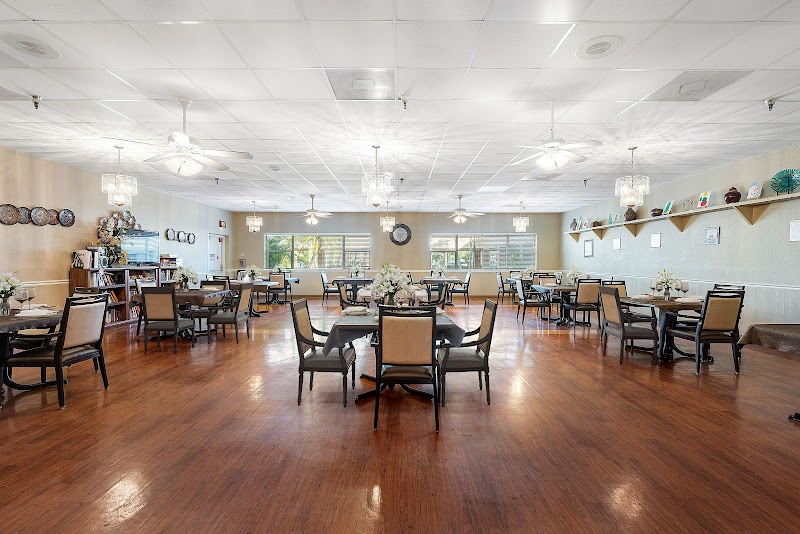
How is Sandgate Gardens Rehab And Nursing Center Staffed?

CMS rates SANDGATE GARDENS REHAB AND NURSING CENTER's staffing level at 3 out of 5 stars, which is average compared to other nursing homes. Staff turnover is 57%, which is 11 percentage points above the Florida average of 46%. High turnover can affect care consistency as new staff learn residents' individual needs. RN turnover specifically is 61%, which is notably high. RNs provide skilled clinical oversight, so turnover in this role can affect medical care quality.

What Have Inspectors Found at Sandgate Gardens Rehab And Nursing Center?

State health inspectors documented 46 deficiencies at SANDGATE GARDENS REHAB AND NURSING CENTER during 2022 to 2025. These included: 46 with potential for harm.
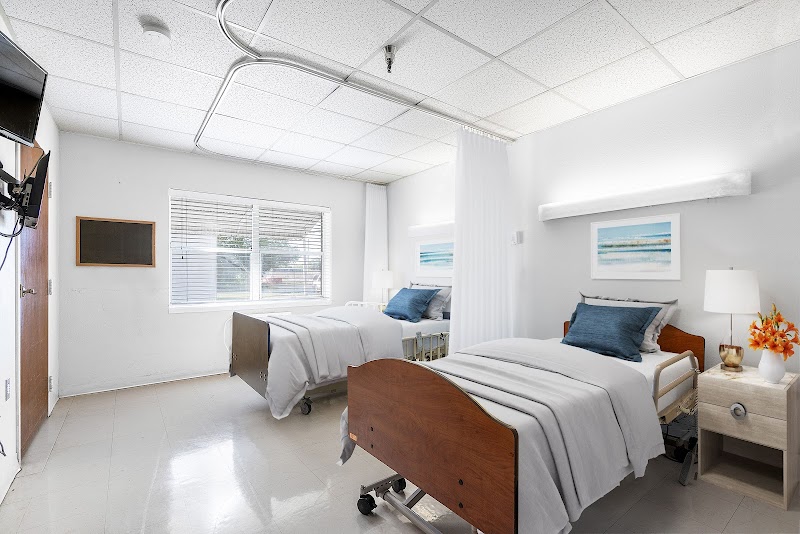
Who Owns and Operates Sandgate Gardens Rehab And Nursing Center?

SANDGATE GARDENS REHAB AND NURSING CENTER is owned by a for-profit company. For-profit facilities operate as businesses with obligations to shareholders or private owners. The facility is operated by ASTON HEALTH, a chain that manages multiple nursing homes. With 107 certified beds and approximately 97 residents (about 91% occupancy), it is a mid-sized facility located in FORT PIERCE, Florida.
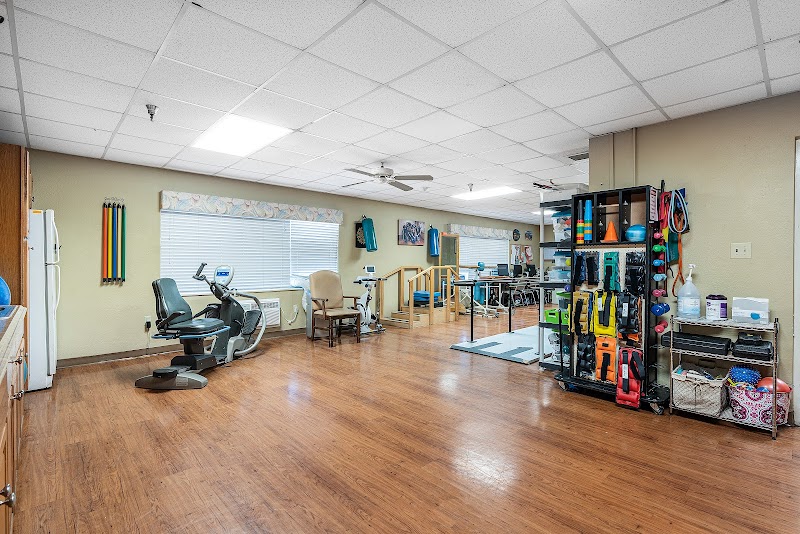
How Does Sandgate Gardens Rehab And Nursing Center Compare to Other Florida Nursing Homes?

Compared to the 100 nursing homes in Florida, SANDGATE GARDENS REHAB AND NURSING CENTER's overall rating (2 stars) is below the state average of 3.2, staff turnover (57%) is significantly higher than the state average of 46%, and health inspection rating (2 stars) is below the national benchmark.

What Should Families Ask When Visiting Sandgate Gardens Rehab And Nursing Center?

Based on this facility's data, families visiting should ask: "How do you ensure continuity of care given staff turnover, and what is your staff retention strategy?" "Can I visit during a mealtime to observe dining assistance and food quality?" "How do you handle medical emergencies, and what is your hospital transfer rate?" "Can I speak with family members of current residents about their experience?" These questions are particularly relevant given the facility's high staff turnover rate.

Is Sandgate Gardens Rehab And Nursing Center Safe?

Based on CMS inspection data, SANDGATE GARDENS REHAB AND NURSING CENTER has a clean safety record: no substantiated abuse findings (meaning no confirmed cases of resident harm), no Immediate Jeopardy citations (the most serious violation level indicating risk of serious injury or death), and is not on the Special Focus Facility watch list (a federal program monitoring the lowest-performing 1% of nursing homes). The facility has a 2-star overall rating and ranks #100 of 100 nursing homes in Florida. While no facility is perfect, families should still ask about staff-to-resident ratios and recent inspection results during their visit.

Do Nurses at Sandgate Gardens Rehab And Nursing Center Stick Around?

Staff turnover at SANDGATE GARDENS REHAB AND NURSING CENTER is high. At 57%, the facility is 11 percentage points above the Florida average of 46%. Registered Nurse turnover is particularly concerning at 61%. RNs handle complex medical decisions and coordinate care — frequent RN changes can directly impact care quality. High turnover means new staff may not know residents' individual needs, medications, or preferences. It can also be disorienting for residents, especially those with dementia who rely on familiar faces. Families should ask: What is causing the turnover? What retention programs are in place? How do you ensure care continuity during staff transitions?

Was Sandgate Gardens Rehab And Nursing Center Ever Fined?

SANDGATE GARDENS REHAB AND NURSING CENTER has no federal fines on record. CMS issues fines when nursing homes fail to meet care standards or don't correct problems found during inspections. The absence of fines suggests the facility has either maintained compliance or corrected any issues before penalties were assessed. This is a positive indicator, though families should still review recent inspection reports for the full picture.

Is Sandgate Gardens Rehab And Nursing Center on Any Federal Watch List?

SANDGATE GARDENS REHAB AND NURSING CENTER is not on any federal watch list. The most significant is the Special Focus Facility (SFF) program, which identifies the bottom 1% of nursing homes nationally based on persistent, serious quality problems. Not being on this list means the facility has avoided the pattern of deficiencies that triggers enhanced federal oversight. This is a positive indicator, though families should still review the facility's inspection history directly.