PALM GARDEN OF PORT SAINT LUCIE
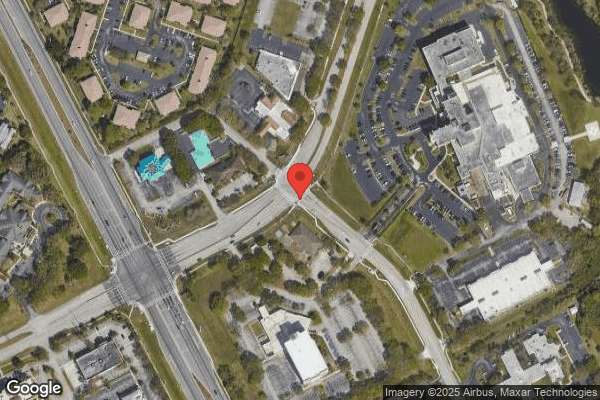
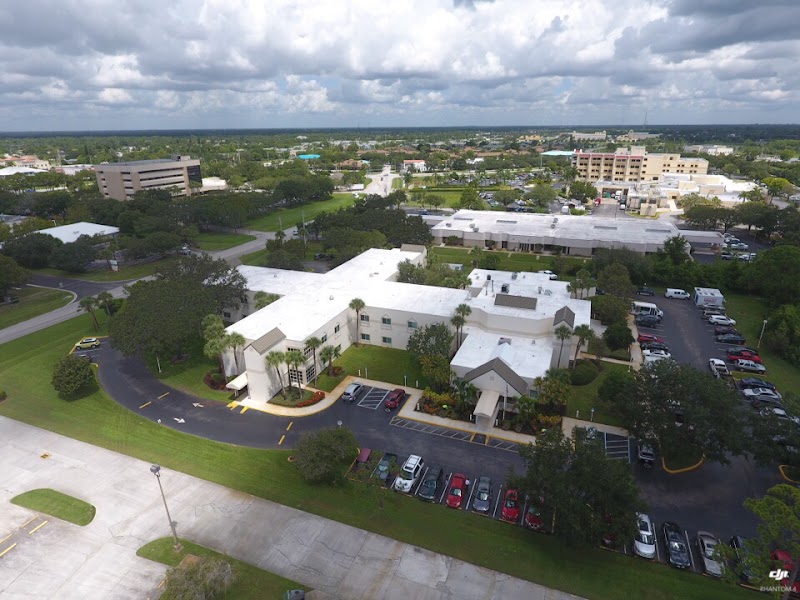
1751 SE HILLMOOR DRIVE, PORT SAINT LUCIE, FL 34952 (772) 335-8844
For profit - Corporation 120 Beds PALM GARDEN HEALTH AND REHABILITATION Data: November 2025
Trust Grade
83/100
#86 of 690 in FL
Last Inspection: July 2024

Within standard 12-15 month inspection cycle. Federal law requires annual inspections.

Overview

Palm Garden of Port Saint Lucie has a Trust Grade of B+, indicating it is above average and recommended for families seeking care. It ranks #86 out of 690 facilities in Florida, placing it in the top half of all state options, and is the top-ranked facility out of 9 in St. Lucie County. The facility is improving, with a reduction in issues from 7 in 2023 to 6 in 2024. Staffing is a strength, rated 4 out of 5 stars with a turnover rate of just 29%, which is well below the state average, suggesting a stable workforce. On the downside, the facility has faced concerns, including not allowing residents the choice for indoor visitation and failing to adequately address changes in residents' conditions, which could affect their care. However, it has no fines on record, indicating compliance with regulations, and shows average RN coverage, which is crucial for catching potential health issues.

Trust Score
B+
83/100
In Florida
#86/690
Top 12%
Safety Record
Low Risk
No red flags
Inspections
Getting Better
7 → 6 violations
Staff Stability
✓ Good
29% annual turnover. Excellent stability, 19 points below Florida's 48% average. Staff who stay learn residents' needs.
Penalties
✓ Good
No fines on record. Clean compliance history, better than most Florida facilities.
Skilled Nurses
○ Average
Each resident gets 40 minutes of Registered Nurse (RN) attention daily — about average for Florida. RNs are the most trained staff who monitor for health changes.
Violations
⚠ Watch
21 deficiencies on record. Higher than average. Multiple issues found across inspections.
★★★★★
5.0
Overall Rating
★★★★☆
4.0
Staff Levels
★★★★★
5.0
Care Quality
★★★★☆
4.0
Inspection Score
Stable
2023: 7 issues
2024: 6 issues

The Good

  • 4-Star Staffing Rating · Above-average nurse staffing levels
  • 5-Star Quality Measures · Strong clinical quality outcomes
  • Low Staff Turnover (29%) · Staff stability means consistent care
  • Full Sprinkler Coverage · Fire safety systems throughout facility
  • No fines on record
  • Staff turnover is low (29%)

    19 points below Florida average of 48%

Facility shows strength in staffing levels, quality measures, staff retention, fire safety.

The Bad

Chain: PALM GARDEN HEALTH AND REHABILITATI

Part of a multi-facility chain

Ask about local staffing decisions and management

The Ugly 21 deficiencies on record

Jul 2024 6 deficiencies
CONCERN (D) 📢 Someone Reported This

A family member, employee, or ombudsman was alarmed enough to file a formal complaint

Potential for Harm - no one hurt, but risky conditions existed

Quality of Care (Tag F0684)

Could have caused harm · This affected 1 resident

**NOTE- TERMS IN BRACKETS HAVE BEEN EDITED TO PROTECT CONFIDENTIALITY** Based on record review and interview, the facility failed to ensure assessments were completed to appropriately address a change...

Read full inspector narrative →
**NOTE- TERMS IN BRACKETS HAVE BEEN EDITED TO PROTECT CONFIDENTIALITY** Based on record review and interview, the facility failed to ensure assessments were completed to appropriately address a change in condition for 1 of 22 sampled residents, Resident #303; and failed to ensure nursing staff documented blood glucose levels and the provision of insulin per sliding scale for 1 of 5 sampled residents reviewed for medications, Resident #36. The findings included: 1. Record review for Resident #303 revealed the resident was admitted to the facility on [DATE] for Long Term Care (LTC) with a diagnosis of Cerebral Atherosclerosis (a disease-causing arteries in the brain to become hard, thick, and narrow due to the buildup of plaque/fatty deposits inside the artery walls), Hypertension (HTN - high blood pressure), Edema (swelling), Anxiety, Hyperlipidemia (HLD - elevated cholesterol), and palliative care. The resident was being seen for Hospice care on admission and Hospice care was discontinued on 01/13/24 due to improved health status and weight gain. On the admission assessment dated [DATE], the resident's mental states is noted as alert, oriented x3, communicated verbally, speech is clear, and is able to understand and be understood when speaking. No edema was present, lungs were clear, without breathing difficulty. On 01/29/24, a nursing progress note stating the resident's lower extremities were discolored, a text was sent to the physician and awaiting response. No follow-up note was located for the physician response. On 03/10/24, a nursing note documented Resident #303 had continuous nonproductive cough with wheezes noted. The ARNP (Advanced Registered Nurse Practitioner) was notified and a new order for chest x-ray and a PRN (as needed) DuoNeb (a combination respiratory treatment) was received. The chest x-ray was completed on 03/11/24 with an impression of no acute cardiopulmonary processes. The DuoNeb treatment was administered on 03/10/24, 03/22/24, 03/25/24, and 03/27/24 as ordered. The nursing notes did not include any respiratory assessments to indicate the need for the treatments (Refer to F695). On 03/25/24, the nursing progress notes revealed there was a rash on the right side of the resident's back. There was no physician notification or follow-up pertaining to the rash on the back documented. The resident had significant weight gain from her admission on [DATE] until the transfer date of 05/19/24. There was a total weight gain of 16 pounds (approximately 13%) during this 5-month period. There were nutritional notes in the progress notes stating there was weight gain and to continue the plan of care, with the last note being on 05/05/24. The resident was on a regular diet with no other nutritional interventions. The resident was consuming 26-75% of meals. There was no other explanation of the weight gain for this resident found in the record. On 05/15/24, a nursing progress note revealed the resident had pitting edema bilaterally to the lower extremities. The provider was made aware and ordered Lasix (a diuretic) 20 mg tablet by mouth to be administered every morning for 3 days. No further assessments were noted in the nurses' notes regarding the edema. There were no physician or nurse practitioner notes in the record regarding edema since this order on 05/15/24. On 05/19/24, the resident was transferred to a higher level of care per family request. The family was concerned due to the patient not speaking clearly and all extremities were red and swollen. Further review of Resident #303's record did not reveal any assessments related to the edema, respiratory, or speech concerns, apart from the assessment done by the weekend supervisor on 05/19/24 after the family's request to send the resident to the hospital. The last quarterly Minimum Data Set (MDS) completed on this resident was done on 04/21/24 which revealed this resident had clear speech and made self understood. There were no further nurses' notes in the record regarding any changes to the resident's speech. Review of the care plan dated 01/29/34, for Resident #303 included a care plan for potential complications related to diagnosis of Hypertension, and the use of diuretic. The interventions included, in part, to observe and report to the nurse or physician any edema, headache, tingling or numbness in the extremities, dizziness, pain, lightheadedness / blurred vision, palpitations, urinary retention, shortness of breath or generalized weakness. If edema is present, encourage the resident to elevate the effected extremity as tolerated. There were no additional care plans related to the resident's edema. There was no evidence that vital signs were documented for this resident since 03/04/24, apart from the day the resident was transferred out of the facility. There was an order by the resident's physician to check vital signs twice a day on the morning and evening shift starting on 03/05/24 through the date the resident was transferred. (Refer to F842). Review of the Emergency Medical Services (EMS) report for the transport of Resident #303 to the hospital emergency department revealed EMS had arrived at the resident at the facility at 1758 (5:58 PM); the resident was sitting upright awake and alert with mumbled speech; the stroke assessment was negative aside from mumbled speech which staff at the facility stated has been like this for over a week; the resident had diffuse pinpoint rash with large darker spots throughout all extremities; the resident felt tired but no itching; Vital signs were stable; and they could not start an IV (intravenous) access due to edema in all extremities. The resident's record was again reviewed to ensure there were no assessments regarding the change in the resident's speech or the edema to all extremities. There were no assessments or nursing notes located regarding a change in the resident's condition. Review of the hospital emergency department (ED) notes revealed Resident #303 arrived on 05/19/24 at 1824 (6:24 PM). The notes reflected the resident was not talking much, but responded by nodding yes or no. She had diffuse swelling over all extremities with and associated petechial rash, and pulseless feet bilaterally with associated cyanotic changes. The extremities were mottled and cold. The resident's temperature was 91.9 degrees Fahrenheit (F) at 6:37 PM. Further testing and labs completed resulted in a diagnosis of Myxedema coma, which is a life-threatening clinical condition that consists of severe Hypothyroidism with decompensation. The patients are extremely ill with significant hypothermia and depressed mental status. This condition occurs as an accumulation of waste products and fluids in the body due to low thyroid function. The fluid and waste accumulation in tissues does not resolve with diuretics. Treating the underlying thyroid condition is the only way to resolve Myxedema. Resident #303 was admitted to the intensive care unit (ICU) in critical condition. A subsequent review of all nurses' progress notes did not reveal a change in the resident's speech or address the edema and rash over all extremities. Vital signs including temperature could not be located in Resident #303's record. An interview with the Director of Nursing (DON) on 07/25/24 at approximately 10:00 AM revealed the staff do not necessarily document an assessment daily on all long-term care residents and vital signs are done as ordered by the physician. All the nursing progress notes were requested from the facility on 07/25/24 at approximately 10:15 AM. The Director of Nursing (DON) provided all the nurses notes for Resident #303 at approximately 10:40 AM, stating this was all the nursing progress notes for this resident. The DON confirmed the vital signs were not recorded in the record. 2. Record review documented Resident #36 was admitted to the facility on [DATE] with a diagnosis that included Diabetes Mellitus Type 2. Review of the resident's Quarterly Minimum Data Set (MDS) assessment completed on 05/20/24 showed Resident #36 received 7 days of insulin injections during the 7-day look back period. The resident's care plan initiated on 05/15/24 included a plan of care for the diagnosis and treatment of Diabetes. Review of the current physicians' orders for blood glucose monitoring and Diabetes management were as follows: a. NovoLog FlexPen Subcutaneous Solution Pen-injector, 100 units\ml; Inject as per sliding scale subcutaneously before meals and at bedtime for DM2 [Diabetes Mellitus 2]: if 150 - 200 = 2 units; 201 - 250 = 4 units; 251 - 300 = 6 units; 301 - 350 = 8 units; 351 - 400 = 10 units. Over 400, Give 10 units and call MD. Call MD for b\s [blood sugar] under 60. b. Metformin HCl Oral Tablet, 1000 MG; give 1 tablet by mouth two times a day. c. Humulin N Subcutaneous Suspension, 100 units\ml; Inject 30 units subcutaneously in the morning. Review of the electronic Medication Administration Record (eMAR) on 07/06/23 at 1630 hours [4:30 PM], revealed Resident #36's blood glucose level was recorded at 53 mg/dl. There was no documentation in the resident's record that the physician was notified of the blood glucose level being below 60. On 07/17/24 at 1630 hours [4:30 PM], Resident #36's blood glucose level was recorded at 50 mg/dl. There was no documentation in the resident's record indicating that the physician was notified of the blood glucose level below 60. On 07/17/24 at 20:28 hours [8:28 PM], there was an administration note regarding Metformin HCl Oral Tablet 1000 MG. It documented to hold med due to BS 50 [hold medication due to Blood Sugar 50]. Review of Resident #36's eMAR showed the blood glucose levels were not recorded for the 6:30 AM required testing time for 07/17/24, 07/19/24, 07/21/24 and 07/24/24. Since there were no recorded blood glucose levels on these dates at 6:30 AM, there was no insulin per sliding scale documented as being provided. Resident #36's Blood Glucose readings within the past 7 days were recorded as follows: 07/17/24: 6 :30 AM - No record 11:30 AM - 121 [mg/dl] 4:30 PM - 50* 9:00 PM - 134. 07/18/24: 6:30 AM - 152 11:30 AM - 204 4:30 PM - 140 9:00 PM - 225. 07/19/24: 6:30 AM - No record 11:30 AM - 143 04:30 PM - 257 09:00 PM - 112. 07/20/24: 6:30 AM - 216 11:30 AM - 269 4:30 PM - 98 9:00 PM - 94. 07/21/24: 6:30 AM - No record 11:30 AM - 154 4:30 PM - 241 9:00 PM - 146. 07/22/24: 6:30 AM- 105 11:30 AM - 161 4:30 PM 142 9:00 PM - 98. 07/23/24: 6:30 AM - 114 11:30 AM - 141 4:30 PM - 112 9:00 PM - 151. 07/24/24: 6:30 AM - No record 11:30 AM - 144 No further record review. On 07/25/24 at approximately 10:00 AM, the Director of Nursing (DON) was notified of the missing documentation in Resident 36's medical record. On 07/25/24 at 11:42 AM, Resident #36's Primary Care Physician approached me to inform me that the facility staff had notified him when the resident's blood sugar had been below 60. This physician stated, I am going to remove this order [parameters] because the resident's blood sugar has been stable.
CONCERN (D) 📢 Someone Reported This

A family member, employee, or ombudsman was alarmed enough to file a formal complaint

Potential for Harm - no one hurt, but risky conditions existed

Respiratory Care (Tag F0695)

Could have caused harm · This affected 1 resident

**NOTE- TERMS IN BRACKETS HAVE BEEN EDITED TO PROTECT CONFIDENTIALITY** Based on record review and policy review, the facility failed to ensure the respiratory status of residents were evaluated prior...

Read full inspector narrative →
**NOTE- TERMS IN BRACKETS HAVE BEEN EDITED TO PROTECT CONFIDENTIALITY** Based on record review and policy review, the facility failed to ensure the respiratory status of residents were evaluated prior to and after respiratory treatments were administered for 2 of 4 sampled residents reviewed for respiratory services, Resident #14 and 303. The findings included: Review of the facility policy, titled, Medication Administration, Nebulizer, M11.0, dated 07/2023 revealed in part, the following: 2. Review and special precautions and perform needed evaluations prior to administering medications to the guest/resident. Review guest / resident allergies. Review pertinent lab results, as indicated. Perform needed evaluations prior to administering specific medications (e.g., pulse, blood pressure, respirations) 7. Evaluate respiratory status. After the respiratory /nebulizer treatment the policy stated in part: 17. Evaluate respiratory status to include, but not limited to: Breath sounds. Cough effort and sputum production. Heart rate. Respiratory rate. 1. Review of Resident #14's record revealed the resident was admitted on [DATE] with diagnoses including but not limited to Chronic Obstructive Pulmonary Disease (COPD), Hypertension (HTN), Pneumonia, Myocardial Infarction (MI), Dementia, Acute Upper Respiratory Infection, and Heart Failure. Review of the physician orders, 03/01/24, revealed an order for Albuterol Sulfate Inhalation Nebulization Solution 2.5 mg (milligrams)/ml (milliliter) inhale via nebulizer two times a day for SOB (shortness of breath). Subsequent review of Resident #14's medication administration record (MAR) for July 2024 revealed the nebulizer treatments were administered as ordered. Further review of the record did not reveal respiratory assessments were completed prior to and post administration of the nebulizer respiratory treatment. 2. Review of Resident #303's record revealed the resident was admitted to the facility on [DATE] with a diagnosis of Cerebral Atherosclerosis, HTN, Anxiety, Edema, palliative care, and Hyperlipidemia (HLD). Review of the physician orders revealed an order dated 03/10/24 for Ipratropium-Albuterol Inhalation Solution 0.5-2.5 (3) mg/3ml. Inhale 3ml orally every 6 hours as needed for wheezing. Subsequent review of the MAR for March 2024 revealed the nebulizer respiratory treatment was administered on 03/10/24, 03/22/24, 03/25/24 and 03/27/24. Further review did not reveal a respiratory evaluation prior to or after the administration of the respiratory treatment.
CONCERN (D)

Potential for Harm - no one hurt, but risky conditions existed

Pharmacy Services (Tag F0755)

Could have caused harm · This affected 1 resident

Based on interview and record review, the facility failed to ensure narcotic removal was recorded in the Medication Administration Records (MARs) for 2 of 9 sampled residents reviewed. Residents #63 a...

Read full inspector narrative →
Based on interview and record review, the facility failed to ensure narcotic removal was recorded in the Medication Administration Records (MARs) for 2 of 9 sampled residents reviewed. Residents #63 and #97. The findings included: 1. On 07/24/24 at 9:52 AM, a clinical record review was conducted for Resident #97. The review revealed a physician order of Hydrocodone 5-325 mg by mouth every 4 hours as needed for non-acute pain. The controlled medication utilization record was compared against the July 2024 MARs. There was a discrepancy noted, in which the Controlled Medication Utilization Record showed that the Hydrocodone was removed on 07/05/24 at 6:18 AM and on 07/21/24 at 9:40 PM. The July 2024 MARs lacked documented evidence to reflect this removal and administration to the resident. On 07/24/24 at 11:19 AM, a side-by-side review of Resident #97's record and interview were held with the second-floor Unit Manager, who acknowledged the above finding. 2. On 07/25/24 at 10:41 AM, a clinical record review was conducted for Resident #63 The review revealed a physician order of Hydrocodone 5-325 mg 1 tablet by mouth every 4 hours as needed for non-acute pain. The Controlled Medication Utilization Record was compared against the July 2024 MARs. There was a discrepancy noted, in which the Controlled Medication Utilization Record showed the medication was removed on 07/11/24 at 1:00 PM. The July 2024 MARs lacked documented evidence to reflect this removal and administration to the resident. On 07/25/24 at 10:48 AM, an interview was held with the first-floor Unit Manager. She was made aware of the lack of documentation on the MARs for the medication administration for Resident #97.
CONCERN (D)

Potential for Harm - no one hurt, but risky conditions existed

Deficiency F0825 (Tag F0825)

Could have caused harm · This affected 1 resident

**NOTE- TERMS IN BRACKETS HAVE BEEN EDITED TO PROTECT CONFIDENTIALITY** Based on record review and interview, the facility failed to provide therapy services as ordered by the physician for 1 of 1 sam...

Read full inspector narrative →
**NOTE- TERMS IN BRACKETS HAVE BEEN EDITED TO PROTECT CONFIDENTIALITY** Based on record review and interview, the facility failed to provide therapy services as ordered by the physician for 1 of 1 sampled resident, Resident #81, reviewed for rehabilitation therapy. The findings included: Record review for Resident #81 revealed the resident was admitted to the facility on [DATE] with a diagnosis to include, Type 2 Diabetes Mellitus, Hypertension, Parkinsons Disease, Hyperlipidemia, Systemic Atrophy Primarily Affecting Central Nervous System, Autonomic Neuropathy, Cervical Disc Disorder, Weakness, Pain in right shoulder and Cognitive Communication Deficit. On 07/22/24 at 2:35 PM, Resident #81's significant other was interviewed. He stated the resident had neck surgery and she is paralyzed in her right and left extremities. He stated he feels she should be receiving more physical and occupational therapy because he didn't feel Resident #81 was progressing. He stated he wants the resident to be able to walk and he wants her to go home. On 07/24/24 at 9:21 AM, an interview was conducted with the Director of Therapy Services. He stated Resident #81 is receiving Physical therapy, (PT) 2 times a week and Occupational Therapy (OT) 3 times a week. Resident #81's record was reviewed. On 07/05/24, a physician order was written for Resident #81 to increase OT to 5 times a week. On 07/25/24 at 8:58 AM, the Director of Therapy Services was asked about the order for increasing the OT. He stated the resident needs to be assessed and the physician needs to sign the order. The order was reviewed, and the physician signed the order on 07/08/24. The Director of Therapy Services agreed the order had not been initiated. On 07/25/24 at 11:50 AM, the Director of Therapy Services was interviewed concerning orders the process once the physician enters an order. He stated the OT department receives the order and then does the recertification. The OT department is responsible for entering it into the electronic medical record. When he receives the information from OT, he does the projection (scheduling). He stated it was an oversight technique error from the OT department.
CONCERN (D) 📢 Someone Reported This

A family member, employee, or ombudsman was alarmed enough to file a formal complaint

Potential for Harm - no one hurt, but risky conditions existed

Medical Records (Tag F0842)

Could have caused harm · This affected 1 resident

**NOTE- TERMS IN BRACKETS HAVE BEEN EDITED TO PROTECT CONFIDENTIALITY** Based on record review and interview, the facility failed to ensure vital signs were documented as ordered for 1 of 4 sampled re...

Read full inspector narrative →
**NOTE- TERMS IN BRACKETS HAVE BEEN EDITED TO PROTECT CONFIDENTIALITY** Based on record review and interview, the facility failed to ensure vital signs were documented as ordered for 1 of 4 sampled residents reviewed for vital signs, Resident #303. The findings included: Review of Resident #303 record revealed the resident was admitted on [DATE] with diagnoses that included Cerebral Atherosclerosis, Hypertension (HTN), Anxiety, Edema, palliative care, and Hyperlipidemia. Review of the physician orders dated 03/05/24 included an order to obtain vital signs every shift, day and evening shift. Review of the Medication Administration Record (MAR) revealed the vital signs were signed off as being completed. Further review of the MAR failed to document any of the vital signs. Review of the vital signs record did not reveal vital signs were documented after 03/04/24, apart from the day the resident was transferred out via emergency medical services (EMS) to the hospital at 1839 (6:39 PM). Review of the nursing progress notes did not have any documentation regarding vital signs. On 07/25/24 at approximately 10:00 AM, the Director of Nursing (DON) provided a copy of all nursing documentation and confirmed this was all the documentation for Resident #303.
CONCERN (D)

Potential for Harm - no one hurt, but risky conditions existed

Infection Control (Tag F0880)

Could have caused harm · This affected 1 resident

**NOTE- TERMS IN BRACKETS HAVE BEEN EDITED TO PROTECT CONFIDENTIALITY** Based on policy review, observation, interview and record review, the facility failed to ensure the infection control process wa...

Read full inspector narrative →
**NOTE- TERMS IN BRACKETS HAVE BEEN EDITED TO PROTECT CONFIDENTIALITY** Based on policy review, observation, interview and record review, the facility failed to ensure the infection control process was followed during pericare for 2 of 2 sampled residents reviewed for Urinary Tract Infection (UTI), Residents #37 and #46. The findings included: Review of the policy, titled, Infection Prevention and Control Manual Guidance for control ESBL [Extended Spectrum Beta-Lactamase], dated December 2020, indicated the following, in part: ESBL are enzymes that mediate resistance to extended spectrum (third generation) cephalosporins (e.g. ceftazidime, cefotaxime, and ceftriaxone) and monobactams (e.g. aztreonam) but do not affect cephamycins (e.g. cefoxitin and cefotetan) or carbapenems (e.g. meropenem or imipenem). The purpose was to provide guidelines for presentation and control of ESBL. Clinical symptoms include: cause a range of clinical infections including infections of the urinary tract, bloodstream, surgical site, and intra-abdominal site. Gowns indicated for activities where skin or clothing will come in contact with the patient or their environment in acute care, or when performing direct care. Review of the policy, titled, Transmission-Based Precautions [TBP], dated December 2020, revealed the following, in part, transmission-based precautions shall only be used when transmission cannot be reasonably prevented by less restrictive measures. Transmission based precautions are divided into: contact precautions, droplet precautions, and airborne precautions. Contact precautions: wear PPE (personal protective equipment) gown and gloves for all interactions that may involved contact with the resident or potentially contaminated areas in the resident environment. 1. Clinical record review for Resident #37 revealed the resident was initially admitted to the facility on [DATE] and re-admitted on [DATE] with diagnoses that included: Non-Alzheimer's Dementia, and Parkinson's disease. The quarterly comprehensive assessment, reference date 06/11/24, recorded a brief interview for mental status score of 04, which indicated Resident #37 was severely cognitively impaired. No mood or behavior concern was revealed in this assessment. This assessment evidenced, Resident #37 had required supervision assistance with toilet, and required substantial to maximal assistance with personal hygiene. Additional review of Resident #37's clinical record revealed physician order dated 07/18/24 for urinalysis, culture and sensitivity, the result with reported date 07/19/24, showed evidence of positive for UTI and the culture dated 07/21/24 showed evidence of ESBL in the urine. The physician order dated 07/21/24 for Ertapenem (antibiotic) 1 GM intravenously (IV) in the evening for UTI for 7 Days. On 07/24/24 at 10:18 AM, pericare observation was conducted on Resident #37, and the care was rendered by Staff B, Certified Nursing Assistant (CNA). When the surveyor entered the room, Staff B had already donned gloves and gown waiting for the surveyor to come and observe the care. Observations revealed: Staff B touched the curtain to close it with the gloves; touched the bed remote to put the resident's head down with the gloves; touched the bed linens to bring the linens down with the gloves; and subsequently, with the same gloves, Staff B obtained a washcloth, applied soap, soaked it in water, and started the pericare. At 10:26 AM, Staff B's hands were observed wet, as the water had gotten inside the gloves. Staff B removed the gloves and applied new gloves without hand hygiene in between the gloves being changed. After the care was rendered, an interview was held with Staff B, who acknowledged the findings. 2. Record review revealed Resident # 46 was admitted to the facility on [DATE] with diagnoses that included Depression. The annual comprehensive assessment, reference date 06/06/24, evidenced a Brief Interview for Mental Status score of 08, indicating Resident #46 was moderately cognitively impaired. The assessment recorded no mood or behavior concern. This assessment revealed Resident #46 was always incontinent with bladder. Resident #46 required partial to moderate assistance with toileting hygiene and required substantial to maximal assistance with personal hygiene. Review of the physician's order, dated 07/16/24, documented an order was recieved for urinalysis and culture and sensitivity (Urine C&S) for stomach pain. The result, with reported date 07/17/24, showed evidence of positive for UTI, and the culture dated 07/19/24 showed evidence of ESBL in the urine. Additional record review evidenced a physician's order dated 07/19/24 for Macrobid 100 MG (antibiotic) by mouth two times a day for UTI for 5 Days. On 07/22/24, a Physician's order was received for Contact Precaution relating to ESBL in the urine. Review of the clinical record revealed a care plan which indicated Resident #46 had a Urinary Tract Infection, and she was on Contact Precautions for ESBL in the urine. On 07/22/24 at 8:46 AM, Resident #46's room was observed with a transmission base precaution kit attached to the door, but there were no signs at the door to alert the staff of the precaution. On 07/24/24 at 10:06 AM, peri care observation was conducted. The care was rendered by Staff A, CNA. Staff A did not wear personal protective equipment (PPE) while doing the care. Staff A's uniform was touching the bed as she provided the care. An inquiry was made regarding PPE usage, and the surveyor asked the CNA why she didn't wear a gown. The CNA revealed she forgot to don a gown. On 07/24/24 beginning at 10:35 AM, an interview was held with the Director of Nursing (DON). The surveyor informed the DON that Staff A failed to wear a gown while she was providing pericare to Resident #46. The surveyor explained the findings and manner in which the care was rendered to Resident #37, indicating the breach in infection control practices.
May 2023 6 deficiencies
CONCERN (D)

Potential for Harm - no one hurt, but risky conditions existed

Comprehensive Care Plan (Tag F0656)

Could have caused harm · This affected 1 resident

**NOTE- TERMS IN BRACKETS HAVE BEEN EDITED TO PROTECT CONFIDENTIALITY** Based on record review, the facility failed to implement care plans for pain and urinary tract infection for 2 of 31 sampled res...

Read full inspector narrative →
**NOTE- TERMS IN BRACKETS HAVE BEEN EDITED TO PROTECT CONFIDENTIALITY** Based on record review, the facility failed to implement care plans for pain and urinary tract infection for 2 of 31 sampled residents' care plans reviewed, Residents #30 and #354. The findings included: 1. Record review for Resident #354 revealed the resident was prescribed Gabapentin Capsule 400 milligrams (mg) give 1 capsule by mouth three times a day for nerve pain on admission to the facility on [DATE]. On 05/02/23, the physician prescribed Triamcinolone Acetonide Injection Kit 40 mg/milliliter (ml) for pain to the right shoulder and right knee. Further review of the record did not reveal a care plan developed or implemented for pain for the resident. 2. Record review for Resident #30 revealed the resident had a diagnosis of a Urinary Tract Infection (UTI) and was started on antibiotics for the UTI on 04/24/23. Further review of the record did not reveal a care plan developed or implemented for the UTIs or interventions to attempt to prevent UTIs. A review of the quarterly Minimum Data Set (MDS) for 04/30/23 did not document that the resident had a UTI within the last 30 days.
CONCERN (D)

Potential for Harm - no one hurt, but risky conditions existed

Quality of Care (Tag F0684)

Could have caused harm · This affected 1 resident

**NOTE- TERMS IN BRACKETS HAVE BEEN EDITED TO PROTECT CONFIDENTIALITY** Based on observation, interviews, record review and policy review, the facility failed to do skin assessments per facility polic...

Read full inspector narrative →
**NOTE- TERMS IN BRACKETS HAVE BEEN EDITED TO PROTECT CONFIDENTIALITY** Based on observation, interviews, record review and policy review, the facility failed to do skin assessments per facility policy for 2 of 4 sampled residents reviewed for skin assessments, Residents #81 and #30. The finding included: The facility policy, titled, Skin Care and Wound Management, effective date 10/14 and revision date 07/17, documented, in part: The weekly skin sweep will be used by the licensed nurse to conduct a skin inspection at the time of admission, upon hospital return and no less than every 7 days. 1. Record review revealed Resident #81 was admitted to the facility on [DATE], with diagnoses, in part, of Parkinson's Disease, Adult Failure to Thrive and Major Depressive Disease. The resident has a Brief Interview for Mental Status (BIMS) score of a 10, indicating moderate impaired cognition. Review of the record for Resident #81 revealed the last weekly skin inspection was documented as 03/30/23. On 05/04/23 at approximately 9:15 AM, an interview was conducted with the Director of Nurses, (DON). She stated sometimes the resident refuses care. Review of the record contains no documentation of the resident's refusal of skin assessments. On 05/04/23 at 9:50 AM, an interview was conducted with Resident #81. It was reviewed with the resident what a total body skin assessment would involve, to ensure his understanding. The resident was asked if he has ever refused to allow anyone at the facility to inspect his skin. He stated he has never ever refused a skin inspection (assessment). 2. Record review for Resident #30 revealed an order for barrier cream to the back of the right thigh for redness every day and evening shift and an order for barrier cream to peri area and buttocks during incontinent care every shift. A subsequent review of the Treatment Administration Record (TAR) revealed documentation that the barrier cream was applied as ordered. Review of the Minimum Data Set (MDS) dated [DATE], a quarterly review, revealed Resident #30 had a Brief Interview for Mental Status (BIMS) of 15, indicating the resident is cognitively intact. On 05/01/23 at approximately 9:00 AM, an interview conducted with Resident #30 revealed the resident had a rash on her 'backside and between her thighs.' The resident stated that 'sometimes they put cream on and sometimes they don't, and it takes a long time to get changed after going poop or pee.' Review of the care plans for Resident #30 revealed a care plan for potential for alteration in skin integrity and included intervention of a pressure reducing mattress (in place), Protective skin care as ordered, and skin checks as per facility protocol. Review of the weekly skin assessments from 02/01/23 to present revealed 7 of 13 skin checks were not completed as per facility protocol. These dates were 02/18, 03/04, 03/11, 04/08, 04/15, 04/22, and 04/29/23. The last skin check documented for this resident was on 04/01/23. On 05/04/23 at 9:10 AM, an interview with the Director of Nursing (DON) stated that this resident refused her skin checks. The DON could not provide documentation by the nursing staff of the resident refusing the skin checks that are missing in the record. Further review of the record did not reveal care plans of the resident refusing care apart from them using the Hoyer lift, which she stated earlier in the survey that she did not like the staff to get her up with the lift and elects to remain in bed. On 05/04/23 at 9:55 AM, an interview with Resident #30 revealed the staff had just come in and asked her if they could check her skin and she agreed. The resident said she was informed by the nursing staff that she had no further redness on her backside and that her skin was clear. The surveyor asked the resident if she had ever refused a skin check where they look over her entire body for any skin concerns. The resident stated No, I do not refuse any care regarding my health. I just do not like them to use the lift to get me out of bed, but that when they check her skin, the nurses turn her side to side to look and she is okay with that.
CONCERN (D)

Potential for Harm - no one hurt, but risky conditions existed

Deficiency F0692 (Tag F0692)

Could have caused harm · This affected 1 resident

**NOTE- TERMS IN BRACKETS HAVE BEEN EDITED TO PROTECT CONFIDENTIALITY** Based on observation, interview, record review and policy review, the facility failed to obtain weights per policy for 4 of 7 sa...

Read full inspector narrative →
**NOTE- TERMS IN BRACKETS HAVE BEEN EDITED TO PROTECT CONFIDENTIALITY** Based on observation, interview, record review and policy review, the facility failed to obtain weights per policy for 4 of 7 sampled residents reviewed for nutrition, Residents #94, #352, #353 and #354. The findings included: The facility's policy, titled, Obtaining Weights revised March 2016, revised March 2018, revised September 2018, revealed On Admission, the height and weight of each resident will be obtained by the nursing staff and entered in POC [plan of care]. Residents will be weighed weekly x two weeks to monitor adequacy of intake and identify immediate issues with nutrition and hydration. 1. Resident #94 was admitted to the facility on [DATE] post hospitalization. Resident #53 had a Brief Interview for Mental Status (BIMS) score of 15 per the admission Minimum Data Set (MDS) with an assessment reference date (ARD) of 03/20/23, indicating the resident was cognitively intact. Review of the weight tab in the electronic health record (EHR) revealed the first weight recorded was a hospital weight of 110 pounds (#). The second recorded weight was on 03/19/23 at 110 pounds. The third recorded weight was on 03/27/23 at 109.2 pounds. The fourth recorded weight was on 04/02/23 at 111.4 pounds. The resident was discharged home on [DATE]. A nutrition note dated 03/14/23 revealed, Therapeutic diet appropriate per dx. [diagnosis] Appetite good, consuming 76-100% of meals. BMI [basal metabolic index] indicates WNL [within normal limits] for age utilizing hospital weight, obtain actual weight. 2. Resident #352 was admitted to the facility on [DATE] post hospitalization. On 05/02/23 at 8:26 AM, record review for Resident #352 revealed the first weight recorded on 04/28/23 was a hospital weight of 240.5 pounds. There were no other weights for Resident #352 in the resident's record. A nutrition progress note dated 05/01/23 revealed, Appetite good, consuming mainly 76-100% of meals. BMI indicates obese, class 1, utilizing hospital weight. Weight reduction may be beneficial. Obtain actual weight. An interview with Resident #352 on 05/04/23 at 7:30 AM during breakfast revealed he was weighed yesterday (after surveyor intervention). 3. Record review revealed Resident #353 was admitted to the facility on [DATE] post hospitalization. His BIMS score per the admission MDS with ARD of 04/30/23 was 13, indicating the resident was cognitively intact. Record review was conducted on 05/02/23 at 8:53 AM of the weights for Resident #353. The only weight in the EHR was 186.56 pounds, a hospital weight, dated 04/28/23. On 04/28/23, a nutritional progress note stated, Appetite fair/good, consuming 51-100% of meals. BMI indicates overweight utilizing hospital weight. Skin impaired, not pressure related . 4. On 05/02/23 at 9:05 AM, record review for Resident #354 noted the resident was admitted to the facility post hospitalization on 04/26/23. The resident had a BIMS score of 15, per admission MDS assessment with an ARD of 05/01/23, indicating she was cognitively intact. Review of the weights for the resident revealed she had one weight in the EHR of 129 pounds. A review of the nutritional progress note dated 04/28/23 revealed, BMI indicates underweight. Skin intact. No labs to evaluate VPS. No edema noted. Will add fortified cereal . An interview was conducted on 05/03/23 at 11:35 AM with the facility's dietician who has been working in the facility for 6 years. She comes to this facility 2 days a week. The dietician stated the Unit Manager (UM) on the second floor, Staff A, is in charge of giving the Certified Nursing Assistants (CNAs) the weights that need to be done. She does not know why the weights are not timely per policy. She stated she forwards the sheet of weights to the Director of Nurses (DON), Executive Director (ED), Unit Managers, Risk Manager, Therapy department and MDS nurse. She stated within the past year, there has been a change in the way the weights are taken. They used to have restorative CNAs take the weights, now Staff A is in charge of the weights. An interview was conducted with Staff A, UM, on 05/03/23 at 12:07 PM. She stated that she gets the list from the dietician on Tuesday or Wednesday of the residents that are of concern. For all new admissions, there is a weekly weight times 3 weeks and if it is stable, it is a monthly weight after that or if not stable, weekly weights continue. Staff A further stated the first weekend of the month, they weigh everyone on the first floor. She is not sure how long that takes because she does not work on the weekend. The second weekend of the month, they weigh residents on the second floor and anyone that is new downstairs and anyone that they are concerned with. The list comes back to her, she will put out another list to be done Monday or Tuesday. Staff A stated residents who are new admissions are sometimes done the next morning, especially when they come in late in the evening. She continued to state that on the admission paperwork, a weight is required so the nurses put in the hospital weight so they can close the assessment. The surveyor asked Staff A why it is taking 5 days to get the actual weight. The UM replied that sometimes the residents refuse. The DON chooses what CNA will do the weights. There has been a CNA lately that regularly does the weights with another CNA. Interview conducted with the DON on 05/03/23 at 12:18 PM, revealed the weights are being done. This surveyor asked her to produce the weights for the above residents. As of 05/03/23 at 2:54 PM, she had not provided the weights. An additional interview was conducted with the dietician on 05/03/23 at 3:34 PM. This surveyor asked her if there was another place that the weights would be recorded besides the EHR. She stated Staff A keeps track of the people who are weighed. She stated she had not yet received a list of residents weighed on the weekend of 04/30/23. On 05/03/23 at 3:44 PM, an interview with Staff A revealed the weights from 04/30/23 were found in the dietary box and she does not know who put them there or who they were meant to go to. Interview with the dietician on 05/03/23 at 3:50 PM revealed she was not aware that she had a box where weights would be put. Interview with administrator on 05/03/23 at 3:57 PM revealed she was not aware that weights were being done on the weekend. An interview was conducted with Staff B, CNA, on 05/3/23 at 4:00 PM, who stated she is the one who put the weight papers in the mailbox because 'they' told her to put them there.
CONCERN (D)

Potential for Harm - no one hurt, but risky conditions existed

Deficiency F0697 (Tag F0697)

Could have caused harm · This affected 1 resident

**NOTE- TERMS IN BRACKETS HAVE BEEN EDITED TO PROTECT CONFIDENTIALITY** Based on observation, interview, record review and policy review, the facility failed to provide pain management for 2 of 2 samp...

Read full inspector narrative →
**NOTE- TERMS IN BRACKETS HAVE BEEN EDITED TO PROTECT CONFIDENTIALITY** Based on observation, interview, record review and policy review, the facility failed to provide pain management for 2 of 2 sampled residents reviewed for pain management, Residents #352 and #354. The findings included: The facility's policy, titled, Pain assessment and management, effective 01/01/20, revealed, in part: If pain has not been adequately controlled, it may be necessary to reconsider the current approaches and revise or supplement them as indicated . 1. Resident #352 was admitted to the facility on [DATE] post hospitalization with diagnoses that included Spinal Stenosis, Low back pain, and unspecified Osteoarthritis. On 05/04/23 at 8:00 AM, at the time of the record review, the resident did not have a Brief Interview for Mental Status (BIMS) score recorded. On 05/01/23 at 8:41 AM, the resident was interviewed as part of the initial pool process. The resident stated he felt he needed a stronger pain medication and is supposed to see a pain doctor. He stated the pain medication that he receives was helping initially but doesn't last long enough. On 05/04/23 at 7:30 AM, Resident #352 stated he had a pain level of 8 of 10 (10 being the worse). He did not think he saw the pain doctor because the doctor he saw said she does not take care of pain management; and he is still looking for a medication that will help his pain. On 05/04/23 at 7:35 AM, record review conducted on Resident #352 revealed there were no notes from a pain specialist. Review of the medications for the resident revealed upon admission, he had orders for Meloxicam 15 milligrams (mg) daily for arthritis pain, Norco Oral Tablet 10-325 mg 1 tablet every 8 hours as needed for pain, and Tylenol 325 mg 2 tabs every 4 hours as needed for mild to moderate pain. The record documented that from 05/02/23-05/04/23, his pain level was between 7-8/10, when the Norco was administered. Immediately after doing the record review on 05/04/23 at 7:35 AM, the surveyor spoke with Staff C, Unit Manager (UM) of the first floor. Staff C stated the resident was seen by a pain doctor on 05/01/23 but she does not put the notes in their electronic health record (EHR). The surveyor asked for the doctor's notes to review and asked Staff C if she realized Resident #352 was a pain level of 8 this morning. She responded that she would speak with the resident now. On 05/04/23 at 12:15 PM, an additional interview was conducted with Staff C. She stated the physician, a Physiatrist, face-timed the resident this morning and changed the timing of the Norco to every 6 hours as needed and added Zohydro which is a long acting pain medication given routinely two times a day. The physician's notes from a visit on 05/01/23 and 05/04/23 were produced at this time. 2. Resident #354 was admitted to the facility post hospitalization with diagnoses that included Vertigo, Type 2 Diabetes Mellitus with Diabetic Neuropathy and muscle weakness. Resident had a Brief Interview for mental Status (BIMS) of 15 per admission assessment with an assessment reference date of 05/01/23 indicating the resident was cognitively intact. The resident had physician ordered: Lidocaine patch for lower back pain, Tylenol 325 mg 2 tablets by mouth for pain three times a day, and Tramadol 50 mg 1 every 8 hours as needed for pain. On 05/01/23 at 11:30 AM, Resident #354 was interviewed during the initial pool process. The resident stated both of her hips are painful. Review of medical record did not reveal any physician visits for pain management. On 05/04/23 at 7:15 AM, the resident was observed sleeping in bed before the breakfast tray came. At 7:30 AM, observation showed the resident's tray on the bedside table and the resident was awake. Resident #354 stated she has a lot of pain in her left hip and doesn't know if she can eat. She stated she told her daughter she had pain. This surveyor asked her if she got anything for pain and she replied that she got Tylenol. Review of medical record revealed an order for Oxycodone 2.5 mg dated 05/01/23 and put into the computer on 05/04/23 at 7:00 AM. Interview with Staff C at this time, regarding why was the order not in the computer until 05/04/23, revealed she stated the order was missed and she found the order today. Staff C stated the pain management doctor comes in on Monday and Friday, but she does not put her notes in the computer since she has her own computer program. The surveyor asked to see the notes for the visit. On 05/04/23 at 8:52 AM, the surveyor placed a telephone call to the pharmacy regarding the order for Oxycodone. The pharmacist stated the order, via fax, came in at 8:38 AM this morning (05/04/23) and the pharmacist called the facility at 8:40 AM to say they will not be filling it due to a codeine allergy. On 05/04/23 at 9:13 AM, the surveyor placed a telephone call to the resident's daughter asking if she had notified the facility about her mother's pain. She stated she called this morning at 6:00 AM and spoke to the nurse and stated her mother had pain in the right knee, right hip, and right shoulder. the daughter stated her mother had been asking her to call the facility for 2 days but she did not have a chance to call until this morning. She stated she reminded the nurse to offer her the pain medication because her mother does not understand what 'prn' (as needed) means even though she is alert. The daughter stated she told admissions staff that her mother has chronic pain. On 05/04/23 at 12:15 PM, the surveyor spoke with Staff C. Staff C stated the physician face-timed the resident this morning and wrote new orders. Review of the physician (Physiatrist) notes revealed on 05/01/23, the physician saw the resident and ordered Oxycodone and Kenalog injections to the right knee and right shoulder to be given on 05/05/23 for inflammation. The Oxycodone order was discontinued due to codeine allergy. On the 05/04/23, review of the physician notes revealed the physician reported the resident's pain level was 9/10 and changed the Tramadol order to 50 mg 2 tablets every 6 hours as needed for pain.
CONCERN (D)

Potential for Harm - no one hurt, but risky conditions existed

Deficiency F0698 (Tag F0698)

Could have caused harm · This affected 1 resident

Based on record review and policy review, the facility failed to ensure Dialysis communication forms were completed as per facility policy for 1 of 1 sampled resident, Resident #78, reviewed for dialy...

Read full inspector narrative →
Based on record review and policy review, the facility failed to ensure Dialysis communication forms were completed as per facility policy for 1 of 1 sampled resident, Resident #78, reviewed for dialysis. The findings included: Review of the facility policy, titled, Care of the Resident Receiving Dialysis effective October 2014, revision date April 2017, revealed in part: Pre-dialysis care a. Nurse will complete the top section of the Dialysis Communication Form and sign/date. b. The dialysis communication form will be sent with the resident to the dialysis clinic. Post-dialysis care a. Nurse will evaluate resident's condition upon return from the dialysis clinic. b. Document evaluation by completing bottom section of the Dialysis Communication form. Sign/date the form. File the completed form in the resident's medical record. Review of Resident #78's medical record revealed the resident is scheduled to go out of the facility for dialysis every Monday, Wednesday, and Friday. Review of the Dialysis Communication forms dating back to 02/24/23 from present revealed 7 of the Dialysis Communication forms were lacking documentation. They lack of documentation included the following related to Resident #78: a. 02/24/23: The section labeled PG Center Nurse to complete upon return from dialysis was not filled out or signed by the receiving nurse as having assessed the resident upon their return. This section included return time, post weight from dialysis center, blood pressure, pulse, respirations, pain, bruit present, thrill present, access site/shunt assessment (including bleeding, redness, edema), signature and date. b. 03/03/24: The section labeled PG Center Nurse to complete upon return from dialysis was not filled out or signed by the receiving nurse as having assessed the resident upon their return. This section includes return time, post weight from dialysis center, blood pressure, pulse, respirations, pain, bruit present, thrill present, access site/shunt assessment (including bleeding, redness, edema), signature and date. c. 03/13/23: There is no patient identifier on the form. d. 03/24/23: In the pre-dialysis section, the medications administered, if any, are not documented and it lackseda signature. In the section labeled PG Center Nurse to be completed upon return from dialysis, it was not filled out or signed by the receiving nurse as having assessed the resident upon their return. This section included return time, post weight from dialysis center, blood pressure, pulse, respirations, pain, bruit present (an audible vascular sound associated with turbulent blood flow), thrill present (a vibration felt upon palpation of a blood vessel caused by blood flowing through the fistula), access site / shunt assessment (including bleeding, redness, edema), signature and date. e. 03/31/23: The post-dialysis assessment is not signed by the nurse that completed the assessment. f. 04/07/23: The post-dialysis is incomplete. There was no documentation of assessing the dialysis site/shunt for the presence of bruit and thrill. g. On 3/31/23, 04/03/23, and 04/07/23, a different form was found in the record and they did not include an area for the pre-dialysis nurse to sign and date as required by facility policy.
MINOR (C)

Minor Issue - procedural, no safety impact

Transfer Notice (Tag F0623)

Minor procedural issue · This affected most or all residents

**NOTE- TERMS IN BRACKETS HAVE BEEN EDITED TO PROTECT CONFIDENTIALITY** 2. Record review of Resident #83's medical record revealed the resident was admitted to the facility on [DATE]. During the resid...

Read full inspector narrative →
**NOTE- TERMS IN BRACKETS HAVE BEEN EDITED TO PROTECT CONFIDENTIALITY** 2. Record review of Resident #83's medical record revealed the resident was admitted to the facility on [DATE]. During the resident's stay in the facility, the resident was transferred to the hospital on [DATE] for lethargy and altered mental status. The resident was not readmitted . Further review of the record did not reveal written notifications to the resident / family / representative or to the Long-term Care Ombudsman for the hospital transfer. Based on record review, policy review and interview, the facility failed to ensure the ombudsman was notified of transfers and discharges for 2 of 2 sampled residents reviewed for hospitalization, Residents #54 and #83. The census at the time of the survey was 112. The findings included: A review of the facility policy, titled, Nursing and Transfer and Discharge Notice, effective March 2015, last revised in July 2021, revealed, in part, The Nursing Center Transfer and Discharge form must be completed for all center initiated resident transfers / discharges from the center. The completed Nursing Center Transfer and Discharge Notice form is to be forwarded to the District Long-Term Care Ombudsman Council. A review of the Transfer and Discharge Policy and Procedure, effective March 2015, latest revision July 2021, revealed, in part, The Social Service Director/designee will be responsible for forwarding the Notice of Discharge/Transfer to the District Ombudsman Council. 1. Record review of Resident #54 revealed the resident was admitted to the facility on [DATE]. During the resident's stay at the facility he was transferred to a higher level of care for health concerns related to Diabetes on 11/24/22 and 01/11/23. The resident was readmitted both times on 11/26/22 and 01/25/23. Further review of the record did not reveal written notifications to the resident / family / representative or to the Long-term Care Ombudsman for either hospital transfer. The resident was admitted to the hospital due to critical blood glucose levels on both transfers. On 05/03/23 at 9:55 AM in an interview with the Social Services Director (SSD), it was revealed that they stopped doing the notifications to the Ombudsman and family for at least a year ago and possibly 2 years ago. The SSD stated the previous administrator had informed her that it was no longer a requirement, so she stopped sending the written notices. The SSD was informed that this remains a requirement.
Mar 2023 1 deficiency
CONCERN (D) 📢 Someone Reported This

A family member, employee, or ombudsman was alarmed enough to file a formal complaint

Potential for Harm - no one hurt, but risky conditions existed

Notification of Changes (Tag F0580)

Could have caused harm · This affected 1 resident

**NOTE- TERMS IN BRACKETS HAVE BEEN EDITED TO PROTECT CONFIDENTIALITY** Based on record review, interview and policy review, the facility failed to notify the family and physician of changes in condit...

Read full inspector narrative →
**NOTE- TERMS IN BRACKETS HAVE BEEN EDITED TO PROTECT CONFIDENTIALITY** Based on record review, interview and policy review, the facility failed to notify the family and physician of changes in condition for 1 of 3 sampled residents, Resident #1. For Resident #1, the facility failed to notify the physician of missing laboratory results from an ordered digoxin level of [DATE]; failed to notify the physician of staff not holding blood pressure medications due to low blood pressure readings on 9 of 10 occasions; failed to notify the physician of a change in condition voiced by the daughter of Resident #1, Staff A the direct care day shift Certified Nursing Assistant (CNA), Staff B the direct care evening shift nurse, and the weekend supervisor on Saturday [DATE]; failed to notify the physician to obtain an order for an increased need of oxygen on [DATE]; and failed to notify the daughter of Resident #1's declining condition on Sunday [DATE] at 7:15 AM. The findings included: Review of the policy, titled, Nursing - Change in a Residents condition or Status, effective [DATE], documented, in part, Policy: The facility shall promptly notify the resident, his or her Attending Physician, and representative of changes in the resident's medical / mental condition and/or status (e.g., changes in level of care, .). Procedure: 1. The Nurse Supervisor / Charge Nurse will notify the resident's Attending Physician or On-Call Physician when there has been: . A significant change in the resident's physical / emotional / mental condition which includes discovery of the loss of vital bodily functions (loss of responsiveness to stimuli and loss of blood pressure, pulse, and respirations). A need to alter the resident's medical treatment significantly; . 3. Unless otherwise instructed by the resident, the Nurse supervisor / Charge Nurse / designee will notify the resident's family or representative when: . There is a significant change in the resident's physical, mental, or psychosocial status; . Review of the record revealed Resident #1 was admitted to the facility on [DATE], and remained on the same unit until his death on [DATE]. Review of the face sheet listed the resident's daughter as his emergency contact. The resident had a history of A-Fib (Atrial Fibrillation / irregular heart rate), and was being treated for Congestive Heart Failure (CHF / excessive fluid) with the administration of Lasix (a diuretic / water pill). The resident's Lasix was increased from 40 milligrams (mg) in the morning, to an additional 20 mg at night as of [DATE]. Review of the admission Minimum Data Set (MDS) assessment dated [DATE] documented Resident #1 as cognitively intact with a Brief Interview for Mental Status (BIMS) score of 14, on a 0 to 15 scale. This same MDS documented the resident needed limited to extensive assistance from staff for activities of daily living (ADL), except that he was independent for eating. Review of the care plans confirmed the resident's ADL ability, with an update on [DATE] that indicated a slight decline. 1. Review of the scanned handwritten physician orders dated [DATE] documented multiple orders, one of which was to draw a digoxin level STAT (a common medical abbreviation for urgent or rush). Review of the laboratory results in the electronic medical record (EMR) lacked any digoxin level. Review of the progress notes lacked any documentation related to the digoxin level or the ordered lab. The record revealed Resident #1 was administered the digoxin (a medication used to control A-Fib / rapid heart rate, and in the management of Congestive Heart Failure with A-Fib) daily with a heart rate ranging from 70 to 97. Review of the audit report for the ordered laboratory revealed it was created by the First Floor Unit Manager on [DATE] at 3:29 PM. During an interview on [DATE] at 1:57 PM, the First Floor Unit Manager was asked the process for STAT labs. The Unit Manager explained there was a specific phone number that was called when a STAT lab was ordered, the order was placed into the EMR, and the requisition for the lab was filled out. The Unit Manager was asked to locate and provide the results of the ordered digoxin level for Resident #1. During a subsequent interview on [DATE] at 4:00 PM, the Nursing Home Administrator (NHA) and Director of Clinical Services (DCS) provided a copy of the requisition for the ordered digoxin level dated [DATE] for Resident #1. The NHA stated she phoned the laboratory, and they explained the blood was drawn, but had gotten lost, as it was taken to a local hospital to be run because of the STAT status, instead of the routine laboratory. The DON stated they did not notice the lack of results, nor was there evidence of notification to the physician, of the missing result, in the record. 2. Review of the physician's orders revealed the blood pressure medication Coreg was to be administered twice daily, but only if certain parameters were met. If the resident's systolic blood pressure (top number) was less than 100, the diastolic blood pressure (bottom number) was less than 60, or the pulse was less than 60, the Coreg was to be held. Review of the documented morning and evening vital signs from [DATE] through [DATE] documented a diastolic blood pressure less than 60 on 10 different occasions, yet the medication was only held on four occasions, with documented notification to the physician only on [DATE] with the morning dose. Standard practice at the facility was to notify the physician of two refusals or 'held' medication in a row, which would have been the case on 02/10, 02/11, and [DATE]. During an interview on [DATE] at 1:23 PM, Staff B, Licensed Practical Nurse (LPN), stated she obtains her own vitals for the residents under her care. The LPN stated anytime there were parameters, if any of the readings were outside of those parameters, she would hold the medication and notify the physician. The record lacked documented evidence of the notification to the physician on [DATE] during her evening shift when the resident's blood pressure was 109/52. 3. During an interview on [DATE] at 1:47 PM, Staff A, Certified Nursing Assistant (CNA) stated she was the regular day shift CNA for the hall where Resident #1 resided and that she recalled the resident. Staff A stated Resident #1 was alert and oriented, and would talk to her during care tasks. When asked about his last week in the facility, Staff A stated Resident #1 got up out of bed on Thursday and Friday (02/16 and [DATE]) for a couple of hours each day, and even got his hair cut on one of those days. Staff A went on to explain that on Saturday [DATE], he did not look good and wasn't responsive. When asked what she meant by that statement, the CNA explained that when she moved him he would only grunt, and that she needed the help of another CNA in order to provide personal care, when before she could do it herself as he would help move. Staff A stated she reported it to the nurse (Staff C) and the weekend supervisor, and they told her his vitals were good and that he was 'just sleepy. Review of the progress notes revealed the following: On [DATE] at 7:45 PM, Staff B, Licensed Practical Nurse (LPN) and the evening nurse for Resident #1 documented the resident does not appears himslef [sig] when writer compare to last weekend. Staff B further described Resident #1 as very sleepy with little to no interaction, compared to the resident normally interacting with the nurse. This note lacked any notification to the supervisor or the physician. On [DATE] at 10:50 AM, Staff D, LPN and day shift direct care nurse for Resident #1 documented, came in at 7:15 and checked patients O2 (oxygen) stat [sig] and the O2 was 85 [%] while patient was on 5 liters of oxygen. monitored all throughout shift and at 10:35 AM CNA notified me that patient had stopped breathing. O2 checked and no pulse was found. MD notified and ambulance called. Review of the record revealed the only order for the use of supplemental oxygen was dated [DATE], and documented to use 2 liters via nasal cannula, only as needed to maintain the oxygen saturation greater than or equal to 92%. The record lacked any order for the increased oxygen. The record lacked any evidence the adult child and the physician were notified of the resident's decline, need for increased oxygen, or inability to obtain an oxygen saturation of 92% or greater. During the continued phone interview on [DATE] that began at 1:23 PM, Staff B, evening LPN, was asked about her documented change in condition for Resident #1 on [DATE]. Staff B explained she only works weekends, and that the previous weekend Resident #1 had been awake, talkative, and would knock on the table when he wanted is urinal emptied. The LPN stated when she returned on [DATE], she noted the resident was not himself. She checked his vitals, and stated they were OK, and spoke with the day nurse (Staff C), who reported he was like that all day. Staff B stated she notified the weekend supervisor who told her she would reach out to the doctor. Staff B stated she did not get any further orders for Resident #1, and she reported to the oncoming nurse, Staff D, to follow up on Resident #1, because he did not seem himself. When asked again how the resident was not himself, Staff B stated he had a decreased level of consciousness. When asked if she notified the physician, Staff B stated, No, I'm an LPN and follow the chain of command and report it to the weekend supervisor who is an RN. During a phone interview on [DATE] at 3:35 PM, the weekend supervisor explained she works every weekend from 7 AM until 11 PM, and covers the whole building. When asked if she recalled Resident #1, the supervisor stated 'yes' and explained she spoke with the daughter that Saturday ([DATE]) morning, who was concerned about her father being lethargic. The supervisor stated Staff C had taken the resident's vital signs and they were fine. Review of the record revealed the blood pressure reading for Resident #1 was 88/58 mmHg [normal range 120/80 mmHg]. The weekend supervisor volunteered that the daughter stated her father may be dehydrated. The weekend supervisor stated she showed the daughter her father's recent labs, and explained if the physician would have wanted IV (intravenous) fluids, he would have ordered them at that time. Review of the record revealed the most current labs for Resident #1 were from [DATE], eleven days earlier. During this continued phone interview, when asked if the daughter asked her to call the physician, the weekend supervisor stated she didn't think so, as she had reviewed the labs with her, and she seemed fine with that. When asked if Staff B, the evening nurse, had reported a change in condition to her as not looking the same as last weekend and did she call the physician that evening, the weekend supervisor stated Staff B did not bring anything to her attention, and again stated they had checked him that morning. When asked if she was aware Resident #1 was placed on 5 liters of oxygen on Sunday morning around 7:15 AM, as per the progress note of Staff D, LPN, and that his oxygen saturation was only 85%, the weekend supervisor stated she was not informed of that decline. The weekend supervisor stated on Sunday morning, she was made aware of the resident's passing about 10:30 AM. During a phone interview on [DATE] at 4:18 PM, Staff C, day shift Registered Nurse (RN) on Friday [DATE] and Saturday [DATE], stated he recalled Resident #1 but could not recall the events of Saturday. Review of the progress notes revealed the only documentation by Staff C was that the Coreg was held for low BP (blood pressure) and that the physician was notified. This was the one documented time the physician was notified out of the 10 occasions of low blood pressure. This documentation lacked evidence the physician was notified of the daughter's voiced concerns, or the resident's lethargy.
Jan 2022 8 deficiencies
CONCERN (D)

Potential for Harm - no one hurt, but risky conditions existed

Deficiency F0688 (Tag F0688)

Could have caused harm · This affected 1 resident

**NOTE- TERMS IN BRACKETS HAVE BEEN EDITED TO PROTECT CONFIDENTIALITY** Based on observation, interview and record review, the facility failed to provide restorative nursing services as prescribed by ...

Read full inspector narrative →
**NOTE- TERMS IN BRACKETS HAVE BEEN EDITED TO PROTECT CONFIDENTIALITY** Based on observation, interview and record review, the facility failed to provide restorative nursing services as prescribed by therapy for 1 of 1 sampled resident reviewed, Resident #21. The findings included: Clinical record review evidenced Resident #21 was admitted to the facility on [DATE] with diagnoses that included: anxiety disorder. The quarterly minimum data set (MDS) assessment, reference date 10/30/21, evidenced a brief interview for mental status (BIMS) score of 11 of 15, indicating Resident #21 was moderately impaired in cognition. On 01/18/22 at 11:11 AM, during an interview with Resident #21, she stated, 'she wanted to go to therapy, because she lays down a lot, she wants to walk, she has a throbbing in her tail bone, she was not receiving therapy services currently'. On 01/21/22 at 9:28 AM, an interview was held with the Rehabilitation (Rehab) Director, who revealed Resident #21 was discharged from Physical and Occupation therapy with all goals met in June 2021, and that the Restorative Nursing Program (RNP) was to follow up. The Rehab Director said the RNP that was given was for upper body range of motion exercise; and therapy had given the referral to the restorative nursing program Director. During the interview process, the Rehab Director presented therapy documents that revealed Resident #21 was under their Physical Therapy (PT) case load from 05/14/21 through 06/04/21 and Occupational Therapy (OT) from 05/14/21 through 06/10/21. The 'PT discharge status and recommendations' record, dated 06/05/21, recorded that Resident #21 was placed on restorative nursing program (RNP) to facilitate patient maintaining current level of performance and in order to prevent decline. The 'PT development of and instructions' in the RNPs had been completed with the interdisciplinary team (IDT) for ambulation and transfers. Also, during the interview process, the Rehab Director presented documents that revealed the 'OT discharge status and recommendations' record, dated 06/16/21, recorded RNP was in place for bilateral upper extremities. Review of the restorative referral program care plan, signed and dated 06/01/21, recorded Resident #21 will participate during exercises using 1 lb (pound) dumbbell 3 sets x 15 reps of all planes as tolerated and active range of motion. review of another restorative referral program care plan, signed date 06/25/21, recorded Resident #21 was to receive gait training, and ambulation. On 01/21/22 at 9:44 AM, an interview was held with Staff B-RNP/ICP (Infection Control Preventionist) Director, who explained that Resident #21 was under the RNP from June 2021 until present ([DATE]) and that Resident #21 was supposed to be ambulated by the restorative staff, 5 days a week. When the surveyor asked Staff B-RNP/ICP for evidence of restorative nursing services provided, she voiced the restorative staff were to document the services under the evaluation tab in the computer system. A side by side review of the computer system record in search of documentations for providing RNP services was conducted with Staff B-RNP/ICP. She confirmed that there was no documenation except for one documented RNP service, dated for 01/21/22, which she had started during the interview with the surveyor and it was incomplete. She said she initiated it in error. There were no other documentations in the computer system and the physical chart to account for providing restorative nursing services as prescribed by therapy from June 2021 until present (January 21, 2022). Staff B-RNP/ICP indicated that she was going to find out what happened with documentations. On 01/21/22 at 10:28 AM, Staff A, the regional nurse consultant/RNC, and Staff B-RNC/ICP was observed reviewing Resident #21's records. An interview was held with them both during that time. The surveyor had requested for evidence of RNP services for Resident #21. Staff A-RNC explained Resident #21 was supposed to be on RNP services for 5 days a week. The referral was to increase ambulation and gait training 5 x a week. When Staff B-RNP/ICP was asked how she was monitoring the restorative nursing program to ensure the resident was receiving services, Staff B-RNP/ICP stated there was no restorative nursing program in place for Resident #21. She stated that her main focus had been on covid; she hadn't had a structured specific RNP in place for Resident #21; and she is also the infection control nurse. Staff A-RNC and Staff B-RNP/ICP both confirmed there was no restorative nursing program in place for Resident #21. During this interview process, Staff B-RNP/ICP was noted to be putting the RNP order in the computer system, dated 01/21/22, that read, restorative nursing-ambulation-gait training 5x a week for 4 weeks. During this time, Staff B-RNP/ICP was also putting a care plan, dated 01/21/22, that read, 'Resident #21 is on a restorative program for ambulation 5x a week, one of the interventions included: assist to walk distance 5 days/week using: 2 persons assist/contact guard'. During this same interview, Staff B-RNP/ICP also put an order under the task section in the computer system that read, 'gait training 5 x a week for 4 weeks'. On 01/21/22 at 11:15 AM, the Director of Nursing (DON) joined the interview process and was made aware of the concerns The DON voiced, the facility had been focusing on covid.
CONCERN (D)

Potential for Harm - no one hurt, but risky conditions existed

Deficiency F0692 (Tag F0692)

Could have caused harm · This affected 1 resident

**NOTE- TERMS IN BRACKETS HAVE BEEN EDITED TO PROTECT CONFIDENTIALITY** Based on record review and interview, the facility failed to ensure weekly weights were completed, as recommended by the Registe...

Read full inspector narrative →
**NOTE- TERMS IN BRACKETS HAVE BEEN EDITED TO PROTECT CONFIDENTIALITY** Based on record review and interview, the facility failed to ensure weekly weights were completed, as recommended by the Registered Dietician (RD), for 1 of 3 sampled residents, who subsequently had significant weight loss, Resident #11. The findings included: Review of the record revealed Resident #11 was admitted to the facility on [DATE], with a four day hospitalization beginning on 11/18/21, and a readmission on [DATE]. During an interview on 01/19/22 at 8:58 AM, Resident #11 stated she was unsure of any weight loss. Review of the weight history and nutritional assessments for Resident #11 revealed the following: -On 10/15/21, the Registered Dietician (RD) completed an initial nutritional assessment. The resident's documented weighed was 115 pounds, which was appropriate for her height of 57 inches. No nutritional interventions were warranted at that time. -On 10/31/21, the resident weighed 111.2 pounds. -On 11/16/21, the resident weighed 111.7 pounds. -On 11/23/21, a nutritional note revealed the resident had a facility acquired pressure ulcer and the House Supplement was ordered. -On 12/06/21, the resident weighed 105.8 pounds. A subsequent note, dated 12/07/21, documented a significant weight loss and the addition of a daily House Shake, and facility staff were to obtain weekly weights. -No weight was recorded for 12/13/21. -On 12/16/21, the resident weighed 103.8 pounds. The record lacked any weights for the next two weeks (week of 12/19/21 and 12/26/21). A progress note, dated 12/30/21 by the RD, documented the 12/16/21 weight of 103.8 pounds with no current weight available. An observation by the RD revealed the resident needed assistance with set up of meals and consuming meals. The amount of House Supplement was increased. On 01/03/22, the resident weighed 93.4 pounds. On 01/04/21 the RD added a magic cup and a referral to Occupational Therapy (OT). On 01/10/22, the resident weighed 91.2 pounds, and Megace, a medication to stimulate a person's appetite, was started. On 01/17/22, the resident weighed 92.4 pounds. On 10/31/21, Resident #11 weighed 111.2 lbs. On 01/17/22, Resident #11 weighed 92.4 pounds, which is a 16.91% weight loss in approximately 2 1/2 months. The facility failed to obtain any weights between 12/16/21 and 01/03/22, during which time the resident lost ten pounds. During an interview on 01/20/22 at 3:58 PM, the RD was asked the facility process for obtaining weights. The RD explained she ensures a list is provided to the restorative Certified Nursing Assistants (CNAs) each Friday. The RD stated the restorative aides obtain the weights over the weekend so that she can review them each Monday. The RD stated the week of 12/30/21, weights may have not been done as she was on vacation, although she had told the facility she would monitor the weights while she was gone. The RD further explained that Staff B, the Infection Control Preventionist (ICP) and Restorative Nurse Program Director (Staff B-ICP/RNP), is also over the Restorative Program and puts the weights into the electronic medical record. The RD located an email to Staff B-ICP/RNP, dated 12/14/21, regarding the lack of weights for the week. The RD confirmed the lack of weights for Resident #11 and stated obviously there is always something that can be done when she notes a weight loss. The RD stated the staff depend heavily on getting that list from herself in order to obtain the residents' weights. Regarding the documented observation on 12/30/21 that revealed Resident #11 needed assistance, the RD explained that it was just an observation, and because she did not have a current weight, she didn't do the referral to OT at that time. During an interview on 01/20/22 at 4:40 PM, Staff B, the ICP/RNP was asked the process for obtaining residents' weights. Staff B explained the RD provides a list of residents needing to be weighed on Tuesday or Friday each week, and the restorative aides obtain the weights over the weekends. Copies of the weights are routinely provided to herself, the RD, the Administrator, the Director of Nursing and the Certified Dietary Manager. Staff B-ICP/RNP stated she enters the weights into the electronic medical record Monday mornings. She explained if any resident refused to be weighed over the weekend, she would try to encourage and obtain the weight and a note would be put into the record. She explained the weights are then discussed in morning meetings on Tuesdays. Staff B-ICP/RNP stated she was also on vacation the week of 12/26/21, at the same time as the RD. During a subsequent interview on 01/20/22 at 5:45 PM, the RD and Staff B-ICP/RNP provided evidence that some weights were done on 12/20/21, but not for Resident #11. The RD further explained the weekly weights are not put in as an order, but she keeps a running log of residents, along with who needs weekly weights and emails that log to the managers. The RD stated she was still unsure as to why Resident #11 did not have weekly weights for the two weeks in question.
CONCERN (D)

Potential for Harm - no one hurt, but risky conditions existed

Laboratory Services (Tag F0770)

Could have caused harm · This affected 1 resident

**NOTE- TERMS IN BRACKETS HAVE BEEN EDITED TO PROTECT CONFIDENTIALITY** Based on record review and interview, the facility failed to ensure laboratory tests were obtained as ordered by the physician f...

Read full inspector narrative →
**NOTE- TERMS IN BRACKETS HAVE BEEN EDITED TO PROTECT CONFIDENTIALITY** Based on record review and interview, the facility failed to ensure laboratory tests were obtained as ordered by the physician for 3 of 9 sampled residents, Resident #4, Resident #96, and Resident #11, whose laboratory orders were reviewed. The findings included: A review of Resident #4's electronic health record showed a physician's order dated 01/14/22 for Urinary / Analysis Culture & Sensitivity. May straight cath. Discontinue order when collected. Put in order when collected. Every shift for cloudy urine. Further review of Resident #4's electronic health record showed no evidence a urine sample was collected or sent to the laboratory, including in the Results section and in the progress notes. Review of Resident #4's January 2022 Medication Administration Record (MAR) showed nurses initialed this order once on 01/14/22, twice on 01/15/22, once on 01/16/22, and twice on 01/18/22. An interview was conducted on 01/19/22 at 2:45 PM with Registered Nurse D-RN (Registered Nurse) regarding the laboratory order. He reviewed Resident #4's clinical record and was unable to find evidence the urine sample was collected. He was unable to state why the MAR was marked off multiple times. He stated when the sample is collected the order should be discontinued. An interview was conducted on 01/19/22 at 2:53 PM with the Regional Director of Clinical Services. The Regional Director of Clinical Services was unable to find results. She was unable to state why it had been checked off multiple times in the MAR. She reviewed a laboratory request sheet for Resident #4, but this was for a different laboratory test. A follow up interview was conducted with the Regional Director of Clinical Services on 01/20/22 at 9:27 AM. She stated the urine sample had not been collected at the time of the prior interview. 2. Review of the record revealed Resident #11 was admitted to the facility on [DATE], had a 4-day hospitalization beginning on 11/18/21, and was readmitted to the facility on [DATE]. The record revealed Resident #11 had a stage IV pressure ulcer and was being seen by an infectious disease physician to rule out osteomyelitis (an infection of the bone). Further review of the record revealed a physician order, dated 12/06/21, for weekly labs to be drawn every Tuesday, related to the wound. Review of the record lacked any laboratory results for 12/21/21 and 12/28/21. During an interview on 01/20/22 at 4:27 PM, Staff H-UM, the Unit Manager of the 100 unit, was asked the process for obtaining ordered labs. The Unit Manager explained when an order is written a requisition and laboratory sheet is put in the Lab Book (a binder with tabbed dates). The laboratory technicians draw the labs, and the results are printed up each morning. If any results are critical, they get called to the physician or nurse practitioner. Staff H-UM was asked about the ordered labs for Resident #11 for the dates of 12/21/21 and 12/28/21. Staff H-UM thought Resident #11 may have gone out to the hospital during that time, but review of the record lacked any evidence to support the leave. As of the exit conference on 01/21/22, the facility had failed to provide any additional information. 3. During an observation on 01/18/22 at 12:12 PM, a clean specimen container was noted on the top of the dresser in the room of Resident #96. This container was labeled with the resident's name, the date of 01/16/22, and documented occult blood. Photographic evidence obtained. Review of the record revealed Resident #96 was re-admitted to the facility on [DATE]. Further review of the record revealed a physician order, dated 01/13/22, to collect stool (bowel movement) for occult blood times three and discontinue the order after it was collected. The record lacked any laboratory results for the stool collection. Review of the January 2022 Treatment Administration Record (TAR) documented an entry, Collect stool for occult blood x 3 and d/c (discontinue) order after stool collected. This entry on the TAR allowed the nurses on the three shifts each day to document the completion of this task beginning on 01/13/22 on the night shift. Of the 21 opportunities, between 01/13/22 on the night shift and 01/20/22 on the evening shift, eight shifts were left blank, five shifts documented the stool was not obtained, and seven shifts documented a checkmark indicating the task was completed. The only documented bowel movement in the medical record was on 01/14/22. This was documented by Staff F-CNA, a Certified Nursing Assistant (CNA). During an interview on 01/21/22 at 10:02 AM, Staff H-UM was unable to find the occult blood results. Staff H-UM found a sheet in the lab book with a Pending Orders form, dated 01/15/22, that documented no specimen next to it. Staff H-UM explained that would have been documented by the laboratory technician if no specimen was found in the specimen refrigerator. Staff H-UM explained the night nurse should review the Pending Orders to ensure completion or continuation of the order. Staff H-UM stated the physician order will not drop off until the specimens were received. Observations of both the specimen refrigerators and the resident's room at that time lacked any specimen container for the occult stool. During a phone interview on 01/21/22 at 10:32 AM, Staff F-CNA was asked about the ordered stool collection on 01/13/22 for Resident #96 and that she had documented the resident had a bowel movement on 01/14/22. The Staff F-CNA stated she was not informed of the order for the stool collection. Staff F-CNA agreed she saw the specimen container earlier this week (indicating on 01/18/22 or 01/19/22) but she had not seen one before that time.
CONCERN (D)

Potential for Harm - no one hurt, but risky conditions existed

Medical Records (Tag F0842)

Could have caused harm · This affected 1 resident

Based on record review and interview, the facility failed to ensure accuracy and completeness of residents' clinical records, as evidenced by lack of documentation of contact with physician per physic...

Read full inspector narrative →
Based on record review and interview, the facility failed to ensure accuracy and completeness of residents' clinical records, as evidenced by lack of documentation of contact with physician per physician's orders for high blood sugar readings for 1 of 5 sampled residents, Resident #54, whose medication regimens were reviewed; and lack of documentation of daily medication administration items for 2 of 5 sampled residents, Resident #1 and Resident #36, whose medication regimens were reviewed. The findings included: 1. Review of Resident #54's clinical record was conducted beginning on 01/19/22. Review of Resident #54's physician's orders and the resident's December 2021 Medication Administration Record (MAR) showed an order for Humalog 100unit/ML per sliding scale parameters from 12/1/21 through 12/9/21. The order stated for blood sugar readings 351 [mg/dL] and above give 8 units and call the physician. On 12/09/21, an order for Humalog 100 unit/ML per sliding scale parameters changed the parameters to give 10 units and call the physician for blood sugar readings of 351 [mg/dL]and above. Review of Resident #54's December 2021 MAR showed Resident #54 had blood sugar readings of 351 and above on the following days: 12/05/21,12/06/21, 12/10/21, 12/11/21, 12/15/21, 12/19/21, 12/22/21, 12/23/21, 12/27/21, 12/28/21, and 12/30/21. Review of Resident #54's January 2022 MAR showed Resident #54 had blood sugar readings of 351 [mg/dL] and above on 01/02/22, 01/05/22, 01/07/22, 01/09/22, 01/12/22, and 01/16/22. Further review of Resident #54's clinical record showed no evidence the physician was contacted on the above days when the blood sugar levels were noted above 351 mg/dL. An interview was conducted with the Regional Director of Clinical Services on 01/20/22 at 3:05 PM. The Regional Director of Clinical Services reviewed Resident #54's record and was unable to find documentation that the physician had been notified. She explained the Nurse Practitioner is here everyday so they tell him directly and they should document this contact. An interview was conducted with the Nurse Practitioner on 01/20/22 at 3:14 PM. He stated he and his colleagues are informed and have been tracking Resident #54's blood sugars. An interview was conducted with the Director of Nursing (DON) on 01/20/22 at 3:19 PM. The DON stated the nurses should document their contact with the physician or nurse practitioner. 2. A review of Resident #1's clinical record was conducted beginning on 01/18/22. Review of Resident #1's December 2021 MAR showed multiple blank entries for the following days: -Atorvastatin 12/27/21 -Ciclopirox 12/25/21 and 12/17/21 -Artificial tears 12/27/21, 1700 (5 PM) dose -Behavior monitoring 12/25/21 and 12/27/21 Evening (3 PM - 11 PM) -Monitoring with the use of Eliquis 12/15/21 and 12/17/21 Evenings -Monitoring for pain 12/25/21 and 12/27/21 Evenings Review of Resident #1's January 2022 MAR showed multiple blank entries for the following days: -Monitoring with the use of Eliquis 01/03/22 Evening -Monitoring for pain 01/03/22 Evening -Monitoring for behaviors 01/03/22 Evening -Ativan 01/03/22, 2100 (9 PM) dose -Ativan 01/12/22, 2100 (9 PM) dose. 3. A review of Resident #36's clinical record was conducted beginning on 01/18/22. Review of Resident #36's December 2021 MAR showed multiple blank entries for the following days: -Respiratory monitoring 12/20/21 Day, 12/25/21 Evening and Night, 12/27/21 Evening -Dietary House Supplement 12/20/21 1400 (2 PM) dose, 12/27/21 2000 (8 PM) dose -Monitoring for behaviors 12/20/21 Day, 12/25/21 Evening and Night, 12/27/21 Evening -Monitor vital signs 12/20/21 Day, 12/25/21 Night, 12/27/21 Evening -Baclofen 12/05/21, 0600 (6 AM) dose, 12/20/21, 1200 (12 PM) dose -Cleanse left knee 12/20/21, 12/26/21 -Weekly skin check 12/22/21 -Low bed 12/04/21 Evening, 12/20/21 Day, 12/22/21 Day, 12/24/21 Night, 12/25/21 Day and Evening, 12/26/21 Day, and 12/27/21 Evening Review of Resident #36's January 2022 MAR showed multiple blank entries for the following days: -Ferrosol tablet 01/14/22, 1000 (10 AM) dose -Folic Acid 01/14/22, 1000 (10 AM) dose -Respiratory monitoring 01/14/22 Day -Dietary House Supplement 01/14/22, 1000 (10 AM) dose and 1400 (2 PM) dose -Monitoring for behavior 01/14/22 Day -Monitor vitals 01/14/22 Day -Baclofen 01/14/22 1200 dose -Low bed 01/03/22 Day and Evening, and 01/04/22 Evening. An interview was conducted with the Regional Director of Clinical Services on 01/21/22 at 10:14 AM. The Regional Director of Clinical Services reviewed the resident's MARs and stated, 'nurses have to chart. If there is something, they may need to call the doctor'.
CONCERN (D)

Potential for Harm - no one hurt, but risky conditions existed

Deficiency F0886 (Tag F0886)

Could have caused harm · This affected 1 resident

**NOTE- TERMS IN BRACKETS HAVE BEEN EDITED TO PROTECT CONFIDENTIALITY** Based on observation, interview, and review of the manufacturer's instructions, the Infection Control Preventionist (ICP) nurse ...

Read full inspector narrative →
**NOTE- TERMS IN BRACKETS HAVE BEEN EDITED TO PROTECT CONFIDENTIALITY** Based on observation, interview, and review of the manufacturer's instructions, the Infection Control Preventionist (ICP) nurse failed to obtain the COVID-19 test sample as per manufacturer's instructions for 2 of 2 sampled resident observations (Resident #66 and #52). Interview revealed the ICP nurse had been conducting these tests in the observed manner for a few weeks, indicating the possibility of improper collection for any resident's test. Improper testing technique can lead to false negative results. The findings included: Review of [NAME] BinaxNOW COVID-19 AG Card instructions documented, Test Procedure 1. Hold Extraction Reagent bottle vertically. Hovering 1/2 inch above the TOP HOLE, slowly add 6 DROPS to the TOP HOLE of the swab well. DO NOT touch the card with the dropper tip while dispensing. 3. Rotate (twirl) swab shaft 3 times CLOCKWISE (to the right). Do not remove swab. NOTE: False negative results can occur if the sample swab is not rotated (twirled) prior to closing the card. PRECAUTIONS . 8. Proper sample collection, storage and transport are essential for correct results. 13. Inadequate or inappropriate sample collection, storage, and transport may yield false test results. 18. INVALID RESULTS can occur when an insufficient volume of extract reagent is added to the test card. To ensure delivery of adequate volume, hold vial vertically, 1/2 inch above the swab well, and add drops slowly. 19. False Negative results can occur if the sample swab is not rotated (twirled) prior to closing the card. 22. Do not store the swab after specimen collection in the original paper packaging. If storage is needed use a plastic tube with cap. SPECIMEN TRANSPORT and STORAGE: Do not return the nasal swab to the original paper packaging. LIMITATIONS: . A negative test result may occur if the level of antigen in a sample is below the detection limit of the test. False negative results may occur if a specimen is improperly collected, transported, or handled. if inadequate extraction buffer is used (e.g. less than 6 drops) . if specimen swabs are not twirled within the test card . if swabs are stored in their paper sheath after specimen collection. During an observation on 01/20/22 at 9:18 AM, the ICP (infection Control Preventionist) nurse obtained a sterile swab and went into the room of Resident #66. The ICP nurse donned gloves, obtained the sample from both nares, placed the swab back into the paper sheath, placed it into a plastic bag, and sanitized her hands. The ICP walked from the second floor resident room down to the first floor conference room where the BinaxNOW COVID-19 Ag Cards were located. The ICP nurse opened up a clean field, quickly placed a drop or two of the Extraction Reagent onto the card, obtained the swab from the paper sheath and placed it on the card. When asked the process of sample collection for each resident, the ICP nurse explained that she starts testing the residents at 5:30 AM if they are awake, stating she goes from the resident's room to the conference room between each resident, even for those residents that reside upstairs. When asked why she does the collection in that manner, the ICP nurse explained she did not like having the cart in front of each room with people walking by. The surveyor asked for and received the manufacturer's instructions. The surveyor asked to observe an additional test collection to ensure the rotation of the swab in the test card. On 01/20/22 at 9:59 AM, a resident test observation was made for Resident #52. The ICP nurse, after previous surveyor questioning, now had a cart at the door of the resident's room with a clean field. The ICP nurse donned gloves, obtained the specimen, carefully added six drops of the Extraction Reagent to the card, placed the specimen in the card turning the swab in a back-and-forth motion. The ICP nurse failed to rotate the swab three times clockwise.
CONCERN (E)

Potential for Harm - no one hurt, but risky conditions existed

Deficiency F0563 (Tag F0563)

Could have caused harm · This affected multiple residents

**NOTE- TERMS IN BRACKETS HAVE BEEN EDITED TO PROTECT CONFIDENTIALITY** Based on observation, interview, record review and policy review, the facility failed to ensure indoor visitation as per residen...

Read full inspector narrative →
**NOTE- TERMS IN BRACKETS HAVE BEEN EDITED TO PROTECT CONFIDENTIALITY** Based on observation, interview, record review and policy review, the facility failed to ensure indoor visitation as per resident's choice for 4 of 4 sampled residents, as evidenced by 3 residents who were not receiving Hospice and or palliative services, Residents #16, #148, and #149; and 1 resident who was receiving hospice services, Resident #33. This had the potential to affect any resident in the facility who wished to have visitation with family or friends. The facility census at the time of survey was 83. The number of residents not receiving Hospice services at the time of entrance was 80. The findings included: Observations of both first and second floor nurse's stations on 01/19/22 and 01/20/22 revealed a Resident Visitation Schedule folded in half and taped to the wall under the staffing for the day. Photographic evidence of the schedules obtained. Review of the admission Pack revealed the outdated Visitation policy, revised 04/27/21, that documented, When a new case of COVID-19 among residents or staff is identified, a Center (the skilled nursing facility) will immediately begin outbreak testing and suspend all visitation (does not include compassionate care visitor), until at least one round of facility-wide testing is completed. Center will do the following to ensure resident and facility safety: . Establish limits on the total number of visitors allowed in the facility based on the ability of staff to safely screen monitor visitation, including limits on the length of visits, days, hours and number of visits per week. Schedule visitors by appointment and monitor for adherence to proper use of masks and social distancing while accommodating auditory privacy. Notify residents, representatives and recurring visitors of any change in the visitation policy. Immediately suspend indoor visitation with a positive resident or staff member and follow guidelines for outbreak testing. During an interview on 01/20/22 at 1:17 PM, Staff E, the Concierge/Receptionist was asked the current visitation process. Staff E stated they are setting up appointment visits on the outdoor porch with a schedule. Staff E stated they usually have just one or two visits each hour, avoiding mealtimes. When asked who told her to do visitation via a schedule of appointments, she stated the information was from the Administrator. Staff E stated they were open before having positive COVID-19 cases with staff, but since the positive staff they have been doing the schedules. When asked about how long they have been doing the visitation only outdoors and by appointment, Staff E stated it had been about a month. During an interview on 01/20/22 at 1:20 PM, the Administrator was asked the current visitation process. The Administrator stated they were encouraging outdoor visits because of the outbreak, but if people want to come in we let them come in. The Administrator explained they were trying to schedule visits to keep track of how many people were in the facility for monitoring. The Administrator stated all Hospice residents could have family members anytime. When asked how the families were informed of the visitation status, the Administrator stated via call multipliers, which were messages recorded by the Administrator and sent out to residents and families via phone. The Administrator was informed that the receptionist was telling visitors they had to visit outside and per a scheduled appointment. The Administrator stated she was unaware the families were being told they had to schedule a visit. Review of the call multiplier message of 11/15/21, revealed the Administrator stated, . we will continue to suggest that appointments are made to visit your loved ones, however they are not required. Outdoor visits will continue to be preferred if your loved one which is our resident is not vaccinated. Review of the call multiplier message of 12/15/21, revealed the Administrator stated, We will be encouraging outdoor visitation, we will also appreciate if you could try to schedule your visitation so your loved one is ready when you arrive. 1. On 01/19/22 at 4:08 PM, Resident #16 was observed on the front outdoor patio with three visitors, one of whom was her adult son. When asked if the facility staff was allowing them to visit inside the facility, the son stated, No. They told us we weren't allowed. The family expressed that they don't mind some patio visits, understanding the potential for contracting the COVID-19 virus during the pandemic, but stated there were times when Resident #16 can't find something, and they just need to go in and help her rearrange her personal items or look for something she misplaced. During this interview, Staff E, the Concierge/Receptionist left the building headed for the parking lot, and the son followed her out to ask her a question. Upon return, the son explained he just asked Staff E if they were still on the schedule for next week's visit. When asked if they are only being allowed to visit their mom via appointment, the son stated yes, and explained they were told they need to make appointments. Resident #16 voiced she would like her family to be able to visit with her inside the facility. Review of the record revealed Resident #16 was admitted on [DATE]. Review of the Quarterly Minimum Data Set (MDS) assessment dated [DATE] documented Resident #16 had a Brief Interview for Mental Status (BIMS) score of 15, on a 0 to 15 scale, indicating the resident was cognitively intact. Review of the admission MDS dated [DATE] documented it was very important to have her family involved in discussion about her care. 2. On 01/20/22 at 10:14 AM, Resident #148 was observed on the front outdoor patio, visiting with his spouse. The spouse explained Resident #148 had just returned to the facility this past Wednesday (01/12/22), after an extended leave at home. The spouse stated when she arrived at the facility on 01/12/22 with the resident's personal items, the receptionist informed her she could not go into the building because they were having an outbreak, referring to the COVID-19 pandemic with staff and / or residents who had tested positive for the virus. The spouse further explained the receptionist informed her she had to visit outside for 20 to 40 minutes as per a visitation schedule. During a subsequent interview on 01/20/22 at 10:54 AM, Resident #148 was in his room. When asked if he would prefer indoor or outdoor visitation with his wife, Resident #148 stated, Definitely inside, like it was before. Review of the record revealed Resident #148 was originally admitted to the facility on [DATE], with the most recent readmission on [DATE]. Review of the Admission/readmission Nursing Evaluation date 01/12/22 documented Resident #148 was alert and oriented to person, place, time, and situation. 3. On 01/20/22 at 1:11 PM, Resident #149 was observed on the front outdoor patio visiting with his wife. The wife explained Resident #149 had been at the facility a week and that she had never been in his room. The wife explained she had followed the van from the hospital late on the afternoon of his admission and was not allowed into the facility. The wife stated on Friday 01/14/22, a woman at the front desk told her she could only have two outdoor visits a week, for one hour total. The wife explained it was difficult to keep up with his laundry if not allowed in to see what was dirty and needed to be taken home to wash. Resident #149 was covered with a blanket and the wife stated he had run out of clean slacks and wasn't wearing any, and that she had brought him more, but further stated she would like to go inside and find his clothes. Resident #149 stated he would like his wife to visit inside and help him with his clothes. 4. Review of the record revealed Resident #33 was admitted to the facility on [DATE]. Review of the admission MDS, dated [DATE], documented Resident #33 had a BIMS score of 15, indicating the resident was cognitively intact. On 01/20/22 at 1:31 PM, Resident #33 was observed on the outdoor front patio with her mother. The resident's mother stated the receptionist told her unless a resident is receiving Hospice services, visits have to be scheduled and outside. Resident #33 was on Hospice and said her mother was allowed inside to visit. During this interview Resident #33 asked if her fiancée could come inside for a visit. When asked why she (Resident #33) asked this, Resident #33 stated she was told visiting hours were only until 8 PM, and sometimes her fiancée did not get off work until 8:30 PM. Resident #33 stated it was the receptionist who told her visiting hours were only until 8 PM, and no one explained she could have visitors after that time.
CONCERN (E)

Potential for Harm - no one hurt, but risky conditions existed

Deficiency F0725 (Tag F0725)

Could have caused harm · This affected multiple residents

**NOTE- TERMS IN BRACKETS HAVE BEEN EDITED TO PROTECT CONFIDENTIALITY** 4. Refer to F688 for details. Clinical record review evidenced Resident #21 was admitted to the facility on [DATE] with diagnose...

Read full inspector narrative →
**NOTE- TERMS IN BRACKETS HAVE BEEN EDITED TO PROTECT CONFIDENTIALITY** 4. Refer to F688 for details. Clinical record review evidenced Resident #21 was admitted to the facility on [DATE] with diagnoses included: anxiety disorder. The quarterly minimum data set (MDS) assessment, reference date 10/30/21 evidence a brief interview for mental status (BIMS) score of 11, indicating Resident #21 was moderately impaired in cognition. On 01/18/22 at 11:11 AM, during an interview with Resident #21, she stated she wanted to go to therapy, because she lays down a lot, she wants to walk, she has a throbbing in her tail bone, she was not receiving therapy services currently. On 01/21/22 at 9:28 AM, an interview was held with the Rehabilitation (Rehab) Director who revealed Resident #21 was discharged from Physical and occupation therapy with all goals met in June 2021, and restorative nursing program was to follow up. The Rehab Director revealed that the restoration nursing program was given for upper body range of motion exercises; therapy had given the referral to the Restorative Nursing Program (RNP) Director. The physical therapy discharge status and recommendations record, dated 06/05/21, recorded Resident #21 was placed on the RNP to facilitate the patient maintaining current level of performance and in order to prevent decline. The development of and instructions in the following RNP's had been completed with the interdisciplinary team (IDT) for ambulation and transfers. Review of the occupational therapy (OT) discharge status and recommendations record, dated 06/16/21, recorded the RNP was in place for bilateral upper extremities. The restorative referral program care plan, signed date 06/01/21, recorded Resident #21 will participate during exercises using 1 lb (pound) dumbbell 3 sets x 15 reps (repetitions) of all planes as tolerated and active range of motion. Another restorative referral program care plan, signed date 06/25/21, recorded Resident #21 to receive gait training, and ambulation. On 01/21/22 at 9:44 AM, an interview was held with Staff B-RNP Director, who explained, Resident #21 was under RNP from June 2021 until present ([DATE]), and was supposed to be ambulated by the restorative staff, 5 days a week. When the surveyor for evidence of restorative nursing services provided, Staff B-RNP voiced the restorative staff were to document the services under the evaluation tab in the computer system, but there was no documentations for providing RNP services to the resdient. There was one documented RNP service, dated for 01/21/22, which was incomplete and started by Staff B-RNP during the interview with the surveyor. There were no other documentations in the computer system and the physical chart to account for providing restorative nursing services as prescribed by therapy from June 2021 until present (January 21, 2022). On 01/21/22 at 10:28 AM, Staff A (the Regional Nurse Consultant - RNC) and Staff B-RNP confirmed there was no restorative nursing program in place for Resident #21. Staff A-RNC voiced that she is planning to revamp the program and have a plan of correction in place. At 11:15 AM, the Director of nursing (DON) joined the interview process, was made aware of the concerns, and the DON voiced that the facility had been focusing on covid. Based on observation, interview, record review, and job description review, the facility failed to ensure there was sufficient nursing staff to provide nursing services to residents on the 100 unit. This failure was evidenced by the failure to ensure there was a nurse for 1 of 4 facility units (100A-unit) on 01/19/22, and as evidenced by staff failure to ensure weekly weights were done for 1 of 3 sampled residents, Resident #11; failed to provide restorative services for 1 of 1 sampled resident, Resident #21; and a sampled resident who voiced concern of lack of staff, Resident #23. The findings included: 1. Review of the staff assignments posted at the nurse's station for the 100 unit on 01/19/22 at 11:04 AM, revealed only one nurse, Staff I, a Licensed Practical Nurse (LPN), was listed as the nurse for 100B. There was no nurse listed for the 100A section of residents. The census for the 100 unit at the time of entrance was 39. When asked if they ran with just one nurse on the 100 unit on the day shift, the Director of Nursing (DON) stated, No, of course not. When asked who the second nurse was for the 100 units, the DON looked at the posted schedule and stated she was unsure, but she would go speak with the Staffing Coordinator. Staff H, the Unit Manager (UM), arrived at the nurse's station. During the same interview on 01/19/22 at 11:04 AM, when asked who the second nurse was for the 100 unit, the Staff H-UM stated, Someone called in and they were supposed to get a replacement. When asked if the replacement had showed up yet, Staff H-UM stated they had not. When asked if the residents on the 100A had gotten their morning medications or been attended to by a licensed staff that morning, Staff H-UM looked down the hall and stated, (Name of Staff I, Licensed Practical Nurse/LPN) was working on them now. Staff I was noted at the medication cart at the end of the low 100 hall (100A assignment). When asked why she (UM) did not assist with the morning medication pass, the Staff H-UM stated, Because I've been pulled in so many directions this morning. During an interview on 01/19/22 at 11:12 AM, Staff I-LPN was observed at the end of the low 100s hall, She stated she was given report for the 100B assignment and half (the low 100s) of the 100A assignment that morning, and had just finished with all of her assignment. When asked about the resident in the 140s (the other half of the 100A assignment), Staff I stated she was unsure but sometimes the nurse for the 140s (unit) also has the 240s (unit) upstairs. On 01/19/22 at 11:13 AM, a nurse (Staff D-LPN) entered the nurse's station, putting down his personal items as if he just arrived. Staff D-LPN explained he was asked yesterday to come in early today to help out. Staff D-LPN stated he normally works 3 PM to 11 PM, and clarified he was asked to come in whenever he could. When asked what he was assigned to do now that he was at the facility, he stated, I don't know. I'll go talk to (name of Unit Manager of the 200 unit). On 01/19/22 at 11:17 AM, the DON explained that Staff H-UM for the 100 unit, was supposed to cover the 100A assignment for the day shift, as per the Staffing Coordinator. The DON stated Staff H-UM told her she forgot. Observations and interviews were completed for the eleven residents in the 140s (the assignment that has not been attended to) as follows: -On 01/19/22 at 11:22 AM, Resident #63 was not in his room. At 11:33 AM, the resident was noted in the hallway. He was unsure if he had his morning medications. Resident #63 had a Brief Interview for Mental Score (BIMS) of 14, indicating he was cognitively intact. -On 01/19/22 at 11:23 AM, Resident #149 stated he was getting all his medications at night as they said, 'they can't get them in the day. Stated he would prefer his medications during the day. (Brand new admit; no BIMS and I didn't get his admit assessment). -On 01/19/22 at 11:25 AM Resident #11 could not recall if she had gotten her morning medications. BIMS = 15. -On 01/19/22 at 11:27 AM, Resident #70 stated she had not received her morning medications. Resident #70 had a BIMS score of 14, indicating the resident was cognitively intact. -On 01/19/22 at 11:28 AM Resident #16 stated he had not received his morning medications. Resident #16 had a BIMS score of 15, indicating the resident was cognitively intact. -On 01/19/22 at 11:28 AM, Resident #13 stated she got her medications early that morning and was not waiting on anything. BIMS = 8, indicating moderate cognitive impairment. -On 01/19/22 at 11:30 AM, Resident #43 stated he is was not aware of any need for medications. BIMS = 5, indicating moderate to severe cognitive impairment. -On 01/19/22 at 11:32 AM, both Residents #24 and #71 were unsure about their medications. BIMS 12 (moderate cognitively impairment) and 04 (severe cognitive impairment). -Two of these eleven residents (Residents #85 and #96) were not in their rooms at the time of these observations and interviews. During an interview on 01/19/22 at 11:35 AM, the Staffing Coordinator confirmed Staff H-UM, for the 100 unit, was supposed to cover 100A that morning. The Staff Coordinator explained she had a call off at about 3 PM on 01/18/22 for this morning's shift. The Staff Coordinator stated she let the DON and Assistant DON (Unit Manager of the 200 Unit) know, and then 'called all of her nurses'. The Staffing Coordinator stated she was unable to cover the shift, so she informed Staff H-UM last evening before leaving at about 4 PM, that she would need to cover the 100A assignment this morning. The Staffing coordinator stated the UM said it would not be a problem. Review of the signed job description for Staff H, the Unit Manager, titled Clinical Services Coordinator dated 11/2018 and signed on 01/12/22, documented Essential Functions: . Assist with clinical assessments and evaluations of residents. Assist with provision of medications and treatments. Prepare and adjust scheduling of unit personnel to provide appropriate staffing on a 24 hours/day, 7 days a week basis, in collaboration with Staffing coordinator. 2. Refer to F692 for details. Review of the record revealed Resident #11 was admitted to the facility on [DATE], with a four day hospitalization beginning on 11/18/21, and a readmission on [DATE]. Review of the weight history for Resident #11 revealed staff failed to obtain weekly weights for Resident #11 the weeks of 12/19/21 and 12/26/21. During this time gap, the resident had a significant weight loss of 10 pounds. During an interview on 01/20/22 at 3:58 PM, the Registered Dietician (RD) was asked the facility process for obtaining weights. The RD explained she ensures a list is provided to the restorative Certified Nursing Assistants (CNAs) each Friday. The RD stated the restorative aides obtain the weights on the weekend so that she can review them each Monday. The RD stated for the week of 12/30/21, weights may have not been done as she was on vacation, but had told the facility she would monitor the weights while she was gone. The RD further explained that Staff B-RNC/ICP, the Infection Control Preventionist (ICP) / Restorative Nursing Program Director (RNP), is also over the Restorative Program and puts the weights into the electronic medical record. The RD found an email to Staff B-RNP/ICP, dated 12/14/21, regarding the lack of weights for the week. The RD confirmed the lack of weights for Resident #11. The RD stated the staff depend heavily on getting that list from herself in order to obtain the resident weights. During an interview on 01/20/22 at 4:40 PM, Staff B-RNP/ICP, was asked the process for obtaining resident weights. Staff B-RNP/ICP explained the RD provides a list of residents who need to be weighed on Tuesday or Friday, and the restorative aides obtain the weights on the weekends. Copies of the weights are routinely provided to herself, the RD, the Administrator, the Director of Nursing and the Certified Dietary Manager. Staff B-RNP/ICP stated she was also on vacation the week of 12/26/21, at the same time as the RD. During a subsequent interview on 01/20/22 at 5:45 PM, the RD stated she was still unsure as to why Resident #11 did not have weekly weights for the two weeks in question. An interview on 01/21/22 at approximately 5:00 PM with the Staffing Coordinator confirmed that managerial staff have been covering direct care duties. 3. On 01/18/22 at 2:52 PM, an interview was conducted with Resident #23, who stated, 'her concern was that the facility was shorthanded, they don't have enough staff, sometimes when she calls, it takes 1 to 1 hour and half for the staff to answer the call light'
MINOR (B)

Minor Issue - procedural, no safety impact

Deficiency F0657 (Tag F0657)

Minor procedural issue · This affected multiple residents

**NOTE- TERMS IN BRACKETS HAVE BEEN EDITED TO PROTECT CONFIDENTIALITY** Based on interview and record review, the facility failed to ensure and document interdisciplinary team participation of the nur...

Read full inspector narrative →
**NOTE- TERMS IN BRACKETS HAVE BEEN EDITED TO PROTECT CONFIDENTIALITY** Based on interview and record review, the facility failed to ensure and document interdisciplinary team participation of the nurses, certified nursing assistants or possibly other appropriate staff or professionals including the medical director, in the care planning process for 18 of 22 sampled residents reviewed, Residents #10, #28, #44, #21, #6, #35, #1, #36, #29, #26, #60, #73, #8, #11, #13, #16, #43 and #96. The findings included: 1. Review of Resident #10's records revealed the quarterly comprehensive assessment was completed on 10/18/21. The care plan review was started on 10/25/21 and completed on 11/05/21. The care conference was held on 10/20/21 with the interdisciplinary team (IDT) participation that included: the social services, activity, dietary and the MDS coordinator. There was no evidence of the direct care nurse and certified nursing assistants (CNAs) participation in this care plan review. On 01/21/22 at 8:25 AM, an interview was held with the Minimum Data Set (MDS) Coordinator (Staff C-MDS), who, when asked how the facility ensures the direct care nurse and CNAs participate in the care planning process of the Resident #10, Staff C-MDS stated that 'direct care nurse does not participate, she's (MDS) a nurse, she covers that, the CNAs do not participate as well'. 2. Review of Resident #28's records revealed the quarterly comprehensive assessment was completed on 11/09/21. The care plan review was started on 11/15/21 and completed on 11/15/21. The care conference was held on 11/15/21 with IDT participation that included: the social services, activity, dietary and the MDS coordinator. There was no evidence of the direct care nurse and CNAs participation in this care plan review. On 01/21/22 at 8:30 AM, an interview was held with staff C-MDS who confirmed the finding. 3. Review of Resident #44's records revealed the quarterly comprehensive assessment was completed on 11/20/21. The care plan review was started on 11/22/21 and completed on 11/22/21. The care conference was held on 11/23/21 with IDT participation that included: the social services, activity, dietary and the MDS coordinator. There was no evidence of the direct care nurse and CNAs participation in this care plan review. On 01/21/22 at 8:37 AM, an interview was held with Staff C-MDS; she confirmed the finding. 4. Review of Resident #21's records revealed the quarterly comprehensive assessment was completed on 10/30/21. The care plan review was started on 11/01/21 and completed on 11/01/21. The care conference was held on 11/08/21 with IDT participation that included: the social services, activity, dietary and the MDS coordinator. There was no evidence of the direct care nurse and CNAs participation in this care plan review. On 01/21/22 at 8:40 AM, an interview was held with Staff C-MDS who confirmed the finding. 5. Review of Resident #6's records revealed the annual comprehensive assessment was completed on 01/07/22. The care plan review was started and completed on 01/10/22. The care conference was held on 01/11/22 with the interdisciplinary team (IDT) participation that included: the social services, activity, dietary and the MDS coordinator. There was no evidence of the direct care nurse and CNAs participation in this care plan review. On 01/21/22 at 8:43 AM, an interview was conducted with Staff C-MDS, she confirmed the finding with no evidence of direct care nurse and CNAs participation in the care planning review. 6. Review of Resident #35's records revealed the quarterly comprehensive assessment was completed on 11/07/21. The care plan review was started on 11/05/21 and completed on 11/09/21. The care conference was held on 11/15/21 with IDT participation that included: the social services, activity, dietary and the MDS coordinator. There was no evidence of the direct care nurse and CNAs participation in this care plan review. On 01/21/22 at 8:53 AM, an interview was held with Staff C-MDS who confirmed the finding. 9. Review of Resident #29's quarterly care plan conference summary, dated 11/19/21, documented participation by Social Services, Dietary, Activities and the MDS Coordinator. Review of the care plan conference summary for Resident #29, dated 12/03/21, documented participation by Social Services, Dietary, Activities and the MDS Coordinator. There was no evidence of any point of care staff having participated in either of Resident #29's care plan meetings. 10. Review of Resident #26's quarterly care plan conference summary, dated 11/02/21, documented participation by Social Services, Dietary, Activities and the MDS Coordinator. There was no evidence of any point of care staff having participated in the care plan meeting. 11. Review of Resident #60's quarterly care plan conference summary, dated 01/03/22, documented participation by Social Services, Dietary, Activities and the MDS Coordinator. The care plan conference summary documented that a CNA 'reports no changes resident is total care', but there was no evidence that the CNA or any point of care staff participated in the care plan meeting. 12. Review of Resident #73's quarterly care plan conference summary, dated 12/29/21, documented participation by Social Services, Dietary, Activities and the MDS Coordinator. There was no evidence of any point of care staff having participated in the care plan meeting. 7. On 01/21/22 at 12:12 PM, review of Resident #1's electronic health record (EMR) with Staff C-MDS, documented the last two care plan conferences with signature forms, that showed: -10/08/21: Four signatures to include MDS, Activities, Dietary, and Social Services. A notation was made the stated, CNA reports no changes, but it did not indicate which CNA was asked about Resident #1's status. -01/04/22: Four signatures to include MDS, Activities, Dietary, and Social Services. A notation was made that stated, no changes per CNA, but it did not indicate which CNA was asked about Resident #1's status. There was no evidence that the direct care nurse or CNA participated in the care plan conference. 8. On 01/21/22 at 12:12 PM, review of Resident #36's EMR with the Staff C-MDS documented the last two care plan conferences signature forms that showed: -08/13/21: Four signatures to include MDS, Activities, Dietary, and Social Services. A notation was made that stated, spoke with CNA-no concerns, but it did not indicate which CNA was asked about Resident #36's status. -11/17/2021: Four signatures to include MDS, Activities, Dietary, and Social Services. A notation was made that stated, CNA reports no concerns, but it did not indicate which CNA was asked about Resident #36's status. There was no evidence that the direct care nurse or CNA participated in the care plan conference. 13. Review of the record revealed Resident #8 was admitted to the facility on [DATE]. The review revealed the most current MDS comprehensive or quarterly assessment was completed on 10/14/21. The record lacked any evidence of an interdisciplinary team care plan meeting at the time of this assessment. During an interview on 01/21/22 at 1:38 PM, Staff C-MDS and the staff responsible for ensuring interdisciplinary team involvement in the care planning process, provided a paper document titled, PIC/IPOC Summary, and explained this form is what is used to show who participated. Staff C-MDS explained the meetings are usually with herself, Social Services, the Life Enrichment Director (Activities), and the CDM (Certified Dietary Manager). Staff C-MDS stated she 'researches all about the residents prior to the meetings', but confirmed she does not always get input from the direct care staff. The PIC/IPOC Summary form for Resident #8, dated 10/18/21, documented participation by Staff C-MDS, the Life Enrichment Director, and Social Services. There was no documented participation by the direct care nurse or aide, nor any representative from food and nutrition services. This form documented Resident #8 had refused participation as she had just returned from dialysis and was tired. When asked what was discussed during this plan of care conference, Staff C-MDS agreed there was no documented note in the EMR, which she stated was usually completed by the Social Worker. 14. Review of the record revealed Resident #11 was admitted to the facility on [DATE]. Further review of the record revealed the current quarterly MDS was in progress as of 01/21/21, but Staff c-MDS volunteered they had just had a care plan meeting. Review of the PIC/IPOC Summary dated 01/20/22 documented a meeting but lacked any participation by the direct care nurse or aide. 15. Review of the record revealed Resident #13 was admitted to the facility on [DATE]. Further review revealed the annual MDS was completed on 10/14/21. Review of the corresponding PIC/IPOC Summary documented a meeting with a call to the resident's sister on 10/19/21. Documented participation included only Staff C-MDS and the social services. 16. Review of the record revealed Resident #16 was admitted to the facility on [DATE]. Further review revealed the most current quarterly MDS assessment was completed on 10/27/21. Review of the corresponding PIC/IPOC Summary provided by Staff C-MDS lacked documented participation by the direct care nurse. This form documented 's/w (spoke with) CNA - reports no concerns'. The form lacked the name or signature of the CNA. 17. Review of the record revealed Resident #43 was admitted to the facility on [DATE] with the completion of the admission MDS on 11/16/21. The record revealed a PIC/IPOC Summary with a meeting date of 11/17/21. Documentation revealed participation by only Staff C-MDS, the Director of Rehabilitation Services and Social Services. This meeting lacked participation by the direct care nurse and aide, along with a representative from food and nutrition services. 18. Review of the record revealed Resident #96 was admitted to the facility on [DATE] with a re-admission on [DATE]. The admission comprehensive MDS was completed on 12/03/21. The record contained a scanned PIC/IPOC Summary form dated 12/10/21 with documented participation by the Director of Rehabilitation services and Social Services. Staff C-MDS stated she forgot to sign the form. Staff C-MDS agreed there was no participation by the direct care nurse and aide, the Life Enrichment Director or a representative from food and nutrition.
Understanding Severity Codes (click to expand)
Life-Threatening (Immediate Jeopardy)
J - Isolated K - Pattern L - Widespread
Actual Harm
G - Isolated H - Pattern I - Widespread
Potential for Harm
D - Isolated E - Pattern F - Widespread
No Harm (Minor)
A - Isolated B - Pattern C - Widespread

Questions to Ask on Your Visit

  • "Can I speak with families of current residents?"
  • "What's your RN coverage like on weekends and overnight?"

Our Honest Assessment

Strengths
  • • Grade B+ (83/100). Above average facility, better than most options in Florida.
  • • No major safety red flags. No abuse findings, life-threatening violations, or SFF status.
  • • No fines on record. Clean compliance history, better than most Florida facilities.
  • • 29% annual turnover. Excellent stability, 19 points below Florida's 48% average. Staff who stay learn residents' needs.
Concerns
  • • 21 deficiencies on record. Higher than average. Multiple issues found across inspections.
Bottom line: Generally positive indicators. Standard due diligence and a personal visit recommended.

About This Facility

What is Palm Garden Of Port Saint Lucie's CMS Rating?

CMS assigns PALM GARDEN OF PORT SAINT LUCIE an overall rating of 5 out of 5 stars, which is considered much above average nationally. Within Florida, this rating places the facility higher than 99% of the state's 100 nursing homes. This rating reflects solid performance across the metrics CMS uses to evaluate nursing home quality.

How is Palm Garden Of Port Saint Lucie Staffed?

CMS rates PALM GARDEN OF PORT SAINT LUCIE's staffing level at 4 out of 5 stars, which is above average compared to other nursing homes. Staff turnover is 29%, compared to the Florida average of 46%. This relatively stable workforce can support continuity of care.

What Have Inspectors Found at Palm Garden Of Port Saint Lucie?

State health inspectors documented 21 deficiencies at PALM GARDEN OF PORT SAINT LUCIE during 2022 to 2024. These included: 19 with potential for harm and 2 minor or isolated issues.
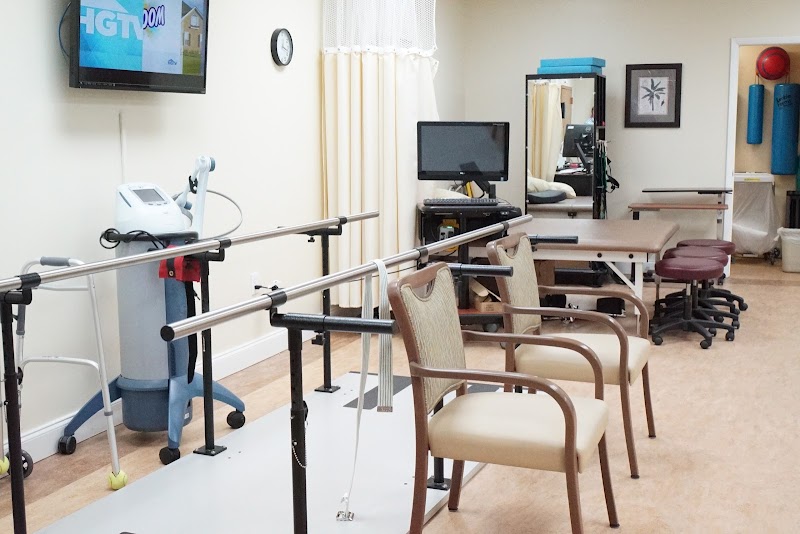
Who Owns and Operates Palm Garden Of Port Saint Lucie?

PALM GARDEN OF PORT SAINT LUCIE is owned by a for-profit company. For-profit facilities operate as businesses with obligations to shareholders or private owners. The facility is operated by PALM GARDEN HEALTH AND REHABILITATION, a chain that manages multiple nursing homes. With 120 certified beds and approximately 107 residents (about 89% occupancy), it is a mid-sized facility located in PORT SAINT LUCIE, Florida.
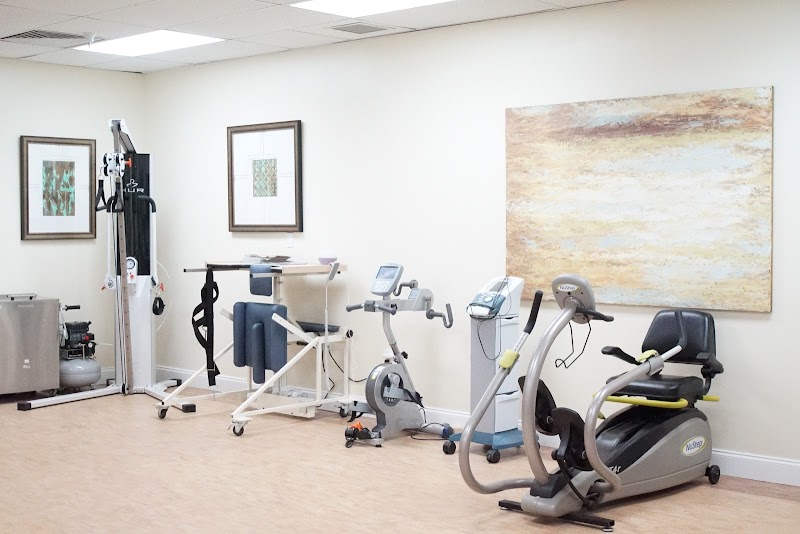
How Does Palm Garden Of Port Saint Lucie Compare to Other Florida Nursing Homes?

Compared to the 100 nursing homes in Florida, PALM GARDEN OF PORT SAINT LUCIE's overall rating (5 stars) is above the state average of 3.2, staff turnover (29%) is significantly lower than the state average of 46%, and health inspection rating (4 stars) is above the national benchmark.

What Should Families Ask When Visiting Palm Garden Of Port Saint Lucie?

Based on this facility's data, families visiting should ask: "Can I visit during a mealtime to observe dining assistance and food quality?" "How do you handle medical emergencies, and what is your hospital transfer rate?" "Can I speak with family members of current residents about their experience?"

Is Palm Garden Of Port Saint Lucie Safe?

Based on CMS inspection data, PALM GARDEN OF PORT SAINT LUCIE has a clean safety record: no substantiated abuse findings (meaning no confirmed cases of resident harm), no Immediate Jeopardy citations (the most serious violation level indicating risk of serious injury or death), and is not on the Special Focus Facility watch list (a federal program monitoring the lowest-performing 1% of nursing homes). The facility has a 5-star overall rating and ranks #1 of 100 nursing homes in Florida. While no facility is perfect, families should still ask about staff-to-resident ratios and recent inspection results during their visit.

Do Nurses at Palm Garden Of Port Saint Lucie Stick Around?

Staff at PALM GARDEN OF PORT SAINT LUCIE tend to stick around. With a turnover rate of 29%, the facility is 17 percentage points below the Florida average of 46%. Low turnover is a positive sign. It means caregivers have time to learn each resident's needs, medications, and personal preferences. Consistent staff also notice subtle changes in a resident's condition more quickly. Registered Nurse turnover is also low at 26%, meaning experienced RNs are available to handle complex medical needs.

Was Palm Garden Of Port Saint Lucie Ever Fined?

PALM GARDEN OF PORT SAINT LUCIE has no federal fines on record. CMS issues fines when nursing homes fail to meet care standards or don't correct problems found during inspections. The absence of fines suggests the facility has either maintained compliance or corrected any issues before penalties were assessed. This is a positive indicator, though families should still review recent inspection reports for the full picture.

Is Palm Garden Of Port Saint Lucie on Any Federal Watch List?

PALM GARDEN OF PORT SAINT LUCIE is not on any federal watch list. The most significant is the Special Focus Facility (SFF) program, which identifies the bottom 1% of nursing homes nationally based on persistent, serious quality problems. Not being on this list means the facility has avoided the pattern of deficiencies that triggers enhanced federal oversight. This is a positive indicator, though families should still review the facility's inspection history directly.