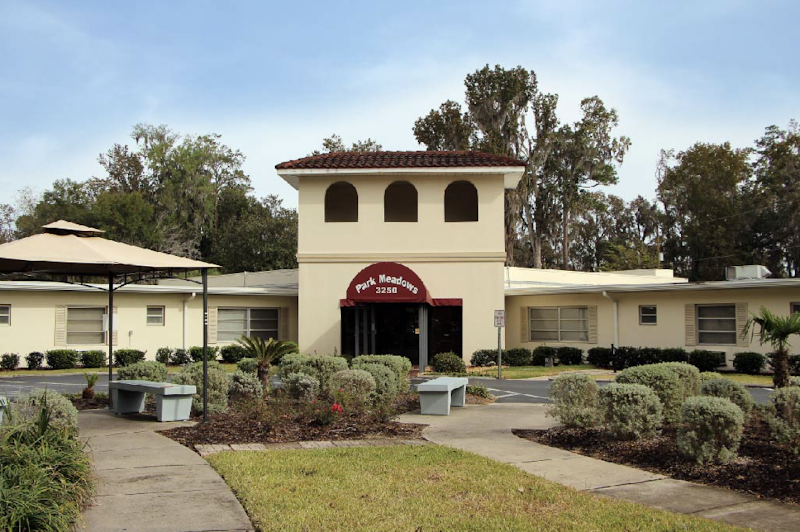
PARK MEADOWS HEALTHCARE & REHABILITATION CENTER

3250 SW 41ST PLACE, GAINESVILLE, FL 32608 (352) 378-1558
For profit - Individual 148 Beds GOLD FL TRUST II Data: November 2025 8 Immediate Jeopardy citations
Trust Grade
0/100
#659 of 690 in FL
Last Inspection: November 2024

Within standard 12-15 month inspection cycle. Federal law requires annual inspections.

Overview

Park Meadows Healthcare & Rehabilitation Center has received a Trust Grade of F, indicating significant concerns about the quality of care provided. Ranking #659 out of 690 facilities in Florida places them in the bottom half of the state, and they are the lowest-ranked facility in Alachua County. While the facility is reportedly improving, having reduced issues from 12 to just 1 in the past year, they still have serious concerns, including $184,287 in fines, which is higher than 91% of Florida facilities. Staffing is average with a 3/5 rating, but they have concerning RN coverage, being below 86% of other facilities, which may impact resident care. Specific incidents noted by inspectors include failures to notify physicians about critical changes in residents' conditions and neglect in administering necessary medications, raising alarms about the overall safety and effectiveness of care at this facility.

Trust Score
F
0/100
In Florida
#659/690
Bottom 5%
Safety Record
High Risk
Review needed
Inspections
Getting Better
12 → 1 violations
Staff Stability
⚠ Watch
50% turnover. Above average. Higher turnover means staff may not know residents' routines.
Penalties
✓ Good
$184,287 in fines. Lower than most Florida facilities. Relatively clean record.
Skilled Nurses
⚠ Watch
Each resident gets only 25 minutes of Registered Nurse (RN) attention daily — below average for Florida. Fewer RN minutes means fewer trained eyes watching for problems.
Violations
⚠ Watch
30 deficiencies on record. Higher than average. Multiple issues found across inspections.
★☆☆☆☆
1.0
Overall Rating
★★★☆☆
3.0
Staff Levels
★☆☆☆☆
1.0
Care Quality
★☆☆☆☆
1.0
Inspection Score
Stable
2024: 12 issues
2025: 1 issues

The Good

  • Full Sprinkler Coverage · Fire safety systems throughout facility
  • No fines on record

Facility shows strength in fire safety.

The Bad

1-Star Overall Rating

Below Florida average (3.2)

Significant quality concerns identified by CMS

Staff Turnover: 50%

Near Florida avg (46%)

Higher turnover may affect care consistency

Federal Fines: $184,287

Well above median ($33,413)

Significant penalties indicating serious issues

Chain: GOLD FL TRUST II

Part of a multi-facility chain

Ask about local staffing decisions and management

The Ugly 30 deficiencies on record

8 life-threatening
Mar 2025 1 deficiency
CONCERN (D) 📢 Someone Reported This

A family member, employee, or ombudsman was alarmed enough to file a formal complaint

Potential for Harm - no one hurt, but risky conditions existed

Safe Environment (Tag F0584)

Could have caused harm · This affected 1 resident

Based on observations and interviews, the facility failed to ensure an orderly and sanitary environment in 4 (100, 200, 300, 400) of 4 hallways. Findings include: During a tour of the facility on 3/2...

Read full inspector narrative →
Based on observations and interviews, the facility failed to ensure an orderly and sanitary environment in 4 (100, 200, 300, 400) of 4 hallways. Findings include: During a tour of the facility on 3/29/25 at 9:17 AM, a buildup of trash and debris was observed on all hallways [100, 200, 300 and 400]. No housekeeping carts were observed during the tour. During a tour of the facility on 3/29/25 at 9:20 AM, in the 100 hallway, close to the exit leading to the smoking patio, there was significant debris observed on the floor, which consisted primarily of leaves, grass, and some small pieces of trash. An interview on 3/29/25 at 10:00 AM, Resident #6 stated that he does not see housekeeping very often. An interview on 3/29/25 at 10:10 AM, Resident #7 stated that housekeeping could be better. An interview on 3/29/25 at 10:17 AM, Resident #8 stated housekeeping was a 'joke.' During a tour of the facility on 3/29/25 at 11:30 AM, debris and trash was still observed on the floors of 100, 200, 300, and 400 hallways. No housekeeping carts were observed during the tour. During an observation of the facility on 3/29/25 at 1:20 PM with the Administrator, trash and debris were observed on all hallways (100, 200, 300 and 400) throughout the facility. A large, uncovered cart was being brought out of the dirty utility room that was filled with bags of soiled linens and trash creating a lingering and foul odor. On the 100 hallway there was a brownish dried liquid on the wall from the handrail to the floor in two distinct wavy lines that were approximately 1/8 to 1/4 width in size. No housekeeping carts were observed during the tour with the Administrator. The Administrator confirmed the unclean and unsanitary environment. An interview on 3/29/25 at 1:30 PM, the Administrator stated that housekeeping follow a check list that they are supposed to turn in showing those rooms and common areas that were cleaned. The Administrator stated that his expectation was to follow checklist and that the daily cleaning schedule was not being followed. He verified there was no housekeeping personnel working the morning of 3/29/25.
Nov 2024 12 deficiencies 4 IJ
CRITICAL (J)

Immediate Jeopardy (IJ) - the most serious Medicare violation

Accident Prevention (Tag F0689)

Someone could have died · This affected 1 resident

**NOTE- TERMS IN BRACKETS HAVE BEEN EDITED TO PROTECT CONFIDENTIALITY** Based on observation, interview, and record review, the facility failed to ensure residents were free from accidents and hazards...

Read full inspector narrative →
**NOTE- TERMS IN BRACKETS HAVE BEEN EDITED TO PROTECT CONFIDENTIALITY** Based on observation, interview, and record review, the facility failed to ensure residents were free from accidents and hazards when residents were served an inappropriate therapeutic diet for 1 (Resident #45) of 10 residents reviewed for nutrition. Resident #45 had a physician's order for a mechanical soft diet. On 10/15/2024 at 12:20 PM, Resident #45 was sitting in the dining room. Resident #45 requested an alternative food item from Staff J, Licensed Practical Nurse. Staff J went to the kitchen and returned with a hot dog in a hot dog bun on a plate. Resident #45's diet was not verified in the kitchen. Staff I, Registered Nurse, stated to Staff J Resident #45 was not supposed to have a hot dog. Neither Staff I nor Staff J removed the food item after identifying the error. Staff I again instructed Staff J Resident #45 was not supposed to have a hot dog. Staff I and Staff J did not remove the food item. Staff K, Certified Nursing Assistant cut the hot dog in half for Resident #45 to consume. Resident #45 consumed the hot dog. The facility's failure to provide food in a form to meet the needs of Resident #45 led to the determination of Immediate Jeopardy at a scope and severity of isolated, (J). The facility's actions placed Resident #45 at a likelihood of serious harm, such as choking, aspiration (a condition in which foods, stomach contents, or fluids are breathed into the lungs through the windpipe) and/or death. The Nursing Home Administrator was notified of the Immediate Jeopardy on November 13, 2024, at 5:25 PM. The Immediate Jeopardy began on October 15, 2024, and was removed on site on November 13, 2024. Cross reference to F805, F835, and F867. Findings include: During an observation on 10/15/2024 at 12:20 PM, Resident #45 was sitting in the common dining room. Resident #45 called Staff J, Licensed Practical Nurse (LPN), and asked to have something else to eat than what had been served to him. Staff J went to the kitchen and returned with a hot dog in a hot dog bun on a plate. Staff J placed the plate in front of Resident #45 and Staff I, Registered Nurse (RN), stated to Staff J Resident #45 was not supposed to have a hot dog. Staff J did not remove the food item. Staff I mentioned again Resident #45 should not have a hot dog. Neither Staff I nor Staff J removed the food item. Resident #45 picked up the hot dog and put it in his mouth. Resident #45 placed the hot dog back down on the plate without chewing or swallowing any pieces of the hot dog. Staff K, Certified Nursing Assistant (CNA), came over and cut the hot dog in half. Resident #45 grabbed one of the halves and placed it in his mouth. Resident #45 placed the half of the hot dog back down on the plate without chewing or swallowing any portion of the hot dog. Review of Resident #45's medical record showed the resident was admitted to the facility on [DATE] with diagnoses including chronic obstructive pulmonary disease, diastolic (congestive) heart failure, generalized muscle weakness, other reduced mobility, unspecified protein-calorie malnutrition, metabolic disorder, adjustment disorder with anxiety, chronic or unspecified gastric ulcer with hemorrhage (excessive bleeding), disorder of adult personality and behavior, type 2 diabetes mellitus without complications, gastro-esophageal reflux disease without esophagitis, and legal blindness. Review of Resident #45's physician order dated 7/9/2024 read, CCHO [Controlled Carbohydrates] diet, Mechanical Soft texture, thin consistency [liquids] for nutrition and hydration. Review of Resident #45's Speech Therapy SLP [Speech Language Pathology] Evaluation & Plan of Treatment dated 9/30/2023 read, Current Referral. Reason for Referral: Patient referred to ST [Speech Therapy] due to new onset of decreased oral function, risk for aspiration, decreased functional activity tolerance and dysphagia [difficulty swallowing] indicating the need for ST to analyze oral/pharyngeal function, minimize aspiration/risk of, develop & instruct in compensatory strategies, assess and determine least restrictive diet and design and implement strategies. Resident on a regular diet with thin liquids upon discharge to the hospital. He returned on a puree diet with thin liquids. Resident exhibiting a significant weight loss of 15.5% over the last 4 months . Objective tests/measures & additional analysis . additional analysis: Other: [NAME] [[NAME] Assessment of Swallowing Ability] administered with a score of 176 indicating mild dysphagia; however, resident is exhibiting a severe deficit with oral phase of swallow . Assessment Summary: Skilled Justification: Reason for Skilled services: Skilled SLP services for dysphagia are warranted to analyze oral/pharyngeal function, develop & instruct in compensatory strategies, minimize risk of weight loss with swallow analysis, assess and determine the least restrictive diet and design and implement strategies in order to enhance patient's quality of life by improving ability to meet primary nutrition/hydration needs, efficiently consume least restrictive diet, safely consume least restrictive diet, improve oral transit time and use strategies/compensatory techniques. Risk factors: Due to the documented physical impairments and associated functional deficits, the patient is at risk for: aspiration and weight loss. Review of Resident #45's Speech Therapy Treatment Encounter Notes dated 10/10/2023 read, Swallow Tx [treatment]: instructions in alternating liquids/solids to increase pharyngeal clearance, analysis of /instruction in presentation techniques to increase safety & nutrition, modification to bolus sizes and order/method of food/liquid presentation and facilitation of body positioning to increase safety with intake. Swallow Tx: techniques to improve safe & efficient nutrition/hydration, analysis of diet texture to increase oral intake, therapeutic trial feedings to increase safety and development & training in use of compensatory strategies. Trial of mechanical soft consistency presented with modifications to bolus size and rate of intake. Resident is declining to eat puree diet consistency per nursing. Resident able to consume mechanical soft consistency without any s/s [signs/symptoms] of deficit in pharyngeal phase of swallow. During an interview on 10/16/2024 at 11:53 AM, Staff I, RN, stated, [Resident #45's name] has a mechanical soft diet. Cutting the hot dog in half does not make it a mechanical soft diet. I am not sure if the cook said it was okay or not when she [Staff J] went to get it from the kitchen. During a telephonic interview on 10/17/2024 at 1:13 PM, Staff J, LPN, stated, He [Resident #45] asked me to get him another plate and I asked him what he wanted. He said maybe a hamburger or something like that. I went to the kitchen and told the cook I need an alternate and I mentioned his name. The cook, I do not remember who it was, told me he had no hamburger, and they gave me a hot dog. I brought it out and [Resident #45's name] started eating the hot dog without a problem. When I turned around the nurse [Staff I] told me he [Resident #45] could not have a hot dog. I just didn't want to grab his plate. I just froze and kept looking at [Resident #45's name]. He finished the hot dog without a problem. I did not grab the plate because I did not want to make a big commotion. During an interview on 10/17/2024 at 1:28 PM, Staff K, CNA, stated, Residents' diets sometimes change. I saw him [Resident #45] sitting around and I went to help him out so [Resident #45's name] could start eating. I thought I cut it in multiple pieces for him to be able to eat it. Cutting the hot dog does not make it a mechanical soft diet. Usually, they have a ticket. I did not see a ticket next to him. I did not pay more attention to his meal. During an interview on 11/12/2024 at 8:44 AM, Staff I, RN, stated, I think I was a little overwhelmed and had a lot going on and when I told her [Staff J] No, he should not have it [referring to the hot dog meal served], nothing was done. I assumed she was going to take it away the second time I told her. It was busy. I would have taken it away, but I was doing a million things reading the tickets and handing out the meals, and I was just overwhelmed. When I noticed the second time, he [Resident #45] had the meal in front of him that I told her he should not have. I told her [Staff J] a second time. She turned around and looked at me and she heard what I said. I assumed she was going to take it from him [Resident #45]. Looking back, I should have owned it and removed his plate instead of expecting someone to do it. Some potential risk for the resident would be choking. You can say that about any resident but for him, he is at a higher risk. I would not say aspiration. During an interview on 11/12/2024 at 9:20 AM Staff R, Speech Therapist stated, If a resident is mechanical soft, they should not be given a meal outside of their recommendations. There is a possibility of coughing, choking, and aspiration. Depending on the health status of the person aspiration pneumonia and an increased risk of hospitalization. During an interview on 11/12/2024 at 9:37 AM, Staff Q, Cook, stated, We were serving the lunch line. A nurse came in asking for an alternate regular tray. I asked her who it was for and what the diet was. She said it was a regular diet for the dining room. I finished serving more on the line and remembered she was still there, and I gave her the hot dog. After that I realized she didn't say who it was for, but she never came back in, and I finished serving the lunch line. She did not have a meal ticket with her. During an interview on 11/12/2024 at 9:51 AM, the Food Service Director stated, Our procedure is that staff is informed to ask if they have a diet ticket and if they do not have the diet ticket, we ask for the name and room number and look in the book. If they are not in the book, they need to go to the nurse to verify. The book is updated daily. The nurse did not have a slip and at that time, the procedure was not followed that day. It has always been that way. We are to check for the diet and name, and it was just very chaotic that day and the nurse was just amending with the hot dog. Choking can be a concern if a mechanical soft diet resident gets a hot dog or any diet that is a regular diet. The food should not be placed in front of the resident until the nurses find out the proper diet for the residents. During an interview on 11/12/2024 at 9:56 AM, Registered Dietitian #1 stated, A resident who is on a mechanical soft diet should not get a whole hot dog not without being mechanically altered. Mechanically altered food particles should be reduced to less than one half of an inch or less. Choking is a potential harm they can face and/or aspiration. My expectation is if the staff has a misunderstanding or disagreement, the staff should pause and verify the correct diet and ask the resident not to consume the food. During an interview on 11/12/2024 at 10:15 AM, the Director of Nursing (DON) stated, The staff should know the patient diet and who it is for and the room number. Whoever is in the kitchen should verify looking at the person's ticket to make sure the diet is correct. I feel it was a breakdown of that individual. If she [Staff I] told her [Staff J] from the beginning that was not his [Resident #45's] diet, she should have taken the plate away from him or not even put it in front of the resident. If it was me as the RN, I would have taken it from him and had the LPN step out of the dining room and later address the incident with the staff. The LPN should have verified the diet before giving the resident the alternate. The nurses are responsible for making sure residents are taken care of safely. During an interview on 11/12/2024 at 10:26 AM, the Administrator stated, After all the investigation, it was an individual staff mistake. The RN herself who saw the situation and she did not act either. The food should have been taken away immediately from the resident. They are supposed to get the slip and get the diet order and mention who the patient was and say what the patient needs and what diet they were supposed to be. The staff was not recognizing the mistake and the level it can reach. This was the policy prior to the event. During an interview on 11/12/2024 at 12:40 PM, the Registered Dietitian #1, stated, I consider the staff giving the wrong diet order and identifying it was the wrong diet order and not doing anything to correct it would be considered a mistake. It was a clinical error. He was a mechanical soft diet at that time. During an interview on 11/12/2024 at 1:32 PM, the Medical Director stated, I was notified of the incident. To be honest, it depends on the amount of dysphagia the patient has. This resident [Resident #45] has mental issues and will do things he is not supposed to do. He is followed by the speech therapist. A potential harm outcome all depends on the resident. He was a patient with failure to thrive and has improved. I understand your question if it was a weak patient or had dysphagia, it could cause aspiration pneumonia. Review of the written statement authored by Staff J, LPN, dated 10/15/2024 read, Assisting in the Dining Rm [room] for lunch. [Resident #45's initials] had the ravioli and string beans but was asking for an alternative. He requested a hot dog. I had gotten the hot dog from the kitchen and brought it to the table. Took the hot dog and added condiments as per his request. The CNA, then cut up the hot dog for him to eat. Resident had eaten the hot dog without any difficulties. He was not coughing. Resident had same meal as everyone else therefore, I thought that he had a regular meal also. I stayed to observe the table to make sure he had no swallowing issues and no signs or symptoms of aspiration. When I realized I had made a mistake I panicked and did not remove the resident's food because I saw the surveyor standing there watching me and I did not want to raise any red flags by taking his food back, I felt as though she would sense something was wrong and I would cause more harm than good. Review of the written statement authored by Staff J, LPN, dated 10/16/2024 read, Yesterday I was asked to assist in the dining room, due to the increase in the resident population during lunchtime. Resident observed a fellow resident having a hot dog and decided that he would like to have one as well. I proceeded to the kitchen and requested a hot dog platter from the kitchen staff. I returned the plate to the residents' request; I then gave the resident condiments and the RN that was present pointed out that the resident was on a mechanical diet. Residents' meal was properly mechanicalized prior to him eating. Review of Employee Statement/ Interview Record authored by Staff I, RN, dated 10/16/2024 read, Date of Event 10/16/2024 . [Resident #45's name] requested alternative for lunch during lunch time in the dining room. Other LPN in dining room brought resident a full hot dog w/ [with] bun. Before she brought it to him and sat it in front of him. I told her [he] can't have it b/c [because] he is MS [Mechanical Soft] diet. She looked at me then looked at the state woman [State surveyor] standing in the corner and moved to grab a cart. I was running plates and assisting other residents upon returning to food counter [the] LPN began putting mustard on hot dog for resident [Resident #45's name] I said again he cannot have that he is mechanical soft you need to take it. LPN looked at me a slightly shrugged shoulder. I was called away again and when I returned a bite was taken out of [Resident #45's name] hot dog and he had it in his hands. LPN was gone resident [Resident #45's name] left dining room soon after. Review of the written statement authored by Staff Q, Cook, dated 10/16/2024 read, On October 15 between 12:30-12:45 pm I was serving the lunch line. A nurse came in saying she needed a hot dog. We asked who for? She said she needed it for the dining room. We asked what their diet was and she said she didn't know. I made the hot dog and then handed it to her. Review of the facility policy and procedure titled Accidents and Supervision with the last review date of 1/31/2024 read, Policy: The resident environment will remain as free of accident hazards as is possible. Each resident will receive supervision and assistive devices to prevent accidents. This includes: 1. Identifying hazard(s) and risk(s). 2. Evaluating and analyzing hazard(s) and risk(s). 3. Implementing interventions to reduce hazard(s) and risk(s). 4. Monitoring for effectiveness and modifying interventions when necessary. Definitions . Hazards refers to elements of the resident environment that have the potential to cause injury or illness . Supervision/Adequate/Supervision refers to intervention and means of mitigating risk of an accident . Procedure: The facility shall establish and utilize a systematic approach to address resident risk and environmental hazards to minimize the likelihood of accidents. 1. Identification of Hazards and Risks - the process through which the facility becomes aware of potential hazards in the resident environment and the risk of a resident having an avoidable accident. a. The facility should make a reasonable effort to identify the hazards and risk factors for each resident . 5. Supervision - Supervision is an intervention and a means of mitigating accident risk. The facility will provide adequate supervision to prevent accidents. The Immediate Jeopardy (IJ) was removed on site on 11/13/2024 after the receipt of an acceptable IJ removal plan. The facility has completed the following steps to remove the immediate jeopardy. On 10/16/2024, Resident #45 was re-evaluated by the licensed nurse and the speech therapist. On 10/16/2024, Resident #45's chest x-ray was completed. On 10/16/2024, facility-wide reconciliation of the dietary system/tray tickets with physician orders were carried out. On 10/16/2024, the DON provided training and education to the dietary staff and nursing staff on providing the diet to meet the residents' needs, nutrition and hydration assistance, and accuracy of diet. On 10/17/2024, a root cause analysis was conducted and Ad Hoc [from the Latin and means for this] Quality Assurance and Performance Improvement (QAPI) meeting was held to review the concerns related to accuracy of diets. On 11/12/2024, an Ad Hoc Quality Assurance Performance Improvement (QAPI) meeting was convened to review the Removal of Immediate Jeopardy draft plan and added daily alternate diet audit form to track alternate diet check process to ensure accuracy of diets after alternative diet is requested after meal delivery. By 11/13/2024, 227 out of 233 facility staff members (112 out of 112 certified nursing assistants, 37 out of 38 licensed practical nurses, 14 out of 15 registered nurses, and 16 out of 16 dietary staff members) were reeducated on the accuracy of diets. Beginning 10/18/2024, the facility administration will ensure that the safety and well-being as it relates to accuracy of diets is maintained by continued participation, evaluation and intervention through clinical standup review of 24-hour report to identify change in condition, and maintaining QAPI process. Review of Resident #45's records showed the resident was evaluated on 10/16/2024 by X-Ray with no focal consolidation, effusion or pneumothorax. Review of Resident #45's SLP evaluation showed the resident was evaluated for oral and pharyngeal swallow function on 10/16/2024. Review of Order Listing Report showed the Registered Nursing Consultant completed reconciliation of the dietary system with physician orders on 10/16/2024. Review of Education In-service Attendance Record showed the staff members received training through SNF Clinic on mechanically altered diets, accuracy of diet, and importance of correct diet orders by 11/13/2024. During staff interviews completed on 11/13/2024, two RNs, two LPNs, three CNAs, two therapy staff, five dietary staff, and Social Services Assistant verified having received education and verbalized understanding on accuracy of diets.
CRITICAL (J)

Immediate Jeopardy (IJ) - the most serious Medicare violation

Deficiency F0805 (Tag F0805)

Someone could have died · This affected 1 resident

**NOTE- TERMS IN BRACKETS HAVE BEEN EDITED TO PROTECT CONFIDENTIALITY** Based on observation, interview, and record review, the facility failed to serve food designed to meet individual needs for 1 (R...

Read full inspector narrative →
**NOTE- TERMS IN BRACKETS HAVE BEEN EDITED TO PROTECT CONFIDENTIALITY** Based on observation, interview, and record review, the facility failed to serve food designed to meet individual needs for 1 (Resident #45) of 10 residents sampled who required mechanically altered diets. Resident #45 had a physician's order for a mechanical soft diet. On 10/15/2024 at 12:20 PM, Resident #45 was sitting in the dining room. Resident #45 requested an alternative food item from Staff J, Licensed Practical Nurse. Staff J went to the kitchen and returned with a hot dog in a hot dog bun on a plate. Resident #45's diet was not verified in the kitchen. Staff I, Registered Nurse, stated to Staff J Resident #45 was not supposed to have a hot dog. Neither Staff I nor Staff J removed the food item after identifying the error. Staff I again instructed Staff J Resident #45 was not supposed to have a hot dog. Staff I and Staff J did not remove the food item. Staff K, Certified Nursing Assistant, cut the hot dog in half for Resident #45 to consume. Resident #45 consumed the hot dog. The facility's failure to provide food in a form to meet the resident's needs led to the determination of Immediate Jeopardy at a scope and severity of isolated, (J). The facility's actions placed Resident #45 at a likelihood of serious harm, such as choking, aspiration (a condition in which foods, stomach contents, or fluids are breathed into the lungs through the windpipe) and/or death. The Nursing Home Administrator was notified of the Immediate Jeopardy on February 10, 2025, at 8:28 AM. The Immediate Jeopardy began on October 15, 2024, and was removed on site on November 13, 2024. Cross reference to F689, F835, and F867. Findings include: During an observation on 10/15/2024 at 12:20 PM, Resident #45 was sitting in the common dining room. Resident #45 called Staff J, Licensed Practical Nurse (LPN), and asked to have something else to eat than what had been served to him. Staff J went to the kitchen and returned with a hot dog in a hot dog bun on a plate. Staff J placed the plate in front of Resident #45 and Staff I, Registered Nurse (RN), stated to Staff J Resident #45 was not supposed to have a hot dog. Staff J did not remove the food item. Staff I mentioned again Resident #45 should not have a hot dog. Neither Staff I nor Staff J removed the food item. Resident #45 picked up the hot dog and put it in his mouth. Resident #45 placed the hot dog back down on the plate without chewing or swallowing any pieces of the hot dog. Staff K, Certified Nursing Assistant (CNA), came over and cut the hot dog in half. Resident #45 grabbed one of the halves and placed it in his mouth. Resident #45 placed the half of the hot dog back down on the plate without chewing or swallowing any portion of the hot dog. Review of Resident #45's medical record showed the resident was admitted to the facility on [DATE] with diagnoses including chronic obstructive pulmonary disease, diastolic (congestive) heart failure, generalized muscle weakness, other reduced mobility, unspecified protein-calorie malnutrition, metabolic disorder, adjustment disorder with anxiety, chronic or unspecified gastric ulcer with hemorrhage (excessive bleeding), disorder of adult personality and behavior, type 2 diabetes mellitus without complications, gastro-esophageal reflux disease without esophagitis, and legal blindness. Review of Resident #45's physician order dated 7/9/2024 read, CCHO [Controlled Carbohydrates] diet, Mechanical Soft texture, thin consistency [liquids] for nutrition and hydration. Review of Resident #45's Speech Therapy SLP [Speech Language Pathology] Evaluation & Plan of Treatment dated 9/30/2023 read, Current Referral. Reason for Referral: Patient referred to ST [Speech Therapy] due to new onset of decreased oral function, risk for aspiration, decreased functional activity tolerance and dysphagia [difficulty swallowing] indicating the need for ST to analyze oral/pharyngeal function, minimize aspiration/risk of, develop & instruct in compensatory strategies, assess and determine least restrictive diet and design and implement strategies. Resident on a regular diet with thin liquids upon discharge to the hospital. He returned on a puree diet with thin liquids. Resident exhibiting a significant weight loss of 15.5% over the last 4 months . Objective tests/measures & additional analysis . additional analysis: Other: [NAME] [[NAME] Assessment of Swallowing Ability] administered with a score of 176 indicating mild dysphagia; however, resident is exhibiting a severe deficit with oral phase of swallow . Assessment Summary: Skilled Justification: Reason for Skilled services: Skilled SLP services for dysphagia are warranted to analyze oral/pharyngeal function, develop & instruct in compensatory strategies, minimize risk of weight loss with swallow analysis, assess and determine the least restrictive diet and design and implement strategies in order to enhance patient's quality of life by improving ability to meet primary nutrition/hydration needs, efficiently consume least restrictive diet, safely consume least restrictive diet, improve oral transit time and use strategies/compensatory techniques. Risk factors: Due to the documented physical impairments and associated functional deficits, the patient is at risk for: aspiration and weight loss. Review of Resident #45's Speech Therapy Treatment Encounter Notes dated 10/10/2023 read, Swallow Tx [treatment]: instructions in alternating liquids/solids to increase pharyngeal clearance, analysis of /instruction in presentation techniques to increase safety & nutrition, modification to bolus sizes and order/method of food/liquid presentation and facilitation of body positioning to increase safety with intake. Swallow Tx: techniques to improve safe & efficient nutrition/hydration, analysis of diet texture to increase oral intake, therapeutic trial feedings to increase safety and development & training in use of compensatory strategies. Trial of mechanical soft consistency presented with modifications to bolus size and rate of intake. Resident is declining to eat puree diet consistency per nursing. Resident able to consume mechanical soft consistency without any s/s [signs/symptoms] of deficit in pharyngeal phase of swallow. During an interview on 10/16/2024 at 11:53 AM, Staff I, RN, stated, [Resident #45's name] has a mechanical soft diet. Cutting the hot dog in half does not make it a mechanical soft diet. I am not sure if the cook said it was okay or not when she [Staff J] went to get it from the kitchen. During a telephonic interview on 10/17/2024 at 1:13 PM, Staff J, LPN, stated, He [Resident #45] asked me to get him another plate and I asked him what he wanted. He said maybe a hamburger or something like that. I went to the kitchen and told the cook I need an alternate and I mentioned his name. The cook, I do not remember who it was, told me he had no hamburger, and they gave me a hot dog. I brought it out and [Resident #45's name] started eating the hot dog without a problem. When I turned around the nurse [Staff I] told me he [Resident #45] could not have a hot dog. I just didn't want to grab his plate. I just froze and kept looking at [Resident #45's name]. He finished the hot dog without a problem. I did not grab the plate because I did not want to make a big commotion. During an interview on 10/17/2024 at 1:28 PM, Staff K, CNA, stated, Residents' diets sometimes change. I saw him [Resident #45] sitting around and I went to help him out so [Resident #45's name] could start eating. I thought I cut it in multiple pieces for him to be able to eat it. Cutting the hot dog does not make it a mechanical soft diet. Usually, they have a ticket. I did not see a ticket next to him. I did not pay more attention to his meal. During an interview on 11/12/2024 at 8:36 AM while discussing Resident #45's therapeutic diet, the Administrator stated, We put the fault in every department. The issues came from the dining room, but the kitchen could have stopped it. During an interview on 11/12/2024 at 8:44 AM, Staff I, RN, stated, I think I was a little overwhelmed and had a lot going on and when I told her [Staff J] No, he should not have it [referring to the hot dog meal served], nothing was done. I assumed she was going to take it away the second time I told her. It was busy. I would have taken it away, but I was doing a million things reading the tickets and handing out the meals, and I was just overwhelmed. When I noticed the second time, he [Resident #45] had the meal in front of him that I told her he should not have. I told her [Staff J] a second time. She turned around and looked at me and she heard what I said. I assumed she was going to take it from him [Resident #45]. Looking back, I should have owned it and removed his plate instead of expecting someone to do it. Some potential risk for the resident would be choking. You can say that about any resident but for him, he is at a higher risk. I would not say aspiration. During an interview on 11/12/2024 at 9:20 AM, Staff R, Speech Therapist, stated, If a resident is mechanical soft, they should not be given a meal outside of their recommendations. There is a possibility of coughing, choking, and aspiration. Depending on the health status of the person, there is a risk of aspiration pneumonia and an increased risk of hospitalization. During an interview on 11/12/2024 at 9:37 AM, Staff Q, Cook, stated, We were serving the lunch line. A nurse came in asking for an alternate regular tray. I asked her who it was for and what the diet was. She said it was a regular diet for the dining room. I finished serving more on the line and remembered she was still there, and I gave her the hot dog. After that I realized she didn't say who it was for, but she never came back in, and I finished serving the lunch line. She did not have a meal ticket with her. During an interview on 11/12/2024 at 9:51 AM, the Food Service Director stated, Our procedure is that staff is informed to ask if they have a diet ticket and if they do not have the diet ticket, we ask for the name and room number and look in the book. If they are not in the book, they need to go to the nurse to verify. The book is updated daily. The nurse did not have a slip and at that time, the procedure was not followed that day. It has always been that way. We are to check for the diet and name, and it was just very chaotic that day and the nurse was just amending with the hot dog. Choking can be a concern if a mechanical soft diet resident gets a hot dog or any diet that is a regular diet. The food should not be placed in front of the resident until the nurses find out the proper diet for the residents. During an interview on 11/12/2024 at 9:56 AM, Registered Dietitian #1 stated, A resident who is on a mechanical soft diet should not get a whole hot dog not without being mechanically altered. Mechanically altered food particles should be reduced to less than one half of an inch or less. Choking is a potential harm they can face and/or aspiration. My expectation is if the staff has a misunderstanding or disagreement, the staff should pause and verify the correct diet and ask the resident not to consume the food. During an interview on 11/12/2024 at 10:15 AM, the Director of Nursing (DON) stated, The staff should know the patient diet and who it is for and the room number. Whoever is in the kitchen should verify looking at the person's ticket to make sure the diet is correct. I feel it was a breakdown of that individual. If she [Staff I] told her [Staff J] from the beginning that was not his [Resident #45's] diet, she should have taken the plate away from him or not even put it in front of the resident. If it was me as the RN, I would have taken it from him and had the LPN step out of the dining room and later address the incident with the staff. The LPN should have verified the diet before giving the resident the alternate. The nurses are responsible for making sure residents are taken care of safely. During an interview on 11/12/2024 at 10:26 AM, the Administrator stated, After all the investigation, it was an individual staff mistake. The RN herself who saw the situation and she did not act either. The food should have been taken away immediately from the resident. They are supposed to get the slip and get the diet order and mention who the patient was and say what the patient needs and what diet they were supposed to be. I know it was a hefty day, but that is no excuse at all. The staff was not recognizing the mistake and the level it can reach. This was the policy prior to the event. During an interview on 11/12/2024 at 1:32 PM, the Medical Director stated, I was notified of the incident. To be honest, it depends on the amount of dysphagia the patient has. This resident [Resident #45] has mental issues and will do things he is not supposed to do. He is followed by the speech therapist. A potential harm outcome all depends on the resident. He was a patient with failure to thrive and has improved. I understand your question if it was a weak patient or had dysphagia, it could cause aspiration pneumonia. Review of the written statement authored by Staff J, LPN, dated 10/15/2024 read, Assisting in the Dining Rm [room] for lunch. [Resident #45's initials] had the ravioli and string beans but was asking for an alternative. He requested a hot dog. I had gotten the hot dog from the kitchen and brought it to the table. Took the hot dog and added condiments as per his request. The CNA, then cut up the hot dog for him to eat. Resident had eaten the hot dog without any difficulties. He was not coughing. Resident had same meal as everyone else therefore, I thought that he had a regular meal also. I stayed to observe the table to make sure he had no swallowing issues and no signs or symptoms of aspiration. When I realized I had made a mistake I panicked and did not remove the resident's food because I saw the surveyor standing there watching me and I did not want to raise any red flags by taking his food back, I felt as though she would sense something was wrong and I would cause more harm than good. Review of the written statement authored by Staff J, LPN, dated 10/16/2024 read, Yesterday I was asked to assist in the dining room, due to the increase in the resident population during lunchtime. Resident observed a fellow resident having a hot dog and decided that he would like to have one as well. I proceeded to the kitchen and requested a hot dog platter from the kitchen staff. I returned the plate to the residents' request; I then gave the resident condiments and the RN that was present pointed out that the resident was on a mechanical diet. Residents' meal was properly mechanicalized prior to him eating. Review of Employee Statement/ Interview Record authored by Staff I, RN, dated 10/16/2024 read, Date of Event 10/16/2024 . [Resident #45's name] requested alternative for lunch during lunch time in the dining room. Other LPN in dining room brought resident a full hot dog w/ [with] bun. Before she brought it to him and sat it in front of him. I told her [he] can't have it b/c [because] he is MS [Mechanical Soft] diet. She looked at me then looked at the state woman [State surveyor] standing in the corner and moved to grab a cart. I was running plates and assisting other residents upon returning to food counter [the] LPN began putting mustard on hot dog for resident [Resident #45's name] I said again he cannot have that he is mechanical soft you need to take it. LPN looked at me a slightly shrugged shoulder. I was called away again and when I returned a bite was taken out of [Resident #45's name] hot dog and he had it in his hands. LPN was gone resident [Resident #45's name] left dining room soon after. Review of the written statement authored by Staff Q, Cook, dated 10/16/2024 read, On October 15 between 12:30-12:45 pm I was serving the lunch line. A nurse came in saying she needed a hot dog. We asked who for? She said she needed it for the dining room. We asked what their diet was and she said she didn't know. I made the hot dog and then handed it to her. Review of the facility policy and procedure titled Provide Diet to Meet Needs of Each Resident with the last review date of 1/31/2024 read, Policy: The purpose of the food and nutrition services (FNS)/dietary department is to provide high quality, nutritious, palatable and attractive meals in a safe, sanitary manner. Food will be prepared in a form to accommodate resident allergies, intolerances and personal, religious and cultural preferences, based on reasonable effort. Therapeutic diets will be served as prescribed by the attending physicians or their designee. The Immediate Jeopardy (IJ) was removed on site on 11/13/2024 after the receipt of an acceptable IJ removal plan. The facility has completed the following steps to remove the immediate jeopardy. On 10/16/2024, Resident #45 was re-evaluated by the licensed nurse and the speech therapist. On 10/16/2024, Resident #45's chest x-ray was completed. On 10/16/2024, facility-wide reconciliation of the dietary system/tray tickets with physician orders were carried out. On 10/16/2024, the DON provided training and education to the dietary staff and nursing staff on providing the diet to meet the residents' needs, nutrition and hydration assistance, and accuracy of diet. On 10/17/2024, a root cause analysis was conducted and Ad Hoc [from the Latin and means for this] Quality Assurance and Performance Improvement (QAPI) meeting was held to review the concerns related to accuracy of diets. On 11/12/2024, an Ad Hoc Quality Assurance Performance Improvement (QAPI) meeting was convened to review the Removal of Immediate Jeopardy draft plan and added daily alternate diet audit form to track alternate diet check process to ensure accuracy of diets after alternative diet is requested after meal delivery. By 11/13/2024, 227 out of 233 facility staff members (112 out of 112 certified nursing assistants, 37 out of 38 licensed practical nurses, 14 out of 15 registered nurses, and 16 out of 16 dietary staff members) were reeducated on the accuracy of diets. Beginning 10/18/2024, the facility administration will ensure that the safety and well-being as it relates to accuracy of diets is maintained by continued participation, evaluation and intervention through clinical standup review of 24-hour report to identify change in condition, and maintaining QAPI process. Review of Resident #45's records showed the resident was evaluated on 10/16/2024 by X-Ray with no focal consolidation, effusion or pneumothorax. Review of Resident #45's SLP evaluation showed the resident was evaluated for oral and pharyngeal swallow function on 10/16/2024. Review of Order Listing Report showed the Registered Nursing Consultant completed reconciliation of the dietary system with physician orders on 10/16/2024. Review of Education In-service Attendance Record showed the staff members received training through SNF Clinic on mechanically altered diets, accuracy of diet, and importance of correct diet orders. During staff interviews completed on 11/13/2024, two RNs, two LPNs, three CNAs, two therapy staff, five dietary staff, and Social Services Assistant verified having received education and verbalized understanding on accuracy of diets.
CRITICAL (J)

Immediate Jeopardy (IJ) - the most serious Medicare violation

Administration (Tag F0835)

Someone could have died · This affected 1 resident

**NOTE- TERMS IN BRACKETS HAVE BEEN EDITED TO PROTECT CONFIDENTIALITY** Based on observation, interview, and record review, the facility administration failed to administer the facility in a manner th...

Read full inspector narrative →
**NOTE- TERMS IN BRACKETS HAVE BEEN EDITED TO PROTECT CONFIDENTIALITY** Based on observation, interview, and record review, the facility administration failed to administer the facility in a manner that enables it to use its resources effectively and efficiently to attain and maintain the highest practicable physical well-being of each resident by failing to implement policies and procedures related to therapeutic diets. Resident #45 had a physician's order for a mechanical soft diet. On 10/15/2024 at 12:20 PM, Resident #45 was sitting in the dining room. Resident #45 requested an alternative food item from Staff J, Licensed Practical Nurse. Staff J went to the kitchen and returned with a hot dog in a hot dog bun on a plate. Resident #45's diet was not verified in the kitchen. Staff I, Registered Nurse, stated to Staff J, Resident #45 was not supposed to have a hot dog. Neither Staff I nor Staff J removed the food item after identifying the error. Staff I again instructed Staff J Resident #45 was not supposed to have a hot dog. Staff I and Staff J did not remove the food item. Staff K, Certified Nursing Assistant cut the hot dog in half for Resident #45 to consume. Resident #45 consumed the hot dog. The facility's failure to provide food in a form to meet the needs of Resident #45 led to the determination of Immediate Jeopardy at a scope and severity of isolated, (J). The facility's actions placed Resident #45 at a likelihood of serious harm, such as choking, aspiration (a condition in which foods, stomach contents, or fluids are breathed into the lungs through the windpipe) and/or death. The Nursing Home Administrator was notified of the Immediate Jeopardy on November 13, 2024, at 5:25 PM. The Immediate Jeopardy began on October 15, 2024, and was removed on site on November 13, 2024. Cross reference to F689, F805, and F867. Findings include: Review of the Job Description titled Administrator signed by the Administrator on 11/1/2024 read, Purpose of Your Job Position: The primary purpose of your position is to direct the day-to-day functions of the Facility in accordance with current federal, state and local standards guidelines, and regulations that govern nursing facilities to assure that the highest degree of quality care can be provided to our residents at all times . Duties and Responsibilities: Administrative Functions . Develop and maintain written policies and procedures and professional standards of practice that govern the operation of the Facility . Assist department directors in the development, use, and implementation of departmental policies and procedures and professional standards of practice . Ensure that all employees, residents, visitors, and the general public follow the Facility's established policies and procedures. Review of the Job Description titled Director of Nursing Services signed by the Director of Nursing on 10/1/2023 read, Purpose of Your Job Position: The primary purpose of your position is to plan, organize, develop, and direct the overall operations of our Nursing Service Department in accordance with current federal, state, and local standards, guidelines and regulations that govern our Facility and as may be directed by the Administrator to ensure that the highest degree of quality care is maintained at all times . Duties and Responsibilities: Administrative Functions: Plan, develop, organize, implement, evaluate, and direct the nursing service department, as well as its programs and activities, in accordance with current rules, regulations, and guidelines that govern nursing care facilities. Review of the Job Description titled Dietitian signed by the Registered Dietitian #1 on 10/1/2023 read, Purpose of Your Job Position: The primary purpose of your position is to plan, organize, develop, and direct the overall clinical operation of the Food Services Department in accordance with current federal, state, and local standards guidelines, and regulations, that govern the Facility, and as may be directed by the Administrator, to assure the quality nutritional services are being provided on a daily basis . Duties and Responsibilities: Administrative Functions . Develop, implement, and maintain written departmental policies that apply to your area. Ensure staff is aware of and follows the established policies . Assist in planning regular and special diet menus as prescribed by the attending physician . Review therapeutic and regular diet plans and menus to assure they comply with physician orders. Review of the Job Description titled Food Service Supervisor signed by the Food Service Director on 10/1/2023 read, Purpose of Your Job Position: The primary purpose of your job position is to plan, organize, develop, and oversee the operations of the Nutritional Services/Food Services Department in accordance with current federal, state, and local standards, guidelines, and regulations governing our Facility, and as may be directed by the Administrator or the Food Services Director to assure that quality nutritional services are provided on a daily basis and that the Nutritional Services/Food Department is maintained in a clean, safe, and sanitary manner . Duties and Responsibilities. Administrative Functions . Review therapeutic and regular diet plans and menus to assure they are in compliance with the physician's orders. Review of the Medical Director Retainer Agreement signed by the Medical Director on 2/23/2020 read, Consultant Responsibilities: Supervise the overall functions of our facility's medical services in that the medical director shall . Participate in the development of written policies, rules, and regulations to govern the nursing care and related medical and other health services provided. The medical director is responsible for seeing that these policies reflect an awareness of and have provisions for meeting the total needs of the residents. Ensure the residents receive adequate services appropriate to their needs. During an observation on 10/15/2024 at 12:20 PM, Resident #45 was sitting in the common dining room. Resident #45 called Staff J, Licensed Practical Nurse (LPN), and asked to have something else to eat than what had been served to him. Staff J went to the kitchen and returned with a hot dog in a hot dog bun on a plate. Staff J placed the plate in front of Resident #45 and Staff I, Registered Nurse (RN), stated to Staff J Resident #45 was not supposed to have a hot dog. Staff J did not remove the food item. Staff I mentioned again Resident #45 should not have a hot dog. Neither Staff I nor Staff J removed the food item. Resident #45 picked up the hot dog and put it in his mouth. Resident #45 placed the hot dog back down on the plate without chewing or swallowing any pieces of the hot dog. Staff K, Certified Nursing Assistant (CNA), came over and cut the hot dog in half. Resident #45 grabbed one of the halves and placed it in his mouth. Resident #45 placed the half of the hot dog back down on the plate without chewing or swallowing any portion of the hot dog. Review of Resident #45's medical record showed the resident was admitted to the facility on [DATE] with diagnoses including chronic obstructive pulmonary disease, diastolic (congestive) heart failure, muscle weakness (generalized), other reduced mobility, unspecified protein-calorie malnutrition, metabolic disorder, adjustment disorder with anxiety, chronic or unspecified gastric ulcer with hemorrhage (excessive bleeding), disorder of adult personality and behavior, type 2 diabetes mellitus without complications, gastro-esophageal reflux disease without esophagitis and legal blindness. Review of Resident #45's Speech Theary SLP [Speech Language Pathologist] Evaluation & Plan dated 9/30/2023 read, Current Referral. Reason for Referral: Patient referred to ST [Speech Therapy] due to new onset of decreased oral function, risk for aspiration, decreased functional activity tolerance and dysphagia [difficulty swallowing] indicating the need for ST to analyze oral/pharyngeal function, minimize aspiration/risk of, develop & instruct in compensatory strategies, assess and determine least restrictive diet and design and implement strategies. Resident on a regular diet with thin liquids upon discharge to the hospital. He returned on a puree diet with thin liquids. Resident exhibiting a significant weight loss of 15.5% over the last 4 months .Objective tests/measures & additional analysis: .additional analysis: other [NAME] [[NAME] Assessment of Swallowing Ability] administered with a score of 176 indicating mild dysphagia however, resident is exhibiting a severe deficit with oral phase of swallow .Assessment Summary: Reason for skilled services: skilled SLP services for dysphagia are warranted to analyze oral/pharyngeal function, develop & instruct in compensatory strategies, minimize risk of weight loss with swallow analysis, assess and determine the least restrictive diet and design and implement strategies in order to enhance patient's quality of life by improving ability to meet primary nutrition/hydration needs, efficiently consume restrictive diet, safely consume least restrictive diet, improve oral transit time and use strategies/compensatory techniques. Risk factors: due to the documented physical impairment and associated functional deficits, the patient is at risk for: aspiration and weight loss . Review of Resident #45's Speech Therapy Treatment encounter notes dated 10/10/2023 read, Swallow Tx [treatment]: instructions in alternating liquids/solids to increase pharyngeal clearance, analysis of /instruction in presentation techniques to increase safety & nutrition, modification to bolus sizes and order/method of food/liquid presentation and facilitation of body positioning to increase safety with intake. Swallow Tx: techniques to improve safe & efficient nutrition/hydration, analysis of diet texture to increase oral intake, therapeutic trial feedings to increase safety and development & training in use of compensatory strategies. Trial of mechanical soft consistency presented with modifications to bolus size and rate of intake. Resident is declining to eat puree diet consistency per nursing. Resident able to consume mechanical soft consistency without any s/s [signs/symptoms] of deficit in pharyngeal phase of swallow. Review of Resident #45 physician order dated 7/9/2024 read Physician ordered CCHO [Consistent Carbohydrates] diet, Mechanical Soft texture, thin consistency [liquids] for nutrition and hydration. During an interview on 10/16/2024 at 11:53 AM, Staff I, RN, stated, [Resident #45's name] has a mechanical soft diet. Cutting the hot dog in half does not make it a mechanical soft diet. I am not sure if the cook said it was okay or not when she [Staff J] went to get it from the kitchen. During a telephonic interview on 10/17/2024 at 1:13 PM, Staff J, LPN, stated, He [Resident #45's name] asked me to get him another plate and I asked him what he wanted. He said maybe a hamburger or something like that. I went to the kitchen and told the cook I need an alternate and I mentioned his name [Residents #45's name]. The cook, I do not remember who it was, told me he had no hamburger, and they gave me a hot dog. I brought it out and [Resident #45's name] started eating the hot dog without a problem. When I turned around the nurse [Staff I] told me he [Resident #45] could not have a hot dog. I just didn't want to grab his plate. I just froze and kept looking at [Resident #45's name]. He finished the hot dog without a problem. I did not grab the plate because I did not want to make a big commotion. During an interview on 10/17/2024 at 1:28 PM, Staff K, CNA, stated, Residents' diets sometimes change. I saw him [Resident #45] sitting around and I went to help him out so [Resident #45's name] could start eating. I thought I cut it in multiple pieces for him to be able to eat it. Cutting the hot dog does not make it a mechanical soft diet. Usually, they have a ticket. I did not see a ticket next to him. I did not pay more attention to his meal. During an interview on 11/12/2024 at 8:36 AM while discussing Resident #45's therapeutic diet, the Administrator stated, We put the fault in every department. The issues came from the dining room, but the kitchen could have stopped it. During an interview on 11/12/2024 at 8:44 AM, Staff I, RN, stated, I think I was a little overwhelmed and had a lot going on and when I told her [Staff J] No, he should not have it [referring to the hot dog meal served], nothing was done. I assumed she was going to take it away the second time I told her. It was busy. I would have taken it away, but I was doing a million things reading the tickets and handing out the meals, and I was just overwhelmed. When I noticed the second time, he [Resident #45] had the meal in front of him that I told her he should not have. I told her [Staff J] a second time. She turned around and looked at me and she heard what I said. I assumed she was going to take it from him [Resident #45]. Looking back, I should have owned it and removed his plate instead of expecting someone to do it. Some potential risk for the resident would be choking. You can say that about any resident but for him, he is at a higher risk. I would not say aspiration. During an interview on 11/12/2024 at 9:20 AM Staff R, Speech Therapist stated, If a resident is mechanical soft, they should not be given a meal outside of their recommendations. There is a possibility of coughing, choking, and aspiration. Depending on the health status of the person aspiration pneumonia and an increased risk of hospitalization. During an interview on 11/12/2024 at 9:37 AM, Staff Q, Cook, stated, We were serving the lunch line. A nurse came in asking for an alternate regular tray. I asked her who it was for and what the diet was. She said it was a regular diet for the dining room. I finished serving more on the line and remembered she was still there, and I gave her the hot dog. After that I realized she didn't say who it was for, but she never came back in, and I finished serving the lunch line. She did not have a meal ticket with her. During an interview on 11/12/2024 at 9:51 AM, the Food Service Director stated, Our procedure is that staff is informed to ask if they have a diet ticket and if they do not have the diet ticket, we ask for the name and room number and look in the book. If they are not in the book, they need to go to the nurse to verify. The book is updated daily. The nurse did not have a slip and at that time, the procedure was not followed that day. It has always been that way. We are to check for the diet and name, and it was just very chaotic that day and the nurse was just amending with the hot dog. Choking can be a concern if a mechanical soft diet resident gets a hot dog or any diet that is a regular diet. The food should not be placed in front of the resident until the nurses find out the proper diet for the residents. During an interview on 11/12/2024 at 9:56 AM, Registered Dietitian #1 stated, A resident who is on a mechanical soft diet should not get a whole hot dog not without being mechanically altered. Mechanically altered food particles should be reduced to less than one half of an inch or less. Choking is a potential harm they can face and/or aspiration. My expectation is if the staff has a misunderstanding or disagreement, the staff should pause and verify the correct diet and ask the resident not to consume the food. During an interview on 11/12/2024 at 10:15 AM, the Director of Nursing (DON) stated, The staff should know the patient diet and who it is for and the room number. Whoever is in the kitchen should verify looking at the person's ticket to make sure the diet is correct. I feel it was a breakdown of that individual. If she [Staff I] told her [Staff J] from the beginning that was not his [Resident #45's] diet, she should have taken the plate away from him or not even put it in front of the resident. If it was me as the RN, I would have taken it from him and had the LPN step out of the dining room and later address the incident with the staff. The LPN should have verified the diet before giving the resident the alternate. The nurses are responsible for making sure residents are taken care of safely. During an interview on 11/12/2024 at 10:26 AM, the Administrator stated, After all the investigation, it was an individual staff mistake. The RN herself who saw the situation and she did not act either. The food should have been taken away immediately from the resident. They are supposed to get the slip and get the diet order and mention who the patient was and say what the patient needs and what diet they were supposed to be. I know it was a hefty day, but that is no excuse at all. The staff was not recognizing the mistake and the level it can reach. This was the policy prior to the event. During an interview on 11/12/2024 at 12:12 PM with the Administrator, when asked if identifying the wrong diet order served and not removing the meal was neglectful behavior, the Administrator stated, We took it as both ways because no action happened. We worked the event as a near miss. During an interview on 11/12/2024 at 12:13 PM, the Regional Nursing Consultant stated, We worked it as a near miss like if someone had a medical error. If we reported every near miss med error or error, we would be doing that every day. This was a [NAME] employee. A nurse who failed to act. During an interview on 11/12/2024 at 12:40 PM, the Registered Dietitian #1, stated, Choosing the word neglect makes it hard to answer since it's a legal term. Would I consider this a mistake or not following the procedure, yes. I do not feel comfortable answering and using that kind of language. A mistake is anything that occurs that is outside the realm of norm, deviation from the norm. I consider the staff giving the wrong diet order and identifying it was the wrong diet order and not doing anything to correct it would be considered a mistake. It falls under the definition I gave you of a deviation from the norm. It was a clinical error. He was a mechanical soft diet at that time. During an interview on 11/12/2024 at 12:45 PM with the Food Service Director, when asked if not removing the food item after identifying it was wrong diet order would be considered neglectful behavior, The Food Service Director stated, I do not feel comfortable answering the question. During an interview on 11/12/2024 at 1:32 PM, the Medical Director stated, I was notified of the incident. To be honest, it depends on the amount of dysphagia the patient has. This resident [Resident #45] has mental issues and will do things he is not supposed to do. He is followed by the speech therapist. A potential harm outcome all depends on the resident. He was a patient with failure to thrive and has improved. I understand your question if it was a weak patient or had dysphagia, it could cause aspiration pneumonia. When asked if the nurse's inaction after identifying the incorrect diet order and not removing the tray was neglectful, the Medical Director stated, I would consider this to be a situation with a nurse that needs to be suspended and educated. During an interview on 11/13/2024 at 9:57 AM, the Administrator stated, Part of the incident after looking at it, yes it was neglectful behavior. To me, neglect is the unwillingly action made against somebody. Since the staff was told twice, she should have removed it. During an interview on 11/13/2024 at 10:08 AM, the Medical Director stated, Neglect to me is to do something that would harm a patient on purpose. In this case, it was a request from a patient. Even if they have a lower BIMS [Brief Interview for Mental Status] than usual or dementia, but they understand they can ask and we have to respect them. We would consider those pleasure feed. Another staff tried to resolve the issue by cutting the hot dog. During an interview on 11/13/2024 at 12:01 AM, the DON, stated, Neglect is intentionally not taking care the patient. A dietary scenario that would be considered neglect would be not making sure that a patient got a meal. Referring to the two nurses not providing the best care for the patient, that would be neglect. We should have followed through. During an interview on 11/13/2024 at 12:20 PM, Food Service Director stated, The residents have the right to good and services. Basically, the situation that happened in the dining room with [Resident #45's name] and that nurse not removing the tray is considered neglect because it can possibly do harm to the resident. During an interview on 11/13/2024 at 12:26 PM, Registered Dietitian #1, stated, [Neglect is] the failure to provide goods and services as deemed medically necessary. I would consider the case you are here for neglect. I did not want to answer it yesterday until I was completely familiar with the situation and all the definitions. Review of the facility policy and procedure titled Nutrition and Hydration Assistance with the last review date of 1/31/2024 read, Policy: It will be the policy that this facility will provide the level of assistance required to the residents while maintain their highest practicable level of function and personal preferences. Staff will help ensure residents receive adequate assistance and provision of services for nourishment and hydration. Review of the facility policy and procedure titled Provide Diet to Meet Needs of Each Resident with the last review date of 1/31/2024 read, Policy: The purpose of the food and nutrition services (FNS)/dietary department is to provide high quality, nutritious, palatable and attractive meals in a safe, sanitary manner. Food will be prepared in a form to accommodate resident allergies, intolerances and personal, religious and cultural preferences, based on reasonable effort. Therapeutic diets will be served as prescribed by the attending physicians or their designee. Review of the facility policy and procedure titled Accidents and Supervision with the last review date of 1/31/2024 read, Policy: The resident environment will remain as free of accident hazards as is possible. Each resident will receive supervision and assistive devices to prevent accidents. This includes: 1. Identifying hazard(s) and risk(s). 2. Evaluating and analyzing hazard(s) and risk(s). 3. Implementing interventions to reduce hazard(s) and risk(s). 4. Monitoring for effectiveness and modifying interventions when necessary. Definitions . Hazards refers to elements of the resident environment that have the potential to cause injury or illness . Supervision/Adequate/Supervision refers to intervention and means of mitigating risk of an accident . Procedure: The facility shall establish and utilize a systematic approach to address resident risk and environmental hazards to minimize the likelihood of accidents. 1. Identification of Hazards and Risks- the process through which the facility becomes aware of potential hazards in the resident environment and the risk of a resident having an avoidable accident. a. The facility should make a reasonable effort to identify the hazards and risk factors for each resident . 5. Supervision- Supervision is an intervention and a means of mitigating accident risk. The facility will provide adequate supervision to prevent accidents. The Immediate Jeopardy (IJ) was removed on site on 11/13/2024 after the receipt of an acceptable IJ removal plan. The facility has completed the following steps to remove the immediate jeopardy. On 10/16/2024, Resident #45 was re-evaluated by the licensed nurse and the speech therapist. On 10/16/2024, Resident #45's chest x-ray was completed. On 10/16/2024 and on 11/13/2024, residents were interviewed regarding abuse and neglect, and skin evaluations for residents who are not able to be interviewed were carried out to identify abuse or neglect. On 10/16/2024, facility-wide reconciliation of the dietary system/tray tickets with physician orders were carried out. On 10/16/2024, the DON provided training and education to the dietary staff and nursing staff on providing the diet to meet the residents' needs, nutrition and hydration assistance, and accuracy of diet. On 10/17/2024, a root cause analysis was conducted and Ad Hoc [from the Latin and means for this] Quality Assurance and Performance Improvement (QAPI) meeting was held to review the concerns related to accuracy of diets. On 11/12/2024, the facility Administrator, Director of Nursing, and Regional Consultant were educated by the Chief Nursing Officer Consultant on the components of abuse, neglect, exploitation, and injury of unknown origin to include reporting requirements. On 11/12/2024, a performance improvement plan for abuse and neglect was developed and executed with the QAPI Committee and Medical Director. On 11/12/2024, an Ad Hoc Quality Assurance Performance Improvement (QAPI) meeting was convened to review the Removal of Immediate Jeopardy draft plan and added daily alternate diet audit form to track alternate diet check process to ensure accuracy of diets after alternative diet is requested after meal delivery. By 11/13/2024, 227 out of 233 facility staff members (112 out of 112 certified nursing assistants, 37 out of 38 licensed practical nurses, 14 out of 15 registered nurses, and 16 out of 16 dietary staff members) were reeducated on the accuracy of diets and abuse, neglect, exploitation, and injury of unknown origin. On 11/13/2024, education was completed by the Regional Nurse Consultant with the Administrator and the DON to review job descriptions and the components of QAPI. Beginning 10/18/2024, the facility administration will ensure that the safety and well-being as it relates to accuracy of diets is maintained by continued participation, evaluation and intervention through clinical standup review of 24-hour report to identify change in condition, and maintaining QAPI process. Review of Resident #45's records showed the resident was evaluated on 10/16/2024 by X-Ray with no focal consolidation, effusion or pneumothorax. Review of Resident #45's SLP evaluation showed the resident was evaluated for oral and pharyngeal swallow function on 10/16/2024. Review of the facility records showed the facility completed interviews and skin checks with all residents for identification of abuse/neglect on 10/16/2024 and 11/13/2024. Review of Order Listing Report showed the Registered Nursing Consultant completed reconciliation of the dietary system with physician orders on 10/16/2024. Review of Education In-service Attendance Record showed the staff members received training through SNF Clinic on mechanically altered diets, accuracy of diet, and importance of correct diet orders, and on abuse and neglect by 11/13/2024. Review of the education in-service attendance record dated 11/13/2024 showed the Administrator, Director of Nursing, Assistant Director of Nursing, and Registered Nursing Consultant received education by the Chief Nursing Officer on abuse and neglect, job description, monitoring of facility systems and 5 elements of QAPI. During staff interviews completed on 11/13/2024, two RNs, two LPNs, three CNAs, two therapy staff, five dietary staff, and Social Services Assistant verified having received education and verbalized understanding on abuse/neglect and accuracy of diets. During interviews conducted on 11/13/2024, the Regional Nursing Consultant, the Administrator, and the DON verified having received education and verbalized understanding.
CRITICAL (J)

Immediate Jeopardy (IJ) - the most serious Medicare violation

QAPI Program (Tag F0867)

Someone could have died · This affected 1 resident

**NOTE- TERMS IN BRACKETS HAVE BEEN EDITED TO PROTECT CONFIDENTIALITY** Based on interview, record review, and observation, the facility failed to utilize the Quality Assessment and Performance Improv...

Read full inspector narrative →
**NOTE- TERMS IN BRACKETS HAVE BEEN EDITED TO PROTECT CONFIDENTIALITY** Based on interview, record review, and observation, the facility failed to utilize the Quality Assessment and Performance Improvement (QAPI) process to investigate, develop and implement an effective performance improvement plan (PIP) when the facility identified policies and procedures were not implemented for modified consistency diets. On 10/15/2024 at 12:20 PM, Resident #45 was sitting in the dining room. Resident #45 requested an alternative food item from Staff J, Licensed Practical Nurse. Staff J went to the kitchen and returned with a hot dog in a hot dog bun on a plate. Resident #45's diet was not verified in the kitchen. Staff I, Registered Nurse, stated to Staff J Resident #45 was not supposed to have a hot dog. Neither Staff I nor Staff J removed the food item after identifying the error. Staff I again instructed Staff J Resident #45 was not supposed to have a hot dog. Staff I and Staff J did not remove the food item. Staff K, Certified Nursing Assistant cut the hot dog in half for Resident #45 to consume. Resident #45 consumed the hot dog. The facility's failure to provide food in a form to meet the needs of Resident #45 led to the determination of Immediate Jeopardy at a scope and severity of isolated, (J). The facility's actions placed Resident #45 at a likelihood of serious harm, such as choking, aspiration (a condition in which foods, stomach contents, or fluids are breathed into the lungs through the windpipe) and/or death. The Nursing Home Administrator was notified of the Immediate Jeopardy on November 13, 2024, at 5:25 PM. The Immediate Jeopardy began on October 15, 2024, and was removed on site on November 13, 2024. Cross reference to F689, F805, and F835. Findings include: During an observation on 10/15/2024 at 12:20 PM, Resident #45 was sitting in the common dining room. Resident #45 called Staff J, Licensed Practical Nurse (LPN), and asked to have something else to eat than what had been served to him. Staff J went to the kitchen and returned with a hot dog in a hot dog bun on a plate. Staff J placed the plate in front of Resident #45 and Staff I, Registered Nurse (RN), stated to Staff J Resident #45 was not supposed to have a hot dog. Staff J did not remove the food item. Staff I mentioned again Resident #45 should not have a hot dog. Neither Staff I nor Staff J removed the food item. Resident #45 picked up the hot dog and put it in his mouth. Resident #45 placed the hot dog back down on the plate without chewing or swallowing any pieces of the hot dog. Staff K, Certified Nursing Assistant (CNA), came over and cut the hot dog in half. Resident #45 grabbed one of the halves and placed it in his mouth. Resident #45 placed the half of the hot dog back down on the plate without chewing or swallowing any portion of the hot dog. Review of Resident #45's medical record showed the resident was admitted to the facility on [DATE] with diagnoses including chronic obstructive pulmonary disease, diastolic (congestive) heart failure, generalized muscle weakness, other reduced mobility, unspecified protein-calorie malnutrition, metabolic disorder, adjustment disorder with anxiety, chronic or unspecified gastric ulcer with hemorrhage (excessive bleeding), disorder of adult personality and behavior, type 2 diabetes mellitus without complications, gastro-esophageal reflux disease without esophagitis, and legal blindness. Review of Resident #45's physician order dated 7/9/2024 read, CCHO [Controlled Carbohydrates] diet, Mechanical Soft texture, thin consistency [liquids] for nutrition and hydration. During an interview on 11/12/2024 at 8:36 AM while discussing Resident #45's therapeutic diet, the Administrator stated, We put the fault in every department. The issues came from the dining room, but the kitchen could have stopped it. Right now, when someone asks for something else, they have to show the dietary slip for the cook to release any food items. Every department involved got a disciplinary action and training. During an interview on 11/12/2024 at 10:26 AM, the Administrator stated, After all the investigation, it was an individual staff mistake. The RN herself who saw the situation and she did not act either. The food should have been taken away immediately from the resident. They are supposed to get the slip and get the diet order and mention who the patient was and say what the patient needs and what diet they were supposed to be. I know it was a hefty day, but that is no excuse at all. The staff was not recognizing the mistake and the level it can reach. This was the policy prior to the event. During an interview on 11/12/2024 at 12:12 PM with the Administrator, when asked if identifying the wrong diet order served and not removing the meal was neglectful, the Administrator stated, We took it as both ways because no action happened. We work the event as a near miss. During an interview on 11/12/2024 at 12:13 PM, the Regional Nursing Consultant stated, We worked it as a near miss like if someone had a medical error. If we reported every near miss med error or error, we would be doing that every day. This was a [NAME] employee. A nurse who failed to act. During an interview on 11/13/2024 at 9:57 AM, the Administrator stated, Part of the incident after looking at it, yes it was neglectful behavior. To me, neglect is the unwillingly action made against somebody. Since the staff was told twice, she should have removed it. After yesterday, we had a meeting and analyzed the situation and called it what it is. We filed the reportable and reported the staff members. A request was made for the policy and procedures for QAPI. Review of the provided document titled QAPI at a Glance: A Step by Step Guide to Implementing Quality Assurance and Performance Improvement (QAPI) in Your Nursing Home read, What is QAPI? QAPI is the merger of two complementary approaches to quality management, Quality Assurance (QA) and Performance Improvement (PI). Both involve using information, but differ in the key ways: QA is a process of meeting quality standards and assuring that care reaches an acceptable level. Nursing homes typically set QA thresholds to comply with regulations. They may also create standards that go beyond regulations. QA is reactive, retrospective effort to examine why a facility failed to meet certain standards. QA activities do improve quality, but efforts frequently end once the standard is met. PI (also called Quality Improvement - QI) is a pro-active and continuous study of processes with the intent to prevent or decrease the likelihood of problems by identifying areas of opportunity and testing new approaches to fix underlying causes of persistent/systemic problems. PI in nursing homes aims to improve processes involved in health care delivery and resident quality of life. PI can make good quality even better . Why QAPI is important? Once QAPI is launched and sustained, many people report that is a rewarding and even an enjoyable way of working. The rewards of QAPI include: Competencies that equip you to solve quality problems and prevent their recurrences; Competencies that allow you to seize opportunities to achieve new goals; Fulfillment for caregivers, as they become active partners in performance improvement; and above all, better care and better quality of life for your residents. The Immediate Jeopardy (IJ) was removed on site on 11/13/2024 after the receipt of an acceptable IJ removal plan. The facility has completed the following steps to remove the immediate jeopardy. On 10/16/2024, Resident #45 was re-evaluated by the licensed nurse and the speech therapist. On 10/16/2024, Resident #45's chest x-ray was completed. On 10/16/2024 and on 11/13/2024, residents were interviewed regarding abuse and neglect, and skin evaluations for residents who are not able to be interviewed were carried out to identify abuse or neglect. On 10/16/2024, facility-wide reconciliation of the dietary system/tray tickets with physician orders were carried out. On 10/16/2024, the DON provided training and education to the dietary staff and nursing staff on providing the diet to meet the residents' needs, nutrition and hydration assistance, and accuracy of diet. On 10/17/2024, a root cause analysis was conducted and Ad Hoc [from the Latin and means for this] Quality Assurance and Performance Improvement (QAPI) meeting was held to review the concerns related to accuracy of diets. On 11/12/2024, the facility Administrator, Director of Nursing, and Regional Consultant were educated by the Chief Nursing Officer Consultant on the components of abuse, neglect, exploitation, and injury of unknown origin to include reporting requirements. On 11/12/2024, a performance improvement plan for abuse and neglect was developed and executed with the QAPI Committee and Medical Director. On 11/12/2024, an Ad Hoc Quality Assurance Performance Improvement (QAPI) meeting was convened to review the Removal of Immediate Jeopardy draft plan and added daily alternate diet audit form to track alternate diet check process to ensure accuracy of diets after alternative diet is requested after meal delivery. By 11/13/2024, 227 out of 233 facility staff members (112 out of 112 certified nursing assistants, 37 out of 38 licensed practical nurses, 14 out of 15 registered nurses, and 16 out of 16 dietary staff members) were reeducated on the accuracy of diets and abuse, neglect, exploitation, and injury of unknown origin. On 11/13/2024, education was completed by the Regional Nurse Consultant with the Administrator and the DON on the components of QAPI. Beginning 10/18/2024, the facility administration will ensure that the safety and well-being as it relates to accuracy of diets is maintained by continued participation, evaluation and intervention through clinical standup review of 24-hour report to identify change in condition, and maintaining QAPI process. Review of Resident #45's records showed the resident was evaluated on 10/16/2024 by X-Ray with no focal consolidation, effusion or pneumothorax. Review of Resident #45's SLP evaluation showed the resident was evaluated for oral and pharyngeal swallow function on 10/16/2024. Review of the facility records showed the facility completed interviews and skin checks with all residents for identification of abuse/neglect on 10/16/2024 and 11/13/2024. Review of Order Listing Report showed the Registered Nursing Consultant completed reconciliation of the dietary system with physician orders on 10/16/2024. Review of Education In-service Attendance Record showed the staff members received training through SNF Clinic on mechanically altered diets, accuracy of diet, and importance of correct diet orders, and on abuse and neglect by 11/13/2024. Review of the education in-service attendance record dated 11/13/2024 showed the Administrator, Director of Nursing, Assistant Director of Nursing, and Registered Nursing Consultant received education by the Chief Nursing Officer on abuse and neglect, job description, monitoring of facility systems and 5 elements of QAPI. Review of the facility records showed the facility held an Ad Hoc QAPI meeting on 10/17/2024 and conducted a root cause analysis for the concerns on accuracy of diets, held an Ad Hoc QAPI meeting on 11/12/2024 on accuracy of diets and abuse and neglect, and an Ad Hoc QAPI meeting 11/13/2024 on approval of removal plan and review of supervisor monitoring tool. During staff interviews completed on 11/13/2024, two RNs, two LPNs, three CNAs, two therapy staff, five dietary staff, and Social Services Assistant verified having received education and verbalized understanding on abuse/neglect and accuracy of diets. During interviews conducted on 11/13/2024, the Regional Nursing Consultant, the Administrator, and the DON verified having received education and verbalized understanding.
CONCERN (D)

Potential for Harm - no one hurt, but risky conditions existed

Safe Environment (Tag F0584)

Could have caused harm · This affected 1 resident

Based on observation, interview, and record review, the facility failed to provide a clean, orderly, and comfortable environment in two of six shower rooms and in the memory care unit (Photographic ev...

Read full inspector narrative →
Based on observation, interview, and record review, the facility failed to provide a clean, orderly, and comfortable environment in two of six shower rooms and in the memory care unit (Photographic evidence obtained). Findings include: 1) During an interview on 10/14/2024 at 9:55 AM, Resident #121 stated, The shower rooms are always dirty and full of mold. During an observation on 10/15/2024 at 2:00 PM, there was a black substance in a circular pattern on the ceiling over the shower area and a brown discoloration on the ceiling leading to the shower area in the 100 Hall Shower Room. During an observation on 10/15/2024 at 2:45 PM, there was a line of black substance spots on the ceiling over the area leading into the shower in the 500 Hall Shower Room. During an interview on 10/15/2024 at 2:46 PM, the Maintenance Director stated he was not aware of the black substance on either of the shower ceilings. 2) During an observation on 10/15/2024 at 10:00 AM, the hallway exterior exit door had a large piece of plywood attached to where glass would have been in the memory care unit. There was an approximately a 2-inch gap between the plywood and the metal door frame at the bottom of the door, which was open to the outside. During an observation on 10/15/2024 at 2:15 PM with the Maintenance Director and the Housekeeper Supervisors, the door in the memory care unit had a gap between the plywood and the metal door frame at the bottom of the door. During an interview on 10/15/2024 at 2:15 PM, the Maintenance Director stated he was not aware that the duct tape that he had placed on the bottom of the wood had come off. He verified there was a gap between the wood and the doorframe, which was open to the outside. Review of the facility policy and procedure titled Maintenance Work Order System reviewed on 1/31/2024 showed it read, Guidelines: To establish an effective means of requesting, coordinating and completing maintenance of a corrective nature . Procedure . On a daily basis, the Director Plant Operations/designee will assign Work Requests to personnel and review completed work orders for completeness and correctness of repairs and/or the need for purchase or outside assistance.
CONCERN (D)

Potential for Harm - no one hurt, but risky conditions existed

Comprehensive Care Plan (Tag F0656)

Could have caused harm · This affected 1 resident

**NOTE- TERMS IN BRACKETS HAVE BEEN EDITED TO PROTECT CONFIDENTIALITY** 2) Review of Resident #119's quarterly Minimum Data Set (MDS) dated [DATE] showed that the resident was occasionally incontinent...

Read full inspector narrative →
**NOTE- TERMS IN BRACKETS HAVE BEEN EDITED TO PROTECT CONFIDENTIALITY** 2) Review of Resident #119's quarterly Minimum Data Set (MDS) dated [DATE] showed that the resident was occasionally incontinent of bowel and bladder under Section H- Bladder and Bowel. Review of Resident #119's physician order showed an order for administration of one Tamsulosin HCl oral capsule 0.4 mg (milligram) by mouth one time a day for urinary retention. During an interview on 10/16/2024 at 12:15 PM, Staff G, RN, stated, If he [Resident #119] doesn't let the CNAs clean him up, I try to intervene. During an interview on 10/16/2024 at 1:00 PM, Staff F, Certified Nursing Assistant (CNA), stated, [Resident #119's name] is usually incontinent and a lot of times he refuses to get cleaned up. Review of Resident #119's comprehensive care plan revealed no focus for incontinence care. Review of the facility policy and procedure titled Comprehensive Assessments and Care Plans with the last review date of 1/31/2024 read, Standard: It will be the standard of this facility to make a comprehensive assessment of a resident's needs, strengths, goals, life history, and preferences, using the resident assessment instrument (RAI) specified by CMS [Centers for Medicare and Medicaid Services] . Guidelines . 8. The facility will develop and implement a comprehensive person-centered care plan for each resident, consistent with the resident rights set forth at §483.10(c)(2) and §483.10(c)(3), that includes measurable objectives and timeframes to meet a resident's medical, nursing, and mental and psychosocial needs that are identified in the comprehensive assessment. Based on observation, interview, and record review, the facility failed to implement a comprehensive care plan for 1 of 4 residents reviewed for falls, Resident #43, and failed to develop a comprehensive care plan for 1 of 3 residents reviewed for activities of daily living, Resident #119. Findings include: 1) During an observation on 10/14/2024 at 9:38 AM, Resident #43 was lying in bed, with one fall mat on the left side of the bed in place. During an observation on 10/16/2024 at 4:50 AM, Resident #43 was sleeping in bed comfortably. There was one fall mat on the left side of the bed. Review of Resident #43's physician order dated 6/1/2023 read, Floor mats to both sides when resident in bed every day and evening shift. Review of Resident #43's care plan initiated on 12/13/2022 read, Focus: [Resident #43's name] is at risk for falls and/or fall related injury r/t [related to]: generalized weakness . Interventions: Floor mats to sides of bed. During an observation on 10/16/2024 at 8:32 AM with Staff C, Registered Nurse (RN), Resident #43 was lying in bed, with one fall mat on the left side of the bed. During an interview on 10/16/2024 at 8:35 AM, Staff C, RN, stated, [Resident #43's name] has orders for bilateral fall mats when he is in bed. I will have one of the staff members bring one to put down. During an interview on 10/16/2024 at 12:10 PM, the Director of Nursing (DON) stated, Staff are expected to follow physician orders and the care plan. If it specifies on both sides, then fall mats should be placed on both sides of the bed.
CONCERN (D)

Potential for Harm - no one hurt, but risky conditions existed

Quality of Care (Tag F0684)

Could have caused harm · This affected 1 resident

Based on record review and interview, the facility failed to ensure residents received blood pressure medication as prescribed by physician for 1 of 6 residents reviewed for medication administration,...

Read full inspector narrative →
Based on record review and interview, the facility failed to ensure residents received blood pressure medication as prescribed by physician for 1 of 6 residents reviewed for medication administration, Resident #125. Findings include: Review of Resident #125's physician order dated 3/6/2024 read, Midodrine HCl Tablet 10 MG [milligram], Give 1 tablet by mouth every 8 hours for hypotension, Hold for SBP [Systolic Blood Pressure] greater than 110. Review of Resident #125's Medication Administration Record (MAR) for October 2024 for administration of Midodrine HCl Tablet 10 mg showed the medication was held per parameters on 10/2/2024 at 6:00 AM for the SBP of 101; and the mediation was administered on 10/3/2024 at 2:00 PM for SBP of 116, on 10/5/2024 at 2:00 PM for SBP of 122 and at 10:00 PM for SBP of 126, on 10/6/2024 at 2:00 PM for SBP of 124, and at 10:00 PM for SBP of 114; on 10/8/2024 at 2:00 PM for SBP of 127, on 10/10/2024 at 2:00 PM for SBP of 125, and at 10:00 PM for SBP of 123, and on 10/11/2024 at 2:00 PM for SBP of 112. During an interview on 10/16/2024 at 7:12 AM, the Director of Nursing (DON) stated, I reviewed [Resident #125's name] medication record. The medication was given out of parameters. The resident recently went to a cardiology appointment and was fine. It did not have any negative impact on the resident. During an interview on 10/17/2024 at 2:10 PM, the Medical Director stated, The facility notified me, and I reviewed the order and revised the parameters. This would not have had a negative effect on the resident's health. We monitor his blood pressure, and he has been stable. Review of the facility policy and procedure titled Medication Administration with the last review date of 1/31/2024 read, Policy: It will be the policy of this facility to administer medications in a timely manner and as prescribed by the physician, unless otherwise clinically indicated or necessitated by other circumstances such as lack of availability of medication or refusals of medication by the resident.
CONCERN (D)

Potential for Harm - no one hurt, but risky conditions existed

Deficiency F0692 (Tag F0692)

Could have caused harm · This affected 1 resident

2) During an observation on 10/14/2024 at 9:40 AM, Resident #128's breakfast meal consisted of scrambled eggs, toast, and one slice of bacon. The drinks served were four ounces of coffee and four ounc...

Read full inspector narrative →
2) During an observation on 10/14/2024 at 9:40 AM, Resident #128's breakfast meal consisted of scrambled eggs, toast, and one slice of bacon. The drinks served were four ounces of coffee and four ounces of juice. During an interview on 10/15/2024 at 9:39 AM, Resident #128 stated, Dinner is not sufficient. First, they feed us every four hours, so we get used to eating like that. They serve dinner at 5, and sometimes it's just a sandwich, like one piece of ham and a piece of cheese on dry bread. So then, I end up snacking all night. It kind of defeats the purpose. During an observation on 10/16/2024 at 5:40 PM, Resident #128's meal tray consisted of a Polish sausage, a scoop of rice, a scoop of sauerkraut, a small bowl of mixed vegetables, and a small bowl of diced peaches. During an observation on 10/17/2024 at 8:15 AM, Resident #128's bagged lunch, to be sent with the resident to dialysis center, consisted of half of a peanut butter and jelly sandwich, one packaged sugar free cookie, two packaged oatmeal cream cakes, and one 16-ounce bottle of water. Review of Resident #128's Weights and Vitals Summary revealed the resident weighed 155 pounds on 9/10/2024, and 128.2 pounds on 10/10/2024, which is a 17.29% weight loss. Review of Resident #128's post-dialysis weights revealed that the resident weighed 151.8 pounds on 9/10/2024, and 138.4 pounds on 10/12/2024, which is a 8.83% weight loss. Review of Resident #128's Nutrition Risk Evaluation dated 8/5/2024 read, Summary: 47 y/o F [Female] admitted to the facility with a dx of DM2 [type 2 diabetes mellitus], ESRD, dependence on renal dialysis, weakness, COPD [Chronic Obstructive Pulmonary Disease], HTN, chest pain, HPLD [hyperlipidemia], constipation, anemia, reduced mobility, dysphagia, pneumonia. Allergic to cherries, pineapple. Diet is renal/CCHO [controlled carbohydrates], regular, thin. Intakes of meals offered is fair. Feeds self w/ setup. No recent labs currently available during this admission. Skin intact. Resident expressed that she does not wish to receive supplements (e.g. Nepro shake). Recommend double meat/protein with all meals. Continue to monitor and follow prn. Review of Resident #128's physician order dated 7/30/2024 read, Renal CCHO diet. Regular texture, thin consistency, double meat/protein w/ meals. Review of Resident #128's care plan initiated on 7/16/2024 read, Focus: [Resident #128's name] is at risk for an alteration in nutrition and/or hydration . Interventions: Provide diet as ordered. Offer and provide alternate as needed. During an interview on 10/17/2024 at 9:45 AM, the Registered Dietitian #1 stated, A lunch with half of a peanut butter and jelly sandwich is not sufficient to meet the needs of a resident on a diet of double protein/meat. During an interview on 10/17/2024 at 11:05 AM, the Registered Dietitian #2 stated, I last met with [Resident #128's name] on 10/15/2024. Her weight has been ranging from 60-62 kilograms, which I consider to be stable for her. Her dry weight four months ago was 61.5 kilograms, and now her dry weight is 61 kilograms. Her weight on 10/12/2024 was 62.8 kilograms [138.4 pounds]. I don't believe a lunch of half a peanut butter and jelly sandwich is sufficient to meet the protein needs of a dialysis patient. Review of the facility policy and procedure titled Provide Diet to Meet Needs of Each Resident with the last review date of 1/31/2024 read, Policy: The purpose of the food and nutrition services (FNS)/dietary department is to provide high quality, nutritious, palatable and attractive meals in a safe, sanitary manner. Food will be prepared in a form to accommodate resident allergies, intolerances, and personal, religious, and cultural preferences, based on reasonable efforts. Therapeutic diets will be served as prescribed by the attending physicians or their designee. The FNS/dietary department will follow policies and procedures developed in accordance with local, state and federal regulations and will plan, organize, and evaluate all aspects of food and nutrition services. Procedure . 3. To promote optimal nutritional status of each resident through medical nutrition therapy (MNT), in accordance with written orders for nutrition care and consistent with each individual's physical, cultural, and religious needs and personal preferences. Review of the facility policy and procedure titled Nutrition and Hydration Assistance with the last review date of 1/31/2024 read, Procedure: 1. Resident's hydration and nutritional needs are met throughout the day from various sources. A major portion of the total fluids and foods are provided at meal times, either in a dining room setting or on trays served in the rooms. Based on observation, interview, and record review, the facility failed to ensure residents received dietary services as prescribed by physician for 2 of 10 residents reviewed for nutrition, Residents #43 and #128. Findings include: 1) During an observation on 10/14/2024 at 12:15 PM, Resident #43 was eating lunch in the common dining room. The resident had a burger cut into four pieces and fruit punch in a glass. There was no frozen nutritional treat. During an observation on 10/15/2024 at 9:01 AM, Resident #43 was eating in his room. There was a glass of orange juice, two pieces of bacon, one boiled egg cut in half and a toast cut into four pieces. There was no frozen nutritional treat. During an observation on 10/15/2024 at 12:17 PM, Resident #43 was eating in the common dining room. The resident had a hot dog with a hot dog bun cut in half and a hash brown cut into sections. There was no drink or frozen nutritional treat. During an observation on 10/16/2024 at 12:10 PM, Resident #43 was eating penne pasta, meatballs, and brussels sprouts with a cup of coffee in the dining room. There was no frozen nutritional treat. Review of Resident #43's physician order dated 9/4/2024 read, Regular diet finger food texture, thin consistency, large portions. Review of Resident #43's physician order dated 9/15/2021 read, Frozen Nutritional Treat with meals for wt [weight] loss. Review of Resident #43's Weights and Vitals Summary showed the resident weighed 147 lbs (pounds) on 9/11/2024 and 149 pounds on 10/8/2024, which is a 1.36% weight gain. The resident weighed 152 lbs on 3/5/2024 and 149 pounds on 10/8/2024, which is a 1.97% weight loss. Review of Resident #43's Nutrition Risk Evaluation dated 9/3/2024 read, Summary: 81 y/o [years old] male for annual review with a dx [diagnosis] of Alzheimer's dementia, feeding difficulties, hypothyroidism, HTN [hypertension], basal cell carcinoma of skin, ESRD [End Stage Renal Disease], dysphagia, OAB [overactive bladder], apraxia, reduced mobility, MDD [Major Depressive Disorder], pain, hx [history of] falls, weakness, mood disorder. Diet is regular finger foods, thin. Intake of meals offered is good. Resident requires assistance with all meals . Snacks TID [three times a day], Frozen Nutritional Treat w [with]/meals, House Nutritional Supplement 180 ml [milliliters] QID [four times a day]. Recent labs reviewed and unremarkable. Skin intact. Recommend maintaining current dietary orders. Continue to monitor and follow prn [as needed]. Review of Resident #43's care plan revised on 9/12/20204 read, Focus: [Resident #43's name] is at risk for an alteration in nutrition and/or hydration . Interventions: Finger foods and large portions. During an interview on 10/16/2024 at 9:56 AM, the Registered Dietitian #1 stated, Residents who have large portions order should receive more starch and more vegetables. The nutritional treat comes from the kitchen. It is supposed to show up in the meal ticket. The weight fluctuation [Resident #43's name] is having is expected.
CONCERN (D)

Potential for Harm - no one hurt, but risky conditions existed

Laboratory Services (Tag F0770)

Could have caused harm · This affected 1 resident

**NOTE- TERMS IN BRACKETS HAVE BEEN EDITED TO PROTECT CONFIDENTIALITY** Based on record review and interview, the facility failed to provide laboratory services to meet the residents' needs for 1 of 6...

Read full inspector narrative →
**NOTE- TERMS IN BRACKETS HAVE BEEN EDITED TO PROTECT CONFIDENTIALITY** Based on record review and interview, the facility failed to provide laboratory services to meet the residents' needs for 1 of 6 residents reviewed for medication review, Resident #86. Findings include: Review of Resident #86's physician order dated 6/18/2024 read, HGBA1C [Hemoglobin A1c], Depakote level Q3 [every three] months. Review of Resident #86's medical record showed no documentation indicating laboratory done in September 2024. During an interview on 10/17/2024 at 9:46 AM, the Director of Nursing (DON) stated, After reviewing the record, the lab was not done on [DATE]. We had them come out today and they draw her blood in the morning today. Review of the facility policy and procedure titled Diagnostics Labs Radiology Notification with the last review date of 1/31/2024 read, Policy: It will be the policy of this facility to provide or obtain timely laboratory, radiology and diagnostic services when ordered by a physician; physician assistant (PA); nurse practitioner (NP) or clinical nurse specialist (CNS) in accordance with State law, including scope of practice laws.
CONCERN (D)

Potential for Harm - no one hurt, but risky conditions existed

Medical Records (Tag F0842)

Could have caused harm · This affected 1 resident

Based on observation, interview, and record review, the facility failed to ensure medical records were accurately documented for 1 of 10 residents reviewed for nutrition, Resident #43. Findings includ...

Read full inspector narrative →
Based on observation, interview, and record review, the facility failed to ensure medical records were accurately documented for 1 of 10 residents reviewed for nutrition, Resident #43. Findings include: During an observation on 10/14/2024 at 12:15 PM, Resident #43 was eating lunch in the common dining room. The resident had a burger cut into four pieces and fruit punch in a glass. There was no frozen nutritional treat. During an observation on 10/15/2024 at 9:01 AM, Resident #43 was eating in his room. There was a glass of orange juice, two pieces of bacon, one boiled egg cut in half and a toast cut into four pieces. There was no frozen nutritional treat. During an observation on 10/15/2024 at 12:17 PM, Resident #43 was eating in the common dining room. The resident had a hot dog with a hot dog bun cut in half and a hash brown cut into sections. There was no drink or frozen nutritional treat. During an observation on 10/16/2024 at 12:10 PM, Resident #43 was eating penne pasta, meatballs, and brussels sprouts with a cup of coffee in the dining room. There was no frozen nutritional treat. Review of Resident #43's physician order dated 9/15/2021 read, Frozen Nutritional Treat with meals for wt [weight] loss. Review of Resident #43's Medication Administration Record (MAR) for October 2024 showed the resident received Frozen Nutritional Treat on 10/14/2024 at 12:00 PM, on 10/15/2024 at 9:00 AM and 12:00 PM, and on 9/16/2024 at 12:00 PM. During an interview on 10/16/2024 at 3:15 PM, the Director of Nursing stated, Staff is expected to document accurately and complete documentation in the system. During an interview on 10/17/2024 at 8:18 AM, with Staff D, Licensed Practical Nurse (LPN) stated, I check trays before they are delivered to the room. I also ask the residents if they are confused or not eating in his room. I ask the certified nursing assistant they are my right hand. Review of the facility policy and procedure titled Charting and Documentation with the last review date of 1/31/2024 read, Policy: It is the policy of this facility that services provided to the resident, or any changes in the resident's medical condition, shall be documented in the resident clinical record as is needed. Procedure: 1. Observations, medications administered, services performed, etc., should be documented in the residents' clinical records.
CONCERN (D)

Potential for Harm - no one hurt, but risky conditions existed

Infection Control (Tag F0880)

Could have caused harm · This affected 1 resident

3) During an observation on 10/14/2024 at 1:20 PM, clean laundry cart was located on the 500 Hall. The front drape of the cart was pulled open near a resident room where staff were getting linens off ...

Read full inspector narrative →
3) During an observation on 10/14/2024 at 1:20 PM, clean laundry cart was located on the 500 Hall. The front drape of the cart was pulled open near a resident room where staff were getting linens off of it. Inside the clean linen cart, there was one 16-ounce bottle of coke and one plastic bag containing chips in the center of the clean sheets on the second to the bottom shelf (Photographic evidence obtained). During an interview on 10/16/2024 at 10:43 PM, the Housekeeping Supervisor confirmed that the 16-ounce bottle of coke and plastic bag of chips do not belong on the clean linen cart. Review of the facility policy and procedure titled Handling Linens to Prevent and Control Infections revised on 3/29/2021 read, Purpose: To provide clean, fresh linen to each resident and prevent contamination of linen. Based on observation, interview, and record review, the facility failed to ensure staff performed hand hygiene during 2 of 7 observations of medication administration, failed to ensure staff sanitized reusable medical equipment, and failed to provide a clean storage for clean linen to prevent the possible spread of infection and communicable diseases. Findings include: 1) During an observation on 10/15/2024 at 3:10 PM, Staff A, Certified Nursing Assistant (CNA), took Resident #12's vitals without sanitizing the machine. Staff A proceeded to take Resident #22's vitals without cleaning the vital sign machine. Staff A exited the room and entered Resident #79's room and took the resident's vitals without sanitizing the machine. Staff A closed the door and exited the room, took the vital sign machine to the nursing station and left it by medication cart. During an interview on 10/15/2024 at 3:23 PM, Staff A, CNA, stated, I should wipe the machine between use with the wipes. I did not have in my cart so that is what I was going to go and get. I did have hand sanitizer for my hands in the cart to clean my hands in between residents. 2) During an observation on 10/16/2024 at 5:25 AM, Staff B, Licensed Practical Nurse (LPN), poured Resident #59's medications into a medication cup without performing hand hygiene. Staff B grabbed another medication cup and put pudding inside the cup. Staff B donned a pair of gloves and opened the capsule and poured the medication into the pudding. Staff B closed the medication cart and walked over to Resident #59's room. There was a linen cart with a blue cover in front of the resident's room door. Staff B pushed the cart with gloved hands. Staff B entered Resident #59's room and the resident refused to take medication. Staff B exited Resident #59's room without performing hand hygiene and returned to the medication cart. Staff B doffed her gloves and discarded the medication. Without performing hand hygiene, Staff B began to pour medication into a medication cup for Resident #291 and drew Heparin in a syringe. Staff B donned a pair of gloves without performing hand hygiene and entered Resident #291's room. Staff B administered the medication to Resident #291. Staff B exited the resident's room without performing hand hygiene and discarded the syringe in the sharp's container. Staff B doffed her gloves and walked to the medication room and retrieve a suppository for Resident #291 without performing hand hygiene. Staff B walked over to the treatment cart and removed a packet of lubricating ointment. Staff B returned to the medication cart and donned gloves without performing hand hygiene, opened the packet of lubricating ointment and placed it in a medication cup followed by the suppository. Staff B entered Resident #291's room without performing hand hygiene. Resident #291 refused suppository and Staff B exited the resident's room without performing hand hygiene. Staff B doffed her gloves when she returned to her medication cart and began to document refusal of medication in the computer system without performing hand hygiene. During an interview on 10/16/2024 at 5:41 AM, Staff B, LPN, stated, I should have used hand sanitizer in between residents before donning the gloves. If not, it does not work. During an interview on 10/17/2024 at 8:50 AM, the Director of Nursing stated, Staff are expected to clean the vital sign machine with the disinfecting wipes between residents. Before or after gloves staff needs to sanitize and in between residents. Review of the facility policy and procedure titled Hand Hygiene with the last review date of 1/31/2024 read, Policy: This facility considers hand hygiene the primary means to prevent the spread of infections. Procedure . 2. All personnel shall follow the handwashing/hand hygiene procedures to help prevent the spread of infections to other personnel, residents, and visitors . 5. Use an alcohol-based hand rub containing at least 62% alcohol or, alternatively, soap (antimicrobial or non-antimicrobial) and water for the following situations . b. Before and after direct contact with residents; c. Before preparing or handling medications . m. After removing gloves . 7. The use of gloves does not replace hand washing/hand hygiene. Integration of glove use along with routine hand hygiene is recognized as the best practice for preventing healthcare-associated infections.
CONCERN (E)

Potential for Harm - no one hurt, but risky conditions existed

Deficiency F0804 (Tag F0804)

Could have caused harm · This affected multiple residents

Based on observation, interview, and record review, the facility failed to ensure the served food was at an appetizing temperature. Findings include: During an interview on 10/14/2024 at 10:25 AM, Res...

Read full inspector narrative →
Based on observation, interview, and record review, the facility failed to ensure the served food was at an appetizing temperature. Findings include: During an interview on 10/14/2024 at 10:25 AM, Resident #105 stated, Breakfast trays don't come sometimes until 9:30, instead of 8:00. When it gets here, the food is ice cold. During an interview on 10/14/2024 at 11:15 AM, Resident #109 stated, The food is ice cold when they pass the trays. During the test tray observation on 10/15/2024 at 12:42 PM, food was checked in the presence of Food Service Director in the 100 Hallway. A calibrated thermistor digital thermometer was utilized for the verification of the test tray. Food was placed on the tray and in the cart at 12:10 PM. Insulated cart left the kitchen at 12:14 PM. The test food tray was taken out of the cart as the last resident began to eat at 12:42 PM. There were 20 trays on the cart. Items on the tray included ravioli with meat sauce (temperature: 109 degrees Fahrenheit), Italian green beans (temperature: 89.6 degrees Fahrenheit) and an Italian breadstick. During an interview on 10/16/2024 at 10:03 AM, the Registered Dietitian #1 stated that optimal food temperatures when served to the residents is above 110 degrees Fahrenheit and that the kitchen ensures the food is above 135 degrees when placed on the plates and covered. Review of the facility policy and procedure titled Provide Diet to Meet Needs of Each Resident with the last review date of 1/31/2024 read, Policy: The purpose of the food and nutrition services (FNS)/dietary department is to provide high quality, nutritious, palatable and attractive meals in a safe, sanitary manner. Food will be prepared in a form to accommodate resident allergies, intolerances, and personal, religious, and cultural preferences, based on reasonable efforts. Therapeutic diets will be served as prescribed by the attending physicians or their designee. The FNS/dietary department will follow policies and procedures developed in accordance with local, state and federal regulations and will plan, organize, and evaluate all aspects of food and nutrition services. Procedure . 2. To provide food and drink that is nutritious. palatable, attractive and at a safe and appetizing temperature to meet individual needs. 3. To promote optimal nutritional status of each resident through medical nutrition therapy (MNT), in accordance with written orders for nutrition care and consistent with each individual's physical, cultural, and religious needs and personal preferences.
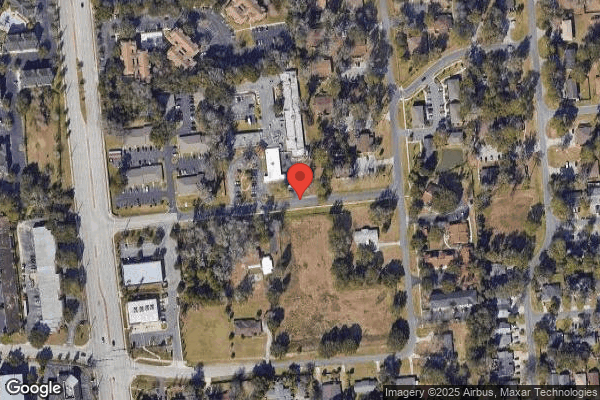
Sept 2023 4 deficiencies 3 IJ (3 affecting multiple)
CRITICAL (K) 📢 Someone Reported This

A family member, employee, or ombudsman was alarmed enough to file a formal complaint

Immediate Jeopardy (IJ) - the most serious Medicare violation

Free from Abuse/Neglect (Tag F0600)

Someone could have died · This affected multiple residents

Based on interviews and record reviews, the facility failed to protect the residents' right to be free from medical neglect when the staff failed to notify the physician of elevated blood sugars for 1...

Read full inspector narrative →
Based on interviews and record reviews, the facility failed to protect the residents' right to be free from medical neglect when the staff failed to notify the physician of elevated blood sugars for 1 of 5 residents, Resident #13, and failed to follow physicians' orders for the administration of long-acting insulin for 3 of 5 residents, Residents #100, #4, and #5, reviewed for long-acting insulin administration. The body must have insulin working 24 hours a day. If there is no glargine [Lantus/Detemir] and you have not given rapid acting insulin within the past 3-4 hours, it is likely that your body will make ketones and is at risk of developing life-threatening diabetic ketoacidosis (DKA) or Hyperglycemic Hyperosmolar Nonketotic Syndrome (HHS) which as similar symptoms, causes, and treatments of DKA. DKA is caused by an overload of ketones present in your blood. When your cells don't get the glucose they need for energy, your body begins to burn fat for energy, which produces ketones. Ketones are chemicals that the body creates when it breaks down fat to use for energy. Diabetic ketoacidosis (DKA) is a life-threatening problem that affects people with diabetes. It occurs when the body starts breaking down fat at a rate that is much too fast. The liver processes the fat into a fuel called ketones, which causes the blood to become acidic. HHS is a potentially fatal condition that can develop when diabetic medications are not administered as directed causing sever hyperglycemia and extreme dehydration leading to coma and death. Findings include: 1. Review of Resident #13's medical record documented the resident was admitted to the facility with the following diagnoses: acute on chronic systolic congestive heart failure, benign prostatic hyperplasia without lower urinary tract symptoms, chronic kidney disease stage 3, acquired absence of left leg above knee, personal history of transient ischemic attack and cerebral infarction, cerebral infarction, subacute osteomyelitis left ankle and foot, depression, anemia, type 2 diabetes mellitus with diabetic polyneuropathy, secondary hypertension, hyperlipidemia, pressure ulcer unstageable, and pressure ulcer of sacral region. Review of Resident #13's physician orders dated 7/3/2023 read, Humalog Kwik-pen 100 units/ml [milliliter] solution pen-injector, Inject as per sliding scale: if BS [blood sugar] under 60 call MD [medical doctor], 0-150 = 0 units, 151-200 = 2 units, 201-250 = 4 units, 251-300 = 6 units, 301-350 = 8 units, 351-400 = 10 units, if BS > 400 call MD. Review of Resident #13's July 2023 Medication Administrator Record (MAR) revealed on 7/4/2023 at 11:30 AM no information was documented for blood sugar, and on 7/11/2023 at 6:30 AM blood sugar of 461 was documented with a chart code of 9 (other/see nurses notes). Review of the progress notes on and about 7/11/2023 did not document a nurses note. Review of Resident #13's July 2023 MAR revealed a blood sugar of 424 and a chart code of 9 (other/see nurses notes) was documented on 7/18/2023 at 6:30 AM. Review of the progress notes on and about 7/18/2023 did not document a nurses note. Review of Resident 13's August 2023 MAR revealed a blood sugar of 527 and a chart code of 9 (other/see nurses notes) was documented on 8/2/2023 at 6:30 AM. Review of the progress notes on and about 8/2/2023 did not document a nurses note. Review of Resident #13's August 2023 MAR revealed a blood sugar of 542 and a chart code of 9 (other/see nurses notes) was documented on 8/4/2023 at 6:30 AM. Review of the progress notes on and about 8/4/2023 did not document a nurses note. Review of Resident 13's August 2023 MAR revealed a blood sugar of 531 and a chart code of 9 (other/see nurses notes) was documented on 8/12/2023 at 6:30 AM. Review of the progress notes on and about 8/12/2023 did not document a nurses note. 2. Review of Resident #100's medical record documented diagnoses that included encephalopathy, unspecified visual field defects, type 2 diabetes mellitus without complications, essential primary hypertension, and cerebral infarction (a stroke). Review of the physician orders for Resident #100 dated 4/5/2023 read, Insulin Detemir Solution 100 Unit/ml [milliliter]. Inject 20 units subcutaneously at bedtime for diabetes. Review of the Medication Administration Record (MAR) for Resident #100 for the period of 5/1/2023 through 8/30/2023 revealed on 5/1/2023 at 9:00 PM Staff A, Licensed Practical Nurse (LPN) documented 14 (insulin coverage not needed) for Insulin Detemir 20 units, on 5/2/2023 at 9:00 PM Staff B, LPN documented 4 (held per parameters) Detemir 20 units, on 5/3/2023 at 9:00 PM Staff B, LPN documented 4 (held per parameters) for Detemir 20 units, on 5/4/2023 at 9:00 PM Staff C, LPN documented 4 (held per parameters) for Insulin Detemir 20 units, on 5/9/2023 at 9:00 PM Staff B, LPN documented 4 (held per parameters) for Detemir 20 units, on 5/10/2023 at 9:00 PM Staff B, LPN documented 4 (held per parameters) for Detemir 20 units, on 5/11/2023 at 9:00 PM Staff B, LPN documented 4 (held per parameters) for Detemir 20 units, on 5/16/2023 at 9:00 PM Staff B, LPN documented 4 (held per parameters) for Detemir 20 units, on 5/19/2023 at 9:00 PM Staff B, LPN documented 4 (held per parameters) for Detemir 20 units, on 5/20/2023 at 9:00 PM Staff B documented 4 (held per parameters) for Detemir 20 units, on 5/21/2023 at 9:00 PM Staff B, LPN documented 4 (held per parameters) for Detemir 20 units, on 5/23/2023 at 9:00 PM Staff B, LPN documented 4 (held per parameters) for Detemir 20 units, on 5/24/2023 at 9:00 PM Staff B, LPN documented 4 (held per parameters) for Detemir 20 units, on 5/25/2023 at 9:00 PM Staff B, LPN documented 4 (held per parameters) for Detemir 20 units, on 5/30/2023 at 9:00 PM Staff B, LPN documented 4 (held per parameters) for Detemir 20 units, on 5/31/2023 at 9:00 PM Staff B, LPN documented 4 (held per parameters) for Detemir 20 units, on 6/2/2023 at 9:00 PM Staff B, LPN documented 4 (held per parameters) for Detemir 20 units, on 6/3/2023 at 9:00 PM Staff B, LPN documented 4 (held per parameters) for Detemir 20 units, on 6/7/2023 at 9:00 PM, there was no documentation on the MAR for the administration of Detemir 20 units, the box to indicate administration was blank, on 6/13/2023 at 9:00 PM Staff B, LPN documented 4 (held per parameters) for Detemir 20 units, on 6/18/2023 at 9:00 PM Staff B, LPN documented 4 (held per parameters) for Detemir 20 units, on 6/22/2023 at 9:00 PM Staff B, LPN documented 4 (held per parameters) for Detemir 20 units, on 6/30/2023 at 9:00 PM Staff B, LPN documented 4 (held per parameters) for Detemir 20 units, on 7/1/2023 at 9:00 PM Staff B, LPN documented 4 (held per parameters) for Detemir 20 units, on 7/5/2023 at 9:00 PM Staff B, LPN documented 4 (held per parameters) for Detemir 20 units, on 7/12/2023 at 9:00 PM Staff B, LPN documented 4 (held per parameters) for Detemir 20 units, on 7/15/2023 at 9:00 PM Staff B, LPN documented 4 (held per parameters) for Detemir 20 units, on 7/16/2023 at 9:00 PM Staff B, LPN documented 4 (held per parameters) for Detemir 20 units, on 7/18/2023 at 9:00 PM Staff B, LPN documented 4 (held per parameters) for Detemir 20 units, on 7/25/2023 at 9:00 PM Staff B, LPN documented 4 (held per parameters) for Detemir 20 units, on 7/28/2023 at 9:00 PM Staff B, LPN documented 4 (held per parameters) for Detemir 20 units, on 7/29/2023 at 9:00 PM Staff B, LPN documented 4 (held per parameters) for Detemir 20 units, on 7/30/2023 at 9:00 PM Staff B, LPN documented 4 (held per parameters) for Detemir 20 units, on 8/9/2023 at 9:00 PM Staff B, LPN documented 4 (held per parameters) for Detemir 20 units, on 8/10/2023 at 9:00 PM Staff C LPN documented 14 (insulin not required) for Detemir 20 units, on 8/22/2023 at 9:00 PM Staff B, LPN documented 4 (held per parameters) for Detemir 20 units, on 8/23/2023 at 9:00 PM Staff B, LPN documented 4 (held per parameters) for Detemir 20 units, on 8/25/2023 at 9:00 PM Staff B, LPN documented 4 (held per parameters) for Detemir 20 units, on 8/27/2023 at 9:00 PM Staff B, LPN documented 4 (held per parameters) for Detemir 20 units, and on 8/29/2023 at 9:00 PM Staff B, LPN documented 4 (held per parameters) for Detemir 20 units. 3. Review Resident #4's medical record documented diagnoses that included cerebral infarction due to occlusion or stenosis of small artery (a stroke), chronic obstructive pulmonary disease, type 2 diabetes mellitus without complications, and end stage renal disease. Review of the physician orders for Resident #4 dated 2/14/2023 read, Insulin Detemir Solution 100 unit/ml, Inject 38 units subcutaneously at bedtime related to type 2 diabetes mellitus without complications. Review of the MAR for Resident #4 for the period of 8/1/2023 through 8/30/2023 revealed on 8/6/2023 at 9:00 PM Staff D, LPN documented 4 (held per parameters) for Detemir 38 units, on 8/8/2023 at 9:00 PM Staff E, LPN documented 4 (held per parameters) for Detemir 38 units, on 8/12/2023 at 9:00 PM Staff E, LPN documented 4 (held per parameters) for Detemir 38 units, on 8/14/2023 at 9:00 PM Staff C, LPN documented 14 (insulin not required) for Detemir 38 units, and on 8/17/2023 at 9:00 PM Staff E, LPN documented 4 (held per parameters) for Detemir 38 units. 4. Review of Resident #5's medical record documented diagnoses that included anoxic brain damage, type 2 diabetes mellitus with diabetic neuropathy, and secondary hypertension. Review of the physician orders for Resident #5 dated 6/22/2023 read, Lantus Solution 100 unit/ml [insulin glargine] inject 15 units subcutaneously two times a day related to type 2 diabetes mellitus without complication. Review of the MAR for Resident #5 for the period of 8/1/2023 through 8/30/2023 revealed on 8/3/2023 at 6:00 AM Staff H, LPN documented 14 (insulin not required) for Lantus Insulin 15 units, on 8/5/2023 at 6:00 AM Staff H, LPN documented 14 (insulin not required) for Lantus 15 units, on 8/8/2023 at 6:00 AM Staff H, LPN documented 14 (insulin not required) for Lantus 15 units, on 8/13/2023 at 9:00 PM Staff G, LPN documented 14 (insulin not required) for Lantus 15 units, on 8/17/2023 at 6:00 AM Staff H, LPN documented 14 (insulin not required) for Lantus 15 units, and on 8/21/2023 at 6:00 AM Staff I, LPN documented 4 (held per parameters) for Lantus 15 units. During an interview on 8/31/2023 at 10:54 AM, the Medical Director stated, I was not aware that the nurses were holding long-acting insulins. I should be notified when the nurses are holding insulins; long-acting insulin. I should be notified if blood sugars are below 60 or above 400 unless there are different parameters I have set. Long-acting insulin does not have any parameters for holding, so I expect to be called. I do not think that any of my residents have had to be hospitalized due to hyperglycemia. There are concerns with holding insulins, the elderly are not as resilient and can decompensate quickly if they have any underlying illness. I should be notified if insulin is not administered. Nurses should follow orders and call if they have any concerns about giving the insulin. During an interview on 8/31/2023 at 11:50 AM, the Administrator stated, We did meet and discuss the concerns about insulin and have been working on a plan of correction. I guess we should have found this when we looked at the insulin administration. We did not complete an RCA [root cause analysis] to determine if there were any other problems related to insulin administration. I assumed that all insulin was being looked at. We were focusing on the recertification survey, revisit, and complaint surveys. We should have looked at this and found that this was happening during our audits. We should have notified the doctors that the long-acting insulin was not administered. I don't know why; I don't have an answer as to why this was not addressed. Nurses should administer insulin when ordered by the doctor or call if they have any concerns about administering it [the insulin]. During an interview on 8/31/2023 at 11:57 AM, Staff J, Regional Nurse Consultant stated, I did the audits of all the residents on insulin. I did audits for what is documented on the audits, doctors' orders for insulin, orders for hypoglycemia protocol, that nurses can verbalize the signs and symptoms of hypoglycemia and that the MAR reflects appropriate administration. I don't recall seeing documentation for holding long-acting insulin. I don't recall whether I saw this or not. We did training with staff about insulin administration and that did include types of insulin. I was not aware that we still have staff not administering the long-acting insulin. I really can't say if I looked at the long-acting insulin or just that the accuchecks [an easy way to measure blood sugar] were being called if they were documenting them correctly. I don't know exactly how the education was completed. What exactly they went over. We did not document whether or not we looked at the long-acting insulin when we did the PIP [performance improvement plan]. I was not involved in the PIP, and I can't say. We should have identified it as a problem [long-acting insulin administration] and evaluated whether the staff were administering it per orders. Long-acting insulin does not have parameters for holding them. Nurses should have called the doctor if they had concerns about administering the insulin and documented that they called the doctor. Review of the PIP with the Regional Nurse Consultant, the PIP did not document identification of long-acting insulin not being administered. During a telephone interview on 8/31/2023 at 4:35 PM, Staff H, LPN stated, I did hold the insulin. It was long-acting insulin. The blood sugar was below 150. I always hold the Lantus when that happens. I did not call the doctor or text him. I thought that I was doing the right thing. I was not following doctors' orders for that administration. There are no parameters in the order to hold the insulin. If I was concerned, I should have called the doctor. During a telephone interview on 9/1/2023 at 8:06 AM, Staff I, LPN stated, I did hold the insulin. I guess I wasn't understanding that I needed to give it. I did not receive training prior to last night for insulin. We talked about calling and documenting accuchecks. I know I should not hold long-acting insulin without parameters now. I should not have held the insulin and not let the doctor know. During a telephone interview on 9/1/2023 at 8:16 AM, Staff B, LPN stated, So, I guess I had a misunderstanding of what long-acting insulin does and I would hold this for the sliding scale parameters. I didn't understand that I shouldn't or that I wasn't following doctors' orders. I should have given the insulin. During an interview on 9/1/2023 at 8:26 AM, Staff K, Regional Nurse Consultant stated, I do not have any evidence for the dates the insulin was not administered that the doctor was notified, no texts and no progress notes. During an interview on 9/1/2023 at 11:10 AM, Staff D, LPN stated, I did hold insulin based on the short acting insulin scale and I shouldn't have. I should have either given the insulin or called the doctor if I was concerned about the resident's blood sugars. I just thought I was doing the right thing for the resident. I really should have called the doctor. Review of the policy and procedure titled P&P ANE [Abuse, Neglect, Exploitation] and Investigation issued on 4/1/2022 read, It will be the policy of this facility to honor resident rights and to address with employees the seven (7) components regarding mistreatment, abuse, neglect, sexual misconduct, injuries of unknown source, involuntary seclusion, corporeal punishment, misappropriation of residents property or funds or use of physical or chemical restraint not required to treat the resident's symptoms in accordance with Federal Law. Definitions: Neglect is the failure of the facility, its employees or service providers to provide goods and services to a resident that are necessary to avoid physical harm, pain, mental anguish, or emotional distress. Procedure . 3. Prevention: Staff, residents and resident representatives will be instructed of how to identify and report concerns, events, & grievances. The facility will monitor reported events to determine any pattern, trend, or frequency exists to attempt to minimize the occurrence of injury. All events will be addressed at the monthly Quality Assurance Performance Improvement (QAPI) meeting. 5. Investigation: The facility will conduct their own internal investigation including but not limited to staff (work history and background screening), resident, and family/resident representative interviews, medical record reviews, 24-hour reports reviews, full body skin exam, etc. The resident's representative and physician should be notified that there is an on-going investigation regarding the alleged incident. The Immediate Jeopardy was removed on site on 9/1/2023 after the receipt of an acceptable immediate jeopardy removal plan. The survey team verified the facility's action for removal of the immediate jeopardy to prevent the likelihood of harm and/or possible death as evidenced by the following: On 8/31/2023 the facility assessed all residents involved in the IJ situation and conducted a facility wide audit of all residents receiving insulin to identify possible harm, side effects or injury due to holding the insulin. The facility held an Ad Hoc QAPI meeting to discuss staff holding long-acting insulin without parameters and conducted a root cause analysis. On 8/31/2023 and 9/1/2023 the Regional Nurse Consultant provided education to the licensed nursing staff on long and short acting insulin administration, medication errors, following physician orders, changes in condition and abuse and neglect for 39 out of 41 licensed staff. On 8/31/2023 the Regional Nurse Consultant provided education and training to the facility administration on QAPI/QAA policy and abuse and neglect policy. On 8/31/2023 and 9/1/2023 interviews were conducted with eight licensed nursing staff who verified training was provided for abuse and neglect, long and short acting insulin administration, following physician orders, medication errors, and change in condition notification. Interview with the Administrator on 9/1/2023 verified that training on abuse and neglect and on quality assurance.
CRITICAL (K) 📢 Someone Reported This

A family member, employee, or ombudsman was alarmed enough to file a formal complaint

Immediate Jeopardy (IJ) - the most serious Medicare violation

Quality of Care (Tag F0684)

Someone could have died · This affected multiple residents

Based on interviews and record reviews, the facility failed to ensure residents received treatment and care in accordance with professional standards of practice by failing to notify the physician of ...

Read full inspector narrative →
Based on interviews and record reviews, the facility failed to ensure residents received treatment and care in accordance with professional standards of practice by failing to notify the physician of changes in condition for 1 of 5 residents, Resident #13, and failed to follow physicians' orders for the administration of long-acting insulins for 3 of 5 residents, Residents #100, #4, and #5. The body must have insulin working 24 hours a day. If there is no glargine [Lantus/Detemir] and you have not given rapid acting insulin within the past 3-4 hours, it is likely that your body will make ketones and is at risk of developing life-threatening diabetic ketoacidosis (DKA) or Hyperglycemic Hyperosmolar Nonketotic Syndrome (HHS) which as similar symptoms, causes, and treatments of DKA. DKA is caused by an overload of ketones present in your blood. When your cells don't get the glucose they need for energy, your body begins to burn fat for energy, which produces ketones. Ketones are chemicals that the body creates when it breaks down fat to use for energy. Diabetic ketoacidosis (DKA) is a life-threatening problem that affects people with diabetes. It occurs when the body starts breaking down fat at a rate that is much too fast. The liver processes the fat into a fuel called ketones, which causes the blood to become acidic. HHS is a potentially fatal condition that can develop when diabetic medications are not administered as directed causing sever hyperglycemia and extreme dehydration leading to coma and death. Findings include: 1. Review of Resident #13's medical record documented the resident was admitted to the facility with the following diagnoses: acute on chronic systolic congestive heart failure, benign prostatic hyperplasia without lower urinary tract symptoms, chronic kidney disease stage 3, acquired absence of left leg above knee, personal history of transient ischemic attack and cerebral infarction, cerebral infarction, subacute osteomyelitis left ankle and foot, depression, anemia, type 2 diabetes mellitus with diabetic polyneuropathy, secondary hypertension, hyperlipidemia, pressure ulcer unstageable, and pressure ulcer of sacral region. Review of Resident #13's physician orders dated 7/3/2023 read, Humalog Kwik-pen 100 units/ml [milliliter] solution pen-injector, Inject as per sliding scale: if BS [blood sugar] under 60 call MD [medical doctor], 0-150 = 0 units, 151-200 = 2 units, 201-250 = 4 units, 251-300 = 6 units, 301-350 = 8 units, 351-400 = 10 units, if BS > 400 call MD. Review of Resident #13's July 2023 Medication Administrator Record (MAR) revealed on 7/4/2023 at 11:30 AM no information was documented for blood sugar, and on 7/11/2023 at 6:30 AM blood sugar of 461 was documented with a chart code of 9 (other/see nurses notes). Review of the progress notes on and about 7/11/2023 did not document a nurses note. Review of Resident #13's July 2023 MAR revealed a blood sugar of 424 and a chart code of 9 (other/see nurses notes) was documented on 7/18/2023 at 6:30 AM. Review of the progress notes on and about 7/18/2023 did not document a nurses note. Review of Resident 13's August 2023 MAR revealed a blood sugar of 527 and a chart code of 9 (other/see nurses notes) was documented on 8/2/2023 at 6:30 AM. Review of the progress notes on and about 8/2/2023 did not document a nurses note. Review of Resident #13's August 2023 MAR revealed a blood sugar of 542 and a chart code of 9 (other/see nurses notes) was documented on 8/4/2023 at 6:30 AM. Review of the progress notes on and about 8/4/2023 did not document a nurses note. Review of Resident 13's August 2023 MAR revealed a blood sugar of 531 and a chart code of 9 (other/see nurses notes) was documented on 8/12/2023 at 6:30 AM. Review of the progress notes on and about 8/12/2023 did not document a nurses note. 2. Review of Resident #100's medical record documented diagnoses that included encephalopathy, unspecified visual field defects, type 2 diabetes mellitus without complications, essential primary hypertension, and cerebral infarction (a stroke). Review of the physician orders for Resident #100 dated 4/5/2023 read, Insulin Detemir Solution 100 Unit/ml [milliliter]. Inject 20 units subcutaneously at bedtime for diabetes. Review of the Medication Administration Record (MAR) for Resident #100 for the period of 5/1/2023 through 8/30/2023 revealed on 5/1/2023 at 9:00 PM Staff A, Licensed Practical Nurse (LPN) documented 14 (insulin coverage not needed) for Insulin Detemir 20 units, on 5/2/2023 at 9:00 PM Staff B, LPN documented 4 (held per parameters) Detemir 20 units, on 5/3/2023 at 9:00 PM Staff B, LPN documented 4 (held per parameters) for Detemir 20 units, on 5/4/2023 at 9:00 PM Staff C, LPN documented 4 (held per parameters) for Insulin Detemir 20 units, on 5/9/2023 at 9:00 PM Staff B, LPN documented 4 (held per parameters) for Detemir 20 units, on 5/10/2023 at 9:00 PM Staff B, LPN documented 4 (held per parameters) for Detemir 20 units, on 5/11/2023 at 9:00 PM Staff B, LPN documented 4 (held per parameters) for Detemir 20 units, on 5/16/2023 at 9:00 PM Staff B, LPN documented 4 (held per parameters) for Detemir 20 units, on 5/19/2023 at 9:00 PM Staff B, LPN documented 4 (held per parameters) for Detemir 20 units, on 5/20/2023 at 9:00 PM Staff B documented 4 (held per parameters) for Detemir 20 units, on 5/21/2023 at 9:00 PM Staff B, LPN documented 4 (held per parameters) for Detemir 20 units, on 5/23/2023 at 9:00 PM Staff B, LPN documented 4 (held per parameters) for Detemir 20 units, on 5/24/2023 at 9:00 PM Staff B, LPN documented 4 (held per parameters) for Detemir 20 units, on 5/25/2023 at 9:00 PM Staff B, LPN documented 4 (held per parameters) for Detemir 20 units, on 5/30/2023 at 9:00 PM Staff B, LPN documented 4 (held per parameters) for Detemir 20 units, on 5/31/2023 at 9:00 PM Staff B, LPN documented 4 (held per parameters) for Detemir 20 units, on 6/2/2023 at 9:00 PM Staff B, LPN documented 4 (held per parameters) for Detemir 20 units, on 6/3/2023 at 9:00 PM Staff B, LPN documented 4 (held per parameters) for Detemir 20 units, on 6/7/2023 at 9:00 PM, there was no documentation on the MAR for the administration of Detemir 20 units, the box to indicate administration was blank, on 6/13/2023 at 9:00 PM Staff B, LPN documented 4 (held per parameters) for Detemir 20 units, on 6/18/2023 at 9:00 PM Staff B, LPN documented 4 (held per parameters) for Detemir 20 units, on 6/22/2023 at 9:00 PM Staff B, LPN documented 4 (held per parameters) for Detemir 20 units, on 6/30/2023 at 9:00 PM Staff B, LPN documented 4 (held per parameters) for Detemir 20 units, on 7/1/2023 at 9:00 PM Staff B, LPN documented 4 (held per parameters) for Detemir 20 units, on 7/5/2023 at 9:00 PM Staff B, LPN documented 4 (held per parameters) for Detemir 20 units, on 7/12/2023 at 9:00 PM Staff B, LPN documented 4 (held per parameters) for Detemir 20 units, on 7/15/2023 at 9:00 PM Staff B, LPN documented 4 (held per parameters) for Detemir 20 units, on 7/16/2023 at 9:00 PM Staff B, LPN documented 4 (held per parameters) for Detemir 20 units, on 7/18/2023 at 9:00 PM Staff B, LPN documented 4 (held per parameters) for Detemir 20 units, on 7/25/2023 at 9:00 PM Staff B, LPN documented 4 (held per parameters) for Detemir 20 units, on 7/28/2023 at 9:00 PM Staff B, LPN documented 4 (held per parameters) for Detemir 20 units, on 7/29/2023 at 9:00 PM Staff B, LPN documented 4 (held per parameters) for Detemir 20 units, on 7/30/2023 at 9:00 PM Staff B, LPN documented 4 (held per parameters) for Detemir 20 units, on 8/9/2023 at 9:00 PM Staff B, LPN documented 4 (held per parameters) for Detemir 20 units, on 8/10/2023 at 9:00 PM Staff C LPN documented 14 (insulin not required) for Detemir 20 units, on 8/22/2023 at 9:00 PM Staff B, LPN documented 4 (held per parameters) for Detemir 20 units, on 8/23/2023 at 9:00 PM Staff B, LPN documented 4 (held per parameters) for Detemir 20 units, on 8/25/2023 at 9:00 PM Staff B, LPN documented 4 (held per parameters) for Detemir 20 units, on 8/27/2023 at 9:00 PM Staff B, LPN documented 4 (held per parameters) for Detemir 20 units, and on 8/29/2023 at 9:00 PM Staff B, LPN documented 4 (held per parameters) for Detemir 20 units. 3. Review Resident #4's medical record documented diagnoses that included cerebral infarction due to occlusion or stenosis of small artery (a stroke), chronic obstructive pulmonary disease, type 2 diabetes mellitus without complications, and end stage renal disease. Review of the physician orders for Resident #4 dated 2/14/2023 read, Insulin Detemir Solution 100 unit/ml, Inject 38 units subcutaneously at bedtime related to type 2 diabetes mellitus without complications. Review of the MAR for Resident #4 for the period of 8/1/2023 through 8/30/2023 revealed on 8/6/2023 at 9:00 PM Staff D, LPN documented 4 (held per parameters) for Detemir 38 units, on 8/8/2023 at 9:00 PM Staff E, LPN documented 4 (held per parameters) for Detemir 38 units, on 8/12/2023 at 9:00 PM Staff E, LPN documented 4 (held per parameters) for Detemir 38 units, on 8/14/2023 at 9:00 PM Staff C, LPN documented 14 (insulin not required) for Detemir 38 units, and on 8/17/2023 at 9:00 PM Staff E, LPN documented 4 (held per parameters) for Detemir 38 units. 4. Review of Resident #5's medical record documented diagnoses that included anoxic brain damage, type 2 diabetes mellitus with diabetic neuropathy, and secondary hypertension. Review of the physician orders for Resident #5 dated 6/22/2023 read, Lantus Solution 100 unit/ml [insulin glargine] inject 15 units subcutaneously two times a day related to type 2 diabetes mellitus without complication. Review of the MAR for Resident #5 for the period of 8/1/2023 through 8/30/2023 revealed on 8/3/2023 at 6:00 AM Staff H, LPN documented 14 (insulin not required) for Lantus Insulin 15 units, on 8/5/2023 at 6:00 AM Staff H, LPN documented 14 (insulin not required) for Lantus 15 units, on 8/8/2023 at 6:00 AM Staff H, LPN documented 14 (insulin not required) for Lantus 15 units, on 8/13/2023 at 9:00 PM Staff G, LPN documented 14 (insulin not required) for Lantus 15 units, on 8/17/2023 at 6:00 AM Staff H, LPN documented 14 (insulin not required) for Lantus 15 units, and on 8/21/2023 at 6:00 AM Staff I, LPN documented 4 (held per parameters) for Lantus 15 units. During an interview on 8/31/2023 at 10:54 AM, the Medical Director stated, I was not aware that the nurses were holding long-acting insulins. I should be notified when the nurses are holding insulins; long-acting insulin. I should be notified if blood sugars are below 60 or above 400 unless there are different parameters I have set. Long-acting insulin does not have any parameters for holding, so I expect to be called. I do not think that any of my residents have had to be hospitalized due to hyperglycemia. There are concerns with holding insulins, the elderly are not as resilient and can decompensate quickly if they have any underlying illness. I should be notified if insulin is not administered. Nurses should follow orders and call if they have any concerns about giving the insulin. During an interview on 8/31/2023 at 11:50 AM, the Administrator stated, We did meet and discuss the concerns about insulin and have been working on a plan of correction. I guess we should have found this when we looked at the insulin administration. We did not complete an RCA [root cause analysis] to determine if there were any other problems related to insulin administration. I assumed that all insulin was being looked at. We were focusing on the recertification survey, revisit, and complaint surveys. We should have looked at this and found that this was happening during our audits. We should have notified the doctors that the long-acting insulin was not administered. I don't know why; I don't have an answer as to why this was not addressed. Nurses should administer insulin when ordered by the doctor or call if they have any concerns about administering it [the insulin]. During an interview on 8/31/2023 at 11:57 AM, Staff J, Regional Nurse Consultant stated, Each time 4 or 14 is documented the medication was not given per the doctors' order. The nurses did not administer the long-acting insulin. Reviewing the orders, I see that there are no parameters to hold the medication and the insulin should have been administered. They were not following doctors' orders. They were not following the policies for medication administration and holding medications. They should have called the doctor if they were concerned about administering the medications. I have no idea why they would have held the insulin. I just don't know why they did this. Long-acting insulin does not have parameters for holding them. Nurses should have called the doctor if they had concerns about administering the insulin and documented that they called the doctor. The nurses were not following our policies for medication administration, notifying doctors of changes in condition. They should have called the doctor if they had any concerns at all. I don't know why they did not administer the insulin. I have not asked them or investigated why they did not give it. I was not aware that long-acting insulin wasn't being given. During a telephone interview on 8/31/2023 at 4:35 PM, Staff H, LPN stated, I did hold the insulin. It was long-acting insulin. The blood sugar was below 150. I always hold the Lantus when that happens. I did not call the doctor or text him. I thought that I was doing the right thing. I was not following doctors' orders for that administration. There are no parameters in the order to hold the insulin. If I was concerned, I should have called the doctor. During a telephone interview on 9/1/2023 at 8:06 AM, Staff I, LPN stated, I did hold the insulin. I guess I wasn't understanding that I needed to give it. I should not have held the insulin. I should have let the doctor know I was holding the insulin. I was not following doctor's orders when I held the long-acting insulin. During a telephone interview on 9/1/2023 at 8:16 AM, Staff B, LPN stated, So, I guess I had a misunderstanding of what long-acting insulin does and I would hold this for the sliding scale parameters. I didn't understand that I shouldn't or that I wasn't following doctors' orders. I should have given the insulin. I was not following the policies for medication administration; I was not following the doctor orders when I held the insulin. There are no parameters to hold long-acting insulin. During an interview on 9/1/2023 at 8:26 AM, Staff K, Regional Nurse Consultant stated, I do not have any evidence for the dates the insulin was not administered that the doctor was notified, no texts and no progress notes. During an interview on 9/1/2023 at 11:10 AM, Staff D, LPN stated, I did hold insulin based on the short acting insulin scale and I shouldn't have. I should have either given the insulin or called the doctor if I was concerned about the resident's blood sugars. I just thought I was doing the right thing for the resident. I really should have called the doctor. I did not follow the doctor's orders. I was not following our policies for calling the doctor or administering medications. I did not receive any training related to long-acting insulin. Today we discussed long term insulin administration and that we don't ever hold the insulin unless we call the doctor and they just put in new parameters that say below 80 call the doctor. During an interview on 9/1/2023 at 1:30 PM, Staff N, LPN stated, I was not trained on long- acting insulin until today. I just was given the information about long-acting insulin today. I was not trained on this two weeks ago. During an interview on 9/1/2023 at 1:45 PM, Staff O, LPN stated, Two weeks ago I did not get any training on the types of insulin or when they peak. We just got that today along with long- acting insulin that it doesn't get held. That we need to call doctors if we hold insulin or if it's high and on neglect. I do understand that I shouldn't hold long-acting insulin and that I have to follow doctors' orders when it comes to insulin. During an interview on 9/1/2023 at 2:15 PM, Staff P, RN stated, I was not given insulin administration education information before today. They did not talk to use about long-acting insulin until today. I did get training on neglect, change of condition, following doctors' orders, the new orders to call a doctor if blood glucose is less than eighty today. I do understand how long-acting insulin works and that I shouldn't hold it. During an interview on 9/1/2023 at 2:25 PM, Staff Q, LPN stated, We got some training like two weeks ago making sure orders were in if they had blood sugars below 60 and what to do, like give glucagon. I was not trained on the types of insulin until today. We went over a printout that had the types of insulin, when they begin to work, that we don't have parameters on Lantus and Levemir insulins only the short acting ones. That we don't hold long-acting insulin, they also talked about following doctors' orders, calling doctors when we need to report things like blood sugars to them. Review of the policy and procedure titled P&P Diabetes/Hypo/Hyperglycemia issued on 4/1/2022 read, Policy: It will be the policy of this facility to provide appropriate care to residents with diabetes mellitus. Nursing measures and physician orders will be implemented to minimize risk of hypo/hyperglycemia. Procedure: 1. Residents diagnosed with diabetes mellitus (or other condition requiring blood glucose monitoring and control) will receive insulin, oral hypoglycemic medications and/or an individually prescribed diet according to physician order . 5. Staff will provide glucose monitoring, medication administration, laboratory testing and diet per physician orders. 13 . Report noncompliance with physician orders to the physician and/or resident representative, if applicable. 14. Document pertinent information, regarding medication administration, changes in condition, education, or interventions in clinical record. Review of the policy and procedure titled P&P Medication Errors issued on 4/1/2022 read, Policy: It will be the policy of this facility that the staff and practitioner shall try to prevent medication errors and adverse medication consequences and shall strive to identify and manage them appropriately when they occur. Procedure: 1. The staff and practitioner shall strive to minimize adverse consequences by: a. Following relevant clinical guidelines and manufacturers specifications for use, dose, administration, duration, and monitoring of the medication. b. Defining appropriate indications for use. 2. The staff shall report clinically significant adverse medication consequences to the resident's physician, governing agencies, and resident representative, if applicable . 4. Staff will document appropriately detailed accounts of any incidents/events on an appropriate report form or electronic database system for quality assurance. Review of the policy and procedure titled Medication Administration issued on 4/1/2022 read, Policy: It will be the policy of this facility to administer medications in a timely manner and as prescribed by the physician, unless otherwise clinically indicated or necessitated by other circumstances such as lack of availability of medication or refusals of medication by the resident. Procedure . 2. The Director of Nursing is responsible for the supervision and direction of all personnel with medication administration duties and functions. 3. Medications shall be administered in a timely manner and in accordance with the physician's orders . 5. Should a dose seem excessive considering the residents age and medical condition, or medication order seems to be unrelated to the resident's current diagnosis or medical condition, the person preparing/administering the medication shall contact the resident's physician or the facility's Medical Director . 12. Should a drug be withheld, refused, or given other than the scheduled time, the individual administering the medication will document this in the clinical record. Review of the policy and procedure titled P&P Change in Condition issued on 4/1/2022 read, Policy: It will be the policy of this facility to notify the physician, family, resident, and/or responsible party/resident representative (as is applicable) of significant changes in condition and providing treatment(s) according to resident wishes and physician's orders . 6. Contact the primary physician to update/him/her to the change in condition. In the event the primary physician cannot be notified, attempt to contact the facility's medical director. The Immediate Jeopardy was removed on site on 9/1/2023 after the receipt of an acceptable immediate jeopardy removal plan. The survey team verified the facility's action for removal of the immediate jeopardy to prevent the likelihood of harm and/or possible death as evidenced by the following: On 8/31/2023 the facility assessed all residents involved in the IJ situation and conducted a facility wide audit of all residents receiving insulin to identify possible harm, side effects or injury due to holding the insulin. The facility held an Ad Hoc QAPI meeting to discuss staff holding long-acting insulin without parameters and conducted a root cause analysis. On 8/31/2023 and 9/1/2023 the Regional Nurse Consultant provided education to the licensed nursing staff on long and short acting insulin administration, medication errors, following physician orders, changes in condition and abuse and neglect for 39 out of 41 licensed staff. On 8/31/2023 the Regional Nurse Consultant provided education and training to the facility administration on QAPI/QAA policy and abuse and neglect policy. On 8/31/2023 and 9/1/2023 interviews were conducted with eight licensed nursing staff who verified training was provided for abuse and neglect, long and short acting insulin administration, following physician orders, medication errors, abuse, and change in condition notification. Interview with the Administrator on 9/1/2023 verified training on abuse and neglect and on quality assurance.
CRITICAL (K) 📢 Someone Reported This

A family member, employee, or ombudsman was alarmed enough to file a formal complaint

Immediate Jeopardy (IJ) - the most serious Medicare violation

Administration (Tag F0835)

Someone could have died · This affected multiple residents

Based on interviews and record reviews, the facility administration failed to use its resources effectively and efficiently to attain or maintain the highest practicable physical wellbeing of each res...

Read full inspector narrative →
Based on interviews and record reviews, the facility administration failed to use its resources effectively and efficiently to attain or maintain the highest practicable physical wellbeing of each resident when not assuming full responsibility for the day-to-day operations of the facility and failing to effectively implement a QAPI/QAA plan. The administration failed to identify medication errors for residents who were not administered long-acting insulin as ordered by the physician and failed to ensure physician notification when medication orders were not followed and residents had change of condition for 4 of 7 residents, Resident #13, #100, #4, and #5. The body must have insulin working 24 hours a day. If there is no glargine [Lantus/Detemir] and you have not given rapid acting insulin within the past 3-4 hours, it is likely that your body will make ketones and is at risk of developing life-threatening diabetic ketoacidosis (DKA) or Hyperglycemic Hyperosmolar Nonketotic Syndrome (HHS) which as similar symptoms, causes, and treatments of DKA. DKA is caused by an overload of ketones present in your blood. When your cells don't get the glucose they need for energy, your body begins to burn fat for energy, which produces ketones. Ketones are chemicals that the body creates when it breaks down fat to use for energy. Diabetic ketoacidosis (DKA) is a life-threatening problem that affects people with diabetes. It occurs when the body starts breaking down fat at a rate that is much too fast. The liver processes the fat into a fuel called ketones, which causes the blood to become acidic. HHS is a potentially fatal condition that can develop when diabetic medications are not administered as directed causing severe hyperglycemia and extreme dehydration leading to coma and death. Findings include: Cross Reference to F867- QAPI/QAA (Quality Assurance and Performance Improvement/Quality Assessment and Assurance) Improvement Activities under survey event RQJA12. Review of the job description for the Administrator read, Purpose of your job position: The primary purpose of your position is to direct the day-to-day functions of the facility in accordance with current federal, state, and local standards, guidelines, and regulations that govern nursing facilities to assure that the highest degree of quality care can be provided to our residents at all times. Duties and Responsibilities: Administrative functions: Develop and maintain written policies and procedures and professional standards of practice that govern the operation of the Facility. Assist department directors in the development, use, and implementation of departmental policies and procedures and professional standards of practice. Review deficiencies noted during the exit conference. Assist in developing plans of correction for cited deficiencies. Ensure such plans incorporate timetables and methods of monitoring to ensure such deficiencies do not recur. Committee functions: Serve on various committees of the facility (i.e., Infection control, Quality Assurance & Assessment, etc ., assist the Quality Assurance and Assessment Committee in developing and implementing appropriate plans of action to correct identified quality deficiencies, evaluate and implement recommendations from the facility's committees as necessary. Safety and Sanitation: Review accident and incident reports (e.g., falls, injuries of unknown source, abuse, etc.) Monitor to determine effectiveness of facility's risk management program. Review of the Job description for the Director of Nursing Services read, Purpose of your Job Position: The primary purpose of your position is to plan, organize, develop, and direct the overall operation of our Nursing Services Department in accordance with current federal, state, and local standards, guidelines, and regulations that govern our facility and as may be directed by the Administrator to ensure the highest degree of quality care is maintained at all times. Delegation of Authority: You are charged with carrying out the resident care policies established by this facility. Administrative functions: Plan, develop, organize, evaluate, and direct the nursing service department, as well as its programs and activities, in accordance with current rules, regulations, and guidelines that govern nursing care facilities. Develop, maintain, and periodically update written policies and procedures that govern the day-to-day function of the nursing service department. Make written and oral recommendations to the administrator concerning the operation of the nursing service department. Develop, implement, and maintain an ongoing quality assurance program for the nursing service department. Assist in developing and implementing appropriate plans of action to correct identified deficiencies. Monitor the facility's QI [Quality Improvement], QM [Quality Management], and survey reports. Assist in developing plans of action to correct potential or identified problem areas. Committee functions: Serve on, participate in, and attend various committees of the facility as appointed by the administrator. Evaluate and implement recommendations from established committees as they may pertain to nursing services. Staff Development: Develop and participate in the planning, conducting, and scheduling of timely in-service training classes that provide instructions on how to do the job, and ensure a well-educated nursing service department. Develop, implement, and maintain an effective orientation program that orients new employees to the department, its policies and procedures, and to his/her job position and title. Review of the contractual agreement for the Medical Director read, The responsibilities of the Medical Director shall be without limitation, to perform the following duties, such duties to be solely administrative in nature and not including any direct medical services: Coordinate medical care in the facility, provide clinical guidance and oversight regarding the implementation of patient care policies and make good faith efforts to assure adequate medical care for patients. Coordinate and collaborate with facility leadership, staff, other practitioners, and consultants, including any other facility medical directors to help develop, implement and evaluate patient care policies and procedures that reflect current standards of practice and regarding administrative requests and patient care initiatives as specified in the agreement. Assist facility to identify, evaluate, address, resolve medical and clinical concerns and issues that affect patient care, medical care or quality of life or are related to the provision of services by physicians and other licensed healthcare practitioners including medical care consistent with applicable current standards of care and monitoring of the performance and practices of healthcare practitioners generally. Provide clinical leadership through active participation in the facilities quality assurance committee and quality assurance program and participate in all other activities which may be designated by the executive director of the facility from time to time to facilitate the cost-effective delivery of services at the facility. Assurance of and participation in the delivery of regular in-service training sessions for all facility staff. Participate in such case management and risk management activities and programs as the executive director of the facility may request from time to time. 1. Review of Resident #13's medical record documented the resident was admitted to the facility with the following diagnoses: acute on chronic systolic congestive heart failure, benign prostatic hyperplasia without lower urinary tract symptoms, chronic kidney disease stage 3, acquired absence of left leg above knee, personal history of transient ischemic attack and cerebral infarction, cerebral infarction, subacute osteomyelitis left ankle and foot, depression, anemia, type 2 diabetes mellitus with diabetic polyneuropathy, secondary hypertension, hyperlipidemia, pressure ulcer unstageable, and pressure ulcer of sacral region. Review of Resident #13's physician orders dated 7/3/2023 read, Humalog Kwik-pen 100 units/ml [milliliter] solution pen-injector, Inject as per sliding scale: if BS [blood sugar] under 60 call MD [medical doctor], 0-150 = 0 units, 151-200 = 2 units, 201-250 = 4 units, 251-300 = 6 units, 301-350 = 8 units, 351-400 = 10 units, if BS > 400 call MD. Review of Resident #13's July 2023 Medication Administrator Record (MAR) revealed on 7/4/2023 at 11:30 AM no information was documented for blood sugar, and on 7/11/2023 at 6:30 AM blood sugar of 461 was documented with a chart code of 9 (other/see nurses notes). Review of the progress notes on and about 7/11/2023 did not document a nurses note. Review of Resident #13's July 2023 MAR revealed a blood sugar of 424 and a chart code of 9 (other/see nurses notes) was documented on 7/18/2023 at 6:30 AM. Review of the progress notes on and about 7/18/2023 did not document a nurses note. Review of Resident 13's August 2023 MAR revealed a blood sugar of 527 and a chart code of 9 (other/see nurses notes) was documented on 8/2/2023 at 6:30 AM. Review of the progress notes on and about 8/2/2023 did not document a nurses note. Review of Resident #13's August 2023 MAR revealed a blood sugar of 542 and a chart code of 9 (other/see nurses notes) was documented on 8/4/2023 at 6:30 AM. Review of the progress notes on and about 8/4/2023 did not document a nurses note. Review of Resident 13's August 2023 MAR revealed a blood sugar of 531 and a chart code of 9 (other/see nurses notes) was documented on 8/12/2023 at 6:30 AM. Review of the progress notes on and about 8/12/2023 did not document a nurses note. 2. Review of Resident #100's medical record documented diagnoses that included encephalopathy, unspecified visual field defects, type 2 diabetes mellitus without complications, essential primary hypertension, and cerebral infarction (a stroke). Review of the physician orders for Resident #100 dated 4/5/2023 read, Insulin Detemir Solution 100 Unit/ml [milliliter]. Inject 20 units subcutaneously at bedtime for diabetes. Review of the Medication Administration Record (MAR) for Resident #100 for the period of 5/1/2023 through 5/31/2023 revealed the licensed nursing staff documented 4 (held per parameters) on 16 days. Review of the Medication Administration Record (MAR) for Resident #100 for the period of 6/1/2023 through 6/30/2023 revealed the licensed nursing staff documented 4 (held per parameters) on 7 days. Review of the Medication Administration Record (MAR) for Resident #100 for the period of 7/1/2023 through 7/31/2023 revealed the licensed nursing staff documented 4 (held per parameters) on 10 days. Review of the Medication Administration Record (MAR) for Resident #100 for the period of 8/1/2023 through 8/30/2023 revealed the licensed nursing staff documented 4 (held per parameters) on 7 days. Cross Reference to F884- Quality of Care. 3. Review Resident #4's medical record documented diagnoses that included cerebral infarction due to occlusion or stenosis of small artery (a stroke), chronic obstructive pulmonary disease, type 2 diabetes mellitus without complications, and end stage renal disease. Review of the physician orders for Resident #4 dated 2/14/2023 read, Insulin Detemir Solution 100 unit/ml, Inject 38 units subcutaneously at bedtime related to type 2 diabetes mellitus without complications. Review of the MAR for Resident #4 for the period of 8/1/2023 through 8/30/2023 revealed the licensed nursing staff documented 4 (held per parameters) on 5 days. Cross Reference to F884- Quality of Care. 4. Review of Resident #5's medical record documented diagnoses that included anoxic brain damage, type 2 diabetes mellitus with diabetic neuropathy, and secondary hypertension. Review of the physician orders for Resident #5 dated 6/22/2023 read, Lantus Solution 100 unit/ml [insulin glargine] inject 15 units subcutaneously two times a day related to type 2 diabetes mellitus without complication. Review of the MAR for Resident #5 for the period of 8/1/2023 through 8/30/2023 revealed the licensed nursing staff documented 4 (held per parameters) on 6 days. Cross Reference to F884- Quality of Care. During an interview on 8/31/2023 at 9:55 AM, Staff J, Regional Nurse Consultant stated, We have done a PIP [performance improvement plan] for insulin administration. We did this about a week ago and we have been auditing. We did a whole house audit of all residents who are being administered insulin. I will get that for you. During an interview on 8/31/2023 at 10:54 AM, the Medical Director stated, I was not aware that the nurses were holding long-acting insulins. I should be notified when the nurses are holding insulin, long-acting insulin. I should be notified if blood sugars are below 60 or above 400 unless there are different parameters I have set. Long-acting insulin does not have any parameters for holding, so I expect to be called. I do not think that any of my residents have had to be hospitalized due to hyperglycemia. There are concerns with holding insulins, the elderly are not as resilient and can decompensate quickly if they have any underlying illness. I should be notified if insulin is not administered. Nurses should follow orders and call if they have any concerns about giving the insulin. During an interview on 8/31/2023 at 11:50 AM, the Administrator stated, We did meet and discuss the concerns about insulin and have been working on a plan of correction. I guess we should have found this when we looked at the insulin administration. We did not complete an RCA [root cause analysis] to determine if there were any other problems related to insulin administration. I assumed that all insulin was being looked at. We were focusing on the recertification survey, revisit, and complaint surveys. We should have looked at this and found that this was happening during our audits. We should have notified the doctors that the long-acting insulin was not administered. I don't know why; I don't have an answer as to why this was not addressed. Nurses should administer insulin when ordered by the doctor or call if they have any concerns about administering it [the insulin]. During an interview on 8/31/2023 at 11:57 AM, Staff J, Regional Nurse Consultant stated, Each time 4 or 14 is documented the medication was not given per the doctors' order. The nurses did not administer the long-acting insulin. Reviewing the orders, I see that there are no parameters to hold the medication and the insulin should have been administered. They were not following doctors' orders. They were not following the policies for medication administration and holding medications. They should have called the doctor if they were concerned about administering the medications. I have no idea why they would have held the insulin. I just don't know why they did this. Long-acting insulin does not have parameters for holding them. Nurses should have called the doctor if they had concerns about administering the insulin and documented that they called the doctor. The nurses were not following our policies for medication administration, notifying doctors of changes in condition. They should have called the doctor if they had any concerns at all. I don't know why they did not administer the insulin. I have not asked them or investigated why they did not give it. I was not aware that long-acting insulin wasn't being given. I don't know what the DON [Director of Nursing] knew or investigated. I did the audits of all the residents on insulin. I did audits for what is documented on the audits, doctors' orders for insulin, orders for hypoglycemia protocol, that nurses can verbalize the signs and symptoms of hypoglycemia and that the MARs reflect appropriate administration. I don't recall seeing documentation for holding long-acting insulin. I don't recall whether I saw this or not. We did training with staff about insulin administration and that did include types of insulin. I was not aware that we still have staff not administering the long-acting insulin. I really can't say if I looked at the long-acting insulin or just that the accuchecks [an easy way to measure blood sugar] were being called and if they were documenting them correctly. I don't know exactly how the education was completed. What exactly they went over. We did not document whether or not we looked at the long-acting insulin when we did the PIP. I was not involved in the PIP, and I can't say. We should have identified it as a problem [long-acting insulin administration] and evaluated whether the staff were administering it per orders. Long-acting insulin does not have parameters for holding them. Nurses should have called the doctor if they had concerns about administering the insulin and documented that they called the doctor. Review of a Full House audit titled Diabetes Insulin dated 8/23/23 was completed and included: 1. MD [Medical Doctor] order with dx [diagnosis] for insulin. **** Sliding scale orders should include instructions such as MD notification for BG [blood glucose] > 400 or < 70. 2. MD order for hypoglycemia emergency response. 3. Nurse assigned to patient can verbalize the s/s [signs and symptoms] of hypoglycemia. 4. MAR documentation supports appropriate administration. (i.e., . MD notified for BG > 400 or < 70). [Long-acting insulins were not included in this audit]. Review of the document titled Performance Improvement Plan dated 8/23/23 read, Objective and goal: Insulin administration/following physician orders. The facility will respond with the development of a charter PIP as well as an investigation. Initiative: 1. Immediate corrections to ensure safety of affected resident(s). 2. Identification of any other residents who may be affected or at risk. 3: Interventions put into place to prevent the incident from occurring again. 4. Plan for future follow up to ensure that interventions are working. Action Steps: During a quality system review, it was identified that physician's orders, as it pertains to insulin administration were not followed at times or action taken related to variation from physician orders were not documented in the clinical record. A comprehensive audit of active residents in the facility with orders for insulin administration was conducted to identify concerns related to insulin administration in accordance with physician orders 30 days no concerns. Responsible person(s): DNS/designee. Target date: 8/23/23. Status: Completed. Review of the PIP with the Regional Nurse Consultant, the PIP did not document identification of long-acting insulin not being administered. During an interview on 9/1/2023 at 8:26 AM, Staff K, Regional Nurse Consultant stated, I do not have any evidence for the dates the insulin was not administered that the doctor was notified, no texts and no progress notes. Review of the policy and procedure titled P&P Diabetes/Hypo/Hyperglycemia issued on 4/1/2022 read, Policy: It will be the policy of this facility to provide appropriate care to residents with diabetes mellitus. Nursing measures and physician orders will be implemented to minimize risk of hypo/hyperglycemia. Procedure: 1. Residents diagnosed with diabetes mellitus (or other condition requiring blood glucose monitoring and control) will receive insulin, oral hypoglycemic medications and/or an individually prescribed diet according to physician order . 5. Staff will provide glucose monitoring, medication administration, laboratory testing and diet per physician orders. 13 . Report noncompliance with physician orders to the physician and/or resident representative, if applicable. 14. Document pertinent information, regarding medication administration, changes in condition, education, or interventions in clinical record. Review of the policy and procedure titled P&P Medication Errors issued on 4/1/2022 read, Policy: It will be the policy of this facility that the staff and practitioner shall try to prevent medication errors and adverse medication consequences and shall strive to identify and manage them appropriately when they occur. Procedure: 1. The staff and practitioner shall strive to minimize adverse consequences by: a. Following relevant clinical guidelines and manufacturers specifications for use, dose, administration, duration, and monitoring of the medication. b. Defining appropriate indications for use. 2. The staff shall report clinically significant adverse medication consequences to the resident's physician, governing agencies, and resident representative, if applicable . 4. Staff will document appropriately detailed accounts of any incidents/events on an appropriate report form or electronic database system for quality assurance. Review of the policy and procedure titled Medication Administration issued on 4/1/2022 read, Policy: It will be the policy of this facility to administer medications in a timely manner and as prescribed by the physician, unless otherwise clinically indicated or necessitated by other circumstances such as lack of availability of medication or refusals of medication by the resident. Procedure . 2. The Director of Nursing is responsible for the supervision and direction of all personnel with medication administration duties and functions. 3. Medications shall be administered in a timely manner and in accordance with the physician's orders . 5. Should a dose seem excessive considering the residents age and medical condition, or medication order seems to be unrelated to the resident's current diagnosis or medical condition, the person preparing/administering the medication shall contact the resident's physician or the facility's Medical Director . 12. Should a drug be withheld, refused, or given other than the scheduled time, the individual administering the medication will document this in the clinical record. Review of the policy and procedure titled P&P Change in Condition issued on 4/1/2022 read, Policy: It will be the policy of this facility to notify the physician, family, resident, and/or responsible party/resident representative (as is applicable) of significant changes in condition and providing treatment(s) according to resident wishes and physician's orders . 6. Contact the primary physician to update/him/her to the change in condition. In the event the primary physician cannot be notified, attempt to contact the facility's medical director. Review of the policy and procedure titled P&P Quality Assurance and Performance Improvement (QAPI) Program issued on 4/1/2022 read, Policy: It will be the policy of this facility, including a facility that is part of a multiunit chain, will develop, implement, and maintain an effective, comprehensive, data driven QAPI program that focuses on indicators of the outcomes of care and quality of life. Procedure: 1. The facility shall maintain and demonstrate evidence of its ongoing QAPI program. This may include but is not limited to systems and reports demonstrating systemic identification, reporting, investigation, analysis, and prevention of adverse events; and documentation demonstrating the development, implementation, and evaluation of corrective actions or performance improvement activities . 4. The facility shall design its QAPI program to be ongoing, comprehensive, and to address the range of care and services provided by the facility: address all systems of care and management practices, include clinical care, quality of life, and resident choice; utilize the best available evidence to define and measure indicators of quality and facility goals that reflect processes of care and facility operations; reflect the complexities, unique care, and services that the facility provides. 5. The governing body and/or executive leadership (or organized group or individual who assumes full authority and responsibility for operation of the facility) is responsible and accountable for ensuring that: An ongoing QAPI program is defined, implemented, and maintained and addresses identified priorities. The QAPI program identifies and prioritizes problems and opportunities that reflect organizational process, functions, and services provided to residents based on performance indicator data, and resident and staff input, and other information; corrective actions address gaps in systems and are evaluated for effectiveness. Review of the policy and procedure titled P&P ANE [Abuse, Neglect, Exploitation] and Investigation issued on 4/1/2022 read, It will be the policy of this facility to honor resident rights and to address with employees the seven (7) components regarding mistreatment, abuse, neglect, sexual misconduct, injuries of unknown source, involuntary seclusion, corporeal punishment, misappropriation of residents property or funds or use of physical or chemical restraint not required to treat the resident's symptoms in accordance with Federal Law. Definitions: Neglect is the failure of the facility, its employees or service providers to provide goods and services to a resident that are necessary to avoid physical harm, pain, mental anguish, or emotional distress. Procedure . 3. Prevention: Staff, residents and resident representatives will be instructed of how to identify and report concerns, events, & grievances. The facility will monitor reported events to determine any pattern, trend, or frequency exists to attempt to minimize the occurrence of injury. All events will be addressed at the monthly Quality Assurance Performance Improvement (QAPI) meeting. 5. Investigation: The facility will conduct their own internal investigation including but not limited to staff (work history and background screening), resident, and family/resident representative interviews, medical record reviews, 24-hour reports reviews, full body skin exam, etc. The resident's representative and physician should be notified that there is an on-going investigation regarding the alleged incident. The Immediate Jeopardy was removed on site on 9/1/2023 after the receipt of an acceptable immediate jeopardy removal plan. The survey team verified the facility's action for removal of the immediate jeopardy to prevent the likelihood of harm and/or possible death as evidenced by the following: On 8/31/2023 the facility assessed all residents involved in the IJ situation and conducted a facility wide audit of all residents receiving insulin to identify possible harm, side effects or injury due to holding the insulin. The facility held an Ad Hoc QAPI meeting to discuss staff holding long-acting insulin without parameters and conducted a root cause analysis. On 8/31/2023 and 9/1/2023 the Regional Nurse Consultant provided education to the licensed nursing staff on long and short acting insulin administration, medication errors, following physician orders, changes in condition and abuse and neglect for 39 out of 41 licensed staff. On 8/31/2023 the Regional Nurse Consultant provided education and training to the facility administration on QAPI/QAA policy and abuse and neglect policy. On 8/31/2023 and 9/1/2023 interviews were conducted with eight licensed nursing staff who verified training was provided for abuse and neglect, long and short acting insulin administration, following physician orders, medication errors, and change in condition notification. Interview with the Administrator on 9/1/2023 verified that training on abuse and neglect and on quality assurance.
CONCERN (D) 📢 Someone Reported This

A family member, employee, or ombudsman was alarmed enough to file a formal complaint

Potential for Harm - no one hurt, but risky conditions existed

Deficiency F0773 (Tag F0773)

Could have caused harm · This affected 1 resident

Based on record reviews and interviews, the facility failed to ensure the physician was notified of a change in condition for 1 of 3 residents, Resident #1. Findings include: Review of Resident #1's ...

Read full inspector narrative →
Based on record reviews and interviews, the facility failed to ensure the physician was notified of a change in condition for 1 of 3 residents, Resident #1. Findings include: Review of Resident #1's medical record documented the resident was admitted to the facility with the following diagnoses: Non-ST elevation myocardial infarction (a heart attack), cellulitis of left lower leg, chronic obstructive pulmonary disease unspecified, type 2 diabetes mellitus with diabetic neuropathy, bladder disorder, and essential primary hypertension. Review of the physician order dated 8/10/2023 read, U/A [urinalysis] with C&S [culture and sensitivity] one time only for UTI [urinary tract infection] until 8/10/2023 23:59 [11:59 PM]. Review of the physician order dated 8/11/2023 read, Cipro oral tablet 500 mg [milligrams] give 1 tablet by mouth two times a day for infection. Review of the Lab Results titled Urine Culture Report dated 8/12/2023 at 12:15 PM read, Report information: Collection Date: 08/10/2023 03:36 [3:36 AM], Received date: 08/10/2023 16:15 [4:15 PM], Reported date: 08/12/2023 12:15 [PM]. Final Report: Result > 100,000 CFU [colony forming unit]/ml [per milliliter]. Gram negative rods. Escherichia Coli. This isolate is extended spectrum beta-lactamase [ESBL]. Sensitivity analysis: Ciprofloxacin > = 4 R [R = resistant]. Review of the progress notes dated 8/12/2023 at 11:29 AM read, Critical lab called by [laboratory's name] for pt. [patient] positive for ESBL in the urine, MD [medical doctor] notified via phone. No new orders at this time pending sensitivity results per MD. Review of the progress notes for Resident #1 for the period on and about 8/12/2023 did not provide for documentation the doctor was notified of the sensitivity analysis results. Review of the August Medication Administration Record (MAR) for Resident #1 documented Cipro oral tablet 500 mg one tablet was administered on 8/12/2023 at 9:00 PM, 8/13/2023 at 9:00 AM and 9:00 PM and on 8/14/2023 at 9:00 AM. During an interview on 8/14/2023 at 9:55 AM, the Director of Nursing (DON) stated, I was not aware that he was taking Cipro for his urinary tract infection, and this [infection] was not sensitive to Cipro. I don't see a note that has the staff calling [physician's name] after the initial note that states the sensitivities are pending. It looks like we had the lab report about 45 minutes after they called [the doctor], so I'm not sure why we didn't call him back. We should have called back and gotten the correct antibiotic ordered for him. He did receive this medication and it will not treat his UTI. I don't know why the infection control nurse didn't see this. We did not follow the McGeer criteria [used to meet the criteria for definitive infection] for antibiotics. This should have been followed up on and the correct antibiotic should have been administered. During an interview on 8/14/2023 at 11:30 AM, the Medical Doctor stated, I was called and told about the ESBL in his urine culture, but there were no sensitivities back when I was notified so I wouldn't have changed the antibiotic until the sensitivities were back. I was not called when sensitivities were back. I was not aware the Ciprofloxacin was resistant. I would have changed the antibiotic sooner had I received a call. It would be necessary to change the antibiotic to treat the infection. During a telephone interview on 8/14/2023 at 3:30 PM, Staff B, Registered Nurse (RN) stated, I did call [doctor's name] about the critical lab after I got called by the lab. I did not have the sensitivities when I called him. I did not call him back when the sensitivities came back. I should have but I don't remember seeing them. Review of the policy and procedure titled P&P Change in Condition issued on 4/1/2022 read, Policy: It will be the policy of this facility to notify the physician, family, resident, and/or responsible party/resident representative (as is applicable) of significant changes in condition and providing treatment(s) according to resident wishes and physician's orders. 6. Contact the primary physician to update/him/her to the change in condition. In the event the primary physician cannot be notified, attempt to contact the facility's medical director.
Jun 2023 7 deficiencies 1 IJ (1 affecting multiple)
CRITICAL (K)

Immediate Jeopardy (IJ) - the most serious Medicare violation

QAPI Program (Tag F0867)

Someone could have died · This affected multiple residents

Based on interviews and record reviews, the Quality Assurance and Performance Improvement (QAPI) committee failed to take actions to fully implement a developed plan of correction and Performance Impr...

Read full inspector narrative →
Based on interviews and record reviews, the Quality Assurance and Performance Improvement (QAPI) committee failed to take actions to fully implement a developed plan of correction and Performance Improvement Plan (PIP), which resulted in the facility's failure to identify licensed staff was not following physicians' orders for notification of elevated blood sugars for 1 of 5 residents, Resident #13, and failure to identify medication errors for 3 of 5 residents, Residents #100, #4 and #5, who were not administered physician ordered long-acting insulin. The body must have insulin working 24 hours a day. If there is no glargine [Lantus/Detemir] and you have not given rapid acting insulin within the past 3-4 hours, it is likely that your body will make ketones and is at risk of developing life-threatening diabetic ketoacidosis (DKA) or Hyperglycemic Hyperosmolar Nonketotic Syndrome (HHS) which as similar symptoms, causes, and treatments of DKA. DKA is caused by an overload of ketones present in your blood. When your cells don't get the glucose they need for energy, your body begins to burn fat for energy, which produces ketones. Ketones are chemicals that the body creates when it breaks down fat to use for energy. Diabetic ketoacidosis (DKA) is a life-threatening problem that affects people with diabetes. It occurs when the body starts breaking down fat at a rate that is much too fast. The liver processes the fat into a fuel called ketones, which causes the blood to become acidic. HHS is a potentially fatal condition that can develop when diabetic medications are not administered as directed causing severe hyperglycemia and extreme dehydration leading to coma and death. Findings include: 1. Review of Resident #13's medical record documented the resident was admitted to the facility with the following diagnoses: acute on chronic systolic congestive heart failure, benign prostatic hyperplasia without lower urinary tract symptoms, chronic kidney disease stage 3, acquired absence of left leg above knee, personal history of transient ischemic attack and cerebral infarction, cerebral infarction, subacute osteomyelitis left ankle and foot, depression, anemia, type 2 diabetes mellitus with diabetic polyneuropathy, secondary hypertension, hyperlipidemia, pressure ulcer unstageable, and pressure ulcer of sacral region. Review of Resident #13's physician orders dated 7/3/2023 read, Humalog Kwik-pen 100 units/ml [milliliter] solution pen-injector, Inject as per sliding scale: if BS [blood sugar] under 60 call MD [medical doctor], 0-150 = 0 units, 151-200 = 2 units, 201-250 = 4 units, 251-300 = 6 units, 301-350 = 8 units, 351-400 = 10 units, if BS > 400 call MD. Review of Resident #13's July 2023 Medication Administrator Record (MAR) revealed on 7/4/2023 at 11:30 AM no information was documented for blood sugar, and on 7/11/2023 at 6:30 AM blood sugar of 461 was documented with a chart code of 9 (other/see nurses notes). Review of the progress notes on and about 7/11/2023 did not document a nurses note. Review of Resident #13's July 2023 MAR revealed a blood sugar of 424 and a chart code of 9 (other/see nurses notes) was documented on 7/18/2023 at 6:30 AM. Review of the progress notes on and about 7/18/2023 did not document a nurses note. Review of Resident 13's August 2023 MAR revealed a blood sugar of 527 and a chart code of 9 (other/see nurses notes) was documented on 8/2/2023 at 6:30 AM. Review of the progress notes on and about 8/2/2023 did not document a nurses note. Review of Resident #13's August 2023 MAR revealed a blood sugar of 542 and a chart code of 9 (other/see nurses notes) was documented on 8/4/2023 at 6:30 AM. Review of the progress notes on and about 8/4/2023 did not document a nurses note. Review of Resident 13's August 2023 MAR revealed a blood sugar of 531 and a chart code of 9 (other/see nurses notes) was documented on 8/12/2023 at 6:30 AM. Review of the progress notes on and about 8/12/2023 did not document a nurses note. 2. Review of Resident #100's medical record documented diagnoses that included encephalopathy, unspecified visual field defects, type 2 diabetes mellitus without complications, essential primary hypertension, and cerebral infarction (a stroke). Review of the physician orders for Resident #100 dated 4/5/2023 read, Insulin Detemir Solution 100 Unit/ml [milliliter]. Inject 20 units subcutaneously at bedtime for diabetes. Review of the Medication Administration Record (MAR) for Resident #100 for the period of 5/1/2023 through 8/30/2023 revealed on 5/1/2023 at 9:00 PM Staff A, Licensed Practical Nurse (LPN) documented 14 (insulin coverage not needed) for Insulin Detemir 20 units, on 5/2/2023 at 9:00 PM Staff B, LPN documented 4 (held per parameters) Detemir 20 units, on 5/3/2023 at 9:00 PM Staff B, LPN documented 4 (held per parameters) for Detemir 20 units, on 5/4/2023 at 9:00 PM Staff C, LPN documented 4 (held per parameters) for Insulin Detemir 20 units, on 5/9/2023 at 9:00 PM Staff B, LPN documented 4 (held per parameters) for Detemir 20 units, on 5/10/2023 at 9:00 PM Staff B, LPN documented 4 (held per parameters) for Detemir 20 units, on 5/11/2023 at 9:00 PM Staff B, LPN documented 4 (held per parameters) for Detemir 20 units, on 5/16/2023 at 9:00 PM Staff B, LPN documented 4 (held per parameters) for Detemir 20 units, on 5/19/2023 at 9:00 PM Staff B, LPN documented 4 (held per parameters) for Detemir 20 units, on 5/20/2023 at 9:00 PM Staff B documented 4 (held per parameters) for Detemir 20 units, on 5/21/2023 at 9:00 PM Staff B, LPN documented 4 (held per parameters) for Detemir 20 units, on 5/23/2023 at 9:00 PM Staff B, LPN documented 4 (held per parameters) for Detemir 20 units, on 5/24/2023 at 9:00 PM Staff B, LPN documented 4 (held per parameters) for Detemir 20 units, on 5/25/2023 at 9:00 PM Staff B, LPN documented 4 (held per parameters) for Detemir 20 units, on 5/30/2023 at 9:00 PM Staff B, LPN documented 11 (held per parameters) for Detemir 20 units, on 5/31/2023 at 9:00 PM Staff B, LPN documented 11 (held per parameters) for Detemir 20 units, on 6/2/2023 at 9:00 PM Staff B, LPN documented 4 (held per parameters) for Detemir 20 units, on 6/3/2023 at 9:00 PM Staff B, LPN documented 4 (held per parameters) for Detemir 20 units, on 6/7/2023 at 9:00 PM, there was no documentation on the MAR for the administration of Detemir 20 units, the box to indicate administration was blank, on 6/13/2023 at 9:00 PM Staff B, LPN documented 4 (held per parameters) for Detemir 20 units, on 6/18/2023 at 9:00 PM Staff B, LPN documented 4 (held per parameters) for Detemir 20 units, on 6/22/2023 at 9:00 PM Staff B, LPN documented 4 (held per parameters) for Detemir 20 units, on 6/30/2023 at 9:00 PM Staff B, LPN documented 4 (held per parameters) for Detemir 20 units, on 7/1/2023 at 9:00 PM Staff B, LPN documented 4 (held per parameters) for Detemir 20 units, on 7/5/2023 at 9:00 PM Staff B, LPN documented 4 (held per parameters) for Detemir 20 units, on 7/12/2023 at 9:00 PM Staff B, LPN documented 4 (held per parameters) for Detemir 20 units, on 7/15/2023 at 9:00 PM Staff B, LPN documented 4 (held per parameters) for Detemir 20 units, on 7/16/2023 at 9:00 PM Staff B, LPN documented 4 (held per parameters) for Detemir 20 units, on 7/18/2023 at 9:00 PM Staff B, LPN documented 4 (held per parameters) for Detemir 20 units, on 7/25/2023 at 9:00 PM Staff B, LPN documented 4 (held per parameters) for Detemir 20 units, on 7/28/2023 at 9:00 PM Staff B, LPN documented 4 (held per parameters) for Detemir 20 units, on 7/29/2023 at 9:00 PM Staff B, LPN documented 4 (held per parameters) for Detemir 20 units, on 7/30/2023 at 9:00 PM Staff B, LPN documented 4 (held per parameters) for Detemir 20 units, on 8/9/2023 at 9:00 PM Staff B, LPN documented 4 (held per parameters) for Detemir 20 units, on 8/10/2023 at 9:00 PM Staff C LPN documented 14 (insulin not required) for Detemir 20 units, on 8/22/2023 at 9:00 PM Staff B, LPN documented 4 (held per parameters) for Detemir 20 units, on 8/23/2023 at 9:00 PM Staff B, LPN documented 4 (held per parameters) for Detemir 20 units, on 8/25/2023 at 9:00 PM Staff B, LPN documented 4 (held per parameters) for Detemir 20 units, on 8/27/2023 at 9:00 PM Staff B, LPN documented 4 (held per parameters) for Detemir 20 units, and on 8/29/2023 at 9:00 PM Staff B, LPN documented 4 (held per parameters) for Detemir 20 units. 3. Review Resident #4's medical record documented diagnoses that included cerebral infarction due to occlusion or stenosis of small artery (a stroke), chronic obstructive pulmonary disease, type 2 diabetes mellitus without complications, and end stage renal disease. Review of the physician orders for Resident #4 dated 2/14/2023 read, Insulin Detemir Solution 100 unit/ml, Inject 38 units subcutaneously at bedtime related to type 2 diabetes mellitus without complications. Review of the MAR for Resident #4 for the period of 8/1/2023 through 8/30/2023 revealed on 8/6/2023 at 9:00 PM Staff D, LPN documented 4 (held per parameters) for Detemir 38 units, on 8/8/2023 at 9:00 PM Staff E, LPN documented 4 (held per parameters) for Detemir 38 units, on 8/12/2023 at 9:00 PM Staff E, LPN documented 4 (held per parameters) for Detemir 38 units, on 8/14/2023 at 9:00 PM Staff C, LPN documented 14 (insulin not required) for Detemir 38 units, and on 8/17/2023 at 9:00 PM Staff E, LPN documented 4 (held per parameters) for Detemir 38 units. 4. Review of Resident #5's medical record documented diagnoses that included anoxic brain damage, type 2 diabetes mellitus with diabetic neuropathy, and secondary hypertension. Review of the physician orders for Resident #5 dated 6/22/2023 read, Lantus Solution 100 unit/ml [insulin glargine] inject 15 units subcutaneously two times a day related to type 2 diabetes mellitus without complication. Review of the MAR for Resident #5 for the period of 8/1/2023 through 8/30/2023 revealed on 8/3/2023 at 6:00 AM Staff H, LPN documented 14 (insulin not required) for Lantus Insulin 15 units, on 8/5/2023 at 6:00 AM Staff H, LPN documented 14 (insulin not required) for Lantus 15 units, on 8/8/2023 at 6:00 AM Staff H, LPN documented 14 (insulin not required) for Lantus 15 units, on 8/13/2023 at 9:00 PM Staff G, LPN documented 14 (insulin not required) for Lantus 15 units, on 8/17/2023 at 6:00 AM Staff H, LPN documented 14 (insulin not required) for Lantus 15 units, and on 8/21/2023 at 6:00 AM Staff I, LPN documented 4 (held per parameters) for Lantus 15 units. During an interview on 8/31/2023 at 9:55 AM, Staff J, Regional Nurse Consultant stated, We have done a PIP [performance improvement plan] for insulin administration. We did this about a week ago and we have been auditing. We did a whole house audit of all residents who are being administered insulin. I will get that for you. Review of the document titled Performance Improvement Plan dated 8/23/23 read, Objective and goal: Insulin administration/following physician orders. The facility will respond with the development of a charter PIP as well as an investigation. Initiative: 1. Immediate corrections to ensure safety of affected resident(s). 2. Identification of any other residents who may be affected or at risk. 3: Interventions put into place to prevent the incident from occurring again. 4. Plan for future follow up to ensure that interventions are working. Action Steps: During a quality system review, it was identified that physician's orders, as it pertains to insulin administration were not followed at times or action taken related to variation from physician orders were not documented in the clinical record. A comprehensive audit of active residents in the facility with orders for insulin administration was conducted to identify concerns related to insulin administration in accordance with physician orders 30 days no concerns. Responsible person(s): DNS/designee. Target date: 8/23/23. Status: Completed. Review of a Full House audit titled Diabetes Insulin dated 8/23/23 was completed and included: 1. MD [Medical Doctor] order with dx [diagnosis] for insulin. **** Sliding scale orders should include instructions such as MD notification for BG [blood glucose] > 400 or < 70. 2. MD order for hypoglycemia emergency response. 3. Nurse assigned to patient can verbalize the s/s [signs and symptoms] of hypoglycemia. 4. MAR documentation supports appropriate administration. (i.e., . MD notified for BG > 400 or < 70). [Long-acting insulins were not included in this audit]. During an interview on 8/31/2023 at 10:54 AM, the Medical Director stated, I was not aware that the nurses were holding long-acting insulins. I should be notified when the nurses are holding insulin, long-acting insulin. I should be notified if blood sugars are below 60 or above 400 unless there are different parameters I have set. Long-acting insulin does not have any parameters for holding, so I expect to be called. I do not think that any of my residents have had to be hospitalized due to hyperglycemia. There are concerns with holding insulins, the elderly are not as resilient and can decompensate quickly if they have any underlying illness. I should be notified if insulin is not administered. Nurses should follow orders and call if they have any concerns about giving the insulin. During an interview on 8/31/2023 at 11:50 AM, the Administrator stated, We did meet and discuss the concerns about insulin and have been working on a plan of correction. I guess we should have found this when we looked at the insulin administration. We did not complete an RCA [root cause analysis] to determine if there were any other problems related to insulin administration. I assumed that all insulin was being looked at. We were focusing on the recertification survey, revisit, and complaint surveys. We should have looked at this and found that this was happening during our audits. We should have notified the doctors that the long-acting insulin was not administered. I don't know why; I don't have an answer as to why this was not addressed. Nurses should administer insulin when ordered by the doctor or call if they have any concerns about administering it [the insulin]. During an interview on 8/31/2023 at 11:57 AM, Staff J, Regional Nurse Consultant stated, Each time 4 or 14 is documented the medication was not given per the doctors' order. The nurses did not administer the long-acting insulin. Reviewing the orders, I see that there are no parameters to hold the medication and the insulin should have been administered. They were not following doctors' orders. They were not following the policies for medication administration and holding medications. They should have called the doctor if they were concerned about administering the medications. I have no idea why they would have held the insulin. I just don't know why they did this. Long-acting insulin does not have parameters for holding them. Nurses should have called the doctor if they had concerns about administering the insulin and documented that they called the doctor. The nurses were not following our policies for medication administration, notifying doctors of changes in condition. They should have called the doctor if they had any concerns at all. I don't know why they did not administer the insulin. I have not asked them or investigated why they did not give it. I was not aware that long-acting insulin wasn't being given. I don't know what the DON [Director of Nursing] knew or investigated. I did the audits of all the residents on insulin. I did audits for what is documented on the audits, doctors' orders for insulin, orders for hypoglycemia protocol, that nurses can verbalize the signs and symptoms of hypoglycemia and that the MARs reflect appropriate administration. I don't recall seeing documentation for holding long-acting insulin. I don't recall whether I saw this or not. We did training with staff about insulin administration and that did include types of insulin. I was not aware that we still have staff not administering the long-acting insulin. I really can't say if I looked at the long-acting insulin or just that the accuchecks [an easy way to measure blood sugar] were being called and if they were documenting them correctly. I don't know exactly how the education was completed. What exactly they went over. We did not document whether or not we looked at the long-acting insulin when we did the PIP. I was not involved in the PIP, and I can't say. We should have identified it as a problem [long-acting insulin administration] and evaluated whether the staff were administering it per orders. Long-acting insulin does not have parameters for holding them. Nurses should have called the doctor if they had concerns about administering the insulin and documented that they called the doctor. Review of the PIP with the Regional Nurse Consultant, the PIP did not document identification of long-acting insulin not being administered. Review of the education provided to licensed staff dated 8/16/2023 read, F842 following physician orders and notifying physician of CIC [change in condition] as indicated. Ensure you complete all PCC [Point Click Care] documentation before the end of your shift. During a telephone interview on 8/31/2023 at 4:35 PM, Staff H, LPN stated, I did hold the insulin. It was long-acting insulin. The blood sugar was below 150. I always hold the Lantus when that happens. I did not call the doctor or text him. I thought that I was doing the right thing. I was not following doctors' orders for that administration. There are no parameters in the order to hold the insulin. If I was concerned, I should have called the doctor. During a telephone interview on 9/1/2023 at 8:06 AM, Staff I, LPN stated, I did hold the insulin. I guess I wasn't understanding that I needed to give it. I should not have held the insulin. I should have let the doctor know I was holding the insulin. I was not following doctor's orders when I held the long-acting insulin. During a telephone interview on 9/1/2023 at 8:16 AM, Staff B, LPN stated, So, I guess I had a misunderstanding of what long-acting insulin does and I would hold this for the sliding scale parameters. I didn't understand that I shouldn't or that I wasn't following doctors' orders. I should have given the insulin. I was not following the policies for medication administration; I was not following the doctor orders when I held the insulin. There are no parameters to hold long-acting insulin. During an interview on 9/1/2023 at 8:26 AM, Staff K, Regional Nurse Consultant stated, I do not have any evidence for the dates the insulin was not administered that the doctor was notified, no texts and no progress notes. During an interview on 9/1/2023 at 11:10 AM, Staff D, LPN stated, I did hold insulin based on the short acting insulin scale and I shouldn't have. I should have either given the insulin or called the doctor if I was concerned about the resident's blood sugars. I just thought I was doing the right thing for the resident. I really should have called the doctor. I did not follow the doctor's orders. I was not following our policies for calling the doctor or administering medications. Review of the policy and procedure titled P&P ANE [Abuse, Neglect, Exploitation] and Investigation issued on 4/1/2022 read, It will be the policy of this facility to honor resident rights and to address with employees the seven (7) components regarding mistreatment, abuse, neglect, sexual misconduct, injuries of unknown source, involuntary seclusion, corporeal punishment, misappropriation of residents property or funds or use of physical or chemical restraint not required to treat the resident's symptoms in accordance with Federal Law. Definitions: Neglect is the failure of the facility, its employees or service providers to provide goods and services to a resident that are necessary to avoid physical harm, pain, mental anguish, or emotional distress. Procedure . 3. Prevention: Staff, residents and resident representatives will be instructed of how to identify and report concerns, events, & grievances. The facility will monitor reported events to determine any pattern, trend, or frequency exists to attempt to minimize the occurrence of injury. All events will be addressed at the monthly Quality Assurance Performance Improvement (QAPI) meeting. 5. Investigation: The facility will conduct their own internal investigation including but not limited to staff (work history and background screening), resident, and family/resident representative interviews, medical record reviews, 24-hour reports reviews, full body skin exam, etc. The resident's representative and physician should be notified that there is an on-going investigation regarding the alleged incident. Review of the policy and procedure titled P&P Quality Assurance and Performance Improvement (QAPI) Program issued on 4/1/2022 read, Policy: It will be the policy of this facility, including a facility that is part of a multiunit chain, will develop, implement, and maintain an effective, comprehensive, data driven QAPI program that focuses on indicators of the outcomes of care and quality of life. Procedure: 1. The facility shall maintain and demonstrate evidence of its ongoing QAPI program. This may include but is not limited to systems and reports demonstrating systemic identification, reporting, investigation, analysis, and prevention of adverse events; and documentation demonstrating the development, implementation, and evaluation of corrective actions or performance improvement activities . 4. The facility shall design its QAPI program to be ongoing, comprehensive, and to address the range of care and services provided by the facility: address all systems of care and management practices, include clinical care, quality of life, and resident choice; utilize the best available evidence to define and measure indicators of quality and facility goals that reflect processes of care and facility operations; reflect the complexities, unique care, and services that the facility provides. 5. The governing body and/or executive leadership (or organized group or individual who assumes full authority and responsibility for operation of the facility) is responsible and accountable for ensuring that: An ongoing QAPI program is defined, implemented, and maintained and addresses identified priorities. The QAPI program identifies and prioritizes problems and opportunities that reflect organizational process, functions, and services provided to residents based on performance indicator data, and resident and staff input, and other information; corrective actions address gaps in systems and are evaluated for effectiveness. The Immediate Jeopardy was removed on site on 9/1/2023 after the receipt of an acceptable immediate jeopardy removal plan. The survey team verified the facility's action for removal of the immediate jeopardy to prevent the likelihood of harm and/or possible death as evidenced by the following: On 8/31/2023 the facility assessed all residents involved in the IJ situation and conducted a facility wide audit of all residents receiving insulin to identify possible harm, side effects or injury due to holding the insulin. The facility held an Ad Hoc QAPI meeting to discuss staff holding long-acting insulin without parameters and conducted a root cause analysis. On 8/31/2023 and 9/1/2023 the Regional Nurse Consultant provided education to the licensed nursing staff on long and short acting insulin administration, medication errors, following physician orders, changes in condition and abuse and neglect for 39 out of 41 licensed staff. On 8/31/2023 the Regional Nurse Consultant provided education and training to the facility administration on QAPI/QAA policy and abuse and neglect policy. On 8/31/2023 and 9/1/2023 interviews were conducted with eight licensed nursing staff who verified training was provided for abuse and neglect, long and short acting insulin administration, following physician orders, medication errors, and change in condition notification. Interview with the Administrator on 9/1/2023 verified that training on abuse and neglect and on quality assurance.
CONCERN (D)

Potential for Harm - no one hurt, but risky conditions existed

Respiratory Care (Tag F0695)

Could have caused harm · This affected 1 resident

**NOTE- TERMS IN BRACKETS HAVE BEEN EDITED TO PROTECT CONFIDENTIALITY** Based on observation, interview, and record review, the facility failed to ensure residents received respiratory care services c...

Read full inspector narrative →
**NOTE- TERMS IN BRACKETS HAVE BEEN EDITED TO PROTECT CONFIDENTIALITY** Based on observation, interview, and record review, the facility failed to ensure residents received respiratory care services consistent with professional standards of practice for 2 out of 11 residents reviewed for respiratory services, Residents #114 and #38. Findings include: 1. During an observation on 6/26/2023 at 9:53 AM, Resident #114 was lying in bed. There was a passive nebulizer mask on top of the drawer behind the nebulizer machine unbagged. During an observation on 6/27/2023 at 8:05 AM, Resident #114 was lying in bed with the passive nebulizer mask lying on top of the drawer behind the nebulizer machine unbagged. During an observation on 6/27/2023 at 12:18 PM with Staff D, License Practical Nurse (LPN), the nebulizer mask was behind the nebulizer machine unbagged. During an interview on 6/27/2023 at 12:18 PM, Staff D, LPN, stated, He does not require my attention. He is able to do a lot of stuff on his own. I could bag the mask, but he can remove it. Review of Resident #114's admission record showed the resident was admitted on [DATE] with diagnoses including pleural effusion in other conditions classified elsewhere, apraxia, pneumonia, asthma, and shortness of breath. During an interview on 6/28/2023 at 4:25 PM, the Director of Nursing (DON) stated, Mask should be bagged when not being used. During an interview on 6/29/2023 at 10:07 AM, the Infection Preventionist stated, Staff is responsible for ensuring that tubing and masks are stored in a bag when not in use. 2. During an observation on 6/26/2023 at 10:10 AM, Resident #38 was resting with the eyes closed. Oxygen was being administered at 5 liters per minute and continuous positive airway pressure (CPAP) mask was lying on top of the machine with no bag. During an observation on 6/27/2023 at 8:27 AM, Resident #38 was lying in bed and oxygen was being administered at 5 liters via nasal cannula and CPAP mask was on top of the drawer with no bag. During an interview on 6/27/2023 at 8:27 AM, Resident #38 stated, The nurses are the ones who adjust my oxygen flow rate. During an observation on 6/27/2023 at 12:25 PM with Staff D, LPN, Resident #38 was lying in bed with oxygen being administered via nasal cannula at 5 liters and CPAP mask being on top of the drawer unbagged. During an interview on 6/27/2023 at 12:25 PM, Staff D, LPN, stated, The CPAP mask does not need to be stored in a bag. He is being administered 5 liters of oxygen. He has orders for 3 liters of oxygen. [Resident #38's name] is not care planned for self-adjusting his oxygen flow rate. Review of Resident #38's physician order dated 6/7/023 read, CPAP QHS [once a day at bedtime] at bedtime for respiratory needs. Review of Resident #38's physician order dated 5/18/2023 read, Oxygen at 3 liters minute- NC [Nasal Cannula] every shift for oxygen. During an interview on 6/28/2023 at 4:25 PM, the Director of Nursing (DON) stated, Oxygen should be administered as per doctor's orders. During an interview on 6/29/2023 at 10:07 AM, the Infection Preventionist stated, Staff is responsible for ensuring that oxygen is running at the rate ordered by the physician. Review of the policy and procedures titled Oxygen Administration last reviewed on 5/3/2023, read, Procedure: 1. Verify that there is a physician's order for this procedure. Review the physician's orders or facility protocol for oxygen administration.
CONCERN (D)

Potential for Harm - no one hurt, but risky conditions existed

Deficiency F0761 (Tag F0761)

Could have caused harm · This affected 1 resident

Based on observation, interview, and record review, the facility failed to ensure the drugs and biologicals were secured in the facility. Findings include: 1. During an observation on 6/26/2023 at 9:4...

Read full inspector narrative →
Based on observation, interview, and record review, the facility failed to ensure the drugs and biologicals were secured in the facility. Findings include: 1. During an observation on 6/26/2023 at 9:43 AM, Resident #293 was lying in bed. There was one bottle of Tylenol, one bottle of Imodium and one bottle of melatonin on the drawer. During an interview on 6/26/2023 at 9:43 AM, Resident #293 stated, My husband brought these from home, so that I could take them. During an observation on 6/26/2023 at 10:03 AM, Resident #82 was lying in bed. There were three boxes of A&D ointment on the drawer. During an observation on 6/26/2023 at 10:06 AM, there was a normal saline syringe on the bedside table in Resident #135's room. During an interview on 6/26/2023 at 10:48 AM, Resident #135 stated, I used to have a wound and they would use that, but now I don't have a wound and they just left it here. During an interview on 6/29/2023 at 11:30 AM, the Director of Nursing (DON) stated, [names of Resident #293, #135, and #82] do not have an order in the system to self-administer medications. [Resident #293's name] could do it herself but right now it is not ideal. For the residents to be able to self-administer medication, they would have to have orders in place, self-administration assessment, and be care planned. None of the residents were. 2. During an observation on 6/26/2023 at 9:50 AM, Resident #132 was sitting in bed with a gastric tube noted on his abdomen. There was a syringe containing 0.9% sodium chloride, dated 6/23/2023, on top of the drawer. During an interview on 6/26/2023 at 9:50 AM, Resident #132 stated, I have a gastric tube for my cancer mediations. The nurses will administer the medications through the tube. During an interview on 6/27/2023 at 4:27 PM, the Director of Nursing (DON) stated, I know staff change syringes daily during the night shift. 3. During an observation on 6/26/2023 at 9:48 AM, there were medications on Resident #46's nightstand and bed, including one bottle of Hydrogen Peroxide Topical Solution, one tube of Hydrocortisone Cream, one tube of Diclofenac Sodium Topical Gel, and one tube of Ketoconazole Cream 2% (Photographic evidence obtained). Review of Resident #46's records revealed no physician order for self-administration of medications. During an interview on 6/27/2023 at 2:59 PM, Staff A, Licensed Practical Nurse (LPN), stated He [Resident #46] shouldn't have medications at his bedside. During an interview on 6/27/2023 at 3:06 PM, the Director of Nursing (DON) stated, It is my expectation that no medications are to be left at a resident's bedside. Review of the policy and procedure titled Medication/Biological Storage lasted reviewed on 5/3/2023 read, Policy: It will be the policy of this facility to store medications, drugs and biologicals in a safe, secure and orderly manner.
CONCERN (D)

Potential for Harm - no one hurt, but risky conditions existed

Food Safety (Tag F0812)

Could have caused harm · This affected 1 resident

Based on observation, interview, and record review, the facility failed to ensure food was stored in accordance with professional standards for food service safety in the walk-in freezer (Photographic...

Read full inspector narrative →
Based on observation, interview, and record review, the facility failed to ensure food was stored in accordance with professional standards for food service safety in the walk-in freezer (Photographic evidence obtained). Findings include: During the initial tour of the main kitchen on 6/26/2023 beginning at 9:00 AM with Staff F, Visiting Kitchen Manager, there were one opened box with an unsealed bag containing Cinnamon Roll Dough and breaded squash, and a plastic container of frozen pureed protein with the lid off and the contents expanded out of the container on the top wire shelf in the walk-in freezer. During an interview on 6/26/2023 at 9:28 AM, Staff F, Visiting Kitchen Manager, confirmed there were opened boxes of food in the freezer and stated, Those [the opened bags in the boxes] should have been closed and this [frozen protein] should have been thrown out. Review of the policy and procedure titled Refrigerated Storage dated 1/1/2022 and last reviewed on 5/3/2023 read, Policy: Foods and Nutrition Services (FNS) staff should maintain safe refrigerated storage areas. Refrigerated items should be properly stored, labeled and maintained by dietary staff . Procedure . 4. Dietary staff will label, date and monitor refrigerated food, including but not limited to leftovers to ensure use by use-by dates or frozen (where applicable) or discarded.
CONCERN (D)

Potential for Harm - no one hurt, but risky conditions existed

Medical Records (Tag F0842)

Could have caused harm · This affected 1 resident

**NOTE- TERMS IN BRACKETS HAVE BEEN EDITED TO PROTECT CONFIDENTIALITY** Based on record review and interview, the facility failed to ensure resident records were complete and accurate for 2 out of 4 r...

Read full inspector narrative →
**NOTE- TERMS IN BRACKETS HAVE BEEN EDITED TO PROTECT CONFIDENTIALITY** Based on record review and interview, the facility failed to ensure resident records were complete and accurate for 2 out of 4 residents reviewed for assistance with activities of daily living, Residents #14, and #18. Findings include: 1. Review of Resident #14's admission record showed the resident was admitted to the facility on [DATE] with diagnoses including encephalopathy, schizophrenia, muscle weakness, pain in right shoulder, type II diabetes mellitus, anxiety disorder, major depressive disorder, chronic pain syndrome, fibromyalgia, acute kidney failure, atherosclerotic heart disease of native coronary artery with unspecified angina pectoris, pseudobulbar affect, dementia, mood disorder, and hypertension. Review of Resident #14's Minimum Data Set (MDS)- Quarterly assessment dated [DATE] read, G0120. Bathing . A. Bathing: Self-performance . 4. Total Dependence . B. Bathing: Support provided . 2. One person physical assist. Review of Resident #14's shower task list documentation for June 2023 revealed no documentation for Wednesday 6/7, Monday 6/12 and Wednesday 6/14, and 97- not applicable for Monday 6/5, Friday 6/9, Monday 6/19 and Wednesday 6/21. 2. During an observation on 6/26/2023 at 11:00 AM, Resident #18 was lying in bed, with the resident's hair not combed and greasy. During an interview on 6/26/2023 at 11:01 AM, Resident #18 stated, I would love to have a shower and wash my hair. It feels dirty. Review of Resident #18's admission record showed the resident was admitted to the facility on [DATE] with diagnoses including chronic pain, cerebral infarction, hypertension, hemiplegia and hemiparesis following cerebral infarction, type II diabetes mellitus, dementia, dermatitis, anxiety disorder, end stage renal disease, and sleep apnea. Review of Resident #18's Minimum Data Set- Modification of Annual assessment dated [DATE] read, G0120. Bathing . A. Bathing: Self-performance . 4. Total Dependence . B. Bathing: Support provided . 2. One person physical assist. Review of Resident #18's activities of daily living task list for June 2023 showed the resident was scheduled to have a shower or bath three times a week and as needed on Mondays, Wednesdays, and Fridays on the day shift. Review of Resident #18's documentation of assistance with showering and/or bathing dated June 2023 showed no documentation for Monday 6/5 and Wednesday 6/14, and 97- not applicable for Friday 6/9, and Friday 6/23. During an interview on 6/27/2023 at 3:50 PM, the Director of Nursing (DON) stated, I expect the staff to document when they give a shower or for any reason do not do a shower. The DON confirmed that Resident #18's task list documentation for showers being given was not completed for two days and documented not applicable for two days in the month of June. She also confirmed that Resident #14's task list documentation for showers being given was not completed for three days and documented as not applicable for three days in June. During an interview on 6/29/2023 at 11:43 AM, Staff E, Certified Nursing Assistant (CNA), stated, If they receive a shower, I document it in PCC [Point Click Care] and if they refuse, we write refuse on the shower sheet and tell the nurse. Review of the policy and procedure titled Charting and Documentation dated 4/1/2022 and last reviewed on 5/3/2023 read, Policy: It is the policy of this facility that services provided to the resident or any changes in the resident's medical or mental condition, shall be documented in the resident's clinical record as is needed. Procedure: 1. Observations, medications administered, services performed, etc., should be documented in the resident's clinical records.
CONCERN (D)

Potential for Harm - no one hurt, but risky conditions existed

Infection Control (Tag F0880)

Could have caused harm · This affected 1 resident

Based on observation, interview, and record review, the facility failed to ensure staff followed the accepted infection control practice standards during tracheostomy care to prevent the possible deve...

Read full inspector narrative →
Based on observation, interview, and record review, the facility failed to ensure staff followed the accepted infection control practice standards during tracheostomy care to prevent the possible development and transmission of communicable diseases and infections for 1 out 2 residents with tracheostomy, Resident #82. Findings include: During an observation on 6/26/2023 at 10:00 AM, Resident #82 was lying in bed with the eyes closed. Tracheostomy site did not have gauze and there was yellow drainage underneath the trach plate. During an observation on 6/27/2023 at 3:02 PM, Staff C, License Practical Nurse (LPN), entered Resident #82's room and washed her hands and proceeded to open tracheostomy kit placed on Resident #82 drawer. Staff C removed sterile glove package and placed them on top of Resident #82's bed linen. Staff C donned sterile gloves and proceeded to place sterile drape on top of Resident #82's abdominal area. Resident #82 started to move his arms and dragged sterile drape under his left arm. Staff C touched Resident #82's arm with both hands using sterile gloves and removed the contaminated drape, repositioning the resident and the drape. Staff C did not change her gloves and proceeded to clean tracheostomy site and trach plate. Staff C removed inner cannula form the outer cannula and disposed of it. Staff C opened a new inner cannula and placed it on Resident #82 without changing her gloves. During an interview on 6/27/2023 at 3:21 PM, Staff C, LPN, stated, I kind of went backwards. I should have made sure I kept sterile procedure, so that I am not giving him any germs in the air way. During an interview on 6/28/2023 at 3:15 PM, the Director of Nursing (DON) stated, I expect them to follow the tracheostomy policy we have provided. During an interview on 6/29/2023 at 10:08 AM, the Infection Preventionist stated, Staff should keep sterile throughout the tracheostomy care. If they break the sterility, they need to stop and recollect items and they need to start over. This is important due to prevention of infection. Gastric tubes syringes should be changed daily since they are a vector for infection. Review of the policy and procedures titled Respiratory Care last reviewed on 5/3/2023 read, Procedure . 5. Trach care and suctioning and chest tube/PleurX care should be provided per physician orders and as needed. Supplies and tubing should be changed out to maintain infection control quality weekly and as needed. It is important that the nurse maintain proper sterile vs clean technique when providing trach care and suctioning. Suctioning machines should be maintained in good condition at bedside for ease of use.
CONCERN (E)

Potential for Harm - no one hurt, but risky conditions existed

Assessment Accuracy (Tag F0641)

Could have caused harm · This affected multiple residents

**NOTE- TERMS IN BRACKETS HAVE BEEN EDITED TO PROTECT CONFIDENTIALITY** Based on record review and interview, the facility failed to ensure resident assessments accurately reflected the residents' sta...

Read full inspector narrative →
**NOTE- TERMS IN BRACKETS HAVE BEEN EDITED TO PROTECT CONFIDENTIALITY** Based on record review and interview, the facility failed to ensure resident assessments accurately reflected the residents' status for 3 out of 4 residents reviewed for discharge status, Residents #58, #141, and #143. Findings include: 1. Review of Resident #58's admission record showed the resident was admitted to the facility on [DATE] with diagnoses including nontraumatic intracranial hemorrhage, muscle weakness, aphasia, hemiplegia and hemiparesis, anxiety disorder, acute respiratory failure, acute kidney failure, major depressive disorder, and moderate protein-calorie malnutrition. Review of Resident #58's Minimum Data Set (MDS)- Discharge Return Not Anticipated assessment dated [DATE] documented the resident's discharge status as other. Review of Resident #58's Planned Discharge Summary with an effective date of 3/16/2023 showed the discharge date of 3/17/2023 to an assisted living facility. During an interview on 6/28/2023 at 1:44 PM, Staff B, Registered Nurse, Lead MDS, stated that Resident #58's Discharge MDS dated [DATE] was coded as discharged to other instead of community. 2. Review of Resident #141's admission record showed the resident was admitted to the facility on [DATE] with diagnoses including chronic obstructive pulmonary disease, type II diabetes mellitus, protein calorie malnutrition, and depressive disorder. Review of Resident #141's progress note dated 3/26/2023 read, Pt. [Patient] is discharging into the home w/ [with] his sister. Review of Resident #141's Minimum Data Set (MDS)- Discharge Return Not Anticipated dated 3/29/2023 read, A2100. Discharge Status: 03. Acute Hospital. 3. Review of Resident #143's admission record showed the resident was admitted to the facility on [DATE] with diagnoses including metabolic encephalopathy, muscle weakness, dementia, and atrial fibrillation. Review of Resident #143's Nursing Home to Hospital Transfer Form dated 4/28/2023 showed the resident was transferred to hospital. Review of Resident #143's Minimum Data Set- 5 day Medicare/ Discharge Return Anticipated dated 4/28/2023 documented the resident's discharge status as 01- Community. During an interview on 6/28/2023 at 10:15 AM, the Director of Nursing (DON) stated that the discharge assessments for Residents #141 and #143 were inaccurately coded as to where they were discharged .
Feb 2022 6 deficiencies
CONCERN (D)

Potential for Harm - no one hurt, but risky conditions existed

Deficiency F0692 (Tag F0692)

Could have caused harm · This affected 1 resident

Based on observation, interview, and record review, the facility failed to ensure a resident was provided with supplements as ordered by the physician and recommended by the Registered Dietician for 1...

Read full inspector narrative →
Based on observation, interview, and record review, the facility failed to ensure a resident was provided with supplements as ordered by the physician and recommended by the Registered Dietician for 1 of 7 residents reviewed for nutrition, Resident #108, in a total sample of 41 residents. Findings: Review of Resident #108's care plan initiated on 4/13/2018 revealed the resident had a nutritional problem related to cerebrovascular accident, dementia, Parkinson's disease, hypertension, opioid dependence, chronic pain, depression and anxiety. Resident #108's care plan documented nutritional interventions that included providing and serving diet as ordered. Review of Resident #108's weight records revealed the resident weighed 156.8 pounds on 7/6/2021, 150 pounds on 11/11/2021 and 139.5 pounds on 1/6/2022, which indicated 11.03% weight loss from 7/6/2021 to 1/6/2022 and 7.00% weight loss from 11/11/2021 to 1/6/2022. Review of the physician's order dated 1/7/2021 for Resident #108 revealed the resident needed to be provided with a frozen nutritional treat with meals for inadequate intake and weight loss. Review of Resident #108's Nutritional Progress Note dated 1/14/2022 revealed the resident was triggering for significant weight loss of 8.9%/13.7 pounds and 11%/17.3 pounds in 3 and 6 months, respectively. The note documented nutritional interventions that included frozen nutritional treats with meals. Review of Resident #108's meal slips dated 2/16/2022 revealed the resident needed to be offered a frozen nutritional treat with lunch and dinner. An observation of Resident #108's morning meal on 2/15/2022 at 9:25 AM showed no frozen nutritional treat. An observation of Resident #108's midday meal on 2/15/2022 at 1:02 PM showed no frozen nutritional treat. An observation of Resident #108's morning meal on 2/16/2022 at 8:52 AM showed no frozen nutritional treat. During an interview on 2/16/2022 at 9:36 AM, the Registered Dietician stated that Resident #108 would potentially benefit from receiving a frozen nutritional treat with meals as ordered by the physician by assisting Resident #108 to gain weight and stop losing weight. During an interview on 2/16/2022 beginning at 9:39 AM, the Culinary Service Manager stated the facility nursing department should provide the kitchen with a slip that documented a physician ordered diet change. She verified the frozen nutritional treat was documented on Resident #108's diet card and that Resident #108 had not received the frozen nutritional treat with meals.
CONCERN (D)

Potential for Harm - no one hurt, but risky conditions existed

Drug Regimen Review (Tag F0756)

Could have caused harm · This affected 1 resident

Based on record review and interview, the facility failed to ensure the attending physician documented review of the pharmacist's recommendation, action taken in response to the pharmacist's recommend...

Read full inspector narrative →
Based on record review and interview, the facility failed to ensure the attending physician documented review of the pharmacist's recommendation, action taken in response to the pharmacist's recommendation or rationale for no action taken in response to the pharmacist's recommendation for 1 of 5 residents reviewed for unnecessary medications, Resident #25, in a total sample of 41 residents. Findings: Review of the pharmacy consultation report dated 11/23/2021 for Resident #25 revealed the pharmacist's recommendation that Resident #25's use of Omeprazole 20 milligrams via g tube daily for greater than 12 weeks be reviewed and the necessity for continuation documented as well as monitoring done for any adverse consequences. The pharmacy consultation report did not reveal any documentation that the pharmacist's recommendation had been reviewed, accepted or declined by the attending physician. During an interview on 2/17/2022 at 10:44 AM, the Director of Nursing stated the attending physician had reviewed Resident #25's medication regimen twice during November 2021 but had not documented review of the pharmacist's recommendation, action taken in response to the pharmacist's recommendation or rationale for no action taken in response to the pharmacist's recommendation. Review of the facility policy and procedure titled Medication Regimen Reviews last reviewed on 1/3/2022 reads, Policy Interpretation and implementation: . 4. The goal of MMR [Medication Regiment Review] is to promote positive outcomes while minimizing adverse consequences and potential risks associated with medication . 12. The attending physician documents in the medical record that the irregularity has been reviewed and what (if any) action was taken to address it.
CONCERN (E)

Potential for Harm - no one hurt, but risky conditions existed

Tube Feeding (Tag F0693)

Could have caused harm · This affected multiple residents

Based on observation, interview, and record review, the facility failed to ensure residents who were fed by enteral means received the appropriate treatment and services for 2 of 4 residents reviewed ...

Read full inspector narrative →
Based on observation, interview, and record review, the facility failed to ensure residents who were fed by enteral means received the appropriate treatment and services for 2 of 4 residents reviewed for enteral nutrition, Residents #48 and #488, in a total sample of 41 residents. Findings: 1. During an observation on 2/15/2022 at 3:30 PM, Resident #48's Isosource formula bag did not have a resident name, the date or time the formula was hung, the name of the formula, or the name of the nurse that hung the enteral feeding. The bag had a balance of 900 ML. During an interview on 2/15/2022 at 3:35 PM, Staff E, Licensed Practical Nurse (LPN), stated, I do not know why the resident's enteral feeding bag does not show the date the formula was hung, time the formula was hung, name of the formula, resident name or the name of the nurse that hung the feeding. The resident's name, time the feeding was hung, the date the feeding was hung, the name of the formula and the name of the nurse that hung the bag should be on the bag. 2. During an observation on 2/15/2022 at 12:30 PM, Resident #488's Isosource formula bag was not infusing. The bag did not have the name of the formula, date/time, the nurse's name or the resident identifier on the bag. During an observation on 2/15/2022 at 3:30 PM, Resident #488's Isosource formula bag was not infusing. The head of the resident's bed was elevated. During an observation on 2/15/2022 at 4:00 PM, when the previous bag for Resident #488 was removed, it did not show the name of the resident, name of the formula, date/time, or the name of the nurse on the bag. The 1000 ML bag had 200 ML infused out of 1000 ML, leaving a balance of 800 ML. Per calculation of the formula, if the formula was hung at 4:00 PM as ordered and discontinued at 12:00 PM as ordered (a new bag would have had to be hung because the bags were 1000 ML), the balance of the formula should have been 600 ML. During an interview on 2/15/2022 at 4:32 PM, Staff E, LPN, stated, I do not know why the resident's enteral feeding bag does not show the date the formula was hung, time the formula was hung, name of the formula, resident name or the name of the nurse that hung the feeding. The resident's name, time the feeding was hung, the date the feeding was hung, the name of the formula and the name of the nurse that hung the bag should be on the bag. During an interview on 2/15/2022 at 5:00 PM, Staff E, LPN, stated, I do not see the name of the formula, date the feeding was hung, rate to run the formula, the name of the nurse that hung the formula. The resident should have had a balance of 600 ML left to infuse. Review of Resident #488's Medication Administration Record (MAR) reads, Two times a day Isosource 1.5 via feeding tube at 70 cc [milliliter]/hour for 20 hours (4P-12P [4 PM to 12 PM]) with autoflushes at 60 cc/hour X 20 hours (4P-12P). Review of the facility policy and procedure titled Enteral Nutrition revised in November 2018 reads, Policy Statement: Adequate nutritional support through enteral nutrition is provided to residents as ordered. Policy Interpretation and Implementation: . 11. The Nurse confirms that orders for enteral nutrition are complete. Complete orders include: . d. Volume and rate of administration.
CONCERN (E)

Potential for Harm - no one hurt, but risky conditions existed

Deficiency F0761 (Tag F0761)

Could have caused harm · This affected multiple residents

**NOTE- TERMS IN BRACKETS HAVE BEEN EDITED TO PROTECT CONFIDENTIALITY** Based on observation, interview, and record review, the facility failed to ensure the drugs and biologicals used in the facility...

Read full inspector narrative →
**NOTE- TERMS IN BRACKETS HAVE BEEN EDITED TO PROTECT CONFIDENTIALITY** Based on observation, interview, and record review, the facility failed to ensure the drugs and biologicals used in the facility were stored and labeled in accordance with currently accepted professional principles and included expiration date, when applicable, in 4 of 6 medication carts. Findings: On [DATE] at 9:10 AM, the surveyor observed Station 3 Medication Cart with Staff A, Licensed Practical Nurse (LPN), and found one opened one-ounce tube of triple antibiotic ointment with no resident identifier or no opened date, and one opened Lantus insulin pen for Resident #42 with no opened date. During an interview on [DATE] at 9:20 AM, Staff A, LPN, stated, All insulin should have the date the insulin was opened. The triple antibiotic ointment should have the name of the resident on it and the directions for use, and the date the antibiotic ointment was opened. On [DATE] at 9:37 AM, the surveyor observed Station 2 Medication Cart with Staff B, LPN, and found one narcotic card containing 22 Tramadol 50 MG [milligrams] for Resident #105 that was expired on [DATE], one opened Lantus insulin pen for Resident #47 with no opened date, and one opened Novolog insulin Pen for Resident #47 with no opened date. During an interview on [DATE] at 9:43 AM, Staff B, LPN, stated, I do not know why the narcotic is expired for [Resident#105's name]. I do not know why the insulin for [Resident #47's name] did not show the date the Lantus and Novolog insulin was opened. The insulins should have been dated when the insulin was opened. On [DATE] at 9:56 AM, the surveyor observed Station 4 Medication Cart with Staff C, LPN, and found one opened Erythromycin 3.5 gm (gram) ophthalmic ointment for Resident #124 with no opened date, one opened Lantus insulin pen for Resident #124 with no opened date, one unopened Lantus insulin pen for Resident #124 with the instructions to refrigerate, one opened Humalog insulin for Resident #124 with an opened date of [DATE] and expiration date of [DATE], one opened 3.5 ML (milliliter) Combigan eye drops for Resident #124 with no opened date, one opened Moxifloxacin eye ointment for Resident #124 with no opened date, and one opened Novolog insulin 10 ML for Resident #117 with an opened date of [DATE] and expiration date of [DATE]. During an interview on [DATE] at 10:15 AM, Staff C, LPN, stated, I do not know why the insulins are opened in the working stock drawer and are not dated. I don't know why the insulin for [Resident #117's name and Resident#124's name] was in the working stock drawer past the expiration of the insulin. The insulins should be removed from the drawer after they are expired. I do not know why the eye drops for [Resident #124's name] did not have a date as to when the eye drops were opened. Insulin should be dated. Eye drops should be dated. On [DATE] at 10:15 AM, the surveyor observed Station 1 Medication Cart with Staff D, LPN, and found one opened insulin Aspart for Resident #94 with no opened date. During an interview on [DATE] at 10:23 AM, staff D, LPN, stated, I have no idea why the insulin for [Resident #94's name] did not show the date the insulin was opened. On [DATE] at 12:53 PM, the surveyor observed Station 1 Medication Cart and found one unopened Insulin Aspart Pen for Resident #171 with the directions to refrigerate. During an interview on [DATE] at 1:06 PM, the Unit Manager of Station 1 stated, A nurse ordered the insulin on [DATE] and did not refrigerate it when it arrived at the facility. The insulin should be refrigerated until it is opened. Review of the facility policy and procedure titled Administering Medications last revised on [DATE] reads, Policy Interpretation and Implementation: . 9. The expiration/beyond use date on the medication label must be checked prior to administering medications. When opening a multi-dose container, the date opened shall be recorded on the container . 13 . In addition, dates for expiration for medication will be checked, not to exceed 28 days for all insulins per policy. Both dates for opening and expiration will be listed on the insulin. Review of the facility policy and procedure titled Storage of Medications last revised on [DATE] reads, Policy Interpretation and Implementation: . 11. Medications requiring refrigeration are stored in a refrigerator located in the drug room at the nurses' station or other secured location.
CONCERN (F)

Potential for Harm - no one hurt, but risky conditions existed

Deficiency F0801 (Tag F0801)

Could have caused harm · This affected most or all residents

Based on record review and interview, the facility failed to ensure the director of food and nutrition services met the requirements to carry out the functions of the food and nutrition services. Find...

Read full inspector narrative →
Based on record review and interview, the facility failed to ensure the director of food and nutrition services met the requirements to carry out the functions of the food and nutrition services. Findings: Review of the facility personnel roster revealed the facility Culinary Service Manager was hired on 7/26/2021 and designated as dietary staff. Review of the facility Culinary Service Manager's job description revealed the Culinary Service Manager was responsible for The day-to-day coordination and oversight of all aspects of the Culinary Service Department. The Culinary Service Manager's job description documented requirements for the position that included, Proven experience as a manager and meets all educational requirements needed for position. During an interview on 2/14/2022 at 9:43 AM, the Culinary Service Manager stated that she was not a Certified Dietary Manager. She stated that she had a culinary degree. Review of the letter dated 8/1/2006 presented by the Culinary Service Manager as proof of qualifications to hold the position documented the Culinary Service Manager had graduated with an Associate of Arts degree in culinary arts on June 1, 2003. During an interview on 2/16/2022 at 2:14 PM, the Administrator confirmed that the staff member contracted as the Culinary Service Manager was not a Certified Dietary Manager and did not have an associates or higher degree in food service management or hospitality that included food service or restaurant management.
CONCERN (F)

Potential for Harm - no one hurt, but risky conditions existed

Food Safety (Tag F0812)

Could have caused harm · This affected most or all residents

Based on observation, interview, and record review, the facility failed to ensure foods were stored in a sanitary manner in the kitchen and in 1 of 3 nourishment rooms (100 Hall). Findings: During th...

Read full inspector narrative →
Based on observation, interview, and record review, the facility failed to ensure foods were stored in a sanitary manner in the kitchen and in 1 of 3 nourishment rooms (100 Hall). Findings: During the initial tour of the facility kitchen with the Culinary Service Manager on 2/14/2022 at 10:00 AM, there was a black and grey scattered substance on the plastic guard in the ice machine. During an interview on 2/14/2022 at 10:00 AM, the Culinary Service Manager acknowledged the black and grey substance on the plastic guard of the ice machine. During an observation with the Culinary Service Manager on 2/14/2022 at 10:02 AM, there was an unlabeled and undated canvas bag of wrapped food items and an undated sandwich stored in the refrigerator of the 100 Hall nourishment room. There was an unlabeled and undated Styrofoam bowl of a substance on the counter in the 100 Hall nourishment room. During an interview on 2/14/2022 at 10:02 AM, the Culinary Service Manager confirmed the findings observed in the 100 Hall nourishment room. Review of the facility policy and procedure titled Food Receiving and Storage last reviewed on 1/3/2022 reads, Policy Interpretation and Implementation: 1. Food Services, or other designated staff, will maintain clean food storage areas at all times. Review of the facility policy and procedure titled Food Brought by Family/Visitors last reviewed on 1/3/2022 reads, Policy Interpretation and Implementation: . 7. Food brought by family/visitors that is left with the resident to consume later will [be] labeled and stored in a manner that is clearly distinguishable from facility prepared food. a. Non-perishable foods will be stored in re-sealable containers with tight-fitting lids. Intact fresh fruit may be stored without a lid. b. Perishable foods must be stored in re-sealable containers with tight-fitting lids in a refrigerator. Containers will be labeled with the resident's name, the item and the use by date.
Understanding Severity Codes (click to expand)
Life-Threatening (Immediate Jeopardy)
J - Isolated K - Pattern L - Widespread
Actual Harm
G - Isolated H - Pattern I - Widespread
Potential for Harm
D - Isolated E - Pattern F - Widespread
No Harm (Minor)
A - Isolated B - Pattern C - Widespread

Questions to Ask on Your Visit

  • "What changes have you made since the serious inspection findings?"
  • "Can I speak with families of current residents?"
  • "What's your RN coverage like on weekends and overnight?"

Our Honest Assessment

Strengths
  • • Licensed and certified facility. Meets minimum state requirements.
Concerns
  • • Multiple safety concerns identified: 8 life-threatening violation(s), Special Focus Facility, $184,287 in fines. Review inspection reports carefully.
  • • 30 deficiencies on record, including 8 critical (life-threatening) violations. These warrant careful review before choosing this facility.
  • • $184,287 in fines. Extremely high, among the most fined facilities in Florida. Major compliance failures.
  • • Grade F (0/100). Below average facility with significant concerns.
Bottom line: This facility is on CMS's Special Focus list for poor performance. Consider alternatives strongly.

About This Facility

What is Park Meadows Healthcare & Rehabilitation Center's CMS Rating?

CMS assigns PARK MEADOWS HEALTHCARE & REHABILITATION CENTER an overall rating of 1 out of 5 stars, which is considered much below average nationally. Within Florida, this rating places the facility higher than 0% of the state's 100 nursing homes. A rating at this level reflects concerns identified through health inspections, staffing assessments, or quality measures that families should carefully consider.

How is Park Meadows Healthcare & Rehabilitation Center Staffed?

CMS rates PARK MEADOWS HEALTHCARE & REHABILITATION CENTER's staffing level at 3 out of 5 stars, which is average compared to other nursing homes. Staff turnover is 50%, compared to the Florida average of 46%.

What Have Inspectors Found at Park Meadows Healthcare & Rehabilitation Center?

State health inspectors documented 30 deficiencies at PARK MEADOWS HEALTHCARE & REHABILITATION CENTER during 2022 to 2025. These included: 8 Immediate Jeopardy (the most serious level, indicating potential for serious harm or death) and 22 with potential for harm. Immediate Jeopardy findings are rare and represent the most serious regulatory concerns. They require immediate corrective action.

Who Owns and Operates Park Meadows Healthcare & Rehabilitation Center?

PARK MEADOWS HEALTHCARE & REHABILITATION CENTER is owned by a for-profit company. For-profit facilities operate as businesses with obligations to shareholders or private owners. The facility is operated by GOLD FL TRUST II, a chain that manages multiple nursing homes. With 148 certified beds and approximately 140 residents (about 95% occupancy), it is a mid-sized facility located in GAINESVILLE, Florida.

How Does Park Meadows Healthcare & Rehabilitation Center Compare to Other Florida Nursing Homes?

Compared to the 100 nursing homes in Florida, PARK MEADOWS HEALTHCARE & REHABILITATION CENTER's overall rating (1 stars) is below the state average of 3.2, staff turnover (50%) is near the state average of 46%, and health inspection rating (1 stars) is much below the national benchmark.

What Should Families Ask When Visiting Park Meadows Healthcare & Rehabilitation Center?

Based on this facility's data, families visiting should ask: "What changes have been made since the serious inspection findings, and how are you preventing similar issues?" "Can I visit during a mealtime to observe dining assistance and food quality?" "How do you handle medical emergencies, and what is your hospital transfer rate?" "Can I speak with family members of current residents about their experience?" These questions are particularly relevant given the facility's Immediate Jeopardy citations.

Is Park Meadows Healthcare & Rehabilitation Center Safe?

Based on CMS inspection data, PARK MEADOWS HEALTHCARE & REHABILITATION CENTER has documented safety concerns. Inspectors have issued 8 Immediate Jeopardy citations (the most serious violation level indicating risk of serious injury or death). The facility is currently on the Special Focus Facility watch list (a federal program monitoring the lowest-performing 1% of nursing homes nationwide). The facility has a 1-star overall rating and ranks #100 of 100 nursing homes in Florida. Families considering this facility should ask detailed questions about what corrective actions have been taken since these incidents.

Do Nurses at Park Meadows Healthcare & Rehabilitation Center Stick Around?

PARK MEADOWS HEALTHCARE & REHABILITATION CENTER has a staff turnover rate of 50%, which is about average for Florida nursing homes (state average: 46%). Moderate turnover is common in nursing homes, but families should still ask about staff tenure and how the facility maintains care continuity when employees leave.

Was Park Meadows Healthcare & Rehabilitation Center Ever Fined?

PARK MEADOWS HEALTHCARE & REHABILITATION CENTER has been fined $184,287 across 3 penalty actions. This is 5.3x the Florida average of $34,922. Fines at this level are uncommon and typically indicate a pattern of serious deficiencies, repeated violations, or failure to correct problems promptly. CMS reserves penalties of this magnitude for facilities that pose significant, documented risk to resident health or safety. Families should request specific documentation of what issues led to these fines and what systemic changes have been implemented.

Is Park Meadows Healthcare & Rehabilitation Center on Any Federal Watch List?

PARK MEADOWS HEALTHCARE & REHABILITATION CENTER is currently an SFF Candidate, meaning CMS has identified it as potentially qualifying for the Special Focus Facility watch list. SFF Candidates have a history of serious deficiencies but haven't yet reached the threshold for full SFF designation. The facility is being monitored more closely — if problems continue, it may be added to the official watch list. Families should ask what the facility is doing to address the issues that led to this status.