CONCERN
(D)
📢 Someone Reported This
A family member, employee, or ombudsman was alarmed enough to file a formal complaint
Potential for Harm - no one hurt, but risky conditions existed
Safe Environment
(Tag F0584)
Could have caused harm · This affected 1 resident
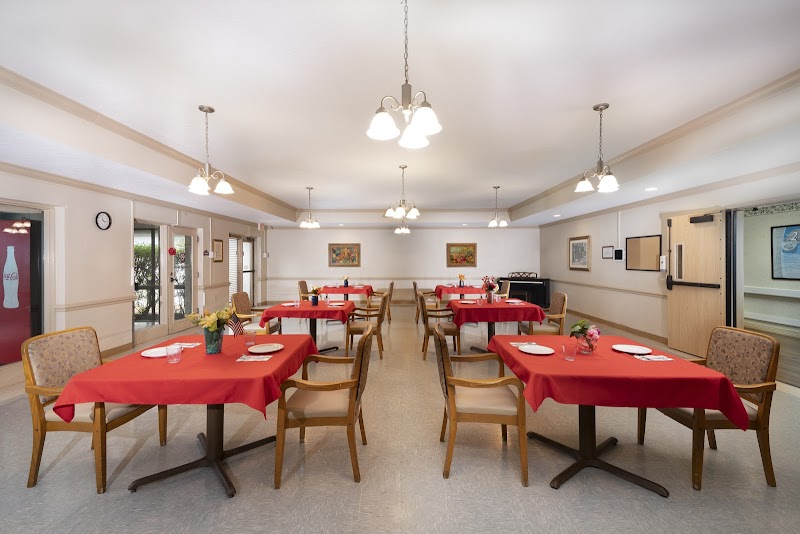
**NOTE- TERMS IN BRACKETS HAVE BEEN EDITED TO PROTECT CONFIDENTIALITY** Based on observations, interviews and record review, the facility failed to ensure a quiet and homelike environment on one of fo...
Read full inspector narrative →
**NOTE- TERMS IN BRACKETS HAVE BEEN EDITED TO PROTECT CONFIDENTIALITY** Based on observations, interviews and record review, the facility failed to ensure a quiet and homelike environment on one of four units (GNR 300), during three of four days observed (8/12/2024, 8/13/2024, 8/14/2024). It was observed and overheard a resident was yelling and causing loud noises for long periods of time and affecting Residents on the entire GNR 300 hallway to include Residents #32, #49, #15, #1, and 14.
Findings included:
On 8/12/2024 and 8/13/2024 during the 7-3 shift (over four observations from 9:55 a.m. - 10:45 a.m.), Resident #69 was observed in her room and lying flat in bed. She was observed all four times not presenting with any behaviors, pain or discomfort. Upon visiting the room she did present with confusion and cognitive deficits. Resident #69 was not able to answer specific questions related to her medical care and services.
On 8/12/2024 at 11:00 a.m. while seated at the GNR 300 Nurses' Station, a resident could be overheard from the GNR 300 hall yelling out loud. The yelling was intermittent and could not at first be determined who the resident was. After walking out from the nurse station and approximately thirty-five feet down the GNR 300 hall, it was determined Resident #69 was observed in her bed and yelling. It appeared she was yelling out words intermittently. An interview conducted at that time revealed she talked at a normal level and revealed she was ok and having a good day. She was asked if she needed anyone and she revealed that she did not. Resident #69 said she was fine. There were no identifiable concerns during the observation and interview that would indicate the resident was neglected, in pain or in discomfort. Interview with several unidentified staff who walked by Resident #69's room and room area, said, she does that, she yells out all the time, but just does that for no reason and that is her normal behavior. The staff continued to say that once they go in the room to visit with her and talk with her, she calms down and talks at a lower volume. However, when they leave the room Resident #69 starts to be loud again very shortly after they leave. It was measured Resident #69's room was thirty-five feet up the GNR 300 hall, from the nurse station. Resident #69's room was in the middle of the hallway. It was overheard of one resident from an unknown room saying aloud; please stop her, who is that?
On 8/12/2024 at 1:45 p.m. Resident #69 was overheard yelling out and could be heard throughout the GNR 300 hallway, and past the unit station. Staff were observed to go in and out from the room but after they left the resident would keep calling out unrecognizable words and phrases intermittently.
On 8/13/2024 at 9:20 a.m. through 10:00 a.m. Resident #69 was overheard from her room yelling out loud and was doing this intermittently for about twenty minutes until 10:20 a.m. Some residents could be overheard in other rooms shouting out, shut up, please stop her from yelling. Staff would go in the resident's room and intervene, but as soon as they left the room the resident would begin to yell out loud again.
On 8/14/2024 at 8:15 a.m. Resident #69 was noted in room. A Nurse was in her room passing medication to her, and she accepted with no observable concerns.
On 8/14/2024 from 10:00 a.m. through to 11:00 a.m. Resident #69 could be overheard calling out loudly and talking to herself, but was speaking in a very loud manner and she could be overheard throughout the GNR 300 hall and at the unit station. Staff did intervene, but as soon as staff left, she would speak loudly to herself too. There were times the room mate would also call out very loudly. Some residents in other nearby rooms could be overheard saying , please be quiet.
On 8/15/2024 at 8:03 a.m. while walking down the GNR 300 hall, Resident #69's room door was closed all the way. At 8:20 a.m. the room door was still observed closed. Another tour on the GNR 300 hall at 8:32 a.m. revealed the resident's room door was now wide open and she was noted in her low bed and lying on her side watching television. She was not presenting with any behaviors, pain, discomfort, and was not yelling or calling out.
On 8/15/2024 during the 7-3 shift the following random residents, who reside in the GNR 300 hall, were interviewed with relation to the noise coming from the resident's room:
1. Resident #32, who's room was thirty feet from Resident #69's room, revealed she hears some resident yelling all the time. She has mentioned this to staff before, but the resident has not stopped. She would rather the resident stop yelling, but feels there is no use of complaining anymore.
Review of Resident #32's medical record revealed she was admitted at the facility on 9/6/2018. Review of the advance directives revealed Resident #32 was her own decision maker. Review of the current Minimum Data Set (MDS) assessment (Quarterly), dated 5/28/2024, revealed: Cognition/Brief Interview Mental Status BIMS (Brief Interview for Mental Status) score 15 of 15, which revealed the resident was able to speak related to her day and medical care.
2. Resident #49, who's room was ten feet from Resident #69's room, revealed she hears Resident #69 yelling out all the time, especially the past week or two. Hears her at night as well. She has complained and was told by staff that the resident could not help yelling out at times. She would like for her to stop.
Review of Resident #49's medical record revealed she was admitted at the facility on 5/24/2019. Review of the advance directives revealed Resident #49 was her own decision maker. Review of the current MDS assessment (Annual), dated 5/17/2024, revealed: Cognition/BIMS score 13 of 15, which indicated the resident was able to speak about the day and her medical care.
3. Resident #15, who's room was fifteen feet from Resident #69's room, revealed he has overheard the resident yell out. He did not think she was in pain, she just yells out words and yells out to herself. He has spoken to staff about it before, but things have not changed.
Review of Resident #15's medical record revealed he was admitted to the facility on [DATE]. Review of the advance directives revealed Resident #15 was his own decision maker. Review of the current MDS assessment (Annual), dated 6/14/2024, revealed: Cognition/BIMS score 15 of 15, which indicated the resident was able to speak related to his day and medical care.
4. Resident #1, who's room was eight feet from Resident #69's room revealed, she not care for the resident yelling out and knows she can't help it, but would like for the hallway to be more quiet. She believed she has spoken to staff about it before. Resident #1 revealed she has been a nurse for over 40 years and she knows that residents can sometimes yell out.
Review of Resident #1's medical record revealed she was admitted to the facility on [DATE]. Review of the advance directives revealed the resident was her own decision maker. Review of the current MDS assessment (Quarterly), dated 7/18/2024, revealed: Cognition/BIMS score 15 of 15, which indicated the resident was able to speak related to her day and medical care.
5. Resident #14, who's room is seven feet from Resident #69's room, revealed; He is not really ok with all the yelling from the resident. He is normally out from his room during the day. Has overheard her yelling at night and that is problematic. He has spoken to staff before, but no real changes.
Review of Resident #14's medical record revealed he was admitted at the facility on 5/2/2022. Review of the advance directives revealed the resident was his own decision maker. Review of the current MDS assessment (Modified Annual), dated 5/7/2024), revealed: Cognition/BIMS score 15 of 15, which indicated the resident was able to speak related to his day and medical care).
On 8/12/2024 at 10:50 a.m., an interview with Staff H, Licensed Practical Nurse (LPN), who was a nurse on the GNR 300 unit, and knew Resident #69, revealed; she has heard her yell out at times and usually other staff will report to the room an intervene. She knows that Resident #69 is easily redirected, but it seems the resident will at times continue with her behaviors after the staff leave.
On 8/14/2024 at 2:40 p.m. an interview with the Director of Nursing (DON) revealed she did know of Resident #69 and her yelling out behaviors. She revealed the resident is care planned with interventions for staff to help reduce the behaviors, and that the resident is being seen by psychology services. The DON was not sure of the exact interventions. The DON revealed she knows the resident yells out loud at times during the main 7-3 shift and that staff will respond and she will then subside with the yelling. The DON did confirm that once staff leave the room, she will at times begin to call out loud again. The DON revealed she did know that Resident #69 is not yelling out in pain or discomfort.
On 8/15/2024 at 8:05 a.m. an interview with Staff G, LPN, who had Resident #69 on her schedule, and has had the resident on her routine schedule, revealed; she is well aware of the resident's calling out and yelling behaviors. She revealed the resident has been known to call out very loudly for awhile now and they have developed care planning measures with interventions to try and subside it. Staff G revealed she, along with any other staff will intervene when she starts to yell out and as soon as the resident is visited, she calms and talks normally, but is very confused and has cognition deficits. Staff G further revealed she has heard other residents in other rooms call out, shut up, who is yelling, at times. Staff G revealed she and other staff try to keep the hallway comfortable and explain to the other residents in the hall that the resident doesn't know what she is doing and she doesn't mean to yell out loud. Staff G also confirmed the resident is being seen by Psychology services routinely and there has been medication adjustments, but with no changes. Staff G feels they have put in so many different interventions to have the resident subside with the yelling out, but she just keeps yelling out at times for no reason. Staff G again revealed she will speak with the resident and will tell her everything is fine, but then will speak in unknown subject matter and will see the resident will ask and answer her own questions like she is talking with someone else. Staff G revealed they try to keep the hallway and room quiet for all the residents who reside on the unit to enjoy. She revealed she monitors staff/resident and resident/resident interactions as well as monitors residents behaviors through her shift. She revealed that aides are to report to her if there are any problems or behaviors with any of the residents. Then she will report to the supervisor and DON as well.
On 8/15/2024 at 8:40 a.m. an interview with Staff D, Certified Nursing Assistant (CNA), who had resident on her assignment revealed; she knows the resident well and she is usually pleasant to speak with. She confirmed that as of late, the resident has been yelling out and screaming during the day. She revealed that when she reports to the yelling out, the resident will then stop and become very nice and talkative. Staff D also revealed as soon as she leaves the room, the resident will again start to yell for periods of time. Some of the things they try to do to reduce her from those behaviors are: Routine monitoring of the resident, offer the resident out from bed to group activities, talk with her about the day, turn the television on in the room to what she wants to watch.
On 8/15/2024 at 9:00 a.m. an interview with Staff I, Restorative Aide, who has had the resident on her assignments at times, revealed; Resident #69 does yell out at times and if she hears her, she will report to the room and intervene.
Review of Resident #69's medical record revealed she was admitted at the facility on 9/30/2021. Review of the advance directives revealed the resident had a guardian who was her responsible party. Review of the Diagnosis sheet revealed diagnoses to include but not limited to: Dementia, Anxiety.
Review of the current MDS assessment (Quarterly), dated 7/11/2024, revealed; (Cognition/BIMS score - No score; Checked for Short Term Memory Problem, Long Term Memory Problem, Severely Impaired Decision Making Skills); (Behaviors - Part C Other behaviors symptoms not directed towards others e.g. verbal/vocal symptoms like screaming, disruptive sounds was checked 0 - Behavior not exhibited).
Review of the current care plans with a next review date 10/13/2024 revealed the following but not limited to areas:
1. Resident has an alteration in sleep/wake cycles r/t [related to] insomnia, with interventions in place
2. Resident has cognitive deficits and mood disorder with episodes of unprovoked agitation, indifference, and poor decision making, leading to undesired behaviors. Behaviors include episodes of declination of needed personal care, medications and yelling out, with interventions in place as reviewed and observed.
3. Has impaired cognitive function related to dementia with interventions in place as reviewed and observed
4. Resident requires 24 hour care/supervision and wishes to stay in this facility under long term care, with interventions in place as reviewed
5. Resident uses anti-anxiety medication r/t Anxiety, with interventions in place as per review
On 8/15/2024 at 11:00 a.m. the Nursing Home Administrator provided the Quality of Live - Homelike Environment Policy and Procedure, with a revision date of May, 2017, for review.
The policy statement indicated; Residents are provided with a safe, clean, comfortable and homelike environment and encouraged to use their personal belongings to the extent possible.
The Policy Interpretation and Implementation section revealed;
1. Staff shall provide person-centered care that emphasizes the residents' comfort, independence and personal needs and preferences.
2. The facility staff and management shall maximize, to the extent possible, the characteristics of the facility that reflect a personalized, homelike setting. The characteristics include but no limited to:
i. Comfortable noise levels.
CONCERN
(D)
📢 Someone Reported This
A family member, employee, or ombudsman was alarmed enough to file a formal complaint
Potential for Harm - no one hurt, but risky conditions existed
Deficiency F0655
(Tag F0655)
Could have caused harm · This affected 1 resident
Based on interviews, record review, and review of the facility's policy titled Baseline Care Plan, the facility failed to ensure two residents (Resident #98 and #260) of the five residents sampled for...
Read full inspector narrative →
Based on interviews, record review, and review of the facility's policy titled Baseline Care Plan, the facility failed to ensure two residents (Resident #98 and #260) of the five residents sampled for baseline care plans.
The findings include:
Review of Resident #98's admission record revealed an admission date of 6/25/2024 with diagnoses of coronary artery bypass graft(s) with complications, urinary retention, Percutaneous endoscopic gastrostomy (PEG) tube, and other co-morbidities
Review of Resident #98's Medical Certification for Medicaid Long-Term Care Services and Patient Transfer Form (AHCA Form 5000-3008) dated 6/25/2024 revealed resident at risk for falls, resident has a foley catheter, a PEG tube, and diet order of NPO (nothing by mouth).
Review of Resident #98's Interim Care Plan dated 6/25/2024 and completed 7/8/2024 revealed no care plan for a urinary catheter, nor dietary instructions for PEG tube.
Review of Resident #260's admission record revealed an admission date of 7/24/2024 with diagnoses of chronic obstructive pulmonary disease with exacerbation (COPD), Pulmonary fibrosis, atrial fibrillation (A-Fib), and other co-morbidities
Review of Resident #260's Medical Certification for Medicaid Long-Term Care Services and Patient Transfer Form (AHCA Form 5000-3008) dated 7/21/2024 revealed resident at risk for falls, pressure ulcers, oxygen at 4 liters a minute, primary diagnosis of bilateral lower extremity weakness, pulmonary fibrosis, A-Fib and COPD.
Review of Resident #260's Interim Care Plan dated 7/24/2024 and completed 8/6/2024 revealed no evidence completed and given to resident within the 48-72 hours of admission.
During an interview on 8/12/2024 at 10:45 AM with Resident #260 and spouse. Resident #260 stated not being given any treatment plan or plan of care.
During an interview on 8/14/2020 at 10:20 AM, the Minimum Data Set Coordinator (MDS) Coordinator, stated the baseline care plans are started on admission and updated until the full comprehensive care plan is completed. Review of Resident #98's interim care plan was started on 6/25/2024 but not completed until 7/8/2024. Review of Resident #260's interim care plan was started on 7/24/2024 but not completed until 8/6/2024. The MDS Coordinator stated In hindsight, the interim care plan is completed outside of the required time frame of 48 to 72 hours.
During an interview on 08/14/24 at 10:55 AM, the Director of Nursing (DON) stated the expectation for the baseline care plans to be completed within 48-72 hours of admission, reviewed with the resident and resident representative and a copy provided.
Review of the facility's policy titled Baseline Care Plan dated 3/1/2023, revealed The facility will develop and implement a baseline care plan for each resident that includes that includes the instructions needed to provide effective and person-centered care of the resident that meet professional standards of quality of care. Policy Explanation and Compliance Guidelines: 1. The baseline care plan will: a. Be developed within 48 hours of of a resident's admission. B. Include the minimum healthcare information necessary to properly care for a resident including, but not limited to: i. Initial goals based on admission orders. ii. Physician orders. iii. Dietary orders. iv. Therapy services. v. Social services. vi. PASSR recommendation, if applicable. 2. The admitting nurse, or supervising nurse on duty, shall gather information from the admission physical assessment, hospital transfer information, physician orders, and discussion with the resident and resident representative, if applicable. A. Once gathered, initial goals shall be established that reflect the resident's stated goals and objectives. b. interventions shall be initiated that address the resident's current needs including i. Any health and safety concerns to prevent decline or injury, such as elopement, fall, or pressure injury risk. ii. Any identified needs for supervision, behavioral interventions, and assistance with activities of daily living. Iii. Any special needs such as IV therapy, dialysis, or wound care. c. Once established, goals and interventions shall be documented in the designated format. 3. A supervising nurse shall verify within 48 hours that a baseline care plan has been developed. 4. A written summary of the baseline care plan shall be provided to the resident and representative in a language that the resident/representative can understand. The summary shall include, at a minimum, the following: a. The initial goals of the resident. b. A summary of the resident's medications and dietary instructions. c. Any services and treatments to be administered by the facility and personnel acting on behalf of the facility. 5. A supervising nurse or MDS nurse/designee is responsible for providing the written summary of the baseline care plan to the resident and representative. This will be provided by completion of the comprehensive care plan. 6. The person providing the written summary of the baseline care plan shall: a. Obtain a signature from the resident/representative to verify that the summary was provided. b. Make a copy of the summary for the medical record. 7. If the summary was provided via telephone, the nurse shall indicate the discussion, sign the summary document, and make a copy of the written summary before mailing the summary to the resident/representative. 8. In the event that the comprehensive assessment and comprehensive care plan identified a change in the resident's goals, or physical, mental, or psychosocial functioning, which was otherwise not identified in the baseline care plan, those changes shall be incorporated into an updated summary provided to the resident and his or her representative, if applicable. This will be provided by the MDS nurse/designee by the comprehensive care plan.
CONCERN
(E)
📢 Someone Reported This
A family member, employee, or ombudsman was alarmed enough to file a formal complaint
Potential for Harm - no one hurt, but risky conditions existed
Deficiency F0699
(Tag F0699)
Could have caused harm · This affected multiple residents
**NOTE- TERMS IN BRACKETS HAVE BEEN EDITED TO PROTECT CONFIDENTIALITY** Review of Resident #21's admission Record revealed resident was readmitted on [DATE] with the following diagnosis: Parkinson's D...
Read full inspector narrative →
**NOTE- TERMS IN BRACKETS HAVE BEEN EDITED TO PROTECT CONFIDENTIALITY** Review of Resident #21's admission Record revealed resident was readmitted on [DATE] with the following diagnosis: Parkinson's Disease, Post Traumatic Stress Disorder (PTSD), Mood Disorder due to known physiological condition, delusional disorder, Major depressive disorder, unspecified psychosis, anxiety and other co-morbidities.
Review of Resident #21's care plan revealed the following Focus Areas:
- Resident #21 has impaired cognitive function or impaired thought process related to impaired mobility delusion, PTSD, date initiated 3/20/2024 revised on 8/21/2023. Under interventions/Tasks no mention of the triggers for the resident's PTSD.
- The resident has moments of anxiousness, PTSD, date initiated: 6/16/2023 revised on: 7/4/2023. No interventions/tasks of any triggers for resident's PTSD.
- The resident has a psychosocial well-being problem related to trauma as a child-triggers PTSD screen. Becomes delusional at times mania, date imitated 4/1/2023 and revised on 6/21/2023. Under interventions/Tasks no mention of the triggers for the resident's PTSD.
During an interview on 8/14/24 at 9:36 a.m., Staff A, Certified Nursing Assistant (CNA) stated there was no Resident that she knew of with a history of trauma or a diagnosis of Post Traumatic Stress Disorder (PTSD). Staff, CNA stated that Resident #21 talked to her past family history but she is demented. CNA stated, No one had discussed in report that Resident #21 had PTSD or had a history of trauma.
During an interview on 8/14/24 at 9:38 a.m., Staff B, Licensed Practical Nurse (LPN) stated she was not aware of any Residents with a diagnosis of PTSD and had not heard anything in report about any residents with a diagnosis of PTSD. Staff B, LPN stated that she did know that Resident #21 had a diagnosis of schizophrenia though.
Review of the facility's policy Quality of Care- Trauma-informed care dated 06/01/24 showed, Policy: The facility shall provide adequate care and services that residents attain and maintain the highest practical physical, mental and psychological well-being. Procedure: The facility must ensure that residents who are trauma survivors receive culturally competent, trauma-informed care in accordance with profession standards of practice and accounting for resident's experiences and preferences in order to eliminate or mitigate triggers that may cause re-traumatization of the resident.
Based on record review and interview, the facility failed to ensure two residents (#21 and #216) out of two residents with history of trauma had triggers identified to prevent re-traumatization.
Findings included:
Review of the admission Record showed Resident #216 was admitted to the facility on [DATE] with diagnoses that included but not limited to Post-Traumatic Stress Disorder (PTSD) Chronic, Schizoaffective Disorder, Bipolar Disorder, Generalized Anxiety Disorder and Major Depressive Disorder, Recurrent.
Review of the baseline care plan showed no social service goals related to the diagnosis of PTSD or identified triggers.
Review of the Informed Trauma Questionnaire dated 08/06/24 showed I. Assessment 1. Have you ever had an experience that was so upsetting to you that is changed you emotionally, spiritually, physically and behaviorally? Answer No.
Review of the of Admission Minimum Data Set (MDS) dated [DATE] Section C-Cognitive Patterns showed Resident #216 had a Brief Interview for Mental Status (BIMS) of 14 (cognitively intact).
During an interview on 08/13/24 at 5:11 p.m., Resident #216 stated that she was a Veteran and was diagnosed with PTSD. Resident # 216 stated that since being admitted to the facility no one had discussed the diagnosis of PTSD or any triggers that would cause her re-traumatization.
During an interview on 08/14/24 at 9:41 a.m., Staff C Registered Nurse (RN) stated she was not aware of any Residents in the facility with the diagnosis of PTSD or with a history of trauma.
During an interview on 08/14/24 at 9:43 a.m., Staff D Certified Nursing Assistant (CNA) stated she was not aware of any Residents, including Resident #216, with a diagnosis of PTSD or a history of trauma in the facility. Staff D, CNA stated that if there was a resident diagnosed with PTSD, she would have received that information in report.
During an interview on 08/14/24 at 9:45 a.m., Resident #216 stated that she received her diagnosis of PTSD from her military experience. Resident #216 stated her identified trigger for PTSD was being startled for example, being woke up fast.
During an interview on 08/14/24 at 9:55 a.m., Staff E Social Services Director (SSD) stated that a diagnoses of PTSD or history of trauma has to go on the baseline care plan. Staff E, SSD stated that she would expect the trauma assessment questionnaire to reflect a diagnosis of PTSD in some manner especially if residents are veterans. Staff E, SSD stated Staff F, Social Service Assistant (SSA) was a new assistant who worked part time and was completing assessments on residents.
During an additional interview on 08/14/24 at 10:15 a.m., Staff E, SSD identified Residents #216 and #21 as the two residents in the facility with a diagnosis of PTSD. Staff E, SSD stated she would have expected Resident #216's Trauma Assessment Questionnaire dated 08/06/24 to accurately depict the diagnosis of PTSD so triggers could have been identified. Staff E, SSD stated she would compete an accurate assessment of Resident #216's history of trauma so triggers can be identified to prevent re-traumatization.
CONCERN
(F)
📢 Someone Reported This
A family member, employee, or ombudsman was alarmed enough to file a formal complaint
Potential for Harm - no one hurt, but risky conditions existed
Food Safety
(Tag F0812)
Could have caused harm · This affected most or all residents
Based on observations, staff interviews and record review, the facility failed to maintain the kitchen and kitchen equipment in a sanitary and functional manner during two of four days observed (8/12/...
Read full inspector narrative →
Based on observations, staff interviews and record review, the facility failed to maintain the kitchen and kitchen equipment in a sanitary and functional manner during two of four days observed (8/12/2024, 8/13/2024), related to; 1. Kitchen dish washing machine not operating per the machine's maintenance service specifications/recommendations; 2. Not maintaining ceiling vents above food preparation stations in a dust/debris free environment; and 3. Not maintaining the walk in freezer free from heavy ice build up on various boxes of food items.
Findings included:
1. On 08/12/2023 at 9:10 a.m. the kitchen was toured with Dietary Manager. He provided a general kitchen tour of the kitchen and other kitchen spaces. The Dietary Manager was asked if he or his staff were utilizing the dish washing machine and he confirmed that a Dietary Aide Staff K was running the machine and has been doing so for about twenty minutes. The Dietary Manager revealed they are running a High Temperature dish washing machine and was being maintained by an outside dish washing machine maintenance service. The Dietary Manager and Staff K both revealed that the maintenance service technician had not been out recently as there had not been any problems with the dish washing machine. Staff K revealed the High Temperature Wash cycle should reach 150 degrees F (Fahrenheit)., and the Rinse cycle should reach 180 degrees F. This was confirmed through interview with the Dietary Manager and review of the machine's specification plate. Staff K was asked to provide a demonstration of the wash and rinse cycle. He noted he has already been washing dishes and has ran crates of dishes and other eating utensils through the machine with no concerns. Staff K revealed he did not have to prime the machine to make temperatures, as the machine has a heating booster, which supplies hot water on demand.
The following were dishwashing machine wash and rinse cycles, as demonstrated by Staff K;
1. Demonstration on 8/12/2024 at 9:15 a.m.; Wash -150 +degrees F., Rinse - 160 degrees F. Both Staff K and the Dietary Manager confirmed the Rinse temperature and revealed it should reach 180 degrees F.+, but it did not.
2. Demonstration on 8/12/2024 at 9:16 a.m.; Wash - 150 + degrees F., Rinse - 165 degrees F. Both Staff K and the Dietary Manager confirmed the Rinse temperature and revealed it should reach 180 degrees F.+, but it did not.
3. Demonstration on 8/12/2024 at 9:18 a.m.; Wash - 150 + degrees F. ; Rinse - 169 degrees F. Both Staff K and the Dietary Manager confirmed the Rinse temperature and revealed it should reach 180 degrees F.+, but it did not.
4. Demonstration 8/12/2024 at 9:26 a.m.; Wash - 150 + degrees F., Rinse - 170 degrees F. Both Staff K and the Dietary Manager confirmed the Rinse temperature and revealed it should reach 180 degrees F.+, but it did not.
The Dietary Manager provided the dish washing machine temperature logs for the past two months (8/2024 and 7/2024), for review.
The dish washing machine temperature logs revealed staff were documenting the following:
- July, 2024, 1st through 29th; Wash and Rinse temperatures documented 200 degrees F. for all three meals for both wash and rinse cycles. The chemical sanitizer was documented at 150 parts per million (ppm). NOTE: The machine was not operating as a Low Temp machine, therefore, there was no actual chemical sanitizer delivery system. Staff had documented 150 ppm when there was no sanitizer. Further, days 7/6/24 - 7/30/24 for the dinner cycle, staff did not initial completion. Photographic evidence of the log was taken.
- August, 2024, 1st though 12th; Wash and Rinse temperatures documented 200 degrees F. for all three meal services, with a chemical sanitizer = 150 ppm. NOTE: The machine was not operating as a Low Temp machine, therefore, there was no actual chemical sanitizer delivery system. Staff had documented 150 ppm when there was no sanitizer. Photographic evidence obtained.
The Dietary Manager confirmed the logs did not appear to be correct and filled out appropriately. He revealed he has only been employed at the facility for a few weeks and was not able to speak on why the logs were wrong.
An interview was conducted at that time with dietary staff K and J, who operate the dish washing machine routinely, both revealed they were not sure why the dish machine logs were reading PPM at 150 as the machine was not operating with a chemical sanitizer delivery system. They were also not able to explain why the logs had 200 degrees F. for both wash and rinse for every day and every meal service. A continued interview with Staff K revealed the dish washing machine maintenance technician was out at the facility about a week maybe two ago an did some adjustments but did not remember what was adjusted. However, in a later interview with the Dietary Manager, he revealed he did not believe the Maintenance technician was out recently to do any work on the dish washing machine. Both Staff K and the Dietary Manager confirmed the dish washing machine was not working appropriately and the dish washing machine service technician will be called to come out for service. At this time he will use the three compartment sink to wash and rinse dishes until the machine is repaired and working appropriately.
On 8/13/2024 at 8:05 a.m. The Dietary Manager revealed the dish machine maintenance service technician made it out this a.m. to change the dish machine from a High Temperature machine to a Low Temperature machine. The Dietary Manager revealed the technician said the machine should reach 120 + Wash, and 120 + Rinse with a chemical sanitizer to reach 50-100 ppm. He revealed the [name of company] technician changed the machine and tested it several times before he left. The Dietary Manager revealed the Wash cycle reached 120 + and the Rinse reached 120 + and the PPM was between 50 - 100 ppm.
On 8/14/2024 at approximately 12:10 p.m. The Kitchen was toured and the dish machine service technician was at the dish washing machine making adjustments to the chemical solution delivery system. The technician revealed he was earlier able to switch the machine from a High temp, to a Low temp machine as the machine could no longer get to high temperature wash and rinse cycle.
2. On 8/12/2024 at 9:10 a.m., the kitchen was toured with the Dietary Manager. During the tour, three ceiling vents and the surrounding ceiling area was observed with heavy black dust/debris. The debris was hanging off the ceiling and vents in a manner that was or was at risk for falling directly downward towards and on food preparation tables and food serving areas. The Dietary Manager revealed it was the maintenance department's responsibility for cleaning and maintaining the ceiling vents. The Dietary Manager revealed he had only been working at the facility for a short time and was not sure when the last time the ceiling vents and ceiling were cleaned from debris. Photographic evidence was obtained.
On 8/15/2024 at 10:00 a.m., an interview with the Maintenance Director revealed he and the maintenance department staff are responsible for cleaning the ceiling vents in the kitchen and other kitchen area spaces. He revealed the ceiling vents are on an electronic cleaning program schedule. The Maintenance Director believed the system schedules cleaning of the vents at least once a quarter. He was not able to say how long ago the vents were cleaned and confirmed the vents and ceiling areas in the kitchen would need to be cleaned more frequently.
3. On 8/12/2024 at 9:10 a.m. the kitchen was toured with the Dietary Manager. During the tour, the walk in freezer was entered and observed. During that time, the left rear inside of the freezer was observed with a top shelf of packaged food. The top of the packaged food was observed with heavy ice frosting and ice build up. The top shelf of the same area was also observed with heaving ice frosting and ice build up. Directly above the area in question was observed with the electric fan motors and insulated tubing. The entire tubing area was observed heavily iced around and with ice cycles approximately five to seven inches long. Photographic evidence obtained. An interview with the Dietary Manager confirmed the ice build up on the shelves and packaged food and revealed he does clean the ice machine and defrosts it when it is needed. He also confirmed that ice does build up quickly and was not sure if the mechanics has a leak or not. He revealed he would need to put in a work order with the Maintenance department. He did not believe Maintenance was aware of the leak in the back as of yet.
On 8/15/2024 at 10:00 a.m. an interview with the Maintenance Director revealed he was not aware of the ice build up in the ice machine and he would look into it and ensure if there is a leak, he would fix it, or if the seals on the door needed to be replaced, he would replace them. He further revealed it is up to the Dietary staff/manager to get with him if there is anything wrong with the mechanics of the walk in refrigerator or walk in freezer.
On 8/15/2024 at 10:00 a.m. the Nursing Home Administrator provided the Dishwasher Temperature policy and procedure with a revision date 6/2024, for review. The policy stated; It is the policy of this facility to ensure dishes and utensils are cleaned under sanitary conditions through adequate dishwater temperatures.
The Policy Explanation and Compliance Guidelines revealed;
1. All the items cleaned in the dishwasher will be washed in water that is sufficient to sanitize any and all items.
2. Manufacturer's instructions shall be followed for machine washing and sanitizing.
3. For High Temperature dishwashers (heat sanitation);
a. The wash temperature shall be 150 - 165 degrees F.
b. The final rinse temperature shall be 180 degrees F. or above but not to exceed 194 degrees F. (165 degrees F for stationary rack, single temperature machine). Corrective actions shall be taken for final temperatures below the required final rinse temperatures.
4. For low temperature dishwashers (chemical sanitation):
a. The wash temperature shall be 120 degrees F.
b. The sanitizing solution shall be 50 ppm (parts per million) hypochlorite (chlorine_ on dish surface in final rinse.
5. Chemical solutions shall be maintained at the corrected concentration, based on periodic testing, at least once per shift, and for the effective contact time according to manufacturer's guidelines. Results of the concentration checks shall be recorded.
6. Waster temperatures shall be measured and recorded prior to each meal and/or after the dishwasher has been emptied or re-filled for cleaning purposes.
On 8/15/2024 at 10:00 a.m. the Nursing Home Administrator provided the Preventative Maintenance Program policy with a 6/1/2024 revision date for review. The policy stated; A preventative Maintenance Program shall be developed and implemented to ensure the provision of a safe, functional, sanitary, and comfortable environment for residents, staff, and the public.
The guideline revealed;
1. The Maintenance Director is responsible for developing and maintaining a schedule of maintenance services to ensure that the buildings, grounds, and equipment are maintained in a safe and operable manner.
2. The Maintenance Director shall assess all aspects of the physical plant to determine if preventive maintenance (PM) is required. Required PM may be determined from the manufacture's recommendations, maintenance requests, grand rounds, life safety requirements, or experience.
3. If preventative maintenance is required, the Maintenance Director shall decide what tasks need to be competed and how often to complete them.
4. Documentation shall be completed for all tasks and kept in the Maintenance Director's office for at least three years.