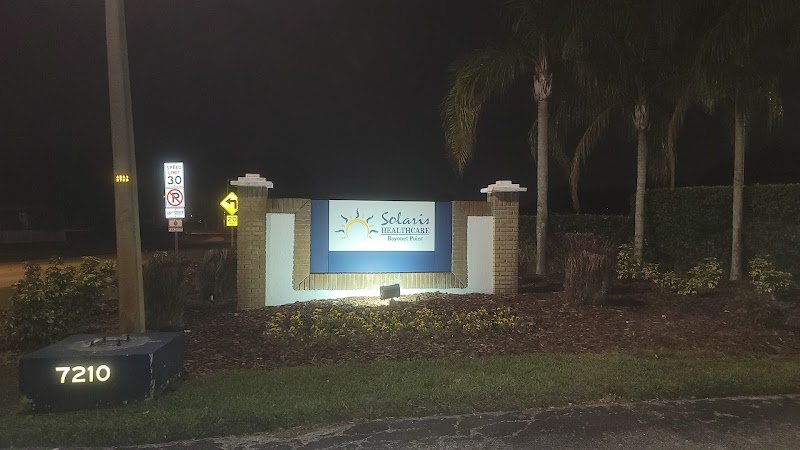
CRITICAL
(J)
📢 Someone Reported This
A family member, employee, or ombudsman was alarmed enough to file a formal complaint
Immediate Jeopardy (IJ) - the most serious Medicare violation
Free from Abuse/Neglect
(Tag F0600)
Someone could have died · This affected 1 resident
**NOTE- TERMS IN BRACKETS HAVE BEEN EDITED TO PROTECT CONFIDENTIALITY** Based on observation, record review, and interviews, the facility failed to ensure freedom from neglect by not implementing the ...
Read full inspector narrative →
**NOTE- TERMS IN BRACKETS HAVE BEEN EDITED TO PROTECT CONFIDENTIALITY** Based on observation, record review, and interviews, the facility failed to ensure freedom from neglect by not implementing the facility's policy and procedures for Resident Mistreatment, Neglect and Abuse Prohibition for one (Resident #3) of sixteen sampled residents.
The facility failed to recognize and report Neglect for Resident #3, assessed to be at high risk for falls and to overestimate/forget limitations. She was documented on a Scheduled 5 day Minimum Data Set (MDS) assessment dated [DATE] to require extensive assistance of two or more people to move from a lying position, turning side to side, and positioning her body while in bed. Her care plan showed a strength of extensive assistance and she required the support of two persons for the activity of bed mobility. Written assignment sheets for direct care staff did not include information on the number of staff required to assist the resident with bed mobility. Direct care Certified Nursing Assistants (CNAs) and Personal Care Attendants (PCAs) determined on their own how many staff to use while performing bed mobility with residents during the activity of performing incontinence care for a resident while in bed.
On 10/30/2022, Resident #3 was provided incontinence care which required the resident to turn from side to side and hold onto the enabler (side rail). Staff A, PCA, performing the duty by herself, rolled the resident away from her during the care. One of Resident #3's legs crossed over the other one, and that caused her to roll over the side of the bed onto the floor. Resident #3 was assessed immediately to have large hematomas (pooling of blood outside of a blood vessel) on both lower legs and a hematoma to her right eye with her right eye swollen shut with bruising. She was awake and stated she thought her leg was broken. She was transferred to a local hospital and subsequently diagnosed with a C2 (a break in the second vertebra of the neck), C3 (a break in the third vertebra of the neck) and T6 (thoracic vertebrae) fracture.
The facility did not immediately report the accident as possible neglect or abuse to the state agency, did not remove the staff member from care to protect other residents, did not conduct an investigation that concluded neglect had occurred.
These failures resulted in a finding of Immediate Jeopardy at a scope and severity of (J) due to the likelihood of life-threatening injuries to Resident #3, and the likelihood similar accidents could occur with other residents.
The facility Administrator was notified of the Immediate Jeopardy on 12/4/2022 at 1:13 pm.
At the time of the survey exit on 12/4/2022, the Immediate Jeopardy was ongoing.
Findings include:
A review of Resident #3's Progress notes, documented the following:
10/30/2022, 5:52 a.m., Attempted to call PCP (Primary Care Physician), recording informing writer to hang up and call 911 in emergency. Writer called 911 emergency and made aware of [Resident #3]'s incident of fall from bed with head trauma and on anticoagulant therapy (Staff M, LPN).
10/30/2022, 5:45 a.m.: Certified Nursing Assistant (CNA) called for help into resident's room. Bed at waist height and resident lying on floor in Fowler's position (the patient is seated in a semi-sitting position 45-60 degrees and may have knees either bent or straight), both arms under her and face right side resting on floor. Resident c/o (complained of) pain to right upper extremity. Sheet tucked around resident to immobilize her extremities and rolled onto her left side in supine position (lying horizontally with the face and torso facing up). Made comfortable with pillow under her head and covered with sheet. Noted hematoma to right eye/head. Right eye swollen shut with bruising. Noted large hematomas to anterior bilateral lower extremities. No noted open areas. Resident states she feels her leg is broken. Resident on ASA (nonsteroidal anti-inflammatory drug and blood thinners) therapy and 911 called. No s/s (signs or symptoms) respiratory distress. Will continue to monitor pending arrival of EMS (emergency medical services).
10/30/2022, 6:23 a.m., Resident transferred to [local hospital] ER (Emergency Room) for further evaluation d/t (due to) injuries r/t (related to) event. POA/HCS (Power of Attorney/Health Care Surrogate) notified of hospital that resident being sent out to. (Staff M, LPN)
10/30/2022, 9:00 a.m.: Placed call to [Doctor]'s answering service and left detailed message regarding [Resident #3]'s event this morning and what transpired and that she was sent to [local hospital] for treatment and evaluation. The answering service took down all the information provided and stated that [doctor] was on call and would be notified. Will place call to hospital shortly to see if resident will be admitted . (Staff X, Licensed Practical Nurse [LPN])
10/30/2022, 3:15 p.m.: Placed call to (hospital) for update. Patient admitted with diagnosis given. (Staff X, LPN)
On 11/30/2022 at 12:34 p.m., Staff X, LPN was interviewed. He stated, The hospital told me she had a fracture of the C2 and C3; this was the call that was done on 10/30/2022, late in the morning or early afternoon. He stated he was here until 3 p.m. He stated that he might have told his unit manager and he might have called the SSD.
On 11/30/2022 at 12:35 p.m., the SSD confirmed Staff X, LPN, had called her on 10/30/2022 and informed her of the fractures. SSD said, [State Adult Protective Serivce Agency] came in on 11/03/2022, they informed us of an allegation, that she was 'pushed' during care. During our investigation, the 'allegation was not substantiated.'
On 12/01/2022 at 1:05 p.m., the SSD reported that when she found out about the fracture, she called the NHA. The SSD said she continued her fall investigation. The SSD said she had not called a state agency to report Resident #3's 10/30/2022 fall event with fracture. The SSD said, she became aware of an allegation, that she (Resident #3) was pushed, when [State Adult Protective Serivce Agency] came in on 11/03/2022. Both the SSD and the DON confirmed an interview with Resident #3 had not occurred as of the interview, 12/01/2022.
The facility provided a copy of a Federal Report, submitted as a result of the state agency coming in the building on 11/03/2022. The report documented the event occurred on 11/03/2022, with an allegation that the resident was pushed. The report indicated Resident is care x 1 (one) staff member for patient care. Transfers resident is an assist of 2 person it (sic) sits to stand lift. Further review of the document, the investigation documented: Staff member stated she was providing care, changing the resident, she asked the resident to grab the hand rail and she rolled resident over to provide care, resident rolled back in the laying position a couple of times causing the staff member to roll her over, the last roll resident fell out of bed onto the floor, she made sure resident was safe, placed a pillow under her head and blanket on her while she got help.
A review of a local hospital admission record dated 10/30/2022 for Resident #3, documented: Patient is a (geriatric age) female who presented to the hospital as a level 2 trauma alert. Patient lives in a facility and was being moved out of bed when she was reportedly dropped and fell on her face. Patient states that she had a brief loss of consciousness. Her complaint at this time is a headache as well as bilateral lower extremity pain, and lower back pain. She cannot open her right eye secondary to swelling and hematoma. She does not recall what medications she takes or if she is on any blood thinners.
General: Morbidly obese.
Further review of the record documented: Skin: there is a large oval hematoma measuring about 20 cm (centimeters) on right anterolateral lower extremity and another 30 cm oval hematoma over the left lower anteromedial lower extremity, there is also small hematoma over the right knee. Pedal pulses are palpable. Feet are warm and well perfused, full range of motion however severely edematous bilateral lower extremities, causing blisters.
CT (Computerized Tomography Scan) Abdomen/Pelvis with contrast . There is an acute appearing nondisplaced fracture through an anterior bridging osteophyte at the T6 (sixth thoracic vertebrae, located just below the level of the shoulder blades) level which extends into the right anterolateral aspect of the vertebral body .
CT C Spine (cervical/the neck) w/o (without) contrast: Findings: Vertebrae: Fracture of the base/body of C2 (second cervical vertebrae) is present, anterior aspect. Fragment is displaced 3 mm anteriorly . A fracture of the anteroinferior corner of C3 (third cervical vertebrae) is also present with 1 mm displacement .
The hospital record reflected that Resident #3's weight was 221 pounds.
Further review of Resident #3's hospital record, reflected a Diagnosis, Assessment & Plan, dated 10/30/2022, and signed by a medical doctor: (Geriatric age) female, do not resuscitate nursing home unstable cervical spine fracture. Continue cervical collar at all times. In an otherwise full code and or healthy or person, this would be a surgical lesion, although the patient has a florid urinary tract infection, is morbidly obese, and is quite old with a do not resuscitate status. Surgical intervention would carry high likelihood of morbidity and mortality. Continue supportive care and cervical collar at all times. Patient is at high risk of aspiration pneumonia with her cervical collar, which will likely have to be kept on for 6 (six) weeks or greater. As such, I recommend consultation by primary service about long-term goals of care. Long-term prognosis is guarded.
A phone interview was conducted on 12/01/2022 at 9:10 a.m. with Resident #3's husband. He stated his wife was in another facility at this time. He stated he was aware of what happened on 10/30/2022; his wife told him. He said the aide (PCA) was providing incontinent care. Went to roll her over and the aide (PCA) pushed too hard. She rolled from bed and fell on the floor. The aide (PCA) was by herself. There were supposed to be two people. The aide (PCA) apologized. His wife had a large lump on forehead and a gash on leg; they operated last Friday, and they took out a lot of tissue. Now the bump has gone down.
A review of Resident #3's clinical record documented an admission of 08/10/2020 with the most recent re-admission as 12/19/2020. Her diagnosis list included, but was not limited to: Chronic Kidney disease, Parkinson's disease, age-related physical debility, Edema, Gout, unspecified osteoarthritis, age related osteoporosis without current pathological fracture, and Peripheral vascular disease.
A review of Resident #3's Fall Risk Assessment, dated 08/26/2022, documented use of a Morse Fall Scale, on which the resident scored 65, which indicated she was High Risk for Falls, and her mental status on the form indicated, Overestimates/Forgets Limitations.
A review of Resident #3's Scheduled 5 day MDS (Minimum Data Set), assessment date 10/20/2022, reflected a BIMS score of 15, which meant the resident was cognitively intact. A review of Resident #3's MDS Resident Assessment for A1. Bed mobility/Self-Performance-how resident moves to and from lying position, turns side to side, and positions body while in bed or alternate sleep furniture, coded the resident as Extensive assistance. A2. Bed mobility/Support-how resident moves to and from lying position, turns side to side, and positions body while in bed or alternate sleep furniture, coded the resident as 3, two+ persons physical assist.
A review of Resident #3's Care Plan reflected the following:
Problem: LTC (Long Term Care) Planning: There is not a discharge plan this time r/t (related to) pt's (patient's) need for long-term care as evidenced by increased need for assistance with ADL's (Activity of Daily Living); pt is unable to care for self, effective 08/18/2022.
Problem: ADL Functional / Rehabilitation Potential: ADL's: Self-care deficit as evidenced by: Hypertensive chronic kidney disease with stage one through stage 4 chronic kidney disease, .malignant neoplasm of bladder, Edema .Resident has a power lift fabric chair in room. Strengths: bed mobility-extensive assist WITH 2 ASSIST; transfers-extensive with 2 ASSIST; dressing-extensive with 1 ASSIST; eating-Independent with SET UP; toileting-extensive with 1 assist, last revised 08/26/2022.
The Goal of the plan: Patient will perform self-care activities within physical limitations to maintain current level of ADL functioning, last revised 08/18/2022.
The Approaches included:
A-2 (assist of two staff) for transfers with mechanical lift (sit to stand), effective 08/18/2022.
Allow ample time for pt. to participate in simple tasks, 08/18/2022.
Anticipate and meet Resident's needs as much as possible, 08/18/2022.
Observe for physical decline with ADLs for possible intervention from therapy/rehab, 08/18/2022.
Provide assistance with tasks that resident isn't able to complete, 08/18/2022.
Problem: Falls, at risk for as evidenced by impaired mobility/balance/occasional SOB (shortness of breath) with exertion, generalized weakness, use of psychoactive medications, use of narcotic /opioids, c/o (complaint of) pain that worsens with movement, use of diuretic med, B & B (bowel & bladder) incontinence. Dx (diagnoses): Neuropathy, right lower extremity ulceration s/p (status post) debridement, CKD Stage 3, Anemia, Parkinson's disease, Gout, deconditioning, last revised 10/12/2022.
Review of a document provided by the facility related to Resident #3's fall, completed by Staff M, LPN, dated 10/30/2022, revealed:
Resident #3 had a witnessed fall, head trauma' other Injury Pain RUE (Right upper extremity), hematoma BUS (sic).
Functional Level Prior to Incident was marked as Total assist
Was hospitalization required, was marked, yes.
Was equipment involved, was marked yes; If yes, describe type of equipment: bed.
Description of Incident: Resident rolled and fell OOB [out of bed] during incontinent care. Bed @ [at] waist height, landed on floor in Fowler's position [a standard position in which the person is seated in a semi-seating position (45-60 degrees) and may have knees either bent or straight], Head trauma, hematoma (R) [right] head 1 (one) eye, eye swollen shut Hematoma and bruising BLES [bilateral lower extremities] [anterior, c/o (complaint of) severe pain RUE (right upper extremity].
Name of witness: Staff A, PCA
Evaluation:
Level of consciousness: A&O (alert and oriented)
Mental status: oriented
Fall Circumstances: witnessed, fall from bed, bed @ waist height; side rails: yes, up, type: ¼ rail.
At time of Incident: Lying down; call light off; Incontinent.
Medications that may contribute: Narcotics; blood thinning agents; cardiovascular
Precipitating Events: other: care x (times) 1 (one) staff.
Where was the resident just prior to the event?: lying in bed
Who was the last person to see the resident prior to the event?: Staff A, PCA.
What time?: 05:45 a.m.
What care did they provide?: Incontinent care
Subjective or Resident's comment: I think I broke my leg. My right arm hurts.
Possible Contributing Factors: other: care x 1 [one] staff, resident obese
Post-Incident Action(s) Initiated: Transfer to hospital
Interdisciplinary Team [IDT] Summary: Risk team elects to proceed with interventions
New Interventions: 2 [two staff] x assist during patient care.
Was the current care plan in place?: yes
Was an IDT note documented in the clinical record related to this Incident?: yes
Were clinical evaluations/ assessments completed/current?: yes
Intervention Recommendations: Care Plan revisions
Determination of Adverse: [To be completed by Risk Manager/Designee]:
1.Is this event one over which facility personnel could have exercised control?: No
2.Did the event result in one of the following?: checked marked in Resident required hospitalization or transfer to ER because of the event; and Fracture/Dislocation of joint.
3.Injury of Unknown Origin: not marked.
4.Did this event result in findings of abuse, neglect, exploitation and/or harm to the resident? marked, no.
5.Does this event meet the criteria of an adverse incident? marked no.
Signed as completed by the Social Service Director/ Abuse Coordinator, 10/31/2022.
A review of a Physical Therapy (PT) Evaluation & Plan of Treatment, dated as conducted on 10/27/2022 by Staff AA, Physical Therapist, documented an Initial Assessment/Current Level of Function & Underlying Impairments for Resident #3. Current Referral: Reasons for Referral: Patient exhibits new onset of decrease in strength, decrease in functional mobility, decrease in transfers, reduced ability to safely ambulate, reduced balance, reduced functional activity tolerance, cognitive deficits, increased need for assistance from others, reduced ADL participation and pain indicating the need for PT to evaluate need for assistive device, assess safe gait pattern with least restrictive AD (assistive device), assess functional abilities, analyze/instruct in home exercise program, increase independence with gait, facilitate (I) with all functional mobility, promote safety awareness, improve dynamic balance, enhance fall recovery abilities, increase functional activity tolerance, increase LE (lower extremity) ROM (range of motion) and strength, minimize falls, decrease complaints of pain and facilitate discharge planning.
HX (history)/Complexities: Current PMHx (Past Medical history): (geriatric age) old female resident of [facility] referred to PT (physical therapy) services for strengthening patient has had increasing difficulty with transfers. PMHX: Parkinson's disease, A-Fib (atrial fibrillation), OA (Osteoarthritis), Bladder cancer, CKD3 (Stage 3 chronic kidney disease), Obesity, Osteoporosis, Poly Neuropathy, PVD (Peripheral vascular disease), Chronic LE (lower extremity) Edema, Depression.
Complexities/Co-morbidities Impacting TX (treatment): Age, Complicated medical hx (history), Concomitant (associated) cognition deficits and Concomitant musculoskeletal condition.
Prior Level(s); PLOF (Prior level of functioning): Static Sitting=Good (maintains balance against moderate resistance): Dynamic Sitting=good (sits unsupported & weight shifts across midline moderately); . Bed Mobility=Total/1; Transfers=Mod/3; .
Functional Assessment:
Bed Mobility: Bed Mobility=Total/1; Rolling=Total/1; Supine->Sit=Total/1.
Transfers: Transfers=Total/1; sit->Stand=Total/1; Bed=Total/1.
On 12/03/2022 at 11:41 a.m., an interview was conducted with Staff AA, Physical Therapist (PT). He confirmed he did an evaluation on 10/27/2022 for Resident #3. When asked if he had communicated the results of the evaluation to anyone, he stated that he just writes up his evaluation. He assumed the CNAs and nursing staff have access to it. On 12/03/2022 at 2:42 p.m., the PT was re-interviewed; he stated he was familiar with Resident #3, somewhat familiar, that he had her a couple of times and treated her. He said, The evaluation on 10/27/2022 was done because she wanted the goal to stand at the grab bar for the aide [PCA/CNA] to be able to change her brief or clean her properly after using the commode. When asked about the functional Assessment area on the form, the Bed Mobility=Total/1, he stated total means the resident cannot do the task themselves; the resident contributes less than 25% to the task or less. He stated the /1, he did not know for sure, maybe it was a billing code. Not sure. He gave the example of 1, 2, 3, 4. He stated maybe the 1=total, 2=moderate assist, 3=minimal assist and so on, but he stated he was not sure. He provided the most recent former evaluation for the resident, documented 05/27/2022, which indicated the resident was documented at the same level.
On 12/02/2022 at 9:20 a.m., a return phone call was received from Staff A, Personal Care Attendant (PCA)'s family friend and Staff A, PCA. The friend said he would assist with the language because sometimes there may be a little difficulty in understanding. Staff A, PCA, was provided the phone. She indicated it had been her first job. A terrible thing happened; she was having a very emotional time about the set of circumstances. She said she felt like she was set up for failure. The facility was short on help. They handed me a paper that night with 15 (fifteen) residents on it for my assignment. Fifteen residents, by myself, oh my God. [Resident #3] was a very heavy-set woman. I tried to move her. The other CNA (Certified Nursing Assistant) was working her job. It was a very busy time. I wanted to try to do the resident myself. Staff A, PCA, confirmed she was in the room providing care for the resident by herself. She stated, I clean her [buttocks], she slipped, I was surprised, I yelled 'help me'. She said, [Resident #3] was holding the side of the bed. I asked her if she could kind of hold herself there, she said yes. I was under the impression I was working the hall by myself. The other aide (CNA) was working in the other hall. I had no partner on my assignment. The CNA working the other hall handed me the paper with my assignment. The paper did not have my name on it. The week before, they had someone working with me. After the event, I was off for a few days; when I came back the facility would not let me work alone, and then they fired me. They said it was because residents had complained they could not understand me. When I was hired, the Staff Educator, who interviewed me, did not think the language would be any issue. Staff A, PCA, stated, I felt like I was detailed in the care I provided to the residents.
On 12/01/2022 at 9:40 a.m., an interview was conducted with the Staff Educator, Registered Nurse (RN). She reported she had taken over the PCA program in December of 2021. The Staff Educator stated that for perineal care (incontinence) education, video and practice in the classroom was conducted by herself. She said she goes over the assignment sheets with the aides (PCAs) to show them what everything means on the form.
A sample assignment sheet was reviewed with the Staff Educator. She stated, On the sheet:
W/C=means he uses a wheelchair.
A-2=means he is an assist of 2 to transfer to the w/c.
½ S/R X2=means, that he has partial rails on both sides.
Fall risk =means he is a fall risk.
During the interview, the Staff Educator confirmed that the perineal care task for bowel and bladder when provided in bed, required a resident to move in bed. She confirmed the task required a resident to move from side to side. She stated, You have to scoot them a little closer towards you, so when you turn them, they are in the center of the bed to perform your cleaning process. And then after you clean them and dry them, you let them go ahead and lay back on their back and have them scoot towards the center. When asked if the assignment sheet indicated what kind of assistance a resident needed for perineal care in the bed, the Staff Educator said, I do not believe the sheet has that. I have not seen a sheet that has that. When asked how an aide (PCA) was to know what kind of assistance a person needs for this task, she said, There is a little history on the form, things like they are confused, or if they have contractures. The things you would need the patient to do is to be able to turn and grab, to hold themselves on their side. In order to be able to do assist of one, those are the things that the patient would need to be able to do. She confirmed guidance for bed mobility was not on the aide (PCA/CNA) assignment sheets. When asked if the PCAs would make the decision about how much support a resident receives during the task, the Staff Educator did not answer. The Staff Educator confirmed that she could not tell from the assignment sheet what support the resident needed for bed mobility. During the interview with the Staff Educator, she reported she was aware of Resident #3's fall event, and that Staff A, PCA was involved. She said, I did not investigate the event. The only thing I knew about it was that the woman fell out of bed. I think I was gone a few days. When asked if she had changed any of her training as a result of the fall event on 10/30/2022, she reported, No. When asked if Staff A, PCA, should have been in the room by herself, changing the resident, the Staff Educator said, Oh absolutely, the resident could help out. She could scoot to the edge; she could hold the rail.
An interview was conducted on 11/30/2022, starting at 11:46 a.m., with the Nursing Home Administrator (NHA) and the Social Service Director (SSD). The SSD confirmed she was the Abuse Coordinator and the Risk Manager for the facility. The SSD stated Resident #3 had a fall on 10/30/2022, a witnessed fall by Staff A, PCA. SSD said, Staff A, PCA, stated she was changing the resident, the resident was heavy, and she had a colleague help her through the night. But her last round, she was doing it herself. The SSD stated, she did not specify on her statement, when asked who the colleague was. The SSD stated, she (Staff A) had the resident grab the bedside handrail, to roll her over. She (Staff A) said she was changing her brief and was cleaning the resident's buttocks and the resident rolled out of bed. She called the other CNA and nurse in shock. At that point, they assessed and called 911 and she went out to the hospital. She sustained a fracture and a hematoma. The NHA said, [Staff A, PCA] is no longer with us. She was so traumatized by the event. We tried to put her back on orientation, she was nervous about transferring patients or to do care with them. For the investigation, the SSD reported, I pulled the assignment sheets, who was on the hall, and copies of the Kardex [a desk top file system that gives a brief overview of each resident] for the aides [PCA and CNAs] to follow to provide care to the residents. I have a statement from a fellow co-worker [Staff Y, CNA] that the nurse had asked her to go down and assist post event with the resident. When doing the investigation, the findings were that Staff A, PCA followed the care plan. The proactive measure, for the resident, upon return was going to be a 2 (two) person assist during patient care in bed and we were going to extend the bed to a bariatric size bed with an anti-roll mattress.
An interview was conducted on 12/03/2022 at 3:18 p.m. with the NHA and the Consultant Nursing Home Administrator (Consulting NHA). The NHA stated, For Quality Assurance, we did an ad hoc (when necessary) meeting on 10/31/2022. The reason for the ad hoc meeting was to discuss if the event for Resident #3 was Adverse and to get the root cause. So, we determined the root cause was the resident's lower limb crossed over her body, causing her to fall out of bed. So we determined in the meeting what to put in place to prevent that from happening again. The NHA stated, There are 2 parts: there is the investigation portion, which was ongoing, and the quality assurance piece, to implement interventions to prevent future occurrences. The Consulting NHA stated, We identified residents that could potentially require the assist of more than one person during peri care while in bed. The NHA said, For monitoring, the staff development [Staff Educator], she observed care, Peri care [incontinence care] in bed, including how patient's limbs are positioned; how patient and staff are utilizing assistive devices. Staff utilize the proper level of assistance. How the staff communicate during care. Did the staff identify the need to request more assistance for care of the resident. The Regional Nurse Consultant was involved, she attended the QAPI [Quality Assurance and Performance Improvement] meeting 11/22/2022. She reviewed everything that we had done. We continue to do the audits and the education. The unit managers and the ADON [Assistant Director of Nursing] were educated on linking the care plans to the resident care profile, as they are updating. We wanted to make sure all levels of care were reflected. We determined the event was not an Adverse event. [Staff A, PCA] had the proper training and was qualified to be on the floor. It was an accident, a very traumatic accident, so much so, we could not put her back on the job. The NHA confirmed the investigation for the fall event was a team effort, myself, SSD, and the DON. The NHA stated, we were staffed appropriately. The NHA indicated the assignment for the aide was reviewed and found to be appropriate. The NHA indicated a review was conducted of Resident #3's assessment in regards to ADL tasks and her care plan. The NHA stated, for an allegation of neglect, I would expect that the allegation was reported immediately, within 2 hours. The NHA stated, There was no allegation of neglect. The Consultant NHA said, We talked to the staff immediately, there was nothing that alluded to neglect of the patient.
A review of the facility Resident Mistreatment, Neglect and Abuse Prohibition Guidelines, effective 03/12/2018, last reviewed 11/01/2022, revealed it included the following:
The facility is committed to protecting the physical and emotional well-being and personal possessions of every resident. Each facility has systems, procedures and a program of employee training and supervision in place to foster dignified treatment, respect, and compassion for residents. Any form of mistreatment of any resident including but not limited to abuse, neglect, injuries of unknown origin and misappropriation or exploitation of resident property is strictly prohibited. All allegations of abuse, neglect, injuries of unknown origin and misappropriation or mistreatment of resident property are to be reported immediately and investigated per state and federal regulations.
Definitions:
Neglect is the failure of the facility, its employees or service providers to provide goods and services to a resident that are necessary to avoid physical harm, pain, mental anguish, or emotional distress.
Prevention: Each facility is required to identify, correct, and intervene in situations where abuse, neglect, and/or misappropriation/exploitation of resident property are likely to occur, or are suspected to have occurred. Each facility should identify, analyze, and assess the following situations to minimize the likelihood of prohibited behaviors occurring:
The facility, to the best of its ability, will take appropriate steps to that personnel are provided in sufficient numbers, and with adequate knowledge to meet the individual needs of residents.
Facility practices which assist in monitoring/identifying potential abuse and neglect include, but are not limited to:
[TRUNCATED]
CRITICAL
(J)
📢 Someone Reported This
A family member, employee, or ombudsman was alarmed enough to file a formal complaint
Immediate Jeopardy (IJ) - the most serious Medicare violation
Report Alleged Abuse
(Tag F0609)
Someone could have died · This affected 1 resident
**NOTE- TERMS IN BRACKETS HAVE BEEN EDITED TO PROTECT CONFIDENTIALITY** Based on observation, record review, and interviews, the facility failed to ensure freedom from neglect by not implementing the ...
Read full inspector narrative →
**NOTE- TERMS IN BRACKETS HAVE BEEN EDITED TO PROTECT CONFIDENTIALITY** Based on observation, record review, and interviews, the facility failed to ensure freedom from neglect by not implementing the facility's policy and procedures for Resident Mistreatment, Neglect and Abuse Prohibition for one (Resident #3) of sixteen sampled residents.
The facility failed to recognize and report Neglect for Resident #3, assessed to be at high risk for falls and to overestimate/forget limitations. She was documented on a scheduled 5 day Minimum Data Set (MDS) assessment dated [DATE] to require extensive assistance of two or more people to move from a lying position, turning side to side, and positioning her body while in bed. Her care plan showed a strength of extensive assistance and she required the support of two persons for the activity of bed mobility. Written assignment sheets for direct care staff did not include information on the number of staff required to assist the resident with bed mobility. Direct care Certified Nursing Assistants (CNAs) and Personal Care Attendants (PCAs) determined on their own how many staff to use while performing bed mobility with residents during the activity of performing incontinence care for a resident while in bed.
On 10/30/2022, Resident #3 was provided incontinence care which required the resident to turn from side to side and hold onto the enabler (side rail). Staff A, PCA, performing the duty by herself, rolled the resident away from her during the care. One of Resident #3's legs crossed over the other one, and that caused her to roll over the side of the bed onto the floor. Resident #3 was assessed immediately to have large hematomas (pooling of blood outside of a blood vessel) on both lower legs and a hematoma to her right eye with her right eye swollen shut with bruising. She was awake and stated she thought her leg was broken. She was transferred to a local hospital and subsequently diagnosed with a C2 (a break in the second vertebra of the neck), C3 (a break in the third vertebra of the neck) and T6 (thoracic vertebrae) fracture.
These failures resulted in a finding of Immediate Jeopardy at a scope and severity of (J) due to the likelihood of life-threatening injuries to Resident #3, and the likelihood similar accidents could occur with other residents.
The facility Administrator was notified of the Immediate Jeopardy on 12/4/2022 at 1:13 pm.
At the time of the survey exit on 12/4/2022, the Immediate Jeopardy was ongoing.
Findings include:
A review of Resident #3's Progress notes, documented the following:
10/30/2022, 5:52 a.m., Attempted to call PCP (Primary Care Physician), recording informing writer to hang up and call 911 in emergency. Writer called 911 emergency and made aware of [Resident #3]'s incident of fall from bed with head trauma and on anticoagulant therapy (Staff M, LPN).
10/30/2022, 5:45 a.m.: Certified Nursing Assistant (CNA) called for help into resident's room. Bed at waist height and resident lying on floor in Fowler's position (the patient is seated in a semi-sitting position 45-60 degrees and may have knees either bent or straight), both arms under her and face right side resting on floor. Resident c/o (complained of) pain to right upper extremity. Sheet tucked around resident to immobilize her extremities and rolled onto her left side in supine position (lying horizontally with the face and torso facing up). Made comfortable with pillow under her head and covered with sheet. Noted hematoma to right eye/head. Right eye swollen shut with bruising. Noted large hematomas to anterior bilateral lower extremities. No noted open areas. Resident states she feels her leg is broken. Resident on ASA (nonsteroidal anti-inflammatory drug and blood thinners) therapy and 911 called. No s/s (signs or symptoms) respiratory distress. Will continue to monitor pending arrival of EMS (emergency medical services).
10/30/2022, 6:23 a.m., Resident transferred to [local hospital] ER (Emergency Room) for further evaluation d/t (due to) injuries r/t (related to) event. POA/HCS (Power of Attorney/Health Care Surrogate) notified of hospital that resident being sent out to. (Staff M, LPN)
10/30/2022, 9:00 a.m.: Placed call to [Doctor]'s answering service and left detailed message regarding [Resident #3]'s event this morning and what transpired and that she was sent to [local hospital] for treatment and evaluation. The answering service took down all the information provided and stated that [doctor] was on call and would be notified. Will place call to hospital shortly to see if resident will be admitted . (Staff X, Licensed Practical Nurse [LPN])
10/30/2022, 3:15 p.m.: Placed call to (hospital) for update. Patient admitted with diagnosis given. (Staff X, LPN)
On 11/30/2022 at 12:34 p.m., Staff X, LPN was interviewed. He stated, The hospital told me she had a fracture of the C2 and C3; this was the call that was done on 10/30/2022, late in the morning or early afternoon. He stated he was here until 3 p.m. He stated that he might have told his unit manager and he might have called the SSD.
On 11/30/2022 at 12:35 p.m., the SSD confirmed Staff X, LPN, had called her on 10/30/2022 and informed her of the fractures. SSD said, [State Adult Protective Agency] came in on 11/03/2022, they informed us of an allegation, that she was 'pushed' during care. During our investigation, the 'allegation was not substantiated.'
On 12/01/2022 at 1:05 p.m., the SSD reported that when she found out about the fracture, she called the NHA. The SSD said she continued her fall investigation. The SSD said she had not called a state agency to report Resident #3's 10/30/2022 fall event with fracture. The SSD said, she became aware of an allegation, that she (Resident #3) was pushed, when [State Adult Protective Agency] came in on 11/03/2022. Both the SSD and the DON confirmed an interview with Resident #3 had not occurred as of the interview, 12/01/2022.
The facility provided a copy of a Federal Report, submitted as a result of the state agency coming in the building on 11/03/2022. The report documented the event occurred on 11/03/2022, with an allegation that the resident was pushed. The report indicated Resident is care x 1 (one) staff member for patient care. Transfers resident is an assist of 2 person it (sic) sits to stand lift. Further review of the document, the investigation documented: Staff member stated she was providing care, changing the resident, she asked the resident to grab the hand rail and she rolled resident over to provide care, resident rolled back in the laying position a couple of times causing the staff member to roll her over, the last roll resident fell out of bed onto the floor, she made sure resident was safe, placed a pillow under her head and blanket on her while she got help.
A review of a local hospital admission record dated 10/30/2022 for Resident #3, documented: Patient is a (geriatric age) female who presented to the hospital as a level 2 trauma alert. Patient lives in a facility and was being moved out of bed when she was reportedly dropped and fell on her face. Patient states that she had a brief loss of consciousness. Her complaint at this time is a headache as well as bilateral lower extremity pain, and lower back pain. She cannot open her right eye secondary to swelling and hematoma. She does not recall what medications she takes or if she is on any blood thinners.
General: Morbidly obese.
Further review of the record documented: Skin: there is a large oval hematoma measuring about 20 cm (centimeters) on right anterolateral lower extremity and another 30 cm oval hematoma over the left lower anteromedial lower extremity, there is also small hematoma over the right knee. Pedal pulses are palpable. Feet are warm and well perfused, full range of motion however severely edematous bilateral lower extremities, causing blisters.
CT (Computerized Tomography Scan) Abdomen/Pelvis with contrast . There is an acute appearing nondisplaced fracture through an anterior bridging osteophyte at the T6 (sixth thoracic vertebrae, located just below the level of the shoulder blades) level which extends into the right anterolateral aspect of the vertebral body .
CT C Spine (cervical/the neck) w/o (without) contrast: Findings: Vertebrae: Fracture of the base/body of C2 (second cervical vertebrae) is present, anterior aspect. Fragment is displaced 3 mm anteriorly . A fracture of the anteroinferior corner of C3 (third cervical vertebrae) is also present with 1 mm displacement .
The hospital record reflected that Resident #3's weight was 221 pounds.
Further review of Resident #3's hospital record, reflected a Diagnosis, Assessment & Plan, dated 10/30/2022, and signed by a medical doctor: (Geriatric age) female, do not resuscitate nursing home unstable cervical spine fracture. Continue cervical collar at all times. In an otherwise full code and or healthy or person, this would be a surgical lesion, although the patient has a florid urinary tract infection, is morbidly obese, and is quite old with a do not resuscitate status. Surgical intervention would carry high likelihood of morbidity and mortality. Continue supportive care and cervical collar at all times. Patient is at high risk of aspiration pneumonia with her cervical collar, which will likely have to be kept on for 6 (six) weeks or greater. As such, I recommend consultation by primary service about long-term goals of care. Long-term prognosis is guarded.
A phone interview was conducted on 12/01/2022 at 9:10 a.m. with Resident #3's husband. He stated his wife was in another facility at this time. He stated he was aware of what happened on 10/30/2022; his wife told him. He said the aide (PCA) was providing incontinent care. Went to roll her over and the aide (PCA) pushed too hard. She rolled from bed and fell on the floor. The aide (PCA) was by herself. There were supposed to be two people. The aide (PCA) apologized. His wife had a large lump on forehead and a gash on leg; they operated last Friday, and they took out a lot of tissue. Now the bump has gone down.
A review of Resident #3's clinical record documented an admission of 08/10/2020 with the most recent re-admission as 12/19/2020. Her diagnosis list included, but was not limited to: Chronic Kidney disease, Parkinson's disease, age-related physical debility, Edema, Gout, unspecified osteoarthritis, age related osteoporosis without current pathological fracture, and Peripheral vascular disease.
A review of Resident #3's Fall Risk Assessment, dated 08/26/2022, documented use of a Morse Fall Scale, on which the resident scored 65, which indicated she was High Risk for Falls, and her mental status on the form indicated, Overestimates/Forgets Limitations.
A review of Resident #3's Scheduled 5 day MDS (Minimum Data Set), assessment date 10/20/2022, reflected a BIMS score of 15, which meant the resident was cognitively intact. A review of Resident #3's MDS Resident Assessment for A1. Bed mobility/Self-Performance-how resident moves to and from lying position, turns side to side, and positions body while in bed or alternate sleep furniture, coded the resident as Extensive assistance. A2. Bed mobility/Support-how resident moves to and from lying position, turns side to side, and positions body while in bed or alternate sleep furniture, coded the resident as 3, two+ persons physical assist.
A review of Resident #3's Care Plan reflected the following:
Problem: LTC (Long Term Care) Planning: There is not a discharge plan this time r/t (related to) pt's (patient's) need for long-term care as evidenced by increased need for assistance with ADL's (Activity of Daily Living); pt is unable to care for self, effective 08/18/2022.
Problem: ADL Functional / Rehabilitation Potential: ADL's: Self-care deficit as evidenced by: Hypertensive chronic kidney disease with stage one through stage 4 chronic kidney disease, .malignant neoplasm of bladder, Edema .Resident has a power lift fabric chair in room. Strengths: bed mobility-extensive assist WITH 2 ASSIST; transfers-extensive with 2 ASSIST; dressing-extensive with 1 ASSIST; eating-Independent with SET UP; toileting-extensive with 1 assist, last revised 08/26/2022.
The Goal of the plan: Patient will perform self-care activities within physical limitations to maintain current level of ADL functioning, last revised 08/18/2022.
The Approaches included:
A-2 (assist of two staff) for transfers with mechanical lift (sit to stand), effective 08/18/2022.
Allow ample time for pt. to participate in simple tasks, 08/18/2022.
Anticipate and meet Resident's needs as much as possible, 08/18/2022.
Observe for physical decline with ADLs for possible intervention from therapy/rehab, 08/18/2022.
Provide assistance with tasks that resident isn't able to complete, 08/18/2022.
Problem: Falls, at risk for as evidenced by impaired mobility/balance/occasional SOB (shortness of breath) with exertion, generalized weakness, use of psychoactive medications, use of narcotic /opioids, c/o (complaint of) pain that worsens with movement, use of diuretic med, B & B (bowel & bladder) incontinence. Dx (diagnoses): Neuropathy, right lower extremity ulceration s/p (status post) debridement, CKD Stage 3, Anemia, Parkinson's disease, Gout, deconditioning, last revised 10/12/2022.
Review of a document provided by the facility related to Resident #3's fall, completed by Staff M, LPN, dated 10/30/2022, revealed:
Resident #3 had a witnessed fall, head trauma' other Injury Pain RUE (Right upper extremity), hematoma BUS (sic).
Functional Level Prior to Incident was marked as Total assist
Was hospitalization required, was marked, yes.
Was equipment involved, was marked yes; If yes, describe type of equipment: bed.
Description of Incident: Resident rolled and fell OOB [out of bed] during incontinent care. Bed @ [at] waist height, landed on floor in Fowler's position [a standard position in which the person is seated in a semi-seating position (45-60 degrees) and may have knees either bent or straight], Head trauma, hematoma (R) [right] head 1 (one) eye, eye swollen shut Hematoma and bruising BLES [bilateral lower extremities] [anterior, c/o (complaint of) severe pain RUE (right upper extremity].
Name of witness: Staff A, PCA
Evaluation:
Level of consciousness: A&O (alert and oriented)
Mental status: oriented
Fall Circumstances: witnessed, fall from bed, bed @ waist height; side rails: yes, up, type: ¼ rail.
At time of Incident: Lying down; call light off; Incontinent.
Medications that may contribute: Narcotics; blood thinning agents; cardiovascular
Precipitating Events: other: care x (times) 1 (one) staff.
Where was the resident just prior to the event?: lying in bed
Who was the last person to see the resident prior to the event?: Staff A, PCA.
What time?: 05:45 a.m.
What care did they provide?: Incontinent care
Subjective or Resident's comment: I think I broke my leg. My right arm hurts.
Possible Contributing Factors: other: care x 1 [one] staff, resident obese
Post-Incident Action(s) Initiated: Transfer to hospital
Interdisciplinary Team [IDT] Summary: Risk team elects to proceed with interventions
New Interventions: 2 [two staff] x assist during patient care.
Was the current care plan in place?: yes
Was an IDT note documented in the clinical record related to this Incident?: yes
Were clinical evaluations/ assessments completed/current?: yes
Intervention Recommendations: Care Plan revisions
Determination of Adverse: [To be completed by Risk Manager/Designee]:
1.Is this event one over which facility personnel could have exercised control?: No
2.Did the event result in one of the following?: checked marked in Resident required hospitalization or transfer to ER because of the event; and Fracture/Dislocation of joint.
3.Injury of Unknown Origin: not marked.
4.Did this event result in findings of abuse, neglect, exploitation and/or harm to the resident? marked, no.
5.Does this event meet the criteria of an adverse incident? marked no.
Signed as completed by the Social Service Director/ Abuse Coordinator, 10/31/2022.
On 12/02/2022 at 9:20 a.m., a return phone call was received from Staff A, Personal Care Attendant (PCA)'s family friend and Staff A, PCA. The friend said he would assist with the language because sometimes there may be a little difficulty in understanding. Staff A, PCA, was provided the phone. She indicated it had been her first job. A terrible thing happened; she was having a very emotional time about the set of circumstances. She said she felt like she was set up for failure. The facility was short on help. They handed me a paper that night with 15 (fifteen) residents on it for my assignment. Fifteen residents, by myself, oh my God. [Resident #3] was a very heavy-set woman. I tried to move her. The other CNA (Certified Nursing Assistant) was working her job. It was a very busy time. I wanted to try to do the resident myself. Staff A, PCA, confirmed she was in the room providing care for the resident by herself. She stated, I clean her [buttocks], she slipped, I was surprised, I yelled 'help me'. She said, [Resident #3] was holding the side of the bed. I asked her if she could kind of hold herself there, she said yes. I was under the impression I was working the hall by myself. The other aide (CNA) was working in the other hall. I had no partner on my assignment. The CNA working the other hall handed me the paper with my assignment. The paper did not have my name on it. The week before, they had someone working with me. After the event, I was off for a few days; when I came back the facility would not let me work alone, and then they fired me. They said it was because residents had complained they could not understand me. When I was hired, the Staff Educator, who interviewed me, did not think the language would be any issue. Staff A, PCA, stated, I felt like I was detailed in the care I provided to the residents.
On 12/01/2022 at 9:40 a.m., an interview was conducted with the Staff Educator, Registered Nurse (RN). A sample assignment sheet was reviewed with the Staff Educator. She stated, On the sheet:
W/C=means he uses a wheelchair.
A-2=means he is an assist of 2 to transfer to the w/c.
½ S/R X2=means, that he has partial rails on both sides.
Fall risk =means he is a fall risk.
An interview was conducted on 11/30/2022, starting at 11:46 a.m., with the Nursing Home Administrator (NHA) and the Social Service Director (SSD). The SSD confirmed she was the Abuse Coordinator and the Risk Manager for the facility. The SSD stated Resident #3 had a fall on 10/30/2022, a witnessed fall by Staff A, PCA. SSD said, Staff A, PCA, stated she was changing the resident, the resident was heavy, and she had a colleague help her through the night. But her last round, she was doing it herself. The SSD stated, she did not specify on her statement, when asked who the colleague was. The SSD stated, she (Staff A) had the resident grab the bedside handrail, to roll her over. She (Staff A) said she was changing her brief and was cleaning the resident's buttocks and the resident rolled out of bed. She called the other CNA and nurse in shock. At that point, they assessed and called 911 and she went out to the hospital. She sustained a fracture and a hematoma. The NHA said, [Staff A, PCA] is no longer with us. She was so traumatized by the event. We tried to put her back on orientation, she was nervous about transferring patients or to do care with them. For the investigation, the SSD reported, I pulled the assignment sheets, who was on the hall, and copies of the [NAME] [a desk top file system that gives a brief overview of each resident] for the aides [PCA and CNAs] to follow to provide care to the residents. I have a statement from a fellow co-worker [Staff Y, CNA] that the nurse had asked her to go down and assist post event with the resident. When doing the investigation, the findings were that Staff A, PCA followed the care plan. The proactive measure, for the resident, upon return was going to be a 2 (two) person assist during patient care in bed and we were going to extend the bed to a bariatric size bed with an anti-roll mattress.
An interview was conducted on 12/03/2022 at 3:18 p.m. with the NHA and the Consultant Nursing Home Administrator (Consulting NHA). The NHA stated, For Quality Assurance, we did an ad hoc (when necessary) meeting on 10/31/2022. The reason for the ad hoc meeting was to discuss if the event for Resident #3 was Adverse and to get the root cause. So, we determined the root cause was the resident's lower limb crossed over her body, causing her to fall out of bed. So we determined in the meeting what to put in place to prevent that from happening again. The NHA stated, There are 2 parts: there is the investigation portion, which was ongoing, and the quality assurance piece, to implement interventions to prevent future occurrences. The Consulting NHA stated, We identified residents that could potentially require the assist of more than one person during peri care while in bed. The NHA said, For monitoring, the staff development [Staff Educator], she observed care, Peri care [incontinence care] in bed, including how patient's limbs are positioned; how patient and staff are utilizing assistive devices. Staff utilize the proper level of assistance. How the staff communicate during care. Did the staff identify the need to request more assistance for care of the resident. The Regional Nurse Consultant was involved, she attended the QAPI [Quality Assurance and Performance Improvement] meeting 11/22/2022. She reviewed everything that we had done. We continue to do the audits and the education. The unit managers and the ADON [Assistant Director of Nursing] were educated on linking the care plans to the resident care profile, as they are updating. We wanted to make sure all levels of care were reflected. We determined the event was not an Adverse event. [Staff A, PCA] had the proper training and was qualified to be on the floor. It was an accident, a very traumatic accident, so much so, we could not put her back on the job. The NHA confirmed the investigation for the fall event was a team effort, myself, SSD, and the DON. The NHA stated, we were staffed appropriately. The NHA indicated the assignment for the aide was reviewed and found to be appropriate. The NHA indicated a review was conducted of Resident #3's assessment in regards to ADL tasks and her care plan. The NHA stated, for an allegation of neglect, I would expect that the allegation was reported immediately, within 2 hours. The NHA stated, There was no allegation of neglect. The Consultant NHA said, We talked to the staff immediately, there was nothing that alluded to neglect of the patient.
A review of the facility Resident Mistreatment, Neglect and Abuse Prohibition Guidelines, effective 03/12/2018, last reviewed 11/01/2022, revealed it included the following:
The facility is committed to protecting the physical and emotional well-being and personal possessions of every resident. Each facility has systems, procedures and a program of employee training and supervision in place to foster dignified treatment, respect, and compassion for residents. Any form of mistreatment of any resident including but not limited to abuse, neglect, injuries of unknown origin and misappropriation or exploitation of resident property is strictly prohibited. All allegations of abuse, neglect, injuries of unknown origin and misappropriation or mistreatment of resident property are to be reported immediately and investigated per state and federal regulations.
Definitions:
Neglect is the failure of the facility, its employees or service providers to provide goods and services to a resident that are necessary to avoid physical harm, pain, mental anguish, or emotional distress.
Prevention: Each facility is required to identify, correct, and intervene in situations where abuse, neglect, and/or misappropriation/exploitation of resident property are likely to occur, or are suspected to have occurred. Each facility should identify, analyze, and assess the following situations to minimize the likelihood of prohibited behaviors occurring:
The facility, to the best of its ability, will take appropriate steps to that personnel are provided in sufficient numbers, and with adequate knowledge to meet the individual needs of residents.
Facility practices which assist in monitoring/identifying potential abuse and neglect include, but are not limited to:
Regular direct/ indirect supervision of nursing home employees and residents care by supervisory and administrative staff.
Investigation: Each facility will thoroughly investigate injuries of unknown origin and any suspected or alleged abuse, neglect, misappropriation/exploitation of resident property in accordance with federal and state regulations. An Incident Report & Investigation form and a Federal 2-Hour /Immediate/5 Day/Suspected Crime Allegation Investigation worksheet should be completed for all incidents of suspected or alleged abuse, neglect, misappropriation/Exploitation of resident property and for injuries of unknown origin. Facility Guidelines for incident management and incident reporting should be followed including requirements for Federal 2-Hour/Immediate/5-Day and Adverse Incident Fifteen Day reporting requirements.
Protection: To protect residents and employees from harm or retribution during an investigation each facility should ensure that:
Measures are promptly taken to remove any resident from immediate harm or danger as indicated.
Staff member(s) believed to be involved may be suspended pending the outcome of an investigation.
Reporting/Response: Regulations require employees that provide services to elderly persons or dependent adults (mandated reporters) to report instances of abuse, neglect, or misappropriation/exploitation of resident property to the state survey agency (AHCA), Department of Children and Families (DCF) and local law enforcement agency within 2 hours if the alleged violation involves abuse or results in serious bodily injury or as soon as practically possible within 24 hours of detection if the alleged violation does not involve abuse and does not result in serious bodily injury.
CRITICAL
(J)
📢 Someone Reported This
A family member, employee, or ombudsman was alarmed enough to file a formal complaint
Immediate Jeopardy (IJ) - the most serious Medicare violation
Investigate Abuse
(Tag F0610)
Someone could have died · This affected 1 resident
**NOTE- TERMS IN BRACKETS HAVE BEEN EDITED TO PROTECT CONFIDENTIALITY** Based on observation, record review, and interviews, the facility failed to ensure freedom from neglect by not implementing the ...
Read full inspector narrative →
**NOTE- TERMS IN BRACKETS HAVE BEEN EDITED TO PROTECT CONFIDENTIALITY** Based on observation, record review, and interviews, the facility failed to ensure freedom from neglect by not implementing the facility's policy and procedures for Resident Mistreatment, Neglect and Abuse Prohibition for one (Resident #3) of sixteen sampled residents.
The facility failed to recognize Neglect for Resident #3, assessed to be at high risk for falls and to overestimate/forget limitations. She was documented on a scheduled 5 day Minimum Data Set (MDS) assessment dated [DATE] to require extensive assistance of two or more people to move from a lying position, turning side to side, and positioning her body while in bed. Her care plan showed a strength of extensive assistance and she required the support of two persons for the activity of bed mobility. Written assignment sheets for direct care staff did not include information on the number of staff required to assist the resident with bed mobility. Direct care Certified Nursing Assistants (CNAs) and Personal Care Attendants (PCAs) determined on their own how many staff to use while performing bed mobility with residents during the activity of performing incontinence care for a resident while in bed.
On 10/30/2022, Resident #3 was provided incontinence care which required the resident to turn from side to side and hold onto the enabler (side rail). Staff A, PCA, performing the duty by herself, rolled the resident away from her during the care. One of Resident #3's legs crossed over the other one, and that caused her to roll over the side of the bed onto the floor. Resident #3 was assessed immediately to have large hematomas (pooling of blood outside of a blood vessel) on both lower legs and a hematoma to her right eye with her right eye swollen shut with bruising. She was awake and stated she thought her leg was broken. She was transferred to a local hospital and subsequently diagnosed with a C2 (a break in the second vertebra of the neck), C3 (a break in the third vertebra of the neck) and T6 (thoracic vertebrae) fracture.
The facility did not conduct an investigation that concluded neglect had occurred. The facility did not implement strategies to prevent neglect of residents during provision of care/services.
These failures resulted in a finding of Immediate Jeopardy at a scope and severity of (J) due to the potentially life-threatening injuries to Resident #3, and the likelihood similar accidents could occur with other residents.
The facility Administrator was notified of the Immediate Jeopardy on 12/4/2022 at 1:13 pm.
At the time of the survey exit on 12/4/2022, the Immediate Jeopardy was ongoing.
Findings include:
A review of Resident #3's Progress notes, documented the following:
10/30/2022, 5:52 a.m., Attempted to call PCP (Primary Care Physician), recording informing writer to hang up and call 911 in emergency. Writer called 911 emergency and made aware of [Resident #3]'s incident of fall from bed with head trauma and on anticoagulant therapy (Staff M, LPN).
10/30/2022, 5:45 a.m.: Certified Nursing Assistant (CNA) called for help into resident's room. Bed at waist height and resident lying on floor in Fowler's position (the patient is seated in a semi-sitting position 45-60 degrees and may have knees either bent or straight), both arms under her and face right side resting on floor. Resident c/o (complained of) pain to right upper extremity. Sheet tucked around resident to immobilize her extremities and rolled onto her left side in supine position (lying horizontally with the face and torso facing up). Made comfortable with pillow under her head and covered with sheet. Noted hematoma to right eye/head. Right eye swollen shut with bruising. Noted large hematomas to anterior bilateral lower extremities. No noted open areas. Resident states she feels her leg is broken. Resident on ASA (nonsteroidal anti-inflammatory drug and blood thinners) therapy and 911 called. No s/s (signs or symptoms) respiratory distress. Will continue to monitor pending arrival of EMS (emergency medical services).
10/30/2022, 6:23 a.m., Resident transferred to [local hospital] ER (Emergency Room) for further evaluation d/t (due to) injuries r/t (related to) event. POA/HCS (Power of Attorney/Health Care Surrogate) notified of hospital that resident being sent out to. (Staff M, LPN)
10/30/2022, 9:00 a.m.: Placed call to [Doctor]'s answering service and left detailed message regarding [Resident #3]'s event this morning and what transpired and that she was sent to [local hospital] for treatment and evaluation. The answering service took down all the information provided and stated that [doctor] was on call and would be notified. Will place call to hospital shortly to see if resident will be admitted . (Staff X, Licensed Practical Nurse [LPN])
10/30/2022, 3:15 p.m.: Placed call to (hospital) for update. Patient admitted with diagnosis given. (Staff X, LPN)
On 11/30/2022 at 12:34 p.m., Staff X, LPN was interviewed. He stated, The hospital told me she had a fracture of the C2 and C3; this was the call that was done on 10/30/2022, late in the morning or early afternoon. He stated he was here until 3 p.m. He stated that he might have told his unit manager and he might have called the SSD.
On 11/30/2022 at 12:35 p.m., the SSD confirmed Staff X, LPN, had called her on 10/30/2022 and informed her of the fractures. SSD said, [State Adult Protective Agency] came in on 11/03/2022, they informed us of an allegation, that she was 'pushed' during care. During our investigation, the 'allegation was not substantiated.'
On 12/01/2022 at 1:05 p.m., the SSD reported that when she found out about the fracture, she called the NHA. The SSD said she continued her fall investigation. The SSD said she had not called a state agency to report Resident #3's 10/30/2022 fall event with fracture. The SSD said, she became aware of an allegation, that she (Resident #3) was pushed, when [State Adult Protective Agency] came in on 11/03/2022. Both the SSD and the DON confirmed an interview with Resident #3 had not occurred as of the interview, 12/01/2022.
The facility provided a copy of a Federal Report, submitted as a result of the state agency coming in the building on 11/03/2022. The report documented the event occurred on 11/03/2022, with an allegation that the resident was pushed. The report indicated Resident is care x 1 (one) staff member for patient care. Transfers resident is an assist of 2 person it (sic) sits to stand lift. Further review of the document, the investigation documented: Staff member stated she was providing care, changing the resident, she asked the resident to grab the hand rail and she rolled resident over to provide care, resident rolled back in the laying position a couple of times causing the staff member to roll her over, the last roll resident fell out of bed onto the floor, she made sure resident was safe, placed a pillow under her head and blanket on her while she got help.
A review of a local hospital admission record dated 10/30/2022 for Resident #3, documented: Patient is a (geriatric age) female who presented to the hospital as a level 2 trauma alert. Patient lives in a facility and was being moved out of bed when she was reportedly dropped and fell on her face. Patient states that she had a brief loss of consciousness. Her complaint at this time is a headache as well as bilateral lower extremity pain, and lower back pain. She cannot open her right eye secondary to swelling and hematoma. She does not recall what medications she takes or if she is on any blood thinners.
General: Morbidly obese.
Further review of the record documented: Skin: there is a large oval hematoma measuring about 20 cm (centimeters) on right anterolateral lower extremity and another 30 cm oval hematoma over the left lower anteromedial lower extremity, there is also small hematoma over the right knee. Pedal pulses are palpable. Feet are warm and well perfused, full range of motion however severely edematous bilateral lower extremities, causing blisters.
CT (Computerized Tomography Scan) Abdomen/Pelvis with contrast . There is an acute appearing nondisplaced fracture through an anterior bridging osteophyte at the T6 (sixth thoracic vertebrae, located just below the level of the shoulder blades) level which extends into the right anterolateral aspect of the vertebral body .
CT C Spine (cervical/the neck) w/o (without) contrast: Findings: Vertebrae: Fracture of the base/body of C2 (second cervical vertebrae) is present, anterior aspect. Fragment is displaced 3 mm anteriorly . A fracture of the anteroinferior corner of C3 (third cervical vertebrae) is also present with 1 mm displacement .
The hospital record reflected that Resident #3's weight was 221 pounds.
Further review of Resident #3's hospital record, reflected a Diagnosis, Assessment & Plan, dated 10/30/2022, and signed by a medical doctor: (Geriatric age) female, do not resuscitate nursing home unstable cervical spine fracture. Continue cervical collar at all times. In an otherwise full code and or healthy or person, this would be a surgical lesion, although the patient has a florid urinary tract infection, is morbidly obese, and is quite old with a do not resuscitate status. Surgical intervention would carry high likelihood of morbidity and mortality. Continue supportive care and cervical collar at all times. Patient is at high risk of aspiration pneumonia with her cervical collar, which will likely have to be kept on for 6 (six) weeks or greater. As such, I recommend consultation by primary service about long-term goals of care. Long-term prognosis is guarded.
A phone interview was conducted on 12/01/2022 at 9:10 a.m. with Resident #3's husband. He stated his wife was in another facility at this time. He stated he was aware of what happened on 10/30/2022; his wife told him. He said the aide (PCA) was providing incontinent care. Went to roll her over and the aide (PCA) pushed too hard. She rolled from bed and fell on the floor. The aide (PCA) was by herself. There were supposed to be two people. The aide (PCA) apologized. His wife had a large lump on forehead and a gash on leg; they operated last Friday, and they took out a lot of tissue. Now the bump has gone down.
A review of Resident #3's clinical record documented an admission of 08/10/2020 with the most recent re-admission as 12/19/2020. Her diagnosis list included, but was not limited to: Chronic Kidney disease, Parkinson's disease, age-related physical debility, Edema, Gout, unspecified osteoarthritis, age related osteoporosis without current pathological fracture, and Peripheral vascular disease.
A review of Resident #3's Fall Risk Assessment, dated 08/26/2022, documented use of a Morse Fall Scale, on which the resident scored 65, which indicated she was High Risk for Falls, and her mental status on the form indicated, Overestimates/Forgets Limitations.
A review of Resident #3's Scheduled 5 day MDS (Minimum Data Set), assessment date 10/20/2022, reflected a BIMS score of 15, which meant the resident was cognitively intact. A review of Resident #3's MDS Resident Assessment for A1. Bed mobility/Self-Performance-how resident moves to and from lying position, turns side to side, and positions body while in bed or alternate sleep furniture, coded the resident as Extensive assistance. A2. Bed mobility/Support-how resident moves to and from lying position, turns side to side, and positions body while in bed or alternate sleep furniture, coded the resident as 3, two+ persons physical assist.
A review of Resident #3's Care Plan reflected the following:
Problem: ADL Functional / Rehabilitation Potential: ADL's: Self-care deficit as evidenced by: Hypertensive chronic kidney disease with stage one through stage 4 chronic kidney disease, .malignant neoplasm of bladder, Edema .Resident has a power lift fabric chair in room. Strengths: bed mobility-extensive assist WITH 2 ASSIST; transfers-extensive with 2 ASSIST; dressing-extensive with 1 ASSIST; eating-Independent with SET UP; toileting-extensive with 1 assist, last revised 08/26/2022.
The Goal of the plan: Patient will perform self-care activities within physical limitations to maintain current level of ADL functioning, last revised 08/18/2022.
The Approaches included:
A-2 (assist of two staff) for transfers with mechanical lift (sit to stand), effective 08/18/2022.
Provide assistance with tasks that resident isn't able to complete, 08/18/2022.
Problem: Falls, at risk for as evidenced by impaired mobility/balance/occasional SOB (shortness of breath) with exertion, generalized weakness, use of psychoactive medications, use of narcotic /opioids, c/o (complaint of) pain that worsens with movement, use of diuretic med, B & B (bowel & bladder) incontinence. Dx (diagnoses): Neuropathy, right lower extremity ulceration s/p (status post) debridement, CKD Stage 3, Anemia, Parkinson's disease, Gout, deconditioning, last revised 10/12/2022.
Review of a document provided by the facility related to Resident #3's fall, completed by Staff M, LPN, dated 10/30/2022, revealed:
Resident #3 had a witnessed fall, head trauma' other Injury Pain RUE (Right upper extremity), hematoma BUS (sic).
Functional Level Prior to Incident was marked as Total assist
Was hospitalization required, was marked, yes.
Was equipment involved, was marked yes; If yes, describe type of equipment: bed.
Description of Incident: Resident rolled and fell OOB [out of bed] during incontinent care. Bed @ [at] waist height, landed on floor in Fowler's position [a standard position in which the person is seated in a semi-seating position (45-60 degrees) and may have knees either bent or straight], Head trauma, hematoma (R) [right] head 1 (one) eye, eye swollen shut Hematoma and bruising BLES [bilateral lower extremities] [anterior, c/o (complaint of) severe pain RUE (right upper extremity].
Name of witness: Staff A, PCA
Evaluation:
Level of consciousness: A&O (alert and oriented)
Mental status: oriented
Fall Circumstances: witnessed, fall from bed, bed @ waist height; side rails: yes, up, type: ¼ rail.
At time of Incident: Lying down; call light off; Incontinent.
Medications that may contribute: Narcotics; blood thinning agents; cardiovascular
Precipitating Events: other: care x (times) 1 (one) staff.
Where was the resident just prior to the event?: lying in bed
Who was the last person to see the resident prior to the event?: Staff A, PCA.
What time?: 05:45 a.m.
What care did they provide?: Incontinent care
Subjective or Resident's comment: I think I broke my leg. My right arm hurts.
Possible Contributing Factors: other: care x 1 [one] staff, resident obese
Post-Incident Action(s) Initiated: Transfer to hospital
Interdisciplinary Team [IDT] Summary: Risk team elects to proceed with interventions
New Interventions: 2 [two staff] x assist during patient care.
Was the current care plan in place?: yes
Was an IDT note documented in the clinical record related to this Incident?: yes
Were clinical evaluations/ assessments completed/current?: yes
Intervention Recommendations: Care Plan revisions
Determination of Adverse: [To be completed by Risk Manager/Designee]:
1.Is this event one over which facility personnel could have exercised control?: No
2.Did the event result in one of the following?: checked marked in Resident required hospitalization or transfer to ER because of the event; and Fracture/Dislocation of joint.
3.Injury of Unknown Origin: not marked.
4.Did this event result in findings of abuse, neglect, exploitation and/or harm to the resident? marked, no.
5.Does this event meet the criteria of an adverse incident? marked no.
Signed as completed by the Social Service Director/ Abuse Coordinator, 10/31/2022.
On 12/02/2022 at 9:20 a.m., a return phone call was received from Staff A, Personal Care Attendant (PCA)'s family friend and Staff A, PCA. The friend said he would assist with the language because sometimes there may be a little difficulty in understanding. Staff A, PCA, was provided the phone. She indicated it had been her first job. A terrible thing happened; she was having a very emotional time about the set of circumstances. She said she felt like she was set up for failure. The facility was short on help. They handed me a paper that night with 15 (fifteen) residents on it for my assignment. Fifteen residents, by myself, oh my God. [Resident #3] was a very heavy-set woman. I tried to move her. The other CNA (Certified Nursing Assistant) was working her job. It was a very busy time. I wanted to try to do the resident myself. Staff A, PCA, confirmed she was in the room providing care for the resident by herself. She stated, I clean her [buttocks], she slipped, I was surprised, I yelled 'help me'. She said, [Resident #3] was holding the side of the bed. I asked her if she could kind of hold herself there, she said yes. I was under the impression I was working the hall by myself. The other aide (CNA) was working in the other hall. I had no partner on my assignment. The CNA working the other hall handed me the paper with my assignment. The paper did not have my name on it. The week before, they had someone working with me. After the event, I was off for a few days; when I came back the facility would not let me work alone, and then they fired me. They said it was because residents had complained they could not understand me. When I was hired, the Staff Educator, who interviewed me, did not think the language would be any issue. Staff A, PCA, stated, I felt like I was detailed in the care I provided to the residents.
On 12/01/2022 at 9:40 a.m., an interview was conducted with the Staff Educator, Registered Nurse (RN). She reported she had taken over the PCA program in December of 2021. The Staff Educator stated that for perineal care (incontinence) education, video and practice in the classroom was conducted by herself. She said she goes over the assignment sheets with the aides (PCAs) to show them what everything means on the form.
A sample assignment sheet was reviewed with the Staff Educator. She stated, On the sheet:
W/C=means he uses a wheelchair.
A-2=means he is an assist of 2 to transfer to the w/c.
½ S/R X2=means, that he has partial rails on both sides.
Fall risk =means he is a fall risk.
During the interview, the Staff Educator confirmed that the perineal care task for bowel and bladder when provided in bed, required a resident to move in bed. She confirmed the task required a resident to move from side to side. She stated, You have to scoot them a little closer towards you, so when you turn them, they are in the center of the bed to perform your cleaning process. And then after you clean them and dry them, you let them go ahead and lay back on their back and have them scoot towards the center. When asked if the assignment sheet indicated what kind of assistance a resident needed for perineal care in the bed, the Staff Educator said, I do not believe the sheet has that. I have not seen a sheet that has that. When asked how an aide (PCA) was to know what kind of assistance a person needs for this task, she said, There is a little history on the form, things like they are confused, or if they have contractures. The things you would need the patient to do is to be able to turn and grab, to hold themselves on their side. In order to be able to do assist of one, those are the things that the patient would need to be able to do. She confirmed guidance for bed mobility was not on the aide (PCA/CNA) assignment sheets. When asked if the PCAs would make the decision about how much support a resident receives during the task, the Staff Educator did not answer. The Staff Educator confirmed that she could not tell from the assignment sheet what support the resident needed for bed mobility. During the interview with the Staff Educator, she reported she was aware of Resident #3's fall event, and that Staff A, PCA was involved. She said, I did not investigate the event. The only thing I knew about it was that the woman fell out of bed. I think I was gone a few days. When asked if she had changed any of her training as a result of the fall event on 10/30/2022, she reported, No. When asked if Staff A, PCA, should have been in the room by herself, changing the resident, the Staff Educator said, Oh absolutely, the resident could help out. She could scoot to the edge; she could hold the rail.
An interview was conducted on 11/30/2022, starting at 11:46 a.m., with the Nursing Home Administrator (NHA) and the Social Service Director (SSD). The SSD confirmed she was the Abuse Coordinator and the Risk Manager for the facility. The SSD stated Resident #3 had a fall on 10/30/2022, a witnessed fall by Staff A, PCA. SSD said, Staff A, PCA, stated she was changing the resident, the resident was heavy, and she had a colleague help her through the night. But her last round, she was doing it herself. The SSD stated, she did not specify on her statement, when asked who the colleague was. The SSD stated, she (Staff A) had the resident grab the bedside handrail, to roll her over. She (Staff A) said she was changing her brief and was cleaning the resident's buttocks and the resident rolled out of bed. She called the other CNA and nurse in shock. At that point, they assessed and called 911 and she went out to the hospital. She sustained a fracture and a hematoma. The NHA said, [Staff A, PCA] is no longer with us. She was so traumatized by the event. We tried to put her back on orientation, she was nervous about transferring patients or to do care with them. For the investigation, the SSD reported, I pulled the assignment sheets, who was on the hall, and copies of the [NAME] [a desk top file system that gives a brief overview of each resident] for the aides [PCA and CNAs] to follow to provide care to the residents. I have a statement from a fellow co-worker [Staff Y, CNA] that the nurse had asked her to go down and assist post event with the resident. When doing the investigation, the findings were that Staff A, PCA followed the care plan. The proactive measure, for the resident, upon return was going to be a 2 (two) person assist during patient care in bed and we were going to extend the bed to a bariatric size bed with an anti-roll mattress.
An interview was conducted on 12/03/2022 at 3:18 p.m. with the NHA and the Consultant Nursing Home Administrator (Consulting NHA). The NHA stated, For Quality Assurance, we did an ad hoc (when necessary) meeting on 10/31/2022. The reason for the ad hoc meeting was to discuss if the event for Resident #3 was Adverse and to get the root cause. So, we determined the root cause was the resident's lower limb crossed over her body, causing her to fall out of bed. So we determined in the meeting what to put in place to prevent that from happening again. The NHA stated, There are 2 parts: there is the investigation portion, which was ongoing, and the quality assurance piece, to implement interventions to prevent future occurrences. The Consulting NHA stated, We identified residents that could potentially require the assist of more than one person during peri care while in bed. The NHA said, For monitoring, the staff development [Staff Educator], she observed care, Peri care [incontinence care] in bed, including how patient's limbs are positioned; how patient and staff are utilizing assistive devices. Staff utilize the proper level of assistance. How the staff communicate during care. Did the staff identify the need to request more assistance for care of the resident. The Regional Nurse Consultant was involved, she attended the QAPI [Quality Assurance and Performance Improvement] meeting 11/22/2022. She reviewed everything that we had done. We continue to do the audits and the education. The unit managers and the ADON [Assistant Director of Nursing] were educated on linking the care plans to the resident care profile, as they are updating. We wanted to make sure all levels of care were reflected. We determined the event was not an Adverse event. [Staff A, PCA] had the proper training and was qualified to be on the floor. It was an accident, a very traumatic accident, so much so, we could not put her back on the job. The NHA confirmed the investigation for the fall event was a team effort, myself, SSD, and the DON. The NHA stated, we were staffed appropriately. The NHA indicated the assignment for the aide was reviewed and found to be appropriate. The NHA indicated a review was conducted of Resident #3's assessment in regards to ADL tasks and her care plan. The NHA stated, for an allegation of neglect, I would expect that the allegation was reported immediately, within 2 hours. The NHA stated, There was no allegation of neglect. The Consultant NHA said, We talked to the staff immediately, there was nothing that alluded to neglect of the patient.
A review of the facility Resident Mistreatment, Neglect and Abuse Prohibition Guidelines, effective 03/12/2018, last reviewed 11/01/2022, revealed it included the following:
The facility is committed to protecting the physical and emotional well-being and personal possessions of every resident. Each facility has systems, procedures and a program of employee training and supervision in place to foster dignified treatment, respect, and compassion for residents. Any form of mistreatment of any resident including but not limited to abuse, neglect, injuries of unknown origin and misappropriation or exploitation of resident property is strictly prohibited. All allegations of abuse, neglect, injuries of unknown origin and misappropriation or mistreatment of resident property are to be reported immediately and investigated per state and federal regulations.
Definitions:
Neglect is the failure of the facility, its employees or service providers to provide goods and services to a resident that are necessary to avoid physical harm, pain, mental anguish, or emotional distress.
Prevention: Each facility is required to identify, correct, and intervene in situations where abuse, neglect, and/or misappropriation/exploitation of resident property are likely to occur, or are suspected to have occurred. Each facility should identify, analyze, and assess the following situations to minimize the likelihood of prohibited behaviors occurring:
The facility, to the best of its ability, will take appropriate steps to that personnel are provided in sufficient numbers, and with adequate knowledge to meet the individual needs of residents.
Facility practices which assist in monitoring/identifying potential abuse and neglect include, but are not limited to:
Regular direct/ indirect supervision of nursing home employees and residents care by supervisory and administrative staff.
Investigation: Each facility will thoroughly investigate injuries of unknown origin and any suspected or alleged abuse, neglect, misappropriation/exploitation of resident property in accordance with federal and state regulations. An Incident Report & Investigation form and a Federal 2-Hour /Immediate/5 Day/Suspected Crime Allegation Investigation worksheet should be completed for all incidents of suspected or alleged abuse, neglect, misappropriation/Exploitation of resident property and for injuries of unknown origin. Facility Guidelines for incident management and incident reporting should be followed including requirements for Federal 2-Hour/Immediate/5-Day and Adverse Incident Fifteen Day reporting requirements.
Protection: To protect residents and employees from harm or retribution during an investigation each facility should ensure that:
Measures are promptly taken to remove any resident from immediate harm or danger as indicated.
Staff member(s) believed to be involved may be suspended pending the outcome of an investigation.
Reporting/Response: Regulations require employees that provide services to elderly persons or dependent adults (mandated reporters) to report instances of abuse, neglect, or misappropriation/exploitation of resident property to the state survey agency (AHCA), Department of Children and Families (DCF) and local law enforcement agency within 2 hours if the alleged violation involves abuse or results in serious bodily injury or as soon as practically possible within 24 hours of detection if the alleged violation does not involve abuse and does not result in serious bodily injury.
CRITICAL
(K)
📢 Someone Reported This
A family member, employee, or ombudsman was alarmed enough to file a formal complaint
Immediate Jeopardy (IJ) - the most serious Medicare violation
Accident Prevention
(Tag F0689)
Someone could have died · This affected multiple residents
**NOTE- TERMS IN BRACKETS HAVE BEEN EDITED TO PROTECT CONFIDENTIALITY** Based on observation, interview and record review, the facility failed to ensure supervision, staff assistance and instruction t...
Read full inspector narrative →
**NOTE- TERMS IN BRACKETS HAVE BEEN EDITED TO PROTECT CONFIDENTIALITY** Based on observation, interview and record review, the facility failed to ensure supervision, staff assistance and instruction to staff were provided to prevent falls for 3 residents (#3, #4, #5) of sixteen sampled residents.
Resident #3 was assessed to be at high risk for falls and to and overestimates/forget limitations. She was documented on a Scheduled 5 day (MDS) Minimum Data Set assessment dated [DATE] to require extensive assistance of two or more people to move from a lying position, turning side to side, and positioning her body while in bed. Her care plan showed a strength of extensive assistance, required the support of two persons for the activity of bed mobility. Written assignment sheets for direct care staff did not include information on the number of required staff to assist the resident with bed mobility. Direct care Certified Nursing Assistants (CNAs) and Personal Care Attendants (PCAs) determined on their own how many staff to use while performing bed mobility with residents (#3, #4, #5) during the activity of performing incontinence care for a resident while in bed.
On 10/30/2022, Resident #3 was provided incontinence care which required the resident to turn from side to side and hold onto the enabler (side rail). Staff A, PCA, performing the duty by herself rolled the resident away from her during the care. One of Resident #3's legs crossed over the other one and that caused her to roll over the side of the bed onto the floor. Resident #3 was assessed immediately to have large hematomas (pooling of blood outside of a blood vessel) on both lower legs and a hematoma to her right eye with her right eye swollen shut with bruising. She was awake and stated she thought her leg was broken. She was transferred to a local hospital and subsequently diagnosed with a C2 (a break in the second vertebra of the neck), C3 (a break in the third vertebra of the neck) and T6 (thoracic vertebrae) fracture.
These failures resulted in a finding of Immediate Jeopardy at a scope and severity of (K) due to the likelihood of life-threatening injuries to Resident #3, and the likelihood that other residents could have similar accidents.
The facility Administrator was notified of the Immediate Jeopardy on 12/4/2022 at 1:13 pm.
At the time of the survey exit on 12/4/2022, the Immediate Jeopardy was ongoing.
Findings include:
1.
A review of Resident #3's Progress notes revealed, 10/30/2022, 5:45 a.m.: Certified Nursing Assistant (CNA) called for help into resident's room. Bed at waist height and resident lying on floor in Fowler's position (the patient is seated in a semi-sitting position 45-60 degrees and may have knees either bent or straight), both arms under her and face right side resting on floor. Resident c/o (complained of) pain to right upper extremity. Sheet tucked around resident to immobilize her extremities and rolled onto her left side in supine position (lying horizontally with the face and torso facing up). Made comfortable with pillow under her head and covered with sheet. Noted hematoma to right eye/head. Right eye swollen shut with bruising. Noted large hematomas to anterior bilateral lower extremities. No noted open areas. Resident states she feels her leg is broken. Resident on ASA (nonsteroidal anti-inflammatory drug and blood thinners) therapy and 911 called. No s/s (signs or symptoms) respiratory distress. Will continue to monitor pending arrival of EMS (emergency medical services).
A review of a local hospital admission record dated 10/30/2022 for Resident #3, documented: Patient is a (geriatric age) female who presented to the hospital as a level 2 trauma alert. Patient lives in a facility and was being moved out of bed when she was reportedly dropped and fell on her face. Patient states that she had a brief loss of consciousness. Her complaint at this time is a headache as well as bilateral lower extremity pain, and lower back pain. She cannot open her right eye secondary to swelling and hematoma. She does not recall what medications she takes or if she is on any blood thinners.
General: Morbidly obese.
Further review of the record documented: Skin: there is a large oval hematoma measuring about 20 cm (centimeters) on right anterolateral lower extremity and another 30 cm oval hematoma over the left lower anteromedial lower extremity, there is also small hematoma over the right knee. Pedal pulses are palpable. Feet are warm and well perfused, full range of motion however severely edematous bilateral lower extremities, causing blisters.
CT (Computerized Tomography Scan) Abdomen/Pelvis with contrast . There is an acute appearing nondisplaced fracture through an anterior bridging osteophyte at the T6 (sixth thoracic vertebrae, located just below the level of the shoulder blades) level which extends into the right anterolateral aspect of the vertebral body .
CT C Spine (cervical/the neck) w/o (without) contrast: Findings: Vertebrae: Fracture of the base/body of C2 (second cervical vertebrae) is present, anterior aspect. Fragment is displaced 3 mm anteriorly . A fracture of the anteroinferior corner of C3 (third cervical vertebrae) is also present with 1 mm displacement .
The hospital record reflected that Resident #3's weight was 221 pounds.
Further review of Resident #3's hospital record, reflected a Diagnosis, Assessment & Plan, dated 10/30/2022, and signed by a medical doctor: (Geriatric age) female, do not resuscitate nursing home unstable cervical spine fracture. Continue cervical collar at all times. In an otherwise full code and or healthy or person, this would be a surgical lesion, although the patient has a florid urinary tract infection, is morbidly obese, and is quite old with a do not resuscitate status. Surgical intervention would carry high likelihood of morbidity and mortality. Continue supportive care and cervical collar at all times. Patient is at high risk of aspiration pneumonia with her cervical collar, which will likely have to be kept on for 6 (six) weeks or greater. As such, I recommend consultation by primary service about long-term goals of care. Long-term prognosis is guarded.
A phone interview was conducted on 12/01/2022 at 9:10 a.m. with Resident #3's husband. He stated his wife was in another facility at this time. He stated he was aware of what happened on 10/30/2022; his wife told him. He said the aide (PCA) was providing incontinent care. Went to roll her over and the aide (PCA) pushed too hard. She rolled from bed and fell on the floor. The aide (PCA) was by herself. There were supposed to be two people. The aide (PCA) apologized. His wife had a large lump on forehead and a gash on leg; they operated last Friday, and they took out a lot of tissue. Now the bump has gone down.
A review of Resident #3's clinical record documented an admission of 08/10/2020 with the most recent re-admission as 12/19/2020. Her diagnosis list included, but was not limited to: Chronic Kidney disease, Parkinson's disease, age-related physical debility, Edema, Gout, unspecified osteoarthritis, age related osteoporosis without current pathological fracture, and Peripheral vascular disease.
A review of Resident #3's Fall Risk Assessment, dated 08/26/2022, documented use of a Morse Fall Scale, on which the resident scored 65, which indicated she was High Risk for Falls, and her mental status on the form indicated, Overestimates/Forgets Limitations.
A review of Resident #3's Scheduled 5 day MDS (Minimum Data Set), assessment date 10/20/2022, reflected a BIMS score of 15, which meant the resident was cognitively intact. A review of Resident #3's MDS Resident Assessment for A1. Bed mobility/Self-Performance-how resident moves to and from lying position, turns side to side, and positions body while in bed or alternate sleep furniture, coded the resident as Extensive assistance. A2. Bed mobility/Support-how resident moves to and from lying position, turns side to side, and positions body while in bed or alternate sleep furniture, coded the resident as 3, two+ persons physical assist.
A review of Resident #3's Care Plan reflected the following:
Problem: LTC (Long Term Care) Planning: There is not a discharge plan this time r/t (related to) pt's (patient's) need for long-term care as evidenced by increased need for assistance with ADL's (Activity of Daily Living); pt is unable to care for self, effective 08/18/2022.
Problem: ADL Functional / Rehabilitation Potential: ADL's: Self-care deficit as evidenced by: Hypertensive chronic kidney disease with stage one through stage 4 chronic kidney disease, .malignant neoplasm of bladder, Edema .Resident has a power lift fabric chair in room. Strengths: bed mobility-extensive assist WITH 2 ASSIST; transfers-extensive with 2 ASSIST; dressing-extensive with 1 ASSIST; eating-Independent with SET UP; toileting-extensive with 1 assist, last revised 08/26/2022.
The Goal of the plan: Patient will perform self-care activities within physical limitations to maintain current level of ADL functioning, last revised 08/18/2022.
The Approaches included:
A-2 (assist of two staff) for transfers with mechanical lift (sit to stand), effective 08/18/2022.
Allow ample time for pt. to participate in simple tasks, 08/18/2022.
Anticipate and meet Resident's needs as much as possible, 08/18/2022.
Observe for physical decline with ADLs for possible intervention from therapy/rehab, 08/18/2022.
Provide assistance with tasks that resident isn't able to complete, 08/18/2022.
Problem: Falls, at risk for as evidenced by impaired mobility/balance/occasional SOB (shortness of breath) with exertion, generalized weakness, use of psychoactive medications, use of narcotic /opioids, c/o (complaint of) pain that worsens with movement, use of diuretic med, B & B (bowel & bladder) incontinence. Dx (diagnoses): Neuropathy, right lower extremity ulceration s/p (status post) debridement, CKD Stage 3, Anemia, Parkinson's disease, Gout, deconditioning, last revised 10/12/2022.
On 12/02/2022 at 9:20 a.m., a return phone call was received from Staff A, Personal Care Assistant (PCA)'s family friend and Staff A, PCA. The friend said he would assist with the language because sometimes there may be a little difficulty in understanding. Staff A, PCA, was provided the phone. She indicated it had been her first job. A terrible thing happened; she was having a very emotional time about the set of circumstances. She said she felt like she was set up for failure. The facility was short on help. They handed me a paper that night with 15 (fifteen) residents on it for my assignment. Fifteen residents, by myself, oh my God. Resident #3 was a very heavy-set woman. I tried to move her. The other CNA (Certified Nursing Assistant) was working her job. It was a very busy time. I wanted to try to do the resident myself. Staff A, PCA, confirmed she was in the room providing care for the resident by herself. She stated, I clean her [buttocks], she slipped, I was surprised, I yelled 'help me'. She said, Resident #3 was holding the side of the bed. I asked her if she could kind of hold herself there, she said yes. I was under the impression I was working the hall by myself. The other aide (CNA) was working in the other hall. I had no partner on my assignment. The CNA working the other hall handed me the paper with my assignment. The paper did not have my name on it. The week before, they had someone working with me. After the event, I was off for a few days; when I came back the facility would not let me work alone, and then they fired me. They said it was because residents had complained they could not understand me. When I was hired, the Staff Educator, who interviewed me, did not think the language would be any issue. Staff A, PCA, stated, I felt like I was detailed in the care I provided to the residents.
A review of Staff A, PCA's personnel file, reflected a hire date of 10/11/2022. A review of Staff A, PCA's time punch card, reflected that on 10/11/2022 and 10/12/2022, she clocked in for 7.5 hours each day and documentation was present in the file to indicate she attended classes during those dates. Further review of her time punch card history reflected she worked 10/13 from 7 a.m.-3 p.m., and 11:00 p.m.-7:00 a.m., on the following dates: 10/15, 10/16, 10/18, 10/19, 10/20, 10/23, 10/24, 10/25, 10/27, and 10/28, prior to the 10/29/2022 shift of 11:00 p.m. to 7:00 a.m. on 10/30/2022, when the fall occurred. The time punch card reflected she worked eleven (11) shifts prior to the night of the event.
A review of Staff A, PCA's assignment sheet for the shift of 11:00 p.m.-7:00 a.m., which started on 10/29/2022 and concluded on 10/30/2022, indicated Staff A, PCA, was assigned a room range.
A review of Staff A, PCA's assignment sheet, with columns for the resident names, room numbers, shower, diet, meal percentage (%) Mobility/Transfer, and Special care, reflected the names of fifteen (15) residents for her assignment for the shift starting on 10/29/2022. Further review of the assignment sheet listed Resident #3, with her Mobility/Transfer column listing: A-2 (assist of two staff); S.T.S (sit to stand); W/C (wheelchair); SRX2 (side rails times two), and the Special Care column: Alert and oriented. Incontinent of bowel and Bladder. Has own teeth. Set up for meals. Fall Risk. Air mattress wheelchair and walker. Does not want to be up before 6 a.m. Encourage long sleeves or sweaters. Please send all personal clothes to laundry daily. Recliner in the afternoons. AROM (active range of motion) to BLE's (Bilateral Lower Extremity) all planes 2 sets 20X or as tolerated QDX7 (everyday times 7) or as tolerated. No indication of Resident #3's bed mobility support was indicated on the assignment sheet.
On 12/03/2022 at 1:45 p.m., a phone interview was conducted with Staff M, LPN (Licensed Practical Nurse). She confirmed she was working on the date of the event, 10/30/2022. The shift started on 10/29/2022 at 11:00 p.m. and ended 10/30/2022 at 7:00 a.m. She stated, During last round, I was doing my med pass. The aide [Staff A, PCA] that was assigned to her, came out of the room; she yelled for help, I need help, I need help. The resident [#3] was on the floor, face down. She confirmed Staff A, PCA was the only aide (PCA or CNA) in the room providing care. She stated, There was another aide [PCA or CNA] with me, but I do not remember who it was. I made sure the resident was ok; we did not move her off the floor. With the injuries that I saw, I just wanted her sent out. She stated the enablers were up. She stated that she could not say if the resident hit her face on the bed rail, because the resident was on the floor. Staff M, LPN, reported if her unit was full, they would have 60 residents. Staff M, LPN confirmed another nurse, Staff U, LPN, was on assignment on the unit that night, but as she recalled, Staff U, LPN, had just gone on break. Staff M, LPN, said, I know [Staff Y, CNA] was there, because I had her siting with the resident while I made the 911 call. I think [Staff O, CNA] was in the room with me. [Staff O, CNA] was on the assignment on the hall. It was a separate assignment, but on the same hall. Staff M, LPN, said, I think [Staff Y, CNA] may have made the assignment; I do not recall. There are aides [CNAs] that have been there longer than I have, and they will fill out the assignment sheets. Staff M, LPN, reported No, she had not received any training about the assignment of the aides (PCA or CNAs) since the 10/30/2022 event or changed the process for the assignments of aides (PCA or CNAs). For what type of assignment to give a PCA, Staff M, LPN said, They give them what is available. There is not a set assignment. Whatever assignment is open, they are assigned. Staff M, LPN, said, Honestly, I do not know, if a PCA is skilled enough to take care of 15 (fifteen) residents. They have an orientation, they have an educator, they have a check list. Staff M, LPN, said, I was not part of the check list. I have not seen it. Regarding Staff A, PCA, Staff M, LPN said, I believe she completed it before that night. For knowledge as to if a PCA was in orientation, Staff M, LPN said, I know if the aide [PCA] has an o by their name, they are in orientation. For a PCA that has an o by their name, Staff M, LPN, confirmed that PCA should not have a full assignment. She said, No, they should always be with another aide [CNA]. I am not the Unit Manager [UM]. I am just the floor nurse for the night, the charge nurse. [Staff Q, LPN] is the UM for B wing. If we have any issues, she is available to us. Usually there is an RN in the building for me to ask questions.
On 12/01/2022 at 9:40 a.m., an interview was conducted with the Staff Educator, Registered Nurse (RN). She reported she had taken over the PCA program in December of 2021. She stated, The orientation for the program is 4-5 days, depends how many hours, how long. The candidate goes through an Academy, which is approximately 17 hours. Then they come with me, in class for 4 days. The first day, we do Paid Feeding program, 9 quizzes. They have to practice and demonstrate. There is a certificate for this. We talk about the skills they need on the floor. There are 21 videos. We practice, demonstrate, I observe while they do the return demonstration. The latter is 4-5 days. Then, they go to the floor. They are 'with' a CNA, 2 (two) weeks. 'With' means, they have a CNA on their assignment. The PCA and the CNA are doing the assignment together. I am monitoring them during this time, watching them, make sure they like it, talking to the staff, the unit managers, trying to build them up to take the CNA test. Then, after 2 weeks, they give them 3-4 patients they take care of. A CNA is still there. 'There' means, there is a CNA to help them with the things they are not allowed to do, like using the lifts, assistance with a shower. Then, slowly they are working up to their assignment; they are working an increased number of patients. Kind of their own pace. Not a set time for that. Some come in with more experience than others, the ones that maybe had home health, or schooling/training, this period about 2-2.5 months, and I am submitting an application for them to sit for their CNA test. It takes 3 weeks to get a test date. For the staff that have no experience, I find we have them for about 3 months, then apply for them to sit for the test. During this time, we always have a CNA on the floor, to assist the PCA as necessary. When asked if there was any specific oversight the CNA was providing for the PCA during this time, the Staff Educator said, The CNA is available if the PCA has questions or needs assistance. The nurses are not shy here either, they do not mind helping. Not a specific person to provide oversight, they just have them on the wing, available to them if needed. Staff Educator stated that for perineal care education, video and practice in the classroom was conducted by herself. She said she goes over the assignment sheets with the aides (PCAs) to show them what everything means on the form.
A sample assignment sheet was reviewed with the Staff Educator. She stated, On the sheet:
W/C=means he uses a wheelchair.
A-2=means he is an assist of 2 to transfer to the w/c.
½ S/R X2=means, that he has partial rails on both sides.
Fall risk =means he is a fall risk.
During the interview, the Staff Educator confirmed that the perineal care(incontinence care) task for bowel and bladder when provided in bed, required a resident to move in bed. She confirmed the task required a resident to move from side to side. She stated, You have to scoot them a little closer towards you, so when you turn them, they are in the center of the bed to perform your cleaning process. And then after you clean them and dry them, you let them go ahead and lay back on their back and have them scoot towards the center. When asked if the assignment sheet indicated what kind of assistance a resident needed for perineal care in the bed, the Staff Educator said, I do not believe the sheet has that. I have not seen a sheet that has that. When asked how an aide (PCA) was to know what kind of assistance a person needs for this task, she said, There is a little history on the form, things like they are confused, or if they have contractures. The things you would need the patient to do is to be able to turn and grab, to hold themselves on their side. In order to be able to do assist of one, those are the things that the patient would need to be able to do. She confirmed guidance for bed mobility was not on the aide (PCA/CNA) assignment sheets. When asked if the PCAs would make the decision about how much support a resident receives during the task, the Staff Educator did not answer. The Staff Educator confirmed that she could not tell from the assignment sheet what support the resident needed for bed mobility. During the interview with the Staff Educator, she reported she was aware of Resident #3's fall event, and that Staff A, PCA was involved. She said, I did not investigate the event. The only thing I knew about it was that the woman fell out of bed. I think I was gone a few days. When asked if she had changed any of her training as a result of the fall event on 10/30/2022, she reported, No. When asked if Staff A, PCA, should have been in the room by herself, changing the resident, the Staff Educator said, Oh absolutely, the resident could help out. She could scoot to the edge; she could hold the rail.
A review of a Physical Therapy (PT) Evaluation & Plan of Treatment, dated as conducted on 10/27/2022 by Staff AA, Physical Therapist, documented an Initial Assessment/Current Level of Function & Underlying Impairments for Resident #3. Current Referral: Reasons for Referral: Patient exhibits new onset of decrease in strength, decrease in functional mobility, decrease in transfers, reduced ability to safely ambulate, reduced balance, reduced functional activity tolerance, cognitive deficits, increased need for assistance from others, reduced ADL participation and pain indicating the need for PT to evaluate need for assistive device, assess safe gait pattern with least restrictive AD (assistive device), assess functional abilities, analyze/instruct in home exercise program, increase independence with gait, facilitate (I) with all functional mobility, promote safety awareness, improve dynamic balance, enhance fall recovery abilities, increase functional activity tolerance, increase LE (lower extremity) ROM (range of motion) and strength, minimize falls, decrease complaints of pain and facilitate discharge planning.
HX (history)/Complexities: Current PMHx (Past Medical history): (geriatric age) old female resident of [facility] referred to PT (physical therapy) services for strengthening patient has had increasing difficulty with transfers. PMHX: Parkinson's disease, A-Fib (atrial fibrillation), OA (Osteoarthritis), Bladder cancer, CKD3 (Stage 3 chronic kidney disease), Obesity, Osteoporosis, Poly Neuropathy, PVD (Peripheral vascular disease), Chronic LE (lower extremity) Edema, Depression.
Complexities/Co-morbidities Impacting TX (treatment): Age, Complicated medical hx (history), Concomitant (associated) cognition deficits and Concomitant musculoskeletal condition.
Prior Level(s); PLOF (Prior level of functioning): Static Sitting=Good (maintains balance against moderate resistance): Dynamic Sitting=good (sits unsupported & weight shifts across midline moderately); . Bed Mobility=Total/1; Transfers=Mod/3; .
Functional Assessment:
Bed Mobility: Bed Mobility=Total/1; Rolling=Total/1; Supine->Sit=Total/1.
Transfers: Transfers=Total/1; sit->Stand=Total/1; Bed=Total/1.
On 12/03/2022 at 11:41 a.m., an interview was conducted with Staff AA, Physical Therapist (PT). He confirmed he did an evaluation on 10/27/2022 for Resident #3. When asked if he had communicated the results of the evaluation to anyone, he stated that he just writes up his evaluation. He assumed the CNAs and nursing staff have access to it. On 12/03/2022 at 2:42 p.m., the PT was re-interviewed; he stated he was familiar with Resident #3, somewhat familiar, that he had her a couple of times and treated her. He said, The evaluation on 10/27/2022 was done because she wanted the goal to stand at the grab bar for the aide [PCA/CNA] to be able to change her brief or clean her properly after using the commode. When asked about the functional Assessment area on the form, the Bed Mobility =Total/1, he stated total means the resident cannot do the task themselves; the resident contributes less than 25% to the task or less. He stated the /1, he did not know for sure, maybe it was a billing code. Not sure. He gave the example of 1, 2, 3, 4. He stated maybe the 1=total, 2=moderate assist, 3=minimal assist and so on, but he stated he was not sure. He provided the most recent former evaluation for the resident, documented 05/27/2022, which indicated the resident was documented at the same level.
On 11/30/2022 at 2:33 p.m., an interview was conducted with Staff V, MDS Coordinator Assistant, LPN. A review of Resident #3's care plan was conducted with her. She confirmed Resident #3's care plan documented bed mobility, 2 persons assist. She stated, bed mobility meant, Moving side to side; hoisting up in bed. She confirmed the care plan is created in order to provide care safely to the resident. She indicated that if the care plan was not followed, harm could occur. They [the residents] are to receive the care according to the care plan.
A review of Resident #3's Scheduled 5 day MDS assessment, completed on 10/20/2022, was conducted with Staff V. She indicated the assessment was a 5-day assessment for payor change. She confirmed the assessment indicated for bed mobility; Resident #3 was extensive assist with support of 2 persons during the task. During the interview, Staff V, stated, The kiosk [a small stand-alone device providing information and services on a computer screen] does not tell the aides [PCA/CNAs] what kind of assistance they [residents] need for ADL care or toileting. She further said, The aides [CNAs] will answer questions about how care is delivered, but the unit manager will have the assignment sheets for the aides [PCA/CNAs], and the aides [PCA/CNAs] can see the care plan. During the interview, Staff V indicated the assignment sheets were handwritten. She stated the assignment sheets were part of the plan of care.
An interview was conducted on 11/30/2022, starting at 11:46 a.m., with the Nursing Home Administrator (NHA) and the Social Service Director (SSD). The SSD confirmed she was the Abuse Coordinator and the Risk Manager for the facility. The SSD stated Resident #3 had a fall on 10/30/2022, a witnessed fall by Staff A, PCA. SSD said, Staff A, PCA, stated she was changing the resident, the resident was heavy, and she had a colleague help her through the night. But her last round, she was doing it herself. The SSD stated, she did not specify on her statement, when asked who the colleague was. The SSD stated, she (Staff A) had the resident grab the bedside handrail, to roll her over. She (Staff A) said she was changing her brief and was cleaning the resident's buttocks and the resident rolled out of bed. She called the other CNA and nurse in shock. At that point, they assessed and called 911 and she went out to the hospital. She sustained a fracture and a hematoma. The NHA said, Staff A, PCA is no longer with us. She was so traumatized by the event. We tried to put her back on orientation, she was nervous about transferring patients or to do care with them. For the investigation, the SSD reported, I pulled the assignment sheets, who was on the hall, and copies of the Kardex [a desk top file system that gives a brief overview of each resident] for the aides [PCA and CNAs] to follow to provide care to the residents. I have a statement from a fellow co-worker [Staff Y, CNA] that the nurse had asked her to go down and assist post event with the resident. When doing the investigation, the findings were that Staff A, PCA followed the care plan. The proactive measure, for the resident, upon return was going to be a 2 (two) person assist during patient care in bed and we were going to extend the bed to a bariatric size bed with an anti-roll mattress.
A second interview was conducted regarding Resident #3's 10/30/2022 fall event. The interview was conducted with the SSD with the DON on 12/01/2022 at 12:06 p.m. The SSD confirmed she did the investigation, and then, We -- myself, [DON], and [NHA] -- reviewed the information. She stated the fall occurred at 5:45 a.m. on 10/30/2022. The SSD presented Staff A, PCA's statement: Description of event: Changing diapers at 5:00 a.m. resident very heavy to me. Last night. I asked a colleague to help me change her. So, this morning, I wanted to finish by myself. I don't want to bother my colleagues. I told her to grab the bedside handle, she does. I am changing diaper. And I was cleaning her [buttocks]. When she just fell out. In shock. I called the nurse and CNA for help. The SSD presented the PCA's assignment sheet. The DON confirmed that she assisted with the investigation.
The SSD presented Staff Y, CNA's statement, which revealed: dated 10/31/2022, 5:46 p.m.: At approximately 5:45 a.m. on Sunday morning, October 30th, I came out of a resident's room, (#), as the nurse [Staff M, LPN], was approaching the nurse's desk. She called me over and asked me to go to room [Resident #3's room #] because the resident was on the floor. She further explained that the [Staff A, PCA] had rolled the resident, in the door bed, off the bed and onto the floor while attempting to provide care by herself. Upon arrival, I could see bruising and swelling on the resident's forehead and right eye. She was laying on her back on the floor with a pillow under her head and a blanket covering her. I sat with the resident holding her hand while I talked to her, trying to comfort her, until the ambulance arrived. Once the paramedics arrived, they lifted the blanket to view her legs; at that time, I saw the swelling to both legs above her ankles. The paramedics called for additional help to transfer the resident onto the stretcher.
During the interview, the SSD indicated the height of the bed was waist height. The DON and SSD were observed to obtain a measuring tape, and measure the hospital bed in the conference room, which was indicated to be waist height, and measured approximately 31 inches. When asked if interventions were in place at the time the resident fell, the SSD reported she looked at the bed. The partial side rails, the rails could be raised and lowered appropriately. The rails were up. The rails were functioning as intended. No floor mat was on the ground. The resident fell on the linoleum/flooring. She was one assist, and it only took one person to perform that function. That function was, the resident would roll, she could hold on to the side rail. The DON stated, The resident could roll over with the assist of one person. She could hold the rail. When asked where the information on assistance of one person for incontinence care was obtained, she stated, I talked to the Restorative Aide [Staff N]; she completes the sheets [Assignment Sheets], she fills them out. The SSD said, [Staff A, PCA] was being overseen by CNA, [Staff O]. They were hall partners. She was across the hall from her. The DON said that Staff O, CNA was with Staff A, PCA for rounds [TRUNCATED]
CRITICAL
(K)
📢 Someone Reported This
A family member, employee, or ombudsman was alarmed enough to file a formal complaint
Immediate Jeopardy (IJ) - the most serious Medicare violation
Deficiency F0726
(Tag F0726)
Someone could have died · This affected multiple residents
**NOTE- TERMS IN BRACKETS HAVE BEEN EDITED TO PROTECT CONFIDENTIALITY** Based on observation, record review, and interviews, the facility failed to ensure direct care staff had competencies, skill set...
Read full inspector narrative →
**NOTE- TERMS IN BRACKETS HAVE BEEN EDITED TO PROTECT CONFIDENTIALITY** Based on observation, record review, and interviews, the facility failed to ensure direct care staff had competencies, skill sets and direction to provide resident care safely for three (Residents #3, #4, and #5) of sixteen sampled residents.
The bed mobility staff support needs of residents were not clearly assessed, care planned and communicated to direct care staff, direct care staff determined the bed mobility support needs of residents, training and supervision for direct care staff was found to lack clear processes for competency evaluation.
Direct care Certified Nursing Assistants (CNAs) and Patient Care Attendants (PCAs) determined on their own how many staff to use while performing bed mobility with residents (#3, #4, #5) during the activity of performing incontinence care while in bed.
On 10/30/2022, Resident #3 was provided incontinence care by one staff member. Resident #3 was assessed to be at high risk for falls and to overestimates/forget limitations. She was documented on a Scheduled 5 day (MDS) Minimum Data Set assessment dated [DATE] to require extensive assistance of two or more people to move from a lying position, turning side to side, and positioning her body while in bed. Her care plan showed a strength of extensive assistance, required the support of two persons for the activity of bed mobility. Written assignment sheets for direct care staff did not include information on the number of required staff to assist the resident with bed mobility. Staff A, PCA, performed the duty by herself and rolled the resident away from her during incontinence care. One of Resident #3's legs crossed over the other one and that caused her to roll over the side of the bed onto the floor. Resident #3 was assessed immediately to have large hematomas (pooling of blood outside of a blood vessel) on both lower legs and a hematoma to her right eye with her right eye swollen shut. She was transferred to a local hospital and subsequently diagnosed with a C2 (a break in the second vertebra of the neck), C3 (a break in the third vertebra of the neck) and T6 (thoracic vertebrae) fracture.
These failures resulted in a finding of Immediate Jeopardy at a scope and severity of (K) due to the potentially life-threatening injuries to Resident #3, and the likelihood of harm to other residents as well.
The facility Administrator was notified of the Immediate Jeopardy on 12/4/2022 at 1:13 pm.
At the time of the survey exit on 12/4/2022, the Immediate Jeopardy was ongoing.
Findings Include:
On 12/01/2022 at 9:40 a.m., an interview was conducted with the Staff Educator, Registered Nurse (RN). She reported she had taken over the PCA program in December of 2021. The Staff Educator stated that perineal (incontinence) care education, video and practice in the classroom was conducted by herself. She said she explains the assignment sheets with the aides (PCAs) to show them what everything means on the form. A sample assignment sheet was reviewed with the Staff Educator. She stated, On the sheet:
W/C=means uses a wheelchair.
A-2=means assist of 2 to transfer to the w/c.
½ S/R X2=means, has partial rails on both sides.
Fall risk =means a fall risk.
During the interview, the Staff Educator confirmed that the perineal care task for bowel and bladder when provided in bed, required a resident to move in bed. She confirmed the task required a resident to move from side to side. She stated, You have to scoot them a little closer towards you, so when you turn them, they are in the center of the bed to perform your cleaning process. And then after you clean them and dry them, you let them go ahead and lay back on their back and have them scoot towards the center. When asked if the assignment sheet indicated what kind of assistance a resident needed for perineal care in the bed, the Staff Educator said, I do not believe the sheet has that. I have not seen a sheet that has that. When asked how an aide (PCA) was to know what kind of assistance a person needs for this task, she said, There is a little history on the form, things like they are confused, or if they have contractures. The things you would need the patient to do is to be able to turn and grab, to hold themselves on their side. In order to be able to do assist of one, those are the things that the patient would need to be able to do. She confirmed guidance for bed mobility was not on the aide (PCA/CNA) assignment sheets. When asked if the PCAs would make the decision about how much support a resident receives during the task, the Staff Educator did not answer. The Staff Educator confirmed that she could not tell from the assignment sheet what support the resident needed for bed mobility. During the interview with the Staff Educator, she reported she was aware of Resident #3's fall event, and that Staff A, PCA was involved. She said, I did not investigate the event. The only thing I knew about it was that the woman fell out of bed. I think I was gone a few days. When asked if she had changed any of her training as a result of the fall event on 10/30/2022, she reported, No. When asked if Staff A, PCA, should have been in the room by herself, changing the resident, the Staff Educator said, Oh absolutely, the resident could help out. She could scoot to the edge; she could hold the rail.
Review of Florida Statutes revealed, FS 400.141 (w) 3, 4, and 5, Personal Care Attendants (PCA)s, Must complete the 16 hours of required education before having any direct contact with a resident, PCAs may not perform any task that requires clinical assessment, interpretation, or judgment and Must work exclusively for one nursing facility before becoming a CNA (Certified Nursing Assistant).
Review of Floirida Administrative Code 64B9-15.002 Certified Nursing Assistant Authorized Duties revealed it included: (1) A certified nursing assistant shall provide care and assist residents with the following tasks related to the activities of daily living only under the general supervision of a registered nurse or licensed practical nurse: and (3) A certified nursing assistant shall not perform any task which requires specialized nursing knowledge, judgment, or skills.
1.
A review of Resident #3's Progress notes revealed, 10/30/2022, 5:45 a.m.: Certified Nursing Assistant (CNA) called for help into resident's room. Bed at waist height and resident lying on floor in Fowler's position (the patient is seated in a semi-sitting position 45-60 degrees and may have knees either bent or straight), both arms under her and face right side resting on floor. Resident c/o (complained of) pain to right upper extremity. Sheet tucked around resident to immobilize her extremities and rolled onto her left side in supine position (lying horizontally with the face and torso facing up). Made comfortable with pillow under her head and covered with sheet. Noted hematoma to right eye/head. Right eye swollen shut with bruising. Noted large hematomas to anterior bilateral lower extremities. No noted open areas. Resident states she feels her leg is broken. Resident on ASA (nonsteroidal anti-inflammatory drug and blood thinners) therapy and 911 called. No s/s (signs or symptoms) respiratory distress. Will continue to monitor pending arrival of EMS (emergency medical services).
A review of a local hospital admission record dated 10/30/2022 for Resident #3, documented: Patient is a (geriatric age) female who presented to the hospital as a level 2 trauma alert. Patient lives in a facility and was being moved out of bed when she was reportedly dropped and fell on her face. Patient states that she had a brief loss of consciousness. Her complaint at this time is a headache as well as bilateral lower extremity pain, and lower back pain. She cannot open her right eye secondary to swelling and hematoma. She does not recall what medications she takes or if she is on any blood thinners.
General: Morbidly obese.
Further review of the record documented: Skin: there is a large oval hematoma measuring about 20 cm (centimeters) on right anterolateral lower extremity and another 30 cm oval hematoma over the left lower anteromedial lower extremity, there is also small hematoma over the right knee. Pedal pulses are palpable. Feet are warm and well perfused, full range of motion however severely edematous bilateral lower extremities, causing blisters.
CT (Computerized Tomography Scan) Abdomen/Pelvis with contrast . There is an acute appearing nondisplaced fracture through an anterior bridging osteophyte at the T6 (sixth thoracic vertebrae, located just below the level of the shoulder blades) level which extends into the right anterolateral aspect of the vertebral body .
CT C Spine (cervical/the neck) w/o (without) contrast: Findings: Vertebrae: Fracture of the base/body of C2 (second cervical vertebrae) is present, anterior aspect. Fragment is displaced 3 mm anteriorly . A fracture of the anteroinferior corner of C3 (third cervical vertebrae) is also present with 1 mm displacement .
The hospital record reflected that Resident #3's weight was 221 pounds.
Further review of Resident #3's hospital record, reflected a Diagnosis, Assessment & Plan, dated 10/30/2022, and signed by a medical doctor: (Geriatric age) female, do not resuscitate nursing home unstable cervical spine fracture. Continue cervical collar at all times. In an otherwise full code and or healthy or person, this would be a surgical lesion, although the patient has a florid urinary tract infection, is morbidly obese, and is quite old with a do not resuscitate status. Surgical intervention would carry high likelihood of morbidity and mortality. Continue supportive care and cervical collar at all times. Patient is at high risk of aspiration pneumonia with her cervical collar, which will likely have to be kept on for 6 (six) weeks or greater. As such, I recommend consultation by primary service about long-term goals of care. Long-term prognosis is guarded.
A phone interview was conducted on 12/01/2022 at 9:10 a.m. with Resident #3's husband. He stated his wife was in another facility at this time. He stated he was aware of what happened on 10/30/2022; his wife told him. He said the aide (PCA) was providing incontinent care. Went to roll her over and the aide (PCA) pushed too hard. She rolled from bed and fell on the floor. The aide (PCA) was by herself. There were supposed to be two people. The aide (PCA) apologized. His wife had a large lump on forehead and a gash on leg; they operated last Friday, and they took out a lot of tissue. Now the bump has gone down.
A review of Resident #3's Fall Risk Assessment, dated 08/26/2022, documented use of a Morse Fall Scale, on which the resident scored 65, which indicated she was High Risk for Falls, and her mental status on the form indicated, Overestimates/Forgets Limitations.
A review of Resident #3's scheduled 5 day MDS (Minimum Data Set), assessment date 10/20/2022, reflected a BIMS score of 15, which meant the resident was cognitively intact. A review of Resident #3's MDS Resident Assessment for A1. Bed mobility/Self-Performance-how resident moves to and from lying position, turns side to side, and positions body while in bed or alternate sleep furniture, coded the resident as Extensive assistance. A2. Bed mobility/Support-how resident moves to and from lying position, turns side to side, and positions body while in bed or alternate sleep furniture, coded the resident as 3, two+ persons physical assist.
A review of Resident #3's Care Plan reflected the following:
Problem: ADL Functional / Rehabilitation Potential: ADL's: Self-care deficit as evidenced by: Hypertensive chronic kidney disease with stage one through stage 4 chronic kidney disease, .malignant neoplasm of bladder, Edema .Resident has a power lift fabric chair in room. Strengths: bed mobility-extensive assist WITH 2 ASSIST; transfers-extensive with 2 ASSIST; dressing-extensive with 1 ASSIST; eating-Independent with SET UP; toileting-extensive with 1 assist, last revised 08/26/2022.
The Goal of the plan: Patient will perform self-care activities within physical limitations to maintain current level of ADL functioning, last revised 08/18/2022.
The Approaches included:
A-2 (assist of two staff) for transfers with mechanical lift (sit to stand), effective 08/18/2022.
Allow ample time for pt. to participate in simple tasks, 08/18/2022.
Anticipate and meet Resident's needs as much as possible, 08/18/2022.
Observe for physical decline with ADLs for possible intervention from therapy/rehab, 08/18/2022.
Provide assistance with tasks that resident isn't able to complete, 08/18/2022.
A review of Staff A, PCA's Care Plan/Assignment sheet for the shift of 11:00 p.m.-7:00 a.m., which started on 10/29/2022 and concluded on 10/30/2022, indicated Staff A, PCA, was assigned a room range, columns for the resident names, room numbers, shower, diet, meal percentage (%), Mobility/Transfer, and Special care; the sheet reflected the names of fifteen (15) residents for her assignment for the shift starting on 10/29/2022.
Further review of the latter Care Plan/ Assignment sheet listed Resident #3, with her Mobility/Transfer column listing: A-2; S.T.S (sit to stand); W/C (wheelchair); SRX2 (side rails times two), and the Special Care column: Alert and oriented. Incontinent of bowel and Bladder. Has own teeth. Set up for meals. Fall Risk. Air mattress wheelchair and walker. Does not want to be up before 6 a.m. Encourage long sleeves or sweaters. Please send all personal clothes to laundry daily. Recliner in the afternoons. AROM (active range of motion) to BLE's (Bilateral Lower Extremity) all planes 2 sets 20X or as tolerated QDX7 (everyday times 7) or as tolerated. No indication of Resident #3's bed mobility support was indicated on the assignment sheet.
A review of a document provided by the facility related to Resident #3's fall, completed by Staff M, LPN, dated 10/30/2022, was conducted and revealed:
Resident #3 had a witnessed fall, head trauma, other Injury Pain RUE (Right upper extremity), hematoma BUS (sic).
Functional Level Prior to Incident was marked as Total assist
Was hospitalization required, was marked, yes.
Was equipment involved, was marked yes, If yes, describe type of equipment: bed.
Description of Incident: Resident rolled and fell OOB [out of bed] during incontinent care. Bed @ [at] waist height, landed on floor in fowlers position [a standard position in which the person is seated in a semi-seating position (45-60 degrees) and may have knees either bent or straight], Head trauma, hematoma (R) [right] head 1 (one) eye, eye swollen shut Hematoma and bruising BLES [bilateral lower extremities] [anterior, c/o (complaint of) severe pain RUE (right upper extremity].
Name of witness: Staff A, PCA
Evaluation:
Level of consciousness: A &O (alert and oriented)
Mental status: oriented
Fall Circumstances: witnessed, fall from bed, bed @ waist height; side rails: yes, up, type: ¼ rail.
At time of Incident: Lying down; call light off; Incontinent.
Medications that may contribute: Narcotics; blood thing agents; cardiovascular
Precipitating Events: other: care x (times) 1 (one) staff.
Where was the resident just prior to the event?: lying in bed
Who was the last person to see the resident prior to the event?: Staff A, PCA.
What time?: 05:45 a.m.
What care did they provide?: Incontinent care
Subjective or Resident's comment: I think I broke my leg. My right arm hurts.
Possible Contributing Factors: other: care x 1 [one] staff, resident obese
Post-Incident Action(s) Initiated: Transfer to hospital
Interdisciplinary Team Summary: Risk team elects to proceed with interventions
New Interventions: 2 [two] x assist during patient care.
Was the current care plan in place?: yes
Was an IDT note documented in the clinical record related to this Incident?: yes
Were clinical evaluations/ assessments completed/current?: yes
Intervention Recommendations: Care Plan revisions
Signed as completed by: Staff M, LPN, 10/30/2022.
Determination of Adverse: [To be completed by Risk Manager/Designee]:
1.
Is this event one over which facility personnel could have exercised control?: No
2.
Did the event result in one of the following?: checked marked in Resident required hospitalization or transfer to ER because of the event; and Fracture/Dislocation of joint.
3.
Injury of Unknown Origin: not marked.
4.
Did this event result in findings of abuse, neglect, exploitation and/or harm to the resident?; marked, no.
5.
Does this event meet the criteria of an adverse incident?, marked no.
Signed as completed by the Social Service Director/ Abuse Coordinator, 10/31/2022.
A review of a Physical Therapy (PT) Evaluation & Plan of Treatment, dated as conducted on 10/27/2022 by Staff AA, Physical Therapist, documented an Initial Assessment/Current Level of Function & Underlying Impairments for Resident #3. Current Referral: Reasons for Referral: Patient exhibits new onset of decrease in strength, decrease in functional mobility, decrease in transfers, reduced ability to safely ambulate, reduced balance, reduced functional activity tolerance, cognitive deficits, increased need for assistance from others, reduced ADL participation and pain indicating the need for PT to evaluate need for assistive device, assess safe gait pattern with least restrictive AD (assistive device), assess functional abilities, analyze/instruct in home exercise program, increase independence with gait, facilitate (I) with all functional mobility, promote safety awareness, improve dynamic balance, enhance fall recovery abilities, increase functional activity tolerance, increase LE (lower extremity) ROM (range of motion) and strength, minimize falls, decrease complaints of pain and facilitate discharge planning.
HX (history)/Complexities: Current PMHx (Past Medical history): (geriatric age) old female resident of [facility] referred to PT (physical therapy) services for strengthening patient has had increasing difficulty with transfers. PMHX: Parkinson's disease, A-Fib (atrial fibrillation), OA (Osteoarthritis), Bladder cancer, CKD3 (Stage 3 chronic kidney disease), Obesity, Osteoporosis, Poly Neuropathy, PVD (Peripheral vascular disease), Chronic LE (lower extremity) Edema, Depression.
Complexities/Co-morbidities Impacting TX (treatment): Age, Complicated medical hx (history), Concomitant (associated) cognition deficits and Concomitant musculoskeletal condition.
Prior Level(s); PLOF (Prior level of functioning): Static Sitting=Good (maintains balance against moderate resistance): Dynamic Sitting=good (sits unsupported & weight shifts across midline moderately); . Bed Mobility=Total/1; Transfers=Mod/3; .
Functional Assessment:
Bed Mobility: Bed Mobility=Total/1; Rolling=Total/1; Supine->Sit=Total/1.
Transfers: Transfers=Total/1; sit->Stand=Total/1; Bed=Total/1.
On 12/03/2022 at 11:41 a.m., an interview was conducted with Staff AA, Physical Therapist (PT). He confirmed he did an evaluation on 10/27/2022 for Resident #3. When asked if he had communicated the results of the evaluation to anyone, he stated that he just writes up his evaluation. He assumed the CNAs and nursing staff have access to it. On 12/03/2022 at 2:42 p.m., the PT was re-interviewed; he stated he was familiar with Resident #3, somewhat familiar, that he had her a couple of times and treated her. He said, The evaluation on 10/27/2022 was done because she wanted the goal to stand at the grab bar for the aide [PCA/CNA] to be able to change her brief or clean her properly after using the commode. When asked about the functional Assessment area on the form, the Bed Mobility =Total/1, he stated total means the resident cannot do the task themselves; the resident contributes less than 25% to the task or less. He stated the /1, he did not know for sure, maybe it was a billing code. Not sure. He gave the example of 1, 2, 3, 4. He stated maybe the 1=total, 2=moderate assist, 3=minimal assist and so on, but he stated he was not sure. He provided the most recent former evaluation for the resident, documented 05/27/2022, which indicated the resident was documented at the same level.
On 12/02/2022 at 9:20 a.m., a return phone call was received from Staff A, Personal Care Assistant (PCA)'s family friend and Staff A, PCA. He said he would assist with the language because, sometimes there may be a little difficulty in understanding. Staff A, PCA, was provided the phone. She indicated it had been her first job. A terrible thing happened; she was having a very emotional time about the set of circumstances. She said, she felt like she was set up for failure. She said, The facility was short on help. They handed me a paper [Care Plan / Assignment Sheet] that night with fifteen residents on it for my assignment. Fifteen residents, by myself, Oh my God. Resident #3 was a very heavy-set woman. I tried to move her. The other CNA [Certified Nursing Assistant] was working her job. It was a very busy time. I wanted to try to do the resident myself. Staff A, PCA confirmed she was in the room providing care for the resident by herself. She stated, I clean her [buttocks], she slipped, I was surprised, I yelled help me. [Resident #3] was holding the side of the bed. I asked her if she could kind of hold herself there, she said yes. I was under the impression I was working the hall by myself. The other aide (CNA) was working in the other hall. I had no partner on my assignment. The CNA working the other hall handed me the paper [Care Plan / Assignment Sheet] with my assignment. The paper did not have my name on it. The week before, they had someone working with me. After the event, I was off for a few days when I came back the facility would not let me work alone, and then they fired me. They said it was because residents had complained they could not understand me. When I was hired, the Staff Educator, who interviewed me did not think the language would be any issue. Staff A, PCA, stated, I felt like I was detailed in the care I provided to the residents.
A review of Staff A, PCA's personnel file, reflected a hire date of 10/11/2022.
A review of Staff A, PCA's timesheet report, reflected on 10/11/2022 and 10/12/2022, she clocked in for 7.5 hours each day and documentation was present in the file to indicate she attended classes during those dates.
Further review of her timesheet report reflected she worked 10/13 (7:00 a.m.-3:00 p.m.), and the following dates, 11:00 p.m.-7:00 a.m., on 10/15, 10/16, 10/18, 10/19, 10/20, 10/23, 10/24, 10/25, 10/27, and 10/28/2022, prior to the 10/29/2022 shift of 11:00 p.m. to 7:00 a.m. on 10/30/2022, when the fall occurred. The timesheet report card reflected she worked eleven (11) shifts prior to the night of the event.
2.
An interview was conducted with Staff H, a day shift CNA, on 12/01/2022 at 2:59 p.m. She stated Resident #4 required the assist of two people for bed mobility, however does not need the assistance of two people for perineal/incontinence care in bed. She stated Resident #4 can roll and can grab onto the side rails for incontinence care. During the interview, Staff H, CNA, indicated she also was responsible for Resident #5 on her assignment, and Resident #5 required the assist of two people for bed mobility. Staff H, CNA, reported she provided Resident #5 incontinence care in bed, and she would do the incontinence care by herself. Staff H, CNA, stated, Incontinence care in bed does not have to have two people. Staff H, CNA, stated she determined the level of assistance needed for the resident by asking the resident if they could roll and hold onto the bed rail, or by observing the resident to see if they could turn themselves.
A review of Resident #4's clinical record revealed she was admitted to the facility on [DATE]. Her diagnosis list included Multiple Sclerosis, Rheumatoid Arthritis, Radiculopathy lumbar region, Polyneuropathy, chronic pain syndrome, Vascular Dementia, psychotic disturbance, mood disturbance and anxiety.
A review of Resident #4's progress notes, written by a Restorative Aide (CNA), 11/28/2022 at 7:21 a.m., documented, resident continues with nursing rehab program: resident receives ROM (range of motion) daily with all ADLS, resident is non-compliant, refusing to let staff touch her. Resident is encouraged daily to assist with ROM. On 11/23/22 at 7:41 a.m., Resident continues with nursing rehab program: resident receives ROM daily with all ADLS, resident is non-compliant, refusing to let staff touch her. Resident is encouraged daily to assist with ROM.
A review of Resident #4's quarterly MDS, dated [DATE], documented the brief interview for mental status (BIMS) was not conducted as the resident is rarely/never understood. The staff assessment for mental status indicated Resident #4 short- and long-term memory problems and resident unable to recall current season, location of own room, staff names and faces and that he or she is in a nursing home/hospital swing bed. Further review of the MDS assessment, the functional status assessment, indicated that Resident #4 required extensive assistance of two+ (plus) persons for bed mobility (bed mobility defined on the MDS as how resident moves to and from a lying position, turns side to side and positions body while in bed or alternate sleep furniture). Functional limitations in range of motion indicated upper extremity (shoulder elbow, wrist, and hand) and the Bladder and Bowel assessment indicated Resident #4 was incontinent of bowel and bladder.
A review of Resident #4's care plan documented a problem area for ADLs, dated 05/02/2022, with an edit date of 11/25/2022, for ADL Functional/Rehabilitation potential. ADLS: Self-care deficit as evidence by contracture to right hand (present on admission) splint dc (discontinued) due to chronic refusals. Dx (diagnose) Dementia, COPD, Chronic pain, Fracture of right shoulder girdle, weakness. Strength: Bed mobility-extensive with 2 assists; Transfers-extensive with 2 assist; only twice during this look back period. The goal was documented as: Resident will perform self- care activities within physical limitations to maintain current level of ADL functioning. The Approaches included: Allow ample time for pt. to participate in simple tasks, allow pt. to participate in simple tasks i.e.: wash hands/face with washcloth, drink from a cup etc., anticipate and meet pt.'s needs as much as possible; Assure call light is close within reach on functional side; Provide assistance with tasks that pt. isn't able to complete; Toilet per protocol and prn (as needed).
3. An interview was conducted on 12/02/2022 at 1:31 p.m., with Staff K, CNA. She confirmed she had Resident #5 on her assignment. She stated for the determination of whether she could provide incontinence care for the resident by herself was based on the resident's behavior. [The resident] has good days and bad days as to whether she responds to me. Staff K, CNA said, Resident #5 can roll over with assistance, she helps me a little bit; I have to give her a little push; and she can hold onto the side rail.
A review of Resident #5's clinical record revealed she was admitted to the facility on [DATE]. Her diagnoses included Unspecified dementia-unspecified severity without behavioral disturbance, Mood disturbance and anxiety; Other tear of meniscus - current injury right knee oblique under surface post tear; Pain in left shoulder; Morbid Obesity (severe) due to excess calories, Overactive bladder, Unspecified convulsions; Body mass index (BMI) 38-38.9 ; personal history of transient ischemic attach and cerebral infarction without residual deficits.
A review of an Annual MDS assessment for Resident #5, dated 11/06/2022, documented the brief interview for mental status was not conducted as the resident is rarely/never understood. The staff assessment for mental status indicated Resident # 5 short-and long-term memory problems and resident unable to recall current season, location of own room, staff names and faces and that he or she is in a nursing home/hospital swing bed. The functional status assessment indicated that Resident # 5 required extensive assistance of two+ persons for bed mobility. The MDS indicated Resident #5 was incontinent of bladder and bowel.
A review of Resident #5's Care plan, Problem area, ADL Functional/ Rehabilitation Potential, effective date of 01/04/2022, last revised on 12/01/2022, documented: Problem: ADL's self -care deficit as evidence by dx dementia, CVA (Cerebral Vascular Accident) with no residual effects, morbid obesity. Strengths: bed mobility: extensive with 2 assist. Goal: Patient will perform self- care activities within physical limitations to maintain current level of ADL functioning. The Approaches included: Allow ample time for pt. to participate in simple tasks, allow pt. to participate in simple tasks i.e. Wash hands/face with washcloth, drink from a cup etc.; Anticipate and meet needs as much as possible; Assure call light is close and within reach; Provide assistance with tasks that pt. isn't able to complete.
Further review of Resident #5's ADL care plan revealed the plan was revised on 12/02/2022 with a change made to the problem and to the approaches. The problem area for ADLs had been revised, the Strengths: bed mobility: extensive with 2 assists, had been eliminated. A New approach had been added to the approach list, Transfers/bed mobility - assist of 1 -2 staff members every shift as needed.
On 12/03/2022 at 10:31 a.m., an interview was conducted with the Staff Educator and the Nursing Home Administrator (NHA). The Staff Educator assisted in the review of Staff A, PCA's personnel file, and the competency process for Staff A, PCA. Yes, I have a competency check list that I go through. During the 2 weeks that they are on the floor. It is my tool to know if they need more training, or if they need longer on the floor. I sign it and turn it into their file. At this point, the Staff Educator reviewed Staff A, PCA's personnel file, and she pulled out a Competency Check- Off list document, pages 1-43. Review of the document reflected Staff A, PCA, signed the pages on 10/11/2022, the date she was hired. The Staff Educator, when asked if the employee signed the competency check list at the same time the competency check was completed, she said, No, I do not. I have them sign it during the class. The Staff Educator, when asked if she dated the Competency Check-Off document at the time the staff member completed the competency, she stated, I do not believe I have been dating those, [TRUNCATED]