HIGHLANDS LAKE CENTER


4240 LAKELAND HIGHLANDS RD, LAKELAND, FL 33813 (863) 646-8699
For profit - Corporation 179 Beds ASTON HEALTH Data: November 2025
Trust Grade
48/100
#509 of 690 in FL
Last Inspection: March 2024

Within standard 12-15 month inspection cycle. Federal law requires annual inspections.

Overview

Highlands Lake Center in Lakeland, Florida has a Trust Grade of D, indicating below-average performance with some concerns. They rank #509 out of 690 facilities in Florida, placing them in the bottom half, and #12 out of 25 in Polk County, meaning only 11 local options are better. The facility is improving, having reduced reported issues from 18 in 2024 to just 2 in 2025, though they still have a concerning 55% staff turnover rate, which exceeds the state average. While RN coverage is average, specific incidents include delays in providing pain medications and issues with timely assistance for daily care, indicating a need for better adherence to care plans. Overall, while the facility shows some signs of improvement and average staffing, families should weigh these strengths against the documented concerns.

Trust Score
D
48/100
In Florida
#509/690
Bottom 27%
Safety Record
Low Risk
No red flags
Inspections
Getting Better
18 → 2 violations
Staff Stability
⚠ Watch
55% turnover. Above average. Higher turnover means staff may not know residents' routines.
Penalties
✓ Good
$3,793 in fines. Lower than most Florida facilities. Relatively clean record.
Skilled Nurses
○ Average
Each resident gets 36 minutes of Registered Nurse (RN) attention daily — about average for Florida. RNs are the most trained staff who monitor for health changes.
Violations
⚠ Watch
33 deficiencies on record. Higher than average. Multiple issues found across inspections.
★★☆☆☆
2.0
Overall Rating
★★★☆☆
3.0
Staff Levels
★★★★☆
4.0
Care Quality
★★☆☆☆
2.0
Inspection Score
Stable
2024: 18 issues
2025: 2 issues

The Good

  • 4-Star Quality Measures · Strong clinical quality outcomes
  • Full Sprinkler Coverage · Fire safety systems throughout facility
  • No fines on record

Facility shows strength in quality measures, fire safety.

The Bad

2-Star Overall Rating

Below Florida average (3.2)

Below average - review inspection findings carefully

Staff Turnover: 55%

Near Florida avg (46%)

Higher turnover may affect care consistency

Federal Fines: $3,793

Below median ($33,413)

Minor penalties assessed

Chain: ASTON HEALTH

Part of a multi-facility chain

Ask about local staffing decisions and management

The Ugly 33 deficiencies on record

Apr 2025 2 deficiencies
CONCERN (D) 📢 Someone Reported This

A family member, employee, or ombudsman was alarmed enough to file a formal complaint

Potential for Harm - no one hurt, but risky conditions existed

Deficiency F0773 (Tag F0773)

Could have caused harm · This affected 1 resident

Based on interview and record review the facility failed to obtain physician ordered cultures in a timely manner for two (#1 and #4) of three sampled residents. Findings Included: 1. Review of Reside...

Read full inspector narrative →
Based on interview and record review the facility failed to obtain physician ordered cultures in a timely manner for two (#1 and #4) of three sampled residents. Findings Included: 1. Review of Resident #1's admission record revealed an admission date of 11/15/24 for short term rehabilitation with diagnoses to include myoneural disorder, acute respiratory failure with hypercapnia, sepsis, chronic obstructive pulmonary disease and other co-morbidities. Review of Resident #1's medical nurse practitioner progress note dated 12/12/24 revealed: Resident #1 has been having increased episodes of diarrhea, with recommendations to obtain a stool sample. Review of Resident #1's order summary report revealed a physician order dated 12/12/24 and 12/13/24 - obtain stool sample. Review of Resident #1's nursing note dated 12/13/24 revealed collected stool sample for lab. Review of Resident #1's order summary report revealed a physician order dated 12/15/24 obtain urinalysis (UA) for burning during urination. The laboratory results for the UA revealed the lab received the UA on 12/16/24 at 10:26 a.m. and reported on 12/16/24 at 2:25 p.m. The lab results revealed: cloudy appearance, blood level 250, protein 15-30, nitrite positive, leukocytes 500; the microscopic UA revealed WBCs (White Blood Cells) TNTC (Too Many To Count), RBCS 26-50, bacteria 1+ (few), epithelial cells 3-5, mucus few. Review of Resident #1's nurses progress notes dated 12/16/24 at 7:29 p.m. revealed notification to provider of UA results and provider wants to wait on the culture and sensitivity prior to ordering a treatment. Review of Resident #1's rehabilitation nurse practitioner progress note dated 12/16/24 revealed the resident was having diarrhea and stomach cramping earlier. Review of Resident #1's order summary report revealed an order for UA C/S (culture/sensitivity) for dysuria (painful and uncomfortable) dated 12/19/24 and 12/20/24. The laboratory results for the UA revealed the lab received the UA on 12/23/24 at 9:00 and reported 12/26/24 at 12:19. Review of Resident #1's rehabilitation nurse practitioner progress note dated 12/26/24 at 7:46 p.m. revealed: Resident concern is wanting to get the results of her stool sample and urine sample. The resident was told the results were in but has not been informed. Medical NP (nurse practitioner) was notified and asked to order medication to treat her UTI (Urinary Tract Infection). Review of Resident #1's order summary revealed an order for Ciprofloxacin HCl tablet 500 MG for UTI for 7 days dated 12/26/24. Review of Resident #1's medical nurse practitioner progress noted note dated 12/23/24 revealed no stool results available in chart, will have staff contact lab. Recent UA done without culture, therefore repeat UA with culture was ordered and awaiting the culture report. Review of Resident #1's record on 4/16/25 revealed there was no record of stool sample results for Resident #1. 2. Review of Resident #4's admission record revealed an admission date of 11/13/24 for short term rehabilitation with the diagnoses including: lymphedema, morbid (severe) obesity, cervical disc degeneration, and other co-morbidities. Review of Resident #4's rehabilitation nurse practitioner progress note dated 12/5/24 revealed: Resident is unable to turn herself. Resident reports pain upon the slightest touch or turn. Resident is morbidly obese and definitely needs to improve her therapy progress. I noted a large hematoma to her R (right) thigh, and I ordered an US (ultrasound) for that .Resident had fallen OOB (out of bed) when being turned for cleaning the previous day. Review of Resident #4's order summary report did not reveal an order for an ultrasound. During an interview on 4/17/25 at 12:22 p.m. with the rehabilitation nurse practitioner. The rehabilitation nurse practitioner stated if documentation in the note reveals an ultrasound was ordered, then the order needed to be completed. During an interview on 4/17/25 at 9:14 a.m. the Director of Nursing (DON) confirmed Resident #1's record did not contain information regarding the stool sample results, nor notification to the physician. The DON stated not knowing what happened with the UA. The DON stated the expectation would be for the orders to be followed, and the physician to be notified of results when they were received from the laboratory. Review of the facility's policy and procedures revised 6/2023, titled Standards and Guidelines showed - Change in Resident Condition or Status - Resident Rights - Standard: Facility shall notify the resident, his or her Attending Physician, and representative of changes in the resident's medical/mental condition and/or status (e.g., changes in level of care, billing/payments, resident rights, etc.). Guideline: To ensure the facility provides timely notification in accordance with State and Federal Regulations as it pertains to residents' rights. Procedure: 1. The nurse will notify the resident's Attending Physician or physician on call when there has been a(an): a. accident or incident involving the resident. b. discovery of injuries of an unknown source. c. adverse reaction to medication. d. significant change in the resident's physical/emotional/mental condition. e. need to alter the resident's medical treatment significantly. f. refusal of treatments or medications of 3 or more consecutive times g. need to transfer the resident to a hospital/treatment center. h. discharge without proper medical authority; and/or i. specific instruction to notify the Physician of changes in the resident's condition. 2. A significant change of condition is a major decline or improvement in the resident's status that: a. Will not normally resolve itself without intervention by staff or by implementing standard disease-related clinical interventions (is not self-limiting). b. Impacts more than one area of the resident's health status. c. Requires interdisciplinary review and/or revision to the care plan; and d. Ultimately is based on the judgment of the clinical staff and the guidelines outlined in the Resident Assessment Instrument. 3. Unless otherwise instructed by the resident, a nurse will notify the resident's representative when: a. The resident is involved in any accident or incident that results in an injury including injuries of an unknown source. b. There is a significant change in the resident's physical, mental, or psychosocial status. c. There is a need to change the resident's room assignment. d. A decision has been made to discharge the resident from the facility; and/or e. It is necessary to transfer the resident to a hospital/treatment center. 4. Regardless of the resident's current mental or physical condition, a nurse or healthcare provider will inform the resident of any changes in his/her medical care or nursing treatments. 5. The nurse will record in the resident's medical record information relative to changes in the resident's medical/mental condition or status.
CONCERN (E) 📢 Someone Reported This

A family member, employee, or ombudsman was alarmed enough to file a formal complaint

Potential for Harm - no one hurt, but risky conditions existed

Grievances (Tag F0585)

Could have caused harm · This affected multiple residents

Based on record review and interviews the facility failed to implement an effective grievance program related to ensuring voiced concerns are acknowledged, documented, and resolved for the attending r...

Read full inspector narrative →
Based on record review and interviews the facility failed to implement an effective grievance program related to ensuring voiced concerns are acknowledged, documented, and resolved for the attending resident council members during six months (November, December, January, February, March and April) of six months reviewed. Findings included: Review of Grievance Logs for a six-month period from November 2024 to April 2025 revealed each month there were on-going call light concerns. Review of the Grievance Log for November 2024 revealed a grievance for Resident #1 dated 11/22/24 for Activities of Daily Living (ADL) care not provided, medications left at the bedside, and pain meds not provided in a timely manner. Follow up to grievance revealed: pain medication scheduled for as needed (prn), staff educated on ensuring that the residents receive their medications in a timely manner and as needed, and staff educated on providing ADL care in a timely manner, date resolved 11/22/24. Staff education in-service roster for medications should be administered timely dated 11/15/24. Review of the Grievance Log for December 2024 revealed a grievance for Resident #1 dated 12/9/24 for call light response time for care needed. Follow up to grievance revealed: unable to clarify response date due to system being down for repairs and staff educated. Date resolved 12/17/24. Review of the Resident Council Minutes dated 11/14/24 revealed a section titled Old Business no issues/concerns were listed and a check mark in the box stating all items from previous meeting were resolved. Under the section New Business revealed a list of upcoming activities, no mention of issues/concerns. Review of the Grievance Log dated November 2024 revealed six entries titled Resident Council all dated 11/14/24 with the following concerns: 1. Grievance Form dated 11/14/24 from Resident Council revealed complaint/grievance: staff loud in hallways on 3-11 & 11-7. The form is marked resolved dated 11/25/24, with education to the staff. 2. Grievance Form dated 11/14/24 from Resident Council revealed complaint/grievance: customer service in dining room. The form is marked resolved dated 11/20/24, with education to the staff. 3. Grievance Form dated 11/14/24 from Resident Council revealed complaint/grievance: use of phone in residents' room. The form is marked resolved dated 11/17/24, with education to the staff. 4. Grievance Form dated 11/14/24 from Resident Council revealed complaint/grievance: takes a long time for clean clothes personable to be returned (weeks). The form is marked resolved dated 11/25/24, with education to the staff. 5. Grievance Form dated 11/14/24 from Resident Council revealed complaint/grievance: staff dragging soiled linen bags on floor. The form is marked resolved dated 11/25/24 with education to the staff. Review of the Resident Council Minutes dated 1/9/25 revealed a section titled Old Business, revealed old business reviewed - accepted - and no check mark in the box stating all items from previous meeting were resolved. Under the section New Business revealed a list of upcoming activities, and response times of call lights grievance wrote. Review of the Resident Council Minutes dated 1/23/25 revealed a section titled Old Business, revealed old business reviewed and no check mark in the box stating all items from previous meeting were resolved. Under the section New Business revealed a list of upcoming activities, and no concerns/issues were noted. Review of the Grievance Log dated January 2025 revealed two entries titled Resident Council dated for 1/9/25. 1. Grievance Form dated 1/9/25 from Resident Council revealed complaint/grievance: call light response times, staff not responding to call lights in a timely manner on 3-11& 11-7 shifts. The form is marked resolved dated 1/14/25, with education to the staff. 2. Grievance Form dated 1/6/25 from Resident Council revealed complaint/grievance: staff wearing ear pods in resident areas on all shifts. The form is marked resolved dated 1/14/25, with education to the staff. Review of the Resident Council Minutes dated 2/9/25 revealed a section titled Old Business, revealed We discussed call light response times. Also talked about things in facility getting fixed in all departments so that residents have what they need at all times and a check mark in the box stating all items from previous meeting were resolved. Under the section New Business revealed not answering call lights/turning off call lights without doing what residents need. Morning shift not working right away, items not repaired in facility. Residents not happy about their laundry not being returned/lost. Wheelchairs not being able to go over door that leads to gazebo. Review of the Resident Council Minutes dated 2/20/25 revealed a section titled Old Business, revealed clothes not getting returned, call lights not getting answered at timely manner. Not getting meals at feeding and a check mark in the box stating all items from previous meeting were resolved. Under the section New Business revealed cannot get food when they want, does not get offered after snacks. Can't get food that we needs to fit our diet. Review of the Grievance Log dated February 2025 revealed one entry titled Resident Council dated for 2/6/25 revealing : 1. Grievance Form dated 2/6/25 from Resident Council revealed complaint/grievance: not getting offered snacks. The form is marked resolved dated 2/10/25, with education to the staff. No mention of call lights. Review of the Resident Council Minutes dated 3/6/25 revealed a section titled Old Business, revealed cannot get food when they want, does not get offered afternoon snacks. Can't get food that we needs to fit our diet. Food is not always good. Staff taking too long to respond to call lights and a check mark in the box stating all items from previous meeting were resolved. Under the section New Business revealed coffee cold, never get what is on the food ticket, nobody gets given snacks! Not knocking on door/not introducing themselves. I don't know who CNA [Certified Nursing Assistant] is/are on weekends . Review of the Resident Council Minutes dated 3/20/25 revealed a section titled Old Business, revealed cannot get food when they want, does not get offered afternoon snacks. Can't get food that we needs to fit our diet. Staff taking too long to respond to call lights and a check mark in the box stating all items from previous meeting were resolved. Under the section New Business revealed Not enough CNAs during the night shift. Not getting changed throughout the night time. Staff needs more teamwork! (Getting back to luncheon for new hires) Needs longer head with reach showers are too cold nobody wants to shower. (Trees)(Roaches) getting washers and dryers fixed ASAP. List of snacks. Smokers don't need to smoke in outside area. Review of the Grievance Log dated March 2025 revealed two entries titled Resident Council dated for 3/26/25. 1. Grievance Form dated 3/26/25 from Resident Council revealed complaint/grievance: residents not getting changed timely on overnight shift. The form is marked resolved dated 3/31/25, with education to the staff. 2. Grievance Form dated 3/26/25 from Resident Council revealed complaint/grievance: laundry is taking too long to come back to the residents. The form is marked resolved dated 3/29/25. 3. Grievance Form dated 3/26/25 from Resident Council revealed complaint/grievance: not getting changed throughout the night. The form is marked resolved dated 3/29/25. Review of the Resident Council Minutes dated 4/3/25 revealed a section titled Old Business, revealed Not enough CNAs during the night shift. Needs longer shower heads in shower. It is always cold in shower room. not getting offered snacks. Roaches in rooms/bathrooms. Getting washers and dryers worked on and a check mark in the box stating all items from previous meeting were resolved. Under the section New Business revealed Still not getting offered snacks . CNAs are acting lazy . not taking time to properly clean residents. CNAs on phones or at nurse station talking and laughing not checking on residents. Review of the Grievance Log dated April 2025 revealed five entries titled Resident Council dated for 4/10/25. 1. Grievance Form dated 4/10/25 from Resident Council revealed complaint/grievance: CNAs on phones or at nurse station talking loud. The form is marked resolved dated 4/10/25, with education to the staff. 2. Grievance Form dated 4/10/25 from Resident Council revealed complaint/grievance: not making up beds right away after striping them. The form is marked resolved dated 4/10/25, with education to the staff. 3. Grievance Form dated 4/10/25 from Resident Council revealed complaint/grievance: Still not getting offered snacks. The form is marked resolved dated 4/10/25, with education to the staff. During an interview on 4/16/2025 at 10:56 AM with a resident who participates in resident council stated the council has not had resolution on the call light response time especially on the evening and weekend shifts. During an interview on 4/17/2025 at 11:51 AM with the Activities Director (AD). The AD stated being responsible for planning and overseeing the recreational needs of the building. Part of the duties include assisting resident council if requested and is usually requested to take the minutes. The AD explained the resident council form includes attendees, old business and new business. Explaining the check boxes on the form are for the activity staff to ensure they review the items from prior meeting, not necessarily the item was resolved completely. The residents do have concerns that are continuing, especially call lights. During an interview on 4/17/25 at 2:56 PM with the Social Service Director SSD and the NHA. The SSD explained the grievance process. Anyone can complete a grievance for a resident, the concern/grievance form is turned into the SSD. The SSD logs the grievance and takes the grievance to the management meeting, that is held every morning for review. The grievance is given to the respective department for follow-up. The department manager completes the follow up and turns the completed grievance form back into the SSD for completion. The NHA stated the facility had noted an increase in grievances and put a performance improvement plan in place on 3/10/25. Review of the audit and plan revealed a plan for audits on day shift. The plan did not include any audits for evening, night and weekend shifts confirming concerns related to unresolved resident grievances. Review of the facility's policies and procedures titled Standards and Guidelines: Grievances - Resident Rights, with a revision date of 7/2024 revealed Guideline: The Administrator and staff will make prompt efforts to resolve grievances to the satisfaction of the resident and/or representative. Proceduere: . 10. The Grievance Officer, Administrator and Staff will take immediate action to prevent further potential violations of resident rights while the alleged violation is being investigated. 11. The Administrator will review the findings with the Grievance Officer to determine what corrective actions, if any, need to be taken.
Aug 2024 3 deficiencies
CONCERN (D) 📢 Someone Reported This

A family member, employee, or ombudsman was alarmed enough to file a formal complaint

Potential for Harm - no one hurt, but risky conditions existed

Safe Environment (Tag F0584)

Could have caused harm · This affected 1 resident

Based on observations, interviews, and record review, the facility failed to ensure therapy gym equipment was maintained in a safe and operative manner for one of one sampled therapy rooms. Findings ...

Read full inspector narrative →
Based on observations, interviews, and record review, the facility failed to ensure therapy gym equipment was maintained in a safe and operative manner for one of one sampled therapy rooms. Findings included: An interview was conducted on 8/6/24 at 1:25 p.m. with Resident #6. She said she received physical therapy three times a week to help with standing and walking. She said the parallel bars in the therapy gym were not secure. She said one side of the parallel bars moved and the therapist told her the screw was stripped. She said she used the parallel bars, and she asked the therapy staff to have her stand on the side of the parallel bars where the screw was not stripped because she did not want to fall. She also said one of machines in the therapy room was missing a handle. She said she did not use the machine, but she saw other residents using the machine. An observation and interview were conducted 8/6/24 at 2:39 p.m. of the therapy gym equipment. There was one set of parallel bars located in the middle of the room on an elevated surface. The left side of the parallel bar was able to freely move in and away from the right-side parallel bar. The nu-step machine had a missing handle. An interview was conducted with Staff B, Physical Therapy Assistant (PTA) he said he had worked at the facility for two months. He confirmed the left side of the parallel bars was not secure and moved in and out because the screw to secure the bar did not tighten. He said when residents used the parallel bars and he would push his body against the left bar while the residents were standing or walking to ensure the bar did not slide. He also confirmed the nu-step handle was missing from the machine and he confirmed residents still used the machine but they only utilized the feet function of the machine. He said the handle on the nu-step machine had been broken for many months, since before he started at the facility, and the parallel bars had been broken for a couple months. An interview was conducted on 8/6/24 at 2:41 p.m. with the Rehabilitation Director. She said the left side of the parallel bars were not secure and the maintence director fixed it. She observed the parallel bars and confirmed the left bar was still not secure and slid freely in and out towards the right side of the parallel bars. The Rehabilitation Director said the screw that was in the parallel bars was the fix the maintence director did prior. She did not know when the last time the Maintence Director fixed the parallel bars but she said she would put in a work order. She observed the Nu-Step machine and confirmed it was missing a handle. She said residents did not use the machine. She said the Maintence Director knew about the missing handle and had the part to fix it. She said she did not know how long it had been broken and she did not know why maintence had not fixed the machine. An interview was conducted on 8/6/24 at 4:42 p.m. with the Maintence Director and the Nursing Home Administrator (NHA). The Maintence Director said he started working at the facility in 2010 and became the Maintence Director in July of 2024. He said he knew there was a problem with the parallel bars in the therapy gym. He said he knew the parallel bars was not secure because the knob on the screw was broken. He said when he fixed it on an unknown date, he just took off the knob and left the screw in place. He confirmed there was not a work order for the parallel bars. He said the staff would just come up to him or another maintence employee and tell them what was wrong but now he wanted them to put everything in the work order tracking system so it could be tracked. The NHA confirmed the residents who were at the facility for rehabilitation used the parallel bars to stand and walk. He said the expectation would have been for the therapy staff to take the broken equipment out of service and put a work order into the tracking system every day until it got fixed. The Maintence Director said the locking screws were used to expand the parallel bars and secure the bar in place. He said the Nu-Step machine had been broken for a couple months. The locking mechanism on the arm of the handle of the machine was broken. He stated, I'm having a hard time finding the part to fix it, so I have glued it back together and I put tape around the broken parts and the arm of the machine and now I am just waiting for the glue to ferment. The Maintenance Director said he did not know how long it took for the glue to set. He said there was not a work order in the tracking system related to the Nu-Step machine. The NHA reviewed the work orders in work order tracking system going back as far as January of 2024 and confirmed there was not a work order related to the Nu-Step Machine. An interview was conducted with the NHA on 8/6/24 at 5:50 p.m. he said the facility did not have a policy related to maintaining equipment in a safe and working order.
CONCERN (D) 📢 Someone Reported This

A family member, employee, or ombudsman was alarmed enough to file a formal complaint

Potential for Harm - no one hurt, but risky conditions existed

Grievances (Tag F0585)

Could have caused harm · This affected 1 resident

**NOTE- TERMS IN BRACKETS HAVE BEEN EDITED TO PROTECT CONFIDENTIALITY** Based on interview and record review, the facility failed to ensure the grievance process was followed for one (#5) of eleven sa...

Read full inspector narrative →
**NOTE- TERMS IN BRACKETS HAVE BEEN EDITED TO PROTECT CONFIDENTIALITY** Based on interview and record review, the facility failed to ensure the grievance process was followed for one (#5) of eleven sampled residents. Findings included: A review of Resident #5's clinical record, the face sheet, documented an admission of 03/02/2022, readmission of 01/08/2024. A review of Resident #5's medical diagnosis list included: Parkinson's disease, Diffuse traumatic Brain injury, epilepsy, unspecified convulsions and muscle wasting. A review of the Minimum Data Set Annual Assessment, dated 03/27/2024, showed a Brief Interview for Mental Status score of 6, which indicated severe cognitive impairment. A phone interview was conducted on 08/06/2024 at approximately 4:15 p.m. with Resident #5's family member. The family member stated the resident was transferred to the hospital on [DATE]. The resident had a fever and was shaking on 06/23/2024 but the family member had not been notified of this. A review of the Grievance form, dated 06/27/2024, documented Resident #5's family member submitted a complaint: was not notified of resident having a fever. The form was blank in the area that would indicate the date of the occurrence, the form documented the 3-11 shift; the form did not document who completed the form; the form did not document the person investigating the complaint. The form follow-up: Staff interviewed. Nurses and CNAs educated on reporting changes to MD (medical doctor) and family. 1-1 education provided to nurse. Further review of the form showed the section for the NHA (Nursing Home Administrator) to review and approve the resolution had an illegible signature with no date. An interview was conducted on 08/06/2024 at 2:30 p.m. with the Director of Nursing (DON). She stated, [the Unit Manager, Staff D, Licensed Practical Nurse (LPN)] told me the [family member's] concerns about the temperature. That was when I filled out the grievance. The DON said she had not spoken to the family member regarding the resolution of the grievance. She stated, [the family member] came in to pack the resident's belongings, we were still working on the grievance. I do not remember what day it was she came in. We should have called. A review of the facility's Standards and Guidelines: Grievances-Resident Rights, issued 04/2017, revised 07/2024, documented the Guideline: The Administrator and staff will make prompt efforts to resolve grievances to the satisfaction of the resident and/or representative. Procedure: 1. Any resident, family member, or appointed resident representative may file a grievance or complaint concerning the care, treatment, behavior of other residents, staff members, theft of property, or any other concerns regarding his or her stay at the facility. Grievances may also be voiced or filed regarding care that has not been furnished. 2. Residents, family and resident representatives have the right to voice or file grievances . 3. All grievances, complaints or recommendations stemming from resident or family groups concerning issues of resident care in the facility will be considered. Actions on such issues will be responded to verbally and / or in writing upon request including a rationale for the response. . 8. Upon receipt of a grievance and/ or complaint, the Grievance Officer will review and investigate the allegations and submit a report of such findings to the Administrator within five (5 ) working days of receiving the grievance and/ or complaint. In the event the facilities investigation exceeds five (5 ) working days, the resident / responsible party will be notified. . 10. The Grievance Officer, Administrator and Staff will take immediate action to prevent further potential violations of resident rights while the alleged violation is being investigated. 11. The Administrator will review the findings with the Grievance officer to determine what corrective actions, if any, need to be taken. 12. The resident, or person filing the grievance and / or complaint on behalf of the resident, will be informed (verbally and/ or in writing as per request) of the findings of the investigation and the actions that will be taken to correct any identified problems. a. The Administrator, or his or her designee, will make such reports orally within ten (10) working days of the filings of the grievance or complaint with the facility. b. A written summary of the investigation will also be provided to the resident upon request, and a copy will be filed in the business office . Class III
CONCERN (D) 📢 Someone Reported This

A family member, employee, or ombudsman was alarmed enough to file a formal complaint

Potential for Harm - no one hurt, but risky conditions existed

Deficiency F0761 (Tag F0761)

Could have caused harm · This affected 1 resident

**NOTE- TERMS IN BRACKETS HAVE BEEN EDITED TO PROTECT CONFIDENTIALITY** Based on observation, interview, and record review, the facility failed to ensure medications were secured for three (#6, #7, an...

Read full inspector narrative →
**NOTE- TERMS IN BRACKETS HAVE BEEN EDITED TO PROTECT CONFIDENTIALITY** Based on observation, interview, and record review, the facility failed to ensure medications were secured for three (#6, #7, and #8) out of 11 sampled residents. Findings included: 1. A review of Resident #6's admission Record revealed she was admitted to the facility on [DATE] from an acute care hospital with medical diagnoses not limited to, pulmonary embolism, type 2 diabetes, polyneuropathy, osteoarthritis, chronic pain, right knee effusion, anxiety disorder, and muscle wasting and atrophy. An observation and interview were conducted on 8/6/24 at 1:25 p.m. with Resident #6. The resident was observed to be sitting in her wheelchair next to her bed in front of her over bed table with a multi shelf cart next to her. On the top shelf of the cart there was a box with a tube in it of triamcinolone Acetonide External Cream 0.1% The resident said the cream was hers and she liked to keep it there. A review of Resident #6's quarterly, Minimum Data Set (MDS), dated [DATE], section C, Cognitive Patterns revealed a brief interview of mental status (BIMS) score of 9 out of 15 which indicated moderate cognitive impairment. A review of Resident #6's physician orders revealed an inactive order with a start date of 7/12/24 and an end date of 7/26/24 for Triamcinolone Acetonide External Cream 0.1 % (Triamcinolone Acetonide (Topical)) apply to face topically two times a day for seb [seborrheic] dermatitis for 14 days. A review of Resident #6's July medication administration record (MAR) showed, Triamcinolone Acetonide External Cream 0.1 % (Triamcinolone Acetonide (Topical)) Apply to face topically two times a day for seb dermatitis for 14 Days with a start Date of 7/12/2024 at 9:00 a.m. and showed the medication was administered twice a day from 7/13/24 through 7/24/24. On 7/25/24 the documentation revealed the resident was out on pass. A review of Resident #6's medical record did not show Resident #6 was assessed to self-administer Triamcinolone Acetonide External Cream 0.1 %. 2. A review of Resident #7's admission Record revealed she was admitted to the facility on [DATE] from an acute care hospital. Her diagnoses included but were not limited to cellulitis of right lower limb, other specified disorders of bone density and structure, gout, prosthetic heart valve, muscle wasting and atrophy, and muscle weakness. An observation and interview were conducted on 8/6/24 at 1:27 p.m. with Resident #7. The resident was observed walking with a walker throughout her room. Her family member was present in the room at the time of the interview and observation. On Resident #7's over bed tray table located next to her bed was a bottle of Arthritis Pain Reliever-Acetaminophen 650 mg tablets as well as a bottle of vapor rub. The resident said, I only take two tablets of the pain medicine at night to help me sleep. The family member picked up the bottle of arthritis pain medication and said where did you get this from? Resident #7's roommate said in the basket and pointed to the closet. Resident #7 confirmed what the roommate said. Resident #7 said she used to ask for the medication at night but it would take 30 minutes to get it. During the interview Staff A, Certified Nursing Assistant (CNA) came into the room and removed Resident #7's meal tray located next to the bottles of acetaminophen and vapor rub and exited the room leaving the medications bottles on the bedside tray table. A review of Resident #7's Medicare-5 day MDS, Section C, dated 6/3/24 revealed a BIMS score of 15 out of 15 which indicated no cognitive impairments. A review of Resident #7's physician orders revealed an order with a start date of 5/15/24 for Acetaminophen Tablet 325 MG [milligram] Give 2 tablet by mouth every 4 hours as needed for General Discomfort Notify physician/midlevel provider if discomfort persists. Do not exceed 3 g [grams]/day. There was no physician order for vapor rub. A review of Resident #7's August MAR revealed the resident was not administered her ordered Acetaminophen. A review of Resident #7's July MAR revealed she was administered her ordered Acetaminophen three out of 31 days. A review of Resident #7's medical record did not show a self-administration of medication assessment related to Acetaminophen. 3. A review of Resident #8's admission Record revealed she was admitted to the facility on [DATE] from and acute care hospital. Her medical diagnoses included but are not limited to chronic obstructive pulmonary disease (COPD) with acute exacerbation, mild persistent asthma with status asthmaticus, chronic respiratory failure with hypoxia, need for assistance with personal care, and muscle wasting and atrophy. An observation and interview were conducted on 8/6/24 at 12:48 p.m. with Resident #8 revealed she was sitting in a wheelchair in the hall, outside of her room, with the bedside tray table in front of her. Resident #8 stated she chose to sit outside her room in the hall. An observation of the bedside table revealed three medications. Further observation of the medications revealed they were next to her lunch meal tray. Resident #8 stated two of the medications were inhalers and one was a nasal spray. She stated she self-administered the medications. An observation and interview were conducted on 8/6/24 at 2:00 p.m. with Resident #8. She was observed to be sitting outside of her room, in the hallway, in her wheelchair with her bedside tray table in front of her. She had 3 medications on her bedside tray table, Combivent inhaler, fluticasone nasal spray, and a Advair inhaler. Resident #8 said she took the Combivent when the staff gave her, her medications in the morning. She said she took the fluticasone nasal spray when the inside of her nose burned from the oxygen she wore at night, and she took the Advair when she was wheezing. A review of Resident #8's quarterly MDS, section C, cognitive patterns, dated 6/16/24 showed she was assessed to have a BIMS score of 14 out of 15 which indicated no cognitive impairments. A review of Resident #8's physician orders revealed an order with a start date of 10/25/23 and no end date for Combivent Respimat Inhalation Aerosol Solution 20-100 MCG [microgram]/ACT [active] (Ipratropium-Albuterol). 1 puff inhale orally four times a day for Shortness of Breath Rinse mouth with water after use, spit out, do not swallow. A physician order with a start date of 10/25/23 and no end date for Advair Diskus Aerosol Powder Breath Activated 250-50 MCG/DOSE (Fluticasone-Salmeterol), 1 inhalation inhale orally every 12 hours for Shortness of Breath rinse mouth after use, spit out do not swallow. A physician's order with a start date of 6/12/24 and an end date of 6/20/24 for Fluticasone Propionate Suspension 50 MCG/ACT. 1 spray in each nostril one time a day for Allergic rhinitis for 7 Days. A review of Resident #8's August MAR revealed her ordered Advair was administered twice a day from August 1st through 5th. Her ordered Combivent was administered four times a day August first through fifth. There was no documentation in the month of August related to the Fluticasone Propionate nasal spray. Review of Resident #8's medical record did not reveal a self-administration of medication assessment for Advair, Fluticasone, or Combivent. An interview was conducted on 8/6/24 at 3:00 p.m. with the Director of Nursing (DON). She said medications should not be at the resident's bedside. But if medications were at the bedside the resident should be assessed for self-administration for medications and the physician's order would say may self-administer. Review of the facility's Standards and Guidelines: Medication Administration policy revised on 1/2024 revealed Standard: Medications are ordered and administered safely and as prescribed. Guideline: Medications will be administered safely and as prescribed by only licensed personnel. Procedure: 1. Only persons licensed or permitted by this state to prepare, administer, and document the administration of medications may do so. .21. Residents may self-administer their own medications only if the Attending Physician, in conjunction with the Interdisciplinary Care Planning Team, has determined that they have the decision-making capacity to do so safely .
Mar 2024 15 deficiencies
CONCERN (D)

Potential for Harm - no one hurt, but risky conditions existed

Deficiency F0675 (Tag F0675)

Could have caused harm · This affected 1 resident

**NOTE- TERMS IN BRACKETS HAVE BEEN EDITED TO PROTECT CONFIDENTIALITY** Based on observation, interviews, and record review the facility failed to provide the necessary care and services to attain or...

Read full inspector narrative →
**NOTE- TERMS IN BRACKETS HAVE BEEN EDITED TO PROTECT CONFIDENTIALITY** Based on observation, interviews, and record review the facility failed to provide the necessary care and services to attain or maintain the highest practicable physical, mental, and psychosocial well-being related to outside provider appointments for 2 residents (#87 and #135) out of 2 sampled residents. Findings included: 1. Review of Resident #87's admission Record revealed she was admitted to the facility on [DATE] from an acute care hospital. Her medical diagnoses included chronic obstructive pulmonary disease and vascular dementia. An interview was conducted on 03/04/24 at 11:11 AM with Resident #87 (Resident Council President) she said she has concerns related to appointments. She said her throat is sore and she is supposed to go see an Ear Nose Throat (ENT) Physician. She said the doctor thought she might've had a small airway and when she was sick and got intubated it might've caused some damage so the doctor wanted me to see an ENT and it's been two months. She said she still does not have an ENT appointment. Review of Resident #87's Minimum Data Set (MDS), dated [DATE], Section C, Cognitive Patterns, revealed a brief interview for mental status (BIMS) score of 15 out of 15 indicating no cognitive impairment. Review of Resident #87's Advanced Practical Nurse Practitioner (ARNP) note date 3/5/24 revealed the following: Subjective .1/11/24 The patient is seen today to follow up on long-term care. The patient is sitting up in [sic] the side of the bed. The patient reports that her appetite is good. She reports that since she was intubated she has noticed that her vocal cords weren't as good. She reports that they've been like this for a while but she wants her singing voice back. We discussed for her to see an ENT [Ear Nose and Throat Physician] to assess her vocal cords and she reports that she was told about a Lidocine [sic] spray for her throat. We discussed that lidocaine spray could mask an issue. She reports that she doesn't want to see ENT at this time and wants to try Lidocaine spray first . 2/5/24 Patient seen for follow up on LTC [long term care] and per pt [patient] request. Reports she continues to have raspy voice/laryngitis and thinks should [sic] would like to see ENT now Review of Resident #87's physician orders revealed an order with a start date of 2/5/24 and no end date for ENT Consult Dx [diagnosis] Laryngitis. Review of Resident #87's medical record did not reveal an ENT appointment was scheduled. An interview was conducted on 03/06/24 at 12:35 PM with Staff L, Licensed Practical Nurse (LPN) Unit Manager (UM). She said when the doctor first ordered the ENT consult, she personally gave it to the transporter to have the appointment scheduled. She said Resident #87's ARNP came yesterday (3/5/24) and asked about the consultation and the Transporter had not scheduled the appointment yet but she was working on it. She confirmed Resident #87 does not have an ENT appointment scheduled. An interview was conducted on 03/06/24 at 02:48 PM with Staff N, Transporter. She said last month the Unit Manager gave her the ENT consult and she faxed it over to the ENT office Maybe within four or five days after receiving the consult. She said Staff L, LPN, UM asked her about the ENT appointment yesterday (3/5/24), so she called the ENT doctor, and they did not receive the fax so I need to refax the consult. I have not done it yet because I do all the appointments and the transportation for the whole building. She said she tries to get appointments scheduled in between her transports. 2. Review of Resident #135's admission Record revealed she was initially admitted to the facility on [DATE] and readmitted back to the facility on 2/13/24 from an acute care hospital. Her medical diagnoses included lymphedema, venous insufficiency, cellulitis of the left lower limb, chronic pain syndrome, and difficulty in walking. An interview was conducted on 03/04/24 at 11:23 AM with Resident #135. Upon entering the resident's room Resident #135 had her eyes closed and grimacing. She said she was in excruciating pain in her left leg. She pulled back the covers and her left leg was dark red and purple with dry flaky skin. She said she finally went to the hospital and they told her she had lymphedema in her legs. She said they recommended her to go to a lymphedema specialist, but she has not gone. She said she does not have an appointment that she knows of. She said the doctor told her, her legs Look angry so she ordered an antibiotic. Review of Resident #135's Minimum Data Set (MDS), Section C, Cognitive Patterns, dated 2/16/24 revealed a brief interview for mental status (BIMS) score of 13 out of 15 indicating the resident's cognition was intact. Review of Resident #135's hospital records dated 2/6/24 revealed the following: History of Present Illness [Resident #135] is admitted to the hospital with poss [possible] infection both lower legs. She is admitted from the nursing home where she resides currently. States that she has difficulty walking due to the pain in her legs and weakness . Assessment/Plan 1. Bilateral lower leg cellulitis Suspect that the erythema is a result of her lymphedema rather than infection. 2. She would benefit from a lymphedema clinic evaluation upon discharge . Review of Resident #135's medical record did not reveal a consultation to a lymphedema clinic or lymphedema specialist. Review of Resident #135's physician SOAP Note dated 2/14/24 revealed .follow up BLE [bilateral lower extremity] cellulitis, and other related chronic conditions .Patient seen at bedside sitting up in bed. Patient is alert and oriented and able to make her needs known. BLE swollen +3. Patient currently in bed with BLE elevated. No skin weeping noted. Ace bandage on BLE. Patient encouraged to keep her legs elevated while in bed. An interview was conducted on 03/06/24 at 12:40 PM with Staff L, LPN Unit Manager. She said, Resident #135 does not have an appointment to see a lymphedema specialist or an appointment to go to a lymphedema clinic. She was not aware she needed the services. She said they used to wrap her legs, but Resident #135 would refuse it and then she would get cellulitis, so we stopped doing the wraps. An interview was conducted on 03/06/24 at 02:48 PM with Staff N, Transporter she said Resident #135 came to her yesterday and told her she was supposed to see a lymphedema therapist so I need to look at her hospital records and her chart because that was the first time, I have been informed about her needing an appointment for her lymphedema. Staff N, Transporter confirmed Resident #135's legs were swollen. An interview was conducted with the Director of Nursing (DON) on 3/7/24 at 9:38 AM. She said, I know we don't have a lymphedema specialist at the facility. She said she does not know off the top of her head anything about Resident #135 needing to see a lymphedema specialist. She said when a resident comes from the hospital, Admissions uploads the discharge medication list and the nurses call the physical and ensure those medications are still appropriate to keep ordered. When the resident arrives, they come with hospital paperwork and the medications are reconciled again to ensure no changes were made and the next morning at morning meeting the clinical team reviews all hospital documents and orders to ensure appointments are made and orders are in place. An interview was conducted on 3/7/24 at 9:38 AM with the DON she said once a consult is ordered or recommended the scheduler should be working on it immediately. If there are concerns with getting the appointment that should be communicated to the Unit Manager, the DON, and the family. Review of the facility's Transportation Standard Procedure undated, revealed the following: .Community Resident Physician/Provider Visits .Ordered appointments related to the residents stay can be accommodated through the following methods: scheduled with specialty providers credentialed with the facility who make in-house visits, telehealth via video call, in-house driver to add to schedule, and if there is no in-house can transport will be coordinated with the designated facility vendor.
CONCERN (D) 📢 Someone Reported This

A family member, employee, or ombudsman was alarmed enough to file a formal complaint

Potential for Harm - no one hurt, but risky conditions existed

Quality of Care (Tag F0684)

Could have caused harm · This affected 1 resident

**NOTE- TERMS IN BRACKETS HAVE BEEN EDITED TO PROTECT CONFIDENTIALITY** Based on observations, interviews, and record review, the facility failed to provide treatment and care to meet the needs of res...

Read full inspector narrative →
**NOTE- TERMS IN BRACKETS HAVE BEEN EDITED TO PROTECT CONFIDENTIALITY** Based on observations, interviews, and record review, the facility failed to provide treatment and care to meet the needs of residents by 1.) failing to ensure alterations in skin were identified and treated for one resident (#316) of two residents sampled for skin conditions, and 2.) failed to ensure residents were assessed for a change in condition for one (#366) of five residents sampled for discharges. Findings included: A review of Resident #316's medical record revealed Resident #316 was admitted to the facility on [DATE], with a readmission on [DATE], with diagnosis of sepsis, urinary tract infection, and Diabetes Mellitus. An observation was conducted on 3/5/2024 at 9:09 AM of Resident #316 in the resident's room. Resident #316 was observed resting in bed and dressed in a hospital gown. Resident #316 was observed to have several red colored abrasions on the upper right side of his chest. The skin surrounding the abrasions was observed slightly red in color. A review of Resident #316's physician's orders did not reveal treatment orders related to the abrasions on Resident #316's chest. A review of Resident #316's progress notes did not reveal documentation related to the abrasions on Resident #316's chest. A review of Resident #316's weekly skin check, dated 2/28/2024, did not reveal documentation related to the abrasions on Resident #316's chest. An interview was conducted on 3/6/2024 with Staff B, Licensed Practical Nurse (LPN) and Unit Manager (UM), Resident #316's assigned nurse. Staff B, LPN UM stated she was not aware Resident #316 had abrasions on his chest and the skin condition was not reported to her. Staff B, LPN UM observed the abrasions to Resident #316's upper right chest and stated the condition should have been reported to her. An interview was conducted on 3/6/2024 at Staff C, Certified Nursing Assistant (CNA), Resident #316's assigned CNA. Staff C, CNA stated if a new skin condition is identified on a resident, the condition is reported to the nurse. Staff C, CNA also stated she had not observed Resident #316's skin during care recently and she was not aware Resident #316 had abrasions on his upper right chest. An interview was conducted on 3/7/2024 at 2:12 PM with the facility's Director of Nursing (DON). The DON stated CNA staff should be observing resident's skin for any skin alterations while assisting resident's with care and should notify the nurse if any new skin alterations are identified. The DON also stated when the nurse is notified of a skin alteration, the nurse should assess the resident to determine if the alteration is new or previously identified. The nurse should also complete an incident report, skin assessment, and pain evaluation in the resident's record and notify the resident's physician for any required treatment orders. A review of the facility policy titled Standards and Guidelines: Prevention of Skin Impairments/Pressure Injury, last revised in January 2024, revealed under the section titled Monitoring/Documenting, staff are to evaluate, report, and document potential changes in skin, notify the physician and the resident/resident representative of changes in the skin, and review the interventions and strategies for effectiveness on an ongoing basis. Review of Resident #366's medical record revealed the resident was admitted to the facility on [DATE] with a diagnosis to include orthopedic aftercare following surgical amputation. Review of the resident's Brief Interview For Mental Status (BIMS) score dated 8/5/23 revealed a score of 15, indicating cognitively intact. Review of a Summary of Skilled Services note, dated 8/5/2023 at 9:37 PM, revealed Resident is alert-oriented able to make needs know, tolerated meds well. No signs or symptoms of distress, IV-line patent no signs of infiltration. Complaint of SOB [shortness of breath], will continue to monitor. Review of a Medication Administration note, dated 8/6/2023 at 11:37 AM, revealed medication held resident dizzy NP [Nurse Practitioner] aware Review of a Nursing note dated 8/7/2023 at 6:01 AM revealed This writer went to flush resident's right arm line. This writer observed line detached from resident's right arm. When asked what happened, the resident said, I pulled it out. oncoming nurse notified. Review of the SBAR [Situation Background Assessment and Recommendation] Summary for Providers dated 8/7/2023 at 8:14 AM revealed: • Pulse Oximetry Oxygen Saturation of 94% while receiving oxygen via nasal cannula • Altered level of consciousness • Needs more assistance with ADLs (activities of daily living), general weakness, decreased mobility. • Personality change. • that the resident had a change in condition related to an altered mental status. Continued review of Nursing observations, evaluation, and recommendations are: AMS [Altered Mental Status] not at base line with conversation. • Primary Care Physician responded with Recommendations: family request resident be transferred to [name of hospital] ER [Emergency Room] for evaluation and treatment. Resident surgeon works out of [name of hospital]. NP say AMA [Against Medical Advice] due to resident using non emergency to be transported to hospital. Review of the nursing note dated 8/7/2023 at 12:50 PM revealed that the resident was transported by a transport service to an emergency room for evaluation and treatment. Review of Resident #366's physician's order dated 8/7/2023 revealed Ok to send resident to ER via non emergent per family request. Review of Resident #366's hospital record revealed a History and Physical dated 8/7/23 documenting: History of Present Illness . Patient presented back to the emergency room today brought by family for altered mental status, weak, not eating or drinking well, no fever or chills. Blood pressure 161/91, respiratory rate up to 28, heart rate up to 110, white count 30.55 (Reference Range: 4.40-10.50), Neutrophils Absolute 25.91 (Reference Range 1.50-7.50), Glucose 287. Active problems: Community acquired bacterial pneumonia Plan: Sepsis secondary to right lung pneumonia. Patient is tachypnea, tachycardia, with leukocytosis and identified focus of infection. The resident remained in the hospital until 8/21/2023. Interview on 03/07/2024 at 1:53 PM with the Director of Nursing (DON) revealed the resident was transferred out of the facility for a change in condition per the SBAR. She reported she was not in the facility at the time of the transfer, but per the SBAR the change of condition was due to the resident not being at baseline for conversations. She reviewed the resident's progress notes and reported that she was unsure if the resident was assessed for dizziness on 8/6/23 and for pulling out her PICC line on 8/7/23.
CONCERN (D)

Potential for Harm - no one hurt, but risky conditions existed

Incontinence Care (Tag F0690)

Could have caused harm · This affected 1 resident

**NOTE- TERMS IN BRACKETS HAVE BEEN EDITED TO PROTECT CONFIDENTIALITY** Based on observations, record review, and interviews, the facility failed to ensure physician orders were obtained related to ca...

Read full inspector narrative →
**NOTE- TERMS IN BRACKETS HAVE BEEN EDITED TO PROTECT CONFIDENTIALITY** Based on observations, record review, and interviews, the facility failed to ensure physician orders were obtained related to care and services for catheters, and catheters were appropriately covered for 1 (#218) of 3 residents sampled for catheters. Findings included: Review of Resident #218's record revealed he was admitted to the facility on [DATE], with diagnosis that included stage 5 chronic kidney disease, polycystic kidney, and malignant neoplasm of prostate. Observations of Resident #218 on 03/04/24 at 10:48 AM from the hallway revealed a catheter bag hanging on the side of the bed, with urine visible and no privacy bag noted. Review of the residents record revealed there were no current orders for a catheter or for catheter care. Review of the Medication Administration Record (MAR) and the Treatment Administration Record (TAR) for the month of March 2024 revealed there was no documentation indicating monitoring or provision of care to the residents catheter. Review of the resident care plan revealed there was no care plan in place that would address the presence and care of a catheter. Interview on 03/06/24 at 11:05 AM with Staff G, Licensed Practical Nurse (LPN) revealed she was assigned to Resident #218 and she was aware of the presence of a catheter. She reported the Certified Nursing Assistant (CNA) provides catheter care based on the facility policy. She reported there should be a physician order in place for the use and care of the catheter. Interview on 03/06/24 at 11:10 AM with Staff I, Registered Nurse (RN), Unit Manager revealed catheter bags should be covered, orders should be in place, and the facility policy is the admitting nurse should put in the orders, and on the next business day nursing management works on orders and medications are reviewed. Interview with the Director of Nursing (DON) on 03/07/24 at 10:28 AM revealed there should have been a leaf on the catheter bag to cover it. She reported if the staff see the catheter bag exposed they should fix it or change bag to the appropriate bag that allows the catheter bag to be covered. The DON reported Resident #218 was admitted from the hospital with an uncovered catheter bag, which should have been changed. Review of the facility policy titled Catheter Care-Quality of Care dated 10/2020, with a revised date of 01/2024 revealed the following: 3. Ensure the drainage spigot is not touching the floor, the tubing is free of kinks, the catheter is kept at an appropriate level to promote urine flow, and dignity is maintained. Catheter coverings are not required when drainage bags are out of sight from the public or per the resident's preference.
CONCERN (D)

Potential for Harm - no one hurt, but risky conditions existed

Deficiency F0694 (Tag F0694)

Could have caused harm · This affected 1 resident

**NOTE- TERMS IN BRACKETS HAVE BEEN EDITED TO PROTECT CONFIDENTIALITY** Based on observation, record review and interview the facility failed to ensure care and services related to Intravenous (IV) fl...

Read full inspector narrative →
**NOTE- TERMS IN BRACKETS HAVE BEEN EDITED TO PROTECT CONFIDENTIALITY** Based on observation, record review and interview the facility failed to ensure care and services related to Intravenous (IV) fluids were provided for a one resident (#68) out of 1 of four residents with IV access in the facility. Findings included: Observations on 03/04/24 at 10:20 AM of Resident #68 revealed the resident sitting up in his bed. An empty Intravenous (IV) bag was noted hanging at his bed side, but not connected to the peripheral line. During an attempt to interview the resident at this time, the resident was unable to verbalize why or how long he has had the peripheral line. Observations on 03/04/24 at 03:48 PM of Resident #68 revealed the resident seated in his wheelchair next to his bed. The empty IV bag was noted to be hanging at the bed side, but not connected to the peripheral line. Continued observations of Resident #68 at this time revealed the peripheral line inserted into the residents right hand and the dressing noted to be soiled, lifting and with no date. Review of Resident #68's record revealed he was re-admitted to the facility on [DATE], with diagnosis that included: Sepsis, and cellulitis of left lower limb. The resident had a Brief interview For Mental Status dated 1/29/24 with a score of 13 (Cognitively intact). Review of the resident's record revealed a physician order dated 3/2/2024 for Insert Peripheral. May use 1% Lidocaine for insertion. Review of the IV access vendor documentation revealed the vendor inserted a peripheral line for IV fluids in the residents right hand. Interview on 03/04/24 at 03:54 PM with Staff J, Licensed Practical Nurse (LPN) revealed the resident was on IV for fluids due to dehydration. She reported the IV team placed the IV, but that she did not see orders for care of the IV line. Interview on 03/04/24 at 04:06 PM with Staff I, Registered Nurse (RN), Unit Manager. revealed right now is the first time he was aware the resident had a IV line. He reported the IV team should have dated the dressing for the IV line, and that if there was no date the nurses should have followed up and ensured that care was provided. Interview on 03/07/24 on 09:28 AM with the Director of Nursing (DON) revealed if the peripheral line dressing is not dated or soiled, staff are to remove the dressing, re-apply the dressing and then date it. She reported the peripheral line is monitored every shift. The DON reported she was unsure as to why the staff did not notice the soiled, undated dressing. The DON reported the role of Unit Manager is to oversee the staff of the unit, review admissions and do meet and greet with new residents as well as review the physician orders for the newly admitted residents. She reported new admissions are reviewed as part of clinical meetings which is done every day. Review of the facility policy titled Peripheral IV Dressing Changes dated 05/2019 and a revised date of 11/2023 revealed the following: -Standard: This purpose of this procedure is to minimize catheter-related infections associated with contaminated, loosened, or soiled catheter-site dressings. -Procedure: 1. Change the dressing if it becomes damp, loosened or visibly soiled and at least every 5 to 7 days.
CONCERN (D)

Potential for Harm - no one hurt, but risky conditions existed

Respiratory Care (Tag F0695)

Could have caused harm · This affected 1 resident

**NOTE- TERMS IN BRACKETS HAVE BEEN EDITED TO PROTECT CONFIDENTIALITY** A review of Resident #103's medical record revealed Resident #103 was admitted to the facility on [DATE] with diagnoses of end s...

Read full inspector narrative →
**NOTE- TERMS IN BRACKETS HAVE BEEN EDITED TO PROTECT CONFIDENTIALITY** A review of Resident #103's medical record revealed Resident #103 was admitted to the facility on [DATE] with diagnoses of end stage renal disease and chronic obstructive pulmonary disease. A review of Resident #103's physician's orders revealed an order, dated 10/25/2023, for oxygen at 2 liters per minute (LPM) via nasal cannula, as needed for shortness of breath per resident preference. Resident #103's physician's orders also revealed an order to change oxygen tubing/mask/bag weekly and as needed. An observation was conducted on 3/5/2024 at 10:00 AM in Resident #103's room. Resident #103 was observed resting in bed with an oxygen nasal cannula in place. Resident #103 stated she would usually wear her oxygen at night, but not during the daytime. An observation of Resident #103's oxygen tubing revealed the oxygen tubing was dated 2/24/2024. An observation was conducted on 3/6/2024 at 11:38 AM in Resident #103's room. Resident #103 was at an outside appointment at the time of the observation and was not in the room. Resident #103's oxygen tubing and nasal cannula was observed coiled on top of her oxygen concentrator on top of a white plastic bag. The oxygen tubing was dated 3/6/2024. An interview was conducted on 3/7/2024 at 2:06 PM with the facility's Director of Nursing (DON). The DON stated resident respiratory equipment should be stored inside of a bag, labeled with the resident's name and the date the bag was replaced. The DON also stated oxygen tubing and storage bags should be changed out weekly and per the physician's orders. A review of the facility policy titled Standards and Guidelines: Oxygen Administration, last revised in December of 2023 revealed under the section titled General Guidelines, staff are to store oxygen tubing in a hygienic manner (i.e. labeling bag with date tubing was changed). Photographic evidence obtained. Based on observations, interviews, and record reviews, the facility failed to provide respiratory care and services in accordance with professional standards of practice by failing to ensure respiratory equipment was stored in a sanitary manner for two (#218 and #103) of two residents sampled for respiratory care. Findings included: Observations of Resident #218 on 03/04/24 at 10:48 AM revealed a CPAP (continuous positive air pressure) machine on the resident's nightstand. Closer observations at this time revealed the CPAP mask laying unbagged face down on the nightstand. Observations on 03/05/24 at 11:45 AM revealed the resident's CPAP mask laying unbagged, face down on the residents nightstand. Review of Resident #218's record revealed he was admitted to the facility on [DATE]. The record revealed there was no current order for the use of the CPAP, no current order for the care of the CPAP and no care plan in place for the use, monitoring and care of the CPAP. Review of the history and physical dated 3/1/24 revealed the plan it indicated CPAP nightly Review of the progress note dated 3/1/24 revealed per resident wife, resident is to wear BPAPP (sic) machine to bed at night Interview on 03/06/24 at 11:05 AM with Staff G, Licensed Practical Nurse (LPN) revealed that she was assigned to the resident. She reported the residents CPAP goes on at nighttime. She reported there should have been a physician order in place for the use of the CPAP and that it should be bagged when not in use. Interview on 03/06/24 at 11:10 AM with Staff I, Registered Nurse (RN), Unit Manager revealed that CPAP masks should be bagged when not in use, orders should be in place, and the facility policy is that the admitting nurse should put in the orders, and on next business day nursing management works on orders and that medications are reviewed. Interview with the Director of Nursing (DON) on 03/06/24 at 11:26 AM revealed when staff take off the CPAP mask they are to place it in a bag. She reported it should not be left on the nightstand uncovered. She reported the expectation is the nurse is supposed to notify the physician of the CPAP and put the order into the electronic system. She reported admission charts are normally reviewed by the admitting nurse to ensure orders are in. She reported the supervisory nurses would review the orders and chart on the next business day. Review of the facility policy titled CPAP/BIPAP usage dated 04/2020, with a revised date of 01/2023 revealed the following: -Under procedure: 2. Review the physician's order to determine the oxygen concentration and flow, and the PEEP pressure (CPAP, BIPAP, and EPAP) for the machine. -Under general guidelines for cleaning 4. Storage: Store mask and tubing in a hygienic manner.
CONCERN (D)

Potential for Harm - no one hurt, but risky conditions existed

Pharmacy Services (Tag F0755)

Could have caused harm · This affected 1 resident

**NOTE- TERMS IN BRACKETS HAVE BEEN EDITED TO PROTECT CONFIDENTIALITY** Based on observation, record review and interviews the facility failed to ensure physician ordered pain medication was prescribe...

Read full inspector narrative →
**NOTE- TERMS IN BRACKETS HAVE BEEN EDITED TO PROTECT CONFIDENTIALITY** Based on observation, record review and interviews the facility failed to ensure physician ordered pain medication was prescribed for one resident (#72) out of three residents sampled. Findings Included: During an observation on 03/05/24 at 11:59 AM., Resident # 72 was observed in the hallway, fully dressed, propelling in her wheelchair towards Staff M, Licensed Practical Nurse (LPN). Resident #72 said she was in a lot of pain since last night and she has not received any of her pain medicine. She said that she has been waiting for her pain medication all night and the nurse told her that they did not have her medication. Resident # 72 was presented with signs of distress on her face. During an observation on 03/06/2024 at 2:00 PM., Resident was observed laying down in her bed with her feet placed on her wheelchair. She said she finally received her pain medication yesterday after having to ask for it multiple times. She said the nurses told her she was not able to receive her pain medication because they did not have it. She said this is not the first time this has happened to her. Review of admission Record showed Resident #72 was admitted on [DATE] with diagnoses to include but not limited to unspecified diastolic (congestive) heart failure, chronic obstructive pulmonary disease, unspecified, lack of coordination, chronic tension-type headache, intractable, other chronic pain. Review of an Order Summary Report dated 03/06/2024 showed an active order, start date 5/24/2024, for Oxycodone- Acetaminophen Tablet 5-325 MG (milligram) give 1 tablet by mouth every 6 hours for non-acute pain. Review of care plan, dated 03/27/2023, showed Resident #72 was at risk for pain related to tension headaches, right breast cancer, constipation, chronic pain, backs/knees, as well as age related aches and pain. Review of the care plan interventions, dated 03/27/2023, showed administer analgesia medication as per orders, observe for and report to Nurse any resident complaints of pain, request for pain treatment and non-verbal signs and symptoms of pain. Medication Administration Records were requested to show the days and times Resident #72 did not receive her medication but was not provided for review. During an interview on 03/05/2024 at 12:00 PM., with Staff M, Licensed Practical Nurse (LPN), he said he was able to obtain the script from the resident's doctor, it took an hour to get it and they are waiting for pharmacy so they can get an authorization to pull her pain medication to administer it. He stated the resident's scheduled pain medication has been out since yesterday and the resident was scheduled to get it every 6 hours. During an interview on 03/06/2024 at 12:47 PM., with Staff B, Unit Manager. She said Resident #72 is on pain medication because of low back pain. She has been receiving pain medication since she was admitted to the facility. She gets Oxycodone and Tylenol mix every 6 hours since May 24 of 2023. She gets a Diclofenac sodium one percent for pain in her left knee. She said the Nurse Practitioner wrote a script for 7 days for the resident pain medication Oxycodone and it ran out over the weekend on Sunday evening. They called the on-call doctor to send the script to the pharmacy. The Pharmacy said they did not receive the script or a call from the doctor. Staff B said on Monday when she got to the facility, she called the on-call provider number to have them call in the script for the resident to receive her pain medication. She said when the on-call doctors did not call her back immediately, she went to the Director of Nursing to follow-up and call the doctor. Staff B said she called the pharmacy to make sure they received the scripts so that they can pull the medication to administer it to the resident. The pharmacy told her she has to wait ten to 15 minutes then she was able to go in to request the medication. Resident #72 was supposed to get her pain medication every 6 hours. The last time she received her pain medication was on 3/3/24 at 5:37 pm on Sunday. She did not receive it again until 03/4/24 at 1:10 pm because we did not have a script for her medication. Resident #72 went 20 hours without her pain medication. She said that she was not made aware until Monday about the resident medication. The process is the nurse on the floor should have made sure that the resident scripts were filled on Friday. Standard practice is on Friday the nurse is supposed to go through what scripts need to be filled with the Nurse Practitioner or the doctor to make sure that scripts are filled for the weekend. She said she does not know why this process was not followed out. During an interview on 03/07/2024 at 10:00 AM., with the Director of Nursing. She said the facility process is if the nurses on the floor passing medication see that a resident doesn't have a medication available, they are supposed to notify the physician, family and call the pharmacy for a refill. We do have an in-house medication bank that does have some medication available. Narcotics are the only medication that the nurses would not be able to pull from the medication bank because they would have to reach out to the provider for a new script. The nurse should have called the physician to get a new script and notify the family to ensure Resident #72 had her pain medication. She stated the process was not followed for Resident #72's medications. The facility did not have a policy to provide for this citation.
CONCERN (D)

Potential for Harm - no one hurt, but risky conditions existed

Unnecessary Medications (Tag F0759)

Could have caused harm · This affected 1 resident

**NOTE- TERMS IN BRACKETS HAVE BEEN EDITED TO PROTECT CONFIDENTIALITY** Based on observations, interviews, and record review, the facility failed to maintain a medication error rate of less than 5%. A...

Read full inspector narrative →
**NOTE- TERMS IN BRACKETS HAVE BEEN EDITED TO PROTECT CONFIDENTIALITY** Based on observations, interviews, and record review, the facility failed to maintain a medication error rate of less than 5%. A total of 25 medication administration opportunities were observed with 3 medication errors for two (#84 and #61) of three residents sampled for medication administration, which resulted in a medication administration error rate of 12%. Findings included: A review of Resident #84's medical record revealed Resident #84 was admitted to the facility on [DATE] with diagnoses of Diabetes Mellitus and hypertension. A review of Resident #84's physician's orders revealed the following orders: - An order, dated 2/9/2023 for Aspirin 325 milligrams (mg) by mouth (PO) one time a day. - An order, dated 2/9/2023 for Citalopram Hydrobromide 20 mg PO one time a day. - An order, dated 6/22/2023 for Divalproex Sodium 125 mg PO every morning and at bedtime. - An order, dated 2/13/2023 for Cholecalciferol 1000 units PO one time a day. - An order, dated 1/18/2024 for Insulin Glargine 100 units/milliliter (ml) via pen-injector, inject 26 units subcutaneously one time a day. - An order, dated 2/9/2023 for Lisinopril 10 mg PO one time a day. - An order, dated 3/3/2024 for Gemfibrozil 600 mg PO two times a day. - An order, dated 7/31/2023 for Fish Oil 1000 mg PO one time a day. An observation of medication administration was conducted on 3/6/2024 at 8:30 AM with Staff D, Registered Nurse (RN) on the 100 unit of the facility. Staff D, RN prepared the following medications for administration to Resident #84: - Aspirin 325 mg PO, one tablet. - Citalopram Hydrobromide 20 mg PO, one tablet. - Divalproex Sodium 125 mg PO, one tablet. - Cholecalciferol 1000 units PO, one tablet. - Insulin Glargine 100 units/ml pen-injector - Lisinopril 10 mg PO, one tablet. - Gemfibrozil 600 mg PO, one tablet. - Fish oil 1000 mg PO, one capsule. Staff D, RN removed the PO medications from the medication cart and placed them inside of a medication cup. Staff D, RN removed Resident #84's Insulin Glargine pen injector and applied a needle to the tip of the pen. Staff D, RN dialed the pen's dosage selector to 26 units, gathered an alcohol preparation pad and PO medications for the resident, and entered the resident's room. Staff D, RN administered the PO medications to Resident #84 before performing hand hygiene and donning clean gloves. Staff D, RN administered Resident #84's insulin into the resident's lower left quadrant. Staff D, RN did not prime the insulin pen injector needle before administering the insulin to Resident #84. Staff D, RN performed hand hygiene and exited Resident #84's room. An interview was conducted following the observation with Staff D, RN. Staff D, RN stated she did not prime the insulin pen injector needle prior to administering insulin to Resident #84 because she didn't think it needed to be primed and the top of the insulin injector pen did not have any air bubbles in it. Staff D, RN was not able to state why the insulin pen injector needle needed to be primed prior to administration of the insulin. A review of Resident #61's medical record revealed Resident #61 was admitted to the facility on [DATE] with diagnoses of displaced intertrochanteric fracture of the right femur and diabetes mellitus. A review of Resident #61's physician's orders revealed the following orders: - An order, dated 12/21/2023 for Loratadine 10 mg PO one time a day. - An order, dated 10/9/2023 for Vitamin C 500 mg PO one time a day. - An order, dated 11/15/2023 for Aspirin 81 mg PO one time a day. - An order, dated 7/21/2023 for Doxazosin Mesylate 2 mg PO one time a day. - An order, dated 5/22/2023 for Duloxetine Hydrochloride (HCl) 60 mg PO one time a day. - An order, dated 5/1/2023 for Humulin 70/30 (Insulin Neutral Protamine [NAME] (NPH) Isophane & Regular insulin), 100 units/ml via pen-injector, inject 30 units subcutaneously one time a day. - An order, dated 8/8/2023 for Senna 8.6 mg PO one time a day. - An order, dated 4/28/2023 for Hydralazine HCl 50 mg PO two times a day. - An order, dated 10/8/2023 for artificial tears solution 0.2-0.2-1 % (Glycerin-Hypromellose-Polyethylene Glycol 400) 2 drops in each eye three times a day. - An order, dated 6/1/2023 for Ferrous Sulfate 325 mg PO three times a day. An observation of medication administration was conducted on 3/6/2024 at 8:50 AM with Staff B, Licensed Practical Nurse (LPN) and Unit Manager (UM). Staff B, LPN UM prepared the following medications for administration to Resident #61: - Loratadine 10 mg one tablet. - Vitamin C 500 mg one tablet. - Aspirin 81 mg one tablet. - Doxazosin Mesylate 2 mg one tablet. - Duloxetine HCl one tablet. - Humulin 70/30 pen-injector. - Senna 8.6 mg one tablet - Hydralazine HCl 50 mg one tablet - Artificial tears solution bottle. - Ferrous Sulfate 325 mg one tablet. Staff B, LPN UM removed the PO medications from the medication cart and placed them inside of a medication cup. Staff B, LPN UM gathered Resident #61's Humulin 70/30 pen injector, artificial tears solution bottle, an alcohol preparation pad, and PO medications for the resident, and entered the resident's room. Staff B, LPN UM administered the PO medications to Resident #61 before performing hand hygiene and donning clean gloves. Staff B, LPN UM applied a needle to the tip of Resident #61's Humulin 70/30 pen injector and dialed the pen's dosage selector to 30 units. Staff B, LPN UM administered Resident #61's insulin into the resident's left upper arm. Staff D, RN did not prime the insulin pen injector needle and did not mix the Humulin 70/30 solution before administering the insulin to Resident #61. Staff D, RN performed hand hygiene and donned clean gloves. Staff B, LPN UM administered artificial tears solution to Resident #61 before performing hand hygiene and exiting the room. An interview was conducted following the observation with Staff B, LPN UM. Staff B, LPN UM stated the Humulin 70/30 solution in the pen injector did not need to be mixed because it already came premixed in the pen injector. Staff B, LPN UM then stated, it probably does but she was not certain at the time it was administered to Resident #61. Staff B, LPN UM also stated the pen injector needle did not require priming before administering insulin. An interview was conducted on 3/7/2024 at 2:16 PM with the facility's Director of Nursing (DON). The DON stated when administering insulin via insulin injector pen, nursing staff must verify the dose they are administering, ensure they are administering the correct type of insulin, and ensure the pen injector needle is primed prior to administering the insulin. The DON also stated to prime the pen injector needle, nursing staff must apply the needle to the tip of the pen injector and inject a small amount of insulin into the needle to remove the air from the needle. The DON stated if the resident has an order for Humulin 70/30 insulin, staff must mix the insulin suspension by rolling the injector pen in their hands prior to administering the insulin. The DON also stated if staff do not prime the insulin pen injector needle or mix 70/30 insulin prior to administration, the resident may not receive an accurate dose. The DON stated she was not certain the nursing staff had specific education related to the use of insulin injector pens. A review of the facility policy titled Standards and Guidelines: Medication Administration, last revised in January 2024, revealed under the section titled Procedure, insulin pens are clearly labeled with the resident's name or other identifying information. Prior to administering insulin with an insulin pen, the nurse verifies that the correct pen is used for that resident. The nurse follows manufacturer guidelines related to insulin pens. Review of the manufacturer's instructions for the Humulin 70/30 pen injector revealed the following under the section titled preparing your pen: - Step 1: Pull the pen cap straight off. Do not remove the pen label. Wipe the rubber seal with an alcohol swab. Do not attach the needle before mixing. - Step 2: Gently roll the pen between your hands 10 times. - Step 3: Move the pen up and down (invert) 10 times. Mixing by rolling and inverting the pen is important to make sure you get the right dose. - Step 4: Check the liquid in the Pen. Humulin 70/30 should look white and cloudy after mixing. Do not use if it looks clear or has any lumps or particles in it. - Step 5: Select a new needle. Pull off the paper tab from the outer needle shield. - Step 6: Push the capped needle straight onto the pen and twist the needle on until it is tight. - Step 7: Pull off the outer needle shield. Do not throw it away. Pull off the inner needle shield and throw it away. The manufacturer's instructions for the Humulin 70/30 pen injector also revealed the following under the section titled priming your pen: - Prime before each injection. Priming your pen means removing the air from the needle and cartridge that may collect during normal use and ensures that the pen is working correctly. If you do not prime before each injection, you may get too much or too little insulin. - Step 8: To prime your pen, turn the dose knob to select 2 units. - Step 9: Hold your pen with the needle pointing up. Tap the cartridge holder gently to collect air bubbles at the top. - Step 10: Continue holding your pen with needle pointing up. Push the dose knob in until it stops, and 0 is seen in the dose window. Hold the dose knob in and count to 5 slowly. You should see insulin at the tip of the needle. If you do not see insulin, repeat priming steps 8 to 10, no more than 4 times. If you still do not see insulin, change the needle and repeat priming steps 8 to 10.
CONCERN (D)

Potential for Harm - no one hurt, but risky conditions existed

Deficiency F0761 (Tag F0761)

Could have caused harm · This affected 1 resident

Based on observations, interviews, and review of facility policy, the facility failed to ensure proper storage, labeling, and security of medications and biologicals in one of four treatment carts in ...

Read full inspector narrative →
Based on observations, interviews, and review of facility policy, the facility failed to ensure proper storage, labeling, and security of medications and biologicals in one of four treatment carts in the facility, three of seven medication carts in the facility, and two of three medication rooms in the facility. Findings included: An observation was conducted on 3/6/2024 at 8:22 AM in the 100 unit of the facility. A medication cart was observed in the unit hallway with a medication cup containing crushed medications on top of it. A resident was observed in a wheelchair next to the medication cart. No staff were observed at the medication cart at the time of the observation. Staff D, Registered Nurse (RN) was observed approaching a treatment cart down the hallway from the medication cart and gathering treatment supplies. Staff D, RN approached the medication cart and an interview was conducted. Staff D, RN stated the crushed medications in the medication cup were for the resident observed near the medication cart. Staff D, RN also stated while preparing the medications, she noticed the resident had a skin tear and went to the treatment cart to gather supplies to care for the wound. Staff D, RN addressed the crushed medications should not have been left on top of the medication cart unattended. Staff D, RN gathered the medications and treatment supplies before assisting the resident to their room. An observation was conducted on 3/6/2024 at 8:26 AM of the treatment cart in the 100 unit hallway. The treatment cart was observed to be unlocked. No staff were observed in the unit hallway at the time of the observation. An inspection was conducted of the treatment cart without staff present. During the inspection, Staff L, Licensed Practical Nurse (LPN) and Unit Manager (UM) approached the treatment cart and requested to lock the treatment cart once the inspection was completed. After the inspection of the treatment cart, Staff L, LPN UM locked the treatment cart and an interview was conducted. Staff L, LPN UM stated the treatment cart should not have been left unlocked. An inspection of a medication cart on the 200 unit was conducted on 3/6/2024 at 2:09 PM with Staff E, LPN. A plastic bag containing five $1 bills was observed inside of the narcotics drawer of the medication cart, with hand written text $5 found in 232a closet with a hand written date of 1/12/24. The narcotics drawer also contained five computer mice were also observed inside of the narcotics drawer in the medication cart. Staff E, LPN was not able to state why the plastic bag of money was stored inside of the medication cart and was not able to state who the money belonged to. Staff, LPN stated the computer mice were used for the laptop on the medication cart but was not able to state why there were so many or why they were stored inside of the narcotics drawer. Following the inspection of the medication cart, an inspection of a medication storage room on the 200 unit was conducted with Staff E, LPN. During the inspection, the top shelf of a medication cabinet was observed to have several open medication boxes spread out on the shelf in an unorganized manner. The medications were difficulty to observe from the ground level. Staff E, LPN stated she was not aware any medications were stored on the shelf and was not able to state what medications were contained on the shelf. An inspection of a medication cart on the 300 unit was conducted on 3/6/2024 at 3:47 PM with Staff F, LPN. An unpowered, black colored cell phone was observed inside of the narcotics drawer of the medication cart. Staff F, LPN was not able to state who the cell phone belonged to or how long the cell phone was inside of the medication cart. Following the inspection of the medication cart, an inspection of a medication storage room on the 300 unit was conducted with Staff F, LPN. During the inspection, a large box containing several bottles of opened medications and several bags of opened medications was observed in a storage cabinet. Several more bags containing medications were observed deep in the storage cabinet. Some of the medications were observed to be labeled with resident names. Staff F, LPN was not able to state why the medications were stored in the large box or who the medications belonged to. An inspection of a medication cart on the 100 unit was conducted on 3/6/2024 at 4:16 PM with Staff D, RN. An undated and opened novolog pen injector was observed inside of a bag in the medication cart. The pink colored Date Opened sticker was observed blank. Staff D, RN was not able to state when the pen injector was opened and stated the pen injector should have a date labeled when it was opened. An interview was conducted on 3/7/2024 at 2:27 PM with the facility's Director of Nursing (DON). The DON stated she would not expect nursing staff to leave medications unattended and would expect medications be administered after they are dispensed. The DON also stated medication carts and treatment cart should be kept locked and secure at all times unless there is a nurse present at the cart. The DON stated the medication cart should not have any treatment supplies or personal items inside of it unless it is being stored securely off hours until it can be given to the Unit Manager. The DON was not able to state why there were several bags of personal medications stored inside of the medication room but assumed they must have been resident's personal medications. The DON stated resident's personal medications should be given back to the resident after discharge or to the resident's family. The DON also stated she would expect staff to ensure insulin pens were dated upon opening. A review of the facility policy titled Standards and Guidelines: Medication Storage and Labeling, last revised in January 2024, revealed under the section titled Standard drugs and biologicals used in the facility must be labeled in accordance with currently accepted professional principles, and include appropriate accessory and cautionary instructions, and the expiration date when applicable. The policy also revealed the following under the section titled Procedure: - Drugs and biologicals used in the facility are stored in locked compartments under proper temperature, light, and humidity controls. - The nursing staff is responsible for maintaining medication storage and preparation areas in a clean, safe, and sanitary manner. - Compartments (including, but not limited to, drawers, cabinets, rooms, refrigerators, carts, and boxes) containing drugs and biologicals are locked when not in use. Unlocked medication carts are not left unattended. Photographic evidence obtained.
CONCERN (D)

Potential for Harm - no one hurt, but risky conditions existed

Medical Records (Tag F0842)

Could have caused harm · This affected 1 resident

**NOTE- TERMS IN BRACKETS HAVE BEEN EDITED TO PROTECT CONFIDENTIALITY** Based on observations, interviews, and record reviews, the facility failed to maintain an accurate medical record by documenting...

Read full inspector narrative →
**NOTE- TERMS IN BRACKETS HAVE BEEN EDITED TO PROTECT CONFIDENTIALITY** Based on observations, interviews, and record reviews, the facility failed to maintain an accurate medical record by documenting treatments, which were not completed, for one (#103) of fifty two sampled residents. Findings included: A review of Resident #103's medical record revealed Resident #103 was admitted to the facility on [DATE] with diagnoses of end stage renal disease and chronic obstructive pulmonary disease. A review of Resident #103's physician's orders revealed an order, dated 10/25/2023, for oxygen at 2 liters per minute (LPM) via nasal cannula, as needed for shortness of breath per resident preference. Resident #103's physician's orders also revealed an order to change oxygen tubing/mask/bag weekly and as needed. An observation was conducted on 3/5/2024 at 10:00 AM in Resident #103's room. Resident #103 was observed resting in bed with an oxygen nasal cannula in place. Resident #103 stated she would usually wear her oxygen at night, but not during the daytime. An observation of Resident #103's oxygen tubing revealed the oxygen tubing was dated 2/24/2024. A review of Resident #103's treatment administration record (TAR) for February of 2024 revealed documentation of Resident #103's oxygen tubing and nasal cannula being changed on 2/26/2024. A review of Resident #103's TAR for March of 2024 revealed documentation of Resident #103's oxygen tubing and nasal cannula being changed on 3/4/2024. An interview was conducted on 3/7/2024 at 2:06 PM with the facility's Director of Nursing (DON). The DON stated resident respiratory equipment should be stored inside of a bag, labeled with the resident's name and the date the bag was replaced. The DON also stated oxygen tubing and storage bags should be changed out weekly and per the physician's orders. The DON stated usually the Central Supply personnel would change the oxygen tubing and nasal cannulas weekly, but the nursing staff should double check to ensure the respiratory equipment was changed before documenting in the TAR and nursing staff should not document the changing of the respiratory equipment if it was not completed. A review of the facility policy titled Standards and Guidelines: Oxygen Administration, last revised in December of 2023 revealed under the section titled General Guidelines, oxygen therapy is administered by way of an oxygen mask, nasal cannula, and/or other device per physician's orders and/or facility protocol.
CONCERN (D) 📢 Someone Reported This

A family member, employee, or ombudsman was alarmed enough to file a formal complaint

Potential for Harm - no one hurt, but risky conditions existed

Infection Control (Tag F0880)

Could have caused harm · This affected 1 resident

Based on observations, interviews, and review of facility policy, the facility failed to maintain an effective infection control and prevention program by 1.) failing to ensure hand hygiene was perfor...

Read full inspector narrative →
Based on observations, interviews, and review of facility policy, the facility failed to maintain an effective infection control and prevention program by 1.) failing to ensure hand hygiene was performed during medication administration and 2.) failing to ensure medications were dispensed in a sanitary manner for one (#84) of three residents observed during medication administration. Findings included: An observation of medication administration was conducted on 3/6/2024 at 8:30 AM with Staff D, Registered Nurse (RN) on the 100 unit of the facility. Prior to the observation, Staff D, RN was observed at a treatment cart near the end of the hallway after assisting a resident. Staff D, RN was not observed performing hand hygiene after handling items in the treatment cart or prior to the observation of medication administration. Staff D, RN reached into her pocket, removed the medication cart keys, and opened the medication cart before preparing the following medications for administration to Resident #84: - Aspirin 325 mg PO, one tablet. - Citalopram Hydrobromide 20 mg PO, one tablet. - Divalproex sodium 125 mg PO, one tablet. - Cholecalciferol 1000 units PO, one tablet. - Insulin Glargine 100 units/ml pen-injector - Lisinopril 10 mg PO, one tablet. - Gemfibrozil 600 mg PO, one tablet. - Fish oil 1000 mg PO, one capsule. During the observation, Staff D, RN was observed removing Resident #84's Citalopram, Divalproex sodium, Lisinopril, and Gemfibrozil tablets from a blister pack and into her ungloved hand before placing the medication into a medication cup. Staff D, RN removed the remainder of Resident #84's medications from the manufacturer's container, into the lid of the container, and into the same medication cup. Staff D, RN removed Resident #84's Insulin Glargine pen injector and applied a needle to the tip of the pen. Staff D, RN dialed the pen's dosage selector to 26 units, gathered an alcohol preparation pad and PO medications for the resident, and entered the resident's room. Staff D, RN administered the PO medications to Resident #84 before performing hand hygiene and donning clean gloves. Staff D, RN administered Resident #84's insulin into the resident's lower left quadrant. Staff D, RN performed hand hygiene and exited Resident #84's room. An interview was conducted following the observation with Staff D, RN. Staff D, RN stated she normally removed the medications from the medication blister packs and into her hand due to having pain in her thumbs. Staff D, RN addressed she did not perform hand hygiene after handling items in the treatment cart and stated she did not touch anything dirty inside of the treatment cart. An interview was conducted on 3/7/2024 at 2:16 PM with the facility's Director of Nursing (DON). The DON stated she would expect nursing staff to perform hand hygiene before handling medications, after passing medications, and before and after donning gloves. The DON also stated she would not expect nursing staff to dispense medications by placing the medications into their hand and the medication should be dispensed directly into the medication cup from it's container. A review of the facility policy titled Standards and Guidelines: Medication Administration, last revised in January 2024, revealed under the section titled Procedure, staff follows established facility infection control procedures (e.g., handwashing, antiseptic technique, gloves, isolations precautions, etc.) for the administration of medications, as applicable. A review of the facility policy titled Standards and Guidelines: Hand Hygiene Infection Control, last revised in June 2023, revealed under the section titled Procedure the facility acknowledges the CDC (Centers for Disease Control and Prevention) guidelines to improve adherence to hand hygiene in health care settings. The hand hygiene guidelines are part of an overall CDC strategy to reduce infections in health care settings to promote resident safety. The policy gives examples of situations that require hand hygiene such as before and after medication administration and after handling soiled equipment or utensils.
CONCERN (D)

Potential for Harm - no one hurt, but risky conditions existed

Safe Environment (Tag F0921)

Could have caused harm · This affected 1 resident

**NOTE- TERMS IN BRACKETS HAVE BEEN EDITED TO PROTECT CONFIDENTIALITY** Based on observations and interviews the facility failed to provide a safe and home like environment for one resident (#154) out...

Read full inspector narrative →
**NOTE- TERMS IN BRACKETS HAVE BEEN EDITED TO PROTECT CONFIDENTIALITY** Based on observations and interviews the facility failed to provide a safe and home like environment for one resident (#154) out of 19 residents sampled. Finding Include During an observation on 03/04/2024 at 10:00 AM., Resident #154 was observed laying down in bed with an extension cord in her bed. She said that she uses the cord so that all her electronics can be plugged in to a location that she can reach. She said she has had her extension cord for a while, and she always places it in her bed. She said no one has told her that she the cord is a safety hazard and that she cannot have the cord in her room. During an observation on 03/05/2024 at 2:00 PM., Resident was observed laying down in bed with her call light in reach. Resident extension cord was observed on top of her dresser. She said staff moved her cord so that she can have a bed bath, but staff will put it back in her bed later today. During an interview on 03/06/24 at 04:01 PM with the Maintenance Supervisor. He said residents are not supposed to have extension cords in their rooms unless it has been approved by the facility. The resident in room [ROOM NUMBER] is the only one the facility has given approval to have an extension cord in their rooms. We conducted monthly room audits to ensure the safety of our residents and to make sure they do not have inappropriate items in their rooms like extension cords. We did not approval for Resident #154 to have an extension cord and the fan she has in her room. These items should have been identified during the mangers weekly audits and reported to keep our residents safe. During an interview on 03/06/2024 at 4:01 PM., with the Nursing Home Administrator, NHA. He said managers conduct weekly audits in the building to ensure that things are working properly inside residents' rooms. Resident #154 should not have an extension cord in her room and it should not be in bed with her. He said I will get my staff to do a whole house audit to see if there are any more rooms with extension cords that have not been approved by the facility because extension cords are not allowed in residents rooms without approval. This should have been identified when the managers conducted their last room audit. Photographic Evidence Obtained The facility did not have an environmental policy to provide related to extension cord for this citation.
CONCERN (D)

Potential for Harm - no one hurt, but risky conditions existed

Deficiency F0925 (Tag F0925)

Could have caused harm · This affected 1 resident

**NOTE- TERMS IN BRACKETS HAVE BEEN EDITED TO PROTECT CONFIDENTIALITY** Based on observations, interviews, and record review the facility failed to maintain an effective pest control program, so the f...

Read full inspector narrative →
**NOTE- TERMS IN BRACKETS HAVE BEEN EDITED TO PROTECT CONFIDENTIALITY** Based on observations, interviews, and record review the facility failed to maintain an effective pest control program, so the facility was free of pests when one resident (#90) was observed with black ants crawling on him while in bed out of 52 residents sampled. Findings included: Review of Resident #90's admission Record revealed he was admitted to the facility on [DATE] from an acute care hospital with diagnoses of Alzheimer's Disease, muscle weakness, lack of coordination, Type 2 diabetes with foot ulcer, and acquired absence of left great toe. An observation was conducted on 03/05/24 at 2:05 PM. Resident #90 was observed to be lying in bed. Resident #90 was observed to have one small black ant crawling on his sheet over his lap. Staff O, Human Resources (HR) came into the room and pinched the small black ant located on the resident's bedsheet which was laying over his lap. She also confirmed there was another small black ant crawling on his bed next to his shoulder. She stated she was going to get maintenance and walked out. Resident #90 was then observed to have a small black ant crawling on his upper arm and onto his shirt. The resident said there were 2 or 3 ants in his bed. An observation of Resident #90's room was conducted at this time and there was an observation of Resident #90's corner baseboard located next to the air conditioner wall unit and across from his bed was not adhered to the wall. On 03/05/24 at 02:08 PM Staff L, Licensed Practical Nurse (LPN), Unit Manager (UM) was observed talking to Staff O, HR. Staff L, LPN, UM was made aware there was another small black ant crawling on Resident #90's arm and shirt. Staff L, LPN, UM said she is going to have a staff member get him up out of bed and have the room sprayed. On 03/05/24 at 2:10 PM a Certified Nursing Assistant was observed to be in Resident #90's room getting him out of bed. An interview was conducted on 03/06/24 at 11:44 AM with the Director of Nursing (DON) she confirmed ants should not be crawling on residents. Review of the facility's Pest Sightings Log from September 2023 through March 2024 revealed there were six other ant sightings in the facility and 3 of the six sightings were on Resident #90's hallway. For all six documented sightings except for one, the Pest Sighting Log revealed under the Corrective Action(s) Taken (Describe) revealed illegible writing. For all documented sightings from 2/16/24 through 3/5/24, documented under Corrective Action(s) Taken (Describe) revealed the word Treated with an arrow pointed down to the sighting on 3/5/24. An observation was conducted in Resident #90's room on 3/7/24 at 1:56 PM. The baseboard located across from Resident #90's bed and next to the air conditioner wall unit was not adhered to the wall. [Picture evidence obtained] Review of the facility's Pest Control policy revised on 1/2022 revealed the following: Policy: Pest Control It is the policy of the facility to maintain an effective pest control program through a licensed pest control company and staff education. Procedure: .Maintenance is to do a full audit of resident rooms and document any areas that pests may come into the building or any areas that pests may breed (moist dark areas). They will then address these areas and close any opening or eliminate any areas that may encourage breeding .
CONCERN (E) 📢 Someone Reported This

A family member, employee, or ombudsman was alarmed enough to file a formal complaint

Potential for Harm - no one hurt, but risky conditions existed

Deficiency F0582 (Tag F0582)

Could have caused harm · This affected multiple residents

**NOTE- TERMS IN BRACKETS HAVE BEEN EDITED TO PROTECT CONFIDENTIALITY** Review of the admission Minimum Data Set (MDS) Section A showed Resident # 368 was admitted on [DATE] with diagnoses, to include...

Read full inspector narrative →
**NOTE- TERMS IN BRACKETS HAVE BEEN EDITED TO PROTECT CONFIDENTIALITY** Review of the admission Minimum Data Set (MDS) Section A showed Resident # 368 was admitted on [DATE] with diagnoses, to include but not limited to, nontraumatic intracerebral hemorrhage, intraventricular, dementia in other diseases classified elsewhere, unspecified severity, without behavioral disturbance, psychotic disturbance, mood disturbance, anxiety, and major depressive disorder, single episode, Review of the Care Plan, revised on 06/21/2023 and canceled on 06/21/2023, showed Resident # 368 was admitted to short-term placement with plans to transition to long term care. Review of the care plan interventions, revised on 06/21/2023, and canceled on 06/21/0223, showed the discharge plan was discussed with resident/ responsible party and Resident # 368 planned to discharge back to the community. Review of a Heath Status Note, dated 06/19/2022, showed the family requested Resident #368 be discharged to [Facility Name] on 06/20/2023. The note revealed the resident was accepted for admission. Review of a Nursing Home Transfer and Discharge Notice, dated 06/20/2023, showed Resident #368 was discharged to the facility per family request. Review of a Discharge Planning Summary, dated 06/20/2023, showed Resident #368 was transferred to the facility with all her belongings on 6/20/2023. During an interview on 03/06/2024 at 12:17 PM., with Resident #368's representative, she said the resident discharged from the facility in June and was owed a refund from the facility. She stated she spoke with the last Business Office Manager in November 2023 and was told the refund would be sent, but she had not received the money. She stated she tried to reach back out to the Business Office Manager to follow-up with her about the refund, but she had not received a response from her or anyone at the facility regarding the matter. An interview was conducted on 03/06/2024 at 9:34 AM., with the Business Office Manager. She said Resident #368 was admitted to the facility on [DATE] and discharged on 6/20/2023. She was skilled under Medicare from 7/27/22 to 7/31/22 and then she was skilled under Managed Care from 81/22 to 8/14/22. She stated Resident #368 had another payor change on 8/15/2022 to Medicaid long term care until she discharged from the facility on 6/20/2023. She stated Resident #368 was not private pay at any time during her stay and she had a financial responsibility of $745 dollars according to her Medicaid; part was covered by her Social Security. She said the resident's family was responsible for handing her finances. She stated there was a refund on her account for $301.40 which goes to the family, and $458.00 goes back to Medicaid for a total refund on her account of $ 759.43. She stated, I have only been here for three months since I started at the facility, I have been working on all the refunds. There are over 20 refunds that I have been working on since I started in this position. I have a back log that I am working on, and my goal was to make sure the request for refunds were all completed by the 21st of February and sent to corporate so that the refunds can get sent out. She stated the facility process was the resident or their representative should have their refund within thirty days of discharging from the facility. She stated the back log goes from 2022, to 2023. She stated, I identified this problem when I first started at the facility three months ago. Review of the Facility policy titled, Resident Rights Attachment 3, undated, showed the following: A) Rights. The resident has a right to a dignified existence, self-determination, and communication with and access to persons and service inside and outside the facility, including those specified in this section. (18) The facility must inform each resident before, ort at the time of admission, and periodically during the resident's stay, of services available in the facility and of charges for those services, including any charges for services not covered under Medicare/ Medicaid or by the facility's per diem rate. ( iv) the facility must refund to the resident or resident representative any and all refunds due the resident within 30 days from the resident's date of discharge from the facility. Based on interviews and record review, the facility 1) failed to provide appropriate notification when changes occur with the resident's coverage for two (#137 and #159) of 3 residents sampled for beneficiary notices, and 2) failed to provide one resident (#368) out of three residents sampled with a refund within 30 days after discharging from the facility. Findings included: Review of Resident #137's record revealed he was admitted to the facility on [DATE]. The resident's last covered day for Part A services was 12/2/23. The resident elected to remain in the facility for Long Term Care (LTC). Review of the Beneficiary Protection Notification Review form and the notice given revealed the resident only received the Notice of Medicare Non-Coverage (NOMNC CMS-10123), but did not receive the Advance Beneficiary Notice of Non-coverage (ABN CMS-10055). Review of Resident #159's record revealed he was admitted to the facility on [DATE]. The resident's last covered day for Part A service was 2/3/24. The resident elected to remain in the facility for Long Term Care (LTC). Review of the Beneficiary Protection Notification Review form and the notice given revealed the resident only received the Notice of Medicare Non-Coverage (NOMNC CMS-10123), but did not receive the Advance Beneficiary Notice of Non-coverage (ABN CMS-10055). An interview with the Social Service Director on 03/07/24 at 3:21 PM revealed she was not aware she was supposed to give both notices and she stated she uses the current process based on how she was trained. Review of the undated facility policy titled Requirements revealed the following: You must issue an ABN: When a Medicare item or service isn't reasonable and necessary under Program standards, including care that's: -Not indicated for the diagnosis, treatment of illness, injury, or to improve the functioning of a malformed body member
CONCERN (E)

Potential for Harm - no one hurt, but risky conditions existed

Assessment Accuracy (Tag F0641)

Could have caused harm · This affected multiple residents

**NOTE- TERMS IN BRACKETS HAVE BEEN EDITED TO PROTECT CONFIDENTIALITY** Based on interviews and record reviews, the facility failed to ensure accuracy of comprehensive assessments for three (#135 and ...

Read full inspector narrative →
**NOTE- TERMS IN BRACKETS HAVE BEEN EDITED TO PROTECT CONFIDENTIALITY** Based on interviews and record reviews, the facility failed to ensure accuracy of comprehensive assessments for three (#135 and #83) of fifty two sampled residents. Findings included: A review of Resident #83's medical record revealed Resident #83 was admitted to the facility on [DATE] with diagnoses of cerebral atherosclerosis, dysphagia following cerebral infarction, and dementia. A review of Resident #83's physician's orders revealed an order, dated 10/3/2023, for hospice services for end of life care related to a diagnosis of cerebral atherosclerosis. A review of Resident #83's quarterly Minimum Data Set (MDS) assessment, with an Assessment Reference Date (ARD) of 2/28/2024, revealed under Section O - Special Treatments, Procedures, and Programs, Resident #83 was not receiving hospice services during her time as a resident of the facility. An interview was conducted on 3/7/2024 at 10:34 AM with Staff A, MDS Registered Nurse (RN). Staff A, MDS RN stated Resident #83 was receiving hospice services, which should be reflected on the resident's MDS assessment. Staff A, MDS RN reviewed Resident #83 quarterly MDS assessment with an ARD of 2/28/2024 and stated the assessment did not reflect Resident #83 was receiving hospice services. Review of Resident #135's admission Record revealed she was initially admitted to the facility on [DATE] and readmitted on [DATE] from an acute care hospital. Her admission medical diagnoses include post-traumatic stress disorder (PTSD), major depressive disorder, and generalized anxiety disorder. Review of Resident #135's 5-day Minimum Data Set (MDS), dated , 2/16/24, Section I, Active Diagnoses revealed Psychiatric/Mood Disorder Post Traumatic Stress Disorder (PTSD): No An interview was conducted on 03/07/24 at 10:35 AM with Staff A, MDS Registered Nurse (RN). She said, I put in the medical diagnoses when they [residents] are admitted or when residents are given a new diagnosis, and they pull over automatically in the MDS. The nurse who completes the MDS checks to ensure the diagnoses are correct. They will also look on the physician notes and add new diagnoses as well. Staff A, MDS, RN reviewed Resident #135's PTSD diagnoses and confirmed Resident #135 had the diagnoses since her admission. She reviewed the Medicare 5-day MDS, dated [DATE], Section I, and confirmed the resident was not identified on the MDS to have PTSD and she should have been.
CONCERN (E)

Potential for Harm - no one hurt, but risky conditions existed

PASARR Coordination (Tag F0644)

Could have caused harm · This affected multiple residents

**NOTE- TERMS IN BRACKETS HAVE BEEN EDITED TO PROTECT CONFIDENTIALITY** Review of the medical record showed Resident #128 was admitted on [DATE] with diagnoses that included dementia in other disease ...

Read full inspector narrative →
**NOTE- TERMS IN BRACKETS HAVE BEEN EDITED TO PROTECT CONFIDENTIALITY** Review of the medical record showed Resident #128 was admitted on [DATE] with diagnoses that included dementia in other disease classified elsewhere, unspecified severity with mood disturbance, Bipolar disorder, major depressive disorder, and Schizophrenia. The medical record revealed Resident #128 was not assessed for a Level I Preadmission Screening and Resident Review (PASRR) at, or prior to admission on [DATE]. Review Of Resident #128 medical record revealed a Level I PASRR completed on 2/24/2023 Part A. showed a Schizophrenia diagnosis checked and in Section IV PASRR Screen Completion a Level II PASRR evaluation not required. Review of medical record for Resident #128 revealed a new diagnosis of Bipolar disorder on 2/27/2023, major depressive disorder on 6/29/2023, generalize anxiety disorder on 6/29/2023, and a PASRR Level II was not completed. Review of the PASRR Level I completed on 8/18/2023 Part A showed Depressive Disorder and Schizophrenia box checked. Anxiety and Bipolar diagnoses boxes were unchecked. On 3/7/2024 at 12:50 PM an interview was conducted with the Director of Nursing (DON). She stated the PASRR's are received upon admission and reviewed to ensure clinical accuracy. She said, if the PASRR is inaccurate, they reach back out to hospital to correct the information. She said, if the hospital does not correct the screening then she (DON) will correct it by completing a new Level I PASRR. She stated when a new diagnosis is added to the medical record the expectation is to complete a new PASRR with the new diagnosis. She stated she will complete an updated PASRR when informed by doctor or staff that a resident acquires a new diagnosis. The DON stated Resident #128 should have had a Level I PASRR completed prior to, or at admission and an updated Level I PASRR should have been completed when new diagnoses were added to his medical record. Review of the medical record showed Resident #98 was admitted on [DATE] with primary diagnosis of unspecified dementia, unspecified severity without behavioral disturbance, psychotic disturbance, mood disturbance and anxiety. Other diagnoses included schizoaffective disorder, major depressive disorder, pseudobulbar affect, and generalized anxiety disorder. Review of Resident #98's Level I PASRR completed on 3/22/2021 showed Section I: PASRR Screen Decision Making Part A with all listed diagnosis boxes unchecked. Section II: Other indications for PASRR Screen Decision-Making, Continued showed A Level II PASRR evaluation must be completed if the individual has a primary or secondary diagnosis of dementia or related neurocognitive disorder, and a suspicion or diagnosis of an Serious Mental Illness, Intellectual Disability, or both. A Level II PASRR may only be terminated by the Level II PASRR evaluator in accordance with 42 CFR §483.128(m)(2)(i) or 42 CFR §483.128(m)(2)(ii). No Level II PASRR was completed. Section IV: PASRR Screen Completion showed box was checked marked for No diagnosis or suspicion of Serious Mental Illness or Intellectual Disability indicated. Level II PASRR evaluation not required. Review of Resident #98 Level I PASRR completed on 1/23/2024 shows Section I: PASRR Screen Decision Making part A has diagnosis Anxiety Disorder and Depressive Disorder box marked with check mark. Schizophrenia box is unchecked. Other box is unchecked and line to right to specify other is left blank. Section II: Other indications for PASRR Screen Decision-Making, Continued showed A Level II PASRR evaluation must be completed if the individual has a primary or secondary diagnosis of dementia or related neurocognitive disorder, and a suspicion or diagnosis of an Serious Mental Illness, Intellectual Disability, or both. A Level II PASRR may only be terminated by the Level II PASRR evaluator in accordance with 42 CFR §483.128(m)(2)(i) or 42 CFR §483.128(m)(2)(ii). No Level II was completed. Section IV: PASRR Screen Completion showed box was checked marked No diagnosis or suspicion of Serious Mental Illness or Intellectual Disability indicated. Level II PASRR evaluation not required. On 3/7/2024 at 12:50 the DON stated Resident #98 should have had a Level II PASRR completed on admission due to her primary diagnosis of dementia and should have had schizoaffective affective disorder and dementia diagnoses listed on the Level I PASRR completed on 1/24/2024. Review of the facility policy titled, admission Criteria, revised December 2016, showed the following: Policy: Our facility will admit only those residents who's medical and nursing care needs can be met. Policy Interpretation and Implementation: 7. Nursing and medical needs of individuals with mental disorders or intellectual disabilities will be determined by coordination with the Medicaid Pre- admission Screening and Resident Review program (PASRR) to the extent practicable. Based on interviews and record review, the facility failed to complete the Preadmission Screening and Resident Review (PASRR) Level I upon admission for three residents (#43, #128, and # 98) of seven residents sampled for PASRR Level 1. Findings Included: Review of the admission Record, dated 03/06/2024, showed Resident #43 was admitted on [DATE] and readmitted on [DATE] with diagnoses to include but not limited to major depressive disorder, recurrent, moderate, dementia in other disease classified elsewhere, moderate, with mood disturbance. Review of Resident #43's PASARR, dated 09/14/2022, revealed no qualifying mental health diagnosis and no PASARR Level II was required. Review of an admission Minimum Data Set (MDS), dated [DATE], showed a Brief Interview for Mental Status (BIMS) score of 13, indicating intact cognition. An interview was conducted on 03/07/2024 at 2:00 PM., with the Director of Nursing (DON). She said their process is when a resident is admitted to the facility, she reviews the PASRR Level I to make sure they are accurate. She stated if she reviews an inaccurate PASARR they reach out to the hospital to have them correct it. She stated Resident #43's PASRR Level I should have been redone to reflect the resident had major depressive disorder and dementia. She stated, Resident # 43's PASRR is not accurate.
Mar 2023 1 deficiency
CONCERN (D) 📢 Someone Reported This

A family member, employee, or ombudsman was alarmed enough to file a formal complaint

Potential for Harm - no one hurt, but risky conditions existed

Deficiency F0757 (Tag F0757)

Could have caused harm · This affected 1 resident

**NOTE- TERMS IN BRACKETS HAVE BEEN EDITED TO PROTECT CONFIDENTIALITY** Based on observations, record reviews, and interviews, the facility failed to ensure that one (Resident #3) of two residents sam...

Read full inspector narrative →
**NOTE- TERMS IN BRACKETS HAVE BEEN EDITED TO PROTECT CONFIDENTIALITY** Based on observations, record reviews, and interviews, the facility failed to ensure that one (Resident #3) of two residents sampled for medication administration received medications accurately and within the physician ordered blood pressure parameters. Findings included: Review of Resident #3's admission Record indicated the resident was admitted on [DATE] and readmitted on [DATE]. The record included diagnoses not limited to atherosclerotic heart disease of native coronary artery without angina pectoris, and presence of aortocoronary bypass graft. An observation was conducted on 3/16/23 at 9:25 a.m., with Staff A, Licensed Practical Nurse (LPN) of medication administration with Resident #3. Staff A dispensed: - one 81 milligram (mg) tablet of Enteric coated Aspirin and - one tablet of 6.25 mg of Carvedilol. Staff A entered Resident #3's room and obtained a blood pressure of 108/84 from the resident's, left wrist using an electronic wrist cuff. The staff member returned to the medication cart and was unable to remember the blood pressure. Staff A returned to the resident and obtained a blood pressure of 120/78 from the right wrist with the electronic wrist cuff. The staff member returned to the medication cart and indicated the machine was giving a different blood pressure. Staff A removed a wrist blood pressure cuff from the bottom drawer of the cart, returned to the resident and obtained a blood pressure of 114/40 from the residents' right wrist. Resident #3 informed the staff member that the reading was not accurate. Staff A utilized the black blood pressure cuff to obtain a blood pressure of 132/59 from the residents left wrist. The staff member returned to the medication cart and documented 132/59 in the electronic record. A continued observation of Staff A identified that the staff member dispensed the following medications: - Multivitamin with mineral tablet - Celecoxib 200 mg capsule - Vitamin D 25 microgram (mcg) tablet The staff member confirmed that the medication cup held 5 tablets/capsules. Staff A poured water into a small plastic cup, entered the resident room and addressed the resident. This writer asked Staff A to review the physician order for Carvedilol. Review of the order indicated the following physician order: -Carvedilol Oral Tablet 6.25 mg - Give 1 tablet by mouth every 12 hours for Coronary Artery Disease (CAD). Hold for systolic blood pressure <110 or diastolic blood pressure <70. Staff A confirmed Resident #3 should not receive the Carvedilol and admitted that the medication was going to be administered. Staff A removed the Carvedilol tablet from the medication cup, crushed it, then struck out her documentation that it had been administered. Staff A administered the other medications that had been dispensed for the resident. Review of Resident #3's March Medication Administration Record (MAR) indicated the blood pressure and pulse were not documented at either 9:00 a.m. or 9 p.m. on 3/1, 3/2, 3/3, 3/4, 3/6, and 3/7/23 prior to the administration of Carvedilol, the 9:00 p.m. dosage on 3/5, or the 9:00 a.m. on 3/8/23. The review indicated staff had administered Carvedilol despite obtaining the following blood pressures that were outside of physician ordered parameters: - 9:00 a.m. dosage: 3/9 - 132/64, 3/10 - 128/66, and 3/14 - 152/56; - 9:00 p.m. dosage: 3/9 - 127/68, 3/13 - 140/50, and 3/14 - 152/66. The review identified the resident was administered Carvedilol 13 times out of 14 opportunities without staff obtaining a blood pressure and 6 times out of 15 opportunities staff administered the medication outside the physician ordered parameters. The Director of Nursing (DON) reviewed Resident #3's Carvedilol order and the MAR, on 3/16/23 at 2:40 p.m., and confirmed the medication had been given outside of parameters. A telephone interview was conducted, at 3:40 p.m. on 3/16/23, with the Attending Physician. The physician remembered being called regarding blood pressures being close to the parameters but did not remember specifically if it was for this patient or not. The physician reported being called today about a parameter. The progress notes for Resident #3 were requested but not received. A policy - Medication Administration, undated, indicated that Orders for medications and treatments will be consistent with principles of safe and effective order writing. The interpretation and implementation of the policy identified the following: - 9. Orders for medications should include: -- a. Name and strength of the drug; -- b. Dosage and frequency of administration; -- c. Route of administration; -- d. Clinical condition or symptoms for which the medication is prescribed -- e. Any interim follow-up requirements (pending culture and sensitivity reports, repeat labs, therapeutic medication monitoring, etc.). -- f. Only authorized personnel shall call in orders for prescribed medications to the pharmacy. According to The Cleveland Clinic, To get the most accurate readings from a wrist blood pressure monitor, place your hand on your chest so your wrist is at the level of your heart. This instruction was located at https://my.clevelandclinic.org/health/articles/24566-wrist-blood-pressure-monitor. The Mayo Clinic reported, Some wrist blood pressure monitors may be accurate if used exactly as directed and checked against measurements taken in your provider's office and instructed use Using a wrist blood pressure monitor at home often gives falsely high readings due to poor positioning. If you use one, place it directly over the wrist (radial) artery, where you can feel the pulse. Don't place it over clothes. Keep your wrist at heart level. Be still during the test and don't bend the wrist. Bending (flexing) the wrist can cause incorrect readings. This information was located at https://www.mayoclinic.org/diseases-conditions/high-blood-pressure/expert-answers/wrist-blood-pressure-monitors/faq-20057802.
Jan 2023 2 deficiencies
CONCERN (D) 📢 Someone Reported This

A family member, employee, or ombudsman was alarmed enough to file a formal complaint

Potential for Harm - no one hurt, but risky conditions existed

Incontinence Care (Tag F0690)

Could have caused harm · This affected 1 resident

**NOTE- TERMS IN BRACKETS HAVE BEEN EDITED TO PROTECT CONFIDENTIALITY** Based on observation, interview, and record review, the facility failed to ensure correct placement of a urinary catheter bag ac...

Read full inspector narrative →
**NOTE- TERMS IN BRACKETS HAVE BEEN EDITED TO PROTECT CONFIDENTIALITY** Based on observation, interview, and record review, the facility failed to ensure correct placement of a urinary catheter bag according to standards of practice for one (Resident #4) of nine sampled residents who had a urinary catheter in place. Findings included: On 1/9/2023 at 9:20 a.m., an observation of Resident #4 revealed she was seated in a low-to-the ground wheelchair and positioned at a puzzle table near her doorway. She was putting together a puzzle and speaking with a housekeeping staff member while at the doorway. The resident was dressed for the day and well groomed. Her feet were on the floor and she had an indwelling urinary catheter. The catheter tubing was leading from her left pant leg and down to the catheter bag, which was lying on the floor near her left front wheelchair wheel. The tubing was kinked over the bag and the resident was observed using her feet to move while in the wheelchair back and forth approximately seven to ten inches. On 1/9/2023 at 9:24 a.m., after talking with the staff member the resident reached down toward the floor with her left hand, picked up the catheter bag and then clipped it on the left wheelchair armrest. The bag was observed positioned and hanging approximately two feet up from the tubing, with a yellow color liquid in the tubing only at ground level. Further observations revealed the bag was placed too high as to prevented the liquid from flowing into the bag. During an interview with the resident, she said, at times, she had placed the bag on the floor in order to be comfortable in the chair. She said she had to clip the bag herself to the side of her armrest when she moved about. On 1/9/22 at 9:27 a.m., an interview with Staff A, Licensed Practical Nurse (LPN) revealed she had the resident on her assignment and knew she utilized a urinary catheter. Staff A explained, The bag is double sided for privacy and [Resident #4] does move the bag at times and she is continually educated on the placement of the bag and where it is to stay hanging. Staff A said the resident had behaviors of taking the catheter bag off the wheel chair armrest and placing it on the floor when she moved around. Staff A said she believed the care plan identified interventions to position the bag on a specific part of left side of the wheelchair frame and did not say if the care plan had interventions to hang the bag up and above where the catheter tubing was currently observed. Staff A came to Resident #4's room and confirmed the urinary catheter bag was now up off the floor and off the wheelchair armrest. The bag was hanging on the left side of the wheelchair on the metal frame, approximately three inches below the armrest. The catheter tubing was still placed and positioned in a manner where the catheter bag was above the waist level and up approximately two feet from the tubing, causing a lack of gravity flow to the bag. Staff A said, this is just the way the resident handles the catheter and she is continually educated to not place the catheter bag on the floor and or the wheelchair armrest. Staff A denied Resident #4 currently had or was being treated for a Urinary Tract Infection (UTI), but did confirm the resident had recent UTIs and had a history of UTIs. On 1/9/22 at 9:30 a.m., in an interview with the 200 hall Unit Manager, Staff B, LPN, she confirmed Resident #4 did had a urinary catheter and the resident did sit in a low wheelchair. She said the wheelchair was so low the catheter bag could not be hung in the usual spot under the wheelchair seat. Staff B said the bag was hung on the frame on the left side of the wheelchair, below the left armrest. The bag still presented a problem and lacked a good gravity flow from the catheter tubing into the catheter bag. She revealed this was the only place to hang the bag as the resident was in a low wheelchair. Staff B explained the resident had not had a recent UTI but did confirm the bag should not be placed on the floor and should not be hooked to the actual armrest. Staff B confirmed the resident had a history of UTIs. She said the resident was continually educated on removing the bag from the side of the wheelchair and placing it on the floor. Staff B was not aware if there was documentation that would support the behavior of Resident #4 related to the catheter bag placement. Staff B confirmed Resident #4 would not know to place and position the catheter bag down and below her waistline to support proper urine gravity flow. A review of Resident #4's medical record revealed she was admitted to the facility on [DATE] and readmitted to the facility on [DATE] for long term care. Review of the advanced directives revealed Resident #4 was her own responsible party. A review of the current diagnosis sheet revealed diagnoses to include but not limited to: Hemiplegia, Urinary Tract Infection (UTI), Neuromuscular Dysfunction of Bladder, and Lack of coordination. A review of the current Minimum Data Set (MDS) quarterly assessment, dated 11/5/2022, revealed; Cognition/Brief Interview Mental Status (BIMS) score - 14 of 15, which indicated intact cognition; Behaviors - None exhibited during this time of the assessment; Activities of Daily Living (ADL) - Independent with bed mobility, Dressing is with supervision with set up only, Toilet use is independent with no set up, Personal hygiene is with supervision and set up only, Bathing physical help limited to transfer only; Bowel and Bladder - Checked as utilizes an Indwelling Catheter, and always continent of bowel. A review of the current Physician's Order Sheet dated for the month 1/2023, revealed the following orders: - Behavior monitoring every shift for use of psychotropic med use with order date 9/23/2022. - Change Catheter every month and as needed for leaking or blockage every night shift starting on the 21st with original order date 5/26/2022. - [urinary] Catheter 18 Fr/30 cc Diagnosis of Neurogenic Bladder. No further directions and with original order date 6/8/2021. - Catheter care with soap and water every shift with an original order date 6/8/2021. - Irrigate [urinary]Catheter with (50 cc) normal saline as need for leaking and blockage with an original order date 6/8/2021. Review of the nurse progress notes dated from 8/1/2022 though to current 1/9/2023 revealed the following: a. 10/27/2022 18:50 (6:50 p.m.) - (Health Status note) - Antibiotics in progress for UTI as ordered. PO (by mouth) fluids encouraged and taken frequently. b. 10/29/2022 06:50 - Customer continues by mouth Antibiotics for UTI. No adverse reaction noted from the medicine. c. 11/2/2022 06:59 - Resident in bed with eyes closed. Alert and oriented able to make needs known. No complaint of pain or discomfort voiced. Continues Antibiotics for UTI without adverse reactions. Call light placed within reach and continue to monitor. d. 12/23/2022 07:21 - (Health Status note) - Patient resting in bed alert and oriented able to make needs known. [Urinary] Catheter change as order. Patient well tolerated of procedure. Call light within reach. There were no nurse progress notes nor any other type of notes/documentation from 8/1/2022 through to current date 1/9/2023 that indicated Resident #4 grabbed at her urinary catheter bag and placed it on the ground or hung it on the side of her wheelchair herself. Review of the current care plans with next review date 11/3/2022 revealed the following pertinent problem areas: - Utilizes Urinary Catheter and is at risk for catheter related complications r/t Neuromuscular Dysfunction of bladder with retention. H/O (history of) UTI. Resident is often observed removing catheter bag out of privacy bag, and placing Foley bag above bladder level despite teaching and education provided by staff, with interventions to include: [Urinary] cath size order, catheter care with soap and water QS, change catheter for leakage/blockage or per medical doctor order, change catheter tubing and bag every month and as need, change measuring graduate weekly on 11-7, complete catheter evaluation, Customer/legal representative are aware of the risks and benefits of cath use, Educate resident on importance of maintaining Foley bag below bladder level for proper functioning of Foley, Educate resident that privacy bag is used to maintain/provide her privacy and dignity, Endure catheter is anchored to avoid tugging during transfer care delivery, Evaluate catheter patency. Note drainage problems, presence of fibrin, notify MD if abnormal noted, Evaluate continued need of catheter, Provide privacy bag and encourage resident to keep catheter bag covered. On 1/9/2023 at 11:40 a.m. an interview with the Director Of Nursing (DON) revealed she was knowledgeable about Resident #4 and her catheter use. She said at times, the resident removed her catheter bag from the side of the wheelchair and placed it on the floor. She could not provide any documentation from the last four months to show evidence of this other than a care plan problem area with interventions. She revealed the resident sat in a very low wheelchair and the catheter bag did not hang in the appropriate spot at the bottom of the seat. The DON revealed they did have to affix the bag on the side of the wheelchair when she was up and out of bed, and also confirmed that placement was not the normal standard of practice. The DON also confirmed the urine gravity flow would not be appropriate and functional with the way the catheter bag was hung on the side of the wheelchair; which would be at and above the Resident's waistline. She also confirmed the resident has had recent UTI's but at the current time she did not. The DON indicated the most appropriate place to hang a catheter bag while a resident was seated in a wheelchair, would be back and under the wheel chair seat for two reasons, 1. So the urine would flow correctly from the resident down through the tubing to the bag, and 2. So the resident did not attempt to move and or detach the bag themselves. She revealed residents should not be moving the bags on their own and should get assistance from a nurse if there is a problem with the bag and or tubing placement. On 1/9/2023 at 1:00 p.m. the Director of Nursing (DON) provided the Catheter Care, Urinary policy and procedure with revised date of 2014 for review. The policy revealed; - Purpose: The purpose of this procedure is to minimize catheter-associated urinary tract infections. - Preparation: #2: Assemble the equipment and supplies as needed. - General Guidelines: #1: Following aseptic insertion of the urinary catheter, maintain a closed drainage system. #2: If breaks in aseptic technique, disconnection, or leakage occur, replace the catheter and collecting system using aseptic technique and sterile equipment, as ordered. - Maintaining Unobstructed Urine Flow: #1: Check the resident frequently to be sure he or she is not lying on the catheter and to keep the catheter and tubing free of kinks. #2: Unless specifically ordered, do not apply a clamp to the catheter. #3: The urinary drainage bag should be held or positioned lower than the bladder to prevent the urine in the tubing and drainage bag from flowing back into the urinary bladder. - Infection Control: #2: Maintain clean technique when handling or manipulating the catheter, tubing, or drainage bag. - Complications: #1: Observe the resident for complications associated with urinary catheters.
MINOR (C) 📢 Someone Reported This

A family member, employee, or ombudsman was alarmed enough to file a formal complaint

Minor Issue - procedural, no safety impact

Deficiency F0725 (Tag F0725)

Minor procedural issue · This affected most or all residents

Based on observations, staff interview, and document review, the facility failed to ensure the daily/shift staffing numbers and positions were up to date for staff, residents, and visitors to review. ...

Read full inspector narrative →
Based on observations, staff interview, and document review, the facility failed to ensure the daily/shift staffing numbers and positions were up to date for staff, residents, and visitors to review. The posted sheets on three of three units (100, 200, and 300) and the front lobby area were dated 12/21/2022; which was nineteen days from the complaint survey date. Findings included: On 1/9/2023 at 9:00 a.m., upon walking into the facility lobby area, the clerical office window was observed with several sheets of informational documents. Behind the glass of the clerical lobby window was with a sheet of paper that read, Daily Staffing Posting. The sheet had information for three shifts to include 11:00 p.m.-7:00 a.m., 7:00 a.m.-3:00 p.m., and 3:00 p.m.-11:00 p.m The documentation revealed the numbers for each shift for Registered Nurses (RN), Licensed Practical Nurses (LPN), and Certified Nursing Assistants (CNA). The document was dated 12/21/2022; which was nineteen days prior to the current date of 1/9/2023. An interview with the lobby receptionist confirmed the sheet was updated by the Staffing Coordinator and that was all she knew about it. The Daily Staffing Posting was hanging in a high traffic area where residents, staff, and visitors could review it. Photographic evidence was taken. On 1/9/2023 at 9:20 a.m., an observation of the 100 unit nursing station area revealed a wall across from the nurses' station which had the nursing assignment board, with a Daily Staffing Posting sheet hanging below. The posting and assignment board were in a high traffic area where residents, staff, and visitors could review it. Further observations revealed the Daily Staffing Posting sheet was dated 12/21/2022; which was nineteen days prior to the current date 1/9/2023. Photographic evidence was taken. On 1/9/2023 at 9:28 a.m., the 200 unit nursing station area was toured and revealed a wall across from the nurses' station which had the nursing assignment board, with a Daily Staffing Posting sheet hanging below. The posting and assignment board were in a high traffic area where residents, staff, and visitors could review it. Further observations revealed the Daily Staffing Posting sheet was dated 12/21/2022; which was nineteen days prior to the current date 1/9/2023. Photographic evidence was taken. On 1/9/2023 at 9:30 a.m., the 300 unit nursing station area was toured and revealed a wall across from the nurses' station which had the nursing assignment board, with a Daily Staffing Posting sheet hanging below. The posting and assignment board were in a high traffic area where residents, staff, and visitors could review it. Further observations revealed the Daily Staffing Posting sheet was dated 12/21/2022; which was nineteen days prior to the current date 1/9/2023. On 1/9/2023 at 9:34 a.m., an interview was conducted with the 200 unit manager, Staff B, LPN and she confirmed the Daily Staffing Posting hanging on the wall under the nursing assignment board did not have the current date and she did not know why it was not updated each day for nineteen days. She said the Staffing Coordinator was the person who was responsible for changing and updating the sheet daily. On 1/9/2023 at 11:05 a.m. the Staffing Coordinator was interviewed and confirmed she was way behind on updating the nursing assignment sheets, by numbers for each shift. She revealed it was her responsibility to update and change those sheets at the front desk high traffic area, and on each nursing unit. She believed when she updated the sheet in the computer she might forget to change the date, but she updated the numbers. She confirmed the posting was not up to date. she said she staffed each day and each shift according to the census. She would ensure that call offs were handled as fast as possible with either finding other staff to come in, staff to cover another shift, or call in agency staff. She revealed within the past few weeks there had been times when staffing requirements for both nurses and aides had fallen below the requirement but never for more than one day in a row. On 1/9/2023 at 1:00 p.m. an interview with the Director of Nursing (DON) confirmed the Staffing Coordinator was responsible for the changing, updating, revising, and posting the Daily Staffing sheet. She confirmed the postings were hanging in highly visible areas to include the front lobby, and all three nursing units. The DON was not aware the Daily Staffing sheets had not been changed and updated since 12/21/2022 until just today, 1/9/2023. The DON did not have a Daily Staffing posting policy and procedure for review.
Nov 2021 8 deficiencies
CONCERN (D)

Potential for Harm - no one hurt, but risky conditions existed

Resident Rights (Tag F0550)

Could have caused harm · This affected 1 resident

Based on observation, interview, and record review, the facility failed to ensure that dignity was maintained related to catheter care for one resident (#374), of 10 residents sampled. Findings Inclu...

Read full inspector narrative →
Based on observation, interview, and record review, the facility failed to ensure that dignity was maintained related to catheter care for one resident (#374), of 10 residents sampled. Findings Included: On 11/15/21 at 10:44 a.m., an interview was conducted with Resident #374. She was observed sitting in her wheelchair with a [urinary] catheter bag containing amber colored urine, attached to the back of the chair. The [urinary] catheter bag was observed without a privacy bag. Photographic evidence obtained. On 11/16/21 at 11:08 a.m., an observation of Resident #374 was made. Resident #374 was in bed with room door open. The [urinary] catheter bag containing amber colored urine, was observed from doorway, without a privacy bag. Photographic evidence obtained. On 11/17/21 at 9:09 a.m., an observation of Resident #374 was made. Resident #374 was sitting in her wheelchair with the room door open. The [urinary] catheter bag containing amber colored urine, was observed hanging from the back of her wheelchair. The [urinary] catheter bag was observed without a privacy bag. Photographic evidence obtained. On 11/17/21 at 9:11 a.m., an interview was conducted with Licensed Practical Nurse (LPN), Staff J. She stated the expectation was that the [urinary] catheter bag should be under the chair and in a privacy bag. Ultimately, the responsibility would be on the nurse to make sure that the [urinary] catheter bag was contained in a privacy bag. Certified Nursing Assistants (CNA)'s can put the privacy bags on. When she gave Resident #374 her medication today, she was in bed. She had not seen Resident #374 since she was up in her wheelchair, so she did not notice that she did not have a privacy bag. The privacy bags were kept in the storage area, inside the shower room and in the medication room. On 11/17/21 at 9:19 a.m., an interview was conducted with Staff H. She stated that the [urinary] catheter bag should have been covered for dignity, when a resident was in bed or in the chair. The privacy bags were stored in the central supply room, near the nurses' station. Privacy bags were also kept in the shower room. On 11/17/21 at 9:22 a.m., a follow up interview was conducted with Staff J. She stated that she fixed the tubing and placed Resident #374's [urinary] catheter bag in a privacy bag. The [urinary] catheter bag was observed inside a privacy bag underneath Resident #374's wheelchair. On 11/17/21 at 2:44 p.m., an interview was conducted with the Director of Nursing. She stated that the [urinary] catheter bag should have been covered with a fig leaf (covering for [urinary] catheter bags). If the [urinary] catheter bag did not have a leaf, the [urinary] catheter bag should be kept inside a privacy bag. If a resident was in bed, it would be acceptable to have a [urinary] catheter bag on the window side of the bed. Although, she would prefer that the [urinary] catheter bag be placed inside a privacy bag. The privacy bags were in central supply and all staff were responsible if they noticed a resident without one. It was predominately the responsibility of the CNA. If she (The DON), noticed a resident without a privacy bag, she would put the privacy bag on herself. On 11/17/21 at 3:24 p.m., an observation was made of Resident #374. Resident #374's room door was open, she was in bed, and the [urinary] catheter bag, containing amber colored urine was observed from the door. Photographic evidence obtained. A review of Resident #374's medical record revealed an initial admission date of 11/08/21 with a diagnosis of obstructive and reflux Uropathy. A review of Resident #374's current orders revealed, [urinary] catheter care to be performed every shift. Monitor [urinary] catheter output every shift. Irrigate catheter with 30 milliliters of normal saline if clogged. Change [urinary] catheter drainage system (tubing and/or bag), change PRN (as needed) based on clinical indications such as infection, obstruction, or when the closed system is compromised. Current medications include Furosemide Tablet 20 milligrams, give 1 tablet by mouth one time a day for edema. A review of the most recent Minimum Data Set (MDS) Assessment, Section C: Cognitive Patterns dated 11/10/21, revealed a Brief Interview for Mental Status (BIMS) score of 03, indicating severe cognitive impairment. A review of Resident #374's, most recent care plan dated 11/09/21, revealed a focus area for [urinary] catheter. A goal of the catheter to remain patent (unobstructed) and intact until next review. Interventions include leg bag when appropriate, provide catheter privacy bag. A review of the facility policy tiled Quality of Life-Dignity revised 02/2020, revealed, under the heading Policy Interpretation and Implementation 11. Demeaning practices and standards of care that compromise dignity are prohibited. Staff are expected to promote dignity and assist residents. For example: a) Helping the residents to keep urinary catheter bags covered.
CONCERN (D)

Potential for Harm - no one hurt, but risky conditions existed

Transfer Notice (Tag F0623)

Could have caused harm · This affected 1 resident

**NOTE- TERMS IN BRACKETS HAVE BEEN EDITED TO PROTECT CONFIDENTIALITY** 1. A review of Resident #44's Electronic Medical Record (EMR) revealed the resident was admitted to the facility on [DATE] and h...

Read full inspector narrative →
**NOTE- TERMS IN BRACKETS HAVE BEEN EDITED TO PROTECT CONFIDENTIALITY** 1. A review of Resident #44's Electronic Medical Record (EMR) revealed the resident was admitted to the facility on [DATE] and had an unplanned transfer to an acute care center on 10/15/21. The resident was readmitted to the facility on [DATE]. A review of the facility's Nursing Home Transfer and Discharge Notice revealed a date the notice was given as 10/15/21, the effective date was not decipherable. Page 2 of the Nursing Home Transfer and Discharge Notice under the section that required signatures of the physician was blank. In addition, the section indicating, Notice received by; Resident or Representative Name, were blank. Further review of the section on the page 2 of the document indicating, Notice provided to the following, Resident, Legal Guardian, and/or Representative, Long-Term Care Ombudsman Council reflected no signatures. On 11/18/21 at 2:11 p.m., a telephone interview was conducted with Resident #44's responsible party. She stated that she received a call related to the bed hold related to Resident #44's transfer to the acute care center, but she denied receiving the Nursing Home Transfer and Discharge notice. On 11/18/21 at 3:06 p.m., in an interview with the DON, she stated the facility had no evidence that Ombudsman and Resident's responsible party received the Nursing Home Transfer and Discharge Notice. She stated that there was a breakdown of communication between the social service and nursing department. 2. A review of Resident #95's clinical record revealed she had been discharged from the facility to the hospital on [DATE] and 11/15/21. On 11/18/21 at 1:16 p.m., Staff B, Social Service Director provided the Nursing Home Transfer and Discharge Notices for 09/21/21 an 11/15/21. Review of the notices revealed no resident or representative signatures indicating receipt of the notice and no signatures in the fields at the bottom of page 2 of either notice that notices were provided to the resident or representative. An interview was conducted with Staff B on 11/18/21 at 1:43 p.m. He confirmed that they were not signed by the resident or representative and said they appeared to him as though they had not been presented or signed. He said he had not found any evidence in any facility files that the notices had been mailed to the resident or representative. An interview was conducted with the Director of Nursing (DON) on 11/18/21 at 2:20 p.m. She stated that the process for presenting transfer and discharge notice was first to present to the resident if they were cognitively alert. She said if the resident was cognitively impaired the process was for two nurses to sign the form and we should give (the form) to responsible party and if not present we would mail to them. She confirmed that the notices for Resident # 95 did not have any signatures from the resident or representative indicating receipt or indicating they had been mailed. She said there was a breakdown in the system and said, I think the breakdown is education between me to nursing and social services. She said, whenever the nurses do them (transfer and discharge notices) on the floor they were giving them directly to the patient. What the nurses had been doing was sending them in the discharge packet with the resident. The DON said the facility expectation for process with transfer discharge notices was that if it was initiated on the floor the expectation was for the nurse to give the notice to the responsible party if present. If the responsible party is not there, the nurse should put the notice in the chart and then in morning meeting we will go through the chart and give the notice to social services to mail. She said, I think the breakdown is with the social worker [Staff C]. I don't think she was understanding that when I give them [the transfer/discharge notices] to her in the morning meeting that I mean for her to mail them to the responsible party. Review of facility policy titled Transfer or Discharge Notice revised December 2016 revealed that written notice of transfer or discharge was required to be given in writing to the resident or representative as soon as practicable but before the transfer or discharge including for circumstances of immediate transfer or discharge required by a resident's urgent medical needs. Based on record review and interview, the facility failed to ensure that the Nursing Home Transfer and Discharge Notice form was provided to the appropriate parties and failed to ensure that the State Long-Term Care Ombudsman received a copy/notification of the Nursing Home Transfer and Discharge Notice for two (#95, #44) of three residents reviewed for admission, transfer, and discharge rights. Findings included:
CONCERN (D)

Potential for Harm - no one hurt, but risky conditions existed

Deficiency F0625 (Tag F0625)

Could have caused harm · This affected 1 resident

**NOTE- TERMS IN BRACKETS HAVE BEEN EDITED TO PROTECT CONFIDENTIALITY** Based on record review and interview, the facility failed to ensure that at the time of transfer of a resident to the hospital o...

Read full inspector narrative →
**NOTE- TERMS IN BRACKETS HAVE BEEN EDITED TO PROTECT CONFIDENTIALITY** Based on record review and interview, the facility failed to ensure that at the time of transfer of a resident to the hospital or therapeutic leave, the Resident/Representative was provided with a written notice that would indicate the duration of a bed-hold for one (Resident #95) of three residents reviewed for admission, transfer, and discharge rights. Findings included: A review of Resident #95's clinical record revealed she had been discharged from the facility to the hospital on [DATE] and 11/15/21. On 11/18/21 at 1:16 p.m., the Social Service Director, Staff B provided the bed hold notices for 09/21/21 and 11/15/21. Review of the notices revealed no resident or representative signatures indicating receipt of the notices. An interview was conducted with Staff B on 11/18/21 at 1:43 p.m. He confirmed the bed hold notices were not signed by the resident or representative and confirmed that the signatures that were present on the form belonged to facility staff. He said he had not found any evidence in any facility files that the notices had been mailed to the resident or representative. An interview was conducted with the Director of Nursing (DON) on 11/18/21 at 2:20 p.m. She stated that the process for presenting bed hold notices was first to present to the resident if they were cognitively alert. She said if the resident was cognitively impaired the process was for two nurses to sign the form and we should give (the form) to responsible party and if not present we would mail to them. She confirmed that the bed hold notices for Resident # 95 did not have any signatures from the resident or representative indicating receipt or documentation indicating they had been mailed. She said there was a breakdown in the system and said, I think the breakdown is education between me to nursing and social services. She said, whenever the nurses do them [bed hold notices] on the floor they are giving them directly to the patient. What the nurses have been doing is sending them in the discharge packet with the resident. The DON said the facility expectation for process with bed hold notices was if initiated on the floor, the expectation is the nurse gives to responsible party if there or if not there, they should put in the chart and then we in morning meeting go through and give to social services to mail. She said, I think the breakdown is with the social worker [Staff C]. I don't think she was understanding that when I give them [bed hold notices] to her in the morning meeting that I mean for her to mail them to responsible party. An interview was conducted with Staff B on 11/18/21 at 1:59 p.m., and he said there was no specific facility policy on bed hold notices: the notice served as the policy.
CONCERN (D)

Potential for Harm - no one hurt, but risky conditions existed

Deficiency F0692 (Tag F0692)

Could have caused harm · This affected 1 resident

**NOTE- TERMS IN BRACKETS HAVE BEEN EDITED TO PROTECT CONFIDENTIALITY** Based on record review, interviews, observations, and policy review the facility did no ensure weight loss was identified and ad...

Read full inspector narrative →
**NOTE- TERMS IN BRACKETS HAVE BEEN EDITED TO PROTECT CONFIDENTIALITY** Based on record review, interviews, observations, and policy review the facility did no ensure weight loss was identified and addressed in a timely manner for two residents (#47 and #224) of six residents sampled for nutrition. Findings included: 1. Resident #47 was admitted to the facility with a diagnosis of right femur fracture, according to the face sheet in the admission record. A review of the Minimum Data Set (MDS) assessment dated [DATE], reflected a Brief Interview for Mental Status (BIMS) score of 14, indicating his cognition was intact. A review of Section K, Swallowing/Nutritional Status, reflected a weight of 238 pounds. Review of the physician's orders in the electronic medical record reflected a diet order dated 8/13/21, Regular diet, regular texture. Review of the weight record in the medical record showed the following weights: 8/13/21 238 lbs. (pounds) 9/5/21 237 lbs. 9/16/21 216 lbs. 10/7/21 221 lbs. 10/14/21 225 lbs. A warning indicated a 5% weight loss in 30 days. 11/4/21 201 lbs. A warning indicated a 10% weight loss since the admission weight on 8/13/21, less than three months after admission. A review of the Nutrition assessment dated [DATE] revealed under 13. Assessments/comments, Appetite has improved since admission. Lab data show hypoalbuminemia and decreased Hgb (hemoglobin) level by which is recommended a supplementation of Mighty shake 4 oz (ounces) a day, plus multivitamin daily. Further review of the electronic medical record reflected no further nutrition or dietary assessments or evaluations. A review of the progress notes in the medical record revealed there were not any progress notes identifying the weight loss. A review of the care plan dated 8/13/21 revealed Resident #47 was on a therapeutic diet. The only intervention was to discuss with the resident and/or responsible party the importance of adhering to proper diet. There was also no other care plan or interventions identifying weight loss. On 11/15/21 at 1:31 p.m., an interview was conducted with Resident #47. He said the food was not good. He had complained to staff, and a staff member told him they would send in the dietician, but no one ever came. He said the only alternative was a peanut butter and jelly sandwich. Everybody complained about the food. He had lost weight because the food was so bad. On 11/17/21 at 1:09 p.m., a follow up interview was conducted with Resident #47. He said they did not provide a menu or offer him food choices. On 11/17/21 at 2:19 p.m., an interview was conducted with the Registered Dietician (RD). She said she worked full time at the facility. The nutrition assessment was every three months, so Resident #47 would be reviewed in the quarterly care plan meeting. The RD confirmed there were no progress notes, assessments, or evaluations indicating the weight loss was identified or addressed. 2. Review of the face sheet in the admission record for Resident #224 revealed he was admitted to the facility with a diagnosis of cerebral infarction (stroke) and Type II diabetes mellitus. A review of the MDS assessment in the electronic medical record dated 10/21/21, reflected a BIMS score of 11, indicating some cognitive impairment was present. Review of Section K, Swallowing/Nutritional Status, reflected a weight of 239 pounds. Review of the physician's orders revealed a diet order dated 10/14/21, CCHO (consistent carbohydrate) diet, mechanical soft/easy to chew texture. A review of the weight record reflected the following findings: 10/15/21 240 lbs 10/17/21 239 lbs 10/21/21 239 lbs 11/7/21 226 lbs a weight change warning indicated a 5.9% weight loss since 10/15/21. 11/14/21 220 lbs a weight warning indicted an 8.3% weight loss since 10/15/21 or 30 days. Review of the Nutrition assessment dated [DATE], revealed 13. Assessment/comments, showed Resident #224 had a good appetite and was tolerating well a CCHO soft mechanical diet and eating 75-100% of the meals. It was recommended to continue with the correct diet. There were no further progress notes, assessments or evaluations that addressed the weight loss. An observation was conducted on 11/17/21 at 12:55 p.m. with the resident's CNA (Certified Nursing Assistant), Staff F. The lunch meal tray was in the room on the dresser. The apple sauce was eaten, but nothing else on the plate had been touched. An interview was conducted with Staff F, CNA during the observation. She said he did not want anything else. On 11/17/21 at 1:50 p.m., an interview was conducted with the CDM (Certified Dietary Manager) and RD. The CDM said they visit the residents and the residents let us know their dislikes and we put it on their meal ticket. The RD said she did a nutritional assessment within twenty-four to thirty-six hours after they were admitted . If they tell me their food preference I change it. If they tell the nurse she can change it. It is updated as necessary. The CDM said, If the residents get something they don't like on the tray like beets, then the CNA can put it on the meal ticket and we will change it in the system. There is an extension the residents can call for the menu. When we visit them we let them know. The CNAs remind them about it when they are serving the meals. The staff do angel guardian rounds in the morning. They get an update from the residents. Any concerns are noted in the rounds. The CNAs get input from the residents also. The CDM said, The CNAs let the residents know what is being served for lunch or dinner, and they take their preference and let the dietary department know what they would like. We get quite a few residents who call and let us know. The RD stated, It is a new system. We started it about three weeks ago. We are still learning the system. The CNAs tell the dietary department the residents' choices. We are not at 100% effectiveness. Residents who are disoriented get help from staff who see what they do not like and communicate that to us. The RD said she reviewed resident weights and nutritional status weekly. She stated that she documented it in progress notes. She had not reevaluated Resident #224 this month yet. They were evaluated quarterly. Weight loss would trigger in the system. The system alerted for five percent weight loss in thirty days or ten percent in six months. The weight loss triggered in the system and she could do a report. The RD said she was still in the process of evaluating Resident #224's weight. She reviewed him weekly. It was a possibility that someone put in the wrong data. It was a possibility the first weight was not correct. She said she was in the process of checking. She had not gotten to Resident #224 yet. On 11/17/21 at 3:15 p.m., an interview was conducted with the DON (Director of Nursing) who confirmed there were no progress notes for indicting the weight loss was identified for the residents. The DON said they reviewed weights monthly. The November weights were just put in so we would review them Thursday. A follow up interview was conducted with the DON on 11/17/21 at 4:43 PM. Upon admission a nutritional assessment is done, and quarterly. For weight losses, we do monthly weights or weekly weights, and discuss them in our monthly weight meeting. The dietician would monitor the alerts. The policy says the RD will review assigned unit resident weights by the fifteenth of the month for monthly weights, weekly for weekly weights, and as needed. Our monthly weights are between the first and the seventh; the first week of the month. In the monthly weight meeting the unit managers, myself, the dietician, and the ADON (assistant director of nursing) discuss the weights. Policy and Procedure: Weight and Height Measurement and Response Protocol (Created 08/2021) Policy Statement The interdisciplinary team will strive to prevent, monitor, and intervene for undesirable weight loss and gain for our residents. Policy Interpretation and Implementation Weight Measuring and Response 7. The Rd will review assigned unit resident weights by the 15th of the month for monthly weights, weekly for weekly weights, and as needed to follow individual weight trends overtime. 8. Significant and/or severe weight difference is either desirable/undesirable at any given time frame including significant and/or severe weight loss and gain a 5% or more in one month, 7.5% or more in three months, and 10% or more in six months since the last weight will be remeasured the next day for confirmation by nursing. If the wait is verified nursing will immediately notify the registered dietitian (RD) verbally and/or in writing of the weight change. Nursing notification will be documented in the progress notes in the electronic medical record. 9. The RD will respond to the weight changes by completing an assessment note of the significant and/or severe weight change including desirable/undesirable and update the comprehensive care plan. The RD will also notify the resident and/or resident representative, and interdisciplinary team (physician, nursing, social services, etc.) of findings and recommendations. The RD will complete this within 48 to 72 hours upon receipt of notification from nursing regarding significant and/or severe weight change. Assessments and Analysis 1. Assessment information shall be analyzed by the multidisciplinary team and conclusions shall be made regarding the: a. Resident's target weight range (including rationale if different from ideal body weight.) b. Approximate calorie, protein, and other nutrient needs compared with the resident's current intake. c. The relationship between current medical condition or clinical situation and recent fluctuations in weight. d. Whether and to what extent weight stabilization or improvement can be anticipated. 2. The physician and the multidisciplinary team will identify conditions and medications that may be causing anorexia, weight loss/gain, or increasing the risk of weight loss/gain. For example: a. cognitive or functional decline. b. chewing or swallowing abnormalities. c. pain. d. Medication related adverse consequences. E. Environmental factors such as noise or distractions related to dining. F. Increased decreased need for calories and or protein. g. Poor digestion or absorption. H. Fluid and nutrient loss. I. Inadequate availability of food or fluids. Care planning 1. Care planning for a significant/severe weight loss/gain undesirable/desirable or impaired nutrition will be a multidisciplinary effort and will include the physician, RD, nursing staff, consultant pharmacist, and the resident or resident's legal surrogate. 2. Individualized care plans will address to the extent possible: A. The identified cause of weight/loss gain. B. Goals and benchmarks for improvement/stabilization. C. Time frames and parameters for monitoring and reassessment. Interventions 1. Interventions for desirable/undesirable significant, severe weight loss/gain shall be based on careful consideration of the following: A resident choice in preferences. B. Nutrition and hydration need of the resident. C. Functional factors that may inhibit independent eating. D. Environmental factors that may inhibit appetite or desire to participate in meals. E. Chewing and swallowing abnormalities and the need for diet modifications. F. Medications that may interfere with appetite, chewing, swallowing, or digestion. G. The use of nourishments first before consideration of supplementation, enteral feeding, and medications. H. End of life decisions and advance directives. 2. The RD will discuss desired/undesired significant/severe weight loss/gain with the resident and or family, and interdisciplinary team. 3. Interventions for desired/undesired significant/severe weight loss/gain should consider resident preferences and rights. A weight loss gain regimen should not be initiated for a cognitively capable resident without his or her approval and involvement. 4. If a resident declines to participate in a weight loss/gain goal, the RD will respect those wishes, reapproach at a later date or at the next assessment period, unless resident states otherwise, and document the residents wishes/preferences in the electronic medical record.
CONCERN (D)

Potential for Harm - no one hurt, but risky conditions existed

Respiratory Care (Tag F0695)

Could have caused harm · This affected 1 resident

**NOTE- TERMS IN BRACKETS HAVE BEEN EDITED TO PROTECT CONFIDENTIALITY** Based and observation, interview, and record review, the facility failed to provide respiratory care consistent with professiona...

Read full inspector narrative →
**NOTE- TERMS IN BRACKETS HAVE BEEN EDITED TO PROTECT CONFIDENTIALITY** Based and observation, interview, and record review, the facility failed to provide respiratory care consistent with professional standards of practice for three (Residents #65, #68 and #176) of 18 sampled residents related to the use and storage of oxygen masks and tubing. Findings included: 1. Review of Resident #176's medical record revealed that she was admitted to the facility on [DATE] and had diagnoses that included acute systolic Congestive Heart Failure, Chronic Obstructive Pulmonary Disease with acute exacerbation, moderate persistent Asthma, and solitary pulmonary nodule. Observations of Resident #176 on 11/15/21 at 12:45 p.m., revealed that she was sitting up in her wheelchair next to her bed with oxygen (O2) running via nasal cannula. Closer observations revealed the oxygen tubing lying across the floor. Continued observation of the resident's room at this time revealed that the resident had a night stand next to her bed close to the window. It was noted that the resident had a Continuous Positive Airway Pressure (CPAP) mask sitting on the night stand un-bagged and unlabeled. (Photographic Evidence Obtained) On 11/16/21 at 8:51 a.m., an observation of the resident revealed that she was sitting up in her wheelchair next to her bed with O2 running via nasal cannula, and eating her breakfast. The resident reported that her nose was bleeding and had put on the light for the nurse. Closer observations revealed that the oxygen tubing was lying across the floor. The nurse entered the resident's room and checked the resident's concentrator. She picked up the oxygen tubing off the floor, passed the tubing across her hands checking for kinks, laid the tubing back down on the floor, and reported that the the concentrator was set appropriately. She proceeded to assist the resident with her nose bleed then washed her hands and left the room. Continued observation of the resident's room at this time revealed that the residents CPAP mask was sitting on the night stand un-bagged and unlabeled. (Photographic Evidenced Obtained) Observations of Resident #176 on 11/17/21 at 8:25 a.m., revealed her sitting up in her wheelchair. It was noted that the resident's O2 tubing was lying across the floor and that her CPAP mask was sitting on top of her night stand un-bagged and un-labeled (Photographic Evidence Obtained). Interview with Resident #176 at this time revealed that the CPAP machine at her bedside belonged to her and machine and mask had been sitting on the night stand since admission. She reported that it had not been cleaned since her admission. In an interview on 11/17/21 at 8:43 a.m. with Staff H, Certified Nursing Assistant (CNA), she said she was assigned to the resident and that oxygen tubing should never be on the floor. She said if the tubing was on the floor, the nurse needed to be notified so that it could be changed. She reported that if the resident had an O2 mask or a CPAP mask and it was not in use, the mask and excess tubing should be in a bag. In an interview on 11/17/21 at 8:47 a.m., Staff A, Licensed Practical Nurse (LPN) revealed that oxygen tubing should never be on the floor and CPAP masks should be bagged when not in use. During an observation of the resident's room with Staff A present, she confirmed that the oxygen tubing was on the floor and it should not be, and confirmed that the CPAP mask was un-bagged, and was unsure of why and did not know where the bag went. During an interview on 11/17/21 at 8:58 a.m. with the Director of Nursing (DON), she revealed that O2 tubing should be bagged when not in use, tubing was allowed to be on the floor, as long as the nasal cannula did not touch the floor. She reported that she would not expect tubing on the floor if the resident was seated in the wheelchair. She reported that her expectation was that the CPAP mask should be bagged when not in use. 2. A review of Resident #65 Admissions Record revealed that she was originally admitted to the facility on [DATE] and readmitted on [DATE], with diagnoses that included acute respiratory failure with hypoxia, pneumonia, and chronic obstructive pulmonary disease. On 11/16/2021 at 9:05 a.m. during an interview with Resident #65, a nebulizer canister attached to a tubing and aerosol mask was observed lying on the nightstand without being covered or bagged. Resident # 65 stated that the night shift nurse administered the nebulizer treatment, this morning. A review of the resident's Electronic Medical Record (EMR) revealed a physician order for Ipratropium-Albuterol Solution 0.5-2.5 (3) mg (milligram)/3 ml(milliliter) inhale orally every 6 hours for COPD (chronic obstructive pulmonary disease), order date 9/6/2021. A review of Resident #65 Annual Minimum Data Set (MDS) conducted on 8/28/21, documented in Section C, Cognitive Patterns, revealed a Brief Interview Mental Status (BIMS) score of 14 that indicated her cognition was intact. On 11/16/21 at 9:33 a.m., an interview was conducted with Staff I Licensed Practical Nurse (LPN). She stated that after the used or when Resident #65's breathing treatment was completed, the nebulizer canister and aerosol mask should have been stored in a plastic bag. Staff I confirmed that not properly storing the canister and aerosol mask, is an infection issue. On 11/17/21 8:59 a.m., during an interview the DON, she stated that it was her expectation that all tubing, canisters and aerosol masks be properly stored or bagged when they were not in used. She concurred that the nebulizer canister, and aerosol mask should have been stored in a plastic bag. A review of the facility policy titled, Department (Respiratory Therapy)- Prevention of Infection, with a revise dated of November 2011. Under the subheading Infection control Consideration Related to Medication Nebulizers/ Continuous Aerosol #7 showed: Store the circuit in plastic bag, marked with date and resident's name, between uses. 3. A review of Resident #68 Admissions Record revealed that she was originally admitted to the facility on [DATE] and readmitted on /03/2020, with diagnoses that included portal hypertension, dementia with lewy bodies, hepatic failure, hereditary neuropathy, and alpers disease. On 11/16/21 at 10:02 a.m., Resident # 68 was observed lying in bed. Her CPAP machine was observed on the nightstand with the mask laying on the nightstand uncovered or properly stored. A review of resident #68 care plan revealed focused areas of: (Resident #68) is at risk for / has actual alterations in cardiac function, anemia, hypertension, portal HTN (hypertension) hyperlipidemia, dyspnea. Interventions included: CPAP at bedtime, remover in AM (morning) use home setting for dyspnea. A review of Resident #68 annual Minimum Data Set (MDS) dated [DATE], documented in Section C, Cognitive Patterns, revealed a Brief Interview Mental Status (BIMS) score of 10 which indicated that her cognition was moderately impaired. On 11/16/21 at 10:02 a.m., an interview with conducted with Staff I Licensed Practical Nurse (LPN). She stated that Resident #68's CPAP mask should have been stored properly after it was removed. Staff I stated that not storing the CPAP mask in a bag after use is an infection issue. On 11/17/21 8:59 a.m., during an interview the DON she stated that it was her expectation that the CPAP mask was stored properly or bagged when it was not in used. She confirmed that the CPAP mask should have been stored in a plastic bag.
CONCERN (D)

Potential for Harm - no one hurt, but risky conditions existed

Pharmacy Services (Tag F0755)

Could have caused harm · This affected 1 resident

**NOTE- TERMS IN BRACKETS HAVE BEEN EDITED TO PROTECT CONFIDENTIALITY** Based on interviews and record review the facility did not ensure two (Residents #123 and #225) of five residents reviewed for m...

Read full inspector narrative →
**NOTE- TERMS IN BRACKETS HAVE BEEN EDITED TO PROTECT CONFIDENTIALITY** Based on interviews and record review the facility did not ensure two (Residents #123 and #225) of five residents reviewed for medication availability, received their physician ordered medications. Findings included: A review of the face sheet in the admission record for Resident #123 revealed an admission diagnosis of respiratory failure with hypercapnia and COPD (chronic obstructive pulmonary disease). An observation was conducted on 11/16/21 at 9:34 a.m. during medication administration with Staff A, LPN (licensed practical nurse) for Resident #123. During the observation an interview was conducted with Staff A, LPN who stated that there was an inhaler, Wixela, being sent for Resident #123 after the insurance approved it. It had not arrived yet. Staff A, LPN said the Wixela inhaler was ordered on the tenth. She said the insurance had to approve it. Staff A, LPN said she was not sure if Resident #123 had it and it ran out. But it was ordered the ninth. This inhaler takes awhile. She did not know the reason. A review of the physician's orders in the electronic medical record revealed the following findings: 11/10/21 Wixela inhub 250/50 mcg/dose 1 puff inhale orally two times a day for COPD. A review of the medication administration record (MAR) revealed the Wixela was not administered for seven days; from 11/10/21 to 11/16/21. The boxes for the sign off of the medication indicated codes 9 or 5. Review of the codes on the MAR revealed 5 was Hold, see nurse notes, and 9 was other/see nurse notes. A review of the progress notes in the medical record showed nursing documented the Wixela inhaler was unavailable or on order from the pharmacy from 11/10/21 to 11/15/21. None of the notes indicated the physician was notified. At 10:02 a.m. on 11/17/21, an interview was conducted with the DON (Director of Nursing), who confirmed the Wixela had not been administered. She also confirmed the nurses needed to notify the physician. There should be a progress note. The DON also confirmed there were no notes indicating the physician was aware. The DON said Staff A, LPN told told her she called the pharmacy yesterday to see where it was at. I get alerts for high cost medications, and I approved that one on the ninth. I will have to call the pharmacy to see why they haven't sent it. She said no one informed her the medication had not been sent. On 11/18/21 at 12:32 p.m., a telephone interview was conducted with the consultant pharmacist. She said the Wixela was a corticosteroid so it took a week to get the benefit. If the resident was without it two days it would still be in their body. They need the medication. If the patient was not showing any signs of breathing difficulty, then there was no outcome. It took a week to get rid of the drug from the body. The outcome would depend on the clinical signs. The consultant pharmacist said she could not say it was an adverse event. She had seen it prescribed as needed too. It would depend on what the doctor ordered. Resident #225 was admitted to the facility on [DATE] with diagnoses including chronic atrial fibrillation (afib), and COPD, according to review of the face sheet in the admission record. An interview was conducted with Resident #225 on 11/15/21 at 12:13 p.m. He said it took two weeks to get his medications straightened out. Review of the physician's orders in the electronic medical record for Resident #225 showed the following: 10/12/21 Bictagravir-Emtricitab-Tenofov tablet 50-200-25 mg give 1 tablet by mouth one time a day. Combivent Respimat aerosol solution 20-100 mcg/act 1 puff inhale orally four times a day for COPD 10/11/21 Flecainide acetate tablet 50 mg give 0.5 tablet by mouth every 12 hours for Afib 10/12/21 Metoprolol succinate ER (extended release) tablet 24 hour 25 mg give 1 tablet by mouth one time a day for htn (hypertension) A review of the MAR in the electronic medical record revealed the following findings: 10/12/21 Bictagravir-Emtricitab-Tenofov tablet 50-200-25 mg give 1 tablet by mouth one time a day. The medication was not signed on 10/12 and the nurse signatures in the check off boxes were coded with a 9 on 10/13, 10/14, 10/15, 10/16, 10/17, 10/19, and 10/20. The box was not signed on 10/21. Further review of the MAR showed that Resident #225 did not receive any of his ordered medications on 10/12/21. Additionally the Spiriva respimat inhaler was not given on 10/13/21 or 10/25/21, indicated by a code 9. A review of the chart codes on the MAR revealed 9 meant Other/see nurse notes. A review of the progress notes in the medical record for the month of October showed the Bictagravir-Emtricitab-Tenofov tablet was unavailable on 10/12/21. There were no other notes about the rest of his medications that had not been given on 10/12. There were no notes for Bictagravir-Emtricitab-Tenofov tablet on 10/13/21. A note dated 10/14/21 indicated the pharmacy technician was notified and stated medication was in route. A subsequent note indicated the unit nurse was notified. Another note dated the same day, 10/14/21, revealed the Bictagravir-Emtricitab-Tenofov tablet was not in the electronic medication dispenser and the pharmacist said it would be sent tonight. A note dated 10/15/21 revealed Spiriva respirimat aerosol inhaler was unavailable. A note dated 10/16/21 indicated a medication was special and was not available in the electronic medication dispenser (EDK) emergency drug kit. There was no indication of what the medication was or that the physician or pharmacy were notified. An eMar note dated 10/17/21 indicated medication not available. The 10/18/21 note revealed the Bictagravir-Emtricitab-Tenofov tablet was signed accidentally but not given. The medication could not be pulled and was currently not available. Awaiting delivery from pharmacy. There were no further notes indicating the physician, DON, or pharmacy were notified. On 11/17/21 at 9:54 a.m., an interview was conducted with the DON. The DON said that when the patients were admitted the medications were the first thing the nurses input. The pharmacy received them as soon as they were put in. Some medications had to be sent by the pharmacy, but most of the medications were in the electronic EDK (emergency drug kit). The medications in the electronic EDK were routine medications. The pharmacy normally sent the medications within twenty-four hours. Resident #225 was admitted on 10/11. The DON said, It looks like there is a hole on 10/12. It's not clicked off by the nurse. Most of the medications start date was 10/12. The Spiriva was discontinued and started on the thirteenth. Most of them were started 10/12. She said she was not aware he was not getting his medications. She said It looks like the nurse just didn't click off on them. In a follow up interview with the DON on 11/17/21 at 11:36 a.m., the DON said, I ran a medication variance report and notified the doctor. The doctor gave no new orders. She said she started some education on pulling medication from the electronic EDK and if the medication was not there, the nurses needed to notify the physician. On 11/18/21 at 12:23 p.m., a telephone interview was conducted with the consultant pharmacist. The consultant pharmacist said the facility should be calling the pharmacy and finding out why the resident was not getting the medication. She said, the nurse enters the order and on the next run or the next day, the order is delivered. If a medication is expensive and not covered, the DON needs to approve that. I don't know if they aren't calling the pharmacy. I am not sure of the reason. The nurse should be calling to get the medication. They shouldn't be waiting three or four days before they call us. They need to find out what the issue is about the specific product. I don't think two days would cause an adverse effect. We would look at the labs. There is probably not an outcome. They need to be finding out what the issue is. I don't know why they are not calling.
CONCERN (D)

Potential for Harm - no one hurt, but risky conditions existed

Unnecessary Medications (Tag F0759)

Could have caused harm · This affected 1 resident

Based on observations, interviews, and record review, the facility did not ensure the medication error rate was below 5% for one (Resident #123) of four residents with twenty-seven opportunities obser...

Read full inspector narrative →
Based on observations, interviews, and record review, the facility did not ensure the medication error rate was below 5% for one (Resident #123) of four residents with twenty-seven opportunities observed during medication administration, resulting in a medication error rate of 7.41%. Findings included: A review of the face sheet in the admission record for Resident #123 reflected an admission diagnosis of respiratory failure with hypercapnia and COPD (chronic obstructive pulmonary disease). An observation was conducted on 11/16/21 at 9:34 a.m., during medication administration with Staff A, LPN (licensed practical nurse). During the observation, an interview was conducted with Staff A who stated that there was an inhaler, Wixela, being sent for the resident after the insurance approved it. It had not arrived yet. Staff A prepared medications for Resident #123. After knocking on the door and announcing herself, Staff A put on a pair of gloves and gave Resident #123 her pills with water. Next, Staff A removed a small volume nebulizer (SVN) mask from a bag dated 11/15/21 and squeezed the contents of the syringe into the chamber, containing ipratropium bromide and albuterol 0.5/2.5 mg/3 ml. Staff A reattached the SVN mask to the chamber and placed the mask over Resident #123's face. Then Staff A turned the nebulizer on, removed her gloves, and performed hand hygiene. Staff A remained in the doorway while the nebulizer ran. When the nebulizer finished, Resident #123 turned it off and removed the mask. Staff A put on a pair of gloves. Resident #123 handed the mask to Staff A who disassembled it and took it to the bathroom sink where she rinsed it out with water and dried it with paper towels. Next Staff A reassembled the SVN mask and chamber after filling the chamber with Budesonide 0.5 mg/2 ml. Staff A placed the SVN mask on Resident #123's face. The Staff A turned the nebulizer on again. Staff A removed the gloves and performed hygiene. Staff A waited in the doorway for the nebulizer to run. When it finished Staff A put on gloves. Then, Staff A checked Resident #123's pulse ox with an oximeter. After removing the mask from Resident #123's face, Staff A disassembled the nebulizer and took it to the bathroom where she rinsed it out in the sink and dried with paper towels. Staff A, LPN did not instruct Resident #123 to rinse her mouth after the nebulizer treatment. After pouring the next treatment in the SVN chamber, alformeterol 15 mcg/3 ml, she reassembled the SVN mask and placed it over Resident #123's face. She removed the gloves and performed hand hygiene. Staff A waited in the doorway until the treatment had finished. Staff A turned the treatment off and after putting on gloves, disassembled the SVN mask. Staff A took it the bathroom sink and rinsed it out and dried it with paper towels. Staff A returned the mask to the bag after reassembling, and checked Resident #123's pulse ox again. An additional interview was conducted with Staff A at that time. She said the Wixela inhaler was ordered on the tenth. She said the insurance had to approve it. Staff A said she was not sure if Resident #123 had it and it ran out. But it was ordered the ninth. This inhaler takes awhile. She did not know the reason why. On 11/16/21 at 10:50 a.m. a follow up interview was conducted with Staff A. She confirmed she did not instruct Resident #123 to rinse her mouth after the Budesonide nebulizer treatment. She said she thought they need to rinse after using inhalers. She said Resident #123 usually did not rinse after nebulizers. A review of the physician's orders in the electronic medical record revealed the following findings: 11/10/21 Budesonide 0.5 mg/2 ml 2 milliliters inhale orally every 12 hours for COPD. Rinse mouth with water after use, spit out, do not swallow. 11/10/21 Wixela inhub 250/50 mcg/dose 1 puff inhale orally two times a day for COPD. A review of the medication administration record (MAR) revealed the Wixela was not administered for seven days; from 11/10/21 to 11/16/21. The boxes for the sign off of the medication indicated codes 9 or 5. Review of the codes on the MAR revealed 5 was Hold, see nurse notes, and 9 was Other/see nurse notes. A review of the progress notes in the medical record showed nursing documented the Wixela inhaler was unavailable or on order from the pharmacy from 11/10/21 to 11/15/21. None of the notes indicated the physician was notified. At 10:02 a.m. on 11/17/21, an interview was conducted with the DON (Director of Nursing), who confirmed the Wixela had not been administered. She also confirmed the nurses needed to notify the physician. She said there should be a progress note. The DON also confirmed there were no notes indicating the physician was aware. The DON said Staff A told her she called the pharmacy yesterday to see where it was at. I get alerts for high cost medications, and I approved that one on the ninth. I will have to call the pharmacy to see why they haven't sent it. She said no one informed her the medication had not been sent. The DON also verified the Budesonide order indicated to rinse mouth after use, and the DON said the nurse should have instructed her to rinse her mouth. On 11/18/21 at 12:32 p.m. a telephone interview was conducted with the consultant pharmacist. She said there was a potential for developing thrush after using Budesonide. They do need to rinse their mouth. The Wixela was a corticosteroid so it took a week to get the benefit. If the resident was without it two days it would still be in their body. They did need the medication. If the patient was not showing any signs of breathing difficulty, then there was no outcome. It took a week to get rid of the drug from the body. The outcome would depend on the clinical signs. The consultant pharmacist said she could not say it was an adverse event. She had seen it prescribed as needed too. It would depend on what the doctor ordered.
CONCERN (E)

Potential for Harm - no one hurt, but risky conditions existed

Deficiency F0806 (Tag F0806)

Could have caused harm · This affected multiple residents

**NOTE- TERMS IN BRACKETS HAVE BEEN EDITED TO PROTECT CONFIDENTIALITY** 3. On 11/17/21 at 11:00 a.m., an interview was conducted with Residents #23, #45, #234, and #103. During the interview, Resident...

Read full inspector narrative →
**NOTE- TERMS IN BRACKETS HAVE BEEN EDITED TO PROTECT CONFIDENTIALITY** 3. On 11/17/21 at 11:00 a.m., an interview was conducted with Residents #23, #45, #234, and #103. During the interview, Resident #45 stated that the residents used to receive menus, but they no longer received them. In the past, they were given options for meal preferences. They used to be able to check a box indicating their food preferences. This stopped about five or six months ago. Resident #23 stated that a meeting was held last month, in October. The Dietary Manager attended the meeting, where she was informed of the resident's desire to receive menus. The Dietary Manager informed the resident's that they were working on it. Residents #23, #45, #234, and #103 stated that they had not received the menus, and felt as though, they had to eat the same foods repeatedly. Resident #234 stated that she had been served chicken all the time. Resident #234 stated that she hated the food at the facility. She did not eat, when she received a meal that she disliked. She was not aware that she could have requested an alternate meal. Resident #45 stated that since the new corporation took over, the food was not as good as it used to be. On 11/18/21 at 10:48 a.m., an interview was conducted with Staff C, Social Services. She stated that the dietary department was responsible to handle food related grievances. Grievances should have been resolved within 3-5 days. The Social worker's responsibility was to speak to the resident regarding the grievance to ensure that they were happy with the outcome. She stated that she received several grievances related to food in July 2021 and August 2021. The most recent grievance was related to cold food and not being offered the alternate. It was resolved the same day. The previous grievance was related to not receiving a menu. The final grievance was related to food preferences, the resident received food items that he did not prefer. All the grievances mentioned were resolved. On 11/18/21 at 11:05 a.m., an interview was conducted with Staff B, Director of Social Services. He stated that when a resident filed a grievance related to food, the grievance was given to the dietary manager. The manager was responsible to follow up with the resident or their family. The resolution was signed by the Nursing Home Administrator (NHA) and returned to the social services office to be filed. On 11/18/21 at 12:10 p.m., an interview was conducted with the Activities Director. She confirmed that she had a few complaints from the residents regarding cold food. She along with Staff D, went room to room and completed an audit of food temperatures a couple of months ago. The NHA typed up a new menu book that was in the process of being implemented. Menus were posted at each nurses' station. If the residents did not like their meal, they could have asked their Certified Nursing Assistant (CNA) for the alternate or they could have called the kitchen. The facility has assigned department heads to complete room rounds and they could discuss food preferences during their rounds. The facility used to have dislikes printed on meal tickets, but she was not sure if they still done that way. If a resident used an adaptive device for meals, that was reflected on the meal ticket. A review of the resident council meeting minutes for the past six months revealed that residents expressed concerns regarding menus. Resident council meeting minutes documentation dated May 2021 revealed, under the heading Resolutions/Needs for assistance-New business 1. Menus to be readily available for residents. Resident council meeting minutes documentation dated June 2021 revealed, under the heading Discussion of old business Menus need to be available in rooms so that they may make their food choices ahead of time. Staff not knowing what alternate items are available. Under the Resolutions/Need for assistance-Old business 1. Administrator will get with dietary and ensure residents get the menus ahead of time. 2. Staff will be redirected on items available for alternative meals. Resident council meeting minutes documentation dated October 2021 revealed, Dietary discussed the roll out of a new fall menu for 4-week schedule and that it would soon be readily available for residents to view. 2. A review of Resident #65 Admissions Record revealed that she was originally admitted to the facility on [DATE] and readmitted on [DATE], with diagnoses that included acute respiratory failure with hypoxia, pneumonia, and chronic obstructive pulmonary disease. A review of Resident #65 Annual Minimum Data Set (MDS) conducted on 8/28/21, documented in Section C, Cognitive Patterns, revealed a Brief Interview Mental Status (BIMS) score of 14, indicating that she was cognitively intact. On 11/16/21 at 9:13 a.m., in an interview with Resident # 65, she stated that recently she was not offered a menu to choose her meals. She stated that she would like to choose her meals, or she liked it better when she was provided with a menu to choose her meals. She stated that she was not served the food she was supposed to be getting or her preferences. She stated that most of the time, the food she was served did not match the ticket on her tray. She stated that she told the facility that she did not like broccoli, but she was served broccoli anyway, instead of carrots as her preference. A review of Resident #65's Nutrition Quarterly notes documented 6/8/21, revealed that her diet was carb-controlled. At times complaint about food. Food preferences updated. Further review of the resident's Electronic Medical Recorded under the headings Nutrition/Dietary notes revealed no documentation related to the residents' preferences, nor any documentation revealing updated food preferences. On 11/18/2021 at 10:00 a.m. in an interview with Staff D (Registered Dietician), she stated that she did not document the residents' preferences in her notes, she made a note on the dietary slip. She stated that she reviewed the resident's dietary needs and document monthly. On 11/18/21 1:11 p.m., in an interview with Staff I, Licensed Practical Nurse (LPN), she stated that Resident #65 mostly discussed her meals with the CNAs because they served her meals and communicated with the kitchen related to resident preferences. Based on observation, interview, and record review, the facility failed to ensure working systems were in place related to food choice, communicating menu options to residents, and assessing for food preferences for eleven (Residents #5, #65, #35, #63, #30, #117, #234, #103, #45, #23) out of 52 sampled residents. Findings included: 1. An interview was conducted with Resident #117 on 11/15/21 at 10:49 a.m. She said the facility did not offer her food choices for her meals, said there was no option to select preferences from a menu, and said, they just bring what they bring. Resident #117 was observed during lunch meal on 11/16/21 at 12:50 p.m. Her tray and meal ticket revealed an entrée of cheese enchiladas, Spanish rice, vegetable blend, and cornbread. The resident said she did not like rice. The meal ticket did not reveal any listing of likes or dislikes. A review of the resident's medical record revealed she was admitted to the facility on [DATE]. The Minimum Data Set (MDS) dated [DATE] revealed a Brief Interview for Mental Status (BIMS) score of 13 out of 15 which meant she was cognitively intact. There was a document titled Nutrition Assessment dated 11/03/21 which revealed the resident had poor food intake, but the assessment did not reveal any information about food preferences being assessed or discussed with the resident. (Photographic evidence obtained) An interview was conducted with Resident #35 on 11/15/21 at 3:27 p.m. She said the food in the facility was horrible, horrible, horrible .terrible, no taste. She said the food was not palatable and said that the food quality had declined since the time the facility was acquired by a new company. She said she had expressed her concerns about the food to the facility and no actions had been taken and said her daughter had attended a meeting about the food. The resident was observed in her room during the lunch meal on 11/16/21 at 12:57 p.m. There was no meal tray in her room. The resident said she had not eaten the lunch that was provided. She said she had received enchiladas, rice, vegetables, and cornbread. She said she did not like rice so she did not eat the rice, said the vegetables were so hard I couldn't chew them .the enchilada almost choked me, the cornbread tasted like it had been in the freezer .it was horrible. The resident said she had not requested the alternate because it was turkey something but I had it the other day and didn't like it. She said she ended up eating some applesauce and crackers that her daughter had brought her. Resident #35 was observed eating lunch in her room on 11/17/21 at 12:28 p.m. Her meal tray and meal ticket revealed an entrée of pork loin, scalloped potatoes, vegetable blend, a dinner roll, and cherry cobbler dessert. The meal ticket did not reveal any food likes or dislikes. The resident said she liked the entrée and that it tasted good. Review of the resident's medical record revealed she was originally admitted to the facility on [DATE]. The MDS dated [DATE] revealed a BIMS score of 15 out of 15 which meant the resident was cognitively intact. The most recent nutrition assessment was dated 08/25/21 and did not reveal any information about food preferences. (Photographic evidence obtained) An interview was conducted with Resident #30 on 11/15/21 at 3:46 p.m. She said the quality of the facility food had declined since the new company took over. She said the food quality and variety was poor and said residents were not provided with meal menus so they could choose what they wanted to eat. She said there had been a meeting the week before last about the food, but nothing had changed. An interview was conducted with the resident on 11/16/21 at 12:58 p.m. She confirmed she had eaten lunch in the dining room. She said, today I got the number 1 but sent it back and got the number 2. She said her meal had included turkey and rice, had eaten the turkey but not the rice and said, I don't like rice. She said, if we had a menu we could choose, and then we could get what we like and wouldn't waste the food .the biggest problem is we don't get the menu. She said if she had been able to choose her meal, she would have chosen the number 2 meal. Review of the resident's medical record revealed she was admitted to the facility on [DATE]. The MDS dated [DATE] revealed a BIMS score of 13 out of 15 which meant she was cognitively intact. The most recent nutrition assessment for the resident was dated 08/09/20. Resident #63 was observed in her room with a breakfast tray on 11/16/21 at 8:45 a.m. She said the food was not good and said, in reference to the food on her tray, does that look appetizing? Her tray revealed a container of oatmeal and a plate with pancakes that had been cut up, a scoop of firm-looking scrambled eggs, and a sausage link. The resident was observed in her room during the lunch meal on 11/16/21 at 12:44 p.m. There was no lunch tray present. The resident said she was given lunch but didn't like it, so she didn't eat it. She said she had been given soup that was so thick like oatmeal, and it shouldn't be that way. She said she was given cheesecake and couldn't eat it because she was lactose intolerant. She said she didn't want anything else. She said she had been served iced tea which she liked and drank. Resident #63 was observed in her room with her lunch tray on 11/17/21 at 12:22 p.m. Observation of her lunch tray and ticket revealed chef's soup, pork loin, rice, vegetable blend, dinner roll, and cherry cobbler. The meal ticket did not reveal any listing of food likes or dislikes. It did reveal an entry of lactaid milk. The resident said the soup was chicken noodle, but she didn't like it because it was too thick and said it had the consistency of mashed potatoes. The soup was observed to be thick. She said she did not like rice so would not be eating that item and did not like bread so would not be eating the dinner roll. She said she did not like anything on her tray except for the iced tea. Her meal ticket did not reveal any information about food likes or dislikes. The resident said she was not given the option to choose what she wanted to eat because the residents were not given the menus anymore. She said they used to be given menus and she used to be able to ask for what she liked and would eat. She said she didn't want to ask for anything else because it wouldn't do any good. Review of the resident's medical record revealed she was admitted to the facility on [DATE]. The MDS dated [DATE] revealed a BIMS score of 15 out of 15 which meant the resident was cognitively intact. There were no recent nutrition assessments in the record. There was a dietary progress note dated 08/27/21 which revealed, .Resident has lost 2.5% of her weight in 30 days also is developing ulcer (sacrum) .Resident complaint of poor appetite. Food preference were taken .Resident is asking for shakes, soups and fruits. Also prefers lactose free milk which has been receiving since the beginning of her treatment. The progress note did not provide any other details on the resident's food preferences. (Photographic evidence obtained) An interview was conducted with Staff E, Food and Service Director and Certified Dietary Manager (CDM) on 11/17/21 at 2:27 p.m. She reported that the facility Registered Dietician was responsible for assessing facility residents including for food preferences. She confirmed she did not perform any formal assessments with facility residents because that was not the process or expectation of the corporation. She said she did meet with residents when they asked to meet with her, and in those circumstances, she would document a progress note. She confirmed that she was aware of resident complaints about not having access to meal menus and not being able to make meal selections. She reported there had been changes made to their menu and meal ticket systems when the facility was taken over by a new corporation which had impacted on the residents. She confirmed she was aware the residents were dissatisfied with the changes. She said, with the old company we used to have [name of system] where the next meal was printed on the ticket .the new system does not have that option. She said with the old system and meal tickets, the facility process for residents was that they would circle what they wanted for the next meal and that would be received by the kitchen. She said, we haven't gotten to the place yet to figure out how to get a menu back in place for them (residents) .haven't gotten to a fix yet .right now [we're] working on getting likes and dislikes printed on the ticket again .hopefully by the end of the year, that's something I'm pushing for. Staff E confirmed there was no formalized system in place in the facility to ensure that all residents were offered food choices for their meals. She said they were hoping to have a process by the end of the year. She said in the meantime the facility had implemented a phone extension menu line for residents to call and hear the menu and said residents could also call her directly and tell here their meal choices. She said the Nursing Home Administrator (NHA) was working on a menu book but said, I'm not sure if it's being used. An interview was conducted with the NHA on 11/18/21 at 8:53 a.m. She reported she had been employed in her position at the facility for two months, and the resident's concerns about not having access to menus to make meal selections was brought to her attention two weeks ago. She confirmed she was working on making a menu book with the current menu but had not completed the project yet. She said the plan was that there would be a menu book on every resident unit and the unit Certified Nursing Assistants (CNAs) would present the menu to the residents and take their meal orders. The NHA confirmed the menu book was not completed and that this process was had not yet been implemented at the facility. An interview was conducted with Staff D, Registered Dietitian, and the Regional Director of Dietary Services (RDDS) on 11/18/21 at 11:04 a.m. Staff D confirmed she began working at the facility around the middle of July 2021. She said, I am the first person responsible for assessing resident food preference. She reported the expected timeframes for assessment were a screen within the first 24 hours of admission, followed by an admission assessment within the first 3-7 days of admission, and after that the assessments were expected to be completed at least on a quarterly basis. Staff D revealed that the assessment documentation templates she used in the Electronic Health Record (EHR) were the Malnutrition Risk and Morbid Obesity Assessment which she said was the screen and the Nutrition Assessment was the comprehensive assessment completed upon admission and quarterly. She confirmed that neither template included a section specific to food preferences and said, this screen (Malnutrition Risk and Morbid Obesity Assessment) doesn't have the option to write food preferences, so I write it down on paper and enter it into the nutrition management system (meal ticket system). Regarding the Nutrition Assessment template she said, sometimes when they don't want something I put it here in comments .a lot of times I just write them by hand and get them on the ticket. Staff D confirmed it was the facility expectation that she asked residents about their food preferences during every assessment and said, I could do a better job. Staff D was asked to reveal her documentation for Residents # 117, 35, 30, and 63. For Resident #63 Staff D confirmed she had not completed an assessment for the resident and had not assessed the resident for food preferences. She revealed a progress note she had entered on 08/27/21 that had been crossed out and said, I don't know why it's crossed out .I should put it back. For Resident #30 she said, there are no nutrition assessments from me and confirmed there was no documentation from her in the EHR on the resident's food preferences. For Resident #117 Staff D revealed she had started an annual nutrition assessment on 11/03/21 and confirmed there was nothing documented about food preferences. For Resident #35 Staff D revealed she had documented an assessment on 08/25/21 and confirmed it did not include anything about food preferences. The RDDS revealed that the meal ticket system was set up to filter out likes and dislikes and replace with substitutions and that because of that, the likes or dislikes were not printed on the tickets that went out with the resident trays. She revealed in the electronic system that preferences had been entered for the residents discussed but confirmed there was no way to determine if they were up to date and when they had last been assessed. Regarding the system's options for providing residents with printed next meal menus, the RDDS confirmed the system did not allow for the next day menu to be printed on the tray ticket, but that it did have the option for printing a separate select menu ticket which could be provided to the residents for them to choose their meal and food options for upcoming meals. She confirmed select menu tickets were not currently in use at the facility and said, we are learning how to use that feature .this system just started November first. 4. Review of the face sheet for Resident #5 reflected an admission diagnosis of Type 2 diabetes mellitus. On 11/15/21 at 11:26 a.m. an interview was conducted with Resident #5. She said the food was awful. Lunch and dinner were just bad. She told staff and they said everybody complained about it. They had offered alternatives once or twice. They used to offer an alternative on the menu but they took that off so you could not choose it. An observation was conducted on 11/16/21 at 11:48 a.m. of the menu outside the main dining room for the 100 and 200 nursing units. The lunch meal was corn bread, cake, cheese enchilada, Spanish rice, and vegetable blend. The alternate was chicken ala king. On 11/16/21 at 12:36 p.m., an interview was conducted during the lunch meal with Resident #5. She said the Spanish rice, vegetables, and cheese enchilada was awful. She ate the corn bread and the lemon cake. She said she was not aware there was an alternate and did not ask. A review of the Nutrition assessment dated [DATE] in the medical record for Resident #5 reflected a recommended diet order CCHO (consistent carbohydrate), NAS (no added salt) diet. A regular diet order was continued for the resident's request. A review of the undated Resident Dislikes for Resident #5 reflected she did not like fish/seafood or noodles. There were no preferences indicated in the document. A review of the care plan, undated, for Resident #5 reflected a Focus, Resident #5 has diabetes mellitus. Interventions included offer substitutes for meals not eaten. Review of progress notes in the medical record since Resident #5 was admitted revealed no indication Resident #5's preferences had been discussed. On 11/17/21 at 1:05 PM an observation was conducted of the lunch meal on Resident #5's bed side table. The lunch meal was roasted pork with gravy, mixed vegetables, and scalloped potatoes with a dinner roll and applesauce. In an interview with Resident #5 at that time she said she would eat the applesauce. The rest did not sound good. A review of the policy, Resident Food Preferences, revised July 2017, revealed the following: Policy Statement Individual food preferences will be assessed upon admission and communicated to the interdisciplinary team. Modifications to diet will only be ordered with the resident's or representative's consent. Policy Interpretation and Implementation 1. Upon the resident's admission (or within twenty-four (24) hours after his or her admission) the dietitian or nursing staff will identify a resident's food preferences. 2. When possible, staff will interview the resident directly to determine current food preferences based on history and life patterns related to food and mealtimes. 3. Nursing staff will document the resident's food and eating preferences in the care plan. 8. if the resident refuses or is unhappy with his or her diet, the staff will create a care plan that the resident is satisfied with period 10. The food services department will offer a variety of foods at each scheduled meal, as well as access to nourishing snacks throughout the day and night. 11. The facility's quality assessment and performance improvement committee (QAPI) will periodically review issues related to food preferences and meals to try to identify more widespread concerns about meal offerings, food preparation, etc. A review of the policy, Menus, revised October 2017, reflected the following: Policy Statement Menus are developed and prepared to meet resident choices including religious, cultural, and ethnic needs while following established national guidelines for nutritional adequacy. Policy Interpretation and Implementation 2. Menus for regular and therapeutic diets are written at least two weeks in advance, and are dated and posted in the kitchen at least one week in advance. 5. Input from the resident is considered in menu planning. 11. Copies of menus are posted in at least two resident areas, in positions and in print large enough for residents to read them. Review of the policy, Meal Choices, effective 1/15/21, showed the following information: Policy Statement Resident will have the option to choose from one of three meal categories for each meal period. Policy Interpretation and Implementation 1. Residents will have the choice of a main menu, alternate menu and an always available menu. 2. Menu option are posted daily for residents to view. If the resident does not like the main menu item, they are to let a staff member know that they would like to change to the alternate or an always available option. 3. Once the staff member has been notified of a request to change menu options, they are to inform dietary to update the meal ticket with requested options.
Feb 2020 2 deficiencies
CONCERN (D)

Potential for Harm - no one hurt, but risky conditions existed

Unnecessary Medications (Tag F0759)

Could have caused harm · This affected 1 resident

Based on observation, record review, interviews, and policy review the facility did not ensure that the medication error rate was less than 5 percent in regards to 6 errors in 27 opportunities for one...

Read full inspector narrative →
Based on observation, record review, interviews, and policy review the facility did not ensure that the medication error rate was less than 5 percent in regards to 6 errors in 27 opportunities for one resident (#278) out of 7 sampled residents, resulting in a 22.2%. medication error rate. Findings included: Resident #278 was admitted to the facility with a diagnosis of congestive heart failure (CHF), according to the face sheet in the admission record. On 2/28/20 at 10:10 a.m. an observation was conducted during medication administration with Staff E, Licensed Practical Nurse (LPN). Staff E, LPN poured medications for Resident #278, including spironolactone 25 mg (milligrams), furosemide 20 mg, sertraline 25 mg, glucosamine chondroitin complex two pills, omeprazole 40 mg, and losartan potassium 25 mg. Resident #278 came into the hallway where Staff E, LPN was pouring her medications, and was heading to therapy. Staff E, LPN told Resident #278 she was preparing her medications. Resident #278 waited next to the medication cart where Staff E, LPN was preparing the medications. Resident #278 said it was ok to give them to her in the hallway. Staff E, LPN poured some water in a plastic cup and handed Resident #278 her medications. Resident #278 took her pills with the water, one at a time. When Resident #278 finished her medications, Staff E, LPN took the plastic cup and placed it in the trash receptacle on her mediation cart. Then Staff E, LPN performed hand hygiene. Upon review of Resident #278's February 2020 physician orders in the electronic medical record, the following information was discovered: 2/14/20 Spironolactone tablet 50 mg give 0.5 tablet by mouth one time a day for potassium saving. The medication was scheduled at 8:00 a.m. 2/16/20 Furosemide 20 mg give 1 tablet by mouth one time a day for CHF. The medication was scheduled for 8:00 a.m. 2/14/20 Sertraline HCl tablet 25 mg give 1 tablet by mouth one time a day for depression. The medication was scheduled at 8:00 a.m. 2/14/20 Glucosamine-Chondroitin tablet give 2 tablets by mouth one time a day for osteo bi-flex triple strength. The medication was scheduled for 8:00 a.m. 2/14/20 Omeprazole capsule delayed release 40 mg give 1 capsule by mouth one time a day for gerd (gastroesophageal reflux). The medication was scheduled for 8:00 a.m. 2/14/20 Losartan Potassium tablet 25 mg give 1 tablet by mouth one time a day for blood pressure. The medication was scheduled for 8:00 a.m. On 2/28/20 at 11:22 a.m. a telephone interview was conducted with the Consultant Pharmacist. She said they are supposed to give medications one hour before or one hour after the scheduled time. On 2/28/20 at 12:39 p.m. an interview was conducted with the Director of Nursing (DON). The DON said they have an hour before and an hour after the scheduled time. Review of the policy titled, Medication Administration - General Guidelines, revised July 8, 2016, revealed the following information: Policy Medications are administered as prescribed in accordance with good nursing principles and practices an only by persons legally authorized to do so. Personnel authorized to administer medications do so only after they have familiarized themselves with the medication. The facility has sufficient staff to allow administering of medications without unnecessary interruptions. B. Administration 2) Medications are administered in accordance with written orders of the attending physician, manufacturer's specifications, and professional standards of practice. 3) Medications should be administered in such a way that the six rights are performed: right customer, right medication, right dose, right time, right route and right documentation. 4) Prior to administration of mediations, the nurse should verify that there is no contraindication for administering the medication, as well as verifies that the medication is being administered at the proper time, in the prescribed dose and by the correct route. 15) Medications are administered within 60 minutes of scheduled time, except before or after meal orders, which are administered, based on mealtimes. Unless otherwise specified by the prescriber, routine medications are administered according to he established medication administration schedule for the facility.
CONCERN (E)

Potential for Harm - no one hurt, but risky conditions existed

Deficiency F0761 (Tag F0761)

Could have caused harm · This affected multiple residents

**NOTE- TERMS IN BRACKETS HAVE BEEN EDITED TO PROTECT CONFIDENTIALITY** Based on observation, interview and review of the facility policy, the facility did not ensure that refrigerated controlled Sche...

Read full inspector narrative →
**NOTE- TERMS IN BRACKETS HAVE BEEN EDITED TO PROTECT CONFIDENTIALITY** Based on observation, interview and review of the facility policy, the facility did not ensure that refrigerated controlled Schedule II-IV medications were secured in a locked and permanently affixed compartment in 3 (Park Place, [NAME] Point, and [NAME] Court) medication storage rooms of 3 medication storage rooms. Findings included: On 02/27/20 at 11:48 a.m. the Park Place medication storage room was observed with Staff B, Registered Nurse (RN). An unlocked refrigerator was observed to be opened by Staff B, RN. A locked black plastic box, approximately 4 inches x 18 inches, was observed on the second shelf inside the refrigerator and was not permanently affixed. The black box was taken out, placed on the countertop and unlocked by Staff B, RN. Observed inside the box was a labeled plastic bag that contained a small bottle of oral Ativan, a Schedule IV medication. (Photographic Evidence Obtained). The medication and the box were placed back into the refrigerator. On 02/27/20 at 11:55 a.m. the [NAME] Point medication storage room was observed with Staff C, RN/Unit Manager. An unlocked refrigerator was observed to be opened by Staff C, RN. An unlocked biege metal box, approximately 9 inches by 10 inches, was observed on the second shelf inside the refrigerator and was not permanently affixed. The beige metal box was removed from the refrigerator and opened by Staff C, RN. Observed inside was an unopened and unlabeled vial of Ativan. Staff C, RN stated, Oh! This shouldn't be in there. It should have been sent out. A permanently affixed clear box was observed under the second shelf . Staff C, RN stated the affixed clear box was not being used because they do not have a key, and the beige metal box was not locked because they are having problems with the lock. (Photographic Evidence Obtained). Staff C, RN returned unlocked box and unlabeled Ativan to the refrigerator. On 02/27/20 at 12:08 p.m. the [NAME] Court medication storage room was observed with Staff D, Licensed Practical Nurse (LPN). An unlocked refrigerator was observed to be opened by Staff D, LPN. A black plastic box, approximately 6 inches x 18 inches, was observed on the second shelf and was not permanently affixed. The black box was taken out of the refrigerator by Staff D, LPN, placed on countertop and unlocked. Observed inside the box were two medication cards of Marinol (dronabinol), a Schedule II medication. (Photographic Evidence Obtained.) Staff D, LPN returned the box and medications to refrigerator. On 02/27/20 at 4:13 p.m. in an interview with the Director of Nursing (DON), the reached out to the regional nurse and received a policy titled, Controlled Medication Storage, dated 3/1/08. The policy was reviewed. Documented in Section B on page 1 of 3, it was revealed that Schedule II-V medications and other medications subject to abuse are to be stored in a permanently affixed compartment separate from all other medications. The DON confirmed the policy showed that controlled medication should be stored in a permanently affixed compartment. On 02/28/20 at 11:21 a.m. in an interview with the pharmacist she stated, Controlled medications are usually kept under double lock, the fridge locked, and the medication room locked. The Pharmacist explained that for an unlocked controlled medication, if it is not a medication for the EDK (Emergency Drug Kit), I understand it would be an issue.
Understanding Severity Codes (click to expand)
Life-Threatening (Immediate Jeopardy)
J - Isolated K - Pattern L - Widespread
Actual Harm
G - Isolated H - Pattern I - Widespread
Potential for Harm
D - Isolated E - Pattern F - Widespread
No Harm (Minor)
A - Isolated B - Pattern C - Widespread

Questions to Ask on Your Visit

  • "Can I speak with families of current residents?"
  • "What's your RN coverage like on weekends and overnight?"

Our Honest Assessment

Strengths
  • • No major safety red flags. No abuse findings, life-threatening violations, or SFF status.
  • • $3,793 in fines. Lower than most Florida facilities. Relatively clean record.
Concerns
  • • 33 deficiencies on record. Higher than average. Multiple issues found across inspections.
  • • Grade D (48/100). Below average facility with significant concerns.
Bottom line: Trust Score of 48/100 indicates significant concerns. Thoroughly evaluate alternatives.

About This Facility

What is Highlands Lake Center's CMS Rating?

CMS assigns HIGHLANDS LAKE CENTER an overall rating of 2 out of 5 stars, which is considered below average nationally. Within Florida, this rating places the facility higher than 0% of the state's 100 nursing homes. A rating at this level reflects concerns identified through health inspections, staffing assessments, or quality measures that families should carefully consider.

How is Highlands Lake Center Staffed?

CMS rates HIGHLANDS LAKE CENTER's staffing level at 3 out of 5 stars, which is average compared to other nursing homes. Staff turnover is 55%, compared to the Florida average of 46%.

What Have Inspectors Found at Highlands Lake Center?

State health inspectors documented 33 deficiencies at HIGHLANDS LAKE CENTER during 2020 to 2025. These included: 32 with potential for harm and 1 minor or isolated issues.
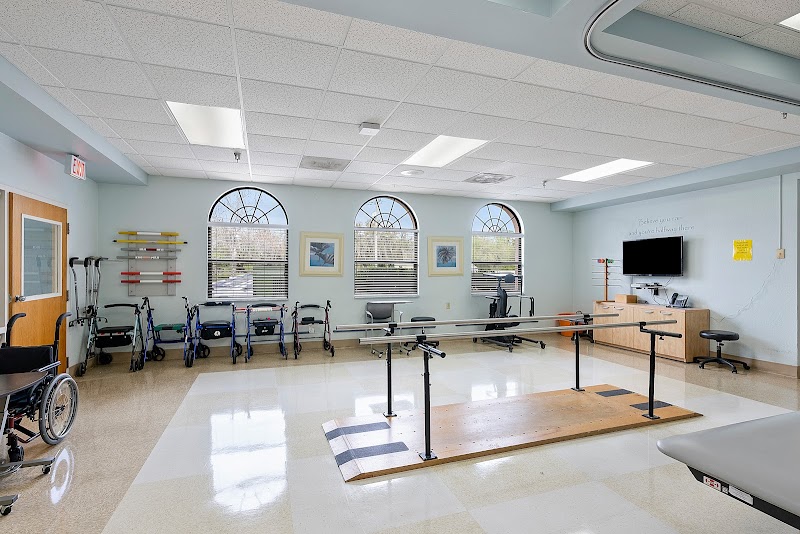
Who Owns and Operates Highlands Lake Center?

HIGHLANDS LAKE CENTER is owned by a for-profit company. For-profit facilities operate as businesses with obligations to shareholders or private owners. The facility is operated by ASTON HEALTH, a chain that manages multiple nursing homes. With 179 certified beds and approximately 158 residents (about 88% occupancy), it is a mid-sized facility located in LAKELAND, Florida.
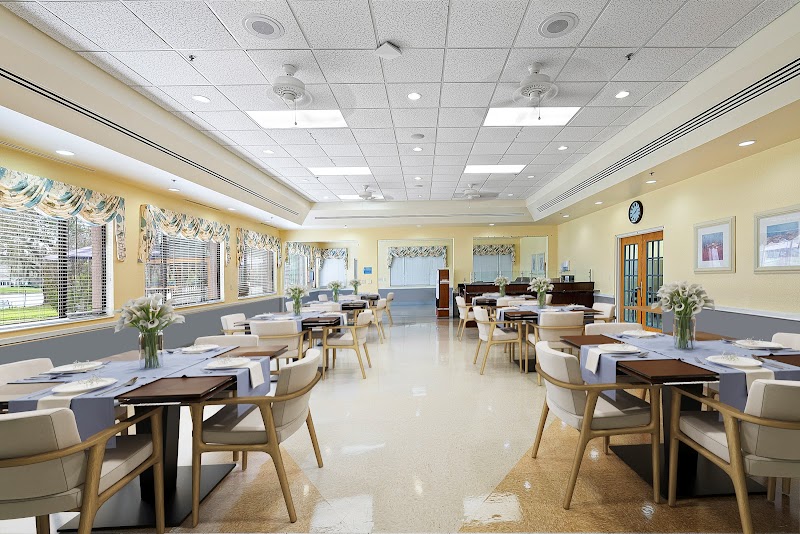
How Does Highlands Lake Center Compare to Other Florida Nursing Homes?

Compared to the 100 nursing homes in Florida, HIGHLANDS LAKE CENTER's overall rating (2 stars) is below the state average of 3.2, staff turnover (55%) is near the state average of 46%, and health inspection rating (2 stars) is below the national benchmark.

What Should Families Ask When Visiting Highlands Lake Center?

Based on this facility's data, families visiting should ask: "Can I visit during a mealtime to observe dining assistance and food quality?" "How do you handle medical emergencies, and what is your hospital transfer rate?" "Can I speak with family members of current residents about their experience?"

Is Highlands Lake Center Safe?

Based on CMS inspection data, HIGHLANDS LAKE CENTER has a clean safety record: no substantiated abuse findings (meaning no confirmed cases of resident harm), no Immediate Jeopardy citations (the most serious violation level indicating risk of serious injury or death), and is not on the Special Focus Facility watch list (a federal program monitoring the lowest-performing 1% of nursing homes). The facility has a 2-star overall rating and ranks #100 of 100 nursing homes in Florida. While no facility is perfect, families should still ask about staff-to-resident ratios and recent inspection results during their visit.

Do Nurses at Highlands Lake Center Stick Around?

HIGHLANDS LAKE CENTER has a staff turnover rate of 55%, which is 9 percentage points above the Florida average of 46%. Moderate turnover is common in nursing homes, but families should still ask about staff tenure and how the facility maintains care continuity when employees leave.

Was Highlands Lake Center Ever Fined?

HIGHLANDS LAKE CENTER has been fined $3,793 across 1 penalty action. This is below the Florida average of $33,117. While any fine indicates a compliance issue, fines under $50,000 are relatively common and typically reflect isolated problems that were subsequently corrected. Families should ask what specific issues led to these fines and confirm they've been resolved.

Is Highlands Lake Center on Any Federal Watch List?

HIGHLANDS LAKE CENTER is not on any federal watch list. The most significant is the Special Focus Facility (SFF) program, which identifies the bottom 1% of nursing homes nationally based on persistent, serious quality problems. Not being on this list means the facility has avoided the pattern of deficiencies that triggers enhanced federal oversight. This is a positive indicator, though families should still review the facility's inspection history directly.