VILLAGE ON THE GREEN
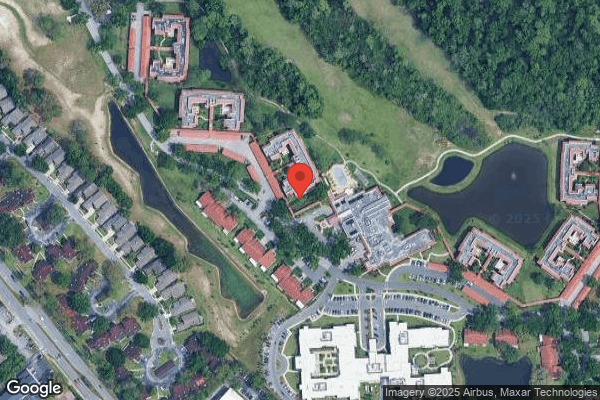

500 VILLAGE PLACE, LONGWOOD, FL 32779 (407) 682-0230
Non profit - Corporation 60 Beds LIFESPACE COMMUNITIES Data: November 2025
Trust Grade
80/100
#300 of 690 in FL
Last Inspection: March 2025

Within standard 12-15 month inspection cycle. Federal law requires annual inspections.

Overview

Families researching Village on the Green in Longwood, Florida will find it has a Trust Grade of B+, which means it is recommended and performs above average compared to other facilities. It ranks #300 out of 690 in Florida, placing it in the top half of state facilities, and #4 out of 10 in Seminole County, indicating only three local options are better. The facility is improving, with issues decreasing from three in 2024 to two in 2025. Staffing is a strong point, rated at 4 out of 5 stars, with a turnover rate of only 31%, significantly lower than the state average of 42%. On the downside, there have been some concerning incidents; for example, the facility failed to change an IV dressing for a resident as required, which could lead to infection. Additionally, two residents did not receive adequate assistance to maintain their mobility, potentially affecting their physical health. There were also issues with food safety, as some hot food items did not meet the necessary temperature requirements, posing a risk for foodborne illness. Overall, while Village on the Green has notable strengths in staffing and a good reputation, there are areas that require attention to ensure resident safety and well-being.

Trust Score
B+
80/100
In Florida
#300/690
Top 43%
Safety Record
Low Risk
No red flags
Inspections
Getting Better
3 → 2 violations
Staff Stability
○ Average
31% turnover. Near Florida's 48% average. Typical for the industry.
Penalties
✓ Good
No fines on record. Clean compliance history, better than most Florida facilities.
Skilled Nurses
✓ Good
Each resident gets 50 minutes of Registered Nurse (RN) attention daily — more than average for Florida. RNs are trained to catch health problems early.
Violations
○ Average
9 deficiencies on record. Average for a facility this size. Mostly minor or procedural issues.
★★★★☆
4.0
Overall Rating
★★★★☆
4.0
Staff Levels
★★★★☆
4.0
Care Quality
★★★★☆
4.0
Inspection Score
Stable
2024: 3 issues
2025: 2 issues

The Good

  • 4-Star Staffing Rating · Above-average nurse staffing levels
  • 4-Star Quality Measures · Strong clinical quality outcomes
  • Full Sprinkler Coverage · Fire safety systems throughout facility
  • No fines on record
  • Staff turnover below average (31%)

    17 points below Florida average of 48%

Facility shows strength in staffing levels, quality measures, fire safety.

The Bad

Staff Turnover: 31%

15pts below Florida avg (46%)

Typical for the industry

Chain: LIFESPACE COMMUNITIES

Part of a multi-facility chain

Ask about local staffing decisions and management

The Ugly 9 deficiencies on record

Mar 2025 2 deficiencies
CONCERN (D)

Potential for Harm - no one hurt, but risky conditions existed

Deficiency F0694 (Tag F0694)

Could have caused harm · This affected 1 resident

**NOTE- TERMS IN BRACKETS HAVE BEEN EDITED TO PROTECT CONFIDENTIALITY** Based on observation, interview, and record review, the facility failed to ensure an intravenous (IV) dressing was changed as or...

Read full inspector narrative →
**NOTE- TERMS IN BRACKETS HAVE BEEN EDITED TO PROTECT CONFIDENTIALITY** Based on observation, interview, and record review, the facility failed to ensure an intravenous (IV) dressing was changed as ordered for 1 of 1 residents reviewed for IV therapy, of a total sample of 27 residents, (#45). Findings: Resident #45 was admitted to the facility on [DATE] with diagnoses including infection following a procedure, superficial incisional surgical site. A care plan for IV Medication use was initiated on 3/10/25. The care plan indicated resident #45 received IV antibiotics status post exploratory surgery and drained abscess to surgical site mid lower back. Interventions included to observe IV site for possible signs/symptoms of infection or infiltrate and peripherally inserted central catheter (PICC) line care and flush as ordered. A PICC line is a long, thin tube inserted into a vein usually in your arm and passed through larger veins near your heart to give access to the larger veins for some types of medication or nutrition. A PICC line requires careful care and monitoring for complications, including infection and blood clots, (retrieved on 4/01/25 from www.mayoclinic.org). Review of resident #45's electronic medical record (EMR) revealed a physician order dated 3/14/25 which instructed licensed nurses to change injection caps weekly with PICC line dressing change every day shift every Friday for PICC line dressing. The order was cancelled 3/14/25 and another order entered to start on 3/22/25. The new order instructed licensed nurses to change injection caps weekly with PICC line dressing change every day shift, every Friday for PICC line dressing. Review of resident #45's EMR revealed a progress note dated 3/12/25 entered by Licensed Practical Nurse A which read, PICC line dressing changed. Review of the Treatment Administration Record (TAR) for March 2025 revealed documentation the IV dressing was changed on 3/14/25 by Registered Nurse B. On 3/17/25 at 10:38 AM, resident #45 was observed in bed. An IV medication bag was hanging from the IV pole. The IV site was covered with a transparent bandage with a white gauze pad underneath. The IV dressing was dated for 3/12/25. On 3/18/25 at 3:10 PM, resident #87 was observed in a wheelchair next to the bed. Transparent IV dressing with a gauze pad underneath remained in place, dated 3/12/25. On 3/18/25 at 3:20 PM, the Director of Nursing (DON) observed the transparent IV dressing applied to resident #87's right arm. She acknowledged the date on the dressing was 3/12/25. She verified there was a gauze dressing under the clear dressing which should have been changed within 24 hours. The DON stated the dressing should have been changed since 3/12/25. The DON was made aware of documentation for dressing change on 3/12/25 and of another nurse documenting dressing change on 3/14/25. She acknowledged the dressing obviously had been changed on 3/12/25. The facility's policy and procedure for Central Venous Catheter Care and Dressing Changes indicated the IV dressing should be changed at least every two days for sterile gauze dressing including gauze under a transparent semi-permeable membrane dressing.
CONCERN (D)

Potential for Harm - no one hurt, but risky conditions existed

Respiratory Care (Tag F0695)

Could have caused harm · This affected 1 resident

**NOTE- TERMS IN BRACKETS HAVE BEEN EDITED TO PROTECT CONFIDENTIALITY** Based on observation, interview, and record review, the facility failed to maintain oxygen flow rates as ordered by the physicia...

Read full inspector narrative →
**NOTE- TERMS IN BRACKETS HAVE BEEN EDITED TO PROTECT CONFIDENTIALITY** Based on observation, interview, and record review, the facility failed to maintain oxygen flow rates as ordered by the physician for 1 of 1 residents reviewed for respiratory care, of a total sample of 27 residents, (#657). Findings: Review of the medical record revealed resident #657 was admitted to the facility on [DATE] from the hospital. His diagnoses included sepsis, pneumonia, acute respiratory failure with hypoxia, congestive heart failure, type 2 diabetes mellitus, and hypertension. Resident #657's Order Summary Report showed an active physician's order for oxygen at 2 liters per minute (LPM) via nasal cannula. The medical record also revealed a care plan intervention initiated on 3/17/25 that indicated the resident's oxygen settings should be administered via nasal cannula per physician orders. On 3/17/25 at 12:28 PM, resident #657 was observed in bed, being administered humidified oxygen through a nasal cannula connected to an oxygen concentrator. The concentrator's flow rate was set at 3 LPM. On 3/18/25 at 9:29 AM, resident #657 was in bed with the nasal cannula connected to an oxygen concentrator with his daughter at bedside. The concentrator's flow rate of oxygen was observed at 3 LPM and both resident #657 and his daughter stated they had not adjusted the flow rate on the oxygen concentrator. On 3/19/25 at 9:26 AM, the assigned nurse who was the Assistant Director of Nursing (ADON) verified the amount of oxygen shown on the concentrator with a flashlight from her phone, took photographic evidence and then stated it was set at 3 LPM of oxygen. She immediately went to her computer to verify the physician's order and confirmed the order was for 2 LPM of oxygen and not 3 LPM. The ADON explained she would notify the doctor. At that time the Director of Nursing (DON) passed by and stated she would verify the amount on the concentrator, just to be sure. The Facility's Policy for Oxygen Administration revised October 2010 showed that staff were to review the physician's orders for oxygen administration in preparation for administration.
Jan 2024 3 deficiencies
CONCERN (D)

Potential for Harm - no one hurt, but risky conditions existed

Deficiency F0558 (Tag F0558)

Could have caused harm · This affected 1 resident

**NOTE- TERMS IN BRACKETS HAVE BEEN EDITED TO PROTECT CONFIDENTIALITY** Based on observation, interview, and record review, the facility failed to ensure 2 of 4 residents with physical limitations rev...

Read full inspector narrative →
**NOTE- TERMS IN BRACKETS HAVE BEEN EDITED TO PROTECT CONFIDENTIALITY** Based on observation, interview, and record review, the facility failed to ensure 2 of 4 residents with physical limitations reviewed for Environment were provided call light device access within reach from a total sample of 27 residents, (#34, #37). Findings: 1. A review the medical record revealed resident #34, a [AGE] year old female was admitted to the facility on [DATE] from an Assisted Living Facility and had diagnoses that included encephalopathy (brain dysfunction), psychotic disorder, anxiety disorder, dysphagia (difficulty swallowing), dementia, cerebral (brain) vascular disease, and heart disease. The Minimum Data Set (MDS) quarterly assessment with Assessment Reference Date (ARD) 10/26/23 identified a Brief Interview for Mental Status (BIMS) score of 4 out of 15 that indicated the resident was severely cognitively impaired. Functional Abilities and Goals of everyday activities noted the resident was dependent or required substantial/maximum assistance from staff to complete Activities of Daily Living (ADLs), mobility functions in and out of bed, always incontinent of bladder and bowel functions, required a mechanically altered diet, and the resident received high risk anti-anxiety and anti-coagulant (blood thinner) medications during the look back period. The Comprehensive Care Plan Focus' noted the resident was at risk for falls and dependent on staff to complete ADLs related to physical limitations including weakness, impaired mobility, failure to thrive, cognitive deficits, and incontinence. Additional focuses included dining dependence, risk for falls, injury, and adverse effects of anxiety and anti-coagulant (blood thinner) medications. On 1/16/24 at 11:20 AM resident #34 was observed alone in her room sitting in a wheelchair mid-way between the right side of her bed. The call light device was behind the wheelchair. The cord was wrapped twice around the bed rail with the button portion hung towards the floor. At 2:12 PM, the resident was observed uttering nonsensical statements while sitting in a wheelchair in the same location as earlier observed. The call light cord was wrapped around the bed rail and hung towards the floor behind the resident, out of her reach. On 1/17/24 at 9:24 AM, Certified Nursing Assistant (CNA) B was observed exiting resident #34's room with a meal tray. At 9:27 AM, the resident was observed alone in her room, awake while she lay in bed. The call light device cord was wrapped around the right bed rail and the button hung approximately 1 inch from the floor. During a joint observation with CNA B and Registered Nurse (RN) D on 1/18/24 at 9:54 AM, resident #34 was observed alone and awake while she lay in bed. The call light device hung off the right side of her bed and the button touched the floor. CNA B said the resident could and had used the button, and described her cognition as, totally confused; have to constantly remind her for everything. The CNA picked up the device and acknowledged the resident was not able to reach it while she demonstrated how an adjustable clip attached to the cord was used to secure it to clothing or linen so the resident could reach and use it. RN D acknowledged the device was out of the resident's reach and it should've been secured where she could access it. The RN stated, she can push the button. 2. A review the medical record revealed resident #37, an [AGE] year old female, was admitted to the facility on [DATE] from an acute care hospital with diagnoses that included fracture of the sacrum (tailbone), leukemia, sepsis (blood stream infection), hemiplegia (one-sided paralysis), difficulty in walking, need for assistance with personal care, lack of coordination, weakness, and malnutrition. The MDS admission 5-day assessment with ARD 12/29/23 identified a BIMS score of 14 out of 15 that indicated the resident was cognitively intact. Functional Abilities and Goals of everyday activities noted the resident required substantial/maximum assistance from staff to complete ADLs and mobility functions in and out of bed. The assessment noted the resident was always incontinent of bowel and bladder functions, had shortness of breath or trouble breathing when lying flat, a fall history within the last month, and two to six months that resulted in a fracture prior to her facility admission. The Comprehensive Care Plan focus showed the resident was dependent on staff to complete ADLs, transfer in and out of bed and to the toilet related to physical limitations, incontinence, weakness, impaired mobility, risk for fall and injury, cardiovascular (heart) complications, sacral fracture, and history of cerebral vascular accident (stroke). On 1/16/24 at 11:48 AM, and 1/17/24 at 9:18 AM, resident #37 was observed alone in her room sitting in a wheelchair beside her bed. The call light device was lying across the bed approximately three feet behind the chair. The resident stated she needed to use the restroom. She reached backwards and demonstrated she was not able to reach the call light behind her. The resident was visibly frustrated and explained she needed staff's assistance to get to the bathroom, and she had to wait for someone to come in the room if she couldn't reach the light. At 2:18 PM, the resident was again observed sitting in a wheelchair beside her bed. The call light was behind the resident lying across the bed out of the resident's reach. On 1/17/24 at 9:18 AM, resident #37's call light was observed with the cord wrapped around her right bed rail and the button was located at the head of the bed. The resident was sitting in a wheelchair beside the bed, approximately four feet out of reach from the device. In an interview on 1/18/24 at 10:48 AM, the Director of Nursing (DON) explained she expected CNAs and nurses to lay call light devices across the bed or have them clipped to clothing so residents could reach them. She said she was concerned when staff notified her of the earlier problem. Review of the facility's Quality Assurance Performance Improvement (QAPI) Plan dated 1/12/24 read, . We provide comprehensive clinical care to residents with acute and chronic disease, rehabilitative needs, as well as end-of-life care. All care is resident-centered and focused around choice and individualized treatment plans. We provide comprehensive building safety, repairs, and inspections to ensure all aspects of safety are enforced, assuring the safety and well-being for each resident .
CONCERN (D)

Potential for Harm - no one hurt, but risky conditions existed

Transfer Notice (Tag F0623)

Could have caused harm · This affected 1 resident

**NOTE- TERMS IN BRACKETS HAVE BEEN EDITED TO PROTECT CONFIDENTIALITY** 2. Resident #41 was admitted to the facility on [DATE] with diagnoses including interstitial pulmonary disease, anemia, hyperten...

Read full inspector narrative →
**NOTE- TERMS IN BRACKETS HAVE BEEN EDITED TO PROTECT CONFIDENTIALITY** 2. Resident #41 was admitted to the facility on [DATE] with diagnoses including interstitial pulmonary disease, anemia, hypertension, hyperlipidemia, hypothyroidism, atherosclerotic heart disease and benign prostatic hyperplasia. Review of resident #41's medical record revealed he was hospitalized on [DATE] due to abnormal laboratory results. The medical record did not contain a Notice of Transfer or Discharge form for the hospitalization. The resident returned from the hospital on [DATE]. 3. Resident #154 was admitted to the facility on [DATE] with diagnoses including nondisplaced fracture of right femur, unspecified dementia, chronic obstructive pulmonary disease and Alzheimer's disease Review of resident #154's medical record revealed she was hospitalized on [DATE] due to an unwitnessed fall and resident complaining of right hip pain. The medical record did not contain a Notice of Transfer or Discharge forms for the hospitalization. The resident returned from the hospital on [DATE]. On 1/18/24 at 2:02 PM, the Social Services Director (SSD) stated the nurse was responsible for completing the Notice of Transfer and Discharge Forms for residents who transferred to the hospital. She explained the forms then went to Medical Records. The SSD clarified she notified the Ombudsman of the hospital transfer monthly. On 1/18/24 at 3:16 PM, the Administrator stated she was aware the Notice of Transfer or Discharge forms were not being completed for all hospital transfers. She recalled the Medical Records Director discussed the issue in their Quality Assurance (QA) meeting on 1/14/23. The Administrator stated they had an audit and planned to address the issue but had not been able to do so. On 1/18/24 at 3:33 PM, the Medical Records Director verified she audited the transfer and discharge process to ensure the required paperwork was completed. She confirmed she identified the Notice of Transfer and Discharge forms were not being completed consistently. She stated she brought the issue to the QA Committee. The Medical Records Director reviewed the audit sheet provided by the Administrator and stated she was familiar with the form. She clarified she had been using the form since she was hired in October 2022 to audit charts. The Medical Records Director explained she reported the incomplete Notice of Transfer and Discharge forms every month in QA Meeting. She stated this was an on-going issue and had not been resolved. Based on interview and record review, the facility failed to provide written Notice of Transfer or Discharge forms to the resident or their representative for 3 of 4 residents reviewed for hospitalizations out of a total sample of 27 residents, (#41, #154 and #303). Findings: 1. Resident #303 was admitted to the facility on [DATE] with diagnoses that included cancer to the urinary organs and bones, and neuromuscular dysfunction of the bladder. Review of resident #303's medical record revealed he was emergently hospitalized on [DATE]. A nurse's eInteract SBAR Summary for Providers dated 12/29/23 described the Advanced Practice Registered Nurse advised the nurse to call 911 due to bleeding from his genital organ. The medical record did not contain a written Notice of Transfer or Discharge form for the hospitalization. The resident returned from the hospital on [DATE]. On 1/18/24 at 3:16 PM, the Administrator confirmed they were unable to provide the form for resident #303's hospitalization on 12/2/23. Review of the facility's Transfer or Discharge Notice Policy revised December 2016 read, The resident and/or representative will be notified in writing the reason for the transfer or discharge, the effective date of the transfer or discharge, the location to which the resident is being transferred or discharged , the facility bed hold policy .
CONCERN (D)

Potential for Harm - no one hurt, but risky conditions existed

Deficiency F0679 (Tag F0679)

Could have caused harm · This affected 1 resident

**NOTE- TERMS IN BRACKETS HAVE BEEN EDITED TO PROTECT CONFIDENTIALITY** Based on observation, interview, and record review, the facility failed to ensure individual activities and interests significan...

Read full inspector narrative →
**NOTE- TERMS IN BRACKETS HAVE BEEN EDITED TO PROTECT CONFIDENTIALITY** Based on observation, interview, and record review, the facility failed to ensure individual activities and interests significant to support well-being were provided for 1 of 1 resident reviewed for Activities from a total sample of 27 residents, (#37). Findings: A review of the medical record revealed resident #37, an [AGE] year old female was admitted to the facility on [DATE] from an acute care hospital with diagnoses that included fracture of sacrum (tailbone), leukemia, sepsis (blood stream infection), hemiplegia (one-sided paralysis), difficulty in walking, need for assistance with personal care, lack of coordination, weakness, and malnutrition. The Minimum Data Set (MDS) admission 5-day assessment with Assessment Reference Date 12/29/23 identified a Brief Interview for Mental Status (BIMS) score of 14 out of 15 that indicated the resident was cognitively intact. Functional Abilities and Goals of everyday activities showed the resident required substantial/maximum assistance from staff to complete Activities of Daily Living (ADLs) and mobility functions in and out of bed. The assessment noted it was important to the resident to be able to listen to music she liked, keep up with the news, and do her favorite activities. The Lifestyles Evaluation for Activity Interests and Preferences and Activity Assessment Evaluation dated 12/31/23 indicated the resident preferred to spend her leisure time on individual pursuits and practices, had a strong preference for specific music, an [NAME], and she was formerly a [NAME] and ballroom [NAME]. The Comprehensive Care Plan Focus' noted the resident was dependent on staff to complete ADLs related to physical limitations including weakness, and impaired mobility, with a sacral fracture and history of cerebral vascular accident (stroke). The plan of care did not include a focus for individualized activities for psychosocial and mental well-being support. On 1/16/24 at 11:48 AM, and 1/17/24 at 9:18 AM, resident #37 was observed sitting in a wheelchair beside her bed. The television (TV) was turned off and the remote control was observed on a table directly under the TV on the wall, approximately 8 feet away from the resident's bedside table in her close proximity. Review of resident #37's January 2023 Task List Report for Certified Nursing Assistants (CNAs) use included intellectual, social, physical, and other visit or service Life Enrichment tasks. The schedule showed over eighteen days, one CNA marked the tasked items were offered. On 1/18/24 at 10:04 AM, resident #37 was observed in her room lying in bed. She explained she enjoyed watching ballroom dancing music programs on the TV, and she was familiar with available stations she could access to watch them. The remote control was on the table directly under the TV on the wall in the same location as previously observed. The resident said she would like to watch TV; however, she did not have the remote. In an interview on 1/18/24 at 10:30 AM, the Lifestyle Supervisor said she was responsible for creating and implementing residents' individualized activities program. She explained, an evaluation was completed within a few days after a resident was admitted to the facility that included finding out what types of individual or group activities the resident enjoyed, even if their preference was to stay in their room. She said residents who enjoyed music were offered access through the facility's TV music channels, and staff noted what was offered and the resident's participation status on monthly paper logs. Review of resident #37's Daily Activities Attendance record dated January 2024 included item lines for TV and music. The record did not include any entries to note staff had offered the resident music or TV. During a joint observation with the Lifestyle Supervisor on 1/18/24 at 11:30 AM, resident #37's TV remote control was observed in the same previously observed location on a table under the TV. The Lifestyle Supervisor stated the resident knew how to use it, and acknowledged the remote was not, but should have been within the resident's reach. The resident replied, yes after she asked her if she would like to listen to music on the TV. She attempted to turn the TV on, and found the remote control was broken or malfunctioned. On 1/18/24 at 11:30 AM, the Lifestyle Supervisor checked the medical record and acknowledged resident #37's Comprehensive Care Plan was missing a Focus for activities and mental and psychosocial well-being support. She stated it was important that residents were offered and had access to their preferred activities because they could become bored and depressed which affected overall health. She added, residents need activities as, joy helps with recovery, even TV. On 1/18/24 at 11:46 AM, the MDS Coordinator checked the medical record and said resident #37's Comprehensive Care Plan was signed off as completed on 1/10/24. She explained, the Lifestyle and Activities Focus was not included, should have been part of the plan of care, and must have been missed in error. The facility's standards and guidelines titled Health Center Lifestyle Department and Programs dated 5/15/18 read, The purpose of this policy is to . ensure person-centered care and purposeful programming that meets the individual needs of each resident are provided . 10. Competent Lifestyle department team members will provide person-centered care through planning, implementing, and documenting all Lifestyle programs that meet the individual needs of each resident . The facility's Quality Assurance and Improvement plan read, Scope: The scope of the QAPI program encompasses all segments of care and services provided by (facility name) that impact clinical care, quality of care, quality of life, resident choices, and care transitions with participation from all departments. Lifestyle We provide enriching and stimulating activities to every resident .
Jul 2022 4 deficiencies
CONCERN (D)

Potential for Harm - no one hurt, but risky conditions existed

Drug Regimen Review (Tag F0756)

Could have caused harm · This affected 1 resident

**NOTE- TERMS IN BRACKETS HAVE BEEN EDITED TO PROTECT CONFIDENTIALITY** Based on observation, interview and record review, the facility failed to follow-up on pharmacy recommendations for 1 of 5 resid...

Read full inspector narrative →
**NOTE- TERMS IN BRACKETS HAVE BEEN EDITED TO PROTECT CONFIDENTIALITY** Based on observation, interview and record review, the facility failed to follow-up on pharmacy recommendations for 1 of 5 residents reviewed for unnecessary medications of a total sample of 23 residents, (#1). Findings: Resident #1 was admitted to the facility on [DATE] with diagnoses including hypothyroidism, cerebral infarction, and arteriosclerotic heart disease. A care plan for resident has hypothyroidism was initiated 4/30/21 with interventions for staff to administer thyroid replacement medication as ordered and obtain and monitor lab/diagnostic work as ordered. Review of the pharmacy Consultation Report for April 2022 revealed a recommendation for the facility to monitor resident #1's Thyroid Stimulating Hormone (TSH) concentration on the next convenient lab day and at least annually due to resident receiving thyroid replacement medication, Levothyroxine. The report was unsigned and did not indicate whether the physician agreed or disagreed with the recommendation. Review of the Medication Review Report for July 2022 revealed resident #1 had a physician order dated 11/17/21 for Levothyroxine Sodium Tablet 100 micrograms to be given every morning for low thyroid hormone. The report did not contain an order for labs to monitor TSH level. On 7/28/22 at 5:21 PM, the Administrator reviewed the pharmacist's recommendations and the resident #1's Electronic Medical Record and acknowledged there was not any physician order to monitor TSH levels. On 7/28/22 at 5:22 PM, the Director of Nursing (DON) stated the consultant pharmacist reviewed medications monthly. The pharmacist then emailed recommendations to the facility which were printed and put in physician binders at the nursing stations. She explained once the recommendations were reviewed and signed by the physician, they were returned to her for reconciliation. The DON stated she was ultimately responsible for following through with pharmacy recommendations and acknowledged resident #1's recommendation to complete lab work for TSH levels was missed. The facility's policy and procedure for Medication Regimen Review (MRR) dated 12/01/07 included guidelines for the facility to encourage Physician/prescriber or other Responsible Parties receiving the MRR and the Director of Nursing to act upon the recommendations contained in the MRR. For those issues that require Physician/Prescriber intervention, Facility should encourage Physician/Prescriber to either (a) accept and act upon the recommendations contained within the MRR, or (b) reject all or some of the recommendation contained in the MRR and provide an explanation as to why the recommendation was rejected.
CONCERN (E)

Potential for Harm - no one hurt, but risky conditions existed

Deficiency F0688 (Tag F0688)

Could have caused harm · This affected multiple residents

**NOTE- TERMS IN BRACKETS HAVE BEEN EDITED TO PROTECT CONFIDENTIALITY** Based on observation, interview and record review, the facility failed to provide services and treatments to prevent further dec...

Read full inspector narrative →
**NOTE- TERMS IN BRACKETS HAVE BEEN EDITED TO PROTECT CONFIDENTIALITY** Based on observation, interview and record review, the facility failed to provide services and treatments to prevent further decrease in range of motion for 2 of 3 residents reviewed for positioning and mobility of a total sample of 23 residents, (#1 and #14). Findings: 1. Resident #1 was admitted to the facility on [DATE] with diagnoses including weakness, spinal fusion, cerebral infarction, hemiplegia and hemiparesis. Review of the Minimum Data Set (MDS) quarterly assessment with assessment reference date (ARD) of 7/15/22 revealed resident #1 had a Brief Interview for Mental Status (BIMS) score of 10 which indicated she had moderate cognitive impairment. She required extensive to total assistance with Activities of Daily Living (ADLs). The document revealed the resident did not exhibit any behavioral symptoms including rejection of care. The assessment indicated resident #1 had limited range of motion (ROM) to one side of her body for both upper and lower extremities. A care plan for limited physical mobility related to cerebrovascular accident with right sided hemiparesis was initiated 4/30/21 and revised 4/28/22. Interventions included monitor/document/report as needed any signs/symptoms of immobility: contractures forming or worsening, and skin breakdown; Physical Therapy/Occupation therapy referrals as ordered; and passive range of motion to right upper extremity. Review of resident #1's Medication Review Report for July 2022 revealed a physician order dated 4/23/21 for Physical Therapy (PT) to evaluate and treat as indicated and an order dated 4/23/21 for Occupational Therapy (OT) to evaluate and treat. The report did not contain an order for any splints. On 7/25/22 at 11:35 AM, 7/25/22 at 3:26 PM, 7/26/22 at 9:11 AM and 7/27/22 at 9:56 AM, resident #1 was observed in bed. Her right hand and arm were contracted and held tightly to her chest. Resident #1 did not have a splint on her right arm or hand and did not have a hand roll in her right hand. On 7/27/22 at 10:21 AM, Certified Nursing Assistant (CNA) A stated the resident was dependent on staff for most ADLs. She reported the resident was contracted on her right side and did not have a splint or assistive device. She could not recall the resident ever having a splint. CNA A explained she washed resident #1's right hand as part of ADL care and used a washcloth to clean inside her hand and between her fingers. She reported the resident expressed discomfort when she performed ADL care on her right hand. CNA A demonstrated how she washed the resident's contracted hand and the resident grimaced but allowed CNA to open her hand. At this time CNA A searched the resident's room but was unable to find a splint. On 7/27/22 at 10:44 AM, the Therapy Director stated resident #1 was not currently on therapy caseload. He recalled she had been evaluated in May 2022 and was seen up by OT from May 11 - June 23, 2022. The Therapy Director reviewed the therapy notes and reported OT worked with the resident on right upper extremity range of motion and splint tolerance for 6-8 hours. He explained resident #1 was transferred to restorative nursing program at discharge from therapy with a restorative form completed and emailed to the restorative nurse. At 11:04 AM, the Therapy Director entered resident #1's room and assessed the resident's right hand and ROM to the right arm. The resident grimaced as he attempted to straighten her right arm. He stated the resident needed a right elbow splint and a right hand splint. He conveyed the splint would reduce pain and allow staff to clean her hands and provide nail care. He recalled an elbow splint was recommended but stated she should had a hand splint as well. The Therapy Director explained when limbs were not being used, the muscles tighten and shorten causing a contracture. He clarified that a splint would help to prevent a contracture and did not say why resident #1 did not have one. On 7/27/22 at 11:17 AM, OT B recalled resident #1 was on caseload previously with ROM to bilateral upper extremities. He stated the goal was for resident to wear a right elbow splint and a right hand splint for 6-8 hours per day to prevent contractures. He could not recall if the splint was left for the resident. He validated in the absence of a hand splint, the expected nursing intervention was to use a towel roll. On 7/27/22 at 11:43 AM, the Therapy Director reviewed the Restorative Nursing Documentation Tool and acknowledged the form did not contain any splinting information. On 7/27/22 at 11:46 AM, Restorative Aide CNA C stated she was familiar with resident #1 and reported the resident was on restorative therapy 3 times a week for upper and lower ROM. She verbalized she was aware of her right hand contracture but did not have a splint program for her. Restorative Aide CNA C reviewed the restorative program for resident #1 and verified the program contained information for Passive and Active ROM but no information for splinting. On 7/27/22 at 12:00 PM, the Administrator brought a clear plastic bag that contained a blue hard plastic splint which extended from forearm to hand and stated it was in resident #1's upper drawer of the bedside table. The Administrator explained she asked the resident if she wanted to wear the splint and the resident declined. The Administrator was informed the drawers were searched by CNA A and there was no splint in any of the drawers or in the closet. On 7/27/22 at 12:06 PM, CNA A validated she searched all drawers in the dresser, bedside table and closet and did not see a splint. She informed the Administrator that surveyors were present when she searched the room and the splint was not in the drawer at that time. The Administrator said, I wonder who has been in that room since then. The Administrator was informed that the splint she held was not the type of splint that was recommended by therapy. Restorative Aide CNA C was present in the hallway and confirmed she had never seen that splint and did not recall the resident wearing a splint on either her elbow or her hand. CNA A confirmed that she had never seen the splint either. The Administrator could not explain where the splint came from or why the splint was not of the recommended type. On 7/27/22 at 2:11 PM, the Therapy Director stated OT B erroneously checked completion goal for resident's hand splint but not the elbow splint. The Therapy Director confirmed he was still unsure of what happened to the hand splint. The Therapy Director recalled his earlier assessment resident #1 and reiterated she would benefit from both a hand splint and elbow splint. On 7/27/22 at 2:29 PM, the Director of Nursing (DON) stated she served as the restorative nurse. She explained when therapy determined a resident had met goals and needed a maintenance plan, the therapist created a restorative plan and emailed it to the nursing team to implement. The DON acknowledged she did not have a plan for resident #1's discharge from therapy on 6/23/22. She verbalized her expectation if a resident had a contracture with no obvious treatment or device in place, the staff member should report it to a floor nurse, to PT or to the DON. She conveyed she would expect staff to place a rolled washcloth if a resident did not have a hand splint or refused splint. The DON stated she reviewed the current restorative plan for resident #1 and noted, Obviously there is a break in the process since we missed the form from 6/23/22. She acknowledged the possibility of a decline for resident with a contracture that was not maintained. 2. Resident #14 was admitted to the facility on [DATE] with diagnoses of cerebral palsy, hemiplegia and hemiparesis following cerebral infarction affecting left non-dominant side, contractures unspecified ankle, pain in right ankle and joints of right foot, pain in left ankle and joints and muscle weakness. Review of the MDS quarterly assessment with ARD of 6/15/22 revealed resident #14 had a BIMS score of 14 which indicated she was cognitively intact. She required extensive to total assistance with ADLs. The document revealed the resident did not exhibit any behavioral symptoms including rejection of care. The assessment indicated resident #14 had limited ROM to one side of her body for both upper and lower extremities. A care plan for history of Cerebral Palsy initiated 12/23/19 and revised 7/05/21 included interventions to maintain good body alignment to prevent contractures, use braces and splints as ordered and encourage resident/caregivers to use and correctly apply all splints and braces. On 7/25/22 at 10:51 AM, resident #14 was in bed and two multi-podus boots were noted on the floor next to a recliner. The resident stated she did not wear the boots because they were stretched out and did not fit properly. She said she requested new ones from therapy but only received one. On 7/26/22 at 8:58 AM, the resident was in bed and the boots were no longer beside the recliner in her room. She stated she was not wearing them and did not know where they were. On 7/27/22 at 10:52 AM, the Therapy Director explained resident #14 had been on case load but was not currently not being seen by therapy. He recalled she had been treated for contracture management and was supposed to wear multi-podus boots to prevent plantar flexion contractures and foot drop by keeping her feet in a neutral position. He noted he was not aware the boots were too big. On 7/27/22 at 10:56 AM, resident #14 was observed in a wheel chair next to her bed. The multi-podus boots were on the floor next to her recliner. The resident stated it had been about two years since she wore them. The Therapy Director checked both boots on the floor and noted they were both large size. He located another multi-podus boot in the resident's closet which was regular size. He stated the resident should be wearing them when she was out of bed. He explained restorative nursing program would have initially been assigned to put the boots on the resident. On 7/27/22 at 11:28 AM, OT B stated he was familiar with resident #14 and recalled he recommended resident to wear her the podus boots while up in the wheel chair and when in bed. On 7/27/22 at 11:52 AM, Restorative Aide CNA C verified resident #14 had multi-podus boots and mentioned they were too big. She reviewed the restorative program for resident #14 and noted the resident was on a restorative program for the multi-podus boots to be applied during the day. On 7/27/22 at 12:02 PM, CNA D stated she was familiar with resident #14. She reported the resident had multi-podus boots that were applied by restorative CNA. She recalled the boots did not fit well. On 7/28/22 at 3:45 PM, the Therapy Director provided the Physical Therapy Plan of Care for resident #14 with an end date of 5/02/22. Review of the plan revealed resident only had one proper fitting splint at the time and the therapist was donning a brace one foot at a time while waiting for the new splint. On 4/26/22, the therapist documented therapy was on hold due to waiting on ankle brace/splint. The Therapy Director clarified the plan was to use the boot that fit and alternate ankles until the new boot arrived. He acknowledged the boots mentioned in plan were never delivered. Review of the job description for Rehabilitation Program Manager dated 2/02/22, revealed the program manager would develop programs appropriate to the needs of the residents in the facility, to assist them in achieving their highest feasible level of functioning. Review of the job description for Director of Nursing Services dated 4/05/16, revealed the DON's essential job functions included organize resident care programs which include the interdisciplinary team, resident care planning team, the restorative care program and other programs as necessary to provide optimal care. The facility's policy and procedure for Assistive Devices and Equipment provided policy interpretation and implementation guidelines that included assessing the resident for lower extremity strength, range of motion, balance and cognitive abilities when determining the safest use of devices and equipment; and, the equipment is measured to fit the resident's size and weight.
CONCERN (E)

Potential for Harm - no one hurt, but risky conditions existed

Food Safety (Tag F0812)

Could have caused harm · This affected multiple residents

Based on observation, record review and interview, the facility failed to ensure potentially hazardous foods were at a hot holding temperature of 135 degrees Fahrenheit, or above, to prevent foodborne...

Read full inspector narrative →
Based on observation, record review and interview, the facility failed to ensure potentially hazardous foods were at a hot holding temperature of 135 degrees Fahrenheit, or above, to prevent foodborne illness. Finding Review of the facility's lunch menu on 7/27/22, revealed the residents had a choice of Baked Ziti or Turkey Enchilada Casserole. The side items included [NAME] Peas, Red Potatoes and Coconut Cake. On 7/27/22 at 11:55 AM, the lunch tray line was observed. There were two cooks and several dietary aides at or near the tray line. [NAME] A stated the Baked Ziti and Turkey Enchilada Casserole were in the hot box, a full size temperature controlled, hot holding cabinet. The side items were on the steam table. The hot holding temperatures were checked with the facility's digital, bayonet style thermometer. The Turkey Enchilada Casserole had a hot holding temperature of 119 degrees Fahrenheit. Further temperatures taken of the Turkey Enchilada Casserole ranged from 119 to 129 degrees Fahrenheit. [NAME] B stated the holding temperature was supposed to be 160 degrees Fahrenheit. A few minutes later, the Chef was at the tray line and was informed of the hot holding temperatures of the food. The Chef instructed the cooks to reheat the Turkey Enchilada Casserole. When asked who took the hot holding temperatures prior to the start of tray line, [NAME] A and [NAME] B did not respond. [NAME] B indicated he did not take the temperatures as, I was too busy. The Chef stated the lunch tray line holding temperatures had not been done. The United States Food and Drug Administration's Food Code 2017, notes in chapter that potentially hazardous foods, need to be at a hot holding temperature of 135 degrees or above.
MINOR (C)

Minor Issue - procedural, no safety impact

Deficiency F0577 (Tag F0577)

Minor procedural issue · This affected most or all residents

Based on record review and interview, the facility failed to maintain the survey book with all surveys conducted in the past three years. Findings: Review of the survey book located in the facility's...

Read full inspector narrative →
Based on record review and interview, the facility failed to maintain the survey book with all surveys conducted in the past three years. Findings: Review of the survey book located in the facility's main lobby revealed it did not include all recent surveys. A complaint survey conducted on 10/7/21 resulted in deficiencies and the survey book did not include the statement of deficiencies or the facility's plan of correction for viewing by residents, visitors, and staff. On 7/26/22 at 3:20 PM, the Administrator acknowledged the complaint investigation results of 10/7/21 were not included in the survey book. There were no additional survey books readily available for review and the Administrator acknowledged it was her responsibility to update the survey book.
Understanding Severity Codes (click to expand)
Life-Threatening (Immediate Jeopardy)
J - Isolated K - Pattern L - Widespread
Actual Harm
G - Isolated H - Pattern I - Widespread
Potential for Harm
D - Isolated E - Pattern F - Widespread
No Harm (Minor)
A - Isolated B - Pattern C - Widespread

Questions to Ask on Your Visit

  • "Can I speak with families of current residents?"
  • "What's your RN coverage like on weekends and overnight?"

Our Honest Assessment

Strengths
  • • Grade B+ (80/100). Above average facility, better than most options in Florida.
  • • No major safety red flags. No abuse findings, life-threatening violations, or SFF status.
  • • No fines on record. Clean compliance history, better than most Florida facilities.
  • • 31% turnover. Below Florida's 48% average. Good staff retention means consistent care.
Concerns
  • • No significant concerns identified. This facility shows no red flags across CMS ratings, staff turnover, or federal penalties.
Bottom line: Generally positive indicators. Standard due diligence and a personal visit recommended.

About This Facility

What is Village On The Green's CMS Rating?

CMS assigns VILLAGE ON THE GREEN an overall rating of 4 out of 5 stars, which is considered above average nationally. Within Florida, this rating places the facility higher than 99% of the state's 100 nursing homes. This rating reflects solid performance across the metrics CMS uses to evaluate nursing home quality.

How is Village On The Green Staffed?

CMS rates VILLAGE ON THE GREEN's staffing level at 4 out of 5 stars, which is above average compared to other nursing homes. Staff turnover is 31%, compared to the Florida average of 46%. This relatively stable workforce can support continuity of care.

What Have Inspectors Found at Village On The Green?

State health inspectors documented 9 deficiencies at VILLAGE ON THE GREEN during 2022 to 2025. These included: 8 with potential for harm and 1 minor or isolated issues.
Who Owns and Operates Village On The Green?

VILLAGE ON THE GREEN is owned by a non-profit organization. Non-profit facilities reinvest revenue into operations rather than distributing to shareholders. The facility is operated by LIFESPACE COMMUNITIES, a chain that manages multiple nursing homes. With 60 certified beds and approximately 45 residents (about 75% occupancy), it is a smaller facility located in LONGWOOD, Florida.

How Does Village On The Green Compare to Other Florida Nursing Homes?

Compared to the 100 nursing homes in Florida, VILLAGE ON THE GREEN's overall rating (4 stars) is above the state average of 3.2, staff turnover (31%) is significantly lower than the state average of 46%, and health inspection rating (4 stars) is above the national benchmark.

What Should Families Ask When Visiting Village On The Green?

Based on this facility's data, families visiting should ask: "Can I visit during a mealtime to observe dining assistance and food quality?" "How do you handle medical emergencies, and what is your hospital transfer rate?" "Can I speak with family members of current residents about their experience?"

Is Village On The Green Safe?

Based on CMS inspection data, VILLAGE ON THE GREEN has a clean safety record: no substantiated abuse findings (meaning no confirmed cases of resident harm), no Immediate Jeopardy citations (the most serious violation level indicating risk of serious injury or death), and is not on the Special Focus Facility watch list (a federal program monitoring the lowest-performing 1% of nursing homes). The facility has a 4-star overall rating and ranks #1 of 100 nursing homes in Florida. While no facility is perfect, families should still ask about staff-to-resident ratios and recent inspection results during their visit.

Do Nurses at Village On The Green Stick Around?

VILLAGE ON THE GREEN has a staff turnover rate of 31%, which is about average for Florida nursing homes (state average: 46%). Moderate turnover is common in nursing homes, but families should still ask about staff tenure and how the facility maintains care continuity when employees leave.

Was Village On The Green Ever Fined?

VILLAGE ON THE GREEN has no federal fines on record. CMS issues fines when nursing homes fail to meet care standards or don't correct problems found during inspections. The absence of fines suggests the facility has either maintained compliance or corrected any issues before penalties were assessed. This is a positive indicator, though families should still review recent inspection reports for the full picture.

Is Village On The Green on Any Federal Watch List?

VILLAGE ON THE GREEN is not on any federal watch list. The most significant is the Special Focus Facility (SFF) program, which identifies the bottom 1% of nursing homes nationally based on persistent, serious quality problems. Not being on this list means the facility has avoided the pattern of deficiencies that triggers enhanced federal oversight. This is a positive indicator, though families should still review the facility's inspection history directly.