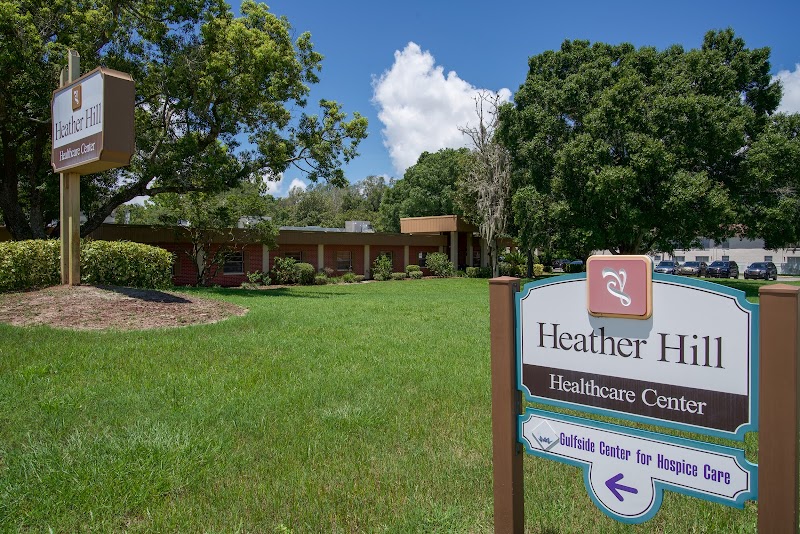
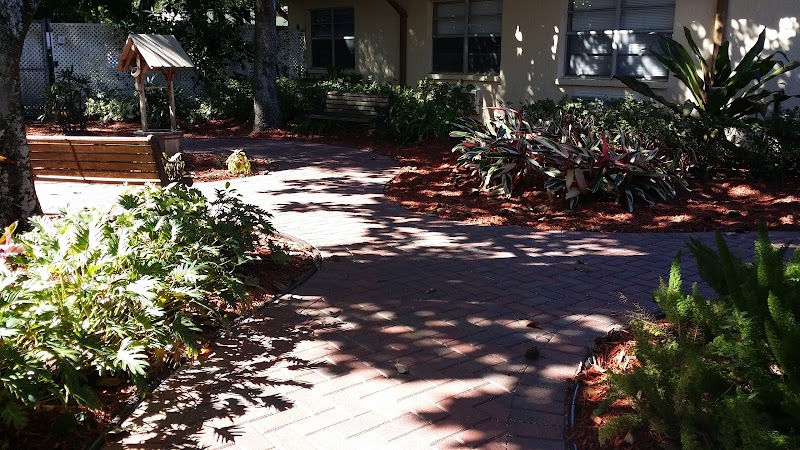
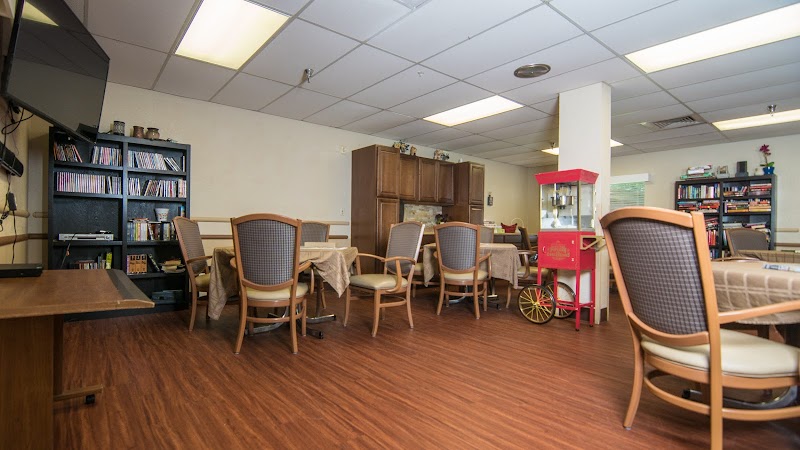
HEATHER HILL HEALTHCARE CENTER

6630 KENTUCKY AVE, NEW PORT RICHEY, FL 34653 (727) 849-6939
Non profit - Other 105 Beds HEALTH SERVICES MANAGEMENT Data: November 2025
Trust Grade
50/100
#508 of 690 in FL
Last Inspection: June 2024

Within standard 12-15 month inspection cycle. Federal law requires annual inspections.

Overview

Heather Hill Healthcare Center has a Trust Grade of C, which means it is average and sits in the middle of the pack compared to other facilities. It ranks #508 out of 690 in Florida, placing it in the bottom half of the state, and #14 out of 18 in Pasco County, indicating there are only a few local options that are better. The facility is experiencing a worsening trend, with issues increasing from 2 in 2023 to 10 in 2024. Staffing is a relative strength, rated at 4 out of 5 stars, but the turnover rate is 49%, which is average. Although the center has no fines on record, which is a positive sign, there are concerning incidents such as a resident being unable to get assistance and becoming agitated, and instances of residents having conflicts with one another without adequate supervision. Overall, while there are some strengths in staffing and no fines, the growing number of issues and recent incidents indicate areas needing improvement.

Trust Score
C
50/100
In Florida
#508/690
Bottom 27%
Safety Record
Low Risk
No red flags
Inspections
Getting Worse
2 → 10 violations
Staff Stability
⚠ Watch
49% turnover. Above average. Higher turnover means staff may not know residents' routines.
Penalties
✓ Good
No fines on record. Clean compliance history, better than most Florida facilities.
Skilled Nurses
○ Average
Each resident gets 38 minutes of Registered Nurse (RN) attention daily — about average for Florida. RNs are the most trained staff who monitor for health changes.
Violations
⚠ Watch
26 deficiencies on record. Higher than average. Multiple issues found across inspections.
★★☆☆☆
2.0
Overall Rating
★★★★☆
4.0
Staff Levels
★★★★☆
4.0
Care Quality
★★☆☆☆
2.0
Inspection Score
Stable
2023: 2 issues
2024: 10 issues

The Good

  • 4-Star Staffing Rating · Above-average nurse staffing levels
  • 4-Star Quality Measures · Strong clinical quality outcomes
  • Full Sprinkler Coverage · Fire safety systems throughout facility
  • No fines on record

Facility shows strength in staffing levels, quality measures, fire safety.

The Bad

2-Star Overall Rating

Below Florida average (3.2)

Below average - review inspection findings carefully

Staff Turnover: 49%

Near Florida avg (46%)

Higher turnover may affect care consistency

Chain: HEALTH SERVICES MANAGEMENT

Part of a multi-facility chain

Ask about local staffing decisions and management

The Ugly 26 deficiencies on record

Oct 2024 1 deficiency
CONCERN (D) 📢 Someone Reported This

A family member, employee, or ombudsman was alarmed enough to file a formal complaint

Potential for Harm - no one hurt, but risky conditions existed

Deficiency F0804 (Tag F0804)

Could have caused harm · This affected 1 resident

**NOTE- TERMS IN BRACKETS HAVE BEEN EDITED TO PROTECT CONFIDENTIALITY** Based on observations, interviews and record review, the facility failed to ensure residents were served food in a manner that w...

Read full inspector narrative →
**NOTE- TERMS IN BRACKETS HAVE BEEN EDITED TO PROTECT CONFIDENTIALITY** Based on observations, interviews and record review, the facility failed to ensure residents were served food in a manner that was appealing in appearance and that was palatable for consumption for six (#1, #2, #3, #4, #5, and #6) of six sampled residents. Findings included: 1. On 10/22/2024 a review of photographic evidence provided by Resident #1's family member revealed Resident #1 had received a blue plate on her over the bed table with what appeared to be two diagonal cut sections of black toast. Further observation revealed the resident had received two grilled cheese sandwiches, both of which were totally black in color, burned, charred and not consumable. Four photographs of the burned and charred grilled cheese sandwiches were kept as evidence. It was determined the photos taken were taken in a manner showing Resident #1's personal belongings on the bed in the background, and it was evident she had received these burned and charred grilled cheese sandwiches. On 10/22/2024 at 1:45 p.m. Resident #1 confirmed the photos with the burned and charred grilled cheese sandwiches. Resident #1 explained one of her favorite foods was grilled cheese sandwiches and she usually looked forward to ordering and eating them. She revealed she had been a resident at the facility for a couple of months and at first the grilled cheese sandwiches were ok, but the last month or so, when she ordered grilled cheese sandwiches for dinner, they came to her burnt, as shown in the photographic evidence. She confirmed the sandwiches came out totally blackened and she did not like grilled cheese sandwiches or any food charred. Resident #1 also confirmed she, as well as her family, have spoken to various aides who served the burnt food and they would either return it and bring out something else, or Resident #1 would no longer be hungry and would just not eat Resident #1 revealed she would indeed like to eat grilled cheese sandwiches, which were one of her favorite foods, if they were served to her in a manner that was cooked correctly. Resident #1 revealed she received the burnt and charred grilled cheese sandwiches mainly during the evening meals, and that the photo of the burned and charred grilled cheese sandwich was taken during the evening meal about two weeks ago. She also confirmed it was during the week day. Review of Resident #1's medical record revealed she was admitted to the facility on [DATE]. A review of the current Minimum Data Set (MDS) assessment dated [DATE] revealed a Brief Interview for Mental Status (BIMS) score of 15 which indicated Resident #1 was cognitively intact. 2. On 10/22/2024 at 9:20 a.m., Resident #2, who was interviewable, said the food was generally ok and he ate most of what was served to him. At that time his roommate voiced aloud, except those grilled cheese sandwiches. Both resident #2 and his roommate #3 explained they both had been routinely served grilled cheese sandwiches that were over cooked and burnt. Resident #2 and #3 revealed they loved grilled cheese sandwiches but had to send them back and just did not order them anymore. Resident #2 revealed he had complained about it to care aides but could not remember who he spoke to. Review of Resident #2's medical record revealed he was admitted to the facility on [DATE]. Review of the current Quarterly MDS assessment, dated 9/18/2024 revealed a BIMS score of 12, which indicated Resident #2 was cognitively intact. 3. On 10/22/2024 at 9:20 a.m., Resident #3, who was interviewable, said his grilled cheese sandwiches, which were usually his favorite, always came to him burnt and he had to send it back. He revealed staff would bring him another sandwich and that would be burnt as well. He revealed he just did not order them anymore. He had not complained about it to management but would definitely eat grilled cheese sandwiches if the cook did not burn them. Review of Resident #3's medical record revealed he was admitted to the facility on [DATE]. Review of the current Quarterly MDS (Minimum Data Set) assessment dated [DATE] revealed a BIMS score of 13 which indicated Resident #3 was cognitively intact. 4. On 10/22/2024 at 9:34 a.m., Resident #4, who was interviewable, he said he ordered choice items to include grilled cheese sandwiches and they almost always came to his room burnt. He would at times just not eat it and other times would try to send it back. Resident #4 revealed there were times after he sent the burned food back, it took a long time to receive another, and there were times the replacement grilled cheese was also burnt. He had not spoken to management related to the burned food, but it happened often. Resident #4 revealed he would routinely eat grilled cheese sandwiches if they did not come to him burnt. Review of Resident #4's medical record revealed he was admitted to the facility on [DATE]. Review of the 5 Day Medicare MDS assessment dated [DATE] revealed a BIMS score of 15 which indicated Resident #4 was cognitively intact. 5. On 10/22/2024 at 9:40 a.m., Resident #5, who was interviewable, revealed he had generally good things to say about the food and felt he received sufficient amount of food for the breakfast, lunch and dinner meals. He added that there were times he ordered grilled cheese sandwiches and they came to him burnt. He said he sent them back and most of the time the sandwich replacement was fine. Resident #5 said burnt items happened at times but he had not mentioned it to management. He revealed he would like for his grilled cheese sandwiches to not be burnt. Review of Resident #5's medical record revealed he was admitted to the facility on [DATE]. Review of the Medicare 5 day MDS assessment dated [DATE] revealed a BIMS score of 8 which indicated Resident #8 had cognition deficits, but was able to speak about his day and routines. 6. On 10/22/2024 at 10:00 a.m., an interview with Resident #6, who was interviewable, revealed and confirmed she received burnt grilled cheese sandwiches at times. She just sent it back and did not reorder. She would eat grilled cheese sandwiches if they were cooked correctly and not burned. She revealed she had spoken to care staff and various members of management about the burnt food in the past, but things generally do not turn out for the better. On 10/22/2024 at 10:20 a.m., the kitchen was toured with Staff A, Certified Dietary Manager (CDM). Also, Staff B, Assistant Kitchen Manager was interviewed. Staff A and B both revealed they usually worked Mondays - Fridays during the early hours in preparation for breakfast, through the breakfast meal service, and through to just before the dinner meal. Staff A and B confirmed they worked some weekends and some night dinner meal services, but not often. Staff A revealed at times, she monitored and supervised dinner to audit for best practices in the kitchen. Staff B confirmed she also had the role of a cook and she mainly cooked during breakfast and lunch, but rarely for dinner. Staff B also confirmed she worked at times during the weekends, but not often. Staff A revealed Staff C, who was the main cook, was not in the building at the time and that he came in just before lunch and stayed until after dinner was completed mostly weekdays, but also during some weekends. She revealed Staff C had been an employee at the facility and as a cook for several years. Staff A revealed she monitored and audited food items after they were prepared and prior to leaving the kitchen for service. She would observe food items to ensure they were cooked in a presentable and palatable manner, for resident consumption. Staff A said she, along with Staff B, would work the kitchen floor by either assisting with cooking, or monitoring the cooking process of all food items. Staff A said she did receive some but not a lot of complaints from residents and she felt that she handled them and worked to resolve those concerns with the residents quickly. Staff A was asked more specifically if she had received any complaints related to burnt food items being served. She said maybe about two weeks to a month ago but could not remember exactly when. She remembered a complaint from Resident #1, who complained about a burnt grilled cheese sandwich served during the evening meal. She revealed she heard from the family member as well and saw photos of the burnt grilled cheese sandwich. Staff A and B revealed that they believed cook, Staff C, had cooked that evening and he must have sent out the burnt sandwich to the resident. Staff A revealed she saw the photo of the grilled cheese and she agreed that it should not have been sent out that way and it appeared to have been very burnt. Staff B also confirmed the grilled cheese was overly cooked and burned but did not know about it at the time it was made and served. Staff A revealed after she was made aware of the burnt sandwich, she provided the cook with education on how to cook the sandwich and how not to send out burnt food to residents. However, she did not have any documentation to support Staff C or any other kitchen staff to include other cooks had ever been re inserviced on the proper way to prepare and cook food . Staff A and B also confirmed the burnt sandwich should have been caught by one of them and or tray line staff, as well as the nursing aides who served the plate to Resident #1. On 10/22/2024 at 12:00 p.m. the kitchen was entered for a second time for demonstration on how grilled cheese sandwiches were made. An interview with Staff B revealed Staff C, [NAME] came in today, 10/22/2024. She pointed him out in the kitchen as he was moving many boxes of food items. Staff A was not in the kitchen at the time. At 12:10 p.m., an attempt was made to interview Staff C but he kept walking away to do other tasks. Staff did not stop moving boxes around to be interviewed. Staff A came back to the kitchen and she was asked if Staff C would demonstrate on how to prepare and cook a grilled cheese sandwich. She revealed that either she or the assistant CDM could do that demonstration. On 10/22/2024 at 12:33 p.m., an interview was again attempted with Staff C. He kept walking away and would not stop to be interviewed. Staff C would not answer questions related to his cooking process. On 10/22/2024 at 1:20 p.m., an interview with the Nursing Home Administrator (NHA) and the Director of Nursing (DON) both confirmed they had not received any food complaints from any residents, family members, or staff within the past couple of months. The NHA and DON also confirmed they had no idea burnt and charred grilled cheese sandwiches were going out from the kitchen to the residents. The NHA and DON were provided with photographic evidence showing a heavily burned and charred grilled cheese sandwich that Resident #1 received. The NHA revealed she did not know that happened and certainly the sandwich should have never left the kitchen. She said there were always supervisory staff in the kitchen to ensure food was prepared and cooked appropriately. There were also staff who compared the food to the meal ticket and there were other staff who served and set up meal trays for the residents. She said there were several lines of quality assurance and they all failed Resident #1. The NHA further added that if the kitchen management knew about this, it should have been brought to her attention so she could do the complete grievance process. However, it was not brought to her attention so she was not able to correct the situation as the Nursing Home Administrator. On 10/22/2024 at 1:00 p.m. the Director of Nursing provided the Resident Rights policy and procedure with a last revision date 6/2024. The policy stated; The facility will inform the resident both orally and in writing, in a language that the resident understands, of his or her rights and all rules and regulations governing resident conduct and responsibilities during the day in the facility. The facility will also provide the resident with prompt notice (if any) of changes in any State or Federal Laws relating to resident rights or facility rules during the resident's stay in the facility. Receipt of any such information must be acknowledged in writing. Under Resident Rights section of the policy, stated; The resident has the right to a dignified existence, self-determination, and communication with and access to persons and services inside and outside the facility. #4 of the Resident Rights section (c ) revealed; The right to reside and receive services in the eh facility with reasonable accommodations of resident needs and preferences, except when to do so would endanger the health or safety of the resident or other residents. On 10/22/2024 at 1:00 p.m. the Director of Nursing provided the Food Safety Requirement policy and procedure with a last review date of 6/2024, for review. The policy stated; It is the policy of this facility to procure food from sources approved or considered satisfactory by federal, state and local authorities. Food will also be stored, prepared, distributed and served in accordance with professional standards for food service safety. The Definitions section of the policy revealed the following but not limited to: Food service safety refers to handling, preparing, and storing food in ways that prevent foodborne illness; Foodborne illness refers to an illness caused by the ingestion of contaminated food or beverages. The policy Explanation and Compliance Guidelines section of the policy stated; 1. Food safety practices shall be followed throughout the facility's entire food handling process. This process begins when food is received from the vendor and ends with delivery of the food to the resident. Elements of the process include the following: (c.) Preparation of food, including thawing, cooking, holding, and reheating. 4. When preparing food, staff shall take precautions in critical control points in the food preparation process to prevent, reduce, or eliminate potential hazards: (b.) Cooking - foods shall be prepared as directed until recommended temperatures for the specific foods are reached. Staff shall refer to the current FDA Food Code and facility policy for food temperatures as needed.
Jun 2024 9 deficiencies
CONCERN (D)

Potential for Harm - no one hurt, but risky conditions existed

Resident Rights (Tag F0550)

Could have caused harm · This affected 1 resident

**NOTE- TERMS IN BRACKETS HAVE BEEN EDITED TO PROTECT CONFIDENTIALITY** 2. An observation on 6/3/24 at 4:00 p.m. revealed three residents in the 200-unit hallway sitting in their wheelchairs with thei...

Read full inspector narrative →
**NOTE- TERMS IN BRACKETS HAVE BEEN EDITED TO PROTECT CONFIDENTIALITY** 2. An observation on 6/3/24 at 4:00 p.m. revealed three residents in the 200-unit hallway sitting in their wheelchairs with their bedside table in front of them. An observation on 6/4/24 from 12:35 p.m. to 1:24 p.m. revealed Resident #60 sitting in her wheelchair in the hallway, outside of room [ROOM NUMBER], with the bedside table in front of her. At the time of the observation, the bedside table in front of her did not have any activities present. Further observation at 12:48 p.m. revealed another resident sitting in her wheelchair in the hallway, outside room [ROOM NUMBER], with the bedside table in front of her. At the time of the observation, the bedside table in front of her did not have any activities present. The same observation revealed a third resident sitting behind the second resident. The third resident was observed sitting in her wheelchair with the bedside table in front of her. The third resident was observed with no activities present on the bedside table in front of her. An observation of the 200-unit hallway on 6/4/24 at 4:22 p.m. revealed two residents, one of them being Resident #60, sitting in their wheelchair with the bedside table in front of them. An interview on 6/4/24 at 4:25 p.m. with the Activities Director revealed the residents who are sitting in the 200s hall hallway, with the bedside tables in front of them, are considered a fall risk. She stated the residents are provided meals there. The Activities Director stated after the residents are toileted by staff, they wait there to go to activities. She stated sometimes she picks residents up from the hallway or the staff takes residents themselves to activities. An observation on 6/4/24 at 5:15 p.m., in the 200s hallway, revealed three residents (#60, #62 and an unidentified resident) were sitting in their wheelchairs with the bedside table in front of them. The residents were waiting for their dinner meal to arrive. An observation at 5:53 p.m. of the 200s hallway revealed the same three residents were eating their dinner. On 6/5/24 at 10:53 a.m. Resident #60 was observed sitting in her wheelchair in the hallway, outside of room [ROOM NUMBER], with the bedside table in front of her. An interview on 6/5/24 at 10:53 a.m. with Staff W, Certified Nursing Assistant (CNA) revealed the residents sitting in the hallway are there for supervision. Staff W stated it is the resident's choice to sit and eat in the hallway. Staff X, CNA stated that Resident #60 likes to see people and, Say hi. She stated that Resident #60 prefers to be in the hallway. A review of Resident #60's admission Record revealed an original admission date of 9/14/21 and a re-entry date of 5/13/23. Further review of the admission Record revealed diagnoses to include unspecified dementia, generalized anxiety disorder, and history of falling. A review of Resident #60's Minimum Data Set (MDS) assessment, Section C - Cognitive Patterns, dated 5/23/24, revealed a Brief Interview for Mental Status (BIMS) score of 3, severely impaired. A review of Resident #60's active orders, with a date of 6/5/24, revealed medications to include: Remeron 15 mg (milligrams) for depression. Start date 11/17/2023. A review of Resident #60's current care plan to include a focus related to nutritional risk and activities of daily living (ADLs) showed no evidence of interventions/tasks regarding sitting or eating in the hallway. An interview on 6/6/24 at 11:10 a.m. with the Director of Nursing (DON) revealed: It is the resident's preference to sit in the hallway due to their disease process. In reference to Resident #60, the DON she said the dining room overstimulates her. She stated, The dining room is busy and sitting with other residents is a big distraction for her. The DON stated, If she's dining the resident gets elevated, won't eat and is more interested in people at the table. She stated the resident getting distracted by other residents at the dining table and would interfere with Resident #60's intake. The DON stated having the residents sit in the hallway is, Not practice and I don't encourage this. She stated staff tries to accommodate what the resident wants and what is best for them. The DON stated the resident's sitting in the hallway depends on their behaviors. She stated Resident #60 is a fall risk and likes social interaction. The DON stated when residents have poor cognition, staff have to judge their behaviors and expressions. She stated the intervention of having the resident eat in the hallway should be in their care plan. The DON stated care plans are reviewed every three months and falls are reviewed every time they occur. She stated the resident has the choice to be in bed if they want to, however, if they display behaviors of getting out bed then the resident being in the hallway is more about safety. The DON stated the facility is scrutinized about safety. 3. An observation on 6/4/24 at 5:55 p.m. of the 100s hallway, during the dinner mealtime, revealed Staff R, admission Director, referring to a resident as a feed. Further observations revealed Staff R and Staff T, CNA conversing about which residents need assistance with feeding and referring to the residents as a, feed. An interview on 6/5/24 at 10:04 a.m. with the DON revealed her expectation is that staff would refer to residents as, Residents who need assistance, not a feed. An interview on 6/6/24 at 11:12 a.m. with Staff S, CNA revealed she would refer to residents who need assistance with feeding as a, Feeding resident. An interview on 6/6/24 at 11:15 a.m. with a CNA, on the 100s hall, revealed she would refer to residents who need assistance with feeding as a, Dependent diner. An interview on 6/6/24 at 12:21 p.m. with the DON revealed she would identify residents as, Needs assistance with feeding. She stated she would not refer to a resident as a feed, feeder or feeding assistant, and wouldn't expect staff to use those terms. She stated the staff may have been referring to the residents that way in relation to their dining assignments. The DON stated the staff should not have been saying, Feed, out loud in the hallway. 4. On 6/3/2024 at 12:25 PM an observation occurred of the memory unit's lunch meal. Twenty-Four (24) residents were observed in this dining room. Three (3) staff members were passing the lunch trays to the residents. A group of three (3) residents were sitting in chairs at the table closest to the window of the courtyard. Two (2) of the residents were served their meal at 12:32 PM. The third (3) resident at the table did not receive their tray until 12:48 PM. On 6/3/2024 at 12: 35 PM an observation occurred of the memory unit's lunch meal. A resident was sitting at a table, under the TV. A staff member placed the resident's meal tray in front of the resident. The staff member continued to assist the resident with eating, the staff member stood over the resident while assisting with the meal to completion. On 6/4/2024 at 5:18 PM an observation occurred of the memory unit's dinner meal. Two residents were seated at the table closest to the courtyard door, against the wall with the TV, both residents received their meal trays. One resident needed assistance with eating and the staff member was observed standing while assisting the resident with the meal. During an interview on 6/6/2024 at 12:30 PM, Staff K, Certified Nursing Assistant (CNA) stated there is no rule on if you should stand or sit when assisting a resident with their meal. You can stand or sit, whichever is more comfortable. During an interview on 6/6/2024 at 12:42 PM, Staff L, CNA stated, we should sit down, it's not nice to stand over the resident when assisting them with their meal. Staff L, CNA continued to state it is hard to sit down in the memory unit's dining room as most of the time there are not enough chairs. During an interview on 6/6/2024 at 1:12 PM, the Nursing Home Administrator (NHA) stated staff are supposed to sit while assisting residents with meals. The NHA also stated she wasn't sure why the staff were not sitting with the resident to assist them with their meal. Review of the policy and procedure titled Quality of Life - Dignity, with a revised date of August 2009 revealed: Policy Statement - Each resident shall be cared for in a manner that promotes and enhances quality of life, dignity, respect and individuality. Policy Interpretation and Implementation: 1. Residents shall be treated with dignity and respect at all times. 11. Demeaning practices and standards of care that compromise dignity are prohibited. Review of the policy and procedure titled Assistance with Meals, with a revised date of March 2022 revealed: Policy Statement - Residents shall receive assistance with meals in a manner that meets the individual needs of each resident. Policy Interpretation and Implementation: Dining Room Residents: 1. All residents will be encouraged to eat in the dining room. 2. Facility staff will serve resident trays and will help residents who require assistance with eating. 3. Residents who cannot feed themselves will be fed with attention to safety, comfort and dignity, for example: a. Not standing over residents while assisting them with meals; b. Keeping interactions with other staff to a minimum while assisting residents with their meals; c. Avoiding the use of labels when referring to residents (e.g., feeders); and d. Avoiding the use of bibs or clothing protectors instead of napkins, unless requested by the resident. Based on observation, interview, and policy review, the facility did not ensure dignity was maintained for residents in one (400) out of two dining rooms and on one (200) out of four units related to staff standing while assisting residents with eating, not serving residents at a single table their meals at the same time, and having residents eat in the hallway. Findings included: An observation was conducted on 6/4/24 at 5:16 p.m. in the 400-unit dining room of a table with four residents seated. Three of the residents had their meals and were eating while the fourth resident (#79) did not have any food. At 5:21 p.m. Resident #79 was observed walking to the tray cart and asked why everyone had food but her. She said, I am having to wait. Staff A, Licensed Practical Nurse (LPN) walked up to the resident and the resident told Staff A she wanted her food. Staff A told Resident #79 someone would bring it to her in a minute. Staff A proceeded to leave the unit and stand in the hall talking with other staff members. Resident #79 said, She just left. She could have given me my food. At 5:23 p.m. Resident #79 walked across the dining room to an aide and asked for her food; the aide's response was not heard. Resident #79 then walked back to the tray cart, pulled her own tray out and carried it to her table. Review of admission Record showed Resident #79 was admitted on [DATE] with diagnoses including dementia and anxiety. Review of Resident #79's Minimum Data Set (MDS), dated [DATE], Section C, Cognitive Patterns, showed her Brief Interview for Mental Status (BIMS) score is 9, indicating moderately impaired cognition. Review of Resident #79's Activities of Daily Living (ADL) care plan, revised 1/31/24, showed she needed assistance setting up her tray for eating. An observation was conducted on 6/4/24 at 5:27 p.m. in the 400-unit dining room of a table with three residents seated. Two of the residents had their meals and were eating while the third resident did not have any food. The third resident proceeded to grab a yogurt container from one of the residents with food and started eating. An observation was conducted on 6/4/24 at 5:20 p.m. in the 400-unit dining room of an aide assisting a resident with eating. The aide was standing beside the resident throughout the process, never sitting down and interacting with the resident. An interview was conducted on 6/6/24 at 12:33 p.m. with Staff J, Registered Nurse (RN.) She said staff should be sitting when helping feed a resident. She said, It's a dignity issues, we shouldn't tower over them. She said sometimes the aides must go table to table when they do not have enough help. An interview was conducted on 6/6/24 at 1:06 p.m. with the Director of Nursing (DON.) She said when staff are assisting a resident with their meal, they should wash their hands, set the food up, talk to the resident, then sit down and assist them. She said they should always be sitting, not standing.
CONCERN (D)

Potential for Harm - no one hurt, but risky conditions existed

Grievances (Tag F0585)

Could have caused harm · This affected 1 resident

Based on observation, interview and record review, the facility failed to ensure prompt efforts were made to resolve grievance for one (Resident #30) out of three (3) residents sampled. Findings incl...

Read full inspector narrative →
Based on observation, interview and record review, the facility failed to ensure prompt efforts were made to resolve grievance for one (Resident #30) out of three (3) residents sampled. Findings included: During an interview and observation on 6/4/2024 at 5:48 PM the Responsible Party (RP) of Resident #30 stated visiting the resident daily and assists with dinner and gets the resident ready for bed. The RP showed the brief that had just been taken off of Resident #30. The incontinent product appeared saturated with yellow liquid. The RP stated approximately 4 days out of the week when arriving Resident #30 has not been changed and the incontinent product is saturated. The RP stated, they [the facility] do not have enough staff to help with the population of residents on the 400 [memory care] unit. The RP states reporting these events to the nurse on multiple occasions. The RP states telling Staff A, Licensed Practical Nurse (LPN) multiple times including tonight. The RP continued to state staffing is probably the problem, as the unit (memory care unit) usually only has 1 Certified Nursing Assistant (CNA) on the hallway and this leaves 1 CNA to assist with meals and 1 CNA for toileting. A review of the Grievance Logs from November 2023 to May 2024, revealed an absence of grievance concern for Resident #30. Review of the grievance log for June revealed a grievance written for Resident #30 on 6/5/2024. During an interview on 6/5/2024 at 4:31 PM Staff A, Licensed Practical Nurse (LPN) confirmed the RP of Resident #30 had complained multiple times regarding the issue with Resident #30 being saturated on a regular basis upon the RP's arrival. Staff A, LPN stated I did not think much of it, I would have the Certified Nursing Assistant (CNA) change her right away. I try to make sure one of the regular staff members care for Resident #30 so this doesn't happen, as you know some staff better than others. During an interview on 6/5/2024 at 4:45 PM Staff O, Interim Social Service Director (ISSD) and Staff U, Social Service Director (SSD), explained the grievance process. Staff U, SSD stated anyone can complete grievance also known as a concern; the grievance will be logged by social services; the SSD will give to the respective department(s) for correction; the SSD will track and ensure the grievance is completed within 5 days; the SSD will then follow up with the resident/resident family to ensure satisfaction. Staff U, SSD stated if a nurse received a complaint/concern/grievance the nurse should have completed a grievance form, this would allow for tracking and trend for issues. During an interview on 6/6/2024 at 1:15 PM the Nursing Home Administrator (NHA) stated the expectation is for any staff the receives a concern/grievance to complete a form for documentation. Review of the facility's policies and procedures titled Grievance Policy, with a revision date of 08/2023 revealed: All persons are encouraged to make requests, share concerns, and file grievances regarding care and/or services without fear of retribution or negative treatment. Customer service/Grievance forms are provided on admission and are available throughout the facility in lobbies and nursing units. A concern or grievance may be given orally or in writing. You also have the right to file a grievance anonymously. every attempt will be made to resolve the issue within five business days period's contact should be made with the persons involved by the 5th day if indicated, to make them aware of the results and/or status of the investigation and/or follow up. Complex issues may require more time beyond the five days. Contact will continue with the parties involved. You also have the right to obtain a written decision regarding your concern or grievance. One will be provided to you upon request. Procedures: 1. Notify the grievance officer, identified above, of your concern/grievance. This individual is responsible for overseeing the grievance process, receiving and tracking grievances through to their conclusion; Leading any necessary investigations by the facility; Maintaining the confidentiality of all information associated with grievances; And coordinating with state and federal agencies as necessary in light of specific allegations.
CONCERN (D)

Potential for Harm - no one hurt, but risky conditions existed

PASARR Coordination (Tag F0644)

Could have caused harm · This affected 1 resident

**NOTE- TERMS IN BRACKETS HAVE BEEN EDITED TO PROTECT CONFIDENTIALITY** 2. A review of Resident #9's admission Record revealed an original admission date of 1/20/12 and a re-entry date of 3/18/23. Fur...

Read full inspector narrative →
**NOTE- TERMS IN BRACKETS HAVE BEEN EDITED TO PROTECT CONFIDENTIALITY** 2. A review of Resident #9's admission Record revealed an original admission date of 1/20/12 and a re-entry date of 3/18/23. Further review of the admission Record revealed diagnoses to include other generalized epilepsy and epileptic syndromes, major depressive disorder, obsessive-compulsive disorder, and attention deficit disorder, combined type. A review of Resident #9's Preadmission Screening and Resident Review (PASRR) Level 1 dated 4/16/12 revealed a diagnosis of bipolar disorder. The PASSR Level 1 indicated the resident has a serious mental illness (MI) and a PASRR Level II was required. A referral for Level II was indicated. A review of Resident #9's Level II PASRR revealed diagnoses to include bipolar disorder and anxiety disorder. A review of Resident #9's quarterly Minimum Data Set (MDS), Section I - Active Diagnoses, with an Assessment Reference Date (ARD) of 5/12/24 revealed diagnoses to include seizure disorder or epilepsy, depression, and obsessive-compulsive disorder. A review of Resident #9's electronic medical record revealed no evidence of an updated Level I PASSR with new diagnoses. 3. A review of Resident #11's admission Record revealed an original admission date of 7/29/09, an initial admission date of 2/15/24 and a re-entry date of 4/17/24. Further review of the admission Record revealed diagnoses to include vascular dementia, bipolar disorder, schizoaffective disorder, bipolar type, anxiety disorder, and major depressive disorder. A review of Resident #11's PASRR Level 1 dated 4/14/11 revealed a diagnosis to include a major MI. A review of documentation revealed a request for Level II PASSR evaluation and determination, dated 4/14/11. A review of Resident #11's Level II PASRR dated 4/21/11 revealed a psychiatric history of psychosis and depression. A review of Resident #11's Level II PASRR dated 12/20/16 revealed diagnoses to include bipolar disorder, anxiety disorder, depression, and psychotic disorder. A review of Resident #11's significant change in status MDS, Section I - Active Diagnoses, with an ARD of 4/30/24 revealed diagnoses to include non-Alzheimer's dementia, anxiety disorder, depression, bipolar disorder, and schizophrenia. A review of Resident #11's significant change in status MDS, Section N - Medications, with an ARD of 2/15/24 revealed medications to include antianxiety and antidepressant. A review of Resident #11's electronic medical record revealed no evidence of an updated Level I PASSR with a new diagnosis. On 6/5/24 at 3:22 p.m., an interview with Staff O, Social Worker (SW), Interim stated she was aware there are issues with the PASRRs. During the interview Staff U, the new Social Service staff member, was present. The SW, Interim stated Staff U was going to assist with the PASRR issue. The SW, Interim stated, I told the Administrator we are probably going to get tagged but all we can do is move on. She stated she expected Medical Records and the new Social Service staff member to collaborate and communicate if there's a new diagnosis for a resident. A review of the facility's policy titled, admission Criteria, with a revised date of March 2019, revealed in the Policy Interpretation and Implementation: .9. All new admissions and readmissions are screened for mental disorders (MD), intellectual disabilities (ID) or related disorders (RD) per the Medicaid Pre-admission Screening and Resident Review (PASARR) process. a. The facility conducts a Level I PASARR screen for all potential admissions, regardless of payer source, to determine if the individual meets the criteria for a MD, ID, or RD. b. If the level I screen indicates that the individual may meet the criteria for a MD, ID, or RD, he or she is referred to the state PASARR representative for the Level II (evaluation and determination) screening process . Based on record review, interview, and policy review facility did not ensure Preadmission Screening and Resident Review (PASRR) Level 1 Screen was updated when new diagnoses were added for three residents (#9, #11, and #17) out of twenty-six reviewed for PASRR screening. Findings included: Review of admission Records for Resident #17 showed she was admitted on [DATE] and re-admitted on [DATE] with diagnoses including hemiplegia and hemiparesis following cerebral infarction, symptoms and signs involving cognitive functions. Review of Resident #17's PASRR Level 1 Screen, dated 12/23/22, showed no diagnoses or suspicion of Serious Mental Illness or Intellectual Disability indicated. Level II PASRR not required. No mental illness or suspected mental illness were checked in Section I and dementia was indicated as No in Section II. Review of admission Records for Resident #17 showed during her stay a diagnosis of dementia was added on 10/1/22, anxiety disorder was added on 4/11/24, and persistent mood disorders was added on 4/11/24. No updated PASRR Level I screen was completed for Resident #17 with the added diagnoses.
CONCERN (D)

Potential for Harm - no one hurt, but risky conditions existed

Comprehensive Care Plan (Tag F0656)

Could have caused harm · This affected 1 resident

**NOTE- TERMS IN BRACKETS HAVE BEEN EDITED TO PROTECT CONFIDENTIALITY** 2. A review of Resident #80's admission Record revealed an admission date of 4/9/24. Further review of the admission Record reve...

Read full inspector narrative →
**NOTE- TERMS IN BRACKETS HAVE BEEN EDITED TO PROTECT CONFIDENTIALITY** 2. A review of Resident #80's admission Record revealed an admission date of 4/9/24. Further review of the admission Record revealed a diagnosis to include type 2 diabetes mellitus with diabetic neuropathy, unspecified. A review of Resident #80's active physician orders dated 6/6/24 revealed Accucheck two times a day (start date 5/25/24), observations for hypoglycemia and hyperglycemia signs/symptoms (start date 4/9/24), glucagon injection 1 milligram (mg) (start date 5/26/24), Humulin 70/30 100 unit/milliliter (ML) (start date 5/15/24), and metformin HCI (hydrochloride) 500 mg (start date 5/30/24). A review of Resident #80's current care plan revealed no evidence of focus, goals or interventions/tasks related to physician's orders specific to insulin for diabetes management or observations for hypoglycemia and hyperglycemia signs/symptoms. Review of the admission Minimum Data Set (MDS), Section I - Active Diagnoses, with an Assessment Reference Date (ARD) of 4/13/24 revealed a metabolic diagnosis to include Diabetes mellitus (DM). Review of the MDS, Section N - Medications, with an ARD of 4/13/24 revealed medications to include insulin injections and a hypoglycemic. An interview on 6/6/24 at 10:59 a.m. with Staff P, MDS coordinator, Registered Nurse (RN) revealed Resident #80 does have a care plan for diabetes management. An observation of the MDS coordinator/RN reviewing Resident #80's current care plan revealed he has a care plan for pressure ulcers, nutritional risk, and potential oral/dental health concerns related to diabetes. After reviewing the current care plan further, she stated he doesn't have a diabetes care plan related to insulin use. She stated, I will add it now. An observation of the MDS Coordinator/RN revealed she started creating a care plan for insulin use related to diabetes. An interview on 6/6/24 at 12:21 p.m. with the Director of Nursing (DON) revealed she expects care plans to follow physician orders. She stated the care plan typically includes, Medication or treatments as ordered by physician. The DON stated she is okay with this in Resident #80's care plan related to diabetes and insulin use. She stated she would expect a change to the care plan as the resident's disease process changes. The DON stated, Our residents change frequently. A review of the Facility's Policy Care Plans, Comprehensive Person-Centered Revised date March 2022 revealed, A comprehensive, person-centered care plan that includes measurable objectives and timetables to meet the resident's physical, psychosocial and functional needs is developed and implemented for each resident .2. The comprehensive, person-centered care plan is developed within seven days of the completion of the required MDS assessment (Admission, Annual or Significant Change in Status) and no more than 21 days after admission .7. The comprehensive, person-centered care plan: a. includes measurable objectives and timeframes; b. describes the services that are to be furnished to attain or maintain the resident's highest practical physical, mental and psychosocial well-being. e. reflects currently recognized standards of practice for problem areas and conditions. Based on record review, interview and review of the facility's policies Care Plans, Comprehensive Person-Centered and Pain Assessment and Management, the facility failed to develop a care plan for pain management for one Resident (Resident #22) and diabetic management with insulin use for one Resident (Resident #80) out of twenty sampled residents reviewed for development of care plans. Findings included: During an interview on 06/03/24 at 9:48 a.m., Resident #22 stated, I had fallen prior to coming to the facility and broke my leg. Resident #22 stated her leg began to heal but was set wrong, so the hospital had to go in and rebreak it and set it correctly. Resident #22 stated after the procedure she came to the facility but stated she was in pain. Resident #22 stated the facility gave her something for pain but felt as though that pain medication did not help much. Resident #22 stated the facility offered her morphine, but she declined as she felt that was too strong and would prefer something stronger than what she was getting but not as strong as morphine. Review of the admission Record showed Resident #22 was admitted to the facility on [DATE] with diagnoses that included but limited to displaced intertrochanteric fracture on left femur, subsequent encounter for closed fracture with routine healing, Type 2 Diabetes mellitus with other complications, Fibromyalgia, Depression and Anxiety disorder. Review of the Order Summary Report showed Resident #22 had a pain regimen that consisted of the following orders: -Percocet Oral Tablet 5-325 [milligrams] MG (Oxycodone w/ Acetaminophen) *Controlled Drug*- Give 2 tablet by mouth every 4 hours as needed for non-acute pain. -Pregabalin Oral Capsule 100 MG (Pregabalin) *Controlled Drug*-Give 1 capsule by mouth two times a day for pain related to Fibromyalgia Review of Resident #22's admission Minimum Data Set (MDS) dated [DATE] Section I-Active Diagnoses showed Resident #22 had diagnoses of anxiety disorder and Depression. Section J- Health Conditions showed Resident #22 had received scheduled pain medication regimen and received PRN pain medications. Section N-Medications showed Resident #22 received a drug regimen of Opioid. Review of the Care Plan showed no care plan development for non-acute pain, fibromyalgia or any pain management area of focus. During an interview on 06/05/24 11:31 a.m., Staff P, Registered Nurse (RN) Minimum Data Set (MDS) Coordinator stated any Resident with pain should be care planned for it. Staff P RN, MDS Coordinator reviewed Resident #22's MDS and stated that she was assessed for pain and received pain medications on the admission MDS dated [DATE] but was not triggered for pain to go on the care plan. Staff P RN, MDS Coordinator stated that pain management for non-acute pain and fibromyalgia should be included on Resident #22's care plan but was missing. Review of the Facility's Policy Pain Assessment and Management Revised date March 2020 revealed, Purpose: The purposes of this procedure are to help the staff identify pain in the resident, and to develop interventions that are consistent with the resident's goals and needs and that address the underlying causes of pain. General Guidelines: 1. The pain management program is based on a facility-wide commitment to appropriate assessment and treatment of pain, based on professional standards of practice, the comprehensive care plan and the resident's choices related to pain management. 2. Pain Management is defined as the process of alleviating the resident's pain based on his or her clinical condition and established treatment goals.
CONCERN (E)

Potential for Harm - no one hurt, but risky conditions existed

Deficiency F0645 (Tag F0645)

Could have caused harm · This affected multiple residents

**NOTE- TERMS IN BRACKETS HAVE BEEN EDITED TO PROTECT CONFIDENTIALITY** 2 Review of Resident #80's admission Record revealed an admission date of 4/9/24. Further review of Resident #80's admission Rec...

Read full inspector narrative →
**NOTE- TERMS IN BRACKETS HAVE BEEN EDITED TO PROTECT CONFIDENTIALITY** 2 Review of Resident #80's admission Record revealed an admission date of 4/9/24. Further review of Resident #80's admission Record revealed diagnoses to include unspecified dementia with an onset date of 4/9/24 and classified upon admission. Further review of diagnoses revealed adjustment disorder with depressed mood with an onset date of 4/17/24 and classified during stay. Review of the admission Minimum Data Set (MDS), Section I - Active Diagnoses, with an Assessment Reference Date (ARD) of 4/13/24 revealed a neurological diagnosis to include non-Alzheimer's dementia. Review of the MDS, Section N - Medications, with an ARD of 4/13/24 revealed medications to include antipsychotic and antidepressant. Review of Resident #80's active physician orders as of 6/6/24 revealed medications to include: Topiramate 25 milligrams (mg) related to unspecified dementia. Start date 4/9/24. Trazodone HCI (hydrochloride) 50 mg related to depression. Start date 4/11/24. Review of Resident #80's Preadmission Screening and Resident Review (PASRR), Level 1 Screen dated 2/2/24 revealed no qualifying mental health diagnosis. Review of the medical record revealed no evidence of an updated PASRR, Level 1 to include a qualifying mental health diagnosis. 3. Review of Resident #52's admission Record revealed an original admission date of 9/19/22 and a re-entry date of 1/23/24. Further review of Resident #52's admission Record revealed diagnoses to include unspecified dementia with an onset date of 2/22/24 and classified upon admission. Review of the significant change in status MDS, Section I - Active Diagnoses, with an ARD of 4/3/24 revealed a neurological diagnosis to include non-Alzheimer's dementia. Review of Resident #52's active physician orders as of 6/5/24 revealed medication to include: Lorazepam 0.5 mg for anxiety/agitation. Start date 5/25/24. Review of Resident #52's PASRR, Level 1 Screen dated 9/15/22 revealed no qualifying mental health diagnosis. Review of the medical record revealed no evidence of an updated PASRR, Level 1 to include a qualifying mental health diagnosis. 4. Review of Resident #19's admission Record revealed an admission date of 5/1/24. Further review of Resident #19's admission Record revealed diagnoses to include Alzheimer's disease, unspecified with an onset date of 5/1/24 and classified upon admission. Further review of diagnoses revealed dementia with an onset date of 5/1/24 and classified upon admission. Review of the MDS Section, I - Active Diagnoses with an ARD of 5/5/24, revealed a neurological diagnosis to include Alzheimer's disease. Review of the MDS, Section N - Medications, with an ARD of 5/5/24 revealed medications to include antidepressant. Review of Resident #19's PASRR, Level 1 Screen dated 5/1/24 revealed no qualifying mental health diagnosis. Review of the medical record revealed no evidence of an updated PASRR, Level 1 to include a qualifying mental health diagnosis. On 6/05/24 at 3:22 p.m., an interview with Staff O, Social Worker (SW), Interim stated she was aware there are issues with the PASRRs. During the interview Staff U, the new Social Service staff member, was present. The SW, Interim stated Staff U was going to assist with the PASRR issue. The SW, Interim stated, I told the Administrator we are probably going to get tagged but all we can do is move on. She stated she expected Medical Records and the new Social Service staff member to collaborate and communicate if there's a new diagnosis for a resident. Based on interviews and record reviews, the facility failed to complete the Preadmission Screening and Resident Review (PASRR) Level II upon having a qualifying mental health diagnosis for 7 of 20 residents sampled (Residents #80, #54, #19, #62, #22, #52, and #33). Findings included: 1. Review of the admission Record showed Resident #54 was admitted on [DATE] with diagnoses of Major Depressive Disorder, Dementia, psychosis, anxiety, pseudobulbar affect, and other comorbidities. Review of Resident #54's PASRR Level I Assessment, dated 4/30/2021 did not reveal a qualifying mental health diagnosis marked in section I A. Section 6 was marked yes for dementia with a suspected mental illness although a level II PASRR was not completed. Due to the diagnosis' Resident #54 should have a Level II PASRR requested. Review of the admission Record showed Resident #38 was admitted on [DATE] with diagnoses of Dementia, Parkinson's, Schizoaffective Disorder of the bipolar type; Mood Disorder, and other comorbidities. Review of Resident #38's PASRR Level I Assessment, dated 1/5/2021 did not reveal diagnosis of Dementia or schizoaffective disorder. A level II PASRR should be completed due to the qualifying diagnoses. 6. Review of Resident #33's admission record revealed an admission date of 12/15/23 with diagnoses to include vascular dementia, unspecified severity, without behavioral disturbance, psychotic disturbance, mood disturbance, and anxiety, generalized anxiety disorder, major depressive disorder, single episode, unspecified convulsions, Narcolepsy other specified persistent mood disorders. Review of a quarterly Minimum Data Set (MDS) dated [DATE] section I showed, Resident #33 had the following diagnoses listed, Non-Alzheimer's Dementia, Seizure disorder or epilepsy, Anxiety disorder, Depression and Post Traumatic Stress Disorder (PTSD). Review of a level I PASARR for Resident #33 dated 01/12/18 revealed the qualifying diagnoses were not checked and recommendations for a level II PASARR were not acted upon. 7. The admission record for Resident #62 revealed the resident was admitted to the facility on [DATE] with diagnoses to include unspecified dementia unspecified severity, without behavioral disturbance, psychotic disturbance, mood disturbance, and anxiety, major depressive disorder, recurrent, mild and generalized anxiety disorder. Review of a level I PASARR for Resident #62 dated 08/18/23 revealed a blank PASARR without any diagnosis checked. On 06/05/24 at 11:35 a.m., an interview was conducted with the Director of Nursing (DON). She stated they had a previous social worker who was in the process of updating PASARRs. The DON stated she did not get very far. The DON reviewed the PASARR's with the surveyor and said, Yes, I see the PASARR is blank. All the diagnoses should be checked for qualifying diagnosis. The DON stated their expectation was for the Social Services Director (SSD) to check PASARRs to see if they were accurate. She stated if they identified inaccurate PASARRs, they should have let her know so she could update them. She stated the previous SSD had started the Resident Review Requests for some residents requiring a level II. The DON said, I don't know if the referral was sent to the state agency for review. I will check. On 06/05/24 at 11:48 a.m., an interview was conducted with Staff O, interim SSD and Staff E, SSD. Staff O stated she had stepped in briefly to assist while they were in the hiring process. She stated she was only putting out fires. She stated the previous SSD did not follow -up with providing documentation for the paperwork requested for level II PASARRs. She said, It should have been done. Staff E, SSD stated she had received training and would start reviewing PASARRs to make sure they were updated. She confirmed the PASARRs that were reviewed were missing diagnoses. Review of a document titled, admission Criteria, Revised March 2019, showed: (9.) All new admissions and readmissions are screened for mental disorders (MD), intellectual disabilities (ID), all related disorders (RD), pause the Medicaid pre admission screening and resident review (PASARR) process. a.) The facility conducts A level one PASARR screen for all potential admissions, regardless of payor source to determine if the individual meets the criteria for a MD, ID or RD. b.) If the level one screen indicates that the individual may meet the criteria for a MD, ID or RD, he or she is referred to the state PASARR representative for the level II (evaluation and determination) screening process. (1) the admitting nurse notifies the social services department when a resident is identified as having a possible (or evident) MD, ID or RD. (2) the social worker is responsible for making referrals to the appropriate state designated authority. 5. Review of the admission Record showed Resident #22 was admitted to the facility on [DATE] with diagnoses that included but limited to displaced intertrochanteric fracture on left femur, subsequent encounter for closed fracture with routine healing, Type 2 Diabetes mellitus with other complications, Fibromyalgia, Depression and Anxiety disorder. A review of Resident #42's Preadmission Screening and Resident Review (PASARR) assessment, dated 05/09/24 revealed, under the section titled A. MI (Mental Illness) or suspected MI (check all that apply), the checkbox for the selection Anxiety Disorder and Depressive Disorder was not checked. Review of Resident #22's admission Minimum Data Set (MDS) dated [DATE] Section I-Active Diagnoses showed Resident #22 had diagnoses of Anxiety disorder and Depression. During an interview on 06/05/24 at 3:22 p.m., Staff O Social Worker Interim (SW) stated, she was aware there was a lot of stuff missing on the PASARRs. Staff O SW stated Resident #22's PASARR was wrong and should have been updated to reflect Resident #22's current diagnoses. Staff O SW stated, I told the Administrator we are probably going to get tagged on PASARRs but all we can do is move on.
CONCERN (E)

Potential for Harm - no one hurt, but risky conditions existed

Quality of Care (Tag F0684)

Could have caused harm · This affected multiple residents

**NOTE- TERMS IN BRACKETS HAVE BEEN EDITED TO PROTECT CONFIDENTIALITY** 3. Review of the admission Record revealed an original admission date of 9/19/22 and a re-entry date of 1/23/24. Further review ...

Read full inspector narrative →
**NOTE- TERMS IN BRACKETS HAVE BEEN EDITED TO PROTECT CONFIDENTIALITY** 3. Review of the admission Record revealed an original admission date of 9/19/22 and a re-entry date of 1/23/24. Further review of the admission Record revealed diagnoses to include hypertensive heart and chronic kidney disease with heart failure and stage 1 through stage 4 chronic kidney disease, or unspecified chronic kidney disease, acute on chronic systolic (congestive) heart failure, chronic kidney disease, stage 3B, unspecified severe protein-calorie malnutrition, and unspecified dementia. Further review of Resident #52's admission Record revealed an advanced directive to include, . Comfort Measures Only [vendor name] . for Palliative care. Review of Resident #52's active physician orders revealed [vendor name] for palliative care with an order date of 5/23/2024. Review of Resident #52's current care plan revealed a focus, with an initiation date of 11/04/2022, for advanced directives. The focus for advanced directives in Resident #52's current care plan revealed he receives palliative care through [vendor name]. Review of Resident #52's Minimum Data Set (MDS) Section O - Special Treatments, Procedures, and Programs, dated 4/3/24, revealed treatments to include hospice care. Review of Resident #52's electronic medical record to include progress notes from 5/6/2024 to 6/6/2024, miscellaneous documents, and assessments showed no evidence of plan of care or notes from hospice services. An interview on 6/5/24 at 11:38 a.m. with the Director of Nursing (DON) revealed the facility does not have hard charts. She stated, Everything is electronic. An interview on 6/5/24 at 1:55 p.m. with Staff J, Registered Nurse (RN) Supervisor, revealed hospice notes are not in the resident's medical record. She stated the hospice nurse and doctor have access to the facility's electronic medical record. The RN Supervisor stated, The hospice progress notes don't go into our medical record. The RN Supervisor suggested asking the medical records staff member to see if they have hospice notes. An interview on 6/5/24 at 2:18 p.m. with Staff V, Medical Records, stated if the hospice progress notes or plan of care are not in the resident's electronic medical record then, We don't have it. She stated she doesn't have hospice notes that haven't been scanned into the residents' charts. An interview on 6/5/24 at 2:18 p.m. with Staff P, MDS coordinator/RN, stated she was never told the resident's medical record had to have hospice progress notes or plan of care. She stated the process for communicating with hospice is that nursing staff consults hospice. The MDS coordinator/RN stated hospice will accept the resident or not depending on their assessment. She stated the hospice nurse gives the facility her orders. She stated the hospice nurse sees their residents, On a regular basis, or as often as the resident needs. The MDS coordinator/RN stated if there's any changes to include medications or plan of care, the hospice nurse or doctor will let the facility staff know. She stated if hospice changes orders or discontinues orders then it'll be under medication records. The MDS Coordinator/RN stated, The hospice staff tells the nursing staff what they did with the resident. She states the process is that hospice staff notifies the facility nurse, and then the facility nurse puts a note in the system. An interview on 6/5/24 at 2:25 p.m. with the DON revealed hospice has a new system and portal. She stated the facility staff have access to the hospice system to see their notes. The DON confirmed there should be documentation of hospice's plan of care in the residents' medical record to coordinate care with the facility. She stated if the facility gets orders from hospice, then they send them over through fax. The DON stated the faxed orders are printed and the orders are implemented. On 6/5/24 at 2:28 p.m. the MDS coordinator/RN brought the hospice resource binder. Review of the binder did not show evidence of progress notes from hospice. Review of the facility's policy titled, Hospice Program, with a revised date of July 2017 revealed the following in the Policy Interpretation and Implementation: . 13. Coordinated care plans for residents receiving hospice services will include the most recent hospice plan of care as well as care and services provided by our facility (including the responsible provider and discipline assigned to specific tasks) in order to maintain the resident's highest practicable physical, mental and psychosocial well-being. Based on observations, interviews and record reviews, the facility did not ensure care was provided in accordance with professional standards by failing to ensure Hospice care coordination was in place for 2 (#12 and #52) of 4 residents with a Hospice diagnosis and did not ensure one resident ( #5) out of 5 residents received appropriate care and services related to behaviors. Findings included: 1. On 06/03/24 at 01:32 p.m., Resident #12 was observed in bed sleeping. The resident did not respond to the interview. An immediate interview was conducted with the Responsible Party who was visiting. She stated the resident was on Hospice. She stated the resident had declined significantly and she occasionally expressed pain. Review of the admission record for Resident #12 revealed an admission date of 02/10/23 with a primary diagnosis of hypertensive heart and chronic kidney disease with heart failure and stage 1 through stage 4 kidney disease. Review of June 2024 physician orders for Resident #12 showed the resident was followed by [Name of Hospice] for palliative care, resident under care of [Name of Hospice] and a phone number was listed effective 04/28/23. Review of Resident #12's care plan, dated 05/17/23 showed a focus, the resident has terminal prognosis related to disease. Interventions included working cooperatively with hospice team to ensure the resident's spiritual, intellectual, physical and social needs are met. A second focus initiated on 03/14/23 showed the resident had advanced directives . Palliative care through Hospice. Interventions initiated on 04/28/23 showed the resident was receiving hospice services with [name of Hospice]. Review of Resident #12's electronic record showed the resident did not have a specific Hospice care plan and did not have a Plan of Care related to contracted Hospice services from the provider's end. Review of the electronic record showed there were no care notes related to collaboration of care between the facility and the Hospice provider. 2. An observation on 06/03/24 at 9:13 a.m. revealed Resident #5 laid in bed with a bloody forehead. Further observation showed Resident #5 had a bloody area on the left side of her chest area. Resident #5 was non-verbal and did not response to Surveyor. During an interview on 06/03/24 at 9:13 a.m., Staff N Certified Nursing Assistant (CNA) stated Resident # 5 was known to pick her skin and she must have been picking this weekend as she had new picking spots especially on her chest. Review of the admission Record showed Resident #5 was initially admitted to the facility on [DATE] with diagnoses that included but not limited to Alzheimer's Disease, Dementia in other diseases classified elsewhere unspecified severity with behavioral disturbances, disorganized Schizophrenia and generalized anxiety disorder. Review of the Order Summary Report showed Resident #5 had the following orders: -Geodon Oral Capsule 40 [milligrams] mg (Ziprasidone HCl)- Give 1 capsule by mouth one time a day for schizoaffective disorder. Give with 20 mg = 60 mg -Observation: Behaviors. Observe for the following: 1. itching, picking at skin; 2. restlessness, agitation; 3. hitting, kicking, physical aggression; 4. spitting, biting; 5. cussing, yelling; 6. delusions, hallucinations, psychosis; 7. refusing care; 8. isolation, withdrawn, depression; 9. wandering, pacing; 10. insomnia; 11. disorganized thinking; 12. abnormal motor behaviors; 13. negative symptoms (neglect personal hygiene, avoids eye contact, lacks facial expression, monotone speech); 0. NO Behaviors.- every shift Non-pharmacological interventions: 1. diversion, re-direction; 2. activities,music; 3. resident expressed feelings, 1-to-1 interaction; 4. snack, drink; 5. calming environment, relaxation techniques, aromatherapy; 6. alternate staff member; 0. NO Behavior. Review of Resident #5's Care Plan showed, Focus- Behavior: [Resident #5] has a behavior problem. She has scabs on her face that she picks at and then places in her mouth. Yells out despite needs being met. Expresses delusional thoughts and ideas. Goal- [Resident #5] will have fewer episodes of picking the scabs on her face by review date. Decreased episodes of yelling out and delusional expressions. The Interventions included: -Administer medications as ordered. Monitor/document for side effects and effectiveness. - Anticipate and meet the resident's needs. - Assist the resident to develop more appropriate methods of coping and interacting. Encourage the resident to express feelings appropriately. - Caregivers provide opportunity for positive interaction, attention. Stop and talk with him/her as passing by. - Explain all procedures to the resident before starting and allow the resident adequate time to adjust to changes. - If reasonable, discuss with [NAME] her behavior. Explain/reinforce why behavior is inappropriate. - Offer white gloves as needed to assist in picking - Praise any indication of the resident's progress/improvement in behavior. - Provide a program of activities that is of interest and accommodates the resident's status. Rolling yarn. Review of the May 2024 Treatment Administration Record (TAR) showed Resident #5 had no behaviors observed between the dates of 05/01/24 through 05/31/24. Review of the June 2024 Treatment Administration Record (TAR) showed Resident #5 had no behaviors observed between the dates of 06/01/24 through 06/04/24. Review of Resident #5's skin assessments showed the following: A Skin Observation dated 06/1/24 revealed Skin intact, no new skin issues noted. A Skin Observation dated 05/25/24 revealed Skin intact, no new skin issues noted. A Skin Observation dated 05/18/24 revealed Skin intact, no new skin issues noted. A Skin Observation dated 05/11/24 revealed Skin intact, no new skin issues noted. A Skin Observation dated 05/04/24 revealed Skin intact, no new skin issues noted. A review of Progress Notes showed Resident #5 had no notes that discussed any picking behavior or any change of condition to show increased picking behavior. An observation on 06/05/24 at 10:00 a.m., revealed Resident #5 was in bed with multiple scabs visible on her forehead. During an interview on 06/05/24 at 10:11 a.m., the Director of Nursing (DON) stated Resident # 5 just had a gradual dose reduction (GDR) on Geodon medication that she had received for years, and the picking behavior may have started again because of the GDR. The DON went immediately to assess Resident #5 and confirmed Resident #5 had active scabs from picking. The DON stated she would have expected her staff to have identified the behavior, completed a change of condition and documented the behavior on the behavior monitoring section of the Treatment Administration Record TAR. Review of the Facility's policy Change in Resident's Condition or Status revised date February 2021 revealed 3. Prior to notifying the physician or healthcare provider, the nurse will make detailed observations and gather relevant and pertinent information or the provider, including (for example) information prompted by the Interact SBAR Communication Form. 8. The nurse will record in the resident's medical record information relative to changes in the resident's medical/mental condition or status.
CONCERN (E)

Potential for Harm - no one hurt, but risky conditions existed

Deficiency F0725 (Tag F0725)

Could have caused harm · This affected multiple residents

On 6/3/2024 at 10:00 AM an observation occurred in the memory unit's dining/activity room. The activity room had 10 residents sitting around tables and 4 residents wandering around the room. One Certi...

Read full inspector narrative →
On 6/3/2024 at 10:00 AM an observation occurred in the memory unit's dining/activity room. The activity room had 10 residents sitting around tables and 4 residents wandering around the room. One Certified Nursing Assistant (CNA) Staff G was observed sitting at the table closest to the door to the hallway, with the staff members back to the resident's entrance to the activity/dining room. A resident was observed near the Resident entrance, trying to pull out a chair from the table. The resident was not having success and became agitated. Another resident was in a wheelchair at this table and went to assist the resident. The resident standing did not want assistance and swatted at the other resident. On 6/3/2024 at 11: 35 AM an observation occurred in the memory unit's dining/activity room. Resident #49 started to yell at Resident #46 for wandering near. Resident #49 continued to escalate and reached out for Resident #46's wrist. Resident #46 pulled away but was corned by Resident #49. Staff B, Licensed Practical Nurse (LPN) came of the office and separated the residents. On 6/4/2024 at 5:18 PM an observation occurred of the memory unit's dinner meal. 24 residents were observed in the dining/activity room with 3 CNAs passing trays. Residents were wandering around the activity/dining room reaching onto other resident's trays for food, wandering over to the discarded plates and taking food off the plates and ingesting, and some residents were sitting in front of their trays not eating. During an interview on 6/4/2024 at 11:30 AM Staff D, CNA stated the activity/dining room is usually like this, chaotic, there is a lot going on, too much not enough staff to watch and assist with all elements of our jobs. During an interview on 6/4/2024 at 5:30 PM Staff C, CNA stated not enough staff - cannot get our job done and too much going on. During an interview on 6/4/2024 at 5:40 PM Staff F, CNA stated there looks like 4 staff members should ok, but 2 staff members are activities. These activities staff are CNAs but don't assist with any care, not really sure of their purpose. During an interview on 6/5/2024 at 1:15 PM Staff E, CNA stated struggling to get the job done, no extra time for anything. During an interview on 6/5/2024 at 1:30 PM Staff B, Licensed Practical Nurse (LPN) stated the activity/dining room is usually very hectic. The atmosphere is loud, not calming as usually the two TVs are on different channels competing. The lighting is always on with the bright white, fluorescent light bulbs. The residents don't get any time to rest or be calm they are always being over stimulated with loud noise. The residents need small, short group activities. Mostly only activities occur in the early morning hours with the Activity Director. The remainder of the day the residents are just left to wander. During an interview on 6/5/2024 at 4:45 PM Staff A, LPN stated the (memory care) unit is quite lively not necessarily in a good way. Usually there are 2 CNAs on the floor to assist residents and one in the dining/activity room. After dinner the residents need to be assisted with getting ready for bed, provide calming routines, we just don't have time for that. During an interview on 6/6/2024 at 12:54 PM the Nursing Home Administrator (NHA) and Director of Nursing (DON) stated they base the staffing on acuity. The NHA works with the DON to determine the acuity on level of assist, cognition. If need 1:1 need an extra person. A policy and procedure was requested for staffing in the memory unit; however, one was not provided. Based on observations and interview, the facility failed to ensure sufficient staff to meet the needs of 30 residents on one (400 - secure) of four units during mealtime and for 30 residents on one (400 - secure) of four units for activities over three (06/03/2024, 06/04/2024 and 06/06/2024) out of four days observed. Findings included: An observation was conducted on 6/3/24 at 10:50 a.m. of Resident #17 sitting in the dining room on the 400 unit. No staff were interacting with the resident, she had nothing at the table to do, and there were no activities going on. The resident remained in the same spot at 1:48 p.m. No staff interacted with the resident or provided any stimulation. No activities were observed throughout the day on 6/3/24. An observation was conducted on 6/3/24 at 11:59 a.m. during lunch service in the 400-unit dining room. Lunch trays were being set up for residents. There were only two staff members in the dining area to pass trays, set up food, and assist residents. Twenty-three residents were present in the dining area. One resident was wandering around the dining area going up to other tables and residents. Resident #64 was sitting at a table in the dining room with her lunch in front of her. The resident had her hands in her food and was putting her canned drink in the food as well. No one was assisting or cueing Resident #64. At 12:06 p.m. Resident #64 continued playing in her food, no staff member had noticed or spoken to the resident. At 12:17 p.m. the resident remained seated at the table with food spilled in her lap and on the table. She was continuing to play with her drink which had been poured into the plate. The resident also began chewing on her napkin. There had been no staff interaction with the resident. The two staff members present in the dining room were assisting other residents and setting up food. (Photographic evidence obtained) An interview was conducted on 6/6/24 at 10:05 a.m. with Staff Y, Registered Nurse (RN). She said she knows Resident #64 well. She said the resident can feed herself if it is finger food. She said the resident plays in her food and makes a mess. She said the resident had done that since admission. She said the resident needs to be redirected or assisted when she starts making a mess. When asked about only having two staff members assisting in the 400-unit dining room she said they get swamped in there. At 11:59 a.m. Resident #10 was observed to already have her food set up in front of her but was not receiving assistance. At 12:27 p.m. the resident remained sitting in the same position with her food relatively untouched. No staff member had spoken to the resident during this time to ask if she needed assistance or if she would like something else and the resident received no cueing. At 1:34 p.m., after lunch services had been completed, Resident #10 was still sitting at the dining room table with a partially eaten plate of food in front of her. At 11:59 a.m. Resident #17 was observed to be sitting in a high back wheelchair pushed up to the table. Her food had been set up in front of her, but she had not eaten. At 12:29 Staff G, Certified Nursing Assistant (CNA), approached the resident to assist her with eating. Staff G then got up and took Resident #17's meal to the supply room and microwaved it. When Staff G returned to the table, she assisted the resident, and the resident began to help feed herself. An interview was conducted with Staff G at that time. She said she had to heat Resident #17's meal because it was ice cold from just sitting there. She said the resident wants Staff G to sit and assist her with eating every day. Staff G said if she assists to begin with, the resident will start eating some on her own. An interview was conducted on 6/3/24 at 12:14 p.m. with Staff D, CNA. He said there are several residents in the dining room that need assistance and are not getting it. He was observed going from table to table trying to assist multiple residents at a time. Observations conducted on the 400-unit throughout the day on 6/4/24 showed very little interaction with residents. Staff were moving around the facility and residents were left sitting in the dining room/activities area all day. Occasionally a resident was observed to have a toy sitting on the table in front of them. An observation was conducted on 6/4/24 at 5:14 p.m. during dinner service on the 400 unit. At 5:14 p.m. dinner trays were being passed to residents. At 5:30 p.m. staff continued to pass and set up food for residents in the dining room. A CNA was observed setting up a tray for a resident while the resident across the table was trying to grab that resident's food. The first resident was getting upset and yelling at the second resident to stop grabbing her food. The CNA did not interact with the resident across the table, he quickly set up the first resident's food and walked off to continue passing more trays. The second resident continued to reach for the first resident's food and the first resident was getting more and more upset. No staff were paying attention or trying to redirect the resident to stop the situation from escalating. As it continued the first resident stood up and threw a cup of juice on the second resident. Only then did staff come over and try to redirect the second resident. An interview was conducted on 6/3/24 at 11:05 a.m. with a family member of Resident #75. She said she comes almost daily and assist with Resident #75's care, including feeding him lunch. She said they do not have enough staff on the 400-unit to care for that population. She said it is a struggle to get them to give her family member a shower and not just a quick bed bath. An interview was conducted on 6/4/24 at 5:48 p.m. with a family member of Resident #30. Resident #30 resides on the 400 unit. She said she comes to the facility daily to assist her mother with dinner and to get her ready for bed. She said at least four days a week her mother had not had her brief changed for hours. She said at dinner there is usually only 1 CNA in the dining room assisting with meals. She said there is not enough staff on the 400 unit to care for the residents. Observations conducted on the 400-unit throughout the day on 6/5/24 showed very little interaction with residents. At 11:05 a.m. 11 residents were sleeping sitting up in the dining room/activities area and 3 residents were flipping through/playing with magazines, and 5 residents were sitting at tables awake with no staff interaction or activities. Throughout the days on 6/3, 6/4, and 6/5/24, residents in the 400 unit were placed in the dining room/activities area and left there all day, apart from the residents that can ambulate or self-propel. The residents were not taken back to their rooms to rest and had very little interaction/activities while in the dining room/activities area. The dining room/activities area is at the center of the facility and is a bright, noisy environment. An interview was conducted on 6/6/24 at 12:54 p.m. with the Director of Nursing (DON)/Staff Coordinator. She said the 400 unit is typically staffed with 1 nurse and 4 CNAs during the day, two stay in the dining room/activities area to engage residents and 2 work on the hall. The DON said the residents on the 400 unit need more attention and assistance and always need to be redirected. She said the two CNAs in the dining room/activities area should have been doing activities with residents and made sure residents were engaged. She said the activities director puts together programming for the unit and the CNAs should follow the activities programming. She said during meals an additional CNA from the hall should have been in the dining room and the nurse should have been in there assisting as well. The DON said it is absolutely not ok for a resident to be playing in their food and receiving no redirection or cueing from staff. An interview was conducted on 6/5/24 at 2:52 p.m. with the Activities Director. She said she is the only activities person for the facility. She said she plans and activities program for the 400-unit and posts it on the board in the dining room/activities area daily. She said the CNAs that work on the unit are supposed to follow through with the activities on the board. She said she tries to keep it consistent for the residents. The Activities Director said she does art expressions and music in the mornings and works with the residents on the 400 unit from 6:00-8:00 in the morning. She said she then does activities for the rest of the facility and depends on the CNAs to do the activities on the 400 unit. She said she thinks the staff are trying the best they can, but said the residents do need to be engaged and also need time to rest.
CONCERN (E)

Potential for Harm - no one hurt, but risky conditions existed

Deficiency F0847 (Tag F0847)

Could have caused harm · This affected multiple residents

**NOTE- TERMS IN BRACKETS HAVE BEEN EDITED TO PROTECT CONFIDENTIALITY** Based on interviews and record review, the facility did not ensure residents who entered arbitration agreements understood the c...

Read full inspector narrative →
**NOTE- TERMS IN BRACKETS HAVE BEEN EDITED TO PROTECT CONFIDENTIALITY** Based on interviews and record review, the facility did not ensure residents who entered arbitration agreements understood the contract contents for three residents (#342, #22 and #87) of three residents sampled. Findings included: 1. During an observation and interview conducted on 06/05/24 at 03:03 p.m., Resident #342 stated she had signed the arbitration agreement during orientation. She stated a young man came to the room the other day with a stack of papers and had her sign all kinds of paperwork. She said, To be honest I don't know what that is. Everything was mumbo jumbo (meaning confusing or meaningless). I told my husband to listen to him. The resident and surveyor reviewed the Arbitration Agreement with her signature dated 06/03/24. She said, Yes that is my signature. I don't remember him saying anything about waiving my rights. The resident stated the staff member may have explained those things. I just was not in my right mind. The resident stated I still do not understand it. The resident asked, why should I waive my right to an attorney? The resident stated she did not remember anything said about revoking the arbitration agreement within 30 days. Review of the admission record for Resident #342 revealed an admission date of 05/30/24. An admission Minimum Data Set (MDS) dated [DATE] showed Resident #342 had a Brief Interview for Mental Status (BIMS) score of 13 out of 15, meaning intact cognition. The record showed Resident #342 was her own person. On 06/06/24 at 01:27 p.m., an interview was conducted with Resident #342's family member. He stated he was present when the resident signed the paperwork. He stated the Admissions Coordinator explained the arbitration paperwork but, it was over her head. He said, I stepped in and asked questions. I did not sign it. They did not ask me to sign. She definitely did not understand it, but I did. The family member stated the resident was her own person. 2. Review of the admission Record for Resident #22 revealed an admission date of 05/09/24. Review of an admission Minimum Data Set (MDS), dated [DATE], showed Resident #22 had a BIMS score of 05 out of 15, meaning severe impairment. On 06/06/24 at 09:48 a.m., an interview was conducted with care conference contact/next of kin who signed Resident #22's admission paperwork on 05/10/24. The next of kin stated she was not Resident #22's healthcare surrogate nor her POA (Power of Attorney). She stated she did not know if she had signed an arbitration agreement. She said, I don't know what an arbitration agreement is. The next of kin asked the surveyor to explain what that meant. She stated, I was reeling about the paperwork they gave me to sign. It was a lot. I don't want to be held responsible for her decisions legally. I don't know if I signed it. I may have signed it among all the other papers. 3. Review of the admission Record for Resident #87 revealed an admission date of 04/02/24. Review of an admission Minimum Data Set (MDS), dated [DATE], showed Resident #87 had a BIMS score of 12 out of 15, meaning intact cognition. An interview was conducted on 06/06/24 at 10:07 a.m. with Resident #87's Responsible Party. The Responsible Party stated she did not remember signing anything about a dispute resolution procedure. She stated she had signed a lot of paperwork that day. She said, I would not have waived my rights to go to court. Why would anyone do that? No, they did not say I could revoke it either. The Responsible Party stated she did not really understand the legal stuff. She stated she signed a bunch of paperwork. She said, I do not remember anyone explaining what that meant. I still don't know what that means. On 06/05/24 at 11:58 a.m., an interview was conducted with Staff Y, Admissions Coordinator. He stated he assisted with admissions paperwork to include reviewing their Dispute Resolution Procedure. He states he takes the time to explain the paperwork to the residents and/or their representatives. He states he confirms the resident's cognition and also assesses their ability to comprehend at the time of admission. He stated he asks family members who are present to participate. He stated some of the residents have high BIMS bust still would not understand the Arbitration Agreement. He stated the language can be somewhat legal. He said, In that case, I ask the family members to participate but the resident still signs if they are their own person. If they can't, I ask the family to help. An interview was conducted on 06/06/24 at 10:45 a.m. with the Nursing Home Administrator (NHA) and the Director of Nursing (DON). They stated the expectation was to make sure the residents/representatives understood it was not a condition for admission. The NHA stated, We explain it to them. I can understand how the admission paperwork can be overwhelming. On 06/06/24 at 11:36 a.m., an interview was conducted with Staff R, Admissions Coordinator. She stated the first thing they do is to assess if the resident was incapacitated and if they had a next of kin. She stated they present the Arbitration Agreement along with the other orientation paperwork. She stated the residents go to nursing staff first and sign medical authorizations and then admissions department follows with the rest of the intake paperwork. She stated some of the authorizations are duplicated and the residents find it repetitive. She said, I can understand how the process can be overwhelming. We do our best to make sure they know what they are signing. On 06/06/24 at 11:30 a.m., Staff R stated they did not have a specific policy on arbitration agreements.
CONCERN (E)

Potential for Harm - no one hurt, but risky conditions existed

Infection Control (Tag F0880)

Could have caused harm · This affected multiple residents

**NOTE- TERMS IN BRACKETS HAVE BEEN EDITED TO PROTECT CONFIDENTIALITY** Based on observations, interview, and policy review, the facility failed to ensure proper infection control practices during med...

Read full inspector narrative →
**NOTE- TERMS IN BRACKETS HAVE BEEN EDITED TO PROTECT CONFIDENTIALITY** Based on observations, interview, and policy review, the facility failed to ensure proper infection control practices during medication pass for three out of three observations, for one of one CPR backboard, and during dining on one (100) out of four hallways. Findings included: An observation was conducted on 6/4/24 at 9:09 a.m. of Staff H, Licensed Practical Nurse (LPN) during medication pass. Staff H was observed preparing medication for a resident, she then administered the medication, took two bottles of body cleanser another resident handed her, then returned to the medication cart and documented on the computer. During this process Staff H did not perform any hand hygiene. At 9:19 a.m. Staff H began pulling medication for a second resident. She left to get medication from the medication room and performed hand hygiene upon returning to the cart. Staff H continued preparing medication for the second resident, put on gloves and crushed/opened medication and placed in pudding, removed gloves, then administered the pudding with medication to the second resident. The nurse returned to the medication cart without performing hand hygiene and proceeded to document in the computer. An interview was conducted on 6/4/24 at 9:25 p.m. with Staff H, LPN. The nurse acknowledged that she did not do proper hand hygiene and said she should have cleaned her hands before and after each medication administration. An observation was conducted on 64/24 at 9:50 a.m. with Staff I, Registered Nurse (RN). Staff I was noted to have artificial nails that extended ¼ inch passed the end of her finger. While preparing medication for a resident, Staff I used her fingernail to pull a pill out of the bottle. While preparing another medication, the proper dose was not available in the medication cart so Staff I said she would break a pill in half. Staff I did not perform hand hygiene, she picked up the pill with her bare hands and broke the pill in half. Staff I entered the resident's room, prepped and hung an IV medication, put gloves on to administer a nose spray, removed gloves, took the resident's blood pressure, administered oral medication, then returned the nose spray to the medication cart and placed the used blood pressure cuff on top of the medication cart. Staff I never performed hand hygiene throughout this process and the blood pressure cuff was not cleaned prior to returning it to the medication cart. An interview was conducted on 6/4/24 at 2:48 p.m. with Staff I, RN. Staff I confirmed she did not do hand hygiene during medication pass. She said she thought about it after she was finished and realized she forgot. Staff I also confirmed she broke a pill with her hands without using gloves. She said she knows she shouldn't touch pills when she takes them out of the container. An interview was conducted on 6/4/24 at 4:28 p.m. with the Director of Nursing (DON)/Infection Preventionist (IP). She stated staff should wash their hands between each resident and be cautious of what they touch while in the resident rooms, being careful not to touch items their lips might touch. The DON/IP said if a nurse needed to break a pill, she would expect them to put gloves on or use the plastic packets intended for crushing pills. She said she would never recommend breaking a pill with your hands. The DON/IP also said blood pressure cuffs should be cleaned between each resident and should not be placed on the medication cart without being cleaned. An observation was conducted during a tour on 6/3/24 at 10:28 a.m. of the code cart in the hallway with a piece of wood on top with unfinished edges and cracks in the wood. On 6/6/24 at 12:10 p.m. the piece of wood remained on top of the code cart. An interview was conducted with Staff J, RN. She confirmed the piece of wood on the code cart was the back board used on residents during cardiopulmonary resuscitation (CPR). When asked how the board is sanitized after use, she said she guessed bleach wipes were used but she didn't know if they worked on wood. (Photographic evidence obtained.) During the tour on 6/3/24 at 10:28 a.m. bedside tray tables were also observed in rooms [ROOM NUMBERS] with unfinished edges/top causing particle board to being exposed creating an uncleanable surface. An interview was conducted on 6/6/24 at 1:40 p.m. with the DON. She was observed inspecting the CPR back board and confirmed it is a porous surface and agreed it could be an infection risk. She said the board typically gets cleaned with sanitizing wipes and she would order a new one. The DON was also shown the exposed particle board on the tray tables and said those should have been reported by staff in the maintenance request system. She said the tables should have been replaced and said the cork surface would be an infection risk. An observation on 06/04/24 between 5:33 p.m. to 6:00 p.m. on 100-hallway for dinner tray pass revealed Staff M Certified Nursing Assistant (CNA) not hand sanitizing between tray delivery. At approximately 5:41 p.m. Staff M CNA was observed picking up a cup that had fallen on the floor in room [ROOM NUMBER]. Staff M CNA was then observed walking across the hall to room [ROOM NUMBER] bathroom and State Agency (SA) Surveyor heard the toilet flush. Staff M CNA then walked across the hallway to room [ROOM NUMBER] bathroom where he came out with paper towels and back into room [ROOM NUMBER] to clean up the spill off the floor. Staff M CNA was then observed completing tray pass without hand hygiene. During an interview on 06/04/24 at 6:00 p.m. Staff M CNA stated questionably you want me to wash my hands between each room? State Agency (SA) Surveyor asked Staff M CNA about his hand hygiene practices in which the CNA M aggressively responded I wash my hands and complete tray pass and proceeded to walk away from the State Agency (SA) Surveyor. During an interview on 06/05/24 at 8:35 a.m., the Administrator stated that she expected Staff M CNA to hand sanitize between trays and when discussed with Staff M CNA he informed her that he just forgot. Review of the facility's policy, Handwashing/Hand Hygiene revised date August 2019 revealed., 7. Use an alcohol-based hand rub containing at least 62% alcohol; or, alternatively, soap (antimicrobial or non-antimicrobial) and water for the following situations: .o. Before and after eating or handling food; p. Before and after assisting a resident with meals. Review of the facility's policy, Infection Prevention and Control Program revised date October 2018 showed, An infection prevention and control program (IPCP) is established and maintained to provide a safe, sanitary and comfortable environment and to help prevent the development and transmission of communicable diseases and infections. Review of the facility's policy, Cleaning and Disinfection of Resident-Care Items and Equipment revised date October 2018 showed, Resident- care equipment, including reusable and durable medical equipment will be cleaned and disinfected according to current CDC recommendations for disinfecting and the OSHA Bloodborne Pathogens Standards. Review of the facility's policy, Medication and Administration General Guidelines revised date August 2014 showed, .2. Handwashing and Hand Sanitization: The person administering medications adheres to good hand hygiene, which includes washing hands thoroughly before beginning a medication pass, prior to handling any medication, after coming in direct contact with a resident, before and after administration of ophthalmic topical, vaginal, rectal and parenteral preparations, and before and after administration of medications. A. Examination gloves are worn when necessary. B. Hand Sanitation is done with an approved sanitizer, between handwashing, when returning to the medication cart or preparation area (assuming hands have not touched a resident or potentially contaminated surface and at regular intervals during the medication pass such as after each room, again assuming handwashing is not indicted. C. Sanitation is not a substitute for proper handwashing, and washing should be done if there is any question.
Jan 2023 2 deficiencies
CONCERN (D) 📢 Someone Reported This

A family member, employee, or ombudsman was alarmed enough to file a formal complaint

Potential for Harm - no one hurt, but risky conditions existed

Grievances (Tag F0585)

Could have caused harm · This affected 1 resident

**NOTE- TERMS IN BRACKETS HAVE BEEN EDITED TO PROTECT CONFIDENTIALITY** Based on observation, interview, record review, and policy review, the facility failed to ensure the grievance policy was implem...

Read full inspector narrative →
**NOTE- TERMS IN BRACKETS HAVE BEEN EDITED TO PROTECT CONFIDENTIALITY** Based on observation, interview, record review, and policy review, the facility failed to ensure the grievance policy was implemented and followed through with a timely resolution for two (Resident #3 and #2) of three residents reviewed for complaint concerns. Findings include: 1. On 01/23/2023 at 11:22 a.m., an interview was conducted with Resident #3. She was observed lying in bed, dressed in seasonally appropriate clothing, groomed; and she agreed to be interviewed. She confirmed she had been diagnosed with a fracture of the right hip. She stated she had just come from therapy, and thought she had over done it. She said, ever since I got back [from the hospital], my television has not been working. Her television remote was observed at the base of the television, which was located across from the end of her bed. She stated she had told several people about her television not working. The television was not hers. It was the facility's television. She said, they had been able to get it to turn on, but it would only go to the menu, no further. A review of Resident #3's clinical chart indicated she had been sent out to the hospital on [DATE] for treatment of a hip fracture and had returned to the facility on [DATE]. A review of the facility grievance log reflected no indication of a concern regarding Resident #3's television not working. On 01/23/2023 at 1:00 p.m., an interview was conducted with the Maintenance Director. He stated he was unaware of Resident #3's television not working. At that time, he observed Resident #3's television and confirmed it was not working. The Maintenance Director was observed to change the HDMI (High-Definition Multimedia Interface) channel, which then allowed a picture to come on the television. The resident stated, Do you know how long I have been without a television? Ever since I got back from the hospital. A review of the facility's work-order list from 01/01/2023 through 01/23/2023, reflected an entry, undated, which listed TV is not working and head of bed unable to be lowered down flat. The Maintenance Director indicated the TV was on the list, and it was indicated that the problem had been resolved. He stated, in the (maintenance work order electronic system), his assistant was logged into the system under him. He said if his assistant was to check off the job as done, he [maintenance director] would hope that it was done. 2. A medical record review was conducted for Resident#2 which revealed the resident was admitted to the facility on [DATE] with a re-admission date of 11/3/22. The resident had multiple diagnoses but not limited to hypertensive and chronic kidney disease stage one. The resident was alert with mild confusion at times. The Minimum Data Set, dated [DATE] section C was reviewed for cognition. Resident #2 scored a nine indicating cognition was moderately impaired. Resident#2 was coded as (3) for Activities of Daily Living indicating extensive assist with personal hygiene and a one person assist. On 1/23/2023 at 11:20 a.m., an interview was conducted with Resident#2 along with his son, who was visiting. The resident was alert with confusion but able to answer simple questions. Resident #2 was asked if he had his teeth brushed this morning, he stated he did not. Resident#2's son searched through the resident's belongings and found the electric toothbrush, which was dry, and toothpaste in the resident's top dresser drawer. Resident#2 was asked if he refused or declined to have his teeth brushed, he stated no. During the interview with Resident#2's son, Staff A, Certified Nursing Assistant (CNA), knocked on the door and asked if the resident was provided with water. At this time, an interview with Staff A revealed she was a late call today and came in at 7:35 a.m. She said she was told that she had 14 residents to care for on her schedule when she started her shift. Staff A said she had assisted the resident with his breakfast this morning. Staff A was asked if she provided the resident with oral hygiene today and she stated she had not. When asked why, she reported he didn't ask me to. Staff A was asked if the resident needed to ask for oral hygiene or was it part of her assignment/duties. Staff A said she did not receive any specific assignments and did not know what care the resident was to receive. When asked if she looked at her task list for her assigned residents, she stated she was not given one. She added she had 14 residents and was passing out meal trays, she just did not have time to brush the resident's teeth. A review of the grievance log that was provided by the Nursing Home Administrator revealed the family for Resident#2 had filed the following grievances: 1. Grievance dated 6/14/22 regarding nursing: Requested his father be assisted with oral care two times a day with the electric toothbrush provided. Resolution Date 7/1/22- Oral care with brush added to [NAME] for CNA daily tasks. The resolution date is 17 days after the grievance was voiced. A review of the [NAME] was conducted at 4:22 p.m. on 1/23/2023 along with the Nursing Home Administrator (NHA). She was able to confirm that no additions were added for oral care with a toothbrush as stated in their corrective action for the grievance. The [NAME] reads: Personal Hygiene/Oral Care: Oral hygiene. 2. Grievance dated 10/28/22- Son reported that the resident was in the same clothes as the night before. Believes that oral hygiene is not being done. Resolution date: 11/9/22- RN (registered nurse) assigned to check and verify completion of shower/clothing and oral hygiene. As a resolution to the grievance dated 10/28/22 one of the corrective actions #3) Oral hygiene- licensed nurse to monitor for compliance on both days and evening shifts. The resolution date is 12 days after the grievance was voiced. On 1/23/2023 at 3:26 p.m., the DON presented three shower sheets dated 1/21/23, 1/19/23 and 1/16/23 for Resident#2. She stated this was her verification that the nursing staff were verifying Resident#2 was receiving oral care. However, the shower sheet did not indicate that oral hygiene care was provided or refused. She was also asked if oral hygiene was provided only on shower days, she stated it should be daily three times a day. On 1/23/2023 at 3:31 p.m., during an interview was the DON and Staff B, Registered Nurse, Staff B said the shower sheets were provided by the CNAs for each resident. The sheets were used to indicate that a shower was completed, to note any skin issues, if the resident was shaved, and nail care was completed. She said the shower sheets were not used to monitor compliance for oral care. The DON confirmed she was not able to provide any documented evidence that her staff was doing the corrective action as stated in the grievance related to oral care for Resident #2. The facility grievance policy was reviewed dated 10/2022. Every attempt will be made to resolve the issue within five business days contact should be made with the person involved by the 5th day if indicated to make them aware of the results and or status of investigation and or follow up. Number#1-notify the grievance officer of your concerned grievance this individual is responsible for overseeing the grievance process receiving and tracking grievances through to their conclusions; leading any necessary investigations by the facility. An interview was conducted with the Social Service Director (SSD) who is the Grievance Officer on 1/23/2023 at 3:33 p.m. She was asked to the reason why the grievance policy is not being followed as to the timeframe for a resolution and communication to the complainant. She reports that she is aware that they are not following their grievance policy in response timeframe, and she is conducting a study. She was further asked what she meant by a study she explained that she is looking at the reasons why the resolutions are taking so long. The SSD has been over grievances for a year and a half. The last 6 months of grievances that were reviewed were mostly out of compliance with the facility grievance policy of resolution to be within 5 days.
CONCERN (E) 📢 Someone Reported This

A family member, employee, or ombudsman was alarmed enough to file a formal complaint

Potential for Harm - no one hurt, but risky conditions existed

Safe Environment (Tag F0921)

Could have caused harm · This affected multiple residents

**NOTE- TERMS IN BRACKETS HAVE BEEN EDITED TO PROTECT CONFIDENTIALITY** Based on observation, interview, and photographic evidence, the facility failed to ensure a safe, sanitary, and comfortable envi...

Read full inspector narrative →
**NOTE- TERMS IN BRACKETS HAVE BEEN EDITED TO PROTECT CONFIDENTIALITY** Based on observation, interview, and photographic evidence, the facility failed to ensure a safe, sanitary, and comfortable environment for residents as evidence by two of two unclean ice machines and water dispensers; sink faucets with calcification product, erosion and blue discoloration in resident bathrooms 415, 410, 407, 413, 313, 312, and 311; unclean junctures of commode pedestals in resident bathrooms 415, 410, 413; a broken and cracked handrail between resident's room [ROOM NUMBER] and 407; a call bell light cord which did not extend to the floor in bathroom [ROOM NUMBER]; a dislodged ceiling tile in bathroom [ROOM NUMBER]; and a rusted assistive commode device in room [ROOM NUMBER]. Findings include: 1. On 01/23/2023, during the tour of the facility, the following observations were conducted with corresponding photographic evidence taken. On 01/23/2023 at 9:53 a.m., an observation of the nourishment room for the 100 and 200 halls revealed an ice machine/water dispenser with an unclean surface with a light beige film buildup on the front of the machine and the water catch basin below the dispenser. 01/23/2023 at 9:42 a.m., an observation of the nourishment room for the 300 and 400 halls revealed an ice/water machine with a heavy buildup of a calcified material in the catch pan area. The front upper panel above the ice/water dispenser was missing revealing the internal components of the machine. 01/23/2023 at 10:20 a.m., in an interview with Staff C, Licensed Practical Nurse (LPN), she stated the 11:00 p.m.- 7:00 a.m. shift Certified Nursing Assistants (CNAs) prepare the new cups of water for the residents, date them, and place them at the bedside. Every shift thereafter would fill the cups up with water and ice. She stated, the 300 and 400 hall staff would use the nutrition room ice/water machine on the 400 hall for ice and water. She said housekeeping was responsible for cleaning the ice machine, or if the CNAs made a mess, they were supposed to clean it. When the ice machine on 400 was observed with Staff C, LPN, she reported she had not seen the front of ice machine before this observation. 01/23/2023 at 10:25 a.m., in an interview with Staff D, Housekeeper, she confirmed she would clean the 400 hall nutrition room, which consisted of wiping off the counter and taking out the trash. She reported she did not touch the ice machine, her supervisor would do that, she had a special chemical to clean the machine. An interview was conducted at 10:29 a.m. with the Certified Dietary Manager (CDM). She confirmed the condition of the ice/water dispenser used for the 100 and 200 halls. She stated she had cleaned the machines on Friday. She added, We may need new machines. A cleaning log was requested from the CDM. No cleaning log was provided by the facility that would indicate the machines had been cleaned prior to 01/23/2023. 2. During the tour, 11/23/2023, which started at 9:40 a.m., the following observations were conducted: room [ROOM NUMBER] was observed to have two resident beds. An observation of the bathroom revealed the commode, at the base of the stand, was dislodged from the flooring approximately 1.5 inches exposing a dark discoloration on the flooring. The call bell light cord was approximately 4 inches from the call box and did not extend to the floor. The sink faucet had calcification product and erosion on the turn handles with blue discoloration on the base. A ceiling tile was dislodged from one of the corner panels, revealing the internal components of the ceiling. room [ROOM NUMBER] was observed to have two resident beds. An observation of the bathroom revealed the commode at the base had disconnected sealant with dark red brown discoloration on the flooring around the commode base. The sink faucet had calcification product and erosion on the turn handles with bluish discoloration on the base and center faucet base area. room [ROOM NUMBER] was observed to have two resident beds. The bathroom was observed to have a commode assistive device over the commode. The assistive device was observed to have peeled paint at the base of the legs and the metal bar that would hold the seat. The areas without paint were dark and rust colored. The hall grab rail between rooms [ROOM NUMBERS] was observed to have a hole, approximately 3 inches by one inch, exposing a sharp edge in the hard plastic of the railing. A crack in the railing was observed to run approximately 10 inches from the hole. room [ROOM NUMBER] was observed to have two resident beds. An observation of the bathroom revealed the sink faucet had corrosion material on the handles and blue discoloration on the base. room [ROOM NUMBER] was observed to have one resident bed. An observation of the bathroom revealed the sink faucet had heavy corrosion material on the faucet handles and brown, yellow discoloration at the base of the faucet junctures. The base of the commode at the floor juncture had a dark brown matter surrounding the base on the flooring. An interview was conducted at approximately 10:00 a.m. with Staff D, Housekeeper. When asked what she would do if she saw something broken or in need of repair, she stated, I will tell maintenance. She said, they used to put the information into the (maintenance order electronic) system, but they just changed it. Housekeeping was not able to put information in the (maintenance order electronic) system yet. She was not sure how long ago this changed. She stated at this time, she would tell maintenance. room [ROOM NUMBER] was observed to have two resident beds. The bathroom sink was observed to have heavy, bubbly calcification build up on the handles and bluish discoloration at the junctures. room [ROOM NUMBER], two resident beds were observed. The bathroom sink faucet was observed to have heavy calcification on the handles and blue discoloration at the junctures. room [ROOM NUMBER], two resident beds were observed. The bathroom sink faucet was observed to have heavy calcification on the handles with brownish discoloration at the base of the faucet and where the faucet met the sink. On 01/23/2023 at 12:04 p.m., in an interview with the Nursing Home Administrator (NHA), she stated for the (maintenance order electronic) system, the nurses and the management team had access to input maintenance requests into the system. She stated to her knowledge, there had been no change in the (maintenance order electronic) system; same as it had been. She stated for CNAs, they would notify the nurses, and the nurses would complete the tickets in the (maintenance order electronic) system. On 01/23/2023 at 1:00 p.m., in an interview with the Maintenance Director, he stated the (maintenance order electronic) system tablets were changed about 6 months ago. Now, the CNAs or the Housekeeping staff go to the nurse and the nurse puts the ticket into the (maintenance order electronic) system. The Maintenance Director reported he was ordering and changing four faucets per month. He said the 200 hall was done, and he had just started on the 100 hall. We have been doing this for about 6 months. When asked why the length of time, he stated he was only ordering four faucets per month to stay within budget. On 01/23/2023, the Maintenance Director provided work orders from the (maintenance order electronic) system for the period of 01/01/2023 thru 01/23/2023. Review of the work orders reflected no documentation of the issues observed during the tour. On 01/23/2023 at 1:55 p.m., an interview was conducted with the NHA. She indicated the facility had a PIP (performance improvement plan) for the faucets. She said they had been working on the plan for about 6 months. She confirmed the improvement of the faucets for the 200 hall had taken 6 months and, at that rate, it would take 1.5 years for the next 3 halls (100, 300, and 400) to receive replacement faucets. The NHA observed rooms [ROOM NUMBER]. She indicated the faucets could be replaced right away. She would do an in-house audit to determine faucets in similar condition and get replacements.
Mar 2022 11 deficiencies
CONCERN (D)

Potential for Harm - no one hurt, but risky conditions existed

Resident Rights (Tag F0550)

Could have caused harm · This affected 1 resident

**NOTE- TERMS IN BRACKETS HAVE BEEN EDITED TO PROTECT CONFIDENTIALITY** Based on observations, record reviews, and interviews, the facility failed to ensure dependent diners were treated with dignity ...

Read full inspector narrative →
**NOTE- TERMS IN BRACKETS HAVE BEEN EDITED TO PROTECT CONFIDENTIALITY** Based on observations, record reviews, and interviews, the facility failed to ensure dependent diners were treated with dignity during a meal service for two (Residents #3, and #68) of two residents as evidence by staff assisting residents while standing next to the resident and above eye level. Findings included: 1. An observation on 3/13/22 at 12:15 p.m., identified that a meal cart was delivered to the 200-hall. On 3/13/22 at 12:47 p.m., Staff N, agency Certified Nursing Assistant (CNA), raised the bed of Resident #3 and offered the resident a cup of pink-colored liquid. Staff N stood against the bed and cut up the resident's food. Staff N was observed standing in between an over-the-bed table and bed and place an eating utensil into the mouth of the resident. Staff N pulled the privacy curtain toward the end of the resident bed and continued to assist the resident while standing up. Resident #3 was admitted on [DATE]. The admission Record included diagnoses not limited to unspecified Alzheimer's Disease and unspecified polyosteoarthritis. The Minimum Data Set, dated [DATE], identified that the resident required extensive assistance from one person for eating. 2. On 3/16/22 at 8:39 a.m., Staff P, agency CNA, was observed standing beside Resident #68, who was in bed, with the over-bed table at waist level. Staff P scooped a food product onto the spoon and said to the resident, you like oatmeal don't you. The Staff P assisted the resident with a cup of red liquid then placed the cup back onto the meal tray. Staff Member P stated, on 3/16/22 at 8:46 a.m., she did not usually stand up to assist residents but it's crowded in there. The staff member acknowledged that there was a chair in the room available for use. An observation identified that there was not room for a chair in between the bed and privacy curtain however there was room for a chair on the opposite side of the bed, between the bed and bathroom. During an interview with the Director of Nursing (DON, on 3/16/22 at 9:23 a.m., she stated staff should not be standing up while assisting a resident with eating, staff should be sitting at eye level with the resident.
CONCERN (D)

Potential for Harm - no one hurt, but risky conditions existed

Deficiency F0554 (Tag F0554)

Could have caused harm · This affected 1 resident

**NOTE- TERMS IN BRACKETS HAVE BEEN EDITED TO PROTECT CONFIDENTIALITY** Based on observations, interviews, and record review, the facility did not ensure medication self-administration orders were in ...

Read full inspector narrative →
**NOTE- TERMS IN BRACKETS HAVE BEEN EDITED TO PROTECT CONFIDENTIALITY** Based on observations, interviews, and record review, the facility did not ensure medication self-administration orders were in place for one (Resident #27) of 30 sampled residents. Findings included: During a facility tour on 03/13/22 at 9:55 a.m. to 10:48 a.m., medications were observed unattended on Resident #27's bedside table. The observed two tablets were in two separate plastic medicine dispensing cups. One of the tablets was a small round white pill. The second one was a large pink pill. (Photographic evidence was obtained) Resident #27 and her roommate were not in the room during the observation. The door was wide open. Review of the electronic medical record (EMR) for Resident #27 showed she was admitted to the facility on [DATE] with diagnoses to include unspecified dementia with behavioral disturbance, non-[NAME] Lymphoma, unspecified, and Gastro-esophageal Reflux disease. A review of the Minimum Data Set (MDS) for Resident #27 dated 01/07/22 showed a brief interview for mental status (BIMS) of 14 which indicated intact mental cognition. A care plan for Resident #27 dated 01/13/22 showed she was not care planned for self-administration of medication. An interview was conducted with Resident #27 on 03/13/22 at 12:00 p.m. She confirmed that some nurses leave her medications on her bedside table. She stated the nurse had brought her the medications per her request due to pain and stomach acid. She stated she did not take the medications and said, I forgot they were there. On 03/13/22 at 11:02 a.m., an interview was conducted with Staff F, Licensed Practical Nurse (LPN). Staff F said Resident #27 could take medications independently. Staff F stated the medications were Tylenol and Tums. Staff F stated sometimes the resident demanded her medications, right then and there. Staff F said, [Resident #27] liked her meds left on her table to take them when she wants. Staff F stated the expectation was that residents were to be supervised when taking medications. Staff F said, Yes, it should be eyes on supervision for all medication administration. I should not have left the medications there. It was my mistake. Review of the EMR for Resident #27 on 03/13/22 at 11:20 a.m., physician orders showed that Resident #27 did not have current orders for Tylenol nor Tums. On 03/13/22 at 11:34 a.m., an interview was conducted with Staff F, LPN. Staff F stated he disposed of the medications in the drug Buster. Staff F confirmed there were no physician orders to administer the two medications. Staff F stated he had just called the doctor and that was why the phone orders were not documented. Staff F said, I had a lot to do. I did not have the orders at the time. I have called the doctor. On 03/13/22 at 11:40 a.m., an interview was conducted with the Assistant Director of Nursing (ADON.) The ADON stated that all medications should have a physician's order. The ADON stated Resident #27 was planning to move to an ALF (assisted living facility) and they were waiting for an order to self-administer her medications. Further review of the EMR showed that Resident #27 did not have an order in place to self-administer medications. An interview was conducted on 03/13/22 at 11:45 a.m. with the Director of Nursing (DON). The DON confirmed medications should never be left unattended. The DON said, We have a lot of residents who wander. It is not safe. If a resident was on the self-administration program, they would have a lock to secure the meds. The DON stated she had started an in-service and coaching with Staff F, LPN. On 03/14/22 at 2:38 p.m., a review of physician orders showed that Resident #27 had received new orders to self-administer medications at bedside, in locked box, every shift, entered into the system on 03/13/22 at 11:46 a.m. by the DON and orders were signed by Dr. [name] on 03/14/22 at 10:16 a.m. 03/15/22 3:34 p.m., an interview was conducted with the DON. She stated Resident #27 had self-administration orders for Tylenol [Acetaminophen 325 mg] and Tums [Calcium carbonate tablet] and was given a lock and key. The resident still required the nurses to administer all other medication. The medications should be administered per professional standards, We follow physician orders. Review of a facility policy titled, self-administration of medications, revised February 2021, showed residents have the right to self-administer medications if the interdisciplinary team (IDT) has determined that it is clinically appropriate and safe for the resident to do so. The policy interpretation (2.) The IDT considers . (f.) The resident is able to safely and securely store the medication. (3.) If it is deemed safe and appropriate for a resident to self-administer medications, this is documented in the medication administration record and care plan. The decision that a resident can safely self-administer medications is re-assessed periodically. (8.) Self-administered medications are stored and secured in a safe and secure place, which is no accessible by other residents. (9.) Any medications found at the bedside that are not authorized for self-administration are turned over to the nurse in-charge for return to the family or responsible party.
CONCERN (D)

Potential for Harm - no one hurt, but risky conditions existed

Comprehensive Care Plan (Tag F0656)

Could have caused harm · This affected 1 resident

**NOTE- TERMS IN BRACKETS HAVE BEEN EDITED TO PROTECT CONFIDENTIALITY** Based on observations, interviews, and record review, the facility did not ensure care plan interventions and physician orders w...

Read full inspector narrative →
**NOTE- TERMS IN BRACKETS HAVE BEEN EDITED TO PROTECT CONFIDENTIALITY** Based on observations, interviews, and record review, the facility did not ensure care plan interventions and physician orders were followed for one (Resident #52) of five sampled residents related to catheter care. Findings included: During a facility tour on 03/13/22 at 9:24 a.m., Resident #52 was observed in her room. Resident #52's catheter was covered, urine discoloration was noted in the tubing. The urine was observed with a dark, tea color. On 03/15/22 at 9:35 a.m., Resident #52 was observed in bed. Her catheter was noted with dark brown and hues of red color. She stated that she did not feel very well. Photographic evidence of the catheter was obtained. An interview was conducted on 03/15/22 at 9:37 a.m. with Staff B, Licensed Practical Nurse (LPN). He stated he did not know there were concerns with the output and was not aware the resident was not feeling well. Staff B stated sometimes the resident preferred to lay in bed. He said, I gave her meds this morning. I did not notice anything unusual. Staff B observed the resident's catheter and said, Yes, that color is a bit dark. I did not know. I will take care of it. I will order a UA (urinalysis). He stated the Certified Nursing Assistance's (CNAs) were responsible for emptying catheters and were supposed to to report any concerns with resident's output during catheter care. On 03/15/22 at 9:48 p.m., Resident #52 was heard from the hallway crying, please help me. It hurts Upon entering the room, Resident #52 was observed lying on her bed, awake and alert. Resident #52 stated she had some breakfast and stated that her catheter was hurting, itchy and irritating. An interview was conducted on 03/15/22 at 9:45 a.m. with Staff E, CNA. Staff E was assigned to Resident #52. Staff E stated she had not emptied the catheter today as Resident #52 had not had any output. Staff E stated that the catheter was last emptied on the 11:00 p.m. - 7:00 a.m. shift. Staff E stated when CNAs empty catheters, they do not document output results. She said, we only document if the urine was not normal. Staff E observed Resident #52's urine and said, No, it should not look like that. On 03/15/22 at 10:19 a.m., an interview was conducted with the Assistant Director of Nursing (ADON.) The ADON stated that Resident #52 has had her catheter long term. The ADON stated that catheter monitoring entails to observe and document. The ADON stated that this included to trend patterns of output to see if it was out of the normal range. The ADON stated the CNAs should notify us [nurses] of irregularities and then we would initiate a change in condition. Review of Resident #52's electronic medical record (EMR) showed she was admitted to the facility on [DATE] with diagnoses to include, hemiplegia and hemiparesis following non-traumatic intracerebral hemorrhage affecting left non-dominant side, neuromuscular dysfunction of bladder unspecified, presence of urogenital implants, personal history of urinary tract infections (UTI), urge incontinence. A quarterly minimum data set (MDS) for Resident #52 dated 02/04/22, Section C showed a Brief Interview for Mental Status (BIMS) of 05 which indicated severe cognitive impairment. Section G showed Resident #52 required extensive assistance with activities of daily living (ADLs), with two persons assistance. A care plan for Resident #52 with a revision date of 09/23/20 showed a supra pubic catheter focus with a goal to remain free of catheter related trauma. Interventions included catheter care every shift and as needed, document, and notify physician of pain and discomfort due to catheter, document and notify physician for signs and symptoms of discomfort. Document and notify physician of signs and symptoms of UTI (pain, burning, blood-tinged urine, cloudiness, no output, deepening of urine color, change in behavior, change in eating patterns.) Review of physician's orders for Resident #52 printed on 03/15/22 showed orders as follows: May change / replace supra catheter 16fr/10cc as needed for neurogenic bladder, order date 11/10/20, start date 11/10/20. Supra pubic urinary catheter care every shift and PRN (as needed), order date 5/26/20, start date 5/26/20. Supra pubic urinary catheter - may irrigate with 60 ml of NS (normal saline) every 8 hours PRN for blockage, leakage, increased sediment, or decreased output as needed, order date 5/26/20, start date 5/26/20. Supra pubic urinary catheter monitor output every shift if output is less than 300 ml, notify physician, order date 5/26/20, start date 5/26/20. The order also showed to monitor dark urine, as a side effect for antipsychotic medication, Risperdal: monitor dark urine, ordered 3/6/22, start date 3/6/22 Review of the Treatment Administration Record (TAR) for Resident #52 dated 3/1/22 -3/31/22 showed antipsychotic medication monitoring for dark urine without documentation indicating the findings. The review also showed Supra pubic catheter care and output documentation without indication of concerns with output or the color of Resident #52's urine color. The PRN orders for changing or replacing catheter did not show any documentation indicating any replacement. Orders to irrigate the Supra pubic catheter every 8 hours for blockage, increased sediment and output showed no documentation to indicate that Resident #52's catheter had been irrigated. On 03/15/22 at 12:38 p.m., an interview was conducted with the ADON. She stated Resident #52's tea color urine was normal. The ADON said, That's odd, the resident saw the Advanced Registered Nurse Practitioner (ARNP) last week. There were no complaints of concerns with urine color or output. The ADON presented a copy of the ARNP note dated 03/09/22. Review of the note showed that an assessment was documented as, patient's suprapubic catheter is in place and urine is clear and amber This finding was inconsistent with the ADON's response. An interview was conducted with the Director of Nursing (DON) on 03/15/22 at 12:43 p.m. The DON stated that they would document if anything out of the normal was noted in the resident's catheter output. She stated the Risperdal monitoring is generic, and the dark color urine monitoring was not specific to this resident. The DON stated that Resident #52's output was documented if it was less than 300 ml. She stated if there were concerns with urine staff would report it. The DON did not produce documentation to show that the tea color output was baseline for Resident #52. Review of the ARNP's notes showed that Resident #52's urine was observed as follows: On 03/09/22 Resident #52 was seen and the suprapubic catheter is in place and urine is clear amber. On 03/02/22 Resident #52 was seen and the suprapubic catheter is in place and urine is clear amber. An interview was conducted on 03/16/22 at 9:44 a.m. with Staff E, CNA. Staff E stated she took care of Resident #52 all day yesterday and the resident did not have hardly any output. Staff E said, she had just about 20 cc's all day and the urine was very dark. It is not her baseline. Staff E stated that she had notified the nurse. Staff E confirmed that resident #52's urine output was normally clear. Staff E stated that Resident #52's catheter was changed this morning because it was clogged. 03/16/22 9:43 a.m., Resident #52 was observed in her room. The resident reported that she was not feeling well, her catheter hurt. She said her catheter was changed this morning because it was blocked. Resident #52 stated that the nurse spoke to her about drinking more fluids. Resident #52 stated that she had a glass of juice. The resident's output was noted clear. An interview was conducted on 03/16/22 at 9:47 a.m. with Staff B, LPN. Staff B confirmed he had just changed Resident #52's catheter because it was clogged and there was no return. Staff B stated on third shift (11:00 p.m. - 7:00 a.m.), the resident's output was 50 ml. He stated there was an order to contact the physician if the output was less that 300 ml. Staff B stated he could not confirm if the night shift nurse called the doctor. Staff B stated the night nurse had reported Resident #52 had a scant amount of output. He stated he attempted to flush the catheter and could not get through. He stated during the flushing attempt, he noted the catheter was clogged and decided to change it. An interview was conducted with the DON on 03/15/22 at 2:21 p.m. She said, My expectation is that the nurses should be monitoring the resident's [catheter]. The CNA's can empty it, but if there are concerns with reports of pain, color or change in condition, the nurses should assess and report to the doctor. Review of a facility policy titled, suprapubic catheter care, revised October 2010, showed that the purpose of this procedure is to prevent skin irritation around the stoma site and to prevent infection of the resident's urinary tract. Under steps and procedures (12.) Check the urine for color and clarity. Under documentation record (7.) Character of urine such as color (straw colored, dark, or red), clarity (cloudy, solid particles, or blood) and odor. (8.) Any problems or complaints made by the resident during the procedure. Under Reporting (2.) Notify the physician of any abnormalities in the skin assessment or the character of the urine.
CONCERN (D)

Potential for Harm - no one hurt, but risky conditions existed

ADL Care (Tag F0677)

Could have caused harm · This affected 1 resident

**NOTE- TERMS IN BRACKETS HAVE BEEN EDITED TO PROTECT CONFIDENTIALITY** Based on observations, record review, and interviews, the facility failed to ensure one (Resident #49) of thirty sampled residen...

Read full inspector narrative →
**NOTE- TERMS IN BRACKETS HAVE BEEN EDITED TO PROTECT CONFIDENTIALITY** Based on observations, record review, and interviews, the facility failed to ensure one (Resident #49) of thirty sampled residents , was set up and assisted with Eating Activities of Daily Living (ADL) during three meals. Findings included: On 3/13/2022 at 12:15 p.m., a staff member was observed to deliver a lunch tray to Resident #49. The staff member left after setting up the meal. Resident #49 was observed in her room alone and with no Eating supervision or Eating assistance. An interview with Staff H, Personal Care Assistant (PCA) revealed she was not sure if Resident #49 required Eating supervision or Eating assistance. At 12:24 p.m. the Director of Nursing entered Resident #49's room to assist her with eating. The Director of Nursing did not stay in the room the entire meal service, and left the room at 12:45 p.m. There were periods of time, at least fifteen minutes, when Resident #49 was left in her room with her lunch tray in front of her and with no staff present. When the meal tray was removed, it was observed that between 25% - 50% of the meal had been consumed. On 3/14/2022 at 8:00 a.m., Staff J, CNA, brought Resident #49 her breakfast tray. After setting up the tray, she left the room. From 8:00 a.m. through to 8:32 a.m., the resident was in her room with her breakfast tray placed in front of her and with no staff assistance for eating. At 8:27 a.m., an attempt to interview the resident was unsuccessful as the resident had cognitive deficits. An observation of the resident revealed her breakfast plate consisted of pancakes with butter and syrup, hot cereal, a cup of yogurt, a carton of whole milk, one glass of juice and a glass of water. At one point the resident was observed to just move her food around with her fork. She did not bring food up to her mouth. At 8:40 a.m. when Staff J went into the room to remove the tray, the resident had only consumed less than 25% of her meal. An interview with Staff J revealed she was new and did not know the resident or what the resident's Activities of Daily Living (ADL) Eating activities were. She believed she was just set up only. She confirmed she did not return to the room between 8:00 a.m. and 8:40 a.m. to either cue or assist the resident with eating. On 3/14/2022 at 12:10 p.m., Resident #49 was provided with her lunch tray. At 12:30 p.m., Resident #49's daughter was observed in the room. She was standing up next to the resident and assisting with bringing the spoonful of food up to her mouth. When the resident tried to feed herself, she just moved the food around with her spoon. She held the spoon with the backside of the spoon up and unsuccessfully tried to scoop the food onto to spoon. The resident's daughter revealed staff had come in the room, dropped off the meal tray, lifted the lid, and left. The daughter confirmed the resident was not able to feed herself and needed assistance. The daughter said when she arrived the meal was already in the room. She began to assist the resident because Resident #49 was having difficulties picking up food items with her spoon. There were no staff in the room to either supervise or assist with eating from 12:10 p.m. through 12:40 p.m., when staff came to the room and picked up the tray. Observation of the meal tray after the resident was finished, revealed she only consumed approximately 25% - 50% of her meal. Review of Resident #49's admission record revealed she was admitted to the facility on [DATE]. Review of the diagnosis sheet revealed diagnoses to include but not limited to traumatic brain compression, protein calorie malnutrition, dysphagia, cognitive communication deficit, and dementia. Review of the MDS assessment,dated 2/7/2022, revealed: Cognition/BIMS score - not scored but indicated Short Term/Long Term memory problems with Severely Impaired decision making skills; Mood - Poor appetite 2-6 days assessed; ADL - Eating is Total dependence with one person physical assist). Review of the current physician's order sheet for the month of 3/2022 revealed a diet order to include: Regular Diet, minced and moist, regular consistency. Review of the following nurse progress notes, dated, revealed: 1. 2/7/2022 Nutrition/Dietary 15:55 (3:55 p.m.) - RD (Registered Dietician) readmit review. Regressed 0 - 75% with full assist with meals. 2. 2/28/2022 18:07 (6:07 p.m.) nutrition/dietary - Regressed to 0-50% with mostly full assist with meals. 3. 3/8/2022 11:02 a.m. nutrition/dietary - Improved to mostly 26 - 50% with mostly full assist with meals. Review of the current care plans with a next review date 4/28/2022 revealed: Has ADL self care performance deficit related to cognition. Current participating in therapy to improve her ability, with interventions in place to include but not limited to: Eating - The resident is able to eat with assistance by staff. On 3/16/2022 at 11:00 a.m., an interview with the Director of Nursing confirmed Resident #49 was currently assessed and care planned as Total Dependence, with one person physical assist with Eating. She said the floor nurse was supposed to monitor which residents were to be supervised and provided with Eating assistance and assign a staff member to that resident. She was not aware there were times when staff just dropped off the tray in Resident #49's room. She said they had a lot of new Agency staff and they needed to be inserviced better related to Eating assistance. On 3/16/2022 at 1:00 p.m., the Director of Nursing provided the Assistance with Meals policy and procedure, dated and revised July of 2017, for review. The policy revealed: Residents shall receive assistance with meals in a manner that meets the individual needs of each resident. Dining Room Residents: 2. Facility staff will serve resident trays and will help residents who require assistance with eating. 3. Residents who cannot feed themselves will be fed with attention to safety, comfort and dignity, for example: a. Not standing over residents while assisting them with meals; b. Keeping interactions with other staff to maintain while assisting residents with meals. Residents Confined to Bed: 2. The nursing staff will prepare residents for eating. Residents Requiring Full Assistance: 1. Nursing staff will remove trays from the food cart and deliver the trays to each resident's room; 2. Residents who cannot feed themselves will be fed with attention to safety, comfort and dignity, for example: b. Keeping interactions with other staff to a minimum while assisting residents with meals. All residents: 3. All employees who provide resident assistance with meals will be trained and shall demonstrate competency in the prevention of foodborne illness, including personal hygiene practices and safe food handling.
CONCERN (D)

Potential for Harm - no one hurt, but risky conditions existed

Deficiency F0688 (Tag F0688)

Could have caused harm · This affected 1 resident

**NOTE- TERMS IN BRACKETS HAVE BEEN EDITED TO PROTECT CONFIDENTIALITY** Based on observations, record reviews, and interviews, the facility failed to apply splints and braces to one (Resident #57) of ...

Read full inspector narrative →
**NOTE- TERMS IN BRACKETS HAVE BEEN EDITED TO PROTECT CONFIDENTIALITY** Based on observations, record reviews, and interviews, the facility failed to apply splints and braces to one (Resident #57) of seven residents requiring the use of supportive devices. Findings included: Resident #57 was admitted on [DATE]. The admission Record included diagnoses not limited to unspecified Alzheimer's disease, left knee contracture, swan-neck deformity of right fingers, unspecified polyosteoarthritis, and other specified joint contracture. The Quarterly Minimum Data Set, dated [DATE], identified that the resident had bilateral upper and lower extremity functional limitation in range of motion. An observation of Resident #57, on 3/14/22 at 10:24 a.m., revealed the resident was lying in bed. The residents' bilateral hands appeared to be contracted and a soft blue cylindrical device with an elastic band was observed lying on the blanket in front of the resident's left hand, no other upper extremity orthotic device was observed. On 3/15/22 at 11:14 a.m., Resident #57 was observed lying in bed with the head of the bed raised, dressed in a hospital gown, and with the soft blue cylindrical palm protecting device lying on the blanket, no other orthotic device was visible. An observation on 3/15/22 at 4:37 p.m., was conducted with Staff U, Registered Nurse (RN), of Resident #57 lying in bed. The resident had the soft blue palm protecting device with the elastic band around her left forearm. The observation revealed no other upper extremity orthotic device in use by the resident. Staff U retrieved a wrist splint and an elbow brace and stated that the resident had a couple of splints that staff applied after dinner. Staff U identified that the brace was for the residents' right elbow and the splint was for her left hand. When the Staff U observed the blue cylindrical device around the left forearm, she stated it doesn't go there, and moved it to the left antecubital area of the left arm with the soft portion on the inside and the white band on the outside of the elbow. The staff member stated that the resident did get out of bed, not often, during the day shift. An observation, on 3/16/22 at 8:03 a.m., identified that Staff P, agency CNA, served Resident #57 a meal tray that held multiple chopped food items. Staff P stated the resident did not require assistance. Staff R, CNA, informed Staff P the resident did require assistance and the meal consistency was not correct. The observation revealed that the resident was lying in bed, nonverbal and was not wearing any type of orthotic device. A physician order, dated 5/14/20, instructed staff to Apply bilateral hand and elbow splints while out of bed (OOB) as tolerated. Check skin integrity every (q) shift. (Every shift). This order was discontinued at 12:13 p.m. on 3/16/22. The March 2022 Treatment Administration Record indicated that staff had documented administered on the day, evening, and night shift. The documentation did not differentiate if the splints had been applied or that the residents skin integrity was checked. The TAR did not indicate how long Resident #57 had tolerated the splints. An encounter note, signed by an Advanced Registered Nurse Practitioner (ARNP) on 3/9/22 at 1:14 p.m., identified that the provider visited Resident #57 as the resident was lying in bed and that the residents' fingers are contracted. A review of the progress notes revealed an Activity Participation note, 2/15/22, that identified Resident #57 was in a wheelchair at times. A Restorative program note, dated 2/4/22 at 3:08 p.m., identified that Passive Range of Motion (PROM) was completed to bilateral upper extremities and digits then arm braces were applied to both upper extremities and the right hand splint was applied. A Restorative note, dated 1/19/22, indicated the resident received Passive Range of Motion (PROM) to bilateral upper extremities, 15 repetitions in all planes and that upper body braces and right hand splint were applied for 4-6 hours or as tolerated. Therapy was notified of the resident's left hand becoming tight and the writer would often roll a wash cloth in left hand to help. The progress notes, from 1/19 to 3/16/22 did not include any further Restorative progress notes. The progress notes did not indicate that nursing staff had documented that splints had been applied or how long the resident tolerated wearing the devices. A review of the CNA Plan of Care (POC) Response History for Resident #57, identified staff had provided splinting assistance six times (3/4, 3/7, 3/8, 3/11, 3/12, 3/14, and 3/15/22) from 3/1 - 3/16/22. The POC history for staff providing range of motion (ROM) to the upper extremity was on 2/18/22 for 10 minutes. A review of Resident #57's care plan identified the resident had an Activities of Daily Living (ADL) self-care performance deficit related to (r/t) impaired mobility and generalized weakness. (Resident) has swan-neck deformity of the right (R) fingers and muscle wasting and atrophy of left (L) hand. Restorative program: PROM bilateral (BIL) shoulder elbow and hand elbow orthotics and R resting hand splint. The interventions included but were not limited to Apply bilateral hand and elbow splints while OOB as tolerated, up to 6 hours - RESTORATIVE PROGRAM. The splint intervention was initiated on 5/14/20, revised on 11/19/21, and indicated the Licensed Practical Nurse (LPN) and/or Registered Nurse (RN) was responsible for the application of the splints. Staff V, RN stated on 3/16/22 at 9:30 a.m., Resident #57 had not been out of bed this week. Staff W, Physical Therapy Assistant (PTA), stated, on 3/16/22 at 10:27 a.m., she knew Resident #57 but did not know for sure who put the braces on the resident. Staff X, PTA, stated she thought restorative was putting them on the resident and did not think the resident was on (therapy) caseload anymore. On 3/16/22 at 10:45 a.m., Staff R, Certified Nursing Assistant (CNA), stated she did not think the facility had a restorative aide on staff today. The Assistant Director of Nursing (ADON) stated on 3/16/22 at 10:52 a.m., she did not think the facility had a restorative aide, all staff participated in the restorative program, and the nurses and CNA's put Resident #57's braces on. The ADON stated she would have to research the physician order regarding whose responsibility it was to put the braces on. A review of the physician order for the resident's braces indicated the braces were as needed and staff document by exception. Staff W, reported, during the ADON interview, the responsibility for applying Resident #57's braces and splints were nursing staff. The Director of Nursing (DON) entered the conversation and stated she had a turn over in the restorative department and had identified that CNA's could put braces/splints on. The DON stated the physician order would need to clarified as to what should occur when the resident did not get out of bed. The DON stated during a mock survey completed 2-3 weeks ago she had identified that there was an issue regarding braces/splints. The DON stated on 3/16/22 at 11:33 a.m., she had identified an issue with splints and braces and the facility had only one resident (Resident #57) with a truecontracture She stated she had identified an aide that was going to be trained to provide restorative services. The DON stated she had not educated any aides on the application of braces. The policy, Resident Mobility and Range of Motion, dated 2001 and revised July 2017, identified that Residents will not experience an avoidable reduction in range of motion (ROM), Residents with limited range of motion will receive treatment and services to increase and/or prevent a further decrease in ROM, and Residents with limited mobility will receive appropriate services, equipment, and assistance to maintain or improve mobility unless reduction in mobility is unavoidable. The policy indicated that Documentation of the resident's progress toward the goals and objectives will include attempts to address any changes or decline in the resident's condition or needs.
CONCERN (D)

Potential for Harm - no one hurt, but risky conditions existed

Deficiency F0757 (Tag F0757)

Could have caused harm · This affected 1 resident

**NOTE- TERMS IN BRACKETS HAVE BEEN EDITED TO PROTECT CONFIDENTIALITY** Based on record reviews, interviews, and observations, the facility failed to ensure two (#28 and #64) of three sampled resident...

Read full inspector narrative →
**NOTE- TERMS IN BRACKETS HAVE BEEN EDITED TO PROTECT CONFIDENTIALITY** Based on record reviews, interviews, and observations, the facility failed to ensure two (#28 and #64) of three sampled residents for unnecessary medications received insulin within the accepted parameter of before meals as ordered by the physician. Findings include: 1. According to the admission Record, Resident #28 was admitted on [DATE], with diagnoses not limited to Type 2 Diabetes Mellitus with diabetic cataract, and aphasia following cerebral infarction. A review of Physician Orders for Resident #28 on 5/11/22 revealed: - Novolin R Solution 100 unit/milliliter (mL) (Insulin Regular Human): Inject 5 unit subcutaneously with meals for Diabetes Mellitus (DM). - Novolin R Solution 100 unit/mL (Insulin Regular Human): Inject as per sliding scale: if 150-200 = 2 units; 201-250 = 4 units; 251-300 = 6 units; 301-350 = 8 units; 315-400 = 10 units. If greater than 400 give 10 units and call MD [medical doctor], subcutaneously before meals and at bedtime for DM. A review of Resident #28's May 2022 Medication Administration Record (MAR) on 5/11/22 at 10:37 a.m. identified Staff Member A, Licensed Practical Nurse (LPN) administered 4 units of Novolin R. The MAR indicated the insulin per sliding scale was scheduled at 11:00 a.m. and the order for 5 units with meals was scheduled for 12:00 noon. A review of the meal delivery times indicated the meal cart was to be delivered to Resident #28's hallway at 12:00 noon. During an interview on 5/11/22 at 10:52 a.m., the Director of Nursing (DON) stated insulin administration before meals was per physician orders, insulin should be given a half hour or forty-five minutes before the meal. During a Medication Administration observation, on 5/11/22 at 11:58 a.m., Staff Member A stated insulin orders would be available an hour before they are due and there was no standard time for insulin administration. Staff A stated short-acting insulin should be given a half hour or forty-five minutes before a meal, and confirmed he administered it when it pops up at the scheduled time of 44:00 a.m. The staff member confirmed at that time residents on the unit (Resident #28 and #64's) had not received the lunch meal. An observation at the time of the interview indicated a meal cart had not been delivered to the hallway. On 5/11/22 at 12:00 p.m., Resident #28 was observed in bed with eyes closed. On 5/11/22 at 12:16 p.m. a meal cart was observed on Resident #28's hallway and two residents, not including Resident #28, were observed with a lunch meal. A second meal cart was delivered on 5/11/22 at 12:18 p.m. to the hallway. Staff Member A was observed at 12:29 p.m. on 5/11/22 delivering and setting up a meal tray for Resident #28. The observation revealed Resident #28 received a meal one hour and fifty-two minutes after the MAR indicated the resident had been administered 4 units of the short-acting recombinant human insulin, ordered to be administered before meals. The Food and Drug Administration identified (https://www.accessdata.fda.gov/drugsatfda_docs/label/2012/019938s066lbl.pdf) that Novolin R was a short-acting insulin used to improve glycemic control in adults with diabetes mellitus and should generally be injected approximately 30 minutes prior to the start of the meal. The website, Medscape, instructed that Novolin R be inject subcutaneously (sc) approximately 30 minutes before meals into the thigh, upper arm, abdomen, or buttocks. This information was located at https://reference.medscape.com/drug/humulin-r-novolin-r-insulin-regular-human-999007#11. Both sources were accessed on 05/11/22. 2. According to the admission Record Resident #64 was admitted on [DATE], with diagnoses not limited to Type 2 Diabetes Mellitus with diabetic neuropathy, and long term (current) use of insulin. A review of the Physician's Order Summary Report for Resident #64 revealed: - Novolog FlexPen Solution 100 unit/mL (Insulin Aspart): Inject as per sliding scale: if 151-200 = 2; 201-250 = 4; 251-300 = 6; 301-350 = 8; 351-400 = 10, subcutaneously before meals and at bedtime for DM. If blood sugar (BS) less than 60 or greater than 401 call MD. A review, on 5/11/22 at 11:12 a.m., of Resident #64's May 2022 MAR identified the resident had been administered 2 units of the rapid-acting insulin, Novolog for a blood glucose level of 176 by Staff Member A, Licensed Practical Nurse (LPN). The MAR identified the residents' Novolog was scheduled to be administered at 11:30 a.m. The resident was observed lying in bed, on 5/11/22 at 12:16 p.m., and a meal cart was observed on the resident's hall at 12:18 p.m. On 5/11/22 at 12:40 p.m., observations indicated Resident #64 did not have a meal tray delivered or set up for her. The observation revealed that one hour and twenty-eight minutes after the MAR indicated the resident had received the rapid-acting insulin, the resident had not received a meal. During an interview on 5/11/22 at 1:45 p.m. the DON stated the time frame for insulin administration was what the physician ordered. She stated 30-45 minutes prior to a meal was appropriate unless the resident was snacking on peanut butter crackers. She reported she had entered Resident #64's room and the said the resident had refused lunch. A telephone interview was conducted, on 5/11/22 at 3:47 p.m. with the Consultant Pharmacist. The Pharmacist said it was up to the Physician to schedule medications and hopefully the orders would say one hour before and one hour after meals. Mynovoinsulin.com (https://www.mynovoinsulin.com/insulin-products/novolog/taking-novolog.html) identified that the rapid-acting insulin, Novolog, helps lower mealtime blood sugar spikes and starts acting fast. Eat a meal within 5 to 10 minutes after taking it. The manufacturer information (https://www.novo-pi.com/novolog.pdf) instructed users to inject subcutaneously within 5-10 minutes before a meal into the abdominal area, thigh, buttocks, or upper arm. The manufacturer identified that: Hypoglycemia is the most common adverse effect of all insulins, including NOVOLOG®. Severe hypoglycemia can cause seizures, may lead to unconsciousness, may be life threatening or cause death. Hypoglycemia can impair concentration ability and reaction time; this may place an individual and others at risk in situations where these abilities are important (e.g., driving or operating other machinery). Hypoglycemia can happen suddenly, and symptoms may differ in each individual and change over time in the same individual, and the risk of hypoglycemia after an injection is related to the duration of action of the insulin and, in general, is highest when the glucose lowering effect of the insulin is maximal. Sources were accessed on 05/11/22. Review of a facility-provided policy, Insulin Administration, revised September 2014, indicated the three key characteristics of insulin were: - a. Onset of action - how quickly the insulin reaches the bloodstream and begins to lower blood glucose; - b. Peak effects - the time when the insulin is at its maximum effectiveness; and - c. Duration of effects - the length of time during which the insulin is effective. The guidelines of the policy identified the onset of a rapid-acting insulin (Novolog) was 10-15 minutes and peaked between 0.5 - 3 hours and the onset of a short-acting (Novolin R) insulin was 0.5 - 1 hour and peaked between 2.5 - 5 hours. An attempt was made, on 5/11/22 at 4:25 p.m., to contact the primary physician for Resident #28 and #64. The Physician's office stated they would have the Nurse Practitioner who visited the facility return the call; however, no return call was received by completion of the survey.
CONCERN (D)

Potential for Harm - no one hurt, but risky conditions existed

Medication Errors (Tag F0758)

Could have caused harm · This affected 1 resident

**NOTE- TERMS IN BRACKETS HAVE BEEN EDITED TO PROTECT CONFIDENTIALITY** Based on observations, record reviews, and interviews, the facility failed to ensure psychotropic medications were monitored for...

Read full inspector narrative →
**NOTE- TERMS IN BRACKETS HAVE BEEN EDITED TO PROTECT CONFIDENTIALITY** Based on observations, record reviews, and interviews, the facility failed to ensure psychotropic medications were monitored for patient-specific behaviors and staff documented observed behaviors for two (Residents #28 and #64) of five residents sampled for unnecessary medications. Findings included: 1. Resident #28 was admitted on [DATE]. The admission Record included diagnoses not limited to narcolepsy without cataplexy, unspecified convulsions, vascular dementia without behavioral disturbance, adjustment disorder with mixed disturbance of emotions and conduct, moderate recurrent major depressive disorder, and generalized anxiety disorder. The Order Summary Report, active as of 3/15/22, identified the following orders: - Antidepressant Medication - Bupropion. Monitor for weight gain, agitation, anxiety, insomnia, dry mouth, restlessness, fatigue, constipation, diarrhea, and headaches. Document Y if monitored and none of the above observed. N if monitored and any of the above was observed, select chart code Other/See Nurse's Notes' and progress note findings. Every shift related to unspecified single episode Major Depressive Disorder. - Behaviors - Monitor for the following: (specify) Picking at skin, restless movement, inappropriate sexual behavior, insomnia, repetitive verbalizations, excessive drying, destroying property, hitting, biting, kicking, spitting, throwing items, cursing, screaming, complaining, racial slurs, pacing, wandering, stealing, delusions, hallucinations, psychosis, refusing care, refusing treatment. Document Y if monitored and none of the above observed. N if monitored, and any, every shift. Observe behavior each shift; document exhibited behavior and intervention. The order was started on 3/7/22. - Bupropion Hydrochloride (HCl) tablet 75 milligram (mg) - Give 1 tablet by mouth two times a day for Major depressive disorder. The order started on 1/27/22. An observation on 3/13/22 at 11:02 a.m., identified Resident #28 was lying in bed wearing a hospital gown with a flat affect. On 3/14/22 at 10:15 a.m., the resident was dressed in a hospital gown and reported feeling terrible and began crying. Staff V, Registered Nurse (RN) was notified of the residents' crying at 10:16 a.m. on 3/14/22. Staff V stated she would look in on the resident and that Resident #28's son had recently passed away. A review of the March 2022 Medication Administration Record (MAR) identified Resident #28 had received Bupropion twice daily. The MAR indicated that the behaviors were administered according to the chart codes/follow up codes listed on the MAR and did not reveal a Y or N was used to designate whether behaviors had been exhibited. A review of the progress notes, on 3/16/22 at 1:35 p.m. did not reveal any progress notes made later than 3/11/22 and did not reveal that the resident had exhibited the behavior of crying. The Annual Minimum Data Set (MDS) dated 1/722, indicated Resident #28 did not exhibit any behaviors and had a mood score of 1, related to staff identifying that the resident appeared to be feeling down, depressed or hopeless 2-6 days of the comprehensive assessment. The care plan for Resident #28 indicated the following: - resident has /potential for insomnia and had difficulty falling asleep and staying asleep. - A focus identified that Resident #28 had the potential for decline in MOOD related to (r/t) Generalized anxiety disorder (d/o) and adjustment d/o with mixed disturbance of emotion and conduct as evidence by (AEB) history (hx) of verbal aggression toward staff. An intervention instructed staff to Medication as ordered, observe for side effects and monitor for symptoms of anxiety and mood stability. - A focus indicated the resident had a tendency to cry at times. Resident has adjustment disorder with mixed disturbance of emotions and conduct. She often appears sad. She speaks few words. The interventions instructed staff to monitor behavior episodes and attempt to determine underlying cause. Consider location, time of day, persons involved, and situations. Document behavior and potential causes. - Uses antidepressant medication r/t the diagnosis of Major Depressive d/o and is at risk for adverse effects. The interventions instructed staff to administer antidepressant medications and to observe/document/report as needed (prn) adverse reactions to antidepressant. 2. Resident #64 was admitted on [DATE]. The admission Record included diagnoses not limited to unspecified schizoaffective disorder and unspecified anxiety disorder. The Order Summary Report, active as of 3/16/22 at 12:37 p.m., indicated the following orders: - Antidepressant Medication - Bupropion. Monitor for weight gain, agitation, anxiety, insomnia, dry mouth, restlessness, fatigue, constipation, diarrhea, and headaches. Document: Y if monitored and none of the above observed. N' if monitored and any of the above was observed, select chart code 'Other/See Nurses Notes' and progress note findings every shift. - Antipsychotic Medication - Risperdal. Monitor for dry mouth, constipation, blurred vision, difficulty urinating, hypotension, dark urine, yellow skin, Nausea/Vomit (N/V), lethargy, drooling Extrapyramidal Symptoms (EPS) (tremors, disturbed gait, increased agitation, restlessness, involuntary movement of mouth or tongue). Document Y if monitored and none of the above observed. N if monitored and any of the above was observed, select chart code 'Other/See Nurses Notes' and progress note findings every shift. - Behaviors - Monitor for the following: (specify) Picking at skin, restless movement, inappropriate sexual behavior, insomnia, repetitive verbalizations, excessive crying, destroying property, hitting, biting, kicking, spitting, throwing items, cursing, screaming, complaining, racial slurs, pacing, wandering, stealing, delusions, hallucinations, psychosis, refusing care, (and) refusing treatment. Document 'Y' if monitored and none of the above observed. 'N' if monitored, and any, every 8 hours. Observe behavior each shift; document exhibited behavior and intervention. - Bupropion HCl tablet 75 mg - Give 5 mg by mouth one time a day related to unspecified single episode Major Depressive Disorder, started on 11/18/21. - Risperdal 3 mg tablet - Give 1 tablet by mouth two times a day related to unspecified schizoaffective disorder. The care plan for Resident #64 included the following focuses with corresponding interventions: - Cognition: Resident has impaired cognitive function/dementia or impaired thought processes r/t difficulty making decisions, impaired decision making, psychotropic drug use, (and) short term memory loss. The interventions included instructions to Administer medications as ordered. Observe for side effects and effectiveness. - Mood: (Resident) used antidepressant medication r/t dx of Major Depressive d/o. The interventions instructed staff to administer antidepressant medications as ordered, monitor/document side effects and effectiveness, and to observe/document/report PRN adverse reactions to antidepressant therapy, change in behavior/mood/cognition. - Mood: (Resident) used antipsychotic medications r/t dx of schizoaffective disorder. The interventions included administer psychotropic medications as ordered by physician, monitor for side effects and effectiveness, and to monitor/document/report PRN any adverse reactions of psychotropic medications. A review of Resident #64's Treatment Administration Record (TAR) indicated that staff had documented a checkmark for side effects of antidepressant and antipsychotic medications, which per chart codes indicated that the monitoring was administered. The instructions indicated that staff were to document Y or N for monitoring. The behavior monitoring included on the TAR did not indicate whether staff were monitoring for the behaviors related to antidepressant use or antipsychotic use. The monitoring for behaviors indicated NA at 6:00 a.m. on 3/7, 3/12, 3/12, and 3/14/22. On 3/15/22 at 11:35 a.m., Staff V stated behaviors were documented on the Treatment Administration Record (TAR) and reported behaviors were not patient-specific but random selected behaviors, and that staff could not document what behavior was exhibited just a yes or no. During an interview with the Director of Nursing (DON) on 3/15/22 at 3:50 p.m., she stated resident behaviors to be monitored should be patient specific and that the Resident #64 had schizoaffective disorder and did not have any behaviors. She reviewed the MAR and TAR for Resident #64 and identified that the behaviors to be monitored were not patient-specific. She stated she wished that they would know what behaviors patients did not exhibit all the time. The DON stated that she had been working on getting the monitoring patient-specific. A review of Resident #28's and Resident #64's MAR and TAR indicated that staff were documenting with a checkmark and not a Y or N. She stated that the documentation of Y or N were backwards and a N should be documented if no behaviors were exhibited. The observation of Resident #28's crying and notification to Staff V was discussed with the DON. The DON confirmed that the residents documentation (MAR, TAR, and progress notes) did not include documentation of the observed behavior. An interview was conducted on 3/16/22 at 8:41 a.m. with the psychology Advanced Registered Nurse Practitioner (ARNP). She stated that she knew the staff used checkmarks for behaviors and since every facility did things differently she adapted to the facility and did not make them adapt to her. She stated she gathers information with record reviews, observations, and interviews with staff and the residents. A request was made multiple times for a policy related to psychotropic medication use. The facility provided a policy for Antipsychotic Medication Use, dated 2001 and revised December 2016. The policy identified that: - The staff will observe, document, and report to the attending physician information regarding the effectiveness of any interventions, including antipsychotic medications.
CONCERN (D)

Potential for Harm - no one hurt, but risky conditions existed

Unnecessary Medications (Tag F0759)

Could have caused harm · This affected 1 resident

**NOTE- TERMS IN BRACKETS HAVE BEEN EDITED TO PROTECT CONFIDENTIALITY** Based on observations, record reviews, and interviews, the facility failed to ensure the medication error rate was less than 5.0...

Read full inspector narrative →
**NOTE- TERMS IN BRACKETS HAVE BEEN EDITED TO PROTECT CONFIDENTIALITY** Based on observations, record reviews, and interviews, the facility failed to ensure the medication error rate was less than 5.00%. Twenty-six medication administration opportunities were observed and two errors were identified for two (Resident s #44 and #16) of seven residents observed. These errors constituted a 7.69% medication error rate. Findings included: 1. On 3/14/22 at 4:26 p.m., an observation of medication administration with Staff S, Licensed Practical Nurse (LPN), was conducted with Resident #44. Staff S was observed obtaining a blood glucose level of 307 from the resident. Staff S placed an Insulin pen needle onto a Novolin R insulin pen, dialed the dosage selector to 2 units, held the pen with the needle pointing downwards, and expressed the 2 units. Staff S dialed the dosage selector to 8 units, re-entered the resident room, washed hands, and without gloves the staff member injected the insulin into the residents right arm. Staff S stated, on 3/14/21 at 5:49 p.m., she primed the Insulin pens to ensure it came out and made sure the air did too. A review was conducted with Staff S member of the observation of holding the pen with the needle pointing downwards. The staff member confirmed holding the pen with the needle down and that the air bubble would not have been expressed. 2. On 3/14/22 at 5:32 p.m., an observation of medication administration with Staff T, Licensed Practical Nurse (LPN), was conducted with Resident #16. Staff T reported previously obtaining a blood sugar of 528 from the resident. After contacting the Advanced Registered Nurse Practitioner (ARNP) she removed a Lispro Insulin pen from the medication cart. Staff T placed a needle on the pen and dispensed the following medications: - Glipizide 5 milligram (mg) tablet - Metformin 1000 mg tablet - Lispro 15 units The staff member administered the oral medications to Resident #16 as the resident began eating dinner and administered 15 units of Insulin into the left upper arm. Immediately following the observation, Staff T reported priming with 2 units of Insulin after putting the needle on the Insulin pen then stated maybe she did not. On 3/15/22 at 3:46 p.m., the Director of Nursing (DON) stated that Insulin pens should be primed with 2 units and discarded. She stated that the air bubble in the Insulin pen would have been on top if the needle was held upside down. The DON reported that she was aware that Staff T had not primed the pen. The Consultant Pharmacist stated, on 3/16/22 at 12:19 p.m., an Insulin pen needed to be primed and confirmed the air bubble would not have been removed if the pen was held with the needle down. The policy, Insulin Administration, dated 2001 and revised September 2014, did not include information on the procedure for insulin administration via an Insulin pen. According to the manufacturers' pharmaceutical insert, located at https://www.novo-pi.com/novolinr.pdf, instructed users to give an airshot before each injection: -- Before each injection small amounts of air may collect in the cartridge during normal use. To avoid injecting air and to make sure you take the right dose of insulin: -- Turn the dose selector to select 2 units. -- Hold your Novolin® R FlexPen® with the needle pointing up. Tap the cartridge gently with your finger a few times to make any air bubbles collect at the top of the cartridge. -- Keep the needle pointing upwards, press the push-button all the way in. The dose selector returns to 0. -- A drop of insulin should appear at the needle tip. If not, change the needle, and repeat the procedure no more than 6 times. -- If you do not see a drop of insulin after 6 times, do not use the Novolin® R FlexPen® and contact Novo Nordisk at [PHONE NUMBER]. -- A small air bubble may remain at the needle tip, but it will not be injected. The manufacturer for Lispro Kwikpen instructed users at https://pi.lilly.com/insulin-lispro-kwikpen-us-ifu.pdf, to prime the insulin pen before each use by selecting 2 units and while holding the pen with the needle pointing up, tap the cartridge holder to collect bubbles at the top then depress the dose knob until it reads 0. The instructions indicated users were to repeat the priming process no more than 4 times if insulin was not seen being extracted. The manufacturer indicated that: Prime before each injection: · Priming your Pen means removing the air from the Needle and Cartridge that may collect during normal use and ensures that the Pen is working correctly. · If you do not prime before each injection, you may get too much or too little insulin.
CONCERN (D)

Potential for Harm - no one hurt, but risky conditions existed

Deficiency F0761 (Tag F0761)

Could have caused harm · This affected 1 resident

**NOTE- TERMS IN BRACKETS HAVE BEEN EDITED TO PROTECT CONFIDENTIALITY** 2. During a facility tour on 03/13/22 at 9:55 a.m. to 10:48 a.m., medications were observed unattended on Resident #27's bedside...

Read full inspector narrative →
**NOTE- TERMS IN BRACKETS HAVE BEEN EDITED TO PROTECT CONFIDENTIALITY** 2. During a facility tour on 03/13/22 at 9:55 a.m. to 10:48 a.m., medications were observed unattended on Resident #27's bedside table. The observed two tablets were in two separate plastic medicine dispensing cups. One of the tablets was a small round white pill. The second one was a large pink pill. (Photographic evidence was obtained) Resident #27 and her roommate were not in the room during the observation. The door was wide open. Other residents, staff and visitors were observed walking the hall outside Resident #27's room, with access to the unsecured medications. Review of the electronic medical record (EMR) for Resident #27 showed she was admitted to the facility on [DATE] with diagnoses to include unspecified dementia with behavioral disturbance, non-[NAME] Lymphoma, unspecified, and Gastro-esophageal Reflux disease. A review of the Minimum Data Set (MDS) for Resident #27 dated 01/07/22 showed a brief interview for mental status (BIMS) of 14 which indicated intact mental cognition. A care plan for Resident #27 dated 01/13/22 showed she was not care planned for self-administration of medication. An interview was conducted with Resident #27 on 03/13/22 at 12:00 p.m. She confirmed that some nurses leave her medications on her bedside table. She stated the nurse had brought her the medications per her request due to pain and stomach acid. She stated she did not take the medications and said, I forgot they were there. On 03/13/22 at 11:02 a.m., an interview was conducted with Staff F, Licensed Practical Nurse (LPN). Staff F stated the expectation was that residents were to be supervised when taking medications. Staff F said, Yes, it should be eyes on supervision for all medication administration. I should not have left the medications there. It was my mistake. On 03/13/22 at 11:40 a.m., an interview was conducted with the Assistant Director of Nursing (ADON.) The ADON stated that all medications should have a physician's order. The ADON stated Resident #27 was planning to move to an ALF (assisted living facility) and they were waiting for an order to self-administer her medications. Further review of the EMR showed that Resident #27 did not have an order in place to self-administer medications. An interview was conducted on 03/13/22 at 11:45 a.m. with the Director of Nursing (DON). The DON confirmed medications should never be left unattended. The DON said, We have a lot of residents who wander. It is not safe. 03/15/22 3:34 p.m., an interview was conducted with the DON. She stated the medications should be administered per professional standards, We follow physician orders. The Storage of Medication policy, dated 2001 and revised November 2020, indicated that The facility stores all drugs and biologicals in a safe, secure, and orderly manner. The Interpretation and Implementation of the policy identified that Drugs and biologicals used in the facility are stored in locked compartments under proper temperature, light and humidity controls. Only persons authorized to prepare and administer medications have access to locked medications. Based on observations, record reviews, and interviews, the facility failed to (1) ensure medications were inaccessible to unauthorized personnel, residents, and visitors as evidence by leaving ten Insulin pens on top of one (200-hall) of four medication carts and (2) ensure medications were not left at bedside for one (Resident #27) of 30 sampled residents Findings included: 1. On 3/14/22 at 4:16 p.m., a random observation of the 200-hall revealed the floor nurse was in room [ROOM NUMBER] and the medication cart was parked further down the hallway. The observation identified the following Insulin pens on top of a locked unattended medication cart: - three Levemir pens - one Lantus Solostar pen - two Novolog pens - two Novolin R pens - one Lantus pen - one Humalog pen Staff U, Registered Nurse (RN), returned to the cart, approximately a minute later, and confirmed the findings. Staff U confirmed the pens should not have been left on top of the cart. On 3/16/22 at 12:19 p.m., the Consultant Pharmacist stated that finding the Insulin pens on top of an unattended medication cart was inappropriate.
CONCERN (D)

Potential for Harm - no one hurt, but risky conditions existed

Deficiency F0868 (Tag F0868)

Could have caused harm · This affected 1 resident

Based on record review and interview, the facility failed to ensure all essential members of the Quality Assurance Committee attended the meeting and were involved with the discussion and implementati...

Read full inspector narrative →
Based on record review and interview, the facility failed to ensure all essential members of the Quality Assurance Committee attended the meeting and were involved with the discussion and implementation of the plan of correction regarding the deficiencies identified during the annual recertification survey conducted on 3/13/22 to 3/16/22. Findings include: The roster of attendance for the Risk Management/Quality Assurance Committee meeting, dated 3/23/22, did not identify the Medical Director attended or was involved via other means. Also, the Medical Director did not attend or was involved in the Licensed Independent Practitioners (LIP) Credentialing Committee also held on 3/23/22. During an interview, on 5/11/22 at 4:02 p.m., the Nursing Home Administrator (NHA) reviewed the roster of attendees of the QAPI meeting on 3/23/22. She confirmed the roster did not identify the Medical Director had attended. She stated she had a hard time believing he was not there, and he must have forgotten to sign in. She stated after the exit conference for the annual survey on 3/16/22 she had a telephone conversation with him regarding the findings and they discussed the deficiencies, auditing, and problems with education. The policy titled, Quality Assurance and Performance Improvement (QAPI) Program - Governance and Leadership, revised March 2020, indicated the Medical Director served on the committee along with other members of the facility management.
CONCERN (E)

Potential for Harm - no one hurt, but risky conditions existed

QAPI Program (Tag F0867)

Could have caused harm · This affected multiple residents

**NOTE- TERMS IN BRACKETS HAVE BEEN EDITED TO PROTECT CONFIDENTIALITY** Based on observations, record reviews, and interviews, the facility failed to ensure the Quality Assurance Committee was activel...

Read full inspector narrative →
**NOTE- TERMS IN BRACKETS HAVE BEEN EDITED TO PROTECT CONFIDENTIALITY** Based on observations, record reviews, and interviews, the facility failed to ensure the Quality Assurance Committee was actively involved in the effective creation, implementation, and monitoring of the plan of correction (POC) for deficient practice identified during the annual recertification survey, conducted on 3/13/22 to 3/16/22. The facility developed a plan of correction with a completion date of 4/16/22. During a revisit survey conducted on 5/11/22 deficient practice was again identified at F758, F761, and F656 with an additional deficiency identified at F757. Findings include: The Quality Assurance and Performance Improvement (QAPI) Program - Governance and Leadership policy, revised March 2020, identified that The quality assurance and performance improvement program was overseen and implemented by the QAPI committee, which reports its findings, actions, and results to the administrator and governing body. The interpretation and implementation of the policy indicated the following: - 1. The administrator, whether a member of the QAPI committee or not, it is ultimately responsible for the QAPI program, and for interpreting its results and findings to the governing body. - 2. The governing body is responsible for ensuring that the QAPI program: -- a. is implemented and maintained to address identified priorities; -- d. is based on data, resident and staff input, and other information that measures performance; and -- e. focuses on problems and opportunities that reflect processes, functions, and services provided to the residents. 4. The responsibilities of the QAPI committee are to: -- a. collect and analyze performance indicator data and other information; -- b. identify, evaluate, monitor, and improve facility systems and processes that support the delivery of care and services; -- c. identify and help to resolve negative outcomes and/or care quality problems identified during the QAPI process; -- g. coordinate the development, implementation, monitoring, and evaluation of performance improvement projects to achieve specific goals; 1. The facility developed a plan of correction related to the monitoring of patient-specific behaviors for the use of psychotropic medications for two (#28 and #64) residents, which included the following: To ensure psychotropic medications are monitored for patient-specific behaviors, the following corrective action has been implemented. -Resident's #28 and #64 are monitored for patient-specific behaviors by nursing staff. Resident #28 was assessed by nursing staff for crying behaviors and documented findings. Resident #64 chart reviewed to ensure accurate behavior monitoring on 3/7, 3/12, and 3/14. All residents receiving psychotropic medications were audited by Director of Nursing (DON)/Designee to ensure proper monitoring and documentation is present. In an effort to clarify documentation, non-pharmacological interventions will be addressed in the nursing progress notes when utilized. Education was provided to all licensed staff by DON/Designee. regarding monitoring and documentation of patient-specific behaviors related to psychotropic medications. DON/Designee will perform audits for accuracy and completion of patient-specific behavior monitoring related to psychotropic medications weekly x [times] 4 then monthly until substantial compliance is achieved. Findings will be reported monthly to the Quality Assurance Committee until such time substantial compliance has been determined. The Director of Nursing (DON) reported on 5/11/22 at 1:45 p.m., the Treatment Administration Record (TAR) (where psychotropic medications were documented) did not include Y or N' and that a checkmark indicated that behaviors were monitored. During an interview on 5/11/22 at 4:30 p.m., the DON confirmed psychotropic medication monitoring should be individualized to the resident and she had added all the behaviors (to the physician order), so staff had references to possible behaviors. She confirmed two different residents receiving the same medication could exhibit different behaviors. Resident #28 was observed on 5/11/22 at 12:00 p.m., lying in bed with eyes closed. The admission Record for Resident #28 revealed diagnoses not limited to vascular dementia without behavioral disturbance, adjustment disorder with mixed disturbance of emotions and conduct, moderate recurrent major depressive disorder, generalized anxiety disorder, and primary insomnia. The quarterly Minimum Data Set (MDS), dated [DATE], identified Resident #28 had a Brief Interview of Mental Status (BIMS) score of 3 out of 14, indicative of a severe cognitive impairment. The MDS indicated that the resident received 7 days of an antidepressant medication during the assessment period. The Order Summary Report for Resident #28 included physician orders as follows: - Behaviors - Monitor for the following: (specify) Picking at skin, restless movement, inappropriate sexual behavior, insomnia, repetitive verbalizations, excessive crying, destroying property, hitting, biting, kicking, spitting, throwing items, cursing, screaming, complaining, racial slurs, pacing, wandering, stealing, delusions, hallucinations, psychosis, refusing care, (and) refusing treatment. Document Y if monitored and none of the above observed. N if monitored and any every 8 hours. Observe behavior each shift; document exhibited behavior and intervention. Dated 4/4/22. - Bupropion hydrochloride (HCl) 75 milligram (mg) tablet - Give 1 tablet by mouth two times a day for Major Depressive Disorder (MDD) related to Major Depressive Disorder recurrent moderate. Dated 1/27/22. A progress note, dated 5/2/22 at 5:18 a.m., indicated that Resident #28 had exhibited a behavior YES but did not identify the type of behavior exhibited. Resident #64 was admitted on [DATE]. The admission Record included diagnoses not limited to unspecified schizoaffective disorder, and unspecified anxiety disorder. The quarterly Minimum Data Set (MDS), dated [DATE], identified Resident #64 had a Brief Interview of Mental Status (BIMS) score of 99, indicating that the resident was unable to complete the interview. The MDS indicated that the resident received 7 days of an antipsychotic and antidepressant during the assessment period. The Order Summary Report for Resident #64 included physician orders as follows: - Behaviors - Monitor for the following: (specify) Picking at skin, restless movement, inappropriate sexual behavior, insomnia, repetitive verbalizations, excessive crying, destroying property, hitting, biting, kicking, spitting, throwing items, cursing, screaming, complaining, racial slurs, pacing, wandering, stealing, delusions, hallucinations, psychosis, refusing care, (and) refusing treatment. Document Y if monitored and none of the above observed. N if monitored and any every 8 hours. Observe behavior each shift; document exhibited behavior and intervention. Dated 3/6/22. - Bupropion HCl 75 mg tablet - Give 75 mg by mouth one time a day related to unspecified single episode Major Depressive Disorder. - Risperdal 3 mg tablet - Give 1 tablet by moth two times a day related to unspecified schizoaffective disorder. During an interview on 5/11/22 at 12:37 p.m. Staff Member A, Licensed Practical Nurse (LPN), stated the only options to document (behaviors) were a Y, N, or n/a, if a behavior was observed the nurse had to document a note, which does not automatically generate. Review of both Resident #28 and Resident #64's physician orders indicated staff were to monitor for the same behaviors and did not indicate behaviors exhibited by the individual residents. The facility was 77 upon entry for the revisit survey on 5/11/22. The list of residents on psychotropic medications provided on 5/11/22 indicated 59 residents were receiving psychotropic medications. The random audit log provided by the facility indicated two residents were audited per four weeks all completed on 3/22/22 and one resident was audited one time monthly which was also completed on 3/22/22. The eight residents who were audited during the four week period did not include either Resident #28 or Resident #64, and the one resident audited for the monthly audit was neither resident. The Director of Nursing (DON) stated, on 5/11/22 at 3:06 p.m., after reviewing the audits completed for the monitoring of patient-specific behaviors, oh no thats wrong, let me fix it. The audit was returned identifying two residents, not including either Resident #28 or #64, were audited on 3/22, 3/29, 4/5, and 4/12/22, and the resident, who was not listed on the original audit, was completed on 4/19/22 for the one month audit. On 5/11/22 at 4:02 p.m., the DON stated random audits would consist of 40-50% of the affected residents, and 40-50% of the approximate number of residents on psychotropic medications would be 30. She confirmed two residents were audited weekly for a total eight residents in the four week period. 2. The facility developed a plan of correction related to the storage and labeling of medications that included: To ensure medications are inaccessible to unauthorized personnel, residents, and visitors and ensure medications are not left at bedside, the following corrective actions has been implemented. Immediately removed medications that were observed unattended on Resident #27's bedside table. Residents #27 has current physician order and facility assessment in place for self-administration of medications. The insulin pens observed on top of the medication cart were immediately removed off the cart and placed inside the locked medication cart. DON/Designee completed full house audit to ensure resident's medications were secured in appropriate storage areas. Education provided by DON/Designee to all licensed nurses regarding 483.45(g) and Storage of Medication policy. DON/Designee will perform random audits weekly x 4 then monthly x 1 regarding storage of drugs and biologicals. Findings will be reported monthly to the Quality Assurance Committee until such time substantial compliance has been determined. An observation of the 200-wing medication cart was conducted on 5/11/22 at 9:22 a.m., with Staff Member A, Licensed Practical Nurse (LPN). The observation of the cart revealed one opened bottle of Levemir insulin that was delivered on 4/29/22 and was undated as to when it was opened. The staff member confirmed the insulin vial should have been dated when it was opened. According to rxlist.com (https://www.rxlist.com/levemir-drug.htm), Unrefrigerated Levemir vials should be discarded 42 days after they are first kept out of the refrigerator. Source accessed on 5/11/22. An observation was conducted on 5/11/22 at 9:29 a.m., of the 400-wing medication cart with Staff Member B, Registered Nurse (RN). An unopened vial of Novolin R was observed in the medication cart along with an opened bottle of Novolin R prescribed to the same resident. The pharmacy label of the unopened bottle of the insulin indicated it was delivered on 5/10/22. The staff member confirmed the unopened bottle of Novolin R should be stored in the refrigerator. The vial did not identify when it was removed from the refrigerator or when it was placed in the medication cart. The manufacturer information, located at https://www.accessdata.fda.gov/drugsatfda_docs/label/2012/019938s066lbl.pdf, identified that an unopened bottle of Novolin R should be stored in the refrigerator or if carried as a spare or if refrigeration is not possible could be kept at room temperature if kept as cool as possible (not above 77 degrees Fahrenheit (F). Vials of opened or unopened vials of Novolin R can be stored for 42 days at room temperature up to 77 degrees Fahrenheit. Source accessed on 5/11/22. The facility-provided policy titled, Storage of Medications, revised November 2020, indicated medications requiring refrigeration are stored in a refrigerator located in the drug room at the nurses' station or other secured location. 3. Observations of Resident #64 on 5/11/22 at 10:30 AM revealed the resident lying in bed, eyes closed, and no discomfort noted. A catheter bag was observed hanging on the side of the bed with clear urine noted. Review of the resident's record revealed she was admitted to the facility on [DATE] and diagnosis that included End Stage COPD (Chronic Obstructive Airway Disease), and Morbid Obesity. Review of the resident's current Physician's Orders included Indwelling Urinary Catheter -size 16fr [French]/10ml [milliliters] for diagnosis Obstructive Uropathy with a start date of 11/2/21; Indwelling Urinary Catheter care Q [every] shift and PRN [as needed] with a start date of 11/2/21. Further review of the record revealed no care plan was present related to the presence or care of an indwelling catheter. During an interview on 5/12/21 at 2:55 PM with the Nursing Home Administrator (NHA), and the Director of Nursing (DON), the DON reviewed Resident #64's record and was unable to locate a care plan related to the resident's use of a urine catheter. A request to speak to the Minimum Data Set (MDS) Coordinator at this time revealed there currently was no MDS staff person in the building. The DON reported it was her expectation that residents who had urine catheters was to obtain a physician order, follow the orders, and notify the Physician of any changes. Both the NHA, and the DON reviewed the chart and confirmed there was no care plan related to the presence of a catheter. The DON reported while doing the facility's plan of correction (POC), she did not check for the presence of a care plan. Observations of Resident #6 on 5/11/22 at 9:40 AM revealed the resident was lying in bed appropriately dressed and groomed with catheter bag hanging on the side of the bed. An interview conducted with the resident on 5/11/22 at 3:30 PM revealed the resident was not in pain, and some of the staff deal with his catheter, but some don't know what they are doing. Review of the resident's record revealed Physician Orders that included Indwelling catheter monitor output Q shift, if <300ml notify physician with a start date of 4/22/22; Indwelling catheter 16fr/10ml for diagnosis [blank]. Further review of the record revealed no diagnosis present for the use of the urinary catheter. Additional record review revealed no care plan was present in the record related to the presence or care of an indwelling catheter. During an interview with the DON on 5/12/22 at 3:40 PM, she confirmed there was no care plan present in the resident record related to the use of a catheter. The DON confirmed during POC audits, she did not check for the presence of a care plan, and as this resident was recently re-admitted , the resident was not audited. A review of the POC urine catheter audits indicated Random Audits Daily x [times] 7 then Weekly. Resident #64 was part of the audit on two occasions, and Resident #6 did not appear on the audit sheet. Review of the audit sheet with the DON revealed she completed the audit of all residents with catheters daily for seven days, and then one resident was audited one time weekly for four weeks. The DON reported nurses were not involved in doing the audits as she completed them herself. The DON was unable to provide documentation to support this information. Review of the facility policy titled Catheter Care, Urinary with a revised date of September 2014 revealed under the sub-title Preparation: 1. Review the residents care plan to assess for any special needs of the resident.
Jan 2021 3 deficiencies
CONCERN (D)

Potential for Harm - no one hurt, but risky conditions existed

Resident Rights (Tag F0550)

Could have caused harm · This affected 1 resident

Based on observation, interview and record review, the facility did not ensure that the residents on one (200 hall) of four wings sampled were treated with dignity during meal tray distribution in reg...

Read full inspector narrative →
Based on observation, interview and record review, the facility did not ensure that the residents on one (200 hall) of four wings sampled were treated with dignity during meal tray distribution in regards to not knocking and asking permission to enter residents' rooms. Findings included: On 1/12/2021 at 12:25 p.m. during the lunch meal service staff members (B, C, D and E) CNA's were observed to enter the following rooms without knocking and asking permission to enter: 201,204,205,206,207, 212, 214 and 215. Staff member (B) was asked if he was to knock before entering and ask permission, he acknowledge he was and had just forgotten. Staff member (E) was asked if she had received training on what to do before entering a resident's room, she reported that she was aware of knocking and asking permission but had forgotten to do so. An interview was conducted with the Director of Nursing (DON) on 1/14/2021 at 2:45 p.m. she was informed of the observations. She reported that she expected staff to follow policy and knock before entering and to ask for permission. The DON provided a policy on dignity which indicated under #5- Staff are expected to knock and request permission before entering residents' rooms.
CONCERN (D)

Potential for Harm - no one hurt, but risky conditions existed

Deficiency F0657 (Tag F0657)

Could have caused harm · This affected 1 resident

**NOTE- TERMS IN BRACKETS HAVE BEEN EDITED TO PROTECT CONFIDENTIALITY** Based on interview and record review the facility failed to ensure that the comprehensive care plan was revised to reflect resid...

Read full inspector narrative →
**NOTE- TERMS IN BRACKETS HAVE BEEN EDITED TO PROTECT CONFIDENTIALITY** Based on interview and record review the facility failed to ensure that the comprehensive care plan was revised to reflect residents' currents needs related to falls and Activities of Daily Living (ADL's) for 2 of 21 (#46, #65) sampled residents. Findings included: 1. Review of Resident #46's record revealed that this resident was admitted to the facility on [DATE] and had a fall risk assessment dated [DATE] with a score of 13.0 (High Risk); and a fall risk assessment dated [DATE] with a score of 12 (High Risk) Review of the residents progress notes revealed the following: -12/21/20-Informed by staff resident sitting on floor in room upon entering room noted resident sitting on floor next to bed on buttocks states he did not hit his head did not hurt himself request to get up assessed patient no injury noted able to move all extremities without difficulty notified family notified MD. -12/28/20-APRN progress note refers to a fall on 12/21/20 with no injury. -12/23/20-Psych note found on floor, med eval per staff. Recommendations UA (urinalysis) per primary; No medication changes at this time. -1/9/21 fall-Progress note- At approximately 8 pm, CNA (Certified Nursing Assistant) walked past room and observed resident sitting on floor with legs in sitting position bent but apart in the bathroom facing the toilet with wheelchair behind him. Resident was in the bathroom trying to empty his bag when he said he had to sit down he went to sit in the wheelchair when he slipped out of the wheelchair and landed on his butt. When asked resident why were you on the floor, resident stated he was emptying his bag and it was to much so he tried to sit in his wheelchair and sat on the floor. Resident stated he did not hit his head. Review of Resident #46's care plan related to falls r/t (related to) impaired mobility, h/o (history of) falls, poor safety awareness due to dementia, HTN, anemia, use of psychotropic medications and convulsions. The care plan had an initiated date of 5/23/19 and a most recent revision date to the Interventions of 4/9/20 Closer review of the care plan related to falls revealed that it did not reflect the resident's most recent falls or needs related to the most recent falls. 2. Review of the Resident #46's Quarterly Minimum Data Set (MDS) dated [DATE] revealed that at that time the resident required limited assist of 1 person. Continued review of the resident record revealed an Annual MDS (Minimum Data Set) dated 11/25/20 which indicated that the resident had declined in the area of dressing and now required extensive assist of one person 1 person. Review of Resident #46's care plan dated 5/23/19 with the most recent revision dated 6/1/20 related to ADL (Activity of Daily Living) self-care performance deficit r/t impaired mobility, anemia and generalized weakness. Has dx (diagnosis) of right hemiplegia and hemiparesis H/O TIA(transient ischemic attack). Closer review of the care plan related to ADL's revealed that it did not reflect the resident's most recent decline or needs. Review of the ADL sheets 7 days prior to the 11/25/20 assessment reflects that during this time period the resident had a decline in dressing. Interview with the MDS Coordinator on 1/14/21 at 11:53 AM revealed that she would need to do research to see what was documented and what was going on when the ADL assessment was being completed. She reported that related to falls if there are any recommendations the care plan is up-dated to reflect the recommendations or new interventions. Interview on 1/14/21 at 1:34 PM with the MDS Coordinator revealed via the 7 day look-back period the activity that actually occurred revealed that Resident #46 had a decline. She confirmed that the documentation was accurate, and that the resident had a UTI (Urinary Tract Infection) at the time. She reported that she was new and was still in training and has not had a chance to ensure that all care plans are updated. 3. Review of Resident #65's Annual MDS dated [DATE] revealed that the resident required limited assist of 1 person for bed mobility, and supervision of 1 person for transfers. Review of the Quarterly MDS dated [DATE] revealed that the resident had a decline in Bed mobility and now required extensive assist of 1 person to complete the task. Continued review of the MDS revealed that the resident also had a decline in transfers and now required extensive assist of 1 person to complete the task of transfers. An interview on 01/15/21 at 11:44 AM with the MDS Coordinator revealed that she had a note that indicated that the resident does better in the morning rather than in the afternoon. She reported that this is not reflected in the care plan. She reported that based on the documentation the care plan for Resident #65 should have been revised to reflect her current needs. Review of the care plan dated 7/31/19 with revision dated 5/13/20 related to ADL self care performance deficit r/t impaired mobility, left side hemiplegia and hemiparesis and generalized weakness. The plan did not reflect the resident requiring more assistance as the day goes on and did not reflect the resident's current needs. An interview on 1/15/21 at 7:55 AM with the DON/Regional nurse revealed that now that she is checking she is finding that the care plans have not been updated which should be done by the MDS Coordinator. She reported that in the absence of the MDS Coordinator the DON and the Nursing Home Administrator (NHA) are responsible to ensure that the care plans are updated. 4. Review of the facility policy titled Care Plans, Comprehensive Person-Centered with a revised date of December 2016 revealed that 13. Assessments of residents are ongoing and care plans are revised as information about the residents and the residents condition change.
CONCERN (D)

Potential for Harm - no one hurt, but risky conditions existed

Deficiency F0694 (Tag F0694)

Could have caused harm · This affected 1 resident

**NOTE- TERMS IN BRACKETS HAVE BEEN EDITED TO PROTECT CONFIDENTIALITY** 2) On 1/12/2021 at 10:35 a.m. Resident #48 was observed lying in bed with IV fluids hanging on an IV pole, the bag connected to ...

Read full inspector narrative →
**NOTE- TERMS IN BRACKETS HAVE BEEN EDITED TO PROTECT CONFIDENTIALITY** 2) On 1/12/2021 at 10:35 a.m. Resident #48 was observed lying in bed with IV fluids hanging on an IV pole, the bag connected to Dial A Flow tubing to the resident's left lower arm. The IV bag contained 250 ml of Normal Saline Solution. On 01/12/2021 at 12:30 p.m. the resident was in bed with the IV connected to the left forearm via Dial A Flow tubing, and the IV bag contained 250 ml of Normal Saline Solution. On 01/12/2021 at 2:00 p.m., upon closer observation, the IV bag contained Normal Saline Solution (NS) and was connected to dial a flow tubing, but the drip chamber was not dripping. The dial a flow tubing was dated 01/10/21 and was set at a flow rate of 75 ml/hr. (milliters /hour). The bag was full, just as it was observed at 10:35 a.m. (Photographic evidence obtained). On 01/12/21 02:16 p.m. An interview was conducted with Staff A, Registered Nurse (RN). Staff A said that she had connected the IV at 9:30 a.m. and checked the IV before her lunch break at 1:30 p.m. She stated that the IV is not running at full rate, and she was going to call the doctor, but she was busy watching residents in the activity room. The nurse stated that the IV bag contained 250 ml NS solution and was infusing at a rate of 75 ml/hr and should have been completed in about 3.5 hours. Staff A confirmed that the solution should have been completed before 2:00 pm. During an interview on 01/12/2021 at 2:23 p.m., the Director of Nursing (DON) confirmed that the IV fluid should have been completed if hung at 9:30 a.m. The DON stated that she was going to call the doctor and inform the doctor that the IV was not infusing. A review of the medical record for Resident #48 revealed that he had been admitted to the facility on [DATE]. Diagnoses included: COVID-19; Viral Pneumonia; Respiratory failure; Hemiplegia and Hemiparesis following Cerebral Infraction affecting right dominant side; Cognitive Communication deficit; Dysphagia, and Oropharyngeal. The most recently completed Quarterly Minimum Data Set (MDS) dated [DATE] revealed the following: A Brief Interview of Mental Status (BIMS) score of 09, indicating a moderately impaired cognition. The resident required extensive to total dependence for mobility and activities of daily living (ADL). A review of the active physician orders revealed an order initiated on 1/10/2021 to infuse Normal Saline at 60 ml/hrs. X 2 Liters for hydration. Review of the Medication Administration Records (MAR) for 1/10/2021 revealed that the order to infused Normal Saline at 60 ml/hr. X 2 liters for hydration until 01/11/2021 was administered on 01/10/2021. A physician order dated 1/11/2021 was noted to infuse Normal Saline and at 60 ml/hrs. X 2 Liters until 1/12/2021 for hydration. Based on observation, interview and record review the facility failed to administer Intravenous medications (IV) consistent with physician orders for two (#59 and #48) of two residents receiving IV fluids. Findings Included: 1. An observation was conducted on 1/12/21 at 9:30 a.m. of Resident #59 lying in bed with an IV pole positioned by the bed near the door, IV fluids were not running. An observation was conducted of Resident #59 on 1/12/21 at 12:00 p.m. sitting up in bed drinking fluids during lunch. The IV was observed not running or attached to Resident #59. An observation conducted of Resident #59 on 1/12/21 at 2:45 p.m. revealed the IV pole without an IV bag; a replacement IV bag was on the bedside table with IV tubing. Staff member O, LPN was present and stated that the resident pulled out the IV last night some time and the IV team will be coming to put the IV back in. Staff member O, LPN stated she is not certified to insert the IV but Staff member N, LPN Supervisor can start the IV when the IV team comes. During an interview with Staff member N, LPN Supervisor on 1/12/21 at 2:46 p.m. he said the doctor wanted the IV team to come and the night nurse should have called the doctor, the IV team and the resident's responsible party. After review of the electronic record, Staff member N, LPN Supervisor confirmed the notes in the record did not reflect that the physician or the POA (power of attorney for the resident) were called and the note did not confirm when the IV was pulled out or how much IV fluid was infused. Staff member N, LPN did confirm the IV came out sometime last night (1/11/21) on the 3 to 11 p.m. shift and no one had called the IV team to follow up or called the physician until the IV had been out at least 13 hours. During an interview with the Director of Nursing (DON) on 1/12/21 at 3:00 p.m. she confirmed the physician and POA should have been notified and the chart updated. The DON also confirmed the medical record should reflect when the IV came out and how much IV fluid was infused. Review of physician orders revealed: Infuse D5 1/2 normal saline at 80 ml/hr for 3 days every shift to maintain hydration for 3 days started on 1/11/21 to end on 1/14/21. Reinsert peripheral line to infuse D5 1/2 NS at 80 ml/hr x 3 days. One time only for lab dated 1/11/21 to 1/13/21. Review of care plan revealed the focus area of risk for dehydration or potential fluid deficit related to diuretic use and poor intake initiated and revised on 11/20/19. Interventions/tasks revealed to administer intravenous fluids and or medications as ordered initiated on 1/12/21. Administer medications as ordered. Monitor/document for side effects and effectiveness dated 11/20/19. Review of the nursing progress notes dated 1/11/21 at 11:36 p.m. Late entry - attempted IV insertion right upper arm, unsuccessful. IV nurse to be notified, per night shift nurse. Review of the nursing progress notes dated 1/12/21 at 12:02 a.m. resident pulled out peripheral line on 3 to 11 shift. Trying to insert a new one but resident was combative and IV team called to reinsert as soon as possible. Review of the nursing progress notes dated 1/12/21 at 11: 40 a.m. Catheter intact after removal. No redness, swelling, no complaint of pain or tenderness at site. Review of the nursing progress notes dated 1/13/21 at 12:03 a.m. revealed the peripheral IV was inserted on right upper arm and started D 5 1/2 NS at 80 cc/hr without problems at this time. Review of the nursing progress notes dated 1/13/21 at 5:04 a.m. revealed the IV patent, family and physician notified at 11:00 p.m. on 1/12/21. Physician extended therapy to 1/15/21. During an interview with the DON on 1/13/21 at 9:55 a.m. she stated she started training on IV's with the nurses. During an interview with the ARNP (Advanced Registered Nurse Practitioner) on 1/15/21 at 10:25 a.m. she said she would expect the facility to call and let her know the resident had not received the ordered IV solution for more than 12 hours. The ARNP stated she would expect that a nurse hanging an IV would assure the IV is infusing as ordered. Review of the facility policy for Administering Medications dated 2001, revised 4/2019, 3 pages, reflected: Medications are administered in a safe and timely manner, and as prescribed. 4. Medications are administered in accordance with prescribe orders, including any required time frame. Review of the Charting and Documentation policy revised July 2017, two pages revealed: All services provided to the resident, progress toward the care plan goals, or any changes in the resident's medical, physical, functional or psychosocial condition, shall be documented in the resident's medical record. The medical record should facilitate communication between the interdisciplinary team regarding the resident's condition and response to care.
Understanding Severity Codes (click to expand)
Life-Threatening (Immediate Jeopardy)
J - Isolated K - Pattern L - Widespread
Actual Harm
G - Isolated H - Pattern I - Widespread
Potential for Harm
D - Isolated E - Pattern F - Widespread
No Harm (Minor)
A - Isolated B - Pattern C - Widespread

Questions to Ask on Your Visit

  • "Can I speak with families of current residents?"
  • "What's your RN coverage like on weekends and overnight?"

Our Honest Assessment

Strengths
  • • No major safety red flags. No abuse findings, life-threatening violations, or SFF status.
  • • No fines on record. Clean compliance history, better than most Florida facilities.
Concerns
  • • 26 deficiencies on record. Higher than average. Multiple issues found across inspections.
  • • Grade C (50/100). Below average facility with significant concerns.
Bottom line: Mixed indicators with Trust Score of 50/100. Visit in person and ask pointed questions.

About This Facility

What is Heather Hill Healthcare Center's CMS Rating?

CMS assigns HEATHER HILL HEALTHCARE CENTER an overall rating of 2 out of 5 stars, which is considered below average nationally. Within Florida, this rating places the facility higher than 0% of the state's 100 nursing homes. A rating at this level reflects concerns identified through health inspections, staffing assessments, or quality measures that families should carefully consider.

How is Heather Hill Healthcare Center Staffed?

CMS rates HEATHER HILL HEALTHCARE CENTER's staffing level at 4 out of 5 stars, which is above average compared to other nursing homes. Staff turnover is 49%, compared to the Florida average of 46%.

What Have Inspectors Found at Heather Hill Healthcare Center?

State health inspectors documented 26 deficiencies at HEATHER HILL HEALTHCARE CENTER during 2021 to 2024. These included: 26 with potential for harm.

Who Owns and Operates Heather Hill Healthcare Center?

HEATHER HILL HEALTHCARE CENTER is owned by a non-profit organization. Non-profit facilities reinvest revenue into operations rather than distributing to shareholders. The facility is operated by HEALTH SERVICES MANAGEMENT, a chain that manages multiple nursing homes. With 105 certified beds and approximately 88 residents (about 84% occupancy), it is a mid-sized facility located in NEW PORT RICHEY, Florida.

How Does Heather Hill Healthcare Center Compare to Other Florida Nursing Homes?

Compared to the 100 nursing homes in Florida, HEATHER HILL HEALTHCARE CENTER's overall rating (2 stars) is below the state average of 3.2, staff turnover (49%) is near the state average of 46%, and health inspection rating (2 stars) is below the national benchmark.

What Should Families Ask When Visiting Heather Hill Healthcare Center?

Based on this facility's data, families visiting should ask: "Can I visit during a mealtime to observe dining assistance and food quality?" "How do you handle medical emergencies, and what is your hospital transfer rate?" "Can I speak with family members of current residents about their experience?"

Is Heather Hill Healthcare Center Safe?

Based on CMS inspection data, HEATHER HILL HEALTHCARE CENTER has a clean safety record: no substantiated abuse findings (meaning no confirmed cases of resident harm), no Immediate Jeopardy citations (the most serious violation level indicating risk of serious injury or death), and is not on the Special Focus Facility watch list (a federal program monitoring the lowest-performing 1% of nursing homes). The facility has a 2-star overall rating and ranks #100 of 100 nursing homes in Florida. While no facility is perfect, families should still ask about staff-to-resident ratios and recent inspection results during their visit.

Do Nurses at Heather Hill Healthcare Center Stick Around?

HEATHER HILL HEALTHCARE CENTER has a staff turnover rate of 49%, which is about average for Florida nursing homes (state average: 46%). Moderate turnover is common in nursing homes, but families should still ask about staff tenure and how the facility maintains care continuity when employees leave.

Was Heather Hill Healthcare Center Ever Fined?

HEATHER HILL HEALTHCARE CENTER has no federal fines on record. CMS issues fines when nursing homes fail to meet care standards or don't correct problems found during inspections. The absence of fines suggests the facility has either maintained compliance or corrected any issues before penalties were assessed. This is a positive indicator, though families should still review recent inspection reports for the full picture.

Is Heather Hill Healthcare Center on Any Federal Watch List?

HEATHER HILL HEALTHCARE CENTER is not on any federal watch list. The most significant is the Special Focus Facility (SFF) program, which identifies the bottom 1% of nursing homes nationally based on persistent, serious quality problems. Not being on this list means the facility has avoided the pattern of deficiencies that triggers enhanced federal oversight. This is a positive indicator, though families should still review the facility's inspection history directly.