LIFE CARE CENTER OF OCALA


2800 SW 41ST ST, OCALA, FL 34474 (352) 873-7570
For profit - Individual 120 Beds LIFE CARE CENTERS OF AMERICA Data: November 2025
Trust Grade
93/100
#67 of 690 in FL
Last Inspection: August 2024

Within standard 12-15 month inspection cycle. Federal law requires annual inspections.

Overview

Life Care Center of Ocala has received an "A" trust grade, indicating it is highly recommended and performs excellently compared to other facilities. It ranks #67 out of 690 nursing homes in Florida, placing it in the top half, and #2 out of 11 in Marion County, meaning only one local option is better. However, the facility is seeing a worsening trend, with issues increasing from 2 in 2023 to 4 in 2024. Staffing is a relative strength, with a good turnover rate of 27%, well below the state average, but RN coverage is only average. Additionally, there have been concerns about food safety practices, such as food being left uncovered and equipment not being cleaned properly, which could pose health risks. Overall, while the facility has strong staffing and a good trust grade, families should be aware of its recent compliance issues.

Trust Score
A
93/100
In Florida
#67/690
Top 9%
Safety Record
Low Risk
No red flags
Inspections
Getting Worse
2 → 4 violations
Staff Stability
✓ Good
27% annual turnover. Excellent stability, 21 points below Florida's 48% average. Staff who stay learn residents' needs.
Penalties
✓ Good
No fines on record. Clean compliance history, better than most Florida facilities.
Skilled Nurses
○ Average
Each resident gets 41 minutes of Registered Nurse (RN) attention daily — about average for Florida. RNs are the most trained staff who monitor for health changes.
Violations
○ Average
9 deficiencies on record. Average for a facility this size. Mostly minor or procedural issues.
★★★★★
5.0
Overall Rating
★★★★☆
4.0
Staff Levels
★★★★★
5.0
Care Quality
★★★★☆
4.0
Inspection Score
Stable
2023: 2 issues
2024: 4 issues

The Good

  • 4-Star Staffing Rating · Above-average nurse staffing levels
  • 5-Star Quality Measures · Strong clinical quality outcomes
  • Low Staff Turnover (27%) · Staff stability means consistent care
  • Full Sprinkler Coverage · Fire safety systems throughout facility
  • No fines on record
  • Staff turnover is low (27%)

    21 points below Florida average of 48%

Facility shows strength in staffing levels, quality measures, staff retention, fire safety.

The Bad

Chain: LIFE CARE CENTERS OF AMERICA

Part of a multi-facility chain

Ask about local staffing decisions and management

The Ugly 9 deficiencies on record

Aug 2024 4 deficiencies
CONCERN (D)

Potential for Harm - no one hurt, but risky conditions existed

Quality of Care (Tag F0684)

Could have caused harm · This affected 1 resident

Based on observations, interviews and record review, the facility failed to provide wound care and treatment in accordance with professional standards of practice for 1 of 3 residents reviewed for ski...

Read full inspector narrative →
Based on observations, interviews and record review, the facility failed to provide wound care and treatment in accordance with professional standards of practice for 1 of 3 residents reviewed for skin conditions, Resident #220. Findings include: During an observation on 8/6/2024 at 9:30 AM, Resident #220 was lying in bed with a dressing on her left arm dated 8/4/2024. During an interview on 8/6/2024 at 9:30 AM, Resident #220 stated, I have a skin tear in my arm; the nurse will change the dressing. During an observation on 8/7/2024 at 1:12 PM, Resident #220 was lying in bed with a dressing on her left arm dated 8/6/2024. Review of Resident #220's physician orders documented no orders for left arm wound care for skin tear. Review of Resident #220's Medical Certification for Medicaid Long-Term Care Services and Patient Transfer Form, dated 7/30/2024, documented skin tears on both arms. Review of Resident #220's Weekly Skin Integrity Data Collection, dated 8/6/2024, documented, Skin Condition: 1. Is resident available for skin inspection: yes. 2q1. Describe: abscess to abdomen, erythema [abnormal redness of the skin] to bottom skin tear to left arm. During an interview on 8/8/2024 at 9:27 AM, Staff P, License Practical Nurse, stated, I did [Resident #220's Name] left arm dressing yesterday. The resident had a right arm skin tear but that resolved. During an interview on 8/8/2024 at 1:21 PM, the Director of Nursing stated, I spoke with the nurse, and she said [Resident #220 Name] had a right arm skin tear and it resolved yesterday. There are no orders in the system for the left arm skin tear. The staff should have orders in the system in order to provide wound care. Review of the policy and procedure titled Skin Integrity & Pressure/Injury Prevention and Management with a last review date of 12/5/2023, read, Policy: Provide associates and licensed nurses with procedures to manage skin integrity, prevent pressure ulcer/injury, complete wound assessment/documentation, and provide treatment and care of skin and wound utilizing professional standards of the NPIAP (National Pressure Injury Advisory Panel) and WOCN (Wound, Ostomy, Continent Nurses Society).
CONCERN (D)

Potential for Harm - no one hurt, but risky conditions existed

Deficiency F0761 (Tag F0761)

Could have caused harm · This affected 1 resident

Based on observations, interviews, and record review, the facility failed to ensure the drugs and biologicals used in the facility were stored in accordance with currently accepted professional princi...

Read full inspector narrative →
Based on observations, interviews, and record review, the facility failed to ensure the drugs and biologicals used in the facility were stored in accordance with currently accepted professional principles for unattended/secured medications in 1 of 3 units. Findings include: During an observation on 8/6/2024 at 9:23 AM in Resident #89's room, there were 3 clear plastic unit doses of Sodium Chloride 0.9% of 30 milliliters each inside a bed pan on top of the resident's drawer. (photographic evidence obtained) During an observation on 8/6/2024 at 9:30 AM in Resident #219's room, there was a Wixela inhaler on top of resident's bedside table. (photographic evidence obtained) During an interview on 8/6/2024 at 9:30 AM, Resident #219 stated, The nurse brings the inhaler and leaves it here and then she will come back and pick it up after I am done. During an observation on 8/7/2024 at 8:59 AM in Resident #111's room, there were 3 clear plastic unit doses of Sodium Chloride 0.9% of 30 milliliters each on top on dresser. (photographic evidence obtained) During an observation on 8/8/2024 at 5:54 AM, Staff C, License Practical Nurse (LPN), entered Resident #68's room and after connecting intravenous tubing with medication to Resident #68, Staff C left a white foam tray with a Normal Saline syringe and an unopened Heparin lock Flush syringe in the resident room. During an interview on 8/9/2024 at 7:42 AM, the Director of Nursing (DON) stated Medication should not be left at bedside unsecured. Review of the policy and procedure titled Storage and Expiration Dating of Medications, Biological, with a last review date of 12/5/2023, read, Procedure: 3.1.1 Store all drugs and biologicals in locked compartments, including the storage of Schedule II-V medications in separately locked, permanently affixed compartments, permitting only authorized personnel to have access .3.3 Facility should ensure that all medications and biologicals, including treatment items, are securely stored in a locked cabinet/cart or locked medication room that is inaccessible by residents and visitors.
CONCERN (D)

Potential for Harm - no one hurt, but risky conditions existed

Infection Control (Tag F0880)

Could have caused harm · This affected 1 resident

Based on observations, interviews, and record reviews the facility failed to use the appropriate infection control standards for residents with central catheters for 1 (Resident #68) of 4 residents re...

Read full inspector narrative →
Based on observations, interviews, and record reviews the facility failed to use the appropriate infection control standards for residents with central catheters for 1 (Resident #68) of 4 residents reviewed for antibiotic medication and to sanitize reusable medical equipment. Findings include: 1) During an observation on 8/8/2024 at 8:42 AM, Staff A, Registered Nurse (RN) performed hand hygiene and donned personal protective equipment which included gown and gloves and entered Resident #68's room. Resident #68's IV (intravenous) pump was beeping. Staff A retrieved a normal saline syringe and heparin flush syringe that had been left in the room and disconnected Resident #68's IV tubing. Staff A, RN, without scrubbing the needleless connector, flushed the PICC (peripherally inserted central catheter) line with normal saline followed by the heparin lock flush. Staff A, RN, then placed a Curos (Trademark) port protector on the needless connector hub. During an interview on 8/8/2024 at 12:14 PM, Staff A, RN, stated, I would normally clean the needless connector at the beginning when I am first going to connect the IV tubing. When I disconnect, I do not scrub the hub again because I connect the normal saline flush right away and I consider it to be sterile when I disconnect the tubing. During an interview on 8/9/2024 at 9:09 AM, the Director of Nursing stated, The nurse should have sanitized the needleless connector after disconnecting the tubing and flushing IV [intravenous] line. Review of the policy and procedure titled IV bolus Injection, with a last review of 12/5/2023, read, For administration through an intermittent vascular access device .Perform a vigorous mechanical scrub of the needleless connector for at least 5 seconds using an antiseptic pad. While maintaining sterility of the syringe tip, attach a prefilled 10-ml syringe or a syringe specially designed to generate lower injection pressure containing preservative-free normal saline solution to the needleless connector .Perform a vigorous mechanical scrub of the needless connector for at least 5 seconds using an antiseptic pad. Allow it to dry completely. While maintaining the sterility of the syringe tip , attach the syringe containing the locking solution to the needleless connector. Inject the locking solution slowly into the venous access device. 2) During an observation on 8/8/2024 at 8:53 AM, Staff B, RN reviewed Resident #67's medication. Staff B walked over to the 200-hall equipment room, retrieved a vital machine cart outside of the room and walked into Resident #67's room to take her blood pressure. Without sanitizing the blood pressure cuff, Staff B took the resident's blood pressure. Staff B exited the room with the vital sign cart and placed the vital cart next to the medication cart. Staff B performed hand hygiene poured all medication and administered the medications to Resident #67. Staff B exited the room and, without sanitizing the blood pressure cuff, returned the vital cart to the hallway near the nursing station and plugged the cart into the wall outlet. Staff B returned to her medication cart and continued to administer medications. During an interview on 8/8/2024 at 1:20 PM, Staff B, RN stated, I should have sanitized the blood pressure cuff and machine after using it with [Resident #67 's name]. Normally we have the wipes with the purple top which we use to clean the machine after each use. During an interview on 8/8/2024 at 1:30 PM, the Director of Nursing (DON) stated, Staff should sanitize the equipment after each use. Review of the policy and procedure titled Cleaning and Disinfection of Non-Critical Patient Care Equipment, with a last review date of 12/5/2023, read, Policy: The following defines and establishes standards for assuring that non-critical reusable patient care equipment is cleaned daily and before and after reuse with an EPA -registered hospital disinfectant, or other approved disinfectant based on manufacturer guidelines. Examples of non-critical time include, but not limited to: a. stethoscopes, blood pressure cuffs, countertops, portable pumps, pulse oximeters, tablets used for charting or digital communication, ect.
CONCERN (E)

Potential for Harm - no one hurt, but risky conditions existed

Assessment Accuracy (Tag F0641)

Could have caused harm · This affected multiple residents

4) Review of Resident #116's MDS Discharge Return Anticipated Assessment, dated 5/31/24, documented Resident #116's discharge location on Section A to home/community. Review of Resident #116's dischar...

Read full inspector narrative →
4) Review of Resident #116's MDS Discharge Return Anticipated Assessment, dated 5/31/24, documented Resident #116's discharge location on Section A to home/community. Review of Resident #116's discharge nursing note, dated 5/31/24, documented Resident #116 was admitted to the hospital for altered mental status. Review of the admission/discharge report dated 2/6/24 to 8/6/24 documented Resident #116 was discharged to an acute care hospital on 5/31/24. During an interview on 8/8/24 at 12:44 PM, Staff E, Registered Nurse, Minimum Data Set Coordinator, confirmed [Resident #116's Name] minimum data set assessment was completed incorrectly and would need to be modified. 5) Review of Resident #118's MDS Discharge Return Not Anticipated Assessment, dated 5/7/24, documented on Section A, the resident was discharged to a short term general hospital. Review of Resident #118's discharge summary, completed on 5/7/24, documented Resident #118 was discharged to another facility. Review of the admission/discharge report documented Resident #118 was discharged to a community nursing home on 5/7/24. During an interview on 8/8/24 at 12:44 PM, Staff E, Registered Nurse, Minimum Data Set Coordinator confirmed [Resident #118's Name] minimum data set assessment was completed incorrectly and would need to be modified. 2) During an interview on 8/7/2024 at 8:59 AM, Resident #111 stated, I had motor vehicle accident and had a right shoulder fracture and some of my ribs were fracture as well. I am here for therapy. Review of Resident #111's MDS admission 5 Day Assessment, dated 7/22/2024, Section GG, Functional Abilities and Goals documented no functional limitation in her upper and lower extremities. Review of Resident #111's care plan, initiated on 7/24/2024, documented a Self-care deficit associated with right shoulder and multiple right rib fractures. PT [patient] was a pedestrian in a MVA [motor vehicle accident]. During an interview on 8/8/2024 at 12:43 PM, Staff E, Registered Nurse, MDS Coordinator stated, I need to modify Section GG of the MDS for [Resident #111's Name] since she has a right shoulder fracture. During an interview on 8/9/2024 at 8:41 AM, Staff F, Certified Occupational Therapy Assistant, stated I provide occupational therapy to [Resident #111's Name]. At the moment she is non weight bearing and non-range of motion on her right shoulder for 6 weeks. That is the standard protocol for fractures. 3) During an interview on 8/6/2024 at 9:55 AM, Resident #221 stated, I had a cardiovascular accident and I my right side was affected. I am not able to move my right hand or my right leg. Review of Resident #221's MDS admission Assessment, dated 7/26/2024, documented in Section GG, Functional Abilities and Goals, no impairment in upper and lower extremities. Review of Resident #221's care plan, initiated on 7/25/2024, documented, Resident is at risk for fall related injury r/t (related to) impaired functional performance with ADL (activity of daily living) task, CVA (cardiovascular accident) with right hemiplegia [one-sided paralysis or weakness], incontinence and use of opioid/psychoactive medications. Review of Resident #221's care plan, initiated on 7/31/2024, documented ADL self-care performance deficit r/t CVA with right hemiplegia . Review of Resident #221's care plan, initiated on 8/1/2024, documented At risk for rehospitalization due to (Dx) [diagnosis] CVA with right hemiplegia. During an interview on 8/8/2024 at 12:42 PM, Staff E, Registered Nurse, MDS Coordinator, stated [Resident #221's Name] functional ability [assessment] has to be modified since she was admitted with right hemiplegia. Based on observation, interviews and record reviews, the facility failed to ensure residents received an accurate assessment reflective of the resident's status at the time of the assessment for 5 of 7 residents reviewed (Resident #50, #111, #116, #118, #221). Findings include: 1). Review of Resident #50's Modification of Quarterly Minimum Data Set (MDS) Assessment, dated 5/27/2024, Section O, Special Treatments, Procedures, and Programs documented Resident #50 received tracheostomy care and used an invasive mechanical ventilator (ventilator or respirator) while a resident of the facility. Review of Resident #50's care plan, start date 7/8/2024, failed to reveal documentation Resident #50 received tracheostomy care and used an invasive mechanical ventilator (ventilator or respirator) while a resident of the facility. Resident #50 was observed on 8/6/2024 at 9:29 AM and again on 8/8/2024 at 8:26 AM. Resident #50 was not receiving tracheostomy care or using an invasive mechanical ventilator (ventilator or respirator). During an interview on 8/6/2024 at 9:37 AM, Staff D, Licensed Practical Nurse, Care Coordinator, stated that Resident #50 had not received tracheostomy care or used an invasive mechanical ventilator (ventilator or respirator) while a resident of the facility. Staff D added Never here. Maybe in hospital but never here. During an interview on 8/8/2024 at 12:36 AM, Staff E, Registered Nurse, Minimum Data Set Coordinator, stated [Resident #50's Name], Never had one [ventilator or respirator]. Staff E acknowledged Section O of Resident #50's Modification of Quarterly MDS Assessment, dated 5/27/2024, needed to be corrected.
Mar 2023 2 deficiencies
CONCERN (D)

Potential for Harm - no one hurt, but risky conditions existed

Respiratory Care (Tag F0695)

Could have caused harm · This affected 1 resident

Based on observation, interview, and record review, the facility failed to ensure respiratory care services were provided consistent with professional standards of practice for oxygen administration f...

Read full inspector narrative →
Based on observation, interview, and record review, the facility failed to ensure respiratory care services were provided consistent with professional standards of practice for oxygen administration for 1 of 3 residents reviewed, Resident #25. Findings include: During an observation on 3/26/2023 at 10:00 AM, Resident #25 was lying in bed, with oxygen being administered via a nasal canula. The oxygen concentrator was set at 3 liters per minute (L/min). During an observation on 3/27/2023 at 9:01 AM, Resident #25 was lying in bed, with oxygen being administered at 3 L/min. During an observation on 3/28/2023 at 8:34 AM, Resident #25 was being administered oxygen at 3 L/min. Review of the physician order dated 8/17/2022 for Resident #25 reads, Oxygen at 2 liters/ minute continuously per nasal cannula. Document O2 Sats [oxygen saturation] q [every] shift. During an interview on 3/28/2023 at 11:30 AM, Staff A, Licensed Practical Nurse (LPN), confirmed the oxygen concentrator was set at 3 L/min. Staff A verified that the physician's order was for 2 liters/minute continuously per nasal cannula. During an interview on 3/28/2023 at 11:45 AM, the Assistant Director of Nursing stated, It is my expectation that the nurses check to make sure the oxygen levels are correct daily on their shift. Review of the facility policy and procedure titled Oxygen Administration/ Safety/ Storage/ Maintenance issued 12/3/2022 read, Policy: Oxygen will be administered in accordance with physician orders and current standards of practice.
CONCERN (E)

Potential for Harm - no one hurt, but risky conditions existed

Food Safety (Tag F0812)

Could have caused harm · This affected multiple residents

Based on observation, interview, and record review, the facility failed to ensure the equipment was cleaned in accordance with professional standards for food safety. Findings include: During an obser...

Read full inspector narrative →
Based on observation, interview, and record review, the facility failed to ensure the equipment was cleaned in accordance with professional standards for food safety. Findings include: During an observation on 3/27/2023 at 9:40 AM, the ice machine had a black/brownish dark substance around the inner rim of the door on the inside of the ice machine. During an interview on 3/27/2023 at 9:45 AM, the Certified Dietary Manager (CDM) confirmed the presence of a dark substance and stated that it should have been cleaned every night. Review of the facility policy and procedure titled Cleaning Schedule reviewed on 4/27/2022 read, Equipment and Utensil Cleaning and Sanitization- A potential cause of foodborne outbreaks is improper cleaning (washing and sanitizing) of equipment and protecting equipment from contamination via splash, dust, grease, etc.
Oct 2021 3 deficiencies
CONCERN (D)

Potential for Harm - no one hurt, but risky conditions existed

Deficiency F0761 (Tag F0761)

Could have caused harm · This affected 1 resident

Based on observation, interview, and record review, the facility failed to ensure the drugs and biologicals used in the facility were stored and labeled in accordance with currently accepted professio...

Read full inspector narrative →
Based on observation, interview, and record review, the facility failed to ensure the drugs and biologicals used in the facility were stored and labeled in accordance with currently accepted professional standards to include the expiration date for 1 of 3 medication carts. Findings: An observation of Medication Cart #1 on 10/11/2021 at 9:11 AM with Staff B, Licensed Practical Nurse (LPN), showed one medication cup containing nine medications in the top drawer with no resident identifier or label, one opened Lidocaine 1% multi dose vial with no date opened or resident identifier, one opened bottle of latanoprost eye drops with no opened or expiration dates, two opened bottles of Alphagan eye drops with no opened or expiration dates, and two bottles of Timolol eye drops with no opened or expiration dates. During an interview on 10/11/2021 at 9:15 AM, Staff B, LPN, stated, I was giving medications to a resident when they were not in their room. I put the medications in here. They should be labeled with the resident's name and what they are. The lidocaine does not have a resident name, or the original pharmacy package and it should. The eye drops should have the date they are opened or when they expire. During an interview on 10/12/2021 at 10:05 AM, the Director of Nursing (DON) stated, All medications should have the date they get opened put on them. Nurses should check to see if residents are available before pouring medications. They should not leave them in the medication cart unlabeled. Review of the facility policy number 5.3 titled Storage and Expiration Dating of Medications, Biologicals, Syringes and Needles with the last revision date of 10/28/2019 and an approval date of 12/20/2021 read, Procedure: . 5. Once any medication or biological package is opened, Facility should follow manufacturer/supplier guidelines with respect to expiration dates for opened medications. Facility staff should record the date opened on the primary medication container (vial, bottle, inhaler) when the medication has a shortened expiration date once opened. 5.1. Facility staff may record the calculated expiration date based on the date opened on the primary medication container . 5.3. If a multi-dose vial of an injectable medication has been opened or accessed (e.g., needle-punctured), the vial should be dated and discarded within 28 days unless the manufacturer specifies a different (shorter or longer) date for that opened vial.
CONCERN (D)

Potential for Harm - no one hurt, but risky conditions existed

Infection Control (Tag F0880)

Could have caused harm · This affected 1 resident

Based on observation, interview, and record review, the facility failed to maintain an infection prevention and control program to help prevent the possible development and transmission of communicabl...

Read full inspector narrative →
Based on observation, interview, and record review, the facility failed to maintain an infection prevention and control program to help prevent the possible development and transmission of communicable diseases and infections by not performing hand hygiene during medication administration for 4 of 7 observations. Findings: During an observation of medication administration on 10/12/2021 at 9:08 AM, Staff A, Licensed Practical Nurse (LPN), entered Resident #35's room. Staff A did not perform hand hygiene prior to pouring the medications. After administering oral medications to Resident #35, Staff A put on gloves without performing hand hygiene, gave Resident #35 a Combivent inhaler, and assisted the resident with the medication administration. Staff A removed her gloves and left the resident room. Staff A did not perform hand hygiene and returned to the medication cart. During an observation of medication administration on 10/12/2021 at 9:18 AM, Staff A, LPN, donned gloves and entered Resident #15's room. Staff A obtained a cup from the resident, exited the room and returned to the medication cart wearing the same gloves. She used a measuring spoon that was in the cup and put Metamucil in the cup. She locked the medication cart and returned to the resident's room using the same gloves and administered the resident's medications. Staff A, left the room and returned to the medication cart. Staff A did not perform hand hygiene during the medication administration. During an observation of medication administration on 10/12/2021 at 9:25 AM, Staff A, LPN, entered Resident #13's room. Staff A administered the medications and left the room returning to the medication cart. Staff A did not perform hand hygiene during the medication administration. During an observation of medication administration on 10/12/2021 at 9:39 AM, Staff A, LPN, attempted to administer medications to Resident #54. A medication was unavailable on the cart. Staff A went to the medication room, obtained the medication, returned to the medication cart, unlocked the cart and obtained the other medications. Staff A administered the oral medications to Resident #54 without performing hand hygiene and prior to donning gloves. Staff A checked Resident #54's gastrostomy tube placement and flushed the tube with 100 ml (milliliters) of water. Staff A doffed her gloves and returned to the medication cart and began pouring medications for another resident. Staff A did not perform hand hygiene during the medication administration. During an interview on 10/12/2021 at 9:55 AM, Staff A, LPN, stated, I should have used hand sanitizer before getting medications. I should have used hand sanitizer or washed my hands before putting on gloves or going into the room to administer the medications. I just forgot. During an interview on 10/12/2021 at 1:35 PM, the Director of Nursing stated, Staff should follow our policies for hand washing when administering medications. I expect them to use hand sanitizer or wash their hands before pouring medications, when going into the room, and when leaving the room or if they have to put gloves on. Review of the facility policy titled Chapter 4: Standard & Transmission Based Precautions. Guide to Infection Prevention and Control. Hand Hygiene with the last revision date of 12/4/2020 and an approval date of 12/20/2020, read, Purpose: To decrease the risk of transmission of infection by appropriate hand hygiene. Policy: . The facility should provide education to associates on hand hygiene routinely and this education should include but not limited to: . - When to perform proper hand hygiene with (ABHR) [Alcohol-Based Hand Rub] and with soap and water: . - before and after all resident contact, . - before applying gloves, - after removal of gloves, . before putting on and after removing PPE [Personal Protective Equipment], including gloves. Hand hygiene after removing PPE is particularly important to remove any pathogens that might have been transferred to bare hands during the removal process.
CONCERN (F)

Potential for Harm - no one hurt, but risky conditions existed

Food Safety (Tag F0812)

Could have caused harm · This affected most or all residents

Based on observation, record review, and interview, the facility failed to store and prepare food in accordance with professional standards for food service safety. Findings: On 10/11/2021 beginning a...

Read full inspector narrative →
Based on observation, record review, and interview, the facility failed to store and prepare food in accordance with professional standards for food service safety. Findings: On 10/11/2021 beginning at 9:00 AM, an initial tour of the facility kitchen with the Certified Dietary Manager showed approximately four pounds of yellow sliced cheese uncovered and unlabeled in the sandwich table, two butter slabs on the shelf opened without a date, and five pounds of chopped chicken in an opened and unlabeled plastic wrap/bag in the walk-in cooler (Photographic evidence obtained). On 10/11/2021 at 9:25 AM, observation of the food preparatory table showed a staff member's personal phone charging. There was a mop bucket with dirty water and a mop inside parked between the open case of bananas on the bottom shelf and the flour container (Photographic evidence obtained). During an interview on 10/11/2021 at 9:30 AM, the Certified Dietary Manager verified the foods, including the cheese on the sandwich table, were opened and unlabeled. He verified they used the sandwich table the day before and they should have wrapped the cheese. He confirmed there was a personal phone on the food preparatory table and the mop bucket with dirty water parked against the food preparation area. He stated they did not allow it and it was not a sanitary practice. Review of the facility policy titled Chapter 10: Sanitation, Safety, and Disaster. Food and Nutrition Services Manual, Sanitation and Maintenance with a revision date of 1/11/2019 and an approval date of 12/20/2021 read, Guidelines: . - Physical facilities are cleaned as often as necessary to keep them clean. Cleaning is done during periods when the least amount of food is exposed. Mops and brooms are hung when not in use in the designated area . - All working surfaces, utensils and equipment are cleaned and sanitized appropriately after each use and if contaminated . - The Director of Food and Nutrition Services will routinely check food storage, food preparation and food service areas daily to ensure proper steps are being followed . - All refrigerated foods if removed from their original container, are securely covered, labeled and dated appropriately and if opened, the label will contain the use by date.
Understanding Severity Codes (click to expand)
Life-Threatening (Immediate Jeopardy)
J - Isolated K - Pattern L - Widespread
Actual Harm
G - Isolated H - Pattern I - Widespread
Potential for Harm
D - Isolated E - Pattern F - Widespread
No Harm (Minor)
A - Isolated B - Pattern C - Widespread

Questions to Ask on Your Visit

  • "Can I speak with families of current residents?"
  • "What's your RN coverage like on weekends and overnight?"

Our Honest Assessment

Strengths
  • • Grade A (93/100). Above average facility, better than most options in Florida.
  • • No major safety red flags. No abuse findings, life-threatening violations, or SFF status.
  • • No fines on record. Clean compliance history, better than most Florida facilities.
  • • 27% annual turnover. Excellent stability, 21 points below Florida's 48% average. Staff who stay learn residents' needs.
Concerns
  • • No significant concerns identified. This facility shows no red flags across CMS ratings, staff turnover, or federal penalties.
Bottom line: Generally positive indicators. Standard due diligence and a personal visit recommended.

About This Facility

What is Life Of Ocala's CMS Rating?

CMS assigns LIFE CARE CENTER OF OCALA an overall rating of 5 out of 5 stars, which is considered much above average nationally. Within Florida, this rating places the facility higher than 99% of the state's 100 nursing homes. This rating reflects solid performance across the metrics CMS uses to evaluate nursing home quality.

How is Life Of Ocala Staffed?

CMS rates LIFE CARE CENTER OF OCALA's staffing level at 4 out of 5 stars, which is above average compared to other nursing homes. Staff turnover is 27%, compared to the Florida average of 46%. This relatively stable workforce can support continuity of care.

What Have Inspectors Found at Life Of Ocala?

State health inspectors documented 9 deficiencies at LIFE CARE CENTER OF OCALA during 2021 to 2024. These included: 9 with potential for harm.
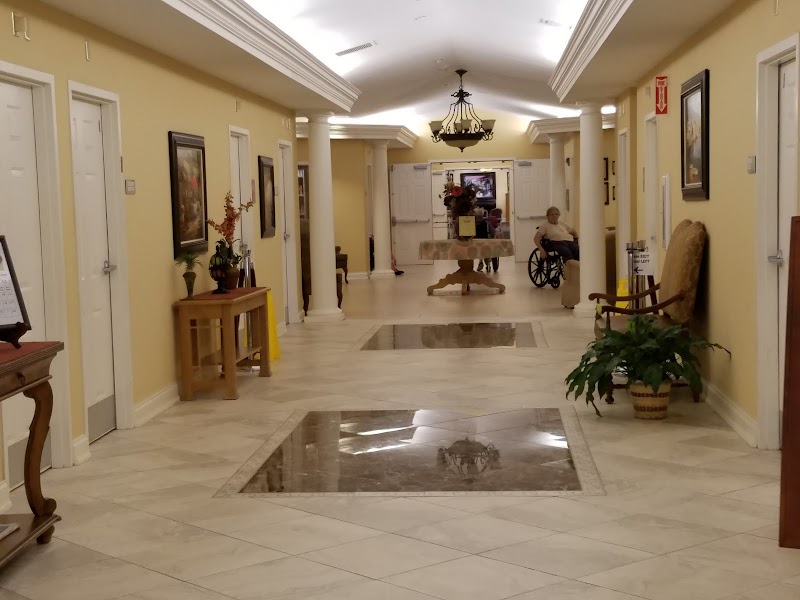
Who Owns and Operates Life Of Ocala?

LIFE CARE CENTER OF OCALA is owned by a for-profit company. For-profit facilities operate as businesses with obligations to shareholders or private owners. The facility is operated by LIFE CARE CENTERS OF AMERICA, a chain that manages multiple nursing homes. With 120 certified beds and approximately 111 residents (about 92% occupancy), it is a mid-sized facility located in OCALA, Florida.

How Does Life Of Ocala Compare to Other Florida Nursing Homes?

Compared to the 100 nursing homes in Florida, LIFE CARE CENTER OF OCALA's overall rating (5 stars) is above the state average of 3.2, staff turnover (27%) is significantly lower than the state average of 46%, and health inspection rating (4 stars) is above the national benchmark.

What Should Families Ask When Visiting Life Of Ocala?

Based on this facility's data, families visiting should ask: "Can I visit during a mealtime to observe dining assistance and food quality?" "How do you handle medical emergencies, and what is your hospital transfer rate?" "Can I speak with family members of current residents about their experience?"

Is Life Of Ocala Safe?

Based on CMS inspection data, LIFE CARE CENTER OF OCALA has a clean safety record: no substantiated abuse findings (meaning no confirmed cases of resident harm), no Immediate Jeopardy citations (the most serious violation level indicating risk of serious injury or death), and is not on the Special Focus Facility watch list (a federal program monitoring the lowest-performing 1% of nursing homes). The facility has a 5-star overall rating and ranks #1 of 100 nursing homes in Florida. While no facility is perfect, families should still ask about staff-to-resident ratios and recent inspection results during their visit.

Do Nurses at Life Of Ocala Stick Around?

Staff at LIFE CARE CENTER OF OCALA tend to stick around. With a turnover rate of 27%, the facility is 19 percentage points below the Florida average of 46%. Low turnover is a positive sign. It means caregivers have time to learn each resident's needs, medications, and personal preferences. Consistent staff also notice subtle changes in a resident's condition more quickly. Registered Nurse turnover is also low at 22%, meaning experienced RNs are available to handle complex medical needs.

Was Life Of Ocala Ever Fined?

LIFE CARE CENTER OF OCALA has no federal fines on record. CMS issues fines when nursing homes fail to meet care standards or don't correct problems found during inspections. The absence of fines suggests the facility has either maintained compliance or corrected any issues before penalties were assessed. This is a positive indicator, though families should still review recent inspection reports for the full picture.

Is Life Of Ocala on Any Federal Watch List?

LIFE CARE CENTER OF OCALA is not on any federal watch list. The most significant is the Special Focus Facility (SFF) program, which identifies the bottom 1% of nursing homes nationally based on persistent, serious quality problems. Not being on this list means the facility has avoided the pattern of deficiencies that triggers enhanced federal oversight. This is a positive indicator, though families should still review the facility's inspection history directly.