SEVEN HILLS HEALTH & REHABILITATION CENTER
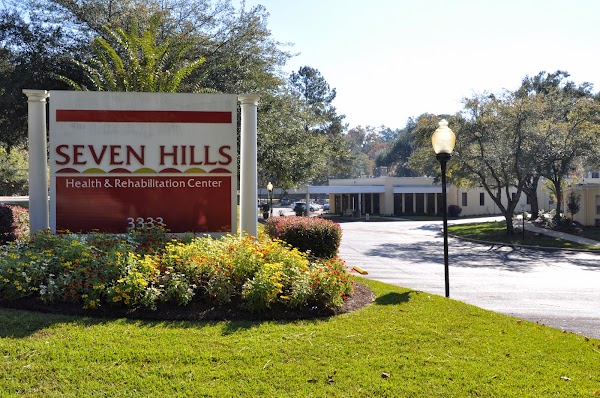

3333 CAPITAL MEDICAL BLVD, TALLAHASSEE, FL 32308 (850) 877-4115
For profit - Limited Liability company 156 Beds SUMMITT CARE II, INC. Data: November 2025
Trust Grade
80/100
#275 of 690 in FL
Last Inspection: November 2024

Within standard 12-15 month inspection cycle. Federal law requires annual inspections.

Overview

Seven Hills Health & Rehabilitation Center in Tallahassee, Florida, holds a Trust Grade of B+, which means it is recommended and above average compared to other facilities. It ranks #275 out of 690 nursing homes in Florida, placing it in the top half, but only #6 out of 8 in Leon County, indicating there are better local options available. The facility's trend is improving, with issues decreasing from 5 in 2024 to just 1 in 2025. However, staffing is a weakness, earning only 2 out of 5 stars, and with a turnover rate of 48%, which is average for the state. Notably, there have been concerns regarding wound care practices, as three residents did not receive the required treatment for their wounds, and a resident reported persistent sewage odors and malfunctioning air conditioning, highlighting some environmental care issues. Despite these weaknesses, it is positive to note that the facility has not incurred any fines, indicating compliance with regulations.

Trust Score
B+
80/100
In Florida
#275/690
Top 39%
Safety Record
Low Risk
No red flags
Inspections
Getting Better
5 → 1 violations
Staff Stability
⚠ Watch
48% turnover. Above average. Higher turnover means staff may not know residents' routines.
Penalties
✓ Good
No fines on record. Clean compliance history, better than most Florida facilities.
Skilled Nurses
○ Average
Each resident gets 35 minutes of Registered Nurse (RN) attention daily — about average for Florida. RNs are the most trained staff who monitor for health changes.
Violations
⚠ Watch
11 deficiencies on record. Higher than average. Multiple issues found across inspections.
★★★★☆
4.0
Overall Rating
★★☆☆☆
2.0
Staff Levels
★★★☆☆
3.0
Care Quality
★★★★☆
4.0
Inspection Score
Stable
2024: 5 issues
2025: 1 issues

The Good

  • Full Sprinkler Coverage · Fire safety systems throughout facility
  • No fines on record

Facility shows strength in fire safety.

The Bad

Staff Turnover: 48%

Near Florida avg (46%)

Higher turnover may affect care consistency

Chain: SUMMITT CARE II, INC.

Part of a multi-facility chain

Ask about local staffing decisions and management

The Ugly 11 deficiencies on record

Sept 2025 1 deficiency
CONCERN (D) 📢 Someone Reported This

A family member, employee, or ombudsman was alarmed enough to file a formal complaint

Potential for Harm - no one hurt, but risky conditions existed

Pressure Ulcer Prevention (Tag F0686)

Could have caused harm · This affected 1 resident

**NOTE- TERMS IN BRACKETS HAVE BEEN EDITED TO PROTECT CONFIDENTIALITY** Based on record review, interviews, and facility policy review, the facility failed to meet professional standards of care for 3...

Read full inspector narrative →
**NOTE- TERMS IN BRACKETS HAVE BEEN EDITED TO PROTECT CONFIDENTIALITY** Based on record review, interviews, and facility policy review, the facility failed to meet professional standards of care for 3 of 4 residents sampled for wound care. (Resident #1, #3 and #8)The findings include:Resident #1On 9/8/25, a review of Resident #1's medical record was conducted. Resident #1 was admitted on [DATE] with diagnoses that included a pressure ulcer of sacral - stage 4 and non-pressure ulcer left third toe full thickness. The physician's documentation dated 9/5/25 stated the treatment plan for the non-pressure wound of the left, third toe was primary dressing alginate calcium with silver once daily and as needed if saturated, soiled or dislodged for 25 days and a secondary dressing gauze island with border once daily and as needed if saturated, soiled, or dislodged. The treatment plan for the Stage 4 pressure wound on the coccyx full thickness included a primary dressing apply Dankins (sodium hypochlorite solution) twice daily and as needed and a secondary dressing of gauze Island with border twice daily. The documentation was electronically signed on 9/5/25 at 3:32 PM. Documentation stated the patient's plan of care was discussed with a Nursing Staff Member, but no name was provided.A review of the physician's orders was conducted. Physician's orders entered into the medical record included Wound Care: Coccyx: Cleanse with normal saline or wound cleaner. Pat dry. Apply Dakin's wet to dry dressing and cover with silicone super absorbent dressing, every day and evening shift and as needed if soiled, saturated, or not intact. This order was dated 8/29/25. There are no active orders for the non-pressure ulcer on left third toe.A review of the Medication Administration Record (MAR) and Treatment Administration Record (TAR) was conducted for September 2025. On 9/2/25, there was no wound care documented, the entry was left blank. MAR and TAR documentation did not include left third toe wound care.A review of progress notes was conducted. There was a progress note dated 9/1/25 indicating Resident #1 refused wound care. There were no progress notes for 9/2/25.On 9/9/25 at 11:20 AM an interview was conducted with Registered Nurse and Wound care nurse. She reviewed Resident #1's TAR documentation and stated wound care treatment on 9/2/25 was done but not documented. She stated it was an oversight. On 9/9/25 at 3:02 PM, a follow-up interview was conducted with the Director of Nursing (DON). The DON was made aware that TAR documentation for Resident #1 did not include the left third toe wound care under physician's order, yet the wound physician had noted it under the treatment plan on 9/5/25. She was also made aware that TAR was not documented on 9/2/25 for wound care on Coccyx for Resident #1. She stated she will fix this issue immediately. Resident #3On 9/8/25, a review of Resident #3's medical record was conducted. Resident #3 was admitted on [DATE] with diagnoses that included dementia and anxiety. The physician's active orders included, Cleanse coccyx wound with normal saline, dry with 4x4 gauze, cover with foam bordered dressing, every day shift for wound management dated 5/19/25.MAR and TAR documentation did not include an order for wound care to the coccyx. The most recent weekly skin assessment documentation dated 8/29/25 stated generalized pruritus/ dry skin; order in progress.On 9/9/25 at 10:29 AM, an interview was conducted with the Director of Nursing (DON). The DON was asked the reason the order for wound care on the coccyx placed on 5/19/25 for Resident #3 did not show onto the TAR. She reviewed Resident #3's medical record and stated that order was placed under other and the nurse that placed the order should have checked MAR or TAR for the order to show onto the administration record, but the nurse did not enter the order correctly. She further reviewed the medical record and concluded the order should have been discontinued as Resident #3 currently did not have a wound on coccyx. Resident #8On 9/9/25 at 12:45 PM, an interview was conducted with Resident #8. She stated the facility was performing wound care on both sites every other day but the facility was very inconsistent doing her wound care. She further stated she could not recall having her wound treatment since last Wednesday (9/3/25) when the wound care physician assessed the wounds. A review of physician orders was conducted. Orders stated, Wound care: right breast dated 8/10/25: cleanse area to right breast with Dankins pat dry and apply xeroform, then dry 4x4 and cover with dry border gauze every day shift and as needed if soiled or not intact. Another physician order dated 8/16/25 stated wound care: sacrum-cleanse sacrum wound, apply collagen filler and calcium ag w/silver to wound bed and cover with silicone superabsorbent dressing until resolved, every day shift every 2 day(s) for Wound Management.A wound care assessment dated [DATE] stated, wound chest full thickness treatment plan: xeroform gauze apply every two days and as needed. Stage 4 pressure wound sacrum full thickness, treatment plan: alginate calcium w silver to apply once daily and as needed.A review of Resident #8's TAR stated Wound Care: Right Breast: Cleanse area to right breast with Dakins 0.125% solution. Pat dry. Apply Xeroform, then dry 4x4 and cover with dry border gauze. everyday shift for wound management evaluate for s/s pain. On 9/4 and 9/5, this was not documented and left blank.The TAR also stated, Treatment Wound care: sacrum-cleanse sacrum wound with NS or WCC. Pat Dry. Skin Prep around peri-wound. Apply collagen filler and calcium ag w/silver to wound bed and cover with silicone superabsorbent dressing until resolved. every day shift every 2 day(s) for Wound Management. This treatment was not documented on 9/5 as it was left blank. Wound treatments placed onto the TAR did not correspond with the treatment plan ordered by the physician. On 9/9/25 at 1:15 PM, a follow-up interview was conducted with Wound Care Nurse. She reviewed Resident #8's orders and stated she took responsibility of the mistake and that the wound on sacrum was supposed to be done every day instead of every other day. She further reviewed Resident #8's TAR documentation and stated she was not sure why wound care had not been documented on 9/4/25 or 9/5/25. The DON was also made aware that Treatment plan placed by the physician for Resident #8 did not correspond with the physician's orders entered into the treatment administration record. She stated that the wound on the chest was supposed to be performed every other day and the wound on sacrum was supposed to be documented daily. The DON acknowledged the order frequency was placed wrong and stated she was going to fixed it and properly document it. She was also made aware that the wound care treatment documentation was left blank for 9/4/25 and 9/5/25. She stated all documentation should be completed at the time performed.The facility policy Manage Wound Care stated, Policy stated the treatment worder will be documented on the Treatment Administration Record.The facility policy Nursing clinical Documentation states, The facility clinical staff will document the provision of care and services according to nursing standards and regulatory requirements. When completed, documentation will accurately reflect the clinical care and other services provided to the resident and ensure that the appropriate information is available to all interdisciplinary team members. Documentation in the medical record of each resident should provide 1. A complete account of the resident's care treatment and response to the care. All entries in the medical record should be accurate, legible, dated, and timed.
Nov 2024 5 deficiencies
CONCERN (D)

Potential for Harm - no one hurt, but risky conditions existed

Safe Environment (Tag F0584)

Could have caused harm · This affected 1 resident

**NOTE- TERMS IN BRACKETS HAVE BEEN EDITED TO PROTECT CONFIDENTIALITY** During a tour of the facility conducted on 11/04/2024 at 10:45 AM, the persistent odor of feces was present in Resident #27's ro...

Read full inspector narrative →
**NOTE- TERMS IN BRACKETS HAVE BEEN EDITED TO PROTECT CONFIDENTIALITY** During a tour of the facility conducted on 11/04/2024 at 10:45 AM, the persistent odor of feces was present in Resident #27's room and in the hallway outside the resident's room. In an interview conducted with Resident #27, he stated his toilet has been repeatedly clogging and not flushing properly for at least 2 weeks. Resident #27 further stated he had attempted to unclog the toilet himself with the plunger that was located in the bathroom and that he was embarrassed to repeatedly request help from the maintenance staff to unclog the toilet. During this observation and interview, Resident #27 also stated the air conditioning unit did not properly cool his room. When asked how long this had been a concern, he stated that it had been like that for a while. Closer observation revealed the temperature on the air conditioning Unit in Resident #27's room was set at 60 degrees Fahrenheit, but the air coming out was not cold. Using a hygrometer, the temperature in the room was reading at 77 degrees Fahrenheit. (Photographic evidence obtained.) Review of Resident #27's most recent Minimum Data Set (MDS) dated [DATE] revealed he had a Brief Interview of Mental status score of 15, indicating he had no cognitive impairment. Further review of his MDS revealed he was independent for his toileting needs. An interview was conducted with the facility's Maintenance Director. The Maintenance Director stated he was aware of the issue with Resident #27's room toilet. Staff M stated that the resident's bowel movements constantly clog the toilet. He stated, I even told the nurse the resident may need medication or something, but his toilet has to be plunged every other day. During further interviews, the Maintenance Director stated he was not aware that the air conditioning unit not working in Resident #27's room. He stated that he would get the air conditioner fixed that day. During initial tour on 11/4/2024, the following rooms were observed to have environmental concerns (Photographic evidence obtained): room [ROOM NUMBER] had some broken tiles, peeling baseboard, peeling paint, and brown rust like substance on the bathroom doorframe at the entrance to the room. room [ROOM NUMBER] had some peeling paint and a black substance on the door frame. Room # 69 had some debris around the tile and some other debris accumulating in a hole in the tile. The door frame had some peeling paint. Based upon observation and interview, the facility failed to provide a clean and homelike environment for 6 of 91 rooms observed. The findings include: During tours of the C-wing conducted from 11/04/24 through 11/07/24, numerous chairs and wheelchairs were observed lining the hallways, easements, and egresses of the C-wing, which could cause a tripping or entrapment hazard for staff members, residents, and visitors (photographic evidence obtained). During a tour of the facility conducted on 11/04/24, the floor in room [ROOM NUMBER] was visibly dirty (photographic evidence obtained). The resident living in this room stated she was bothered by the dirty floor in the room. During a tour of the facility conducted on 11/04/24 at 11:40 AM, it was observed in room [ROOM NUMBER] that one of the two bedside tables was missing a wheel. Also the corner of the wall in this room by the bathroom was noted to be heavily scraped and in disrepair (photographic evidence obtained). On 11/4/24 at 11:30 AM, Resident #17 stated the wheelchair in her room was not her wheelchair and that her wheelchair was a bigger size. Nursing staff on the wing was asked if they was aware that Resident #17 was missing her wheelchair. They stated they knew that Resident #17's wheelchair was in another resident's room. The staff said they would return Resident #17's wheelchair. Upon returning to Resident #17 on 11/04/24 at 3:19 PM, it was found that her wheelchair had not been returned to her. The surveyor returned to the nursing station and asked about the wheelchair. The staff member stated she would look for Resident #17's wheelchair. Upon returning on 11/05/24 at 9:09 AM, it was found that her wheelchair had been returned to her.
CONCERN (D)

Potential for Harm - no one hurt, but risky conditions existed

Deficiency F0658 (Tag F0658)

Could have caused harm · This affected 1 resident

**NOTE- TERMS IN BRACKETS HAVE BEEN EDITED TO PROTECT CONFIDENTIALITY** Based on observations, interviews, and record review, the facility failed to properly follow physician's orders for central line...

Read full inspector narrative →
**NOTE- TERMS IN BRACKETS HAVE BEEN EDITED TO PROTECT CONFIDENTIALITY** Based on observations, interviews, and record review, the facility failed to properly follow physician's orders for central line care for 1 of 1 resident reviewed for central line care (Resident #41). The findings include: During a tour of the facility conducted on 11/04/24 at 11:52 AM, Resident #41 was observed with a PICC line (which is a central intravenous line used for long term intravenous medication therapy) present in her right upper arm. Further observation revealed the dressing covering Resident #41's PICC line was dated 10/21/24. This dressing appeared to be loose fitting and there was a 2x2 gauze present under the transparent dressing which was saturated with dried blood (photographic evidence obtained). Resident #41 was aked when the dressing was last changed. She stated she did not remember. Review of Resident #41's medical record revealed she had been admitted to the facility on [DATE] for Orthopedic Surgery Aftercare. Resident #41 has a medical history significant for Diabetes, Paraplegia, Left Leg Amputation, Anemia, and Depression. A review of Resident #41's physician orders revealed an order was written on 10/23/24 for PICC line change transparent dressing every day shift every 7 days for Preventative Care AND as needed for soiling or dislodgement along with orders for two separate intravenous antibiotics to be given multiple times per day. An interview was conducted with Staff G, Licensed Practical Nurse, on 11/07/24 at 11:15 AM. Staff G stated that the central line dressings were supposed to be changed weekly and that the dressing change should be charted in the resident's medical record on the Treatment Administration Record. She verified the current dressings were overdue based upon the physician's order. Review of the facility's policy titled Infusion Devices Ongoing Assessment, Site Care, and Dressing Change, dated March 2019 revealed the Central vascular access device and midline catheter site care and dressing changes are performed at established intervals and immediately when the integrity of the dressing is compromised, if moisture, drainage, or blood is present. Gauze dressings are changed every 2 days. Transparent membrane dressings are changed every 5-7 days.
CONCERN (D)

Potential for Harm - no one hurt, but risky conditions existed

Incontinence Care (Tag F0690)

Could have caused harm · This affected 1 resident

Based on Interview and record review, the facility failed to ensure that physician orders for catheter care was provided in accordance with the care plan for 1 of 1 sampled residents for catheter care...

Read full inspector narrative →
Based on Interview and record review, the facility failed to ensure that physician orders for catheter care was provided in accordance with the care plan for 1 of 1 sampled residents for catheter care. (Resident #68) The findings include: On 11/4/24 at 12:45 PM, Resident #68 was observed to have an indwelling catheter drainage bag attached to his wheelchair. On 11/5/24 at approximately 10:30 AM, a review of the care plan for Resident #68 was conducted. The care plan indicated that Resident #68 had an indwelling catheter placed due to obstructive uropathy on 8/10/2023. The care plan indicated that catheter care should be provided as ordered. A review of the Medication Administration Record (MAR) and Treatment Administration Record (TAR) for Resident #68 revealed no orders for catheter care to be performed. On 11/5/24 at approximately 10:40 AM, a review of physician's orders for Resident #68 was conducted. There were no orders in place for catheter care for Resident #68. There was no active order found to perform catheter care for Resident #68. A review of discontinued orders for the resident was conducted. There was an order to provide urinary catheter care using soap and water every shift that ended on 7/8/2024. There was another order to change the catheter that also ended on 7/8/24. On 11/5/24 at approximately 12:00 PM, an interview was conducted with Nurse B, a Licensed Practical Nurse (LPN). She was asked about the frequency of catheter care for Resident #68. Nurse B looked and could not locate an order. Nurse B stated Nurse G, another LPN, is working with that resident today and might be able to provide more information. On 11/5/24 at approximately 12:10 PM, an interview was conducted with Nurse G. She was asked about the frequency of catheter care for Resident #68. Nurse G looked and could not locate an order. Nurse G indicated that Resident #68 had been discharged from hospice services and the order might not have been rewritten when he was discharged . She indicated that she was sure staff was providing catheter care every shift and would get the issue corrected. On 11/6/24 at approximately 9:00 AM, a review of the current physician orders for Resident #68 was conducted. The orders had been updated on 11/6/24 at 7:00 AM to include orders to perform catheter care every shift. On 11/6/24 at approximately 4:00 PM, an interview was conducted with the Director of Nursing (DON). The DON was notified about concerns with Resident #68 not having physician orders to perform catheter care. She acknowledged the oversight. On 11/6/24, a review of the facility policy for catheters was conducted. The policy directed nurses to verify physician's orders for catheter care prior to performing the procedure.
CONCERN (D)

Potential for Harm - no one hurt, but risky conditions existed

Deficiency F0761 (Tag F0761)

Could have caused harm · This affected 1 resident

**NOTE- TERMS IN BRACKETS HAVE BEEN EDITED TO PROTECT CONFIDENTIALITY** Based on observations, interviews, and record review, the facility failed to ensure proper storage of medications for 2 of 5 res...

Read full inspector narrative →
**NOTE- TERMS IN BRACKETS HAVE BEEN EDITED TO PROTECT CONFIDENTIALITY** Based on observations, interviews, and record review, the facility failed to ensure proper storage of medications for 2 of 5 residents observed (Resident #386 and Resident #57) and in 3 of 3 medication carts reviewed for medication storage. The findings include: Resident #386 During a tour of the facility conducted on 11/04/24 at 11:27 AM, a medication cup was observed on the bedside table of Resident #386. The cup contained 4 medication tablets (photographic evidence obtained). During this observation, Resident #386 was asked how long the medication cup had been sitting on her bedside table. She stated, a little while. When asked if the staff often left her medications for her to take herself, she said I don't know. A review of Resident #386's medical record revealed she was admitted to the facility on [DATE]. She has a medical history significant for Falls, Diabetes, Hypertension, Anxiety, Bipolar Disorder, and Depression. A review of Resident #386's physician orders and medication administration record revealed she was ordered to receive 7 medications on 11/04/24 at 9:00 AM. Further review of Resident #386's medical record did not reveal documentation of her being evaluated for medication self-administration safety. An interview was conducted with Staff G, Licensed Practical Nurse (LPN), on 11/05/24 at 11:15 AM. She stated Resident #386 was not safe to take her own medications. Staff G further stated she did not give Resident #386 medications on 11/04/24 and she would not leave medications at the bedside. Resident #57 During a tour of the facility conducted on 11/04/24 at 4:00 PM, the surveyor observed a bottle of Pepto Bismol and a tube of Hydrocortisone cream present on the dresser of Resident #57 (photographic evidence obtained). Resident #57 was not present in the room at the time of this observation. A review of Resident #57's medical record revealed she was admitted to the facility on [DATE]. She has a medical history significant for Falls, Muscle Weakness, Hypertension, and Chronic Obstructive Pulmonary Disease. A review of Resident #57's physician orders revealed she did not have orders for either Pepto Bismol or Hydrocortisone Cream. Further review of Resident #57's medical record did not reveal documentation of her being evaluated for medication self-administration safety. An interview was conducted with Resident #57 on 11/05/24 at 9:05 AM. She said she did not know she was not supposed to have medications in her room. Medication carts During a tour of the facility conducted on 11/07/24 at 9:17 AM, the surveyors observed an unlocked medication cart on the B-hallway. Further observation found Staff D, a Registered Nurse, was in room [ROOM NUMBER] administering medications. While waiting for Staff D to return to the cart, another staff member walked past the unlocked cart. When Staff D returned to the hallway, she was asked about the medication cart being unlocked. She stated this was her second day working and promptly locked the cart. A medication cart observation was conducted on 11/07/24 at 9:28 AM with Staff E, LPN, on the B-hallway. The surveyors found 1 loose tablet in this medication cart. Staff E properly disposed of this tablet into the pill buster solution (a chemical solution used to dissolve medications for quick and safe disposal). Staff E told the surveyors the pharmacist comes each month to audit medication carts and rooms. A medication cart observation was conducted on 11/07/24 at 9:40 AM with Staff F, LPN, on the C-hallway. The surveyors found 13 loose tablets in this medication cart. Staff F properly disposed of the tablets into the pill buster solution. A medication cart observation was conducted on 11/07/24 at 9:56 AM with Staff G, LPN on the A-hallway. The surveyors found 30 loose tablets in this medication cart. Staff G properly disposed of the tablets into the pill buster solution. An interview was conducted with the facility's Director of Nursing on 11/07/24 at 10:48 AM. During this interview, the above medication storage concerns were discussed. She confirmed the pharmacy did monthly audits. She further stated she would educate the staff about medication safety and conduct her own audits of rooms and medication carts. Review of the facility's policy titled Storage of Drugs, Biologicals, Syringes, and Needles, dated July 2020 revealed the following: Drugs are stored under proper conditions Only facility staff have possession of the keys which open drug storage areas Drugs are stored in an orderly manner All drugs are securely stored in a locked cabinet/cart, inaccessible by residents and visitors Bedside drugs require a physician order and approval by the facility Bedside drugs must be stored in a secured area within the resident's room.
CONCERN (D) 📢 Someone Reported This

A family member, employee, or ombudsman was alarmed enough to file a formal complaint

Potential for Harm - no one hurt, but risky conditions existed

Infection Control (Tag F0880)

Could have caused harm · This affected 1 resident

Based on observation, interview, record review, and policy review, the facility failed to ensure nurses followed facility policy for handwashing, cleaning, and disinfecting glucometer machines for 3 o...

Read full inspector narrative →
Based on observation, interview, record review, and policy review, the facility failed to ensure nurses followed facility policy for handwashing, cleaning, and disinfecting glucometer machines for 3 of 4 sampled observations during medication pass. (Residents #337, #40, and #187). The findings included: On 11/5/24 at approximately 4:09 PM, an observation of Nurse A, a Registered Nurse (RN), was conducted as she prepared a glucose meter to obtain a capillary blood sampling via finger stick for Resident #337. Nurse A removed the glucometer machine from the top drawer of the medication cart. She proceeded directly to the bedside to collect a capillary sample from Resident #337's finger. She did not clean or disinfect the glucometer before use, set the disinfected glucometer on a clean field, or wash/ sanitize her hands before performing the procedure. Nurse A did not clean and disinfect the glucometer or wash or sanitize her hands after performing the procedure on Resident #337. On 11/5/24 at approximately 4:15 PM, Nurse A immediately prepared to obtain a obtain a capillary blood sampling via finger stick for Resident #40. Nurse A utilized the same glucometer that she used to collect a capillary sample from Resident #337 to collect the capillary sample from Resident #40's finger. She did not clean or disinfect the glucometer before use, did not set the disinfected glucometer on a clean field, and did not wash/sanitize her hands before performing the procedure. Nurse A did not clean and disinfect the glucometer or wash her hands after performing the procedure on Resident #40. On 11/5/24 at approximately 4:20 PM, Nurse A immediately prepared to obtain a obtain a capillary blood sampling via finger stick for Resident #187. Nurse A utilized the same glucometer that she used to collect a capillary sample from Resident #337 and Resident #40 to obtain the sample from Resident #187. She did not clean or disinfect the glucometer before use, did not set the disinfected glucometer on a clean field, and did not wash/sanitize her hands before performing the procedure. Nurse A RN did not clean and disinfect the glucometer or wash her hands after performing the procedure on Resident #187. On 11/5/24 at approximately 4:30 PM, an interview was conducted with Nurse A. She was asked how many glucometer machines are on each medication cart. Nurse A explained that normally there are 1-2 on each cart and that the glucometers are used for several residents. On 11/6/24 at approximately 3:30 PM, a second interview was conducted with Nurse A. She was asked to describe the process for cleaning the glucometer machines. Nurse A indicated that her supervisor and the risk manager conducted training regarding the process for cleaning and sanitizing the glucometer yesterday afternoon. She indicated that she had implemented the process of cleaning glucometer both before and after use and is also ensuring that she sanitizes or washes her hands. On 11/6/24 at approximately 4:00 PM, an interview was conducted with the Director of Nursing (DON). The DON was notified about the infection concerns with observations of collection of capillary finger stick glucometer readings. The DON indicated that she was aware and training has already been conducted with Nurse A regarding the process. A review of the facility policy for Capillary Blood Sampling (Finger Sticks) (dated 2001) was conducted. The General Guidelines section of the policy stated that glucose meters intended for reuse should always be cleaned and disinfected between each resident use. The Steps to the Procedure portion of the policy directed nurses to 1. Wash hands, 2. [NAME] Gloves. 3. Place the blood glucose monitor on a clean field 8. Following the manufacturer's instructions, clean and disinfect reusable equipment, parts and/or devices after each use. 9. remove gloves. 10. Wash hands. A review of the Handwashing policy (dated 2001) was also conducted. The policy indicated hand hygiene is indicated immediately before touching a resident. Before performing an aseptic task, after contact with blood, body fluids or contaminated surfaces and after touching a resident.
Sept 2023 1 deficiency
CONCERN (D)

Potential for Harm - no one hurt, but risky conditions existed

Accident Prevention (Tag F0689)

Could have caused harm · This affected 1 resident

Based on observation, interview, and record review, the facility failed to ensure an environment free of potential hazards. The facility failed to provide assistive devices that prevent avoidable acci...

Read full inspector narrative →
Based on observation, interview, and record review, the facility failed to ensure an environment free of potential hazards. The facility failed to provide assistive devices that prevent avoidable accidents for 1 of 2 residents sampled for safety. (Resident #117) The findings include: On 9/11/23 at approximately 11:00 AM, an interview was conducted with Resident # 117. She explained that she needed a new commode chair. She stated that asked the nurses for a bariatric chair about 2 weeks ago but had not received one yet. About 2 weeks ago, the regular sized commode chair she used rusted through and broke while she was seated on it. She received a minor scratch to her thigh as a result. She told the surveyor that the replacement regular sized chair that she is currently using might break because it also has rust on it. She verbalized concerns about injuring herself. The resident explained that she really needs a bariatric commode chair because she takes a blood thinner medication and bruises easily. The resident showed pictures of the regular sized commode chair that broke while she was on it two weeks ago. The surveyor noted that Resident #117 had a wide shower chair, a wide wheelchair, and a wide rollator in the room at the time of the interview. The surveyor went to look at the commode chair that was currently placed over the toilet. The commode was a standard size. The chair had a large amount of rust intrusion under the toilet seat. The rusted areas were located at bolts that hold the chair supports in the front of the chair. There was also significant rust on the back of the chair under the toilet seat. (Photographic evidence obtained) On 9/14/23 at approximately 9:00 AM, a second interview was conducted with Resident #117. She said that, on 9/13/23, she asked Nurse A, a Licensed Practical Nurse (LPN), when she would get the bariatric bed side commode. Despite making staff aware of this issue, she still had not received one at the time of this interview. The surveyor looked and the same rusted commode chair was in the bathroom. On 9/14/23 at approximately 9:20 AM, an interview was conducted with Nurse A. She explained that a bariatric chair had been ordered for Resident #117 . Nurse A was asked about the injury Resident #117 received from the commode 2 weeks ago. She explained that the resident received a superficial scratch after the chair broke. The surveyor showed Nurse A the photographs of the chair that is currently in use. She was asked if that chair looked safe for use by Resident #117. She explained that it might be better to get a different chair. She explained that a bariatric chair had been ordered. A bariatric chair had just become available and she would get it for the Resident to use. On 9/14/23 at approximately 9:30 AM, a record review of the care plan for Resident #117 revealed that she was at risk for falls related to gait/balance problems, with a history of falls, osteoarthritis, morbid obesity, cellulitis in both lower extremities, and left lower extremity edema. Her weight as of 9/13/23 was 349. Resident #112 took Eliquis Oral Tablet 5 MG (Apixaban) twice a day for deep vein thrombosis (DVT) prophylaxis. On 9/14/23 at approximately 11:29 AM, an interview was conducted with the Director of Nursing (DON). She was shown a picture of the commode chair in use by Resident #117 and asked if she felt the chair was safe for use by Resident #117. The DON agreed that the chair needed to be replaced. She was asked to explain the process for checking equipment such as commode chairs to ensure safety for use. She explained that housekeeping and maintenance usually check them. She explained that several new commode chairs were ordered yesterday. The facility started doing an audit of all commode chairs starting 9/13/23. On 9/14/23 at approximately 2:00 PM, the surveyor noted that the commode chair in the room of Resident #117 had been replaced and maintenance had two old commode chairs from unknown resident rooms on a cart removing them from the area. (Photographic evidence obtained)
Jul 2023 1 deficiency
CONCERN (D) 📢 Someone Reported This

A family member, employee, or ombudsman was alarmed enough to file a formal complaint

Potential for Harm - no one hurt, but risky conditions existed

Comprehensive Care Plan (Tag F0656)

Could have caused harm · This affected 1 resident

Based on record review and interviews, the facility failed to follow the care plans for 1 of 3 residents sampled for continuous positive airway pressure (CPAP) machine use (Resident #3) and 1 of 3 res...

Read full inspector narrative →
Based on record review and interviews, the facility failed to follow the care plans for 1 of 3 residents sampled for continuous positive airway pressure (CPAP) machine use (Resident #3) and 1 of 3 residents sampled for urinary catheter care (Resident #9). The findings include: Resident #3 On 7/17/23 at 12:48 PM, a telephone interview was conducted with Resident #3's daughter, who stated her mother used a CPAP machine (a device used to treat sleep apnea) at night. She stated that the facility did not provide the distilled water required for CPAP usage, resulting in her mother not being able to use the machine unless family members brought the distilled water. On 7/17/23 at 2:47 PM, Resident #3 was observed with a CPAP on the bedside table inside her room. A gallon bottle of distilled water was observed on the floor. A review of Resident #3's clinical record was conducted. Review of the care plan included interventions for CPAP at night as ordered related to Chronic Obstructive Pulmonary Disease (COPD). A review of physician orders revealed no order for the CPAP. On 7/17/23 at 3:01 PM, an interview with the Director of Nursing (DON) was conducted. The DON reviewed Resident #3's physician's orders with the surveyor and confirmed there were no orders for CPAP. The DON reviewed the resident's care plan and stated Resident #3 had been receiving CPAP services. The DON stated the admission nurse was responsible to check the admission orders and to call the physician to obtain orders for CPAP use, but it was not done. A review of facility policy Use of CPAP/BIPAP/APAP (undated) was conducted. The policy stated obtain MD order that includes the following: specifies what type of machine is required, contains the specific pressure, diagnosis for use, for cleaning mask and tubing instructions. Resident #9 On 7/17/23 at 5:01 PM, an observation of Resident #9's urinary catheter tubing showed cloudy urine. On 7/18/23 at 10:16 AM, an observation of Resident #9's urinary catheter tubing again showed cloudy urine. A review of Resident #9's clinical record was conducted. Review of the care plan included interventions stating, monitor/record/report to MD for s/s of UTI, included cloudiness. On 7/18/23 at 10:18 AM, an interview was conducted with Staff A, Licensed Practical Nurse (LPN). Staff A verified Resident #9 had cloudy urine and stated she was going to notify the physician as it was a sign of infection. On 7/18/23 at 10:28 AM, an interview was conducted with Staff B, LPN. Staff B stated she was aware of the Resident #9's cloudy tubing but she did not report it because the urine was yellow-colored and she thought that was ok. On 7/18/23 at 10:48 AM, an interview was conducted with the DON. The DON stated nurses were in charge of reporting signs and symptoms of infections, including cloudy urine. The DON verified there was no documentation of the resident's cloudy urine. A review of the facility policy Catheters, suprapubic-care of (includes drainage bag care/maintenance) (undated), was conducted. The policy stated, observe urine for color, consistency, odor, or foreign particles. Document.
Apr 2022 3 deficiencies
CONCERN (D)

Potential for Harm - no one hurt, but risky conditions existed

Comprehensive Care Plan (Tag F0656)

Could have caused harm · This affected 1 resident

Based on record review and interviews, the facility failed to follow the care plans for 1 of 5 (Resident #222) residents sampled for unnecessary medications. The findings include: On 4/26/22 a review...

Read full inspector narrative →
Based on record review and interviews, the facility failed to follow the care plans for 1 of 5 (Resident #222) residents sampled for unnecessary medications. The findings include: On 4/26/22 a review of the care plan was conducted for resident #222. The care plans included the interventions Administer PSYCHOTROPIC medications as ordered by physician; Monitor for side effects and effectiveness Q-SHIFT (every shift) and, Monitor/record occurrence for target behavior symptoms and document per facility protocol. A review of the medications administration record (MAR) revealed instances of blank spaces for behavior monitoring on the day shift (7 AM to 3 PM) on 4/22/22, on the evening shift (3 PM to 11 PM) on 4/4/22, 4/9/22, 4/10/22, 4/12/22, 4/13/22, 5/15/22, 4/22/22, 4/25/22 and 4/26/22, and on the night shift (11 PM to 7 AM) on 4/4/22, 4/9/22, 4/10/22, 4/12/22, 4/13/22, 5/15/22, 4/22/22, 4/25/22 and 4/26/22. On 4/27/22 at approximately 10:50 AM, an interview was conducted with the Unit Manager who stated blank spaces mean someone didn't document and she will try to find out what happened. On 04/28/22 at approximately 7:56 AM, an interview was conducted with the Director of Nursing who stated it was her expectation that documentation be completed prior to the nurses clocking out. She further stated that she was working on providing education by way of in-services on completed documentation. A review of the policy Preparation and General Guidelines effective March 2019, item D Documentation stated at number 1 The individual who administers the medication dose records the administration on the resident's MAR directly after the medication is given. At the end of every medication pass, the person administering the medications reviews the MAR to ensure all necessary doses were administered and documented. In no case should the individual who administered the medication report off-duty without first recording the administration of any medications.
CONCERN (D)

Potential for Harm - no one hurt, but risky conditions existed

Pharmacy Services (Tag F0755)

Could have caused harm · This affected 1 resident

Based on observations, record review and interviews the facility failed to ensure medications were available to be administered as prescribed by the physician for 1 of 5 residents (resident #76) sampl...

Read full inspector narrative →
Based on observations, record review and interviews the facility failed to ensure medications were available to be administered as prescribed by the physician for 1 of 5 residents (resident #76) sampled for medication administration, and 1 of 1 resident (resident #4) sampled for care plans. The findings include: Resident #4 On 4/26/22 at approximately 1:58 PM, a review was conducted of the electronic medication administration record (EMAR) which revealed resident #4 had not received the medication Ativan 1 mg (milligram) ordered every eight hours routinely on the following dates and times: 4/21/22 at 6 AM, 4/22/22 at 2 PM, 4/23/22 at 6 AM, 2 PM and 10 PM, on 4/24/22 at 6 AM, 2 PM, 10 PM, and on 4/25/22 at 6 AM, 2 PM and 10 PM. Ativan is a medication used for the treatment of anxiety. A review of the nurse progress notes for resident #4 revealed documentation on 4/21/22 at 5:09 AM, medication on order, 4/22/22 at 6:00 AM med not available on order, 4/23/22 at 1:11 PM, pharmacy clarification, 4/24/22 at 5:33 AM on order, 4/24/22 6:51 AM need new rx (prescription) MD (Medical Doctor) notified, 4/25/22 at 2:38 PM on order. On 4/26/22 at approximately 3:58 PM, an interview was conducted with Nurse A, a Licensed Practical Nurse (LPN). Nurse A stated that she charts on order if a medication is unavailable to be given. She further stated that she faxes the medication request to the pharmacy so it can be sent to the facility. Nurse A went on to state that she had notified the Unit Manager when the medication was still not available the next time she worked. On 4/26/22 at approximately 4:30 PM, an interview was conducted with the Unit Manager for the hall where resident #4 resided. The Unit Manger stated she did not recall being informed that resident #4 was out of the medication Ativan. The Unit Manager went on to state that if a controlled medication has been re-ordered from pharmacy and did not arrive, then it was her expectation for the nurse to contact the pharmacy to see if a new prescription is needed. If a new prescription is needed the nurse is to contact the primary doctor for a new prescription. If the missing medication is available in the Emergency Drug Kit (an storage container that contains medications to include Ativan to be used in emergencies) the nurse is to get an authorization from the pharmacy and doctor to obtain the medication from there so that the resident does not miss the dose. Resident #76 On 4/27/22 at approximately 9:40 AM, a medication administration observation was made with Nurse B, a LPN for resident #76. The medication Cymbalta (a medication used for depression) was scheduled but was unavailable to be given. Nurse B stated the medication had not arrived from the pharmacy. She further stated that she would contact the pharmacy and notify the Nurse Practitioner. During this observation a second medication for resident # 76, Refresh Optic Solution 0.5-0.9%, (an over the counter medication used for dry eyes) was unavailable to be given. Nurse B stated that the medication was out of stock in central supply. On 4/27/22 at approximately 2:44 PM, an interview was conducted with the Director of Nursing (DON). The DON stated that it was her expectation for medications to be re-ordered from pharmacy in a timely manner so that the residents do not run out of their medications, if a new prescription is needed the nurse is to contact the physician to obtain a new prescription. When questioned about the medication Ativan for resident #4, the DON stated she contacted the pharmacy, and the medication was faxed in for re-order on 4/17/22, but did not have a valid prescription. The DON went on to state that the last dose of Ativan for resident #4 was given on 4/20/22 at 10:00 PM. She offered that the facility had initiated an in-service training for the nursing staff on re-ordering medication and the need to notify the physician of any missed doses. A review was conducted of the Policy titled Medication Shortages/Medication Unavailable. Under Procedure 1 the policy states Upon discovery that a medication is not received or unavailable, immediately initiate actions to obtain the medication.
CONCERN (D)

Potential for Harm - no one hurt, but risky conditions existed

Unnecessary Medications (Tag F0759)

Could have caused harm · This affected 1 resident

Based on observation, interview and record review, the facility failed to prevent medication errors greater than 5% for 1 of 5 residents sampled for medication administration, (#76). There were 2 erro...

Read full inspector narrative →
Based on observation, interview and record review, the facility failed to prevent medication errors greater than 5% for 1 of 5 residents sampled for medication administration, (#76). There were 2 errors in 29 opportunities for a medication error rate of 6.9%. The findings include: On 4/27/22 at approximately 9:40 AM, a medication administration observation was made with Nurse B, a Licensed Practical Nurse (LPN) for resident #76. The medication Cymbalta ( a medication used for depression) was scheduled and was not available to be given. Nurse B stated the medication had not arrived from the pharmacy. She further stated that she would contact the pharmacy and notify the Nurse Practitioner. During this observation a second medication for resident # 76, Refresh Optic Solution 0.5-0.9%, (an over the counter medication used for dry eyes) was not available to be given. Nurse B stated that the medication was out of stock in central supply. On 4/27/22 at approximately 2:44 PM, an interview was conducted with the Director of Nursing, (DON), who stated it was her expectation that medications are faxed and re-ordered from pharmacy in a timely manner so that the resident does not run out of their medications. If the medication is unavailable the nurse is to contact the pharmacy and the physician. A review was conducted of the Policy titled Medication Shortages/Medication Unavailable. Under Procedure 1 the policy states Upon discovery that a medication is not received or unavailable, immediately initiate actions to obtain the medication.
Understanding Severity Codes (click to expand)
Life-Threatening (Immediate Jeopardy)
J - Isolated K - Pattern L - Widespread
Actual Harm
G - Isolated H - Pattern I - Widespread
Potential for Harm
D - Isolated E - Pattern F - Widespread
No Harm (Minor)
A - Isolated B - Pattern C - Widespread

Questions to Ask on Your Visit

  • "Can I speak with families of current residents?"
  • "What's your RN coverage like on weekends and overnight?"

Our Honest Assessment

Strengths
  • • Grade B+ (80/100). Above average facility, better than most options in Florida.
  • • No major safety red flags. No abuse findings, life-threatening violations, or SFF status.
  • • No fines on record. Clean compliance history, better than most Florida facilities.
Concerns
  • • 11 deficiencies on record. Higher than average. Multiple issues found across inspections.
Bottom line: Generally positive indicators. Standard due diligence and a personal visit recommended.

About This Facility

What is Seven Hills Health & Rehabilitation Center's CMS Rating?

CMS assigns SEVEN HILLS HEALTH & REHABILITATION CENTER an overall rating of 4 out of 5 stars, which is considered above average nationally. Within Florida, this rating places the facility higher than 99% of the state's 100 nursing homes. This rating reflects solid performance across the metrics CMS uses to evaluate nursing home quality.
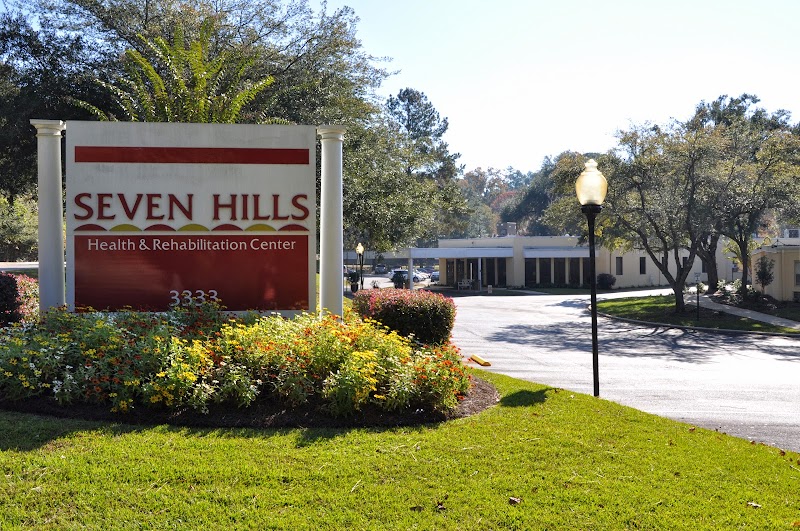
How is Seven Hills Health & Rehabilitation Center Staffed?

CMS rates SEVEN HILLS HEALTH & REHABILITATION CENTER's staffing level at 2 out of 5 stars, which is below average compared to other nursing homes. Staff turnover is 48%, compared to the Florida average of 46%.

What Have Inspectors Found at Seven Hills Health & Rehabilitation Center?

State health inspectors documented 11 deficiencies at SEVEN HILLS HEALTH & REHABILITATION CENTER during 2022 to 2025. These included: 11 with potential for harm.

Who Owns and Operates Seven Hills Health & Rehabilitation Center?

SEVEN HILLS HEALTH & REHABILITATION CENTER is owned by a for-profit company. For-profit facilities operate as businesses with obligations to shareholders or private owners. The facility is operated by SUMMITT CARE II, INC., a chain that manages multiple nursing homes. With 156 certified beds and approximately 143 residents (about 92% occupancy), it is a mid-sized facility located in TALLAHASSEE, Florida.
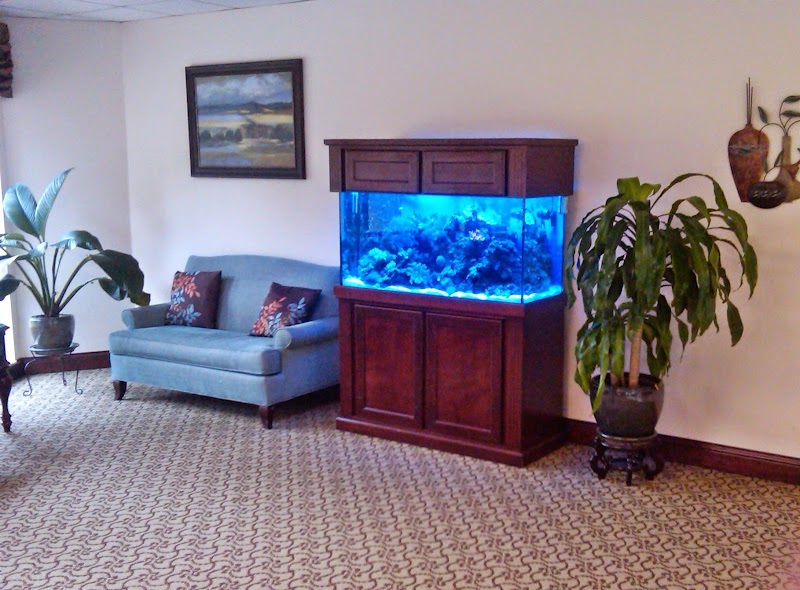
How Does Seven Hills Health & Rehabilitation Center Compare to Other Florida Nursing Homes?

Compared to the 100 nursing homes in Florida, SEVEN HILLS HEALTH & REHABILITATION CENTER's overall rating (4 stars) is above the state average of 3.2, staff turnover (48%) is near the state average of 46%, and health inspection rating (4 stars) is above the national benchmark.

What Should Families Ask When Visiting Seven Hills Health & Rehabilitation Center?

Based on this facility's data, families visiting should ask: "Can you walk me through typical staffing levels on day, evening, and night shifts?" "Can I visit during a mealtime to observe dining assistance and food quality?" "How do you handle medical emergencies, and what is your hospital transfer rate?" "Can I speak with family members of current residents about their experience?" These questions are particularly relevant given the below-average staffing rating.

Is Seven Hills Health & Rehabilitation Center Safe?

Based on CMS inspection data, SEVEN HILLS HEALTH & REHABILITATION CENTER has a clean safety record: no substantiated abuse findings (meaning no confirmed cases of resident harm), no Immediate Jeopardy citations (the most serious violation level indicating risk of serious injury or death), and is not on the Special Focus Facility watch list (a federal program monitoring the lowest-performing 1% of nursing homes). The facility has a 4-star overall rating and ranks #1 of 100 nursing homes in Florida. While no facility is perfect, families should still ask about staff-to-resident ratios and recent inspection results during their visit.

Do Nurses at Seven Hills Health & Rehabilitation Center Stick Around?

SEVEN HILLS HEALTH & REHABILITATION CENTER has a staff turnover rate of 48%, which is about average for Florida nursing homes (state average: 46%). Moderate turnover is common in nursing homes, but families should still ask about staff tenure and how the facility maintains care continuity when employees leave.

Was Seven Hills Health & Rehabilitation Center Ever Fined?

SEVEN HILLS HEALTH & REHABILITATION CENTER has no federal fines on record. CMS issues fines when nursing homes fail to meet care standards or don't correct problems found during inspections. The absence of fines suggests the facility has either maintained compliance or corrected any issues before penalties were assessed. This is a positive indicator, though families should still review recent inspection reports for the full picture.

Is Seven Hills Health & Rehabilitation Center on Any Federal Watch List?

SEVEN HILLS HEALTH & REHABILITATION CENTER is not on any federal watch list. The most significant is the Special Focus Facility (SFF) program, which identifies the bottom 1% of nursing homes nationally based on persistent, serious quality problems. Not being on this list means the facility has avoided the pattern of deficiencies that triggers enhanced federal oversight. This is a positive indicator, though families should still review the facility's inspection history directly.