CLUB HEALTHCARE AND REHABILITATION CENTER AT THE V


16529 SE 86TH BELLE MEADE CIRCLE, THE VILLAGES, FL 32162 (352) 385-8200
For profit - Limited Liability company 68 Beds GOLD FL TRUST II Data: November 2025
Trust Grade
50/100
#486 of 690 in FL
Last Inspection: January 2025

Within standard 12-15 month inspection cycle. Federal law requires annual inspections.

Overview

Club Healthcare and Rehabilitation Center at The V has a Trust Grade of C, which means it is average and falls in the middle of the pack among nursing homes. It ranks #486 out of 690 facilities in Florida, placing it in the bottom half, and #3 out of 4 in Sumter County, suggesting that only one local option is better. The facility's trend is worsening, with issues increasing from 1 in 2024 to 9 in 2025. Staffing is a concern, with a 2/5 rating and a turnover rate of 54%, significantly higher than the state average of 42%. While there have been no fines reported, the facility has less RN coverage than 79% of state facilities, which can hinder care quality. Specific incidents noted by inspectors include failure to accurately report staffing levels, improper medication storage practices, and unsafe food storage in the kitchen, indicating potential risks to residents' health. Overall, while the facility has some strengths, such as no fines, the staffing issues and inspection findings raise valid concerns for families considering this nursing home.

Trust Score
C
50/100
In Florida
#486/690
Bottom 30%
Safety Record
Low Risk
No red flags
Inspections
Getting Worse
1 → 9 violations
Staff Stability
⚠ Watch
54% turnover. Above average. Higher turnover means staff may not know residents' routines.
Penalties
✓ Good
No fines on record. Clean compliance history, better than most Florida facilities.
Skilled Nurses
○ Average
Each resident gets 36 minutes of Registered Nurse (RN) attention daily — about average for Florida. RNs are the most trained staff who monitor for health changes.
Violations
⚠ Watch
28 deficiencies on record. Higher than average. Multiple issues found across inspections.
★★☆☆☆
2.0
Overall Rating
★★☆☆☆
2.0
Staff Levels
★★★★☆
4.0
Care Quality
★★☆☆☆
2.0
Inspection Score
Stable
2024: 1 issues
2025: 9 issues

The Good

  • 4-Star Quality Measures · Strong clinical quality outcomes
  • Full Sprinkler Coverage · Fire safety systems throughout facility
  • No fines on record

Facility shows strength in quality measures, fire safety.

The Bad

2-Star Overall Rating

Below Florida average (3.2)

Below average - review inspection findings carefully

Staff Turnover: 54%

Near Florida avg (46%)

Higher turnover may affect care consistency

Chain: GOLD FL TRUST II

Part of a multi-facility chain

Ask about local staffing decisions and management

The Ugly 28 deficiencies on record

Jan 2025 9 deficiencies
CONCERN (D)

Potential for Harm - no one hurt, but risky conditions existed

Notification of Changes (Tag F0580)

Could have caused harm · This affected 1 resident

**NOTE- TERMS IN BRACKETS HAVE BEEN EDITED TO PROTECT CONFIDENTIALITY** Based on record review and interview, the facility failed to ensure resident's physician was notified of a change in condition f...

Read full inspector narrative →
**NOTE- TERMS IN BRACKETS HAVE BEEN EDITED TO PROTECT CONFIDENTIALITY** Based on record review and interview, the facility failed to ensure resident's physician was notified of a change in condition for 1 of 3 residents reviewed for significant weight loss, Resident #38. Findings include: Review of Resident #38's admission record showed the resident was most recently admitted on [DATE] with the diagnoses including unspecified severe protein-calorie malnutrition, muscle wasting and atrophy, unspecified dementia, acute kidney failure and adult failure to thrive. Review of Resident #38's Weights and Vitals Summary showed the resident weighed 76.4 lbs. (pounds) on 12/30/2024, and 71.2 lbs. on 1/4/2025, which indicates -6.44% loss. The resident's weight on 1/11/2025 was 66.9 lbs., which indicates -12.09% loss compared to the weight on 12/30/2024, and the resident's weight on 1/25/2025 was 62.2 lbs., which indicates -18.59% loss compared to the weight on 12/30/2024. Review of Resident #38's dietary profile dated 1/2/2025 showed it read, New admit. Nutrition Evaluation and recommendations completed . Per her daughter she has not been eating or drinking for the last month per H and P [History and Physical] . Eating an estimated 26-75% at most meals, however PO [by mouth] intake is variable . Admit body weight is 76.4# [pounds], with BMI [Body Mass Index] of 13.9 indicating underweight and malnourished. Medications reviewed. Receiving Furosemide/Diuretic which may cause weight fluctuations . Labs 12/31 indicating low protein levels, high creatinine and high calcium levels . Continue to monitor PO intake, labs, weight changes and skin and adjust nutrition interventions prn [as needed]. Proceed with poc [plan of care]. During an interview on 1/28/2025 at 12:57 PM, the Registered Dietitian (RD) stated, [Resident #38's name] was malnourished when she got to the facility. She has poor PO intake and daughter said she was not eating that much prior to coming here. [Resident #38's name] came in at 76.4 pounds. She should be on fortified foods. I was consulted and encouraged an appetite stimulant. The provider puts in the orders. She should be on an appetite stimulant. I have asked about it twice and still nothing is in there. It would be great to put her on one. During an interview on 1/28/2025 at 3:42 PM, the Director of Nursing (DON) stated, She [the RD] looks in the record and looks at our notes. The RD knows how to read the notes. She knows when a weight is available and knows how to request weights. During an interview on 1/29/2025 at 1:12 PM, the Advanced Practice Registered Nurse (APRN) #1 stated, I did see [Resident #38's name]. I oversee pain management. Not overall appetite and weights. I focus on pain management and physiatry [physical medicine and rehabilitation]. During an interview on 1/29/2025 at 3:30 PM, the Medical Doctor #2 (MD #2) stated, The RD should have been monitoring the [Resident #38's name] weights. The RD never contacted me in regards to [Resident #38's name] weight loss. If I am not responding, I can get a text all the time. During an interview on 1/29/2024 at 3:49 PM, the APRN #2 stated, I recall the patient [Resident #38]. I do not have the record in front of me. I was not notified of any weight changes with the resident [Resident #38]. During an interview on 1/30/2025 at 1:15 PM, the DON stated, I did not see a change in condition in the system for the weight changes of 1/4/2025 and 1/11/2025 for [Resident #38's name]. I didn't see one I cannot make it up. I would not be able to say if the provider or the family was notified of the significant weight change. Review of the facility policy and procedure titled Change in Condition with the last review date of 1/23/2025 showed it read, Policy: It will be the policy of this facility to notify the physician, family, resident, and/or responsible party/resident representative (as is applicable) of significant changes in condition and providing treatment(s) according to the resident's wishes and physician's orders. Procedure: 1. Observe resident during routine care and during monthly/quarterly/annual assessment periods to identify significant changes in physical or mental conditions, orientation, change in vital signs, weights, etc. 2 When a change is noted, gather pertinent data such as vital signs, weights and other clinical observations . 4. When significant changes in skin or weight are noted it is appropriate to contact the physician and responsible party/resident representative (if applicable) to notify them and receive orders such as consultations, root cause analysis or implementation of further monitoring . 7. Contact the primary physician to update him/her to the change in condition. In the event the primary physician cannot be notified, attempt to contact the facility's medical director.
CONCERN (D)

Potential for Harm - no one hurt, but risky conditions existed

Assessment Accuracy (Tag F0641)

Could have caused harm · This affected 1 resident

**NOTE- TERMS IN BRACKETS HAVE BEEN EDITED TO PROTECT CONFIDENTIALITY** Based on record review and interview, the facility failed to ensure the Minimum Data Set (MDS) assessment was accurate for 1 of ...

Read full inspector narrative →
**NOTE- TERMS IN BRACKETS HAVE BEEN EDITED TO PROTECT CONFIDENTIALITY** Based on record review and interview, the facility failed to ensure the Minimum Data Set (MDS) assessment was accurate for 1 of 5 residents reviewed for nutrition, Resident #17. Findings include: Review of Resident #17's admission record showed the resident was most recently admitted on [DATE] with the diagnoses including unspecified protein-calorie malnutrition, anemia, gastro-esophageal reflux disease without esophagitis, and acute kidney failure. Review of Resident #17's quarterly Minimum Data Set, dated [DATE] showed it read, Section K- Swallowing/Nutritional Status . K0310. Weight Gain: Gain of 5% or more in the last month or gain of 10% or more in last 6 months . 2. Yes, not on physician-prescribed weight-gain regiment. Section K did not indicate the resident was on therapeutic diet. Review of Resident #17's progress note dated 12/27/2024 showed it read, Weight Note. 12/18: 118.8# [pounds], 7/30/2024: 134.6#. Weight loss of 11.7% in 6 months. Review of Resident #17's physician order dated 12/2/2024 showed it read, Boost with meals for moderate protein energy malnutrition, albumin 2.6, Document percent consumed. Review of Resident #17's physician order dated 5/21/2024 showed it read, Regular diet, Regular texture, Thin consistency, Add Fortified Foods to all meals. Review of Resident #17's physician order dated 5/21/2024 showed it read, House Shake No Sugar Added two times a day varied PO [by mouth] intake Glucerna Shake by mouth. During an interview on 1/28/2025 at 12:47 PM, the Registered Dietitian stated, [Resident #17's Name] has been declining and losing weight for some time now. We have all nutritional interventions in place, but she does keep losing weight. During an interview on 1/29/2025 at 2:17 PM, the MDS Coordinator stated, I did have to make a modification for section K. It was coded for weight gain and she had weight loss. During an interview on 1/30/2025 at approximately 8:30 AM, the MDS Coordinator stated, [Resident #17's name] Section K in the MDS is not current. She should be coded for therapeutic diet since she has fortified foods ordered and supplements.
CONCERN (D)

Potential for Harm - no one hurt, but risky conditions existed

Deficiency F0657 (Tag F0657)

Could have caused harm · This affected 1 resident

**NOTE- TERMS IN BRACKETS HAVE BEEN EDITED TO PROTECT CONFIDENTIALITY** Based on record review and interview, the facility failed to reassess the effectiveness of the interventions, review and revise ...

Read full inspector narrative →
**NOTE- TERMS IN BRACKETS HAVE BEEN EDITED TO PROTECT CONFIDENTIALITY** Based on record review and interview, the facility failed to reassess the effectiveness of the interventions, review and revise the resident's care plan when necessary for 1 of 3 residents reviewed for significant weight loss, Resident #38. Findings include: Review of Resident #38's admission record showed the resident was most recently admitted on [DATE] with the diagnoses including unspecified severe protein-calorie malnutrition, muscle wasting and atrophy, unspecified dementia, acute kidney failure and adult failure to thrive. Review of Resident #38's Weights and Vitals Summary showed the resident weighed 76.4 lbs. (pounds) on 12/30/2024, and 71.2 lbs. on 1/4/2025, which indicates -6.44% loss. The resident's weight on 1/11/2025 was 66.9 lbs., which indicates -12.09% loss compared to the weight on 12/30/2024, and the resident's weight on 1/25/2025 was 62.2 lbs., which indicates -18.59% loss compared to the weight on 12/30/2024. Review of the Intradisciplinary Plan of Care review meeting summary dated 12/31/2024 showed it read, Nursing reviewed meds and diet due to resident's weight loss due to weight loss. Resident weight loss is from poor appetite @ [at] home. Review of Resident #38's care plan initiated on 1/2/2025 showed it read, Focus. [Resident #38's name] is at risk for an alteration in nutrition and/or hydration r/t [related to]: has a chewing problem, has a swallowing problem, receives therapeutic diet, receives mechanically altered diet, underweight BMI [Body Mass Index] of 13.9, UTI [urinary tract infection], HTN [hypertension], Bradycardia, HLD [hyperlipidemia], COPD [chronic obstructive pulmonary disease], Dementia, Adult FTT [failure to thrive], AKF [acute kidney failure] . Interventions/Tasks: Provide tray set up; assist as needed . Provide diet as ordered. Offer and provide alternate as needed . Honor food preferences . Encourage adequate intake at meals . Keep fresh water at bedside . Encourage adequate fluid intake . Educate resident of importance in adhering to prescribed diet and of consequences of deviation from diet as needed . Supplements as ordered . Registered dietician consult as needed . Allow adequate time to eat. Review of Resident #38's records showed no revised care plan. During an interview on 1/30/2025 at 10:17 AM, the Director of Nursing (DON) stated, After the 1/11/2025 significant weight loss, I do not see any interventions put in place for [Resident #38's name] other than what was already in place. Looking back, I would have addressed gastric tube with the family or palliative care. During an interview on 1/30/2025 at 12:26 PM, the Minimum Data Set (MDS) Coordinator stated, Typically the RD will revise the care plan and we will also review it. Typically, the care plan will be revised if a person has a significant weight change. We would revise the care plan and make sure she is taking all the supplements and any changes that can be made. We have a clinical meeting every morning and that's when we are notified of the significant weight loss. IDT [Intradisciplinary Team] meeting is where I am alerted what needs to go into the care plan and I would add it. We would review and revise and discuss weight loss as a team. On 1/4/2025, it should have triggered a care plan revision. I was not aware of her weight loss. During an interview on 1/30/2025 at 1:15 PM, the DON stated, [Resident #38's name]'s care plan should have been revised after significant weight loss. Review of the facility policy and procedure titled Comprehensive Assessments and Care Plans with the last review date of 1/23/2025 showed it read, Standard: It will be the standard of this facility to make a comprehensive assessment of a resident's needs, strengths, goals, life history and preferences, using the resident assessment instrument (RAI) specified by CMS . Guidelines . 6. The facility will maintain all resident assessments completed within the previous 15 months in the resident's active record and use the results of the assessment to develop, review, and revise the residents' comprehensive care plan.
CONCERN (D)

Potential for Harm - no one hurt, but risky conditions existed

Deficiency F0692 (Tag F0692)

Could have caused harm · This affected 1 resident

**NOTE- TERMS IN BRACKETS HAVE BEEN EDITED TO PROTECT CONFIDENTIALITY** Based on record review and interview, the facility failed to ensure residents received adequate nutrition for 1 of 3 residents r...

Read full inspector narrative →
**NOTE- TERMS IN BRACKETS HAVE BEEN EDITED TO PROTECT CONFIDENTIALITY** Based on record review and interview, the facility failed to ensure residents received adequate nutrition for 1 of 3 residents reviewed for significant weight loss, Resident #38. Findings include: Review of Resident #38's admission record showed the resident was most recently admitted on [DATE] with the diagnoses including unspecified severe protein-calorie malnutrition, muscle wasting and atrophy, unspecified dementia, acute kidney failure and adult failure to thrive. Review of Resident #38's Weights and Vitals Summary showed the resident weighed 76.4 lbs. (pounds) on 12/30/2024, and 71.2 lbs. on 1/4/2025, which indicates -6.44% loss. The resident's weight on 1/11/2025 was 66.9 lbs., which indicates -12.09% loss compared to the weight on 12/30/2024, and the resident's weight on 1/25/2025 was 62.2 lbs., which indicates -18.59% loss compared to the weight on 12/30/2024. Review of Resident #38's physician order dated 12/30/2024 showed it read, Regular diet, Mechanical soft texture, nectar thick consistency. Review of Resident #38's physician order dated 12/30/2024 showed it read, Obtain weight upon admission then weigh weekly x 4 [4 times] and then weight monthly. Review of Resident #38's physician order dated 12/30/2024 showed it read, Cholecalciferol Tablet 1000 unit, give 2 tablets by mouth one time a day form supplemental. Review of Resident #38's physician order dated 1/1/2025 showed it read, House Nutritional Supplement two times a day for nutritional supplement, risk of malnutrition, offer 240 ml [milliliters] and document amount consumed. Review of Resident #38's physician order dated 1/2/2025 showed it read, Regular diet, Mechanical soft texture, nectar thick consistency, add: Fortified foods to all meals for risk of malnutrition. Review of Resident #38's physician order dated 1/2/2025 showed it read, House Protein two times a day for risk of malnutrition, offer 30 ml and document amount consumed. Review of Resident #38's physician order dated 1/2/2025 showed it read, Multivitamin-Minerals Oral Tablet (Multiple Vitamins w/ [with] Minerals), Give 1 tablet by mouth one time a day for risk if malnutrition. Review of Resident #38's physician order dated 1/15/2025 showed it read, Regular diet, mechanical soft texture, thin consistency. Review of Resident #38's physician orders showed no appetite stimulant ordered. Review of Resident #38's dietary profile dated 1/2/2025 showed it read, New admit. Nutrition Evaluation and recommendations completed . Per her daughter she has not been eating or drinking for the last month per H and P [History and Physical]. NKFA [no known food allergies). Diet is Regular, Mechanical Soft texture with thin liquids. Eating an estimated 26-75% at most meals, however PO [by mouth] intake is variable. Can feed self needing help with set up . Admit body weight is 76.4# [pounds], with BMI [Body Mass Index] of 13.9 indicating underweight and malnourished. Medications reviewed. Receiving Furosemide/Diuretic which may cause weight fluctuations. Also receiving Vitamin D 3 as vitamin supplementation. Labs 12/31 indicating low protein levels, high creatinine and high calcium levels . Continue to monitor PO intake, labs, weight changes and skin and adjust nutrition interventions prn [as needed]. Proceed with poc [plan of care]. During an interview on 1/28/2025 at 12:57 PM, the Registered Dietitian (RD) stated, [Resident #38's name] was malnourished when she got to the facility. She has poor PO intake and daughter said she was not eating that much prior to coming here. [Resident #38's name] came in at 76.4 pounds. She should be on fortified foods. I was consulted and encouraged an appetite stimulant. The provider puts in the orders. She should be on an appetite stimulant. I have asked about it twice and still nothing is in there. It would be great to put her on one. Review of Resident #38's medical visit note dated 1/6/2025 authored by Advanced Practice Registered Nurse #2 (APRN #2) showed it read, History of Presenting Problem: Patient starter [Sic.] stated that she has not been eating or drinking. During an interview on 1/28/2025 at 3:42 PM, the Director of Nursing (DON) stated, She [the RD] looks in the record and looks at our notes. The RD knows how to read the notes. She knows when a weight is available and knows how to request weights. During an interview on 1/29/2025 at 1:12 PM, the APRN #1 stated, I did see [Resident #38's name]. I oversee pain management. Not overall appetite and weights. I focus on pain management and physiatry [physical medicine and rehabilitation]. During an interview on 1/29/2025 at 3:30 PM, the Medical Doctor #2 (MD #2) stated, The patient had weight loss prior to coming in. She [Resident #38] had severe protein calorie malnutrition. I consulted the dietitian and started on protein shakes. The nursing staff said she [Resident #38] was finishing her meals, and the registered dietitian should have been monitoring, but sometimes patients will not respond to treatment. The patient might not respond with protein shakes and fortified meal. The RD never contacted me in regards to [Resident #38's name] weight loss. Maybe she contacted my nurse practitioner. Keep in mind she lost weight and that does not stop when you leave the hospital you can continue to lose weight until recovery because of weakness, sickness, inflammation and being bedridden. I believe that dietitian has been following, and they would tell me if she would need an appetite stimulant, but I was never notified to start her on an appetite stimulant. She came with weight loss. I rounded at the beginning and was never told. I don't know if my NP [Nurse Practitioner] was notified. She left a week ago. If the facility is saying they notified me, they should be able to prove that. If I am not responding, I can get a text all the time. When she continued to lose weight, the next thing would have been talk to the RD, go with an appetite stimulant and finally g-tube, or do nothing depending on the family. Weight loss is not uncommon to be seen in patients with dementia. They need to be encouraged to eat and be assisted with hand feeding. Common sense questions would be fortified meals, supplement does the resident like the shake, there are different variables. Supervise by staff if despite supervision and try the appetite stimulant. If resident was being weighed weekly, the facility should communicate to the nurse practitioner weekly in regards to the weights letting her know the weight changes. That would be the reason for weekly weights. During an interview on 1/29/2024 at 3:49 PM, the APRN #2 stated, I recall the patient [Resident #38]. I do not have the record in front of me. I no longer work for the facility. I was not notified of any weight changes with the resident [Resident #38]. Of course, I would have implemented the intervention. I would check thyroid levels to make sure it is not the reason of weight loss, but I do not recall the facility communicating the weight loss. During an interview on 1/30/2025 at 9:45 AM, the Dietary Manager stated, [Resident #38's name] is on fortified foods. I communicate with the RD. I am notified when residents have a significant weight loss weekly. I communicate with the RD, and she informs me. I started working here on 1/6/2025. I was not aware of her [Resident #38] significant weight loss. I would expect interventions to be put in place. I would try food first, supplement and appetite stimulant. During an interview on 1/30/2025 at 10:17AM with the DON stated, After the 1/11/2025 significant weight loss, I do not see any interventions put in place for [Resident # 38 name] other than what was already in place. Looking back, I would have addressed a gastric tube with the family or palliative care. During an interview 1/30/2025 at 11:50 AM, the Speech Language Pathologist stated, I changed her diet order after evaluating the patient [Resident #38]. We monitor, for a period of time, the residents in the facility and do trials to see if we can place residents on thin liquids. The resident [Resident #38] was not having any issues during the trials. I changed the diet from thicken liquids to thin liquids because she [Resident #38] was tolerating it well, the diet change or evaluation completed was not because of weight loss. Review of the facility policy and procedure titled Weights and Weight Loss with the last review date of 1/23/2025 showed it read, Policy: It will be the practice of this facility to implement the following systems regarding weight documentation. Procedure . 3. The RD/DTR [Dietetic Technician, Registered] is to review all admission weight for possible interventions. 4. Consistent weight loss noted during the admission weight process will be brought to the attention of the physician and/or RD and responsible party. 5. Significant weight loss shall be addressed by the physician and/or RD through discussion with the resident and/or resident representative for known preferences and desires and development and implementation of interventions to attempt to address the weight loss . 8. Weekly and Daily weights may be obtained per RD or physician orders in order to monitor clinical status of a resident requiring closer monitoring and intervention.
CONCERN (D)

Potential for Harm - no one hurt, but risky conditions existed

Unnecessary Medications (Tag F0759)

Could have caused harm · This affected 1 resident

Based on observation, interview, and record review, the facility failed to ensure the medication error rate was not five percent or greater for 2 out of 31 observations of medication administration. T...

Read full inspector narrative →
Based on observation, interview, and record review, the facility failed to ensure the medication error rate was not five percent or greater for 2 out of 31 observations of medication administration. The facility had a medication error rate of 6.45%. Findings include: 1) During an observation on 1/28/2025 at 8:25 AM, Staff E, Licensed Practical Nurse (LPN), began pouring Resident #159's medications into individual cups. Staff E removed Guaifenesin ER (Extended Release) tablet from her medication cart and placed the medication in a medication cup. Staff E finished placing all medications into individual cups and then proceeded to crush each medication. Staff E donned personal protective equipment and entered Resident #159's room. Staff E was about to begin to administer the medication via Resident #159's gastric tube. The surveyor asked Staff E to stop the medication administration process and notified Staff E that she had crushed an extended-release medication to administer enterally. During an interview on 1/28/2025 at 8:30 AM, Staff E, LPN, stated, I know she has an extended-release medication. I have not had any problem with them. But I know they should not administer. I know that they cannot be administered via g tube [gastric tube]. Review of Resident #159's physician order dated 1/13/2025 showed it read, Guaifenesin ER Tablet Extended Release 12 Hour 600 MG [milligram], Give 1 tablet via G-Tube every 12 hours for cough. Review of Resident #159's physician order dated 1/14/2025 showed it read, Nothing by mouth diet, Nothing by mouth texture, Nothing by mouth consistency. 2) During an observation on 1/29/2025 at 9:55 AM, Staff D, Registered Nurse (RN), began pouring medications in individual medication cups for Resident #161. Staff D crushed one Aspirin low dose delayed-release tablet, one Lisinopril tablet and poured one Cholestyramine oral packet of powder into a cup. Staff D entered Resident #161 room. Staff D entered Resident #161's room, and then entered Resident #161's bathroom and poured water into two plastic cups. Staff D donned gloves. Staff D premixed each medication cup with water and dissolved each medication. Staff D checked Resident #161's gastric tube for placement. Staff D proceeded to flush Resident #161's gastric tube. Staff D was going to begin administering the medications. The surveyor asked Staff D to stop the medication administration process and step outside to review the medications. During an interview on 1/29/2024 at approximately 10:20 AM, Staff D, RN, stated, I know I should not crush and administer a delayed-release medication via g-tube. Review of Resident #161's physician order dated 11/12/2024 showed it read, Aspirin Low Dose Oral Tablet Delayed Release 81 MG (Aspirin), Give 1 tablet via G-Tube one time a day for heart health. During an interview on 1/29/2025 at 11:23 AM, the Director of Nursing stated, The nursing staff should not crush and administer delayed-release or extended-release medication via the g-tube. They should call the provider and get alternative medication. Review of the facility policy and procedure titled Medication Errors with the last review date of 1/23/2025 showed it read, Policy: It will be the policy of this facility that the staff and practitioner shall try to prevent medication errors and adverse medication consequences and shall strive to identify and manage them appropriately when they occur. Review of the facility policy and procedure titled Medication Administration via Enteral Feeding Tube with the last review date of 1/23/2025 showed it read, Policy: Medication shall be prepared and administered according to the following established guidelines . Precautions: Common Medications not to crush: Some medications and dosage form should not be crushed. If there are any questions regarding the crushing of medications, call the pharmacy.
CONCERN (D)

Potential for Harm - no one hurt, but risky conditions existed

Deficiency F0761 (Tag F0761)

Could have caused harm · This affected 1 resident

Based on observation, interview, and record review, the facility failed to ensure the drugs and biologicals used in the facility were stored in accordance with currently accepted professional principl...

Read full inspector narrative →
Based on observation, interview, and record review, the facility failed to ensure the drugs and biologicals used in the facility were stored in accordance with currently accepted professional principles (Photographic evidence obtained). Findings include: During an observation on 1/26/2025 at 10:06 AM, Resident #160 was lying in bed. There was one bottle of Tylenol tablets on top of the resident's drawer. During an interview on 1/26/2025 at 10:06 AM, Resident #160 stated, I had a headache and my daughter brought the Tylenol for me. I took the medication, and it has been there ever since. During an observation on 1/26/2025 at 10:18 AM, Resident #1 was lying in bed. There was one tube of 1% Silver Sulfadiazine Cream on top of the bedside table next to the resident's bed. During an interview on 1/26/2025 at 10:18 AM, Resident #1 stated, The nurses will apply the cream to my wound when I ask them too. During an observation on 1/26/2025 at 10:41 AM, Resident #32 was lying in bed. There was one tube of Goodsense extra strength itch relief cream on top of the resident's bedside table. During an interview on 1/26/2025 at 10:41 AM, Resident #32 stated, The itch cream is for my neck to stop it from itching. During an interview on 1/29/2025 at 11:17 AM, the Director of Nursing (DON) stated, If a resident can self-administer, they will have a self-administration assessment, physician order and care. The resident should not have meds [medications] at bedside. The family is in and out. We will take the medication out if deem unsafe. The nightstand locks so the resident is given a key. Review of the facility policy and procedure titled Medication/Biological Storage with the last review date of 1/23/2025 showed it read, Policy: It will be the policy of this facility to store medications, drugs and biologicals in a safe, secure and orderly manner. Procedure . 7. Compartments (including, but not limited to, drawers, cabinets, rooms, refrigerators, carts and boxes) containing medications, drugs and biologicals shall be locked when not in use and trays or carts used to transport such items shall not be left unlocked if out of a nurse's view.
CONCERN (D)

Potential for Harm - no one hurt, but risky conditions existed

Infection Control (Tag F0880)

Could have caused harm · This affected 1 resident

Based on observation, interview, and record review, the facility failed to ensure staff used appropriate personal protective equipment (PPE) while providing direct contact care for 2 of 10 residents r...

Read full inspector narrative →
Based on observation, interview, and record review, the facility failed to ensure staff used appropriate personal protective equipment (PPE) while providing direct contact care for 2 of 10 residents reviewed for enhanced-barrier precautions (EBP), Residents #1 and #161, and 1 of 4 residents reviewed for transmission-based precautions, Resident #158, to prevent the possible spread of infection and communicable diseases. Findings include: During an observation on 1/26/2025 at 12:23 PM, Staff C, Activities Assistant, donned gloves and grabbed a pillow from Resident #1's chair in the residents' room. Staff C assisted Resident #1 to turn to his right side. Staff C placed the pillow on the resident's back, tucking the pillow in the left side of the resident's back to assist with repositioning and offloading the resident. Resident #1's room door had an enhanced barrier precaution sign and a plastic bin outside of Resident #1's room with personal protective equipment. Review of Resident #1's physician order dated 1/24/2025 showed it read, Requires enhanced barrier precautions R/T [related to] wound care every shift for prophylaxis. During an observation on 1/26/2025 at 2:05 PM, Staff B, Licensed Practical Nurse (LPN), was flushing Resident #158's midline with normal saline. Staff B was wearing gloves and a surgical mask. Staff B did not have a gown. Resident #158's door had a contact-precaution sign posted and there was a plastic bin with personal protective equipment outside of the room. Review of Resident #158's physician order dated 1/24/2025 showed it read, Contact isolation-MRSA [Methicillin-Resistant-Staphylococcus Aureus] in wound every shift for precaution until 3/01/2025 23:59 [11:59 PM]. During an interview on 1/28/2025 at 2:29 PM, the Infection Preventionist stated, The staff are supposed to wear gloves and gown when entering an enhanced barrier room during high contact activity; when the staff is touching the resident for more than a couple of seconds. If the staff was tucking the pillow and assisting with repositioning, the staff should have had gloves and gown on. If a staff is flushing an IV [Intravenous Catheter], I believe they should also wear a gown and gloves. During an observation on 1/29/2025 at 9:55 AM, Staff D, Registered Nurse (RN), began pouring medications in individual medication cups for Resident #161. After preparing the medications, Staff D entered Resident #161's room. Resident #161 room door had an enhanced barrier sign posted with a plastic bin containing personal protective equipment. Staff D entered Resident #161's room without donning a gown or gloves. Staff D entered Resident #161's bathroom and poured water into two plastic cups. Staff D donned gloves. Staff D did not wear a gown. Staff D premixed each medication cup with water and dissolved each medication. Staff D checked Resident #161 gastric tube for placement. Staff D proceeded to flush Resident #161 gastric tube. Review of Resident #161's physician order dated 1/13/2025 showed it read, Requires enhanced barrier precautions R/T GTUBE [gastric tube] every shift for precaution. During an interview on 1/29/2024 at approximately 10:20 AM, Staff D, RN, stated, I am covering today from another facility. I know I should have put on gloves and a gown before coming into contact with the gastric tube. During an interview on 1/29/2025 at 11:19 AM, the Director of Nursing (DON) stated, Enhanced barrier is to protect residents that have portals for infection. Staff must don gloves and gown when providing care, putting hands on and have contact with patient. During an interview on 1/29/2025 at 1:25 PM, Staff C, Activities Assistant stated, I do remember that [Resident #1's name] said he was on his bottom for a while and I asked if he wanted to be repositioned and I offered to take pressure off his bottom. I put the pillow underneath, and he said he felt better. You are supposed to gown up and stuff, but I was not sure if he was an enhanced barrier precautions. There is usually a sign on the door, but I don't recall there being a sign on the door. If they have open wounds or infection, we should follow enhanced barrier precautions. I was unaware [Resident #1's name] had wounds. If I knew he had wounds, I would have put on a gown. During an interview on 1/30/2025 at 8:22 AM, the DON stated, Staff should gown and wear gloves when going into a contact precaution room. No exceptions. It is not like the enhanced barrier precautions. Review of the facility policy and procedure titled Enhanced Barrier Precautions with the last review date of 1/23/2025 showed it read, Policy: It will be the policy of this facility to implement enhanced barrier precautions for preventing transmission of novel or targeted multidrug-resistant organisms. Definitions: Enhanced barrier precautions refers to the use of gown and gloves for certain residents during specific high-contact resident care activities that have been found to increase risk for transmission of multidrug-resistant organisms . Procedure . 4. For residents for whom EBP are indicated, EBP is employed when performing the following High-contact care activities- a. Dressing, b. Bathing, c. Transferring, d. Providing hygiene, e. Changing linens, f. Changing briefs or assisting with toileting, g. Device care or use: central line, urinary catheter, feeding tube, tracheostomy/ventilator, h. Wound care: any skin opening requiring a dressing. Review of the facility policy and procedure titled Transmission Based Precautions with the last review date of 1/23/2025 showed it read, Contact Precautions. Contact precautions are intended to prevent transmission of infectious agents, including epidemiologically important microorganisms, spread by direct or indirect contact with the resident or the resident's environment . Guidelines for Contact Precautions . Gowns. 1. [NAME] gown upon entry into the room or cubicle. Remove gown and observe hand hygiene before leaving the resident care environment.
CONCERN (E)

Potential for Harm - no one hurt, but risky conditions existed

Medical Records (Tag F0842)

Could have caused harm · This affected multiple residents

Review of Resident #1's physician order dated 12/25/2024 showed it read, House Nutritional Supplement two times a day for Nutritional Supplement, risk of malnutrition, Offer 240 ml and document amount...

Read full inspector narrative →
Review of Resident #1's physician order dated 12/25/2024 showed it read, House Nutritional Supplement two times a day for Nutritional Supplement, risk of malnutrition, Offer 240 ml and document amount consumed. Review of Resident #1's physician order dated 12/25/2024 showed it read, House Protein two times a day for risk of malnutrition, Offer 30 ml and document amount consumed. Review of Resident #1's medication administration record for January 2025 showed no entries documented for the amount of House Protein consumed or the amount of House Nutritional Supplement consumed from 1/1/2025 through 1/27/2025. Review of Resident #38's physician order dated 1/1/2025 showed it read, House Nutritional Supplement two times a day for Nutritional supplement, risk of malnutrition, Offer 240 ml and document amount consumed. Review of Resident #38's physician order dated 1/2/2025 showed it read, House Protein two times a day for risk of malnutrition, offer 30 ml and document amount consumed. Review of Resident #38's medication administration record for January 2025 showed no entries documented for the amount of House Nutritional Supplement consumed or the amount of House Protein consumed from 1/1/2025 through 1/27/2025. During an interview on 1/30/2025 at 9:31 AM, the Director of Nursing (DON) confirmed Residents #1, #12, #21, #41, #256, and #41's medication administration records for January 2025 did not contain documentation of the amount of House Protein or House Supplement consumed and the physician orders did include document amount consumed. 2) Review of Resident #42's physician order dated 12/14/2025 showed it read, Cleanse sacrum with NS [normal saline], pat dry, cover with calcium alginate, and border foam, skin prep surrounding tissue, every day shift . Order Status: Discontinued. Review of Resident #42's physician order dated 1/28/2025 showed it read, Late order entry: for 1/17/2025, 1/19/2025, 1/25/2025, 1/26/2025, 1/28/2025. The order is as such, cleanse sacrum, pat dry. Cover wound bed with calcium alginate, add border foam dressing. Skin prep surrounding tissue every 7-3 shift and PRN soiling or dislodgement. Review of Resident #42's treatment administration record for January 2025 showed two orders for sacrum wound care, one with a start date of 12/15/2024 and a discontinue date of 1/2/2025, and another with the start date of 1/3/2025 and discontinue date of 1/15/2024. There was no entries documented on 1/3/2025, 1/7/2025, 1/9/2025, and 1/10/2025. Review of Resident #42's physician orders showed no active orders for sacral wound care after 1/15/2025. Review of Resident #42's Wound Assessment Report dated 1/20/2025 showed it read, Location: sacrococcygeal . Wound status: Stable . Treatment: Dressing Change Frequency: Daily and PRN. Clean wound with: Cleanse with normal saline. Primary Treatment: Calcium alginate, skin prep surrounding tissue or peri wound, Collagen. Other Dressings: Bordered foam, Recommended air mattress. Review of Resident #42's Wound Assessment Report dated 1/27/2025 showed it read, Location: sacrococcygeal . Wound status: Improving without complications . Treatment: Dressing Change Frequency: Daily, and PRN. Clean wound with: Cleanse with normal saline. Primary Treatment: Calcium alginate, skin prep surrounding tissue or peri wound, Collagen. Other Dressings: Bordered foam. During an interview on 1/28/2025 at 3:50 PM, the DON stated, I spoke to the nurse. It [the physician order] was deleted by error, but wound care was provided as ordered. During an interview on 1/29/2025 at 9:23AM, Staff A, Licensed Practical Nurse (LPN), stated, We discontinued the Santyl order, and I don't know what happened that I didn't put in the new order. I did all wound care for the resident. Review of the facility policy and procedure titled Wound Care with the last review date of 1/23/2025 showed it read, Procedure . 10. Document in the clinical record when treatments are performed. 3) During an observation on 1/26/2025 at 10:10 AM, Resident #158 was lying in bed. There was a single lumen midline on her left arm with a transparent dressing dated 1/22. During an observation on 1/28/2025 at 11:11 AM, Resident #158 was lying in bed with a midline on her left arm with a transparent dressing dated 1/22. Review of Resident #158's physician order dated 1/23/2025 showed it read, Change needleless connector every day shift every 7 day(s). Review of Resident #158's physician order dated 1/23/2025 showed it read, Change transparent dressing. Measure external catheter length every day shift every 7 day(s), Observe site for signs and symptoms of infection, infiltration and or/ extravasation. Review of Resident #158's medication administration record for January 2025 showed the needleless connector was changed on 1/24/2025. Review of Resident #158's medication administration record for January 2025 showed the transparent dressing was changed on 1/24/2025. During an interview on 1/28/2025 at 1:30 PM, the DON stated, I spoke to the nurse and she stated she had documented incorrectly in the system. During an interview on 1/28/2025 at 2:05 PM, Staff A, LPN, stated, It was a mistake. It was clicked off by accident. Review of the facility policy and procedure titled PICC [Peripherally Inserted Central Catheter]/Midline IV [Intravenous] Line with the last review date of 1/23/2025 showed it read, Dressing Changes . 2. Dressing changes will be documented in the clinical record. 4) Review of Resident #32's physician order dated 11/10/2024 showed it read, Hydralazine HCl Oral Tablet 25 MG [milligram] (Hydralazine HCl), Give 1 tablet by mouth three times a day for htn [hypertension], hold for SPB<110 or DBP <60 [systolic blood pressure less than 110 and diastolic blood pressure less than 60]. Review of Resident #32's medication administration record for January 2025 showed the resident received Hydralazine HCl on 1/3/2025 at 6:00 AM for a systolic blood pressure of 92, on 1/18/2025 for a systolic blood pressure of 107, and on 1/27/2025 for a systolic blood pressure of 101. During an interview on 1/28/2025 at 3:40 PM, the DON stated, I spoke to the physician and order was correct. He wants to keep both the systolic and diastolic blood pressures separate. The medication was given out of parameters, and it should have been held. Review of Resident #17's physician order dated 1/22/2025 showed it read, Metoprolol Succinate ER [Extended Release] Tablet Extended Release 24 hour 25 MG, Give 1 tablet by mouth one time a day for HTN, Hold if SBP <115 or HR <60 [heart rate less than 60]. Review of Resident #17's medication administration record for January 2025 showed the resident received Metoprolol Succinate ER 25 mg tablet on 1/22/2025, 1/23/2025, and 1/24/2025 at 9:00 AM when systolic blood pressure was 111. Review of Resident #17's physician order dated 11/25/2024 showed it read, Metoprolol Succinate ER Tablet Extended Release 24 Hour 25 MG, Give 1 table by mouth one time a day for HTN, Hold if SBP <110 or HR <60. The order was discontinued on 1/21/2025. Review of Resident #17's medication administration record for January 2025 showed the resident received Metoprolol Succinate ER 25 mg tablet on 1/4/2025 at 9:00 AM with the HR of 53, on 1/6/2025 at 9:00 AM with the SBP of 100 and HR of 57, on 1/12/2025 at 9:00 AM with the HR of 57, on 1/13/2025 and 1/14/2025 at 9:00 AM with the SBP of 94 and HR of 59. During an interview on 1/29/2025 at 7:51 AM, the Medical Director stated, The staff notify me about the vital signs and ask if blood pressure medication should be given. We are starting to change the parameters because the one we had in place were pretty high. When vitals are out of parameters, they notify me. There can always be improvements on documentation. One should expect if the staff is asking us what parameters are and we say it is okay for the medication to be given, they should be documenting in the system. Review of the facility policy and procedure titled Charting and Documentation with the last review date of 1/23/2025 showed it read, Policy: It is the policy of this facility that services provided to the resident, or any changes in the resident's medical or mental condition, shall be documented in the resident's clinical record as is needed. Based on observation, record review and interview, the facility failed to ensure resident records were complete and accurate for 6 of 8 residents reviewed for nutrition (Residents #1, #12, #21, #38, #41, and #256), 2 of 6 residents reviewed for wound care (Residents #158 and #42), and 2 of 5 residents reviewed for blood pressure medication (Residents #17 and #32). Findings include: 1) Review of Resident #12's physician order dated 1/16/2025 showed it read, House Protein two times a day for risk of malnutrition, wound healing, Offer 30 ml [milliliters] and document amount consumed. Review of Resident #12's medication administration record for January 2025 showed no entry documented for the amount of House Protein consumed from 1/17/2025 through 1/27/2025. Review of Resident #21's physician order dated 12/16/2024 showed it read, House Protein two times a day for risk of malnutrition, wound healing, Offer 30 ml and document amount consumed. Review of Resident #21's medication administration record for January 2025 showed no entries documented for the amount of House Protein consumed from 1/1/2025 through 1/27/2025. Review of Resident #41's physician order dated 11/15/2024 showed it read, House Protein two times a day for risk of malnutrition, Offer 30 ml and document amount consumed. Review of Resident #41's medication administration record for January 2025 showed no entries documented for the amount of House Protein consumed from 1/1/2025 through 1/27/2025. Review of Resident #256's physician order dated 1/21/2025 showed it read, House Protein three times a day for risk of malnutrition, wound healing, Offer 30 ml and document amount consumed. Review of Resident #256's medication administration record for January 2025 showed no entries documented for the amount of House Protein consumed from 1/22/2025 through 1/27/2025.
CONCERN (F)

Potential for Harm - no one hurt, but risky conditions existed

Staffing Data (Tag F0851)

Could have caused harm · This affected most or all residents

Based on record review and interview, the facility failed to submit accurate direct care staffing information to CMS for the fourth quarter of 2024. Findings include: Review of the Payroll Based Journ...

Read full inspector narrative →
Based on record review and interview, the facility failed to submit accurate direct care staffing information to CMS for the fourth quarter of 2024. Findings include: Review of the Payroll Based Journal (PBJ) for the fourth quarter of 2024 (July 1 - September 30) showed low weekend registered nurse (RN) staffing for Saturday and Sunday on September 7-8, 2024. During an interview on 1/28/2025 at 2:00 PM, the Administrator stated, The PBJ staffing trigger of low weekend staffing for nurses was because an RN who was covering for the RN Supervisor on the weekend of September 7th and 8th, while the weekend supervisor was on vacation was coded for another sister facility and not here at this facility. Upon request, the Administrator did not provide a policy and procedure on PBJ submission. During an interview on 1/29/2025 at 8:16 AM, Staff D, RN, stated, I worked at the Club back in September, the first weekend to cover for the weekend supervisor. My hours worked were coded for the facility I normally work in and not for the Club.
Apr 2024 1 deficiency
CONCERN (D) 📢 Someone Reported This

A family member, employee, or ombudsman was alarmed enough to file a formal complaint

Potential for Harm - no one hurt, but risky conditions existed

Food Safety (Tag F0812)

Could have caused harm · This affected 1 resident

Based on observation, interview, and record review, the facility failed to ensure food items were stored in a safe and sanitary manner in bistro of the facility. Findings include: During an observatio...

Read full inspector narrative →
Based on observation, interview, and record review, the facility failed to ensure food items were stored in a safe and sanitary manner in bistro of the facility. Findings include: During an observation on 4/23/2024 at 9:13 AM, while conducting a tour of the facility's bistro with the Certified Dietary Manager, there were four undated and unlabeled individual containers of pureed fruit stored in the cabinet, one of which was opened; one uncovered sherbet cup of granulated sugar stored on top of the counter; one container of whipped topping with an open date of 3/3/2024 stored in the cabinet; spillage on the bottom edge of Cooler #1; one undated and unlabeled cut lemon wrapped in plastic wrap stored in Cooler #2; two top cabinet drawers containing speckled black and brown debris; one gallon of dill pickles stored in the sink, with the top of the pickle jar with inscribed warning to refrigerate after opening; no thermometer in the ice cream storage bin; and black and brown speckled debris in the ice cream scoop bin. During an interview on 4/23/2024 at 9:13 AM, the Certified Dietary Manager confirmed the opened, undated, and unlabeled food items stored in the bistro. The Certified Dietary Manager stated the bistro area needed cleaning and that there needed to be a thermometer in the ice cream storage bin. During an interview on 4/23/2024 at 11:50 AM, the Activities Director stated, I know the residents and their families really enjoy the food [in the bistro]. Review of the facility policy and procedure titled Sanitation/Infection Control reviewed on 9/28/2023, showed the policy read, Effective sanitary practices include, but are not limited to, the following: a. The Dietary Manager is responsible for supervising all sanitation and housekeeping procedures within the Dietary Department . c. The Dietary Manager is responsible for supervising and training all personnel in proper sanitation procedures for storing, preparing, and serving foods. 2. i. Leftover foods are placed in shallow containers, dated, labeled, and chilled rapidly. These foods are used within 48 hours. Review of the facility policy and procedure titled Cleaning and Sanitizing Dietary Areas and Equipment, reviewed on 9/28/2023, showed the policy read, All kitchen areas and equipment shall be maintained in a sanitary manner and be free of food, grease or other soil. The facility will provide sanitary food service that meets state and federal regulations. Review of the facility policy and procedure titled Food Storage reviewed on 9/28/2023 showed the policy read, 15. Leftover food is stored in covered containers or wrapped carefully and securely. Each item is clearly labeled and dated before being refrigerated. Leftover food is used within 48 hours or discarded . 17. Freezer Temperatures: a. Temperatures for freezer should be 0 degrees or below and must be recorded daily . d. Every freezer must be equipped with an internal thermometer, even if equipped with an external thermometer.
Oct 2023 8 deficiencies
CONCERN (D)

Potential for Harm - no one hurt, but risky conditions existed

Deficiency F0625 (Tag F0625)

Could have caused harm · This affected 1 resident

**NOTE- TERMS IN BRACKETS HAVE BEEN EDITED TO PROTECT CONFIDENTIALITY** Based on record review and interview the facility failed to provide a bed hold notice to the resident or the resident's represen...

Read full inspector narrative →
**NOTE- TERMS IN BRACKETS HAVE BEEN EDITED TO PROTECT CONFIDENTIALITY** Based on record review and interview the facility failed to provide a bed hold notice to the resident or the resident's representative when the resident was transferred to the hospital for 1 of 4 residents, Resident #195, reviewed for discharge. Findings include: Review of Resident #195's medical record revealed Resident #195's was most recently admitted on [DATE] with diagnoses including, but not limited to, acute respiratory failure with hypoxia, sarcoidosis of lung, type 2 diabetes, acute on chronic systolic heart failure, lobar pneumonia, cardiomegaly, major depressive disorder, chronic obstructive pulmonary disease, acute kidney failure, essential hypertension, morbid obesity due to excess calories, dysphagia, altered mental status, and anemia. Review of Resident #195's Nursing Home to Hospital Transfer Form read, Sent to: [name of local hospital]. Date of Transfer 6/19/2023. Reason for Transfer. Shortness of Breath (bronchitis, pneumonia). Review of Resident #195's medical record did not reveal a bed hold notice had been given to Resident #195 or the resident's representative when the resident was transfer to the hospital. During an interview on 10/18/2023 at 1:15 PM, the Director of Regulatory Compliance stated, The facility is not able to locate a Bed Hold Notice for [Resident #195's name]. Review of the facility policy and procedures titled P&P [Policy and Procedure] Bed Hold, last reviewed on 9/28/2023, read, Policy: It will be the policy of this facility to provide residents with bed-hold polices upon admission to the facility and at the time of transfer (i.e. when transferring to hospital or going on therapeutic leave) in accordance with federal and state regulations.
CONCERN (D)

Potential for Harm - no one hurt, but risky conditions existed

Comprehensive Care Plan (Tag F0656)

Could have caused harm · This affected 1 resident

**NOTE- TERMS IN BRACKETS HAVE BEEN EDITED TO PROTECT CONFIDENTIALITY** Based on observation, interview, and record review the facility failed to ensure care plan fall precautions were fully implement...

Read full inspector narrative →
**NOTE- TERMS IN BRACKETS HAVE BEEN EDITED TO PROTECT CONFIDENTIALITY** Based on observation, interview, and record review the facility failed to ensure care plan fall precautions were fully implemented for 1 of 4 residents, Resident #18, reviewed for accidents. Findings include: Review of Resident #18's census record documented Resident #18 was admitted to the facility on [DATE]. Review of Resident #18's care plan, initiated 7/19/2023, read Resident #18 was at risk for falls and/or fall related injury related to impaired balance and a history of falls. Resident #18's care plan documented fall prevention interventions that included Keep bed in lowest position acceptable to resident. Review of Resident #18's progress notes revealed Resident #18 had fallen on 6/17/2023 with resulting complaints of back pain, had fallen on 6/20/2023 with no resulting discomfort, had fallen on 6/23/23 with resulting pain in his right hip/groin area, had fallen on 8/27/2023 with no resulting discomfort, had fallen on 8/28/2023 with no injury documented and had fallen on 9/30/2023 with no resulting discomfort. Review of the radiology results examination dated 7/6/2023, read, Impacted and displaced subcapital femoral neck fracture .Soft tissue swelling overlies the fracture. During an observation on 10/18/2023 beginning at 8:44 AM Resident #18 was observed sitting up in bed eating his breakfast meal. Resident #18's bed was raised to a high position. During an interview on 10/18/2023 at 8:48 AM, with Staff A, Licensed Practical Nurse (LPN), an observation was made of Resident #18. Resident #18's bed was in a high position. Staff A, LPN confirm the bed was in a high position and should not be. During an interview on 10/18/2023 beginning at 9:32 AM, the Director of Rehabilitation stated, [Resident #18's name] has been falling out of bed a lot lately. During an interview on 10/18/2023 at 10:21 AM, the Director of Nursing stated staff should have lowered Resident #18's bed in accordance with his care plan fall precaution interventions after they delivered his meal tray. [Resident #18's name] has fallen frequently.
CONCERN (D)

Potential for Harm - no one hurt, but risky conditions existed

Quality of Care (Tag F0684)

Could have caused harm · This affected 1 resident

**NOTE- TERMS IN BRACKETS HAVE BEEN EDITED TO PROTECT CONFIDENTIALITY** Based on observation, record review, and interview the facility failed to ensure residents received treatment care and services ...

Read full inspector narrative →
**NOTE- TERMS IN BRACKETS HAVE BEEN EDITED TO PROTECT CONFIDENTIALITY** Based on observation, record review, and interview the facility failed to ensure residents received treatment care and services in accordance with professional standards for 1 of 1 resident, Resident #198, with a central venous line catheter, and 1 of 6 residents, Resident #29 reviewed for pressure ulcers. Findings include: 1. During an observation on 10/16/2023 at approximately 10:00 AM, Resident #198 was lying in bed. A signal lumen PICC (peripherally inserted central catheter) line with a transparent dressing dated 10/8/2023 was observed to the resident's right upper arm. There was dried blood observed at the insertion site. During an interview on 10/16/2023 at approximately 10:00 AM, Resident #198 stated, I came from the hospital with this IV [intravenous catheter], it has not been changed here at the facility. Review of the medical record for Resident #198 revealed Resident #198 was most recently admitted into the facility on [DATE] with diagnoses including metabolic encephalopathy, enterocolitis due to clostridium difficile, cellulitis of right and left lower leg, open wound of scalp, lymphedema, unspecified protein-calorie malnutrition, chronic kidney disease, and type 2 diabetes. Review of Resident #198's physician's order, dated 10/9/2023, read, Change dressing post PICC insertion and routinely one time for 1 day observe site for signs/symptoms of infiltration/extravasation/infection. Review of Resident #198's physician's order, dated 10/16/2023, read Change RUE [right upper extremity] Midline drsg [dressing] every evening shift every 7 days for maintenance, notify MD [Medical Doctor] of any changes, and as needed for soiled drsg. Review of Resident #198's care plan, initiated on 10/16/2023, read, Resident is at risk for complications r/t [related to] receiving IV therapy. Currently has midline IV line located RUE. Is receiving (IV ABX [antibiotics] for the treatment of: cellulitis. During an interview on 10/19/2023 at 8:15 AM, the Director of Nursing stated, Dressing changes are [done] upon admission and then changed every seven days. It [the dressing] should have been changed for both reasons for dating and soiled. Review of policy and procedure titled, P&P [Policy and Procedure] PICC IV Line, last review date of 9/29/2023, read, Dressing Changes: 1. Sterile dressing change using transparent dressing is performed: 24 hours post insertion or upon admission if not dated upon admission. If the integrity of the dressing has been compromised (wet, loose, or soiled). 2. During an observation on 10/16/23 at 10:36 AM, Resident #29 was sitting in his wheelchair in his room. There was a wound dressing on Resident #29's right forearm with no date and a wound dressing on his left elbow with no date. During an observation on 10/17/2023 at 8:15 AM, Resident #29 was sitting in his wheelchair in his room. There was a dressing on his right forearm with no date and a dressing on his left elbow with no date. During an observation on 10/17/2023 at 11:05 AM, with Staff G, Licensed Practical Nurse (LPN) Resident #29 had redness and skin break down on his bilateral hips and an open redden area on his lower back. During an interview on 10/17/2023 at 11:05 AM Staff G stated, Resident #29 has no orders for wound care but I know he does have a small opening on his back. The wound dressings should be dated. I do not see a date on his arm or elbow [dressings]. Resident #29 has an open area on his back, and I see [Resident 29's name] has an area there on his right heel. Review of Resident #29's physician's orders, dated 10/08/2023, read, apply house barrier cream to buttock/coccyx every shift for preventive for 14 days. Apply skin prep to heels as needed for preventive. Review of Resident #29's admission Assessment, dated 10/8/2023, documented, Section I Skin Condition: right toe: 3rd digit amputated: open area, right heel open area, right elbow skin tear, right trochanter open area, left trochanter open area, right buttock open area. Review of Resident #29's Medical Certification For Medicaid Long-Term Care Services and Patient Transfer form, dated 10/08/2023, read, T. Skin Care-Stage & Assessment: 1. Bilateral Hips. 2. Stage II Buttocks. 3. Bilateral Heels. During an interview on 10/18/2023 at 10:59 AM, the Director of Nursing stated, I did a full skin assessment on Resident #29 on 10/17/2023. It looks like what he has on his back is an area that has reopened from a previous wound. Staff upon admission should do a full body assessment and should notify the provider and obtain orders for wound care. The wound care doctor was here on Monday but did not see him. [Resident #29's name] will be seen by wound care this coming Monday. Review of the policy and procedure titled, P&P [Policy and Procedure] Wound Care, last review date of 9/28/2023, read, Policy: It will be the policy of this facility to provide assessment and identification of residents at risk of developing pressure injuries, other wounds and the treatment of skin impairment. Procedure: 3. Nurses are to be notified to inspect skin if newly developed skin changes are identified. 11. Document the progression of the wound being treated. Such observations should include items size, staging (if applicable), odors, exudate, tunneling, etiology, ect. [etcetera]. 12. Contact physician for additional order changes as is appropriate or to notify of skin condition changes or refusals of care.
CONCERN (D)

Potential for Harm - no one hurt, but risky conditions existed

Accident Prevention (Tag F0689)

Could have caused harm · This affected 1 resident

**NOTE- TERMS IN BRACKETS HAVE BEEN EDITED TO PROTECT CONFIDENTIALITY** Based on observation, interview, and record review the facility failed to ensure the residents' environment was free of accident...

Read full inspector narrative →
**NOTE- TERMS IN BRACKETS HAVE BEEN EDITED TO PROTECT CONFIDENTIALITY** Based on observation, interview, and record review the facility failed to ensure the residents' environment was free of accident hazards for 1 of 4 residents, Resident #18, reviewed for accidents. Findings include: Review of Resident #18's medical record documented Resident #18 was admitted to the facility on [DATE]. Review of Resident #18's care plan, initiated 7/19/2023, read Resident #18 was at risk for falls and/or fall related injury related to impaired balance and a history of falls. Resident #18's care plan documented fall prevention interventions that included Keep bed in lowest position acceptable to resident. Review of Resident #18's progress notes revealed Resident #18 had fallen on 6/17/2023 with resulting complaints of back pain, had fallen on 6/20/2023 with no resulting discomfort, had fallen on 6/23/23 with resulting pain in his right hip/groin area, had fallen on 8/27/2023 with no resulting discomfort, had fallen on 8/28/2023 with no injury documented and had fallen on 9/30/2023 with no resulting discomfort. Review of the radiology results examination dated 7/6/2023, read, Impacted and displaced subcapital femoral neck fracture .Soft tissue swelling overlies the fracture. During an observation on 10/18/2023 beginning at 8:44 AM Resident #18 was observed sitting up in bed eating his breakfast meal. Resident #18's bed was raised to a high position. During an interview on 10/18/2023 at 8:48 AM, with Staff A, Licensed Practical Nurse (LPN), an observation was made of Resident #18. Resident #18's bed was in a high position. Staff A, LPN confirm the bed was in a high position and should not be. During an interview on 10/18/2023 beginning at 9:32 AM, the Director of Rehabilitation stated, [Resident #18's name] has been falling out of bed a lot lately. During an interview on 10/18/2023 at 10:21 AM, the Director of Nursing stated staff should have lowered Resident #18's bed in accordance with his care plan fall precaution interventions after they delivered his meal tray. [Resident #18's name] has fallen frequently.
CONCERN (D)

Potential for Harm - no one hurt, but risky conditions existed

Deficiency F0761 (Tag F0761)

Could have caused harm · This affected 1 resident

**NOTE- TERMS IN BRACKETS HAVE BEEN EDITED TO PROTECT CONFIDENTIALITY** Based on observation, interview, and record review the facility failed to ensure drugs and biologicals used in the facility were...

Read full inspector narrative →
**NOTE- TERMS IN BRACKETS HAVE BEEN EDITED TO PROTECT CONFIDENTIALITY** Based on observation, interview, and record review the facility failed to ensure drugs and biologicals used in the facility were stored and labeled in accordance with currently accepted professional principles for 2 of 4 medication carts, and failed to ensure medications were secure when unattended in 1 of 2 units, the POLO unit. Findings include: During an observation on [DATE] at 9:10 AM, of Medication Cart 1 with Staff A, License Practical Nurse (LPN), there was one expired bottle of Calcium Carbonate with an expiration date of 8/23 and one open Trelegy Ellipta inhaler with no open or expiration date. During an interview on [DATE] at 9:28 AM, Staff A, LPN, stated Expired medication should be thrown out. Normally the inhaler is stored in aluminum tin foil and that is where I write the open date. I am not sure where the aluminum tin foil is. During an observation on [DATE] at 9:30 AM of Medication Cart 2 with Staff B, LPN there was one expired Humalog Kwik pen labeled with an open date of [DATE], one open Flutica-Salm Disk inhaler with no open or expiration date, and one open bottle of Pro-Stat liquid protein with no open or expiration date. Review of the manufacturer's recommendation for Pro-Stat liquid protein reads, Discard 3 months after opening. During an interview on [DATE] at 9:37 AM Staff B, LPN, stated, I do not see an open date on the bottle of Pro-Stat we should date it once it is open. The inhaler should be inside the foil where we normally write the open date, I'm not sure where the foil is. I am not sure how long insulin is good for after it is open. The insulin pen has an open date of [DATE] and it has a written expiration date of [DATE]. That was yesterday so it is expired. During an observation on [DATE] at 10:23 AM of Resident #17's room, there was an Albuterol unit dose vial on top of the nebulizer machine at bedside unattended. During an observation on [DATE] at 10:24 AM, Resident #193 was sitting in a wheelchair in her room. In front of Resident #193 there was an inhaler. During an interview on [DATE] at 10:23 AM, Resident #193 stated, I use this inhaler myself and I have another one I use for my breathing. During an observation on [DATE] at 9:30 AM, Resident #193 was sitting in her wheelchair in her room. On top of her bedside table there was a medication cup with 30 milliliters of an orange thick liquid. During an interview on [DATE] at 9:31 AM Resident #193 stated That is my medication. During an interview on [DATE] at 7:55 AM, the Director of Nursing stated, I have 11-7 [shift] check the carts every night and even the nurses make sure they check the carts. Management does weekly audits. No expired medication should be in the medication carts. Medication should be labeled with an open, and expiration date. The insulin was expired. It [insulin] is good for 28 days. [The nurses should] take it off the medication carts and dispose of it in the drug buster. A self-assessment would be done [for Residents #17 and #193] to determine if self-administration is possible and orders would be placed in the system. The self-administration for medications and orders for self-administration of medications were requested for Residents #17 and #193. None were provided. Review of the policy and procedure titled, P&P [Policy and Procedure] Medication/Biological Storage, last review date [DATE], read Policy: It will be the policy of this facility to store medications, drugs, and biologicals in a safe, secure and orderly manner. Procedure: 4. The facility shall not use discontinued, outdated or deteriorated medications, drugs or biologicals. Review of the policy and procedure titled, Self-Administration of Medications, last review date of [DATE], read, Policy: It is the policy of this facility that residents who wish to self-administer their medications may do so, if it is determined that they are capable of doing so.
CONCERN (D)

Potential for Harm - no one hurt, but risky conditions existed

Infection Control (Tag F0880)

Could have caused harm · This affected 1 resident

Based on observation, interview, and record review the facility failed to prevent the possible spread of infection when not performing hand hygiene and following infection control standards during wou...

Read full inspector narrative →
Based on observation, interview, and record review the facility failed to prevent the possible spread of infection when not performing hand hygiene and following infection control standards during wound care, and failed to ensure transmission-based precautions were followed. Findings include: 1) During an observation on 10/17/2023 at 8:36 AM Staff C, License Practical Nurse (LPN) entered Resident #143's room without donning personal protective equipment [PPE]. Resident #143's room had a sign outside of the room on the door that read Contact Isolation. During an interview on 10/17/2023 at 8:40 AM, Staff C, LPN, stated, I did not see the sign on the door. I entered the room and gave Resident #143 her medication. I should have used proper PPE to enter the room. Review of Resident #143's physician order, dated 10/8/2023, showed the order read, Contact isolation ESBL [Extended Spectrum Beta-Lactamase] urine. Review of Resident #143's care plan, initiated 10/8/2023, read, Resident requires isolation precautions because of an infectious disease. Interventions: On strict isolation, all services provided in room, private room with no roommate, resident cannot leave room except for MD [Medical Doctor] appointment and outside medical services. Resident needs isolation precautions because of an infection. Follow isolation instructions on resident door. During an interview on 10/19/2023 at 8:04 AM, the Director of Nursing stated, Staff should always go into a contact isolation room with proper personal protective equipment. There is a possibility they have to provide direct care to a resident while in the room and not wearing PPE could bring the infection out to other residents. Review of the policy and procedure titled, Transmission Based Precautions, last review date of 9/23/2023, read, Contact Precautions: Contact Precautions are intended to prevent transmission of infectious agents, including epidemiologically important microorganisms, spread by direct contact with the resident or the resident's environment . Guidelines for Contact Precautions: Gloves. 2. Wear gloves whenever touching the resident's intact skin or surfaces and articles near the resident (e.g. medical equipment, bed rails). [NAME] gloves upon entry into the room or cubicle. 3. Gloves should also be worn when handling items potentially contaminated by MDROs [Multidrug-Resistant Organism]. This may include such as bedside tables, over-bed tables, bed rails, bathroom fixtures, television and bed controls, suction, and oxygen tubing. Gowns. 1. [NAME] gown upon entry into the room or cubicle. Remove gown and observe hand hygiene leaving the resident care environment. 2) During an observation of wound care on 10/18/2023 beginning at 9:33 AM with Staff A, Unit Manager/License Practical Nurse, Staff E, Registered Nurse, and Staff F, License Practical Nurse (LPN), entered Resident #4's room for Resident #4 showed Staff F assisted Resident #4 to turn to his left side. Staff A removed a dressing dated 10/17/2023 from Resident #4's right upper coccyx area. Staff A then removed the dressing from Resident #4's left lower buttock area. Staff A removed gloves and performed hand hygiene. Staff A donned a new pair of gloves and was handed 4x4 gauze with normal saline vials by Staff E. Staff A applied the normal saline to the 4x4 gauze and cleaned Resident #4's upper right-side coccyx wound moving from the outer area of the wound to the center area. Staff A cleansed multiple areas of the wound with the same side of the gauze and did not pat dry the wound. Staff A, without removing gloves and performing hand hygiene, cleansed Resident #4's left lower buttocks wound with a new gauze pad Staff E had handed to her. Staff A cleansed the lower buttock using the same side of the gauze in different areas of the wound. Staff A did not pat dry the left buttock wound. During an interview on 10/18/2023 at 10:47 AM, Staff A, Unit Manager License Practical Nurse stated, I should have treated one wound and then done the other wound. I should have pat dry the wound and not wiped multiple times the wound with the same gauze. During an interview on 10/18/2023 at 10:53 AM, the Director of Nursing stated, Nursing staff should not be doing two wounds at the same time because of the risk for infection from one wound to the other one. Staff should wash their hands in between the procedures, pat the wound dry, and not wipe multiple areas at a time using the same gauze or side of the gauze. She should pat dry to reduce the moisture from the wound. Review of the policy and procedure titled, Non-Sterile Dressing Change Audit, last reviewed 9/28/2023, read, Clean from inner edge to outer.
CONCERN (E)

Potential for Harm - no one hurt, but risky conditions existed

Deficiency F0692 (Tag F0692)

Could have caused harm · This affected multiple residents

**NOTE- TERMS IN BRACKETS HAVE BEEN EDITED TO PROTECT CONFIDENTIALITY** 2) Review of Resident #28's medical record documented the resident was admitted into the facility on 8/15/2023 with diagnoses th...

Read full inspector narrative →
**NOTE- TERMS IN BRACKETS HAVE BEEN EDITED TO PROTECT CONFIDENTIALITY** 2) Review of Resident #28's medical record documented the resident was admitted into the facility on 8/15/2023 with diagnoses that included radiculopathy cervical region, adult failure to thrive, major depressive disorder, gastro esophageal reflux disease, and pain. Review of Resident #28's weights documented the first weight dated 8/21/2023, six days after the resident's admission. Review of Resident #28's care plan, initiated on 8/22/2023, read, [Resident #28's name] is at risk for an alteration in nutrition and/or hydration r/t [related to]: has chewing problem, receives mechanically altered diet, hx [history] of weight loss, dx [diagnosis] of failure to thrive, Depressive D/O [disorder], GERD [gastroesophageal reflux disease], HTN [hypertension]. 3) Review of Resident #196's medical record documented the resident's most recent admission into the facility on [DATE] with diagnoses of metabolic encephalopathy, sepsis, urinary tract infection, hypokalemia, and anemia. Review of Resident #196's medical record had no weights documented for the current admission. Review of Resident #196's physician's order, dated 10/10/2023, read, regular diet, mechanical soft texture, thin consistency. Review of Resident #196's physician orders, dated 10/16/2023, read House Nutritional Supplement. House protein. Review of Resident #196's dietary profile, dated 10/15/2023, read, Weights: B. 185, five days after the resident's admission. Review of Resident #196's dietary progress note, dated 10/15/2023, read, Res [resident] states his appetite is so-so. On Mech [mechanical} Soft diet and ST [speech] to evaluate. Has open area on coccyx. Eating 25-75% of meals. Will recommend House Supplement 120ml [milliliters] po bid [by mouth two times a day] and House Protein 30ml po bid [milliliters by mouth two times a day]. Review of Resident #196's care plan, initiated 10/15/2023, read, Is at risk for an alteration in nutrition and/or hydration r/t [related/to] has a chewing problem, receives mechanically altered diet. Has variable intake . 4) Review of the medical record for Resident #198 documented the resident's most recent admission was dated as 10/9/2023 with diagnoses that included metabolic encephalopathy, enterocolitis due to clostridium difficile, cellulitis of right and left lower leg, open wound of scalp, lymphedema, unspecified protein-calorie malnutrition, chronic kidney disease, and type 2 diabetes. Review of Resident #198's physician's order, dated 10/09/2023, read Weigh weekly on every day shift Mon [Monday] for 4 weeks and one time only for 1 day. Review of Resident #198's dietary profile, dated 10/12/2023, read, Weights (lbs): 279. Three days following admission. Review of Resident #198's care plan, initiated dated 10/15/2023, read, [Resident #198's name] is at risk for alteration in nutrition and/or hydration r/t [related to]: is morbidly obese, receives diuretics, C-Diff [enterocolitis due to clostridium difficile], IV [intravenous] antibiotic, Cellulitis BLE [bilateral lower extremities], CKD 3 [chronic kidney disease], Wound on scalp, PVD [peripheral vascular disease] , HPLD [hyperlipidemia], Protein-Calorie Malnutrition, CAD [coronary artery disease, Polyneuropathy. Interventions: Weights as ordered and as needed. Notify physician of significant weight changes if noted. Review of the policy and procedure titled, Weights and Weight Loss, last reviewed 9/28/2023, read Policy: It will be the practice of this facility to implement the following systems regarding weight documentation. Procedure: New Admits and readmissions will be weighed upon admission, monthly and/or as ordered by the physician. 1. Staff will be responsible for obtaining weights for these admits and will have this information available for morning stand-up meeting. Weights will be recorded. 2. Off-hour admissions (late evenings) will need to be weighed by a member of the nursing staff on the off-hour shift to obtain initial weight if possible; obtaining weight the following day for late night admissions may be acceptable for resident comfort. Based on interview and record review the facility failed to ensure initial weights were obtained for 4 of 6 residents, Residents #93, #28, #196, and #198, upon admission to the facility. Findings include: 1) Review of Resident #93's record documented Resident #93 was admitted to the facility on [DATE]. Review of Resident #93's care plan, read Resident #93 was at risk for alteration in nutrition and/or hydration related to variable intake, depressive mood, anemia, hypoparathyroidism and macular degeneration. Review of Resident #93's dietary profile, dated 10/15/23, read List Other Dietary Interventions: None (Hospital wt [weight] used for assessment d/t [due to] no facility wt [weight] at time assessment completed). During an interview on 10/18/23 at 10:12 AM, the Director of Nursing stated We weigh residents upon admission. If they refuse, we try again, and go back within hours. Someone should have asked again. She [staff that weighs the residents] comes in on Mondays and does my weights. She [Resident #93] refused to get weighed. I don't know what happened, but they should have charted it. Review of Resident #93's record did not provide documentation of Resident #93 refusing to be weighed at the time of admission. During an interview on 10/19/2023 at 8:05 AM, the Registered Dietician stated, Initial weights are important because you don't know if the hospital weight is correct or not. [I] Would need an accurate weight so I could do an accurate assessment and treat the patient for what I need to treat them for. A lot of patients we get in are malnourished or have not been eating or have wounds.
CONCERN (E)

Potential for Harm - no one hurt, but risky conditions existed

Medical Records (Tag F0842)

Could have caused harm · This affected multiple residents

Based on observation, interview, and record review the facility failed to ensure residents' medical records were complete and accurately documented for 2 of 7 residents, Residents #4, and #198 reviewe...

Read full inspector narrative →
Based on observation, interview, and record review the facility failed to ensure residents' medical records were complete and accurately documented for 2 of 7 residents, Residents #4, and #198 reviewed for care treatments. Findings include: 1) During an interview on 10/18/2023 at 8:50 AM, Resident #4 stated, The nurse came yesterday and did wound care for me, they changed my dressings. During an observation on 10/18/2023 at 9:33 AM of Resident #4 it showed the wound dressing to his coccyx and left lower buttock was dated 10/17/2023. Review of Resident #4's Treatment Administration Record (TAR) for the month of October 2023, read, Wound Care Right Lower Abdomen Surgical Site. Cleanse with soap and water pat dry. Then apply skin prep, hydrogel, and cover with bordered foam, every day shift for wound care start date 9/26/2023 d/c [discontinue] 10/3/2023. The TAR had a blank entry, no staff initials to document the care was provided on 10/02/2023. Review of Resident #4's TAR for the month of October 2023, read, Wound care coccyx clean with n/s [normal saline], apply medi honey, calcium alginate, and border foam, every day shift for wound care start date 10/04/2023. The TAR had blank entries, no staff initials to document the care was provided on 10/5/2023, 10/6/2023, 10/10/2023, 10/12/2023 and 10/17/2023. Review of Resident #4's TAR for the month of October 2023, read, Wound care L [left] lower leg cleanse with normal saline, apply xeroform, nonstick dressing, cover with rolled gauze, every day shift for wound care start date 10/04/2023 and d/c date of 10/08/2023. The TAR had blank entries, no staff initials to document the care was provided on 10/5/2023 and 10/6/2023. Review of Resident #4's TAR for the month of October 2023, read, Wound care left buttock (cluster) clean with soap and water, pat dry, apply medi honey and calcium alginate and cover with bordered foam, every day shift for wound care start date 10/11/2023. The TAR had blank entries, no staff initials to document the care was provided on 10/12/2023 and 10/17/2023. Review of Resident #4's TAR for the month of October 2023, read, Wound care left buttock ischium clean with n/s [normal saline], apply medi honey, calcium alginate, cover with border gauze, every day shift for wound care start date 10/4/2023. The TAR had blank entries, no staff initials to document the care was provided on 10/5/2023, 10/6/2023, 10/10/2023, 10/12/2023, and 10/17/2023. Review of Resident #4's TAR for the month of October 2023, read, Wound care left lateral ankle clean with n/s, apply skin prep, collagen and cover with border gauze, every day shift for wound care start date 10/4/2023 d/c date10/8/2023. The TAR had blank entries, no staff initials to document the care was provided on 10/5/2023 and 10/6/2023. Review of Resident #4's TAR for the month of October 2023, read, Wound care Right buttock clean with n/s, apply medi honey, calcium alginate, cover with border gauze, every day shift for wound care start date 10/04/2023. The TAR had blank entries, no staff initials to document the care was provided on 10/5/2023, 10/6/2023, 10/10/2023, 10/12/2023, and 10/17/2023. During an interview on 10/19/2023 at 8:10 AM, the Director of Nursing stated, The nurses did the wound care but did not document the care. The nurses should document any refusals or call the physician or get orders. The nurses should be checking off when they are providing the care. Review of the policy and procedure titled, Charting and Documentation, last review date of 9/28/2023, read, Policy: It is the policy of this facility that services provided to the resident, or any changes in the resident's medical or mental condition, shall be documented in the resident's clinical record as is needed. 2) During an observation on 10/16/2023 at approximately 10:00 AM, Resident #198 was lying in bed. A signal lumen PICC (peripherally inserted central catheter) line with a transparent dressing dated 10/8/2023 was observed to the resident's right upper arm. There was dried blood observed at the insertion site. During an interview on 10/16/2023 at approximately 10:00 AM, Resident #198 stated, I came from the hospital with this IV [intravenous catheter], it has not been changed here at the facility. Review of Resident #198's physician's order, dated 10/9/2023, read, Change dressing post PICC insertion and routinely one time for 1 day observe site for signs/symptoms of infiltration/extravasation/infection. Review of the TAR dated 10/10/2023 staff initialed the PICC line dressing change procedure had been completed on 10/10/2023. During an interview on 10/19/2023 at 8:16 AM, the Director of Nursing stated, Staff should be checking off the MAR [Medication Administration Record] or TAR when they actually do the procedure. Review of policy and procedure titled, PICC IV Line, last review date of 9/28/2023, read, Dressing Changes: 2. Dressing changes will be documented in the clinical record.
Apr 2022 10 deficiencies
CONCERN (D)

Potential for Harm - no one hurt, but risky conditions existed

Assessment Accuracy (Tag F0641)

Could have caused harm · This affected 1 resident

**NOTE- TERMS IN BRACKETS HAVE BEEN EDITED TO PROTECT CONFIDENTIALITY** Based on record review and interview, the facility failed to ensure an assessment accurately reflected the resident's status for...

Read full inspector narrative →
**NOTE- TERMS IN BRACKETS HAVE BEEN EDITED TO PROTECT CONFIDENTIALITY** Based on record review and interview, the facility failed to ensure an assessment accurately reflected the resident's status for 1 of 3 residents reviewed for discharge, Resident #41. Findings: Review of Resident #41's medical record documented the resident is [AGE] years of age, was admitted to the facility on [DATE] with diagnoses including metabolic encephalopathy, muscle weakness, dementia without behavioral disturbance and hypertension. Review of Resident #41's Planned Discharge summary dated [DATE] read the resident was planned for and discharged to [Name of local facility] assisted living facility with home health care services. Review of the social services progress note dated 4/5/22 read, .They plan for [Resident #41's name] to return to [name of the local facility] assisted living facility with home health care where she is a resident . Review of the nursing home transfer and discharge notice dated 4/5/22 read resident planned to return to [name of local facility] assisted living facility with an effective date of 5/7/22. Review of the care plan dated 3/27/22 read focus [Resident #41's name] is here for short term placement- with assisting with transition, referring home health care, making arrangements for medications and speaking with Power of Attorney. Review of the discharge order dated 4/7/22 read, Member to discharge 04/08/22 to [name of local facility] assisted living facility with HHC [home health care]. HHC to follow with SNS [skilled nursing services], medication management, MSW [Master of Social Work] for community and resources and wound care as needed. PT/OT/ST [physical therapy/occupation therapy/speech therapy] to evaluate and treat as needed. Transportation by facility. DME [durable medical equipment]-none, Pharmacy none. Review of Resident #41's Minimum Data Set Discharge Return Not Anticipated assessment dated [DATE] Section A 2100 read; resident being discharged to an acute hospital on 4/8/22. During an Interview conducted on 04/25/22 at 10:30 AM with the facility's Corporate Minimum Date Set (MDS) Consultant, she confirmed Resident #41's Discharge MDS read Resident #41 was discharged to an acute care hospital and she was discharged to an assisted living facility in the community. Review of facility policy titled, Minimum Data Set (MDS) Assessments and Care Plans, dated 1/1/22 showed it read, .It will be the policy of this facility to complete MDS assessments in accordance with the RAI [Resident Assessment Instrument] manual guidelines. Procedures: 1. The Resident Assessment Coordinator is responsible for ensuring that the Interdisciplinary Team conducts timely and appropriate resident assessments and reviews according to the following requirements . a. (5) discharge assessment-conducted when a resident is discharged from the facility.
CONCERN (D)

Potential for Harm - no one hurt, but risky conditions existed

ADL Care (Tag F0677)

Could have caused harm · This affected 1 resident

**NOTE- TERMS IN BRACKETS HAVE BEEN EDITED TO PROTECT CONFIDENTIALITY** Based on observation, interview and record review the facility failed to provide necessary services to maintain good grooming an...

Read full inspector narrative →
**NOTE- TERMS IN BRACKETS HAVE BEEN EDITED TO PROTECT CONFIDENTIALITY** Based on observation, interview and record review the facility failed to provide necessary services to maintain good grooming and personal hygiene for residents who were unable to carry out activities of daily living for 1 of 3 residents reviewed for activities of daily living. Findings: Review of Resident #140's medical record documented an admission date of 4/15/2022 with a diagnosis of encephalopathy, generalized muscle weakness, hydrocephalus, malnutrition, COVID-19 infection, chronic obstructive pulmonary disease, dementia, hypertension On 4/24/2022 at 8:18 AM Resident #140 was observed with uncombed hair with a large, matted knot at the back of her head. There was a strong odor of urine in the resident's room. The resident's teeth had visible debris that was light brown in color, and a foul-smelling mouth odor when the resident breathed out. There was a strong odor of urine when resident's daughter opened the brief, though the brief was observed to be dry. The resident did not respond to simple questions. During an interview on 4/24/22 at 8:24 AM Resident #140's daughter stated, She has not received a bath since she arrived; they have not showered her. During an interview on 4/24/2022 at 8:35 AM Staff B, Licensed Practical Nurse (LPN) stated, She does need to have her teeth brushed. I do not know when she last had that done. During an interview on 4/27/2022 at 9:03 AM Staff J, Certified Nursing Assistant (CNA) stated, She did not want to eat or drink much, daughter was attempting to help her, but she would not eat. Her lips were very dry. I did not do mouth care or shower her because she would moan. Review of the Certified Nursing Assistant's Task list revealed there was no documentation of Resident #140 having been showered or bathed since admission on [DATE]. During an interview on 04/27/2022 at 8:25 AM the Director of Nursing stated, I expect that staff will perform showers and bathing as scheduled for the residents based on their wishes.
CONCERN (D)

Potential for Harm - no one hurt, but risky conditions existed

Pressure Ulcer Prevention (Tag F0686)

Could have caused harm · This affected 1 resident

**NOTE- TERMS IN BRACKETS HAVE BEEN EDITED TO PROTECT CONFIDENTIALITY** Based on record review, interview, and policy and procedure review, the facility failed to provide care consistent with professi...

Read full inspector narrative →
**NOTE- TERMS IN BRACKETS HAVE BEEN EDITED TO PROTECT CONFIDENTIALITY** Based on record review, interview, and policy and procedure review, the facility failed to provide care consistent with professional standards of practice to prevent the development or worsening of pressure ulcers for 1 of 4 residents reviewed for pressure ulcers, Resident #197. Findings: Review of the medical record for Resident #197 documented the resident was admitted to the facility on [DATE] with a diagnosis of pressure ulcer of other site Stage 4, dementia without behavioral disturbances, hypertension, and hyperlipidemia. Review of the physician orders dated 4/4/2022 read: Right ischium - cleanse with Dakin's solution, moisten gauze dressing with Dakin's solution then pack it into the wound bed and cover with a dry gauze. May change dressing PRN (as needed). Every day shift for wound care. During an interview on 4/25/22 at 10:53 AM Resident #197 was resting quietly, when asked if he had a wound he stated, On my butt and on my heel. My dressing has not been changed since last Thursday. I have not refused wound care to my butt. The wound doctor comes but she never sees my butt only my heel. During an observation of Resident #197 it showed a dressing on the right ischium dated 4/20/2022, with a moderate amount of serosanguinous drainage noted on the old dressing, no odors appreciated. Review of the admission Nursing Comprehensive Evaluation dated 4/4/2022 read: Section 10: skin integrity Site: 31 Right buttock open area; 50) left heel redness. Review of the Weekly skin assessment dated [DATE] read: skin check observation: No new skin impairments. Review of Resident #197's medical record did not provide for additional weekly skin assessments completed since 4/9/2022. Review of the Treatment Administration Record (TAR) documented on 4/9/22 there was no documentation of wound care being provided. Dated 4/15/2022 there was no documentation of wound care being provided. Dated 4/17/2022 there was no documentation of wound care being provided. Dated 4/21/2022 the TAR was documented with a 9. Dated 4/22/2022, 4/23/22, and 4/24/22 there was no documentation of wound care being provided. Review of the nursing progress note e-Mar (electronic medication administration record) general note from e-record dated 4/21/22 at 2:21 PM read: Resident not available for tx [treatment] completion will advise oncoming nurse. Review of the nursing progress note titled skin/wound note dated 4/7/2022 at 9:09 AM read: Member refused to allow writer to change drsg [dressing] to Right Ischium-md [medical doctor] notified care plan updated. The record did not document further refusal of wound care by Resident #197. Review of the Wound Care Progress note dated 4/25/2022 Tissue Analytics read: Wound location Right Buttock, Length 1.49 cm [centimeters] Width 0.67 cm depth 5.00 cm. Wound status: First assessment of existing wound by new care provider. There was no additional assessments of the wound in the medical record. During an interview on 4/26/22 at 7:51 AM the Director of Nursing (DON) stated, I did [Resident #197's name] dressing yesterday. I did see that it was dated from Thursday. We got wound care to evaluate his wound yesterday. I don't know why it was not completed before this. We do not have any documentation of what the wound measurements were, so I have no ability to compare his wound. There are no skin assessments completed. We should have done better. During an interview on 4/27/2022 at 12:00 PM the Advanced Practice Nurse Practitioner (APRN) stated, I was seeing [Resident #197's name] beginning on 4/13/2022 for a right heel DTI [deep tissue injury]. I was not aware of his ischial wound until 4/25/2022 when I did the initial assessment and measurements. That is the first time that I completed measurements. Review of the policy and procedure titled, Pressure Ulcer Treatment with a revision date of September 2013 and approval date of 10/27/2021 read: Purpose: The purpose of this procedure is to provide guidelines for the care of existing pressure ulcers and the prevention of additional pressure ulcers. Documentation: The following information should be recorded in the resident's medical record, treatment sheet or designated wound form: 1. The date and time the dressing was changed. 2. Wound appearance, including wound bed, edges, presence of drainage. 5. All assessment data (i.e., wound bed color, size, drainage, etc.) obtained when inspecting the wound. Review of the policy and procedure titled, Wound Care issue date of 1/1/2022 read: Policy: It will be the policy of this facility to provide assessment and identification of residents at risk for developing pressure injuries, other wounds and the treatment of skin impairment. Procedure: 2. Skin will be assessed/evaluated for the presence of developing pressure injuries or other changes in skin condition on a weekly basis at least once each week or as needed by a licensed nurse.10. Document in the clinical record when treatments are performed. 11. Document the progression of the wound being treated. Such observations should include items size, staging (if applicable), odors, exudate, tunneling, etiology, etc.
CONCERN (D)

Potential for Harm - no one hurt, but risky conditions existed

Staffing Information (Tag F0732)

Could have caused harm · This affected 1 resident

Based on observation and interview, the facility failed to post the nurse staffing data on a daily basis at the beginning of each shift in a prominent place available to residents and visitors. Findi...

Read full inspector narrative →
Based on observation and interview, the facility failed to post the nurse staffing data on a daily basis at the beginning of each shift in a prominent place available to residents and visitors. Findings: During an observation conducted on 04/24/22 at 09:15 AM, the facility's federal staffing posting was observed to be dated 4/22/22. (Photographic evidence obtained.) During an interview conducted on 04/26/22 at 10:07 AM the facility's Human Resource Manager stated, It is the responsibility of the weekend supervisor to post the federal staffing every day. Review of the policy and procedure titled, Posting Direct Care Daily Staffing Numbers dated January of 2022 read, 1. Within 2 hours of the beginning of each shift, the number of Licensed Nurses .and the number of unlicensed nursing personnel (CNAs) directly responsible for resident care will be posted in a prominent location (accessible to residents and visitors) and in a clear and readable format.
CONCERN (E)

Potential for Harm - no one hurt, but risky conditions existed

Quality of Care (Tag F0684)

Could have caused harm · This affected multiple residents

**NOTE- TERMS IN BRACKETS HAVE BEEN EDITED TO PROTECT CONFIDENTIALITY** Based on observation, interview, and record review the facility failed to ensure residents received treatment and care in accord...

Read full inspector narrative →
**NOTE- TERMS IN BRACKETS HAVE BEEN EDITED TO PROTECT CONFIDENTIALITY** Based on observation, interview, and record review the facility failed to ensure residents received treatment and care in accordance with professional standards of practice for wound care for 2 of 3 residents reviewed for wound care, Residents #139 and #141. Findings: Review of Resident #139's medical record documented the resident was admitted to the facility on [DATE] with a diagnosis of sepsis, cutaneous abscess of abdominal wall, peritonitis, s/p (status post) colostomy. Review of the physician orders dated 4/21/2022 read: Abdominal wound open area, NS (normal saline) wash, pat dry, moist 4 x 4's cover with ABD (abdominal) pad and secure with tape daily. On 4/24/2022 at 12:46 PM Resident #139 was observed resting in bed. When asked about her wound, without being asked, the resident pulled up her shirt and the abdominal dressing was observed to be dated 4/22/2022. During an interview on 4/24/2022 at 12:47 PM Resident #139 stated, They have not changed my dressing. On 4/25/22 at 7:12 AM Resident #139's abdominal dressing was observed with Staff I, Registered Nurse (RN). The RN verified the abdominal dressing is dated 4/22/2022. During an interview on 4/25/22 at 7:12 AM Staff I, RN stated, Her dressing is done on the evening shift and PRN (as needed). I don't know why it wasn't changed. Review of Resident #141's medical record documented the resident was admitted to the facility on [DATE] with a diagnosis of hypertension, hyperlipidemia, acute on chronic systolic heart failure, and gastrointestinal bleeding. Review of the physician orders dated 4/20/2022 read: Right arm skin tear, NS wash, apply calc [calcium] alginate and cover with dcd [dry clean dressing] daily. Right lower leg skin tear NS wash pat dry apply calc alginate and cover with dcd daily. Left lower leg scratch NS wash, pat dry apply dcd daily. On 4/24/2022 at 10:18 AM Resident #141 is observed with a dressing to the right lower leg dated 4/22/2022, a dressing to the left lower leg dated 4/22/2022, and a right arm dressing dated 4/22/2022. On 4/24/2022 at 1:25 PM the resident is observed with a dressing on the right lower leg dated 4/22/2022, a left lower leg dressing dated 4/22/2022 and a right arm dressing dated 4/22/2022. During an interview on 4/24/2022 at 1:25 PM Staff B, Licensed Practical Nurse verified the dressings on the resident's right and left lower legs and right arm were dated 4/22/2022 and the doctors' orders are for the wound dressings to be changed daily. During an interview on 4/26/2022 at 1:15 PM the Director of Nursing (DON) stated, Our dressings should be completed when they are scheduled to be done. I can understand that occasionally dressings get missed, but not for more than one shift. I am trying to get the nurses more accountable for the care they are providing and to assess and document. We have had to use agency frequently and we are in the process of hiring more permanent staff. That has made a difference. But it is a slow process. Review of the policy and procedure titled, Wound Care issue date of 1/1/2022 read: Policy: It will be the policy of this facility to provide assessment and identification of residents at risk for developing pressure injuries, other wounds and the treatment of skin impairment. Procedure: 2. Skin will be assessed/evaluated for the presence of developing pressure injuries or other changes in skin condition on a weekly basis at least once each week or as needed by a licensed nurse. 10. Document in the clinical record when treatments are performed. 11. Document the progression of the wound being treated. Such observations should include items size, staging (if applicable), odors, exudate, tunneling, etiology, etc.
CONCERN (E)

Potential for Harm - no one hurt, but risky conditions existed

Respiratory Care (Tag F0695)

Could have caused harm · This affected multiple residents

**NOTE- TERMS IN BRACKETS HAVE BEEN EDITED TO PROTECT CONFIDENTIALITY** Based on observation, interview, and record review the facility failed to ensure residents receive respiratory care services for...

Read full inspector narrative →
**NOTE- TERMS IN BRACKETS HAVE BEEN EDITED TO PROTECT CONFIDENTIALITY** Based on observation, interview, and record review the facility failed to ensure residents receive respiratory care services for oxygen administration consistent with professional standards of practice for 2 of 6 residents reviewed oxygen administration, Residents #139 and #141. Findings: Review of the medical record for Resident #139 documented the resident was admitted to the facility on [DATE] with a diagnosis of sepsis, cutaneous abscess of abdominal wall, peritonitis, s/p (status post) colostomy, acute and chronic respiratory failure with hypoxia, chronic pulmonary edema, diabetes mellitus type II, CAD (coronary artery disease) s/p (status post) CABG (coronary artery bypass graft) chronic kidney disease, PAD (peripheral artery disease) s/p carotid stenting, and hypertension. Review of the physician orders dated 4/22/2022 read: Oxygen at 2 L NC [2 liters via nasal cannula] for 28 days and as needed. On 4/24/22 at 10:08 AM Resident #139 was observed being administered oxygen at 4 liters via nasal cannula. On 4/25/22 at 7:30 AM Resident #139 was observed being administered oxygen at 4 liters via nasal cannula. On 4/25/2022 at 7:30 AM Staff E RN stated, I don't know what her rate is supposed to be, but the concentrator is set at 4 liters. Let me check the orders. I usually check on the settings of oxygen when I am doing my meds, I guess I forgot to check. Review of the medical record for Resident #141's documented the resident was admitted to the facility on [DATE] with a diagnosis of hypertension, hyperlipidemia, acute on chronic systolic heart failure, and gastrointestinal bleeding. Review of the physician orders dated 4/18/2022 read: Oxygen at 2 liters/minute via n/c [nasal cannula] humidified. On 4/24/2022 at 8:20 AM Resident #141 was observed with both legs off the bed on floor mats with the bed in the lowest position. Staff was at the resident's bedside assisting him at that time. The Resident was being administered oxygen at 4 liters via nasal cannula with a humidification bottle that was empty. On 4/24/2022 at 1:45 PM Resident #141 was observed in bed with oxygen being administered at 4 liters via nasal cannula with the humidification bottle empty. On 4/24/2022 at 1:45 PM an observation was made with Staff B, Licensed Practical Nurse (LPN) of Resident #141's oxygen being administered at 4 liters per minute and the humidification bottle was empty. During an interview on 04/24/2022 at 1:46 PM Staff B, LPN stated, He is supposed to have 2 liters of oxygen and his bottle should not be empty. During an interview on 4/26/2022 at 1:00 PM the Director of Nursing (DON) stated, I expect staff to assess oxygen administration during med pass. They should administer based on physician orders. Review of the policy and procedure titled, Oxygen Administration with a revision date of October 2010, and an approval date of 10/27/2021 read: Purpose: The purpose of this procedure is to provide guidelines for safe oxygen administration. Preparation: 1. Verify that there is a physician order for this procedure. Review the physician orders or facility protocol for oxygen administration. Steps in the procedure: 12. Check the mask, tank, humidifying jar, etc., to be sure they are in good working order and are securely fastened. Be sure there is water in the humidifying jar and that the water level is high enough that the water bubbles as oxygen flows through.
CONCERN (F)

Potential for Harm - no one hurt, but risky conditions existed

Deficiency F0761 (Tag F0761)

Could have caused harm · This affected most or all residents

**NOTE- TERMS IN BRACKETS HAVE BEEN EDITED TO PROTECT CONFIDENTIALITY** Based on observation, interview, and record review the facility failed to ensure all drugs and biologicals used in the facility ...

Read full inspector narrative →
**NOTE- TERMS IN BRACKETS HAVE BEEN EDITED TO PROTECT CONFIDENTIALITY** Based on observation, interview, and record review the facility failed to ensure all drugs and biologicals used in the facility were stored and labeled in accordance with current professional standards in 3 of 3 medication carts and 1 of 2 medication rooms reviewed for medication labeling and storage. Findings: During an observation on [DATE] at 9:34 AM of medication cart #1 with Staff B, Licensed Practical Nurse (LPN) it showed there was one opened bottle of Lantus insulin without an open date or expiration date, one opened Lantus insulin pen without an open or expiration date, and 10 (ten) Ipratropium Bromide Albuterol 0.5-3mg (milligrams)/3ml (milliliter) without a resident identifier or original pharmacy packaging. During an interview on [DATE] at 9:38 AM Staff B, LPN stated, The insulins should be labeled when they are opened. I don't know who the passive neb (nebulizer - Ipratropium Bromide Albuterol) treatments are for they should be in the pharmacy package they were delivered in. During an observation on [DATE] at 9:46 AM of medication cart #2 with Staff C, LPN it showed there was one opened Humalog insulin pen without an open date or expiration date, one bottle of latanoprost eye drops that is unopened and a label on the package read refrigerate until opened, one unopened Lantus insulin pen labeled refrigerate until opened, one opened Lantus insulin bottle without an open date or expiration date, and two Humulin N insulins without open dates or expiration dates. During an interview on [DATE] at 9:55 AM Staff C, LPN stated, All insulin should be labeled when they are opened and thrown away if they are expired. The unopened eye drops, and the insulin should have stayed in the refrigerator until we were ready to use them. During an observation on [DATE] at 10:04 AM of medication cart #3 with Staff D, Registered Nurse (RN) it showed one opened Trulicity pen without a resident identifier and without an open date, one opened bottle of Aspart insulin without an open or expiration date, and one opened Levemir insulin bottle with an expiration date of [DATE]. During an observation on [DATE] at 10:09 AM of medication room [ROOM NUMBER] with Staff D, RN it showed there was one opened bottle of Firvanq 50 mg ml with an expiration date of [DATE], and one unopened Moderna COVID-19 vaccine with an expiration date of [DATE] and a best used by date of [DATE]. During an interview on [DATE] 10:16 AM Staff D, RN stated, All insulin should be labeled when it is opened or when it expires. The COVID-19 vaccine is expired and should not be in the refrigerator available for use. The vancomycin [Firvanq] expired on [DATE] and should have been thrown away. Review of the policy and procedure titled, Labeling of Medication Containers with a revision date of [DATE] and an approval date of [DATE] read: Policy Statement: All medications maintained in the facility are properly labeled in accordance with current state and federal guidelines and regulations. Policy Interpretation and Implementation: 3. Labels for individual resident medications include all necessary information, such as: h. The expiration date when applicable. Review of the policy and procedure titled, Storage of Medications with an approval date of [DATE] read: Policy statement: The facility stores all drugs and biologicals in a safe, secure and orderly manner. Policy Interpretation and Implementation: 2. Drugs and biologicals are stored in the packaging, containers or other dispensing systems in which they are received. Only the issuing pharmacy is authorized to transfer medications between containers. 5. Discontinued, outdated, or deteriorated drugs or biologicals are returned to the dispensing pharmacy or destroyed. 11. Medications requiring refrigeration are stored in a refrigerator.
CONCERN (F)

Potential for Harm - no one hurt, but risky conditions existed

Food Safety (Tag F0812)

Could have caused harm · This affected most or all residents

Based on observation, interview, and record review, the facility failed to ensure food is safely stored, covered, labeled, and/or discarded in the areas of the kitchen coolers, dry storage areas, and ...

Read full inspector narrative →
Based on observation, interview, and record review, the facility failed to ensure food is safely stored, covered, labeled, and/or discarded in the areas of the kitchen coolers, dry storage areas, and including emergency supply. Findings: During an observation on 4/24/22 beginning at 8:26 AM with Staff E, Dietary Aide it showed in the walk-in cooler a partially opened box located on the bottom shelf labeled breast raw chicken. The open container of raw chicken did not have a catch tray or an under liner pan on the shelving. A red watery liquid is observed dripping and pooling on the floor under the open box of chicken. A box labeled boneless pork loin raw is located on the shelf to the right of the raw chicken. Under the boneless pork loin box, on the floor, is a red watery liquid pooling on the floor. To the left of the box of raw chicken breast there is a box labeled beef roast with a red watery liquid pooling on the floor. On another shelf there is a tray with eight containers of a yellow food substance that is dated 4/19 with no identifying food label. (Photographic evidence provided) During an interview on 4/24/2022 at 8:30 AM Staff E confirmed there is a red watery liquid, which staff E called blood, on the floor under and in front of the raw chicken, pork, and beef. Staff E confirmed the tray with eight containers of a yellow food substance did not have a label. During an interview on 4/25/22 at 7:00 AM the Certified Dietary Manager (CDM) stated he is also the morning cook and could not spend a lot of time. When asked if he is aware of the findings in the walk-in cooler, the CDM said, Yes, but it was not confirmed which box the blood was from. The CDM confirmed a catch-tray or under liner should be under the boxes to prevent leaking. The dietary staff uses the restroom located in the kitchen and the rest room also has staff lockers next to the emergency supply. The CDM stated the Registered Dietician was in the building and could complete the walk through of the kitchen. During an observation on 4/26/22 beginning at 11:33 AM of the kitchen with the Registered Dietician (RD) it showed shelves of dishes that were not inverted or covered and a steam kettle with a cover bag. The RD removed the bag and there was food debris and what appeared to be pasta inside the steam kettle. A tour of the dry storage room with the RD revealed a can rack with dented cans. The tour with the RD included a look at the emergency supply products. The emergency supply products are located in a room that was identified as the Restroom. The emergency supply had 15 full cases that were labeled as Nectar-like Consistency Thickened Flavored Water with expiration dates of 9-9-21 and 12-08-21, and a case labeled Honey-Like Consistency Thickened Flavored Water with a use by date of 12-09-21. (Photographic evidence provided) An interview was conducted with the RD on 4/26/22 at 11:15 AM. The RD confirmed clean dishes were stacked and not covered or in-verted and the RD confirmed cleaned dishes should be stored inverted or with the top dish covered to maintain cleanliness during storage. There are dented cans on the can rack and dented cans had to be placed in a designated area for dented cans and not remaining on a can rack for use. The emergency supply inventory of food products is being stored in a designated restroom that was still a functional bathroom for the dietary staff. The RD stated food products should not be in an area that is not a designated storage area. The RD counted and confirmed there is 15 cases of outdated product on the shelves of the emergency supply. The product should have been rotated out with new products before they expired. The regular stock room has open products with both honey and nectar thickened water on the shelves that are outdated. The RD stated the staff are not using the first-in, first-out method to ensure the oldest products are used first. The RD confirmed that any equipment covered is verification the equipment is clean and ready to be used. The steam kettle had food particles and what appears to be pasta stuck to the sides of the steam kettle. Review of the policy and procedure titled, Food Receiving and Storage dated October 2017 read, 8. All foods stored in the refrigerator or freezer will be covered, labeled, and dated with a use-by date. 13. Uncooked and raw animal products and fish will be stored separately in drip-proof containers and below fruits, vegetables and other ready to eat foods. 14.e. Other opened containers must be dated and sealed or covered during storage. Review of the policy titled, Refrigerators and Freezers dated December 2014 read, The facility will ensure safe refrigerator and freezer maintenance, temperatures, and sanitation, and will observe food expiration guidelines. Policy Interpretation and Implementation: 7. All food shall be appropriately dated to ensure proper rotation by expiration dates. Use by dates will be completed with expiration dates on all prepared food in refrigerators. Expiration dates on unopened food will be observed and use by dates indicated once food is opened. 8. Supervisors will be responsible for ensuring food items in pantry, refrigerators, and freezers are not expired or past perish dates. 10. Refrigerators and freezers will be kept clean, free of debris, and mopped with sanitizing solution on a scheduled basis and more often as necessary. Review of the policy and procedure titled, Food Preparation and Services dated April 2019 read, 4a. Storing raw meat separately and in drip-proof containers, and in a manner that prevents cross-contamination from other foods in the refrigerator. 4d. Cleaning and sanitizing work surfaces and food-contact equipment between uses, following food code guidelines.
CONCERN (F)

Potential for Harm - no one hurt, but risky conditions existed

QAPI Program (Tag F0867)

Could have caused harm · This affected most or all residents

**NOTE- TERMS IN BRACKETS HAVE BEEN EDITED TO PROTECT CONFIDENTIALITY** Based on record review and interview the facility quality assurance and performance improvement committee failed to implement a ...

Read full inspector narrative →
**NOTE- TERMS IN BRACKETS HAVE BEEN EDITED TO PROTECT CONFIDENTIALITY** Based on record review and interview the facility quality assurance and performance improvement committee failed to implement a performance improvement plan related to pressure wounds when identified as a negative and problematic indicator of quality deficiencies. Findings: Review of the medical record for Resident #197 documented the resident was admitted to the facility on [DATE] with a diagnosis of pressure ulcer of other site Stage 4, dementia without behavioral disturbances, hypertension, and hyperlipidemia. Review of the physician orders dated 4/4/2022 read: Right ischium - cleanse with Dakin's solution, moisten gauze dressing with Dakin's solution then pack it into the wound bed and cover with a dry gauze. May change dressing PRN (as needed) every day shift for wound care. During an interview on 4/25/22 at 10:53 AM Resident #197 was resting quietly, when asked if he had a wound he stated, On my butt and on my heel. My dressing has not been changed since last Thursday. I have not refused wound care to my butt. The wound doctor comes but she never sees my butt only my heel. During an observation of Resident #197 it showed a dressing on the right ischium dated 4/20/2022, with a moderate amount of serosanguinous drainage noted on the old dressing, no odors appreciated. Review of the admission Nursing Comprehensive Evaluation dated 4/4/2022 read: Section 10: skin integrity Site: 31 Right buttock open area; 50) left heel redness. Review of the Weekly skin assessment dated [DATE] read: skin check observation: No new skin impairments. Review of Resident #197's medical record did not provide for additional weekly skin assessments completed since 4/9/2022. Review of the Treatment Administration Record (TAR) documented on 4/9/22 there was no documentation of wound care being provided. Dated 4/15/2022 there was no documentation of wound care being provided. Dated 4/17/2022 there was no documentation of wound care being provided. Dated 4/21/2022 the TAR was documented with a 9. Dated 4/22/2022, 4/23/22, and 4/24/22 there was no documentation of wound care being provided. Review of the nursing progress note e-Mar (electronic medication administration record) general note from e-record dated 4/21/22 at 2:21 PM read: Resident not available for tx [treatment] completion will advise oncoming nurse. Review of the nursing progress note titled skin/wound note dated 4/7/2022 at 9:09 AM read: Member refused to allow writer to change drsg [dressing] to Right Ischium-md [medical doctor] notified care plan updated. The record did not document further refusal of wound care by Resident #197. Review of the Wound Care Progress note dated 4/25/2022 Tissue Analytics read: Wound location Right Buttock, Length 1.49 cm [centimeters] Width 0.67 cm depth 5.00 cm. Wound status: First assessment of existing wound by new care provider. There was no additional assessments of the wound in the medical record. During an interview on 4/26/22 at 7:51 AM the Director of Nursing (DON) stated, I did [Resident #197's name] dressing yesterday. I did see that it was dated from Thursday. We got wound care to evaluate his wound yesterday. I don't know why it was not completed before this. We do not have any documentation of what the wound measurements were, so I have no ability to compare his wound. There are no skin assessments completed. We should have done better. During an interview on 4/27/2022 at 12:00 PM the Advanced Practice Nurse Practitioner (APRN) stated, I was seeing [Resident #197's name] beginning on 4/13/2022 for a right heel DTI [deep tissue injury]. I was not aware of his ischial wound until 4/25/2022 when I did the initial assessment and measurements. That is the first time that I completed measurements. Review of the policy and procedure titled, Pressure Ulcer Treatment with a revision date of September 2013 and approval date of 10/27/2021 read: Purpose: The purpose of this procedure is to provide guidelines for the care of existing pressure ulcers and the prevention of additional pressure ulcers. Documentation: The following information should be recorded in the resident's medical record, treatment sheet or designated wound form: 1. The date and time the dressing was changed. 2. Wound appearance, including wound bed, edges, presence of drainage. 5. All assessment data (i.e., wound bed color, size, drainage, etc.) obtained when inspecting the wound. Review of the policy and procedure titled, Wound Care issue date of 1/1/2022 read: Policy: It will be the policy of this facility to provide assessment and identification of residents at risk for developing pressure injuries, other wounds and the treatment of skin impairment. Procedure: 2. Skin will be assessed/evaluated for the presence of developing pressure injuries or other changes in skin condition on a weekly basis at least once each week or as needed by a licensed nurse.10. Document in the clinical record when treatments are performed. 11. Document the progression of the wound being treated. Such observations should include items size, staging (if applicable), odors, exudate, tunneling, etiology, etc. During a QAPI (Quality Assurance and Performance Improvement) review on 4/26/2022 at 1:15 PM the Administrator stated the facility had two active performance improvement plans currently being worked on for change of condition notification and wound care documentation and assessments that began on 2/11/2022. Review of the performance improvement plan was completed and read: Objective & Goal: QAPI being carried out as a proactive approach to wound care management system. This PIP [Performance Improvement Plan] initiated to ensure accurate documentation of care provided to residents, and to ensure no other unidentified wounds are in house. Action steps: Licensed Nurses were re-educated on the components of wound care with an emphasis on: MD [Medical Doctor] order to include treatment site, type of dressing, type of treatment. During an interview on 4/26/2022 at 1:28 PM the Administrator stated, We have ongoing QAPI related to change of condition and wound care. We did implement measures, but unfortunately there was little to no follow through after we completed the PIP. I don't have evidence that we have completed the audits required in the plan after the initial audits were completed. We have not met as QAPI since the Adhoc meeting we had on 2/11/2022, so no new measures have been implemented. I guess we should have when we realized that we were still having issues. I was not aware that there are no skin assessments being completed weekly as the plan indicates. During an interview on 4/27/2022 at 7:30 AM the Administrator stated, We did not follow any of our plan of correction. I have no evidence of audits; we did not implement our performance improvement plan. Review of the policy and procedure titled, Quality Assurance and Performance Improvement (QAPI) Program with a revision date of February 2021 and an approval date of 10/27/2021 read: Policy statement: The facility shall develop, implement, and maintain an ongoing, facility wide data driven QAPI program that is focused on indicators of the outcomes of care and quality of life for our residents. Policy interpretation and Implementation: The objectives of the QAPI program are to: 1. Provide a means to measure current and potential indicators for outcomes of care and quality of life. 2. Provide a means to establish and implement performance improvement projects to correct identified negative or problematic indicators. 4. Establish systems through which to monitor and evaluate corrective actions. Implementation: 2. The QAPI plan describes the process for identifying and correcting quality deficiencies. Key components of this process include a. Tracking and measuring performance, b. establishing goals and thresholds for performance management, c. identifying and prioritizing quality deficiencies, d. systematically analyzing underlying causes of systemic quality deficiencies, e. developing and implementing corrective action or performance improvement activities, and f. monitoring or evaluating the effectiveness of corrective action/performance improvement activities and revising as needed.
CONCERN (F)

Potential for Harm - no one hurt, but risky conditions existed

Infection Control (Tag F0880)

Could have caused harm · This affected most or all residents

**NOTE- TERMS IN BRACKETS HAVE BEEN EDITED TO PROTECT CONFIDENTIALITY** Based on observation, interview, and record review, the facility failed to ensure proper infection control standards were mainta...

Read full inspector narrative →
**NOTE- TERMS IN BRACKETS HAVE BEEN EDITED TO PROTECT CONFIDENTIALITY** Based on observation, interview, and record review, the facility failed to ensure proper infection control standards were maintained for central line dressings for 3 of 3 residents reviewed for central line catheters, Resident #149, #7, and #27, and failed to perform hand hygiene during medication administration for 2 of 6 observations. Findings: 1) Review of the medical record for Resident #149 documented the resident was admitted on [DATE] with a diagnosis of sepsis (a serious medical condition caused by the body's response to infection), ulcerative colitis (a chronic inflammation in the digestive tract), fibromyalgia (a condition that causes all over muscle pain) and chronic pain syndrome. Review of the physician order dated 4/20/2020 read: May reinsert MIDLINE - IV [intravenous] team may use 1% lidocaine [a numbing medication] for insertion. Review of physician order dated 4/21/2022 read: Monitor right arm for s/s [signs and symptoms] of infection, redness, swelling and infiltrate and call MD [Medical Doctor]. On 4/24/2022 at 10:49 AM Resident #149 was observed with a right upper arm midline catheter which had a date of 4/20/22 on the clear occlusive dressing. There was a 2 x 2 gauze under the clear transparent occlusive dressing. During an interview on 4/24/2022 at 10:49 AM Resident #149 stated, I had that dressing put on when I got the midline, before that I had a PICC [Peripherally inserted central catheter] line in my other arm, but the staff did not always put the clamp on, and blood backed up in the tubing and it clotted so I had to get the midline put in. The dressing has not been changed since it was inserted. During an interview on 4/24/22 at 11:24 AM Staff B, Licensed Practical Nurse (LPN) stated, Her Midline is in date it was changed on 4/20/2022. Oh, I'm not sure why the gauze is under the dressing, it shouldn't be. If there is gauze under a midline it should be changed daily. During an interview on 4/25/2022 at 2:30 PM the Director of Nursing (DON) stated, The dressing should have been change after the first twenty four hours and replaced with a transparent dressing. If there is gauze under the dressing it needed to be changed at least every 48 hours. It would be impossible to see the insertion site with the gauze over the site. 2) Medication observation on 4/25/2022 at 6:28 AM Staff D, Registered Nurse (RN) prepared medications for Resident #147, did not perform hand hygiene prior to pouring medications, and when entering the residents room. Staff D, RN did not perform hand hygiene and donned gloves, attempted to administer medication, the resident refused the medications. Staff D, RN exited the room after doffing the gloves and returned to the medication cart to prepare the next resident's medications, Staff D did not perform hand hygiene. Medication observation on 4/25/2022 at 6:57 AM Staff D, RN did not perform hand hygiene, poured medications for Resident #139, entered the resident's room. Staff D administered the medications, exited the resident's room, did not perform hand hygiene and returned to the medication cart. During an interview conducted on 4/25/2022 at 7:25 AM Staff D, RN stated, I should have used hand sanitizer before pouring medications. I don't know why I didn't just wash my hands. Review of the policy and procedure titled, Handwashing/Hand Hygiene with a revision date of August 2019, and an approval date of 10/27/2022 read: Policy Statement: This facility considers hand hygiene the primary means to prevent the spread of infections. Policy interpretation and Implementation: 2. All personnel shall follow the handwashing/hand hygiene procedures to prevent the spread of infections to other personnel, residents, and visitors.7. Use an alcohol-based hand rub containing at least 62% alcohol; or, alternatively, soap (antimicrobial or non-antimicrobial) and water for the following situations: .c. Before preparing or handling medications: . m. after removing gloves: n. before and after entering isolation precaution settings. 8. Hand hygiene is the final step after removing and disposing of personal protective equipment. 9. The use of gloves does not replace hand washing/hand hygiene. Integration of glove use along with routine hand hygiene is recognized as the best practice for preventing health associated infections. 3) Review of the medical record for Resident #7 documented the resident was most recently admitted into the facility on 4/12/22 with diagnoses to include Type 2 Diabetes Mellitus with diabetic neuropathy, diastolic (congestive) heart failure, chronic obstructive pulmonary disease, atrial fibrillation and chronic kidney disease stage 3. During an observation on 04/24/22 at 08:49 AM Resident #7 was observed to have a midline (a catheter inserted in the upper arm with the tip located just below the axilla) inserted in the left upper extremity with a transparent dressing dated 4/11/22. The skin and intravenous junction was unable to be observed due to a dark red substance; a reddened semi-circular area approximately one cm (centimeter) was observed around the dark red substance. During an observation on 4/24/22 at 10:07 AM Resident #7 was observed to have a midline inserted in the left upper extremity with a transparent dressing dated 4/11/22. The skin and intravenous junction was unable to be observed due to a dark red substance, a reddened semi-circular area approximately one cm was observed around the dark red substance. (Photographic evidence obtained). Review of Resident #7's physician orders showed an order dated 04/06/22 which read may insert midline for IV (intravenous) [NAME] (antibiotics). May use 1% lidocaine for insertion. Replace due to current midline not functioning properly. During an interview on 04/24/22 at 10:08 AM with Staff D, Registered Nurse Supervisor, she confirmed Resident #7's midline dressing was dated 4/11/22 and stated, The dressing should have been changed in 7 days. During an interview on 04/27/22 at 11:26 AM, the Director of Nursing verified the date of the midline dressing and stated, It should have been changed within 7 days. 4) Review of the medical record for Resident #27 documented the resident was most recently admitted in the facility on 3/28/22 with diagnoses to include cellulitis of other sites, sepsis, lymphedema and local infection of the skin and subcutaneous tissue. During an observation on 4/24/22 at 8:54 AM, Resident #27 was observed to have a midline inserted in the right upper extremity with the dressing dated 04/16/22. There is a 4 by 4 inch gauze drain sponge with a reddish brown substance on part of the gauze underneath the transparent dressing. There is an approximately 4-5 cm area of redness noted in the split of the gauze. During an observation on 4/24/22 at 10:43 AM, Resident #27 was observed to have a midline inserted to the right upper extremity with the dressing dated 04/16/22. There is a 4 by 4 inch gauze drain sponge with a reddish brown substance on part of the gauze underneath the transparent dressing. There is an approximately 4-5 cm area of redness noted in the split of the gauze. (Photographic evidence obtained). Review of Resident #27's physician orders read dated 04/16/22 change transparent dressing. Measure external catheter length-every evening shift every Sat. (Saturday). Observe site for signs and symptoms of infection, infiltration, and/or extravasation. During an interview on 04/24/22 at 10:45 AM Staff D, Registered Nurse Supervisor confirmed Resident #27's midline dressing was dated 4/16/22 and stated, The dressing should have been changed last night. During an interview conducted on 04/27/22 at 11:26 AM, the Director of Nursing verified the date on the bandage and stated, It should have been changed within 7 days. Review of the policy and procedure titled, Central Venous Catheter Dressing Changes [CVAD] with a revision date of April 2016, and an approval date of 10/27/2022 read: Purpose: The purpose of this procedure is to prevent catheter-related infections that are associated with contaminated, loosened, soiled or wet dressings. General guidelines: 2. Change dressings if any suspicion of contamination is suspected. 3. Catheter site care should allow for the observation and evaluation of the catheter-skin junction and surrounding tissue 4. After original insertion of CVAD, the dressing will consist of gauze and TSM [transparent semi-permeable membrane]. This must be changed within 24 hours. a. Replace with sterile transparent dressing. b. If gauze is used, it must be changed every 2 days. 5. Change transparent semi-permeable membrane (TSM) dressings at least every 5-7 days and PRN (when wet soiled, or not intact). 6. If gauze is used, it must be changed every 2 days.
Understanding Severity Codes (click to expand)
Life-Threatening (Immediate Jeopardy)
J - Isolated K - Pattern L - Widespread
Actual Harm
G - Isolated H - Pattern I - Widespread
Potential for Harm
D - Isolated E - Pattern F - Widespread
No Harm (Minor)
A - Isolated B - Pattern C - Widespread

Questions to Ask on Your Visit

  • "Can I speak with families of current residents?"
  • "What's your RN coverage like on weekends and overnight?"

Our Honest Assessment

Strengths
  • • No major safety red flags. No abuse findings, life-threatening violations, or SFF status.
  • • No fines on record. Clean compliance history, better than most Florida facilities.
Concerns
  • • 28 deficiencies on record. Higher than average. Multiple issues found across inspections.
  • • Grade C (50/100). Below average facility with significant concerns.
Bottom line: Mixed indicators with Trust Score of 50/100. Visit in person and ask pointed questions.

About This Facility

What is Club Healthcare And Rehabilitation Center At The V's CMS Rating?

CMS assigns CLUB HEALTHCARE AND REHABILITATION CENTER AT THE V an overall rating of 2 out of 5 stars, which is considered below average nationally. Within Florida, this rating places the facility higher than 0% of the state's 100 nursing homes. A rating at this level reflects concerns identified through health inspections, staffing assessments, or quality measures that families should carefully consider.

How is Club Healthcare And Rehabilitation Center At The V Staffed?

CMS rates CLUB HEALTHCARE AND REHABILITATION CENTER AT THE V's staffing level at 2 out of 5 stars, which is below average compared to other nursing homes. Staff turnover is 54%, compared to the Florida average of 46%. RN turnover specifically is 82%, which is notably high. RNs provide skilled clinical oversight, so turnover in this role can affect medical care quality.

What Have Inspectors Found at Club Healthcare And Rehabilitation Center At The V?

State health inspectors documented 28 deficiencies at CLUB HEALTHCARE AND REHABILITATION CENTER AT THE V during 2022 to 2025. These included: 28 with potential for harm.
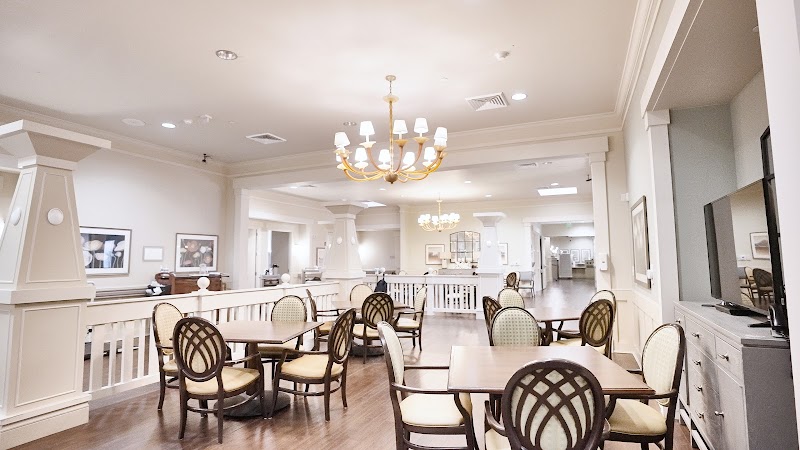
Who Owns and Operates Club Healthcare And Rehabilitation Center At The V?

CLUB HEALTHCARE AND REHABILITATION CENTER AT THE V is owned by a for-profit company. For-profit facilities operate as businesses with obligations to shareholders or private owners. The facility is operated by GOLD FL TRUST II, a chain that manages multiple nursing homes. With 68 certified beds and approximately 64 residents (about 94% occupancy), it is a smaller facility located in THE VILLAGES, Florida.

How Does Club Healthcare And Rehabilitation Center At The V Compare to Other Florida Nursing Homes?

Compared to the 100 nursing homes in Florida, CLUB HEALTHCARE AND REHABILITATION CENTER AT THE V's overall rating (2 stars) is below the state average of 3.2, staff turnover (54%) is near the state average of 46%, and health inspection rating (2 stars) is below the national benchmark.

What Should Families Ask When Visiting Club Healthcare And Rehabilitation Center At The V?

Based on this facility's data, families visiting should ask: "Can you walk me through typical staffing levels on day, evening, and night shifts?" "Can I visit during a mealtime to observe dining assistance and food quality?" "How do you handle medical emergencies, and what is your hospital transfer rate?" "Can I speak with family members of current residents about their experience?" These questions are particularly relevant given the below-average staffing rating.

Is Club Healthcare And Rehabilitation Center At The V Safe?

Based on CMS inspection data, CLUB HEALTHCARE AND REHABILITATION CENTER AT THE V has a clean safety record: no substantiated abuse findings (meaning no confirmed cases of resident harm), no Immediate Jeopardy citations (the most serious violation level indicating risk of serious injury or death), and is not on the Special Focus Facility watch list (a federal program monitoring the lowest-performing 1% of nursing homes). The facility has a 2-star overall rating and ranks #100 of 100 nursing homes in Florida. While no facility is perfect, families should still ask about staff-to-resident ratios and recent inspection results during their visit.

Do Nurses at Club Healthcare And Rehabilitation Center At The V Stick Around?

CLUB HEALTHCARE AND REHABILITATION CENTER AT THE V has a staff turnover rate of 54%, which is 8 percentage points above the Florida average of 46%. Moderate turnover is common in nursing homes, but families should still ask about staff tenure and how the facility maintains care continuity when employees leave.

Was Club Healthcare And Rehabilitation Center At The V Ever Fined?

CLUB HEALTHCARE AND REHABILITATION CENTER AT THE V has no federal fines on record. CMS issues fines when nursing homes fail to meet care standards or don't correct problems found during inspections. The absence of fines suggests the facility has either maintained compliance or corrected any issues before penalties were assessed. This is a positive indicator, though families should still review recent inspection reports for the full picture.

Is Club Healthcare And Rehabilitation Center At The V on Any Federal Watch List?

CLUB HEALTHCARE AND REHABILITATION CENTER AT THE V is not on any federal watch list. The most significant is the Special Focus Facility (SFF) program, which identifies the bottom 1% of nursing homes nationally based on persistent, serious quality problems. Not being on this list means the facility has avoided the pattern of deficiencies that triggers enhanced federal oversight. This is a positive indicator, though families should still review the facility's inspection history directly.