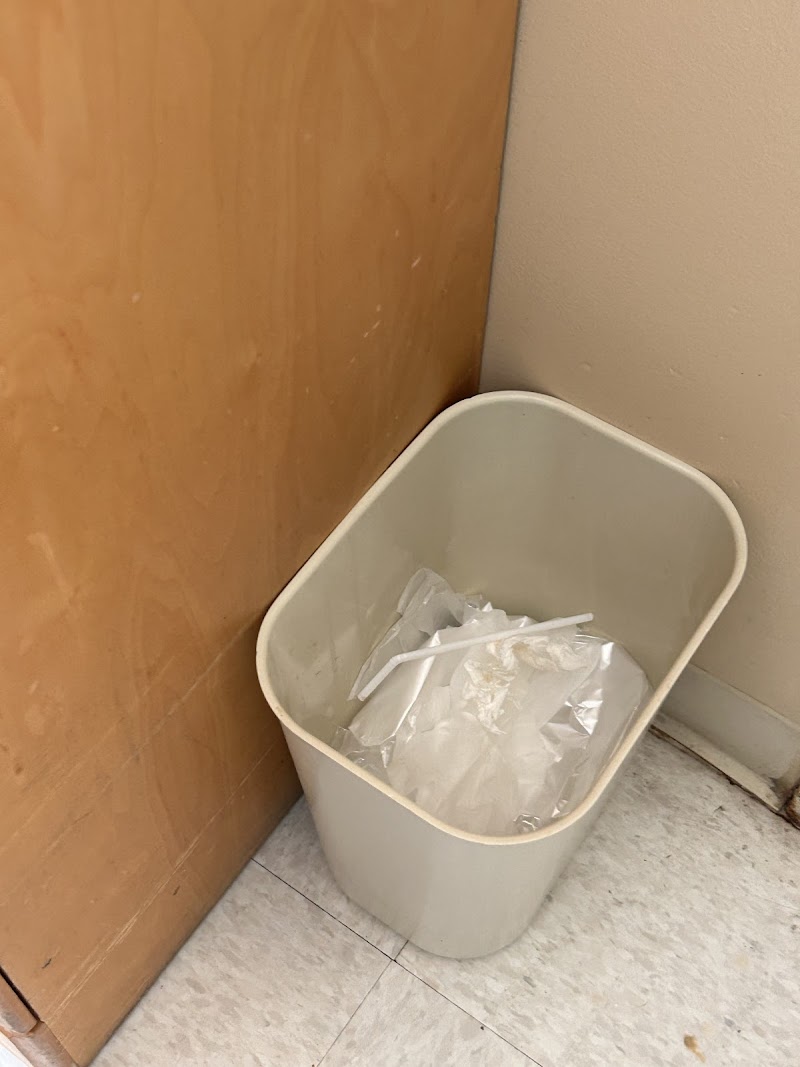
CONCERN
(D)
Potential for Harm - no one hurt, but risky conditions existed
Resident Rights
(Tag F0550)
Could have caused harm · This affected 1 resident
**NOTE- TERMS IN BRACKETS HAVE BEEN EDITED TO PROTECT CONFIDENTIALITY** Based on observation interview and record review, the facility failed to honor the resident's right to a dignified existence and...
Read full inspector narrative →
**NOTE- TERMS IN BRACKETS HAVE BEEN EDITED TO PROTECT CONFIDENTIALITY** Based on observation interview and record review, the facility failed to honor the resident's right to a dignified existence and self-determination by failing to serve identifiable foods for two (#67 and #38) of two residents sampled for pureed diets.
Finding included:
1. Resident #67 was admitted on [DATE]. Review of the admission Record showed diagnoses included but not limited to Alzheimer's disease, severe protein-calorie malnutrition, dysphagia, and adult failure to thrive.
An observation on 04/07/2025 at 12:48 p.m. revealed Resident #67 being assisted by an unidentified staff to eat her pureed diet. Resident #67's meal ticket was lying on her tray. The meal ticket did not show the food items she was eating. During the observation and interview the staff member assisting her to eat stated they did not know what the pureed items were. They stated it may have been spaghetti or pasta and peas.
Review of the menu for the day showed on 04/07/2025 for lunch the residents received spaghetti sauce with meatballs, spaghetti noodles, tossed salad with dressing, bread sticks, mandarin oranges, 2% milk and coffee/tea.
An observation and interview on 04/10/2025 at 8:19 a.m. showed Resident #67 being assisted with her puree breakfast at bedside by Staff I, Certified Nursing Assistant (CNA). Staff M, CNA was assisting her roommate. An observation of Resident #67's tray on her overbed table revealed a pureed meal on the plate. The meal ticket did not show the food items she was eating. The plate showed a mound of uniform texture yellow portion, and the other two portions were eaten. Staff I, CNA and Staff M, CNA stated sometimes they do not know what they are feeding the residents. Staff M, CNA stated, Better for us, better for them. Staff I stated, If it looks like bread, we can tell if it is pancakes or waffles only if there is syrup on the tray, otherwise it is bread. They both stated they would want to know what they were feeding the residents. Staff I, CNA stated, What if a family member asked us what they were eating, we don't know. They stated they should put it on the meal ticket. When asked about food allergies, the staff member said, Good question.
During a follow -up interview on 04/10/2025 at 8:45 a.m. with the Certified Dietary Manager (CDM) and Staff I, CNA, they both verified the unidentified food items Resident #67 had been served were pureed eggs, muffin and sausage. They confirmed the meal ticket did not include this information.
Review of the menu for the day showed on 04/10/2025 for breakfast the residents received orange juice, cheese omelet, cereal of choice, muffin, 2% milk, coffee/tea.
During an interview on 04/09/2025 at 2:27 p.m. The CDM stated the CNA should be telling the resident what the meal consists of. The CDM stated, The puree diet is also what is on the menu, the menu reflects what we pureed. The CDM stated the CNA should be referencing the meal ticket to ensure the resident was getting the proper diet.
2. Resident #38 was admitted to the facility on [DATE] and readmitted on [DATE]. Review of the admission Record showed diagnoses included but not limited to Chronic Obstructive Pulmonary Disease (COPD), hypertension, dysphagia, and anemia. Review of the Minimum Data Set, dated [DATE] showed a Brief Interview for Mental Status (BIMS) score of 13, meaning cognitively intact.
Review of the physician orders showed NAS (No Added Salt) diet, Pureed texture, Thin consistency.
During an interview on 04/07/2025 at 11:18 a.m. Resident #38 stated he eats mashed potatoes and oatmeal every day. He stated he wanted something else, but they don't offer him other foods.
During an interview and observation on 04/10/2025 at 8:16 a.m. Resident #38 was observed eating his oatmeal. An observation was made of a pureed meal on his tray placed on his overbed table. The plate showed three mounds, one was uniform texture yellow portion, one was light brown uniform texture portion, and one lumpy darker brown portion, a bowl of oatmeal, and fluids. Resident #38 stated he was eating his oatmeal only. Resident #38 stated, I don't know what it is. Not eating it. It doesn't look good. Eating my oatmeal only.
During an interview and observation on 04/10/2025 at 8:30 a.m. The CDM stated the residents with pureed diet were served eggs, muffin and hot cereal. It was confirmed an observation was made of oatmeal in a bowl on the side of Resident #38's tray. The CDM was observed looking into the pureed containers in the kitchen and she stated she did not know what the residents had been served. The CDM went to Resident #38's room and observed his tray. The CDM stated it was eggs, a muffin and sausage. Review of the menu for the day revealed sausage was not on the menu.
3. Review of the facility policy, Nutritional Management, dated 9/1/2023 showed the facility provides care and services to each resident to ensure the resident maintains acceptable parameters of nutritional status in the context of his or her overall condition. Compliance guidelines: 2. Identification / assessment: B. The dietary manager or designee shall obtain the resident's food and beverage preferences upon admission, significant change in condition, and periodically throughout his or her stay. 4. Care plan implementation: B. Interventions will be individualized to address the specific needs of the resident. Examples include but are not limited to: i. Diet liberalization unless the resident's medical condition warrants a therapeutic diet 5. Monitoring / revision: i. Interviewing the resident and / or resident representative to determine if their personal goals and preferences are being met. ii. Directly observing the resident. iii. Interviewing the direct care staff to gain information about the resident, the interventions currently in place, what their responsibilities are for reporting on these interventions, and possible suggestions for changes if necessary.
Review of an undated facility policy titled, Pureed Food Preparation, showed facility will prepare pureed foods in a manner that sustains nutritional value and taste. The foods will be pureed to assure the desired consistency.
Review of the facility policy, Resident Rights, dated 9/1/2023 showed the facility will inform the resident both orally and in writing, in a language that the resident understands, of his or her rights and all rules and regulations governing resident conduct and responsibilities during the stay in the facility. 2. Planning and Implementing care. The resident has the right to be informed of, and participate in, his or her treatment. 4. Respect and dignity. c. The right to reside and receive services in the facility with reasonable accommodation of resident needs and preferences, except when to do so would endanger the health or safety of the resident or other residents. 5. Self-determination. The resident has the right, and the facility must promote and facilitate resident self-determination through support of resident choice, including but not limited to: b. The resident has the right to make choices about aspects of his or her life in the facility that are significant to the resident.
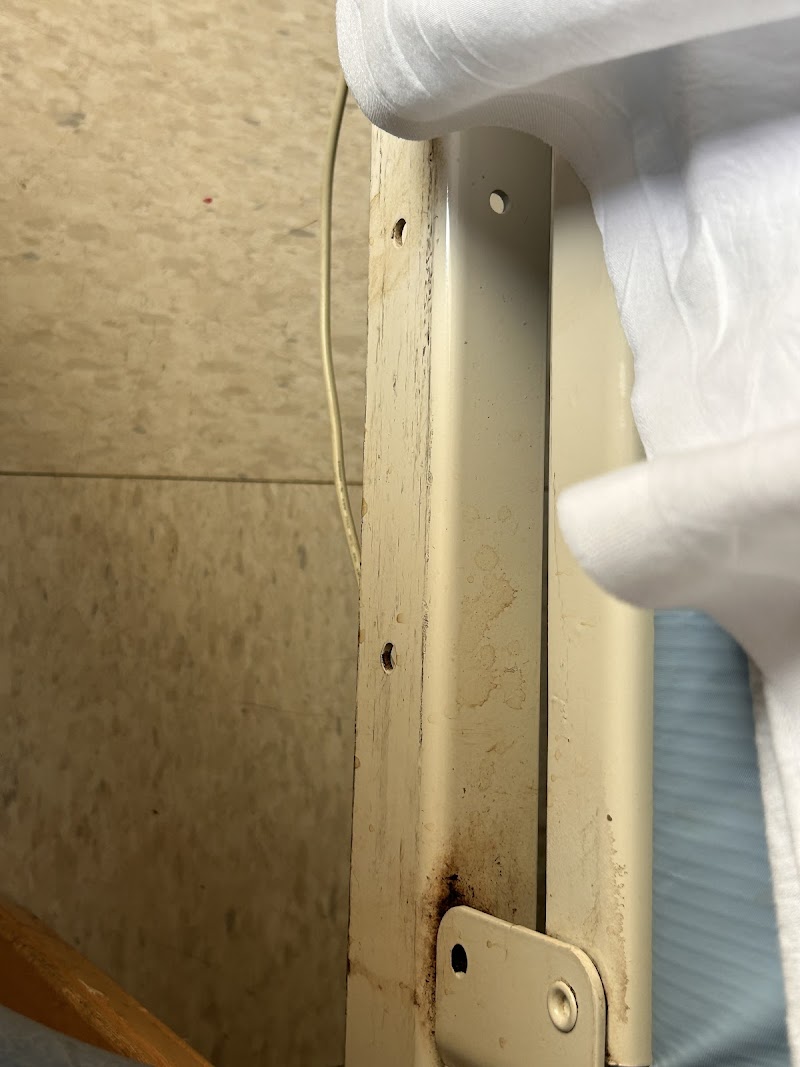
(Photographic Evidence Obtained)
CONCERN
(D)
Potential for Harm - no one hurt, but risky conditions existed
Deficiency F0554
(Tag F0554)
Could have caused harm · This affected 1 resident
**NOTE- TERMS IN BRACKETS HAVE BEEN EDITED TO PROTECT CONFIDENTIALITY** Based on observation, interview, and record review, the facility failed to obtain physician orders, assess the residents or deve...
Read full inspector narrative →
**NOTE- TERMS IN BRACKETS HAVE BEEN EDITED TO PROTECT CONFIDENTIALITY** Based on observation, interview, and record review, the facility failed to obtain physician orders, assess the residents or develop care plans for two (#38 and #89) of two residents related to self-medicating for nebulizer treatments.
Findings included:
1. An observation on 04/07/2025 at 10:25 a.m revealed Resident #38 sitting in his room in his bed. The head of the bed was elevated. His un-bagged nebulizer mask was laying on the overbed table. The nebulizer machine was off. He stated the nurse brought in medicine for his machine and left. Resident #38 stated he took it off after it was finished. He stated the nurse did not stay with him.
An observation on 04/07/2025 at 11:26 a.m revealed Resident #38's un-bagged nebulizer was still laying on the overbed table.
An observation on 04/08/25 at 8:58 a.m., revealed Resident #38 was sitting in bed with the head of the bed elevated. The nebulizer mask was in a plastic bag on the overbed table.
An observation on 04/09/2025 at 10:30 a.m., revealed Resident #38 was sitting in bed with the head of the bed elevated. His nebulizer mask was sitting on top of a plastic bag. The nebulizer machine was off. Photographic evidence obtained.
During an interview on 04/09/2025 at 10:46 a.m. with Staff P, Licensed Practical Nurse (LPN), she stated she entered the room and put the nebulizer mask in the plastic bag. Staff P stated, No, I did not stay with [Resident #38] the whole time he was on his nebulizer. Staff P stated she brought his (oral) medications in including his nebulizer medication. She stated she brought in his roommate's medications and gave another resident (in another room) their medication. Staff P stated she just came in and put the nebulizer mask back in the bag as it was laying on the plastic bag. She stated she was not in the room the whole time he was on the nebulizer; she just came back. Resident #38 stated he did his own nebulizer treatments and turned the machine off.
During an interview on 04/09/2025 at 11:38 a.m., the Director of Nursing (DON) stated they did not have anyone that was self-medicating. She stated the process for nebulizer treatments was for the nurse to check the lung sounds, put the medications in the nebulizer cup, put the mask on the resident's face, stay with the resident, when the resident was finished, take the mask off, check the lung sounds, rinse the mask and put it back in the plastic bag. If the resident was giving his own nebulizer treatments, he should have an order to self-medicate, assessment for self-medications and care planned for such. The DON stated they did not have an order for self-medication for Resident #38 nor had anyone assessed him.
Resident #38 was admitted on [DATE] and readmitted on [DATE]. Review of the admission Record showed diagnoses included but not limited to Chronic Obstructive Pulmonary Disease (COPD), hypertension, dysphagia, and anemia. Review of the Minimum Data Set, dated [DATE] showed a Brief Interview for Mental Status (BIMS) score of 13 which indicated intact cognition. Section GG Functional Abilities showed dependence on eating, maximum assistance needed for toileting and bathing. Section J, Health Conditions showed shortness of breath when lying flat. Section O, Special Treatments, Procedures, and Programs showed oxygen therapy.
Review of the active physician orders as of 04/10/2025 showed:
Ipratropium-Albuterol Inhalation Solution 0.5-2.5 (3) MG (milligrams)/3ML (milliliter) every 8 hours as needed for Shortness of Breath (SOB)
Review of the physician orders showed none regarding self-medicating of nebulizer treatments.
Review of the Medication Administration Record for April 2025 showed
Ipratropium-Albuterol Inhalation Solution 0.5-2.5 (3) MG/3ML every 8 hours as needed for SOB was administered 2 to 3 times a day.
Review of the assessments showed no documentation regarding assessing Resident #38 for self-medicating of nebulizer treatments.
Review of the care plans for Resident #38 showed
At risk for impaired respiratory status related to COPD, bronchitis as of 03/20/2025. Interventions included but not limited to administer medications as per order, administer oxygen as per order, and administer respiratory treatment as directed. Monitor lung sounds as ordered. Check lung status including lung sounds as indicated, all initiated as of 03/20/2025.
2. An observation and interview on 04/07/2025 at 10:35 a.m., revealed Resident #89 lying in bed, with the head elevated. His un-bagged nebulizer pipe was laying on the nightstand. The nebulizer machine was off. Resident #89 stated the nurse brought in the medicine, set up the pipe, turned on the machine, and left the room. Resident #89 stated when the medicine was finished, he placed the pipe on the nightstand and turned off the machine. Resident #89 stated the nurse did not stay in the room.
Observation on 04/07/2025 at 12:26 p.m. revealed Resident #89's un-bagged nebulizer was still laying on the nightstand.
Review of Resident #89's admission Record showed an admission date of 01/180/2025, with diagnoses included but not limited to Chronic Obstructive Pulmonary Disease (COPD) and Respiratory conditions due to other specified external agents. Review of the Minimum Data Set, dated [DATE] showed a Brief Interview for Mental Status (BIMS) score of 15 which indicated intact cognition. Section GG Functional Abilities showed set up assistance with eating, maximum assistance needed for toileting and bathing. Section J, Health Conditions showed shortness of breath when lying flat. Section O, Special Treatments, Procedures, and Programs showed oxygen therapy.
Review of the physician orders summary report dated as of 04/09/2025 showed
Ipratropium-Albuterol Inhalation Solution 0.5-2.5 (3) MG (milligrams)/3ML (milliliter) every 6 hours for Cough.
Review of the physician orders showed no order regarding self-medicating of nebulizer treatments.
Review of the Medication Administration Record for March and April 2025 showed
Ipratropium-Albuterol Inhalation Solution 0.5-2.5 (3) MG/3ML inhale orally four times a day for COPD related to Sleep Apnea, with a start date of 1/19/25 and discharge date of 4/8/25. Documentation showed medication given.
Review of the progress notes showed no documentation regarding self-medication of nebulizer treatment.
Review of the assessments showed no documentation regarding assessing Resident #89 for self-medicating of nebulizer treatments
Review of the care plans for Resident #89 showed the focus: The resident has altered respiratory status related to Sleep Apnea. CPAP (Continuous Positive Airway Pressure), date initiated 1/21/2025.
Interventions included but not limited to administer medications as per order, Monitor/document changes in orientation, increased restlessness, anxiety, and air hunger; Monitor for signs and symptoms of respiratory distress and report to MD (Medical Doctor) as needed: Increased Respirations; Decreased Pulse oximetry; Increased heart rate (Tachycardia); Restlessness; Diaphoresis; Headaches; Lethargy; Confusion; Hemoptysis; Cough; Pleuritic pain; Accessory muscle usage; Skin color changes to blue/grey; all dated as initiated 1/21/25.
Review of the facility's policies and procedures titled Nebulizer Therapy with a revised date of 3/1/2025 revealed: Policy: It is the policy of this facility for nebulizer treatments, once ordered, to be administered by nursing staff as directed using proper technique and standard precautions. If the nebulizer will supply oxygen to the patient, refer to policy Oxygen Concentrator.
Policy Explanation and Compliance Guidelines: Care of the Resident
1.
Verify practitioner's order.
2.
Gather appropriate equipment and ordered medication.
3.
Knock to gain permission to enter room and explain the procedure to the resident.
4.
Perform hand hygiene.
5.
Don gloves and other personal protective equipment (PPE) as needed to comply with standard or transmission-based precautions.
6.
Obtain resident's vital signs, and perform respiratory assessment to establish a baseline.
7.
Correctly assemble the tubing, nebulizer cup, and mouthpiece (or mask) per manufacturer's specifications and ensure connections are secured tightly.
8.
Place ordered medication into nebulizer cup. Premixed solutions may be used if available in the correct dosage.
9.
Assist resident into a comfortable position. If possible, place resident an upright position to encourage full lung expansion and promote aerosol dispersion.
10.
Connect the nebulizer to a power source.
11.
Instruct resident on how to use the nebulizer appropriately.
12.
Turn the machine on.
13.
Keep nebulizer vertical during treatment.
14.
Observe resident during the procedure for any change in condition.
15.
When medication delivery is complete, turn the machine off. Treatment may be considered complete with the onset of nebulizer sputtering.
16.
Disassemble and rinse the nebulizer with sterile or distilled water and allow to air dry.
Review of the facility's policies and procedures titled Resident Self-Administration of Medication dated 9/1/2023 revealed: Policy: It is the policy of this facility to support each resident's right to self-administer medication. A resident may only self-administer medications after the facility's interdisciplinary team has determined which medications may be self-administered safely. Policy Explanation and Compliance Guidelines:
1.
Each resident is offered the opportunity to self-administer medications during the routine assessment by the facility's interdisciplinary team.
2.
Resident's preference will be documented on the appropriate form and placed in the medical record.
3.
When determining if self-administration is clinically appropriate for a resident, the interdisciplinary team should at a minimum consider the following:
a.
The medications appropriate and safe for self-administration;
b.
resident's physical capacity to: swallow without difficulty, open medication bottles, administer injections;
c.
The resident's cognitive status, including their ability to correctly name their medications and know what conditions they are taken for,
d.
The resident's capability to follow directions and tell time to know when medications need to be taken;
e.
resident's comprehension of instructions for the medications they are taking, including the dose, timing, and signs of side effects, and when to report to facility staff.
f.
The resident's ability to understand what refusal of medication is, and appropriate steps taken by staff to educate when this occurs.
g.
The resident's ability to ensure that medication is stored safely and securely.
4.
The results of the interdisciplinary team assessment are recorded on the Medication Self-Administration Assessment Form, which is placed in the resident's medical record.
5.
Upon notification of the use of bedside medication by the resident, the medication nurse records the self-administration on the MAR.
13.
The care plan must reflect resident self-administration and storage arrangements for such medications.
Photographic Evidence Obtained.
CONCERN
(D)
📢 Someone Reported This
A family member, employee, or ombudsman was alarmed enough to file a formal complaint
Potential for Harm - no one hurt, but risky conditions existed
Notification of Changes
(Tag F0580)
Could have caused harm · This affected 1 resident
**NOTE- TERMS IN BRACKETS HAVE BEEN EDITED TO PROTECT CONFIDENTIALITY** Based on record review and interview the facility failed to provide notification to the resident representative for one of six r...
Read full inspector narrative →
**NOTE- TERMS IN BRACKETS HAVE BEEN EDITED TO PROTECT CONFIDENTIALITY** Based on record review and interview the facility failed to provide notification to the resident representative for one of six residents (Resident #106) sampled for accidents out of a total sample of 52 residents.
Findings Included:
Review of Resident #106's admission Record showed an admission date of 07/11/2024, discharge date of 07/16/2024 to an acute care hospital, and diagnoses to include urinary tract infection, osteoporosis, leukemia, hypertension, rheumatoid arthritis, muscle wasting and atrophy, difficulty walking, and repeated falls. Resident #106 had three family members listed as emergency contacts on the admission Record.
Review of the Change in Condition Evaluation dated 07/15/2024 at 2:43 a.m. showed Resident #106 fell on [DATE] at 2:20 a.m. Section 3. Resident/Representative Notification was blank.
Review of the progress notes showed no documentation the family was called post fall on 07/15/2024.
Review of the Situation, Background, Assessment, Recommendations (SBAR) dated 07/16/2024 showed Resident #106 was sent to the ER for treatment on 07/16/2024 at 12:20 a.m. The family was notified on 07/16/2024 at 7:00 a.m. about the 07/15/2024 at 2:20 a.m. fall and being sent to the ER.
During an interview on 04/09/2025 at 2:26 p.m. with the Nursing Home Administrator (NHA) and the Director of Nursing (DON) it was confirmed Resident #106 fell on 7/15/24 at 2:20 a.m. The resident was assessed for the pain and neuro-checks were conducted. The resident stated she was getting ready for the day, and was reminded what time it was. The resident had no pain at the time of the fall and no injuries at that time were noted. The DON confirmed there was no documentation that the family was informed of the fall on 7/15/2024 at 2 a.m. She stated there was documentation the family was informed she was going to the hospital on [DATE] after the resident expressed an increase in pain and x-rays revealed a left hip fracture. The DON stated the family should have been informed about the fall on 7/15/2024.
CONCERN
(D)
Potential for Harm - no one hurt, but risky conditions existed
Deficiency F0657
(Tag F0657)
Could have caused harm · This affected 1 resident
Based on observations, record reviews, and interviews, the facility failed to revise the care plans and related interventions accurately for one residents (#93) of fifty-two sampled residents related ...
Read full inspector narrative →
Based on observations, record reviews, and interviews, the facility failed to revise the care plans and related interventions accurately for one residents (#93) of fifty-two sampled residents related to indwelling urinary catheter.
Findings included:
Review of Resident #93's care plan revealed the following focuses and relevant interventions:
- Enhanced Barrier Precautions related to (r/t) indwelling urinary catheter (and) wound. The focus was initiated on 1/27/25 and revised on 4/7/25.
- Has a[n] [indwelling] Catheter. Diagnosis (DX) wounds. The focus was initiated on 1/15/25 and revised on 4/9/25. The goal was for the resident to remain free from catheter-related trauma through review date.
On 4/7/25 at 11:28 a.m., Resident #93 was observed lying in bed. No urinary catheter was observed.
During an interview on 4/8/25 at 5:43 p.m., Resident #93 reported not having a urinary catheter and stated it came out on its own about 3 weeks ago. The nurse at the time was going to put it back but needed a 16 French (fr) sized catheter, but only had a 14 fr available and did not have an order for the catheter, so they left it out. An observation was made at the time of interview and confirmed the resident did not have a urinary catheter.
During an interview on 4/9/25 at 1:40 p.m. with the Director of Nursing (DON) and Nursing Home Administrator (NHA), the DON stated Resident #93 did have an indwelling catheter when admitted , but had it removed. The DON reviewed documentation for Resident #93, reporting there was a progress note from 3/18/25 related to the removal of the resident's catheter. The note reported the catheter was found on the bed, balloon was deflated, and 30 cubic centimeters (cc) of water out. The resident's physician was notified and ordered to leave the catheter out and see how well the resident did without the catheter.
During an interview on 4/9/25 at 2:45 p.m. with the Minimum Data Set (MDS) Lead and Regional MDS Coordinator (Reg MDS), the Reg MDS stated the resident had a care plan for the catheter but no order for it. The MDS Lead reported the resident had a catheter and confirmed, when she saw the resident on 4/7/25, the resident had a urinary catheter. The Reg MDS left the interview to determine whether the resident had a urinary catheter, returned, and confirmed the resident did not have a catheter. A continued interview was conducted on 4/9/25 at 3:09 p.m. with the MDS Lead, who stated the resident's catheter was discontinued yesterday and she did not have the physician order at that time.
Review of the facility policy titled Comprehensive Care Plans implemented on 9/1/23 revealed under Policy, it is the policy of this facility to develop and implement a comprehensive person-centered care plan for each resident, consistent with resident rights, and includes measurable objectives and timeframes to meet a resident's medical, nursing, and mental and psychosocial needs that are identified in the resident's comprehensive assessment.
The policy revealed the following under Policy Explanation and Compliance Guidelines:
.
3. The comprehensive care plan will describe, at a minimum, the following:
a. The services that are to be furnished to attain or maintain the resident's highest practicable physical, mental, and psychosocial well-being.
CONCERN
(D)
Potential for Harm - no one hurt, but risky conditions existed
Quality of Care
(Tag F0684)
Could have caused harm · This affected 1 resident
**NOTE- TERMS IN BRACKETS HAVE BEEN EDITED TO PROTECT CONFIDENTIALITY** Based on observation, record review, and interview, the facility failed to assess, document and/or treat a surgical wound for on...
Read full inspector narrative →
**NOTE- TERMS IN BRACKETS HAVE BEEN EDITED TO PROTECT CONFIDENTIALITY** Based on observation, record review, and interview, the facility failed to assess, document and/or treat a surgical wound for one (#96) of one resident sampled for skin conditions.
Findings included:
On 4/7/25 at 5:10 p.m., Resident #96 was observed with a blue cast on his right arm and a mesh pad covering a black area approximately 2 centimeters (cm) x 3 cm on his interior left ankle. The mesh was lifted off the skin in one corner. The resident stated the doctor did not want it to come off and it had been there for about a month.
Review of Resident #96's admission Record revealed the resident had been admitted on [DATE] and included diagnoses not limited to unspecified fracture of right femur subsequent encounter for closed fracture with routine healing, stress fracture right ankle subsequent encounter for fracture with routine healing, and multiple sites muscle wasting and atrophy not elsewhere classified.
Review of Resident #96's Admission/readmission Nursing Evaluation, effective 2/7/25, showed the resident was admitted for a right ankle/femur fracture, chronic obstructive pulmonary disease (COPD), hypertension (HTN), and left ankle Open Reduction and Internal Fixation (ORIF). The skin integrity revealed abrasions on top of his scalp, [Brand Name] drain removal site to abdomen, right inner ankle surgical site, and left inner ankle surgical site.
Review of Resident #96's Order Summary Report did not show orders had been received from the surgeon or facility physician regarding the care of the resident's left ankle mesh covered surgical site.
Review of Weekly Skin Checks revealed the following:
-
2/14/25 showed the resident had surgical incisions to abdomen and right leg. There was no mention of the left ankle surgical site.
-
On 2/19/25 the facility documented the resident had no new and/or existing area of skin impairment, did have a [Brand Name] drain surgical site AB([NAME]), and no resolved skin impairment. No mention of left ankle surgical site.
-
On 2/26/25 the facility documented the resident's skin was clear with no impairment, no existing skin impairment, and no resolved skin impairment.
-
On 3/5/25 staff revealed the resident had an existing skin impairment, a surgical incision to the abdomen and right leg. The assessment showed the resident did not have any resolved skin impairments.
-
On 3/14/25 staff documented the resident had an abdomen surgical incision with no resolved skin impairments.
-
On 3/28/25 the assessment revealed the resident's skin was clear with no impairment.
-
On 4/2/25 the Director of Nursing (DON) documented the resident's skin was clear with no impairment.
On 4/9/25 at 4:30 p.m., Staff H, Licensed Practical Nurse (LPN) stated it was her first time working Resident #96's hall. Staff H observed the mesh pad on the resident's left ankle and spoke with the resident and visitor.
During an interview and observation of Resident #96 on 4/9/25 at 4:42 p.m., the DON reported the resident had several fractures prior to admission, confirmed knowledge of the left ankle mesh pad and the wound specialist had not recommended anything further for the ankle. She stated she had not seen the area recently (did weekly skin check week prior). She reported the last wound specialist evaluation was on 3/6/25 (month prior). The DON stated the expectation would be for nurses to address the issue. She observed the mesh pad attached to the left ankle and confirmed something should have been done about it, nurses at least should be monitoring the area. The resident informed DON the mesh pad was a surgical site where screws had been placed.
Review of Resident #96's March and April Medication Administration Record (MAR) and Treatment Administration Record (TAR) did not show staff were monitoring the surgical site on the left ankle.
Review of Resident #96's care plan revealed the following focuses and interventions:
-
Has potential/actual impairment to skin integrity related to (r/t) decreased mobility, fragile skin, (and) incontinence. Right leg - closed surgical = resolved, Abdomen - closed surgical = resolved. The interventions include instructions for staff to Monitor/ document location, size and treatment of skin injury. Report abnormalities, failure to heal, signs/ symptoms (s/sx) of infection, maceration etcetera (etc) to MD.
Review of Resident #96's physician orders, MAR, TAR, and care plan did not include follow up instructions on how staff were to care for the surgical site to left ankle.
Review of the policy - Documentation in Medical Record, implemented 3/2024, revealed Each resident's medical record shall contain an accurate representation of the actual experiences of the resident and including enough information to provide a picture of the residents progress through complete, accurate, and timely documentation.
1.
Licensed staff and interdisciplinary team members shall document all assessments, observations, and services provided in the residence medical record in accordance with state law and facility policy.
3. Principles of documentation include, but are not limited to:
b. Documentation shall be accurate, relevant, and complete, containing sufficient details about the resident's care and/ or responses to care.
CONCERN
(D)
Potential for Harm - no one hurt, but risky conditions existed
Deficiency F0688
(Tag F0688)
Could have caused harm · This affected 1 resident
**NOTE- TERMS IN BRACKETS HAVE BEEN EDITED TO PROTECT CONFIDENTIALITY** Based on observation staff interview and record review, the facility failed to ensure a contracture management program to includ...
Read full inspector narrative →
**NOTE- TERMS IN BRACKETS HAVE BEEN EDITED TO PROTECT CONFIDENTIALITY** Based on observation staff interview and record review, the facility failed to ensure a contracture management program to include wearing of splints/orthotics was implemented for one (#7) of fifty - two sampled residents during three of three days observed (4/7/2025, 4/8/2025, and 4/9/2025).
Findings included:
On 4/7/2025 from10:30 a.m. to 12:30 p.m. Resident #7 was observed in her room lying in bed with both of her upper extremities noted to be contracted. Both of her hands and fingers were in a closed position. Resident #7 was not observed wearing either splints or orthotics. There were no splints or orthotics visible in the room during the multiple visits. Resident #7 was not able to answer any questions related to her medical care and services as she was observed with cognitive deficits.
On 4/7/25 at 1:00 p.m. an interview was conducted with Staff C, Certified Nursing Assistant (CNA). Staff C confirmed she had Resident #7 on her assignment for the day and that she did not know the resident well. Staff C was able to observe Resident #7 while positioned in bed and confirmed she had contracted upper extremities on both sides. Staff C was not sure if the resident had splints or orthotics to wear, and she was also not sure if Resident #7 was being seen by Restorative Nursing for contracture management. Staff C confirmed she did not see any orthotics or splints in the room for the resident to use.
During multiple observation conducted on 4/8/2025 from 7:50 a.m. through 2:58 p.m., Resident #7 was again observed in her room and lying in bed. Resident #7 was observed without any splints/orthotics on either of her upper extremities.
During multiple observation conducted on 4/9/2025 from 8:00 a.m. through 3:00 p.m. Resident #7 was observed in her room and lying in bed with both hands and upper extremities without any splints or orthotics.
On 4/9/2025 at 10:00 a.m. an interview was conducted with Staff F, Occupational Therapist (OT). Staff F revealed the Rehabilitation Director was not available today for interview, but she (Staff F) would try to answer any questions. Staff F revealed she knew of Resident #7 very little, but did confirm she had contractures. Staff F needed to refer to the electronic medical record to see if OT had her on case load. Staff F revealed Resident was discharged from OT on 1/10/2025, following plateauing with goals. Staff F continued to say Resident #7 was referred to Restorative Nursing for contracture management to include utilization of splints/orthotics on her Right elbow, Right hand and Left palm. Staff F was not able to say what the outcome was with regards to Restorative Nursing and her current contracture management.
On 4/9/2025 at 12:10 p.m. an interview with Staff G, Certified Nursing Assistant (CNA) assigned to Resident #7 during the 7a.m. - 3 p.m. shift, revealed she had only been working the unit for about one week now and did not know all the residents on the hallway to include Resident #7. Staff G stated Resident #7 was totally dependent on staff with most of her ADLs. (activities of Daily Living). Staff G confirmed Resident #7 does have limited range of motion with all her extremities and knew Resident #7 had any contractures on her upper extremities. Staff G explained as far as she knew, Resident #7 did not wear any splints/orthotics. She confirmed there were no orthotics or splints in the room, as she would have seen them. Staff G confirmed there was no documentation in the CNA's task sheet from the care plan indicating if Resident #7 utilizes splints/orthotics.
On 4/9/2025 at 12:20 p.m. an interview was conducted with Staff E, Licensed Practical Nurse (LPN) who normally had Resident #7 in her assignment. Staff E revealed she knew Resident #7 had limited Range of Motion (ROM) with upper extremity contractures. She did not know if the resident was ordered, and care planned for the use of splints/orthotics for the contractures. Staff E reviewed the care plan's document used by staff with instructions specific to a resident's care needs and confirmed there was no documentation to support the resident was to wear splints or orthotics on either of her extremities. Staff E then reviewed the electronic medical record to include the current order sheet and current care plans and found documentation indicating the resident was supposed to wear a Right elbow extension splint, a Right resting hand splint, and a Left palm guard for 6 hours per day, 5 days a week and supplied and removed by nursing staff. She confirmed the original order date was 2/20/2025.
On 4/10/2025 at 10:15 a.m. an interview was obtained Staff D, Registered Nurse (RN)/Unit Manager (UM). Staff D revealed she was not aware Resident #7 was not offered or donned with splints/orthotics on her upper extremities the past few days. Staff D revealed it was brought to her attention by Staff E, LPN, the previous afternoon on 4/9/2025. Staff D revealed she was the Unit Manager and should be monitoring her nursing staff to ensure care plan interventions and orders were being followed, especially for those who are on contracture management requiring use of splints/orthotics. Staff D, RN was not sure who's initial responsibility was to don and doff the splints/orthotics on a daily basis.
Review of Resident #7's electronic medical record revealed she was admitted to the facility on [DATE] and readmitted from the hospital on 2/2/2025 with diagnoses to include but not limited to: Dysphagia, Contracture Right wrist, Contracture L (left) wrist, Contractures unspecified joint, Chronic pain, Anxiety, Dementia.
Review of the current Quarterly Minimum Data Set (MDS) assessment dated [DATE] revealed; (Cognition/Brief Interview Mental Status or BIMS score of 00 of 15. Under ADL, it showed, Impairment both sides upper and lower extremities, with substantial assistance to dependent on staff for most ADLs.
Review of the current Physician's Order Sheet (POS) for the month 4/2025, revealed the following but not limited to orders:
a. Patient will wear R (Right) elbow extension splint, R resting hand splint, and L palm guard for 6 hours per day 5 days a week a supplied and removed by nursing staff. Order date 2/20/2025).
b. Skilled Occupational therapy three to four times per week for sixty days which may include therapeutic exercise and activities, neuromuscular reeducation, orthotics management, manual therapy, and w/c management. (order date 1/30/2025).
Review of the Occupational Therapy Evaluation and Pan of Treatment with a certification period 1/29/2025 - 3/27/2025 revealed primary diagnoses to included: Muscle wasting and atrophy, Contractures unspecified joints, Lack of coordination. The Plan of Treatment revealed approaches to include but not limited to: Initial encounter, Orthotic management and training, each 15 minutes with a frequency of 3 to 4 times a week for 60 days, on a daily basis. The New Goal section revealed the Patient will safely wear least restrictive splinting/orthotic devices 4 hours on / 4 hours off without swelling/edema and complaints of discomfort in order to maintain joint mobility and improve PROM (Passive Range of Motion) for adequate hygiene. The recommendation section of the assessment summary revealed; Orthotics - Splint/Orthotic Recommendations: It is recommended the patient wear appropriate orthotics. Further assessment will follow in order to obtain or fabricate orthotics for both wrists and Right elbow.
The Clinical Impression section of the summary revealed; Patient presents with severe limitations in joint mobility and muscle strength in all extremities as well as pain, deficits in cognition, and poor balance and sitting tolerance. She has pressure wounds and increasing contractures and is in need of proper positioning.
Review of the Occupational Therapy Discharge summary dated [DATE] revealed patient discharged to reside in the Long-Term Care facility.
Review of the Restorative Nursing Program for ROM dated 2/19/2025 revealed; Program type - Passive Range of Motion; Program goals - Increase joint motion to max. range, Improve circulation. Joint exercises to include: Shoulders - In front of body, out to side of body, palm neutral; Arm circles in front of body and out in front of body. Precautions included R upper extremity shoulder, elbow, wrist, and digit contractures. Left upper extremity digits 3, 4, 5, contractures. Patient is aphasic, confuses easily.
Review of the nurse progress notes dated from 12/1/2024 through to 4/9/2025 did not include any documented evidence of the resident receiving any assistance with upper extremity splint/orthotics. Nor was there any documentation to support Resident #7 ever refused wearing said splint/orthotics.
Review of the current care plans with next review date 5/5/2025 revealed the following but not limited to:
1. ADL Resident has a self-care deficit with need for staff assistance with ADL completion on daily basis: Dx. contractures, weakness, impaired mobility, impaired cognition, Right elbow extension splint, Right resting hand splint and left palm guard. Followed by MD order, with interventions in place to include but not limited to: Patient will wear R elbow extension splint, Right resting hand splint, and Left palm guard for 6 hours per day 5 days a week as applied and removed by nursing staff.
2. Resident has limited physical mobility r/t weakness bilateral upper extremity and bilateral lower extremities with interventions in place to include but not limited to: Resident is totally dependent on 1 staff for locomotion using wheelchair, Monitoring/documenting/report PRN any signs/symptoms of immobility forming or worsening, thrombosis formation, Provide gentle range of motion as tolerated with daily care.
3. Alteration in musculoskeletal status r/t contracture to L ankle, Right ankle, R wrist, and R elbow, with interventions in place to include but not limited to: Anticipate needs, Be sure call light is within reach and respond promptly to all requests for assistance, Follow MD orders and or PT treatment plan, Monitor/document/report PRN signs and symptoms or complications related to arthritis; Joint stiffness, usually worse on waking; Swelling; Decline in mobility, Delcine in self-care ability, Contracture formation/joint shape changes, clicking with joint movement, pain after exercise or weight bearing.
Review of a facility's Restorative Nursing Program policy and procedure with an implementation date of 9/2023 for review showed it is the policy of this facility to provide maintenance and restorative services designed to maintain or improve a resident's abilities to the highest practicable level. The definition section of the policy revealed; Restorative nursing program refers to nursing interventions that promote the resident's ability to adapt and adjust to living as independently and safely as possible. This concept actively focuses on achieving and maintaining optimal physical, mental, and psychosocial functioning. The policy Explanation and Compliance Guidelines revealed but were not limited to: 3 . Nursing personnel are trained on basic or maintenance nursing care that does not require the use of a qualified therapist or licensed nurse oversight. This training may include, but is not limited to:
d. Promoting independence in ADLs, performing tasks for residents only as needed to ensure completion of tasks.
e. Assisting residents in adjustment to their disabilities and use of any assistive devices.
f. Assisting residents with range of motion exercise, performing passive range of motion for residents who lack active range of motion ability.
4. All residents will receive maintenance nursing services as described above, as needed, by certified nursing assistants.
6. Residents, as identified during the comprehensive assessment process, will receive services from restorative aides when they are assessed to have a need for restorative nursing services. These services may include, but not limited to:
a. Passive or active range of motion.
b. Splint or brace assistance.
13 . The Restorative nurse, or designated licensed nurse, will provide oversight of the restorative aide activities, review the documentation at least weekly, and evaluate the effectiveness of the plan monthly and document accordingly.
CONCERN
(D)
Potential for Harm - no one hurt, but risky conditions existed
Incontinence Care
(Tag F0690)
Could have caused harm · This affected 1 resident
**NOTE- TERMS IN BRACKETS HAVE BEEN EDITED TO PROTECT CONFIDENTIALITY** Based on observations, record review, and interviews, the facility failed to ensure physician orders were in place for one (Resi...
Read full inspector narrative →
**NOTE- TERMS IN BRACKETS HAVE BEEN EDITED TO PROTECT CONFIDENTIALITY** Based on observations, record review, and interviews, the facility failed to ensure physician orders were in place for one (Resident #19) of two residents sampled for a Foley catheter.
Findings included:
A review of admission record revealed Resident #19 was readmitted on [DATE] with diagnoses including multiple sclerosis, neuromuscular dysfunction of bladder, quadriplegia, resistance to multiple antibiotics, carrier of other enterobacterales and other co-morbidities.
A review of Resident #19's care plan revealed the following:
Focus: Resident #19 Urinary catheter r/t (related to) Neuromuscular Dysfunction of Bladder Date Initiated: 04/04/2024 Revision on: 02/22/2025.
Interventions included: Change catheter as needed Date Initiated: 04/13/2024; Foley Catheter as ordered Date Initiated: 04/13/2024 Revision on: 04/07/2025; Observe/document for pain/discomfort due to catheter Date Initiated: 04/04/2024; Observe/record/report to MD for s/sx (signs/symptoms) (Urinary Track Infection) UTI - pain, burning, blood-tinged urine, cloudiness, no output, deepening of urine color, increased pulse, increased temp, Urinary frequency, foul smelling urine, fever, chills, altered mental status, change in behavior, change in eating patterns Date Initiated: 04/04/2024; Provide catheter care Date Initiated: 04/04/2024 Revision on: 04/07/2025; Provide privacy bag to drainage bag per facility protocol Date Initiated: 04/04/2024 Revision on: 04/07/2025 .
A review of physician orders revealed the following:
1-Catheter care every shift and as needed. order date 4/11/2024
2- Monitor catheter for patency and drainage every shift. Order date 4/11/2024
3- Catheter-Bag change as Needed. Order date 4/11/2024
4- Foley Catheter 30 F 30 cc balloon No directions specified for order. Order date 9/1/2024.
No diagnosis was found in the physician orders or notes for the Foley catheter.
Review of the Medication and Treatment Records for March and April of 2025 revealed no order to change the catheter, or size of balloon and Foley catheter.
During an interview on 4/9/2025 at 1:40 p.m. the Director of Nursing (DON) stated the expectation for Foley catheter orders would include: balloon and Foley size, catheter care, and to change the catheter for blockage or leakage, as needed. The DON confirmed not seeing an order for Resident #19's catheter. The DON stated knowing the catheter was changed about two weeks ago, but was unable to provide documentation. The DON stated the resident has a diagnosis of neuromuscular bladder, although not everyone with this diagnosis needs a catheter. The DON stated Resident #19 had multiple wounds and the catheter could be for the benefit of wound healing. The DON confirmed the physician order did not have a diagnosis, Foley or balloon size.
Review of the facility's policies and procedures titled Catheter Care, dated 9/1/2023, revealed: Policy: It is the policy of this facility to ensure that residents with indwelling catheters receive appropriate catheter care and maintain their dignity and privacy when indwelling catheters are in use.
CONCERN
(D)
Potential for Harm - no one hurt, but risky conditions existed
Deficiency F0692
(Tag F0692)
Could have caused harm · This affected 1 resident
**NOTE- TERMS IN BRACKETS HAVE BEEN EDITED TO PROTECT CONFIDENTIALITY** Based on observation, record review, and interviews, the facility failed to identify, implement, monitor, and modify interventio...
Read full inspector narrative →
**NOTE- TERMS IN BRACKETS HAVE BEEN EDITED TO PROTECT CONFIDENTIALITY** Based on observation, record review, and interviews, the facility failed to identify, implement, monitor, and modify interventions for one (Resident #33) out of 52 related to coughing during meals.
Findings Included:
During an observation on 04/07/2025 at 12:18 p.m., Resident #33 was observed sitting in the dining room with a plate of spaghetti, meatballs and garlic toast. Resident #33's eyes became watery and was observed coughing after taking a bite of food. Resident #33 continued to cough for a few seconds when staff approached Resident #33 raised her hands and removed the plate of spaghetti and toast.
During an interview on 04/07/2025 at 1:19 p.m., Resident #33's Family Member (FM) stated that she had had an issue with the facility not assisting the resident with eating. She stated the resident had had issues with chewing her food and was supposed to be on a pureed diet. She stated the last time the resident went to the hospital and came back to the facility, she brought up that the resident needed assistance with eating and was told by the facility they did not have any documentation from the hospital for assisting her with food and never addressed her concern.
Review of Resident #33's admission record revealed an admission date of 03/20/2025 with an initial admission date of 10/11/2021. Resident #33 was admitted to the facility with diagnosis to include Metabolic Encephalopathy, Unspecified Protein-Calorie Malnutrition, Muscle Wasting and Atrophy, Not Elsewhere Classified, Multiple Sites, Acute Respiratory Failure with Hypoxia, Dementia in Other Diseases Classified Elsewhere, Unspecified Severity, Without Behavioral Disturbance, Psychotic Disturbance, Mood Disturbance, And Anxiety.
Review of Resident #33's Minimum Data Set (MDS) dated [DATE] revealed, Section C. Cognitive Patterns, a Brief Interview Mental Status (BIMS) score of 05 out of 15 which indicated severe cognitive impairment. Review of Section. K. Swallowing/Nutritional Status revealed Nutritional Approaches Mechanically altered diet-require change in texture of food or liquids and Therapeutic diet.
Review of Resident #36's Physician Orders revealed:
01/09/2025-Regular diet, Regular texture, Thin consistency two handle cup with concave lid for Speech Therapy (ST) Swallowing precautions in place
02/03/2025-Regular diet, Pureed texture, Nectar Thin consistency
02/07/2025-Regular diet, Mechanical Soft texture, Thin consistency, Two Handled Cup with lid
03/24/2025- CCHO diet, Mechanical Soft texture, Thin consistency no dry foods for moist
04/07/2025- Regular diet, Pureed texture, Thin consistency, Two Handled Cup
4/8/2025-Regular diet, Mechanical Soft texture, Thin consistency for Two Handled Cup Diet
Review of the facility's Menu Titled: Agora/Fall Winter 2024-25, Week 4, Monday, Mechanical, Lunch revealed: 3 oz Spaghetti Sauce w/ Meatballs 4 oz of spaghetti noodles 4 oz tossed salad w/ dressing, 2 oz Bread sticks.
Review of Resident #36's Care Plan dated 03/20/2025 revealed:
Focus: The resident has a nutritional problem or potential nutritional problem r/t fluid restriction, impaired skin, abnormal labs, mechanically altered diet, dx (diagnosis) (diagnosis) (diagnosis) (diagnosis) (diagnosis) (diagnosis) (diagnosis) (diagnosis) (diagnosis) (diagnosis) of protein calorie malnutrition, COPD,, heart failure, HD, dementia, depression, atrial fibrillation, HTN.
Interventions/Task: Mechanically altered diet and/or thickened liquids, Provide and serve supplements as ordered, Provide, serve diet as ordered, monitor intake and record every meal.
Review of Resident #36's Progress Notes showed showed 04/08/2025: Resident observed in dining room with saltine crackers on her plate. The item was not provided by Dietary and had not yet been consumed, Resident #33 asked another resident at the table for crackers and the resident obliged. Item was removed from plate prior to consumption. Resident is non-compliant with her diet. The responsible party informed via telephone and educated on residents diet.
4/7/2025 12:16 p.m. Nurses Notes
Note Text: coughing noted with meals, diet downgraded per MD orders. Speech to consult.
3/31/2025 17:19 (5:19 p.m.) Nurses Note
Note Text: Attempted to leave voicemail for the resident's [family member] to update her on the resident's follow-up modified barium swallow scheduled for tomorrow. Unfortunately, her voicemail box is full.
3/31/2025 17:32 (5:32 p.m.) Nurses Note
Note Text: The [family member] called back and was updated on [the resident's] appointment. She also requested that per the hospital, the resident be an assisted [with meals]. I did explain that no notes were seen stating that from the hospital
3/20/2025 19:02 (7:02 p.m.) Admit/Readmit
Note Text: Resident readmit at 17:00 (5:00 p.m.). Resident arrived via stretcher, admitting dx (diagnosis) (diagnosis) (diagnosis) (diagnosis) (diagnosis) (diagnosis) (diagnosis) (diagnosis) (diagnosis) (diagnosis) Hypoxia. Discharge reports show Diet change to level 5 mince, moist, and bite size foods. POA stated, resident needs assistance during meals. Concentrator set up, bed in low position, and call light within reach. Medication and MD orders reviewed.
3/18/2025 00:18 (12:18 a.m.) Alert Note
Note Text: resident is alert to person, place, and situation; is noted to be non-compliant with diet.
2/6/2025 16:49 (4:49 p.m.)
Nurses Note
Note Text: Resident sitting on her bed eating pork skins and coughing in between each bite. Educated resident that her diet has downgraded to puree.
2/3/2025 18:01 (6:01 p.m.)
Nurses Note
Note Text: Resident coughing during meal. Speech therapist was present and downgraded resident to puree. Resident was unable to eat on her own. CNA present had to assist resident during meal.
Review of Speech Therapy Notes Revealed:
01/18/2025: Safe Swallowing Strategies
01/20/2025: Oral Intake: Swallowing Abilities = Min/Close Supervision; Current Diet: Regular Textures; Current Liquids= Thin Liquids
02/03/2025: Oral Intake: Swallowing Abilities=Mod; Current Diet=Puree Consistencies; Current Liquids=Thin Liquids
02/07/2025: Oral Intake; Wallowing Abilities=Mild; Current Diet: Mechanical Soft Textures, Mechanical Soft/Ground textures; Current Liquids=Thin Liquids
02/11/2025: Oral Intake: Swallowing Abilities=Min/Close Supervision; Current Diet=Mechanical Soft Textures, Mechanical Soft/Ground Textures; Current Liquids=Thin Liquids
04/08/2025: Initial Assessment/Current Level of Function & Underlying Impairments: Prior Level of Function: Intake/Diet Level=mechanical soft, thin, liquids, successive swallows; swallowing abilities=mild; Medical Factors: Precautions/ Contraindications: Aspiration-Mech Soft Solids; Intake/Diet Level: Puree Consistencies, thin liquids, successive swallows; intake method= All oral Clinical Bed side Assessment: Swallowing abilities mild; Assessment Summary: Clinical Impressions: Pt presents w/mild-moderate oral phase dysphagia, exhibiting prolonged mastication w/ reduced mastication efficiency, reduced lingual coordination for bolus manipulation/propulsion, and intermittent oral residue w/solids. Pt able to safely consume thin liquids (via cup) w/o overt, s/s of aspiration. SLP recommending diet texture modification back to baseline diet of mech . soft solids w/ thin liquids, but at this time pt appears to remain at baseline level of function. Evaluation Only. Further testing: Further exam/consult not indicated d/t = other (Pt at baseline level of function).
During an interview on 04/09/2025 12:44 p.m., Regional Director of Therapy stated the facility currently did not have a full-time speech therapist. They did not get the results of the swallow study because the resident was out of the facility and went to the appointment while she was discharged from the facility. He stated Resident #33 was only seen by speech in February on the 6th for an evaluation and had not seen the resident after that so the speech therapist would not have anything else to add about the resident. He stated the Speech Therapist who saw Resident #33 on 04/08/2025 was new and would not know much about Resident #33.
During an interview on 04/09/2025 at 1:06 p.m., Certified Dietary Manager (CDM) stated Resident #33 had been a resident for a long time and was on a mechanically soft diet with gravy to keep her food moist. She stated Resident #33 had had a choking incident before and she thought that was why she had a hard time eating now. She stated when the resident ate her food, she had noticed Resident #33 chewed and stopped and then swallowed. She thought she might have a swallowing issue. Residents on mechanically altered diets were supposed to get a bread stick instead of garlic bread, but they did not receive garlic sticks so she served all residents the garlic bread.
During an interview on 04/09/2025 at 2:12 p.m., the Registered Dietician (RD) stated Mechanical soft diet was where the food was chopped up. Residents on a mechanically soft diet should not be given anything that could cause them to choke. You want to be sure there is no crust or something too hard.
During an interview on 04/09/2025 at 2:28 p.m., Staff N, Speech Therapist, stated she started seeing Resident #33 in February because she was having a hard time with her diet. She stated she first saw Resident#33 when she had a choking incident in the dining room she was unsure of the date but knew it was in February. She stated she was there for this incident so she downgraded her diet at that time to a puree diet, Resident #33 did not like the pureed food so she would go and get snacks from the vending machine. She stated she evaluated and observed Resident #33 eating chips, and she was okay with those, so she upgraded her diet back to Mechanical soft diet because she did well with eating the chips. Resident #33 should be supervised while she is eating. Typically, she would review the swallow study she was not aware Resident #33 had an order for a swallow study or that it had been completed because the last she knew, Resident #33 was in the hospital. The provider was the one who would have ordered the swallow study. She stated she could recommend one, but she had not recommended one for Resident #33. She stated breads were not typically recommended for residents with a mechanically soft diet.
During an interview on 04/09/2025 at 2:36 p.m., Staff O, Speech Therapist, stated she did not typically work at this facility and covered a different area, but the facility called and asked for her to come in and see Resident #33 on 04/08/2025 because she had a choking event on Monday (04/07/2025). They wanted to make sure she was on an appropriate diet. She did a bedside swallow evaluation. She checked to see if Resident #33 was aspirating while eating. She gave her different textures and water to drink and made sure she was chewing well enough. After evaluating Resident #33 she felt she was okay to be upgraded back to a Mechanically soft diet. She felt like pureed was way too restrictive. She stated residents on a Mechanically soft diet really should not have anything with a crust.
During an interview on 04/10/2025 at 12:10 p.m., the Director of Nursing (DON) stated the resident had had issues with eating on and off. She started coughing while eating so they put her on a puree diet. Resident #33 did not like the pureed food, so they had speech come see her. She had another episode and speech evaluated her again. She stated medical records was responsible for requesting the records after appointments. She confirmed their swallow study results were not in Resident #33's chart. Once results were received, the unit manager, Assistant Director of Nursing (ADON), or the DON made sure it was reviewed by the physician.
During an interview on 04/10/2025 at 3:45 p.m., Staff D, Registered Nurse, Unit Manager stated Resident #33 coughed during eating. Resident #33 was non-compliant and when they switched to puree she would not eat it. She did go to the vending machine to get food and she had a friend who gave her food. The hospital changed her to a minced grade 5 diet which was the same as the mechanical soft diet. She spoke with someone at the hospital and confirmed what a minced diet was and they told her that Resident #33's food had to be moist. When they found Resident #33 eating foods she was not supposed to, they provided education to the resident on why she should not be eating those foods. They had told her friend to not share foods with Resident #33 as well. They moved the vending machine from the dining room to a more closed area to make sure Resident #33 did not have full access it. She had not seen her with any other foods she was not supposed to have. The CNA's were aware that she had food limits. She was always in the dining room for meals for supervision.
During an interview on 04/10/2025 at 2:03 p.m., the Medical Physician stated she was not aware Resident #33 had any incidents while eating this week. Resident #33 had been evaluated by speech therapy in the past. When Resident #33 went to the hospital they had speech therapy evaluate her and there were no new diet recommendations. Usually if Resident #33 had an issue with eating it was short lived. Resident #33 was on a Mechanically soft diet, meaning her food should be chopped up very finely especially any meats. She did not believe garlic toast was on a Mechanical soft diet. Resident #33 has been known to not be compliant with her diet. She would expect staff to take the unapproved food items from Resident #33 and to be sure items were removed from her room. She expected staff to supervise Resident #33 a little closer. She reviewed Resident #33's hospital discharge record and stated they recommended speech and language/ cognitive therapy on 03/20/2025. The nurse and the unit manager review the hospital orders. There is a nurse practitioner who also sees the residents and she would have addressed these orders as well.
Review of the facilities policy titled serving a meal dated 9/20/23 revealed, Policy It is the policy of this facility to serve meals that meet the nutritional needs of residents. Policy Explanation and Compliance Guidelines Diet should be served in accordance with the physician's order. Resident should be encouraged to eat in the dining room, however, requests to remain in the room should be honored.
Review of the facilities undated policy titled Therapeutic Diets revealed, Policy Therapeutic diets are prepared and served as ordered by the attending physicians.
CONCERN
(D)
Potential for Harm - no one hurt, but risky conditions existed
Respiratory Care
(Tag F0695)
Could have caused harm · This affected 1 resident
**NOTE- TERMS IN BRACKETS HAVE BEEN EDITED TO PROTECT CONFIDENTIALITY** Based on observations, interviews, and record review, the facility failed to ensure oxygen therapy was provided in accordance wi...
Read full inspector narrative →
**NOTE- TERMS IN BRACKETS HAVE BEEN EDITED TO PROTECT CONFIDENTIALITY** Based on observations, interviews, and record review, the facility failed to ensure oxygen therapy was provided in accordance with professional standards of practice for two residents (#38 and #26) of four residents sampled and failed to ensure respiratory equipment was stored appropriately for two residents (#14 and #89) of four sampled residents.
Findings included:
1. An observation was conducted on 4/7/2025 at 10:25 a.m. of Resident #38 sitting in bed with an oxygen nasal cannula in place in his nose. The oxygen concentrator set to 3.5 liters/minute.
An observation was conducted on 4/8/2025 at 8:58 a.m. of Resident #38 sitting in bed with an oxygen nasal cannula in place in his nose. The oxygen concentrator set to 3.5 liters/minute.
An observation was conducted on 4/9/2025 at 10:30 a.m. of Resident #38 sitting in bed with an oxygen nasal cannula in place in his nose. The oxygen concentrator set to 1.5 liters/minute.
A review of Resident #38's medical record revealed he was admitted on [DATE]. Review of the admission Record showed diagnoses included but not limited to Chronic Obstructive Pulmonary Disease (COPD), hypertension, and anemia.
Review of Resident #38's April 2025 physician orders showed an order dated 7/25/2024 for oxygen at 2 liters per minute continuous via nasal cannula (O2@2lpm continuous via N/C) every shift for COPD.
Review of Resident #38's Medication Administration Record for April 2025 showed O2@2lpm continuous via N/C was not documented as observed on 4/2/2025 at night, 4/4/2025 on evening shift, 4/7/2025 on night shift, or 4/8/2025 on evening shift. On 4/8/2025 on both day shift and evening shift showed the oxygen was observed. On 4/9/2025 on all three shifts showed the oxygen was observed.
Review of Resident #38's care plans showed the resident was at risk for impaired respiratory status related to COPD and bronchitis as of 3/20/2025. Interventions included but not limited to administer medications as per order, administer oxygen as per order, and administer respiratory treatment as directed. Monitor lung sounds as ordered. Check lung status including lung sounds as indicated, all initiated as of 3/20/2025.
Review of Resident #38's Minimum Data Set (MDS) assessment dated [DATE] showed under Section C - Cognitive Patterns, a Brief Interview for Mental Status (BIMS) score of 13 (cognitively intact). Section J - Health Conditions showed shortness of breath when lying flat. Section O - Special Treatments, Procedures, and Programs showed the resident received oxygen therapy.
During an interview on 4/9/2025 at 10:46 a.m. with Staff P, Licensed Practical Nurse (LPN), she verified Resident #38's oxygen was set at 1.5 liters instead of 2 liters per minute as per the physician orders. Staff P, LPN stated the oxygen setting was supposed to match the physician orders.
During an interview on 4/9/2025 at 11:38 a.m., the Director of Nursing (DON) stated staff should be following the physician order for the number of liters of oxygen Resident #38 was to receive. If the order was for 2 liters, the oxygen concentrator should be on 2 liters not 1.5 liters.
An observation was conducted on 4/7/2025 at 10:06 a.m. of Resident #26 lying in bed sleeping with an oxygen nasal cannula in place in her nose. Her oxygen concentrator was set at 1.5 liters per minute.
An observation was conducted on 4/7/2025 at 4:52 p.m. of Resident #26 lying in bed sleeping with an oxygen nasal cannula in place in her nose. Her oxygen concentrator was set at 1.5 liters per minute.
An observation was conducted on 4/8/2025 at 8:55 a.m. of Resident #26 lying in bed sleeping with an oxygen nasal cannula in place in her nose. Her oxygen concentrator was set at 1.5 liters per minute.
An observation was conducted on 4/9/2025 at 10:26 a.m. of Resident #26's oxygen concentrator, which was set at 2 liters per minute. Staff P, LPN was in the room at the time of the observation and stated the oxygen settings should match the physician orders.
A review of Resident #26's medical record revealed the resident was admitted on [DATE].
Review of Resident #26's physician orders showed O2@2lpm via N/C (oxygen at 2 liters per minute via nasal cannula) to be monitored every shift, as of 11/14/2024.
Review of Resident #26's MDS assessment dated [DATE] showed under Section O - Special Treatments, Procedures, and Programs showed the resident received oxygen therapy.
Review of the Treatment Administration Record (TAR) for April 2025 showed O2@2lpm via N/C to be monitored every shift was not monitored on the following dates:
4/2/2025 on day shift; 4/3/2025 on day shift; 4/4/2025 on evening shift; 4/7/2025 on evening shift; and 4/8/2025 on evening shift. The TAR also showed on 4/7/2025 on both day and night shift, the oxygen was observed. On 4/8/2025 on both day and night shift showed the oxygen was observed.
Review of Resident #26's care plans showed the resident had an oxygen therapy care plan initiated 1/14/2025. Interventions included but not limited to oxygen: O2 as ordered, as of 1/14/2025.
During an interview on 04/10/2025 at 3:57 p.m., the DON stated the care plans and physician orders for Resident's #26 and #38 should be followed related to oxygen therapy. She verified both were not being followed.
2. An observation was conducted on 4/7/2025 at 10:23 a.m. of Resident #14 lying in the bed. A nebulizer machine was observed on the bedside table with a nebulizer mask sitting on the nightstand in front of the machine, unbagged.
An observation was conducted on 4/7/2025 at 10:35 a.m. of Resident #89 lying in the bed. A nebulizer machine was observed on the bedside table with a nebulizer mask sitting on the nightstand in front of the machine, unbagged.
During an interview on 4/9/2025 at 12:52 p.m., Staff V, LPN verified Resident #89 has an order for nebulizer treatments. Staff V, LPN stated any oxygen tubing/pipe/mask should be placed in a bag when not in use.
During an interview on 4/9/2025 at 12:56 p.m., Staff U, LPN verified Resident #14 has an order for nebulizer treatments. Staff U, LPN stated the nurse should place the mask or pipe into a bag when the treatment is completed.
Review of the facility's policies and procedures titled Nebulizer Therapy with a revised date of 3/1/2025 revealed:
Policy: It is the policy of this facility for nebulizer treatments, once ordered, to be administered by nursing staff as directed using proper technique and standard precautions.
Policy Explanation and Compliance Guidelines: Care of the Resident
.
15. When medication delivery is complete, turn the machine off. Treatment may be considered complete with the onset of nebulizer sputtering.
16. Disassemble and rinse the nebulizer with sterile or distilled water and allow to air dry.
Review of the facility's policies and procedures titled Oxygen Administration dated 3/2024 revealed:
Policy: Oxygen is administered to residents who need it, consistent with professional standards of practice, the comprehensive person-centered care plans, and the resident's goals and preferences.
Policy Explanation and Compliance Guidelines:
1. Oxygen is administered under orders of a physician, except in the case of an emergency. In such case, oxygen is administered and orders for oxygen are obtained as soon as practicable when the situation is under control.
4. The resident's care plan shall identify the interventions for oxygen therapy, based upon the resident's assessment and orders, .
7. Cleaning and care of equipment shall be in accordance with facility policies for such equipment.
8. Storage of oxygen shall be in accordance with the facility's Oxygen Safety Policy.
Photographic Evidence Obtained
CONCERN
(D)
Potential for Harm - no one hurt, but risky conditions existed
Deficiency F0740
(Tag F0740)
Could have caused harm · This affected 1 resident
Based on observation, interview, and record review the facility failed to provide behavioral health care services to one (#36) of three residents reviewed for mood and behaviors.
Findings Included:
...
Read full inspector narrative →
Based on observation, interview, and record review the facility failed to provide behavioral health care services to one (#36) of three residents reviewed for mood and behaviors.
Findings Included:
During an observation on 04/07/2025 at 10:45 a.m., Resident #36 was heard from the nurse's station yelling out.
During an observation on 04/08/2025 at 9:23 a.m., Resident #36 was observed hitting her leg and yelling out. Resident #36 was unable to answer any questions regarding her care.
Review of Resident #36's admission record revealed she was originally admitted in 2018, most recently admitted in June of 2024, and had diagnoses to include Vascular Dementia, Unspecified Severity, Without Behavioral Disturbance, Psychotic Disturbance, Mood Disturbance, And Anxiety, Adjustment Disorder with Mixed Disturbance of Emotions And Conduct, Other Specified Persistent Mood Disorders, Hemiplegia and Hemiparesis following Cerebral Infarction Affecting Left Non-Dominant Side, Dysarthria following Cerebral Infarction, Aphasia, and Dysphagia, Oropharyngeal Phase.
Review of Resident #36's Quarterly Minimum Data Set (MDS) with an assessment reference date (ARD) of 01/02/2025 and an Annual MDS with an ARD of 4/04/2025 revealed a Brief Interview for Mental Status (BIMS) was not conducted. The resident had short term and long term memory impairment, severely impaired decision making skills, no signs or symptoms of delirium, no behaviors, no mood problems, received no psychotropic medications and had not received any therapy services to include psychological therapy.
Review of Resident #36's care plan revealed:
Focus: Behaviors (initiated on 8/25/2019 and most recently revised on 11/7/2023): Resident #36 has a behavior problem r/t [related to] her diagnosis of Depression, Dementia, Anxiety. She is often Screaming and banging on things, yelling. She is easily agitated at times. She is at risk for further decline due to her HX [history]. She lowers the head of bed while administering nutrition. Refuses to allow staff to administer tube feed at times. Hits on her leg or buttocks at times as she yells. Removes/unplugs tube feed at times. Was noted to be hitting hands/banging bed frame with her hands.
Goal: Resident will have fewer episodes of screaming and banging weekly by review date (initiated 8/25/2019, revised on 5/12/2022, target date 5/8/2025).
Interventions/Tasks Included: Monitor behavior episodes and attempt to determine underlying causes. Consider location, time of day, persons involved, and situations. Document behavior and potential causes. This intervention was initiated on 8/25/2019 and had no revision date).
Review of Resident #36's physician orders revealed no orders for monitoring behaviors.
Review of Resident #36's Treatment Administration Record (TAR) revealed no documentation of behaviors exhibited by Resident #36.
Review of Resident #36's progress/nurse notes revealed no documentation of behaviors exhibited by Resident #36.
During an interview on 04/08/2025 at 1:24 p.m. Staff L, Certified Nurse's Assistant (CNA), stated Resident #36 needed total care. Staff L, CNA said the resident calls out typically when she is in pain or when she is soiled. When the resident begins to call out, she checks on the resident and speaks with the nurse to confirm if she has had any pain medication.
During an interview on 04/08/2025 at 1:30 p.m., Staff E, Licensed Practical Nurse (LPN), stated Resident #36 calls out and hits her legs often. She was not sure if she was supposed to monitor or document Resident #36's behaviors. She did not see orders or anything on the TAR indicating Resident #36 behaviors should be documented.
During an interview on 04/10/2025 at 12:10 p.m., the Director of Nursing (DON), stated Resident #36 was nonverbal and makes noises to communicate. If she wants something she will tap her leg or make a noise. Nurses document behaviors in their progress notes. Most of her behaviors are a form of communication. She would consider Resident #36 yelling out and hitting herself as a form of communication.
Review of the facility's policy titled Behavioral Health Services dated 01/2025 revealed: Policy: It is the policy of this facility to ensure all residents receive necessary behavioral health services to assist them in reaching and maintaining their highest level of mental and psychosocial functioning .3. The facility will ensure that necessary behavioral health care services are person-centered and reflect the resident's goals for care, while maximizing the resident's dignity, autonomy, privacy, socialization, independence, choice and safety.
CONCERN
(D)
📢 Someone Reported This
A family member, employee, or ombudsman was alarmed enough to file a formal complaint
Potential for Harm - no one hurt, but risky conditions existed
Pharmacy Services
(Tag F0755)
Could have caused harm · This affected 1 resident
**NOTE- TERMS IN BRACKETS HAVE BEEN EDITED TO PROTECT CONFIDENTIALITY** Based on observations, record reviews, and interviews the facility failed to reconcile, obtain, and provide medications as order...
Read full inspector narrative →
**NOTE- TERMS IN BRACKETS HAVE BEEN EDITED TO PROTECT CONFIDENTIALITY** Based on observations, record reviews, and interviews the facility failed to reconcile, obtain, and provide medications as ordered, for two residents (#105 and #53) of five residents sampled for admissions/readmissions.
Findings included:
1. Review of Resident #105's admission Record showed the resident was admitted on [DATE]. The primary admitting diagnosis was other seizures, with other diagnoses of unspecified benign neoplasm of brain, epileptic seizures related to external causes not intractable without status epilepticus, myasthenia gravis without (acute) exacerbation, and chronic pain syndrome.
Review of Resident #105's Admission/readmission Nursing Evaluation, dated 11/19/24 at 4:08 a.m., revealed the resident's medications and physician orders had been reviewed and the resident had arrived via stretcher from a hospital for seizure activity and pain history (hx) left shoulder Arthropathy. The evaluation did not reveal an order had been received from the physician to administer medications when they became available.
Review of Resident #105's discharge medications, dated 11/19/24 at 9:53 a.m. from the acute care facility, the following scheduled medications were ordered with the times the next dose was due:
-
Butalbital-acetaminophen-caffeine 50-325-40 milligram (mg) - Take 1 tablet by mouth in the morning and 1 tablet before bedtime. Next dose: 11/9/24 at 9:00 p.m.
-
Carvedilol 6.25 mg - Take 1 tablet by mouth in the morning and 1 tablet in the evening. Take with meals. Next dose: 11/19/24 at 7 p.m.
-
Clotrimazole-betamethasone - apply 1 application topically in the morning and 1 application before bedtime. Next dose 11/19/24 at 9:00 p.m.
-
Doxepin 100mg - Take 1 capsule (100 mg) by mouth every night. Next dose 11/19/24 at 9:00 p.m.
-
Gabapentin 300 mg - Take 1 capsule by mouth in the morning and 1 capsule at noon, and 1 capsule before bedtime. Next dose: 11/19/24 at 9 p.m.
-
Glucosamine 200 mg - Take 1 tablet by mouth in the morning and 1 tablet before bedtime. Next dose: 11/19/24 at 9 p.m.
-
Lamotrigine 100 mg - Take 1 tablet by mouth in the morning and 1 tablet before bedtime. Next dose: 11/19/24 at 9:00 p.m.
-
Magnesium oral (PO) - Take 1 tablet by mouth one time a day. Strength per over-the-counter product labeling. Next dose: 11/20/24 at 9 a.m.
-
Melatonin PO - Take 1 tablet by mouth every night. Strength per over-the-counter product labeling. Next dose: 11/19/24 at 9 p.m.
-
Olmesartan-hydrochlorothiazide (Benicar HCT) 40-12.5 mg - Take 1 tablet by mouth each day. Next dose 11/20/24 at 9:00 a.m.
-
Potassium gluconate 595 mg - Take 1 tablet by mouth one time a day. Next dose: 11/20/24 at 9:00 a.m.
-
Quetiapine (Seroquel) 300 mg - Take 1 tablet by mouth every night. Next dose: 11/19/24 at 9 p.m.
-
Rexulti 1 mg - Take one tablet by mouth one time a day. Next dose 11/20/24 at 9:00 a.m.
-
Tizanidine 4 mg - Take 1 capsule by mouth in the morning and 1 capsule at noon and 1 capsule before bedtime. Next dose: 11/19/24 at 9 p.m.
-
Trazodone 150 mg - Take 1 tablet by mouth every night. Next dose 11/19/24 at 9:00 p.m.
-
Vitamin C (PO) - Take 1 tablet by mouth one time each day. Next dose: 11/20/24 at 9:00 a.m.
Review of the pharmacy Delivery & Cut-off Times showed Monday - Friday new order cut off times were 11:00 a.m. with a departure time (from pharmacy) of 2:00 p.m. and 8:00 p.m., for new admissions the cutoff time was 10:00 p.m. with a departure time of 2:00 a.m. The information revealed if a refill was needed immediately, please contact pharmacy and if something was faxed after cutoff and needed to be received staff were to call the pharmacy immediately.
Review of Resident #105's progress notes showed medication orders for Carvedilol, Doxepin, Glucosamine, Oxycodone, Potassium Gluconate, Quetiapine Fumarate, Rexulti, Tizanidine, and Trazodone had been entered on 11/19/24 at 3:46 p.m. The notes showed possible interactions between medications with the following orders (for) Butalbital-acetaminophen-Caffeine, Clonidine, and Benicar.
Review of Resident #105's November Medication Administration Record (MAR) revealed the following:
-
Butalbital-acetaminophen-caffeine 50-325-40 milligram (mg) - Give 1 tablet by mouth three times a day for chronic pain syndrome. Started on 11/19/24 at 9:00 p.m., scheduled for 9:00 a.m., 12:00 noon, and 9:00 p.m. The MAR showed the resident did not receive the dose scheduled for 11/19 at 9:00 p.m. and doses scheduled on 11/20 at 9:00 a.m. and 12:00 noon, missing 3 doses.
-
Carvedilol 6.25 mg - Give 1 tablet by mouth one time a day for transient ischemic attack (TIA). Started on 11/20 and scheduled for 9:00 a.m. The MAR showed the resident did not receive the scheduled dose on 11/20/24, missing one dose.
-
Clotrimazole-betamethasone External cream 1-0.05% - Apply to affected area topically two times a day for rash. Started on 11/19/24 at 9:00 p.m. and scheduled for 9:00 a.m. and 9:00 p.m. The MAR showed the resident did not receive on 11/19 at 9:00 p.m. or on 11/20 at 9:00 a.m., missing 2 doses.
-
Doxepin 100mg - Give 1 capsule by mouth one time a day for prophylactic. Started on 11/20 at 9:00 p.m. Per the discharge medication list the resident was to receive a dose on 11/19 at 9:00 p.m.
-
Gabapentin 300 mg - Give 1 capsule three times a day for neuropathy. Started on 11/19/24 at 9:00 p.m. and scheduled for 8:00 a.m., 12:00 noon, and 9:00 p.m. The MAR showed the resident did not receive the scheduled dose for 11/19 at 9:00 p.m. or the 8:00 a.m. dose on 11/20/24, missing two doses.
-
Glucosamine 200 mg - Give 1 tablet by mouth two times a day for seizures. Started on 11/19/24 at 9:00 p.m. and scheduled for 9:00 a.m. and 9:00 p.m. The MAR showed the resident did not receive the 9:00 p.m. dose on 11/19 or the 9:00 a.m. dose on 11/20, missing 2 doses.
-
Lamotrigine 100 mg - Give 100mg by mouth two times a day for seizures. Started on 11/19 at 9:00 p.m. and scheduled for 9:00 a.m. and 9:00 p.m. The MAR showed the resident did not receive the 9:00 p.m. dose on 11/19 or the 9:00 a.m. dose on 11/20, missing 2 doses.
-
Magnesium 400 mg - Give 1 tablet by mouth one time a day for supplement. Started on 11/20 at 9:00 a.m. The MAR showed the resident did not receive the 11/20 dose, missing one dose.
-
Melatonin 3 mg - Give 1 tablet by mouth one time a day for insomnia. Started on 11/20/24. Per the discharge medication list the resident was to receive a dose on 11/19 at 9:00 p.m.
-
Olmesartan-Hydrochlorothiazide (Benicar HCT) 40-12.5 mg - Give 1 tablet by mouth one time a day for hypertension. The order started on 11/20/24 at 9:00 a.m. The MAR showed the resident did not receive on 11/20 and staff documented on 11/21 Awaiting arrival from pharmacy. The resident missed two doses.
-
Potassium gluconate 595 mg - Give 1 tablet by mouth one time a day for supplement. Started on 11/20/24 and scheduled 11/20 at 9:00 a.m. The MAR showed the resident did not receive on 11/20 and staff documented on 11/21 Awaiting arrival from pharmacy. The resident missed two doses.
-
Quetiapine (Seroquel) 300 mg - Give 1 tablet by mouth one time a day for depression. Started on 11/20 at 9:00 a.m. The MAR showed the resident did not receive a dose on 11/20, missing one dose.
-
Rexulti 1 mg - Give 1 tablet by mouth one time a day for seizures. Started on 11/20/24 at 9:00 a.m. The MAR showed the resident did not receive a dose on 11/20.
-
Tizanidine 4 mg - Give 1 tablet by mouth three times a day for muscle spasms. Started on 11/19/24 at 9:00 p.m. and scheduled for 9:00 a.m., 1:00 p.m., and 9:00 p.m. The MAR showed the resident did not receive the 9:00 p.m. dose on 11/19 or the 9:00 a.m. dose on 11/20, missing two doses. The resident also did not receive the 1:00 p.m. dose on 11/21, and 11/27.
-
Trazodone 150 mg - Give 1 tablet by mouth one time a day for depression. Started on 11/20 at 9:00 p.m. The MAR showed the resident did not receive the dose on 11/20, missing one dose.
-
Ascorbic Acid (Vitamin C) - Give 1 tablet by mouth one time a day for supplement. Started on 11/20 at 9:00 a.m. The MAR showed the resident did not receive the dose on 11/20, missing one dose.
During an interview on 4/9/25 at 10:25 a.m. the Director of Nursing stated the policy (regarding missing medications) was to get an order to hold or call the pharmacy to see how quickly it can arrive, or to get an order to administer (medications) when it arrives. She stated the facility could get over-the-counter (OTC) from a local drug store and staff should retrieve from central supply or the electronic dispenser if the medication was not available on the cart.
An interview was conducted on 4/10/25 at 3:57 p.m. with the DON. The DON stated physicians would need to be notified if the medication was not available and should have documentation related to why the medication was not given and the physician was notified in either a nursing note or a medication administration note. She described the process for new admissions was medications were ordered upon admission, in morning meeting the team reviews orders to ensure they were transcribed correctly, the orders goes straight to pharmacy (when ordered) and if they are put in on time (scheduled cut of time) they would arrive on the next (pharmacy) drop.
Review of the list of medications available in the electronic dispenser revealed the following medications were stocked (on 4/8/25):
-
Carvedilol 3.125 mg tablets
-
Gabapentin 300 mg capsules
-
Quetiapine 25 mg tablets
Review of the list of House Stock medications, provided by the facility, revealed the facility did not stock over-the-counter Vitamin C, Magnesium or the sleep aid Melatonin.
2. Review of Resident #53's admission Record revealed the resident was originally admitted on [DATE] and re-admitted on [DATE]. The record showed the resident's primary diagnosis was unspecified chronic obstructive pulmonary disease, unspecified diabetes mellitus due to underlying condition with diabetic neuropathy, type 1 diabetes mellitus, unspecified respiratory failure with hypercapnia, unspecified heart failure, essential (primary) hypertension, and unspecified systolic (congestive) heart failure.
Review of Resident #53's Skilled Nursing Facility (SNF)/Nursing Facility (NF) to Hospital Transfer Form showed the resident was transferred on 4/5/25 at 3:06 p.m. to an acute care facility without a listed reason for the transfer.
On 4/9/25 at 9:11 a.m. an observation was conducted with Staff E, LPN of medication administration for Resident #53. The staff member reported not knowing how long the resident had been in the hospital but was coming back when the staff member was leaving on 4/8/25 at approximately 4:30 p.m. The observation revealed the staff member writing numerous medications on the report sheet. Staff E administered Baclofen, Gabapentin, Venlafaxine, Cetirizine, Sucralafate, metoprolol Tartrate, ferrous and Spiriva inhaler. The staff member confirmed dispensing 8 oral medications, one liquid, and one inhaler. The resident complained of hurting so bad and asked the staff member for Zofran, Staff E looked in cart for the requested medication and stated it would have to be re-ordered. The staff member informed Staff D, Registered Nurse/Unit Manager (RN/UM) of missing all these showing the report sheet.
Review of the pharmacy Delivery & Cut-off Times showed Monday - Friday new order cut off times were 11:00 a.m. with a departure time (from pharmacy) of 2:00 p.m. and 8:00 p.m., for new admissions the cutoff time was 10:00 p.m. with a departure time of 2:00 a.m. The information revealed if a refill was needed immediately, please contact pharmacy and if something was faxed after cutoff and needed to be received staff were to call the pharmacy immediately. Based on the interview with Staff E, Resident #53's revealed the resident was re-admitted prior to the last cutoff time of 10:00 p.m. and medications would have left the pharmacy at 2:00 a.m. and if a refill was needed immediately staff were to contact the pharmacy.
Review of Resident #53's April Medication Administration Record (MAR) revealed Staff E had documented the following medications were not administered:
-
Aldactone (Spironolactone) 25 mg - Give 1 tablet by mouth one time a day for Hold for systolic blood pressure (SBP) <100 related to unspecified heart failure.
-
Azithromycin 250 mg - Give 1 tablet by mouth one time a day for infections for 3 days. This order was new with a start date of 4/9/25.
-
Empagliflozin 10 mg - Give 1 tablet by mouth one time a day related to Type 1 diabetes mellitus without complications.
-
Lamotrigine 200 mg - Give 1 tablet by mouth one time a day for mood disorder (d/o).
-
Lisinopril 10 mg - Give 1 tablet by mouth one time a day related to essential (primary) hypertension.
-
Potassium Chloride Extended Release (ER) 20 milliequivalent's (meq) - Give 1 tablet by mouth one time a day for congested heart failure (CHF).
-
Prednisone 20 mg - Give 2 tablets by mouth one time a day for pain for 2 days. This order was new with a start date of 4/9/25.
-
Spironolactone 50 mg - Give 1 tablet by mouth one time a day for CHF.
-
Zofran 4 mg - Give 4 mg by mouth every 6 hours as needed for nausea (and) vomiting. The order started on 1/13/25.
Review of Resident #53's progress notes showed Staff E had documented the medications: Azithromycin, Empagliflozin, Potassium chloride, Lisinopril, Lamotrigine, Aldactone, Spirolactone, and Prednisone were on order. The notes did not show the pharmacy or physician was notified of the medications not being available.
Review of the electronic medication dispenser list, dated 4/8/25 at 9:49 a.m. showed the facility had the following medications available:
-
Azithromycin 250 mg tablets - 13 tablets available.
-
Lisinopril 5 mg tablets - 12 tablets available.
-
Potassium chloride ER 10 meq tablets - 14 tablets were available
-
Prednisone 5 mg tablets - 20 tablets available.
-
Ondansetron (Zofran) oral disintegrating tablet (ODT) 4 mg tablets - 5 tablets were available.
During an interview on 4/9/25 at 10:02 a.m. Staff E, Licensed Practical Nurse (LPN) reported the policy for missing medications was to call the pharmacy and the physician. The staff member reported having to call the pharmacy as some of the medications said they were on order.
Review of the policy - Medication Administration, reviewed and revised 9/1/23, showed the following:
Medications are administered by licensed nurses, or other staff who are legally authorized to do so in this state, as ordered by the physician in accordance with professional standards of practice, in a manner to prevent contamination or infection. The policy showed If any medication is not available, or the possibility of late administration, the nurse will contact the Attending Physician.
Review of the policy - Pharmacy Services, reviewed/revised 1/2025, revealed the following:
It is the policy of this facility to ensure that pharmaceutical services, whether employed by the facility or under an agreement, are provided to meet the needs of each resident, are consistent with state and federal requirements, and reflect current standards of practice. The compliance guidelines included:
1. The facility will provide pharmaceutical services to include procedures that usher they're accurate acquiring, receiving, dispensing, and administering of all routine and emergency drugs and biologicals to meet the needs of each resident, are consistent with state and federal requirements and reflect current standards of practice.
Review of the policy - Medication Reconciliation, reviewed/revised 1/2025, revealed the following:
This facility reconciles medication frequently throughout a resident state to ensure that the resident is free of any significant medication errors, and that the facilities medication error rate is less than 5%.
3. Pre admission Processes:
a. Obtain current medication list from referral source (i.e. Hospital, home health, Hospice, or primary care provider).
b. Obtain current medication/ admission orders.
c. Verify resident identifiers.
d. Forward to nursing unit accepting the resident.
4. admission processes:
a. Verify resident identifiers on the information received.
b. Compare orders to hospital records, etcetera. Obtain clarification orders as needed.
c. Transcribe orders in accordance with procedures for admission orders.
d. Order medications from pharmacy in accordance with facility procedures for ordering medications.
CONCERN
(D)
Potential for Harm - no one hurt, but risky conditions existed
Deficiency F0757
(Tag F0757)
Could have caused harm · This affected 1 resident
Based on observations, interviews and record review, the facility did not ensure physician orders for medications with parameters were followed for two (#29 and #11) out of two residents reviewed.
Fin...
Read full inspector narrative →
Based on observations, interviews and record review, the facility did not ensure physician orders for medications with parameters were followed for two (#29 and #11) out of two residents reviewed.
Findings included:
1.
On 6/03/2025 at 10:05 a.m. an observation and interview was conducted with Staff A, Licensed Practical Nurse (LPN) during medication administration for Resident #29. Staff A, LPN stated she will make a call to the physician to inform the physician of the late administration of medication for the resident. Staff A, LPN took Resident #29's blood pressure and obtained a result of 111/68 millimeters of mercury (mmHg). Staff A pulled Lisinopril 2.5 milligrams (mg) from the medication cart and administered the medication.
A record review of Resident #29's admission Record showed an admission date of 6/14/2019 with diagnoses to include but not limited to essential hypertension.
A record review of Resident #29's physician orders showed an order dated 5/25/2025 for Lisinopril 2.5 mg to give one tablet by mouth one time a day for hypertension, hold if systolic blood pressure (sbp) less than 110 mmHg.
A record review of Resident #29's Medication Administration Record (MAR) for the month of June 2025 showed Lisinopril was given each day for the month of June but no vital signs to correlate with administration parameters.
A record review was conducted of Resident #29's Weights and Vitals Summary. An entry for June 3, 2025, showed two blood pressures: 111/68 mmHg at 10:38 a.m. and 134/83 mmHg at 11:37 a.m.
The review of Resident #29's Weight and Vitals Summary showed on 5/26/2025 at 11:30 a.m., an entry of 101/59 mmHg; there were no entries for 5/272025 and 5/28/2025. On 5/29/2025 at 19:10 (7:10 p.m.) an entry of 103/55 mmHg was entered. On 5/30/2025 at 11:50 a.m., an entry of 109/60 mmHg was entered and on 6/02/2025 no entry was entered for a blood pressure.
A record review of Resident #29's May and June 2025 MARs showed Lisinopril 2.5 mg was administered on 5/26, 5/27, 5/28, 5/29, 5/30 and 6/02/2025 outside the physician ordered parameters and/or with no vital signs obtained.
On 6/03/2025 at 2:31 p.m., an interview was conducted with Staff A, LPN. Staff A, LPN stated she recorded the entry of 134/83 mmHg for today because she forgot the earlier blood pressure she had obtained on Resident #29. Staff A, LPN stated there are three ways to enter a blood pressure into the medical record. Staff A, LPN demonstrated vital signs in the electronic chart can be entered through the 1.) the home page, 2.) the MAR, or 3.) the Vital Sign tab. Staff A, LPN agreed there were no recorded vital signs for 5/27-5/28 and 6/2/2025. Staff A, LPN looked at Resident #29's orders and agreed there were no parameters to hold Lisinopril if SBP <110 mmHg.
A record review of Resident #29's electronic chart for the nursing progress notes did not show any entries from 5/26/2025 to current to state a physician was notified of blood pressure parameters not met and/or the medication (Lisinopril) was held as per physician orders.
A review of Resident #29's care plan showed a focus area of hypertension related to lifestyle choices initiated on 11/06/2023 with a revision date of 5/22/2024 with interventions to include but not limited to: Give anti- hypertensive medications as ordered. Monitor of side effects such as orthostatic hypotension and increased heart rate and effectiveness, effective11/06/2023.
2.
A record review of Resident #11's admission Record showed an admit date of 02/27/2025 with a diagnosis to include but not limited to hypotension, unspecified.
A record review of Resident #11's physician orders showed an order dated 5/25/2025 for Midodrine HCL oral tablet five mg to give by mouth three times a day for hypotension old for systolic blood pressure>130.
A record review of Resident #11's MAR for the month of June showed the resident received Midodrine on 6/02/2025 at 13:00 (1:00 a.m.) and 17:00 (5:00 p.m.) outside the ordered parameter per physician orders.
A record review of Resident #11's MAR for the month of May showed the resident received Midodrine on 5/23/2025 at 17:00 (5:00 p.m.); 5/25/2025 at 17:00 (5:00 p.m.); 5/28/2025 at 13:00(1:00 p.m.); 5/29/2025 at 9:00 a.m. and at 17:00 (5:00 p.m.) and 5/31/2025 at 13: (1:00 p.m.) outside the ordered parameter per physician orders. A review of both the MAR and the tab for vital signs did not show an entry for 5/25/2025 for morning shift/9:00 a.m. and the Midodrine was held.
A record review of Resident #11's electronic chart for the nursing progress notes did not show any entries from 5/21/2025 to current to state a physician was notified of blood pressure parameters not met and/or the medication (Midodrine) was held as per physician orders.
A review of Resident #11's care plan showed a focus area of hypotension initiated on 4/05/2025 with interventions to include but not limited to: give medications as ordered, monitor for side effects and effectiveness.
On 6/04/2025 at 11:10 a.m., an interview was conducted with Staff B, Registered Nurse/Unit Manager (RN/UM). Staff B, RN/UM stated if a resident has a parameter for medication, the nurse should check the blood pressure, vital signs etc. If the results are out of the parameters, the nurse should hold the medication, inform the ordering physician (to see if there may be a pattern) and make a notation in the MAR/progress notes.
On 6/04/2025 at 11:12 a.m., an interview was conducted with Staff C, LPN/UM. Staff C, LPN/UM stated the nurse should check the blood pressure, check the order, hold the medication if outside the ordered parameters, and inform the MD medication was held.
On 6/04/2025 at 11:26 a.m., an interview was conducted with Staff D, LPN/UM. Staff D, LPN/UM stated if a medication was out of ordered parameters, he would hold the medication and inform the ordering physician and write a note in the MAR/progress notes indicating the medication was held.
On 6/04/2025 at 1:51 p.m., an interview was conducted with the Nursing Home Administrator (NHA) and the Director of Nursing (DON) during review of their Quality Assurance and Performance Improvement from previous survey. The NHA and the DON stated during their analysis they did recognize a concern for parameter monitoring during medication administration. The DON stated education had been provided but stated further education and more frequent auditing will have to be initiated.
A record review of the facility's policy titled, Medication Administration revised on 01/2025 showed a policy statement: Medications are administered by licensed nurses, or other staff who are legally authorized to do so in this state, as ordered by the physician and in accordance with professional standards of practice, in a manner to prevent contamination of infections. Under section Policy Explanation and Compliance Guidelines:
8. Obtain and record vital signs, when applicable or per physician orders. When applicable, hold medications for those vital signs outside the physician's prescribed parameters.
18. Sign MAR after administration. For those medications requiring vital signs, record the vital signs onto the MAR.
CONCERN
(D)
Potential for Harm - no one hurt, but risky conditions existed
Medical Records
(Tag F0842)
Could have caused harm · This affected 1 resident
Based on observation, record review, and interview the facility failed to maintain accurately documented medical records for vital signs, medication, and indwelling catheters for two (#98, #93) of 52 ...
Read full inspector narrative →
Based on observation, record review, and interview the facility failed to maintain accurately documented medical records for vital signs, medication, and indwelling catheters for two (#98, #93) of 52 total sampled residents.
Findings included:
1. On 4/8/25 at 4:06 p.m., Resident #98 was observed with Staff Q, Licensed Practical Nurse (LPN) during the administration of medication.
Review of Resident #98's April 2025 Medication Administration Record (MAR) showed a physician order for staff to monitor vital signs every shift. Review of the MAR documentation showed:
- Identical vital signs on 4/1/25 evening and night shift of 132/72 blood pressure (bp), 97.3 temperature (temp), 72 pulse, 17 respiratory rate (resp), and 98% oxygen saturation rate (O2 sats).
- Identical vital signs on 4/2/25 night shift and 4/3/25 evening and night shift of 122/88 bp, 97.6 temp, 77 pulse, 18 resp, and 97% O2 sats.
- Identical vital signs on 4/4/25 day, evening, and night shift and 4/5/25 evening shift of 118/68 bp, 97.1 temp, 65 pulse, 19 resp, and 96% O2 sats.
- Identical vital signs on 4/5/25 night shift and 4/6/25 evening shift of 116/70 bp, 98.1 temp, 74 pulse, 17 resp, and 97% O2 sats.
- Identical vital signs on 4/7/25 evening and night shift of 100/78 bp, 97.8 temp, 74 pulse, 17 resp, 97% O2 sats.
- Identical vital signs on 4/8/25 evening and night shift of 148/73 bp, 98 temp, 73 pulse, 18 resp, 96% O2 sats.
- Staff failed to document vital signs on the day shift on 4/1, 4/2, 4/3, 4/5, 4/6, and 4/7/25, on the evening shift on 4/2/25, and night shift on 4/6/25.
Review of Resident #98's MAR showed an order (to start 4/2/25 at 5:00 PM and discontinued on 4/9/25 at 5:26 PM) for Midodrine 2.5 mg - Give 1 tablet by mouth three times a day for dizziness/low bp, hold for systolic bp greater than (>) 140. The MAR did not include documentation of bp's at the time of administration and showed the medication was administered three times a day, except for the scheduled time of 5:00 PM on 4/2/25, and 1:00 p.m. on 4/5/25 and 4/6/25.
2. On 4/8/25 at 5:43 PM, Resident #93 was observed lying in bed. The resident reported her urinary catheter came out about 3 weeks ago. The resident said the nurse was going to put it back in but needed a 16 french (fr) and only had a 14 fr.
Review of the nursing note, dated 3/18/25 at 3:01 PM showed Resident #93's Foley catheter was found on bed, balloon deflated and 30 cubic centimeter (cc) of water out of balloon. Notified MD [ Medical Doctor], orders to leave foley catheter out, and see how well resident does with foley catheter out.
Review of the physician note, dated 3/19/25 showed Resident #98 was resting in bed, in no acute distress, and included Foley catheter draining with no problem.
Review of the Physician Assistant note, effective 3/21/25 at 1:00 a.m. revealed Resident #93 did not have a Foley catheter and was making urine.
Review of the skin/wound note, effective 3/23/25 at 1:20 p.m. revealed Resident #93 was incontinent of Bladder and Foley has been discontinued.
Review of a physician encounter note effective 3/26/25 at 1:00 a.m. showed Resident #93 complained of mild dysuria after Foley cath was removed.
Review of the Certified Nursing Assistant (CNA) documentation revealed Resident #93's urinary continence was not rated due to Indwelling Catheter was last documented one time on 3/27/25 at 2:38 a.m. and from 3/27 to 4/10/25 the resident was incontinent of urine.
Review of Resident #93's March 2025 MAR and Treatment Administration Record (TAR) showed nursing staff had completed Foley Cath Care with soap and water every (q) shift and as needed (PRN) every shift for maintenance for a total of 37 out of 41 opportunities from the evening shift on 3/18/25 when the catheter was found in the resident's bed through the night shift on 3/31/25. Staff documented a Privacy bag for drainage bag at all times while in bed, while walking, or in wheelchair every shift for privacy for a total of 37 out of 41 opportunities from the evening shift on 3/18/25 when the catheter was found in the resident's bed through the night shift on 3/31/25.
Review of Resident #93's April 2025 MAR and TAR revealed staff continued to document the resident received Foley Cath Care with soap and water every (q) shift and as needed (PRN) every shift for maintenance every day, evening, and night shift from 4/1/25 through the night shift on 4/7/25. The order was discontinued at 5:50 a.m. on 4/8/25. The MAR revealed staff had documented the presence of a Privacy bag for drainage bag at all times while in bed, while walking, or in wheelchair every shift for privacy from 4/1/25 through the evening shift on 4/7/25. The order was discontinued on 4/8/25 at 5:52 a.m.
Review of the policy - Documentation in Medical Record, implemented 3/2024, revealed each resident's medical record shall contain an accurate representation of the actual experiences of the resident and include enough information to provide a picture of the residents progress through complete, accurate, and timely documentation.
1. Licensed staff and interdisciplinary team members shall document all assessments, observations, and services provided in the resident's medical record in accordance with state law and facility policy.
3. Principles of documentation include, but are not limited to:
a. Documentation shall be factual, objective, and resident centered.
i. False information shall not be documented.
ii. Record descriptive and objective information based on first-hand knowledge of the assessment, observation, or service provided.
b. Documentation shall be accurate, relevant, and complete, containing sufficient details about the resident's care and/or responses to care.
During an interview on 4/9/25 at 1:40 PM the Director of Nursing (DON) stated Resident #93 was admitted with a Foley catheter, the Foley came out on 3/18/25, and was not put back in. The DON stated she did not know why staff documented catheter care was provided (after it was removed) and reported this would not be correct.
CONCERN
(E)
📢 Someone Reported This
A family member, employee, or ombudsman was alarmed enough to file a formal complaint
Potential for Harm - no one hurt, but risky conditions existed
Safe Environment
(Tag F0584)
Could have caused harm · This affected multiple residents
**NOTE- TERMS IN BRACKETS HAVE BEEN EDITED TO PROTECT CONFIDENTIALITY** Based on interview, observation, and record review, the facility failed to maintain a safe, clean, and comfortable homelike envi...
Read full inspector narrative →
**NOTE- TERMS IN BRACKETS HAVE BEEN EDITED TO PROTECT CONFIDENTIALITY** Based on interview, observation, and record review, the facility failed to maintain a safe, clean, and comfortable homelike environment in 16 out of 52 resident rooms and in three Wings/Common areas (100, 400 and 600) of six Wings toured.
Findings included:
On 4/8/2025 at 12:40 p.m., 4/9/2025 at 09:50 a.m., and on 4/10/2025 at 10:10 a.m. the following was observed:
Resident room [ROOM NUMBER] was observed with bio growth on the ceiling at the fire sprinkler head.
Resident room [ROOM NUMBER] was observed with a brown, rough surface over the toilet seat.
Resident room [ROOM NUMBER] was observed with a brown, rough surface over the toilet seat.
Resident room [ROOM NUMBER] was observed with bio growth on the ceiling at the fire sprinkler head.
Resident room [ROOM NUMBER] was observed with unfinished walls near the TV and bio growth on the ceiling at the fire sprinkler head.
Resident room [ROOM NUMBER] was observed without a call light pulling string in the bathroom.
Resident room [ROOM NUMBER] was observed with broken drawers.
Resident room [ROOM NUMBER] was observed with a brown, rough surface over the toilet seat.
Resident room [ROOM NUMBER] was observed with no call light system in the bathroom.
Resident room [ROOM NUMBER] was observed with a broken toilet.
Resident room [ROOM NUMBER] was observed with pest feces in the shower.
Resident room [ROOM NUMBER] was observed with a brown, rough surface over the toilet seat.
Resident room [ROOM NUMBER] was observed with a brown, rough surface over the toilet seat, unpainted walls near the TV and baseboards missing near the air conditioner.
Resident room [ROOM NUMBER] was observed with brown, rough surfaces in the bathroom walls and over the toilet seat.
Resident room [ROOM NUMBER] was observed with no paint on the walls near the TV and no light in the bathroom.
Resident room [ROOM NUMBER] was observed with a brown, rough surface over the toilet seat, and no call light in the bathroom.
Resident common areas in the 100 Wing were observed with bio growth on the ceiling near the nurses station in the sitting area.
The common area in the 400 Wing was observed with bio growth on the ceiling near the nurses station and the ceiling tiles hanging loose in the sitting area.
The 600 Wing hallway was observed with bio growth in the light at the end of the hallway and also near the sprinkler head in the same area.
On 4/10/25 at 11:08 a.m. an interview was conducted with the Director of Maintenance (DOM). The DOM stated he walked the facility daily and if he saw an issue, he resolves it immediately or enters it into the electronic maintenance work order system. He stated the staff also enters issues into the electronic maintenance work order system, and he reviews the system for additions on a daily basis if not at least weekly. The DOM said, I do not do a comprehensive survey and submit it to the Nursing Home Administrator (NHA). The DOM stated he tries to get issues fixed immediately and if he can't get it accomplished, he has his assistant who fixes it and keeps a log with emails correspondence. The DOM stated he does not have a written policy regarding daily, weekly, monthly or annual maintenance. He stated it is directed through the electronic maintenance work order system. The DOM stated he did not have a bio growth policy. He stated if he suspected bio growth, he would clean the area and watch it.
Review of an undated facility document titled, Patch and paint revealed twenty-two resident room walls were patched without paint.
Review of an undated facility document titled, electronic maintenance work order system task manager, did not show a task manager for maintenance of walls, floorboards or resident equipment was in place.
Review of an undated facility document titled, Work Orders showed no orders addressing the walls or floorboards or bio growth or the falling ceiling.
Review of a facility policy titled, Routine Cleaning and Disinfection policy, dated 9/2023 Reviewed by Clinical Services, showed it is the policy of this facility to ensure the provision of routine cleaning and disinfection to provide a safe, sanitary environment and to prevent the development and transmission of infections to the extent possible. Cleaning refers to the removal of visible soil from objects and surfaces, transmission-based precautions refers to actions (precautions) implemented in addition to standard precautions that are based upon the means of transmission (airborne, contact, and droplet) in order to prevent or control infections. Cleaning of walls, blinds and window curtains will be conducted when visibly soiled.
Photographic evidence obtained.
CONCERN
(E)
Potential for Harm - no one hurt, but risky conditions existed
Grievances
(Tag F0585)
Could have caused harm · This affected multiple residents
**NOTE- TERMS IN BRACKETS HAVE BEEN EDITED TO PROTECT CONFIDENTIALITY** Based on observation, interview, and record review, the facility did not ensure prompt efforts were made to resolve grievances f...
Read full inspector narrative →
**NOTE- TERMS IN BRACKETS HAVE BEEN EDITED TO PROTECT CONFIDENTIALITY** Based on observation, interview, and record review, the facility did not ensure prompt efforts were made to resolve grievances for Resident Council for 3 of 5 months reviewed and two (#19 and #69) of 52 total residents sampled.
Findings included:
1. Review of the Resident Council Minutes dated November 18, 2024 showed: New Business: Current Situation Weekend Call lights long response time 11-7 and Customer Service.
Review of Resident Council Minutes dated 2/12/205 showed: New Business: Current Situation To long to answer call lights 11-7.
Review of Resident Council Minutes dated 3/13/2025 showed: New Business: Current Situation call lights.
During the Resident Council Meeting on 4/8/25 at 2:30 p.m., Resident Council stated call lights and staff assistance continue to be a problem, especially on evenings and weekends.
A review of the Grievance Logs from November 2024 to March 2025, revealed an absence of grievance issue concern on behalf of the Resident Council.
An interview was conducted on 4/8/25 at 3:49 p.m. with the Activity Director (AD). The AD stated the residents request for her to assist with the council minutes. Part of these duties was reviewing the residents concerns with the Social Service Director (SSD) who was also the Grievance Coordinator. The AD stated Resident Council has had multiple call light recurrences of residents not receiving assistance, the SSD writes the grievance and I let Resident Council know the issue is resolved.
During an interview on 4/8/25 at 4:46 p.m. and follow up interview on 4/9/25 at 11:55 a.m. with the SSD the grievance process was reviewed. The SSD stated once the grievance was received, it was logged in by social services. The SSD said I take the grievance to our morning meeting for discussion, at which all managers, including the Administrator, were in attendance. We decide who would be responsible for investigating the grievance and that manager takes the grievance to complete the investigation, determine resolution and follow up with the resident/responsible party. Once completed, the grievance form was returned to social services. The SSD stated we like this process to occur within three to five days. The SSD reported noticing an issue with call lights and customer service, especially for nights and weekends stating, we should definitely do better with this. The SSD confirmed not seeing any grievances from Resident Council recorded on the log.
2. Review of a grievance dated 3/10/25 for Resident #69, revealed the grievance was filed by the resident related to not receiving staff assistance. The investigative section of the report showed Nurse Aide in dining room for lunch. The notification of the representative section was blank.
During an interview on 4/8/25 at 2:29 p.m. during the Resident council meeting Resident #69 stated she continued to have difficulty in receiving staff assistance.
Review of Resident #69's Cognitive Pattern assessment dated [DATE] showed the resident was cognitively intact with a score on the Brief Interview for Mental Status (BIMS) of 15 out of 15.
3. Review of a grievance dated 2/6/25 for Resident #19, revealed the grievance was filed by the Resident, related to not receiving staff assistance and maintenance of an air mattress. The investigative section of the report showed Maintenance changed mattress, nothing was noted regarding staff assistance. The date resolved section was blank.
During an interview on 4/7/25 at 10:14 a.m., Resident #19 stated continued difficulty in receiving staff assistance.
Review of the admission Record for Resident #19 showed an original admission date in April of 2024 and a readmission date on 2/27/25. The admission Record included diagnoses of multiple sclerosis, depression, diabetes mellitus, and quadriplegia.
Review of Resident #19's Cognitive Pattern assessment dated [DATE] showed the resident was cognitively intact with a score on the Brief Interview for Mental Status (BIMS) of 15 out of 15.
An interview on 4/9/25 at 12:20 p.m. was conducted with the Nursing Home Administrator (NHA). The NHA stated grievances were brought to morning meeting for discussion and the appropriate department manager followed through with the grievance and the SSD ensured completion. The NHA stated the facility noted a call light response issue about four months ago. The facility decided to add a Certified Nursing Assistant (CNA) to the 3 p.m. to 11 p.m. shift to assist with new admissions, labeling clothing, and assisting with call lights. The NHA was not aware of further issues.
Review of the facility's policies and procedures titled Resident and Family Grievances, with a revision date of 4/29/2024 revealed: Policy: It is the policy of this facility to support each resident's and family member's right to voice grievances without discrimination, reprisal or fear of discrimination or reprisal. Policy Explanation and Compliance Guidelines: . 2. The Grievance Officer is responsible for overseeing the grievance process; receiving and tracking grievances through to their conclusion; coordinating any necessary investigations by the facility; maintaining the confidentiality of all information associated with grievances; issuing written grievance decisions to the resident; and coordinating with state and federal agencies as necessary in light of specific allegations. 4. A resident or family member may voice grievances with respect to care and treatment which has been furnished as well as that which has not been furnished, the behavior of staff and other residents, and other concerns regarding their LTC (Long Term Care) facility stay. 7. Grievances may be voiced in the following forums:
a. Verbal complaint to a staff member or Grievance Officer.
b. Written complaint to a staff member or Grievance Officer.
c. Written complaint to an outside party.
d. Verbal complaint during resident or family council meetings.
e. Via the company toll free Compliance Line (if applicable).
10. Procedure:
a. The staff member receiving the grievance Will record the nature and specifics of the grievance on the designated grievance form, or assist the resident or family member to complete the form.
i. Take any immediate actions needed to prevent further potential violations of any resident right.
ii. Report any allegations involving neglect, abuse, injuries of unknown source, and/or misappropriation of resident property immediately to the administrator and follow procedures for those allegations.
b. Forward the grievance form to the Grievance Officer as soon as practicable.
c. Grievance Officer will take steps to resolve the grievance, and record information about the grievance, and those actions, on the grievance form.
i. Steps to resolve the grievance may involve forwarding the grievance to the appropriate department manager for follow up.
ii. All staff involved in the grievance investigation or resolution should make prompt efforts to resolve the grievance and return the grievance form to the Grievance Officer. Prompt efforts include acknowledgment of complaint/grievances and actively working toward a resolution of that complaint/grievance.
iii. All staff involved in the grievance investigation or resolution will take steps to preserve the confidentiality of files and records relating to grievances, and will share them only with those who have a need to know.
d. The Grievance Officer, or designee, will keep the resident appropriately apprised of progress towards resolution of the grievances.
e. The facility will take appropriate action in accordance with State law if an alleged violation of resident's rights is confirmed by the facility or an outside entity, such as State Survey Agency, Quality Improvement Organization, or local law enforcement agency.
f. If resident observes his/her rights and requests a written response it will contain the following:
i. The date the grievance was received.
ii. The steps taken to investigate the grievance.
iii. A summary of the pertinent findings or conclusions regarding the resident's concern(s).
iv. A statement as to whether the grievance was confirmed or not confirmed.
v. Any corrective action taken or to be taken by the facility as a result of the grievance.
vi. The date the written decision was issued.
g. For investigations regarding allegations of neglect, abuse, Injuries of unknown source, and/or misappropriation of resident property, a report of the investigative results will be submitted to the State Survey Agency, and other officials in accordance with State law, within five working days of the incident.
11. Evidence demonstrating the results of all grievances will be maintained for a period of no less than 3 years from the issuance of the grievance decision.
12. The facility will make prompt efforts to resolve grievances.
13. Evidence demonstrating the results of all grievances will be maintained for a period of no less than 3 years from the issuance of the grievance decision.
14. The facility will make prompt efforts to resolve grievances.
16.
If the Resident/Responsible Party or concerned parties' express dissatisfaction with resolution the following may be indicated:
a. Setting up a Special Care Meeting
b. Appointing an On Going Partner
c. Notify the Attending Physician and Medical Director when appropriate.
17. All Grievances should be documented on the Grievance Log and maintained per retention policy.
18. Trended issues should be addressed in center Quality Assurance/Risk Management meeting by the Grievance Officer and discussed with the Center Clinical Risk Manager.
19. The center's appointed Grievance Officer shall receive formal and documented in-servicing on how to conduct an appropriate center investigation for timely grievance resolution.
CONCERN
(E)
Potential for Harm - no one hurt, but risky conditions existed
Deficiency F0645
(Tag F0645)
Could have caused harm · This affected multiple residents
**NOTE- TERMS IN BRACKETS HAVE BEEN EDITED TO PROTECT CONFIDENTIALITY** Based on record review and interviews, the facility failed to maintain accurate Pre-admisson Screening and Resident Review (PASR...
Read full inspector narrative →
**NOTE- TERMS IN BRACKETS HAVE BEEN EDITED TO PROTECT CONFIDENTIALITY** Based on record review and interviews, the facility failed to maintain accurate Pre-admisson Screening and Resident Review (PASRR) screenings for eight residents (#2, # 67, #64, #83, #57, #26, #20, and #81) out of 52 residents sampled.
Findings included:
1. Review of Resident #2's admission record revealed an admission date of 03/16/2024, with diagnoses to include Other Bipolar Disorder, Major Depressive Disorder, Single Episode, Unspecified.
Review of Resident #2's Level I PASRR, dated 03/15/2025, showed the Level I PASRR was missing diagnoses including Bipolar Disorder and Major Depressive Disorder. A rescreen was not perfomred by the facility to include these diagnosis and assess if a Level II screen wuld be needed.
7. Review of the admission Record showed Resident #83 was admitted on [DATE] with diagnoses of, encephalopathy, hypertension, depression, dementia and other comorbidities.
Review of Resident #83's PASRR Level I Assessment, dated 1/22/2024, did not reveal a qualifying mental health diagnosis marked in section I A. nor was the diagnosis of Dementia. No Level II PASRR was completed due to the qualifying diagnoses.
8. Review of the admission Record showed Resident #20 was admitted on [DATE] with diagnoses of osteomyelitis of vertebra, low back pain, cocaine abuse, hypo-osmolality and hyponatremia anxiety disorder, depression, and other comorbidities.
Review of Resident #20's PASRR Level I Assessment, dated 06/05/2021 did not reveal a qualifying mental health diagnosis marked in section I A. nor was the characteristics of behaviors completed. No Level II PASRR was completed due to the qualifying diagnoses.
During an interview on 04/10/25 at 11:48 AM, with the Nursing Home Administrator and the Director of Nursing (DON), the DON stated the hospital is to complete the PASRR prior to admission to the facility. Once admitted the Interdisciplinary Team (IDT) reviews the documentation from the hospital to include the PASRR, and determine if the information is correct. If the information is not correct then a new PASRR will be completed by the facility. The DON confirmed if a resident has a diagnosis of a mental illness or serious mental illness the diagnosis should be indicated in section IA of the PASRR, as well as if the resident has dementia. The DON stated the form should be completed accurately to reflect the resident's conditions. The expectation would be that a new PASRR would be completed to reflect the diagnosis and characteristics of the resident.
Review of the facility's policies and procedures titled Resident Assessment - Coordination with PASRR Program dated 9/1/2023 revealed:
Policy: This facility coordinates assessments with the preadmission screening and resident review (PASARR) program under Medicaid to ensure that individuals with a mental disorder, intellectual disability, or a related condition receives care and services in the most integrated setting appropriate to their needs. Policy Explanation and Compliance Guidelines:
1.
All applicants to this facility will be screened for serious mental disorders or intellectual disabilities and related conditions in accordance with the State's Medicaid rules for screening.
a.
PASARR Level I initial pre-screening that is completed prior to admission
i.
Negative Level I Screen -- permits admission to proceed and ends the PASARR process unless a possible serious mental disorder or intellectual disability arises later.
ii.
Positive Level I Screen - necessitates a PASARR Level Il evaluation prior to admission. b. PASARR Level Il -a comprehensive evaluation by the appropriate state-designated authority (cannot be completed by the facility) that determines whether the individual has MD, ID, or related condition, determines the appropriate setting for the Individual, and recommends any specialized services and/or rehabilitative services the Individual needs.
2.
The facility will only admit individuals with a mental disorder or Intellectual disability who the State mental health or Intellectual disability authority has determined as appropriate for admission.
3.
A record of the pre-screening shall be maintained In the resident's medical record. 6.
The Social Services Director shall be responsible for keeping track of each resident's PASARR screening status, and referring to the appropriate authority. 7.
Recommendations, such as any specialized services, from a PASARR level Il determination and/or PASARR evaluation report will be incorporated into the resident's assessment, care planning, and transitions of care.
8.
Any level Il resident who experiences a significant change in status will be referred promptly to the state mental health or intellectual disability authority for additional resident review. 9. Any resident who exhibits a newly evident or possible serious mental disorder, intellectual disability, or a related condition will be referred promptly to the state mental health or Intellectual disability authority for a level Il resident review. Examples include:
a.
A resident who exhibits behavioral, psychiatric, or mood related symptoms suggesting the presence of a mental disorder (where dementia is not the primary diagnosis).
b.
A resident whose intellectual disability or related condition was not previously identified and evaluated through PASARR.
c.
A resident transferred, admitted , or readmitted to the facility following an inpatient psychiatric stay or equally intensive treatment.
2. Review of Resident #81's admission Record showed the resident was admitted on [DATE], 9/3/24, and 2/10/25. The record revealed the resident's primary diagnosis with an onset date of 8/15/24 was unspecified Alzheimer's disease, other diagnoses included: unspecified dementia unspecified severity without behavioral disturbance, psychotic disturbance, mood disturbance, and anxiety (onset 2/10/25), unspecified anxiety disorder (onset 11/22/24), mood disorder due to known physiological condition with mixed features (onset 11/19/24), and unspecified depression (onset 9/18/24).
Review of Resident #81's care plan revealed the resident had a behavior problem related to (r/t) combative toward staff both physical and verbally, exit seeking, wander in resident's room(s), bit a couple of staff members (and) resident slapped another resident. The focus was initiated on 9/26/24 with a goal of fewer episodes of behaviors (target date 6/16/25).
Review of Resident #81's Preadmission Screening and Resident Review (PASRR) Level 1 screening, dated 8/13/24, did not show the resident had any Mental Illness (MI) or suspected Mental Illness (SMI) and had no history of receiving services for MI. The decision-making section did not show the resident had exhibited actions or behaviors that may make them a danger to themselves or others and did not have a primary diagnosis of dementia or related neurocognitive disorder (including Alzheimer's disease). The PASRR did show the resident did have a secondary diagnosis of dementia, related neurocognitive disorder, and the primary diagnosis of a SMI or Intellectual disability. The screening showed the resident did not have a diagnosis or suspicion of SMI or ID and a Level II PASRR was not required.
Review of Resident #81's PASRR was not updated to include mental illness diagnoses documented after the screening was completed and did not show the resident's primary diagnosis was unspecified Alzheimer's disease.
3. Review of Resident #57's admission Record revealed the resident was admitted on [DATE] and 3/29/24. The record revealed the resident had a secondary diagnoses of unspecified dementia unspecified severity without behavioral disturbance, psychotic disturbance, mood disturbance, and anxiety (onset 3/29/24), and unspecified cerebral palsy (11/2/23).
Review of Resident #57's Preadmission Screening and Resident Review (PASRR) Level 1 screening, dated 12/6/23 and completed by the facility's Director of Nursing (DON), showed the resident had diagnoses of anxiety, depression, and schizoaffective disorders. The screening did not reveal the resident had the Intellectual Disability (ID) related condition of Cerebral Palsy.
Review of Resident #57's PASRR revealed the facility did not update accurately related to not including the diagnosis of Cerebral Palsy in the resident's screening.
4. Review of Resident #64's admission Record revealed the resident was admitted on [DATE] and 4/2/25. The record revealed diagnoses not limited to unspecified depression (onset 2/25/25), and unspecified anxiety disorder (onset 2/25/25).
Review of Resident #64's Preadmission Screening and Resident Review (PASRR) Level 1 screening, dated 2/21/25 completed at an acute care facility prior to the resident's admission.
5. Resident #67 was admitted on [DATE]. Review of the admission Record showed diagnoses included but not limited to Alzheimer's disease, unspecified; mood disorder due to known physiological condition with mixed features. major depression, disorder single episode, unspecified, sever protein-calorie malnutrition, dysphagia, and adult failure to thrive.
Review of the 01/04/2025 in Section I PASRR Screen Decision-Making A. Depressive Disorder. Mood disorder was not addressed on the PASRR.
6. Resident #26 was admitted on [DATE] and readmitted on [DATE]. Review of the admission Record showed diagnoses included but not limited to polyneuropathy, acute kidney failure, nontraumatic subdural hemorrhage, chronic kidney disease, anxiety disorder, unspecified, muscle weakness, other seizures, Hypertension, anemia, unspecified dementia, unspecified severity, without behavioral disturbance, psychotic disturbance, mood disturbance and anxiety.
Review of the Minimum Data Set (MDS), dated [DATE], showed a Brief Interview of Mental Statu (BIMS) score of 05 or severe cognitive impairment. Section O, Special Treatments, Procedures, and Programs showed on oxygen therapy.
Review of the PASRR, dated 11/05/2016, showed Screen Decision Making A. SMI or suspected SMI was blank.
CONCERN
(E)
Potential for Harm - no one hurt, but risky conditions existed
Comprehensive Care Plan
(Tag F0656)
Could have caused harm · This affected multiple residents
**NOTE- TERMS IN BRACKETS HAVE BEEN EDITED TO PROTECT CONFIDENTIALITY** 3. On 4/7/2025 at 10:30 a.m. through to at least 10:50 a.m., and 11:50 a.m. though to at least 12:30 p.m., Resident #7 was obser...
Read full inspector narrative →
**NOTE- TERMS IN BRACKETS HAVE BEEN EDITED TO PROTECT CONFIDENTIALITY** 3. On 4/7/2025 at 10:30 a.m. through to at least 10:50 a.m., and 11:50 a.m. though to at least 12:30 p.m., Resident #7 was observed in her room and lying in bed with the head of the bed raised at approximately forty degrees. Resident #7 appeared with both of her upper extremities contracted. Both of her hands and fingers were in a closed position. Resident #7 was not observed wearing either splints or orthotics. There were no splints or orthotics visible in the room during the multiple visits.
On 4/7/2025 at 1:00 p.m., an interview with Staff C, Certified Nursing Assistant (CNA) confirmed she had Resident #7 on her assignment for the day and that she did not know the resident well. Staff C confirmed the resident had contracted upper extremities on both sides. Staff C was not sure if the resident had splints or orthotics.
On 4/8/2025 at 7:50 a.m. through to 8:10 a.m., 12:15 p.m., 1:55 p.m., and 2:58 p.m., Resident #7 was again observed in her room and lying in bed under the bed linen, with a sheet pulled up to her waistline. She was observed with her eyes closed and with both of her arms and hands folded and positioned on top of her stomach area. Resident #7 was observed during specified times without any splints/orthotics on either of her upper extremities. Both of her hands and fingers were noted in a half closed position. There were no splints/orthotics visible within the resident's room.
On 4/9/2025 at 8:00 a.m., 8:55 a.m., 9:24 a.m., 9:56 a.m., 11:54 a.m., 1:00 p.m., and 3:00 p.m. Resident #7 was observed in her room and lying in bed with the HOB raised approximately forty-five degrees. The call light was observed on the bed placed within her reach, with both extremities exposed and with one positioned on her stomach, and the other to her side on the bed. Both hands and fingers appeared in a closed position. Both hands and upper extremities were without any splints or orthotics. There were no splints/orthotics visible in the room.
On 4/9/2025 at 10:00 a.m., an interview with Staff F, Occupational Therapist (OT) revealed the Rehabilitation Director was not available today for interview, but she (Staff F) would try to answer any questions. Staff F revealed she knew of Resident #7 very little, but did confirm she had contractures. Staff F revealed the resident was discharged from Occupational Therapy on 1/10/2025. Staff F continued to say Resident #7 was referred to Restorative Nursing for contracture management to include utilization of splints/orthotics on her right elbow, right hand and left palm. Since Staff F was not able to say what the outcome was related to Restorative Nursing and her current contracture management.
On 4/9/2025 at 12:10 p.m., an interview with Staff G, Certified Nursing Assistant (CNA), who was assigned to Resident #7 during the 7- 3 shift, revealed she had only been working the unit for about one week and did not know all the residents on the hallway to include Resident #7. She said Resident #7 was basically totally dependent on staff with most of her Activities of Daily Living (ADL). She explained as far as she knew, Resident #7 did not wear splints/orthotics. She confirmed there were no orthotics or splints in the room.
On 4/9/2025 at 12:20 p.m., an interview with Staff E, Licensed Practical Nurse (LPN) , revealed she normally had the same floor hall on her routine 7-3 assignment. Staff E said Resident #7 had limited Range of Motion with upper extremity contractures. She did not know if the resident was ordered and care planned for the use of splints/orthotics for the contractures. Staff E reviewed the care plan [brand name for a summary of patient care information] on her computer and confirmed there was no documentation to support the resident was to wear splints or orthotics on either of her extremities. She reviewed the electronic medical record and found documentation indicating the resident was supposed to wear a right elbow extension splint, a right resting hand splint, and a left palm guard for 6 hours per day, 5 days a week and supplied and removed by nursing staff. She also confirmed the original order date was 2/20/2025.
On 4/10/2025 at 10:15 a.m., an interview was conducted with Staff D, the 100, 200, 300 Unit Manager. She revealed she was not aware Resident #7 was not offered or donned with splints/orthotics on her upper extremities the past few days. Staff D revealed it was brought to her attention by [Staff E] yesterday afternoon on 4/9/2025. Staff D revealed she, as the Unit Manager, should have been monitoring her nursing staff to ensure care plan interventions and orders were followed; especially for those who were on contracture management, and who required use of splints/orthotics. Staff D was not sure who was responsible for donning and doffing splints/orthotics on a daily basis, but thought it was Restorative Nursing. Staff D said she had seen Resident #7 in the past wearing splints/orthotics on her left palm and right hand/arm. She could not say if Resident #7 ever had any behaviors of refusing to wear the splints/orthotics, and if she had, the nursing staff would have to report that to her so she could document the behaviors and have the Interdisciplinary Care Plan team develop a care plan problem area to identify that.
Review of the quarterly Minimum Data Set (MDS) assessment dated [DATE] revealed; Cognition/Brief Interview for Mental Status or BIMS score - 00 of 15, which indicated severe cognitive impairment. Behaviors - Physical bx.(behaviors) symptoms directed towards others 1 - 3 days during the 7 day assessment period; ADL - Impairment both sides upper and lower extremities, Substantial assistance to dependent on staff for most ADLs.
Review of the current Physician's Order Sheet (POS) for the month 4/2025, revealed the following but not limited to orders:
c. Patient will wear R elbow extension splint, R resting hand splint, and L palm guard for 6 hours per day 5 days a week a supplied and removed by nursing staff. Order date 2/20/2025).
Review of the nurse progress notes dated from 12/1/2024 through to 4/9/2025 did not include any documented evidence of the resident receiving any assistance with upper extremity splint/orthotics. Nor was there documentation to support Resident #7 ever refused wearing said splint/orthotics.
Review of the current care plans with next review date 5/5/2025 revealed the following but not limited to:
1. ADL Resident has a self care deficit with need for staff assistance with ADL completion on daily basis: Dx. contractures, weakness, impaired mobility, impaired cognition, Right elbow extension splint, Right resting hand splint and left palm guard. Followed by MD order, with interventions in place to include but not limited to: Patient will wear R elbow extension splint, Right resting hand splint, and Left palm guard for 6 hours per day 5 days a week as applied and removed by nursing staff.
2. Resident has limited physical mobility r/t weakness bilateral upper extremity and bilateral lower extremities with interventions in place to include but not limited to: Resident is totally dependent on 1 staff for locomotion using wheelchair, Monitoring/documenting/report PRN any signs/symptoms of immobility forming or worsening, thrombosis formation, Provide gentle range of motion as tolerated with daily care.
3. Alteration in musculoskeletal status r/t contracture to L ankle, Right ankle, R wrist, and R elbow, with interventions in place to include but not limited to: Anticipate needs, Be sure call light is within reach and respond promptly to all requests for assistance, Follow MD orders and or PT treatment plan, Monitor/document/report PRN signs and symptoms or complications related to arthritis; Joint stiffness, usually worse on waking; Swelling; Decline in mobility, Decline in self care ability, Contracture formation/joint shape changes, clicking with joint movement, pain after exercise or weight bearing.
Based on observation, interview and record review, the facility failed to follow the comprehensive person-centered care plans for three (#26, #38, and #7) of 52 sampled residents.
Findings included:
1. An observation on 04/07/2025 at 10:25 a.m revealed Resident #38 sitting in his room in his bed. The head of the bed was elevated. His un-bagged nebulizer mask was laying on the overbed table. The nebulizer machine was off. He stated the nurse brought in medicine for his machine and left. Resident #38 stated he took it off after it was finished. He stated the nurse did not stay with him.
An observation on 04/07/2025 at 11:26 a.m revealed Resident #38's un-bagged nebulizer was still laying on the overbed table.
An observation on 04/08/25 at 8:58 a.m., revealed Resident #38 was sitting in bed with the head of the bed elevated. The nebulizer mask was in a plastic bag on the overbed table. The oxygen concentrator was set at 3.5 liters per minute.
An observation on 04/09/2025 at 10:30 a.m., revealed Resident #38 was sitting in bed with the head of the bed elevated. His nebulizer mask was sitting on top of a plastic bag. The nebulizer machine was off. His oxygen concentrator was set at 1.5 liters per minute.
During an interview on 04/09/2025 at 10:46 a.m. with Staff P, Licensed Practical Nurse (LPN) she verified Resident #38's oxygen was set at 1.5 liters instead of 2 liters per minute as per the physician orders. Staff P, stated the oxygen setting was supposed to match the physician orders. She stated she entered the room and put the nebulizer mask in the plastic bag. Staff P stated, No, I did not stay with [Resident #38] the whole time he was on his nebulizer. Staff P stated she brought his (oral) medications in including his nebulizer medication. She stated she brought in his roommate's medications and gave another resident (in another room) their medication. Staff P stated she just came in and put the nebulizer mask back in the bag as it was laying on the plastic bag. She stated she was not in the room the whole time he was on the nebulizer; she just came back. Resident #38 stated he did his own nebulizer treatments and turned the machine off.
During an interview on 04/09/2025 at 11:38 a.m., the Director of Nursing (DON) stated they did not have anyone that was self-medicating. She stated the process for nebulizer treatments was for the nurse to check the lung sounds, put the medications in the nebulizer cup, put the mask on the resident's face, stay with the resident, when the resident was finished, take the mask off, check the lung sounds, rinse the mask and put it back in the plastic bag. If the resident was giving his own nebulizer treatments, he should have an order to self-medicate, assessment for self-medications and care planned for such. The DON stated they did not have an order for self-medication for Resident #38 nor had anyone assessed him. The DON stated they should be following the physician order for the number of liters of oxygen Resident #38 was to receive. If the order was for 2 liters the oxygen concentrator should be on 2 liters not 1.5 liters.
Resident #38 was admitted on [DATE] and readmitted on [DATE]. Review of the admission Record showed diagnoses included but not limited to Chronic Obstructive Pulmonary Disease (COPD). Review of the Minimum Data Set (MDS) dated [DATE] showed a Brief Interview for Mental Status (BIMS) score of 13 which indicated intact cognition. Section GG Functional Abilities showed dependence on eating, maximum assistance needed for toileting and bathing. Section J, Health Conditions showed shortness of breath when lying flat. Section O, Special Treatments, Procedures, and Programs showed oxygen therapy.
Review of the active physician orders as of 04/10/2025 showed, Oxygen at 2 liters per minute continuous via nasal cannula (O2@2 lpm (liters per minute) continuous via N/C)
Ipratropium-Albuterol Inhalation Solution 0.5-2.5 (3) MG (milligrams)/3ML (milliliter) every 8 hours as needed for Shortness of Breath (SOB)
Review of the physician orders showed none regarding self-medicating of nebulizer treatments.
Review of the Medication Administration Record for April 2025 showed
Ipratropium-Albuterol Inhalation Solution 0.5-2.5 (3) MG/3ML every 8 hours as needed for SOB was administered 2 to 3 times a day.
Review of the assessments showed no documentation regarding assessing Resident #38 for self-medicating of nebulizer treatments.
Review of the care plans for Resident #38 showed, At risk for impaired respiratory status related to COPD, bronchitis as of 03/20/2025. Interventions included but not limited to administer medications as per order, administer oxygen as per order, and administer respiratory treatment as directed. Monitor lung sounds as ordered. Check lung status including lung sounds as indicated, all initiated as of 03/20/2025.
.
2. Observation on 04/07/2025 at 10:06 a.m. showed Resident #26 was lying in bed sleeping. Her gastrostomy tube feeding was infusing at 70 cc per hour. Her oxygen concentrator was set at 1.5 liters per minute. She had her nasal cannula in place.
An observation on 04/07/25 at 4:52 p.m. showed Resident #26 was lying in bed asleep. Her oxygen concentrator was set at 1.5 liters per minute.
An observation on 04/08/2025 at 8:55 a.m. showed Resident #26 was lying in bed sleeping. Her oxygen concentrator was set at 1.5 liters per minute.
An observation on 04/09/2025 at 10:26 a.m. showed Resident #26's oxygen concentrator was set at 2 liters per minute. Staff P, Licensed Practical Nurse (LPN) verified her oxygen was not at 2 Liters per minutes as per her orders. Staff P LPN stated the oxygen should match the physician orders.
Resident #26 was admitted on [DATE] and readmitted on [DATE]. Review of the admission Record showed diagnoses included but not limited to polyneuropathy, acute kidney failure, nontraumatic subdural hemorrhage, chronic kidney disease, anxiety disorder, unspecified, muscle weakness, other seizures, Hypertension, anemia, and unspecified dementia.
Review of the MDS dated [DATE] showed a BIMS score of 05 or severe impairment. Section O, Special Treatments, Procedures, and Programs showed on oxygen therapy.
The resident had an oxygen therapy care plan initiated on 01/14/2025. Interventions included but not limited to oxygen: O2 as ordered as of 01/14/2025.
Review of the physician orders showed O2@2 lpm via N/C or (oxygen at 2 liters per minute via nasal cannula) as of 11/14/2024.
Review of the Treatment Administration Record (TAR) for April 2025 showed O2@2 lpm via N/C to be monitored every shift. The following lacked documentation it was monitored: 04/02/25 on day shift; 04/03/2025 on day shift; 04/04/2025 on evening shift; and 04/08/2025 on evening shift.
During an interview on 04/10/2025 at 3:57 p.m. the DON stated the care plans and physician orders for Resident's #26 and #38 should have been followed related to oxygen therapy. She verified both had not been followed.
CONCERN
(E)
📢 Someone Reported This
A family member, employee, or ombudsman was alarmed enough to file a formal complaint
Potential for Harm - no one hurt, but risky conditions existed
ADL Care
(Tag F0677)
Could have caused harm · This affected multiple residents
Based on observation, interview, and record review, the facility failed to provide grooming assistance of shaving facial hair for four (#5, #14, #33, #46) of six residents sampled for activities of da...
Read full inspector narrative →
Based on observation, interview, and record review, the facility failed to provide grooming assistance of shaving facial hair for four (#5, #14, #33, #46) of six residents sampled for activities of daily living (ADL).
Findings included:
1. On 04/08/25 at 02:35 PM, Resident #5 was observed in Resident Council meeting with several white hairs about ¼ inch in length on her chin.
During an interview on 04/08/25 at 05:07 PM, Resident #5 stated she did not like the facial hair and hoped the facility would assist in removal. The resident stated they don't ask me.
Review of the Certified Nursing Assistant (CNA) ADL task report for Resident #5 for the month of April 2025 revealed documentation did not reflect any instances of this resident refusing care and showed ADL care was provided.
Review of Resident #5's care plan dated 1/25/25 revealed Resident #5 required supervision or touching assistance with personal and oral hygiene and partial moderate assistance on bathing/showering.
2. On 04/07/25 at 10:20 AM, Resident #14 was sleeping in bed with two patches of approximately ½ inch gray hair patches on each side of her chin.
During an interview on 04/07/25 at 02:00 PM, the Resident Representative (RR) for Resident #14 stated the resident would not want to have whiskers; what lady wants to have whiskers? The RR said she wished the facility would take care of this.
On 04/08/25 at 12:25 PM, Resident #14 was sitting up in the wheelchair with her lunch meal and still had the two patches of approximately ½ inch gray hair on each side of her chin.
Review of the CNA ADL task report for Resident #14 for the month of April 2025 revealed documentation did not reflect any instances of this resident refusing care and showed ADL care was provided.
Review of Resident #14's care plan dated 2/12/25 revealed Resident #14 required maximum assistance with oral hygiene and was dependent on bathing/showering. The resident had no care plan for any behaviors/rejection of care.
3. During an observation on 04/07/2025 at 10:16 a.m., Resident #33 was observed to have small patches of white hair protruding from her chin.
During an observation on 04/08/2025 at 12:19 p.m., Resident #33 was observed having the same small patches of white hair protruding from her chin.
Review of Resident #33's active care plans revealed no care plans for rejection of ADL care. Review of Resident #33's ADL care plan dated 3/21/2025 revealed the resident required partial/moderate assistance with bathing/showering; provide sponge bath when a full bath/shower cannot be tolerated.
Review of Resident #33's CNA ADL task report for the month of April 2025 revealed documentation did not reflect any instances of this resident refusing care and showed ADL care was provided.
4. During an observation on 04/07/2025 at 12:19 p.m., Resident #46 was observed to have a white patch of hair protruding from her chin.
During an observation on 04/08/2025 at 9:23 a.m., Resident #46 was observed with a patch of white hair protruding from her chin.
Review of Resident #46's CNA ADL task report for the month of April 2025 revealed documentation did not reflect any instances of this resident refusing care and showed ADL care was provided.
Review of Resident #46's care plan initiated 8/19/22 revealed Resident #46's facial hair will be removed as desired, requires assistance of 1 with oral and personal hygiene and was dependent on staff for bathing/showering. The care plan did show behaviors of refusing showers, but did not document refusal of personal grooming.
During an interview on 04/08/25 at 3:03 PM Staff W, CNA stated if a female resident has facial hair, we (staff) should shave them.
During an interview on 04/08/25 at 4:10 PM Staff Y, CNA stated facial grooming was completed daily during morning care, and during bath/shower days. This included, male and female residents. Staff Y, CNA stated females should not have facial hair. We should shave them.
During an interview on 04/08/25 at 4:53 PM Staff R, Licensed Practical Nurse (LPN) stated that ADL care was completed at least in the morning. ADL care included facial grooming. Female residents should not have whiskers. Staff R, LPN was not aware of any female residents who refused facial grooming.
During an interview on 04/08/25 at 4:55 PM Staff AA, LPN Unit Manager stated ladies facial grooming should be included with ADL care. Staff AA, LPN did not know of any female residents who wanted facial hair and was unaware of any residents refusing to have facial hair removed.
During an interview on 04/08/25 at 5:00 PM the Director of Nursing (DON) stated ADL care was all encompassing of general hygiene to include facial grooming (for both males and females). The DON reported if the resident does not want to have facial hair, it should be shaved. The DON said the resident's preference should be care planned and if the resident has behavior of refusing care, this should be care planned. The DON stated the expectation would be for resident's preferences to be followed.
Review of the facility's policies and procedures titled Grooming a Resident's Facial Hair with a revision date of 7/1/2024 revealed: Policy: It is the practice of this facility to assist residents with grooming facial hair to help maintain proper hygiene as per current standards of practice. Policy Explanation and Compliance Guidelines: 5. When the facial hair is covered with shaving cream and softened, begin shaving. Shave in the direction that the hair grows. Hold the skin taut and smooth by pulling the skin upward with one hand and shaving with a downward stroke with your other hand. Use short, even strokes. Be particularly careful with the neck, chin, and upper lip. Use upward strokes for the neck, downward and slightly diagonal strokes for the chin, and very short downward strokes above the lip. 8. Allow the resident to look in a mirror to make sure they are satisfied with their appearance.
CONCERN
(E)
📢 Someone Reported This
A family member, employee, or ombudsman was alarmed enough to file a formal complaint
Potential for Harm - no one hurt, but risky conditions existed
Unnecessary Medications
(Tag F0759)
Could have caused harm · This affected multiple residents
**NOTE- TERMS IN BRACKETS HAVE BEEN EDITED TO PROTECT CONFIDENTIALITY** Based on observations, record reviews, and interviews the facility failed to ensure the medication error rate was less than 5.00...
Read full inspector narrative →
**NOTE- TERMS IN BRACKETS HAVE BEEN EDITED TO PROTECT CONFIDENTIALITY** Based on observations, record reviews, and interviews the facility failed to ensure the medication error rate was less than 5.00%. Forty-one medication administration opportunities were observed, and fourteen errors were identified for four residents (#40, #98, #93, and #53) of six residents observed. These errors constituted a 34.15% medication error rate.
Findings included:
1.
On [DATE] at 8:24 a.m. an observation of medication administration with Staff P, Licensed Practical Nurse (LPN) was conducted with Resident #40. The staff member searched medication cart for a bottle of Calcium 500 milligram(mg) tablets. Staff P went to the central supply office cupboard and retrieved an over-the counter bottle before revealing the bottle was Calcium with Vitamin D and not the medication the resident was ordered. The staff member proceeded to dispense the following:
-
Carvedilol 3.125 mg tablet
-
Furosemide 40 mg tablet
-
Jardiance 10 mg tablet
-
Lisinopril 40 mg tablet
Staff P confirmed dispensing four (4) tablets prior to administering the medications to Resident #40. The staff member informed the resident of owing him one calcium (tablet).
Review of Resident #40's April Medication Administration Record (MAR) showed an order dated [DATE] for Calcium Oral Tablet - Give 500 mg by mouth one time a day for supplement. The MAR revealed the resident had received 500 mgs of Calcium per the physician order daily from 4/1 - [DATE]. The Director of Nursing (DON) had documented 5 on [DATE], which according to the legend Hold/See progress note. The MAR revealed the order for 500 mgs of Calcium had been discontinued on [DATE] at 9:33 a.m. and a different order was written for one tablet of Calcium 600/Vitamin D 10 microgram (mcg) to be administered one time a day for vitamin (vit) deficiency (def). The order for Calcium with Vitamin D was to start on [DATE] at 10 a.m. Review of a progress note written on [DATE] at 9:35 a.m. (1 hour 11 minutes after observation) showed the order for 500 mg of Calcium had been updated per the physician had changed the order to Calcium 600/Vit D 10 mcg.
2.
On [DATE] at 4:06 p.m. an observation of medication administration with Staff Q, Licensed Practical Nurse (LPN) was conducted with Resident #98. The staff member removed the resident's glucometer and a blood pressure machine from the medication cart. The glucometer was used to obtain the resident's blood glucose level of 414 and a blood pressure of 143/78 was obtained. Staff Q removed from the top drawer of the medication cart a clear plastic bag containing a box, which the staff member removed a vial of Insulin Lispro. The plastic bag revealed the vial had been opened on 3/5 and a handwritten date revealing the insulin had expired on [DATE]. The staff member stated the insulin was good for one month and should still be good then looked at the date and confirmed it had expired on [DATE]. Staff Q searched medication cart and was unable to locate another Insulin Lispro vial or pen for Resident #98. The staff member observed the unit's medication refrigerator and reported the resident did not have any extra Humalog. The staff member returned to the medication cart and dispensed one 2.5 milligram (mg) tablet of Midodrine into a medication cup and handed it to the resident. The Midodrine blister card label had parameters to hold for systolic >140. The staff member was asked to stop, take cup back from resident, and review the physician order. Staff Q read the order aloud and stated she should not give the Midodrine but was going to contact the physician and verify the order as she felt it was wrong due to the medication was for low blood pressure.
As the pharmacy delivery was standing at the nursing station during the observation with Staff Q, she stated she was going to check and see if Resident #98's Humalog was included in the delivery (which it was not). The staff member returned to the unit's medication refrigerator and removed an Insulin Lispro Kwikpen from the Emergency Drug Kit (EDK), labeling it with the resident's name and the date it was opened. The staff member returned to the resident's room, placed needle on pen, dialing the dosage selector to 16 units, saying one unit was used to prime the pen because it was new. Staff Q stood in front of the resident's trash can, pointed the needle end of the pen downwards and pushed the dosage selector, dialed the pen to 15 units and injected the resident in the right lower abdominal quadrant. The staff member called physician who confirmed the Midodrine order was correct, and it was to be held for a blood pressure greater than 140.
An interview was conducted with Staff Q on [DATE] at 5:08 p.m. The staff member stated she was not going to administer the Midodrine because she was thinking about it. Then after discussing the observation, the staff member admitted that she was going to administer the Midodrine prior to being asked to stop. The staff member reported she had been educated to prime the insulin pens with one unit to get rid of the air bubble. She confirmed by holding the pen with the needle downwards the air bubble would have been toward the top of insulin cartridge and the air bubble would not have been removed.
Review of Resident #98's April Medication Administration Record (MAR) revealed an order for Midodrine 2.5 mg - Give 1 tablet by mouth three times a day for dizziness/low blood pressure (BP), hold for systolic BP greater than (>) 140.
Review of policy/procedure - Insulin Pens, implemented 9/2023 revealed it was the policy of the facility to use insulin pens in order to improve the accuracy of insulin dosing, provide increased resident comfort, and serve as a teaching aid to prepare residents for self administration of insulin therapy upon discharge. The compliance guidelines described Insulin pens will be primed prior to each use to avoid collection of air in the insulin reservoir. The procedure revealed staff to prime the insulin pen by
-
Dial 2 units by turning the dose selector clockwise.
-
With the needle pointing up, push the plunger, and watch to see at least one drop of insulin appears on the tip of the needle. If not, repeat until at least one drop appears.
3.
On [DATE] at 5:37 p.m. an observation of medication administration with Staff R, Licensed Practical Nurse (LPN) was conducted with Resident #93. The staff member dispensed the following:
-
Magnesium Oxide 400 milligram (mg) over the counter (OTC) tablet
Staff R confirmed the resident was to receive a tablet of Citalopram but it hadn't arrived so she had documented a progress note. The staff member confirmed one tablet had been dispensed.
Review of Resident #93's April Medication Administration Record (MAR) revealed the resident was to receive Celexa (Citalopram Hydrobromide) 10 milligram (mg) tablet - give 1 tablet by mouth in the evening for depression (start date [DATE]). The record showed Staff R had documented 9 (per legend = other/see progress notes).
4.
On [DATE] at 9:11 a.m. an observation of medication administration with Staff E, Licensed Practical Nurse (LPN) was conducted with Resident #53. The staff member dispensed the following medications:
-
Baclofen 10 milligram (mg) tablet
-
Gabapentin 600 mg tablet
-
Venlafaxine Extended Release (ER) 75 mg - 3 capsules
-
Cetirizine 10 mg over the counter (OTC) tablet
-
Sucralfate 1 gram(gm)/10 milliliter (mL) oral suspension - 10 mL's
-
Ferrous sulfate 325 mg OTC tablet
-
Spiriva Respimat 2.5 mg actuation inhalation
The staff member searched the bottom drawer of medication cart for additional medications before writing Lamotrigine, Lisinopril, potassium, Prednisone, Spirolactone, Aldactone, and Jardiance on report sheet. Staff E asked resident about taking Miralax or Lactulose, which the resident refused both and the staff member stated the resident had also refused the inhaler Anoro. The resident complained of pain and the staff member stated the resident's hydrocodone 10-325 mg tablets were not available. Staff E confirmed dispensing 8 oral medications, one liquid, and one inhaler. The resident asked the staff member for Zofran, which after looking in locked narcotic box in drawer of medication cart, Staff E reported it was not available and reordered it. Staff E reported to Staff D, Registered Nurse/Unit Manager (RN/UM) the resident did not have all these showing her the medications written on the report. Staff D stated the resident had just returned from the hospital, providing a blister card of hydrocodone/acetaminophen 10-325 mg tablets, reporting the hospital had changed it but physician had okayed for the resident to receive prior ordered narcotic.
Review of Resident #53's MAR revealed Staff E had documented 9 - other/see progress notes on [DATE] during the time of the observation for the following medications:
-
Aldactone (Spironolactone) 25mg - one time a day
-
Azithromycin 250 mg - one time a day for infection for 3 days
-
Empagliflozin 10 mg - one time a day for Type 1 Diabetes Mellitus
-
Lamotrigine 200 mg tablet - one time a day
-
Lisinopril 10 mg - one time a day
-
Potassium Chloride ER 20 meq
-
Prednisone 20 mg - give 2 tablets for pain for 2 days
-
Spironolactone 50 mg
The MAR showed Staff E had administered one 100 mg capsule of Colace, which was not observed or accounted for during the confirmation of the number of oral medications.
Review of a list of medications available in the electronic dispenser, as of [DATE] at 9:49 a.m., the following medications were available:
-
Azithromycin 250 mg - 13 tablets were on hand
-
Lisinopril 5 mg - 12 tablets were on hand
-
Potassium Chloride ER 10 meq - 14 tablets were on hand
-
Prednisone 5mg - 20 tablets were on hand
Review of Resident #53's progress notes showed the resident had been transferred to hospital on [DATE] at 8:00 a.m. during shift change. The progress notes revealed on [DATE] the resident continued to be hospitalized . The notes did not reveal staff had documented when the resident had returned from the hospital or had assessed the resident upon return. The MAR revealed empty spaces and hospitalization codes from [DATE] until the scheduled dose of Insulin Aspart at 4:00 p.m. on [DATE] when the resident had received 6 units for a blood sugar of 202.
During an interview on [DATE] at 10:02 a.m. Staff E stated she did not know how long Resident #53 had been in hospital, but she was coming in when the staff member was leaving ([DATE] at approximately 4:30 p.m.). The staff member stated the policy for missing (unavailable) medications were to call the pharmacy and the physician. She stated some of the medications said they were on order.
Review of the pharmacy Delivery & Cut-off Times showed Monday - Friday new order cut off times were 11:00 a.m. with a departure time of 2:00 p.m. and 8:00 p.m. with a departure time of 2:00 a.m., for new admissions the cutoff time was 10:00 p.m. with a departure time of 2:00 a.m. The information revealed if a refill was needed immediately, please contact pharmacy and if something was faxed after cutoff and needed to be received staff with to call the pharmacy immediately.
During an interview on [DATE] at 10:25 a.m. the Director of Nursing (DON) stated the procedure for unavailable medications was to either get an order to hold the medication, to call pharmacy to see how quickly it could arrive, or an order to administer it when it arrived, regarding over-the-counter medications, the facility can get them from local drug store. The DON reported staff should retrieve medications from central supply or the electronic dispenser if the medication was not available on the cart. She reported an order can be changed per the physician discretion, if the doctor felt it more beneficial to the resident the order can be changed. In regards to Resident #40, the DON stated the medical director was here, assessed the resident, and felt changing the medication to Calcium with Vitamin D was appropriate, however Calcium 500 mg tablets should have been available. She stated typically medications should be re-ordered within a week, for a re-admission (Resident #53) the hospital will give orders, staff reconcile them, and if the medications were held in the medication room, staff were to return them to the cart, if they had been sent back they would arrive on the next delivery. The DON stated medications for Resident #53 probably missed the cutoff time but would have arrived on this morning's run. Reviewed list of medications available in electronic dispenser with the DON, who was surprised Citalopram (Resident #93) was not available but felt it was strange it wasn't available one day, administered for 4 days, then not available on the 5th day.
An interview was conducted with the DON on [DATE] at 3:57 p.m. The DON reported physicians would need to be notified when the medication was not available.
Review of the policy - Medication Administration, reviewed/revised [DATE], revealed Medications are administered by licensed nurses, or other staff who are legally authorized to do so in this state, as ordered by the physician and in accordance with professional standards of practice, in a manner to prevent contamination or infection.
-
8. Obtain and record vital signs, when applicable or per physician orders. When applicable, hold medication for those vital signs outside the physician's prescribed parameters.
-
12. Identify expiration date. If expired, notify nurse manager.
-
14. Administer medication as ordered in accordance with manufacturer specifications.
-
15. If any medication is not available, or the possibility of late administration, the nurse will contact the attending physician.
-
18. Sign MAR after administered. For those medications requiring vital signs, record the vital signs onto the MAR.
Review of the policy - Medication Reconciliation, reviewed/revised 1/2025, revealed this facility reconciles medication frequently throughout a resident state to ensure that the resident is free of any significant medication errors, and that the facilities medication error rate is less than 5%.
CONCERN
(E)
Potential for Harm - no one hurt, but risky conditions existed
Deficiency F0919
(Tag F0919)
Could have caused harm · This affected multiple residents
**NOTE- TERMS IN BRACKETS HAVE BEEN EDITED TO PROTECT CONFIDENTIALITY** Based on observations, interviews, and record review, the facility failed to maintain an effective resident call system in four ...
Read full inspector narrative →
**NOTE- TERMS IN BRACKETS HAVE BEEN EDITED TO PROTECT CONFIDENTIALITY** Based on observations, interviews, and record review, the facility failed to maintain an effective resident call system in four resident rooms (#204, #207, #403, and #609) of sixty four resident rooms in the facility
Findings included:
On [DATE] at 12:40 p.m. and [DATE] at 9:50 a.m., the following observations were made.
a. The bathroom in resident room [ROOM NUMBER] was observed with no call light pull string.
b. The bathroom in resident room [ROOM NUMBER] was observed with no call light pull string.
c. The bathroom in resident room [ROOM NUMBER] was observed with no call light pull string.
d. The bathroom in resident room [ROOM NUMBER] was observed with no call light pull string.
During an interview with the Nursing Home Administrator (NHA) on [DATE] at 2:53 p.m., the NHA stated he was notified of the broken call light pull strings in room [ROOM NUMBER], #207, #403, and #609.
On [DATE] at 11:08 a.m., an interview was conducted with the Director of Maintenance (DOM). The DOM said he walks the facility daily and if he sees an issue he resolves it immediately or enters it into the electronic maintenance work order system. The staff also enters issues into the electronic maintenance work order system and he reviews the system for additions on a daily basis, if not at least weekly. The DOM said, I do not do a comprehensive survey and submit it to the Administrator. The DOM stated he tries to get issues fixed immediately and if he can't get it accomplished he has his assistant, who fixes it and keeps a log with emails. The DOM stated he does not have a written policy regarding daily, weekly, monthly, or annual maintenance and it's directed through the electronic maintenance work order system.
Review of an undated facility document titled electronic maintenance work order system weekly tasks schedule showed to conduct a test of the nurse call system. A review of the electronic maintenance work order system report revealed Conduct a test of the nurse call system was listed under the section titled Tasks due this week.
Review of a facility document titled Work Orders, dated [DATE] to [DATE] showed there were no work orders placed for call light parts to address call light concerns in rooms #204, #207, #403, or #609.
Review of a facility policy titled Call Lights: Accessibility and Timely Response dated 9/2023 showed under Policy, the purpose of this policy is to ensure the facility is adequately equipped with a call light at each residents' bedside, toilet, and bathing facility to allow residents to call for assistance. The policy also revealed the following under Policy Explanation and Compliance Guidelines:
.
6. The call system will be accessible to residents while in their bed or other sleeping accommodations within the resident's room.
7. The call system must be accessible to the residents at each toilet and bath or shower facility. The call system should be accessible to a resident lying on the floor.
8. Staff will report problems with a call light or the call system immediately to the supervisor and/or maintenance director and will provide immediate or alternative solutions until the problem can be remedied.
CONCERN
(E)
📢 Someone Reported This
A family member, employee, or ombudsman was alarmed enough to file a formal complaint
Potential for Harm - no one hurt, but risky conditions existed
Deficiency F0925
(Tag F0925)
Could have caused harm · This affected multiple residents
Based on interview, observation, and record review, the facility failed to maintain an effective pest control management system in nine rooms (100, 103, 108, 106, 207, 210, 303, 410, and 604) out of 5...
Read full inspector narrative →
Based on interview, observation, and record review, the facility failed to maintain an effective pest control management system in nine rooms (100, 103, 108, 106, 207, 210, 303, 410, and 604) out of 52 rooms toured, and for one resident (#78) of one resident sampled.
Findings included:
On 4/9/2025 at 12:45 p.m. and on 04/10/2025 at 10:10 a.m., observations were made of live crawling bugs and what appeared to be insect feces in resident rooms and common areas. The rooms included rooms 100, 103, 108, 106, 207, 210, 303, 410, and 604, and common areas of the 400 Wing.
On 4/7/2025 at 11:00 a.m., an interview was conducted with Staff B, Certified Nursing Assistant (CNA). She stated she had seen pests throughout the entire facility.
On 4/10/2025 at 11:08 a.m., an interview was conducted with the Director of Maintenance (DOM). The DOM said, he walked the facility daily and if he saw an issue he resolved it immediately or entered it into the electronic maintenance work order system. The staff also entered issues into an electronic maintenance work order system, and he reviewed the system for additions on a daily basis if not at least weekly. The DOM said, I do not do a comprehensive survey and submit it to the Nursing Home Administrator (NHA). The DOM stated he tried to get issues fixed immediately and if he could not get it accomplished, he had his assistant who fixes it and keeps a log with emails. The DOM stated that he does not have a written policy regarding daily, weekly, monthly or annual maintenance, and it's directed through the electronic maintenance work order system. The DOM stated that the pest control schedule is for two times a month and if he sees a repetitive cycle, he will defer to the contractor. The DOM also stated that he has a background in Pest Control.
On 4/7/2025 at 10:12 a.m. an interview was conducted with Resident #78. The resident stated that she has had multiple sightings of roaches and ants throughout her room and pointed out what appeared to be pest droppings under her nightstand.
Review of a facility document titled the Pest Control Service Agreement dated, 2/12/2024 showed the Service Agreement states, during the term of this Agreement, (names pest control company), will provide the pest management services, described in a Service Specifications attached hereto and incorporated herein as Exhibit A-Client Proposal & Specifications (the Service Specifications). Covered pests: Mice, Rats, Ants and Roaches. Common areas, kitchen and exterior perimeters are included in the program.
Initial service includes installation of equipment, logbook, map creation, inspection and spot treatments as needed. Schedule of one time and biweekly maintenance noted in agreement.
Review of a facility document titled, pest log, for wings 100, 200 and 300 showed roaches were noted on: 12/3/2024, 12/30/2024, 12/31/2024, 1/3/2025, 1/11/2025, 2/22/2025, 3/20/025, 3/20/2025, 3/11/2025, 3/11/2025, and 4/2/2025. Ants were noted on: 2/8/2025, 2/8/2025, 2/8/2025, 3/14/2025. Flies were noted on 2/4/2025 and spiders were noted on 4/2/2025.
Review of a facility document titled pest log for wings 400, 500 and 600 showed roaches were noted on 9/24/2024, 10/27/2024, 12/23/2024, 12/30/2024, 1/14/2025, 2/5/2025, 2/24/2025, 4/2/2025, and 4/9/2025. Ants were noted on: 11/23/2024, 12/13/2024. Fleas were noted on: 2/5/2024. Pests were identified by a resident on: 3/7/2025.
Review of a facility document titled, Pest Control Program Policy, dated 9/2023, reviewed by the administration stated it is the policy of this facility to maintain an effective pest control program that eradicates and contains common household pests and rodents. Definition of Effective pest control program is defined as measure to eradicate and contain common household pests (e.g., bed bugs, lice, roaches, ants, mosquitos, flies, mice and rats). Policy explanation and compliance guidelines:
1. Facility will maintain written agreement with a qualified outside pest service.
2. Facility will ensure appropriate chemicals are used.
3. Facility will maintain a report system of issues that may arise
4. Facility will utilize a variety of methods in controlling pests.
5. Facility will ensure that the outside pest service also treats the exterior perimeter.
Photographic Evidence Obtained.
CONCERN
(F)
Potential for Harm - no one hurt, but risky conditions existed
Staffing Data
(Tag F0851)
Could have caused harm · This affected most or all residents
Based on record review and staff interview, the facility failed to submit the Payroll Based Journal (PBJ) staffing data for the first quarter in the Fiscal Year 2025.
Findings Included:
Review of the...
Read full inspector narrative →
Based on record review and staff interview, the facility failed to submit the Payroll Based Journal (PBJ) staffing data for the first quarter in the Fiscal Year 2025.
Findings Included:
Review of the Centers for Medicare and Medicaid Services (CMS) PBJ Staffing data report Certification and Survey Provider Enhanced Reports (CASPER Report 1705D) revealed there was no facility staffing data submitted for the period of October 1 to December 31 (FY Quarter 1 2025).
During an interview on 04/10/2025 at 10:05 a.m., the Nursing Home Administrator (NHA) stated he had nothing to do with PBJ and was not aware they had triggered for not reporting PBJ data for Quarter 1. He stated they used a third party company who submitted their PBJ staffing hours. He stated he could pull the [NAME] report to view the hours but rarely looks at it.
The facility did not have a policy or procedure on the expectaions of reporting PBJ staffing hours.
CONCERN
(F)
Potential for Harm - no one hurt, but risky conditions existed
QAPI Program
(Tag F0867)
Could have caused harm · This affected most or all residents
Based on interviews and records reviewed, the facility failed to developed and implemented action plans to correct identified quality deficiencies; measure the success of actions implemented and track...
Read full inspector narrative →
Based on interviews and records reviewed, the facility failed to developed and implemented action plans to correct identified quality deficiencies; measure the success of actions implemented and track performance to ensure improvements are realized and sustained, track medical errors and adverse events, analyze their causes, and implement preventive actions and mechanisms, conduct at least one Performance Improvement Plan (PIP) annually that focuses on high-risk or problem prone areas, identified by the facility, through data collection and analysis, and did not ensure the QAA Committee regularly reviews and analyzes data collected under the QAPI program and resulting from drug regimen reviews, and act on the data to make improvements.
The Findings Included;
Record review of the facility's policies and procedures titled Quality Assurance and Performance Improvement dated 9/2023 revealed: Policy: It is the policy of this facility to develop, implement, and maintain an effective, comprehensive, data-driven QAPI program that focuses on indicators of the outcomes of care and quality of life and addresses all the care and unique services the facility provides. Policy Explanation and Compliance Guidelines:
1. The QAPI program includes the establishment of a Quality Assessment and Assurance (QAA) Committee and a written QAPI Plan.
2. The QAA Committee shall be interdisciplinary and shall:
a. Consist at a minimum of:
i. The Director of Nursing Services;
ii. The Medical Director or his/her designee;
iii. At least three other members of the facility's staff, at least one of which must be the Administrator, owner, a board member or other individual in a leadership role; and
iv. The Infection Preventionist.
b. Meet at least quarterly and as needed to coordinate and evaluate activities under the QAPI program, such as identifying issues with respect to which quality assessment and assurance activities, including performance improvement projects under the QAPI program, are necessary.
c. Develop and implement appropriate plans of action to correct identified quality deficiencies.
d. Regularly review and analyze data, including data collected under the QAPI program and data resulting from drug regimen reviews, and act on available data to make improvements. e. The QAA committee must sign to verify approval of all plans of correction written.
3.
The QAPI plan will address the following elements:
a. Design and scope of the facility's QAPI program and QAA Committee responsibilities and actions.
b. Policies and procedures for feedback, data collection systems, and monitoring.
c. Process addressing how the committee will conduct activities necessary to identify and correct quality deficiencies. Key components of this process include, but are not limited to, the following:
i. Tracking and measuring performance.
ii. Establishing goals and thresholds for performance improvements.
iii. Identifying and prioritizing quality deficiencies.
iv. Systematically analyzing underlying causes of systemic quality deficiencies.
v. Developing and implementing corrective action or performance improvement activities.
vi. Monitoring and evaluating the effectiveness of corrective action/performance improvement activities and revising as needed.
d. A prioritization of program activities that focus on resident safety, health outcomes, autonomy, choice and quality of care, as well as, high-risk, high-volume, or problem-prone areas as identified in the facility assessment that reflects the specific units, programs, departments and unique population the facility serves. The facility must also consider the incidence, prevalence, and severity of problems or potential problems identified.
e. A commitment to quality assessment and performance improvement by the governing body and/or executive leaders.
f. Process to ensure care and services delivered meet accepted standards of quality.
4. The facility will maintain documentation and demonstrate evidence of its ongoing QAPI program. Documentation may include, but is not limited to:
a.
The written QAPI plan.
b.
Systems and reports demonstrating systematic identification, reporting, investigation, analysis, and prevention of adverse events.
c.
Data collection and analysis at regular intervals.
d.
Documentation demonstrating the development, implementation, and evaluation of corrective actions or performance improvement activities.
5. The plan and supporting documentation will be presented to the State Survey Agency or Federal surveyor at each annual recertification survey and upon request.
6. The plan and supporting documentation will be presented to Centers for Medicare & Medicaid Services (CMS) upon request.
Program Development Guidelines:
1.
Program Design and Scope -
a. The QAPI program will be ongoing, comprehensive, and will address the full range of care and services provided by the facility.
b. At a minimum, the QAPI program will:
i. Address all systems of care and management practices.
ii. Include clinical care, quality of life, and resident choice.
iii. Utilize the best available evidence to define and measure indicators of quality and facility goals that reflect processes of care and facility operations that have been shown to be predictive of desired outcomes for residents of a Skilled Nursing Facility (SNF) or Nursing Facility (NF).
iv. Reflect the complexities, unique care, and services the facility provides.
2.
Governance and Leadership -
a. The governing body and/or executive leadership is responsible and accountable for the QAPI program.
b. Governing oversight responsibilities include, but are not limited to the following:
i. Approving the QAPI plan annually, and as needed.
ii. Ensuring the program is ongoing, defined, implemented, maintained, and addresses identified priorities.
iii. Ensuring the program is sustained during transitions in leadership and staffing.
iv. Ensuring the program is adequately resourced, including ensuring staff time, equipment, and technical training as needed.
v. Ensuring the program identifies and prioritizes problems and opportunities that reflect organizational processes, functions, and services provided to residents based on performance indicator data, and resident and staff input, and other information.
vi. Ensuring that corrective actions address gaps in systems, and are evaluated for effectiveness. vii. Setting clear expectations around safety, quality, rights, choice, and respect.
c.
The QAA Committee shall communicate its activities and the progress of its subcommittee activities to the governing body (if leadership role is greater than the administrator) at least quarterly, with a formal meeting no less than annually.
d.
The QAA Committee shall submit supporting documentation of ongoing QAPI activities to the Governing Body upon request.
e.
QAPI training that outlines and informs staff of the elements ofQAPI and goals of the facility will be mandatory for all staff.
3.
Program Feedback, Data Systems, and Monitoring -
a.
The facility maintains procedures for feedback, data collection systems, and monitoring, including adverse event monitoring.
b.
The facility draws data from multiple sources, including input from all staff, residents, families, and others as appropriate. Data sources may include, but are not limited to: The facility assessment.
ii. Paper and electronic medical records.
iii. Grievance logs.
vi. Medical record audits and drug regimen reviews.
v. Skilled care claims.
vi. Clinical logs such as for falls, pressure injuries, and weights.
vii. Staffing trends.
viii. Incident and accident reports. including reports of adverse events or abuse, neglect, or exploitation.
ix. Minimum Data Set (MDS).
x. Quality measures.
xi. Survey outcomes.
xii. Staff. resident and family satisfaction surveys.
xiii. Suggestions.
c. Data is collected from all departments and is used to develop and monitor performance indicators.
i. Facility staff are responsible for following departmental procedures for data collection.
ii. Department heads are responsible for ensuring data is collected appropriately and performance metrics are monitored in accordance with facility policy.
iii. Sample data collection forms are maintained with the written QAPI plan.
4.
Program Activities -
a.
All identified problems will be addressed and prioritized, whether by frequency of data collection/ monitoring or by the establishment of sub-committees. Considerations include, but are not limited to:
i. High-risk, high-volume, or problem-prone areas.
ii. Incidence, prevalence, and severity of problems in those areas.
iii. Measures affecting resident health, safety, autonomy, choice, health equity, and quality of care.
iv. Certain classes of medications, such as antipsychotics, which could identify trends.
b.
Medical errors and adverse events are routinely tracked.
i. Facility staff monitor residents for medical errors and adverse events in accordance with established procedures for the type of adverse event.
ii. An investigation will be conducted on each identified medical error or adverse event to analyze causes.
iii. Preventive actions and mechanisms will be implemented to prevent medical errors and adverse events, including feedback and education.
iv. Monitoring will be conducted to ensure desired outcomes are achieved and sustained.
c.
The facility conducts at least one distinct performance improvement project (PIP) annually that focuses on high risk or problem prone areas. Additional projects may be conducted as needed, and may be clinical or non-clinical in nature.
i. The number and frequency of improvement activities conducted shall reflect the scope and complexity of the facility's services as reflected in the facility assessment.
ii.PIPS shall be designed to achieve and sustain performance improvement over time and to have an expected favorable outcome.
iii. The QAA Committee shall select additional members to participate in various subcommittees based upon the PIP topic and participant expertise.
iv. Each sub-committee shall be guided by a QAA Committee member who will facilitate coordination of the PIP and ensure each sub-committee is adequately resourced.
v. Upon conclusion of the PIP, the sub-committee shall provide the QAA Committee with a report, which contains a summary and analysis of activities and recommendations for improvement.
5.
Program Systematic Analysis and Systemic Action -
a. The facility takes actions aimed at performance improvement as documented in QAA Committee meeting minutes and action plans. Performance/success of the actions will be monitored and documented in subsequent QAA Committee or sub-committee meetings.
b. To ensure improvements are sustained, the effectiveness of performance improvement activities will be monitored in QAA Committee meetings in accordance with the QAPI plan, but no less than annually.
During an interview on 04/10/25 at 03:24 PM the Nursing Home Administrator stated the facility had a QAPI/QAA program that met at least once a month; on the last Tuesday of every month. The participants included the Director of Nursing (DON), The Medical Director, and other Interdisciplinary Team members. Participants included all department heads including the Maintenance Director and the Housekeeping Director. The NHA stated he was not able to show signature pages or any other documentation related to the meetings as the QAPI/QAA book is missing, and does not know where the book is currently.
CONCERN
(F)
Potential for Harm - no one hurt, but risky conditions existed
Infection Control
(Tag F0880)
Could have caused harm · This affected most or all residents
**NOTE- TERMS IN BRACKETS HAVE BEEN EDITED TO PROTECT CONFIDENTIALITY** Based on observations, record review, and interviews, the facility failed to implement an effective infection control program re...
Read full inspector narrative →
**NOTE- TERMS IN BRACKETS HAVE BEEN EDITED TO PROTECT CONFIDENTIALITY** Based on observations, record review, and interviews, the facility failed to implement an effective infection control program related to 1.) initiating contact precautions for one resident (#154) of one resident suspected and treated for a highly contagious condition, 2.) failed to clean shared equipment appropriately and store it in a sanitary manner, and 3.) failed to promote good hand hygiene by limiting the length of fingernails of direct care staff.
Findings included:
1.
Review of Resident #154's admission Record revealed the resident was admitted on [DATE]. The record revealed diagnoses of diverticulosis of large intestine without perforation or abscess without bleeding.
Review of Resident #154's Medication Administration Record on 4/7/25 at 3:30 p.m. revealed the following:
- Saccharomyces boulardii - 2 capsules by mouth two times a day for gastrointestinal (GI) support for 14 days, started on 4/2/25.
- Flagyl 500 milligram (mg) - Give 500 mg by mouth three times a day for possible C-diff (Clostridioides difficile) for 10 days, started on 3/31/25.
On 4/7/25 at 3:56 p.m., the door and immediate area to Resident #154's room did not reveal signage indicating the resident was under transmission-based precautions. Personal Protective Equipment (PPE) was not observed outside of the resident's room.
Review of the Resident Matrix, printed by the facility on 4/7/25, did not show any resident in the facility was on transmission-based precautions.
Review of Resident #154's Order Summary Report dated 4/10/25 did not reveal physician orders for any type of precautions. The review revealed staff were to check stool for C-diff one time only for multiple loose stools until 3/31/25 23:59 [11:59 p.m.]), which was documented as completed on 3/31/25.
Review of a provider note, dated 4/2/25 at 1:00 a.m. showed the resident was to receive Flagyl 500 mg three times a day for possible C-diff for 10 days from 3/31/25 to 4/10/25. The note revealed on 3/28/25, the resident reported some loose stools this morning and noted it was going on for 3-4 days. On 3/31/25, the provider noted the resident reported continuing loose stools and thought she had 2-3 loose stools the previous night. On 4/2/25, the resident reported having 5 episodes of diarrhea that day and 4 the previous day and the C-diff stool study was pending.
Review of Resident #154's progress notes showed a stool sample was collected on 4/1/25.
Review of Resident #154's laboratory results did not reveal any results or pending results for the resident's completed stool collection.
During an interview on 4/10/25 at 9:38 a.m., the Director of Nursing (DON) stated until they get the culture back, they treat prophylactically and do not use precautions until it's determined by the culture, stating it's the facility policy.
Review of Resident #154's Certified Nursing Assistant (CNA) Task documentation for bowel elimination revealed three available questions - bowel continence, size of bowel movement (BM), and consistency of BM. Staff documented the resident was incontinent of bowel when appropriate from 3/26/25 to 4/10/25 with one incident of continence on 4/10/25.
Review of Resident #154's care plan showed the resident was on antibiotic therapy related to (r/t) infection C-diff, initiated on 3/28/25 and instructed staff to report pertinent lab results to the physician.
During an interview on 4/10/25 at 10:09 a.m., Staff S, CNA stated Resident #154 was having semi-formed stools, not runny today, but in the past stools have been runny. Staff S, CNA reported the resident has not been on any type of precautions and asked about it when the resident was having loose stools but did not get any further information. The staff member stated staff are notified of precautions usually by signage, the PPE caddy hanging from the door, and the nurse.
During an interview with the DON on 4/10/25 at 3:01 p.m. regarding infection control, the DON stated the determination of needed isolations was based on the strand of the organism and determined the strand usually by culturing. If a culture isn't obtained, sometimes the doctor will order an antibiotic prophylactically depending on symptoms, McGeer's criteria, and how the doctor orders them. The DON stated staff are to handwash when hands were visually soiled and every other time between alcohol-based hand rub, if C-diff staff have to wash hands. She stated if Resident #154 was not on isolation, the negative outcome would be staff could contract and spread it. She reported some of the resident's lab results came back but the stool results were pending. In morning meeting lab results are reviewed. Floor nurses, the DON, and Unit Managers can obtain lab results.
Review of the policy titled Transmission-Based (Isolation) Precautions, implemented 9/2023, revealed under Policy, it is the policy to take appropriate precautions to prevent transmission of pathogens, based on the pathogens' modes of transmission. The policy defined contact precautions as: Contact precautions refer to measures that are intended to prevent transmission of infectious agents which are spread by direct or indirect contact with the resident or the resident's environment. The policy revealed the following under Policy Explanation and Compliance Guidelines:
1. Facility staff will apply Transmission-Based Precautions, in addition to standard precautions, to residents who are known or suspected to be infected or colonized with certain infectious agents requiring additional controls to prevent transmission.
2. The facility will use standard approaches, as defined by the Centers of Disease Control and Prevention (CDC), for transmission-based precautions: airborne, contact, and droplet precautions. The category of transmission-based precautions will determine the type of personal protective equipment (PPE) to be used.
4. Residents on transmission-based precautions should remain in their rooms except for medically necessary care.
6. High touch objects and environmental surfaces (e.g., bed rails, over bed table, bedside commode, lavatory surfaces in resident bathrooms) should be cleaned and disinfected with an EPA (Environmental Protection Agency) registered disinfectant for healthcare use at least daily invisibly soiled.
7. Visitors coming in to visit a resident who is on transmission-based precautions or quarantine, will be informed by the facility of the potential risk of visiting and precautions necessary when visiting the resident.
9. Initiation of transmission-based precautions (isolation precautions) -
a. Nursing staff may place residents with suspected or confirmed infectious diarrhea, influenza, or symptoms consistent with a communicable disease on transmission-based precautions/isolation empirically while awaiting confirmation.
b. An order for transmission-based precautions/ isolation will be obtained for residents who are known or suspected to be infected or colonized with infectious agents that require additional controls to prevent transmission effectively.
c. The order for transmission-based precautions/ isolation will specify the type of precaution and reason for the transmission-based precaution. The duration will depend upon the infectious agent or organism involved.
10. Contact precautions -
a. Intended to prevent transmission of pathogens that are spread by direct or indirect contact with the resident or the residence environment.
c. Healthcare personnel caring for residents on contact precautions wear a gown and gloves for all interactions that may involve contact with the resident or potentially contaminated areas in the residence environment.
d. Donning personal protective equipment (PPE) upon room entry and discarding before exiting the room is done to contain pathogens, especially those that have been implicated in transmission through environmental contamination (e.g., . C difficile, noroviruses and other intestinal tract pathogens, .).
e. Residents experiencing with wound drainage, fecal incontinence or diarrhea, or other discharges from the body that cannot be contained and suggest an increased potential for extensive environmental contamination and risk of transmission of a pathogen, should be placed on contact precautions even before a specific organism has been identified.
12. Discontinuation of transmission-based precautions (Isolation Precautions)-
a. Transmission-based precautions remain in effect for limited periods (i.e., while the risk of transmission of the infectious agent persists or the duration of the illness).
b. Empirically initiated transmission-based precautions may be adjusted are discontinued when an additional clinical information becomes available (e.g., confirmatory laboratory results).
2.
On 4/8/25 at 4:06 p.m., Staff Q, Licensed Practical Nurse (LPN) was observed during medication administration for Resident #98. The staff member removed the resident's individual glucometer from the medication cart. After obtaining a blood glucose level reading, the staff member opened a container of disinfectant wipes, which she brought into the room, and placed on the resident's over-bed table (obt), wiped the glucometer, and placed the meter directly on the resident's obt without a barrier. Staff Q, LPN placed a blood pressure cuff on the resident's right arm, obtained blood pressure of 143/78, wiped the cuff and monitor with a disinfectant wipe, and placed both on the resident's obt without a barrier. Staff Q, LPN removed the container of wipes and placed it in the bottom drawer of the cart. The staff member removed a clear bag containing a temporal thermometer and pulse oximeter, placing the thermometer against the resident's temple before placing it back into the bag and placing it in the bottom drawer. Immediately following the medication observation, Staff Q, LPN stated disinfection was done to get rid of stuff, she confirmed the cuff was contaminated and not cleaning the thermometer.
Review of the policy titled Routine Cleaning and Disinfection, implemented 9/2023, revealed under Policy, it was the policy of the facility to ensure the provision of routine cleaning and disinfection in order to provide a safe, sanitary environment, and to prevent the development and transmission of infections to the extent possible.
3.
On 4/8/25 at 4:06 p.m. Staff Q, LPN was observed with square-cut fingernails painted a light purple color on 8 of 10 fingers extending one half to three quarters of an inch past the end of the fingertips. The staff member confirmed the fingernails were acrylic and the nails on bilateral pointer fingers had broken off. The staff member was observed having difficulty removing the green tags on the emergency drug kit and opening a container of disinfectant wipes.
On 4/8/25 at 5:18 p.m., Staff R, LPN was observed during medication administration. The staff member had square-cut fingernails, painted pink with black stripes, on eight of the ten fingers extending approximately one quarter of an inch past the end of each finger.
On 4/9/25 at 4:48 p.m., the Director of Nursing was observed with almond-shaped fingernails painted with white tips extending approximately one quarter of an inch past the fingertips.
An interview was conducted with the DON on 4/10/25 at 10:20 a.m. The DON stated anyone providing care should have clean, short fingernails, including the DON.
A request was made to the facility on 4/10/25 for the Dress Code policy. The policy was not provided.
Review of the Centers of Disease Control and Prevention (CDC) guidance - Clinical Safety: Hand Hygiene for Healthcare Workers, dated February 27, 2024, directed the guidance to Protect yourself and your patients from deadly germs by cleaning your hands. The recommendations for treating a patient with confirmed or suspected C. difficile infection showed C. diff is a spore-forming bacterium that can lead to a common healthcare-associated infection causing severe diarrhea. Spores are an inactive form of the germ and have a protective coating allowing them to live on surfaces for months. When entering the room of a patient with C. difficile, the priority should be to ensure glove use (in addition to a gown) and proper technique when removing gloves to minimize the risk of self-contamination. Current evidence demonstrates that C. difficile spores may not be fully removed from hands, regardless of the method used to clean hands. This further emphasizes the need for appropriate use of gloves for the care of patients with CDI. The CDC recommendations for maintaining fingernail and jewelry safety revealed the following:
- Natural nails should not extend past the fingertip.
- Do not wear artificial fingernails or extensions when having direct contact with high-risk patients like those at intensive-care units or operating rooms.
- Germs can live under artificial fingernails both before and after using an alcohol-based hand sanitizer and handwashing.
CONCERN
(F)
Potential for Harm - no one hurt, but risky conditions existed
Antibiotic Stewardship
(Tag F0881)
Could have caused harm · This affected most or all residents
Based on observations, record reviews, and interviews the facility failed to establish an effective antibiotic stewardship program related to the antibiotic use protocols and monitoring the use of ant...
Read full inspector narrative →
Based on observations, record reviews, and interviews the facility failed to establish an effective antibiotic stewardship program related to the antibiotic use protocols and monitoring the use of antibiotics.
Findings included:
Review of February 2025's Infection Control Log, 2/1 to 2/28/25, showed the facility had a total of 7 infections effecting 7 residents for the month. The log revealed the facility had 3 Urinary Tract Infections (UTIs), one mouth, one eye, one acute kidney injury, and one leg cellulitis infections. Five of the infections listed did not include an onset date, two of the UTIs were cultured with no information related to culturing for three of the infections (yes or no), two of the three UTIs had organisms listed, five of the list did not show whether the infection required isolation or not or if they were Healthcare-Associated Infections (HAI). Six of the seven infections did not show a resolution date. The section of the log used to document the total number of infections (skin, eye, UTI with catheter, Urinary Tract, Upper Respiratory, Lower Respiratory, Gastrointestinal, other) was not completed and did not reveal a date the information was reported to the Infection Control/Performance Improvement Committee.
Review of February 2025 Monthly Resident Infection Analysis showed one of the two facility units had 2 nosocomial (originated in hospital) and the other unit had four nosocomial infections for a total of six infections. The analysis did not show any infections were community-acquired or if there were any residents with repeat infections in the last 30 days. The number of infections by type listed one E.coli, one Cellulitis, and one other. The analysis did not show infections by site or if any sites required isolation precautions. The Infection Preventionist signed the form on 3/2/25 however there was no Director of Nursing signature.
Review of March 2025 Infection Control Log, 3/1 to 3/31/25, revealed the facility had 10 UTIs, one skin rash, one case of shingles, one upper respiratory infection (URI), 2 cases of bronchitis, one case of pneumonia, a total of sixteen infections. The incomplete log did not include admit date s for thirteen of the residents listed, only four infections had onset dates listed. The log showed four of the ten UTIs had been cultured, and no x-rays had been completed to diagnosis the four respiratory infections. The URI infection was listed with the organism of Respiratory Syncytial virus (RSV), which showed the effected had been isolated but did not reveal if the infection was HAI or community acquired. The log showed information for four of the sixteen infections had required isolation or not, no information related to HAI, if any infection had been recultured or the date any of the sixteen infections had resolved. Nine of the sixteen infections had the name of the ordered antibiotic listed. The log did not break down any infections per site or the date the information had been reported to the Infection Control/Performance Improvement Committee.
An interview was conducted on 4/10/25 at 10:20 a.m. with the Director of Nursing (DON) as the Infection Preventionist, (IP) was unavailable. The DON reported for a newly ordered antibiotic the facility would request a culture to support the antibiotic, contact the physician to ensure it was the correct antibiotic also, use the culture to ensure the antibiotic was appropriate, if appropriate to continue or change. The facility used McGeer criteria which is documented in a book not in the electronic record. The facility does an infection line listing and maps infections monthly. The IP presents info to the Quality Assurance committee, there were no trends for March.
A continued interview was conducted on 4/10/25 at 3:01 p.m. with the DON. The DON stated the IP had the position for 6 months and both her and the IP had completed Centers for Disease Control and Prevention (CDC) training. The DON stated isolation was determined by the strand of organism, the facility does not get a culture for all of infections, sometimes the doctor will order an antibiotic prophylactically. The facility determined appropriateness by symptoms, McGeer's criteria and how the doctor orders them. The DON confirmed ordering doesn't follow the antibiotic stewardship. The DON stated the Medical Director doesn't usually order antibiotics unnecessarily and neither of the two in-house physicians order antibiotics prophylactically. The DON was asked for the facility's antibiotic utilization rate and she reviewed the Monthly Resident Infection log and stated both units had a total of 9 infections, after pausing a few minutes the DON reported each (two) units had 9 infections. The DON reviewed March Infection Control Log that showed multiple UTIs had not been cultured, she stated at that point without cultures the doctors were treating prophylactically. When a resident is admitted or re-admitted the culture should be requested from the hospital to determine if the antibiotic is appropriate. She stated the incident of shingles was to be reported but did not know if it was and it would be reported to the Centers for Disease Control (CDC). The DON reported when a resident comes from the hospital, the facility would request culture results, would reconcile it with the physician and the doctor confirms if the antibiotic is appropriate. The charts are reviewed during morning meetings which included the IP. The IP reaches out to the physician to ask if the antibiotic is appropriate. The DON confirmed the IP had not been doing McGeer criteria during her tenure, the last McGeer criteria completed was in September 2024. The DON stated there was no evidence that the IP followed up on antibiotics, as there was no documentation with the physicians or QA to review.
Review of the policy - Antibiotic Stewardship Program, implemented 9/1/23, revealed the following:
It is the policy of this facility to implement an antibiotic stewardship program as part of the facility's overall infection prevention and control program. The purpose of the program is to optimize the treatment of infections while reducing the adverse events associated with antibiotic use.
1.
The infection preventionist, with oversight from the director of nursing, serves as the leader of the antibiotic stewardship program and receives support from the administrator and other governing officials of the facility.
a.
Infection Preventionist - coordinates all antibiotic stewardship activities comma maintains documentation comma and serves as a resource for all clinical staff.
b.
Director of Nursing - serves as backup coordinator for antibiotic stewardship activities, provides support and oversight, and ensures accurate advice adequate resources for carrying out the program.
c.
Administrator - provides adequate resources for carrying out the program and ensures review of the antibiotic use and resistance data at QAPI meetings.
4.
The program includes antibiotic use protocols and a system to monitor antibiotic use.
a.
Antibiotic use protocols:
i.
Laboratory testing shall be in accordance with current standards of practice.
ii.
The facility uses the (CDC NHSN Surveillance Definitions, updated McGeer criteria, or other surveillance tool) to define infections.
iii.
The Loeb Minimum Criteria may be used to determine whether to treat an infection with antibiotics.
b.
Monitoring antibiotic use:
i.
Monitor response to antibiotics common in laboratory results when available, to determine if the antibiotic is still indicated or adjustments should be made (e.g., antibiotic time-out).
ii.
Antibiotic orders obtained upon admission, whether new admission or readmission, to the facility shall be reviewed for appropriateness.
iii.
Antibiotic orders obtained from consulting, specialty, or emergency providers shall be reviewed for appropriateness.
iv.
Monitor during each monthly medication regimen review when the resident has been prescribed or is taking an antibiotic or any antibiotic regimen review as requested by the QAA committee.
v.
Random audits of antibiotic prescriptions shall be performed to verify completeness and appropriateness (process measure).
vi.
Antibiotic use shall be measured by (monthly prevalence, antibiotic starts, and/or antibiotic days of therapy).
5.
Nursing will monitor the initiation of antibiotics on residents and conduct an antibiotics timeout within 48-72 of antibiotic therapy to monitor response to the antibiotic and review laboratory results and will consult with the practitioner to determine if the antibiotic is to continue or if adjustments need to be made based on the findings.
11. Documentation related to the program is maintained by the Infection Preventionist, including, but not limited to:
a. Action plans and/ or work plans associated with the program.
b. Assessment forms.
c. Antibiotic use protocols/ algorithms.
d. Data collection forms for antibiotic use, process, and outcome measures.
e. Antibiotic stewardship meeting minutes.
f. Feedback reports.
g. Records related to education of physician ,staff, residents, and families.
h. Annual report.
12. Data obtained from antibiotic stewardship monitoring activities as discussed in the facilities QAPI meetings.