PRUITTHEALTH - CREEKSIDE
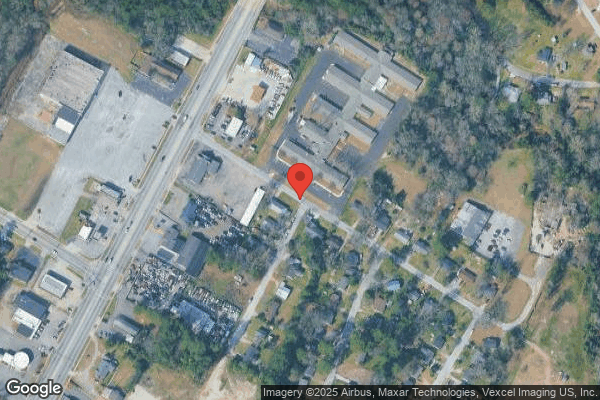

2021 SCOTT ROAD, AUGUSTA, GA 30906 (706) 247-8310
For profit - Corporation 193 Beds PRUITTHEALTH Data: November 2025
Trust Grade
60/100
#216 of 353 in GA
Last Inspection: May 2025

Inspected within the last 6 months. Data reflects current conditions.

Overview

PruittHealth - Creekside in Augusta, Georgia has a Trust Grade of C+, indicating it is slightly above average, but still not among the best options available. It ranks #216 out of 353 facilities in Georgia, placing it in the bottom half of state facilities, and #7 out of 11 in Richmond County, meaning there are better local choices. The facility is new and has a stable trend with no prior inspection history. Staffing is a strength, with a 4 out of 5 star rating and a 0% turnover rate, which is well below the state average. They have no fines on record, which is a positive sign; however, specific issues were noted during the inspection, such as improper food storage practices that could lead to contamination and a failure to maintain dumpsters, which poses potential biohazard risks. Additionally, there was a concern regarding adherence to infection control protocols, which could increase the risk of spreading infections among residents. Overall, while there are some strengths at this facility, families should be aware of the noted concerns.

Trust Score
C+
60/100
In Georgia
#216/353
Bottom 39%
Safety Record
Low Risk
No red flags
Inspections
Too New
0 → 3 violations
Staff Stability
○ Average
Turnover data not reported for this facility.
Penalties
✓ Good
No fines on record. Clean compliance history, better than most Georgia facilities.
Skilled Nurses
○ Average
Each resident gets 40 minutes of Registered Nurse (RN) attention daily — about average for Georgia. RNs are the most trained staff who monitor for health changes.
Violations
✓ Good
Only 3 deficiencies on record. Cleaner than most facilities. Minor issues only.
★★☆☆☆
2.0
Overall Rating
★★★★☆
4.0
Staff Levels
★☆☆☆☆
1.0
Care Quality
★★★☆☆
3.0
Inspection Score
Stable
: 0 issues
2025: 3 issues

The Good

  • 4-Star Staffing Rating · Above-average nurse staffing levels
  • Full Sprinkler Coverage · Fire safety systems throughout facility
  • No fines on record

Facility shows strength in staffing levels, fire safety.

The Bad

2-Star Overall Rating

Below Georgia average (2.6)

Below average - review inspection findings carefully

Chain: PRUITTHEALTH

Part of a multi-facility chain

Ask about local staffing decisions and management

The Ugly 3 deficiencies on record

May 2025 3 deficiencies
CONCERN (D) 📢 Someone Reported This

A family member, employee, or ombudsman was alarmed enough to file a formal complaint

Potential for Harm - no one hurt, but risky conditions existed

Infection Control (Tag F0880)

Could have caused harm · This affected 1 resident

**NOTE- TERMS IN BRACKETS HAVE BEEN EDITED TO PROTECT CONFIDENTIALITY** Based on observations, staff interview, record review, and review of the facility policy titled Enhanced Barrier Precautions (EB...

Read full inspector narrative →
**NOTE- TERMS IN BRACKETS HAVE BEEN EDITED TO PROTECT CONFIDENTIALITY** Based on observations, staff interview, record review, and review of the facility policy titled Enhanced Barrier Precautions (EBP), the facility failed to ensure staff followed EBP for one of 18 residents (R) (R35) on EBP during high-contact activities. This failure had the potential to increase the risk of the spread of infections. Findings include: Review of the facility policy titled Enhanced Barrier Precautions, revised 4/30/2024, revealed the Policy Statement was It is the policy of this facility to implement enhanced barrier precautions for the prevention of transmission of multidrug-resistant organisms. The Definitions section stated, Enhanced barrier precautions (EBP) refer to an infection control intervention designed to reduce transmission of multidrug-resistant organisms that employs targeted gown, and gloves use during high contact resident care activities. The Procedure section included, . 4. High-contact resident care activities include: . g. Device care or use: central lines, urinary catheters, feeding tubes, tracheostomy/ventilator tubes. Review of R35's admission Minimum Data Set Assessment (MDS), dated [DATE], revealed Section H (Bowel and Bladder) documented that R35 was incontinent of bowel and bladder. Review of R35's Face Sheet revealed diagnoses including, but not limited to, urinary tract infection (UTI). Review of R35's Physician Orders revealed an order dated 4/20/2025 for an 18 French (FR) urinary catheter due to diagnosis of urinary retention. Observation of urinary catheter care, on 5/3/2025 at 12:05 pm, revealed CNA AA and CNA BB performed hand hygiene with alcohol-based hand rub (ABHR), gathered supplies, obtained consent from R35 to provide catheter care, positioned the resident, and performed hand hygiene with ABHR. CNA AA and CNA BB donned (put on) gloves but did not don gowns. Catheter care was provided without other concerns. CNA AA and CNA BB doffed (removed) their gloves and performed hand hygiene with ABHR after completion of the procedure. Observation of R35's room revealed a supply of gloves and an ABHR dispenser secured to the wall. Observation of the 300 Hall revealed a supply cabinet with ample personal protective equipment (PPE), including disposable gowns. In concurrent interviews on 5/3/2025 at 12:20 pm, CNA AA and CNA BB stated they had completed a skills check-off during the last few months, including urinary catheter care and EBP. They stated CNAs were made aware of residents on EBP by the nurse and by the EBP signage on resident doors. They further stated that PPE, including gloves and gowns, was available in a cart on each unit. CNA AA and CNA BB confirmed that they didn't don a gown before providing urinary catheter care and stated they should have. In an interview on 5/3/2025 at 12:30 pm, the Director of Health Services (DHS) stated nursing staff should follow EBP guidelines while providing high-contact resident care and confirmed urinary catheter care was considered high-contact care. She further stated that a failure to follow EBP guidelines could result in the spread of infection to other residents.
CONCERN (F) 📢 Someone Reported This

A family member, employee, or ombudsman was alarmed enough to file a formal complaint

Potential for Harm - no one hurt, but risky conditions existed

Food Safety (Tag F0812)

Could have caused harm · This affected most or all residents

Based on observations, staff interviews, and review of facility policies titled Labeling, Dating, and Storage and Pot/Pan Washing and Sanitation the facility failed to ensure food items were properly ...

Read full inspector narrative →
Based on observations, staff interviews, and review of facility policies titled Labeling, Dating, and Storage and Pot/Pan Washing and Sanitation the facility failed to ensure food items were properly wrapped, dated, and labeled; failed to ensure food serving utensil storage was free from debris; failed to ensure personal items were stored off of the food preparation table to prevent contamination; and failed to ensure dietary staff could properly sanitize dishware in the three compartment sink to prevent food borne illness. The deficient practice had the potential to affect 54 out of 54 residents that received an oral diet. Findings include: 1. Review of the policy titled Labeling, Dating, and Storage dated 11/11/2022 under the section titled Procedure revealed, 1. Food and beverage items will have an identifying label as well as a receive date and open date. 2. Foods will be stored in their original or approved container and if opened shall be wrapped tightly with film, foil, etc. Observation on 5/2/2025 at 8:04 am of the walk-in refrigerator revealed the following concerns: - an open five-pound bag of shredded carrots with no open date - an open bag of green onions with no open date - an open bag of sliced ham with no opened date and the plastic film wrap falling off. - an open five-pound container of cottage cheese with no open date - an open five-pound bag of shredded cheddar cheese with no open date and was not securely wrapped. During an interview on 5/2/2025 at 8:04 am the Certified Dietary Manager (CDM) and the Assistant Dietary Manager (ADM) confirmed that the food items found were open with no open date and some not securely wrapped while being stored. Both CDM and the ADM stated that dietary staff should date any opened food item and securely wrap or place open food in closed containers. The ADM revealed that several of the food items noted with concerns she had placed in the walk-in refrigerator but could not state the reason for not dating. The CDM revealed that she has discussed and educated dietary staff on the importance of labeling and dating but does not recall the last time. Observation on 5/2/2025 at 8:20 am of two large white rolling food storage bins located outside the dry storage area revealed, one labeled flour and another labeled sugar. Further observation revealed that both the bag of flour and sugar inside the bins had been opened, and no open date located. During an interview on 5/2/2025 at 8:20 am the CDM confirmed that the flour and sugar bags had been opened and had no open date. The CDM revealed that dietary staff should have placed an open date on the bags once open for use. Observation on 5/2/2025 at 8:25 am of the dry storage area revealed the following concerns: - an open one-gallon container of soy sauce with no open date. - an open five-pound bag of elbow macaroni with no open date. - an open five-pound bag of spaghetti noodles with no open date. During an interview on 5/2/2025 at 8:25 am with the CDM and ADM, they both confirmed the opened foods items found in the dry storage had no open dates. The CDM revealed that she expects dietary staff to label and date all food items that have been opened. 2. Observation on 5/2/2025 at 8:39 am of the utensil storage drawer revealed it was located under the main food preparation table. Continued observation revealed the drawer contained food scoops and serving spoons. The bottom front left corner of the drawer revealed several pieces of an off-white-colored substance/debris. During an interview on 5/2/2025 at 8:30 am the ADM confirmed that there was off-white debris on the bottom of the drawer that was storing clean food scoops and serving spoons. The ADM revealed that she cleans that drawer once a month. The ADM stated that the drawer should have been cleaned earlier once any debris is noted. A policy was requested regarding cleaning/cleanliness of dishware storage and the CDM stated the facility did not have one. 3. Observation on 5/2/2025 from 8:02 am through 8:40 am of the main food preparation table in the middle of the kitchen revealed, a dietary staff personal cell phone. During an interview on 5/2/2025 at 8:40 am the CDM and ADM both confirmed that there was a personal cell phone on the food preparation table. The ADM revealed it was her cell phone, and she had it out to contact a staff member. The CDM revealed that she expects dietary staff to keep personal items such as personal cell phones off the food preparation table and have them in their pants pocket. A policy was requested regarding dietary staff personal items and the CDM stated the facility did not have one. 4. Review of the facility policy titled Pot/Pan Washing and Sanitation dated 11/16/2020 under the section titled Procedure revealed: 1. a three-compartment sink is used for manual washing, rinsing, and sanitizing of utensils, pots, pans, and all other items to be hand washed . Pots, pans, and utensils must be sanitized in the sanitizer sink according to one of the following methods Heat sanitizer: 170 F water for 30 seconds immersion, or Chemical Sanitizer: . Quaternary concentration is to be 200-300 ppm's with a water temperature of above 75 degrees or as specified by manufacture. Items need to be immersed for 60 seconds in the Quaternary. Observation on 5/3/2025 at 11:20 am of the three compartment revealed the facility was using a quaternary solution to sanitize dishware. Continued observation revealed Dietary Aide CC was using the three compartment sink to wash dishes. Dietary Aide CC washed a food scoop with soapy water, rinsed, and dipped the scoop in the sanitizing solution for two seconds and placed it in drying area. Dietary aide CC then began washing a four-quart sauce pan with soapy water, rinsed, dipped in the sanitizing solution for two seconds and placed in drying area. Further observation of the three-compartment sink revealed a poster hung on the wall above the sink. The poster indicated the steps for using the sink and step five stated to submerge in sanitizer sink for one minute or as specified by product label and/or local guidelines. During an interview on 5/3/2025 at 11:20 am, Dietary Aide CC revealed she was hired about two months ago and had not been trained on how to properly use the three-compartment sink. The dietary aide revealed that she did not know that dishware needed to be in the sanitizing solution for at least one minute. Dietary aide CC revealed that when she used the three compartment sink to wash dishes, she only dips the items in the sanitizing solution and does not submerge. Dietary aide CC stated that she was not aware of the poster hung on the wall over the sink provided guidance on how to properly sanitize dishes. During an interview on 5/3/2025 at 11:22 am, the ADM revealed that she could not recall when the last in-service had been conducted with dietary staff regarding the proper usage of the three-compartment sink. The ADM stated that dietary staff were to submerge dishes in the sanitizing solution for at least one minute. During an interview on 5/3/2025 at 11:40 am, the CDM revealed that Dietary Aide CC was newly employed and had not been educated on how to properly use the three-compartment sink. The CDM stated that any dietary staff using the three-compartment sink need to submerge dishes in the sanitizing solution for at least one minute.
CONCERN (F) 📢 Someone Reported This

A family member, employee, or ombudsman was alarmed enough to file a formal complaint

Potential for Harm - no one hurt, but risky conditions existed

Garbage Disposal (Tag F0814)

Could have caused harm · This affected most or all residents

Based on observations and staff interviews, the facility failed to properly maintain the condition for one of three dumpsters to ensure it was free from holes which exposed garbage and failed to ensur...

Read full inspector narrative →
Based on observations and staff interviews, the facility failed to properly maintain the condition for one of three dumpsters to ensure it was free from holes which exposed garbage and failed to ensure the drainage plug was in place to prevent potential biohazards from outflow. The facility census was 54 residents. Findings include: Observation on 5/2/2025 at 8:42 am of the facility's dumpsters revealed there were two areas where the dumpsters were located. One area was near the dietary department which had two dumpsters, and the other area was on the opposite side of the building for nursing usage. Continued observation of the dumpsters on the dietary side revealed the dumpster on the right-hand side had a hole the size of a softball on the front bottom lower right hand corner. When observing this hole, actual trash could be seen from inside the dumpster. Further observation of this dumpster revealed that there was no drainage plug in place to prevent the potential of sewage from escaping the dumpster. During an interview on 5/2/2025 at 8:42 am, the Certified Dietary Manager (CDM) confirmed that the one dumpster had a hole which trash could be seen inside and confirmed that there was no drainage plug in place. The CDM stated that dietary and maintenance were responsible for the dumpsters near the dietary department. The CDM revealed that she observes the dumpster area about once a day but did not notice the hole and did not realize that there was no drainage plug in place. Observation on 5/4/2025 at 9:00 am of the dietary dumpsters revealed the one dumpster continued to have a hole and no drainage plug in place. During an interview on 5/4/2025 at 9:00 am the Maintenance Director (MD) confirmed that the one dumpster near the dietary department had a hole towards the bottom and trash could be seen from the inside. The MD also confirmed that this dumpster had no drainage plug in place. The MD revealed that he works together with dietary regarding the dumpsters. The MD stated that he observes the dumpster about once a week and generally ensures that the top lids and side doors are closed. The MD revealed that he does not usually observe the dumpsters for overall condition or if drainage plugs are in place. The MD revealed that he was not aware that this dumpster had a hole and that there was no drainage plug. During an interview on 5/4/2025 at 9:40 am the Administrator and the CDM revealed that the facility did not have a policy regarding dumpsters/trash disposal.
Understanding Severity Codes (click to expand)
Life-Threatening (Immediate Jeopardy)
J - Isolated K - Pattern L - Widespread
Actual Harm
G - Isolated H - Pattern I - Widespread
Potential for Harm
D - Isolated E - Pattern F - Widespread
No Harm (Minor)
A - Isolated B - Pattern C - Widespread

Questions to Ask on Your Visit

  • "Can I speak with families of current residents?"
  • "What's your RN coverage like on weekends and overnight?"

Our Honest Assessment

Strengths
  • • No major safety red flags. No abuse findings, life-threatening violations, or SFF status.
  • • No fines on record. Clean compliance history, better than most Georgia facilities.
  • • Only 3 deficiencies on record. Cleaner than most facilities. Minor issues only.
Concerns
  • • No major red flags. Standard due diligence and a personal visit recommended.
Bottom line: Mixed indicators with Trust Score of 60/100. Visit in person and ask pointed questions.

About This Facility

What is Pruitthealth - Creekside's CMS Rating?

CMS assigns PRUITTHEALTH - CREEKSIDE an overall rating of 2 out of 5 stars, which is considered below average nationally. Within Georgia, this rating places the facility higher than 0% of the state's 100 nursing homes. A rating at this level reflects concerns identified through health inspections, staffing assessments, or quality measures that families should carefully consider.

How is Pruitthealth - Creekside Staffed?

CMS rates PRUITTHEALTH - CREEKSIDE's staffing level at 4 out of 5 stars, which is above average compared to other nursing homes.

What Have Inspectors Found at Pruitthealth - Creekside?

State health inspectors documented 3 deficiencies at PRUITTHEALTH - CREEKSIDE during 2025. These included: 3 with potential for harm.

Who Owns and Operates Pruitthealth - Creekside?

PRUITTHEALTH - CREEKSIDE is owned by a for-profit company. For-profit facilities operate as businesses with obligations to shareholders or private owners. The facility is operated by PRUITTHEALTH, a chain that manages multiple nursing homes. With 193 certified beds and approximately 57 residents (about 30% occupancy), it is a mid-sized facility located in AUGUSTA, Georgia.

How Does Pruitthealth - Creekside Compare to Other Georgia Nursing Homes?

Compared to the 100 nursing homes in Georgia, PRUITTHEALTH - CREEKSIDE's overall rating (2 stars) is below the state average of 2.6 and health inspection rating (3 stars) is at the national benchmark.

What Should Families Ask When Visiting Pruitthealth - Creekside?

Based on this facility's data, families visiting should ask: "Can I visit during a mealtime to observe dining assistance and food quality?" "How do you handle medical emergencies, and what is your hospital transfer rate?" "Can I speak with family members of current residents about their experience?"

Is Pruitthealth - Creekside Safe?

Based on CMS inspection data, PRUITTHEALTH - CREEKSIDE has a clean safety record: no substantiated abuse findings (meaning no confirmed cases of resident harm), no Immediate Jeopardy citations (the most serious violation level indicating risk of serious injury or death), and is not on the Special Focus Facility watch list (a federal program monitoring the lowest-performing 1% of nursing homes). The facility has a 2-star overall rating and ranks #100 of 100 nursing homes in Georgia. While no facility is perfect, families should still ask about staff-to-resident ratios and recent inspection results during their visit.

Do Nurses at Pruitthealth - Creekside Stick Around?

PRUITTHEALTH - CREEKSIDE has not reported staff turnover data to CMS. Staff turnover matters because consistent caregivers learn residents' individual needs, medications, and preferences. When staff frequently change, this institutional knowledge is lost. Families should ask the facility directly about their staff retention rates and average employee tenure.

Was Pruitthealth - Creekside Ever Fined?

PRUITTHEALTH - CREEKSIDE has no federal fines on record. CMS issues fines when nursing homes fail to meet care standards or don't correct problems found during inspections. The absence of fines suggests the facility has either maintained compliance or corrected any issues before penalties were assessed. This is a positive indicator, though families should still review recent inspection reports for the full picture.

Is Pruitthealth - Creekside on Any Federal Watch List?

PRUITTHEALTH - CREEKSIDE is not on any federal watch list. The most significant is the Special Focus Facility (SFF) program, which identifies the bottom 1% of nursing homes nationally based on persistent, serious quality problems. Not being on this list means the facility has avoided the pattern of deficiencies that triggers enhanced federal oversight. This is a positive indicator, though families should still review the facility's inspection history directly.