OCEANSIDE CARE CENTER LLC
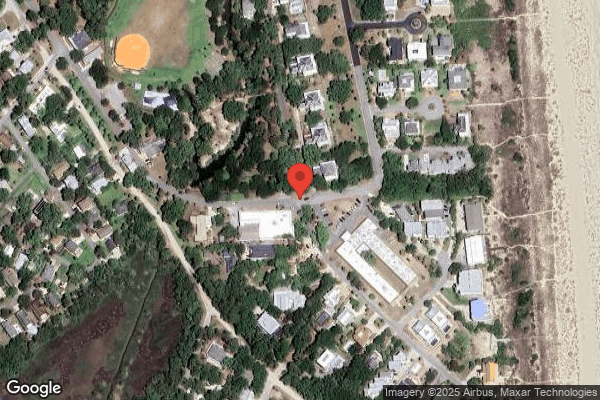
7 ROSEWOOD AVENUE, TYBEE ISLAND, GA 31328 (912) 786-4511
For profit - Limited Liability company 85 Beds PEACH HEALTH GROUP Data: November 2025 4 Immediate Jeopardy citations
Trust Grade
0/100
#303 of 353 in GA
Last Inspection: March 2025

Within standard 12-15 month inspection cycle. Federal law requires annual inspections.

Overview

Oceanside Care Center LLC in Tybee Island, Georgia, has a Trust Grade of F, which indicates significant concerns about the quality of care provided. It ranks #303 out of 353 facilities in Georgia, placing it in the bottom half, and #8 out of 12 in Chatham County, meaning there are only a few local options that are better. The facility is worsening, with the number of issues increasing from 6 in 2024 to 12 in 2025. Staffing is a major concern, as they have less RN coverage than 98% of Georgia facilities, and while there are no fines on record, the high turnover rate of 51% is average for the state, suggesting some instability in staff. Notably, the facility has faced critical issues, including a lack of licensed nursing staff during crucial hours, which could lead to serious harm, and failures to adequately protect residents from potential abuse during a workplace incident. Overall, while there are no fines, the serious deficiencies and poor staffing levels raise significant red flags for potential residents and their families.

Trust Score
F
0/100
In Georgia
#303/353
Bottom 15%
Safety Record
High Risk
Review needed
Inspections
Getting Worse
6 → 12 violations
Staff Stability
⚠ Watch
51% turnover. Above average. Higher turnover means staff may not know residents' routines.
Penalties
✓ Good
No fines on record. Clean compliance history, better than most Georgia facilities.
Skilled Nurses
⚠ Watch
Each resident gets only 8 minutes of Registered Nurse (RN) attention daily — below average for Georgia. Fewer RN minutes means fewer trained eyes watching for problems.
Violations
⚠ Watch
23 deficiencies on record. Higher than average. Multiple issues found across inspections.
★☆☆☆☆
1.0
Overall Rating
★☆☆☆☆
1.0
Staff Levels
★★☆☆☆
2.0
Care Quality
★☆☆☆☆
1.0
Inspection Score
Stable
2024: 6 issues
2025: 12 issues

The Good

  • Full Sprinkler Coverage · Fire safety systems throughout facility
  • No fines on record

Facility shows strength in fire safety.

The Bad

1-Star Overall Rating

Below Georgia average (2.6)

Significant quality concerns identified by CMS

Staff Turnover: 51%

Near Georgia avg (46%)

Higher turnover may affect care consistency

Chain: PEACH HEALTH GROUP

Part of a multi-facility chain

Ask about local staffing decisions and management

The Ugly 23 deficiencies on record

4 life-threatening
Jul 2025 8 deficiencies 4 IJ (4 facility-wide)
CRITICAL (L) 📢 Someone Reported This

A family member, employee, or ombudsman was alarmed enough to file a formal complaint

Immediate Jeopardy (IJ) - the most serious Medicare violation

Free from Abuse/Neglect (Tag F0600)

Someone could have died · This affected most or all residents

⚠️ Facility-wide issue

**NOTE- TERMS IN BRACKETS HAVE BEEN EDITED TO PROTECT CONFIDENTIALITY** On July 15, 2025, a determination was made that a situation in which the facility's noncompliance with one or more requirements ...

Read full inspector narrative →
**NOTE- TERMS IN BRACKETS HAVE BEEN EDITED TO PROTECT CONFIDENTIALITY** On July 15, 2025, a determination was made that a situation in which the facility's noncompliance with one or more requirements of participation had caused or had the likelihood to cause, serious injury, harm, impairment, or death to residents. The facility's Administrator, Regional Director of Clinical Operations, and Director of Operations were informed of the Immediate Jeopardy (IJ) on July 15, 2025, at 3:48 pm. The noncompliance related to the IJ was identified to have existed on June 13, 2025.An acceptable Immediate Jeopardy Plan of Removal was provided on July 18, 2025, and included interviews and skin assessments, education on abuse policy, threatening or violent behavior in the workplace, policy review, no weapons signage, night receptionist and weekend managers' new addition. The survey team validated the implementation of the removal plan, and the Immediate Jeopardy was removed on July 24, 2025. After the removal of the Immediate Jeopardy, the deficiency remained at a scope and severity of an L, no actual harm, with potential for more than minimal harm widespread.Based on observations, interviews, record reviews, and review of the facility policies titled, Abuse, Neglect, and Exploitation, Work Place Violence, and Active Shooter, the facility failed to ensure residents were free from staff to resident abuse by not preventing two Certified Nursing Assistants (CNAs), BB and CC, from bringing a firearm into the workplace on the East Wing and threatening other employees in a resident-occupied environment for Resident (R) (R1, R2, R3, R4, and R5) on 7/1/2025. This failure placed all residents at serious risk of physical injury or death, as well as significant psychosocial trauma. Findings include:Review of the facility policy titled, Abuse Prevention dated 3/25/2025 stated, It is the policy of this facility to provide protections for the health, welfare, and rights of each resident by developing and implementing written policies and procedures that prohibited and prevent abuse, neglect, exploitation, and misappropriation of funds. Abuse means the willful infliction of injury, unreasonable confinement, intimidation or punishment, with resulting physical harm, pain or mental anguish, which can include staff to resident abuse, etc. VI.Protection of resident (F) providing emotional support and counseling to residents during the investigations and as needed.Review of the facility policy titled, Workplace Violent Prevention Program dated 7/1/2025 stated, It is the policy of this facility to promote a safe, respectful, and productive environment in which to deliver quality healthcare and administrative services. Violence in the workplace will not be permitted or tolerated. The facility will develop a workplace violence prevention program to identify and prevent episodes of workplace violence. Workplace violence is defined as any threat of physical violence, harassment, intimidation, or other threatening disruptive behavior that occurs at the worksite.Review of the facility policy titled, Active Shooter/Violent Incidents dated 9/16/2024 stated Our facility is committed to maintaining a safe environment, including a safety from violence and threats of violence. Intent of Policy: to minimize the potential to residents, employees, visitors, and property resulting from individuals brandishing firearms or other weapons or claiming to possess a firearm/weapon with the expressed intention of causing harms, expressed threats, bomb threaten, threatening individuals while under a restraining order, or hostage situation. All staff will receive training upon hire and annually to increase awareness of potential threat or violent incidents including, but not limited to, acts of terrorism, active shooters, bomb threats/explosives, assaults, hostage situations.Record review of the police incident report dated 7/1/2025 at 11:05 pm documented law enforcement was dispatched to the facility regarding 2 (two) employees with firearms in the east wing, threatening another employee, CNA DD. A continued review of the document revealed that the Administrator wanted all suspects formally trespassed from the property.Record review of the document titled Criminal Trespass Warning/Ban Form dated 7/1/2025 stated Employees advised CNA CC, and another female employee got into a verbal altercation where they announced they had firearms with them. Administrator advised that she wanted both subjects banned.1. Record review of the Electronic Medical Record (EMR) for R1 revealed diagnoses, including but not limited to Alzheimer's disease, unspecified psychosis not due to substances or known physiological conditions. The Quarterly Minimum Data Set (MDS) dated [DATE], Section C (Cognitive Patterns) assessed a Brief Interview Mental Status Score (BIMS) of eight, which indicates moderate cognitive impairment. Section GG (Functional Abilities) assessed dependent for care for all Activities of Daily Living Skills, nonambulatory, and no limitations for Range of Motion (ROM) regarding upper/lower extremities.On 7/1/2025, R1 was sitting in a geriatric chair in front of the nurses' station on the East Wing during the incident and was unable to remove himself, nor did staff remove R1when the incident occurred.Record review of the document titled Social Services Quarterly Evaluation dated 7/17/2025 for R1stated he was an established client receiving psychiatric counseling services. The document further revealed that on 7/1/2025, R1 witnessed staff with a firearm.2. Record review of the EMR for R2 revealed diagnoses, including but not limited to bipolar disorder, generalized anxiety disorder, and PTSD. The Quarterly MDS dated [DATE], Section C assessed a BIMS score of 15, which indicates little to no cognitive impairments.Record review revealed that R2 ‘s room was located directly in front of the nurse station on the East Wing. During an interview on 7/10/2025 at 11:01 am, R2 reported being awakened by staff arguing. She described the argument as being very loud with the use of profanity. She reported standing in the doorway and later returning to her bed. R2 revealed that when the police arrived at the hall, she learned about the firearms. She stated that it made her feel very uncomfortable because she has a history of substance abuse, drugs, domestic violence, and dealing with people with firearms. R2 stated that the next day, the Administrator confirmed in a meeting that the CNAs had brought firearms into the facility. R2 reported being afraid for her safety and others' safety. She stated, Just witnessing the number of police officers in the hallway which was uncomfortable for her.Record review of the facility document titled, Social Services Quarterly Evaluation for R2 dated 7/17/2025 revealed that on 7/1/2025, R2 witnessed staff with a firearm.3. Record review of the EMR for R3 revealed diagnoses, including but not limited to bipolar disorder, anxiety disorder, schizophrenia, and depression. The Quarterly MDS dated [DATE] assessed Section C, a BIMS score of 15, which indicates little to no cognitive impairments.During an interview on 7/10/2025 at 1:08 pm, R3 reported witnessing staff arguments. R3 reported ambulating in the hall at the time of altercations with another resident, R4. He described the nursing assistants' arguments as being very loud, the use of profanity, and disturbing. R3 reported being afraid for others' safety after learning about firearms being in the building. He reported being in the lobby when the police officers arrived on site.Record review of the facility document titled, Social Services Quarterly Evaluation for R3 dated 7/17/2025, revealed the resident was already an established client receiving psychiatric counseling services. The document also stated that on 7/1/2025, R3 witnessed staff with a firearm. The form stated that R3 stated he did feel he was in danger and felt safe being in the facility. 4. Record review of the EMR for R4 revealed the following diagnoses, including but not limited to Alzheimer ‘s disease, generalized anxiety disorder, and major depressive disorder. The Quarterly MDS dated [DATE] assessed a BIMS score of eight, which indicates moderate cognitive impairments.During the interview on 7/10/2025 at 1:12 pm, R4 was unable to recall the specifics of the events involving a firearm. R4 could recall being informed that people had firearms in the building from other people, and that her account of the event was cloudy. R4 stated she was afraid of firearms coming in and responded with the statement uggh.Record review facility document titled, Social Services Quarterly Evaluation dated 7/17/2025 stated that on 7/1/2025, R4 witnessed staff with a firearm.5. Record review of the EMR for R5 revealed the following diagnoses, including but not limited to paranoia, schizophrenia. The Quarterly MDS dated [DATE] Section C assessed a BIMS score of 15, which indicates little to no cognitive impairments.During an interview on 7/9/2025 at 4:20 pm, R5 reported that he was sitting in the front lobby of the building when police officers arrived. He stated there were firearms in the building brought in by CNAs. R5 further revealed being worried about CNAs returning to the building and being concerned about a shootout. R5 revealed he would not be able to run because he was in a motorized wheelchair and one hand was contracted.Record review of the facility document for R5 titled, Social Services Quarterly Evaluation dated 7/17/2025 stated that on 7/1/2025, R5 witnessed staff with a firearm. Interview on 7/8/2025 at 1:16 pm with CNA DD confirmed getting into a verbal altercation with CNA BB in the East Wing Hall of the facility. She reported that several residents were present at the time of the arguments. She revealed that R1 was sitting in a geriatric chair in front of the desk. R3 and R4 were observed walking in the hall. She reported that she removed herself from the nurse station prior to CNA BB and CNA CC displaying their firearm to CNA EE. CNA DD reported that she was not aware of contacting 911 immediately. She confirmed she did not receive any active shooter or workplace violence training until after the incident occurred.Interview on 7/8/2025 at 2:31 pm with CNA EE confirmed being in the East Wing hall during the time of the altercation between CNA DD and CNA BB. She reported that R1 was sitting in a geriatric chair in front of the nurse station, and R2 (room [ROOM NUMBER]) was standing in the doorway of her room, which is directly across from the nurse station. She reported that CNA BB was using profanity and speaking in a loud, angry voice tone. She reported witnessing CNA BB leaving the hall and later returning to the nurse station with a purse. She reported that CNA BB removed a firearm from her purse and waved the firearm in the air at the nurse station. She stated that R1 was still in front of the nurse station in a geriatric chair and witnessed the firearm. She stated that CNA BB placed the firearm back into her purse and began pacing the hall using profanity and continuing to speak in a loud, angry voice tone with the purse in her hand. CNA EE reported that several residents' room doors were open in the hall. CNA EE reported observing CNA CC sitting at the nurse station and opening her bookbag, revealing a firearm. She further revealed that she contacted the Administrator to inform her of the incident and did not contact 911. CNA EE stated that the Administrator contacted 911. CNA EE reported that she was not aware she needed to contact 911 immediately. CNA EE confirmed that she did not receive any active shooter or workplace violence training until after the incident occurred on 7/1/2025.Interview with the Administrator on 7/8/2025 at 3:31 pm revealed that the two CNAs(CNA BB and CNA CC) involved in the incident were agency staff and that 7/1/2025 was their first shift. The Administrator stated she was not familiar with the CNAs (CNA BB and CNA CC) work ethics or background checks, and the hiring agency is responsible for the completion of references or background checks. The Administrator reported being informed of firearms present in the facility by CNA EE, and that her actions to contact 911 and file a no trespass ban were solely based on CNA EE‘s statement. She reported being unaware of any residents being present to witness a firearm or being in the lobby or smoke porch until made aware by the survey team. She reported that she did not follow up with the staff to inquire if any residents were up during the incident. The Administrator revealed that the day after the incident, she placed a sign up No Firearms Prohibited in the front entrance of the facility to ensure all staff and visitors are aware not to bring firearms in the building. The Administrator further stated that she serves as the Human Resources (HR) personnel and is solely responsible for the training and hiring of new staff in her building. She reported that all newly hired facility staff are oriented to the facility handbook during their orientation, and the handbook discusses prohibiting firearms. The Administrator further revealed that agency staff do not receive training or a copy of the facility handbook.Interview with the Director of Nursing (DON) on 7/9/2025 at 3:00 pm revealed that she was made aware of an active shooter incident at 4:00 am on 7/2/2025 by another staff member. She reported having staff only complete assessments for cognitive residents, not all residents in East Hall. The DON stated that she did not interview or follow up with any of the CNAs to determine if any residents witnessed the events or were awake in the East Hall, as this information was not made known to her. She reported that she received information from the Administrator that no residents were up or awake. She was only informed of rumors of staff threatening to have a firearm. The DON stated that if she had been made aware of or heard anything indicating a loud argument, residents witnessing a firearm, or a resident feeling uncomfortable or felt threatened, her interventions and response as the DON would have been different. She reported that interventions would have included ensuring that residents received follow-up psychiatric services immediately. She would have focused more on the residents who witnessed the firearm, R1, to ensure no negative or adverse effects. The DON reported that her expectations for the staff to ensure resident safety in the case of a workplace violence/ active shooter incident are for staff to remove the resident and close the room door immediately in the hall, and call 911, then call the Administrator and herself. If a staff member feels threatened, they should call the charge nurse. Staff should not have waited to call 911. Interview on 7/9/2025 at 4:37 pm with Receptionist HH reported observing CNA BB exiting the lobby and building, walking towards her car in the parking lot at least twice or more during the shift. She observed CNA BB exiting the lobby and later returning to the facility with food (pizza). Additionally, she observed CNA BB going to the parking lot again, almost close to 11:00 pm. She recalled seeing the CNA BB with a purse in her hand. She reported that R5 and some other unidentified residents were present in the lobby area and the smoke area (located off the lobby) throughout the incident, including the time of the active shooter incident. She also stated that the residents were present in the lobby when the officers entered the building. Receptionist HH reported that she was not aware of contacting 911 immediately. She confirmed she did not receive any Active Shooter or Workplace Violence Training until after the incident occurred.Interview on 7/9/2025 at 11:57 am, Licensed Practical Nurse (LPN) AA reported being unaware of CNA BB and CNA CC's behavior of threatening staff until after the incident had occurred. He recalled earlier during the shift, prior to taking his break, witnessing CNA BB and CNA CC speaking about their disagreement with their resident assignment, and making complaints of not having enough staff to work the floor. He confirmed that several residents were in the smoke area during the time the incident occurred. LPN AA confirmed that when CNA EE approached him to inform him of both CNA BB and CNA CC having firearms. He stated that CNA EE appeared upset and spoke to him in French so as not to alarm the residents. He reported that CNA EE stated she would call the Administrator. He reported that he approached CNA BB and CNA CC and asked them to leave the facility. He observed both CNAs (CNA BB and CNA CC) leaving the building, going to their cars. CNA CC had a bookbag, and CNA BB had a purse. LPN AA confirmed that he did not receive Active Shooter or Workplace Violence Training until after the incident occurred.Interview with CNA BB on 7/10/2025 at 11:15 am, CNA BB reported exiting the building and going to the parking lot on several occasions during her shift. She confirmed having a firearm in her possession in her vehicle on the premises. She confirmed having a verbal altercation with CNA DD about assignments. She confirmed making a statement. CNA BB confirmed not receiving any training from the facility on workplace violence and active shooters. Interview on 7/10/2025 at 12:13 pm CNA CC reported having a bookbag at the nurse station. She confirmed having a firearm in her possession in her vehicle but denied bringing a firearm into the facility. CNA CC confirmed not receiving any training from the facility on workplace violence and active shooters. CNA confirmed that R1 was sitting at the nurse station during the verbal altercation between CNA BB and CNA DD. She confirmed witnessing R3 and R4 walking the hall at the time of the verbal altercation.Interview on 7/9/2025 at 3:44 pm with the Social Service Director (SSD) reported being instructed in the morning meeting on 7/2/2025 by the Administrator that, due to two certified nursing assistants bringing firearms into the building to follow up with interviewing cognitive residents in the East Hall for any concerns or trauma. The Administrator wanted her to just ask basic general questions and nothing pertaining to the incident. The interview consisted of just general questions: Do you feel safe? She reported that she had not had a conversation about what happened that night. She avoided asking the East Hall residents if they had heard disturbances from the night before. She reported that none of the residents voiced any concerns about the active shooter incident or firearms. She was not made aware of residents being present in the lobby or on the smoke area patio (off the lobby) during the active shooter incident. She reported that if she was made aware of other residents, her interview would have included those residents. She confirmed that no referrals for follow-up psychiatric services were made for the residents.An undetermined number of residents were present in the lobby and the smoke area when CNA BB entered the facility (passing both areas) with a concealed firearm on 7/1/2025, confirmed by Receptionist HH.A psychiatric referral was processed on 7/17/2025 for R1, R2, R3, R4, and R5.
CRITICAL (L) 📢 Someone Reported This

A family member, employee, or ombudsman was alarmed enough to file a formal complaint

Immediate Jeopardy (IJ) - the most serious Medicare violation

Deficiency F0725 (Tag F0725)

Someone could have died · This affected most or all residents

⚠️ Facility-wide issue

**NOTE- TERMS IN BRACKETS HAVE BEEN EDITED TO PROTECT CONFIDENTIALITY** Based on staff interviews and record review, the facility failed to provide sufficient qualified licensed nursing staff to achie...

Read full inspector narrative →
**NOTE- TERMS IN BRACKETS HAVE BEEN EDITED TO PROTECT CONFIDENTIALITY** Based on staff interviews and record review, the facility failed to provide sufficient qualified licensed nursing staff to achieve the highest practicable level of well-being for all residents. Specifically, the facility did not have a licensed nurse (Registered Nurse RN or Licensed Practical Nurse LPN) on duty for at least 30 minutes on [DATE] between 7:00 pm through 7:30 pm. The census was 83 residents. On [DATE], a determination was made that a situation in which the facility's noncompliance with one or more requirements of participation had caused or had the likelihood to cause serious injury, harm, impairment, or death to residents. The facility's Administrator, Regional Director of Clinical Operations, and Director of Operations were informed of the Immediate Jeopardy (IJ) on [DATE], at 3:48 pm. The noncompliance related to the IJ was identified to have existed on [DATE]. An acceptable Immediate Jeopardy Plan of Removal was provided on [DATE], and included additional staffing agency support, daily staffing schedules, shift rounding, emergency staffing plan, education on emergency procedures, state minimum daily PPD requirements, and maintaining a licensed nurse every shift. The survey team validated the implementation of the removal plan, and the Immediate Jeopardy was removed on [DATE]. After the removal of the Immediate Jeopardy, the deficiency remained at a scope and severity of an L, no actual harm, with potential for more than minimal harm widespread. Findings include:A review of the facility document titled Punches Report dated [DATE] to [DATE] revealed that there was no RN or LPN on duty at the facility on [DATE] except for LPN LLL. In an interview with LPN LLL, she revealed that she worked remotely on the morning of [DATE] and clocked out at 5:00 pm the same day, filling out a manual clock form. She stated that she did not work on [DATE] from 7:00 pm to 7:00 am. On [DATE] at 2:06 am, LPN AA documented that Code Blue was called by the receptionist at 8:00 pm. Once on the scene, he observed R6 in the chair, unresponsive. His skin was cold, and he did not have a pulse. LPN AA documented that he then asked the receptionist to call 911 while he initiated CPR [Cardiopulmonary Resuscitation] with nursing staff (Certified Medication Assistant (CMA) and Certified Nursing Assistant (CNA)). He documented that they performed CPR until the Emergency Medical Services (EMS) arrived. R6 was still unresponsive with no pulse upon the EMS arrival. The resident was pronounced dead by EMS at 8:30 pm. Interview with Business Office Manager (BOM) PP on [DATE] at 12:27 pm revealed the BOM stated that there was hardly ever a nurse in the facility on the night shift. She stated that sometimes there were only CMAs in the building. The BOM stated that LPN QQQ left the faciity on [DATE] at 7:00 pm, knowing that there was not a nurse in the facility, and LPN QQQ left the East wing knowing that there was not a nurse or CMA to relieve her. She stated that LPN QQQ gave the keys to one of the CMAs on the [NAME] wing, left, and went home. The BOM further revealed that she called the administrator 17 times on the night that R6 expired, and the Administrator did not respond to her phone calls or texts.Interview with LPN LLL on [DATE] at 3:56 pm revealed that she worked on [DATE] during the day shift and clocked out around 5:00 pm the same day. She stated that when she comes in and helps them, she uses a missed punch form, and that Human Resources (HR) keys her time in the system. She stated that the HR person entered the information incorrectly. LPN LLL stated that she did not work the 7:00 pm to 7:00 am shift on [DATE]. Further interview with LPN LLL revealed that she was not physically in the facility on [DATE], and she worked remotely and did a missed punch form. LPN LLL stated that she normally works the [NAME] wing on Saturday and Sunday, 7:00 pm to 7:00 am. She stated that when she works, there are always two Licensed nurses on the [NAME] wing and one nurse on the East wing. Interview with LPN ZZ on [DATE] at 11:33 am revealed that she was working on [DATE]. She stated that she left at 4:45 pm, and she was relieved by CMA YY. She stated that CMA RRR was working on the top hall of the [NAME] wing.Interview with LPN AA on [DATE] at 11:22 am revealed that he was initially scheduled to work across the street at the sister facility, but ended up at the current facility due to no nurses being in the building. He stated that he took report at the sister facility and came to the current facility around 7:30 pm. LPN AA reported that upon arrival at the facility at 7:30 pm, no nurse was present in the facility. He stated that there were two Certified Medication Assistants (CMAs) on the [NAME] wing. He stated that he got the keys to the medication cart from one of the CMAs from the [NAME] wing. Interview with LPN QQQ on [DATE] at 12:15 pm revealed that on [DATE], she was working on the East wing on the 7:00 am to 7:00 pm shift. She stated that she left the facility at 7:00 pm and gave the keys to the medication cart and the keys to the narcotics to a CMA on the [NAME] wing. She stated that the Director of Nursing (DON) PPP told her she could leave if she gave the keys to someone. LPN QQQ stated that DON PPP was not in the building at the time.Interview with RN JJJ on [DATE] at 12:46 pm revealed that she was working on the medication cart during the day on [DATE] at the sister facility, and did not know that there was no nurse on the East wing at the current facility. RN JJJ stated that she instructed LPN AA to go to the East wing to see if they needed him; if not, he was to return to the sister facility. RN JJJ stated that a CNA from the current facility called her and told her that they need her. When she came to the scene, EMS and cops were there, and R6 was lying on the ground with a white sheet over him. RN JJJ stated that she attempted to call the Administrator but did not get an answer and sent a text message.
CRITICAL (L) 📢 Someone Reported This

A family member, employee, or ombudsman was alarmed enough to file a formal complaint

Immediate Jeopardy (IJ) - the most serious Medicare violation

Administration (Tag F0835)

Someone could have died · This affected most or all residents

⚠️ Facility-wide issue

**NOTE- TERMS IN BRACKETS HAVE BEEN EDITED TO PROTECT CONFIDENTIALITY** Based on staff interviews, record review, and a review of the Administrator and Director of Nursing (DON) Job Description, the A...

Read full inspector narrative →
**NOTE- TERMS IN BRACKETS HAVE BEEN EDITED TO PROTECT CONFIDENTIALITY** Based on staff interviews, record review, and a review of the Administrator and Director of Nursing (DON) Job Description, the Administration failed to provide oversight related to workplace violence, failed to provide sufficient qualified licensed nursing staff to achieve the highest practicable level of well-being for all residents, and failed to protect residents from alleged emotional and potential physical abuse during an active shooter incident. The census was 83.On [DATE], a determination was made that a situation in which the facility's noncompliance with one or more requirements of participation had caused or had the likelihood to cause, serious injury, harm, impairment, or death to residents. The facility's Administrator, Regional Nurse Consultant, and Operations Consultant were informed of the Immediate Jeopardy (IJ) on [DATE], at 3:48 pm. The noncompliance related to the IJ was identified to have existed on [DATE]. An acceptable Immediate Jeopardy Plan of Removal was provided on [DATE] and included education on emergency plan, workplace violence and an active shooter situation, policy review, job description review, additional education related to managing daily operations, coordinate and oversee department heads, providing education and compliance training, ensure licensure staff have appropriate education, competency checks are maintained. The survey team validated the implementation of the removal plan, and the Immediate Jeopardy was removed on [DATE]. After the removal of the Immediate Jeopardy, the deficiency remained at a scope and severity of an L, no actual harm, with potential for more than minimal harm widespread. Findings include:The facility had a Job Description for the job title of Administrator. The description documented the purpose of this position is leads, guides, and directs the operations of the healthcare facility in accordance with local, state, and federal regulations, standards, and established facility policies and procedures to provide appropriate care and services to residents. Identifies, in conjunction with the Director of Nursing and selected department heads, the facility's key performance indicators. Establishes an ongoing system to monitor these key indicators such as the Quality Assurance and Performance Improvement process throughout the facility. Promotes and encourages an environment of trust among all employees related to the overarching goal of resident safety and abuse prevention. The facility had a Job Description for the job title of Director of Nursing. The description included that the Director of Nursing position purpose is to planning, organizing, developing, and directing the overall operation of the Nursing Service Department in accordance with local, state, and federal standards and regulations, established facility policies and procedures and as may be directed by the Administrator and the Medical Director, to provide appropriate care and services to the residents. Interprets and communicates policies and procedures to nursing staff, and monitors staff practices and implementation. Oversees nursing schedules to ensure resident needs, regulatory and budget standards are met. Ensures delivery of compassionate quality care and nursing supervision as evidenced by adequate staff coverage on the units, general cleanliness, and maintaining optimal resident functions. Monitors for allegations of potential abuse or neglect, or misappropriation of resident property and participates in the investigative process. Facility Administration, specifically the Administrator and DON, failed to protect residents and effectively oversee areas of the facility that were included in their job descriptions. 1. The facility's Administration failed to implement and enforce policies and procedures that ensure the safety and security of residents when two staff members, Certified Nursing Assistant (CNA) BB and CNA CC, accessed the facility on [DATE] with concealed firearms and engaged in threatening behavior in the presence of residents. Additionally, the facility failed to ensure that a licensed nurse (Registered Nurse (RN) or Licensed Practical Nurse (LPN)) was present in the building on [DATE] from 7:00 pm to 7:30 pm and available to respond to medical emergencies. Cross-reference to F600, F725.2. The Administration failed to protect residents from alleged emotional and potential physical abuse during an active shooter incident. Cross-reference to F600.3. The Administration failed to provide sufficient qualified licensed nursing staff to achieve the highest practicable level of well-being for all residents. The facility did not have a licensed nurse on duty for at least 30 minutes on [DATE] between 7:00 pm to 7:30 pm. Cross-reference to F725. 4. The Administration failed to utilize Quality Assurance Performance Improvement (QAPI) for adverse events related to workplace violence and staffing. Cross- reference to F600, F725, F867 On [DATE] at 2:06 am, LPN AA documented that Code Blue was called by the receptionist at 8:00 pm. Once on the scene, he observed R6 in the chair, unresponsive. His skin was cold, and he did not have a pulse. LPN AA documented that he then asked the receptionist to call 911 while he initiated CPR [Cardiopulmonary Resuscitation] with nursing staff (Certified Medication Assistant (CMA) and CNA). He documented that they performed CPR until the Emergency Medical Services (EMS) arrived. R6 was still unresponsive with no pulse upon the EMS arrival. The resident was pronounced dead by EMS at 8:30 pm. Interview with LPN AA on [DATE] at 11:22 am revealed that he was initially scheduled to work across the street at the sister facility, but ended up at the current facility due to no nurses being in the building. He stated that he took report at the sister facility and came to the current facility around 7:30 pm. LPN AA reported that upon arrival at the facility at 7:30 pm, no nurse was present in the facility. He stated that there were two CMAs on the [NAME] wing. He stated that he got the keys to the medication cart from one of the CMAs from the [NAME] wing. Interview on [DATE] at 2:31 pm with CNA EE confirmed being in the East wing hall during the time of the altercation between CNA DD and CNA BB. She reported that R1 was sitting in a geriatric chair in front of the nurse station, and R2 (room [ROOM NUMBER]) was standing in the doorway of her room, which is directly across from the nurse station. She reported that CNA BB was using profanity and speaking in a loud, angry voice. She reported witnessing CNA BB leaving the hall and later returning to the nurse station with a purse. She reported that CNA BB removed a firearm from her purse and waved the firearm in the air at the nurse station. She stated that R1 was still in front of the nurse station in a geriatric chair and witnessed the firearm. She stated that CNA BB placed the firearm back into her purse and began pacing the hall using profanity and continuing to speak in a loud, angry voice tone with the purse in her hand. CNA EE reported that several residents' room doors were open in the hall. CNA EE reported observing CNA CC sitting at the nurse station and opening her bookbag, revealing a firearm. She further revealed that she contacted the Administrator to inform her of the incident and did not contact 911. CNA EE stated that the Administrator contacted 911. CNA EE reported that she was not aware she needed to contact 911 immediately. Interview on [DATE] at 3:31 pm with the Administrator revealed that the two Certified Nursing Assistants (CNAs) had never worked in her building until [DATE]. The Administrator confirmed that both CNAs were contract agency staff. She was not familiar with the two agency CNAs (CNA BB and CNA CC), work ethics, or background checks. The Administrator revealed that she serves as the Human Resources (HR) personnel and is solely responsible for the training and hiring of new staff in her building. The Administrator stated that contract and/or agency staff do not receive training/orientation on the facility handbook, nor are they provided a copy of the facility handbook (the handbook contains information for prohibiting firearms in the facility). The Administrator revealed that the day after the incident, she placed a sign up No Firearms Prohibited in the front entrance of the facility to ensure all staff and visitors are aware not to bring firearms in the building.Interview with the Director of Nursing (DON) on [DATE] at 3:00 pm revealed that she was made aware of an active shooter incident at 4:00 am on [DATE] by another staff member. She reported that staff only completed assessments for cognitive residents, not all residents in East Hall. The DON stated that she did not interview or follow up with any of the CNAs to determine if any residents witnessed the events or were awake in the East hall, as this information was not made known to her. She reported that she received information from the Administrator that no residents were up or awake. She was only informed of rumors of staff threatening to use a firearm. The DON stated that if she had been made aware of or heard anything indicating a loud argument, residents witnessing a firearm, or a resident feeling uncomfortable or threatened, her interventions and response as the DON would have been different.Interview on [DATE] at 12:03 pm with the Administrator revealed that the committee tracks and trends concerns based on identified problems. When asked if the Quality Assurance (QA) program had identified a concern or developed an action plan regarding the firearm incident or staff training, she reported no. She stated that she was unsure of why the facility did not provide training to all employees, including contract workers, regarding workplace violence. She confirmed that training on workplace violence and the prohibition on firearms will be provided this week for all employees. The Administrator revealed that the staffing of licensed nurses was not a part of her Quality Assurance (QA) meetings, because staffing was not a concern. The QA team never placed emphasis on licensed nurses' coverage, only on CNA coverage. An undetermined number of residents were present in the lobby and the smoke area when CNA BB entered the facility (passing both areas) with a concealed firearm on [DATE], confirmed by Receptionist HH.A psychiatric referral was processed on [DATE] for R1, R2, R3, R4, and R5.
CRITICAL (L) 📢 Someone Reported This

A family member, employee, or ombudsman was alarmed enough to file a formal complaint

Immediate Jeopardy (IJ) - the most serious Medicare violation

QAPI Program (Tag F0867)

Someone could have died · This affected most or all residents

⚠️ Facility-wide issue

**NOTE- TERMS IN BRACKETS HAVE BEEN EDITED TO PROTECT CONFIDENTIALITY** On [DATE], a determination was made that a situation in which the facility's noncompliance with one or more requirements of part...

Read full inspector narrative →
**NOTE- TERMS IN BRACKETS HAVE BEEN EDITED TO PROTECT CONFIDENTIALITY** On [DATE], a determination was made that a situation in which the facility's noncompliance with one or more requirements of participation had caused or had the likelihood to cause, serious injury, harm, impairment, or death to residents. The facility's Administrator, Regional Director of Clinical Operations, and Director of Operations were informed of the Immediate Jeopardy (IJ) on [DATE], at 3:48 pm. The noncompliance related to the IJ was identified to have existed on [DATE]. An acceptable Immediate Jeopardy Plan of Removal was provided on [DATE], and included review of policies and procedures for emergency staffing, review of job descriptions, education on additional staffing agency support, daily staffing schedules, shift rounding, emergency staffing plan, education on how to respond to active shooter events and emergency preparedness, and an ad hoc QAPI meeting. The survey team validated the implementation of the removal plan, and the Immediate Jeopardy was removed on [DATE]. After the removal of the Immediate Jeopardy, the deficiency remained at a scope and severity of an L, no actual harm, with potential for more than minimal harm widespread. Based on staff interviews, record review, and a review of the facility's policy titled Quality Assurance-Performance Improvement Management (QAPI) Change Process- Work Instruction, the facility failed to identify concerns and effectively implement Quality Assurance Process Improvement (QAPI) plans related ensure all staff received active shooter/workplace violence training to ensure residents (including R1, R2, R3, R4, and R5) were free from abuse from an active shooter/workplace violence incident. In addition, the facility to ensure availability of sufficient licensed nurse staffing was present and available in the building to respond to medical emergencies for a code blue for R6, who was later pronounced deceased by Emergency Medical Services (EMS). The census was 83.Findings Include: The QAPI policy titled Quality Assurance Performance Improvement Management dated [DATE] stated It is the policy of this facility to develop, implement, and maintain an effective comprehensive data driven program that focuses on indicators of the outcomes of care and quality of life and addresses all the care and unique services the facility provides. Adverse Event is an untoward, undesirable and unsafe unanticipated event that causes death or serious injury, or the risk thereof. 2. Governing and Leadership: (iv) Ensure the program is adequately resourced, including ensuring staff time, equipment, and technique training as needed (vii) Setting clear expectations around safety, quality rights, choices, and respect.1. Record review of the police report and the no trespass ban form, both documents dated [DATE], revealed that two Certified Nursing Assistants (CNAs), CNA BB and CNA CC brought firearms into the building threatening coworkers in the proximity of residents (R5 and an undetermined number of residents were present in the lobby and the smoke area). CNA BB removed the weapon from her purse, waved the weapon in the air, and proceeded to walk down the hallway, making threatening comments with the firearm concealed in her purse. CNA CC was sitting at the East wing nurse station, opening her bookbag, which revealed her firearm, with a resident (R1) at the nurses' station and residents (R2 and R3) present on the East wing.2. Record review revealed on [DATE] between the hours of 7:00 pm through 7:30 pm, R6 was observed by staff to be nonresponsive, sitting on the facility patio. Continued record review revealed that there were no licensed nurses (Licensed Practical Nurse (LPN) or Registered Nurse (RN)) available in the building (7:00 pm through 7:30 pm) to respond to medical emergencies. A blue code was not called until 8:00 pm, and the resident was pronounced deceased by Emergency Medical Services (EMS) at 8:30 pm outside on the patio at the facility.The Administrator was unable to provide evidence that the facility had or was currently addressing workplace violence and active shooter incidents, nor was there a systematic review of the issue to develop an action plan meeting the residents' needs, prior to the incident on [DATE]. Record review revealed that the facility did not post a No Weapons or Firearms poster on the exterior entrance doors until [DATE].R1, R2, R3, R4, and R5 did not receive psychological evaluations until [DATE].Interview on [DATE] at 12:03 pm with the Administrator revealed that the QAPI committee tracks and trends based on identified problems. When asked if the Quality Assurance (QA) program had identified a concern or developed an action plan regarding the firearm incident or staff training, she reported no. She stated that she was unsure of why the facility did not provide training to all employees, including contract workers, regarding workplace violence. She confirmed that training on workplace violence and the prohibition on firearms will be provided this week for all employees. The Administrator revealed that the staffing of licensed nurses was not a part of her QA meetings, because staffing of licensed nurses was not a concern. The QA team never placed emphasis on licensed nurses' coverage, only on CNA coverage.Interview on [DATE] at 1:26 pm with the Regional Director of Operations (RDOP) revealed that the facility has recommendations for agency staff training requirements prior to hire. However, they are required and are unsure why training is not followed up to ensure these requirements are met. The RDOP stated they recommend that the facility put agency staff through the facility orientation; however, that is just a recommendation.Cross-reference F600, F725, and F835
CONCERN (D) 📢 Someone Reported This

A family member, employee, or ombudsman was alarmed enough to file a formal complaint

Potential for Harm - no one hurt, but risky conditions existed

Resident Rights (Tag F0550)

Could have caused harm · This affected 1 resident

Based on observations, staff interviews, and review of the facility policy titled Promoting/ Maintaining Resident Dignity, the facility failed to promote dignity for one of 18 residents (R) (R1) in an...

Read full inspector narrative →
Based on observations, staff interviews, and review of the facility policy titled Promoting/ Maintaining Resident Dignity, the facility failed to promote dignity for one of 18 residents (R) (R1) in an environment that promotes the maintenance or enhancement of each resident's quality of life. This failure had the potential to diminish R1's quality of life.Findings include:Review of the facility policy titled Promoting/Maintaining Resident Dignity, revised 10/21/2024, revealed the Policy section stated, It is the practice of this facility to protect and promote resident rights and treat each resident with respect and dignity as well as care for each resident in a manner and in an environment, that maintain or enhances resident's quality of life by recognizing each resident's individuality. The Compliance Guidelines section included, 1. All staff members are involved in providing care to residents to promote and maintain resident dignity and respect resident rights.Observation on 7/14/2025 at 9:55 am revealed Certified Nursing Assistant (CNA) II and CNA JJ pushing R1 in a geriatric chair outside of the facility. Further observation revealed R1 was wearing a hospital gown, which was pulled up above his stomach with a blanket folded across his chest. R1's legs and lower torso were exposed, revealing a brief and bandages on his right leg stump. Continued observation revealed construction workers on site working on the facility and cars passing on the nearby street.In concurrent interviews, at the time of observation, on 7/14/2025 at 9:55 am, CNA II and CNA JJ confirmed they did not ensure the resident's body was covered and should have. In an interview on 7/15/2025 at 2:00 pm, the Director of Nursing (DON) reported that her expectations were for staff to ensure that residents were properly dressed and not exposed. She confirmed that this was a dignity issue.
CONCERN (D) 📢 Someone Reported This

A family member, employee, or ombudsman was alarmed enough to file a formal complaint

Potential for Harm - no one hurt, but risky conditions existed

Accident Prevention (Tag F0689)

Could have caused harm · This affected 1 resident

**NOTE- TERMS IN BRACKETS HAVE BEEN EDITED TO PROTECT CONFIDENTIALITY** Based on observations, staff interviews, and record review, the facility failed to ensure safety measures were initiated for one...

Read full inspector narrative →
**NOTE- TERMS IN BRACKETS HAVE BEEN EDITED TO PROTECT CONFIDENTIALITY** Based on observations, staff interviews, and record review, the facility failed to ensure safety measures were initiated for one of 18 sampled residents (R) (R1). This deficient practice had the potential to place R1 at risk of avoidable injuries. Findings include: Review of the admission Record for R1 revealed diagnoses including, but not limited to, muscle weakness, epilepsy, and unsteadiness on feet.Review of the Quarterly Minimum Data Set (MDS), dated [DATE], for R1 revealed Section C (Cognitive Patterns) documented a Brief Interview Mental Status (BIMS) score of 00 (indicating severe cognitive impairment). Section J (Health Conditions) documented falls since admission. Review of the Fall Risk Assessment for R1, dated 6/9/2025, revealed a score of 15 (indicating high risk for falls). Review of the Progress Notes for R1 revealed an entry dated 3/4/2025 of the nurse found the resident on the floor in his room. Further review revealed an entry dated 4/2/2025 of the nurse observed R1 trying to get out of bed, and the resident slid to the floor. Continued review revealed an entry dated 7/8/2025 of the resident was observed sitting on the floor in his room. Observation on 7/10/2025 at 3:05 pm revealed R1 sitting in a geriatric chair in his room with the door closed. Further observation revealed there were no fall mats around R1's bed or chair. Observations on 7/16/2025 at 2:25 pm and 7/17/2025 at 10:00 am revealed R1 lying in his bed and there were no fall mats on the floor.Observation on 7/22/2025 at 11:34 am revealed R1 lying in bed, positioned on his back, upper and lower torso turned sideways, with legs dangling off the side of the bed, and the resident's head resting on the wall. Continued observation revealed the head of the bed was elevated straight up, preventing the resident from reclining in a longitudinal position. Observation revealed there were no fall mats on the floor next to the bed.In an interview on 7/23/2025 at 3:00 pm, Licensed Practical Nurse (LPN) WW confirmed that R1 was capable of moving in bed and was identified as a high fall risk. She reported that the resident was placed at the nurse station during the day so staff could monitor him, and he often attempted to get out of the bed and the geriatric chair.In an interview on 7/20/2025 at 3:55 pm, Certified Nursing Assistant (CNA) RR reported that R1 was capable of moving from side to side in the bed and repositioning his body. She further reported that staff were never instructed to place fall mats by the resident's bed, only to place the bed in the lowest position. In an interview on 7/31/2025 at 1:23 pm, the Director of Nursing (DON) reported being unaware that R1 did not have fall mats next to his bed. She reported being aware that the resident was identified as a high falls risk and should have fall mats at his bedside.
CONCERN (F) 📢 Someone Reported This

A family member, employee, or ombudsman was alarmed enough to file a formal complaint

Potential for Harm - no one hurt, but risky conditions existed

Deficiency F0726 (Tag F0726)

Could have caused harm · This affected most or all residents

Based on staff interviews, record review, and review of facility documents, the facility failed to ensure that Certified Medication Aides (CMAs) completed a skills competency check-off before being al...

Read full inspector narrative →
Based on staff interviews, record review, and review of facility documents, the facility failed to ensure that Certified Medication Aides (CMAs) completed a skills competency check-off before being allowed to administer medications. In addition, the facility failed to ensure CMAs did not administer narcotic medications to one of 18 sampled residents (R) (R12). This deficient practice had the potential to place the 83 residents residing in the facility at risk of receiving medication from incompetent staff. Findings include: Review of the facility-provided undated document titled Medication Technician/Aide revealed the Position Purpose section stated, Assists licensed nursing staff by administering daily medications as ordered by the physician in accordance with established nursing standards, facility policies, and procedures and state requirements.1. The facility was unable to provide current annual competencies that were signed and dated for six of the seven Certified Medication Aides (CMAs) (CMA JJ, CMA GGG, CMA KKK, CMA RRR, CMA UUU, CMA YY) actively working at the facility. 2. Review of the facility-provided document titled Medication Administration Clinical Skills Checklist, dated 2/14/2025, for CMA EE revealed the section titled 12. Administered medications using appropriate technique for dosage form/route & administered accurate amount: C. Liquid Morphine (a narcotic medication used to treat pain) stated Not certified to give. The document was initiated by a Registered Nurse and signed by CMA EE. Review of the Medication Administration Record (MAR) for R12, dated 6/1/2025 through 6/30/2025, revealed that the schedule 5-325 milligram (MG) hydrocodone-acetaminophen (a narcotic medication used to treat pain) was initialed as given by CMA YY on 6/4/2025 at 9:00 am and 3:03 pm. Review of the Staff Administration Legend: June 2025, located on the MAR, revealed the medication was administered by CMA YY. In an interview on 6/24/2025 at 9:05 am, CMA GGG stated that she works on the floor as a Certified Nursing Assistant (CNA) most of the time, and she fills in on the medication cart on the 7:00 pm to 7:00 am shift. She stated that she had signed off on the narcotics sheets and administered narcotics to residents. CMA GGG further stated that she had a skills check-off at the facility's sister facility, but she could not remember who completed the check-off or when it was completed. In an interview on 7/9/2025 at 1:48 pm, the Regional Consultant Nurse (RNC) OOO stated that CMAs completed a quarterly check-off with a Registered Nurse (RN) or a Pharmacist. She further stated that the CMAs were not checked off on or allowed to administer narcotics, and she was unaware that the CMAs were administering narcotics to residents. In an interview on 6/24/2025 at 2:19 pm, the Interim Director of Nursing (DON) PPP stated that she was not aware that the CMAs were giving narcotics or controlled substances. She stated that they have started education on what they can and cannot do. She stated that going forward, the CMAs will not have access to the narcotic keys. In an interview on 6/25/2025 at 12:32 pm, Registered Nurse (RN) FFF stated that she had worked alongside a CMA; she had one cart, and the CMA had the other cart. RN FFF stated that she pulls the narcotics from the box and gives them to the CMA to administer them. She stated that she trusts CMA YY because she is really thorough.In an interview on 6/25/2025 at 2:20 pm, the Operations Consultant (OC) NNN revealed he was not aware that CMAs were administering narcotics. In an interview on 6/26/2025 at 3:38 pm, the Medical Director (MD) stated that he was not aware that CMAs were administering narcotics. He stated he was sure that the CMAs were not allowed to administer narcotics. In an interview on 6/26/2025 at 4:10 pm, Nurse Practitioner (NP) VVV stated that she was not aware that the CMAs were administering narcotics or controlled substances. She stated that CMAs should not be administering narcotics or controlled substances. In an interview on 7/8/2025 at 12:40 pm, CMA EE stated that she had relieved a CMA and counted the narcotics with a CMA. In an interview on 7/7/2025 at 4:42 pm, the Interim DON TTT stated that CMAs should not be administering narcotics. She stated that she was not aware that the CMAs were administering narcotics.
CONCERN (F) 📢 Someone Reported This

A family member, employee, or ombudsman was alarmed enough to file a formal complaint

Potential for Harm - no one hurt, but risky conditions existed

Infection Control (Tag F0880)

Could have caused harm · This affected most or all residents

Based on observations, staff interviews, record reviews, and review of the facility policy titled Laundry, the facility failed to maintain the laundry area in a sanitary manner to ensure residents' cl...

Read full inspector narrative →
Based on observations, staff interviews, record reviews, and review of the facility policy titled Laundry, the facility failed to maintain the laundry area in a sanitary manner to ensure residents' clothes were free from contamination. This deficient practice had the potential to place all residents residing in the facility at increased risk for infection related to cross-contamination. Findings include:Review of the facility policy titled Laundry, revised 6/11/2025, revealed the Policy section stated, The facility launders linens and clothing in accordance with current CDC [Center for Disease Control and Prevention] guidelines to prevent transmission of pathogens. The Policy Explanation and Compliance Guidelines section included, .2. The facility's laundry area will provide hand washing facilities and products as well as PPE [personal protective equipment]. 4. Soiled laundry shall be handled as little as possible, with minimum agitation to avoid contamination of air, surfaces, and persons. a. Linens shall be bagged separately from resident's clothing at the point of use. b. Sorting of laundry shall occur after washing. 6. If using fans in laundry processing area, prevent cross-contamination of clean linens from air blowing from soiled processing areas, (i.e., the ventilation should not flow from soiled processing area to clean laundry areas). Observation of the facility's laundry room on 7/22/2024 at 12:33 pm revealed a thick dark greyish substance coating the ceiling and pipes in the laundry room. Further observations revealed: Two racks of clean clothes hanging on hangars, uncovered, coated with dark grey substance. Uncovered blankets on shelves, coated with a dark grey and dark speckled substances. Two piles of uncovered clean clothes stacked on a container, coated with dark grey and dark speckled substances. Uncovered sheets and pillowcases on shelves, and coated with dark grey and dark speckled substances. Two bins of uncovered clean clothes, coated with dark grey and dark speckled substances. One large floor-standing industrial fan frame and blades covered with thick dark grey substances, blowing directly on clean clothes. A window covered with thick grey substance and broken glass, exposing dust and dark black substances. Observation of the PPE revealed one apron, which was coated with dust and debris, and no other PPE. Observation revealed no separate designated hazardous container in the laundry room. The can, which the staff reported as a biohazardous container, was being used as a trash can with trash and debris. In an interview on 7/22/2025 at 12:18 pm, the Housekeeping Manager described the thick grey substances as dust and dark speckled substances as dirt or debris. He stated that all resident clothes and linens should be covered after washing to prevent cross-contamination, and the laundry room should have aprons and goggles for the laundry staff to use. He further stated that the laundry area should have a separate, designated biohazard container. During an observation of the laundry room on 7/22/2025 at 1:36 pm, the Administrator and Operation Consultant NNN confirmed that a heavy layer of greyish color substance and debris was coating the ceiling and the ceiling pipes. Both staff members described the substances as dust, dirt, and debris. The Administrator reported that the dust particles built up on the ceiling, dust on the ceiling pipes, and sanitation of the laundry room were identified earlier this year. The problem was addressed a while back to have a staff to blow the dust off the ceiling and ceiling pipes monthly. She was not aware that the pipes and the ceiling were not being maintained by the staff who was assigned to the task. The Administrator confirmed the uncovered, clean clothing, blankets, and linen, the missing biohazard container, the fan covered with thick, dark grey substances, and broken window glass. Laundry room cleaning logs were requested and not provided. In an interview on 7/22/2024 at 1:40 pm, Laundry Aide (LA) NN reported she had worked in the laundry department for at least one year and had never witnessed staff cleaning the ceiling or pipes. She reported being unaware that residents' clothes and linen should be covered. LA NN reported that no one used the PPE apron and stated there was only one apron and no other PPE in the laundry room. She reported that biohazardous materials were usually placed in the washer first or just kept in a bin with all other laundry items.In an interview on 7/30/2025 at 2:22 pm, the Director of Nursing (DON)/Infection Preventionist (IP) stated her expectation was for all residents' laundry and linen to be maintained in a sanitary manner to prevent cross-contamination. She reported she was unaware of the condition of the laundry room.
Mar 2025 4 deficiencies
CONCERN (D) 📢 Someone Reported This

A family member, employee, or ombudsman was alarmed enough to file a formal complaint

Potential for Harm - no one hurt, but risky conditions existed

Deficiency F0655 (Tag F0655)

Could have caused harm · This affected 1 resident

**NOTE- TERMS IN BRACKETS HAVE BEEN EDITED TO PROTECT CONFIDENTIALITY** Based on clinical record review and staff interview it was determined the facility failed to include, in the resident's baseline...

Read full inspector narrative →
**NOTE- TERMS IN BRACKETS HAVE BEEN EDITED TO PROTECT CONFIDENTIALITY** Based on clinical record review and staff interview it was determined the facility failed to include, in the resident's baseline plan of care, minimum standards of care to fully address the resident's immediate needs upon admission for one out of 21 sampled residents, Resident (R) #79. Findings include: Review of R#79's clinical record revealed she was admitted to the facility on [DATE], with diagnoses to include acute respiratory failure with hypoxia, dysphagia - oropharyngeal phase, cognitive communication deficit, essential hypertension, type 2 diabetes mellitus, restless legs syndrome, and insomnia. A review of a Nurses Note dated 2/18/25, at 5:09 a.m., revealed R#79 was on oxygen via nasal cannula at two (2) liters (L) resident stated allergic to codeine, V/S (vital signs) wnl (within normal limits), blood glucose level 127. A review of a Social Services Note dated 2/18/25, at 2:34 p.m., revealed R #79's code status as DNR (do not resuscitate), was on 2 L of oxygen, and utilized eyeglasses as an aid due to visual impairments. A review of R#79's baseline care plan (required to be developed within the first 48 hours of admission) included a single entry, which was a care area for nutritional status. There was no documented evidence that the facility timely identified and addressed the resident's care needs to include the use of oxygen, having an allergy to codeine, cognitive communication deficit, diagnosis of Diabetes, code status of DNR, or the use of eyeglasses. The resident's baseline care plan failed to identify interventions to address the resident's current needs at the time of admission. An interview with Licensed Practical Nurse (LPN) DD/Minimum Data Set (MDS) Coordinator, on 3/14/25, at approximately 9:48 a.m., confirmed the observation of the single entry in the care plan, and that the facility failed to ensure that the resident's baseline care plan included the minimum healthcare information. An interview with the Nursing Home Administrator (NHA), on 3/14/25, at approximately 9:55 a.m., confirmed the facility failed to sufficiently address the care and management of R#79 on the resident's baseline plan of care.
CONCERN (D)

Potential for Harm - no one hurt, but risky conditions existed

Deficiency F0761 (Tag F0761)

Could have caused harm · This affected 1 resident

Based on observation, staff interview, and facility policy, it was determined that the facility failed to adhere to acceptable storage requirements and use by dates for multi-dose diabetes medication ...

Read full inspector narrative →
Based on observation, staff interview, and facility policy, it was determined that the facility failed to adhere to acceptable storage requirements and use by dates for multi-dose diabetes medication on one of three medication carts observed, (West Cart Two. This affected Resident (R) #10, R#48, and R#70. Findings include: A review of facility policy titled Multi-Dose Vials, undated, revealed multi-dose vials would be re-labeled with a beyond use date, 28 days after the vial is opened or punctured (unless otherwise specified by the manufacturer). The beyond-use date rule would begin on the first (1st) day the multi-use vial was opened or punctured. The medication label would also include the initials of the nurse who opened the vial. The policy indicated that staff should visually inspect the vial before each use to double check the expiration date, beyond use date if previously opened, and ensure there was no visible contamination. The Unit Manager would perform random checks of opened multi-dose vials for appropriate dating. Observation of the [NAME] Medication Cart Two, on 3/11/25, at approximately 9:58 a.m., in the presence of Licensed Practical Nurse (LPN) AA, revealed the following opened multi-dose diabetes medications: One vial of Fiasp (type of insulin), opened and available for use, not dated when initially opened, and belonged to R#10. One vial of Lantus (type of insulin), opened and available for use, not dated when initially opened, and belonged to R#48. One vial of Lantus Insulin Glargine (type of insulin), opened and available for use, not dated when initially opened, and belonging to R#70. Interview on 3/11/25, at approximately 10:00 a.m., with LPN AA, confirmed the observation, and that the medication should have been dated when initially opened. Interview with the Nursing Home Administrator (NHA) on 3/13/25, at approximately 11:50 a.m., confirmed the facility failed to date multi-dose medications when opened to assure acceptable storage times.
CONCERN (F)

Potential for Harm - no one hurt, but risky conditions existed

Pharmacy Services (Tag F0755)

Could have caused harm · This affected most or all residents

Based on observation, staff interviews, review of controlled drug count records, and facility policy review, it was determined that the facility failed to implement pharmacy procedures for the reconci...

Read full inspector narrative →
Based on observation, staff interviews, review of controlled drug count records, and facility policy review, it was determined that the facility failed to implement pharmacy procedures for the reconciliation of controlled drugs on three out of three medication carts (West Medication Cart One, [NAME] Medication Cart Two, and East Medication Cart). Findings include: Review of a facility's policy titled, Controlled Substance Administration and Accountability, undated, revealed all controlled substances obtained from a non-automated medication cart or cabinet are recorded on the designated usage form. Written documentation must be clearly legible with all applicable information provided. The charge nurse or other designee conducts a daily visual audit of the required documentation of controlled substances. For areas without automated dispensing systems, two licensed nurses account for all controlled substances and access keys at the end of each shift. A review of a document titled Change of Shift Narcotic Log identified by Licensed Practical Nurse (LPN) AA as the change of shift controlled count sheets for [NAME] Medication Cart Two on 3/11/25, at approximately 9:49 a.m., revealed that the on-coming nurse and/or off-going nurse failed to sign the sheets during shift change on the following dates to verify completion of the task to count the controlled drugs in the respective medication cart: 1/1/25 through 1/11/25, 1/14/25, 1/20/25, 1/21/25, 1/26/25, 1/29/25, 1/30/25, and 1/31/25; 2/3/25, 2/4/25, 2/5/25, 2/12/25, 2/14/25, 2/19/25, 2/27/25, and 2/28/25; 3/1/25, 3/2/25, and 3/3/25. During an interview with LPN AA, on 3/11/25, at approximately 9:51 a.m., she confirmed the observation and acknowledged that licensed nurses are expected to sign the count verification at change of shift. A review of a document titled Change of Shift Narcotic Log identified by LPN BB as the change of shift controlled count sheets for [NAME] Medication Cart One, on 3/11/25, at approximately 10:07 a.m., revealed that the on-coming nurse and/or off-going nurse failed to sign the sheets during shift change on the following date to verify completion of the task to count the controlled drugs in the respective medication cart: 1/1/25 through 1/31/25, (the entire month, all shifts, of January 2025); 2/1/25 through 2/9/25, 2/11/25, 2/14/25, 2/15/25, 2/16/25, 2/17/25, 2/23/25, 2/25/25, and 2/27/25; 3/2/25, 3/9/25, and 3/10/25. An interview with LPN BB, on 3/11/25, at approximately 10:11 a.m., confirmed the observation and she acknowledged that licensed nurses are expected to sign the count verification at change of shift. A review of a document titled Change of Shift Narcotic Log identified by LPN CC as the change of shift controlled count sheets for East Medication Cart, on 3/11/25, at approximately 10:20 a.m., revealed that the on-coming nurse and/or off-going nurse failed to sign the sheets during shift change on the following dates to verify completion of the task to count the controlled drugs in the respective medication cart: 1/3/25 through 1/6/25, 1/8/25, 1/10/25, 1/11/25, 1/17/25, 1/18/25, 1/19/25, 1/25/25, 1/27/25, 1/30/25, and 1/31/25; 2/1/25, 2/2/25, 2/16/25, 2/22/25, and 2/25/25; 3/1/25, 3/4/25, 3/8/25, 3/9/25, and 3/10/25. During an interview with LPN CC, on 3/11/25, at approximately 10:23 a.m., she confirmed the observation and acknowledged that licensed nurses are expected to sign the count verification at change of shift. During an interview, with the Nursing Home Administrator (NHA) on 3/13/25, at approximately 11:50 a.m., she confirmed there was no additional documentation to provide and that it was her expectation that nursing staff signed the Control Substance logs at change of shift to demonstrate that he/she had completed the count of the controlled drugs to identify any discrepancies, and that the facility failed to implement pharmacy procedures for the reconciliation of controlled drugs.
MINOR (C) 📢 Someone Reported This

A family member, employee, or ombudsman was alarmed enough to file a formal complaint

Minor Issue - procedural, no safety impact

Staffing Information (Tag F0732)

Minor procedural issue · This affected most or all residents

Based on observations and record review, the facility failed to post the required nursing staffing data on a daily basis. This was observed for four (4) of four (4) days of survey. Findings include: R...

Read full inspector narrative →
Based on observations and record review, the facility failed to post the required nursing staffing data on a daily basis. This was observed for four (4) of four (4) days of survey. Findings include: Review of the facility's Nurse Staffing Posting Information policy and procedures, undated, stated: 1. The Nurse Staffing Sheet will be posted on a daily basis .2. The facility will post the Nurse Staffing Sheet at the beginning of each shift. Upon request of the Daily Nurse Staffing Posting, the staff was unable to furnish the postings for certain dates requested. During an interview, on 3/12/25 at approximately 2:00 p.m., Registered Nurse #1 stated that she could not find the nurse staffing data. She stated that the job was overwhelming and she was trying to organize the files. During an interview, on 3/14/25 at approximately 9:30 a.m., the Administrator acknowledged that the facility had not posted the Daily Nurse Staffing consistently and that going forward the facility would post the information daily.
Sept 2024 6 deficiencies
CONCERN (D) 📢 Someone Reported This

A family member, employee, or ombudsman was alarmed enough to file a formal complaint

Potential for Harm - no one hurt, but risky conditions existed

Resident Rights (Tag F0550)

Could have caused harm · This affected 1 resident

**NOTE- TERMS IN BRACKETS HAVE BEEN EDITED TO PROTECT CONFIDENTIALITY** Based on observations, resident interviews, staff interviews, and record reviews, the facility failed to ensure that one of 33 s...

Read full inspector narrative →
**NOTE- TERMS IN BRACKETS HAVE BEEN EDITED TO PROTECT CONFIDENTIALITY** Based on observations, resident interviews, staff interviews, and record reviews, the facility failed to ensure that one of 33 sampled residents (R) (R2) was treated with dignity. This failure had the potential to diminish R2's quality of life in an environment that promotes the maintenance or enhancement of each resident's quality of life. Findings included: A review of R2's admission Minimum Data Set (MDS) dated [DATE] revealed a Brief Interview for Mental Status (BIMS) score of 10 (indicating moderate cognitive impairment). During an observation on 8/29/2024 at 11:11 am, R2 was observed in his room and wearing a hospital gown. During an observation and interview on 9/3/2024 at 11:28 am, R2 was observed in his room and wearing a hospital gown. R2 stated that he had brought clothes to the facility, and when he returned from a hospital stay, his clothing was missing. He could not recall the date of the hospital stay or if missing clothing had been reported to anyone. During an observation and interview on 9/5/2024 at 10:19 am, R2 was observed to be wearing a hospital gown. He stated that he did not want to wear a hospital gown and preferred to wear clothes. During an interview on 9/3/2024 at 1:09 pm, Certified Nursing Assistant (CNA) III stated that she was not sure why R2 was always wearing a hospital gown, but she would change his clothes. CNA III stated she was unsure if R2 chose to be in a hospital gown. During an interview on 9/3/2024 at 1:12 pm, CNA KKK stated that when she gets R2 ready for dialysis, she typically dresses him in his sweatpants and a shirt. During an interview on 9/3/2024 at 1:23 pm, the Director of Nursing (DON) stated that most of the residents who do not get out of bed wear hospital gowns. The DON further stated wearing a hospital gown had not been identified as a problem or issue for R2. During an observation and interview on 9/5/2024 at 12:25 pm, the Administrator confirmed that R2 was wearing a hospital gown. The Administrator stated that R2 was very particular about how he looked and should not be wearing a hospital gown unless he desired to.
CONCERN (D) 📢 Someone Reported This

A family member, employee, or ombudsman was alarmed enough to file a formal complaint

Potential for Harm - no one hurt, but risky conditions existed

Deficiency F0558 (Tag F0558)

Could have caused harm · This affected 1 resident

**NOTE- TERMS IN BRACKETS HAVE BEEN EDITED TO PROTECT CONFIDENTIALITY** Based on observations and staff interviews, the facility failed to ensure the call light was within reach for four of 33 sampled...

Read full inspector narrative →
**NOTE- TERMS IN BRACKETS HAVE BEEN EDITED TO PROTECT CONFIDENTIALITY** Based on observations and staff interviews, the facility failed to ensure the call light was within reach for four of 33 sampled residents (R) (R28, R29, R15, and R16). This failure placed the residents at risk of accident, injury, and/or unmet needs related to an inability to call for staff assistance. Findings include: 1. A review of R28's Quarterly Minimum Data Set (MDS) assessment dated [DATE] revealed section GG (Functional Abilities and Goals) documented no impairment of the upper extremities, and the resident was dependent on staff for activities of daily living (ADLs). Observation on 8/27/2024 at 11:08 am revealed that R28's call light was lying on the floor next to the head of the bed and was not within reach of R28. 2. A review of R29's Quarterly MDS assessment dated [DATE] revealed section GG (Functional Abilities and Goals) documented no impairment of the upper extremities, and the resident was dependent on staff for ADLs. Observation on 8/28/2024 at 1:38 pm revealed that R29's call light was coiled around the bed rails with the bottom pointed down toward the floor and was not within R29's reach. 3. A review of R15's Quarterly MDS assessment dated [DATE] revealed section GG (Functional Abilities and Goals) documented no impairment of the upper extremities, and the resident was dependent on staff for ADLs. Observation on 8/28/2024 at 1:46 pm revealed that R15's call light was not within R15's reach. 4. A review of R16's Quarterly MDS assessment dated [DATE] revealed section GG (Functional Abilities and Goals) documented no impairment of the upper extremities, requires set-up assistance with eating, and the resident was dependent on staff for ADLs. Observation on 8/28/2024 at 1:47 pm revealed that R16's call light was over the resident's bedroom light located over the resident's headboard and was not within R16's reach. In an interview on 8/27/2028 at 11:16 am, Certified Nursing Assistant (CNA) NN verified the call lights were not within reach of the residents and stated the call lights should not be on the floor. In an interview on 9/9/2024 at 3:16 pm, the Administrator stated call lights should always be within the residents' reach.
CONCERN (D) 📢 Someone Reported This

A family member, employee, or ombudsman was alarmed enough to file a formal complaint

Potential for Harm - no one hurt, but risky conditions existed

Comprehensive Care Plan (Tag F0656)

Could have caused harm · This affected 1 resident

**NOTE- TERMS IN BRACKETS HAVE BEEN EDITED TO PROTECT CONFIDENTIALITY** Based on staff interviews, record review, and review of the facility policy titled Comprehensive Care Plans, the facility failed...

Read full inspector narrative →
**NOTE- TERMS IN BRACKETS HAVE BEEN EDITED TO PROTECT CONFIDENTIALITY** Based on staff interviews, record review, and review of the facility policy titled Comprehensive Care Plans, the facility failed to develop a person-centered comprehensive care plan for one of 33 sampled residents (R) (R4). The deficient practice had the potential to affect the care and services provided to R4. Findings include: A review of the facility's undated policy titled Comprehensive Care Plans revealed the Policy Explanation and Compliance Guidelines section included 2. The comprehensive care plan will be developed within 7 days after the completion of the comprehensive MDS [Minimum Data Set] assessment. All Care Assessment Areas triggered by the MDS will be considered in developing the plan of care . 3. The comprehensive care plan will describe, at a minimum, the following: a. The services that are to be furnished to attain or maintain the resident's highest practicable physical, mental, and psychosocial well-being. A review of R4's Face Sheet revealed an admission date of 7/25/2023 with diagnoses including but not limited to, chronic obstructive pulmonary edema (COPD) and congestive heart failure (CHF). A review of R4's MDS dated [DATE] revealed that R4 required the assistance of one staff member with activities of daily living (ADLs), had an indwelling urinary catheter, and received services of hospice. A review of R4's care plan, dated 8/14/2023, revealed the care plan contained one focus area of Resident enjoys TV, music (variety), coffee social, arts and crafts, drawing, coloring, special events, and parties. Further review of R4's care plan revealed no focus areas for ADLs, COPD, hospice, or an indwelling urinary catheter. An interview on 9/3/2024 at 1:23 pm with the Director of Nursing (DON) revealed that baseline care plans were created upon admission and a comprehensive person-centered care plan should be created by the 14th day. The DON stated the care plan was used by the nurses to determine what type of care a resident would require.
CONCERN (D) 📢 Someone Reported This

A family member, employee, or ombudsman was alarmed enough to file a formal complaint

Potential for Harm - no one hurt, but risky conditions existed

ADL Care (Tag F0677)

Could have caused harm · This affected 1 resident

**NOTE- TERMS IN BRACKETS HAVE BEEN EDITED TO PROTECT CONFIDENTIALITY** Based on observations, resident interviews, staff interviews, record review, and review of the facility's policy titled Activiti...

Read full inspector narrative →
**NOTE- TERMS IN BRACKETS HAVE BEEN EDITED TO PROTECT CONFIDENTIALITY** Based on observations, resident interviews, staff interviews, record review, and review of the facility's policy titled Activities of Daily Living (ADLs), the facility failed to provide ADL care for four of 33 sampled residents (R) (R18, R20, R16, and R15). This failure placed R18, R20, R16, and R15 at risk for unmet needs and a diminished quality of life. Findings include: Record review of the facility's undated policy titled Activities of Daily Living (ADLs), revealed the Policy Explanation and Compliance Guidelines section included 3. A resident who is unable to carry out activities of daily living will receive the necessary services to maintain good nutrition, grooming, and personal and oral hygiene. 1. A review of R18's Face Sheet revealed diagnoses included cognitive communication deficit and muscle weakness. A review of R18's Quarterly Minimum Data Set (MDS), dated [DATE], revealed section C (Cognitive Patterns) documented a Brief Interview for Mental Status (BIMS) score of 8 (indicating moderate cognitive impairment), and section GG (Functional Abilities and Goals) documented R18 was dependent for ADL care. Observation on 8/28/2024 at 10:30 am revealed R18's fingernails had black and brown substances under the nails, and her nails were approximately two inches long. In an interview on 8/28/2024 at 10:30 am, R18 stated she needed her fingernails trimmed. She further stated staff rarely offered to trim her nails and she couldn't remember the last time her nails were trimmed. 2. A review of R20's Face Sheet revealed diagnoses included hemiplegia and muscle weakness. A review of R20's Quarterly MDS, dated [DATE], revealed section C (Cognitive Patterns) documented a BIMS score of 15 (indicating little to no cognitive impairment), and section GG (Functional Abilities and Goals) documented R20 was dependent for ADL care. Observation on 8/28/2024 at 10:36 am revealed that R20's nails were covered with black and brown substances. In an interview on 8/28/2024 at 10:36 am, R20 stated he had been desperately trying to get his nails trimmed and further stated staff always told him they were busy. 3. A review of R16's Face Sheet revealed diagnoses included muscle weakness, lack of coordination, and cognition communication deficit. A review of R16's Quarterly MDS, dated [DATE], revealed section C (Cognitive Patterns) documented a BIMS score of 0 (indicating severe cognitive impairment), and section GG (Functional Abilities and Goals) documented that R20 was dependent for ADL care. Observation on 8/28/2024 at 10:15 am revealed R16's fingernails were two to three inches long and with black substance under the nails. In an interview on 8/28/2024 at 10:15 am, R16 stated the last time he had his nails cut was six months ago and stated he would prefer to have his nails trimmed. During an interview on 8/28/2024 at 2:04 pm, Certified Nursing Assistant (CNA) HH stated she cut residents' nails as needed and further stated she had not had time to trim residents' nails recently. CNA HH confirmed that R18, R20, and R16 had long nails that needed to be trimmed. During an interview on 8/28/2024 at 2:15 pm, Licensed Practical Nurse (LPN) CC confirmed that R16, R20, and R16's nails were unusually long and needed to be trimmed. LPN CC stated she was unaware their nails needed trimming and stated she would have staff trim all the residents' nails. 4. A review of R15's Face Sheet revealed diagnoses included unsteadiness on feet, lack of coordination, and cognition communication deficit. A review of R15's Annual MDS dated [DATE] revealed section C (Cognitive Patterns) documented a BIMS score of 0 (indicating severe cognitive impairment), and section GG (Functional Abilities and Goals) documented R15 was dependent on staff for assistance with ADLs, including toileting and personal hygiene. A review of R15's care plan revealed that R15 was incontinent of bowel and bladder. Interventions included checking on him every two hours and providing incontinent care as needed. Observation on 8/28/2024 at 10:10 am revealed R15 lying in his bed in a fetal position on his bed. An offensive odor was detected around R15's bed area. Observation on 8/28/2024 from 10:49 am to 11:10 am revealed R15 lying in the fetal position on his bed. An offensive odor was detected in the room and into the hallway across the hallway. Observation on 8/28/2024 at 2:10 pm revealed R15 lying in the fetal position on his bed, with an offensive odor in the room and hallway. During an interview on 8/28/2024 at 2:20 pm, CNA FF stated she was aware R15 had a bowel movement and explained she was busy passing out trays during lunch serve and had to continue passing trays to avoid cross-contamination. CNAFF stated she had to finish her task before she assisted R15 with ADL care. During an interview with the Director of Nursing (DON) on 9/3/2024 at 1:25 pm, she stated staff should check on R15 every two hours. The DON explained staff should take the trays down and assist any resident who required incontinent care. The DON further stated she would expect staff to assist a resident who required incontinent care, if necessary, and then proceed to pass out trays. During an interview on 9/9/2024 at 3:20 pm, the Administrator revealed staff should not have waited several hours before they assisted R15 with ADL care and explained she expected staff to check on R15 every two hours. The Administrator stated that R15 was nonverbal and was unable to make his needs known. The Administrator concluded she talked to staff and reeducated staff as soon as she became aware staff left R15 in his bowel movement for several hours.
CONCERN (D) 📢 Someone Reported This

A family member, employee, or ombudsman was alarmed enough to file a formal complaint

Potential for Harm - no one hurt, but risky conditions existed

Laboratory Services (Tag F0770)

Could have caused harm · This affected 1 resident

Based on resident interviews, staff interviews, and record reviews, the facility failed to obtain a critical laboratory test for one of 33 sampled residents (R) (R6) in a timely manner. Specifically, ...

Read full inspector narrative →
Based on resident interviews, staff interviews, and record reviews, the facility failed to obtain a critical laboratory test for one of 33 sampled residents (R) (R6) in a timely manner. Specifically, the facility failed to obtain a urine specimen for five days after the physician's order. The deficient practice had the potential to place R6 at risk for medical complications, unmet needs, and a diminished quality of life. Findings include: A review of R6's electronic medical record (EMR) revealed diagnoses including, but not limited to, Human Immunodeficiency Virus (HIV). A review of the Annual Minimum Data Set (MDS) assessment, dated 7/4/2024, revealed section C (Cognitive Patterns) documented a Brief Interview for Mental Status (BIMS) score of 15 (indicating little to no cognitive impairment). A review of R6's Progress Notes revealed an entry dated 8/8/2024 at 8:13 pm of MD [Medical Doctor] rounded . obtain UA C&S [urinalysis, culture and sensitivity]. Further review revealed an entry dated 8/12/2024 at 7:15 pm of Order for UA C&S received on 8/8/2024 has not yet been retrieved for testing for resident that is having urinary discomfort and pain to lower back area and states that the pain goes down her left leg. Resident continues with c/o [complaint of] severe pain 10/10, after prn [as needed] pain med [medication] administered as ordered and has agreed to let this nurse obtain a urine sample with a request to use a straight catheter this shift. Continued review revealed an entry dated 8/13/2024 at 5:12 am of Urine sample collected with no issues or complaints. The resident stated that she felt relieved and that her pain level had decreased while obtaining a urine sample. In an interview on 8/29/2024 at 11:07 am, R6 stated that she told the physician that she couldn't urinate. As a result, the physician ordered an in-and-out catheter to be performed. R6 stated the order sat there for four days before the specimen was collected. In an interview on 9/5/2024 at 12:48 pm, Licensed Practical Nurse (LPN) JJ verified a UA C&S was ordered for R6 on 8/8/2024. LPN JJ stated she performed clerical work that day and did not attempt to collect the urine sample. LPN JJ further stated she passed the information along to the nurse assigned to the resident and did not recall who that was. In an interview on 9/6/2024 at 9:24 am, LPN OO revealed when an order for a urinalysis was obtained, the nurse should collect the specimen. She further stated she was unsure why the urine specimen was not obtained for five days. In an interview on 9/6/2024 at 11:03 am, The Director of Nursing (DON) verified the physician's order for the urine specimen and stated it should have been collected when ordered and further stated she was unaware it was not obtained in a timely manner. In a telephone interview on 9/5/2024 at 2:53 pm, Physician GGG revealed that when an order is given, it should be done within a 12 to 24-hour period. Physician GGG stated it was unacceptable for a urine specimen to not be obtained for five days.
CONCERN (D) 📢 Someone Reported This

A family member, employee, or ombudsman was alarmed enough to file a formal complaint

Potential for Harm - no one hurt, but risky conditions existed

Infection Control (Tag F0880)

Could have caused harm · This affected 1 resident

**NOTE- TERMS IN BRACKETS HAVE BEEN EDITED TO PROTECT CONFIDENTIALITY** Based on observation, resident interviews, staff interviews, record review, and review of the facility policy titled Infection C...

Read full inspector narrative →
**NOTE- TERMS IN BRACKETS HAVE BEEN EDITED TO PROTECT CONFIDENTIALITY** Based on observation, resident interviews, staff interviews, record review, and review of the facility policy titled Infection Control, the facility failed to ensure staff implemented infection control precautions to provide individual water mugs for two of 33 sampled residents (R) (R19 and R33) who shared a single water mug for an undetermined period in their room. This failure created the potential of exposing R19 and R33 to infections due to cross-contamination. Findings include: A review of the facility policy titled Infection Control Policy, dated 4/1/2024, revealed the Policy of The facility has established and maintains an infection prevention and control program designed to provide a safe, sanitary, and comfortable environment and to help prevent the development and transmission of communicable diseases and infections as per accepted national standards and guidelines. A review of R19's Face Sheet revealed an admission date of 4/21/2023 and diagnoses that included urinary tract symptoms, unspecified sepsis, and viral hepatitis. A review of the R19's Quarterly Minimum Data Set (MDS) dated [DATE] revealed section C (Cognitive Patterns) documented a Brief Interview for Mental Status (BIMS) score of 8 (indicating moderate cognitive impairment) and section GG (Functional Abilities and Goals) documented R19 required minimal assistance with Activities of Daily Living (ADL). A review of R33's Face Sheet revealed an admission date of 4/18/2024 and diagnoses that included acute respiratory failure. A review of R33's Quarterly MDS dated [DATE] revealed section C (Cognitive Patterns) documented a BIMS score of 12 (indicating little to no cognitive impairment) and section GG (Functional Abilities and Goals) documented R19 required minimal assistance with ADLs. Observation on 8/27/2024 at 10:45 am in R19 and R33's room revealed one one-liter mug of water sitting on a table in the center of the room. In an interview on 8/27/2024 at 10:45 am, R19 stated staff were unable to offer him his own water mug and further stated staff expected him and R33 to drink from the same water mug. In an interview on 8/27/2024 at 10:49 am, R33 revealed he had been sharing the same water mug with R19 since he was admitted to the facility. During an interview on 9/3/2024 at 1:25 pm, the Director of Nursing (DON) revealed she was unaware that R19 and R33 were sharing a water mug. She stated residents sharing water mugs was an infection control concern. The DON verified the one water mug in R19 and R33's room and described the mug as filthy and needed to be replaced. She replaced the water mug and provided each resident with their own. During an interview on 9/9/2024 at 3:20 pm, the Administrator stated residents should not share water mugs and stated she would make sure each resident has their own water mug.
Dec 2023 5 deficiencies
CONCERN (D) 📢 Someone Reported This

A family member, employee, or ombudsman was alarmed enough to file a formal complaint

Potential for Harm - no one hurt, but risky conditions existed

Comprehensive Care Plan (Tag F0656)

Could have caused harm · This affected 1 resident

**NOTE- TERMS IN BRACKETS HAVE BEEN EDITED TO PROTECT CONFIDENTIALITY** Based on observation, staff interview, record review, and review of the facility policy titled Comprehensive Person-Centered Car...

Read full inspector narrative →
**NOTE- TERMS IN BRACKETS HAVE BEEN EDITED TO PROTECT CONFIDENTIALITY** Based on observation, staff interview, record review, and review of the facility policy titled Comprehensive Person-Centered Care Plan, the facility failed to follow a care plan for one resident (R) R62. This failure increased the potential for R62 to not receive treatment and/or care according to their needs and placed R62 at risk for harm or adverse consequences. The sample size was 23 residents. Findings include: Review of the facility policy titled Comprehensive Person-Centered Care Plan, revised March 2022, revealed the Policy Statement of: A comprehensive, person-centered care plan that includes measurable objectives and timetables to meet the resident's physical, psychosocial and functional needs is developed and implemented for each resident. The Policy Interpretation and Implementation section stated: 9. Care plan interventions are chosen only after data gathering, proper sequencing of events, careful consideration of the relationship between the resident's problem areas and their causes, and relevant clinical decision making. 10. When possible, interventions address the underlying source(s) of the problem area(s), not just symptoms or triggers. 11. Assessments of residents are ongoing and care plans are revised as information about the residents and the residents' conditions change. Review of R62's care plan revealed the resident had a potential for pressure ulcer development due to COPD, hypertension, depression, history of respiratory failure, personal history of COVID-19, pneumonia, and anemia. Review of the care plan interventions included to complete weekly skin assessments. Clinical record review revealed the last documented skin assessment for R62 was 11/10/2023 and documented a left antecubital skin tear. Further review of the record revealed a skin assessment was not completed upon readmission from the hospital on [DATE] or thereafter. During an interview on 12/7/2023 at 12:10 pm with the Minimum Data Set (MDS) Coordinator revealed that the care plan was implemented according to the residents' care area needs. She further stated that it is the facility's policy to complete weekly skin assessments on all residents in the facility. The MDS Coordinator acknowledged that if the skin assessments were not completed weekly, then the care plan was not being followed. During an interview on 12/7/2023 at 12:17 pm with the Director of Nursing (DON) revealed that care plans are implemented and revised according to the care needs of the residents. She further stated that it is her expectation that the staff follow the plan of care implemented for the resident to include weekly skin assessments. Cross reference F684
CONCERN (D) 📢 Someone Reported This

A family member, employee, or ombudsman was alarmed enough to file a formal complaint

Potential for Harm - no one hurt, but risky conditions existed

ADL Care (Tag F0677)

Could have caused harm · This affected 1 resident

**NOTE- TERMS IN BRACKETS HAVE BEEN EDITED TO PROTECT CONFIDENTIALITY** Based on observation, staff interviews, and record review, the facility failed to ensure that Activities of Daily Living (ADL) c...

Read full inspector narrative →
**NOTE- TERMS IN BRACKETS HAVE BEEN EDITED TO PROTECT CONFIDENTIALITY** Based on observation, staff interviews, and record review, the facility failed to ensure that Activities of Daily Living (ADL) care was provided for one dependent resident (R) (R30), related to shaving facial hair. This failure had the potential to negatively impact R30's quality of life. The sample was 23 residents. Findings include: Review of the clinical record for R30 revealed the most recent Quarterly Minimum Data Set (MDS) dated [DATE] revealed a Brief Interview for Mental Status (BIMS) was coded as 06, indicating the resident was unable to complete an interview due to severe cognitive impairment. Further review revealed R30 required total assistance for personal hygiene. Observations beginning on 12/5/2023 through 12/7/2023 throughout the day revealed that R30 continued with ungroomed facial hair. R30 was noted with facial hair to above top lip and under chin. The surveyor asked R30 if she prefers the facial hair, R30 stated no and asked the surveyor if she could get hair the off. Interview with Certified Nursing Assistant (CNA) DD on 12/5/2023 at 8:42 am revealed she had worked at the facility since June 2023. She stated that she is the only CNA on the East Wing. She stated that she provides care to 25 residents. CNA DD stated that it is always like this with her being the only CNA on the East Wing. CNA DD stated that she does not give showers to residents because she cannot operate the mechanical lift by herself because it takes two people. She stated that she provides a bed bath to residents and does the best that she can. Interview with Licensed Practical Nurse (LPN) AA on 12/7/2023 at 8:11am revealed R30 does not refuse ADL care. The surveyor informed LPN AA that R30 was observed with facial hair times three days. LPN AA had no response. Interview with Registered Nurse (RN) EE on 12/7/2023 at 8:14 am revealed R30 does not refuse ADL care on her shift. The surveyor informed RN EE that R30 was observed with facial hair times three days. RN EE had no response. RN EE stated to the surveyor on 12/7/2023 at 8:45 am that she was going to remove the facial hair from R30. RN EE informed the surveyor that she had removed the facial hair from R30 at 8:55 am. Observed R30 on 12/7/2023 at 9:00 am with no facial hair.
CONCERN (D) 📢 Someone Reported This

A family member, employee, or ombudsman was alarmed enough to file a formal complaint

Potential for Harm - no one hurt, but risky conditions existed

Quality of Care (Tag F0684)

Could have caused harm · This affected 1 resident

**NOTE- TERMS IN BRACKETS HAVE BEEN EDITED TO PROTECT CONFIDENTIALITY** Based on observations, staff and resident interviews, record review, and review of the facility policies titled Skin Tears - Abr...

Read full inspector narrative →
**NOTE- TERMS IN BRACKETS HAVE BEEN EDITED TO PROTECT CONFIDENTIALITY** Based on observations, staff and resident interviews, record review, and review of the facility policies titled Skin Tears - Abrasions and Minor Breaks, Care of and Prevention of Pressure Injuries, the facility failed to provide treatment and care in accordance with professional standards for one of 23 residents (R) (R62) sampled for skin assessments. Specifically, the facility failed to assess and monitor an open skin area secondary to a previous intravenous site and failed to follow the facility's processes related to weekly skin assessments. This deficient practice had the potential to cause R62 to develop a complicated skin infection. Findings included: A review of the facility's policy titled Skin Tears - Abrasions and Minor Breaks, Care of revised September 2013 revealed the purpose of this procedure is to guide the prevention and treatment of abrasions, skin tears, and minor breaks in the skin. Obtain a physician's order as needed. Review the resident's care plan, current orders, and diagnoses to determine resident needs. Generate a non-pressure from and complete. Notify the physician of any abnormalities (i.e., excessive bleeding, localized swelling, redness, drainage, tenderness, pain, etc.). Report other information in accordance with facility policy/guideline and professional standards of practice. A review of the facility's policy titled Prevention of Pressure Injuries revised April 2020, revealed residents are to be assessed on admission (within eight hours) for existing pressure injury risk factors. Repeat the risk assessment weekly and upon any changes in condition. Conduct a comprehensive skin assessment upon (or soon after) admission, with each risk assessment, as indicated according to the resident's risk factors, and prior to discharge. During the skin assessment, inspect presence of erythema, temperature of skin and soft tissue, and edema. Inspect the skin on a daily basis when performing or assisting with personal care or Activities of Daily Living (ADLs). Evaluate, report, and document potential changes in the skin. Review the interventions and strategies for effectiveness on an ongoing basis. Review of the Quarterly Minimum Data Set (MDS) assessment dated [DATE] revealed that R62 had a Brief Interview for Mental Status (BIMS) score of 15 indicating that the that the resident was cognitively intact. Review of R62's hospital leave status located in the electronic record under the Census tab revealed resident was out of the facility on hospital leave on 11/18/2023 and returned to the facility on [DATE]. Review of Progress Notes dated 11/23/2023 revealed the resident returned to the facility from a local hospital. No skin breakdown to report. Review of the current physician orders in the electronic medical record (EMR) revealed resident was not receiving any medications that would aid in the treatment of a skin infection. An interview and observation on 12/5/2023 at 9:36 am with R62 revealed a white gauze bandage to his left hand. He stated while he was in the hospital a few weeks ago, he had an intravenous catheter in his left hand, and he stated the area where it looked infected. R62 stated that the staff was aware of the area to his hand but had not done anything but wrap it up. R62 then removed the gauze, and observation revealed there was an open skin area near the resident's left index finger. The surrounding skin area presented with localized swelling and redness. R62 stated that the area was painful. R62 stated that he was going to make it his business to see the Nurse Practitioner today when she visits the facility. During an observation and interview on 12/6/2023 at 8:48 am R62 was observed lying in bed with a white gauze bandage secured with a tan adhesive wrap intact to resident's left hand. R62 stated the Wound Nurse reapplied the dressing to his hand yesterday (12/5/2023). R62 informed surveyor during the visit with the Nurse Practitioner he was told the area on his hand looked bad, it was infected, and he would start on antibiotics for treatment. R62 further stated that the area is painful, and the wound nurse had been looking at the area for a couple of weeks and said it looked better. Review of a progress noted dated 12/5/2023 by the Family Nurse Practitioner (FNP) revealed she visited resident for complaint of left-hand edema and pain status post-surgery and insomnia. Plan: Left hand cellulitis - Keflex 500 milligrams (mg) (a medication used to treat bacterial infections) four times daily for 10 days was ordered. During an interview on 12/6/23 at 11:46 am with Licensed Practical Nurse (LPN) AA, she revealed R62 informed her on 12/5/2023 about the area on his left hand being painful and that he thought his hand was infected. LPN AA further stated that the Nurse Practitioner gave her the order for Keflex, she entered the order into the electronic record, but she did not assess the area of concern, write a progress note or performed a skin assessment. LPN AA further stated the wound nurse is responsible for weekly skin assessments, but if she notices skin assessments have not been completed, then she will perform the skin assessment. During an interview 12/6/2023 at 12:08 pm with LPN BB, she revealed that she is responsible for all skin assessments. LPN BB further stated that skin assessments are completed and documented in the electronic record on admission, readmission, and weekly. LPN BB further stated sometimes the charge nurses would help with completing the skin assessments, but she is responsible for making sure it is completed. She further stated that if she identifies or has knowledge of a resident's skin integrity being compromised, she is responsible for assessing the area of concern, documenting the finding, and calling the physician to obtain orders. LPN BB acknowledged that she did not assess R62 upon readmission to the facility because she was not aware of his return. LPN BB also stated that resident came up to her last Friday (12/1/2023) wanting her to look at his hand; but his hand was fine at that time. LPN BB further stated that the night nurse informed her yesterday (12/5/2023) that R62 was complaining that his left hand was tender, so she looked at his hand and applied a bandage. LPN BB told the surveyor she did not write a progress note or obtain a physician order because she was summoned to the [NAME] Wing to administer medications. LPN BB verified that there was no mention of the compromised skin area on resident's left hand in the clinical record, the last skin assessment was completed on 11/10/2023, and there was not a physician's order for the bandage on resident's left hand. During a telephone interview on 12/6/2023 at 1:07 pm with the FNP, she revealed she visited R62 at the facility on12/5/2023. The FNP stated that R26 complained of an open area on his left hand being painful. The FNP stated the area on R62's left hand was red, swollen, and inflamed. The FNP stated she ordered an antibiotic due to cellulitis. The FNP stated there was no way to determine how long the infection had been there, but it was definitely infected. During an interview on 12/6/2023 at 1:13 pm with the Director of Nursing (DON), she revealed the Wound Care Nurse is responsible for completing the skin assessments on residents upon admission and readmission, within two hours after resident is in the facility, and weekly thereafter. The DON further stated that the charge nurses are expected to complete the weekly skin assessment if the Wound Care Nurse doesn't get around to it. The DON verified that the last skin assessment for R62 was completed on 11/10/2023, there was not any documentation in progress notes related to residents left hand being compromised. The DON stated her expectation is that all nurses in the facility follow the facility's policy for skin assessment and practice a standard of professional care with changes in conditions for all residents in the facility. Cross reference F656
CONCERN (D) 📢 Someone Reported This

A family member, employee, or ombudsman was alarmed enough to file a formal complaint

Potential for Harm - no one hurt, but risky conditions existed

Deficiency F0697 (Tag F0697)

Could have caused harm · This affected 1 resident

**NOTE- TERMS IN BRACKETS HAVE BEEN EDITED TO PROTECT CONFIDENTIALITY** Based on observations, interviews, and record review, the facility failed to evaluate the effectiveness of prescribed pain medic...

Read full inspector narrative →
**NOTE- TERMS IN BRACKETS HAVE BEEN EDITED TO PROTECT CONFIDENTIALITY** Based on observations, interviews, and record review, the facility failed to evaluate the effectiveness of prescribed pain medications for one resident (R) (R30) during wound care. This failure had the potential to place R30 at risk for unmet needs. The sample size was 23 residents. Findings include: Review of the clinical record for R30 revealed the most recent Quarterly Minimum Data Set (MDS) dated [DATE] revealed a Brief Interview for Mental Status (BIMS) was coded as 06, indicating the resident was unable to complete an interview due to severe cognitive impairment. Review of the physician orders for R30 revealed an order for hydrocodone-acetaminophen tablet 5/325milligrams (mg) (a medication used to relive moderate to severe pain) to give one by mouth every six hours as needed for pain. Review of the care plan revealed R30 has a stage 4 pressure ulcer on his sacrum on 8/17/2023. Interventions included assessing for pain and medicating as needed, providing assistance with turning and repositioning, providing treatments as ordered, and reporting changes in skin status to the medical doctor (MD). An interview on 12/6/2023 at 8:45 am with Licensed Practical Nurse (LPN) BB stated that she asked the charge nurse to medicate R30 prior to wound care. LPN BB stated that she would come get the surveyor in about 30 minutes. She stated that she was giving the pain medicine a chance to kick in. Wound care observation on 12/6/2023 at 9:56 am provided by LPN BB revealed LPN BB entered R30 room and informed her that she was going to perform her wound care. R30 stated ok. LPN BB turned the covers back and rolled R30 over to her left side. R30 stated owie. LPN BB stated to R30 it's ok, it's alright. LPN BB repositioned R30 and R30 again stated owie. LPN BB stated to R30 it's ok, you're ok. LPN BB removed the dressing, removed gloves, sanitized hands, donned gloves, and cleaned the sacral wound area. R30 stated owie and LPN BB continued with the treatment. LPN BB completed wound care, repositioned R30 and placed covers over her. LPN BB did not assess or reassess R30 for pain before, during, or after the procedure, although R30 stated owie three times during the treatment. Interview with LPN BB on 12/6/2023 at 10:20 am revealed LPN BB stated that she did not assess R30 for pain because that's the way R30 is. LPN BB stated that she works with R30 every day. LPN BB stated once you pat her or take the cover off her she's hurting already. LPN BB stated that she should have reassessed her but sometimes R30 is confused about her pain. A continued interview with LPN BB revealed, LPN BB stated that she has not had any wound care training in the past three years. She stated that nurses do treatments when she is not here. LPN BB stated that the nurse knows how to do treatments, but she is not sure if they have had any in-services or training. Interview on 12/6/2023 at 12:50 pm with the Director of Nursing (DON) revealed R30 yells out but she does not have any real behaviors. She stated that once while assisting with turning and repositioning R30, R30 cried out but she never said that she was hurting. The DON stated that she obtained an order from the doctor for prn oxycodone. The DON stated that R30 had a stage 2 pressure ulcer to her sacrum when she asked the doctor for the prn medication. She stated that R30 now has a stage 4 pressure ulcer to her sacrum, and she was going to speak with the doctor about getting an order for routine pain medication. The DON stated that she expects LPN BB to assess R30 for pain. Interview on 12/6/2023 at 1:00 pm with the Administrator revealed she expects LPN BB to assess residents for pain.
CONCERN (F) 📢 Someone Reported This

A family member, employee, or ombudsman was alarmed enough to file a formal complaint

Potential for Harm - no one hurt, but risky conditions existed

Food Safety (Tag F0812)

Could have caused harm · This affected most or all residents

Based on observations, staff interviews, and review of the facility policy titled Food Storage and Family Members, the facility failed to discard expired food items and failed to label, and date opene...

Read full inspector narrative →
Based on observations, staff interviews, and review of the facility policy titled Food Storage and Family Members, the facility failed to discard expired food items and failed to label, and date opened food items in two of two resident pantry refrigerator/freezers. This deficient practice had the potential to affect all residents that received food items from two of two resident pantries. The census was 68 residents. Findings include: Review of the facility policy titled Food Storage and Family Members, with an effective date of 4/10/2017 revealed the purpose was to ensure the safe storage of potentially hazardous raw or cooked foods. The Procedure sections stated: All food is stored in the unit refrigerators. All food should be labeled, dated, and covered with a use by date. Food should not be kept for more than 72 hours and will be discarded if held longer. All items that are opened (example: milk) will be discarded daily. Observation on 12/7/2023 at 11:37 am of the resident pantry refrigerator on the [NAME] Hall with the Administrator and Dietary Manager (DM), revealed the following opened and undated items: one bag of peppers, one 32 ounce (oz) can of pineapple juice, one container of strawberry yogurt, two facility sandwiches with meat and a packet of mayonnaise in a sandwich bag, and one container of southern style potato salad with an expiration date of 11/31/2023. Observation of the freezer compartment revealed two raw sirloin beef patties that were discolored with an expiration date of 11/22/2023. Observation on 12/7/2023 at 11:43 am of the resident pantry refrigerator on the East Hall with the DM revealed the following opened and undated items: two facility meat sandwiches with a packet of mayonnaise in a sandwich bag, one plastic container with unknown content and without a label, one open bottle of cola in the door, one container of strawberry yogurt with an expiration date of 4/2/2023. Observation of the freezer compartment revealed one frozen 32oz bottle of hydration drink, one frozen slice of meatloaf with frost buildup with an expiration date of 10/23/2023. There was no evidence that the food items were dated when opened or discarded when expired. An interview on 12/7/2023 at 11:52 am with the DM revealed she sends snacks, including sandwiches, to each unit every evening. She verified that the food items were expired in the East and [NAME] Hall resident refrigerators and freezer compartments. She further stated that she doesn't check the unit pantry refrigerators for expired foods. An interview on 12/7/2023 at 11:55 am with the Administrator revealed that the nurses on each unit are responsible for checking the unit pantry refrigerators for temperature, cleanliness, and expired food. She stated the night shift nurse is responsible for checking the temperature of each pantry unit refrigerator. She further stated she would expect all food in the unit pantry refrigerators to be dated and labeled when received and opened. An interview on 12/7/2023 at 12:22 pm the Director of Nursing (DON) revealed the night shift nurses are responsible for the cleaning and defrosting the unit pantry refrigerators every Sunday. The DON further stated that whoever receives food from the kitchen, resident or a family member is responsible for labeling and dating it before putting it in the refrigerator.
Understanding Severity Codes (click to expand)
Life-Threatening (Immediate Jeopardy)
J - Isolated K - Pattern L - Widespread
Actual Harm
G - Isolated H - Pattern I - Widespread
Potential for Harm
D - Isolated E - Pattern F - Widespread
No Harm (Minor)
A - Isolated B - Pattern C - Widespread

Questions to Ask on Your Visit

  • "What changes have you made since the serious inspection findings?"
  • "What safeguards are in place to prevent abuse and neglect?"
  • "Can I speak with families of current residents?"
  • "What's your RN coverage like on weekends and overnight?"

Our Honest Assessment

Strengths
  • • No fines on record. Clean compliance history, better than most Georgia facilities.
Concerns
  • • Multiple safety concerns identified: Federal abuse finding, 4 life-threatening violation(s), Special Focus Facility. Review inspection reports carefully.
  • • 23 deficiencies on record, including 4 critical (life-threatening) violations. These warrant careful review before choosing this facility.
  • • Grade F (0/100). Below average facility with significant concerns.
Bottom line: This facility has a substantiated abuse finding. Extreme caution advised. Explore alternatives.

About This Facility

What is Oceanside Llc's CMS Rating?

CMS assigns OCEANSIDE CARE CENTER LLC an overall rating of 1 out of 5 stars, which is considered much below average nationally. Within Georgia, this rating places the facility higher than 0% of the state's 100 nursing homes. A rating at this level reflects concerns identified through health inspections, staffing assessments, or quality measures that families should carefully consider.

How is Oceanside Llc Staffed?

CMS rates OCEANSIDE CARE CENTER LLC's staffing level at 1 out of 5 stars, which is much below average compared to other nursing homes. Staff turnover is 51%, compared to the Georgia average of 46%. RN turnover specifically is 80%, which is notably high. RNs provide skilled clinical oversight, so turnover in this role can affect medical care quality.

What Have Inspectors Found at Oceanside Llc?

State health inspectors documented 23 deficiencies at OCEANSIDE CARE CENTER LLC during 2023 to 2025. These included: 4 Immediate Jeopardy (the most serious level, indicating potential for serious harm or death), 18 with potential for harm, and 1 minor or isolated issues. Immediate Jeopardy findings are rare and represent the most serious regulatory concerns. They require immediate corrective action.

Who Owns and Operates Oceanside Llc?

OCEANSIDE CARE CENTER LLC is owned by a for-profit company. For-profit facilities operate as businesses with obligations to shareholders or private owners. The facility is operated by PEACH HEALTH GROUP, a chain that manages multiple nursing homes. With 85 certified beds and approximately 81 residents (about 95% occupancy), it is a smaller facility located in TYBEE ISLAND, Georgia.

How Does Oceanside Llc Compare to Other Georgia Nursing Homes?

Compared to the 100 nursing homes in Georgia, OCEANSIDE CARE CENTER LLC's overall rating (1 stars) is below the state average of 2.6, staff turnover (51%) is near the state average of 46%, and health inspection rating (1 stars) is much below the national benchmark.

What Should Families Ask When Visiting Oceanside Llc?

Based on this facility's data, families visiting should ask: "What changes have been made since the serious inspection findings, and how are you preventing similar issues?" "What safeguards and monitoring systems are in place to protect residents from abuse or neglect?" "Can you walk me through typical staffing levels on day, evening, and night shifts?" "Can I visit during a mealtime to observe dining assistance and food quality?" These questions are particularly relevant given the facility's Immediate Jeopardy citations, the substantiated abuse finding on record, and the below-average staffing rating.

Is Oceanside Llc Safe?

Based on CMS inspection data, OCEANSIDE CARE CENTER LLC has documented safety concerns. The facility has 1 substantiated abuse finding (meaning confirmed case of resident harm by staff or other residents). Inspectors have issued 4 Immediate Jeopardy citations (the most serious violation level indicating risk of serious injury or death). The facility is currently on the Special Focus Facility watch list (a federal program monitoring the lowest-performing 1% of nursing homes nationwide). The facility has a 1-star overall rating and ranks #100 of 100 nursing homes in Georgia. Families considering this facility should ask detailed questions about what corrective actions have been taken since these incidents.

Do Nurses at Oceanside Llc Stick Around?

OCEANSIDE CARE CENTER LLC has a staff turnover rate of 51%, which is 5 percentage points above the Georgia average of 46%. Moderate turnover is common in nursing homes, but families should still ask about staff tenure and how the facility maintains care continuity when employees leave.

Was Oceanside Llc Ever Fined?

OCEANSIDE CARE CENTER LLC has no federal fines on record. CMS issues fines when nursing homes fail to meet care standards or don't correct problems found during inspections. The absence of fines suggests the facility has either maintained compliance or corrected any issues before penalties were assessed. This is a positive indicator, though families should still review recent inspection reports for the full picture.

Is Oceanside Llc on Any Federal Watch List?

OCEANSIDE CARE CENTER LLC is currently an SFF Candidate, meaning CMS has identified it as potentially qualifying for the Special Focus Facility watch list. SFF Candidates have a history of serious deficiencies but haven't yet reached the threshold for full SFF designation. The facility is being monitored more closely — if problems continue, it may be added to the official watch list. Families should ask what the facility is doing to address the issues that led to this status.