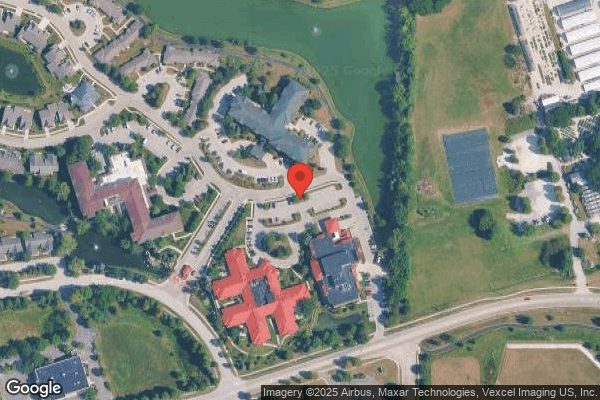

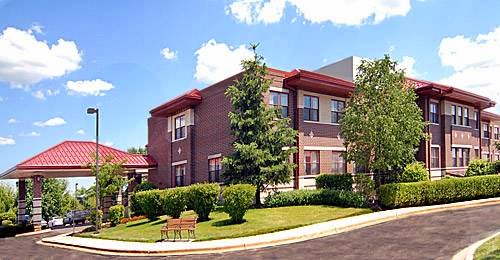
ALDEN OF WATERFORD

2021 RANDI DRIVE, AURORA, IL 60505 (630) 851-7266
For profit - Corporation 99 Beds THE ALDEN NETWORK Data: November 2025 1 Immediate Jeopardy citation
Trust Grade
33/100
#207 of 665 in IL
Last Inspection: March 2025

Within standard 12-15 month inspection cycle. Federal law requires annual inspections.

Overview

Alden of Waterford has received a Trust Grade of F, which indicates significant concerns regarding the facility's operations and care quality. It ranks #207 out of 665 nursing homes in Illinois, placing it in the top half, and #13 out of 25 in Kane County, meaning there are only a few options available locally that are better. Unfortunately, the facility is worsening, with the number of issues increasing from 10 in 2024 to 12 in 2025. Staffing is a strength, with a turnover rate of 0%, indicating that staff members are stable and familiar with the residents, although the overall staffing rating is below average at 2 out of 5 stars. However, the facility faces challenges, including $116,249 in fines, which is concerning, and critical incidents such as failing to weigh a resident with congestive heart failure on 20 days when it was required, inaccuracies in reporting licensed nurse hours, and issues with the accounting of controlled medications for multiple residents.

Trust Score
F
33/100
In Illinois
#207/665
Top 31%
Safety Record
High Risk
Review needed
Inspections
Getting Worse
10 → 12 violations
Staff Stability
○ Average
Turnover data not reported for this facility.
Penalties
○ Average
$116,249 in fines. Higher than 74% of Illinois facilities. Some compliance issues.
Skilled Nurses
✓ Good
Each resident gets 75 minutes of Registered Nurse (RN) attention daily — more than 97% of Illinois nursing homes. RNs are the most trained staff who catch health problems before they become serious.
Violations
⚠ Watch
30 deficiencies on record. Higher than average. Multiple issues found across inspections.
★★★☆☆
3.0
Overall Rating
★★☆☆☆
2.0
Staff Levels
★★★★☆
4.0
Care Quality
★★★☆☆
3.0
Inspection Score
Stable
2024: 10 issues
2025: 12 issues

The Good

  • 4-Star Quality Measures · Strong clinical quality outcomes
  • Full Sprinkler Coverage · Fire safety systems throughout facility
  • No fines on record

Facility shows strength in quality measures, fire safety.

The Bad

3-Star Overall Rating

Near Illinois average (2.5)

Meets federal standards, typical of most facilities

Federal Fines: $116,249

Well above median ($33,413)

Significant penalties indicating serious issues

Chain: THE ALDEN NETWORK

Part of a multi-facility chain

Ask about local staffing decisions and management

The Ugly 30 deficiencies on record

1 life-threatening
Sept 2025 1 deficiency
CONCERN (D) 📢 Someone Reported This

A family member, employee, or ombudsman was alarmed enough to file a formal complaint

Potential for Harm - no one hurt, but risky conditions existed

Report Alleged Abuse (Tag F0609)

Could have caused harm · This affected 1 resident

**NOTE- TERMS IN BRACKETS HAVE BEEN EDITED TO PROTECT CONFIDENTIALITY** Based on interview and record review, the facility failed to notify local law enforcement after an allegation of physical abuse....

Read full inspector narrative →
**NOTE- TERMS IN BRACKETS HAVE BEEN EDITED TO PROTECT CONFIDENTIALITY** Based on interview and record review, the facility failed to notify local law enforcement after an allegation of physical abuse. This applies to 1 of 3 residents (R1) reviewed for physical abuse in the sample of 3. The findings include:R1's EMR (Electronic Medical Record) showed R1 was admitted to the facility on [DATE], with multiple diagnoses including congestive heart failure, chronic kidney disease, and pulmonary hypertension. R1's MDS (Minimum Data Set) dated June 12, 2025, showed R1 was cognitively intact. The facility's final report dated August 30, 2025, completed by V1 (Administrator) showed, . On August 24, 2025, it was reported to the Administrator by the nurse on duty that [R1] believes she was 'smacked in the face' by her CNA. CNA was suspended pending investigation. Body check was completed with no new findings, no bruising, no swelling, no alterations to her face. Physician notified. [R1] and Daughter were informed of investigation process. The [local police department] responded to the facility on August 27, 2025, and conducted interviews. On September 3, 2025, at 11:33 AM, V1 said R1's allegation was reported to her in the morning of August 24, 2025. V1 said she spoke with R1 and her daughter on August 24, 2025, and V1 told them she would be filing a report with the state agency. V1 said on Wednesday, August 27, 2025, the police arrived at the building because the family called to file a report. V1 said she did not call the police after receiving R1's allegation of physical abuse. V1 said the only time she would call the police for an abuse allegation would be if the resident requested the police to be called. On September 3, 2025, at 2:15 PM, V1 said she should have notified the local police department immediately after she was notified of R1's allegation of physical abuse. The facility's policy titled Abuse Policy dated March 2025, showed Policy: This facility affirms the right of our residents to be free from abuse, neglect, misappropriation of resident property, corporal punishment and involuntary seclusion. The facility will report reasonable suspicion of a crime. The facility therefore prohibits mistreatment, neglect or abuse of its residents and has attempted to establish a resident sensitive and resident secure environment. The purpose of this policy is to assure that the facility is doing all that is within control to prevent occurrences of mistreatment, neglect or abuse of our residents. This will be done by: .7. Filing accurate and timely investigative reports. Abuse Prevention Program. 7. Reporting. g. If the events that cause the reasonable suspicion result in serious bodily injury, the report must be made immediately after forming the suspicion (but no later than two hours after forming the suspicion). Otherwise, the report must be made not later than 24 hours after forming suspicion. For more information see crime reporting poster at the facility and call local police. On September 3, 2025, at 2:15 PM, V1 presented the facility's crime reporting poster. The poster showed If you have reasonable suspicion that a crime has occurred against a resident or person receiving care at this facility, federal law requires that you report you suspicion directly to both law enforcement and the state survey agency. If you believe the crime involves serious bodily injury including criminal sexual abuse to the resident, you must report it immediately, but no later than two hours after forming the suspicion. Or if the crime does not appear to cause serious bodily injury to the resident you must report it within 24 hours after forming the suspicion.
May 2025 2 deficiencies
CONCERN (D) 📢 Someone Reported This

A family member, employee, or ombudsman was alarmed enough to file a formal complaint

Potential for Harm - no one hurt, but risky conditions existed

Notification of Changes (Tag F0580)

Could have caused harm · This affected 1 resident

**NOTE- TERMS IN BRACKETS HAVE BEEN EDITED TO PROTECT CONFIDENTIALITY** Based on interview and record review, the facility failed to notify the physician of a change in condition for a resident. This ...

Read full inspector narrative →
**NOTE- TERMS IN BRACKETS HAVE BEEN EDITED TO PROTECT CONFIDENTIALITY** Based on interview and record review, the facility failed to notify the physician of a change in condition for a resident. This applies to 1 of 1 resident (R1) who was reviewed for a change in condition. Findings include: On 05/28/2025 at 8:35 AM, V10 (R1's family member) stated that on the evening of 05/22/2025, R1 experienced a change in condition and the facility did not notify the physician before a nurse increased oxygen from 2 liters to 4 liters via nasal cannula. On 05/28/2025 at 1:30 PM, V4 LPN (Agency-License Practical Nurse) stated that she worked with R1 for the first time and took the report from the morning nurse. She was not aware that she had not notified the provider. V4 said the staff involved in assessing R1 said being lethargic is R1's baseline. When R1 was excessively sweating and his oxygen saturation was at 89 percent around 9:00 PM, V10 arrived and requested that R1 be transferred to the hospital. V4 said she called 911 and transferred R1 to the hospital. On 05/28/2025 at 6:00 PM, V3 (LPN) said she worked from 7:00 AM to 7:00 PM, and the incident happened during the turnover of shift. V3 said she assessed R1 along with V4, and took vital signs, which were per his baseline, and then endorsed to V4 since her shift had ended. On 05/22/2025 at 3:11 PM, V7 NP (Nurse Practitioner) stated that she was on call for the facility and did not receive any calls regarding R1's change in condition and transfer to the hospital. On 05/22/2025 at 12:09 PM, V2 (Director of Nursing) stated that it's a standard policy guideline to notify physicians of changes in conditions and any new orders. On 05/22/2025 at 5:28 PM, V8 (R1's NP) stated that they did not hear anything about R1's condition and that the facility should have followed the notification protocol, despite R1's vital signs being at baseline, or R1's previous hospital admissions for failing lungs condition and lethargy. R1's EMR (Electronic Medical Records) shows R1 was a [AGE] year-old male admitted to the facility on [DATE], and R1's diagnoses include acute and chronic respiratory failure with low oxygen and high carbon dioxide, chronic obstructive pulmonary diseases, multiple cardiac diseases, stage five chronic kidney/end-stage renal disease, anemia, hemiplegia, and hemiparesis, and dependence on supplement oxygen. R1's Minimum Data Set indicated that R1's cognition was intact. The facility's clinical practice guidelines on Change in Condition, dated September 2020, indicated that the attending physician or physician/Nurse Practitioner on call will be notified of any change in condition. Under the 'Vital Signs section, showed that oxygen saturation below 90 percent should be reported immediately.
CONCERN (D) 📢 Someone Reported This

A family member, employee, or ombudsman was alarmed enough to file a formal complaint

Potential for Harm - no one hurt, but risky conditions existed

Quality of Care (Tag F0684)

Could have caused harm · This affected 1 resident

**NOTE- TERMS IN BRACKETS HAVE BEEN EDITED TO PROTECT CONFIDENTIALITY** Based on the interview and record review, the facility failed to immediately assess a resident after a reported change in condit...

Read full inspector narrative →
**NOTE- TERMS IN BRACKETS HAVE BEEN EDITED TO PROTECT CONFIDENTIALITY** Based on the interview and record review, the facility failed to immediately assess a resident after a reported change in condition. This applies to 1 of 5 residents (R1) who was reviewed for quality of care. Findings include: R1's EMR (Electronic Medical Records) shows R1 was a [AGE] year-old male admitted to the facility on [DATE], and R1's diagnoses include acute and chronic respiratory failure with low oxygen and high carbon dioxide, chronic obstructive pulmonary diseases, multiple cardiac diseases, stage five chronic kidney/end-stage renal disease, anemia, hemiplegia, and hemiparesis, and dependence on supplement oxygen. R1's Minimum Data Set indicated that R1's cognition was intact but dependent on staff for activities of daily living. On 05/28/2025 at 10:45 AM, R2 (R1's spouse) said R1 was sick in the evening of Thursday (05/22/2025), and V3 LPN (Licensed Practical Nurse) did not come to check on him when V5 CNA (Certified Nursing Assistant) called her for R1's lethargy and not eating his meals. R2 said she called V10 (R1 and R2's family). On 05/28/2025 at 2:01 PM, V5 (CNA) said on 05/22/2025 around 6:30 PM when she took the meal tray to R1's room, she was not able to wake him up, and she reported to V3 (LPN), V3 and V4 (Agency-LPN) did not assess R1 until around 7:00 PM. On 05/28/2025 at 12:09 PM, V2 (Director of Nursing) stated that on 05/22/2025 around 7:00 PM, V10 (R1's family) called her regarding R1's condition, and V2 advised V3 to check on R1. On 05/28/2025 at 6:00 PM, V3 said she worked from 7:00 AM to 7:00 PM, and the incident happened during the turnover of shift, and she assessed R1 along with V4 around 7:00 PM. On 05/28/2025 at 1:30 PM, V4 confirmed during the turnover of the shift around 7:00 PM on 05/2/2025, V2 called V3 to check on R1 and both went to R1's room to assess. A review of the R1's clinical document revealed that neither change of condition assessment documentation was completed nor was the change of condition assessment form filled out before transferring R1 to the hospital. On 05/22/2025 at 4:00 PM, V2 (Director of Nursing) stated that it's the facility's standard protocol to attend to residents when changes in conditions are reported and complete the change of conditions assessment form.
Mar 2025 8 deficiencies
CONCERN (D)

Potential for Harm - no one hurt, but risky conditions existed

Deficiency F0583 (Tag F0583)

Could have caused harm · This affected 1 resident

Based on observation, interview, and record review, the facility failed to provide privacy during activities of daily living (ADL) care, blood glucose level check, and administration of insulin. In ad...

Read full inspector narrative →
Based on observation, interview, and record review, the facility failed to provide privacy during activities of daily living (ADL) care, blood glucose level check, and administration of insulin. In addition, facility also failed to ensure that medical record was protected. This applies to 3 of 18 residents (R48, R50, R60) reviewed for privacy in the sample of 18. The findings include: 1. On March 24, 2025, at 4:28 PM, during unit observation on the 2nd floor C/D hallway, a medication cart was parked in the hallway by the nurses' station, and near the seating area outside the dining room. On top of this medication cart was a computer that was left open with R48's information visible. The cart was unattended and people were passing by the cart. A few minutes later, V19 (Nurse) was seen coming out from one of the residents' bedrooms. 2. On March 24, 2025, at 4:55 PM, R50 was on his wheelchair by the seating area outside the dining room. V19 (Nurse/LPN) walked towards R50 to check his blood sugar level, leaving the medication cart with the computer wide open and with R50's health information or medical record visible to others who could pass by the medication cart. In addition, V19 checked R50's blood sugar with presence of 5 other residents and 2 visitors (family members of other residents) who were in the same area. The procedure was visible to others. At 4:59 PM, R50 remained where he was at, V19 administered insulin medications to R50 which was visible to the same residents and visitors. On March 26, 2025, at 12:23 PM, V1 (Administrator) stated if the staff is not with their cart, they must close or lock the computer screen prior to walking away. Resident information should be kept private. Whether there are people around or none, they should lock the computer screen. When staff nurse is checking blood sugar and administering medication shot such as insulin, they're supposed to do it in the privacy of the resident's room to provide privacy and dignity. 3. R60 had multiple diagnoses including vascular dementia with other behavioral disturbance and need for assistance with personal care, based on the face sheet. R60's quarterly MDS (minimum data set) dated January 9, 2025 showed that the resident was moderately impaired with cognition. The same MDS showed that R60 had functional limitation in range of motion to both sides of his upper and lower extremities and required total assistance from the staff with shower/bathing and lower body dressing, and maximum assistance from the staff with upper body dressing. On March 24, 2025 at 11:45 AM, upon entering the resident room, V12 (Certified Nursing Assistant) was observed putting on a disposable brief and clothing to R60 while the resident was in the shower bed. According to V12, he had just given a shower to R60 and had used the shower bed to transport the resident to the room. While the disposable brief and clothing were being put on R60, the privacy curtain was not drawn, and the resident was visible to R79 (roommate). R60 was alert, with confusion and speaks a foreign language. R79 was alert and oriented to witness the ADL (activities of daily living) care being given to R60. On March 26, 2025 at 9:33 AM, V2 (Director of Nursing) stated that during provision of personal care such as putting on a resident's brief and/or putting on a resident's clothing, privacy should always be afforded because the resident's body is exposed. The curtain should be drawn between the residents to ensure that the resident's rights to privacy during personal care is provided. The facility's policy regarding resident's rights dated November 2017 showed, The facility will respect and uphold resident's rights. The same policy showed in-part under procedure, 1. The resident or their representative will be notified of their rights as a resident living in a long-term care facility upon admission and will be provided a copy of the State issued residents' rights pamphlet indicating such rights. The Residents' Rights for people in long-term care facilities pamphlet given to each resident and/or their respective responsible party showed in-part, You have the right to .Privacy, your medical and personal care are private.
CONCERN (D)

Potential for Harm - no one hurt, but risky conditions existed

Incontinence Care (Tag F0690)

Could have caused harm · This affected 1 resident

**NOTE- TERMS IN BRACKETS HAVE BEEN EDITED TO PROTECT CONFIDENTIALITY** Based on observation, interview, and record review, the facility failed to ensure that indwelling urinary catheter was not touch...

Read full inspector narrative →
**NOTE- TERMS IN BRACKETS HAVE BEEN EDITED TO PROTECT CONFIDENTIALITY** Based on observation, interview, and record review, the facility failed to ensure that indwelling urinary catheter was not touching the floor and was not positioned above resident's bladder. This applies to 2 of 3 residents (R28, R78), reviewed for indwelling urinary catheter in the sample of 18. The findings include: Face sheet shows that R28 is a [AGE] year old who has multiple medical diagnoses including benign prostatic hyperplasia without lower urinary tract symptoms, hemiplegia and hemiparesis following cerebral infarction affecting left non-dominant side, obstructive and reflux uropathy, urinary retention, and malignant neoplasm of prostate. R28 has an indwelling urinary catheter upon observation. On March 25, 2025, at 10 :51 AM, V14 (Certified Nursing Assistant/CNA) and V15 (CNA/first floor unit manager), rendered incontinence care to R28 who had a bowel movement. V14 cleaned R28 from front to back and changed his incontinence brief. As V14 and V15 assisted R28 to turn and reposition during incontinence care, they lifted the urinary catheter bag multiple times above his bladder causing the urine in the catheter tube to flow back towards R28's bladder. R28's active care plan shows R28 requires the use of an indwelling catheter related to diagnosis of neuromuscular dysfunction of bladder due to obstructive and reflux uropathy. The same care plan shows interventions including positioning of collection bag below the level of the bladder. The nurse practitioner (NP) notes dated March 21, 2025, shows R28 was seen by infectious disease NP at the facility's request for acute urinary tract infection (UTI). The lab work was positive for >100,000 colonies of enterococcus species. On March 27, 2025, at 11:35 AM, V2 (Director of Nursing/DON) said that urinary bag should be maintained below the bladder so the urine can drain properly to the bag via gravity and prevent backflow of urine to the bladder which can cause infection. 2. R78 had multiple diagnoses including hemiplegia and hemiparesis following cerebral infarction affecting right dominant side, retention of urine, chronic kidney disease and history of UTI (urinary tract infection), based on the face sheet. On March 24, 2025 at 11:09 AM, R78 was in bed, with her bed on the lowest position. R78's urinary catheter bag which was inside a privacy bag was not attached/hooked on the bed frame. The privacy bag containing the urinary catheter bag was touching the floor. R78's urinary catheter tubing had dark yellow urine with brown sediments. V10 (Restorative Nurse) was present during this observation. On March 25, 2025 at 9:08 AM, R78 was in bed, alert but confused. R78's urinary catheter was draining slightly dark yellow colored urine with sediments. V2 (Director of Nursing) was in the room during this observation. V2 was informed of the privacy bag containing the urinary catheter bag that was observed touching the floor on March 24, 2025. V2 stated that even though the urinary catheter bag was inside a privacy bag, it should not touch the floor to maintain infection control and prevent UTI.
CONCERN (D)

Potential for Harm - no one hurt, but risky conditions existed

Unnecessary Medications (Tag F0759)

Could have caused harm · This affected 1 resident

Based on observation, interview, and record review, the facility failed to administer medications as ordered by the physician. There were 29 opportunities with 2 errors, resulting in a 6.9% medication...

Read full inspector narrative →
Based on observation, interview, and record review, the facility failed to administer medications as ordered by the physician. There were 29 opportunities with 2 errors, resulting in a 6.9% medication error rate. This applies to 1 of 5 residents (R34) reviewed for medication pass in the sample of 18. The findings include: On March 24, 2025, at 4:49 PM, V19 checked R34's blood sugar level, which showed result of 207 mg/dl. V19 administered medications to R34 including Insulin Novolog (Aspart Kwik Pen) 4 units subcutaneously and a Sucralfate 1 gram tablet orally. At 5:01 PM, V19 stated that R34 is supposed to receive 17 units of Novolog according from the sliding scale order, but she felt uncomfortable to give this dose for fear that R34's blood sugar might bottom out. As a nursing judgement she decided to give 4 units. When surveyor asked V19 if she notified the physician about it, V19 did not say anything. After V19 administered the medications, she confirmed that what she gave to R34 were all the medications scheduled at 5PM. Then V19 went to the computer and signed it all in as given. R34's Medication Administration Record (MAR) dated March 2025, shows an order to inject Insulin Aspart according to the sliding scale which means the R34's blood sugar level and its corresponding dose of insulin. The sliding scale shows that if the blood sugar level is between 201 to 225, R34 should receive 17 units of Novolog. The same MAR shows that R34 has a scheduled Nystatin-Triamcinolone External Ointment to apply to R34's back topically twice a day at 9:00 AM and 5:00 PM. V19 did not administer this Nystatin-Triamcinolone ointment, however, V19 signed it along with the 2 medications (Novolog and Sucralfate) as given. R34's progress notes dated March 24, 2025, at 5:40 PM showed that V19 notified the nurse practitioner (NP) about the partial dose of Novolog that she administered to R34. Facility's Policy and Procedure for Medication Administration dated September 2020 shows: Policy: Medications will be administered in accordance with the established policies and procedures. Procedure: Drugs must be administered in accordance with the written orders of the attending physician.
CONCERN (D)

Potential for Harm - no one hurt, but risky conditions existed

Infection Control (Tag F0880)

Could have caused harm · This affected 1 resident

Based on observation, interview, and record review, the facility failed to follow standard infection control practices regarding hand hygiene and gloving during provisions of incontinence care. Staff ...

Read full inspector narrative →
Based on observation, interview, and record review, the facility failed to follow standard infection control practices regarding hand hygiene and gloving during provisions of incontinence care. Staff also failed to wear a complete PPE (Personal Protective Equipment) in an isolation room while providing physical therapy. This applies to 2 of 18 residents (R28, R134), reviewed for infection control in the sample of 18. The findings include: 1. On March 25, 2025, at 10:51 AM, V14 (CNA) and V15 (CNA/first floor unit manager), rendered incontinence care to R8 who had a bowel movement. V14 cleaned R28 from front to back of the perineum, handled the urinary catheter, assisted R28 to turn and reposition, put on a new incontinence brief, handled soiled items (linen and diaper), straightened residents bed linen, and scoot resident up on his bed, and touched overbed table, while wearing the same soiled gloves. On March 26, 2025, at 3:18 PM, V2 (Director of Nursing/DON) stated that when a staff provides incontinence/peri-care to a resident, the staff must perform hand hygiene prior to gloving. When staff goes from dirty to clean tasks, they should change their gloves and perform hand hygiene. V2 also said that when the staff is done with the tasks and they remove their gloves, they should perform hand hygiene. This process is for infection control and ensuring that they are not spreading infection to others, and they are preventing cross contamination. The facility's hand hygiene policy and procedure dated October 2024 shows: It is the policy of the facility that hand hygiene performed to reduce the potential of spread of pathogens. This same policy has guidelines including performing hand hygiene when caring for a resident, when moving from a soiled body site to a clean body site of the same resident, and after any contact with blood, body fluids, or contaminated surfaces. 2. R134 had multiple diagnoses including displaced fracture of greater trochanter of right femur, based on the face sheet. R134's order summary report showed an active order dated March 19, 2025 for, Isolation: Contact Precautions: C-diff (Clostridium difficile). R134's active care plan showed that the resident is on contact isolation precaution related to C-Diff. The same active care plan showed multiple interventions including, Use principles of infection control and universal/standard precautions. Post appropriate isolation outside of the room for staff and visitors. On March 25, 2025 at 1:10 PM, a contact precaution sign was observed posted on the door frame of R134's door. The contact precaution sign showed that providers and staff must, put on gloves and gown before entering the room. V11 (Physical Therapist) was observed inside R134's room providing physical therapy to the resident. V11 was only wearing gloves and no other PPE (Personal Protective Equipment). V2 (Director of Nursing) who was present during this observation stated that all staff including V11 should follow the posted signage on R134's door to wear gloves and gown before entering the room and while providing therapy to the resident, to prevent potential spread of C-Diff infection. The facility's contact precaution policy dated December 2024 showed, The purpose of contact precautions is to prevent transmission of infections that are spread by direct ([for example] person-to-person) or indirect contact with the resident or environment. The policy showed in-part under the guidelines, 1. Use contact precautions for residents as recommended by CDC's (Centers for Disease Control and Prevention) Guidelines for isolation Precautions: Preventing Transmission of Infectious Agents in Healthcare Settings (2007). 2. Certain diseases, not limited to ([for example] C. difficile, .) require contact precautions. The same policy showed in-part under procedure, 2. All individuals entering the resident's room must use PPE appropriately, including gloves and gown. Donning PPE upon room entry and doffing before exiting the resident's room is done to contain pathogens
CONCERN (E)

Potential for Harm - no one hurt, but risky conditions existed

Pharmacy Services (Tag F0755)

Could have caused harm · This affected multiple residents

Based on observation, interview and record review the facility failed to ensure accurate and timely accounting of controlled medications. This applies to 7 of 7 residents (R2, R18, R21, R24, R48, R69...

Read full inspector narrative →
Based on observation, interview and record review the facility failed to ensure accurate and timely accounting of controlled medications. This applies to 7 of 7 residents (R2, R18, R21, R24, R48, R69 and R234) reviewed for controlled medications in the sample of 18. The findings include: 1. On March 26, 2025 at 11:25 AM, the first floor AB medication cart was observed with V2 (Director of Nursing). The following observations were made of the medication cart's controlled drug compartment: - R69 had a blister pack of Alprazolam 0.5 mg (milligrams) with 47 tablets remaining that were intact and sealed. R69's controlled drug receipt/record/disposition form for the Alprazolam 0.5 mg showed that there should be 48 tablets remaining in the blister pack. R69's medication administration audit report showed that V17 (Licensed Practical Nurse) administered this medication at 9:28 AM on March 26, 2025. - R234 had a blister pack of Modafinil 200 mg with 29 tablets remaining that were intact and sealed. R234's controlled drug receipt/record/disposition form for the Modafinil 200 mg showed that there should be 30 tablets remaining in the blister pack. R234's medication administration audit report showed that V17 administered this medication at 10:37 AM on March 26, 2025. On March 26, 2025 at 11:29 AM, V17 was asked why the actual number of the controlled medications, and the controlled drug receipts does not match. V17 stated that she did not sign out the medication on the controlled drug receipt after taking it out and administering the medications to the residents, because she was busy preparing the medications for other resident who was going out for a medical appointment. V2 who was present during the interview stated the controlled medications should be signed out from the controlled drug receipt after it is pulled out/taken out of the blister pack to ensure proper count. Review of the first floor AB medication cart controlled substance shift count documentation showed that the on duty/in coming Nurse for March 26, 2025 did not sign the form to indicate that she performed the shift count with the off duty/outgoing nurse. On March 26, 2025 at 11:30 AM, V17 stated that she performed the controlled substance shift count with the outgoing nurse prior to the start of her shift but failed to sign the form. V17 added that there were no discrepancies during the controlled substance shift count. V2 who was present during the interview stated that the incoming and outgoing nurses should sign the controlled substance shift count form, after performing the controlled medication count before the start of each shift, to make sure that all the controlled medications are accurate, matching the actual controlled medication at hand and the controlled drug receipt. 2. On March 26, 2025 at 11:55 AM, the second floor CD medication cart was observed with V2. The following observations were made of the medication cart's controlled drug compartment: - R24 had a blister pack of Alprazolam 0.5 mg with 13 tablets remaining that were intact and sealed. R24's controlled drug receipt/record/disposition form for the Alprazolam 0.5 mg showed that there should be 14 tablets remaining in the blister pack. R24's medication administration audit report showed that V18 (Registered Nurse) administered this medication at 12:00 PM on March 26, 2025. - R21 had a blister pack of Morphine Sulfate 30 mg ER (extended release) with 35 tablets remaining that were intact and sealed. R21's controlled drug receipt/record/disposition form for the Morphine Sulfate 30 mg showed that there should be 36 tablets remaining in the blister pack. R21's medication administration audit report showed that V18 administered this medication at 11:07 AM on March 26, 2025. - R18 had a blister pack of Clonazepam 1 mg with 59 tablets remaining that were intact and sealed. R18's controlled drug receipt/record/disposition form for the Clonazepam 1 mg showed that there should be 60 tablets remaining in the blister pack. R18's medication administration audit report showed that V18 (Registered Nurse) administered this medication at 10:27 AM on March 26, 2025. - R48 had a blister pack of Hydrocodone/Apap (acetaminophen)10-325 mg with 28 tablets remaining that were intact and sealed. R48's controlled drug receipt/record/disposition form for the Hydrocodone/Apap 10-325 mg showed that there should be 29 tablets remaining in the blister pack. R48's medication administration audit report showed that V18 administered this medication at 11:23 AM on March 26, 2025. - R2 had a blister pack of Phenobarbital 1 gr (grain) with 50 tablets remaining that were intact and sealed. R2's controlled drug receipt/record/disposition form for the Phenobarbital 1 gr showed that there should be 51 tablets remaining in the blister pack. R2's medication administration audit report showed that V18 administered this medication at 8:45 AM on March 26, 2025. On March 26, 2025 at 12:01 PM, V18 was asked why the actual number of the controlled medications, and the controlled drug receipts does not match. V18 stated that she did not have the opportunity to sign the controlled drug receipt. According to V18 she gave the above mentioned controlled medications during the morning medication pass, except for R24 which she claimed she just gave. V2 who was present during V18's interview stated that the controlled medications should be signed out from the drug receipt immediately after pulling/taking it out from the blister pack to ensure proper accounting of the medication. The facility's policy regarding controlled drug documentation dated June 2022 showed under purpose, To maintain control and prevent loss and/or diversion of controlled substances. The same policy under the procedure showed in-part, 1. c. Proof of-use forms should be used to document each time a dose of the medication is administered.2. Controlled substances must be counted and verified every shift by authorized professionals, usually at shift change. Balances are documented on the Shift Count form and must be signed by both the incoming and outgoing staff. Any discrepancy between the number of controlled drugs on hand and the sheet's balance must be brought to the attention of the Resident Care/Nursing Director (or equivalent) immediately, following the facility's policy.
CONCERN (E)

Potential for Harm - no one hurt, but risky conditions existed

Menu Adequacy (Tag F0803)

Could have caused harm · This affected multiple residents

Based on observation, interview and record review, the facility failed to follow the menu extension sheet to serve portion sizes as shown for pureed and mechanical soft diets to meet the dietary requi...

Read full inspector narrative →
Based on observation, interview and record review, the facility failed to follow the menu extension sheet to serve portion sizes as shown for pureed and mechanical soft diets to meet the dietary requirements of the meal. This applies to 6 of 6 residents (R3, R27, R33, R59, R69, and R235) reviewed for dining in the sample of 18. The findings include: Facility menu for Spring Summer 2025 for Monday included Country Fried Steak with cream sauce, Mashed Potatoes, [NAME] Beans as the main meal items. The menu extension sheet for March 24, 2024 showed to use #6 scoop for ground country fried steak. The same extension sheet showed to use #6 scoop for pureed country fried steak and #8 scoop for the pureed beans. Facility portion control chart posted at the tray line service area showed that #6=5 1/3 oz/ounce, #8= 4 oz, and #10=3 oz. On March 24, 2024 at 12:00 PM, V6 (Chef) and V7 (Dietary Aide) were plating the food during the lunch meal tray line service on the 1st floor. V6 used a #8 scoop to serve ground country fried steak along with 2 oz gravy to R3, R27, R59, R69 and R235 who were on mechanical soft diets. V6 used a #8 scoop to serve pureed country fried steak and used a #10 scoop to serve pureed green beans to R33 who was on pureed diet. V5 (Dietary Manager) who was present at tray line was notified of the wrong scoop sizes used for the lunch meal. On March 25, 2025 at 12:19 PM, V9 (Dietitian) stated that the dietary staff should use the scoop sizes as shown on the menu spreadsheets to meet the adequate amount of protein, carbohydrates and calories for the planned meal. Facility Diet Type Report printed on March 24, 2025 showed that R3, R27, R59, R69 and R235 were on mechanical soft diets and that R33 was on pureed diet.
CONCERN (E)

Potential for Harm - no one hurt, but risky conditions existed

Deficiency F0805 (Tag F0805)

Could have caused harm · This affected multiple residents

Based on observation, interview and record review, the facility failed to provide pureed consistency mashed potatoes and failed to avoid skin on potatoes for mechanical soft diets. This applies to 4 ...

Read full inspector narrative →
Based on observation, interview and record review, the facility failed to provide pureed consistency mashed potatoes and failed to avoid skin on potatoes for mechanical soft diets. This applies to 4 of 4 residents (R27, R33, R63 and R69) reviewed for mechanically altered diets in the sample of 18. The findings include: 1. Facility menu for Spring Summer 2025 for Monday, March 24, 2024 lunch meal included Country Fried Steak with cream sauce, Mashed Potatoes, [NAME] Beans, Dinner Roll. On March 24, 2024 at 12:04 PM, R33 received a pureed consistency meal of country fried steak, mashed potatoes, green beans and pureed bread. The mashed potatoes appeared granular. When asked how her meal was, R33 stated They are not pureeing the foods as much as they should. R33 stated that most of the items don't feel smooth as it usually does. On taste testing the pureed items, the mashed potatoes had granules that did not soften when manipulated on roof of mouth with the tongue and remained whole and needed to be chewed. This was relayed to V6 (Chef) who was on the tray line, and V6 also taste tested the same and agreed that there are granules in the mashed potatoes. V6 stated that the mashed potatoes are made from a powder and that more water should have been used to get a smooth product and then blended in a mixer. V6 added that V8 (Cook) who was new, prepared the mashed potatoes. Facility policy and procedure titled Puree (dated July, 2023) included as follows: Purpose: The puree diet consists of pureed homogenous, and cohesive foods in pudding-like consistency. Any foods that require bolus formation, controlled manipulation, or mastication are excluded. 2. Facility Spring Summer menus for Tuesday, March 25, 2025 lunch meal included Chicken Vesuvio with gravy, [NAME] Peas and Vesuvio Potato Wedges. On March 25, 2025 starting at 11:53 AM, R27, R63 and R69 who were on mechanical soft diets received Vesuvio potato wedges with skin on it along with the rest of the meal. When V5 (Dietary Manager), who was in the area, was asked if residents on mechanical soft were allowed potatoes with skin, V5 responded that the diet extension for the meal showed that they could have it. Review of the same showed an unsigned extension sheet by Dietitian that mechanical soft diets can have Vesuvio potato wedges. Facility policy and procedure titled Regular Ground/Mechanical Soft (dated July, 2023) included as follows: Purpose: The regular mechanical soft diet is for adults who have difficulty chewing. This diet is similar to the regular diet with some modifications to hard to chew foods Menu Guidelines for bread and starches included: Avoid potato skins On March 25, 2025 at 12:13 PM, V9 (Dietitian) stated that the pureed consistency should be like pudding or mashed potatoes that is smooth without lumps. V9 stated that the mechanical soft diets should not have potato skins. V9 stated that the menu spread sheet was marked in error that the mechanical soft can have Vesuvio Potato Wedges that had potato skin. V9 stated that the Corporate Dietitian plans and signs these menus. V9 reported back at a later time that the Corporate Dietitian only signs the first and last page of the 4 week cycle menus. Facility Diet Type Report printed on March 24, 2025 showed that R27, R63 and R69 were on mechanical soft diets and that R33 was on pureed diet.
CONCERN (F)

Potential for Harm - no one hurt, but risky conditions existed

Staffing Data (Tag F0851)

Could have caused harm · This affected most or all residents

Based on interview and record review, the facility failed to submit accurate licensed nurses working hours, for the PBJ (Payroll Based Journal) submission for the months of July, August and September ...

Read full inspector narrative →
Based on interview and record review, the facility failed to submit accurate licensed nurses working hours, for the PBJ (Payroll Based Journal) submission for the months of July, August and September 2024. This applies to all 75 residents who reside in the facility, according to form 671 dated March 24, 2025. The findings include: The CASPER (Certification and Survey Provider Enhanced Reporting) for the facility's Quarter 4, 2024, showed for the metrics, no RN hours and Failed to have Licensed Nurse coverage 24 hours /day, infraction dates of every day from July1, 2024 through September 30, 2024. On March 24, 2025, at 3:30 PM, V1 (Administrator) stated the PBJ hours are submitted from the payroll data through the corporate office. V1 acknowledged that the hours for licensed nurse staffing for the facility for Quarter 4 were not accurately reported. V1 provided documentation of email communication between the corporate office, and HFS (Department of Healthcare and Family Services) dated December 23, 2024, identifying the error in PBJ data submission for CNA (Certified Nursing Assistant) hours, in light of the corporations CNA subsidy program. DHS representative responded on January 15, 2025, informing the corporate office that DHS does allow a one time correction submission for PBJ data. There was no reference in the emails to identify the error in the reporting of licensed Nurse hours for Quarter 4. The facility's PBJ Staffing Data Report, CASPER Report 1705D, FY Quarter 2 2024, (July 1-September 30) run on February 13, 2025, showed the facility triggered for No RN Hours, and Failed to have Licensed Nursing Coverage 24 hours /day. The facility policy titled Staffing Data Submission dated January 14, 2024, showed Policy .will electronically submit direct care staffing information .Staffing information will be submitted timely using the CMS Payroll Based Journal .Guidance 1 .will electronically submit the CMS complete and accurate direct care staffing information that includes the following: a. The category of work for each direct care staff includes but not limited to whether the individual is a registered nurse, licensed practical nurse, .or other as specified by CMS.
Mar 2025 1 deficiency
CONCERN (D) 📢 Someone Reported This

A family member, employee, or ombudsman was alarmed enough to file a formal complaint

Potential for Harm - no one hurt, but risky conditions existed

Pharmacy Services (Tag F0755)

Could have caused harm · This affected 1 resident

**NOTE- TERMS IN BRACKETS HAVE BEEN EDITED TO PROTECT CONFIDENTIALITY** Based on interview and record review, the facility failed to administer, store, and dispose of narcotics in accordance with faci...

Read full inspector narrative →
**NOTE- TERMS IN BRACKETS HAVE BEEN EDITED TO PROTECT CONFIDENTIALITY** Based on interview and record review, the facility failed to administer, store, and dispose of narcotics in accordance with facility policy. This resulted in nursing staff using R2's medication (a discharged resident) for R10 an active resident in the facility. This applies to 2 resident's (R2 and R10) reviewed for narcotic administration and disposal in a sample of 10 residents. On 3/18/25 at 11:27 AM, surveyor noted R2's Controlled Drug Receipt/Record/Disposition Form for Hydrocodone/APAP 5-325 mg (milligram) tablets showed 30 tablets were dispensed on 12/13/24. R2 was given 7 of the 30 tablets between the dates of 12/19/25 and 1/19/25. R2's MAR (Medication Administration Record) shows the 7th tablet was administered to R2 on 1/19/25 at 10AM, which matches the Controlled Drug Form. R2's Face sheet shows he was discharged from the facility on 1/20/25. As of R2's discharge on [DATE], 23 Hydrocodone/APAP 5-325 mg tablets were remaining. R2's Controlled Drug Receipt/Record/Disposition Form shows V2 (DON/Director of Nursing) and V11 (ADON/Assistant Director of Nursing) only counted 21 tablets to destroy on 2/17/25. There was a 2 tablet Hydrocodone/APAP 5-325 mg discrepancy found. On 3/19/25 at 9:39 AM, V1 (Administrator) said she found R2's 2 missing Hydrocodone/APAP tabs were given to another resident, R10, by V14 (RN) and V15 (RN). R10's MAR shows she was given a Hydrocodone/APAP 5-325 mg tablet on 2/13/25 at 1:30 AM by V15 and another Hydrocodone/APAP 5-325 mg tablet on 2/13/25 at 11:00 AM by V14. R10's Controlled Drug Receipt/Record/Disposition Form shows she was given the last Hydrocodone/APAP 5-325 mg tablet of her supply on 2/12/25 at 4AM and did not receive a new supply from pharmacy until 2/14/25. On 3/19/25 at 12:24 PM, V15 (RN) said she used one of R2's Hydrocodone/APAP 5-325 mg tablets for R10 because R10 was in pain and her prescription was not there. V15 said the Hydrocodone/APAP 5-325 mg tablet could have been taken from the emergency floor stock also known as the cubex, but then V15 would have had to call pharmacy. V15 said she knows she wasn't supposed to take any medications from another resident's supply, but R10 was a handful that night. On 3/19/25 at 11:16 AM, V14 said she took one of R2's Hydrocodone/APAP 5-325 mg tabs and gave it to R10 because R10 was having uncontrolled pain and her previous prescription stock had run out. V14 said V15 told her it was authorized by the previous shift to use R2's leftover Hydrocodone/APAP tabs for R10 until her new supply came in. V14 said she didn't think she could get a Hydrocodone/APAP 5-325 mg tab from the cubex to administer to R10 because the pharmacy didn't have an active script and it usually takes over an hour to get the code from the pharmacy to get access to the cubex. On 3/19/25 at 12:58 PM, V2 (DON) said all staff were educated they are not to share or borrow narcotics between residents. V2 (DON) said V14 (RN) and V15 (RN) should have accessed Third Eye, an after-hours physician service, to obtain an order for a one time dose of Hydrocodone/APAP 5-325 mg tablet. V2 said after obtaining the order, V14 and V15 would then fax the script to the pharmacy to obtain a code for the cubex. V2 said the whole process would maybe take 1 hour to obtain and give R10 the pain pill. V2 said no nurse has the authority to okay sharing narcotics between residents. The facility's policy titled, Controlled Drug Documentation dated 06/2022 states, A. Purpose: To maintain control and prevent loss and/or diversion of controlled substances .C. Procedure: . 2. Controlled substances must be counted and verified every shift by authorized professionals, .Any discrepancy between the number of controlled drugs on hand and the sheet's balance must be brought to the attention of the Resident Care/Nursing Director (or equivalent) immediately . The facility's policy titled, New Medication Orders dated 06/2022 states, A. Policy/Purpose: Medications are ordered, provided by pharmacy, and initiated on a timely basis .C. Procedure: .5. For facilities using eMARs for which pharmacy entered orders automatically transmit through an interface to the facility's electronic system, the nurse will fax a signed hard copy of physician's orders to the pharmacy. The pharmacy will enter orders based on the faxed documentation and orders will be electronically transmitted immediately after pharmacist verification .8. Initiate medication when received from pharmacy. 9. For facilities that maintain a contingency supply of medications on site, the nurse may take items from the convenience Box or Emergency Box as needed and if available. a. If order is STAT, use medication from Convenience Boxes, if possible .
Dec 2024 1 deficiency
CONCERN (D) 📢 Someone Reported This

A family member, employee, or ombudsman was alarmed enough to file a formal complaint

Potential for Harm - no one hurt, but risky conditions existed

Pressure Ulcer Prevention (Tag F0686)

Could have caused harm · This affected 1 resident

**NOTE- TERMS IN BRACKETS HAVE BEEN EDITED TO PROTECT CONFIDENTIALITY** Based on observation, interview, and record review the facility failed to follow a physician's treatment order for a resident (R...

Read full inspector narrative →
**NOTE- TERMS IN BRACKETS HAVE BEEN EDITED TO PROTECT CONFIDENTIALITY** Based on observation, interview, and record review the facility failed to follow a physician's treatment order for a resident (R1) with a stage 3 pressure injury to the sacrum. The facility also failed to inform R1's physician of a newly identified pressure injury wound. This applies to 1 of 4 residents reviewed for pressure injuries. The findings include: R1's EMR (Electronic Medical Record) showed R1 had an unhealed chronic stage 3 pressure injury to his sacrum. R1's Braden Scale assessment dated [DATE] showed R1 was at a High Risk for pressure injuries. R1's care plan dated 12/10/2024 showed R1's wound interventions included Treatment as ordered and Wound care consultation as ordered. On 12/10/2024 at 11 AM, R1 was in bed. R1 said last night he had discomfort in his wound area. R1 said he felt as if something was pinching him. On 12/10/2024 at 10:30 AM, V3 (Wound Care Nurse/WCN) was asked to perform wound care to R1's sacral wound. V6 (Hospice Aide) assisted V3 (WCN) with turning R1 in bed for wound care. R1 had an unsecured ABD pad dressing loosely covering his sacrum and buttocks. V3 removed the ABD dressing, and there was a dry 4x4 gauze dressing covering the sacral wound bed. The gauze dressing was adherent to the wound bed and stained with dry serosanguinous drainage, V3 had to moisten the gauze with normal saline to remove the dressing. The peri-wound area was red and irritated, and R1's right buttock had a partially open maroon blister that was bleeding. V3 said it appeared like a popped blood blister. V3 said it was a new DTI (deep tissue injury) pressure wound that measured 4 x 1.5 x 0.5 cm (centimeters). V3 proceeded to clean both wounds and then applied Nystatin (antifungal) cream directly on the sacral wound bed then covered it with a Calcium Alginate dressing. V3 then covered both wounds with an adherent boarded foam dressing. On 12/10/2024 at 1:30 PM, V3 (WCN) said she changed R1's daily sacral wound dressings. V3 said R1's wound was chronic, and would close and reopen. V3 said she had noticed R1's wound bleeding at times and was unsure of the cause. V3 said she does not follow R1's ordered treatment because she feels that the ABD dressing would provide more cushion versus the ordered foam dressing. V3 also said she did not follow the treatment order for the foam dressing because she felt it would not stay on properly. V3 continued to say that she had notified V12 (Wound Physician) of R1's new right buttock wound in the morning and entered a wound care order in R1's EMR. On 12/10/2024 at 3 PM, V12 (Wound Physician) said he had been treating R1's sacral wound for a long time. V12 said the wound would heal and then reopen. V12 said R1 was at high risk for skin breakdown because of his complex medical conditions and poor oral intake. V12 said that based on R1's medical conditions and end-life care his wounds were determined to be unavoidable. However, he still expected to be notified of any skin alterations immediately to ensure proper wound care would be initiated. V12 confirmed that V3 had not notified him of R1's new right buttock wound once it was identified in the morning. V12 continued to say that he expected his wound care orders to be followed as prescribed. V12 said an ABD dressing was not the same as a foam dressing because a foam dressing provided better protection for R1's wound. V12 also said R1's dressings had to be properly secured to ensure proper covering of the open wound bed to prevent possible complications. R1's WASA Form dated 12/10/2024 (completed during the survey) showed R1 had a new DTI pressure wound to his right buttock. The form said the wound measured 4 x 1.5 x 0 cm with bloody exudate drainage. The form said Noted with Skin Injury to Right buttocks. 25% of the area is open, 75% skin is intact but is dark red/purple. R1's Order Summary Report showed an active treatment order for R1's sacral wound initiated on 11/1/2024 for Maxorb II 4 x 4 Apply to sacral topically every day shift for Skin Condition Clean area with NS, apply calcium ag, cover with dressing, apply mycolog in periwound area. The order did not include V12's order for a foam cover dressing. R1's Order Summary Report also showed another treatment order for his right buttock initiated on 12/10/2024 for Maxorb II Ag 4 x 4.75 Apply to Right buttock topically every day shift for Skin Condition CLEANSE AREA W/NS, APPLY MAXORB, AND COVER WITH FOAM DRESSING. R1's Wound Physician Consultation report dated 12/11/2024 showed R1's sacral wound measured 5.5 x 2.8 x 0.2 cm with moderate serosanguinous exudate and the peri-wound was denuded. The report also showed a current treatment order initiated on 10/30/2024 to cleanse the wound with normal saline then apply topically a calcium alginate dressing and apply Mycolog to the peri-wound area and cover with a foam dressing daily. The report continued to show R1's new right buttock wound was also assessed. The report said the pressure injury was a stage 3, measuring 3.6 x 2 x 0.2 cm with moderate serosanguinous drainage. The report showed V12's (Wound Physician) treatment order was to cleanse the wound with normal saline then apply a calcium alginate dressing and apply Mycolog to the peri-wound area and cover with a foam dressing daily. The facility's document titled Job Description Titled: Wound Care Coordinator dated 11/2021, said Essential Functions A. Must ensure that all nursing procedures and protocols are followed in accordance with established policies .E. Administer or assist with wound treatments as ordered by the physician. F. Review treatment orders for completeness of information and accuracy of transcription of the physician's order .M. Update the family/responsible party and attending physician for any changes on wound assessments .P. Consult with other nurses, management, and other related health professionals to assist in assessing, planning and delivering and evaluating patient care .
Dec 2024 1 deficiency
CONCERN (D) 📢 Someone Reported This

A family member, employee, or ombudsman was alarmed enough to file a formal complaint

Potential for Harm - no one hurt, but risky conditions existed

Accident Prevention (Tag F0689)

Could have caused harm · This affected 1 resident

**NOTE- TERMS IN BRACKETS HAVE BEEN EDITED TO PROTECT CONFIDENTIALITY** Based on interview and record review the facility failed to ensure staff safely transferred a resident by not using a gait belt ...

Read full inspector narrative →
**NOTE- TERMS IN BRACKETS HAVE BEEN EDITED TO PROTECT CONFIDENTIALITY** Based on interview and record review the facility failed to ensure staff safely transferred a resident by not using a gait belt for 1 of 3 residents (R1) reviewed for safety in the sample of 3. The findings include: R1's Face Sheet printed on 12/5/24 showed R1 was a [AGE] year-old female that was diagnosed with abnormalities of gait and mobility, muscle weakness, and history of falls. R1's fall Care Plan with an initiated date of 10/18/24 showed R1 was at risk for falls related to generalized weakness, activity intolerance, severe protein-calorie malnutrition, spinal stenosis, history of falls, and needing assistance with activities of daily living. The facility's Incidents report with a date range of 9/5/24- 12/5/24 showed R1 had a fall on 11/3/24, 11/12/24, and 11/17/24. R1's Progress Note dated 11/17/24 showed a Certified Nursing Assistant (CNA) was walking R1 to the bathroom and R1 lost her balance and fell. The CNA attempted to lower R1 to the ground, but a gait belt was not in use. On 12/5/24 at 11:45 AM, V7 (Restorative Nurse) said she was involved with R1's fall on 11/17/24. V7 said V11(CNA) was assisting R1 to the bathroom when R1 fell. V7 said she went to assess R1. V7 said she found R1 on the floor near the foot of R1's bed. V7 said R1 did not have a gait belt on. V7 said staff should have used a gait belt when assisting R1 to walk. V7 added that a gait belt is used to help stabilize a resident when walking and possibly be used to lower a resident to the ground if needed. On 12/5/24 at 12:52 PM, V11 said on 11/17/24 R1's call light was on. V11 said she entered R1's room and found R1 sitting on the side of the bed wanting to go to the bathroom. V11 said she helped R1 to stand. According to V11, R1 was walking to the bathroom when R1's right leg gave out causing R1 to lose her balance and fell to the ground landing on her right side. V11 said she tried to ease R1 to the ground but R1 did not have a gait belt on. V11 said R1 was a resident that required a gait belt. On 12/524 at 10:13 AM, V10 (Therapy Director) said R1 required assistance from staff to walk and staff should have used a gait belt when assisting R1 to walk. A facility assessment dated [DATE] showed R1 required supervision or touch assistance with ambulating. The facility's Gait Belt/Transfer Belt policy dated 9/2020 showed a gait belt will be used with weight bearing residents who require hands on assistance.
Apr 2024 8 deficiencies 1 IJ
CRITICAL (J)

Immediate Jeopardy (IJ) - the most serious Medicare violation

Quality of Care (Tag F0684)

Someone could have died · This affected 1 resident

**NOTE- TERMS IN BRACKETS HAVE BEEN EDITED TO PROTECT CONFIDENTIALITY** 4. R34's Facesheet shows R34 has a diagnosis of acute systolic (congestive) heart failure. R34's Order Listing Report dated [DA...

Read full inspector narrative →
**NOTE- TERMS IN BRACKETS HAVE BEEN EDITED TO PROTECT CONFIDENTIALITY** 4. R34's Facesheet shows R34 has a diagnosis of acute systolic (congestive) heart failure. R34's Order Listing Report dated [DATE] shows an active order of daily weights, started on [DATE]. R34's Weights and Vitals Summary report dated [DATE] shows from [DATE] until [DATE], R34 was not weighed on 20 days. Those dates are [DATE], [DATE], [DATE], [DATE], [DATE], [DATE], [DATE], [DATE], [DATE], [DATE], [DATE], [DATE], [DATE], [DATE], [DATE], [DATE], [DATE], [DATE], [DATE] and [DATE]. On [DATE] at 10:44 AM, V8 CNA (Certified Nursing Assistant) said that R34 was a daily weight. V8 said all CNAs working that floor know which residents require a daily weight when the task in the electronic charting program is lit up pink. The task will no longer be pink when the task is completed. On [DATE] at 9:44 AM, V7 (Registered Dietitian) said daily weights are important for residents with congestive heart failure because it tells the interdisciplinary team whether the resident is retaining or losing fluid. If the resident retains too much fluid, their heart failure can be exacerbated. Facility Weights policy dated 9/2020 states, Residents will be weighed to establish baseline weights and identify trends of weight loss or weight gain. 5. R24's Facesheet shows R24 has a diagnosis of chronic diastolic (congestive) heart failure. R24's Order Summary Report dated [DATE] shows an active order of daily weights, started on [DATE]. R24's Weights and Vitals Summary report dated [DATE] shows from [DATE] until [DATE], R24 was not weighed on 16 days. Those dates are [DATE], [DATE], [DATE], [DATE], [DATE], [DATE], [DATE], [DATE], [DATE], [DATE], [DATE], [DATE], [DATE], [DATE], [DATE], and [DATE]. On [DATE] at 10:44 AM, V8 said that R24 was a daily weight but was currently at the hospital. V8 said all CNAs working that floor know which residents require a daily weight when the task in the electronic charting program is lit up pink. The task will no longer be pink when the task is completed. On [DATE] at 9:44 AM, V7 said daily weights are important for residents with congestive heart failure because it tells the interdisciplinary team whether the resident is retaining or losing fluid. If the resident retains too much fluid, their heart failure can be exacerbated. Facility Weights policy dated 9/2020 states, Residents will be weighed to establish baseline weights and identify trends of weight loss or weight gain. 2. R7's Wound Notes dated [DATE] show that she has has non-pressure ulcers on her right heel, right 5th toe-lateral, right great toe-medial and has a contusion on her right foot dorsum. All of the right foot wounds have an order to apply Betadine and a covering. There is no notation to apply Medihoney to any of the right foot wounds. R7's April Treatment Administration Record (TAR) shows orders for: Betadine-apply to right foot bunion area-cleanse with normal saline, apply betadine then cover with ABD (abdominal) pad then wrap with gauze wrap, secure with tape; Betadine-Apply to right heel-cleanse with normal saline, apply Betadine then cover with ABD pad then wrap with gauze wrap, secure with tape; Betadine-Apply to right lateral 5th toe-cleanse with normal saline, apply Betadine then cover with ABD pad then wrap with gauze wrap, secure with tape. On [DATE] at 12:40 PM, V11 RN (Registered Nurse) performed a dressing change to R7's right foot wounds. After cleansing all of the right foot wounds, V11 applied Betadine to all of the wounds. V11 then applied Medihoney gel to all of the wounds. On [DATE] at 9:31 AM, V2 (Director of Nursing) said that physician's have a reason for ordering specific wound treatments for wounds and the staff should be following what the physician orders. The facility's Prevention and Treatment of Pressure Injury and Other Skin Alterations Policy dated [DATE] shows, Implement preventative measures and appropriate treatment modalities for pressure injuries and/or skin alterations through individualized resident care plan. 3. On [DATE] at 11:01 AM, R428 had a dressing on her right foot. There was yellow drainage on the dressing. The dressing was not dated. R428 said that she has not had the dressing changed in a few days. V2 (Director of Nursing) removed the dressing. The dressing had dried yellow/brown drainage present. R428 had a surgical incision below her right great toe. The peri wound was reddened and slightly swollen. R428's Nurse's Notes dated [DATE] at 10:26 AM shows, Surgical site on the left (should be right) big toe noted to look raw, a bit swollen and slightly red. R428's Treatment Administration Record (TAR) shows an order for: Betadine-apply to right foot incision every day shift until healed. R428's March TAR shows that she did not receive a dressing change on [DATE]. On [DATE] at 9:31 AM, V2 (Director of Nursing) said that R428's wound treatments should be done daily as ordered. V2 said that she usually does R428's wound care but she was not at the facility on [DATE]. V2 said that it should have been done by the nurse. The facility's Prevention and Treatment of Pressure Injury and Other Skin Alterations Policy dated [DATE] shows, Implement preventative measures and appropriate treatment modalities for pressure injuries and/or skin alterations through individualized resident care plan. I. Based on interview and record review the facility failed to send a resident to the hospital in a timely manner when they became aware of the resident's critically low potassium level (2.4mmol (millimoles)/L (liter) with a reference range of 3.3-5.1). This failure resulted in R76 going into cardiac arrest, requiring CPR (Cardiopulmonary Resuscitation) and expiring at the hospital on [DATE]. This applies to 1 of 3 residents (R76) reviewed for quality of care in the sample of 18. The Immediate Jeopardy began on [DATE] at 4:49 PM when V10 Registered Nurse (RN) was made aware of R76's critically low potassium level by the laboratory, received orders to send R76 to the Emergency Room, called the local private ambulance service and became aware of the 1-2 hour delay in the expected arrival of the local private ambulance service, and then failed to immediately call 911 for EMS (Emergency Medical Services) to transport R76 to the Emergency Room. V1 (Administrator) was notified of the Immediate Jeopardy on [DATE] at 3:25 PM. The surveyor confirmed by interview and record review that the Immediate Jeopardy was removed on [DATE], but noncompliance remains at Level Two because additional time is needed to evaluate the implementation and effectiveness of the in-service training. The findings include: 1. R76's EMR (Electronic Medical Record) shows that R76 was last admitted to the facility on [DATE] with diagnoses including Syndrome of Inappropriate Secretion of Antidiuretic Hormone, Arteriosclerotic Heart Disease, Hypothyroidism, Acute and Chronic Respiratory Failure with Hypoxia, Chronic Obstructive Pulmonary Disease and Fractured Left Femur. R76's Lab Results Report dated [DATE] shows that he had a Basic Metabolic Panel drawn at 1:03 PM. The results showed a critically low potassium level of 2.4mmol (millimoles)/L (liter) (Reference Range 3.3-5.1). This result was called to the facility by the lab at 4:49 PM on [DATE]. R76's Progress Notes written by V10 and dated [DATE] at 7:42 PM state, Clinical labs called the facility and spoke with this RN regarding abnormal lab results. This writer paged (R76's Primary Physician's) office and spoke with (V9- Nurse Practitioner). (V9) advised RN to send resident out to the ER (Emergency Room). (Local Private Ambulance) was called around 5:15 PM and ambulance stated a pickup time around 1-2 hours later. Vital signs were taken and vital signs were as followed: BP (blood pressure): 123/60, HR (heart rate): 100, Respirations: 18, O2 (oxygen): 94% on 4L (liters) O2. Temperature: 98.8 degrees Fahrenheit. Upon arrival of (Local Private) ambulance around 7:13 PM resident observed unresponsive. Compressions were started immediately. This RN called 911 at 7:15 PM. Another RN called (R76's son) at 7:15 PM as well. Paramedics walked into the scene at 7:22 PM. Resident transported to the ER at 7:34 PM. (R76's son) notified of resident's transfer to the ER. (Primary Physician) paged and notified around 7:55 PM. R76's Progress Notes dated [DATE] at 11:06 PM state, Called (Local Hospital) ER at 11:00 PM for an update on resident. ER nurse notified this writer (that) resident expired in ER. On [DATE] at 3:15 PM, V10 (RN) stated, He (R76) was going to be sent out for a critical lab. The Nurse Practitioner (V9) said to send him out. I called (Local Private Ambulance) and they said their ETA (estimated time of arrival) was 1-2 hours. The call went in before 6:00 PM and (Local Private Ambulance) was here when we noticed (R76) had coded. I last saw him at 6:30 PM- 6:40 PM. So, he (R76) typically would call out for the nurse. He was alert and oriented x 1-2. I remember the night nurse came in early like 6:30 PM that day. (Local Private Ambulance) arrived around 7:00 PM. (Local Private Ambulance) found him but I think I initiated CPR. They transported him to the hospital. The lab called me for the potassium (level). It did not seem urgent. His VS (vital signs) were stable. The labs were done early in the day and he was the basically the same all day. He had a poor appetite. There was no active change with him. Even his O2 (oxygen) was okay. (V9) knows the facility and she knows that we use (Local Private Ambulance). She never sounded like we needed to send him out right away. If the potassium was low then it would cause heart issues. I would think there would be a change in his vital signs. There was no change since the AM. I had him all day. On [DATE] at 11:00 AM, V9 (Nurse Practitioner) stated, They were to send him to the ER. They should have called 911. With a potassium that low that would have been urgent. They never called me back to say that it was going to be 1-2 hours. On [DATE] at 11:45 AM, V2 (Director of Nursing) stated, It is not acceptable to wait 1-2 hours for the ambulance. They called me and they told me that they were in the process of putting him on the gurney from (Local Private Ambulance) and he coded. I was told the staff started compressions and one of my staff was really upset with (Local Private Ambulance) because they stood back and didn't help. 911 came and took over. They transported him to the hospital. (R76's) potassium was critically low and with that level, I would have called 911. They should have called (V9) back and let her know. On [DATE] at 12:30 PM, V11 (Agency RN) stated, I am part of the rapid response team at my other job so when I was leaving and I heard the code blue I went up to see what was going on. (V10) had started CPR and the EMTs (Emergency Medical Technicians) from (Local Private Ambulance) were digging around and trying to find things in their bag on the floor. I took over CPR because (V10) was getting tired and then the ambulance guy started yelling at me to, Stop CPR, stop CPR! I yelled back, Why?. I don't know why he was telling me to stop but I didn't stop. Then they put in an IV (intravenous) and then 911 showed up. Eventually, an AED (Automated External Defibrillator) was applied but I don't know who did it. The 911 paramedics gave some medications through the IV and then they took over the scene. I think I heard one of them say that they felt a pulse but by that time we had been working on him for almost 20 minutes. They then loaded him on the gurney and transported him to the hospital. R76's POLST Form (Practitioner Order For Life Sustaining Treatment) shows that R76 requested: Selective Treatment: Primary goal is treating medical conditions with limited medical measures. Do not intubate or use invasive mechanical ventilation. May use non-invasive forms of positive airway pressure, including CPAP and BiPAP. May use IV fluids, antibiotics, vasopressors and antiarrhythmics as indicated. Transfer to the hospital if indicated. The (City) Fire Department Patient Care Record dated [DATE] shows that 911 was called at 7:14 PM, arrived at the facility at 7:19 PM, and arrived to (R76) at 7:21 PM. This document states, In summary, (engine #) were dispatched for the pulseless and not breathing person. Upon our arrival the crew found staff and (Local Private Ambulance) ambulance crew working a cardiac arrest patient. CPR, IO (intraosseous), and 2 rounds of epi (epinephrine) were given PTA (prior to arrival). Patient has a DNR (Do not Resuscitate) with selective measures only. Selective measures are not to intubate or advanced airway done. The crew placed the AutoPulse on the pt. (patient) 20 minutes into CPR the pt. had a rhythm change from asystole to PEA (Pulseless Electrical Activity). The crew moved the patient onto the stretcher, fully secured the patient, and then moved the patient into the back of the ambulance. (Local) Hospital was contacted and gave no further orders . The facility policy entitled Change of Condition dated 9/2020 states, The attending physician or physician on call/NP and responsible party will be notified with changes in a resident's condition. 43. Follow suggested guidelines for reporting clinical problems based on the AMDA (American Medical Directors Association) Guidelines. The AMDA Guideline Form entitled Laboratory Tests/ Diagnostic Procedures (taken from the AMDA Clinical Practice Guideline- Acute Changes in Condition in the Long Term Care Setting 2003) states, *Report Immediately Potassium < (less than) 3.0, > (greater than) 6.0 mg/dl (deciliter) The Immediate Jeopardy that began on [DATE] was removed on [DATE] when the facility took the following actions to remove the immediacy: On [DATE] the education listed below was started by the Director of Nursing, will all nursing staff that were working and those that were scheduled to work up coming shifts on [DATE]. Education will continue to be conducted prior to the start of the next shift for each nursing staff and on an ongoing basis until all nurses scheduled to work have been education and demonstrate understanding on the education through written quizzes and/or return demonstration of competency. Education will focus on all nursing staff with the potential to be impacted by the non-compliance and not limited to staff involved in the actual incident. - All residents were reviewed for changes in condition who had critical chemistry lab values. No critical chemistry lab values were identified. - All nursing staff were educated by the Director of Nursing, Nurse Consultant, or designee regarding assessing changes in conditions based on critical chemistry lab values and ensuring timely transport to hospital is arranged. - All nursing staff were educated by the Director of Nursing, Nurse Consultant, or designee on the facility's Change in Condition Policy. - All nursing staff were educated by the Director of Nursing, Nurse Consultant, or designee on the facility's Change in Conditions and Signs and Symptoms from AMDA Clinical Practice Guidelines/Interact 4.0 report immediately. On [DATE], the facility DON, Administrator and Nurse Consultant reviewed policies and procedures on Change in Condition and Change in Conditions and Signs and Symptoms from the AMDA Clinical Practice Guidelines/Interact 4.0 report immediately with the medical director. The review included but is not limited to staffing, environment, addressing risk factors. The following policies were reviewed and no changes made. - Changes in Condition - Change in Conditions and Signs and Symptoms from the AMDA Clinical Practice Guidelines/Interact 4.0 Lab Test Chemistry Report Immediately. - The Administrator and DON conducted a review of compliance using Quality Assurance Audit Tool for changes in condition critical chemistry levels. The audit started on [DATE]. The audits will be done three times a week for four weeks, then weekly for four weeks then monthly x 3 months and then randomly by the Administrator, Director of Nursing, Assistant Director of Nursing/designee until goal of compliance is achieved. The results on the QA audits shall be reviewed monthly by the Facility QAPI team to determine any necessary changes. - The QA meeting is held at least quarterly and as needed. An emergency QA meeting was held on [DATE] by the Administrator with the Interdisciplinary Care Team and Medical Director. The meeting included discussion in changes in condition related to critical chemistry levels. The Medical Director and Interdisciplinary Care Team approved the Removal Plan. This will be monitored by the Administrator, DON and ADON. The facility presented an abatement plan to remove the immediacy on [DATE]. The survey team reviewed the abatement plan and was unable to accept the plan to remove the immediacy. The abatement plan was returned to the facility for revisions. The facility presented a revised abatement plan on [DATE], and the survey team accepted the abatement plan on [DATE]. II. Based on observation, interview, and record review the facility failed to ensure wound treatments were completed as ordered. The facility also failed to ensure daily weights were obtained as ordered by the physician.This applies to 4 of 18 residents (R7, R428, R34 and R24) reviewed for quality of care in the sample of 18. The findings include:
CONCERN (D)

Potential for Harm - no one hurt, but risky conditions existed

ADL Care (Tag F0677)

Could have caused harm · This affected 1 resident

**NOTE- TERMS IN BRACKETS HAVE BEEN EDITED TO PROTECT CONFIDENTIALITY** Based on observation, interview and record review the facility failed to ensure residents requiring extensive assist were toilet...

Read full inspector narrative →
**NOTE- TERMS IN BRACKETS HAVE BEEN EDITED TO PROTECT CONFIDENTIALITY** Based on observation, interview and record review the facility failed to ensure residents requiring extensive assist were toileted in a timely manner and assisted with eating. This applies to 2 of 18 residents (R377 & R3) reviewed for activities of daily living (ADL's) in the sample of 18. The findings include: 1. R377's face sheet shows her diagnoses to include: Alzheimer's disease. On April 2, 2024 at 9:34 AM, V6 Physical Therapy brought R377 back to her room and told staff that R377 needed to be changed. R377 had a strong urine odor. On April 2, 2024 at 10:21 AM, V3 Certified Nursing Assistant (CNA) changed R377's adult diaper. R377 had urinated through her adult diaper to her pants. The bed and chair (where she sat) was wet. V3 CNA clarified that R377 had wet through her adult diaper. R377's adult diaper was heavily soiled with a strong dark yellow urine. On April 1, 2024 at 10:01 AM, R46 (R377's room mate) stated, she gets upset because she feels like the staff does not help R377. She stated, R377 has dementia and always wets through her pants because she doesn't know to go to the bathroom and the staff doesn't help her. On April 2, 2024 at 9:34 AM, R46 stated, no one has helped R377 that morning to the bathroom. She (R377) needs to be changed. I get very angry, they just let her go. R46's Minimum Data Set, dated [DATE] shows, she is cognitively intact. R377's bladder task list shows she was changed on April 2, 2024 at 5:36 AM (5 hours earlier). R377's care plan date initiated March 30, 2024 shows, Focus: Bladder support is required secondary to bladder incontinence. Interventions/Tasks: Provide assistance with toileting. 2. On April 1, 2024 at 12:20 PM, R3 was eating lunch in bed. He was leaning to the right, eating with his fingers. There was no one helping him eat. On April 2, 2024 at 9:01 AM, R3 was lying in bed. His breakfast tray was in front of him. There was no one helping him eat. At 12:07 PM, R3 was lying in bed eating lunch. He was eating with his hands. No one was helping him eat. On April 2, 2024 at 12:20 PM, V5 CNA stated, she does not help R3 with eating. She sets him up and lets him eat on his own. R3's care plan date initiated June 19, 2016 shows, Focus: R3 has an ADL self care performance deficit r/t (related to) intellectual disabilities, HTN (hypertension), epilepsy, depressive d/o (disorder), anxiety d/o, hx (history) of humerus fracture (arm). Decrease motivation, refusal to complete ADL's care. Requires assistance with meals . Requires extensive to total dependence from staff to complete ADL's secondary to intellectual impairment. Interventions/Tasks: Offer needed assist and encourage mealtimes . R3's care plan date initiated October 1, 2022 shows, R3 is involved in a restorative eating program secondary to requiring assistance to eat meals. R3 will feed self with assistance. Staff to assist with meat setup and proper upright sitting position Interventions/Task: Provide assist needed for mealtime. Provide assist to resident to scoop food onto spoon with each bite of food. R3's nursing rehab: eating/swallowing task shows, A nursing rehab: Eating: R3 will feed self with assistance. Staff to assist with meal setup and proper upright sitting position .
CONCERN (D)

Potential for Harm - no one hurt, but risky conditions existed

Accident Prevention (Tag F0689)

Could have caused harm · This affected 1 resident

2. On 4/2/24 at 8:56 AM, V15 (Certified Nursing Assistant) brought a mechanical lift into R52's room. R52 was laying in bed. A few minutes later, R52's roommate opened the door. R52 was in the mechani...

Read full inspector narrative →
2. On 4/2/24 at 8:56 AM, V15 (Certified Nursing Assistant) brought a mechanical lift into R52's room. R52 was laying in bed. A few minutes later, R52's roommate opened the door. R52 was in the mechanical lift and suspended in the air. V15 was the only staff member in the room. At 9:03 AM, V15 exited the room and R52 was sitting up in his wheelchair. On 4/2/24 at 9:03 AM, V15 said that he just got R52 up to the chair using the mechanical lift by himself. V15 said he does not know if he is supposed to do it by himself or not. On 4/3/24 at 9:31 AM, V2 (Director of Nursing) said that staff should always use two people when transferring a resident with a mechanical lift for the resident's safety. R52's Mechanical Lift Transfer Care Plan shows, Provide 2 staff assistance for transferring. The facility's Total Mechanical Lift Policy dated 1/14/21 shows, One caregiver is to focus on the resident's head and body positioning while the other is operating the lift 2 caregivers are required to operate the mechanical lift. 3. On 4/2/24 at 12:10 PM, V14 (Occupational Therapist) set up R429's lunch tray in his room. R429's lunch tray was a pureed diet with thickened liquids. V14 then left the room. R429 was observed eating his lunch in his room with no staff members present. On 4/2/24 at 1:52 PM, V13 (Speech Therapist) said that R429 is currently seeing speech therapy due to dysphagia. V13 said that she worked with him on 4/1/23 and he was very gurgly throughout the session. V13 said that he is on a pureed diet with thickened liquids and requires one on one supervision with all meals. V13 said that he should be assisted at a slow rate with alternation between liquids and solids. R429's Speech Therapy Evaluation and Plan of Treatment dated 4/1/24 shows that he has a diagnosis of dysphagia and cognitive communication deficit. The reason for referral shows, Patient referred to ST due to new onset of coughing/choking during oral intake. The Assessment Summary shows, Pt presents with severe cog-comm (cognitive communication) deficits c/b (caused by) decreased orientation, safety awareness, problem solving, ability to follow directions and insight. Pt with severe dysphagia impacting both oral and pharyngeal phase of swallowing resulting in a high risk for aspiration and PNA (pneumonia). Recommendations show that he needs close supervision with oral intake and should be fed 1:1 with all meals. R429's Physician's Order sheet printed on 4/2/24 shows that he is on a pureed diet with honey thick liquids. Based observation, interview and record review the facility failed to ensure residents were transferred in a safe manner with a mechanical lift and failed to supervise a resident while eating with a diagnosis of dysphagia. This applies to 3 of 18 residents (R43, R429 & R52) reviewed for safety and supervision in the sample of 18. The findings include: 1. R43's incident report dated March 22, 2024 shows, Nursing Description: Called to see the resident who had falled in the room during transfer with the [mechanical lift]. Resident was noted on the floor on his right side . Resident Description: [mechanical lift] broke when they try to transfer me. R43's progress notes dated March 22, 2024 shows, At around 2110 (9:10 PM) this writer was with the resident in [another room] finishing care, a CNA (certified nursing assistant) came to report that an incident had happened (resident fall). Outside the room, the CNA stated that R43 was on the floor, she reported that the incident happened while lifting the resident from the wheelchair using the [mechanical lift] to put him in bed. By entering the resident's room he was noticed to be leaning on the floor on his right side. On April 3, 2024 at 3:11 PM, V19 CNA instructor stated, she was in the room when R43 fell out of the mechanical lift. She was transferring him with her students and V18 CNA from his wheelchair to his bed. R43 was positioned forward facing in the mechanical lift and hooked up to the lift. She was in the front operating the remote control for the lift. She had a student behind and on the right side of R43. V18 CNA was on the left side of R43. She started to lift R43 up in the lift when they noticed he was stuck on something on the right side. At the same time, V18 CNA pulled up on the sling and R43 flung forward out of the mechanical lift sling. She stated, it happened so fast and V18 CNA should have let her put R43 back down to find out where it was stuck at and fix it. She did not give me the opportunity to lower the lift before she pulled up on the sling. On April 3, 2024 at 11:24 AM, V18 stated, R43 did fall out of the sling while she was transferring him with CNA students. She didn't know what happened and he just flung out of the mechanical lift. On April 3, 2024 at 11:55 PM, V17 CNA stated, she was not in the room when the fall happened but came in after to help. When she came in the room, V18 CNA was on the left side of R43 and V19 CNA instructor was on the right side. R43 was in between the mechanical lift legs facing down on his right side. The mechanical lift sling was still attached to the mechanical lift besides the left leg hook was unattached and hanging there. It had looked like R43 just toppled out of the mechanical lift sling. The only conclusion I can come up with is he wasn't hooked up right. R43's care plan date initiated January 5, 2023 shows, Focus: R43 is at risk for falls r/t (related to) limitation in mobility, limitation in range of motion secondary to contratures, generalized weakness, need for max assistance with ADLs (activities of daily living), and diagnosis of cerebral palsy and epilepsy. Interventions/Tasks: staff education on proper mechanical lift technique (date initiated March 21, 2024) . R43's care plan date initiated January 5, 2023 shows, Focus: R43 requires the use of mechanical lift for transfers. Interventions/Tasks: attach and check straps for security . The facility's transfer techniques dated February 2022 shows, Purpose: To safely transfer the resident from bed to chair or from one location to another.
CONCERN (D)

Potential for Harm - no one hurt, but risky conditions existed

Deficiency F0697 (Tag F0697)

Could have caused harm · This affected 1 resident

Based on observation, interview and record review the facility failed to ensure a resident was provided pain control before performing a dressing change for 1 of 18 residents (R7) reviewed for pain in...

Read full inspector narrative →
Based on observation, interview and record review the facility failed to ensure a resident was provided pain control before performing a dressing change for 1 of 18 residents (R7) reviewed for pain in the sample of 18. The findings include: On 4/1/24 at 12:40 PM, V11 (Registered Nurse) performed a dressing change on R7's right foot wounds. V11 removed the gauze wrap from R7's foot and R7 said, Ouch, that hurts, don't touch my foot, it hurts. V11 stated, I will be done in a minute, I just have to fix your dressing. As V11 was removing R7's dressing, cleaning the wound and putting a new dressing back on, R7 was complaining of pain throughout the procedure. R7 stated, Ouch my foot hurts, you are killing me, don't touch me, quit touching my foot. During the procedure, V11 kept saying that he was almost done. R7 stated, You keep saying that but you keep touching my foot. The procedure ended at 12:55 PM. On 4/1/24 at 12:55 PM, V11 said that he did not give her pain medication prior to the dressing change but would give her something now. On 4/3/24 at 9:31 AM, V2 (Director of Nursing) said that R7 has a lot of pain and should be medicated before her dressing changes. V2 said that it is not pleasant for her. V2 said that if a resident is voicing pain during a dressing change, the procedure should be stopped, pain medication given and then the staff should return later to see if they can do the dressing change. R7's April Medication Administration Record (MAR) shows that she has norco and morphine ordered as needed for pain control. R7's MAR does not document that she was given any pain medications prior to or during the wound care. R7's Hospice Care Plan shows, Manage pain and other uncomfortable symptoms as indicated by MD or hospice staff or per patient request.' The facility's Non-Sterile Dressing Change Policy dated 3/2021 shows, Assess the resident for pain before treatment. Offer analgesia (as ordered). Assess for effectiveness.
CONCERN (D)

Potential for Harm - no one hurt, but risky conditions existed

Drug Regimen Review (Tag F0756)

Could have caused harm · This affected 1 resident

Based on interview and record review the facility failed to ensure pharmacy recommendations were reported to the physician. This applies to 1 of 5 residents (R1) reviewed for medication regimen review...

Read full inspector narrative →
Based on interview and record review the facility failed to ensure pharmacy recommendations were reported to the physician. This applies to 1 of 5 residents (R1) reviewed for medication regimen reviews in the sample of 18. The findings include: R1's Pharmacist Recommendations to Physicians/Prescribers form dated 2/1/24 recommended a digoxin level lab to be run on the next lab day. The facility was unable to provide any completed digoxin lab results before the exit date of 4/4/24. R1's Pharmacist Recommendations to Physicians/Prescribers form dated 8/1/23 recommended R1's order of apixaban (Anticoagulant) 5 milligrams twice daily to be reduced to 2.5 milligrams twice daily per manufacturer recommendations according to R1's creatinine levels and current body weight. R1's Progress Note dated 4/3/24 shows these pharmacy recommendations were reported to the physician at approximately 12:51 PM on 4/3/24. The facility was unable to provide documentation prior to the exit that these recommendations were reported to the physician before 4/3/24. On 4/3/24 at 12:54 PM, V2 (Director of Nursing) said V2 is supposed to follow up with the physician after receiving the pharmacy recommendations from the pharmacy. V2 would then create a progress note in the medical records when the pharmacy recommendation is received back, signed by the physician. V2 also said results for digoxin lab draws would be found in R1's electronic medical records if they were completed. Facility Medication Regimen Reviews (MRR) policy dated 2/22 states, . Procedure: 1. The Consultant Pharmacist's MRR report will be given to the facility's Resident Care/Nursing Director (or equivalent) and provided for the physician(s). 2. The facility nursing staff will follow up with the physician and record the response on the report and make changes as ordered by the physician.
CONCERN (D)

Potential for Harm - no one hurt, but risky conditions existed

Medication Errors (Tag F0758)

Could have caused harm · This affected 1 resident

Based on interview and record review the facility failed to ensure PRN (as needed) anti-psychotic and anti-anxiety (psychotropic) medications had a duration/end date. This applies to 2 of 5 residents ...

Read full inspector narrative →
Based on interview and record review the facility failed to ensure PRN (as needed) anti-psychotic and anti-anxiety (psychotropic) medications had a duration/end date. This applies to 2 of 5 residents (R61, R40) reviewed for unnecessary medications in the sample of 18. The findings include: 1. R61's Order Summary Report active as of 4/3/2024 shows an order for Haloperidol Lactate Oral Concentrate (an anti-psychotic medication) 2mg (milligrams)/mL (milliliter) give 0.25mL by mouth every 4 hours as needed for restlessness, delirium, agitation, nausea with a start date 1/17/2024 and no end date. R61's Order Summary Report active as of 4/3/2024 shows an order for Lorazepam Oral Concentrate (an anti-anxiety medication) 2mg/mL give 0.25mL by mouth every 4 hours as needed for restlessness or anxiety with a start date of 1/17/2024 and no end date. 2. R40's Order Summary Report active as of 4/3/2024 shows an order for Haloperidol Lactate Oral Concentrate 2mg/mL give 0.5 mg by mouth every 8 hours as needed for agitation with a start date of 2/6/2024 and no end date. On 4/3/2024 at 10:23AM, V16 Resident Care Coordinator Registered Nurse (RN) said she oversees psychotropic medications in the facility. V16 said anti-psychotic medications should have a 14 day stop date and should be evaluated by a physician. V16 said psychotropic medications should have a stop date because they don't want to use those medications unnecessarily instead of trying nonpharmacological interventions.
CONCERN (D)

Potential for Harm - no one hurt, but risky conditions existed

Deficiency F0810 (Tag F0810)

Could have caused harm · This affected 1 resident

Based on observation, interview and record review the facility failed to ensure a resident was provided with assistive devices when eating. This applies to 1 of 18 residents (R3) reviewed for assistiv...

Read full inspector narrative →
Based on observation, interview and record review the facility failed to ensure a resident was provided with assistive devices when eating. This applies to 1 of 18 residents (R3) reviewed for assistive devices in the sample of 18. The findings include: On April 1, 2024 at 12:20 PM, R3 was eating lunch in bed. He was leaning to the right, eating with his fingers. He did not have a plate guard, adaptive utensils or a soft collar on. On April 2, 2024 at 9:01 AM, R3 was lying in bed. His breakfast tray was in front of him. At 12:07 AM, R3 was lying in bed eating lunch. He was eating with his hands. He did not have a plate guard, adaptive equipment or a soft collar on for breakfast or lunch. On April 2, 2024 at 2:19 PM, V5 Certified Nursing Assistant (CNA) stated, the kitchen checks the meal ticket and puts the adaptive equipment on the tray. We double check them to make sure they are on there. She also stated, R3 hasn't used his soft collar recently and she didn't even know where it was. R3' meal ticket shows, Adap. Equip. (adaptive equipment): Plate Guard. The meal ticket does not show adaptive utensils. R3's current order summary report shows, Ok to wear soft collar as needed per therapy during meals/while feeding resident. The same order summary report shows, General diet, regular texture, thin liquids consistency . May use plate guard for meals . R3's care plan date initiated October 1, 2022 shows, R3 is involved in a restorative eating program secondary to requiring assistance to eat meals. R3 will feed self with assistance. Staff to assist with meat setup and proper upright sitting position. May use soft collar while eating. Use plate guard and adaptive utensils for meals. Interventions/Task: Ensure resident is wearing soft collar for meals. Provide adaptive utensils. Provide assist needed for mealtime. On April 3, 2024 at 10:25 AM, V21 Restorative Nurse stated, R3 has poor muscle tone. When he is slumped over he needs to wear the soft collar to help him with extra support while sitting up to eat. The adaptive utensils and plate guard should be provided to him with all meals and the CNAs should be double checking that they are there. The facility's adaptive eating device policy dated January 18 (no year) shows, Policy: The facility must provide special eating equipment and utensils for residents who need them.
CONCERN (D)

Potential for Harm - no one hurt, but risky conditions existed

Infection Control (Tag F0880)

Could have caused harm · This affected 1 resident

Based on observation, interview and record review the facility failed to use the required Personal Protective Equipment (PPE) to prevent the spread of COVID-19, failed to ensure PPE was worn when perf...

Read full inspector narrative →
Based on observation, interview and record review the facility failed to use the required Personal Protective Equipment (PPE) to prevent the spread of COVID-19, failed to ensure PPE was worn when performing a dressing change for a resident on Enhanced Barrier Precautions (EBP) and failed to remove their gloves and perform hand hygiene during a dressing change for 2 of 18 residents (R7 and R429) reviewed for infection control in the sample of 18. The findings include: 1. R429's Physician's Order Sheet printed on 4/2/24 shows, Isolation: Contact and Droplet Precautions-Due to positive COVID-19 result. On 4/1/24 at 12:00 PM, R429's room had a sign on the door showing that he was on contact/droplet isolation. On 4/1/24 at 12:00 PM, V2, Director of Nursing (DON) was in R429's room trimming his toenails. V2 had gloves, gown and a surgical mask on. V2 did not have a N95 mask or eye protection on. V2 said that R429 is on isolation due to having a positive COVID test and will be on isolation for a few more days. On 4/2/24 at 12:10 PM, V14 (Occupational Therapist) was in R429's room bringing him to the bathroom. V14 had a surgical mask on under her N95 mask and did not have eye protection on. On 4/3/24 at 9:31 AM, V2 (DON) said that staff should be wearing gloves, gown, N95 mask and a faceshield when entering the room of a resident who is on contact/droplet isolation. V2 said that the staff should not be wearing a surgical mask under the N95 because it would defeat the purpose of the N95 mask. The facility's COVID-19 Guidance: Universal PPE for Staff Policy dated 7/2023 shows, If a resident is suspected or confirmed to have COVID-19, staff will wear N95 respirator, eye protection, gown, and gloves. 2. On 4/1/24 at 12:40 PM, R7 had a sign on her door that showed that she was on EBP. V11 (Registered Nurse) performed a dressing change on R7's right foot. V11 had gloves on and did not have a gown on. V11 removed multiple dressings from R7's right foot. With the same gloves on, R7 cleaned the multiple wounds, applied betadine and applied medihoney using his fingers to all the wounds. On 4/3/24 at 9:31 AM, V2 (DON) said that residents with wounds should be on EBP and staff should use gloves and a gown when performing a dressing change. V2 said that during a dressing change, the staff should remove their gloves and wash their hands after removing a soiled dressing. V2 said that staff should remove their gloves and wash their hand in between wounds as well. The facility's Enhanced Barrier Precautions Policy dated 12/14/23 shows, Residents that have a wound requiring a dressing, regardless of MDRO status, will require EBP .Gown and gloves use prior to the high-contact care activity High-Contact Care Activities include the following: Wound Care. The facility's Non-Sterile Dressing Change Policy dated 3/2021 shows, Remove soiled dressing .Remove gloves, perform hand hygiene, and apply new gloves .clean wound with normal saline upon completion remove gloves, perform hand hygiene and apply new gloves .apply prescribed topical agent to the wound bed .
May 2023 1 deficiency
CONCERN (D) 📢 Someone Reported This

A family member, employee, or ombudsman was alarmed enough to file a formal complaint

Potential for Harm - no one hurt, but risky conditions existed

Quality of Care (Tag F0684)

Could have caused harm · This affected 1 resident

**NOTE- TERMS IN BRACKETS HAVE BEEN EDITED TO PROTECT CONFIDENTIALITY** Based on observation, interview and record review, the facility failed to follow a Physician order for an antibiotic bladder irr...

Read full inspector narrative →
**NOTE- TERMS IN BRACKETS HAVE BEEN EDITED TO PROTECT CONFIDENTIALITY** Based on observation, interview and record review, the facility failed to follow a Physician order for an antibiotic bladder irrigation. This applies to 1 of 3 residents (R1) reviewed for urinary catheters in the sample of 3. R1's face sheet indicated R1 is initially admitted to the facility on [DATE]. R1's diagnosis includes type 2 diabetes mellitus with hyperglycemia, hypertensive chronic kidney disease stage one through stage 4, indwelling catheter, neuromuscular dysfunction of bladder. On 5/9/23 10:21 AM R1 was resting in his bed. R1's indwelling urinary catheter was present with amber color urine draining and sediment was present in the urine. R1 was on isolation with Enhanced Barrier precaution. R1's May 1, 2023 MDS (Minimum Data Set) showed R1 is cognitively intact. R1's March 2023 Physician Orders showed a 3/23/23 order for Gentamicin in Saline Intravenous Solution 2 MG/ML (Gentamicin in Saline) Use 100 mg via irrigation in the morning 14 days on and 14 days off related to urinary tract infection, . to be administered one time per day, hold for 3 to 5 minutes and then let it flush out . R1's March 23, 2023, TAR (Treatment Administration Record) showed the Gentamicin via irrigation was started on March 24th at 6:00AM and ended on April 6th at 6 AM (for 14 days). R1's March 2023 TAR did not show that the Gentamycin irrigation order was resumed after the 14 days off; R1's TAR for the treatment administration was left blank after 4/6/23. R1's May 2023 TAR showed the gentamycin irrigations resumed on May 5th, 29 days later. On May 9, 2023, at 1:30 PM, V2, DON (Director of Nursing) stated those blank dates in the TAR means medication was not administered as ordered. V2 stated on May 6th we restarted the irrigations for 14 day because the initial order ended on April 6th. It should have been off for 14 days, however it was transcribed into the system incorrectly. It should have restarted on April 21st because there was an end date on the order as April 7th instead of indefinite. R1's urinalysis result from May 3rd showed R1's urine was positive for ESBL (extended spectrum beta lactamase, a multi-drug resistant organism). On May 9, 23 at 2:28 PM R1's MD stated that he is aware of missed irrigations and that the medication was transcribed incorrectly. R1's MD stated R1 was on the medication to help prevent UTIs (Urinary Tract Infection). Facility's policy for their clinical practice guideline for Medication Administration indicated under procedure 1. Drugs must be administered in accordance with the written orders of the attending physician .
Mar 2023 1 deficiency
CONCERN (D) 📢 Someone Reported This

A family member, employee, or ombudsman was alarmed enough to file a formal complaint

Potential for Harm - no one hurt, but risky conditions existed

Incontinence Care (Tag F0690)

Could have caused harm · This affected 1 resident

Based on interview and record review, the facility failed to follow physician order regarding clamping and unclamping of the indwelling urethral catheter after administration of antibiotic solution.Th...

Read full inspector narrative →
Based on interview and record review, the facility failed to follow physician order regarding clamping and unclamping of the indwelling urethral catheter after administration of antibiotic solution.This applies to 1 of 3 residents (R1) reviewed for indwelling urethral catheter in the sample of 5. The findings include: R1 has multiple diagnoses which includes hemiplegia and hemiparesis following cerebral infarction affecting left non-dominant side, type 2 diabetes mellitus, hypertensive chronic kidney disease with stage 1 through stage 4 chronic kidney disease, malignant neoplasm of the prostate, obstructive and reflux uropathy and retention of urine, based on the face sheet. R1's quarterly MDS (minimum data set) dated January 31, 2023 shows that the resident is cognitively intact. The MDS showed that R1 required extensive to total assistance from staff with most of his ADLs (activities of daily living). The same MDS showed that R1 had indwelling urinary catheter. R1's progress notes dated March 5, 2023 (5:54 PM) created by V4 (Nurse) showed in-part, This writer went to resident's room to administer [9:00 AM] medications. Resident complained of bladder pain. This writer observed that his [urinary catheter] was still clamped from [6:00 AM] bladder irrigation. [Urinary catheter] unclamped and urine was observed draining into [urinary catheter] collection bag. Resident stated he felt much better. Vitals taken. [9:00 AM] medications administered. This writer left the room and shortly after exiting the room observed the resident's call light was back on. This writer went back to the room and the resident stated that his bladder was hurting again. This writer then flushed his [urinary catheter] with 100 ml (milliliters) of sterile 0.9% normal saline. Clear pale yellow urine observed draining into [urinary catheter] collection bag. Resident repositioned and stated that he felt better. This writer then observed the call light on a third time. Resident complained again of bladder pain. This writer gave resident NORCO for pain. Hot pack applied to bladder for comfort. Resident stated that he felt better. Later this afternoon the resident's wife called and stated he was still having bladder discomfort. Resident given NORCO again for pain and a hot pack applied to bladder for comfort. [Urinary catheter] observed to be intact and draining clear pale yellow urine. [V5/Physician] notified. Pyridium 200 mg (milligram) PO (by mouth) 1 tablet for bladder discomfort ordered. R1's active order summary report showed an order dated February 27, 2023 for, Gentamicin in saline intravenous solution 2 mg (milligram)/ml (milliliter), use 100 mg via irrigation in the morning related to urinary tract infection. To be administered 1 time per day, hold for 3-5 minutes and then let it flush out x 14 days (to be administered with piston syringe verified with pharmacist). R1's March 2023 MAR (medication administration record) showed that the resident's indwelling urethral catheter was scheduled for Gentamicin in saline solution irrigation every 6:00 AM. The same March 2023 MAR showed that R1's indwelling urinary catheter was irrigated with the Gentamicin in saline solution on March 5, 2023 at 6:00 AM. On March 9, 2023 at 2:50 PM, V7 (Registered Nurse) stated that she worked on March 4, 2023 from 7:00 PM through 7:00 AM and was the assigned nurse for R1. V7 stated that on March 5, 2023 between 6:00 AM and 6:30 AM she irrigated R1's indwelling urethral catheter with Gentamicin solution. According to V7, R1's indwelling urethral catheter had three ports, one port was for the balloon, the second port was for the outflow (to drain the urine) and the third port was for the administration of solution. V7 stated that prior to the administration of the Gentamicin solution on March 5, 2023, she first clamped the second port which was the outflow drainage port of the urinary catheter, then administered the ordered Gentamicin solution on the third port of the urinary catheter. According to V7, the second port should be left clamped for 5 minutes to allow the antibiotic to stay in the system and then after 5 minutes to release/unclamped the second port to allow the urine to flow out. However, V7 admitted that she left R1's room after clamping and administering the antibiotic solution to the resident's indwelling urethral catheter, to attend to other residents and forgot to go back to R1 to unclamped the said indwelling urethral catheter. V7 stated that she learned about R1's unclamped indwelling urethral catheter when V4 (Registered Nurse) called her at around 9:00 AM to inform her of the concern. On March 9, 2023 at 3:12 PM, V4 (Registered Nurse) stated that on March 5, 2023 she was the assigned nurse for R1 from 7:00 AM through 7:00 PM. V4 stated that around 9:00 AM she went to R1's room to give the resident his morning medications. During that time, R1 complained of pain, pointing to his catheter area. V4 stated that when she checked R1's indwelling urethral catheter, the outflow port was clamped, which she believed happened when V7 (Registered Nurse) clamped the said port to administer the antibiotic solution at 6:00 AM. V4 stated that she unclamped R1's urinary catheter and saw at least 75 ml (milliliters) of urine flowed out to the catheter drainage bag. According to V4, R1 told her that he (R1) felt much better, and she (V4) proceeded to give R1 his morning medications and then left the resident's room. After about 5 minutes, R1's call light was on and when she went to R1, the resident complained of pain pointing to his catheter area. When she checked the urinary catheter drainage bag, it appeared that the urine had stopped flowing out. V4 observed some white sediments on the urinary catheter tubing and decided to irrigate the urinary catheter. According to V4 after irrigating the indwelling urethral catheter she noticed that between 600 ml to 650 ml of clear pale yellow urine drained into the urinary catheter drainage bag. V4 stated that after the irrigation procedure, R1 verbalized feeling much better, then she (V4) left the resident's room. After about 10 to 15 minutes, R1's call light was again on and when she went to R1, the resident again complained of pain pointing to his catheter area. V4 stated that during that time she noticed that the drainage bag had more urine, but she does not remember how much more, but believes that it was more than the previous amount (more than the 600 ml-650 ml previous estimate). According to V4 she gave R1 one tablet of Norco 5-325 mg as ordered for PRN (as needed) and applied hot compress on R1's lower abdominal area. V4 stated that R1 was relieved of the pain because when she checked on R1, the resident was sleeping. V4 stated that at around 3:00 PM, R1 again complained of pain on his catheter area and lower abdominal area. She again gave one tablet of Norco 5-325 mg to the resident as PRN medication and again applied hot compress on R1's lower abdominal area, which according to V4 was effective after asking R1. According to V4, after the second Norco administration, she sent a message to V5 (Physician) informing of the incident that morning that left R1's indwelling urethral catheter clamped for several hours and the complains of abdominal and catheter area pains. V4 stated that V5 responded and gave the order to administer one tablet of Pyridium 200 mg every 8 hours as needed, which according to V4 she administered at 6:27 PM based on the MAR (medication administration record). V4 added that after she gave the Pyridium medication to R1 on March 5, 2023 at 6:27 PM, no complains of pain was again made by the resident. On March 10, 2023 at 12:30 PM, V5 (Physician) stated that he was notified of R1's indwelling urethral catheter being clamped for several hours. V5 stated that he was also informed that the resident had complained of abdominal and catheter area pains, and he ordered for R1 to receive Pyridium as needed, told the nurse to monitor for further complains of pain and to inform him of any change. V5 stated that he does not believe, receiving another call or the facility calling the Nurse Practitioner thereafter with regards to further complaints of abdominal and/or catheter area pains. V5 stated that he expects the nurses to follow the order to clamp R1's indwelling urethral catheter before administering the Gentamicin solution, to allow the antibiotic to stay in the system, but he also expects the nurse to release the clamp after 3 to 5 minutes to allow the flow of urine. According to V5, it is hard to figure out if the several hours of the indwelling urethral catheter being clamped had caused the pain to the resident, because he cannot be sure that R1's bladder was full at that time that caused the pain. V5 stated that there are times when even after 3 hours, a person's bladder is still not full and does not need to urinate.
Feb 2023 1 deficiency
CONCERN (D) 📢 Someone Reported This

A family member, employee, or ombudsman was alarmed enough to file a formal complaint

Potential for Harm - no one hurt, but risky conditions existed

Accident Prevention (Tag F0689)

Could have caused harm · This affected 1 resident

**NOTE- TERMS IN BRACKETS HAVE BEEN EDITED TO PROTECT CONFIDENTIALITY** Based on interview and record review, the facility failed to implement the assessed and required need for a 2-person assist to a...

Read full inspector narrative →
**NOTE- TERMS IN BRACKETS HAVE BEEN EDITED TO PROTECT CONFIDENTIALITY** Based on interview and record review, the facility failed to implement the assessed and required need for a 2-person assist to a resident in order to ensure safe transfer. This applies to 1 of 5 residents (R3) reviewed for safe transfers. The findings include: The EMR (Electronic Medical record) shows that R3, an [AGE] year-old with diagnoses that included acute cystitis; with other diagnoses that included chronic pulmonary edema, diabetes, CHF (congestive heart failure), atrial fibrillation, anxiety disorder, immunodeficiency, acute kidney injury, depression and HTN (hypertension). R3 was originally admitted to the facility on [DATE]. R3 was sent out to the hospital on 1/24/2023 due to acute renal failure, acute cystitis and hypokalemia. R3 had returned to the facility on 1/26/2023. R3 was later transferred to another facility on 2/6/2023. On 2/10/2023 at 1:15 P.M., together with V1 (Administrator), the staffing schedule was reviewed and V1 validated that V13 was the CNA (Certified Nurse Assistant) that took care of R3, the evening (2:00 P.M. through 10:30 P.M. on 2/1/2023, which was the alleged date of the incident of improper transfer. The skin assessment on the date of readmission [DATE]) shows that R3 has a bruise to the left hand and a pressure ulcer to the coccyx area. The progress notes dated 2/4/2023 shows that V20 (RN) had documented that (R3's) daughter was notified about left arm discoloration, was notified that the bruise was not worsening compare from the day (R3) returned from the hospital, was not warm to touch, verbalized on assessment that it was a left-hand blood draw. On 2/11/2023 at 5:40 P.M., V20 said that she saw R3's bruise and the exact location was on the left upper arm. V20 added that she had updated R3's daughter that R3's bruise was being monitored and was not worsening since the day it was noted on the re-admission. V20 added that she believed the bruise to the left upper arm was already there when R3 was re-admitted on [DATE]. V20 added that she has a good rapport with R3 and R3's daughter and would have said something if R3 had acquired further bruise to the right hand as alleged. V20 also said that she did not see any cut and bruise to R3's right hand. On 2/11/2023 at 4:04 P.M., V13 (CNA on 2/1/2023 from 2:00 P.M. through 10:30 P.M.,) said that she transferred R3 twice that shift. The first transfer was around 4:00 P.M. and second transfer was around 7:00 P.M. V13 said that R3 was alert and oriented and able to verbalize needs. V13 said that she had transferred R3 by herself and was done manually. V13 said that the transfer was uneventful, no fall, no rough handling and that V13 said she did not lean on R3's body nor R3 had a fall incident during the transfer. V13 said she did not see any bruise and cut on R3's body. V13 also said she was able to handle to transfer R3 by herself and no one had told her that R3 needed 2-person assist for transfer. The MDS (Minimum Data Set) dated 11/16/2022 shows that R3 scored 14/15 for BIMS (Brief Interview Mental Status); cognition was intact. The MDS also shows that R3 required 2-person assist for transfer due to R3's assessed need of extensive assistance. The MDS dated [DATE] shows R3's BIMS score of 13/15, and requires 2-person plus assist for transfers, bed mobility due to assessed required need of extensive assistance.
Feb 2023 4 deficiencies
CONCERN (D) 📢 Someone Reported This

A family member, employee, or ombudsman was alarmed enough to file a formal complaint

Potential for Harm - no one hurt, but risky conditions existed

Incontinence Care (Tag F0690)

Could have caused harm · This affected 1 resident

Based on observation, interview, and record review, the facility failed to properly position a catheter bag and follow standards during catheter and incontinence care. This applies to 1 of 3 residents...

Read full inspector narrative →
Based on observation, interview, and record review, the facility failed to properly position a catheter bag and follow standards during catheter and incontinence care. This applies to 1 of 3 residents (R32) reviewed for catheters in a sample of 19. The findings include: On 2/1/23 at 9:28 am, V7 (CNA/Certified Nursing Assistant) and V8 (CNA) provided catheter and incontinence care to R32. The following observations were made: V7 obtained a clean incontinence brief, removed R32's soiled brief, and provided incontinence care. Wearing the same soiled gloves, V7 repositioned R32. V8 cleansed R32's catheter tubing, performed hand hygeine, and put on new gloves to wipe betwen R32's buttocks. Without changing those gloves, V8 put the clean brief on R32 and fastened it. From 9:30 am to 9:42 am during R32's catheter and incontinence cares, R32's urinary catheter drainage bag was placed next to her on top of the bed, and it was not below the bladder. The drainage bag contained 200 ML (Milliliters) of urine and urine in the catheter tubing backflowed to the bladder. R32's Face Sheet documents the following diagnoses: acute cystitis without hematuria, pseudomonas (aeruginosa) (mallei) (pseudomallei), neuromuscular dysfunction of bladder, acute kidney failure, and encounter for fitting and adjustment of urinary device. On 2/1/23 at 12:47 pm, V2 DON (Director of Nursing) stated she did not have a policy regarding positioning of the catheter bag, but it should not be lying on top of the bed during perineal or catheter care. V2 stated it is recommended that it should be below the bladder to prevent backflow of urine and a possible risk for UTI (Urinary Tract Infection). V2 stated before positioning, touching a new brief, and when going from dirty to clean, staff need to remove their gloves and perform hand hygeine. V2 added You would position the resident after removing the dirty gloves .You don't touch them with dirty gloves. R32's catheter care plan documents that she requires the use of an indwelling catheter. The goal is that R32 will show no complications secondary to catheter use. The interventions include to position collection bag below the level of the bladder and provide catheter care. Facility's policy on Catheter Care indicates to wash catheter itself by holding on to catheter at insertion site, wash with one stroke downward, using same procedure if rinsing is needed. Position resident for comfort. Remove and discard gloves. Perform hand hygiene. Facility's policy on Hand Hygiene indicates that hand hygiene must be performed after touching blood, body fluids, secretions, excretions, and contaminated items. Specific examples include but are not limited to before and after providing personal care for a resident and after removing gloves. R32's February 2023 POS (Physician Order Sheet) documents: Catheter: Indwelling urinary catheter care daily, prn (as needed), and every night shift. Catheter: May change catheter bag as required due to sediment, staining, contamination, system failure or leakage as needed.
CONCERN (D)

Potential for Harm - no one hurt, but risky conditions existed

Pharmacy Services (Tag F0755)

Could have caused harm · This affected 1 resident

Based on interview and record review, the facility failed to ensure a resident's eye drops and eye cleansing wipes were available for administration per Physician order. This applies to 1 of 5 residen...

Read full inspector narrative →
Based on interview and record review, the facility failed to ensure a resident's eye drops and eye cleansing wipes were available for administration per Physician order. This applies to 1 of 5 residents (R55) reviewed for medications in the sample of 19. Findings include: On 1/31/23 at 1:50 PM, R55 stated she had been out of eye drops for three days and the facility has not gotten them. R55 stated she had seen an eye specialist. R55's eye medication instructions from the eye specialist listed Flarex to both eyes twice daily, Pataday to both eyes in the morning, and Ivizia eye lid wipes and eye drops in the morning and at night. On 2/2/23 at 10:15 AM, V12 RN checked the medication cart for R55's Ivizia eye drops and Ivizia eye wipes and neither were present. Review of the R55's January and February 2023 MAR (Medication Administration Records) did not list Ivizia eye wipes or Ivizia eye drops as ordered by the eye specialist. On 2/3/23 at 8:35 AM, V14 (Pharmacist) stated Ivizia was not on the list of medications for R55. V14 stated if the medication had been entered in the EMR (Electronic Medical Record), it would have flowed over to the pharmacy. V14 stated that the only eye medications listed for R55 were Flarex and Pataday. V14 stated that Ivizia is for dry eye and without the medication, the dry eye and irritation could be aggravated. On 2/3/23 at 9:28 AM, V15 (Eye Technician at Specialist's Office) stated R55 was last seen in the clinic on 1/11/23. V15 confirmed the orders for the three eye drops and the eye cleansing wipes. V15 stated the physician ordered R55 to take all of the medications as prescribed or her condition will worsen, and R55 would have to go back on steroid eye drops. V15 stated they try keep patients off of steroids because they can cause increased eye pressure. The facilitiy's March 2022 Medication Administration General Guidelines showed all medications shall be administered as prescribed by personnel authorized to do so in accordance with standard practice and current regulations .
CONCERN (D)

Potential for Harm - no one hurt, but risky conditions existed

Deficiency F0761 (Tag F0761)

Could have caused harm · This affected 1 resident

**NOTE- TERMS IN BRACKETS HAVE BEEN EDITED TO PROTECT CONFIDENTIALITY** Based on observation, interview, and record review, the facility failed to dispose of a resident's insulin when it expired. This...

Read full inspector narrative →
**NOTE- TERMS IN BRACKETS HAVE BEEN EDITED TO PROTECT CONFIDENTIALITY** Based on observation, interview, and record review, the facility failed to dispose of a resident's insulin when it expired. This applies to 1 resident (R40) reviewed for medication storage. The findings include: On [DATE] at 9:15 AM, medications were checked in a first floor medication cart with V2 DON (Director of Nursing). R40's Lispro insulin pen had an opened-on date of 12/29 and expiration date of 1/26 (seven days earlier). R40's Diagnoses lists includes type 2 diabetes, and R40's February 2023 Physician Order Sheet (POS) showed a Lispro insulin sliding scale order. On [DATE] at 10:04 AM, V12 RN (Registered Nurse) stated many medications are good for thirty days after opening. V12 stated medications should be labeled with an opened-on date and expiration date. On [DATE] at 8:35 AM, V14 (Pharmacist) stated the insulins should be labeled when opened by the nurse with an opened-on date and use-by date. On [DATE] at 1:23 PM, V1 (Administrator) stated that insulin should be labeled with dates and discarded after they are expired. The list of Medications With Shortened Expiration Dates provided by the facility showed Humalog KwikPen (brand name for Lispro) expires 28 days after opening or removing from refrigerator, which ever comes first. General guidelines: the opened date should be noted on each container / vial of medication known to have a shortened beyond use date or expiration date.
CONCERN (E) 📢 Someone Reported This

A family member, employee, or ombudsman was alarmed enough to file a formal complaint

Potential for Harm - no one hurt, but risky conditions existed

Infection Control (Tag F0880)

Could have caused harm · This affected multiple residents

Based on observation, interview, and record review, the facility failed to perform hand hygeine to mitigate risk of infection and cross contamination during wound care and incontinence cares. This app...

Read full inspector narrative →
Based on observation, interview, and record review, the facility failed to perform hand hygeine to mitigate risk of infection and cross contamination during wound care and incontinence cares. This applies to 4 of 5 residents (R44, R22, R56, and R32) reviewed for Infection Prevention and Control in a sample of 19. Findings include: 1. On 2/1/23 at 10:50 AM, V11 RN (Registered Nurse) provided catheter care for R44. V11 put on gloves, and cleaned and handled R44's catheter tubing. V11 then cleansed R44's inner labia and groin on each side, and removed R44's soiled brief. Without changing her gloves, V11 situated the new brief and repositioned R44, touching R44's blankets, pillows, and side rail wearing the same contaminated gloves. On 2/1/23 at 11:05 AM, V11 said she should have washed her hands and changed her gloves after finishing catheter care before placing a new brief on R44 and touching R44's blankets, pillows, and side rail. V11 said she didn't realize she didn't perform hand hygiene and change her gloves until she had already touched the clean brief and it was too late. Facility's policy on Hand Hygiene indicates that hand hygiene must be performed after touching blood, body fluids, secretions, excretions, and contaminated items. Specific examples include but are not limited to before and after providing personal care for a resident and after removing gloves. 2. R22's Electronic Health Record (EHR) dated 2/2/23, showed that R22 had diagnoses which includes paraplegia, pressure ulcer of left hip stage 4, extended spectrum beta lactamase (ESBL) resistance and neuromuscular dysfunction of bladder. On 2/2/23 at 9:18 AM, R22 was in bed and V5 (RN/Registered Nurse) and V6 (CNA/Certified Nurse Aide) put on gloves and gowns to enter R22's room because of R22's isolation status. V5 and V6 repositioned R22 to his left side and V5 wiped down R22's urinary catheter tubing. Without changing her soiled gloves, V5 assisted V6 with repositioning R22 on his right side while V6 changed R22 flat sheet and incontinent brief. On 2/2/23 at 10:18 AM, V5 said she should have removed her gloves, washed her hands, and applied new gloves after providing catheter care due to infection control reasons. 3. R56's current care plan shows the goal for R56's left buttock pressure injury is it will show signs of improvement and not become infected. On 2/1/23 at 10:43 AM, R56 was in bed. V3 (RN-Registered Nurse/Treatment Nurse) and V6 (CNA-Certified Nurse Aide) put on gloves and gowns prior to entering R56's room for her wound dressing change. V3 gathered supplies and placed them on the bedside table, and R56 was repositioned to her left side. V3 removed the old dressing from R56's left buttock, and without performing hand hygeine, cleansed the wound with saline. V3 then performed hand hygeine and applied the treatment and dressing to R56's buttock wound. Then R56 had a bowel movement. V6 performed hand hygeine and provided incontinence care for R56. While wearing the same soiled gloves, V6 and V3 repositioned R56 and V6 took the garbage out. On 2/2/23 at 10:04 AM, V3 said after removing old dressing she should have changed gloves, washed her hands, and wore new gloves prior to cleansing R56's wound. V3 said she missed the step, and this should be done due to infection control reasons, to prevent further infection and promote wound healing. The facility's policy titled Non-Sterile Dressing Change (3/2021), under procedure documents, 10. Remove old dressing and place in a trash bag after observing soiled dressing and peri-wound for any drainage, checking for amount, color, consistency, and odor 11. Remove gloves, perform hand hygiene, and apply new gloves 13. Clean wound with normal saline or prescribed cleanser . 4. On 2/1/23 at 10:09 AM, V3 (Treatment Nurse) provided R44's wound care. With gloved hands, V3 pulled R44's incontinence brief back and removed R44's old wound dressing. While wearing the same gloves, V3 used a saline wash to cleanse R44's wound, handled clean gauze to wipe the wound, and used a cotton swab to wipe inside the wound. R44's care plan dated 11/9/22 shows R44 has an alteration in skin integrity with a goal of wound to not become infected by providing intervention: wound treatment as ordered. 5. On 2/1/23 at 9:39 am, V3 stated that R32 has a stage 4 pressure sore to her coccyx that was facility-acquired. R32's February 2023 POS (Physician Order Sheet) documents an order: Apply to coccyx topically every day shift for skin condition. Cleanse with normal saline, pat dry. Apply Santyl nickel thick to wound bed. Then cover with foam dressing. On 2/1/23 at 9:46 am, V3 prepared her supplies for R32's pressure sore dressing change and entered R32's room. V3 wore gloves and removed R32's brief and removed R32's dressing. Wearing the same solied gloves, V3 cleansed R32's wound with normal saline three times. On 2/1/23 at 12:47 pm, V2 (DON/Director of Nursing) stated staff should remove their soiled gloves and perform hand hygeine after removing a soiled dressing on a pressure sore for infection control purposes.
Jan 2023 1 deficiency
CONCERN (E) 📢 Someone Reported This

A family member, employee, or ombudsman was alarmed enough to file a formal complaint

Potential for Harm - no one hurt, but risky conditions existed

Deficiency F0558 (Tag F0558)

Could have caused harm · This affected multiple residents

**NOTE- TERMS IN BRACKETS HAVE BEEN EDITED TO PROTECT CONFIDENTIALITY** Based on interviews and record review, the facility failed to answer resident call lights in a timely manner for 10 of 11 reside...

Read full inspector narrative →
**NOTE- TERMS IN BRACKETS HAVE BEEN EDITED TO PROTECT CONFIDENTIALITY** Based on interviews and record review, the facility failed to answer resident call lights in a timely manner for 10 of 11 residents (R1, R2, R6, R7, R8, R9, R10, R11, R12, R13) reviewed for call light response. Findings include: On 1/21/23 at 2:15 pm, R1 stated it sometimes is more than one hour to get an answer to the call light. R1 stated she has lain in feces for more than one hour on one occasion since being admitted to the facility and in that instance the CNA (Certified Nurse Assistant) answered the light, told me to wait and she would come back and after an hour I had to call my brother who then called the facility to get help getting cleaned up. The most recent comprehensive assessment for R1, dated 1/19/23, shows R1 to be [AGE] years old, cognitively intact and to need extensive assistance for bed mobility and for toileting. R1 has a diagnosis of stroke. On 1/24/23 at 9:40 am, R2 stated they often take more than one hour to answer the call light when needing to be cleaned after a bowel movement. The most recent comprehensive assessment for R2, dated 1/2/23, shows R2 to be [AGE] years old and cognitively intact and to need extensive assistance for bed mobility and for toileting while recovering from bowel surgery. On 1/23/23 at 12:16 pm, R6 was in bed. R6 stated, through translation by phone, stated it is often 45 minutes to get an answer to the call light. R6 stated he can't clean himself. The most recent comprehensive assessment for R6, dated 11/17/22, shows R6 to be cognitively intact and to need extensive assistance for bed mobility and for toileting. On 1/23/23 at 12:30 pm, R7 stated it often takes 45 minutes for somebody to respond and frequently they seem put out that I called for help. They frequently complain they are short of staff. The most recent comprehensive assessment for R7, dated 1/17/23, shows R7 to be [AGE] years old, cognitively intact and to need extensive assistance for bed mobility and for toileting. R7 has diagnoses of leukemia, heart failure, and polyarthritis. On 1/23/23 at 12:45 pm, R8 was in bed. R8 stated, they don't come! R8 stated he waited 3 hours to get cleaned up after a bowel movement. The Nursing admission assessment for R8, dated 1/19/23, shows R8 to be [AGE] years old and cognitively intact and to need extensive assistance for bed mobility and for toileting following a stroke. On 1/23/23 at 11:15 am, R9 was in a wheelchair and stated staff doesn't answer the light; they take forever! The most recent comprehensive assessment for R9, dated 12/7/22, shows R9 to be [AGE] years old, have some cognitive problems, and to need extensive assistance for bed mobility and for toileting. R9 was admitted with diagnoses of esophagitis with bleeding and history of stroke. On 1/23/23 at 11:33 am, R10 was in a wheelchair and stated it sometimes takes more than 2 hours to get a response to the call light. The most recent comprehensive assessment for R10, dated 1/19/23, shows R10 to be [AGE] years old and to be cognitively intact and to need extensive assistance for bed mobility and for toileting while recovering from a right ankle fracture. On 1/23/23 at 3:35 pm, R11, who has diagnosis of stroke with hemiplegia of the right dominant side, stated it does often take a long time for them to answer the call light but she is patient and put on the light as early as possible. The most recent comprehensive assessment for R11, dated 1/5/23, shows R11 to be cognitively intact and to need extensive assistance for bed mobility and for toileting. On 1/25/23 at 9:20 am, R12 stated it has taken as long as 3 hours to get a response to the call light. R12 stated some days there are just not enough people. R12 stated he has been left in feces for long periods. R12 pointed to a large font digital clock provided by the facility. The most recent comprehensive assessment for R12, dated 1/31/22, shows R12 to be [AGE] years old, be cognitively intact and to need extensive assistance for bed mobility and for toileting following a stroke affecting the left side. On 1/25/23 at 9:40 am, R13 stated it sometimes is more that one hour to get someone to answer the call light. The most recent comprehensive assessment for R13, dated 11/9/22, shows R13 to be cognitively intact and to need extensive assistance for bed mobility and for toileting. R13 has diagnoses including polyneuropathy and spinal stenosis. On 1/21/23 at 1:45 pm, V4 (Registered Nurse - RN) stated there are 51 residents on this (2nd) floor and there have been some days when we had only one CNA for an hour or two while they try to find someone to come in. On 1/21/23 at 3:20 pm, V1 (Administrator) stated several CNAs left to go to Nursing School recently and we have taken measures to try to replace them. V1 stated the facility has not used Agency staff at all. On 1/23/23 at 2:10 pm, V9 (CNA/staff scheduler) stated, we try to teamwork and the managers help with passing trays but with 2 CNAs we can't get everything done on schedule. We have days when there are not enough (staff) and I know we will get a lot of complaints from residents.
Understanding Severity Codes (click to expand)
Life-Threatening (Immediate Jeopardy)
J - Isolated K - Pattern L - Widespread
Actual Harm
G - Isolated H - Pattern I - Widespread
Potential for Harm
D - Isolated E - Pattern F - Widespread
No Harm (Minor)
A - Isolated B - Pattern C - Widespread

Questions to Ask on Your Visit

  • "What changes have you made since the serious inspection findings?"
  • "Can I speak with families of current residents?"
  • "What's your RN coverage like on weekends and overnight?"

Our Honest Assessment

Strengths
  • • Licensed and certified facility. Meets minimum state requirements.
Concerns
  • • Multiple safety concerns identified: 1 life-threatening violation(s), $116,249 in fines. Review inspection reports carefully.
  • • 30 deficiencies on record, including 1 critical (life-threatening) violation. These warrant careful review before choosing this facility.
  • • $116,249 in fines. Extremely high, among the most fined facilities in Illinois. Major compliance failures.
  • • Grade F (33/100). Below average facility with significant concerns.
Bottom line: Trust Score of 33/100 indicates significant concerns. Thoroughly evaluate alternatives.

About This Facility

What is Alden Of Waterford's CMS Rating?

CMS assigns ALDEN OF WATERFORD an overall rating of 3 out of 5 stars, which is considered average nationally. Within Illinois, this rating places the facility higher than 99% of the state's 100 nursing homes. This mid-range rating indicates the facility meets federal standards but may have areas for improvement.

How is Alden Of Waterford Staffed?

CMS rates ALDEN OF WATERFORD's staffing level at 2 out of 5 stars, which is below average compared to other nursing homes.

What Have Inspectors Found at Alden Of Waterford?

State health inspectors documented 30 deficiencies at ALDEN OF WATERFORD during 2023 to 2025. These included: 1 Immediate Jeopardy (the most serious level, indicating potential for serious harm or death) and 29 with potential for harm. Immediate Jeopardy findings are rare and represent the most serious regulatory concerns. They require immediate corrective action.

Who Owns and Operates Alden Of Waterford?

ALDEN OF WATERFORD is owned by a for-profit company. For-profit facilities operate as businesses with obligations to shareholders or private owners. The facility is operated by THE ALDEN NETWORK, a chain that manages multiple nursing homes. With 99 certified beds and approximately 80 residents (about 81% occupancy), it is a smaller facility located in AURORA, Illinois.

How Does Alden Of Waterford Compare to Other Illinois Nursing Homes?

Compared to the 100 nursing homes in Illinois, ALDEN OF WATERFORD's overall rating (3 stars) is above the state average of 2.5 and health inspection rating (3 stars) is at the national benchmark.

What Should Families Ask When Visiting Alden Of Waterford?

Based on this facility's data, families visiting should ask: "What changes have been made since the serious inspection findings, and how are you preventing similar issues?" "Can you walk me through typical staffing levels on day, evening, and night shifts?" "Can I visit during a mealtime to observe dining assistance and food quality?" "How do you handle medical emergencies, and what is your hospital transfer rate?" These questions are particularly relevant given the facility's Immediate Jeopardy citations and the below-average staffing rating.

Is Alden Of Waterford Safe?

Based on CMS inspection data, ALDEN OF WATERFORD has documented safety concerns. Inspectors have issued 1 Immediate Jeopardy citation (the most serious violation level indicating risk of serious injury or death). The facility has a 3-star overall rating and ranks #1 of 100 nursing homes in Illinois. Families considering this facility should ask detailed questions about what corrective actions have been taken since these incidents.

Do Nurses at Alden Of Waterford Stick Around?

ALDEN OF WATERFORD has not reported staff turnover data to CMS. Staff turnover matters because consistent caregivers learn residents' individual needs, medications, and preferences. When staff frequently change, this institutional knowledge is lost. Families should ask the facility directly about their staff retention rates and average employee tenure.

Was Alden Of Waterford Ever Fined?

ALDEN OF WATERFORD has been fined $116,249 across 2 penalty actions. This is 3.4x the Illinois average of $34,241. Fines at this level are uncommon and typically indicate a pattern of serious deficiencies, repeated violations, or failure to correct problems promptly. CMS reserves penalties of this magnitude for facilities that pose significant, documented risk to resident health or safety. Families should request specific documentation of what issues led to these fines and what systemic changes have been implemented.

Is Alden Of Waterford on Any Federal Watch List?

ALDEN OF WATERFORD is not on any federal watch list. The most significant is the Special Focus Facility (SFF) program, which identifies the bottom 1% of nursing homes nationally based on persistent, serious quality problems. Not being on this list means the facility has avoided the pattern of deficiencies that triggers enhanced federal oversight. This is a positive indicator, though families should still review the facility's inspection history directly.