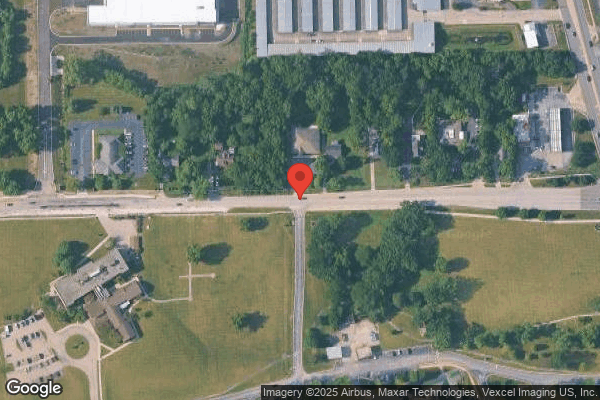
AVANTARA AURORA

400 WEST SULLIVAN ROAD, AURORA, IL 60506 (630) 859-3700
For profit - Corporation 87 Beds LEGACY HEALTHCARE Data: November 2025
Trust Grade
70/100
#111 of 665 in IL
Last Inspection: March 2025

Within standard 12-15 month inspection cycle. Federal law requires annual inspections.

Overview

Avantara Aurora has a Trust Grade of B, indicating that it is a good choice for families, as it falls within the solid range of 70-79. In terms of state ranking, it is #111 out of 665 facilities in Illinois, placing it in the top half, while it ranks #9 out of 25 in Kane County, meaning only eight local options are better. Unfortunately, the facility is showing a worsening trend, with the number of reported issues increasing from 5 in 2024 to 7 in 2025. Staffing is rated average at 3 out of 5 stars, with a turnover rate of 49%, which is similar to the state average. Although the facility has received no fines, which is a positive sign, it does have some concerning deficiencies; for example, they failed to follow physician orders for weekly weight checks, leading to significant weight loss in several residents, and they served inadequate protein to all residents on specific diets, raising potential health risks. On a positive note, the facility has more RN coverage than 90% of Illinois facilities, which is beneficial for catching potential health problems early.

Trust Score
B
70/100
In Illinois
#111/665
Top 16%
Safety Record
Moderate
Needs review
Inspections
Getting Worse
5 → 7 violations
Staff Stability
⚠ Watch
49% turnover. Above average. Higher turnover means staff may not know residents' routines.
Penalties
✓ Good
No fines on record. Clean compliance history, better than most Illinois facilities.
Skilled Nurses
✓ Good
Each resident gets 72 minutes of Registered Nurse (RN) attention daily — more than 97% of Illinois nursing homes. RNs are the most trained staff who catch health problems before they become serious.
Violations
⚠ Watch
18 deficiencies on record. Higher than average. Multiple issues found across inspections.
★★★★☆
4.0
Overall Rating
★★★☆☆
3.0
Staff Levels
★★★★☆
4.0
Care Quality
★★★★☆
4.0
Inspection Score
Stable
2024: 5 issues
2025: 7 issues

The Good

  • 4-Star Quality Measures · Strong clinical quality outcomes
  • Full Sprinkler Coverage · Fire safety systems throughout facility
  • No fines on record

Facility shows strength in quality measures, fire safety.

The Bad

Staff Turnover: 49%

Near Illinois avg (46%)

Higher turnover may affect care consistency

Chain: LEGACY HEALTHCARE

Part of a multi-facility chain

Ask about local staffing decisions and management

The Ugly 18 deficiencies on record

1 actual harm
Mar 2025 7 deficiencies
CONCERN (D)

Potential for Harm - no one hurt, but risky conditions existed

Resident Rights (Tag F0550)

Could have caused harm · This affected 1 resident

Based on observations, interviews and record reviews, the facility failed to treat residents with dignity while providing care. This applies to 2 of 2 residents (R183 and R184) reviewed for dignity in...

Read full inspector narrative →
Based on observations, interviews and record reviews, the facility failed to treat residents with dignity while providing care. This applies to 2 of 2 residents (R183 and R184) reviewed for dignity in a sample of 24. The findings include: 1. On 03/11/25 at 12:46 PM, V15 (Nurse) was standing over R184 feeding her. On 3/12/25 at 12:37 PM V15 said that she shouldn't have stood over R184 while feeding her because it is a dignity issue. 2. On 03/12/25 at 10:43 AM V15 (Nurse) entered R183's room after knocking. V18 CNA (Certified Nurses' Assistant) and V19 (R183's Daughter) were providing incontinence care for R183 and the curtain was not pulled. R183 was naked from the waist down and could be seen from the hall. On 03/12/25 at 11:33 AM, R183, who's cognition is intact, said that she wants the curtain and the door closed while staff are providing care for her. On 03/12/25 at 11:17 AM V18 CNA (Certified Nurse's Assistant) said that she should have closed R183's curtain to provide privacy. On 03/13/25 at 11:27 AM V2 DON (Director of Nursing) said that V15 should not have been standing over R184 while feeding her, and V18 should have had the curtain pulled while providing incontinence care. V2 said that these things should have been done for dignity. The facility's Privacy and Dignity policy dated 8/16/24 showed that the facility will ensure that the residents' privacy and dignity is respected by the staff at all times. The policy shows that during care that requires prior privacy such as incontinence care, the privacy curtain will be drawn to provide full visual privacy. Door may also be closed to provide additional layer of privacy during care. The policy shows that residents will not be addressed in an undignified manner by staff at all.
CONCERN (D)

Potential for Harm - no one hurt, but risky conditions existed

Pressure Ulcer Prevention (Tag F0686)

Could have caused harm · This affected 1 resident

Based on observation, interview, and record review, facility failed to implement measures to prevent re-opening of pressure ulcer for a resident with known skin alterations to the right buttocks and c...

Read full inspector narrative →
Based on observation, interview, and record review, facility failed to implement measures to prevent re-opening of pressure ulcer for a resident with known skin alterations to the right buttocks and coccyx. The facility also failed to then assess, report, and initiate pressure ulcer treatments. This applies to 1 out of 1 (R40) resident reviewed for pressure ulcer in a sample size of 24. The findings include: On 03/11/25 at 02:24 PM, during incontinent care, a wound dressing was noted on R40's right buttock. Multiple open areas were noted on R40's coccyx. R40 did not have any wound dressing on his coccyx. Wound on right buttock appeared red in color with yellow tissue noted around the wound area. Wounds on his coccyx appeared red in color with whitish tissue noted in the wound. R40 appeared frail, unable to fully bend knee and is totally dependent on staff for bed mobility, transfers, and incontinence care. R40 transfers from bed to wheelchair using the mechanical lift. On 3/11/25 at 2:40 PM, V6 (RN-Registered Nurse) provided wound care to R40. V6 measured R40's wounds. Wound on right buttock measured 3.5 cm (centimeters) x 2 cm. Right buttock wound appeared reddish with yellowish areas noted. V6 did not measure the wound's depth. V6 said right buttock wound is a stage 3. V6 measured the cluster wound on R40's coccyx. Wounds on coccyx appeared reddish with yellowish areas noted. Measurement was 6.5 cm x 7 cm and V6 did not measure the depth. V6 said wound on coccyx was stage 3 pressure ulcer. On 3/12/25 at 9:41 AM, R40 was noted sitting on his wheelchair in the resident's lounge area. On 3/12/25 at 11:45 AM, R40 was still sitting on his wheelchair in the resident's lounge area. On 3/12/25 at 11:45 AM, V10 (CNA-Certified Nurse Assistant) said he got R40 up from bed on 3/12/25 around 7:50 AM and R40 has not gone back to bed since that time. On 3/12/25 at 9:55 AM, V6 said she did not document about the wound findings seen on 3/11/25 at 2:40 PM into R40's EHR (Electronic Health Record). She said she did not inform the physician and she did not obtain new treatment orders. She said she informed V3 (ADON-Assistant Director of Nursing/IP- Infection Preventionist/ Wound Care Nurse) of R40's wounds. At 10:11 AM, V3 said V6 informed him of R40's wounds on 3/11/2025. He said he did not assess the wounds and did not inform the physician of wounds. On 3/13/25 at 8:26 AM, V7 (NP- Nurse Practitioner) confirmed she saw R40 on 3/6/2025. She said R40 had MASD ( Moisture Associated Skin Damage) on coccyx and right buttocks. She confirmed she does not measure MASD and documented her measurements as 0cm x 0cm x 0cm. She said she will assess R40 later. On 3/13/25 at 12:10 PM, V2 (DON-Director of Nursing) said she expects nurses to call the physician immediately for any skin breakdown and obtain treatment orders. She said she expects nurses to document about findings in the EHR. She said she expects nurses to remind the CNAs to follow the care plan to heal or prevent pressure ulcers. Review of R40's EHR (Electronic Health Record) documents the following: R40's EHR documents original admission date of 12/23/21. R40 was re-admitted to facility on 10/24/24. R40's MDS (Minimum Data Set) dated 12/27/2024 shows he had two stage 3 pressure ulcer that were not present upon admission and he has severely impaired cognitive functions. R40's Braden Scale assessment done on 2/26/25 showed he is at high risk for pressure ulcers. R40's POS (Physician Order Sheet) shows an order dated 1/16/2025 to place patient on the wheelchair not more than two hours with pressure relieving cushion. R40's wound care plan shows an intervention that he should not be on his wheelchair for more than two hours. On 3/12/25, R40's Progress Notes was reviewed. V6 did not document about the re-opened wounds on the right buttocks and coccyx found on 3/11/25. There was no documentation that R40's physician was informed about the re-opened wounds or that treatment orders were obtained. Facility's Wound Care Guidelines (reviewed 1/24/25) stated prevention of skin breakdown includes inspection of the skin every shift with care for signs of breakdown. Policy includes educating clinical staff and developing appropriate treatment plan. It states that the resident's skin alteration/breakdown (pressure ulcer, arterial, diabetic, venous ulcers etc.) shall be documented in the resident's clinical records in accordance with the facility's policy and in compliance to current regulatory standards. It is documented to initiate wound care treatment upon identification of the wound with physician's order and to refer to facility's Wound Care Specialist timely for all pressure injuries and/or wounds.
CONCERN (D)

Potential for Harm - no one hurt, but risky conditions existed

Tube Feeding (Tag F0693)

Could have caused harm · This affected 1 resident

Based on observation, interview, and record review the facility failed to administer enteral feeding as ordered, and failed to change and label enteral feeding tube equipment for residents receiving g...

Read full inspector narrative →
Based on observation, interview, and record review the facility failed to administer enteral feeding as ordered, and failed to change and label enteral feeding tube equipment for residents receiving gastrostomy tube feedings. This applies to 3 out of 4 (R46, R11, and R23) reviewed for enteral feeding in a sample of 24. The findings include: 1. On 3/12/2025 at 11:30 AM, R46 said he was receiving gastrostomy tube (g-tube) feedings. R46's g-tube pump had an opened but unlabeled bottle of Jevity 1.5 that was connected to a bag of water that was dated 3/10/2025 (two days earlier). The feeding's tubing tip was uncovered. On 3/13/2025 at 8:45 AM, R46's g-tube pump was hanging an opened bottle of feeding dated 3/13/2025 without an opened time. The feeding's connected bag of water was dated 3/10/2025 (three days earlier). The feeding's tubing tip was uncovered. At 12:15 PM, V20 (Agency Registered Nurse/RN) said she was going to administer R46's scheduled bolus g-tube feeding via a pump. V20 said she reviewed R46's order and determined she had to administer a total of 200 ml (milliliters). V20 said she believed the feeding bottle was opened and hung by the prior shift at 6 AM. V20 proceeded to connect the feeding tubing to R46's g-tube without priming the tubing. Then the feeding pump stopped to alarm that there was an error with the infusion. V20 then disconnected and primed the feeding tubing. V20 then reconnected R46s to his feeding. V20 started R46's feeding infusion without checking for placement or flushing his tube with water prior. R46's g-tube insertion site did not have a dressing. R46 said his feeding leaked at times and he had a scab that was uncomfortable. V20 said she was unsure if R46's g-tube site required a dressing. At 1:25 PM, V20 said she was going to stop the pump and disconnect R46's g-tube feeding. V20 reviewed the feeding pump and said he received a total of 211 ml of enteral feeding. V20 proceeded to disconnect R46's feeding without flushing his tube with water afterward. R46's Order Summary Report dated 3/13/2025 showed an order for Enteral Feed Order every 6 hours GT Jevity 1.5 at 400ml to run for 2 hrs at 200 ml/hr Bolus feeding 12 am, 6 am, 12 pm, 6 pm Water flush 90 ml before and after each bolus feeding. The report also showed additional orders of every evening shift change feeding set and tubing daily and cleanse enteral tube feeding site with soap and water and apply drain sponge dressing daily every day shift. 2. On 3/11/2025 at 10:00 AM, R11's g-tube pump was hanging an open bottle of Jevity 1.5 dated 3/10/2025 without an open time. The feeding's connected bag of water and tubing was not dated. The feeding's tubing tip was uncovered. On 3/13/2025 at 8:45 AM, R11's g-tube pump was hanging an open bottle of feeding dated 3/13/2025 without an open time. The feeding's tubing tip was uncovered. R11's Oder Summary Report dated 3/13/2025 did not show orders for instructions on changing his enteral feeding equipment (set and tubing) and providing care to his g-tube insertion site. 3. On 3/11/2025 at 10:40 AM, R23 said he was receiving g-tube feedings. R23 had an open g-tube feeding bottle of Jevity 1.5 dated 3/11/2025 without an open time. On 3/13/2025 at 9:50 AM, V8 (Registered Dietician) said she reviews and enters enteral feeding orders to ensure residents are receiving their required nutritional g-tube feedings. V8 said enteral feeding bottles are required to be labeled before being hung, with the resident's name, feeding instructions, open date, and time opened. V8 said enteral feeding sets (water bags) and tubing were for one-time use and should be discarded after 24 hours. V8 said it is recommended that when a new feeding bottle is started, a new set of equipment should also be started to ensure safe administration of enteral feedings. The facility's Enteral Tube Feeding Care policy dated 7/26/2024, said 1. Nurse to check in the POS/MAR the order for enteral feeding interventions .c. Rate d. Duration .3. Check that Feeding bag is properly labeled to include: a. Resident's name b. Formula (if it is not a closed system) and rate of feeding administration c. Date and time feeding was started .5. Flush the enteral tube with 15 to 30 cc of water before starting the enteral feeding and after stopping the enteral feeding to ensure that enteral formula in the enteral tubing is pushed to the stomach. 6. Change feeding bags daily and PRN. Use new enteral tubing daily and PRN every time a new feeding bag is started .8. Enteral tube stoma care: Site must be cleaned and covered with a dry gauze daily.
CONCERN (D)

Potential for Harm - no one hurt, but risky conditions existed

Deficiency F0694 (Tag F0694)

Could have caused harm · This affected 1 resident

Based on observation, interview, and record review the facility failed to change a resident's PICC (Peripherally Inserted Central Catheter) line dressing as ordered. This applies to 1 out of 3 reside...

Read full inspector narrative →
Based on observation, interview, and record review the facility failed to change a resident's PICC (Peripherally Inserted Central Catheter) line dressing as ordered. This applies to 1 out of 3 residents (R51) reviewed for central intravenous (IV) lines in a sample of 24. The findings include: On 3/11/2025 at 10:45 AM, R51 said he was receiving IV antibiotic infusions for his right foot wound infection. R51 had an intravascular (IV) central catheter to his left upper arm. R51's IV catheter had a transparent dressing dated 3/03/2025 (eight days earlier). The right lower corner of R51's transparent PICC line dressing was loose and no longer adherent to his skin. At 11:10 AM V9 (Registered Nurse/RN) said she was going to infuse R51's scheduled IV antibiotic. V9 initiated R51's IV infusion and failed to assess the dressing's integrity. On 3/13/2025 at 10:25 AM V3 (Assistant Director of Nursing/ADON) said central catheter dressings should be changed every 7 days and as needed (PRN) for infection control and prevention. V3 said nurses should assess PICC line dressings every shift to ensure their integrity and if compromised they should be changed. R51's Order Summary Report dated 3/13/2025 showed a 2/12/2025 order for Change PICC line dressing every night shift every Sunday and as needed. R51's ETAR (Electronic Treatment Administration Record) for March 2025 showed documentation that R51's scheduled PICC dressing was not completed on 3/09/2025 (Sunday). The facility's Intravenous Therapy policy dated 1/03/2025, said It is the facility's policy to ensure that intravenous policy and procedure are compliant to federal standard of care. 1. All IV access will be assessed by the nurse .2. Dressing Change .c. All central line dressing (PICC lines, single and multi-lumen central catheters inserted in subclavian, jugular, or inguinal area) will be changed every 7 days and prn.
CONCERN (E)

Potential for Harm - no one hurt, but risky conditions existed

Deficiency F0761 (Tag F0761)

Could have caused harm · This affected multiple residents

Based on observation, interview, and record review the facility failed to properly secure resident medications. This applies to 5 out of 5 residents (R15, R22, R24, R40, R43) reviewed for medications...

Read full inspector narrative →
Based on observation, interview, and record review the facility failed to properly secure resident medications. This applies to 5 out of 5 residents (R15, R22, R24, R40, R43) reviewed for medications in a sample of 24. The findings include: 1. On 3/11/2025 at 10:17 AM and 3/12/2025 at 12:22 PM, a medication cup with 2 capsules of fish oil and 1 capsule of turmeric was observed on R43's bed side table. She said she usually takes the medication when her tummy feels better because she had hyperacidity. R43 said nurses usually leave the medication there so she can take it when she wants to. Review of R43's POS (Physician Order Sheet) shows order for fish oil and turmeric but there are no orders for resident to self-administer medication and medication to stay at the bedside. On 3/13/25 at 12:10 PM, V2 said there are no residents with orders for medication to stay at the bedside, no orders to self-administer medication. She said she expects nurses to take unlabeled medication from resident rooms. She said if a resident wants to take medication, nurses should ask order from physician. 2. On 3/11/2025 at 10:12 AM, a tube of unlabeled Calmoseptine ointment was observed on R15's nightstand. Review of R15's POS showed there was no order for medication, medication to stay at bedside and there was no order for resident to self-administer medication. 3. On 3/11/2025 at 10:27 AM, a bottle of unlabeled TUMS Antacid 72 chews observed on R22's nightstand on the right side of her bed. The bottle was half empty. Review of R22's POS showed there was no order for medication, medication to stay at bedside and there was no order for resident to self-administer medication. 4. On 3/11/2025 at 10:52 AM, a bottle of Antifungal powder- Miconazole nitrate 2% powder was seen on R24's nightstand. On 3/13/25 at 12:10 PM, V2 (DON-Director of Nursing) said R24 is unable to apply it to herself. Review of R24's POS showed an order for antifungal powder. There was no order for medication to stay at the bedside, and no order that R24 to self-administer medication. 5. On 3/11/2025 at 11:12 AM, a bottle of unlabeled Docusate Sodium 50 mg observed on top of R40's drawers. Review of R40's POS showed there was no orders for Docusate Sodium, no orders for medication to stay at the bedside, and no orders for resident to self- administer medication. Facility's Policy on Medication Storage, Labeling, and Disposal dated and revised 8/16/24 documents that medications should be stored safely under appropriate environmental controls and medications will be secured in a locked storage area. Facility's Policy on Self-Administration of Medication dated 12/3/15 and revised on 6/6/24 documents resident may store the medication at bedside if there is a physician order to keep it at bedside.
CONCERN (E)

Potential for Harm - no one hurt, but risky conditions existed

Infection Control (Tag F0880)

Could have caused harm · This affected multiple residents

Based on observation, interview, and record review the facility failed to implement transmission-based precautions for a resident with an acute contagious gastrointestinal infection and adhere to enha...

Read full inspector narrative →
Based on observation, interview, and record review the facility failed to implement transmission-based precautions for a resident with an acute contagious gastrointestinal infection and adhere to enhanced-barrier precautions. This applies to 6 out 6 residents (R184, R183, R65, R51, R46, and R40) reviewed for infection control in a sample of 24. The findings include: 1. On 3/11/25 at 12:06 PM there was no isolation sign on the door to R183 & R184 shared room. R183 was in her wheelchair very upset saying that she has had 3 bowel movements in her brief since she was in physical therapy, and nobody has come to change her brief. R183 said that she has been having diarrhea for the last week. On 3/12/25 at 11:08 AM, CNA (Certified Nurse's Assistant) said that R183 has been having loose stools for at least the last four days. On 3/13/25 at 11:27 AM, V2 DON (Director of Nursing) said that R183 has had loose stools for about a week and that R183 was started on antibiotics on Friday 3/7/25 for pneumonia and the antibiotics can cause loose stools and C diff (acute contagious gastrointestinal infection). V2 said that the facility moved R184 out of the room with R183 on 3/11/25 around 11 PM because of the loose stools they suspected R183 had C-Diff. R183's electronic health record showed that her mental cognition is intact. R183's 3/10/25 physician's order at 2:53 PM showed, obtain stool for C-DIFF and on 3/11/25 physician's order shows strict contact isolation (C-Diff). R183's 3/7/25 physician's order showed amoxicillin-Pot Clavulanate (Antibiotic) tablet 875-125mg every 12 hours for 10 days. The start date was 3/7/25 and the end date was 3/17/25. R183's Follow up Question report of 3/1/25 - 3/13/25 showed that R183 started having loose stools on 3/4/25 and continued through 3/13/25 with a total of 17 recorded episodes of loose stools in 10 days. R183's 3/1/25 - 3/31/25 EMAR (electronic Medication Administration Record) showed an order on 3/10/25 at 5pm to obtain stool sample for C-DIFF, and the sample was obtained on 3/11/25 at 5:44 am. The facility's Infection Control policy with the revised date of 2/10/25 shows, if the resident with infection needs transmission-based precaution, the facility will provide the transmission-based precaution setup required. If the resident needs to be quarantined, the facility will also provide the set up similar to the setup for isolation room. A sign will be provided outside the room of the resident on a transmission-based precaution indicating the type of precaution contact, droplet, or EBP (enhance barrier precaution). The facility shall comply with infection control recommendations provided by the IDPH (Illinois Department of Public Health) or certified local health department, including but not limited to testing plan, infection control assessment, training or other measures designed to reduce incidence of infection. Contact precautions intended to prevent transmission of infectious agents spread by direct or indirect contact with patient or the environment. Examples of infectious organisms requiring contact precautions are C-Diff, scabies, norovirus, etc. and are outlined in CDC (Center for Disease Control) appendix A (Type and Duration of Precautions Recommended for Selected Infections and Conditions) a. Single room is required. If not available cohorting with a resident with the same organism may be done. 2. On 3/11/25 at 1:05 PM, V4 (CNA-Certified Nurse Assistant) and V5 (CNA) provided incontinent care to R40. R40 had an EBP (Enhance Barrier Precaution) signage on his door and had a PPE (Personal Protective Equipment) bin by his door. V4 and V5 provided care using only gloves and surgical mask. On 3/11/25 at 1:20 PM, V6 (RN-Registered Nurse) was observed providing wound care to R40. She was assisted by V4. R40 had open wounds on his right buttock and coccyx. V4 and V6 were only wearing gloves and surgical mask throughout wound care. On 3/13/25 at 12:10 PM, V2 (DON-Director of Nursing) said residents with open wounds are put on EBP. She said when providing care to residents with wounds, staff are expected to wear gown, gloves, and mask. She said this is to prevent infection and cross contamination. 3. On 3/11/2025 at 11:10 AM, R51's room door had an Enhanced Barrier Precautions (EBP) sign. The sign instructed staff to wear gloves and gown when providing high-contact care activities. V9 (Registered Nurse/RN) said she was going to infuse R51's scheduled IV (intravenous) antibiotic via his left upper arm PICC (Peripherally Inserted Central Catheter) line. V9 was wearing gloves but not a gown when she administered R51's IV infusion. R51's care plan said he required the implementation of EBP due to his surgical wound and PICC line initiated on 2/21/2025. The care plan's goal was to prevent the spread of infection. 4. On 3/13/2025 at 12:05 PM, R46's room door had an EBP sign. V20 (Agency RN) said she was changing R46's gastrostomy tube y-connector port. V20 was wearing gloves but not a gown. V20 then proceeded to infuse R46's scheduled bolus gastrostomy tube feeding. R46's care plan said he required the implementation of EBP due to his g-tube for nutrition initiated on 1/21/2025. The care plan's goal was to prevent the spread of infection. 5. On 3/13/2025 at 1:10 PM, R65's room door had an EBP sign. V20 (Agency RN) said she was going to infuse R65's scheduled bolus gastrotomy tube feeding. V20 donned gloves but failed to don a gown. R65's care plan said she required the implementation of EBP due to her g-tube for enteral nutrition and her open right toe wound initiated on 5/01/2024. The care plan's goal was to prevent the spread of infection. On 3/12/2025 at 9:40 AM, V3 (Infection Preventionist/IP Nurse) said staff was expected to don proper PPE (Personal Protective Equipment) when providing high-contact care activities to residents under EBP including central lines, feeding tubes, and wound care. V3 said EBP practices were implemeted to prevent the spread of infections and protect residents and staff. The facility's policy titled Enhanced Barrier Precautions dated 7/26/2024, said The facility will use Enhanced Barrier Precautions (EBP) to reduce transmission of multi-drug resistant organisms in the nursing homes. EBP involves the use of gowns and gloves to reduce transmission of resistant organisms during high-contact resident care activities for residents known to be colonized or infected with MDROs as well as residents with wounds and/or indwelling medical devices.
CONCERN (F)

Potential for Harm - no one hurt, but risky conditions existed

Menu Adequacy (Tag F0803)

Could have caused harm · This affected most or all residents

Based on observation, interview and record review, the facility failed to follow their planned menu resulting in lunch entrees being served to residents with inadequate protein. This applies to all 7...

Read full inspector narrative →
Based on observation, interview and record review, the facility failed to follow their planned menu resulting in lunch entrees being served to residents with inadequate protein. This applies to all 78 residents in the facility receiving General, Low Concentrated Sweets, No Added Salt, Pureed, and Mechanical Soft diets at the facility. The findings include: The facility's Long-Term Care Facility Application for Medicare and Medicaid (Form CMS-Centers for Medicare and Medicaid Services-671) dated 3/14/25 documents that the total census was 79 residents. The facility's Order Listing Report of 3/12/25 showed 1 NPO (nothing by mouth) resident. The facility's Daily Spreadsheet, dated Week 1 Wednesday, shows residents with General, Mechanical Soft, Pureed, No Added Salt, Low Concentrated Sweets all received either regular, ground or pureed portions of ham. The spread sheet shows each resident receiving the ham were to be served the equivalent of a 3-ounce portion of ham. On 3/12/25 at 11:50 AM, V24 (Cook) was observed plating food for a regular diet, and she placed one slice of ham on the plate. On 3/12/25 at 11:58 am V17 (Dietary Director) weighed 2 slices of ham from 2 different lunch trays and each slice of ham weighed 2 ounces. V17 said that he does not have a slicer to cut meat and because of that he is unable to cut an accurate amount of protein to serve to the residents. On 3/12/25 at 12:15 PM V8 (Dietician) said that the ham is to be 3 ounces served weight. V8 said that if this is not done, residents will not be getting enough protein and that can cause malnourishment or prevent wound healing. V8 said that the facility needs a slicer to get an accurate amount and portion size of protein to meet the requirements. The facility's kitchen policy with revised date of 8/16/2024 showed that all food items in the menu and recipe will be followed.
Apr 2024 5 deficiencies 1 Harm
SERIOUS (G)

Actual Harm - a resident was hurt due to facility failures

Deficiency F0692 (Tag F0692)

A resident was harmed · This affected 1 resident

**NOTE- TERMS IN BRACKETS HAVE BEEN EDITED TO PROTECT CONFIDENTIALITY** Based on observation, interview, and record review, the facility failed to follow physician's orders and weigh a resident weekly...

Read full inspector narrative →
**NOTE- TERMS IN BRACKETS HAVE BEEN EDITED TO PROTECT CONFIDENTIALITY** Based on observation, interview, and record review, the facility failed to follow physician's orders and weigh a resident weekly. The facility also failed to implement interventions for residents with weight loss. This failure resulted in R76 having a significant weight loss. This applies to 5 of 7 residents (R76, R40, R13, R10, and R53) reviewed for weight loss in the sample of 20. The findings include: 1. The EMR (Electronic Medical Record) showed R76 was admitted to the facility on [DATE], with multiple diagnoses including stroke, type 2 diabetes, protein-calorie malnutrition, dysphagia, and gastrostomy status. R76's MDS (Minimum Data Set) dated March 23, 2024, showed R76 had moderate cognitive impairment. R76's nutrition care plan dated March 28, 2024, showed, Resident is at risk for alteration in nutritional status related to tube feeding, dysphagia. The care plan continued to show multiple interventions dated March 28, 2024, including Obtain weight as ordered. R76's order summary report dated April 10, 2024, showed an order dated March 20, 2024, for weight upon admission/readmission, weekly times four, then monthly, every day shift every Monday for 28 days weekly times four. R76's Weight and Vitals Summary dated April 10, 2024, at 10:15 AM, showed on March 20, 2024, at 2:12 PM and 4:37 PM, R76 weighed 141.1 pounds. The facility does not have documentation to show R76 was weighed weekly times four weeks. On April 10, 2024, at 2:21 PM, V4 (ADON/Assistant Director of Nursing) and V8 (CNA/Certified Nursing Assistant) weighed R76 in her wheelchair on the scale. R76's weight, including the weight of her wheelchair was 196.8 pounds. V4 said R76's wheelchair weighed 64.6 pounds and R76 weighed 132.6 pounds. On March 20, 2024, R76 weighed 141.1 pounds, on April 10, 2024, R76 weighed 132.6 pounds which is a 6.02% (percent) weight loss. On April 10, 2024, at 1:22 PM, V17 (Physician) said R76's weight loss could have been prevented if facility staff followed physician's orders and weighed R76 weekly as ordered. V17 continued to say interventions could have been put in place to prevent R76's significant weight loss. On April 10, 2024, at 11:26 AM, V13 (Registered Dietician) stated R76 is on tube feeding and an oral diet. V13 continued to say she assessed R76 on March 21, 2024, and has not seen R76 since March 21, 2024. V13 said R76 only has a weight from admission and should have been weighed weekly times four weeks. On April 10, 2023, at 2:19 PM, V2 (DON/Director of Nursing) said the expectation is facility staff follow physician orders for weighing a resident weekly. R76's Dietary Evaluation dated March 21, 2024, by V13 showed R76 at risk for malnutrition. 2. R10's EMR showed R10 was admitted to the facility on [DATE], with multiple diagnoses including right femur fracture, type 2 diabetes, dementia, and multiple pressure ulcers. R10's MDS dated [DATE], showed R10 was cognitively intact. R10's nutrition care plan dated March 5, 2024, showed, Resident is at risk for alteration in nutritional status related to therapeutic diet. The care plan continued to show multiple interventions dated March 5, 2024, including Obtain weight as ordered. R10's Weights and Vitals Summary dated April 10, 2024, at 10:14 AM, showed on February 26, 2024, R10 weighed 140 pounds. On March 19, 2024, R10 weighed 121 pounds which is a 13.57 % weight loss. A progress note dated March 19, 2024, at 2:17 PM, by V13 showed Noted resident had emesis after hip surgery- fluid shifts could also be the cause of weight loss. Variable oral intake also noted. Suggest [nutritional supplement] 237 mL (milliliter) three times a day. Notes labs, KUB (Kidney, Ureter, Bladder X-Ray) ordered. RD (Registered Dietician) to follow up with resident March 21, 2024, when in facility. A progress note dated March 21, 2024, at 7:32 PM, by V13 showed Please start weekly weights time four weeks to monitor. R10's Order Summary Report dated April 10, 2024, showed an order dated March 26, 2024, for Weights weekly times three weeks, one time a day every Monday for three weeks. R10's Weights and Vitals Summary dated April 10, 2024, at 10:14 AM, showed R10's last weight was obtained on March 26, 2024. The facility does not have documentation to show R10 was weighed after March 26, 2024. On April 10, 2024, at 11:23 AM, V13 said she was notified of R10's significant weight loss on March 19, 2024. V13 continued to say one of R10's interventions in response to the significant weight loss was weekly weights for four weeks. V13 said the facility did not obtain R10's weekly weights as ordered. 3. R53's EMR showed R53 was admitted to the facility on [DATE], with multiple diagnoses including respiratory failure, chronic obstructive pulmonary disease, severe protein-calorie malnutrition, and dysphagia. R53's MDS dated [DATE], showed R53 was cognitively intact. R53's weight loss care plan dated March 28, 2024, showed Unintended weight loss/gain, [R53] has the following conditions and risk factors that put him at risk for unintended weight loss/gain: COPD (Chronic Obstructive Pulmonary Disease), malnutrition/failure to thrive. The care plan continued to show multiple interventions date March 28, 2024, including Provide regular diet to meet the nutritional needs of the resident by: 1. Liberalize the diet; 2. Providing supplements. R53's order summary report dated April 10, 2024, showed an order dated August 24, 2023, for [Nutritional supplement] three times a day, [nutritional supplement] or equivalent, 237 mL, three times a day. R53's April 2024 MAR (Medication Administration Record) showed V6 (RN/Registered Nurse) documented R53 did not received his nutritional supplement on: April 3, 2024, at 9:00 AM and 1:00 PM due to the supplement being unavailable. April 4, 2024, at 9:00 AM and 1:00 PM due to the supplement being unavailable. April 8, 2024, at 9:00 AM and 1:00 PM due to the supplement being unavailable. April 9, 2024, at 9:00 AM and 1:00 PM due to the supplement being unavailable. On April 9, 2024, at 12:38 PM, V6 said sometimes [nutritional supplement] is out of stock. V6 continued to say if the [nutritional supplement] is unavailable then she just waits for more [nutritional supplement] to be restocked. On April 9, 2024, at 1:57 PM, V19 (RN) said the nutritional supplements are kept in the supply room. V19 opened the supply room and multiple nutritional supplements were stocked in the supply room. On April 10, 2024, at 11:30 AM, V13 said R53 has had ongoing weight loss while residing in the facility. V13 continued to say R53 should receive a nutritional supplement three times a day. V13 said if the facility does not have R53's ordered nutritional supplement, V13's expectation is R53 will receive an equivalent nutritional supplement. V13 continued to say the facility stocks a house supplement and R53 should have received the house supplement in place of the ordered supplement. V13 said the facility's house supplement has not been out of stock in the month of April. A progress note dated March 14, 2023, at 11:03 AM, by V13 showed BMI (Body Mass Index) 16.7 (Underweight) . Resident has [nutritional supplement] 237 mL three times a day, [mirtazapine] to increase appetite, food brought in by family. Encouraged resident to consume 75 to 100% of supplements . 4. Face sheet, dated April 10, 2024, shows R13's diagnoses included malignant neoplasm of the pancreas, dysphagia, schizophrenia, bipolar disorder, cerebral infarction, and anxiety disorder. Care plan initiated May 21, 2022 and resolved on February 22, 2024, showed R13 was at risk for alteration in nutritional status related to her tube feeding and oral diet. Care plan, initiated February 22, 2024, showed Actual weight loss: R13 has experienced weight loss and is at risk for continued weight loss. Has experienced progressive weight loss . Interventions, initiated March 9, 2024, included Determine food preferences through one-to-one interview and/or family interview. POS (Physician Order Sheet), printed April 9, 2024, showed R13 had physician orders for the following nutrition supplements: 1. (Nutritional supplement) to be provided twice daily since May 23, 2023 2. (Nutritional supplement) or equivalent to be provided twice daily since October 24, 2023 The POS also showed R13 had physician orders for her g-tube (gastrostomy tube) to be flushed with water daily. Review of R13's weights show the following: 151.6# (Pounds) August 1, 2023 146.2# September 21, 2023 137.2# October 9, 2023 131.4# November 3, 2023 - 13% weight loss in 3 months 128.4# November 20, 2023 132.0# December 11, 2023 134.2# January 4, 2024 126.8# February 5, 2024 116.6# March 7, 2024 125.9# April 3, 2024 MARs (Medication Administration Records), dated August 2023 to February 2024, showed R13 had an order for enteral nutrition g-tube feedings to supplement her oral nutritional intake. The MARs show R13 received the enteral nutrition feedings August 2023 until September 30, 2023 however R13 intermittently refused her supplemental enteral nutrition feedings during those months. The MARs show R13's enteral nutrition feedings were placed on hold from October 1 to November 16, 2023 and then resumed November 17, 2023 until February 11, 2024 when all g-tube feedings were discontinued and R13 was placed on hospice. Physician note, dated February 5, 2024, shows R13 lost significant weight in six months, was diagnosed with failure to thrive, and the physician instructed the dietitian to follow R13. Review of R13's POS, nutrition assessments and progress notes, dated September 21, 2023 to April 10, 2024, showed no new nutrition interventions were recommended or implemented for R13 to prevent further weight loss. Nutrition assessment, dated October 12, 2023, shows R13 began refusing her enteral feedings. No new nutrition interventions were identified for R13 to prevent further weight loss. Nutrition note, dated January 31, 2024, showed R13's oral intake at meals was reported as good. Nutrition assessment, dated February 12, 2024, shows R13 had good oral intake and was consuming 75-100% of her meals and was continuing to refuse her enteral feedings. On April 9, 2024, at 11:15 AM, V14 (Licensed Practical Nurse) stated R13 formerly received enteral feedings via her g-tube but R13 began to refuse all enteral g-tube nutrition and wished to have her g-tube removed. V14 stated R13 was only receiving an oral diet for some time. V14 stated R13 did eat her meals but did not eat as much as she used to eat. V14 stated R13 needed staff assistance to eat and would sometimes refuse meals. At 11:50 AM, V14 stated R13 was not drinking the physician ordered nutritional supplements and some days refused the nutritional supplements. V14 stated R13 used to receive milkshakes from her POA (Power of Attorney) but the POA no longer brought milkshakes to R13. V14 stated she gives R13 chocolate or vanilla pudding as much as she is able because R13 likes pudding. On April 10, 2024, V13 (Dietitian) stated on August 12, 2023, she recommended weekly weights to monitor R13 for further weight loss. V13 reviewed R13's weights and stated the facility did not weigh R13 weekly. V13 stated when R13 began refusing her tube feedings, V13 did not implement any further interventions to prevent further weight loss. V13 stated she did not talk to R13 during the time R13 was losing weight and did not obtain any food preferences or discuss R13's menu with R13. V13 stated there were several different options for supplements the facility could offer if a resident did not like nutritional supplement. V13 stated she was unaware R13 was not drinking her nutritional supplement. V13 stated if R13 was not taking her nutritional supplement, the facility staff could offer a different supplement but was not aware if R13 was offered alternatives to the nutritional supplement. V13 also stated the facility had the option of placing resident food preferences on their meal trays to be given at each meal. V13 stated if the CNAs (Certified Nursing Assistants) fill out resident menus they should write in the resident food preferences or any extra items at each meal. On April 10, 2024 at 2:22 PM, V1 (Administrator) stated the facility had no policy regarding addressing residents at nutrition risk, residents with significant weight loss, or frequency of dietitian assessments of residents with tube feedings. On April 10, 2024 at 01:38 PM V1 (Administrator) and V2 (Director of Nursing) stated they conduct nutrition at risk meetings at the facility. V1 stated they discuss residents who had experienced significant weight loss. V1 stated the facility dietitian should be meeting with the residents to assess what foods they like to eat. V2 stated resident food preferences should be provided on the resident meal trays at meals and not be left to the CNAs (Certified Nursing Assistants) to write in on resident meal tickets when CNAs assist selecting the daily menus. 5. Face sheet, printed April 10, 2024, shows R40's diagnoses included depression and legally blind. Care plan, August 19, 2023, showed R40 was assessed to be malnourished and interventions included, Monitor food and hydration intake/consumption. Monitor weight in accordance to policy and plan of care. Offer nutritional supplements as ordered and monitor compliance. Care plan, dated August 11, 2023, showed R40 was at high risk for development of skin breakdown. Care plan interventions includes Encourage good nutrition and hydration in order to promote healthier skin. POS, printed April 9, 2023, shows R40 had the following physician orders for nutrition supplements: Nutritional supplement three times a day since August 24, 2023 Nutritional supplement AWC (Advanced Wound Care) two times a day 30 milliliters since March 13, 2024 Review of R40's weights showed the following: 144.6# August 12, 2023 133.6# August 17, 2023 144.6# August 19, 2023 140.0# September 6, 2023 135.2# October 9, 2023 131.0# November 6, 2023- 9.4% weight loss in three months 131.0# November 11, 2023 131.9# November 20, 2023 131.9# November 27, 2023 132.4# December 13, 2023 134.2# January 5, 2024 120.8# February 4, 2024 - 16% weight loss in six months 122.0# February 12, 2024 121,0# March 7, 2024 120.2# April 3, 2024 On April 9, 2024 at 1:28 PM during lunch, R40 ate approximately 75% of her lunch and drank approximately half of her nutrition supplement. R40 stated she enjoyed her lunch that day. Review of R40's nutrition progress notes and POS, dated August 24, 2023 to March 13, 2024, showed no new nutrition interventions were recommended/implemented for R40 to prevent further weight loss. Nutrition progress note, dated August 12, 2023, shows V13 (Dietitian) recommended R40 to be weighed weekly. Review of R40's weights show R40 was not weighed weekly. Nutrition note, dated April 2, 2024, shows R40 was eating an average of 75% of her meals however R40's April 3, 2024 weight showed R40 continued to lose weight. On April 9, 2024 at 11:22 AM, V14 (Licensed Practical Nurse) stated R40 did not always drink her supplement and preferred them served on ice. R40 used to have a visitor who brought her outside food she liked, but no longer received the food from her visitor. V14 stated R40 was always fed by staff. Physician note, dated March 26, 2024, showed R40 was diagnosed with severe protein calorie malnutrition. On April 10, 2024 at 10:50 AM, V13 (Dietitian) stated R40 was receiving nutritional supplement as ordered during the course of her weight loss, but V13 did not recommend any new nutrition interventions for R40 to prevent further weight loss between August 2023 and February 2024. V13 stated she requested to have R13 reweighed during the time she was losing weight. V13 stated she had not discussed food preferences with R40 or R40's nurses recently.
CONCERN (D)

Potential for Harm - no one hurt, but risky conditions existed

ADL Care (Tag F0677)

Could have caused harm · This affected 1 resident

**NOTE- TERMS IN BRACKETS HAVE BEEN EDITED TO PROTECT CONFIDENTIALITY** 3. R61 has multiple diagnoses including hemiplegia and hemiparesis, following cerebral infarction affecting right dominant side ...

Read full inspector narrative →
**NOTE- TERMS IN BRACKETS HAVE BEEN EDITED TO PROTECT CONFIDENTIALITY** 3. R61 has multiple diagnoses including hemiplegia and hemiparesis, following cerebral infarction affecting right dominant side due to thrombosis of left anterior artery and diabetes insipidus, based on the face sheet. On April 8, 2024 at 10:26 AM, R61 was sitting in the wheelchair, alert and verbally responsive. R61 had accumulation of long facial hair (beard and mustache). R61's fingernails were long with black substance underneath. R61 stated that it has been two weeks since he was last shaved. R61 stated that he would like to have his fingernails trimmed and cleaned. R61 also stated he would like to have his beard shaven. V10 (Licensed Practical Nurse) was made aware of R61's request. R61's active care plan initiated on June 29, 2023, showed that the resident has ADL self-care performance deficit and impaired mobility. R61's care plan showed he is dependent on staff for ADL care. R61's quarterly MDS dated [DATE] showed that the resident has moderately impaired cognition and required assistance from staff for personal hygiene. Based on observation, interview, and record review, the facility failed to assist residents identified as needing assistance with personal hygiene. This applies to 3 of 3 residents (R12, R60 and R61) reviewed for ADLs (activities of daily living) in the sample of 20. The findings include: 1. R12 had multiple diagnoses including Parkinson's disease with dyskinesia without mention of fluctuations and altered mental status, based on the face sheet. R12's quarterly MDS (minimum data set) dated February 27, 2024 showed that the resident was moderately impaired with cognition and required assistance from the staff with regards to personal hygiene. On April 8, 2024 at 11:43 AM, R12 was inside his room, sitting in his wheelchair. R12 was alert and verbally responsive. R12 had accumulation of long facial hair (beard and mustache). R12 stated that he needed assistance from the staff to shave his beard and trim his mustache. V9 (Licensed Practical Nurse/LPN) was made aware of R12's request to have his beard shaven and mustache trimmed. R12's active care plan initiated on June 6, 2023 showed that the resident required assistance with ADLs including personal hygiene. 2. R60 had multiple diagnoses including unspecified nontraumatic intracerebral hemorrhage in hemisphere, based on the face sheet. R60's admission MDS dated [DATE] showed that the resident was cognitively intact and required maximum assistance from the staff with personal hygiene. On April 8, 2024 at 11:02 AM, R60 was in bed, alert, oriented and verbally responsive. R60's fingernails were long, jagged and with black substances underneath. R60 stated that she wanted the staff to trim and clean her fingernails. V5 (Certified Nursing Assistant/CNA) was informed of R60's request to have her fingernails trimmed and cleaned. R60's active care plan initiated on February 27, 2024 showed that the resident had ADL self-care performance deficit related to decreased in functional mobility, decrease in strength and increase need for assistance from others. On April 10, 2024 at 12:40 PM, in the presence of V4 (Assistant Director of Nursing/Infection Preventionist), V2 (Director of Nursing) stated that she expects the nursing staff to remove resident's unwanted facial hair, and to trim and clean resident's fingernails, specially to those residents needing assistance with ADLs to maintain good hygiene and grooming.
CONCERN (E)

Potential for Harm - no one hurt, but risky conditions existed

Infection Control (Tag F0880)

Could have caused harm · This affected multiple residents

**NOTE- TERMS IN BRACKETS HAVE BEEN EDITED TO PROTECT CONFIDENTIALITY** 3. The EMR (Electronic Medical Record) showed R76 was admitted to the facility on [DATE], with multiple diagnoses including stro...

Read full inspector narrative →
**NOTE- TERMS IN BRACKETS HAVE BEEN EDITED TO PROTECT CONFIDENTIALITY** 3. The EMR (Electronic Medical Record) showed R76 was admitted to the facility on [DATE], with multiple diagnoses including stroke, type 2 diabetes, protein-calorie malnutrition, dysphagia, and gastrostomy status. R76's MDS (Minimum Data Set) dated March 23, 2024, showed R76 had moderate cognitive impairment. The MDS continued to show R76 was dependent on facility staff for transfers from the bed to the chair. On April 8, 2024, at 11:58 AM, R76 was in her room, lying in bed. R76's door did not have a sign for EBP (Enhanced Barrier Precautions). On April 9, 2024, at 12:05 PM, R76's door did not have a sign for EBP. On April 10, 2024, at 9:12 AM, R76's door did not have a sign for EBP. On April 10, 2024, at 10:35 AM, V8 (CNA) said she was caring for R76. V8 did not identify R76 as having EBP. V8 said if a resident is not in EBP, V8 does not wear a gown while providing care to the resident. On April 10, 2024, at 11:58 AM, R76 was lying in bed with enteral feeding infusing into R76's gastrostomy tube. V15 (CNA) and V16 (CNA) transferred R76 from the bed to wheelchair. V15 and V16 were not wearing gowns. R76's door did not have a sign for EBP. On April 10, 2024, at 12:26 PM, V2 (Director of Nursing) said R76 should have EBP sign on the door because R76 has a gastrostomy tube. V2 said V15 and V16 should have worn gowns when transferring R76 from the bed to the wheelchair. 4. R25's EMR showed R25 was admitted to the facility on [DATE], with multiple diagnoses including congestive heart failure, end stage renal disease, and dependence on renal dialysis. R25's MDS dated [DATE], showed R25 had moderate cognitive impairment. The MDS continued to show R25 was dependent on facility staff for transfers from bed to chair and required maximal assistance from facility staff for bed mobility. R25's dialysis care plan dated February 10, 2024, showed [R25] requires in house hemodialysis three times a week related to end stage renal disease. Dialysis site: [dialysis catheter], location: right upper chest. On April 9, 2024, at 1:10 PM, R25's door did not have a sign for EBP. On April 9, 2024, at 1:12 PM, R25 was lying in bed with a meal tray in front of her on a bedside table. R25 had a dialysis catheter on her right chest. V7 (Guest Services) entered R25's room, did not perform hand hygiene, took R25's meal tray out of R25's room, placed it on a rack. V7 did not perform hand hygiene, V7 then took water from another facility staff member and brought it into another resident's room (R57's room). V7 did not perform hand hygiene before entering R57's room. On April 10, 2024, at 12:26 PM, V2 said R25 should have EBP because R25 has a dialysis catheter. V2 continued to say facility staff should perform hand hygiene when entering a resident's room with EBP and perform hand hygiene when leaving the resident's room. V2 said V7 should have performed hand hygiene when entering and exiting R25's room. Based on observation, interview, and record review the facility failed to perform hand hygiene before and after providing direct care to residents on EBP (enhanced barrier precaution). The facility also failed to implement EBP for residents with implanted medical devices, and during high-contact resident care. This applies to 4 of 20 residents (R18, R25, R60 and R76) reviewed for infection control in the sample of 20. The findings include: 1. R18 had multiple diagnoses including chronic respiratory failure with hypoxia, end stage renal failure and dependence on renal dialysis, based on the face sheet. On April 9, 2024 at 10:30 AM, V14 (LPN/Licensed Practical Nurse) was inside the unit nursing station. V14 was on her computer and stated that she was preparing R18's papers because the resident was going out for dialysis. V14 then walked towards R18's room and went inside. An EBP sign was posted on R18's front door. The EBP sign showed, to clean hands, including before entering and leaving the room, wear gloves and gown for high-contact resident care activities. Inside the room, R18 was in bed, alert and verbally responsive. R18's oxygen nasal cannula was on his chin area, instead of on his nostrils. V14 was informed that the resident's nasal cannula was not in place. V14 without performing hand hygiene (hand washing or use of the alcohol rub) and/or putting on gloves, placed the nasal cannula on R18's nostrils with her bare hands. R18 had an active care plan initiated on October 1, 2023 indicating that the resident was at risk for complications or adverse reactions related to EBP due to ESRD (end stage renal disease) with hemodialysis and wound. The same care plan had multiple interventions including, Ensure that gown and gloves are used during high-contact resident care activities (like dressing, bathing/ showering, transferring, providing hygiene, changing linens, changing briefs or assisting with toileting, device care or use for those with central line, urinary catheter, feeding tube, tracheostomy/ventilator, and wound care for any skin opening requiring a dressing) that provide opportunities for transfer of MDROs (Multidrug-Resistant Organisms) to staff hands and clothing. On April 4, 2024 at 12:26 PM, V2 (Director of Nursing) stated that R18 was on EBP because the resident was receiving dialysis and with a dialysis access site. V2 stated that since R18 was on EBP, V14 should have washed her hands, put on gloves and gown before handling/putting back the resident's nasal cannula, because V14's action was still considered direct care to a resident. According to V2, EBP should be followed to maintain infection control and prevent cross contamination. 2. R60 had multiple diagnoses including, unspecified nontraumatic intracerebral hemorrhage in hemisphere, based on the face sheet. R60's order summary report and active care plans showed that the resident had orders to receive pressure injury treatment on her sacrum and treatment on her right lateral lower leg wound. On April 9, 2024 at 10:34 AM, V14 (LPN) was inside the nursing station typing on the desk top computer. V14 was asked if R60's wound treatment had been completed that morning. V14 stated that she was not sure, but she will check. V14 then proceeded to R60's room. Inside R60's room, the resident was in the bathroom sitting on the toilet. V5 (Certified Nursing Assistant) was inside the bathroom with the resident. V5 stated that R60 had urinated. V14 (who just entered R60's room, coming from the nursing station, typing on the computer) stated that she will clean R60. V14 put on a pair of gloves without performing hand hygiene (hand washing or use of alcohol gel). After R60 was assisted by V5 to stand using a gait belt, the resident's sacral area was observed without any cover/dressing. According to V5, R60's sacral dressing came off when the resident sat on the toilet. R60's sacrum had an open wound. V14 stated that she will apply a new dressing on R60's sacrum after cleaning the resident. With her gloved hands, V14 started cleaning R60's perineal area. During the above observation, V5 and V14 were not wearing gown and no EBP sign was observed posted on R60's front door. After providing perineal care to R60, V14 removed her gloves and stated that she will check R60's orders for the sacral wound treatment. V14 did not perform hand hygiene after removing her gloves, even though a sink and a faucet was available in the resident's bathroom. V14 got out of R60's room, proceeded to her medication cart, touched the computer mouse and the computer keyboard, then went to the medication room, opened the treatment cart (that was inside the medication room) and was about to take out and prepare the needed treatment supplies for R60's sacral wound. During this time, V14 was asked if she had washed her hands or sanitized her hands after providing perineal care to the resident and after removing her gloves. V14 acknowledged that she did not perform any hand hygiene and stated that she should have washed her hands or used a sanitizer after removing her gloves post perineal care of the resident. While inside the medication room, V14 was prompted to wash her hands because a sink and a faucet were available in the room. On April 9, 2024 at 10:53 AM, V5 with her gloved hands, assisted R60 to stand up from sitting on the toilet to allow V14 to administer treatment on the resident's sacrum. V14 cleaned and applied treatment/dressing on R60's sacral pressure injury while wearing gloves. However, V14 and V5 were not wearing gown during the pressure injury treatment. R60 had an active care plan in place, initiated on March 15, 2024 indicating that the resident was at risk for complications or adverse reactions related to enhanced barrier precaution due to wound. The same care plan had multiple interventions including, Ensure that gown and gloves are used during high-contact resident care activities (like dressing, bathing/showering, transferring, providing hygiene, changing linens, changing briefs or assisting with toileting, device care or use for those with central line, urinary catheter, feeding tube, tracheostomy/ ventilator, and wound care for any skin opening requiring a dressing) that provide opportunities for transfer of MDROs to staff hands and clothing. On April 10, 2024 at 12:26 PM, in the presence of V4 (Assistant Director of Nursing/Infection Preventionist), V2 (Director of Nursing) stated that residents are placed on EBP (enhanced barrier precaution) when the resident have tracheostomy, urinary catheter, PICC (peripherally inserted central catheter) line, gastrostomy tube, and wounds or pressure injury. V4 stated that for residents on EBP a gown and gloves should be worn during provision of direct care like, toileting, transferring and wound or pressure injury care and treatment. V4 stated that V5 and V14 should have worn a gown when R60 was being toileted, during the perineal care and during the treatment of the sacral wound. According to V4, V14 should have washed her hands before putting on gloves to clean/provide perineal care to R60 and V14 should have washed her hands after removing her gloves post perineal care to R60, and before performing any other task including touching the computer and keyboard and before opening the medication door and the treatment cart. During the same interview, V2 added that V5 and V14 should have put on a gown before toileting and before providing pressure injury treatment to R60. V2 stated that V14 should have washed her hands (preferred method by V2) before putting on gloves to provide perineal care and after removing gloves post perineal care of R60. According to V2, the wearing of the gown, gloves and performing hand hygiene (hand washing or use of alcohol) before and after a direct care/task to a resident on EBP should always be implemented by the nursing staff to prevent cross contamination and to maintain infection control. Both V2 and V4 stated that an EBP sign should have been posted on R60's door to ensure that the staff who comes in the room to provide a direct care to the resident was aware to wear gloves and gown, and to wash hands. The facility's policy and procedure regarding EBP (enhanced barrier precaution) last revised by the facility on October 23, 2023 showed, The facility will use Enhanced Barrier Precautions (EBP) to reduce transmission of (MDRO) multi-drug resistant organisms in the nursing home. EBP involves the use of gowns and gloves to reduce transmission of resistant organisms during high-contact resident care activities for residents known to be colonized or infected with MDROs as well as residents with wounds and/or indwelling medical devices. The same policy showed in-part under procedure, 1. EBP will be used for any resident in the facility: With open wound/s (pressure ulcer, diabetic ulcer, venous ulcer, arterial ulcer, unhealed surgical wounds, etc.) whose drainage can be contained by dressing. This generally includes residents with chronic wounds, and not those with only shorter-lasting wounds, such as skin breaks or skin tears covered with a Band-aid or similar dressing 3. The EBP requires the use of gown and gloves during high-contact resident care activities that provide opportunities for transfer of MDROs to staff hands and clothing .Examples of high-contact resident care activities requiring gown and glove use among residents that trigger EBP use include : .c) Transferring, d) Providing hygiene, .f) Changing briefs or assisting with toileting, .h) Wound care: any skin opening requiring a dressing.7. An EBP sign should be posted on the doors of each resident on EBP. The facility's hand hygiene policy and procedure last reviewed by the facility on July 28, 2023 showed in-part, Hand hygiene is important in controlling infections. Hand hygiene consists of either hand washing or the use of alcohol gel. The same policy under procedure showed in-part under the procedure, 1. Hand hygiene using alcohol-based hand rub is recommended during the following situations: a. Before and after direct resident contact. The facility's gloves usage policy and procedure last revised by the facility on March 23, 2020 showed, Wash hands after removing gloves (Note: Gloves do not replace handwashing). The same policy showed in-part, under when to use gloves, 1. When touching excretions, secretions, blood, body fluids, mucus membranes or non-intact skin, . 5. Whenever in doubt.
CONCERN (F)

Potential for Harm - no one hurt, but risky conditions existed

Menu Adequacy (Tag F0803)

Could have caused harm · This affected most or all residents

Based on observation, interview and record review, the facility failed to follow their planned menu/recipes resulting in lunch entrees being served to residents with inadequate protein. This applies t...

Read full inspector narrative →
Based on observation, interview and record review, the facility failed to follow their planned menu/recipes resulting in lunch entrees being served to residents with inadequate protein. This applies to all 66 residents in the facility receiving General, Low Concentrated Sweets, No Added Salt, Pureed, and Mechanical Soft diets at the facility. The findings include: Long-Term Care Facility Application for Medicare and Medicaid, dated April 8, 2024, showed the facility census was 71 residents. Client List Report, printed April 9, 2024, showed all but five residents in the facility received either a General, Low Concentrated Sweets, No Added Salt, Pureed or Mechanical Soft diet. Facility Daily Spreadsheet, dated Week 2 Monday, shows residents with General, Mechanical Soft, Pureed, No Added Salt, Low Concentrated Sweets all received either regular, ground or pureed portions of Chicken Alfredo. The spread sheet shows each resident receiving the Chicken [NAME] were to be served the equivalent of a six fluid ounce portion of chicken with [NAME] sauce and a separate 1/2 cup equivalent of pasta. On April 8, 2024 at 12:15 PM during lunch service, with V12 (Food Service Manager) V11 (Cook) was serving portions of Chicken [NAME] from full steam table pan. The chicken, mushrooms, [NAME] sauce and noodles were all mixed in the pan and the mixture was being served to resident plates using a six fluid ounce spoodle. A six fluid ounce sample of the mixture was plated, and the chicken was removed from the mixture and weighed. The total amount of chicken in the six fluid ounce serving weighed 0.75 ounces. V12 reviewed the lunch spread sheet and stated the chicken should have weighed two ounces in one serving of Chicken Alfredo. Review of the facility Chicken [NAME] recipe shows the prepared menu item was to consist of pulled/diced chicken, mushrooms, [NAME] sauce and milk and was to provide a total of two ounces weight of chicken in each serving. The recipe does not show the noodles were to be added to the Chicken [NAME] prior to being served on resident plates. The recipe shows one serving of the Chicken [NAME] was to be served with a six-ounce spoodle and placed over cooked fettuccini or linguini noodles. Review of Ground and Pureed Chicken [NAME] recipes both show each serving of ground or pureed Chicken [NAME] was prepared using an initial six fluid ounce portion of Chicken Alfredo. The recipes showed each serving of Chicken [NAME] was to be prepared without the noodles added. On April 10, 2024 at 11:02 AM, V13 (Dietitian) stated she did not closely monitor the menus/food production in the kitchen and only performs a walk-through of the kitchen during her visits. V13 reviewed the menus and spreadsheets and stated the Chicken [NAME] should have been served in a six fluid ounce serving separately from the noodles at lunch on April 8, 2024. V13 stated the pureed and ground diets should also have received the Chicken [NAME] and the noodles separately when served to the residents. Facility Kitchen Policy, reviewed July 23, 2023, showed, 8. Menu a. All food items in the menu and recipe will be followed. In the event that change is needed, the dietitian may be consulted first to approve the change and ensure that the change is appropriate.
MINOR (C)

Minor Issue - procedural, no safety impact

Room Equipment (Tag F0908)

Minor procedural issue · This affected most or all residents

Based on observation, interview, and record review, the facility failed to maintain the kitchen floor to ensure cleanability. This applies to all 70 residents in the facility receiving oral diets at t...

Read full inspector narrative →
Based on observation, interview, and record review, the facility failed to maintain the kitchen floor to ensure cleanability. This applies to all 70 residents in the facility receiving oral diets at the facility. The findings include: Long-Term Care Facility Application for Medicare and Medicaid, dated April 8, 2024, showed the facility census was 71 residents. Client List Report, printed April 9, 2024, showed only one resident did not receive an oral diet at the facility. On April 8, 2024 at 10:29 AM with V12 (Food Service Manager) during the initial kitchen tour, the kitchen floor under the dish machine, in the janitor area, under the cooking hood and cooking equipment, and near the cooler was in poor repair and had a large amount of loose, chipped and crumbled floor debris, as well as food debris, in the areas of disrepair. On April 10, 2024 at 2:24 PM, V18 (Maintenance Director) stated he was aware that the kitchen floor was chipping, crumbling, and in poor repair. V18 stated he was in discussions with the corporate office on how to repair the kitchen floor. Facility policy Maintenance, reviewed July 28, 2023, showed It is the facility's policy to maintain equipment and the building environment.
May 2023 6 deficiencies
CONCERN (D)

Potential for Harm - no one hurt, but risky conditions existed

Deficiency F0604 (Tag F0604)

Could have caused harm · This affected 1 resident

Based on observation, interview, and record review, the facility failed to ensure a resident was free from physical restraints. This applies to 1 out of 2 residents (R17) reviewed for physical restrai...

Read full inspector narrative →
Based on observation, interview, and record review, the facility failed to ensure a resident was free from physical restraints. This applies to 1 out of 2 residents (R17) reviewed for physical restraint in a sample of 21. Findings Include: On 5/17/2023 at 8:45 AM, R17 was observed sitting in her wheelchair in the hallway with a seat belt buckled at her waist. R17's admission record shows a diagnosis of unspecified intellectual disabilities. MDS (Minimum Data Sheet) dated 4/26/2023 shows R17 had impaired cognitive functions. On 5/17/2023 at 1:30 PM, R17 was instructed by V3 (Wound Care Nurse) and V4 (Licensed Practical Nurse/LPN) six times to release her seat belt but R17 was not able to unbuckle the belt. On 5/18/2023 at 12:20 PM, R17 was instructed by V9 (Registered Nurse/RN) and V10 (Certified Nurse Assistant) five times to release the seat belt. R17 kept saying it is hard. R17 was not able to release her seat belt. On 5/17/2023 at 1:35 PM, interview with V3 (Wound Care Nurse) stated R17 was not able to release her seat belt and she has never observed R17 releasing her seat belt. On 5/17/2023 at 1:37 PM, interview with V4 (LPN) stated R17 was not able to release her seat belt. On 5/17/2023 at 2:10 PM, interview with V6 (RN) stated R17 is unable to release her seat belt because R17 has contractures on both hands and R17 is not able to grasp the buckle. V6 stated she has never observed R17 releasing her seat belt. On 5/17/2023 at 9:30 AM, review of R17's May Physician Order Sheet did not show an order for self-releasing seat belt. Facility's Restraint Policy date 7/28/2022 stated . It is the facility's policy to ensure that each resident is not restrained for the purposes of discipline or convenience.Physical Restraint is defined as any manual method, physical, or mechanical device, equipment or material that meets all of the following criteria: a. attached or adjacent to the resident's body; b. that the individual cannot intentionally remove easily.
CONCERN (D)

Potential for Harm - no one hurt, but risky conditions existed

Accident Prevention (Tag F0689)

Could have caused harm · This affected 1 resident

**NOTE- TERMS IN BRACKETS HAVE BEEN EDITED TO PROTECT CONFIDENTIALITY** Based on observation, interview, and record review the facility failed to implement interventions to reduce hazards and risks fo...

Read full inspector narrative →
**NOTE- TERMS IN BRACKETS HAVE BEEN EDITED TO PROTECT CONFIDENTIALITY** Based on observation, interview, and record review the facility failed to implement interventions to reduce hazards and risks for a resident related to the placement of a self-release lap belt. This applies to 1 resident (R18) in a sample size of 21 residents reviewed for safety interventions. Findings include: On May 16, 2023, at 1:04 pm R18 was sitting in a manual wheelchair and did not have a self-release lap belt. On May 16, 2023, at 1:04 pm R18 stated sometimes he slips a little because he does not have a seat belt. R18 stated slipping down in his chair is especially a problem when he goes outside or over a threshold. On May 18, 2023, at 9:42 am R18's non-working electric wheelchair was in his room and had a self-release lap belt attached. On May 18, 2023, at 9:48 am R18 was sitting outside in a manual wheelchair and did not have a self-release lap belt. On May 18, 2023, at 9:48 am R18 was found outside of the facility on the front patio. R18 stated he still did not have a self-release lap belt. When he slips down in his chair, he feels like he is going to fall out of his wheelchair. On May 18, 2023, at 10:49 am V16 (Physical Therapy Director) stated she was not involved in R18's original assessment. V16 stated R18 would benefit from having a self-release lap belt based on his physique and for his safety. V16 did not speak to R18 about his lap belt. V16 stated she had not received any requisitions for a lab belt for R18. On May 18, 2023, at 11:10 am V17 (Assistant Administrator/Social Services Director) stated R18 never spoke to her about his lap belt. V17 did not know who was responsible to ensure R18 had a self-release lap belt placed on his current wheelchair. On May 18, 2023, at 1:06 pm V2 (Director of Nursing) stated Restorative, and Therapy are responsible to ensure R18 received a lap belt. On May 18, 2023, at 5:12 pm V1 (Administrator) stated there is no specific policy related to following resident assessments. V18 shouldn't have to ask for a lap belt if that was something he needed. Review of R18 EMR (Electronic Medical Record) shows he is cognitively intact. R18 has a right above the knee amputation, absence of his left hip joint and is obese. R18's care plan dated July 03, 2021, includes impaired mobility function related to total amputation. High risk for falls related to use of antidepressants, cardiovascular medications, hypnotics, narcotic analgesics, and bilateral amputation. Use of physical soft self-release belt. R18 assessment dated [DATE], for the use of a self-release belt reviewed. R18 uses a self-releasing belt to his chair to prevent him from leaning forward while he is propelling in the scooter. He is a bilateral amputee and is unable to hold himself in alignment when he encounters bumps on the sidewalk. He is able to remove and reapply the seat belt with ease on command.
CONCERN (D)

Potential for Harm - no one hurt, but risky conditions existed

Unnecessary Medications (Tag F0759)

Could have caused harm · This affected 1 resident

Based on observation, interview, and record review the facility failed to administer medications as ordered. There were 34 opportunities with 2 errors resulting in a 5.88% error rate. This applies to ...

Read full inspector narrative →
Based on observation, interview, and record review the facility failed to administer medications as ordered. There were 34 opportunities with 2 errors resulting in a 5.88% error rate. This applies to 2 residents (R20 and R52) observed during medication pass. Findings Include: 1. On May 17, 2023 at 8:33 AM, V8 (LPN/Licensed Practical Nurse) was observed during medication administration. V8 opened a new Humalog Kwikpen for R20, attached needle to the top of pen and turned the pen to seven units of insulin. V8 went to R20's room and administered the seven units of insulin. V8 did not prime insulin pen after attaching needle to pen and prior to administering the dose of insulin. On May 18, 2023 at 9:05 AM, V2 (DON/Director of Nursing) said the nurse needs to prime the needle with at least one unit of insulin and then administer the ordered amount of insulin. On May 18, 2023 at 1:48 PM, V11 (Pharmacist) said Humalog pens should be primed with two units of insulin prior to each administered dose. The EMR (Electronic Medical Record) shows R20 was admitted to the facility with diagnoses including type 2 diabetes mellitus. R20's MAR (Medication Administration Record) for May 2023 shows an order for Humalog Kwikpen seven units two times a day at 8 AM and 4 PM. 2. On May 17, 2023 at 9:15 AM, V15 (RN/Registered Nurse) was observed during medication administration. V15 prepared medication for R52, which included Potassium Chloride ER (Extended Release) 10 mEq (Milliequivalents). V15 crushed R52's Potassium Chloride ER with other medication and administered them to R52. On May 18, 2023 at 9:05 AM, V2 (DON) said extended release medication should not be crushed. V2 said if extended-release medication was crushed, it would become immediate release. On May 18, 2023 at 1:48 PM, V11 (Pharmacist) said Potassium Chloride ER was not recommended to be crushed and could cause throat or stomach irritation if crushed. The EMR shows R52 was admitted to the facility with diagnoses including hypertensive heart disease, osteoporosis, and slow transit constipation. R52's MAR for May 2023 shows an order for Potassium Chloride [NAME] ER Oral 10 mEq by mouth in the morning for low potassium. The facility's Medication Pass policy, revised on March 28, 2023, documents to Make sure to check before crushing meds. Some meds should not be crushed (extended-release meds, K-dur, etc.).
CONCERN (D)

Potential for Harm - no one hurt, but risky conditions existed

Deficiency F0761 (Tag F0761)

Could have caused harm · This affected 1 resident

Based on observation, interview, and record review, the facility failed to dispose of an expired medication and failed to prevent the expired medication from being administered to a resident. The faci...

Read full inspector narrative →
Based on observation, interview, and record review, the facility failed to dispose of an expired medication and failed to prevent the expired medication from being administered to a resident. The facility also failed to safely store medications, failed to obtain a physician's order for an over-the-counter medication, and failed to obtain a physician's order to keep medication at the bedside. This applies to 2 of 2 residents (R13, R30) in a sample of 21 reviewed for medication storage. Findings Include: 1. On May 17, 2023 at 12:55 PM, V8 (LPN/Licensed Practical Nurse) opened the medication refrigerator and removed a bottle of Lorazepam 2 mg (Milligram)/ml (Milliliter) oral solution. The bottle's sticker showed an expiration date of December 9, 2022. R13's Individual Controlled Substance Record shows a received-on date of the medication on July 24, 2022 and first documented use of December 16, 2022. R13's Individual Controlled Substance Record shows R13 received the Lorazepam oral solution on March 31, 2023 and on April 12, 2023. On May 18, 20023 at 9:05 AM, V2 (DON/Director of Nursing) said the staff should not be using expired medication. On May 18, 2023 at 2:30 PM, V11 (Pharmacist) said the manufacturer's guidance shows Lorazepam oral solution should be discarded 90 days after being opened and does not recommend using past the 90 days. The facility's Storage of Medications policy revised on August 2020 showed Once opened, these products will be acceptable to use until the manufacturer's expiration date is reached and unless the medication is an item for which the manufacturer has specified a usable duration after opening, no expired medication will be administered to a resident, and all expired medications will be removed from the active supply. The policy also documents the medication supply is accessible only to licensed nursing personnel, pharmacy personnel, or staff members lawfully authorized to administer medications. 2. On 5/16/2023 at 12:10 PM, R30 had a tube of Hydrocortisone cream 1% on his nightstand. The medication was not labeled. He stated his family brought the cream to the facility. On 5/18/2023 at 2:50 PM, R30 had a tube of Hydrocortisone cream 2.5% on his bedside table. The medication was not labeled. He stated his family brought the cream to the facility. R30 stated he wanted to have his own tube because he can apply the medication when he needed it. R30 said he applied it twice a day. On 5/18/2023 at 9:20 AM, interview with V2 (DON-Director of Nursing) stated there should be no medication by the bedside. V2 said if staff notices medication brought from home, staff should immediately remove it from the resident's room. Review of R30 Physician Order Sheet on 5/16/2023 at 1:00 PM shows that R30 did not have an order for Hydrocortisone cream 1% and did not have an order to keep it by his bedside. Review of R30 Physician Order Sheet on 5/18/2023 at 3:11 PM shows R30 did not have an order for Hydrocortisone cream 2.5% and did not have an order to keep it at bedside. Facility's Prohibited Items and Search Policy dated 2/10/2023 stated .A. Prohibited Items- describes prohibited or unauthorized items which may be resident specific based on assessment. Some items are clearly prohibited but other items may be considered contraband depending on the situation that may be used by a client to harm themselves or someone else or interferes with the rights of others. The following are considered prohibited items, although not an exhaustive list .k) Medications OTC (Over the Counter) and prescribed. Facility's Storage of Medications Policy dated 08/2020 stated . Medication and biologicals are stored safely, securely, and properly, following manufacturer's recommendations or those of the supplier. The medication supply is accessible only to licensed nursing personnel, pharmacy personnel or staff members lawfully authorized to administer medications.
CONCERN (D)

Potential for Harm - no one hurt, but risky conditions existed

Infection Control (Tag F0880)

Could have caused harm · This affected 1 resident

2. On May 17, 2023 at 12:11 PM, V12 (CNA) and V13 (CNA) provided incontinence care for R49. During incontinence care, V13 wiped feces using a washcloth off R49's buttocks and removed dirty linens from...

Read full inspector narrative →
2. On May 17, 2023 at 12:11 PM, V12 (CNA) and V13 (CNA) provided incontinence care for R49. During incontinence care, V13 wiped feces using a washcloth off R49's buttocks and removed dirty linens from underneath R49. V13 grabbed new linens and a clean incontinence brief with the same gloves and positioned the bedding under R49. V13 applied barrier cream to resident's buttocks. V13 removed gloves and without performing hand hygiene, applied new gloves. V13 placed dirty linens onto the ground and V12 picked up the dirty linens and placed it into the dirty linen cart. V12 removed gloves and did not perform hand hygiene prior to applying new gloves. The EMR (Electronic Medical Record) shows R49 was admitted to the facility with diagnoses including nontraumatic intracerebral hemorrhage, palliative care, and hemiplegia and hemiparesis following stroke. R49's significant change MDS (Minimum Data Set) dated March 20, 2023 shows R49 had severe cognitive impairment and was totally dependent on staff for toileting and personal hygiene. Based on observation, interviews and record reviews, the facility failed to use appropriate hand hygiene practices with gloving when providing incontinence care and wound dressing change, failed to provide catheter care in accordance with infection control standards, and failed to properly disinfect scissors after use. This applies to 3 out of 3 residents (R27, R49, R62) observed for infection control in a sample of 21. Findings Include: 1. On 5/17/2023 at 8:50 AM, R62 was observed lying on her bed with indwelling catheter. R62 had bowel movement and feces was all over R62's perineum and buttocks area. V4 (LPN-Licensed Practical Nurse) was in the room and called V5 (CNA- Certified Nurse Assistant) to assist her with incontinence care. During incontinence care, V4 (LPN) was observed to change her gloves six times without applying hand sanitizer or washing her hands. V4 was observed wiping the indwelling catheter tube towards the urinary meatus three times. On 5/17/2023 at 9:00 AM, interview with V4 (LPN) stated she needed to use hand sanitizer or wash hands in between changing gloves. She stated indwelling catheter tubing should be wiped away from the urinary meatus and not towards it for infection control. On 5/18/2023 at 9:20 AM, interview with V2 (DON-Director of Nursing) stated she expected staff to use hand sanitizer or wash hands in between changing gloves. She stated she expected staff to clean the indwelling catheter away from the urinary meatus to prevent infections. 3. On May 17, 2023, at 11:31 am V3 (Wound Nurse) observed completing dressing changes for R27. During the dressing change V3 removed her gloves after cutting a piece of xeroform and did not sanitize her hands before applying new gloves. During the dressing change V3 was observed pushing a dressing supply wrapper down into the resident's garbage can with her gloved hand. V3 then applied an ace wrap to R27's right lower extremity without removing her gloves and performing hand hygiene. V3 then wiped the metal tip of the scissors with a small alcohol prep pad but did not wipe the handle of the scissors before placing the scissors back in her treatment cart. V3 stated the scissors were not single patient use. V3 did not know the contact time for disinfecting the scissors. On May 18, 2023, V2 (Director of Nursing) stated V3 should not have pushed garbage down with her gloved hand and return to completing any part of R27's dressing change without cleaning her hands. She should be cleaning her hands every time she removes her gloves. V3 should have used our disinfectant to clean the scissors. The contact time for the disinfectant is three minutes. She should not be using alcohol pads to clean the scissors. On May 18, 2023, V1 (Administrator) stated there was no specific policy for dressing changes or disinfecting equipment we follow standard practices. R27's EMR (Electronic Medical Record) was reviewed. R27 is cognitively intact. Physician orders for wound care: left calf cleanse with wound cleanser and gently pat dry. Apply xeroform gauze to open areas. Wrap with roll gauze and secure change every three days and as needed. Care plan date-initiated December 12, 2020, R27 has a potential for impairment to skin integrity due to decreased mobility and independence. The facility's Incontinent and Perineal Care policy, revised on July 28, 2022, documents to Remove gloves and dispose to designated plastic bag. Wash hands. Put on new set of clean gloves to put on clean briefs/incontinent pads, to make resident comfortable, groom and change clothing. The facility policy Hand Hygiene dated July 28, 2022, documents hand hygiene consists of either hand washing or the use of alcohol gel. Hand hygiene is recommended after removing gloves including during wound dressing change. The facility Infection Prevention and Control policy dated March 10, 2023, documents hand hygiene will be performed by staff before and after direct patient care and after each situation that necessitates hand hygiene. Alcohol based hand rubs or hand washing for twenty seconds will be used. Disinfectant bleach wipes will be used to disinfect non-disposable scissors used on wound treatment for 1-4 minutes depending on the brand.
CONCERN (E)

Potential for Harm - no one hurt, but risky conditions existed

ADL Care (Tag F0677)

Could have caused harm · This affected multiple residents

**NOTE- TERMS IN BRACKETS HAVE BEEN EDITED TO PROTECT CONFIDENTIALITY** 2. On May 16, 2023 at 10:35 AM, R29 had facial hair on her chin and upper lip. R29's chin hair was about 1.5 inches long. R29 sa...

Read full inspector narrative →
**NOTE- TERMS IN BRACKETS HAVE BEEN EDITED TO PROTECT CONFIDENTIALITY** 2. On May 16, 2023 at 10:35 AM, R29 had facial hair on her chin and upper lip. R29's chin hair was about 1.5 inches long. R29 said she did not like having facial hair and wanted her facial hair removed. R29's EMR (Electronic Medical Record) shows R29 was admitted to the facility with diagnoses including weakness and need for assistance with personal care. R29's MDS (Minimum Data Set) dated February 23, 2023 shows R29 had severe cognitive impairment and required extensive assistance from staff for personal hygiene. R29's care plan dated August 25, 2022 shows R29 has an ADL (Activities of Daily Living) self-care performance deficit and impaired mobility. 3. On May 16, 2023 at 11:01 AM and May 17, 2023 at 11:56 AM, R4 was in bed with facial hair on chin about an inch long. R4's MDS dated [DATE] shows R4 had moderate cognitive impairment and required extensive assistance from staff for personal hygiene. R4's care plan dated July 29, 2022 shows R4 requires assistance with ADL's. 4. On May 16, 2023 at 11:23 AM, R2 had facial hair on her chin. R9's EMR shows R2 was admitted to the facility with diagnoses including weakness and need for assistance with personal care. R2's MDS dated [DATE] shows R2 had moderate cognitive impairment and required supervision from staff for personal hygiene. R2's care plan dated shows R2 had an ADL self-care performance deficit related to cognitive impairment, disease process, impaired balance, limited mobility, and physical inactivity. Based on observations, interviews and record reviews, the facility failed to ensure residents who were dependent on staff for shaving, received those services for 4 of 4 residents (R2, R4, R9, R29) reviewed for Activities of Daily Living in the sample of 21. Findings Include: 1. On 5/17/2023 at 9:23 AM, R9 was observed with hair on her chin measuring two centimeters long. R9 stated she was shaved by staff two weeks ago. R9 said she is embarrassed to be seen with long chin hair, but she said she is not able to shave herself. On 5/17/2023 at 2:07 PM, interview with V2 (Director of Nursing/DON) stated she expects staff to do shaving with showers unless resident refuses. She stated staff should also shave when resident's facial hair is observed to be long. R9's MDS (Minimum Data Sheet) dated 2/13/2023 shows R9 had intact cognitive functions and needed extensive assist with one-person physical assist with personal hygiene. Facility's General Care Policy dated 7/28/2022 stated .1. Upon admission or readmission, the facility will evaluate the resident for physical and psychosocial needs. Physical needs would include but are not limited to ADL (Activities of Daily Living), wound care, medical needs, etc. 2. The facility will assist the resident to meet these needs, unless it shows that the resident's needs cannot be met in the facility. Facility's Shower and Hygiene Policy dated 7/28/2022 stated .Procedures:1. Administer resident shower once weekly and/or as often as necessary. Any resident who needs hygienic care will be provided care to promote hygiene (facial, body, perineal care, etc.).
Understanding Severity Codes (click to expand)
Life-Threatening (Immediate Jeopardy)
J - Isolated K - Pattern L - Widespread
Actual Harm
G - Isolated H - Pattern I - Widespread
Potential for Harm
D - Isolated E - Pattern F - Widespread
No Harm (Minor)
A - Isolated B - Pattern C - Widespread

Questions to Ask on Your Visit

  • "Can I speak with families of current residents?"
  • "What's your RN coverage like on weekends and overnight?"

Our Honest Assessment

Strengths
  • • No fines on record. Clean compliance history, better than most Illinois facilities.
Concerns
  • • 18 deficiencies on record, including 1 serious (caused harm) violation. Ask about corrective actions taken.
Bottom line: Mixed indicators with Trust Score of 70/100. Visit in person and ask pointed questions.

About This Facility

What is Avantara Aurora's CMS Rating?

CMS assigns AVANTARA AURORA an overall rating of 4 out of 5 stars, which is considered above average nationally. Within Illinois, this rating places the facility higher than 99% of the state's 100 nursing homes. This rating reflects solid performance across the metrics CMS uses to evaluate nursing home quality.

How is Avantara Aurora Staffed?

CMS rates AVANTARA AURORA's staffing level at 3 out of 5 stars, which is average compared to other nursing homes. Staff turnover is 49%, compared to the Illinois average of 46%.

What Have Inspectors Found at Avantara Aurora?

State health inspectors documented 18 deficiencies at AVANTARA AURORA during 2023 to 2025. These included: 1 that caused actual resident harm, 16 with potential for harm, and 1 minor or isolated issues. Deficiencies causing actual harm indicate documented cases where residents experienced negative health consequences.

Who Owns and Operates Avantara Aurora?

AVANTARA AURORA is owned by a for-profit company. For-profit facilities operate as businesses with obligations to shareholders or private owners. The facility is operated by LEGACY HEALTHCARE, a chain that manages multiple nursing homes. With 87 certified beds and approximately 69 residents (about 79% occupancy), it is a smaller facility located in AURORA, Illinois.

How Does Avantara Aurora Compare to Other Illinois Nursing Homes?

Compared to the 100 nursing homes in Illinois, AVANTARA AURORA's overall rating (4 stars) is above the state average of 2.5, staff turnover (49%) is near the state average of 46%, and health inspection rating (4 stars) is above the national benchmark.

What Should Families Ask When Visiting Avantara Aurora?

Based on this facility's data, families visiting should ask: "Can I visit during a mealtime to observe dining assistance and food quality?" "How do you handle medical emergencies, and what is your hospital transfer rate?" "Can I speak with family members of current residents about their experience?"

Is Avantara Aurora Safe?

Based on CMS inspection data, AVANTARA AURORA has a clean safety record: no substantiated abuse findings (meaning no confirmed cases of resident harm), no Immediate Jeopardy citations (the most serious violation level indicating risk of serious injury or death), and is not on the Special Focus Facility watch list (a federal program monitoring the lowest-performing 1% of nursing homes). The facility has a 4-star overall rating and ranks #1 of 100 nursing homes in Illinois. While no facility is perfect, families should still ask about staff-to-resident ratios and recent inspection results during their visit.

Do Nurses at Avantara Aurora Stick Around?

AVANTARA AURORA has a staff turnover rate of 49%, which is about average for Illinois nursing homes (state average: 46%). Moderate turnover is common in nursing homes, but families should still ask about staff tenure and how the facility maintains care continuity when employees leave.

Was Avantara Aurora Ever Fined?

AVANTARA AURORA has no federal fines on record. CMS issues fines when nursing homes fail to meet care standards or don't correct problems found during inspections. The absence of fines suggests the facility has either maintained compliance or corrected any issues before penalties were assessed. This is a positive indicator, though families should still review recent inspection reports for the full picture.

Is Avantara Aurora on Any Federal Watch List?

AVANTARA AURORA is not on any federal watch list. The most significant is the Special Focus Facility (SFF) program, which identifies the bottom 1% of nursing homes nationally based on persistent, serious quality problems. Not being on this list means the facility has avoided the pattern of deficiencies that triggers enhanced federal oversight. This is a positive indicator, though families should still review the facility's inspection history directly.