PEARL OF ORCHARD VALLEY

2330 WEST GALENA BOULEVARD, AURORA, IL 60506 (630) 896-4686
For profit - Limited Liability company 203 Beds PEARL HEALTHCARE Data: November 2025 1 Immediate Jeopardy citation
Trust Grade
0/100
#607 of 665 in IL
Last Inspection: March 2025

Within standard 12-15 month inspection cycle. Federal law requires annual inspections.

Overview

The Pearl of Orchard Valley nursing home has received a Trust Grade of F, indicating significant concerns about the quality of care provided. It ranks #607 out of 665 facilities in Illinois, placing it in the bottom half of all nursing homes in the state, and #22 out of 25 in Kane County, suggesting only a few local options are worse. Although the facility is showing signs of improvement, with issues decreasing from 27 to 21 over the past year, it still faces serious challenges, including a troubling staffing turnover rate of 61%, significantly higher than the state average. There have been concerning incidents, including a critical failure to protect a resident from potential sexual abuse and serious lapses in monitoring residents for pressure injuries, which can lead to severe health complications. Despite having good RN coverage, which is better than 75% of Illinois facilities, the overall quality of care is concerning, and families should weigh these strengths and weaknesses carefully when considering this home.

Trust Score
F
0/100
In Illinois
#607/665
Bottom 9%
Safety Record
High Risk
Review needed
Inspections
Getting Better
27 → 21 violations
Staff Stability
⚠ Watch
61% turnover. Above average. Higher turnover means staff may not know residents' routines.
Penalties
✓ Good
$47,752 in fines. Lower than most Illinois facilities. Relatively clean record.
Skilled Nurses
✓ Good
Each resident gets 46 minutes of Registered Nurse (RN) attention daily — more than average for Illinois. RNs are trained to catch health problems early.
Violations
⚠ Watch
60 deficiencies on record. Higher than average. Multiple issues found across inspections.
★☆☆☆☆
1.0
Overall Rating
★☆☆☆☆
1.0
Staff Levels
★★☆☆☆
2.0
Care Quality
★☆☆☆☆
1.0
Inspection Score
Stable
2024: 27 issues
2025: 21 issues

The Good

  • Full Sprinkler Coverage · Fire safety systems throughout facility
  • No fines on record

Facility shows strength in fire safety.

The Bad

1-Star Overall Rating

Below Illinois average (2.5)

Significant quality concerns identified by CMS

Staff Turnover: 61%

14pts above Illinois avg (46%)

Frequent staff changes - ask about care continuity

Federal Fines: $47,752

Above median ($33,413)

Moderate penalties - review what triggered them

Chain: PEARL HEALTHCARE

Part of a multi-facility chain

Ask about local staffing decisions and management

Staff turnover is elevated (61%)

13 points above Illinois average of 48%

The Ugly 60 deficiencies on record

1 life-threatening 6 actual harm
Sept 2025 3 deficiencies 1 IJ
CRITICAL (J) 📢 Someone Reported This

A family member, employee, or ombudsman was alarmed enough to file a formal complaint

Immediate Jeopardy (IJ) - the most serious Medicare violation

Free from Abuse/Neglect (Tag F0600)

Someone could have died · This affected 1 resident

**NOTE- TERMS IN BRACKETS HAVE BEEN EDITED TO PROTECT CONFIDENTIALITY** Based on observations, interviews, and record reviews, the facility failed to ensure the safety and protection of R1, a female r...

Read full inspector narrative →
**NOTE- TERMS IN BRACKETS HAVE BEEN EDITED TO PROTECT CONFIDENTIALITY** Based on observations, interviews, and record reviews, the facility failed to ensure the safety and protection of R1, a female resident with severe cognitive impairment, from R2, a male resident with a documented history of wandering and entering other residents' rooms within the secured dementia care unit.This failure resulted in an incident on August 29, 2025, in which R2 entered R1's room without staff awareness. R2 had remained in the room with the door closed for approximately eight minutes. Staff later discovered R2 near R1, with his genitals exposed and near R1's face. This incident was a significant breakdown in supervision necessary to protect vulnerable residents from harm including sexual abuse.This applies to 1 of 2 residents (R1) reviewed for abuse, from a total sample of 11 residents.The facility's failure to supervise and protect R1 from sexual abuse constituted an Immediate Jeopardy to resident health and safety. The Immediate Jeopardy began on August 29, 2025, when staff member V4 (Restorative Aide) entered R1's room and observed R2 standing at the head of R1's bed. R2's sweatpants were lowered to his knee level, his genitals were exposed, and R1, who was asleep in a side-lying position, was facing R2.The facility administrator (V1) was notified of the Immediate Jeopardy on September 17, 2025 at 12:21 P.M.Through subsequent observations, staff interviews, and record reviews, the surveyor verified that the Immediate Jeopardy was removed on September 18, 2025. However, the facility remains in non-compliance at Severity Level 2 due to the need for additional time to evaluate the implementation and effectiveness of the corrective actions, including in-service training provided to staff.The findings include:The Electronic Medical Record (EMR) shows R1 is a [AGE] year-old female resident admitted to the facility on [DATE]. R1 has multiple diagnoses including dementia, cerebral atherosclerosis, unspecified psychosis, psychotic disorder, anxiety disorder and a recipient of hospice care. The most recent Minimum Data Set (MDS) dated [DATE] shows R1 has severe cognitive impairment, not able to recall her location, person, and place. R1 also showed no signs of psychosis including hallucination, delusion, and no negative behavior such as rejection of care and wandering. R1 is dependent on facility staff for ADLs (Activities of Daily Living). R1 also has limited range of motion to upper and lower extremities, with contractures to lower extremities. On September 9, 2025 at 12:15 P.M., R1 was observed in the secured dementia unit' dining room. V7 (CNA/Certified Nurse Assistant) was feeding R1 for lunch. R1 was confused and not able to carry a conversation, and not able to verbalize needs. V7 said that R1 was totally dependent from staff with all aspects of ADLs (Activities of Daily Living). V7 also said that R1 was not able to verbalize her needs and just utter incoherent words. The Electronic Medical Record (EMR) shows R2 is a [AGE] year-old male resident admitted to the facility on [DATE]. R2 has multiple diagnoses including unspecified dementia, bipolar disorder, alcoholic cirrhosis, alcohol abuse with intoxication, hepatic encephalopathy, malignant neoplasm of right kidney, and adjustment disorder. The most recent Minimum Data Set (MDS) dated [DATE] shows R2 is cognitively intact with BIMS (Brief Interview Mental Status) score of 14/15. R2's temporal orientation shows he can recall correct month and year, able to correctly repeat words with no cues required for the words repetition. The assessment also showed that R2 had no signs of delirium, inattention, disorganized thinking, and no altered level of consciousness. The mood assessment showed R2 was feeling down, depressed, trouble falling asleep, and feeling tired. R2 was assessed with no indicators of psychosis including hallucination, delusion, and misconception of belief. R2 was identified with behavioral symptoms such as exhibited physically pacing, rummaging, public sexual acts, disrobing in public and wandering that occurred 1-3 days in a period of 7 days. R2 has no impairment for upper and lower extremities, is ambulatory, and required only set up, and supervision for ADLs. On September 9, 2025 at 12:35 P.M., R2 was observed in the dining eating his lunch. R2 was aware of his location, his name and reason why he was at the facility. R2 said he was admitted to the facility after a hospitalization due to his kidney and liver condition. However, when surveyor asked regarding his wandering and what was he doing entering other residents' room he replied nothing. On September 9, 2025 at around 2:30 P.M., R2 was again observed. R2 was ambulatory, was found by the entrance of the 700 unit. V10 (CNA/Certified Nurse Assistant) who was supposed to be providing direct supervision to R2, was at the nurse's station, and had her back from R2, with no visual control and V10 was providing hair care to another resident. The facility's incident report dated September 4, 2025 showed an event investigation of sexual abuse dated August 29,2025 at 11:30 A.M. The incident report showed that staff had expressed concern of R2 standing at the head of R1's bed with R2's pants lowered. During the discovery of this situation, R1 was asleep. V4 (Restorative Aide) was the one who discovered this incident. The report showed that V4 asked R2 what he was doing, and that R2 immediately pulled his pants up, turned around and replied nothing. On September 9, 2025 at 12:12 P.M., V4 was asked about the incident. V4 also demonstrated in R1's actual room how she saw R2 in R1's room. V4 started by saying that she went to the designated dementia unit around 11:00 A.M. to take R1's weight. V4 said that she went directly to R1's room, in which the door was closed. V4 said that she opens the door and saw R2 standing next to R1's head of bed. V4 said that from the entrance door, R1's bed was approximately 10 feet away. V4 said that R2's sweatpants were lowered to the knee level, and R2's buttocks were exposed. V4 said that during that time, R1's bed was positioned low, close to floor level, so it was approximately the height of bed was knee level of R2's. V4 added that R1 was lying sideways facing the door and this meant R1 was facing R2. V4 said that she only saw R2 from behind, however, R2 pants was lowered all the way to his knee level and saw his bare buttocks. V4 added that R2's position was standing to the level of R1's head level. V4 further said that since R2 was standing to R1's head level and that R1 was facing R2, it was just few inches that R2's genitals were closed to R1's face. The facility's video surveillance footage was reviewed on September 10, 2025 at 9:29 A.M. for the date August 29,2025 regarding R1 and R2's incident report. V1 (Administrator) and V14 (Human Resources) were present during this review of surveillance footage. The surveillance footage showed the following:-at 10:46:00 A.M., R2, came from the designated dining room in the dementia unit, was ambulatory, no assistive devices.-at 10:46:39 A.M., R2 directly headed to R1's room, passing 3 residents' rooms. R2, opened R1's closed door, entered R1's room, then closed the door. -at 10:54: 03 A.M., V4 entered the designated dementia unit, went directly to R1's room. -at 10:54:20 A.M., R2 was walking out from R1's room, with his sweatpants not totally pulled up since R2's lower abdominal area was still exposed. R2 went directly to his room. The video surveillance footage confirmed that R2 was alone in R1's room for 8 minutes, with door closed. There was also no staff present in the hallway during this period. R2 exited R1's room with his pants still not fully pulled up. Multiple separate interviews held with direct staff V7 and V8, V10, V13, (CNAs), V9 (Nurse), and V15 (Social Service Director) on September 9 and 10, 2025. They say that R2 was known to be a wanderer, going into each residents' rooms, rummaging into residents' closets, and sometimes taking other residents belongings. V7, V8, have said (R2) is sneaky, when he knows no staff was around him, or was not looking, (R1) goes to residents' rooms. They have expressed concerns that this incident may not have been the first of its kind, only the first caught. They all said that R2 can be confused or forgets but knows what he was doing. They also said that (R2) makes sound conversations, knows his family members, was sneaky, look at staff, and when staff was not looking, (R2) goes to other residents' rooms, taking their stuff. We take care of approximately 13 residents per CNA, cannot watch everything, by the time something happened, it was already too late. V15 said that R2 was cognitively intact, reminded of boundaries and understood the reminders but remained wandering around other residents' rooms. V15 confirmed that the secured unit housed 19 residents, 8 female and 11 males, with moderate to severe cognitive impairment. V15 said there was no individualized plan addressing R2's inappropriate wandering behaviors, going to other residents' rooms, going through their closets, and taking their belongings aside from the standards 2-hour monitoring. They all said they do not know when that 1:1 staff supervision started but that it was started few days after the incident with R1 on August 29, 2025. On September 9, 2025, V1 validated that 1:1 supervision for R2 was initiated on September 8, 2025 at 6:00 A.M. This was 10 days later after the sexual incident that occurred on August 29, 2025. V1 also verified that 1:1 monitoring meant that staff had the visual control of R1 during the supervision. On September 9, 2025 at 2:10 P.M., V2 (Director of Nursing) said that staff providing 1:1 monitoring to R1 should have been documenting in a binder what was R1's specific behaviors and what interventions was implemented. Together with V2, the binder that was mentioned cannot be found. As confirmed with V10, CNA/sitter (on September 9, 2025 at 12:35 P.M.) and V13, CNA/sitter (on September 10, 2025 at 10:00 A.M.), they have stated that there was no binder that they were supposed to document, nor they were told what specific behavior and implementation they were supposed to do with R1. They said that we just watch him. R2 was lying in bed with door closed when V13 was watching R2. V13 said the door was closed for privacy. On September 9, 2025 at 3:19 P.M., V3 (Assistant Director of Nursing) stated that R2 was placed on 1: 1 supervision last winter due to an elopement incident. V3 also said that the 1:1 monitoring was discontinued and does not remember when, but R1 was placed on the secured alarmed floor designated as the dementia unit. The care plan that was initiated August 31, 2024, showed R1's wandering behavior, standing by hallways, exit doors and interventions were for elopement. The intervention was revised on September 4, 2025, after the incident of August 29, 2025, which showed a non-specific intervention such as increased rounding should resident's (R2) displays increased wandering behavior. On September 10, 2025 at 1:10 P.M., V16 (R1's family) said that she had received notification from V1 on September 5, 2025, regarding sexual abuse investigation that involved R1 and R2. V16 was dissatisfied why the facility did not notify her timely. V16 also said that facility only called the police 10 days after the alleged sexual abuse, and that possible evidence and securing perimeters for the alleged sexual abuse was already non-existent. On September 10, 2025 at 2:20 P.M., V19 (Clinical Manager for Hospice Care) said that based on R1's medical record for hospice care, the facility had not notified the hospice clinic, the hospice physician, hospice nurse, otherwise a hospice nurse could have visited and evaluated R1 immediately. The hospice record showed that R1 was seen by hospice nurse on August 28, 2025, September 4 and 8, of 2025 and there was no documentation existed regarding the sexual abuse allegation. On September 10,2025 at 2:31 P.M., V18 (Hospice Physician) validated that neither him, nor the alternating physician were not notified regarding the sexual allegation that involved R1. V18 added that if they would have known, they would have sent a hospice nurse immediately to assess, evaluate and provide treatments as indicated. On September 10, 2025 at 2:59 P.M., V22 (R1 and R2's Primary Physician) said that he was not notified of this sexual allegation that occurred and involved R1 and R2. V22 said that if he would have been notified, he would have sent R1 to the hospital for evaluation and determine any trauma, STI (sexually transmitted infections) and should have sent R2 to the psychiatric hospital for psychiatric assessments, evaluations, and treatment. The facility's abuse policy dated October 24,2022 showed that Residents have the right to be free from abuse. Abuse means any physical or mental or sexual assault inflicted upon resident other than by accidental means. sexual abuse in non-consensual contact of any type with a resident. The facility prohibits abuse, neglect, exploitation of its residents including verbal, mental, sexual abuse. The facility presented an abatement plan to remove the immediacy on September 17, 2025 at 3:01 P.M. The surveyor was unable to accept the plan to remove the immediacy. The abatement plan was returned to the facility for revisions. Multiple revisions made by the facility and abatement accepted on September 18, 11:37 A.M. The Immediate Jeopardy that began on August 29,2025 at 10:46 A.M. was removed on September 18, 2025 at 11:37 A.M., when the facility took the following actions to remove the immediacy: 1. Corrective Actions Takena. R2 discharge: R2 (alleged perpetrator) was discharged from the facility on September 15,2025.b. R2's physician notified on September 5, 2025; responsible party notified on September 12, 2025.c. On 9.17.2025, R1 was started on enhanced supervision by nursing staff every 30 minutes for 7 days, then every 2 hours thereafter, documented on Monitoring Log. No signs of abuse noted and R1 is not in any form of emotional, mental, and physical distress. Goal: 30 min checks end on 9.24.2025; 2hr checks begin on September 25, 2025 and will be ongoing.d. Residents on the secured unit will have daily skin checks performed by nursing staff for 4 weeks; checks will be tracked using the Skin Monitoring: Daily Skin Check form; Wound Care and/or Charge Nurse will review sheets daily and report any abnormalities to the appropriate parties. Start date: September 17, 2025; goal: 4 weeks (October 15,2025).e. On September 17, 2025, 8 Female Residents at Risk: Nursing staff started enhanced supervision Q30 mins x 7 days, then Q2H. Safety and wellness check Q2H while awake by Nursing and Social Service Department; Social Services completed assessments for potential abuse, behavior, and trauma on September 17, 2025. Any findings will be reported immediately to the abuse officer and communicated to DON. Goal: ongoingf. 11 Other Residents in Secured Unit: Social Services completed assessments on behavior, potential abuse, and trauma on September 17,2025. Care plans were reviewed and updated as indicated on potential for abuse, behavior, and trauma. Goal: ongoing.g. Social Service completed review and assessments on wanderers on the secured unit. Based on assessment, there were 10 residents identified. Care plans were reviewed and updated on location monitoring and staff supervision. ADON and designee communicated plan of care to staff. On September 17, 2025, a behavior monitoring binder located at the nurses' station that will show residents with behaviors and their plan of care and will be reviewed updated by ADON, Social Service, and or designee weekly. Goal: ongoing.h. On September 17, 2025, Social Service completed review and assessments on residents on the secured unit with sexually inappropriate behaviors. There was a total of 2 residents identified. Upon identification, care plans were updated. Social Service communicated to ADON and designee and was communicated to staff for plan of care. On 9.17.2025, behavior monitoring binder with list of residents with sexually inappropriate behavior and their plan of care was updated and communicated to staff. Review and update will be completed by ADON, Social Service and designee weekly with a start date of September 24, 2025. Goal: ongoing.i. For identified wanderers and residents with sexually inappropriate behaviors, behavior monitoring started Q1H while awake by nursing staff and will be documented on behavior monitoring log. Findings will be escalated to abuse officer and ADON for protocol implementation immediately. Start: September 18, 2025. Goal: ongoing.j. Staff Accountability: V1 suspended September 15 ,2025; in-serviced on September 5, 2025 and September 16, 2025.k. Law Enforcement: Notified September 9 ,2025; investigation initiated.2. Identification of Other Residents at [NAME]. All residents in the facility are considered potentially affected.3. Systemic Measures to Prevent Recurrencea. Resident Interviews, total of 128 participated that were able to participate: Conducted by Social Service on September 17, 2025; Residents feel safe and with no concern on any potential and actual abuse. This will repeat quarterly by Social Service and or designee.b. Daily Huddles with nursing staff and facility IDT (Social Service, Admin, MDS, Therapy, Activity): ADON/Charge Nurse initiated review on new behaviors, interventions, and reports of suspected abuse daily. Behavior monitoring binder at the nurses' station with residents with behaviors including wanderers and sexually inappropriate behaviors with appropriate and updated plan of care. Start date: September 17, 2025; Goal: ongoing.c. Staff Education: Facility-wide training on abuse prevention, trauma-informed care, potential for abuse and neglect observation, sexual abuse policy and behavior management for sexually inappropriate behaviors, immediate reporting chain, and environmental/evidence preservation when abuse has been observed. Training was conducted by ADON, MDS Director and Consultants. Agency staff were included with training. This training began on September 5, 2025 and will be ongoing. Facility staff who didn't receive training will not be allowed to start their shift unless training has been completed including agency staff. ADON, MDS Director, and or Charge nurse were assigned to complete training for new agency staff and for facility staff (all departments) who haven't received the training after work hours. Re-education will be conducted quarterly and as issue on any type of abuse would arise. Goal: ongoing.d. Supervision & Rounding: On September 18, 2025, hourly rounds were started on hallways, common areas, and rooms. Administrator developed an hourly rounding assignment schedule. Facility staff will be assigned every hour and will continue and document on Rounding Sheets; closed doors checked Q30 mins until resident exits room. If resident/s prefer/s their door closed, care plan will be updated and communicated to staff. Any abuse and or behavior observed will be escalated immediately to abuse officer and DON for abuse/behavior management protocol implementation immediately. Goal: ongoing.e. On September 17, 2025: Administrator and Consultants reviewed abuse policy that includes sexual abuse and revised to include:i. Residents will be assessed upon admission for potential for abuse/trauma and behaviors such as wandering and sexual inappropriateness. This will be followed by an assessment quarterly, annually, and as needed.ii. Residents will be screened and assessed by Social Services to identify any inappropriate behaviors. Care plans, interventions, and targeted inappropriate behavior monitoring orders will be added by a nurse as indicated.iii. Any new behaviors, abuse incidents reported will be discussed by the IDT with Administrator, DON, Assistant Director of Nursing and/or consultant daily to coordinate plan of care. DON, Assistant Director of Nursing will communicate any new identified behaviors as well as interventions and orders with staff during daily huddle; staff will also be encouraged to report any new or unusual resident behaviors. Nursing managers will monitor daily for compliance. A reference behavior binder will be kept at the nurses' station that contains identified residents on the secured unit with wandering and/or sexually inappropriate behaviors. Care plans and interventions will be included. ADON, Social Service and designee will maintain, and update binder as needed.iv. The secured unit will continue to conduct hourly rounds on hallways, dining rooms and on areas by assigned facility staff using rounding sheet log. Administrator will update daily and weekly schedules.v. For identified wanderers and with sexually inappropriate behaviors, behavior monitoring will continue Q1H while awake by nursing staff and will be documented on behavior monitoring log. Findings will be escalated to abuse officer and ADON for protocol implementation immediately.vi. QAPI with the QA Committee and Medical Director was held on September 17, 2025 to discuss the plan of removal, revisions to Sexual Abuse policy including environmental observations, visual signs of abuse, and preservation of physical evidence, the Management of Sexual Behaviors, this includes monitoring of behaviors such as sexual comments, sexual gestures, flirtatious behaviors, excessive friendly touching and/or directed infatuation of another resident; implementing interventions such as re-direction, firm limit setting, separation, escorting residents to a more closely supervised area, reality orientation, notification of appropriate responsible party/provider, and to ensure that all corrective actions and safety measures are consistently implemented.vii. Human Resources, and Director of Nursing initiated a staff in-service and will continue to conduct ongoing in-services on Management of Sexual Behaviors, this includes monitoring of behaviors such as sexual comments, sexual gestures, flirtatious behaviors, excessive friendly touching and/or directed infatuation of another resident; implementing interventions such as re-direction, firm limit setting, separation, escorting residents to a more closely supervised area, reality orientation, notification of appropriate responsible party/provider. Staff to include dietary, housekeeping, therapy, nursing, and administrative departments. Any agency staff will be educated prior to the start of their first work shift; education will be provided by the Charge Nurse and/or manager designee.4. Monitoring of Corrective Actionsa. A tool has been created in which the Administrator and/or designee will select 5 random residents weekly x 4 weeks to ensure that residents are free from abuse. Start: September 10, 2025; goal: October 8, 2025.b. A tool has been created in which the DON and/or designee will select 5 random residents on the secured unit weekly x 4 weeks to ensure that residents are monitored for inappropriate sexual behaviors and wandering. Start: September 18, 2025; goal: October 16, 2025.c. A tool has been created in which the Administrator and/or designee will conduct video surveillance review twice a day x 4 weeks to observe for any inappropriate wandering behaviors. Start: September 18, 2025; goal: October 16, 2025.d. Any quality assurance issue/s and progress will be reported to facility's monthly QAPI meeting for three months by the Administrator and recommendations given to assist in ensuring that the facility stay in compliance and if concerns are identified the Quality Assurance Committee will add on additional months until Compliance is sustained.e. Administrator and/or Director of Nursing will complete monthly in-servicing on the facility's sexual abuse policy and sexual behavior management for three months and quarterly thereafter. Start: October 1, 2025.Date of Completion: September 18, 2025
CONCERN (D) 📢 Someone Reported This

A family member, employee, or ombudsman was alarmed enough to file a formal complaint

Potential for Harm - no one hurt, but risky conditions existed

Report Alleged Abuse (Tag F0609)

Could have caused harm · This affected 1 resident

**NOTE- TERMS IN BRACKETS HAVE BEEN EDITED TO PROTECT CONFIDENTIALITY** Based on interview and record review, the facility failed to timely report allegations of sexual and verbal abuse to the residen...

Read full inspector narrative →
**NOTE- TERMS IN BRACKETS HAVE BEEN EDITED TO PROTECT CONFIDENTIALITY** Based on interview and record review, the facility failed to timely report allegations of sexual and verbal abuse to the residents' Power of Attorney (POA), physician, the Illinois Department of Public Health (IDPH), and the local police department in accordance with the facility's abuse policy. This applies to 2 of 4 residents (R1, R3) reviewed for abuse in the sample of 11. The findings Include: 1. The EMR (Electronic Medical Record) shows that R1 is a [AGE] year-old female, admitted [DATE], with diagnoses including dementia, cerebral atherosclerosis, unspecified psychosis, anxiety disorder, and is under hospice care. The Minimum Data Set (MDS) dated [DATE], indicates R1 has severe cognitive impairment and requires total assistance for Activities of Daily Living (ADLs). The EMR shows that R2 is a [AGE] year-old male admitted [DATE], with diagnoses including dementia, bipolar disorder, alcoholic cirrhosis, and adjustment disorder. The MDS dated [DATE], indicates cognitive intactness (BIMS 14/15), and a history of inappropriate behaviors such as wandering and entering other residents' room. The incident detail showed that on August 29, 2025, at 11:30 AM, an incident involving R2 exposing his genitals to R1 in R1's room was observed. R2 was alone in R1's room for approximately 8 minutes with the door closed, as confirmed by video surveillance footage. R2 was seen exiting R1's room with sweatpants still not fully pulled up.On September 9, 2025 at 12:12 P.M., V4 (Restorative Aide) said she entered R1's room at approximately 10:54 AM on August 29,2025 and observed R2 standing by R1's head, with pants lowered to the knees and buttocks exposed, while R1 was lying sideways, facing R2.The incident report showed the sexual abuse allegation was identified on August 29, 2025, R1's POA was notified 7 days later, on September 4, 2025.; IDPH was notified on September 4, 2025, a 6 -day delay; local police were not notified until 10 days after the incident. On September 10, 2025 at 1:10 P.M., V16 (R1's Family/POA) expressed dissatisfaction regarding the delay, stating that potential evidence was lost. On September 10, 2025 at 2:31 P.M., V18 (Hospice Physician) had confirmed that neither him nor his alternate physician were not notified. V18 added that if they would have been notified timely, an appropriate evaluations or treatments could have been initiated. On September 22, 2025 at 2:59 P.M., V22 (Primary Physician) had validated that neither him or his alternate was not informed and stated appropriate evaluations or treatments could have been initiated had they been notified timely.On September 9, 2025 at 3:30 P.M., V1 (Administrator) explained that the delay of reporting was he was new. 2, The EMR shows that R3, is an [AGE] year-old, and was admitted to the facility on [DATE]. R3's diagnoses included unspecified dementia, major depressive disorder, PVD (peripheral vascular disease) and localized swelling. The MDS dated [DATE] showed that R3's cognition was moderately impaired and that she required substantial assistance from staff for ADLs (Activities of Daily Living). The EMR shows that R4, a [AGE] year-old admitted to the facility on [DATE]. R4's diagnoses included unspecified dementia, anxiety disorder and diabetes mellitus. The MDS dated [DATE] showed that R4 is moderately impaired in cognition and required supervision with ADLs. The facility's abuse allegation report showed that there was a verbal altercation between R3 and R4 on August 29, 2025. The abuse allegation report showed that R3 had sustained a skin tear and was bleeding from her lower leg. The bleeding was a skin tear was sustained and hit her leg, when R3 was startled from R4's shouting to R3. This abuse investigation was reported to IDPH on September 4, 2025, which was 6 days after the verbal abuse allegation was identified. V1 had the same response as to the reason of delayed reporting. The facility's Abuse Prevention Policy (dated October 24, 2022) states: The Administrator or designee shall notify the resident's representative, the physician, and shall notify the local police department of any suspicion of criminal activity immediately.
CONCERN (D) 📢 Someone Reported This

A family member, employee, or ombudsman was alarmed enough to file a formal complaint

Potential for Harm - no one hurt, but risky conditions existed

Investigate Abuse (Tag F0610)

Could have caused harm · This affected 1 resident

**NOTE- TERMS IN BRACKETS HAVE BEEN EDITED TO PROTECT CONFIDENTIALITY** Based on interview and record review, the facility failed to conduct a comprehensive investigation into an allegation of sexual ...

Read full inspector narrative →
**NOTE- TERMS IN BRACKETS HAVE BEEN EDITED TO PROTECT CONFIDENTIALITY** Based on interview and record review, the facility failed to conduct a comprehensive investigation into an allegation of sexual abuse. As a result, the facility prematurely concluded the allegation to be unsubstantiated without completing all required investigative steps.This applies to 1 of 2 residents (R1 and R2) reviewed for sexual abuse allegations in a sample of 11 residents.The findings include: The facility's incident report dated September 4, 2025 showed an event investigation of sexual abuse dated August 29, 2025 at 11:30 A.M. The incident report showed that staff had expressed concern of R2 standing at the head of R1's bed with R2's pants lowered. During the discovery of this situation, R1 was asleep. V4 (Restorative Aide) was the one who discovered this incident. The report showed that V4 asked R2 what he was doing, and that R2 immediately pulled his pants up, turned around and replied nothing. On September 9, 2025 at 12:12 P.M., V4 was asked about the incident. V4 also demonstrated in R1's room how she saw R2 in R1's room. V4 started by saying that she went to the designated dementia unit around 11:00 A.M. to take R1's weight. V4 said that she went directly to R1's room, in which the door was closed. V4 said that she opens the door and saw R2 standing next to R1's head of bed. V4 said that from the entrance door, R1's bed was approximately 10 feet away. V4 said that R2's sweatpants were lowered to the knee level, and R2's buttocks were exposed. V4 said that during that time, R1's bed was positioned low, close to floor level, so it was approximately the height of bed was to R2's knee level. V4 added that R1 was lying sideways facing the door and this meant was facing R2. V4 said that she only saw R2 from behind, however, R2 pants was lowered all the way to his knees and she saw his bare buttocks. V4 added that R2's position was standing to the level of R1's head level. V4 further said that since R2 was standing to R1's head level and that R1 was facing R2, it was just few inches that R2's genitals were closed to R1's face. The facility's video surveillance footage was reviewed on September 10, 2025 at 9:29 A.M. for the date August 29, 2025 regarding R1 and R2's incident. V1 (Administrator) and V14 (Human Resources) were present during the review of surveillance footage. The surveillance footage showed the following: -at 10:46:00 A.M., R2, came from the designated dining room in the dementia unit, was ambulatory, no assistive devices. -at 10:46:39 A.M., R2 directly headed to R1's room, passing 3 residents' rooms. R2, open R1's closed door, entered R1's room, then closed the door. -at 10:54: 03 A.M., V4 entered the designated dementia unit, went directly to R1's room. -at 10:54:20 A.M., R2 was walking out from R1's room, with his sweatpants not totally pulled up since R2's lower abdominal area was still exposed. R2 went directly to his room. The video surveillance footage confirmed that R2 was alone in R1's room for 8 minutes, with door closed. There was also no staff present in the hallway during this period. R2 exited R1's room with his pants still not fully pulled up. Multiple separate interviews held with direct staff V7 and V8, V10, V13, (CNAs), V9 (Nurse), and V15 (Social Service Director) on September 9 and 10, 2025. They said that R2 was known to be a wanderer, going into each residents' rooms, rummaging into residents' closets, and sometimes take other residents belongings. V7, V8, have said (R2) is sneaky, when he knows no staff was around him, or was not looking, (R1) goes to residents' rooms. They have expressed concerns that this incident may not have been the first of its kind, only the first caught. They all said that R2 can be confused or forgets but knows what he was doing. They also said that (R2) makes sound conversations, knows his family members, was sneaky, look at staff, and when staff was not looking, (R2) goes to other residents' rooms, taking their stuff. We take care of approximately 13 residents per CNA, cannot watch everything, by the time something happened, it was already too late. V15 said that R2 was cognitively intact, reminded of boundaries and understood the reminders but remained wandering around other residents' rooms. V15 confirmed that the secured unit housed 19 residents, 8 female and 11 males, with moderate to severe cognitive impairment. V15 said there was no individualized plan addressing R2's inappropriate wandering behaviors, going to other residents' rooms, going through their closets, and taking their belongings aside from the standard 2-hour monitoring. On September 9, 2025 at 1:30 P.M., V6 (Licensed Practical Nurse) said that she was with V7 when she checked R1 after the incident. V6 said she had check R1's skin and nothing significant was noted. V6 then informed V5 (Registered Nurse) and V5 did the documentation as V5 was in the nurse's station in charge of the computer entry. On September 9, 2025, V5 said that she documented into R1's progress notes that R1's skin checked done. Review of the progress notes dated August 29, 2025 documented by V5 showed no other documentation to indicate possibility of physical contact when R2 was found with exposed genitals. This includes R1's condition of her face, any redness, irritation, condition of hair if it was messy, tangled, disordered, or rumpled. The environmental condition if there were any wet spots on R1's head of bed. The facility's investigation included interviews with staff on duty and residents who have expressed no awareness of abuse investigation. There were no other interviews that would show possible cause why R2 ended in R1's room. The facility did not review R2's wandering behavior. The facility failed to review the video surveillance footage as part of the investigation. The facility concluded that sexual abuse was not substantiate since, there was no inappropriate contact . The Electronic Medical Record (EMR) shows R1 is a [AGE] year-old female resident admitted to the facility on [DATE]. R1 has multiple diagnoses including dementia, cerebral atherosclerosis, unspecified psychosis, psychotic disorder, anxiety disorder and a recipient of hospice care. The most recent Minimum Data Set (MDS) dated [DATE] shows R1 has severe cognitive impairment, not able to recall her location, person, and place. R1 also showed no signs of psychosis including hallucination, delusion, and no negative behavior such as rejection of care and wandering. R1 is dependent on facility staff for ADLs (Activities of Daily Living). On September 9, 2025 at 12:15 P.M., R1 was observed in the secured dementia unit' dining room. V7 (CNA/Certified Nurse Assistant) was feeding R1 for lunch. R1 was confused and not able to carry a conversation, and not able to verbalize needs. V7 said that R1 was totally dependent from staff with all aspects of ADLs (Activities of Daily Living). V7 also said that R1 was not able to verbalize her needs and just utter incoherent words. The Electronic Medical Record (EMR) shows R2 is a [AGE] year-old male resident admitted to the facility on [DATE]. R2 has multiple diagnoses including unspecified dementia, bipolar disorder, alcoholic cirrhosis, alcohol abuse with intoxication, hepatic encephalopathy, malignant neoplasm of right kidney, and adjustment disorder. The most recent Minimum Data Set (MDS) dated [DATE] shows R2 is cognitively intact with BIMS (Brief Interview Mental Status) score of 14/15. R2's temporal orientation shows he can recall correct month and year, able to correctly repeated words with no cues required for the words repetition. The assessment also showed that R2 had no signs of delirium, inattention, disorganized thinking, and no altered level of consciousness. The mood assessment showed R2 was feeling down, depressed, trouble falling asleep, and feeling tired. R2 was assessed with no indicators of psychosis including hallucination, delusion, and misconception of belief. R2 was identified with behavioral symptoms such as exhibited physically pacing, rummaging, public sexual acts, disrobing in public and wandering that occurred 1-3 days in a period of 7 days. R2 has no impairment for upper and lower extremities, is ambulatory, and required only set up, and supervision for ADLs. On September 9, 2025 at 12:35 P.M., R2 was observed in the dining eating his lunch. R2 was aware of his location, his name and reason why he was at the facility. R2 said he was admitted to the facility after a hospitalization due to his kidney and liver condition. However, when surveyor asked regarding his wandering and what was he doing entering other residents' room he replied nothing. The facility's abuse policy dated October 24, 2022 showed that Residents have the right to be free from abuse. Abuse means any physical or mental or sexual assault inflicted upon resident other than by accidental means. sexual abuse in non-consensual contact of any type with a resident. The facility prohibits abuse, neglect, exploitation of its residents including verbal, mental, sexual abuse.For investigation: As soon as possible, after the allegation of abuse, the administrator or designee will initiate an investigation into the allegation . investigation includes a review of all circumstances surrounding the incident.
Jun 2025 2 deficiencies
CONCERN (D) 📢 Someone Reported This

A family member, employee, or ombudsman was alarmed enough to file a formal complaint

Potential for Harm - no one hurt, but risky conditions existed

Resident Rights (Tag F0550)

Could have caused harm · This affected 1 resident

**NOTE- TERMS IN BRACKETS HAVE BEEN EDITED TO PROTECT CONFIDENTIALITY** Based on observation, interview, and record review the facility failed to ensure a resident was treated in a dignified manner fo...

Read full inspector narrative →
**NOTE- TERMS IN BRACKETS HAVE BEEN EDITED TO PROTECT CONFIDENTIALITY** Based on observation, interview, and record review the facility failed to ensure a resident was treated in a dignified manner for 1 of 7 residents (R1) reviewed for dignity in the sample of 7. The findings include: On 6/4/25 at 11:48 AM, R1 was in a hospital gown in bed. R1 said she was really upset about how the night shift doesn't help her. R1 said she puts on her call light to have her incontinence brief changed and it will be on for 5-6 hours before anyone will respond. R1 said one night a girl came in and she was all ticked off that she had to change her and said she would come back and then never did. R1 said she was sitting in a stool and urine filled incontinence brief for hours. R1 said she knows she is a big lady, but she is able to help move herself to be changed. R1 stated it makes me feel like crap, like I'm a bother! R1 said that same girl came the next day and R1 said she reminded her she never came back to change her, and the girl said yes I did leave you in that with an attitude. R1 said she is afraid to urinate at night because she will be sitting in it for hours. R1's Minimum Data Set, dated [DATE] shows R1 is [AGE] years old, cognitively intact, and requires substantial/max assist for toileting. On 6/4/25 at 2:30 PM, V1 Administrator said residents should be treated with dignity and not left to sit in their urine when asked to be changed. The facility's Resident Right - Respect, Dignity/Right to have Personal Property Policy dated 8/30/24 shows: It is the policy of the facility to provide care and services in such a manner to acknowledge and respect resident rights. Exercising rights means that residents have autonomy and choice, to the maximum extent possible, about how they wish to live their everyday lives and receive care, subject to the facility's rules, as long as those rules do not violate a regulatory requirement.
CONCERN (D) 📢 Someone Reported This

A family member, employee, or ombudsman was alarmed enough to file a formal complaint

Potential for Harm - no one hurt, but risky conditions existed

Quality of Care (Tag F0684)

Could have caused harm · This affected 1 resident

**NOTE- TERMS IN BRACKETS HAVE BEEN EDITED TO PROTECT CONFIDENTIALITY** Based on observation, interview, and record review the facility failed to document and obtain treatment orders for a resident at...

Read full inspector narrative →
**NOTE- TERMS IN BRACKETS HAVE BEEN EDITED TO PROTECT CONFIDENTIALITY** Based on observation, interview, and record review the facility failed to document and obtain treatment orders for a resident at risk for skin breakdown who had complaints of redness and burning to her buttock area for 1 of 7 residents (R1) reviewed for quality of care in the sample of 7. The findings include: On 6/4/25 at 11:06 AM, V5 Certified Nursing Assistant (CNA) was providing incontinence care for R1. V5 lowered R1's incontinence brief (with R1 rolled on her left side) and R1's right and left buttocks area was red in color. R1 had a dressing to her right inner buttocks. R1 said her bottom is red since she sits in urine because the CNAs at night don't change her. R1 said she could feel something was burning and hurting her, so she told the nurse who had the wound nurse come look at her bottom. R1 said this was a few days ago and the wound nurse came in and took pictures and put the dressing on her bottom. V5 lifted the corner of the dressing to reveal 3 round open areas about the size of a pencil eraser surrounded by denuded skin approximately two inches by two inches. On 6/4/25 at 11:48 AM, R1 said she was really upset about how the night shift doesn't help her. R1 said she puts on her call light to have her incontinence brief changed and it will be on for 5-6 hours before anyone will respond so she will be sitting in feces/urine soaked brief for hours. On 6/4/25 at 12:14 PM, V6 Wound Licensed Practical Nurse said she looked at R1's bottom yesterday and only saw redness. V6 said she did put a dressing on the area. V6 said she did not chart anything yesterday and denied taking photos of the area or seeing the area prior to yesterday. V6 said sitting in a wet brief for hours would contribute to redness and open areas in the skin. V6 said she would do an assessment and report back with her findings. On 6/4/25 at 2:01 PM, V6 said she assessed R1's bottom and R1 has Moisture Associated Skin Damage (MASD) to her right medial buttock. V6 said MASD is caused from prolonged moisture to the skin. V6 said she did an assessment, and the treatment will be zinc oxide cream for 14 days. On 6/4/25 at 10:25 AM, V5 CNA said residents are rounded on every 2 hours and as needed for incontinence care. V5 said residents that are alert will let you know when they need to be changed. V5 said R1 is alert and uses the call light when she needs to be changed. R1's Minimum Data Set, dated [DATE] shows R1 is [AGE] years old, cognitively intact, and requires substantial/max assist for toileting. On 6/4/25 at 2:30 PM, V1 Administrator said incontinence care should be provided to residents when requested and residents should not be left to sit in their urine. R1's Wound Summary dated 6/4/25 shows right medial buttocks facility acquired MASD, denuded, with light sero-sanguineous drainage. There are no measurements documented on this form. R1's Skin Risk Profile dated 4/30/25 shows R1 is at risk for skin breakdown. R1's Care Plan dated 4/9/25 shows R1 has potential impairment to skin integrity related to fragile skin and status post open reduction internal fixation of left femur fracture with interventions to keep skin clean and dry, notify nurse of any new skin breakdown or redness, and report changes in skin to the physician.
Mar 2025 14 deficiencies 1 Harm
SERIOUS (G)

Actual Harm - a resident was hurt due to facility failures

Pressure Ulcer Prevention (Tag F0686)

A resident was harmed · This affected 1 resident

Based on observation, interview, and record review, the facility failed to monitor a resident's skin for breakdown. This failure resulted in a pressure injury not being identified until it was a stage...

Read full inspector narrative →
Based on observation, interview, and record review, the facility failed to monitor a resident's skin for breakdown. This failure resulted in a pressure injury not being identified until it was a stage 3, which delayed treatment, and the wound became infected. The facility also failed to implement pressure ulcer care plan interventions. This applies to 1 of 3 residents (R108) reviewed for pressure injury in a sample of 32. The findings include: On 03/18/2025, observations made at 10:18 AM, 11:01 AM, 12:17 PM, 1:04 PM, and 2:35 PM, showed R108 was visible from his doorway and was lying in bed on his back on a regular mattress. R108 appeared frail and lethargic. The sign on R108's door showed he was on contact and droplet isolation precautions. R108's 3/17/2025 antibiotic care plan showed he was on the antibiotic because of a MRSA (multi-drug resistant organism)/Strep A infection in his wound. On 03/19/2025, observations made at 10:02 AM, 10:58 AM, 12:53 PM, and 2:06 PM again showed R108 lying on his back on a regular mattress. R108's 3/12/2025 Weekly Skin Assessment Tool (effective 10:54 PM) showed R108 had no skin concerns and no new skin issues were noted. R108's 3/17/2025 Wound Assessment Detail report showed his sacral pressure ulcer was a facility-acquired stage 3 pressure ulcer, and it had been identified on 3/13/2025 as a stage 3. The report showed the wound presented with 30% white fibrinous slough, and it measured (in centimeters) 1.5 x 0.5 x 0.1 cm (for length x width x depth). The report showed R108's Braden scale showed he was only at mild risk for skin breakdown. On 3/19/2025 at 3:20 PM, V6 LPN (Licensed Practical Nurse, Wound Care Nurse) measured R108's pressure ulcer. The wound measurements showed the size of R108's sacral ulcer had deteriorated to 1.8 x 0.9 with an unknown depth due to slough. On 3/18/2025 at 2:00 PM, V6 (LPN- Wound Care Nurse) was asked why R108 was on a regular mattress and why he had not been turned or why pressure had not been offloaded from his wound site. V6 stated R108 did not have a stage 3 pressure ulcer and instead it was a stage 2 pressure ulcer, and a low air-loss mattress was not required. V6 stated positions should be changed as frequently as possible or at least every two hours, and pressure areas should be offloaded. On 03/21/2025 at 9:28 AM, V15 (Nurse Practitioner- Wound Care) said his expectations of the facility are to implement all preventative measures to prevent acquired pressure injuries. V15 stated he recommended using an air-loss mattress, even if a pressure injury is stage 2, shifting weight as frequently as possible but at least every two hours, and offloading pressure areas to prevent facility-acquired pressure injuries. V15 stated regular skin inspections help to identify skin problems earlier in their development. On 03/18/2025 at 2:30 PM, V21 (Certified Nursing Assistant) said they should reposition residents at least every two hours and offload the pressure. V21 stated he elevated R108's head for the meal but then did not change his positions. On 03/20/2025 at 2:50 PM, V2 (Director of Nursing) said she expects nursing staff to check residents' skin daily and follow the facility's skin prevention process of assessing residents' skin and reporting to nurses. V2 said nurses are responsible to assess and contact the physician and initiating wound care immediately. R108's Face Sheet showed his diagnoses include dementia, anemia, and weight loss. R108's 1/6/2025 MDS (Minimum Data Set) showed R108 was severely cognitively impaired and showed he used pressure-reducing devices in bed and was on a turning/repositioning program. R108's 4/22/2024 care plan from admission showed he was incontinent of both bowel and bladder, and he was unable to use a call light for his needs. R108's 3/16/2025 pressure ulcer care plan showed he had a pressure ulcer development related to immobility. Site: Sacrum. Interventions created on 3/16/2025 on this care plan include to avoid positioning the resident on (SPECIFY location), The resident requires the bed as flat as possible to reduce shear, and The resident requires (SPECIFY: Pressure relieving/reducing device) on (SPECIFY: chair.) R108's care plan also showed a 3/16/2025 intervention of follow the facility policies/protocols for the prevention/treatment of skin breakdown. Section 1 of the facility's policy Wound Prevention and Healing policy (revised 06/01/2024) was titled Risk Assessment and Prevention and included guidance for when the Braden Scale should be completed and why, and when skin inspections should be completed. Sections 2-13 (the rest of the policy) showed guidance for wound treatments and did not provide policy guidance or protocols or information for other interventions for wound Prevention, such as when to place specialty mattresses, repositioning to offload pressure, eliminating moisture, or providing assistance with turning because of resident immobility.
CONCERN (D)

Potential for Harm - no one hurt, but risky conditions existed

Free from Abuse/Neglect (Tag F0600)

Could have caused harm · This affected 1 resident

**NOTE- TERMS IN BRACKETS HAVE BEEN EDITED TO PROTECT CONFIDENTIALITY** Based on interview and record review the facility failed to protect a resident's right to be free from physical abuse. This appl...

Read full inspector narrative →
**NOTE- TERMS IN BRACKETS HAVE BEEN EDITED TO PROTECT CONFIDENTIALITY** Based on interview and record review the facility failed to protect a resident's right to be free from physical abuse. This applies to 2 of 3 residents (R67 and R124) reviewed for abuse in a sample of 32. Findings include: R124's MDS (Minimum Data Set) dated 01/24/25 shows she is cognitively intact. On 03/19/25 at 10:21 AM, R124 stated R67 stepped on her toe, then she pushed him. R124 stated R67 then pushed her back. R124 stated she spoke to V1 Administrator the following day about the physical altercation. R124 stated V1 Administrator informed her he sent a report to [NAME] regarding the incident. R67's MDS (Minimum Data Set) dated 12/4/24 shows he is cognitively intact. On 03/20/25 09:52 AM, R67 stated he was assisting R124's roommate back to her room when R124 hit him with a grabber twice. R67 stated R124 told him to stay out of their room. R67 stated he never pushed R124. R67 stated he had stepped on R124's foot by accident on another occasion for which he apologized. R67 stated R124 had accepted his apology. On 3/6/25 V14 Social Services Director progress note documents a wellness check post incident to assess how R67's was doing and to determine any social, emotional or mental health needs that require attention. On 03/20/25 11:35 AM, V14 Social Services Director stated V1 Administrator / Abuse Coordinator informed her R67 ran over R124's foot. V14 Social Services Director stated she was instructed by V1 Administrator to visit R67 because R124 had struck him with something. V14 stated she checked in on R67 to assure he continued to feel safe in the facility. On 03/20/25 11:53 AM, V20 RN (Registered Nurse) stated V1 Administrator instructed V20 to do a head-to-toe assessment on R67. V20 stated V1 instructed her on the wording in her progress as to the purpose for R67's head to toe assessment due to the unwanted contact with another resident. V20 stated she was not the nurse for R67 or R124 at the time of their incident. V20 stated V2 DON (Director of Nursing) was present when V1 instructed her to complete R67's head to toe assessment and how to document. V20 stated she was not informed of what R67 was hit with. On 03/20/25 at 01:04 PM, V22 CNA (Certified Nursing Assistant) stated she found R67 and R124 yelling at each other. R124 was telling R67 to get of her room. V22 stated R124 had a grabber in her hand, but she did not see any physical resident to resident altercation. V22 stated she informed V23 LPN (Licensed Practical Nurse) of R67 and R124's incident. On 03/20/25 at 01:18 PM, V23 LPN stated she was the nurse caring for R124 when she and R67 had the occurrence. V22 CNA reported the occurrence to her, and she reported it to the DON. V23 stated she was not aware or informed of either resident being hit or pushed. On 03/20/25 at 02:03 PM, V2 DON stated V23 LPN informed her that R124 wanted to speak with the Administrator in the morning following occurrence. V2 DON stated she instructed V23 LPN to keep R67 and R124 away from each other. On 03/18/25 at 01:11 PM, V1 stated he had spoken to R124 regarding a misunderstanding about lottery ticket she had another resident purchase for her. V1 stated he submitted a reportable to the department of health related to the incident. On 03/20/25 at 02:09 PM, V1 Administrator stated R67 reported to him that R124 actually hit him. V1 stated he spoke to R124 after being informed by surveyor of R124's allegation of R67 stepping on her foot and her pushing him. Review of the initial report incident brief description stated R67 notified the V1 Administrator / Abuse Coordinator that sometime after 5pm on 03/04/25 R124 made an unwanted contact with him. The investigation report interview with R67 states R124 was mad that R67 had purchased the wrong lottery ticket. When R67 tried to leave R124's room, R124 touched him. In V1 Administrator's interview with R124, V1 documented 124's denial of touching R67. The undated facility provided Admissions Packet- Resident Rights states residents have the right to be free from physical abuse. The undated facility provided Abuse Prevention Program- Policy states physical abuse includes hitting, slapping, pinching, kicking, and controlling behavior through corporal punishment.
CONCERN (D)

Potential for Harm - no one hurt, but risky conditions existed

Report Alleged Abuse (Tag F0609)

Could have caused harm · This affected 1 resident

Based on interview and record review the facility failed to submit reports of abuse to the Illinois Department of Public Health within the mandated timeframes. This applies to 1 of 3 residents(R36) re...

Read full inspector narrative →
Based on interview and record review the facility failed to submit reports of abuse to the Illinois Department of Public Health within the mandated timeframes. This applies to 1 of 3 residents(R36) reviewed for abuse in a sample of 32. Findings include: R36's MDS (Minimum Data Set) dated 02/10/25 shows she is cognitively intact. On 03/18/25 at 11:55 AM, R36 stated she had money, a debit card, an ID (identification card), and her birth certificate stolen from her purse. V36 stated she thought V21 CNA (Certified Nursing Assistant) might have taken them. R36 stated she had already reported the theft to V1 Administrator / Abuse Coordinator, but he did not do anything, On 03/18/25 01:11 PM, V1 Administrator stated R36 had previously informed him she had missing money and an ID. V1 stated residents are encouraged to give cash to the business office to be secured. V1 stated Social Services was working on getting R36 a replacement ID. V1 stated he had no knowledge of the other missing items. V1 stated he had no way to verify what was missing. On 03/20/25 at 11:35 AM, V14 Social Services Director stated V1 Administrator will make her aware of missing or stolen items. We will search the room and speak with the family of the resident. V14 stated V1 informed her R36 was missing money. She had not been informed of any other missing items. V14 stated V1 instructed her to check in on R36 to assure she felt safe in the facility. On 03/20/25 at 01:24 PM, V21 CNA stated about three weeks he was not assigned to R36 but was instructed to assist to put on her pants. V21 stated he assisted her to put her pants on and left the room immediately after. V21 stated he was not questioned and suspended by V1 until 3/18/25 at about 2pm. On 03/20/25 at 02:09 PM, V1 Administrator / Abuse Coordinator stated when R36 originally came to her she stated she was missing a link cark and ID but did not accuse anyone. V1 stated R36 came to her again a week or two later and said someone stole her items but did not say who. V1 stated he did not recall the dates when R36 came. V1 stated he did not document anything related to R36's complaints of her missing items. V1 stated when someone claims something is stolen, he tries to verify the validity. V1 stated R36 is cognitively intact, but her claims seemed to be a stretch. V1 stated the process of when a resident reports theft is an initial report to IDPH (Illinois Department of Health) is submitted. V1 stated at minimum a grievance form should have been done. V1 stated as soon as she said stolen, he should have done a report. The initial report sent to IDPH showed the Incident date as 3/18/2025 and showed .made an allegation of theft by a CNA . The facility's Final Report for R36 showed abuse was not substantiated, and that Social services is also assisting resident in coordinating replacement state ID and birth certificate. The undated facility provided Abuse Prevention Program- Policy states that after an allegation of abuse, neglect, mistreatment, misappropriation of resident property or exploitation, the administrator or designee will initiate an investigation into the allegation. An initial report to the state licensing agency, IDPH shall be made immediately after the resident has been assessed and the alleged perpetrator removed.
CONCERN (D)

Potential for Harm - no one hurt, but risky conditions existed

Investigate Abuse (Tag F0610)

Could have caused harm · This affected 1 resident

**NOTE- TERMS IN BRACKETS HAVE BEEN EDITED TO PROTECT CONFIDENTIALITY** Based on interview and record review the facility failed to immediately initiate an investigation into allegations of abuse to a...

Read full inspector narrative →
**NOTE- TERMS IN BRACKETS HAVE BEEN EDITED TO PROTECT CONFIDENTIALITY** Based on interview and record review the facility failed to immediately initiate an investigation into allegations of abuse to assure the wellbeing of a resident. This applies to 1 of 3 residents(R124) reviewed for abuse in a sample of 32. Findings include: R124's MDS (Minimum Data Set) dated 01/24/25 shows she is cognitively intact. On 03/19/25 at 10:21 AM, R124 stated she had an altercation with R67. R124 stated she told R67 she did not want him in the room because she had belongings come up missing after his visits with her roommate. R124 stated R67 purposely stepped on her already injured toe. R124 stated she then pushed R67, and he pushed her back. R124 stated she had informed V1 Administrator / Abuse Coordinator the day after the occurrence. R124 stated V1 informed her he sent a report regarding the occurrence to [NAME]. On 03/19/25 at 10:35 AM, the surveyor notified V1 Administrator of R124's accusation against R67. On 03/20/25 at 11:35 AM, V14 Social Services Director stated V1 Administrator informed her of the previous altercation between R124 and R67 in which R67 ran over R124's foot and hurt her. On 03/20/25 at 01:04 PM, V22 CNA stated on the day of R124 and R67 altercation she saw the two residents yelling at each other and R124 telling R67 to get out of her room. V22 stated there was a visitor and an agency CNA who's names she did not know who witnessed the occurrence. V22 CNA stated V1 Administrator spoke with her the following Monday to ask of her knowledge of the occurrence between R124 and R67. V22 stated V1 called her on 3/20/25 and asked her the same questions. On 03/20/25 at 01:18 PM, V23 LPN (Licensed Practical Nurse) stated she was R124's nurse on 3/4/25 when the occurrence happened. V23 stated V22 CNA informed her of R124 and R67's altercation. V23 LPN stated when she went to check on R124, R124 was crying that she did not want R67 coming in her room. V23 stated she reported the occurrence to V2 DON (Director of Nursing) who instructed her to keep R67 out of R124's room. V23 LPN stated she did not recall documenting the occurrence. On 03/20/25 at 02:09 PM, V1 (Administrator)stated that R124 and R67 had a disagreement regarding lottery tickets in which both residents made allegations of a physical altercation. V1 stated he submitted a new report to IDPH (Illinois Department of Public Health) regarding R124's allegation. No nursing documentation was noted in R124's EMR (Electronic Medical Record) regarding any resident-to-resident occurrence. No nursing assessment was noted for an altercation related to R124. The report submitted to IDPH on 3/19/25 at 12:52 PM inaccurately documents surveyor informed V1 Administrator / Abuse Coordinator of R124's allegation at 11:00 PM. In the brief description it states R124 was unable to provide a date or time that R67 allegedly stepped on her foot. R124 witness statement wasn't done until 3/20/25. The undated facility provided Abuse Prevention Training Program states an initial report shall to the state licensing agency, IDPH shall be made immediately after the resident has been assessed and the alleged perpetrator removed.
CONCERN (D)

Potential for Harm - no one hurt, but risky conditions existed

Deficiency F0688 (Tag F0688)

Could have caused harm · This affected 1 resident

**NOTE- TERMS IN BRACKETS HAVE BEEN EDITED TO PROTECT CONFIDENTIALITY** Based on observation, interview, and record review, the facility failed to provide restorative services to residents with contra...

Read full inspector narrative →
**NOTE- TERMS IN BRACKETS HAVE BEEN EDITED TO PROTECT CONFIDENTIALITY** Based on observation, interview, and record review, the facility failed to provide restorative services to residents with contractures. This applies to 2 out of 3 (R71 and R90) residents reviewed for contractures in a sample of 32. The findings include: 1. On 3/20/2025 at 10:10 AM, R90 said he was unable to extend his fingers on both of his hands. R90's hands were severely contracted, and his hands were in a fixed fist position. R90 said he could not recall the last time he received exercises for his hands. V12 (Restorative Aide) said R90 was to be receiving PROM exercises daily. V12 was asked to open R90's hands. When V12 attempted to perform PROM to R90's hands, she was unable to due to his contractures. When V12 checked his hands, R90's fingernails were so long that they caused indentations to the palm of his hand. R90's palms also had brown substances with a foul odor. R90's Mobility assessment dated [DATE] said R90 had full flexion and extension of his fingers to both hands. R90's 10/21/2024 care plan had a restorative program for PROM daily exercises to both his hands, fingers, and wrist to maintain his current level of range of motion. R90's Mobility assessment dated [DATE] said R90 now had poor flexion and extension to his fingers to both hands. 2. On 3/20/2025 at 10:00 AM, R71 said he had a stroke, and the left side of his body was very weak. R71 said he was unable to use his left arm and hand because they were stiff. R71 said he used to receive exercises on his left arm but no longer. R71's left arm was in a fixed straight position, and he was unable to flex it. R71's left hand was also contracted, and his hand was in a fixed fist position. V12 (Restorative Aide) said R71 was to be receiving PROM (passive range of motion) exercises daily. V12 was asked to demonstrate R71's range of motion, V12 attempted to perform PROM to R71's left arm and hand and she was unable to due to the severity of his contractures. When V12 checked his hand, R71's fingernails were long, unkept, and had a brown substance underneath them. R71's fingernails had caused indentations on the palm of his hand. R71's palm also had a buildup of brown substance with a foul odor. R71 said he wanted to receive exercises to his left arm and hand to be able to assist in his care. R71's care plan had a restorative program for PROM daily exercises to his left upper and lower extremities to maintain his current level of range of motion initiated on 11/14/2022. R71's Mobility assessment dated [DATE] said R71 had poor flexion and extension to his left wrist, fingers, elbow, and shoulder. On 3/20/2025 at 10:15 AM, V12 (Restorative Aide) said residents with restorative programs should be receiving their exercises as per their plan of care. V12 said she was unable to do PROM on all residents because she was also responsible for assisting on the units as a CNA (Certified Nurse Assistant). V12 said CNAs were expected to perform PROM exercises and only document them when completed. V12 said it did not appear R71 and R90 had been receiving their PROM exercises. V12 said they did not provide contracture prevention devices, including hand rolls. The facility's policy titled Restorative Nursing Program dated 8/18/2024, said It is the policy of the facility to assist each Resident to attain and or maintain their individual highest most practicable functional level of independence and well-being, in accordance to State and Federal Regulations.
CONCERN (D)

Potential for Harm - no one hurt, but risky conditions existed

Incontinence Care (Tag F0690)

Could have caused harm · This affected 1 resident

Based on observation, interview, and record review, the facility failed to provide catheter care to residents. This applies to 2 out of 2 (R90, R54) residents reviewed for urinary care in a sample of ...

Read full inspector narrative →
Based on observation, interview, and record review, the facility failed to provide catheter care to residents. This applies to 2 out of 2 (R90, R54) residents reviewed for urinary care in a sample of 32. The findings include: 1. On 3/19/2025 at 9:50 AM, V7 (Certified Nurse Assistant/CNA) said she was going to provide incontinence care to R54. R54 had an indwelling urinary catheter. R54's incontinence brief was soiled with a large liquid bowel movement. V7 cleaned R54's perineal and buttock area from front to back. V7 then applied a clean incontinence brief. V7 did not provide R54 with catheter care after having an incontinence episode of bowel. R54's indwelling urinary catheter care plan said R54 was to be provided with catheter care during routine peri care. 2. On 3/20/2025 at 10:30 AM, V11 (Registered Nurse/RN) said she was going to provide catheter care to R90. R90 had an indwelling urinary catheter. V11 said R90 recently was treated for a urinary tract infection. V11 proceeded to clean R90's catheter, wiping the tubing in repeated downward and upward strokes using the same wipe. V11 then used another wipe to clean R90's penis foreskin and then the tip and catheter tubing. V11 said catheter care should be provided as needed when soiled and every shift to prevent infections. On 3/20/2025 at 12:25 PM, V2 (Director of Nursing/DON) said she expected the nursing staff to provide incontinence care and catheter care as per the facility's policy. The facility's policy titled Perineal Care/Indwelling Catheter dated 4/18/2024, said Perineal care is provided to clean the perineum, prevent infection, and odors, and provide comfort. 1. Perineal care is done daily and prn for all residents requiring assistance and/ or those residents with a Foley catheter .Ensure Foley catheter is positioned correctly and secured. Wipe down tubing using downward stroke and clean cloth.
CONCERN (D)

Potential for Harm - no one hurt, but risky conditions existed

Deficiency F0691 (Tag F0691)

Could have caused harm · This affected 1 resident

**NOTE- TERMS IN BRACKETS HAVE BEEN EDITED TO PROTECT CONFIDENTIALITY** Based on observation, interview, and record review, the facility failed to clean and empty a resident's ostomy bag. This applies...

Read full inspector narrative →
**NOTE- TERMS IN BRACKETS HAVE BEEN EDITED TO PROTECT CONFIDENTIALITY** Based on observation, interview, and record review, the facility failed to clean and empty a resident's ostomy bag. This applies to 1 of 1 resident (R19) reviewed for ostomies in a sample of 32. The findings include: On 3/18/25 at 10:39 AM, during initial tour, R19 was in her lying in bed. Her ostomy bag was almost full. She stated, It's always full and it needs to be changed it takes a long time for them (staff) to change it. On 3/19/25 at 10:33 AM, R19 was in bed. R19's ostomy bag was still all the way full. R19 stated, They still haven't changed it. They didn't change it at all yesterday and still have not changed it today. I don't know what's going on. On 3/19/25 at 1:02 PM, V3 (Regional Nurse Consultant) stated, (R19) actually has a fistula. She has a lot of fluid in her stomach. (R19) has a history of cancer in her colon. We don't have a care plan for the ostomy. We are making it now. On 3/19/25 at 2:24 PM, V2 (DON-Director of Nursing) stated, (R19) has a fistula, but it is an ostomy bag. If it is 1/3 or more full, the nurse must empty it out or as needed. R19's face sheet shows diagnoses of presence of urogenital implants, personal history of other malignant neoplasm of large intestine and personal history of other diseases of the digestive system. R19's March POS (Physician Order Sheet) shows an order for Change colostomy pouch/appliance every day shift every 3 days. R19's MDS (Minimum Data Set) dated 1/22/25 she is cognitively intact. Review of R19's care plans show there was no care plan for the ostomy or fistula. R19's progress notes document the following: On 1/17/25 at 5:38 AM (admission Note)-(R19) admitted on [DATE]. (R19) has a foley catheter and urine output was 500 CC. Colostomy bag intact. On 1/20/25 at 3:53 PM (Nurse Practitioner Note)-(R19) is a [AGE] year old female with a history of colon cancer s/p right hemicolectomy. Patient was at hospital 5/20/24 and found to have cecal adenocarcinoma s/p right hemicolectomy c/b abdominal abscess s/p drainage, concern for fistula. Facility's policy titled Colostomy/Ileostomy Care and Management (6/1/24) shows: 1. Pouching system should be changed every 4 to 7 days, depending on the patient and type of pouch 4. Encourage the patient/resident to empty the pouch when it is one-quarter to one half full of urine, gas, or feces .
CONCERN (D)

Potential for Harm - no one hurt, but risky conditions existed

Tube Feeding (Tag F0693)

Could have caused harm · This affected 1 resident

Based on observation, interview, and record review, the facility failed to administer tube feedings and care for enteral tubes as ordered for residents with gastrostomy tubes (g-tubes). This applies t...

Read full inspector narrative →
Based on observation, interview, and record review, the facility failed to administer tube feedings and care for enteral tubes as ordered for residents with gastrostomy tubes (g-tubes). This applies to 2 out of 3 (R117 and R5) residents reviewed for gastrostomy tubes in a sample of 32. The findings include: 1. On 3/18/2025 at 3:55 PM, V8 (Registered Nurse/RN) said she reviewed R5's gastrostomy tube (g-tube) feeding order. V8 said she was going to initiate R5's scheduled feeding infusion via a pump as ordered. V8 flushed R5's tube with 30 ml (milliliters) of water and then connected the feeding tubing to R5's g-tube. V8 did not check for placement or residual as ordered. V8 then programmed the feeding pump to infuse at a rate of 100 ml per hour. R5's Order Summary Report dated 3/19/2025 showed an order of Enteral Feed Order one time day related to UNSPECIFIED PROTEIN-CALORIE MALNUTRITION Enteral feeding: formula Osmolite 1.5 amount 1980 ml rate 110 ml/hr x 18 hours. R5's report also had enteral feed orders of every evening shift PRIOR TO INITATING FEEDING; ASPIRATE GASTRIC CONTENT, MEASURE AND RECORD and Check for placement prior to medication, flush, or feeding administration: Aspirate Residual feeding if more than 60 ml Notify physician if no aspirate is obtained, check for placement using auscultation. If unable to aspirate or very auscultate, hold administration of medication, flush or feeding and notify MD. 2. On 3/18/2025 at 4:10 PM, V8 said R117 received scheduled g-tube feedings and tube care as ordered. V8 was asked to assess R117's tube site. R117 did not have a dressing and the insertion site had brownish dry buildup drainage. V8 said R117 should have a dressing to her tube site. R117's Order Summary report dated 3/19/2025 showed enteral feed orders of every day shift Cleanse insertion site daily with soap and water during routine care and Cover peri-wound with gauze daily, Observe the peristomal skin for redness, irritation or gastric leakage. On 3/20/2025 at 12:35 PM, V2 (Director of Nursing) said V2 expects nurses to verify enteral feeding orders and infuse feedings as prescribed. V2 also said she expects nurses to verify for g-tube placement prior to starting g-tube feedings and provide site care as per the facility's policy to ensure proper enteral services are provided. The facility's policy titled Gastronomy/Jejunostomy Tube Care and Maintenance dated 5/15/2024, said Daily care of the gastrostomy/jejunostomy tube and exit site will extend the life of the tube, prevent peristomal skin irritation, and assure appropriate hygiene of the tube exit site .4. Clean the tube site daily .5. Observe the peristomal skin for redness, irritation, or gastric leakage .8. Dressings are not necessary unless ordered by MD/NP as indicated .11. Placement should be verified prior to initiation of tube feeding .
CONCERN (D)

Potential for Harm - no one hurt, but risky conditions existed

Unnecessary Medications (Tag F0759)

Could have caused harm · This affected 1 resident

Based on observation, interview and record review, the facility failed to administer medications as ordered. There were 30 opportunities with 2 errors resulting in a 6.6% error rate. This applies to 2...

Read full inspector narrative →
Based on observation, interview and record review, the facility failed to administer medications as ordered. There were 30 opportunities with 2 errors resulting in a 6.6% error rate. This applies to 2 of 3 (R134, R342) residents observed in the medication pass. Findings include: 1. On 3/20/25 at 8:22 AM, during medication administration, V9 (RN-Registered Nurse) administered Ferrous sulfate 325 mg (milligram) to R134. Review of R134's POS (Physician Order Sheet) and MAR (Medication Administration Record) showed the Ferrous Sulfate tablet 325 mg, one time a day is on hold from 3/14/25 to 4/1/25. 2. On 3/20/25 at 9:10 AM, during medication administration, V13 (LPN-Licensed Practical Nurse) did not administer R342's Amiodarone Hydrochloride 200 mg. Review of R342's MAR and POS shows an order for Amiodarone Hydrochloride 200 mg, give one tablet orally in the morning. On 3/20/25 at 11:47 AM, V2 (Director of Nursing) said while passing medications, she expects nurses to follow physician's orders to make sure the right medication is given to the right person and that the five R's (right drug, right dose, right route, right time and right patient) is followed. Facility's Medication Administration Policy dated 3/20/20 and reviewed on 4/18/2024 documents Intent for all medications to be administered safely and appropriately to aid residents to overcome illness, relieve and prevent symptoms and help in diagnosis.
CONCERN (D)

Potential for Harm - no one hurt, but risky conditions existed

Deficiency F0808 (Tag F0808)

Could have caused harm · This affected 1 resident

Based on observation, interview, and record review, the facility failed to serve a resident his prescribed diet. This applies to 1 out of 3 (R71) residents reviewed for diets in a sample of 32. The fi...

Read full inspector narrative →
Based on observation, interview, and record review, the facility failed to serve a resident his prescribed diet. This applies to 1 out of 3 (R71) residents reviewed for diets in a sample of 32. The findings include: On 3/18/2025 at 12:40 PM, R71 was in an upright bed in a slouched position with his hips below the bend of the bed. R71 was not properly positioned in bed. R71 was eating his served lunch meal that had a yellow drink that was thin in consistency. R71's meal ticket indicated he was to receive nectar-thickened liquids. V9 (Agency Registered Nurse/RN) was asked to check R71's served drink and V9 verified R71 was not served the correct consistency of drink. On 3/20/2025 at 12:25 PM, V2 (Director of Nursing/DON) said she expects nursing staff to check residents' meal tray items and tickets prior to serving them their meals to ensure they are receiving their prescribed diet. R71's Order Summary Report dated 3/20/2025 showed his diet was General diet, Regular texture, Nectar consistency initiated on 3/04/2025. R71's care plan said he had a swallowing problem related to dysphagia and was to receive nectar-thickened liquids. R71's interventions included Diet to be followed as prescribed.
CONCERN (E)

Potential for Harm - no one hurt, but risky conditions existed

ADL Care (Tag F0677)

Could have caused harm · This affected multiple residents

**NOTE- TERMS IN BRACKETS HAVE BEEN EDITED TO PROTECT CONFIDENTIALITY** 5. On 3/18/25 at 10:39 AM, during initial tour, surveyor went to R19's room. R19 was lying in bed. Her nails in both of her hand...

Read full inspector narrative →
**NOTE- TERMS IN BRACKETS HAVE BEEN EDITED TO PROTECT CONFIDENTIALITY** 5. On 3/18/25 at 10:39 AM, during initial tour, surveyor went to R19's room. R19 was lying in bed. Her nails in both of her hands were long, yellow, and dirty with a black substance underneath the nail tip. R19 also had strands of hair above her lip and on her chin area. R19 stated, Yes, I want my nails cut. It looks disgusting. I also want to be shaved. The CNA's (Certified Nursing Assistants) don't have time. They are so busy. That's what they say. On 3/19/25 at 10:33 AM, surveyor went back to R19's room. R19 still continued to have long dirty nails and hair on her face. R19 stated, Yup, I still need my face shaved and nails cut. I guess the CNAs are still busy. R19's face sheet shows diagnoses of spinal stenosis, lumbar region without neurogenic claudication, osteoarthritis of hip, other intervertebral disc degeneration, lumbar region with discogenic back pain and lower extremity pain, morbid (severe) obesity due to excess calories, disorder of muscle unspecified, depression, and lack of coordination. R19's MDS (Minimum Data Set) dated 1/22/25 shows she is cognitively intact. R19's care plan dated 1/21/25 shows she has ADL (Activities of Daily Living) self-care performance deficit related to activity intolerance and she requires set up assistance with personal hygiene. On 3/19/25 at 2:24 PM, V2 (DON-Director of Nursing) stated, The CNAs are responsible for cutting the finger nails and shaving the residents. We have someone from the outside that's within the company who comes and paints and cuts the residents' nails. Based on observation, interview, and record review, the facility failed to assist residents who require assistance with their ADLs (Activities of Daily Living). This applies to 5 out of 5 (R71, R90, R117, R109, and R19) residents reviewed for ADLs in a sample of 32. The findings include: 1. On 3/19/2025 at 3:50 PM, R109 was walking in and out of his room aimlessly, trying to hold his pants up from the waist. R109 was confused and unable to express his needs. R109's incontinence brief could be visibly observed that it had partially fallen off and was bunched on his left mid-thigh area. R109's pants were visibly soiled and had a foul urine odor. R109's floor next to his bed was visibly soiled. V10 (RN) was asked to assess and assist R109 with incontinence care. V10 said she was unsure when he was last provided with incontinence care but would try to find a CNA. R109 stayed sitting on his bed confused and repeatedly said he was sorry. At 4:20 PM, V10 was again asked to assist R109 with his soiled clothing and incontinence brief. On 3/18/2025 at 10:55 AM and 3/20/2025 at 9:55 AM, R109 was observed in the dining room. R109 had foul mouth odor and his teeth had residue buildup. R109 was severely cognitively impaired and unable to express his needs. R109's MDS dated [DATE] verified he was severely cognitively impaired and required staff to assist him with his ADLs. R109's ADL care plan said R109 was unable to perform self-care including toileting because of progressive confusion and impaired cognition related to his dementia. On 3/20/2025 at 12:25 PM, V2 (Director of Nursing/DON) said she expected the nursing staff to provide incontinence care as per the facility's policy. 2. On 3/18/2025 at 10:20 AM, R71 was in bed, and his hair was unkept. R71 said he needed staff help with showers because he was unable to use his left side because of a stroke. R71 said he last received a shower the first week of the month. On 3/20/2025 at 10:00 AM, R71 said he still had not received a shower. R71 said he was supposed to receive two weekly showers on Tuesdays and Fridays. R71 continued to say he also wanted staff to help him with his oral care. R71's teeth had buildup residue. R71 said he could not recall the last time the staff brushed or swabbed his mouth. V12 (Restorative Aide) was asked to assess R71's fingernails. R71's nails were long, unkept, and had a brown substance underneath them. R71's MDS (Minimum Data Set) dated 2/10/2025 said R71 required substantial to maximal staff assistance with his personal and oral hygiene care. The MDS also said R71 was dependent on staff for showers. R71's EMR (Electronic Medical Record) showed his last recorded shower was done on 3/04/2025 (two weeks earlier). 3. On 3/18/2025 at 10:50 AM, R117 was in bed and had overgrown facial hair underneath her chin. R117's nails were long and had a brown substance underneath them. R117's teeth had thick residue buildup. R117 was cognitively impaired and unable to express her needs. On 3/20/2025 at 10:05 AM, R117 still had overgrown facial hair, her nails unkept and teeth unbrushed. V12 and V5 (Restorative Nurse) were asked to assess R117. They said they were unsure when R117 was last provided oral care. V5 said R117 needed her overgrown facial hair to be removed. V5 continued to say that nursing staff should be providing dependent residents with oral care at least daily, showers twice a week as scheduled, and grooming care daily and as needed. R117's MDS dated [DATE] said R117 required substantial to maximal staff assistance with her personal and oral hygiene care. 4. On 3/18/2025 at 1:00 PM, R90 was in bed eating his lunch. R90's fingernails were long, unkept, and filled with thick brown residue buildup underneath. On 3/20/2025 at 10:10 AM, V12 and V5 were asked to assess R90's fingernails. R90's hands were severely contracted, and his hands were in a fixed fist position. V12 said R90's fingernails were too long that they were causing indentations to the palm of his hands. R90 said he wanted his fingernails trimmed and cleaned. R90 said he could not remember the last time someone trimmed his nails. R90's MDS dated [DATE] said R90 was dependent on staff for personal hygiene care. The facility's policy titled Activities of Daily Living dated 7/20/2024, said Facility ensures that residents receive ADL assistance and maintains resident's comfort, safety, and dignity. The goal is to maximize the residents and staff safely, confidence, independence, and ability to handle everyday activities.
CONCERN (E)

Potential for Harm - no one hurt, but risky conditions existed

Accident Prevention (Tag F0689)

Could have caused harm · This affected multiple residents

**NOTE- TERMS IN BRACKETS HAVE BEEN EDITED TO PROTECT CONFIDENTIALITY** 5. A review of R28's EMR (Electronic Medical Record) showed R28 was a [AGE] year-old male admitted to the facility on [DATE] wit...

Read full inspector narrative →
**NOTE- TERMS IN BRACKETS HAVE BEEN EDITED TO PROTECT CONFIDENTIALITY** 5. A review of R28's EMR (Electronic Medical Record) showed R28 was a [AGE] year-old male admitted to the facility on [DATE] with diagnoses including traumatic brain injury, repeated falls, schizophrenia, depression, bipolar and anxiety disorder, and substance dependency. R28's MDS (Minimal Data Set) dated 01/10/2025 showed R28 is moderately cognitively impaired and required supervision for activities of daily living. R28 was not assessed for smoking after the admission assessment on 10/21/2024 until 03/18/2025. An updated smoking care plan during the survey on 03/18/2025 by V14 (Social Service Director) showed R28 is to be observed and supervised for smoking-related non-compliant behavior. 03/18/25 11:41 AM: R28 said his family used to bring cigarettes for him, and now he borrows cigarettes from his friends. On 03/18/25 2:00 PM, observed R28 going towards the dining room on the first floor and said he wanted a cigarette from a friend to smoke later. R28 looked around and opened the door outside and went out to the smoking area and picked up cigarette butts and put them in his pocket. R28 refused to talk and surveyor reported this to V11 (Nurse), and R28 confirmed that he picked up the cigarette butts to smoke later. On 03/19/2025, around 8:20 AM, R28 picked up a cigarette butt and smoked it. There was no staff supervision/monitoring of residents during the smoking time. Based on observation, interview, and record review, the facility failed to provide supervision for smokers, and failed to properly assess residents for safe smoking. This applies to 5 out of 5 (R28, R50, R75, R95, R116) residents reviewed for safe smoking in the sample of 32. The findings include: 1. R50 is a [AGE] year-old resident admitted on [DATE]. On 3/18/25 at 9:57 AM, a cigarette burn was noted on resident's wheelchair cushion. R50 said she smokes regularly. On 3/20/25 at 8:40 AM, R50 was observed smoking in the patio. There was no staff supervising the smokers. On 3/20/25 at 12:04 PM, V14 (SSD-Social Services Director) said she was not aware of R50 having a cigarette burn on her wheelchair cushion. She said if she knew that, she would have re-assessed R50 for safe smoking. R50's Smoking Risk Assessment was done on 1/31/24 and 7/16/24 only. Assessment done on 7/16/24 documents that there are no concerns with R50 being careless with smoking materials. 2. R75 is a [AGE] year-old resident admitted on [DATE]. On 3/20/25 at 8:40 AM, R75 was seen in the patio smoking. R75 was observed passing a lit, almost consumed cigarette to R13. There was no staff supervising the smokers. On 3/20/25 at 12:04 PM, V14 said she is unaware that R75 shares his used cigarettes with a peer. R75's Smoking Risk Assessment was done on 8/23/24 and 2/18/25 only. Assessment done on 2/18/25 documents R75 has no problem providing smoking materials to others. 3. R95 is a [AGE] year-old resident admitted on [DATE]. On 3/20/25 at 8:40 AM, R95 was observed smoking in the patio. Review of R95's Smoking Risk Assessment shows it was done on 1/30/23, 1/31/24, 5/9/24 and 6/25/24 only. 4. R116 is a [AGE] year-old resident admitted to facility on 4/2/24. On 3/20/25 at 8:40 AM, R116 was observed smoking in the patio without supervision. Review of R116's Smoking Risk Assessment shows it was done on 6/21/24, 9/16/24 and 2/11/25 only. Review of R116's care plan does not indicate that he can smoke unsupervised. On 3/20/25 at 12:04 PM, V14 said that smoking assessments should be done upon admission, quarterly and as needed. She said that if a resident needs supervision during smoking, a CNA (Certified Nurse Assistant) or an Activity Aid goes with smokers. She said it is important for smokers to be supervised in case of accidents like burning self or equipment. Facility's Policy on Smoking Residents dated 10/09/21 and reviewed 4/18/24 documents the following: Policy Statement: This facility shall establish and maintain safe resident smoking practices. Policy Interpretation and Implementation. 8. A resident's ability to smoke safely will be re-evaluated quarterly, upon a significant change (physical or cognitive) and as determined by the staff .
CONCERN (E)

Potential for Harm - no one hurt, but risky conditions existed

Deficiency F0761 (Tag F0761)

Could have caused harm · This affected multiple residents

Based on observation, interview, and record review, the facility failed to obtain physician orders for medications brought from home and failed to secure resident medications in a locked compartment. ...

Read full inspector narrative →
Based on observation, interview, and record review, the facility failed to obtain physician orders for medications brought from home and failed to secure resident medications in a locked compartment. This applies to 4 of 4 residents (R54, R78, R86, R195) reviewed for medications in a sample of 32. The findings include: 1. On 3/18/25 at 10:32 AM, R195 was not in her room. On her windowsill, she had a bottle of regular strength Tylenol 325 MG (Milligrams). On her shelf, she had a tube of Icy-Hot pain relief balm and bottle of Sooth (Bismuth subsalicylate) 525 MG. On 3/19/25 at 10:36 AM, surveyor went back to R195's room. The medications were still in her room. Surveyor asked R195 about the medications, but she was unable to speak English because her primary language was Spanish. R195's face sheet shows diagnoses of depression, lack of coordination, other specified disorders of muscle, and bilateral primary osteoarthritis of knee. Review of R195's March POS (Physician Order Sheet) shows no orders for the medications. R195's MDS (Minimum Data Set) dated 1/4/25 shows a BIMS (Brief Interview for Mental Status) score of 14 which means she is cognitively intact. On 3/19/25 at 2:24 PM, V2 (DON-Director of Nursing) stated, Nurses need an order from the physician if residents and/or their families bring medications from home or the store. If there is an order for the medications to be at the bedside, then it should be locked up in the nurse's medication cart. Nurses shouldn't leave medications in the resident's room. 2. On 3/18/25 at 10:07 AM, several boxes of unlabeled medication were found in R78's room. She had a big container of Cranberry tablets, she said she takes two tablets a day. She had a small box of Gas-X, Fexofenadine Hydrochloride, Phenylephrine Hydrochloride 10 mg (milligram) and a bottle of Melatonin 5 mg. All medications were unlabeled. R78 said her friend brought it over. She said she likes her medication close to her so she can take it when she needs it. On 3/18/2025 at 2:00 PM, review of R78's POS did not show any order for Cranberry tablets, Gas-X, Fexofenadine Hydrochloride and Phenylephrine Hydrochloride 10 mg. Furthermore, there was no order for medication to stay at bedside and for her to self-administer medication. R78 had an order for Melatonin 5 mg. R78's MAR (Medication Administration Record) for March reviewed, R78 receives Melatonin 5 mg every night at 9:00 PM. Resident refused to take Melatonin on 3/7/25. 3. On 3/18/2025 at 9:55 AM, R86 was in bed. R86 had a box filled with Salonpas (pain relief) patches on her bedside table. R86's Order Summary Report dated 3/20/2025 did not show an active order for Salonpas pain patches. 4. On 3/18/2025 at 10:30 AM, R54 was in bed. R54 had a bottle filled with Nystatin powder (antifungal) on her bedside table. R54's Order Summary Report dated 3/20/2025 did not show an active order for Nystatin antifungal powder. The facility's policy titled Medication Storage in the Facility dated 11/2021 said Medications and biologicals are stored safely, securely, and properly, following manufacturer's recommendations or those of supplier. The medication supply is accessible only to licensed nursing personnel, pharmacy personnel, or staff members lawfully authorized to administer medications.
CONCERN (F)

Potential for Harm - no one hurt, but risky conditions existed

Food Safety (Tag F0812)

Could have caused harm · This affected most or all residents

Based on observation, interview and record review the facility failed to maintain the kitchen facility in a manner to prevent foodborne illness. This applies to 132 residents in the facility receiving...

Read full inspector narrative →
Based on observation, interview and record review the facility failed to maintain the kitchen facility in a manner to prevent foodborne illness. This applies to 132 residents in the facility receiving dietary services. Findings include: On 03/18/25 at 11:29 AM, V3 Regional Nurse Consultant confirmed 132 residents were being served from dietary services on 03/18/25. 1. On 03/18/25 at 10:28 AM, V16 Dietary Manager stated the dishwasher disinfects by temperature. The dishwasher needs to reach 180 degrees to disinfect the dishes. V16 ran the dishwasher twice. The wash cycle gauge max temperature was 142 degrees Fahrenheit. The rinse cycle gauge max temperature was 154 degrees Fahrenheit. The final rinse cycle gauge max temperature was 150 degrees. The test strip used for the test cycle reached 160 degrees Fahrenheit. On 03/18/25 at 10:49 AM, V18 Dietary Aide stated when she has logged the temperature for the dishwasher, she used the black and white strips circles. V18 stated the dishwasher needs to reach 185 degrees to disinfect the dishes. The dishwasher temperatures are logged. On 03/18/25 at 10:51 AM, V19 Dietary Aide stated she primarily does the dishwasher temperature log. V19 stated she had done the log earlier. V19 stated the dishwasher needs to reach 180 degrees to disinfect the dishes. V19 stated the facility uses the black strips and white strips with circles. V19 stated she writes the temperature from the gauges on the log not the test strips. The test strips are used as a back up to verify the correct temperature has been reached. V19 was asked to run the dishwasher again as she normally does. The wash cycle gauge max temperature was 172 degrees Fahrenheit. The rinse cycle gauge max temperature was 174 degrees Fahrenheit. The final rinse cycle gauge max temperature was 160 degrees. The test strip used for the test cycle reached 160 degrees Fahrenheit. The facility did not provide a dishwasher policy. In the dishwashing area a fan was on and aimed towards where washed dishes come out of dishwasher. The fan was covered with grease and blowing strands of dust and hair on the fan grill. The fan had pieces of paper and candy wrapper stuck to it and inside of the fan. On 03/20/25 at 01:36 PM, V24 Regional Dietary Director stated he was not aware of any issues with the dishwasher. He was told the strips being used were expired. The reading from the strips and the temperature gauge should match. Kitchen staff should be reading both the gauge and the strips. If neither the strip nor gauge reached the required 180 degrees a work order should have been sent out for the dishwasher to be repaired. The dishes are disinfected at 180 degrees. If the residents are served from dishes and 180 degrees was not attained there is a potential to expose them to foodborne illness. 2. On 03/18/25 10:17 AM, V17 [NAME] had one green bucket in use and no red sanitization bucket. V17 stated he filled the green bucket with sanitizer because the dietary aids had taken the red sanitizing buckets. The green bucket tested at 300 ppm (Parts Per Million). On 03/20/25 at 01:36 PM, V24 Regional Dietary Director stated in the kitchen, green buckets should contain soapy water and red buckets should contain the sanitizer. Both a green and red bucket should be used to clean and then sanitize. The undated facility policy: Sanitizer Buckets stated in buckets labeled sanitizer (commonly red), combine water and chemical sanitizer according to manufacturer instructions. 3. On 03/18/25 at 11:10 AM, V16 Dietary Manager stated he uses the food warmer and tilt skillet to keep plate warmers warm. The bottom of the tilt skillet had crumbs and was dirty. The plate warmers being kept warm were dirty with smears and drips. V17 [NAME] stated the plate warmers were clean and ready for use. On 03/20/25 at 01:36 PM, V24 Regional Dietary Director stated the tilt skillet can be used to heat the heating plate, but the plates and tilt skillet should be clean first. 4. On 03/19/25 at 12:25 PM, R106 came to the kitchen door during the meal service. R106 had a measuring cup with yellow granules requesting it be filled with hot water. V16 Dietary Manager left the meal tray preparation line, with gloved hands took the measuring cup from R106 into the kitchen. V16 filled it with hot water and gave it back to R106. V16 Dietary Manager, without removing the soiled gloves and preforming hand hygiene went back to preparing meal trays. On 03/20/25 at 01:36 PM, V24 Regional Dietary Director stated anything from the kitchen should come to the resident from the CNA. Dishes from the kitchen should be sanitized. Hand hygiene should have been done before returning to the food line to prepare other residents' food. The undated facility policy Food Service Employee Hand Washing Policy states all employees will practice handwashing techniques with any incident of contact where contamination could occur. 5. On 03/18/25 at 10:01 AM, the reach in coolers contained: Grated parmesan in a facility container with a use by date of 3/13/25. A package of Swiss cheese poorly wrapped in plastic and exposed to air. The edges of the cheese were hard and dried out. Prepared on date 3/5. The Swiss cheese did not have a use by date. A clear pan labeled orange chicken. V16 stated the chicken was cooked. The chicken did not have a prepared on or use by date. A small silver tub dated only 3/14. V16 stated was mayonnaise spread that he made. The undated facility policy Labeling and Dating, states leftovers and open foods shall be clearly labeled with the date the food items is to be discarded. Food items to be labeled and dated include items prepared in house and food items that are opened and stored for later use. 6. On 03/18/25 at 09:46 AM, the reach in freezers located in the dry storage handles were dirty with grease and a sticky substance. Freezer 1 contained: One 20lb bag of mixed vegetables that was open to air, a delivery date of 2/18. It did not have an opened on or use by date. One opened package of buttermilk biscuits no opened on or use by dates. Freezer 2 contained: A silver facility pan labeled mushroom barley only dated 2/21. The container did not have a use by date and was loosely covered with plastic wrap that had multiple holes. The container contents had freezer burn and frost inside. Hamburger patties in a 10lb box and plastic bag were open to air and not sealed. An opened package of hot dogs frozen together wrapped in plastic. The hot dogs did not have a label of the contents, opened on or use by date. A plastic bag with continents identified by V16 as chicken strips did not have a label identifying the contents, opened on or use by date. On 03/20/25 at 01:36 PM, V24 Regional Dietary Director stated food should be dated on the date they are received. All food items should be labeled with its contents. Kitchen staff should follow the facility provided chart to determine the use by date. 7. On 03/18/25 at 10:22 AM, a facility container with white granules did not have a label to identify contents or any dates. V16 identified the white granules as thickener. The meat slicer was uncovered and not in use. The slicer was covered with crumbs and brown drips of an unidentified substance. The stand mixer was covered with a plastic bag. The mixer had dried yellow drips and crumbs. Two kitchen drawers with clean utensils were rusty and dirty. The bottom of the drawers had crumbs in it. On 03/20/25 at 01:36 PM, V24 Regional Dietary Director stated utensils should not be stored or used from rusty dirty drawers it causes an opportunity to develop foodborne illness. 8. On 03/18/25 at 09:35 AM, the kitchen tour was conducted with V16 Dietary Manager. The dry storage contained a 6lb (pound) 5 oz (ounce) can of ketchup and a 100oz can of diced potatoes, both were dented. On 03/20/25 at 01:36 PM, V24 Regional Dietary Director stated dented cans are not safe to use because they can develop botulism. The facility policy Delivery / Receiving dated 6/14/19 states to place dented cans in a designated storage area and request credit from the supplier.
Feb 2025 2 deficiencies 1 Harm
SERIOUS (G) 📢 Someone Reported This

A family member, employee, or ombudsman was alarmed enough to file a formal complaint

Actual Harm - a resident was hurt due to facility failures

Pressure Ulcer Prevention (Tag F0686)

A resident was harmed · This affected 1 resident

**NOTE- TERMS IN BRACKETS HAVE BEEN EDITED TO PROTECT CONFIDENTIALITY** Based on observation, interview, and record review, the facility failed to implement interventions to prevent a resident from ac...

Read full inspector narrative →
**NOTE- TERMS IN BRACKETS HAVE BEEN EDITED TO PROTECT CONFIDENTIALITY** Based on observation, interview, and record review, the facility failed to implement interventions to prevent a resident from acquiring a pressure ulcer. This failure resulted in R2 developing a stage 2 pressure ulcer on the left ischium. This applies to 1 of 3 residents (R2) reviewed for pressure ulcers in the sample of 6. The findings include: R2's EMR (Electronic Medical Record) showed R2 was admitted to the facility on [DATE], with multiple diagnoses including acute cystitis, acute respiratory failure, sepsis, bacteremia, heart failure, and acute kidney failure. R2's MDS (Minimum Data Set) dated December 27, 2024, showed R2 has moderate cognitive impairment. The MDS continued to show R2 required maximal assistance from facility staff for rolling left to right in bed and was dependent on facility staff for toileting hygiene. R2's skin care plan dated December 24, 2024, showed [R2] has potential impairment to skin integrity related to fragile skin, limited mobility, morbid obesity. The care plan continued to show multiple interventions dated December 24, 2024, including Assist with turning and repositioning frequently and as tolerated/needed. Keep skin clean and [NAME]. Use lotion on dry skin. R2's ADLs (Activities of Daily Living) care plan dated December 24, 2024, showed [R2] has an ADL self-care performance deficit related to activity intolerance, fatigue, limited mobility, weakness, low activity tolerance related to acute cystitis, atrial fibrillation, congestive heart failure, and morbid obesity. The care plan continued to show multiple interventions dated December 24, 2024, including Resident will be turned regularly while in bed. The care plan showed an intervention dated December 26, 2024, including Bed mobility: [R2] is totally dependent/extensive assistance on two staff for repositioning and turning in bed every routine round and as necessary. Low air loss mattress in use. R2's Nursing Admission/Re admission Evaluation dated December 23, 2024, showed R2's Braden Scale for Predicting Pressure Risk was a 10, indicating R2 was at high risk for developing a pressure ulcer. The facility's Wound Report dated February 10, 2025, showed R2 had a facility acquired stage to pressure ulcer on the left ischium. On February 10, 2025, at 10:00 AM, R2 was lying in bed, with the head of the bed elevated. R2's call light was activated. R2 said he activated his call light at 8:30 AM, and it was now 10:00 AM, and R2 was waiting for his soiled incontinence brief to be changed. R2 said on February 1, 2025, R2 waited three hours for his soiled incontinence brief to be changed. R2 continued to say on multiple evenings, R2 has had to wait over three hours for his soiled incontinence brief to be changed. On February 10, 2025, at 10:23 AM, V8 (RN/Registered Nurse) said she provided incontinence care to R2 with the assistance of V9 (CNA/Certified Nursing Assistant). V8 said R2 had stool in his incontinence brief. On February 10, 2025, at 10:25 AM, V9 said the last time she checked on R2 was when she delivered his breakfast tray before 8:30 AM. On February 10, 2025, at 1:39 PM, R2 said when he had his call light on earlier, he was waiting for his soiled incontinence brief to be changed. R2 said he waited until after breakfast to activate his call light to be changed. R2 said he had been sitting in stool from when he turned his call light on at 8:30 AM, until the staff came in to change him around 10:15 AM. R2 continued to say the only time R2 gets out of bed is when physical therapy is working with him for 30 minutes five times a week. On February 10, 2025, at 4:34 PM, R2 was lying in bed. R2 said facility staff do not turn him side to side, the only repositioning the facility does for R2 is pulling him up in bed. R2 said after staff pull him up in bed, staff leave R2 lying on his back with the head of his bead elevated. On February 11, 2025, at 9:23 AM, R2 was lying in bed. R2 was positioned on his back with his head of the bed elevated. R2 said he had not been turned to either side by facility staff overnight. On February 11, 2025, at 9:31 AM, V10 (CNA) said R2 does not get out of bed unless R2 is working with physical therapy. V10 said she does not get R2 out of bed. On February 11, 2025, at 9:33 AM, V8 said R2 only gets out of bed when he is working with physical therapy. On February 11, 2025, at 9:58 AM, V11 (Physical Therapy Assistant) said R2 gets five days of physical therapy a week. V11 said he works regularly with R2. V11 said every time V11 works with R2 for physical therapy, R2 is lying in the bed and V11 gets R2 out of bed, then returns R2 to bed at the end of the session. On February 11, 2025, at 10:12 AM, V12 (Director of Rehab) said R2 receives physical therapy five times a week, Monday through Friday. V12 said she assisted with R2's physical therapy. V12 said when R2 is provided physical therapy, R2 is in bed and then returned to bed at the end of therapy. V12 said facility staff can safely sit R2 at the edge of the bed. Continuous observations were done on February 11, 2025, from 10:36 AM, to 12:29 PM, R2 was not repositioned or turned during that time. R2 remained in bed, on his back, with the head of the bed elevated. Intermittent observations were done on February 11, 2025, from 9:23 AM, to 11:58 AM. On February 11, 2025, at 11:56 AM, R2 said no facility staff had turned or repositioned him in bed. On February 11, 2025, at 1:42 PM, V10 said routine checks on residents are every two hours to see if they need their incontinence brief changed. V10 said she repositions R2 when she changes his incontinence brief. V10 said she will move him side to side in bed while changing him and then returns him to his back when completed. V10 said she had changed R2's incontinence brief one time since 7:00 AM, and that was the only time she repositioned R2 in bed. R2's Documentation Survey Report dated February 11, 2025, for the period of December 24, 2024, to February 10, 2025, showed R2 was not repositioned in bed every shift as needed. The facility does not have documentation to show R2 was repositioned and/or turned in bed frequently or with routine checks. On February 10, 2025, at 4:15 PM, V6 (Wound Nurse Practitioner) said V6 assessed and evaluated R2 on February 6, 2025, for a new stage 2 pressure ulcer of the left ischium. V6 said he reviewed the etiology of R2's wound and R2 had been sitting in bed for quite a while. V6 said R2's prolonged sitting is what caused the ulceration. V6 said the ischium is also called the sit bone. V6 said prolonged exposure to stool could also be a contributing factor to R2 developing a pressure ulcer. V6 said his expectation is for facility staff to assist R2 with turning in bed and offloading R2's wound. V6 said proper repositioning of R2 could have prevented R2 from developing a pressure ulcer. V6 continued to say if facility staff followed preventative measures, it should prevent a wound from developing. V6 said he documented in his progress note for R2 to avoid direct pressure to the wound site. V6 continued to say V6's expectation is for facility staff to off-load R2's wound by turning in bed. A wound care note dated February 6, 2025, by V6 showed Wound Assessments: Wound number one, left ischial is a stage 2 pressure injury pressure ulcer and has received a status of not healed. Initial wound encounter measurements are 8.5 cm (centimeters) length by 7.5 cm width by 0.1 cm depth, with an area of 63.75 sq cm (square centimeter) and a volume of 6.375 cubic cm . Additional Orders: . Off-Loading: Facility Injury Prevention Protocol; Wheelchair Pressure Redistribution Cushion per Facility Protocol; Avoid direct pressure to wound site . The facility's policy titled Policy: Wound Prevention and Healing dated June 1, 2024, showed Policy Statement: To provide wound care treatments/services (using a multidisciplinary approach) based on evidence-based standards of care under the direction of a physician. 1. Risk Assessment and Prevention: a. Braden Scale will be completed upon admission, readmission, quarterly, and when there is a change in condition by a licensed or registered professional nurse. b. Braden scale will be completed to determine the patient's level of risk and implement interventions to prevent development of pressure injuries . The facility's policy titled Policy: Supportive Activities of Daily Living (ADL) dated November 7, 2024, showed Policy Statement: Residents will be provided with care, treatment and services as appropriate to maintain or improve their ability to carry out activities of daily living (ADLs). Residents who are unable to carry out activities of daily living independently will receive the services necessary to maintain good nutrition, grooming and personal and oral hygiene. Procedure: . 2. Appropriate care and services will be provided for residents who are unable to carry out ADLs independently, with the consent of the resident and in accordance with the plan of care, including appropriate support and assistance with: . b. Mobility (turning, re-positioning, transfers and ambulation, including walking); c. Elimination (toileting) .
CONCERN (D) 📢 Someone Reported This

A family member, employee, or ombudsman was alarmed enough to file a formal complaint

Potential for Harm - no one hurt, but risky conditions existed

ADL Care (Tag F0677)

Could have caused harm · This affected 1 resident

**NOTE- TERMS IN BRACKETS HAVE BEEN EDITED TO PROTECT CONFIDENTIALITY** Based on observation, interview, and record review, the facility failed to provide timely incontinence care to a resident. This ...

Read full inspector narrative →
**NOTE- TERMS IN BRACKETS HAVE BEEN EDITED TO PROTECT CONFIDENTIALITY** Based on observation, interview, and record review, the facility failed to provide timely incontinence care to a resident. This applies to 1 of 3 residents (R2) reviewed for timely incontinence care in the sample of 6. The findings include: R2's EMR (Electronic Medical Record) showed R2 was admitted to the facility on [DATE], with multiple diagnoses including acute cystitis, acute respiratory failure, sepsis, bacteremia, heart failure, and acute kidney failure. R2's MDS (Minimum Data Set) dated December 27, 2024, showed R2 has moderate cognitive impairment. The MDS continued to show R2 was dependent on facility staff for toileting hygiene. R2's incontinence care plan dated December 30, 2024, showed [R2] has bowel incontinence related to weakness, limited mobility, fatigue, pain, activity intolerance. The care plan continued to show multiple interventions dated December 30, 2024, including Check resident frequently and assist with toileting as needed. On February 10, 2025, at 10:00 AM, R2 was lying in bed with his call light activated. R2 said he activated his call light at 8:30 AM, and it was now 10:00 AM. R2 said he was waiting for his soiled incontinence brief to be changed. R2 said on February 1, 2025, R2 waited three hours for his soiled incontinence brief to be changed. R2 continued to say on multiple evenings, R2 has had to wait over three hours for his soiled incontinence brief to be changed. On February 10, 2025, at 10:23 AM, V8 (RN/Registered Nurse) said she provided incontinence care to R2 with the assistance of V9 (CNA/Certified Nursing Assistant). V8 said R2 had stool in his incontinence brief. On February 10, 2025, at 10:25 AM, V9 said the last time she checked on R2 was when she delivered his breakfast tray before 8:30 AM. On February 10, 2025, at 1:39 PM, R2 said when he had his call light on earlier, he was waiting for his soiled incontinence brief to be changed. R2 said he waited until after breakfast to activate his call light to be changed. R2 said he had been sitting in stool from when he turned his call light on at 8:30 AM, until the staff came in to change him around 10:15 AM. R2 continued to say the only time R2 gets out of bed is when physical therapy is working with him for 30 minutes five times a week. The facility policy titled Incontinence Care dated March 10, 2024, showed General: Incontinence care is provided to keep residents dry and odor free as possible. It also helps in preventing skin breakdown . The facility's policy titled Policy: Supportive Activities of Daily Living (ADL) dated November 7, 2024, showed Policy Statement: Residents will be provided with care, treatment and services as appropriate to maintain or improve their ability to carry out activities of daily living (ADLs). Residents who are unable to carry out activities of daily living independently will receive the services necessary to maintain good nutrition, grooming and personal and oral hygiene. Procedure: . 2. Appropriate care and services will be provided for residents who are unable to carry out ADLs independently, with the consent of the resident and in accordance with the plan of care, including appropriate support and assistance with: . b. Mobility (turning, re-positioning, transfers, and ambulation, including walking); c. Elimination (toileting) .
Aug 2024 2 deficiencies
CONCERN (D) 📢 Someone Reported This

A family member, employee, or ombudsman was alarmed enough to file a formal complaint

Potential for Harm - no one hurt, but risky conditions existed

Deficiency F0659 (Tag F0659)

Could have caused harm · This affected 1 resident

**NOTE- TERMS IN BRACKETS HAVE BEEN EDITED TO PROTECT CONFIDENTIALITY** Based on interview and record review the facility failed to ensure a staff member was skilled to change an indwelling pleural ca...

Read full inspector narrative →
**NOTE- TERMS IN BRACKETS HAVE BEEN EDITED TO PROTECT CONFIDENTIALITY** Based on interview and record review the facility failed to ensure a staff member was skilled to change an indwelling pleural catheter dressing appropriately for a resident with respiratory conditions. This applies to 1 out of 4 residents (R2) reviewed for nursing care services. The findings include: R2's EMR (Electronic Medical Record) showed R2 was admitted to the facility on [DATE] with multiple diagnoses including toxic encephalopathy, acute respiratory failure, pleural effusions, pneumothorax, chronic obstructive pulmonary disease, atrial fibrillation, bradycardia, anemia, pulmonary hypertension, ascites, and congestive heart failure. R2's EMR showed R2 was to be receiving indwelling pleural catheter for the management of his pleural effusions (excess fluid accumulation) in his lungs and shortness of breath related to his chronic respiratory conditions. On 8/01/2024 at 8:35 AM, V6 (Wound Care Registered Nurse/WC RN) said on 7/25/2024 at 10:30 AM during R2's wound care he was observed agitated and having difficulty breathing. V6 said V8 (Wound Care Nurse Practitioner/WC NP) alerted her to assess R2's indwelling pleural catheter dressing. V6 said underneath R2's indwelling pleural catheter transparent dressing the catheter was visible, and the tip was not capped. V6 said there was fluid observed at the end of the open catheter tip. V6 said she alerted V5 (RN) to assess R2 and of his noted uncapped indwelling pleural catheter. On 8/01/2024 at 8:45 AM, V8 (WC NP) said on 7/25/2024 during R2's wound care he noticed R2's Indwelling pleural catheter was not capped. V8 said R2 was then observed with difficulty breathing. On 7/31/2024 at 4 PM, V5 (RN) said on 7/25/2024 V6 (WC RN) alerted her that R2's indwelling pleural catheter drainage catheter was observed not capped. V5 said she last changed R2's Indwelling pleural catheter dressing on 7/23/2024. On 8/01/2024 at 10:10 AM, V2 (Director of Nursing) said nurses were expected to change indwelling pleural catheter dressings in a sterile manner and cap the tip of the catheter to prevent infections. V2 said nurses not trained or not competent in the use of indwelling pleural catheter drains should not perform the task. BD manufacture document titled Drainage Instructions for (Indwelling pleural catheter) Systems showed Final steps and disposal .12. Clean around the valve opening with second alcohol pad. 13. Place new cap on catheter valve and twist it until it clicks into its locked position .15. Place foam catheter pad around catheter and wind catheter on top of pad. Cover catheter with gauze pads . The facility's policy titled (Indwelling pleural catheter) Drainage and Dressing Procedure dated 6/26/2024 showed Purpose: To ease discomfort and minimize signs and symptoms related to malignant ascites and pleural effusion .3.k. Place the cap over the catheter valve and twist clockwise until snaps into locked position .Reportable conditions: .Potential complications of abdominal drainage include infection. The facility's document titled Nurse Supervisor RN/LPN Job Description undated showed Essential Job Functions .Wears and/or uses safety equipment and supplies when indicated and properly trained to use
CONCERN (D) 📢 Someone Reported This

A family member, employee, or ombudsman was alarmed enough to file a formal complaint

Potential for Harm - no one hurt, but risky conditions existed

Quality of Care (Tag F0684)

Could have caused harm · This affected 1 resident

**NOTE- TERMS IN BRACKETS HAVE BEEN EDITED TO PROTECT CONFIDENTIALITY** Based on interview and record review the facility failed to document the assessment of a resident (R2) who had a change in condi...

Read full inspector narrative →
**NOTE- TERMS IN BRACKETS HAVE BEEN EDITED TO PROTECT CONFIDENTIALITY** Based on interview and record review the facility failed to document the assessment of a resident (R2) who had a change in condition and required a transfer to the hospital for abnormal vital signs. This applies to 1 out of 4 residents (R2) reviewed for nursing care services. The findings include: R2's EMR (Electronic Medical Record) showed R2 was admitted to the facility on [DATE] with multiple diagnoses including toxic encephalopathy, acute respiratory failure, pleural effusions, pneumothorax, chronic obstructive pulmonary disease, atrial fibrillation, bradycardia, anemia, pulmonary hypertension, ascites, and congestive heart failure. R2's EMR continued to show R2 was transferred to the hospital on 7/25/2024 for abnormal vital signs. On 8/01/2024 at 8:35 AM, V6 (Wound Care Registered Nurse/WC RN) said on 7/25/2024 at 10:30 AM during wound care R2 was observed agitated and having difficulty breathing. V6 said she alerted V5 (RN) to assess R2. V6 said R2's vital signs were unstable, his blood pressure was 56/46 mmHg (millimeters of mercury), his heart rate was 33 bpm (beats per minute), and his oxygen saturation was 77% (percent). V6 said R2 was placed on 4 L (liters) of oxygen via nasal cannula and his oxygen saturation improved to 99%. V6 said R2 was transported to the hospital by the emergency paramedics. V6 said she assumed V5 documented R2's change in condition assessment in R2's EMR. On 7/31/2024 at 4:00 PM, V5 (RN) said she was assigned to R2 on 7/25/2024. V5 said V6 alerted her to R2's change in condition and then subsequently the emergency paramedics arrived to transfer R2 to the hospital. V5 said R2 had chronic bradycardia (low heart rate) and was unsure why the emergency paramedics were called. V5 said she assumed V6 documented R2's change in condition assessment in R2's EMR. On 8/01/2024 at 10:10 AM, V2 (Director of Nursing) said V2 nurses were expected to document residents' assessment findings when there was a change in condition in the residents' EMR. R2's comprehensive care plan was reviewed on 8/01/2024 showed Monitor vital signs as ordered/per protocol and record. Notify MD of significant abnormalities (pulse rapid, respirations shallow, rapid or labored, blood pressure low. R2's SNF/NF to Hospital Transfer form dated 7/25/2024 at 10:45 AM showed R2's reason for transfer was bradycardia. The form did not show R2's change in condition of abnormal vital signs, the last vital signs recorded were R2's blood pressure of 113/41 mmHg, heart rate of 84 bpm, and oxygen saturation of 94% on 3 L of oxygen from 7/25/2024 at 8 AM. The facility's policy titled Resident Change in Condition dated 9/01/2023 showed Policy Statement: Our facility will ensure and provide appropriate services and treatment to the extent possible when a change in condition occurs. Guidelines .3. When there is a change in condition, or any accident/incident identified and observed, the nurse will perform an assessment, provide immediate nursing interventions, continue to monitor .6. The nurse will record in the resident's medical record information relative to change in the resident's medical/mental condition or status.
Jul 2024 3 deficiencies
CONCERN (D) 📢 Someone Reported This

A family member, employee, or ombudsman was alarmed enough to file a formal complaint

Potential for Harm - no one hurt, but risky conditions existed

Deficiency F0657 (Tag F0657)

Could have caused harm · This affected 1 resident

**NOTE- TERMS IN BRACKETS HAVE BEEN EDITED TO PROTECT CONFIDENTIALITY** Based on interview and record review the facility failed to ensure a care plan conference that included the resident, resident r...

Read full inspector narrative →
**NOTE- TERMS IN BRACKETS HAVE BEEN EDITED TO PROTECT CONFIDENTIALITY** Based on interview and record review the facility failed to ensure a care plan conference that included the resident, resident representative and interdisciplinary team was performed to develop a comprehensive care plan within 7 days after completion of the comprehensive assessment for 2 of 3 residents (R1 and R3) reviewed for comprehensive care plans in the sample of 4. The findings include: 1. R1's Face Sheet shows that she admitted to the facility on [DATE] with the diagnoses of cellulitis of the left lower limb, atrial fibrillation, resistance to vancomycin, methicillin resistant staphylococcus aureus infection, end stage renal disease, diabetes mellitus, morbid obesity, anemia, dependence on renal dialysis, weakness, pressure ulcer of left hip-stage 4, pressure ulcer sacral, unsteadiness of feet, chronic osteomyelitis, acute kidney failure, thrombocytopenia, venous insufficiency and hypothyroidism. R1's Comprehensive Assessment was completed on 5/21/24. R1's Nursing Notes show that she was discharged to the hospital on 5/31/24. R1's Electronic Medical Record (EMR) does not document that R1 had a Care Plan Meeting nor had a Care Plan Meeting scheduled throughout her stay. 2. R3's Face Sheet shows that he admitted to the facility on [DATE] with a diagnoses of osteomyelitis of right ankle and foot, diabetes mellitus, anemia, hypertension, gastro-esophageal reflux disease, alcohol abuse, obesity, unsteady feet, hyperlipidemia, constipation, displaced fracture of right great toe and displaced fracture of proximal phalanx or right lesser toe(s). R3's Comprehensive Assessment was completed on 6/30/24. R3's EMR does not document that R3 had a Care Plan Meeting at any time during his stay. On 7/26/24 at 3:15 PM, R3 said that he has never been invited to or had a care plan meeting since his admission. R3 said that he thinks that one is a good idea because he has concerns about what is going to happen to him after his six weeks of antibiotics are complete and he has some questions about varies diet types that the facility offers. On 7/26/24 at 3:27 PM, V10 (Social Service Director) said that setting up care plan meetings is her responsibility. V10 said that care plan meetings should be set up upon admission and quarterly after that. V10 said that staff present during the meetings should be the director of rehab, herself, the floor nurse, and any other relevant departments. V10 said that the dietary department would come if the resident was having dietary concerns. V10 said that the meetings would not have a CNA present or physician/ nurse practitioner. V10 said that if a meeting is set up, she would let the resident, family and staff know when it will be and document it in the resident's medical record. V10 said that after the meeting takes place, it will be documented in the resident's medical record. V10 said that the purpose of a care plan meeting is to go over the resident's care and treatments and discuss discharge planning. The facility's Care Plan Conference Policy revised on 9/16/23 shows, The Care Plan Coordinator or designee will notify the resident and responsible party of the initial and quarterly care plan conferences. The residents responsible party will be notified in writing of the conference and the letter maintained in the resident's medical record. The initial care plan is held approximately 14 days after admission .
CONCERN (D) 📢 Someone Reported This

A family member, employee, or ombudsman was alarmed enough to file a formal complaint

Potential for Harm - no one hurt, but risky conditions existed

ADL Care (Tag F0677)

Could have caused harm · This affected 1 resident

**NOTE- TERMS IN BRACKETS HAVE BEEN EDITED TO PROTECT CONFIDENTIALITY** Based on observation, interview, and record review the facility failed to ensure a resident who needs extensive assistance getti...

Read full inspector narrative →
**NOTE- TERMS IN BRACKETS HAVE BEEN EDITED TO PROTECT CONFIDENTIALITY** Based on observation, interview, and record review the facility failed to ensure a resident who needs extensive assistance getting to the toilet was brought to the toilet in a timely manner for 1 of 4 residents (R2) reviewed for activities of daily living (ADLs) in the sample of 4. The findings include: R2's Face Sheet shows she admitted to the facility on [DATE]. R2's Physical Therapy evaluation dated 7/25/24 shows that she needs substantial/maximal assistance for transfers. On 7/26/24 at 10:01 AM, V3 (Certified Nursing Assistant/CNA) responded to R2's call light that was going off. R2 asked to get up to go to the bathroom. V3 told R2 that she could not get her up until she was seen by therapy. At 10:05 AM, R2 put her call light back on and was heard from the hallway yelling for help. R2 said that she put her call light on earlier because she had to go to the bathroom and have a bowel movement, but the CNA told her that she could not bring her until after she sees physical therapy. R2 stated, Please help me. R2 said that she has been urinating in her brief since they will not get her out of bed. R2's call light remained on until 10:39 AM when V13 (CNA) entered the room and turned off the call light. V13 exited the room without getting R2 up. V13 said that R2 told her that she wants to get up, but they cannot get her up until therapy evaluates her. At 11:01 AM, V3 and V4 (CNA) entered R2's room. R2 stated, I think I pooped, I can smell it. V3 removed R2's incontinence brief and R2 did have a bowel movement present. R2 said that she is sometimes incontinent of urine, but she has always been continent of stool but couldn't hold it any longer. On 7/26/24 at 1:09 PM, V2 (Director of Nursing) said call lights should be answered in a timely manner. V2 said that if a resident wants to get out of bed and the staff do not know their transfer status, they should look at the (plan of care) in the computer or ask the nurse how they transfer. V2 said that they do not have to see therapy before getting up. V2 said that the nurse can assess their transfer status upon admission or see if their admission paperwork shows their transfer status. V2 said that residents should get the care that they need when they ask for it. R2's (plan of care) shows that R2 transfers with one staff member using a walker and gait belt. The facility's Activities of Daily Living Policy dated 1/1/21 shows, Facility ensures that residents receive ADL assistance and maintains resident's comfort, safety, and dignity. The goal is to maximize the residents and staff safety, confidence, independence and ability to handle everyday activities Residents will be up out of bed, dressed as per the resident's choice
CONCERN (D) 📢 Someone Reported This

A family member, employee, or ombudsman was alarmed enough to file a formal complaint

Potential for Harm - no one hurt, but risky conditions existed

Pressure Ulcer Prevention (Tag F0686)

Could have caused harm · This affected 1 resident

**NOTE- TERMS IN BRACKETS HAVE BEEN EDITED TO PROTECT CONFIDENTIALITY** Based on observation, interview, and record review that facility failed to ensure pressure ulcer treatment interventions were in...

Read full inspector narrative →
**NOTE- TERMS IN BRACKETS HAVE BEEN EDITED TO PROTECT CONFIDENTIALITY** Based on observation, interview, and record review that facility failed to ensure pressure ulcer treatment interventions were in place for 2 of 3 residents (R1 and R2) reviewed for pressure ulcers in the sample of 4. The findings include: 1. The facility provided Wound Report printed on 7/26/24 shows that R2 has a stage 3 sacral pressure wound measuring 1 centimeter (cm) x 1.5 cm x 0.4 cm. On 7/26/24 at 11:01 AM, V3 and V4 (Certified Nursing Assistants/CNAs) provided incontinence care to R2. R2 had an open wound on her sacrum. Every time V3 wiped R2's buttocks, she said, Ouch. There was no dressing on R2's sacrum or in her incontinence brief that was taken off. On 7/26/24 at 12:21 PM, V11 (Wound Registered Nurse) said that she just did R2's dressing change about 5 minutes ago. V11 said that R2 did not have a dressing in place when she went and did the dressing change. V11 said that R2 has a stage 3 pressure wound on her sacrum that has orders for a dressing. V11 said that if a CNA notices that a wound does not have a dressing on it, they should notify her so she can clean and apply a new one. V11 said that she was not notified that R2 did not have a dressing in place. R2's Treatment Administration Record shows that she has an order for: Wound Care for sacrum: Cleanse with normal saline or wound cleanser; Apply collagen, calcium alginate, then foam; 3 x weekly and as needed. The facility's Wound Prevention and Healing Policy shows, Nurse/therapist will provide wound care per physician orders and continue to implement and evaluate the plan of care 2. R1's Wound Care Notes from the local hospital dated 5/10/24 shows she has a wound vac on her left lateral hip and left upper lateral leg R1's Face Sheet shows that she admitted to the facility on [DATE] with the diagnoses of cellulitis of the left lower limb, resistance to vancomycin, methicillin resistant staphylococcus aureus infection, end stage renal disease, diabetes mellitus, morbid obesity, anemia, dependence on renal dialysis, pressure ulcer of left hip-stage 4, pressure ulcer sacral, pressure ulcer of other site-stage 4, chronic osteomyelitis and venous insufficiency. R1's Wound Assessment Report dated 5/18/24 shows that R1 had a stage 4 pressure ulcer on her left lower back of leg measuring 2.5 cm x 1.5 cm x 1 cm. R1's Wound Assessment Report dated 5/18/24 shows that R1 had a stage 4 pressure ulcer on her left trochanter (hip) measuring 5.5 cm x 6 cm. R1's May Treatment Administration Record (TAR) shows an order with a start date of 5/21/24 for: Cleanse with Dakin's, apply skin prep to peri-wound, apply NPWT (Negative Pressure Wound Therapy) to left hip at 125 mm hg pressure, use foam, change 2 x weekly as needed for wound care if wound vac is not present cleanser with Dakin's, apply Santyl, calcium alginate, foam. No previous wound orders were on R1's TAR for her left hip pressure wound. R1's May TAR shows an order with a start date of 5/23/24 for: Cleanse with Dakin's, apply skin prep to peri-wound, apply NPWT (Negative Pressure Wound Therapy) to left lower leg at 125 mm hg pressure, Use foam, change 2 x weekly as needed one time a day every Monday, Thursday for wound care if wound vac is not present cleanser with Dakin's, apply Santyl, calcium alginate, foam. No previous wound orders were on R1's TAR for her left lower leg. R1's May Medication Administration Record (MAR) does not document any orders for her left hip or left lower back of leg wounds. R1's Skin/Wound Note dated 5/21/24 shows, Treatments (wound vac on sacrum [per wound Nurse-she meant left hip] initiated), order one for left knee R1's Skin/Wound Note dated 5/23/24 shows, Treatments (wound vacs placed) . On 7/26/24 at 12:21 PM, V11 (Wound Care Registered Nurse) said that R1 came to the facility with multiple wounds. V11 said that she had a wound vac on her left hip and left knee area. R1 said that she initially ordered a wound vac for R1's hip but did not know that her knee needed one as well. R1 said that when she applied the hip wound vac, she noticed that she needed another one for her knee, so she ordered that one and placed it when it came in. V11 said that she was not aware that R1 needed wound vacs until she admitted . V11 said that admissions get their paperwork and would know their needs, but they do not communicate to her what the needs are. V11 said that usually the wound vacs are delivered in 1-2 days. V11 said that in the meantime, dressings should be ordered for the wounds and documented on the TAR. At 2:02 PM, V11 said that wound vacs are very important because they create negative pressure that promotes oxygenation and better blood flow and removes exudate from the wound. V11 reviewed R1's May TAR and MAR and verified that she did not see any wound orders for R1's left hip and left leg until the ones that she put in on 5/21/24 for R1's hip and 5/23/24 for R1's knee but there should have been orders placed.
Jul 2024 2 deficiencies
CONCERN (D) 📢 Someone Reported This

A family member, employee, or ombudsman was alarmed enough to file a formal complaint

Potential for Harm - no one hurt, but risky conditions existed

Accident Prevention (Tag F0689)

Could have caused harm · This affected 1 resident

**NOTE- TERMS IN BRACKETS HAVE BEEN EDITED TO PROTECT CONFIDENTIALITY** Based on observation, interview, and record review the facility failed to provide supervision and safe eating interventions for ...

Read full inspector narrative →
**NOTE- TERMS IN BRACKETS HAVE BEEN EDITED TO PROTECT CONFIDENTIALITY** Based on observation, interview, and record review the facility failed to provide supervision and safe eating interventions for residents with swallowing and eating disorders. This applies to 2 of 4 residents (R1, R2) reviewed for weight loss and nutrition. Findings include: 1. R1 is an [AGE] year-old male readmitted to the facility on [DATE], with the following diagnosis: anorexia, repeated falls, hernia, dysphagia, hypertension, and anxiety. R1's POS (physician order sheet) documents mechanical soft diet with thin liquids with upright position during and 30 minutes after meals with supervision. Small/single bites, single sips, alternating food, and liquids with double swallow. R1's speech therapy evaluation and plan of treatment dated July 2, 2024, documents as part of R1's treatment plan, upright position during and 30min (30 minutes) after meals, small/single bites, single sips, alt food/liquids double swallow. R1's assessment showed prolonged mastication and pocketing of food. R1 was observed on July 5, 2024, at 12:12PM in the second-floor dining room. R1 was observed with his plate of food and 1 cup of fruit drink. R1 was feeding himself spoonsful of food without staff supervision. V5 (Certified Nursing Assistant/CNA) and V7 (CNA) were not prompting or supervising R1. V7 was cleaning up the spilled fruit drink from R1 and V5 was on the other side of the room. V3 (Registered Nurse/RN) was not in the dining room at that time. R1 did not have his communication board at this time and none of the staff on duty were able to communicate with R1 regarding his eating. V5, V7 and V3 were interviewed and were not aware of the interventions for R1. V5 was unable to locate R1's communication board. On July 5, 2024 at 1:15PM V2 (Director of Nursing/DON) stated that she confirmed the orders for R1 and he required supervision and the special eating plan. 2. R2 is a [AGE] year-old female with the following diagnosis: protein calorie malnutrition, anxiety, hypertension, and psychotic disorder with delusions. R2 has an order for general puree diet, (nutritional supplement drink) and (nutritional supplement dessert) with lunch and dinner. R2 is underweight at 104 pounds. R2 has a care plan focus dated October 16, 2023, that documents R2 has a chewing problem related to dysphagia and malnutrition. R2 also has listed as a care plan intervention to, eat in an upright position, to eat slowly and chew each bite thoroughly. R2 was observed in the second-floor dining room on July 5, 2024 at 12:23PM. R2 was scooping her food with her fingers and consuming food rapidly until all food items were consumed. V5 and V7 (CNAs) did not prompt R2 to slow down with her eating nor did they prompt R2 to swallow between meals. V7 stated that, she always eats this way.
CONCERN (D) 📢 Someone Reported This

A family member, employee, or ombudsman was alarmed enough to file a formal complaint

Potential for Harm - no one hurt, but risky conditions existed

Deficiency F0808 (Tag F0808)

Could have caused harm · This affected 1 resident

**NOTE- TERMS IN BRACKETS HAVE BEEN EDITED TO PROTECT CONFIDENTIALITY** Based on observation, interview, and record review the facility failed to provide nutritional supplements as ordered for residen...

Read full inspector narrative →
**NOTE- TERMS IN BRACKETS HAVE BEEN EDITED TO PROTECT CONFIDENTIALITY** Based on observation, interview, and record review the facility failed to provide nutritional supplements as ordered for residents with weight loss and nutritional needs. This applies to 2 of 4 residents (R2, R8) reviewed for nutrition and weight loss. Findings include: 1. R2 is a [AGE] year-old female with the following diagnosis: protein calorie malnutrition, anxiety, hypertension, and psychotic disorder with delusions. R2 has an order for general puree diet, (nutritional supplement drink) and (nutritional supplement dessert) with lunch and dinner. R2 is underweight at 104 pounds. R2 has a care plan focus dated October 16, 2023, that documents R2 has a chewing problem related to dysphagia and malnutrition. R2 also has listed as a care plan intervention to, eat in an upright position, to eat slowly and chew each bite thoroughly. R2 was observed in the second-floor dining room on July 5, 2024 at 12:23PM. R2 was scooping her food with her fingers and consuming food rapidly. V5 and V7 (Certified Nursing Assistant/CNA) did not prompt R2 to slow down with her eating nor did they prompt R2 to swallow between meals. V7 stated that, she always eats this way. R2's meal tray did not contain the (nutritional supplement dessert) as ordered. 2. R8 was observed on July 5, 2024 at 12:30PM being fed by V6 (CNA). R8's tray did not contain the (nutritional supplement dessert). R8's diet order per the POS (Physician Order Sheet) is puree, nectar thick liquids and (nutritional supplement dessert) at lunch and dinner. R8's diagnosis include protein calorie malnutrition, dysphagia, and hypertension. V6 was not aware of the order for the (nutritional supplement dessert). V9 (Dietary Director) stated during interview of July 5, 2024 that the (nutritional supplement dessert) is kept on the unit refrigerators and added to the tray by nursing staff. The (nutritional supplement dessert) provided by the facility provides 9 grams of protein and 250 calories.
Jun 2024 2 deficiencies 1 Harm
SERIOUS (G) 📢 Someone Reported This

A family member, employee, or ombudsman was alarmed enough to file a formal complaint

Actual Harm - a resident was hurt due to facility failures

Notification of Changes (Tag F0580)

A resident was harmed · This affected 1 resident

**NOTE- TERMS IN BRACKETS HAVE BEEN EDITED TO PROTECT CONFIDENTIALITY** Based on interview and record review, the facility failed to successfully notify the physician of a significant change in condit...

Read full inspector narrative →
**NOTE- TERMS IN BRACKETS HAVE BEEN EDITED TO PROTECT CONFIDENTIALITY** Based on interview and record review, the facility failed to successfully notify the physician of a significant change in condition in a timely manner and failed to notify administration when the physician's answering service did not respond. As a result of this failure, there was a delay in obtaining treatment and pain relief for R1 for 2 days after swelling and pain was noted. R1's radiology revealed a supracondylar fracture with anterior angulation of the fracture site and a supracondylar fracture of the distal femur with anterior angulation at the fracture site. This applies to 1 of 3 residents (R1) reviewed for pain and injuries of unknown origin. The findings include: The EMR (Electronic Medical Record) shows R1, was a [AGE] year-old, admitted to the facility on [DATE]. The EMR also shows R1's diagnosis that included heart failure, other disorders of psychological development, cardiomyopathy, restlessness and agitation, encounter for palliative care, underweight, personal history of Covid-19, osteoarthritis, fracture right femur (5/10/2024), and mild protein calorie malnutrition. The most recent MDS (Minimum Data Set) dated 12/15/2023 showed R1's ADL's (Activities of Daily Living) regarding functional level. The MDS showed that R1 required extensive assistance for bed mobility, transfer, dressing and toileting. R1 was also assessed as severely impaired with decision making. The nurses' notes dated 5/9/2024 at 3:40 A.M. showed that R1 was noted yelling and was guarding her right leg. The documentation also showed that V3(Registered Nurse/RN) had called V18 (R1's Attending Physician) for 4 times regarding R1's pain but there was no response from V18. On 5/29/2024 at 7:30 P.M., V4 (Certified Nurse Assistant/CNA) said that on 5/9/2024 at around 3:30 A.M., R1 was yelling I am wet!!. V4 said she assisted R1 out of bed, transferred to wheelchair and to the toilet seat. V4 added that she then assisted R1 back to the wheelchair nearby the toilet seat using a pivot transfer. V4 added that she then propelled R1 next to the bed. V4 added that immediately after she propelled R1 next to bed, R1 complained of pain and saying non-stop my leg, my leg, it hurts. V4 said it was unusual of (R1), so I informed (V3 Registered Nurse) immediately. On 5/29/2024 at 8:30 A.M., V3 (RN) stated said that she placed a call to V18's (Attending Physician) answering service when R1 had a significant change regarding the pain to the right leg and that it needed medical attention. V3 also added that she had not received a return call from V18 nor any on call physician. V18 said she did not call administration for further directives when V18 had not returned the call. On 5/30/2024 at 1:00 P.M., V12 (Licensed Practical Nurse) said she took care of R1 the evening of 5/8/2024. V12 said that R1 was at her baseline, no complaints of pain, or swelling of the right leg, no bruises to the leg and left arm. On 5/28/2024 at 9:25 P.M. V6 (CNA) said that she took care of R1 on 5/8/2024 during the dinner time. V6 said that R1 did not complained of right leg pain, no swelling on the right leg, no bruise to the left arm, no skin tear to the left arm. V6 added that on 5/9/2024 around 8:00 A.M., she heard R1 yelling of right leg pain. V6 said she saw R1's right leg that was swollen from right mid-thigh through the mid leg area. V6 also noted a reddish-purplish discoloration of the right leg, and on R1's left arm that had extended from the armpit through the elbow. V6 also said that she called V13 (Licensed Practical Nurse/LPN/Wound Treatment Nurse) to have a look at R1 on 5/9/2024 around 8:00 A.M. V6 added that she saw R1 again on 5/10/2024 around 8:00 A.M. and at this time, R1 was sitting in her wheelchair in her room. V6 said that R1 was still yelling of right leg pain. V6 said she again told V13, and both informed V9 (Registered Nurse). On 5/28/2024 at 1:16 P.M., V13 said that on 5/9/2024 at around 8:00 A.M., V6 called her because R1 was having any pain of the right leg. V6 said that together with V6, they both went to see R1. At that time, R1 was in her room. R1 was sitting in her wheelchair. V13 said that R1 continuously yelling my leg my leg. V13 said she saw R1's right leg that was swollen and described it double the size of the left leg. V13 also said that the swollen area was from mid-thigh down to mid lower leg. V13 also said that the swollen right leg was discolored, bruised with reddish purplish discoloration. On 5/28/2024 at 1:40 P.M., V9 said had not report from the outgoing nurse regarding R1's swollen right leg/pain and bruises. V9 said it was V6 and V13 that had informed her regarding R1. V9 then immediately informed V2 (Director of Nursing), V17 (Physician Assistant of V18) regarding R1's injury. V9 said that R1's face sheet/profile sheet was up to date with contact number of providers including V17 and V18. V9 added that when she called V17 at 8:29 A.M. on 5/10/2024, V9 had responded at once. The incident report dated 5/10/2024 at 3:55 P.M. showed that incident report made regarding R1's swollen bruised knee. The incident also showed that it was only on 5/10/2024 that the following were notified: -R1's POA (Power of Attorney) was notified at 10:46 A.M. -V2 (Director of Nursing) at 8:29 A.M. -V17 (V18's Physician Assistant) at 8:29 A.M. The x-ray of the knee was done on 5/10/2024 with result as follows: -right knee: supracondylar fracture with anterior angulation of the fracture site -right femur: supracondylar fracture of the distal femur with anterior angulation at the fracture site. On 5/28/2024 at 2:50 P.M., V17 (Physician Assistant) said that the facility should have known that I am always available by 7:00 A.M., either they call or text me a message I always available. However, I have not received notification from the facility not until 5/10/2024 from (V9). This was my first time to hear that they called answering service and no one had called back. If the answering service did not call back, they know better to call or message me at 7:00 A.M. on 5/9/2024 since I am always available. On 5/28/2024 at 4:50 P.M., V18 (R1's Attending Physician) said that this was the first time I heard that the facility had called the answering service, and no one had called back. I will find out what happened. This was a definite change in medical condition and facility should have called us on 5/9/2024. Maybe they made a mistake with phone numbers. This obviously had caused a delay of treatment such as x-ray and pain management. The facility's policy entitled Resident Change in Condition Notification dated 2/18/2021 shows: Policy Statement: Our facility will ensure and provide appropriate services and treatment to help residents .to extend possible. 1. The nurse will notify the resident's physician, on call, or NP when there has been a significant occurrence, accident, or incident involving a resident's physical, medical and mental condition .7. If a significant change in the resident's physical, medical or mental condition occurs, a comprehensive assessment of the resident's condition will be required.
CONCERN (D) 📢 Someone Reported This

A family member, employee, or ombudsman was alarmed enough to file a formal complaint

Potential for Harm - no one hurt, but risky conditions existed

Accident Prevention (Tag F0689)

Could have caused harm · This affected 1 resident

**NOTE- TERMS IN BRACKETS HAVE BEEN EDITED TO PROTECT CONFIDENTIALITY** Based on interview and record review, the facility failed to utilize a gait belt when transferring a resident and failed to revi...

Read full inspector narrative →
**NOTE- TERMS IN BRACKETS HAVE BEEN EDITED TO PROTECT CONFIDENTIALITY** Based on interview and record review, the facility failed to utilize a gait belt when transferring a resident and failed to revise R1's plan of care after an earlier fall incident. This applies to 1 of 3 residents (R1) reviewed for fall and injuries. The findings include: The EMR (Electronic Medical Record) shows R1, was a [AGE] year-old, admitted to the facility on [DATE]. The EMR also shows R1's diagnosis that included heart failure, other disorders of psychological development, cardiomyopathy, restlessness and agitation, encounter for palliative care, underweight, personal history of Covid-19, osteoarthritis, fracture right femur (5/10/2024), and mild protein calorie malnutrition. The most recent MDS dated [DATE] showed R1's ADL's (Activities of Daily Living) regarding functional level. The MDS showed that R1 required extensive assistance for bed mobility, transfer, dressing and toileting. R1 was also assessed as severely impaired with decision making. The Fall assessment dated [DATE] showed that R1 scored 20 which was a high risk for fall. The incident report log showed for the past 3 months showed that R1 had a fall incident on 3/1/2024. R1 had slid off from her wheelchair. The care plan that was initiated dated 6/2/2016 with revision date of 5/21/2024 showed no revision of approaches to prevent additional falls after a fall documented on 3/1/2024. The plan of care did not address additional fall risks related to R1's recent hearing loss and blindness and behaviors of hitting and swaying when staff provided care. On 5/29/2024 at 7:30 P.M., V4 (Certified Nurse Assistant/CNA) said that on 5/9/2024 at around 3:30 A.M., R1 was yelling that she was wet. V4 said she assisted R1 out of bed, transferred to wheelchair and to the toilet seat. V4 added that she then assisted R1 back to the wheelchair nearby the toilet seat using a pivot transfer. V4 also said that she did not used a gait belt when she transferred R1 from bed to wheelchair, then wheelchair to toilet and vice versa. V4 said I pulled her brief and pants to lift and transfer her. It is sturdier that way than using a gait belt. The facility's policy entitled Fall Prevention and Management dated 10/29/2021 shows: Policy Statement: Facility is committed to its duty of care of residents and patients in reducing risk, the number and consequences of falls including those resulting in harm and ensuring that a safe patient environment is maintained. 1. FALL RISK SCREENING; d. High risk residents for falls will receive individualized interventions .7. FALL INTERVENTIONS MONITOR: b .fall assessment and fall interventions will be reviewed, revised, and updated . The facility's policy entitled GAIT BELTS dated 5/20/2024 shows: General: Gait belts are used to prevent injury of staff and residents during transfer and ambulation 1. Gait belts should be used by all staff when ambulating or transferring a resident. 3. Apply gait belt around resident's waist .9. To transfer a resident, assist to standing position by holding belt at waist and pivot resident to the chair.
Apr 2024 2 deficiencies
CONCERN (E) 📢 Someone Reported This

A family member, employee, or ombudsman was alarmed enough to file a formal complaint

Potential for Harm - no one hurt, but risky conditions existed

Infection Control (Tag F0880)

Could have caused harm · This affected multiple residents

**NOTE- TERMS IN BRACKETS HAVE BEEN EDITED TO PROTECT CONFIDENTIALITY** Based on interview and record review, the facility failed to implement its Infection Prevention and Control Program when it fail...

Read full inspector narrative →
**NOTE- TERMS IN BRACKETS HAVE BEEN EDITED TO PROTECT CONFIDENTIALITY** Based on interview and record review, the facility failed to implement its Infection Prevention and Control Program when it failed to provide surveillance data to the Local Health Department that identified other residents at risk for Legionnaire's disease after a confirmed case of Legionnaires' disease was associated with the facility. The facility also failed to identify R1's Legionnaire's diagnosis when he returned from the hospital and failed to notify R1's care team of the diagnosis. This applies to 8 of 8 residents (R1-R8) reviewed for communicable disease of Legionnaire's. The findings include: 1. The EMR (Electronic Medical Record) showed R1 admitted to the facility on [DATE] and was discharged to the hospital on [DATE]. R1's EMR showed multiple diagnoses including pneumonia unspecified organism, acute respiratory failure with hypoxia, chronic obstructive pulmonary disease with exacerbation, obstructive sleep apnea, dependence on supplemental oxygen, and history of COVID-19. On [DATE] at 10:00 AM V2 (Director of Nursing/DON) said she was the facility's IP (Infection Preventionist). V2 said the Local Health Department notified her on [DATE] (48 days earlier) via telephone and e-mail that R1 tested positive for Legionnaire's disease at the hospital and R1's case was associated with the facility. V2 said R1 was hospitalized on [DATE] and readmitted to the facility on [DATE] with a diagnosis of pneumonia. V2 said R1 was residing at the facility when she received the notification. V2 said she could not recall if she reviewed R1's hospital medical records from [DATE]. V2 said R1 was no longer in the facility and had died after his last hospitalization on [DATE]. On [DATE] at 2:53 PM, V11 (Respiratory Therapist) said she had provided respiratory care services to R1 at the facility. On [DATE] at 11:54 AM, V13 (Pulmonary Nurse Practitioner) also said she had provided pulmonary medical services to R1 at the facility. On [DATE] at 8:21 AM, V15 (Primary Physician) said R1 had been her patient at the facility. They said the facility did not report to them R1's positive test results for Legionnaire's disease. R1's EMR hospital records dated [DATE] showed R1 was treated for Legionella pneumonia and had a positive Legionella urine antigen result on [DATE]. R1's facility EMR did not show documentation of R1's facility medical team identifying his positive Legionella test results. 2. On [DATE] at 11:33 AM, V2 (DON) continued to say the Local Health Department requested for her to submit data for Legionella Surveillance of the facility last month. V2 said on [DATE] she submitted an incomplete line listing report to V14 (Lead Disease Surveillance Practitioner for the Local Health Department). V2 said she was not too familiar with Legionella and the symptoms associated with the disease. V2 said she only tracks infections that require transmission precautions, not pneumonia. V2 said V14 called her on [DATE] to discuss the incomplete line listing report submitted and provided her with additional guidance. V2 said the line listing report was still incomplete and was planning to submit the line listing report on [DATE]. V2 said the data she was pulling from the EMR system seemed incorrect to her and she still had to analyze it to identify those with healthcare-associated pneumonia and at risk for Legionnaires' disease. On [DATE] at 2:23 PM, V14 (Lead Disease Surveillance Practitioner for the Local Health Department) said she informed V2 of R1's positive test for Legionnaire's disease on [DATE] and that his case was associated with the facility. V14 said she made multiple attempts to contact V2 to discuss further actions the facility had to take but was unsuccessful. V14 said she sent her an e-mail again on [DATE] informing V2 she had to submit a Legionella Surveillance report to identify others with healthcare-associated pneumonia, suspected and confirmed. V14 stated she gave V2 a deadline of [DATE] and provided her with multiple resources to complete the surveillance data. V14 said V2 did not submit the data on [DATE] and did not respond to multiple calls she made. V14 said finally V2 responded to an e-mail on [DATE] and submitted a very incomplete report. V14 said she spoke to V2 on [DATE] to discuss with her again the data requested and provided her with additional resources and gave her another deadline of [DATE]. V2 said she was very concerned about the facility's low responsiveness to the Local Health Department. V2 said one case of Legionnaires' disease in a LTC (Long-Term Care) facility triggers an investigation and she expects the facility to cooperate and follow up promptly because lack of response puts others in the facility at a potential health risk. On [DATE] at 3:40 PM, V2 said she updated the Legionellosis/HC Associated Pneumonias Case Log (during the survey). The log report now showed R4-R7 were identified with HAI PNA (healthcare-associated infection pneumonia). On [DATE] at 10:16 AM, V2 said she gathered additional data and updated the Legionellosis/HC Associated Pneumonias Case Log (during the survey). The log report then showed R8 was also identified with HAI PNA in [DATE]. V2 said she added R8 because he had a positive chest x-ray result. The log did not include R2 (R1's roommate) and R3. V2 said R2 was at the hospital because she became short of breath on [DATE] and did not have a chest x-ray done at the facility, and R3 did not appear on the diagnosis report V2 ran for pneumonia. On [DATE] at 11:15 AM, V1 (Administrator) and V3 (Regional Nurse Consultant/RNC) said V2 (DON) was the IP for the facility. They said they expected V2 to communicate and respond and report to the Local Health Department as requested. They said V2 should have submitted the requested information for the Legionella Surveillance report as requested because others at the facility could be possibly exposed. The facility's report titled Order Listing Report for antibiotics with order date range of [DATE]-[DATE] showed R3 received treatment for pneumonia on [DATE], R4 received treatment for lung infiltrates on [DATE], R5 received treatment for pneumonia on [DATE], R6 received treatment for pneumonia on [DATE] and [DATE], and R7 received treatment for lung infiltrates on [DATE]. The Local Health Department e-mail titled Legionellosis-Healthcare-associated infection at [facility] dated [DATE], provided the facility with instructions on how to collect and analyze data, and showed Legionella Surveillance IDPH is requesting that a retrospective AND a prospective surveillance of all healthcare-associated pneumonias (HAI PNA), suspected and confirmed .Please send this information by Friday, [DATE] . The facility's [DATE] policy titled Legionella Surveillance and Detection showed Policy Statement- Our facility is committed to the prevention, detection and control of water-borne contaminants including Legionella. Legionnaire's disease will be included as part of our infection surveillance activities. Procedure: 1. Clinical staff will be trained on the following signs and symptoms associated with pneumonia and Legionnaire's: a. cough; b. shortness of breath; c. fever; d. muscle aches; e. headaches; and f. diarrhea, nausea and confusion associated with Legionnaire's disease. 2. If pneumonia or Legionnaire's disease are suspected, the nurse will notify the physician or practitioner immediately .6. If Legionella is detected in one or more residents, the Infection Preventionist will: a. Initiate active surveillance for Legionnaire's disease; b. Notify the local health department; .
CONCERN (F) 📢 Someone Reported This

A family member, employee, or ombudsman was alarmed enough to file a formal complaint

Potential for Harm - no one hurt, but risky conditions existed

Deficiency F0882 (Tag F0882)

Could have caused harm · This affected most or all residents

Based on interview and record review, the facility failed to have a designated certified IP (Infection Preventionist) who was responsible for the facility's Infection Control Prevention Program. This ...

Read full inspector narrative →
Based on interview and record review, the facility failed to have a designated certified IP (Infection Preventionist) who was responsible for the facility's Infection Control Prevention Program. This applies to all 130 residents residing at the facility. Findings include: The facility's document titled Resident Listing Report dated 4/16/2024, showed the facility's census of 130 residents. On 4/16/2024 at 9:00 AM, V2 (Director of Nursing/DON) said she was the IP for the facility. V2 said she took the IP role in October 2023. V2 said she started an infection preventionist training course approximately six years ago but never completed the certification exam and never received a certification. On 4/17/2024 at 11:15 AM, V1 (Administrator) and V3 (Regional Nurse Consultant) said V2 (DON) was the IP for the facility and believed V2 had completed the IP training required and was certified. They said the IP role required specialized infection training certification. The facility's Infection Preventionist policy with a reviewed date of 6/01/2023 showed Policy Statement: The Infection Preventionist is responsible for coordinating the implementation and updating of our established infection prevention and control policies and practices. Procedure: 1. Facility will hire a licensed professional nurse for the Infection Preventionist role. IP will complete IP specialized training recommended by CDC .
Feb 2024 16 deficiencies 1 Harm
SERIOUS (G) 📢 Someone Reported This

A family member, employee, or ombudsman was alarmed enough to file a formal complaint

Actual Harm - a resident was hurt due to facility failures

Deficiency F0697 (Tag F0697)

A resident was harmed · This affected 1 resident

**NOTE- TERMS IN BRACKETS HAVE BEEN EDITED TO PROTECT CONFIDENTIALITY** 2. Nurse practitioner note, dated 1/31/24, shows R98's diagnoses included a history of wrist tenosynovitis status post right wri...

Read full inspector narrative →
**NOTE- TERMS IN BRACKETS HAVE BEEN EDITED TO PROTECT CONFIDENTIALITY** 2. Nurse practitioner note, dated 1/31/24, shows R98's diagnoses included a history of wrist tenosynovitis status post right wrist arthrotomy and washout completed with antibiotics. POS (Physician Order Sheet), printed 2/7/24, shows R98 was admitted to the facility on [DATE]. The POS shows R98's diagnoses included synovitis and tenosynovitis right hand, spondylosis without myelopathy or radiculopathy thoracic region, peripheral vascular disease, and angina pectoris. The POS shows R98 had a physician order (dated 1/22/24) for Norco 10-325 mg (milligrams) 1 tablet by mouth every 6 hours as needed for pain. The POS also shows R98 had a physician order (dated 1/22/24) for Norco 10-325 mg 2 tablets by mouth every 6 hours as needed for pain. Neither physician order for Norco included parameters to indicate when the medications should be given. Pain Assessment, signed 1/22/24, shows R98 had a pain frequency he described as almost constantly, that frequently interfered with day-to-day activities, that occasionally had effect on his sleep, and almost constantly interfered with his therapy activities. R98 described his worst pain in the prior five days as a 0 out of 10 with zero being no pain and ten being the worst pain he could imagine. R98 stated his most recent pain was a 9 out of 10. MDS (Minimum Data Set), dated 12/10/23, shows R98's cognitive status was intact. On 2/5/24 at 11:18 AM, R98 was rubbing his right wrist and stated, It has been rough. R98 stated his right hand/wrist was in much pain. R98 stated he was receiving his prescribed pain medications, but they were not relieving the pain in his right hand. R98 described his current right wrist pain as 8 on a scale of 10 with 10 being excruciating pain. R98 stated he received his medication earlier that morning, but the nurse had not returned to ask if the medication was effective. R98 stated after receiving his prescribed pain medication, the pain in his right wrist was only reduced to a 7 or 8 on a scale of 10. R98 stated his pain was never relieved to a 0 out of 10. R98 stated he would consider his right wrist pain as relieved if his pain level was reduced to a 3 or 4 out of 10. R98 stated while he was in the hospital, he was receiving the same dose of his Norco every 4 hours which was better relieving his pain. R98 stated he was currently receiving his Norco every 6 hours and his pain was much better relieved. R98 stated he had not yet seen a physician or nurse practitioner/physician assistant since he had been admitted to the facility. R98 stated he had asked his nurse to change his Norco dose to every four hours, but was told, When the doctor comes, we will ask. R98 stated his physician or physician representative was supposed to see him once a week, but R98 had not yet seen one of them since he was admitted . R98 stated he had been very uncomfortable due to his right wrist pain. On 2/5/24 at 11:52 AM in R98's room with R98, V44 (Registered Nurse) stated R98 will really ask for 2 [pain pills] - he says it helps. He says zero. R98 stated she gave R98 his pain medication that morning prior to 9:00 AM but had not yet asked him if it was effective because she had been busy. R98 responded to V44 and told her his pain was never reduced to a 0 out of 10 and asked V44 to ask his physician if he could change his scheduled pain medication to every four hours instead of every 6 hours as it was scheduled in the hospital. V44 responded she would call R98's physician to request the pain medication change. MAR (Medication Administration Record), dated 2/1/24 to 2/29/24, shows R98's pain medication included Norco oral tablet 10-325 mg (milligrams) 2 tablets every six hours as needed which was ordered 1/22/24. The MAR shows no numerical measurement of pain effectiveness after the administration of R98's pain medication and each administration was responded to as E for effective. The MAR shows R98 received the Norco 2 tablets on: 2/1/24 at 11:58 AM for a pain level of 9 and marked E with no numerical measurement of pain. 2/2/24 at 9:38 AM for a pain level of 9 and marked E with no numerical measurement of pain. 2/2/24 at 6:14 AM for a pain level of 10 and marked E with no numerical measurement of pain. 2/3/24 at 10:28 AM for a pain level of 8 and marked E with no numerical measurement of pain. 2/3/24 at 7:40 PM for a pain level of 7 and marked E with no numerical measurement of pain. 2/4/24 at 8:26 AM for a pain level of 8 and marked E with no numerical measurement of pain. 2/5/24 at 9:43 AM for a pain level of 8 and marked E with no numerical measurement of pain. MAR, dated 2/1/2024-2/29/24, shows a physician order (dated 1/22/24) for Pain assessment every shift every shift for pain. The MAR shows R98 was recorded to have a pain level of zero every shift from 2/1/2024 to 2/5/2024 except for second shift 2/2/24 (2 out of 10) and 2/5/24 (7 out of 10). On 2/06/24 at 3:20 PM, V2 (Director of Nursing) stated it was her expectation that nurses reassessed a resident 15-30 minutes after the administration of pain medication is provided to see if the pain medication was effective. V2 reviewed R98's MAR and pain administration showing R98 described his pain at levels 7-10 and stated R98 was not receiving effective pain management. On 2/07/24 at 12:29 PM, V43 (Physician) stated he did not recall facility nursing reporting any of R98's pain level numbers to him. V43 stated he had a history of difficulty managing R98's pain and previously worked with non-narcotics such as gabapentin to avoid blood pressure complications for R98. V43 stated R98 lived in chronic pain and during R98's recent hospitalization, R98's pain management was front and center. V43 stated if the facility had called him to report R98's pain was not effectively relieved, he would have ordered alternative pain management treatments to relieve R98 of pain if his current regime was not effective. V43 stated, I don't want people to be in pain. Pain care plan provided by V1 (Administrator) on 2/8/24 and revised on 1/26/24, shows R98 had generalized body aches and pain related to depression and diabetic neuropathy. The care plan fails to show R98 has pain associated with is right hand. Interventions include Monitor/record/report to nurse resident complaints of pain or requests for pain treatment. Notify physician if interventions are unsuccessful or if current complaint is a significant change from residents past experience of pain. The interventions fail to show nursing was to reassess R98 for the effectiveness of his pain medication after administration. Facility Pain Management policy/procedure, reviewed 12/17/23, shows, The facility will provide adequate pain assessment and management so that residents attain or maintain the highest practicable physical, mental, and psychosocial well-being 1. Evaluate the resident for pain upon admission, during periodic scheduled assessments, and with change in condition or status (e.g., after a fall, with change in behavior or mental status). 2. Behavioral signs and symptoms that may suggest the presence of pain include but are not limited to: .e. Bracing, guarding or rubbing 3. Assessment and evaluation by the appropriate members of the interdisciplinary team may include: a. Asking the patient to rate the intensity of his/her pain using a numerical scale or a verbal or visual descriptor that is appropriate and preferred by the resident c. Identifying key characteristics of the pain (Examples: Duration, Frequency, Location, Onset, Pattern, and Radiation) d. Obtaining descriptors of the pain (Examples: Aching, Burning, Throbbing, Tingling, Stabbing), e. Determining factors that make the pain better or worse, f. Identifying recent exacerbations of chronic pain, g. Impact of pain on quality of life j. The resident's goals for pain management and his/her satisfaction with the current level of pain control. k. The effectiveness of specific drugs and other treatments used in the past to treat pain. 4. IF the resident's pain is not controlled by the current treatment regimen, the practitioner should be notified. 5. The interdisciplinary team and the resident collaborate to arrive at pertinent, realistic, and measurable goals for treatment 9. The interdisciplinary team is responsible for developing a pain management regimen 11. Reassess patients with pain regularly based on the facility's established intervals. 12. If when re-evaluated, findings indicate pain is not adequately controlled, revise the pain management regimen and plan of care as indicated. Based on observation, interview, and record review, the facility failed to assess and provide pain medication for a resident who is in pain. In addition, the facility failed to reassess if the pain medication that was provided was effective. This failure resulted to R97 and R98 to experience severe pain and resulted in R97's inability to complete activities during her physical therapy session. This applies to 2 of 3 (R97 and R98) reviewed for pain management in a sample of 29. The findings include: 1. Face sheet showed that R97 has multiple medical diagnoses which include radiculopathy in the lumbar region, hemiplegia and hemiparesis following cerebral infarction affecting left non-dominant side. Minimum Data Set (MDS) dated [DATE] shows that R97 is alert and oriented. R97's active Physician Order Summary shows that she was prescribed Gabapentin Capsule 600 mg (milligrams) twice daily and at bedtime for neuropathy, Hydromorphone HCL (Dilaudid) 4 mg tablet every 6 hours as needed for pain, and Voltaren Arthritis Pain External Gel 1% (Diclofenac Sodium Topical). Apply to tailbone topically three times a day for pain. On 2/5/24 at 1:25 PM, R97 stated that she takes her Dilaudid as a prn (as needed) medication every day at least once or twice a day and at the most 3 times day for pain. On 1/23/24 after she was given a dose of Dilaudid in the afternoon, she was informed that she ran out of Dilaudid, and the staff would re-order. The next day on 1/24/24, prior to physical therapy session, R97 requested for her Dilaudid. V24 (Nurse) informed her that her Dilaudid remained unavailable. V24 gave her the regular Gabapentin dose for her neuropathy, Voltaren topical gel for the tailbone and Tylenol which did nothing to her pain. Despite having pain on her left foot and tailbone, R97 still attended physical therapy because she didn't want to miss a session. V23 (Physical Therapist/PT) assisted her to ride the elliptical bike. She was only on the bike for three minutes when she felt the pain getting worse, she was bawling in pain. The pain was on her left foot, left leg, and tail bone. It was a 10 out 10 of shooting and sharp pain. R97 was unable to perform the elliptical bike further because of the severe pain. R97 did not have the Dilaudid for 33 hours. R97 asked for it every shift but was told it was not available. R97 instructed the staff that she wanted her Dilaudid to be given to her as soon as it was delivered. On 2/6/24 at 3:25 PM, V14 (Registered Pharmacist) stated that the facility staff placed a refill order for R97's Dilaudid on 1/24/24 at 2:25 PM. It was delivered to the facility on 1/24/24 at 9:15 PM. In the bingo card medication container, there is a recommended indication of when the staff should call for medication refill. It shows that when they see that there were only 5 tablets remaining, they should re-order and/or depending upon how often the resident takes the medication that the staff should call for refill. On 2/07/24 at 9:58 AM, V49 (Registered Pharmacist) stated that the pharmacy delivered medications twice daily in the morning and evening. The staff should order for refill when it is close to running out. But with regards to R97's need for Hydromorphone (Dilaudid) the staff could have gotten it from the electronic medication-controlled box while waiting for the pharmacy delivery. On 2/7/24 at 10:09 AM, V23 (Physical Therapist/PT) stated that on 1/24/24, R97 may have been tearful. V23 recalled that R97 was having severe pain severe pain on her foot. Typically, R97's tailbone hurts. V23 usually calls R97 in the morning to tell her what time V23 will pick her up, by then R97 had already taken her pain medication. Normally R97 doesn't really have pain aside from her chronic tailbone pain, but at that time R97 was complaining of pain in her left foot. R97 reported that she was waiting for the pain medication because it wasn't given to her yet, but she did not want to miss a session of the PT. R97 was very cooperative with therapy sessions and there was progress in her. R97 always finished her therapy, but that day, R97 could not complete the recumbent bike because she was hurting a lot and she couldn't walk. V23 knew that the pain medication (Dilaudid) was not available because R97 told her. On 2/7/24 at 10:32 AM, V25 (Nurse Practitioner/NP) stated that R97 has chronic pain on top of multiple medical co-morbidities. R97's Dilaudid should be given for severe pain as ordered. V25 offered to order the Dilaudid as a regular dose with increased frequency, however, R97 refused, stating that she wanted to take it only as she needed. R97 has chronic pain, Dilaudid only works for 3-4 hours, it works during PT. V25 added that she expects that the medication will be available to R97 whenever she requested it for pain. On 2/7/24 at 11:03 AM, V26 (Physician) stated that R97 has chronic pain. R97 is on a regimen of oral Dilaudid and Gabapentin to help manage her pain. If she requested the Dilaudid, it should be given as ordered. On 2/7/24 at 10:24 AM, V24 (Nurse), stated that she believed that R97's pain medication (Dilaudid) was not available at that time. On 2/7/24 at 11:29 AM, V24 also said that part of the pain assessment was to do a pain scale from 0-10, with 10 being the most painful. Obtain a physician order for the pain parameters for effective pain management. If the resident has a prn order, the medication would be given as ordered. The nurses also do post assessment of pain in about half an hour. If the resident is still having pain, then the nurse calls the doctor. The Dilaudid was not available on 1/24/24 and V24 placed the order that day. V24 recalled that R97 was upset because the Dilaudid was not available but when V24 informed R97 that she already ordered, R97 became satisfied. V24 did not check the electronic controlled box to see if the Dilaudid was available, she added that she should have gone to the electronic controlled medication box to get the Dilaudid. On 2/7/24 at 10:00 AM, surveyor and V49 (Registered Pharmacist) checked the electronic medication-controlled box which was located on the first-floor medication room. It showed available 6 tablets of Dilaudid 2 mg. V49 presented a copy of the Electronic Controlled Medication Box's Item Transaction Log dated 1/1/24 through 2/7/24 showed that there was a total of 8 tablets of Hydromorphone 2 milligrams in the electronic medication controlled box in the facility. R97's Controlled Drug Receipt/Record/Disposition form which was dispensed on 1/5/24 shows that R97 took this medication 2-3 times a day. The last dose was given on 1/23/24 at 12:30 PM. R97's Controlled Drug Receipt/Record/Disposition form which was dispensed on 1/24/24 shows that R97 was given Dilaudid 4 mg on 1/25/24 at 2:30 AM. The above Controlled Drug Receipt/Record/Disposition forms showed that R97 did not received the Dilaudid for 38 hours. Physical Therapy Notes dated 1/24/24 showed: R97 performed bilateral lower extremity (BLE) exercise to Nu-Step for 5 minutes level 1 to facilitate increase strength to BLE to increase independence with mobility. R97 actively participates with skilled intervention. R97 complaint of nerve pain in the left foot. There was no redness or irritation to the skin. R97 declined ambulation (gait training) due to foot pain. R97 states that the nurse was aware and is waiting for the medication to arrive to facility. Nurse was present at the end of the session, stating that she would discuss it with R97. In addition, the PT notes for 1/19/24 and 1/25/24 shows that R97 was able to perform gait training (On these days, R97 received Dilaudid according from the MAR). R97's active care plan with target date of 3/11/24 shows: Focus: R97 has generalized body aches and pain related to status post Perforated Colon with Ileostomy placement and Crohn's disease. Goal: R97 will not have an interruption in normal activities due to pain through the review date. Interventions: - Administer analgesia medication as per orders. Give 1/2 hour before treatments or care. Hydromorphone HCl Oral Tablet 2 MG (Hydromorphone HCl), Gabapentin, Acetaminophen - Anticipate the R97's need for pain relief and respond immediately to any complaint of pain. - Identify and record previous pain history and management of that pain and impact on function. Identify previous response to analgesia including pain relief, side effects and impact on function. - Identify, record, and treat R97's existing conditions which may increase pain and or discomfort related to stroke. - Monitor/document for probable cause of each pain episode. Remove/limit causes where possible. - Monitor/record/report to Nurse any sign and symptoms of non-verbal pain: Changes in breathing (noisy, deep/shallow, labored, fast/slow); Vocalizations (grunting, moans, yelling out, silence); Mood/behavior (changes, more irritable, restless, aggressive, squirmy, constant motion); Eyes (wide open/narrow slits/shut, glazed, tearing, no focus); Face (sad, crying, worried, scared, clenched teeth, grimacing) Body (tense, rigid, rocking, curled up, thrashing). - Monitor/record/report to Nurse resident complaints of pain or requests for pain treatment. -Report to Nurse any change in usual activity attendance patterns or refusal to attend activities related to signs and symptoms or c/o pain or discomfort. There was no documented comprehensive pain assessment done by V24 (Nurse) in the progress notes on 1/24/24 and no documentation of Tylenol in the MAR (Medication Administration Record) which indicate that it was being given. There was no re-assessment of the efficacy of Tylenol.
CONCERN (D)

Potential for Harm - no one hurt, but risky conditions existed

Deficiency F0561 (Tag F0561)

Could have caused harm · This affected 1 resident

Based on interview and record review, the facility failed to honor resident religious food preferences. This applies to 2 of 4 residents (R323 and R325) reviewed for religious food preferences in a sa...

Read full inspector narrative →
Based on interview and record review, the facility failed to honor resident religious food preferences. This applies to 2 of 4 residents (R323 and R325) reviewed for religious food preferences in a sample of 29. The findings include: 1. admission progress note, dated 1/24/24, shows, Resident arrived at facility 1608 Resident is on a diabetic diet and does not consume pork or gelatin per her religion On 2/05/24 at 11:05 AM with V45 (Family) interpreting, R323 stated she was receiving pork and beef products despite informing the facility she did not eat pork or beef due to religious preferences. V45 stated, They are giving her bacon and beef in spite of they know she does not eat it. They tell her 'I know you don't eat it, but it is on the menu.' Progress note, dated 2/2/24, shows, Resident's son requested resident get only boiled egg and a piece of bread for breakfast daily. This writer left a message for dietary manager. Dietary Profile Form, signed 1/31/24, shows R323 was identified as having a religious practice of no pork/gelatin and no likes/dislikes were identified other than see diet card. The profile shows R323 was at risk for malnutrition and general diet was appropriate to prevent malnutrition. The comments/notes show no plan for substituting pork or beef as per R323's preferences. 02/07/24 2:45 PM, V46 (Dietitian) stated if a resident has a religious food preference the dietary manager speaks to the resident to honor the preferences, but the dietitian does not assess the resident. V46 stated if a resident has a religious food preference, the preference should be reflected on the dietary meal tickets. V46 stated the pork products should not be showing up on the tray tickets if residents express religious preferences, they do not eat pork. Tray ticket, dated 2/6/24, shows R323 was to receive two slices of bacon. The tray ticket Daily Items shows No Pork. On 2/07/24 at 1:45 PM, V18 (Food Service Manager) stated a resident ticket may say no pork but the ticket may show a pork entree on the meal ticket. V18 stated it was the job of the CNA (Certified Nursing Assistant) to tell the cook at meal service, I need a no pork plate when a resident has a religious preference for no pork so that the cook does not serve the resident pork and provides a substitute for the pork product. Nutrition care plan, initiated 1/31/24, fails to show R323 had a religious preference to not eat pork. Facility policy/procedure Accommodation for food requirements of religious and ethnic cultures, undated, shows Accommodation, within the facility capability, will be made for food requirements of diverse religious and ethnic cultures. Procedure: Upon request, dining services can provide the accommodations listed below. The Diet Technician/CDM (Certified Dietary Manager) determines the need, enters pertinent information in Resident Manager and notifies management, production and service staff of the requirements 3. No pork or pork products (Seventh Day Adventist, Jewish, Muslim). 2. On 2/06/24 at 12:19 PM in R325's room, V15 (Family) stated R325 was served bacon that morning for breakfast despite his religious preference for no pork. V15 stated he walked into R325's room in time, identified the bacon on R325's breakfast tray, and asked the staff to correct it. V15 stated, It's prohibited in our religion. V15 stated the facility often served R325 pork products despite pork being prohibited within his religion. V15 stated the staff was made aware of R325's no pork religious dietary preference, but the facility continued to serve pork products to R325. Facility Diet Type Report, dated 2/6/24, shows R325 received a Cardiac Diet, Mechanical Soft texture, nectar thick liquid consistency, liquid protein, high calorie drink. The diet type report fails to show any restriction of pork products for R325. Tray ticket, dated 2/7/24, shows R325 was to receive applesauce pork chops for lunch. The tray ticket also shows, Daily Items No Pork. Nutrition notes, dated 1/31/24, shows no acknowledgement of resident religious preferences. Nutrition care plan, initiated 1/31/24, fails to show R325 has a religious preference not to eat pork. The care plan shows, All staff to be informed of resident's special dietary and safety needs.
CONCERN (D)

Potential for Harm - no one hurt, but risky conditions existed

Deficiency F0676 (Tag F0676)

Could have caused harm · This affected 1 resident

**NOTE- TERMS IN BRACKETS HAVE BEEN EDITED TO PROTECT CONFIDENTIALITY** Based on interview and record review, the facility failed to provide restorative rehabilitation services to a resident as recomm...

Read full inspector narrative →
**NOTE- TERMS IN BRACKETS HAVE BEEN EDITED TO PROTECT CONFIDENTIALITY** Based on interview and record review, the facility failed to provide restorative rehabilitation services to a resident as recommended by physical therapy recommendations. This applies to 1 of 1 resident (R46) reviewed for restorative services in a sample of 29. The findings include: MDS, dated [DATE], shows R46 was cognitively intact. On 2/05/24 at 12:01 PM, R46 stated she had been asking for staff to perform her restorative therapy program exercises however was receiving no assistance. R46 stated she had no consistent restorative therapy since she was discharged from physical therapy at the facility. Therapy Recommendation for Restorative Programs, dated 12/18/23, shows therapy recommended Active Range of Motion (AROM) to R46's BLE (bilateral lower extremities), minimum assistance/supervision for transfers, and walking with supervision with rolling walker. On 2/6/24, V51 (Restorative Nurse) provided the electronic clinical documentation of R46's restorative program dated 1/1/24 to 2/6/24. The documentation showed the following: 1. Transfers: R46 will maintain the ability to stand and pivot from surface to surface with gait belt with supervision staff assistance . 6-7 days per week as tolerated. The record showed R46 only received restorative therapy on 1/27/24 and 1/28/24 between 1/1/24 and 2/6/24. 2. AROM to BUE (Bilateral Upper Extremities)/BLE: 3-5 reps each joint, 15 minutes daily . 6-7 times a week as tolerated. The record showed R46 performed no exercises 1/22/24 through 1/26/24. 3. The clinical record showed no therapy instructions /program regarding R46 performing walking exercises at the facility. On 2/06/24 at 3:33 PM, V51 (Restorative Nurse) stated she had not personally performed restorative therapy on R46. V51 stated the restorative aid, or the floor CNA (Certified Nursing Assistant) were responsible for performing restorative exercises with R46 and then documenting the activities in the electronic clinical record upon completion of the exercises. V51 stated the therapy recommendations for restorative programs for R46 included active range of motion to R46's bilateral lower extremities, assisting R46 with her transfers to maintain her ability of minimum assistance/supervision, and assisting R46 with her walking to maintain her ability to walk with a rolling walker with staff supervision. V51 reviewed R46's electronic clinical record documentation (dated 1/1/24 to 2/6/24) and stated R46 was not receiving restorative therapy as recommended. Facility policy Restorative Nursing Program, reviewed 6/16/22, shows 1. Each resident will be screened and or evaluated by the Nurse designated to oversee the restorative nursing process for inclusion into the appropriate facility restorative nursing programs when it has been identified by the interdisciplinary team that the resident is in need or may benefit from such programs 3. The facility restorative nursing program will include but not be limited to the following programs: .b. Mobility - transfer and ambulation, including walking . 4. The above programs will be documented on the facility designated restorative care forms/tools in the resident's electronic medical record.
CONCERN (D)

Potential for Harm - no one hurt, but risky conditions existed

Deficiency F0688 (Tag F0688)

Could have caused harm · This affected 1 resident

**NOTE- TERMS IN BRACKETS HAVE BEEN EDITED TO PROTECT CONFIDENTIALITY** Based on observation, interview and record review the facility failed to assess and provide adaptive device to residents, to pre...

Read full inspector narrative →
**NOTE- TERMS IN BRACKETS HAVE BEEN EDITED TO PROTECT CONFIDENTIALITY** Based on observation, interview and record review the facility failed to assess and provide adaptive device to residents, to prevent further reduction in ROM (range of motion). This applies to 3 of 4 residents (R14, R41 and R122) reviewed for range of motion in the sample of 29. The findings include: 1. R14 had multiple diagnoses including cerebrovascular disease and hemiplegia affecting left nondominant side, based on the face sheet. R14's annual MDS (minimum data set) dated 1/3/24 showed that the resident was moderately impaired with cognitive skills for daily decision making. R14's MDS showed that the resident had functional limitation in ROM on one side of both upper and lower extremities. The same MDS showed that R14 required moderate to total assistance from the staff with her ADLs (activities of daily living). On 2/5/24 at 12:03 PM, R14 was sitting in her wheelchair inside the second floor main dining room. R14 was unable to move her left arm and her left hand was contracted. R14 cannot open her left hand to extend her fingers. R14 was asked if there was pain if she attempts to open/extend her left hand fingers. R14 nodded. R14's left hand fingernails were observed to be thick, long and jagged, and was pressing on her palm. When asked if any device or splint was being used on her left hand. R14 moved her head sideways denoting no. During this observation, V22 (CNA/Certified Nursing Assistant) was present and assisted in showing the resident's left arm and hand. V22 stated that the resident does not use any device or splint on her left hand and arm. On 2/6/24 at 12:42 PM, R14 was sitting in her wheelchair inside the second floor main dining room. R14 was alert, non-verbal and responds by moving her head when talked to. R14 was unable to move her left arm and her left hand was contracted. R14 cannot open her left hand to extend her fingers. V2 (Director of Nursing) was present during the observation. V2 was prompted to have the therapy department screen R14 to determine the need for hand splints or device. R14's occupational therapy screening form dated 2/6/24 showed that the resident was marked for, Joint contractures or is at high risk for developing such and significant arthritis with joint deformities. It was hand written on the same form that it was recommended for R14 to use a carrot splint because the resident cannot tolerate a resting hand splint. On 2/7/24 at 8:56 AM, V7 (Director of Rehab/Occupational Therapist) stated that he had screened R14 on 2/6/24 sometime in the afternoon per facility request. Upon screening, R14 was noted with discomfort when her left hand fingers were extended. V7 stated that R14 had severe left hand contracture and based on R14's screening, the resident could benefit from the use of a carrot splint because the left hand contracture was tight, and the carrot splint could be applied in a gradual way to prevent pain. According to V7, he recommended the carrot splint to the left hand to prevent further contracture, to maintain skin integrity and to ensure that the staff can clean the left hand. 2. R41 had multiple diagnoses including dementia without behavioral disturbance and protein-calorie malnutrition, based on the face sheet. R41's quarterly MDS dated [DATE] showed that the resident was severely impaired with regards to cognitive skills for daily decision making. The MDS showed that R41 had functional limitation in ROM on both sides of her upper and lower extremities. The same MDS showed that R41 was totally dependent on staff with her ADLs. On 2/5/24 at 11:33 AM, R41 was in bed with V40 (spouse) at the bedside. R41 was awake but non-verbal. R41's bilateral hands were in a fisted position and the resident was not able to open both hands to extend her fingers. R41 had no splint and/or no adaptive/positioning/comfort device on both hands. According to V40, no device or splint was being used/applied on R41's hands. On 2/6/24 at 12:48 PM, R41 was in bed. R41's bilateral hands were in a fisted position and the resident was not able to open both hands to extend her fingers. R41 had no splint and/or no adaptive/ positioning/comfort device on both hands. V2 was present during the observation and acknowledged that R41 had contracture on both hands and wrist. V2 was prompted to have the therapy department screen R41 to determine the need for hand splints or device. R41's occupational therapy screening form dated 2/6/24 showed that the resident was marked for, Joint contractures or is at high risk for developing such. It was hand written on the same form that R41 would benefit from bilateral resting hand splints. On 2/7/24 at 8:52 AM, V7 stated that he had screened R41 on 2/6/24 sometime in the afternoon per facility request. Upon screening, R41 was noted to be able to slightly open her bilateral hands but not in a full neutral position. V7 stated that based on R41's screening, the resident had contracture on both hands and could benefit from the use of a resting hand splint which could be molded and adjusted to R41's hand to fit. According to V7, he recommended the bilateral resting hand splint to prevent further contracture, to maintain skin integrity and to ensure that the staff can clean the resident's hands. On 2/7/24 at 2:55 PM, V2 (Director of Nursing) stated that the nursing staff are expected to inform the nurse, the assistant Director of Nursing or herself for any changes in the resident's ROM, so that the resident could be assessed for the need for any splints or adaptive devices to prevent further decline in ROM. 3. The EMR (Electronic Medical Record) showed that R122 was admitted to the facility on [DATE]. R122, a [AGE] year-old with diagnoses that included cerebral palsy, pulmonary embolism, unspecified psychosis, depression, dysphagia, severe protein-calorie malnutrition, gastrostomy status, and iron deficiency anemia. On 2/05/2024 at 11:00 A.M., R122, was seen lying in bed. R122 was non-verbal, flat affect and just stare blankly. R122 was observed with contractures on both hands and lower extremities. R122's hands were in a closed fist position but was able to open when assisted by V33 (Registered Nurse). R122's nails were long and were embedded to R122's inner palm area. There was no splint device in place to address R122's contractures. On 2/06/2024 at 1:00 PM, R122 was lying in bed. V9 (Restorative Aide/CNA/Certified Nurse Assistant); V32 (CNA) and V31 (LPN/Licensed Practical Nurse) were present during this observation. R122 was lying in bed. V9 and V31 tried to open R122's contracted hands. R122's right hand was in a closed fist position but was able to open fully with assistance from V31. R122's left hand was also in a closed fist position but was partially open when V9 tried to open the contracted hand. V9 said that R122 was not my patient and I don't know his care. R122's contracted hands were with no splint to open and provide comfort and the long-jagged fingernails were embedded to R122's palm area. V9, V32 and V31 were asked to show R122's lower extremities. R122 was noted with locked knees, contracted legs and foot drop contractures. There were no devices to ensure correct position of the lower extremities to maintain maximum comfort attainable for R122's contracted extremities. V31 said I will refer him to the therapy department for a splint device to ensure his comfort and maintain good alignment of his contracted extremities. The Occupational Therapy Screening Form dated 2/6/2023 showed that R122 was seen for joint contractures and the recommended treatments were: occupational and services, splint devices, coordination with restorative services and staff education. The EMR showed no documentation that a mobility assessment was done for R122 upon admission to address the contractures. The facility's policy for Managing Residents with Impaired Physical Mobility dated 6/20/2020 showed that Facility will provide care and management of physical mobility based on cause and nature for deformity. Facility will provide programs to prevent contractures and or further decline .1. Mobility Assessment will be completed by a nurse upon admission, quarterly and as necessary. 2. Treatment and Guidelines . a. Physical Therapy and occupational therapy evaluation and treatment as indicated .c .Supportive devices such as splints and casts maybe applied to stretch the tissues to the affected body part based on therapy recommendation.
CONCERN (D)

Potential for Harm - no one hurt, but risky conditions existed

Tube Feeding (Tag F0693)

Could have caused harm · This affected 1 resident

**NOTE- TERMS IN BRACKETS HAVE BEEN EDITED TO PROTECT CONFIDENTIALITY** Based on observation, interview and record review the facility failed to follow the physician's order to check for residual feed...

Read full inspector narrative →
**NOTE- TERMS IN BRACKETS HAVE BEEN EDITED TO PROTECT CONFIDENTIALITY** Based on observation, interview and record review the facility failed to follow the physician's order to check for residual feeding before administration of the enteral feeding and failed to check for proper placement of the feeding tube per policy and procedure. The facility also failed to ensure that the head of the resident's bed was elevated while receiving enteral feeding. This applies to 2 of 2 residents (R63 and R122) reviewed for feeding tube in the sample of 29. The findings include: 1. R63 had multiple diagnose including acute respiratory failure, type 2 diabetes mellitus and gastrostomy, based on the face sheet. R63's active order summary report showed an order dated 4/27/23 for NPO (nothing by mouth). The order summary report showed an order dated 6/30/23 for, Enteral feed order one time a day Glucerna 1.5 at 84 ml/hr (milliliters/hour) x 18 hours. On (4:00 PM and off 10:00 AM). The same order summary report showed an order dated 4/26/23 to, Aspirate residual feeding, if more than 60 ml, hold feeding for 1 hour and recheck if still greater than 60 ml, notify physician . Perform before administering enteral feeding. On 2/6/24 at 4:30 PM, during medication pass observation, V39 (nurse) used water to flush and then administered medication to R63's gastrostomy tube without checking the gastrostomy tube placement. R63 had no tube feeding hanging/ongoing prior to the administration of water and medication. After V39 flushed and administered the medication through R63's gastrostomy tube, V39 started the ordered tube feeding without checking for residual feeding as ordered. R63's active care plan regarding feeding tube showed multiple interventions including checking the tube placement and gastric contents/residual volume per facility protocol. The facility's policy and procedure regarding enteral feeding medication administration last reviewed by the facility on 6/15/23 showed under procedure: 6. Prior to the flushing of a feeding tube, the administration of medication via feeding tube, or the providing of tube feedings, the nurse performing the procedure ensures the proper placement of the feeding tube. On 2/7/24 at 2:49 PM, V2 (Director of Nursing) stated that based on the facility's policy and procedure, the nurse should check for proper placement of the feeding tube prior to flushing, administration of medications, and/or prior to starting the feeding tube. The nurse should also check for residual feeding before administration of the feeding as ordered by the physician to prevent potential complications. 2. The EMR (Electronic Medical Record) showed that R122 was admitted to the facility on [DATE]. R122, a [AGE] year-old with diagnoses that included cerebral palsy, pulmonary embolism, unspecified psychosis, depression, dysphagia, severe protein-calorie malnutrition, gastrostomy status, and iron deficiency anemia. On 2/05/2024 at 10:07 AM, R122 was observed lying in bed. R122's gastric tube feeding was being administered. The enteral feeding of Osmolyte at 60 cc was infusing via R122's gastric tube. R122's HOB (head of bed) was not elevated, and position was almost flat in bed. V33 (Registered Nurse) was present during this observation. On 2/06/24 at 1:00 PM, R122 was observed lying in bed, HOB was on flat position. During this time, R12's gastric feeding was being administered. V9 (Restorative Aide/CNA/Certified Nurse Assistant), V31 (LPN/Licensed Practical Nurse), and V32 (CNA) were present during this observation. V31 said that R122's HOB should be elevated to 35-40 degree angle because R122 was currently being administered his enteral feeding. V9, said she was the assigned CNA for R122. V9 said that she cannot position R122' HOB elevated because the remote control of the bed was missing and therefore, she cannot elevate the HOB. R122's bed was observed with no manual handle to elevate the bed in case the remote was not available. V31 said she will inform the maintenance department to provide another bed. The POS (Physician Order Sheet) for the month of January 2024 showed an order dated 1/22/2024 to ensure R122's HOB was elevated to 30-45 degree angle while enteral feeding was being administered. The care plan dated 1/22/2024 showed that R122 requires a feeding tube r/t (related to) dysphagia. The facility's policy for Tube Feeding dated 4/2004 showed 5. Head of Bed should be elevated to 30-45 degrees unless ordered differently.
CONCERN (D)

Potential for Harm - no one hurt, but risky conditions existed

Unnecessary Medications (Tag F0759)

Could have caused harm · This affected 1 resident

Based on observation, interview and record review, the facility failed to administer medications as ordered by the physician. There were 25 opportunities with 3 errors, resulting in 12% medication err...

Read full inspector narrative →
Based on observation, interview and record review, the facility failed to administer medications as ordered by the physician. There were 25 opportunities with 3 errors, resulting in 12% medication error rate. This applies to 2 of 5 residents (R63 and R99) observed during medication pass in the sample of 29. The findings include: 1. On 2/6/24 at 8:51 AM, V31 (Licensed Practical Nurse) prepared and then administered multiple medications to R99 including two capsules of Gabapentin 300 mg (milligrams). R99's active order summary report showed an order dated 4/19/23 for Gabapentin 400 mg, 1 capsule by mouth three times a day. On 2/7/24 at 9:15 AM, the medications for R99 inside the unit medication cart was reviewed with V31 and V5 (Wound Care Nurse). It was confirmed that there were two blister packs of Gabapentin 300 mg for R99 inside the medication cart. V31 acknowledged in the presence of V5 that she administered the two capsules of Gabapentin 300 mg from the same blister pack to R99 during the 2/6/24 morning medication pass. 2. On 2/06/24 at 4:02 PM, V39 (Registered Nurse) took out R63's medications from the medication cart, including an inhaler labeled Combivent Respimat 20 mcg/100 mcg/act (microgram/actuation). V39 handed the said inhaler to R63 without giving instructions to R63. Upon receiving the medication, R63 gave himself two consecutive puffs of the inhaler. On 2/6/24 at 4:48 PM, V39 prepared and administered two eye medications to R63, consisting of Timolol Maleate solution 0.5% and Brimonidine Tartrate ophthalmic solution 0.2%. V39 administered the two eye solutions to R63 by instilling one drop each on both eyes. V39 administered the Timolol Maleate solution 0.5% and Brimonidine Tartrate ophthalmic solution 0.2% consecutively without adequate time sequence in between drops. R63's active order summary report showed an order dated 4/27/23 for, Combivent Respimat inhalation aerosol solution 20-100 mcg/act, 1 puff inhale orally four times a day related to chronic obstructive pulmonary disease. R63's active order summary report showed an order dated 4/27/23 for, Timolol Maleate Gel forming solution 0.5%, instill 1 drop in both eyes two times a day for eye pressure and an order dated 4/26/23 for, Brimonidine Tartrate Ophthalmic solution 0.2%, instill 1 drop in both eyes two times a day related to diplopia. The facility's policy and procedure regarding medication administration last reviewed by the facility on 8/10/23 showed that, All medications are administered safely and appropriately to aid residents to overcome illness, relieve and prevent symptoms and help in diagnosis. The same policy showed in-part under guidelines, 1. An order is required for administration of all medications .5. Check medication administration record prior to administering medication for the right medication, dose, route, patient and time .8. If there is a discrepancy between the MAR (medication administration record) and label, check orders before administering medications. The facility's clinical guidelines regarding eye drops last reviewed by the facility on 7/14/23 showed in-part, 14. If the same medication, wait at least 1 minute before administering same medication on the ordered site. If two medications are ordered to be administered on the eye, wait at least 5 minutes to administer another medication. On 2/7/24 at 2:52 PM, V2 (Director of Nursing) stated the nurses should always follow the physician's order before administering the residents' medications to ensure the right dosage. V2 stated that the nurses should always give instructions to the resident, especially if the resident will be giving their own medication inhalation to ensure that the ordered inhalation will be administered properly. V2 also stated that to administer two different medicated eye drops, the nurse should wait at least five minutes in between the two medications per facility policy to ensure that the resident received the ordered medicated eye solutions.
CONCERN (E) 📢 Someone Reported This

A family member, employee, or ombudsman was alarmed enough to file a formal complaint

Potential for Harm - no one hurt, but risky conditions existed

ADL Care (Tag F0677)

Could have caused harm · This affected multiple residents

**NOTE- TERMS IN BRACKETS HAVE BEEN EDITED TO PROTECT CONFIDENTIALITY** Based on observation, interview, and record review, the facility failed to provide grooming and timely toileting hygiene for res...

Read full inspector narrative →
**NOTE- TERMS IN BRACKETS HAVE BEEN EDITED TO PROTECT CONFIDENTIALITY** Based on observation, interview, and record review, the facility failed to provide grooming and timely toileting hygiene for residents who require assistance with activities of daily living (ADL) care. This applies to 12 of 13 residents (R115, R222, R29, R38, R70, R77, R1, R324, R328, R98, R97, and R122) reviewed for ADL (Activities of Daily Living) in the sample of 29. The findings include: 1. Face sheet shows that R115 is 80 years-old who has multiple medical diagnoses which include lack of coordination, adult failure to thrive, need for assistance with personal care, and reduced mobility. MDS dated [DATE] shows that R115 is alert and oriented and is totally dependent to staff for toileting hygiene. On 2/05/24 at 11:46 AM, R115 asked if someone could clean her and change her incontinence brief. R115 stated that she was last changed around 4 AM. On 2/05/24, at 11:48 AM, V11 (Certified Nursing Assistant/CNA) provided personal care to R115. R115 was noted to be heavily saturated with urine and a bowel movement. R115's incontinence brief was saturated with urine and the incontinence pad was stained with dark brown urine. The incontinence pad was wet with urine and with dark brown ring formation at the edge of the wetness. The urine also overflowed on the mattress. There was a strong urine odor. On 2/05/24 at 11:47 AM, V11 (CNA) stated that it looked like R115 was not provided incontinence care from the night before. If it was from 2 hours ago it wouldn't be this dark. 2. Face sheet shows that R222 is 70 years-old who has multiple medical diagnoses which include generalized muscle weakness, dementia, acute kidney failure, and other retention of urine. R222 was newly admitted and V13 (CNA) stated on 2/6/2024 at 1:34PM that R222 is confused and needs two-person extensive assistance with care. On 2/06/24 at 1:36 PM, V12 and V13 (CNA), provided personal care to R222. R222 had a bowel movement which was dry and pasty. Some of the fecal matter adhered to the skin. There was redness in between his buttocks. V13 stated that he had not changed him since the beginning of shift. On 2/07/24 at 1:35 PM, V27 (Assistant Director of Nursing/ADON) stated that staff must check and change a resident for incontinence every 2 hours and as needed. This is to prevent skin breakdown, meet resident's needs, keep them clean and dry, and comfortable. 3. R29 had multiple diagnoses including protein-calorie malnutrition, generalized muscle weakness and bed confinement status, based on the face sheet. R29's annual MDS (minimum data set) dated 1/10/24 showed that the resident was moderately impaired with cognition. The MDS showed that R29 had functional limitations in range of motion on both upper extremities. The same MDS showed that R29 required substantial/maximal assistance from staff with regards to personal hygiene. On 2/5/24 at 10:51 AM, R29 was in bed, alert, oriented and verbally responsive. R29's fingernails were long and with black substances underneath some of her fingernails. R29 stated that she wanted the staff to trim and clean her fingernails. R29's active care plan showed that the resident had an ADL (activities of daily living) self-care performance deficit. The same care plan showed multiple interventions including, (R29) requires extensive/total assistance with: . personal hygiene . 4. R38 had multiple diagnoses including Alzheimer's disease and dementia with other behavioral disturbance, based on the face sheet. R38's admission MDS dated [DATE] showed that the resident was severely impaired with cognitive skills for daily decision making. The same MDS showed that R38 required substantial/maximal assistance from the staff with regards to personal hygiene. On 2/5/24 at 11:19 AM, R38 was inside the unit small dining room. R38 was noted with an accumulation of long, curling chin hair. V41 (nurse) was present during the observation. R38's active care plan showed that the resident had ADL self-care performance deficit. The same care plan showed multiple interventions including, staff will assess and anticipate resident's personal, and ADL needs such as . grooming . during rounds. Staff will attend to needs as they are identified and [R38] requires extensive assistance with . personal hygiene . 5. R70 had multiple diagnoses including persistent atrial fibrillation, end stage renal disease and dependence on renal dialysis, based on the face sheet. R70's quarterly MDS dated [DATE] showed that the resident was cognitively intact. The same MDS showed that R70 required assistance from the staff with regards to personal hygiene. On 2/5/24 at 10:38 AM, R70's fingernails were long and had black substances underneath most of his fingernails. R70 stated the staff can trim and clean his fingernails. R70's active care plan showed that the resident had ADL self-care performance deficit. The same care plan showed multiple interventions including, Check nail length and trim and clean on bath day and as necessary. 6. R77 had multiple diagnoses including, atrial fibrillation and dementia without behavioral disturbance, based on the face sheet. R77's quarterly MDS dated [DATE] showed that the resident was moderately impaired with regards to cognitive skills for daily decision making. The same MDS showed that R77 required assistance from the staff with regards to personal hygiene. On 2/5/24 at 11:44 AM, R77 was wheeling herself using her wheelchair along the unit hallway. R77 was alert and verbally responsive but speaks Spanish only. V9 (Restorative CNA) was present to translate for the resident. R77 had accumulation of long hair on both sides of her mouth. R77 stated that she wants the staff to shave her. This was translated by V9. On 2/6/24 at 12:28 PM, R77 was inside the unit small dining room, sitting in her wheelchair. R77 had accumulation of long hair on both sides of her mouth. V5 (Wound Care Nurse) was present during this observation. R77 had an active care plan which showed that the resident had ADL self-care performance deficit. The same care plan showed multiple interventions including, Staff will assess and anticipate resident's personal and ADL needs such as . grooming . during rounds. Staff will attend to needs as they are identified. On 2/7/24 at 2:47 PM, V2 (Director of Nursing) stated that it is part of the facility's nursing care and service to provide grooming and personal hygiene to all the residents at the facility, specially to those residents requiring assistance. According to V2, residents' fingernails should be trimmed and cleaned by the staff and facial hair should be removed/shaven for proper grooming and good personal hygiene. 7. MDS, dated [DATE], shows R1's cognition was moderately impaired, R1 required partial/moderate assistance for toileting, toilet transfers, upper body dressing, and sit to stand, required substantial/maximal assistance for lower body dressing, and was occasionally incontinent of bowel and bladder. On 2/05/24 at 12:50 PM with V21 (Family), R1 stated she had waited in bed for two hours for someone to come and help her. R1 stated, I was told to go in my depends. That's hard to do! I try not to! Resident stated she knows when she needs to use the bathroom and puts the call light on. V21 stated she came to visit R1 on 1/31/24 at 1:45 PM and R1 was not dressed. V21 stated R1 had her call light on which had been on for an hour at the time V21 arrived. Facility policy Supporting Activities of Daily Living (ADL), reviewed 12/5/23, shows, Residents who are unable to carry out actives of daily living independently will receive the services necessary to maintain good nutrition, grooming and personal and oral hygiene 2. Appropriate care and services will be provided for resident who are unable to carry out ADLs (Activities of Daily Living) independently, with the consent of the resident and in accordance with the plan of care, including appropriate support and assistance with: a. Hygiene (bathing, dressing, grooming, and oral care; .c. Elimination (toileting) 8. Face sheet shows R324's diagnosis included diabetes, need for assistance with personal care, end stage renal disease, dependence on renal dialysis, pressure ulcer of sacral region stage 3, and ascites. MDS, dated [DATE], shows R324 was cognitively intact, was dependent on staff for toileting, required substantial assistance/maximum assistance for toilet transfers, and was always incontinent of urine/bowel. Care plan, dated 1/18/24, shows R324 required a mechanical lift for transfers and R324 was to be checked every two hours for incontinence. On 2/05/24 at 12:25 PM, R324 stated, These people ain't right! I lay here all day in pain and put a light on, and no one comes in to see if I need the bathroom or what! Hours! I got a wound on my butt! I have to sit here and pray they come in here and clean me up. My wound gets irritated and infected. Wound report, dated 2/6/24, shows R324 had vascular sores on R324's labia and under left buttock fold closed and pressure wound on sacrum closed. The report shows R324 was to be turned and repositioned when in bed. 9. On 2/5/24 at 12:15 PM, R328 stated he waits sometimes hours to be taken to the toilet to have a bowel movement. R328 stated he had waited a couple of hours before staff come in to assist him. R328 stated the facility staff are shorthanded. R328 stated on 2/3/24 he waited two hours for staff to come toilet him. R328 stated a CNA had not yet arrived and that he needed to wait. 10. MDS, dated [DATE], shows R98's cognition was intact, R98 required partial/moderate assistance for toileting/shower/bathing, and substantial/maximal assist for toilet transfer. On 2/5/24 at 11:18 PM, R98's hair was ungroomed and sticking up, R98 had long facial hair outgrowth, and his fingernails were long. R98 stated he wanted to be shaved and needed his fingernails clipped. R98 stated, They're getting long I ask for clippers, and they say they do not have any. I would do it myself. R98 stated staff do not offer to clip is fingernails or shave his face. R98 stated his beard had approximately two weeks of outgrowth and the hair on his face measured approximately one inch long. On 2/4/24 at 11:54 AM, V50 (CNA) stated I shave him when he asks me. V50 stated she only shaved R98 when he asked and had no schedule for shaving R98. V50 stated staff usually shave residents when they provide showers. R98 offered to shave himself if V50 would provide a shaver. R98 stated, The fingernails are driving me crazy! 11. Face sheet shows that R97 is 47 years-old who has multiple medical diagnoses which include hemiplegia and hemiparesis following cerebral infarction affecting left non-dominant side, radiculopathy in the lumbar region, generalized muscle weakness, and Crohn's disease. Minimum Data Set (MDS) dated [DATE], shows that R97 is alert and oriented, and requires substantial to maximum assistance for toileting hygiene. On 2/5/24, at 10:36 AM, R97 stated I am lucid, I know when I peed and poop, so I know when to call. R97 also stated that on a Sunday night shift (1/28/2024) that she needed care after a bowel movement about 2:15AM. R97 stated she put her call light on and V8 (Nurse responded) and waited for a nurse aide to respond. R97 did not get a response and finally at 7:30AM an aide provided her care. R97 stated that she could not sleep and was very uncomfortable since she was sitting on feces for a long time. 12. The EMR (Electronic Medical Record) showed that R122 was admitted to the facility on [DATE]. R122, a [AGE] year-old with diagnoses that included cerebral palsy, pulmonary embolism, unspecified psychosis, depression, dysphagia, severe protein-calorie malnutrition, gastrostomy status, and iron deficiency anemia. On 2/05/2024 at 11:00 A.M., R122, was seen lying in bed. R122 was observed with contractures on both hands and lower extremities. R122's hands were in a closed fist position but was able to open when assisted by staff. V33 (Registered Nurse). R122 was noted with long jagged fingernails that had embedded into R122's inner palm. On 2/06/2024 at 1:00 PM, R122 was lying in bed. V9 (Restorative Aide/CNA); V32 (CNA) and V31 (LPN/Licensed Practical Nurse) was present during this observation. R122 was lying in bed. R122 was noted with long jagged fingernails, with black substance under the nails. The nails were embedded to the skin in the palm area. V9, V32 and V31 was asked to show R122's lower extremities. R122 was noted with locked knees, contracted legs, and foot drop contractures. The toenails were long, jagged edges and thick yellowish substance under the nails. V31 said he will refer R122 to the podiatrist since R122 needed and immediate toenail care. V31 also said she will cut R122' s fingernails since they were long, and it is embedding to the skin due to contracted hands. V32 and V31 said that R122 was non-verbal and totally dependent from staff for all ADL (Activities of Daily Living) care. The care plan 1/20/2024 showed that R122 had self-care deficit and needs staff' assistance for ADLs such as grooming. The facility's policy for ADL dated1/1/2021 showed that Facility ensure that residents receive ADL assistance and maintains resident's comfort, safety, and dignity. 4. Assist the resident to be clean, neat, and well-groomed including nail care, and having finger and toenails be cut on shower days and as needed. 13. Grievance, dated 9/12/23, shows R110 expressed concern that staff was not answering his call light in a sufficient amount of time. 14. Resident Grievance/Complaint form, dated 11/21/23, shows the residents at the resident council meeting on 11/21/23 all stated the third shift nursing staff were not answering call lights in a timely manner on the first floor. The grievance shows the Director of Nursing educated staff to ensure call lights are answered in a timely manner.
CONCERN (E)

Potential for Harm - no one hurt, but risky conditions existed

Menu Adequacy (Tag F0803)

Could have caused harm · This affected multiple residents

Based on observation, interview, and record review, the facility failed to serve the facility menu as planned. This applies to 10 of 10 residents (R25, R46, R52, R91, R100, R106, R323, R325, R326, R32...

Read full inspector narrative →
Based on observation, interview, and record review, the facility failed to serve the facility menu as planned. This applies to 10 of 10 residents (R25, R46, R52, R91, R100, R106, R323, R325, R326, R327) reviewed for menus not followed in a sample of 29. The findings include: Facility menu, dated 2/6/24, shows the residents were to be served yellow cake with frosting for dessert. On 2/6/24 at 12:22 PM, V20 (Cook) began serving lunch in the first-floor main dining room. V17 (Certified Nursing Assistant) began placing blueberry yogurt instead of cake on several lunch trays stacked on a cart. V17 stated, They're out of dessert. Each of the residents (R25, R46, R52, R91, R100, R106, R323, R325, R326, R327) had lunch menu tickets on their trays showing they were to have been served cake for desert on the menu and no blueberry yogurt. On 2/6/24 at 12:29 PM, R46 was served her lunch tray with blueberry yogurt and no cake. R46 stated I did not request yogurt. At 12:30 PM, R52 was served his lunch tray with blueberry yogurt and no cake. On 2/6/24 at 12:37 PM, V19 (Food Service Consultant) and V18 (Food Service Manager) were informed residents were served yogurt for desert because the staff stated they ran out of cake for dessert. V18 stated the food service was not out of cake, but that there was cake upstairs and the staff did not go retrieve any when they ran out on the first floor. Grievance/Complaint Form, dated 8/8/23, shows R100 expressed concern he got no cereal for breakfast. The grievance resolution shows, Cereal and milk provided every morning and available 24/7. Facility Policy/Procedure Menu Planning, undated, shows, Menus will be written to provide nourishing, well-balanced diets unless contraindicated by medical needs. They will provide three meals daily at regular times, and will be based on a four-to six-week cycle . 6. All menus and therapeutic diets are planned in advance. Cycle menus are dated and posted in the kitchen at least 1 week in advance.
CONCERN (E)

Potential for Harm - no one hurt, but risky conditions existed

Deficiency F0805 (Tag F0805)

Could have caused harm · This affected multiple residents

Based on observation, interview and record review, the facility failed to prepare pureed diets as per facility policy. This applies to 10 of 10 residents (R8, R22, R23, R28, R33, R34, R41, R72, R91, a...

Read full inspector narrative →
Based on observation, interview and record review, the facility failed to prepare pureed diets as per facility policy. This applies to 10 of 10 residents (R8, R22, R23, R28, R33, R34, R41, R72, R91, and R110) reviewed for pureed diets. The findings include: Facility Diet Type Report, dated 2/6/24, shows the facility had pureed diet physician orders for 10 residents (R8, R22, R23, R28, R33, R34, R41, R72, R 91, R110). On 2/05/24 at 10:40 AM, V3 (Cook) was preparing pureed meatloaf in the kitchen for lunch service. V3 began removing pureed meatloaf product from the blender and placing in a pan. V3 stated he was finished pureeing the meatloaf and was putting it in warmer for service. There were solid pieces of meatloaf visible in the pureed meatloaf product. The pureed meatloaf looked lumpy and not smooth. V3 stated the pureed meatloaf should have no chunks and almost pudding like. V3 tasted the pureed meatloaf and stated I'll do it again. They just don't want huge chunks. On 2/6/24 at 12:37 PM V18 (Food Service Manager) also stated he saw the pureed meatloaf at lunch on 2/5/23 and stated the product was not prepared correctly. V18 stated the pureed meatloaf prepared by V3 was not smooth and had the cook re-puree the product. V18 stated the puree products should be smooth with no solid food particles in the products. Facility policy/procedure Characteristics and Procedures for Consistency Modified Foods, undated, shows, .Properly prepared pureed food has the following characteristics: 1 - it is smooth without lumps, skin pieces, etc. 2 - it holds its shape on a plate. 3- it is soft (pudding like consistency) . 5- it does not need to be chewed. The policy/procedure shows, Process in food processor until smooth pudding like puree is achieved
CONCERN (E)

Potential for Harm - no one hurt, but risky conditions existed

Infection Control (Tag F0880)

Could have caused harm · This affected multiple residents

**NOTE- TERMS IN BRACKETS HAVE BEEN EDITED TO PROTECT CONFIDENTIALITY** 4. On 2/06/24 at 6:25 AM, V10 (CNA) rendered incontinence care to R97 who was wet with urine. V10 cleaned R97 from front to back...

Read full inspector narrative →
**NOTE- TERMS IN BRACKETS HAVE BEEN EDITED TO PROTECT CONFIDENTIALITY** 4. On 2/06/24 at 6:25 AM, V10 (CNA) rendered incontinence care to R97 who was wet with urine. V10 cleaned R97 from front to back of the perineum and changed gloves without hand hygiene. Applied new incontinence brief and pad, changed gloves, again with no hand hygiene. R97's active care plan with a goal target date of 3/11/24 shows that R97 is on transmission-based precaution related to Candida Auris secondary to abdominal abscess. The same care shows that staff must perform hand hygiene as required based on facility guidelines and policy. 5. On 2/06/24 at 8:51 AM, V6 (CNA) rendered incontinence care to R43 who was wet with urine. V6 wiped R43's back perineum. V6 changed her gloves with no hand hygiene. She placed a new incontinence brief and a new linen underneath R43. She changed her gloves sanitized hands. V6 proceeded to clean the frontal perineum. After V6 completed the incontinence care, she gathered the garbage and soiled linen and left the room carrying the soiled items without hand hygiene. 6. On 2/06/24 at 1:36 PM, V12 and V13 (Both CNA) rendered incontinence care to R222. V13 cleaned R222 from front to back, placed a new incontinence brief, assisted R222 to get dressed, and repositioned R222. Throughout the care, V13 changed his gloves in between, but he did not perform hand hygiene in between glove changing. On 2/07/24 at 1:31 PM, V27 (Assistant Director of Nursing/ADON), stated that staff must perform hand hygiene before and after care, in between glove changing, in between dirty to clean task, and after removal of gloves. In addition, the staff should perform hand hygiene when hands are visibly and after touching resident's body parts. This is to prevent infection and cross contamination, and for resident and staff's safety. Facility's Hand Hygiene Policy and Procedure with review date of 4/18/23 shows: Policy Statement: This facility considers hand hygiene the primary means to prevent the spread of infections. Procedure: 6. Use an alcohol-based hand rub containing at least 62% alcohol; or, alternatively, soap and water for the following situations: - Before and after direct contact with residents. - Before preparing or handing medications. - Before moving from a contaminated body site to a clean body site during resident care. - After contact with a resident's intact skin. - After contact with blood and body fluids. - After removing gloves. 7. Hand hygiene is the final step after removing and disposing of personal protective equipment. 8. The use of gloves does not replace hand washing/hand hygiene. Integration of glove use along with routine hand hygiene is recognized as the best practice for preventing healthcare associated infections. 2. During the medication pass observation held on 2/6/24 at 3:39 PM, V39 (Registered Nurse) took the Sevelamer Carbonate 800 mg, one tablet from R70's medication blister pack by touching the medication with her bare hand. Prior to V39 touching the medication of R70, V39 had touched the computer keyboard that was attached to the medication cart, the medication cart key to unlock and the medication drawer handle to get R70's medication. 3. During the medication pass observation held on 2/6/24 at 4:02 PM, V39 put on a pair of gloves while outside of R63's room and stated that she will be administering the eye drops for R63. While wearing the gloves, V39 held the medication cart drawer handle to check the cart and then used the medication keys to lock the medication cart. V39 then with the same gloved hands went inside R63's. When V39 verified that she was ready to administer R63's eye drops, V39 was prompted to stop, was requested to come out of the resident's room and was prompted to remove her gloves, perform hand hygiene, and re-gloved before administering R63's eye drops. On 2/6/24 at 4:30 PM, during medication pass observation, V39 administered R63's medication via the gastrostomy tube and then attached the feeding tube to the resident's gastrostomy tube to start the feeding. During this process, V39 was wearing only a pair of gloves and was not wearing a gown. At the door of R63 was a posting for enhanced barrier precautions instructing staff to wear gloves and a gown during high-contact resident care activities including device care or use of feeding tube. When R63 was asked why she did not wear a gown during handling of the feeding tube, V39 responded, just thought to use the gloves. On 2/6/24 at 4:44 PM during medication pass observation, with her gloved hands, V39 obtained blood from R63 to check for sugar level. After performing the blood sugar monitoring, V39 stated that she was ready to administer the other two medicated eye solutions to R63. While using the same gloves that she used to obtain blood sugar from R63, V39 went to the head part of the resident's bed, was about to instill the eye solution, when she was requested to stop and step out of the resident's room. While outside of R63's room, V39 was prompted to remove gloves, perform hand hygiene, and put on a new pair of gloves before administering R63's medicated eye drops. The facility's guideline regarding enhanced barrier precautions last reviewed by the facility on 10/14/22 showed, Enhanced Barrier Precautions (EBP) is an approach of targeted gown and glove use during high contact resident care activities, designed to reduce transmission of [Staphylococcus] aureus and Multidrug Resistant Organisms (MDRO). The same guideline showed that the EBP applies to all residents with indwelling medical devices including feeding tube. On 2/7/24 at 2:57 PM, V2 (Director of Nursing) stated that from a dirty to a clean procedure, the nursing staff should remove their gloves, perform hand hygiene, and then put on a new pair of gloves before proceeding to the next task. V2 stated that the nurses should always use clean gloves when administering eye medications to the residents and not the gloves that they had used to handle other equipment/devices such as drawer handles, computer key boards and medication cart keys. V2 also stated that R63 was in an enhanced barrier precautions due to the presence of gastrostomy, therefore the nurse should follow the posted sign on the door to wear both gloves and gown when handling the feeding tube. V2 added that the above-mentioned procedures should be followed to prevent infection and cross contamination. Based on observation, interview and record review, the facility failed to follow acceptable standards for infection control by not implementing hand hygiene, and use of PPE (personal protective equipment) during direct resident care. The facility also failed to ensure that an indwelling catheter drainage bag was stored in a manner to prevent urine infection. This applies to 6 of 7 residents (R43, R63, R70, R97, R122 and R222) in a sample of 29. The findings include: 1. The EMR (Electronic Medical Record) showed that R122 was admitted to the facility on [DATE]. R122, a [AGE] year-old with diagnoses that included cerebral palsy, pulmonary embolism, unspecified psychosis, depression, dysphagia, severe protein-calorie malnutrition, gastrostomy status, and iron deficiency anemia. On 2/05/2024 at 10:07 AM, R122 was observed lying in bed. R122's was non-verbal. R122 had an indwelling catheter that was noted with a cloudy urine output. V33 (Registered Nurse) was present during this observation. On 2/06/24 at 1:00 PM, R122 was observed lying in bed. R122's indwelling urinary catheter drainage bag was stored directly on the floor. The drainage port of the drainage bag was exposed and was touching the floor. V9 (Restorative Aide/CNA/Certified Nurse Assistant), V31 (LPN/Licensed Practical Nurse), and V32 (CNA) were present during this observation. V31 said the bag should be off the floor for infection control. V31 took the drainage bag, placed it on the privacy bag and stored the urine drainage bag off the floor. The care plan dated 1/22/2024 showed that R122 had urinary indwelling catheter due to urinary retention. The interventions included but not limited to monitor signs and symptoms of urinary tract infection such as cloudiness of the urine output. The facility's policy regarding Indwelling Catheter showed that 9. Urine collection bag and tubing off the floor at all times.
CONCERN (F) 📢 Someone Reported This

A family member, employee, or ombudsman was alarmed enough to file a formal complaint

Potential for Harm - no one hurt, but risky conditions existed

Deficiency F0725 (Tag F0725)

Could have caused harm · This affected most or all residents

Based on observation, interview and record review, the facility failed to ensure facility had provided sufficient staffing to meet the care needs of residents of the facility. This has the potential t...

Read full inspector narrative →
Based on observation, interview and record review, the facility failed to ensure facility had provided sufficient staffing to meet the care needs of residents of the facility. This has the potential to affect all 131 residents residing in the facility. The findings include: 1. On 2/5/24 at 1:14 PM, R97 stated that on a Sunday night shift (1/28/24) going to Monday morning a week ago, that she woke up at 2 AM with a bowel movement. R97 stated that she pushed the call light at 2:15 AM to ask staff to clean her. V8 (Nurse) came in and V8 told R97 that she would tell the CNA (Certified Nursing Assistant) staff that R97 needed assistance. R97 added that nobody came to clean her up and R97 turned the call light on again and waited. R97 could not remember how long she was waiting the same nurse (V8) came. From the doorway V8 informed her that a CNA was coming and told her to turn off the call light. R97 felt tired, she was awake the entire time. R97 couldn't go back to sleep because she was sitting on her feces, it was very uncomfortable. R97 turned her call light again at 7 AM, and at 7:30 AM the CNA came to clean her and change her incontinence brief. R97 added, normally waiting for half an hour is ok for her but waiting for several hours was too much for her. From what she had heard there were only 2 CNA for the entire 2nd floor at that time during the 3rd shift. On 2/06/24 at 10:21 AM, V4 (Admissions Director) stated that on 1/28/24 night shift there were 77 residents on the 2nd floor of the facility with 2 CNA staff. On 2/6/24 at 12:54 PM, V36 (CNA) stated that she worked that night (1/28/24). V26 added, that having 2 CNA with 77 residents is not enough staff, but if they work together, it was doable. However, there should be more than 2 CNA. On 2/6/24 at 4:16 PM, V16 (CNA) stated that she remembered that on 1/28/24, she worked on the night shift. There were only 2 CNA staff at that time (V16 and V36). She did not change R97 that night shift because she was with other residents. V16 also said, it was too much for only 2 CNA to work with 77 residents. The facility's staffing schedule and census dated 1/28/24 showed that there were 77 residents on the second floor with 2 CNA staff. 2. On 2/05/24 at 11:46 AM, R115 asked if someone could clean her and change her incontinence brief. R115 stated that she was last changed around 4 AM and at 11:48 AM, V11 (CNA) provided personal care to R115. R115 was heavily saturated with urine and had a bowel movement. Incontinence brief overflowed to her incontinence pad. The incontinence brief was stained with dark brown urine, incontinence pad was wet with urine and with dark brown ring formation at the edge of the wetness. The urine also overflowed on the mattress. There was a strong urine odor. On 2/05/24 at 11:47 AM, V11 (CNA) stated that it looked like R115 was not provided incontinence care from the night before. If it was from 2 hours ago it wouldn't be this dark. 3. On 2/06/24 at 1:36 PM, V12 and V13 (Both CNAs), provided personal care to R222. V13 stated that he had not change him since beginning of shift. 4. On 2/05/2024 at 11:00 A.M., R122, was seen lying in bed. R122 was non-verbal, flat affect and just stare blankly. R122 was observed with contractures on both hands and lower extremities. R122's hands were in a closed fist position but was able to open when assisted by V33 (Registered Nurse). R122 was noted with long jagged fingernails. Since the nails were long, it had embedded into R122's inner palm. 5. On 2/5/24 at 10:51 AM, R29 was in bed, alert, oriented and verbally responsive. R29's fingernails were long and with black substances underneath some of her fingernails. R29 stated that she wanted the staff to trim and clean her fingernails. 6. On 2/5/24 at 11:19 AM, R38 was inside the unit small dining room. R38 was sitting in her reclined wheelchair. R38 was awake but non-verbal. R38 had accumulation of long, curling chin hair. V41 (Nurse) was present during the observation. 7. On 2/5/24 at 10:38 AM, R70 was in bed, alert, oriented and verbally responsive. R70's fingernails were long and had black substances underneath most of his fingernails. R70 stated the staff can trim and clean his fingernails. 8. On 2/5/24 at 11:44 AM, R77 was wheeling herself using her wheelchair along the unit hallway. R77 was alert and verbally responsive but speaks Spanish only. V9 (Restorative CNA) was present to translate for the resident. R77 had accumulation of long hair on both sides of her mouth. R77 stated that she wants the staff to shave her. 9. On 2/05/24 at 12:50 PM with V21 (Family), R1 stated she had waited in bed for two hours for someone to come and help her. R1 stated, I was told to go in my depends. That's hard to do! I try not to! Resident stated she knows when she needs to use the bathroom and puts the call light on. V21 stated she came to visit R1 on 1/31/24 at 1:45 PM and R1 was not dressed. V21 stated R1 had her call light on which had been on for an hour at the time V21 arrived. 10. On 2/05/24 at 12:25 PM, R324 stated, These people ain't right! I lay here all day in pain and put a light on, and no one comes in to see if I need the bathroom or what! Hours! I got a wound on my butt! I must sit here and pray they come in here and clean me up. My wound gets irritated and infected. 11. On 2/5/24 at 12:15 PM, R328 stated he waits sometimes hours to be taken to the toilet to have a bowel movement. R328 stated he had waited a couple of hours before staff come in to assist him. R328 stated the facility staff are shorthanded. R328 stated on 2/3/24 he waited two hours for staff to come toilet him. R328 stated a CNA had not yet arrived and that he needed to wait. 12. On 2/5/24 at 11:18 PM, R98's hair was ungroomed and sticking up, R98 had long facial hair outgrowth, and his fingernails were long. R98 stated he wanted to be shaved and needed his fingernails clipped. R98 stated, They're getting long I ask for clippers, and they say they do not have any. I would do it myself. R98 stated staff do not offer to clip is fingernails or shave his face. R98 stated his beard had approximately two weeks of outgrowth and the hair on his face measured approximately one inch long. On 2/4/24 at 11:54 AM, V50 (CNA) stated I shave him when he asks me. V50 stated she only shaved R98 when he asked and had no schedule for shaving R98. V50 stated staff usually shave residents when they provide showers. R98 offered to shave himself if V50 would provide a shaver. R98 stated, The fingernails are driving me crazy! 13. Grievance, dated 9/12/23, shows R110 expressed concern that staff was not answering his call light in a sufficient amount of time. 14. Grievance/complaint form, dated 10/4/23, shows R68 expressed concern his call light was not being answered in a timely manner. 15. Resident Grievance/Complaint form, dated 11/21/23, shows the residents at the resident council meeting on 11/21/23 all stated the third shift nursing staff were not answering call lights in a timely manner on the first floor. The grievance shows the Director of Nursing educated staff to ensure call lights are answered in a timely manner. On 2/06/24 at 12:35 PM, V37 (Staffing Coordinator) stated that she followed their census graft for the number of residents they have in the whole building which determine how many nurses and CNA they need each shift. If they have 75 residents, V37 would divide it to the number of CNA. V37 would staff them with 5 CNA making it 15 residents each CNA staff, this is for the morning and evening shifts. The night shift should have 75 at nighttime. Right now, they have 79 residents on the second floor, and she would assign 5 CNA for the night shift. For 75- 80 there should be 5 CNA for the 2nd floor. If there's only 2 CNA of course that would be heavy. Lately they had been using a lot of agency staff because V37 saw the needs. The census and acuity were going up. Usually when agency comes in, the regular staff would give them a briefing. They do a walk through with them, introduce them, let them know how the residents were and their special needs. On 2/07/24 at 2:15 PM, V35 (CNA) stated that facility does not have enough staff. V35 worked sometime last week with only 2 of them CNA on the second floor and it was too heavy. On 2/07/24 at 2:20 PM, V31 (Nurse) stated that they are short staffed. V37 (Scheduler) tried her best but there are too many call offs. On 2/07/24 at 2:23 PM, V38 (CNA) worked in the facility for 16 years. V37 schedules staff but there were too many call offs. The acuity on the 2nd floor was heavy. On 2/07/24 at 2:33 PM, V13 (CNA) felt that they don't have enough staff. V13 felt that they need more help considering the type of residents they have and how heavy the care they needed. On 2/07/24 at 2:40 PM, V5 (Wound Care Nurse) stated that they don't have enough staff to routinely turn residents. On 2/7/24 at 2:47 PM, V2 (Director of Nursing) stated that it is part of the facility's nursing care and service to provide grooming and personal hygiene to all the residents at the facility, specially to those residents requiring assistance. According to V2, residents' fingernails should be trimmed and cleaned by the staff and facial hair should be removed/shaven for proper grooming and good personal hygiene. On 2/7/24 at 2:52 PM, V22 (CNA) stated that majority of the time, they don't have enough staff. The type of residents they have are heavy. It's impossible to do the routine every 2 hours check and change of incontinence care because of the number of residents each one of them were assigned to. Majority of the residents require extensive care, the staff were also responsible for distribution of the meal tray, and for the residents who require assistance for feeding. On 2/7/24 at 3:01 PM, V12 (CNA) stated that majority of the time they don't have enough staff. The type of residents they have were heavy. They had too many tasks to do. They tried to do the best they could, but it was overwhelming. Even when there were agency staff it was still heavy because the agency staffs were not familiar the residents and the regular staff had to help them which make double its responsibilities for them.
CONCERN (F)

Potential for Harm - no one hurt, but risky conditions existed

Deficiency F0804 (Tag F0804)

Could have caused harm · This affected most or all residents

**NOTE- TERMS IN BRACKETS HAVE BEEN EDITED TO PROTECT CONFIDENTIALITY** Based on observation, interview and record review, the facility failed to provide palatable meals to facility residents. This ap...

Read full inspector narrative →
**NOTE- TERMS IN BRACKETS HAVE BEEN EDITED TO PROTECT CONFIDENTIALITY** Based on observation, interview and record review, the facility failed to provide palatable meals to facility residents. This applies to all 128 residents receiving oral diets in the facility. The findings include: Facility Resident Listing Report, dated 2/5/24, shows the facility resident census was 131 residents. Facility Diet Type Report, dated 2/6/24, shows the facility had 3 residents with physician orders for NPO (Nothing by Mouth) and one resident who had a physician order for NPO in addition to may have pleasure feeds with trained staff. On 2/5/24, the following residents expressed concerns regarding the palatability of the food served at the facility: - At 11:18, R98 stated, Yuck! R98 stated the food was Not good! It's terrible! They give small portions for old folks and has no taste. The food comes cold. R98 stated he was usually served his meals last and received food cold. - At 12:01 PM, R46 stated, Food is always served cold. I have to go to the dining room if I want to receive hot food. - At 12:25 PM, R324 stated, Half ain't worth eating! Cold, don't taste good period! - At 12:50 PM, R1 stated, Food is never hot especially at breakfast. The eggs are always cold, and the coffee is always cold. (MDS, dated [DATE], shows R1's cognition was moderately compromised.) - At 12:55 PM, R322 stated, Today the food is hot for the first time. Lunch is not normally hot. Breakfast is always cold. - At 12:15 PM, R328 stated, My breakfast is always cold - every day. I make them take it back. On 2/6/24, a lunch test tray was performed on the first floor. At 12:32, V20 (Cook) plated the test meal on a plate which was not pre-heated and had no heated base. The plate was placed directly on the meal tray and then on the serving cart. At 12:41 PM facility staff began serving lunch trays on the unit and at 1:00 PM the last room tray was served to a resident on the unit. The turkey measured 110 degrees F (Fahrenheit) and tasted only warm to lukewarm. The macaroni and cheese measured 112 degrees F and tasted only lukewarm. The cooked vegetables measured 110 degrees F and tasted room temperature. Compliment/Grievance Form, dated 6/30/23, shows R110 expressed concern that his lunch temperature was unsatisfactory. Palatability and Nutritive Value, revised 3/9/23, shows, Food will be prepared, held, and served in a manner that preserves nutritive value and palatability 4. Best efforts will be made to present hot food hot and cold foods cold at point of service by using thermal lids and bases, headed or chilled plates, and thermal pellets as necessary.
CONCERN (F)

Potential for Harm - no one hurt, but risky conditions existed

Food Safety (Tag F0812)

Could have caused harm · This affected most or all residents

Based on observation, interview and record review, the facility failed to sanitize pots/pans utilizing a sanitizing solution at a concentration per manufacturer instructions, failed to change gloves a...

Read full inspector narrative →
Based on observation, interview and record review, the facility failed to sanitize pots/pans utilizing a sanitizing solution at a concentration per manufacturer instructions, failed to change gloves and wash hands after touching soiled surfaces during food preparation., and failed to store resident food per facility policy. This applies to all 128 residents residing in the facility receiving oral diets. The findings include: Facility Resident Listing Report, dated 2/5/24, shows a facility census of 131 residents. Facility Diet Type Report, dated 2/6/24, shows the facility had 3 residents with physician orders for NPO (Nothing by Mouth) and one resident who had a physician order for NPO in addition to may have pleasure feeds with trained staff. 1. On 2/05/24 at 10:40 AM during initial tour of the kitchen, V3 (Cook) stated he was utilizing the 3 compartment sink to wash and sanitize dishes. There was a pan soaking in the third compartment sanitizing sink which had a clear, pink solution in the sink. There were soiled dishes in the rinse sink which had no water in the sink. V3 stated the second sink compartment was unable to hold water in the compartment, so he utilized the sink or rinsing pots/pans before placing them in the first wash compartment. V3 stated he should have washed the pots/pans in the first compartment, he would rinse the dishes in the second compartment and then place in the sanitizing solution of the third compartment. V3 measured the sanitizing solution concentration of the third compartment which measured 0-150 ppm (parts per million). V3 then stated, I'm in between and it needs to be switched out. Facility chemical sanitizing solution instructions showed the sanitizer was to be used to sanitize dishes and equipment at 200-400 parts per million active quaternary. Facility policy/procedure Three Compartment Sinks, undated, shows, Policy: Dishes and cookware will be cleaned and sanitized after each meal Procedure: 1. Scrape dishes into a clean waste basket and/or garbage disposal. 2. Rinse dishes off and stack them carefully. Pre-soak as needed. 3. Clean and sanitize sinks prior to beginning. Prepare sinks according to the chart below. Place a few dishes into the sink at a time. Clean thoroughly with a clean cloth or sponge. Scrub items as long as needed using a scouring pad. Rinse in sink 2 and sanitize in sink three following the directions below The policy/procedure shows, Sink 2: Rinse - Rinse dishes in clean warm water: 1. Prepare the clean sink with hot water. 2. Rinse the dishes thoroughly before placing in the sanitizing sink. Sink 3: Sanitize . 1. Measure the appropriate amount of sanitizing chemical into the appropriate amount of water (following the manufacturer's guidelines) 2. Test the sanitizing solution in the sink using the manufacturer's suggested test strips to assure appropriate level. 3. Place the dishes in the sanitizing sink. Allow to stand according to manufacturer's guidelines for sanitizer (or see chart below). 2. On 2/5/24 at 10:40 AM during initial tour of the kitchen, V3 was wearing disposable gloves on his hands and touched the garbage can lid. V3 then returned to the pureed foods at his workstation and touched the pans of pureed foods while placing plastic wrap over the pureed food pan without washing his hands or changing his gloves. V3 then placed the pureed food in the oven wearing the same gloves which touched the garbage. V3 then touched his phone with same gloves on his hands, placed the phone back on the counter, and put on oven mits while wearing the same gloves. V3 took pans of rice out of oven, removed the oven mits exposing the soiled gloves, and began opening the foil on the pans of rice with the soiled gloves remaining on his hands. On 2/7/24 at 1:45 PM, V18 (Food Service Manager) stated V3 should have removed his gloves and washed his hands after he touched the garbage can lid and soiled his gloves. Facility policy/procedure Hand Washing, undated, shows, Employees shall keep their hands and exposed portions of arms clean Procedure: 1. When to wash hands: Immediately before engaging in food preparation including working with exposed food, clean equipment, or service utensils and: .After handling soiled equipment or utensils. During food preparation, as often as necessary to remove soil and contamination and to prevent cross contamination when changing tasks . After engaging in any other activity that contaminates the hands 3. On 2/5/24 at 10:40 AM during initial tour of the kitchen, an open, unlabeled plastic bag of cooked bacon was stored in the reach-in refrigerator. V3 stated the bacon may have been in the reach in refrigerator since 2/3/24 but was unsure. Facility policy/procedure Food Storage (Dry, Refrigerated and Frozen), undated, shows, .5. All open products (as able) will be sealed (rolled closed, wrapped closed, with lid closed, etc.) to ensure quality and prevent contamination against pests or rodents 7. Goods that have been opened with no date, left on the floor, or not properly sealed will be discarded Refrigerated Foods: . c. Open products are sealed, labeled and dated.
MINOR (C)

Minor Issue - procedural, no safety impact

Deficiency F0574 (Tag F0574)

Minor procedural issue · This affected most or all residents

Based on observation and interview, the facility failed to post the required information for contacting the State Survey Agency Complaint Hotline to make it available to all residents and their famili...

Read full inspector narrative →
Based on observation and interview, the facility failed to post the required information for contacting the State Survey Agency Complaint Hotline to make it available to all residents and their families. This affects all 133 residents residing in the facility. The findings include: On February 7, 2024 at 1:30pm, a meeting was held with Resident Council members, R13, R39, R40, R50, and R58. When asked, none were aware of the posting of a Hotline phone number for the State Survey Agency, but believed the Ombudsman phone was the same thing. On February 6, 2024 at 2:36pm, a search of the common areas accompanied by V1 (Administrator) found no posting of the State Survey Complaint Hotline information. At that time, V1 stated he believed he had seen it, but did not know where. On February 6, 2024 at 2:52pm, V48 (Administrative Assistant) showed the posting of the State Survey Agency Complaint Hotline phone number to be inside a flip folder along with other posters and placed on a shelf at shoulder height out of reach of a resident confined to a wheelchair. Additionally, there was a table and chairs in front of the shelf containing the flip folder.
MINOR (C)

Minor Issue - procedural, no safety impact

Deficiency F0577 (Tag F0577)

Minor procedural issue · This affected most or all residents

Based on observation and interview, the required Survey Results folder did not contain the results of the survey of 9/29/2023 and the Survey Results folder was not accessible to all residents in the f...

Read full inspector narrative →
Based on observation and interview, the required Survey Results folder did not contain the results of the survey of 9/29/2023 and the Survey Results folder was not accessible to all residents in the facility. This affects all 133 residents residing in the facility. The findings include: On 2/6/2024 at 1:48pm, the results of the Complaint Survey of 9/29/2023 were not in the Survey Results folder in the facility. The missing results included citations related to harm to a resident. Additionally, the Survey Results folder was on a shelf at shoulder height and behind a table and chairs, out of reach of a resident confined to a wheelchair. On 26/2024 at 1:48, V1 (Administrator) stated he had no explanation for not placing these results in the folder.
MINOR (C)

Minor Issue - procedural, no safety impact

Staffing Information (Tag F0732)

Minor procedural issue · This affected most or all residents

Based on observation and interview, the facility failed to post the facility the required information regarding daily Nurse staffing in the facility. This affects all 133 residents residing in the fac...

Read full inspector narrative →
Based on observation and interview, the facility failed to post the facility the required information regarding daily Nurse staffing in the facility. This affects all 133 residents residing in the facility. The findings include: During the 3 days onsite, 2/5/24, 2/6/24, and 2/7/24 there were no required posting of the Nurse and Certified Nurse Assistant staffing. On 2/7/2024 at 3:19pm, V34 (Receptionist) stated, We used to have the staffing posted but we don't have it anymore. On 2/7/2024 at 3:42pm, V37 (Staffing Coordinator) stated we should be posting the staffing, but I have just been too busy to do so for the past several days.
Oct 2023 1 deficiency
CONCERN (D) 📢 Someone Reported This

A family member, employee, or ombudsman was alarmed enough to file a formal complaint

Potential for Harm - no one hurt, but risky conditions existed

Deficiency F0583 (Tag F0583)

Could have caused harm · This affected 1 resident

Based on observations, interview, and record review, the facility failed to provide privacy during incontinence care. This applies to 1 of 5 residents (R2) reviewed for privacy. The finding include: T...

Read full inspector narrative →
Based on observations, interview, and record review, the facility failed to provide privacy during incontinence care. This applies to 1 of 5 residents (R2) reviewed for privacy. The finding include: The EMR (Electronical Medical Record) showed R2 was admitted to the facility with the diagnoses of respiratory failure, chronic obstructive pulmonary disease, diabetes, hypertension, malaise, heart block, and lack of coordination. The MDS (Minimum Data Set) dated 09/09/2023 showed R2 was cognitively intact and required extensive assistance with one assistance with toilet use. The care plan dated 9/23/2023 showed R2 was incontinent of bowel and bladder. On 10/03/2023 at 9:59 AM, R2 said there was incident that occurred recently. R2 said a female CNA (Certified Nurse Assistant) provided incontinence care in front of female and male visitors. R2 said the visitors were visiting both him (R2) and his wife (R3), who share a room. R2 said the CNA did not fully close the privacy curtain and did not ask the visitors to leave while incontinence care was being provided. R2 said the visitors stayed during the entire time and he felt uncomfortable. On 10/03/2023 at 2:16 PM, V6 (CNA) said that on 9/27/2023, R2 requested to be changed and had visitors in the room at that time. V6 said she asked the visitors to leave, but they did not. V6 said she proceeded to provide incontinence care to R2 while the visitors were in the room. V6 said she failed to close the privacy curtain completely and R2 was partially exposed during the care. V6 said, I'm well aware it should have been done, at the moment I didn't think about it. On 10/03/2023 at 2:03 PM, V2 (Director of Nursing) said nursing staff should have closed the privacy curtain all the way to maintain privacy and dignity of the residents during care. The facility's Resident Rights policy (reviewed date 01/15/2023), showed that a resident has the right to be treated with respect and dignity.
Sept 2023 5 deficiencies 2 Harm
SERIOUS (G) 📢 Someone Reported This

A family member, employee, or ombudsman was alarmed enough to file a formal complaint

Actual Harm - a resident was hurt due to facility failures

Quality of Care (Tag F0684)

A resident was harmed · This affected 1 resident

**NOTE- TERMS IN BRACKETS HAVE BEEN EDITED TO PROTECT CONFIDENTIALITY** Based on observation, interview and record review, the facility failed to provide treatment and services regarding a resident's ...

Read full inspector narrative →
**NOTE- TERMS IN BRACKETS HAVE BEEN EDITED TO PROTECT CONFIDENTIALITY** Based on observation, interview and record review, the facility failed to provide treatment and services regarding a resident's excoriated sacral areas and follow their plan of care to protect and maintain skin integrity, promote wound healing, and prevent wound infection. This failure resulted in the development of a newly opened wound on R3's right upper thigh, and R2's excoriated sacral areas with active bleeding and was contaminated with urine-soaked incontinence brief. This applies to two of three residents (R2 and R3) reviewed for skin alteration. The findings include: 1. The EMR (Electronic Medical Record) shows that R3, a [AGE] year-old, with diagnoses that included metabolic encephalopathy, morbid obesity, diabetes mellitus type 2, neuropathy, congestive heart failure, vascular dementia, without behavioral disturbance, psychotic and mood disturbance, anxiety, Alzheimer's disease, hypertension, repeated falls, depression, COPD (chronic obstructive pulmonary disease), lack of coordination, reduce mobility, and Covid-19 positive. On 9/23/2023 at 11:30 A.M., R3, was in her room, was heard screaming for help. R3 can be heard from few doors away. R3 had been screaming for approximately 5 minutes. Surveyor proceeded to check R3. When seen, R3 was sitting in her wheelchair without a head rest. R3's neck and head were leaned back without support. R3's lower extremities and almost entire buttocks area were almost on the floor. R3's legs were spread open that seems to be stopping R3 from falling. R3's was not able to maneuver her hips/thighs and noted that her wheelchair size did not have enough space for R3 to maneuver. R3 was wearing tight legging pants. R3 was screaming help, help, I want to go to bed! My hips and butt hurts, I cannot take it anymore, I have been sitting for long time and causing me pain. V18 (Director of Social Service/Manager on Duty on the initial day of survey/Saturday, 9/23/2023) was present during this observation. Surveyor asked V18 to get assistance. V7 (CNA/Certified Nurse Assistant) came and said she was the assigned CNA for R3. V7 said I cannot transfer nor reposition her in her wheelchair by myself. (R3) needed a minimum of 2 person assist for transfer and needed a mechanical transfer lift device for transfer to bed. I am waiting for another CNA to come and help me. Surveyor asked V18 to find another CNA to come and assist V7 to prevent R3 from falling. V10 (CNA) came to help. V10 said there is no way we can reposition her (R3) from her wheelchair, the sling of the transfer device was placed incorrectly behind (R3's) back, we just have to use the lift device, support her legs and buttocks and slowly transfer her. V7 and V10 transferred R3 in bed. V7 and V10 unfastened R3's brief incontinence pad. R3 was observed with an open wound with an approximate size of a dime. The open wound was noted with dried maroon blood. The wound was also located along the linear mark on R3's right upper thigh close to the groin. The elastic band from the incontinence brief pad was indented to R3's skin and created a linear mark and an open wound to R3's right upper thigh. V7 and V10 said the wound and the linear mark was caused from the elastic band from the incontinence brief based on the placement of the tight elastic band that was indented to R3's skin. R3 was heavily soaked with urine and smear of stool when V7 had unfastened the incontinence brief. V7 said that she does not know how long R3 was sitting in her wheelchair. V7 said that R3 was already sitting in her wheelchair when she came in to work at 6:30 A.M., V7 said that she did not have time to provide ADL care assistance such as repositioning and incontinence care to R3 since she has a heavy load of residents and that R3 needed 2 persons assist for ADLs. V7 also said that R3's bed sheets were all soaked with urine and had formed a ring formation that was a stain from urine. V7 said they just left her (R3) like that including the soiled bedding and smell of urine lingering around her room. I have to change the bedding but did not wash her (R3). V7 also said that the open wound on the right upper thigh was newly developed. R3 said that due to her prolonged sitting without being repositioned, tight wheelchair, it had caused too much pain around her hips and buttocks area. It was also observed that R3's wheelchair had no seat cushion as a comfort device and R3 was seated directly on a vinyl material of the wheelchair. The most recent MDS (Minimum Data Set) dated 9/12/2023 shows that R3 was cognitively moderately impaired with BIMS (Brief Interview Mental Status) score of 9/15, required extensive to total assistance from 2-3 staff assist for bed mobility, transfers, dressing, and toilet use. R3 required mechanical transfer lift device for transfers. The care plan dated 9/12/2023 showed that R3 has an ADL self-care performance deficit related to weakness, decrease strength, low activity tolerance, due to diagnoses of metabolic encephalopathy, morbid obesity, limited mobility, impaired transfer ability. Interventions included for staff to provide extensive to total assist with transfer, bed mobility, locomotion, toileting, personal hygiene's, and bathing. To prevent skin alteration, the intervention was to keep skin clean and dry, check R3 every two hours and assist with toileting as needed, and provide loose fitting, easy to remove clothing. The care plan intervention also included for staff to ensure that R3 is centered in bed, positioning device is functional and up as appropriate, and trunk and extremities are properly aligned and supported. The care plan also showed for staff to check and ensure R3 is properly and safely positioned in bed or wheelchair. 2. R2, is a 67 -year-old resident with multiple diagnosis including cerebral palsy, paraplegia, osteomyelitis of vertebra, sacral and sacrococcygeal region, encephalopathy, anemia, lack of coordination, stage 4 pressure ulcer to the sacral region, and positive for Covid -19. R2 was originally admitted to the facility on [DATE] and was readmitted on [DATE]. admission Nursing assessment dated [DATE] showed that R2 was admitted with pressure ulcers. The most recent comprehensive MDS dated [DATE] showed that R2 was alert and oriented, was cognitively intact with BIMS score of 14/15. The functional status showed that R2 required extensive to total assistance from 1-2 staff with regards to bed mobility, transfers, dressing, toilet use, hygiene, and bathing. R2 was also incontinent of bladder and bowel elimination. The care plan dated 9/21/2023 showed that R2 be turned and repositioned every 2 hours, kept clean and dry and apply moisture barrier for skin integrity management. On 9/23/2023 at 10:30 A.M. V8 (CNA) said that he does not know when R2 was last change with incontinence brief or last turned and repositioned as he had not taken care of him since he started his shift at 6:30 A.M. Together with V8, R2's skin and incontinence care was checked. R2 was lying in bed and said that I was not change with my diaper since last night. V8 said that he tries to aid his assigned residents, but he was just overloaded with heavy care and not able to provide every 2 hours check and repositioning as required. V8 had unfastened R2's incontinence brief. The brief was heavily soaked with urine. The brief with padded absorbent foam material had already coagulated due to the heavily soaked urine. R2's entire skin of the sacral area was raw red, excoriated with blood dripping from the open excoriation of the sacrum/buttock areas. R2's pressure ulcer to the right buttock and sacrum pressure ulcer was exposed, and open wounds were in direct contact and contaminated with urine. There was no trace that a moisture barrier paste was applied to sacral excoriation and that the plan of care was followed to manage skin alteration. On 9/24/2023 at 12:51 P.M., V4 (Wound Treatment Nurse) said that R2 had pressure ulcers to the right buttock and sacrum V4 also said that R2's sacral region was excoriated and that a moisture paste skin barrier was the plan of care to preserved R2's skin alteration and prevent it from worsening. V4 said that there should be a trace of the moisture paste skin barrier even if (R2) was soaked with urine, which was the purpose of the skin barrier paste . it is very hard to remove the barrier paste, it has to be wipe multiple times to remove, you can visibly see if indeed the paste was applied. The policy for Skin Prevention dated 5/2017 showed All residents will receive appropriate care to decrease the risk of skin breakdown. 5. Residents unable to reposition themselves will be repositioned at least every two hours. Unless contraindicated, elevate heels off the bed surface and avoid skin -to-skin contact. 9. Clean skin at time of soiling and at routine intervals. 10. If incontinent, use a moisture barrier. The facility's policy for ADLs dated 10/20/2021 showed Facility ensures that residents receive ADL assistance and maintains resident's comfort, safety, and dignity. 6. Assist the resident to be clean, neat and well-groomed. The facility's policy for urinary incontinence dated 6/16/2023 showed Facility ensure and provide appropriate services and treatment to help residents restore or improve bladder function and prevent urinary tract infection to the extent possible. Use check and change strategy that is done by checking resident's continence status at regular intervals . The facility's policy for repositioning dated 7/20/2023 showed Facility will provided guidelines for the evaluation of resident repositioning needs, to aid in the development of an individualized care plan for repositioning, to promote comfort for all bed- or chair bound residents to prevent skin breakdown, promote circulation and provide pressure relief for resident .4. Residents who are in bed will be on at least every two-hour repositioning
SERIOUS (G) 📢 Someone Reported This

A family member, employee, or ombudsman was alarmed enough to file a formal complaint

Actual Harm - a resident was hurt due to facility failures

Pressure Ulcer Prevention (Tag F0686)

A resident was harmed · This affected 1 resident

**NOTE- TERMS IN BRACKETS HAVE BEEN EDITED TO PROTECT CONFIDENTIALITY** Based on observation, interview and record review the facility failed to monitor, identify, and provide specific care interventi...

Read full inspector narrative →
**NOTE- TERMS IN BRACKETS HAVE BEEN EDITED TO PROTECT CONFIDENTIALITY** Based on observation, interview and record review the facility failed to monitor, identify, and provide specific care interventions for pressure ulcer prevention and treatment for two (R1 and R2) of three residents reviewed for pressure ulcers from a sample of 11. This failure resulted in R1's developing a new pressure ulcer categorized at an advance stage 3 pressure ulcer. The findings include: 1. R1 is a [AGE] year-old resident with multiple diagnosis including hemiplegia and hemiparesis due to cerebral infarction, affecting left dominant side, perforation of intestine, encounter for surgical aftercare following surgery on the digestive system; cutaneous abscess of abdominal wall, generalized muscle weakness, lack of coordination, Crohn's disease, Candida sepsis, depression, bipolar disorder, and positive for Covid-19. R1 was admitted to the facility on [DATE]. The admission Nursing assessment dated [DATE] showed that R1 was admitted with no pressure ulcers. The most recent comprehensive MDS (Minimum Data Set) dated 6/25/2023 showed that R1 was alert and oriented, was cognitively intact with BIMS (Brief Interview Mental Status) score of 15/15. The functional status showed that R1 required extensive assistance from 1-2 staff with regards to bed mobility, transfers, dressing, toilet use, hygiene, and bathing. The MDS also showed that R1 had no negative behavior such as rejection of care. The assessment also showed that R1 was a high risk for pressure ulcer developing. The medical provider notes dated 9/22 and 9/18/2023 showed that R1 was calm, cooperative and was compliant with care. The care plan dated 9/22/2023 showed that R1 requires total assistance from staff for bed mobility, transfer, hygiene, and incontinence care. The intervention was for R1 be assisted for ADL, be kept clean and dry and to check every 2 hours. The care plan showed no specific interventions to prevent R1 from developing pressure ulcer paying attention to heels and ankle areas since R1 had a foot drop to the left foot. On 9/23/2023 at 11:45 A.M., together with V6 (CNA/Certified Nurse Assistant) and V5 (Registered Nurse), R1 was checked in her room. Upon entering R1's room, R1 was observed lying in bed in supine position. R1 was alert and oriented. R1 was calm and compliant when asked for skin and incontinence check. V6 removed R1's blanket. R1's lower extremities were exposed. It was observed that R1's left leg was contracted and was on a fixed positioned and had leaned on an outward rotation. R1 also was noted with a left foot drop. The left foot was also had leaned towards an outward rotation making the ankle bone rubbed against the bed surface with no off-loading from pressure. There were 3 spots of brownish drainage on the bed sheet near R1's left foot. The brownish drainage was approximately the size of a golf ball. There was also a serous drainage noted coming out from the pressure ulcer of R1's left malleolus area (left ankle). The pressure ulcer was exposed and noted with approximate 0.5 cm. in depth. There was a whitish material seen inside the wound cavity. There was no dressing that cover the pressure ulcer. The exposed pressure ulcer wound with no cover was rubbing against bed surface and was not off loaded from pressure. R1 said that on 9/13/2023, she asked the therapist to have a look at her left foot since no staff had been checking her skin. R1 said she uses a boot during therapy. R1 also said she was worried since she does not feel any sensation to her lower extremities due to her medical condition. R1 added that once the therapist had checked my left foot, it was discovered that there was a big pressure ulcer on the left ankle. If they (staff) were checking my skin, then they would have seen it before it got to that size. No one checks it, and I am rarely repositioned, I just lay down here. I wait for the staff for at least 10 minutes to 3 hours to be turn and my diaper change. My diaper was not changed since early morning, nor I was repositioned. V5 (Registered Nurse) was present during this observation. V5 said that R1's pressure ulcer wound dressing should be always in placed to prevent infection. V5 also said that R1 had an order to replace the wound dressing if needed such as if it was soiled or was not intact. The POS (Physician Order Sheet) for the month of September 2023 showed a physician order dated 9/14/2023 for pressure ulcer wound dressing to the left ankle that included cleansing the wound with a normal saline solution, (Brand name) Gel, Calcium Alginate, top with a foam dressing. The wound dressing was to be done every three days and as needed. The POS also showed an order dated 9/14/2023 to off load heels for pressure relief. This order for offloading was after the fact that R1 had already acquired the pressure ulcer to the left ankle. The pressure ulcer of R1's left ankle assessment showed as follows: -9/13/2023 showed that R1 was identified with a stage 3 pressure ulcer to the left ankle. The measurement was 1.0 cm. x 1.50 cm x 0.10 cm (Length x width x depth). -9/21/2023: wound measurement was 2.00 cm. x 1.50 cm., 0.20 cm. -9/24/2023: wound measurement was 2.0 cm. x 1.50 cm. x 0.20 cm. On 9/24/2023 at 12:51 P.M., V4 (Wound Treatment Nurse) said that R1 had acquired a stage 3 pressure ulcer to the left ankle on 9/13/2023. V4 added that the facility's policy and practice was to check each resident's skin during provision of care such as providing incontinence care, turning, and repositioning, shower, or bathing. V4 added that if staff had been checking R1's skin, then the stage 3 would have been identified sooner and at a lower stage such as stage I, an intact skin with a persistent non-blanchable redness. A stage 3 was advance pressure ulcer, and it was a stage already a stage 3 when it was identified. It will not jump to stage 3 without starting from stage I, this should had been identified sooner if skin check was done during provision of care. This is our facility's practice and policy to check skin during provision of care such as hygiene, bathing, and incontinence care. V4 also added that R1 was a high risk for developing pressure ulcer. V4 added that intervention was to turn and reposition every 2 hours, keep clean and dry. V4 said that there were no specific interventions related to prevention of pressure ulcer on the ankles especially the left ankle where the left leg was contracted and paralyzed. V4 added that she did investigated/assessed the left ankle on 9/13/2023 when the nurse that was assigned to R1 reported to her that the therapist had identified a pressure ulcer to the left ankle. V4 said it was a stage 3 pressure ulcer of the left malleolus (ankle) that it was undermined when it had started. On 9/24/2023 at 2:45 P.M., together with V2 (Director of Nursing), R1's EMR (Electronic Medical Record) was reviewed. V2 had stated that R1's Braden Scale dated 6/14/2023 was not accurate. V2 said that R1 was a high risk for developing pressure ulcer and if the Braden Scale was correctly done, then specific plan would have been triggered in R1's care plan. The care plan was also reviewed. V2 said there were no plan of care specific for pressure ulcer prevention and paying details to R1's lower extremities with left leg being paralyzed and a foot drop. On 9/25/2023 at 3:01 P.M., V3 (Wound Care Physician) stated that he saw R1 for the initial evaluation on 9/20/2023. Together with V3, the wound documentation entered by him dated 9/20/2023 was reviewed with him during the interview. V3 said that he made a wrong entry of incorrect information that R1 had a pressure ulcer upon admission. V3 also verified that his documentation regarding unavoidable wounds were the surgical abdominal wounds due to perforation. V3 added that R1 was a high risk of developing pressure ulcer especially to the left lower extremity due to contracture, foot drop, and paralysis. V3 added that that (R1's) stage 3 pressure ulcer to the left heel was preventable. V3 added that if there were specific interventions that were put in place such as off-loading from pressure in bed or when up with a walking boot, this could have been prevented. V3 also added that nutritional interventions should have been included as preventative measure. V3 said that I do not know why it was already a stage 3 when it was identified. If skin was monitored, there should have been signs of stage I, a lower stage and not a stage 3. There must be an existing sign such as redness, discoloration, painful to touch prior to becoming a stage 3 pressure ulcer. It was an overwhelming scenario when I went to see (R1) on 9/20/2023. The nurses and nursing assistants were overloaded with work, so I am not sure how residents' care such as offloading measure, repositioning timely were being done in a manner to prevent pressure ulcer. They were like working 50% work force as observed. I guess nobody wants to work because the facility was under special circumstances because of Covid outbreak. V3 said that he had debrided R1's pressure ulcer on 9/20/2023 and had removed 0.90 % of nonviable material of slough/fibrin quality/dead tissue. Surveyor asked V3 what the possible whitish material was seen as observed on 9/23/2023 if in fact it was debrided 90% of the non-viable tissues. V3 said that was why I want the x-ray result if it was osteomyelitis related to bone infection so (R1) can be given correct treatment such as antibiotics as soon as possible. I will call them now (facility) to follow up with the x-ray result, this was ordered since 9/20/2023, I do not want any problem that might happened such as sepsis. V3 said if only specific interventions including off-loading, skin monitoring, nutritional approach were in place, then this stage 3 pressure ulcer could have been prevented. I will revise my documentation to correct the wrong information. The nutritional notes dated 9/19/2023 showed that it was only after the fact that R1 had developed stage 3 pressure ulcer when dietary intervention was addressed. 2. R2, is a 67 -year-old resident with multiple diagnosis including cerebral palsy, paraplegia, osteomyelitis of vertebra, sacral and sacrococcygeal region, encephalopathy, anemia, lack of coordination, stage 4 pressure ulcer to the sacral region, and positive for Covid-19. R2 was originally admitted to the facility on [DATE] and was readmitted on [DATE]. The Wound assessment dated [DATE] showed that R2 was admitted to the facility with the following pressure ulcers: -7/3/2023 right buttock stage 3 pressure ulcer; measurement was 5.0 cm. x 5.0 cm. x 0.30 cm (Length x Width x Depth) -6/30/2023 sacrum stage 4 pressure ulcer; measurement was 6.50 cm. x 9.0 cm. x 0.80 cm. -7/24/2023 right scapula stage 2 pressure ulcer admission Nursing assessment dated [DATE] showed that R2 was admitted with pressure ulcers. The most recent comprehensive MDS (Minimum Data Set) dated 7/24/2023 showed that R2 was alert and oriented, was cognitively intact with BIMS (Brief Interview Mental Status) score of 14/15. The functional status showed that R1 required extensive to total assistance from 1-2 staff with regards to bed mobility, transfers, dressing, toilet use, hygiene, and bathing. The MDS also showed that R2 had no negative behavior such as rejection of care. R2 was also incontinent of bladder and bowel elimination. The POS (Physician Order Sheet) for the month of September shows an order dated 8/16/2023 for the sacral pressure ulcer wounds to cleanse with normal saline or wound cleanser, pat to dry and apply skin prep to periwound, and apply (Brand name gel), cover with ABD (abdominal pads) and secure with tape Daily and PRN (as needed) * may use foam/dry dressing. The care plan dated 9/21/2023 showed that R2 be turned and repositioned every 2 hours, to keep clean and dry and apply moisture barrier for pressure ulcer and skin integrity management. On 9/23/2023 at 10:30 A.M. V8 (CNA/Certified Nurse Assistant) said that he does not know when R2 was last change with incontinence brief or turned and repositioned as he had not taken care of him since he started his shift at 6:30 A.M. Together with V8, R2's skin and incontinence care was checked. R2 was lying in bed and said that he was not change with my diaper since last night. V8 said that he tries to provide assistance to his assigned residents, but it was just overloaded with heavy care and not able to provide every 2 hours check and repositioning as required. V8 had unfastened R2's incontinence brief. The brief was heavily soaked with urine. The brief with padded soak absorbent foam material had coagulated already due to heavy soaked from urine. R2's entire sacral area was raw red, with bleeding noted dripping off from entire sacrum/buttocks areas. R2's pressure ulcer to the right buttock and sacrum pressure ulcer was exposed, no wound dressing and wound was in direct contact and contaminated with urine. R2 was not turned for unknown period but definitely more than 2 hours and approximately was 4 hours. The policy for Skin Prevention dated 5/2017 showed All residents will receive appropriate care to decrease the risk of skin breakdown. 2. All residents will be evaluated daily during care for any changes in their skin condition. 2. Dependent residents will be assessed during care for any changes in their in skin including redness (non-blanching erythema), and this will be reported to the nurse. The nurse will be responsible of alerting the Health Care Provider and the wound care coordinator.5. Residents unable to reposition themselves will be repositioned at least every two hours. Unless contraindicated, elevate heels off the bed surface and avoid skin -to-skin contact. 9. Clean skin at time of soiling and at routine intervals. 10. If incontinent, use a moisture barrier. The policy for pressure ulcer wound dressing dated 6/9/2022 shows Facility will ensure that the right environment will be provided all wounds to enhance and promote wound healing. 1. Wound or treatment nurse follows physician/NP (Nurse practitioner) order for the appropriate wound dressing. The policy for Wound Prevention and Healing dated 7/24/2023 showed Braden Scale will be completed to determine the patient's level of risk and implement interventions to prevent development of pressure injuries. Facility will inspect skin during showers, daily and weekly skin checks as scheduled and as needed. Nurse will provide wound care per physician orders.
CONCERN (E) 📢 Someone Reported This

A family member, employee, or ombudsman was alarmed enough to file a formal complaint

Potential for Harm - no one hurt, but risky conditions existed

ADL Care (Tag F0677)

Could have caused harm · This affected multiple residents

**NOTE- TERMS IN BRACKETS HAVE BEEN EDITED TO PROTECT CONFIDENTIALITY** Based on observation, interview and record review, the facility failed to ensure residents received ADL (Activities of Daily Liv...

Read full inspector narrative →
**NOTE- TERMS IN BRACKETS HAVE BEEN EDITED TO PROTECT CONFIDENTIALITY** Based on observation, interview and record review, the facility failed to ensure residents received ADL (Activities of Daily Living) assistance per their plan of care. This applies to 11 of 11 residents (R1 through R11) reviewed for ADLs in a sample of 11. The findings include: 1. The EMR (Electronic Medical Record) showed that R3, a [AGE] year-old, with diagnoses that included metabolic encephalopathy, morbid obesity, diabetes mellitus type 2, neuropathy, congestive heart failure, vascular dementia, without behavioral disturbance, psychotic and mood disturbance, anxiety, Alzheimer's disease, hypertension, repeated falls, depression, COPD (chronic obstructive pulmonary disease), lack of coordination, reduce mobility, and Covid-19 positive. The most recent MDS (Minimum Data Set) dated 9/12/2023 shows that R3 was cognitively moderately impaired with BIMS (Brief Interview Mental Status) score of 9/15, required extensive to total assistance from 2-3 staff assist for bed mobility, transfers, dressing, and toilet use. R3 required mechanical transfer lift device for transfers. The care plan dated 9/12/2023 showed that R3 has an ADL self-care performance deficit related to weakness, decrease strength, low activity tolerance, due to diagnoses of metabolic encephalopathy, morbid obesity, limited mobility, impaired transfer ability. Interventions included for staff to provide extensive to total assist with transfer, bed mobility, locomotion, toileting, personal hygiene's, and bathing. To prevent skin alteration, the intervention was to keep skin clean and dry, check R3 every two hours and assist with toileting as needed, and provide loose fitting, easy to remove clothing. The care plan intervention for fall prevention was for staff to ensure that R3 is centered in bed, positioning device is functional and up as appropriate, and trunk and extremities are properly aligned and supported. The staff will check to ensure if R3 is properly and safely positioned in bed or wheelchair. On 9/23/2023 at 11:30 A.M., R3, was in her room. R3 was heard screaming for help from few doors away. R3 had been screaming for approximately 5 minutes. Surveyor proceeded to check R3. When seen, R3 was sitting in her wheelchair without a head rest. R3's neck and head were leaned back without support. R3's lower extremities and almost entire buttocks area, were almost on the floor. R3's legs were spread open that seems to be stopping R3 from falling. R3's was not able to maneuver her hips/thighs and her wheelchair size did not have enough space for R3 to maneuver. R3 was wearing a tight legging pants. R3 was screaming help, help, I want to go to bed! My hips and butt hurts, I cannot take it anymore, I have been sitting for long time and causing me pain. V18 (Director of Social Service/Manager on Duty on the initial day of survey/Saturday, 9/23/2023) was present during this observation. Surveyor asked V18 to get assistance. V7 (CNA/Certified Nurse Assistant) came and said she was the assigned CNA for R3. V7 said I cannot transfer nor reposition her in her wheelchair by myself. (R3) needed a minimum of 2 person assist for transfer and needed a mechanical transfer lift device for transfer to bed. I am waiting for another CNA to come and help me. Surveyor asked V18 to find another CNA to come and assist V7 to prevent R3 from falling. V10 (CNA) came to help. V10 said there is no way we can reposition her (R3) from her wheelchair, the sling of the transfer device was placed incorrectly behind her (R3's) back, we just have to use the lift device, support her legs and buttocks and slowly transfer her. V7 and V10 transferred R3 in bed. V7 and V10 unfastened R3's brief incontinence pad. R3 was observed with an open wound with an approximate size of a dime. The open wound was noted with dried blood. The wound also was located along the linear mark on R3's right upper thigh close to the groin. The elastic band from the incontinence brief pad was indented to R3's skin and created a linear mark and an open wound to R3's right upper thigh. V7 and V10 said the wound and the linear mark was caused from the elastic band from the incontinence brief. R3 was heavily soaked with urine and smear of stool when V7 had unfastened the incontinence brief. V7 said that she does not know how long R3 was sitting in her wheelchair. V7 said that R3 was already sitting in her wheelchair when she came in to work at 6:30 A.M., V7 said that she did not have time to provide ADL care assistance such as grooming, hygiene, incontinence care to R3 since she has a heavy load of residents and that R3 needed 2 persons assist for ADLs. V7 also said that R3's bed sheets were all soaked with urine and had formed a ring formation that was a stain from urine. V7 said they just left her (R3) like that including the soiled bedding and smell of urine lingering around her room. I have to change the bedding but did not wash her (R3). V7 also said that the open wound on the right upper thigh was newly developed. R3 said that due to her prolonged sitting without being repositioned due to a tight wheelchair, it had caused too much pain around her hips and buttocks area. It was also observed that R3's wheelchair had no seat cushion as a comfort device and R3 was seated directly on a vinyl material of the wheelchair. 2. R1 is a [AGE] year-old resident with multiple diagnosis including hemiplegia and hemiparesis due to cerebral infarction, affecting left dominant side, perforation of intestine, encounter for surgical aftercare following surgery on the digestive system, cutaneous abscess of abdominal wall, generalized muscle weakness, lack of coordination, Crohn's disease, Candida sepsis, depression, bipolar disorder, and positive for Covid -19. R1 was admitted to the facility on [DATE]. The most recent comprehensive MDS dated [DATE] showed that R1 was alert and oriented, was cognitively intact with BIMS score of 15/15. The functional status showed that R1 required extensive assistance from 1-2 staff with regards to bed mobility, transfers, dressing, toilet use, hygiene, and repositioning. The care plan dated 9/22/2023 showed that R1 requires total assistance from staff for bed mobility, transfer, hygiene, and incontinence care. The intervention was for R1 be assisted for ADL, be kept clean and dry and to check every 2 hours. On 9/23/2023 at 11:45 A.M., together with V6 (CNA) and V5 (Registered Nurse) R1 was checked in her room. Upon entering in R1's room, R1 was observed lying in bed in supine position. R1 was alert and oriented. R1 was calm and compliant when asked to perform skin and incontinence check. V6 removed R1's blanket and had unfastened R1's incontinence brief. R1 was observed with urine-soaked incontinence brief with a smear of soft stool. R1 said they need more staff here to provide us care. V6 said, I am trying my best to provide care, but we need more staff to provide care for our heavy care residents. R1 also said Nobody repositioned me timely, I just lay down here. I wait for staff for at least 10 minutes to 3 hours to be turn and my diaper change. My diaper was last changed this morning around 5-6 A.M. I am wet now and had been waiting for my diaper to be change. This was approximately 6 hours since R1 was last attended to her incontinence care and repositioning. 3. R2, is a 67 -year-old resident with multiple diagnosis including cerebral palsy, paraplegia, osteomyelitis of vertebra, sacral and sacrococcygeal region, encephalopathy, anemia, lack of coordination, stage 4 pressure ulcer to the sacral region, and positive for Covid -19. R2 was originally admitted to the facility on [DATE] and was readmitted on [DATE]. admission Nursing assessment dated [DATE] showed that R2 was admitted with pressure ulcers. The most recent comprehensive MDS dated [DATE] showed that R2 was alert and oriented, was cognitively intact with BIMS score of 14/15. The functional status showed that R1 required extensive to total assistance from 1-2 staff with regards to bed mobility, transfers, dressing, toilet use, hygiene, and bathing. R2 was also incontinent of bladder and bowel elimination. The care plan dated 9/21/2023 showed that R2 be turned and repositioned every 2 hours, kept clean and dry and apply moisture barrier for skin integrity management. On 9/23/2023 at 10:30 A.M. V8 (CNA) said that he does not know when R2 was last change with incontinence brief or last turned and repositioned as he had not taken care of him since he started his shift at 6:30 A.M. Together with V8, R2's skin and incontinence care was checked. R2 was lying in bed and said that I was not change with my diaper since last night. V8 said that he tries to provide assistance to his assigned residents, but he was just overloaded with heavy care and not able to provide every 2 hours check and repositioning as required. V8 had unfastened R2's incontinence brief. The brief was heavily soaked with urine. The brief with padded absorbent foam material had already coagulated due to heavily soaked urine. R2's entire sacral area was raw red, excoriated with blood dripping from excoriated sacrum/buttocks areas. R2's pressure ulcer to the right buttock and sacrum pressure ulcer was exposed, and wound was in direct contact and contaminated with urine. R8 was not turned for unknown period but more than 2 hours and approximately was 4 hours. 4. On 9/23/2023 at 10:35 A.M., R4 was lying in bed. R4 speaks minimal English. Together with V7, she translated R4's statement. R4 had informed V7 that she was not changed with her incontinence brief during the night shift. V7 said that R4 was heavily soaked with urine when V7 came in at 6:30 A.M. V7 said that she did not have time to provide incontinence care to R4 since 7:00 A.M. V7 also said that R4's bed sheets were all soaked with urine and had formed a ring formation that was a stain from urine when V7 arrived at 6:30 A.M. V7 said they just left her (R4) like that including the soiled bedding and smell of urine lingering around her room. The EMR shows that R4 is [AGE] year-old with diagnosis of respiratory failure and hypoxia. R4 was admitted to the facility on [DATE]. The MDS dated [DATE] showed that R4 was cognitively moderately impaired with BIMS score of 10/15. The functional status showed that R4 required extensive to total assistance from 1-2 staff with regards to bed mobility, transfers, dressing, toilet use, hygiene, and bathing. R4 was also incontinent of bladder and bowel elimination. The care plan dated 8/21/2023 showed assistance was required for ADLs and to kept R4 check every 2 hours, maintain hygiene, and kept clean and dry. 5. On 9/23/2023 at 11:10 A.M., R5 was sitting in her wheelchair in her room. R5 said that she was just given care by V7. V7 stated that R5 was heavily soaked with urine when she changed R5's incontinence brief. V7 also said that she had a heavy load and cannot attend to her residents timely but tries her best to provide care for them. The EMR shows that R5 is [AGE] year-old with diagnosis of Guillain-Barre syndrome. R5 was admitted to the facility on [DATE]. The MDS dated [DATE] showed that R5 was cognitively moderately impaired with BIMS score of 9/15. The functional status showed that R5 required extensive assistance from 1-2 staff with regards to bed mobility, transfers, dressing, toilet use, hygiene, and bathing. R5 was also incontinent of bladder and bowel elimination. The care plan dated 9/20/2023 showed assistance was required for ADLs and to kept R5 clean and dry to maintain hygiene. 6. On 9/23/2023 at 11:35 A.M., V8 said he had not given incontinence care to R6 since he came at 6:30 A.M. V8 stated that he had a heavy load and cannot attend to his residents timely but tries his best. R6 was soaked with urine when V8 had unfastened R6's incontinence brief. R6 said it that it was last night when his incontinence brief was last changed. R6 also said that they need more staff to assist residents. The EMR shows that R6 is [AGE] year-old with diagnoses diabetes mellitus, peripheral vascular disease, and chronic kidney disease. The MDS dated [DATE] showed that R6 was cognitively intact with BIMS score of 15/15. The functional status showed that R6 required extensive assistance with 1-2 staff assist with regards to bed mobility, transfers, dressing, toilet use, hygiene, and bathing. R6 was also incontinent of bladder and bowel elimination. The care plan dated 7/9/2023 showed assistance was required for ADLs and to kept R6 clean and dry to maintain hygiene. 7. On 9/23/2023 at 10:30 A.M., R7 was observed lying in bed. R7 said he uses urinal but still dribbles and mess up his incontinence brief. R7 said that the last time his incontinence brief was changed the day before in the afternoon (9/22/2023). V10 (CNA) came to change R7's incontinence brief which was soiled with yellow stained urine. V10 said that R7 requires assistance for some part of his ADL including hygiene and toileting due to debilitating pain. The EMR shows that R7 is [AGE] year-old with diagnosis of respiratory failure. R7 was admitted to the facility on [DATE]. The MDS dated [DATE] showed that R7 was cognitively intact with BIMS score of 15/15. The functional status showed that R7 required extensive assistance with 1 staff assist with regards to bed mobility, transfers, dressing, toilet use, hygiene, and bathing. R7 was also incontinent of bladder and bowel elimination. The care plan dated 8/29/2023 showed that assistance was required for ADLs and to kept R7 clean and dry to maintain hygiene. 8. On 9/23/2023 at 11:50 A.M., V9 (CNA) said that she came to work at 6:30 A.M. V9 said that she has not provided incontinence care and hygiene care to 4 of her residents that needed assistance with ADLs. V9 said that these residents included R8, R9, R10 and R11. Surveyor and V9 proceeded to check these residents. R8, was lying awkward in bed, with upper extremities leaned against the bed rail and lower extremities perpendicular to bed. R8's gown was soiled with food spills. R8 was also soaked with urine when V9 had unfastened R8's incontinence brief. The same observation was observed with R9, R10 and R11. They were all lying in their respective beds. Their incontinence brief was either soaked with urine and stool when V9 had unfastened their incontinence brief. R9's incontinence brief was soiled with bowel movement. V9 said that R8 through R11 required staff assistance for their ADLs. V9 said that she tries to provide care for them but was not able to attend to their needs timely to maintain her residents' hygiene and kept them clean and dry due to the heavy workload that she had. Review of the EMR shows as follows: -R8, a [AGE] year-old with diagnoses of Covid-19 positive, cerebral palsy, paraplegia, chronic kidney disease, spastic hemiparesis. The MDS dated [DATE] showed that R8 was cognitively intact with BIMS score of 14/15. The functional status showed that R8 required extensive to total assistance with 1-2 staff assist with regards to bed mobility, transfers, dressing, toilet use, hygiene, and bathing. R8 was also incontinent of bladder and bowel elimination. The care plan dated 7/3/2023 showed that assistance was required for ADLs and to kept R8 clean and dry and maintain hygiene. -R9, a [AGE] year-old, with diagnosis of multiple sclerosis. R9 was admitted to the facility on [DATE]. The MDS dated [DATE] showed that R9 was cognitively intact with BIMS score of 15/15. The functional status showed that R9 required extensive to total assistance with 2 plus staff assist with regards to bed mobility, transfers, dressing, toilet use, hygiene, and bathing. - R10, a [AGE] year-old with diagnoses of epileptic seizure. R10 MDS dated [DATE] showed that R10 was cognitively intact with BIMS score of 13/15. The functional status showed that R10 required extensive assistance with 2 plus staff assist with regards to bed mobility, transfers, dressing, toilet use, hygiene, and bathing. -R11, an [AGE] year-old with diagnoses of cerebral infarction, and coronary artery disease. The MDS dated [DATE] showed that R11 was cognitively impaired. The functional status showed that R11 required extensive assistance with 1-2 staff assist with regards to bed mobility, transfers, dressing, toilet use, hygiene, and bathing. The facility's policy for ADLs dated 10/20/2021 showed Facility ensures that residents receive ADL assistance and maintains resident's comfort, safety, and dignity. 6. Assist the resident to be clean, neat and well-groomed. The facility's policy for urinary incontinence dated 6/16/2023 showed Facility ensure and provide appropriate services and treatment to help residents restore or improve bladder function and prevent urinary tract infection to the extent possible. Use check and change strategy that is done by checking resident's continence status at regular intervals . The facility's policy for repositioning dated 7/20/2023 showed Facility will provided guidelines for the evaluation of resident repositioning needs, to aid in the development of an individualized care plan for repositioning, to promote comfort for all bed- or chair bound residents to prevent skin breakdown, promote circulation and provide pressure relief for resident .4. Residents who are in bed will be on at least every two-hour repositioning
CONCERN (F) 📢 Someone Reported This

A family member, employee, or ombudsman was alarmed enough to file a formal complaint

Potential for Harm - no one hurt, but risky conditions existed

Deficiency F0725 (Tag F0725)

Could have caused harm · This affected most or all residents

**NOTE- TERMS IN BRACKETS HAVE BEEN EDITED TO PROTECT CONFIDENTIALITY** Based on observation, interview and record review, the facility failed to ensure facility had provided sufficient staffing to me...

Read full inspector narrative →
**NOTE- TERMS IN BRACKETS HAVE BEEN EDITED TO PROTECT CONFIDENTIALITY** Based on observation, interview and record review, the facility failed to ensure facility had provided sufficient staffing to meet the care needs of residents of the facility. This failure resulted in R3's newly open wound to the right upper thigh and R2's active bleeding from skin excoriation from the sacral area. This failure has the potential to affect all 106 residents in the facility. The findings include: The Facility Data Sheet showed that facility had a total resident census of 106. On 9/24/2023 at 12:16 P.M., V19 (Staffing Scheduler) stated the facility census (106-109) had remained stable for the last couple months and any census changes that did occur did not change staffing needs on the facility floors. V19 stated that she was informed by management to schedule staffing as follows: -for the A.M. shift starts 6:30 A.M. through 2:30 P.M. for CNAs (Certified Nurse Assistant); 6:30 A.M. through 3:00 P.M. for nurses; P.M. shift starts for CNAs 2:30 P.M.-10:30 P.M.; Night shift starts 10:30 P.M.-6:30 A.M. for CNAs and 10:30 P.M. -7:00 A.M. for nurses. -First floor AM shift= 3 CNAs/2 nurses; PM shift=3 CNAs/2 nurses; Night shift=3 CNAs/2 nurses -Second floor AM shift =3 CNAs/2 nurses; P.M. shift =3 CNAs/2 nurses; Night shift = 3 CNAs/2 nurses -V19 said that for first floor average census was 51 and second floor was 58. A total census of 109. -V19 stated that she does not know the ratio of how many residents each staff were assigned. V19 also said that she does not base her staffing schedules based on residents' care/acuity level needs. V19 said that basically her staffing remained the same or lesser when the facility was hit with Covid outbreak since 9/8/2023. The staffing schedule for the past two weeks (9/11-24/2023) showed as follows: -CNAs ratio: AM shift first floor one CNA to 12-18 residents; second floor from one CNA to 10- 21 residents -PM shift: first floor one CNA to 13-23 residents; second floor one CNA to 13-25 residents -Night shift: first floor one CNA to 13-23 residents; second floor one CNA to 13-25 residents -Nurses Ratio: AM shift first floor: one nurse to 23-28 residents; second floor was 1 nurse to 24-29 residents - PM shift: first floor one nurse to 28-33 residents; second floor one nurse to 24-29 residents -Night shift: first floor and second floor; one nurse each averaging 24 -29 residents On 9/23/2023 at 10:00 A.M., group interview with the first-floor scheduled staff (nurse and CNAs) was held: They all have a general consensus that they need more staff and because they lack staff, they were not able to provide the needs of residents according to standard of practice such as checking every 2 hours for turning and repositioning and providing incontinence care. They also said that their handling an average ratio of 17-20 residents for their morning shift. A group interview with the second-floor scheduled staff was also interviewed on 9/23/2023 at 11:05 A.M. They have also said that it was very difficult to work with lack of staff and not able to provide timely care to their residents' needs. They also mentioned that staffing needs become more overwhelming when they had the Covid-19 outbreak on 9/8/2023 up to current time. The facility's Covid tracking report showed that outbreak started on 9/8/2023 with one resident; then had peak on 9/12/2023 with 25 residents and currently as of 9/27/2023 with 8 residents. One staff was infected with Covid on 9/10/2023 with peak number of 14 staff on 9/15/2023. The staff that were interviewed also said on 9/23/2023 said the staffing ratios had not change despite the increased demands of care due to Covid outbreak. They also said that their residents required extensive to total care. As observed during the initial day of complaint investigation on 9/23/2023 (Saturday); residents that were directly impacted by the lack of staff include the following: 1. On 9/23/2023 at 11:30 A.M., R3 was in her room. R3 was heard screaming for help from few doors away. R3 had been screaming for approximately 5 minutes. Surveyor proceeded to check R3. When seen, R3 was sitting in her wheelchair without a head rest. R3's neck and head were leaned back without support. R3's lower extremities and almost entire buttocks area, were almost on the floor. R3's legs were spread open that seems to be stopping R3 from falling. R3's was not able to maneuver her hips/thighs and her wheelchair size did not have enough space for R3 to maneuver. R3 was wearing a tight legging pants. R3 was screaming help, help, I want to go to bed! My hips and butt hurts, I cannot take it anymore, I have been sitting for long time and causing me pain. V18 (Director of Social Service/Manager on Duty on the initial day of survey/Saturday, 9/23/2023) was present during this observation. Surveyor asked V18 to get assistance. V7 (CNA/Certified Nurse Assistant) came and said she was the assigned CNA for R3. V7 said I cannot transfer nor reposition her in her wheelchair by myself. (R3) needed a minimum of 2 person assist for transfer and needed a mechanical transfer lift device for transfer to bed. I am waiting for another CNA to come and help me. Surveyor asked V18 to find another CNA to come and assist V7 to prevent R3 from falling. V10 (CNA) came to help. V10 said there is no way we can reposition her (R3) from her wheelchair, the sling of the transfer device was placed incorrectly behind her (R3's) back, we just have to use the lift device, support her legs and buttocks and slowly transfer her. V7 and V10 transferred R3 in bed. V7 and V10 unfastened R3's brief incontinence pad. R3 was observed with an open wound with an approximate size of a dime. The open wound was noted with dried blood. The wound also was located along the linear mark on R3's right upper thigh close to the groin. The elastic band from the incontinence brief pad was indented to R3's skin and created a linear mark and an open wound. V7 and V10 said the wound and the linear mark was caused from the elastic band from the incontinence brief. R3 was heavily soaked with urine and smear of stool when V7 had unfastened the incontinence brief. V7 said that she does not know how long R3 was sitting in her wheelchair. V7 said that R3 was already sitting in her wheelchair when she came in to work at 6:30 A.M., V7 said that she did not have time to provide ADL care assistance such as grooming, hygiene, incontinence care to R3 since she has a heavy load of residents and that R3 needed 2 persons assist for ADLs. V7 also said that R3's bed sheets were all soaked with urine and had formed a ring formation that was a stain from urine. V7 said they just left her (R3) like that including the soiled bed sheets and smell of urine lingering around her room. I have to change the bedding but did not wash her (R3). V7 also said that the open wound on the right upper thigh was newly developed. R3 said that due to her prolonged sitting without being repositioned due to a tight wheelchair, it had caused too much pain around her hips and buttocks area. It was also observed that R3's wheelchair had no seat cushion as a comfort device and R3 was seated directly on a vinyl material of the wheelchair. The EMR (Electronic Medical Record) showed that R3, a [AGE] year-old, with diagnoses that included metabolic encephalopathy, morbid obesity, diabetes mellitus type 2, neuropathy, congestive heart failure, vascular dementia, without behavioral disturbance, psychotic and mood disturbance, anxiety, Alzheimer's disease, hypertension, repeated falls, depression, COPD (chronic obstructive pulmonary disease), lack of coordination, reduce mobility, and Covid-19 positive. The most recent MDS (Minimum Data Set) dated 9/12/2023 shows that R3 was cognitively moderately impaired with BIMS (Brief Interview Mental Status) score of 9/15, required extensive to total assistance from 2-3 staff assist for bed mobility, transfers, dressing, and toilet use. R3 required mechanical transfer lift device for transfers. The care plan dated 9/12/2023 showed that R3 has an ADL self-care performance deficit related to weakness, decrease strength, low activity tolerance, due to diagnoses of metabolic encephalopathy, morbid obesity, limited mobility, impaired transfer ability. Interventions included for staff to provide extensive to total assist with transfer, bed mobility, locomotion, toileting, personal hygiene's, and bathing. To prevent skin alteration, the intervention was to keep skin clean and dry, check R3 every two hours and assist with toileting as needed, and provide loose fitting, easy to remove clothing. The care plan intervention for fall prevention was for staff to ensure that R3 is centered in bed, positioning device is functional and up as appropriate, and trunk and extremities are properly aligned and supported. The staff will check to ensure if R3 is properly and safely positioned in bed or wheelchair. 2. On 9/23/2023 at 10:30 A.M. V8 (CNA) said that he does not know when R2 was last change with incontinence brief or last turned and repositioned as he had not taken care of him since he started his shift at 6:30 A.M. Together with V8, R2's skin and incontinence care was checked. R2 was lying in bed and said that I was not change with my diaper since last night. V8 said that he tries to provide assistance to his assigned residents, but he was just overloaded with heavy care and not able to provide every 2 hours check and repositioning as required. V8 had unfastened R2's incontinence brief. The brief was heavily soaked with urine. The brief with padded absorbent foam material had already coagulated due to heavily soaked urine. R2's skin around the entire sacral area was raw red, excoriated with blood dripping from skin excoriations. R2's pressure ulcer to the right buttock and sacrum pressure ulcer was exposed, and wounds were in direct contact and contaminated with urine. R8 was not turned for approximately 4 hours. R2, is a 67 -year-old resident with multiple diagnosis including cerebral palsy, paraplegia, osteomyelitis of vertebra, sacral and sacrococcygeal region, encephalopathy, anemia, lack of coordination, stage 4 pressure ulcer to the sacral region, and positive for Covid -19. R2 was originally admitted to the facility on [DATE] and was readmitted on [DATE]. admission Nursing assessment dated [DATE] showed that R2 was admitted with pressure ulcers. The most recent comprehensive MDS dated [DATE] showed that R2 was alert and oriented, was cognitively intact with BIMS score of 14/15. The functional status showed that R1 required extensive to total assistance from 1-2 staff with regards to bed mobility, transfers, dressing, toilet use, hygiene, and bathing. R2 was also incontinent of bladder and bowel elimination. The care plan dated 9/21/2023 showed that R2 be turned and repositioned every 2 hours, kept clean and dry and apply moisture barrier for skin integrity management. 3. On 9/23/2023 at 11:45 A.M., together with V6 (CNA) and V5 (Registered Nurse) R1 was checked in her room. Upon entering in R1's room, R1 was observed lying in bed in supine position. R1 was alert and oriented. R1 was calm and compliant when asked to perform skin and incontinence check. V6 removed R1's blanket and had unfastened R1's incontinence brief. R1 was observed with urine-soaked incontinence brief with a smear of soft stool. R1 said they need more staff here to provide us care. V6 said, I am trying my best to provide care, but we need more staff to provide care for our heavy care residents R1 also said Nobody repositioned me timely, I just lay down here. I wait for staff for at least 10 minutes to 3 hours to be turn and my diaper change. My diaper was last changed this morning around 5-6 A.M. I am wet now and had been waiting for my diaper to be change. This was approximately 6 hours since R1 was last attended to her incontinence care and repositioning. R1 was also observed with a stage 3 pressure ulcer to the left ankle that was draining serous drainage. The pressure ulcer had no dressing and wound was exposed to bed surface. V5 said R1's pressure ulcer was acquired at the facility on 9/13/2023. V5 also said that R1's had an order for the pressure ulcer dressing to be changed as needed for soiled and if the dressing was not intact. The EMR shows that R1 is a [AGE] year-old resident with multiple diagnosis including hemiplegia and hemiparesis due to cerebral infarction, affecting left dominant side, perforation of intestine, encounter for surgical aftercare following surgery on the digestive system, cutaneous abscess of abdominal wall, generalized muscle weakness, lack of coordination, Crohn's disease, Candida sepsis, depression, bipolar disorder, and positive for Covid -19. R1 was admitted to the facility on [DATE]. The most recent comprehensive MDS dated [DATE] showed that R1 was alert and oriented, was cognitively intact with BIMS score of 15/15. The functional status showed that R1 required extensive assistance from 1-2 staff with regards to bed mobility, transfers, dressing, toilet use, hygiene, and repositioning. The care plan dated 9/22/2023 showed that R1 requires total assistance from staff for bed mobility, transfer, hygiene, and incontinence care. The intervention was for R1 be assisted for ADL, be kept clean and dry and to check every 2 hours. 4. On 9/23/2023 at 10:35 A.M., R4 was lying in bed. R4 speaks minimal English. Together with V7, she translated R4's statement. R4 had informed V7 that she was not changed with her incontinence brief during the night shift. V7 said that R4 was heavily soaked with urine when V7 came in at 6:30 A.M. V7 said that she did not have time to provide incontinence care to R4 since 7:00 A.M. V7 also said that R4's bed sheets were all soaked with urine and had formed a ring formation that was a stain from urine when V7 arrived at 6:30 A.M. V7 said they just left her (R4) like that including the soiled bedding and smell of urine lingering around her room. The EMR shows that R4 is [AGE] year-old with diagnosis of respiratory failure and hypoxia. R4 was admitted to the facility on [DATE]. The MDS dated [DATE] showed that R4 was cognitively moderately impaired with BIMS score of 10/15. The functional status showed that R4 required extensive to total assistance from 1-2 staff with regards to bed mobility, transfers, dressing, toilet use, hygiene, and bathing. R4 was also incontinent of bladder and bowel elimination. The care plan dated 8/21/2023 showed assistance was required for ADLs and to kept R4 check every 2 hours, maintain hygiene, and kept clean and dry. 5. On 9/23/2023 at 11:10 A.M., R5 was sitting in her wheelchair in her room. R5 said that she was just given care by V7. V7 stated that R5 was heavily soaked with urine when she changed R5's incontinence brief. V7 also said that she had a heavy load and cannot attend to her residents timely but tries her best to provide care for them. The EMR shows that R5 is [AGE] year-old with diagnosis of Guillain-Barre syndrome. R5 was admitted to the facility on [DATE]. The MDS dated [DATE] showed that R5 was cognitively moderately impaired with BIMS score of 9/15. The functional status showed that R5 required extensive assistance from 1-2 staff with regards to bed mobility, transfers, dressing, toilet use, hygiene, and bathing. R5 was also incontinent of bladder and bowel elimination. The care plan dated 9/20/2023 showed assistance was required for ADLs and to kept R5 clean and dry to maintain hygiene. 6. On 9/23/2023 at 11:35 A.M., V8 said he had not given incontinence care to R6 since he came at 6:30 A.M. V8 stated that he had a heavy load and cannot attend to his residents timely but tries his best. R6 was soaked with urine when V8 had unfastened R6's incontinence brief. R6 said it that it was last night when his incontinence brief was last changed. R6 also said that they need more staff to assist residents. The EMR shows that R6 is [AGE] year-old with diagnoses diabetes mellitus, peripheral vascular disease, and chronic kidney disease. The MDS dated [DATE] showed that R6 was cognitively intact with BIMS score of 15/15. The functional status showed that R6 required extensive assistance with 1-2 staff assist with regards to bed mobility, transfers, dressing, toilet use, hygiene, and bathing. R6 was also incontinent of bladder and bowel elimination. The care plan dated 7/9/2023 showed assistance was required for ADLs and to kept R6 clean and dry to maintain hygiene. 7. On 9/23/2023 at 10:30 A.M., R7 was observed lying in bed. R7 said he uses urinal but still dribbles and mess up his incontinence brief. R7 said that the last time his incontinence brief was changed the day before in the afternoon (9/22/2023). R7 said that the facility has lack of staff and that he waits for hours for staff to come in to attend to his needs. V10 (CNA) came to change R7's incontinence brief which was soiled with yellow stained urine. V10 said that R7 requires assistance for some part of his ADL including hygiene and toileting due to debilitating pain. The EMR shows that R7 is [AGE] year-old with diagnosis of respiratory failure. R7 was admitted to the facility on [DATE]. The MDS dated [DATE] showed that R7 was cognitively intact with BIMS score of 15/15. The functional status showed that R7 required extensive assistance with 1 staff assist with regards to bed mobility, transfers, dressing, toilet use, hygiene, and bathing. R7 was also incontinent of bladder and bowel elimination. The care plan dated 8/29/2023 showed that assistance was required for ADLs and to kept R7 clean and dry to maintain hygiene. 8. On 9/23/2023 at 11:50 A.M., V9 (CNA) said that she came to work at 6:30 A.M. V9 said that she has not provided incontinence care and hygiene care to 4 of her residents that needed assistance with ADLs. V9 said that these residents included R8, R9, R10 and R11. Surveyor and V9 proceeded to check these residents. R8, was lying awkward in bed, with upper extremities leaned against the bed rail and lower extremities perpendicular to bed. R8's gown was soiled with food spills. R8 was also soaked with urine when V9 had unfastened R8's incontinence brief. The same observation was observed with R9, R10 and R11. They were all lying in their respective beds. Their incontinence brief was either soaked with urine and stool when V9 had unfastened their incontinence brief. R9's incontinence brief was soiled with bowel movement. V9 said that R8 through R11 required staff assistance for their ADLs. V9 said that she tries to provide care for them but was not able to attend to their needs timely to maintain her residents' hygiene and kept them clean and dry due to the heavy workload that she had. Review of the EMR shows as follows: -R8, a [AGE] year-old with diagnoses of Covid-19 positive, cerebral palsy, paraplegia, chronic kidney disease, spastic hemiparesis. The MDS dated [DATE] showed that R8 was cognitively intact with BIMS score of 14/15. The functional status showed that R8 required extensive to total assistance with 1-2 staff assist with regards to bed mobility, transfers, dressing, toilet use, hygiene, and bathing. R8 was also incontinent of bladder and bowel elimination. The care plan dated 7/3/2023 showed that assistance was required for ADLs and to kept R8 clean and dry and maintain hygiene. -R9, a [AGE] year-old, with diagnosis of multiple sclerosis. R9 was admitted to the facility on [DATE]. The MDS dated [DATE] showed that R9 was cognitively intact with BIMS score of 15/15. The functional status showed that R9 required extensive to total assistance with 2 plus staff assist with regards to bed mobility, transfers, dressing, toilet use, hygiene, and bathing. - R10, a [AGE] year-old with diagnoses of epileptic seizure. R10 MDS dated [DATE] showed that R10 was cognitively intact with BIMS score of 13/15. The functional status showed that R10 required extensive assistance with 2 plus staff assist with regards to bed mobility, transfers, dressing, toilet use, hygiene, and bathing. -R11, an [AGE] year-old with diagnoses of cerebral infarction, and coronary artery disease. The MDS dated [DATE] showed that R11 was cognitively impaired. The functional status showed that R11 required extensive assistance with 1-2 staff assist with regards to bed mobility, transfers, dressing, toilet use, hygiene, and bathing. The facility's policy for ADLs dated 10/20/2021 showed Facility ensures that residents receive ADL assistance and maintains resident's comfort, safety, and dignity.6. Assist the resident to be clean, neat and well-groomed. The facility's policy for urinary incontinence dated 6/16/2023 showed Facility ensure and provide appropriate services and treatment to help residents restore or improve bladder function and prevent urinary tract infection to the extent possible. Use check and change strategy that is done by checking resident's continence status at regular intervals . The facility's policy for repositioning dated 7/20/2023 showed Facility will provided guidelines for the evaluation of resident repositioning needs, to aid in the development of an individualized care plan for repositioning, to promote comfort for all bed- or chair bound residents to prevent skin breakdown, promote circulation and provide pressure relief for resident .4. Residents who are in bed will be on at least every two-hour repositioning Review of the facility's resident' council for the past three months (6/27/2023; 7/18/2023; 8/22/2023) showed concerns regarding ice water not provided at the beginning of all shifts, showers not being given as scheduled, CNAs taking a long time to answer call lights, second and third shifts CNAs were not answering call lights within timely manner. Review of the facility's grievance log for the past three months showed concerns regarding: took an hour for assistance to go to the bathroom, concerned regarding being in wet diaper and skin breakdowns may occur, took too long to provide water, not answering call lights right away.
CONCERN (F) 📢 Someone Reported This

A family member, employee, or ombudsman was alarmed enough to file a formal complaint

Potential for Harm - no one hurt, but risky conditions existed

Infection Control (Tag F0880)

Could have caused harm · This affected most or all residents

Based on observation, interview, and record review the facility failed to follow the facility's policy for infection control regarding the use of PPE (Personal Protective Equipment), hand hygiene and ...

Read full inspector narrative →
Based on observation, interview, and record review the facility failed to follow the facility's policy for infection control regarding the use of PPE (Personal Protective Equipment), hand hygiene and disinfecting environmental surfaces to contain spread of Covid-19 outbreak. This has the potential to affect all 106 residents in the facility. The Findings include: The Facility Data Sheet showed that facility had a total resident census of 106. 1. On 9/27/2023 at 3:45 P.M., V2 (Director of Nursing) stated that Covid-19 outbreak in the facility started on 9/8/2023 with one resident. V2 also said that there were 25 residents affected with Covid-19 on 9/12/2023, which was the peak number of residents infected as V2 said. V2 also added that as of 9/27/2023, they have 8 residents with an active Covid 19 positive. V2 also stated that regarding staff which mostly involves nursing department, one staff got positive with Covid on 9/10/2023 and on 9/14-15/2023, there were 14 staff that were positive for Covid-19. 2. On 9/23/2023 at 11:45 A.M., together with V6 (CNA/Certified Nurse Assistant) and V5 (Registered Nurse) R1 was checked in her room. Before entering R1's room, there was a Contact and Droplet Precaution Sign) at the entrance door. The signs show to wear PPE (Personal Protective Equipment) before entering R1's room. The sign show that face shield, gown, and glove should be worn. V5 said that R1 is on these precautions because R1 is currently positive for Covid -19. Surveyor and V5 donned on face shield, gown, and gloves. It was observed that V6 did not donned on face shield and was about to enter the room. V5 told V6 to wear the face shield. V6 said that it was hard to remove the plastic film of the face shield, so she did not plan to wear the face shield. V5 had to get more face shield supplies for V6, and surveyor assisted to remove the protective plastic film from the face shield with no difficulty, and that was when V5 donned on the face shield. V5 said that R1's room was the unit dedicated for Covid infected residents. V6 said she was regularly assigned staff to the Covid Unit. V5 added that since the facility had a Covid outbreak, residents with positive Covid are all over the different unit of the facility. 3. On 9/23/2023 at 10:30 A.M. V8 (CNA/Certified Nurse Assistant) was observed with incontinence care to R2. R2 is on contact and droplet precautions as R2 is positive for Covid. V8 had unfastened R2's incontinence brief. The brief was heavily soaked with urine. The brief with padded soak absorbent foam material had coagulated already due to heavy soaked from urine. R2's entire sacral area was raw red, with bleeding noted dripping from entire sacrum/buttocks areas. R2's pressure ulcer to the right buttock and sacrum pressure ulcer was exposed, no wound dressing and wound was in direct contact and contaminated with urine. When V8 had completed incontinent care and removed his PPE from inside R2's room, V8, without gloves took the clear plastic garbage bag that contained the soiled incontinence brief and was holding on his left hand, and loose soiled linens, not in a bag, and V8 holding on his right hand. V8 exited R2's room, disposed the soiled linens to the hamper outside R2's room and disposed the soiled incontinence brief into the soiled room. V8 failed to wash his hands and proceeded to go to the nurses' station. 4. On 9/23/2023 at an intermittent time observation from 10:00 A.M. though 11:30 A.M., V21 (Housekeeping staff) was observed from the janitor's office took some solution from the All-purpose cleaner and mixed it into the water basin in her housekeeping cart. V21 was observed cleaning residents' room (room XXX, YYY R6's) and common bathroom on the first floor of the facility. V23 was using the water basin diluted with unknown amount of the all-purse cleaner. On 9/24/2023 at 10:36 A.M., V21 was again observed doing the same practice. Together with V21, the label for the all-purpose cleaner was reviewed. The label showed it was for general cleaning and did not show it was a disinfectant. V21 said that this All Purpose cleaner is the one she uses for mixing with water in a basin that was in her housekeeping cart. V21 was also observed spraying sporadically the door opener and handrails with a bottle of disinfectant (946 ml. container). V21 was also observed that she immediately wiped off the surface with a cloth after she had sprayed. There was no wet contact time allowed for the disinfectant to disinfect the surface. 5. On 9/24/2023 at 11:00 A.M. V22 (Housekeeping staff) was all geared up wearing a gown and gloves and was inside room of R9 near the entrance door. V22 was asked to stop entering and was asked if that should the PPE that she should wear. R9's entrance door had a posted sign for Contact/Droplet Precaution. The sign showed to wear face shield, gown, and gloves. V22 responded I am not going to wear face shield; I had 5 vaccinations for Covid. V22 also said that she uses the disinfectant spray bottle and said, I squirt, squirt it here and there. V2 (Director of Nursing) was present during this observation and instructed V22 to wear the face shield even if she was vaccinated per policy's protocol. V2 also said that R9 was exposed to Covid and is on Covid precautions. 6. On 9/24/2023 at 12:30 P.M., V1 (Administrator) and V20 said the spray bottle (946 ml.) of disinfectant spray that were used by V21 and V22 should not be diluted with water. They also said that the disinfectant solution for cleaning floors was the disinfectant solution that was stored in the larger container. V1 and V20 said that that disinfectant solution is the one that should be diluted. Surveyor asked dilution ratio for the disinfectant solution in the larger container, V20 responded maybe 2 cupful of the disinfectant solution and not certain with amount of water. V20 also said he was not sure of the dilution since they do not have manufacturers' specification regarding proper amount of dilution ratio to ensure disinfectant of surfaces. V20 said he will call the disinfectant supply company but up to survey exit, none was presented to the surveyor. 7. On 9/24/2023 at 11:23 A.M. V17(Infection Control Nurse) stated that the facility currently has Covid outbreak and to maintain and controlled outbreak, standards of practice for infection control should be implemented. V17 added that staff should wear appropriate PPE that included face shield, N-95 mask, gown and gloves prior to entering the room of Covid positive residents. V17 also said that handwashing /hand hygiene is a must when gloves were removed, after disposing soiled linens and incontinent briefs. V17 also added that she did not provide in-services to housekeeping staff regarding disinfecting environmental surfaces. V17 also said that it is a must that environmental surfaces should be disinfected properly to contain spread of infection. 8. The facility's policy for Covid -19 infection dated 10/20/2021showed 9. If a resident is suspected or confirmed to have COVID-19, HCP (Health Care Personnel) will wear an N95 respirator, eye protection, gown, and gloves. If a facility is experiencing an outbreak of COVID-19 or other respiratory illnesses, at a minimum, HCP will wear a well-fitted mask while on the unit or floor experiencing an outbreak. Facility may consider requiring an N95 respirator and eye protection (i.e., goggles or a face shield that covers the front and sides of the face) during all resident care, on the affected unit or floor. 10. Hand Hygiene A. Hand hygiene is a core infection prevention measure and will be performed frequently to reduce the spread of organisms and the virus that causes COVID-19. 11. Environmental Infection Control: Facility will refer to List N1 on the U.S. Environmental Protection Agency (EPA) website, for EPA registered disinfectants that kill SARS-CoV-2; the disinfectant selected should also be appropriate for other pathogens of concern at the facility (e.g., a difficile sporicidal agent is recommended to disinfect the rooms of residents with C. difficile infection). In general, residents will continue to wear source control until symptoms resolve or, for those who never developed symptoms, until they meet the criteria to end isolation below. Then they should revert to usual facility source control policies for residents. Staff will wear full PPE (N95 respirator, gown, gloves, eye protection) when providing care. Follow the Environmental Infection Control. 9. The facility's policy and procedure of Cleaning and Disinfection of Environmental Surfaces dated 11/23/2021 with most recent reviewed on 7/18/2023 showed Environmental surfaces will be cleaned and disinfected according to current recommendations for disinfection of healthcare facilities and the OSHA (Occupational Safety and Health Administration) Blood Pathogens Standard. 2. Non-critical surfaces will be disinfected with an EPA (Environmental Protection Agency)-registered trademark disinfectant according to labels safety's precaution and use direction. a. Most EPA-registered disinfectant has a label contact time of 10 minutes. according to the label's safety precaution. 5. Manufactures' instructions will be followed for proper use of disinfecting and recommended use-dilution. 10. The facility's policy for Handwashing/Hand hygiene dated 11/24/2021 showed This facility considers hand hygiene the primary means to prevent the spread of infections. 2. All personnel shall follow the handwashing/hand hygiene procedures to help prevent the spread of infections to other personnel, residents, and visitors. 5. Wash hands with soap (antimicrobial or non-antimicrobial) and water for the following situations: a. When hands are visibly soiled. 6. Use an alcohol-based hand rub containing at least 62% alcohol; or, alternatively, soap (antimicrobial or non-antimicrobial) and water for the following situations: b. Before and after direct contact with residents. g. Before handling clean or soiled dressings, gauze pads, etc.; h. Before moving from a contaminated body site to a clean body site during resident care. k. After handling used dressings, contaminated equipment, etc.; After contact with objects in the immediate vicinity of the resident; before and after entering isolation precaution settings; Hand hygiene is the final step after removing and disposing of personal protective equipment; When in contact with a resident, or the equipment or environment of a resident, who is on contact precautions.
Jul 2023 1 deficiency
CONCERN (F) 📢 Someone Reported This

A family member, employee, or ombudsman was alarmed enough to file a formal complaint

Potential for Harm - no one hurt, but risky conditions existed

Deficiency F0804 (Tag F0804)

Could have caused harm · This affected most or all residents

**NOTE- TERMS IN BRACKETS HAVE BEEN EDITED TO PROTECT CONFIDENTIALITY** Based on observation, interview and record review, the facility failed to ensure food temperatures were checked and maintained a...

Read full inspector narrative →
**NOTE- TERMS IN BRACKETS HAVE BEEN EDITED TO PROTECT CONFIDENTIALITY** Based on observation, interview and record review, the facility failed to ensure food temperatures were checked and maintained at a palatable level. This failure has the potential to affect all 105 residents receiving food from the facility. The findings include: On 7/14/23, the Facility Data Sheet showed the facility census was 107 residents. On 718/22 at 9:55 AM, V1 (Administrator) stated all but two of the 107 residents receive oral diets from the kitchen. On 7/14/23 at 11:19AM, R7 stated food here is not good. R7 added French fries are cold and it needs to improve. On 7/14/23 at 11:47AM, R1 stated the oatmeal was cold this morning and R1 didn't eat. On 7/14/23 at 11:49AM, R2 stated most of the time food is cold. On 7/14/23 at 11:51AM, R3 stated the food here is never warm enough. On 7/14/23 at 9:00AM, a kitchen tour was conducted, and food temperature logs were requested from the [NAME] (V5). V5 stated he turned all the temperature logs over to the Dietary Manager (V4) the day before and V4 did not pull a new sheet for V5 to record. V5 did not provide any of the recorded temperatures for the food from previous days or the food temperatures for the morning of 7/14/23. On 7/14/23, a test tray for regular lunch diet was performed. The main kitchen on the first floor served food from the steam table at 12:50 PM onto room-temperature plates, and the plated food was covered with an insulated cover. At 1:15 PM, V5 (Cook) said, the steam table is not working properly and in the middle of plating the food, V5 reheated the Sloppy [NAME], Baked Beans and Cauliflower in the oven. Plates were then put on trays, which were then placed on a tray rack for service to the residents' rooms. The last lunch cart with food tray was enclosed with metal doors and it reached the 900 halls at 1:35 PM. Staff on the unit started serving the trays to the residents in the dining room first, then they began to serve the residents in their rooms by 1:45 PM. Room trays were delivered from the carts in the hallway and staff finished passing them at 1:49PM. The food temperature of the test tray was then tested by V3 (Corporate Dietary Consultant) using a facility thermometer. Temperature for the Home-style Sloppy [NAME] on a Bun was measured at 82 degrees F (Fahrenheit), the Baked Beans measured 60 degrees F, and the Buttered Parsley-Cauliflower was 60 degrees F. On 7/14/23 at 2:00PM, V3 stated test tray failed to meet the desired temperatures. At 2:10 PM, V4 (Dietary Manager) stated the serving temperature should be at least 141-150-degree Fahrenheit. After serving out at 2:30 PM, V10 (Maintenance Director) stated the there was nothing wrong with the steam table, but it needed more water in it to have more steam to keep the temperature levels steady. The Policy portion of the facility's Policy and Procedure Manual for Food Temperatures at Point of Service showed Food will be prepared, held, and served in a manner that preserves nutritive value and palatability. Under Procedure, it showed 1. Hot foods will be held at temperatures 135 degrees or above and cold food will be held at 41 degrees or below prior to serving to maintain food safety
May 2023 1 deficiency
CONCERN (D) 📢 Someone Reported This

A family member, employee, or ombudsman was alarmed enough to file a formal complaint

Potential for Harm - no one hurt, but risky conditions existed

Deficiency F0660 (Tag F0660)

Could have caused harm · This affected 1 resident

Based on observation, interview, and record review, the facility failed to implement effective discharge planning that prepared resident to care for himself post discharge. This applies to 1 of 3 resi...

Read full inspector narrative →
Based on observation, interview, and record review, the facility failed to implement effective discharge planning that prepared resident to care for himself post discharge. This applies to 1 of 3 residents in a sample of 3. Findings include: On 5/18/23 at 8:14 AM, V5 (R1's Insurance Carrier) stated, R1 called her saying the oxygen tank that he is using currently is almost out and he does not know how to switch the connections to the next tank. V5 called 911 with R1's permission. EMS (Emergency Medical Service) arrived and switched the oxygen tanks for R1. On 5/18/23 at 11:39 AM, V3 (Licensed Social Worker) stated, she orders the oxygen tank for the resident, during discharge. V3 stated, the education on how to use the oxygen and how to change or switch between the oxygen tanks is taught to the resident by the nurse who does the discharge. V3 stated post-discharge there is no specific follow up conducted unless the resident or family reaches out for help. On 5/18/23 at 1:47 PM, V2 (Director of Nursing) stated, at the time of discharge, the unit nurse who is discharging the resident educates them about the post-discharge care like medications, use of oxygen, appointments, and other services. Per V2, this education provided is documented in the discharge summary under the subtitle of education. On 5/18/23 at 2:30 PM, R1's records were reviewed. R1's Discharge instruction sheet showed education was provided on discharge regarding diet/nutritional status. There was no documentation that showed R1 was educated on how to use the oxygen and how to change oxygen tanks. Facility policy on Discharge summary and plan dated 11/18/21, showed when a resident's discharge is anticipated, a discharge summary/post discharge plan is developed to assist the resident to adjust to his new living environment . The post discharge plan will include . b. Arrangements that have been made for follow up care and services .f. what factors make the resident vulnerable to preventable readmission and g. how those factors will be addressed .
Jan 2023 4 deficiencies
CONCERN (D)

Potential for Harm - no one hurt, but risky conditions existed

Pressure Ulcer Prevention (Tag F0686)

Could have caused harm · This affected 1 resident

**NOTE- TERMS IN BRACKETS HAVE BEEN EDITED TO PROTECT CONFIDENTIALITY** Based on observation, interview, and record review the facility failed to prevent the development of a facility acquired pressur...

Read full inspector narrative →
**NOTE- TERMS IN BRACKETS HAVE BEEN EDITED TO PROTECT CONFIDENTIALITY** Based on observation, interview, and record review the facility failed to prevent the development of a facility acquired pressure ulcer, failed to identify a new pressure ulcer, failed to provide treatments as ordered, failed to complete weekly wound assessments, and failed to implement pressure reducing interventions for 3 of 7 residents (R19, R20, R24) reviewed for pressure ulcers in the sample of 22. The findings include: 1. On 1/11/23 at 9:58 AM, R20 was not in his room. There was a heel boot sitting in the seat of one of the chairs in R20's room. At 10:06 AM, R20 was lying in a recliner in the dialysis unit. R20 had his legs crossed at the ankles, with his left heel resting on the footrest of the recliner. R20 did not have a heel boot on his left foot. At 12:49 PM, R20 was sitting in a recliner in his room, eating his lunch. R20's left heel was resting on the footrest of the recliner. R20 did not have the heel boot in place, nor did he have a pillow under his legs. R20 denied refusing the heel boots. R20 stated, They just don't put it on my sometimes. V15 (R20's Caregiver) was in the room. V15 stated, I'm his POA (Power of Attorney) and caregiver. I'm here almost every day. He has a pressure wound on his left heel and they haven't been changing the dressing consistently. I know it didn't get changed most of last week. V15 removed R20's left sock. R20 had a foam, bordered dressing to his left heel labeled 1/9/23. R20 had a calloused area to the medial surface of his left forefoot and a deep purplish/red discoloration, shaped like an S on the lateral surface of his left forefoot. V15 said the facility isn't providing any treatments to either of these areas. V15 stated, This one (pointing to the left lateral forefoot) seems to be getting darker. And he doesn't have a dressing on his butt anymore. At 1:00 PM, V12 (Certified Nursing Assistant/CNA) entered the room, asked R20 if he needed anything, and said she would return after he finished his lunch. V12 did not attempt to apply the heel boot to R20's left heel. At 1:26 PM, V12 (CNA) said R20 was ready to be transferred to bed. V12 asked V13 (CNA) to assist with the total lift transfer. R20 was safely transferred to the low loss air mattress. Before leaving the room, V12 applied R20's left heel boot and stated, Oh we need to get these on to help your foot. On 1/11/23 at 2:18 PM, V2 (Director of Nursing/DON) prepared supplies to perform R20's wound care. V18 (CNA) assisted with positioning of R20. V2 asked R20 if he could lift his foot and he replied, not really. V18 raised R20's heel off the bed. V2 removed the old dressing from R20's heel, revealing non-blanchable redness to entire ankle with area of irregular, crusting. V2 stated, The slough is coming off. R20's Face sheet dated 1/11/23 showed R20 had diagnoses to include: disorders of phosphorous metabolism; stroke; difficulty walking; diabetes with retinopathy and macular edema; end stage renal disease; generalized muscle weakness; lack of coordination; cognitive communication deficit; need for assistance with personal care; anemia; idiopathic peripheral autonomic neuropathy; unstageable pressure ulcer to his sacrum and left heel; history of colon cancer; dependence on renal dialysis; hyperlipidemia; hypertension; and gout. R20's facility assessment dated [DATE] showed R20 was cognitively intact; required extensive assistance of one staff member for bed mobility, dressing, toilet use, and personal hygiene; and had 2 unstageable pressure ulcers. R20's Physician Order Sheet printed 1/11/23 showed, Left heel: cleanse area with saline cover in foam dressing every day shift every Mon, Wed, Fri for skin condition . R20's January 2023 Treatment Administration Record showed R20's left heel treatment was not administered, as prescribed on 1/2, 1/4, and 1/6/23. R20's Skin Integrity Care Plan updated 1/11/22 showed, R20 has actual impairment to skin integrity related to Braden score, fragile skin, medications, limited ROM (Range of Motion), and decline in ADLs secondary to diagnosis of diabetes, cerebral infarction (stroke), ERSD (end-stage renal disease), muscle weakness, anemia, HTN (hypertension, neuropathy, and AKI (Acute Kidney Injury) . Interventions: .Follow facility protocols for treatment of injury. Identify/documented potential causative factors and eliminate/resolve where possible . Monitor/document location, size and treatment of skin injury. Report abnormalities, failure to heal, signs and symptoms of infection, maceration, etc. to MD. Offload heels . Weekly treatment documentation to include measurement of each are of skin breakdown's width, length, depth, type of tissue and exudate and any other notable changes or observations. R20's Wound Assessments Detail Reports for the unstageable, sacral, and left heel wounds were dated 12/7/22, 12/17/22, and 1/3/23 (17 days after the previous assessment). On 1/12/23 at 11:08 AM, V2 (DON) said the facility has not had an official Wound Care Nurse for approximately one month. V2 and another nurse were covering the wound care during this time, but the other nurse was currently on vacation. V2 said normally the Wound Care Nurse would do the dressing changes, however, the floor nurses are doing more of the dressing changes at this time. The treatment orders in the TAR should be followed. When the dressing change in completed, then the nurse will document in the TAR. All treatments should be completed as ordered by the physician. I see the blank boxes on 1/2, 1/4, and 1/6. Those boxes should not be blank. That means the dressing change was not documented and we don't know it was done. It is very important to change R20's dressings, especially as a diabetic with neuropathy, he has an increased risk for infection. The wound assessments should be completed weekly. The weekly assessments include observations or the tissue, measurements, and overall health and status of the wound. They help us determine if treatments are working, if any changes need to be made, and if any signs or symptoms of infection are developing. R20 has heel protectors, and he should be wearing them when he is lying in bed or reclining in a chair. His left heel should not be resting directly on any surfaces. At times he does refuse, but we will re-approach later and he usually complies. The purpose of heel boots is to help with healing and prevent further decline of the wound or development of new skin issues. The facility's Treatment/Services to Prevent/Heal Pressure Injury dated 10/2022 showed, It is the policy of the facility to ensure it identifies and provides needed care and services that are resident centered, in accordance with the resident's preferences, goals for care and professional standards of practice that will meet each resident's physical, mental, and psychosocial needs . Procedure: 1. The facility will ensure that based on a comprehensive assessment of a resident: a. A resident receives care, consistent with professional standards of practice, to prevent pressure injuries . b. A resident with a pressure injury receives necessary treatment and services, consistent with professional standards of practices, that are aimed to promote healing, minimize complications and prevent the development of further pressure injury . 5. Interventions will be implemented in the resident's plan of care to prevent deterioration and promote healing of the pressure injury . 7. The facility's wound care nurse will assess the pressure injury(ies) weekly; the assessment will include size, tissue type, location, drainage, odor, and current treatment ordered . 2 .On 1/10/23 at 1:12 PM, R19 was in bed and awake. R19 would make eye contact but would not answer questions or indicate yes or no in any way. R19's Face sheet shows her diagnoses to include, cerebral infarction, moderate protein calorie malnutrition, vascular dementia, and a history of pressure ulcers. The same document shows R19's admission date to be 10/10/2010. R19's 11/1/2022 weekly wound report (initial) shows her wound to be a facility acquired deep tissue injury to the left heel. The same document shows R19 is at a moderate risk for a pressure injury. R19's 10/20/22 MDS (Minimum data set) shows she requires extensive assistants with the help of 2 staff for bed mobility, and is totally dependent on staff for transfers, and toilet use. R19's weekly wound assessments were requested for December 2022, and January 2023. The facility provided only 12/19/22 wound assessment for R19 for the month of December and was missing the 1st week of January 2023. 3. On 1/10/23 at 10:20 AM, R24 said, she had a wound on my leg that she came into the facility with but recently had another wound on her bottom that is new. R24's Face Sheet shows her diagnoses to include, cellulitis of the right lower limb, muscle weakness, depression, and bed confinement status. The same document shows her admission date to be 11/20/2022. R24's 11/26/22 MDS shows R24 requires extensive assistants with the help of 2 staff for bed mobility, and transfers. R24's 12/2/22 weekly wound report (initial) shows a facility acquired, unstageable pressure ulcer to R24's coccyx, measuring 4.5 x 4.80 x unknown (L x W x D) centimeters. The 10/2022 Policy and Procedure to Prevent Pressure Injury shows, a resident receives care, consistent with professional standards of practice to prevent pressure injuries, and the facility's wound care nurse will assess the pressure injury weekly; the assessment will include size, tissue type, location, drainage, odor and current treatment order.
CONCERN (D)

Potential for Harm - no one hurt, but risky conditions existed

Menu Adequacy (Tag F0803)

Could have caused harm · This affected 1 resident

Based on observation, interview and record review the facility failed to follow the resident's meal preference and the meal ticket. This applies to 1 of 6 residents (R60) in the sample of 22. The find...

Read full inspector narrative →
Based on observation, interview and record review the facility failed to follow the resident's meal preference and the meal ticket. This applies to 1 of 6 residents (R60) in the sample of 22. The findings include: On 1/10/23 at 11:34 AM, R60 said she is supposed to get 2 chocolate milks on her meal tray with every meal, and she hasn't been getting them because the kitchen staff said, they ran out of chocolate milk. On 1/12/23 at 12:18 PM, V5 (Dietary Manager) said the kitchen has not run out of chocolate milk, and if it's not being given for a resident, it's because the staff is not putting it in the computer. On 1/12/23 at 12:34 PM, the serving area of the 2nd floor dining room had a full crate of chocolate milk. On 1/10/23 at 12:34 PM and 1/11/23 at 12:30 PM, R60 had no chocolate milk on her meal tray. On 1/12/23 at 12:30 PM, V11 (Dietary Aid) said he will plate the food based on the meal ticket and give the plate to the CNA (Certified Nursing Assistants) who will put the beverage on the tray. On 1/12/23 at 12:30 PM, V11 was putting food on plates while looking at the resident's meal ticket, then the tray, and the ticket was handed off to the CNAs who would look at the ticket an put the appropriate beverage on the tray. On 1/12/23 at 12:50 PM, V16 (Dietitian) said she expects her recommendations to be followed. R60's meal ticket for breakfast, lunch, and dinner, dated 1/11/23 shows, R60 is to receive 2 cartons of chocolate milk for breakfast and lunch.
CONCERN (E)

Potential for Harm - no one hurt, but risky conditions existed

Deficiency F0804 (Tag F0804)

Could have caused harm · This affected multiple residents

**NOTE- TERMS IN BRACKETS HAVE BEEN EDITED TO PROTECT CONFIDENTIALITY** 2. On 1/11/23 at 10:13 AM, R68 was lying in bed with the head of the bed elevated, participating in speech therapy. R68 was sipp...

Read full inspector narrative →
**NOTE- TERMS IN BRACKETS HAVE BEEN EDITED TO PROTECT CONFIDENTIALITY** 2. On 1/11/23 at 10:13 AM, R68 was lying in bed with the head of the bed elevated, participating in speech therapy. R68 was sipping on a protein shake and replied, I'm ready for a little break from therapy. I came here from the hospital. I ended up in here after I swallowed something sharp. I think it was in my collard greens. It was sharp and it cut me up, so I had to come here after the hospital. They give me a lot of food here that I can't eat. I can't chew a lot of it. I try to do the best I can. The food is too rough though. This protein shake is the best thing. R68 had a thin stature. R68 said I'm losing weight and the food they send me isn't helping. The meat was so tough one time that I couldn't cut it with a knife. Sometimes the CNAs will cut it for me, but if a knife won't cut it, then there isn't much they can do is there. The food is mostly cold. The potatoes are always cold. I eat in my room. If I tell them that my food is cold, then they tell me to eat it anyway. Once they bring you food, you eat it. Very seldom is the food hot. I think the oatmeal is the only thing that is usually hot. At 1:01 PM, R68 was attempting to eat a taco. R68 was trying to take a bite on one end of the tortilla shell and pulling on the opposite end of the tortilla. The tortilla was not coming apart and the chicken filling was spilling onto her plate. R68 stated, See what I mean! I can't even chew this thing! R68 threw the tortilla shell on to her plate, picked up her fork, and pulled at the chicken from inside the taco. R68 had a plastic bag with two chunks left inside it. I asked R68 what was in the bag. R68 stated, They horrible excuse for a peanut butter and jelly sandwich. I ate what I could, but those pieces were too hard. R68 allowed the surveyor to touch the pieces in the bag. There were 2 pieces of the corner crusts of R68's sandwich. The crusts were firm and could not be pushed down. R68 stated, See! Would you eat that? R68's Face Sheet dated 1/12/23 showed R68 had diagnoses to include, but not limited to acute respiratory failure; lack of coordination; need for assistance with personal care; difficulty walking; cognitive communication deficit; perforation of intestine; dementia without behavioral disturbance; and stage 2 pressure ulcers to left and right buttocks. R68's facility assessment dated [DATE] showed she was cognitively intact; required supervision and setup with eating; and had two stage 2 pressure ulcers. R68's Care Plan dated 12/18/22 showed, The resident is at risk for malnutrition due to dementia, recent perforated intestine, advanced age, and poor intake . Interventions: . Provide, serve diet as ordered. Monitor intake and record every meal. RD to evaluate and make diet change recommendations PRN (as needed) . R68's Care Plan revised 12/19/22 showed, The resident has . impairment to skin integrity related to fragile skin, surgical wound . Interventions: .Encourage good nutrition and hydration to promote healthier skin. 3. On 1/10/23 at 12:30 PM, dining was observed on the first floor. V13 and V19 (Certified Nurse Assistants/CNAs) were delivering trays to the residents seated in the dining room. Once all the residents in the dining room were served, they obtained open, metal carts. At 12:36 PM, they started placing drinks, desserts, and utensils on the trays. V19 pushed the cart to the steam table and the cook started placing hot food on the plates. V19 placed an insulated lid on top of the main plate. At 12:45 PM, V19 pulled a large plastic bag over the open, metal cart and headed down the hall. At 12:54 PM, the meal cart was sitting in the middle of the hall with more than 5 trays still on it. At 1:05 PM, the meal tray was parked at the end of the hall and there were still 3 trays on the cart (undelivered). 01/11/23 1:05 PM, the surveyor inquired about the test tray that was requested at 11:32 AM. Dietary staff unable to locate missing test tray. V5 (Dietary Manager) said 2 test trays were plated and put on the cart to be delivered to the surveyors after the room trays were served on the resident hall. V6 (Cook) was overheard speaking to other dietary staff, What they wanted was to see what the temperature of the food was after the residents received their trays because the residents are complaining about the food being cold. It's no wonder when we can't even find the two trays that were supposed to be on the cart. The facility's Resident Council Meeting Minutes were reviewed for the last 6 months. There were food complaints from the residents contained in December, October, August, and July 2022. These complaints included: cold food; gooey, squishy food; lack of flavor and spices; and poor taste of the flavored drink. The facility's Food and Nutrition policy revised 6/20/22 showed, It is the policy of the facility to provide care and services related to Dietary Services in accordance to State and Federal regulation . It is the policy of the facility to ensure that the facility staff supports the nutritional well-being of the residents while respecting an individual's right to make choices about his or her diet. Procedure: 1. The facility will provide each resident with a nourishing, palatable, well-balanced diet that meets his or her daily nutritional and special dietary needs, taking into consideration the preferences of each resident. 4. On 1/10/23 at 10:44 AM, R443 was sitting up in bed with a cervical collar on. R443 stated, The meals are rarely warm here. I eat in my room, so I have to wait for the tray to be delivered. I have spinal stenosis and had to have a spinal fusion. It would be nice to have a warm meal. I think once or twice my food has actually been warm and I've been here since Friday (1/6/23). The (flavored drink) they serve here is awful too. It's tastes like water with dye in it. I've told them, but it usually tastes bad. The cranberry juice is good, though. R443's Face sheet dated 1/11/23 showed diagnoses to include, but not limited to: cervical disc disorder; diabetes with retinopathy and macular edema; non-pressure chronic ulcer of the foot; spinal stenosis; repeated falls; need for assistance with personal care; major depressive disorder; and CHF (Congestive Heart Failure). R443's admission Evaluation dated 1/6/23 showed he was alert, orientated and able to make his needs known. Based on observation, interview, and record review the facility failed to prepare food in a manner that conserved the nutritive value and flavor of the food, and failed to provide warm, palatable food for 5 of 13 residents (R19, R36, R68, R73 and R443) reviewed for nutritious, palatable foods in the sample of 22, and 4 residents outside of the sample (R7, R30, R54 and R65). The findings include: 1. On 1/10/23 at 11:14 AM, V6 (Contracted Dietary Cook) placed pork loin in the food processor to prepare the pureed pork for the lunch meal. V6 added some thickener and then added at least 3 cups of water to the pork inside the food processor. V6 placed the mixture in a small pan for the meal service and placed it in the oven. V6 sanitized the food processor, then put 16 pieces of streusel cake in the food processor. V6 added over 4 cups of water and thickener to the streusel cake in the food processor, processed it and then placed it in a small pan for the meal service. V6 put 2 pounds of breadcrumbs in the food processor, added 5 cups of water to the bread, processed it and placed it in a small pan for the meal service. On 1/10/23 at 2:05 PM, V16 (Registered Dietitian) said they should have used the gravy that the pork was cooked in to keep the flavor and integrity of the meal. V16 said adding water to the bread will make it less flavorful and less thick, not keeping the flavor and integrity of the bread. On 1/12/23 at 11:57 AM, V9 (Regional Dietary Assistant) said gravy or sauce should be used when making pureed pork loin instead of water. Water decreases the nutrient value and diminishes the taste of the food. V9 said milk should be used when making pureed cake and bread because water would diminish the flavor of the cake and bread. The facility's Diet Type report printed on 1/12/23 shows R7, R19, R30, R36, R54, R65 and R73 all receive a pureed diet. On 1/10/23, recipes were requested for the items served during the lunch meal. V8 (Regional Dietary Consultant) provided a recipe titled Herb Crusted Pork, that was dated 1/10/23. The recipe showed Puree Preparation: How to puree: Count/measure out number of portions needed. Place in food processor and process to a smooth consistency. Add additional liquid (broth, milk, juice, etc.), a little at a time as needed to achieve smooth consistency. Add thickener as needed and blend thoroughly . V8 also provided a recipe titled Choice of Toast , dated 1/10/23. The recipe showed Note 1: Properly prepared pureed food has the following characteristics: 1. It is smooth without lumps, skin pieces, etc. 2. It holds its shape on a plate. 3. It is soft (pudding like consistency). 4. Liquid does not separate from the solid. 5. It does not need to be chewed. Note 2: Liquid and thickeners should be added a little at a time to achieve the above characteristics. It should not be necessary to add liquid after adding thickener or thickener after adding liquid as this dilutes the nutrient density of the finished product .Procedure for Preparation: Count/measure out number of portions needed. Place in food processor and process until above characteristics are achieved. Add milk a little at a time to achieve the above characteristics . The facility's policy titled Dietary Services-Menus and Nutritional Adequacy, with a review date of 10/18/22, showed It is the policy of the facility to assure that menus are developed and prepared to meet resident choices including their nutritional, religious, cultural and ethnic needs while using established national guidelines. Procedure: Menus will 1. Meet the nutritional needs of residents in accordance with established national guidelines. 2. Be prepared in advance. 3. Be followed .
CONCERN (F)

Potential for Harm - no one hurt, but risky conditions existed

Food Safety (Tag F0812)

Could have caused harm · This affected most or all residents

**NOTE- TERMS IN BRACKETS HAVE BEEN EDITED TO PROTECT CONFIDENTIALITY** Based on observation, interview and record review, the facility failed to ensure the dishwasher was tested using the correct tes...

Read full inspector narrative →
**NOTE- TERMS IN BRACKETS HAVE BEEN EDITED TO PROTECT CONFIDENTIALITY** Based on observation, interview and record review, the facility failed to ensure the dishwasher was tested using the correct testing method, failed to ensure cold foods were maintained at or below 41 degrees Fahrenheit prior to serving, and failed to ensure dishes were allowed to air dry according to the facility's policy and procedures. This has the potential to affect all the residents in the facility. The findings include: The Resident Census and Conditions of Residents, CMS form 672, dated 1/11/23, showed there were 95 residents in the building and 3 residents in the facility that received tube feedings. On 1/12/23 at 8:52 AM, V5 (Dietary Manager/DM) and V9 (Regional Dietary Assistant) were asked to provide a list of residents and their diet type/consistency for 1/10/23. The document provided by V5 and V9 titled (facility name) Diet Type Report, printed on 1/12/23, showed R3 and R55 were the only residents that did not receive anything by mouth. On 1/10/23 at 10:55 AM, V5 (Dietary Manager) was asked to have dietary aides show how the dishwasher is tested to ensure proper sanitation. V5 said it is a high temp dishwasher. V7 (Dietary Aide) used 2 Sani-safe quaternary ammonia test strips to test the high temp dishwasher. The gauges on the dishwasher, during the test cycle, showed 170 degrees Fahrenheit for the wash cycle, 165 degrees Fahrenheit for the rinse cycle, 162 degrees Fahrenheit for the final rinse cycle. V5 and V7 were asked again if the dishwasher used high temperatures or chemical sanitation to properly sanitize the dishes. V5 and V7 said it used high temperatures to sanitize the dishes. V5 and V7 went out of the dishwasher area and returned with different strips. For the second test V7 used precision chlorine test papers to check the dishwasher. V7 said that is what they usually use to test the dishwasher. The second test strip, like the first test strip, did not change colors after running through the dishwasher. When asked again if it was a chemical or high temp dishwasher, V5 and V7 said high temp. They both left the dishwasher area again and came back with a third test container. This one was to test the temp of food and the temperature of the dishwasher, the top and sides of the container were covered in dried dirt and dust. The information written on the third test strip indicated that it only showed if the temperature was above 160 degrees Fahrenheit. V8 (Regional Dietary Consultant) was present during the testing of the dishwasher. When questioned about the previous conversations and testing that the dietary staff had performed, if he felt staff were testing the dishwasher correctly, V8 said he agreed that the dietary staff have not been testing the dishwasher correctly. At 2:17 PM, V8 said staff should ensure equipment is working properly by using thermometers, V8 said to test the dishwasher, staff should use a thermometer to test the water after the cycle ends. V8 said the temperature should be over 180 degrees Fahrenheit. On 1/10/23 at 12:04 PM, V10 (Dietary Aide) obtained the temperatures of the foods to be served to the residents on the first floor of the facility during the lunch meal service. The coleslaw temperature was 59.8 degrees Fahrenheit. The coleslaw was served to the residents on the first floor of the facility. At 12:18 PM, V11 (Dietary Aide) obtained the temperatures of the foods to be served on the second floor of the facility. The temperature of the coleslaw was 53.3 degrees Fahrenheit. V11 was asked what the desired temperature is for cold foods prior to serving. V11 said Uh, 20 degrees. The coleslaw was then served to the residents on the second floor of the building. On 1/10/23 at 1:58 PM, V10 (Dietary Aide) was removing the dishes from the trays after they completed running through the dishwasher. A tray of dessert dishes was removed from the dishwasher. The dishes were positioned upside right (as they would be if being filled with food). The dishes were full of water and some debris. V10 picked each dish up and poured the contents of the dishes out, then immediately stacked the dessert dishes together and placed them sideways in a large plastic bin. V10 repeated these steps with the second tray of dessert dishes. Both trays of dessert dishes were still wet when V10 stacked them together. On 1/10/23 at 2:05 PM, V16 (Registered Dietitian) said cold foods such as coleslaw should be below 41 degrees Fahrenheit to prevent foodborne illness. V16 said it is important to make sure dishes receive the proper sanitation to prevent illness. On 1/12/23 at 11:57 AM, V9 (Regional Dietary Assistant) said coleslaw should be kept at 41 degrees Fahrenheit or below. V9 said this is important because it could upset the residents' stomachs, and also to prevent food borne illness. V9 said it is important to ensure the dishwasher is tested appropriately to make sure the machine is working correctly, so you properly sanitize the dishes and prevent illness. V9 said the dishes should not have been stacked wet, and they should not come out of the dishwasher with water in them. Dishes should always be stacked to where they can air dry. They should not be stacked together wet and put in a bin on their side. The moisture can attract bacteria and the food could get wet that you are serving in it. The recipe titled [NAME] Slaw, provided by the facility on 1/10/23, showed Time/Temperature Control for Safety. Recommend prechill ingredients. Refrigerate at 41 degrees Fahrenheit or below as soon as preparation is complete until time for service. The facility's undated policy and procedure titled Dishwashing, provided by the facility on 1/11/23, showed Policy: Dishes, pots, pans, utensils, cups, mugs, bowls, etc. will be washed using procedure, chemicals and equipment that result in clean, sanitized items .Machine Washing .3. Dish machine temperatures are logged daily on the Dish ashine Temperature Log. a. High temperature machine: Temperatures, as required by the manufacturer are: Final rinse 180-195 degrees Fahrenheit. The facility's undated policy and procedure titled Food Temperatures, provided by the facility on 1/11/23, showed Policy: Temperatures of TCS (temperature controlled for safety) foods shall be recorded before being served from the steam table .Procedure .2. Food temperatures shall be checked when the food is received at each service unit and recorded on the Food Temperature Log, Production Sheet or Premeal Checklist .5. Inappropriate holding temperatures shall be reported to supervisor for corrective action or disposal instruction .Cold Food .2. Hold at 41 degrees Fahrenheit or less throughout the service process. The facility's undated policy and procedure titled Air-Drying Tableware and Utensils, provided by the facility on 1/11/23, showed Policy: Food is stored, prepare, distributed and served under sanitary conditions. Procedure: Once the tableware and utensils are clean and sanitized, they are allowed to air-dry. Bowls, cups and glasses may dry upside down on a drying rack .The loaded drying racks may be placed near a fan to speed up the drying process.
Understanding Severity Codes (click to expand)
Life-Threatening (Immediate Jeopardy)
J - Isolated K - Pattern L - Widespread
Actual Harm
G - Isolated H - Pattern I - Widespread
Potential for Harm
D - Isolated E - Pattern F - Widespread
No Harm (Minor)
A - Isolated B - Pattern C - Widespread

Questions to Ask on Your Visit

  • "What changes have you made since the serious inspection findings?"
  • "What safeguards are in place to prevent abuse and neglect?"
  • "Why is there high staff turnover? How do you retain staff?"
  • "Can I speak with families of current residents?"
  • "What's your RN coverage like on weekends and overnight?"

Our Honest Assessment

Strengths
  • • Licensed and certified facility. Meets minimum state requirements.
Concerns
  • • Multiple safety concerns identified: Federal abuse finding, 1 life-threatening violation(s), 6 harm violation(s), $47,752 in fines, Payment denial on record. Review inspection reports carefully.
  • • 60 deficiencies on record, including 1 critical (life-threatening) violation. These warrant careful review before choosing this facility.
  • • $47,752 in fines. Higher than 94% of Illinois facilities, suggesting repeated compliance issues.
  • • Grade F (0/100). Below average facility with significant concerns.
Bottom line: This facility has a substantiated abuse finding. Extreme caution advised. Explore alternatives.

About This Facility

What is Pearl Of Orchard Valley's CMS Rating?

CMS assigns PEARL OF ORCHARD VALLEY an overall rating of 1 out of 5 stars, which is considered much below average nationally. Within Illinois, this rating places the facility higher than 0% of the state's 100 nursing homes. A rating at this level reflects concerns identified through health inspections, staffing assessments, or quality measures that families should carefully consider.
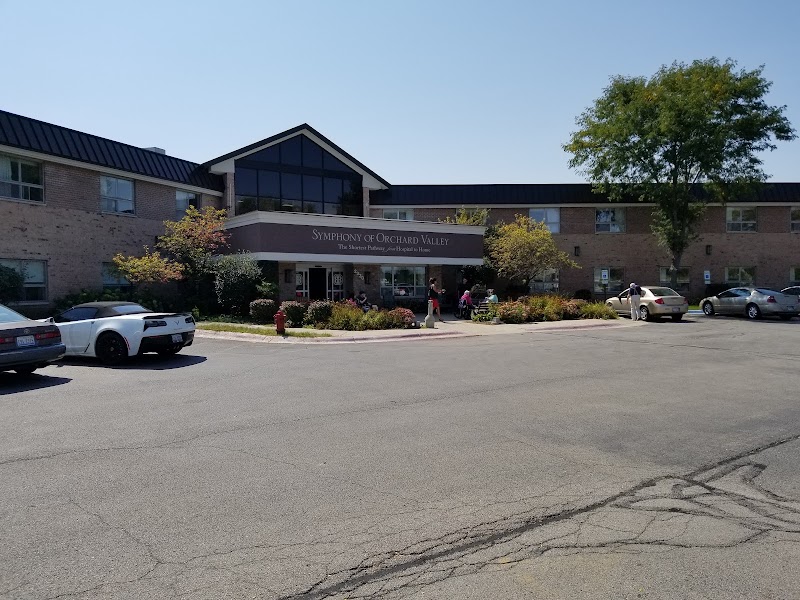
How is Pearl Of Orchard Valley Staffed?

CMS rates PEARL OF ORCHARD VALLEY's staffing level at 1 out of 5 stars, which is much below average compared to other nursing homes. Staff turnover is 61%, which is 14 percentage points above the Illinois average of 46%. High turnover can affect care consistency as new staff learn residents' individual needs.

What Have Inspectors Found at Pearl Of Orchard Valley?

State health inspectors documented 60 deficiencies at PEARL OF ORCHARD VALLEY during 2023 to 2025. These included: 1 Immediate Jeopardy (the most serious level, indicating potential for serious harm or death), 6 that caused actual resident harm, 50 with potential for harm, and 3 minor or isolated issues. Immediate Jeopardy findings are rare and represent the most serious regulatory concerns. They require immediate corrective action.
Who Owns and Operates Pearl Of Orchard Valley?

PEARL OF ORCHARD VALLEY is owned by a for-profit company. For-profit facilities operate as businesses with obligations to shareholders or private owners. The facility is operated by PEARL HEALTHCARE, a chain that manages multiple nursing homes. With 203 certified beds and approximately 133 residents (about 66% occupancy), it is a large facility located in AURORA, Illinois.
How Does Pearl Of Orchard Valley Compare to Other Illinois Nursing Homes?

Compared to the 100 nursing homes in Illinois, PEARL OF ORCHARD VALLEY's overall rating (1 stars) is below the state average of 2.5, staff turnover (61%) is significantly higher than the state average of 46%, and health inspection rating (1 stars) is much below the national benchmark.

What Should Families Ask When Visiting Pearl Of Orchard Valley?

Based on this facility's data, families visiting should ask: "What changes have been made since the serious inspection findings, and how are you preventing similar issues?" "What safeguards and monitoring systems are in place to protect residents from abuse or neglect?" "How do you ensure continuity of care given staff turnover, and what is your staff retention strategy?" "Can you walk me through typical staffing levels on day, evening, and night shifts?" These questions are particularly relevant given the facility's Immediate Jeopardy citations, the substantiated abuse finding on record, the facility's high staff turnover rate, and the below-average staffing rating.

Is Pearl Of Orchard Valley Safe?

Based on CMS inspection data, PEARL OF ORCHARD VALLEY has documented safety concerns. The facility has 1 substantiated abuse finding (meaning confirmed case of resident harm by staff or other residents). Inspectors have issued 1 Immediate Jeopardy citation (the most serious violation level indicating risk of serious injury or death). The facility has a 1-star overall rating and ranks #100 of 100 nursing homes in Illinois. Families considering this facility should ask detailed questions about what corrective actions have been taken since these incidents.

Do Nurses at Pearl Of Orchard Valley Stick Around?

Staff turnover at PEARL OF ORCHARD VALLEY is high. At 61%, the facility is 14 percentage points above the Illinois average of 46%. High turnover means new staff may not know residents' individual needs, medications, or preferences. It can also be disorienting for residents, especially those with dementia who rely on familiar faces. Families should ask: What is causing the turnover? What retention programs are in place? How do you ensure care continuity during staff transitions?

Was Pearl Of Orchard Valley Ever Fined?

PEARL OF ORCHARD VALLEY has been fined $47,752 across 3 penalty actions. The Illinois average is $33,556. While any fine indicates a compliance issue, fines under $50,000 are relatively common and typically reflect isolated problems that were subsequently corrected. Families should ask what specific issues led to these fines and confirm they've been resolved.

Is Pearl Of Orchard Valley on Any Federal Watch List?

PEARL OF ORCHARD VALLEY is not on any federal watch list. The most significant is the Special Focus Facility (SFF) program, which identifies the bottom 1% of nursing homes nationally based on persistent, serious quality problems. Not being on this list means the facility has avoided the pattern of deficiencies that triggers enhanced federal oversight. This is a positive indicator, though families should still review the facility's inspection history directly.