ARC AT BRADLEY

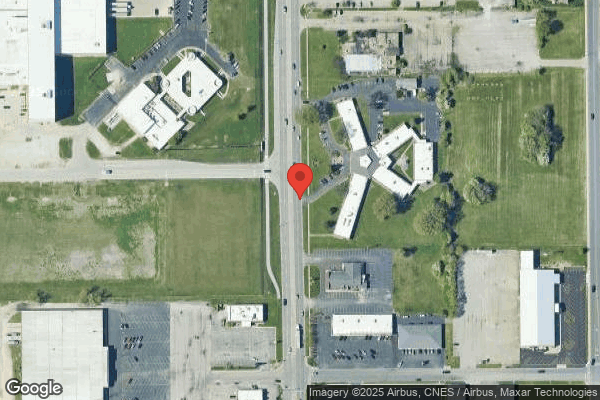
650 NORTH KINZIE AVE, BRADLEY, IL 60915 (815) 933-1666
For profit - Corporation 120 Beds ARCADIA CARE Data: November 2025
Trust Grade
10/100
#438 of 665 in IL
Last Inspection: May 2024

Within standard 12-15 month inspection cycle. Federal law requires annual inspections.

Overview

ARC at Bradley in Bradley, Illinois, has received a Trust Grade of F, indicating significant concerns about the facility's quality of care. Ranking #438 out of 665 nursing homes in Illinois places it in the bottom half, and #4 out of 6 in Kankakee County suggests that only one other local option is better. While the facility is showing improvement, reducing issues from 14 in 2024 to 6 in 2025, there are still serious concerns, including incidents where a resident suffered a fractured leg due to improper transfer techniques and another developed a severe pressure ulcer due to inadequate care. Staffing is a weak point with a rating of 1 out of 5, and while there is more RN coverage than 75% of state facilities, the overall high staff turnover of 56% is concerning. Additionally, the facility has incurred $35,199 in fines, a figure that reflects compliance problems that families should consider when researching care options.

Trust Score
F
10/100
In Illinois
#438/665
Bottom 35%
Safety Record
High Risk
Review needed
Inspections
Getting Better
14 → 6 violations
Staff Stability
⚠ Watch
56% turnover. Above average. Higher turnover means staff may not know residents' routines.
Penalties
⚠ Watch
$35,199 in fines. Higher than 86% of Illinois facilities, suggesting repeated compliance issues.
Skilled Nurses
○ Average
Each resident gets 41 minutes of Registered Nurse (RN) attention daily — about average for Illinois. RNs are the most trained staff who monitor for health changes.
Violations
⚠ Watch
44 deficiencies on record. Higher than average. Multiple issues found across inspections.
★☆☆☆☆
1.0
Overall Rating
★☆☆☆☆
1.0
Staff Levels
★★☆☆☆
2.0
Care Quality
★★☆☆☆
2.0
Inspection Score
Stable
2024: 14 issues
2025: 6 issues

The Good

  • Full Sprinkler Coverage · Fire safety systems throughout facility
  • No fines on record

Facility shows strength in fire safety.

The Bad

1-Star Overall Rating

Below Illinois average (2.5)

Significant quality concerns identified by CMS

Staff Turnover: 56%

Near Illinois avg (46%)

Frequent staff changes - ask about care continuity

Federal Fines: $35,199

Above median ($33,413)

Moderate penalties - review what triggered them

Chain: ARCADIA CARE

Part of a multi-facility chain

Ask about local staffing decisions and management

Staff turnover is elevated (56%)

8 points above Illinois average of 48%

The Ugly 44 deficiencies on record

4 actual harm
Jun 2025 1 deficiency
CONCERN (D) 📢 Someone Reported This

A family member, employee, or ombudsman was alarmed enough to file a formal complaint

Potential for Harm - no one hurt, but risky conditions existed

ADL Care (Tag F0677)

Could have caused harm · This affected 1 resident

Based on observation, interview and record review the facility failed to provide bathing assistance to residents dependent for assistance. This applies to 2 of 4 (R2, R3) residents reviewed for bathi...

Read full inspector narrative →
Based on observation, interview and record review the facility failed to provide bathing assistance to residents dependent for assistance. This applies to 2 of 4 (R2, R3) residents reviewed for bathing in a sample of 4 residents. Findings include: On 6/17/25 at 11:25 AM, R3 stated she had missed getting showers. R3 stated she was supposed to be switched to evening shift for baths. Last week no one could tell her who the shower aid was. R3 stated was then told she was not on the list for her Tuesday showers. During the interview R3 was noted with an unpleasant odor. On 6/17/25 at 11:36 AM, R2 stated she had not gotten her bed bath on Wednesday the prior week. R2 stated she prefers bed baths to showers. R2 stated there is a regular occurrence that she misses her bed bath. She brought the issue up in the last resident council meeting and had spoken to the social worker about her missed bed baths. R2 stated she never refuses a bed baths because she only gets them twice per week and she wants them done. During the interview R2 was noted with an unpleasant body odor. On 6/17/25 at 11:47 AM, V3 CNA (Certified Nursing Assistant) stated residents receive two showers per week and they are documented on the shower sheet and in the electronic medical record. If residents refuse their showers, they must sign the shower sheet to documents the refusal. On 6/17/25 at 02:04 PM, V5 RN (Registered Nurse) stated there is a shower aid that completes residents' showers and shower sheets. Nurses sign the shower sheets to note any skin issues and verify the shower was completed. On 6/17/25 at 02:17 PM, V8 Social Services Director stated both R2 and R3 have brought concerns of missed showers to her attention. V8 stated R3's shower had been switched to the evening shift On 6/17/25 at 02:29 PM, V6 RN stated R3 is compliant with her care and was not aware of R3 declining to be showered. On 6/17/25 at 02:43 PM, V1 Administrator stated residents are showered twice per week. The showers are documented on shower sheets and in the electronic medical record. If a resident misses their bed bath or shower it is made up the next day. If a resident refuses a shower social service should intervene and do education. On 6/17/25 at 03:03 PM, V2 ADON (Assistant Director of Nursing) stated R2's has had missed bed baths that were made up the following day. V2 stated R3's bed baths had been switched to the evening shift and she had not missed any showers. On 6/17/25 at 03:48 PM, V7 CNA (Certified Nursing Assistant) stated residents receive two showers per week and they are documented on the shower sheet and in the electronic medical record. If residents refuse their showers, they must sign the shower sheet to documents the refusal. R2 submitted a grievance form on 3/27/25 stating she had not been bathed for a week. The resident council minutes from 6/12/25 documents R2's complaint of not being bathed on 6/11/25. R3 submitted a grievance form on 3/21/25 stating she had not been showered after requesting a shower. The facility Care Plan item task listing report dated June 17, 2025, shows R2's showers are scheduled on Monday and Wednesday on the PM shift. R3's showers are scheduled Tuesday and Friday on the AM shift. Review of R2's current care plan states she has an ADL (Activity of Daily Living) self-care mobility performance deficit and requires substantial / maximal assistance with bed baths. R2's Shower sheet documentation show she had four documented bed baths in March 2025 on 3/3, 3/19, 3/24 and 3/31. June 2025 R2 had documented bed baths in June 2025 on 6/2, 6/4, and 6/9. The facility did not provide any computer documentation of baths provided to R2 for March or June 2025. R3's current care plan identifies an ADL self-care performance deficit. R3 requires partial to max assist of one staff with bathing and showering as necessary. R3's shower sheets and electronic medical record documentation shows in March 2025 she was showered on 3/13 and was not showered again until 3/28. The facility policy Bathing Shower and Tub Bath dated 10/2024 states the purpose to ensure resident's cleanliness to maintain proper hygiene and dignity. A shower, tub bath or bed / sponge bath will be offered according to resident's preference, no less than once per week or according to the resident's preferred frequency and as needed or requested.
Mar 2025 2 deficiencies 1 Harm
SERIOUS (G) 📢 Someone Reported This

A family member, employee, or ombudsman was alarmed enough to file a formal complaint

Actual Harm - a resident was hurt due to facility failures

Accident Prevention (Tag F0689)

A resident was harmed · This affected 1 resident

**NOTE- TERMS IN BRACKETS HAVE BEEN EDITED TO PROTECT CONFIDENTIALITY** Based on interview and record review, the facility failed to transfer a dependent resident safely by failing to use a mechanical...

Read full inspector narrative →
**NOTE- TERMS IN BRACKETS HAVE BEEN EDITED TO PROTECT CONFIDENTIALITY** Based on interview and record review, the facility failed to transfer a dependent resident safely by failing to use a mechanical lift with two staff assistance for one of four residents (R1) reviewed for accidents. This failure resulted in R1 sustaining an acute nondisplaced proximal tib (tibia)-fib (fibula) fracture. Findings include: The facility's 2/24/2025 Report to the State Survey Agency showed R1 .was observed on his right side Stat Xray done .Upon investigation that included review of clinical records, assessment, hospital documentation, and statements of staff on duty; it was found that resident is a 2 transfer assist This serves as final report. On 03/02/25 at 9:42 AM, R1 stated her fall occurred when the CNA (Certified Nursing Assistant) was trying to put her in the shower chair. R1 stated there was only one CNA assisting her to transfer. R1 stated she fell, and her left leg was hurting. R1 stated the CNA told her Your leg is fine. R1 stated her left leg is broken in two places. On 03/02/25 at 1:33 PM, V2 (Director of Nursing) stated An investigation was done; V13 (CNA) used the wrong transfer technique. V2 stated V13 lifted R1 for the transfer by herself and did not use a mechanical lift. V2 stated the correct transfer technique for R1 is a mechanical lift with two assistance. V2 stated the x-ray came back in the afternoon, and it showed an acute nondisplaced proximal tib-fib fracture. V2 stated V13 knew very well that she should have transferred R1 with a mechanical lift and two assist. V2 stated when residents are not transferred appropriately, they could have a fall with injury to both the patient and the staff, adding in this case, the resident had a fall with an injury. On 03/05/25 at 3:10 PM, V13 stated she was the CNA taking care of R1 when she fell and got injured. V13 stated she was trying to lift R1 without a mechanical lift and with no assistance from another staff member. V13 stated R1 became too heavy, and she lowered her onto the floor. V13 stated R1 was complaining of pain to her legs. V13 stated she had worked with R1 before and knew R1 transferred with a mechanical lift. On 03/04/25 at 9:41 AM, V4 (Nurse Practitioner) stated R1 has a non-displaced fracture to the lower left leg. V4 stated the CNA was transferring R1 into her chair, and she slid and fell. V4 stated R1 is supposed to be transferred by a mechanical lift, with two staff members due to her contractures. V4 stated the fracture was the result of the CNA transferring the resident inappropriately and the fracture could have been prevented if the resident was transferred with a mechanical lift and two staff instead on one staff. R1 was admitted to the facility on [DATE] with diagnoses including multiple sclerosis, lack of coordination, abnormal posture, dysarthria, reduced mobility, chronic obstructive pulmonary disease, major depressive disorder. R1's MDS (Minimum Data Set) dated 02/19/25 showed R1 had moderate cognitive impairment. R1's MDS dated [DATE] showed R1 had impairments to both upper and lower extremities. The same MDS showed R1 was dependent upon staff for chair/bed-to-chair transfers. R1's progress notes dated 02/20/25 at 11:45 AM showed received resident laying in bed, alert and oriented x4. Resident complains of left lower leg pain. NP (Nurse Practitioner) notified and ordered left lower leg and ankle and foot. Progress notes dated 02/20/25 at 6:11 PM Notified NP regarding x-ray result. NP ordered to send out to ED (Emergency Department) for evaluation. POA (Power of Attorney) made aware. Progress notes dated 02/20/25 at 6:49 PM Resident was sent out at (Hospital) ER (Emergency Room) via (Ambulance) for further evaluation and treatment. Management and POA made aware. Progress notes dated 02/20/25 at 9:37 PM Resident came back from (Hospital). (Hospital) ER called and informed this nurse that they did an x-ray, and it was positive for tib-fib fracture and no hip fracture and needs to have an appointment to orthopedics. R1's Radiology Results Report date 02/20/25 at 3:32 PM showed Procedure- left tibia and fibula, two views. Findings- 4 view left tib-fib. No prior study for comparison. Acute nondisplaced proximal tib-fib fracture. Mineralization is decreased with degenerative changes. No radiopaque foreign body. No convincing plain film evidence osteomyelitis. Impression- acute nondisplaced proximal tib-fib fracture. R1's [NAME] Report dated 03/02/25 showed Transferring: Transfer- The resident is totally dependent on 2 staff for transferring. R1's ADL self-care/mobility care plan dated 01/26/24 showed interventions: Chair/bed to chair transfer: My usual performance is dependent. I use a mechanical lift for transfer assist. The facility's Transfers- Manual Gait Belt and Mechanical Lifts Policy (last approved 10/2024) showed Purpose: In order to protect the safety and well-being of the Staff and Residents, and to promote quality care, this facility will use Mechanical lifting devices for the lifting and movement of Residents. Guidelines: 1. Mechanical lifting devices shall be used for any resident needing a two person assist, or who cannot be transferred comfortably and/or safely by normal transfer technique. The facility's Fall Prevention Program policy last approved date 10/2024 showed Purpose: To assure the safety of all residents in the facility, when possible. The program will include measures which determine the individual needs of each resident by assessing the risk of falls and implementation of appropriate interventions to provide necessary supervision and assistive devices are utilized as necessary. Guidelines: Transfer conveyances shall be used to transfer residents in accordance with the plan of care.
CONCERN (D) 📢 Someone Reported This

A family member, employee, or ombudsman was alarmed enough to file a formal complaint

Potential for Harm - no one hurt, but risky conditions existed

Deficiency F0558 (Tag F0558)

Could have caused harm · This affected 1 resident

**NOTE- TERMS IN BRACKETS HAVE BEEN EDITED TO PROTECT CONFIDENTIALITY** Based on interview and record review, the facility failed to ensure a resident was able to get into bed to use his urinal. This ...

Read full inspector narrative →
**NOTE- TERMS IN BRACKETS HAVE BEEN EDITED TO PROTECT CONFIDENTIALITY** Based on interview and record review, the facility failed to ensure a resident was able to get into bed to use his urinal. This applies to 1 of 4 residents (R3) reviewed for incontinence care. Findings include: On 03/04/25 at 1:20 PM, R3 stated on Friday 02/28/25 he had been sitting up in his wheelchair since 11:00 AM. R3 stated at 2:30 PM he was still in the wheelchair in his room. He stated his bed was not working. R3 stated the staff knew his bed was not working before he got out of bed. He stated the staff told him a work order was in place to repair his bed. R3 stated at 2:30 PM he pressed his call light to let his CNA (Certified Nursing Assistant) know that he needed to urinate. His bed still was not working. He stated maintenance came in and tried to repair the bed, but it still did not work. R3 stated the facility called the other maintenance person who was at home. R3 stated he still needed to urinate. R3 stated he was wearing and incontinence brief, but he urinates a lot. R3 stated he wanted to use the urinal and he must lay flat when urinating. R3 stated he can't urinate while in the wheelchair. R3 stated between 5:00-6:00 PM, he urinated on himself. R3 stated the urine was on top of sheets that he placed on the floor, the pad in the wheelchair and his shorts. R3 stated he ate dinner with the urine-soaked clothes on. R3 stated he transfers via mechanical lift. R3 stated he got in the bed between 7:00-7:30 PM. On 03/04/25 at 2:00 PM, V6 (CNA) stated last Friday 02/28/25 around 4:15 PM the housekeeper asked him to help assist with fixing R3's bed. V6 stated It took us about 15 minutes to realize that we could not fix the bed. I told the housekeeper we need maintenance because this an electrical issue with the bed. On 03/05/25 at 9:25 AM, V7 (Maintenance Director) stated on 02/28/25, he received a call after 5:00 PM stating that R3's bed was not working, and he needed to come in. V7 stated the call came after he had already left the building for the day. V7 stated he did not know that R3's bed was not working prior to him leaving for the day. V7 stated a work order was not put in for R3's bed. V7 stated he fixed another bed and brought it to R3's room. V7 stated the whole process took about an hour from the time he came in on call until he was done. On 03/05/25 at 11:50 AM, V8 (CNA) stated she was the CNA for R3 on 02/28/25 from 6 AM-2:00 PM. V8 stated she got R3 out of bed that morning and his bed remote was malfunctioning. V8 stated if you pressed the remote the regular way, it did not work.V8 stated they had to push the remote different ways than normal for it to work. V8 stated she got him out of bed, but did not report that the remote to the bed was not working. V8 stated R3 was up for the rest of the shift. V8 stated I should have reported that the bed was not working when I got him up. On 03/05/25 at 3:18 PM, V12 (CNA) stated she was the CNA for R3 Friday 02/28/25 from 2:00 PM-10 PM. V12 stated that at 2:15 PM, she found out that R3's bed was not working when he told me he needed to use the bathroom. V12 stated that R3 told her that the bed was broken. V12 stated she went to the receptionist and had them to page maintenance. V12 stated R3 really needed to go to the bathroom. He told me two more times that he really needed to use the bathroom. V12 stated R3 was still in his wheelchair for dinner, and he was wet. V12 stated R3 has to urinate while in the bed with the urinal and must be flat. The staff hold the urinal for him. It is impossible for him to urinate in the urinal while he is sitting up. V12 stated the bed was stuck in a very high position and the mechanical lift was not able to go high enough to get R3 on the bed. On 03/05/25 at 3:43 PM V1 (Administrator) stated when equipment is malfunctioning, the staff reports to maintenance. They can go to the front desk and have maintenance paged. V1 stated her expectations are that the staff report broken or malfunctioning equipment immediately. R3 was admitted to the facility on [DATE] with multiple diagnoses, including acute and chronic respiratory failure, need for assistance with personal care, lack of coordination, reduced mobility, morbid obesity with alveolar hypoventilation, diabetes, chronic obstructive pulmonary R3's MDS (Minimum Data Set) dated 01/08/25 showed R3 was cognitively intact. The same MDS showed R3 had impairments to both his lower extremities, required substantial/maximal assistance with toileting hygiene, and was dependent upon staff for transfers. R3's ADL (Activities of Daily Living) care plan revised on 05/31/24 showed Interventions: Chair/bed to chair transfer, my usual performance is dependent-mechanical lift with assist of two between surfaces. Toilet hygiene: my usual performance is substantial/maximal assistance. Toilet transfer: my usual performance is dependent. The facility's Fall Prevention Program policy last approved date 10/2024 showed Standards: Malfunctioning equipment will be immediately reported to maintenance for repair
Feb 2025 2 deficiencies 1 Harm
SERIOUS (G) 📢 Someone Reported This

A family member, employee, or ombudsman was alarmed enough to file a formal complaint

Actual Harm - a resident was hurt due to facility failures

Pressure Ulcer Prevention (Tag F0686)

A resident was harmed · This affected 1 resident

Based on interview and record review, the facility failed to implement pressure ulcer prevention interventions including completing and documenting physician ordered weekly skin assessments and failed...

Read full inspector narrative →
Based on interview and record review, the facility failed to implement pressure ulcer prevention interventions including completing and documenting physician ordered weekly skin assessments and failed to identify and treat a facility-acquired pressure ulcer for one of three residents (R1) reviewed for skin concerns on a sample list of eight. These failures caused R1 to develop a sacral pressure ulcer that was discovered and noted to be unstageable, upon assessment by a wound physician. Findings include: R1's Face Sheet showed his diagnoses included type 2 diabetes, adult failure to thrive, hypertension, blindness in one eye unspecified, left side hemiplegia and hemiparesis, chronic kidney disease, and acquired absence of left leg below the knee. R1's 1/5/2025 MDS (Minimum Data Set) showed he was cognitively intact and he did not have a behavior of rejecting care. R1 was identified as being at risk for developing pressure ulcer / injury. R1 utilized a manual wheelchair for mobility and was occasionally incontinent of urine and stool. R1 did not have any documented MASD (Moisture Associated Skin Damage) or pressure wounds on the 1/5/25 MDS. R1's 2/7/25 nursing progress note from 1:00 PM showed R1 was re-admitted to the facility after a hospital stay. The progress note showed no skin breaks were noted and his skin was warm, dry (normal), skin intact. On 2/20/25 at 1:17 PM, V6 CNA (Certified Nursing Assistant) stated R1 was missing half of one of his legs and he was dependent on staff for assistance. V6 stated R1 would inform staff when he was incontinent and needed assistance. V6 stated she was not aware R1 had any rashes or open wounds. On 2/20/25 at 2:07 PM, V3 ADON (Assistant Director of Nursing) stated resident skin observations are done biweekly on shower days. V3 stated if the physician ordered skin observations, they would be documented on the TAR (Treatment Administration Record) by the nurse. V3 stated there was an order on 2/9/25 documenting R1's scrotal irritation, but no note or any other nursing assessment. V3 stated she had been informed by R1's family member of his scrotal bleeding. V3 stated the Wound Physician (V4) was seeing R1 on 2/11/25 for the scrotal MASD and V4 discovered the unstageable sacral pressure wound. V3 stated towards the last week R1 was in the facility, he was receiving showers every night per family request. V3 stated staff should have completed the scheduled documentation of R1's showers and documented any skin issues. V3 stated staff should have discovered the skin issues before the family did and documented the findings. On 2/20/25 at 3:11 PM, V2 DON (Director of Nursing) stated she was informed of R1's MASD by a night shift nurse. V2 stated she was not informed of any other skin issues, and she was not informed of a sacral wound. V2 stated R1 was dependent on staff for a one person assist with cares. V2 stated nurses were required to document the physician-ordered skin assessment on the TAR every Tuesday. V2 stated a few of R1's assessments had been missed during his stay. V2 stated if staff were doing daily showers, they should have been documented, and when staff perform incontinence care, they should assess the resident's skin. V2 stated R1 had a leg amputation and required the assistance of staff and he was not independent. V2 stated the staff should have seen the sacral wound during his cares and acknowledged the wound was acquired in the facility. V2 stated R1 was not on hospice and she does not know how R1 developed a sacral wound if staff were attending to him. V2 stated pressure wounds can develop from sitting in one spot or not moving, and MASD is from moisture and barrier cream would help prevent that. The wound noted completed by V4 (Wound Physician) on 2/11/25 documented two wounds: Site 1 an unstageable wound (due to necrosis) full thickness of the sacrum. Etiology (cause) documented as pressure, measuring 2 cm x 2cm x 0.1 cm (centimeters). V4 completed a surgical excisional debridement of the sacral wound. Site 2 non pressure wound partial thickness of the scrotum measuring 2.5 cm x 1.5cm x 0.1 cm. Etiology documented as Moisture Associated Skin Damage. On 2/20/25 at 4:17 PM, V4 (Wound Physician) stated in general, MASD occurs from urine, stool or sweat, and barrier cream could possibly have prevented that. V4 stated a pressure wound and MASD could have developed between 2/7/25 and 2/11/25 and stated pressure ulcers develop as result of skin breaking down over a bony prominence and are related to pressure. V4 stated he could not say if staff should have seen the wounds during their cares or if they were even really doing the skin assessments. On 2/20/25 at 5:11 PM, V8 CNA stated she gave R1 a shower on 2/11/25 (the same day R1 was seen by the Wound Physician and the unstageable pressure ulcer was identified). V8 stated R1 had irritation on scrotum. V8 stated she had R1 stand and pivot, she did not note any other skin issues. V8 stated R1 was a daily shower. The shower sheet completed on 2/11/25 by V8 CNA and signed off by V7 RN does not show any documentation of skin issues for R1. On 2/20/25 at 5:16 PM, V7 RN confirmed her signature on R1's shower sheet. V7 stated she did a head-to-toe assessment on 2/11/25 for R1 and did not note any open areas or wounds on R1. V7 also stated that V8 did not report any skin issues for R1. R1's physician orders included weekly skin assessment every Tuesday. Review of R1 TAR (Treatment Administration Record) shows no documentation that physician-ordered skin assessments were done on 12/3/24, 12/20/24, 12/31/24, 1/14/25, and 1/28/25. R1's orders showed MD (Medical Doctor) to be notified of new impairments. Moisture barrier cream to buttocks as needed as preventative; may keep at bedside CNA (Certified Nursing Assistant) may apply. The facility policy Pressure Injury and Skin Condition assessment dated 10/2024 states, residents identified will have a weekly skin assessment by a licensed nurse. Each resident will be observed for skin breakdown daily during care and on assigned bath day by the CNA. Changes shall be promptly reported to the charge nurse who will perform the detailed assessment. Caregivers are responsible for promptly notifying the charge nurse of skin breakdown .
CONCERN (D) 📢 Someone Reported This

A family member, employee, or ombudsman was alarmed enough to file a formal complaint

Potential for Harm - no one hurt, but risky conditions existed

Deficiency F0558 (Tag F0558)

Could have caused harm · This affected 1 resident

Based on observation, interview and record review the facility failed to provide call light access. This applies to 2 of 7 residents (R2, R3) reviewed for call light accessibility in a sample of 8. Fi...

Read full inspector narrative →
Based on observation, interview and record review the facility failed to provide call light access. This applies to 2 of 7 residents (R2, R3) reviewed for call light accessibility in a sample of 8. Findings include: 1.R2 has diagnoses that includes quadriplegia, type 2 diabetes and epilepsy. R2's current care plan interventions include ensure call light is within reach and answer promptly. On 2/19/25 at 4:02 PM, R2 was sitting up in his motorized wheelchair. R2's call light that is activated when he blows into it was located on the left side of his bed near the wall and not in reach of his mouth. R2 stated the call light is never left near him when he is up in his wheelchair. R2 stated he must go out in the hall and look for assistance if he needs anything. On 2/20/25 at 1:17 PM, V7 CNA (Certified Nursing Assistant) stated all residents should have a call light available to them to notify staff if they need assistance. 2. R3 has diagnoses that includes hemiplegia and hemiparesis following cerebral infarction, carcinoma in situ of anus and anal canal, hypertension and dysphagia. R3's current care plan interventions includes ensure call light is within reach and answer promptly. On 2/19/25 at 4:33 PM, R3 was lying in bed and her call light was tied to a purple stuffed duck on her nightstand. R3 stated her call light is always left on her nightstand. R3 stated sometimes she needs help but doesn't have the call light to call for staff. On 2/19/25 at 4:40 PM, V5 RN (Registered Nurse) was called to R3's room to observe her call light that was out of reach. V5 stated R3 was alert and could make her needs known. V5 stated if R3 needs assistance she alerts her roommate (R8) will call for staff assistance for her. When V5 attempted to place R3's call light within her reach, it could not reach due to the string being tied in a knot. On 2/19/25 at 4:43 PM, R8's MDS (Minimum Data Set) dated 12/26/24 shows she is cognitively intact. R8 stated she looks out for R3. R8 stated she puts the call light on for R3 when she does not have access to her call light. On 2/20/25 at 3:11 PM, V2 DON (Director of Nursing) stated both R2 and R3 are alert and able to make their needs known. Their call lights should be within their reach. V2 added that it is not any residents' responsibility to call for staff assistance for their roommates. The facility policy Call Light dated 10/2024 states all residents that have the ability to use a call light shall have the nurse call light system available at all times and within easy accessibility to the resident at the bedside or other reasonable accessible location.
Feb 2025 1 deficiency
CONCERN (D) 📢 Someone Reported This

A family member, employee, or ombudsman was alarmed enough to file a formal complaint

Potential for Harm - no one hurt, but risky conditions existed

ADL Care (Tag F0677)

Could have caused harm · This affected 1 resident

**NOTE- TERMS IN BRACKETS HAVE BEEN EDITED TO PROTECT CONFIDENTIALITY** Based on observation, interview and record review, the facility failed to provide shower assistance to a resident. This applies ...

Read full inspector narrative →
**NOTE- TERMS IN BRACKETS HAVE BEEN EDITED TO PROTECT CONFIDENTIALITY** Based on observation, interview and record review, the facility failed to provide shower assistance to a resident. This applies to 1 of 3 (R1) residents reviewed for shower assistance in the sample of 11. Findings include: R1 was admitted to the facility on [DATE]. R1's admission MDS (minimum data set) dated January 30, 2025 showed that the resident was cognitively intact and required total assistance from the staff with shower. The facility's care plan task report showed that R1 was scheduled to receive shower/bathing on Tuesdays and Fridays during the morning. The facility presented only one shower sheet dated January 27, 2025 signed by V10 (CNA/certified Nursing Assistant). On February 4, 2025 at 3:30 PM, V10 stated that she did not provide a shower to R1 on January 27, 2025 but instead provided a bed bath. On February 4, 2025 at 12:22 PM, R1 was in bed, alert and oriented. In the presence of V2 (Director of Nursing), R1 stated that she had not received any shower since admission at the facility. During this observation, R1's hair was observed greasy. V2 informed R1 that she will be given shower that day. At 3:40 PM, in the presence of V2, R1 stated that she still had not have a shower. R1 stated that when she was admitted at the facility, she (R1) was told by the nursing staff that she will receive shower twice a week, but she was never asked for her preferred shower day and time. According to R1, I asked everybody including the nurses every day, when can I get a shower, but no body assisted me to get one. R1 stated that her hair is greasy, and she can smell herself. V2 acknowledged that R1's hair was greasy. During this interview, R1 denied receiving any bed bath at the facility including on January 27, 2025. R1's active care plan showed that the resident has ADL (activities of daily living) self-care deficit. The same care plan had multiple interventions including provision of maximum assistance with bathing. The facility's bathing-shower policy and procedure dated October 2024 showed under purpose, To ensure resident's cleanliness to maintain proper hygiene and dignity. The same policy under guidelines showed, A shower, tub bath or bed/sponge bath will be offered according to resident's preference, no less than once a week or according to the resident's preferred frequency and as needed or requested. On February 5, 2025 at 2:38 PM, V2 stated that though the facility's policy showed to offer residents shower no less than once per week, if the resident prefers and/or request to have a shower twice or more a week, the shower preference and request should be honored. According to V2, the nursing staff are expected to provide ADL assistance including showers to residents, to ensure and maintain their hygiene and grooming.
Jul 2024 1 deficiency
CONCERN (D) 📢 Someone Reported This

A family member, employee, or ombudsman was alarmed enough to file a formal complaint

Potential for Harm - no one hurt, but risky conditions existed

ADL Care (Tag F0677)

Could have caused harm · This affected 1 resident

**NOTE- TERMS IN BRACKETS HAVE BEEN EDITED TO PROTECT CONFIDENTIALITY** Based on observation, interview, and record review, the facility failed to provide routine shower/bed bath care for residents wh...

Read full inspector narrative →
**NOTE- TERMS IN BRACKETS HAVE BEEN EDITED TO PROTECT CONFIDENTIALITY** Based on observation, interview, and record review, the facility failed to provide routine shower/bed bath care for residents who require extensive assistance for activities of daily living (ADL) care. This applies to 2 of 3 residents (R1, R2) reviewed for ADL care in the sample of 3. The findings include: 1. Face sheet shows R1 has multiple medical diagnoses which include acute and chronic respiratory failure, unspecified whether with hypoxia or hypercapnia, chronic kidney disease, chronic diastolic (congestive) heart failure, morbid (severe) obesity with alveolar hypoventilation, encounter for attention for tracheostomy, atelectasis, morbid (severe) obesity due to excess calories, type 2 diabetes mellitus without complications, other asthma, need for assistance with personal care, other lack of coordination, other reduced mobility, abnormal posture, chronic obstructive pulmonary disease. R1's Minimum Data Set (MDS) dated [DATE], shows R1 is alert and oriented and requires substantial/maximal assistance for shower or bathing. On July 1, 2024, at 12:09 PM, R1 stated he prefers to have a bed bath rather than a shower due to his tracheostomy. R1 received a bed bath on Tuesday (June 25), Wednesday (June 26), and on Friday (June 28). Prior to last week, his last bed bath was on a Monday (June 3), afterwards, R1 had not had bed bath from June 4 through June 24, 2024. R1's bed bath was scheduled on night shift or the 3rd shift. According to R1, the staff does not wake him to give him the shower or bed bath. On June 18, 2024, R1 stated he spoke with V2 (Director of Nursing/DON) requesting for his bed bath schedule to be change to evening shift. R1 did not receive a shower or bath from June 18 to June 24, 2024. On June 23rd, R1 requested at 6 AM a bed bath because his family was going to visit him at 11 AM. A staff member informed R1 she was waiting for someone to help her. R1 informed staff he could help by turning and repositioning himself on the bed during the process, however, he still did not receive a bed bath day. R1 was so upset he told the nurse he would call Public Health because of their failure to give him a bed bath. On July 1, 2024, at 1:05 PM, V2 (Director of Nursing/DON) stated she had a meeting with R1 requesting to change shift schedule from night to evening shift because R1 was still sleeping during the bed bath time. V2 recalled after meeting there were staff who were about to give R1 a bath. The facility staff documented in the shower sheet when they provided shower or bed bath. On July 1, 2024, at 3:28 PM, V3 (Assistant Director of Nursing/ADON) stated, The residents receive either shower or bed bath at least once a week and as needed. Some residents receive it every Monday, Wednesday, and Friday because that's how they wanted it. V3 said the facility follows resident's request or preference. They need shower or bed bath for personal hygiene and to prevent any potential infection especially for those who are bigger in size because of the extra folds in their skin, and to promote comfort. On 7/2/24 at 11:28 AM, V3 said R1's bathing schedule was every Monday, Wednesday, and Friday on the night shift, and it was changed on the PM shift on 6/21/24 as per R1's request. According to V3, the staff are to document in the shower sheet every time they give shower and/or bed bath. The facility started implementing the shower sheet documentation on May 1, 2024. On July 2, 2024, at 9:39 AM, V4 (Certified Nursing Assistant/CNA), recalled giving R1 a bed bath but she was unable to recall the exact dates. V4 said when she gives a shower or a bed bath, she documents it on the shower sheet, and she submits it to the nurse as a proof of giving a bed bath or a shower to her assigned residents. On July 2, 2024, at 9:47 AM, V5 (CNA) stated R1 is scheduled every Monday, Wednesday, and Friday. The last time V5 gave R1 a bed bath was on Friday (June 28), and she didn't know she had to document on the shower sheet. V5 added she had given R1 bed bath before but could not recall exact date. On July 2, 2024, at 1:32 PM, V7 (CNA) stated R1 is always cooperative with the ADL care, and R1 never refuses it. R1's updated care plan shows R1 has an ADL self-care/mobility performance (functional abilities) deficit related to limited mobility, lack of coordination, reduced mobility, need for assistance with personal care, abnormal posture. This same care plan shows multiple interventions which include substantial/maximal assistance for shower/bathing. Surveyor requested a copy of R1's shower sheets from June 4 to June 30 and it showed R1 received bed bath on June 25 and June 26, 2024. There was no documentation of R1 refusing any shower or bath for the month of June, 2024. 2. Face sheet shows R2 is 91 years-old who has multiple medical diagnoses which include rheumatoid arthritis, type 2 diabetes mellitus, adult failure to thrive and other lack of coordination. R2's MDS dated [DATE], shows R2 is alert and oriented and requires substantial/maximal assistance for shower or bathing. On July 1, 2024, at 11:40 AM, R2 was resting in bed, watching TV, alert and oriented. R2 was unkempt and disheveled with facial hair growth and overgrown fingernails. R2's nailbeds had yellow and brownish discoloration and brown/black substances underneath nails. R2 said he needs assistance with shaving and nail care. R2 stated he was not getting regular shower or bed bath. R2 prefers to get a shower over bed bath because he has arthritis. R2 felt some relief whenever the warm water hits his body during shower time, but unfortunately, he was not getting it regularly or frequently. On July 5, 2024, at 1:25 PM, V6 (CNA) stated she's familiar with R2. V5 usually was the one who gives R2 showers. V5 had never given R2 a bed bath, because R2 prefers to shower over bad bath. V5 documents in the shower sheet each time V5 provides a shower to R2. R2 receives 2 showers per week in the morning shift. V6 said sometimes R2 is cooperative and sometimes R2 refuses. When R2 refuses, the staff notifies the nurse on duty and documents it in the shower sheet. Facility presented a copy of R2's shower sheets for the whole month of June 2024, and it shows he only received on June 9, 12, and 18. There was no indication he received shaving and nail care. There was no documentation of shower or bed bath refusal. Facility's Shower and Bed Bath Policy and Procedures with review date of January 2018, shows the purpose of this is to ensure resident's cleanliness, to maintain proper hygiene and dignity.
May 2024 13 deficiencies
CONCERN (D)

Potential for Harm - no one hurt, but risky conditions existed

Deficiency F0558 (Tag F0558)

Could have caused harm · This affected 1 resident

**NOTE- TERMS IN BRACKETS HAVE BEEN EDITED TO PROTECT CONFIDENTIALITY** Based on observation, interview and Record review the facility failed to provide a comfortable wheelchair for one (R65) resident...

Read full inspector narrative →
**NOTE- TERMS IN BRACKETS HAVE BEEN EDITED TO PROTECT CONFIDENTIALITY** Based on observation, interview and Record review the facility failed to provide a comfortable wheelchair for one (R65) resident reviewed for mobility in a sample of 25 residents. Findings include: R65 was admitted to the facility on [DATE]. R65's MDS (Minimum Data Set) dated 3/11/24 shows he is cognitively intact with a BIMS ((Brief Interview for Mental Status) score of 15. R65's MDS shows the use of a wheelchair for mobility. R65's diagnoses include morbid obesity, abnormal posture, lack of coordination, reduced mobility, osteoarthritis, and chronic gout. R65's physician orders include may participate in outings. R65's current care plan includes ADL (Activities of Daily Living) / mobility performance deficit that may fluctuate with activity throughout the day related to limited mobility, musculoskeletal impairment, abnormal posture and lack of coordination. No documentation found in R65's EMR (Electronic Medical Record) the reason for his refusal to use the facility provided wheelchair. Review of R65's EMR show he was discharged from physical therapy on 1/15/2024. The facility did not provide a policy on resident required equipment. On 5/14/24 at 11:55 AM, R65 was observed gowned and lying in bed. R65 stated he did not have a wheelchair to get out of bed. R65 stated the wheelchair the facility previously provided to him was too small and was too painful to use. R65 stated the facility does not have a wheelchair that is comfortable for his size and body type. On 5/16/24 at 10:46 AM, V17 Director of Rehab) stated R65 was offered a wheelchair and he refused it because it was too low for him. V17 stated there are wheelchairs that are a little higher. V17 stated if R65 required a higher sitting wheelchair it would have to be customed ordered. V17 stated therapy would need to coordinate with the Nurse Practitioner and the wheelchair company to be approved. V17 stated the process to obtain a custom wheelchair was never started. On 5/16/24 at 4:40PM, V16 Facility Consultant stated she did not have documentation as to why R65 refused to utilize the wheelchair previously provided.
CONCERN (D)

Potential for Harm - no one hurt, but risky conditions existed

Deficiency F0604 (Tag F0604)

Could have caused harm · This affected 1 resident

Based on observation, interview, and record review the facility failed to ensure that 1 resident (R50) was free from physical restraints imposed for staff's convenience in a sample of 25. Findings in...

Read full inspector narrative →
Based on observation, interview, and record review the facility failed to ensure that 1 resident (R50) was free from physical restraints imposed for staff's convenience in a sample of 25. Findings include: On 05/15/24 at 9:13 AM, R50 was not in his room. V4 (nurse) said that R50 was not in his room because he tries to stand up all the time, so we bring him to the nurses' station. At 9:15 AM V50 was observed at the nurses' station and no staff were present at the time. R50 was observed sitting at a table and his chair was pushed up against the table with the wheels locked. R50 was observed rocking in his chair attempting to stand up. V4 said that the table is in front of R50 to keep him from standing up. V4 said that R50 always tries to get up and the table keeps him from getting up. V4 said R50 can actually walk but he will wonder in the hallway, and he is wobbly and unstable, and this is why we keep him at the table. V4 said they usually put R50 at the nurse's station to keep him from standing up and wandering. On 05/16/24 at 11:14 AM V1 (Administrator) said that the staff should not be restraining residents, there is a fall prevention care plan and we can't use restraints for fall precautions. V1 said R50 should not have been put behind a table to restrain his movement. A review of R50's electronic health record did not show an order to restrain R50's movement or mobility at any time, nor did R50's care plan show any fall preventions with interventions of restraining R50's mobility/movement. The facility's Restraints policy dated 5/2018 showed, physical restraints may include but are not limited to placing a resident in a chair that prevents him from rising. convenience is defined as any action taken by the facility to control a residents' behavior or manage a resident's behavior with a lesser amount of effort by the facility and not in the resident's best interest. Freedom of movement means any change in place or position for the body or any part of the body that the person is physically able to control.
CONCERN (D)

Potential for Harm - no one hurt, but risky conditions existed

Deficiency F0676 (Tag F0676)

Could have caused harm · This affected 1 resident

**NOTE- TERMS IN BRACKETS HAVE BEEN EDITED TO PROTECT CONFIDENTIALITY** Based on observation, interview, and record review the facility failed to provide the necessary care and services to maintain th...

Read full inspector narrative →
**NOTE- TERMS IN BRACKETS HAVE BEEN EDITED TO PROTECT CONFIDENTIALITY** Based on observation, interview, and record review the facility failed to provide the necessary care and services to maintain their ability to carry out the activities of daily living with regards to communication for 2 Spanish speaking only residents (R45 & R77) in a sample of 25. Findings include: On 05/14/24 at 1:30 PM R45 and R77 were observed in their shared room. V14 (Certified Nurse's Assistant) said that R45 and R77 are Spanish speaking, and she can't communicate with them because she does not know Spanish. R45 was asked if she needed anything and R45 replied in Spanish. V14 said I can't communicate with her. Sometimes I don't know what she is saying. V14 then asked R77 if she needed anything and R77 replied in Spanish. V14 then said, I don't know what she says. I don't know if they need anything right now and I don't know what to do. R77 continued speaking and V14 just left the room without even acknowledging her. 1. R45 electronic health record review showed that R45 is a Spanish speaking only [AGE] year old female admitted to the facility on [DATE]. R45's 1/29/23 MDS (minimum data set) Sect b. showed - understands verbal content 2. Sometimes. R45's 3/7/24 care plan showed that R45 is not able to communicate needs due to poor cognition. Words are nonsensical and repetitive at times. Interventions included, staff may ask for a Spanish speaking employee or a family member or use a translation service when speaking to R45. R45 care plan showed under activities, I have had a decline in health resulting in a significant change. I have been diagnosed with a multiple list of conditions and diagnoses; my memory is poor. I rarely speak, my main language is Spanish. Interventions included offer communication board if she prefers to communicate with other non- speaking Spanish Staff. On 05/16/24 at 10:52 AM V1 (Administrator) said that R45 should have a communication board if it is in her care plan. V1 said that it could be difficult to meet her needs without a Spanish speaking person/interpreter or communication board for her 24 hour care needs. 2. R77 electronic health record showed that R77 is an [AGE] year old Spanish speaking female admitted to the facility on [DATE]. R77's 4/23/24 social service social history showed under #10 Preferred language - answer Spanish, #11. Do you need or want an interpreter to communicate with doctor or healthcare staff? - answer Yes. #12. How often do you need to have someone help you when you read instructions, pamphlets, other written material? - answer Always. R77's 4/23/24 MDS CAA (care area assessment) worksheet 4. communication showed speaks different language - do you need or want interpreter? - 1. Yes. Language.: Do you need or want an interpreter to communicate with a doctor or health care staff? -answer Yes. On 05/16/24 at 10:30 AM V1 (Administrator) said that R77 should have Spanish speaking staff and she should have an interpreter. The V16 (facility's consultant) reported that the facility does not have a communication policy.
CONCERN (D)

Potential for Harm - no one hurt, but risky conditions existed

ADL Care (Tag F0677)

Could have caused harm · This affected 1 resident

**NOTE- TERMS IN BRACKETS HAVE BEEN EDITED TO PROTECT CONFIDENTIALITY** Based on observation, interview, and record review, the facility failed to provide timely ADL (Activities of Daily Living) to 3 ...

Read full inspector narrative →
**NOTE- TERMS IN BRACKETS HAVE BEEN EDITED TO PROTECT CONFIDENTIALITY** Based on observation, interview, and record review, the facility failed to provide timely ADL (Activities of Daily Living) to 3 dependent residents (R9, R29 & R32) in a sample of 25. 1. On 05/14/24 at 12:41 PM, R29 was observed with long jagged nails and facial hair on her chin, about 1/2 inch long. On 05/15/24 at 12:14 PM R29 was observed with long jagged nails and facial hairs on her chin. R29's 5/21/24 care plan showed R29 had an ADL self-care/mobility performance deficit that may fluctuate with activity throughout the day. R29's 3/20/24 MDS (minimum data set) section GG showed under personal hygiene that R29 was dependent for personal hygiene. On 05/16/24 at 10:44 AM V1 (Administrator) said that R29 should not have had facial hair and her nails should have been maintained for dignity, hygiene and self-feeling good and safety. V1 said R29's jagged nails could cause her to scratch herself or someone else. 2. On 05/14/24 01:45 PM R32 was observed with facial hair on both sides of her mouth up to 2 inches in length. R32 was asked how she felt about the facial hair and her reply was that she felt neglected. R32 said that staff does not want to help her shower when she requests it. R32 said that she smells, and that she doesn't get showers when she asks. R32's 2/13/24 MDS (minimum data set) section GG showed under personal hygiene, needs supervision or touching assistance and under Bathing needs partial moderate assistance. R32's 5/7/24 care plan showed R32 has and an ADL self-care/mobility performance deficit that may fluctuate with activity throughout the day. R32's electronic health records under Task showed for the last 30 days for Shower/Bathe - No documentation, and for the last 30 days of, Bathing Tuesday and Friday PM showed only 4 days of documentation (5/3/24, 5/7/24 & 5/10/24). On 05/16/24 at 11:02 AM, V1 (Administrator) said that R32 should receive a shower or bed bath as needed or according to her care plan. The facility's Morning Care policy dated 01/2018 showed that the purpose is to promote comfort, cleanliness and dignity. The facility's Nail Care policy dated 01/2018 showed observe condition of resident's nails during each time of bathing. Note cleanliness, length, uneven edges. 3. R9 is a [AGE] year-old female admitted on [DATE] with moderately impaired cognition as per the minimum data set (MDS) dated [DATE]. MDS also indicates that R9 requires substantial/maximal assistance on toilet hygiene. On 5/14/24 at 11:30 AM, the writer observed R9's room with intense urine/feces smell. In response to this writer's request V8 (Certified Nursing Assistant/CNA) checked on R9 and found with thick watery bowel movement with stool smeared all around perinium up to below her abdominal fold. On 5/14/24 V8 stated that she checked R9 at 6:15 AM and they are supposed to check on residents for incontinent care every two hours. On 5/15/24 at 10:24 AM, V2 (Director of Nursing/ DON) stated that incontinent care should be provided every two hours and as needed. A review of R9's bowel and bladder incontinent care plan document: Check and change x 3 times every shift and as required. Wash, rinse, and dry perineum. The facility presented Incontinence Care policy with effective date 03/2024 document: Purpose: To prevent excoriation and skin breakdown, discomfort and maintain dignity. Guidelines: Incontinent resident will be checked periodically in accordance with the assessed incontinent episodes or approximately every two hours and provided perineal and genital care after each episode.
CONCERN (D)

Potential for Harm - no one hurt, but risky conditions existed

Pressure Ulcer Prevention (Tag F0686)

Could have caused harm · This affected 1 resident

Based on observation, interview and record review the facility failed to provide wound care as physician ordered. This applies to 1 of 6 residents (R74) reviewed for pressure ulcers. Findings include:...

Read full inspector narrative →
Based on observation, interview and record review the facility failed to provide wound care as physician ordered. This applies to 1 of 6 residents (R74) reviewed for pressure ulcers. Findings include: R74 has diagnoses that include metabolic encephalopathy, lack of coordination, reduced mobility, malignant neoplasm of prostate and hypertension. R74's has a physician order to cleanse area to coccyx with wound cleanser, pat dry, apply calcium alginate and secure with border gauze daily. R74's current care plan states the R74 has an actual skin impairment of pressure ulcer to sacrum related to fragile skin with interventions that include treatment as ordered. On 5/16/24 at 10:54 AM R74 stated there is a wound on his backside. R74 stated he did not know how he developed the wound. R74 stated his dressing had only been changed once during the week. R74 did not remember what day it was changed. On 5/16/24 at 12:01 PM, V5 ADON (Assistant Director of Nursing) stated she did wound rounds on 5/14/24 for R74. V5 ADON stated a small opening was discovered on R74's sacrum on 5/12/24. V5 stated at that time the open area measured 0.5 cm x 0.5 cm (centimeters). V5 stated the order was for boarder gauze to be changed daily and as needed. V5 stated R74 was seen by the wound Doctor on 5/14/24 and the wound measured 0.8cm x 0.6cm x 0.1 cm. On 5/16/24 at 12:20 PM V5 ADON was observed changing the dressing for R74. The soiled dressing that was removed was dated 5/14. The dressing had a scant amount of brown drainage. R74's wound was a pea sized area with white slough with perimeter of redness approximately 1 inch. V5 stated it was the same dressing she had applied. V5 stated the nursing staff were supposed to have changed R74's dressing on 5/15/24. The facility policy Pressure Injury and Skin Condition assessment dated 11/2023 states dressings will be checked daily for placement, cleanliness and signs of infection.
CONCERN (D)

Potential for Harm - no one hurt, but risky conditions existed

Deficiency F0688 (Tag F0688)

Could have caused harm · This affected 1 resident

**NOTE- TERMS IN BRACKETS HAVE BEEN EDITED TO PROTECT CONFIDENTIALITY** Based on observation, interview and record review, the facility failed to provide a restorative range of motion program to a res...

Read full inspector narrative →
**NOTE- TERMS IN BRACKETS HAVE BEEN EDITED TO PROTECT CONFIDENTIALITY** Based on observation, interview and record review, the facility failed to provide a restorative range of motion program to a resident with limited range of motion. This applies to 1 of 1 resident (R33) reviewed for limited range of motion in a sample of 25. The findings include: On 05/14/24 at 02:23 PM R33 was in bed, awake, alert, and oriented x 1-2. R33's left leg was contracted. R33 complained of pain to his left thigh. On 05/16/24 at 12:14 PM V17 (Certified Occupational Therapy Aide/Director of Rehab) said R33 received occupational therapy and physical therapy beginning on 04/16/24. V17 said occupational therapy ended 05/02/04 and physical therapy ended 05/06/24. V17 said when R33 was discharged from therapy, the therapy department referred him to restorative nursing for lower extremity range of motion. On 05/16/24 at 01:39 PM V5 (Assistant Director of Nursing) said during the facility's morning meeting, therapy discusses who is coming off therapy. V5 said the facility does not have a restorative nurse, and the MDS (Minimum Data Set) department picks up on restorative. V5 said the floor nurses are responsible for putting the order in for residents to have PROM (Passive Range of Motion) or any other recommendations made from therapy. V5 said we have a restorative CNA (Certified Nursing Assistant) and she does the ROM (Range of Motion) and PROM on residents. V5 said V2 (Director of Nursing) tells the CNA the residents that needs to be seen. V5 said I do not have any documentation that R33 receives PROM. I was not aware that he had a referral for PROM from the rehab department. I am aware that his left upper extremity and left lower extremity is contracted. If we receive any recommendations, we are supposed to put the order in and follow through with the order. I do not see an order or task for PROM to R33's lower extremities. If recommendations were given for PROM, we should be doing PROM to his bilateral lower extremities. If he is not receiving PROM the contractures could get worse. I expect for the staff to follow the recommendations and complete the PROM. R33's Face Sheet showed R33 had diagnoses of unspecified sequelae of cerebral infarction, lack of coordination, abnormal posture, repeated falls, cognitive communication deficit, diabetes, ataxia, hemiplegia, and hemiparesis following cerebral infarction affecting left non dominant side, contusion of left hand, low back pain, benign prostatic hyperplasia without lower urinary tract symptoms, and contusion of left hip. R33's MDS dated [DATE] showed R33 had an impairment to both upper extremities and both lower extremities. R33's Progress Notes dated 04/29/24 showed R33 was seen by the Nurse Practitioner and the note stated R33 is at high risk for further decline. A progress note dated 04/25/24 showed R33 was seen by the same Nurse Practitioner and the note stated R33 was asked if he is open to performing stretching and ROM in his room. He stated he would be willing to try but only in his bed. R33's Restorative Observation dated 04/16/24 showed the IDT believes the resident would benefit from PROM restorative programs. The same observation showed R33 had paralysis/paresis of right upper extremity, right lower extremity, left upper extremity, left lower extremity. The observation stated R33 has an existing contracture or limited ROM. The facility's Rehab department referral date 05/06/24 recommended PROM to both lower extremities in supine or side lying position in available planes of motion as tolerated once per day three to five times per week as tolerated. The facility's Restorative Nursing Program Policy effective 11/2023 stated: Purpose- to promote each resident's ability to maintain or regain the highest degree of independence as safely as possible. Guidelines: *each resident will be screened for restorative nursing upon admission, annually, quarterly, and with any significant change in function. *appropriateness for a restorative program will be determined by the interdisciplinary team as needed and/or may be determined as a continuation of care following a course of physical, occupational and or speech therapy. *a licensed nurse supervises the restorative programs. *identify residents who currently have splints/braces or previous range of motion programs or those that have actual or potential limitations with ROM and/or pain. *if a resident is determined to be appropriate for a restorative program, no physician's order is needed. *range of motion programs may include active assisted range of motion, active range of motion, or passive range of motion.
CONCERN (E)

Potential for Harm - no one hurt, but risky conditions existed

Resident Rights (Tag F0550)

Could have caused harm · This affected multiple residents

**NOTE- TERMS IN BRACKETS HAVE BEEN EDITED TO PROTECT CONFIDENTIALITY** 5. On 05/14/24 at 11:26 AM, R17 was being provided wound care to her lower abdominal area. V5 Assistant Director of Nursing (ADO...

Read full inspector narrative →
**NOTE- TERMS IN BRACKETS HAVE BEEN EDITED TO PROTECT CONFIDENTIALITY** 5. On 05/14/24 at 11:26 AM, R17 was being provided wound care to her lower abdominal area. V5 Assistant Director of Nursing (ADON/Wound Nurse) attempted to close the blinds but there were several missing panels, therefore leaving the blinds open. V5 then provided wound care to R17, leaving R17 exposed from her abdomen to her upper thighs. R17's room was right next to the sidewalk that leads to the patio and gazebo, all viewable from the window. On 05/16/24 at 10:29 AM V1 (Administrator) said that the nurse should have put something up on the window to prevent people from seeing in for privacy purposes. The facility's Dignity policy dated 2/2018 showed, the facility shall promote care for resident in a manner and in an environment that maintains or enhances each resident's dignity and respect in full recognition of his or her individuality. Based on observation, interview, and record review, the facility failed to provide a dignified dining experience to residents who require feeding assistance. The facility also failed to provide dignity in wound care by not closing windows during wound care. This applies to 5 of 8 residents (R5, R17, R18, R22, and R24) reviewed for dignified resident care in a sample of 25. The Findings include: 1. R299 is a [AGE] year-old female with severe cognitive impairment as per the Minimum Data Set (MDS) dated [DATE]. The MDS also documents that R299 requires partial/moderate assistance with eating. 2. R18 is a [AGE] year-old male with cognition intact as per the MDS dated [DATE] and requiring substantial/maximal assistance for eating. 3. R22 is a [AGE] year-old male with severely impaired cognition as per the MDS dated [DATE] and with an admitting diagnosis, including hemiplegia affecting the right dominant side secondary to cerebral infarction. 4. R24 is a [AGE] year-old female with severely impaired cognition as per the MDS dated [DATE] and requiring partial/moderate assistance for eating. On 5/15/24 at 12:25 PM, observed seven residents (R299, R18, R22, R24, R48, R27, and R62) around a dining table during lunch. Observed R299, R18, R22, and R48 were not fed while V11 (MDS coordinator) was feeding R48, V12 (Certified Nursing Assistant/CNA) was feeding R27, and V13 (CNA) was feeding R62. On 5/15/24 at 12:30 PM, R18 stated, - I want to eat. I am hungry. On 5/15/24 at 12:30 PM, V11 stated, We are on the way to feed remaining residents. On 5/16/24 at 10:05 AM, V5 (Assistant Director of Nursing/ADON) stated, The residents should have a dignified feeding experience. They should have called for more staff to feed those not fed and watch feeding other residents.
CONCERN (E)

Potential for Harm - no one hurt, but risky conditions existed

Deficiency F0679 (Tag F0679)

Could have caused harm · This affected multiple residents

**NOTE- TERMS IN BRACKETS HAVE BEEN EDITED TO PROTECT CONFIDENTIALITY** 4. R44 has diagnoses that includes aphasia, type 2 diabetes, hemiplegia, depression, pseudobulbar affect and epilepsy, R44's cur...

Read full inspector narrative →
**NOTE- TERMS IN BRACKETS HAVE BEEN EDITED TO PROTECT CONFIDENTIALITY** 4. R44 has diagnoses that includes aphasia, type 2 diabetes, hemiplegia, depression, pseudobulbar affect and epilepsy, R44's current activities care plan focus states activities to visit one to one 2-3 times weekly as tolerated. Review of R44's activities program does not show any 1 to 1 activity provided. Based on observation, interview, and record review the facility failed to provide activities for 4 residents (R17, R29, R50 & R44) based on their care plans in a sample of 25. 1. on [DATE] at 11:44 AM, R17 was observed in her room. V15 (R17's son) was present at the time. V15 said that the facility does not provide activities for his mother. V15 said Someone used to come around and spend time with her, but she died. Now no one comes by. V15 said that he is at the facility everyday A review of R17's electronic health records showed no 1:1 activity for the last 30 days. R17's [DATE] care plan showed activities care need with interventions including, express satisfaction with level and type of involvement in leisure activities during one on one visits 3-4xweekly. 2. During tours of the facility on [DATE], [DATE] & [DATE], R29 was never observed in any 1:1 activity. A review of R29's last 30 days of 1:1 activity program showed, No documentation. R29's [DATE] Care plan showed a care need for activities with interventions including, will accept/participate in 1:1 visits, 2 times per week, and the facility will provide 2 1:1 visits weekly. On [DATE] at 10:50 AM V1 (Administrator) said that R17 should have been receiving daily activities. 3. On [DATE] at 9:15 AM, R50 was observed sitting at a table next to the nurse's station with a word puzzle in front of him and no writing utensil present. R50 was observed with his eyes closed and rocking in his chair attempting to get up. V4 (Nurse) said that R50 could not do the puzzle and removed it. There were no stimuli like music or a TV on at the time of the observation. R50's electronic health record showed that R50 is a [AGE] year old male admitted to the facility on [DATE] with diagnoses including severe dementia and severly impaired cognition. On [DATE] a review of R50's last 30 days of 1:1 activity program showed, No Documentation. R50's [DATE] care plan showed a care need for activities with interventions including, listen to music, watch television, and keep up with the news. [DATE] 11:06 AM V1 (Administrator) said that R50 should be provided daily activities that he can do according to his abilities. V1 said that R50 should not have been given a word puzzle because it was not suitable for him. V1 said that R50 should be given things according to his care plan that he enjoys, like music. On [DATE] at 2:33 PM V3 (Activities Director) provided the facility's One on One List (no date), R17, R29, & R50) were on the list. V3 said that the list was for the bed bound residents and the facility only scheduled one on one activities once a week but has not been able to provide one on one services for the last 2 to 3 months. The facility's Activities Program policy dated 11/2019 showed, the purpose is to provide an ongoing program of activities designed to appeal to the residents' interest and to enhance his or her highest practical level of physical mental and psychosocial well-being. Guidelines show identify and involve each resident in an ongoing program of activities that is designed to appeal to his or her interest and needs. The staff shall record residents' activity attendance and participation on a daily basis.
CONCERN (E)

Potential for Harm - no one hurt, but risky conditions existed

Accident Prevention (Tag F0689)

Could have caused harm · This affected multiple residents

Based on observation, interview, and record review the facility failed to identify environmental hazards that poses risks for potential accidents. This applies to 6 of 6 residents (R6, R8, R28, R33, R...

Read full inspector narrative →
Based on observation, interview, and record review the facility failed to identify environmental hazards that poses risks for potential accidents. This applies to 6 of 6 residents (R6, R8, R28, R33, R39, and R61) reviewed for accidents/hazards in the sample of 25. The findings include: 1. On 05/14/24 at 12:20 PM R39 was not in the room. A portable oxygen tank (cylinder) was stored in R39's closet without a cart or stand. On 05/15/24 at 3:11 PM the portable oxygen tank (cylinder) was still in the closet without a storage cart or stand. On 05/16/24 at 10:44 AM the portable oxygen tank continued to be stored in R39's closet without a storage cart or stand. On 05/14/24 at 2:55 PM R39 said he does not use oxygen and does not know why the oxygen is stored in his closet. On 05/16/24 at 11:51 AM V5 (Assistant Director of Nursing) said the portable oxygen (cylinder) tanks are stored in the front oxygen room. The portable oxygen is stored in a crate that is individualized for each tank. No oxygen should be stored in a closet without being secured. V5 said secured means that the oxygen is in a holder. V5 said no oxygen should be stored in a residents room that does not have an order for oxygen and does not use oxygen. V5 said if unsecured oxygen falls on the floor, it can explode, and someone could get hurt. A fire can start and everyone in the area could be affected. V5 said the expectation is that all oxygen tanks are stored in the storage closet. R39's Face Sheet showed R39 had diagnoses of lack of coordination, abnormal posture, reduced mobility, chronic respiratory failure with hypoxia, diabetes mellitus with diabetic ophthalmic complication, diabetes with diabetic peripheral angiopathy without gangrene, asthma, angina pectoris, morbid obesity due to excess calories, chronic obstructive pulmonary disease, pulmonary fibrosis, rheumatoid arthritis, benign prostatic hyperplasia without lower urinary tract symptoms, bipolar disorder, depression, anxiety, obstructive sleep apnea, and hypertension. R39's MDS (Minimum Data Set) dated 02/23/24 showed R39 was cognitively intact. R39's Physician Orders showed no orders for oxygen. 2. On 05/14/24 at 12:19 PM R61 roommate of R39 was observed in his room where the oxygen was stored. R61's Face Sheet showed R61 had diagnoses of diabetes with diabetic neuropathy, unsteadiness on feet, obesity, atherosclerotic heart disease of native coronary artery without angina pectoris, osteoarthritis, left hip pain, chronic kidney disease, benign prostatic hyperplasia without lower urinary tract symptoms, and abnormalities of gait and mobility. 3. On 05/14/24 at 12:14 PM R33 was in his room, next door to where the oxygen was stored in the closet. R33's Face Sheet showed R33 had diagnoses of unspecified sequelae of cerebral infarction, lack of coordination, abnormal posture, repeated falls, cognitive communication deficit, diabetes, ataxia, hemiplegia, and hemiparesis following cerebral infarction affecting left non dominant side, contusion of left hand, low back pain, benign prostatic hyperplasia without lower urinary tract symptoms, and contusion of left hip. 4. On 05/14/24 at 12:12 PM R6 was in his room, next door to where the oxygen was stored in the closet. R6's Face Sheet showed R6 had diagnoses of dysphagia, lack of coordination, abnormal posture, reduced mobility, acute respiratory failure without hypoxia, pressure ulcer of sacral region, bipolar disorder, pleural effusion, unspecified intestinal obstruction, vein compression, spondylolysis, sciatica, benign prostatic hyperplasia with lower urinary tract symptoms, wedge compression fracture of T11-T12 vertebra, and wedge compression fracture of first lumbar vertebra. 5. On 05/14/24 at 12:08 PM R8 was in her room, across the hall from where the oxygen was stored in the closet. R8's Face Sheet showed R8 had diagnoses of lobar pneumonia, lack of coordination, reduced mobility, abnormal posture, morbid obesity, diabetes, acute respiratory failure with hypoxia, anemia, major depressive disorder, essential tremor, paroxysmal atrial fibrillation, pressure ulcer of right buttock, and weakness. 6. On 05/14/24 at 12:38 PM R28 was in the dining room. R28's room was across the hall from where the oxygen was stored in the closet. R28's Face Sheet showed R28 had diagnoses of pulmonary embolism, dysphagia, unsteadiness on feet, lack of coordination, abnormalities of gait and mobility, protein calorie malnutrition, chronic kidney disease, weakness, dementia, acute myocardial infarction, right shoulder pain, chest pain syncope and collapse, and displaced fracture of upper end of right humerus. The facility's Storage Policy for oxygen cylinders showed: *oxygen cylinders must maintain a minimum distance of 20 ft from combustibles (5 ft is room is sprinkled) or be placed within an enclosed cabinet having a fire rating of at least a half hour. *cylinders must be secured in racks or by chains.
CONCERN (E)

Potential for Harm - no one hurt, but risky conditions existed

Respiratory Care (Tag F0695)

Could have caused harm · This affected multiple residents

**NOTE- TERMS IN BRACKETS HAVE BEEN EDITED TO PROTECT CONFIDENTIALITY** 3. On 05/14/24 at 1:55 PM, R38's nasal cannula, BIPAP mask, & nebulizer mask was not covered, and her 02 humidifier container wa...

Read full inspector narrative →
**NOTE- TERMS IN BRACKETS HAVE BEEN EDITED TO PROTECT CONFIDENTIALITY** 3. On 05/14/24 at 1:55 PM, R38's nasal cannula, BIPAP mask, & nebulizer mask was not covered, and her 02 humidifier container was dated 4/21/24, (23 days later). R38's 5/6/24 orders showed change out, date, and label O2 humidifier every Sunday. On 05/16/24 at 11:37 AM V1 (Administrator) said that respiratory equipment, BIPAP masks, nasal cannulas, and nebulizer masks should be in plastic bags for infection control purposes. The facility's policy, Oxygen & Respiratory Equipment - Changing/Cleaning (date 1/2019) showed, the purpose is to minimize the risk of infection transmission. Nasal cannulas, handheld nebulizers, and BIPAP masks should be stored in a clean plastic bag with a zip lock or drawstring, marked with a date the setup was changed. Oxygen humidifiers shall be changed weekly or as needed and will be dated when changed. 4. R5 is a [AGE] year-old female with mild cognitive impairment as per the Minimum Data Set (MDS) dated [DATE]. R5 is admitted with an admitting diagnosis including acute and chronic acute respiratory failure, chronic obstructive pulmonary disease, and obstructive sleep apnea. On 5/14/24 at 11:42 AM, R5 was observed in her room with nasal cannula on. Observed a nebulizer mask, not contained in a plastic/zip lock bag, hanging from the bedside drawer and C-PAP mask on the table without containing. On 5/15/24 at 10:24 AM, V5 (Assistant Director of Nursing/ADON) stated, The respiratory equipment including nebulizer mask and C-Pap mask should be stored in a plastic zip lock bag. Based on observation, interview, and record review, the facility failed to contain, replace, and date respiratory equipment. This applies to 4 of 4 residents (R5, R11, R15, R38) reviewed for respiratory equipment in a sample of 25. The findings include: 1. On 5/15/24 at 10:45 AM, during initial tour, surveyor went to R11's room. R11 was not in his room. On R11's end table, his face mask to his AVAPS (Average Volume Assured Pressure Support) machine was not dated or contained in a plastic bag. R11's POS (Physician Order Sheet) shows the following order: AVAPS: When sleeping maximum pressure 30 PS Min/Max 10/15 EPAP Min/Max 10/15 Rate: 20 Tidal Volume: 600 Insp. Time 0.88 2 liters oxygen. 2. On 5/15/24 at 11:15 AM, R15 was not in his room. His concentrator was left on. R15's oxygen tubing was not dated. R15's nasal cannula was uncontained and left on his recliner. R15's POS shows the following order: Oxygen per Nasal Cannula at 2 Liters/Minute continuous every shift related to unspecified chronic bronchitis.
CONCERN (E)

Potential for Harm - no one hurt, but risky conditions existed

Deficiency F0725 (Tag F0725)

Could have caused harm · This affected multiple residents

**NOTE- TERMS IN BRACKETS HAVE BEEN EDITED TO PROTECT CONFIDENTIALITY** Based on observation, interview and record review the facility failed to provide adequate staffing to meet the care needs of res...

Read full inspector narrative →
**NOTE- TERMS IN BRACKETS HAVE BEEN EDITED TO PROTECT CONFIDENTIALITY** Based on observation, interview and record review the facility failed to provide adequate staffing to meet the care needs of residents. Staffing was insufficient to provide residents with assistance in Activities of Daily Living, a dignified dining experience and answering of call lights. This applies to 11 residents (R5, R9, R16, R18, R22, R24, R29, R32, R38, R46, R51) reviewed for staffing concerns in a sample of 25. Findings include: On 5/14/24 at 9:45 AM, a strong stench of urine was noted upon entry into the facility. On 5/15/24 at 02:08 PM, during the Resident council meeting 1. R51 stated there are only four C.N.As (Certified Nursing Assistant) for the entire facility at nights. R51 stated staffing for the facility is terrible nights and weekends. R51 stated they hear residents calling out for help every night and weekends. 2. R38 stated there are only four C.N.A at nights and on weekends and two nurses at night. R38 stated staffing is short on weekends. R38 stated staff see her at the end of the shift like she is an afterthought. R38 stated she did not like that the facility smelled of urine but did not think anything could be done about incontinent residents. 3. R16 stated there is not enough help for the residents. R16 stated it takes staff too long provide him assistance. 4. R46 stated the facility smells because residents aren't receiving incontinence care. On 5/16/24 at 11:02 AM, V19 C.N.A stated her residents don't appear to have received catheter care when she is off. On 5/16/24 at 11:50 AM, V20 C.N.A. stated there have been mornings she has come in to find residents soaked in urine and soiled with stool. V20 stated staffing is short when agency staff leave early or don't show up. Sometimes the staff is not replaced. On 5/16/24 01:52 PM, V18 C.N.A / Staffing Scheduler stated the C.N.A at night has 19 residents each. V18 stated that is not a lot of residents because they are just supervising. The night C.N.As don't do cares at night they just watch the residents and do not provide incontinence care. Night shift C.N.As only have to get up three residents each morning. V18 stated she has had staff complain they need more staff. V18 stated staff have complained to her that residents are super saturated with urine and have not been changed. V18 stated the complaints are usually on weekends behind agency staff. On 05/16/24 at 2:18 PM, V5 ADON (Assistant Director of Nursing) stated night shift staff are expected to reposition and provide incontinence care to all residents that require it every two hours. V5 stated even residents that are independent should be checked on every two hours. 10. On 05/14/24 at 12:41 PM, R29 was observed with long jagged nails and facial hair on her chin, about 1/2 inch long. On 05/15/24 at 12:14 PM R29 was observed with long jagged nails and facial hairs on her chin. R29's 5/21/24 care plan showed R29 had an ADL self-care/mobility performance deficit that may fluctuate with activity throughout the day. R29's 3/20/24 MDS (minimum data set) section GG showed under personal hygiene that R29 was dependent for personal hygiene. On 05/16/24 at 10:44 AM V1 (Administrator) said that R29 should not have had facial hair and her nails should have been maintained for dignity, hygiene and self-feeling good and safety. V1 said R29's jagged nails could cause her to scratch herself or someone else. 11. On 05/14/24 01:45 PM R32 was observed with facial hair on both sides of her mouth up to 2 inches in length. R32 was asked how she felt about the facial hair and her reply was that she felt neglected. R32 said that staff does not want to help her shower when she requests it. R32 said that she smells, and that she doesn't get showers when she asks. R32's 2/13/24 MDS (minimum data set) section GG showed under personal hygiene, needs supervision or touching assistance and under Bathing needs partial moderate assistance. R32's 5/7/24 care plan showed R32 has and an ADL self-care/mobility performance deficit that may fluctuate with activity throughout the day. R32's electronic health records under Task showed for the last 30 days for Shower/Bathe - No documentation, and for the last 30 days of, Bathing Tuesday and Friday PM showed only 4 days of documentation (5/3/24, 5/7/24 & 5/10/24). On 05/16/24 at 11:02 AM, V1 (Administrator) said that R32 should receive a shower or bed bath as needed or according to her care plan. The facility's Morning Care policy dated 01/2018 showed that the purpose is to promote comfort, cleanliness and dignity. The facility's Nail Care policy dated 01/2018 showed observe condition of resident's nails during each time of bathing. Note cleanliness, length, uneven edges. 5. R299 is a [AGE] year-old female with severe cognitive impairment as per the Minimum Data Set (MDS) dated [DATE]. The MDS also documents that R299 requires partial/moderate assistance with eating. 6. R18 is a [AGE] year-old male with cognition intact as per the MDS dated [DATE] and requiring substantial/maximal assistance for eating. 7. R22 is a [AGE] year-old male with severely impaired cognition as per the MDS dated [DATE] and with an admitting diagnosis, including hemiplegia affecting the right dominant side secondary to cerebral infarction. 8. R24 is a [AGE] year-old female with severely impaired cognition as per the MDS dated [DATE] and requiring partial/moderate assistance for eating. On 5/15/24 at 12:25 PM, observed seven residents (R299, R18, R22, R24, R48, R27, and R62) around a dining table during lunch. Observed R299, R18, R22, and R48 were not fed while V11 (MDS coordinator) was feeding R48, V12 (Certified Nursing Assistant/CNA) was feeding R27, and V13 (CNA) was feeding R62. On 5/15/24 at 12:30 PM, R18 stated, - I want to eat. I am hungry. On 5/15/24 at 12:30 PM, V11 stated, We are on the way to feed remaining residents. On 5/16/24 at 10:05 AM, V5 (Assistant Director of Nursing/ADON) stated, The residents should have a dignified feeding experience. They should have called for more staff to feed those not fed and watch feeding other residents. 9. R9 is a [AGE] year-old female admitted on [DATE] with moderately impaired cognition as per the minimum data set (MDS) dated [DATE]. MDS also indicates that R9 requires substantial/maximal assistance on toilet hygiene. On 5/14/24 at 11:30 AM, the writer observed R9's room with intense urine/feces smell. In response to this writer's request V8 (Certified Nursing Assistant/CNA) checked on R9 and found with thick watery bowel movement with stool smeared all around perinium up to below her abdominal fold. On 5/14/24 V8 stated that she checked R9 at 6:15 AM and they are supposed to check on residents for incontinent care every two hours. On 5/15/24 at 10:24 AM, V2 (Director of Nursing/ DON) stated that incontinent care should be provided every two hours and as needed. A review of R9's bowel and bladder incontinent care plan document: Check and change x 3 times every shift and as required. Wash, rinse, and dry perineum.
CONCERN (E)

Potential for Harm - no one hurt, but risky conditions existed

Infection Control (Tag F0880)

Could have caused harm · This affected multiple residents

4. On R17 05/14/24 at 12:01pm, R17 was receiving wound care to her left lower abdominal area. V5 Assistant Director of Nursing (ADON/wound nurse) was providing the wound care. V5 cleaned the wound, re...

Read full inspector narrative →
4. On R17 05/14/24 at 12:01pm, R17 was receiving wound care to her left lower abdominal area. V5 Assistant Director of Nursing (ADON/wound nurse) was providing the wound care. V5 cleaned the wound, removed her gloves, put on clean gloves, and then applied a medicated blue sheet and a boarder gauze with her uncleaned gloved hands. V5 then repositioned the resident's personal items with her dirty gloved hands, and then removed her gloves and gown. On 05/16/24 at 10:29 AM, V1 (Administrator) said that the nurse should have cleaned her hands after cleaning the wound and before putting on new gloves for infection control. The facility's Hand Hygiene/Handwashing policy dated 3/2023 showed, when to perform hygiene: if hands will be moving from contaminated body site to a clean body site, before glove placement and after glove removal. Based on observation, interview, and record review, the facility failed to: wear appropriate PPE (Personal Protective Equipment) when going into an isolation room, monitor and track residents who were on isolation, obtain physician orders for isolation, develop care plans for isolation, and perform hand hygiene during wound care. This applies to 4 of 4 residents (R17, R21, R31, R62) reviewed for infections in a sample of 25. The findings include: On 5/15/24 at 11:24 AM, V5 (Registered Nurse/Assistant Director of Nursing/Infection Preventionist) stated, I work full time here. I started in August in 2023. The facility's last annual survey was in April 2023. I don't have a separate logbook of residents who were on isolation since then. I didn't know we were supposed to log those. Surveyor asked V5 who was on isolation currently. She stated that R62 was the only resident on isolation. When asked who were the residents that were on isolation for the past couple of months, V5 could only remember two other residents-R21 and R31 because she never created any logs for residents were on isolation precautions. 1. On 5/15/24 at 11:15 AM, R62 was sitting in his reclined chair outside of his room. V7 (Housekeeper) was mopping R62's floors in his room. She was not wearing gown and gloves when cleaning his room. On 5/15/24 at 11:30 AM, V5 stated, (R62) has ESBL (Extended Spectrum Beta Lactamase) in the urine. He can come out of his room as long as his catheter is contained and he's not urinating all over. But (V7) should have followed the guidelines and worn the appropriate PPE. (R62) has ESBL in the urine, which is contact precautions. (V7) should have worn gowns and gloves before entering that room. What if there is urine on the bed or floor? She could have come in contact with it. R62's lab results report dated 4/5/24 show that he tested positive for ESBL. R62's progress notes document the following: On 4/4/24 at 1:19 PM, This resident's urine is positive for ESBL. Nurse Practitioner ordered IV (Intravenous) Ertapenem q 24 hours for 1 week via midline access. Notified brother of (R62) and gave verbal consent via phone to insert a midline access. Placed an order with the lab company. On 5/4/2024 at 11:11AM, Received resident UA (Urinalysis) C&S (Culture & Specimen) results with positive for ESBL. This nurse telephoned resident (Medical Doctor) and discussed resident's results. Received telephone order to give resident Amoxicillin 875 mg PO for 14 days, then repeat UA C&S, refer to Infectious Disease MD Dx Recurrent ESBL in the urine. This nurse notified (R62's) brother. DON (Director of Nursing) notified. Review of R62's POS (Physician Order Sheet) shows there is no order for isolation and contact precautions and no care plans. 2. On 5/15/24 at 11:40 AM, V5 stated, (R31) had ESBL in the hospital. He was readmitted to us with that diagnosis. The doctor put him on Ertapenem 500 MG (Milligrams) for 12 days. I don't understand why there's nothing mentioned in his progress notes about his isolation or the ESBL. The admitting nurse didn't document anything that he was on contact precautions or had ESBL. I remember I got the signs out for contact precautions and put in on his door. He was in isolation. There are no orders for the isolation and there is no care plan. I don't know what happened. I don't have a log of resident infections or isolations. R31's Transfer form from hospital dated 3/11/24 documents: Isolation type: contact. Isolation precautions--ESBL. Facility's March 2024 POS shows no orders for contact isolation for ESBL. R31's McGeer's criteria dated 3/11/24 shows Ertapenem 500 mg daily x 12 days--complicated UTI (Urinary Tract Infection), ESBL. R31's progress notes show that on 3/4/24, His left side nephrostomy tube is leaking upon assessment. Notified doctor and ordered to send to hospital. On 3/11/24, (R31) was readmitted back to facility. Nothing was mentioned in the progress notes about ESBL or contact precautions. R31's infection charting notes do not mention anything about ESBL. R31's care plans didn't document anything about the ESBL or isolation. 3. R21's transfer report dated 4/9/24 from the hospital shows he had MRSA (Methicillin Resistant Staphylococcus Aureus) and ESBL in the urine. Progress notes show he went to the hospital for a schedule procedure on 4/8/24. Nursing notes document the following: On 3/29/23 at 10:00 PM-Received culture result from lab. Positive for ESBL to right flank wound. Ordered Bactrim DS twice a day x 7 days. Referral to ID (Infectious Disease). (R21) placed on contact isolation. POA (Power of Attorney) update. Will continue to monitor. On 4/9/24 at 5:10 PM, (R21) returned from the hospital. Vitals stable. No new order. R21's POS for March 2024 and April 2024 do not show any isolation orders for MRSA and ESBL. R21's care plans do not document anything regarding isolation, MRSA, and ESBL V5 confirmed that R21 did not have any isolation orders or care plans developed. Facility's policy titled Infection Prevention and Control Program (3/2024) shows 6. The program provides for the recording of each suspected infection and surveillance activities as they relate to individual resident infections. A log is maintained of suspected and actual infections on a day to day basis. 15. All facility personnel should adhere to the Infection Control Program in the performance of their daily assignments. 18. Contact precautions in addition to standard precautions will be initiated as specified in the specific isolation policy. Facility's policy titled Infection Precaution Guidelines (3/2024) shows: It is the policy of this facility to, when necessary, prevent the transmission of infections within the facility through the use of Isolation Precautions. The 2007 Centers for Disease Control and Prevention (CDC) Guidelines for Isolation Precautions will be utilized in this facility with some modifications. 3. Contact Precautions: In addition to Standard Precautions, use Contact Precautions for residents known or suspected to be infected with microorganisms that can be easily transmitted by direct or indirect contact, such as handling environmental surfaces or resident care items. All personal protective equipment (disposable isolation gowns, mask, gloves, etc) should be used once and discarded in either trash or used linen receptacle before you leave the room. Facility's policy titled Infection Surveillance, Tracking and QA Reporting (11/2023) shows: Complete infection tracking log for all residents with an infection . Facility's policy titled Care Plan Coordinator (2/16/24) shows Complete care plan on admission, quarterly, and as needed for reach resident according to regulatory time frames. Ensures completeness and thoroughness of documentation. Responsible in formulating and revising care plans and assists disciplines. Ensures that resident's present/potential problems are identified and prioritized; realistic goals are established and nursing intervention is appropriate.
CONCERN (E)

Potential for Harm - no one hurt, but risky conditions existed

Antibiotic Stewardship (Tag F0881)

Could have caused harm · This affected multiple residents

Based on interview and record review, the facility failed to utilize a standardized tool to determine the necessity of antibiotics prescribed to residents. This applies to 6 of 6 residents (R11, R25, ...

Read full inspector narrative →
Based on interview and record review, the facility failed to utilize a standardized tool to determine the necessity of antibiotics prescribed to residents. This applies to 6 of 6 residents (R11, R25, R38, R47, R58, R60) reviewed for antibiotics in sample of 25. The findings include: 1. R11's POS (Physician Order Sheet) shows Amoxcillin-Potassium Clavulanate Tablet 875-125 MG (Milligrams): 1 tablet by mouth every 12 hours for infection for 7 days with an order date of 8/3/23. The August Monthly Infection Log shows the following for R11: Infection site: skin (ssti) left lower leg; Onsite date of 7/27/23; Signs/Symptoms: Left lower leg swelling erythema (+) drainage. Lab/Diagnostic Results Wound Culture/ MRSA (Methicillin-resistant Staphylococcus aureus) and VRE (Vancomycin Resistant Enterococci). R11 did not have a McGeer's criteria form in the infection control binder or uploaded into his electronic medical record. 2. R25's POS shows Ciprofloxacin HCL 500 MG: Give one tablet by mouth every 12 hours for UTI (Urinary Tract Infection) for 5 days with an order date of 9/7/23. The September Monthly Infection Log shows the following for R25: Infection site--UTI, Onset date: 9/7/23, Sign/symptoms: Change in mental status, tea colored urine, lag/diagnostic results--urine culture + nitrates. R25 did not have a McGeer's criteria form in the infection control binder or uploaded into her electronic medical record. 3. R38's POS shows Ciprofloxacin HCL Tablet 500 MG: Give 1 tablet by mouth one time a day for UTI/Infection for 5 days with an order date of 8/4/23. The August Monthly Infection Log shows the following for R38: Infection site--UTI, noncatheter, Onset date: 7/31/23; Signs/symptoms: Dysuria, lab results--urinalysis E.coli >100,000. R38 did not have a McGeer's criteria form in the infection control binder or uploaded into her electronic medical record. 4. R47's POS shows an order date of 7/11/23 with the following order: Moxifloxacin HCL Ophthalmic Solution 0.5% --Instill 1 drop in both eyes 3 times a day for eye infection secondary to MRSA for 7 days until finished. Apply to both eyes. Keep order active until eye infection is resolved. The July 2023 Antibiotic Stewardship log shows a start date of 7/12/23 for Moxifloxacin HCL Ophthalmic Solution 0.5% and end date of 719/23; Agent--Routine, order for antibiotic. R47 did not have a McGeer's criteria form in the infection control binder or uploaded into his electronic medical record. 5. R58's POS shows Ciprofloxacin HCL tablet 500 MG--Give 1 tablet by mouth every 24 hours for infection for 5 days with an order date of 3/27/24. The March Monthly Infection Log shows: Infection site--urinalysis, Facility acquired--no mcgreer's criteria, Symptom onset date 3/37/24, Symptoms: Burning and itching, Culture results--urinalysis/culture. R58 did not have a McGeer's criteria form in the infection control binder or uploaded into her electronic medical record. 6. R60's POS shows Doxycycline Monohydrate Oral capsule 100MG--1 capsule my mouth two times a day for infection for 1 day and give 1 capsule by mouth one time a day for infection for 7 days with an order date of 2/12/24. The February Monthly Infection Log shows: Infection site--skin, Facility acquired, Symptom onset: 2/12/24, Signs/symptoms: Red irritated lump under armpit, no culture done. R60 did not have a McGeer's criteria form in the infection control binder or uploaded into his electronic medical record. On 5/15/24 at 11:24 AM, V5 (Registered Nurse/Assistant Director of Nursing/Infection Preventionist) stated, I work full time here. I started in August in 2023. Corporate reminded me that the nurses were supposed to fill it out, but they were not doing it. It's both the nurse and my responsibility to do the McGeer's criteria. We need to do the McGeer's criteria because we want to make sure the residents are not getting the wrong antibiotics. They don't need too much antibiotics and we don't want them to get resistance. We have to wait for the lab results first and then administer the antibiotics. I can't find the antibiotic log sheets for October and November 2023. I'm not sure what happened to them. Facility's policy titled Infection Prevention and Control Program (3/2024) shows 15. All facility personnel should adhere to the Infection Control Program in the performance of their daily assignments. Facility's policy title Antibiotic/Antimicrobial Stewardship Program-Mission Statement and Guidelines (11/2023) shows: 5. Tracking-Monitor at least one process measure of antibiotic use and at least one outcome from antibiotic use. This facility utilizes the McGeer's Criteria for determining if an infection meets criteria for treatment with an antibiotic. Facility's policy titled Infection Surveillance, Tracking and QA Reporting (11/2023) shows: Infection tracking includes but is not limited to: Review documentation of clinical signs and symptoms to determine if McGeer's criteria for infection were met and antibiotic use is appropriate.
Nov 2023 1 deficiency 1 Harm
SERIOUS (G) 📢 Someone Reported This

A family member, employee, or ombudsman was alarmed enough to file a formal complaint

Actual Harm - a resident was hurt due to facility failures

Quality of Care (Tag F0684)

A resident was harmed · This affected 1 resident

**NOTE- TERMS IN BRACKETS HAVE BEEN EDITED TO PROTECT CONFIDENTIALITY** Based on observation, interview and record review, the facility neglected to monitor a resident's change in condition, follow th...

Read full inspector narrative →
**NOTE- TERMS IN BRACKETS HAVE BEEN EDITED TO PROTECT CONFIDENTIALITY** Based on observation, interview and record review, the facility neglected to monitor a resident's change in condition, follow the orders to monitor a resident's vital signs and blood pressure as ordered and failed to notify the advanced practice nurse of signs and symptoms of a stroke. This failure resulted in a delay of treatment for R1 and causing a hemorrhagic stroke and right-sided weakness. This applies to 1 of 3 residents (R1) reviewed for facility response to change in condition and treatment in a sample of 3. The findings include: R1 is a [AGE] year-old male admitted on [DATE] having a mild cognitive impairment as per the Minimum Data Set (MDS) dated [DATE]. On 11/07/23 at 10:15 AM, V8 (Hospital Registered Nurse) stated, On 10/31/23, R1 said to multiple staff at multiple times to send him to ER (Emergency Room) as he was experiencing right side numbness and tingling. But they don't let him for whatever reason. R1 said he began to tell people to send him to the hospital on [DATE] at around 9-10 AM. He was sent to our ER on [DATE] with a right-side weakness and facial droop. He had a Hemorrhagic stroke as per CT (Computerized Tomography) scan. On 11/2/23 at 12:40 PM, V9 (Hospital [NAME] President of Nursing) stated, R1 was transferred to another hospital as we don't have any neurosurgeon available with our hospital. On 11/2/23 at 5:45 PM, R1 was observed in the neurology unit of the second hospital. R1 was observed on his bed, with his right sided weakness. R1 was unable to lift his right arm or right leg. On 11/2/23 at 5:45 PM, R1 stated, I know my body, and I knew something was going wrong on Tuesday, 10/31/23. I was so scared as I had numbness and tingling in my right arm. I told my nurse to send me to hospital right away. My nurse was V5 and said 'No' to my request. On 11/2/23 at 5:50 PM, V10 (Hospital Registered Nurse) stated, I just received R1 from neuro ICU (Intensive Care Unit) to regular neuro floor. R1 had a thrombectomy done due to his stroke, and his right side is weak. On 11/2/23 at 1:45 PM, V5 (R1's nurse on 10/31/23 Day Shift) stated, On 10/31/23, R1 was complaining of right arm tingling/numbness. I took his vitals, and his blood pressure (BP) was elevated at 177/102. I notified the nurse practitioner about his elevated blood pressure, who ordered Metoprolol and Hydralazine. On 11/2/23 at 11:00 AM, V6 (Nurse Practitioner/NP) stated, One of the Physical therapists called me saying that R1 was not feeling well. I assessed him, and he said he was not feeling well after breakfast. He was feeling dizzy. He was afebrile not complaining of chest pain. His BP was elevated at 172/109. When I checked his medication profile, there were no BP medications on his medication list. So, I ordered metoprolol 50 mg daily and Hydrochlorothiazide 25 mg. I was not notified of his right-side tingling. I would have ordered a CT if I knew he had right-side tingling along with elevated blood pressure. They should have notified the provider if R1 continued to have numbness and tingling after blood pressure medication was given. On 11/2/23 at 1:45 PM, V5 added, Maybe I didn't mention R1's right arm tingling/numbness to NP because I was worried too much about his blood pressure. I endorsed to the night nurse to monitor him as he was given two blood pressure medications (new to R1) due to his elevated BP. Record review on progress note and vitals record indicates that R1's vital signs and BP were not monitored or documented during the night shift of 10-31-2023. On 11/2/23 at 1:45 PM, V12 (R1's agency CNA on 10/31/23 night shift) stated. I am not supposed to do vitals unless the nurse tells me to take vitals. The nurse on duty that night was an agency nurse, V13. V12 stated V13 never requested to have R1's vital signs and blood pressure monitored. V13 was not available for interview during the investigation. V12 added, nurses are the ones who usually take vitals and V12 was unsure if V13 monitored R1's blood pressure and vital signs. On 11/2/23 at 10:25 AM, V11 (Registered Nurse for R1 on 11/1/23 AM shift) stated, I worked yesterday, and I was the one who transferred R1 to the hospital at around 6:20 AM. My CNA (Certified Nursing Assistant) notified me that R1 was found on the floor while I was getting the shift report at around 6:15 AM. He was bleeding from his right eyebrow. His BP was high at 157/95. He was not on any BP medications and was very independent. R1 told me that he also reported to the night nurse about his right arm numbness/tingling. On 11/2/23 at 10:25 AM, V11 added, The night agency nurse (V13 was unavailable for the investigation) endorsed me to monitor R1 due to his increased confusion. She (V13) never mentioned to me about his right-side numbness. R1 had slurred speech and elevated BP, and his arm strength was not symmetrical when I assessed him after the fall. He was telling me something was happening to him and sending him out to the hospital. R1 is a resident who never calls for unnecessary things. If he complains about something, there is something serious, and the staff should listen to him closely. When I called the hospital for follow-up, the nurse told me that R1 was admitted there for hemorrhagic stroke. Record review on Emergency Department Physician Report dated 11/01/23 (Page 5/15) documents that R1 arrived in ER with right-sided facial droop, right upper and lower extremity weakness, right-sided sensory deficit, mild dysarthria, and aphasia concerning acute stroke. The ER physician report documented that the patient is outside of the window for TNK administration (clot buster). CT of the head demonstrated acute intraparenchymal hemorrhage in the left globus pallidus. On 11/7/23 at 12:00 PM, V2 (Director of Nursing / DON) stated, I was here on 10/31, and I knew about R1's elevated BP. I wasn't notified of his numbness and tingling even after his blood pressure came down. The nurses should have notified the Physician/NP If he still felt numbness.
Oct 2023 1 deficiency
CONCERN (E) 📢 Someone Reported This

A family member, employee, or ombudsman was alarmed enough to file a formal complaint

Potential for Harm - no one hurt, but risky conditions existed

Safe Environment (Tag F0921)

Could have caused harm · This affected multiple residents

**NOTE- TERMS IN BRACKETS HAVE BEEN EDITED TO PROTECT CONFIDENTIALITY** Based on observation, interview and record review, the facility failed to provide sinks in working order for resident's use. Thi...

Read full inspector narrative →
**NOTE- TERMS IN BRACKETS HAVE BEEN EDITED TO PROTECT CONFIDENTIALITY** Based on observation, interview and record review, the facility failed to provide sinks in working order for resident's use. This applies to 5 of 6 residents (R1-R5) reviewed for physical environment in the sample of 9. The findings include: R1-R3 shared a room. On October 13, 2023, at 11:40 AM, R1's room had a sink with signage above the sink read Don't use. The sink had standing water in it and a bucket under the sink to catch drips. R1 stated, I don't use the sink. We can't wash up or brush our teeth. Even the CNAs can't use it when cleaning up my roommate (R3). I have been in this room since September 16 (2023). We can't even wash our hands. R1 added no room change was offered to her. R1's admission MDS (Minimum Data Set) dated September 16, 2023, showed R1 was cognitively intact. On October 13, 2023, at 12:52 PM, R2 (R1's roommate) stated You can't brush your teeth or wash your face if the sink does not drain. It's been probably like for a month at least. I have asked the maintenance on several occasions. He (maintenance) is no longer here. One gentleman (from maintenance) just put a bucket underneath and said it will drain out. No other repair man has been here. I know I told V1(Administrator) when it first started. No room change has been offered to me. R2's quarterly MDS dated [DATE], showed R2 was cognitively intact. On October 13, 2023, at 11:42 AM, V5 (Certified Nursing Assistant) stated R3 needs total assistance and she uses the sink across the hallway (at other residents sink) for incontinence care and grooming for R3. V5 stated R1-R3's common bathroom does not have a sink. V5 added R3 was alert but confused. R3 was non interviewable and was not able to articulate responses to enquires. R3's quarterly MDS dated [DATE], showed R3 was severely impaired in cognition. On October 13, 2023, at 11:46 AM, R4's room had a sink was half full of standing water with signage above the sink showing Do not Use. V5 stated R4 was under Hospice care and needs assistance with care and is confused. V5 also stated she uses the sink across the hallway if the residents in room allow her, to assist with R4's grooming and toileting. R4's entry MDS dated [DATE], showed R4 was non interviewable. On October 13, 2023, at 12:35 PM, R5's room had a sink was filled with standing water. R5 was sleeping and V9 (CNA) who was in the area, stated R5 needs total assistance with care. V9 stated, I don't know what's wrong with it (sink). I go in the shower room and bring a tub of water to clean the resident. On October 13, 2023, at 1:25 PM and 3:30 PM, V1 (Administrator) stated the previous Maintenance Director's post is vacant since September 22, 2023, and his assistance is currently on vacation. V1 stated V3 (Social Service Director) does Guardian Angel rounds and logs concerns of the residents and offers room changes as needed. On October 13, 2023, at 2:50 PM, V3 stated she handles grievances and concerns. V3 added during Guardian Angel rounds she found R4's sink was clogged about a couple of weeks ago and notified the maintenance via a log. V3 stated she also found R5's sink was clogged during rounds she did today. V3 stated the rooms have been pretty full so she did not offer a room change to these residents. Facility undated Maintenance Request forms for clogged sinks for R4 and R5 were incomplete. The same form showed areas showing request received by work assigned to and approved by were left blank. Facility undated policy for Maintenance included as follows: Policy: It is the policy of the facility to provide a safe, accessible, effective, and efficient environment of care is consistent with its mission, services and law and regulations. Guidelines: 7. Plumbing fixtures and piping shall function properly and maintained in good repair.
Jun 2023 1 deficiency 1 Harm
SERIOUS (G) 📢 Someone Reported This

A family member, employee, or ombudsman was alarmed enough to file a formal complaint

Actual Harm - a resident was hurt due to facility failures

Accident Prevention (Tag F0689)

A resident was harmed · This affected 1 resident

**NOTE- TERMS IN BRACKETS HAVE BEEN EDITED TO PROTECT CONFIDENTIALITY** Based on interview and record review the facility failed to provide safe motor vehicle transport. This failure resulted in R2 su...

Read full inspector narrative →
**NOTE- TERMS IN BRACKETS HAVE BEEN EDITED TO PROTECT CONFIDENTIALITY** Based on interview and record review the facility failed to provide safe motor vehicle transport. This failure resulted in R2 suffering multiple fractures and injuries requiring hospitalization when R2's improperly secured wheelchair tipped forward causing R2 to fall on vehicle floor. This applies to 1 of 3 residents (R2) reviewed for injuries in a sample of 6. Findings include: R2's admission Record dated 04/13/2023 documents diagnoses which include muscle wasting and atrophy, repeated falls and severe protein-calorie malnutrition. The facility's incident report dated 05/31/2023, completed by V2 Director of Nursing, documents Resident (R2) experienced an unwitnessed fall during transportation from an orthopedic appointment. Resident was assessed, resident had a laceration on left eyebrow and no other visible injuries. NP (Nurse Practitioner) notified and orders for the resident to be sent to the ED (Emergency Department) for further evaluation was placed. The facility's Final Report dated 06/07/2023 documents Resident (R2) experienced an unwitnessed fall during transportation from an orthopedic appointment. Residents wheel chair was strapped, including the seatbelt .facility van in service. Staff to ensure wheel chair properly secured for all transports. On 5/31/23 at 3:11 PM, V2 stated they called me- they needed my help I went into the bus and saw [R2] lying on the floor face down. R2's 5/31/23 Nurse Practitioner progress note from 11:40 AM showed, R2 was strapped in his wheelchair for a ride from a doctor's appointment when his wheelchair flipped over him as they pulled up to the facility's main entrance. On 06/14/2023 at 11:57 AM V16 Certified Nurse Aide/Facility Van Driver stated, What I think happened is the straps that hold the wheels act like the seatbelts .they give a bit back and forth until you hit the brakes or are involved in a crash. Then they lock down. I went over a bump in the driveway that sent (R2) flying face down with both back wheels in the air while the front wheels were in place. The straps didn't lock down because I wasn't on the brakes. The facility's wheelchair locks manual showed .3. Attach the four tie-down hooks to solid frame members or weldments, near seat level. Ensure tie-downs are fixed at approximately 45 degrees do not attach hooks to wheels, plastic, or removable parts of wheelchair. 4. Ensure all tie-downs are locked and properly tensioned. If necessary, rock the wheelchair back and forth or manually tension retractor knobs (if present) to take up additional webbing slack . On 06/15/2023 at 02:12 PM V17 Equipment Mechanic Technician stated, There is no play in the straps that hold the wheelchair wheels to the floor in these vans. When these wheels are strapped down correctly there is no play or give .Anytime! When secured correctly, the wheelchair would be demolished before separating from the floor. If the person was face down with the rear wheels in the air and the front wheels still secured whoever was doing it used two straps not four. They obviously didn't secure the wheelchair as they should have. On 06/16/2023 at 02:37 PM V18 Nurse Practitioner for R2 stated, This is a failure for (R2). He just is recovering from hip fracture and healing well. Now this. He's altered so he can't say what really happened and just suffers with the neck collar and pain he experiences. These injuries were all avoidable. R2's Hospital emergency room record dated 05/31/2023 documents (R2) states R2 was a restrained passenger on a wheelchair in a van (going at unknown speed) where the driver braked quickly and patient tipped over and hit his head on the floor and the right side of his body. The Findings include: acute displaced fracture involving the distal right clavicle, scalp hematoma, acute right C6-C7 (spine) perched facet joint demonstrating associated displaced fracture fragments of the inferior articular facet of C6 and the superior articular facet of C7, displaced fracture fragment of inferior endplate of C6 posteriorly, traumatic mild anterior subluxation of C6 and C7 and fracture fragments of C6-7 resulting in partial narrowing of the central canal and the right neural foramen. The emergency room History and Physical for R2 dated 05/31/2023 at 02:28 PM documents, Because of the patient's clinical condition involving fall resulting in injuries (conditions requiring hospitalization), the patient requires treatment with possible surgical intervention, and I expect that the patient will stay more than 2 midnights based upon accepted standards of medical practice and patient-specific clinical circumstances. The patient is a risk for worsening symptoms and death. Due to the severity of the illness and intensity of services, the patient's care can only be provided safely and effectively as an inpatient observation. R2's Minimum Data Set, dated [DATE] documents him as requiring the extensive assistance of one person for movement while in a wheelchair, requiring the extensive assistance of one person for dressing, the extensive assist of 1 staff and with bilateral lower extremity impairments.
Apr 2023 10 deficiencies
CONCERN (D) 📢 Someone Reported This

A family member, employee, or ombudsman was alarmed enough to file a formal complaint

Potential for Harm - no one hurt, but risky conditions existed

ADL Care (Tag F0677)

Could have caused harm · This affected 1 resident

**NOTE- TERMS IN BRACKETS HAVE BEEN EDITED TO PROTECT CONFIDENTIALITY** Based on observation, interview and record review, the facility failed to provide assistance with showers and personal hygiene/g...

Read full inspector narrative →
**NOTE- TERMS IN BRACKETS HAVE BEEN EDITED TO PROTECT CONFIDENTIALITY** Based on observation, interview and record review, the facility failed to provide assistance with showers and personal hygiene/grooming for residents who require extensive assistance for the same. This applies 3 of 5 residents (R12, R17, R24) observed for activities of daily living in the sample of 20. The findings include: 1. R12's diagnoses in EMR (Electronic Medical Records) included Parkinson's disease, other lack of coordination, unsteadiness on feet, unspecified dementia, unspecified severity, without behavioral disturbance, enterocolitis due to clostridium difficile, recurrent, other reduced mobility. R12's quarterly MDS (Minimum Data Set) dated 2/20/23 showed that R12 was moderately impaired in cognition and required extensive two person assistance with personal hygiene. On 04/24/23 at 11:34 AM, R12 was lying in bed with V9 (R12's husband) at her bedside. V9 stated, Look at her nails. There is all black underneath her nails and I told them to clean it and they haven't. They all need to be cut too. R12's nails appeared long with some of them jagged with blackish substance underneath most nails. On 4/25/23 at 9:52 AM R12 was lying in bed with husband seated at bedside. V9 stated They haven't cut or cleaned her nails yet. They should have a schedule for it. On 04/26/23 at 02:54 PM, V2 (Director of Nursing) stated that the CNA's (Certified Nursing Assistant) or Restorative Aides should be cleaning and cutting R12's nails at least twice weekly during routine care. On 4/24/23 at 11:42, R24 was in a reclining chair. R24 had disheveled hair and R24 had long hairs on her chin. On 4/24/23 at 11:42, R24 stated she gets no shower or bed bath on some weeks and she does not get showers or bed baths on her designated shower days. R24 stated she prefers to not have a beard and would like her chin hair to be removed with every shower. R24 stated she isn't asked about a shower on most days because it seems like there aren't enough people to help her. According to the facility record, R24 has lived in the facility for 4 years. R24's most recent comprehensive assessment, dated 3/14/23, shows R24 is cognitively intact and requires the assistant of 2 persons for any transfers and is dependent on assistance for bathing/showering. The facility provided a record of bath/showers for R24 which does not clearly show a bath given weekly and does clearly show R24 does not receive a shower or bath twice per week. The facility provided a Policy and Procedure which shows, A shower, tub bath of bed/sponge bath will be offered according to the resident's preference two times per week or according to the resident's preferred frequency and as needed or requested. 2. R17 is 64 years-old with multiple medical diagnoses which include abnormalities of gait and mobility, left leg below knee amputation, and osteoarthritis. Minimum Data Set (MDS) dated [DATE] shows that R17 is alert and oriented. R17 requires extensive assistance with personal hygiene. On 4/25/23 at 11:00 AM, R17 was lying in bed wearing a gown and displaying very long dirty fingernails (brown/black substances underneath and brown discoloration of the nails). R17 stated he requested from V10 (CNA) morning care. However, V10 provided peri-care, change of linen, but she did not clean any part of his (R17) body. On 4/26/23 at 9:41 AM, V17 was awake and lying on his bed. R17 stated that he wanted to have his nails clipped but they haven't done it or offered it. He wanted to take a shower, but he has not had it in 2 weeks. He was given a bed bath but only once in the past 2 weeks. On 4/26/23 at 12:03 PM, V12 (Assistant Director of Nursing/ADON) stated the staff must ensure that scheduled ADL care is provided to the residents such as bathing, toileting, oral care, shaving, and nail care. This is to promote cleanliness and comfort. R17's shower/bathing documentation showed that he was given a bed bath on 4/12/23. Which showed that he was only given bed bath/shower once for the month of April. R17's active care plan shows that R17 has an ADL self-care performance deficit related to decreased strength and mobility. In addition, the care plan indicates multiple interventions such as shower/bathing and dressing. The staff should check nail length and trim and clean on bath day and as necessary.
CONCERN (D)

Potential for Harm - no one hurt, but risky conditions existed

Quality of Care (Tag F0684)

Could have caused harm · This affected 1 resident

**NOTE- TERMS IN BRACKETS HAVE BEEN EDITED TO PROTECT CONFIDENTIALITY** Based on observation, interview, and record review, the facility failed to addressed residents' positioning needs during provisi...

Read full inspector narrative →
**NOTE- TERMS IN BRACKETS HAVE BEEN EDITED TO PROTECT CONFIDENTIALITY** Based on observation, interview, and record review, the facility failed to addressed residents' positioning needs during provisions of care based on their assessments and care plans. This applies to 3 of 4 residents (R7, R17, R49) observed for turning/positioning in the sample of 20 The findings include: 1. Per electronic medical record (EMR), R7 is 76 years-old with multiple medical diagnoses which include muscle wasting and atrophy on multiple sites, osteoporosis without current pathological fracture, and reduced mobility. On 4/25/23 at 9:58 AM, R7 was lying in bed on his back, while his bilateral lower extremities (thighs and legs) were bent. V10 (Certified Nursing Assistants/CNA) was observed attempting to reposition R7 by pushing R7's left knee and thigh so R7 could turn on his right side. V10 did not attempt to support R7's upper trunk. R7 is cognitively impaired, he was groaning during this process, but was unable to verbalized how he felt. R7's admitting minimum data sheet (MDS) dated [DATE] showed that R7 is severely impaired with his cognition and totally dependent with bed mobility requiring 2 staff assistance. Care plan indicates that R7 has limited range of motion related to contracture, and immobility. On 4/27/23 at 12:32 PM, V2 (Director of Nursing/DON) stated that R7 is contracted to bilateral lower extremities. 2. Per EMR, R49 is [AGE] years old who has multiple medical diagnoses which include quadriplegia, bilateral osteoarthritis of hips, and pain in right hip. R49's MDS dated [DATE] shows that R49 requires extensive assistance with bed mobility, toileting and personal hygiene requiring 2 staff assistance. On 4/25/23 at 10:46 AM, R49 was lying in bed, on her back. Her thighs were open and spread outward with her knees bent (frog like position). It appeared to be contracted in that position. V10 (CNA) rendered incontinence care to R49 who was wet with urine and had a bowel movement. To clean R49's back peri-area, V10 held R49's right thigh off the bed, making R49's right hip and buttocks lift in the air with her lower back bent upward in an awkward position while her left thigh remained touching the bed. On 4/27/23 at 12:32 PM, V2 (Director of Nursing/DON) stated that R49 is contracted to bilateral lower extremities. R49's active care plan indicated that R49 requires assistance with activities of daily living (ADL) care and transfer related to impaired mobility, Guillain-Barre syndrome, diabetes mellitus, osteoarthritis, Wernicke's encephalopathy, and quadriplegia. The intervention in her bed mobility showed that R49 requires extensive assistance by 2 staff. 3. Per EMR, R17 is [AGE] years old with multiple medical diagnoses which include abnormalities of gait and mobility, left leg below knee amputation, and osteoarthritis. R17's annual MDS dated [DATE] shows that R17 is alert and oriented. He requires extensive assistance by 2 staff for bed mobility and transfer. On 4/25/23 at 11:00 AM, V10 (CNA) provided peri-care to R17. During provision of care, V10 asked R17 to turn and reposition as she cleaned R17's peri-area, and to changed his linen. R17 was observed struggling while he turned from side to side. There was no upper siderails to hold on to, and his lower extremities could not help him support his balance while he was turning. V10 helped him reposition by pushing either his left or right thighs and left and right upper arms. On 4/26/23 at 9:41 AM, R17 was lying in bed, with head of bed elevated at about 30 degrees. R17 felt frustrated stating that this is how he ate his meals because staff does not elevate the head of his bed and he could not do it by himself. The bed adjustment was manual and located at the foot of the bed. R17 stated he would love to get up, he told staff multiple times that he wanted to get up but they would say 'after breakfast', but when breakfast is done they would say 'after lunch', when lunch is finished they would say 'before dinner'. On 4/26/23 at 12:04 PM, V12 (Assistant Director of Nursing/ADON) stated that when staff assist resident for bed mobility, they should follow the recommended from care plans and task, if the resident requires 2 staff assistance there should be 2 staff assisting the resident. This is for the safety of the resident. R17's care plan indicates that he requires assistance with bed mobility related to immobility. The goal is to be repositioned self in bed with the assistance of staff for repositioning and comfort.
CONCERN (D)

Potential for Harm - no one hurt, but risky conditions existed

Deficiency F0688 (Tag F0688)

Could have caused harm · This affected 1 resident

**NOTE- TERMS IN BRACKETS HAVE BEEN EDITED TO PROTECT CONFIDENTIALITY** Based on observation, interview and record review the facility failed to assess and provide adaptive equipment and services to r...

Read full inspector narrative →
**NOTE- TERMS IN BRACKETS HAVE BEEN EDITED TO PROTECT CONFIDENTIALITY** Based on observation, interview and record review the facility failed to assess and provide adaptive equipment and services to residents, to prevent further reduction in mobility and ROM (range of motion). This applies to 2 of 3 residents (R33 and R141) reviewed for mobility and range of motion in the sample of 20. The findings include: 1. R33 has multiple diagnoses which includes quadriplegia and complete lesion at C3 (cervical 3) level of the cervical spinal cord, based on the face sheet. R33's quarterly MDS (minimum data set) dated April 17, 2023, shows that the resident is cognitively intact and requires extensive assistance from the staff with most of his ADLs (activities of daily living). On April 24, 2023, at 11:54 AM, R33 was sitting in his motorized reclined wheelchair inside his room. R33 was alert, oriented and verbally responsive. R33's both hands and fingers were extended, and the resident could not flex or move them. R33 had a splint on his right hand but no adaptive equipment/device on his left hand. R33 stated that he uses bilateral hand splints at night when he sleeps. On April 25, 2023, at 9:35 AM with V2 (Director of Nursing), R33 was in bed, alert, oriented and verbally responsive. Both R33's hands and all his fingers were extended and R33 was not able to flex or move them. R33 was not wearing any splints on his bilateral arm/hand. According to R33, he requested the staff to remove his bilateral arm/hand splint during the night because it was uncomfortable. On top of R33's bedside drawer was a pair of arm/hand splints, which according to R33 was the adaptive device that were removed by the staff. V2 was prompted by the State Agency personnel to have the therapy department screen/evaluate R33 for the need for a different adaptive equipment/device. On April 25, 2023, at 3:35 PM, V3 (COTA/IDOR (Certified Occupational Therapy Assistant/Interim Director of Rehab)) stated that she had screened R33 that day per V2's request. V3 stated that R33 has quadriplegia for approximately six years and the resident has deformities on both wrist and all fingers. V3 further stated that R33 has zero movement and is not able to move both his upper extremities independently. According to V3, about 3 weeks ago, R33 was given a bilateral functional positioning hand splints which was provided by an outside company; however, they said hand splints does not fit well for the resident. V3 stated that the therapy department was not aware that R33 does not want to use the bilateral functional positioning hand splints because of discomfort, until that day. V3 stated that if the therapy department was informed immediately that R33 was not using the hand splints because it was uncomfortable to use, the therapy department could have made the screening sooner to find out the problem and recommend a different hand splint. V3 stated based on her screening of R33, she is recommending a bendable/moldable bilateral wrist and hand resting splints to prevent further joint deformities and contractures, and to promote comfort. R33's occupational therapy screening dated April 25, 2023, created by V3 showed, [Patient] would benefit from new hand splints. [Patient] will need bendable/moldable splints due to joint deformities and contractures. [Patient] can wear as tolerated. Splints he currently has is not comfortable nor appropriate for him. [Patient] has no hand movement [secondary to] quadriplegia. 2. R141 has multiple diagnoses which includes hemiplegia and hemiparesis following cerebral infarction affecting left non-dominant side, based on the face sheet. R141's admission MDS dated [DATE], shows that the resident is cognitively intact and requires supervision to limited assistance from the staff with ADLs. On April 24, 2023, at 11:44 AM, R141 was sitting in her wheelchair inside her room. R141 was alert, oriented and verbally responsive. R141 had weakness on her left arm and left hand. The resident was not able to move her left arm and left hand without the help of her right hand. R141 was not able to open her left hand without the help of the right hand and even with the help of her right hand. R141 was not able to fully open her left hand and/or extend all her left fingers. R141 had no splint or adaptive device for her left hand. On April 25, 2023, at 9:30 AM with V2, R141 was sitting in her wheelchair inside her room. R141 was alert, oriented and verbally responsive. R141 had weakness on her left arm and left hand. R141 had to use her right hand to move her left arm and to open partially her left hand. Even with the help of her right hand, R141 was not able to fully open her left hand and extend her left fingers. V2 was prompted to have the therapy department screen/evaluate R141 for the need for an adaptive equipment/device. While conversing with R141, V3 entered R141's room. V3 was notified of R141's left arm and hand. V3 stated that the occupational therapist provides treatment on R141's good arm and hand (right side). V3 stated that she will screen R141 and will make a recommendation for an adaptive equipment. On April 25, 2023, at 3:30 PM, V3 stated that she had screened R141 that day after prompting from the State Agency personnel. V3 stated that based on her screening, R141had an old CVA (cardiovascular accident) affecting her left upper extremity. R141 had limited joint mobility, minimal contracture and joint pains on her left wrist and left fingers. According to V3, R141 is still able to perform self ROM (range of motion) on her left hand with the help of her right hand during her waking hours, therefore, she is recommending for R141 to use a resting hand splint at night during her hours of sleep to maintain proper hand positioning and to prevent further joint contractures. R141's occupational therapy screening dated April 25, 2023, created by V3 showed, [Patient] has limited mobility to [left upper extremity] with joint pain. [Patient] has ROM (range of motion) limitations especially to [left] hand. Resting had splint recommended to be worn at night (hours of sleep).
CONCERN (D)

Potential for Harm - no one hurt, but risky conditions existed

Unnecessary Medications (Tag F0759)

Could have caused harm · This affected 1 resident

Based on observation, interview, and record review, the facility failed to administer medications as ordered by the physician. There were 25 medication opportunities with 2 errors, resulting in an 8% ...

Read full inspector narrative →
Based on observation, interview, and record review, the facility failed to administer medications as ordered by the physician. There were 25 medication opportunities with 2 errors, resulting in an 8% medication error rate. This applies to 1 of 6 residents (R80) reviewed during medication pass in the sample of 20. The findings include: On 4/24/23 at 5:33 PM, V12 (Assistant Director of Nursing/ADON) administered medications to R80 via gastrostomy tube (g-tube). R80 has multiple scheduled medications which include Pantoprazole Sodium Oral Packet 40 milligrams (mg) and Levetiracetam 100 mg/ml (milliliter), with order to give 15 ml via g-tube. There was no available Pantoprazole Sodium Oral Packet in the medication cart. V12 took a Pantoprazole 40 mg tablet DR (Delayed Release) from their floor stock. V12 crushed this medication and administered it to R80 via g-tube. V12 also administered Levetiracetam 100 mg/ml (milliliter). There was a 15 ml Levetiracetam solution in the cup. However, V12 did not administer the full amount of the medication to R80. There was about 1-1.5 ml left in the medicine cup. On 4/26/23 at 12:09 PM, V12 stated that when a staff nurse administer medication the staff must ensure that the medications are administered with the consideration of the 5 rights such as right patient, right drug, right dose, right time, and right route. The ER and DR medications should not be crushed because it needs to be absorbed slowly and in certain amount of time. Crushing may lead to the medicine being released too early, being destroyed by the stomach acid, or irritate the stomach wall. Facility's Policy and Procedure for Medication Administration General Guidelines showed: Procedures: 6. Five rights: Right resident, right drug, right dose, right route, and right time, are applied for each medication being administered. 8. Tablet Crushing/Capsule Opening: a) Long-acting or enteric-coated dosage forms should not be crushed; an alternative should be sought.
CONCERN (D)

Potential for Harm - no one hurt, but risky conditions existed

Deficiency F0808 (Tag F0808)

Could have caused harm · This affected 1 resident

Based on observation, interview and record review, the facility failed to provide nutrition supplement as ordered by Physician. This applies to 2 of 2 residents (R38, R70) observed for dining in the s...

Read full inspector narrative →
Based on observation, interview and record review, the facility failed to provide nutrition supplement as ordered by Physician. This applies to 2 of 2 residents (R38, R70) observed for dining in the sample of 20. The findings include: 1. On 04/25/23 at 12:54 PM, R38 received a lunch meal tray with 4 oz/ounce thickened water and 4 oz thickened juice. R38' meal ticket showed house supplement with meal tray but R38 did not receive the same. This was relayed to V5 (Certified Nursing Assistant) who was in the vicinity. V5 stated that she was unaware why R38 did not receive the supplement as she did not pass the trays. V5 brought two 4 oz cartons of strawberry house supplement to R38. R38 only drank the supplements and did not want the meal. On 04/25/23 at 01:04 PM, V6 (Cook) stated that the nursing staff provides the house supplements and health shake to those eating in the dining room. On 04/25/23 at 3:18 PM, V4 (Licensed Practical Nurse) stated she usually gives the house supplements with medications and that she doesn't remember if she gave R38 her supplement during medication administration. V4 added that R38 does not eat much and prefers to drink fluids. Review of Medication Administration Records showed that R38's medications are scheduled for morning and evening shifts only. R38's POS (Physician Order Sheet) showed House Supplement 2.0 with meals 90 ml/milliliters on meal trays. 2. On 04/25/23 at 12:52 PM, R43 received whole milk with her lunch meal tray. R43's meal ticket showed health shakes with meal. V5 was notified of the same and stated that she was not in the dining room when the trays were passed and does not know why R43 did not receive the nutrition supplements. R43's POS showed Health Shakes with meals for weight loss and decreased po [oral] intake related to unspecified protein-calorie malnutrition. R43's weight history showed no significant weight loss in last six months. On 04/26/23 at 03:43 PM, V18 (Dietician Consultant) stated that if there is an order for nutrition supplements the resident should receive it. V18 stated that R38 has a poor appetite and therefore she has a specific order to receive supplement on the meal tray. V18 added that R70 had a a history of weight loss and poor intake and enhanced nutrition supplements have been added for weight maintenance.
CONCERN (E)

Potential for Harm - no one hurt, but risky conditions existed

Deficiency F0583 (Tag F0583)

Could have caused harm · This affected multiple residents

5. R48's EMR (Electronic Medical Records) included diagnoses of acute kidney failure, obstructive and reflux uropathy, chronic kidney disease, stage 4 (severe), personal history of transient ischemic ...

Read full inspector narrative →
5. R48's EMR (Electronic Medical Records) included diagnoses of acute kidney failure, obstructive and reflux uropathy, chronic kidney disease, stage 4 (severe), personal history of transient ischemic attack and cerebral infarction without residual deficits, slurred speech, unspecified abnormalities of gait and mobility. R48's admission MDS (Minimum Data Set) showed that R48 was moderately impaired in cognition. On 04/24/23 at 11:14 AM, R48 was lying in bed with a catheter tubing and bag hooked on to right side of the bed frame which was visible from the doorway. The catheter bag was not placed in a privacy bag. R48 appeared confused and did not respond adequately to queries. On 04/25/23 at 2:28 PM, R48 was seen from the doorway lying in bed with catheter bag attached to the bed frame and not contained in a privacy bag. On 04/25/23 at 3:01 PM, V2 (Director of Nursing) stated that the catheter bag should have been placed in a privacy bag. Based on observation, interview, and record review, the facility failed to provide privacy during provisions of care and failed to ensure that the catheter is covered in a privacy bag. This applies to 5 of 20 residents (R7, R16, R17, R48, R49) observed for privacy during provision of care in the sample of 20. The findings include: 1. Per electronic medical record (EMR), R7 is 76 years-old with multiple medical diagnoses which include muscle wasting and atrophy on multiple sites, osteoporosis without current pathological fracture, and reduced mobility. On 4/25/23 at 9:58 AM, V10 (Certified Nursing Assistants/CNA) was attempting to reposition R7 on his right side. The door was wide open, the privacy curtain was not drawn, and the window shade was not closed. R7 was wearing a hospital gown, the hem of the gown was up to his lower trunk, with his thighs and incontinence brief expose which can be viewed from the hallway. On 4/25/23 at 10:34 AM, V11 (CNA) came in to assist V10 for incontinence care of R7. V11 closed the door behind her, however, the window blinds remained open, and the privacy curtain was not drawn during incontinence care. 2. Per EMR, R49 is 44 years-old who has multiple medical diagnoses which include quadriplegia, bilateral osteoarthritis of hips, pain in right hip. On 4/25/23 at 10:46 AM, V10 (CNA) rendered incontinence care to R49 whose bed is located near the door. Prior to incontinence care, V10 did not completely draw the privacy curtain. R49's roommate was inside the bedroom and was visible from her roommate's view. V10 started to undress the bottom part R49's clothes when she (V10) realized that she forgot something. V10 opened the bedroom door to get what she needed from outside. R49 was in direct view from the hallway, while she was wearing only a top clothing and incontinence brief. 3. Per EMR, R17 is 64 years-old with multiple medical diagnoses which include abnormalities of gait and mobility, left leg below knee amputation, and osteoarthritis. On 4/25/23 at 11:00 AM, V10 (CNA) provided peri-care to R17. V10 did not close the window blinds, she did not close the door, and did not completely draw the privacy curtain. R17's peri-area, and bilateral lower extremities were exposed or in direct view from the hallway during incontinence care. 4. Per EMR, R16 is 67 years-old who has multiple medical diagnoses such as contracture of muscle of the left hand, neuromuscular dysfunction of the bladder, contracture of muscle multiple sites, spondylosis, and sciatica. On 4/25/23 at 11:39 AM, V10 and V19 (Both CNA) rendered incontinence care to R16 who had a bowel movement. V10 and V19 did not completely draw the privacy curtain. They were providing incontinence care when R47 (R16's roommate) entered the bedroom. R47 saw R16 being cleaned by V10 and V19 as she was walking towards her (R47) bed. On 4/26/23 at 12:01 PM, V12 (Assistant Director of Nursing/ADON) stated that the staff must ensure privacy during provisions of care such incontinence care, bed bath, shower, and medication administration. There should also be a privacy bag in all the residents with urinary catheter. The purpose of this is to provide privacy and dignity to the residents.
CONCERN (E)

Potential for Harm - no one hurt, but risky conditions existed

Incontinence Care (Tag F0690)

Could have caused harm · This affected multiple residents

2. Per electronic medical record (EMR), R7 is 76 years-old with multiple medical diagnoses which include muscle wasting and atrophy on multiple sites, osteoporosis without current pathological fractur...

Read full inspector narrative →
2. Per electronic medical record (EMR), R7 is 76 years-old with multiple medical diagnoses which include muscle wasting and atrophy on multiple sites, osteoporosis without current pathological fracture, and reduced mobility. On 4/25/23 at 10:34 AM, V10 and V11 (Both Certified Nursing Assistants/CNA) rendered incontinence care to R7 who was saturated with urine and had a bowel movement. R7 was wearing 2 layers of incontinence brief which was heavily saturated. The urine overflowed to the urinary pad. They positioned R7 on his left side while V10 proceeded to clean his (R7's) back peri-area. After V10 cleaned R7's back peri-area, she applied a clean incontinence brief. V10 and V11 turned R7 on his right side, then V11 wiped R7's left buttock. V10 and V11 applied and closed the incontinence brief without cleaning R7's frontal perineum (pubic area, shaft, scrotum, groins). 3. Per EMR, R49 is 44 years-old who has multiple medical diagnoses which include quadriplegia, bilateral osteoarthritis of hips, pain in right hip. On 4/25/23 at 10:46 AM, V10 (CNA) rendered incontinence care to R49 who was wet with urine and had a bowel movement. Using wet wipes, V10 wiped R49's pubic area down to outer labia. However, she did not separate the labia to clean the inner corners. 4. Per EMR, R16 is 67 years-old who has multiple medical diagnoses such as contracture of muscle of the left hand, neuromuscular dysfunction of the bladder, contracture of muscle multiple sites, spondylosis, and sciatica. On 4/25/23 at 11:39 AM, V10 and V19 rendered incontinence care to R16 who had a bowel movement. V19 wiped R16's back peri-area (Rectum and buttocks) and applied clean incontinence brief. However, they did not provide care to R16's frontal perineum. On 4/26/23 at 11:57 AM, V12 (Assistant Director of Nursing/ADON) stated that the staff must clean resident's peri-area from front to back. For a female resident, the staff must ensure that the pubic area, outer and inner labia, and the groins are being cleaned. this is to provide hygiene, promote comfort and prevent infection. Facility's Incontinence Care Policy and Procedure indicates that the purpose of this policy is to prevent excoriation, and skin breakdown, discomfort, and to maintain dignity. Guidelines: 4. In the female, separate the labia, wash with strokes from top downward (with gloved hand), each side separately with a clean cloth or clean area of the cloth> Keep labia separated with one hand. Based on observation, interview and record review the facility failed to provide incontinence care and failed to ensure that the urinary catheter drainage bag and tubing was positioned in a manner that would prevent further infection and maintain hygiene. This applies to 4 of 4 residents (R7, R16, R49 and R55) reviewed for incontinence care and urinary catheter care in the sample of 20. The findings include: 1. R55 has multiple diagnoses which includes sepsis, paraplegia, morbid (severe) obesity due to excess calories, ESRD (end stage renal disease), dependence on renal dialysis, neuromuscular dysfunction of the bladder and UTI (urinary tract infection), based on the face sheet. R55's MDS (minimum data set) dated March 14, 2023, shows that the resident is cognitively intact and requires extensive assistance from the staff with most his ADLs (activities of daily living), including toilet use (management of catheter). The same MDS shows that R55 has an indwelling urinary catheter. R55's progress notes dated April 8, 2023, showed that the resident was sent to the hospital for evaluation due to fever, extremely cloudy and malodorous urine coming from his urinary catheter. R55's hospital records dated April 8, 2023, showed that the resident was admitted with diagnoses of UTI and fever. R55's physician order dated April 13, 2023 (readmission to the facility) showed an order for IV (intravenous) antibiotic. R55's MAR (medication administration record) showed that the resident's IV antibiotic was completed on April 25, 2023. On April 26, 2023, at 10:23 AM, R55 was in bed, alert, oriented and verbally responsive. R55's urinary drainage bag was hooked on the bedrail which was in the down position. R55's urinary catheter drainage bag and tubing was observed resting directly on the floor. R55 stated that he was recently hospitalized for UTI (urinary tract infection) and had finished his IV antibiotic therapy about two days ago to address the UTI. On April 26, 2023, at 10:27 AM, V14 (Nurse) was informed of R55's urinary drainage bag and catheter tubing. V14 had observed its direct placement on the floor. V14 stated that R55 had suprapubic urinary catheter in place. V2 (Director of Nursing) came inside R55's room and was also informed of the urinary drainage bag and catheter tubing placement. On April 26, 2023, at 10:43 AM, V2 stated that residents urinary catheter drainage bag and catheter tubing should not be touching the floor to prevent urinary tract infection, especially for R55 who was recently hospitalized due to UTI. The facility's urinary catheter care guidelines last revised by the facility on February 14, 2019, showed under purpose, To establish guidelines to reduce the risk of or prevent infections in resident with an indwelling catheter. The same guidelines showed in-part, 7. Urinary drainage bags and tubing shall be positioned to prevent either from touching the floor directly. May place drainage bag and excess tubing in a secondary vinyl bag or other similar device to prevent primary contact with floor or other surfaces.
CONCERN (E)

Potential for Harm - no one hurt, but risky conditions existed

Deficiency F0761 (Tag F0761)

Could have caused harm · This affected multiple residents

Based on observation, interview, and record review, the facility failed to ensure that medication with shortened expiration dates were labeled upon opening of its container. This applies to 13 residen...

Read full inspector narrative →
Based on observation, interview, and record review, the facility failed to ensure that medication with shortened expiration dates were labeled upon opening of its container. This applies to 13 residents (R4, R12, R15, R19, R22, R44, R53, R75, R83, R86, R87, R141, R341) reviewed for medication storage and labeling. On 4/25/23 from 4:54 PM through 5:27 PM, 3 of the 5 medication carts of the facility were checked with V4, V7, and V8 (All Nurses). The following insulins and inhalers were observed: 1. R44's Lantus Solostar was open and not dated. 2. R12's Novolog Flex Pen, open and not dated 3. R75's Insulin Lispro Kwik Pen, pen and not dated, Symbicort 160/4.5 open and not dated. 4. R341's Levemir Insulin 1000 units/ml- unopened but not refrigerated 5. R53's Fluticasone Propionate and Salmeterol 100/50 was open and not dated. 6. R87 has two Lantus Solostars and 2 Humalog Kwik Pens that were open and not dated. 7. R23's Breo Ellipta 200-25 mcg/inh, open and not dated. 8. R15's Lantus 100 units/ml open and not dated. 9. R86's Humalog Kwik Pen - open and not dated. 10. R19's Lantus Solostar, Novolin 70/30 flex pen- open and not dated. Breztri Aerosphere (budesonide glycopyrrolate/formoterol fumarate) open and not dated. 11. R22's Levemir Flex Pen- open and not dated. 12. R141's Levemir Flex Pen open and not dated. 13. R4's Symbicort 160/4.5 open and not dated. Facility presented a copy of the list of medication expiration dates: Lantus Solostar expires 28 days after it was opened. Levemir Flex Pen expires 42 days after it was opened. Humalog Kwik Pen expires 28 days after it was opened. Levemir expires 42 days after it was opened. Novolog Aspart expires 28 days after it was opened. Novolin 70/30 expires 28 days after it was opened. R4's and R75's Symbicort 160/4.5 medication label showed to discard within 3 months after opening. R53's Fluticasone Propionate and Salmeterol's box container showed to discard one month after opening. R19's Breztri's label indicated that this medication should be discarded 3 months after removal from the foil. R23's Beo Ellipta's box label showed that this medication should be discarded 6 weeks it was opened. On 4/26/23 at 12:19 PM, V12 (Assistant Director of Nursing/ADON) the insulin medications and some inhaler should be labeled with the date they opened it to ensure that staff can track the date that the medication expires.
CONCERN (E)

Potential for Harm - no one hurt, but risky conditions existed

Deficiency F0813 (Tag F0813)

Could have caused harm · This affected multiple residents

Based on observation, interview and record review, the facility failed to store resident's foods in a safe and sanitary manner in the unit refrigerator. This applies to 4 of 4 residents (R4, R35, R52,...

Read full inspector narrative →
Based on observation, interview and record review, the facility failed to store resident's foods in a safe and sanitary manner in the unit refrigerator. This applies to 4 of 4 residents (R4, R35, R52, R87) observed for food's brought from outside in the sample of 20. The findings include: On 04/25/23 at 02:55 PM, the unit refrigerator for resident food storage for unit 1, 2 and 3 was checked in the presence of V7 (Licensed Practical Nurse). There were multiple food items wrapped in plastic bags which were packed to the ceiling of the refrigerator, allowing no air circulation and causing the refrigerator door to be barely closed. The bags that were closest to the door were checked and had names of the resident or room numbers on the bag or the food containers but did not have a date. Some of the food items had a strong stale odor. The thermometer placed inside the refrigerator showed 45 degrees Fahrenheit and the visible food items near the door were noted to have condensation on them. V7 stated that these food items belonged to the residents and the nursing staff place these items in the refrigerator. On 04/25/23 at 02:57 PM, the unit refrigerator in unit 4 was checked in the presence of V8 (Licensed Practical Nurse). There were multiple food items stored in plastic bags in the refrigerator and which had names of residents or room numbers but no dates. The refrigerator did not have a thermometer or log for monitoring temperatures. V8 stated that she works for agency and when food item is placed in the refrigerator, the staff should label with patient name, room number and date so that they can track the expiration. On 04/26/23 at around 3:45 PM, V14 (Licensed Practical Nurse) stated that R4, R35, R52 and R87 are the only residents that store food in the unit refrigerators. On 04/25/23 at 4:19 PM, V2 (Director of Nursing) stated that nursing should label the resident's food items with name and date and the food items should be stored in the refrigerator for only 24 hours. Facility Policy and Procedure titled Food- Resident Pantry-Safe Storage (effective date 06/03/19) included as follows: Purpose: To ensure that resident food items are stored in a manner that is sanitary and safe for consumption and to prevent contamination and spoilage. Guidelines: *Refrigerators shall be maintained between 33-41 degrees and freezers between 0--10 degrees. * Food items, condiments and liquids that are not in the original containers should be discarded 3 days after the date labeled on the container. * Foods which are outdated or are not labeled and dated shall be discarded daily when cleaning.
CONCERN (E)

Potential for Harm - no one hurt, but risky conditions existed

Infection Control (Tag F0880)

Could have caused harm · This affected multiple residents

Based on observation, interview, and record review, the facility failed to failed to follow standard infection control practices with regards to hand hygiene and gloving during provisions of care. Thi...

Read full inspector narrative →
Based on observation, interview, and record review, the facility failed to failed to follow standard infection control practices with regards to hand hygiene and gloving during provisions of care. This applies to the 4 residents (R7, R16, R17, R49) observed for hand hygiene and gloving during incontinence care. The findings include: 1. R7 is 76 years-old with multiple medical diagnoses which include Bacteremia. On 4/25/23 at 10:34 AM, V10 and V11 (Both Certified Nursing Assistants/CNA) rendered incontinence care to R7 who was saturated with urine and had a bowel movement. V10 wiped R7's feces, some of the feces contacted to her gloves. After V10 cleaned R7's back peri-area, she applied a clean incontinence brief, and repositioned R7 without changing her gloves and without hand hygiene in between task. 2. 49 is 44 years-old who has multiple medical diagnoses which include quadriplegia, acute kidney failure, chronic kidney failure, and long-term (current) use of antibiotic. On 4/25/23 at 10:46 AM, V10 (CNA) rendered incontinence care to R49 who was wet with urine and had a bowel movement. V10 removed R49's soiled incontinence brief and dropped it on the floor. V10 proceeded to clean R49's peri-area from front to back, applied clean incontinence brief, repositioned R49, and straightened the clean sheets in the bed while using the same soiled gloves. 3. R17 is 64 years-old with multiple medical diagnoses which include chronic kidney disease stage 2. On 4/25/23 at 11:00 AM, V10 (CNA) provided peri-care, to R17. V10 removed R17's gown and linen and placed it on the floor. V10 proceeded to clean R17's peri-area, applied new incontinence brief and assisted R17 to reposition from side to side while wearing same soiled gloves. After cleaning R17, V10 picked up the soiled linen and gown from the floor without a plastic bag, while wearing same soiled gloves, then V10 carried these soiled materials in the hallway to the soiled utility room. V10 wore the same gloves all throughout the care without hand hygiene in between task. 4. R16 is 67 years-old who has multiple medical diagnoses which include chronic kidney disease, and neuromuscular dysfunction of the bladder. On 4/25/23 at 11:39 AM, V10 and V19 rendered incontinence care to R16 who had bowel movement. V19 wiped R16's back peri-area, V19 changed gloves to apply new incontinence brief, but V19 did not perform hand hygiene. V10 and V19 repositioned R16 to pull the old incontinence brief from under R16. As they repositioned R16, R16 had another bowel movement. V10 wiped the feces from R16's rectum and with same gloves continued to apply and close the clean incontinence brief. On 4/26/23 at 11:53 AM, V12 (Assistant Director of Nursing/ADON) stated the staff must perform hand hygiene and change gloves in between task to prevent cross contamination and spread of infection. Facility's Policy and Procedure for Hand Hygiene indicates: Hand Hygiene means cleaning your hands by using either handwashing, antiseptic hand wash, antiseptic hand rub. Examples of when to perform hand hygiene: - Before and after having direct contact with a patient's intact skin. - After contact with blood, body fluids or excretions, mucous membranes, non-intact skin, or wound dressing. - If hands will be moving from a contaminated body site to a clean body site during patient care. - After removal of gloves.
Feb 2023 1 deficiency
CONCERN (D) 📢 Someone Reported This

A family member, employee, or ombudsman was alarmed enough to file a formal complaint

Potential for Harm - no one hurt, but risky conditions existed

Infection Control (Tag F0880)

Could have caused harm · This affected 1 resident

Based on observation, interview, and record review the facility failed to ensure that residents with Covid-19 did not share a bathroom with residents who were not infected with Covid-19. This applies...

Read full inspector narrative →
Based on observation, interview, and record review the facility failed to ensure that residents with Covid-19 did not share a bathroom with residents who were not infected with Covid-19. This applies to 2 of 2 residents (R2, R3) reviewed for transmission-based precautions in the sample of 5. The findings include: On February 14, 2023 at 11:20 AM, V3 (Infection Preventionist) reported the facility currently had eleven residents who were Covid positive and that they were on contact and droplet isolation. Review of the names and room numbers of the Covid positive residents showed the eleven residents were residing on three unit areas of the facility. Some were in private rooms, and some were co-horted with other Covid positive residents in semi-private rooms. It was noted that the semi-private rooms shared an adjoining bathroom connecting two resident rooms. It was also noted that three residents who were co-horted in one room on contact and droplet isolation due to Covid positive status shared a bathroom with three residents who were not Covid positive. It was also noted that at least one resident in the Covid isolation room (R4), and at least two residents in the connecting bathroom who were not Covid positive (R2 and R3) used the shared bathroom facility. This was confirmed by V3. On February 14, 2023 at 4:00 PM, V11 (Licensed Practical Nurse/LPN) stated she was R2's assigned nurse and also stated R2 can get to the bathroom herself and has a long oxygen tubing that she wears when in the bathroom. V11 reported that R3 also goes into the bathroom herself. On February 14, 2023 at 4:10 PM, R2, who was documented as cognitively intact on her most recent MDS (Minimum Data Set), was seen coming out from her bathroom in a wheelchair. R2 was alert and talkative, and reported she goes in to use her bathroom whenever she needs to. R2 stated her roommate (R3) does the same. R2 also stated that her bathroom is shared with residents from the room next door who enter from the other side of the bathroom. On February 14, 2023 at 4:25 PM, R3 was in the facility's dining room after the group activity. R3 was pleasant and talkative but was unable to participate in an interview due to her level of cognition. On February 14, 2023 at 3:10PM, when V5 (Interim Director of Nursing/Regional Nurse Consultant) was asked about Covid positive residents sharing a bathroom with residents who were not Covid positive, V5 stated, They shouldn't be sharing a bathroom. Facility Infection Precaution Guidelines policy (dated January 10, 2018) documents, All faucets and handles are considered to be contaminated .
Feb 2023 2 deficiencies
CONCERN (D) 📢 Someone Reported This

A family member, employee, or ombudsman was alarmed enough to file a formal complaint

Potential for Harm - no one hurt, but risky conditions existed

Incontinence Care (Tag F0690)

Could have caused harm · This affected 1 resident

Based on observation, interview, and record review, the facility failed to ensure indwelling urinary catheter drainage bags were kept off the floor. This applies to 2 of 4 residents (R4, R5) reviewed...

Read full inspector narrative →
Based on observation, interview, and record review, the facility failed to ensure indwelling urinary catheter drainage bags were kept off the floor. This applies to 2 of 4 residents (R4, R5) reviewed for urinary catheters in a sample of 4. The findings include: On 1/31/23 at 1pm, R4 was in her bed and her urinary catheter drainage bag was hung off her bed and was on the floor. R4's Electronic Medical Record (EMR) showed R4's diagnoses include urinary retention, congestive heart failure, type 2 diabetes, and neuromuscular dysfunction of the bladder. On 2/1/23 at 12:08pm, R5 was in his bed and his urinary catheter drainage bag was on the floor. R5's EMR showed R5's diagnoses include paraplegia, severe chronic kidney disease, heart failure, and stage 3 pressure ulcer to his right buttock. On 2/1/23 at 1:55pm V2 (Wound Nurse) said that residents' catheters should not be on the floor because of infection control. On 2/1/23 at 3:08pm V1 (Administrator) said that residents' catheters should not be on the floor. The facility's 2/14/19 Urinary Catheter policy showed Purpose: To establish guidelines to reduce the risk of or prevent infections in residents with an indwelling catheter . Guidelines: 7. Urinary drainage bags and tubing shall be positioned to prevent either from touching the floor directly .
CONCERN (E) 📢 Someone Reported This

A family member, employee, or ombudsman was alarmed enough to file a formal complaint

Potential for Harm - no one hurt, but risky conditions existed

Safe Environment (Tag F0921)

Could have caused harm · This affected multiple residents

Based on observation, interview, and record review, the facility failed to ensure a comfortable and sanitary resident environment. This applies to 5 residents (R2, R5, R8-R10) reviewed for safe clean ...

Read full inspector narrative →
Based on observation, interview, and record review, the facility failed to ensure a comfortable and sanitary resident environment. This applies to 5 residents (R2, R5, R8-R10) reviewed for safe clean environment in a sample of 11. The findings include: On 1/31/23 at 1:15pm, two soiled urinals were on top of the toilet tank in R5 and R10's shared bathroom. One urinal had a dried yellow substance in the bottom of the urinal, and the second urinal had yellow liquid in it. On 2/1/23 at 3:08pm V1 (Administrator) said that residents' urinal should be cleaned after use. On 2/1/23 at 9:40am, a brown substance was on the seat of the adaptive toilet chair in R2, R8, & R9's shared bathroom. On 2/1/23 at 2:30pm (over four hours later) the brown substance was still present on the toilet chair seat. V2 (Wound Nurse) was present. On 2/1/23 at 1:55pm, V2 said that urinals should not be left with urine in them, and toilet chairs should not be left unclean because someone else might use it. V2 said that this could cause cross contamination and it is an infection control issue. The facility's 1/16/18 Cleaning-Sanitizing Bedside Equipment showed .Resident's bedside equipment shall be washed and rinsed after each use and disinfected daily. Bed pan, urinal, bath basin, or emesis basin contents shall be emptied into the bathroom toilet and rinsed with clean water . The facility's undated Housekeeping Guidelines showed Purpose: To provide guidelines to maintain a safe and sanitary environment for the residents, facility staff and visitors. Under Standards, the guidelines showed 6. Housekeeping personnel shall adhere to daily cleaning assignments developed so to maintain the facility in a clean and orderly manner . The facility's undated Housekeeping - Daily policy showed .4. Daily cleaning will be conducted in resident's rooms .
Jan 2023 1 deficiency
CONCERN (D) 📢 Someone Reported This

A family member, employee, or ombudsman was alarmed enough to file a formal complaint

Potential for Harm - no one hurt, but risky conditions existed

Notification of Changes (Tag F0580)

Could have caused harm · This affected 1 resident

**NOTE- TERMS IN BRACKETS HAVE BEEN EDITED TO PROTECT CONFIDENTIALITY** Based on interview and record review the facility failed to inform the resident's legal representative of a significant change i...

Read full inspector narrative →
**NOTE- TERMS IN BRACKETS HAVE BEEN EDITED TO PROTECT CONFIDENTIALITY** Based on interview and record review the facility failed to inform the resident's legal representative of a significant change in a resident's clinical condition. This applies to 1 of 1 resident (R1) reviewed for significant change in condition in a sample of three. Findings include: The EMR (Electronic Medical Record) shows R1's initial admission to the facility was on 11/5/22 and discharged to the hospital on [DATE]. R1's diagnoses include type 2 Diabetes Mellitus without complications, Hypoglycemia per current Physician Order Sheet (POS). On 1/19/2023 at 3PM during interview V8 (R1's spouse) stated that he was notified by the local hospital for a consent to place a central line (an intavenous line placed in a large vein) for his wife. V8 stated that he was not notified that his wife had been hospitalized and had spoken to (V3/Nurse Manager) who said she would look into why he was not notified. R1's progress note dated 12/27/22 at 2:15 AM shows 911 called, resident was unresponsive, foaming at the mouth. Her (R1) blood sugar was 31. She (R1) was given a dose of nasal glucagon and still not responding. Paramedics arrived started an IV (Intravenous) and took her to local emergency room for evaluation and treatment. On 1/20/23 at 12:56PM V3 (Registered Nurse/RN/Nurse Manager) said, (V7) is the nurse who transferred R1 to the hospital. Progress notes are not showing she called the family or doctor on that day. When there is change in condition facility must notify the family. Besides the progress note there is no other place the facility documents change in condition. On 1/20/23 at 1:57PM V1 (Administrator) said, Our normal protocol is notifying resident's doctor and the representative or family member on file; they must be notified. Facility Change in Condition Assessment, Interventions & Documentation policy documents under notification of changes: the facility will inform the resident; consult with the resident's physician or authorized designee such as nurse practitioner; and if known, notify the resident's legal representative or an interested family member when there is: .a significant change in the residence physical, mental, or psychosocial status (i.e., a deterioration in health, mental, or psychosocial status in either life threatening conditions or clinical complications).
Dec 2022 1 deficiency
CONCERN (E) 📢 Someone Reported This

A family member, employee, or ombudsman was alarmed enough to file a formal complaint

Potential for Harm - no one hurt, but risky conditions existed

Accident Prevention (Tag F0689)

Could have caused harm · This affected multiple residents

Based on observation, interview and record review the facility failed to prevent resident falls. This applies to 4 out of 9 residents (R1, R2, R3 and R4) reviewed for falls. Findings Include 1. On 12...

Read full inspector narrative →
Based on observation, interview and record review the facility failed to prevent resident falls. This applies to 4 out of 9 residents (R1, R2, R3 and R4) reviewed for falls. Findings Include 1. On 12/20/22 at 12:58 PM, R1 was observed sitting up in a dialysis treatment chair. His call light was on the far-right side of the bed out of his reach. R1 ' s bedside table with his cell phone and water were out of his reach. R1 stated he had fallen previously while trying to reach his phone that had fallen on the floor. R1 stated that he did not call for assistance at that time because the call light was on the floor out of his reach. On 12/20/22 at 11:39 AM, V4 LPN (Licensed Practical Nurse) stated, R1 was sent to the hospital post fall 0f 9/11/2022. V4 stated it is important for residents to have their call lights within reach especially if they just fell. On 12/20/22 at 1:11 PM, V4 LPN stated, R1 should have his call light and belongings within reach. On 12/20/22 at 1:17 PM, V5 CNA stated, she knew R1 has a previous fall history, and his belongings should be within his reach. Review of EHR (Electronic Health Record) from September 2022 through December 20, 2022. R1 had an unwitnessed fall on 9/11/22 at 10:00 PM and a witnessed fall 9/24/22 at 3:42 AM. Review of nurses progress note dated 9/11/22 at 10:00 PM R1 had an un-witnessed fall. R1 called for an ambulance himself. The Registered Nurse went to the residents room to find him facedown, wrapped in his blanket with phone in hand. Resident verbalized that he was reaching for his blanket prior to his fall. No injuries observed. Review of R1's care plan include at risk for falls with interventions that include, but not limited to assure the resident ' s call light is within reach and encourage resident to call for assistance as needed. Resident needs prompt responses to all requests for assistance. 2. On 12/20/22 at 11:23 AM, during an interview with R2, R2 ' s call light was observed lying on the couch out of residents reach. R2 stated he fell from the bed while trying to retrieve his pillow that had fallen on the floor but he did not hurt himself. R2 stated he did not call for staff assistance to retrieve his pillow because he did not have access to his call light. On 12/20/22 at 11:30 AM, V5 CNA (Certified Nursing Assistant) stated, R2 had just returned to the facility post fall. V5 stated it is the responsibility of all staff to assure R2 has his belongings within reach. Review of EHR (Electronic Health Record) from September 2022 through December 20, 2022. R2 had an unwitnessed fall on 12/20/22 at 3:28 AM. 3. On 12/20/22 at 12:05 PM, during the facility tour, R3 was observed without a call light cord in the room for his use to call for staff assistance. On 12/20/22 at 12:15 PM, V1(Administrator) stated, R3 should have a call light just for his use. On 12/20/22 at 12:20 PM, V6 RN (Registered Nurse) stated, R3 never had a call light cord in his current room. V6 stated R3 should have a call light since he had falls in the past, but he usually comes to get her himself if he wants something. On 12/20/22 at 3:20 PM, V3 (Director of Rehab) stated, R3 should be calling for staff assistance when using his walker. Not having a call light available could contribute to his falling. Review of EHR (Electronic Health Record) from September 2022 through December 20, 2022. R3 had unwitnessed falls on 11/3/22 at 6:30AM and 11/19/22 at 4:00 AM and 7:00 PM. Review of R3's care plan include at risk for falls with interventions that include, but not limited to assure the resident ' s call light is within reach and encourage resident to call for assistance as needed. Resident needs prompt responses to all requests for assistance. 4. On 12/20/22 at 3:46 PM R4 stated, she fell reaching for her call light. R4 stated that most of the time when she is up in her wheelchair the call light is out of reach. On 12/20/22 at 3:20 PM, V3 (Director of Rehab) stated R4 had two falls. One fall occurred while reaching for her call light from her wheelchair. R4 also fell from her wheelchair while reaching for other items that were out of her reach. V3 stated both falls were without injury. Review of EHR (Electronic Health Record) from September 2022 through December 20, 2022. R4 had a witnessed fall on 12/6/22 at 3:44PM and an unwitnessed fall on 10/10/22 7:30PM. Review of nurses progress note dated 10/10/22 at 7:30 PM. States that R4 had an un-witnessed fall that occurred while resident was trying to reach for her call light. R4 ' s care plan includes ensure call light is available to the resident. On 12/20/22 at 2:52 PM, V1 stated, nursing staff should be rounding to assure residents have their call lights. Not having a call light could pose a safety issue. Nursing staff should be reviewing care plans and fall precautions that are in place. On 12/20/22 at 4:13 PM, V2 DON (Director of Nursing) stated that not having a call light within reach could contribute to falls. V2 stated, there are no residents in the facility that require one to one care. Review of facility Call Light policy effective 11/28/12 and revised date 2/2/18 states, 1. All residents that have the ability to use the call light shall have the nurses call light system available at all times and within easy accessibility to the resident at the bedside or other reasonable accessible location. Review of the facility Fall Prevention Program effective 11/28/12 and revised date 11/21/17 states safety interventions will be implemented for each resident identified at risk. interventions include but is not limited to; The bed locks will be checked to assure they are in a locked position at all times. The resident ' s personal possessions will be maintained within reach when possible. Call lights are answered promptly.
Nov 2022 3 deficiencies
CONCERN (D) 📢 Someone Reported This

A family member, employee, or ombudsman was alarmed enough to file a formal complaint

Potential for Harm - no one hurt, but risky conditions existed

ADL Care (Tag F0677)

Could have caused harm · This affected 1 resident

**NOTE- TERMS IN BRACKETS HAVE BEEN EDITED TO PROTECT CONFIDENTIALITY** Based on interview and record review the facility failed to assist a resident identified as needing assistance with toilet use. ...

Read full inspector narrative →
**NOTE- TERMS IN BRACKETS HAVE BEEN EDITED TO PROTECT CONFIDENTIALITY** Based on interview and record review the facility failed to assist a resident identified as needing assistance with toilet use. This applies to 1 of 3 residents (R1) reviewed for toilet use in the sample of 5. The findings include: R1 was admitted to the facility on [DATE] with multiple diagnoses which included type 2 diabetes mellitus without complications, diabetes mellitus due to underlying condition with diabetic neuropathy, PVD (peripheral vascular disease) and morbid (severe) obesity due to excess calories, based on the face sheet. R1's admission MDS (minimum data set) dated October 7, 2022 showed that the resident would require extensive assistance from the staff with most of her ADLs (activities of daily living) including bed mobility, transfer, dressing, toilet use and personal hygiene. The same MDS showed that R1 is always incontinent of both bowel and bladder functions. R1's progress notes dated October 17, 2022 created by V7 (Nurse Practitioner) showed that the resident is alert and oriented x 3 with normal cognitive status. R1's nursing progress notes dated October 27, 2022 (1:51 PM) showed in-part, Mental Status: Alert & Oriented x 3, communicated verbally, speech clear, is able to understand and be understood when speaking. On October 27, 2022 at 11:50 AM, R1 was in bed, alert, oriented and verbally responsive. R1 stated the CNA (Certified Nursing Assistant) just left her room after changing her disposable brief. According to R1 she was last changed by the night shift CNA (10:00 PM through 6:00 AM) on October 26, 2022 and was never checked and/or changed again until around 11:40 AM that morning (October 27, 2022). R1 stated that she has episodes of both bowel and bladder incontinence and that she needed the assistance of the staff in cleaning, changing her disposable brief and repositioning while in bed On October 27, 2022 at 12:47 PM, V8 (CNA) stated that she was the assigned staff for R1 on October 27, 2022 during the morning shift (6:00 AM through 2:00 PM). V8 stated that when she started her shift at 6:00 AM that morning, the call light of R1's roommate was sounding. According to V8 she went inside R1's room and attended to R1's roommate. V8 stated that after she attended to R1's roommate, she (V8) went to R1 and ask R1 if she needed anything, to which R1 responded that she was okay and went back to sleep. According to V8, since the start of her shift on October 27, 2022 until the time of the interview, she had not checked and/or changed R1's disposable brief. V8 stated, [V9] (CNA) changed R1 at 9:00 AM. On October 27, 2022 at 1:20 PM, V9 (CNA) stated that she was not the assigned staff for R1 on October 27, 2022. V9 denied checking and/or changing R1 on October 27, 2022 at 9:00 AM. V9 stated that the only time she changed R1's disposable brief on October 27, 2022 was between 11:30 AM and 11:50 AM, because V8 who was the assigned CNA was on her break. According to V9, R1's disposable brief was wet with urine when she changed the resident on October 27, 2022. On October 27, 2022 at 1:30 PM, V8 confirmed that she took her break on October 27, 2022 between 11:00 AM and 11:30 AM. On October 27, 2022 at 3:38 PM, V10 (Nurse) stated that she was the assigned nurse for R1 during the morning shift (6:00 AM through 6:00 PM) on October 27, 2022. V10 stated, [R1] is 100% oriented and able to verbalize her needs. On October 31, 2022 at 2:25 PM, V2 (Director of Nursing) stated that she expects the nursing staff to perform rounds hourly and if the resident needed changing, to change as needed, but at a minimum the nursing staff should check and change the resident's at least every 2 hours. The facility's incontinence care policy and procedure last revised by the facility on April 20, 2021 showed under purpose, To prevent excoriation and skin breakdown, discomfort and maintain dignity. The same policy and procedure under guidelines showed, Incontinent resident will be checked periodically in accordance with the assessed incontinent episodes or approximately every two hours and provided perineal and genital care after each episode.
CONCERN (D) 📢 Someone Reported This

A family member, employee, or ombudsman was alarmed enough to file a formal complaint

Potential for Harm - no one hurt, but risky conditions existed

Deficiency F0692 (Tag F0692)

Could have caused harm · This affected 1 resident

**NOTE- TERMS IN BRACKETS HAVE BEEN EDITED TO PROTECT CONFIDENTIALITY** Based on observation, interview, and record review the facility failed to ensure that a resident's significant weight loss was e...

Read full inspector narrative →
**NOTE- TERMS IN BRACKETS HAVE BEEN EDITED TO PROTECT CONFIDENTIALITY** Based on observation, interview, and record review the facility failed to ensure that a resident's significant weight loss was evaluated and addressed to prevent further weight decline. This applies to 1 of 3 residents (R1) reviewed for weight changes, in the sample of 5. The findings include: R1 was admitted to the facility on [DATE] with multiple diagnoses which included type 2 diabetes mellitus without complications, diabetes mellitus due to underlying condition with diabetic neuropathy, PVD (peripheral vascular disease) and morbid (severe) obesity due to excess calories. R1's admission MDS (minimum data set) dated October 7, 2022 showed that the resident required supervision with setup help only from the staff, when eating. R1's progress notes dated October 17, 2022 created by V7 (Nurse Practitioner) showed that the resident is alert and oriented x 3 with normal cognitive status. R1's nursing progress notes dated October 27, 2022 (1:51 PM) showed in-part, Mental Status: Alert & Oriented x 3, communicated verbally, speech clear, is able to understand and be understood when speaking. On October 27, 2022 at 11:50 AM, R1 was in bed, alert, oriented and verbally responsive. R1 stated that she is diabetic and that she had lost 16 pounds since her admission because at the facility. Review of R1's weight records showed that on admission [DATE]), R1 had the documented weight of 272.8 pounds. R1's most current documented weight as of October 6, 2022 was 261 pounds. Based on the above weights, R1 lost 11.8 pounds since admission, which is equivalent to 4.32% weight loss in 6 days. Further review of the same weight records showed no documentation that there was any re-weight obtained to verify the weight that was obtained on October 6, 2022. Review of R1's progress notes, including the dietitian progress notes/assessment and MD (medical Doctor)/NP (Nurse Practitioner) progress notes from admission through October 30, 2022 showed no evidence that R1's 11.8 pounds weight loss in 6 days was evaluated and addressed by the facility. On October 31, 2022 at 12:13 PM, V7 (Nurse Practitioner) stated that because R1 is obese, it is good for the resident to lose some weight gradually. However, V7 stated that the 11.8 pounds weight loss in 6 days is drastic and significant that needs to be evaluated and addressed. V7 stated that she was not aware that R1 had 11.8 pounds weight loss in 6 days. On October 31, 2022 at 1:02 PM, R1 stated that the last time the facility weighed her, the staff used the full body mechanical lift weighing scale. With the assistance of V5 (Assistant Director of Nursing), V6 (CNA/Certified Nursing Assistant) weighed R1 using the full body mechanical lift weighing scale and obtained the weight of 239.9 pounds. Based on R1's weight trends, R1 lost 32.9 pounds, which is equivalent to 12.06% significant weight decline in one month, comparing the September 30, 2022 and the October 31, 2022 weights. The same weight trends showed that R1 lost 21.1 pounds, which is equivalent to 8.08% weight loss in a matter of 25 days, comparing the October 6, 2022 and the October 31, 2022 weights. On October 31, 2022 at 2:22 PM, V2 (Director of Nursing) stated that she was not aware that R1 had an 11.8 pounds weight loss in 6 days. V2 acknowledged that there was no documentation on R1's records from the dietitian to address R1's 11.8 pounds weigh loss in 6 days. On November 1, 2022 at 10:35 AM, V7 stated that she was informed by V5 (Assistant Director of Nursing) of the weight that was obtained on October 31, 2022. According to V7, if the facility had informed her of R1's drastic weight loss on October 6, 2022 when the facility first documented the significant weight change, she would go and visit the resident to do an assessment to find out the reason for the weight loss, involve/consult with the dietitian regarding the appropriate plan to approach the weight changes and implement the plan to potentially prevent further weight decline. Review of the facility's guidelines regarding weights last revised by the facility on October 17, 2019 showed in-part, 3. Re-weight should be obtained if there is a difference of 5# (pounds) or greater (loss or gain) since previous recorded weight. 4. Re-weight should be taken as soon as possible after an unanticipated weight change is noted and prior to calling the physician (usually within 72 hours). 5. Efforts should be made to obtain all weights and re-weights by the 10th of each month. 6. Undesired or unanticipated weight gain/loss of 5% in 30 days, 7.5% in three months, or 10% in six months shall be reported to the Physician, Dietitian and/or Dietary Manager as appropriate.
CONCERN (D) 📢 Someone Reported This

A family member, employee, or ombudsman was alarmed enough to file a formal complaint

Potential for Harm - no one hurt, but risky conditions existed

Deficiency F0808 (Tag F0808)

Could have caused harm · This affected 1 resident

**NOTE- TERMS IN BRACKETS HAVE BEEN EDITED TO PROTECT CONFIDENTIALITY** Based on observation, interview, and record review the facility failed to ensure that a resident's diet was provided as ordered ...

Read full inspector narrative →
**NOTE- TERMS IN BRACKETS HAVE BEEN EDITED TO PROTECT CONFIDENTIALITY** Based on observation, interview, and record review the facility failed to ensure that a resident's diet was provided as ordered by the physician. This applies to 1 of 3 residents (R1) reviewed for diet orders, in the sample of 5. The findings include: R1 was admitted to the facility on [DATE] with multiple diagnoses which included type 2 diabetes mellitus without complications, diabetes mellitus due to underlying condition with diabetic neuropathy, PVD (peripheral vascular disease) and morbid (severe) obesity due to excess calories. R1's admission MDS (minimum data set) dated October 7, 2022 showed that the resident required supervision with setup help only from the staff, when eating. R1's progress notes dated October 17, 2022 created by V7 (Nurse Practitioner) showed that the resident is alert and oriented x 3 with normal cognitive status. R1's nursing progress notes dated October 27, 2022 (1:51 PM) showed in-part, Mental Status: Alert & Oriented x 3, communicated verbally, speech clear, is able to understand and be understood when speaking. On October 27, 2022 at 11:50 AM, R1 was in bed, alert, oriented and verbally responsive. R1 stated that she is diabetic and for breakfast that morning she was served frosted flakes which according to the resident was very high in sugar. R1 added that whenever she is served lunch or dinner, the facility would serve her big slices of sweet cake. R1's active order details showed an order dated October 5, 2022 for, NAS (no added salt) and NCS (no concentrated sweets) diet, regular texture, regular consistency. Resident states doesn't like tomatoes and had allergy to cranberry. On October 27, 2022 at 12:25 PM, during the tray line service, V3 (Dietary Manager) stated that for residents with order for no concentrated sweets diet, the facility would provide the liberalized LCS (low concentrated sweets) diet. According to V3 based on the dietary spreadsheet for October 27, 2022 for lunch, resident's on NCS/LCS diet will be served baked chicken and half of the regular slice of the pumpkin cake with whipped topping. V3 added that the facility made a substitution approved by the dietitian from the original menu of country green beans with bacon and onion to baked pork and beans, because according to V3, the green beans was served to the residents on October 26, 2022 as the residents lunch choice meal with roast beef. During the tray line, V3 presented a sample plate for the pumpkin cake. The sample plate for the LCS diet was half the portion of the regular piece served to residents not on NCS/LCS diet. Review of the dietary spreadsheet for October 27, 2022 showed that the facility will be serving the LCS diet for lunch as follows: baked chicken, scalloped potatoes, country green beans with bacon and onion (which was substituted with baked pork and beans) and pumpkin cake with whipped topping measuring 2 inches x 1.5 inches, compared to the regular portion of 2 inches x 3 inches. On October 27, 2022 at 1:06 PM, R1 was in bed, alert, oriented and verbally responsive. V4 (spouse) was at the bedside. R1 was served her lunch tray in bed. R1's meal tray consisted of baked chicken, baked pork and beans, scalloped potatoes and a regular piece of pumpkin cake with whipped topping, which was not the half size as indicated in the dietary spreadsheet. R1 was served the regular texture and consistency diet. R1's meal tray ticket showed, Diet: Regular. NAS, NCS, allergic to tomatoes, no tomato products, no recipe with tomatoes included in it. R1's meal tray was shown to V3. V3 stated, she should only get the half serving size of the pumpkin cake because of her diabetic diet. During that time, R1 verbalized to V3 that she does not want the lunch meal that was served to her, especially the baked beans because it has tomato sauce on it. According to R1 she does not like any tomato products on her food because, she cannot tolerate it. R1 also told V3 that for breakfast that morning, she was served frosted flakes. V3 responded, You should not be served the frosted flakes because of high sugar, the staff should serve you either rice krispies, corn flakes or regular cheerios since you are diabetic. V3 provided a copy of the baked pork and beans can label which showed, Pork and Beans in tomato sauce. On October 31, 2022 at 12:13 PM, V7 (Nurse Practitioner) stated that the facility should follow R1's diet order, especially since the resident is diabetic.
Jan 2022 3 deficiencies
CONCERN (D)

Potential for Harm - no one hurt, but risky conditions existed

Quality of Care (Tag F0684)

Could have caused harm · This affected 1 resident

**NOTE- TERMS IN BRACKETS HAVE BEEN EDITED TO PROTECT CONFIDENTIALITY** Based on observation, interview, and record review the facility failed to ensure that a resident received an inhaler treatment a...

Read full inspector narrative →
**NOTE- TERMS IN BRACKETS HAVE BEEN EDITED TO PROTECT CONFIDENTIALITY** Based on observation, interview, and record review the facility failed to ensure that a resident received an inhaler treatment as ordered by the physician, per plan of care and per manufacture's guidelines. This applies to 1 of 1 resident reviewed for self-administration of medication in the sample of 19. The findings include: R49 has multiple diagnoses which included COPD (chronic obstructive pulmonary disease), malignant neoplasm of the larynx, secondary malignant neoplasm of the left and right lungs and acute respiratory failure with hypoxia, based on the face sheet. R49's quarterly MDS (minimum data set) dated 12/24/21 shows that the resident is cognitively intact and would require supervision to limited assistance from the staff with his ADL (activities of daily living). On 1/10/22 at 11:44 AM, R49 was sitting on the edge of his bed, alert and verbally responsive. On top of R49's overbed table was a metered-dose inhaler named, Symbicort AER (aerosol) 160/4.5. There was no label to indicate the name of the resident, dosage, and frequency. R49 stated that he takes this inhaler (Symbicort) when he experiences shortness of breath. According to R49 he last administered this inhaler to himself on 1/7/22 at around 12:00 noon because he experienced shortness of breath. R49 stated that he took 1 puff of the inhaler last 1/7/22 and added that he normally takes 1 puff of the said inhaler which was kept at his bedside when he experiences shortness of breath. R49 was asked if he informs the nurses whenever he experiences shortness of breath and whenever he takes the Symbicort inhaler, specifically when he took it on 1/7/22. R49 responded, They know that I always have shortness of breath. R49 was asked if he documents the days and times of when he used the Symbicort inhaler that was at his bedside. R49 responded, I don't write it down. I know the last time I had it was last Friday (1/7/22). R49's current order summary report (printed by the facility on 1/11/21) shows an order dated 2/24/21 for, Symbicort Aerosol 160-4.5 mcg/act (microgram/actuation) (Budesonide-Formoterol Fumarate), 2 puffs inhale orally two times a day for SOB (shortness of breath) wheezing. Further review of the same order summary report shows no order for the Symbicort inhaler to be used as needed. There was no order that R49 to self-administer the Symbicort inhaler and there was no order for the same inhaler to be kept at the bedside. R49's medication self-Administration assessment dated [DATE] shows in-part that the resident is able to is able to correctly state name and reason for each medication, is able to correctly state what time medication are to be taken, can correctly measure the appropriate amount of medication from the container, can correctly document self-administration of medication and is able to demonstrate secure storage for medications. The same assessment shows that the IDT (interdisciplinary team) determined that the resident is able to safely self-administer his medications. Further review of R49's records shows no other medication self-administration assessment was completed for the resident. The facility's undated self-administration of medication procedure shows in-part, 2. The assessment results will be discussed with the attending physician and an order obtained to self-administer, if appropriate. 3. Bedside storage of legend (prescription) or non-legend drugs is permitted when the assessment demonstrates the practice is safe. 4. Personnel authorized to administer medications are responsible for documenting resident's understanding of the use of the emergency and routine drugs, signs, symptoms and response to use, and based on observation of resident self-administration. R49's electronic records had an active care plan last revised by the facility on 6/9/21 with a target date of 3/24/22 which shows I have a physician's order for my inhalers and nasal spray to be at bedside (supervise/unsupervised administration) self-administration of the following medications: Symbicort . The same care plan shows two goals, I will take medications safely and as prescribed and I will demonstrate the ability to take medications at the correct dose, route, time, frequency and for the right reason. Review of R49's electronic records shows an active care plan last revised by the facility on 4/12/21 with a target date of 3/24/22 indicating that the resident has an altered respiratory status/difficulty breathing related to history of respiratory failure, COPD and lung cancer. This care plan has multiple interventions which included, Administer medication/puffers as ordered. Monitor for effectiveness and side effects. Further review of R49's electronic records shows an active care plan last revised by the facility on 6/30/21 with a target date of 3/24/22 indicating that the resident has COPD. This care plan has multiple interventions which included, Give aerosol or bronchodilators as ordered. Monitor/document any side effects and effectiveness. On 1/12/22 at 11:06 AM, R49 was in bed, alert and verbally responsive. R49 was asked where he placed his inhaler. R49 opened his bedside drawer and showed his inhaler which was a metered-dose inhaler named, Symbicort AER (aerosol) 160/4.5. There was no label to indicate the name of the resident, dosage and frequency. R49 identified that it was the same inhaler that was observed on top of his overbed table on 1/10/22. R49 stated that he only uses the identified inhaler when he experiences shortness of breath and that the last time, he had used the identified inhaler from his bedside was last 1/7/22. R49 was asked if the nurses give him or assist him in using his inhaler. R49 stated, No, I give it to myself. R49 was asked if the nurses give him or assist him in taking the same inhaler (Symbicort) twice a day. R49 stated, No, they don't because I give it to myself when I need it, when I have shortness of breath. I take 1 puff. On 1/12/22 at 11:11 AM, V8 (Registered Nurse) stated that she is the nurse assigned for R49. V8 stated that she gave the Symbicort inhaler to R49 that morning because she had signed the MAR (medication administration record). V8 was asked to open the medication cart and show R49's Symbicort inhaler. The Symbicort inhaler from the medication cart shows that this metered-dose inhaler was dispensed by the pharmacy on 11/20/21 with total actuation level of 120. During this observation, the Symbicort inhaler remained at the same actuation level of 120 which indicated that the metered-dose inhaler was not used. V8 was told about the conversation with R49 about not receiving his Symbicort inhaler from the nurse. On the way to R49's room, V8 stated, I think I probably forgot to give the Symbicort inhaler to him. I normally work on the other wing. V8 also stated that she documented on the MAR that she gave the Symbicort inhaler to R49 that morning at 9:00 AM but admitted that she did not administer/give the Symbicort inhaler to the resident. Review of R49's MAR for the month of January 2022 shows that the nurses were documenting that the ordered 2 puffs of Symbicort inhaler was administered twice a day (9:00 AM and 9:00 PM) from 1/1/22 through 1/12/21 (9:00 AM). On 1/12/22 at 11:18 AM, V2 (Director of Nursing) was informed about the conversation with R49 regarding not receiving his Symbicort inhaler from the nurses. V2 was handed R49's Symbicort inhaler that was taken from the medication cart and was made aware that the metered-dose inhaler dispensed from the pharmacy on 11/20/21 with a total of 120 actuations remained at the same level as of that day. After this conversation with V2, we proceeded to R49's room with V8. In the presence of V2 and V8, R49 stated that the nurses do not give/administer or assist him in taking his Symbicort inhaler twice a day. According to R49, I only receive this inhaler (pointing at Symbicort inhaler from the bedside) when I give it to myself when I have shortness of breath. The Symbicort inhaler (from the bedside) actuation reading shows that it was below the level 10 but not zero. On 1/12/22 at 2:00 PM, V9 (Pharmacist/Director of Quality) stated that the pharmacy last dispensed the Symbicort inhaler to the facility for R49 on 11/20/21 with 120 total actuations. According to V9, after each actuation or administration the level or the actuation count should come down, this is based on the manufacture's guidelines. V9 stated that based on the pharmacy record, R49 has a routine order to administer the Symbicort inhaler twice a day, giving 2 puffs each administration. V9 stated that there is no order to administer the Symbicort inhaler PRN (as needed). According to V9, based on the manufacture's guideline, the Symbicort inhaler is not a rescue inhaler, it is only given as a maintenance medication and not a PRN medication. On 1/12/22 at 4:42 PM, in the presence of V2, R49 stated that he got his Symbicort inhaler (found at the bedside) from the mail. According to R49 the facility nurse would call his physician to get the prescription and the Symbicort inhaler will arrive at the facility through the mail.
CONCERN (D)

Potential for Harm - no one hurt, but risky conditions existed

Deficiency F0688 (Tag F0688)

Could have caused harm · This affected 1 resident

**NOTE- TERMS IN BRACKETS HAVE BEEN EDITED TO PROTECT CONFIDENTIALITY** Based on observation, interview, and record review the facility failed to assess and provide devices to maintain and prevent fur...

Read full inspector narrative →
**NOTE- TERMS IN BRACKETS HAVE BEEN EDITED TO PROTECT CONFIDENTIALITY** Based on observation, interview, and record review the facility failed to assess and provide devices to maintain and prevent further reduction in ROM (range of motion) for a resident. This applies to 1 of 1 resident (R20) reviewed for ROM in the sample of 19. The findings include: R20 has multiple diagnoses which included chronic diastolic (congestive) heart failure, contracture of the left-hand muscle, muscle wasting and atrophy of the left shoulder and left hand, based on the face sheet. R20's quarterly MDS (minimum data set) dated 11/17/21 shows that the resident is cognitively intact and would require extensive assistance from the staff with most of her ADL (activities of daily living). On 1/10/22 at 12:01 PM, R20 was inside her room, sitting in her wheelchair. R20 was alert and verbally responsive. R20 has contracture on her bilateral hand/fingers and the resident does not have any device in place. R20 was unable to open or extend to open some of the fingers on both her hands, especially on her left hand. V2 (Director of Nursing) was present during the observation. During the same observation, R20 was not eating and/or no food was served in front of the resident. R20's order summary report as of 1/11/22 shows no order for any device to be applied on the resident's hands/fingers. R20's restorative observation assessment dated [DATE] shows that the resident has an existing contracture or limited ROM (range of motion) on her left hand/fingers, described as moderate (50% normal). There was no restorative observation assessment and there was no documentation on the progress notes to indicate that R20 has any problem on her right hand/fingers. On 1/11/22 at 12:30 PM, V2 stated that there is no restorative observation assessment of R20's right hand/fingers and that the only assessment she found on the resident's medical records was for the left hand/fingers which was dated 8/17/21 (documented above). R20's active care plan last revised by the facility on 2/14/21 with a target date of 2/15/22 shows that the resident requires the use of a splint on the left hand related to contracture. The same care plan shows multiple interventions which included, Nursing rehab/restorative: Splint Program - (R20) has splint to left hand. On during the day, off for meals, toileting and while in bed. There was no active care plan in place to indicate that there was any problem on R20's right hand/fingers. On 1/12/22 at 9:59 AM, V6 (physical therapy assistant) stated that she assessed R20's right hand on 1/11/22 after receiving the request and based on her assessment the resident is not able to open/extend her fingers on the right hand unless assisted. According to V6, R20's right hand and fingers was not contracted. V6 stated that R20 will benefit for the use of a carrot or a rolled washcloth on her right hand to prevent contracture and further decline of the right hand and fingers. V6 stated that the restorative staff should apply the left-hand splint to R20's hand. On 1/12/22 at 10:44 AM, R20 was sitting in her wheelchair, alert, oriented and verbally responsive. R20 had the left-hand splint and a rolled washcloth to her right hand. R20 stated that her left-hand splint is applied by the restorative personnel only when a staff (female) is working but if the restorative person is not working, it is not applied. R20 stated that she does not know how many times a week the left-hand splint is not placed. During the interview, V5 (restorative aide) was in the room, R20 identified V5 as the restorative staff who applies her left-hand splint in the morning when she is working. V5 stated that she normally works 5 times a week. V5 stated that she was not working last Monday (1/10/22). On 1/12/22 at 12:15 PM, V7 (Registered Occupational Therapist) stated that he evaluated R20 that morning per facility request due to concerns related to the resident's right and left hand and fingers. V7 stated that R20 was alert and oriented. R20's left hand is contracted due to joint deformities because of severe arthritic type condition. R20 is not able to move her left hand. R20 needed a left-hand splint to prevent further joint deformity and to prevent becoming fixed, as well as to maintain skin and joint integrity. V7 stated that the left hand splint should be applied in the morning and in place as tolerated by the resident. According to V7, R20's right hand also has joint deformities because of severe arthritic type condition but is less contracted than the left hand/fingers. R20 was able to move her right index finger and thumb and was able to manipulate items on the table with it. However, the rest of the right fingers were deformed and contracted. V7 stated that after his evaluation of R20 that morning, he is recommending a palm protector which will be ordered for the resident.
CONCERN (F)

Potential for Harm - no one hurt, but risky conditions existed

Infection Control (Tag F0880)

Could have caused harm · This affected most or all residents

Based on observation, interview, and record review, the facility failed to follow PPE (personal protective equipment) guidance during the provision of daily meals. This applies to all 56 residents tha...

Read full inspector narrative →
Based on observation, interview, and record review, the facility failed to follow PPE (personal protective equipment) guidance during the provision of daily meals. This applies to all 56 residents that received meals from the facility kitchen. The findings include: Facility Resident Census and Condition of Residents dated 1/10/22 showed that the census was 56 with no tube feedings in the facility. Facility Diet Type Report dated 1/10/22 included that all 56 residents received oral diets. On 01/10/22 at 12:05 PM, V4 (cook) who was wearing a black colored personal cloth mask that was under her nose was seen preparing desserts, washing dishes and assist with putting salad into bowls for the residents. When asked if she received any guidance for usage of PPE at the facility, V4 gave a look of annoyance. When V4 was told that she had her facial covering below her nose, she continued to stare without moving an inch. V4 then without changing or correcting her mask, proceeded to wheel carts that contained drinks for the residents to hallways (100, 300 and 400) where resident rooms were located. The reception area which V4 passed with these carts were noted to have N95 masks available but V4 did not change her mask. V4 then returned to the kitchen and when asked if she was vaccinated, V4 stated that she was not. On 01/10/22 at 3:54 PM, V2 (Director of Nursing) stated that prior to the outbreak in the facility, only non-vaccinated staff were told to wear N95 mask and all other staff had to wear surgical masks. V2 stated that currently since there is an outbreak in the facility, all staff must wear N95 mask and must also wear face shield or eye goggles when around residents. V2 stated that the recent list that she reported to local health county showed that multiple kitchen staff tested Covid-19 positive. Facility policy and procedure titled Infection Control- Interim Covid-19 policy included the following: Due to the unknown potential for aerosolizing droplets when spraying soiled dishes, staff who are working in the dish room are advised to wear N95 or KN95 respirator (not mandatory), eye protection and gown or apron. All other dietary staff not working in the dish room must wear a surgical mask per universal masking, but no eye protection is required unless the community transmission level is substantially or high only when they have contact with residents. Facility form titled Covid-19 Vaccination Declination Form showed that V4 declined Covid -19 vaccination on 12/31/21. Facility Roster dated 1/10/22 included 56 residents in 100-300 and 400 hallways.
Understanding Severity Codes (click to expand)
Life-Threatening (Immediate Jeopardy)
J - Isolated K - Pattern L - Widespread
Actual Harm
G - Isolated H - Pattern I - Widespread
Potential for Harm
D - Isolated E - Pattern F - Widespread
No Harm (Minor)
A - Isolated B - Pattern C - Widespread

Questions to Ask on Your Visit

  • "Why is there high staff turnover? How do you retain staff?"
  • "Can I speak with families of current residents?"
  • "What's your RN coverage like on weekends and overnight?"

Our Honest Assessment

Strengths
  • • Licensed and certified facility. Meets minimum state requirements.
Concerns
  • • Multiple safety concerns identified: 4 harm violation(s), $35,199 in fines. Review inspection reports carefully.
  • • 44 deficiencies on record, including 4 serious (caused harm) violations. Ask about corrective actions taken.
  • • $35,199 in fines. Higher than 94% of Illinois facilities, suggesting repeated compliance issues.
  • • Grade F (10/100). Below average facility with significant concerns.
Bottom line: Trust Score of 10/100 indicates significant concerns. Thoroughly evaluate alternatives.

About This Facility

What is Arc At Bradley's CMS Rating?

CMS assigns ARC AT BRADLEY an overall rating of 1 out of 5 stars, which is considered much below average nationally. Within Illinois, this rating places the facility higher than 0% of the state's 100 nursing homes. A rating at this level reflects concerns identified through health inspections, staffing assessments, or quality measures that families should carefully consider.

How is Arc At Bradley Staffed?

CMS rates ARC AT BRADLEY's staffing level at 1 out of 5 stars, which is much below average compared to other nursing homes. Staff turnover is 56%, which is 10 percentage points above the Illinois average of 46%. High turnover can affect care consistency as new staff learn residents' individual needs.

What Have Inspectors Found at Arc At Bradley?

State health inspectors documented 44 deficiencies at ARC AT BRADLEY during 2022 to 2025. These included: 4 that caused actual resident harm and 40 with potential for harm. Deficiencies causing actual harm indicate documented cases where residents experienced negative health consequences.

Who Owns and Operates Arc At Bradley?

ARC AT BRADLEY is owned by a for-profit company. For-profit facilities operate as businesses with obligations to shareholders or private owners. The facility is operated by ARCADIA CARE, a chain that manages multiple nursing homes. With 120 certified beds and approximately 90 residents (about 75% occupancy), it is a mid-sized facility located in BRADLEY, Illinois.

How Does Arc At Bradley Compare to Other Illinois Nursing Homes?

Compared to the 100 nursing homes in Illinois, ARC AT BRADLEY's overall rating (1 stars) is below the state average of 2.5, staff turnover (56%) is near the state average of 46%, and health inspection rating (2 stars) is below the national benchmark.

What Should Families Ask When Visiting Arc At Bradley?

Based on this facility's data, families visiting should ask: "How do you ensure continuity of care given staff turnover, and what is your staff retention strategy?" "Can you walk me through typical staffing levels on day, evening, and night shifts?" "Can I visit during a mealtime to observe dining assistance and food quality?" "How do you handle medical emergencies, and what is your hospital transfer rate?" These questions are particularly relevant given the facility's high staff turnover rate and the below-average staffing rating.

Is Arc At Bradley Safe?

Based on CMS inspection data, ARC AT BRADLEY has a clean safety record: no substantiated abuse findings (meaning no confirmed cases of resident harm), no Immediate Jeopardy citations (the most serious violation level indicating risk of serious injury or death), and is not on the Special Focus Facility watch list (a federal program monitoring the lowest-performing 1% of nursing homes). The facility has a 1-star overall rating and ranks #100 of 100 nursing homes in Illinois. While no facility is perfect, families should still ask about staff-to-resident ratios and recent inspection results during their visit.

Do Nurses at Arc At Bradley Stick Around?

Staff turnover at ARC AT BRADLEY is high. At 56%, the facility is 10 percentage points above the Illinois average of 46%. High turnover means new staff may not know residents' individual needs, medications, or preferences. It can also be disorienting for residents, especially those with dementia who rely on familiar faces. Families should ask: What is causing the turnover? What retention programs are in place? How do you ensure care continuity during staff transitions?

Was Arc At Bradley Ever Fined?

ARC AT BRADLEY has been fined $35,199 across 3 penalty actions. The Illinois average is $33,431. While any fine indicates a compliance issue, fines under $50,000 are relatively common and typically reflect isolated problems that were subsequently corrected. Families should ask what specific issues led to these fines and confirm they've been resolved.

Is Arc At Bradley on Any Federal Watch List?

ARC AT BRADLEY is not on any federal watch list. The most significant is the Special Focus Facility (SFF) program, which identifies the bottom 1% of nursing homes nationally based on persistent, serious quality problems. Not being on this list means the facility has avoided the pattern of deficiencies that triggers enhanced federal oversight. This is a positive indicator, though families should still review the facility's inspection history directly.