

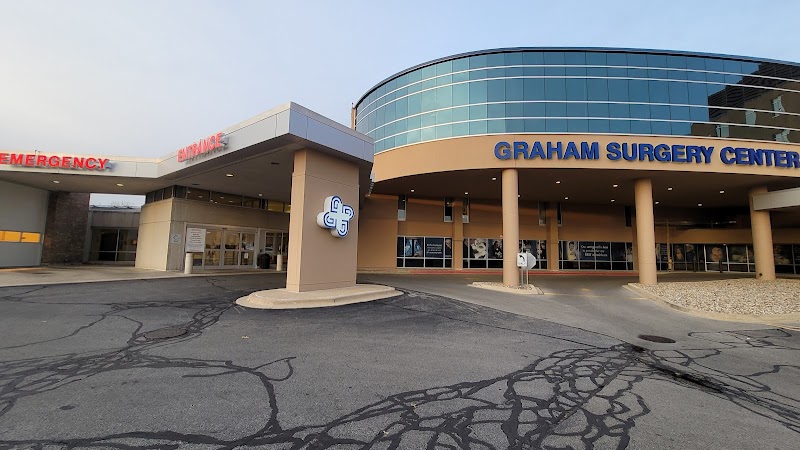
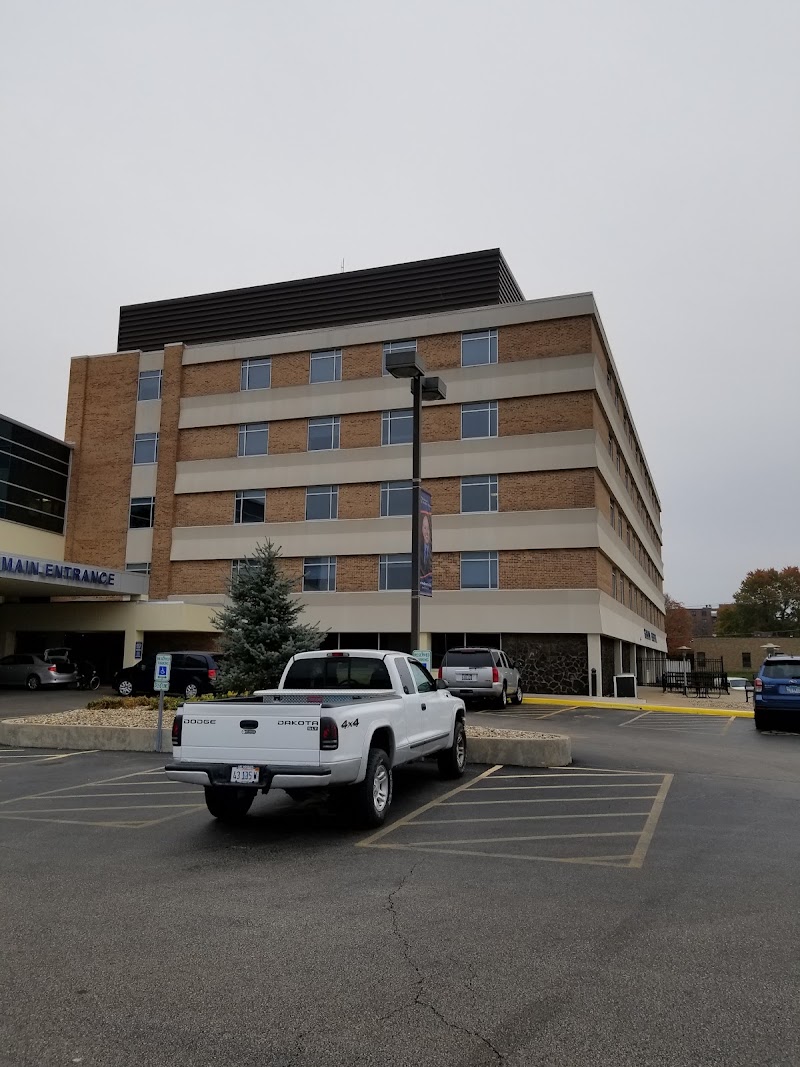
GRAHAM HOSPITAL

210 WEST WALNUT STREET, CANTON, IL 61520 (309) 647-5240
Non profit - Other 35 Beds Independent Data: November 2025
Trust Grade
95/100
#39 of 665 in IL
Last Inspection: December 2024

Within standard 12-15 month inspection cycle. Federal law requires annual inspections.

Overview

Graham Hospital in Canton, Illinois has an impressive Trust Grade of A+, indicating it is an elite facility with excellent care standards. Ranked #39 out of 665 nursing homes in Illinois, it sits comfortably in the top half of the state, and is #2 of 6 in Fulton County, meaning only one other local option is rated higher. The facility is on an improving trend, with the number of reported issues decreasing from 5 in 2023 to 3 in 2024. Staffing is a clear strength, boasting a 5/5 star rating with a low turnover rate of 23%, significantly better than the state average of 46%, which helps ensure continuity of care for residents. However, there are some concerns; the facility has been found to have issues like failing to ensure proper temperature controls in food preparation, not implementing effective restorative programming for some residents, and not adequately monitoring COVID-19 exposure, which could pose risks to residents. Despite these weaknesses, the absence of fines and high RN coverage suggests a commitment to quality care.

Trust Score
A+
95/100
In Illinois
#39/665
Top 5%
Safety Record
Low Risk
No red flags
Inspections
Getting Better
5 → 3 violations
Staff Stability
✓ Good
23% annual turnover. Excellent stability, 25 points below Illinois's 48% average. Staff who stay learn residents' needs.
Penalties
✓ Good
No fines on record. Clean compliance history, better than most Illinois facilities.
Skilled Nurses
✓ Good
Each resident gets 126 minutes of Registered Nurse (RN) attention daily — more than 97% of Illinois nursing homes. RNs are the most trained staff who catch health problems before they become serious.
Violations
○ Average
8 deficiencies on record. Average for a facility this size. Mostly minor or procedural issues.
★★★★★
5.0
Overall Rating
★★★★★
5.0
Staff Levels
★★★★☆
4.0
Care Quality
★★★★★
5.0
Inspection Score
Stable
2023: 5 issues
2024: 3 issues

The Good

  • 5-Star Staffing Rating · Excellent nurse staffing levels
  • 4-Star Quality Measures · Strong clinical quality outcomes
  • Low Staff Turnover (23%) · Staff stability means consistent care
  • Full Sprinkler Coverage · Fire safety systems throughout facility
  • No fines on record
  • Staff turnover is low (23%)

    25 points below Illinois average of 48%

Facility shows strength in staffing levels, quality measures, staff retention, fire safety.

The Bad

No Significant Concerns Identified

This facility shows no red flags. Among Illinois's 100 nursing homes, only 1% achieve this.

The Ugly 8 deficiencies on record

Dec 2024 3 deficiencies
CONCERN (D)

Potential for Harm - no one hurt, but risky conditions existed

Deficiency F0646 (Tag F0646)

Could have caused harm · This affected 1 resident

Based on interview and record review, the facility failed to refer a resident to the PASRR (Preadmission Screening and Resident Review) State Agency to obtain a Level II PASRR after experiencing a sig...

Read full inspector narrative →
Based on interview and record review, the facility failed to refer a resident to the PASRR (Preadmission Screening and Resident Review) State Agency to obtain a Level II PASRR after experiencing a significant change in behavioral and psychiatric symptoms for one of one resident (R2) reviewed for Mental Illness in the sample of 21. Findings include: The facility's (PASSR) policy dated 9-5-24 documents, It is the responsibility of the Psychosocial Designee and/or designated staff to coordinate and ensure compliance with all PASRR federal, state, and local mandates including working with Illinois Maximus PASRR designated agency. The Psychosocial Designee or designated staff shall refer to the designated state agency any resident whose behavioral health condition had declined or worsened and is significantly changes from the most recent PASRR Level II evaluation. Residents with documented mental health condition and/or suspected of mental health conditions shall be referred to the state agency for determination of a mental health condition. This includes but is not limited to residents with recently updated behavioral health diagnosis status and residents show mental health screening assessment indicates a worsening or decline in mental health. R2's Progress Notes dated 11-28-24 document, (R2) complains of feeling there is dust all over her face. R2's Progress Notes dated 11-30-24 document, (R2) had to be reminded today that there was not dust in her ears and to stop picking at her fingernails and face. R2's Progress Notes dated 12-1-24 document, (R2) has to be reminded multiple times that there is not dust in her eyes, ears, or on her skin. Also had to remind (R2) to stop picking her fingernails and her face. (R2) complains that she feels closed in. R2's Progress Note dated 12-8-24 documents, (R2) stated there is dust everywhere. (R2) said the little fan that was going next to her was blowing dust everywhere. R2's Progress Note dated 12-11-24 documents, Spoke with (V10 R2's Family Member) in regards to order for Zyprexa and side effects. (V10) consents to Zyprexa. (V10) reported that when she visits, (R2) is adamant about dust everywhere and that (V10) has tried to show (R2) there is not dust on objects but (R2) gets upset and frustrated with family because they cannot see this dust. (V10) stated that (R2) believes she is having trouble breathing because there is dust on everything and that (R2) makes her take home candy and other things family brings her because there is dust on it. R2's Progress Notes dated 12-12-24 and 12-13-24 document R2 was complaining of having dust in her eyes. R2's Physician's Order dated 12-11-24 and signed by V7 (Physician) documents, Zyprexa (anti-psychotic medication) 2.5 mg (milligrams) daily for the diagnosis of Refractory Depression with Psychotic Symptoms. R2's Medical Record documents the most recent PASRR Level I screen was obtained on 2-2-23. R2's Medical Record does not include evidence of the facility referring R2 to the PASRR State Agency to obtain a Level II PASRR once R2 started exhibiting new behavioral symptoms on 11-30-24 and was ordered Zyprexa to treat the new diagnosis of Refractory Depression with Psychotic Symptoms on 12-11-24. On 12-16-24 at 2:30 PM V1 (Administrator) stated, I am responsible for requesting PASRR screenings. I have not requested a level II PASARR to be done for (R2) since (R2) started exhibiting new behaviors and was started on Zyprexa.
CONCERN (E)

Potential for Harm - no one hurt, but risky conditions existed

Deficiency F0688 (Tag F0688)

Could have caused harm · This affected multiple residents

**NOTE- TERMS IN BRACKETS HAVE BEEN EDITED TO PROTECT CONFIDENTIALITY** Based on observation, interview, and record review the facility failed to develop and implement restorative programming for five...

Read full inspector narrative →
**NOTE- TERMS IN BRACKETS HAVE BEEN EDITED TO PROTECT CONFIDENTIALITY** Based on observation, interview, and record review the facility failed to develop and implement restorative programming for five of six residents (R5, R9, R11, R13, and R15) reviewed for limitations in range of motion in the sample of 21. Findings include: The facility's Restorative Activity Aide Job Description (undated) documents, The restorative aide will perform specialized restorative nursing and activities of daily living activities for residents, assess and documents the resident's response and assist the nursing staff as directed. Primary Duties and Responsibilities: 1. Is responsible to perform specific restorative nursing procedures. (Example: Exercises, ambulation, and assistance with ADLs (Activities of Daily Living), to residents as directed by the MDS (Minimum Data Set) Coordinator. 2. Is responsible to keep daily performance records on residents receiving restorative nursing procedures. Reporting to MDS Coordinator daily refused treatments, omitted treatments, or other adverse observations. 3. Is responsible to document weekly progress notes and present them to the MDS Coordinator for review. 9. Assists residents with range of motion exercises, walking, and other therapies as ordered. 1. R5's MDS (Minimum Data Set) Assessments dated 11-6-24 and 8-6-24 documents R5 is severely cognitively impaired, has an impairment in range of motion to one side of the lower extremity, and does not receive passive or active range of motion restorative programs or therapy. R5's current Impaired Mobility Care Plan documents, Outcome: (R5) will improve right knee range of motion through the next review date. Approach: (R5): Actively assist (R5) to perform ten repetitions of range of motion to both knees at least twice daily while sitting in wheelchair. R5's Restorative Active Range of Motion Program logs dated 10-1-24 through 12-18-24 documents, Problem: Impaired mobility due to Parkinsonism and past right hip fracture as evidenced by weakness, stiffness, and limited mobility. Approach: Actively assist (R5) to perform ten repetitions of range of motion to both knees at least twice daily while sitting in wheelchair. Stretch his right leg after range of motion by placing right heel on chair in front of him for five minutes. These same logs document R5 has not received range of motion as directed for 53 days between 10-1-24 through 12-18-24. On 12/16/24 at 11:03 AM V8 (R5's Family Member) stated, I visit (R5) every other day. I have never witnessed the staff do range of motion with (R5). (R5) fell and broke his femur in the past. I would like the staff to do range of motion with (R5) to help (R5) gain strength. 2. R11's MDS assessment dated [DATE] documents R11 is cognitively intact, has impairments in range of motion of both sides of the lower extremities, and does not receive passive or active range of motion restorative programs or therapy. R11's current Impaired Mobility Care Plan documents, Outcome: (R11) will maintain lower extremity range of motion to prevent hip and knee contractures through the next review date. Intervention: Perform range of motion to exercises eight to ten repetitions of range of motion to both shoulders, elbows, wrists, hips, knees, and ankles at least twice daily. R11's Restorative Active Range of Motion Program logs dated 10-1-24 through 12-18-24 documents, Problem: Impaired mobility due to arthritis, diabetes and neuropathy as evidenced by weakness, inability to stand, and limited mobility. Approach: Actively assist (R11) to perform eight to ten repetitions of range of motion to both shoulders, elbows, wrists, hips, knees, and ankles at least twice daily. These same program logs document R11 has not received range of motion as directed from 10-25-24 to 12-18-24. On 12/26/24 at 10:45 AM R11 was sitting in a high back padded wheelchair in the dining room. R11 stated, I do not get exercises daily. I cannot move my legs that well and cannot walk. 3. R15's current Diagnosis Report documents R15 has the diagnoses of abnormalities of gait and mobility, presence of a right artificial knee joint, and a fracture of the shaft of the humerus, left arm, and sequela. R15's MDS Assessments dated 7-9-24 and 10-8-24 document R15 is cognitively intact, has impairments in range of motion to one side of the upper extremity and to both sides of the lower extremities, and does not receive passive or active range of motion restorative programs or therapy. R15's current Care Plan does not include interventions to address R15's limitations in range of motion. On 12/17/24 at 08:35 AM R15 was sitting in a recliner in her room with a right sided walker at her right side and her left arm lying next to her left side. R15's left arm was flaccid. R15 stated, I had breast cancer and had my left breast and left lymph nodes in my left arm removed. I cannot lift my left arm. Staff do not do any exercises (range of motion) with me. On 12/17/24 at 2:00 PM V2 (Director of Nursing) stated, (R15) does not have a restorative range of motion plan or program to address her limitations in range of motion. (R5 and R11) are not receiving their range of motion programs twice daily. We (the facility) have not had a restorative aide to do restorative programs for quite some time. I hired a restorative aide (V14) and she quit while still in orientation. Restorative programs are lacking here (the facility). On 12/18/24 at 9:00 AM V1 (Administrator) stated, We (the facility) use the restorative aide job description as the policy for performing restorative programs. 4. R9's current medical record documents R9's Diagnoses to include: Generalized Weakness, Gait Instability, Fall, Urinary Tract Infection and Osteoporosis. R9's Minimum Data Set Assessment (dated 11/13/24) documents the following: R9 requires substantial/maximal assistance putting on/taking off footwear; and requires partial/moderate assistance with shower/bathing, upper body dressing and lower body dressing. On 12/16/24 at 01:45 PM, V15 (R9's daughter) stated, They talked about starting some type of exercise program to maintain her mobility. I am not sure if they have started anything yet, but it has been discussed. R9's current Impaired Mobility care plan documents the following restorative programs in place: Walking and Dressing. R9's Restorative Program Logs for Dressing and Walking (dated 11/01/24 - 12/18/24) contain 42 days with no documentation of completion during this time frame. On 12/18/24 at 08:45 AM, V2 (Director of Nursing) stated that the facility currently has no restorative aide and confirmed R9's restorative programs have not been getting completed. 5. R13's medical record document R13's Diagnoses to include: History of CVA (Cerebrovascular Accident) with residual defect, Right Hemiplegia, Generalized Weakness, Vertigo and Balance Disorder. R13's Minimum Data Set Assessment (dated 10/16/24) documents the following: R13 has impairment on one side of her upper extremities and utilizes a walker. This same assessment documents R13 is dependent with toileting hygiene, lower body dressing and putting on/taking off footwear; and R13 requires substantial/maximal assistance with shower/bathing, upper body dressing and personal hygiene. On 12/16/24 at 09:40 AM, R13 was sitting upright in her recliner and stated she has weakness in her right arm after having a stroke. R13 stated, I have my good days and my bad days. I wish they would exercise me more. I was receiving therapy and after they said I was finished; I haven't done anything since. R13 stated staff does not assist her to complete any type of daily range of motion/restorative exercises. On 12/16/24 at 03:15 PM, V6 (Registered Nurse) stated R13 is not on any type of range of motion/restorative program, I think she was given exercises to do, and she does not do them. R9's current Impaired Mobility care plan documents the following restorative programs in place: Walking and Hygiene. R9's Restorative Program Logs for Personal Hygiene and Walking (dated 11/01/24 - 12/18/24) contain 42 days with no documentation of completion during this time frame. On 12/18/24 at 11:30 AM, V2 (Director of Nursing) stated R13's restorative exercises have not been getting completed, and V2 verified that R13 does not have any type of range of motion programming in place.
CONCERN (F)

Potential for Harm - no one hurt, but risky conditions existed

Food Safety (Tag F0812)

Could have caused harm · This affected most or all residents

Based on observation, interview and record review, the facility failed to use temperature testing strips to ensure dishes reach the required surface temperature during the rinse cycle in the dish mach...

Read full inspector narrative →
Based on observation, interview and record review, the facility failed to use temperature testing strips to ensure dishes reach the required surface temperature during the rinse cycle in the dish machine, failed to ensure hanging light covers over the kitchen's fryer baskets were clean and free of debris and grime, and failed to complete and record cool down temperatures for prepared meats and leftover items that were prepared ahead and stored in the facility's refrigerator and freezer for future use. These failures have the potential to affect all 22 residents residing in the facility. Findings include: 1.) The facility's Washing and Storage of Dishes and Utensils policy, dated 4/2024, documents The dish machine water temperatures are as follows: Wash cycle: 150 to 165 degrees. Rinse cycle: 160 to 180 degrees. Final Rinse cycle: 180 to 195 degrees. If the proper temperatures are not met, the management team is notified. On 12/16/24 at 10:20 AM V5 (Dietary Manager) ran a temperature test cycle on the facility's dish machine. V5 stated the facility's dishwasher is a high temperature machine and has to reach a temperature of 185-200 degrees. V5 stated the kitchen staff check the temperature on this machine everyday by the gauge on the outside of the machine. V5 stated They record the temperature on the outside to ensure its correct. We do not use the test strips anymore or run anything through the cycle to check the surface temperature. We used to do that but have not used those in a while. I have a few strips, but staff do not use them. On 12/18/24 at 8:58 AM V11 (Director of Plant Operations) provided the facility's dishwasher manual. V11 stated They (dietary staff) should be checking the water cycle temperature with the strips they can run through the machine every day. The strips turn black when the water gets to the correct temperature. They should be checking that daily and I am not sure why they would've stopped. 2.) The facility's Patient [NAME] Cleaning Checklist dated 12/15/24-12/28/24, documents multiple areas in the kitchen that are to be cleaned by kitchen staff but does not include a cleaning schedule for lights located above the kitchen's fryer baskets. On 12/16/24 at 10:15 AM, two hanging lights with black metal grids over the bulbs, located under the kitchen's fryer hood, both were coated with grease and caked on grime containing small fuzzy hair like fibers and debris. Both lights hang directly over the fryer baskets used to prepare food. At this time V5 (Dietary Manager) stated the stove hood and fryer hood are cleaned by an outside cleaning company. On 12/17/24 at 11:20 AM, both lights above the kitchen's fryer baskets were noted to still contain caked on debris and hair like fuzz. On 12/17/24 at 11:25 AM, V5 confirmed the lights above fryer baskets are caked with debris and stated I am not sure who cleans the lights over the fryer. We (kitchen staff) usually come in and those things are just clean. On 12/18/24 at 8:58 AM V11 (Director of Plant Operations) stated The hood above the stove and the fryer are cleaned every four months by (a contracted cleaning company). The lights above the fryers are not a part of that cleaning process so I would say those would need cleaned by the (facility's) kitchen staff. 3.) The facility's Patient Food Services policy, dated 7/2024, documents Purpose: To assure proper and safe food handling, storage, delivery and preparation. This same policy documents Proper heating and cooling temperatures are followed using the HACCP (Hazard Analysis and Critical Control Point) procedure on the recipe. The facility's (undated) HACCP Cooling log documents Daily cooling log for hot potentially hazardous foods. From 135 degrees to 70 degrees within two hours and 70 degrees to 40 degrees or below in an additional four hours. Take corrective action immediately if food is not chilled from 135 degrees to 70 degrees within two hours. Take immediate corrective action if food is not chilled from 135 degrees to 40 degrees within the six-hour cooling process. This log documents blank areas for facility kitchen staff to record the date, time, food item, starting temperature, first reading (temperature) within two hours and second reading less than four hours from the first reading. On 12/16/24 at 10:10 AM, the facility's walk-in refrigerator and freezer contained several metal pans covered with aluminum foil and food labels including but not limited to Beef tamale pie, Taco meat, Chicken and wild rice soup, Meatloaf, Turkey, and Roast Beef. At this time V5 (Dietary Manager) stated they do not keep a cool down log for hot foods when placing them in a cooler or freezer. V5 stated The freezer food is mostly leftovers that we can make into pureed foods. When we cook a turkey, it will be cooked, placed in the cooler to cool down then sliced and placed in the freezer. We do not have any cool down logs to show the temperatures of these foods in the cooling process. I think we did that at one time, and it's been something that we went away from or stopped for some reason. Any leftovers or cooked items that are placed in the fridge or freezer do not have cool down logs. We don't do those and haven't for a while. The facility's Long Term Care Application for Medicare and Medicaid dated 12/16/24 and signed by V1 (Administrator) documents 22 residents reside in the facility.
Nov 2023 1 deficiency
CONCERN (E)

Potential for Harm - no one hurt, but risky conditions existed

Infection Control (Tag F0880)

Could have caused harm · This affected multiple residents

**NOTE- TERMS IN BRACKETS HAVE BEEN EDITED TO PROTECT CONFIDENTIALITY** Based on observation, interview, and record review, the facility failed to perform COVID-19 testing on staff with direct high-ri...

Read full inspector narrative →
**NOTE- TERMS IN BRACKETS HAVE BEEN EDITED TO PROTECT CONFIDENTIALITY** Based on observation, interview, and record review, the facility failed to perform COVID-19 testing on staff with direct high-risk exposure to a COVID-19 positive resident. The facility also failed to implement their COVID-19 Response Plan to monitor residents at least daily for a fever to prevent the potential spread of COVID-19 virus. These failures had the potential to affect the 15 residents residing on the facility ICF (Intermediate Care Facility East wing). Findings include: The CDC's (Centers for Disease Control) Interim Infection Prevention and Control Recommendations for Healthcare Personnel During the Coronavirus Disease 2019 (COVID-19) Pandemic, dated 5/8/23, documents, Nursing homes: Responding to a newly identified SARS-CoV-2-infected HCP or resident: When performing an outbreak response to a known case, facilities should always defer to the recommendations of the jurisdiction's public health authority. A single new case of SARS-CoV-2 infection in any HCP (Healthcare Professional) or resident should be evaluated to determine if others in the facility could have been exposed. The approach to an outbreak investigation could involve either contact tracing or a broad-based approach; however, a broad-based (e.g., unit, floor, or other specific area(s) of the facility) approach is preferred if all potential contacts cannot be identified or managed with contact tracing or if contact tracing fails to halt transmission. Perform testing for all residents and HCP identified as close contacts or on the affected unit(s) if using a broad-based approach, regardless of vaccination status. Testing is recommended immediately (but not earlier than 24 hours after the exposure) and, if negative, again 48 hours after the first negative test and, if negative, again 48 hours after the second negative test. This will typically be at day 1 (where day of exposure is day 0), day 3, and day 5. The facility's COVID-19 Response Plan, dated 7/31/23, documents, Increased emphasis on early identification and implementation of source control whenever possible will be expected: Evaluate and manage residents with symptoms of respiratory infection. Ask residents to report if they feel feverish or have symptoms of respiratory infection. Activity monitor all residents upon admission and at least daily for fever and respiratory symptoms (shortness of breath, new or change in cough, and sore throat). On 11/6/23 at 8:15 a.m., the hallway entrance to the ICF (Intermediate Care Facility East wing) had a sign announcing that the ICF had COVID-19 positive residents and staff. The facility's COVID-19 Positive Timeline, provided by V1 (Administrator) on 11/6/23, documents that the facility's COVID-19 outbreak began when R1 tested positive for COVID-19 on 10/21/23. The facility Nursing Monthly Schedule, dated 9/24-10/21/23, documents that for 48 hours prior to R1's COVID-19 positive test the following staff members took care of R1 and would have had direct exposure to her: V4 (RN-Registered Nurse), V5 (RN), V6 (RN), V7 (CNA-Certified Nursing Assistant), V8 (CNA), V9 (CNA), V10 (CNA), V11 (CNA), V12 (CNA), V13 (CNA), and V14 (RN). The facility ICF COVID-19 testing, provided on 11/6/23 by V3 (Infection Preventionist), documents that following R1's COVID-19 positive test on 10/21/23, the facility began testing staff who work on ICF and the residents who reside on ICF on 10/22/23. The testing also documents that following the facility's initial testing, testing was not done again for a week (10/30/23). R2's (R1's Roommate) Electronic vitals, dated 10/21-10/25/23, have no documentation of R2's temperature being checked during the timespan following R2's direct high-risk exposure to R1 while R1 was COVID-19 positive. R2's Discharge summary, dated [DATE], documents, She tested positive for COVID-19 with minimal symptoms. Per hospital policy she needs airborne isolation. R3's electronic vitals, dated 10/21/23 to 11/6/23, document that R3's temperature was only obtained on the follow dates, during the facility outbreak, 10/24/23, 10/31/23, and 11/2/23. R4's Electronic Vitals, dated 10/21-11/6/23, document that R4's temperature was only obtained on the following dates, during the facility outbreak, 10/25/23, 11/1/23, 11/2/23, and 11/3/23. R5's Electronic Vitals, dated 10/21-11/6/23, document that R5's temperature was only obtained on the following dates, during the facility outbreak, 10/24/23, 11/1/23, and 11/6/23. On 11/6/23 8:20 a.m., V14 stated, We are tested weekly on Mondays. When (R1) tested positive (10/21/23), we were all tested that following Monday then weekly after that. V14 confirmed that he was directly exposed to R1, and he was not tested on day one, day three, and day five following his COVID-19 exposure to R1. On 11/6/23 at 11:00 a.m., V2 (Director of Nursing) stated, We started testing residents and staff the day after (R1) tested positive, and then we went to weekly. On 11/8/23 at 9:47 a.m., V11 stated, Since the outbreak has started, I've been tested a total of three times. I tested the Tuesday (10/24/23) after (R1) tested positive, and then weekly after that. On 11/6/23 at 2:10 p.m., V1 stated, Residents should be monitored for symptoms of COVID at least once a day, and with that they should be checking the resident's temperature. V1 confirmed that R2, R3, R4, and R5's temperatures were not being monitored on a daily basis. On 11/6/23 at 2:15 p.m., V3 stated, When (R1) tested positive (10/21/23) we started the immediate testing of all the residents and staff who may have had direct exposure to her in the last 48 hours. We tested within 24 hours. Then, on 10/25/23 (R2) tested positive because she was having symptoms. Once she tested positive, we started testing all the residents and the staff in that unit (ICF) weekly. We did not do the initial day 1, day 3, day 5 testing on those staff and residents who had direct exposure to (R1) initially. We didn't think we had to do that because we do PCR (Polymerase Chain Reaction COVID-19) testing and not antigen testing. All residents should be monitored for COVID-19 symptoms on a minimum of a daily basis, and that includes temperatures. The facility's ICF Daily Census, dated 11/6/23, documents that 15 residents (R1-R15) reside on this wing of the facility.
Feb 2023 4 deficiencies
CONCERN (D)

Potential for Harm - no one hurt, but risky conditions existed

Deficiency F0645 (Tag F0645)

Could have caused harm · This affected 1 resident

Based on record review and interview the facility failed to obtain a Preadmission Screening and Resident Review (PASRR) for one resident (R2) of one reviewed for PASRR in a total sample of 15. Findin...

Read full inspector narrative →
Based on record review and interview the facility failed to obtain a Preadmission Screening and Resident Review (PASRR) for one resident (R2) of one reviewed for PASRR in a total sample of 15. Findings Include: R2's PASRR dated 8/19/2022 documents Your Level 1 screen shows you have evidence of serious mental illness or intellectual/developmental disability (IDD). Further PASRR evaluation is not required because you meet criteria for an exempted hospital discharge. This means you may stay up to thirty (30) days in a Medicaid-certified nursing facility without further PASRR evaluation. R2's PASRR documents If you or your care provider think you need to stay longer than thirty (30) days, a nursing facility staff member must submit a new Level 1 screen to (Company). This must be complete by or before the 30th day stay after your admission to the nursing facility. On 2/1/23 at 10:00 A.M. V2 (Director of Nurses) stated We did not do another PASRR and we should have.
CONCERN (D)

Potential for Harm - no one hurt, but risky conditions existed

Pressure Ulcer Prevention (Tag F0686)

Could have caused harm · This affected 1 resident

Based on interview and record review, the facility failed to track the progression of a pressure ulcer for one resident (R6) of three residents reviewed for pressure ulcers in a sample of 15. Finding...

Read full inspector narrative →
Based on interview and record review, the facility failed to track the progression of a pressure ulcer for one resident (R6) of three residents reviewed for pressure ulcers in a sample of 15. Findings include: The facility's Skin Assessment, Prevention and Care policy dated 5/2022 documents 2. Documentation including size, color, depth, tunneling present, exudates/drainage, pain association with the wound will be completed in the Electronic Health Record on the worklist. R6's medical record dated 8/25/22 documents Bottom wound pressure ulcer stage two. R6's medical record dated 9/7/22 documents Bottom wound pressure ulcer stage two R6's medical record does not document any measurements for her stage two pressure ulcer. R6's medical record documents R6 was discharged on 9/7/22 and returned 9/22/22. R6's re-admission skin assessment documents Left Upper buttocks shearing. On 02/01/23 at 2:20 PM, V3 (Minimum Data Set (MDS) Coordinator), stated The stage two pressure ulcer was found on 8/25/22 while she was here and still present when she was admitted downstairs on 9/7/22. It looks like she came back to us on 9/22/22 and at that time, the stage two had healed, and it was documented as shearing up until 11/27/22 when it is resolved. We didn't track (R6)'s wound measurements for her stage two pressure ulcer.
CONCERN (D)

Potential for Harm - no one hurt, but risky conditions existed

Incontinence Care (Tag F0690)

Could have caused harm · This affected 1 resident

Based on observation, interview and record review, the facility failed to maintain the catheter drainage bag below the level of the bladder for one resident (R70) of five resident reviewed for cathete...

Read full inspector narrative →
Based on observation, interview and record review, the facility failed to maintain the catheter drainage bag below the level of the bladder for one resident (R70) of five resident reviewed for catheters in a total sample of 15. Findings include: The facility's Indwelling Urinary Catheter policy dated 7/22 documents 8. When transporting patient, maintain position of drainage bag below the level of the patient's bladder. R70's physician order dated 2/2/23 documents Indwelling catheter for decubitus ulcer perineal area, incontinent patient. On 1/31/23 at 9:37 AM, V8 (Certified Nursing Assistant/CNA) stated I have to get (R70) ready for transportation to the wound clinic. On 1/31/23 at 9:39 AM, V2 (Director of Nursing/DON) entered the room and stated, I'll help you get (R70) ready. On 01/31/23 at 9:40 AM, V8 (CNA) observed preparing R70 for transportation to the wound clinic. V8 reached down, grabbed R70's catheter drainage bag and placed it on top of the resident's abdomen. V2 grabbed the catheter drainage bag and stated You can't do that. The bag has to be below the bladder. and hung the bag on the extension arm of the recliner where R70 is sitting. On 2/1/23 at 2:00 PM, V2 (DON) verified that the catheter drainage bag should not be raised above the level of the bladder and stated Yeah, I can't believe she did that. As soon as I saw her (V8 CNA) do that, I immediately grabbed it and placed it back down below the bladder.
CONCERN (D)

Potential for Harm - no one hurt, but risky conditions existed

Medication Errors (Tag F0758)

Could have caused harm · This affected 1 resident

2. The facility's Psychotropic Medication Use policy dated 4/22, documents 3. Both the medical staff and nursing shall evaluate the effectiveness of PRN (as needed) orders for psychotropic drugs withi...

Read full inspector narrative →
2. The facility's Psychotropic Medication Use policy dated 4/22, documents 3. Both the medical staff and nursing shall evaluate the effectiveness of PRN (as needed) orders for psychotropic drugs within 14 days to manage behavior. R10's medication orders dated 1/16/23 documents Alprazolam (Xanax) 0.25 milligrams (mg) by mouth at bedtime PRN for anxiety and Alprazolam (Xanax) 0.25 mg by mouth every eight hours as needed for anxiety. R10's medication administration record documents R10 received Alprazolam 0.25 mg on 1/25/23 and 1/31/23. R10's medical record does not include a diagnosis of anxiety or rationale for the PRN Xanax 0.25 mg to extend beyond 14 days. R10's medical record dated does not document an evaluation of the use of Xanax 0.25 mg for anxiety. On 02/01/23 at 01:12 PM, V2 (DON) stated (V9 Medical Director) won't write a stop date or rationale for the PRN psychotropics. The pharmacists has sent him notifications letting him know and I've sent him notification that we need a stop date or rationale for PRNs psychotropics, but he keeps putting indefinite on the orders without a rationale. He hasn't responded to any of my, or the pharmacists, notifications about it. This has been an ongoing issue with him. Based on record and interview the facility failed to identify a specific diagnosis or behavior for psychotropic medication use for two residents (R2 and R10) and failed to limit an as needed psychotropic medication use to 14 days for one resident (R10) of 5 reviewed for unnecessary medication use in a total sample of 15. The Facility's Psychotropic Medication Use policy dated 4/2022 documents Residents of the facility who are prescribed a psychotropic medication will be monitored. The resident's need for the psychotropic medication will be monitored as wells as when the resident has received optional benefits from the medication and when the medication dose can be lowered or discontinued. The Facility's policy also documents Attending physicians must document that a psychotropic medication is necessary to treat a specific condition/behavior. Psychotropic medications include drugs from the following classes: hypnotics, antipsychotics, long and short-acting benzodiazepines, sedatives/anxiolytics and antidepressants. Behaviors for which these drugs are used must present a danger for others, interfere with staff's ability to provide care or cause the resident frightful distress due to paranoia, hallucinations or delusions. R2's Physician Order Sheet for January 2023 documents R2 takes Alprazolam 0.25 mg (Milligrams) twice daily for anxiety, Sertraline 100 mg daily for depression and Mirtazapine 7.5 mg daily for depression. R2's Medical Record does not include any listing of any identified behaviors for R2. On 2/1/23 at 11:00 AM V5 (Registered Nurse/RN) stated R2 did not have any behavior problems that she knew of. On 2/1/23 at 11:10 AM V6 (Certified Nurse Assistant/CNA) and V7 (CNA) both stated they were not aware of any behavior problems/behaviors to monitor with R2. On 2/2/23 at 8:00 A.M. V2 (Director of Nurses/DON) confirmed that R2 did not have any identified behaviors listed in her medical record for the use of the psychotropic medications. V2 stated (R2) shouldn't be on two antidepressants either. I don't know why she is.
Understanding Severity Codes (click to expand)
Life-Threatening (Immediate Jeopardy)
J - Isolated K - Pattern L - Widespread
Actual Harm
G - Isolated H - Pattern I - Widespread
Potential for Harm
D - Isolated E - Pattern F - Widespread
No Harm (Minor)
A - Isolated B - Pattern C - Widespread

Questions to Ask on Your Visit

  • "Can I speak with families of current residents?"
  • "What's your RN coverage like on weekends and overnight?"

Our Honest Assessment

Strengths
  • • Grade A+ (95/100). Above average facility, better than most options in Illinois.
  • • No major safety red flags. No abuse findings, life-threatening violations, or SFF status.
  • • No fines on record. Clean compliance history, better than most Illinois facilities.
  • • 23% annual turnover. Excellent stability, 25 points below Illinois's 48% average. Staff who stay learn residents' needs.
Concerns
  • • No significant concerns identified. This facility shows no red flags across CMS ratings, staff turnover, or federal penalties.
Bottom line: Generally positive indicators. Standard due diligence and a personal visit recommended.

About This Facility

What is Graham Hospital's CMS Rating?

CMS assigns GRAHAM HOSPITAL an overall rating of 5 out of 5 stars, which is considered much above average nationally. Within Illinois, this rating places the facility higher than 99% of the state's 100 nursing homes. This rating reflects solid performance across the metrics CMS uses to evaluate nursing home quality.

How is Graham Hospital Staffed?

CMS rates GRAHAM HOSPITAL's staffing level at 5 out of 5 stars, which is much above average compared to other nursing homes. Staff turnover is 23%, compared to the Illinois average of 46%. This relatively stable workforce can support continuity of care.

What Have Inspectors Found at Graham Hospital?

State health inspectors documented 8 deficiencies at GRAHAM HOSPITAL during 2023 to 2024. These included: 8 with potential for harm.

Who Owns and Operates Graham Hospital?

GRAHAM HOSPITAL is owned by a non-profit organization. Non-profit facilities reinvest revenue into operations rather than distributing to shareholders. The facility operates independently rather than as part of a larger chain. With 35 certified beds and approximately 22 residents (about 63% occupancy), it is a smaller facility located in CANTON, Illinois.

How Does Graham Hospital Compare to Other Illinois Nursing Homes?

Compared to the 100 nursing homes in Illinois, GRAHAM HOSPITAL's overall rating (5 stars) is above the state average of 2.5, staff turnover (23%) is significantly lower than the state average of 46%, and health inspection rating (5 stars) is much above the national benchmark.

What Should Families Ask When Visiting Graham Hospital?

Based on this facility's data, families visiting should ask: "Can I visit during a mealtime to observe dining assistance and food quality?" "How do you handle medical emergencies, and what is your hospital transfer rate?" "Can I speak with family members of current residents about their experience?"

Is Graham Hospital Safe?

Based on CMS inspection data, GRAHAM HOSPITAL has a clean safety record: no substantiated abuse findings (meaning no confirmed cases of resident harm), no Immediate Jeopardy citations (the most serious violation level indicating risk of serious injury or death), and is not on the Special Focus Facility watch list (a federal program monitoring the lowest-performing 1% of nursing homes). The facility has a 5-star overall rating and ranks #1 of 100 nursing homes in Illinois. While no facility is perfect, families should still ask about staff-to-resident ratios and recent inspection results during their visit.

Do Nurses at Graham Hospital Stick Around?

Staff at GRAHAM HOSPITAL tend to stick around. With a turnover rate of 23%, the facility is 23 percentage points below the Illinois average of 46%. Low turnover is a positive sign. It means caregivers have time to learn each resident's needs, medications, and personal preferences. Consistent staff also notice subtle changes in a resident's condition more quickly. Registered Nurse turnover is also low at 17%, meaning experienced RNs are available to handle complex medical needs.

Was Graham Hospital Ever Fined?

GRAHAM HOSPITAL has no federal fines on record. CMS issues fines when nursing homes fail to meet care standards or don't correct problems found during inspections. The absence of fines suggests the facility has either maintained compliance or corrected any issues before penalties were assessed. This is a positive indicator, though families should still review recent inspection reports for the full picture.

Is Graham Hospital on Any Federal Watch List?

GRAHAM HOSPITAL is not on any federal watch list. The most significant is the Special Focus Facility (SFF) program, which identifies the bottom 1% of nursing homes nationally based on persistent, serious quality problems. Not being on this list means the facility has avoided the pattern of deficiencies that triggers enhanced federal oversight. This is a positive indicator, though families should still review the facility's inspection history directly.