LOFT REHAB & NURSING OF CANTON
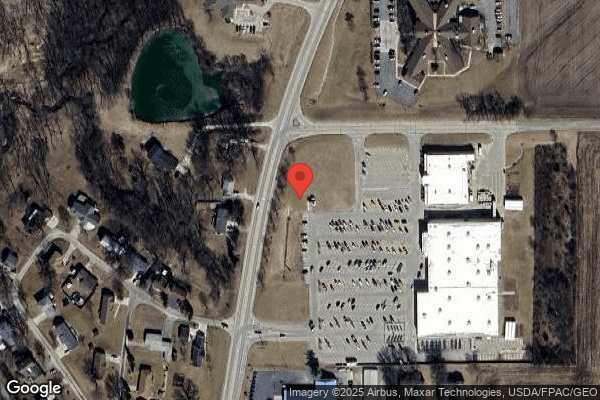
2081 NORTH MAIN STREET, CANTON, IL 61520 (309) 647-6135
For profit - Corporation 90 Beds THE LOFT REHABILITATION AND NURSING Data: November 2025
Trust Grade
50/100
#257 of 665 in IL
Last Inspection: August 2024

Within standard 12-15 month inspection cycle. Federal law requires annual inspections.

Overview

Loft Rehab & Nursing of Canton has a Trust Grade of C, which means it is average compared to other facilities. It ranks #257 out of 665 nursing homes in Illinois, placing it in the top half, and #4 out of 6 in Fulton County, indicating there are only a few local options that are better. The facility is showing improvement, with issues decreasing from 11 in 2024 to 5 in 2025. Staffing is a noted weakness, receiving 2 out of 5 stars, but the turnover rate of 38% is better than the state average, suggesting some staff stability. There have been serious incidents, including a resident who suffered complications after a medication was discontinued without proper authorization, and another resident who fell and dislocated their shoulder due to improper transfer assistance. While there are strengths to note, such as no fines on record, families should consider both the improvements and the serious concerns when making their decision.

Trust Score
C
50/100
In Illinois
#257/665
Top 38%
Safety Record
Moderate
Needs review
Inspections
Getting Better
11 → 5 violations
Staff Stability
○ Average
38% turnover. Near Illinois's 48% average. Typical for the industry.
Penalties
✓ Good
No fines on record. Clean compliance history, better than most Illinois facilities.
Skilled Nurses
○ Average
Each resident gets 36 minutes of Registered Nurse (RN) attention daily — about average for Illinois. RNs are the most trained staff who monitor for health changes.
Violations
⚠ Watch
26 deficiencies on record. Higher than average. Multiple issues found across inspections.
★★★☆☆
3.0
Overall Rating
★★☆☆☆
2.0
Staff Levels
★★☆☆☆
2.0
Care Quality
★★★☆☆
3.0
Inspection Score
Stable
2024: 11 issues
2025: 5 issues

The Good

  • Full Sprinkler Coverage · Fire safety systems throughout facility
  • No fines on record
  • Staff turnover below average (38%)

    10 points below Illinois average of 48%

Facility shows strength in fire safety.

The Bad

3-Star Overall Rating

Near Illinois average (2.5)

Meets federal standards, typical of most facilities

Staff Turnover: 38%

Near Illinois avg (46%)

Typical for the industry

Chain: THE LOFT REHABILITATION AND NURSING

Part of a multi-facility chain

Ask about local staffing decisions and management

The Ugly 26 deficiencies on record

2 actual harm
Aug 2025 4 deficiencies 1 Harm
SERIOUS (G) 📢 Someone Reported This

A family member, employee, or ombudsman was alarmed enough to file a formal complaint

Actual Harm - a resident was hurt due to facility failures

Quality of Care (Tag F0684)

A resident was harmed · This affected 1 resident

**NOTE- TERMS IN BRACKETS HAVE BEEN EDITED TO PROTECT CONFIDENTIALITY** Based on interview and record review the facility failed to ensure a resident's anticoagulant therapy was maintained related to ...

Read full inspector narrative →
**NOTE- TERMS IN BRACKETS HAVE BEEN EDITED TO PROTECT CONFIDENTIALITY** Based on interview and record review the facility failed to ensure a resident's anticoagulant therapy was maintained related to a diagnosis of Atrial Fibrillation, obtain a valid physician order prior to discontinuing the medication, and document clinical justification to discontinue a residents anticoagulant therapy for one of three residents (R1) reviewed for quality of care in a sample of three. These failures resulted in (R1) who was at high risk for thromboembolic (blood clots that form in one location and travel to another location, potentially blocking blood flow) events, experienced complications from a suspected complication of Acute Cerebrovascular Accident due to Cerebrovascular Disease and passed away after Xarelto was discontinued for 75 days without physician authorization or documented clinical justification.Findings include: R1's admission Record, dated [DATE], documents R1 was admitted to the facility on [DATE] with the following, but not limited to, diagnoses: Chronic Obstructive Pulmonary Disease, Alzheimer's Disease, and Chronic Atrial Fibrillation. R1's Order Summary Report, dated [DATE], documents an order for Xarelto (blood thinning medication) 15mg (milligrams) on [DATE] to be taken once daily. R1's Order Summary Report, dated [DATE], documents V1 (Administrator) received a verbal order on [DATE] from V13 (Hospice Physician) to discontinue R1's Xarelto. R1's Clinical Census documents R1 started receiving Hospice Services on [DATE]. R1's Plan of Care with a review date of [DATE] documents, (R1) is on anticoagulant therapy related to Chronic Atrial Fibrillation. Administer anticoagulant medications as ordered by physician. Monitor for side effects and effectiveness every shift. This same plan of care documents (R1) has a personal history of cerebral infarction. Give Medications as ordered by physician. Monitor/document side effects and effectiveness. R1's Progress Note, dated [DATE] and signed by V12 (Licensed Practical Nurse) documents R1 passed away on [DATE] at 8:01 PM. R1's Certificate of Death, dated [DATE], documents date of death : [DATE]. Cause of Death: Complications from Suspected Acute Cerebrovascular Accident due to Cerebrovascular Disease. Xarelto's Warning Label, dated 3/2020, documents Warning: (A) Premature discontinuation of Xarelto increases the risk of thrombotic events. To reduce this risk, consider coverage with another anticoagulant if Xarelto is discontinued for a reason other than pathological bleeding or completion of a course of therapy. Indications and Usage: XARELTO is indicated to reduce the risk of stroke and systemic embolism in patients with nonvalvular atrial fibrillation. R1's entire Clinical Medical Record (including Hospice Medical Record) does not include evidence of a documented clinical justification of why R1's Xarelto was discontinued. There is also no evidence in R1's Clinical Medical Record of a Physician giving the order to discontinue R1's Xarelto medication or signing an order to discontinue R1's Xarelto medication. On [DATE] at 9:28 AM V5 (R1's Power of Attorney) stated at some point (R1) was taken off her blood thinner (Xarelto). I was not aware of this until I requested (R1's) medical records (after R1 expired) and did not see Xarelto on her medication list. I could not see where a physician discontinued her Xarelto but noticed (R1) had quit receiving at some point during her stay. I am very upset (R1) wasn't receiving her Xarelto throughout (R1's) entire stay because (R1) had Atrial Fibrillation and was at high risk for strokes. I would not have wanted (R1's) Xarelto to be discontinued and the facility and hospice were aware of that. On [DATE] at 10:48 AM V14 (Registered Nurse/Owner of Hospice) stated, We (hospice) send all current orders to the facility for each resident on our hospice. (V5 R1's Power of Attorney) called me after (R1) had passed away asking why (R1's) Xarelto had been discontinued. Our orders for (R1) did not show (R1's) Xarelto had been discontinued, nor do I have any signed order by a hospice physician or hospice nurse practitioner discontinuing (R1's) Xarelto. V14 verified there is no clinical justification to discontinue R1's Xarelto in R1's hospice medical records because they (hospice) still had the order as active. On [DATE] at 2:35 PM V9 (R1's Primary Physician) stated she did not authorize for R1's Xarelto to be discontinued. On [DATE] at 5:51 PM V8 (Hospice Nurse Practitioner) I do not recall giving (V1 Administrator) an order to discontinue (R1's) Xarelto. I would not have discontinued (R1's) Xarelto without discussing it with (V5 R1's Power of Attorney or V6 R1's spouse) and (V13 Hospice Physician). On [DATE] at 11:40 AM V2 (Director of Nursing) stated she responsible for medication oversight and hospice coordination. V2 stated, if a high-risk medication is being discontinued it would be my expectation for the nurse receiving the order or discontinuing the order to document the clinical justification to discontinue the medication. V2 verified at this time that she did not see clinical justification in R1's medical record after the discontinuation of R1's Xarelto on [DATE]. On [DATE] at 1:09 PM V13 (Hospice Physician) stated, I know Xarelto was on (R1's) medication list when admitting to hospice. I was not notified (R1's) Xarelto was discontinued. I am not aware of anyone from my hospice team giving the order to discontinue (R1's) Xarelto. I never gave the order. V13 stated R1's falls were discussed but she does not remember discontinuing the Xarelto in relation to the falls. V13 stated, I do believe there is a communication gap with the facility, I know that medication reconciliation is an issue and has been an issue. (R1) was at high risk for thromboembolic events due to (R1) having Atrial Fibrillation, a history of lung cancer, being sedentary in her lifestyle, and being over the age of 75. It was possible a stroke contributed to (R1's) death and Xarelto could have prevented the stroke form occurring. On [DATE] at 1:32 PM V1 (Administrator) stated, I am the one who entered the verbal order to discontinue (R1's) Xarelto on [DATE]. I received a verbal order from (V8 Hospice Nurse Practitioner) on [DATE] but wrote the order from (V13 Hospice Physician). I did not document why the Xarelto was discontinued anywhere in (R1's) medical record. V1 verified a clinical justification of discontinuing R1's medications should have been documented in R1's medical record and wasn't. On [DATE] at 1:49 PM V14 (Medical Records) stated she oversees physician telephone orders and verbal get signed by the ordering Physician. V14 verified R1's verbal order to discontinue R1's Xarelto on [DATE] has not been signed by a physician.
CONCERN (D) 📢 Someone Reported This

A family member, employee, or ombudsman was alarmed enough to file a formal complaint

Potential for Harm - no one hurt, but risky conditions existed

Notification of Changes (Tag F0580)

Could have caused harm · This affected 1 resident

**NOTE- TERMS IN BRACKETS HAVE BEEN EDITED TO PROTECT CONFIDENTIALITY** Based on interview and record review the facility failed to notify a resident's representative of a significant change of medica...

Read full inspector narrative →
**NOTE- TERMS IN BRACKETS HAVE BEEN EDITED TO PROTECT CONFIDENTIALITY** Based on interview and record review the facility failed to notify a resident's representative of a significant change of medication regimen for one of three residents (R1) reviewed for notification of change in a sample of three. Findings include:The facility's Notification of Changes Policy dated 2/10/25, documents Policy: The purpose of this policy is to ensure the facility promptly informs the resident, consults the resident's physician, and notifies, consistent with his or her authority, the resident's representative when there is a change requiring notification. Compliance Guidelines: The facility must inform the resident, consult with the resident's physician and/or notify the resident's family member of legal representative when there is a change requires such notification. Circumstances requires notification of change include: 3. Circumstances that require a need to alter treatment. This may include b. Discontinuation of current treatment due to i. Adverse consequences. ii. Acute Condition. Iii. Exacerbation of a chronic condition. 2. Residents incapable of making decisions: a. the Representative would make any decisions that have to be made. b. The resident should still be told what is happening to him or her.R1's admission Record dated 8/4/25, documents R1 was admitted to the facility on [DATE] with the following, but not limited to, diagnoses: Chronic Obstructive Pulmonary Disease, Alzheimer's Disease, and Chronic Atrial Fibrillation.R1's Order Audit Report dated 8/4/25, documents R1's Xarelto (blood thinner) 15mg (milligram) tablet daily was discontinued on 3/31/25.R1's entire Clinical Record does not document evidence of R1 or V5 (R1's Power of Attorney) being notified of R1's Xarelto being discontinued.On 8/4/25 at 9:28 AM V5 (R1's Power of Attorney) stated, I was never notified (R1's) Xarelto was discontinued. I am very upset about this, because I feel like (R1) needed to be on the Xarelto due to (R1) having Atrial Fibrillation.On 8/4/25 at 5:51 PM V8 (Hospice Nurse Practitioner) stated I do not recall giving (V1 Administrator) an order to discontinue (R1's) Xarelto. I would not have discontinued (R1's) Xarelto without discussing it with (V5 R1's Power of Attorney or V6 R1's spouse) and (V13 Hospice Physician). I did not notify (V5) or (V6) of (R1's) Xarelto being discontinued because I wasn't aware it was discontinued.On 8/5/25 at 7:47 AM V6 (R1's Spouse) stated he was at the facility everyday with R1 and was involved in her care. V6 stated he was never made aware that R1's Xarelto was discontinued.On 8/5/15 at 11:40 AM V2 (Director of Nursing) stated if a medication has been discontinued then the resident and the resident's representative should be notified. If the resident is on hospice and the order is from hospice, then hospice would be the ones who would notify the family.On 8/5/25 at 1:32 PM V1 (Administrator) stated, I am the one who entered the verbal order to discontinue (R1's) Xarelto on 3/31/25. I received a verbal order from (V8 Hospice Nurse Practitioner) on 3/31/25 but wrote the order from (V13 Hospice Physician). I did not notify (R1), (V5 R1's Power of Attorney) or (V6 R1's Spouse) when I wrote the verbal order to discontinue R1's Xarelto on 3/31/25. Hospice should have been the ones to notify (R1) and (V5). V1 verified at this time that R1's medical record does not include documentation of R1 or V5 being notified of R1's Xarelto being discontinued.
CONCERN (D) 📢 Someone Reported This

A family member, employee, or ombudsman was alarmed enough to file a formal complaint

Potential for Harm - no one hurt, but risky conditions existed

Deficiency F0657 (Tag F0657)

Could have caused harm · This affected 1 resident

**NOTE- TERMS IN BRACKETS HAVE BEEN EDITED TO PROTECT CONFIDENTIALITY** Based on interview and record review the facility failed to ensure the resident's representative was involved with the interdisc...

Read full inspector narrative →
**NOTE- TERMS IN BRACKETS HAVE BEEN EDITED TO PROTECT CONFIDENTIALITY** Based on interview and record review the facility failed to ensure the resident's representative was involved with the interdisciplinary team quarterly to review and revise a resident's care plan for one of three residents (R1) reviewed for care plans in a sample of three. Findings include: R1's Care Plan Sign in Sheet, dated 5/13/25, only documents V4's (Social Service Director) signature as attending R1's care plan meeting held on 5/13/25. R1's IDT (Interdisciplinary) Care Plan Care Conference, dated 5/13/25, documents V4 (Social Service Director), R1, V6 (R1's Spouse), and V7 (R1's Family Member) attended the care conference. This same Care Conference documents (R1) had her care plan today, (V6 R1's Spouse) and her son (identified as V7 R1's Family Member) attended. Due to no other department managers being available for the care plan the family would like it rescheduled for about a month with all department managers. On 8/4/25 at 9:28 AM V5 (R1's Power of Attorney) stated (R1) admitted to the facility on [DATE]. We (the family) had a big meeting with the interdisciplinary staff on 2/18/25. During that meeting it was told to us that they schedule meetings every three months with the family to go over (R1's) progress or (R1's) care in general. The facility scheduled a meeting sometime in May and the only person from the facility that attended (R1's) care plan meeting was (V4 Social Service Director), not the whole team as promised. (V6 R1's Spouse) and (V7 R1's Family Member) were there for the meeting and ready to discuss where (R1's) care was at and how she was doing. On 8/5/25 at 7:47 AM V6 (R1's Spouse) stated I showed up to the care plan meeting on 5/13/25 with (V7 R1's Family member) to discuss (R1's) care. I had many concerns I wanted to go over with (R1's) care that I wanted different departments to answer to. When (V7) and I arrived at this meeting, the only person that was in attendance was (V4 Social Service Director). (V7) and I both voiced concerns regarding (V4) being the only one at the care plan meeting, when there were other issues in other departments that needed address to have a better plan in place for (R1's) care. (V4) told us the other departments she invited to the care plan meeting told her they were unable to attend that morning, so that is why it was just (V4). (V4) told us we would have to reschedule a care plan meeting for (R1) if we wanted more than just her in the meeting. I don't feel like that is right when we were promised to have meeting to discuss (R1's) care at least every three months with a team of people. On 8/4/25 at 11:15 AM V4 (Social Service Director) stated she is the one in charge of scheduling care plan meetings and conducting the care plan meetings with the residents, family members, and members of the interdisciplinary team including, Activities, Nursing, Dietary, and Therapy (if resident is on therapy). V4 stated when a resident arrives to the facility she will schedule an initial care plan meeting with the interdisciplinary team, the resident, and family and then schedule them quarterly after that to keep everyone on the same page. V4 stated, I set up (R1's) quarterly care plan meeting for 5/13/25 with (R1), (V6 R1's Spouse), and (V7 R1's Family Member.) (V5 R1's Power of Attorney) could not make the meeting because he lives out of state. When (V6) and (V7) arrived at the facility for (R1's) care plan meeting, I was the only available person to attend (R1's) care plan meeting from the facility. No other department was able to attend. (V6) stated he wanted everyone to be at the care plan meeting because he wanted to discuss (R1's) overall care, so I told (V6) we would have to reschedule the care plan meeting. I email all departments that are supposed to attend the care plan meetings every Monday for the scheduled resident's care plan meetings of the week. If someone out of the department cannot attend, they should make me aware as soon as possible so I can let the family and resident know ahead of time or we (the facility) can figure out someone else out of that department to attend. Whoever attends would sign the sign in sheet and the sign in sheets are accurate. V4 stated the care plan meeting was rescheduled for 6/17/25 but was never conducted because R1 passed away on 6/13/25. On 8/4/25 at 2:12 PM V3 (Vice President of Clinical Services) stated a care conference should be scheduled with the resident and (if available) the resident's representative at least every three months. The care conferences should consist of the Dietary Manager, MDS (Minimum Data Set) Coordinator, a facility Nurse, Social Services, Activities, the resident, and (if available) the resident's representative to discuss a resident's plan of care as a group and to ensure the resident's needs are being met. On 8/5/25 9:50 AM V15 (Dietary Manager) stated I get notified weekly by email of the resident care plan meetings schedule for that week. I sometimes must work in the kitchen if we have a call in or I may be ill so I can't always make the care plan meetings. I would sign the residents care plan conference sign in sheet if I attended the meeting. On 8/5/25 at 9:54 AM V10 (MDS Coordinator) stated I am the nurse they want going to the residents scheduled care plan meetings. I get notified via emails on Mondays of that week's care plan conferences for residents. I attend sometimes, but sometimes I forget to go in. I started in April 2025. I get sidetracked plugging away on MDS's. I should be going to the meetings. If I attend a meeting I would have signed the sign in sheet for that resident's care plan meeting.
CONCERN (D) 📢 Someone Reported This

A family member, employee, or ombudsman was alarmed enough to file a formal complaint

Potential for Harm - no one hurt, but risky conditions existed

Deficiency F0849 (Tag F0849)

Could have caused harm · This affected 1 resident

**NOTE- TERMS IN BRACKETS HAVE BEEN EDITED TO PROTECT CONFIDENTIALITY** Based on interview and record review, the facility failed to ensure coordination of care and communication between the facility ...

Read full inspector narrative →
**NOTE- TERMS IN BRACKETS HAVE BEEN EDITED TO PROTECT CONFIDENTIALITY** Based on interview and record review, the facility failed to ensure coordination of care and communication between the facility and hospice provider for one of one resident reviewed for hospice services in a sample of three. Findings include:The facility's Agreement with Hospice Care, dated and signed [DATE], documents Coordination of Services: Hospice Provider and Facility have agreed to participate in a system of communication as described in Hospice Provider's policies and procedures to: 1. Ensure the Hospice Provider's IDG (Interdisciplinary Group) maintains responsibility for directing, coordinating, and supervising the care and services provided. 1. Ensure that the care and services are provided in accordance with Hospice Provider Plan of Care. 1. Ensure that the care and services provided are based on assessment of the Hospice Patient and family needs. 1. Provide for and ensure the ongoing sharing of information between all disciplines providing care and services in all settings, whether the care and services are provided directly or under arrangement. 1. Provide for an ongoing sharing of information with other non-hospice healthcare providers furnishing services unrelated to the terminal illness and related conditions. 7. Coordination of Services for Hospice Residents. For Hospice Residents, Hospice Provider shall further coordinate services by: 1. Designating specific member of the hospice Provider IDG that will be responsible for a Hospice Resident. The designated Hospice Provider IDG member is responsible for: 1. Overall coordination of Hospice Care of the Hospice Resident with the Facility representatives. 1. Overall coordination of Hospice Care for the Resident with the Facility Representative. 1.Communicating with Facility representatives and other health care providers participating I the provision of care for the Terminal Illness and related conditions to ensure quality of care. 1. Hospice Provider must ensure that the Hospice Provider IDG communicates with the Medical Director of the Facility, the Attending Physician, and other physicians participating in the provision of care to the Hospice Resident as needed to coordinate the Hospice Care with medical care provided by other physicians.The facility's Coordination of Hospice Services, dated [DATE], documents Policy: When a resident chooses to receive hospice care and services, the facility will coordinate and provide care in cooperation with hospice staff in order to promote the resident's highest practical physical, mental, and psychosocial well-being. Policy Explanation and Compliance Guidelines. 2. The facility and hospice provider will coordinate a plan of care and will implement interventions in accordance with the resident's needs, goals, and recognized standards of practice in consultation with the resident's attending physician/practitioner and resident' representative, to the extent possible.R1's Clinical Census documents R1 started receiving Hospice Services on [DATE]. This same Census documents R1 expired on [DATE] in house.On [DATE] at 2:35 PM V9 (R1's Primary Physician) stated she did not authorize for R1's Xarelto to be discontinued and was not aware of R1's Xarelto being discontinued. I noticed while reviewed (R1's) medical records on [DATE], (R1) had medication changes including the Xarelto medication being discontinued. Hospice has not collaborated with me at all. My expectation is to be involved in my patient's medication changes while on hospice including (R1's) medication changes, that just didn't happen. On [DATE] at 5:51 PM V8 (Hospice Nurse Practitioner) stated I do not recall giving (V1 Administrator) an order to discontinue (R1's) Xarelto. I would not have discontinued (R1's) Xarelto without discussing it with (V5 R1's Power of Attorney or V6 R1's spouse) and (V13 Hospice Physician). I did not notify (V5) or (V6) of (R1's) Xarelto being discontinued because I wasn't aware it was discontinued. When I would arrive to the facility for a visit, I would get in our hospice binder that the facility should be using for communication, and the orders would be missing or not put in there or the care plan would be gone. I would take notes to put in the binder myself and then the next time I arrived at the facility they would be gone. I tried to get a printout of our medication list and match it with the facility's and let them know if there was a discrepancy, but next time I would come in, it still wouldn't be fixed.On [DATE] at 7:47 AM V6 (R1's Spouse) stated he was at the facility everyday with R1 and was involved in her care. V6 stated he was never made aware that R1's Xarelto was discontinued. V6 stated, I just felt like the facility and Hospice were never on the same page. I am not sure where the gap is, but I just want to save someone else from having to go through what we went through with (R1) with communication between the facility and hospice. Neither one could tell us who was supposed to notify us of changes or why the Xarelto was discontinued.On [DATE] at 1:09 PM Interview with V13 (Hospice Physician) stated, I never met (R1) personally. I know Xarelto was on (R1's) medication list when admitting to hospice. When we (Hospice) go through resident's medications during admission, we try to minimize what medications they are on. Usually, the only reason I keep patients on Xarelto is based on family wishes. We always explain the risks and benefits. I was not notified (R1's) Xarelto was discontinued. I am not aware of anyone from my hospice team giving the order to discontinue (R1's) Xarelto. I never gave the order. I do believe there is a communication gap with the facility, I know that medication reconciliation is an issue and has been an issue. We (hospice) have our own medical records, and the facility has their own medical records for the residents. We (hospice) have a hard time getting updates or finding records at the facility or trying to ensure our records are consistent with the facility. When our nursing team goes to the facility they try to reconcile what we are given with what they are on at facility, but they had a hard time getting facility records.On [DATE] at 1:32 PM V1 (Administrator) stated, We (the facility) and the Hospice Company have had a hard time with communication since they had started coming to our building. They are a new company that we started working with. We were having major issues with medication reconciliation and being on the same page, that's why I ended up getting involved with the orders at the end of [DATE]. I am the one who entered the verbal order to discontinue (R1's) Xarelto on [DATE]. I received a verbal order from (V8 Hospice Nurse Practitioner) on [DATE] but wrote the order from (V13 Hospice Physician). I did not document why the Xarelto was discontinued anywhere in (R1's) medical record. I did not notify (R1), (V5 R1's Power of Attorney) or (V6 R1's Spouse) when I wrote the verbal order to discontinue (R1's) Xarelto on [DATE]. Hospice should have been the ones to notify (R1), (V5), and (V9 R1's Primary Physician).
Jan 2025 1 deficiency
CONCERN (F) 📢 Someone Reported This

A family member, employee, or ombudsman was alarmed enough to file a formal complaint

Potential for Harm - no one hurt, but risky conditions existed

Infection Control (Tag F0880)

Could have caused harm · This affected most or all residents

Based on record review and interview the facility failed to implement Infection Prevention and Control Practices after residents were subjected to direct contact from a staff member who tested positiv...

Read full inspector narrative →
Based on record review and interview the facility failed to implement Infection Prevention and Control Practices after residents were subjected to direct contact from a staff member who tested positive for COVID-19 (Coronavirus 2019) and after residents exhibited symptoms of COVID-19. These failures have the potential to affect all 67 residents residing within the facility. Findings include: The facility's Daily Census Report dated 1-21-25 documents 67 residents currently reside within the facility. The facility's COVID-19 (Coronavirus 2019) Prevention, Response, and Reporting policy dated 10-1-24 documents, It is the policy of this facility to ensure that appropriate interventions are implemented to prevent the spread of COVID-19 and promptly respond to any suspected or confirmed COVID-19 infections. COVID-19 information will be reported through the proper channels as per federal, state, and/or local health authority guidance. Staff will alert to signs of COVID-19 and notify the resident's physician/practitioner if evident fever/chills, cough, shortness of breath/difficulty breathing, fatigue, muscle or body aches, headache, loss of taste or smell, sore throat, congestion or runny nose, nausea or vomiting, and diarrhea. The facility will establish a process to identify and manage individuals with suspected or confirmed SARS-CoV-2 (Severe Acute Respiratory Syndrome Coronavirus 2) infection to include: a. Ensuring that everyone is aware of the recommended IPC (Infection Prevention and Control) practices in the facility by posting visual alerts at the entrance and in strategic placed to include instructions about current IPC recommendations. b. Establishing a process to make everyone entering the facility aware of recommended actions to prevent transmission to others if they have any of the following three criteria: i. A positive viral test for SARS-CoV-2. ii. Symptoms of COVID-19. iii. Close contact with someone with SARS-CoV-2 infections for residents and visitors or a higher-risk exposure for healthcare personnel. 5. The facility will instruct healthcare personnel to report any of the three above criteria to the Infection Preventionist or designee for proper management. 6. The facility will provide guidance about recommended actions for residents and visitor who have any of the above three criteria. Source control is recommended for individuals in healthcare settings who have suspected or confirms SARS-CoV-2 infection or other respiratory infections or had close contact or a higher-risk exposure with someone with SARS-CoV-2 infections, for 10 days after their exposure. Source control is recommended more broadly in fete following circumstances: i. By residing or working on a unit or area of the facility experiencing a SARS-CoV-2 or other outbreak of respiratory infection; universal use of source control could be discontinued as a mitigation once the outbreak is over. 13. The facility will perform viral testing for SARS-CoV-2 as per national standards such as CDC (Center for Disease Control and Prevention) recommendations. 14. IPC practices when caring for residents with suspected or confirmed SARS-CoV-2 infection: These recommendations below also apply to resident with symptoms of COVID-19 and asymptomatic residents who have met the criteria for empiric Transmission-Based Precautions based on close contact with someone with SARS-CoV-2 infections. These residents, however, should not be cohorted with residents with confirmed SARS-CoV-2 infection unless they are confirmed to have SARS-CoV-2 infection through testing. The facility will decide to discontinue empiric transmission-based precautions for symptomatic residents being evaluated for SARS-CoV-2 infections based upon having negative results from at least one viral test. If the suspected resident is never tested, the decision to discontinue transmission-based precautions can be made based on time from symptom onset. 27. Responding to a newly identified SARS-CoV-2 infected healthcare personnel or resident: a. The facility should defer to the recommendations of the jurisdiction's public health authority when performing an outbreak response to a known case. b. A single new case of SARS-CoV-2 infection in any healthcare personnel or resident should be evaluated to determine if others in the facility could have been exposed. c. The approach to an outbreak investigation could involve either contact tracing or a broad-based approach; however, a broad-based approach is preferred if all potential contact cannot be identified or managed with contact tracing or if contact tracing failed to halt transmission. d. Perform testing for all residents and healthcare personnel identified as close contacts or on the affected unit (s) if using a broad-based approach, regardless of vaccination status. The CDC Infection Control Guidance: SARS-CoV-2Perform SARS-CoV-2 Viral Testing dated 6-24-24 documents, Anyone with even mild symptoms of COVID-19, regardless of vaccination status, should receive a viral test for SARS-CoV-2 as soon as possible. Asymptomatic patients with close contact with someone with SARS-CoV-2 infection should have a series of three viral tests for SARS-CoV-2 infection. Testing is recommended immediately (but not earlier than 24 hours after the exposure) and, if negative, again 48 hours after the first negative test and, if negative, again 48 hours after the second negative test. This will typically be at day 1 (where day of exposure is day 0), day 3, and day 5. Healthcare facilities should have a plan for how SARS-CoV-2 exposures in a healthcare facility will be investigated and managed and how contact tracing will be performed. If healthcare-associated transmission is suspected or identified, facilities might consider expanded testing of HCP and patients as determined by the distribution and number of cases throughout the facility and ability to identify close contacts. For example, in an outpatient dialysis facility with an open treatment area, testing should ideally include all patients and HCP. Depending on testing resources available or the likelihood of healthcare-associated transmission, facilities may elect to initially expand testing only to HCP and patients on the affected units or departments, or a particular treatment schedule or shift, as opposed to the entire facility. If an expanded testing approach is taken and testing identifies additional infections, testing should be expanded more broadly. If possible, testing should be repeated every 3-7 days until no new cases are identified for at least 14 days. The IPC recommendations described below (e.g., patient placement, recommended PPE) also apply to patients with symptoms of COVID-19 (even before results of diagnostic testing) and asymptomatic patients who have met the criteria for empiric Transmission-Based Precautions based on close contact with someone with SARS-CoV-2 infection. However, these patients should NOT be cohorted with patients with confirmed SARS-CoV-2 infection unless they are confirmed to have SARS-CoV-2 infection through testing. Duration of Empiric Transmission-Based Precautions for Symptomatic Patients being Evaluated for SARS-CoV-2 infection. The decision to discontinue empiric Transmission-Based Precautions by excluding the diagnosis of current SARS-CoV-2 infection for a patient with symptoms of COVID-19 can be made based upon having negative results from at least one viral test. If a patient suspected of having SARS-CoV-2 infection is never tested, the decision to discontinue Transmission-Based Precautions can be made based on time from symptom onset as described in the Isolation section below. Ultimately, clinical judgment and suspicion of SARS-CoV-2 infection determine whether to continue or discontinue empiric Transmission-Based Precautions. R7's current Physician's Orders document R7 has the diagnoses of Chronic Atrial Fibrillation, Chronic Obstructive Pulmonary Disease, and Hypertension. R7's Progress Notes dated 12-31-24 at 7:42 AM documents, (R7) complained of a moist, wet, non-productive cough, inspiratory and expiratory wheezing, and rhonchi noted. (R7) denies SOB (Shortness of Breath) and/or chest pain. PRN (As Needed) Mucinex and inhaler utilized. Both are ineffective. (R7) has had this cough for several days now. Fax sent to (V19/R7's Physician) to inquire about a chest-Xray. Will await response. R7's Medical Record does not include evidence of R7 being tested for COVID-19 after exhibiting symptoms on 12-31-24, or evidence of R7 being placed in transmission-based precautions once exhibiting symptoms until COVID-19 could be ruled out. R8's current Physician's Orders document R9 has the diagnoses of Type II Diabetes Mellitus, Chronic Obstructive Pulmonary Disease, and Hypertension. R8's Progress Notes dated 1-12-25 at 9:11 AM documents, (R8) is lethargic but aroused easily. (R8) complains of fatigue, SOB, lower back pain, and all over just not feeling well. Expiratory wheezing and rhonchi noted. PRN nebulizer administered. PRN Tylenol administered for pain. (R8) is refusing breakfast. R8's Medical Record does not include evidence of R8 being tested for COVID-19 after exhibiting symptoms on 1-12-25, or evidence of R8 being placed in transmission-based precautions once exhibiting symptoms until COVID-19 could be ruled out. The facility's COVID-19 Testing Log dated 12-29-24 documents V17 (CNA/Certified Nursing Assistant) tested positive for COVID-19. V17's Timecard Report dated 12-28-24 documents V17 worked on 12-28-24 from 6:05 AM through 2:13 PM. On 1-22-25 at 11:57 AM, V17 stated, I worked all day on 12-28-24 with a sore throat and runny nose. I worked with all residents on all hallways and dining rooms that day. I felt sick, so later that night I tested myself and was positive for COVID-19. The last several months staff have only had to wear surgical masks while caring for the residents. On 1-22-25 at 12:30 PM, V2 (Director of Nursing) stated, I was the infection preventionist in December 2024. We (the facility) do not test residents anymore if they are in contact with a COVID positive staff member. No residents were tested for COVID once (V17/CNA) tested positive for COVID on 12-29-24. (V17) did not report to any of the department heads on 12-28-24 that she had a runny nose or sore throat while at work. (R7 and R8) were not tested for COVID-19 once they had symptoms. I am going to have to educate staff that residents should be tested whenever exhibiting symptoms of COVID. (R7 and R8) were not placed in transmission-based precautions when they were having symptoms of COVID-19. On 1-22-25 at 12:45 PM V2 stated, I just spoke to (V18/Vice President of Clinical Operations), and (V18) said that we should have been testing all residents who were in contact with (V17) on 12-28-24.
Nov 2024 1 deficiency 1 Harm
SERIOUS (G) 📢 Someone Reported This

A family member, employee, or ombudsman was alarmed enough to file a formal complaint

Actual Harm - a resident was hurt due to facility failures

Accident Prevention (Tag F0689)

A resident was harmed · This affected 1 resident

Based on observation, interview, and record review the facility failed to use extensive assistance of two staff members during a mechanical lift sit-to-stand transfer for one of four residents (R3) re...

Read full inspector narrative →
Based on observation, interview, and record review the facility failed to use extensive assistance of two staff members during a mechanical lift sit-to-stand transfer for one of four residents (R3) reviewed for falls in a sample of eight. This failure resulted in R3 falling during a mechanical lift sit to stand transfer, sustaining a severely painful dislocated left shoulder. Findings include: The facility's Safe Resident Handling/Transfers policy, dated 12/15/22, documents Policy: It is the policy of this facility to ensure that residents are handled and transferred safely to prevent or minimize risks for injury and provide and promote a safe, secure, and comfortable, experience for the resident while keeping the employees safe in accordance with current standards and guidelines. Policy explanation: All residents require safe handling when transferred to prevent or minimize the risk for injury to themselves and the employees that assist them. While manual lifting techniques may be utilized dependent upon the resident's condition and mobility, the use of a mechanical lifts are a safer alternative and should be used. Compliance Guidelines: 10. Two staff members must be utilized when transferring residents with a mechanical lift. R3's current admission Record documents R3 has the following, but not limited to, diagnoses: Hemiplegia and Hemiparesis following Cerebral Infarction affecting Left Non-Dominant Side, Cerebral Infarction due to unspecified Occlusion or Stenosis of right middle Cerebral Artery, Hyperlipidemia, Essential Hypertension, other Abnormalities of Gait and Mobility, other Lack of Coordination, and Morbid Obesity due to excess calories. R3's MDS (Minimum Data Set), dated 10/3/24, documents R3 is cognitively intact. This same MDS documents, Mobility. 01. Dependent- Helper does all the effort. Resident does none of the effort to complete the activity or the assistance of two or more helpers is required for the resident to complete the activity. (R3) is dependent on toilet transfers and chair to bed/bed to chair transfers. R3's current Care Plan documents R3 has limited physical mobility related to Hemiplegia/Hemiparesis of Left Nondominant Side following a CVA (Cerebrovascular Accident). R3's Progress Note, dated 10/26/24 and signed by V21/RN (Registered Nurse), documents This RN was in another resident's room and was notified by (V8/CNA (Certified Nursing Assistant) that (R3) had a fall in his room. This RN walked into room and noticed (R3) laying on floor with sit-to-stand machine (mechanical lift) pulled back at the base of (R3's) feet, pillow under head. This RN began to physically assess (R3) and (R3) stated nine out of ten left shoulder pain and was unable to move arm. V8/CNA's Witness Statement, dated 10/26/24, documents I was transferring (R3) from the toilet to the bed using the sit to stand (mechanical lift). (R3) let go of the hand grips causing (R3) to slide out of the sling. Once (R3) slipped far enough, I couldn't pull (R3) up, so I lowered (R3) down to the ground. R3's Final Report, dated 10/26/24, documents R3 had a witnessed fall with injury resulting in a dislocation of R3's left shoulder. This same Final Report documents, (R3) let go from the arms of the stand aide (mechanical lift) without reporting to staff that (R3) could no longer hold onto stand aide. The support belt was still around (R3), though staff attempted to hold (R3) and call for help, due to (R3's) weight and that (R3) was starting to slide down the support belt. Staff assisted with lowering (R3) the rest of the way to the floor, during the process of getting lowered to the floor, (R3's) arms are above (R3's) head, which contributed to the dislocation. When asked why (R3) let go of the stand aide, (R3) stated that he could not hold on anymore. (R3) had c/o (complaints of) shoulder pain and decreased range of motion. (R3's) shoulder was manipulated at ER (Emergency Room) by physician and returned to the facility. R3's ER Note, dated 10/26/24 documents, (R3) presents after a ground-level fall with left shoulder pain and (R3's) left arm stuck above his head. (R3) denies loss of consciousness, reports no other injury from the fall. (R3) is unable to move his left arm at the shoulder. R3's Left Shoulder X-Ray, dated 10/26/24, documents inferior shoulder dislocation. On 11/15/24 at 10:50 AM R3 was lying in his bed. R3 stated, During my last fall on the sit-to-stand (mechanical lift) my left hand became weak, and I ended up falling to the ground. (V8/CNA) was the only staff member transferring me. Usually, two people transfer me on the sit-to-stand, especially because I have had a stroke that caused my left side to be weak. I was in severe pain and was unable to move my left arm. My left arm was stuck straight up in the air. I ended up having a dislocated shoulder and had to have it put back in place at the Hospital. On 11/15/24 at 11:15 AM V3/ADON (Assistant Director of Nursing) stated V8/CNA was the only one transferring R3 during the toilet to bed transfer on 10/26/24. V3 stated, When using a sit-to-stand (mechanical lift), the staff should always use two staff members when transferring a resident for safety of the resident and themselves. On 11/15/24 at 11:22 AM V1/Administrator verified V8/CNA was the only one transferring R3 when R3's fall occurred on 10/26/24. V1 stated, It was (V8's) last scheduled day of employment at our facility on 10/26/24. I don't believe (V8) cared about anything since it was his last day, so (V8) transferred (R3) by himself with the sit-to-stand mechanical lift instead of using two people for the transfer. Staff should always have two people when transferring with any mechanical lifts.
Oct 2024 1 deficiency
CONCERN (D) 📢 Someone Reported This

A family member, employee, or ombudsman was alarmed enough to file a formal complaint

Potential for Harm - no one hurt, but risky conditions existed

Quality of Care (Tag F0684)

Could have caused harm · This affected 1 resident

Based on observation, interview and record review the Facility failed to provide physician ordered treatments for three of three Resident's (R1, R2 and R3) reviewed for wound care in a sample of three...

Read full inspector narrative →
Based on observation, interview and record review the Facility failed to provide physician ordered treatments for three of three Resident's (R1, R2 and R3) reviewed for wound care in a sample of three. Findings include: Facility Wound Treatment Management Policy, revised 8/19/24, documents: to promote wound healing of various types of wounds, it is the policy of this facility to provide evidence-based treatments in accordance with current standards of practice and physician orders; and wound treatments will be provided in accordance with physician orders including the cleansing method, type or dressing and frequency of dressing change. Facility Physician/Practitioner Orders, revised 12/13/23, documents: the attending physician/practitioner may include, but is not limited to wound care. The Facility Administrator Job Description, dated 6/2021, documents the position purpose as leading, guiding and directing the operations of the healthcare facility in accordance with local, state and federal regulations standards and established facility policies and procedures to provide appropriate care and services to residents. The Facility Wound/Skin Log, dated 9/24/24, documents: R1's Lymphedema to R1's Left Lower Shin and Right Lower Shin; R2's Left Lateral Abdominal Fissure and R3's Right Dorsal Trauma/Injury. The Resident Council Minutes, dated 7/7/24 document concerns with day to day nursing care varies and would like care needs to be more consistent and would like (V7/Wound Nurse's) orders for care followed by other nurse caring for residents. R1's Treatment Administration Records, dated 10/1/24 through 10/25/24, do not document completion of Physician Orders for: monthly skin assessments (Braden Scale) on 10/6/24; cleanse Left and Right below the Knees with surgical cleanser (Antiseptic Skin Cleanser) and pat dry every day shift for wound care on 10/5/24, 10/6/24, 10/8/24, 10/9/24, 10/14/24 and 10/23/24; cleanse Left Lower Shin with surgical cleanser and apply dry dressing (Petroleum Gauze Dressing) and cover with a wrap (Gause Dressing) every day shift for 10/5/24 and 10/6/24; cleanse Left Medial thigh with wound cleanser and apply dry dressing (Petroleum Gauze Dressing) and cover with a wrap (Gause Dressing) every day shift for 10/5/24, 10/6/24, 10/8/24 10/9/24 and 10/14/24; ensure Left Lower Shin dressing is clean and dry every day shift for wound care for 10/5/24 and 10/6/24; apply barrier cream to Buttocks and Sacrum daily every shift on 10/5//24, 10/6/24, 10/8/24 and 10/14/24; and ensure dressing (Antimicrobial Fabric) is intact in Ankle area every shift for 10/5/24, 10/6/24, 10/8/24 and 10/14/24. R2's Treatment Administration Records, dated 9/1/24 through 10/25/24, do not document completion of Physician Orders for: topical cream to back, thigh and abdomen every day and evening for 10/4/24, 10/17/24 and 10/19/24; ensure medicated pad (calcium alginate) is in place every shift to left lateral abdominal area on 9/28/24, 10/4/24, 10/17/24 and 10/19/24; cleanse left lateral a with wound cleanser and apply thin coat of medicated ointment (Gentamicin Sulphate) around the peri-wound and middle of wound, then topical cream (clotrimazole-betamethasone) around peri-wound and cover with dressing (Alginate Calcium) on 9/28/24; topical cream (clotrimazole-betamethasone) around left upper abdominal wound for 9/5/24, 9/6/24, 9/14/24 and 9/20/24 and left lateral Abdominal peri-wound on 9/25/24, 10/8/24; medicated powder (Nystatin) to bilateral breast folds topically every shift for 9/5/24, 9/6/24, 9/14/24, 9/20/24 and 9/28/24; and ensure dressing (silver calcium alginate) is in place every shift to the left lateral upper abdominal area. R3's Treatment Administration Records, dated 10/1/24 through 10/25/24, do not document completion of Physician Orders for: barrier cream to buttock and coccyx every shift on 10/5/24, 10/6/24 and 10/14/24; and external cream to bilateral lower legs topically every day and evening shift for stasis dermatitis on 10/5/24, 10/6/24, 10/8/24 and 10/14/24. On 10/25/24 at 11:23 am, V7 (Wound Nurse/Assistant Director of Nursing/ADON) stated, I am the wound nurse and I monitor the skin issues in the building. This includes the treatment order. If there is no signature/initials in the date on the Treatment Administration Record, then the treatment was not done. On 10/25/24 at 11:53 am, V8 (Wound Doctor) stated, If there is a Physician Treatment order, then the Nursing Department should be following those orders for skin treatments and completing them according to the orders. On 10/25/24 at 1:40 pm, V2 (Director of Nursing) stated, Looking at (R1's, R2's and R3's) Treatment Administration Record/TAR, I do see that treatments were missed getting done and not documented. The nurses should be signing completion of the Treatment Administration records when there is a Physician Order for treatment. On 10/25/24 at 11:57 am, V1 (Administrator/ADM) stated, The nurse on duty should be following the physician orders for (R1's, R2's and R3's) treatment and they should also be signing out that the treatment was completed.
Aug 2024 8 deficiencies
CONCERN (D)

Potential for Harm - no one hurt, but risky conditions existed

Transfer Notice (Tag F0623)

Could have caused harm · This affected 1 resident

**NOTE- TERMS IN BRACKETS HAVE BEEN EDITED TO PROTECT CONFIDENTIALITY** Based on record review and interview the facility failed to provide a completed transfer document for one resident (R68) of 2 re...

Read full inspector narrative →
**NOTE- TERMS IN BRACKETS HAVE BEEN EDITED TO PROTECT CONFIDENTIALITY** Based on record review and interview the facility failed to provide a completed transfer document for one resident (R68) of 2 residents reviewed for discharge in a total sample of forty. Findings Include: The Facility's Transfer and Discharge policy dated 1/30/24 documents Orientation for transfer or discharge must be provided and documented to ensure safe and orderly transfer or discharge from the facility, in a form and manner that the resident can understand. Depending on the circumstances, this orientation may be provided by various members of the interdisciplinary team. The Facility's Transfer and Discharge policy dated 1/30/24 documents for Emergency Transfers/Discharges that the nurse will Complete and send with the resident (or provide as soon as practicable) a Transfer Form which documents: Resident status, including baseline and current mental, behavioral and functional status and recent vital signs; Current diagnosis, allergies and reason for transfer/discharge; Contact information of the practitioner responsible for the care of the resident; Resident representative information including contact information; Current medications (including when last received), treatments, most recent relevant lab and. or radiological findings and recent immunizations; Special instructions or precautions for ongoing care to include precautions such as isolation or contact; special risks such as risk for falls, elopement, bleeding or pressure injury and/or aspiration precautions, comprehensive care plan goals, and any other documentation, as applicable, to ensure a safe and effective transition of care. R68's Electronic Medical Record documents that R68 was admitted on [DATE] after a Cerebral Vascular Accident for therapy with an anticipated return to home after therapy was completed. R68's Physician Order Sheet for May 2024 documents that R68 was receiving Skilled Therapy during his stay, R68's Physician Order Sheet for May 2024 document that R68 was receiving Apibaxin 5 mg (milligrams) (anti-coagulant medicine) daily. R68's Nurse's Notes dated 5/24/24 at 9:24 AM document that R68 left the physical therapy department independently in his wheelchair and staff attempted to redirect him to finish his therapy due to his repeated refusals to complete the whole sessions. The Nurse's Note documents Resident sitting in middle of hallway, resident is having behaviors. Resident purposefully sliding out of his wheelchair as he did not want to wheel himself back to his room. Resident asking female staff for their personal phone number. Resident assisted back up in his chair using gait belt and several staff members. Resident taken to his room and started demanding we send him out to hospital because he wants to leave. Several minutes later he reported to staff he had facial numbness (of) bilateral arms (and) legs numbness. (Doctor) was notified and he gave an order to send resident to (Local Emergency Room) for evaluation. R68's SNF/NF (Skilled Nursing Facility/Nursing Facility) to Hospital Transfer Form dated 5/24/24 has area for Reason for transfer that was blank, area Primary Care Clinician in SNF/NF was blank, Risk Alerts area was blank, Immunizations area was blank, Behavioral Issues and Interventions area was blank, Rehabilitation Therapy: Is the Resident/Patient currently receiving Rehabilitation Therapy? was not answered. On 8/21/24 at 10:30 AM V2 (Director of Nursing) stated she didn't know why the areas were blank because she was not the one who filled out the form. V2 provided R68's eInteract Transfer Form dated 5/24/24 and stated that the form could be considered R68's transfer form/discharge summary. R68's eInteract Transfer Form dated 5/24/24 has area Primary Diagnosis for admission to your Facility that was blank, Transfer/Discharge Details area was blank, Risk Alerts: Precautions: currently on isolation precautions? was not answered, Risk Alert: Other Risks area was blank, Behavior area was blank, Immunizations area was blank, Rehabilitation Therapy Is the resident/patient currently receiving Rehabilitation Therapy? was not answered, Primary Care Clinician in SNF/NF area was blank. R68's Acute Care Transfer Document Checklist documents Documents Recommended to Accompany Resident/Patient: Resident/Patient Transfer Form, Personal Belongings identified on Resident/Patient Transfer Form are enclosed, Face Sheet, Current Medication List or Current MAR (Medication Administration Record), SBAR (Situation, Background, Assessment and Recommendation) and/or other Change in Condition Progress Note (if completed), Advance Directives (Durable Power of Attorney for Health Care Living Will), Advance Care Orders. None of the listed documents are marked as sent with R68 to the Emergency Room. On 8/22/24 at 9:15 AM V2 stated she did not know why the forms were not completed because she was not the person who transferred R68 to the hospital. On 8/22/24 at 9:20 AM V1 (Administrator) confirmed that the forms should have been filled out in their entirety and V1 confirmed that R68 had documented behaviors that should have been noted, and that R68 was on an anticoagulant and that should have been noted in the other risk areas where available on the forms.
CONCERN (D)

Potential for Harm - no one hurt, but risky conditions existed

ADL Care (Tag F0677)

Could have caused harm · This affected 1 resident

Based on observation, interview and record review the facility failed to perform personal care for one resident (R20) of twenty residents reviewed for clean and well kempt appearance in a total sample...

Read full inspector narrative →
Based on observation, interview and record review the facility failed to perform personal care for one resident (R20) of twenty residents reviewed for clean and well kempt appearance in a total sample of forty. Findings Include: The Facility's Activities of Daily Living Policy dated 12/5/23 documents Care and services will be provided for the following activities of daily living: 1. Bathing, dressing, grooming and oral care. The policy also documents A resident who is unable to carry out activities of daily living will receive the necessary services to maintain good nutrition, grooming, and personal hygiene and oral hygiene. R20's Electronic Medical Record documents that R20 was admitted for Hospice Care due to adult failure to thrive and muscle wasting. R20's Point of Care Response History documents that on 8/17/24 R20 was totally dependent for bathing and grooming. On 8/20/24 at 9:00 AM R20 was lying in bed in a hospital gown with full beard stubble with a longer mustache that covered his entire lips. R20's fingernails were also long. R20 stated I've been asking (staff) to shave me, I want the mustache trimmed and I don't want all of this (motioned to full beard stubble on cheeks and neck). I need my damn nails cut too, I told the girl last night she said she would come back later and do it but never did. I could cut paper with my nails. On 8/22/24 at 10:00AM V8 (R20's family) stated (R20) needs shaved badly and he has told me a couple of times about his nails, I keep trying to remember some clippers so I could do it for him. I don't know why they (staff) haven't done it. R20's Point of Care Response History documents that R20 received a shower on 8/20/24 by V6 (Certified Nurse Aid). On 8/22/24 at 10:05 AM R20 stated I told her (V6/Certified Nurse Aid) that I wanted shaved, and my nails cut, and she said she would come back and do it and she never did. On 8/22/24 at 11:00 AM V1 (Administrator) confirmed that it would be her expectation that unless there was documentation of a resident refusing that all residents receive personal grooming to include being shaved and nails clipped during a shower. V1 confirmed that R20's shower was marked as given and that there was no documentation of R20 refusing personal grooming.
CONCERN (D)

Potential for Harm - no one hurt, but risky conditions existed

Quality of Care (Tag F0684)

Could have caused harm · This affected 1 resident

**NOTE- TERMS IN BRACKETS HAVE BEEN EDITED TO PROTECT CONFIDENTIALITY** Based on record review and interview, the facility failed to complete diabetic monitoring and care for one of two residents (R41...

Read full inspector narrative →
**NOTE- TERMS IN BRACKETS HAVE BEEN EDITED TO PROTECT CONFIDENTIALITY** Based on record review and interview, the facility failed to complete diabetic monitoring and care for one of two residents (R41) reviewed for quality of care in a sample of 40 residents. Findings include: R41's Minimum Data Set (MDS) documents R41 was admitted on [DATE] with Type 2 Diabetes Mellitus with Insulin Dependence. R41's Physician's Standing Orders, undated, documents Diabetes: Unless otherwise indicated: blood glucose monitoring before meals and at bedtime. If no sliding scale ordered, may use the following scale . R41's Hospitalization Discharge summary, dated [DATE], documents Insulin to be administered per sliding scale every four hours. R41's Progress Note document R41 returned to the facility post hospitalization on 8/16/24 at 3:45 PM. R41's Blood Glucose Monitoring log documents a blood glucose level was conducted on the facility's admission assessment on 8/16/24 at 5:30 PM and not again until 8/19/24 at 11:06 AM. R41's Progress Note dated 8/19/24 at 10:09 AM documents Resident had been yelling out in the morning, currently lethargic and slightly diaphoretic (sweating). Blood glucose levels checked, and resident is currently at 471 (per sliding scale 60-150 blood sugar levels require no treatment). Twelve units of insulin Lispro administered in reference to sliding scale standing order. Discharge orders (Hospital's Discharge Orders) checked prior to administration, order for insulin Lispro on sliding scale noted in discharge orders (Hospital's Discharge Orders). Doctor notified of elevated blood glucose levels. R41's Progress Note dated 8/19/24 at 11:06 AM documents 1 (one) hour recheck blood glucose at 413, 15 units (Insulin) administered. On 8/19/24 at 12:00 PM, a Physician's Order for Insulin administration per sliding scale was obtained. R41's Progress Note dated 8/19/24 at 12:08 PM documents Second blood glucose level at one hour after insulin administration, 413. Second dose of insulin administered via sliding scale guidelines. One hour post second dose administration blood glucose level 311. On 8/22/24 at 12:45 PM, V14 (Registered Nurse) confirmed R41's blood glucose levels were not monitored per standing order nor where insulin orders obtained upon return to the facility post hospitalization on 8/16/24 until 8/19/24.
CONCERN (D)

Potential for Harm - no one hurt, but risky conditions existed

Incontinence Care (Tag F0690)

Could have caused harm · This affected 1 resident

**NOTE- TERMS IN BRACKETS HAVE BEEN EDITED TO PROTECT CONFIDENTIALITY** Based on record review and interview, the facility failed to ensure catheter care was conducted for one of nine residents (R41) ...

Read full inspector narrative →
**NOTE- TERMS IN BRACKETS HAVE BEEN EDITED TO PROTECT CONFIDENTIALITY** Based on record review and interview, the facility failed to ensure catheter care was conducted for one of nine residents (R41) with indwelling catheters in a sample of forty residents. Findings include: R41's Care plan, dated 7/29/24, documents Indwelling Catheter for wound healing. Monitor/record/report to Medical Doctor for signs and symptoms Urinary Tract Infection: pain, burning, blood-tinged urine, cloudiness, no output, deepening of urine color, increased pulse, increased temp, urinary frequency, foul smelling urine, fever, chills, altered mental status, change in behavior, change in eating patterns. R41's Progress Notes, dated 8/3/24 at 9:49 PM, documents Husband concerned that R41 may be getting a Urinary [NAME] Infection. New Catheter bag in place for clean catch (urine sample). Will pass on to next nurse to collect urine if signs and symptoms for urinalysis to be collected. R41's Progress Notes, Physician Orders and Laboratory Results lacks documentation a urinalysis was obtained. R41's Progress Notes, dated 8/6/24 at 9:48 AM, documents R41 was sent to the hospital for evaluation for a change in condition. R41's Hospitalization Discharge summary, dated [DATE], documents During R41's admission [DATE] through 8/16/24), R41 was treated with Intravenous antibiotics for pneumonia and a urinary tract infection. R41's urine culture did have Pseudomonas Aeruginosa, Enterococcal Faecalis and Coag-negative Staphylococcus. On 8/16/24, the Progress Notes documents R41 returned to the facility with an indwelling urinary catheter. R41's Treatment Administration Record (TAR) documents a Physician's Order for Catheter Care every shift was obtained to start on 8/20/24 at 10:00 PM. The TAR documents catheter care was not conducted until night shift on 8/20/24, 4 days after return to the facility post hospitalization. On 8/22/24 at 12:45 PM, V14 (Registered Nurse) stated R41's (spouse) told me R41 said R41 felt like R41 had a kidney infection. R41 can be very cognizant at times. At home, R41 always told R41's (spouse) when R41 felt the symptoms of an UTI (Urinary Tract Infection) and the spouse would call R41's doctor, get a urinalysis and start antibiotics. R41's spouse said R41 always knew (when UTI was starting). So, when R41's spouse told me that (R41 reported signs and symptoms of kidney infection) I changed the catheter bag so we could get a clean catch specimen (urine). I don't know why it (urine sample) was never gotten. I think R41's urine looked ok until the day R41 went to the hospital. It doesn't look like physician orders were addressed until Monday, the 19th (8/19/24). Probably because it was a weekend.
CONCERN (D)

Potential for Harm - no one hurt, but risky conditions existed

Deficiency F0699 (Tag F0699)

Could have caused harm · This affected 1 resident

**NOTE- TERMS IN BRACKETS HAVE BEEN EDITED TO PROTECT CONFIDENTIALITY** Based on observation, interview and record review the facility failed to identify specific triggers of re-traumatization for two...

Read full inspector narrative →
**NOTE- TERMS IN BRACKETS HAVE BEEN EDITED TO PROTECT CONFIDENTIALITY** Based on observation, interview and record review the facility failed to identify specific triggers of re-traumatization for two residents (R1, R6) reviewed for PTSD (Post Traumatic Stress Disorder) of three residents reviewed for Trauma Informed Care in the sample of 40. Findings include: Facility Policy/Trauma Informed Care dated 1/30/24 documents: A trauma-informed approach to care delivery recognizes the widespread impact and signs and symptoms of trauma in residents, and incorporates knowledge about trauma into care plans, policies, procedures and practices to avoid re-traumatization. The facility will identify triggers which may re-traumatize residents with a history of trauma. Trigger-specific interventions will identify ways to decrease the resident's exposure to triggers which re-traumatize the resident, as well as identify ways to mitigate or decrease the effect of the trigger on the resident and will be added to the resident's care plan. While most triggers are highly individualized, some triggers may include, but not limited to: Experiencing a lack of privacy or confinement in a crowded or small space. Exposure to loud noises, or bright/flashing lights. Certain sights, such as objects that are associated with their abuser. Sounds, smells, and physical touch. Trauma-specific care plan interventions will recognize the interrelation between trauma and symptoms of trauma such as substance-abuse, eating disorders, depression, and anxiety. In situations where a trauma survivor is reluctant to share their history, the facility will still try to identify triggers which may re-traumatize the resident and develop care plan interventions which minimize or eliminate the effect of the trigger on the resident. Current Physician Order Summary Report indicates R1 was admitted to the facility on [DATE]. Trauma Informed Care assessment dated [DATE] indicates R1 had no history of trauma. Trauma Informed Care Assessments dated 5/4/23 and 1/4/24 indicate R1 did have a history of trauma described as child, sexual abuse/assault (including rape) - non-consensual sexual contact which caused emotional harm. Assessments indicate symptoms exhibited are anger and tearfulness. R1's current Care Plan indicates R1 has a history of trauma (child abuse/sexual abuse). Care Plan interventions (dated 10/20/23) indicate (R1) will come and talk to Social Services or Nursing if she is having triggers due to her history of sexual abuse until she restarts therapy. Care Plan does not identify triggers for potential re-traumatization. On 8/22/24 at 12:20pm V15, Social Services/Care Plan Coordinator stated triggers should have been identified and documented in R1's care plan. 2) Current Physician Order Summary Report indicates R6 was admitted to the facility on [DATE]. Trauma Informed Care Assessments dated 8/17/23 and 2/16/24 indicate R6 has a history of trauma identified as sexual abuse/assault (including rape). Assessment indicates no symptoms or triggers per resident. R6's current Care Plan does not include PTSD or Trauma Informed Care including triggers/interventions. On 8/22/24 at 12:25pm V15, Social Services/Care Plan Coordinator stated R6's care plan should have included her diagnosis of PTSD and thinks it got overlooked.
CONCERN (D)

Potential for Harm - no one hurt, but risky conditions existed

Medication Errors (Tag F0758)

Could have caused harm · This affected 1 resident

**NOTE- TERMS IN BRACKETS HAVE BEEN EDITED TO PROTECT CONFIDENTIALITY** Based on observation, interview and record review, the facility failed to identify an appropriate indication for use and identif...

Read full inspector narrative →
**NOTE- TERMS IN BRACKETS HAVE BEEN EDITED TO PROTECT CONFIDENTIALITY** Based on observation, interview and record review, the facility failed to identify an appropriate indication for use and identify target behaviors for the use of an antipsychotic medications for three of five residents (R28, R32, R39) reviewed for unnecessary medications in a sample of forty residents. Findings include: Facility Policy/Use of Psychotropic Medication dated 9/27/23 documents Residents are not given psychotropic drugs unless the medication is necessary to treat a specific condition, as diagnosed and documented in the clinical record, and the medication is beneficial to the resident, as demonstrated by monitoring and documentation of the resident's response to the medication. Enduring Conditions (i.e., non-acute, chronic, or prolonged):The resident's symptoms and therapeutic goals shall be clearly and specifically identified and documented. An evaluation shall be documented to determine that the resident's expressions or indications of distress are:Not due to a medical condition or problems that can be expected to improve or resolve as the underlying condition is treated or the offending medications(s) are discontinued;Not due to environmental stressors alone, that can be addressed to improve the symptoms or maintain safety;Not due to psychological stressors, anxiety, or fear stemming from misunderstanding related to his or her cognitive impairment that can expected to improve or resolve as the situation is addressed; and Persistent, negatively affect his or her life. 1. The Medication Administration Record (MAR), dated 8/1/24 - 8/31/24, documents R28's has the following diagnoses: Unspecified Mood Disorder and Unspecified Dementia, Unspecified Severity, without Behavioral Disturbances, Psychotic Disturbances, Mood Disturbances and Anxiety. The MAR's Physician's order, dated 6/11/24, documents Olanzapine (Antipsychotic medication) oral tablet 5 mg (milligram) at bedtime related to unspecified mood disorder is administered daily. R28's Careplan, dated 7/23/24, documents R28 uses Antipsychotic medication related to diagnosis of Mood disorder and Dementia. The Psychiatric Evaluation, dated 5/29/24, 6/7/24, 7/5/24 and 8/1/24, documents Psychiatric History: No history of inpatient or out patient psychiatric care. No history of Suicidal Ideation. No history of TMS (Transcranial magnetic stimulation), ETC (Electroconvulsive therapy) or any known psychotropic trials. Staff report no acute concerns or agitation. Staff deny any new or worsening non redirectable dementia related to behaviors. Staff deny noting any signs or symptoms of anxiety, depression, suicidal or homicidal ideation. No indication of delusions, visual hallucinations, auditory hallucinations, mania or paranoia. Patient remains at baseline mood without fluctuations. There are no indications of psychotic or manic features. On 8/20/24, 8/21/24 and 8/22/24, R28 was observed and did not display any inappropriate behaviors or signs/symptoms of psychosis. On 6/10/24, the Progress Note documents (Primary Care physician) was notified R28 is on a antipsychotic for Dementia related behaviors. However, R28 is not having any current behaviors per staff and per chart review. R28 has also been noted to be very drowsy in the morning during our visits. If R28 is having behaviors that i am unaware of please let me know. No Behaviors noted since being with us per nursing. On 8/22/24 at 12:45 PM, V3 (Assisting Director of Nursing) stated V28 has not exhibited any behaviors since admission and confirmed R28 did not have a psychiatric diagnosis. V3 stated R28 was admitted on Olanzapine and it has not been changed. V3 stated I will ask for them to discontinue it. 2) Current Physician Order Summary Report indicates R32 is [AGE] years old and was admitted to the facility on [DATE]. Physician Order Summary Report dated 4/1/24 to 4/30/24 indicates Quetiapine 25 mg (milligrams) twice daily was initially ordered on admit 4/2/24, for Unspecified Mood Disorder. Current Order Report indicates R32 currently has orders for Quetiapine (antipsychotic) 50 mg (milligrams) twice daily for Unspecified Mood Disorder was increased/ordered on 6/20/24. Progress Note dated 6/7/24 indicates R32's family Would like the physician to do a face to face with (R32) so she can determine whether (R32) is competent or not since she talks to family members about relatives that are no longer alive. Progress Note dated 6/11/24 at 6:42 PM indicates (R32's) family keeps calling staff demanding that he wants (R32) to be deemed incompetent. Progress Note dated 6/19/24 at 8 PM indicates R32 was showing signs of increased anxiety and increased sadness. Note indicates R32's family called facility with same concerns and requested medication change. Progress Note dated 6/20/24 at 1:24 PM indicates R32's family was wanting R32's medications adjusted however, R32's antidepressant was just increased. Note indicates R32 Recently had a flare up of CHF (Congestive Heart Failure) so she's been increase (ingly) complaining about everything and more whining (more) than usual, (which) would be expected. Progress Note dated 6/20/24 at 2:24pn indicates R32's PCP (Primary Care Physician) ordered (increased) R32's Quetiapine to 50 mg twice daily. Progress Note dated 8/4/24 at 11:58 AM indicates R32 was verbally aggressive, yelling and demanding to go home. Progress Note dated 8/7/24 3:29 PM indicates R32 very upset, yelling out that she wanted to go home while receiving care from staff. Consent for Psychotropic Medications dated 4/3/24 and 6/20/24 indicates Quetiapine was ordered for Bipolar. Review of R32's current diagnosis list and psychiatry notes found no diagnosis of Bipolar Disorder. Most recent psychiatry note dated 8/1/24 indicates R32 has no audio/visual hallucinations or delusions. Current Care Plan indicates R32 uses antipsychotic medication related to diagnosis of Mood disorder and Depression. Care Plan indicates R32 is upset with placement and wants to go home. Care Plan interventions indicate to monitor occurrence of target behavior symptoms - withdrawn, tearful, refusal of cares, agitation. Pharmacy Recommendations dated 6/12/24 indicates a Gradual Dose Reduction was recommended by pharmacy for R32's Quetiapine. Physican response to recommendations indicated Condition is not well controlled/stable and a reduction is likely to impair the resident's function and/or cause psychiatric instability. On all dates of the onsite survey 8/20/24, 8/21/24, 8/22/24 - R32 was seen self-propelling her wheelchair through the facility and easily engaging with staff. On 8/20/24 R32 did have a concern regarding her family taking over her finances, then later stated she spoke with staff and it was no longer a concern. R32 did not exhibit any distress related to her concerns. On 8/22/24 at 12:30 PM V15, Social Services/Care Plan Coordinator acknowledged R32's behaviors are only being occasionally verbally aggressive and resistive to cares at times. V15 stated R32 has never been physically aggressive. On 8/22/24 at 12:40 PM V3, ADON/Psychotropic Nurse (Assistant Director of Nursing) stated R32's behaviors are outbursts, yelling at staff and resistive to cares. V3 acknowledged she was not in agreement with increasing R32's Quetiapine acknowledged R32's behaviors did not meet requirements for an antipsychotic. V3 also acknowledged Bipolar was not the correct diagnosis documented on R32's psychotropic consents. 3) Current Physician Order Summary Report indicates R39 is [AGE] years old and was admitted to the facility on [DATE]. Current Order Report indicates R39 has orders for Quetiapine (antipsychotic) 25 mg (milligrams) in the afternoon for verbal aggression, crying uncontrollably related to Vascular Dementia with Agitation (order date 8/14/24). Progress Note dated 8/7/24 at 2:40 PM indicates R39 was outside of the nursing office yelling and crying out. Note indicates staff attempted to give R39 pain medication which R39 refused at that time. Progress Note dated 8/7/24 at 3 PM indicates R39 Up at the nurses's desk upset and yelling out and crying. Note indicates multiple staff unable to determine reason R39 was upset due to R39's word salad. Note further indicates when R39 was able to calm down, staff able to determine that R39 was constipated and wanted something to help. Progress Note dated 8/11/24 9:10 AM indicates R39 had an unwitnessed non-injury fall in her room. Progress Note dated 8/11/24 at 10:38 AM indicates R39's hearing aide was broken. Progress Note dated 8/11/24 at 11:58 AM indicates a new order was received from psychiatry services to start Quetiapine (antipsychotic) 25 mg daily. Progress Note dated 8/12/24 at 11:28 AM indicates R39 had an unwitnessed non-injury fall in her room. Progress Note dated 8/19/24 at 4:28 AM indicates R39 came out of her room and was crying and stating I can't stand this pain! and requesting nurse call the physician. R39's current Care Plan reviewed and found no care plan area to address Quetiapine/antipsychotic use or identified target behaviors. On all dates of the onsite survey 8/20/24, 8/21/24, 8/22/24 - R39 was seen sleeping or in her room in her recliner chair. R39 did not exhibit any inappropriate behaviors. On 8/22/24 at 12:40 PM V3, ADON stated Hospice ordered the Quetiapine for R39 and stated she advised Hospice the current diagnosis was not appropriate for its use. V3 stated R39 gets frustrated and mad due to not being able to express herself and not being understood by staff. V3 stated that a lot of R39's behaviors are due to R39's pain and medication seeking. V3 stated there has been a disconnect between nursing and care planning and R39's Quetiapine should have been care planned along with target behaviors. V3 stated R39's behaviors are not constant or dangerous to herself or others.
CONCERN (E)

Potential for Harm - no one hurt, but risky conditions existed

Infection Control (Tag F0880)

Could have caused harm · This affected multiple residents

**NOTE- TERMS IN BRACKETS HAVE BEEN EDITED TO PROTECT CONFIDENTIALITY** B. The Facility's Medication Administration policy dated 01/04/24 documents Medications are administered by licensed nurses, or ...

Read full inspector narrative →
**NOTE- TERMS IN BRACKETS HAVE BEEN EDITED TO PROTECT CONFIDENTIALITY** B. The Facility's Medication Administration policy dated 01/04/24 documents Medications are administered by licensed nurses, or other staff who are legally authorized to do so in this state, as ordered by the physician and in accordance with professional standards of practice, in a manner to prevent contamination or infection. On 8/21/24 at 8:05 AM V2 (Director of Nursing) prepared R5's scheduled morning medications in a medicine cup. V2 knocked the medicine cup over on top of the medication cart and used her gloved hand to scoop up the pills that came out onto to cart and put them back in the cup and then administered the medications to R5. On 8/22/24 at 10:00 AM V2 (Director of Nursing) stated I don't remember doing that, yesterday was crazy, if I did, I shouldn't have. V2 confirmed that the top of the medication cart would not be considered a clean surface and that all medications that came out of a medicine cup during medication preparation should be discarded. V2 confirmed that the medication cart she had been working out of on 8/21/24 contained all the medications for the 400 hall. The Facility's Room Roster dated 8/20/24 documents that the following residents reside on the 400 hall: R1,R5,R6,R12,R16,R19,R23,R26,R27,R31,R32,R36,R39,R46,R50,R54,R56,R60 and R61. This citation has 2 deficient practice statements. A. Based on record review, observation and interview, the facility failed to wear Personal Protective Equipment (PPE) appropriately, failed to disinfect patient use items and failed to conduct hand hygiene per policy for one of three residents (R41) reviewed for infection control practices in a sample of forty residents. B. Based on observation, interview and record review the facility failed to pass medications in a manner to prevent contamination. This failure has the potential to affect the 19 residents who reside on the 400 hall (R1,R5,R6,R12,R16,R19,R23,R26,R27,R31,R32,R36,R29,R46,R50,R54,R56,R60 and R61) in a total sample of forty. Findings include: A. The Enhanced Barrier Precautions policy, dated 1/1/24, documents Enhanced Barrier Precautions (EBP) refers to an infection control intervention designed to reduce transmission of multi-resistant organisms that employ targeted gown and gloves use during high contact resident care activities. b. An order for enhanced barrier precautions will be obtained for residents with any of the following: i. Wounds and/or indwelling medical devices even if the resident is not known to be infected or colonized with a MDRO (Methicillin-drug Resistant Organism). The Morbidity and Mortality Weekly Report Vol. 51 / No. RR-16 Guideline for Hand Hygiene in Health-Care Settings, Recommendations of the Healthcare Infection Control Practices, Advisory Committee and the HICPAC/[NAME]/APIC/IDSA, Hand Hygiene Task Force, 10/25/22, documents G. Decontaminate hands after contact with body fluids or excretions, mucous membranes, nonintact skin and wound dressings if hands are not visibly soiled J. Decontaminate hands after removing gloves. R41 was admitted on [DATE] with sacral and ankle wounds, a gastrostomy tube, indwelling urinary catheter and a history of urinary tract infections. 08/20/24 12:10 PM and 8/21/24 at 9:08 AM, an Enhanced Barrier Precaution sign was posted outside of R41's room door. On 8/21/24, V12 (Registered Nurse) and V10 (Certified Nurse Aide) were observed to provide wound care without donning a gown. V12 was observed to clean stool from R41's buttocks and removed the dressing, which was soiled with stool, removed gloves and donned new gloves without conducting hand hygiene. After the dressing change, V12 removed gloves and proceeded to pick up the tube of ointment used during treatment, applied the lid to the tube of ointment and put the ointment back into the ointment box without conducting hand hygiene or wearing gloves. On 8/22/24 at 10:00 AM V2 (Director of Nursing) stated PPE gowns should be secured with both ties, hand hygiene should have been conducted before and after glove application and removal. V2 stated the tube of ointment should have been considered dirty and should have been disinfected prior to replacing the ointment back into the ointment box with clean gloves donned.
CONCERN (F)

Potential for Harm - no one hurt, but risky conditions existed

Food Safety (Tag F0812)

Could have caused harm · This affected most or all residents

Based on observation and record review, the facility failed to ensure food is prepared under sanitary conditions by not using Personal Protective Equipment (PPE) properly to prevent hair from contacti...

Read full inspector narrative →
Based on observation and record review, the facility failed to ensure food is prepared under sanitary conditions by not using Personal Protective Equipment (PPE) properly to prevent hair from contacting food. This failure has the potential to affect all residents with a current census of 65 residents. Findings include: The Hair Restraint; Jewelry; Nail Polish; False Eyelashes policy, dated 11/10/21, documents Food and nutrition services employees shall wear hair restraints and beard guards. Hairnets will be worn at all times in the kitchen. [NAME] guards or masks will be worn as indicated. Dietary staff must wear hair restraints to prevent their hair from contacting exposed food. If a hat is worn, a hairnet must be worn under the hat if any hair is exposed from under the hat. On 8/21/24 at 11:15 AM, two maintenance men (vendor) were observed to be in the kitchen working on an ice machine without hair or beard restraints donned. On 8/21/24 at 11:20 AM, V13 (Cook) was observed to have multiple pieces of hair exposed from under the hair restraint while preparing lunch trays. On 8/21/24 at 11:22 AM, V11 (Dietary Manager) stated the maintenance men should have donned hair restraints and beard guards prior to entering the kitchen and the cook should've had all hair covered by the hair restraint.
Feb 2024 1 deficiency
CONCERN (D) 📢 Someone Reported This

A family member, employee, or ombudsman was alarmed enough to file a formal complaint

Potential for Harm - no one hurt, but risky conditions existed

Accident Prevention (Tag F0689)

Could have caused harm · This affected 1 resident

**NOTE- TERMS IN BRACKETS HAVE BEEN EDITED TO PROTECT CONFIDENTIALITY** Based on interview and record review, the facility failed to follow the Care Plan to ensure a fall did not occur for one (R1) re...

Read full inspector narrative →
**NOTE- TERMS IN BRACKETS HAVE BEEN EDITED TO PROTECT CONFIDENTIALITY** Based on interview and record review, the facility failed to follow the Care Plan to ensure a fall did not occur for one (R1) resident of three residents reviewed for falls/accidents in a sample of three Findings include: The facility's Incidents and Accidents Policy, dated 12/6/22, documents: It is the policy of this facility for staff to utilize (Electronic Health Record)/Risk Management to report, investigate, and review any accidents or incidents that occur or allegedly occur, on facility property and may involve or allegedly involve a resident. Accident refers to any unexpected or unintentional incident, which results or may result in injury or illness to a resident. The purpose of incident reporting can include: Assuring that appropriate and immediate interventions are implemented and corrective actions are taken to prevent recurrences and improve the management of resident care. R1's diagnoses included: Dementia, psychotic disturbance, mood disturbance, chronic kidney disease, malignant neoplasm of bladder, chronic obstructive pulmonary disease, retention of urine, urinary tract infection, cerebrovascular disease, weakness, other abnormalities of gait and mobility, history of falling, acute kidney failure. R1's Care Plan documents: The resident has an Activities of Daily Living/ADL self-care performance deficit related to weakness. The resident has limited physical mobility related to muscle weakness, dementia. The resident has impaired cognitive function/dementia or impaired thought processes related to dementia diagnosis. R1's Fall Risk assessment dated [DATE], documents: (R1) is at high risk for falling; (R1) overestimates or forgets limits. R1's Progress Note Dated 1/20/24 documents: Ground level fall at 200 hall nursing station, resident ambulating unassisted and fell, struck right side of head with laceration noted. Resident made comfortable and will let Emergency Medical Transport/EMTs lift resident up due to head injury. R1's Report to (State) Department of Public Health, Incident Date 1/20/24, documents: R1 Attempted to self-ambulate which resulted in fall, sent to Emergency Room/ER for evaluation. Investigation initiated. Type of Injuries: Six centimeter laceration to right forehead closed with five staples. R1's Hospital Notes, dated 1/22/24 documents: Assessment: Acute nondisplaced fracture involving the right posterior lamina; acute nondisplaced fractures involving the temporal process of the right zygomatic bone and the right greater wing of the sphenoid. Plan: No surgery needed to facial fractures. R1's Minimum Data Set (MDS), dated [DATE], documents: R1 has a BIMS (Brief Interview of Mental Status) score of 12. (MDS indicates that on a scale of 0 - 15, 13 to 15 cognitively intact; 8 to 12 moderate impairment; and 0 to 7 severe impairment.) On 2/13/24 at 10:45am, V3 Assistant Director of Nursing/ADON) stated when R1 was admitted to the facility on [DATE], he resided on the facility's 100 Hall close to the nursing station; and stated that R1 was initially rehab to home but became long term and was transferred to the 200 Hall. At this time, V3 ADON stated, The 200 Hall has two Certified Nursing Assistants/CNAs; most of the residents with dementia would go to the 200 hall; (R1) had dementia. Someone should have had eyes on him at all times because he is high risk for falls. On 2/8/24 at 1:35pm, V8 Licensed Practical Nurse/LPN stated that she was R1's nurse when he fell on 1/20/24; stated that at the time of his fall, she was doing Accu-checks and the two staff Certified Nursing Assistants/CNAs (V9 and V13) assigned to the 200 Hall were passing meal trays to the room residents. On 2/8/24 at 1:35pm, V8 LPN stated, Most of the residents were in the dining area across from the nursing station and I would be able to keep an eye on them. (R1) was at the back door near the nursing station, sitting in his wheelchair and looking out; I went to do another Accu-check and heard a resident say, 'that man just fell'. (R1) tried to ambulate unassisted; has a history of falls, no safety awareness. We like to keep an eye on him; the fall happened so quickly. I felt terrible. At this time, V8 LPN stated that R1 had lots of blood coming from his head; stated that she notified the EMT/Emergency Medical Transport right away. V8 LPN stated, (R1) did not come back to the facility; was transferred to a (local hospital) for head injury and brain bleed, then went to hospice. On 2/9/24 at 12:25pm, V9 Certified Nursing Assistant/CNA stated she worked on the 200 Hall where R1 resided and was his CNA when he fell; stated that when she saw him on the floor, he was not saying anything. At this time, V9 CNA stated, (V13 CNA) and I were passing the lunch trays at the other end of the hall; it takes both of us; and V8 LPN was watching the residents in the dining room. If V8 LPN was not watching them, either me or (V13 CNA) would have been watching. On 2/9/24 at 12:30am, V13 CNA stated when R1 fell, R1 was face down on the floor and breathing funny; bloody from head; did not respond to them when they talked to him. At this same time, V13 stated, The nurse (V8 LPN) was watching (R1); think he popped up and tried to walk; he is fast. There were a room full of residents down there (dining area/nursing station); he was not by himself. Someone has to watch residents at all times, and the nurse (V8 LPN) was there.
Oct 2023 1 deficiency
CONCERN (F) 📢 Someone Reported This

A family member, employee, or ombudsman was alarmed enough to file a formal complaint

Potential for Harm - no one hurt, but risky conditions existed

Deficiency F0727 (Tag F0727)

Could have caused harm · This affected most or all residents

Based on interview and record review, the facility failed to provide the service of a Registered Nurse (RN) eight hours a day seven days week. This has the potential to affect all 65 residents residin...

Read full inspector narrative →
Based on interview and record review, the facility failed to provide the service of a Registered Nurse (RN) eight hours a day seven days week. This has the potential to affect all 65 residents residing in the facility. Findings include: The facility's Facility Assessment dated 12/2022 documents, At least 10% must be provided by RN. V1, Administrator, verified that out of the 100% direct care staffing hours needed per 24 hours, at least 10% of those hours have to be completed by an RN equaling a minimum of eight hours a day. The facility's daily nurse staffing schedules dated 9/23/23 through 10/25/23, documents the facility did not have an RN scheduled on 9/23, 9/24, 10/1, 10/7, 10/8, and 10/22. On 10/25/23 at 1:17 PM, V1, Administrator, verified there was no RN coverage of the before mentioned dates and stated, We don't have an RN right now to cover all the weekends. We're trying to get some hired. The facility's resident roster report dated 10/24/23 and verified by V1, Administrator, documents 65 residents residing in the facility.
Sept 2023 1 deficiency
CONCERN (D) 📢 Someone Reported This

A family member, employee, or ombudsman was alarmed enough to file a formal complaint

Potential for Harm - no one hurt, but risky conditions existed

Quality of Care (Tag F0684)

Could have caused harm · This affected 1 resident

Based on observation, interview, and record review the facility failed to immediately assess a newly acquired wound, implement new skin interventions, obtain a treatment order upon wound identificatio...

Read full inspector narrative →
Based on observation, interview, and record review the facility failed to immediately assess a newly acquired wound, implement new skin interventions, obtain a treatment order upon wound identification, revise a wound care plan, and follow physician orders for wound care for two of three residents (R2, R3) reviewed for wounds in the sample of five. Findings include: The facilities Wound Treatment Manage policy dated, 8/22/2023, documents, Policy: To promote wound healing of various types of wounds, it is the policy of this facility to provide evidence-based treatments in accordance with current standards of practice and physician orders. Policy Explanation and Compliance Guidelines: 1. Wound treatments will be provided in accordance with physician orders, including the cleansing method, type of dressing, and frequency of dressing change. 2. In the absence of treatment orders, the licensed nurse will notify physician to obtain treatment orders, or the assigned licensed nurse in the absence of the treatment nurse. This same policy also documents Treatments will be documented on the Treatment Administration Record. The facilities Notification of Changes Policy dated, 12/13/22, documents, Policy: The purpose of this policy is to ensure the facility promptly informs the resident, consults the resident's physician; and notifies, consistent with his or her authority, the resident's representative when there is a change requiring notification. The facilities Care Plan Revisions Upon Status Change policy, dated 1/25/23, documents The purpose of this procedure is to provide a consistent process for reviewing and revising the care plan for those residents experiencing a status change. The comprehensive care plan will be reviewed and revised as necessary when a resident experiences a status change. 1. R3's Skin and Wound Evaluation dated, 9/8/23, documents R3's wound was found on 9/7/23, but not evaluated until 9/8/23. The same form documents the area is a blister to the rear right malleolus measuring 0.2 cm (centimeters), length of 0.4 cm, and width 0.8 cm, with a wound bed that contains slough and light serous exudate. R3's Initial Wound Evaluation and Management Summary dated, 9/13/23, and signed by V11 (Wound Physician) documents, Diabetic wound of the right, posterior, upper heel full thickness. This same form documents, Nurse had listed this as posterior ankle, but it does involve the upper posterior calcaneal fat pad and would be considered heel site. R3's care plan dated, 8/28/23, documents, The resident has potential skin integrity of the (right heel r/t (related to) immobility.) This same care plan does not document any revision or new interventions after the heel wound was identified on 9/7/23. R3's physician order dated, 7/28/23, documents orders to Float heels on pillow or use (heel protectors) for pressure relieving every shift for wound care. On 9/11/23 at 11:35 am, R3 was sitting in her wheelchair in her room. R3's left and right heels were observed for 15 minutes resting on R3's foot petals on her wheelchair. R3 had nonslip socks on at this time. R3's (heel protectors) were not on R3's feet and were located on R3's side table. On 9/11/23 at 12:20 PM, R3 was in her room in R3's wheelchair eating lunch. R3 did not have her heel protectors on. R3 stated, I am supposed to wear my heel protectors, but staff doesn't always put them on me, and I need them on for the hole on my right foot. On 9/11/23 at 12:35 PM, V8 (Assistant Director of Nursing/Wound Nurse) stated, Staff (unknown) reported to me on 9/7/2023 that (R3) had an area to the back of her right ankle. I was very busy and I wear multiple hats, so I didn't evaluate the wound or notify the doctor (V7, R3's Physician) until 9/8/2023. V8 confirmed that no new interventions were put into place when R3's wound was identified on 9/7/23 and that R3 did not receive a wound treatment until 9/8/23. V8 stated, (R3) should always have her (heel protectors) on while in her wheelchair. 2. R2's Wound Evaluation Management Summary, dated 8/16/23, and signed by V11 (Wound Physician) documents R2 was seen on 8/16/23 by V11 for a chief complaint of a wound on his left lateral fifth toe. A new order for skin prep to the wound was recommenced at that visit. R2's Treatment Administration Record, dated 9/1/23-9/30/23, documents R2 has a Treatment order to Apply Betadine (topical antiseptic) to left second and fourth toes and left lateral fifth toe daily and PRN (as needed) every day shift for wound care. This order has a start date of 8/26/23. On 9/11/23 at 1:15 PM, V4 (Licensed Practical Nurse) completed R2's wound treatment while R2 remained in bed. V4 cleansed R2's toes and applied Betadine to the 2nd and 4th toe on R2 left foot. A pencil eraser sized scab was noted on the side of R2's left foot (Lateral 5th toe location). V4 stated, There is not a treatment for that site. It has been there for a couple of weeks but there is nothing in place for that one. V4 completed the drying of R2's toes and reapplied a heel protection boot to his foot, without completing any treatment to the left lateral fifth toe site. R2's current care plan, dated 2/2/23, documents, The resident has actual impairment to skin integrity of the left fourth toe and second toe related to diabetic. This care plan does not document any revision since the development of a new wound on R2's left lateral fifth toe. On 9/13/23 at 1:30 PM, V8 (Assistant Director of Nursing/ Wound Nurse) confirmed R2 has a treatment order for his left lateral fifth toe. V8 stated, The Betadine treatment should be done to all three sites when doing his wound care not just the second and fourth toes. On 9/14/23 at 10:10 AM, V16 (Care Plan Coordinator) stated, Some areas of the care plan are done by me and some by other staff. The wound nurse (V8) does the wound care plans. New wound sites should be added to the wound care plan. Anything new for residents should be updated on the care plan within 24 hours. Both CNA's (Certified Nursing Assistants) and Nurses use and look at the care plans for resident cares.
Jun 2023 1 deficiency
CONCERN (D) 📢 Someone Reported This

A family member, employee, or ombudsman was alarmed enough to file a formal complaint

Potential for Harm - no one hurt, but risky conditions existed

Deficiency F0760 (Tag F0760)

Could have caused harm · This affected 1 resident

**NOTE- TERMS IN BRACKETS HAVE BEEN EDITED TO PROTECT CONFIDENTIALITY** Based on interview and record review, the facility failed to follow physician orders and administer a newly ordered laxative and...

Read full inspector narrative →
**NOTE- TERMS IN BRACKETS HAVE BEEN EDITED TO PROTECT CONFIDENTIALITY** Based on interview and record review, the facility failed to follow physician orders and administer a newly ordered laxative and antibiotic to help reduce the risk of Hepatic Encephalopathy (altered level of consciousness as a result of liver failure) for one of three residents (R1) reviewed for medication errors in the sample of three. Findings include: The facility's Medication Error policy dated 1/4/23, states, Significant medication error means one of which causes the resident discomfort or jeopardizes his/her health and safety. The facility shall ensure medications will be administered as follows: a. According to physician's orders. Medication errors, once identified, will be evaluated to determine if considered significant or not by utilizing the following three general guidelines: a. Resident's Condition: If the resident's condition requires rigid control, such as strict intake and output measurement, daily weights, or monitoring of lab values. b. Drug Category: If the medication is from a category that usually requires the resident to be titrated to a specific blood level such as a medication with a narrow therapeutic index. c. Frequency of Error: If an error is occurring repeatedly such as an omission of a resident's medication several times. R1's Hospital Progress Notes dated 6/5/23-6/12/23, documents R1 was admitted with a primary diagnosis of Hepatic Encephalopathy triggered by constipation related to Hepatic Cirrhosis. R1's Hospital re-admission orders dated 6/12/23, document new orders for Senna 8.6 mg (milligram) by mouth two times per day for a diagnosis of constipation and Xifaxan 550 mg by mouth two times per day for a diagnosis of Hepatic Encephalopathy. R1's Medication Administration Record dated 6/2023, documents R1 was not administered Senna 8.6 mg or Xifaxan 550 mg until 6/17/23. Xifaxan.com states Xifaxan is a non-systemic antibiotic that slows the growth of bacteria in the gut that are believed to be linked to symptoms of overt HE (Hepatic Encephalopathy). Xifaxan is the only FDA- (Food and Drug Administration) approved medicine indicated for the reduction in risk of overt HE recurrence in adults. It was also proven to help reduce the risk of HE-related hospitalizations. Expert guidelines strongly recommend that doctors use Xifaxan together with lactulose as part of a plan to help manage overt HE. R1's Medication Error Report Form dated 6/16/23, documents R1's physician ordered Xifaxan (antibiotic to help prevent recurrence of certain liver problems) 550 mg tablet twice a day was omitted between 6/13/23 and 6/17/23 (9 missed doses). This same form states the Xifaxan was missed during readmit (6/12/23 at 11:57 p.m.)/contributing factor (readmit) was at midnight). V3 (Minimum Data Set (MDS) Coordinator) and V4 (Licensed Practical Nurse) were responsible for the medication error. R1's Medication Error Report states, (R1) had no change in condition. (R1) was seen in the (emergency room) on 6/14/23 (after a fall with no injury). On 6/23/23 at 12:43 p.m., V3 (MDS Coordinator) stated, I was working 6 p.m. to 6 a.m. when (R1) was readmitted on [DATE] at almost midnight. We had two admissions on that shift. One earlier than (R1). I had medication pass and everything else I needed to do during my shift on top of two new admissions. I went through the other new resident's chart. In the middle of that is when R1 came in around midnight. We got him admitted and to bed. I told him I would be back in to assess everything, and he just wanted to go to bed. I started processing R1's admission but was not able to get it all completed and handed it off to the next shift, who was (V4/Licensed Practical Nurse). On 6/23/23 at 12:47 p.m. V4 (Licensed Practical Nurse) stated she was the day shift on 6/13/23 following the night shift of V3. V4 stated, I didn't have time to even look at (R1's) admission check list. I wasn't aware of (R1) having orders that had not been transcribed or sent to pharmacy. I simply didn't have time on my shift. The admission policy says that two nurses will go over the admission check list to be sure that all orders are entered correctly. In this case, (V3) didn't have time to get the new orders in and I didn't even have a chance to look at what she had completed on the checklist to see that orders had not been processed. (R1) did have new orders for Xifaxan and Senna that were not processed or given as ordered. On 6/23/23 at 9:30 a.m., V6 (R1's family member) stated on 6/16/23, V6 realized R1 was not receiving his Xifaxan and Senna that had been ordered at the hospital. V6 stated R1 returned from the hospital on 6/12/23 and he did not receive either one of those medications until the morning he was discharged . V6 stated R1 ended up in the hospital on 6/17/23 with Hepatic Encephalopathy. V6 stated no physician has told her that R1 not receiving the Xifaxan, or Senna resulted in R1's hospitalization on 6/17/23. V6 stated, But that was the reason that the new medications were ordered was to help control the Hepatic Encephalopathy and constipation due to R1's liver failure. R1's Progress Notes dated 6/13/23 through 6/16/23, do not document any change in R1's condition. R1's Progress Notes dated 6/17/23 at 10:15 a.m., document the following: R1's wife was requesting R1 be sent to the hospital to have his ammonia levels checked because she thought R1 was not doing well. (R1) alert with confusion per his norm. Took meds whole this (morning). Voiced no (complaints) at this time. (R1's physician) paged. R1 was sent to the hospital via ambulance. R1's Progress Note dated 6/18/23, states the Hospital called to notify them that R1 has been admitted with a diagnosis of Hepatic Encephalopathy.
Aug 2022 7 deficiencies
CONCERN (D)

Potential for Harm - no one hurt, but risky conditions existed

Comprehensive Care Plan (Tag F0656)

Could have caused harm · This affected 1 resident

Based on observation, interview, and record review the facility failed to develop a care plan for a high fall risk resident for one (R42) of 26 residents reviewed for care plans in the sample of 26. ...

Read full inspector narrative →
Based on observation, interview, and record review the facility failed to develop a care plan for a high fall risk resident for one (R42) of 26 residents reviewed for care plans in the sample of 26. Findings include: The facility's Incidents, Accidents, and Supervision policy and procedure, dated 01/01/2020, documents, The resident environment remains as free of accident hazards as is possible; and each resident receives adequate supervision and assistive devices to prevent accidents . The facility shall establish and utilize a systematic approach to address resident risk and environmental hazards to minimize the likelihood of accidents. This policy documents Identification of Hazards and Risks, Evaluation and Analysis, Implementation of Interventions, Monitoring and Modification, and Supervision are means the facility will use to develop a plan of care for each resident. On 8/16/22 at 11:02 AM, R42 was lying in a low bed with a bandage to the right lateral eye area, that was partially off on one corner. During this same time V17 (R42's) Family Member was at R42's bedside and stated the family was notified of R42 being found on the floor this morning around 4:00 AM by a staff member and is not sure how this happened. V17 stated R42 will swing her legs over the edge of the bed at times and does forget that she cannot walk. V17 stated (V17) thinks R42 told the staff she was trying to go to the bathroom. V17 also stated R42 hit her head on something causing a laceration, may have been her night stand. The Fall Risk Assessment for R42, dated 7/21/22, scored R42 as a 70.0 indicating R42 is a High Risk for Falling. R42's current Care Plan does not include a fall Care Plan, R42's high risk for falls or any fall prevention interventions. On 8/18/22 at 9:10 AM, V15 MDS/CPC (Minimum Data Set/Care Plan Coordinator) verified R42's current Care Plan does not include a fall Care Plan and should have been developed and stated she will add one.
CONCERN (D)

Potential for Harm - no one hurt, but risky conditions existed

Deficiency F0657 (Tag F0657)

Could have caused harm · This affected 1 resident

Based on interview and record review the facility failed to revise current resident care plans for two (R30 and R31) of 26 residents reviewed for Care Planning in the sample of 26. Findings include: ...

Read full inspector narrative →
Based on interview and record review the facility failed to revise current resident care plans for two (R30 and R31) of 26 residents reviewed for Care Planning in the sample of 26. Findings include: The facility's Comprehensive Care Plan policy, documents The comprehensive care plan will be reviewed and revised by the interdisciplinary team after each comprehensive and quarterly MDS (Minimum Data Set) assessment. The objectives will be utilized to monitor the resident's progress. Alternative interventions will be documented, as needed. 1. R30's current Care Plan documents R30 has potential for pressure ulcer development related to needing assistance with bed mobility, Type 2 Diabetes, and incontinence. On 8/16/22 at 10:40 AM R30 was lying in bed on her back with her eyes closed. On 8/16/22 at 11:18 AM R30 was sitting upright in bed slightly leaning to the left with her eyes closed. On 8/16/22 at 11:55 AM, R30 remained sitting in bed unchanged from 11:18 AM. On 8/16/22 at 1:10 PM R30 was lying in bed on her back with her eyes closed. On 8/17/22 at 8:40 AM, R30 was lying in bed on her back with her eyes closed. On 8/17/22 at 10:35 AM, R30 was sitting in bed slightly leaning to her left with her eyes closed. On 8/17/22 at 11:47 AM, R30 was sitting upright leaning to left in bed eating her lunch. R30 stated she does not get up in a chair anymore because it is too hard for her. On 8/18/22 at 8:25 AM, R30 was sitting upright in bed slightly on left side reading a magazine. On 8/18/22 at 10:52 AM, R30 was still sitting slightly upright and leaning to left and scrunched down in her bed. On 8/18/22 at 11:30 AM, V13 RN/Registered Nurse stated R30 doesn't get up out of bed and V14 CNA/Certified Nursing Assistant stated R30 refuses to get up. R30's Care Plan does not include R30's refusals to get up from bed and no interventions. 2. R31's current Care Plan documents R31 is at risk for alteration in skin integrity related to Type 2 Diabetes, has potential for pressure ulcer development related to immobility and lists macerated areas to R31's left posterior abdominal fold. On 8/16/22 at 11:20 AM R31 stated she has some sores under her belly fold and leg because she sweats at times. R31 stated she does not get up in a chair. On 8/18/22 at 11:14 AM, V13 RN/Registered Nurse performed wound care to R31's abdominal folds, buttocks and left posterior knee and left leg folds and stated R31 only gets up for her showers, to get her hair cut or when she got her COVID shot. V13 stated other than that R31 refuses to get up. R31's Care Plan does not include R31's buttocks and left leg wounds or R31's refusal to get up from bed or that R31 will only get up for showers or haircut. On 8/18/22 at 12:45 PM, V1 DON/Director of Nursing confirmed R31's wounds and stated R30 and R31 do refuse to get up out of bed and this should be on care planned.
CONCERN (D)

Potential for Harm - no one hurt, but risky conditions existed

Quality of Care (Tag F0684)

Could have caused harm · This affected 1 resident

Based on observation, interview, and record review the facility failed to ensure a physician ordered wound dressing was in place and ensure cross contamination did not occur during a wound treatment f...

Read full inspector narrative →
Based on observation, interview, and record review the facility failed to ensure a physician ordered wound dressing was in place and ensure cross contamination did not occur during a wound treatment for one (R31) and failed to turn and reposition one (R30) of two residents reviewed for positioning and wound care in the sample of 26. Findings include: The facility's Wound Treatment Management Policy (Dated 8/1/19) documents: To promote wound healing of various types of wounds, it is the policy of this facility to provide evidence-based treatments in accordance with current standards of practice and physician orders. Dressing changes may be provided outside the frequency parameters in certain situations: The dressing has dislodged; The dressing is soiled otherwise or is wet. The facility Standard Precautions Infection control policy and procedure, revised 01/01/29, documents All staff are to assume that all residents are potentially infected or colonized with an organism that could be transmitted during the course of providing resident care services. Therefore, all staff shall adhere to 'Standard Precautions' to prevent the spread of infection. The facility's, undated Standard Precautions Infection Control Protocol, documents Hand Hygiene: After touching blood, body fluids, secretions, excretions, contaminated items: before and after removing PPE (Personal Protective Equipment) . Gloves: For touching blood, body fluids, secretions, excretions, contaminated items; for touching mucous membranes, non-intact and intact resident skin . Soiled Resident-Care Equipment: Handle in a manner that prevents transfer of microorganisms to others and to the environment; wear gloves for handling soiled equipment; perform hand hygiene. The facility's Hand Hygiene policy and procedure dated 01/01/202, documents All staff will perform proper hand hygiene procedures to prevent the spread of infection to other personnel, residents, and visitors . 1. Staff will perform hand hygiene when indicated, using proper technique consistent with accepted standards of practice . 6. Additional considerations: a. The use of gloves does not replace hand hygiene. If your task requires gloves, perform hand hygiene prior to donning (applying) gloves, and immediately after removing gloves. The facility Incontinence policy, dated 7/1/2021, documents Based on the resident's comprehensive assessment, all residents that are incontinent will receive appropriate treatment and services. This same policy documents 4. Residents that are incontinent of bladder or bowel will receive appropriate treatment to prevent infections and to restore continence to the extent possible. 1. R31's Face Sheet includes the following diagnoses: Type 2 Diabetes, Morbid Obesity, Osteoarthritis of hip, non-Pressure chronic ulcer of skin. The Quarterly MDS (Minimum Data Set) assessment for R31, dated 7/12/22, documents R31 is cognitively intact with MASD (Moisture Associated Skin Damage) to her skin with Nonsurgical dressings and applications of ointments/medications other than to feet. The current Care Plan for R31 documents Focus areas of being at risk for alteration in skin integrity related to Type 2 Diabetes and of MASD fissure to left posterior abdominal fold related to obesity and diabetes with the following interventions: Provide preventative skin care routinely and prn (as needed) and Avoid scratching and keep hands and body parts from excessive moisture. The Order Summary Report for R31 documents a physician ordered wound treatment, dated 8/4/22, Cleanse left posterior ABD (abdomen) with NS (normal saline), apply Collagen sheet then place Hydrofera (antifungal) blue foam daily and prn (as needed) every day shift related to non-pressure chronic ulcer of skin of other sites with fat layer exposed for 30 days. On 8/16/22 at 11:20 AM, R31 stated she sweats and has had some sores in her belly folds, buttocks, back, and left leg. On 8/18/22 at 11:14 am, V13 RN (Registered Nurse) performed hand hygiene, applied gloves, raised R31's left leg, moved R31's skin with gloved hands to reveal open reddened wounds to R31's posterior knee and left lateral leg folds. V13 RN raised R31's left lateral abdominal fold and left posterior abdominal fold to reveal two open wounds without dressings in place on the red superficial open areas that were shiny and wet with clear fluid like substance. V13 RN stated This is not the first time that R31's dressings have been off, and the Nurse should have replaced the dressing last night after R31's shower. There should have been a collagen sheet and a blue antifungal foam dressing on top of it. V13 RN continued to perform the wound treatments by cleansing R31's left lateral abdominal wound and left posterior abdominal wounds with NS and with same soiled gloves on picked up scissors from R31's over bed table, cut a strip of collagen sheet, applied the collagen to R31's left lateral abdominal wound, picked up the soiled scissors and cut another strip of collagen and placed it on R31's left lateral posterior abdominal wound. With same soiled gloves V13 RN opened a sealed package of Hydrofera foam, using soiled scissors cut a strip of the foam and placed it on top of the collagen on R31's left lateral abdominal wound. V13 RN using same soiled scissors cut another strip of the foam and placed it on top of the collagen of R31's left lateral posterior abdominal wound. V13 RN turned R31 onto (R31's) left side to reveal three reddened circular wounds to R31's right buttock and touched buttock areas with soiled gloves stating the areas were new and (V13) would call the doctor to get a treatment order. With the same soiled gloves on V13 RN opened R31's privacy curtain, adjusted R31's bedding, placed R31's call light in reach and removed the soiled gloves. Without performing hand hygiene, V13 RN grabbed the door knob, opened R31's bedroom door, exited the room, using soiled glove pushed own protective eyewear up, touched surgical mask, walked to the community medication care and began typing on computer keyboard. V13 RN proceeded to pull keys from her own uniform pocket, walked to community treatment cart, unlocked the care and put the keys back into her uniform pocket and opened the cart. V13 RN then touched multiple tubes of ointments to read labels, opened the second drawer and touched more tubes of ointments and pulled out R31's antifungal cream and powder and placed them on top of the community treatment cart, closed the drawer, pushed the lock in, picked up the treatment medications and walked away from the cart and re-entered R31's room. On 8/18/22 at 11:15 AM, R31 stated she gets showers on Wednesday nights and on Saturday or Sunday nights and the dressings come off and the nurses don't put them back on. R31 stated she got a shower last night (8/17/22) on second shift, the dressings fell off, and the Nurse didn't put them back on. On 8/19/22 at 12:36 pm, V1 DON (Director of Nursing) stated During wound care the Nurse should perform hand hygiene, apply gloves, cleanse wound, remove gloves, perform hand hygiene, re-glove, apply the dressing, remove gloves and perform hand hygiene again. Anything other than that would not be correct. V1 DON stated R31's wound dressings should have been reapplied if they came off. 2. The current Care Plan for R30 documents the following Focus areas with interventions for R30 as: ADL (activity of daily living) self-care performance deficit related to weakness with an intervention The resident requires extensive assist X2 (times two) staff member. Skin breakdown to left medial buttock related to MASD (moisture associated skin damage) with the following interventions Encourage, ensure and assist me with repositioning routinely. Provide me with any and all treatments/dressing, if ordered by my MD (medical doctor). The potential for pressure ulcer development related to needing assistance with bed mobility, Diabetes, and incontinence with interventions Administer treatments as ordered and monitor for effectiveness. Educate the resident/family/caregivers . frequent repositioning. The Order Summary Report for R30 documents a Physician order, dated 7/28/22, House Barrier cream to right buttocks for prevention every shift for prevention. On 8/16/22 at 10:40 AM R30 was lying in bed on her back, head of bed elevated slightly. On 8/16/22 at 11:18 AM R30 was sitting upright in bed slightly leaning to the left. On 8/16/22 at 11:55 AM, R30 remained upright in bed leaning to left side. On 8/16/22 at 1:10 PM R30 was lying in bed, slightly elevated on her back. On 8/17/22 at 08:40 AM R30 was lying in bed, slightly elevated on her back. On 8/17/22 at 10:35 AM R30 was sitting upright in bed slightly leaning to her left. On 8/17/22 at 11:47 AM R30 was sitting upright leaning to left in bed eating her lunch. On 8/18/22 at 8:25 AM R30 was sitting upright in bed slightly on left side reading a magazine. On 8/18/22 at 10:52 AM R30 was sitting slightly upright and leaning to left and scrunched down in her bed. On 8/18/22 at 11:30 AM V13 RN and V14 CNA turned R30 onto her right side to perform incontinence care. R30's left buttock was a very deep red/purple in color. When asked to check for blanching V14 CNA pressed her finger into R30's left buttock and left hip area revealing faint, barely visible blanching of R30's skin. After performing incontinence care to R30's left buttock, V14 CNA picked up tube of barrier cream off of R30's night stand, squeezed a small amount onto her soiled right glove and smoothed barrier cream over R30's left buttock and without removing gloves. V14 positioned R30 back into the same position (R30) had been at 10:52 AM, slightly upright in bed and slightly to the left side, adjusted R30's bedding, positioned R30's call light in reach, gathered R30's garbage and exited R30's room without removing gloves or performing hand hygiene. At the same date and time V13 RN stated (R30) doesn't get up out of bed and V14 CNA stated (R30) refuses to get up out of bed. On 8/19/22 at 12:36 pm, V1 DON (Director of Nursing) stated, During wound care the Nurse should perform hand hygiene, apply gloves, cleanse wound, remove gloves, perform hand hygiene, re-glove, apply the dressing, remove gloves and perform hand hygiene again. Anything other than that would not be correct. V1 DON also verified R30 should have been positioned R30 off of her left buttock and hip area.
CONCERN (D)

Potential for Harm - no one hurt, but risky conditions existed

Pressure Ulcer Prevention (Tag F0686)

Could have caused harm · This affected 1 resident

2. R35's Wound Clinic Physician Order (dated 8/11/22) documents: Pressure ulcer of left buttock, stage 4; pressure ulcer of right buttock, stage 3. Change dressing 3x weekly; clean wound with normal s...

Read full inspector narrative →
2. R35's Wound Clinic Physician Order (dated 8/11/22) documents: Pressure ulcer of left buttock, stage 4; pressure ulcer of right buttock, stage 3. Change dressing 3x weekly; clean wound with normal saline; Hydrofera blue classic packed lightly in wounds; bordered foam. On 8/17/22 at 12:15pm, V6 Hyperbaric Tech Wound Clinic stated that when R35 was seen for her hyperbaric treatment at the (Wound Clinic) on 8/15/22, R35's wounds on left and right buttocks were not dressed or covered. V6 stated that if R35's treatment and dressing to buttock wounds were not in place several times when R35 arrived for her appointments and stated that the facility staff should do the treatments as needed and make sure the wounds were covered at all times. On 8/17/22 at 10:20am, V7 Licensed Practical Nurse (LPN) stated that R35 gets hyperbaric treatments at the (Wound Clinic) Monday through Friday, with treatment at the clinic one day a week for buttock wounds; stated that R35's buttock wounds should be covered at all times, and that the nurse who sends R35 to the hyperbaric treatment appointments should make sure the wounds are covered. V7 stated, (R35) has osteomyelitis and gets the hyperbaric treatments for this at the Wound Clinic. On 8/17/22 at 2:20pm, R35 stated that the Hydrofera (wound dressing) packing for her buttock wounds sometimes came out while she is on the toilet, along with the border gauze dressing to cover the wounds. R35 stated that she would see these in the toilet; stated there is lots of drainage from the wounds but much less drainage now, and this caused the border gauze to loosen. On 8/17/22 at 11:25am, V13 Registered Nurse (RN) stated she did not check to make sure R35's wound dressings were in place prior to R35's Wound Clinic appointment on 8/15/22. V13 stated, I thought that (V2 Assistant Director of Nursing (ADON)/Wound Nurse) was supposed to make sure the treatments to R35's buttock wounds were done, and the wounds were covered; I did not check the wounds; just made sure (R35) had her medications. Based on observation, interview and record review the facility failed to ensure infection control practices were maintained to prevent cross contamination during pressure ulcer wound care and ensure physician ordered wound dressing was in place for one (R30) of four residents reviewed for pressure ulcers; and failed to follow its policy and physician orders for wound treatment for one (R35) of four residents reviewed for wound treatments in the sample of 26. Findings include: The facility's Wound Treatment Management Policy (Dated 8/1/19) documents: To promote wound healing of various types of wounds, it is the policy of this facility to provide evidence-based treatments in accordance with current standards of practice and physician orders. Dressing changes may be provided outside the frequency parameters in certain situations: The dressing has dislodged; The dressing is soiled otherwise or is wet. The facility Standard Precautions Infection control policy and procedure, revised 01/01/29, documents All staff are to assume that all residents are potentially infected or colonized with an organism that could be transmitted during the course of providing resident care services. Therefore, all staff shall adhere to 'Standard Precautions' to prevent the spread of infection. The facility's, undated Standard Precautions Infection Control Protocol, documents Hand Hygiene: After touching blood, body fluids, secretions, excretions, contaminated items: before and after removing PPE (Personal Protective Equipment) . Gloves: For touching blood, body fluids, secretions, excretions, contaminated items; for touching mucous membranes, non-intact and intact resident skin . Soiled Resident-Care Equipment: Handle in a manner that prevents transfer of microorganisms to others and to the environment; wear gloves for handling soiled equipment; perform hand hygiene. The facility's Hand Hygiene policy and procedure dated 01/01/202, documents All staff will perform proper hand hygiene procedures to prevent the spread of infection to other personnel, residents, and visitors . 1. Staff will perform hand hygiene when indicated, using proper technique consistent with accepted standards of practice . 6. Additional considerations: a. The use of gloves does not replace hand hygiene. If your task requires gloves, perform hand hygiene prior to donning (applying) gloves, and immediately after removing gloves. 1. R30's Face Sheet includes the following diagnoses: Stage 3 Pressure Ulcer to right buttock, Lymphedema, and Morbid Obesity. The Quarterly MDS (Minimum Data Set) assessment for R30, dated 7/5/22, documents R30 is cognitively intact, has a stage 3 pressure ulcer to right buttock, and is at risk for pressure ulcers. The current Care Plan for R30 documents the following Focus areas for R30 as R30 has potential for pressure ulcer development and R30 has skin breakdown to left medial buttock r/t MASD (Moisture Associated Skin Damage) and includes the following interventions Encourage, ensure, and assist (R30) with repositioning routinely. Keep (R30) clean and dry as possible. Provide (R30) with any and all treatments/dressings if ordered by (R30's) MD (Medical Doctor). Administer treatments as ordered and monitor for effectiveness. Educate the resident/family/caregivers as to causes of skin breakdown; including . frequent repositioning. The Order Summary Report for R30 documents the following physician orders for R30's left buttock pressure wound: 8/15/22 Hibiclens Liquid (Chlorhexidine Gluconate) Apply to wash buttocks topically every day and evening, every day and evening shift, then apply lotrisone cream and silvadene cream bid 7 7/29/22 Lotrisone Cream 1-0.05 % (Clotrimazole-Betamethasone) Apply to left buttock topically every day and evening shift for left medial buttock apply first thin layer. 7/29/22 Silver sulfadiazine (Silvadene) Cream 1 % Apply to left buttocks topically every day and evening shift for left buttock wound, apply on top of lotrisone cream then apply ABD (abdominal pad), no tape. 7/28/22 House Barrier cream to right buttocks for prevention every shift for prevention. On 8/17/22 at 10:35 AM R30 stated she has a pressure sore on her bottom that developed while she has been in the facility and has a treatment order that is done every day. 08/18/22 10:52 AM V13 RN (Registered Nurse) entered R30's room, applied gloves without performing hand hygiene and assisted V14 CNA (Certified Nursing Assistant) to turn R30 onto (R30's) left side. R30 has superficial open areas to both right and left buttocks and there were no dressings noted to R30's right or left buttock wounds at that time. V13 RN verified there were no dressings on R30's buttocks. V13 RN proceeded to cleanse R30's buttock and rectal area of stool with pre-moistened disposable cloths and with same soiled gloves on V13 RN cleansed R30's right and left buttock wounds with Hibiclens liquid, picked up the tube of Lotrisone cream and removed the cap, squeezed a small amount of the cream onto her soiled right glove and applied the cream to R30's right and left buttock wound's. V13 RN grabbed the tube of Lotrisone cream and squeezed another small amount onto her soiled right glove and again applied more of the cream to R30's right and left buttock wounds. V13 RN recapped the tube of Lotrisone cream, removed her right soiled glove, applied a clean glove to her right hand, removed the lid from the tub of Silvadene cream, reached into the tub with right gloved hand and removed a small clump of the cream and applied it to R30's left buttock wound. V13 RN removed both of her gloves, recapped the tub of Silvadene cream, reached into R30's closet retrieved a disposable incontinence pad, laid the pad on R30's bed, grasped the door knob, opened R30's door and exited the room without performing hand hygiene. A few moments later, V13 re-entered R30's room, applied gloves without performing hand hygiene, and placed an abdominal pad into R30's buttock crease wound to cover both of R30's right and left buttock wounds. On 8/19/22 at 12:36 pm, V1 DON (Director of Nursing) stated During wound care the Nurse should perform hand hygiene, apply gloves, cleanse wound, remove gloves, perform hand hygiene, re-glove, apply the dressing, remove gloves and perform hand hygiene again. Anything other than that would not be correct. V1 DON also verified R30's dressing should have been reapplied if it had come off earlier. V1 DON also stated V14 CNA should have removed her gloves and performed hand hygiene before touching anything and R30 should have been positioned off of her left buttock and hip area.
CONCERN (D)

Potential for Harm - no one hurt, but risky conditions existed

Accident Prevention (Tag F0689)

Could have caused harm · This affected 1 resident

Based on observation, interview and record review the facility failed to investigate a fall and conduct a root cause analysis and failed to implement new interventions or increase supervision for one ...

Read full inspector narrative →
Based on observation, interview and record review the facility failed to investigate a fall and conduct a root cause analysis and failed to implement new interventions or increase supervision for one (R42) of two residents reviewed for falls in the sample of 26. Findings include: The facility's Incidents, Accidents, and Supervision policy and procedure, dated 01/01/2020, documents The resident environment remains as free of accident hazards as is possible; and each resident receives adequate supervision and assistive devices to prevent accidents. This includes: 1. Identifying hazard(s) and risk(s). 2. Evaluating and analyzing hazard(s) and risk(s). 3. Implementing interventions to reduce hazard(s) and risk(s). 4. Monitoring for effectiveness and modifying interventions when necessary . 1. Identification of Hazards and Risks . 1. b. The facility should make a reasonable effort to identify the hazards and risk factors for each resident. 2. Evaluation and Analysis . c. Both the facility-centered and resident-directed approaches include evaluating hazard and accident risk data, which includes prior accidents/incidents, analyzing potential causes for each hazard and accident risk, and identifying or developing interventions based on the severity of the hazards and immediacy of risk . 3. Implementation of Interventions . d. Documenting interventions (e.g., plans of action developed by the QAPI (Quality Assurance and Performance Improvement) Team or care plans for the individual resident). e. Interventions are based on the results of the evaluation and analysis of information about hazards and risks and are consistent with relevant standards, including evidence-based practice. f. Development of interim safety measures may be necessary if interventions cannot immediately be implemented fully . 4. Monitoring and modification - Monitoring is the process of evaluating the effectiveness of care plan interventions. Modification is the process of adjusting interventions as needed to make them more effective in addressing hazards and risks . 5. Supervision - Supervision is an intervention and a means of mitigating accident risk. The facility will provide adequate supervision to prevent accidents. On 8/16/22 at 11:02 AM, R42 was lying in a low bed with a foam bandage to her right lateral head near corner of right eye, that was partially off on one corner. During this same time V17 (R42's) Family Member was at R42's bedside and stated the family was notified of R42 being found on the floor this morning around 4:00 AM by a staff member and V17 (R42's) Family Member is not sure how this happened. V17 stated R42 will swing her legs over the edge of the bed at times and does forget that she cannot walk. V17 stated (V17) thinks R42 told the staff she was trying to go to the bathroom and R42 hit her head on something causing a laceration, may have been her night stand. The fall investigation for R42, #908, documents R42 had an unwitnessed fall on 8/16/22 at 4:30 am while attempting to get up unassisted to the bathroom. Resident assessed for injury. 1.5 (centimeter) laceration noted to right forehead. Area cleansed, bleeding stopped with light pressure, border drsg (dressing) applied. Resident lifted x 3 (times three) staff back into her bed. Pain medication given. (R42) was not sent out to the hospital and no other injuries observed. Predisposing Situation Factors documented as none. Other information: (R42) confused, stated, I was trying to go to the bathroom. The Order Summary Report for R42 documents a Physicians order, dated 8/16/22 Wound Care for laceration right forehead: Cleanse with wound cleanser; Apply border foam dsg (dressing), every day and prn (as needed), one time a day for wound care. The Fall Risk Assessment for R42, dated 7/21/22, documents a score of 70.0 indicating R42 is at High Risk for falling. The current Care Plan for R42 does not include a fall Care Plan or document that R42 is at risk for falls. On 8/18/22 at 9:10 am, V15 MDS/CPC (Minimum Data Set/Care Plan Coordinator) stated there is not a fall Care Plan for R42 and will be sure to put one in place. On 8/18/22 at 9:20 am, V2 DON stated she was not aware that R42 had a fall, was not called and she was not notified. V2 stated, she has not had a chance to look at or investigate the fall for root cause analysis or check that new interventions were put in place.
CONCERN (D)

Potential for Harm - no one hurt, but risky conditions existed

Incontinence Care (Tag F0690)

Could have caused harm · This affected 1 resident

2. R34's medical record does not include a diagnosis that would indicate the need for an indwelling catheter. R34's physician order sheet dated 3/24/22 documents Indwelling Urinary Catheter Care: Cle...

Read full inspector narrative →
2. R34's medical record does not include a diagnosis that would indicate the need for an indwelling catheter. R34's physician order sheet dated 3/24/22 documents Indwelling Urinary Catheter Care: Cleanse Site With Warm Soap and water and rinse. Then pat dry every shift and as needed. R34's physician order sheet dated 8/19/22 documents Discontinue indwelling catheter. Check every shift for 24 hours if retention greater than 200 cubic centimeters replace catheter. On 8/16/22 at 10:00 AM, R34 observed lying in bed with an indwelling catheter in place and a drainage bag hanging from the side of the bed. On 08/16/22 10:03 AM R34 stated I went to the hospital back in March and they put the catheter in while I was there and it's been there ever since. I don't know why it's still in. On 8/17/22 2:12 AM V2, Director of Nursing (DON), verified R34 has an indwelling catheter and stated There is no clinical indication for (R34) to have the indwelling catheter. Back in March, he went to hospital and returned with the catheter. We tried to take it out, but he won't let us. He wants it in for convenience. He's able to use the urinal on his own, but he won't. I'll call the doctor today to get an order to have it discontinued. On 8/19/22 at 9:15 AM, V2, DON, stated We don't have a policy that covers when a catheter should or shouldn't be used for a resident. Based on observation, interview, and record review the facility failed to ensure there was a clinical indication for use of an indwelling urinary catheter for one (R34) and failed to ensure infection control procedures were performed during indwelling urinary catheter cares for one (R30) of three residents reviewed for indwelling urinary catheters in the sample of 26. Findings include: The facility Catheter Care policy and procedure, dated 12/2/2021, documents It is the policy of this facility to ensure that residents with indwelling catheters receive appropriate catheter care and maintain their dignity and privacy when indwelling catheters are in use. This policy documents to Perform hand hygiene and Don (apply) gloves. Female: 9. Gently separate the labia to expose the urinary meatus. 10. Wipe from front to back with a clean cloth moistened with water and perineal cleaner (soap). 11. Use a new part of the cloth or different cloth for each side. 12. With a new moistened cloth, starting at the urinary meatus moving out, wipe the catheter making sure to hold the catheter in place so as to not pull on the catheter. 13. Dry area with towel. The facility's Standard Precautions Infection control policy and procedure, revised 01/01/29, documents All staff are to assume that all residents are potentially infected or colonized with an organism that could be transmitted during the course of providing resident care services. Therefore, all staff shall adhere to 'Standard Precautions' to prevent the spread of infection. The facility's, undated Standard Precautions Infection Control Protocol, documents Hand Hygiene: After touching blood, body fluids, secretions, excretions, contaminated items: before and after removing PPE (Personal Protective Equipment) . Gloves: For touching blood, body fluids, secretions, excretions, contaminated items; for touching mucous membranes, non-intact and intact resident skin . Soiled Resident-Care Equipment: Handle in a manner that prevents transfer of microorganisms to others and to the environment; wear gloves for handling soiled equipment; perform hand hygiene. The facility's Hand Hygiene policy and procedure, dated 01/01/202, documents All staff will perform proper hand hygiene procedures to prevent the spread of infection to other personnel, residents, and visitors . 1. Staff will perform hand hygiene when indicated, using proper technique consistent with accepted standards of practice . 6. Additional considerations: a. The use of gloves does not replace hand hygiene. If your task requires gloves, perform hand hygiene prior to donning (applying) gloves, and immediately after removing gloves. The facility Incontinence policy, dated 7/1/2021, documents 3. Residents that enter the facility with an indwelling catheter, or receives one while in the facility, will be assessed for removal of the catheter as soon as possible, unless the resident's clinical condition demonstrates that catheterization was necessary. 1. A Physician Order for R30, dated 3/18/22 documents R30 has an indwelling urinary catheter for Neurogenic Bladder. The Order Summary Report for R30 documents the following Physician orders: 4/12/22 Indwelling Urinary Catheter Care: Cleans site with warm soap and water and rinse. Then pat dry q (every) shift and PRN (as needed). every shift for catheter care. On 8/18/22 at 11:15 AM V13 RN (Registered Nurse) and V14 CNA (Certified Nursing Assistant) turned R30 onto her left side and a small amount of visible stool was noted on R30's bilateral buttock and rectal area. V13 RN assisted V14 CNA with turning R30 onto R30's right side after removing stool from R30's buttock and rectal area so V14 CNA could provide incontinence care to R30's left buttock. V14 CNA with gloved hands washed R30's left buttock and with same soiled gloves, grasped a tube of barrier cream from R30's night stand, squeezed a small amount of the cream into right gloved hand, placed tube of cream back on R30's night stand, applied cream to R30's left buttock, grasped tube of barrier cream and squeezed another small amount into same right gloved hand and applied cream to R30's left hip area. V13 RN and V14 CNA then placed R30 onto (R30's) back to enable V14 CNA to provide incontinence care to R30's anterior groin area and provide indwelling urinary catheter care for R30. V14 CNA removed soiled right hand glove and applied another new glove to her right hand, picked up a container of disposable cleansing wipes, placed the wipe container on R30's bed and performed incontinence care to R30's front groin area and then cleaned R30's urinary meatus (opening at end of urethra) and the urinary catheter tubing with the same soiled gloves. With soiled gloves still on, V14 CNA positioned R30 in bed, positioned pillow under R30's head, pulled R30's gown down, pulled up R30's bed sheet and blanket and placed a call light within R30's reach. V14 CNA removed soiled gloves, gathered the garbage and placed new garbage bags in containers, using door knob opened R30's door and left R30's room without performing hand hygiene. V14 CNA walked down the hall, pushed the buttons on the coded locked soiled utility room door, entered the room, placed garbage in appropriate barrel, turned and left the soiled utility room without performing hand hygiene. On 8/19/22 at 12:36 pm, V1 DON (Director of Nursing) verified V14 CNA should have performed hand hygiene and changed her gloves after touching soiled areas on R30 and prior to providing urinary catheter care to R30.
CONCERN (D)

Potential for Harm - no one hurt, but risky conditions existed

Deficiency F0694 (Tag F0694)

Could have caused harm · This affected 1 resident

Based on observation, interview and record review, the facility failed to follow its policy and physician orders for PICC (Peripherally Inserted Central Catheter) line dressing change treatments for o...

Read full inspector narrative →
Based on observation, interview and record review, the facility failed to follow its policy and physician orders for PICC (Peripherally Inserted Central Catheter) line dressing change treatments for one (R35) resident reviewed for PICC lines in the sample of 26. Findings include: The facility's PICC (Peripherally Inserted Central Catheter) Dressing Change Policy (Dated 1/1/20) documents: It is the policy of this facility to change peripherally inserted central catheter (PICC) dressing, weekly or if soiled, in a manner to decrease potential for infection and/or cross-contamination. The facility's documentation from local hospital, dated 2/4/22, documents: (R35) had developed bilateral deep decubitus ulcerations on her bilateral ischial tuberosities as a result of a fall and sitting in her bathtub for three days in late December. She developed fevers, chills, and weakness. She was admitted to the hospital for concern of osteomyelitis versus deep wound infection. Impression: Bilateral ischial tuberosity decubitus ulcers with osteomyelitis. We are going to place a PICC line today (for intravenous antibiotics). R35's Care Plan documents: The resident (R35) is on antibiotic therapy related to osteomyelitis. R35's diagnoses includes: Other chronic osteomyelitis, other site. R35's Physician Order documents: PICC (Peripherally Inserted Central Catheter)/Midline: change dressing every (seven) days with PICC dressing change kit. Every day shift every (seven) day(s) for PICC line care. R35's Treatment Administration Record (TAR) documents staff (V4 Registered Nurse) indicated by signage that R35's PICC line dressing change was done on 8/5/22, with the next dressing change to be completed on 8/12/22 per physician orders. On 8/17/22 at 12:15pm, V6 Hyperbaric Tech Wound Clinic stated that when R35 was seen for her hyperbaric treatment at the (Wound Clinic) on 8/15/22, that R35's PICC line dressing was dated 8/5/22 with the initials A.M. (V4 Registered Nurse). On 8/17/22 at 9:35am, V11 Transportation/Certified Nursing Assistant (CNA) stated that she transported R35 to the Wound Clinic for her hyperbaric treatments, and that when she took R35 to the Wound Clinic on 8/15/22 for hyperbaric treatment, V11 saw A.M. (V4 Registered Nurse) written on the clear bandage dressing that covered R35's PICC line site. On 8/17/22 at 10:20am, V7 Licensed Practical Nurse (LPN) stated that R35 has osteomyelitis and gets antibiotic through her PICC line for this diagnosis. V7 stated that R35's PICC line dressing changes were scheduled for Fridays and were to be completed by Registered Nurses (RNs). V7 stated that V16 Registered Nurse was scheduled and worked on 8/12/22, confirmed by the facility's documentation and Nursing Schedule. V7 stated that R35's PICC line dressing change after 8/5/22 should have been done on 8/12/22. On 8/19/22 at 10:15am, V16 Registered Nurse (RN) stated that she did not change R35's PICC line dressing on 8/12/22; and confirmed there were no other documentation to indicate that nursing staff had changed R35's PICC line dressing on 8/12/22.
Understanding Severity Codes (click to expand)
Life-Threatening (Immediate Jeopardy)
J - Isolated K - Pattern L - Widespread
Actual Harm
G - Isolated H - Pattern I - Widespread
Potential for Harm
D - Isolated E - Pattern F - Widespread
No Harm (Minor)
A - Isolated B - Pattern C - Widespread

Questions to Ask on Your Visit

  • "Can I speak with families of current residents?"
  • "What's your RN coverage like on weekends and overnight?"

Our Honest Assessment

Strengths
  • • No fines on record. Clean compliance history, better than most Illinois facilities.
  • • 38% turnover. Below Illinois's 48% average. Good staff retention means consistent care.
Concerns
  • • 26 deficiencies on record, including 2 serious (caused harm) violations. Ask about corrective actions taken.
  • • Grade C (50/100). Below average facility with significant concerns.
Bottom line: Mixed indicators with Trust Score of 50/100. Visit in person and ask pointed questions.

About This Facility

What is Loft Rehab & Nursing Of Canton's CMS Rating?

CMS assigns LOFT REHAB & NURSING OF CANTON an overall rating of 3 out of 5 stars, which is considered average nationally. Within Illinois, this rating places the facility higher than 99% of the state's 100 nursing homes. This mid-range rating indicates the facility meets federal standards but may have areas for improvement.
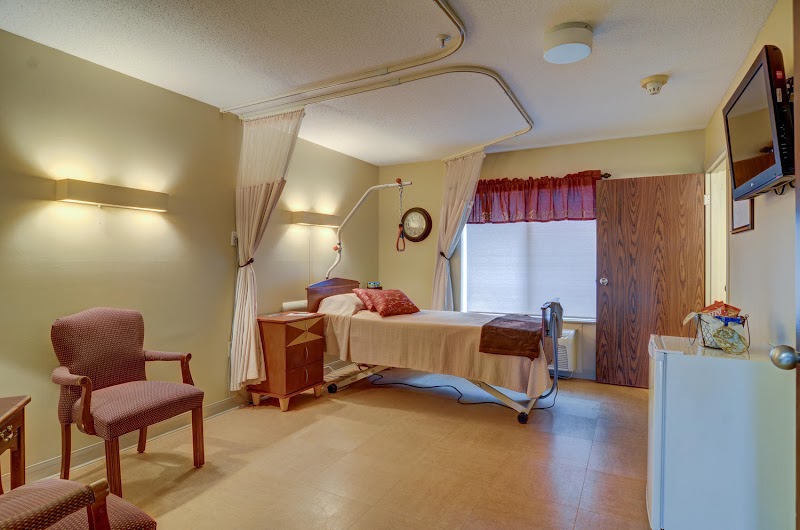
How is Loft Rehab & Nursing Of Canton Staffed?

CMS rates LOFT REHAB & NURSING OF CANTON's staffing level at 2 out of 5 stars, which is below average compared to other nursing homes. Staff turnover is 38%, compared to the Illinois average of 46%. This relatively stable workforce can support continuity of care.

What Have Inspectors Found at Loft Rehab & Nursing Of Canton?

State health inspectors documented 26 deficiencies at LOFT REHAB & NURSING OF CANTON during 2022 to 2025. These included: 2 that caused actual resident harm and 24 with potential for harm. Deficiencies causing actual harm indicate documented cases where residents experienced negative health consequences.
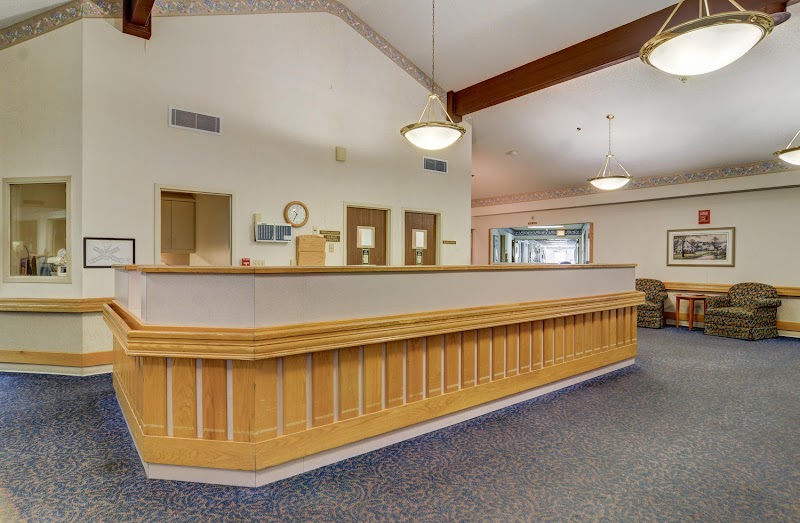
Who Owns and Operates Loft Rehab & Nursing Of Canton?

LOFT REHAB & NURSING OF CANTON is owned by a for-profit company. For-profit facilities operate as businesses with obligations to shareholders or private owners. The facility is operated by THE LOFT REHABILITATION AND NURSING, a chain that manages multiple nursing homes. With 90 certified beds and approximately 62 residents (about 69% occupancy), it is a smaller facility located in CANTON, Illinois.
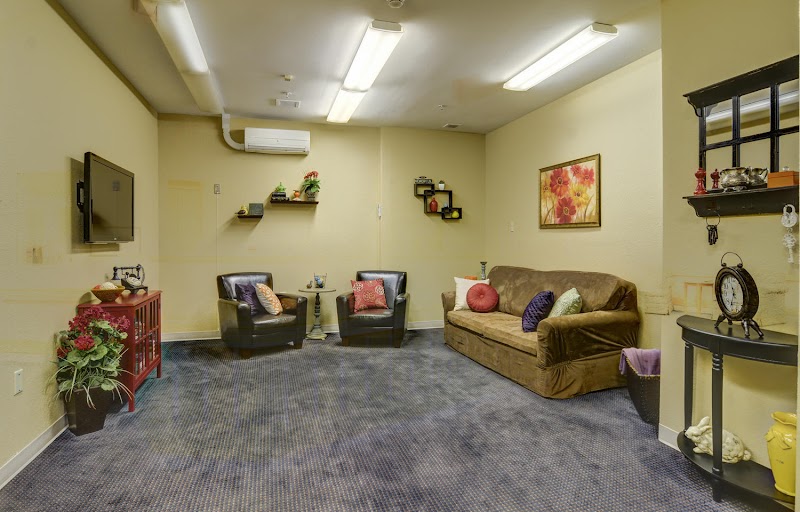
How Does Loft Rehab & Nursing Of Canton Compare to Other Illinois Nursing Homes?

Compared to the 100 nursing homes in Illinois, LOFT REHAB & NURSING OF CANTON's overall rating (3 stars) is above the state average of 2.5, staff turnover (38%) is near the state average of 46%, and health inspection rating (3 stars) is at the national benchmark.

What Should Families Ask When Visiting Loft Rehab & Nursing Of Canton?

Based on this facility's data, families visiting should ask: "Can you walk me through typical staffing levels on day, evening, and night shifts?" "Can I visit during a mealtime to observe dining assistance and food quality?" "How do you handle medical emergencies, and what is your hospital transfer rate?" "Can I speak with family members of current residents about their experience?" These questions are particularly relevant given the below-average staffing rating.

Is Loft Rehab & Nursing Of Canton Safe?

Based on CMS inspection data, LOFT REHAB & NURSING OF CANTON has a clean safety record: no substantiated abuse findings (meaning no confirmed cases of resident harm), no Immediate Jeopardy citations (the most serious violation level indicating risk of serious injury or death), and is not on the Special Focus Facility watch list (a federal program monitoring the lowest-performing 1% of nursing homes). The facility has a 3-star overall rating and ranks #1 of 100 nursing homes in Illinois. While no facility is perfect, families should still ask about staff-to-resident ratios and recent inspection results during their visit.

Do Nurses at Loft Rehab & Nursing Of Canton Stick Around?

LOFT REHAB & NURSING OF CANTON has a staff turnover rate of 38%, which is about average for Illinois nursing homes (state average: 46%). Moderate turnover is common in nursing homes, but families should still ask about staff tenure and how the facility maintains care continuity when employees leave.

Was Loft Rehab & Nursing Of Canton Ever Fined?

LOFT REHAB & NURSING OF CANTON has no federal fines on record. CMS issues fines when nursing homes fail to meet care standards or don't correct problems found during inspections. The absence of fines suggests the facility has either maintained compliance or corrected any issues before penalties were assessed. This is a positive indicator, though families should still review recent inspection reports for the full picture.

Is Loft Rehab & Nursing Of Canton on Any Federal Watch List?

LOFT REHAB & NURSING OF CANTON is not on any federal watch list. The most significant is the Special Focus Facility (SFF) program, which identifies the bottom 1% of nursing homes nationally based on persistent, serious quality problems. Not being on this list means the facility has avoided the pattern of deficiencies that triggers enhanced federal oversight. This is a positive indicator, though families should still review the facility's inspection history directly.