RENAISSANCE CARE CENTER
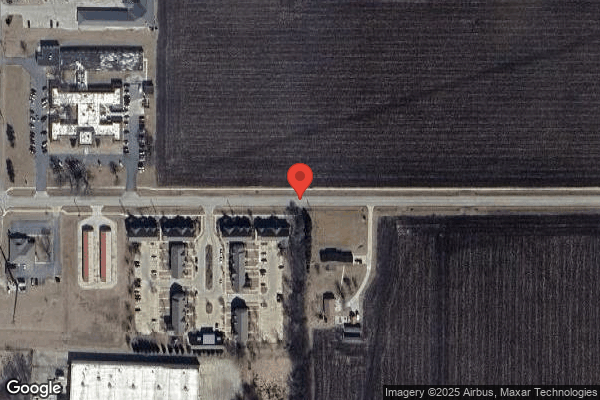

1675 EAST ASH STREET, CANTON, IL 61520 (309) 647-5631
For profit - Corporation 120 Beds Independent Data: November 2025
Trust Grade
38/100
#280 of 665 in IL
Last Inspection: January 2025

Within standard 12-15 month inspection cycle. Federal law requires annual inspections.

Overview

Renaissance Care Center in Canton, Illinois has received a Trust Grade of F, indicating significant concerns about the facility's care quality. Ranked #280 of 665 in Illinois places it in the top half, but still shows it is not performing well overall, especially given its county rank of #5 out of 6. The facility is experiencing a worsening trend, with issues increasing from 2 in 2024 to 9 in 2025. Staffing is a major strength, receiving a top rating of 5/5 stars and a low turnover rate of 29%, which is better than the state average. However, there have been serious concerns noted, such as failing to provide effective pain management for a hospice resident and improper storage of vaccines alongside food, which could pose safety risks for all residents.

Trust Score
F
38/100
In Illinois
#280/665
Top 42%
Safety Record
High Risk
Review needed
Inspections
Getting Worse
2 → 9 violations
Staff Stability
✓ Good
29% annual turnover. Excellent stability, 19 points below Illinois's 48% average. Staff who stay learn residents' needs.
Penalties
✓ Good
No fines on record. Clean compliance history, better than most Illinois facilities.
Skilled Nurses
✓ Good
Each resident gets 125 minutes of Registered Nurse (RN) attention daily — more than 97% of Illinois nursing homes. RNs are the most trained staff who catch health problems before they become serious.
Violations
⚠ Watch
26 deficiencies on record. Higher than average. Multiple issues found across inspections.
★★★☆☆
3.0
Overall Rating
★★★★★
5.0
Staff Levels
★★★★☆
4.0
Care Quality
★★☆☆☆
2.0
Inspection Score
Stable
2024: 2 issues
2025: 9 issues

The Good

  • 5-Star Staffing Rating · Excellent nurse staffing levels
  • 4-Star Quality Measures · Strong clinical quality outcomes
  • Low Staff Turnover (29%) · Staff stability means consistent care
  • Full Sprinkler Coverage · Fire safety systems throughout facility
  • No fines on record
  • Staff turnover is low (29%)

    19 points below Illinois average of 48%

Facility shows strength in staffing levels, quality measures, staff retention, fire safety.

The Bad

3-Star Overall Rating

Near Illinois average (2.5)

Meets federal standards, typical of most facilities

The Ugly 26 deficiencies on record

2 actual harm
Jul 2025 1 deficiency
CONCERN (E) 📢 Someone Reported This

A family member, employee, or ombudsman was alarmed enough to file a formal complaint

Potential for Harm - no one hurt, but risky conditions existed

Deficiency F0602 (Tag F0602)

Could have caused harm · This affected multiple residents

Based on interview and record review, the facility failed to prevent misappropriation of controlled substance medications for five of six residents (R1, R2, R3, R4, and R5) reviewed for misappropriati...

Read full inspector narrative →
Based on interview and record review, the facility failed to prevent misappropriation of controlled substance medications for five of six residents (R1, R2, R3, R4, and R5) reviewed for misappropriation of resident medications in a sample of six. Findings include:The facility's Abuse Prevention Policy, undated, documents This facility affirms the right of our residents to be free from abuse, neglect, exploitation, misappropriation of property, deprivation of goods and services by staff or mistreatment. This facility therefore prohibits abuse, neglect, exploitation, misappropriation of property, and sensitive and resident secure environment. The purpose of this policy is to assure that the facility is doing all that is within its control to prevent occurrences of abuse, neglect, exploitation, misappropriation of property, deprivation of goods and services by staff and mistreatment of residents. This facility is committed to protecting our residents from abuse, neglect, exploitation, misappropriation of property and mistreatment by anyone including, but not limited to, facility staff, other residents, consultants, volunteers, staff from other agencies providing services to the individual, family members or legal guardians, friends, or any other individuals. Definitions: The following definitions are based on federal and state laws, regulations, and interpretive guidelines. Misappropriation of Resident Property means the deliberate misplacement, exploitation, or wrongful temporary, or permanent use of a resident's belongings or money without the resident's consent. Misappropriation of a resident's property means the deliberate misplacement, exploitation, or wrongful temporary or permanent use of a resident's belongings or money without the resident's consent.On 7/17/25 at 8:45 AM, V1 (Administrator) stated on 6/16/25, R1 requested a pain pill, but no Norco was available. V9 (Registered Nurse) contacted the pharmacy to request a refill. The pharmacy informed her that a card of 30 Norco 5-325 mg tablets had been delivered on 6/13/25. V2 (Director of Nursing) confirmed the presence of the packing slip in the narcotic binder but found no medication card or narcotic count sheet. R1's missing Norco prompted an internal review and launched a broader investigation into potential misappropriation. V1 stated on review of facility video footage V4 (Registered Nurse) was observed taking the medication cart down the hallway and positioning her body to obscure the camera's view of the narcotic box. V4 stood on the side of the cart, leaned over, and appeared to write in the narcotic count book. V4 consistently zipped up her lab coat immediately afterward and positioned her body in a way that made it unclear if she was popping pills from blister cards or placing entire cards into her clothing. V1 noted the behavior and body positioning were unnatural for standard medication administration practices and inconsistent with legitimate narcotic handling procedures. V1 stated V4 is known to be right-handed but was seen moving cards awkwardly with her left hand, further raising concern. V1 further stated after receiving past narcotic slips, the facility identified altered scripts that had been wrote to dispense 60 pills changed to 160 pills, the Drug Enforcement Administration (DEA) number wrote on the scripts appeared to be written in V4's handwriting. V1 stated after comparing schedules to the dates on the scripts, V4 was working on the days that the scripts were altered. On 7/17/25 at 9:30 AM, V2 (Director of Nursing) stated on 6/16/25, around 10:00 AM, V2 was informed by V9 (Registered Nurse) that R1 was out of Norco and V9 had contacted the pharmacy. The pharmacy confirmed a card of 30 Norco tablets was delivered on 6/13/25. V2 confirmed the packing slip for the 6/13 delivery was present but the medication card could not be located. R1's Norco was not found in medication carts on 100 or 200 halls. V2 stated she conducted interviews with staff who had worked on and after the delivery date. V11 (3rd shift Registered Nurse) on 6/13 stated V11 placed the Norco in the narcotic box, signed the narcotic sheet, and filed the packing slip. V4 (Day shift Registered Nurse) on 6/14 and V5 (Assistant Director of Nursing), working 6/14-6/15 both reported R1 did not have Norco available during their shifts. V2 stated on review of security footage, the facility found no evidence the Norco was placed in the cart or signed into the narcotic count sheet, despite packing slips and delivery records confirming receipt. V2 further stated V4 was on vacation from 6/16-6/24. V2 stated V4 was suspended pending investigation and when asked to return on 6/23/25 for an interview, V4 responded that she wouldn't pass a drug test and V4 later resigned via text message and denied taking narcotics. 1.) R1's medical chart includes a prescription dated 3/27/25 for Hydrocodone 5-325 milligrams, one tablet by mouth every six hours as needed for pain, with instructions to dispense 160 tablets and six refills, not to exceed four tablets per day. The facility's final investigation report, documents R1 had an active order for Norco 5/325 milligrams and received the following quantities monthly, as documented on the Pharmacy Delivery List Report compared to what was administered per the electronic Medication Administration Record (MAR): For the month of March 2025, 119 Norco pills were delivered to the facility from the pharmacy, 68 Norco pills were administered to R1, and 51 Norco pills were unaccounted for. April 2025, 90 Norco pills were delivered to the facility from the pharmacy, 55 Norco pills were administered to R1, and 35 Norco pills were unaccounted for. May 2025, 120 Norco pills were delivered to the facility from the pharmacy, 55 Norco pills were administered to R1, and 65 Norco pills were unaccounted for. June 2025, 60 Norco pills were delivered to the facility from the pharmacy, 24 Norco pills were administered to R1, and 36 Norco pills were unaccounted for. These discrepancies total 187 Norco tablets unaccounted for over a four-month period.On 7/17/25 at 10:00 AM, R1 stated There were times I didn't get my pain pills because the staff said they were waiting for delivery. They gave me Tylenol instead.2.) R2's Physician Orders document R2 had an active physician order for Norco 7.5/325 milligrams, one tablet every four hours as needed for pain.The facility's final investigation report document R2 had an active order for Norco 7.5/325 milligrams and received the following quantities monthly, as documented on the Pharmacy Delivery List Report compared to what was administered per the electronic Medication Administration Record (MAR): For the month of March 2025, 210 Norco pills were delivered to the facility from the pharmacy, 13 Norco pills were administered to R2, and 197 Norco pills were unaccounted for. April 2025, 160 Norco pills were delivered to the facility from the pharmacy, 22 Norco pills were administered to R2, and 138 Norco pills were unaccounted for. May 2025, 200 Norco pills were delivered to the facility from the pharmacy, 20 Norco pills were administered to R2, and 180 Norco pills were unaccounted for. June 2025, 70 Norco pills were delivered to the facility from the pharmacy, 11 Norco pills were administered to R2, and 59 Norco pills were unaccounted for. These discrepancies total 574 Norco tablets unaccounted for over a four-month period. On 6/20/25, an additional 30 Norco 5-325 mg were delivered, but never documented or located.On 7/17/25 at 10:40 AM, V2 (Director of Nursing) stated V4 was taking the delivery slips and the narcotic sheet with the medications and that's why nobody noticed. V4 denied all knowledge during her interview.3.) R3's Physician Orders documents an order for Norco 5-325 milligrams, one tablet every four hours as needed for pain.Pharmacy delivery logs and MAR review from March 1 to June 30, 2025, revealed: For the month of March 2025, 150 Norco pills were delivered to the facility from the pharmacy, 0 Norco pills were administered to R3, and 150 Norco pills were unaccounted for. April 2025, 90 Norco pills were delivered to the facility from the pharmacy, 0 Norco pills were administered to R3, and 90 Norco pills were unaccounted for. May 2025, 130 Norco pills were delivered to the facility from the pharmacy, 0 Norco pills were administered to R3, and 130 Norco pills were unaccounted for. June 2025, 90 Norco pills were delivered to the facility from the pharmacy, 0 Norco pills were administered to R3, and 90 Norco pills were unaccounted for. These discrepancies total 460 Norco tablets unaccounted for over a four-month period.On 7/17/25 at 10:50 AM, R3 stated R3 does not have pain that requires taking her Norco.4.) R4's Physician orders document an order for Norco 5-325 milligrams, one tablet every six hours as needed for pain.Pharmacy delivery logs and MAR review from March 1 to June 30, 2025, revealed: For the month of March 2025, 90 Norco pills were delivered to the facility from the pharmacy, 10 Norco pills were administered to R4, and 80 Norco pills were unaccounted for. April 2025, 150 Norco pills were delivered to the facility from the pharmacy, 11 Norco pills were administered to R4, and 139 Norco pills were unaccounted for. May 2025, 120 Norco pills were delivered to the facility from the pharmacy, 4 Norco pills were administered to R4, and 116 Norco pills were unaccounted for. June 2025, 90 Norco pills were delivered to the facility from the pharmacy, 2 Norco pills were administered to R4, and 88 Norco pills were unaccounted for. These discrepancies total 423 Norco tablets unaccounted for over a four-month period.Pharmacy delivery logs and Facility Incident report document a delivery of Norco for R4 on 6/15/25 is missing. Records confirm V4 worked during this delivery. On 7/17/25 at 9:45 AM, R4 stated there have been times Norco wasn't available because pharmacy had not delivered it to the facility. 5.) R5's Physician Orders documents an order for Acetaminophen-Codeine (Tylenol #3) 300-30 milligrams, one tablet by mouth every six hours as needed for severe pain.Pharmacy delivery logs and MAR review from March 1 to June 30, 2025, revealed: For the month of March 2025, 30 Tylenol #3 pills were delivered to the facility from the pharmacy, three Tylenol #3 pills were administered to R5, and 27 Tylenol #3 pills were unaccounted for. April 2025, 0 Tylenol #3 pills were delivered to the facility from the pharmacy, three Tylenol #3 pills were administered to R5, and 0 Tylenol #3 pills were unaccounted for. May 2025, 60 Tylenol #3 pills were delivered to the facility from the pharmacy, five Tylenol #3 pills were administered to R5, and 55 Tylenol #3 pills were unaccounted for. June 2025, 60 Tylenol #3 pills were delivered to the facility from the pharmacy, two Tylenol #3 pills were administered to R5, and 58 Tylenol #3 pills were unaccounted for. These discrepancies total 127 Tylenol #3 pills unaccounted for over a four-month period.On 7/17/25 at 9:30 AM, V2 stated a delivery of Tylenol #3 on 6/15/25 for R5 is missing entirely. V4 was the only nurse on duty at the time.
Jan 2025 8 deficiencies
CONCERN (D)

Potential for Harm - no one hurt, but risky conditions existed

Resident Rights (Tag F0550)

Could have caused harm · This affected 1 resident

**NOTE- TERMS IN BRACKETS HAVE BEEN EDITED TO PROTECT CONFIDENTIALITY** Based on observation, interview, and record review the facility failed to cover a urinary drainage catheter bag with a privacy b...

Read full inspector narrative →
**NOTE- TERMS IN BRACKETS HAVE BEEN EDITED TO PROTECT CONFIDENTIALITY** Based on observation, interview, and record review the facility failed to cover a urinary drainage catheter bag with a privacy bag for two of 15 residents (R4, R48) reviewed for dignity in the sample of 38. Findings include: The Resident Privacy and Dignity policy dated 1/20/16 documents Purpose: To provide all residents with a home like environment that promotes dignity and respect to the residents of the facility. Policy: To ensure that all residents are provided with dignity and privacy. Responsibility: It is the responsibility of all staff to ensure that all residents have privacy and dignity. The Resident Rights Booklet dated 11/18, documents Your facility must treat you with dignity and respect and must care for you in a manner that promotes your quality of life. Your facility must be safe, clean, comfortable, and homelike. 1. R4's current computerized medical record, documents R4 was admitted to the facility on [DATE] with diagnoses which included Atrophy of Kidney (Terminal), Peritoneal Abscess, and Acute Kidney Failure. R4's MDS (Minimum Data Set) assessment dated [DATE] documents a BIMS (Brief Interview for Mental Status) Score of 15/15, indicating (cognition intact). R4 has an Indwelling Urinary Catheter. R4's Physicians Order documents to provide indwelling catheter care daily every shift (dated 12/26/24). On 1/7/25 at 3:05 PM, R4's urinary drainage catheter bag was hanging on the side of R4's bed. The urinary drainage catheter bag was visible from the hallway with amber colored urine in the bag. 2. R48's current computerized medical record, documents R48 was admitted to the facility on [DATE] with diagnoses which included Seizures, Benign Prostatic Hyperplasia with Lower Urinary Tract Symptoms, Down Syndrome, Retention of Urine, Spondylosis with Myelopathy, Cervical Region, Fusion of Spine, Cervical Region, and Urinary Tract Infection. R48's MDS (Minimum Data Set) assessment dated [DATE] documents a BIMS (Brief Interview for Mental Status) Score of 2/15, indicating (severe cognitive impairment). R48 has an indwelling urinary catheter. R48's Physicians Order documents to provide catheter care every shift for urinary catheter (dated 11/16/24). On 1/7/25 at 10:15 AM, R48's urinary drainage catheter bag was hanging on the side of R48's bed. The urinary drainage catheter bag was visible from the hallway with yellow colored urine in the bag. On 1/8/25 at 3:06 PM, V2/Director of Nursing verified that the urinary drainage catheter bags should be covered whenever visible to the hallway to promote dignity.
CONCERN (D)

Potential for Harm - no one hurt, but risky conditions existed

Deficiency F0688 (Tag F0688)

Could have caused harm · This affected 1 resident

**NOTE- TERMS IN BRACKETS HAVE BEEN EDITED TO PROTECT CONFIDENTIALITY** Based on observation, interview, and record review the facility failed to implement a restorative range of motion program and in...

Read full inspector narrative →
**NOTE- TERMS IN BRACKETS HAVE BEEN EDITED TO PROTECT CONFIDENTIALITY** Based on observation, interview, and record review the facility failed to implement a restorative range of motion program and include the restorative program within the resident's care plan for one of one resident (R20) reviewed for limitations in range of motion in the sample of 38. Findings include: The Restorative Program/Range of Motion policy dated 8/3/13 documents Purpose: To provide resident with limited range of motion and appropriate treatment and services to increase or prevent further decrease in range of motion. Policy: All residents will be assessed on admission and quarterly, or more often as a change of condition warrants, for risk factors for development of contractures. A program will be developed based on the resident's unique risk factors and involving formalized therapy and/or restorative nursing, as applicable. This program will be reflected in the interdisciplinary care plan and will be systematically and consistently followed. The facility protocol for ROM (Range of Motion) is ten repetitions daily, seven days a week for prevention of contractures. All residents who have been assessed and found to require range of motion exercises will have services provided by staff. Responsibility: It is the responsibility of the CNA (Certified Nursing Assistant)/Restorative Aide to perform exercises as identified. It is the responsibility of the Care Plan Coordinator for addressing on the care plan. Procedure: 1. Resident to be assessed following to determine need for range of motion. 2. Address ROM on care plan and identify extremities to be exercised. 3 Communicate to CNA's who require ROM. Explain procedure to resident including what areas will be exercised. 5. Perform range of motion including finger and toes of extremities to be exercised. 6. Provide resident with 10 (ten) repetitions as per resident's tolerance. Never continue past the point of resistance or pain. Take caution not to over tire the resident. 8. When possible, encourage the resident to assist with the exercise. R20's MDS (Minimum Data Set) assessment dated [DATE] documents R20 is cognitively intact and has limitations in range of motion to both sides of the lower extremities. R20's Restorative Program dated 12-29-23 documents, Perform active range of motion exercises daily to (R20's) upper bilateral extremities using verbal cues and hand on assistance of one staff as needed. On 01/07/25 at 9:31 AM R20 was sitting up in bed. R20 had two bilateral above the knee amputations and could not lift his arms up above his waist. R20 stated, I do not get range of motion exercises by staff. I cannot raise my arms up. I have really bad arthritis to my left shoulder. I would like for the staff to do exercises. On 01/07/25 at 9:45 AM both V5 (CNA/Certified Nursing Assistant) and V6 (CNA) were transferring R20 from the bed to the wheelchair using a mechanical lift. V5 and V6 both stated they do not do range of motion exercises with R20. On 1-9-24 at 11:10 AM V17 (Restorative Aide) stated, (R20's) restorative program documents (R20) should get hand over assistance of staff to do range of motion exercises every day. I usually try to do (R20's) range of motion once a week with (R20) and the CNAs are supposed to do the other days. I personally have not been able to do range of motion exercises with (R20) in quite a while.
CONCERN (D)

Potential for Harm - no one hurt, but risky conditions existed

Deficiency F0692 (Tag F0692)

Could have caused harm · This affected 1 resident

Based on record review and interview the facility failed to ensure physician ordered daily weights were obtained for a resident with Congestive Heart Failure for one of one resident (R31) reviewed for...

Read full inspector narrative →
Based on record review and interview the facility failed to ensure physician ordered daily weights were obtained for a resident with Congestive Heart Failure for one of one resident (R31) reviewed for hydration in the sample of 38. Findings include: The Weights policy dated 9/1/19 documents Purpose: To define the process for obtaining weights on all residents in the facility. It is the responsibility of the C.N.A. (Certified Nursing Assistant)/Designee to obtain weights monthly, and as ordered. The nurse management team is responsible for monitoring to ensure that all weights are obtained in a timely manner. Procedure: 6. D.O.N. (Director of Nursing)/Designee will maintain a log and follow-up to ensure timely completion of weights and proper notification of weight variances. R31's current Physician Order Sheet, dated 1/08/25, document the following order, Daily weight every day due to CHF (Congestive Heart Failure). This order has a start date of 10/24/2024. R31's current Care Plan documents, Focus: I have Congestive Heart Failure. Goal: I will be free of peripheral edema through the next review date. Intervention: 10-24-24 Daily Weight. R31's Weights and Vitals Summary Logs dated 10-24-24 through 1-8-25 document R31 has not been weighed daily as ordered by the physician on ten days within this timeframe. On 01/07/25 at 12:15 PM V2 (Director of Nursing) verified R31 has not been weighed daily as ordered for ten days within the timeframe of 10-24-24 through 1-8-25.
CONCERN (E)

Potential for Harm - no one hurt, but risky conditions existed

Abuse Prevention Policies (Tag F0607)

Could have caused harm · This affected multiple residents

**NOTE- TERMS IN BRACKETS HAVE BEEN EDITED TO PROTECT CONFIDENTIALITY** Based on record review and interview the facility failed to complete Criminal History Background Checks within 24-hour of admiss...

Read full inspector narrative →
**NOTE- TERMS IN BRACKETS HAVE BEEN EDITED TO PROTECT CONFIDENTIALITY** Based on record review and interview the facility failed to complete Criminal History Background Checks within 24-hour of admission, Illinois Sex Offender Registry checks prior to admission, and Illinois Department of Corrections Sex Registry Checks prior to admission as instructed by the facility's Abuse Policy for five of five residents (R107, R108, R109, R110, R157) reviewed for Abuse Prevention in the sample of 38. Findings include: The Abuse Prevention Program Policy dated 8/11/17 documents Policy It is the policy of this facility to prevent resident abuse, neglect, exploitation, mistreatment, and misappropriation of resident property. The following procedures shall be implemented when an employee or agent becomes aware of abuse or neglect of a resident, or of an allegation of suspected abuse or neglect of a resident by a 3rd (third) party. II. Pre-admission Screening of Potential Residents: This facility shall check the criminal history background on any resident seeking admission to the facility in order to identify previous criminal convictions. Prior to the admission of a new resident to the facility, this facility will: Check for the resident's name on the Illinois Sex Offender registration. Check for the resident's name on the Illinois Department of Corrections sex registrant search page. Within 24 hours after admission of a new resident to the facility, this facility will: Initiate a Criminal History Background Check according to the Facility Identified Offender Policy and Procedure. 1. R107's admission Record documents R107 was admitted on [DATE]. R107's Criminal History Background check, Illinois Sex Offender Registry, and Illinois Department of Corrections Registry document being completed on 1-6-25 (three days after R107's admission). 2. R108's admission Record documents R108 was admitted on [DATE]. R108's Criminal History Background check, Illinois Sex Offender Registry, and Illinois Department of Corrections Registry document being completed on 1-6-25 (three days after R108's admission). 3. R109's admission Record documents R109 was admitted on [DATE]. R109's Criminal History Background check, Illinois Sex Offender Registry, and Illinois Department of Corrections Registry document being completed on 12-30-24 (three days after R109's admission). 4. R110's admission Record documents R110 was admitted on [DATE]. R110's Criminal History Background check, Illinois Sex Offender Registry, and Illinois Department of Corrections Registry document being completed on 12-23-24 (three days after R110's admission). 5. R157's admission Record documents R157 was admitted on [DATE]. R157's Illinois Sex Offender Registry and Illinois Department of Corrections Registry document being completed on 1-7-25 (five days after R157's admission). On 1-8-25 at 11:30 AM V8 (Admission's Coordinator) stated R107-R110's and R157's Criminal History Background Checks, Illinois Sex Offender Registry Checks, and Illinois Department of Corrections Registry Checks were not completed prior to admission or within 24 hours of admission. V8 stated, Me and (V9/Vice President of Operations) are responsible to do the resident background checks, however me and (V9) were off when (R107-R110 and R157) were admitted , so their background checks did not get done within 24 hours of their admission.
CONCERN (E)

Potential for Harm - no one hurt, but risky conditions existed

Deficiency F0700 (Tag F0700)

Could have caused harm · This affected multiple residents

**NOTE- TERMS IN BRACKETS HAVE BEEN EDITED TO PROTECT CONFIDENTIALITY** Based on observation, interview, and record review the facility failed to assess a resident for the risk of entrapment and medic...

Read full inspector narrative →
**NOTE- TERMS IN BRACKETS HAVE BEEN EDITED TO PROTECT CONFIDENTIALITY** Based on observation, interview, and record review the facility failed to assess a resident for the risk of entrapment and medical needs, obtain a physician's order prior to use, and obtain a consent prior to the use of side rails/assist rails for seven of seven residents (R2, R20, R28, R31, R48, R49, R107) reviewed for side rail use in the sample of 38. Findings include: The Side Rails Policy dated 10/9/19 documents Purpose: To provide guidelines assessment and use of side rails. Policy: The use of bed rails as restraints is prohibited unless they are necessary to treat a resident's medical symptoms. All residents who utilize rails will have a side rail screening completed. Responsibility: It is the responsibility of the Care Plan Coordinator/Rehab Nurse to assess the need for side rails, and document and care plan accordingly. Procedure: 1. If a resident requests side rails, a Side Rail Assessment Form must be completed and Side Rail Assessment for Risk of Entrapment. A physician order must be obtained when using side rails. The order must indicate the number of side rails to be used and the medically related reason. If used for mobility, then this must be indicated in the order. (Use) Side Rail Assessment Form. (Use) Side Rail Consent Form. (Use) Side Rail Assessment for Risk of Entrapment. 1.R20's admission Record documents R20 is a [AGE] year-old that was admitted to the facility on [DATE] with the diagnoses of Chronic Respiratory Failure, Chronic Obstructive Pulmonary Disease, Congestive Heart Failure, Type II Diabetes Mellitus, Hypotension, and Acquired Absence of the Left and Right Legs Above the Knee. R20's Fall assessment dated [DATE] documents R20 is a moderate risk for falls, is totally incontinent of bowel and bladder, is receiving more than two medications that put R20 at risk for falls and is unable to independently come to a standing position. R20's current Physician's Order Sheets document R20 utilizes ½ side rails for mobility and safety. R20's Medical Record does not include a consent or an assessment of R20's ½ side rails for appropriate use or risks for entrapment. On 01/07/25 at 9:31 AM R20 was lying in bed with 1/2 side rails in the raised position to both upper sides of R20's bed. 2. R28's admission Record documents R28 is an [AGE] year-old that was admitted to the facility on [DATE] with the diagnoses of Diabetes Mellitus, Anxiety Disorder, Insomnia, and Chronic Obstructive Pulmonary Disease. R28's current Physician's Order Sheets document R28 utilizes a right-side bed cane (assist rail) for bed mobility. R28's Fall assessment dated [DATE] documents R28 is a high risk for falls, is totally incontinent of bowel and bladder, is confined to a chair and disorientated, is unable to independently come to a standing position, requires hands-on assistance to move from place-to-place, and has decreased in muscle coordination. R28's Medical Record does not include an assessment of R28's 1/8 sized assist rail for appropriate use and risks for entrapment or a consent for the use of R28's assist rail. On 01/08/25 at 9:00 AM R28 was sitting up in bed with an 1/8 sized assist rail in the raised position to the right upper side of R28's bed. 3. R31's admission Record documents R31 is a [AGE] year-old that was admitted to the facility on [DATE] with the diagnoses of Morbid Obesity, Depression, Anxiety Disorder, and Chronic Obstructive Pulmonary Disease. R31's Fall assessment dated [DATE] documents R31 is a moderate risk for falls, is frequently incontinent of bowel and bladder, and is receiving more than two medications that put R31 at risk for falls. R31's Medical Record does not include an assessment of R31's 1/8 sized assist rail for appropriate use and risks for entrapment, a consent for the use, or a physician's order for the use of R31's assist rail. On 01/08/25 at 9:05 AM R31 was sitting up in bed with an 1/8 sized assist rail in the raised position to the right upper side R31's bed. 4. R107's admission Record documents R107 is a [AGE] year-old that was admitted to the facility on [DATE] with the diagnoses of Anxiety Disorder, Insomnia, Acute and Chronic Respiratory Failure with Hypoxia, Fibromyalgia, Chronic Obstructive Pulmonary Disease, and Bipolar Disorder. R107's Brief Interview for Mental Status dated 1-8-25 documents R107 is severely cognitively impaired. R107's Fall assessment dated [DATE] documents R107 is a high risk for falls, is frequently incontinent of bowel and bladder, is receiving more than two medications that put R107 at risk for falls, is confined to a chair and disorientated, is unable to independently come to a standing position, exhibits loss of balance while standing, and has decreased muscle coordination. R107's Medical Record does not include an assessment of R107's 1/8 sized assist rail for appropriate use and risks for entrapment, a consent for the use, or a physician's order for the use of R107's assist rail. On 01/08/25 at 09:18 AM R107 was lying in bed with an 1/8 sized assist rail in the raised position to the right upper side of R107's bed. 5. R2's current computerized medical record, documents R2 was admitted to the facility on [DATE] with diagnoses which included Paraplegia, Methicillin Resistant Staphylococcus Aureus Infection as the cause of Diseases Classified Elsewhere, Encounter for Attention to Colostomy, Encounter for Attention to Other Artificial Openings of Urinary Tract. R2's Fall assessment dated [DATE] documents R2 is a low risk for falls, is occasionally incontinent of bowel/bladder, and is confined to a chair and oriented. R2's Medical Record does not include an assessment of R2's 1/8 sized assist rail for appropriate use and risks for entrapment, a consent for use, or a physician's order for the use of R2's assist rail. On 1/9/25 at 9:45 AM, R2 was lying in bed with an 1/8 sized assist rail on the left side of R2's bed. 6. R48's current computerized medical record, documents R48 was admitted to the facility on [DATE] with diagnoses which included Seizures, Benign Prostatic Hyperplasia with Lower Urinary Tract Symptoms, Down Syndrome, Retention of Urine, Spondylosis with Myelopathy, Cervical Region, Fusion of Spine, Cervical Region, and Urinary Tract Infection. R48's MDS (Minimum Data Set) assessment dated [DATE] documents a BIMS (Brief Interview for Mental Status) Score of 2/15, indicating (severe cognitive impairment). R48's Fall assessment dated [DATE] documents R48 is a high risk for falls, has had multiple falls, is totally incontinent of bowel and bladder and is unable to independently come to a standing position. R48's Medical Record does not include an assessment of R48's 1/8 sized assist rail for appropriate use and risks for entrapment, a consent for use, or a physician's order for the use of R48's assist rail. On 1/7/25 at 10:15 AM, R48 was lying in bed with an 1/8 sized assist rail on each side of R48's bed. 7. R49's current computerized medical record, documents R49 was admitted to the facility on [DATE] with diagnoses which included Infarction due to Unspecified Occlusion or Stenosis of Right Middle Cerebral Artery, Hemiplegia and Hemiparesis Following Cerebral Infarction Affecting Left Non-Dominant Side, Dysphasia, and Metabolic Encephalopathy. R49's MDS assessment dated [DATE] documents a BIMS Score of 13/15, indicating (cognition intact). This MDS also documents that R49 has an impairment on one side of her upper and lower extremity, is dependent on staff for activities of daily living, and requires substantial assistance for bed mobility and transfers. R49's Fall assessment dated [DATE] documents R49 is a high risk for falls, is occasionally incontinent of bowel and bladder, is receiving two medications that put R49 at risk for falls, and is unable to independently come to a standing position. R49's Medical Record does not include an assessment of R49's 1/8 sized assist rail for appropriate use and risks for entrapment, a consent for use, or a physician's order for the use of R49's assist rail. On 1/8/25 at 9:37 AM, R49 was lying in bed with an 1/8 sized assist rail on both sides of R49's bed. On 01/07/25 at 12:15 PM V2 (Director of Nursing) stated, We (the facility) have never completed a side rail or assist rail assessment for any residents that use them. I do not think the facility even has an assessment form to use. (R2, R20, R28, R31, R48, R49, and R107) do not have consents for the use of their side rails and (R2, R20, R31, R48, R49, and R107) do not have physician's orders for the use of their side rails.
CONCERN (E)

Potential for Harm - no one hurt, but risky conditions existed

Infection Control (Tag F0880)

Could have caused harm · This affected multiple residents

**NOTE- TERMS IN BRACKETS HAVE BEEN EDITED TO PROTECT CONFIDENTIALITY** Based on observation, interview, and record review the facility failed to follow Enhanced Barrier Precautions (EBP) for five res...

Read full inspector narrative →
**NOTE- TERMS IN BRACKETS HAVE BEEN EDITED TO PROTECT CONFIDENTIALITY** Based on observation, interview, and record review the facility failed to follow Enhanced Barrier Precautions (EBP) for five residents (R2, R4, R10, R48, and R49) of six residents reviewed for EBP in the sample of 38. Findings include: The Infection Control Policy dated 7/29/24 documents Purpose: Standard Precautions shall be used when caring for residents at all times regardless of their suspected or confirmed infection status. Transmission-Based Precautions shall be used when caring for residents who are documented or suspected to have communicable disease or infections that can be transmitted to others. The facility shall make every effort to use the least restrictive approach to managing individual with potentially communicable infections. Transmission-Based Precautions shall only be used when transmission cannot be reasonably prevented by less restrictive measures. F. Enhanced Barrier Precautions: In addition to Standard Precaution, implement Enhanced Barrier Precautions for certain residents during specific high-contact resident care activities associated with MDRO (Multidrug-Resistant Organism) transmission. A. Examples of infection requiring Enhanced Barrier Precautions include but are not limited to: (1) Patients with known MDRO infection. (2) Patients who are colonized with an infectious MDRO organism. (3) Asymptomatic patients who are suspected of/under investigation for colonization or infection with an infectious microorganism. B. Gloves and Handwashing (1) In addition to wearing gloves as outlined under Standard Precautions, wear a gown (clean, non-sterile) when entering the room. C. Gown (1) In addition to wearing a gown as outlined under Standard Precautions, wear a gown (clean, non-sterile) for all interactions that may involve contact with the resident or potentially contaminated items in the resident's environment. Remove the gown and perform hand hygiene before leaving the resident's room. (2) After removing the gown, do not allow clothing to contact potentially contaminated environmental surfaces. 1. R2's current computerized medical record, documents R2 was admitted to the facility on [DATE] with diagnoses which included Paraplegia, Methicillin Resistant Staphylococcus Aureus Infection as the cause of Diseases Classified Elsewhere, Encounter for Attention to Colostomy, Encounter for Attention to Other Artificial Openings of Urinary Tract. R2's MDS (Minimum Data Set) assessment dated [DATE] documents a BIMS (Brief Interview for Mental Status) Score of 15/15, indicating (cognition intact). R2 has an Ostomy (including urostomy, ileostomy, and colostomy), and has a surgical wound. R2's Physicians Order documents to monitor ostomy site every shift (dated 9/26/24). Treat R2's right thigh wound daily and as needed every shift for wound care (dated 10/2/24). R2's Care Plan documents that R2 has impairment to skin integrity related to Paraplegia. Treat left buttock wound three time a week and as needed until healed (dated 10/9/24). R2 has a urostomy and colostomy due to paraplegia (dated 9/30/24). The revised Enhanced Barrier Precaution/EBP List printed 1/9/24 documents that R2 is in EBP precautions for having a urostomy/colostomy. On 1/7/25 at 3:25 PM, R2 stated that the staff do not wear a gown or gloves when providing care. On 1/9/25 at 9:45 AM R2 was lying in bed on his right side with a wound dressing on R2's left hip. There was no Enhanced Barrier Precaution sign on R2's door and no Personal Protective Equipment/PPE in or by R2's room. R2 stated that a nurse uses PPE when doing wound care, but the staff do not wear a gown or gloves when providing care. 2. R4's current computerized medical record, documents R4 was admitted to the facility on [DATE] with diagnoses which included Atrophy of Kidney (Terminal), Peritoneal Abscess, and Acute Kidney Failure. R4's MDS assessment dated [DATE] documents a BIMS Score of 15/15, indicating (cognition intact). R4 has an Indwelling Urinary Catheter. R4's Physicians Order documents to provide indwelling catheter care daily every shift (dated 12/26/24). The revised EBP List printed 1/9/24 documents that R4 is in EBP precautions for having an indwelling urinary catheter. On 1/7/25 at 3:05 PM, R4 was lying in bed watching television. There was no EBP sign on R4's door and no PPE in or by R4's room. R4 stated that the staff do not wear a gown or gloves when providing care. On 1/09/25 at 9:40 AM, V16 confirmed (R4) is not listed on the facility's EBP resident list and has not been in EBP precautions but should be because (R4) has a urinary catheter. 3. R10's current computerized medical record, documents R10 was admitted to the facility on [DATE] with diagnoses which included Acute Osteomyelitis of Right Ankle and Foot, Type 2 Diabetes Mellitus with Hyperglycemia, Acute Embolism and Thrombosis of Deep Veins of Right Upper Extremity, Cellulitis of Right Upper Limb, and Acute Kidney Failure. R10's MDS assessment dated [DATE] documents a BIMS Score of 15/15, indicating (cognition intact). R10 has a Diabetic Foot Ulcer. R10's Physicians Order documents to treat right heel everyday shift for wound (dated 12/11/24). On 1/7/25 at 3:25 PM R10 was standing at her door talking to another resident. There was no EBP sign on R10's door and no PPE in or by R10's room. R10 stated that the staff do not wear a gown or gloves when providing care. 4. R48's current computerized medical record, documents R48 was admitted to the facility on [DATE] with diagnoses which included Seizures, Benign Prostatic Hyperplasia with Lower Urinary Tract Symptoms, Down Syndrome, Retention of Urine, Spondylosis with Myelopathy, Cervical Region, Fusion of Spine, Cervical Region, and Urinary Tract Infection. R48's MDS assessment dated [DATE] documents a BIMS Score of 2/15, indicating (severe cognitive impairment). R48 has a urinary indwelling catheter, has one or more unhealed pressure ulcers/injuries, and three unstageable pressure ulcers. R48's Physicians Order documents to provide catheter care every shift for urinary catheter (dated 11/16/24). Cleanse and treat R48's sacrum wound daily (dated 12/11/24). Treat R48's left medial foot once daily until healed (dated 1/7/25). R48's Care Plan documents that R48 has potential/actual impairment to skin integrity. Treat R48's sacrum every evening shift for wound care (dated 12/12/24). Treat R48's left medial foot everyday shift for wound (dated 1/8/25). R48 has an indwelling urinary catheter related to urinary retention. The revised Enhanced Barrier Precaution List printed 1/9/24 documents that R48 is in EBP precautions for having an indwelling urinary catheter. On 1/8/24 at 9:55 AM, there was no EBP sign on R48's door and no PPE in or by R48's room. 5. R49's current computerized medical record, documents R49 was admitted to the facility on [DATE] with diagnoses which included Infarction due to Unspecified Occlusion or Stenosis of Right Middle Cerebral Artery, Hemiplegia and Hemiparesis Following Cerebral Infarction Affecting Left Non-Dominant Side, Dysphasia, and Metabolic Encephalopathy. R49's MDS assessment dated [DATE] documents a BIMS Score of 13/15, indicating (cognition intact). R49 has a feeding tube, has an impairment on one side of her upper and lower extremity, R49 is dependent on staff for activities of daily living and requires substantial assistance for bed mobility and transfers. R49's Physicians Order documents that R49 requires an enteral feeding of Jevity 1.2 85 milliliters per hour from 7:00 PM to 7:00 AM and 250-milliliter flush every six hours. R49's Care Plan documents that R49 requires a feeding tube related to a stroke. The revised Enhanced Barrier Precaution List printed 1/9/24 documents that R49 is in EBP precautions for having a G-tube/Gastrostomy tube. On 1/8/25 at 9:40 AM, R49 was lying in bed on her right side with V14/Registered Nurse/RN standing next to the bed with a clear plastic bag that contained R49's soiled disposable brief. V14 stated that incontinent care was just done for R49. V14 was wearing gloves but not a gown. V14 tied the bag closed and put the bag in the trash. V14 was asked why R49 was in EBP precautions and V14 stated that she thought it was because R49 had red areas to her buttock. V14 was asked if PPE needed to be worn and V14 stated No. On 1/8/25 at 9:42 AM, V15/Certified Nursing Assistant/CNA came into R49's room with a mechanical lift to get R49 up. V15 and V14 transferred R49 from the bed to the recliner with the mechanical lift. V14 and V15 were not wearing PPE. V15 stated that once a resident is dressed PPE is not needed. On 1/08/25 at 2:50 PM, V16/Registered Nurse/Infection Control Preventionist stated the facility is implementing EBP for residents who could be at risk for infection. V16 stated When I educated everyone, I told them if anyone has a hole that shouldn't be there, such as a urinary catheter, gastric tube, venous lines or a bad wound that requires a dressing change, they are on automatic EBP because we could potentially give them something. They (staff) must wear a gown and gloves (PPE) for direct contact with the potential infectious area. I didn't realize they need to have the PPE on for transfers or other close contact. We will be implementing that moving forward. They don't have PPE in every room right now. We put the PPE in the more central areas like the linen cart so staff can use it. On 1/09/25 at 9:40 AM, V16 stated During incontinence care on 1/8/25 (for R49) the staff should have been wearing a gown during the close resident contact.
CONCERN (E)

Potential for Harm - no one hurt, but risky conditions existed

Deficiency F0909 (Tag F0909)

Could have caused harm · This affected multiple residents

Based on observation, interview, and record review the facility failed to perform maintenance inspections of side rails/assist rails for entrapment zones/risks for seven of seven residents (R2, R20, R...

Read full inspector narrative →
Based on observation, interview, and record review the facility failed to perform maintenance inspections of side rails/assist rails for entrapment zones/risks for seven of seven residents (R2, R20, R28, R31, R48, R49, R107) reviewed for side rail use in the sample of 38. Findings include: 1. On 01/07/25 at 9:31 AM R20 was lying in bed with 1/2 side rails in the raised position to both upper sides of R20's bed. R20's Medical Record does not include a maintenance inspection of R20's 1/2 side rails for entrapment zones/risks. 2. On 01/08/25 at 9:00 AM R28 was sitting up in bed with an 1/8 sized assist rail in the raised position to the right upper side of R28's bed. R28's Medical Record does not include a maintenance inspection of R28's 1/8 assist rails for entrapment zones/risks. 3. On 01/08/25 at 9:05 AM R31 was sitting up in bed with an 1/8 sized assist rail in the raised position to the right upper side of R31's bed. R31's Medical Record does not include a maintenance inspection of R31's 1/8 assit rails for entrapment zones/risks. 4. On 01/08/25 at 09:18 AM R107 was lying in bed with an 1/8 sized assist rail in the raised position to the right upper side of R107's bed. R107's Medical Record does not include a maintenance inspection of R107's 1/8 assist rails for entrapment zones/risks. 5. On 1/9/25 at 9:45 AM, R2 was lying in bed with an 1/8 sized assist rail on the left side of R2's bed. R2's Medical Record does not include a maintenance inspection of R2's 1/8 assist rail for entrapment zones/risks. 6. On 1/7/25 at 10:15 AM, R48 was lying in bed with an 1/8 sized assist rail on each side of R48's bed. R48's Medical Record does not include a maintenance inspection of R48's 1/8 assist rails for entrapment zones/risks. 7. On 1/8/25 at 9:37 AM, R49 was lying in bed with an 1/8 sized assist rail on both sides of R49's bed. R49's Medical Record does not include a maintenance inspection of R49's 1/8 assist rails for entrapment zones/risks. On 01/08/25 at 11:35 AM V18 (Maintenance Assistant) stated, I am not aware of maintenance doing any inspections of side rails or assist rails to check for areas of entrapment with the bed. I just apply the rails and fix them if they break.
CONCERN (F)

Potential for Harm - no one hurt, but risky conditions existed

Deficiency F0761 (Tag F0761)

Could have caused harm · This affected most or all residents

Based on Observation, Interview, and Record Review the facility failed to ensure refrigerated vaccination units were stored separate from food and beverages. This failure has the potential to affect a...

Read full inspector narrative →
Based on Observation, Interview, and Record Review the facility failed to ensure refrigerated vaccination units were stored separate from food and beverages. This failure has the potential to affect all 59 residents residing in the facility. Findings include: The facility's Storage of Medications policy, dated 4/2016, documents All medications will be safe and properly stored at all times. Medications requiring refrigeration shall be kept in a separate, securely fastened locked box within a refrigerator or locked refrigerator, at or near the nurse's station, or in a refrigerator within a locked medication room. On 1/9/25 at 11:40 AM, the facility's 100 hall medication storage fridge contained a sign on the outside of the fridge that documents Medications Only. Inside of the fridge was a plastic of container of food from outside of the facility. This dish did not contain a label and was sitting directly on top of two boxes of influenza vaccine. This same fridge contained an open bottle of (flavored hydration drink). V13 (Registered Nurse) and V19 (Licensed Practical Nurse) both confirmed that food and drinks should not be stored in the medication room refrigerator and stated that this fridge is only for medications. V13 stated This looks like chili soup, and it was probably brought in for a resident. We have agency nurses who may not have known where to put it. On 1/9/25 at 11:45 AM V16 (Infection Control Preventionist) confirmed that the influenza vaccines stored in the 100-hall medication room refrigerator can be administered to any resident in the building and stated there should not be any food or open drinks kept in that refrigerator. The facility's Long Term Care Application for Medicare and Medicaid dated 1/7/25 and signed by V1 (Administrator) documents 59 residents reside in the facility.
Jun 2024 2 deficiencies 1 Harm
SERIOUS (G) 📢 Someone Reported This

A family member, employee, or ombudsman was alarmed enough to file a formal complaint

Actual Harm - a resident was hurt due to facility failures

Free from Abuse/Neglect (Tag F0600)

A resident was harmed · This affected 1 resident

Based on interview and record review the facility failed to ensure that one resident (R1) is free from abuse in a sample of three residents reviewed for abuse. This failure caused R1 to be visibly soi...

Read full inspector narrative →
Based on interview and record review the facility failed to ensure that one resident (R1) is free from abuse in a sample of three residents reviewed for abuse. This failure caused R1 to be visibly soiled through outer clothes and to have an odor. Findings Include: The Facility's Abuse Reporting policy dated 8/11/2017 documents This facility will not tolerate resident abuse or mistreatment by anyone, including staff members, other residents, consultants, volunteers, and staff of other agencies, resident representative, legal guardians, friends or other individuals. The Abuse Reporting policy documents For the purposes of this policy, and to assist staff members in recognizing abuse, the following definitions shall pertain: Abuse: The willful infliction of injury, unreasonable confinement, intimidation, or punishment with resulting physical harm or pain or mental anguish or by deprivation by an individual, including a caretaker, of goods or services that are necessary to attain ore maintain physical, mental psychosocial well-being. Willful Abuse: as used in this definition of abuse, mean the individual must have acted deliberately, not that the individual must have intended to inflict injury or harm. Mental Abuse: Including, but not limited to, humiliation, harassment, threats of punishment, or withholding of treatment or services. Neglect/Mistreatment: means the failure to provide, or willful withholding of, adequate medical care, mental health treatment, psychiatric rehabilitation, personal care, or assistance with activities of daily living that is necessary to avoid physical harm, mental anguish, or mental illness of a resident. A Complaint Form dated 5/22/24 documents that V9 (R1's Health Care Power of Attorney) complained that on the weekend of 5/17/24-5/19/24 she had stopped in and R1 smelled of urine and was not clean. The Follow Up section of the complaint documented Investigation and (State Agency) report completed. See (State Agency) final report. The Final Report for Allegation related to (R1) dated 5/27/24 documents that R1 is alert with confusion and has a BIMS (Brief Interview for Mental Status) score of 2 (out of possible 15/indicating R1 is severely cognitively impaired) She uses a (reclining padded wheelchair) for mobility that is propelled by staff. She is able to utilize her right arm and will often raise it in the air. She is able to utilize her right arm and will often raise it in the air. She is also able to reach and grasp with her right arm/hand. (R1) has a current care plan for crying/being tearful, verbal aggression (yelling and cursing), physical aggression (grabbing and hitting) and pushing herself out of her (reclining padded wheelchair). The Final Report for Allegation related to (R1) dated 5/27/24 documents The following was noted (On 5/19/24) at approximate 5:45 PM V6 (Registered Nurse) came in for her shift and went to check (R1) because she had her arm up in the air. According to staff (R1) sometimes does this to indicate a need, though not consistently due to her confusion. When (V6/RN) checked (R1) she noted her to be wet and soiled, and she was slid down in her wheelchair. (V6/RN) immediately went to get a CNA to assist her in changing (R1) and laying her down. At approximately 6:00 PM (V6/RN) and (V5 Certified Nurse Aide) took (R1) to her room, changed her and laid her down. (V6/RN) asked (V3/RN) why the resident was sliding down in her chair and soiled. (V3/RN)'s response was that (R1) was having behaviors of aggression toward the staff who provided cares. (V6/RN) stated upon interview that (R1) was having no behaviors at the time she interacted with (R1) and was not having behaviors when she and (V5/CNA) provided cares. V3/CNA) was assigned to (R1) on 5/19/24 stated during her interview that (R1) had been having behaviors of yelling and screaming that day and the day before. She states she had been told to make sure (R1) was safe and leave her alone when these behaviors were occurring due to her being physically aggressive and bruising staff when she grabs and holds on.(V4/CNA) sated she noticed (R1) was when she was in the TV area by the nurses' station at approximately 2:20 PM and had asked the nurses if they wanted her to attempt to change (R1) and lay her down. (V3/CNA) was told by (V3/RN) not change her at that time due to the behaviors (R1) was exhibiting. The Final Report for Allegation related to (R1) documents that it was clear that (V3/RN) was not understanding the appropriate response to resident behaviors and ensuring cares are completed even during the occurrence of behaviors. It also became clear that she was not being truthful about her instructions and response to staff in regard to (R1) on 5/19/24. On 6/7/24 at 12:42 V8 (Administrator on call at the time of allegation) stated that she reviewed the video of the areas in question regarding the allegation with R1 on 5/19/24. V8 confirmed that R1 remained in her (reclining padded wheelchair) with no toileting and/or changing of her incontinent brief from the time she got up on 5/19/24 until V6 (Registered Nurse) and V4 (Certified Nurse Aide) took her to her room and changed her around 6:00 PM. On 6/7/24 at 11:30 AM V3 (Registered Nurse) seemed confused when asked about the allegation regarding R1 at the facility on 5/19/24. V3 stated what weekend are you talking about? I wouldn't remember all the details of a busy weekend. When asked why she was terminated from the facility V3 stated Oh, that. I told them that I didn't want the (staff) to have to get beat up just to change (R1)'s pants. (R1) was being very resistive that day and would keep saying no. If (staff working at the time of the incident) thought they should have changed (R1) that is on them, not me. They know how to do their jobs. On 6/7/24 at 11:10 AM V4 (Certified Nurse Aide) stated On that day (5/19/24) (R1) was being a little resistive in the morning after breakfast. So I made sure she was dry and positioned and didn't push it with her. When I went back after lunch I noticed she was slid down in her (reclining padded wheelchair) with foot part over the couch cushions. At about 2:00 PM I asked (V3/RN) about it and she said that she couldn't get (R1) to quit trying to get out of her chair. I told her I would go lay (R1) down and change her and (V3/RN) stated 'No, she can just stay there until she calms down.' V4 stated (R1) can be mean and yell and she does pinch sometimes, but I have never had to leave her wet like that before. V4 stated that at that time, 2:00 PM, R1 was visibly soiled and needed changed. V4 stated that she believed that she could have given cares to (R1) without being physically harmed. V4 stated that at 2:00 PM R1 was not having behaviors that V4 could observe. V6 (Registered Nurse) written statement dated 5/21/24 documents When I had come in for work it was about 5:45 PM and (R1) was positioned against the blue sofa, her feet were kind of over the sofa-she looked like she was sliding out of her chair and there was urine and fecal matter on her. I just, how she was, it wasn't appropriate, and that's why I went to (V8/Administrator on call) about it. I said something to (V3/RN) about it because she was on that side, about her sliding down in her chair and she said she's been having behaviors and I said when I walked over she just grabbed my hand, she wasn't having any behaviors. She (V3/RN) didn't have an answer to that. On 6/7/24 at 2:00 PM V6 (Registered Nurse) confirmed that she came in on 5/19/24 around 5:45 PM and found R1 visibly soiled through her clothes with visible BM (Bowel Movement) and food on her clothes and she smelled. V6 confirmed that V3 (Registered Nurse) told her that R1 had been having behaviors that prevented the staff from giving cares. V6 stated I wasn't comfortable with that, so I reported it. I have never had to leave a confused resident in that state before. If (R1) is having behaviors like the grabbing and pinching if you approach her on her left side she cannot reach you. (R1)'s behaviors usually mean that she needs something. V6 stated that when she and V5 (Certified Nurse Aide) changed R1 that she had no behaviors and was not resistive. On 6/7/24 11:15 AM V5 (Certified Nurse Aide) stated when I came in on that day (5/19/24) (V6/RN) told me to clock in and help her lay (R1) down. At that time (around 6:00 PM) (R1) stunk, and you could see that she was wet and messy. I ended up soaking off some of the BM (Bowel Movement) because it was dried into her skin. On a scale of 0-10 with 10 being the worse, she was a ten plus. It was nasty and I would be upset if my loved one looked like that. We have been trained on how to deal with behaviors, so I don't understand why (R1) would have had to have been left that bad ever. She had no behaviors when we laid her down and she had no behaviors when I did the extensive clean up. On 6/11/24 at 9:15 AM V9 (R1's Health Care Power of Attorney) stated I stopped in on the weekend it was either 5/19 or 5/20 and (R1) looked awful. I had my granddaughter with me, and she usually climbs up in (R1)'s lap and hugs her and she would not even get close to her because she stunk so bad. The smell was awful. I did ask staff and they told me she had been being mean, which I know she does sometimes. But it did bother me enough that I went ahead and reported it because I've never seen her that smelly and gross before.
CONCERN (D) 📢 Someone Reported This

A family member, employee, or ombudsman was alarmed enough to file a formal complaint

Potential for Harm - no one hurt, but risky conditions existed

Deficiency F0604 (Tag F0604)

Could have caused harm · This affected 1 resident

**NOTE- TERMS IN BRACKETS HAVE BEEN EDITED TO PROTECT CONFIDENTIALITY** Based on interview the facility failed to ensure that one resident (R1) was free from physical restraint in a sample of three re...

Read full inspector narrative →
**NOTE- TERMS IN BRACKETS HAVE BEEN EDITED TO PROTECT CONFIDENTIALITY** Based on interview the facility failed to ensure that one resident (R1) was free from physical restraint in a sample of three residents reviewed for abuse. Findings Include: The Facility's Physical Restraint policy dated 9/23/15 does not define situations that could be considered a physical restraint. The policy does document that the use of physical restraints shall be limited to situations necessary to maximize a resident's physical, mental and psychosocial wellbeing. Physical restraints shall be considered only after all alternatives to physical restraint usage has been documented as being ineffective in accomplishing a resident's care goals. The [NAME] Webster Dictionary defines a restraint as a device that restricts movement. R1's current care plan dated 12/26/2022 documents I will push myself out of my wheelchair at times. R1's care plan documents, When (R1) is pushing herself out of her wheelchair staff will assist her to her bed. V5(Certified Nurse Aide)'s written statement dated 5/21/24 documents that V5 reported to her shift supervisor that on 5/19/24 R1's wheelchair was pushed up against the couch. On 6/7/24 at 11:15 AM V5 (Certified Nurse Aide) stated when I came in on that day (5/19/24) (R1) was a mess and her chair was reclined back with the footrest over the seat of the couch. She was trying to get out of her chair, but she couldn't because the footrest wouldn't go down. On 6/7/24 at 11:00 AM V4 (Certified Nurse Aide) confirmed that she saw R1 in her reclining wheelchair with her footrest up over the seat of the couch. V4 stated that when she asked V3 (Registered Nurse) about it she was told that R1 had been trying to get out of her chair. V6 (Registered Nurse)'s written statement dated 5/21/24 documents When I had come in for work, it was about 5:45 PM and (R1) was positioned against the blue sofa, her feet were kind of over there on the sofa-she looked like she was sliding out of her chair. On 6/7/24 at 2:00 PM V6 (Registered Nurse) confirmed that on 5/19/24 R1 had been positioned in her reclining wheelchair with the footrest over the couch seat. V6 stated she didn't know how R1 got there. I do know that when she has behaviors she tries to climb out of her chair. V7(Registered Nurse)'s written statement dated 5/21/24 documents On that day (5/19/24) she (R1) kept trying to scoot out of her chair. The written statement documents Do you know anything about her (R1) being pushed up to the couch? I think (V3/Registered Nurse) put her there. On 6/7/24 at 12:42 PM V8 (Administrator on call on 5/19/24) stated that she reviewed video tapes of footage of R1 throughout the day on 5/19/24 related to a complaint voiced by V6 (Registered Nurse) and V9 (R1's Health Care Power of Attorney) related to R1's cares during the 6:00 AM-6:00PM shift on 5/19/24. V8 stated that she observed R1's reclining wheelchair reclined back with R1's footrest over the couch cushions. V8 confirmed that the footrest being in the position would prevent R1 from pushing the foot rest down. V8 stated that she did not know who put R1 in this position. V3 (Registered Nurse) written statement dated 5/20/24 documents We had a complaint related to (R1) being pushed up against the couch in her chair and They said she (R1) was there with her feet propped up on the couch-do you know anything about that? She was in her (padded reclining wheelchair). They said her (padded reclining wheelchair) was propped up on the couch. What? like her feet? that might have been. Have you seen that before? Not typically, but yesterday she kept pulling herself around. On 6/7/24 at 11:15 V3 (Registered Nurse) seemed to be confused when asked about the events that took place on 5/19/24 at the facility. V3 stated I can't remember the details of a busy weekend. When V3 was asked why she was terminated from the facility she stated Oh. That. yes, I know what you are talking about. V3 at first stated that R1 always tries to climb out of the bottom (footrest area) of her (padded reclining wheelchair). Later in the conversation V3 stated that R1 insisted that her footrest be positioned over the couch seats for comfort. V3 confirmed that the couch seat being under the footrest while not touching it does not affect R1's comfort in any way, that the wheelchair itself was supporting her foot area not the couch, The Final Report for Allegation related to (R1) dated 5/27/24 documents that after further discussion with (V3/RN) it was clear she was not understanding the appropriate response to resident behaviors and ensuring cares are completed even during the occurrence of behaviors. It also became clear that she was not being truthful about her instructions and responses to staff regarding (R1) on 5/19/24. V3 was terminated from employment.
Nov 2023 6 deficiencies
CONCERN (D)

Potential for Harm - no one hurt, but risky conditions existed

Tube Feeding (Tag F0693)

Could have caused harm · This affected 1 resident

Based on observation, interview and record review the facility failed to provide procedures, protocols, and training for the use of a manual feeding tube declogging device and failed to follow physici...

Read full inspector narrative →
Based on observation, interview and record review the facility failed to provide procedures, protocols, and training for the use of a manual feeding tube declogging device and failed to follow physician orders for feeding tube site wound treatment for one resident (R9) of two residents reviewed for feeding tubes in the sample of 34. Findings include: Manufacturer Instructions (insert) for Use of (declogging device) dated 2021 documents: Intended use: The intended use of the declogger is to clear clogs from enteral feeding tubes and thereby reduce the occurrence of feeding tube replacement procedures. Indications for use: The declogger is indicated for use only in clearing occlusions and/or clogs in feeding tubes (G/Gastrostomy, J/Jejunostomy, and/or PEG/Percutaneous Endoscopic Gastrostomy style) in sizes from 14Fr (French) - 22Fr. User instructions indicate there are five different sizes of decloggers and that both the size (diameter) and length of the feeding tube should be known to use the appropriate size declogger. Protocol/Policy for use of the declogger: The declogger should be used every week to maintain unimpeded flow of an enteral formula. The declogger device will also be used to achieve patency of a tube that has become clogged with semi-solid formula. The declogger should be disposed of after single use. The following protocol should be followed according to the desired need. Blocked Jejunostomy tube - 1. Determine the size of the gastric or jejunostomy tube. CAUTION: Verify that the tube has not been modified i.e., shortened. 2. Select appropriate size of declogger device that corresponds to the size of the tube. 4. Insert the declogging device to reach the blockage and slowly rotate two times in a clockwise direction then reverse and rotate two-times in a counterclockwise direction while removing it. Do not attempt to force the declogging device through the entire blockage. 5. Repeat the entire process until the stop disk of the declogging device is reached without difficulty. 6. Flush tube with 30-60cc's (cubic centimeters) of water. CAUTION: If the declogging device becomes imbedded in the blockage and cannot be easily dislodged, the enteral feeding tube will need to be replaced. DO NOT attempt to physically remove the declogging device. WARNINGS: If the declogging device becomes imbedded in the blockage and cannot be easily dislodged, the entire feeding tube will need to be changed. DO NOT attempt to physically remove the declogging device. Cross Contamination Risk: Do not reuse the declogging device as this may spread contamination from one patient to another patient. Residual Risk: Risk associated with the use of this product has been reduced as far as possible, but the product cannot completely eliminate potential patient or user harm arising from the following: Harm from mechanical hazards Harm from misuse, or user error Harm from unanticipated origins. Facility Policy/Enteral Tube Feeding dated 9/30/21 documents: When a G-tube becomes displaced, plugged, damaged, or comes completely out it may be replaced or declogged unless contraindicated. Observe the insertion site frequently and report any signs and symptoms of skin breakdown or infection to nurse immediately. Protect skin from further breakdown with appropriate interventions. No policy, protocol/procedure for use of a physical declogging device was presented. Nurse Note dated 11/11/23 at 8:09am indicates R9 was sent to the hospital for J-tube dislodgement after R9's J-tube was found lying beside R9 in her bed with the bulb intact. Note indicates R9's J-tube was reinserted to maintain patency of the stoma. Note indicates R9's J-tube was last surgically replaced on 9/22/23. Note dated 11/11/23 at 9:33am indicates R9 returned to the facility and per hospital staff R9's J-tube was reinserted, however no paperwork was provided by the hospital to confirm tube placement. Note dated 11/11/23 at 12:56pm indicates that while attempting to flush R9's J-tube and start R9's feeding, the nurse was unable to aspirate or flush fluids. Note indicates nurse then attempted to utilize declogger but met with resistance past where declogging device could be visualized. Note indicates hospital physician was contacted and stated to use G-tube until R9 could be scheduled for surgery to replace the J-tube. On 11/16/23 at 1:00pm V5, RN (Registered Nurse) stated that she had to go to another unit (not part of the Skilled Nursing/Long Term Care Unit) to obtain the declogging device that she used to try to declog R9's J-tube on 11/11/23. V5 stated that she just used the size of declogger that the nurse on the other unit gave her to use and that she did not know the size of R9's G or J tubes The sizes of the tube are on the actual tubes. At that time, it was noted that the size of R9's G-tube was 24 Fr with a 7-10ml (milliliter) balloon, and the J-tube was a 22 Fr with a 7-10ml balloon. R9's feeding tubes did not indicate the length of the tubes - only the size (diameter). Neither the size or the length of R9's enteral tubes were found in R9's physician orders or care plan. On 11/16/23 at 2:00pm V7, NP (Nurse Practitioner) stated she is not that familiar with an enteral tube declogging device and wouldn't use one unless she had some training. V7 stated the manufacturer instructions should be followed. On 11/16/23 at 2:50pm V2, DON (Director of Nursing) stated that she was trained by a floor nurse on how to use a declogging device. V2 stated she has never provided any training or instruction to the nurses on how to use the declogger and there is no specific policy, procedure, or protocol for their use. On 11/16/23 at 1:10pm V5, RN was changing the stoma dressings on R9's two feeding tube sites which included a G-tube (on upper abdomen) and J-tube (mid abdomen). Both stoma sites had crusted reddish-brown discharge under and around the skin-side flange. Neither sites had a dressing in place. At that time V5 stated that she usually removes the old dressing, cleans the site, and replaces with a new dressing There should be a dressing. R9's current Physician Order Summary Report indicates Cleanse G/J tube site with soap and water every shift and as needed. Apply dressing as needed every 8 hours and as needed.
CONCERN (D)

Potential for Harm - no one hurt, but risky conditions existed

Deficiency F0883 (Tag F0883)

Could have caused harm · This affected 1 resident

**NOTE- TERMS IN BRACKETS HAVE BEEN EDITED TO PROTECT CONFIDENTIALITY** Based on interview and record review the facility failed to administer the pneumonia vaccine for two (R2 and R50) of five reside...

Read full inspector narrative →
**NOTE- TERMS IN BRACKETS HAVE BEEN EDITED TO PROTECT CONFIDENTIALITY** Based on interview and record review the facility failed to administer the pneumonia vaccine for two (R2 and R50) of five residents reviewed for immunizations in the sample of 34. Findings include: The facility's Pneumo (pneumococcal) Vaccination policy and procedure, dated 10/16/09, documents According to the National Institutes of Health, everyone [AGE] years of age and older should get the pneumococcal vaccine as well as younger people with certain qualifiers. All facility staff will follow the facility policies on Pneumo Vaccinations. All residents will be offered the Pneumo vaccine every 5 years per Center for Disease Control Guidelines recommendations. It is the responsibility of the DON (Director of Nursing)/Designee to ensure that all residents receive the Pneumo Vaccine and proper documentation is done every 5 years. The facility's undated Pneumonia Shot (pneumococcal vaccine) resident education form documents Who should get the pneumococcal vaccine? People age [AGE] or older; People with a chronic illness such as advanced breast cancer, heart or lung disease, or diabetes; People with a weak immune system due to illness and/or the effects of chemotherapy; Residents of nursing homes and other long-term care facilities. The facility's Pneumococcal Vaccine Resident Consent Form includes education and place for signature and date of acceptance or decline of the vaccine. 1. The current Physician Orders for R2, documents May Administer Pneumococcal vaccine every 5 years if not contraindicated. The Immunization Record for R2 documents R2 received the influenza vaccine on 9/28/23 and the pneumococcal vaccine is documented as Immunization Required. The Pneumococcal Vaccine Resident Consent Form for R2, signed and dated 6/25/23, documents R2's consent to receive the Pneumococcal Vaccine. 2. The current Physician Orders for R50, documents May administer Pneumococcal Vaccine every 5 years if not contraindicated. The Immunization Record for R50 documents R50 received the influenza vaccine on 9/25/23 and the pneumococcal vaccine is documented as Immunization Required. The Pneumococcal Vaccine Resident Consent Form for R50, signed and dated 9/4/23, documents R50's consent to receive the Pneumococcal Vaccine. On 11/16/23 at 1:30 pm, V2 DON (Director of Nursing) stated flu vaccines are given during flu season, but the Pneumococcal vaccines can be given at any time. V2 DON stated V3 ICP (Infection Control Preventionist) oversees the facility's immunizations. On 11/15/23 at 12:48 pm, V3 ICP confirmed consent was obtained for R2 on 6/25/23 and R50 on 9/4/23. V3 ICP stated she does not give the Pneumococcal vaccines until the flu vaccinations are given and only orders the pneumonia vaccine when she has enough residents who have consented.
CONCERN (E)

Potential for Harm - no one hurt, but risky conditions existed

Respiratory Care (Tag F0695)

Could have caused harm · This affected multiple residents

Based on observation, interview and record review the facility failed to provide humidified oxygen, physician ordered oxygen flow rates and failed to date oxygen humidifier bottles for six residents (...

Read full inspector narrative →
Based on observation, interview and record review the facility failed to provide humidified oxygen, physician ordered oxygen flow rates and failed to date oxygen humidifier bottles for six residents (R6, R14, R15, R17, R19, R42) of seven residents reviewed for oxygen therapy in the sample of 34. Findings include: On 11/15/23 between 1:30pm and 1:45pm the following residents with current orders for oxygen administration were seen with V4, RN (Registered Nurse): 1) R6 was in bed receiving oxygen via a nasal cannula at flow rate of 4 liters per minute. R6's nasal cannula was attached to the oxygen concentrator that did not have a humidification bottle. R6's Current Physician Order Report Summary indicates Change nasal cannula tubing every Sunday evening and humidification every Sunday night shift for maintenance. Replace all oxygen equipment per facility policy. Report also indicates (R6) may use oxygen at 2-4 liters to maintain SPO2 (oxygen saturation) greater than 93% (order date 11/3/23). 2) R14 was in bed receiving oxygen via a nasal cannula at flow rate of 2.5 liters per minute. R14's nasal cannula was attached to the oxygen concentrator humidification bottle that was undated and completely empty. At that time V4, RN confirmed R14's oxygen humidification bottle was empty and stated (The bottle) is not dated - that's even worse. R14's Current Physician Order Report Summary indicates May use oxygen at 2-4 liters to maintain SPO2 (oxygen saturation) greater than 93% (order date 11/4/22). 3) R15 was in bed receiving oxygen via a nasal cannula at flow rate of 2.5 liters per minute. R15's nasal cannula was attached to the oxygen concentrator humidification bottle that was undated and completely empty. R15's Current Physician Order Report Summary indicates Oxygen at 2 liters per nasal cannula as needed (order date 11/1/20). R15's current care plan indicates Give oxygen as ordered by the physician. 4) R17 was seen in her room in a recliner chair at multiple times throughout the day on 11/14/23 and 11/15/23. All observations found R17 receiving oxygen at 3.5 liters via nasal cannula. R17's nasal cannula was attached to an oxygen humidification bottle that was empty and dated 10 (October) - the day of the month was smudged and unreadable. On 11/15/23 at 1:35pm V4, RN confirmed R17's humidification bottle was dry and last dated sometime in October. Current Physician Order Summary Report indicates R17 May use 2-4 liters to maintain SPO2 (oxygen saturation) >93% (date initiated 8/12/23). Current Care Plan - focus area CHF (Congestive Heart Failure) and CAD (Coronary Artery Disease) indicates R17 utilizes oxygen therapy per physician orders. R17's Care Plan did not include a specific focus area for oxygen/respiratory therapy. 5) R19 was in bed receiving oxygen via a nasal cannula at flow rate of 1 liter per minute. R19's nasal cannula was attached to the oxygen concentrator humidification bottle that was undated and contained a very small amount (approximately 1 inch) of cloudy water. At that time V4, RN stated the water in the bottle should not be cloudy and needs to be replaced. Also at that time, R19 asked what the oxygen flow rate indicated on her concentrator - V4 responded 1 liter. R19 responded I'm supposed to be on 2 liters. Current Physician Order Summary Report indicates R19 May use 2-4 liters to maintain SPO2 (oxygen saturation) >93% (date initiated 4/12/23). R19's current care plan indicates Give oxygen as ordered by the physician. 6) R42 was in bed receiving oxygen via a nasal cannula at flow rate of 2 liters per minute. R15's nasal cannula was attached to the oxygen concentrator humidification bottle that was undated and completely empty. Current Physician Order Summary Report indicates R42 May use 2-4 liters to maintain SPO2 (oxygen saturation) >93% (date initiated 6/30/23). R42's current care plan indicates Oxygen therapy per physician orders. Replace oxygen and nebulizer tubing and humidification weekly. On 11/15/23 at 1:45pm V4, RN stated she has worked for the facility for one year and didn't know if oxygen orders need to include humidification or if all residents should have humidification. On 11/15/23 at 2:45pm V4, RN stated if a resident is receiving oxygen at 2 liters or under, humidification can be used for comfort. If flow rate is 2 liters or greater - should have humidification. Facility Policy/Oxygen Administration dated 2/8/21 documents: It is the responsibility of the Charge Nurse to ensure that residents who have an order for oxygen are receiving the proper amount via the proper way, per physician order. Procedure: Adjust the delivery device so that it is comfortable, and the proper flow of oxygen is being administered. Label (pre-filled) humidifier with date and time opened. For re-usable humidifiers: Fill with sterile distilled or sterile ionized water to fill line. Attach humidifiers to flow meter by screwing nut onto flow meter. Set flow meter to the rate ordered by the physician. Label humidifier with date and time opened. Precaution: Constant flow of oxygen can cause drying and thickening of normal secretions resulting in laryngeal ulceration.
CONCERN (F)

Potential for Harm - no one hurt, but risky conditions existed

Deficiency F0882 (Tag F0882)

Could have caused harm · This affected most or all residents

Based on interview and record review the facility failed to ensure the designated Infection Preventionist was certified. This failure has the potential to affect all 52 residents residing in the facil...

Read full inspector narrative →
Based on interview and record review the facility failed to ensure the designated Infection Preventionist was certified. This failure has the potential to affect all 52 residents residing in the facility. Findings include: The facility's undated Infection Control Specialist Job Description documents, Under the direct supervision of the Director of Nursing, within scope of practice, the Infection Control Specialist will track, analyze, and look for trends in infection . 10. Will maintain current knowledge of CDC (Centers for Disease Control) guidelines, and appropriate procedures. 11. Will be responsible for completing infection control log on a daily basis, analyzing, and looking for trends on a monthly basis and completion of monthly infection control report. Is responsible for surveillance, identification, prevention, control and reporting of infections. Qualifications include Education/experience in nursing administration, infection control standards, and/or geriatric nursing is desirable. Will have knowledge on current infection control procedures and practices. The facility's undated Director of Nursing Job Description documents Under the supervision of the Nursing Home Administrator, the Director of Nursing is responsible for the overall operation of the nursing department 24 hours a day, 7 days a week. Essential Position Functions: 6. Cooperate with the Administrator in the planning of staff development programs that will enhance staff knowledge in providing quality resident care . 9. Maintain professional competence through continuing education . 11. Stay current with the Illinois Department of Public Health and Public Aid directives and ensure department's compliance with such directives . 12. Ensure that the nursing department's is in compliance with State Code Requirements . 21. Ensure that the nursing staff is aware of their responsibilities. On 11/15/23 at 8:30 AM, Signage was posted to the front entrance door that documents the facility is currently in a COVID-19 outbreak. During the facility tour there were no residents being isolated for COVID-19. The facility Infection Control binder does not include any documentation for infections for the months of October or November and does not indicate there are currently any residents positive for COVID-19 or in contact or droplet isolation. On 11/15/23 at 10:36 AM, V3 ICP (Infection Control Preventionist) stated she works part time at the facility as the ICP and the facility just came out of a COVID-19 outbreak and there are currently no residents or staff testing positive. V3 ICP stated she is requiring all staff to wear a N95 mask while working in the facility until the facility has two weeks of no positive COVID tests as the last positive resident came out of isolation on 11/14/23. V3 ICP stated she completed each of the Infection Control Preventionist modules and provided copies of completed Modules 1 through 15 that document successfully completed for each. V3 ICP stated she only remembers taking a test at the end of each Module and does not recall taking another exam after completing all the Modules. On 11/15/23 at 2:30 PM, V1 Administrator confirmed the only documents she has for V3 ICP having taken the Infection Control Preventionist program was the completion of the Modules and was unable to provide a Certification of completion of the 19-hour program or exam completion. V3 ICP should have taken the Infection Control exam for certification. On 11/16/23 at 3:30 PM V3 ICP stated she managed to get back into the training course and was currently taking the exam. As of this date and time V3 ICP was unable to provide the Certification for the Infection Control Preventionist Course documenting the completion of the 19-hour program or the exam completion. V3 ICP stated again, I cannot say definitively that I took the exam or not. The Long-Term Care Facility Application for Medicare and Medicaid, CMS (Central Management Services) Form 671, signed and dated on 11/14/23 by V1 Administrator documents there are 52 residents currently residing in the facility.
MINOR (C)

Minor Issue - procedural, no safety impact

Transfer Notice (Tag F0623)

Minor procedural issue · This affected most or all residents

Based on record review and interview the facility failed to notify the Resident or Resident Representative, in writing of Transfers/Discharges to the Hospital. This failure has the potential to affect...

Read full inspector narrative →
Based on record review and interview the facility failed to notify the Resident or Resident Representative, in writing of Transfers/Discharges to the Hospital. This failure has the potential to affect all 52 Residents residing in the Facility. Findings include: Facility Application for Medicare and Medicaid Report (CMS/Central Management Services Form 671), dated 11/14/23, documents 52 Residents residing in the Facility. Facility Discharge/Transfer Policy, revised 5/29/18, documents: the purpose is to provide the Facility with guideline for appropriate discharge and transfer procedures; it is the responsibility of all staff to ensure that transfer and discharge are appropriate; and it is the responsibility of the Administrator and Director of Nursing to monitor for compliance with transfer and discharge procedures; when the Facility transfers or discharges Resident under any circumstances appropriate documentation shall be made in the Resident's clinical record; and before the Facility transfers a Resident to a hospital, the Facility must provide written information to the Resident/family Member/Legal Representative that specifies the duration of the Facilities bed to hold policy and the Facilities policies regarding bed hold periods. R4's Census List, dated 11/16/23, documents Hospital Discharge/Unpaid Leave dates of 2/22/23, 3/29/23, 6/14/23, 8/26/23 and 9/15/23. R9's Census List, dated 11/16/23, documents Hospital Discharge/Unpaid Leave dates of 2/28/23, 6/16/23, 8/13/23 and 9/21/23. R17's Census List, dated 11/16/23, documents a Hospital Discharge/Unpaid Leave date of 8/8/23. R27's Census List, dated 11/16/23, documents a Hospital Discharge/Unpaid Leave date of 8/29/23. R34's Census List, dated 11/16/23, documents a Hospital Discharge/Unpaid Leave date of 11/7/23. R50's Census List, dated 11/16/23, documents Hospital Discharge/Unpaid Leave dates of 6/24/23 and 8/1/23. On 11/16/23 at 2:00 pm, the Facility could not provide written notification documentation of the Resident/Family Member/Legal Representative for hospital transfers/discharges. On 11/14/23, at 10:30 am, V6 (R50's Spouse) stated, (R50) has been sent to the hospital a couple times, and I do not remember receiving anything in writing on the hospitalization. On 11/14/23 at 2:00 pm, V1 (Administrator) stated, I cannot provide you with any written documentation that representatives were given written notification for any of our Resident hospital transfers because I cannot find anything in any of our Resident medical records, or even any nursing progress notes on them either. Written notifications of hospital transfers have not been getting done.
MINOR (C)

Minor Issue - procedural, no safety impact

Deficiency F0625 (Tag F0625)

Minor procedural issue · This affected most or all residents

Based on record review and interview the Facility failed to notify the Resident/Resident Representative, in writing of the Facility Bed Hold Policy. This failure has the potential to affect all 52 Res...

Read full inspector narrative →
Based on record review and interview the Facility failed to notify the Resident/Resident Representative, in writing of the Facility Bed Hold Policy. This failure has the potential to affect all 52 Residents residing in the Facility. Findings include: Facility Application for Medicare and Medicaid Report (CMS/Central Management Services Form 671), dated 11/14/23, documents 52 Residents residing in the Facility. Facility Discharge/Transfer Policy, revised 5/29/18, documents: the purpose is to provide the Facility with guideline for appropriate discharge and transfer procedures; it is the responsibility of all staff to ensure that transfer and discharge are appropriate; when the Facility transfers or discharges Resident under any circumstances appropriate documentation shall be made in the Resident's clinical record; and before the Facility transfers a Resident to a hospital, the Facility must provide written information to the Resident/Family Member/Legal Representative that specifies the duration of the Facilities bed to hold policy and the Facilities policies regarding bed hold periods; the Resident/Responsible Party will be given the Resident Rights Regarding Bed Holds; and will be given a copy of the jointly signed and dated Bed Hold form and a copy will be placed in the Resident's medical record until the Resident is re-admitted ; and if the Resident's hospital visit should for any reason exceed 24 hours, then the State of Resident's Rights Regarding Bed Hold shall be provided to the Resident/family Member/Legal Representative. R4's Census List, dated 11/16/23, documents Hospital Discharge/Unpaid Leave dates of 2/22/23, 3/29/23, 6/14/23, 8/26/23 and 9/15/23. R9's Census List, dated 11/16/23, documents Hospital Discharge/Unpaid Leave dates of 2/28/23, 6/16/23, 8/13/23 and 9/21/23. R17's Census List, dated 11/16/23, documents a Hospital Discharge/Unpaid Leave date of 8/8/23. R27's Census List, dated 11/16/23, documents a Hospital Discharge/Unpaid Leave date of 8/29/23. R34's Census List, dated 11/16/23, documents a Hospital Discharge/Unpaid Leave date of 11/7/23. R50's Census List, dated 11/16/23, documents Hospital Discharge/Unpaid Leave dates of 6/24/23 and 8/1/23. On 11/14/23, at 10:30 am, V6 (R50's Spouse) stated, (R50) has been sent to the hospital a couple times, and I do not remember receiving anything in writing on the bed hold policy. On 11/16/23 at 2:00 pm, the Facility could not provide written notification documentation of the Resident/Family Member/Legal Representative for Bed Hold Policy for hospital transfers/discharges. On 11/14/23 at 2:00 pm, V1 (Administrator) stated, I cannot provide you with any written documentation that representatives were given to written notification of Bed Holds for any of our Resident hospital transfers, for the last year, because I cannot find anything in any of our Resident medical records, or even any nursing progress notes on them either. I looked back, when I was trying to find any documentation for this, and I noticed that we got 'cited' for this exact issue back in 2019 on a survey. When we got that citation, our plan of correction was that our Marketing Director, at that time, started going to the hospital and getting the Bed Hold's signed in person, but she is no longer employed here, so it has not been getting done since. We are not doing them for anyone (written notification of bed hold policy).
Nov 2023 1 deficiency
CONCERN (D) 📢 Someone Reported This

A family member, employee, or ombudsman was alarmed enough to file a formal complaint

Potential for Harm - no one hurt, but risky conditions existed

Notification of Changes (Tag F0580)

Could have caused harm · This affected 1 resident

**NOTE- TERMS IN BRACKETS HAVE BEEN EDITED TO PROTECT CONFIDENTIALITY** Based on interview and record review, the facility failed to follow its policy to notify Responsible Party of change in conditio...

Read full inspector narrative →
**NOTE- TERMS IN BRACKETS HAVE BEEN EDITED TO PROTECT CONFIDENTIALITY** Based on interview and record review, the facility failed to follow its policy to notify Responsible Party of change in condition for one (R1) of three residents reviewed for notifications in a sample of three. Findings include: The facility's Responsible Party Notification of Resident Change of Condition Policy, Dated 7/8/17, documents: Purpose: To ensure that residents' responsible parties are notified of changes in conditions that occur. Residents' responsible parties will be notified of changes that occur in residents condition as warranted. It is the responsibility of all licensed personnel to notify the family or responsible parties of a change in residents' condition. 1. Primary family member or responsible party will be notified of change in residents condition. R1's diagnoses include: Dementia, Muscle Weakness, Parkinson's disease. R1's Minimum Data Set (MDS), dated [DATE], documents no score for R1's BIMS (Brief Interview of Mental Status); R1 was not able to be scored. (MDS indicates that on a scale of 0 - 15, 13 to 15 cognitively intact; 8 to 12 moderate impairment; and 0 to 7 severe impairment.) R1's Care Plan documents: I am being monitored for Covid19 per IDPH/(State) Department of Public Health and CDC/Centers for Disease Control and Prevention guidelines. Covid Positive 10/24/23. On 11/3/23 at 12:05pm, V7 Licensed Practical Nurse/LPN stated that V9 Power of Attorney/POA to R1 was not notified of R1's positive Covid test; stated that R1 tested positive on 10/24/23. (V7 LPN showed that there were no computer documentation supporting notification to V9 POA, that no staff charted that they notified V9 POA.) On 11/7/23 at 10:55am, V14 Ombudsman, stated: (V9 POA was very upset that she was not notified about (R1's) Covid. On 11/6/23 at 8:40am, V9 POA stated that she visited R1 on 10/27/23, that V8 Registered Nurse/RN met her at the door to the 200 wing and told her that there was Covid on the wing and that R1 had Covid as well; stated that the staff had not notified her prior to her arrival at this time. On 11/7/23 at 11:45am, V1 Administrator stated that (V9 POA) had not been notified about R1's Positive Covid Test, that V9 POA found out about this on 10/27/23. At this same time, V1 stated, We missed one there, of all the people to miss. So much going on with the covid. Yes, we should have been following the policy for notification; we apologized to (V9 POA) about this; and the ombudsman (V14 Ombudsman) was involved with this also. We do notify POAs about any change in conditions, notify them about anything. We knew we were late on (R1's) notification. (V9 POA) usually comes in every day and she got missed about the Covid notification.
Feb 2023 1 deficiency
CONCERN (F) 📢 Someone Reported This

A family member, employee, or ombudsman was alarmed enough to file a formal complaint

Potential for Harm - no one hurt, but risky conditions existed

Food Safety (Tag F0812)

Could have caused harm · This affected most or all residents

**NOTE- TERMS IN BRACKETS HAVE BEEN EDITED TO PROTECT CONFIDENTIALITY** Based on observation, interview and record review, the facility failed to maintain a clean kitchen including walls, floors, appl...

Read full inspector narrative →
**NOTE- TERMS IN BRACKETS HAVE BEEN EDITED TO PROTECT CONFIDENTIALITY** Based on observation, interview and record review, the facility failed to maintain a clean kitchen including walls, floors, appliances. This has the potential to affect all 54 residents living in the facility. Findings include: The document Dietary Sanitation, dated 2/01/00 states, To maintain and keep equipment, work area sanitized to prevent growth of bacteria. It is the responsibility of the Dietary Manager to educate dietary employees of sanitation and Dietary Employees to follow guidelines on sanitation and cross contamination guidelines. Follow each specific machine/equipment guideline for proper cleaning. Daily Cleaning Schedule dated 2/23 states, First thing in the morning: Wipe off all tables and carts; wipe down lids in kitchen; Before you clock out: Sweep Floor; mop floor; wipe down tables; wipe down back splash. No other specific items are noted to be cleaned daily. Weekly and Monthly Kitchen Cleaning Schedule dated 2/23/23 states, (things to clean) Weekly: spice rack and pan rack; de-lime dishwasher; de-lime steam table; fridge; shelf under cook and prep table; shelf under steam table; microwave table; clean freezer and mop floor; clean and mop dry storage; monthly: ice Machine; clean ovens; all racks; vent covers; light covers; water pipes/sprinkler lines. No other items specified weekly or monthly. On 2/14/22 at 11:30 AM. V2 (Dietary Manager) was present with surveyor in [NAME]. A large area of wall (2 foot wide by 3 foot to the floor) next to the dish machine had been allowed to remain with layers of splashes and undetermined food particles. V2 stated, We aren't able to scrub that off. Maintenance will replace that wall soon. The range and convection ovens had a build up of old food/grease on the doors, along the bottom and the outside edge on the appliances. The grill grease drip tray (24 inches by 30 inches) was covered with a thick layer of dried black grease, food particles and dead pests. V2 stated, I didn't know that the tray was under the grill. The cook must not either. The ceiling in the microwave oven had dried food debris. The fryer had a layer of grease on the inside of the door and on the floor of the cabinet under the grease well. Visible crumbs/grease were observed in [NAME] and creases in various places in the kitchen. The floor inside of the reach-in cooler had a dried pool of an unknown pink substance that had spread over the area. Other splashes of liquids on the cooler walls were present. The front of the doors of the coolers and equipment had dried splashes/food smears. The floors inside of the walk-in cooler had old debris scattered. A build up of dust/grease was in the vents over the food preparation and dish storage area. Food carts had dried splashes on their shelves. The floor drain in the garbage disposal area of the dish machine had layers of old grime around the edge and around the pipe to the floor. A white bucket had splashes of a black substance sat on the floor next to the drain. V2 stated, That has dirty towels and such in it. Staff empty it. That bucket should be replaced and thrown away. There was a greasy, dirty layer of substance on the majority of the floor, including a build up of debris along the area where the floor meets the walls and around table legs. V2 confirmed the areas need to be taken care of, stating, Dietary does all of the cleaning in the kitchen. We've been working short, so we have to concentrate on what needs to be done, which is getting meals out to our residents. We don't have time to clean. The Centers for Medicare and Medicaid (CMS) Resident's Census and Condition of Residents' Report, form 672, dated 2/15/23 and signed by V1 (Administrator) documents that at the time of the survey 54 residents reside in the facility.
Dec 2022 7 deficiencies 1 Harm
SERIOUS (G)

Actual Harm - a resident was hurt due to facility failures

Deficiency F0697 (Tag F0697)

A resident was harmed · This affected 1 resident

**NOTE- TERMS IN BRACKETS HAVE BEEN EDITED TO PROTECT CONFIDENTIALITY** Based on observation, interview, and record review, the facility failed to provide pain management for one of one resident (R41)...

Read full inspector narrative →
**NOTE- TERMS IN BRACKETS HAVE BEEN EDITED TO PROTECT CONFIDENTIALITY** Based on observation, interview, and record review, the facility failed to provide pain management for one of one resident (R41) reviewed for pain management in the sample of 24. This failure resulted in R41, who is a resident on hospice services with the diagnoses of malignant neoplasm of her right lung, cervix, trachea, and adrenal gland, refusing to get out of bed and reposition because of R41's extreme pain with any kind of movement. Findings include: The facility's Management of Pain policy, dated 5/29/18, documents, Our mission is to facilitate independence, promote resident comfort and preserve resident dignity. The purpose of this policy is to accomplish that mission through an effective pain management program, providing our residents the means to receive necessary comfort, exercise greater independence, and enhance dignity and life involvement. We will achieve these goals through: Promptly and accurately assessing and diagnosing pain; Encouraging residents to self-report pain; Increasing comfort and reducing depression and anxiety in residents; Monitoring treatment efficacy and side effects; Preventing and minimizing anticipated pain when possible; Using pain medication judiciously to balance the resident's desired level of pain relief with the avoidance of unacceptable adverse consequences. For the purpose of this policy, pain is defined as 'whatever the experiencing person says it is, existing whenever the experiencing person says it does.' Procedure: Residents and families will be asked to periodically measure satisfaction related to pain and its management. Physician Communication and Involvement-Pain will be assessed and managed in a timely fashion, especially if it is of recent onset. The physician will be notified of resident's complaint of pain when not relieved by medication as ordered by the physician. Thorough communication with the physician will ensure an appropriate pain management plan. On 12/06/22 at 02:17 PM, R41 was alert and oriented lying-in bed on her right side. R41 stated she has lots of pain from her lung cancer, kidney stones, and my leg issues. A few nights ago, the nurse (V9 Licensed Practical Nurse) would not give me my pain medicine for some reason. I put my light on around 11:00 p.m. and asked her for a pain pill. She told me I couldn't get it just yet because I still had an hour before I was due. I was ok with this no big deal. So, an hour went by she told me the same thing again. 1 am went by, 2 am went by 3 am went by, 4 am went by, 5 am went by and she never brought me pain medication. She was in the room at 6 am finally and I asked her where my pill was. She told me I was sleeping when she came in. If I was sleeping it wasn't very good. I was in so much pain all I could do was doze off not actually sleep. She treated me like a dog. I'm in pain and I asked for a pain pill, but she says I don't even look like I'm in pain. If I get off my routine of pain medication it throws it completely off, and then I have to start all over again to try and get it under somewhat control. Unable to contact nurse. R41 was unable to reference a date. R41's MDS (Minimum Data Set), dated 10/23/22, documents that R41 scored a 13 on her BIMS (Brief Interview for Mental Status) assessment signifying that R41 is cognitively intact. A facility Grievance/Complaint form, dated 12/6/22, documents, (R41) stated that (V9) did not give her PRN (as needed) pain meds over the weekend. Resident could not give exact time or date. The form also documents, Follow Up Action Taken: Upon investigation, interviewed V9. She stated on 12/5/22 at 3:00 a.m., R41 asked for a pain pill. V9 stated when she brought the pain pill to R41, she was sleeping at that time. V9 attempted to wake R41 by calling her name. R41 did not wake up. Approximately at 5:30 a.m., V9 stated CNAs (Certified Nursing Assistant) informed her R41 was asking for a pain pill. At that time V9 stated she was in another resident's room that was having an emergency. V9 instructed the CNAs to let R41 know she would be down with her pain medicine as soon as she was done helping the resident that was having the emergency. V9 then stated informed the oncoming nurse at 6:00 a.m. that the resident asked for pain medicine. R41 received pain medicine at 6:05 a.m. R41's Controlled Drug Receipt/Record Disposition Form, dated 11/30-12/7/22, documents that R41 received Norco 10/325 mg one tablet on 12/4/22 at 8:10 p.m., and the next dose was not administered until 12/5/22 at 6:05 a.m. R41's Physician's orders, dated 12/7/22, documents that R41 has the following orders: Morphine Sulfate Solution 100 mg (milligrams)/5 ml (milliliters). Give 0.25 ml orally every six hours as needed for mild pain; Norco 10-325 mg one tablet by mouth every four hours as needed for pain. R41's Care plan, dated 4/19/22, documents, I have altered respiratory status related to Lung Cancer. Intervention: Use pain management as appropriate. Monitor/document side effects and effectiveness. R41's History and Physical, dated 10/16/22, documents, Chief Complaint: Pain. History of Present Illness: R41 complains of diffuse pain and achiness especially in her back but seems to be generalized. She has known metastatic lung cancer. Not currently undergoing active treatment. Impression and Plan: Chronic pain. R41's Pain Assessment, dated 10/23/22, documents that R41 has frequent severe pain, and that she complains of pain daily. R41's Significant change MDS, dated [DATE], documents in Section J Health Conditions that R41 has frequent severe pain R41's Medicare Daily Progress note, dated 10/23/2022 at 11:33 a.m., documents, R41 refused to be repositioned in bed or get up for meals. R41 has been deciding if she wants hospice or not and R41 has decided that she does not want to treat lung cancer and prefers to have hospice services. R41's medical record has no documentation of physician follow up. R41's Medicare Daily Progress note, dated 10/26/2022 at 09:56 a.m., documents, As needed pain medications given with effectiveness noted, R41 states that she is still having pain. R41 refused to get up for AM meal. R41 is able to feed self but requires set up assistance. R41 has poor appetite and fluid intake and has been educated on coming to dining room but still refuses. R41 refused to go to appointment for renal scan. R41 has decided on hospice and hospice will be here today to evaluate R41. Staff offered to reposition R41 and R41 refused. R41's record documents she was admitted to Hospice on 10/27. R41's Nurses' note, dated 10/27/22 at 9:41 a.m., documents, R41 refuses to get up for meals despite staff encouragement. Staff offered to reposition R41, and she refused. R41 prefers to lay on right side despite being educated on skin breakdown. R41's Nurses' note, dated 10/27/2022 at 12:42 p.m., documents, R41 is admitted to hospice. New order to discontinue Norco 7.5 mg/325 mg every 4 hours as needed. Start Norco 10 mg/325 mg every 4 hours as needed. R41's Care plan, dated 10/28/22, documents, Terminal illness-admit to hospice due to Cancer diagnosis. Goal: Myself and my family's will be maintained, and I will be comfortable without observable indications of pain and/or other physical, mental, or psychological symptoms thru staff monitoring and intervention. Intervention: Provide Pain/Discomfort medications per physician order. Monitor effectiveness and side effects. Report changes in pain, uncontrolled pain, and adverse effects of medications to the physician. R41's Nurses' note, dated 10/28/22 at 9:35 a.m., documents, Refuses to get up for meals. R41 has poor appetite. R41's Hospice admission Orders, dated 10/28/33, documents that R41's primary diagnosis for admission to hospice is malignant neoplasm of R41's right lung. The orders also document R41's related diagnoses are malignant neoplasm of the adrenal gland, trachea, and cervix. R41's Nurses' note, dated 10/30/22 at 12:47 p.m., documents, R41 states pain is all over. R41's Behavior Note, dated 11/1/22 at 2:24 a.m., documents, No behaviors noted or reported from change in pain and anxiety meds. Continues asking for pain meds on same schedule as before. R41's Nurses' note, dated 11/3/22 at 8:28 p.m., documents, Maintaining comfort as much as possible. R41's Behavior note, dated 11/3/2022 at 02:30 a.m., documents, R41 received a 10-325 Norco at 01:00 a.m. and rang her call light at 02:30 a.m. asking for another pain pill. R41 stated, 'she would not tell anyone if I gave her another one early.' R41 was told that we would not be administering anything early to her. R41 has been increasing her requests for pain pills and at denials she continues to ask for other medications that have been discontinued or not available to her like Diazepam and oxycodone-acetaminophen. R41's Behavior note was signed by V9. R41's Behavior note, dated 11/3/2022 at 4:00 a.m., documents, R41 request another pain pill at 03:50 a.m. I told her it has been less than 4 hours since her last pill and this is her 3rd request since being administered a pain pill at 01:00 a.m. She stated, 'it was okay to give it to her early since it's only like 10 minutes early.' I told her it was more than an hour early and I would not be issuing her medications early. I also explained due to the increasing requests and attempts at bargaining for more pills we have to chart all of the attempt times as well and would not be going against the orders to give them early. When entering her room to answer the call light she was asleep and woke up when turned the call light off. R41's Behavior note was signed by V9. R41's Medical record has no documentation of R41's physician or hospice being notified of R41's requesting pain medication, on 11/3/22, prior to being scheduled due to pain not being controlled. On 12/08/22 at 9:54 AM, V2 (Director of Nursing) confirmed that V9 should have notified the physician or hospice of R41's increased pain, but V9 did not do that. R41's Nurses' notes, dated 11/6/22 at 6:29 p.m., documents, Appears in no pain. However, the note also documents, Requesting Norco when available. R41's Nurses' note, dated 11/8/22 at 10:48 a.m., documents, R41 refuses to get up for meals. R41's Nurses' notes, dated 11/9/22 at 9:16 a.m., document, R41 refused to get up for meal. R41's Nurses' notes, dated 11/11/22 at 6:26 p.m., documents, Comfort maintained as much as possible. R41's Nurses' note, dated 11/13/2022 at 09:21 a.m., documents, Resident refuses to get up for meals. She is a total staff assist for transfers, ADLs (activities of daily living), and tray set up. She is hospice status. Her pain is controlled with as needed pain medications. However, R4's Nurses' notes also documents, Resident refuses to be repositioned. Stating 'if I move, I hurt.' Staff will continue with current plan of care. R41's MAR (Medication Administration Record), dated 11/22, documents that R41's tolerable pain is a 4 (on a pain scale of 0-10). R41's Pain assessments document that 17 out of 30 days, R41's pain level exceeded her tolerable pain rating it from a 5-10 (on a pain scale of 0-10). The MAR also documents that R41 is being administered Norco 10-325mg on an average of daily two to four times a day with the exception of five days when R41 requested it one time during the day. In addition to the Norco, R41 was started on Morphine as needed 11/3/22, and R41 requested the Morphine (11/3-11/30/22) one time a day nine days and twice a day four days. On 12/08/22 at 12:08 PM, V8 (Certified Nursing Assistant) stated, (R41) complains a lot of being in pain. She doesn't show facial expressions of pain, but I'm not in her body so I don't know what she is feeling. When we provide incontinent care to R41, R41 cry's out and will be saying, 'Oh that hurts' the whole time especially if we have to roll her to her left side. On 12/08/22 at 9:54 AM, V2 (Director of Nursing) stat (R41) does have frequent pain. On 12/08/22 at 10:43 AM, V5 (MDS-Minimum Data Set Coordinator) stated, (R41) frequently requests a change in her pain medication or an increase. V5 also confirmed that a person can build up a tolerance to pain medication, and that R41 has active cancer. On 12/08/22 at 11:00 AM, V6 (Hospice Registered Nurse) was assessing R41. R41 stated, My pain is just all over. I'd say it's a 7 (scale of 0-10) right now. It's stabbing and aching. The main places it hurts are my kidneys and my lungs. My cancer is primarily in my lungs. I don't get out of bed because I hurt too much. I can't even move to roll over let alone get out of bed the pain is so bad. I can only lay in one position to help with the pain. My heart has also been fluttering and beating fast more lately. While R41 was speaking she was constantly fidgeting and facial grimacing throughout the conversation. V6 explained to (R41), Your pain is a vicious cycle. You hurt then you start getting anxious. If your pain isn't controlled, you get even more anxious and your pain keeps going up because your body is getting anxious and worked up. V6 also stated, I feel like (R41) would benefit from changing her Norco to something like Methadone because I feel that her body may have built up a tolerance and she needs a constant schedule to keep ahead of her pain. (R41) has lung cancer and has had multiple fractures so she for sure has pain. On 12/09/22 at 10:15 a.m., V1 (Administrator) stated that (R41) is on hospice for her diagnosis of cancer, but she feels that (R41) is just a pain medication seeker because she is always wanting more pain medications.
CONCERN (D)

Potential for Harm - no one hurt, but risky conditions existed

Notification of Changes (Tag F0580)

Could have caused harm · This affected 1 resident

Based on observation, interview, and record review the facility failed to notify a physician of an elevated blood glucose level for one of one resident (R27) reviewed for notification of changes in a ...

Read full inspector narrative →
Based on observation, interview, and record review the facility failed to notify a physician of an elevated blood glucose level for one of one resident (R27) reviewed for notification of changes in a sample of 24. Findings include: A Change of Condition policy dated as revised 5/9/2019 gives as its purpose, To provide guidelines for facility staff to follow to ensure that there is appropriate physician notification of any change in a resident's condition, and proper decisioning when to contact 911 for emergency discharge to hospital. In addition, this policy states, The resident's attending physician will be notified of changes that occur in the resident's condition by Licensed Personnel as warranted. Physician notification is to include, but is not limited to the following: Glucometer reading> 300 or < 70, and are symptomatic unless specific parameters given by physician. R27's list of current diagnoses includes Type 2 Diabetes Mellitus. R27's physician's orders sheet (POS) dated 8/11/22 documents R27 was ordered NovoLog FlexPen Solution Pen-injector 100UNIT/ML (milliliters) Inject as per sliding scale: if (blood glucose reading is) 151 - 200mg/dL (milligrams per deciliters) = 3u (units); 201 - 250 = 6u; 251 - 300 = 9u; 301 - 350 = 12u; 351 - 400 = 15u, injected before meals. On 12/6/22 at 11:20a.m. V7 (Licensed Practical Nurse) was performing residents' blood glucose monitoring and administering residents' medications. V7 removed a blood glucose monitor, a blood glucose test strip, and a lancet from the medication cart and entered R27's room. V7 proceeded to puncture R27's finger using the lancet then placed a drop of blood onto the test strip which V7 had inserted into the blood glucose monitor. The blood glucose monitor showed that R27's blood glucose level was 518 mg/dl. V7 removed the test strip from the blood glucose monitor and exited R27's room. V7 referred to R27's physician's orders to determine how much insulin was prescribed for R27's blood glucose of 518mg/dL. V7 stated that R27 receives sliding scale Novolog insulin using a prefilled insulin pen. V7 stated that R27's sliding scale insulin orders instruct nurses how much insulin to administer based on how high R27's blood glucose is before meals. V7 stated that even though R27's blood glucose reading is very high at 518mg/dL, R27's sliding scale insulin orders only show a maximum insulin dose of 15 units to be administered when R27's blood glucose reading is between 351-400mg/dL. V7 stated she would not need to call R27's physician because R27's physician did not leave orders for what the nurse should do in the event R27's blood glucose was above the highest limit of 400mg/dL and 15 units of Novolog insulin. V7 stated she would simply give the highest dose of insulin ordered on the sliding scale which was 15 units. V7 removed R27's Novolog insulin pen from the medication cart and applied a needle tip to the end. V7 then dialed the dose regulator on the end of the insulin pen to 15 units. V7 took the insulin pen into R27's room and injected R27 with the insulin into R27's left abdomen. V7 exited R27's room and proceeded down the hall to continue passing residents' medications. On 12/7/22 at 2:15p.m. V2 ( Director of Nurses/DON) stated that she expects nurses to notify a physician if a resident's blood glucose level is higher than the physician's highest parameters for blood glucose levels on the sliding scale insulin orders.
CONCERN (D)

Potential for Harm - no one hurt, but risky conditions existed

Pressure Ulcer Prevention (Tag F0686)

Could have caused harm · This affected 1 resident

Based on observation, interview, and record review the facility failed to ensure pressure relief boots were on a resident's feet and a resident's feet were floated in bed as ordered by the physician a...

Read full inspector narrative →
Based on observation, interview, and record review the facility failed to ensure pressure relief boots were on a resident's feet and a resident's feet were floated in bed as ordered by the physician and documented in the care plan for one of four residents (R34) reviewed for pressure ulcers in a sample of 24. Findings include: R34's physician's orders (POS) dated 10/12/22 documents R34 was ordered to wear pressure relieving boots only while in bed on each shift. R34's Wound Physician's note dated 11/30/22 documents R34 has a stage 4 pressure ulcer to the right heel. This same wound note documents R34 has pressure relieving boots as part of R34's pressure ulcer prevention interventions. R34's care plan intervention dated 7/22/22 documents for staff to float R34's heels while R34 is in bed. In addition, R34's care plan intervention dated 10/13/22 instructs for R34 to wear pressure relief boots to both lower extremities while in bed. On 12/7/22 at 9:53a.m. V2 (Director of Nurses) entered R34's room to assess R34's right heel stage 4 pressure ulcer. R34 was lying in bed with blankets over R34's feet. V2 pulled back R34's covers which demonstrated that R34 did not have pressure relief boots on either lower extremity and that neither of R34's heels were being floated off the bed. One of R34's pressure relief boots was on the shelf against the wall across from the foot of R34's bed. The other pressure relief boot was lying on the other bed in R34's room. V2 pointed to R34's pressure relief boots and verified R34 was not wearing them while in bed.
CONCERN (D)

Potential for Harm - no one hurt, but risky conditions existed

Medication Errors (Tag F0758)

Could have caused harm · This affected 1 resident

**NOTE- TERMS IN BRACKETS HAVE BEEN EDITED TO PROTECT CONFIDENTIALITY** Based on observation, interview, and record review, the facility failed to document diagnoses and behaviors to warrant the use o...

Read full inspector narrative →
**NOTE- TERMS IN BRACKETS HAVE BEEN EDITED TO PROTECT CONFIDENTIALITY** Based on observation, interview, and record review, the facility failed to document diagnoses and behaviors to warrant the use of an antipsychotic and perform gradual dose reductions (GDRs) for two of five residents (R28, R35) reviewed for psychotropics in the sample of 24. Findings include: The facility's Psychotropic Medications Protocol Chemical Restraints policy, dated 8/15/18, documents, Residents shall only be given antipsychotic drugs when clinically indicated according to appropriate diagnosis and physician's order. Residents who receive antipsychotic/psychoactive medications shall have gradual dose reductions attempted in accordance with state and federal regulation and behavior interventions reviewed, unless clinically contraindicated. 1. R28's Physician's order, dated 12/7/22, document that R28 has an order to receive Zyprexa (antipsychotic) 2.5 mg (milligrams) by mouth at bedtime for the diagnosis of refractory depression. R28's Care plan, dated 12/24/21, documents, I use psychotropic medications (Zyprexa) related to refractory depression. On 12/07/22 at 08:23 AM, R28 was lying in bed alert not displaying any behaviors. R28's Nurses' note, dated 12/24/2021 at 03:31 a.m., documents, In bed resting. Doctor's office returned call last night with new order to add Zyprexa 2.5 mg daily for refractory depression. His family was concerned he was depressed and not wanting to do his therapy. They were afraid he was just giving up. Spoke with R28 to encourage him to put in effort and let him know we would call the doctor. Staff will continue to work with R28 to move forward with his therapy and spend time with family. R28's Pharmacy Note to Attending Physician/Prescriber, dated 6/6/22, documents, This resident (R28) is diagnosed with Dementia and is receiving the antipsychotic Zyprexa 2.5 mg daily. Please consider reducing the dose of antipsychotic, with the eventual goal of discontinuation, while monitoring to re-emergency of target and/or withdrawal symptoms. The Pharmacy note has no documentation of a physician response to the pharmacist's recommendation. R28's Pharmacy Note to Attending Physician/Prescriber, dated 8/4/22, documents, As a reminder, per CMS (Centers for Medicare and Medicaid Services) guidelines, this patient (R28) is due for GDR for the following medication to ensure that he/she is using the lowest possible effective/optimal dose: Zyprexa 2.5 mg at bedtime. The Pharmacy note has no documentation of a physician response to the pharmacist's recommendation. R28's Psychiatrist Note, dated 10/20/22, documents, Staff reported that he was not wanting to come out or get up out of bed. R28 takes Zyprexa. Review of System: General: Dementia. Psychiatric: Depression. R28's Behavior/Intervention Monthly Flow Record, dated 12/22, documents that R28 is being monitored for the behaviors of easily agitated and refusing to get out of bed into recliner or wheelchair. R28's current medical record has no documentation of a GDR attempt of R28's Zyprexa since it was started on 12/23/21. On 12/08/22 at 9:54 AM, V2 (Director of Nursing) stated, (R28) is on an antipsychotic for refractory depression. His behaviors are refusing cares, inappropriately touching staff, and easily agitated. I don't think he's had many behaviors that I'm aware of. V2 confirmed that R28 has not had a reduction in Zyprexa since it was started. On 12/08/22 at 10:35 AM, V3 (Social Services Director) stated, (R28's) behaviors do not put him or others at risk for harm. On 12/08/22 at 12:08 PM, V8 (Certified Nursing Assistant) stated, (R28) basically just gets agitated when he wants to refuse cares, and he doesn't like to get out of bed. He doesn't do anything that would put himself or others at risk for harm. 2. On 12/07/22 at 08:36 AM, R35 was alert smiling and conversing appropriately with no behaviors observed. R35's Initial Psychotropic Drug Assessment, dated 6/26/20, documents that R35 was admitted to the facility on [DATE] receiving Zyprexa 20 mg by mouth daily for the diagnosis of Major Depressive Disorder. R35's Physician's orders, dated 12/7/22, document that R35 had an order to receive Zyprexa 15 mg by mouth at bedtime for depression. R35's Care plan, dated 1/11/22, documents, I exhibit the behavior of crying/tearful. I take medication to help relieve symptoms. Concerns may be related to diagnosis of Major depression. R35's Care plan, dated 1/11/22, documents, I use psychotropic medications (olanzapine, benztropine) related to major depressive disorder. R35's Pharmacy Notes to Attending Physician/Prescriber, dated 7/6/22 and 8/4/22, document, As a reminder, per CMS (Centers for Medicare and Medicaid Services) guidelines, this patient (R35) is due for GDR for the following medication to ensure that he/she is using the lowest possible effective/optimal dose: Olanzapine 15 mg at bedtime. The Pharmacy note has no documentation of a physician response to the pharmacist's recommendation. R35's Behavioral Care Solutions note, dated 10/31/22, documents, Denied agitation, anxiety, depression. no observed delusions and tremors. Staff has not observed behaviors. Review of System: General: Dementia. Psychiatric: Depression. R35's Behavior Note, dated 10/25/22 and 10/27/22, document, No behaviors noted or reported from decrease in Zyprexa. R35's Behavior Note, dated 11/2/22, documents, No behaviors noted this shift continues increased Zyprexa due to failed reduction. R35's Interdisciplinary Team Note, dated 11/7/2022 at 11:41 a.m., documents, Zyprexa 15 mg at bedtime for crying, tearful, refusing care and treatment and getting out of bed. Last medication change 10/26/22. Current behaviors noted this review. Action: attempted to GDR Zyprexa to 7.5 mg on 10/22/22. R35 did not tolerate and was increased back to 15 mg on 10/26/22. R35's Behavior/Intervention Monthly Flow Record, dated 10/22, documents that R35 is being monitored for crying/tearful, refusing cares/treatments/getting out of bed, and difficulty sleeping. The flow record also has no documentation of behaviors occurring or increasing during the month of October to warrant the failed GDR attempt. On 12/08/22 at 12:08 PM, V8 stated, (R35) is the sweetest woman ever. She has days that she may say she is in a grouchy mood, but she doesn't really have any behaviors. Especially nothing that would put herself or others at risk for harm. On 12/08/22 at 09:54 AM, V2 (Director of Nursing) stated, (R35) is on an antipsychotic for the behaviors of refusing cares/treatments/getting out of bed. We do not have a diagnosis for her antipsychotic. The doctor just ordered it but did not give a diagnosis. She was admitted with the Zyprexa with severe episodes of major depressive episodes without psychotic features. We attempted to decrease her to 7.5 mg in October, but it failed so we increased it back up because of or crying, tearful, refusing care and treatment and getting out of bed.
CONCERN (E)

Potential for Harm - no one hurt, but risky conditions existed

Deficiency F0726 (Tag F0726)

Could have caused harm · This affected multiple residents

Based on observation, interview and record review the facility failed to ensure licensed nursing staff had the necessary skill set to identify and address a resident's change in condition, properly di...

Read full inspector narrative →
Based on observation, interview and record review the facility failed to ensure licensed nursing staff had the necessary skill set to identify and address a resident's change in condition, properly disinfect a blood glucose monitor between uses, and prime the needle tip of an insulin pen before use. These failures affected six of six residents (R27, R8, R5, R18, R39, R12) reviewed for nursing services in a sample of 24. Findings include: A Charge Nurse (LPN/Licensed Practical Nurse) policy/Job Description (undated) states, The duties of this position include, but are not limited to the following: 1. Follows established policies and procedures of the nursing department and contributes to change when necessary. 2. Responsible for unit's assigned personnel to assure quality care is provided, and Is accountable for administration of medications and treatments as prescribed by the attending physician and recording of such in the health record. An Insulin injections policy dated as revised 11/15/14 gives as its purpose, To provide guidelines to Licensed nursing staff for performing insulin injections effectively and safely. In addition, this policy states, If using a FlexPen small amounts of air may collect in the cartridge during normal use. To avoid injecting air and ensure proper dosing: A. Turn the dose selector to 2 units. B. Hold your FlexPen with the needle pointing up, and tap the cartridge gently a few times, which moves the air bubbles to the top. C. Press the push-button all the way in until the dose is back to 0. A drop of insulin should appear at the tip of the needle. D. If no drop appears repeat. A Physician Notification of Resident Change of Condition/ When to call 911 policy dated as revised 5/9/19 gives as its purpose, To provide guidelines for facility staff to follow to ensure that there is appropriate notification of any change in a resident's condition, and proper decisioning when to contact 911 for emergency discharge to hospital. In addition, this policy gives examples of when a nurse should notify a physician with changes in resident's condition including, Glucometer reading >300 or <70, and are symptomatic unless specific parameters given by physician, and If the change in condition is assessed as not serious/life threatening the Charge Nurse should notify the physician of the condition and request orders. A Glucose Meter Cleaning Policy dated 8/1/13 states, Clean and disinfect glucose meter appropriately using EPA (Environmental Protection Agency) approved cleaner after each use. A blood glucose machine manufacturer's User Instruction Manual (undated) under Cleaning and Disinfection Guidelines states there are two options for disinfecting the machine between uses, Cleaning and disinfecting can be completed by using a commercially available EPA registered disinfectant detergent or germicide wipe, or dilute 1mL of household bleach (5-6% sodium hypochlorite solution) in 9mL of water to achieve a 1:10 dilution (final concentration of 0.5%-0.6% sodium hypochlorite). The solution can then be used to dampen a paper towel (do not saturate the towel). Then use the dampened paper towel to thoroughly wipe down the meter. R27's list of current diagnoses includes Type 2 Diabetes Mellitus. R27's physician's orders sheet (POS) dated 8/11/22 documents R27 was ordered NovoLog FlexPen Solution Pen-injector 100UNIT/ML (milliliters) Inject as per sliding scale: if (blood glucose reading is) 151 - 200mg/dL (milligrams per deciliters) = 3u (units); 201 - 250 = 6u; 251 - 300 = 9u; 301 - 350 = 12u; 351 - 400 = 15u, injected before meals. On 12/6/22 at 11:20a.m. V7 (Licensed Practical Nurse) was performing residents' blood glucose monitoring and administering residents' medications. V7 removed a blood glucose monitor, a blood glucose test strip, and a lancet from the medication cart and entered R27's room. V7 proceeded to puncture R27's finger using the lancet then placed a drop of blood onto the test strip which V7 had inserted into the blood glucose monitor. The blood glucose monitor showed that R27's blood glucose level was 518 mg/dl. V7 removed the test strip from the blood glucose monitor and exited R27's room. V7 stated she did not have any bleach wipes to disinfect the blood glucose monitor and that she would have to use an alcohol swab instead. V7 proceeded to tear open a small packet containing a gauze swab moistened with alcohol and then used the swab to cleanse the outer surface of the blood glucose machine. V7 referred to R27's physician's orders to determine how much insulin was prescribed for R27's blood glucose of 518mg/dL. V7 stated that R27 receives sliding scale Novolog insulin using a prefilled insulin pen. V7 stated that R27's sliding scale insulin orders instruct nurses how much insulin to administer based on how high R27's blood glucose is before meals. V7 stated that even though R27's blood glucose reading is very high at 518mg/dL, R27's sliding scale insulin orders only show a maximum insulin dose of 15 units to be administered when R27's blood glucose reading is between 351-400mg/dL. V7 stated she would not need to call R27's physician because R27's physician did not leave orders for what the nurse should do in the event R27's blood glucose was above the highest limit of 400mg/dL and 15 units of Novolog insulin. V7 stated she would simply give the highest dose of insulin ordered on the sliding scale which was 15 units. V7 removed R27's Novolog insulin pen from the medication cart and applied a needle tip to the end. V7 then dialed the dose regulator on the end of the insulin pen to 15 units. V7 stated she did not need to prime the insulin pen's needle tip with a small amount of the insulin prior to injecting R27. V7 took the insulin pen into R27's room and injected R27 with the insulin into R27's left abdomen. V7 exited R27's room and proceeded down the hall to continue passing residents' medications. At 11:43a.m. V7 stopped in front of R8 and R5's room to monitor both residents' blood glucose levels and administer medications. Without disinfecting the blood glucose monitor used to test R27's blood, V7 took the monitor, a test strip and a lancet into R8 and R5's room. V7 proceeded to use the lancet to puncture R8's finger and applied a drop of R8's blood to the test strip inserted into the blood glucose machine. Once V7 finished with R8's blood glucose monitoring, V7 removed the test strip from the machine and proceeded to wipe it with an alcohol swab pad. V7 reentered R8 and R5's room and proceeded to use the same blood glucose monitor to test for R5's blood glucose reading. V7 exited R5's room, wiped the blood glucose monitor with an alcohol swab and pushed the medication cart down the hall to R18's room. At 12:02p.m. V7 entered R18's room, used a lancet to puncture the end of R18's finger and apply a drop of blood to the test strip inserted into the blood glucose monitor. Once V7 was finished testing R18's blood, V7 removed the test strip from the blood glucose monitor and wiped the machine using an alcohol swab. At 12:10p.m. V7 entered R39's room and used the same blood glucose monitor to test R39's blood glucose level. Afterwards, V7 again wiped the blood glucose monitor with an alcohol swab. At 12:39p.m. V7 entered R12's room and used the same blood glucose monitor to test R12's blood glucose level. Once V7 was finished, she again cleansed the monitor using an alcohol swab. On 12/8/22 at 10:48a.m. V2 (Director of Nurses) stated that she expects licensed nursing staff to have the competency/knowledge to ensure an insulin FlexPen needle tip is primed before injecting the resident with insulin, be knowledgeable on how to effectively disinfect a blood glucose monitor between uses, and be able to determine when to call a physician for a change in condition such as when a blood glucose level is elevated above the highest range on the physician's orders for sliding scale insulin.
CONCERN (E)

Potential for Harm - no one hurt, but risky conditions existed

Infection Control (Tag F0880)

Could have caused harm · This affected multiple residents

On 12/07/22 at 08:11 AM, V4 (Registered Nurse) applied gloves and performed a blood glucose check on R31. V4 walked back out to the medication cart and set the glucose monitor on the top of the medica...

Read full inspector narrative →
On 12/07/22 at 08:11 AM, V4 (Registered Nurse) applied gloves and performed a blood glucose check on R31. V4 walked back out to the medication cart and set the glucose monitor on the top of the medication cart, without sanitizing it. V4 stated, I think we have disinfecting wipes on this cart. I've done two blood glucose checks prior to (R31's), and I cleansed them with the disinfecting wipes. V4 began opening drawers on her medication cart, and was unable to find the disinfectant wipes. Then, V4 checked her storage rooms at her nurses' station and was unable to find the wipes as well. At 8:40 a.m., V4 presented a package of disinfectant wipes, and stated, These are the wipes that we use to clean the glucose monitor. I used these wipes to clean the glucose monitor twice before R31's blood glucose check, and I will use them for the others I have left. I was told we can use these or alcohol swabs to clean them. The facility disinfecting wipes packaging had no documentation of the wipe disinfecting against blood-borne pathogens. On 12/07/22 at 3:00 PM, V2 (Director of Nursing) provided the facility blood glucose meter user manual and the alcohol swabs and stated that it documents to clean the machine with alcohol wipes. V2 also stated, the wipes we use do the same thing as the alcohol swabs. On 12/8/22 at 10:48a.m. V2 (Director of Nurses) stated that she expects licensed nursing staff to be knowledgeable on how to effectively disinfect a blood glucose monitor between uses. On 12/08/22 at 12:08 PM, V4 stated, I'm working this hallway today. I have blood glucose checks that I've done today on this hall as well. I don't have any of the disinfectant wipes that I showed you on this cart. So, I've been using alcohol swabs to clean the glucose meter. On 12/8/22, V1 (Administrator) provided an Order Listing report, dated 12/8/22, that documented the following residents received blood glucose monitoring at least daily: R5, R8, R9, R20, R25, R30, R31, R40, R41, R43. Based on observation, interview, and record review, the facility failed to disinfect blood glucose meter with a disinfectant agent according to manufacturer's guidelines. This had the potential to affect 10 residents (R5, R8, R9, R20, R25, R30, R31, R40, R41, R43) who receive scheduled blood glucose monitoring. Findings include: The facility's Glucose Meter Cleaning policy, dated 8/1/13, documents, Purpose: To ensure proper cleaning of Glucose meter after each use. Procedure: Obtain glucose reading according to facility guidelines. Clean and disinfect glucose meter appropriately using EPA approved cleaner after each use. Allow glucose meter to thoroughly dry prior to using it on another resident. The facility's Glucose Monitor manual documents, Cleaning & Disinfecting Guidelines: Contact with blood presents a potential infection risk. We suggest cleaning and disinfecting the meter between patient use. Option 1: Cleaning and disinfecting can be completed by using a commercially available EPA-registered disinfectant detergent or germicide wipe. To use a wipe, remove from the container and follow product label instructions to disinfect the meter. Option 2: To clean the outside of the blood glucose meter, use a lint-free cloth dampened with soapy water or isopropyl alcohol (70-80%). To disinfect the meter, dilute 1 mL (milliliter) of household bleach (5-6% sodium hypochlorite solution) in 9 mL of water to achieve a 1:10 dilution (final concentration of 0.5-0.6% sodium hypochlorite). The solution can then be used to dampen a paper towel (do not saturate the towel). Then use the dampened paper towel to thoroughly wipe down the meter. Please note there are commercially available 1:10 bleach wipes from a variety of manufacturers. On 12/6/22 at 11:20 a.m. V7 (Licensed Practical Nurse) was performing residents' blood glucose monitoring and administering residents' medications. V7 removed a blood glucose monitor, a blood glucose test strip, and a lancet from the medication cart and entered R27's room. V7 proceeded to puncture R27's finger using the lancet then placed a drop of blood onto the test strip which V7 had inserted into the blood glucose monitor. The blood glucose monitor showed that R27's blood glucose level was 518 mg/dl. V7 removed the test strip from the blood glucose monitor and exited R27's room. V7 stated she did not have any bleach wipes to disinfect the blood glucose monitor and that she would have to use an alcohol swab instead. V7 proceeded to tear open a small packet containing a gauze swab moistened with alcohol and then used the swab to cleanse the outer surface of the blood glucose machine. Once V7 was finished administering R27's medication, V7 exited R27's room and proceeded down the hall to continue testing residents' blood glucose levels and passing residents' medications. At 11:43a.m. V7 stopped in front of R8 and R5's room to monitor both residents' blood glucose levels and administer medications. Without disinfecting the blood glucose monitor used to test R27's blood, V7 took the monitor, a test strip and a lancet into R8 and R5's room. V7 proceeded to use the lancet to puncture R8's finger and applied a drop of R8's blood to the test strip inserted into the blood glucose machine. Once V7 finished with R8's blood glucose monitoring, V7 removed the test strip from the monitor and proceeded to wipe it with an alcohol swab. V7 reentered R8 and R5's room and proceeded to test R5's blood glucose level using the same machine used to test for R5's blood glucose reading. V7 exited R5's room, wiped the blood glucose monitor with an alcohol swab and pushed the medication cart down the hall to R18's room. At 12:02p.m. V7 entered R18's room, used a lancet to puncture the end of R18's finger and apply a drop of blood to the test strip inserted into the blood glucose monitor. Once V7 was finished testing R18's blood, V7 removed the test strip from the blood glucose monitor and wiped the monitor using an alcohol swab. At 12:10p.m. V7 entered R39's room and used the same blood glucose monitor to test R39's blood glucose level. Afterwards, V7 again wiped the blood glucose monitor with an alcohol swab. At 12:39p.m. V7 entered R12's room and used the same blood glucose monitor to test R12's blood glucose level. Once V7 was finished, she again cleansed the machine using only an alcohol swab.
MINOR (C)

Minor Issue - procedural, no safety impact

Deficiency F0847 (Tag F0847)

Minor procedural issue · This affected most or all residents

Based on interview and record review, the facility failed to state in the arbitration agreement that,the agreement can be rescinded within 30 days of signing it and that it is not required to sign an ...

Read full inspector narrative →
Based on interview and record review, the facility failed to state in the arbitration agreement that,the agreement can be rescinded within 30 days of signing it and that it is not required to sign an agreement for binding arbitration as a condition of admission. They also failed to explain the arbitration agreement in a manner that the resident and their representative understands or acknowledge if the resident and their representative understood the agreement. This had the potential to affect all 52 residents residing in the facility. Findings include: The facility's Arbitration Agreement between Facility and Resident documents This arbitration may be revoked by written notice delivered by Resident to this facility within three (3) business days of signature. There is no documentation in the arbitration agreement that it is not required to sign the agreement for binding arbitration as a condition of admission. It also does not define what arbitration is in language that the resident or their representative can understand. R23's Arbitration Agreement between Facility and Resident, dated 8/12/22, documents that V11 signed the binding arbitration. On 12/8/22 at 2:02 PM, V11 (R23's Family Member) stated that she knew arbitration was something legal but was not aware she was signing away the rights to litigation if needed. The arbitration agreement was not explained to her and she thought all of the papers had to be signed for R23 to be admitted to the facility. R27's Arbitration Agreement between Facility and Resident, dated 10/11/21, documents that V12 (R27's Family Member) signed the binding arbitration. On 12/7/22 at 1:15 PM, V12 stated, I signed a lot of papers for (R27's) admission. No one explained anything to me about what the arbitration paper meant. I signed whatever they put in front of me. I had no idea I was giving up our legal rights. R35's Arbitration Agreement between Facility and Resident, dated 6/23/20, documents that V13 (R35's Family Member) signed the binding arbitration. On 12/9/22 at 8:05 AM, V13 (R35's Family Member) stated that someone went through the admission packet with her, but she was not aware she was signing R35's legal rights away. V13 also stated that she thought that arbitration meant an independent person would represent R35 and help with any legal issues. On 12/6/22 at 11:38 AM, V1 (Administrator) stated that everyone signs the arbitration page when they are admitted . It is a part of the admission packet and V10 (Receptionist) goes over the admission packet with the residents or residents' family upon admission. On 12/8/22 at 9:25 AM, V10 (Receptionist) stated that the contract includes the arbitration papers. V10 stated I explain all the papers. The arbitration agreement is for anything they (resident/resident representative) want to argue or are unhappy with about the resident's care. For instance, if they have a complaint about the food or showers, they are to get ahold of a nurse or Social Services. V10 also stated that the arbitration agreement had nothing to do with anything legal or at least that was her understanding and that is how she explained the agreement to the residents' families. The facility's CMS (Centers for Medicare and Medicaid Services) Form 672 dated 12/6/22 and signed by V5 (MDS/Minimum Data Set Coordinator) documents 52 residents reside within the facility.
Understanding Severity Codes (click to expand)
Life-Threatening (Immediate Jeopardy)
J - Isolated K - Pattern L - Widespread
Actual Harm
G - Isolated H - Pattern I - Widespread
Potential for Harm
D - Isolated E - Pattern F - Widespread
No Harm (Minor)
A - Isolated B - Pattern C - Widespread

Questions to Ask on Your Visit

  • "What safeguards are in place to prevent abuse and neglect?"
  • "Can I speak with families of current residents?"
  • "What's your RN coverage like on weekends and overnight?"

Our Honest Assessment

Strengths
  • • No fines on record. Clean compliance history, better than most Illinois facilities.
  • • 29% annual turnover. Excellent stability, 19 points below Illinois's 48% average. Staff who stay learn residents' needs.
Concerns
  • • Multiple safety concerns identified: Federal abuse finding, 2 harm violation(s). Review inspection reports carefully.
  • • 26 deficiencies on record, including 2 serious (caused harm) violations. Ask about corrective actions taken.
  • • Grade F (38/100). Below average facility with significant concerns.
Bottom line: This facility has a substantiated abuse finding. Extreme caution advised. Explore alternatives.

About This Facility

What is Renaissance's CMS Rating?

CMS assigns RENAISSANCE CARE CENTER an overall rating of 3 out of 5 stars, which is considered average nationally. Within Illinois, this rating places the facility higher than 99% of the state's 100 nursing homes. This mid-range rating indicates the facility meets federal standards but may have areas for improvement.
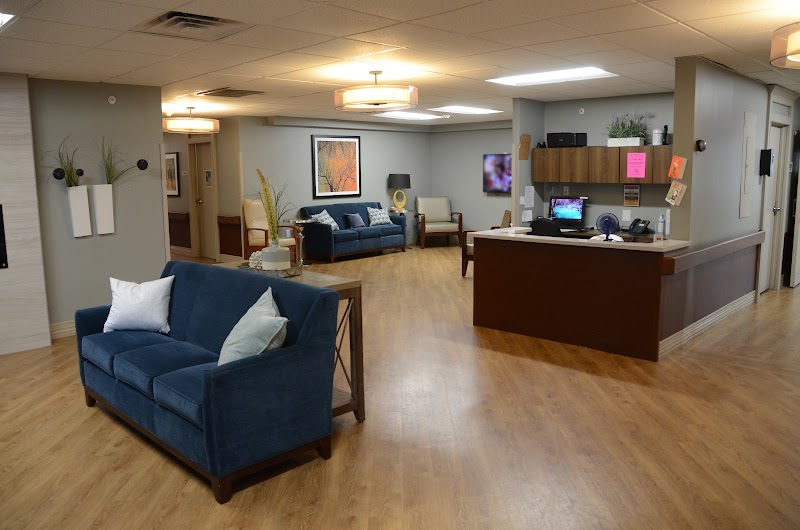
How is Renaissance Staffed?

CMS rates RENAISSANCE CARE CENTER's staffing level at 5 out of 5 stars, which is much above average compared to other nursing homes. Staff turnover is 29%, compared to the Illinois average of 46%. This relatively stable workforce can support continuity of care.

What Have Inspectors Found at Renaissance?

State health inspectors documented 26 deficiencies at RENAISSANCE CARE CENTER during 2022 to 2025. These included: 2 that caused actual resident harm, 21 with potential for harm, and 3 minor or isolated issues. Deficiencies causing actual harm indicate documented cases where residents experienced negative health consequences.
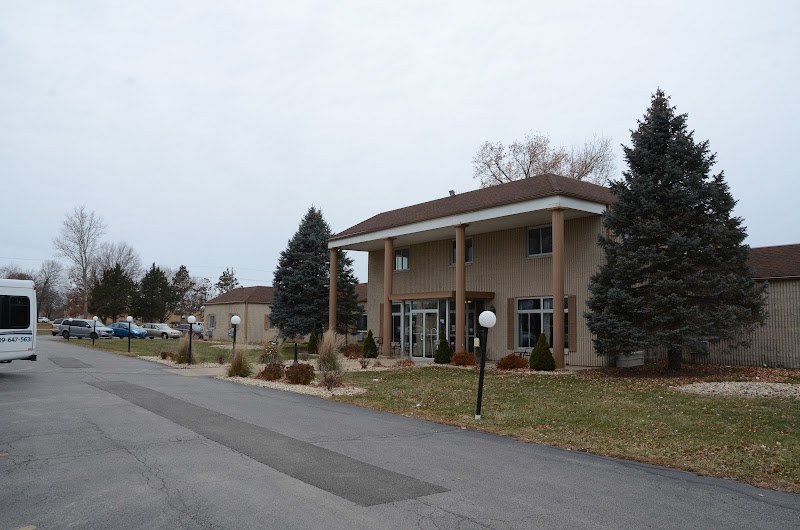
Who Owns and Operates Renaissance?

RENAISSANCE CARE CENTER is owned by a for-profit company. For-profit facilities operate as businesses with obligations to shareholders or private owners. The facility operates independently rather than as part of a larger chain. With 120 certified beds and approximately 57 residents (about 48% occupancy), it is a mid-sized facility located in CANTON, Illinois.
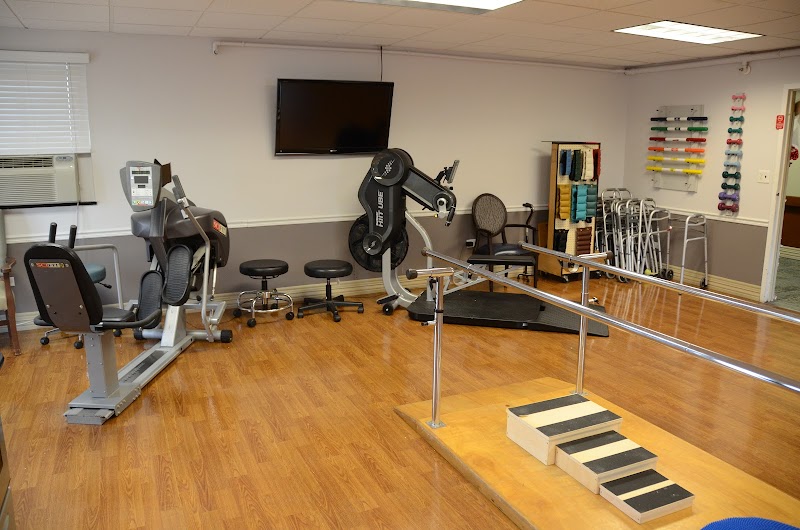
How Does Renaissance Compare to Other Illinois Nursing Homes?

Compared to the 100 nursing homes in Illinois, RENAISSANCE CARE CENTER's overall rating (3 stars) is above the state average of 2.5, staff turnover (29%) is significantly lower than the state average of 46%, and health inspection rating (2 stars) is below the national benchmark.

What Should Families Ask When Visiting Renaissance?

Based on this facility's data, families visiting should ask: "What safeguards and monitoring systems are in place to protect residents from abuse or neglect?" "Can I visit during a mealtime to observe dining assistance and food quality?" "How do you handle medical emergencies, and what is your hospital transfer rate?" "Can I speak with family members of current residents about their experience?" These questions are particularly relevant given the substantiated abuse finding on record.

Is Renaissance Safe?

Based on CMS inspection data, RENAISSANCE CARE CENTER has documented safety concerns. The facility has 1 substantiated abuse finding (meaning confirmed case of resident harm by staff or other residents). The facility has a 3-star overall rating and ranks #1 of 100 nursing homes in Illinois. Families considering this facility should ask detailed questions about what corrective actions have been taken since these incidents.

Do Nurses at Renaissance Stick Around?

Staff at RENAISSANCE CARE CENTER tend to stick around. With a turnover rate of 29%, the facility is 17 percentage points below the Illinois average of 46%. Low turnover is a positive sign. It means caregivers have time to learn each resident's needs, medications, and personal preferences. Consistent staff also notice subtle changes in a resident's condition more quickly. Registered Nurse turnover is also low at 29%, meaning experienced RNs are available to handle complex medical needs.

Was Renaissance Ever Fined?

RENAISSANCE CARE CENTER has no federal fines on record. CMS issues fines when nursing homes fail to meet care standards or don't correct problems found during inspections. The absence of fines suggests the facility has either maintained compliance or corrected any issues before penalties were assessed. This is a positive indicator, though families should still review recent inspection reports for the full picture.

Is Renaissance on Any Federal Watch List?

RENAISSANCE CARE CENTER is not on any federal watch list. The most significant is the Special Focus Facility (SFF) program, which identifies the bottom 1% of nursing homes nationally based on persistent, serious quality problems. Not being on this list means the facility has avoided the pattern of deficiencies that triggers enhanced federal oversight. This is a positive indicator, though families should still review the facility's inspection history directly.