IMBODEN CREEK SENIOR LIVING
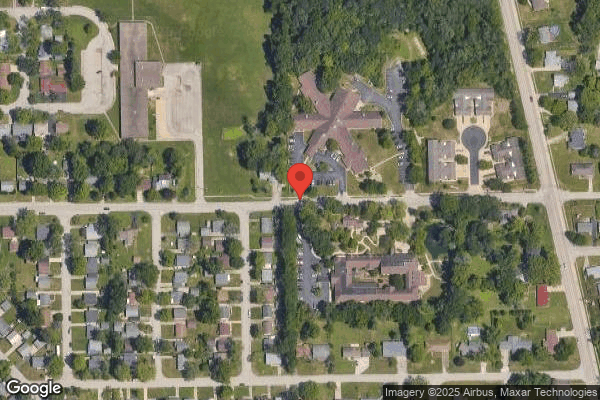
180 WEST IMBODEN, DECATUR, IL 62521 (217) 422-6464
For profit - Limited Liability company 95 Beds WLC MANAGEMENT FIRM Data: November 2025 1 Immediate Jeopardy citation
Trust Grade
0/100
#551 of 665 in IL
Last Inspection: November 2024

Within standard 12-15 month inspection cycle. Federal law requires annual inspections.

Overview

Imboden Creek Senior Living in Decatur, Illinois, has a Trust Grade of F, indicating poor overall quality with significant concerns. They rank #551 out of 665 facilities in Illinois, placing them in the bottom half, and #5 out of 7 in Macon County, meaning only two local options are worse. The facility is showing signs of improvement, with the number of issues decreasing from 13 in 2024 to 10 in 2025, but it still faces serious challenges. Staffing is concerning, with a 1/5 star rating and less RN coverage than 96% of Illinois facilities, despite having a low turnover rate of 0%. Notably, there have been critical incidents, including a failure to provide lifesaving equipment during a medical emergency that resulted in a resident's death, as well as delays in notifying a physician about a resident's significant decline, leading to severe health complications. Overall, while there are some signs of progress, families should weigh the serious safety concerns against any improvements.

Trust Score
F
0/100
In Illinois
#551/665
Bottom 18%
Safety Record
High Risk
Review needed
Inspections
Getting Better
13 → 10 violations
Staff Stability
○ Average
Turnover data not reported for this facility.
Penalties
○ Average
$277,394 in fines. Higher than 67% of Illinois facilities. Some compliance issues.
Skilled Nurses
⚠ Watch
Each resident gets only 13 minutes of Registered Nurse (RN) attention daily — below average for Illinois. Fewer RN minutes means fewer trained eyes watching for problems.
Violations
⚠ Watch
92 deficiencies on record. Higher than average. Multiple issues found across inspections.
★☆☆☆☆
1.0
Overall Rating
★☆☆☆☆
1.0
Staff Levels
★☆☆☆☆
1.0
Care Quality
★☆☆☆☆
1.0
Inspection Score
Stable
2024: 13 issues
2025: 10 issues

The Good

  • Full Sprinkler Coverage · Fire safety systems throughout facility
  • No fines on record

Facility shows strength in fire safety.

The Bad

1-Star Overall Rating

Below Illinois average (2.5)

Significant quality concerns identified by CMS

Federal Fines: $277,394

Well above median ($33,413)

Significant penalties indicating serious issues

Chain: WLC MANAGEMENT FIRM

Part of a multi-facility chain

Ask about local staffing decisions and management

The Ugly 92 deficiencies on record

1 life-threatening 3 actual harm
Sept 2025 1 deficiency
CONCERN (D) 📢 Someone Reported This

A family member, employee, or ombudsman was alarmed enough to file a formal complaint

Potential for Harm - no one hurt, but risky conditions existed

Pressure Ulcer Prevention (Tag F0686)

Could have caused harm · This affected 1 resident

Based on observation, interview, and record review, the facility failed to assess wounds/skin and complete wound treatments for two of three residents (R1, R2) reviewed for pressure sores in the sampl...

Read full inspector narrative →
Based on observation, interview, and record review, the facility failed to assess wounds/skin and complete wound treatments for two of three residents (R1, R2) reviewed for pressure sores in the sample of five residents. Findings include: The Prevention of Pressure Ulcers/Injuries policy, revision date July 2017, documents, Assess the resident on admission (within eight hours) for existing pressure ulcer/injury risk factors. Repeat the risk assessment weekly and upon any changes in condition. Conduct a comprehensive skin assessment upon admission, including: a. Skin integrity - any evidence of existing or developing pressure ulcers or injuries; Tissue tolerance -the ability of the skin (and supporting structures) to endure the effects of pressure. Treatments/Wound Care policy, dated October 2010, documents treatment/wound care is to be done according to the physician order. On 09/16/25 at 2:30pm, R1's posterior right upper buttock unstageable deep tissue injury (pressure ulcer) wound care was completed by V3, Corporate Nurse, and V7, Licensed Practical Nurse (LPN). The wound had full-thickness tissue loss with muscle and bone exposed and can be directly seen. The wound bed contained a large amount of slough and undermining. R1 complained of pain while V7 was packing the undermining with gauze. R1's undated care plan documents an admission date of 8/8/25, with diagnoses of Fracture of Lower End Of Right Femur, Presence Of Right Artificial Hip Joint, Spondylosis With Radiculopathy, Cervical Region, and Wedge Compression Fracture Of Third Lumbar Vertebra. On 09/11/25, R1's record review does not contain an admission skin or wound assessment, nor any weekly skin or wound assessments conducted by facility staff. Hospice admission Documents, dated 09/11/25 at 12:10pm, contain an admission note written on 8/9/25 documenting a surgical wound to the right hip as R1's only wound. Hospice Wound Record Report, dated 09/11/25 at 12:10pm, by V6, Hospice Nurse, documents on 8/9/25 at 5:26pm there is only a closed surgical wound to R1's right thigh. R1's Hospice Wound Record Report, dated 09/11/25 at 12:10pm, documents on 8/8/25 a proximal right thigh surgical incision. The same report documents on 8/23/25 a posterior right upper buttock unstageable deep tissue injury (pressure ulcer) for R1. R1's Hospice Wound Record Report, dated 09/11/25 at 12:10pm, by V6, Hospice Nurse, documents on 8/25/25 at 1:37pm the Right buttock deep tissue injury measures 10cm (centimeters) length, 11cm wide and 2cm deep and on 09/02/25 R1's wound measures 12cmx10.5cmx2cm indicating a change in size. R1's September 2025 Treatment Administration Record documents treatments to the posterior right buttock deep tissue injury were not completed on September 4,8,9,11, and 13.On 09/16/25 at 09:43am V4, R1's family, stated R1 was sent to the hospital after a fall at the assisted living facility and when R1 admitted to the facility R1 only had a surgical wound on the right hip. V4 stated R1 has a large open wound on the back of R1's leg/buttocks, and the facility is not completing wound care very well. V4 stated during visits the dressing on R1's wound would have an old dressing. V4 stated the dressing would be dated a day or two before the visit. On 9/16/25 at 2:30pm, V2, Director of Nursing/DON confirmed there is no admission assessment performed by facility nurses on admission for R1, and the treatment administration record for September 2025 documents the treatments were not completed as ordered by the physician. V2 stated nurses are to perform the wound treatments according to physician orders, and if wound treatments are not completed as ordered, the wound would worsen and likely become infected causing the wound to take longer to heal. On 9/17/25 at 11:30am V6, Hospice Nurse, confirmed the hospice documentation does not document a pressure ulcer wound on R1 at time of admission. 2.R2's undated care plan documents an admission date of 12/20/2024, with diagnoses of Parkinson's Disease Without Dyskinesia, Unsteadiness On Feet, Other Symptoms and Signs Involving the Musculoskeletal System, History Of Malignant Neoplasm Of Ovary, Acute Kidney Failure and Dementia. R2's September 2025 Treatment Administration Record documents a physician order for wound/pressure ulcer treatment dated 08/26/2025. The same document documents the physician order of cleanse sacral wound with normal saline. Pack gauze soaked in quarter strength bleach water into wound with cotton tipped applicator. Cover with ABD (gauze) pad. Change dressing two times a day (8am and 8pm) for Wound Care for 24 days. This same document documents on September 2,3,4,5,8,9,11,13,14 the 8am treatment was not completed and September 12 the 8pm treatment was not completed. On 09/15/25, R2's medical record documents R2's last skin/wound assessment as completed on 7/28/25. On 09/16/25 at 11:30am, R2's sacral unstageable deep tissue injury (pressure ulcer) wound care was performed by V3, Corporate Nurse, and V7, Licensed Practical Nurse (LPN). The wound had full-thickness tissue loss with muscle exposed and can be directly seen. The wound bed and edges are red and inflamed. V7 used bleach solution soaked gauze to pack the undermining around the wound edges, R2 complained of pain during the packing by V7. On 09/11/2025 at 12:30pm, V2, Director of Nurses (DON), stated R1 and R2 have wounds/pressure ulcers that need treatments.On 9/16/25 at 2:30pm, V2, DON, confirmed nurses are to perform a weekly wound assessment and there are no weekly skin/wound assessments performed by facility nurses for R2 as the Skin/Wound policy states and the treatment administration record for September 2025 documents the treatments were not completed as ordered by the physician. V2 stated nurses are to perform wound treatments according to physician orders, and if wound treatments are not completed as ordered, the wound could worsen and likely become infected causing the wound to take longer to heal.
Sept 2025 4 deficiencies
CONCERN (D) 📢 Someone Reported This

A family member, employee, or ombudsman was alarmed enough to file a formal complaint

Potential for Harm - no one hurt, but risky conditions existed

Notification of Changes (Tag F0580)

Could have caused harm · This affected 1 resident

Based on interview and record review, the facility failed to notify a family member of an accident for one of three residents (R1) reviewed for resident injury in the sample list of 12. Findings inclu...

Read full inspector narrative →
Based on interview and record review, the facility failed to notify a family member of an accident for one of three residents (R1) reviewed for resident injury in the sample list of 12. Findings include:R1's undated Diagnoses list includes fracture of other parts of the pelvis, subsequent encounter for fracture with routine healing, Chronic Pain due to trauma, other reduced mobility, unspecified abnormalities of Gait and Mobility, and unsteadiness on feet.R1's Care Plan dated 10/15/24, documents impaired cognitive function or impaired thought processes, impaired decision-making, long-term memory loss, short term memory loss related to age, history of falling, and decreased mobility with an intervention for an alarm when R1 is in the chair related to impulsivity. R1's Fall Risk Evaluation dated 6/13/25, documents R1 is at risk for falls due to intermittent confusion, being chair bound, and requiring use of assistive devices.On 9/3/25 at 9:30 AM V1 Administrator stated on 8/26/25 R1 was observed on the floor on R1's buttocks. V1 stated V3 Licensed Practical Nurse (LPN) found R1 as V3 was walking by and heard yelling so V3 told V4 LPN and V5 Certified Nursing Assistant (CNA). V1 stated R1 had a bruise to her right temple and right arm and a small bruise on her left forearm. V1 stated the family was not notified at that time. On 9/4/25 at 11:15 AM, V4 LPN stated V4 got to the facility around 2:15 PM. V4 stated when V4 walked in she punched the time clock, and another nurse V3 LPN was yelling that R1 was on the floor. V4 stated V4 told another nurse V7 LPN that V4 would go check on R1 for V7. V4 stated V5 CNA came in the room also and R1 was sitting on her buttocks right in front of her wheelchair. V4 stated R1 likes to transfer herself and it looked like that's what R1 was trying to do. V4 stated R1 did not remember what happened when asked. V4 stated V4 did an assessment on R1 and took R1's vital signs. V4 stated she gave R1's vital signs to V7 on a piece of paper but was unsure if V7 actually got the vital signs. V4 stated she did not document any assessment, vital signs, or any information about R1's fall and did not contact R1's family, V1 Administrator or V2 Director of Nurses. V4 stated V4 knows she is supposed to call the family and tell V1 Administrator. V4 stated V4 thought V7 was doing to do all that. V4 stated V7 did not go down to the room where R1 was found.The facility's Accidents and Incidents (WLC) - Investigation and Reporting policy dated Revised July 2017, directs staff to document the date and time resident's family member is notified of an accident.
CONCERN (D) 📢 Someone Reported This

A family member, employee, or ombudsman was alarmed enough to file a formal complaint

Potential for Harm - no one hurt, but risky conditions existed

Free from Abuse/Neglect (Tag F0600)

Could have caused harm · This affected 1 resident

**NOTE- TERMS IN BRACKETS HAVE BEEN EDITED TO PROTECT CONFIDENTIALITY** Based on interview and record review, the facility failed to protect the resident's right to be free from physical abuse for one...

Read full inspector narrative →
**NOTE- TERMS IN BRACKETS HAVE BEEN EDITED TO PROTECT CONFIDENTIALITY** Based on interview and record review, the facility failed to protect the resident's right to be free from physical abuse for one (R3) resident of three residents reviewed for abuse in a sample list of 12.Findings include: The facility's Initial Report, dated 8/2/25, documents R2 and R3 made unwanted contact with one another. R2 yelled at R3 stating she stole my fan, I'm going to knock her head off as the reason for R2 making the unwanted contact with R3. This report also documents the resident (R3) was struck with an open hand in a smacking motion by R2.R2's undated Diagnoses include anxiety disorder, unspecified; Restlessness and Agitation; and Mild Cognitive Impairment of uncertain or unknown etiology.R2's Care Plan, dated 8/10/24, documents R2 has the potential to demonstrate verbally abusive behaviors Poor impulse control Verbal aggression towards staff and roommate, behavior problem with roommate and potential to demonstrate physical behaviors, Dementia, poor impulse control, and anger.R2's Minimum Data Set (MDS), dated [DATE], documents R2 is cognitively intact.R3's undated diagnoses list documents R3's diagnoses as Cognitive Communication Deficit, general anxiety disorder, unspecified Dementia with unspecified severity without Behavioral Disturbances, Psychotic Disturbances, Mood Disturbances, and Major Depressive Disorder.R3's Care Plan, dated 12/15/24, documents R3 as having Impaired Cognitive function related to Dementia, Communication Problem related to Dementia, Impaired Visual Function, Behavior problems, and Major Depression.On 9/3/25 at 2:53 PM, V6, Certified Nursing Assistant/CNA, stated both R2 and R3 were sitting in their wheelchairs at the nurse's station and R2 started yelling at R3 that R3 took R2's fan. V6 stated, As we were backing (R3) up away from (R2), (R2) reached over and hit (R3) on the shoulder two times with an open hand.On 9/4/25 at 11:43 AM, V3, Licensed Practical Nurse/LPN, stated the incident between R2 and R3 happened after dinner. V3 stated R2 was having a bad day. V3 stated she heard R2 say you stole my fan to R3. V3 stated a CNA (unknown) went to pull R2 away from R3 (both in wheelchairs), and R2 made a motion with her arm/hand like R2 was going hit R3 and R2's fingertips grazed R3's shoulder. V3 stated R2 had an open hand, but only her fingertips grazed R3. V3 stated R3 asked what happened because R2 was yelling at R3 and R3 said what did I do wrong? V3 stated R2 can get agitated and yell. V3 stated R2 and R3 were once in a room together but R3 was moved to another room because R2 would yell at R3.The facility's Abuse Policy, dated 8/16/19, documents the facility affirms the right of the residents to be free from abuse and therefore prohibits abuse of the residents and has attempted to establish a resident sensitive and resident secure environment. This same policy also documents the facility is committed to protecting the residents from abuse by anyone including other residents.
CONCERN (D) 📢 Someone Reported This

A family member, employee, or ombudsman was alarmed enough to file a formal complaint

Potential for Harm - no one hurt, but risky conditions existed

Deficiency F0657 (Tag F0657)

Could have caused harm · This affected 1 resident

Based on interview and record review, the facility failed to timely review and revise comprehensive care plans. This failure affects three residents (R1, R2, R3) of three residents reviewed for care p...

Read full inspector narrative →
Based on interview and record review, the facility failed to timely review and revise comprehensive care plans. This failure affects three residents (R1, R2, R3) of three residents reviewed for care plans in the sample list of 12 residents.Findings include:R1's most current Care Plan is dated 11/9/24. R2's most current Care Plan is dated 9/16/24, and R3's most current Care Plan is dated 12/15/24.On 9/4/24 at 10:49 AM, V1 Administrator stated, we don't have anyone at this facility doing care plans, it's all done at the corporate level.The facility's policy Care Plans, Comprehensive Person-Centered dated Revised December 2016, documents their policy is a comprehensive, person-centered care plan that includes measurable objectives and timetables to meet the resident's physical, psychosocial and functional needs is developed and implemented for each of the residents. This same policy documents the care plan will identify problem areas and their causes and develop interventions that are targeted and meaningful to the residents. This same policy documents the Interdisciplinary Team must review and update the care plan when there has been a significant change, when the desired outcome is not met, and at least quarterly in conjunction with the required quarterly Minimum Data Set (MDS) assessment.
CONCERN (D) 📢 Someone Reported This

A family member, employee, or ombudsman was alarmed enough to file a formal complaint

Potential for Harm - no one hurt, but risky conditions existed

Accident Prevention (Tag F0689)

Could have caused harm · This affected 1 resident

Based on observation, interview, and record review, the facility failed to implement a fall intervention for one resident (R1) of three residents reviewed for resident injury in the sample list of 12....

Read full inspector narrative →
Based on observation, interview, and record review, the facility failed to implement a fall intervention for one resident (R1) of three residents reviewed for resident injury in the sample list of 12.Findings include:R1's undated Diagnoses list includes fracture of other parts of the pelvis, subsequent encounter for fracture with routine healing, Chronic Pain due to trauma, other reduced mobility, unspecified abnormalities of Gait and Mobility, and unsteadiness on feet.R1's Care Plan, dated 10/15/24, documents impaired cognitive function or impaired thought processes, impaired decision-making, long-term memory loss, short term memory loss related to age, history of falling, and decreased mobility with an intervention for an alarm when in the chair related to impulsivity. R1's Fall Risk Evaluation, dated 6/13/25, documents R1 is at risk for falls due to intermittent confusion, being chair bound, and requiring use of assistive devices.Throughout the survey, on 9/3/24, 9/4/25, and 9/5/25, there was no alarm present in R1's wheelchair while R1 was present in the wheelchair. On 9/3/25 at 10:30 AM, R1 stated once in a great while, she will try to transfer by herself. R1 stated she has lost count of how many times she has fallen recently. At this same time, R1 was observed to have faded bruising on right and left arms and right temple, and no alarm was present in R1's wheelchair.On 9/5/25 at 10:45 AM, V3, Licensed Practical Nurse, stated R1's Care Plan documents R1 should have a chair alarm. V3 stated, I need to get an alarm.On 9/3/25 at 11:22 AM, V5, Certified Nurse Aide, stated R1 uses a bed alarm and chair alarm, and everyone tries to look out for R1 because she goes all over the place in her wheelchair, and she tries to transfer herself all day, every day.
Aug 2025 4 deficiencies
CONCERN (D) 📢 Someone Reported This

A family member, employee, or ombudsman was alarmed enough to file a formal complaint

Potential for Harm - no one hurt, but risky conditions existed

Pressure Ulcer Prevention (Tag F0686)

Could have caused harm · This affected 1 resident

**NOTE- TERMS IN BRACKETS HAVE BEEN EDITED TO PROTECT CONFIDENTIALITY** Based on observation, interview, and record review, the facility failed to provide a dependent resident, at risk for pressure ul...

Read full inspector narrative →
**NOTE- TERMS IN BRACKETS HAVE BEEN EDITED TO PROTECT CONFIDENTIALITY** Based on observation, interview, and record review, the facility failed to provide a dependent resident, at risk for pressure ulcers, timely repositioning and incontinence care to prevent pressure ulcers. R9 is one of 13 residents reviewed for pressure ulcers on the sample list of 16. Findings include:R9's current Diagnoses list documents the following: Dementia in Other Disease Classified Elsewhere, Mild with Other Behavioral Disturbance, and Alzheimer's Disease, Unspecified. R9's Minimum Data Set (MDS), dated [DATE], documents R9 has severe cognitive impairment, is totally dependent on staff for activities of daily living, and is always incontinent of bowel and bladder.R9's same MDS documents R9 is at risk for pressure ulcers, and has the following interventions in place to prevention of skin impairment: Section M - Skin Conditions M1200. Skin and Ulcer/Injury Treatments Check all that apply (the following were marked): A. Pressure reducing device for chair.B. Pressure reducing device for bed.C. Turning/repositioning program.H. Applications of ointments/medications other than to feet. R9's Shower sheet, dated 7/24/25, documents R9 had reddened skin on her coccyx and upper buttocks and required barrier zinc cream, which was applied. On 7/31/25 at 2:15 PM, V15, Certified Nursing Assistant (CNA), stated, I was (R9's) CNA today. (R9) was up for meals and I gave her a shower before breakfast today. I have not done a shower sheet yet, but I gave her a shower. She did not have any skin breakdown. She is scheduled Mondays and Thursday on day shift (for showers). She does not have any new skin issues, or I would have reported it to the nurse after the shower. Her bottom is clear. She lays back down after meals and sleeps. I don't remember what time I checked her last. It was right before lunch, before noon, I think. I did not think she was wet at the time. I did not check her after lunch or reposition her because she was sleeping so well. I am off work now, and need to leave, I can't do her incontinence care before I leave. Next shift will have to do her.On 7/31/25 at 2:20 PM, R9 was lying in bed, asleep, in a back lying position. On 7/31/25 at 3:20 PM, R9 remained in the same back lying position as noted at 2:20 PM. V16 and V28, Certified Nursing Assistants, entered R9's room. V16 approached bedside and asked R9 if she could change her incontinence brief. R9 opened her eyes and smiled. V16 and V28, CNAs, washed their hands and donned gloves. V16 and V28, CNAs, stood on opposite sides of the bed, pulled R9's pants down, and unfastened the tape closure of R9's incontinence brief. R28 tucked R9's brief down between R9's legs. R9s incontinence brief was moderately wet with urine. R9's anterior peri-care was completed using disposable wipes. V28, CNA, stated, She did not flinch, though these wipes are cold. V28 and V16 turned R9 over to a right-side lying position, changing gloves after performing hand hygiene. R9 had deep indentations on her skin from mid-back down to her knees. R9 also had a deep red colored, moist, raw area of skin over her upper inner, right buttock, medial aspect, just distal to the coccyx. The right buttock skin impairment measured approximately one-inch long by two-inches wide. R9 also had skin impairment directly on her protruding coccyx bone, that was deep red in color, un-opened skin, which measured approximately one-inch long by three-inches long. V16 stated, It is obvious (R9) had not been repositioned as often as she should be. V28 agreed and stated, We haven't turned her in the hour and a half we've been here (second shift starts at 2:00 PM). I am guessing, it was quite a while before our shift that she got turned last. These deep indentations in the skin don't come up like that unless a resident has not been moved (repositioned) for several hours. It's been lot more than two hours like we are supposed to. The raw skin areas over the bones weren't there before. That one is even open (points to inner right buttock raw, red skin). This did not happen in two or three hours. We will tell the nurse. V16 and V28 completed peri-care and did not apply barrier protective ointment or cream. R10's (R9's roommate) MDS, dated [DATE],5 documents R10's Brief Interview of Mental Status score as 15 out of a possible 15, indicating no cognitive impairment.On 7/31/25 at 3:45 PM, R10, stated (R9) had a shower this morning, early, before breakfast. I am not sure how often she gets one. We are supposed to get one twice weekly. I get mine, unless I choose not to. I think the staff give (R9) a lot of attention, lately, even by the administrative staff. (R9) has been in with me (roommate) for about two and a half months. I have seen some CNA's (Certified Nursing Assistants) come in and change (R9) often. Those CNAs are the same ones that reposition her frequently. Not all CNA's change or reposition (R9) like they should. She (R9) can't move herself at all. Some days she is in bed all day. I have not smelled any lingering odors in our room. I can't say it's because it doesn't have bad odors, but part of that is me. My nose (smelling ability) doesn't work as good as it used to. On 7/31/25 at 3:50 PM, V13, Licensed Practical Nurse (LPN), stated she has been informed by the CNA's that R9 has new open areas on her buttocks. V13, LPN, stated she will be down to assess R9s skin and obtain measurement of the open area after medication administration pass is complete. V13, LPN, also stated, (R9) did not have any open areas prior, that I am aware of. No one said anything in report. I would have thought that would be relayed to me. Those must be new. As I told you earlier, other than meals, (R9) stays in bed all the time. I assumed she was being repositioned and changed every two hours. On 08/01/25 at 1:45 PM, V2, Regional RN, stated I am aware that (R9) had new pressure ulcers found yesterday that may have been prevented if incontinence care and repositioning was completed appropriately. We have treatments in place now. The nursing staff are aware they must make sure (R9) is repositioned and changed at minimum every two hours. Shower sheets show she had some redness on her buttocks on the 7/24/25. This should have been passed on in report and monitored closely.
CONCERN (D) 📢 Someone Reported This

A family member, employee, or ombudsman was alarmed enough to file a formal complaint

Potential for Harm - no one hurt, but risky conditions existed

Incontinence Care (Tag F0690)

Could have caused harm · This affected 1 resident

**NOTE- TERMS IN BRACKETS HAVE BEEN EDITED TO PROTECT CONFIDENTIALITY** Based on observation, interview, and record review, the facility failed to provide timely incontinence care, free of cross conta...

Read full inspector narrative →
**NOTE- TERMS IN BRACKETS HAVE BEEN EDITED TO PROTECT CONFIDENTIALITY** Based on observation, interview, and record review, the facility failed to provide timely incontinence care, free of cross contamination for a one (R9) of thirteen-resident reviewed for hygiene needs on the sample list of 16.Findings include: R9's Minimum Data Set, dated [DATE], documents R9 has severe cognitive impairment, is totally dependent on staff for all activities of daily living and is always incontinent of bowel and bladder.R9's Current Physician Order Sheet (POS) and Medication Administration Records (MAR) documents R9 was started on an antibiotic and probiotic for an infection. On 7/23/25 order was received for: Cephalexin Capsule (antibiotic) 500 MG , give 1 capsule by mouth, three times a day every 7 day (s), for infection and Probiotic Oral Tablet (live microorganisms that prevent antibiotic -associated diarrheas), Give 1 unit, by mouth, two times a day every 7 day (s) for infection. R9's Progress Note, dated 7/24/25 at 12:27 PM, documents: Note Text: Urine culture results from 7/21/25: Final equal or >100,000 CFU/ML (Colony-Forming Units per milliliter) Gamma Streptococcus (specific bacteria). Resident already started on Keflex (Cephalexin) 500 mg BID (twice a day) (order on POS documents three times a day) x 7 days. Faxed to MD (Medical Doctor).R9's Nurses Notes, dated 7/24/25 at 2:55 PM, documents the following: Note Text: (V3) NP (Nurse Practitioner) here to see resident. N.O. (New Order) Continue to monitor and treat for UTI (Urinary Tract Infection) at this time. If any other concerns, please notify provider. POA (V11, R9's Power of Attorney/Family Member) Aware. On 8/1/25 at 9:45 AM, V20, Certified Nursing Assistant (CNA), and V19, CNA, gathered supplies and took the full-body mechanical lift down to R9's room. V20, CNA, stated, I am running late with (R9's) care, and her breakfast this morning. V20 stated she came in at 6:00 AM to work and has not changed or repositioned R9. V20 stated V20, CNA, was running late because The guy (R5) across the hall needed me about 50 times. He is the sweetest. I think he is just not feeling good. I was busy and she (R9) was asleep, so I did not wake her up to reposition or check her to see if she was wet. V19 and V20, CNA's, performed hand hygiene and donned gloves. V19 and V20 were standing on opposite sides of R9's bed. Both V19 and V20 unfastened the side adhesive tape of R9's wet incontinence brief and tucked it down between R9's legs. R19 and R20 continued with the same soiled gloves. V19 held R9's hand and talked to R9 while V20 picked up a washcloth with her contaminated gloves and wiped R9's bilateral eyes repeatedly, to remove the crusted debris from R9's eye lashes. V20, CNA, then using the same contaminated gloves and area of the washcloth, cleansed the sides of R9's dried green debris from the sides of R9's mouth. V20, CNA, left the bedside with the same contaminated gloves and went over to the bathroom, opened the door with the contaminated gloves and looked into the bathroom for an additional washcloth. V20 then went to the dresser under the TV and opened the top drawer and removed a washcloth with the same contaminated gloves. V20 returned to the bedside and completed anterior peri-care with the same contaminated gloves. V19 and V20 positioned R9 in a right-side lying position. R9's incontinence brief was soiled with a large amount of urine. R9's brief had dark yellow and brown edged urine- like rings, and light-yellow urine-like ring, surrounding the darker yellow dried like urine. V19 and V20 stated they did not hear anything from night CNA's about when R9 was last changed. Often night staff just leaves when they see day shift come in, and don't give report. R9 had a waterproof-like wound dressings on her coccyx. R9's back, upper thighs, and bilateral buttocks had deep indentations in the skin. V20 completed R9's incontinence care and removed the soiled gloves and washed her hands. V19 also removed her gloves and washed her hands after re-dressing R9.On 8/01/25 at 10:05 AM, V20, CNA, stated, I know what I am doing. I give incontinence care all day long. I was just nervous being watched by you. I always wash my hands and use clean gloves when I do all my care. That is all I can really say. I was nervous.On 08/01/25 at 1:45 PM, V2, Regional RN, stated, The cross contamination during (R9's) incontinence care should have never happened. The CNAs are expected to use proper technique, hand hygiene and universal precautions when performing anyone's hygiene and incontinence care.
CONCERN (D) 📢 Someone Reported This

A family member, employee, or ombudsman was alarmed enough to file a formal complaint

Potential for Harm - no one hurt, but risky conditions existed

Pharmacy Services (Tag F0755)

Could have caused harm · This affected 1 resident

Based on observation, interview, and record review, the facility failed to supervise medication administration for one resident (R11) of two residents reviewed for supervision of medication administra...

Read full inspector narrative →
Based on observation, interview, and record review, the facility failed to supervise medication administration for one resident (R11) of two residents reviewed for supervision of medication administration in the sample list of 15. Findings:On 7/24/25 at 10:51 AM, surveyor went into R11's room to interview the roommate, R3, who was not present. A medication cup with medications in it was observed at R11's bedside full of 17 medications. R11 would not wake up when spoke R11's name. V1, Administrator, immediately came into R11's room to see the medication cup with medications at R11's bedside. At 10:58 AM, V1 stated the medications should have been taken by R11 with the nurse present and if the resident was asleep, V3, Licensed Practical Nurse (LPN), should not have left the medications at bedside.On 7/24/25 at 10:59 AM, V3, LPN, came to R11's room and woke R11 up to take the medications setting at bedside. V3 stated normally R3 takes the medications on his own but does not have an order stating that medications may be left at bedside. V3 stated, We're not supposed to leave medications at bedside per our policy, and we are to watch the resident take the medications.On 7/24/25 at 11:10 AM, R11 stated this nurse, V3, LPN, has left his medications at bedside for him to take without V3 being present.Medications in the medication cup include: Amiodarone Hydrogen Chloride tablet 200 milligrams, one tablet by mouth one time a day; Amlodipine Besylate tablet five milligrams one tablet one time a day; Aspirin 81 milligrams one tablet delayed release give one tablet by mouth one time a day; B-Complex oral tablet 600 micrograms by mouth one time a day; Biotin oral tablet three milligrams one tablet by mouth one time a day; Duloxetine Hydrogen Chloride capsule delayed release particles 30 milligrams give one capsule by mouth one time a day; Ferrous Sulfate tablet 324 milligrams give one tablet by mouth one time a day; Folic Acid one milligram oral tablet one time a day; Losartan Potassium oral tablet 25 milligrams give one tablet by mouth one time a day; Multivitamin adults 50+ tablet one tablet by mouth one time a day; Protonix tablet delayed release 40 milligrams one tablet by mouth one time a day; Torsemide oral tablet 100 milligrams one tablet by mouth one time a day; Vitamin D3 oral tablet 125 micrograms one tablet by mouth one time a day; Apixaban oral tablet five milligrams one tablet by mouth two times a day; Carvedilol oral tablet 25 milligrams one tablet by mouth two times a day; Doxycycline Hyclate oral tablet 100 milligrams one tablet by mouth two times a day; and Lubiprostone oral capsule eight micrograms one capsule by mouth two times a day.The facility's Administering Medications Policy, dated Revised April 2019, documents medications are administered in a safe and timely manner; medications are administered within one hour of their prescribed times; if a drug is given at a time other than scheduled, the person administering the medication shall document such in the space provided for that drug and dose; and a resident may self-administer their own medications only if the Attending Physician has determined that the resident has the decision-making ability to do so safely.
CONCERN (D) 📢 Someone Reported This

A family member, employee, or ombudsman was alarmed enough to file a formal complaint

Potential for Harm - no one hurt, but risky conditions existed

Medical Records (Tag F0842)

Could have caused harm · This affected 1 resident

**NOTE- TERMS IN BRACKETS HAVE BEEN EDITED TO PROTECT CONFIDENTIALITY** Based on record review and interviews, the facility failed to maintain complete and accurate medical records for one (R9) of 14 ...

Read full inspector narrative →
**NOTE- TERMS IN BRACKETS HAVE BEEN EDITED TO PROTECT CONFIDENTIALITY** Based on record review and interviews, the facility failed to maintain complete and accurate medical records for one (R9) of 14 residents reviewed for medical records on the sample list of 16. Findings include:R9's current Diagnoses list documents the following: Dementia in Other Disease Classified Elsewhere, Mild with Other Behavioral Disturbance, and Alzheimer's Disease, Unspecified. R9's Diagnosis list does not document a diagnosis of Psychosis.R9's historic Psychiatric Evaluation, dated 9/7/23, documents R9 had Psychosis, and Irritable/Frequent Anger when Risperdal Antipsychotic medication was originally ordered.R9's Minimum Data Set, dated [DATE] ,documents: Did the resident receive antipsychotic medications since admission/entry or reentry or the prior OBRA assessment, whichever is more recent? Yes - Antipsychotics were received on a routine basis only.R9's current Physician Order documents the following: Risperdal (anti-psychotic medication) oral tablet, give 0.25 mg (milligrams) by mouth in the morning for Prophylaxis (to prevent a disease process), (inaccurate diagnosis documented). Start date 9/19/24.R9's current Medication Administration Record (MAR) documents the following: Monitor for the following behaviors: itching, picking at skin, restlessness, agitation, hitting, increase in complaints, biting, kicking, spitting, foul language, elopement, stealing, delusions, hallucinations, psychosis, aggression, refusal of care every shift. Document: 'Y' if monitored and none of the above observed. 'N' if monitored and any of the above was observed, select ‘N' if monitored and any of the above was observed, select chart code 'Other/ See Nurses Notes' and progress note findings. -Start Date11/22/2024.R9's same MAR documents nurses initial to indicate the monitoring occurred the full month of July 2025 (31 days at three shifts per day, 93 incomplete documentation errors). The nurses did not document Y or N and did not document any behaviors in the corresponding nurses note.On 7/31/25 at 12:10 PM, V2, Regional Registered Nurse, confirmed R9's medical records were inaccurate and incomplete as documented above. V2 also stated she will be educating the nurses on accurate and complete documentation in residents medical records.The facility policy Charting and documentations revised July 2017 documents the following 3. Documentation in the medical record will be objective (not opinionated or speculative), complete, and accurate.
Jul 2025 1 deficiency 1 Harm
SERIOUS (G) 📢 Someone Reported This

A family member, employee, or ombudsman was alarmed enough to file a formal complaint

Actual Harm - a resident was hurt due to facility failures

Quality of Care (Tag F0684)

A resident was harmed · This affected 1 resident

**NOTE- TERMS IN BRACKETS HAVE BEEN EDITED TO PROTECT CONFIDENTIALITY** Based on interview and record review, the facility failed to promptly notify a physician of a resident's change in condition and...

Read full inspector narrative →
**NOTE- TERMS IN BRACKETS HAVE BEEN EDITED TO PROTECT CONFIDENTIALITY** Based on interview and record review, the facility failed to promptly notify a physician of a resident's change in condition and significant decline in mobility, which resulted in prolonged discomfort/pain for one cognitively impaired resident (R1). More than twenty-four hours after the initial change of condition was noted, an x-ray was obtained and R1 was sent to the Emergency Room, admitted , and had surgical repair of a left intertrochanteric hip fracture. R1 is one of three residents reviewed for falls in the sample of four. Findings Include: R1's Medical Diagnosis List, dated June 2025, documents R1 is diagnosed with Falls, Muscle Weakness, Difficulty Walking, Cognitive Communication Deficit, and Anxiety. R1's Minimum Data Set (MDS), dated [DATE], documents upon admission R1 was severely cognitively impaired and had Hallucinations, Delusions, Wandered Daily, had no impairment to her lower extremities, used a walker, and required supervision or touching assistance from staff for transfers and toileting. Upon discharge, R1 required substantial/maximal assistance for transfers and toileting. R1's Physical Therapy Treatment Encounter Note, dated 6/18/25, documents V14, Physical Therapy Assistant (PTA), completed R1's therapy session. R1 reported a new onset pain in her left lower extremity with movement. On 7/3/25 at 10:45 AM, V14, PTA, stated V28, Physical Therapist, completed R1's initial therapy evaluation on 6/17/25. Baseline R1 was assessed to require supervision and touching assist/contact guard with gait belt for transfers. V14 stated she completed therapy with R1 on 6/18/25, and R1 reported new onset left lower extremity (LLE) pain when lifting her LLE off of the foot pedal, however, R1 could still stand and bear weight. V14, PTA, stated on 6/19/25, V15, PTA, asked her to assist with R1, and at that time, R1 could hardly bear any weight on her LLE. R1 had declined to a maximal two assist with two PTAs. R1 was still complaining of LLE pain with movement. V14 stated she told V15 R1 had a significant change from the day before, and she should let the nurse know to notify the doctor and get an x-ray to make sure nothing was broken. R1's Physical Therapy Treatment Encounter Note, dated 6/19/25, documents V15, Physical Therapy Assistant, (PTA) completed R1's therapy session. R1 was noted to be voicing complaints of pain in her left lower extremity and hip area with movement and weight bearing. R1 kept stating she thinks her hip is broken. V15 notified R1's nurse (V22, Licensed Practical Nurse) and requested V22 follow up with a provider and get an x-ray of R1's left hip due to increased pain which was severely limiting R1's movement. At that point, R1 required maximal assistance of two therapist to transfer to the toilet. On 7/2/25 at 12:40 PM, V15, Physical Therapy Assistant (PTA), stated she completed R1's therapy on 6/19/25. R1 was having LLE pain with movement and weight bearing. R1 said she thought her hip is broken. V15 stated she notified V22, LPN, and requested she get an x-ray. R1 seemed to be in a lot of discomfort when V14 and V15 were toileting R1. V15 stated it was a significant change in condition from when she assisted with transferring R1 from her daughter's car to the wheelchair upon admission on [DATE], just three days prior. V15 stated she was concerned something was broken. R1's Physical Therapy Treatment Encounter Note, dated 6/20/25, documents V16, Physical Therapy Assistant, (PTA) completed R1's therapy session. R1 was noted to have left hip pain and could not bare weight. R1 did not use or move her left leg except to place it on the footrest for comfort. On 7/3/25 at 10:57 AM, V16, PTA, stated she worked with R1 for about a half hour on 6/20/25, and did not attempt to make R1 stand or transfer due to her left hip pain and subsequent inability to stand or bare weight. V16 PTA stated she was told an x-ray was just ordered for R1. The progress note, dated 6/20/25, documents V5, R1's Daughter, came up to the nurses' station very upset that something happened to R1's left hip and an x-ray had not been completed yet. A call was placed to V6, Medical Director, and a STAT x-ray was ordered to assess R1's left hip pain. R1's Radiology Patient Report, dated 6/20/25, documents R1 had a recent fall and new onset pain while weight bearing in therapy. R1's report documents R1 sustained an acute left intertrochanteric hip fracture. On 7/1/25 at 1:15 PM, V5, R1's Daughter, stated R1 arrived at the facility on 6/16/25 by car and could transfer with one assist and a walker. R1 was admitted to the facility for rehab after sustaining a fall at her assisted living facility. R1 was confused and impulsive, and required constant monitoring for safety. Later, on 6/16/25, V5 was notified R1 had fallen at the facility and was sent to the emergency room for evaluation. R1 returned to the facility with no acute injuries noted. V5 stated she came to visit R1 on 6/17/25, and R1 was walking around the facility pushing her own wheelchair and wandering unsupervised. V5 stated R1 was not complaining of any pain at that time. On 6/18/25, V5 stated she did not visit R1. On 6/19/25 when V5 came to visit R1, V5 stated she saw R1 sitting in her wheelchair and she was not trying to get up or move like she normally did. V5 stated V15, PTA, told her R1 was unable to move her left leg in therapy and she was complaining of a lot of pain. V15 told V5 she had told the nursing staff and requested they get a x-ray. V5 stated on 6/20/25 when she came to visit R1, she was being transferred to the commode by two unknown staff members, and R1 was screaming out in pain. V5 stated she was furious that her mom (R1) was still in pain and no x-ray had been completed. V5 stated she confronted V2, Director of Nurses, at the nurses station, who stated she was not aware that R1 had left hip pain or a change of condition. V2 called V6, Medical Director, and got an order for a x-ray. V5 stated later that evening, she got a call from the facility that her mom R1 was being sent to the hospital for a left hip fracture. On 7/2/25 at 1:55 PM, V2, Director of Nurses, stated on 6/20/25, R1's daughter (V5) came up to the nurses' station and was upset that an x-ray of R1's left hip had not yet been completed. V2 stated she was not aware anything was wrong with R1's left hip. V22, Licensed Practical Nurse, was also at the nurses' station and told V2 the day prior (6/19/25), V15, PTA, told V22 that R1 was complaining of left hip pain and could not bare weight anymore. V15 requested V22 notify the doctor and ask for an x-ray of R1's left hip to check for injuries. V2 stated she asked V22 if she had spoken with R1's doctor, and she stated she had not. V2 confirmed V22 had not documented any assessment or change of condition in R1's medical record, and confirmed V22 did not notify R1's physician or obtain an order for an x-ray. V2 confirmed staff should be documenting changes of condition, completing assessments, notifying physicians and families, and following up concerning the resident's change in condition in a timely manner. V2 confirmed V22, LPN, should have notified a provider on 6/19/25 when V15, PTA, informed her about her concerns with R1's change in physical condition/new onset - increased pain. On 7/3/25 at 2:15 PM, V9, Nurse Practitioner, stated the facility notified the provider group of R1's fall on 6/16/25 with no injuries, and asked to notify them if there were any changes in R1's condition. V9 denied the primary group was ever notified of R1's new onset left hip pain or decreased ability to bare weight. V9 confirmed the sooner they were notified, the sooner R1's hip fracture would have been identified, and the sooner she could have received treatment. The facility's Change in a Resident's Condition or Status policy, dated 5/28/24, documents the facility shall promptly notify the resident, his or her attending physician, and representative of any changes in the resident's medical/mental condition and/or status. The nurse should notify the resident's physician or physician on call when there has been a significant change in the resident's physical/emotional/mental condition.
Nov 2024 7 deficiencies
CONCERN (D)

Potential for Harm - no one hurt, but risky conditions existed

Report Alleged Abuse (Tag F0609)

Could have caused harm · This affected 1 resident

**NOTE- TERMS IN BRACKETS HAVE BEEN EDITED TO PROTECT CONFIDENTIALITY** Based on interview and record review, the facility failed to report an allegation of resident to resident verbal abuse to the Ab...

Read full inspector narrative →
**NOTE- TERMS IN BRACKETS HAVE BEEN EDITED TO PROTECT CONFIDENTIALITY** Based on interview and record review, the facility failed to report an allegation of resident to resident verbal abuse to the Abuse Coordinator for two of three residents (R23 and R29) reviewed for Abuse in a sample list of 34 residents. Findings include: The facility policy titled Abuse Prevention, dated 8/16/19, documents employees are required to repot any incident, allegation, or suspicion of crime or potential abuse, neglect or misappropriation or property they observe, hear about, or suspect to the Administrator. R23's Minimum Data Set (MDS), dated [DATE], documents R23 as severely cognitively impaired. R29's Minimum Data Set (MDS), dated [DATE], documents R29 as severely cognitively impaired. R23's Nurse Progress Note, dated 8/27/24 at 1:46 PM, documents, During lunch, (R23) started to cry and wanted to leave the dining room. Upon trying to leave (R23) ran into another resident's (R29)wheelchair. The two resident's (R23, R29) started yelling at each other. Staff intervened, (R23) asked to be brought to lobby. (R23) was crying in the lobby. Will continue to monitor. On 11/18/24 at 1:00 PM, V14, Director of Operations, confirmed the other resident involved in R23's resident to resident incident on 8/27/24 is R29. V14 stated V2, Director of Nurses (DON), called V16, Licensed Practical Nurse (LPN), this morning (11/18/24) to obtain a statement of what happened. On 11/18/24 at 3:40 PM, V1, Administrator, stated any allegation of abuse should be reported to the Abuse Coordinator. V1 stated V16 Licensed Practical Nurse (LPN) should have reported the incident between R23 and R29 to the Abuse Coordinator. V1 stated once an allegation is reported to the Abuse Coordinator, then the facility can begin an investigation to determine if the allegation of abuse is substantiated or not. V1 stated if the allegation is not reported to the Abuse coordinator, then there is no investigation and the incident would not get reported to the State Agency. V1, Administrator, stated she was not aware of this incident until 11/18/24. On 11/19/24 at 12:45 PM, V16, Licensed Practical Nurse (LPN), stated R23 was self propelling out of the dining room when her wheelchair got caught on R29's wheelchair. V16 stated R29 was sitting at her dining room table located by the door to the dining room. V16, LPN, stated R23 and R29 began yelling at each other. V16, LPN, stated R23 was having behaviors earlier in the day also. V16, LPN, stated They (R23, R29) weren't hitting each other or anything. They (R23, R29) were yelling at each other. V16, LPN, stated V16 should have reported this incident to V1, Administrator, when it occurred. V16, LPN, stated V16 saw this incident as a behavior on R23's part, and charted R23's behaviors. V16, LPN, stated V16 could see how it could be considered as something that should have been reported as an allegation of abuse between R23 and R29.
CONCERN (D)

Potential for Harm - no one hurt, but risky conditions existed

Deficiency F0692 (Tag F0692)

Could have caused harm · This affected 1 resident

Based on interview and record review, the facility failed to provide weight management services for residents experiencing unplanned weight loss for two of three residents ((R13, R69) reviewed for wei...

Read full inspector narrative →
Based on interview and record review, the facility failed to provide weight management services for residents experiencing unplanned weight loss for two of three residents ((R13, R69) reviewed for weight loss on the sample list of 34 residents. Findings include: R13's medical record documents on 11/1/2024 at 10:04 PM a weight of 104.4 pounds, and on 10/9/2024 at 08:06 AM a weight of 114.5 pounds. That is a documented weight loss of 10.1 pounds or a weight loss of 9.1% in a month. There was no documentation the physician was notified. R69's medical record documents on 11/1/2024 at 10:04 PM a weight of 84.0 pounds and on 10/28/2024 at 07:41 AM a documented weight of 97.5 pounds. This is a documented weight loss of 13.5 pounds which equals a loss of 8.6%. There was no documentation the physician was notified. R69's medical record documents on 11/6/2024 at 7:17 PM, R69 was transported and admitted to the hospital. The medical record documents on 11/16/2024 at 8:54 PM, R69 was re-admitted to the facility with a PEG (Percutaneous Endoscopic Gastrostomy) tube in place for continuous feeding. On 11/17/24 at 09:10 AM, R69 stated R69 returned from the hospital last night (11/16/24). R69 stated no one weighed him upon the return from the hospital. On 11/18/24 at 11:25 AM R69's medical record does not document an admission weight from 11/16/2024 at 8:54 PM re-admission. On 11/20/2024 at 12:19 PM, V1, Administrator, stated the nursing staff obtain the weights and input them into the medical record. V1 stated, If there is a significant weight change, the nursing staff should obtain a new weight, if the weight change is verified the nursing staff is to notify the doctor and the Dietician. V1 stated the IDT (interdisciplinary team) reviews weight loss and gains monthly and notifies the doctor and Dietician if not already done by nursing staff. On 11/19/24 12:47 PM, V2, Director of Nursing, stated the doctor and Dietician are to be notified of weight loss 5% or more. The Dietician is to respond within 24 hours.
CONCERN (D)

Potential for Harm - no one hurt, but risky conditions existed

Medication Errors (Tag F0758)

Could have caused harm · This affected 1 resident

Based on interview and record review, the facility failed to attempt nonpharmacological intervention prior to implementing psychotropic medications, failed to identify target behaviors for the use of ...

Read full inspector narrative →
Based on interview and record review, the facility failed to attempt nonpharmacological intervention prior to implementing psychotropic medications, failed to identify target behaviors for the use of psychotropic medications, and failed to assess use of psychotropic medications for one resident (R6) of eight residents reviewed for Psychotropic medications in a sample list of 34. Findings include: The Facilities policy Psychotropic Medication Use, revised December 2016, documents psychotropic medications will generally only be considered if the following conditions are met: The behavioral symptoms present a danger to the resident or others; Behavioral interventions have been attempted and included in plan of care, except in an emergency. Pertinent non-pharmacological interventions must be attempted, unless contraindicated. R6's Medication Administration Record (MAR) for November 2024 includes the following orders for psychotropic medications: Quetiapine 25 milligrams, give 0.5 tablet twice a day for anxiety. On 11/19/24 01:37 PM, V2 (Director of Nursing) and V24 (Clinical Nurse) stated they were unable to find any behavior tracking or behavior notes for R6. On 11/19/24 at 1:32 PM, R6 stated she is not totally sure what medications R6 takes, because the staff does not talk to her when medications change. On 11/19/24 10:47 AM, R6's care plan, initiated 7/11/2024, does not contain psychotropic medication interventions or non-pharmacological interventions for anxiety. The same care plan does not document anxiety or mood disorders. On 11/19/24 1:15 PM, R6's Medical Diagnosis report documents a diagnoses of Unspecified Dementia without behavioral disturbance, psychotic disorder, mood disorder or anxiety.
CONCERN (D)

Potential for Harm - no one hurt, but risky conditions existed

Deficiency F0761 (Tag F0761)

Could have caused harm · This affected 1 resident

Based on observation, interview, and record review, the facility failed to properly label medications for three residents (R5, R49, R67) out of four residents reviewed for medication administration in...

Read full inspector narrative →
Based on observation, interview, and record review, the facility failed to properly label medications for three residents (R5, R49, R67) out of four residents reviewed for medication administration in a sample list of 34 residents. Findings include: The facility policy titled Labeling of Medication Containers, revised April 2007, documents all medications maintained in the facility shall be properly labeled in accordance with current state and federal regulations. Labels for individual drug containers shall include all necessary information, such as: resident name, physician name, directions for use and expiration date. 1.) R5's Physician Order Sheet (POS), dated November 2024, documents a physician order for Polymyxin B-Trimethoprim Ophthalmic Solution 10000-0.1 unit/milliliter (ml) give one drop in Left eye six times per day, Hydrocortisone External Cream 1 % apply topically to skin around Left Eye three times per day, and Fluticasone Furoate Aerosol Powder Breath Activ 50 micrograms (MCG)/actuation (ACT) daily. On 11/18/24 at 8:12 AM, V10, Licensed Practical Nurse (LPN), administered R5's Fluticasone Furoate 50 micrograms (mcg) inhaler that did not have a label, resident name, or open date documented on R5's inhaler. V10, LPN, administered R5's Polymyxin B-Trimethoprim eye drop to R5's Left eye that did not have a resident label on the bottle of eye drops. V10, LPN, administered R5's Hydrocortisone cream 1% to R5's Left periorbital area that did not have a label with administration instructions. On 11/18/24 at 8:20 AM, V10, Licensed Practical Nurse (LPN), stated R5's Fluticasone Furoate 50 microgram (mcg) inhaler, Polymyxin eye drops and Hydrocortisone cream were not labeled and did not have a date indicating when they had been opened. 2.) R49's Physician Order Sheet (POS), dated November 2024, documents a Physician order starting 11/3/24 for Humulin N 100 UNIT/ML per sliding scale. On 11/18/24 at 11:25 AM, V9, Licensed Practical Nurse (LPN), administered R49's Humulin N 6 units from an Insulin pen preprinted with 'Humulin N-100', with no resident label and no open date written on Insulin pen. On 11/18/24 at 11:30 PM, V9, Licensed Practical Nurse (LPN), stated R49's Insulin pen was not labeled with R49's name, medication, or administration directions. V9, LPN, stated there was no open date written on R49's Insulin pen, so there was no way to tell when R49's Humulin-N 100 Insulin had been opened. 3.) R67's Physician Order Sheet (POS), dated November 2024, documents a physician order starting 9/29/24 for Memantine 100 milligrams (mg) twice daily at 8:00 AM and 4:00 PM. This same POS documents a physician order starting 10/7/24 for Donezepil 10 mg daily at 4:00 PM. R67's Medication Administration Record (MAR), dated November 2024, documents R67 has been administered Memantine 100 mg twice daily from 11/1/24-11/18/24 and Donezepil 10 mg daily from 11/1/24-11/18/24. On 11/18/24 at 4:18 PM, V11, Licensed Practical Nurse (LPN), administered R67's Memantine 100 milligrams (mg) and Donezepil 10 mg. V11 removed R67's Memantine 100 mg and Donezepil 10 mg pill cards from the medication cart while stating, These labels say to give at bedtime but the Medication Administration Record (MAR) says to give them at 4:00 PM.
CONCERN (D)

Potential for Harm - no one hurt, but risky conditions existed

Antibiotic Stewardship (Tag F0881)

Could have caused harm · This affected 1 resident

Based on interview and record review, the facility failed to implement an antibiotic stewardship program by failing to assess criteria for determining an infection for one of one residents (R9)reviewe...

Read full inspector narrative →
Based on interview and record review, the facility failed to implement an antibiotic stewardship program by failing to assess criteria for determining an infection for one of one residents (R9)reviewed for antibiotic stewardship in the sample of 34 residents. Findings include: The Antibiotic Stewardship policy, dated December 2016, states, the purpose of our Antibiotic Stewardship Program is to monitor the use of antibiotics in our residents. R9's Electronic Medical Record documents R9 receives Hospice services. A Communication Note with Physician, dated 11/14/24, by V28, Licensed Practical Nurse, documents the following: Hospice Certified Nursing Assistant concerned with resident (R9) confusion. Resident confused at times. Antibiotic to begin for urinary tract infection (UTI) and fluids encouraged. R9's Physician Orders (November 2024) documents an order, dated 11/14/24, for Bactrim DS(antibiotic) 800-160 milligram by mouth two times a day for an infection for 10 days. R9's Medical Record fails to document a McGeer Criteria for Infection Surveillance Checklist was completed, whether any testing was done to confirm the infection, and whether cultures were obtained. On 11/19/24 at 1:30 PM, V2, Director of Nursing, stated the facility uses McGeer Criteria for infection surveillance. On 11/19/24 at 11:45AM, V24, Clinical Nurse, stated the facility does not have any supporting documentation/labs for R9's antibiotic use. V24 stated, 'Hospice said it (antibiotic) was for an UTI due to [R9] being confused.' The facility Resident Census and Conditions of Residents report, dated 11/17/24, documents 69 residents reside in the facility.
CONCERN (F)

Potential for Harm - no one hurt, but risky conditions existed

Deficiency F0801 (Tag F0801)

Could have caused harm · This affected most or all residents

Based on observation, interview, and record review, the facility failed to provide the services of a clinically qualified Director of Food and Nutrition Services. This failure has the potential to aff...

Read full inspector narrative →
Based on observation, interview, and record review, the facility failed to provide the services of a clinically qualified Director of Food and Nutrition Services. This failure has the potential to affect all 69 residents residing in the facility. Findings include: On 11/19/24 at 2:30 PM, V1 provided V15's employee file. The file contained a documented position offer to V15 as the Dietary Manager. The position offer letter documents that in this role, V15 will be required to manage all aspects of the Dietary department. This includes regulatory oversight in regard to local, state, and federal requirements as they pertain to safe food handling. The same document documents V15 must enroll and begin the Dietary Manager Course. On 11/19/24 at 2:30 PM, V1, Administrator, provided V15's employee file. V15's initial application documents V15 was hired on 7/12/2024 as the CDM (Certified Dietary Manager). On 11/18/24 at 11:10 AM, V15, Dietary Manager, was actively managing kitchen personnel and directing the food sanitation and preparation activities in the facility's kitchen. On 11/18/24 at 11:15 AM, V13, Regional Dietary Manager, stated V15 is the Dietary manager of the facility. On 11/18/24 at 11:15 AM, V15 stated V15 is the Dietary manager. V15 stated V15 is not a Certified Dietary Manager. On 11/18/24 at 11:20 AM, V27 stated V27 is the [NAME] and V15 is the Dietary manager. On 11/19/24 at 10:15 AM, V15 stated V15 is the Dietary manager. V15 stated V15 is not a Certified Dietary Manager. V15 stated V15 is enrolled in Dietary Management courses that started September 2024, unsure of exact date. V15 stated V15 has not completed the Dietary Manager course at this time. The facility Resident Census and Conditions of Residents report, dated 11/17/24, documents 69 residents reside in the facility.
CONCERN (F)

Potential for Harm - no one hurt, but risky conditions existed

Deficiency F0809 (Tag F0809)

Could have caused harm · This affected most or all residents

Based on observation, interview, and record review, the facility failed to provide timely meals and without serving an evening snack. This failure has the potential to affect all 69 residents in the f...

Read full inspector narrative →
Based on observation, interview, and record review, the facility failed to provide timely meals and without serving an evening snack. This failure has the potential to affect all 69 residents in the facility. Findings include: On 11/18/24 at 11:30AM, during resident council meeting, R18, R34, and R37 stated breakfast is served closer to 9AM, and an evening snack has not been offered for the past two to three months. On 11/19/24 at 10:15AM, V15, Dietary Manager, stated meal times are 8AM, 12PM, and 5PM. V15 stated the Dietary department provides snacks in the nutrition room (located off the common area) every evening. V15 stated the snacks are available to staff to pass out for resident consumption after the kitchen is closed. On 11/20/24 at 12:15PM, R57 stated R57 eats in R57's room. R57 had not been served lunch at this time. R57 stated R57 usually receives breakfast tray around 9AM and dinner at 6PM, R57 stated was not aware of snacks being available to residents in the evening. The facility Frequency of Meals Policy, revised July 2017, documents the following: Each resident shall receive at least three meals daily. There will not be more than a fourteen (14) hour span between the evening meal and breakfast. Nourishing snacks will be available for residents who need or desire additional food between meals. Evening snacks will be offered routinely to all residents. Residents will be offered nourishing snacks if the snacks if the time span between the evening meal ant the next day's breakfast exceeds fourteen (14) hours. The facility Resident Census and Conditions of Residents report, dated 11/17/24, documents 69 residents reside in the facility.
Nov 2024 1 deficiency
CONCERN (D) 📢 Someone Reported This

A family member, employee, or ombudsman was alarmed enough to file a formal complaint

Potential for Harm - no one hurt, but risky conditions existed

Deficiency F0578 (Tag F0578)

Could have caused harm · This affected 1 resident

**NOTE- TERMS IN BRACKETS HAVE BEEN EDITED TO PROTECT CONFIDENTIALITY** Based on interview and record review, the facility failed to provide an accurate Advanced Directive for one (R5) of three reside...

Read full inspector narrative →
**NOTE- TERMS IN BRACKETS HAVE BEEN EDITED TO PROTECT CONFIDENTIALITY** Based on interview and record review, the facility failed to provide an accurate Advanced Directive for one (R5) of three residents reviewed for Advanced Directives from a total sample list of 16 residents. Findings Include: The facility provided Advanced Directives Policy, dated [DATE], documents that upon admission, the resident will be provided with written information concerning the right to refuse or accept medical or surgical treatment and to formulate an advance directive if her or she chooses to do so. Prior to or upon admission of a resident, the Social Services Director or designee will inquire of the resident, his/her family members and /or his or her legal representative, about the existence of any written advance directives. The plan of care for each resident will be consistent with his or her documented treatment preferences and/or advance directive. The Director of Nursing Services or designee will notify the Attending Physician of advance directives so that appropriate orders can be documented in the resident's medical record and plan of care. R5's Physician Orders for Life-Sustaining Treatment (POLST), dated [DATE], documents R5 wishes to have cardiopulmonary resuscitation attempted with selective treatment. R5's progress notes, dated [DATE], document R5 was discharged to the hospital. R5's progress notes, dated [DATE], document R5 was readmitted to the facility on hospice care. R5's progress notes, dated [DATE], documents R5 was confirmed expired at 12:06PM, with no attempt at cardiopulmonary resuscitation for R5. R5's POLST form, dated [DATE], remains the only Advanced Directive in R5's medical record until her death dated [DATE]. On [DATE] at 12:42PM, V2, Director of Nursing (DON), stated when R5 re-admitted from the hospital, the facility did not obtain a new POLST indicating R5 had chosen not to have cardiopulmonary resuscitation or extraordinary measures upon death. V2, DON, stated they should have gotten a new order for a DNR status per their policy.
Oct 2024 2 deficiencies
CONCERN (D) 📢 Someone Reported This

A family member, employee, or ombudsman was alarmed enough to file a formal complaint

Potential for Harm - no one hurt, but risky conditions existed

Resident Rights (Tag F0550)

Could have caused harm · This affected 1 resident

**NOTE- TERMS IN BRACKETS HAVE BEEN EDITED TO PROTECT CONFIDENTIALITY** Based on observation, interview, and record review, the facility failed to ensure resident dignity was maintained by failing to ...

Read full inspector narrative →
**NOTE- TERMS IN BRACKETS HAVE BEEN EDITED TO PROTECT CONFIDENTIALITY** Based on observation, interview, and record review, the facility failed to ensure resident dignity was maintained by failing to provide timely bowel and bladder incontinence care, for one of three residents (R13) reviewed for incontinence care on the sample list of 24. Findings include: R13's Physician Order Sheet, dated 10/08/24, documents the following: Admit to (name of hospital) Hospice: dx (diagnosis) CHF (Congestive Heart Failure), and Aspiration Pneumonia. R13's Minimum Data Set (MDS), dated [DATE], documents R13 has a Brief Interview of Mental Status score of 12 out of a possible 15, indicating moderate cognitive impairment. The same MDS documents R13 is always incontinent of bladder, and bowel function was not rated on this MDS. R13's Care Plan, dated 08/07/24, documents the following: The resident has an ADL (Activity of Daily Living), Self - Care Performance Deficit r/t ( related to) weakness and blindness. Self Care and TOILET USE: The resident is totally dependent on staff for toilet use. On 10/11/24 at 1:15 pm, V17, Certified Nursing Assistant (CNA), pushed R13's wheelchair down the hall to his room and parked his wheelchair bedside. V17, CNA, then walked out of R13's room. V16 (R13's family member) stated, I hope they (CNA's) are going to change him. He had a bowel movement while he was eating in the dining room. I asked one of the girls (unidentified, CNA), if they would change him then. She said after lunch, they were too busy feeding other residents right then. He finished lunch a half hour ago. We have been waiting, and they just now brought him to his room. I hate this for him. He shouldn't have to set in his own p***. V16 also stated, (R13) had a stroke, is paralyzed on one side of his body, and requires a (mechanical lift) to transfer. The CNA may be getting the (mechanical lift). On 10/11 24 at 1:30 pm, V17, CNA, did not return to provide R13's incontinence care. V3, Director of Clinical Operations, was in an office across from the nurse's station. V3 was informed V16, R13's Family Member, had asked staff to provide incontinence care during lunch, and R13 was still waiting for to be provided incontinence care. V3 stated that is too long to wait and staff should have taken care of R13's needs right away. On 10/11/24 at 1:35 pm, V18, Certified Nursing Assistant, and V11, Certified Nursing Assistant, transferred R13 to bed, via full mechanical lift. V11 and V18 both used hand sanitizer and donned gloves. V18, CNA, performed anterior incontinence care, while V11, CNA, provided R13 conversation during care. R13's incontinence brief was heavily wet, visibly saturated with urine and feces. V18 stated she and a (unidentified ) CNA in training changed R13 around 11:30 am. V18 stated, He is a heavy wetter. V11 and V18, CNA's, repeated hand hygiene and re-gloved appropriately throughout incontinence care. R13 was repositioned to a side lying position. R13 had dried brown feces at the top of his buttocks, and up his buttocks crease to his low back. V18 cleansed, rinsed, and patted R13's buttocks dry, and applied a clean incontinence brief. On 10/15/25 at 1:50 pm, V3, Director of Clinical Operations/Registered Nurse, confirmed R13's delay in incontinence care was a dignity issue. On 10/15/24 at 4:00 pm, V31, [NAME] President of Clinical Operations/Registered Nurse, agreed the delay in R13's incontinence care was a dignity issue. V31 then stated, Residents that are heavy wetter are to receive more frequent incontinence care check. The facility policy Quality of Life -Dignity documents the following: Policy Statement Each resident shall be cared for in a manner that promotes and enhances quality of life, dignity, respect and individuality. 1. Residents shall be always treated with dignity and respect. 2. 'Treated with dignity' means the resident will be assisted in maintaining and enhancing his or her self esteem and self-worth.
CONCERN (D) 📢 Someone Reported This

A family member, employee, or ombudsman was alarmed enough to file a formal complaint

Potential for Harm - no one hurt, but risky conditions existed

Menu Adequacy (Tag F0803)

Could have caused harm · This affected 1 resident

**NOTE- TERMS IN BRACKETS HAVE BEEN EDITED TO PROTECT CONFIDENTIALITY** 2.) On 10/10/24 at 1:45 pm, R1 stated the kitchen is serving small portions and on an unknown date, that R1 cannot remember, R1 ...

Read full inspector narrative →
**NOTE- TERMS IN BRACKETS HAVE BEEN EDITED TO PROTECT CONFIDENTIALITY** 2.) On 10/10/24 at 1:45 pm, R1 stated the kitchen is serving small portions and on an unknown date, that R1 cannot remember, R1 only received about 10 Cheeto style chips on the plate, with a ground up meat sandwich with cottage cheese and a banana. R1 states his spouse went to the local fast-food restaurant and purchased R1 a hamburger to eat as the kitchen staff would not get R1 something different to eat. R1's undated clinical census page states admitted to the facility on [DATE] and discharged home on [DATE]. R1's undated Clinical Physician Orders states admitted to the facility, dated 9/22/2024, shows a diet order of Controlled Carb diet, Mechanical Soft texture, Regular Liquid Consistency. R1's undated Medical Diagnosis List shows a diagnosis of Type 2 Diabetes Mellitus With Diabetic Polyneuropathy was created on 6/24/2024. R1's Care Plan, dated initiated of 9/22/2024, states to monitor nutritional status and offer nutritional supplement as per physician orders. Based on observation, interview, and record review, the facility failed to accurately measure food portions during of meals service for residents in the dining room and residents that dine in their rooms. This failure affects three residents (R1, R4, R18) and has the potential to affect all 75 residents residing in the facility. Findings include: 1.) On 10/11/24 at 10:50 am, V24, Licensed Practical Nurse, stated, Portion sizes really depends on who is cooking. Some residents ask for seconds and have to wait until everybody has been served first. I think they should be able to get seconds when they ask. On 10/11/24 at 11:05 am, V11, Certified Nursing Assistants (CNA), stated, There are a lot of dietary problems in the facility. V11 also stated, The portion sizes-- residents do complain about. One time they may get a lot, other times a spoonful. On 10/11/24 at 11:51 am, V14, CNA, stated, There are a lot of dietary concerns. It seems like everybody complains about the presentation. Some hungry people get a spoonful, and others get a great big scoop. The kitchen tell us not ask for seconds if the rest of the people have not gotten first (servings). Sometimes they just say 'no' we are out, so residents don't get anymore. Either way, people are not getting full portions most of the time. On 10/11/24 at 12:10 pm - 12:45 pm during observation of kitchen meal service, to the dining room and resident that dine in their rooms, V19, Cook, plated the food. V19, Cook, plated food for each resident according to their diet slips. Each resident plate had breaded chicken or broiled un-breaded fish served on a bun. The chicken breasts were uniform sized and covered the buns. The fish varied in size. Some covered the bun, most portions of fish were small and only covered the center of the bun, with approximately an inch of the bun with no fish present. Some of the fish, single filet of fish on the bun, was half the size of the full slice of fish. Each plate was served with a scoop of macaroni and cheese. Some plates of residents food, were large mounding portion approximately an overflowing cup size, and others were served with less then half of the amount. The smallest portions of macaroni and cheese observed measured approximately two tablespoons, but were scooped with the same four-ounce scoop. The difference in portion sizes were unrelated to the resident diet order slips. None of the diet order slips specified a deviation in food portion size. Mechanical textured fish and chicken was not served on buns, and were approximately two tablespoons in size. The mechanical textured meat portions were scooped onto the plates with a half full, three-ounce scoop. A small, teaspoon sized dollop of white gravy was put of the mechanical fish and chicken. The mechanical soft meals had a four-ounce scoop of cooked carrots. The portion of carrots onto each plate varied. The four-ounce scoop was overflowing with most of the portion of carrots plated. The scooped carrots were heaping full and encompassed more than a third of the plate. V9, Director of Culinary Services, V4, Dietary Manager, V27, Dietary Assistant, V28, Cook, V29, Dietary Assistant, each prepared for the delivery of residents meals in the dining room, and hall trays of resident's food. None of the staff participating in food service identified the discrepancy in food portions for any of the resident served. On 10/11/24 at 12:50 pm, R4 was seated in a bariatric wheelchair with R18 (R4's family member / co-resident). R4 stated he had eaten R18's food. R18's plate was empty. My (family member), (R18) doesn't eat much, and I can't get enough. The food here is pretty good. The portions are just too small sometimes. On 10/11/25 at 1:55 pm, V19, Dietary Assistant/Cook, confirmed the portion sizes of macaroni and cheese, carrots, and mechanical fish and chicken varied. V19 stated, The varying portions I served are based on how much I know they usually eat. I have worked here almost two years and know the residents real well. The scoop was the right size according to the menu. I know some portions were overflowing, and some were not. V19 also stated, The fish and chicken come already portioned. Some of the fish pieces today were small. I can't measure them. Each resident got one piece. That is all they are supposed to get. On 10/11/24 at 2:40 pm, V3, Regional Director of Clinical Services, stated food portions should be accurate and consistent. On 10/15/24 at 12:34 pm, V9, Regional Director of Culinary Services, stated, I saw the same things you (this surveyor) did Friday (10/11/24 meal service). I have addressed the portion size discrepancy with all the dietary staff working today. They know to measure appropriately. I will be doing an in-service of the scoop sizes with all the dietary staff not working today as well. The facility policy Resource: Dining Services, Employee Basic Skills Competency, dated 2016, documents the following: B. Area Two-Meal Service: 1. d. Cooks and aides should be able to demonstrate the ability to read the menu and select the correct serving utensil/scoop to serve the menu correctly. The Cooks and aides should point out how to locate the indication of size on the scoop, ladle or spoodle. The (facility name) Room Directory, dated 10/09/24, documents 75 residents reside in the facility.
Sept 2024 1 deficiency
CONCERN (D) 📢 Someone Reported This

A family member, employee, or ombudsman was alarmed enough to file a formal complaint

Potential for Harm - no one hurt, but risky conditions existed

Pressure Ulcer Prevention (Tag F0686)

Could have caused harm · This affected 1 resident

**NOTE- TERMS IN BRACKETS HAVE BEEN EDITED TO PROTECT CONFIDENTIALITY** Based on observation, interview, and record review, the facility failed to provide wound treatments as ordered by the physician ...

Read full inspector narrative →
**NOTE- TERMS IN BRACKETS HAVE BEEN EDITED TO PROTECT CONFIDENTIALITY** Based on observation, interview, and record review, the facility failed to provide wound treatments as ordered by the physician and failed to have a pressure sore plan of care for two (R1, R2) of three residents reviewed for pressure sores in the sample list of three. Findings include: The Facility's Treatment and Wound Care policy, dated October 2010, documents the nurse is to apply treatments as ordered by the Physician. 1. R2's Minimum Data Set, dated [DATE], documents R2 is cognitively intact. On 9/12/24 at 9:55 AM, R2 was sitting in a recliner chair in the room. R2 stated R2 has wounds on his buttocks. R2's Care Plan, dated 9/12/24, does not document a wound on R2's left buttocks. V8 Wound Doctor Notes, dated 9/9/24, document R2 has a stage three pressure sore to the left buttock measuring 1.3 x 0.5 x 0.1 centimeters (cm) with a total surface area of 0.65 cm. This wound note documents a new treatment order to apply Calcium Alginate then cover with a hydrocolloid sheet three times per week and as needed for 30 days. This order also states to apply Skin prep (protective barrier wipe) to peri wound three times per week and as needed for 30 days. R2's Treatment Record, dated 9/12/24 to 9/31/24, does not include this order. On 9/12/24 at 11:00 AM, V5, Licensed Practical Nurse, provided wound care to R2. R2 did not have a dressing on the buttocks when V5 removed R2's pants. At that time, an unstageable wound was present on R2's left buttock and the wound bed was covered with slough. V5 then cleansed R2's buttocks with an incontinence wipe, applied zinc oxide, and covered the wounds to right and left buttocks with border gauze. V5 confirmed a dressing was not present on R2's left buttock when she removed R2's pants. On 9/12/24 at 12:30 PM, V8 (Wound Doctor) confirmed the treatment to R2's left buttock wound is supposed to be Calcium Alginate covered with a hydrocolloid sheet. V8 stated if the treatment is not being done as ordered then the wound can worsen. 2. R1's Medical Record documents R1 admitted to the facility on [DATE], and was discharged from facility on 9/9/24. R1's Care plan, dated 8/13/24, documents a wound on R1's left Sacrum. R1's Treatment Order, dated 8/14/24, documents Sacrum Left side- cleanse with normal saline or wound cleanser, pat dry, apply silicone bordered foam dressing. Every day shift for wound care starting on 8/14/24. R1's record review indicates the dressing changes were not signed out on the Treatment Administration Record as completed on 8/17/24, 8/19/24, and 8/20/24. 09/16/2024 at 12:40 PM, V10, Regional Nurse, agreed the dressing changes were not signed out on the Treatment Administration Record as completed on 8/17/24, 8/19/24 and 8/20/24. V10, Regional Nurse, stated V10 cannot state if treatments were completed as ordered.
Aug 2024 1 deficiency 1 Harm
SERIOUS (G) 📢 Someone Reported This

A family member, employee, or ombudsman was alarmed enough to file a formal complaint

Actual Harm - a resident was hurt due to facility failures

Quality of Care (Tag F0684)

A resident was harmed · This affected 1 resident

Based on record review and interview, the facility failed to provide physician ordered wound care for a surgical incision. This failure affects one resident (R1) on a sample of three reviewed for woun...

Read full inspector narrative →
Based on record review and interview, the facility failed to provide physician ordered wound care for a surgical incision. This failure affects one resident (R1) on a sample of three reviewed for wound care in the sample list of 37. This failure resulted in R1 experiencing a wound infection which required being sent to the hospital for a surgical debridement and multiple intravenous antibiotics. This past non-compliance occurred from 8/14/24 when the facility failure to monitor and treat R1's surgical incision through 8/22/24 when R1 was discharged from the facility. Findings include: R1's Face Sheet admission Record documents R1 was admitted to the facility 8/8/24. This same record documents R1 was being admitted to the facility for medical diagnoses including Surgical Aftercare Following Surgery on the Nervous System (lumbar laminectomy, procedure to remove portions of vertebrae to relieve nerve pain), Post-Laminectomy Syndrome (pain following surgery), and Dislocation of Internal Left Hip Prosthesis. R1's Physician Order Sheet, dated 8/8/24 through 8/22/24, documents a physician order initiated 8/13/24 for facility nursing staff to complete wound care daily as lower lumbar surgical incision, cleanse with normal saline, pat dry, apply dry dressing, every day shift and as needed. This same Physician Order Sheet documents facility nursing staff were to monitor lower lumbar surgical incision for s/s (signs and symptoms) of infection or dehiscence every shift, notify MD (Medical Doctor) if complications. R1's Treatment Administration Record dated for August 2024 documents facility nursing staff did not provide R1's incision cleaning and dressing on 8/14/24, 8/17/24, and 8/20/24. This same record documents facility nursing staff did not complete monitoring of R1's surgical incision on these same dates during the day shift. R1's Nursing Progress Note, dated 8/22/24, documents, Resident had follow-up appointment this AM for back, doctor (V16, Surgeon) called and is sending resident straight to (local hospital emergency room) for direct admit related to infection to back incision. On 8/27/24 at 10:03 AM, V12, Daughter of R1, stated, (R1) had to have a second surgery to remove E. coli (Eshericia coli, bacteria present in fecal material) from the incision. The nurses at the facility did not do the cleanings of her incisions like they were supposed to, the dressings they had would never stick in place, they left her on the bedpan for over an hour, she was left laying on her back almost all the time, now she has rashes under her breast and in her groin, and bed sores on her backside. V12 concluded by stating, (R1) is still in the hospital and has to stay here until the antibiotics are done. R1's partial Hospital Record, dated from 8/22/24 through 8/27/24, documents the hospital had obtained cultures from R1's dehisced (surgical incision split open) and draining back incision fluid and surrounding tissues, both of which resulted in heavy growth of E. coli. This same record documents R1 received preliminary doses of intravenous antibiotics including Vancomycin 1 gram every 12 hours requiring strict blood level monitoring and dosing by the hospital pharmacy, and Zosyn 3.375 grams every 8 hours, as a broad spectrum treatment until the susceptibility reports from R1's cultures could be processed to determine a more targeted antibiotic regimen. This record documents R1's laminectomy had been conducted on 8/3/24, with a subsequent discharge to (the facility name) on 8/8/24. This record documents V16's (R1's Neurosurgeon) comments during her evaluation of R1 in the hospital as, Multiple samples are growing E. coli as a result of fecal contamination and not from surgery, consistent with (R1's) statements of poor quality care at (the facility name) and V16 is in consultation with the Infectious Disease Department of the hospital. This record documents V16's further evaluation of R1 as, Rashes under both breasts and groin, and bed sores on the buttocks not present at discharge from the hospital on 8/8/24. This record documents V16 conducted a surgical debridement of R1's lumbar incision, removing staples, noting a large amount of brown purulent material and liquid, surgically trimming the edges of the incision, and noted the muscle layer was also separated which required a deep debridement through the muscle layers, sanitized the deep debridement with 2 rounds each of Betadine Iodine and Hydrogen Peroxide, placing 1 gram of Vancomycin below the muscle layer, and 1 gram of Vancomycin above the muscle layer before being able to re-close the incision. This record documents R1's intravenous antibiotic was changed on 8/26/24 to Ceftriaxone 2 grams daily. On 8/28/24 at 4:45 PM, V18, [NAME] President of Administrative Operations, and V19, [NAME] President of Clinical Operations, stated they had become aware of the issues with R1's wound care treatments on 8/22/24, when R1's daughter (V12) had called the facility. V18 and V19 stated they had implemented a plan of correction to address the issues with the nursing staff to ensure treatments were being completed according to physician orders, and being documented correctly. Prior to the survey date of 8/27/24 and 8/28/24, the facility had taken the following actions to the non-compliance: 1. Held a Quality Assurance and Performance Improvement meeting including V23, Medical Director, V1 Administrator, V2, Director of Nursing, V19, Regional Clinical Nurse (Vice President of Clinical Operations), and V17 Registered Nurse, to determine a plan of correction. 2. Formulated a plan of correction including: 3. Residents with identified wounds have been provided wound treatments according to physician orders; 4. Conducted a 100 percent audit of all residents residing in the facility to identify residents with wounds; 5. Provided inservice education to the licensed nursing staff regarding wound care, wound care policies, and documentation of treatments. 6. Implemented a wound monitoring tool to audit residents with wounds to ensure residents with wounds have an appropriate physician order for treatment, treatments completed timely and according to the physician order, wound monitoring documented timely, any changes in the wounds reported to the physician. These audits were completed for 6 residents on 8/22/24, 8/23/24, and 8/26/24, and for 4 residents on 8/25/24. These audits are scheduled in the plan of correction to be conducted for 5 residents weekly for 4 weeks.
May 2024 1 deficiency
CONCERN (D) 📢 Someone Reported This

A family member, employee, or ombudsman was alarmed enough to file a formal complaint

Potential for Harm - no one hurt, but risky conditions existed

Food Safety (Tag F0812)

Could have caused harm · This affected 1 resident

Based on interview and record review, the facility failed to prevent the potential for foodborne illness by serving undercooked hamburgers. This failure affected one resident (R2) of three reviewed fo...

Read full inspector narrative →
Based on interview and record review, the facility failed to prevent the potential for foodborne illness by serving undercooked hamburgers. This failure affected one resident (R2) of three reviewed for food safety in the sample of three. Findings include: R2's assessment (4/5/2024) documents R2 is cognitively intact. On 4/30/2024 at 11:50AM, R2 reported receiving undercooked hamburgers in the facility several times that were pink in coloration. On 4/30/2024 at 11:56AM, V5 (Cook) reported a former Dietary employee had grilled hamburgers outside recently for a resident lunch meal, and many were undercooked when they were returned to the kitchen to serve to residents. V5 reported Dietary staff thought they had caught all the undercooked hamburgers before they were served to residents. On 5/2/2024 at 2:47PM, V10 (Regional Dietary Manager) stated V10 would consider any hamburger served to residents while still pink in color to be a foodborne illness risk.
Dec 2023 5 deficiencies
CONCERN (D) 📢 Someone Reported This

A family member, employee, or ombudsman was alarmed enough to file a formal complaint

Potential for Harm - no one hurt, but risky conditions existed

Free from Abuse/Neglect (Tag F0600)

Could have caused harm · This affected 1 resident

**NOTE- TERMS IN BRACKETS HAVE BEEN EDITED TO PROTECT CONFIDENTIALITY** Based on interview and record review, the facility failed to protect a resident's right to be free from physical and mental abus...

Read full inspector narrative →
**NOTE- TERMS IN BRACKETS HAVE BEEN EDITED TO PROTECT CONFIDENTIALITY** Based on interview and record review, the facility failed to protect a resident's right to be free from physical and mental abuse by an employee. This failure affects one of five residents (R1) reviewed for abuse in the sample list of 20. Findings include: R1's cumulative Diagnosis/History, dated 12/5/23, documents R1's diagnoses include Unspecified Dementia with Behavioral Disturbances, Parkinson's Disease, and Depression. R1's Minimum Data Set, dated [DATE], documents R1 is rarely/never understood, and has short and long term memory impairment. R1's Care Plan dated 5/2/23 documents R1 has behaviors of biting, scratching, and refusing cares. This care plan includes an intervention, dated 11/23/23, staff involved in recent incident of 11/21/23 received inservice training on the abuse policies and procedure. The facility's undated Final Report of R1's abuse allegation documents the following: On 11/21/23 at 7:30 PM, V5, Certified Nursing Assistant (CNA), told V1, Administrator, that V5 overheard unidentified staff talking at the nurses station saying V3, Registered Nurse (RN), made contact with R1's mouth after R1 attempted to bite V3. During V1's interview with V5, V5 stated V5 overheard an unidentified CNA say V3, Registered Nurse, popped R1 in the mouth, and V4 and V10, CNAs ,were present during the incident. During V1's interview with V10, V10 stated V3, V4, and V10 assisted R1 into the bathroom for incontinence care, and R1 was being combative, pinching, scratching, and biting. V10 stated V3 pulled V3's arm back after R1 bit V3, and V3 redirected R1 verbally. During V1's interview with V4, V4 stated R1 was exhibiting behaviors while V3, V4, and V10 provided toileting assistance. V4 stated V4 witnessed V3 place V3's hand near R1's mouth without pressure, and V3 redirected R1 by telling R1 not to bite. During V1's interview with V3, V3 stated during R1's toileting assistance R1 grabbed V3's arm and attempted to bite, and V3 pulled V3's arm back in a reaction and attempt to guard V3's self. V3 stated when V3 pulled V3's arm away, V3's fingers may have come into contact with R1's face, and V3 had no intention of hurting R1. On 12/4/23 at 10:08 AM, V6, CNA, stated a couple weeks ago, on a Saturday, V3, V4, V10, and V22, CNA, assisted R1 with toileting in the shower room. V6 stated V6 witnessed V3 pop R1 in the mouth with V3's open hand in a smacking motion. V6 stated R1 responded to V3 saying, Oww, you hit me. On 12/4/23 at 12:23 PM, V4, CNA, stated on a Saturday in November, at an unidentified time on second shift, V3, V4, and V10 assisted R1 into the bathroom. V4 stated there may have been another staff person present as well, but V4 was unsure. V4 stated it took three staff to assist, because R1 was biting and trying to dig R1's nails into the staff. V4 stated V3 placed V3's fingertips to R1's mouth, without force, and told R1 not to bite. V4 stated R1 responded to V3, saying, Oh she (V3) hit me. On 12/4/23 at 3:28 PM, V3, RN, stated about two weeks ago on a weekend, V3, V4, and V10 transferred R1 onto the toilet. V3 stated there were a total of four or five staff that were in the bathroom with R1 that day. V3 stated R1 tried to bite V3, as V3 was close to R1, and V3 instinctively popped (R1) in the mouth like you would a child. V3 stated V3's actions were an instinctual reflex, and V3 lightly tapped R1's mouth with V3's fingertips. V3 stated V3 did not mean any harm by it, But I (V3) did it. V3 stated V3 was then counseled on appropriate interactions, and was instructed V3's actions were not an appropriate response to R1. V3 stated V3 was sorry. On 12/4/23 at 3:41 PM, V10, CNA, stated on a Saturday or Sunday in November around 1:00 PM-1:30 PM, V3 told V10 that R1 needed incontinence care. V10 stated V3, V4, and V10 assisted R1 into the shower room to provide toileting. V10 stated R1 was pinching and biting during the care, and R1 scratched V3. V10 stated V10 heard V3 yell, Stop, don't do that, you don't do that as V3 was holding V3's arm. V10 did not witness if V3 made contact with R1's mouth, since V10 was pulling up R1's pants at the time. V10 stated V10 witnessed R1 holding R1's mouth and saying, She hit me, she hit me. V10 stated R1 says that a lot, but this time R1 was holding R1's hands over R1's mouth while saying that. V10 stated V6 was also present during part of R1's toileting assistance. On 12/5/23 at 10:40 AM, V24 (R1's Family) stated R1 has Dementia and Parkinson's, and is not in R1's right frame of mind. V24 stated if someone did that to R1 (referencing R1's abuse allegation), R1 would not have liked it, and would not have liked being treated like a child. The facility's Abuse Prevention Policy and Procedures, dated 8/16/19, documents willful infliction of injury, unreasonable confinement, intimidation, or punishment with resulting physical harm, pain or mental anguish is the definition of abuse. This policy documents willful is defined as the individual must have acted deliberately and not that the individual intended to inflict harm/injury. This policy documents that hitting/slapping is a form of physical abuse and mental abuse is verbal or nonverbal conduct that causes or has the potential to cause a resident humiliation, intimidation, fear, shame, agitation, or degradation.
CONCERN (D) 📢 Someone Reported This

A family member, employee, or ombudsman was alarmed enough to file a formal complaint

Potential for Harm - no one hurt, but risky conditions existed

Report Alleged Abuse (Tag F0609)

Could have caused harm · This affected 1 resident

**NOTE- TERMS IN BRACKETS HAVE BEEN EDITED TO PROTECT CONFIDENTIALITY** Based on interview and record review, the facility failed to timely report an allegation of staff to resident abuse to the admin...

Read full inspector narrative →
**NOTE- TERMS IN BRACKETS HAVE BEEN EDITED TO PROTECT CONFIDENTIALITY** Based on interview and record review, the facility failed to timely report an allegation of staff to resident abuse to the administrator. This failure affects one (R1) of five residents reviewed for abuse in the sample list of 20. Findings include: R1's cumulative Diagnosis/History, dated 12/5/23, documents R1's diagnoses include Unspecified Dementia with Behavioral Disturbances, Parkinson's Disease, and Depression. R1's Minimum Data Set, dated [DATE], documents R1 is rarely/never understood and has short and long term memory impairment. R1's Care Plan, dated 5/2/23, documents R1 has behaviors of biting, scratching, and refusing cares. This care plan includes an intervention, dated 11/23/23, staff involved in recent incident of 11/21/23 received inservice training on the abuse policies and procedure. The facility's undated Final Report of R1's abuse allegation documents the following: On 11/21/23 at 7:30 PM, V5, Certified Nursing Assistant (CNA), told V1, Administrator, that V5 overheard unidentified staff talking at the nurses station that V3, Registered Nurse (RN), made contact with R1's mouth after R1 attempted to bite V3. During V1's interview with V5, V5 stated V5 overheard an unidentified CNA say V3 Registered Nurse popped R1 in the mouth, and V4 and V10 CNAs were present during the incident. The facility's Daily Assignment, dated 11/18/23, documents V3, RN, V4, V6, V10, and V22 (CNAs) all worked first and/or second shift on Saturday 11/18/23. V4's Disciplinary Warning Notice and Action Taken, dated 11/22/23, documents disciplinary action was given due to failure to report abuse in a timely manner, and V4 was given a copy of the facility's abuse policy and educated on who and when to contact. V10's Disciplinary Warning Notice and Action Taken, dated 11/22/23, documents V10 violated facility rules and was issued a verbal warning, and V10 was educated on reporting abuse and given a copy of the abuse policy. V3's Disciplinary Warning Notice and Action Taken, dated 11/22/23, documents V3 violated facility rules, V3 was issued a verbal warning, V3 was educated on reporting abuse, and was given a copy of the facility's abuse policy. On 12/4/23 at 10:08 AM, V6, CNA, stated a couple weeks ago, on a Saturday, V3, V4, V10, and V22, CNAs, assisted R1 with toileting in the shower room. V6 stated V6 witnessed V3 pop R1 in the mouth with V3's open hand in a smacking motion. V6 stated R1 responded to V3 saying, Oww you hit me. V6 stated V6 did not report this incident to V1, Administrator, since it happened on a weekend. On 12/4/23 at 12:23 PM, V4, CNA, stated on a Saturday in November at an unidentified time on second shift, V3, V4, and V10 assisted R1 into the bathroom. V4 stated it took all three of the staff to assist, because R1 was biting and trying to dig R1's nails into the staff. V4 stated V4 witnessed V3 place V3's fingertips to R1's mouth, without force, and told R1 not to bite. V4 stated that R1 responded to V3, saying, Oh she (V3) hit me. On 12/4/23 at 3:28 PM, V3, RN, stated about two weeks ago on a weekend, V3, V4 and V10 transferred R1 onto the toilet. V3 stated there were a total of four or five staff that were in the bathroom with R1 that day. V3 stated R1 tried to bite V3, as V3 was close to R1, and V3 instinctively popped (R1) in the mouth like you would a child. V3 stated V3's actions were an instinctual reflex and V3 lightly tapped R1's mouth with V3's fingertips. V3 stated V3 did not mean any harm by it, But I (V3) did it. On 12/4/23 at 3:41 PM, V10, CNA, stated on a weekend in November around 1:00 PM-1:30 PM, V3 told V10 that R1 needed incontinence care. V10 stated V3, V4, and V10 assisted R1 into the shower room to provide toileting. V10 stated R1 was pinching and biting during the care and R1 scratched V3. V10 stated V10 heard V3 yell, Stop, don't do that, you don't do that as V3 was holding V3's arm. V10 did not witness if V3 made contact with R1's mouth, as V10 was pulling up R1's pants at the time. V10 stated V10 witnessed R1 holding R1's mouth and saying, She hit me, she hit me. V10 stated R1 says that a lot, but this time R1 was holding R1's hands over R1's mouth while saying that. V10 stated V10 did not report this incident to V1, Administrator. On 12/4/23 at 2:36 PM, V1, Administrator, stated V1 found out about R1's abuse allegation on 11/21/23 at 7:30 PM, when V5, CNA, reported overhearing unidentified staff talking about an incident with R1 and V3, and V4 and V10 were also mentioned. On 12/5/23 at 12:50 PM, V1 stated V1 expects staff to notify V1 immediately if a resident states he/she was hit or if there was suspicion that the resident was hit. V1 stated V1's contact information is posted in the facility, and V1 issued disciplinary action to the staff for failing to report R1's abuse allegation timely to V1. The facility's Abuse Prevention Policy and Procedures, dated 8/16/19, documents Employees are required to report any incident, allegation or suspicion of crime or potential abuse, neglect or misappropriation of property they observe, hear about, or suspect to the administrator. Supervisors shall immediately inform the administrator or in the absence of the administrator, the person in charge of the facility, of all reports of incidents, allegations or suspicion of potential abuse, neglect, or misappropriation of property.
CONCERN (D) 📢 Someone Reported This

A family member, employee, or ombudsman was alarmed enough to file a formal complaint

Potential for Harm - no one hurt, but risky conditions existed

Investigate Abuse (Tag F0610)

Could have caused harm · This affected 1 resident

**NOTE- TERMS IN BRACKETS HAVE BEEN EDITED TO PROTECT CONFIDENTIALITY** Based on observation, interview, and record review, the facility failed to thoroughly investigate abuse allegations and maintain...

Read full inspector narrative →
**NOTE- TERMS IN BRACKETS HAVE BEEN EDITED TO PROTECT CONFIDENTIALITY** Based on observation, interview, and record review, the facility failed to thoroughly investigate abuse allegations and maintain accurate documentation of the investigations for two residents (R1, R4), and failed to document a thorough investigation into a resident incident/injury for one (R2) of five residents reviewed for abuse in the sample list of 20. Findings include: The facility's Abuse Prevention Policy and Procedures, dated 8/16/19, documents the appointed abuse investigator will follow the Resident Protection Abuse Investigation Procedures for investigating and conducting interviews. This policy documents the final investigation report that is submitted to the Illinois Department of Public Health should include the date, time, and location of the allegation. The policy documents to interview any witnesses to the incident, the resident involved, staff who had contact with the resident and accused perpetrator during the incident identified time frame, and other residents and staff who have regular contact with the accused perpetrator. 1.) R1's cumulative Diagnosis/History, dated 12/5/23, documents R1's diagnoses include Unspecified Dementia with Behavioral Disturbances, Parkinson's Disease, and Depression. R1's Minimum Data Set, dated [DATE], documents R1 is rarely/never understood and has short and long term memory impairment. The facility's undated Final Report of R1's abuse allegation documents the following: On 11/21/23 at 7:30 PM, V5, Certified Nursing Assistant (CNA), told V1, Administrator, that V5 overheard unidentified staff talking at the nurses station that V3, Registered Nurse (RN), made contact with R1's mouth after R1 attempted to bite V3. During V1's interview with V5, V5 stated V5 overheard an unidentified CNA say V3, Registered Nurse, popped R1 in the mouth, and V4 and V10 CNAs were present during the incident. During V1's interview with V10, V10 stated V3, V4, and V10 assisted R1 into the bathroom for incontinence care, and R1 was being combative, pinching, scratching, and biting. V10 stated V3 pulled V3's arm back after R1 bit V3, and V3 redirected R1 verbally. During V1's interview with V4, V4 stated R1 was exhibiting behaviors while V3, V4, and V10 provided toileting assistance. V4 stated V4 witnessed V3 place V3's hand near R1's mouth without pressure, and V3 redirected R1 by telling R1 not to bite. During V1's interview with V3, V3 stated during R1's toileting assistance R1 grabbed V3's arm and attempted to bite, and V3 pulled V3's arm back in a reaction and attempt to guard V3's self. V3 stated when V3 pulled V3's arm away V3's fingers may have come into contact with R1's face, and V3 had no intention of hurting R1. The electronic mail (e-mail), dated 11/21/23, documents confirmation of receipt of the submission of the initial report of R1's abuse allegation to the Illinois Department of Public Health. This e-mail documents R1's alleged abuse occurred on Monday 11/6/23. The facility's investigation of R1's allegation, provided by V1 Administrator, documents V3, V4, V5, and V10 were interviewed specifically about the incident with R1. These interviews do not identify when this incident happened, or what day of the week it happened. V10's interview, dated 11/22/23, documents V22, CNA, came in to talk to V3 during the identified time frame of R1's incident. There is no documentation V22 or V6, CNAs, were interviewed specifically regarding this incident. There is no documentation video surveillance was reviewed as part of this investigation. The facility's Daily Assignment, dated 11/18/23 (Saturday), documents V3, RN, V4, V6, V10, and V22 (CNAs) all worked first and/or second shift. On 12/4/23 between 9:28 AM and 9:55 AM, video surveillance cameras were noted throughout the facility hallways and common area near the nurse's station. On 12/4/23 at 10:08 AM, V6, CNA, stated a couple weeks ago on a Saturday, V3, V4, V10, and V22 assisted R1 with toileting in the [NAME] Hall shower room. V6 stated V6 witnessed V3 pop R1 in the mouth with V3's open hand in a smacking motion. V6 stated R1 responded to V3 saying, ow you hit me. On 12/4/23 at 3:28 PM, V3, RN, stated about two weeks ago on a weekend, V3, V4 and V10 transferred R1 onto the toilet. V3 stated there were a total of four or five staff that were in the bathroom with R1 that day. V3 stated R1 tried to bite V3 as V3 was close to R1, and V3 instinctively popped (R1) in the mouth like you would a child. V3 stated V3's actions were an instinctual reflex and V3 lightly tapped R1's mouth with V3's fingertips. V3 stated V3 did not mean any harm by it, But I (V3) did it. On 12/4/23 at 3:41 PM, V10, CNA, stated on a weekend in November around 1:00 PM-1:30 PM, V3 told V10 that R1 needed incontinence care. V10 stated V3, V4, and V10 assisted R1 into the shower room to provide toileting. V10 stated R1 was pinching and biting during the care and R1 scratched V3. V10 stated V10 heard V3 yell, Stop, don't do that, you don't do that as V3 was holding V3's arm. V10 did not witness if V3 made contact with R1's mouth, as V10 was pulling up R1's pants at the time. V10 stated V10 witnessed R1 holding R1's mouth and saying, She hit me, she hit me. V10 stated R1 says that a lot, but this time R1 was holding R1's hands over R1's mouth while saying that. V10 stated V22 was also in the bathroom during R1's toileting assistance, and V6 was present for a portion of that time. On 12/4/23 at 2:36 PM, V1, Administrator, stated V1 found out about R1's abuse allegation on 11/21/23 at 7:30 PM, when V5, CNA, reported overhearing unidentified staff talking about an incident with R1 and V3, and V4 and V10 were also mentioned. V1 stated 11/6/23 was identified to be the date of the alleged incident, based on what interviewed staff told V1. V1 confirmed the interviews conducted for R1's abuse investigation do not document the date of the incident or what day of the weeke the incident happened. V1 stated V3 was the only person who mentioned there may have been a fourth person present during R1's incident. V1 stated V1 did not interview V22 specifically about R1's incident/abuse allegation. At 2:42 PM, V5, CNA, and V1 reviewed the daily assignment sheet for 11/18/23 and confirmed V3, V4, V6, V10, and V22 all worked first/second shifts on that date. V5 reviewed the daily assignment for 11/6/23, and confirmed V3, V4, V6, V10, and V22 did not all work first and/or second shifts on that date. On 12/5/23 at 12:50 PM, V1 confirmed the entire investigation of R1's abuse allegation was provided and V3, V4, V5, and V10 were the only staff who were interviewed specifically regarding R1's incident. V1 stated V5 told V1 the incident occurred on 11/6/23, and V1 reviewed video surveillance for that day as part of the investigation. V1 stated V3, V4, and V10 all stated they were the only staff present during R1's toileting assistance that day and they all knew what incident V1 was referring to. V1 stated V1 does not review the daily assignment sheets as part of abuse investigations, and V1 only asks V5, CNA/Scheduler, who worked on the identified date. 2.) The facility's undated Investigation of R4's abuse allegation documents R4 self reported to V7, CNA, that R4 complained of chest and back pain when V7 went to check on R4 at 7:45 AM. R4 was sitting on the side of the bed with R4's pants on the floor,, and R4 was taking off R4's shirt. V7 reported V7 had no interactions with R4 that day prior to 7:45 AM. This investigation documents V7 reported R4's complaints to V14, Licensed Practical Nurse (LPN); V14 asked what caused R4's pain, and R4 stated R4 hurt when the unidentified CNA helped R4 up this morning and she pulled on it. This investigation documents R4, V25, CNA, V26, CNA, V7, and V14 were interviewed as part of the investigation, and R4 had not complained of any pain or mistreatment prior to 7:45 AM. The facility concluded abuse was unsubstantiated. V25's interview documents V25 was not assigned to R4's care and had no interactions with R4 during V25's shift. V26's interview documents V26 came on shift at 1:30 PM on 11/18/23 and worked until 6:30 AM on 11/19/23. This interview documents R4 was up several times, went to dinner, R4 put herself to bed at 10:00 PM, and R4 had no complaints. V26 provided incontinence cares for R4 at 5:00 AM, and R4 rolled R4's self independently from side to side during R4's cares. There is no documentation video surveillance was reviewed or that staff and residents who work with V26 were interviewed as part of this investigation. The Daily Assignment Sheet, dated 11/18/23, documents V28, LPN, V26, V29, and V30, CNAs, worked on R4's hallway on second shift, and V27, LPN, V26, and V29, CNAs, worked third shift on R4's hallway. V25, CNA, is listed as working dayshift on 11/19/23, but not assigned to R4's hallway. R4's Minimum Data Set, dated [DATE], documents R4 has severe cognitive impairment. On 12/4/23 at 12:19 PM, V7, CNA, stated R4 told V7 that someone snatched R4 out of bed that morning (11/19/23), and R4 did not identify an employee. V7 stated V7 had not yet provided any cares for R4 that day, and V7 immediately reported to the nurse. On 12/4/23 at 11:38 AM, V14, LPN, stated R4 reported back pain around 8:00 AM on 11/19/23, and V26, CNA, was upset with R4. V14 stated V26 was the CNA who was last assigned cares for R4 prior to V14's shift, which is how V14 identified R4 was referring to V26. On 12/5/23 at 12:44 PM, V1 confirmed R4's entire abuse investigation was provided. V1 stated R4 reported R4's allegation to V7, CNA, on the morning of 11/19/23, and V7 reported R4's allegation. V1 stated V1 looked to see what CNA was assigned to R4's hallway for third shift on 11/18/23. V1 stated V14 and V7 were assigned to R4 on dayshift on 11/19/23, V25 CNA worked on R4's hallway, and V26 was identified to be the alleged perpetrator. V1 stated V1 only interviewed the staff that were assigned to R4's care during 11/18/23-11/19/23. V1 stated, The day shift staff had not provided any cares for (R4), so that is how we determined (V26) was the alleged perpetrator. V1 stated V1 viewed video surveillance, V26 working R4's hallway, and V26 was in R4's room for approximately 20 minutes at 5:00 AM. V1 confirmed R4's investigation does not document review of video surveillance, or that staff or residents were interviewed regarding V26's care and interactions with residents. 3.) R2's Minimum Data Set, dated [DATE], documents R2 as cognitively intact and is dependent on two or more staff for transfers. R2's Care Plan, dated 9/2/22, documents R2 is at risk for bleeding related to anticoagulant use. R2's Care Plan, dated 9/2/22, documents R2 is at risk for falls and includes an intervention, dated 9/2/22, to use full mechanical lift for transfers. R2's Nursing Note, dated 10/17/23 at 5:59 PM, documents a Certified Nursing Assistant (CNA) reported new bruising to R2's right arm and chest. V3, Registered Nurse, assessed R2 and noted bruising of various stages of healing to right lateral chest, right lateral breast, and right axillary region. R2 complained of pain upon palpation, and had localized swelling to the areas. There is no documentation R2 was asked how the injury occurred. R2's Incident Report, dated 10/17/23 at 5:45 PM, documents R2 was found to have linear bruising to the right lateral chest, breast, and underarm. This report includes a note by V13, Nurse Consultant, that documents the interdisciplinary team determined R2's bruising was from the use of a gait belt, as the bruising aligns with a gait belt pattern. This note documents an intervention to use a full mechanical lift for R2's transfers, and if a gait belt is used, ensure clothing is added as extra padding since R2 is at risk for bruising due to medications. There is no documentation staff or R2 were interviewed to determine the cause of R2's bruising. On 12/4/23 at 10:38 AM, R2 did not recall R2's bruising to R2's chest/breast/underarm. On 12/5/23 at 2:26 PM, V13 stated V13 was filling in and assisting with bruise investigations at the time of R2's bruising. V13 stated V13 completed R2's bruise investigation, and R2 had bruising of various stages of healing to R2's breast/chest and underneath R2's breast. V13 stated two unidentified African American CNAs reported R2's bruising to V13, and these CNAs told V13 the bruising was caused from a gait belt used to move R2 up in bed. V13 stated the CNAs told V13 that R2 refused to allow them to place the gait belt around R2's waist, and the bruising aligned with R2's gait belt placement. V13 stated V13 instructed the staff to use a slider sheet to reposition R2 in bed. V13 stated V13 did have a folder that contained V13's interviews conducted for this investigation, and V13 does not have this documentation as V13 provided it to the former Director of Nursing. V13 stated V13 asked staff if they had transferred R2 without using the mechanical lift, and staff reported they had been using the lift for R2's transfers. V13 stated V13 felt if staff were transferring R2 without the mechanical lift, R2 would have had bruising on both sides. V13 stated V13 interviewed evening shift CNAs and the two CNAs that reported the bruising. On 12/5/23 at 2:10 PM, V12, Regional Director of Clinical Operations, confirmed R2's incident report/bruise investigation does not contain documented interviews with staff or R2. The facility's Accidents and Incidents-Investigating and Reporting policy, dated as revised July 2017, documents the charge nurse/supervisor will initiate and document an investigation of the accident/incident, and the incident/accident report form will include witnesses accounts of the incident and the injured person's account of the incident.
CONCERN (D) 📢 Someone Reported This

A family member, employee, or ombudsman was alarmed enough to file a formal complaint

Potential for Harm - no one hurt, but risky conditions existed

Deficiency F0943 (Tag F0943)

Could have caused harm · This affected 1 resident

**NOTE- TERMS IN BRACKETS HAVE BEEN EDITED TO PROTECT CONFIDENTIALITY** Based on interview and record review, the facility failed to provide Dementia Management training for staff. This failure affect...

Read full inspector narrative →
**NOTE- TERMS IN BRACKETS HAVE BEEN EDITED TO PROTECT CONFIDENTIALITY** Based on interview and record review, the facility failed to provide Dementia Management training for staff. This failure affects one (R1) of five residents reviewed for abuse in the sample list of 20. Findings include: R1's cumulative Diagnosis/History, dated 12/5/23, documents R1's diagnoses include Unspecified Dementia with Behavioral Disturbances, Parkinson's Disease, and Depression. R1's Minimum Data Set, dated [DATE], documents R1 is rarely/never understood and has short and long term memory impairment. R1's Care Plan, dated 5/2/23, documents R1 has behaviors of biting, scratching, and refusing cares and includes an intervention, dated 11/23/23, that there was an incident on 11/21/23 and staff received training on the facility's abuse policies. The facility's undated Final Report of R1's abuse allegation documents the following: On 11/21/23 at 7:30 PM, V5, Certified Nursing Assistant (CNA), told V1, Administrator, that V5 overheard unidentified staff talking at the nurses station that V3, Registered Nurse (RN), made contact with R1's mouth after R1 attempted to bite V3. During V1's interview with V5, V5 stated V5 overheard an unidentified CNA say V3, Registered Nurse, popped R1 in the mouth, and V4 and V10 CNAs were present during the incident. During V1's interview with V10, V10 stated V3, V4, and V10 assisted R1 into the bathroom for incontinence care, and R1 was being combative, pinching, scratching, and biting. V10 stated V3 pulled V3's arm back after R1 bit V3, and V3 redirected R1 verbally. During V1's interview with V4, V4 stated R1 was exhibiting behaviors while V3, V4, and V10 provided toileting assistance. V4 stated V4 witnessed V3 place V3's hand near R1's mouth without pressure, and V3 redirected R1 by telling R1 not to bite. During V1's interview with V3, V3 stated during R1's toileting assistance R1 grabbed V3's arm and attempted to bite, and V3 pulled V3's arm back in a reaction and attempt to guard V3's self. V3 stated when V3 pulled V3's arm away V3's fingers may have come into contact with R1's face, and V3 had no intention of hurting R1. On 12/4/23 at 12:23 PM, V4, CNA, stated on a Saturday in November, at an unidentified time on second shift, V3, V4, and V10 assisted R1 into the bathroom. V4 stated it took three staff to assist R1, because R1 was biting and trying to dig R1's nails into the staff. V4 stated V3 placed V3's fingertips to R1's mouth, without force, and told R1 not to bite. V4 stated R1 responded to V3, saying, Oh she (V3) hit me. V4 stated, We try to re-approach (R1) for cares, but regardless (R1) needs toileted because (R1) gets excoriated. We tried to talk and explain to (R1) that (R1) was soaked with urine through (R1's) clothing. V4 stated V4 was assigned to R1's cares that day, Normally we try to re-approach (R1), but that was the first time I approached (R1) that day. V4 stated the facility previously used (electronic training) for Dementia and related behaviors, and V4 was unsure what mode of training the facility currently uses. V4 confirmed V4 has not received any recent training from the facility on Dementia management. On 12/4/23 at 3:28 PM, V3, RN, stated about two weeks ago on a weekend, V3, V4 and V10 transferred R1 onto the toilet. V3 stated there were a total of four or five staff that were in the bathroom with R1 that day. V3 stated R1 tried to bite V3 as V3 was close to R1, and V3 instinctively popped (R1) in the mouth like you would a child. V3 stated V3's actions were an instinctual reflex and V3 lightly tapped R1's mouth with V3's fingertips. V3 stated V3 did not mean any harm by it, But I (V3) did it. V3 stated V3 was then counseled on appropriate interactions and was instructed V3's actions were not an appropriate response to R1. V3 stated the staff had attempted redirection and offered different attempts to toilet R1 prior to the incident, but R1 was refusing cares and was incontinent of bowel and bladder. On 12/4/23 at 3:41 PM, V10, CNA, stated on a Saturday or Sunday around 1:00 PM-1:30 PM, V3 told V10 that R1 needed incontinence care. V10 stated V3, V4, and V10 assisted R1 into the shower room to provide toileting. V10 stated R1 was pinching and biting during the care and R1 scratched V3. V10 stated V10 heard V3 yell, Stop, don't do that, you don't do that as V3 was holding V3's arm. V10 stated V10 witnessed R1 holding R1's mouth and saying, She hit me, she hit me. V10 stated V10 has not received any Dementia management training within the last year, and V10 was hired in March 2023. On 12/4/23 at 2:45 PM, documentation of Dementia management and behaviors was requested from V1, Administrator. On 12/5/23 at 12:44 PM, V1 stated V1 was still trying to locate Dementia management training documentation. On 12/5/23 at 12:50 PM, V1 stated during V3's interview, V3 stated V3 was redirecting R1 by lightly placing V3's hand on R1's mouth telling R1 not to do that. V1 stated V1 counseled V3 that type of behavior is not acceptable. The In-Service Training Reports, provided by V1, dated 6/28/23 and 4/20/23, documents abuse and behavior tracking were the training topics. These reports do not document Dementia management as part of this training. On 12/5/23 at 3:15 PM, V12, Regional Clinical Director of Operations, confirmed these in-service trainings do not document Dementia management as part of the training. V1 and V12 confirmed they had no additional documentation to provide for Dementia management training. The facility's Abuse Prevention Policy and Procedures, dated 8/16/19, documents staff will be trained on Alzheimer's and dementia management and abuse prevention upon hire and annually.
CONCERN (E) 📢 Someone Reported This

A family member, employee, or ombudsman was alarmed enough to file a formal complaint

Potential for Harm - no one hurt, but risky conditions existed

Room Equipment (Tag F0908)

Could have caused harm · This affected multiple residents

**NOTE- TERMS IN BRACKETS HAVE BEEN EDITED TO PROTECT CONFIDENTIALITY** Based on observation, interview, and record review, the facility failed to ensure mechanical lifts are routinely inspected and m...

Read full inspector narrative →
**NOTE- TERMS IN BRACKETS HAVE BEEN EDITED TO PROTECT CONFIDENTIALITY** Based on observation, interview, and record review, the facility failed to ensure mechanical lifts are routinely inspected and maintained in good working order. This failure has the potential to affect 18 (R2, R3, R5-R20) out of 18 residents reviewed for mechanical lifts in the sample list of 20. Findings include: On [DATE] at 10:24 AM, the full mechanical lift located on the [NAME] hallway was viewed with V7, Certified Nursing Assistant (CNA). The lift did not contain the secondary emergency release, and this was confirmed with V7. V7 stated, There are problems with the lift batteries not always getting charged, and we have to make sure the batteries get placed on the charging docks routinely. The utility room near the hallway was viewed with V7. There were multiple batteries located in this room on a shelf ,and there were two charging docks that contained batteries. The lights were not lit up to indicate if the batteries were charging. V7 stated, The charging light does not always light up when the batteries are placed on the charging docks. On [DATE] at 10:38 AM, V7 and V18, CNAs, transferred R2 from the wheelchair into bed with the use of a full mechanical lift. On [DATE] at 11:44 AM, R5 was sitting on a full mechanical lift sling in R5's reclining back geriatric chair. R5 stated the staff use a full mechanical lift to transfer R5 and occasionally the lift battery dies during R5's transfers. On [DATE] at 11:56 AM, R3 stated staff transfer R3 with a full mechanical lift; there have been several times where the battery dies during the transfer, and R3 has to wait while suspended in the air for staff to get another battery and return to finish the transfer. At 12:15 PM, V19 and V20, CNAs, entered R3's room with the full mechanical lift from R3's hallway. V19 and V20 used the mechanical lift to transfer R3 from the bed to the wheelchair. The lift did not contain a secondary emergency release, and this was confirmed with V19 and V20. V19 and V20 attempted to turn a device located at the top of the cylinder that connects to the boom and the actuator. This device did not turn or lower the lift. V20 stated this lift used to have a red piece (secondary emergency release) and V20 pointed to the base of the cylinder that connects to the actuator. V20 stated the lift does not have that piece anymore. V20 stated, The lift batteries have to frequently be switched out to charge, and there are constant issues with the batteries not holding charge and not charging. V19 stated residents have to wait during mid-transfers for staff to retrieve another battery while the other staff person waits with the resident. V19 stated sometimes V19 has to put the resident overtop of the bed and raise the bed in order to transfer the resident into bed. V19 stated it seems the batteries charge better on the dock located on (other hall) than the charging dock on (halls). V19 and V20 stated there is no set schedule for charging the lift batteries. V20 stated, The batteries have died during transfers, and we have to run out to the hallway to get a battery from the sit to stand lifts, or off of the charging dock. On [DATE] at 1:42 PM, V15 and V16, CNAs, transferred R5 into bed with a full mechanical lift. V15 and V16 confirmed the lift did not contain the secondary emergency release to lower the device. V15 and V16 stated the lift is suppose to have the emergency release, but it is missing. V15 stated night shift is suppose to be responsible for charging the batteries. V15 stated the lift batteries are horrible and don't hold charge. V15 stated it has been that way for the five months of V15's employment at the facility. At 1:51 PM, the clean utility room connected to (hallway) was viewed with V15. There were four batteries located on the counter and one on the charging dock. The light indicating if the battery was charging was not activated. V15 stated the batteries on the counter do not work. V15 stated, We have been complaining about the batteries to management for months. The lift batteries have died during midtransfer, if the resident is being transferred from the bed then we have to raise the bed, but if the resident is being transferred into the chair then we have to wait for the other staff person to return with a different battery while the resident is suspended in the air. On [DATE] at 2:04 PM, V9, Maintenance Director, stated, We have had problems with the lift batteries not holding charge and the facility has two charging stations located in each utility room. Some of the full mechanical lifts have a battery charger attached to the lift. V9 stated V9 thinks there is a process for how often the batteries should be checked and replaced, but was unsure of the timeframes for this process. V9 stated V9 has been employed for three months and has not purchased any new lift batteries since V9's employment began. V9 stated there have been problems with the staff not charging the batteries, and the CNAs or nurses are suppose to charge the batteries when they are done using the lifts. V9 confirmed there is no set schedule or designated shift responsible for charging the batteries. V9 stated there is an emergency release on all of the mechanical lifts, and V9 is in the process of ordering a part for a broken emergency release for one of the full mechanical lifts. V9 stated V9 is waiting for a return call from the supplying company in order to identify and order the needed part. From 2:10 PM until 2:28 PM, the facility's mechanical lifts and charging docks were viewed with V9. The full mechanical lift on (hallway) did not contain the secondary emergency release, and V9 confirmed this. The clean utility room located near (hallway) contained one charging dock. There were four batteries located on the counter. These batteries contained manufacturer's labels with dates of [DATE], [DATE], [DATE], and [DATE]. V9 stated V9 thought batteries were good for 7 years, but is basing that on an automobile battery. V9 stated V9 thought the case of the battery is opened and the internal battery is replaced, but V9 has no log or system to document this. The mechanical lift on (hallway) contained a battery, dated [DATE]. V9 stated this lift can be charged by plugging in a cord to an outlet. This lift did not contain a cord connected to the charger or a secondary emergency release, and V9 confirmed this. The clean utility room near (hallway) contained two charging docks. V19 tested various batteries on the docks, and not all of the batteries activated the charging light. V9 stated some of the batteries are labeled with (brand) and others are not, if staff are not matching the (brand) battery to that charger it may not charge. The batteries located on the shelf in the utility room were labeled with dates [DATE], [DATE], [DATE], [DATE], [DATE], [DATE] and [DATE]. The full mechanical lift on (hallway) contained a battery, dated [DATE], and did not contain a secondary emergency release, and V9 confirmed this. V9 stated V9 was only aware that one of the lifts did not contain the secondary emergency release. V9 stated V9 inspects the lifts monthly, but only checks the lift for up and down functioning with the use of the hand control. V9 stated the batteries used for the full mechanical lifts and sit to stand lifts are interchangeable and confirmed the facility only has three charging docks. On [DATE] at 12:05 PM, V9 stated V9 was unable to locate a protocol for replacing lift batteries or a time frame for the battery life. V9 stated V9 does not use an inspection checklist to inspect the various parts of the mechanical lifts. On [DATE] at 9:39 AM, there were two sit to stand mechanical lifts that use the same chargeable batteries used for the full mechanical lifts. At 9:45 AM, the (hallway) shower room was observed with V19, CNA. There was a sit to stand lift with the same style chargeable battery as the full mechanical lifts. V19 stated V19 does not feel that three charging docks are enough to keep the battteries charged for the number of lifts that the facility has. V19 stated, Some of the full mechanical lifts have the ability to plug into an outlet to charge, but often times we don't have the charging cords. On [DATE] at 9:54 AM, V5, CNA, stated the CNAs are suppose to swap the batteries from the lifts to be charged when they notice the batteries are dead or not charging. V5 stated there is no set schedule or assigned person to charge the batteries. V5 stated, Some of the full mechanical lifts can charge by plugging into an outlet, but we are only able to do that if they have the cord attached. The resident list, dated [DATE], provided by V1, Administrator on [DATE] at 11:26 AM, documents R2, R3, R5, R6, R8-R13, R15, R19 and R20 uses a full mechanical lift; and R7, R14, R17, R18 use a mechanical sit to stand lift. The User Manual for (brand of full mechanical lift), dated 2011, documents the battery needs to be recharged daily to prolong battery life, an alarm will sound when the battery is low, the charge light on the charging dock will activate when charging and deactivate once charging is complete, and it takes approximately four hours for a battery to fully recharge. This manual documents the secondary emergency release is used as a back up to the primary emergency release and includes a diagram showing the device is located near the base of the cylinder that attaches to the actuator. This manual documents a maintenance safety inspection checklist should be completed monthly for the caster base, shifter handle, mast, boom, swivel bar, manual/hydraulic pump/electric actuator assembly, pump handle and control valve. The facility's Safe Lifting and Movement of Residents policy dated as revised [DATE] documents: Mechanical lifts shall be made readily available and accessible to staff 24 hours a day. Back-up battery packs on remote chargers shall be provided as needed so that lifts can be used 24 hours a day while batteries are being recharged. Maintenance staff shall perform routine checks and maintenance of equipment used for lifting to ensure that it remains in good working order.
Oct 2023 2 deficiencies
CONCERN (D) 📢 Someone Reported This

A family member, employee, or ombudsman was alarmed enough to file a formal complaint

Potential for Harm - no one hurt, but risky conditions existed

ADL Care (Tag F0677)

Could have caused harm · This affected 1 resident

Based on observation, interview, and record review, the facility failed to provide timely toileting assistance to one of three residents (R2) reviewed for toileting assistance on the sample list of th...

Read full inspector narrative →
Based on observation, interview, and record review, the facility failed to provide timely toileting assistance to one of three residents (R2) reviewed for toileting assistance on the sample list of three. Findings Include: The Facility Resident Council Minutes dated 8/19/23, documents, There is still a delay getting assistance to the restroom. On 10/30/23 at 10:53 am, V8, CNA (Certified Nursing Assistant) responded to R2's activated call light. R2 stated R2 had to use the restroom, and V8 instructed R2 to come to the shower room for toileting. Once R2 went to the shower room, V8 along with V9, CNA, assisted R2 to stand, and removed R2's incontinence brief, which was wet with urine, and placed R2 onto the toilet. R2 voided and had a bowel movement while on the toilet, then requested V8 to apply two incontinence briefs onto R2. At this time, V8 stated, I don't like to do that, but (R2) is alert and oriented and can make (R2's) own decision and that is (R2's) request. (V8) placed two incontinence briefs on R2 then assisted R2 back into R2's wheelchair. After cares were complete, R2 stated in the past, it has taken 30-60 minutes to get toileted, and R2 could not hold it that long, ended up being incontinent, and had a mess all over the place, and that was embarrassing. R2's MDS (Minimum Data Set), dated 9/1/23, documents R2 is alert and oriented and requires extensive assistance of one with toileting. On 10/30/23 at 2:14 pm, V2, DON (Director of Nursing), stated staff should not apply two incontinence pads to a resident.
CONCERN (F) 📢 Someone Reported This

A family member, employee, or ombudsman was alarmed enough to file a formal complaint

Potential for Harm - no one hurt, but risky conditions existed

Menu Adequacy (Tag F0803)

Could have caused harm · This affected most or all residents

Based on observation, interview, and record review, the facility failed to follow weekly menu's and the corresponding spreadsheets for appropriate serving sizes. This failure has the potential to affe...

Read full inspector narrative →
Based on observation, interview, and record review, the facility failed to follow weekly menu's and the corresponding spreadsheets for appropriate serving sizes. This failure has the potential to affect all 68 residents who reside at the facility. Findings Include: 1.) On 10/30/23 at 9:20 am, V4 (R1's family) stated on 10/22/23, R1 was not served what was on the menu, and hardly any food, explaining R1 was only served a small spoonful of mashed potatoes, small spoonful of soup, and a slice of bread. V4 stated the Dietary staff was confronted and the cook, later identified as V11, reported V11 didn't know what to do, because V11 was a dishwasher, not a cook, but V11 was just cooking that night. The Week At A Glance, Week 4 Menu, documents on 10/22/23 for supper, the facility was to have; chicken and rice soup, crackers, stuffed baked potato, seasoned spinach, fruit cup, and ice cream. On 10/30/23 at 12:22 pm, V5, Dietary Manager, stated V5 was aware of the situation of serving sizes not being followed last weekend when V11 was the cook. V5 explained V5 had received a picture of R1's supper tray after it was served, and obviously the portion size was off, because of the small portion sizes. 2.) On 10/30/23 at 10:53 am, R2 stated R2 isn't always served what is on the menu. R2 explained last night, the facility didn't have any egg salad because they didn't have enough eggs to make it. The Week At A Glance, Week 1 Menu, documents on 10/29/23 for supper, the facility was to have Bean Soup, Crackers, Egg Salad Sandwich, Marinated Tomato Salad and Ice Cream. On 10/30/23 at 12:22 pm, V10 [NAME] stated there are times V10 does not have the food in house to prepare to serve what is on the menu. On 10/30/23 at 2:12 pm, V13 [NAME] stated V13 was the cook on 10/29/23. V13 confirmed the egg salad on the menu was not prepared, due to the spreadsheet calling to use boiled eggs, and the facility not having any boiled eggs. V13 also stated the facility did not have enough regular eggs in order for V13 to boil and make the egg salad. At this time, the fridge was checked, and did not contain any boiled eggs, and only one and a half trays {approximately 50 eggs}. V13 also stated ever since V5, Dietary Manager, has taken over the kitchen, there has been several occasions where the facility does not have the required food in order to prepare what is on the menu. V13 stated on 10/23/23, the open faced roast beef had to be substituted due to not having the beef, and on 10/28/23, the facility did not have garlic breadsticks that were on the menu. V13 also stated on 10/22/23, the lunch time dessert of Blondie bars were not served due to V13 not knowing what a Blondie bar is. The Week At a Glance, Week 4 Menu does document Blondie bars were on the lunch menu for 10/22/23, open faced roast beef for on the menu for supper on 10/23/23, and garlic breadsticks were on the menu for 10/28/23. The facility Food and Nutrition Services Policy, dated October 2017, documents each resident is provided with a nourishing, palatable, well-balanced diet that meets his or her daily nutritional and special dietary needs, taking into consideration the preferences of each resident. Food and nutrition services will inspect food trays to ensure that the correct meal is provided to each resident, the food appears palatable and attractive, and it is served at a safe and appetizing temperature. The facility Census List, dated 10/30/23, documents 68 residents reside at the facility.
Sept 2023 2 deficiencies
CONCERN (D) 📢 Someone Reported This

A family member, employee, or ombudsman was alarmed enough to file a formal complaint

Potential for Harm - no one hurt, but risky conditions existed

Deficiency F0604 (Tag F0604)

Could have caused harm · This affected 1 resident

Based on interview and record review, the facility failed to complete a restraint assessment and obtain an order for restraints prior to restraining one of three residents (R1) reviewed for abuse on t...

Read full inspector narrative →
Based on interview and record review, the facility failed to complete a restraint assessment and obtain an order for restraints prior to restraining one of three residents (R1) reviewed for abuse on the sample list of nine. Findings Include: R1's ongoing Diagnosis listing documents Diagnoses of Alzheimer's Disease, Dementia with Behaviors, and Unspecified Convulsions. R1's Abuse Investigation by V1, Administrator, dated 8/24/23, documents it was reported V4, CNA (Certified Nursing Assistant), used a device to help keep R1 in R1's chair while feeding R1. R1 has a BIMS (Brief Interview for Mental Status) of 0, {indicating R1 has severe cognitive impairments}, and due to increased Dementia behaviors, R1 has been assigned to one on one care. Facility staff attempted to interview R1, however, due to R1's cognitive status/diagnosis, R1 was unable to participate in an interview. V4 was interviewed and stated V4 was providing one on one care for R1. V4 explained V4 had some difficulty getting R1 to sit at the table, but once R1 was seated, V4 put a gait belt loosely around R1's waist and behind R1's chair. V4 states V4 was ensuring resident safety and needs were met, as well as being sure R1 would eat all of her lunch. On 9/12/23 at 11:19 am, V4 confirmed V4 placed a gait belt around R1's waist and chair to keep R1 in the chair. V4 explained R1 tries to get up, and then tries to hit and kick at staff and other residents. V4 stated V4 was feeding R1 on 8/24/23, and had to ensure the safety of the other residents at the table, so V4 put a gait belt around R1 to remind R1 that R1 needs to sit, and so R1 couldn't reach other residents. R1's August 2023 Physician Orders do not contain an order for a restraint. R1's medical record does not contain a restraint assessment. On 9/13/23 at 10:00 am, V1, Administrator confirmed R1 does not have an order to be restrained, and stated V4 was terminated for restraining R1. The facility Use of Restraint Policy, dated April 2017, defines a physical restraint as any manual method or physical or mechanical device, material or equipment attached or adjacent to the resident's body that the individual cannot remove easily, which restricts freedom of movement or restricts normal access to one's body. Restraints shall only be used for the safety and well-being of the resident(s) and only after other alternatives have been tried unsuccessfully. Restraints shall only be used to treat the resident's medical symptom(s) and never for discipline or staff convenience. When the use of a restraint is indicated, the least restrictive alternatives will be used for the least amount of time necessary. Restraints shall only be used upon the written order of a physician and after obtaining consent from the resident and/or representative. Ongoing re-evaluation for the need for restraints will be documented.
CONCERN (D) 📢 Someone Reported This

A family member, employee, or ombudsman was alarmed enough to file a formal complaint

Potential for Harm - no one hurt, but risky conditions existed

ADL Care (Tag F0677)

Could have caused harm · This affected 1 resident

Based on interview and record review, the facility failed to provide morning cares, breakfast, and toileting timely for one of five residents (R7) reviewed for Activity of Daily Living assistance on t...

Read full inspector narrative →
Based on interview and record review, the facility failed to provide morning cares, breakfast, and toileting timely for one of five residents (R7) reviewed for Activity of Daily Living assistance on the sample list of nine. Findings Include: On 9/12/23 at 9:50 am, R7 stated sometimes it takes staff awhile to answer the call light, sometimes up to 45 minutes, causing R7 to be incontinent of urine. R7 stated, It's embarrassing, nobody wants to wet themselves. R7 also stated in August, R7 was supposed to have an insurance interview and was still in bed when it was supposed to happen. R7 explained V17 (R7's family) was at the facility and had to help R1 with the call/interview because R7 had not been gotten up yet out of bed, gotten ready, or eaten breakfast at that time, which was a little before 9:00 am. R7's MDS (Minimum Data Set), dated 7/14/23, documents R7 is alert and oriented, requires limited assistance with bed mobility, transfers, personal hygiene, and toileting and extensive assistance with dressing. A witness statement, dated 8/30/23 at 9:00 am by V3, Former DON (Director of Nursing), documents While in my office speaking to (V15, Former IP (Infection Preventionist)), (V17) approached (V3) voicing concerns that (R7) was not out of bed, dressed nor had breakfast this morning, and (R7) has an evaluation with insurance at 9:00 am. (V15) proceeded to tell (V17) it was because (the facility) only had one aide (Certified Nursing Assistant) down that hall this morning, and one person cannot take care of 30 residents and added they are doing the best they can. 9/12/23 at 1:00 pm, V1, Administrator, confirmed R1's 8/30/23 incident of not being ready for the interview, and stated staff should have had R1 up and ready, including having been fed breakfast, but was not aware R1 has had problems with waiting too long for toileting. V1 confirmed 45 minutes is too long to wait for toileting assistance.
Aug 2023 18 deficiencies 1 Harm
SERIOUS (G)

Actual Harm - a resident was hurt due to facility failures

Incontinence Care (Tag F0690)

A resident was harmed · This affected 1 resident

**NOTE- TERMS IN BRACKETS HAVE BEEN EDITED TO PROTECT CONFIDENTIALITY** Based on observation, interview, and record review, the facility failed to ensure for the prevention of indwelling catheter asso...

Read full inspector narrative →
**NOTE- TERMS IN BRACKETS HAVE BEEN EDITED TO PROTECT CONFIDENTIALITY** Based on observation, interview, and record review, the facility failed to ensure for the prevention of indwelling catheter associated urinary tract infections of residents by failing to provide supplies to ensure for hygienic perineal care, failing to securely maintain indwelling urinary catheter tubing, and failing to ensure use of residents catheter drainage bags in a dignified and sanitary manner. These failures affect three (R6, R4, R47) of seven residents reviewed for urinary catheter and urinary tract infections (UTIs) from a total sample list of 40. These failures resulted in R6 feeling humiliated by having to sit in feces for over an hour in the dining room, due to a lack of supplies, while being treated for a urinary tract infection. Findings include: Facility infection control logs dated by month, document urinary tract infections increased from five infections in April and May, four infections in June 2023, to eleven infections in July 2023. 1. R6's care plan, dated 8/19/23, documents ongoing urinary tract infections. R6's medication administration record documents Nifurantoin 100 milligrams twice daily for a urinary tract infection. R6's Minimum Data Set (MDS), dated [DATE], documents R6 was admitted to the facility on [DATE], is cognitively intact, is frequently incontinent of urine, always incontinent of stool, and totally dependent on two persons for toileting. R6's progress notes, dated 7/17/23, documents R6 weighs 430 pounds. On 8/20/23 at 10:01AM, R6 said she has a urinary tract infection (UTI). Yesterday I was wacky because of it! On 8/20/23 at 11:21AM, R6 stated, They are totally out of washcloths and towels, and now they don't have wipes for us. On 8/20/23 at 12:00PM, R6 was sitting in the dining room eating. On 8/20/23 at 12:54PM outside of the dining room, R6 stated, I just had to sit in the dining room all through lunch with poop in my pants because it takes two of them to change me and they didn't want to leave the dining room. They don't have any washcloths today, so they will use a dry diaper and it makes me feel like a nobody when they do that. I don't feel clean and they can't get me clean using the diapers, and now I have a UTI. This happens a lot here. On 8/20/23 at 12:55PM, R6 smelled strongly of feces, and staff entered R6's room stating they were going to provide perineal care for R6. On 8/20/23 at 11:30AM, V4, Licensed Practical Nurse, stated, They are out of washcloths and towels. The girls have to use toilet paper and wet it, or they buy their own wipes. On 8/20/23 at 1:00PM, V3, Infection Preventionist and Quality Nurse, said she noticed when the facility changed from wipes to washcloths, there was a spike in the number of urinary tract infections in the facility. On 8/20/23 at 11:45AM, V1, Administrator, said she knew that the facility was short on washcloths, and now we can't order wipes for the residents. It really is a problem. We stopped ordering them in June. On 8/20/23 at 1:00 PM, V51, Certified Nursing Assistant/CNA stated, I come early to get the towels and washcloths. Those who clock in after me just don't always get any. I know that someone cut some towels up once. On 8/20/23 at 1:02PM, V50, CNA, stated, I hid some towels yesterday. We never have any. On 8/22/23 at 11:25AM, V19, Medical Director, said, I expect linens to be clean and sanitized. Certainly sitting in feces can contribute to UTIs and resident discomfort. On 8/21/23 at 1:43PM, V19, Medical Director, stated, We discussed the issue and they should be cleaning the residents hygienically. The care has to be done and they have to have the equipment to do the job. It is the basics. We have to do better, the lack of hygienic pericare certainly can contribute to UTIs. 2. R4's Minimum Data Set, dated [DATE], documents admission to the facility on [DATE], with severely impaired cognition, and maximum assist for toileting hygiene. R4's care plan, dated 7/22/23, documents urinary tract infections. R4's infection report, dated 6/23/23, documents a facility acquired urinary tract infection being treated with Ciprofloxacin (antibiotic) 500 milligrams daily, started on 6/16/23. No culture or sensitivity performed prior to this antibiotic administration. R4's culture, dated 7/10/22, documents culture results were positive for Escherichia coli. No infection report was found in R4's medical record. R4's infection report, dated 7/21/23, documents a facility acquired urinary tract infection being treated with Cephalexin 500 milligrams daily on 7/19/23. On 7/22/23, R4's culture returned positive for Escherichia coli and Klebsiella. On 7/27/23, Meropenem 1 gram intravenous every 12 hours was ordered because of the sensitivity report. At this time, an indwelling urinary catheter was inserted for R4. R4's infection report, dated 8/16/23, documents a facility acquired urinary tract infection being treated with Nitrofurantoin Monohydrate/Macrocrystals, starting on 8/16/23. R4's culture and sensitivity report, dated 8/9/23, documents culture results were positive for Escherichia coli and sensitive for Nitrofurantoin. On 8/21/23 at 3:00PM, perineal care was performed on R4 by V23, Certified Nursing Assistant (CNA). R4's catheter was unsecured to the leg, and when V23, CNA, was performing perineal care, she wiped toward the umbilicus. V23, CNA, stated, I know what I did, I wiped up instead of down. On 8/21/23 at 3:10PM, V23, CNA, stated, They are short on washcloths and towels. When I have to, because there aren't any towels or wash clothes, I use a paper towel with soap and dry them. That's what you have to do. It doesn't get them clean like a good washcloth. 3. R47's Physician Orders for the month of August 2023 documents a diagnosis of Retention of Urine and documents an order for an Indwelling Urinary Catheter 16 FR (french)/10 cc (cubic centimeters) inflate, change monthly and as needed with an order date of 7/24/23. On 8/21/23 at 10:31 AM, R47 was in R47's wheel chair being pushed in the activity room by V48, Certified Nursing Assistant, and the indwelling urinary catheter tubing and the drainage collection bag were dragging on the floor. The drainage bag was not inside a dignity bag. On 8/21/23 at 10:58 AM and 11:45 AM, R47's urinary catheter tubing and drainage bag were dragging on the floor. On 8/22/23 at 10:28 AM, R47 was in R47's wheelchair, and the indwelling urinary catheter tubing was laying on the floor. On 8/23/23 at 10:15 AM, R47's indwelling urinary catheter tubing was laying on the floor. On 8/23/23 at 1:00 PM, V17, Regional Nurse, confirmed the indwelling urinary catheter tubing and drainage bag should not be touching the floor. The facility Catheter Care, Urinary policy, dated 9/2014, documents, The purpose of this procedure is to prevent catheter-associated urinary tract infections. Ensure that the catheter remains secure with a leg strap to reduce friction and movement at the insertion site (catheter tubing should be strapped to the resident's inner thigh). For a female resident, use downward strokes to cleanse.
CONCERN (D)

Potential for Harm - no one hurt, but risky conditions existed

Deficiency F0578 (Tag F0578)

Could have caused harm · This affected 1 resident

**NOTE- TERMS IN BRACKETS HAVE BEEN EDITED TO PROTECT CONFIDENTIALITY** 3. R12's Electronic Medical Record Resident Profile screen displays R12's code status as DNR (Do Not Resuscitate). R12's POLST ...

Read full inspector narrative →
**NOTE- TERMS IN BRACKETS HAVE BEEN EDITED TO PROTECT CONFIDENTIALITY** 3. R12's Electronic Medical Record Resident Profile screen displays R12's code status as DNR (Do Not Resuscitate). R12's POLST (Practitioner Order for Life-Sustaining Treatment) form, dated [DATE], documents R12 wishes to have CPR (Cardio-Pulmonary Resuscitation) if R12 has no pulse. This form also documents R12 wishes to have full treatment to prevent cardiac arrest. R12's Care plan, dated [DATE], documents R12 wishes to be a DNR, with comfort focused treatment. On [DATE] at 10:40 AM, V1, Administrator, stated when the nurse obtained the new Advanced Directive she did not change the banner or care plan. V1 stated it should have been changed from a DNR to a full code. Based on interview and record review, the facility failed to ensure resident's Advanced Directives were consistent throughout the medical chart for 3 of 4 residents (R11, R69, R12) reviewed for Advanced Directives in the sample list of 40. The findings include: The facility's Advance Directives policy, with a revised date of [DATE], documents, Upon admission, the resident will be provided with written information concerning the right to refuse or accept medical or surgical treatment and to formulate an advance directive if he or she chooses to do so. If the resident is incapacitated and unable to receive information about his or her right to formulate an advance directive, the information may be provided to the resident's legal representative. Prior to or upon admission of a resident, the Social Services Director or designee will inquire of the resident, his/her family members and/or his or her legal representative, about the existence of any written advance directives. Information about whether or not the resident has executed an advance directive shall be displayed prominently in the medical record. The plan of care for each resident will be consistent with his or her documented treatment preferences and/or advance directive. The Director of Nursing services or designee will notify the Attending Physician of advance directives so that appropriate orders can be documented in the resident's medical record and plan of care. 1.) R11's Physician Orders for the month of [DATE] document diagnoses including Multiple Sclerosis, Alzheimer's Disease, and Parkinson's Disease. These Physician Orders document an order for a full code, with a start date of [DATE]. This Physician Orders also document an order for admission to hospice. R11's Uniform Practitioner Order for Life Sustaining Treatment (POLST) form, dated [DATE], documents No CPR (Cardio Pulmonary Resuscitation) Do Not Attempt Resuscitation. On [DATE] at 12:54 PM, V17, Regional Nurse, confirmed the computer information does not match for R11's code status, and V17 stated V17 is fixing it. V27, Admissions, confirmed the orders say CPR, and V27 confirmed that is not correct. 2.) R69's Physician Orders for the month of [DATE] document diagnoses including Unspecified Convulsions, Alzheimer's Disease, Thyrotoxicosis, and Left Bundle-Branch Block. These Physician Orders do not document an order for either DNR (Do Not ReResuscitate) or Full Code. R69's Pre admission snap shot, dated [DATE], documents R69 refused to declare and documents to attempt CPR (Cardio Pulmonary Resuscitation). R69's Face Sheet, dated [DATE], documents R69 chooses to be a DNR (Do Not Resuscitate). R69's medical record does not contain a POLST form or any documentation to indicate where the DNR status came from that is documented on the Face Sheet. On [DATE] at 12:54 PM, V17, Regional Nurse, confirmed that they only have hospital paperwork in the computer and that does document DNR status but there is no legal paperwork to indicate this status. On [DATE] at 12:56 PM, V27, Admissions, stated V27 just emailed R69's Power of Attorney for Healthcare the POLST form for them to complete, but has not received it back yet. V27 stated family wishes for R69 to be a DNR status, but they do not have the documentation yet.
CONCERN (D)

Potential for Harm - no one hurt, but risky conditions existed

Deficiency F0604 (Tag F0604)

Could have caused harm · This affected 1 resident

Based on observation, interview, and record review, the facility failed to identify the use of body pillows as a restraint, assess for the restraint, care plan the restraint and accurately code the Mi...

Read full inspector narrative →
Based on observation, interview, and record review, the facility failed to identify the use of body pillows as a restraint, assess for the restraint, care plan the restraint and accurately code the Minimum Data Set for one of one residents (R56) reviewed for restraints on the sample list of 40. Findings Include: R56's MDS (Minimum Data Set), dated 5/26/23, documents R56 does not use any restraints while in bed, but does use restraints daily when up in the chair and out of bed. R56's Care Plan dated 8/1/23, does not document any restraint use. R56's Physical Restraint Assessment, dated 5/26/23, documents R56 does not use any restraints at this time. On 8/20/23 at 8:00 AM, R56 was lying in a low bed, with body pillows placed under the fitted sheet on both sides of the bed. The pillows were approximately 9 inches tall. On 8/21/23 at 10:10 AM, V13, CNA (Certified Nursing Assistant), and V14, CNA, both stated R56 does not utilize a restraint, however, does use body pillows on both sides of R56 when in bed and a bed alarm, and has for a very long time. V13 stated R56 is able to move around in bed, but isn't sure why R56 uses the body pillows. On 8/21/23 at 11:00 AM, V3, QA (Quality Assurance)/IP (Infection Preventionist)/LPN (Licensed Practical Nurse), stated the facility does not use restraints. V3 stated R56 is able to stand up independently, from a lying position, just not safely. V3 explained R56 has a history of falls, and she tries to get out of bed and will squirm around, that is why the body pillows are used, to keep (R56) in bed. V3 stated R56 is capable of removing the body pillows lining the side of the bed, but would not be able to remove them if they were tucked under the fitted sheet. The facility's Use of Restraint Policy, dated April 2017, documents, Restraints shall only be used for the safety and well-being of the resident and only after other alternatives have been tried unsuccessfully. Restraints shall only be used to treat the resident's medical symptoms and never for discipline or staff convenience, or for the prevention of falls. When the use of restraints is indicated, the least restrictive alternative will be used for the least amount of time necessary, and the ongoing re-evaluation for the need for restraints will be documented. A physical restraint is defined as any manual method or physical or mechanical device, material or equipment attached or adjacent to the resident's body that the individual cannot remove easily, which restricts freedom of movement or restricts normal access to one's body. If the resident cannot remove a device in the same manner in which the staff applied it given the resident's physical condition and this restricts his/her typical, wanted, ability to change positions or place, that device is considered a restraint. Prior to placing a resident in restraints, there needs to be a pre-restraint assessment. This assessment shall be reviewed regularly (at least quarterly) to determine whether they are candidates for restraint reduction, less restrictive methods of restraints, or total restraint elimination. Care plans for residents in restraints will reflect interventions that address not only the immediate medical symptoms but the underlying problems that may be causing the symptoms. Care Plans shall also include the measures taken to systematically reduce or eliminate the need for restraint use.
CONCERN (D)

Potential for Harm - no one hurt, but risky conditions existed

PASARR Coordination (Tag F0644)

Could have caused harm · This affected 1 resident

**NOTE- TERMS IN BRACKETS HAVE BEEN EDITED TO PROTECT CONFIDENTIALITY** Based on interview and record review, the facility failed to ensure a Preadmission Screening and Resident Review (PASARR) level ...

Read full inspector narrative →
**NOTE- TERMS IN BRACKETS HAVE BEEN EDITED TO PROTECT CONFIDENTIALITY** Based on interview and record review, the facility failed to ensure a Preadmission Screening and Resident Review (PASARR) level II screening was completed for one (R6) of one residents with a serious mental illness and reviewed for PASARR level II screenings from a total sample list of 40 residents reviewed. Findings Include: The facility's Behavioral Assessment, Intervention and Monitoring policy, dated March 2019, documents new onset or changes in behavior that indicated newly evident or possible serious mental disorder, intellectual disability, or a related disorder will be referred for a PASARR Level II evaluation. R6's level I PASARR, dated 11/17/21, documents a level II PASARR is not required, due to R6 not having an SMI (Severe Mental Illness) Diagnosis and admission to the facility on [DATE]. R6's psychiatric appointment, dated 2/14/23, documents a telehealth visit including diagnoses of Bipolar Disorder and Borderline Personality Disorder, with a medication review including: Trazodone 200 milligrams daily, Prozac 40 milligrams daily, and Latuda 40 milligrams daily. On 8/20/23 at 1:30PM, V15, Director of Operations, said they were not aware R6 needed to have a Level II PASARR completed, and that it would be done.
CONCERN (D)

Potential for Harm - no one hurt, but risky conditions existed

Deficiency F0655 (Tag F0655)

Could have caused harm · This affected 1 resident

**NOTE- TERMS IN BRACKETS HAVE BEEN EDITED TO PROTECT CONFIDENTIALITY** Based on interview and record review, the facility failed to have a baseline care plan for staff to reference for one of six res...

Read full inspector narrative →
**NOTE- TERMS IN BRACKETS HAVE BEEN EDITED TO PROTECT CONFIDENTIALITY** Based on interview and record review, the facility failed to have a baseline care plan for staff to reference for one of six residents (R174) reviewed for pressure ulcers on the sample list of 40. Findings Include: R174's Progress Notes document R174 was admitted to the facility on [DATE]. On 8/21/23, R174 did not have a baseline care plan in R174's medical record. On 8/21/23 at 11:00 AM, V3, QA (Quality Assurance)/IP (Infection Preventionist)/LPN (Licensed Practical Nurse), stated V10, MDS (Minimum Data Set)/Care Plan Coordinator, just started last week and has no MDS/Care Plan experience, so V10 probably did not know she needed to complete a baseline care plan. On 8/21/23 at 2:22 PM, V21, Regional Clinical Nurse, produced a Baseline Care Plan, dated 8/18/23. At this time, V21 stated R174's Baseline Care Plan was completed offsite by V20, Corporate Care Plan Nurse, but was not sent to the facility until today, three days after admission.
CONCERN (D)

Potential for Harm - no one hurt, but risky conditions existed

Quality of Care (Tag F0684)

Could have caused harm · This affected 1 resident

**NOTE- TERMS IN BRACKETS HAVE BEEN EDITED TO PROTECT CONFIDENTIALITY** Failures at this level required more than one deficient practice statement. A. Based on observation, interview, and record revie...

Read full inspector narrative →
**NOTE- TERMS IN BRACKETS HAVE BEEN EDITED TO PROTECT CONFIDENTIALITY** Failures at this level required more than one deficient practice statement. A. Based on observation, interview, and record review, the facility failed to assess a laceration upon admission and obtain wound treatment orders for one of one residents (R174) reviewed for non-pressure wounds on the sample list of 40. B. Based on observation, interview and record review, the facility failed to coordinate care with hospice for one of one resident (R174) reviewed for hospice services on the sample list of 40. Findings Include: A. R174's Progress Notes document R174 was admitted to the facility on [DATE]. On 8/20/23 at 9:48 AM, R174 was lying in bed, slightly on R174's left side. V47, R174's family, stated R174 has a head laceration on the upper back of the head with sutures from a fall at home. On 8/21/23, R174's Medical record does not contain any assessments for the head laceration, and R174's August 2023 Physician Orders does not contain a treatment order for the head laceration. On 8/21/23 at 11:10 AM, V6, LPN (Licensed Practical Nurse), and V3, QA (Quality Assurance)/IP (Infection Preventionist)/LPN (Licensed Practical Nurse), entered R174's room to provide care. V6 stated V6 did not complete an assessment of R174's head laceration when R174 was admitted on [DATE], and confirmed there still hasn't been an assessment completed of it. At this time, V3 stated all wounds, skin tears, lacerations, bruising, etc should be assessed upon admission, and then weekly there after. V6 and V3 rolled R174 in bed to reveal a head laceration with four intact staples. There was a thick absorbent pad on R174's pillow, that had been where R174's head was, with a moderate amount of yellow and red drainage on it. V6 stated, That is from (R174's) head laceration. V6 confirmed R174 did not have a treatment order for the head laceration. V6 removed the soiled absorbent pad, and stated V6 was going to need to call hospice to obtain a treatment order. The facility Wound Care Policy, dated October 2010, documents, The purpose of this procedure is to provide guidelines for the care of wounds to promote healing. Verify wounds have an order to follow for wound treatment and document all assessments of the wound (wound bed color, size, drainage, etc). B. On 8/20/23 at 9:48 AM, R174 was lying in bed with a Scopolamine Patch {Anticholinergic}behind the right ear. At this time, V47 (R174's family) stated R174 had a fall at home on 8/15/23 , prior to admission, and hasn't really responded since. V47 explained R174 was placed on hospice on 8/17/23 while at the hospital, then was admitted to the facility under hospice care on 8/18/23. V47 also stated R174 has a couple open areas on the buttocks that the facility is putting cream on, and also a head laceration. On 8/20/23 R174's August 2023 Physician Orders do not contain orders for the Scopolamine Patch, or treatment orders for the pressure ulcers and head laceration. R174's Medical record did not contain a Baseline Care plan. On 8/21/23 at 11:10 AM, V3, QA (Quality Assurance)/IP (Infection Preventionist)/LPN (Licensed Practical Nurse), and V6, LPN, entered R174's room to provide cares. V3 confirmed R174 is under hospice care, and stated V3 isn't sure why hospice did not give treatment orders because this isn't something that is going to heal. V6 stated V6 was going to have to call hospice to get treatment orders and ask about the Scopolamine Patch, since R174 doesn't have an order for it. V3 stated hospice was in the facility on 8/19/23, and had seen R174. V3 and V6 both stated hospice has a book at the nurses station that they keep notes in regarding their visit. On 8/21/23 at 12:15 PM, the Hospice Book at the nurses station contained an undated Nursing Facility & Hospice Collaborative Plan that documents Nurses will come twice a week (no specific days), and that Hospice CNA (Certified Nursing Assistant) will come twice a week on Mondays and Thursdays. This book also contained a Progress Notes that documents R174 has multiple bedsores to coccyx and between folds, and Zinc Oxide was applied. There was no treatment order written in the Hospice Progress Notes. On 8/21/23 2:05 PM, V18, Hospice Nurse, stated, The facility and hospice should collaborate care, explaining hospice gives orders and the facility carries them out. V18 stated, When hospice staff are at the facility and write new orders, hospice is to meet up with the staff to let them know, but if they are busy and not around, hospice has a communication book that staff write stuff in. V18 reviewed the hospice notes from the unidentified hospice nurse on 8/19/23 and stated, There is nothing in them regarding wound care, but they should have given treatment orders for all wounds at that time. V18 explained the facility had called V18 around 11:00 am today, 8/21/23, requesting wound treatment orders, but V18 had not called them back yet {3 hours later}. After checking the Hospice Active Order List, V18 stated R174 has an order for a Scopolamine Patch, so the facility should have it on their Physician Orders as well. V18 explained the hospice communication book at the facility should contain the Hospice Care Plan and Active Physician Orders, and any wound treatment information should be on those as well. V18 stated V18 would be at the facility on 8/22/23, and would get the missing Care Plan an Physician Orders into the hospice book. The facility's Hospice Program Policy, dated July 2017, documents, It is the responsibility of the hospice to manage the resident's care as it relates to the terminal illness and related conditions, including determining the appropriate hospice plan of care, changing the level of services provided, providing medical direction, nursing and clinical management of the terminal illness, and providing medical supplies, durable medical equipment, and medications necessary for the palliation of pain and symptoms. Coordinated care plans for residents receiving hospice services will include the most recent hospice plan of care as well as the care and services provided by our facility in order to maintain the resident's highest practicable physical, mental and psychosocial well-being.
CONCERN (D)

Potential for Harm - no one hurt, but risky conditions existed

Pressure Ulcer Prevention (Tag F0686)

Could have caused harm · This affected 1 resident

2. The facility's Ongoing Pressure Ulcer Log documents as of 8/18/23, R174 has a stage II pressure ulcer to the sacrum, and R174 was admitted with this pressure ulcer. R174's August 2023 Physician Or...

Read full inspector narrative →
2. The facility's Ongoing Pressure Ulcer Log documents as of 8/18/23, R174 has a stage II pressure ulcer to the sacrum, and R174 was admitted with this pressure ulcer. R174's August 2023 Physician Orders does not document any pressure ulcer treatment orders until 8/21/23. This order documents to cleanse the sacrum wound with Normal Saline, pat dry, paint the peri-wound with skin protectant, cover with dry dressing and secure with tape daily and PRN (as needed). On 8/21/23 at 11:10 AM, V3, QA (Quality Assurance)/IP (Infection Preventionist)/LPN (Licensed Practical Nurse), confirmed R174 did not have a pressure ulcer treatment ordered until 8/21/23 (3 days after admission). At this time, V3 and V6, LPN, entered R174's room to provide R174's wound treatment, and donned gloves without washing their hands. R174 was lying slightly on the left side with a pillow under R174's hip. V3 removed an undated bordered foam dressing to the buttocks that had moderate bloody drainage on it, and disposed of the dressing in the trash. V6 then changed gloves, but did not perform hand hygiene. V6 measured the wounds, and without cleansing the wounds with normal saline, applied skin protectant to the entire buttocks/sacrum area, including on the open areas, then laid the bloody skin protectant wipes on the bedding. V3 performed hand hygiene and changed gloves, then applied the dressing to the area as ordered. Once the treatment was complete, V6 and V3 applied a new incontinence brief, repositioned R174 in bed and covered R174 back up, all with the same gloved hands. V6 then picked up all of the left over treatment supplies, with the same gloved hands, and placed the supplies back into the treatment cart, while V3 picked up the bloody skin protectant wipes and disposed of them. At 11:30 AM, V6 confirmed V6 did not perform hand hygiene after removing the soiled dressing. The facility's Wound Care Policy, dated October 2010, documents staff are to wash their hands thoroughly and don exam gloves, remove the dressing, then remove gloves by pulling them over the dressing and discard into appropriate receptacle. Staff are then to wash and dry hands thoroughly, don gloves and complete the treatment. Once the treatment is complete, staff are to remove gloves and wash their hands thoroughly before leaving the room. Based on observation, interview, and record review, the facility failed to obtain a treatment order upon admission, complete treatments as ordered, maintain a dressing over a pressure ulcer, perform hand hygiene to prevent potential cross contamination during pressure ulcers treatments, utilize an appropriate mattress for the stage of pressure ulcer, and implement pressure relieving/preventing interventions for two of six residents (R47, R174) reviewed for pressure ulcers in the sample list of 40. Findings include: The facility's Prevention of Pressure Ulcers/Injuries policy with a revised date of July 2017 documents, The purpose of this procedure is to provide information regarding identification of pressure ulcer/injury risk factors and interventions for specific risk factors. Conduct a comprehensive skin assessment upon admission, including: a. Skin integrity - any evidence of existing or developing pressure ulcers or injuries; c. Areas of impaired circulation due to pressure from positioning or medical devices. Support Surfaces and Pressure Redistribution Select appropriate support surfaces based (on) the resident's mobility, continence, skin moisture and perfusion, body size, weight, and overall risk factors. 1.) R47's Physician Orders, dated August 2023, documents diagnoses including Sepsis, Type 2 Diabetes Mellitus and Unspecified Osteoarthritis. These Physician Orders documents an order, dated 6/27/23, for the Left Heel to apply skin protectant to peri-wound prior to applying foam dressing, change two times weekly and prn (as needed). These Physician Order document an order, dated 6/8/23 for a heel protector to left heel at all times when laying down or naps. These Physician Orders also document an order, dated 6/22/23, to float heels while in bed. R47's Wound Evaluation and Management Summary, dated 8/15/23, documents a Stage 4 Pressure Wound of the Left Heel Full Thickness measuring 3 cm (centimeters) x (by) 2 cm x not measurable depth. The Dressing Treatment Plan documents orders Alginate Calcium apply three times per week and as needed with a silicone bordered foam over the top and skin protectant three times per week with calf-high heel protector when in bed (ensure the patient is wearing heel protectors in bed). On 8/21/23 at 3:13 PM, R47 was in a regular scoop mattress bed, without any heel protectors on. V3, Licensed Practical Nurse, removed R47's left sock, and the sock was stuck to the heel wound. The heel wound did not have a dressing covering it. The wound had green slough covering 95% of the wound. R47 wiped the skin protectant around the peri wound of the left heel and applied a foam bordered bandage over the heel wound. V3 did not apply any calcium alginate as ordered. V3 confirmed R47 is supposed to have heel protectors on in bed, and found R47's heel protectors on a chair in R47's room, underneath some blankets and pillows, and placed them on R47's feet. R47's Treatment Administration Record (TAR) for the month of August 2023 documents the treatment to the Left Heel to apply skin protectant to the peri wound prior to applying foam dressing, change two times weekly and prn (as needed). This treatment was not signed off as completed on 8/17/23 as scheduled. This TAR documents the treatment to be completed twice a week, but the Wound Evaluation documents the treatment order to be completed three times a week. On 8/22/23 at 10:17 AM, V3 confirmed the Wound Physician's Orders document to apply calcium alginate, and confirmed the order was entered incorrectly. V3 stated V3 completed the order as it was entered. V3 confirmed the treatment was not signed off as completed on 8/17/23, and is not being completed three times a week only two times a week.
CONCERN (D)

Potential for Harm - no one hurt, but risky conditions existed

Tube Feeding (Tag F0693)

Could have caused harm · This affected 1 resident

Based on observation, interview, and record review, the facility failed to check the placement of a gastrostomy tube prior to giving medications, and failed to allow medications and water to infuse by...

Read full inspector narrative →
Based on observation, interview, and record review, the facility failed to check the placement of a gastrostomy tube prior to giving medications, and failed to allow medications and water to infuse by gravity for one of one residents (R16) reviewed for gastrostomy tubes on the sample list of 40. Findings include: R16's plan of care, dated 1/2/23, documents R16 requires a gastrostomy tube for supplemental nutrition. This care plan includes an intervention to check placement of tube before meds and feedings. The facility's Administering Medications Through An Enteral Tube policy, with a revision date of November 2018, documents under step 12 to, Administer medication by gravity flow. On 8/22/23 at 2:48 PM, V29, Registered Nurse, administered two tablets of Tylenol 325 milligrams (mg) and one tablet of Hydralazine 100 mg through R16 gastrostomy tube. V29 did not check placement prior to flushing R16's gastrostomy tube when giving the medication. After V29 poured the medication into the gastrostomy tube syringe, V29 pushed the medication into the tube. V29 then pushed the water flush through the gastrostomy tube. At that time, V29 confirmed she did not check placement prior to administering the medications and the water flush.
CONCERN (D)

Potential for Harm - no one hurt, but risky conditions existed

Deficiency F0760 (Tag F0760)

Could have caused harm · This affected 1 resident

Based on observation, interview, and record review, the facility failed to administer a medication before breakfast per manufacturers directions for one (R38) of five residents reviewed for medication...

Read full inspector narrative →
Based on observation, interview, and record review, the facility failed to administer a medication before breakfast per manufacturers directions for one (R38) of five residents reviewed for medication administration on the sample list of 40. Findings include: The Levothyroxine manurfactcturer's package insert, with a revision date of 4/2019, documents, Administer once daily, preferably on an empty stomach, one-half to one hour before breakfast. R38's physician order, dated 5/5/23, documents an order for Levothyroxine 125 micrograms once a day at 8:00 AM every day. On 8/22/23 at 10:11 AM, V6, Licensed Practical Nurse, administered morning medications to R38, which included one Levothyroxine 125 milligram to R38. R38 was sitting up in a chair with a half empty breakfast tray on the bedside table. V6 stated the hallway is a heavy workload and medications were running late today. On 8/22/23 at 11:01 AM, V17, Corporate Regional Nurse/Registered Nurse, stated R38's Levothyroxine should not have been scheduled at 8:00 AM, and that usually thyroid medications are given at 6:00 AM. On 8/22/23 at 11:20 AM, V19, R38's Physician, stated Levothyroxine should be given before breakfast. R38 stated not giving it before breakfast affects the absorption of the medications. R38 stated it is a significant error if not given before breakfast.
CONCERN (D)

Potential for Harm - no one hurt, but risky conditions existed

Deficiency F0761 (Tag F0761)

Could have caused harm · This affected 1 resident

Based on observation, interview, and record review, the facility failed to label insulin vials and pens when opened for three (R16, R43, and R223) of four residents reviewed for insulin on the sample ...

Read full inspector narrative →
Based on observation, interview, and record review, the facility failed to label insulin vials and pens when opened for three (R16, R43, and R223) of four residents reviewed for insulin on the sample list of 40. Findings include: On 8/21/23 at 12:38 PM, V29, Registered Nurse, took a bottle of R16's Novolog insulin out of the medications cart. V29 administered 2 units of insulin to R16. R16's bottle did not have an open date written on the bottle. At that time, V29 stated whenever insulin is opened, the date should be written on the bottle. On 8/21/23 at 1:17 PM, the North hall cart contained a bottle of Levemir insulin. This bottle did not contain a label with a name or directions. The bottle also did not have a date in which the bottle was opened. V29 stated the bottle belonged to R43. The cart contained a Levemir Flexpen insulin for R223 . This pen did not have a date in which the bottle was opened. The cart also contained a Tresiba Flexpen for R16. This pen did not have a date in which the pen was opened. V29 stated all insulin should be dated when opened. The facility's Insulin Administration policy, with a revision date of September 2014, documents when opening a bottle of insulin record the expiration date and time on the bottle.
CONCERN (D)

Potential for Harm - no one hurt, but risky conditions existed

Deficiency F0917 (Tag F0917)

Could have caused harm · This affected 1 resident

Based on observation, interview, and record review, the facility failed to provide a closet with working closet doors that allowed access to residents clothing. This failure affects two of 24 resident...

Read full inspector narrative →
Based on observation, interview, and record review, the facility failed to provide a closet with working closet doors that allowed access to residents clothing. This failure affects two of 24 residents (R7, R13) reviewed for environment on the sample list of 40. Findings include: R13's Quarterly Minimum Data Set Assessment, dated 5/26/23, documents R13 finds it very important to choose the clothes she wears and to take care of her personal belongings. On 8/20/23 at 8:09 AM, R7 and R13's closet door was off of the track. R13 stated, They need to take the door off or something. They will come in and fix it and then it comes off again. When it is off, we can't get to our clothes. The right closet door was off of the track, lying on the clothes in the closet. On 8/21/23 at 10:16 AM, V5, Maintenance Director, stated he put R13's door back on the track yesterday. V5 stated the door comes off the track when it is bumped by R7 and R13 when they are sitting in their wheelchairs. V5 stated he also had to bend the track back in place. V5 stated the closet doors come off all the time. On 8/23/23 at 8:50 AM, R7 was sitting in a wheelchair in the room. When asked if the closet door was working, R7 stated it was hard to open today. The closet door was off the track on the right side. R7 stated, I can't get to my clothes when the door is not working right.
CONCERN (E)

Potential for Harm - no one hurt, but risky conditions existed

Medication Errors (Tag F0758)

Could have caused harm · This affected multiple residents

**NOTE- TERMS IN BRACKETS HAVE BEEN EDITED TO PROTECT CONFIDENTIALITY** Based on interview and record review, the facility failed to obtain consents, abnormal involuntary movement scales, and assessme...

Read full inspector narrative →
**NOTE- TERMS IN BRACKETS HAVE BEEN EDITED TO PROTECT CONFIDENTIALITY** Based on interview and record review, the facility failed to obtain consents, abnormal involuntary movement scales, and assessments for psychotropic medications for four (R6, R67, R54, R64) of five residents reviewed for psychotropics from a total sample list of 40. Findings include: The facility Behavioral Assessments, Intervention and Monitoring Policy, dated March 2019, documents, When medications are prescribed for behavioral symptoms, documentation will include: rationale for use, potential underlying caused of the behavior, other approaches and the interventions tried prior to the use of antipsychotic medications, potential risks and benefits of medication as discussed with the resident and or family, specific targeted behaviors and expected outcome, dosage, duration, monitoring for efficacy and adverse consequences and plan for gradual dose reduction if appropriate. Additionally, the facility provided Antipsychotic Medication Use policy, dated 12/2016, documents assessments and documentation regarding the efficacy of the psychotropic medication must be completed for residents being administered antipsychotic medication. 1.) R6's medical record documents admission to the facility on [DATE]. R6's diagnosis sheet, dated 3/1/22, documents the diagnoses of Bipolar Disorder, Depression and Anxiety. R6's medication administration record, dated August 2023, documents the following psychotropic medications administered: Prozac 40 milligrams daily, Trazodone 200 milligrams daily, and Latuda 40 milligrams daily. R6' s medical record does not contain psychotropic consents, assessments, abnormal involuntary movement scales (AIMS), nor gradual dose reduction attempts. On 8/21/23 at 2:00PM, V17, Regional Clinical Nurse, stated, There should be (consents, AIMS, assessments and gradual dose reduction attempts, when appropriate) for psychotropic medications. There aren't any for (R6). 2.) R67's medical record documents admission to the facility on 6/13/23. R67's diagnosis sheet dated, 6/13/23 documents, the diagnoses of a Frontotemporal Neurocognitive Disorder, Anxiety, and Depression. R67's August medication administration records document the following psychotropic medications being administered: Buspirone 10 milligrams three times a day, and Mirtazipine 7.5 milligrams daily. R67's medical record does not contain consents for the above psychotropic medications. On 8/21/23 at 1:19, V17, Regional Clinical Nurse, stated, We don't have the consents for (R67's) psychotropics.3.) R54's Physician Orders for the month of August 2023 document diagnoses including Anxiety Disorder, Vascular Dementia, Depression and Psuedobulbar Affect. This Physician's Order documents orders for Zoloft 100 mg (milligram) (antidepressant) tablet once a day, with a start date 5/12/23, and Quetiapine 25 mg (antipsychotic) take 1/2 tablet to equal dose 12.5 mg once a day, with a start date of 2/12/23. R54's medical record does not document any psychotropic medication assessments for Quetiapine or Zoloft. Nor does R54's medical record document an AIMS (Abnormal Involuntary Movement Scale) Assessment having been completed. R54's medical record does not contain any consents for treatment with any psychotropic medication. 4.) R64's Physician Orders for the month of August 2023 document diagnoses including Unspecified Dementia Mild with Psychotic Disturbance and Depression. This Physician's Order documents an order for Quetiapine 25 mg take 0.25 tablet (6.25 mg total) once a day, with a start date of 7/28/23. R64's medical record does not document any psychotropic medication assessments for Quetiapine. R64's medical record does not have documentation of an AIMS being completed and there is no consent to administer Quetiapine. On 8/23/23 at 9:39 AM, V15, Regional Nurse, confirmed there were no psychotropic medication assessments for R54's Zoloft or Quetiapine, and no psychotropic assessments for R64's Quetiapine. V15 confirmed there is no AIMS in the computer for R54 or R64, and they cannot find any consents for the administration of these medications. At this time, V15, Regional Director of Operations, confirmed these documents were not in the previous computer program either.
CONCERN (E)

Potential for Harm - no one hurt, but risky conditions existed

Deficiency F0883 (Tag F0883)

Could have caused harm · This affected multiple residents

Based on interview and record review, the facility failed to offer and/or administer Pneumococcal Immunizations for four of five residents (R13, R30, R38, R61) reviewed for immunizations on the sample...

Read full inspector narrative →
Based on interview and record review, the facility failed to offer and/or administer Pneumococcal Immunizations for four of five residents (R13, R30, R38, R61) reviewed for immunizations on the sample list of 40. Findings Include: R13, R38, and R60's ongoing Immunization Logs do not document they have received the Pneumococcal Immunization. Their Medical Records do not contain an Influenza and Pneumococcal Consent/Decline Authorization Form. R30's undated Influenza and Pneumococcal Consent/Decline Authorization signed by V28 (R30's family) documents V28 wants R30 to receive the Pneumococcal Immunization. R30's ongoing Immunization Log does not document R30 has ever received the Pneumococcal Immunization. On 8/22/23 at 1:50 PM, V17, IP (Infection Preventionist), and V21, Regional Nurse Consultant, both stated they were not able to find any Pneumococcal Consents/Declination Forms for R13, R38 and R60. Both V17 and V21 stated the Pneumococcal Immunization should be offered and given if requested. V21 stated V21 is unsure if there is any of the immunization in the facility to be given. On 8/22/23 at 2:41 PM, V3, QA (Quality Assurance)/IP (Infection Preventionist)/LPN (Licensed Practical Nurse), stated when a resident comes into the facility, V3 meets with families and discusses immunization if their immunization history isn't on the admission papers. V3 stated all vaccines are offered. V3 explained, R13, R30, R38, and R61 have been here for awhile and V3 doesn't know how the facility use to do it, but explained if a resident had refused it in the past, it should be offered again yearly. The facility's Pneumococcal Vaccine Policy, dated August 2016, documents, All residents will be offered Pneumococcal vaccines to aid in preventing Pneumonia/Pneumococcal infections. Prior to or upon admission, residents will be assessed for eligibility to receive the Pneumococcal Vaccine series, and when indicated, will be offered the vaccine series within 30 days of admission to the facility unless medically contraindicated or the resident has already been vaccinated. Administration of the Pneumococcal Vaccines or revaccination's will be made in accordance with current Centers for Disease Control and Prevention recommendations at the time of the vaccination.
CONCERN (F)

Potential for Harm - no one hurt, but risky conditions existed

Deficiency F0730 (Tag F0730)

Could have caused harm · This affected most or all residents

Based on interview and record review, the facility failed to complete yearly performance reviews of Certified Nursing Assistants. This has the potential to affect all 72 residents residing at the faci...

Read full inspector narrative →
Based on interview and record review, the facility failed to complete yearly performance reviews of Certified Nursing Assistants. This has the potential to affect all 72 residents residing at the facility. Findings Include: The Facility's Employee Summary Report, dated 8/22/23, document the following CNA's and their dates of hire: V30 - 6/7/22; V31 - 3/1/22; V32 - 3/1/22; V33 - 3/1/22; V22 - 3/1/23; V34 - 3/1/22; V35 - 3/1/22; V37 - 3/1/22; V38 - 8/18/22; V39 - 3/1/22; V40 - 3/1/22; V26 - 6/7/22; V41 - 3/1/22; V42 - 3/1/22; V13 - 3/1/22; and V43 - 3/1/22. There was no documentation provided by the facility, of CNA's listed above, yearly performance reviews being completed. On 8/22/23 at 12:43 PM, V2, DON (Director of Nursing), stated V2 has only been DON since June 2023, but V2 has not completed any CNA performance reviews since taking over the position. On 8/22/23 at 1:12 PM, V17, Regional Nurse/IP (Infection Preventionist), stated V17 has not evaluated staff performance since starting in Mid-July 2023. On 8/22/23 at 1:12 PM, V21, Regional Clinical Nurse, stated V21 has only been coming to the facility for six months, but has not completed any performance reviews for the CNA's. On 8/23/23 at 9:35 AM, V15, Regional Director of Operations, stated there has not been any yearly CNA evaluations/performance reviews completed. The facility's Resident Census and Conditions of Residents Form, dated 8/21/23, documents 72 residents reside at the facility.
CONCERN (F)

Potential for Harm - no one hurt, but risky conditions existed

Deficiency F0801 (Tag F0801)

Could have caused harm · This affected most or all residents

Based on observations, interview, and record review, the facility failed to have a certified Dietary Manager on staff. This failure has the potential to affect all 72 residents in the facility. Findin...

Read full inspector narrative →
Based on observations, interview, and record review, the facility failed to have a certified Dietary Manager on staff. This failure has the potential to affect all 72 residents in the facility. Findings include: The facility resident census and condition report, dated 8/20/23, documents 72 residents in the facility. The 2023 facility assessment documents a staffing plan, based on a census of 48 residents, including a Certified Dietary Manager. On 8/20/23 at 8:05AM, various food service items were on the kitchen floor. Additionally, trash and debris were noted on the floor in the dry storage room, under the carts. On 8/21/23 at 9:16AM, various food service items were on the kitchen floor. On top of the dishwasher, lime and dirt build up on top of it, with no cleaning schedule. On 8/20/23 at 8:30AM, V16, Dietary Manager, stated, I don't have my certification as a Dietary Manager yet.
CONCERN (F)

Potential for Harm - no one hurt, but risky conditions existed

Food Safety (Tag F0812)

Could have caused harm · This affected most or all residents

Based on observation and interview, the facility failed to maintain a safe, clean and hygienic kitchen. This failure has the potential to affect all 72 residents in the facility. Findings include: The...

Read full inspector narrative →
Based on observation and interview, the facility failed to maintain a safe, clean and hygienic kitchen. This failure has the potential to affect all 72 residents in the facility. Findings include: The facility resident census and condition report, dated 8/20/23, documents 72 residents in the facility. On 8/20/23 at 8:00AM, the kitchen floor had opened boxes laying on it, trash under the storage carts, and dishes, pitchers, and plastic containers laying in a corner of the kitchen. On 8/20/23 at 8:15AM, V16, Dietary Manager, stated, We are expected to clean the kitchen. We have had problems with pests in the kitchen in the past. On 8/20/23 at 8:15AM, the ice machine had 2 ice scoops laying on top of the ice maker, without any container or drainage. On 8/20/23 at 8:16AM, V16, Dietary Manager, stated, We use that ice for everyone. On 8/21/23 at 9:16AM, the kitchen had open boxes on the floor with items such as dishes, plastic containers, and pitchers, being stored in the corner of the kitchen. The top of the dishwasher contained lime and dirt build up on top of it. On 8/21/23 at 9:17AM, V45, Dietary Aide, stated, That dirt could get onto the clean dishes when we pull them out of the dishwasher. On 8/23/23 at 11:45AM, V46, Cook, stated, We have logs for temperatures, the dishwasher and food, but we don't have one for cleaning yet. On 8/23/23 at 12:00PM, V16, Dietary Manager, said she had not yet implemented a cleaning schedule for the kitchen.
CONCERN (F)

Potential for Harm - no one hurt, but risky conditions existed

Infection Control (Tag F0880)

Could have caused harm · This affected most or all residents

Based on record review and interview, the facility failed to establish an Infection Prevention and Control Program. This failure has the potential to affect all 72 residents residing at the facility. ...

Read full inspector narrative →
Based on record review and interview, the facility failed to establish an Infection Prevention and Control Program. This failure has the potential to affect all 72 residents residing at the facility. Findings Include: The Facility's Surveillance for Infections Policy, dated September 2017, documents, The Infection Preventionist will conduct ongoing surveillance for Health-Associated Infections and other epidemiologically significant infections that have substantial impact on potential resident outcome an that may require transmission-based precautions and other preventative interventions. The Infection Preventionist or designated infection control personnel is responsible for gathering and interpreting surveillance data. The Infection Control Committee and/or QAPI (Quality Assurance Performance Improvement) Committee may be involved in interpretation of the data. The surveillance should include a review of any or all of the following information to help identify possible indicators of infections: laboratory records, infection control rounds or interviews, infection documentation records, pharmacy records, antibiotic review and summaries. In addition to collecting data on the incidence of infections, the surveillance system is designed to capture certain epidemiologically important data that may influence how the overall surveillance data is interpreted; for example, focused surveillance data may be gathered for residents with a high risk for infection or those with a recent hospital stay. Data Collected should be recorded and then calculate infection rates. The facility's monthly Infection Control Logs do not document culture results for the type of bacteria identifiedfrom resident samples. The facility did not provide any surveillance or data analysis for residents infections. On 8/22/23 at 12:15 PM, V17, IP (Infection Preventionist), stated V17 recently started, and the facility does not have any surveillance or data analysis for their (residents) infections. V17 also confirmed the monthly infection control log is not accurate because staff have not gone back into the log to document the causative organism. On 8/22/23 at 12:17 PM, V3, QA (Quality Assurance)/IP/LPN (Licensed Practical Nurse), stated V3 does not have any surveillance or data analysis for the facility's infections. V3 explained V3 just took over the position in May 2023, and is still in training. The facility's Resident Census and Conditions of Residents Form, dated 8/21/23, documents 72 residents reside at the facility.
CONCERN (F)

Potential for Harm - no one hurt, but risky conditions existed

Room Equipment (Tag F0908)

Could have caused harm · This affected most or all residents

Based on observation, interview, and record review, the facility failed to maintain the facility's dryers in a safe operating condition. The failure has the potential to affect all 72 residents who re...

Read full inspector narrative →
Based on observation, interview, and record review, the facility failed to maintain the facility's dryers in a safe operating condition. The failure has the potential to affect all 72 residents who reside at the facility. Findings Include: On 8/22/23 at 10:35 AM, one of the two dryers has the upper door covering the heating element of the dryer open, so the gas flames were visible. With the door being open, there was a horizontal platform that had a thick layer of lint and debris on it. This lint was approximately 5 inches away from the open flames. At this time, V15, Regional Director of Operations, and V49, Housekeeping/Laundry Supervisor, were present, and both stated the lint with the open flames was a fire hazard. V49 stated the laundry personnel are responsible for cleaning the dryers and they should be done a couple times a week, but stated the facility does not have a cleaning check list, so V49 is not sure when the dryer was last cleaned and the lint removed. The facility's Cleaning and Disinfection of Environmental Surfaces Policy, dated June 2009, documents environmental surfaces will be cleaned and/or disinfected on a regular basis and horizontal surfaces will be wet dusted regularly using clean cloths moistened with an EPA (Environmental Protection Agency) - registered hospital disinfectant (or detergent). The Resident Census and Conditions of Residents Form dated 8/21/23 documents 72 residents reside at the facility.
Jun 2023 3 deficiencies
CONCERN (D) 📢 Someone Reported This

A family member, employee, or ombudsman was alarmed enough to file a formal complaint

Potential for Harm - no one hurt, but risky conditions existed

Pressure Ulcer Prevention (Tag F0686)

Could have caused harm · This affected 1 resident

**NOTE- TERMS IN BRACKETS HAVE BEEN EDITED TO PROTECT CONFIDENTIALITY** Based on observation, interview, and record review, the facility failed to obtain and implement wound treatment orders, assess r...

Read full inspector narrative →
**NOTE- TERMS IN BRACKETS HAVE BEEN EDITED TO PROTECT CONFIDENTIALITY** Based on observation, interview, and record review, the facility failed to obtain and implement wound treatment orders, assess risk of skin breakdown and nutritional needs, and implement resident centered interventions to prevent/promote healing of pressure ulcers for two residents (R3, R8) of three residents reviewed for pressure ulcers in a sample list of nine residents. Findings Include: The facility's policy Prevention of Pressure injuries, revised 7/17, states, Assess the resident on admission (within 8 hours) for existing pressure ulcer/injury risk factors, repeat the risk assessment weekly and upon any changes. Reposition the resident as indicated on the care plan. Include nutritional supplements in the resident's diet to increase calories and protein, as indicated in the care plan. At least every two hours reposition residents who are chair-bound or bed-bound with the head of the bed elevated 30 degrees or more. Select appropriate support surfaces based on the resident's mobility, continence, skin moisture and perfusion, body size, weight, and overall risk factors. 1. R3's History and physical, dated 6/7/23, documents the following diagnoses: Osteoporosis, Cerebral Vascular Accident, Atrial Fibrillation, anticoagulant Therapy, and a colostomy. R3's Progress note, dated 6/7/23 at 3:35PM, documents (R3) has stage 2 pressure wound on coccyx. R3's Treatment Administration Record (TAR) for June 1,2023 to June 30, 2023 documents no physician's orders for treatment or administration of treatment of pressure ulcer until 6/15/23. R3's electronic medical record does not include documentation of a skin risk assessment until 6/15/23. R3's Care Plan, revised 6/10/23, documents, (R3) has an alteration in skin, admitted with (a stage II pressure ulcer) to my sacrum. Interventions include: Encourage and assist me to turn/reposition. Pressure relief mattress to bed and cushion to chair if (R3) will allow. Weekly skin assessment Nursing. Education. On 6/15/23 at 10:15AM and on 6/20/23 at 9:00AM, R3 did not have a pressure relieving mattress on her bed or a pressure relieving cushion in her wheelchair. R3 was up in a recliner. R3 is able to verbalize appropriately, is aware of the date, time, where she is, who her roommate is, and the current weather outside. On 6/15/23 at 10:15 AM, R3 stated, I can never get the staff to help me when I put on my call light. They come into my room and turn it off and leave without helping me. Sometimes my colostomy bag is so full I think it will burst and I have waited as long as five hours. On 6/13/23, R7, Registered Dietitian, wrote a recommendation to Change milk served to whole milk and please double protein at breakfast for increased calories and protein. A physician's order to initiate this recommendation was not received until 6/19/23. On 6/15/23 at 2:00PM, V5, Registered Nurse (RN)/Corporate Nurse, verified R3 came into the facility with an existing pressure ulcer on 6/7/23, but is yet to have a treatment order, a skin assessment, or a diet change per Dietitian, and does not have interventions in place as per R3's Care Plan. 2. R8's Diagnoses record, printed 6/20/23, includes the following diagnoses: Cerebral Infarction, Hemiplegia, Hemiparesis, Abnormalities of Gait, and Mobility. R8's progress note, dated 6/1/23, documents admitted to facility around 1:15 PM via ambulance service, (R8) came from (hospital), where (R8) was admitted due to metabolic encephalopathy. (R8) was found on the floor of residence. (R8) is Alert & Oriented x 4, (urinary catheter) in place, continent of bowel. Last Bowel Movement today. Regular diet, thin liquids. Takes her medications whole. Full Code. COVID test was negative on 5/31/23. Has multiple skin tears on left top hand, right breast, right wrist, right forearm, and right upper arm. Right cheek has a 4 cm x 4 cm eschar pressure area. Pressure area stage 1 noted on right back thigh and right upper buttock. Here for Physical Therapy/Occupational Therapy/Speech therapy. History: Cerebral Vascular Accident, hyperlipidemia, restless leg syndrome, Hypertension, obesity, and nerve pain. Weight 278.8, height 5'4. Resident in polite and cooperative mood. R8's Minimum Data Set, dated [DATE], documents R8 is cognitively intact. R8's Care Plan, initiated 6/1/23, documents, Actual Alteration in Skin Integrity. Skin Tear to top of left hand, Skin tear right side of chest/breast, Skin tear to right forearm, Stage 2 Pressure Area to thigh-rear, Stage 2 pressure area right buttock, Unstageable to right buttock. Interventions include: Observe for signs and symptoms of breakdown/infection. Pressure reducing cushion to wheelchair. Pressure relieving mattress. Provide supplements as ordered. Skin assessment on admission and weekly times four week. Treatments as ordered. Turn and reposition every two hours and as needed. On 6/20/23 at 6:47AM, R8's call light was on; several direct care staff passed the door, and did not go in to answer R8's call light. At 8:55AM, V5, Corporate RN, saw R8's light was not being answered, and went to answer the call light. V5 went to let the floor nurse know V8 was having back pain. R8 was in bed slouched over to R8's right paralyzed side. R8 stated, I have been ringing all night. My back is killing me. Nobody has helped me turn over all night. They certainly don't help me reposition every two hours. I am so sore I might have to miss therapy now. R8 did not have a special mattress in place to her bed. R3's Treatment Administration Record (TAR) for June 1,2023 to June 30, 2023 documents no physician's orders for treatment or administration of treatment of pressure ulcer until 6/8/23. On 6/20/23 at 11:00AM, V4, Dietary Manager, provided the facility's Nutritional Care Form from V7, Registered Dietitian's, visit to the facility 6/13/23. V4 verified this was the first time V7 had visited the facility since R8 was admitted (6/1/23). There was no documentation V7 evaluated R8. V4 stated, If (V7's) note is not on that form, (R8) has not been evaluated by (V7). On 6/20/23 at 1:00PM, V5, Corporate Nurse, verified R8 did not have a treatment order from the time R8 was admitted on [DATE] until 6/8/23, and the Dietitian had not evaluated R8.
CONCERN (D) 📢 Someone Reported This

A family member, employee, or ombudsman was alarmed enough to file a formal complaint

Potential for Harm - no one hurt, but risky conditions existed

Medical Records (Tag F0842)

Could have caused harm · This affected 1 resident

Based on interview and record review, the facility failed to maintain an accurate medical record for one resident (R8) of three residents reviewed for medical records in a sample list of nine resident...

Read full inspector narrative →
Based on interview and record review, the facility failed to maintain an accurate medical record for one resident (R8) of three residents reviewed for medical records in a sample list of nine residents. Findings Include: R8's Diagnoses record, printed 6/20/23, includes the following diagnoses: Cerebral Infarction, Hemiplegia, Hemiparesis, Abnormalities of Gait, and Mobility. R8's Progress note, dated 6/7/23 at 3:35PM, documents (R3) has stage 2 pressure wound on coccyx. R8's Treatment Administration Record (TAR) for June 1,2023 to June 30, 2023 documents a physician's ordered treatment, dated 6/8/23, for Apply Xeroform gauze to open wound bed, Skin prep wound and cover with Silicone border foam. BID (twice daily) three times weekly. R8's Initial Wound Evaluation and Summary, dated 6/8/23, documents the actual order is for Apply Xeroform gauze to open wound bed, Skin prep wound and cover with Silicone border foam twice weekly and PRN (as needed). On 6/15/23 at 2:00PM, V5, Corporate Nurse, verified R8's treatment order was incorrectly transcribed and incorrectly administered from 6/8/23 to 6/21/23. The facility's policy Charting and documentation, revised July 2017, states, Documentation in the medical record will be objective, (not opinionated or speculative) complete, and accurate.
CONCERN (E) 📢 Someone Reported This

A family member, employee, or ombudsman was alarmed enough to file a formal complaint

Potential for Harm - no one hurt, but risky conditions existed

Deficiency F0804 (Tag F0804)

Could have caused harm · This affected multiple residents

Based on observation, interview, and record review, the facility failed to serve food that is palatable, attractive, and at an appetizing temperature for four residents (R4,R5,R6,R9) of four residents...

Read full inspector narrative →
Based on observation, interview, and record review, the facility failed to serve food that is palatable, attractive, and at an appetizing temperature for four residents (R4,R5,R6,R9) of four residents reviewed for meal service in a sample list of nine residents. Findings Include: On 6/15/23 at 11:30AM, residents were seated in the dining room for lunch. Plating began at 12:00PM. Hall trays went out first, and that took until 12:15PM. At that time, plating began for residents seated in the dining room. On 6/15/23 at 11:45AM, V4, Dietary Manager, stated, This is the meal of the month so it is the resident's choice. They chose butterfly shrimp, french fries, slaw, and cake. On 6/15/23 by 12:30PM, only half of the residents seated had been served. A male resident, who was seated at the table with two female residents who had been served, asked V3, Certified Nurse's Aide (CNA), when he would be served. V3's response was, I can't make them come fast. They come when they come. On 6/15/23 at 12:45PM, R4 and R5, who were seated at the same table, were served. The shrimp were light brown in color. The breading was mushy and falling off the shrimp. The cottage fries appeared brown and hard on the edges. V4 took one bite and stated, These are iced cold. I can't eat these. V5 picked up a cottage fry and tapped it on the table and stated, Look at this. This is like a brick. The fry looked hard on the edges and made a sound when she tapped it on the table. R6 was seated at another table and then was served. R6 stated, I am having work on my teeth and mouth. How do they expect me to eat any of this? On 6/15/23 at 12:50PM, the surveyor was given shrimp and tater tots, as they had run out of cottage fries. Both were cold. The shrimp was mushy and the texture was as if it was ground, the breading had fallen off. The taste was bland and unpleasant. The tots were not crisp and tasted bland. On 6/15/23 at 12:55PM, V4 stated, I can see that this meal didn't go over very well. I tried a new brand of shrimp. I won't use them again. I don't have a fryer so I cooked them in the oven and it really didn't work out. I'm working on getting a fryer. On 6/20/23 at 7:30AM, breakfast was being served in the dining room R6 was seated at the table from 7:30AM until 7:45AM, with her breakfast in front of her. R6 had no beverages. R6 stated, They forgot to give me anything to drink. Cheesy scrambled eggs, bacon, toast, and hot and cold cereal were being served. On 6/20/23 at 7:35AM, R9 was seated at the table. R9 stated, Breakfast is ok, but I tell them every day I don't like eggs, and look what I get. There was a large helping of cheesy scrambled eggs on R9's plate. On 6/20/23 at 8:00AM, V4 stated, I added that (R9) doesn't like eggs to her tray card. Nobody ever let me know (R9) doesn't like eggs. The facility's Resident Council Response form, dated 4/27/23, documents, Resident stated the meat is too tough. Also complained of the food getting served at different times at the same table. The facility's Resident Council Response form, dated 5/25/23, documents, residents complained of not getting meals served in a timely manner at the same table. The facility's policy Food and Nutritional Services (not dated) documents, each resident is provided a nourishing, palatable, well-balanced, diet that meets his or her daily nutritional and dietary needs, taking into consideration the preferences of each resident.
May 2023 1 deficiency 1 IJ (1 affecting multiple)
CRITICAL (K) 📢 Someone Reported This

A family member, employee, or ombudsman was alarmed enough to file a formal complaint

Immediate Jeopardy (IJ) - the most serious Medicare violation

Deficiency F0678 (Tag F0678)

Someone could have died · This affected multiple residents

**NOTE- TERMS IN BRACKETS HAVE BEEN EDITED TO PROTECT CONFIDENTIALITY** Based on interview and record review, the facility failed to provide and properly maintain essential lifesaving medical equipmen...

Read full inspector narrative →
**NOTE- TERMS IN BRACKETS HAVE BEEN EDITED TO PROTECT CONFIDENTIALITY** Based on interview and record review, the facility failed to provide and properly maintain essential lifesaving medical equipment during a respiratory medical emergency for R1. R1 did not receive effective rescue breathing for 12 minutes during CPR (Cardiopulmonary Resuscitation) due to the absence and/or availability of a mechanical ventilation device or mouth shield for staff use during a respiratory medical crisis. R1 subsequently died of Acute Cardiopulmonary Arrest. These failures have the potential to affect (13) additional residents (R4 - R11 and R15 -R19) who have chosen to be a Full Code. This failure resulted in an Immediate Jeopardy. The Immediate Jeopardy was identified to have begun on [DATE] when the facility failed to provide lifesaving equipment and rescue breathing for R1 during a cardiopulmonary emergency. V16, Regional Director of Operations, was notified of the Immediate Jeopardy on [DATE] at 4:23 PM. The surveyor confirmed through interview, observation, and record review that the Immediate Jeopardy was removed on [DATE] but noncompliance remains at Level Two because additional time is needed to evaluate the implementation and effectiveness of the in-service training. The facility is in the process of staff education on the Emergency cart location, completing daily checks on Emergency Cart inventory and accessibility of items, and education on life saving equipment during a life threating medical emergency to include bag valve mask use versus non-rebreather mask use. Findings include: R1's POLST (Physician Orders for Lift Sustaining Treatment), signed by R1, dated [DATE], documents R1 is a Full Code, meaning R1 has chosen to have full life sustaining measures attempted, including cardiopulmonary resuscitation, in the event of a medical emergency. R1's medical record documents on [DATE]: CNA (Certified Nursing Assistant) entered (patient) room and noted that (patient) had been incontinent of loose stool. She assisted (R1) to bed and (R1) began to have difficulty breathing. 9:35 AM (R1) was noted to have difficulty breathing, nurse notified. 9:36 AM, (V6 Licensed Practical Nurse) entered (R1) room. (R1) noted to be in respiratory distress, responded to nurse that he was trying to breathe, (R1) become unresponsive with no pulse. 9:37 AM CPR (Cardio Pulmonary Resuscitation) initiated, call for help, and (V12 LPN) called 911. 9:38 AM, (Nurse practitioner V4) reported to (R1) room. 9:40 AM, (R1) pulse 40, oxygen saturation 80% on 5 liters on oxygen. 9: 42 AM, (R1) again unresponsive, no pulse compression began again, oxygen increased to 15 liters per (V4). 9:44 AM no pulse. 9: 46 AM no pulse. 9:47 AM (local fire department on scene, take over CPR. 9:48 AM EMS (Emergency Medical Services) arrived. 10:02 AM, EMS departed building with (R1) transporting to (local hospital). Contacted (local hospital) update for (R1) condition. (R1) expired. Pronounced at 10:31 AM. On [DATE] at 11:20 AM V10 Certified Nursing Assistant/CNA, stated, (R1) was fine the morning of [DATE], (R1) had went down to breakfast meal, and came back to his room, (R1) needed to use the restroom and was a mechanical lift, I went and got the lift and someone to help me, we (V9 and I) had started getting (R1) up with the mechanical lift and (R1) (become incontinent) everywhere, I told (R1) we were just going to put him in bed and get him cleaned up. Once in bed (R1) started having trouble breathing, (V9) notified (V6), (V6) came to the room immediately, (V6) was explaining to (R1) to breathe through his nose, instead of his mouth. While (V6) was talking to (R1), (R1) became unresponsive, the nurses then started doing chest compressions, I went out of the room looking for an oxygen tank, I don't recall ever seeing the crash cart (emergency supply cart, E-cart) in (R1's) room, I remember hearing one of the EMS workers say something about no crash cart being in the room. On [DATE] at 11:30 AM V9 CNA stated, (V10) needed assist with (R1), (R1) had to use the bathroom after breakfast. (R1) was a (mechanical lift for transfers). As (V10) and I went to transfer (R1), (R1) said it is too late and had an (incontinent episode), so we placed (R1) in bed to be cleaned up, (R1) was talking about an upcoming doctors appointment, I had my back turned to (R1's) head, looking towards (R1's) feet, then when I turned around I noticed (R1's) face had turned blue, I ran out and got the nurse (V6), she came to (R1's) room and was doing patient teaching with (R1) on how to breath, (R1) was talking then and said I am trying, then all of the sudden (R1) went unresponsive. (V6) said get the crash cart, it was at the end of the hallway in the utility room, the cart was locked and the nurses (V12 LPN and V13 LPN) took over trying to find a key for it, I went back to R1's room, I do not remember seeing the crash cart being brought into (R1's) room. On [DATE] at 12:15 PM V4 Nurse Practitioner stated, I was working with another patient on the hallway, I heard (V6) in (R1's) room talking loudly so I knew something was going on, I finished wheeling the other resident down the hallway and I popped in the Directors room and I heard someone say we need the crash cart, I immediately went to (R1's) room, (V6) was in the room, (R1) was in his bed, (R1) was placed into a reclined position, (R1) had no pulse, (V6) started compressions, The crash cart was locked and unavailable, so we got a oxygen canister and non- rebreather mask to put (R1) on 15 liters of oxygen, we did pick a thready pulse back up around 40 to 60 beats per minute, but lost rhythm again, continued CPR until EMS arrived. On [DATE] at 12:21 PM, V5 (Registered Nurse, Former Director of Nursing) stated, I was told on [DATE] after putting (R1) to bed, (R1) was having trouble breathing, the nurse (V6) then did patient teaching with him on breathing through the nose, (R1) had his oxygen on, (R1) said back to her I am trying and then went unresponsive. Staff got assistance and started CPR. I went into the room and (V4 NP) was doing compressions at that time and had (R1's) oxygen concentrator up to 5 liters, at one point someone brought in an oxygen tank and (R1) was placed on 15 liters of oxygen on a non-rebreather mask. There was a crash cart, we could not find the keys to open the cart, I did not know where they were. I ended up finding them later that afternoon, in a drawer, not labeled. I started in January of 2023, I had never been orientated to where the keys to the (emergency cart) were at, I had not seen any forms or any type of check off lists being completed for the (emergency) cart. While (R1) was in (cardiac arrest) the crash cart was never able to be opened or brought into (R1's) room. There was a partial backboard (cardiac board) that was located at the nurses station and brought down to the room, but they were already doing compressions so they didn't use it. On [DATE] at 12:35 PM V6 LPN stated, (R1) was fine that morning, had went to the dining room for breakfast, blood sugar was stable, had taken medications and needed to go to the bathroom. I told (V10). Later (V9) alerted me that (R1) was short of breath, (R1) is a mouth breather, I went down to (R1's) room, (R1's) head of bed was elevated, (R1) was on 4 liters of oxygen per nasal cannula and was mouth breathing, I did patient teaching with (R1) to breathe through his nose, and (R1's) eyes rolled, pupils became fixed, I did a sternal rub and R1 groaned once, then had no pulse. (R1) was a full code, (V12) went to call 911, (V17 LPN) and I were taking turns doing chest compressions, (V4) came in room, (V5, V17) and myself were alternating doing chest compressions, someone brought in the back board, but we didn't need it or use it, we had already started doing compressions. (R1) had a regular bed mattress. We did not have the crash cart, someone had brought in an oxygen tank and we had a non-rebreather mask on (R1). We did not have an (bag valve mask) and rescue breathing was not done, we did get a pulse back briefly and lost it. We were doing 2 minute pulse checks. It took 12 minutes for EMS to arrive after they were called, EMS never got a pulse back. I think the key to the crash cart was found later, I don't know how or why the crash cart was locked, 3rd shift nursing responsibilities are to check the crash cart. Before the crash cart was like a tote, then back in December/[DATE] the prior DON changed it into this cart, no one knew where the key was kept for it. On [DATE] at 12:45 PM V12 LPN stated, (V9) came to the door and asked (V6) and I to come take a look at (R1). (R1) was in bed, (R1) looked really short of breath, (V6) was doing patient teaching with (R1) on breathing, I went to morning meeting. (V9 and V10) then reported that (R1) had coded, I notified 911 and was printing paperwork off, I got back down to (R1's) room they were switching off doing chest compressions. (V4) was in the room leading the code, staff continued to switch off doing compressions until EMS arrived, I did a round of chest compressions. I was not part of looking for the key to the crash cart key, I would have went to the DON and asked for it, I am not sure where to have looked if the DON wasn't here or where staff should have looked. R1's death certificate documents, date of death : [DATE]. Cause of death: Acute Cardiopulmonary Arrest. On [DATE] at 9:00 AM V15 Regional Nurse Consultant stated, they (facility) should be completing the (Emergency cart) checklist at night. When someone goes unresponsive in cardiac arrest nurses are to check code status, call for help, do not leave the patient, start chest compressions if by self. If with a team switch out, perform 30 chest compressions and then 2 rescue breaths, 911 should be notified. Use a backboard if available. The facility did not provide any documentation of the Emergency cart being checked or inventoried from [DATE] through [DATE]. The facility provided an undated list of all residents with Full Code Status, which included R4, R5, R6, R7, R8, R9, R10, R11, R15, R16, R17, R18 and R19. The facility's policy, with a revision date of [DATE], titled Policy for Emergency Care (E-cart) documents, purpose: to organize and maintain emergency cart (e-cart) to ensure adequate needed equipment for CPR procedures. Policy: All emergency equipment in the e-cart will be checked monthly by the DON. The e-cart should be locked. Once a month the e-cart should be opened and checked for outdated supplies. Internal and external equipment should be checked by ensuring proper function of equipment. E- carts will be maintained and supplied in accordance with the crash cart minimum requirements list which include respiratory equipment. All nurses should be familiar with e-cart contents and locations. New employees will be orientated to all emergency bags/kits and procedures and training programs will be provided to maintain competence in emergency response. E-cart location, supplies and emergency procedures shall be re-informed each time during the mandatory in-services. Equipment includes: Ambu bag with CPR mask. The facility policy, with a revision date of February 2018, titled Emergency Procedure- Cardio Pulmonary Resuscitation documents, 1- Sudden cardiac arrest is a loss of heart function due to abnormal heart rhythms. Cardiac arrest occurs soon after symptoms appear. I -If an individual is found unresponsive, briefly assess for abnormal or absence of breathing. If sudden cardiac arrest is likely, begin CPR: a- instruct staff member to active the emergency response system (911), d- initiate the basic life support (BLS) sequence of events: 2- The BLS sequence of events is referred to as C-A-B (chest compression, airway, breathing). 3- Chest Compressions, 4- Airway: tilt head back and lift chin to clear airway, 5- Breathing: After 30 chest compressions provide 2 breaths manually. 6- All rescuers, trained or not, should provide chest compressions to victims of cardiac arrest, Trained rescuers should also provide ventilations with a compression-ventilation ratio of 30 to 2. https://cpr.heart.org/en/resources/what-is-cpr, documents, For healthcare providers and those trained: conventional CPR using chest compressions and mouth-to-mouth breathing at a ratio of 30:2 compressions-to-breaths. What to Know About Non-Rebreather Masks dated [DATE] documents: A non-rebreather mask is a special medical device that helps provide you with oxygen in emergencies. These masks help people who can still breathe on their own but need a lot of extra oxygen. The Facility provided documentation that V4, V5, and V6 had certifications and were trained in Cardiopulmonary Resuscitation. The Immediate Jeopardy that began on [DATE] was removed on [DATE] when the facility took the following actions to remove the immediacy: 1) V16 Regional Director of Operations verified on [DATE] The Emergency Cart key was located and cart was unlocked and relocated to the clean utility room. Audits have been completed by the charge nurse from [DATE] through [DATE] and was verified by V3 Regional Director of Operations on [DATE]. 2) V16 RDOP verified that on [DATE] The Emergency Cart was inventoried and checklist was completed. The cart has been reviewed and checked daily (from [DATE] through [DATE]) by the charge nurse, and was verified by V3 Regional Director of Operations on [DATE]. 3) V16 RDOP verified that on [DATE] Inservice training for licensed nursing staff on the location of the Emergency cart began by V5 Former DON and then on [DATE] was amended to include education on Emergency Policy's and Cardiopulmonary Resuscitation, was started on [DATE] with education conducted by V24 Regional Nurse Consultant and V3 Regional Director of Operations. Inservice sign in sheet were reviewed. 4) V16 RDOP verified that on [DATE] all staff present in the facility were educated on life saving equipment, including bag valve mask use versus non-rebreather mask use by V24 Regional Nurse Consultant and V3 Regional Director of Operations. Inservice sign in sheets were reviewed. 5) V16 RDOP verified and provided a copy of the form to ensure the facility's New Employee Packet has been updated to include: Emergency Procedure - Cardiopulmonary Resuscitation policy, and the location of the Emergency Cart. 6) All items noted above will be reviewed and verified daily for 2 weeks, and then weekly for 2 months by the Director of Operations and Regional Nurse Consultants to ensure all items are in compliance and to provide re-education if deficiencies are recognized. All audits and verifications will be provided to QA team.
Apr 2023 2 deficiencies
CONCERN (D) 📢 Someone Reported This

A family member, employee, or ombudsman was alarmed enough to file a formal complaint

Potential for Harm - no one hurt, but risky conditions existed

Free from Abuse/Neglect (Tag F0600)

Could have caused harm · This affected 1 resident

Based on interview and record review, the facility failed to prevent mental abuse for one of three residents (R1) reviewed for abuse in the sample of three. Findings include: The facility's Abuse Pre...

Read full inspector narrative →
Based on interview and record review, the facility failed to prevent mental abuse for one of three residents (R1) reviewed for abuse in the sample of three. Findings include: The facility's Abuse Prevention policy, dated 3-1-22, documents, This facility affirms the right of our residents to be free from abuse, neglect, misappropriation of resident property, corporal punishment, and involuntary seclusion. This facility therefore prohibits mistreatment, neglect, or abuse of its residents, and has attempted to establish a resident sensitive and resident secure environment. The purpose of this policy is to assure that the facility is doing all that is within its control to prevent occurrences of mistreatment, neglect, or abuse of our residents. This will be done by establishing an environment that promotes resident sensitivity, resident security, and prevention of mistreatment. Immediately protecting residents involved in identified reports of possible abuse. Abuse is defined as the willful infliction of injury, unreasonable confinement, intimidation, or punishment with resulting physical harm, pain, or mental anguish. Abuse also includes the deprivation by an individual, including a caretaker, of goods or services that are necessary to attain or maintain physical, mental, and psychosocial well-being. Mental and verbal abuse is the use of verbal or non-verbal conduct which causes or has the potential to cause the resident to experience humiliation, fear, shame, agitation, or degradation. R1's MDS (Minimum Data Set) Assessment, dated 3-13-23, documents R1 is severely cognitively impaired. R1's Electronic Diagnosis Listing, dated 3-6-23, documents R1 has the diagnoses of Major Depressive Disorder with Severe Psychotic Symptoms and Insomnia. V4's (LPN/Licensed Practical Nurse) written statement, dated 4-13-23, documents, At approximately 7:15 PM I went down to (R1's) room to assist (R1) to bed as I promised shortly before. Once I got to the room (R1) was in bed yelling Help me. I told (R1) I was there to help her in bed, but she had already made it there. (R1) stated, I have never been treated so terribly while I have been here. The lady who put her to bed would not let her go to the bathroom. That (R1) could just wet herself. (R1) was unsure who put her to bed. At 8:15 PM I was made aware of the person who assisted (R1) to bed. (V5/CNA) came to me to report that she assisted (R1) to bed because she went on the hall looking for some supplies and (R1) begged (V5) to help her into bed. As we were outside the room (V5) was upset about the accusations against her. (V5) did go into (R1's) room and asked (R1) if she was rude to her. (R1) then stated she did not mean the things she said. On 4-26-23 at 10:30 AM, V5 (CNA) stated, Around 7:30 PM (V4) told me that (R1) reported that whoever put (R1) to bed was the meanest person ever, had pushed (R1) into bed, and was abusive. I told (V4) that I was the person who put (R1) to bed. I was really mad. (R1) reported I was mean and abusive, so I went down and talked to (R1) with (V4). I told (R1) I was not being abusive or rough when I put (R1) to bed. I was just trying to get (R1's) staff member to help her since I was working on a different hallway. (R1) said she was sorry and did not mean to say I was mean or abusive. (V4) then told me that we (V4 and V5) should not have gone down to (R1's) room to question (R1) about the allegation. I was just so mad about it that I had to confront (R1). On 4-26-23 at 11:20 AM, V1, (Administrator) stated, (V4) told me that (V5) was upset and had gone back down to (R1's) room to talk to (R1) about the abuse allegation, before (V4) was suspended.
CONCERN (D) 📢 Someone Reported This

A family member, employee, or ombudsman was alarmed enough to file a formal complaint

Potential for Harm - no one hurt, but risky conditions existed

Investigate Abuse (Tag F0610)

Could have caused harm · This affected 1 resident

Based on interview and record review, the facility failed to remove an alleged perpetrator (V5/CNA/Certified Nursing Assistant) immediately from resident care after an allegation of resident abuse was...

Read full inspector narrative →
Based on interview and record review, the facility failed to remove an alleged perpetrator (V5/CNA/Certified Nursing Assistant) immediately from resident care after an allegation of resident abuse was reported for one of three residents (R1) reviewed for abuse in the sample of three. Findings include: The facility's Abuse Prevention policy dated 3-1-22 documents, The purpose of this policy is to assure that the facility is doing all that is within its control to prevent occurrences of mistreatment, neglect, or abuse of our residents. This will be done by establishing an environment that promotes resident sensitivity, resident security, and prevention of mistreatment. Immediately protecting residents involved in identified reports of possible abuse. Employees of this facility who have been accused of abuse, neglect, or mistreatment will be removed from resident contact immediately until the results of the investigation have been reviewed by the administrator or designee. R1's Illinois Department of Public Health Initial Report dated 4-13-23 and signed by V1 (Administrator) documents, (R1) reported to her nurse (V4/LPN/Licensed Practical Nurse) the lady who just put her to bed was rough and talked to her mean. V4's (LPN/Licensed Practical Nurse) written statement dated 4-13-23 documents, As we were outside (R1's) room (V5) was upset about the accusations against her. (V5) did go into (R1's) room and asked (R1) if she was rude to her. (R1) then stated she did not mean the things she said. On 4-26-23 at 10:30 AM V5 (CNA) stated, (R1) said I was mean and abusive, so I went down and talked to (R1) with (V4). (V4) told me that we should not have gone down to (R1's) room to question (R1) about the allegation. I was just so mad about it. I have been educated on the abuse policy many times but did not know I could not question (R1) after making an allegation of abuse against me. On 4-26-23 at 11:20 AM V1 (Administrator) stated, (V4) should have been removed from the building immediately once (V4) had figured out that (V5) was the staff member that (R1) had reported was mean to her. (V4) told me that (V5) was upset and had gone back down to (R1's) room to talk to (R1) about the allegation, before (V4) was suspended.
Apr 2023 6 deficiencies
CONCERN (D) 📢 Someone Reported This

A family member, employee, or ombudsman was alarmed enough to file a formal complaint

Potential for Harm - no one hurt, but risky conditions existed

Abuse Prevention Policies (Tag F0607)

Could have caused harm · This affected 1 resident

Based on interview and record review, the facility failed to implement it's Abuse Prevention Policy and Procedures by failing to investigate an allegation of abuse and make proper notifications for on...

Read full inspector narrative →
Based on interview and record review, the facility failed to implement it's Abuse Prevention Policy and Procedures by failing to investigate an allegation of abuse and make proper notifications for one (R1) of three residents reviewed for abuse on the sample list of seven. Findings include: The facility's Abuse Prevention Policy and Procedures, dated 8/16/21, documents, Upon learning of the report, the administrator, or in the absence of the administrator the person in charge of the facility, shall initiate an incident investigation. This policy also documents, The Administrator is required to report to (state survey agency), immediately or within one hour, the alleged crime or abuse. The Administrator must also report the alleged crime or abuse to the local law enforcement and Adult Protection Services. R1's nurse's note 3/22/23 at 5:23 PM, written by V3, Minimum Data Set Specialist, documents an allegation of staff to resident abuse made by R1. This note stated R1 stated last night a man cussed her out and wanted to kill her, and told her she was prejudiced. On 4/12/23 at 9:41 AM, V3 stated on 3/22/23 at 5:23 PM, R1 made an allegation of abuse. R1 stated a staff member had abused her the night before last and again last night. V2 stated she notified V1, Administrator. On 4/12/23 at 2:00 PM, V1 Administrator, stated she did not investigate the allegation of abuse made by R1 on 3/22/23, or notify the state survey agency, adult protection services, or the local law enforcement per facility policy.
CONCERN (D) 📢 Someone Reported This

A family member, employee, or ombudsman was alarmed enough to file a formal complaint

Potential for Harm - no one hurt, but risky conditions existed

Report Alleged Abuse (Tag F0609)

Could have caused harm · This affected 1 resident

Based on interview and record review, the facility failed to notify the State Survey Agency, Adult Protective Services, and local law enforcement, of an allegation of abuse for one (R1) of three resid...

Read full inspector narrative →
Based on interview and record review, the facility failed to notify the State Survey Agency, Adult Protective Services, and local law enforcement, of an allegation of abuse for one (R1) of three residents reviewed for abuse on the sample list of seven. Findings include: R1's nurse's note 3/22/23 at 5:23 PM, written by V3, Minimum Data Set Specialist, documents an allegation of staff to resident abuse made by R1. This note stated R1 stated last night a man cussed her out and wanted to kill her, and told her she was prejudiced. On 4/12/23 at 9:41 AM, V3 stated she received an allegation of abuse on 3/22/23 at 5:23 PM, by R1, and she reported this allegation to V1, Administrator. On 4/12/23 at 2:00 PM, V1 Administrator, stated the facility did not notify the State Survey Agency, Adult Protective Services, or local law enforcement of the allegation of abuse made by R1 on 3/22/23 at 5:23 PM.
CONCERN (D) 📢 Someone Reported This

A family member, employee, or ombudsman was alarmed enough to file a formal complaint

Potential for Harm - no one hurt, but risky conditions existed

Investigate Abuse (Tag F0610)

Could have caused harm · This affected 1 resident

Based on interview and record review, the facility failed to investigate an allegation of abuse for one (R1) of three residents reviewed for abuse on the sample list of seven. Findings include: R1's ...

Read full inspector narrative →
Based on interview and record review, the facility failed to investigate an allegation of abuse for one (R1) of three residents reviewed for abuse on the sample list of seven. Findings include: R1's Nurse's notes, dated 3/22/23 at 5:23 PM, written by V3, Minimum Data Set Specialist, documents, Went in room to complete Bims (Brief Interview For Mental Status) on resident as requested by (V17, Director of Operations). She scored a 13 (cognitively intact), but when she told me that she was in a situation the night before last then again last night where a man and she said it was a black man cussed her out and wanted to kill her and told her she was prejudiced. I didn't want to do anything because there were people around and there was on black woman too and they threw me on the floor. I had them both in her last night too but I did not do anything but I am scared of them. This noted also states, I spoke with (V1, Administrator) and she is also aware of the situation. On 4/12/23 at 9:41 AM, V3 stated on 3/22/23, V17, Director of Operations, asked her to obtain a BIMS on R1, to see if she was credible because there had been an allegation at the facility a couple days before. She did score a 13, and did seem alert and oriented. She did answer appropriately. She told me a guy wanted to kill her and told her she was prejudice and that she was scared. She really did believe that someone had come in and threatened her. I told (V1) that day what (R1) had said and reported the allegation. The facility's abuse investigation list provided by V1, Administrator, does not include the allegation made by R1 on 3/22/23 at 5:23 PM. On 4/12/23 at 2:00 PM, V1, Administrator, stated she did not investigate the allegation made by R1 on 3/22/23. V1 stated she did talk to V3, but did not realize a new allegation was made. V1 stated the new allegation should have been investigated.
CONCERN (D) 📢 Someone Reported This

A family member, employee, or ombudsman was alarmed enough to file a formal complaint

Potential for Harm - no one hurt, but risky conditions existed

Deficiency F0740 (Tag F0740)

Could have caused harm · This affected 1 resident

**NOTE- TERMS IN BRACKETS HAVE BEEN EDITED TO PROTECT CONFIDENTIALITY** Based on interview and record review, the facility failed to provide psycho-social programming, failed to implement intervention...

Read full inspector narrative →
**NOTE- TERMS IN BRACKETS HAVE BEEN EDITED TO PROTECT CONFIDENTIALITY** Based on interview and record review, the facility failed to provide psycho-social programming, failed to implement interventions for behaviors, and failed to develop and implement a plan of care to address the behavior health care needs for one (R1) of three residents reviewed for behaviors on the sample list of seven. Findings include: R1's Careplan, dated 3/16/23, documents R1 has a diagnosis of Status Post T4-T7 Laminectomy for arachnoid cyst fenestration on 3/2/2023-c1 ring destructive infiltrating lesion questionable for malignancy; cervical radiculopathy, 30 pound unintentional weight loss, chronic urinary incontinence, Obstructive Sleep Apnea, Hypertension, Gastric Esophageal Reflux Disease, Coronary Artery Disease, Obesity, Rheumatoid Arthritis, History of Cardiovascular Accident, Temporal Lobe Epilepsy, Anxiety, Depression, and Parkinson's Disease. R1's Nurse's note, dated 3/16/22 at 8:10 AM, documents R1 was admitted to the facility on [DATE] at 7:30 PM. This note documents R1 was admitted to the facility for therapy and plans to return to her previous facility. This note documents R1 had recent spinal surgery, and is supposed to wear a neck collar at all times. R1's Nurse's note, dated 3/16/23 at 4:51 AM, documents R1 was yelling from her room. This note documents R1 was found on the floor with her neck collar across the room and oxygen tubing on the floor. R1's Nurse's note, dated 3/17/23 at 1:48 AM, documents R1 was restless and crying out to go home with her family. Assisted resident up into wheelchair and out into common area. Resident calmed down. R1's Nurse's note, dated 3/17/23 at 2:14 AM, documents, (R1) removed neck collar (brace) and would not allow writer to re-apply, (R1) stated she is not taking any medications and is not putting anything on. R1's Therapy note, dated 3/17/23 at 10:39 AM, documents R1 stated she does not trust anyone in this facility, as one of the Certified Nurse's Assistants (CNAs) tossed her off of the bed. Then R1 stated she did not get any sleep due to the CNA leaving her in the hallway in a wheelchair. This note documents staff have noticed a change in R1's temperament since yesterday. R1's Nurse's note, dated 3/17/23 at 12:05 PM, documents R1 is very anxious this shift, therapy reports behavior different from previous day and R1 refused morning medications. R1's Nurse's note, dated 3/17/23 at 3:17 PM, documents R1 had removed neck brace at some point in night and brace was taken apart. This note documents R1 is very agitated and is making strange remarks. R1's Nurse's note, dated 3/18/23 at 5:51 AM, documents R1 has been yelling on and off all night, R1 took her neck brace off and refused to put it back on. This note documents R1 was laughing in a demonic voice, and then threw a cup of water on the CNA. Staff attempted to change the bed sheets, but R1 was trying to hit the staff, and continued to laugh in a demonic manor. R1's Nurse's note, dated 3/18/23 at 12:01 PM, documents, (R1) refused all medications this am, saying the we (facility staff) was trying to kill her. Called resident's son (V9), and he was able to get her to take medications and a pain pill. R1's Nurse's note, dated 3/19/23 at 2:56 AM, documents, (R1) was yelling that we were trying to kill her. Called (V9) and (V9) came in to sit with her. R1's Nurse's note, dated 3/20/23 at 7:59 PM, documents during medication pass, R1 observed sitting up on the side of the bed grabbing at an imaginary object. When asked what she saw, R1 stated, I'm just ready to go and he won't let me. R1's Nurse's note, dated 3/20/23 at 9:22 PM, documents R1 currently in recliner in lobby, R1 still hallucinating stating that Someone took the remote and murdered them. R1's Nurse's note, dated 3/21/23 at 2:07 AM, documents R1 observed trying to slide self out of recliner when trying to scoot R1 back, R1 began hitting staff. R1 also had collar off and was continuously refusing to reapply. R1's Nurse's note, dated 3/22/23 at 12:31 PM, documents R1 removed neck collar. R1's Nurse's note, dated 3/22/23 at 1:15 PM, documents R1 continues with behaviors, attempting to slide out of bed by throwing her legs over the side, R1 tearful and crying today, stated R1 did not think her family loved her anymore. R1's Therapy note, dated 3/22/23 at 4:07 PM, documents R1 appears very despondent this date and when asked if she was up to doing anything today, R1 replied that she would like to die and had been praying for it to happen all day. R1's Nurse's note, dated 3/22/23 at 5:23 PM, documents R1 stated R1 feels bad about herself and wants to kill herself. When asked if R1 had a plan, R1 refused to tell. R1 stated R1 did not want to be in the facility. R1's Nurse's note, dated 3/23/23 at 4:15 AM, documents R1 trying in to get out of bed multiple times. This note documents R1 would yell out at times and start singing out loud. R1's Nurse's note, dated 3/26/23 at 11:25 AM, documents R1 removed clothing this morning and had her legs hanging off the side of bed. After eating, R1 stated she was going to put herself on the floor. R1's Nurse's note, dated 3/31/23 at 10:23 PM, documents R1 has an increase in behaviors and anxiety due to weather. R1 called multiple people including the police due to not feeling safe. This note documents R1 stated I want to go home. I will call the police department then and my lawyers will get me home. R1's Nurse's note, dated 4/5/23 at 5:57 PM, documents R1 in dining room complaining of pain in left neck and face. R1 given pain medication, R1 later began to shake, screaming, and crying out. R1 sent to emergency room. R1's Nurse's note, dated 4/6/23 at 12:27 PM, written by V2, Director of Nursing, documents R1 returned from hospital on this date. Hospital staff gave R1 number for suicide hotline. Reported to writer that R1 was attempting to smother herself with her neck collar. R1 placed on one on one supervision with V2. This note documents R1 stated to V2 that she is suicidal and has a plan. R1 stated her plan is to smother herself with her collar or some other way. When asked what other way, R1 stated, with a pillow or any way I can to get out of this place. This note documents R1 is feeling as if she has lost all control, stating everybody runs my life. R1 began to throw things, threw her bible, peeps, muffins, and blanket. R1's Nurse's note, dated 4/6/23 at 3:09 PM, written by V2, Director of Nursing, documents R1 stated her family is making her sell her stuff and they are giving up her apartment. R1 stated that is why she is so upset. R1 was then sent to back to the hospital. R1's plan of care, dated 3/16/23, does not include a plan of care with interventions for the behaviors of yelling, crying out, taking off neck collar, refusing medications, hitting staff, attempting to slide out of bed, and comments about wanting to die/killing self until 4/6/23. This plan of care does not include a plan of care for R1 having difficulty adjusting to the facility or wanting to go home. R1's Electronic Medical Record (EHR) does not include behavior symptom monitoring or interventions for R1's behaviors or documentation of psycho-social programs. On On 4/11/23 at 2:09 PM, V10, Certified Nurse's Assistant (CNA), stated she believes behaviors can be tracked in the EHR, but is not sure where. On 4/11/23 at 2:10 PM, V11, CNA, V12, CNA, and V13, CNA, stated they don't complete behavior tracking daily. All three CNA's stated they were not sure what behavior tracking R1 had in place, if any, not sure about R1's interventions for her behaviors, and R1 exhibited a lot of behaviors. On 4/11/23 at 2:13 PM, V14 and V15, Licensed Practical Nurses, stated, 'The building used to do behavior monitoring on paper. If they have behaviors, then we do have a spot attached to the care plan. There isn't a spot to document the nonpharmacological interventions used. On 4/11/23 at 11:36 AM, V5, Physical Therapist, stated, The first day (admission) (R1) was very nice and with it, and the next day she was very confused and not with it. (R1) was throwing her collar off. The first day she could walk, and then after that she couldn't even follow commands. She would have a great day and then a bad day. We reported it to the nurses. Everything she reported was always at night. She had behaviors for us also. She was having GI (gastro intestinal) issues also. She was adamant about not being able to use the commode. She would accuse people of stealing her collar but it would be right by her bed. On 4/12/23 at 9:50 AM, V2, Director of Nursing, stated V2 is not sure what care plans or behavior tracking was implemented for R1's behaviors. V2 stated V3 (Minimum Data Set Specialist) does the care plans and assessments for behaviors. V2 does not recall having an interdisciplinary meeting for R1's behaviors. V2 stated there were no psycho-social programs for R1. On 4/11/23 at 1:44 PM, V3, Minimum Data Set Specialist, stated, The nurses or social service should be implementing the behavior tracking. On 4/11/23 at 3:03 PM, V1, Administrator, stated R1 should have behavior tracking. V1 stated usually the Social Service Director would do this, but V2 and V3 have been sharing the duties. The facility's undated Social Service Designee Job Description documents, Conduct psycho-social programs for residents with a mood or behavioral problem.
CONCERN (D) 📢 Someone Reported This

A family member, employee, or ombudsman was alarmed enough to file a formal complaint

Potential for Harm - no one hurt, but risky conditions existed

Deficiency F0745 (Tag F0745)

Could have caused harm · This affected 1 resident

**NOTE- TERMS IN BRACKETS HAVE BEEN EDITED TO PROTECT CONFIDENTIALITY** Based on observation, interview, and record review, the facility failed to provide medically related Social Services needed to p...

Read full inspector narrative →
**NOTE- TERMS IN BRACKETS HAVE BEEN EDITED TO PROTECT CONFIDENTIALITY** Based on observation, interview, and record review, the facility failed to provide medically related Social Services needed to provide necessary care for residents. This failure affects two residents (R1 and R2) out of three reviewed for social services on a sample list of seven. Findings include: Throughout the survey period, [DATE] and [DATE], there was not a staff member designated for Social Services. On [DATE] at 10:10 AM, V4, Admissions and Medical Records Designee, stated, We don't have a Social Services person; we all just kind of pitch in and get things done. On [DATE] at 11:25 AM, V1, Administrator, stated, We had a former employee in the position of Admissions and Medical Records prior to (V4), who was also doing our Social Services duties, but that was not working out well, so we decided we would separate the positions. V4, Admissions and Medical Records Designee, then stated, I started working here in the beginning of February (2023). 1. R1's Face Sheet (undated) documents R1 was admitted to the facility on [DATE]. R1's Hospital History and Physical, dated [DATE], documents R1 was admitted to the facility following a hospital stay from [DATE] through [DATE], for worsening symptoms of left arm and hand numbness related to a mass and lesions in the cervical spine, increasing weakness in both legs, and had diagnosed urinary tract infection and pneumonia. These hospital records document R1 experienced spinal surgery on [DATE], and do not document any instances of abnormal behavior nor suicidal ideation during any of the hospitalization period. R1's PASARR Level 1 (Pre-admission Screening and Record Review), dated [DATE], documents no reasonable basis to suspect mental illness or developmental disability. R1's Medical Diagnoses List (undated) upon admission to the facility included, in addition to the spinal diagnoses, Rheumatoid Arthritis, Hyperlipidemia, History of Cerebral Infarction, Epilepsy, Hypothyroidism, Anxiety, Depression, and Parkinson's Disease. R1's Progress Notes, dated [DATE] at 10:39 AM, documented by V5, Physical Therapist, documents R1 developed hallucinations and delusions of staff members throwing her out of bed onto the floor, and leaving R1 in the hallway. R1's Progress Notes, dated [DATE], document R1 had been yelling throughout the night, attempting to throw water at staff, and laughing in a demonic manner. R1's Progress Notes, dated [DATE], documents R1 yelling because the staff were trying to kill her. R1's Progress Notes, dated [DATE], document R1 sitting on the bed reaching for an imaginary object and stating, I am ready to go and he won't let me. R1's Progress Notes, dated [DATE] ,document R1 being resistant to care and making statements towards staff, I'd make some good money off you all. R1's Progress Notes, dated [DATE], documented by V3, Minimum Data Set Coordinator, documents R1 had made statements that a staff member had threatened to kill her because R1 was prejudice. R1 had made statements of wanting to die, and a statement of wanting to kill herself. On [DATE] at 9:41 am, V3 confirmed, (V17, Director of Operations) requested me to speak with (R1) to evaluate her cognitive status because there was not a Social Service designee to do it. V3 also acknowledged, The situations with (R1's) behaviors may have been better addressed and evaluated if there was a Social Service designee. R1's Electronic Medical Record documents R1 was prescribed an antipsychotic medication (Seroquel) on [DATE]. There was not a PASARR Level 2 (screening procedure to evaluate the presence of severe mental illness and any required treatment services) present in R1's Medical Record in response to developing these new behaviors. R1's Care Plan, dated [DATE], documents a problem area of Antipsychotic medications (which R1 was not taking until [DATE]) with a staff intervention for social services and nursing to monitor behavior. This Care Plan documents a problem area of Hallucinations and delusions with a staff intervention for social services and nursing to monitor and document behaviors, and provide honest non-threatening feedback. This Care Plan documents a problem area of Antidepressant medication with a staff interventions including social services and nursing to monitor patterns of target behaviors. On [DATE] at 11:50 AM, V2, Director of Nursing, stated, I did talk with (R1), about the allegations related to her delusions of being thrown on the floor, as a follow-up on the investigation. V2 also stated, I do not have any certificates in geriatric psychiatric counseling. On [DATE] at 2:09 PM, V10, V11, V12, and V13, Certified Nursing Assistants, all stated they believed behaviors can be tracked in the computer (electronic medical record), but were not sure where to enter that information, and did not fill out behavior tracking information into the computer. On [DATE] at 2:13 PM, V14 and V15, Licensed Practical Nurses, both stated they used to track behaviors on paper forms, but there wasn't anywhere in the electronic system to document non-pharmalogical interventions. On [DATE] at 3:03 pm, V1, Administrator, stated We became aware we couldn't handle (R1's) behaviors and sent (R1) to the hospital on [DATE] when (R1) attempted to smother herself with her neck collar. 2. On [DATE] at 9:25 AM, within 2 minutes of meeting R2, R2 stated, That picture on my door is my husband, he died and it makes me sad because he took good care of me until the very end. The picture on the door also listed R2's husband's name and dates of birth and death. The date of R2's husband's death is listed as [DATE]. R2 was becoming tearful while speaking of the care her husband provided. R2 further stated, No one talks to me about my sadness and I can't talk about it too long because it makes me cry. R2's Electronic Medical Record documents R2 was admitted to the facility on [DATE]. R2's Care Plan, dated [DATE], documents a problem area of Elopement Risk with a staff intervention Social Service notified for behavior management. This Care Plan documents a problem area of Potential for Behaviors with a staff intervention for social services to provide therapeutic communication. This Care Plan documents a problem area of Advanced Directives with a staff intervention of refer to social service designee to discuss advanced directives. This Care Plan documents a problem area of Adjustment to new long term care setting with a staff intervention to refer to social worker as needed. On [DATE] at 11:25 AM, V1, Administrator, stated, (V2, Director of Nursing) was working on a referral for (R2) to see (contracted psychiatric counseling agency), but I don't know where (V2) is at with that whole process. On [DATE] at 11:50 AM, V2, Director of Nursing, stated, I do not have any certificates in geriatric psychiatric counseling. V2 confirmed, It is correct we do not have a Social Services designee right now. I did send a referral for (R2) to (contracted psychiatric counseling agency) but I am still waiting for a return call to set an appointment. On [DATE] at 12:40 PM, V1, Administrator, stated, I have met with (R2) twice since this recent (allegation) investigation (initiated [DATE]), but not to speak to her about her husband's passing, just to talk in general about her feelings about living here, how she is doing, and how she feels about her care. Our intent was to have (contracted psychiatric counseling agency) speak with (R2) about her husband's passing. On [DATE] at 12:55 PM, V6, Licensed Practical Nurse, stated, (R2) has a (family member, V16) who comes to visit in the evening. There is some kind of lawsuit legal thing going on with (V16) and some other members of the family, because (V16) has banned 3 family members from coming in to visit (R2) and says they are trying to get all (R2's) money. So (V16) talks to (R2) about the family problems and how much everything costs to keep (R2) here, then (R2) gets all worked up and will, at times, lash out at the staff. On [DATE] at 11:05 AM, V1 stated, (V2) told me she had called again to (contracted psychiatric counseling agency) and they are in the process of verifying (R2's) insurance will cover the service. (R2) receives Medicaid. V1 further stated, I don't know if (contracted psychiatric counseling agency) accepts Medicaid. V1 then confirmed, It would probably be prudent to make sure our contracted company is one that will accept Medicaid. On [DATE] at 11:05 AM, V1, Administrator, acknowledged and confirmed there had been some gaps in provided Social Services due to not having a designee in the position, and the rest of the managerial staff trying to fill in the duties. V1 further stated, When the Social Service Designee gets into that position, we will delegate everybody's roles more clearly. The facility's Social Service Designee Job Description (undated) documents the function of the social service designee includes; to formulate plans of care for each resident, be a liason between residents and community agencies, initiate and complete new admission paperwork, collect social histories and data, to conduct psycho-social programs for residents with mood and behavioral problems.
CONCERN (F) 📢 Someone Reported This

A family member, employee, or ombudsman was alarmed enough to file a formal complaint

Potential for Harm - no one hurt, but risky conditions existed

Deficiency F0838 (Tag F0838)

Could have caused harm · This affected most or all residents

Based on observation, interview, and record review, the facility failed to document a comprehensive facility assessment to include required medical equipment, vehicles, all personnel, and electronic r...

Read full inspector narrative →
Based on observation, interview, and record review, the facility failed to document a comprehensive facility assessment to include required medical equipment, vehicles, all personnel, and electronic records. This failure has the potential to affect all 70 residents residing in the facility. Findings include: The Facility Assessment, dated 2023, did not document facility resources of medical equipment required to care for it's resident population, including, but not limited to, walkers, wheelchairs, intravenous pumps, oxygen delivery equipment, nor vehicles for transportation services. This same facility assessment documents there are (on average based on a bed capacity of 95) 42 residents ambulatory with an assistive device, 67 residents in a chair all or most of the time, 2 residents receiving intravenous medication administration, and 7 residents receiving oxygen. This facility assessment did not document the presence of the facility transport van (small bus), which was observed on 4/12/23 at approximately 10:30 am with a driver loading a resident (unidentified) in a wheelchair and leaving the facility property. The Facility Assessment did not document all required personnel and competencies required to provide care for the resident population, including an Administrator, Director of Nursing, and Social Services Designee. This facility assessment documents the need for Licensed Practical Nurses, Registered Nurses, and Certified Nursing Assistants based on a census of 48 residents. The requirements for a Director of Nursing and Administrator are not documented. This Facility Assessment documents the facility provides care for residents with a myriad of medical needs such as Cancer, Heart Failure, Gastro-Intestinal Disorders, Renal and Urinary Disorders, Infections, Wounds and Pressure Ulcers, Diabetes, Alzheimer's and Other Dementias, Psychiatric and Mood Disorders, Severe Mental Illnesses, and Behavioral Symptoms. On 4/12/23 at 2:05 PM, V17, Director of Operations, confirmed the Administrator, Director of Nursing, and Social Service Designee were not documented as required on the Facility Assessment and stated, We will be updating our Facility Assessment. The facility's Census List for census, date of 4/11/23, documents 70 residents reside in the facility, and an additional 3 residents on bed hold.
Mar 2023 6 deficiencies
CONCERN (D) 📢 Someone Reported This

A family member, employee, or ombudsman was alarmed enough to file a formal complaint

Potential for Harm - no one hurt, but risky conditions existed

Resident Rights (Tag F0550)

Could have caused harm · This affected 1 resident

**NOTE- TERMS IN BRACKETS HAVE BEEN EDITED TO PROTECT CONFIDENTIALITY** Based on observation, interview, and record review, the facility failed to ensure a resident had access to the nurse call system...

Read full inspector narrative →
**NOTE- TERMS IN BRACKETS HAVE BEEN EDITED TO PROTECT CONFIDENTIALITY** Based on observation, interview, and record review, the facility failed to ensure a resident had access to the nurse call system. This failure affects one resident (R1) out of five reviewed for hydration on the sample of 20. Findings include: R1's Medical Diagnoses List, dated 3/14/23, includes Hyperkalemia (electrolyte imbalance, elevated potassium), Acute Kidney Failure with Hypertension, Acute Respiratory Infection (Covid-19 and Pneumonia), Chronic Obstructive Pulmonary Disease, Anemia, Diabetes Type 2, and Recurrent Urinary Tract Infections. R1's Minimum Data Set, dated [DATE], documents R1 is dependent upon 2 staff members for activities of daily living including bed mobility, transfers, toileting, hygiene, and dressing. This same Minimum Data Set documents R1 requires only supervision for eating, and locomotion did not occur during the assessment period. On 3/14/23 at 10:05 am, R1 was seated in a wheelchair in R1's own room beside the bed. R1's nurse call light cord was approximately 30 inches behind R1, stretched across the head of the bed, and the activation button end of the cord was hanging down on the opposite side of the bed, well out of reach and out of sight for R1. On 3/14/23 at 10:15 am, V4, Certified Nursing Assistant, stated, (R1's) call light should be clipped to her lap or wheelchair. Whoever transferred (R1) to the wheelchair should have put it in reach by her, not across the bed. On 3/15/23 at 11:10 am, R1 was seated in a wheelchair in R1's own room. R1's nurse call light cord was 2 feet behind R1 wrapped and secured around the frame of the bed, out of reach and out of sight for R1. On 3/15/23 at 11:15 am, surveyor was accompanied by V2, Director of Nursing, who untied R1's nurse call light from the bed frame and stated to R1, Here let me put this by you, this is your call light; let's put this on your lap. On 3/15/23 at 2:15 pm, V2, Director of Nursing, stated, I do expect call lights to be left in reach. The facility's policy Safety and Supervision of Residents revised July 2017 documents to ensure there is a facility staff member designated to respond to call lights, and ensure that call lights are responded to in a timely manner.
CONCERN (D) 📢 Someone Reported This

A family member, employee, or ombudsman was alarmed enough to file a formal complaint

Potential for Harm - no one hurt, but risky conditions existed

Notification of Changes (Tag F0580)

Could have caused harm · This affected 1 resident

Based on observation, interview, and record review, the facility failed to immediately notify a physician about a new pressure ulcer acquired at the facility requiring initiation of a new treatment. T...

Read full inspector narrative →
Based on observation, interview, and record review, the facility failed to immediately notify a physician about a new pressure ulcer acquired at the facility requiring initiation of a new treatment. This failure affects one resident (R1) out of four reviewed for pressure ulcers on a sample of 20. Findings include: R1's Medical Diagnoses List, dated 3/14/23, includes Hyperkalemia (electrolyte imbalance, elevated potassium), Acute Kidney Failure with Hypertension, Acute Respiratory Infection (Covid-19 and Pneumonia), Chronic Obstructive Pulmonary Disease, Anemia, Diabetes Type 2, Peripheral Vascular Disease, and Recurrent Urinary Tract Infections. R1's Braden Scale Assessment, dated 11/6/22, documents R1 as a moderate risk for developing pressure ulcers. R1's current Care Plan, dated from 4/5/22, documents R1 has the potential for skin breakdown due to Diabetes, COPD (Chronic Obstructive Pulmonary Disease), and Peripheral Vascular Disease. R1's Nurses Note, dated 3/13/23 at 7:09 pm, documents, Resident has area on sacrum measuring 0.5 cm (centimeters) x (by) 1 cm, it is dark red/ purple in color, it is non-blanchable. Resident states pain 6 out of 10. This same note documents an SBAR (form for physician notifications) sent to the physician. On 3/14/23 at 3:40 pm, R1's Physician Order Sheet did not include a treatment order for R1's new pressure ulcer. On 3/14/23 at 3:50 pm, accompanied by V2, Director of Nursing, V13, Assistant Director of Nursing, V12, Infection Preventionist, and V11, Licensed Practical Nurse, R1 had a bordered foam dressing on the sacrum showing a scant amount of serous drainage through the dressing. V2 states and confirms, There is no date on the dressing. After removal of the dressing, there is a 1.5 cm x 0.5 cm ulcer with a bright beefy red interior glistening with a scant amount of serous fluid. This ulcer is surrounded by an area of excoriated skin approximately 0.5 cm all around the margin of the ulcer with total area 2.5 cm x 1.5 cm. V11 stated, They just found it last night (3/13/23) so there isn't an (physician) order, but we put a foam pad on it as a nursing measure. On 3/15/23 at 11:55 am, V14, Primary Care Physician for R1, stated, No the nurses at the facility did not notify me about a new pressure ulcer for (R1), and I was at the facility last night. On 3/15/23 at 2:15 pm, V2, Director of Nursing, stated, There should be an SBAR (physician notification form) at the nurse's station that the nurse who first noticed the ulcer would have sent to the doctor. At 2:30 pm, V2 stated, I have not been able to locate the SBAR for (R1). On 3/15/23 at 2:30 pm, V11, Licensed Practical Nurse, accompanied by V2, Director of Nursing, stated, I notified (V14) around 5:00 pm last night when he was at the facility (22 hours after discovery of the ulcer). On 3/16/23 at 11:50 am, V2, Director of Nursing, stated, I still have not been able to locate the SBAR for (R1's) pressure ulcer.
CONCERN (D) 📢 Someone Reported This

A family member, employee, or ombudsman was alarmed enough to file a formal complaint

Potential for Harm - no one hurt, but risky conditions existed

Pressure Ulcer Prevention (Tag F0686)

Could have caused harm · This affected 1 resident

Based on observation, interview, and record review, the facility failed to utilize a clean technique during a pressure ulcer dressing change to prevent contamination of the ulcer. This failure affects...

Read full inspector narrative →
Based on observation, interview, and record review, the facility failed to utilize a clean technique during a pressure ulcer dressing change to prevent contamination of the ulcer. This failure affects one resident (R8) out of four reviewed for pressure ulcers on a sample of 20. Findings include: R8's current Physician Order Sheet documents R8 has an open area stage 2 pressure ulcer on the sacrum with treatment initiated dated of 2/9/23. On 3/21/23 at 2:35 pm, V28, Licensed Practical Nurse, accompanied in part by V12, Infection Preventionist, conducted a dressing change for R8's open pressure ulcer on R8's sacrum. V28 propelled a treatment supplies cart along the facility hallway, handled a set of keys to unlock the treatment supplies cart, handled the drawers of the treatment cart to obtain supplies, then using the same bare hands, without benefit of hand hygiene, obtained a small stack of approximately five 4 inch by 4 inch gauze pads from the treatment cart. V28 donned a pair of gloves, then obtained a spray bottle of wound cleanser from the treatment cart. V12 then handed V28 a pre-packaged alginate absorbent dressing, and a pre-packaged adhesive foam pad dressing. V12 stated to V28, You are going to need to re-glove before you start this treatment. V28 did not change gloves. Utilizing these same gloves, and while holding the obtained supplies, V28 handled an unused incontinent brief on the back of R8's cushioned chair, and stated, That's a (incontinent brief) not a pad. At this point, V12 left to obtain a clean bed pad to utilize as a clean field to place the dressing supplies on. V28 continued, while still holding the treatment supplies in one hand, to handle and turn down R8's bed blankets, and remove R8's body pillow from the bed. V28 then used these same contaminated gloves and contaminated 4 inch by 4 inch gauze pads to clean R8's open ulcer, utilizing a spray bottle of wound cleanser, with direct contact of the gauze pads into the ulcer. V28 did not wipe clean the spray nozzle of the wound cleanser bottle prior to spraying the product into R8's open ulcer. V28, after completing this portion of the dressing change, doffed this pair of gloves to don a new pair of gloves but did not conduct any hand hygiene between this glove change. On 3/22/23 at 3:30 pm, V12, Infection Preventionist, stated, I handed (V28) the dressings (the alginate absorbent dressing and the foam padded adhesive dressing), and I handed (V28) the new gloves (prior to applying the clean dressings). The facility's policy Dressings Dry/ Clean, revised September 2013, documents to wipe nozzles of wound cleanser with alcohol pledget or facility disinfectant wipe. This same policy documents to wash hands thoroughly and put on clean gloves after obtaining supplies, and to wash hands thoroughly and don new gloves prior to handling the cleaning solutions and new clean dressings.
CONCERN (D) 📢 Someone Reported This

A family member, employee, or ombudsman was alarmed enough to file a formal complaint

Potential for Harm - no one hurt, but risky conditions existed

Deficiency F0692 (Tag F0692)

Could have caused harm · This affected 1 resident

**NOTE- TERMS IN BRACKETS HAVE BEEN EDITED TO PROTECT CONFIDENTIALITY** Based on observation, interview, and record review, the facility failed to keep resident's liquids within resident's reach to pr...

Read full inspector narrative →
**NOTE- TERMS IN BRACKETS HAVE BEEN EDITED TO PROTECT CONFIDENTIALITY** Based on observation, interview, and record review, the facility failed to keep resident's liquids within resident's reach to promote proper hydration. This failure affects three residents (R1, R7, and R8) out of seven reviewed for hydration on the sample of 20. Findings include: 1. R1's Medical Diagnoses List, dated 3/14/23, includes Hyperkalemia (electrolyte imbalance, elevated potassium), Acute Kidney Failure with Hypertension, Acute Respiratory Infection (Covid-19 and Pneumonia), Chronic Obstructive Pulmonary Disease, Anemia, Diabetes Type 2, Peripheral Vascular Disease, and Recurrent Urinary Tract Infections. R1's Minimum Data Set, dated [DATE], documents R1 is dependent upon 2 staff members for activities of daily living including bed mobility, transfers, toileting, hygiene, and dressing. This same Minimum Data Set documents R1 requires only supervision for eating, and locomotion did not occur during the Minimum Data Set assessment period. R1's Nephrology Report, dated 6/9/22, documents R1 was diagnosed with Bilateral Kidney Adenomas, Cysts, and Calculi (stones). R1's Nurses Notes, dated 8/12/22, documents R1 was discharged from the facility to a local hospital, receiving medical diagnoses of Urinary Tract Infection, Acute Kidney Injury, and Chronic Kidney Failure. R1's Nurses Notes, dated 9/20/22, documents R1 was discharged from the facility to a local hospital, receiving medical medical diagnoses of Urinary Tract Infection, Sepsis, Elevated Potassium, Elevated Blood Urea Nitrogen (BUN), Elevated Creatinine, and Elevated Calcium, (all signs of Dehydration and Kidney Failure). R1's Nurses Note, dated 10/16/22, documents new orders from R1's (former) Nurse Practitioner, V32, to Push fluids, set an appointment to see a nephrologist because of persistent Hyperkalemia, and draw a blood sample to monitor R1's potassium level. The facility's Grievance Form, dated 11/3/22, documents R1's family member (V5) filed a formal grievance alleging that there were Still times when there is no water. This same Grievance Form documents a facility response to educate the activity staff not to skip (R1) or any other resident who could drink regular liquids when passing water. R1's Nurses Note, dated 2/24/23, documents R1 was discharged from the facility to a local hospital, receiving medical diagnoses of Pneumonia, Dehydration, Elevated Blood Urea Nitrogen (BUN), and Elevated Creatinine. On 3/14/23 at 12:00 pm, R1 was seated in a wheelchair at a dining room table. R1's water glass was in the middle of the table, 30 inches away and out of reach for R1. At 12:20 pm, R1 began eating lunch served by facility staff, and R1's water remained in the middle of the table, out of reach for R1, and V4, Certified Nursing Assistant, stated, (R1) can drink independently, all by herself. On 3/15/23 at 11:10 am, R1 was seated in a wheelchair in R1's own room. R1's overbed table, with R1's water mug, was positioned on the opposite side of the curtain dividing R1's side of the room from R1's roommate's side of the room, well out of reach and out of sight for R1. On 3/15/23 at 11:15 am, accompanied by V2, Director of Nursing, who then placed R1's overbed table next to R1 and stated, Here let me put this by you, I can feel this water is nice and cold. R1 immediately picked up the water mug, took a drink, and stated, Yes, it's cold. On 3/15/23 at 2:15 pm, V2, Director of Nursing, stated, I expect the staff to keep drinks in reach of the residents. Our activity staff are the ones who go around and refill the fresh ice water. On 3/17/23 at 11:00 am, R1 was seated in R1's own room in a wheelchair. R1's overbed table with R1's water was on the opposite side of the room divider curtain, on the roommate's side of the room, out of reach and out of sight for R1. V23, Certified Nursing Assistant, stated, Whoever got (R1) out of bed must have forgot to put the table back. As V23 was moving the table back towards R1, R1 stated, I'm thirsty. R1 immediately picked up the water mug and took a drink. 2. R7's Medical Diagnoses List, dated 3/21/23, includes Chronic Constipation, Legal Blindness, Hypercholesterolemia, and Osteoarthritis. On 3/21/23 at 10:55 am, R7 was seated in a wheelchair in R7's own room. R7 was seated beside the middle of the bed, and R7's overbed table was at the end of the foot of the bed, well out of reach from R7. R7 stated, I know I should drink more but I am blind and I can not get around the room to find the water unless someone puts it beside me. 3. R8's Medical Diagnoses List, dated 3/21/23, includes Urinary Tract Infection, Hypercholesterolemia, Hypertension, Osteoarthritis, Hyperlipidemia, and Muscle Spasms. On 3/21/23 at 2:00 pm, V18, Certified Nursing Assistant, and V29, Certified Nursing Assistant, spent 25 minutes with R8 conducting a transfer from a wheelchair to the bed, and conducting incontinence care for R8. Neither V18 nor V29 offered R8 a drink of water. R8's water mug was on a bureau 6 feet away from R8's bed and well out of reach for R8. On 3/21/23 at 2:35 pm, V28, Licensed Practical Nurse, conducted a pressure ulcer treatment dressing change for R8 lasting approximately 15 minutes and did not offer R8 a drink of water. The facility policy Hydration - Clinical Protocol, revised September 2017, documents, The staff will provide supportive measures such as supplemental fluids as part of the treatment and management of fluid and electrolyte imbalances.
CONCERN (D) 📢 Someone Reported This

A family member, employee, or ombudsman was alarmed enough to file a formal complaint

Potential for Harm - no one hurt, but risky conditions existed

Infection Control (Tag F0880)

Could have caused harm · This affected 1 resident

Based on observation, record review, and interview, the facility failed to prevent cross contamination from personal protective equipment used during care of one resident to another resident. This fai...

Read full inspector narrative →
Based on observation, record review, and interview, the facility failed to prevent cross contamination from personal protective equipment used during care of one resident to another resident. This failure affects one resident (R20) out of six reviewed for infections on the sample of 20. Findings include: On 3/21/23 at 2:00 pm, V18 and V29, Certified Nursing Assistants, provided incontinence care for R8, both donning a disposable gown and gloves prior to providing this care. R8 was incontinent of bowel and bladder. During the provision of this care, V18 stated, I got BM (bowel movement) on this left hand glove. There was frank visible feces on V18's left hand glove. At the completion of this care provision, V18 doffed the contaminated gloves into a trash receptacle, then doffed the used gown and laid the gown on the bed of R8's roommate, R20. R20 was laying in the bed receiving oxygen from a room air concentrator. The facility policy Dressings, Dry/ Clean, revised September 2013, documents to discard disposable items into a designated container.
CONCERN (F) 📢 Someone Reported This

A family member, employee, or ombudsman was alarmed enough to file a formal complaint

Potential for Harm - no one hurt, but risky conditions existed

Deficiency F0725 (Tag F0725)

Could have caused harm · This affected most or all residents

Based on interview and record review, the facility failed to provide timely resident personal care and timely transfers for two residents (R2, R3) of five reviewed for staffing in the sample of 20. Th...

Read full inspector narrative →
Based on interview and record review, the facility failed to provide timely resident personal care and timely transfers for two residents (R2, R3) of five reviewed for staffing in the sample of 20. This failure has the potential to impact all residents in the facility. Findings include: On 3/15/2023 at 10:12 am, R2 stated no the facility did not have enough staff to provide nursing cares, and R2 reported having to wait almost an hour all the time to be transferred to bed. R2's Care Plan (3/17/2023) documents facility staff are to assist R2 with transfers. R2's Minimum Data Set (2/18/2023) documents R2 requires extensive staff physical assistance transferring to the bed. On 3/16/23 at 11:35 am, V18, Certified Nursing Assistant (CNA), stated, The reason (R2) did not get up before breakfast was because I was the only CNA on this hall from 6 am until 8 am when (V16, CNA) came in to pick up a shift and (V16) hasn't worked this hall very often so I told (R2) that I would be nice and let (R2) eat breakfast in bed and get (R2) out of bed after breakfast. V18 further stated, I know (V5, family member) was perturbed this morning for (R2) not getting up until after breakfast, but I told her I was doing the best as I could since I was the only one down here for the first 2 hours, and the CNA working with me now isn't experienced to know who gets what, plus (R2) needs the (full body mechanical lift) so (R2) has to have 2 people with the lift so I just have to pick and choose which residents I get up and which ones I get up later. On 3/16/2023 at 11:42 am, R3 reported a lack of direct care staff on all shifts. R3 reported waiting up to an hour for facility staff to respond to R3's call light. R3 reported being ticked off waiting for staff to assist R3 with toileting and stated I usually have an accident (incontinence while waiting for staff assistance). R3 reported the facility sometimes only has one nurse aide per hall, days or nights. On 3/17/2023 at 10:45 am, R3 reported being usually continent of bowel and bladder and only having an incontinence accident due to staff not answering R3's call light timely. R3 reported long wait times for staff assistance on both first and second shifts. R3's Minimum Data Set (3/1/2023) documents R3 requires extensive staff physical assistance with toilet use. R3's Care Plan (3/17/2023) documents staff are to assist R3 to the bathroom or commode as needed. On 3/17/2023 at 10:50 am, V24 (Certified Nurse Aide-CNA) reported the facility is usually short staffed especially second shift, they really struggle. V24 reported sometimes there are two CNA's on V24's assigned hall and other times only one CNA working the hall. V24 reported R3 is reliable for interview and usually very continent of both bowel and bladder. On 3/17/2023 at 11:00 am, V2 (Director of Nursing) reported ideal facility staffing would be three CNAs per hallway. Facility Resident Council Meeting Minutes document the following: November 28, 2022 - Nursing: Call lights still not getting answered in a timely manner. December 27, 2022 - Nursing: Dissatisfied with the overall quality of care they are getting; they believe it is due to short staffing and short supply of necessity items. Staffing is ridiculous we're not getting the type of care we're paying for. 1 CNA on a hall is not fair to us or staff. January 27, 2023 - Nursing: Residents are still dissatisfied with overall quality of care. Some residents stated their medication is being delayed. March 2, 2023 - Nursing: A few residents still complained of not getting their sheets routinely changed, and often have to ask for new ones. There is still a delay in getting care to go to the bathroom. A few residents also complained of missing a few of their shower days. Majority of residents complained of their CNA being on their phone while giving care to them.
Mar 2023 4 deficiencies
CONCERN (E) 📢 Someone Reported This

A family member, employee, or ombudsman was alarmed enough to file a formal complaint

Potential for Harm - no one hurt, but risky conditions existed

Deficiency F0558 (Tag F0558)

Could have caused harm · This affected multiple residents

Based on observation, interview, and record review, the facility failed to accommodate resident needs by failing to answer call lights in a timely manner and failing to provide properly fitting incont...

Read full inspector narrative →
Based on observation, interview, and record review, the facility failed to accommodate resident needs by failing to answer call lights in a timely manner and failing to provide properly fitting incontinence briefs for four of four residents (R1, R2, R3, and R4) reviewed for accommodation of needs on the sample list of 33. Findings include: The facility's Answering the Call Light policy, with a revision date of June 2012, documents, The purpose of this procedure is to respond to the resident's requests and needs. This policy instructs staff to, 8. Answer the resident's call as soon as possible. 1. R1's care plan, dated 4/8/22, documents R1 requires assistance with toileting needs, incontinence cares, personal hygiene, and bed mobility. On 3/6/23 at 12:20 PM, R1's call light signal light was lit up outside of R1's room. R1 was lying in bed in a surgical gown. R1 stated, I can't move this table and want my tray moved so that my lunch tray can go on there. R1 stated her call light had been on for about five minutes. A ringing sound was heard coming from the side of R1's bed. When asked what the sound was, R1 stated it was her call light, and it will ring out to the desk until someone answers it. R1 stated no one has gotten her dressed yet because R1 was out of incontinence briefs. R1 stated R1 was lying on an incontinence pad because they (the facility) are out of the size of incontinence briefs she wears. R1 stated they never have her size. At 12:30 PM, V15, Licensed Practical Nurse, stopped by R1's room. V15 asked what she needed, and asked why R1 wasn't dressed yet. R1 stated no one has gotten her up yet, and she doesn't have any incontinence briefs. V15 stated she would get someone to help her. The light continued to ring. At 12:32 PM, it stopped and started again. At that time, R1 stated it stops when someone answers it and hangs up without talking. The ringing started again and then stopped again at 12:34 PM, and then started again. At 12:35 PM, V2, Director of Nursing, came into the room and asked what R1 needed. V2 then took the tray off the bedside table and shut of the light and left the room. 2. R2's care plan, dated 3/3/22, documents R2 is incontinent of bladder. R2's care plan includes an intervention to ensure R2 is taken to the restroom at intervals that are appropriate to R2's needs. On 3/6/23 at 2:45 PM, R2 stated it takes awhile for the staff to answer R2's call light. R2 stated the longest it has taken for the staff to answer it was an hour and 45 minutes. R2 stated in the middle of the night the staff don't answer it. R2 stated R2 will have to use the restroom, and after about 15 minutes, R2 will get self up and shouldn't. R2 stated R2 has to have help off the toilet and sometimes it takes over 15 minutes up to a half an hour to get assistance. R2 stated they run out of incontinence briefs all the time. R2 stated R2 wears large briefs and R2 has had to wear XL the last three days. R2 stated when R2 wears the bigger size, they leak around the edges when R2 is incontinent. 3. On 3/6/23 at 2:15 PM, R3 was sitting in a wheelchair in the room. R3 stated the facility runs out of incontinence briefs all the time. R3 stated, I wear incontinence briefs that pull up at night and regular incontinence briefs during the day. The facility runs out of my size all the time. Sometimes it takes hours for my call light to be answered. This morning I pushed my call light and it went through the whole cycle. R3 stated it will ring out to the phones at the desks. 4. On 3/6/23 at 12:05 AM, R4 was sitting up in a chair beside the bed. R4 stated there has been some problems with the briefs, and the facility never has the right size of them for R4. R4 stated they don't always get to R4's call light quickly. R4 stated it has been greater than 10 minutes lately. On 3/6/23 at 10:51 AM, V14, Certified Nursing Assistant (CNA) and V15, Licensed Practical Nurse, stated the facility runs out of incontinence briefs all the time. V15 stated the department heads will go and buy some if the facility runs out, but they don't always have the right size. V14 and V15 stated sometimes the residents such as R1 have to go without; R2 is supposed to have incontinence briefs that pull up, and R3 and R4 have to wear briefs that are the wrong size. On 3/7/23 at 9:15 AM, V1, Administrator, stated when a resident activates their call light, it lights up outside of the room and calls to phones carried by the CNAs. If the CNA doesn't answer the light after 5 minutes, it rings to the nurse's phone; if the nurse doesn't answer the light after 5 minutes it rings to the office phones. V1 stated when it rings to the office and if the office staff picks up and hangs up, it will continue to ring. V1 stated the call light will continue to ring until someone enters the room and shuts it off. V1 stated the faciliity's department heads have gone out to buy briefs.
CONCERN (F) 📢 Someone Reported This

A family member, employee, or ombudsman was alarmed enough to file a formal complaint

Potential for Harm - no one hurt, but risky conditions existed

Food Safety (Tag F0812)

Could have caused harm · This affected most or all residents

Based on observation, interview, and record review, the facility failed to ensure expired foods, molded foods, and insect contaminated food, was discarded and not available for use. This failure had t...

Read full inspector narrative →
Based on observation, interview, and record review, the facility failed to ensure expired foods, molded foods, and insect contaminated food, was discarded and not available for use. This failure had the potential to affect all 69 residents residing in the facility. Findings include: On 3/6/23 at 8:22 AM, a tour of the kitchen was conducted with V3, Dietary Manager. V3 walked into a storage room containing dry storage goods. On the top of a bread rack were three packages of hot dog buns with an expiration date of February of 2023, a gallon bag full of molded dinner rolls, and a bag of ready to serve rolls with an expiration date of February 16, 2023. A ten pound bag of onions was on a shelf, and when touched, a cloud of gnats flew out of the bag and was hovering above the bag. V3 picked up the buns, rolls, and the bag of onions and stated she was throwing them out. On 3/6/23 at 8:30 AM, V3, Dietary Manager, confirmed the hotdog buns and dinner rolls were expired, and there was mold on the dinner rolls in the plastic storage bag. V3 confirmed the presence of gnats on the onions. The facility's undated Food Storage policy documents, a. All food items will be labeled. The label must include the name of the food and the date by which it should be sold, consumed, or discarded. This policy also documents, c. Discard food that has passed the expiration date. The facility's census sheet provided by V1, Administrator, documents there are 69 residents residing in the facility.
CONCERN (F) 📢 Someone Reported This

A family member, employee, or ombudsman was alarmed enough to file a formal complaint

Potential for Harm - no one hurt, but risky conditions existed

Infection Control (Tag F0880)

Could have caused harm · This affected most or all residents

Based on observation, interview, and record review, the facility failed to don PPE (Personal Protective Equipment) correctly and failed to ensure staff wear eye protection during an outbreak; failed t...

Read full inspector narrative →
Based on observation, interview, and record review, the facility failed to don PPE (Personal Protective Equipment) correctly and failed to ensure staff wear eye protection during an outbreak; failed to ensure that a COVID-19 positive resident remained in isolation; failed to ensure residents donned masks when in close proximity to each other; failed to keep COVID-19 positive isolation room doors closed; failed to post signage outside of a COVID-19 positive room; and failed to don appropriate PPE when entering a COVID-19 positive isolation room. These failures have the potential to affect all 73 residents residing in the facility. Findings include: The facility's Coronavirus Prevention and Control (COVID 19) policy, with a release date of 11/17/2022, documents, The Core Principles of COVID-19 Infection Prevention 5. Implement Source Control Measures Source control refers to use of respirators or well-fitting face masks to cover a person's mouth and nose to prevent spread of respiratory secretions when they are breathing, talking, sneezing, or coughing. Source control is highly recommended for everyone, including residents, when the Community Transmission is HIGH. Residents will be encouraged to wear source control when in the common areas of the facility especially if attending a large gathering and to and from the dining room or activities. A facility wide outbreak will require all individuals to wear source control. 6. Universal PPE for HCP (Health Care Personnel) If a resident is suspected or confirmed to have COVID-19, HCP must wear an N95 respirator, eye protection, gown, and gloves when providing direct care. Resident Placement if not using a COVID-19 Unit. Place a resident with suspected or confirmed SARS-CoV-2 infection in a single person room using Transmission-Based Precautions (isolate). The door should be kept closed (if safe to do so). Limit transport and movement of the resident outside of the room to medically essential purposes. Beauty Salons and Barber Shops. All residents should wear source control to, from, and in the beauty salon when Community Transmission is HIGH or facility is in outbreak. The beautician or barber should wear source control at all times while in the beauty salon when residents are present when Community Transmission is HIGH or facility is in outbreak. On 3/6/23 at 9:17 AM, V5, Activity Assistant, was wearing an N95 mask with only the top strap over V5's head. The bottom strap of the N95 mask was hanging down under V5's chin. V5 was pushing residents out of the dining room into the activity room. On 3/6/23 at 9:22 AM, V7, Certified Nursing Assistant (CNA), was wearing an N95 mask underneath a surgical mask. Neither strap of the N95 mask wear around V7's head. The surgical mask was strapped around V7's ears. On 3/6/23 at 9;36 AM, V9, Beautician, was in the Beauty Shop blow drying R19's hair with a portable hair dryer. V9 was wearing a surgical mask only. On 3/6/23 at 12:24 PM, V6, CNA, was wearing an N95 mask with the top strap over V6's head and the bottom strap hanging down in front of V6's chin. V6 was wearing a surgical mask over the top of the N95 mask. On 3/6/23 at 2:01 PM, V16, CNA, exited R25 and R26's room without donning any eye protection. On 3/7/23 at 9:40 AM, V16 was still not wearing any eye protection while caring for residents. On 3/7/23 at 10:49 AM, V17, Housekeeper, was cleaning R30's room, and V17 was only wearing a surgical mask and glasses. On 3/7/23 at 1:08 PM, V20, CNA, was wearing only a surgical mask and was not wearing any eye protection. On 3/7/23 at 1:14 PM, V20 was in R6's COVID positive room standing next to R6's bed performing care without any eye protection. On 3/7/23 at 1:19 PM, V20 donned a gown, gloves and an N95 mask and entered R11's COVID positive room without any eye protection. On 3/7/23 at 1:20 PM, V21, CNA, was wearing an N95 mask with the mask below V21's nose and the bottom strap hanging loose under V21's chin. On 3/7/23 at 10:30 AM, V2, Director of Nursing, stated that all employees are to be wearing an N95 and goggles or a faceshield, and in COVID isolation rooms they are to wear all the PPE. V2 stated they should put on a gown, gloves, N95 mask, and eye protection when entering a COVID positive isolation room. V2 stated that prior to this outbreak, they had not been wearing any masks. On 3/6/23 at 12:20 PM, V6 confirmed R5 was COVID -19 positive, and was not in R5's room. V6 stated maybe R5 was in the dining room. On 3/6/23 at 12:22 PM, R5 was in the dining room with 43 other residents and was not wearing a mask. At this time, V8, Registered Nurse, wheeled R5 through the dining room without a mask and back to R5's isolation room. At this time, V8 stated R5 is supposed to stay in R5's room due to being COVID positive. On 3/6/23 at 9:32 AM, R14, R15, R16, R17, R18 and two other unidentified residents were in the activity room sitting in close proximity to each other without wearing any masks. On 3/7/23 at 9:45 AM, R25, R29, R30, R31, R21, R32, R33, and two other unidentified residents were all sitting side by side watching television across from the nurses station and none of these residents were wearing masks. On 3/7/23 at 10:30 AM, V2 stated they try to encourage the residents to wear masks, and staff should be offering them a mask when they come out of their rooms. On 3/6/23 at 9:23 AM, R8's room had Airborne, Contact, Droplet Isolation signs posted on the door frame, and R8 was inside the room lying in bed and the door was open. On 3/6/23 at 9:25 AM, R5 and R13 were in their room in their beds, and there were Contact, Droplet and Airborne isolation signs on the door frame, and the door was open. On 3/6/23 at 9:26 AM, R9 was in R9's room, and there were Contact, Droplet and Airborne isolation signs on the door frame and the door was open. On 3/6/23 at 9:29 AM, R10 was in R10's room and there were Contact, Droplet and Airborne isolation signs on the door frame, and the door was open. On 3/6/23 at 9:34 AM, R7 and R24 were in their room, and there were Contact, Droplet and Airborne isolation signs posted on the door frame, and their door was open. On 3/6/23 at 1:58 PM, R23 and R12 were in their room, and there were Contact, Droplet and Airborne isolation signs posted on the door frame, and the door was open. On 3/7/23 at 9:50 AM, R11 was in R11's room with R11's roommate ,with Contact, Droplet and Airborne isolation signs posted on the door frame, and the door was open. On 3/7/23 at 10:30 AM, V2 stated COVID positive resident's room doors should be closed if safe to do so. On 3/6/23 at 2:02 PM, R1 and R6's room does not have any isolation signs posted on the door frame. There is no indication PPE (Personal Protective Equipment) should be donned upon entry. R6's Care Plan, dated 3/3/23, documents, I have tested positive for COVID-19 and interventions listed are Contact and Droplet isolation precautions. On 3/6/23 at 2:02 PM, R1 and R6's door was open, and one of the residents were coughing several times. On 3/7/23 at 10:30 AM, V2 stated that tested positive for COVID 19 on Friday night (3/3/23), and there should be isolation signs posted on the door. V2 stated V2 does not know why there are no isolation signs posted on the door.
CONCERN (F) 📢 Someone Reported This

A family member, employee, or ombudsman was alarmed enough to file a formal complaint

Potential for Harm - no one hurt, but risky conditions existed

Deficiency F0882 (Tag F0882)

Could have caused harm · This affected most or all residents

Based on interview and record review, the facility failed to ensure the designated Infection Preventionist, who is responsible for the facility's Infection Prevention and Control Program, has complete...

Read full inspector narrative →
Based on interview and record review, the facility failed to ensure the designated Infection Preventionist, who is responsible for the facility's Infection Prevention and Control Program, has completed the specialized training in infection prevention and control. This failure has the potential to affect all 73 residents residing in the facility. Findings include: On 3/6/23 at 10:37 AM, V1 (Administrator) stated the onsite Infection Preventionist will be V2, Director of Nursing, and V12, Quality Assurance Nurse, since their Infection Control nurse left without notice. V1 stated V2 and V12 are responsible for overseeing the Infection Prevention and Control program for the entire building. V1 stated neither V2 nor V12 have their Infection Preventionist training. V1 stated V10, former Infection Preventionist, did not have the Infection Preventionist training completed either. On 3/7/23 at 10:00 AM, V2 stated the most recent COVID-19 (Human Coronavirus) outbreak began on 2/13/23, with V2 being the first person to test positive for COVID-19. The facility's resident testing logs provided by V1 on 3/7/23 document 47 of the 73 residents in the facility have tested positive for COVID-19 since 2/13/23. The facility's Census List dated 3/6/23 documents 73 residents reside in the building.
Feb 2023 1 deficiency
CONCERN (F) 📢 Someone Reported This

A family member, employee, or ombudsman was alarmed enough to file a formal complaint

Potential for Harm - no one hurt, but risky conditions existed

Deficiency F0727 (Tag F0727)

Could have caused harm · This affected most or all residents

Based on record review and interview, the facility failed to provide the services of a Registered Nurse (RN) for at least eight consecutive hours seven days a week. This failure has the potential to a...

Read full inspector narrative →
Based on record review and interview, the facility failed to provide the services of a Registered Nurse (RN) for at least eight consecutive hours seven days a week. This failure has the potential to affect all 78 residents who reside at the facility. Findings Include: The facility's census dated 2/14/23 includes 78 residents. The Schedule Sheet for 2/1/23 to 3/3/23 documents no Registered Nurse (RN) worked 2/4/23. On 2/14/23 at 1:00PM, V6, Quality Assurance Nurse, stated, I see there was no RN coverage on 2/4/23. V6 verified an RN is needed to troubleshoot any issues with IV medication.
Jan 2023 7 deficiencies
CONCERN (D) 📢 Someone Reported This

A family member, employee, or ombudsman was alarmed enough to file a formal complaint

Potential for Harm - no one hurt, but risky conditions existed

Deficiency F0602 (Tag F0602)

Could have caused harm · This affected 1 resident

Based on interview and record review, the facility failed to ensure a resident was free from misappropriation of property for one of three residents (R1) reviewed for allegations of abuse in the sampl...

Read full inspector narrative →
Based on interview and record review, the facility failed to ensure a resident was free from misappropriation of property for one of three residents (R1) reviewed for allegations of abuse in the sample of ten residents. Findings include: The facility's Initial/Final Report, dated 12/17/22, documents R1 is alert with moderately impaired cognition. This report documents R1 described withdrawing money from the trust, getting soda, and putting $29 in a cubby on R1's windowsill. This report documents facility records document R1 withdrew money on 11/1/22 and 11/7/22, in the amount of $25 on each day. This report documents unidentified staff report R1 gets (local sandwich restaurant) multiple times a week, and while R1 can recall many things, R1 is not the best historian. This report documents family (unidentified) recalls seeing some money in the cubby, but could not tell how much, or if it was dwindling (from being used by R1). This report documents it is impossible to know if that amount was truly missing, and given the uncertainty of how long the money was there, also impossible to pinpoint if the money was taken by someone or used by R1. This report documents the facility was unable to substantiate the allegation of misappropriation of R1's money, due to not knowing if there was a mistake in R1's accounting of money, or it was taken by someone. Family spoke with R1 about leaving money sitting out, and only withdrawing enough money needed at the time of the withdraw. R1's Statement Register Trust Fund sheets document R1 had withdrawls on 11/1/22 and 11/7/22, in the amount of $25 once on each of those dates, as the facility investigation documents. On 1/17/23 at 2:00pm, R1 stated R1 had asked a staff member, but R1 could not remember the name of the staff member, to hand R1 the cash that was in a white wooden organizer by the window. R1 stated there was $29 that was in the organizer. R1 stated R1 had went to the office and removed $25 from R1's account, and had already had $4 leftover from a previous withdrawal from R1's account, for a total of $29. R1 stated whoever helped R1 look for the money must have went and told the nurse, but R1 could not recall the name of the nurse at that time. R1 stated the money was never found, and the facility did not replace the money. R1 stated R1 wanted to use that money for a bucket of chicken. R1 stated it had been awhile, about three weeks to a month, since R1 last seen the money, because R1 had just been waiting to use it. R1 stated R1 knows the amount R1 had, because R1 was waiting to purchase something specific, and knew about how much the chicken would be, and that R1 had not spent it on anything else. On 1/17/23 at 4:05pm, V10, Administrator, stated V10 could not remember names of staff that were interviewed regarding R1's alleged missing money. V10 stated V6, Licensed Practical Nurse (LPN), reported seeing cash in the white organizer, but was unsure of amount. R1's memory is questionable per staff (unidentified); however, R1 told V10 the same story several times.
CONCERN (D) 📢 Someone Reported This

A family member, employee, or ombudsman was alarmed enough to file a formal complaint

Potential for Harm - no one hurt, but risky conditions existed

Investigate Abuse (Tag F0610)

Could have caused harm · This affected 1 resident

Based on interview and record review, the facility failed to document a thorough investigation for allegations of misappropriation of property for two of three residents (R1, R3) reviewed for abuse al...

Read full inspector narrative →
Based on interview and record review, the facility failed to document a thorough investigation for allegations of misappropriation of property for two of three residents (R1, R3) reviewed for abuse allegations on the sample of ten. Findings include: 1. The facility's Initial/Final Report, dated 12/17/22, documents R1 is alert with moderately impaired cognition. This report documents R1 described withdrawing money from the trust, getting soda, and putting $29 in a cubby on R1's windowsill. This report documents facility records document R1 withdrew money on 11/1/22 and 11/7/22, in the amount of $25 on each day. This report documents unidentified staff report R1 gets (local sandwich restaurant) multiple times a week, and while R1 can recall many things, R1 is not the best historian. This report documents family (unidentified) recalls seeing some money in the cubby, but could not tell how much, or if it was dwindling (from being used by R1). This report documents it is impossible to know if that amount was truly missing, and given the uncertainty of how long the money was there, also impossible to pinpoint if the money was taken by someone or used by R1. There is no documentation in this investigation of witness statements from staff, including the unidentified Certified Nursing Assistant (CNA) who helped look for R1's money (unknown date/time of when CNA helped look and did not find the money), or a witness statement from the (unidentified) nurse R1 reported the missing money to on 12/17/22. There is no documentation of identification of staff who reported R1 buying (local sandwich restaurant) frequently. This investigation does not document which of R1's unidentified family reported seeing some money, or when the money was last observed and where it was. This investigation does not document witness statements with additional residents. On 1/17/23 at 4:05pm, V10, Administrator, stated V10 can only remember a handful of names. V10 stated V10 was trying to clean up paperwork, and may have misfiled or shredded statements that may have been obtained for this investigation. V10 stated V10 was unable to remember names of staff except for a few, and names were escaping (V10). V10 did not recall if contact was made with 3rd shift staff. V10 stated V10 could not recall who the CNA was who assisted R1 in looking for the missing money. 2. The facility's Initial Report documents R3 reported R3 was missing $18 from R3's purse to staff on 1/3/23 at 9:15pm. R3 remembered having a $10 bill, $5 bill and 3 $1 bills. The facility's investigation for the allegation of R3's missing money documents two witness statements, including one from V16, Certified Nursing Assistant (CNA), and one from V14, Director of Operations, who completed the investigation for the facility. This investigation documents a typed statement, dated 1/4/22, documenting spoke with (R3) about R3's missing money and R3 stated R3 had a total of $20 in (R3's) purse one $10 bill, a $5 bill and five $1.00 bills. R3 was asked when R3 noticed it was missing, and R3 explained that last evening R3 was going to have someone get R3 a shake, and R3 looked in R3's purse and the $10 and $5 bills were gone, and they didn't mess with the $1.00 bills. R3 stated it had been a couple of months, and the only time R3 gets any money out is when R3 needs to buy briefs. R3 stated to ask V13, Quality Assurance (QA) Nurse, because V13 gets them for R3. This investigation does not document a witness statement from V13, QA Nurse. This investigation does not document who the nurse was that the CNA notified of the allegation. This statement doesn't document what time the CNA was notified by R3 that R3 was missing the money. The investigation report with the initial and final report both on it documents interview with staff members revealed no causes for concern and interviews with other residents showed that no other residents had missed an money or items but does not document what residents were interviewed. On 1/17/23 at 4:05pm, V10, Administrator, stated V10 did minimal if anything with the allegation of missing money for R3, due to V10 was leaving employment at the facility, and that V14, Director of Operations, completed the investigation for R3. On 1/18/23 at 9:20am, V14 stated V14 thought V14 had completed questionnaires with staff and residents for the investigation for R3's allegation of missing money. V14 was unsure of where they were located and stated V14 thought they were in the file with the investigation documents although they were not.
CONCERN (E) 📢 Someone Reported This

A family member, employee, or ombudsman was alarmed enough to file a formal complaint

Potential for Harm - no one hurt, but risky conditions existed

Menu Adequacy (Tag F0803)

Could have caused harm · This affected multiple residents

Based on observation, interview, and record review, the facility failed to follow their planned dietary menus. This failure affects five of eight residents (R4, R5, R6, R9, R10) reviewed for dietary o...

Read full inspector narrative →
Based on observation, interview, and record review, the facility failed to follow their planned dietary menus. This failure affects five of eight residents (R4, R5, R6, R9, R10) reviewed for dietary on the sample of 10. Findings include: The facility's Diet Spreadsheet, dated Week 3 day 18, documents the facility's supper menu including herb roasted chicken, buttered egg noodles, country green beans with bacon and onion, dinner roll with margarine, carrot cake with frosting and a beverage. This spreadsheet documents an evening snack of fruit drink and assorted snacks and cookies. On 1/11/23 at 4:50pm, R4 and R5 were in the dining room for their evening meal. R5 stated the food is usually bad. On 1/11/23 at 5:22pm, R4 and R5 were eating their meals. R4 and R5 each had a roasted chicken breast, buttered egg noodles, green beans, a dinner roll and margarine. There was no bacon noted in the green beans. R4 and R5 did not receive carrot cake with frosting. R4 and R5 both stated the green beans did not have bacon in them, nor did they taste like they were cooked with bacon, and did not have much flavor. R4 stated the facility told R4 and R5 they did not have carrot cake, although it was on the menu and resident tray cards to be served for this meal. R4 and R5 both stated at this time the facility consistently does not serve all that is planned for the meals. R4 and R5 stated the facility gives excuses like they did have time to make the items they did not serve, or they did not have the ingredients to make the items that were omitted. At 5:30pm, R6 came to the dining room and sat with R4 and R5 at the table for R6's evening meal. R6 stated the facility frequently serves items other than what is on the tray tickets/diet menus and when asked, the facility states they are out of the item or did not have time to make it. R6 stated the facility did not receive carrot cake for this meal. R4, R5 and R6's evening meal tray tickets for 1/11/23 document their meal foods including country green beans with bacon and onion and carrot cake with cream cheese frosting for this meal. The facility's Diet Spreadsheet, dated Week 3 day 19, documents the morning planned breakfast meal including assorted juice, choice of hot or cold cereal, scrambled egg #16 Dip (scoop) portion, sausage patty, breakfast muffin, margarine/jelly and milk/beverage. This spreadsheet documents residents with mechanical soft diets are to be served a #16 Dip of scrambled eggs and a #20 dip of ground sausage patty with gravy and residents who receive a puree diet texture were to receive a #16 Dip of pureed scrambled eggs, pureed sausage patty and a #16 Dip of pureed breakfast muffin. On 1/12/23 at 8:30am, R6 was at the dining room table and had just began eating R6's morning meal. R6 had eggs which R6 stated are a little bigger of a portion today than usual, but still seemed small. R6 received a slice of bread that R6 stated was not toasted,, and folded the slice of bread in half to show it was soft and not toasted. R6's tray card documents R6 was to receive a breakfast muffin, which was not served with R6's meal. The serving utensil/foods for this meal were noted and confirmed with V18, Registered Dietician (RD), to be as follows: Scrambled eggs #16 Dip Pureed Sausage #20 Dip Mechanical ground sausage #20 Dip Pureed eggs #16 Dip Gravy 2 oz ladle Pureed bread #24 Dip Sausage patties Full slices of buttered bread On 1/12/23 at 8:37am, V12, Cook, prepared morning meal plates for residents. V12 prepared R9's plate. V12 did not obtain a full scoop of eggs for R9. On 1/12/23 at 8:48am, R6 requested a breakfast muffin. V12, Cook, stated the facility did not have breakfast muffins, but there were donuts that would have to be warmed up. V18, RD, stated the facility did not have time to make the breakfast muffins this morning, so the facility did not have them for the morning meal as planned. There were no additional substitutes made/planned until R6 and other residents requested a breakfast muffin. The facility prepared a plate of donuts, but did not prepare donuts for the pureed texture diets. On 1/12/23 at 8:54am, R10's plate was prepared by V12. R10 did not receive a full scoop of mechanical soft ground sausage. On 1/12/23 at 9:00am, V16, RD, stated V19, Dietary Manager, quit yesterday (1/11/23), and the facility had a hard time this morning getting into the kitchen and finding supplies and had no time to make the breakfast muffins.
CONCERN (E) 📢 Someone Reported This

A family member, employee, or ombudsman was alarmed enough to file a formal complaint

Potential for Harm - no one hurt, but risky conditions existed

Deficiency F0804 (Tag F0804)

Could have caused harm · This affected multiple residents

Based on observation, interview, and record review, the facility failed to ensure residents meals were prepared and served to ensure food palatability and foods were flavorful. These failures affect f...

Read full inspector narrative →
Based on observation, interview, and record review, the facility failed to ensure residents meals were prepared and served to ensure food palatability and foods were flavorful. These failures affect five of eight residents (R1, R4, R5, R6, R7) reviewed for dietary on the sample of 10. Findings include: The facility's Diet Spreadsheet, dated Week 3 day 18, documents the facility's supper menu including country green beans with bacon and onion. On 1/11/23 at 4:50pm, R4 and R5 stated hot food is usually served luke warm and many times cold. R4 and R5 stated cold food is served warm sometimes. R4 and R5 stated the facility serves bread with butter, but no toast to it whatsoever when the tray cards and diet menus document they are serving toast. On 1/11/23 at 5:22pm, R4 and R5 also both stated at this time, the facility consistently does not serve all foods that are planned for the meals, and gives excuses, including they did not have the ingredients to make the items as needed. At this time, R4 and R5 both stated the green beans they were served for the evening meal they were eating did not have bacon in them, nor did they taste like they were cooked with bacon and did not have much flavor. On 1/11/23 at 5:30pm, R6 stated the toast served at morning meal is just bread and butter, not toasted. On 1/11/2023 at 5:56pm, R7 stated living at the facility is hell. R7 stated the food is awful, meat extremely tough to cut and chew. R7 stated food many times, not real hot. R7 stated R7's family brings food in for R7, because the food is so bad, R7 does not eat it much. On 1/12/23 at 8:35am, there was a metal steam pan of slices of bread with butter noted in the steam table with foil draped over the top and steam noted rising around the side of this pan. This bread appeared un-toasted with butter on it. At this time, V18, Registered Dietician (RD) stated it is difficult to toast bread and serve because then some (residents) say (toasted bread) is too hard, others say (toasted bread) too soft. On 1/17/23 at 2:00pm, R1 stated the food at the facility is terrible. R1 stated the facility's food, looks like dog (expletive), tastes like dog (expletive). On 1/17/23 at 4:05pm, V10, Administrator, stated V10 had received complaints related to dietary and hot food being served cold. V10 stated when V10 first began working at the facility, there were multiple complaints related to dietary, and the facility was trying to improve the food/meals. V10 stated staff would pull other items/ingredients and use them for other foods, and then ingredients were not available when recipe called for it.
CONCERN (E) 📢 Someone Reported This

A family member, employee, or ombudsman was alarmed enough to file a formal complaint

Potential for Harm - no one hurt, but risky conditions existed

Deficiency F0809 (Tag F0809)

Could have caused harm · This affected multiple residents

**NOTE- TERMS IN BRACKETS HAVE BEEN EDITED TO PROTECT CONFIDENTIALITY** Based on interview and record review, the facility failed to ensure residents were offered snacks outside of scheduled meal serv...

Read full inspector narrative →
**NOTE- TERMS IN BRACKETS HAVE BEEN EDITED TO PROTECT CONFIDENTIALITY** Based on interview and record review, the facility failed to ensure residents were offered snacks outside of scheduled meal service. This failure affects four of four residents (R1, R4, R6, R7) reviewed for offering of snacks on the sample of 10. Findings include: On 1/11/2023 at 5:56pm, R7 stated the facility does not provide snacks. R7 stated R7's family began bringing snacks for R7. R7 stated after 8:00pm, staff told R7 the kitchen was closed and locked, to where the facility was unable to get into the kitchen, and did not have access to snacks to provide for residents. On 1/11/23 at 5:30pm, R6 stated the facility does not offer snacks. On 1/11/23 at 6:28pm, R4 stated the facility does not offer snacks to the residents because they can't get in to the kitchen after dietary leaves for the night. On 1/17/23 at 12:32pm, V6, Licensed Practical Nurse (LPN), stated the nutrition room is supposed to have items for snacks including applesauce, pudding, and beverages; however, most of the time there is very minimal if any snacks, maybe a [NAME] bar or two and a couple of drinks. V6 stated residents are always complaining about not being offered/not having snacks. There have been times when staff have had to buy residents food because there were no snacks available and the residents needed the food because they didn't eat their food or they were hungry for a snack. On 1/17/23 at 1:35pm, V7, LPN, stated the kitchen/dietary staff are supposed to stock the nutrition room with snacks and drinks for second shift to offer evening snacks. V7 stated there is supposed to be a clipboard to document who took the snack and who did not. V7 stated there are supposed to be soups, snack cakes, peanut butter and other snacks in the room to be able to offer the residents after the kitchen is closed. V7 stated the staff do not have access to the kitchen once the kitchen/dietary staff leave the facility for the evening after serving dinner. V7 stated the nutrition room is usually not stocked. On 1/17/23 at 1:50pm, V9, Certified Nursing Assistant (CNA), stated there are no snacks available for staff to offer residents after the dietary staff leave for the day, because the kitchen is all locked up and the staff do not have access to the kitchen. V9 stated there are supposed to be snack like cakes and other snack items available, but the nutrition room is not stocked, and not all residents like the peanut butter snack sticks that may be in the nutrition room. On 1/17/23 at 2:00pm, R1 stated the facility told R1 they were also out of applesauce and pudding when R1 requested a snack. R1 stated R1 had wrote down these items to tell R1's family because R1 stated R1 could not believe the facility was out of snacks. On 1/17/23 at 3:20pm, V17, Facility Owner, stated the facility has a whole corner full of items available for snacks. V17 stated, We (facility) have never used the nutrition room. V17 stated the evening shift dietary staff should put snacks on a cart, and facility staff should offer the snacks. V17 stated the nurses on duty at the facility have a key to get snacks from the kitchen area for residents. On 1/17/23 at 4:05pm, V10, Administrator, stated when V10 first went to work at the facility, unidentified staff told V10 the owner told dietary not to do/provide snacks anymore. V10 stated the facility re-implemented offering snacks, and trained nurse managers and dietary. V10 stated dietary staff were to make snack carts and drinks, and look at the list and place on paper if specific snacks were required for specific residents. V10 stated V10 asked dining staff if they were putting the snack cart out, and checked in with facility managers as well, but did not ask residents if they were receiving snacks. V10 stated the charge nurse on the north hall had a key to access the snacks in the kitchen, but, (V10) did not advertise it a lot though. V10 stated V10 told the nurse managers about placing the key with the nurses and V10 spoke to some nurses individually, but not all nurses. V10 stated if staff would have called whoever was on call with questions about snacks, they would have been told about the key to the kitchen. V10 stated again that V10 did not talk/notify all nurses about the key to the kitchen, but all nurse managers were aware. The facility's Snacks Between Meal and Bedtime procedure, dated September 2010, documents the purpose of the procedure is to provide the resident with adequate nutrition. This procedure documents to place residents snacks on serving area and arrange supplies so the resident can reach them. Once the resident has received adequate assistance, exit the room and allow the resident to eat his or her snack. This procedure documents the facility should record the date and time the snack was served, who served the snack and amount of snack consumed by the resident. If the resident refuses a snack, the reasons why and interventions taken should be documented.
CONCERN (F) 📢 Someone Reported This

A family member, employee, or ombudsman was alarmed enough to file a formal complaint

Potential for Harm - no one hurt, but risky conditions existed

Food Safety (Tag F0812)

Could have caused harm · This affected most or all residents

Based on observation and record review, the facility failed to ensure food was stored properly. This failure has the potential to affect all 73 residents who reside in the facility. Findings include:...

Read full inspector narrative →
Based on observation and record review, the facility failed to ensure food was stored properly. This failure has the potential to affect all 73 residents who reside in the facility. Findings include: On 1/12/23, the following observations were made in the kitchen: 9:30am- The facility's walk-in cooler was observed to have the door cracked open prior to entering the cooler. This cooler contained a large plastic container of salsa dated as opened 9/13/22, two containers of unfrozen broccoli cheese soup that document to keep frozen until served, and a large plastic container of cherry topping, dated as opened 5/11/2, all of which contained mold on top of the containers. This walk-in cooler also contained a pitcher of red liquid that had not been labeled. 9:37am- The facility's dry storage shelving located across from the walk-in freezer contained a large plastic container of lemon juice dated as opened on 9/20/22 and a green 32 ounce lemon juice bottle that contained about ¼ bottle full of lemon juice undated as when it was opened. The labels for these two items document to refrigerate after opening. These shelves also contained a large bottle of open soy sauce with a loose piece of foil covering the top of the bottle with no cap on the bottle. On 1/12/23, V1, Administrator, and V18, Registered Dietician, observed the above findings and discarded all of the items in the trash can. The facilities Food Storage (Dry, Refrigerated, and Frozen) policy, dated with the year 2016, documents food shall be stored on shelves in a clean, dry area, free of contaminants. This policy documents general storage guidelines to be followed including all food items will be labeled and the label must include the date by which it should be consumed or discarded. This policy documents to discard food that has passed the expiration date and discard food that has been prepared in the facility after seven days of storing under proper refrigeration. This policy also documents that left over contents of cans and prepared food will be stored in covered labeled and dated containers in refrigerators and or freezers. This policy documents to keep refrigerator doors closed as often as possible to prevent the influx of warm air. The facility's Census List, dated 1/11/23, documents 73 residents reside in the facility.
CONCERN (F) 📢 Someone Reported This

A family member, employee, or ombudsman was alarmed enough to file a formal complaint

Potential for Harm - no one hurt, but risky conditions existed

Safe Environment (Tag F0921)

Could have caused harm · This affected most or all residents

Based on observation and interview, the facility failed to ensure the water temperature for use by residents was maintained at a comfortable temperature. This failure has the potential to affect all 7...

Read full inspector narrative →
Based on observation and interview, the facility failed to ensure the water temperature for use by residents was maintained at a comfortable temperature. This failure has the potential to affect all 73 residents who reside in the facility. Findings include: On 1/11/2023, the following Water Temperature (in degrees Fahrenheit) Observations included the following: One room 5:47pm- 74.8 5:49pm- 75.3 5:50pm- 78.4 5:52pm- 86 Two Room 5:45pm- 74.3 5:46pm- 74.6 5:48pm- 74.8 5:51pm- 81.8 5:53pm- 88.5 Four Room 6:16pm- 74.8 6:22pm- 79.1 6:28pm- 91.8 (felt luke warm to the touch) At this time, R4 stated R4 had a shower today and had to stop it early, due to the water not being warm enough to tolerate a complete shower. R4 also stated the water is cold at the sinks too in the residents rooms. On 1/17/23 at 12:32pm, V6, Licensed Practical Nurse (LPN), stated the water in the resident sinks does not get hot, barely gets warm and not warm enough to be comfortable for use by the residents. V6 stated the shower is the same way, and it has to run a very long time before it even gets warm. V6 stated the facility had some people come and work on it a little while ago, but V6 is unsure of what they worked on, but it did not help the situation, and that multiple staff including administration have been aware residents have complained about the water temperatures too. On 1/17/23 at 1:00pm, V8, Maintenance Supervisor, stated the facility's water temperatures are spot checked throughout the week. V8 stated V8 is on call at all times and the facility can call V8 if needed about maintenance concerns. V8 stated V8 has never been notified of any problems with the water temperatures in resident rooms or shower rooms. V8 also stated there is a maintenance request log that V8 checks multiple times throughout the day to see if there are any new requests in the book and that staff are aware they are to place requests in that book. V8 stated there have been so many new staff that once staff get trained/notified about the maintenance request book, those staff leave and the new staff are unaware of the book until they are educated on the request book. On 1/17/23 at 1:50pm, V9, Certified Nursing Assistant (CNA) stated the water temperatures have been cold at the sinks and in showers and that it takes a long time to even get the water to a warm temperature. On 1/17/23 at 2:00pm, R1 stated the water is so cold at the sink in the residents rooms, including R1's and that staff turn the water on when they arrive to the facility for the work day at 6:00am and sometimes it may not even get barely warm by 8:00am. R1 stated if the facility turns the heat way up and runs the shower for a long time, it is barely warm and that if both are not done, the water temperature will knock your socks off because it is so cold. The facility's Census List dated 1/11/23 documents 73 residents reside in the facility.
Jun 2022 12 deficiencies
CONCERN (D)

Potential for Harm - no one hurt, but risky conditions existed

MDS Data Transmission (Tag F0640)

Could have caused harm · This affected 1 resident

**NOTE- TERMS IN BRACKETS HAVE BEEN EDITED TO PROTECT CONFIDENTIALITY** Based on record review and interview the facility failed to encode or transmit R2's discharge Minimum Data Set timely. R2 is one...

Read full inspector narrative →
**NOTE- TERMS IN BRACKETS HAVE BEEN EDITED TO PROTECT CONFIDENTIALITY** Based on record review and interview the facility failed to encode or transmit R2's discharge Minimum Data Set timely. R2 is one resident out of two residents reviewed for Minimum Data Sets in a sample of 35. Findings include: R2's EMR (Electronic Medical Record) documents in the Progress Notes dated [DATE] by V34 Nurse Practitioner that V34 was asked to examine R2 due to lethargy. V34 documents R2 was sitting in the chair and V34 went to examine R2, and V34 found R2 had expired while sitting in the chair. R2's face sheet documents R2 expired in the facility on [DATE]. There was no resident assessment instrument, Minimum Data Set (MDS), available on the EMR to show R2 was discharged from the facility. V7, MDS Coordinator, stated on [DATE] at 12:30 pm R2's discharge MDS was not completed. The facility does not have an individual policy about MDS transmissions or encoding. V7 stated this what I follow, and provided a form titled RAI (Resident Assessment Instrument) OBRA-required (Omnibus Reconciliation Act) Assessment Summary dated 2019. This form states that a discharge MDS must be completed and sent within 14 calendar days of a death.
CONCERN (D)

Potential for Harm - no one hurt, but risky conditions existed

ADL Care (Tag F0677)

Could have caused harm · This affected 1 resident

Based on observation, interview, and record review the facility failed to provide assistance with nail trimming for one (R14) of 24 residents reviewed for assistance with activities of daily living on...

Read full inspector narrative →
Based on observation, interview, and record review the facility failed to provide assistance with nail trimming for one (R14) of 24 residents reviewed for assistance with activities of daily living on the sample list of 35. Findings include: On 5/31/22 at 11:52 AM, V32 Family Member stated, They do not cut her fingernails. They look dirty and long and jagged. On 5/31/22 at 12:18 PM, R14's fingernails were discolored with dirt underneath the fingernail, were long and past the fingertips, and were jagged at the ends. On 6/1/22 at 12:40 PM, R14's fingernails remained discolored with dirt underneath the fingernail, were long and past the fingertip, and were jagged at the ends. R14's care plan dated 3/4/22 documents R14 is limited in ability to maintain grooming and personal hygiene related to weakness and pain. This care plan documents interventions to provide assistance for washing and drying face, hands, and perineum. On 6/2/22 at 9:11 AM, V2 Director of Nursing stated the staff should be clipping R14's fingernails if they are long.
CONCERN (D)

Potential for Harm - no one hurt, but risky conditions existed

Deficiency F0685 (Tag F0685)

Could have caused harm · This affected 1 resident

**NOTE- TERMS IN BRACKETS HAVE BEEN EDITED TO PROTECT CONFIDENTIALITY** Based on observations, interviews, and record review the facility failed to provide hearing aides for one of one residents (R5) ...

Read full inspector narrative →
**NOTE- TERMS IN BRACKETS HAVE BEEN EDITED TO PROTECT CONFIDENTIALITY** Based on observations, interviews, and record review the facility failed to provide hearing aides for one of one residents (R5) reviewed for hearing aides on the sample list of 35. Findings include: On 5/31/22 at 9:44 AM, R5 was speaking loudly and stating, What! when spoken to. R5 stated that the facility lost his hearing aides and they worked good. R5 stated he got brand new hearing aides and two weeks later they lost them and didn't do anything about it and now he can't hear. During this conversation R5 was talking loudly and asking for sentences to be repeated. R5 could not hear speaker unless spoken to very loudly. R5 was not wearing any hearing aides. On 6/2/22 at 9:04 AM, V1 Administrator stated R5 got the hearing aides in July of 2021 and they went missing shortly after that. V1 stated at the time they went missing, it should have been reported and the facility should have figured out how they should have been replaced. R5's quarterly minimum data set assessment dated [DATE] documents R5 has difficulty hearing in some environments (e.g.,when person speaks softly or setting is noisy).
CONCERN (D)

Potential for Harm - no one hurt, but risky conditions existed

Pressure Ulcer Prevention (Tag F0686)

Could have caused harm · This affected 1 resident

**NOTE- TERMS IN BRACKETS HAVE BEEN EDITED TO PROTECT CONFIDENTIALITY** Based on record review, observation and interview the facility failed to prevent cross contamination of a Pressure Ulcer during ...

Read full inspector narrative →
**NOTE- TERMS IN BRACKETS HAVE BEEN EDITED TO PROTECT CONFIDENTIALITY** Based on record review, observation and interview the facility failed to prevent cross contamination of a Pressure Ulcer during dressing change for one (R38) resident out of five residents reviewed for Pressure Ulcers in a sample list of 35 residents. Findings include: The facility policy titled 'Wound Care' revised October 2010 documents the following: Purpose: the purpose of this procedure is to provide guidelines for the care of wounds to promote healing. Steps in the procedure: 3. Position resident. Place disposable cloth next to resident (under the wound) to serve as a barrier. R38's undated Face Sheet documents medical diagnoses of Urinary Tract Infection and Dementia Without Behavioral Disturbance. R38's Minimum Data Set (MDS) dated [DATE] documents a Brief Interview for Mental Status score of 4 out of 15 possible points indicating severe cognitive impairment. This same MDS documents R38 as requiring extensive assistance of one person for bed mobility and total dependence of two people for transfers, toileting and personal hygiene. R38's Physician Order Sheet (POS) dated May 1-31, 2022 documents a Physician order to Cleanse wound on Left Heel with Normal Saline, apply triple layer of petroleum saturated gauze, cover with bordered foam daily and as needed. R38's Wound Evaluation and Management Summary dated 5/23/22 documents R38's Left Heel Pressure Ulcer as a Stage IV. On 6/2/22 at 11:25 AM V23 and V25 Licensed Practical Nurses (LPN) completed R38's dressing change and treatment to the Left Heel wound while R38 was sitting upright in the wheelchair. V23 LPN removed the old dressing from R38's left heel wound. V23 LPN placed R38's left heel open stage four pressure ulcer directly on the floor mat soiled with shoe prints and small debris. The floor mat was sticky to touch. V25 LPN finished the remainder of dressing change. On 6/2/22 at 12:00 PM V25 Licensed Practical Nurse (LPN) stated We (V23 and V25) should not have put (R38)'s open wound directly on that fall mat. Now that I (V25) look at the fall mat, it hasn't been cleaned and it is filthy. (R38) could get an infection in (R38's) open wound from getting germs on it. On 6/2/22 at 2:00 PM V2 Director of Nurses (DON) stated whenever a nurse is changing a dressing of an open Pressure Ulcer such as (R38)'s the wound should never touch soiled surfaces. That could cause a bad infection and make (R38) really sick.
CONCERN (D)

Potential for Harm - no one hurt, but risky conditions existed

Accident Prevention (Tag F0689)

Could have caused harm · This affected 1 resident

**NOTE- TERMS IN BRACKETS HAVE BEEN EDITED TO PROTECT CONFIDENTIALITY** Based on observation, interview, and record review, the facility failed to ensure a fall mat was in place and failed to provide ...

Read full inspector narrative →
**NOTE- TERMS IN BRACKETS HAVE BEEN EDITED TO PROTECT CONFIDENTIALITY** Based on observation, interview, and record review, the facility failed to ensure a fall mat was in place and failed to provide supervision while in the shower room for two (R58, and R33) of four residents reviewed for falls on the sample list of 35. 1) R33's Nurse Note dated 3/10/22 documents, Resident (R33) fell out of shower chair in shower room. Resident was found on her knees, face down, with towel under face. Shower chair was on top of her. On 6/2/22 at 12:51 pm, V24, Regional Nurse Consultant, provided an Incident Investigation for a root cause of R33's fall on 3/10/22. This investigation documents, IDT (Interdisciplinary Team) determined that the root cause of the incident was the shower wheels on the shower chair were not locked. This same Incident Investigation documents, Safety committee has decided to provide education to staff to ensure the locks on the shower chair wheels are locked at all times. On 6/2/22 at 1:10 pm, V23, Licensed Practical Nurse, stated, No one was with (R33) in the shower room at the time when (R33) fell. A CNA (V28) left (R33) to go get an (incontinent brief). When (V28) came back, (R33) was on the floor. A resident should never be left alone in the shower room, (V28) had been educated on that. On 6/3/22 at 9:33 am, V28 stated, I had given (R33) a shower, I went to get an (incontinent brief) around the corner, and when I came back, (R33) had fallen out of the shower chair. R33's Minimum Data Set (MDS) dated [DATE] documents R33 could not complete a Brief Interview for Mental Status (BIMS) and was assessed by staff as having short-term and long-term memory problems, poor decision making, and requires cues and supervision. This same MDS documents R33 is not stable in transitions between sitting and standing, requires staff assistance for stability, and is dependent upon staff for transfers. 2) On 5/31/22 at 11:35 am, R58 was in R58's own room, supine in bed. There was a padded mat folded in the corner of the room approximately 7 feet away from R58's bed. There was not a mat on the floor beside R58's bed. R58's current Care Plan documents fall prevention interventions including, Fall mat placed on floor at bedside. This intervention is dated as initiated 4/13/22. On 5/31/22 at 12:27 pm, R58 remained in bed supine in R58's own room and the padded mat remained folded in the corner of the room. There was not a mat beside R58's bed. On 5/31/22 at 12:27 pm, V14, Registered Nurse, pointed to the mat in the corner and stated, The mat is supposed to be a current intervention for falls. R58's MDS dated [DATE] documents R58 received a BIMS score of 3 out of a possible 15, rating R58 as severely cognitively impaired. This same MDS documents R58 requires staff assistance for stability during transitions between sitting and standing.
CONCERN (D)

Potential for Harm - no one hurt, but risky conditions existed

Deficiency F0692 (Tag F0692)

Could have caused harm · This affected 1 resident

Based on interview and record review the facility failed to document the administration of a nutritional supplement for one (R14) of five residents reviewed for nutrition on the sample list of 35. Fi...

Read full inspector narrative →
Based on interview and record review the facility failed to document the administration of a nutritional supplement for one (R14) of five residents reviewed for nutrition on the sample list of 35. Findings include: R14's request for diet change dated 4/24/22 documents R14 had a 18.3 percent weight loss related to comfort care and poor dietary intake. This note documents that R14 is receiving a high calorie nutritional supplement drink and a high protein diet. R14's dietary recommendation dated 11/20/2019 documents a signed order for 60 milliliters of a high calorie nutritional supplement three times a day. R14's Medical Record does not contain documentation of receipt of the high calorie nutritional supplement for the months of March, April, or May 2022. On 6/3/22 at 9:00 AM, V3 Quality Assurance Nurse stated there is no documentation that R14 received the high calorie nutritional supplement for March, April, or May of 2022. The facility's Nutrition and Hydration to Maintain Skin Integrity policy with a revision date of October 2010 documents that documentation should include food consumption.
CONCERN (D)

Potential for Harm - no one hurt, but risky conditions existed

Respiratory Care (Tag F0695)

Could have caused harm · This affected 1 resident

**NOTE- TERMS IN BRACKETS HAVE BEEN EDITED TO PROTECT CONFIDENTIALITY** Based on observation, record review, and interview, the facility failed to maintain oxygen and ventilation equipment in a sanita...

Read full inspector narrative →
**NOTE- TERMS IN BRACKETS HAVE BEEN EDITED TO PROTECT CONFIDENTIALITY** Based on observation, record review, and interview, the facility failed to maintain oxygen and ventilation equipment in a sanitary manner, and failed to develop a policy to address sanitary storage of oxygen and breathing equipment. This failure effects two residents (R36 and R51) out of three reviewed for respiratory care on the sample list of 35. Findings include: 1) On 5/31/22 at 1:16 pm, R36's BIPAP (Bilevel Positive Airway Pressure, non-invasive ventilator) mask was laying on R36's bedside bureau covered by a number of personal items including a stuffed animal and newspapers. An empty drinking glass was on the bedside bureau along with a portable fan and a lamp. R36's BIPAP mask was not placed inside of any sanitary receptacle. On 6/1/22 at 10:59 am, and 6/2/22 at 9:40 am, R36's BIPAP mask remained as described, laying on the bedside bureau, covered by a number of personal items. R36 stated, I do use the BIPAP but only when I feel like I need to. R36 was being administered oxygen from a room air concentrator running at 3 liters per minute via a nasal cannula tubing. R36's nasal cannula tubing was directly inserted into R36's nose. R36's cannula tubing was not dated to document when the tubing had been last changed. R36's disposable humidifier bottle, connected to the nasal cannula tubing to humidify the oxygen supplied from the concentrator, was also not dated to document when it had last been changed. There was not any kind of sanitary receptacle present to store the cannula tubing nor the BIPAP mask when not in use. The facility's policy Oxygen Administration dated October 2010 did not document any method of storing oxygen equipment and accessories in a sanitary manner when not in use. The facility's policy CPAP (Continuous Positive Airway Pressure)/ BIPAP Support dated March 2015 did not document any method of storing ventilation equipment and accessories in a sanitary manner. The Facility assessment dated [DATE] documents the facility will accept people requiring the use of oxygen therapy and CPAP or BIPAP for residency. 2) On 5/31/22 at 1:42 pm, 6/1/22 at 11:04 am, and 6/2/22 at 9:48 am, R51's nasal cannula tubing was coiled on top of R51's oxygen concentrator machine. R51's cannula tubing was not in any kind of sanitary receptacle. On 6/3/22 at 11:33 am, R51 stated, I use the oxygen only at night, every night. I don't need it during the day when I am upright but at night when I lay down flat I need it. The facility's policy Oxygen Administration dated October 2010 did not document any method of storing oxygen equipment and accessories in a sanitary manner when not in use.
CONCERN (D)

Potential for Harm - no one hurt, but risky conditions existed

Medication Errors (Tag F0758)

Could have caused harm · This affected 1 resident

**NOTE- TERMS IN BRACKETS HAVE BEEN EDITED TO PROTECT CONFIDENTIALITY** Based on record review and interview the facility failed to assess the need for continued use of an as needed Psychotropic medic...

Read full inspector narrative →
**NOTE- TERMS IN BRACKETS HAVE BEEN EDITED TO PROTECT CONFIDENTIALITY** Based on record review and interview the facility failed to assess the need for continued use of an as needed Psychotropic medication and failed to obtain an end date for an as needed Psychotropic medication for one (R44) resident out of four resident reviewed for Psychotropic medication in a sample list of 35 residents. Findings include: R44's undated Face Sheet documents medical diagnoses of Generalized Anxiety Disorder and Depression. R44's Minimum Data Set (MDS) dated [DATE] documents a Brief Interview for Mental Status score of 5 out of 15 possible points indicating severe cognitive impairment. R44's Physician Order Sheet (POS) dated April 1-30, 2022 documents a Physician order dated 4/4/22 for Lorazepam 0.5 milligrams (mg) by mouth every six hours as needed for Anxiety. R44's Electronic Medical Record (EMR) does not document a stop date for R44's Lorazepam nor a Psychotropic Medication Assessment. R44's Pharmacy Medical Record Review dated 4/5/22 and 5/25/22 documents R44's as needed Lorazepam needs stop date. On 6/2/22 at 1:30 PM V2 Director of Nurses stated the facility should have followed the recommendation of the Pharmacist to obtain a stop date for (R44) as needed Lorazepam. V2 confirmed (R44) was not assessed for the use of a Psychotropic medication as required. V2 stated if the assessment was completed, we (facility) can't find it anywhere.
CONCERN (D)

Potential for Harm - no one hurt, but risky conditions existed

Laboratory Services (Tag F0770)

Could have caused harm · This affected 1 resident

Based on record review and interview the facility failed to provide laboratory services for Prothrombin time and International Normalized Ratio (PT-INR) for R31 as ordered by R31's Physician. R31 is o...

Read full inspector narrative →
Based on record review and interview the facility failed to provide laboratory services for Prothrombin time and International Normalized Ratio (PT-INR) for R31 as ordered by R31's Physician. R31 is one of one resident reviewed for laboratory services in a sample of 35. Findings include: The Physician Order Summary (POS) of May 2022 states the following diagnosis for R31: Essential Hypertension, Heart Failure and Viral Pneumonia. The March 2022 POS has an order for R31 to have a Protime/INR (measures how long it takes for a clot to form in a blood sample) drawn on 3/4/22. The facility has an order for the laboratory to draw the Protime/INR on March 4, 2022. Reviewing the Electronic Medical record (EMR) for R31 there was no evidence of the laboratory obtaining the requested lab. V24, Regional Nurse Consultant was asked if a copy of the Protime and INR could be found. V24 stated on 6/3/22 at 1:35 PM There is no copy because it was not done, we checked with the lab and they did not have one. V2, Director of Nurses stated on 6/3/22 at 2:32 PM I expect the nurses to follow all physician's orders to include laboratory orders.
CONCERN (D)

Potential for Harm - no one hurt, but risky conditions existed

Infection Control (Tag F0880)

Could have caused harm · This affected 1 resident

Based on interview and record review the facility failed to test for COVID-19 (Coronavirus) and place into isolation after symptoms of COVID-19 were present for one (R14) of three residents reviewed f...

Read full inspector narrative →
Based on interview and record review the facility failed to test for COVID-19 (Coronavirus) and place into isolation after symptoms of COVID-19 were present for one (R14) of three residents reviewed for COVID-19 on the sample of 35. Findings include: The facility's undated Coronavirus Prevention and Control policy documents that strategies to prevent or limit transmission in the facility will include: ensuring early recognition, source control, and implementing symptomatic testing. This policy also documents that symptoms of Coronavirus include a fever. This policy documents the one symptom of Coronavirus is a fever of 100 degrees Fahrenheit or greater. This policy documents that residents will be placed immediately into isolation when symptoms of COVID-19 are present. R14's nursing notes dated 5/09/2022 at 10:36 PM document R14 had a fever of 101.1 degrees Fahrenheit. This note does not document that R14 was tested for Coronavirus. R14's nursing notes dated 5/10/22 document a rapid test was performed for Coronavirus and that R14 was put into isolation. On 6/02/22 at 12:25 PM, V1 Administrator stated residents who have symptoms of COVID-19 should be put into isolation immediately and be tested right then.
CONCERN (F)

Potential for Harm - no one hurt, but risky conditions existed

Deficiency F0727 (Tag F0727)

Could have caused harm · This affected most or all residents

Based on record review and interview the facility failed to provide adequate Registered Nurse (RN) services for five days in the month of May, 2022. This failure has the potential to affect all 66 res...

Read full inspector narrative →
Based on record review and interview the facility failed to provide adequate Registered Nurse (RN) services for five days in the month of May, 2022. This failure has the potential to affect all 66 residents in facility. Findings include: The Daily Midnight Census Report dated 5/31/22 documents 66 residents residing in facility. The Daily Staffing Sheet dated May 1-31, 2022 documents six days (5/1/22, 5/14/22, 5/15/22, 5/28/22 and 5/29/22) without any RN coverage. On 6/1/22 at 3:00 PM V2 Director of Nurses stated the staffing sheets provided are correct. We (facility) are supposed to provide an RN for eight hours every day and were not able to provide the required coverage.
CONCERN (F)

Potential for Harm - no one hurt, but risky conditions existed

Drug Regimen Review (Tag F0756)

Could have caused harm · This affected most or all residents

Based on record review and interview, the facility failed to conduct a monthly medication regimen review by a Licensed Pharmacist. This failure effects all 66 residents residing in the facility. Findi...

Read full inspector narrative →
Based on record review and interview, the facility failed to conduct a monthly medication regimen review by a Licensed Pharmacist. This failure effects all 66 residents residing in the facility. Findings include: Throughout the survey process from 5/31/22 through 6/3/22, the resident Electronic Medical Records did not contain any documented Licensed Pharmacist reviews for March 2022. V1 Administrator, V2 Director of Nursing, V3 Quality Assurance Nurse Manager, nor V24 Regional Nurse Consultant, provided any documented resident medication reviews for March 2022 nor a list of residents reviewed in March 2022. On 6/3/22 at 9:02 am, V24, Regional Nurse Consultant, stated, The MRRs (Medication Regimen Reviews) were not conducted in March because of the transition in ownership. The MRRs did not get done until April, so that is where we are at with that, I don't know what to do about that. V24, Regional Nurse Consultant, provided a letter from (facility pharmacy provider) documenting that there were no written reports for the month of March (2022) because their onboarding process began in February 2022 and was completed by their go-live date of March 1, 2022, when (facility pharmacy provider) began providing medication services to the facility. The facility's policy Consultant Pharmacist Reports dated August 2014 does not specify time frames for the different steps in the medication regimen review process. This same policy documents, If no irregularities are found, consultant pharmacist also documents this in the resident's active record and signs and dates such documentation. The facility's Resident Census and Condition's report dated 5/31/22 provided by V1 Administrator documents there are 66 residents residing in the facility.
Understanding Severity Codes (click to expand)
Life-Threatening (Immediate Jeopardy)
J - Isolated K - Pattern L - Widespread
Actual Harm
G - Isolated H - Pattern I - Widespread
Potential for Harm
D - Isolated E - Pattern F - Widespread
No Harm (Minor)
A - Isolated B - Pattern C - Widespread

Questions to Ask on Your Visit

  • "What changes have you made since the serious inspection findings?"
  • "What safeguards are in place to prevent abuse and neglect?"
  • "Can I speak with families of current residents?"
  • "What's your RN coverage like on weekends and overnight?"

Our Honest Assessment

Strengths
  • • Licensed and certified facility. Meets minimum state requirements.
Concerns
  • • Multiple safety concerns identified: Federal abuse finding, 1 life-threatening violation(s), 3 harm violation(s), $277,394 in fines, Payment denial on record. Review inspection reports carefully.
  • • 92 deficiencies on record, including 1 critical (life-threatening) violation. These warrant careful review before choosing this facility.
  • • $277,394 in fines. Extremely high, among the most fined facilities in Illinois. Major compliance failures.
  • • Grade F (0/100). Below average facility with significant concerns.
Bottom line: This facility has a substantiated abuse finding. Extreme caution advised. Explore alternatives.

About This Facility

What is Imboden Creek Senior Living's CMS Rating?

CMS assigns IMBODEN CREEK SENIOR LIVING an overall rating of 1 out of 5 stars, which is considered much below average nationally. Within Illinois, this rating places the facility higher than 0% of the state's 100 nursing homes. A rating at this level reflects concerns identified through health inspections, staffing assessments, or quality measures that families should carefully consider.

How is Imboden Creek Senior Living Staffed?

CMS rates IMBODEN CREEK SENIOR LIVING's staffing level at 1 out of 5 stars, which is much below average compared to other nursing homes.

What Have Inspectors Found at Imboden Creek Senior Living?

State health inspectors documented 92 deficiencies at IMBODEN CREEK SENIOR LIVING during 2022 to 2025. These included: 1 Immediate Jeopardy (the most serious level, indicating potential for serious harm or death), 3 that caused actual resident harm, and 88 with potential for harm. Immediate Jeopardy findings are rare and represent the most serious regulatory concerns. They require immediate corrective action.

Who Owns and Operates Imboden Creek Senior Living?

IMBODEN CREEK SENIOR LIVING is owned by a for-profit company. For-profit facilities operate as businesses with obligations to shareholders or private owners. The facility is operated by WLC MANAGEMENT FIRM, a chain that manages multiple nursing homes. With 95 certified beds and approximately 71 residents (about 75% occupancy), it is a smaller facility located in DECATUR, Illinois.

How Does Imboden Creek Senior Living Compare to Other Illinois Nursing Homes?

Compared to the 100 nursing homes in Illinois, IMBODEN CREEK SENIOR LIVING's overall rating (1 stars) is below the state average of 2.5 and health inspection rating (1 stars) is much below the national benchmark.

What Should Families Ask When Visiting Imboden Creek Senior Living?

Based on this facility's data, families visiting should ask: "What changes have been made since the serious inspection findings, and how are you preventing similar issues?" "What safeguards and monitoring systems are in place to protect residents from abuse or neglect?" "Can you walk me through typical staffing levels on day, evening, and night shifts?" "Can I visit during a mealtime to observe dining assistance and food quality?" These questions are particularly relevant given the facility's Immediate Jeopardy citations, the substantiated abuse finding on record, and the below-average staffing rating.

Is Imboden Creek Senior Living Safe?

Based on CMS inspection data, IMBODEN CREEK SENIOR LIVING has documented safety concerns. The facility has 1 substantiated abuse finding (meaning confirmed case of resident harm by staff or other residents). Inspectors have issued 1 Immediate Jeopardy citation (the most serious violation level indicating risk of serious injury or death). The facility has a 1-star overall rating and ranks #100 of 100 nursing homes in Illinois. Families considering this facility should ask detailed questions about what corrective actions have been taken since these incidents.

Do Nurses at Imboden Creek Senior Living Stick Around?

IMBODEN CREEK SENIOR LIVING has not reported staff turnover data to CMS. Staff turnover matters because consistent caregivers learn residents' individual needs, medications, and preferences. When staff frequently change, this institutional knowledge is lost. Families should ask the facility directly about their staff retention rates and average employee tenure.

Was Imboden Creek Senior Living Ever Fined?

IMBODEN CREEK SENIOR LIVING has been fined $277,394 across 6 penalty actions. This is 7.7x the Illinois average of $35,853. Fines at this level are uncommon and typically indicate a pattern of serious deficiencies, repeated violations, or failure to correct problems promptly. CMS reserves penalties of this magnitude for facilities that pose significant, documented risk to resident health or safety. Families should request specific documentation of what issues led to these fines and what systemic changes have been implemented.

Is Imboden Creek Senior Living on Any Federal Watch List?

IMBODEN CREEK SENIOR LIVING is not on any federal watch list. The most significant is the Special Focus Facility (SFF) program, which identifies the bottom 1% of nursing homes nationally based on persistent, serious quality problems. Not being on this list means the facility has avoided the pattern of deficiencies that triggers enhanced federal oversight. This is a positive indicator, though families should still review the facility's inspection history directly.