LOFT REHAB OF DECATUR
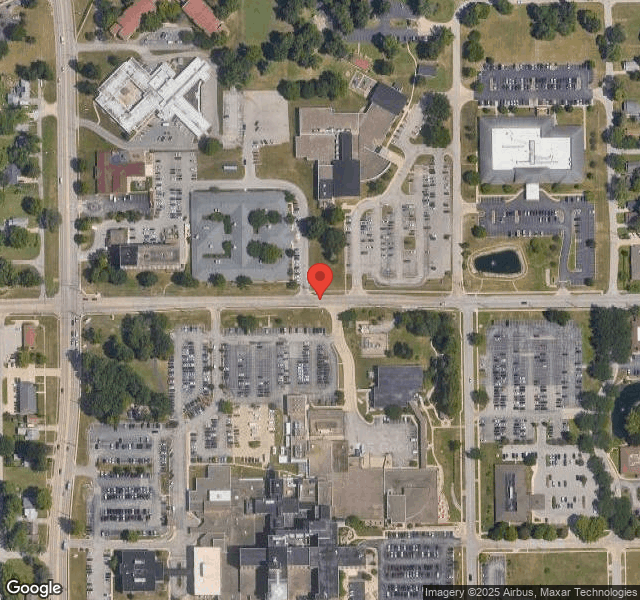

500 WEST MCKINLEY AVENUE, DECATUR, IL 62526 (217) 875-0020
For profit - Corporation 150 Beds THE LOFT REHABILITATION AND NURSING Data: November 2025 4 Immediate Jeopardy citations
Trust Grade
0/100
#568 of 665 in IL
Last Inspection: March 2025

Within standard 12-15 month inspection cycle. Federal law requires annual inspections.

Overview

Loft Rehab of Decatur has received a Trust Grade of F, indicating significant concerns about the quality of care provided. With a ranking of #568 out of 665 facilities in Illinois, they are in the bottom half, and #6 out of 7 in Macon County suggests there is only one local facility performing worse. While the trend shows some improvement, with issues decreasing from 38 in 2024 to 32 in 2025, the overall situation remains troubling. Staffing is rated poorly at 1 out of 5 stars, with a turnover rate of 56%, which is higher than the state average, indicating instability among staff. Notable incidents include a resident suffering a fractured arm due to inadequate supervision during ambulation and serious failures in pressure ulcer care, leading to deteriorating wounds and hospitalization. Families should weigh these serious weaknesses against any potential strengths before making a decision.

Trust Score
F
0/100
In Illinois
#568/665
Bottom 15%
Safety Record
High Risk
Review needed
Inspections
Getting Better
38 → 32 violations
Staff Stability
⚠ Watch
56% turnover. Above average. Higher turnover means staff may not know residents' routines.
Penalties
○ Average
$110,963 in fines. Higher than 69% of Illinois facilities. Some compliance issues.
Skilled Nurses
⚠ Watch
Each resident gets only 25 minutes of Registered Nurse (RN) attention daily — below average for Illinois. Fewer RN minutes means fewer trained eyes watching for problems.
Violations
⚠ Watch
102 deficiencies on record. Higher than average. Multiple issues found across inspections.
★☆☆☆☆
1.0
Overall Rating
★☆☆☆☆
1.0
Staff Levels
★☆☆☆☆
1.0
Care Quality
★☆☆☆☆
1.0
Inspection Score
Stable
2024: 38 issues
2025: 32 issues

The Good

  • Full Sprinkler Coverage · Fire safety systems throughout facility
  • No fines on record

Facility shows strength in fire safety.

The Bad

1-Star Overall Rating

Below Illinois average (2.5)

Significant quality concerns identified by CMS

Staff Turnover: 56%

Near Illinois avg (46%)

Frequent staff changes - ask about care continuity

Federal Fines: $110,963

Well above median ($33,413)

Significant penalties indicating serious issues

Chain: THE LOFT REHABILITATION AND NURSING

Part of a multi-facility chain

Ask about local staffing decisions and management

Staff turnover is elevated (56%)

8 points above Illinois average of 48%

The Ugly 102 deficiencies on record

4 life-threatening 8 actual harm
Jul 2025 2 deficiencies
CONCERN (D) 📢 Someone Reported This

A family member, employee, or ombudsman was alarmed enough to file a formal complaint

Potential for Harm - no one hurt, but risky conditions existed

Safe Environment (Tag F0584)

Could have caused harm · This affected 1 resident

Based on observation, interview, and record review the facility failed to maintain clean comfortable rooms consisting of clean floors and rooms that are free of dirty dishes and debris for two (R1, R2...

Read full inspector narrative →
Based on observation, interview, and record review the facility failed to maintain clean comfortable rooms consisting of clean floors and rooms that are free of dirty dishes and debris for two (R1, R2) of three residents reviewed for comfortable homelike environment.Findings Include:On 7/21/25 at 10:00 AM initial tour of the facility hallways labeled 100, 200 and 300 observed to have several unmade beds, some beds observed without linen, some beds had soiled linen on the unmade bed. 1. R1's Minimum Data Set, dated on July 11, 2025, documents R1 as cognitively intact.On 7/21/25 at 1:15 PM R1 stated the staff does not make the bed daily, and often times there are dishes left over in his room from meals that he doesn't eat in the dining room. R1 stated that R1 prefers bed/sponge baths and staff do not change the sheets on the bed after wiping him down. On 7/21/25 at 11:10 AM V3, R1 family, stated V3 visited R1 recently during lunch time, there was trash on the floor, used gloves on the floor, and used napkins on the floor. V3 stated that there were dirty dishes with old food on them and flies in the room, as well as dirty linen on the unmade bed. 2. R2's Minimum Data Set completion dated 5/14/25 documents R2 is severely cognitively impaired. MDS completion dated 5/10/25 documents R2 requires substantial/maximal assistance to dependent on staff for activities of daily living. On 7/21/25 at 10:22 AM R2's room contained two meal cover lids, inside of the lids was 4 used glasses containing thickened liquids. Two of the glasses were still full of liquid and two glasses were 3/4 full of thickened liquid. The bedside table in front of R2 contained two full Styrofoam cups both with lids in place containing thickened liquids. R2's bed was unmade; the bottom sheet was not spread out evenly and the top sheet was touching the floor on the right side of the bed. On 7/21/25 at 12:00 PM V4 License Practical Nurse confirmed R2 is lying in an unmade bed and the bed is to be made by the nursing staff in the morning before breakfast time. V4 confirmed that the top sheet should not be touching the floor. V4 confirmed the dirty dishes are still in the room from previous meals and should be removed by the staff when R2 has completed his meal. On 7/21/25 at 12:50 PM V5 Regional Nurse confirmed nursing staff are to be making the residents bed after getting the resident out of bed and ready for the day. V5 confirmed staff should be removing used dishes from the room after the resident is done using them and returned to the kitchen. On 7/22/25 at 11:30 AM V2 Director of Nursing confirmed that nursing staff are to be changing and making the beds of the resident after getting the residents up for the day and completing morning cares. V2 confirmed that after residents consume meals in their room staff should be removing dishes. Resident Council Meeting Minutes dated 4/17/25 document resident complaints concerning housekeeping is not cleaning the floors properly in the building. Residents voiced they are not getting clean linen on the bed after showers.Resident Council Meeting Minutes dated 5/9/25 document resident complaints concerning housekeeping staff are not sweeping the floor, they are mopping up the trash and food with the mop. Residents voiced the bedside tables are not being cleaned. Resident Council Meeting Minutes dated 6/19/25 document resident complaints of certified nurses' aides are not making the beds.
CONCERN (D) 📢 Someone Reported This

A family member, employee, or ombudsman was alarmed enough to file a formal complaint

Potential for Harm - no one hurt, but risky conditions existed

Incontinence Care (Tag F0690)

Could have caused harm · This affected 1 resident

Based on observation, interview and record review the facility failed to properly secure R2's indwelling catheter tubing, document urinary output every shift, and provide a dignity cover to cover the ...

Read full inspector narrative →
Based on observation, interview and record review the facility failed to properly secure R2's indwelling catheter tubing, document urinary output every shift, and provide a dignity cover to cover the urinary collection bag. R2 is one of one residents reviewed for urinary catheters.Findings Include:On 7/21/25 at 10:22 AM R2 is observed lying in bed with indwelling urinary catheter tubing dangling from the bedside unsecured to the lower extremity and urinary collection bag hanging on the right side of the bed uncovered and facing/exposed to the hallway. On 7/21/25 at 12:00 PM V4 confirmed R2 is lying in bed with indwelling urinary catheter tubing dangling from the right bedside unsecured to the lower extremity and urinary collection bag hanging on the right side of the bed uncovered and facing/exposed to the hallway.On 7/21/25 at 2:20 PM V1, V2 and V5 confirmed R2 is lying in bed with indwelling urinary catheter tubing dangling from the right bedside unsecured to the lower extremity and urinary collection bag hanging on the right side of the bed uncovered and facing/exposed to the hallway. On 7/22/25 at 11:30 AM V2 confirmed R2's medical record contained a physician's order for the placement of an indwelling urinary catheter with a drainage bag, a physician order to monitor urinary output every shift and to use a drainage tubing securement device to be changed weekly. V2 confirmed R2's medical record contained multiple days that urinary output was documented every shift. V2 reconfirmed the urinary drainage bag was not enclosed in dignity bag. V2 confirmed the facility policy is to record urinary output every shift, place the drainage bag in a dignity bag and ensure call light is within reach.On 7/21/25 at 10:00 AM record review documents on 4/30/25 at 09:24 AM a physician's order was entered: Maintain indwelling catheter with 16 F 10 cc balloon for _____ (diagnosis) and change prn for obstruction. On 7/21/25 at 10:00 AM record review documents on 4/30/25 at 09:24 AM a physician's order was entered: Change catheter securement device every week.On 7/21/25 at 10:00 AM record review documents on 5/7/25 at 05:05 AM a physician's order was entered: Ensure catheter output was obtained and documented every shift and as needed. R2's Bowel and Bladder Output tracker for the date range of 7/9/25 - 7/21/25 was reviewed. The urine outputs were recorded on 7/9 (5:33 AM and 9:33 PM), 7/10 (9:21 PM), 7/11 (5:35 AM and 11:32 AM), 7/12 (None recorded), 7/13 (3:36 AM), 7/14 (1:52 PM), 7/15 (4:34 AM and 8:34 PM), 7/16 (5:39 AM and 9:45 PM), 7/17 (9:59 PM), 7/18 (5:11 AM and 8:27 PM), 7/19 (5:59 AM. 8:42 AM, and 8:51 PM) 7/20 (5:35 AM), and 7/21 (5:59 AM and 7:44 PM). The record showed that 7/19/25 is the only date in which there is a urine output recorded for all three shifts. On 7/22/25 at 11:00 AM Catheter Care Policy record review Date Reviewed/Revised: 2/10/2025 documents under section Policy Explanation: 2. Privacy bags will be available and catheter drainage bags will be covered at all times while in use. 6. Legs bags will be attached to the resident's thigh or calf making sure to have slack on the tubing to minimize pressure and tension. Ensure straps are snug but not tight. 21. Ensure call light is within reach. 24. Document and record output. Ensure to include amount, color, and clarity.
May 2025 1 deficiency
CONCERN (D) 📢 Someone Reported This

A family member, employee, or ombudsman was alarmed enough to file a formal complaint

Potential for Harm - no one hurt, but risky conditions existed

Report Alleged Abuse (Tag F0609)

Could have caused harm · This affected 1 resident

Based on interview and record review the facility failed to report allegations of abuse to the state survey agency for one (R4) of three residents reviewed for abuse on a sample list of eight. Findin...

Read full inspector narrative →
Based on interview and record review the facility failed to report allegations of abuse to the state survey agency for one (R4) of three residents reviewed for abuse on a sample list of eight. Findings include: The facility's Abuse, Neglect and Exploitation policy dated 2/11/25 documents the facility will have written procedures that include: reporting of all alleged violations to the Administrator, state agency, adult protective services and to all other required agencies (e.g., law enforcement when applicable) within specified timeframes: a. immediately, but not later than 2 hours after the allegation is made, if the events that cause the allegation involve abuse or result in serious bodily injury, or b. not later than 24 hours if the events that cause the allegation do not involve abuse and do not result in serious bodily injury. On 5/14/25 at 10:26 AM, V1 Director of Nursing (DON) stated that she received an allegation of verbal abuse towards R4 on 5/5/25 from V10 (R4's daughter) and an allegation of physical abuse towards R4 on 5/12/25 from V11 Certified Nurse Assistant (CNA). V1 stated that she didn't know the abuse policy and should have reported these allegations to the state agency immediately. On 5/14/25 at V2, VP of Clinical Operations stated V1 DON should have reported both abuse allegations to the state agency immediately. Neither V1 or V3 could provide documentation showing that the state agency had been notified of any abuse allegations since February.
Apr 2025 1 deficiency 1 IJ
CRITICAL (J) 📢 Someone Reported This

A family member, employee, or ombudsman was alarmed enough to file a formal complaint

Immediate Jeopardy (IJ) - the most serious Medicare violation

Accident Prevention (Tag F0689)

Someone could have died · This affected 1 resident

**NOTE- TERMS IN BRACKETS HAVE BEEN EDITED TO PROTECT CONFIDENTIALITY** Based on observation, interview and record review the facility failed to provide adequate supervision/assistance when ambulating...

Read full inspector narrative →
**NOTE- TERMS IN BRACKETS HAVE BEEN EDITED TO PROTECT CONFIDENTIALITY** Based on observation, interview and record review the facility failed to provide adequate supervision/assistance when ambulating a resident to prevent a fall for one of four residents (R2) reviewed for accidents in the sample list of four residents. This failure resulted in R2 falling and suffering a fractured humerus when staff stepped away from R2 to untangle oxygen tubing. Findings include: The Care Plan dated 4/1/25 documents R2 was admitted to the facility on [DATE]. The Care Plan dated 4/1/25 documents R2 was admitted with the following diagnosis: systolic (congestive) heart failure, type 2 diabetes mellitus with unspecified complications, chronic gout, morbid (severe) obesity due to excess calories, polyneuropathy, dependence on renal dialysis, end stage renal disease, cellulitis of left lower limb, cellulitis of right lower limb, type 2 diabetes mellitus with diabetic nephropathy, hypertensive heart and chronic kidney disease without heart failure, with stage 5 chronic kidney disease, or end stage renal disease, dyspnea, muscle wasting and atrophy, multiple sites, unsteadiness on feet, and other lack of coordination. The Nurses Progress Notes dated 2/28/2025 at 2:40 PM document R2 was walking with therapy with the walker as the therapist trailed behind with the wheelchair. The therapist was attempting to adjust the oxygen tubing when the resident had some weakness and lost balance. The Note documents R2 complained of right shoulder pain and was unable to perform range of motion. R2 was subsequently sent to the local emergency room. On 4/1/25 at 2:07 PM V3, Physical Therapy Aide, stated that V3 was ambulating R2 in the hallway. V3 stated R2 was using a walker for ambulation, when R2's oxygen tubing became tangled around the wheelchair that was being pulled behind R2 during ambulation. V3 stated V3 bent over to untangle the tubing and R2 fell forward landing on the floor. On 4/1/25 at 2:07 PM V3, Physical therapy aide, demonstrated being behind the wheelchair bent over to untangle the oxygen tubing and unable to reach R2 due to the gap between V3 and R2. The Physical Therapy Progress Note dated 2/28/2025 at 4:20 PM documents R2 as requiring CGA (Contact Guard Assist) for ambulation with recovery breaks in between each set. The Note documents R2 notes increase in fatigue and SOB (Shortness ff Breath). R2 fell this session, while standing, R2's oxygen tube was caught on the wheelchair. While dislodging the tube R2 fell forward and has an abrasion on her right knee, elbow and cheek bone notified nursing of the accident. On 4/2/25 the NIH (National Institute of Health) Web Site defines Contact Guard Assist as the caregiver places one or two hands on the patient's body to help with balance but provides no other assistance to perform the functional mobility task. https://www.ncbi.nlm.nih.gov. Hospital Records dated 2/28/25 at 4:18 PM document R2 arrived at the hospital with a Chief Complaint of fall while doing physical therapy and that R2 reports right shoulder pain and states she hit her face as well. Hospital Records dated 2/28/25 at 6:17 PM document R2 was diagnosed with a closed comminuted fracture of the right humerus, facial contusion, multiple abrasions and right elbow pain. On 3/31/25 at 11:24 AM V5, R2's Family, confirmed that R2 was admitted to the hospital for a fractured right humerus and needed surgical repair. On 4/1/25 at 10:00 AM V1 confirmed that V3 was ambulating R2 in the hallway by himself with a walker while trailing R2 with a wheelchair that was carrying R2's oxygen on the back of the wheelchair. On 4/1/25 at 10:40 AM V9, Director of Rehabilitation, confirmed V3 was ambulating R2 in the hallway by himself with a walker while trailing R2 with a wheelchair that was carrying R2's oxygen tank on the back of the wheelchair. V9 confirmed V3 was behind the wheelchair and not in reach of R2 or the gait belt around R2. V9 confirmed two staff members will be used to ambulate residents with multiple pieces of equipment.
Mar 2025 23 deficiencies 1 IJ
CRITICAL (J)

Immediate Jeopardy (IJ) - the most serious Medicare violation

Pressure Ulcer Prevention (Tag F0686)

Someone could have died · This affected 1 resident

**NOTE- TERMS IN BRACKETS HAVE BEEN EDITED TO PROTECT CONFIDENTIALITY** Based on observation, interview, and record review the facility failed to implement repositioning and incontinence cares every t...

Read full inspector narrative →
**NOTE- TERMS IN BRACKETS HAVE BEEN EDITED TO PROTECT CONFIDENTIALITY** Based on observation, interview, and record review the facility failed to implement repositioning and incontinence cares every two hours, implement pressure relieving interventions, implement pressure ulcer treatments, identify pressure ulcers, monitor and assess pressure ulcers upon identification and weekly, and notify a physician and dietitian of newly identified and current pressure ulcers and deterioration for two (R52, R345) of six residents reviewed for pressure ulcers in the sample list of 48. These failures resulted in R52 developing left heel stage two and right heel stage three pressure ulcers and being hospitalized for an infection of the stage three pressure ulcer. R52 subsequently developed a coccyx pressure ulcer that deteriorated into a stage four pressure wound. This failure resulted in an Immediate Jeopardy: The Immediate Jeopardy began on 02/22/2025, when the facility failed to continue ongoing monitoring and assessments of R52's wound and skin, maintain R52's wound dressing, ensure R52's pressure reliving interventions were implemented, ensure R52's pressure ulcers were identified timely, and ensure R52's pressure ulcer was evaluated by a physician and ensure R52's nutritional status was evaluated by a dietitian, per their submitted abatement plan to the State Agency for F686J cited on 02/25/2025. V1 Administrator was notified of the Immediate Jeopardy on 3/6/25 at 10:23 AM. The surveyor confirmed by observation, interview, and record review that the Immediate Jeopardy was removed on 3/7/25, but noncompliance remains at Level Two because additional time is needed to evaluate the implementation and effectiveness of the in-service training. Findings include: The facility's Wound Treatment Management policy dated 2/1/25 documents wound treatments will be administered as ordered, if there are no orders then notify the physician, check and monitor dressings daily to ensure they are intact. This policy documents the effectiveness of treatments will be monitored by the nursing staff, Director of Nursing, and wound nurse through regular assessments of the wound and to consider modifications if there is a lack of progression of healing. The facility's Pressure Injury Prevention and Management policy dated 2/10/25 documents the following: The facility shall establish a systematic approach for pressure ulcer prevention and management, including prompt assessment and treatment, reducing underlying risk factors, interventions to stabilize, monitoring the effectiveness of interventions, and modifying interventions. The facility will use a pressure injury risk assessment and consider other risk factors such as impaired mobility, co-morbid conditions, cognitive impairment, bowel and bladder incontinence, nutritional status, and previous healed pressure ulcers. The nurses will complete weekly full body skin checks and with any newly identified pressure ulcer and document these assessments in the resident's medical record. Nurses will assess pressure ulcers and document the assessment, including staging of the pressure ulcer. A care plan will be developed to include appropriate interventions for pressure ulcer prevention and management, interventions will be communicated to relevant staff, and compliance will be documented in weekly charting. Pressure ulcer preventative interventions will be implemented for all residents identified to be at risk or who have pressure ulcers. These interventions include redistributing pressure through support surfaces and offloading/repositioning, minimizing exposure to moisture, and maintaining or improving nutritional status. The Unit Manager or designee is responsible for reviewing pressure ulcer and skin documentation weekly and documenting findings in the medical record. The physician will be notified when new pressure ulcers are identified, wound progression, and complications. 1. On 3/03/25 at 9:32 AM R52 was sitting in a wheelchair in R52's room. R52 stated R52 thinks R52 has a sore on R52's bottom, but was unable to give any additional information about R52's wound and wound care. On 3/3/25 intermittent observations were conducted from 9:32 AM until 3:12 PM of R52 sitting in a wheelchair in R52's room. There was a foam cushion on R52's wheelchair seat. On 3/03/25 at 2:19 PM V11 Certified Nursing Assistant (CNA) stated V11 last offered to lay R52 down and provide toileting assistance at 10:00 AM and R52 refused at that time. V11 stated R52 is suppose to be laid down/repositioned and toileted at least every two hours and refusals of care are suppose to be reported to the nurses, but V11 had not reported R52's refusal of care today. V11 stated there are usually four or five CNAs working on R52's unit and North Wing, but today there were only three CNAs. V11 entered R52's room. There was a strong urine odor in the room, confirmed with V11. V11 stated V11 was just getting ready to lay R52 down, and the staffing today has affected V11's ability to provide R52's cares. At 2:41 PM R52 was in R52's room scooted down in the wheelchair. V10 and V11 CNAs entered R52's room and attempted to transfer R52 from the wheelchair. R52 was tearful, moaning and shaking. R52's fists were clenched and R52 complained of buttock pain when V11 and V10 CNAs attempted to transfer R52. V10 and V11 stated R52 acts like this when R52 is in pain from sitting in the wheelchair too long, they will need to allow R52 time to calm down and reapproach later. At 3:12 PM V11 and V19 CNA transferred R52 into bed and provided incontinence care. R52 was tearful, anxious, shaking, moaning, and complaining of R52's bottom hurting. R52's brief was saturated with urine and R52 had a golf ball sized pressure ulcer to the coccyx. Slough covered approximately 10% of the wound bed. The wound was not covered with a dressing at the time of the transfer. V11 stated R52 had a dressing on early this morning, V11 didn't pay attention to when it became dislodged, and did not report this to the nurse. R52's Minimum Data Set (MDS) dated [DATE] documents R52 required dependence on staff for toileting and supervision/touching assistance for bed mobility and transfers; and R52 had one facility acquired stage two pressure ulcer. R52's MDS dated [DATE] documents R52 has cognitive impairment, R52 is dependent on staff for toileting and transfers, and needs partial/moderate assistance with bed mobility. R52's Braden assessment dated [DATE] documents R52 is at risk for developing pressure ulcers and R52's Braden assessment dated [DATE] documents R52 is at high risk of developing pressure ulcers. These forms do not document implementation of pressure relieving interventions as indicated on the forms. R52's (active) Care Plan documents R52 has Parkinson's Disease and Alzheimer's Disease, R52 is incontinent of bowel and bladder and has Moisture Associated Skin Damage of the sacrum. This care plan includes interventions to report signs of skin breakdown, provide prompt incontinence care, administer treatments as ordered, follow dietitian recommendations, refer to the wound provider, and complete weekly wound assessments. This care plan does not include pressure relieving interventions for heels, besides repositioning and an air mattress. There are no documented weekly skin assessments in R52's medical record after 12/5/24 until 12/26/24. R52's Skin Check dated 12/26/24 documents R52 had a new facility acquired intact blister on the right heel. There is no documentation that this wound was reported to a physician or that treatment orders and preventative measures were implemented for R52's heel wound. R52's Nursing Note dated 12/28/24 at 12:16 AM documents R52 was drowsy, difficult to arouse, and had refused medications. R52 had a large open, draining, blister on the right heel/ankle and another small open, draining wound on the left ankle. R52 was transferred to the emergency room. R52's Hospital Notes dated 12/28/24 document R52 was admitted to the hospital with a stage two pressure ulcer of the left heel and cellulitis of a stage three pressure ulcer of the right heel. R52 was given intravenous antibiotics and hospitalized until 1/1/25. R52's Skin Check dated 1/10/25 documents R52 had right and left heel blisters and a new facility acquired sacral wound that measured 1.8 centimeters (cm) long by 0.5 cm wide. This wound is described as Moisture Associated Skin Damage (MASD). R52's Hospital Note dated 1/14/25 documents R52's sacral wound as a stage two pressure ulcer. R52's Wound assessment dated [DATE] is the last recorded assessment of this wound in R52's medical record. This assessment documents R52's sacral wound as MASD that measured 1.5 cm by 0.8 cm by 0.1 cm deep. R52's Skin Monitoring Forms (shower sheets) dated 2/17/25, 2/20/25 and 2/24/25 indicate impaired skin on R52's sacrum but there are no descriptions of this area. R52's skin assessments dated 2/20/25 and 2/27/25 do not include R52's sacral wound. R52's March 2025 Treatment Administration Record (TAR) documents to cleanse sacral wound and apply honey hydrocolloid dressing every three days on night shift as of 2/9/25. R52's Initial Wound Evaluation & Management Summary dated 1/8/25 and recorded by V21 Wound Nurse Practitioner, documents R52's right heel stage two pressure ulcer measured 2.5 cm by 4.5 cm and to use skin protectant daily, float heels in bed, offload wound, and use a pressure relieving boot. There is no documentation in R52's medical record that R52 was evaluated by V21 after 1/8/25 until 3/5/25. There is no documentation in R52's medical record of when R52's sacral pressure ulcer deteriorated and that a physician was notified to obtain new treatment orders, or that R52's nutritional status was evaluated by a dietitian between 12/1/24 and 3/3/25. R52's Wound Evaluation and Management Summary dated 3/5/25, recorded by V21, documents R52's right heel ulcer is resolved and R52's coccyx wound as a stage four pressure ulcer that measured 2.3 cm by 1.3 cm by 2.1 cm deep. This wound contained 30% necrotic (dead) tissue and 40% slough (dead tissue). The wound is described as being odorous with gray colored drainage, periwound is erythematous and painful to palpation. This wound required debridement to remove the dead tissue. V21 ordered Doxycycline (antibiotic) 100 milligrams twice daily by mouth for 14 days and a new treatment for 0.125% Dakins (bleach) solution soaked gauze packed into the wound and covered with a dressing twice daily. V21 recommended offloading the wound, repositioning per facility protocol, using an air inflated wheelchair cushion, and limiting time in the wheelchair to two hours at a time. There is no documentation that R52's order for Doxycycline was implemented as of 3/6/25 at 10:15 AM. The facility's Wound Log dated 2/25/25 does not include R52's sacral pressure ulcer. On 3/3/25 at 2:36 PM V10 CNA stated there were three CNAs for the evening shift last night on the North Wing and R52's unit, which was not enough staff, causing toileting and incontinence cares to fall behind. V10 stated R52's wound was present three weeks ago when V10 started working for the facility, the wound has gotten worse and R52 complains of pain. V10 stated the nurses were aware of this. On 3/03/25 at 3:37 PM V22 Wound Nurse stated V22 has not done any treatments for R52 and was unsure if R52 had any wounds. V22 assessed R52's wound and stated the wound was unstageable due to slough. V22 stated V22 would notify the physician and get a treatment order. On 3/04/25 at 10:31 V24 Licensed Practical Nurse (LPN) stated R52 had an intact blister on the right heel and V24 was unsure if the physician was notified or any treatments/interventions were implemented for this wound. V24 stated since it (blister) is intact, we don't really apply a treatment. On 3/04/25 at 10:39 AM V3 Assistant Director of Nursing (ADON) stated V3 assessed R52's buttocks on 2/20/25 and described R52's sacral area as the skin being whitish/pink in color and superficially open between the epidermis and dermis layers of skin. V3 reported this to the former DON and did not notify the physician or get new treatment orders. V3 stated the CNAs are suppose to notify the nurse when dressings are dislodged so that a new dressing can be applied. On 3/4/25 at 11:41 AM V23 LPN stated V23 transferred R52 to the hospital in December 2024 due to a right heel blister that was open and draining. V23 stated within the last two weeks V23 has changed R52's sacral dressing at least once or twice and it looked as though the wound was getting worse. V23 thought V23 notified V34 (R52's Physician) and documented this in a note, but sometimes V34 is difficult to get a hold of so V23 may have passed it onto the day shift to follow up on. V23 was unsure if the facility's Medical Director (V35) should be contacted in the event that a resident's physician is unable to be reached. At 3:25 PM V23 stated V23 could not recall if any heel pressure relieving interventions were implemented for R52. V23 stated R52 had a dressing on the left heel that V23 did not remove and R52 did not have any active treatment orders for R52's heel wounds the day V23 sent R52 to the hospital in December. V23 stated to refer to R52's TAR to determine when V23 last administered R52's sacral wound treatment. V23 stated at that time the wound was deeper, had slough, and was draining. R52's February 2025 TAR documents V23 administered R52's sacral wound treatment on 2/24/25 and 2/27/25. On 3/4/25 at 10:07 AM V2 Director of Nursing (DON) stated V2 saw R52's wound today and R52 had sacral MASD that opened within the last two weeks. V2 stated if there is a wound then it should have a wound assessment completed weekly in the assessments section of the electronic medical record, and the physician should be notified of wounds which would be documented in the nursing notes. V2 stated skin checks should also be completed weekly in the assessments section and should include wound identification. V2 stated the standard of care is for residents to be repositioned and provided incontinence care every two hours. V2 stated R52 should have physician orders for pressure relieving boots or floating heels and this should also be documented in R52's care plan. At 2:25 PM V2 stated R52's nursing note dated 1/13/25 was the only documentation V2 could find that R52's wounds were reported to a physician. V2 confirmed there were no orders or care plan for heel pressure relieving interventions. On 3/06/25 at 11:08 AM V2 stated if the nurses are unable to reach V34 (R52's Physician) then they should contact either V35 Medical Director or V18 Nurse Practitioner, who both are available to take calls 24 hours per day. On 3/4/25 at 10:57 AM V18 Nurse Practitioner stated residents at risk for developing pressure ulcers and those with pressure ulcers should be provided incontinence care and repositioning/offloading at least every two hours. V18 confirmed if wounds are not monitored/assessed, wound dressings aren't maintained, pressure relieving interventions, incontinence care and repositioning aren't implemented, and newly identified wounds and deterioration aren't being reported to a physician, these things can contribute to the development of pressure ulcers and wounds deteriorating. V18 stated pressure ulcers should be reported to the facility's wound provider and evaluated. V18 stated V18 was notified yesterday of R52's sacral wound. V18 stated the facility should have reported R52's heel wounds, implemented pressure relief for R52's heels such as floating heels or heel protectors, and implemented a protective dressing treatment for R52's intact blister. V18 confirmed wounds should be covered with dressings maintained as ordered. V18 stated if these things aren't implemented then the resident is at risk for the wound becoming infected, developing sepsis, and the wound deteriorating. On 3/4/25 at 3:16 PM V20 Registered Dietitian (RD) stated V20 has been the facility's dietitian since September/October 2024 and V20 rounds in the facility weekly. V20 stated V20 was not made aware that R52 had wounds, so V20 did not evaluate R52 until today. V20 confirmed R52's nutrition had not been evaluated between 12/1/24 and 3/3/25. V20 stated V20 recommended adding fortified foods with R52's meals and will probably recommend adding Vitamin C and Zinc. V20 stated V20 would have recommended these things sooner if V20 was notified of R52's wounds. On 3/5/25 at 3:48 PM V21 Wound Nurse Practitioner stated V21 just evaluated R52's wound which presented as an unstageable pressure ulcer with slough and necrosis that required debridement. After debridement it is a stage four pressure ulcer that measured 2.3 cm by 1.3 cm by 2.1 cm deep. V21 stated V21 had to stop the debridement due to the amount of pain R52 experienced. V21 confirmed R52 should have been evaluated by V20 RD and V21, should have been repositioned and provided incontinence care every two hours, have dressing maintained, and wound assessments and monitoring completed. V21 stated these are certainly big factors in wound healing and can contribute to R52's wound deterioration. V21 stated V21 had last evaluated R52 for a heel ulcer, which is now healed, but that was prior to R52 going to the hospital. V21 stated no one notified V21 that R52 had returned from the hospital and that R52 had wounds. V21 stated V21 is ordering Doxycycline and additional blood work due to R52's pain and concern for infection. V21 stated the facility has had a lot of wound nurse turnover. On 3/6/25 at 10:15 AM V22 Wound Nurse confirmed V22 rounded with V21 on 3/5/25 and V21 mentioned ordering Doxycycline. V22 stated either V22 or V2 are responsible for entering V21's orders and R52's Doxycycline order had not yet been transcribed/implemented. The facility presented an abatement plan to remove the immediacy on 3/6/25 at 12:08 PM and presented revision of the abatement plan on 3/6/25 at 12:28 PM, 12:42 PM and 2:42 PM, and on 3/7/25 at 9:37 AM. The survey team reviewed the abatement plan and was unable to accept the plan to remove the immediacy. The abatement plan was returned to the facility for revisions on 3/6/25 at 12:20 PM, 12:32 PM, and 2:12 PM, and on 3/7/25 at 9:24 AM. The facility presented a revised abatement plan on 3/7/25 at 9:46 AM and the survey team accepted the abatement plan on 3/7/25 at 9:47 AM. The Immediate Jeopardy that began on 2/14/25 was removed on 3/7/25 when the facility took the following actions to remove the immediacy: 1.) R52 was assessed and treated by the Wound Care Physician on 3/5/25. 2.) V22 Wound Nurse was hired on 2/26/25 as the facility's full time wound nurse, confirmed with V22 on 3/7/25. 3.) V2 Director of Nursing and V22 Wound Nurse conducted facility wide skin checks on 3/6/25 and 3/7/25 of all residents. 4.) V22 Wound Nurse initiated audits on 3/7/25 that included a review of the resident skin checks, provisions of incontinence care, turning and repositioning, notifications to the physician and Registered Dietician, and monitoring of wound treatments. 5.) On 3/6/25 and 3/7/25 V2 Director of Nursing conducted an inservice training for nurses and Certified Nursing Assistants on the topics of skin assessments, wound assessments, identifying and reporting new and deteriorating wounds, implementing and maintaining wound treatments, notification of physician and dietitian, incontinence care, and turning and repositioning. This was confirmed through documented in-service sign in sheets and staff interviews confirmed on 3/7/25. Any remaining staff will receive this training prior to their next scheduled shift, confirmed with V2 and V22 on 3/7/25. 6.) On 3/6/25 V22 was in-serviced by V2 on the facility's skin and wound management programs and notification of registered dietitian and physician. This was confirmed on 3/7/25 through documented in-service and interviews with V2 and V22. V2 and V22 confirmed V22 will be responsible for monitoring/tracking/processing of physician orders and dietitian recommendations. 7.) On 3/7/25 at 2:37 PM V2 stated V22 will bring the audits to the Quality Assurance meetings to be reviewed by the interdisciplinary team weekly, monthly, and quarterly. This was also confirmed with V1 and V22. 2. R345's care plan dated 2/11/25 documents R345 has history of Pressure Ulcers and that R345 is cognitively intact and has no signs and symptoms of delirium. On 3/5/25 at 1:45 PM, V6 (Licensed Practical Nurse) and V19 (Certified Nursing Aide) laid R345 down in R345's bed. There was a pencil eraser sized partial thickness wound to R345's right buttock. R345's wound did not have a treatment on it. V6 stated V6 was unaware of the open area and stated that she will have the wound doctor look at it. V6 stated there is no treatment for this area. R345 stated this area has been present and was seen by the nurse a couple nights ago. R345's nurse's note dated 2/19/25 at 6:39 PM documents R345 has a new skin issue to the buttocks. R345's physician order sheet does not contain a treatment order for the right buttock. R345's Initial Wound Evaluation note dated 3/5/25 documents R345 has a 0.1 centimeter (cm) by 0.2 cm stage two pressure ulcer to the right buttock. This note documents the duration of this wound as greater than two days. This evaluation contains an order for medical honey to be applied once daily and covered with a gauze dressing.
SERIOUS (G)

Actual Harm - a resident was hurt due to facility failures

Free from Abuse/Neglect (Tag F0600)

A resident was harmed · This affected 1 resident

**NOTE- TERMS IN BRACKETS HAVE BEEN EDITED TO PROTECT CONFIDENTIALITY** 2. R195's undated Diagnoses List, documents R195's diagnoses as: Cerebral Infarction due to unspecified occlusion or stenosis of...

Read full inspector narrative →
**NOTE- TERMS IN BRACKETS HAVE BEEN EDITED TO PROTECT CONFIDENTIALITY** 2. R195's undated Diagnoses List, documents R195's diagnoses as: Cerebral Infarction due to unspecified occlusion or stenosis of Left Posterior Cerebral Artery, Metabolic Encephalopathy, Rhabdomyolysis, and Hemiplegia, unspecified affecting left nondominant side. R195's Care Plan dated 2/6/25, documents R195 requires substantial/maximum assist by one staff member to eat. R195's Minimum Data Set (MDS) dated [DATE], documents R195 has an impairment on one side of both the upper and lower extremities. On 3/2/25 at 8:57 AM, R195 stated during night shift, unknown CNA told R195 he uses his call light too much and took it away from him so he couldn't get any help. R195 stated the staff laugh at him at night and are rough with him when they transfer and roll him. R195 was visibly upset when speaking about this and stated the interaction made him very distraught as he was not able to get the help he needed without his call light. R195 stated it was hurtful when staff laughed at him and were rough. On 3/5/25 at 10:30 AM, V2 Interim Director of Nursing (DON) confirmed R195 is at risk for abuse due to him needing assistance with Activities of Daily Living (ADL's) and because of his diagnoses. V2 confirmed staff should never take away a resident's call light or make them feel badly for using it to call for assistance. V2 confirmed staff should treat residents with respect and never be rough or laugh at them. The facility's Abuse, Neglect and Exploitation Policy dated Revised 2/11/25, documents Abuse means the willful infliction of injury, unreasonable confinement, intimidation, or punishment with resulting physical harm, pain or mental anguish. Abuse also includes the deprivation by an individual, including a caretaker, of goods or services that are necessary to attain or maintain physical, mental, and psychosocial well-being. Instances of abuse of all residents, irrespective of any mental or physical condition, cause physical harm, pain or mental anguish. It includes verbal abuse, physical abuse, and mental abuse. Mental Abuse includes humiliation, harassment, and deprivation and it is the policy of the facility to provide protection for the health, welfare and rights of each resident. Based on observation, interview, and record review, the facility failed to protect the resident's right to be free from verbal and mental/emotional abuse by staff members for two (R345, R195) of 32 residents reviewed for abuse on the sample list of 48 residents. This failure resulted in fear, emotional harm and mental anguish for both R345 and R195. Findings Include: 1. R345's care plan dated 2/11/25 documents R345 has medical diagnoses of COPD (Chronic Obstructive Pulmonary Disease), Asthma, History of Chronic Respiratory Failure, History of Fracture to the the Right Femur, Arthritis to right hand, Depression, Diabetes Mellitus, Anemia, Pneumonia, and Hypertension. R345's minimum data assessment dated [DATE] documents that R345 is cognitively intact and has no signs and symptoms of delirium. On 3/2/25 at 10:23 AM, R345 was sitting in his wheelchair in his room. When asked how R345 is treated in the facility R345 put his hands together and quietly stated, I am afraid of retaliation if I tell you. R345 then stated a couple weekends ago (2/22/24 and 2/23/24) he asked for a pain pill and nobody came so he called his daughter (V25) to tell her so that she could get someone to bring him a pain pill. R345 stated a few minutes later V26 (Licensed Practical Nurse) came into his room and was mad and yelled at him that she has 30 other residents to take care of and V26 can't jump every time R345 calls. R345 stated then V26 stated she didn't appreciate being reported two days in a row. R345 began to cry and stated V26 scared R345 and he was afraid of what V26 might do. On 3/3/25 at 10:44 AM, V25 stated R345 had called her upset that the nurse had not brought his pain pill. V25 stated she called the facility and talked to V26. V25 stated a little bit later R345 called and was crying and stated that V26 came into his room yelling at him and stated V26 doesn't like to be reported and has too many people to take care of. On 3/06/25 at 9:23 AM, V1 (Administrator) stated that R345 is alert and orientated, makes his own decisions, and, If he said it happened, it happened. V1 stated V1 would consider V26 yelling at R345 as verbal abuse.
SERIOUS (G)

Actual Harm - a resident was hurt due to facility failures

Quality of Care (Tag F0684)

A resident was harmed · This affected 1 resident

**NOTE- TERMS IN BRACKETS HAVE BEEN EDITED TO PROTECT CONFIDENTIALITY** Based on observation, interview, and record review the facility failed to assess a wound, prevent cross contamination during wou...

Read full inspector narrative →
**NOTE- TERMS IN BRACKETS HAVE BEEN EDITED TO PROTECT CONFIDENTIALITY** Based on observation, interview, and record review the facility failed to assess a wound, prevent cross contamination during wound care, administer wound treatments as ordered, timely notify the physician of a dehisced surgical wound, monitor bowel movements and hydration, and implement bowel interventions for three (R52, R30, R41) of 24 residents reviewed for quality nursing care in the sample list of 48. These failures resulted in R52 and R41 developing bowel obstruction and fecal impaction requiring hospitalization and treatment. Findings Include: 1.) R52's Minimum Data Set (MDS) dated [DATE] documents R52 is dependent on staff for toileting. R52's MDS dated [DATE] documents R52 has cognitive impairment and R52 is dependent on staff for toileting. R52's Care Plan dated 11/7/22 documents R52 is at risk for constipation and includes interventions to encourage R52 to sit on the toilet and monitor/report symptoms of constipation. R52's Care Plan dated 5/23/22 documents R52 is incontinent of bowel and bladder and includes an interventions to monitor bowel habits, notify the nurse of bowel concerns, administer bowel management medications as ordered, and notify physician of concerns. R52's care plan has not been updated to include R52's history of bowel obstruction or any new bowel interventions after 10/22/22. R52's Nursing Note dated 1/13/25 at 1:04 PM documents R52 was transferred to the hospital for seizure like activity. R52's hospital note dated 1/13/25 documents R52 arrived with abdominal distention, abdominal pain, and no bowel movements for the past day. R52's Hospital Note dated 1/14/25 documents R52's abdominal computed tomography indicated high-grade small bowel obstruction and low-grade partial colonic obstruction. A nasogastric tube was inserted and R52 was hospitalized until 1/17/25. R52's January 2025 and March 2025 Medication Administration Records do not document any orders for bowel medications. R52's January 2025 bowel tracking documents between 1/1/25 and 1/13/25 R52 had three small bowel movements. Bowel incontinence is recorded once on 1/2/25 and 1/6/25, but not applicable is recorded for size and consistency of bowel movements. There are no documented bowel movements between 1/1/25 and 1/7/25, 1/11/25, and 1/12/25, besides these entries. R52's February and March 2025 bowel tracking documents R52's last recorded bowel movement was a small bowel movement on 2/22/25, besides bowel incontinence on night shift on 3/11/25. This entry documents not applicable for size and consistency. R52's medical record does not document any assessments of R52's abdomen or that R52's constipation was reported to a physician after 2/22/25. On 3/04/25 at 9:54 AM V28 Certified Nursing Assistant (CNA) stated V28 is R52's assigned CNA today and R52 had not had a bowel movement. V28 stated bowel movements are documented by the CNAs in the bowel tracking. V28 was unsure when R52's last bowel movement was and V28 would have to look at R52's bowel tracking. On 3/05/25 at 9:31 AM V39 CNA stated V39 is assigned to R52's care today and R52 had not had a bowel movement today. On 3/04/25 at 9:58 AM V13 Licensed Practical Nurse stated nothing had been passed on in shift report about R52's bowels. V13 stated the CNAs are suppose to chart bowel movements and if the resident hasn't had a bowel movement in so many days then the nurses are suppose to contact the doctor for orders. R52's bowel tracking was reviewed with V28 who confirmed R52 going three or more days without bowel movements and confirmed R52 has no active orders for bowel medications. V28 stated V28 will follow up and get orders. On 3/4/25 at 10:13 PM V40 CNA confirmed V40 documented incontinent bowel movement for R52 on night shift on 3/3/25. V40 stated the bowel movement was not enough to even consider a bowel movement, it was pate like and a minimal amount. V40 was unsure when R52 last had a bowel movement. On 3/04/25 at 10:07 AM V2 Director of Nursing stated the CNAs should be documenting bowel movements in the resident's bowel tracking. V2 stated R52 should have bowel and hydration monitoring and stool softeners ordered since R52 has a history of bowel obstruction. V2 stated fluid intake is documented as part of meal intakes recorded by the CNAs, but is not recorded unless the resident is on strict intake and output monitoring. R52's bowel tracking was reviewed with V2 and confirmed 2/22/25 was the last recorded bowel movement. V2 confirmed no bowel medications or interventions have been implemented. V2 stated physician notification is documented in a progress note. On 3/04/25 at 1:02 PM V2 confirmed R52's December 2024 and January 2025 bowel tracking documents lack of bowel movements and R52 had no bowel medications ordered prior to R52's bowel obstruction. V2 confirmed bowel movement size and consistency should be recorded for each bowel movement. On 3/05/25 at 10:56 AM V2 stated the facility does not have a bowel protocol/policy. On 3/06/25 at 9:36 AM V3 Assistant Director of Nursing was requested to assess R52's abdomen and bowel sounds. R52 denied stomach pain and nausea. V3 asked R52 if R52 had a bowel movement and R52 replied no. V3 asked R52 when R52 last had a bowel movement and R52 was unsure. V3 palpated R52's abdomen and used a stethoscope to assess R52's bowel sounds. V3 stated R52's abdomen is soft and not distended, and V3 heard bowel sounds in all four quadrants of R52's abdomen. V3 stated V3 will follow up with V18 Nurse Practitioner or V35 Medical Director. V3 told R52 that V3 would get an order and give something for R52 to have a bowel movement. V3 confirmed physical assessments should be noted in a progress note or in the assessment section of R52's electronic medical record. On 3/03/25 at 1:44 PM R52's January 2025 hospitalization for bowel obstruction was discussed with V18 Nurse Practitioner. V18 stated the facility should have been tracking and monitoring R52's bowel movements and notified the physician so that a stool softener or laxative could be ordered prior to R52's hospitalization. On 3/4/25 at 10:57 AM V18 stated the facility should have informed V18 or V34 (R52's Physician) that R52 was not having routine bowel movements so that R52 could be started on a bowel medication such as Senna. V18 confirmed the staff should be monitoring R52's bowel movements closely and reporting concerns. V18 stated with R52's history of bowel obstruction V18 is prone to developing another obstruction. V18 stated signs would be complaints of abdominal pain, but R52 has Alzheimer's Disease which makes it complicated due to impaired cognition and communication. V18 stated if a bowel obstruction is left undetected and untreated for a prolonged period it could lead to death, but usually there are signs of symptoms such as abdominal distention/bloating and vomiting. V18 stated the facility should also be monitoring and ensuring adequate hydration for R52, which would also help with R52's constipation. 2.) On 03/02/25 at 9:14 AM R30 had a wound vacuum attached to a dressing on R30's left below knee amputation surgical wound. R30 stated the nurses did not initiate a wound treatment when R30 admitted to the facility and R30 had to have additional surgery for an infection of the surgical incision. R30's MDS dated [DATE] documents R30 as cognitively intact. R30's nursing notes document R30 admitted to the facility on [DATE]. R30's Skin Check dated 12/31/2024 at 10:50 PM documents R30 had a new wound to the left knee amputation site that measured 3 centimeters (cm) long by 1.5 cm wide by 0.25 cm deep. This wound had 90% granulation, 100% slough, and purulent pus drainage. R30's Nursing Note dated 1/3/2025 at 10:04 AM documents an open area below R30's left knee measured 3 cm by 1.5 cm by 0.25 cm and physician (V35) was notified. R30's Nursing Noted dated 1/7/2025 at 12:51 PM documents R30's amputation site was warm to touch, and had pus, foul odor, and was larger from prior observation. Antibiotics and would culture was ordered. There is no documentation in R52's medical record that this wound was reported to V35 prior to 1/3/25 and reported to V41 (R52's Surgeon) prior to 1/9/25. R30's Hospital Notes and Operative Report dated 1/10/25 documents dehiscence of amputation surgical site with breakdown exposing muscle and tendon that required debridement and wound vacuum placement. R30's December 2024 and January 2025 Treatment Administration Records (TARs) do not document any wound treatments were implemented for R30's surgical wound after 12/31/24 until 1/3/25. R30's Physician Order dated 2/16/24 documents negative pressure wound therapy for left below knee amputation and change every Monday, Wednesday, Friday and as needed. There are no orders for a petroleum gauze dressing as part of R30's surgical wound care. R30's Skin Checks dated 2/18/25, 2/19/25 and 2/26/25 do not document an assessment and/or measurements of R30's surgical wound. There are no documented wound assessments for R30's surgical wound in R30's electronic medical record after 1/31/25. On 3/03/25 at 10:35 AM V22 Wound Nurse performed hand hygiene and applied gown and gloves prior to entering R30's room to administer R30's surgical wound treatment. V22 removed the surgical wound dressing and did not remove V22's gloves. V22 handled R30's personal cellular phone to obtain a picture of R30's wound, per R30's request and then cleaned R30's wound while wearing the same gloves. V22 changed gloves, performed hand hygiene, applied a petroleum gauze directly to R30's wound, applied foam and attached the wound vacuum. On 3/3/25 at 10:58 AM V22 stated the floor nurses should be assessing the wound each time the dressing is changed and recording weekly as a skin assessment under the assessments section of R30's electronic medical record (EMR). V22 reviewed R30's EMR and skin assessments 2/19/25 and 2/26/25. V22 confirmed R52's EMR does not contain weekly assessments and/or measurements of R52's wound between 2/1/25 and 3/3/25. V22 stated V22 applied the petroleum dressing because R30 had requested it for comfort. V22 confirmed R30's wound care orders do not include the use of petroleum gauze. On 3/6/25 at 9:26 AM V22 stated gloves should be changed during wound treatments after removing the old dressing, after cleaning the wound, and when the treatment is finished. V22 confirmed V22 did not change gloves and perform hand hygiene after removing R30's wound dressing and handling R30's phone, prior to cleaning R30's wound. On 3/03/25 at 1:44 PM V18 Nurse Practitioner stated surgical wounds should be assessed regularly and treatments should be initiated when wounds are identified, if this is not implemented it could lead to sepsis. V18 stated R30 should have been evaluated by a wound provider or surgeon (V41) when R30's wound reopened. On 3/04/25 at 1:25 PM V41 confirmed V41's office was not notified of R30's surgical wound reopening until 1/7/25. V41 stated the facility should have absolutely notified V41's office when the draining wound was first identified so that R30 could have been evaluated in V41's office sooner. V41 stated R30 could have had an internal infection brewing over the prior two weeks that finally blew open and may have required incision and drainage regardless. The facility's Wound Treatment Management Policy dated 2/1/25 documents notify the physician to obtain treatment orders when wounds are identified, treatments are documented on the TAR, follow physician's orders when administering wound care, and monitor the progression of the wound through regular assessments. The facility's Dressing Change Clean policy dated 8/23/24 documents remove gloves after removing the dressing, perform hand hygiene and apply clean gloves prior to cleansing the wound. 3.) On 3/5/25 at 10:50 AM, R41 was lying in bed and appeared alert. R41 stated she has suffered from constipation for months since coming to the facility. R41 stated they now have her on a stool softener, and she feels she is having more regular bowel movements, but prior to her hospitalization in January of this year she couldn't even recall how long it would be between bowel movements. R41 stated it was long enough that using the bed pan was very painful but that is what is offered. R41 stated prior to hospitalization in January, she had days of horrible chest and stomach pain that wouldn't subside and finally her niece had to tell facility staff to send her to the hospital. R41 stated she had an infection at that time as well and remembers having to have multiple tests done. R41's minimum data sheet (MDS) dated [DATE] documents R41 is cognitively intact. R41's care plan with print date of 3/5/25 documents a plan of care for constipation related to decreased mobility and use/side effects of medication (tramadol) with an initiation date of 1/16/25. R41's Physician Visit Notes dated 12/17/24 document constipation as an active diagnosis. R41's bowel and bladder elimination document dated December 2024 documents R41 had no bowel movements for the following dates: 12/1, 12/2, 12/3-12/7, 12/9, 12/11, 12/13-12/17, 12/20, 12/22, 12/25-12/26, and 12/28-12/29/24 and documents no response for 12/8, 12/18 and 12/23/24. R41's bowel and bladder elimination document dated January 2025 documents R41 had no bowel movements for the following dates: 1/1-1/3, 1/5-1/8, 1/11-1/13, 1/21-1/24, 1/26-1/27 and 1/29/25 and documents no response for the dates of 1/4, 1/10 and 1/18/25. The document documents from 1/13-1/16/25 R41 was out of the facility. R41's bowel and bladder elimination document dated 2/3/25 through 3/5/25 documents no bowel movement for the following dates: 2/8, 2/9, 2/10, 2/12, 2/13, 2/16-2/19, 2/24-2/26, 3/1, 3/2, and 3/5 and documents no response for the dates of 2/14, 2/27, 2/28, and 3/4/25. R41's December 2024 Medication Administration Record (MAR) documents no orders or medications administered for constipation management and that R41 received Tramadol twice daily and as needed. R41's January 2025 MAR documents R41 received Tramadol 50mg by mouth twice daily and as needed and documents no orders or medications administered for constipation management until 1/17/24 when Colace 100mg by mouth twice daily was started. R41's progress notes dated 1/12/25 at 10:09 PM document R41 complained of chest heaviness and the medical provider ordered to send R41 to the emergency room if R41 continued to complain of chest pain. At 11:22 PM on 1/12/25 progress notes document R41 complained of chest heaviness at a rate of 5/10 but documents R41 declined to go to the hospital. On 1/13/25 at 5:37 PM progress notes document R41 complained of pain radiating down the right thigh, lower back, and chest. The Progress Notes document R41's power of attorney (POA) requested R41 be sent to the hospital. At 6:01 PM on 1/13/25, notes document R41 was sent to the local emergency department. On 1/14/25 at 5:44 am, nursing notes document R41 was admitted to the hospital for pyelonephritis and fecal impaction. R41 hospital records dated 1/14/25 document admission diagnoses of pyelonephritis and fecal impaction. Hospital Records document an admission date of 1/13/25 with complaints of left flank pain radiating into R41's abdomen and chest, as well as left leg pain that shoots up her side and into her arm for the last couple days, but that pain was increased and constant on this date. Computed Tomography of the abdomen documents large amounts of stool noted in the colon with distension and probable fecal impaction. On 3/5/25 at 11:30 AM, V17, Pharmacist, stated there are no recommendations or orders for bowel protocol medications prior to 1/13/25 (hospital admission) for R41. On 3/5/25 at 1:50 PM, V18, Nurse Practitioner stated the facility has bowel standing orders for Colace and MiraLAX for constipation to give and increase as needed. V18 stated R41 should be assisted to the toilet and not using bed pan for elimination.
SERIOUS (G)

Actual Harm - a resident was hurt due to facility failures

Deficiency F0692 (Tag F0692)

A resident was harmed · This affected 1 resident

**NOTE- TERMS IN BRACKETS HAVE BEEN EDITED TO PROTECT CONFIDENTIALITY** Based on interview and record review the facility failed to identify significant weight loss, notify a physician or registered d...

Read full inspector narrative →
**NOTE- TERMS IN BRACKETS HAVE BEEN EDITED TO PROTECT CONFIDENTIALITY** Based on interview and record review the facility failed to identify significant weight loss, notify a physician or registered dietician regarding significant weight loss or implement interventions to prevent further weight loss for one of five residents (R45) reviewed for Nutrition on the sample list of 48. This failure resulted in continued weight loss even after a severe weight loss was identified. Findings Include: The facility's Weight Monitoring policy dated 2/10/25 documents Based on the resident's comprehensive assessment; the facility will ensure that all residents maintain acceptable parameters of nutritional status, such as usual body weight. Interventions will be identified, implemented, monitored and modified (as appropriate), consistent with the resident's assessed needs, choices, preferences, goals and current professional standards to maintain acceptable parameters of nutritional status. Newly recorded resident weights should be compared to the previous recorded weight. A significant change in weight is defined as 5% change in weight in one month, 7.5% change in weight in three months, 10% change in weight in six months. The physician should be informed of a significant change in weight and may order nutritional interventions. The Registered Dietitian or Dietary Manager should be consulted to assist with interventions and any actions should be recorded in the nutrition progress notes. Specific interventions should be noted on the care plan and any new orders should be administered as directed. R45's Medical Diagnoses List dated March 2025 documents R45 is diagnosed with Chronic Obstructive Pulmonary Disease, Chronic Respiratory Failure, Anemia, Protein Calorie Malnutrition, Vitamin D Deficiency, History of other Endocrine, Nutritional and Metabolic Disease, and Hypokalemia. R45's Physician Order Sheet (POS) dated March 2025 documents an order for a regular diet and monthly weights. R45's Care Plan dated 10/14/24 documents R45 has had a significant weight loss and staff should monitor R45's weight for any further loss and notify the medical doctor and registered dietician. The registered dietician needs to evaluate and make recommendations as needed. The same care plan dated 5/22/24 documents R45 requires assistance with eating including supervision by staff, finger foods when having difficulty with utensils, and milkshakes or liquid food supplements when the resident refuses or has difficulty with solid food; or provide nutritious foods that can be taken from a cup or a mug where appropriate. R45's Weight Log documents R45 weighed 158.4 pounds on 7/5/24 and six months later, on 1/7/25 R45 weighed 137.4 pounds. This is a -13.26% weight loss in six months' time. R45 continued to lose weight and in February 2025 her weight was 135.8 pounds. R45's Nutrition/Dietary Note dated 1/14/25 documents R45's current weight as 137 pounds. This is noted to be a significant weight loss. The note documents R45's physician (V35) would be notified and staff would request extra calories with meals. (This notification was not documented/completed and no new interventions were implemented). R45's Mini Nutrition assessment dated [DATE] documents R45's weight loss is greater 6.6 pounds in the last 3 months. R45's Mini Nutrition Score is 8 which puts her in the at risk of malnutrition category. On 3/6/25 at 1:00 PM V36 Certified Nurses Assistant reported R45's March weight was 134.2 pounds. On 3/05/25 at 1:00 PM V20 Registered Dietician confirmed R45 had significant weight loss from July to January 2025 and V20 was not notified and did not have the opportunity to implement any interventions to prevent further weight loss. V20 confirmed she could have added more calories or implemented other interventions had she been notified but she was not and has not assessed R45 since October of 2024. V20 confirmed R45 could be at risk nutritionally due to her diagnoses and staff should be monitoring monthly weights closely and making proper notifications. On 3/5/25 at 1:45 PM V18 Nurse Practitioner stated he was never notified of R45's weight loss and did not have the opportunity to put any interventions in place to prevent further weight loss. V18 stated staff should be monitoring resident's weights on a regular basis. V18 confirmed if new interventions would have been implemented it could have prevented further weight loss. On 3/5/25 at 3:00 PM V2 Interim Regional Director of Nurses confirmed staff need to be monitoring resident's weights and if there is a consistent unplanned weight loss or significant weight loss the physician should be notified and the registered dietician should be consulted. V2 confirmed there is no documentation in R45's record that V35 physician or V20 dietician were notified of R45's consistent unplanned or significant weight loss and no new interventions were put into place. R45 continued to lose weight over the next two months.
SERIOUS (G)

Actual Harm - a resident was hurt due to facility failures

Deficiency F0697 (Tag F0697)

A resident was harmed · This affected 1 resident

**NOTE- TERMS IN BRACKETS HAVE BEEN EDITED TO PROTECT CONFIDENTIALITY** Based on observation, interview and record review the facility failed to effectively manage pain by failing to accurately assess...

Read full inspector narrative →
**NOTE- TERMS IN BRACKETS HAVE BEEN EDITED TO PROTECT CONFIDENTIALITY** Based on observation, interview and record review the facility failed to effectively manage pain by failing to accurately assess for pain, notify the physician of pain and implement orders for pain medications for two (R52, R84) of two residents reviewed for pain in the sample list of 48. This failure resulted in R52 experiencing uncontrolled pain as evidenced by moaning, grimacing, tearfulness, clenched fists and complaints of pain. Findings Include: The facility's Pain Management policy dated 2/10/25 documents the facility will recognize when a resident is experiencing pain, observe for nonverbal signs of pain, identify circumstances when pain can be anticipated, conduct ongoing pain assessments using a tool that is appropriate for the resident's cognitive status, and collaborate with the resident's physician to manage or prevent pain in accordance with the resident's care plan, assessment, and current standard of practice. 1.) On 3/03/25 at 9:32 AM R52 was sitting in a wheelchair in R52's room. R52 stated R52 thinks R52 has a sore on R52's bottom, but was unable to give any additional information about R52's wound and wound care. On 3/3/25 intermittent observations were conducted from 9:32 AM until 3:12 PM of R52 sitting in a wheelchair in R52's room. There was a foam cushion on R52's wheelchair seat. On 3/03/25 at 2:19 PM V11 Certified Nursing Assistant (CNA) stated V11 last offered to lay R52 down and provide toileting assistance at 10:00 AM and R52 refused at that time. At 2:41 PM R52 was in R52's room scooted down in the wheelchair. V10 and V11 CNAs entered R52's room and attempted to transfer R52 from the wheelchair. R52 was tearful, moaning and shaking. R52's fists were clenched and R52 complained of buttock pain when V11 and V10 CNAs attempted to transfer R52. V10 and V11 stated R52 acts like this when R52 is in pain from sitting in the wheelchair too long, they will need to allow R52 time to calm down and reapproach later. At 3:12 PM V11 and V19 CNA transferred R52 into bed and provided incontinence care. R52 was tearful, anxious, shaking, moaning, and complaining of R52's bottom hurting. R52's brief was saturated with urine and R52 had a golf ball sized sacral pressure ulcer. R52's Minimum Data Set (MDS) dated [DATE] documents R52 has cognitive impairment, R52 does not receive scheduled or as needed (PRN) pain medications, R52 is dependent on staff for toileting and transfers, and R52 needs partial/moderate assistance with bed mobility. R52's (active) Care Plan documents R52 has Parkinson's Disease and Alzheimer's Disease, R52 is at risk for pain and has sacral moisture associated skin damage (MASD). This care plan includes interventions to administer pain medications as ordered, assist to reposition frequently for comfort, notify the physician of changes in pain, report nonverbal expressions of pain, and treat pain prior to treatments and turning to ensure resident comfort. R52's Wound assessment dated [DATE] documents R52's sacral wound measured 1.5 cm by 0.8 cm by 0.1 cm deep. R52's March 2025 Treatment Administration Record (TAR) documents to cleanse sacral wound and apply honey hydrocolloid dressing every three days on night shift as of 2/9/25. R52's February and March TARs document R52's pain is assessed every shift and rates R52's pain as 0 on a 1-10 scale. There are no active physician orders for pain medication in R52's medical record as of 3/3/25 or that R52's pain was reported to a physician prior to 3/4/25 when Tylenol 650 milligrams every eight hours was ordered. R52's Wound Evaluation and Management Summary dated 3/5/25, recorded by V21 Wound Nurse Practitioner, documents R52's sacral wound as a stage four pressure ulcer that measured 2.3 cm by 1.3 cm by 2.1 cm deep. This wound contained 30% necrotic (dead) tissue and 40% slough (dead tissue). The wound is described as being odorous with gray colored drainage, periwound is erythematous and painful to palpation. This wound required debridement to remove the dead tissue. V21 ordered Doxycycline (antibiotic) 100 milligrams twice daily by mouth for 14 days and a new treatment for 0.125% Dakins (bleach) solution soaked gauze packed into the wound and covered with a dressing twice daily. V21 recommended offloading the wound, repositioning per facility protocol, using an air inflated wheelchair cushion, and limiting time in the wheelchair to two hours at a time. On 3/3/25 at 2:36 PM V10 CNA stated R52's wound was present three weeks ago when V10 started working for the facility, the wound has gotten worse and R52 complains of pain. V10 stated the nurses were aware of this. On 3/4/25 at 3:25 PM V23 Licensed Practical Nurse (LPN) stated the last time V23 administered R52's sacral wound treatment the wound was deeper, had slough, and was draining. R52's February 2025 TAR documents V23 administered R52's sacral wound treatment on 2/24/25 and 2/27/25, the last times that V23 administered R52's wound treatment. On 3/4/25 at 10:07 AM V2 Director of Nursing (DON) confirmed R52 would have potential for pain related to R52's wound, R52 has no pain medication ordered, and R52's pain assessments document no pain. V2 stated physician notification would be documented in a nursing note. On 3/4/25 at 10:57 AM V18 Nurse Practitioner stated the nurses should have reported R52's pain so that we could implement pain medication orders for R52. V18 stated (R52) should not be in pain. On 3/5/25 at 3:48 PM V21 Wound Nurse Practitioner stated V21 just evaluated R52's wound which presented as an unstageable pressure ulcer with slough and necrosis that required debridement. After debridement (mechanical removal of dead tissue) it is a stage four pressure ulcer that measured 2.3 cm by 1.3 cm by 2.1 cm deep. V21 stated V21 had to stop the debridement due to the amount of pain R52 experienced. V21 stated V21 is ordering Doxycycline and additional blood work due to R52's pain and concern for infection. 2.) On 3/02/25 at 9:46 AM R84 stated R84 has frequent pain to lower back and knees, which the nurses are aware of, and R84 had recent back surgery. R84 stated R84's pain medications help take the edge off. On 03/02/25 at 9:57 AM R84 was lying in bed with legs elevated on a pillow. R84 yelled out and moaned when V7 CNA lifted R84's legs off of the pillow and with turning when V7 provided R84's incontinence cares. R84 yelled out, R84's breathing was heavy, R84 whimpered, and R84 had tears in R84's eyes during R84's cares. There was a dressing on R84's lower back. V7 told R84 I'm sorry. R84 stated R84's knees hurt and the pain travels up R84's back. R84 told V7 that R84 needed a pain pill from the nurse and R84 rated R84's pain as a 10. On 3/02/25 at 1:55 PM and on 3/3/25 at 9:23 AM R84 was lying in bed asleep. R84's MDS dated [DATE] documents R84 as cognitively intact, R84 does not receive scheduled pain medication, and R84 has moderate pain frequently. R84's active Care Plan documents R84 has pain related to radiculopathy, spinal stenosis and osteoarthritis. This care plan includes interventions to administer pain medication as ordered, assess pain, discuss precipitating factors, and notify the physician of any changes in pain. R84's February and March 2025 Medication Administration Records document R84's pain is assessed every shift and R84's pain rating was between 4 and 8 on nine occasions between 2/1/25 and 3/2/25. Norco 5-325 milligrams (mg) was given 16 times and Tramadol 50 mg was given nine times between 2/1/25 and 3/2/25. R84's March MAR does not doucment pain medication was administered until 2:03 PM on 3/2/25. On 3/02/25 at 1:28 PM V6 LPN stated R84 mostly complains of pain during R84's cares and during therapy. V6 stated V6 offered R84 a pain pill at 7:30 AM and again at 12:47 PM, but R84 declined the pain medication. V6 stated R84 has orders for Tramadol and Norco PRN and no scheduled pain medications ordered. V6 stated R84 will deny being in pain and then 15-20 minutes later will complain of pain during therapy. V6 stated that no one had reported that R84 requested a pain pill today and R84 had not received any pain medication during V6's shift today. On 3/03/25 at 1:14 PM V37 Certified Occupational Therapy Assistant stated R84 has back pain and pretty severe pain in R84's legs causing R84 to be sensitive to touch. V37 stated R84's pain affects R84's ability to participate in therapy and it is difficult for R84 to stand in the lift device. V38 Physical Therapy Assistant stated R84 has constant pain to both knees and back pain that comes and goes. V38 stated R84's knees are bone on bone and R84 was suppose to have knee replacement surgery prior to R84's back surgery. V37 and V38 stated they both have discussed R84's pain with the nurses, but R84 only has PRN pain medication which R84 often doesn't request until R84 is in therapy already and in pain.
CONCERN (D)

Potential for Harm - no one hurt, but risky conditions existed

Resident Rights (Tag F0550)

Could have caused harm · This affected 1 resident

**NOTE- TERMS IN BRACKETS HAVE BEEN EDITED TO PROTECT CONFIDENTIALITY** Based on observation, interview, and record review, the facility failed to ensure resident's rights to dignified activities of d...

Read full inspector narrative →
**NOTE- TERMS IN BRACKETS HAVE BEEN EDITED TO PROTECT CONFIDENTIALITY** Based on observation, interview, and record review, the facility failed to ensure resident's rights to dignified activities of daily living. This failure affects one of nine residents (R195) reviewed for dignity on the sample list of 48. Findings Include: The facility's Promoting/Maintaining Resident Dignity Policy dated 2/12/25 documents it is the practice of the facility to protect and promote resident rights and treat each resident with respect and dignity as well as care for each resident in a manner and in an environment, that maintains or enhances resident's quality of life by recognizing each resident's individuality and all staff members are involved in providing care to residents to promote and maintain resident dignity and respect resident rights. R195's undated Diagnoses List, documents R195 is diagnosed with Cerebral Infarction due to unspecified occlusion or stenosis of Left Posterior Cerebral Artery, Metabolic Encephalopathy, Rhabdomyolysis, and Hemiplegia, unspecified affecting left nondominant side. R195's Care Plan dated 2/6/25 documents R195 requires substantial/maximum assist by one staff member to eat. R195's Minimum Data Set (MDS) dated [DATE] documents R195 has an impairment on one side of both the upper and lower extremities. On 3/2/25 at 8:57 AM R195 was sitting in his room in a reclining wheelchair with a shirt on that had stained food and drink all over the front of the shirt. R195 stated he had just eaten breakfast. R195's nails were long with dirt underneath and R195's facial hair was long and needed to be shaved. On 3/3/25 at 1:58 PM R195 was sitting in his room in a reclining wheelchair with a shirt on that had stained coffee and food all over the front of the shirt. R195's nails were long and dirty underneath and R195's appeared to need a shave. On 3/3/25 at 2:04 PM V11 Certified Nursing Assistant (CNA) stated there is coffee and food on R195's shirt from lunch and she was not aware because she (V11) did not bring R195 back to his room after lunch. V11 CNA stated we don't have enough staff here and we are doing the best we can to take care of the residents. On 3/3/25 at 2:10 PM V1 Administrator stated the expectation is for staff to follow the Policy and Procedures to meet the resident's needs and maintain their dignity and respect.
CONCERN (D)

Potential for Harm - no one hurt, but risky conditions existed

Deficiency F0558 (Tag F0558)

Could have caused harm · This affected 1 resident

**NOTE- TERMS IN BRACKETS HAVE BEEN EDITED TO PROTECT CONFIDENTIALITY** Based on observation, interview, and record review the facility failed to ensure a call light was in reach for two (R58, R345) o...

Read full inspector narrative →
**NOTE- TERMS IN BRACKETS HAVE BEEN EDITED TO PROTECT CONFIDENTIALITY** Based on observation, interview, and record review the facility failed to ensure a call light was in reach for two (R58, R345) of 32 residents reviewed for call lights out of a sample list of 48. Findings Include: The facility's Call Light: Accessibility and Timely Response policy revised 2/6/25 documents all staff will be educated on the proper use of the resident call system, including how the system works and ensuring resident access to the call light. 1. R58's Minimum Data Set (MDS) dated [DATE] documents R58 is cognitively intact. The same MDS documents R58 needs partial/moderate assist of one staff member to transfer or ambulate. On 03/02/25 at 10:31 AM, R58 was sitting in his wheelchair in his own room. R58's untouched breakfast tray was in front of R58 on the bedside table with eggs, toast, oatmeal, and milk. R58's call light was attached to R58's bedrail on opposite side of the bed from where R58 was sitting. On 3/2/25 at 10:40 AM, R58 stated he hasn't eaten breakfast because his food is cold. R58 stated I'm waiting for my call light button so staff can heat up my food. R58 stated I can't walk on my own so if they don't give me my call light, I must wait for someone to come in and help me. 2. On 3/02/25 at 8:53 AM R345 was sitting in a wheelchair in his room. R345's call light was lying on the floor behind him out of R345's reach. R345 stated he could not reach his call light which R345 states happens a lot. R345's Care Plan dated 2/9/25 documents R345 requires staff assistance with all personal cares, transfers, and bed mobility due to history of the fracture of the right femur. This care plan includes an intervention to keep call light in reach at all times.
CONCERN (D)

Potential for Harm - no one hurt, but risky conditions existed

Deficiency F0578 (Tag F0578)

Could have caused harm · This affected 1 resident

**NOTE- TERMS IN BRACKETS HAVE BEEN EDITED TO PROTECT CONFIDENTIALITY** Based on observation, interview, and record review the facility failed to review and accurately record physician's orders for li...

Read full inspector narrative →
**NOTE- TERMS IN BRACKETS HAVE BEEN EDITED TO PROTECT CONFIDENTIALITY** Based on observation, interview, and record review the facility failed to review and accurately record physician's orders for life sustaining treatment for one (R30) of 32 residents reviewed for advance directives in the sample list of 48. Findings Include: The facility's Residents' Rights Regarding Treatment and Advance Directives policy dated 2/10/25 documents on admission the facility will determine if the resident has an advance directive, copies of the advance directive will be placed in the resident's chart and communicated to staff, and the facility will review advance directives with the resident or representative as part of the care planning process. On 3/02/25 at 12:22 PM R30 stated R30 has a Do Not Resuscitate order. R30's Minimum Data Set, dated [DATE] documents R30 as cognitively intact. R30's Hospital Discharge Orders dated 2/15/25 document R30's code status as full code. R30's active profile and physician's orders document R30's code status as full code. R30's Physician's Order for Life Sustaining Treatment (POLST) dated 11/22/24 documents do not attempt resuscitation (DNR). This form is signed by R30 and a physician. R30's active care plan documents R30 has a Do Not Resuscitate order. On 3/02/25 at 1:26 PM V6 Licensed Practical Nurse stated the nurses look at the resident's profile and physician orders to determine code status. V6 stated the nurses enter the orders for code status which can be based on the resident's hospital records. V6 stated R30's hospital record documents R30's code status as full code. R30's electronic medical record profile and active physician's orders was viewed with V6. V6 confirmed full code is listed as R30's code status, which does not match R30's POLST form.
CONCERN (D)

Potential for Harm - no one hurt, but risky conditions existed

Safe Environment (Tag F0584)

Could have caused harm · This affected 1 resident

Based on observation, interview, and record review, the facility failed to provide a bed that was comfortable and in working condition for one (R346) of 32 residents reviewed for environment on a samp...

Read full inspector narrative →
Based on observation, interview, and record review, the facility failed to provide a bed that was comfortable and in working condition for one (R346) of 32 residents reviewed for environment on a sample list of 48 residents. Findings Include: R346's skilled nursing assessment documents that he is alert and oriented. R346's care plan dated 3/2/25 documents R346 requires assistance with bed mobility due to fracture, infection of the right femur, and a diagnosis of low back pain. On 3/5/25 at 8:35 AM, R346's was lying in bed on his back. The right side of the head of the bed was elevated approximately 30 degrees. The left side of the head of the bed was elevated approximately 20 degrees. R346 stated that his bed was broke and has been since 1:00 AM that morning. R346 stated he has been laying in the same position since 1:00 AM and he is uncomfortable. R346 stated that the staff called maintenance but nobody ever came in. R346 then picked up the remote to the bed and pushed multiple buttons on the remote but the bed did not move. At that time, V30 (Certified Nursing Assistant) entered the room, asked what was wrong, and then attempted to use the remote. When the bed did not move V30 checked to see if the bed was plugged in. V30 then stated there must be something wrong with the bed as it is plugged in. On 3/5/25 at 9:30 AM V31 (Regional Maintenance Director) stated the staff on duty should have switched the bed out and not left R346 in the broken bed all night.
CONCERN (D)

Potential for Harm - no one hurt, but risky conditions existed

Abuse Prevention Policies (Tag F0607)

Could have caused harm · This affected 1 resident

Based on interview and record review, the facility failed to implement it's abuse policy by failing to investigate and report an allegation of verbal abuse for one (R345) of 32 residents reviewed for ...

Read full inspector narrative →
Based on interview and record review, the facility failed to implement it's abuse policy by failing to investigate and report an allegation of verbal abuse for one (R345) of 32 residents reviewed for abuse on the sample list of 48 residents. Findings Include: The facility's abuse policy with a revision of 2/11/25 documents the facility will prevent and prohibit abuse. This policy documents verbal abuse as a type of abuse. This policy documents the facility will notify the state agency within 24 hours of receiving an allegation of abuse. This policy documents that allegations of abuse will be immediately investigated. On 3/2/25 at 10:23 AM, R345 stated he was verbally abused by V26 Licensed Practical Nurse on 2/23/25. On 3/6/25 at 9:23 AM, V1 (Administrator) stated she received a phone call from V25 (R345's family member) stating that V26 was rude to R345 which upset R345. V1 stated she did not notify the state agency or begin an investigation until 3/3/25.
CONCERN (D)

Potential for Harm - no one hurt, but risky conditions existed

Report Alleged Abuse (Tag F0609)

Could have caused harm · This affected 1 resident

Based on interview and record review, the facility failed to notify the state agency of an allegation of verbal abuse for one (R345) of 32 residents reviewed for abuse on the sample list of of 48 resi...

Read full inspector narrative →
Based on interview and record review, the facility failed to notify the state agency of an allegation of verbal abuse for one (R345) of 32 residents reviewed for abuse on the sample list of of 48 residents. Findings Include: On 3/6/25 at 9:23 AM, V1 (Administrator) stated she received a phone call from V25 (R345's family member) stating that V26 Licensed Practical Nurse was rude to R345 and made R345 upset. V1 stated she did not notify the state agency until 3/3/25. The facility's report to the state agency dated 3/3/25 documents that the state agency was not notified regarding R345's allegation of verbal abuse by V26 until 3/3/25.
CONCERN (D)

Potential for Harm - no one hurt, but risky conditions existed

Investigate Abuse (Tag F0610)

Could have caused harm · This affected 1 resident

Based on interview and record review, the facility failed to immediately investigate an allegation of verbal abuse for one (R345) of 32 residents reviewed for abuse on the sample list of 48 residents ...

Read full inspector narrative →
Based on interview and record review, the facility failed to immediately investigate an allegation of verbal abuse for one (R345) of 32 residents reviewed for abuse on the sample list of 48 residents Findings Include: On 3/6/25 at 9:23 AM, V1 (Administrator) stated she received a phone call from V25 (R345's family member) stating that V26 Licensed Practical Nurse was rude to R345 and made R345 very upset. V1 stated she did not investigate this as an allegation of abuse until 3/3/25. The facility's report to the state agency dated 3/3/25 documents that an investigation regarding R345's allegation of verbal abuse by V26 was initiated on 3/3/25.
CONCERN (D)

Potential for Harm - no one hurt, but risky conditions existed

PASARR Coordination (Tag F0644)

Could have caused harm · This affected 1 resident

**NOTE- TERMS IN BRACKETS HAVE BEEN EDITED TO PROTECT CONFIDENTIALITY** Based on interview and record review the facility failed to coordinate a Pre-admission Screening and Resident Review (PASARR) le...

Read full inspector narrative →
**NOTE- TERMS IN BRACKETS HAVE BEEN EDITED TO PROTECT CONFIDENTIALITY** Based on interview and record review the facility failed to coordinate a Pre-admission Screening and Resident Review (PASARR) level II evaluation for one of two residents (R85) reviewed for PASARR II completion on the sample list of 48. Findings Include: R85's Clinical Census dated March 2025 documents R85 was admitted to the facility on [DATE]. R85's Medical Diagnoses List dated March 2025 documents R85 is diagnosed with Generalized Anxiety Disorder and Post Traumatic Stress Disorder. Both diagnoses have been in place since 10/5/16. R85's PASARR Level 1 dated 12/3/24 documents no Level II evaluation is required due to R85 not having any Significant Mental Illness (SMI) diagnosis. On 3/5/25 at 3:00 PM V2 Regional Interim Director of Nurses (DON) confirmed if R85 had a SMI diagnosis on admission or was later diagnosed with a SMI diagnoses the facility should coordinate a PASARR level II evaluation to be completed. R85's PASARR level I evaluation upon admission should have been reviewed for accuracy.
CONCERN (D)

Potential for Harm - no one hurt, but risky conditions existed

Deficiency F0659 (Tag F0659)

Could have caused harm · This affected 1 resident

Based on interview and record review the facility failed to follow physician orders to obtain daily weights for one of two residents (R59) reviewed for weights on the sample list of 48. Findings Inclu...

Read full inspector narrative →
Based on interview and record review the facility failed to follow physician orders to obtain daily weights for one of two residents (R59) reviewed for weights on the sample list of 48. Findings Include: R59's Medical Diagnoses List dated March 2025 documents R59 is diagnosed with Chronic Diastolic Congestive Heart Failure and Chronic Kidney Disease Stage 4. R59's Physician Order Sheet (POS) dated March 2025 documents a physician order on 10/3/24 for daily weights, every day shift, notify the physician if there is a weight gain greater that three pounds in 24 hours or a weight gain greater than five pounds in seven days. R59's Care Plan dated 11/22/24 documents R59 is at risk for fluid volume overload related to Chronic Kidney Disease Stage 4. Interventions include to monitor/document and report any signs or symptoms of fluid overload including sudden weight gain. R59's Treatment Administration Record (TAR) for December 2024 documents 12 missed days for daily weights. R59's January 2025 TAR documents 11 missed days for daily weights with a 12.9 pound weight gain from 1/7/25 to 1/9/25. There is no documentation that either V18 Nurse Practitioner or V35 Medical Doctor were notified of this abnormal weight gain. R59's February 2025 TAR documents 9 missed days for daily weights. R59's March 2025 TAR documents three missed days so far for daily weights. On 3/05/25 at 12:55 PM V20 stated if daily weights are ordered they should be completed. V20 stated R59's daily weights are related to her Congestive Heart Failure diagnoses which is monitored/treated by R59's medical provider (V35). On 3/5/25 at 1:44 PM V18 Nurse Practitioner stated staff are to be following physician orders and should be weighing R59 daily in order to monitor for fluid overload. V18 confirmed R59's daily weights need to be completed and documented and the physician needs to be notified if there is a weight gain of three or more pounds in 24 hours or five or more pounds in seven days. On 3/5/25 at 3:00 PM V2 Regional Interim Director of Nurses (DON) confirmed staff need to follow physician orders and R59's daily weights should be completed and documented daily. V2 confirmed if there is a designated weight gain, the physician should be notified.
CONCERN (D)

Potential for Harm - no one hurt, but risky conditions existed

Deficiency F0757 (Tag F0757)

Could have caused harm · This affected 1 resident

Based on interview and record review the facility failed to monitor risk of bleeding related to medication use for one (R15) of seven residents reviewed for unnecessary medications in the sample list ...

Read full inspector narrative →
Based on interview and record review the facility failed to monitor risk of bleeding related to medication use for one (R15) of seven residents reviewed for unnecessary medications in the sample list of 48 residents. Findings Include: The facility's Anticoagulants High Risk Medications policy dated 2/10/25 documents risks associated with antiplatelet and anticoagulant use includes bleeding and hemorrhage, drop in hematocrit and blood pressure, and thromboembolism. This policy documents that resident's care plan should include interventions to minimize risk of adverse consequences. R15's Physician Order dated 2/19/25 documents administer Eliquis (anticoagulant) 2.5 milligrams (mg) by mouth twice daily. R15's Physician Order dated 2/20/25 documents administer Clopidogrel Bisulfate (antiplatelet) 75 mg by mouth daily. R15's medical record does not include physician orders to monitor for risk and signs of bleeding related to anticoagulant and antiplatelet use. R15's Care Plan dated 11/1/23 documents is at risk for bleeding and bruising related to Aspirin and Clopidogrel use, and includes interventions to administer medications as ordered and monitor/report any signs of adverse reactions and complications. This care plan does not include Eliquis. On 3/03/25 at 1:44 PM V18 Nurse Practitioner stated V18 is aware that R15 receives both Eliquis and Clopidogrel, which has been discussed with V35 Medical Director as well. V18 stated one of the medications is ordered for Atrial Fibrillation and the other is for Cerebral Vascular Accident. V18 stated R15 needs to be closely monitored for risk of bleeding associated with these medications. On 3/03/25 at 2:06 PM V6 Licensed Practical Nurse stated there should be an order for monitoring for anticoagulant use and bleeding complications and this is recorded on the Treatment Administration Record. V6 confirmed R15 did not have an order to monitor anticoagulant risk for bleeding complications.
CONCERN (E)

Potential for Harm - no one hurt, but risky conditions existed

Deficiency F0568 (Tag F0568)

Could have caused harm · This affected multiple residents

Based on observation, interview, and record review the facility failed to record all financial transactions for five (R60, R11, R74, R347 and R18) of seven residents reviewed for resident funds on the...

Read full inspector narrative →
Based on observation, interview, and record review the facility failed to record all financial transactions for five (R60, R11, R74, R347 and R18) of seven residents reviewed for resident funds on the sample list of 48 residents. Findings Include: On 3/4/25 at 9:55 AM, stapled plastic pill pouches containing money were taped to the underside of the lid of the narcotic section of the medication cart. R60, R347, R74, and R18's names were written in marker on the outside of the pill pouches. R60's pouch contained $2.00, a pill pouch with a dark black marker was labeled lost and found 2.00, R347's pouch contained $5.00, R18's pouch contained $1.00, R74's pouch contained $5.00, and an nonlabeled unknown pouch contained $21.00. At that time, V13 (Licensed Practical Nurse) stated the money in the pouches is the residents money and that they have it because the business office is closed on the weekends. V13 stated they will give them their money if they need it. V13 stated there is no sign out sheet for nurses to document how much money each resident has or how much has been given to each resident. On 3/4/25 at 10:15 AM, V3 Assistant Director of Nursing stated there should be a sign out sheet at each medication cart for the staff to keep track how much money the residents have and how much money was given. V13 stated the medication carts do not have a sign out sheet. On 3/4/25 at 10:20 AM, the 200 hall medication cart contained two stapled plastic medication pouches taped onto the underneath of the lid of the locked narcotic drawer. There was a pouch with $20.00 labeled R11's. V3 confirmed this cart does not contain a sign out sheet for R11's money. On 3/04/25 at 11:34 AM, V27 (Corporate Business Office Manager) stated that all money that comes into the facility for a resident should be entered into the resident fund account. V27 stated when a resident needs money then the resident would come to the business office to get it out of their account. V27 stated she was unaware that the nurses were keeping residents money in the medication carts. R60, R11, R74, R347 and R18's resident's trust fund statements dated 8/1/24 through 3/5/25 did not document any withdrawals or deposits related to the money kept in the medication carts. At that time, V27 stated she is unsure where the money came from, but that family may have brought it in. V27 stated if this was the case then it should have been deposited into the resident account. The Facility Resident's Fund Policy revised on 2/10/25 documents that the facility's business office will maintain a record of all financial transactions including all deposits and withdrawals.
CONCERN (E)

Potential for Harm - no one hurt, but risky conditions existed

ADL Care (Tag F0677)

Could have caused harm · This affected multiple residents

**NOTE- TERMS IN BRACKETS HAVE BEEN EDITED TO PROTECT CONFIDENTIALITY** Based on observation, interview and record review the facility failed to provide showers as scheduled and failed to provide shav...

Read full inspector narrative →
**NOTE- TERMS IN BRACKETS HAVE BEEN EDITED TO PROTECT CONFIDENTIALITY** Based on observation, interview and record review the facility failed to provide showers as scheduled and failed to provide shaving, nail care, and grooming for four of four residents (R18, R41, R70, and R195) reviewed for showers and hygiene/grooming on the sample list of 48. Findings Include: The facility's Activities of Daily Living Policy dated 2/10/25, documents a resident who is unable to carry out activities of daily living will receive the necessary care to maintain grooming and personal care. 1. R18's Minimum Data Set (MDS) dated [DATE], documents R18 is dependent for personal hygiene. R18's Care Plan dated 1/7/25, documents R18 is at risk for deterioration in Activities of Daily Living (ADL) related to generalized weakness and decline in functional status, a history of Cerebral Vascular Accident (CVA) with left sided weakness, Range of Motion (ROM) limitations to the left arm and the left ankle/foot. On 3/2/25 at 10:00 AM, R18's hair appeared unclean, nails long, food was in R18's beard and on R18's shirt. 2. R70's MDS dated [DATE], documents upper and lower impairment on one side and R70 require substantial/maximum assist with personal hygiene. R70's Care Plan dated 1/28/25, documents self care deficit related to Dementia, right hemiplegia, and imbalance. On 3/2/25 at 9:27 AM, R70's nails appeared long and dirty. 3. R195's MDS dated [DATE], documents R195 has upper and lower impairment on one side, requires partial/moderate assist for eating and hygiene, and is dependent for upper and lower body dressing. R195's Care Plan dated 2/6/25, documents R195 has a self-care performance deficit related to Hemiplegia, Stroke, and limited mobility. On 3/2/25 at 8:57 AM, R195 was sitting in his room in a reclining wheelchair with a shirt on that had stained food and drink all over the front of the shirt. R195's nail were long and dirty. R195's facial hair was long and appeared to need a shave. On 3/3/25 at 1:58 PM, R195 was sitting in his room in a reclining wheelchair with a shirt on that had stained food and drink all over the front of the shirt. R195's nails were long and dirty. R195's facial hair was long and appeared to need a shave. 4.) On 3/3/25 at 10:03 AM, during the resident council meeting, R41 stated the facility does not have enough staff and R41 has not been getting R41's showers. R41 stated R41's showers are scheduled to be given twice weekly. R41's Minimum Data Set, dated [DATE] documents R41 as cognitively intact and dependent on staff for bathing assistance. R41's Shower task dated 6/12/24 documents R41's showers are scheduled for Mondays and Thursdays. R41's January and February 2025 shower documentation, provided by V2 Director of Nursing, does not document R41 was offered a shower between 1/14/25 and 1/22/25, or after 2/17/25. On 3/4/25 at 10:07 AM V2 Director of Nursing stated showers are scheduled to be given twice weekly. At 12:30 PM V2 confirmed all of R41's shower documentation for January 2025 and February 2025 was provided.
CONCERN (E)

Potential for Harm - no one hurt, but risky conditions existed

Medication Errors (Tag F0758)

Could have caused harm · This affected multiple residents

**NOTE- TERMS IN BRACKETS HAVE BEEN EDITED TO PROTECT CONFIDENTIALITY** 2. R46's undated diagnoses list documents R46's diagnoses as: Major Depressive Disorder, single episode unspecified, Anxiety Dis...

Read full inspector narrative →
**NOTE- TERMS IN BRACKETS HAVE BEEN EDITED TO PROTECT CONFIDENTIALITY** 2. R46's undated diagnoses list documents R46's diagnoses as: Major Depressive Disorder, single episode unspecified, Anxiety Disorder, unspecified, Generalized Anxiety Disorder, unspecified Psychosis not due to substance or known physiological condition, Major Depressive Disorder, recurrent, unspecified. R46's undated POS documents an order for Venlafaxine HCl (hydrochloride) ER (extended release), oral 24 Hour 150 milligram (mg), give 150 mg by mouth one time a day related to Major Depressive Disorder; Venlafaxine HCl ER oral tablet 24 hour give 75 mg by mouth one time a day related to Major Depressive Disorder; Bupropion HCl ER oral tablet 24 Hour give 150 mg by mouth one time a day related to Generalized Anxiety Disorder; and Aripiprazole oral tablet give 5 mg by mouth at bedtime related to Major Depressive Disorder. R46's Care Plan dated 12/2/24, documents monitor and record occurrences of target behavior symptoms and document per facility policy. On 3/4/25 at 3:25 PM, V1 Administrator confirmed there is no behavior monitoring documenting in R46's medical record. Based on observation, interview, and record review, the facility failed to have an adequate indication for the use of a psychotropic medication, failed to try non-pharmacological interventions prior to administering a psychotropic medication, failed to do behavior tracking for multiple months after starting a psychotropic medication, and failed to attempt a gradual dose reduction of a psychotropic medication for two of four residents (R71, R46) reviewed for Psychotropic Medications on the sample list of 48. Findings Include: The facility's Use of Psychotropic Medications policy dated 2/10/25, documents a chemical restraint refers to any drug used for discipline or makes it more convenient for staff to care for a resident, and not required to treat medical symptoms. This includes instances when a psychotropic medication may be approved to treat certain symptoms, however, nonpharmacological interventions should be used or attempted, because they are less dangerous to a resident's health and safety. The residents medical record shall include documentation of the evaluation for psychotropic medications and the rationale for chosen treatment options, the medical record shall also document behaviors and shall contain the resident's response to the medication. Residents who are using a psychotropic drug shall receive gradual dose reductions in effort to discontinue the medication unless contraindicated by the physician. 1.) R71's Physician Orders Sheet (POS) dated 3/3/25, documents an order for Quetiapine Fumarate Oral Tablet 50 Milligrams (mg) daily for unspecified dementia with agitation. R71's Minimum Data Set (MDS) dated [DATE] documents R71 is severely cognitively impaired and further documents that R71 does not have behaviors, hallucinations or delusions. The same MDS documents R71 needs assistance of staff to ambulate and transfer. The facility's Psychotropic & Sedative/Hypnotic Utilization Report by Resident dated 2/11/2025, documents R71 was started on Quetiapine 50 milligrams by mouth daily for Dementia with agitation on 8/7/24. The same report does not contain record of a gradual dose reduction (GDR). R71's GDR is scheduled for 4/20/25. On 03/03/25 at 12:57 PM, R71 was self-propelling in manual wheelchair. R71 was pleasant with no behaviors noted. On 03/03/25 at 1:19 PM, V3 Assistant Director of Nursing stated that R71 does take Quetiapine and confirms she is supposed to be monitoring psychotropic medications. V3 stated that R71 is on this medication for Dementia and she is not aware of R71 having behaviors. V3 stated R71 has not had a gradual dose reduction since starting the medication and she is unsure of what the regulations are regarding psychotropic medications. On 03/04/25 at 11:06 AM, V8 Licensed Practical Nurse stated the only behaviors R71 has had is self-transferring which he doesn't do anymore. V8 stated prior to R71 starting Quetiapine daily R71 would get up and walk the halls and was difficult to redirect. R71 did not bother people, he just wandered the halls. V8 stated I have never observed R71 having any aggressive behaviors since admission to facility. On 03/04/25 at 9:00 AM, V14 R71's son stated that he was under the understanding R71 was on Quetiapine for depression. V14 stated he is not aware of R71 having behaviors, but he is unsure what happens when he is not here. On 03/05/25 at 11:34 AM, V17 Pharmacist stated according to her records R71 started Quetiapine originally in May of 2024 and then went to the hospital in July. When R71 was readmitted in August his Quetiapine was restarted. V17 stated R71 should have had a GDR by now. The facility has not reached out to V17 regarding reviewing R71's order for Quetiapine or about a GDR. V17 stated Dementia is not considered an appropriate diagnosis for the use of Quetiapine. On 3/4/25 at 11:30 AM, V2 Interim Director of Nursing stated the facility does not have documentation of behavior tracking prior to R71 starting Quetiapine or behavior tracking after the medication was started. V2 stated that she made V3 aware that Dementia was not an appropriate diagnosis for the use of a psychotropic medication. V2 further stated a gradual dose reduction should have occurred six months after R71 starting Quetiapine.
CONCERN (E)

Potential for Harm - no one hurt, but risky conditions existed

Deficiency F0804 (Tag F0804)

Could have caused harm · This affected multiple residents

Based on observation, interview, and record review, the facility failed to ensure food was palatable and food temperatures were satisfactory, and failed to ensure meals were served timely, for five (R...

Read full inspector narrative →
Based on observation, interview, and record review, the facility failed to ensure food was palatable and food temperatures were satisfactory, and failed to ensure meals were served timely, for five (R79, R58, R47, R30, R84) of five residents reviewed for food satisfaction on the sample list of 48. Findings Include: The facility's Food Temperatures policy revised 2/12/25 documents to ensure food safety, hot food will be held and served at a temperature no lower than 135 degrees Fahrenheit (F). A resident council meeting was conducted on 3/03/25 at 10:03 AM. R79 stated the food doesn't taste good and it's served cold both in the dining room and when eating in her room. R79 stated there is no way for them to keep the food hot since it is on open racks. They don't have the staff to pass the trays timely. On 03/02/25 at 10:31 AM, R58 was sitting in his wheelchair asleep with an untouched breakfast tray in front of R58 with scrambled eggs, toast, oatmeal, and milk. R58 stated he hasn't eaten breakfast because food is cold. On 3/2/25 at 9:18 AM, R47 stated the food is always cold when his room tray is delivered and tastes terrible. R47 stated his family often brings him food from home because R47's food is too cold to eat. On 03/02/25 09:23 AM R30 stated the food doesn't taste very good, and not served hot. Scrambled eggs cold. They don't have enough staff to pass trays timely. On 03/02/25 between 09:40 AM and 9:50 AM, R84 stated food doesn't taste good and it's cold. On 3/2/25 at 11:50 AM, three food holding carts were sitting in the kitchen with resident room trays for each hall dished up and covered with a plate cover. V4 confirms these are resident room trays ready to be delivered to the halls for staff to deliver to the residents eating in their rooms. On 3/2/25 at 12:00 PM, all three food holding carts were still sitting in the kitchen. On 3/2/25 at 12:05 PM, V4 Dietary Manager delivered the food cart for the residents on the 100 hall. On 3/2/25 at 12:20 PM, V8 Licensed Practical Nurse started to serve room trays. V4 used a calibrated thermometer to obtain the food temperature from the first tray, the fried chicken temperature was 113 degrees F, and mashed potatoes were 139 degrees F. V4 stated the food was not warm enough. On 3/2/25 at 12:40 PM, the food holding cart still had nine room trays to be passed. V4 obtained another temperature on a food tray still on the holding cart and the fried chicken was 100.7 degrees F. V4 stated it's taking too long to pass the lunch trays, so the food is too cold now. On 03/03/25 at 11:22 AM, V4 stated meals are to be served to residents at a temperature no less than 135 degrees.
CONCERN (F)

Potential for Harm - no one hurt, but risky conditions existed

Deficiency F0725 (Tag F0725)

Could have caused harm · This affected most or all residents

Based on interview and record review, the facility failed to ensure there were sufficient nursing staff in the facility to provide adequate care and assistance for residents, resulting in long call li...

Read full inspector narrative →
Based on interview and record review, the facility failed to ensure there were sufficient nursing staff in the facility to provide adequate care and assistance for residents, resulting in long call light response times and wound treatments and assessments not being completed timely for eight (R41, R7, R58, R66, R84, R79,R40, R52) of 32 residents reviewed for staffing out of a sample list of 48. Findings Include: The undated Facility Assessment documents the facility will follow Federal minimum staffing standards. Facilities with higher acuities and needs may need to adjust their staffing numbers higher than the minimum standard. The undated Facility Assessment documents the facilities daily Certified Nursing Assistant (CNA's) needs are 24 CNAs for a resident census of 97. The facilities Daily Staffing sheets documents on 2/28/25, 3/1/25, and 3/2/25 there was 19 CNA's who worked, on 3/3/25 and 3/4/25 there were 20 CNA's who worked. The Resident Council Minutes dated 1/27/25 documents under new business that call lights are taking over thirty minutes to be answered. Resident Council Minutes dated 2/14/25 documents that call lights continue to be an issue and is taking 30-45 minutes to be answered. A resident council meeting was conducted on 3/03/25 at 10:03 AM. R79 stated the food doesn't taste good and it's served cold both in the dining room and when eating in her room. R79 stated there is no way for them to keep the food hot since it is on open racks. They don't have the staff to pass the trays timely. R41 stated call lights are a big problem, that is ongoing and R41 has waited 45 minutes for R41's call light to be answered, which is bad if you're waiting to use the bathroom. R66, R40, R41, R7 and R79 also stated call light response times are an ongoing problem, the facility doesn't have enough staff, a lot of staff have quit, and they aren't getting their showers twice weekly as scheduled. On 03/05/25 01:05 PM, V6 Licensed Practical nurse stated she has 32 residents today that she is responsible for. V6 stated due to staffing she has a hard time completing her assessments, treatments and processing laboratory results and physician orders. V6 stated she normally must pass stuff off to the next nurse and that's how things sometimes get missed or forgotten. V6 further stated she has 45 hours of overtime as of yesterday from 2/26/25-3/5/25. V6 stated If a CNA doesn't show up for their shift and coverage is not found the nurses assign those residents to other CNAs.V6 stated we have a hard time keeping staff at this facility. On 03/05/25 at 1:16 PM, V16 CNA/Scheduler stated V42 Human Recourses Director and herself review staffing daily. V16 stated corporate sends a daily staffing sheet based on census to let them know how many staff are needed on the floor. V16 stated we do our best to staff the facility, but often staff call in or don't show up for work. On 03/05/25 at 1:16 PM, V1 Administrator stated the Facility Assessment was completed when she first came to the facility and the staffing numbers listed reflect the facilities census and staffing at that time. V1 confirms there is not enough staff in the facility to provide proper resident care, and last week the facility stopped taking admissions because there is not enough staff in the facility to care for the residents they have. On 03/02/25 at 10:31 AM, R58 stated I must often wait with my call light on to receive any help. R58 stated they don't have enough staff here to take care of everyone. On 03/02/25 between 09:40 AM and 9:50 AM R84 stated food doesn't taste good and it's cold. R84 stated they are always short of help. R84 stated she hasn't been cleaned up yet today. It has taken up to 2 hours for call light to be answered while needing incontinence cares. On 3/03/25 at 2:19 PM V11 Certified Nursing Assistant stated we usually work with 4-5 CNAs, but today only had 3 for the North side and half of 300 hall. V11 stated she was just getting ready to lay R52 down, and stated staffing today has affected her ability to provide cares for R52, she is supposed to be toileted and laid down to reposition every 2 hours. V11 stated R52 requires a sit to stand lift and two staff for transfers. V11 Stated there are a lot of residents on North side that need two staff members for assistance. V11 stated she was only able to get one assigned shower done today, so not all the showers were completed as scheduled today. The facility's Long-Term Care Facility Application for Medicare and Medicaid dated 3/2/25, documents there are 97 residents residing in the facility.
CONCERN (F)

Potential for Harm - no one hurt, but risky conditions existed

Staffing Information (Tag F0732)

Could have caused harm · This affected most or all residents

Based on observation, interview, and record review the facility failed to post daily, up-to-date, nurse staffing information. This failure has the potential to affect all 97 residents residing in the ...

Read full inspector narrative →
Based on observation, interview, and record review the facility failed to post daily, up-to-date, nurse staffing information. This failure has the potential to affect all 97 residents residing in the facility. Findings Include: On 3/3/25 at 10:28 AM posted staffing in case near front entrance dated 2/28/25. On 3/5/25 at 9:15 AM and 4:00 PM posted staffing in case near front entrance remains dated 2/28/25. On 3/4/25 at 3:51 PM V2 Interim Regional Director of Nurses (DON) confirmed Posted Daily Staffing should be updated daily. Throughout the survey concerns were identified related to staffing, showers, cold food, turning and repositioning, toileting, incontinence care, infection control, and call light wait times. The Resident Council Meeting Minutes dated 1/27/25 and 2/14/25 both document resident concerns with call light wait times. The Long Term Care Facility Application for Medicare and Medicaid dated 3/2/25 documents 97 residents reside in the facility.
CONCERN (F)

Potential for Harm - no one hurt, but risky conditions existed

Social Worker (Tag F0850)

Could have caused harm · This affected most or all residents

Based upon interview and record review the facility failed to employ a qualified Social Worker on a full-time basis in a facility of 150 beds. This failure has the potential to affect all 97 residents...

Read full inspector narrative →
Based upon interview and record review the facility failed to employ a qualified Social Worker on a full-time basis in a facility of 150 beds. This failure has the potential to affect all 97 residents who reside in the facility. Findings Include: The facility's undated Facility Assessment documents there are 150 licensed beds in the facility. This assessment also documents the facility requires one full time social worker on staff. The facility's Long-Term Care Facility Application for Medicare and Medicaid dated 3/2/25, documents there are 97 residents residing in the facility. On 3/6/25 at 1:30 PM, V1 Administrator stated V32 Social Service Director, is covering Activities and Social Services. V1 confirms V32 does not meet the qualifications to be a Social Worker in the facility. V1 stated V32 does not have a degree in Social Work or Human Services.
CONCERN (F)

Potential for Harm - no one hurt, but risky conditions existed

Infection Control (Tag F0880)

Could have caused harm · This affected most or all residents

Based on interview and record review, the facility failed to implement their water management plan that included the required risk assessment, control measures, and testing protocols to reduce the ris...

Read full inspector narrative →
Based on interview and record review, the facility failed to implement their water management plan that included the required risk assessment, control measures, and testing protocols to reduce the risk of growth of Legionella and other pathogens in the facility's water system. This failure has the potential to affect all 97 residents in the facility. Findings Include: The facility's Water Management Plan dated 2023, fails to fully document the required facility water system risk assessment where Legionella and other pathogens could grow and spread in the facility water system. The facility failed to implement any specific testing protocols, acceptable ranges for control measures, or any corrective actions when control limits are not maintained to reduce the risk of waterborne pathogens in the facility water system. On 3/7/25 at 9:30 AM, V1 Administrator stated V1 does not have access/documentation to what has been completed, if it has been completed. The facility's Water Management Program dated Revised 5/1/24, documents a risk assessment will be conducted by the water management team annually to identify where Legionella and other opportunistic waterborne pathogens could grow and spread in the facility's water system. Data to be used for completing the risk assessment include: water system schematic/description, Legionella environmental assessment, resident infection control surveillance data, environmental culture results, rounding observation data, water temperature logs, water quality reports from drinking water provider, and community infection control surveillance date. Control measures will be applied to address potential hazards at each control point with a variety of measures being used such as: physical controls, temperature management, disinfectant level control, visual inspections, and environmental testing for pathogens.
Feb 2025 5 deficiencies 2 IJ
CRITICAL (J) 📢 Someone Reported This

A family member, employee, or ombudsman was alarmed enough to file a formal complaint

Immediate Jeopardy (IJ) - the most serious Medicare violation

Pressure Ulcer Prevention (Tag F0686)

Someone could have died · This affected 1 resident

**NOTE- TERMS IN BRACKETS HAVE BEEN EDITED TO PROTECT CONFIDENTIALITY** Based on observation, interview, and record review the facility failed to implement resident centered interventions to prevent s...

Read full inspector narrative →
**NOTE- TERMS IN BRACKETS HAVE BEEN EDITED TO PROTECT CONFIDENTIALITY** Based on observation, interview, and record review the facility failed to implement resident centered interventions to prevent skin breakdown and worsening of pressure sores and failed to notify the wound physician and dietician of new open areas for one resident (R2) of three residents reviewed for pressure ulcers in a sample list of five residents. These failures resulted in R2 developing a stage four pressure area to R2's right ischium and unstageable pressure areas to R2's bilateral heels. The Immediate Jeopardy began on 1/20/25 when the original open area was observed to R2's Right Gluteal Fold and the wound nurse practitioner was not notified. V1 Administrator was notified of the Immediate Jeopardy on 2/20/25 at 4:00PM. The surveyor confirmed by observation, interview and record review the Immediate Jeopardy was removed on 2/21/25, but noncompliance remains at Level Two because additional time is needed to evaluate the implementation and effectiveness of the in-service training and wound care audits. Findings Include: The facility's policy Pressure Injury Prevention and Management reviewed 2/6/24 states The facility is committed to the prevention of avoidable pressure injuries, unless clinically unavoidable, and to provide treatment and services to heal the pressure ulcer/injury, prevent infection, and the development of additional pressure ulcers/injuries. The RN (Registered Nurse) Unit Manager, or designee, will review all relevant documentation regarding skin assessments, pressure injury risks, progression towards healing, and compliance at least weekly, and document findings in the medical record. The attending physician will be notified of the presence of a new pressure injury upon identification, the progression towards healing or lack of healing, of any pressure injuries weekly. Any complications (such as infection, development of a sinus tract etc.) as needed. The facility's policy Incontinence reviewed 12/19/24 states: Based on the resident's comprehensive assessment, all residents that are incontinent will receive appropriate treatment and services to ensure resident is maintained at highest functioning level related to continence of bowel and bladder and to assist in maintaining that level. Residents that are incontinent of bladder or bowel will receive appropriate treatment to prevent infections and to restore continence to the extent possible. Appropriate skin care will be maintained for those residents that are incontinent. On 2/19/25 at 3:35PM R2's Ischium/Coccyx wound measured approximately four inches in diameter and three inches deep with malodorous yellow drainage. Muscle and bone were visible. Both heels had leathery black eschar approximately 2.5 inches in diameter. R2's admission Progress Note dated 12/18/24 at 3:00PM documents Skin is intact; old bruising from fall that caused hospital admission. R2's Physician's Order Summary printed 2/6/25 includes the following diagnoses: Obesity, History of Cerebral Infarction, Muscle Weakness, Generalized Anxiety Disorder, Major Depression, Paralytic Gait, and Reduced Mobility. R2's Minimum Data Set (MDS) dated [DATE] documents R2 is cognitively intact, wheelchair dependent, dependent for transfer and toileting, and requires substantial/maximal assistance of staff for rolling in bed. This MDS also documents R2 is frequently incontinent of urine and bowel. R2's standardized skin evaluation (Braden Scale) dated 12/30/24 at 1:15PM documents Braden Evaluation: Moisture: Occasionally moist. Activity: Chairfast. Resident is Very Limited: Makes occasional slight changes in body or extremity position but unable to make frequent or significant changes independently. Nutrition: Adequate. Friction and shear: Potential problem. R2's progress note dated 1/20/2025 at 2:58AM documents CNA stated that she had found an open area on right buttock while changing resident and performing care to get ready for bedtime. Writer cleansed area with wound cleanser and applied (Medical Grade) honey and covered with border gauze. There is no documentation a physician or family was notified. There is no wound assessment documented until 1/23/25. The facility's Wound Weekly Observation Tool dated 1/23/25 identifies this wound as number four. This wound assessment documents the wound measures 1.3 x 0.6 x 0.1 cm (centimeters). The section of the assessment concerning peri wound appearance is left blank on this assessment. The January Treatment Administration Record (TAR) for January 2025 documents a treatment order change dated 1/24/25. The treatment orders: Cleanse right gluteal fold with wound cleanser. Pat dry. Apply (Medical Grade) honey then hydrocolloid every three days. The next documented Wound weekly observation tool is dated 2/5/25. In this document the wound is renamed Right Ischium and measures 3.8 x 4.5 x 0 cm. This evaluation does not identify the wound as pressure wound and no stage is identified. R2's Wound Evaluation and Management Summary dated 2/5/25 by V8 Wound Nurse Practitioner documents a Stage IV pressure wound of greater than 10 days duration to R2's right ischium measuring 3.0 cm length by 3.6 cm width by 0.6 cm depth. This evaluation recommends a low air loss mattress. R2's Wound Evaluation and Management Summary dated 2/19/25 by V8 Nurse Practitioner documents the Stage IV Pressure Ulcer to R2's right ischium now measures 8.0 x 5.0 x 4.5 cm. R2's progress note dated 1/9/25 at 9:27PM documents (R2) has blood blisters to both heels. Left heel wound measurement 1.2 cm X 1.5 cm. Right heel wound measurements 1.2 cm x 1.0. On 1/9/25 a physician's order was initiated per R2's January Treatment Administration Record (TAR) to Cleanse wounds with Normal Saline pat dry. Applied betadine to wound. Abdominal pad and wrapped with (rolled gauze) to both feet. Wound nurse notified of heels. No treatment is documented on R2's Medication Administration Record (MAR) until 1/11/25. Treatment is ordered daily. R2's MAR does not document treatment as completed as ordered 1/13/25, 1/24/25, or 1/28/25. R2's Initial Wound Evaluation and Management Summary dated 1/22/25 by V8 Nurse Practitioner documents an unstageable deep tissue pressure injury of greater than 14 days duration measuring 0.9 cm length by 2.2 cm width on R2's right heel and an unstageable deep tissue pressure injury of greater than 13 days duration measuring 3.8 cm length by 4.4 cm width on R2's left heel. There is no documentation to address R2's open area on the right gluteal fold. This evaluation recommends pressure relieving boots. R2's Wound Evaluation and Management Summary dated 1/29/25 by V8 Nurse Practitioner documents an unstageable deep tissue pressure injury of greater than 21 days duration on R2's right heel and an unstageable deep tissue pressure injury of greater than 20 days duration measuring 3.8 cm length by 4.5 cm width on R2's left heel. This evaluation recommends pressure relieving boots. R2's Wound Evaluation and Management Summary dated 2/5/25 by V8 Nurse Practitioner documents an unstageable deep tissue pressure injury of greater than 28 days duration measuring 2.8 cm length by 2.5 cm width on R2's right heel and an unstageable deep tissue pressure injury of greater than 27 days duration measuring 3.8 cm length by 4.5 cm width on R2's left heel. R2's Wound Evaluation and Management Summary dated 2/19/25 by V8 Nurse Practitioner documents the Stage IV Pressure Ulcer to R2's right ischium now measures 8.0 x 5.0 x 4.5 cm. On 2/6/25 at 10:50AM R2 was seated in the therapy room in a bariatric wheelchair. At 11:30AM R2 was at the lunch table eating in the wheelchair. At 1:30PM R2 was sitting in R2's room in the wheelchair. R2 stated I put on my call light and very often the aides come in and turn off the call light and then don't return to help me. I have bed sores and they don't change my (adult diaper). I (urinated) this morning in therapy and I have sat up in this chair since about 9:00AM without being changed. I'm afraid to complain because it might get worse. The wound doctor was pretty upset yesterday. I have these bed sores on my feet and the doctor has been seeing me for those, but I have one on my butt too and they didn't tell the doctor about that until yesterday. There were no pressure relieving boots in place during the above observations. R2 does not have a pressure relieving mattress in place to her bed. R2 stated the doctor said I should have a special mattress, but I haven't got one. On 2/6/25 at 2:00PM V2, Director of Nursing stated V2 is the person responsible for wound care. V2 verified the wound Nurse Practitioner has recommended a low air loss mattress for (R2), and that the mattress was ordered. V2 did not offer an explanation as to why the pressure relieving boots were not in place. V2 verified that R2 should be checked and changed at least every two hours and as needed or when requested and that staff should never turn off a call light and fail to return. The facility Resident Council Meeting Minutes dated 1/27/25 document complaints of call lights taking 30 minutes or longer to be answered. Residents voiced that the staff often answer the call lights, turn the light off, say they will be back, but then never return to meet the resident's need. On 2/6/25 at 3:39PM V8 wound care Nurse Practitioner verified it would have been V8's expectation that incontinence care should be completed every two hours and as needed and moisture is a contributing factor in (R2's) facility acquired pressure injuries and interferes with heeling. V8 stated (R2) is right I was very concerned the facility did not report the area on (R2's) ischium until it was a Stage IV (pressure sore). Pressure caused the skin breakdowns and moisture contributed to the worsening. V8 further stated I think the facility should provide training for the nurses and the DON in wound care. Also offloading (weight) off the wound is critical. V8 verified the pressure ulcers R2 is experiencing were avoidable. V8 also stated maybe that area on (R2's) ischium did start out as a moisture associated skin deterioration, but by the time I saw it was definitely a Stage IV pressure ulcer. R2's Wound Evaluation and Management Summary dated 2/12/25 documents Unstageable Pressure wound to right heel 2.8 x 2.6 cm, Unstageable Pressure wound to left heel 3.9 x 4.0 cm, Stage IV Pressure Ulcer to right Ischium 7.0 x 5.0 x 3.0 cm. On 2/19/25 at 9:30AM R2 was not wearing boots as recommended by Wound Nurse Practitioner. R2 stated the boots were in her drawer. R2, who is cognitively intact per most recent MDS, stated she had become incontinent of bowel while standing in therapy at around 4:00PM yesterday. R2 stated Therapy Staff brought R2 back to her room and put on the call light. R2 states a CNA came to R2's room and turned off the call light but did not clean R2. R2 stated R2 put the call light back on at 4:30 PM and the same CNA came in and turned off the call light and stated they were busy and would clean R2 up as soon as they could. R2 stated it was 7:00PM by the time R2 was cleaned up. On 2/19/25 at 9:10AM V12 CNA stated she was familiar with the care needed for R2 as V12 takes care of (R2) most days. V12 stated V12 was not aware R2 needs to wear the boots. V12 also stated I believe what (R2) says is accurate. On 2/19/25 at 9:10AM V13, LPN verified R2 told V13 this morning (R2) was left without being cleaned yesterday from 3PM to 7PM, V13 stated I don't know why (R2) would say that if it didn't happen. On 2/19/25 at 12:30PM V18 Dietary Manager verified R2 had not been seen by the dietitian for (R2's) Pressure ulcers. On 2/19/25 at 12:40PM V14, Corporate RN verified that it is the facility's expectation that all residents with new skin concerns be evaluated immediately by the dietitian. On 2/19/25 at 3:35 PM V8, Wound Care NP stated if I had been aware of the wound on R2's Ischium sooner I could have made recommendations and evaluated and treated before the wound became so extensive. R2's ischium/Coccyx wound measured approximately four inches in diameter and three inches deep with malodorous yellow drainage muscle and bone were visible. Both heels had leathery black eschar approximately 2.5 inches in diameter. The Immediate Jeopardy that began on 1/20/25 was removed on 2/21/25 when the facility took the following actions to remove the immediacy. 1. On 2/19/25 R2's wounds were assessed and treated by wound care consultant staff. 2. On 2/20/25 R2 was educated on benefits of preventative measures and current treatment regimen. 3. On 2/19/25 a facility-wide skin audit was conducted by V2 DON/Designees with completion on 2/21/25. 4. On 2/20/25 facility-wide risk for skin breakdown assessments were initiated by V2DON/Designees with completion on 2/21/25. 5. On 2/21/25 an audit was conducted by V2 DON/RNC to ensure completion of risk for skin breakdown assessments and weekly/daily skin checks. 6. On 2/19/25 In-servicing was initiated by V2 DON/Designee for all Licensed Nurses on Pressure Injury Prevention and weekly skin checks. Completed on 2/19/25. V2 DON/Designee will be responsible for ensuring compliance of the program. 7. On 2/19/25 In-servicing was initiated by V2 DON/Designee of all Licensed Nurses and CNAs on incontinence care and call light response. Completed on 2/19/25. 8. V2 verified V2DON/designee will review four residents skin checks weekly for four weeks and then four residents skin checks bi-weekly for four weeks to ensure that all skin issues have been identified and properly treated. 9. V1 verified V1 Administrator/Designee will monitor call light response time four times a week for four weeks and then randomly thereafter. 10. V2 verified V2 DON/Designee will in-service Licensed nursing staff and CNAs on call light response time, incontinence care, skin checks, and pressure injury prevention policy once a month for 3 months. 11. V2 verified V2 DON/Designee will be responsible for monitoring/tracking/processing of MD orders. 12. CNAs were in-serviced by DON/RNC/ADMINISTRATOR on reporting skin concerns to nurses with skin report sheet. Completed on 2/19/25. 13. The Facility is not utilizing agency staff at this time, but if the facility in the future utilizes agency staff DON/Designee will ensure in-serving on all processes prior to start date. 14. V2 verified V2 DON/Designee will be responsible for notification of Registered Dietitian and processing the recommendations. The facility presented an abatement plan to remove the immediacy on 2/21/25. The survey team reviewed the abatement plan and was unable to accept the plan to remove the immediacy. The abatement plan was returned to the facility for revisions. The facility presented a revised abatement plan on 2/24/25, and the survey team accepted the abatement plan on 2/24/25.
CRITICAL (J) 📢 Someone Reported This

A family member, employee, or ombudsman was alarmed enough to file a formal complaint

Immediate Jeopardy (IJ) - the most serious Medicare violation

Accident Prevention (Tag F0689)

Someone could have died · This affected 1 resident

**NOTE- TERMS IN BRACKETS HAVE BEEN EDITED TO PROTECT CONFIDENTIALITY** Based on interview and record review the facility failed to provide safe transfers for two of three residents (R1, R2) reviewed ...

Read full inspector narrative →
**NOTE- TERMS IN BRACKETS HAVE BEEN EDITED TO PROTECT CONFIDENTIALITY** Based on interview and record review the facility failed to provide safe transfers for two of three residents (R1, R2) reviewed for transfers in the sample of five. Findings Include: The facility's Safe Resident Handling/Transfers policy dated 12/15/24 documents all residents require safe handling when transferred to prevent or minimize the risk for injury to themselves and the employees that assist them. Two staff members must be utilized when transferring residents with a mechanical lift. 1. R1's Medical Diagnoses List dated February 2025 documents R1 is diagnosed with Ischemic Heart Disease, Congestive Heart Failure, Type II Diabetes, Chronic Obstructive Pulmonary Disease, Peripheral Vascular Disease, Asthma, Chronic Kidney Disease, Major Depression, Hypertension, Anxiety, Pain, Insomnia, and Obesity. R1's Minimum Data Set, dated [DATE] documents R1 is cognitively intact and requires a wheelchair and is dependent on staff for transfers and Activities of Daily Living. On 2/6/25 at 2:30 PM R1 stated staff do not always use two people to transfer her with the full body mechanical lift. Sometimes the Certified Nurses Assistant (CNA) can not find anyone to help so they do it on their own. 2. R2's Medical Diagnoses List dated February 2025 documents R2 is diagnosed with Muscle Wasting, Paralytic Gait, Reduced Mobility, Anxiety, Major Depression, History of Falls, and Obesity. R2's Minimum Data Set, dated [DATE] documents R2 is cognitively intact and requires a wheelchair and is dependent on staff for transfers and Activities of Daily Living. On 2/6/25 at 1:30 PM R2 stated on at least two recent occasions R2 has been transferred with the full body mechanical lift with the assistance of only one CNA. On 2/6/25 at 2:00 PM V2 Director of Nurses confirmed R1 and R2 require a full body mechanical lift for all transfers. V2 also confirmed all mechanical lift transfers require the assistance of two CNAs for the safety of both the residents and staff.
CONCERN (D) 📢 Someone Reported This

A family member, employee, or ombudsman was alarmed enough to file a formal complaint

Potential for Harm - no one hurt, but risky conditions existed

Deficiency F0558 (Tag F0558)

Could have caused harm · This affected 1 resident

**NOTE- TERMS IN BRACKETS HAVE BEEN EDITED TO PROTECT CONFIDENTIALITY** Based on interview and record review the facility failed to answer call lights in a timely manner for two of three residents (R1...

Read full inspector narrative →
**NOTE- TERMS IN BRACKETS HAVE BEEN EDITED TO PROTECT CONFIDENTIALITY** Based on interview and record review the facility failed to answer call lights in a timely manner for two of three residents (R1, R2) reviewed for call light wait times in the sample of five. Findings Include: The facility's Call Lights: Accessibility and Timely Response policy dated 1/5/25 documents all staff members who see or hear an activated call light are responsible for responding. If the staff member cannot provide what the resident desires, the appropriate personnel should be notified. The facility Resident Council Meeting Minutes dated 1/27/25 document complaints of call lights taking 30 minutes or longer to be answered. Residents voiced that the staff often answer the call lights, turn the light off, say they will be back, but then never return to meet the resident's need. 1. R1's Medical Diagnoses List dated February 2025 documents R1 is diagnosed with Ischemic Heart Disease, Congestive Heart Failure, Type II Diabetes, Chronic Obstructive Pulmonary Disease, Peripheral Vascular Disease, Asthma, Chronic Kidney Disease, Major Depression, Hypertension, Anxiety, Pain, Insomnia, and Obesity. R1's Minimum Data Set, dated [DATE] documents R1 is cognitively intact and requires a wheelchair and is dependent on staff for transfers and Activities of Daily Living. R1's Care Plan dated 10/17/23 documents R1 is a high fall risk and requires her call light within reach and prompt response and assistance. On 2/6/25 at 2:30 PM R1 stated often it takes staff 25-30 minutes to answer a call light and then sometimes they will say they need to go get help and never come back. Sometimes she is left on the bedpan for quite a long time which is very uncomfortable. 2. R2's Medical Diagnoses List dated February 2025 documents R2 is diagnosed with Muscle Wasting, Paralytic Gait, Reduced Mobility, Anxiety, Major Depression, History of Falls, and Obesity. R2's Minimum Data Set, dated [DATE] documents R2 is cognitively intact and requires a wheelchair and is dependent on staff for transfers and Activities of Daily Living. On 2/6/25 at 1:30 PM R2 stated on I put on my call light and very often the aides come in and turn off the call light, leave and then don't return to help me. On 2/6/25 at 2:00 PM V2 Director of Nurses confirmed call lights need to be answered quickly. Staff need to assist residents right away or in the event staff need to leave the room, they need to come back within a reasonable time frame and meet the resident's need.
CONCERN (F) 📢 Someone Reported This

A family member, employee, or ombudsman was alarmed enough to file a formal complaint

Potential for Harm - no one hurt, but risky conditions existed

Deficiency F0727 (Tag F0727)

Could have caused harm · This affected most or all residents

Based on interview and record review, the facility failed to provide sufficient Registered Nursing (RN) hours for six of fifty-five days reviewed for RN staffing. This failure has the potential to aff...

Read full inspector narrative →
Based on interview and record review, the facility failed to provide sufficient Registered Nursing (RN) hours for six of fifty-five days reviewed for RN staffing. This failure has the potential to affect all 95 residents in the facility. Findings include: The facility Nursing Schedule (January 1, 2025 through February 24, 2025) documents on 1/3/25, 1/13/25, 1/17/25, 1/27/25, 1/31/25 and 2/11/25 the facility floor schedule assignment sheets did not document eight (8) hours of RN coverage for a 24 hour period. On 2/24/25 at 12:05pm, V1 Administrator confirmed the hours listed on the facility nursing schedule were correct and the facility failed to have eight (8) hours of RN coverage in a 24 hour period on 1/3/25, 1/13/25, 1/17/25, 1/27/25, 1/31/25 and 2/11/25. The facility Resident Midnight Census dated 2/24/25 documents 95 residents reside in the facility.
CONCERN (F) 📢 Someone Reported This

A family member, employee, or ombudsman was alarmed enough to file a formal complaint

Potential for Harm - no one hurt, but risky conditions existed

Deficiency F0838 (Tag F0838)

Could have caused harm · This affected most or all residents

Based on interview and record review the facility failed to maintain an accurate facility assessment which is reviewed no less than annually and is updated as needed. This failure has the potential to...

Read full inspector narrative →
Based on interview and record review the facility failed to maintain an accurate facility assessment which is reviewed no less than annually and is updated as needed. This failure has the potential to affect all residents who reside in the facility. Findings Include: The facility census dated 2/6/25 documents 95 residents reside at the facility. The Facility Assessment does not document date or time the interdisciplinary team met to review the facility assessment or document it had been reviewed at least annually. The assessment does not address the direct care staff needed to meet the needs of the resident population by shift. On page ten of the assessment under the resident need Behavioral symptoms and cognitive performance the number recorded was zero. The facility's Matrix (CMS802) printed 2/6/25 at 9:40AM documents the facility has 29 residents diagnosed with Alzheimer's or Dementia. On 2/24/25 at 2:10PM V1, Administrator, verified the facility assessment was not accurate and provided a signature page with the date 12/20/24 separate from assessment.
Sept 2024 1 deficiency
CONCERN (E) 📢 Someone Reported This

A family member, employee, or ombudsman was alarmed enough to file a formal complaint

Potential for Harm - no one hurt, but risky conditions existed

Safe Environment (Tag F0584)

Could have caused harm · This affected multiple residents

**NOTE- TERMS IN BRACKETS HAVE BEEN EDITED TO PROTECT CONFIDENTIALITY** Based on observation, interview, and record review the facility failed to ensure resident rooms were clean. This failure affects...

Read full inspector narrative →
**NOTE- TERMS IN BRACKETS HAVE BEEN EDITED TO PROTECT CONFIDENTIALITY** Based on observation, interview, and record review the facility failed to ensure resident rooms were clean. This failure affects six (R1, R2, R4, R5, R9, R10) of ten residents reviewed for housekeeping in the sample of ten. Findings include: 1.) On 9/10/24 at 9:36 AM, R10's garbage can was full. R10 stated R10's garbage can has not been emptied since yesterday. At 11:22 AM and 1:12 PM R10's garbage can remained full. At 1:12 PM, V6 Housekeeper stated V6 has not cleaned R10's room yet today. V6 stated V6 will empty the garbage can when V6 cleans the room. R10's Minimum Data Set (MDS) dated [DATE] documents R10 has a Brief Interview for Mental Status score of 12, the higher end of moderate cognitive impairment. 2.) On 9/10/24 at 9:40 AM, there was a medical glove on the floor behind the door and a pile of wet/used paper towels on the floor near the sink in R4's/R5's room. There were food particles, dirt, and two hairbrushes on the floor under R5's bed. R4 stated the paper towels have been there since last night and there is only one garbage can in R4's/R5's room, which is located in the bathroom. R4 stated housekeepers used to sweep and mop the floors daily, but now R4 rarely sees them do that. At 1:09 PM, V6 Housekeeper had cleaned R4's/R5's room and moved onto the next room. The floor was wet and there was a wet floor sign in the doorway. The food particles, dirt, and hairbrushes were still underneath of R5's bed. At 1:12 PM, V6 entered R4's/R5's room and confirmed she had cleaned the room. V6 stated, V6 only got partway underneath R5's bed. V6 looked underneath the bed and confirmed there was food particles, dirt, and hairbrushes on the floor. V6 stated I will clean that right now. R4's MDS dated [DATE] documents R4 is cognitively intact. 3.) On 9/10/24 at 9:57 AM, there was dirt/dust on the floor behind R9's headboard and underneath R9's enteral feeding pole. R9 stated no staff had been in to clean R9's room yet today. At 10:39 AM, V6 was cleaning R9's room. At 11:28 AM there was dirt/debris behind R9's bed and under the enteral feeding pole. There was a wet floor sign in R9's doorway. At 12:09 PM, V5 Housekeeping Supervisor entered R9's room. The wet floor sign was in the doorway and R9's floor still had dirt/debris behind the bed and underneath the feeding pole confirmed by V5. V5 stated it should have been cleaned when R9's room was cleaned, V5 will clean the area and follow up with V6. R9's MDS dated [DATE] documents R9 is cognitively intact. 4.) On 9/10/24 at 10:58 AM, V14 (R1's Family) stated R1 passed away on 9/2/24 at 9:20 PM and R1's room had not been cleaned when V14 came to pick up R1's belongings the following day at 1:20 PM. V14 stated there were pillows and a fall mat rolled up in the corner of R1's room, a box of supplies and razors in R1's windowsill, gloves and used cups on the overbed table, and soiled incontinence wipes on the floor. V14 stated the room had a strong death smell and R2 (R1's room mate) was in the room asleep. R1's undated census and R2's undated census document R1 and R2 shared a room from 4/6/24 until R1 expired on 9/2/24. R1's Nursing Note dated 9/2/2024 at 9:20 PM, recorded by V4 Licensed Practical Nurse (LPN) documents R1 passed at 9:20 PM. On 9/10/24 at 10:47 AM, V4 LPN stated V4 was R1's nurse when R1 passed during the evening shift. V4 stated the only housekeeping complaint is that they leave at 2:00 PM and then it falls to the nurses and Certified Nursing Assistants (CNAs) for housekeeping needs. V4 stated, R2 tries to do her own care at times and makes a mess of things leaving soiled briefs and wipes out, and then staff have to go in and clean up after R2. At 11:52 AM, V4 stated if a resident passes away in the evening, the CNAs/Nurses are suppose to clean up the room and then housekeeping does a deep clean the next day, including picking up fall mats and linens. On 9/10/24 at 11:54 AM, V11 CNA stated it takes the housekeepers a long time to clean resident rooms each day. V11 stated the problem is, housekeepers leave at 2:00 PM each day and then the CNAs/nurses are suppose to cover housekeeping needs. V11 stated, we are already busy with our own work. On 9/10/24 at 11:57 AM, V5 Housekeeping Supervisor stated resident rooms are cleaned daily including sweeping and mopping floors. V5 stated, the housekeepers are suppose to start cleaning resident rooms at 7:00 AM and are usually done by 1:00 PM. V5 confirmed after 2:00 PM the nursing staff are responsible for housekeeping duties including emptying garbage cans and picking up garbage off the floor. V5 stated, when a resident passes away we wait to see what the family wants to do with their belongings, but the housekeeper should go in and pick up garbage and clean. V5 stated walkers, wheelchairs, floor mats, and other equipment stay in the room until after the family comes in. V5 stated, staff leave linens on the resident room floors for long periods causing V5 to pick up the items. V5 stated, staff at times miss the garbage can and leave gloves or wipes on the floor that V5 has to pick up. V5 stated, garbage cans should be emptied every day and checked again at the end of the shift. At 1:18 PM, V5 stated if a resident passes when housekeeping staff are not on duty, nursing staff should empty the trash, especially anything that could cause odor, and remove linens and pillows from the room. V5 stated, V5 will have to follow up with V6 on cleaning resident rooms. On 9/10/24 at 1:26 PM, V9 Housekeeper stated V9 swept R1's/R2's floor on the morning of 9/3/24, but did not do a deep clean until after R1's family visited that day. The facility's Room Change and Cleaning Disinfection policy dated 6/30/24 documents It is the policy of this facility to ensure the provision of routine cleaning and disinfection in order to provide a safe, sanitary environment and to prevent the development and transmission of infections to the extent possible. 11. Horizontal surfaces with infrequent hand contact (window sills and hard surface flooring) in routine resident-care areas should be cleaned: a. On a regular basis b. When soiling and spills occur c. When a resident is discharged from the facility .
Aug 2024 2 deficiencies
CONCERN (D) 📢 Someone Reported This

A family member, employee, or ombudsman was alarmed enough to file a formal complaint

Potential for Harm - no one hurt, but risky conditions existed

Safe Environment (Tag F0584)

Could have caused harm · This affected 1 resident

Based on observation and interview the facility failed to ensure a sink was properly secured to the wall for one (R4) of three residents reviewed for a safe, clean, and homelike environment on the sam...

Read full inspector narrative →
Based on observation and interview the facility failed to ensure a sink was properly secured to the wall for one (R4) of three residents reviewed for a safe, clean, and homelike environment on the sample list of nine. Findings Include: On 8/28/2024 at 10:30 AM, R4 was sitting in a recliner with a cabinet type sink directly to R4's left side. The sink top was not secured to the cabinet base, with the left side of the sink hanging off of the cabinet approximately 1 inch and the entire sink top not secured to the wall with an approximate one inch gap from the back of sink to wall. The sink was unstable and wobbled when touched. At this time, R4 stated R4 never grabs onto the sink from R4's recliner because it is too unsteady. R4 stated a maintenance man was here 2-3 weeks ago and said it needs resealed and then never resealed it. On 8/28/2024 at 10:39 AM, V13 CNA (Certified Nurses Assistant) confirmed that the sink in R4's room was unsteady and stated it had been reported. On 8/29/2024 at 9:30 AM, V11 Corporate Maintenance, confirmed that R3's sink was unsteady due to not being attached to the base or wall and that V11 had not worked on the sink prior to 8/28/2024.
CONCERN (D) 📢 Someone Reported This

A family member, employee, or ombudsman was alarmed enough to file a formal complaint

Potential for Harm - no one hurt, but risky conditions existed

Accident Prevention (Tag F0689)

Could have caused harm · This affected 1 resident

**NOTE- TERMS IN BRACKETS HAVE BEEN EDITED TO PROTECT CONFIDENTIALITY** Based on observation, interview and record review the facility failed to implement a call light intervention for a resident with...

Read full inspector narrative →
**NOTE- TERMS IN BRACKETS HAVE BEEN EDITED TO PROTECT CONFIDENTIALITY** Based on observation, interview and record review the facility failed to implement a call light intervention for a resident with a recent fall. This failure affected one of three residents (R6) reviewed for falls on the sample list of nine. Findings include: R6's current diagnoses sheet documents the following diagnosis: Muscle Weakness (generalized) and Alzheimers' Disease Unspecified. R6's Fall Risk Assessments dated 7/25/24 documents R6 is at moderate risk (25 to 44 points) of falls score 30. R6's Fall Risk Evaluation dated 8/21/2024 at 11:22 pm documents: Fall Risk: History of falls (past 3 months): 3 or more falls in past 3 months. R6's Minimum Data Set, dated [DATE] documents the following:BIMS 4/15. No impairment upper or lower extremities. Uses a wheelchair for assistive mobility device. R6's Care Plan updated 8/21/24 documents the following: (R6) is at risk for falls r/t (related to) Incontinence and Weakness [Falls] Fall interventions include: (On) 7/25/24 floor mat placed next to bed in low position while (R6) is resting and '(bolster cover placed on bed to help identify parameters of mattress-resolved 8/21/24)' (On)8/21/24 air mattress with bolster over lay replaced with scoop mattress. Be sure the resident's call light is within reach and encourage the resident to use it for assistance as needed. The resident needs prompt response to all requests for assistance. R6's Interdisciplinary Team Note dated 7/29/2024 at 12:36 pm, documents R6 had an unwitnessed fall on 7/25/24 at 6:10 am, out of R6's bed. Root Cause: Resident was resting in bed when she attempted to reposition and rolled out of bed. R6's Interdisciplinary Team Note date 8/23/2024 at 10:21am, documents R6 had an unwitnessed fall 8/21/24 at 10:50 pm, out of R6' bed. Resident was observed in her room on her left side next to her bed Resident stated, 'I fell out of bed' hematoma to middle of forehead noted. Resident was attempting to reposition in bed when she rolled off the side of the mattress. Resident has poor safety awareness and impaired cognition. She requires 1 (one) assist for transfers. BIMS (Brief Interview of Mental Status) 2 (out of 15, indicating severe cognitive impairment.). The same note documents a question: Bedside call light on when Resident was found: No. On 8/30/24 at 11:15 am, on an environmental assessment for fall interventions in R6's room, R6 did not have a call light wall mount to plug in, a call light cord/or a button, to activate for staff assistance. R6's roommate R9 had a wall mount plug- in with an attached call light cord with a button at the end of the cord to activate call light for staff assistance. R9's call light cord did not have a splitter attachment to support a second call light for R6's side of the bedroom. On 8/30 /24 at 11:20 am, V18, Housekeeper entered R6 and R9 shared room. V18, Housekeeper confirmed R6 did not have a call light on R6's side of the bedroom. V18, Housekeeper stated (R6) has never had a call light, not since she has been (census dated R6 moved to this shared room [ROOM NUMBER]/14/2024) in the room with (R9). On 8/30/24 at 11:24 am, R6 was seated in a wheelchair, in the dining room. R6 had a quarter size faded purple bruise at the outer corner of her left eye. R6 stated Well I don't have any idea what happened to my eye. I did not know I had a bruise there. R6 also stated she had not had a fall that she could remember. On 8/30/24 at 11:27 am, V13 Certified Nursing Assistant (CNA) entered R6 and R9's room. V13, CNA confirmed R6 does not have a call light on her side of the shared bedroom and there was no splitter to accommodate a call light extension from R9's side of the room outlet. On 8/30/24 at 11:32 am, V2 Director of Nursing entered R6 and R9's room. V2, Director of Nursing (DON) confirmed there is only one call light in R6 and R9's room. There was only one plug- in to support a single call light activation cord. There was no extender to split the call light activation to two cords. V2, then stated All residents should have a call light within reach. I was not aware (R6) did not, until now. I will take care of this immediately. The facility Policy dated 1/24/24 documents the following: Policy: Each resident will be assessed for fall risk and will receive care and services in accordance with their individualized level of risk to minimize the likelihood of falls. Definitions: A fall is an event in which an individual unintentionally comes to rest on the ground, floor, or other level, but not as a result of an overwhelming external force (e.g., resident pushes another resident). The event may be witnessed, reported, or presumed when a resident is found on the floor or ground, and can occur anywhere. A near miss which is also considered a fall, is when a resident would have fallen if someone else had not caught the resident from doing so. Policy Explanation and Compliance Guidelines: 1. The facility utilizes a standardized risk assessment for determining a resident's fall risk. a. The risk assessment categorizes residents according to low, moderate, or high risk. b. For program identification purposes, the facility utilizes high risk and low/moderate risk, using the scoring method designated on the risk assessment. 2. Upon admission, the nurse will complete a fall risk assessment along with the admission assessment to determine the resident's level of fall risk. 3. The nurse will indicate on the Fall Risk Assessment/Morse Fall Assessment the resident's fall risk and initiate interventions on the resident's baseline care plan, in accordance with the resident's level of risk. 4. The nurse will refer to the facility's High Risk or Low/Moderate Risk protocols when determining primary interventions. 5. Low/Moderate Risk Protocols: a. Implement universal environmental interventions that decrease the risk of resident falling, including, but not limited to: i. A clear pathway to the bathroom and bedroom doors. ii. Bed is locked and lowered to a level that allows the resident's feet to be flat on the floor when the resident is sitting on the edge of the bed. Bed should always be in low position when the resident is sleeping. iii. Call light and frequently used items are within reach. iv. Adequate lighting. v. Wheelchairs and assistive devices are in good repair. b. Implement routine rounding schedule. c. Monitor for changes in resident's cognition, gait, ability to rise/sit, and balance.
Aug 2024 3 deficiencies
CONCERN (D) 📢 Someone Reported This

A family member, employee, or ombudsman was alarmed enough to file a formal complaint

Potential for Harm - no one hurt, but risky conditions existed

Resident Rights (Tag F0550)

Could have caused harm · This affected 1 resident

Based on interview and record review the facility failed to ensure call lights were answered in a timely manner and was within reach for residents. This failure affects three of four residents (R2, R3...

Read full inspector narrative →
Based on interview and record review the facility failed to ensure call lights were answered in a timely manner and was within reach for residents. This failure affects three of four residents (R2, R3, R6) reviewed for call lights on the sample list of six. Findings Include: Call lights: Accessibility and Timely Response Policy dated 8/1/2019 on line 9 states process for responding to call lights: A. Response times should be a Priority. 1. R2's admission Record dated 1/18/24 documents R2 is diagnosed with Abnormalities Of Gait And Mobility, Gout, and Morbid (Severe) Obesity. R2's Care Plan dated 03/11/2024 documents R2 is dependent on staff for physical needs and is at risk for falls. The Care Plan documents staff should encourage the resident to use bell to call for assistance. On 8/6/24 at 2:09 PM, R2 states that he uses the call light but staff don't always come very quickly, and he will have to wait a long time to be changed. 2. R3's admission Record dated 7/16/24 documents R3 is diagnosed with Fracture Of Head And Neck Of Left Femur, Abnormalities Of Gait And Mobility, and Weakness. R3's Care Plan dated 07/17/2024 documents R3 is High risk for falls related to Impaired Mobility, multiple diagnosis, use of antidepressant medication. The Care Plan documents prompt response to all requests for assistance. On 8/6/24 at 1:59 PM, R3 states that R3 can turn on the call light and no one will come for a very long time. 3. R6's admission Record dated 5/6/2024 documents R6 is diagnosed with Displaced Bimalleolar Fracture Of Left Lower Leg, Presence Of Right Artificial Knee Joint, Lack Of Coordination, Muscle Weakness (Generalized), Difficulty In Walking, History Of Falling, and Proliferative Diabetic Retinopathy. R6's Care Plan dated 5/7/2024 documents R6 has impaired vision, requires staff assistance to meet physical needs, and is at risk for falls. The Care Plan documents staff should respond promptly to all requests for assistance. On 8/7/24 at 3:20 PM R6 stated when she pushes her call light it takes forever for someone to respond. R6 states on 8/6/24 at 10:00 AM, R6 pushed the call light, wait for 1 hour and 30 min for staff. R6 stated staff never arrived, so R6 got the walker and walked herself to the restroom. R6 stated R6 waited another 45 min in the restroom before staff arrived to assist R6 back to the recliner. Resident council minutes document the following: May 21st, 2024 at 11:00 AM under section Nursing Department state: Residents voiced complaints that CNAs are late to work and call lights are not getting answered throughout the day. June 20th, 2024 at 11:00 AM under section Nursing Department state: Residents voiced that call lights are not being answered in a timely matter. Residents voiced that it takes 45 mins to an hour for call lights to be answered. July 11th, 2024 at 11:00 AM under section Old Business state: Residents also voiced that timing of call lights is still an issue. July 11th, 2024 at 11:00 AM under section Nursing Department state: Residents voiced when turning on call light CNA's will come into room and turn call light off and tell them they will be back and will not return. Grievance Logs document the folowing: 6/19/24 states there is a family concern with customer service described as call light timeliness. 6/21/24 states there is a resident concern with customer service described as call light response. 7/6/24 states R1 concern with customer service described as call light resonse time. 7/20/24 states R6 concern with customer service described as 2nd shift call light resonse time. 7/26/24 states resident concern with customer service described as call light resonse, states call light was turned off by employee. On 8/7/24 at 1:40 PM, V1 (Administrator) stated call lights are an ongoing issue. V1 stated 15 to 20 minutes up to 30 minutes is an acceptable amount of time for a call light to be answered. V1 agreed that the Call lights: Accessibility and Timely Response Policy dated 8/1/2019 states process for responding to call lights: A. Response times should be a Priority. V1 agreed that on line 8 All staff members who see or hear an activated call light are responsible for responding. V1 agrees that not all staff answer call lights as stated in the Call lights: Accessibility and Timely Response Policy dated 8/1/2019.
CONCERN (D) 📢 Someone Reported This

A family member, employee, or ombudsman was alarmed enough to file a formal complaint

Potential for Harm - no one hurt, but risky conditions existed

Pharmacy Services (Tag F0755)

Could have caused harm · This affected 1 resident

**NOTE- TERMS IN BRACKETS HAVE BEEN EDITED TO PROTECT CONFIDENTIALITY** Based upon interview and record review the facility failed to follow their narcotic destruction policy for one (R4) of four resi...

Read full inspector narrative →
**NOTE- TERMS IN BRACKETS HAVE BEEN EDITED TO PROTECT CONFIDENTIALITY** Based upon interview and record review the facility failed to follow their narcotic destruction policy for one (R4) of four residents reviewed for medication errors out of a sample of six residents. Findings include: The facility policy Destruction of Unused Drugs dated 6/1/24 documents The actual destruction of drugs conducted by our facility must be witnessed by two nurses. R4's Health Status note written by V11 Licensed Practical Nurse documents on 8/2/2024 at 4:13 PM that, Writer made aware of resident he's been transferred to hospital for hypotension and upon arrival it was observed that resident had on two fentanyl patches and received Narcan and is currently in the Intensive Care Unit (ICU). On 8/6/24 at 2:05 PM, V11 (Licensed Practical Nurse) stated on 8/2/24 at approximately 3:00 PM, I received a call from the Hospital stating that R4 was sent to the ER from Dialysis and the ER found 2 Fentanyl patches on R4, which were removed and Narcan was given. V11 stated she cared for R4 on 8/2/24 prior to R4 leaving facility for Dialysis. V11 stated R4 was sitting at Nurses station when alert, however, has been having increased confusion. On 8/6/24 at 12:15 PM, V8 (Registered Nurse/Intensive Care Unit) stated R4 was admitted to the hospital on [DATE] after emergency room (ER) staff found two transdermal Fentanyl patches on R4's right arm and left chest. V8 stated after R4 arrived to the ER, both patches were removed and Narcan was given. R4's Electronic Medication Administration Record (MAR) documents an order for a 12 microgram Fentanyl Transdermal Patch to be applied every 72 hours for pain. This MAR documents on 7/31/24 at 9:05 PM, a patch was removed and at 9:09 PM and a new patch was applied. This MAR documents the next time a patch would be applied would be on 8/3/24. On 8/6/24 at 1:15 PM, V4 (Registered Nurse) stated on 7/31/24 she removed a Fentanyl patch from R4's left back and placed a new patch on the left chest. V4 stated she did not look for any other patches. V4 stated she wasted the patch alone and without a witness. On 8/7/24 at 1:30 PM, V1 Administrator confirmed that the facility's Destruction of Unused Drugs policy states that two nurses are supposed to destroy narcotic patches together.
CONCERN (F) 📢 Someone Reported This

A family member, employee, or ombudsman was alarmed enough to file a formal complaint

Potential for Harm - no one hurt, but risky conditions existed

Deficiency F0727 (Tag F0727)

Could have caused harm · This affected most or all residents

Based on interview and record review, the facility failed to provide sufficient Registered Nursing (RN) hours on five of fourteen days reviewed for RN staffing. This failure has the potential to affec...

Read full inspector narrative →
Based on interview and record review, the facility failed to provide sufficient Registered Nursing (RN) hours on five of fourteen days reviewed for RN staffing. This failure has the potential to affect all 92 residents in the facility. Findings include: The facility Nursing Schedule (July 24, 2024 through August 6, 2024) document on 7/27/24, 7/29/24, 8/1/24, 8/3/24 and 8/4/24, the facility scheduled zero (0) hours of RN coverage for a 24 hour period. On 8/7/24 at 1:45pm, V1 Administrator confirmed the hours listed on the facility nursing schedule were correct and the facility failed to have RN coverage on 7/27/24, 7/29/24, 8/1/24, 8/3/24 and 8/4/24. The facility Resident Midnight Census dated 8/7/24 documents 92 residents reside in the facility.
Jul 2024 2 deficiencies
CONCERN (D) 📢 Someone Reported This

A family member, employee, or ombudsman was alarmed enough to file a formal complaint

Potential for Harm - no one hurt, but risky conditions existed

Notification of Changes (Tag F0580)

Could have caused harm · This affected 1 resident

Based on interview and record review the facility failed to notify a patient representative of an X-ray result for one of three residents (R1) reviewed for notification of changes in the sample list o...

Read full inspector narrative →
Based on interview and record review the facility failed to notify a patient representative of an X-ray result for one of three residents (R1) reviewed for notification of changes in the sample list of six. Findings include: The facility's Notification of Changes policy with a Revised date of 12/13/23 documents, the purpose of this policy is to ensure the facility promptly informs the resident, consults the residents physician; and notifies, consistent with his or her authority, the residents representative when there is a change requiring notification. R1's progress note dated and timed 7/1/2024 at 11:15 AM states R1 complained of pain in the left foot and V4 LPN (Licensed Practical Nurse), notified the physician and an X-ray of R1's left foot was ordered. On 7/10/24 at 12:32 PM, V3, R1's Family, stated that the facility has not called V3 with the results of the left foot X-ray that was completed on 7/2/24. On 7/11/24 at 09:06 AM, V2 Director of Nursing confirmed that the X-ray result was received by the facility and the physician was notified on 7/3/24. V2, Director of Nursing confirmed there is no documentation the patient representative was notified. On 7/11/24 at 12:41 PM, V2 Director of Nursing stated that all parties involved should be notified of test results and the notification should be documented in the progress notes upon completion of that notification.
CONCERN (D) 📢 Someone Reported This

A family member, employee, or ombudsman was alarmed enough to file a formal complaint

Potential for Harm - no one hurt, but risky conditions existed

Accident Prevention (Tag F0689)

Could have caused harm · This affected 1 resident

**NOTE- TERMS IN BRACKETS HAVE BEEN EDITED TO PROTECT CONFIDENTIALITY** Based on interview and record review the facility failed to implement a fall prevention intervention for one of three residents ...

Read full inspector narrative →
**NOTE- TERMS IN BRACKETS HAVE BEEN EDITED TO PROTECT CONFIDENTIALITY** Based on interview and record review the facility failed to implement a fall prevention intervention for one of three residents (R2) reviewed for falls in the sample list of six. Findings include: The facility's Fall Prevention policy with a Revised date of 1/24/23 documents, Each resident will be assessed for fall risk and will receive care and services in accordance with their individualized level of risk to minimize the likelihood of falls. The nurse will indicate on the (Fall Risk Assessment) the resident's fall risk and initiate interventions on the resident's baseline care plan, in accordance with the resident's level of risk. R2's Care Plan printed on 7/10/24 documents diagnoses including History of Falling, Urinary Tract Infection, Dementia, Wedge Compression Fracture of T11-T12 Vertebra, Wedge Compression Fracture of First Lumbar Vertebra, Abnormalities of Gait and Mobility and Muscle Weakness. R2's Care Plan with an initiated date of 5/19/24 documents R2 was at Moderate risk for falls related to multiple diagnoses and limited mobility. R2's Care Plan documents a fall intervention dated 5/19/24 of a non-slip rubber like plastic material added to the wheelchair seat. R2's Fall Risk assessment dated [DATE] documents R2 had a score of 40 which indicates a Moderate Risk for Falling. R2's Fall Investigation dated 5/29/24 at 6:10 PM documents R2 was observed lying on the floor in dining room near her wheelchair. The root cause determined for this fall was that R2 was trying to reposition herself in the wheelchair when she slipped out. There is no documentation in this fall investigation or in the Nurse's Notes that documents whether the non-slip rubber like plastic material was in the wheelchair to prevent R2 from slipping out of the wheelchair. On 7/11/24 at 9:25 AM, V2 Director of Nursing confirmed there is no documentation as to whether the non-slip rubber like plastic material that was the fall intervention was in place at the time of the fall and V2 stated she was unsure of who found R2 on the floor.
Jun 2024 3 deficiencies
CONCERN (D) 📢 Someone Reported This

A family member, employee, or ombudsman was alarmed enough to file a formal complaint

Potential for Harm - no one hurt, but risky conditions existed

Deficiency F0557 (Tag F0557)

Could have caused harm · This affected 1 resident

**NOTE- TERMS IN BRACKETS HAVE BEEN EDITED TO PROTECT CONFIDENTIALITY** Based on observation, interview and record review the facility failed to ensure the dignity of two residents (R1, R2) by not pro...

Read full inspector narrative →
**NOTE- TERMS IN BRACKETS HAVE BEEN EDITED TO PROTECT CONFIDENTIALITY** Based on observation, interview and record review the facility failed to ensure the dignity of two residents (R1, R2) by not providing timely incontinence care out of three residents reviewed for incontinence cares in a sample list of five residents. Findings include: The facility Resident Council Minutes dated April 11, 2024 documents Residents voiced that they are being left on bed pans for a long periods of time on second shift. Residents voiced that Certified Nurse Aides (CNA) still turning off call lights without seeing what their needs are. The facility Resident Council Minutes dated 5/21/24 documents Residents voiced complaints the call lights are not getting answered throughout the day. The facility Resident Council Minutes dated 6/20/24 documents Residents voiced that call lights are not being answered in a timely manner. Residents voiced that it takes 45 minutes to an hour for call lights to be answered. 1.) R1's undated Face Sheet documents R1's medical diagnoses as Cerebral Infarction, Hemiplegia and Hemiparesis following Cerebral Infarction, Cerebral Ischemia, Chronic Obstructive Pulmonary Disorder (COPD), Encephalopathy, Severe Persistent Asthma, Spinal Stenosis, Fibromyalgia, Heart Failure, Presence of Intraocular Lens, Morbid Obesity and Neuropathy. R1's Minimum Data Set (MDS) dated [DATE] documents R1 as cognitively intact. This same MDS documents R1 as requiring assistance of two staff for transfers and maximum assistance for toileting and personal hygiene. R1's careplan intervention dated 4/17/24 documents R1 requires two staff for bed mobility, toileting and transfers using a total body mechanical lift and repositioning at least every two hours. R1's Bladder and Bowel Screener dated 4/30/24 documents R1 is totally dependent on staff for assistance with toileting. This same screener documents R1 is incontinent of bladder and bowel. On 6/28/24 at 10:40 AM, V18 Certified Nurse Aide (CNA) and V10 Lead CNA provided incontinence care for R1. R1 was laying on an incontinence brief and three separate linen pads. R1's incontinence brief and first layer of linen incontinence pads were fully saturated with urine. On 6/28/24 at 10:45 AM, V18 Certified Nurse Aide (CNA) stated V18 was R1's CNA for 6/28/24 day shift from 6:00 AM-2:00 PM. V18 CNA stated V18 had not provided incontinence care for R1 prior to now. V18 CNA stated I have been in (R1's) room but I never asked her if she needed changed. I should have. I don't think (R1) likes being wet. On 6/27/24 at 2:40 PM, V3 Assistant Administrator stated R1 has voiced concerns to V3 recently. V3 Assistant Administrator stated R1 complained that staff were taking too long to answer her call light on Saturday (6/22/24) evening. V3 stated (V1) Administrator and myself (V3) went in on Monday (6/24/24) morning to speak with R1 about her concerns. R1 did tell us that she had called the police on Saturday (6/22) evening due to having to wait so long on her call light to be answered. On 6/28/24 at 11:30 AM V15 Assistant Director of Nurses (ADON) stated residents who are incontinent should be offered incontinence care at least every two hours. On 6/27/24 at 3:30 PM, R1 stated I was hanging out of my wheelchair Saturday (6/22/24) night. The staff took forever to come help me. I put my call light on around 7:00 PM because I needed to use the bathroom. No one came and no one came so I started yelling 'Help me! Help me!'. Still no one came. I called my brother and he called the facility to let them know I needed help. That was around 8:00 PM. Still no one came to help me. I finally called the police at around 9:00 PM. The fire department showed up at the same time the staff finally answered my call light. I was soaked with urine. That was at 9:45 PM. It took them (staff) two hours and forty five minutes to finally answer my call light and help me. I told the fire department that I no longer needed them because the staff finally showed up. The police came out to see me on Sunday (6/23/24) morning just to make sure I was ok. On 6/28/24 at 9:00 AM, V18 Licensed Practical Nurse (LPN) stated V18 worked Saturday (6/22/24) and Sunday (6/23/24) from 6:00 AM-6:00 PM. V18 stated I got in report on the morning of 6/23 that the fire department was here (facility) to see (R1) late Saturday (6/22/24) night. The staff didn't check on (R1) for three hours. Sunday (6/23/24) morning during breakfast the local police arrived at our facility to see (R1). They (police) were here to do a wellness check for (R1). 2.) R2's undated Face Sheet documents R2's medical diagnoses of Acute Ischemic Heart Disease, history of Urinary Tract Infections (UTI), Chronic Obstructive Pulmonary Disease (COPD), Diabetes Mellitus Type II, Neuropathy, Peripheral Vascular Disease, Left below the Knee Amputation. R2's Minimum Data Set (MDS) dated [DATE] documents R2 as cognitively intact. This same MDS documents R2 as requiring maximum assistance for toileting, dressing, bathing and transfers. R2's Care plan interventions dated 10/17/23 instructs staff to check resident every two hours and assist with toileting as needed. On 6/27/24 at 12:25 PM, R2 stated I have complained to the Administrator and nursing staff about how long it takes for my call light to be answered. Usually it is a 30-45 minute wait. The staff finally come in and then tell me they are too busy and to just pee in my depend (incontinence brief). That is embarrassing. I used to be able to walk by myself but I had my left leg amputated about a month ago and now have to rely on the staff to get me in the wheelchair and over to the bathroom to use the toilet. I don't want to wet in my incontinence brief. I never did that before. I know it's only a few feet from my bed to the bathroom but it might as well be a few miles because I can't do it on my own anymore. I don't know what takes them so long. The Administrator told me that they (staff) have been educated but I haven't seen any improvement. On 6/28/24 at 1:15 PM, V1 Administrator stated the staff should provide incontinence care every two hours and as needed. V1 stated it is not healthy for residents to sit in their urine for hours. V1 stated We (facility) know there has been an issue with long call light answering times. We (facility) are working on that. I have inserviced and talked about it several times with staff. I will do another inservice and try to get more managers on the floor. The facility policy titled 'Promoting/Maintaining Resident Dignity reviewed 12/5/2022 documents it is the facility practice to protect and promote resident rights and treat each resident with respect and dignity as well as care for each resident in a manner and in an environment, that maintains or enhances resident's quality of life by recognizing each resident's individuality. Respond to requests for assistance in a timely manner. Groom and dress resident according to resident preference. Speak respectfully to residents. The facility policy titled 'Incontinence' reviewed 12/19/2022 documents based on the resident's comprehensive assessment all residents that are incontinent will receive appropriate treatment and services to ensure resident is maintained at highest functioning level related to continence of bowel and bladder and to assist in maintaining that level.
CONCERN (D) 📢 Someone Reported This

A family member, employee, or ombudsman was alarmed enough to file a formal complaint

Potential for Harm - no one hurt, but risky conditions existed

Investigate Abuse (Tag F0610)

Could have caused harm · This affected 1 resident

**NOTE- TERMS IN BRACKETS HAVE BEEN EDITED TO PROTECT CONFIDENTIALITY** Based on observation, interview and record review the facility failed to follow their Abuse Prevention Policy by not immediately...

Read full inspector narrative →
**NOTE- TERMS IN BRACKETS HAVE BEEN EDITED TO PROTECT CONFIDENTIALITY** Based on observation, interview and record review the facility failed to follow their Abuse Prevention Policy by not immediately suspending a staff member accused of abuse of one (R1) resident out of one resident reviewed for abuse in a sample list of five residents. Findings include: R1's Minimum Data Set (MDS) dated [DATE] documents R1 as cognitively intact. R1's Physician Order Sheet (POS) dated June 2024 documents a physician order for Duloxetine 25 milligrams (mg). Give two tablets every morning. On 6/27/24 at 4:38 PM, V5 Licensed Practical Nurse (LPN) was assisting residents in the hallway. V5 LPN actively working in facility as a nurse assisting residents and directing staff in coordination of cares. On 6/28/24 at 8:10 AM, V5 Licensed Practical Nurse (LPN) was passing medications to residents on R1's hallway. On 6/28/24 at 8:30 AM, V5 Licensed Practical Nurse (LPN) administered medication to R1 in R1's room. On 6/27/24 at 3:40 PM, R1 stated V5 Licensed Practical Nurse (LPN) would not administer R1's prescribed medication to R1 the morning of 6/27/24 during the morning medication pass. R1 stated (V5) LPN came in here (R1 room) and said 'Here are your pills'. I am supposed to take two pills for my Fibromyalgia. (V5) LPN only brought me one. I asked (V5) for the other pill and she said you are only getting one pill. You are just going to have to wait to get anything else. Now take these pills. (V5) LPN has no right to talk to me that way. (V5) had such a hateful tone. I was scared (V5) LPN was going to do something to me. (V5) LPN has been my nurse all day today. I haven't seen (V5) since this morning but I don't want her anywhere around me. On 6/28/24 at 8:40 AM, V5 Licensed Practical Nurse (LPN) stated I was going up front to do something else and (V1) Administrator asked me if (R1) had any problems in her medication pass yesterday morning. I told her no. I talked to (V1) at 5:40 PM. I did drop a pill and had to get (R1) a new pill but (R1) had no complaints. (V1) didn't ask me anything else. I wasn't suspended. (V1) didn't say anything about me being suspended or having to go home or anything like that. (V1) only asked me what happened that morning. So, I just went back to work and came in again this morning. I have been working the floor as (R1's) nurse all morning. On 6/28/24 at 9:30 AM, V1 Administrator stated the facility Abuse policy was not followed because V5 Licensed Practical Nurse (LPN) was not suspended following an allegation of abuse by R1. V1 Administrator stated I did not talk to (R1) about her allegation on 6/27/24. I spoke with (V5) LPN and did not feel like (V5) abused (R1) so I did not suspend (V5) on 6/27/24. I suspended (V5) LPN at 9:20 this morning (6/28/24) after I spoke with (R1). The facility policy titled 'Abuse, Neglect and Exploitation' reviewed 12/5/2022 documents when abuse, neglect or exploitation is suspected, the Administrator/Abuse Coordinator Designee should remove the employee from resident care areas immediately, place the accused employee on paid administrative leave pending completion of the investigation, initiate an investigation immediately.
CONCERN (D) 📢 Someone Reported This

A family member, employee, or ombudsman was alarmed enough to file a formal complaint

Potential for Harm - no one hurt, but risky conditions existed

Accident Prevention (Tag F0689)

Could have caused harm · This affected 1 resident

**NOTE- TERMS IN BRACKETS HAVE BEEN EDITED TO PROTECT CONFIDENTIALITY** Based on observation, interview and record review the facility failed to maintain resident equipment in safe functioning order f...

Read full inspector narrative →
**NOTE- TERMS IN BRACKETS HAVE BEEN EDITED TO PROTECT CONFIDENTIALITY** Based on observation, interview and record review the facility failed to maintain resident equipment in safe functioning order for one (R1) resident out of three residents reviewed for Physical Environment in a sample list of five residents. Findings include: R1's Minimum Data Set (MDS) dated [DATE] documents R1 as cognitively intact. On 6/27/24 at 3:30 PM, R1 was laying in R1's bed in her room. R1's bed cord had several areas that were wrapped in black electrical tape. On 6/27/24 at 3:40 PM, R1 stated V16 Physical Therapy Assistant (PTA) was working with R1 for therapy in R1's room on 6/21/24. R1 stated We (R1, V16) both heard this loud pop sound and saw a spark. It scared us both. (V16) jumped and said 'that shouldn't happen'. (V16) PTA left me to go get someone to look at my cords. I saw a spark and heard a loud pop sound. Then I smelled something like it was on fire. I was pretty scared until they (facility) got it fixed. On 6/27/24 at 4:30 PM, V16 Physical Therapy Assistant (PTA) stated I was working with (R1) for strengthening. (R1) was laying in her bed. I put the bed remote towards the end of (R1's) bed to move it out of the way for a minute while I got (R1) repositioned. Then there was a very loud pop sound and spark that came from the area around (R1's) head of bed or maybe over her bedside table area. I smelled something that I would describe as an electrical fire. There was no fire but I smelled that smell for a minute or so and then it went away. I couldn't be sure where the sound came from exactly but I squealed and jumped. It scared us both. I stepped out of (R1's) room momentarily to get some help. When I left (R1's) room her television was on and when I came back her television was turned off. (R1) told me she didn't touch her television remote. It just turned off on its own. I just wanted them to know there may be a problem. This all happened at around 5:00-5:30 PM on 6/21/24. I called (V17) Maintenance Director. I think (V17) came in to check out (R1's) wires. On 6/28/24 at 8:15 AM, V17 Maintenance Director stated V17 was called by the facility on 6/21/24 at 5:30 PM to check on R1's electrical cords in her room. V17 Maintenance Director stated I was out at the facility in (R1's) room by 6:00 PM. (V16) Physical Therapy Aide (PTA) told me she heard a pop and saw a spark so I came out to check things out. (R1)'s cord to her bed did have an area a few inches long that had bare wires showing. Those wires made contact with the metal frame of (R1's) bed which would have caused the pop and spark. That electricity would have flowed through the metal bed right back into the wall outlet. (R1's) room is ran by one breaker. That breaker does not control any other rooms, only (R1's). I shut off the power to (R1's) room just for a couple of minutes so that I could get those wires covered with electrical tape. Once I did that, I turned the power back on and I don't believe (R1) has had any more issues. There were several places on that same cord with electrical tape so I think that has happened before. Friday night (6/21/24) was the first time I had ever known about those exposed wires. It could really hurt someone. Since then I have done some spot checks with other resident's wires and not found any issues. On 6/28/24 at 1:20 PM, V1 Administrator stated R1's bed cord was unsafe. V1 Administrator stated As soon as we (facility) realized there was a safety issue with (R1's) cord, (V17) Maintenance Director came right in to the facility and got it fixed. There have been no other instances like this. We (staff) have been doing random audits of resident cords and have no other problems. We (facility) replaced (R1's) cord with a new one last night (6/27/24).
Jun 2024 3 deficiencies
CONCERN (D) 📢 Someone Reported This

A family member, employee, or ombudsman was alarmed enough to file a formal complaint

Potential for Harm - no one hurt, but risky conditions existed

Resident Rights (Tag F0550)

Could have caused harm · This affected 1 resident

**NOTE- TERMS IN BRACKETS HAVE BEEN EDITED TO PROTECT CONFIDENTIALITY** Based on observation, interview and record review the facility failed to provide incontinence care in a timely manner to maintai...

Read full inspector narrative →
**NOTE- TERMS IN BRACKETS HAVE BEEN EDITED TO PROTECT CONFIDENTIALITY** Based on observation, interview and record review the facility failed to provide incontinence care in a timely manner to maintain residents dignity, for one of three residents (R13) reviewed dignity/call lights on the sample list of 13. Findings include: R13's Diagnoses List updated 5/16/24 documents the following diagnoses: Cerebral Infarction Due to Unspecified Occlusion Stenosis of Right Anterior Cerebral Artery, Hemiplegia and Hemipareses Following Cerebral Infarction, Affecting Left Non-dominant Side, and Major Depressive Disorder, Single Episode, Unspecified. R13's Minimum Data Set (MDS) dated [DATE] document the following: Brief Interview of Mental Status (BIMS) score as 13 out of a possible 15, indicating no cognitive impairment. The same MDS documents R13 is always incontinent of bladder and frequently incontinent of bowel and has a history of pressure ulcer. R13's BIMS updated 6/14/24 documents score as 15 out of a possible 15, indicating, no cognitive impairment. R13's Care Plan dated 5/23/24 documents the following: R13 has an Activity of Daily Living, self-care performance deficit, related to limited mobility. Bed Mobility: The resident is totally dependent on two staff for repositioning and turning in bed. Toilet Use: The resident is totally dependent on two staff for toilet use. Transfer: The resident is totally dependent on two staff for transferring utilizing (full body mechanical) lift. R13's same Care Plan documents: I am at risk for skin breakdown related to limited mobility and incontinence. Keep me clean and dry as possible. Minimize my skin exposure to moisture. Keep my linen clean, dry, and wrinkle free. The facility Grievance Form documents R13 filed a grievance on 6/17/24 as follows: Timeliness of care, assistance with self-care. On 6/20/24 at 10:35 am, R13 was seated in a wheelchair, bedside. The left side of R13's body was flaccid. R13 stated I have had several situations where it took an hour and half for staff to get to me. I have been left in my own urine and hated it. I get a little irritated with the staff because they are on their phones instead of changing me. When I get angry, they get me cleaned up. I laid in bed for hours the other night (unidentified). I laid in bed crying, with my call light on. I was begging when the staff came in to help me. They need two people to turn me. I had a stroke. They consistently say 'I have to get someone else to help'. I laid wet from my neck to my calves in urine that night. I felt it was abusive to leave me or anyone else like that, for any length of time. I am ashamed and embarrassed when it happens. They have to change me, and give me a bed bath, so I don't stink all day like urine. They don't have time to give me a good bed bath each day. I am a nurse. I know if they changed me every time I ask, I would not drench my bed. On 6/20/24 at 1:23 pm, V23, Licensed Practical Nurse (LPN) stated R13 has told V23, LPN on 6/17/24, that night shift left her soaked in urine, from head to toe. V23, LPN sent two CNA's in to change R13. V5, LPN was R13's nurse that day. V5, LPN came in to 'calm' R13, who was very upset and embarrassed. On 6/20/24 at 1:35 pm, V5, LPN stated V5, LPN has interceded to calm R13 a couple of times, when R13 was not changed in a timely manner, when R13 was really wet. V5, LPN stated Monday, (R13) was tearful and embarrassed. She got mad and was saying threatening things to staff about being left soiled. V5 then stated It would be a dignity issue for any resident to lay in incontinence. On 6/20/24 at 1:53 pm V22, Certified Nursing Assistant (CNA) stated (R13) was wet but not sopping wet, this morning. There has been times when I go to change (R13) and she is sopping (saturated). A complete bed change has to be done. She (R13) apologizes to us (unidentified staff) having to clean her up when she has urine from her head to her calves. She is very good about putting her call light on. She has been tearful on some mornings. I have changed her when she is sopping wet. She is embarrassed. I would say that is a dignity issue. I only work part time. It does not happen often for me, but it did happen a couple times last week and once this week. I can't tell you which mornings I found her that wet. I know it has happened recently, in the last couple weeks. On 6/20/24 at 2:05 pm V24, CNA stated (R13), she was wet this morning, but not through the sheets or anything. There have been times where she was (required) a total bed change (linens removed and clean linen applied). She has complained a night shift (identified by race only) CNA left her in bed, wet for hours. She said she was wet from head to toe. I think it was Monday (6/17/24). I have seen her upset, tearful, and embarrassed, several times. It is a dignity issue. It definitely is. On 6/20/24 at 3:30 pm V3, Director of Nursing (DON) confirmed V3, DON was aware R13 had a grievance on Monday 6/17/24, about timeliness of incontinence care. V3, DON stated We are working on call lights and dignity issues like this. We are trying to re-educate everybody. Call lights should be answered by everybody, and care provided right away when needed. All staff are to answers the call lights in a timely manner and provide the care before turning off the call light. Being left in incontinence for any length of time, is a dignity issue. The facility policy Promoting/Maintaining Resident Dignity dated 12/15/23 documents the following: Policy: It is the practice of this facility to protect and promote resident rights and treat each resident with respect and dignity as well as care for each resident in a manner and in an environment, that maintains or enhances resident's quality of life by recognizing each resident's individuality. The same policy includes: Compliance Guidelines: 1. All staff members are involved in providing care to residents to promote and maintain resident dignity and respect resident rights. 6. Respond to requests for assistance in a timely manner.
CONCERN (D) 📢 Someone Reported This

A family member, employee, or ombudsman was alarmed enough to file a formal complaint

Potential for Harm - no one hurt, but risky conditions existed

Deficiency F0659 (Tag F0659)

Could have caused harm · This affected 1 resident

Based on interview and record review the facility failed to follow Physician's Order for blood glucose monitoring and document blood glucose results for one of three residents (R1) reviewed for follow...

Read full inspector narrative →
Based on interview and record review the facility failed to follow Physician's Order for blood glucose monitoring and document blood glucose results for one of three residents (R1) reviewed for following physician's orders in the sample list of 13. Findings include: The facility's Medication Administration policy with a Reviewed/Revised date of 1/4/24 documents, Obtain and record vital signs, when applicable or per physician orders. When applicable, hold medication for those vital signs outside the physician's prescribed parameters. Administer medication as ordered in accordance with manufacturer specifications. R1's Order Summary Sheet dated 6/18/24 documents a diagnosis of Type 2 Diabetes Mellitus with Hyperglycemia. This Order Summary documents an order to complete accuchecks every morning and every evening at bedtime with a start date of 6/3/24. R1's Medication Administration Record (MAR)/Treatment Administration Record (TAR) dated 6/20/24 documents R1's blood glucose levels were not recorded on the MAR/TAR from 6/3/24 through 6/17/24. R1's Nurses Progress Notes document blood glucose results on 6/4/24, 6/5/24, 6/6/24, 6/8/24 and 6/10/24 in the evening and on 6/12/24 in the morning for R1. There is no documentation of blood glucose results for 6/3/24 through 6/11/24 and 6/13/24 through 6/16/24 for the morning and there is no documentation of blood glucose results on 6/3/24, 6/7/24, 6/9/24, 6/11/24 through 6/16/24 in the evening for R1. On 6/20/24 at 1:50PM, V3 Director of Nursing confirmed there is no documentation of the missing accuchecks on the MAR or TAR and stated there is some results documented here and there.
CONCERN (E) 📢 Someone Reported This

A family member, employee, or ombudsman was alarmed enough to file a formal complaint

Potential for Harm - no one hurt, but risky conditions existed

Medical Records (Tag F0842)

Could have caused harm · This affected multiple residents

**NOTE- TERMS IN BRACKETS HAVE BEEN EDITED TO PROTECT CONFIDENTIALITY** Based on record review and interview the facility failed to maintain accurate and complete medical records by failing to transcr...

Read full inspector narrative →
**NOTE- TERMS IN BRACKETS HAVE BEEN EDITED TO PROTECT CONFIDENTIALITY** Based on record review and interview the facility failed to maintain accurate and complete medical records by failing to transcribe a physician order for blood glucose monitoring, and failed repeatedly to document the blood glucose measurement in R12's medical record. R12 is one of three residents review for blood glucose monitoring on the sample list of 13. Findings include: R12's Diagnosis List dated 5/6/24 documents the following diagnosis: Diabetes Mellitus, Due to Underlying Condition With Ketoacidosis, Without Coma. R12's Minimum Data Set (MDS) dated [DATE] documents R12's Brief Interview of Mental Status score as 15 out of a possible 15, which indicates no cognitive impairment. R12's same MDS documents R12 had received insulin injections, every day for the past seven days, of the look back period for this assessment. R12's Physician Visit Summary dated 5/14/24 signed by V25, Physician documents the following order: Testing Strips: Use to check blood sugar three times daily. May use any testing supplies covered by insurance. (brand name of testing strips documented). R12's Physician Order Summary dated 6/20/24 does not document any blood glucose monitoring order. The physician order for blood glucose monitoring, three times a day as noted on the Physician Visit Summary above was not transcribed to R12's electronic medical record. R12's Physician Order Summary documents R12 has an order for Humilin R insulin, subcutaneous injections, six units in the afternoon and evening (12:00 pm and 5:00 pm) to maintain R12's blood glucose level. R12's Medication Administration Record dated 6/1/24 - 6/19/24 does not document 12:00 pm or 5:00 pm blood glucose measurement level for any of the 19 days. R12's blood glucose measurement levels at 8:00 pm are the only documented blood glucose measurements recorded. Therefore, blood glucose is only recorded one time a day, instead of three times a day as the Physician Visit Summary directs. On 6/20/24 at 9:55 am, R12 stated I have always had a problem with my blood sugar. I drink orange juice and I am fine. I do that here, as I did that at home. They monitor my blood sugar very close, three times a day (not documented in R12's medical record, as noted above) and if they think I need it (blood glucose measured) at other times.' On 6/20/24 at 1:23 pm, V23, Licensed Practical Nurse (LPN) stated I do accu-checks (blood glucose measurements) on anybody (residents) that get insulin. (R12) as well. I put it on pen and paper with everybody (other residents) else's ( blood glucose measurements). I document it with vital signs, but I don't put it in pcc (residents electronic medical record). I know if it is not charted, it looks like the accu-checks aren't done. But, I have been doing them on (R12) and everybody else that gets insulin, before meals, everyday. I do have the report sheet with my other notes and vital signs. V23, LPN shows a current resident roster with handwritten vital signs, and accu-checks measurement values documented for the residents on V23's designated hall. On 6/20/24 at 1: 35 pm, V5, LPN, stated (R12) first of all, is a brittle diabetic. She can refuse insulin and has an order to do so. As a nursing judgement, I take her accu-check every morning and afternoon, because she gets insulin. I don't see an actual order (physician order) in her chart (electronic) but it is standard of practice. I document all my residents on this report sheet (resident roster, with handwritten notes). I put them in my file, every shift I work. I can show you this one for today (report sheet), and the ones (report sheets) in the file when I get a minute. All (R12's) accu-checks are being done. These report sheets are the only proof I have. I do not document in pcc (electronic medical record) unless I hold the insulin, then I document the accu-check in the nurses notes. On 6/20/24 at 3:30 pm, V3, Director of Nursing (DON) reviewed R12's electronic medical records and a print out of R12's blood glucose test results. V3 confirmed that the list of R12's blood glucose measurement on R12's print out from the electronic medical record, do not record all the blood glucose measurements, ordered three times a day. V3, DON then reviews R12's physician order sheet and stated R12's blood glucose accu-check (measurement level) order did not get transcribed when she (R12) was admitted . V3, DON stated the nurses documented the blood sugars on separate piece of paper, all together with other residents personal medical information. The nurses did not put them in R12's record and we cannot scan them in because the papers contain other residents information. The nurses are not putting them in the computer. (R12's) blood sugar should all be documented in the (electronic medical record). V2, Corporate Director of Operations was present during V3's DON interview and stated The sheets the nurses are writing these accu-checks on are just scribbles, as you can see (shows multiple pieces of scrap paper and resident room roster list with multiple residents vital signs and blood glucose information). The blood sugars are being done. They are not recording them in the individual resident charts in (electronic medical records). They know they are supposed to be doing it. The facility's Medication Administration policy with a Reviewed/Revised date of 01/04/24 documents: Obtain and record vital signs, when applicable or per physician orders. When applicable, hold medication for those vital signs outside the physician's prescribed parameters.
May 2024 2 deficiencies
CONCERN (D) 📢 Someone Reported This

A family member, employee, or ombudsman was alarmed enough to file a formal complaint

Potential for Harm - no one hurt, but risky conditions existed

Resident Rights (Tag F0550)

Could have caused harm · This affected 1 resident

**NOTE- TERMS IN BRACKETS HAVE BEEN EDITED TO PROTECT CONFIDENTIALITY** Based on observation, interview and record review the facility failed to provide assistance with morning care in a timely manner...

Read full inspector narrative →
**NOTE- TERMS IN BRACKETS HAVE BEEN EDITED TO PROTECT CONFIDENTIALITY** Based on observation, interview and record review the facility failed to provide assistance with morning care in a timely manner, to maintain resident's dignity, for one of thirteen residents (R9) reviewed dignity/call lights on the sample list of 13. Findings include: R9's Minimum Data Set, dated [DATE] documents R9's Brief Interview of Mental status score as 15 out of a possible 15, indicating no cognitive impairment. R9's Care Plan dated 4/02/24 documents the following: (R9) is Moderate risk for falls related to gait/balance problems, and incontinence. The same care plan documents: Anticipate and meet the resident's needs and be sure the resident's call light is within reach and encourage the resident to use it for assistance as needed. The resident needs prompt response to all requests for assistance. The facility Daily Assignments sheet dated 5/31/24 documents V18, Certified Nursing Assistant (CNA) called off for 6:00 am - 2:00 pm shift. V19's CNA Time Card Report dated 5/31/24 documents V19, clocked into the facility to work at 7:35 am. On 5/31/24 at 10:45 am, R9 stated This morning (5/31/24), when the night shift CNA (unidentified,) responded to my (R9's) call light, at about 6:00 am, the CNA told me (R9) I would have to wait to get out of bed until day shift came in. R9 stated he always goes down to the sport lounge for breakfast and likes to be there between 7:00 am - 7:15 am when breakfast is served. R9 stated he had a stroke and is here in the facility for therapy, and is not able to get up on his own. R9 stated (V19) CNA answered his call light on day shift. It had been on for over an hour and a half. R9 stated V19 came to help R9 a little before 8:00 am. R9 stated V19 told R9 a CNA (V18) had called off and she (V19) came in, to cover for the other CNA's shift. I was already eating in my bed when (V19) got here. I was eating, while I sat in a wet (incontinence brief). She (V19, CNA) got me up right after breakfast. On 5/31/24 at 10:50 am, V19 stated, V19 got called in to work. V19 stated third shift gets off at 6:00 am and a day shift CNA, V18, had called off. V19 stated He (R9) likes to go to the sports bar to eat in the morning about 7:00 am. I feel so bad for him because I didn't get here until 7:40 ish (approximately). I went right down to answer his call light. He told me his light had been on over an hour. He was already eating. He asked if I would come back in a minute, he was almost finished eating. I went and answered another call light and went back to help him after he was done eating. He was embarrassed because he wet himself. He doesn't usually do that. I kept telling him I was sorry. That shouldn't happen. We are supposed to answer call lights and provide the care a resident needs, before we leave their room. On 5/31/24 at 12:15 pm, V1, Interim Administrator confirmed the delay in providing R9's care this morning was a dignity issue. On 5/31/24 at 2:50 pm, R9 was seated in his wheelchair at the end of the resident hallway looking out the window. R9 was alone. When asked if he could tell surveyor how it made him feel waiting for staff to get him up this morning, R9 's eyes watered as he looked up and stated It was shameful to sit in my wet (incontinence brief) this morning. Really shameful. The facility policy Promoting/Maintaining Resident Dignity dated 12/15/23 documents the following: Policy: It is the practice of this facility to protect and promote resident rights and treat each resident with respect and dignity as well as care for each resident in a manner and in an environment, that maintains or enhances resident's quality of life by recognizing each resident's individuality. The same policy includes: Compliance Guidelines: 1. All staff members are involved in providing care to residents to promote and maintain resident dignity and respect resident rights. 2. During interactions with residents, staff must report, document and act upon information regarding resident preferences. 3. Interview results will be documented; the provision of care and care plans will be revised, if appropriate, based on information obtained from resident interviews. 4. The resident's former lifestyle and personal choices will be considered when providing care and services to meet the resident's needs and preferences. 5. When interacting with a resident, pay attention to the resident as an individual. 6. Respond to requests for assistance in a timely manner.
CONCERN (E) 📢 Someone Reported This

A family member, employee, or ombudsman was alarmed enough to file a formal complaint

Potential for Harm - no one hurt, but risky conditions existed

Accident Prevention (Tag F0689)

Could have caused harm · This affected multiple residents

**NOTE- TERMS IN BRACKETS HAVE BEEN EDITED TO PROTECT CONFIDENTIALITY** Based on observation, interview and record review the facility failed repeatedly to implement fall interventions for two of four...

Read full inspector narrative →
**NOTE- TERMS IN BRACKETS HAVE BEEN EDITED TO PROTECT CONFIDENTIALITY** Based on observation, interview and record review the facility failed repeatedly to implement fall interventions for two of four residents (R2 and R3), reviewed for falls/interventions on the sample list of 13. Findings include: 1.) R2's Minimum Data Set (MDS) dated [DATE] documents R2's Brief Interview of Mental Status (BIMS) score of nine, out of a possible 15, indicating moderate cognitive impairment. R2's Interdisciplinary Team (IDT) note dated 5/28/2024 at 1:31 pm documents the following: Time of fall: 09:28 am. Date of fall: 5/25/2024. Activity at time of fall: Resident was sitting up in wheelchair, self-propelling around facility. Location of fall and position found: Resident was observed lying on the floor on her left side up against the wall of the front hallway near receptionist's desk. Witnessed or Unwitnessed: unwitnessed. Description of fall: Resident stated 'I was trying to stand up and grab onto the rail, I fell.' Description of injuries/pain (if applicable including measurements): 1.5 cm ( centimeter) laceration to right side of forehead, 0.5 cm skin tear to nose, bruising to forehead and around eyes. Was the resident transferred: Resident sent to (local hospital) ED (emergency department) for eval (evaluation) and treatment. Returned to facility with 2 (two) sutures above right eye. Root Cause: Resident was self-propelling around facility when she attempted to stand unassisted using hallway railing but instead, potentially slid out of her chair. Resident has poor safety awareness and general weakness. Resident requires 2 (two) staff assist with (full mechanical lift) lift for transfers. BIMS 6 (severe cognitive impairment) Description of actions/interventions taken: Therapy to eval for wheelchair positioning/transfers and (name brand of non-skid material) placed under and on top of wheelchair cushion. R2's Care Plan dated 3/19/24, and revised 5/25/24 documents: (R2) is at risk for falls r/t (related to) a HX (history) of falls, Diabetes Mellitus, Hypothyroidism, Poor safety awareness, doesn't always use call light and allow staff to assist with transfers, (and) adls (Activities of Daily Living), attempts to self transfers (sic) with reminders to allow staff to assist. (R2) will be free from major injury from falls through the review date. 5/25/24 (brand name non skid material) placed on top of and under wheelchair cushion and therapy to eval (evaluation) for wheelchair positioning and transfers. The resident (R2) needs a safe environment with: (SPECIFY: even floors free from spills and/or clutter; adequate, glare-free light; a working and reachable call light, the bed in low position at night; Side rails as ordered, handrails on walls, personal items within reach). On 5/29/24 at 2:18 pm, R2 was lying in bed awake. R2 had bruising of bilateral eyes and lower forehead. R2 also had sutures visible above her right eyebrow. R2's call light was under the head of the bed, on the opposite side that R2 faced. R2 had a fall mat next to the side of R2's bed. R2's wheelchair was parked at the foot of the bed. There was no non-skid material under or on top of R2's wheelchair cushion. R2 stated she does not know if she is suppose to have non-skid material in her wheelchair. R2 stated That happens sometimes with my call light. I just get to my wheelchair on my own and go, if the call light is not close to me. 2. R3's MDS dated [DATE] documents R3's BIMs score of four, out of a possible 15, indicating severe cognitive impairment. R3's Fall IDT note dated 5/20/2024 at 11:10 am documents the following: Late Entry: Date of fall: 5/17/2024, Time of fall: 15:30 (3:30 pm) Activity at time of fall: Resident (R3) was up in wheelchair self-propelling throughout facility. Upon exiting the MDS office, resident leaned back, sliding out of her wheelchair. Location of fall and position found: Resident was sitting on her bottom with her wheelchair directly behind her in the doorway of the MDS office. Witnessed or Unwitnessed: witnessed Resident/Staff (if witnessed) description of fall: Staff (V24, MDS/ Care Plan Coordinator) stated Resident had been sitting in her wheelchair propelling throughout the general area. 'She came into my (V24's) office and sat at the table, looking outside for a short time. She (R3) then turned around and propelled herself in front of my desk. She sat there, leaning forward a bit, whilst picking at the door jamb. She then began to propel the rest of the way out of the door. She leaned forward to gain momentum whilst scooting. As she leaned back, I witnessed her slide out of wheelchair onto the floor, landing directly onto her bottom.' Description of injuries/pain (if applicable including measurements): no injury noted. Was the resident transferred: no. Root Cause: Resident was leaning forward to gain momentum while propelling herself around in her wheelchair. When she leaned back, she slid out of her chair with the (full mechanical lift) sling in place and the cushion remaining in the chair. Resident has poor safety awareness and impaired cognition. Two staff members and (full mechanical) lift required for transfers. Description of actions/interventions taken: (brand name non-skid material) placed on top of and under wheelchair cushion to maintain placement of wheelchair cushion. R3's Care Plan dated as revised 5/17/24 documents the following: At risk for falls r/t (related to) Dementia, and a Hx (history) of falls, and right hip fracture dislocation with precautions. (R3) Will Remain free of falls or incidents through next review. Encourage to wait for assist when call light is on. Place call light in reach and remind to use for assist. Low bed in place and additional mattress placed along side of bed for safety. R3's care plan does not document the latest intervention to place non-skid material on top of and under R3's wheelchair cushion, identified in the Fall IDT note dated 5/20/2024 at 11:10 am. On 5/29/24 at 2:18 pm, R3 was asleep in a low bed. R3's call light was under her bed and not within R3's reach. There was a full thickness twin mattress standing on end, up against the far wall. R3's wheelchair was at the foot of the bed. There was no non-skid material in R3's wheelchair. On 5/29/24 at 2:27 pm, V9 Certified Nursing Assistant (CNA) confirmed both R2 and R3's call light were under their beds. V9 CNA stated The mattress (standing on end across the room) is (R3's), and is supposed to be on (R3's) floor, next to (R3's) bed, when she (R3) is in the bed. (R2) is supposed to have (name brand non-skid material), I don't know what happen to it. I don't know about (R3) having (non-skid material). I just came on my shift. I am still checking each of my residents' rooms. On 5/30/24 at 4:20 pm, V2 Administrator in Training (AIT) observed R2 and R3's shared room. R2 was lying in bed, awake. R3 was not in the room. R2's call light was on the floor. R2's wheelchair was at the foot of R2's bed and the brakes were not locked. V2, AIT stated R2's wheelchair should be locked. V2, picked up R2's (approximately) six foot long, call light cord from the floor. V2, followed the call light cord length with his fingers and toward the cord wall outlet. V2 stated The clip is up here (approximately one foot from the cord wall outlet). The call light cord needs the clip on it, to attached to the bed, so it does not end up on the floor. I see staff need some education. On 5/31/24 at 3:05 pm, V17 R3's Family member was standing beside R3's wheelchair. R3's wheelchair was parked across from the facility front desk. R3's wheelchair had a full mechanical lift sling under R3's buttocks and across R3's back. The mechanical lift sling loops were draped over the handles at the top of the wheelchair and the bottom sling loops were dangling under R3's thighs at the bottom of the sling. V17 stated Will you look at this. (confirmed this surveyor worked for the state agency). You may be able to get the nursing home to honor my request. My (mother (R3)) had a fall last week, while she was in the (V24, MDS/Care Plan Coordinator/Licensed Practical Nurse's) office. She slid out of the wheelchair because of this slick material (mechanical lift sling) they use to lift her on the (full mechanical lift). I came in the other day and they had left this thing (touches the mechanical lift sling) in (the wheelchair) again. (V24) said she put some kind of material in the chair so (R3) would not slide. It was not in the chair the other day. I told the nurse (unidentified) and she assured me they would stop leaving the slick (mechanical lift sling) material in her wheelchair and make sure she has non-slip material under her (buttocks) and under the wheelchair cushion. I just got a call she fell again today, in her room, from the wheelchair. I can't see if the non-slip material is in the chair or not. I need to have her lifted up to see. On 5/31/24 at 3:25 pm, V17 ask staff to transfer R3 so she could check to see if the non-skid material was in R3's wheelchair. V9 and V23 Certified Nursing Assistants transferred R3 to bed via a full mechanical lift. The full mechanical lift sling did not have non-skid material placed on top of it, under the slick sling material, or under R3's cushion. V9 and V23 confirmed there was not non-skid material in R3's wheelchair, above or below the cushion or slick mechanical lift sling material. On 5/31/24 at 3:45 pm, V24 MDS/CP Coordinator confirmed V24 witnessed R3's fall 5/17/24 from R3's wheelchair. V24 confirmed the intervention for that fall was to have non-skid material put in R3's wheelchair, above and below the wheelchair cushion. The facility policy Fall Prevention Program dated as revised 01/24/23 documents the following: Each resident will be assessed for fall risk and will receive care and services in accordance with their individualized level of risk to minimize the likelihood of falls. The same policy documents: 5. Low/Moderate Risk Protocols: a. Implement universal environmental interventions that decrease the risk of resident falling, including, but not limited to: i. A clear pathway to the bathroom and bedroom doors. ii. Bed is locked and lowered to a level that allows the resident's feet to be flat on the floor when the resident is sitting on the edge of the bed. Bed should always be in low position when the resident is sleeping. iii. Call light and frequently used items are within reach. iv. Adequate lighting. v. Wheelchairs and assistive devices are in good repair. b. Implement routine rounding schedule. c. Monitor for changes in resident's cognition, gait, ability to rise/sit, and balance. The same policy documents: 6. High Risk Protocols: a. The resident will be placed on the facility's Fall Prevention Program. i. Indicate fall risk on care plan. ii. Follow High Risk Interventions and Facility implemented program. b. Implement interventions from Low/Moderate Risk Protocols. c. Provide interventions that address unique risk factors measured by the risk assessment tool: medications, psychological, cognitive status, or recent change in functional status. d. Provide additional interventions as directed by the resident's assessment, including but not limited to: i. Assistive devices ii. Increased frequency of rounds iii. Sitter, if indicated iv. Medication regimen review v. Low bed vi. Alternate call system access vii. Scheduled ambulation or toileting assistance viii. Family/caregiver or resident education ix. Therapy services referral.
Apr 2024 20 deficiencies
CONCERN (D)

Potential for Harm - no one hurt, but risky conditions existed

Deficiency F0554 (Tag F0554)

Could have caused harm · This affected 1 resident

Based on observation, interview and record review the facility failed to assess for safe self administration of medication for one of one resident (R287) reviewed for self administration of medication...

Read full inspector narrative →
Based on observation, interview and record review the facility failed to assess for safe self administration of medication for one of one resident (R287) reviewed for self administration of medication in the sample list of 50. Findings include: The facility's Resident Self-Administration of Medication policy with a revised date of 1/4/24 documents, A resident may only self-administer medication after the facility's interdisciplinary team has determined which medication may be self-administered safely. The resident's comprehension of instructions for the medications they are taking, including the dose, timing, and signs of side effects, and when to report to facility staff. The resident's ability to ensure that medication is stored safely and securely. The results of the interdisciplinary team assessment are recorded on the Medication Self-Administration Assessment Form, which is placed in the resident's medical record. On 4/21/24 at 9:24 AM, R287 was in her room sitting on the bed. There was an inhaler sitting on her bedside table. It was an Albuterol sulfate HFA inhaler. she says that she uses it as needed. R287 stated she uses it once or twice daily. On 4/24/24 at 9:52 AM, R287 is sitting in her room in a wheelchair and the inhaler is laying on her bed. On 4/24/24 at 10:19 AM, V1 Regional Administrator stated that the inhaler should not be in her room without an assessment. R287's electronic medical record does not contain a self administration of medication assessment and R287's Order Summary Report does not contain a Physician's Order to self administer the inhaler. On 4/24/24 at 10:47 AM, V2 acting Director of Nursing/Regional Nurse stated in order to have medications left in resident's rooms there has to be an order to do so and a self administration of medication assessment to make sure they can safely administer the medication.
CONCERN (D)

Potential for Harm - no one hurt, but risky conditions existed

Deficiency F0578 (Tag F0578)

Could have caused harm · This affected 1 resident

**NOTE- TERMS IN BRACKETS HAVE BEEN EDITED TO PROTECT CONFIDENTIALITY** Based on interview and record review the facility failed to accurately record a resident's preference for life-sustaining treatm...

Read full inspector narrative →
**NOTE- TERMS IN BRACKETS HAVE BEEN EDITED TO PROTECT CONFIDENTIALITY** Based on interview and record review the facility failed to accurately record a resident's preference for life-sustaining treatment in the medical record for 1 of 24 residents (R41) reviewed for advance directives in the sample list of 50. Findings include: The facility's Residents' Rights Regarding Treatment and Advance Directives policy with a revised date of [DATE] documents, It is the policy of the facility to support and facilitate a resident's right to request, refuse and/or discontinue medical or surgical treatment and to formulate an advance directive. On admission, the facility will determine if the resident has executed an advance directive, and if not, determine whether the resident would like to formulate an advance directive. Upon admission, should the resident have an advance directive, copies will be made and placed on the chart as well as communicated to the staff. R41's face sheet documents admission to the facility on [DATE]. R41's signed Physician's Order for Life Sustaining Treatment (POLST) form dated [DATE] documents that R41 chooses not to have cardiopulmonary resuscitation (CPR) and only requests selected treatment if his heart should stop. R41's physician order dated [DATE] documents that R41 is to be a full code and given CPR with treatment should his heart stop. On [DATE] at 10:40 AM, V2 Director of Nursing said that the facility is supposed to honor the wishes of their residents to prevent, as in this case, R41 being resuscitated when he doesn't wish to be.
CONCERN (D)

Potential for Harm - no one hurt, but risky conditions existed

Transfer Notice (Tag F0623)

Could have caused harm · This affected 1 resident

**NOTE- TERMS IN BRACKETS HAVE BEEN EDITED TO PROTECT CONFIDENTIALITY** 2.) R83's progress notes document admission to the facility on 1/15/24. R83's progress notes document discharge to the hospital ...

Read full inspector narrative →
**NOTE- TERMS IN BRACKETS HAVE BEEN EDITED TO PROTECT CONFIDENTIALITY** 2.) R83's progress notes document admission to the facility on 1/15/24. R83's progress notes document discharge to the hospital on 2/29/24. R83's medical record does not document a written notification of transfer to the ombudsman or that family was provided written notification. On 4/22/24 at 12:07 PM, V1 Acting Administrator said that V1 couldn't find any discharge notifications to the ombudsman or family, so V1 had to assume that they were not completed. Based on interview and record review, the facility failed to notify the Ombudsman, resident and resident representative, in writing, about a hospital transfer for two of two residents (R61, R83) reviewed for hospitalizations on the sample list of 50. Findings Include: 1) R61's ongoing Census documents R61 was hospitalized from [DATE] - 10/13/23. R61's medical record does not document that R61, V20 (R61's resident representative), or the Ombudsman was notified in writing of R61 being sent and admitted to the hospital. On 4/21/24 at 12:27 PM, V20 stated that when R61 was sent to the hospital in October or November 2023, the facility called V20 to report the transfer but did not send V20 anything in writing.
CONCERN (D)

Potential for Harm - no one hurt, but risky conditions existed

Deficiency F0625 (Tag F0625)

Could have caused harm · This affected 1 resident

**NOTE- TERMS IN BRACKETS HAVE BEEN EDITED TO PROTECT CONFIDENTIALITY** 2.) R83's progress notes document admission to the facility on 1/15/24. R83's progress notes document discharge to the hospital ...

Read full inspector narrative →
**NOTE- TERMS IN BRACKETS HAVE BEEN EDITED TO PROTECT CONFIDENTIALITY** 2.) R83's progress notes document admission to the facility on 1/15/24. R83's progress notes document discharge to the hospital on 2/29/24. R83's medical record does not document that a bed hold was given to the resident or family. On 4/22/24 at 12:07 PM, V1 Acting Administrator said that V1 couldn't find any bed hold notifications, so V1 had to assume that they were not completed. Based on interview and record review, the facility failed to provide a bed hold policy to the resident and/or resident representative for two of two residents (R61, R83) reviewed for bed holds on the sample list of 50. Findings Include: The facility Bed Hold Notice Upon Transfer Policy dated 12/23/22 documents at the time of transfer for hospitalization or therapeutic leave, the facility will provide to the resident and/or the resident representative written notice which specifies the duration of the bed-hold policy and addresses information explaining the return of the resident to the next available bed. 1) R61's ongoing Census documents R61 was hospitalized from [DATE] - 10/13/23. R61's medical record does not document that R61 and/or V20 (R61's resident representative) were provided a bed hold policy nor is there a copy of the bed hold policy in R61's medical record. On 4/21/24 at 12:27 PM, V20 stated that when R61 was sent to the hospital in October or November 2023, the facility did not provide V20 with a bed hold policy.
CONCERN (D)

Potential for Harm - no one hurt, but risky conditions existed

Deficiency F0645 (Tag F0645)

Could have caused harm · This affected 1 resident

Based on interview and record review, the facility failed to insure that a Preadmission Screening and Resident Review (PASARR) level II screening was completed for one (R57) of one residents reviewed ...

Read full inspector narrative →
Based on interview and record review, the facility failed to insure that a Preadmission Screening and Resident Review (PASARR) level II screening was completed for one (R57) of one residents reviewed for PASARR level II screenings, from a total sample list of 50 residents reviewed. Findings Include: R57's level I PASARR dated 10/22/21 documents that a level II PASARR is not required. R57's diagnosis sheet dated 8/28/23 documents a diagnoses of Schizoaffective Disorder. R57's progress notes dated 1/10/24 document that R57 is seeing psychiatry for mental health issues. On 4/22/24 at 11:45AM V1 Administrator said that a level two was initiated but not completed. We should have followed up on it.
CONCERN (D)

Potential for Harm - no one hurt, but risky conditions existed

Deficiency F0655 (Tag F0655)

Could have caused harm · This affected 1 resident

**NOTE- TERMS IN BRACKETS HAVE BEEN EDITED TO PROTECT CONFIDENTIALITY** Based on observation, interview and record review the facility failed to develop a baseline care plan for 1 of 24 residents (R39...

Read full inspector narrative →
**NOTE- TERMS IN BRACKETS HAVE BEEN EDITED TO PROTECT CONFIDENTIALITY** Based on observation, interview and record review the facility failed to develop a baseline care plan for 1 of 24 residents (R39) reviewed for baseline care plans in the sample list of 50. Findings include: The facility's Baseline Care Plan policy with a revised date of 12/6/23 documents, The facility will develop and implement a baseline care plan for each resident that includes the instructions needed to provide effective and person-centered care of the resident that meet professional standards of quality care. The baseline care plan will: a. Be developed within 48 hours of a resident's admission. b. Interventions shall be initiated that address the resident's current needs including: i. Any health and safety concerns to prevent decline or injury, such as elopement, fall, or pressure injury risk. 3. A supervising nurse shall verify within 48 hours that a baseline care plan has been developed. R39's Order Summary Report dated 4/23/24 documents R39 was admitted on [DATE] with diagnoses including Vitamin D Deficiency, Anemia, Hereditary Idiopathic Neuropathy, Hirsutism, Postsurgical Malabsorption, Polyneuropathy, Obesity, Displaced Fracture of Lateral Malleolus of Left Fibula, Hypothyroidism, Parkinsonism, Methicillin Resistant Staphylococcus Aureus Infection, Pressure Ulcer of the Right Buttock Unstageable and Pressure Ulcer of the Left Buttock Unstageable. R39 was observed in R39's room on 4/21/24, 4/22/24, 4/23/24 and 4/24/24. On 4/23/24 at 2:00 PM, V14 Registered Nurse/Wound Nurse and V9 Licensed Practical Nurse completed pressure ulcer dressing changes on R39's three pressure ulcers. R39's electronic medical record does not document a baseline care plan or any interventions developed to help prevent pressure ulcers. R39's Comprehensive Care Plan for skin impairment was developed on 4/4/24. On 4/24/24 at 10:47 AM, V2 acting Director of Nursing/Regional Nurse confirmed that there should be a baseline care plan initiated on admission and confirmed there was not one developed for R39.
CONCERN (D)

Potential for Harm - no one hurt, but risky conditions existed

ADL Care (Tag F0677)

Could have caused harm · This affected 1 resident

**NOTE- TERMS IN BRACKETS HAVE BEEN EDITED TO PROTECT CONFIDENTIALITY** Based on observation, interview, and record review the facility failed to provide assistance with shaving for one resident (R187...

Read full inspector narrative →
**NOTE- TERMS IN BRACKETS HAVE BEEN EDITED TO PROTECT CONFIDENTIALITY** Based on observation, interview, and record review the facility failed to provide assistance with shaving for one resident (R187) of two residents reviewed for ADL (Activities of Daily Living) assistance in a sample list of 50. Findings Include: The facility's policy Activities of Daily Living (ADLs) revised 12/5/23 states A resident who is unable to carry out activities of daily living will receive the necessary services to maintain good nutrition, grooming, and person oral hygiene. R187's Minimum Data Set (MDS) dated [DATE] documents R187 was cognitively in tact and required partial to moderate assistance with ADLs. On 04/21/24 at 02:53 PM, R187 was observed in her bed. R187's arms were very edematous from the shoulders to the finger tips. R187 had long unkept chin whiskers. When asked R187 if R187 would like to be shaved R187 stated YES, YES, YES! R187 stated My arms are so swollen I can't do that myself and it embarrasses me. On 4/23/24 at 8:00 AM, V9 Licensed Practical Nurse (LPN) stated of coarse any resident who needs help with hygiene, shaving or anything else should be offered assistance.
CONCERN (D)

Potential for Harm - no one hurt, but risky conditions existed

Pressure Ulcer Prevention (Tag F0686)

Could have caused harm · This affected 1 resident

**NOTE- TERMS IN BRACKETS HAVE BEEN EDITED TO PROTECT CONFIDENTIALITY** Based on observation, interview and record review the facility failed to prevent potential cross contamination during wound trea...

Read full inspector narrative →
**NOTE- TERMS IN BRACKETS HAVE BEEN EDITED TO PROTECT CONFIDENTIALITY** Based on observation, interview and record review the facility failed to prevent potential cross contamination during wound treatment, failed to complete a skin risk assessment on admission, and failed to complete wound treatments as ordered, for one of four residents (R39) reviewed for pressure ulcers in the sample list of 50. Findings include: The facility's Pressure Injury Prevention and Management policy with a revised date of 12/6/23 documents, The facility is committed to the prevention of avoidable pressure injuries, unless clinically unavoidable, and to provide treatment and services to heal the pressure ulcer/injury, prevent infection and the development of additional pressure ulcers/injuries. The facility shall establish and utilize a systematic approach for pressure injury prevention and management, including prompt assessment and treatment; intervening to stabilize, reduce or remove underlying risk factors; monitoring the impact of the interventions; and modifying the interventions as appropriate. Licensed nurses will conduct a pressure injury risk assessment, using the (unidentified assessment tool), on all residents upon admission/re-admission, weekly x (times) four weeks, then quarterly or whenever the resident's condition changes significantly. Licensed nurses will conduct a full body skin assessment on all residents upon admission/re-admission, weekly, and after any newly identified pressure injury. Findings will be documented in the medical record. After completing a thorough assessment/evaluation, the interdisciplinary team shall develop a relevant care plan that includes measurable goals for prevention and management of pressure injuries with appropriate interventions. The facility's Wound Treatment Management policy with a revised date of 9/19/23 documents, Wound treatments will be provided in accordance with physician orders, including the cleansing method, type of dressing, and frequency of dressing change. Treatments will be documented on the Treatment Administration Record. R39's Order Summary Report dated 4/23/24 documents R39 was admitted on [DATE] with diagnoses including Vitamin D Deficiency, Anemia, Hereditary Idiopathic Neuropathy, Hirsutism, Postsurgical Malabsorption, Polyneuropathy, Obesity, Displaced Fracture of Lateral Malleolus of Left Fibula, Hypothyroidism, Parkinsonism, Methicillin Resistant Staphylococcus Aureus Infection, Pressure Ulcer of the Right Buttock Unstageable and Pressure Ulcer of the Left Buttock Unstageable. This Order Summary documents orders for a Braden Scale weekly x 4 weeks then monthly with a start date of 3/18/24. This Order Summary documents orders to cleanse the Right and Left Buttocks with wound cleanser and apply (enzymatic debriding ointment) and cover with a bordered gauze every day shift with a start date of 4/11/24 and an order to cleanse the wound to the Sacrum with generic wound cleaner, apply (enzymatic debriding ointment) and a bordered gauze daily with a start date of 4/12/24. R39's electronic medical record does not document a skin risk assessment upon admission. R39's Admit/Screener report dated 3/14/24 documents R39 has excoriation on the Coccyx, bruising on both upper extremities, a scratch on the left lower Abdomen and discoloration on the Right Knee. This report does not document a skin risk assessment for R39. R39's electronic medical record documents the first skin risk assessment was completed on 3/30/24 and determined R39 was at moderate risk for skin impairment. On 3/28/24 at 5:50 PM V23 Licensed Practical Nurse documented R39 was noted to have open areas to the left and right buttocks this a.m., several areas appearing to have scant amount of blood around openings, areas cleansed with wound cleanser, calcium alginate applied and covered with bordered foam. R39's family and Physician were notified. Will continue to monitor. R39's Treatment Administration Record (TAR) dated 4/1/24 through 4/30/24 documents an order to cleanse the Right and Left Buttocks with wound cleanser and apply Calcium Alginate and cover with a bordered gauze every day shift and as needed with a start date of 3/29/24 and a discontinue date of 4/10/24. This treatment was not signed off as completed on 4/1/24, 4/6/24 and 4/10/24. This TAR documents an order to cleanse the Right and Left Buttocks with wound cleanser and apply the enzymatic debriding ointment and cover with a border gauze every day shift with a start date of 4/11/24. This treatment is not signed off as completed on 4/16/24 and 4/19/24. This TAR documents an order to cleanse the wound to the Sacrum with generic wound cleanser and apply the enzymatic debriding ointment and cover with a border gauze every day shift with a start date of 4/12/24 and this treatment is not signed off as completed on 4/16/24 and 4/19/24. On 4/23/24 at 2:00 PM, V14 Registered Nurse/Wound Nurse and V9 Licensed Practical Nurse prepared to complete R39's pressure ulcer wound treatments. V14 opened three 4 inch x (by) 4 inch gauze packets and poured normal saline into each packet. After opening R39's incontinent brief, V14 used the saline dampened gauze and cleaned the Left Buttock wound, V14 then removed the damp gauze from another packet and cleaned the Right Buttock wound and then removed the third damp gauze from the packet and cleaned the Sacrum wound. All three areas were open with pink skin exposed. V14 then opened three bordered gauze packages, wrote the date and V14's initials on the gauze pads and applied the enzymatic debriding ointment to each gauze pad. V14 then placed one bordered gauze pad with the ointment on it on the Left Buttock wound, then placed another on the Sacrum wound and then placed the third gauze pad with ointment on it on the Right Buttock wound. After removing her gloves and washing her hands, V14 confirmed that she did not know that each wound should be treated individually to prevent cross contamination. At this time V14 confirmed that Skin Risk assessments are supposed to be completed upon admission. R39's Wound Physician notes document weekly measurements starting 4/4/24 with the Right Buttock wound measuring 3 cm (centimeters) x 4 cm x 0.1 cm, the Sacrum wound measuring 2 cm x 1 cm x 0.1 cm and the Left Buttock wound measuring 8.5 cm x 5 cm x 0.1 cm. On 4/24/24 at 10:47 AM, V2 acting Director of Nursing/Regional Nurse stated that when a resident has multiple wounds, each wound should be treated individually. V2 stated that treatments are supposed to be signed off on the TAR when completed and agreed that if they are not signed off that it appears they were not completed.
CONCERN (D)

Potential for Harm - no one hurt, but risky conditions existed

Incontinence Care (Tag F0690)

Could have caused harm · This affected 1 resident

Based on observation, interview and record review the facility failed to provide securement for urinary catheter tubing, failed to provide catheter care/perineal care per the facility policy, and fail...

Read full inspector narrative →
Based on observation, interview and record review the facility failed to provide securement for urinary catheter tubing, failed to provide catheter care/perineal care per the facility policy, and failed complete catheter care daily for two (R62 and R37) of three residents reviewed for urinary catheters from a total sample of 50. Findings include; 1.) The facility provided Catheter Care Policy dated 1/24/24 documents that catheter care will be performed every shift and as needed by nursing personnel and that the catheter care will include both washing and drying of perineal area. R62's undated diagnosis sheet documents the following diagnoses including: Hemiplegia, Hemiparesis following a Cerebral Infarction, Polyneuropathy, Type II Diabetes Mellitus, Obstructive and Reflex Uropathy, Placement of Urogenital Stents, Major Depression and Atherosclerosis. R62's physician order dated 3/9/24 documents an order for an indwelling urinary catheter. R62's physician order dated 3/9/24 documents an order for a catheter securement device that is to be changed weekly. On 4/23/24 at 1:00 PM, R62's catheter care was provided by V9 Licensed Practical Nurse (LPN) and V15 and V16 Certified Nursing Assistants (CNAs). R62's catheter tubing was not secured to R62's leg and the tubing was pulling from the urethra toward the floor taughtly, where the catheter bag held approximately 700 cubic centimeters of urine. On 4/23/24 at 1:05 PM, V9 LPN stated, (R62) should have a securement thingy to her leg. I don't know why she doesn't. We will get her one. On 4/23/24 at 3:30 PM, V2 Acting Director of Nursing said that physicians orders are to be followed. 2.) R37's Order Summary dated 4/24/24 documents diagnoses including Type 2 Diabetes Mellitus, Benign Prostatic Hyperplasia with Lower Urinary Tract Symptoms, Retention of Urine, Unspecified Escherichia Coli, Diarrhea, Morbid Obesity and Bladder Neck Obstruction. This Order Summary documents an order for an 18F (french)/10cc (cubic centimeters) indwelling urinary catheter for Chronic Urinary Retention with a start date of 6/16/23. This Order Summary also documents an order for Contact Isolation for ESBL (Extended Spectrum Beta Lactamase) in the urine with a start date of 4/21/24. This Order Summary does not document an order for indwelling urinary catheter care and does not direct when the care should be completed. R37's Treatment Administration Record dated 4/1/24 through 4/30/24 does not document an order for indwelling urinary catheter care. R37's Certified Nursing Assistant's task list does not document any direction as to when indwelling urinary catheter care should be completed or that it should even be performed. R37's electronic medical record has no documentation that indwelling urinary catheter care has been completed. On 4/23/24 at 2:52 PM, V16 and V17 Certified Nursing Assistants prepared to complete indwelling urinary catheter care for R37. V16 and V17 donned PPE (Personal Protective Equipment) and filled a basin with water. They uncovered R37 and V17 put a wash cloth in the basin of water and then sprayed it with no rinse perineal wash and wiped both side creases next to the thighs. V17 got another wash cloth wet and sprayed the perineal wash on the cloth and wiped the top side of the penis and wiped the tubing without anchoring the tubing at the penis. They rolled R37 to his side without thoroughly cleaning the penis shaft or head or cleaning the testicles. R37 had smears of stool in the incontinence brief and the skin around the anal area was bright red. When V17 washed the skin around R37's anal area he said ouch. V17 did not dry the red area or any of R37's buttocks. They placed a clean incontinent brief under R37 and fastened it and covered him back up with the top sheet. They removed their PPE and exited the room. The facility's Catheter Care policy with a revised date of 1/24/24 documents, It is the policy of this facility to ensure that residents with indwelling catheters receive appropriate catheter care and maintain their dignity and privacy when indwelling catheters are in use. Catheter care will be performed every shift and as needed by nursing personnel. Male: 14. Gently grasp penis, draw foreskin back if applicable. 15. Using circular motion, cleanse the meatus with a clean cloth moistened with water and perineal cleaner (soap). 16. With a new moistened cloth, starting at the urinary meatus moving down, cleanse the shaft of the penis. 17. With a new moistened cloth, starting at the urinary meatus moving outward, wipe the catheter making sure to hold the catheter in place so as to not pull on the catheter. 18. Dry area with towel. On 4/24/24 at 10:47 AM, V2 acting Director of Nursing/Regional Nurse stated that the CNAs (Certified Nursing Assistants) should follow their policy and thoroughly clean the penis and anchor catheter and dry the resident when finished.
CONCERN (D)

Potential for Harm - no one hurt, but risky conditions existed

Deficiency F0692 (Tag F0692)

Could have caused harm · This affected 1 resident

**NOTE- TERMS IN BRACKETS HAVE BEEN EDITED TO PROTECT CONFIDENTIALITY** Based on observation, interview and record review the facility failed to intervene following a significant weight loss for one r...

Read full inspector narrative →
**NOTE- TERMS IN BRACKETS HAVE BEEN EDITED TO PROTECT CONFIDENTIALITY** Based on observation, interview and record review the facility failed to intervene following a significant weight loss for one resident (R66) of four residents reviewed for nutrition in a sample list of 50. Findings Include: R66's Care Plan updated 3/26/24 includes the following diagnoses: Sepsis, Falls, Recent Myocardial Infarction, Chronic Obstructive Pulmonary Disease, and Congestive Heart Failure. R66's Minimum Data Set (MDS) dated [DATE] documents R66 is cognitively intact. R66's Progress Note dated 4/17/24 at 9:13 PM documents noted to have an open area to midspine. On 4/21/24 at 12:30 PM, R66 stated You can't get a substitute if you don't like the food. I lost 13 pounds. I don't always care for the food here. One night for Supper I asked for a cheese burger since it is on the alternate menu. It was after 9:00PM when I finally got a cold greasy grilled cheese wrapped in foil. I ate it because I was hungry but it wasn't a cheese burger and it wasn't good. R66's weight flow sheet printed 4/24/24 at 3:55PM documents R66's weight on 3/7/24 was 143 Pounds and R66's weight on 4/4/24 was 129.2 Pounds. This is a 9.65% weight loss in one month. R66's height is documented as 71 inches. There are no nutritional interventions or dietitian assessment documented for R66 until 4/20/24 at 11:10PM which documents Diet: regular. intakes: 51-100% at meals fair to good. weights: 4/19- 132.5lb (pounds), 4/5- 130.7lb, and 3/7- 143 lb skin- nursing notes/ observation midspine, estimated caloric needs: 1500-1800 kcal (kilocalorie) (25-30kcal/kg (calories per kilogram)), 60-72gm (gram) protein (1-1.2gm/kg) Nutrition findings: -7.3% wt loss in 1 month nutrition intervention: fortified food BID (twice a day), and Vitamin C 500 mg (milligram) daily, Multivitamin with mineral daily. On 4/21/24, 4/22/24, and 4/23/24 at breakfast and lunch R66 received a regular diet with no fortified foods. On 4/24/24 at breakfast R66 received a regular diet with no fortified foods. For all these meals R66's tray card documents a regular diet with thin liquids. The tray card does not indicate R66 should receive fortified foods. On 4/24/24 at 9:11AM, V12 Dietary Manager stated I see that is a significant weight loss between 3/7/24 and 4/4/24. I'm not sure why it did not trigger in our system for a dietitian to see sooner. I see the dietitian charted his recommendations on a Saturday (4/20/24) at after 11:00PM. I wouldn't have seen them until (4/22/24) when I got here.
CONCERN (D)

Potential for Harm - no one hurt, but risky conditions existed

Tube Feeding (Tag F0693)

Could have caused harm · This affected 1 resident

Based on observation, interview and record review, the facility failed to follow physician orders for weekly weights and enteral nutrition, document the amount of enteral feeding administered to the r...

Read full inspector narrative →
Based on observation, interview and record review, the facility failed to follow physician orders for weekly weights and enteral nutrition, document the amount of enteral feeding administered to the resident, ensure open enteral feedings were disposed of after 24 hours, and change enteral feeding supplies daily for one of three residents (R65) reviewed for enteral nutrition on the sample list of 50. Findings Include: The facility Care and Treatment of Feeding Tubes Policy dated 12/19/23 documents feeding tubes will be utilized in accordance with current clinical standards of practice, with interventions to prevent complications to the extent possible. Feeding Tubes will also be utilized according to physician orders, which typically include: the kind of feeding and its caloric value, volume, duration, mechanism of administration, and frequency of flush. Ensure the product has not exceeded the expiration date. R65's April 2024 Physician Orders document the following orders: 12/27/23 - Enteral Feed of Jevity 1.2 75 ml (milliliters) per hour for 20 hours; start at 6 pm, and stop at 10:00 am 3/21/24 - weigh weekly on Mondays 3/27/24 - Enteral Feed of Jevity 1.2 75ml per hour for 20 hours; start at 2:00 pm and stop at 10:00 am 4/2/24 - Record total intake of feeding every shift R65's MAR (Medication Administration Record) dated December 2023 - March 2024 documents that R65's enteral feeding infused from 6:00 pm - 10:00 am {16 hours daily versus the ordered 20 hours daily}. These MAR's also did not document intakes as to how much enteral feeding was actually infused. R65's April 2024 MAR does not document a weight on 4/1/24, 4/8/24 or 4/15/24. This MAR also does not accurately document the amount of enteral feeding that was infused. Per physician orders total enteral feedings should be 1,500 ml a day and the April 2024 MAR documents totals of 300 ml's a day - 4,898 ml's a day. R65's Care Plan dated 3/22/24 documents R65 is on a mechanically altered therapeutic diet and also receives tube feedings. Interventions include: administer tube feeding as ordered, assist with meals, monitor for any significant weight loss or gain, and weigh per facility protocol. On 4/21/24 at 9:05 AM, R65 was lying in bed with the HOB (head of bed) elevated approximately 30 degrees. A bag of enteral feeding with 200 ml (milliliters) of formula was hanging and being infused via R65's G-Tube (Gastrostomy Tube) at 75 ml (milliliters) per hour. The label on the enteral feeding documents 4/19/23 {2 days prior} at 2:00 pm, Jevity 1.2 infuse at 75ml per hr (hour). R65's over bed table contained a new closed bottle of Jevity 1.2, an open bottle of Jevity 1.2 dated 4/18/24 with 50 ml remaining in it and an open, undated bottle of Jevity 1.2 with 300 ml in it. On 4/21/24 at 9:35 AM {25 minutes before the scheduled time to be turned off}, R65 did not have any enteral feedings infusing and was lying in bed. On 4/21/24 at 9:36 AM, V21 LPN (Licensed Practical Nurse) stated, once the formula is gone, the enteral feeding bag is to be thrown out an a new bag gotten for the next feeding. V21 also stated that the bottles of formula are only good for 24 hours, that is why staff are to date and label all bottles and bags of feeding. V21 further explained that if the bottle or bag of formula is open and/or hanging for more than 24 hours, it needs disposed of and a new bottle opened. On 4/22/24 at 12:28 PM, in R65's room, there was a full bag of enteral feeding, 1000 ml of formula, hanging on the feeding pump but not hooked up to R65. The label on the bag is dated 4/22/24 at 2:00 pm. On 4/22/24 at 12:50 PM, V9 LPN stated V9 filled and hung R65's new bag of enteral feeding approximately 30-45 minutes ago and explained R65 would be hooked up to the feeding at 2:00 pm as it is ordered to infuse from 2:00 pm - 10:00 am. V9 also confirmed that enteral feedings are only good for 24 hours after the original bottle is opened and/or the enteral feeding is hung. On 4/23/24 at 9:27 AM, V2 Acting DON (Director of Nursing) stated the facility did not have an enteral feeding template so they had to get one and it was implemented end of March, that is why there were no enteral feeding intakes documented from December 2023 - March 2024. On 4/23/24 at 9:45 AM, V2 Acting DON confirmed January 2024 - March 2024, staff were signing out feeding running from 6 pm to 10 am, which is not 20 hours like was ordered stating their math was off and that the facility does not have any documentation during that time to show how much enteral nutrition R65 was actually receiving. V2 also confirmed that the April 2024 MAR documentation of enteral feeding intake is not accurate and stated, I (V2) don't know why, unless they {staff} don't know how to clear out the pump.
CONCERN (D)

Potential for Harm - no one hurt, but risky conditions existed

Deficiency F0698 (Tag F0698)

Could have caused harm · This affected 1 resident

Based on record review and interview, the facility failed to ensure ongoing communication and assessments with the dialysis center for one of two residents (R36) reviewed for dialysis on the sample li...

Read full inspector narrative →
Based on record review and interview, the facility failed to ensure ongoing communication and assessments with the dialysis center for one of two residents (R36) reviewed for dialysis on the sample list of 50. Findings Include: The facility Special Needs - Dialysis Policy dated 12/14/23 documents the facility will provide the necessary care and treatment, consistent with professional standards of practice, physician orders, the comprehensive care plan and the resident's goals and preferences, to meet the special medical, nursing mental and psychosocial needs of residents receiving dialysis. Nursing staff will provide a report to the dialysis provider regarding the resident's condition and treatment provisions each dialysis treatment day, and as needed. If no written report is received upon return from dialysis, nursing staff will call the dialysis provider to receive a report. R36's MDS (Minimum Data Set) dated 1/9/24 documents R36 is alert and oriented and receives dialysis. R36's April 2024 Physician Orders document an order to monitor dialysis access site every shift and monitor for bleeding. R36's Care Plan dated 4/17/24 documents R36 requires hemodialysis related to ESRD (End Stage Renal Disease) three times a week with interventions of: Do not draw blood or take Blood Pressure in arm with graft, monitor labs and report to doctor as needed, monitor vital signs as ordered and notify physician of significant abnormalities, monitor/document/report PRN (as needed) any signs or symptoms of infection to access site, and monitor/document/report PRN for signs and symptoms of the following: Bleeding, Hemorrhage, Bacteremia, septic shock. On 4/21/24 at 9:11 AM, R36 was sitting up in a wheelchair in R36's room and explained R36 goes out of the facility every Monday, Wednesday and Friday for dialysis. R36 also stated the facility will send papers with R36 to dialysis but that the dialysis does not send any papers back with R36 to the facility. On 4/22/24 at 12:55 PM, V9 LPN (Licensed Practical Nurse) stated the facility will send R36's facesheet and orders with R36 to each dialysis session and if they have concerns/questions they will call the facility and ask questions. V9 stated V9 has not received any papers in return from Dialysis about R36's session, how R36 did throughout the treatment, or any follow up that the facility needs to do. R36' Medical Record does not contain any Dialysis Communication Sheets since 9/20/23. R36's Progress Notes do not document that the facility called the Dialysis Center to question about R36's condition during the dialysis session. On 4/23/24 at 10:50 AM, V1 Acting Administrator and V2 Acting DON (Director of Nursing) both stated it is their understanding that communication with dialysis is one sided. V1 explained, the facility sends information to dialysis but dialysis doesn't send anything back. V1 stated that is one thing I want the new Administrator to follow up on, when the facility gets a permanent Administrator.
CONCERN (D)

Potential for Harm - no one hurt, but risky conditions existed

Deficiency F0883 (Tag F0883)

Could have caused harm · This affected 1 resident

**NOTE- TERMS IN BRACKETS HAVE BEEN EDITED TO PROTECT CONFIDENTIALITY** Based on interview and record view, the facility failed to offer and/or administer the influenza and pneumococcal vaccine to one...

Read full inspector narrative →
**NOTE- TERMS IN BRACKETS HAVE BEEN EDITED TO PROTECT CONFIDENTIALITY** Based on interview and record view, the facility failed to offer and/or administer the influenza and pneumococcal vaccine to one of five residents (R61) reviewed for vaccinations on the sample list of 50. Findings Include: R61's ongoing Census documents R61 was admitted to the facility on [DATE] and is 88years old. R61's Medical Record does not contain any consents or declination for the influenza or pneumococcal vaccination, or a listing of vaccinations received prior to admission. On 4/23/24 at 2:32 pm, V18 Infection Preventionist provided immunization consents dated 4/23/24 that documents R18 would like both the influenza and pneumococcal vaccination. V18 explained V18 was not able to find the consents from the time of admission so V18 had R61 sign them today. V18 stated V18 would administer the pneumococcal vaccination as requested but isn't able to administer the influenza vaccination because it is past the time to give it now. The facility's Influenza Vaccination Policy dated 10/20/22 documents it is the policy of the facility to minimize the risk of acquiring, transmitting or experiencing complications from influenza by offering our residents, staff members and volunteer workers annual immunization against influenza. Influenza vaccinations will be offered and administered from October 1 - March 31. The facility's Pneumococcal Vaccine dated 12/19/22 documents it is the policy of this facility to offer our residents, staff and volunteer workers immunizations against pneumococcal disease in accordance with current CDC (Centers for Disease Control) guidelines and recommendations. Each resident will be assessed for pneumococcal immunization upon admission. Each resident will be offered a pneumococcal immunization unless it is medically contraindicated or the resident has already been immunized. The type of pneumococcal vaccine (PCV15, PVC20, or PPSV23/PPSV) offered will depend upon the recipient's age and susceptibility to pneumonia, in accordance with current CDC guidelines and recommendations. A pneumococcal vaccination is recommended for all adult's 65 years and older. For adults who have not previously received any pneumococcal vaccine, give one dose of PCV15 or PCV20.
CONCERN (D)

Potential for Harm - no one hurt, but risky conditions existed

Deficiency F0887 (Tag F0887)

Could have caused harm · This affected 1 resident

**NOTE- TERMS IN BRACKETS HAVE BEEN EDITED TO PROTECT CONFIDENTIALITY** Based on interview and record review, the facility failed to offer and administer the COVID-19 immunization for one of five resi...

Read full inspector narrative →
**NOTE- TERMS IN BRACKETS HAVE BEEN EDITED TO PROTECT CONFIDENTIALITY** Based on interview and record review, the facility failed to offer and administer the COVID-19 immunization for one of five residents (R61) reviewed for vaccinations on the sample list of 50. Findings Include: R61's ongoing Census documents R61 was admitted to the facility on [DATE] and is 88years old. R61's Medical Record does not contain any consents or declination for the COVID-19 immunization. or a listing of historical immunizations that R61 had prior to admission. On 4/23/24 at 2:32 pm, V18 Infection Preventionist provided an immunization consent for the COVID-19 immunization dated 4/23/24 that documents R18 would like to receive the COVID-19 immunization. V18 explained V18 was not able to find the original consent from the time of admission so V18 had R61 sign it today. V18 stated the contract company that does the COVID-19 immunizations for the facility was last at the facility in January 2024 and had V18 known R61's request to receive the immunization, R61 could have been administered at that time but will now have to wait until the next immunization clinic, which isn't currently scheduled. The facility COVID-19 Vaccination Policy dated 9/15/23 documents it is the policy of this facility to minimize the risk of acquiring, transmitting or experiencing complications from COVID-19 (SARS-CoC-2) by educating and offering our residents and staff the COVID-19 vaccine. People ages 6 years and older who are unvaccinated or previously received only monovalent vaccine doses are recommended to receive one bivalent mRNA (Messenger Ribonucleic Acid) vaccine dose.
CONCERN (E)

Potential for Harm - no one hurt, but risky conditions existed

Resident Rights (Tag F0550)

Could have caused harm · This affected multiple residents

Based on observation, interview and record review, the facility failed to treat residents with dignity while providing cares by being on their cell phones during cares, not pulling outside curtains pr...

Read full inspector narrative →
Based on observation, interview and record review, the facility failed to treat residents with dignity while providing cares by being on their cell phones during cares, not pulling outside curtains prior to starting personal care, standing while providing dining assistance and failing to serve all residents at the dining table at the same time for seven of 18 residents (R7, R39, R44, R61, R63, R68, and R234) reviewed for dignity on the sample list of 50. Findings Include: The facility Promoting/Maintaining Resident Dignity Policy dated 12/5/23 documents it is the practice of this facility to protect and promote resident rights and treat each resident with respect and dignity as well as care for each resident in a manner and in an environment, that maintains or enhances resident's quality of life by recognizing each resident's individuality. All staff members are involved in providing care to residents to promote and maintain resident dignity and respect resident rights. During actions with residents, staff must report, document and act upon information regarding resident preferences. The resident's former lifestyle and personal choices will be considered when providing care and services to meet the resident's needs and preferences. When interacting with a resident, pay attention to the resident as an individual. Staff members do not talk to each other while performing a task for the resident as if the resident is not there. Conversation should be resident focused and resident centered. Maintain resident privacy. 1) R68's MDS (Minimum Data Set) dated 4/1/24 documents R68 is alert and oriented. On 4/21/24 at 9:19 AM, R68 stated staff will come into R68's room to provide cares to R68 while they are on the phone. R68 explained, they have earbuds in their ears and their phones in their pocket and they are talking to whoever is on the phone instead of communicating with R68 during cares. R68 stated, the facility has signs posted about it because this is something that comes up all the time during our resident meetings. On 4/22/24 at 12:00 PM, in the hall on R68's unit, along with in the halls throughout the building, signs are hanging that document no cell phone or earbud usage in this area. Resident Council Minutes document the following concerns: 3/14/24 - residents voice CNA's (Certified Nursing Assistants) have their cell phones on speaker while giving showers and care. 2/8/24 - residents voiced cell phones are still an issue when CNA's are doing care 1/8/24 - residents voiced that cell phones are still an issue when CNA's are doing cares 12/12/24 - residents voiced that some nursing staff are still on phones during care 11/29/24 - residents voiced that some nursing staff are on phones while providing care. Also documented that nursing has loud music playing on their phones when entering resident's room. 9/8/23 - residents voiced that CNA's are on cell phones during cares. Resident/Family Complaint's document the following concerns: 3/14/24 - cell phone usage is getting worse. CNA's have cell phones on speaker and talking inappropriate while during care. CNA's on phones while giving care and showers. 1/8/24 - CNA's are still on phones during care. Residents voiced that CNA's and some nurses are entering rooms on cell phones and also talking on cell phones while cleaning them and transferring them. 11/29/23 - nursing staff are on personal cell phones during care. They come into resident rooms talking on cell phones on all shifts and also have music playing. On 4/24/24 at 9:28 AM, V2 Acting DON (Director of Nursing) stated the phone usage was brought to V2's attention and that V2 had witnessed the phone usage. 2.) On 4/21/24 at 12:30 PM, R234 received her lunch of pureed food and began feeding herself. R234's tablemates, R61 and R44 had not received their lunch yet. R61 stated that R44 had not received her food yet. On 4/21/24 at 12:35 PM, R234 had eaten all of the food except the mashed potatoes and R61 and R44 still do not have their food. R61 has drank three glasses of lemonade waiting for her lunch. On 4/21/24 at 12:38 PM, R234 had finished all of her lunch and R61 and R44 had not received their lunch yet. R44 was fidgeting and pushing her wheelchair backwards away from the table. On 4/21/24 at 12:47 PM, R234 had finished her lunch and R44 and R61 still had not received their lunch yet. On 4/21/24 at 12:52 PM, R61 received her lunch. R44 asked, what do I do if I don't get any food? On 4/21/24 at 12:53 PM, R44 just received her lunch. R44 and R61 started feeding themselves. On 4/22/24 at 2:48 PM, V12 Dietary Manager stated that staff should have given everyone at the table their food at the same time. V12 stated that staff must not have known that R234 was already eating her meal. The facility's The Dining Experience policy with a revised date of 12/5/23 documents, Meals served will respect the residents' dignity as an individual. Meals are served at approximately the same time to all resident sitting at a table. 3.) On 4/21/24 at 1:09 PM, V8 Certified Nursing Assistant was standing at the table over the top of R63 and R7 feeding them. On 4/21/24 at 1:12 PM, V8 went back and forth between R63 and R7 feeding them and still standing over them. On 4/24/24 at 10:47 AM, V2 Acting Director of Nursing (Regional Nurse) stated staff should be engaged with the residents and should be sitting by their side while feeding or assisting them. 4.) On 4/23/24 at 2:00 PM, V14 Registered Nurse and V9 Licensed Practical Nurse prepared to change R39's pressure ulcer dressings. They closed the door but left the window blinds open. The window faces to an outside courtyard area and faces another office window. V14 and V9 uncovered R39 and opened her brief and rolled her over and performed her pressure ulcer dressing change. After completing the dressing change, they covered R39 back up with the bedding and lowered her bed. On 4/24/24 at 10:47 AM, V2 stated that staff should protect resident's privacy and should have closed the blinds before uncovering R39 to perform the treatments.
CONCERN (E)

Potential for Harm - no one hurt, but risky conditions existed

Medication Errors (Tag F0758)

Could have caused harm · This affected multiple residents

2.) R5's undated diagnosis sheet documents the following diagnoses including: Chronic Obstructive Pulmonary Disease, Diabetes Mellitus Type Two, Bipolar Disorder, Dysphasia, Chronic Pulmonary Embolism...

Read full inspector narrative →
2.) R5's undated diagnosis sheet documents the following diagnoses including: Chronic Obstructive Pulmonary Disease, Diabetes Mellitus Type Two, Bipolar Disorder, Dysphasia, Chronic Pulmonary Embolisms, Depression, Psychosis and Anxiety. R5's physician order sheet dated January 30, 2023 through May 4, 2023 documents Olanzapine (atypical antipsychotic) 2.5 milligrams (mg) to be administered daily, four times a week. R5's physician order sheet dated May 22, 2023 documents Olanzapine (atypical antipsychotic) 2.5 mg to be administered daily, three times a week. R5's physician order sheet dated January 22, 2024 documents Olanzapine 2.5mg, to be administered twice weekly. R5's physician order sheet dated March 13, 2024 documents Olanzapine 2.5mg, to be administered daily, seven times a week. R5's consent for psychotropic medications dated 3/14/24 documents a signed consent for Olanzapine 2.5mg daily. R5's medical record did not include any nursing assessments before or after R5's Olanzapine dosage changes, behavior tracking, nor non-pharmacologic interventions prior to increasing Olanzapine administration. On 4/23/24 at 10:00 AM, V2 Acting Director of Nursing said that she understood that the nursing assessments with non-pharmacologic interventions and behavior tracking were not documented in R5's medical record. Based on observation, interview and record review, the facility failed to complete residents' psychotropic medication assessments, ensure justification for use of psychotropic medications, identify targeted behaviors, monitor behaviors, and develop and implement non-pharmacological interventions to assist residents with behavior management. These failures affect four of five residents (R5, R37, R68, and R287) reviewed for unnecessary medications on the sample list of 50. Findings Include: The facility's Use of Psychotropic Medication Policy dated 9/27/23 documents resident are not given psychotropic drugs unless the medication is necessary to treat a specific condition, as diagnosed and documented in the clinical record, and the medication is beneficial to the resident, as demonstrated by monitoring and documentation of the resident's response to the medication(s). A psychotropic drug is any drug that affects brain activities associated with mental processes and behavior. Psychotropic drugs include, but are not limited to the following categories: antipsychotics, antidepressants, anti-anxiety, and hypnotics. The indications for initiating, withdrawing, or withholding medication(s), as well as the use of no-pharmacological approaches, will be determined by: assessing the resident's underlying condition, current signs, symptoms, expressions, and preferences and goals for treatment. Identification of underlying causes. The indications for use of any psychotropic drug will be documented in the medical record. For psychotropic drugs that are initiated after admission to the facility, documentation shall include the specific condition as diagnosed by the physician. Psychotropic medications shall be initiated only after medical, physical, functional, psychosocial, and environmental causes have been identified and addressed. Non-pharmacological interventions that have been attempted, and the target symptoms for monitoring shall be included in the documentation. Residents who use psychotropic drugs shall also receive non-pharmacological interventions to facilitate reduction or discontinuation of the psychotropic drugs. 1) R68's April 2024 Physician Order Sheet documents the following orders: 10/3/23 - 4/16/24 - Buspirone {Anxiolytic} 10 mg (milligrams) - take one tablet BID (twice a day) for diagnosis of Anxiety Disorder. 4/16/24 - Buspirone 10 mg - take one tablet TID (three times a day) for diagnosis of Anxiety Disorder. 8/9/23 - Lexapro {Selective Serotonin Reuptake Inhibitor} 20 MG - take one tablet daily related to Anxiety Disorder 4/20/24 - Lorazepam {Benzodiazepine} 0.5 mg - take 0.5 tablets BID for anxiety. R68's Nursing Progress Notes do not document any behaviors or justification for use of the above listed medications. R68's Progress Note dated 3/27/24 by V24, Psychiatry NP (Nurse Practitioner) documents R68 has a history of Depression, Anxiety and Insomnia. R68 is seen in the room and gait is not steady. R68 endorses her mood has been fine. R68 reports that her sleep and appetite are at baseline. R68 denies current depressive symptoms and denies feeling of harming self or others. R68 denies Auditory Hallucinations or Visual Hallucinations. Tolerating medications without any side effects reported. Plan to increase Buspirone at this time. R68's medical record does not include any psychotropic medication assessments for justification for use and identification of targeted behaviors or behavior tracking. R68's MDS (Minimum Data Set) dated 4/1/24 documents R65 is alert and oriented and takes antianxiety and antidepressant medications. R68's Care Plan dated 1/8/24 documents R68 receives prescribed antidepressants daily for depression and anti-anxiety medication for anxiety with interventions of: administer medications per physician's orders, continue to monitor the pharmacy review of medication with the physician and reduce them as much as possible, encourage to express feelings and be an active listener, encourage my family and friends to visit me often, offer to sit and talk 1:1, watch for signs/symptoms of depression such as withdrawal and redirect behavior if possible, and monitor/record occurrence of targeted behavior symptoms and document per facility protocol. On 4/21/24 at 9:19 AM, R68 was in R68's room with no behaviors noted. On 4/22/24 at 12:34 PM, R68 was sleeping in the recliner. R68 explained, I (R68) just can't stay awake, I'm so drowsy since they changed my medicine the other day. R68 stated R68 is an anxious person and worries about things all the time. R68 explained, I (R68) don't have a lot of faith in the staff. They will tell me they are going to do something then don't. On 4/22/24 at 3:12 pm, V2 Acting DON (Director of Nursing) stated psychotropic medication assessments are to be completed upon admission and quarterly, not necessarily with changes in dosage. V2 confirmed R68 did not have any psychotropic medication assessment completed prior to 4/22/24. On 4/23/24 at 9:11 AM, V2 stated the justification for use and increase would be in the psychiatric note. At this time, V1 Acting Administrator reviewed the note from psychiatry on 3/27/24 and confirmed there is no justification to increase R68's Buspirone documented. On 4/23/24 at 10:11 AM, V2 DON provided Behavior tracking for March and April 2024, which did not document any behaviors for R68. V2 confirmed R68 did not have any documented behaviors to increase the Buspirone and stated there was not any behavior tracking forms prior to March 2024 that V2 could find. 3.) R37's Order Summary Report dated 4/24/24 documents diagnoses including Anxiety Disorder and Insomnia. This Order Summary Report documents an order for Sertraline HCL (Hydrochloride) (antidepressant) 25 mg ( milligrams) one tablet by mouth every morning for diagnosis of Anxiety Disorder with a start date of 2/1/24. R37's Consent for Psychotropic Medications dated 2/1/24 documents the medication as Zoloft (antidepressant) (Sertraline) 25 mg every morning for diagnosis of Anxiety and R37 signed this consent form but did not date the day it was signed. R37's electronic medical record does not document a psychotropic medication assessment to indicate what behaviors this medication is treating, any non-pharmacological interventions attempted or how many behaviors R37 was exhibiting. On 4/23/24 at 1:29 PM, V1 Regional Administrator stated that there was no separate psychotropic medication assessment to address these issues. 4.) R287's Order Summary Report dated 4/24/24 documents diagnoses including Sleep Disorder, Dependence of Supplemental Oxygen Long Term, Anxiety Disorder and Depression. This Order Summary Report documents an order for Buspirone HCL (antianxiety) 10 mg two tablets by mouth every day for prophylaxis with a start date of 4/9/24. This Order Summary Report documents another order for Buspirone HCL 10 mg two tablets by mouth every day for diagnosis of Anxiety with a start date of 4/10/24. This Order Summary Report documents an order for Hydroxyzine HCL 25 mg one tablet by mouth every day for prophylaxis and another order for Hydroxyzine HCL (antihistamine) 25 mg one tablet by mouth every day for diagnosis of Anxiety. This Order Summary Report documents an order for Paroxetine HCL (antidepressant) 40 mg one table by mouth every day for diagnosis of Depression. R287's Medication Administration Record dated 4/1/24 through 4/30/24 documents R287 was receiving the Buspirone in the morning and in the evening and also receiving the Hydroxyzine in the morning and in the evening. R287's electronic medical record does not document any psychotropic medication assessments to indicate what behaviors this medication is treating, if any non-pharmacological interventions have been attempted or how many behaviors have been exhibited. On 4/23/24 at 1:29 PM, V1 confirmed there were no separate psychotropic medication assessments for R287.
CONCERN (E)

Potential for Harm - no one hurt, but risky conditions existed

Deficiency F0804 (Tag F0804)

Could have caused harm · This affected multiple residents

Based on observation and interview, the facility failed to ensure palatability of food and follow their menu for pureed food for 6 of 18 residents (R6, R18, R23, R36, R50, and R68) reviewed for food p...

Read full inspector narrative →
Based on observation and interview, the facility failed to ensure palatability of food and follow their menu for pureed food for 6 of 18 residents (R6, R18, R23, R36, R50, and R68) reviewed for food palatability on the sample list of 50. Findings Include: 1) On 4/21/24 at 10:22 AM, R68 was eating breakfast in R68's room and stated, R68 had just received her breakfast tray about 10 minutes ago. R68 stated the scrambled eggs were cold, and the sausage patty was as hard as asphalt. The sausage patty was dark brown and appeared very dry. R68 attempted to cut the sausage patty and was not able to. R68 also stated, the food is always late so it's cold. On 4/23/24 at 12:50 PM, a test tray was delivered to the surveyor after all trays on R68's hall cart, which included lunch trays for R6, R18, R23, R36, R50 and R68) were delivered. The lunch consisted of Pork, corn casserole, beans and a fruit/marshmallow salad. All food temperatures were checked in Fahrenheit and was: pork -127.2 degrees, corn casserole - 127 degrees, beans - 130 degrees and fruit/marshmallow salad - 70.8 degrees. On 4/23/24 at 1:15 PM, V12 Dietary Manager stated the fruit/marshmallow is a cold food so should be below 41 degrees. V12 explained, it was probably so warm due to the food cart being on the unit for 20 minutes, covered in plastic, before being passed out. V12 confirmed R6, R18, R36, R50, R23 and R68 all had trays on the cart. On 4/23/24 at 1:47 PM, R68 stated the fruit/marshmallow salad was not cold and stated all other foods were not hot either. R68 stated with R68's hall being the last one served, the cold food is never cold and the hot food is never hot.
CONCERN (E)

Potential for Harm - no one hurt, but risky conditions existed

Infection Control (Tag F0880)

Could have caused harm · This affected multiple residents

**NOTE- TERMS IN BRACKETS HAVE BEEN EDITED TO PROTECT CONFIDENTIALITY** 6.) The facility provided Enhanced Barrier Precautions Policy dated 1/1/24 documents, It is the policy of this facility to imple...

Read full inspector narrative →
**NOTE- TERMS IN BRACKETS HAVE BEEN EDITED TO PROTECT CONFIDENTIALITY** 6.) The facility provided Enhanced Barrier Precautions Policy dated 1/1/24 documents, It is the policy of this facility to implement enhanced barrier precautions for the prevention of transmission of multi--resistant organisms. An order for enhanced barrier precautions will be obtained for residents with any of the following: wounds, indwelling medical devices, or if the resident is known to be infected or colonized with a Multi-drug Resistant Organism (MDRO) when other precautions are not in place. R62's undated diagnosis sheet documents the following diagnoses including: Hemiplegia, Hemiparesis following a Cerebral Infarction, Polyneuropathy, Type II Diabetes Mellitus, Obstructive and Reflex Uropathy, Placement of Urogenital Stents and Major Depression and Atherosclerosis. R62's Care Plan dated 5/17/23 documents that R62 is at risk for infection and an inflammatory reaction due to an indwelling urethral catheter and the presence of urogenital implants. R62's progress notes document the presence of Klebsiella Pneumanae an MDRO on 1/17/24 in R62's urine. R62's physician order dated 3/9/24 documents an order for an indwelling urinary catheter. R62's physician order dated 8/25/23 docment enteral feeds via g-tube. R62's physician orders do not document enhanced barrier precautions upon survey entrance on 4/21/24. On 4/23/24 at 1:00 PM, R62's catheter care was provided by V9 Licensed Practical Nurse (LPN) and V15 and V16 Certified Nursing Assistants (CNAs) without wearing gowns or having any signage regarding enhanced barrier precautions. V9 LPN stated that she was not aware of any isolation needs for R62.4. R187's Progress Note dated 4/18/2024 at 12:03 PM, documents Resident alert, oriented x three. Incontinent of loose stools. Contact isolation maintained. antibiotic medication continues for C-Diff (Clostridioides difficile) infection. No adverse reactions noted. R187's Electronic Medical record documents a laboratory result dated 4/17/24 for positive C-Diff. On 4/21/24 at 11:00 AM, R187 was in bed with the door open. No transmission based precautions were posted on R187's door. There was no personal protective equipment outside R187's door. There were no isolation linen or trash containers in R187's room. On 4/21/24 at 2:00 PM, V18, Infection Preventionist stated (R187) is supposed to be on contact isolation for C-Diff. (R187) just got moved to a different room. I'll make sure it gets set up. 5. R45's Care Plan updated 2/15/24 documents R45 has an indwelling urinary catheter. On 4/21/24 R45's catheter tubing was on the floor. R45 was not observed to be on enhanced barrier precautions to address R45's Catheter. On 04/22/24 at 1:09 PM, V18, Infection Preventionist stated she is aware of rules changing and requirements for Enhanced Barrier Precautions but has not placed any residents on it yet.Based on observation, interview and record review the facility failed to utilize isolation for clostridium dificile, failed to utilize enhanced barrier precautions for residents who and failed to monitor high risk water sources for the presence of Legionella. These failures affect six residents (R65, R38, R187, R45, R62, R39) and have the the potential to affect all 84 residents who reside in the facility. FIndings Include: The Long Term Care Application for Medicare and Medicaid dated 4/24/24 documents 84 residents in the building. 1) The facility's Water Management Program dated 12/26/23 documents it is the policy of this facility to establish water management plans for reducing the risk of Legionella and other opportunistic pathogens (Pseudomonas, Acinetobacter, Burkholderia, Stenotrophomonas, Nontuberculous Mycobacteria, and Fungi) in the facility's water systems. A water management team has been established to develop and implement the facility's water management program, including facility leadership, the Infection Preventionist, Maintenance Employees, Safety Officers, Risk and Quality Management Staff, and Director of Nursing. Team members have been educated on the principles of an effective water management program, including how Legionella and other water-borne pathogens grow and spread. A risk assessment will be conducted by the water management team annually to identify where Legionella and other opportunistic waterborne pathogens could grow and spread in the facility's water systems. The risk assessment will consider the following elements: premises plumbing, clinical equipment and at risk population. Data to be used for completing the risk assessment may include, but is not limited to: water system schematic/description, Legionella Environmental Assessment, Resident Infection Control Surveillance Data (culture results), Environmental Culture Results, Rounding Observation Data, Water Temperature Logs, Water Quality Reports from drinking water provider (municipality, water company), and Community Infection Control Surveillance Data. On 4/23/24 at 12:26 PM, V18 Infection Preventionist stated that V25 Maintenance Director tests the waters routinely and gets readings from the water treatment plant for Legionella and that V25 has the Legionella Assessment for the facility but that the facility has not had any residents test positive for Legionella Disease. On 4/23/24 at 12:32 PM, V25 stated daily, V25 checks water and air temperatures along with flushing all toilets and sinks, anything with running water. V25 also stated that all drinking fountains are unplugged. V25 stated V25 has not completed any testing of the water and has not received any test results from the city testing the water since 2022. V25 stated V25 has worked at the facility since August 2023 and has not completed a Legionella Environmental Assessment. On 4/23/24 at 1:25 PM, V1 Acting Administrator stated per the facility policy, a Legionella Environmental Assessment should be completed annually but is unsure when it was done. On 4/23/24 at 2:31 PM, V1 stated V1 was not able to find any past Legionella assessments that have been completed. 2) On 4/21/24 at 9:05 AM, R65 was lying in bed receiving an enteral feeding via the G-Tube (Gastrostomy Tube). There were no EBP (Enhanced Barrier Precautions) posted on the door and no PPE (Personal Protective Equipment) outside of R65' room. R65's April 2024 Physician Orders or Care Plan dated 4/23/24 do not document EBP's are in place. On 4/21/24 at 12:50 PM, V9 LPN (Licensed Practical Nurse) stated the facility does not use EBP for R65 however, staff do wear gloves when hooking up R65's enteral feedings. On 4/22/24 at 1:09 PM, V18 stated V18 is the facility's Infection Preventionist and was aware of the rules changing and EBP's being required but has not placed any resident's on EBP yet. On 4/22/24 at 2:25 PM, V9 entered R65's room to hook up and start infusing R65's Enteral Feeding. After performing hand hygiene, V9 donned gloves, checked placement of the G-Tube and attached the enteral feeding and started infusing it. V9 did not apply any other PPE. 3) R38's April 2024 Physician Orders document an order for an indwelling urinary catheter. On 4/21/24 at 11:34 AM, R38 was sitting up in the recliner and confirmed R38 has an indwelling urinary catheter. R38 explained when staff are providing cares to R38 and cleaning and/or emptying the catheter, they wear gloves but not a gown. At this time, there was no EBP (Enhanced Barrier Precautions) signage on R38's door and no PPE (Personal Protective Equipment) outside of R38's room. On 4/22/24 at 9:53 AM, R38 did not have EBP in place. On 4/22/24 at 12:50 PM, V9 LPN confirmed, no, R38 did not have EBP in place. V9 explained, when staff are emptying R38's catheter, they wear gloves but no gown. On 4/22/24 at 1:09 PM, V18 stated V18 is the facility's Infection Preventionist. V18 stated V18 was aware of the rules changing and EBP's being required but has not placed any resident's on EBP yet. 7.) R39's Order Summary Report dated 4/23/24 documents R39 was admitted on [DATE] with diagnoses including Pressure Ulcer of the Right Buttock Unstageable and Pressure Ulcer of the Left Buttock Unstageable. R39's Nurse's Note dated 3/28/24 at 5:53 PM by V23 Licensed Practical Nurse documents R39 has new open areas to the left and right buttocks. On 4/21/24 at 10:14 AM, R39 was in her room and there was no Enhanced Barrier Precautions (EBP) sign posted on her door. On 4/23/24 at 2:00 PM, R39 was in her room in bed and there were no EBP sign posted on her door. On 4/23/24 at 2:00 PM, V14 Registered Nurse/Wound Nurse and V9 Licensed Practical Nurse completed pressure ulcer dressing changes on three open wounds for R39. V14 and V9 did not don any PPE before entering R39's room or before completing the pressure ulcer treatments. V14 confirmed that R39 has had the open wounds for a few weeks now. On 4/24/24 at 10:20 AM, R39 was in her room in her wheel chair and there was no EBP sign posted on her door.
CONCERN (F)

Potential for Harm - no one hurt, but risky conditions existed

Grievances (Tag F0585)

Could have caused harm · This affected most or all residents

Based on interview and record review the facility failed to document grievance resolution plan/ report resolution to resident/resident council. This failure has the potential to affect all residents w...

Read full inspector narrative →
Based on interview and record review the facility failed to document grievance resolution plan/ report resolution to resident/resident council. This failure has the potential to affect all residents who reside at the facility. Findings Include: The facility's Long Term Care Application for Medicare and Medicaid documents the Census as 84. The facility's policy Resident/Family Grievance Policy and Procedure revised 12/6/23 states In accordance with the resident's right to obtain a written decision regarding his or her grievance, the Grievance official will issue a written decision on the grievance to the resident or representative at the conclusion of the investigation. The written conclusion will include at minimum: The date the grievance was received. The steps taken to investigate the grievance. A summary of pertinent findings. A statement as to whether or not a grievance was confirmed or not confirmed. Any corrective action taken or to be taken by the facility as a result of the grievance. The date the written decision was issued. The facility's Resident Council grievance form dated 3/14/24 documents resident issues voiced in council meeting including long call light response times, call lights out of reach, residents not being cleaned, waiting a long time to be dressed, residents being ignored and not receiving assistance during meals, Residents not getting ice water, being left on bedpans too long. On 4/23/24 at 10:00 AM, the facility's resident council convened in the sports bar for a meeting. The meeting was attended by R46, Resident Council President, and R64, R17, R8, R61, R9, R34, and R36. All residents in attendance verbalized they regularly attend resident council meetings. All residents in attendance agreed grievances are not investigated in a serious manner by the facility and the same concerns are voiced month after month. R64 stated the council and residents who file individual grievances are not notified of the resolution in writing. The written grievance forms provided by the facility fail to document an investigation specific to the grievance, or a specific solution to the grievance. The facility provided 17 grievance forms dated 2/23/24 to 4/23/24. Of these 17 forms 15 were marked yes the complaint was confirmed. Two were not marked yes or no under complaint confirmed. None of these forms document an investigation, identification of a root cause, or a proposed/actual solution for these grievances. On 4/24/24 at 2:00 PM, V1 Acting Administrator verified there was no specific investigation, solution, or outcome documented for these grievances.
CONCERN (F)

Potential for Harm - no one hurt, but risky conditions existed

Deficiency F0868 (Tag F0868)

Could have caused harm · This affected most or all residents

Based on interview and record review the facility failed to ensure the required members attended quarterly Quality Assurance Performance Improvement (QAPI) meetings. This failure has the potential to ...

Read full inspector narrative →
Based on interview and record review the facility failed to ensure the required members attended quarterly Quality Assurance Performance Improvement (QAPI) meetings. This failure has the potential to affect all 84 residents residing in the facility. Findings include: The Long Term Care Application for Medicare and Medicaid dated 4/24/24 documents 84 residents in the building. The facility Quality Assurance Performance Improvement Plan dated 2/26/24 documents that the Quality Team meets quarterly. The team members required at this meeting are the Administrator, Director of Nursing, Medical Director, Regional Nurse, Regional Operations, Dietary Manager, Assistant Director of Nursing/Infection Preventionist, Assistant Director of Nursing/Wound Nurse and the Teligen Consultant. The facility provided sign in sheets for quality meetings held on 8/25/23, 10/27/23, 2/14/24 and 4/10/24. The Medical Director was not signed in or present at the 8/25/23 or 2/14/24 meetings. On 4/23/24 at 3:00 PM, V1 Administrator said that the Medical Director is supposed to attend all quarterly quality meetings.
Jan 2024 2 deficiencies 1 Harm
SERIOUS (G) 📢 Someone Reported This

A family member, employee, or ombudsman was alarmed enough to file a formal complaint

Actual Harm - a resident was hurt due to facility failures

Accident Prevention (Tag F0689)

A resident was harmed · This affected 1 resident

**NOTE- TERMS IN BRACKETS HAVE BEEN EDITED TO PROTECT CONFIDENTIALITY** Based on observation, interview and record review the facility failed to recognize/remove an accident hazard to prevent a reside...

Read full inspector narrative →
**NOTE- TERMS IN BRACKETS HAVE BEEN EDITED TO PROTECT CONFIDENTIALITY** Based on observation, interview and record review the facility failed to recognize/remove an accident hazard to prevent a residents injury and investigate a potential root cause for a residents acute fracture. These failures affect two (R1, R3) of 3 residents reviewed for accidents in a sample list of four. R1 sustained a laceration to R1's leg requiring 21 sutures to close. Findings include: 1. R1's Care Plan reviewed 11/2/23 includes the following diagnoses:Heart Disease, Dysphasia, Depression, Lung Cancer, Polyneuropathy, Chronic Obstructive Pulmonary Disease, and Chronic Kidney Disease. R1's Minimum Data Set (MDS) dated [DATE] documents R1 is Severely Cognitively Impaired and requires maximum assistance by staff for transfer. R1's Progress Note dated 1/12/24 at 8:19 PM by V4, Registered Nurse (RN) documents Description of condition change: (V5, Certified Nurse's Aide) (CNA) called (V4) to (R1's) room at 7:55 PM, as V5 saw blood coming from (R1's) right leg while transferring from (R1's) wheelchair to bed. Upon assessment noted (R1) has a large skin tear on (R1's) right lower lateral leg and it was bleeding heavily. Noted blood on the frame, as per (V5). (R1) did not make any complaints of pain or discomfort when (R1) was being assisted to bed. (V5) noticed the blood on the floor and called the writer to the room (R1) was laying in bed, with legs on the floor, assisted R1's legs to bed. (V4) applied abdominal pad to stop the bleeding and applied large towel for pressure, elevated the leg. (R1) was just laying in bed alert, answering appropriately, not moaning or making any complaints of pain. Called Power of Attorney (POA) at 8:05 PM and updated about the condition and (POA) requested resident to be sent out to (hospital). Called 911 and (R1) was transferred out at 8:15 PM. R1's Progress Note dated 1/13/24 at 1:17AM documents (R1) returned from (hospital) at 12:55 AM via ambulance on stretcher in alert and awake condition without any paper work. As per hospital's nurse verbal report resident had 21 stitches on (R1's) right lower leg laceration and dressing secured with (stretch gauze wrap). On 1/29/24 at 10:31 AM, V4, RN stated On the evening of 1/12/24 V5, CNA came running up to me telling me (R1) was bleeding from (R1's) leg. I went in and (R1) had a large deep laceration on (R1's) right leg. I cleaned it off and put an abdominal Pad in place with pressure to stop the bleeding. We called 911 right away and sent (R1) to the hospital. (R1) came back with 21 sutures. On 1/29/24 at 10:33 AM, V5 stated On 1/12/24 when (R1) got cut, I transferred (R1) first from the recliner to the wheelchair and wheeled (R1) to the bed. I put the wheelchair brakes on and pivoted (R1) to the bed. When I was removing (R1's) pants I noticed (R1's) leg was bleeding a lot. I put (R1) in the bed and went to get the nurse right away. The nurse (V4) cleaned (R1) up and we put pressure on the cut until the paramedics came. On 1/29/24 at 2:00 PM (R1) was resting in her recliner with her feet up. (R1) stated I remember cutting my leg on the bed and going to the hospital. It was a mess. Of course, it hurt very bad and it's still sore. There was a sharp thing on the bed, and it was not a little accident. It was awful. (R1) raised her blanket and her pant leg and pointed to a stretch gauze wrap on her right lower leg. On 1/29/24 at 9:55 AM, V3 Maintenance Director stated When I inspected the bed (R1) was in after (R1) cut herself on 1/12/24, at some point in the past the bed rail was removed leaving a sharp bracket on the bed. It was sharp and it stuck out. That should have been removed too but it wasn't. There were dark stains on the bracket which looked to me like blood, so we decided that caused the cut to (R1). I removed the bracket and inspected all the other beds to make sure there was nothing like that. While the facility provided a policy to address Incidents and accidents, the policy did not include any procedure or intervention in place to identify and reduce environmental accident hazards. 2. R3's Care Plan reviewed 12/6/23 documents the following diagnoses: History of Falls, Anxiety, Type II Diabetes, Morbid Obesity, Neuropathy, Chronic Kidney Disease Stage III, Chronic Ulcers of the Buttocks. R3's Minimum Data Set, dated [DATE] documents R3 is cognitively intact Requires staff assistance for transfer and uses a wheelchair for mobility. R3's Incident report dated 11/17/23 at 3:57 PM, documents (R3) was seen by the Wound Medical Doctor on 11/16/23 due to wound to rule out osteomylitis. X-ray was done on 11/17/23. Type of injury: Acute fracture to lateral malleolus. Medical Doctor and Power of Attorney Notified New order for (R3) to be nonweight bearing on left leg, Orthopedic referral and Tramadol 50 milligrams every six hours as needed. On 1/29/24 at 1:55 PM, R3 stated They found out I had a broken ankle in November when they did an Xray for my sore to see if I had Osteomyelitis. I had some pain, but I thought it was the sore hurting. I honestly couldn't tell you how it happened. I'm a big man and when they move me it sometimes they get a little rough but I never though I had a broken bone. I can't really say I have ever been mistreated. I suppose I could have caught it between the mattress and the footboard. I slip down in bed, but I don't know. 1/29/24 at 2:15 PM, V1 Administrator stated V2, Director of Nurse's (DON) is responsible for incident investigations. On 1/29/24 at 2:30 PM V2, Director of Nurse's (DON) stated I never thought of R3's fracture being possible abuse. I can see there is no documentation to support we identified a root cause for the fracture. I did not interview staff or other residents. I also did not interview (R3) and directly ask if he had ever been treated roughly. We never did figure out what caused the fracture.
CONCERN (D) 📢 Someone Reported This

A family member, employee, or ombudsman was alarmed enough to file a formal complaint

Potential for Harm - no one hurt, but risky conditions existed

Investigate Abuse (Tag F0610)

Could have caused harm · This affected 1 resident

**NOTE- TERMS IN BRACKETS HAVE BEEN EDITED TO PROTECT CONFIDENTIALITY** Based on interview and record review the facility failed to investigate a fracture of unknown origin for a resident. This failur...

Read full inspector narrative →
**NOTE- TERMS IN BRACKETS HAVE BEEN EDITED TO PROTECT CONFIDENTIALITY** Based on interview and record review the facility failed to investigate a fracture of unknown origin for a resident. This failure affects one resident (R3) of three residents reviewed for accidents in a sample list of four. Findings include: R3's Incident report dated 11/17/23 at 3:57 PM, documents (R3) was seen by the Wound Medical Doctor on 11/16/23 due to wound to rule out osteomylitis. X-ray was done on 11/17/23. Type of injury: Acute fracture to lateral malleolus. Medical Doctor and Power of Attorney Notified New order for (R3) to be nonweight bearing on left leg, Orthopedic referral and Tramadol 50 milligrams every six hours as needed. R3's Care Plan reviewed 12/6/23 documents the following diagnoses: History of Falls, Anxiety, Type II Diabetes, Morbid Obesity, Neuropathy, Chronic Kidney Disease Stage III, Chronic Ulcers of the Buttocks. R3's Minimum Data Set, dated [DATE] documents R3 is cognitively in tact Requires staff assistance for transfer and uses a wheelchair for mobility. On 1/29/24 at 155 PM, R3 stated They found out I had a broken ankle in November when they did an Xray for my sore to see if I had Osteomyelitis. I had some pain, but I thought it was the sore hurting. I honestly couldn't tell you how it happened. I'm a big man and when they move me it sometimes they get a little rough but I never thought I had a broken bone. I can't really say I have ever been mistreated. I suppose I could have caught it between the mattress and the footboard. I slip down in bed, but I don't know. 1/29/24 at 2:15, V1 Administrator stated V2, Director of Nurse's (DON) is responsible for incident investigations. On 1/29/24 at 2:30 PM, V2 Director of Nurse's (DON) stated I never thought of R3's fracture being possible abuse. I can see there is no documentation to support we identified a root cause for the fracture. I did not interview staff or other residents. I also did not interview (R3) and directly ask if he had ever been treated roughly. We never did figure out what caused the fracture. The facility's policy Incidents and Accidents review 12/6/22 states It is the policy of this facility to utilize Point Click Care Risk Management to report, investigate, and review any accidents or incidents that occur or allegedly occur, on facility property and may involve or allegedly involve a resident. Policy Explanation: The purpose of incident reporting can include: Assuring that appropriate and immediate interventions are implemented and corrective actions are taken to prevent recurrences and improve management of resident care. Conducting Root Cause analysis to ascertain causative/contributing factors as part of the Quality Assurance Performance Improvement (QAPI) to avoid further occurrences. Alert Risk Management and/or administration of occurrences that could result in claims or further reporting requirements. Meeting requirements for analysis and reporting of incidents and accidents.
Aug 2023 1 deficiency
CONCERN (E) 📢 Someone Reported This

A family member, employee, or ombudsman was alarmed enough to file a formal complaint

Potential for Harm - no one hurt, but risky conditions existed

Quality of Care (Tag F0684)

Could have caused harm · This affected multiple residents

**NOTE- TERMS IN BRACKETS HAVE BEEN EDITED TO PROTECT CONFIDENTIALITY** Based on interview and record review the facility failed to assess resident, monitor fluid restriction, and monitor weight durin...

Read full inspector narrative →
**NOTE- TERMS IN BRACKETS HAVE BEEN EDITED TO PROTECT CONFIDENTIALITY** Based on interview and record review the facility failed to assess resident, monitor fluid restriction, and monitor weight during a residents stay at the facility from 6/8/23 through 7/3/23 for a resident with congestive heart failure. The facility also failed to arrange for the residents cardiology follow-up and testing. These failures affect one resident (R18) of three residents reviewed for death in a sample list of 18 residents. Findings include: R18's Care Plan created 6/8/23 includes the following diagnoses: Congestive Heart Failure, Type II Diabetes, Peripheral Artery Disease, Status Post Left Above the Knee Amputation, Chronic Diabetic wounds. This Care Plan also documents R18 chooses to be fully resuscitated in the event her heart stops or she quits breathing. R18's Minimum Data Set (MDS) dated [DATE] documents R18 is cognitively intact. R18's Hospital Patient Discharge Plan dated 6/8/23 documents Discharge Follow-up Appointments: (V18, Cardiologist) Call office for appointment in 5-7 days. Cardiology Follow-up (cardiac catheterization) in the future. On Amiodarone. Ejection Fraction 15-20%. CMP (Complete Metabolic Panel), BNP ( B-type Natriuretic Peptide), CBC (Complete Blood Count) and CXR (Chest XRay). Recommend labs and imaging are to be ordered by your primary care physician. This document also states Fluid Restriction two liters daily. There is no documentation to support this appointment was ever made or these tests were ever obtained. R18's Care Plan does not address how the facility will monitor R18's fluid restriction. R18's Treatment Administration Record for the month of June 2023 does not document intake and output. The only weight recorded for R18 for this admission is on 6/8/23 the date of admission and is recorded as 193.1 pounds. R18's CNA task list from her entire stay does not include Intake and Output or fluid restriction. R18's Progress note dated 6/24/23 at 5:27PM documents a new order for Cefuroxime Axetil (Antibiotic) Oral Tablet 500 MG. Give 1 tablet by mouth every 12 hours for antibiotic therapy for seven days. There is no documentation to indicate the rationale for this order. R18's Skilled charting dated 6/23/23 at 3:21PM documents R18 has 2+ Pitting edema. R18's Skilled Charting dated 6/25/23 at 1:13PM documents R18 has Shortness of Breath While lying flat and a cough. R18's skilled Charting dated 6/28/23 at 2:13PM documents R18 has shortness of breath while lying flat and 2+ (plus) pitting edema. R18's skilled Charting dated 6/29/23 at 2:51PM R18 has shortness of breath while lying flat and 1+ pitting edema. There is no documentation of Skilled charting or nurse's progress notes from 6/30/23 until 7/3/23. R18's Progress note dated 7/3/2023 at 10:27AM documents (V19, Licensed Practical Nurse) in (R18's) room, conversing with (R18) preparing to change dressing to right heel as ordered. (R18) stopped speaking mid-sentence and went unresponsive. No respirations or pulse detected. 911 activated, CPR initiated due to Full Code status. R18's Progress note dated 7/3/2023 at 12:20PM documents (R18's representative) here to pick up (R18's) belongings. Notified (nurse) (R18) expired at (hospital). On 8/21/23 at 11:18AM V4, Assistant Director of Nursing (ADON) stated It would be my expectation if a resident is on a fluid restriction it would be included in the care plan how much would be given with each meal and between meals. We would monitor the Intake and Output to ensure the fluid restriction was followed. The Intake and Output would be recorded in the resident's TAR. V4 confirmed R18's follow-up with cardiology was not made. On 8/17/23 at 2:00PM V7, Licensed Practical Nurse (LPN) states she was aware that (R18) was on a fluid restriction, but was unable to state how much fluid (R18) was to get between meals. On 8/21/23 at 11:30AM V16, Registered Dietitian stated If a resident has Congestive Heart Failure I would expect them to be weighed regularly and if they have a fluid restriction I would expect Intake and Output would be documented. On 8/21/23 at 1:51PM V13 Licensed Practical Nurse (LPN) for V14, Cardiologist stated (V14) relayed to (V13) he could not say (R18's) death was hastened by anything (the facility) did given the severe nature of (R18's) cardiac disease. However, (V14) said he certainly would expect (the facility) to make the follow-up appointment with cardiology, obtain the recommended labs, and record Intake and Output and regularly weigh and assess the resident. If that had been done based on results it might have been possible to make changes in (R18's) treatment. The facility's policy Fluid Restriction dated 2017 states To address certain medical conditions, the client's fluids may be restricted. Fluids are restricted as ordered in the medical record. Nursing and food and nutrition services collaborate on the division of fluids allowed between the two departments.
Jun 2023 11 deficiencies
CONCERN (D)

Potential for Harm - no one hurt, but risky conditions existed

Deficiency F0554 (Tag F0554)

Could have caused harm · This affected 1 resident

**NOTE- TERMS IN BRACKETS HAVE BEEN EDITED TO PROTECT CONFIDENTIALITY** Based on observation, interview, and record review the facility failed to assess for the ability to safely self administer medic...

Read full inspector narrative →
**NOTE- TERMS IN BRACKETS HAVE BEEN EDITED TO PROTECT CONFIDENTIALITY** Based on observation, interview, and record review the facility failed to assess for the ability to safely self administer medications for one of one resident (R37) reviewed for self administration of medication in the sample list of 36. Findings include: The facility's Resident Self-Administration of Medications policy with a Reviewed/Revised date of 1/4/23 documents, It is the policy of this facility to support each resident's right to self-administer medication. A resident may only self-administer medications after the facility's interdisciplinary team has determined which medications may be self-administered safely. All nurses and aides are required to report to the charge nurse on duty any medication found at the bedside not authorized for bedside storage. The care plan must reflect resident self-administration and storage arrangements for such medications. R37's Order Summary Report documents diagnoses including Myocardial Infarction, Atrial Fibrillation, Personal History of Venous Thrombosis and Embolism, Atherosclerotic Heart Disease, Personal History of Transient Ischemic Attack, Chronic Obstructive Pulmonary Disease, Acute on Chronic Systolic Heart Failure and Type 2 Diabetes Mellitus. R37's Medication Administration Record dated 6/1/23 through 6/30/23 documents R37 is to receive Aspirin 81 mg (milligrams) Delayed Release once a day, Digoxin 0.125 mg once a day, Empagliflozin 10 mg once a day, Furosemide 40 mg once a day, Isosorbide Mononitrate Extended Release 30 mg once a day, Metformin HCL (Hydrochloride) 500 mg two tablets, Metoprolol Succinate ER 100 MG once a day, Ranolazine ER 1000 MG one tablet once a day, Ticagrelor Oral Tablet 90 mg one tablet once a day, Omeprazole Delayed Release 20 mg one tablet two times a day and Apixaban 5 mg one tablet two times a day. R37's Minimum Data Set (MDS) dated [DATE] documents R37 requires extensive assistance of one person for bed mobility and supervision and set up for eating. On 6/12/23 at 10:22 AM, R37 had a full medication cup of pills on R37's bedside table. There were at least 10 pills in the medication cup. R37 stated that R37 has to sit up to take the medications so R37 was not ready to take them yet and the nurse left them there. On 6/12/23 at 10:57 AM, V7 Licensed Practical Nurse stated V7 left the pills in (R37's) room and was going to go back in there. V7 stated that V7 usually sits with (R37) while (R37) takes the pills but V7 stated V7 had to answer a phone call. V7 stated, I should have taken the pills with me. V7 confirmed the cup of medications were (R37's) morning medications. On 6/14/23 at 1:33 PM, V2 Director of Nursing confirmed that nurses should not leave medications at the resident's bedside if the resident has not been assessed to self administer medications. On 6/14/23 at 2:36 PM, V2 confirmed R37 did not have a self administration of medication assessment prior to 6/12/23.
CONCERN (D)

Potential for Harm - no one hurt, but risky conditions existed

Deficiency F0578 (Tag F0578)

Could have caused harm · This affected 1 resident

**NOTE- TERMS IN BRACKETS HAVE BEEN EDITED TO PROTECT CONFIDENTIALITY** Based on interview and record review the facility failed to accurately record a resident's preference for life-sustaining treatm...

Read full inspector narrative →
**NOTE- TERMS IN BRACKETS HAVE BEEN EDITED TO PROTECT CONFIDENTIALITY** Based on interview and record review the facility failed to accurately record a resident's preference for life-sustaining treatment in the medical record for one of 24 residents (R37) reviewed for advance directives in the sample list of 36. Findings include: The facility's Residents' Rights Regarding Treatment and Advance Directives policy with a revised date of [DATE] documents, It is the policy of the facility to support and facilitate a resident's right to request, refuse and/or discontinue medical or surgical treatment and to formulate an advance directive. On admission, the facility will determine if the resident has executed an advance directive, and if not, determine whether the resident would like to formulate an advance directive. Upon admission, should the resident have an advance directive, copies will be made and placed on the chart as well as communicated to the staff. R37's Order Summary Report dated [DATE] documents diagnoses including Myocardial Infarction, Atrial Fibrillation, Personal History of Venous Thrombosis and Embolism, Atherosclerotic Heart Disease, Personal History of Transient Ischemic Attack, Chronic Obstructive Pulmonary Disease, Acute on Chronic Systolic Heart Failure and Type 2 Diabetes Mellitus. This Order Summary documents an order for DNR (Do Not Resuscitate) dated [DATE]. R37's Electronic Face Sheet documents R37 has a DNR code status. R37's POLST (Physician's Order for Life Sustaining Treatment) dated [DATE] documents R37 chose to have CPR (Cardiopulmonary Resuscitation) initiated. On [DATE] at 10:30 AM, V4 Social Services Director confirmed that R37's POLST documents a full code status (attempt CPR). V4 stated that V4 does not know where the DNR status came from. V4 stated that V4 is responsible for getting the POLST forms signed by either the residents or their representatives. V4 stated V4 then gives a copy to the nursing staff and a copy to medical records staff and medical records staff uploads the form into the computer and nursing staff enters the information into the computer and V4 keeps a copy in V4's office. V4 confirmed that R37 admitted to the facility as a full code. On [DATE] at 10:38 AM, R37 stated that R37 wishes to be a DNR status but has not completed a new POLST form.
CONCERN (D)

Potential for Harm - no one hurt, but risky conditions existed

Grievances (Tag F0585)

Could have caused harm · This affected 1 resident

Based on observation, interview and record review the facility failed to promptly take corrective action for two (R41 and R44) of 24 residents reviewed for personal property from a total sample list o...

Read full inspector narrative →
Based on observation, interview and record review the facility failed to promptly take corrective action for two (R41 and R44) of 24 residents reviewed for personal property from a total sample list of 36. Findings include: 1. On 6/13/23 AM at 8:56 AM, R41 stated, I've had perfumes taken. They are supposed to be getting me more, I told them maybe a month ago but I don't know what has happened. The facility provided grievance form dated 6/2/23 documents that the facility would replace the missing perfume and give the resident a lockbox. On 6/13/23 at 11:00 AM, V1 Administrator stated, We were notified of the missing perfume but they have not yet been replaced. 2. On 6/13/23 at 8:57 AM, R44 said that she had items that had been taken and not replaced from months ago. On 6/14/23 at 3:05 PM, R44 stated, I am missing a massager and the box. The facility provided grievance form dated 1/3/23 documents that R44 stated that R44's back massager is missing and that the facility will replace it. On 6/13/23 at 11:00 AM, V1 Administrator stated, We haven't gotten it replaced yet. The facility provided Resident/Family Grievance Policy and Procedure dated 12/6/22 documents that staff will make prompt efforts including actively working toward a resolution of that complaint or grievance and will keep the resident appropriately apprised of progress toward a resolution of that complaint/grievance. The facility will make prompt efforts to resolve grievances. On 6/14/23 at 2:30PM, V4 Social Services Director stated that she handles the facility grievances and that not replacing R41 and R44's items was not prompt resolution to their grievances.
CONCERN (D)

Potential for Harm - no one hurt, but risky conditions existed

Deficiency F0659 (Tag F0659)

Could have caused harm · This affected 1 resident

Based on interview and record review the facility failed to notify a physician of abnormal blood glucose levels for one of five residents (R18) reviewed for medications on the total sample list of 36....

Read full inspector narrative →
Based on interview and record review the facility failed to notify a physician of abnormal blood glucose levels for one of five residents (R18) reviewed for medications on the total sample list of 36. Findings include: R18's physician orders include orders for Accu-check (blood glucose monitoring) in the morning. Notify (physician) if (Blood Glucose levels) below 60 or above 400, Start Date: 10/14/2022. R18's Medication Administration Records document a blood glucose level recordings of 437 at 5:00 AM on 4/2/23 and 451 at 5:00 AM on 4/6/23. R18's medical record did not document R18's physician (V11) was notified of R18's blood glucose levels on 4/2/23 and 4/6/23. On 6/14/23 at 9:25 AM, V2 Director of Nursing stated, staff should be notifying the physician of abnormal (blood glucose levels), per physician parameters. V2 confirmed, V2 not able to find documentation that notification was made to V11 for R18's blood glucose levels on 4/2/23 and 4/6/23. The facility's policy, with a revision date of 12/13/22, titled Notification of Changes documents, Policy: The purpose of this policy is to ensure the facility promptly informs the resident, consults the resident's physician; and notifies, consistent with his or her authority, the resident's representative when there is a change requiring notification. The facility must inform the resident, consult with the resident's physician and/or notify the residents family member or legal representative when there is a change requiring such notification. 3- Circumstances that require a need to alter treatment.
CONCERN (D)

Potential for Harm - no one hurt, but risky conditions existed

ADL Care (Tag F0677)

Could have caused harm · This affected 1 resident

**NOTE- TERMS IN BRACKETS HAVE BEEN EDITED TO PROTECT CONFIDENTIALITY** Based on observation, interview, and record review the facility failed to assist with nail care and oral care for two (R19, R67)...

Read full inspector narrative →
**NOTE- TERMS IN BRACKETS HAVE BEEN EDITED TO PROTECT CONFIDENTIALITY** Based on observation, interview, and record review the facility failed to assist with nail care and oral care for two (R19, R67) of 24 residents reviewed for activities of daily living on the sample list of 36. Findings include: 1. On 6/12/23 at 10:06 AM, R19's fingernails extended past his fingertips. R19's fingernails had a brown and black substance underneath. R19's fingernails were jagged and uneven. R19 stated his toenails are long also and they don't trim them. R19 state they made wearing his shoes uncomfortable. On 6/14/23 at 8:41 AM, R19's 3rd, 4th, and 5th toenail of the left foot and the 2nd, 3rd, 4th, and 5th toenail of the right foot were overgrown and extended past the top of his toes. The toenails were thick, yellow, and curved sideways around the tips of the toes. R19's care plan with a revision date of 12/2/22 documents that R19 has a self care deficit and requires one to two staff assistance with hygiene. 2. On 6/12/23 at 10:52 AM, V16 (R67's Family Member) stated R67 can not talk but is alert and oriented and will frequently complain that the staff do not give her oral care. V16 stated that R67's mouth gets dry due to R67 not being able to drink and likes to have her mouth swabbed. On 6/12/23 at 11:12 AM, R67's fingernails were long, jagged, and extended past her fingertips. There was a dark substance underneath R67's fingernails. On 6/14/23 at 1:10 PM, R67's fingernails remained long and jagged. When asked if R67 received oral care this morning, R67 shook her head no. R67's admission Minimum Data Set, dated [DATE] documents R67 requires extensive assistance with personal hygiene.
CONCERN (D)

Potential for Harm - no one hurt, but risky conditions existed

Quality of Care (Tag F0684)

Could have caused harm · This affected 1 resident

**NOTE- TERMS IN BRACKETS HAVE BEEN EDITED TO PROTECT CONFIDENTIALITY** Based on observation, interview and record review the facility failed to document accurate location and complete wound character...

Read full inspector narrative →
**NOTE- TERMS IN BRACKETS HAVE BEEN EDITED TO PROTECT CONFIDENTIALITY** Based on observation, interview and record review the facility failed to document accurate location and complete wound characteristics, failed to notify the physician of a wound and failed to obtain a treatment order for a wound for one of six residents (R72) reviewed for skin ulcer/wounds on the total sample list of 36. Findings include: R72's Skin observation tool form dated 5/9/23 documents, Observations: Site- Right heel, Type: Pressure, Length: 1 centimeter, Width: 1.5 cm. No depth or stage was documented, notes: resident has an open area to right heel. R72's progress notes document on 5/9/23 Resident noted to have a open area to her right heel. R72's Treatment Administration Records documents the completion of a physician ordered treatment of Cleanse Right heel with wound cleanser, apply foam dressing, every day shift at 6:00 AM, 5/10/23 through 5/14/23. R72's Weekly Wound Observation Tool form dated 5/15/23 documents, left heel, date acquired: 5/10/23, Measurements: length- 1 cm, width- 1.5 cm, depth- 0.2 cm. R72's Wound Evaluation and Management Summary, dated 5/15/23, completed by V6 Wound Physician documents, DIABETIC WOUND OF THE LEFT HEEL FULL THICKNESS, Etiology (quality) Diabetic, Duration: greater than 1 day, Objective Healing, Wound Size (L x W x D): 1 x 1.5 x 0.2 cm, Surface Area: 1.50 cm² (centimeters squared), Exudate: Moderate Serous, Thick adherent devitalized necrotic tissue: 100%. R72's Wound Evaluation and Management Summary, dated 5/22/23, completed by V6 documents, DIABETIC WOUND OF THE LEFT HEEL FULL THICKNESS Etiology (quality) Diabetic, Duration greater than 7 days, Wound Size (L x W x D): 1 x 2 x 0.1 cm, Surface Area: 2.00 cm², Exudate: Moderate Serous, Thick adherent devitalized necrotic tissue: 10%, Other viable tissues: 90 % (SubQ, Dermis), Wound progress: Deteriorated due to multifactorial. ADDITIONAL WOUND DETAIL: Ensure the patient has dressing on wound. R72's medical record documents R72 was admitted to the hospital on [DATE], R72 readmitted from the hospital to the facility on 6/9/23. R72's readmission skin integrity assessment, dated 6/9/23 documents, Resident has open area on left heel that was present prior to hospitalization. No new areas noted. This assessment did not document characteristics of R72's wound to include: size, volume and characteristics, presence of pain, presence of infection, condition of the tissue in the wound bed or condition of the peri-wound skin. R72's medical record does not document R72's physician (V11) was notified on 6/9/23 of R72's wound to the left heel. R72's medical record did not document a physician ordered treatment was obtained or completed to the left heel wound on 6/9/23 or 6/10/23. R72's medical record did not document any characteristics of R72's left heel wound from readmission on [DATE] through 6/12/23. During wound care observations on 6/13/23 at 2:15 PM with V8 Licensed Practical Nurse (LPN) and V9 LPN, R72 had an unstageable full thickness wound to the the entire left calcaneus (heel) area. R72's entire left calcaneus area had dry black firm eschar surrounding the upper and outer calcaneus area and in the center of the wound was a dime size open area with a pink and white wound bed. R72 did not have wounds present on the right calcaneus area. R72's Skin and Wound Evaluation form completed on 6/13/23 documents, Diabetic, Location: (blank), in-house acquired. Wound measurements: Area- 15.5 cm2, Length- 5.2 cm, Width- 4.4 cm, Depth- Not applicable. R72's medical record documents on multiple occurrences R72 had a wound to the Right Heel, 5/9/23 Skin observation tool- resident has an open area to right heel. 5/30/23 Skin observation tool - Area on right heel. 6/11/23 Skin observation tool- right heel wound, but not new. 6/12/23 Skin observation tool- right heel wound, but not new. 5/9/23 Progress notes: Resident noted to have an open area to her right heel. On 6/13/23 at 3:15 PM V2 Director of Nursing stated, the nurses should be measuring the wounds when a resident admits or readmit. On 6/14/23 09:25 AM V2 stated, the admission nurse did not do measurements for (R72's) heel, when (R72) readmitted from the hospital on 6/9/23. We did the picture/measuring of (R72's) wound on (6/13/23) it measured off the charts, (5.2 centimeters by 4.4 centimeters), it was for the entire area. V2 confirmed R72 had no physician ordered treatment to the left heel wound from 6/9/23 through 6/10/23, V2 stated, the nurse should have notified the doctor and put a treatment order in. On 6/14/23 at 2:39 PM V2 confirmed R72's medical record did not document accurate locations of R72's heel wound, (R72) never had a wound to the right heel. The facility's policy, with a revision date of 12/6/22, titled Wound Treatment Management documents, To promote wound healing of various types of wounds, it is the policy of this facility to provide evidence-based treatments in accordance with current standards of practice and physician orders. 2- In the absence of treatment orders, the licensed nurse will notify the physician to obtain treatment orders. This may be the treatment nurse, or the assigned licensed nurse in the absence of the treatment nurse. 5- Treatment decisions will be based on a- Etiology of the wound, i- Pressure injuries will be differentiated from non-pressure ulcers, such as arterial, venous, diabetic, moisture or incontinence related skin damage. b- Characteristics of the wound: i- pressure injury stage, ii- size- including shape, depth, and presence of tunneling and or undermining, iii- Volume and characteristics of exudate, iv- presence of pain, v- presence of infection, vi- condition of the tissue in the wound bed, vii- condition of peri-wound skin. C- Location of the wound. 7- Treatments will be documented on the Treatment Administration Record.
CONCERN (D)

Potential for Harm - no one hurt, but risky conditions existed

Pressure Ulcer Prevention (Tag F0686)

Could have caused harm · This affected 1 resident

**NOTE- TERMS IN BRACKETS HAVE BEEN EDITED TO PROTECT CONFIDENTIALITY** Based on observation, interview and record review the facility failed to prevent cross contamination during wound treatments, fa...

Read full inspector narrative →
**NOTE- TERMS IN BRACKETS HAVE BEEN EDITED TO PROTECT CONFIDENTIALITY** Based on observation, interview and record review the facility failed to prevent cross contamination during wound treatments, failed to complete wound assessments and care plan for wounds, and failed to ensure an air mattress was inflated for two of six residents (R17 and R42) reviewed for pressure injuries on the sample list of 36 residents. Findings include: The facility provided Pressure Ulcer Injury Prevention and Management policy dated 12/6/22 documents that the facility shall establish and utilize a systematic approach for pressure injury prevention and management, including prompt assessment and treatment; intervening to stabilize, reducing or removing underlying risk factors, monitoring the impact of the interventions and modifying the interventions as appropriate. Licensed nurses will conduct a full body skin assessment on all residents upon admission/readmission, weekly and after any newly identified pressure injury. Findings will be documented in the medical record. Assessments of pressure injuries will be performed by a licensed nurse and documented. After completing a thorough assessment/evaluation, the interdisciplinary team shall develop a relevant care plan that includes measurable goals for prevention and management of pressure injuries with appropriate interventions. Treatment decisions will be based on the characteristics of the wound, including the stage, size, exudate, presence of pain, signs or infection, wound bed, wound edge and surrounding tissue characteristics. Interventions will be documented in the care plan and communicated to all relevant staff. The facility provided Wound Treatment Management policy dated 12/6/22 documents, To promote wound healing of various type of wounds, it is the policy of this facility to provide evidence-based treatments in accordance with current standards of practice and physician orders. 1) R17's skin assessment dated [DATE] documents R17 is at high risk for skin breakdown. R17's physician wound assessment dated [DATE] documents a new stage three pressure wound on the sacrum size 4.5 centimeters x .7cm x .2 cm. It also documents a new left buttock wound sized 2cm x 1.5cm x .1cm and a new right buttock wound sized 4cm x 1.2 cm x .1cm with both buttocks identified as stage two pressure wounds. R17's care plan dated 6/7/23 documents low airloss mattress to be used for wound healing and prevention, and wound is to be measured and described weekly. On 6/12/23 at 11:28 AM, R17's air mattress was turned off and R17 was laying on his back, complaining of pain. On 6/12/23 at 2:50 PM, R17's air mattress was still turned off while he was laying on his back in the bed. On 6/12/23 at 11:28 AM, R17 stated, I have a wound on my butt and I feel like there is nothing between me and the rails. It hurts sometimes. I got the sore here. There is no pillow or anything under me. R17's facility skin assessment dated [DATE] documents the facility acquired sacral wound measuring 11.4cm x 5.5cm x not applicable. No description of the wound is documented on this date. On 6/13/23 at 11:45 AM, R17's sacrum and bilateral lower buttock wound treatments were completed by V9 and V10 Licensed Practical Nurses (LPNs). V9 and V10 cleansed all three wounds before cleaning R17's rectal area of expelled feces. V9 LPN took several wet wipes and wiped the feces away from R17's anus and then touched the previously cleansed wound bed on the left buttock. V10 LPN then began to dress the wound. On 6/13/23 at 12:00 PM, V9 LPN stated that the reason for R17's wound was from pressure and that last week (V9 LPN) rounded with the V6 Wound Physician and that the sacral wound is worse than last week. 2) R42's admission skin assessment dated [DATE] placed him at high risk for skin breakdown. R42's physician orders dated 6/6/23 document treatment orders for the right and left heels. No wound measurements or descriptions were documented on this date. R42's skin assessment dated [DATE] documents the right heel wound was facility acquired on 6/8/23 and that it was deteriorating. The right heel wound measured 3.9cm x 2.6cm with exudate. No documentation of left heel wound monitoring was located during this survey. R42's care plan did not document heel wounds of any kind. On 6/14/23 at 10:55 AM, V2 Director Of Nursing (DON) removed R42's dressings from R42's bilateral heels and coccyx. Both heel dressings were undated. V14 Licensed Practical Nurse (LPN) then provided wound care to R42's coccyx. During the process, V14 LPN contaminated R42's wound with feces. V2 DON stopped V14 LPN and had her re-cleanse the wound bed. V2 DON then stated that she would provide training to staff on wound care. On 6/14/23 at 11:10 AM, R42's right heel was larger than a quarter, deep purplish red and had exudate coming from it. R42's left heel had a quarter sized deep tissue injury that was deep red in color. Both heels appeared swollen and tender. On 6/12/23 at 12:26 PM, R42 stated, I have pain because of the sore on my bottom. On 6/14/23 at 2:00 PM, R42 stated, I can't feel anything on my feet. On 6/13/23 at 2:55 PM, V18 Nurse Practitioner stated that the nurses need more (wound care) training. I feel like V2 Director of Nursing (DON) cannot be the DON and do the (wound care) treatments for (so many) residents. I have suggested that they make it a priority because I have seen V9 Licensed Practical Nurse cross contaminate while performing wound care, not because she didn't want to do a good job, but because she simply didn't know better. If they had more training, they might be able to prevent or at very least, improve the wounds. Certainly they should not be wiping feces into a clean wound. On 6/14/23 at 2:45 PM, V2 Director of Nursing said that she needed a wound nurse to make sure that the wound care is done as it should be, including training.
CONCERN (D)

Potential for Harm - no one hurt, but risky conditions existed

Deficiency F0692 (Tag F0692)

Could have caused harm · This affected 1 resident

Based on observation, interview, and record review the facility failed to provide a nutritional supplement for one (R64) of four residents reviewed for nutrition on the sample list of 36. Findings in...

Read full inspector narrative →
Based on observation, interview, and record review the facility failed to provide a nutritional supplement for one (R64) of four residents reviewed for nutrition on the sample list of 36. Findings include: R64's Nutrition/Weight note dated 6/6/2023 at 11:30 AM documents, a recommendation for a frozen nutritional supplement three times a day. R64's Physician's order sheet documents an order dated 6/7/23 for a frozen nutritional supplement three times a day. On 6/12/23 at 12:00 PM and on 6/13/23 at 12:15 PM, R64 was not provided with a frozen nutritional supplement on his lunch tray. R64's lunch tray ticket did not document a frozen nutritional supplement. On 6/14/23 at 9:33 AM, V5 Dietary Manager stated that R64's lunch ticket was not updated to include the frozen nutritional supplement. V5 confirmed that R64 would not receive a frozen nutritional supplement at lunch due to the ticket not being updated. V5 stated R64 should have received the frozen nutritional supplement at lunch time on 6/12/23 and 6/13/23.
CONCERN (D)

Potential for Harm - no one hurt, but risky conditions existed

Tube Feeding (Tag F0693)

Could have caused harm · This affected 1 resident

Based on observation, interview, and record review the facility failed to administer medications through a gastrostomy tube per facility policy and failed to label an enteral feeding bag for two of tw...

Read full inspector narrative →
Based on observation, interview, and record review the facility failed to administer medications through a gastrostomy tube per facility policy and failed to label an enteral feeding bag for two of two residents reviewed for gastrostomy tubes on the sample list of 36. Findings include: The facility's G-Tube (Gastrostomy) Medication Administration policy with a revision date of 1/4/23 documents a protocol to, Administer each meds (medication) separately; via gravity. And to, Flush with 5-10 cc (cubic centimeters) of water between each meds; via gravity. 1. On 6/13/23 at 10:20 AM, V8 Licensed Practical Nurse administered medications to V11 in V11's gastrostomy tube. V8 pushed 15 milliliters of liquid protein, a crushed tablet of Amlodipine Besylate, 2 tablets of crushed metoprolol tartrate, 15 milliliters of liquid multivitamin, and one tablet of crushed zinc with a syringe into V11's gastrostomy tube. V11 pushed water in the the gastrostomy tube between pushing each medication. V11 did not administer the medications or water by gravity. On 6/14/23 at 10:00 AM, V2 Director of Nursing stated facility's policy does say that medications and water should be given through the gastrostomy tube by gravity and not by pushing it in with the syringe. 2. On 6/12/23 at 10:41 AM, R67's gastrostomy feeding was infusing at 65 milliliters per hour. The enteral feeding bag was not labeled with the date, time, or type of feeding in the bag. On 6/14/23 at 10:00 AM, V2 Director of Nursing stated yes when asked if feeding bags should be labeled.
CONCERN (E)

Potential for Harm - no one hurt, but risky conditions existed

Deficiency F0657 (Tag F0657)

Could have caused harm · This affected multiple residents

**NOTE- TERMS IN BRACKETS HAVE BEEN EDITED TO PROTECT CONFIDENTIALITY** 5. R49's Nutrition/Weight note dated 4/4/2023 at 11:05 AM, documents R49 was noted to have significant weight loss. This note do...

Read full inspector narrative →
**NOTE- TERMS IN BRACKETS HAVE BEEN EDITED TO PROTECT CONFIDENTIALITY** 5. R49's Nutrition/Weight note dated 4/4/2023 at 11:05 AM, documents R49 was noted to have significant weight loss. This note documents that a recommendation for liquid protein and fortified will be sent to the physician. R49's Dietary Recommendation dated 4/4/23 signed by V17 (R49's Physician) documents an order for fortified foods twice a day for weight loss and 30 milliliters of liquid protein twice a day for wound healing. R49's care plan dated with a review date of 2/17/23 does not document R49 as having weight loss and does not documents a revision to include the addition of fortified foods or liquid protein. On 6/14/23 at 10:00 AM, V2 Director of Nursing confirmed R49's care plan was not revised to include R49's weight loss or the addition of the fortified foods and liquid protein. 6. R64's Nutrition/Weight note dated 6/6/23 at 11:30 AM documents, R64 has a weight loss due to poor oral intake. This note documents that R64's frozen nutritional supplement will be increased to three times a day. R64's nutritional care plan dated 10/5/22 does not documents that R64 has had a weight loss or include the addition of the frozen nutritional supplement. On 6/14/23 at 10:00 AM, V2 Director of Nursing confirmed R64's care plan was not revised to include R64's weight loss or the addition of the frozen nutritional supplement. Based on observation, interview and record review the facility failed to conduct quarterly care plan meetings with resident's and resident representatives (R53, R43, R41, R44) and failed to update resident's nutritional care plans with nutritional interventions (R49, R64). This failure affects six of 19 residents reviewed for care plans in the sample list of 36. Findings include: The facility's Comprehensive Care Plans policy with a Reviewed/Revised date of 1/25/23 documents, It is the policy of this facility to develop and implement a comprehensive person-centered care plan for each resident, consistent with residents rights, that includes measurable objectives and timeframes to meet a resident's medical, nursing, and mental and psychosocial needs that are identified in the resident's comprehensive assessment. The comprehensive care plan will be reviewed and revised by the interdisciplinary team after each comprehensive and quarterly MDS (Minimum Data Set) assessment. On 6/13/23 at 11:00 AM, during a resident group interview, residents stated that they had not been invited to a quarterly care plan meeting and have not been updated on their care. 1.) R53's MDS dated [DATE] documents R53 was admitted to the facility on [DATE] and documents R53 has impaired cognition. On 6/13/23 at 11:00 AM, R53 stated that R53 has not had a care plan meeting with the facility to discuss R53's care. 2.) R43's MDS dated [DATE] documents R43 was admitted to the facility on [DATE] and documents R43 is cognitively intact. On 6/13/23 at 11:00 AM, R43 stated that R43 has not had a quarterly care plan meeting with the facility to discuss R43's care. 3.) R41's MDS dated [DATE] documents R41 was admitted to the facility on [DATE] and documents R41 is cognitively intact. On 6/13/23 at 11:00 AM, R41 stated that R41 had not had a quarterly care plan meeting with the facility to discuss R41's care. 4.) R44's MDS dated [DATE] documents R44 was readmitted to the facility on [DATE] and documents R44 is cognitively intact. On 6/12/23 at 10:00 AM, R44 stated that R44 had not been invited to a care plan meeting with the facility to discuss R44's care. On 6/13/23 at 1:35 PM, V2 Director of Nursing stated that they do not have a care plan coordinator right now. V2 stated that they have had a private company completing the care plans and the Social Services Director has been trying to do the care plan meetings. On 6/13/23 at 1:37 PM, V4 Social Services Director stated that V4 is having care plan meetings for the new admissions. V4 stated that V4 has been trying to get the first meeting done since those residents are usually only here a short time. V4 stated that V4 hasn't really been able to keep up on the long term residents, only if family requests a care plan meeting.
CONCERN (F)

Potential for Harm - no one hurt, but risky conditions existed

Food Safety (Tag F0812)

Could have caused harm · This affected most or all residents

Based on observation, interview and record review the facility failed to insure that the chemical concentration of the low temperature dishwasher was sufficient to provide sanitation for all dishes wa...

Read full inspector narrative →
Based on observation, interview and record review the facility failed to insure that the chemical concentration of the low temperature dishwasher was sufficient to provide sanitation for all dishes washed in the facility dishwasher. This failure has the potential to affect all 83 residents in the facility. Findings include: The facility provided Dishwashing Machine Operation (Low Temperature Dishwashing Machine) policy dated 12/5/22 documents, No reusable small wares including plates, flatware, glasses, cups and trays will be used for meal service if the dishwashing machine does not meet (parts per million) requirements as indicated by the test strip. On 6/13/23 at 11:30 AM, V5 CDM (Certified Dietary Manager) tested the low temperature, chemical based dishwasher and found the chlorine to be 5-10 parts per million. On 6/13/23 at 12:00 PM, dishes were not re-sanitized before serving the lunch meal. On 6/13/23 at 2:42 PM, V5 CDM stated, It is reading 5-10 parts per million right now. It has to be at least 100. All of the resident dishes are washed with the dishwasher and air dried. We are are going to have the repairman come out tonight. The chemical has to be high enough to prevent foodborne illness. The facility census and condition report dated 6/12/23 documents 83 residents residing in the facility.
May 2023 3 deficiencies
CONCERN (D) 📢 Someone Reported This

A family member, employee, or ombudsman was alarmed enough to file a formal complaint

Potential for Harm - no one hurt, but risky conditions existed

Deficiency F0552 (Tag F0552)

Could have caused harm · This affected 1 resident

Based on interview and record review the facility failed to obtain consent for surgical debridement of wounds for two of three residents (R1, R2) reviewed for wounds on the sample list of four. Findi...

Read full inspector narrative →
Based on interview and record review the facility failed to obtain consent for surgical debridement of wounds for two of three residents (R1, R2) reviewed for wounds on the sample list of four. Findings include: 1. R1's Consent Form for the Evaluation of Skin and Wounds and Surgical Procedures Where Necessary under Topical/Anesthetic documents the Physician as V16, Wound Physician and is dated 10/6/22. R1 does not have any additional consents for surgical skin and wound procedures in R1's medical records. R1's eInteract Transfer Form dated 3/13/23 documents R1 is alert and disoriented and that V13, R1's Family is R1's representative/Agent. R1's Wound Evaluation and Management Summary reports documents R1 received debridement to wounds completed by V19, Wound Physician dated as follows: 2/20/23 Surgical Excisional Debridement Procedure of R1's Non-Pressure Wound of the Lower Sacrum Full Thickness. There is no documentation V13, R1's Family was notified or gave consent for this bedside surgical procedure. 3/13/23 Surgical Excisional Debridement Procedure of R1's Stage 4 Pressure Wound of the Left Heel, Full Thickness. There is no documentation of consent from V13, R1's Family. 3/13/23 Surgical Excisional Debridement Procedure of R1's Unstageable (Due to Necrosis) Sacrum, Full Thickness. There is no documentation of consent from V13, R1's Family. On 5/25/23 at 9:05am, V13 stated V19, Wound Physician completed surgical debridements on R1 without V13's consent. 2. R2's phyician's wound notes dated 5/18/22 documents a shear wound to the left buttock was surgically debrided. This note does not documents that V15 wound physician obtained consent to surgically debride this wound. R2's physician's wound notes dated 8/25/22 documents a stage three pressure ulcer to the right medical buttock was surgically debrided. This note does not document that V16 wound physician obtained consent to surgically debride this wound. On 5/30/23 at 11:41 AM, V12 (R2's Family) stated I do not recall them calling me for consent to surgically debride R2's wound until a couple weeks ago. V12 stated that was the only time I recall them calling me for consent to debride her wounds. On 5/30/23 at 1:55 PM, V2 Director of Nursing stated there is no documentation that the wound physician obtained consent on either 5/18/22 or 8/25/22 to surgically debride R2's wounds.
CONCERN (D) 📢 Someone Reported This

A family member, employee, or ombudsman was alarmed enough to file a formal complaint

Potential for Harm - no one hurt, but risky conditions existed

Deficiency F0625 (Tag F0625)

Could have caused harm · This affected 1 resident

**NOTE- TERMS IN BRACKETS HAVE BEEN EDITED TO PROTECT CONFIDENTIALITY** Based on interview and record review the facility failed to provide a copy of the facility's bed hold policy in writing to the r...

Read full inspector narrative →
**NOTE- TERMS IN BRACKETS HAVE BEEN EDITED TO PROTECT CONFIDENTIALITY** Based on interview and record review the facility failed to provide a copy of the facility's bed hold policy in writing to the resident/resident representative after discharge to the hospital for two (R1, R2) of three residents reviewed for involuntary discharges on the sample list of four. Findings include: The facility's Bed-Holds and Returns Policy with a revision date of 12/5/22 documents, Prior to transfers and therapeutic leaves, residents or resident representatives will be informed in writing of the bed-hold and return policy. 1. R1's Census list documents R1 transferred to the hospital on 3/13/23. R1's Electronic Medical Record (EMR) does not document V13, R1's Family received a bed hold notification from the facility on 3/13/23. On 5/31/23 at 1:30pm, V2, Director of Nursing (DON), provided a sheet labeled Bed Hold Notice that is incomplete and does not document V13, R1's family received Bed Hold Notice for R1's hospitalization on 3/13/23. V2 stated V2 is unsure of how V13 received the Bed Hold Notice document. On 5/31/23 V2 provided R1's Interact Transfer Form with an effective date of 3/13/23 at 6:50 PM stating this documented V13 received the bed hold notice, but this does not document V13 received the notice. 2. R2's hospital notes documents R2 was admitted to the hospital on [DATE] for a wound infection. R2's electronic medical record does not document that a bed hold policy was provided to R2's Family Member (V12). On 5/30/23 at 11:41 AM, V12 stated the facility did not provide a bed hold policy when R2 went to the hospital. On 5/30/23 at 1:55 PM, V2 Director of Nursing stated there was not documentation that a bed hold policy was provided.
CONCERN (D) 📢 Someone Reported This

A family member, employee, or ombudsman was alarmed enough to file a formal complaint

Potential for Harm - no one hurt, but risky conditions existed

Pressure Ulcer Prevention (Tag F0686)

Could have caused harm · This affected 1 resident

Based on observation, interview and record review, the facility failed to ensure residents received pressure ulcer treatments as ordered, failed to document turning and positioning, and follow and/or ...

Read full inspector narrative →
Based on observation, interview and record review, the facility failed to ensure residents received pressure ulcer treatments as ordered, failed to document turning and positioning, and follow and/or implement dietician recommendations timely for two of four residents (R1, R2) reviewed for pressure ulcers on the sample list of four. Findings include: 1. R1's After Visit Summary dated 1/5/23-2/13/23 document R1's Wound Care orders including strict turn and repositioning schedule, turn and reposition frequently while in bed every one to 2 hours. R1's Documentation Survey Report dated February 2023 does not document R1 was turned/repositioned while in bed every one to two hours as ordered. R1's March 2023 Documentation Survey Report does not document R1's every one to two hour turning and repositioning until 3/13/23 when R1 went to the hospital. R1's Progress Notes dated 2/14/2023 11:48 Orders - Administration Note, Clean left heel with wound cleaner. Apply foam dressing and change every 3 days and as needed, every day shift every 3 days with documentation including dry skin left open to air There is no documentation of physician notification of not administering this treatment as ordered. Or orders documenting R1's heel could be left open to air. R1's Treatment Administration Record (TAR) documents as follows: 2/14/23-2/21/23 Venelex External Ointment (Balsam Peru Castor Oil) Apply to right and left topically every shift for wound healing. This TAR does not specify site to apply treatment to. This TAR documents on 2/14/23 9, 2/15/23 9 and on 2/21/23 area is blank with no documentation. This TAR documents Other / See Progress Notes for 9. R1's Progress Notes dated as follows documents: 2/15/2023 05:24am Orders - Administration Note Note Text: Venelex External Ointment Apply to right and left topically every shift for wound healing on order. 2/15/2023 1:02pm Orders - Administration Note Note Text: Venelex External Ointment Apply to right and left topically every shift for wound healing on order. R1's TAR documents as follows: 3/10/23-3/13/23 Balsam Peru Castor Oil External Ointment (Balsam Peru Castor Oil) Apply to buttock topically three times a day for skin. This TAR documents 9 for 3/10/23 8pm, 3/11/23 8:00am doses and 12:00pm dose, and on 3/12/23 all three shifts at 8:00am, 12:00pm and 8:00pm. This TAR documents 9 indicates other/see progress notes. R1's Progress Notes dated 3/10/23 for 8pm dose, 3/11/23 8:00am and 12:00pm doses, and 3/12/23 8:00am, 12:00pm, 8:00pm doses document the medication was on order. R1 missed 6 treatments/doses of the wound treatment between 3/10/23-3/12/23. On 5/31/23 at 3:05 PM, V2, Director of Nursing (DON) stated R1 had pressure ulcers to the Sacrum and the Left Heel. V2 stated the nurses know they are to notify the physician and document the notification in the residents progress notes that the physician was notified of missing treatment supplies/medications as well as the response from the physician. V2 stated the nurses are supposed to call pharmacy if a medication/treatment is on order to check and see when it will be coming in and document that as well. R1's Dietary Recommendations/Follow-Up sheet dated 2/14/23 documents V7, Registered Dietician recommended Liquid Protein 30mL (milliliters) twice daily for improved skin integrity. This sheet does not document V14, R1's Physician received the recommendations or provided a response. R1's physician office notes dated 2/20/23 document a fax from the facility was received by the office at 9:25am. this note documents on 2/20/23 at 12:36pm, V20, Nurse Practitioner gave orders V20 was okay with implementing the liquid protein supplement per V7's recommendations. There is no documentation of when the facility received the order. R1's Electronic Medical Records do not document follow-up with V20's office for the liquid protein supplement recommendation. R1's Order Summary Report documents R1's order for the Liquid Protein supplement was not entered in to R1's Electronic Medical Record Physician's Orders until 3/8/23. R1's Medication Administration Record (MAR) dated February 2023 does not document R1 received Liquid Protein. R1's MAR dated March 2023 documents R1 did not begin receiving Liquid Protein until 3/8/23 during night shift. On 5/30/23 at 9:25 AM, V7, Registered Dietician (RD) stated V7 usually hears about residents wounds by word of mouth. V7 stated if a resident is a new admission to the facility, V7 will address nutrition related to wounds if V7 notices the resident has wounds. V7 stated V7 would like an email as soon as any wound is identified on a resident so she can complete an assessment of needs due to the wounds. V7 stated the facility is not always timely in reporting wounds to V7. V7 stated V7 was unaware of R1's wounds so they were not assessed for nutritional needs. V7 stated V7 recommended liquid protein on 2/14/23 for skin integrity since R1 had recent surgery and V7 did not want R1's skin to decline. V7 stated V 7 was giving them to V3, ADON/Wound Nurse and V3 was slow at getting them implemented/ordered. V7 stated recommendations should be implemented at least within 7 days, but the sooner, the better. 2. On 5/30/23 at 10:45 AM, there was half dollar size full thickness wounds to R2's coccyx and right buttock. The wounds were approximately 3 inches deep. R2's Physician's wound note dated 3/20/23 includes a recommendation to, Turn side to side in bed every 1-2 hours if able; Only up for meals; Limit sitting to 60 minutes; Vitamin C 500 mg (milligrams) twice daily PO (by mouth); Zinc sulphate 220 mg once daily PO for 14 days; Multivitamin once daily PO. R2's Medication Administration Records dated 3/1/23 though 3/31/23, 4/1/23 through 4/30/23, and 5/1/23 through 5/25/23 does not include orders for the Vitamin C 500 mg, Zinc Sulphate 220 mg, or the Multivitamin. R2's Electronic Medical Record does not include documentation that R2 was turned side to side in bed every one to two hours. On 5/30/23 at 1:55 PM, V2 Director of Nursing stated R2's medical record does not have documentation that R2 has been turned or repositioned. V2 stated the nurses did not put in the order for Vitamin C and D, Zinc, or the Multivitamin. R2's Dietitian Recommendation dated 4/4/23 written by V7 Registered Dietitian documents a recommendation for fortified foods for weight loss twice a day. R2's medical record does not document that fortified foods were ordered until 4/11/22. On 5/30/23 at 9:24 AM, V7 Registered Dietitian stated R2 was seen on 4/4/23 due to being a readmission. V7 stated, I recommended fortified foods twice a day. V7 stated, the order wasn't completed until 4/11/23. I give them the recommendation the same day I make it and I would expect it to be processed within a couple days.
May 2023 5 deficiencies
CONCERN (D) 📢 Someone Reported This

A family member, employee, or ombudsman was alarmed enough to file a formal complaint

Potential for Harm - no one hurt, but risky conditions existed

Deficiency F0559 (Tag F0559)

Could have caused harm · This affected 1 resident

Based on record review and interview, the facility failed to notify resident representatives of a room move and reason for the room move for one of three residents (R10) reviewed for infection control...

Read full inspector narrative →
Based on record review and interview, the facility failed to notify resident representatives of a room move and reason for the room move for one of three residents (R10) reviewed for infection control on the sample list of 15. Findings Include: On 5/10/23 at 9:54 am, V17 (R10's family) stated when R10 was admitted to the facility, R10 was admitted into one room but a few days later when V17 came to visit, R10's room had a sign on the door saying do not enter. V17 stated V17 asked an unidentified nurse where R10 was and the unidentified nurse informed V17 that R10 had been moved into a different room but didn't tell V17 why. Once V17 arrived at R10's new room, R10 told V17 that R10 had been moved a couple of days before due to bed bugs. V17 explained R10 was moved at least two more times but that V17 was never notified of the move or reason for the move from the facility, but had to find out from R10 when V17 would come to visit. R10's ongoing Census documents between 4/21/23 (date of admission) until 5/8/23 (date of discharge), R10 changed rooms three times. R10's Progress Notes between 4/21/23 and 5/8/23 does not document that V17 was notified of R10's room moves. On 5/10/23 at 1:00 pm, V1 Administrator stated resident's and their representatives are to be notified when a resident is needed to change rooms and the reason for the required move. V1 explained V6 SSD (Social Service Director) is the one responsible for the notifications and it should be documented in the progress notes.
CONCERN (D) 📢 Someone Reported This

A family member, employee, or ombudsman was alarmed enough to file a formal complaint

Potential for Harm - no one hurt, but risky conditions existed

Comprehensive Care Plan (Tag F0656)

Could have caused harm · This affected 1 resident

**NOTE- TERMS IN BRACKETS HAVE BEEN EDITED TO PROTECT CONFIDENTIALITY** Based on observation, interview and record review, the facility failed to develop a comprehensive care plan to accurately reflec...

Read full inspector narrative →
**NOTE- TERMS IN BRACKETS HAVE BEEN EDITED TO PROTECT CONFIDENTIALITY** Based on observation, interview and record review, the facility failed to develop a comprehensive care plan to accurately reflect resident needs and wishes for two of five residents (R1, R2) reviewed for care plans on the sample list of 15. Findings Include: 1.) On 5/8/23 at 10:15 am, R1 was sitting up in a wheelchair in R1's room wearing an arm sling to the right arm and had a CPAP (Continuous Positive Airway Pressure) Machine sitting on the bedside table. R1 stated R1 had shoulder surgery and is to wear the arm sling at all times. R1 also stated R1 brought the CPAP machine into the facility from home and is to wear it every night but doesn't because staff won't put it on R1 and R1 isn't able to do it independently. R1's Physician Progress Notes dated 5/1/23 by V5 Orthopedic Surgeon documents V5 recommends R1 continue the sling and therapy as ordered. R1's Care Plan dated 5/8/21 does not document that R1 should be wearing an arm sling to the right arm or that R1 should be using the CPAP machine nightly. 2.) R2's ongoing Census documents R2 was admitted to the facility on [DATE] and was discharged on 5/2/23. R2's MDS (Minimum Data Set) dated 2/20/23 documents R2 plans to return to the community. R2's Care Plan dated 4/10/23 does not document R2's wishes to return to the community or a discharge plan. On 5/8/23 at 12:41 pm, V6 SSD (Social Service Director) with V1 Administrator present stated R2 was planning on returning home from the time R2 was admitted to the facility. R2 was here for rehabilitation and needed to get stronger. On 5/9/23 at 2:55 pm, V2 DON (Director of Nursing) stated the facility does not have a Care Plan Coordinator so V2 attempts to keep the care plans up to date but confirmed R1's care plan does not document R1's need for the arm sling or the CPAP machine and that R2's care plan does not contain a discharge plan.
CONCERN (D) 📢 Someone Reported This

A family member, employee, or ombudsman was alarmed enough to file a formal complaint

Potential for Harm - no one hurt, but risky conditions existed

Quality of Care (Tag F0684)

Could have caused harm · This affected 1 resident

**NOTE- TERMS IN BRACKETS HAVE BEEN EDITED TO PROTECT CONFIDENTIALITY** Based on observation, interview and record review, the facility failed to clarify resident medical needs with the physician and ...

Read full inspector narrative →
**NOTE- TERMS IN BRACKETS HAVE BEEN EDITED TO PROTECT CONFIDENTIALITY** Based on observation, interview and record review, the facility failed to clarify resident medical needs with the physician and transcribe and/or implement orders for two of five residents (R1, R6) reviewed for following physician orders on the sample list of 15. Findings Include: 1.) R6's April 2023 Physician Order Sheet documents an order from 8/4/21 - 4/28/23 for a CPAP to be used every night for a diagnosis of Obstructive Sleep Apnea. R6's ongoing Census documents R6 was hospitalized from [DATE] - 5/3/23. R6's May 2023 Physician Order Sheet does not document an order to re-initiate the CPAP machine to be used every night. R6's bedside table contained a CPAP (Continuous Positive Airway Pressure) machine. On 5/9/23 at 2:42 pm, V18 LPN (Licensed Practical Nurse) and V7 LPN both stated R6 always wears R6's CPAP at night and even during the day when R6 lays down to nap. V18 explained the evening nurse helps to put it on but then the day shift (V18) takes it off in the morning. V18 stated R6 was still using it after R6 returned from the hospital. V18 and V7 both confirmed R6 did not have an active order for the use of the CPAP machine. V18 stated, R6 has used it for many years, R6 was suppose to have it. V18 also stated the staff should have just written an order for it since R6's hospital discharge papers didn't say to discontinue it, or they could have called the physician too to get a new order for it since the papers also didn't say to continue it. On 5/9/23 at 2:55 pm, V2 DON (Director of Nursing) confirmed staff should have called the physician to get R6's CPAP ordered again after R6 returned from the hospital, since R6 was using it and stated, it just got overlooked. 2.) On 5/8/23 at 10:15 am, R1 was sitting up in a wheelchair in R1's room wearing an arm sling to the right arm. R1 stated R1 had shoulder surgery and is to wear the arm sling at all times. R1's Nursing Progress Notes dated 4/21/23 documents R1 is a new admit to the facility after having right total shoulder repair, and is NWB (Non-Weight Bearing) to the right shoulder. R1's Nursing Progress Notes dated 4/23/23 documents R1 is alert and oriented, able to voice R1's needs. R1 was admitted to the facility post surgery of the right shoulder repair. R1 is NWB to the right arm and wears a sling. R1's Physician Progress Notes dated 5/1/23 by V5 Orthopedic Surgeon documents V5 recommends R1 continue the sling and therapy as ordered. R1's April and May 2023 Physician Orders do not contain an order for R1 to wear a sling to the right arm. On 5/9/23 at 2:55 pm, V1 DON (Director of Nursing) stated staff should have clarified with the physician at the time of admission when R1 should be wearing the sling and for how long and wrote an order for it. V2 also stated that after R1's physician appointment where the doctor documents to continue to sling as ordered, the staff should have called to clarify since there wasn't an order in place originally.
CONCERN (D) 📢 Someone Reported This

A family member, employee, or ombudsman was alarmed enough to file a formal complaint

Potential for Harm - no one hurt, but risky conditions existed

Respiratory Care (Tag F0695)

Could have caused harm · This affected 1 resident

**NOTE- TERMS IN BRACKETS HAVE BEEN EDITED TO PROTECT CONFIDENTIALITY** Based on observation, interview and record review, the facility failed to ensure a resident wore their CPAP (Continuous Positive...

Read full inspector narrative →
**NOTE- TERMS IN BRACKETS HAVE BEEN EDITED TO PROTECT CONFIDENTIALITY** Based on observation, interview and record review, the facility failed to ensure a resident wore their CPAP (Continuous Positive Airway Pressure) machine as ordered for one of three residents (R1) reviewed for respiratory devices on the sample list of 15. Findings Include: R1's April and May 2023 Physician Orders document an order for a CPAP at home settings of 4 cm (centimeters) of water pressure with Oxygen bled in at 4 liters to be worn nightly for Obstructive Sleep Apnea. On 5/8/23 at 10:15 am, R1 was sitting up in a wheelchair in R1's room wearing an arm sling to the right arm and had a CPAP Machine sitting on the bedside table. R1 stated R1 brought the CPAP machine into the facility from home and is to wear it every night but has not worn it since coming to the facility because staff won't put it on R1 and R1 isn't able to do it independently. R1's ongoing Census documents R1 was admitted to the facility on [DATE]. On 5/9/23 at 11:07 am, R1 was sitting up in a wheelchair in R1's room. R1 stated R1 didn't wear the CPAP again last night due to staff not assisting R1 with putting it on. On 5/10/23 at 4:39 am, R1 was lying in bed asleep. R1 was wearing Oxygen at 3 liters per nasal cannula. R1 did not have the ordered CPAP on. The machine was lying on R1's bedside table. On 5/10/23 at 4:40 am, V11 CNA (Certified Nursing Assistant) stated V11 is not sure why R1 is not wearing the CPAP and explained V11 doesn't work on R1's hall very often. V11 stated the nurses put the CPAP's on but stated that R1 has not had the CPAP on this shift. On 5/10/23 at 4:42 AM, V12 LPN (Licensed Practical Nurse) stated V12 is R1's nurse this shift but that V12 didn't come into work until 10:00 pm so the evening nurse should have put R1's CPAP on when R1 went to bed. V12 also stated V12 didn't notice that R1 didn't have the CPAP on. On 5/10/23 at At 4:55 AM, V14 LPN stated it is the nurses responsibility to ensure the residents have their CPAP on.
CONCERN (E) 📢 Someone Reported This

A family member, employee, or ombudsman was alarmed enough to file a formal complaint

Potential for Harm - no one hurt, but risky conditions existed

Deficiency F0925 (Tag F0925)

Could have caused harm · This affected multiple residents

Based on interview and record review, the facility failed to have an effective pest control program for bed bugs. This failure affects eight of nine residents (R1, R4, R10, R11, R12, R13, R14 and R15)...

Read full inspector narrative →
Based on interview and record review, the facility failed to have an effective pest control program for bed bugs. This failure affects eight of nine residents (R1, R4, R10, R11, R12, R13, R14 and R15) reviewed for bed bugs on the sample list of 15. Findings Include: The facility Bed Bug Prevention and Management Policy dated 1/20/23 documents the facility shall take a systematic approach to bed bug prevention and management, including monitoring and detection, treatment of affected resident(s), eradication of pests, and prevention of recurrence. If a bug is found that meets the description of a bed bug, notify pest control company for verification. Check resident rooms adjacent to the room in which the bug was found. Check at night with a flashlight when bed bugs are most active. Wash and dry bedding, linens, and clothing at high temperatures, and dry with high heat for at least 30 minutes. Combine chemical and non-chemical treatments as recommended by pest control company and relocate residents to another room. On 5/8/23 at 10:15 am, R1 stated shortly after admission to the facility, R1 had to change rooms due to R1's room having bed bugs and it needing sprayed. On 5/9/23 at 12:00 pm, R4 stated R4 has never had bed bugs in R4's room however the room next door to R4 had bed bugs about two months ago. R4 stated the facility had someone in to spray for them but that they didn't spray R4's room, only the room affected. On 5/9/23 at 12:02 pm, V1 Administrator confirmed the facility has had a problem with bed bugs and on 5/8/23, V9 Maintenance Director found another bedbug in a resident room, so the facility is in the process of moving everyone off the unit again and treating the area. The Appointment Record and Invoices from the Pest Control Company documents they were at the facility and treated specific rooms for bed bugs on the following dates: 3/20/23 - two different rooms 3/28/23 - two different rooms 4/13/23 - one room 4/27/23 - two different rooms A couple of these invoices had specific room numbers listed but the others only documented that a treatment was applied. On 5/9/23 at 1:42 pm, V9 stated V9 just contracted with a different pest control company and they will be at the facility to treat the entire unit where the bed bugs were found over the weekend, 5/6/23 {three days prior}. V9 stated the facility has decided to treat the entire unit versus the rooms where they were found due to in the past when just one room was treated, the bed bugs just migrated to the adjacent rooms and we didn't know it. The current pest control company has come out several times to treat and we haven't gotten anywhere, that is why we decided to call in a different service provider to get a different perspective on the situation. V9 provided the room numbers that were treated for bed bugs and stated, those are all rooms where bed bugs were found. V9 provided room numbers of where bed bugs were just found again, on 5/6/23, which consisted of two different rooms. V9 stated the bed bugs in the past were found in R12, R13 and R14's rooms and it's believed that a visitor of R13's is who initially brought them into the facility as that visitors wheelchair was found to be infested with bed bugs, crawling out from underneath of the wheelchair cushion. V9 stated in the past when they were found, the pest control company would come out and spray, then the resident's belongings were bagged up and taken to the wash, the residents were showered and moved into a different room. V9 stated when the bed bugs were found over the weekend, the rooms were just closed off and one resident was moved into a different room and another resident (R10) was discharged home but that the rooms haven't been treated yet, they will be treated on 5/11/23 {5 days after discovering the bed bugs}. On 5/9/23 at 2:55 pm, V2 DON (Director of Nursing) stated the hall where the bed bugs were found over the weekend is where the bed bug problem originally started, but that there was a room on the opposite side of the building with them also. V2 stated the facility is in the process of moving all residents off the unit where the bed bugs were discovered over the weekend and the entire unit is now being treated on 5/11/23, instead of the specific rooms, because this is a reoccurring problem and the resident's at the facility shouldn't have to deal with this. On 5/10/23 at 9:54 am, V17 (R10's family) stated R10 was at the facility for approximately one month and while at the facility, R10 had to change rooms several times due to R10's room having bed bugs. V17 also stated that another family member, R11, resided at the facility too and V17 is concerned about R11 now having bed bugs due to R10 and R11 often visiting each others rooms. V17 stated the facility had told V17 that the facility had been treated for bed bugs and they weren't a problem any longer however R10 was discharged from the facility this week and once V17 and R10 arrived at R10's apartment, V17 started unpacking a little blue paper bag that contained R10's medication and discharge papers from the facility and the papers had several bugs on them. V17 stated V17 didn't know what kind of bug they were so V17 took pictures of them, after stepping on them to kill them, and looked the type of bug up on the Internet and the pictures looked like bed bugs. V17 stated V17 called the facility and told them about us bringing them home to R10's apartment from the bagged up items from the facility and they took responsibility for it. V17 stated the bugs were small however the next day, R10 called V17 and reported finding 3 larger bed bugs as well. V17 provided pictures of the alleged bed bugs. On 5/10/23 at 11:20 am, V9 Maintenance Director stated, V9 does not feel like the original pest control company was handling the facility bed bug problem correctly and that is why V9 reached out to another company. V9 stated, I'm not sure why the spray from {the original pest control company} wasn't handling it. {The new pest control company} said the entire Decatur is infested with bed bugs right now, including doctors offices at the hospital. I'm wondering if we aren't getting them brought in from other visitors or from those who go out to doctors offices. At this time, V9 looked at the pictures that V17 provided and stated, those are definitely bed bugs, that is what we were seeing.
Mar 2023 3 deficiencies 1 Harm
SERIOUS (G) 📢 Someone Reported This

A family member, employee, or ombudsman was alarmed enough to file a formal complaint

Actual Harm - a resident was hurt due to facility failures

Accident Prevention (Tag F0689)

A resident was harmed · This affected 1 resident

**NOTE- TERMS IN BRACKETS HAVE BEEN EDITED TO PROTECT CONFIDENTIALITY** Based on observation, interview and record review the facility failed to utilize safe handling device (gait belt) during an unst...

Read full inspector narrative →
**NOTE- TERMS IN BRACKETS HAVE BEEN EDITED TO PROTECT CONFIDENTIALITY** Based on observation, interview and record review the facility failed to utilize safe handling device (gait belt) during an unsteady pivot transfer for one (R1) of five residents on the total sample list of nine. This failure resulted in R1 being lowered to the floor by staff while R1 continued to hold onto a wheeled walker injuring R1's shoulder, R1 sustained a clavicular fracture. Findings include: R1's medical record documents on 3/12/2023 at 11:30 AM, Fall Progress Note: called to resident room because physical therapy had to lower resident to the floor. Physical therapy stated while walking resident resident hit her leg on the bottom piece of wheelchair, and resident got weak and had to be lowered to the floor. While lowering resident to the floor resident would not let go of walker. Upon assessment resident complained of pain on right shoulder. Change in condition: Signs & Symptoms: Resident was lowered to the floor and has laceration on lower right leg and pain in left shoulder. R1's Physical Therapy Treatment Encounter notes document on 3/12/23 by V3 Physical Therapist, Patient tolerated most therapy exercises/balance/gait activities with contact guard assist and stand by assist. At around 11:45 AM as patient was performing a stand pivot transfer with contact guard assist, patients right leg was slightly caught in leg rest/wheel joint area and patient was controlled lowered onto PT thigh, R1 was then controlled lowered into long sitting position in a controlled fashion, R1 had a hold of the front wheeled walker during this process and complained of left shoulder pain after she was resting in long sitting. R1's medical record documents on 3/12/2023 at 4:00 PM, returned from hospital and has stitches in lower right leg that need removed in 7 days and sling on left arm. Resident has fracture to left collar bone. R1's emergency room records dated 3/12/23 documents, Chief complaint: complaints of left shoulder and right ankle pain after falling while working the physical therapy, states she lost her footing with her walker, wound on right leg. Radiology findings: Left Shoulder: mildly displaced midclavicular fracture is present. A 6 centimeter laceration on right lower leg, Skin closure: 13 sutures. On 3/22/23 at 2:30 PM R1 was laying in bed with sling to R1's left arm. R1 stated, I was in this room doing leg routines (exercises) with the therapist, he had me stand up, he did not have one of those belts on me, I took a few steps, I could tell my feet were not very sturdy, he said something about going back to bed, I turned slowly to sit back down and my legs gave out, I kept telling him I falling, im falling he said no you are not, I could tell he didn't have a hold of me very well and I knew he didn't have one of those belts on me and I am a bigger lady, he got me down on the floor, my shoulder was killing me and I saw the blood all over the floor then, I didn't know what I had done to my leg, it must have got caught on something. It all happened so quickly. R1 had steri strips and a bordered dressing to the right shin area. On 3/23/23 at 10:45 AM V3 Physical Therapist stated, I had worked with (R1) about 4 weeks prior, (R1) was looking to discharge to an assisted living, I went to (R1's) room, (R1) was a stand by assist, contact guard assist, (R1) was dressed and up in her wheelchair, we started with seated exercises, (R1) completed all of those, then we did standing exercises, (R1) was a stand by assist for a pivot transfer, she did fine, I did not put a gait belt on (R1). We started to ambulate with wheelchair close to follow, we were all done I asked (R1) if (R1) wanted to lay down or sit in the wheelchair and (R1) said sit in the wheelchair, during the pivot transfer (R1's) leg grazed the front right wheel on the wheelchair, (R1) said ouch my leg is caught and lunged forward towards cross bar on walker, I grabbed on to (R1) and kept telling (R1) I was going to lower (R1) to the floor, (R1) was panicking and kept yelling, I had (R1) in a half squat position seated on my thigh and (R1) looked at her leg gash and kept saying let me down, let me down. I told (R1) I would let (R1) slide down my leg onto the floor, so we did a slow slide into a seated position, (R1) kept ahold of the walker and didn't let go, when (R1) got sat down on the floor (R1) complained of shoulder pain, I removed (R1's) hands off the walker. The Facility's investigation report documents, On 3/12/23 (R1) hit her right lower leg on the wheelchair pedal while walking with therapy and was lowered to the floor after she got weak. (R1) noted to have laceration on right lower leg and complaints of left shoulder pain. Obtained order and sent to Emergency Room. Summary of investigation: (R1) was working with therapy in her room, During a pivot transfer (R1) caught her distal right lower leg on the foot pedal connected on the wheelchair. Resident loudly stated, my leg, my leg, (R1) then leaned forward and looked down and saw blood panicked and started to go to a sitting position while still holding on to the walker. (R1) was positioned lateral to the wheelchair, therapist was positioned behind her with his hands at her hips and he used his leg for support as resident continued to repeat I want down, therapist assured resident that he was able to support her while she was lowered to his thigh. (R1) continued to stated let me down therapist then lowered resident to a long sitting position, during this time (R1) was still holding on to the walker and her arms were still in a hyper flexed position. Therapist removed residents hand from walker and called for help. (R1) transferred to Emergency Room. Disposition: Interventions- therapy staff to be in-serviced on gait belt use. Returned form emergency room with appointment with orthopedic physician, a sling to her left arm and 13 sutures on right lower leg. Type of injuries: Fracture of the left collar bone, Right lower leg laceration. On 3/23/23 at 2:20 PM V2 Director of Nursing stated, (R1) was in her room with the therapist (V3). They were doing a pivot transfer, (R1) caught her leg on something on the wheelchair, (R1) started screaming my leg, my leg, saw blood and panicked, and (V3) lowered onto his thigh and (R1) continued to yell out and hold onto the walker, and (V3) lowered (R1) down his shin onto the floor, during the entire lowering (R1) kept ahold of the walker and did not let go, (V3) had to remove (R1's) hands from the walker, (V3) had kept ahold of (R1) on her side/hip area. During my investigation I determined there is an area on the wheelchair where the foot pedals sit on top of that R1 may have hit her leg, so the intervention is to keep the foot pedals on the wheelchair at all times, during transfers they can be swung out. (V3) was not using a gait belt, I think (V3) would have had better control of (R1) if a gait belt would have been used, (R1) is a larger lady. V2 confirmed, (R1) panicked and would not let go of the walker, and a gait belt would have made (R1) feel more secure. The facility's policy, with a revision date of 12/15/22, titled Safe Resident Handling/Transfers documents, It it the policy of this facility to ensure that residents are handled and transferred safely to prevent or minimize the risks for injury and provide and promote safe, secure and comfortable experiences for the resident while keeping the employees safe in accordance with current standards and guidelines. 5- handling aides may include gait belts, transfer boards, inflatable [NAME] lift assists, transfer bars or any additional mounted equipment like grab bars. 13- staff members are expected to maintain compliance with safe handling/transfer practices. Failure to maintain compliance may lead to disciplinary action.
CONCERN (E) 📢 Someone Reported This

A family member, employee, or ombudsman was alarmed enough to file a formal complaint

Potential for Harm - no one hurt, but risky conditions existed

Notification of Changes (Tag F0580)

Could have caused harm · This affected multiple residents

Based on interview and record review the facility failed to to notify a physician of multiple missed doses of medications for one (R4) of six residents reviewed for medication administration on the sa...

Read full inspector narrative →
Based on interview and record review the facility failed to to notify a physician of multiple missed doses of medications for one (R4) of six residents reviewed for medication administration on the sample list of nine. Findings include: R4's Physicians order summary documents the following orders: Clonazepam 0.5 milligrams, give one tablet by mouth in the morning at 8:00 AM, start date: 1/30/23 and Clonazepam 0.5 mg, give one tablet by mouth at bedtime, start date: 1/30/23 and Xyzal Allergy 24 hour oral Tablet 5 mg, give 1 tablet by mouth one time a day for allergies, start date: 2/1/23. R4's Medication Administration Records document a 9 indicating see progress notes under the administration of Clonazepam at 8:00 AM and 8:00 PM on 2/23/23, 2/24/23, 2/25/23 and 2/26/23 and under the administration of Xyzal on 2/28/23 at 8:00 AM. R4's progress notes document R4's Clonazepam was awaiting new script, On order or reorder on 2/23/23, 2/24/23, 2/25/23, 2/26/23 and 2/28/23. R4's progress notes document R4's Xyzal was unavailable on 2/28/23. R4's progress notes do not document R4's physician (V22) was notified of the missed doses of Clonazepam or Xyzal. On 3/23/23 at 2:30 PM, V2 Director of Nursing stated if a resident is out of a medication staff are to pull it from the (emergency medication system) if it is not available then call the doctor and call pharmacy. It should be documented in the progress notes. The facility's Medication Error policy, revised on 1/4/23, documents examples of medication errors include omissions of medications, and the physician will be notified of medication errors.
CONCERN (E) 📢 Someone Reported This

A family member, employee, or ombudsman was alarmed enough to file a formal complaint

Potential for Harm - no one hurt, but risky conditions existed

Deficiency F0760 (Tag F0760)

Could have caused harm · This affected multiple residents

Based on interview and record review the facility failed to administer physician ordered insulin in a timely manner on 16 occurrences for one (R6) of four residents reviewed for medication administrat...

Read full inspector narrative →
Based on interview and record review the facility failed to administer physician ordered insulin in a timely manner on 16 occurrences for one (R6) of four residents reviewed for medication administration on the total sample list of nine. Findings include: R6's physician order summary documents, Novolog 70/30 insulin, Inject 24 units subcutaneously at bedtime (8:00 PM) for diabetes, start date: 12/19/22. R6's Medication Administration Records documents the following administration times for R6's physician ordered 24 units of Novolog 70/30 insulin: 1/1/23 8:00 PM dose was administered on 1/2/23 at 12:06 AM, the 1/3/23 8:00 PM dose was administered on 1/4/23 at 12:25 AM, and the 1/4/23 8:00 PM dose was administered at 11:59 PM. R6's physician order summary documents, Insulin Glargine Subcutaneous Solution, Inject 5 unit subcutaneously at bedtime (8:00 PM) for diabetes, start date: 2/13/2023. R6's Medication Administration Records document following administration times for R6's physician ordered 5 units of Glargine insulin: 2/14/23 8:00 PM dose was administered at 10:36 PM, 2/16/23 8:00 PM dose was administered on 2/17/23 at 1:44 AM, 2/23/23 8:00 PM dose was administered at 10:44 PM, 2/23/23 8:00 PM dose was administered at 11:01 PM, 2/27/23 8:00 PM dose was administered on 2/28/23 at 12:08 AM, 3/1/23 8:00 PM dose was administered on 3/2 at 1:02 AM, 3/4/23 8:00 PM dose was administered on 3/5/23 at 12:47 AM, 3/5/23 8:00 PM dose was administered on 3/6/23 at 1:04 AM, 3/7/23 8:00 PM dose was administered at 10:35 PM, 3/8/23 8:00 PM dose was administered on 3/9/23 at 2:24 AM, 3/9/23 8:00 PM dose was administered at 11:11 PM, 3/11/23 8:00 PM dose was administered on 3/12/23 at 3:59 AM and 3/12/23 8:00 PM dose was administered on 3/13/23 at 12:28 AM. On 3/28/23 at 8:45 AM V2 Director of Nursing stated insulin should be signed out on the Medication Administration Record at the time of administration. V2 confirmed one hour before or after time frame for administration of medications. The facility's policy, titled Medication Errors with a revision date of 1/4/23, documents, Policy: it is the policy of this facility to provide protections for the health, welfare, and rights of each resident by ensuring residents receive care and services safely in an environment free of significant medication errors. Definitions: Medication error- means the observed or identified preparation or administration of medications or biological's which is not in accordance with the prescribers order. Policy explanation and compliance guidelines: 1- the facility shall ensure medications will be administered as follows: a- according to physician's orders. c- in accordance with accepted standards and principles which apply to professionals providing services.
Feb 2023 4 deficiencies
CONCERN (D) 📢 Someone Reported This

A family member, employee, or ombudsman was alarmed enough to file a formal complaint

Potential for Harm - no one hurt, but risky conditions existed

Deficiency F0583 (Tag F0583)

Could have caused harm · This affected 1 resident

Based on interview and record review the facility failed to maintain confidentiality of medical information for three of five residents (R1, R2 and R3) reviewed for resident rights on the total sample...

Read full inspector narrative →
Based on interview and record review the facility failed to maintain confidentiality of medical information for three of five residents (R1, R2 and R3) reviewed for resident rights on the total sample list of 12. Findings include: The facility's report titled Medication Error documents, Resident: R1, Incident description: Resident was discharged home on January 31, 2023 with the wrong medications. (R1) took the medications to physicians office and follow up visit. The doctors office called facility to notify them of having a different resident's medication. On 2/9/23 at 12:30 PM, V6 Director of Clinic stated, on 2/1/23 (R1) came to us for a scheduled appointment after discharging from the nursing home the day prior. (R1) brought in medication cards, and discharge instructions. (R1) had another residents medication cards another residents blood glucose monitoring sheet. On 2/9/23 at 11:30 AM, V2 Director of Nursing stated, (V5) Licensed Practical Nurse discharged (R1) on 1/31/23 and didn't realize she had sent (R2's) medication cards with (R1). The next day the doctors office had called and said (R1) had came for an appointment and they noticed the medication cards and (R1) also had (R3's) blood glucose record sheets. The facility's policy, with a revision date of 12/05/2022, titled HIPAA (Health Insurance Portability and Accountability Act) Security Measures documents, Policy: It is the policy to implement reasonable and appropriate measures to protect and maintain the confidentiality, integrity, and availability of the resident's identifiable information and/or records that are in electronic format.
CONCERN (D) 📢 Someone Reported This

A family member, employee, or ombudsman was alarmed enough to file a formal complaint

Potential for Harm - no one hurt, but risky conditions existed

Deficiency F0661 (Tag F0661)

Could have caused harm · This affected 1 resident

**NOTE- TERMS IN BRACKETS HAVE BEEN EDITED TO PROTECT CONFIDENTIALITY** Based on interview and record review the facility failed to complete an accurate disposition of medications for a resident upon ...

Read full inspector narrative →
**NOTE- TERMS IN BRACKETS HAVE BEEN EDITED TO PROTECT CONFIDENTIALITY** Based on interview and record review the facility failed to complete an accurate disposition of medications for a resident upon discharge to home for one of 12 residents (R1) reviewed for Medications on the total sample list of 12. Findings include: R1's medical record documents on 1/31/23, discharge to home. R1's Discharge summary dated [DATE] documents, (R1) discharged to home, Medication Reconciliation: Medication sent with resident. Resident signature is blank. On 2/9/23 at 12:30 PM, V6 Director of Clinic stated, on 2/1/23 (R1) came to us for a scheduled appointment after discharging from the nursing home the day prior. (R1) brought in discharge instructions and another residents medication cards, (R1) is not cognitively aware and has a history of substance abuse. On 2/9/23 at 11:30 AM, V2 Director of Nursing stated, (V5 Licensed Practical Nurse) is a new nurse, (V5) discharged (R1) to home on 1/31/23, (V5) didn't realize she had sent (another residents) medication cards instead of (R1's) medication cards with (R1). The next day the doctors office had called and said (R1) had came for an appointment and they noticed the medication cards. I inserviced (V5) and all other nurses on the discharge process. Each nurse does discharges differently, I go over the medication cards and the discharge orders with the residents or their family on discharge. The facility's report titled Medication Error documents, Resident: (R1), Incident description: Resident was discharged home on January 31, 2023 with the wrong medications. (R1) took the medications to physicians office and follow up visit. The doctors office called facility to notify them of having a different resident's medication. Immediate Action taken: Staff from facility picked up medication from physicians office. Resident's family was notified and came to pick up his medication. Education given on proper discharge instructions. Inservice education/meeting report minutes document education was conducted on Discharge procedure on 2/2/23 with V5 LPN by V2 DON.
CONCERN (D) 📢 Someone Reported This

A family member, employee, or ombudsman was alarmed enough to file a formal complaint

Potential for Harm - no one hurt, but risky conditions existed

Unnecessary Medications (Tag F0759)

Could have caused harm · This affected 1 resident

Based on observation, interview, and record review the facility failed to administer medications per physician's orders and manufacturer's instructions for one (R4) of nine residents reviewed for medi...

Read full inspector narrative →
Based on observation, interview, and record review the facility failed to administer medications per physician's orders and manufacturer's instructions for one (R4) of nine residents reviewed for medication administration in the sample list of 12. This failure resulted in two medication errors out of 25 opportunities, an 8 % medication error rate. Findings include: On 2/9/23 at 10:03 AM, V4 Licensed Practical Nurse crushed and administered R4's medications including Carbidopa-Levodopa 25-100 milligrams (mg) give 3.5 tablets and Potassium Chloride Extended Release (ER) 20 miliequivalents (meq). R4's Order Summary Report dated 2/9/23 documents orders for Carbidopa-Levodopa 25-100 mg give 3.5 tablets four times daily, Potassium Chloride ER 20 meq by mouth twice daily, and may crush medications unless contraindicated. R4's February 2023 Medication Administration Record documents R4's Carbidopa-Levodopa is scheduled to be given at 8:00 AM, 12:00 PM, 4:00 PM, and 8:00 PM. On 2/9/23 at 10:17 AM, V4 stated R4's morning medications are scheduled for 8:00 AM, and V4 confirmed R4's medications were given late. V4 stated the facility had a nurse call off this morning. On 2/9/23 at 10:35 AM, V4 confirmed medications are to be administered within an hour before/after the scheduled time of the medication. On 2/9/23 at 12:04 PM, V4 confirmed R4's Potassium Chloride is extended release and should not be crushed. V4 stated we will need to get the order changed. V4 stated V4 will need to hold R4's noon dose of Carbidopa-Levodopa since the morning dose was given late and notify R4's physician. The Potassium Chloiride ER 10 meq and 20 meq manufacturer's instructions for use dated as revised May 2021 documents: These formulations are inteded to slow the release of potassium so that the likelihood of a high localized concentration of potassium chloride within the gastrointestinal tract is reduced. Physicians should consider reminding the patient of the following: To take each dose with meals and with a full glass of water or other liquid. To take each dose without crushing, chewing or sucking the tablets. If those patients are having difficulty swallowing whole tablets, they may try one of the following alternative methods of administration: a. Break the tablet in half, and take each half separately with a glass of water. b. Prepare an aqueous (water) supsension as follows: 1. Place the whole tablet(s) in approximately 1/2 glass of water (4 fluid ounces). 2. Allow approximately 2 minutes for the tablet(s) to disintegrate. 3. Stir for about half a minute after the tablet(s) disintegrated. 4. Swirl the suspension and consume the entire contents of the glass immediately by drinking or by the use of a straw. 5. Add another one fluid ounce of water, swirl, and consume immediately. 6. Then, add an additional one fluid ounce of water, swirl, and consume immediately. The facility's Medication Administration policy dated as revised 1/4/23 documents: Administer within 60 minutes prior to or after scheduled time unless otherwise ordered by a physician. Crush medications as ordered. Do not crush medications with do not crush instructions. The facility's Medication Errors policy dated 1/4/23 documents: The facility shall ensure medications will be administered as follows: a. According to physician's orders. b. Per manufacturer's specifications regarding the preparation, and administration of the drug or biological.
CONCERN (E) 📢 Someone Reported This

A family member, employee, or ombudsman was alarmed enough to file a formal complaint

Potential for Harm - no one hurt, but risky conditions existed

Notification of Changes (Tag F0580)

Could have caused harm · This affected multiple residents

Based on interview and record review the facility failed to notify a physician of missed doses of medications for one (R5) of nine residents reviewed for medication administration in the sample list o...

Read full inspector narrative →
Based on interview and record review the facility failed to notify a physician of missed doses of medications for one (R5) of nine residents reviewed for medication administration in the sample list of 12. Findings include: R5's Order Summary Report dated 2/9/23 documents orders for Venlafaxine (antidepressant) hydrochloride 37.5 milligrams (mg) by mouth once daily, Insulin Glargine (Lantus) pen 100 UNIT/ML (milliliter) inject 25 units subcutaneously (sub q) daily at bedtime, and Humulin R (regular) insulin 100 unit/ml inject 8 units sub q before meals. There are no orders to hold insulin based on blood glucose parameters. R5's January 2023 Medication Administration Record (MAR) does not document R5's Humulin R was administered on 1/16/23 at 11:00 AM (not signed out), 1/17/23 at 4:00 PM (refused), 1/18/23 at 4:00 PM (blood sugar 72 does not require insulin), and 1/25/23 at 11:00 AM (refused). This MAR does not document Lantus was administered on 1/23/23 and 1/27/23, and Venlafaxine was administered on 1/25, 1/28, and 1/29/23. R5's Nursing Notes document R5's Venlafaxine was on order or not available on 1/25/23, 1/28/23, and 1/29/23. R5's Nursing Notes do not document R5's Physician (V7) was notified of the missed doses/refusals of Humulin R, Lantus, and Venlafaxine. On 2/9/23 at 12:56 PM, R5 stated: There has been times where R5 does not remember getting R5's insulin. I (R5) never refuse it (insulin), that's my lifeline. On 2/9/23 at 12:04 PM, V4 Licensed Practical Nurse confirmed R5 does not have an order to hold insulin based on blood sugar parameters. On 2/9/23 at 12:46 PM, V2 Director of Nursing stated: If a medication is not available the nurses should obtain the medication from the (emergency medication system). If the medication is not available in the (emergency medication system), then the nurse should notify the pharmacy to deliver the medication. If a dose is missed or the resident refuses a medication the physician should be notified. Nurses can hold insulin based on nursing judgement for low blood sugars, but should notify the physician. Physician notification is documented in the nursing notes. The facility's Medication Errors policy revised 1/4/23 documents examples of medication errors include omissions of medications, and the physician will be notified of medication errors.
Jan 2023 2 deficiencies 1 Harm
SERIOUS (G) 📢 Someone Reported This

A family member, employee, or ombudsman was alarmed enough to file a formal complaint

Actual Harm - a resident was hurt due to facility failures

Accident Prevention (Tag F0689)

A resident was harmed · This affected 1 resident

These Failures require more than one deficient practice statement. A. Based on interview and record review the facility failed to provide properly functioning anchorage equipment in a facility transp...

Read full inspector narrative →
These Failures require more than one deficient practice statement. A. Based on interview and record review the facility failed to provide properly functioning anchorage equipment in a facility transportation vehicle and failed to properly secure a residents wheelchair in a transportation vehicle, resulting in R2's wheelchair tipping over backwards during transportation, causing R2 to strike head, resulting in an emergency room visit due to a posterior head laceration requiring 5 staples. (R2) was one of three residents reviewed for accidents on the total sample list of eight. B. Based on observation, interview and record review the facility failed to implement fall prevention measures and failed to thoroughly investigate whether fall prevention measures were in place for two separate fall occurrences for one of three residents (R1) reviewed for accidents on the total sample list of eight. Findings include: The facility's policy, with a revision date of 12/6/22, titled Incidents and Accidents documents, Policy: It is the policy of this facility for staff to utilize PCC/Risk Management to report, investigate, and review any accidents or incidents that occur or allegedly occur, on facility property and may involve or allegedly involve a resident. Definitions: Accident- refers to any unexpected or unintentional incident, which results or may result in injury or illness to a resident. Policy explanation: The purpose of incident reporting can include: Assuring that appropriate and immediate interventions are implemented and corrective actions are taken to prevent recurrences and improve the management of resident care. a 1.) R2's progress notes document on 1/9/2023 at 8:40 AM, staff reported that patient had tipped backwards during transport patient bleeding from laceration in back of head, transported to Emergency Department. R2's post fall observation note dated 1/9/23 documents, Location of fall: outside of facility grounds, Detailed description of fall: fell backwards on facility van, Potential factors that could have contributed to fall: wheelchair security in van. R2's Fall IDT (interdisciplinary team) note documents, Time of fall: 9:25 AM, Date of fall: 1/9/2023. Location of fall & position found: Resident was laying on her back in her wheelchair on the floor of the van. Unwitnessed. Activity at time of fall: Resident was being transferred to (Physician) appointment. Description of injuries/pain: Resident had a laceration on the back of her head, was transferred to Emergency Room. Root Cause: when the driver turned, the wheelchair tipped causing resident and the wheel chair to tip over. Description of actions/interventions taken: Resident was assessed immediately after the event, was then taken to the emergency room for treatment. Intervention: driver to have safety awareness training while driving and to be re-educated on driving both facility vans. The facility's fall investigation report file documents, R2 was being transported back to facility from an appointment, wheelchair tipped backwards causing resident to fall backwards and hit her head on the floor of the van. Statement of witness form completed by V6 Transport Driver documents, Date 1-9-23, I unlocked the ramp and loaded resident as usual, locked both wheels and used all 4 straps to strap down wheelchair. We proceeded to head to towards (stop light), once the light turned green I proceeded to go that's when I heard (R2) holler, I turned into the closest parking lot to check (R2) out, (R2) told me she was okay but hit her head, she demanded me to take her to the Emergency room. Statement of witness form signed by R2 documents, on 1-9-23 (V6) pushed me onto the van and buckled my wheelchair, took a couple turns and I felt my wheelchair falling in slow motion, I tried to grab onto something but their was nothing to hold on to. My chair fell backward I hit my head on the ramp thing I reached up to touch my head to block it and I felt my head was bleeding (V6) pulled over to check on me. I asked (V6) for something to put on my head, (V6) gave me some towels then (V6) called the hospital and (V6) took me there. R2's emergency room after visit summary documents Reason for visit: Fall, Diagnosis: Laceration to scalp. Emergency Department triage note, date of service: 1/9/23 at 8:58 AM, Patient here from (nursing home) by van when the wheelchair tipped over backwards, had to assist the chair back up. Patient has laceration to the back of head and is complaining of neck and mid upper back pain. C-Collar applied. Bleeding controlled to her head. R2's progress notes document on 1/9/2023 at 12:20 PM, return to facility 5 staples to laceration, order to keep area clean and dry. R2's Skin Observation Tool form dated 1/9/23 documents, Site: back of head, Type: Laceration, approximately 5 staples. On 1/11/23 at 11:20 AM, V6 (Transport Driver) stated, on 1/9/23 (R2) had an appointment at 8:45 AM, our facility van was in the shop so I was using the van from next door. It was the first time ever using that van, instead of loading chairs in from the rear of the van, you load them from the side. I got the ramp down, pushed (R2) onto the ramp, locked the wheels and secured the straps (tie-downs) to (R2's) wheelchair using four straps. I had (R2's) wheelchair facing the left side of the van and (R2's) back was to the right side of the van (sideways in the van). Two of the floor straps did have some give in them (the front left and back right), I tried to tighten them the best I could, I thought they felt secure. I had secured (R2's) chair by placing the two front floor anchor straps (tie-downs) through the back of the wheel spokes, one on each side and the rear anchor straps (tie downs) were secured to (R2's) cross bars on the rear of the wheelchair. The lap belt in that particular van was not working properly, so I did not have a lap belt on (R2). I left the facility parking lot and pulled up to the stop light, went to turn left and (R2's) wheelchair tipped backwards, (R2) had hit head on the loading ramp. I heard (R2) holler, I immediately pulled over, assessed (R2), (R2) requested to go the Emergency Room, I called the facility, left (R2) in that position, and took (R2) to Emergency Room, staff there helped get (R2) up. I took the van straight to V8 (transport driver) and asked what I did wrong because I could not figure it out, we looked at it and determined the straps were not tightening down (locking in place). On 1/11/23 at 1:30 PM, V8 (Transport Driver) stated the lap belt works in the van, the issue was (V6) had (R2) facing the wrong direction. V3 (maintenance) replaced the anchors in this van yesterday, they were old and sometimes the latching mechanism would not work properly, preventing the belt from locking, instead was sliding out. On 1/11/23 at 11:20 AM, V3 Maintenance stated, I was notified to the (floor anchors/tie down straps) were needing replaced in the transport van, I replaced the straps on 1/10/23. The straps I took off had no rips or tears, there were just dated. On 1/11/23 at 11:00 AM, V1 Administrator stated, On 1/9/23 (V6) Transport Driver was using the transport van from next door, (V6) wheeled (R2) into the van and buckled (R2's) wheelchair straps to the floor placing 4 straps across the rims of the wheelchair. (V6) pulled out of the facility parking lot to the stop light and went to turn, I believe left and when turned heard a noise and heard (R2) holler out, (V6) turned into the nearest parking lot and went back to assist (R2). (R2) was laying backwards wheelchair had tipped backwards, (R2) had hit head and wanted to stay in that position and requested to go to the emergency room. (R2) went to the Emergency Room, had laceration to head and received staples. Straps in that van needed replaced and education was given to (V6) to ensure equipment is functioning properly. (V6) had stated she had noticed the straps had some give to them when she fastened them and tried to tighten them up. The corporations undated Facility transport van safety checklist and rules, documents: 16. Secure wheelchair (front and back) with straps on floor of van: secure straps to back and front frame of wheelchair. 17. To tighten straps push red button at base of strap then hand tighten with know. 18. Attach lap belt to back ratchet strap, crossing strap across resident' slap, attach shoulder belt across residents shoulder/chest. 19. Check to ensure all straps are locked down on wheelchair tightly, seat lets are properly in place. Also double check the wheelchair brakes are locked and secured from movement. Q'Straint User instructions manual documents, A- Secure Wheelchair. 1- Place wheelchair facing forward in securement area, apply wheel locks or turn power off. 2. Attach tie downs into floor anchorages and ensure they are locked in. 3- Attach the four tie-down hooks to (wheelchair) solid frame members or weldments, near seat level. Ensure tie-downs are fixed at approximately 45 degrees, and are within angles shown on figure 2 (between a 40 to 60 degree angle on the front wheelchair frame). Do not attach hooks to the wheels, plastic or removable parts of wheelchair. 4. Ensure all tie-downs are locked and properly tensioned. If necessary, rock wheelchair back and forth or manually tension retractor knobs to take up additional webbing slack. Inservice education report completed by V7 Transport driver instructor, dated 1/9/23 and documents Content: Safety Awareness while driving training, re-education on driving transportation vans was completed with V6 Transport Driver. b 1.) R1's medical record documents an admission date of 10/18/2022. R1's admission diagnosis include: History of falls. R1's care plan, with a start date of 10/18/22, documents, Focus: I am at risk for falling related to generalized weakness, poor standing balance, history stroke with left side weakness, asthma, history of falls, anemia, peripheral vascular disease, start date: 10/18/22. Interventions: (1/2/23-fall) Scoop mattress, (12/19/22 - fall) Body Pillow, (12/30/22-fall) mattresses on floor, (12/7/2022 fall)- Staff to increase room checks and to ensure toileting needs are met. Assure I am wearing my eyeglasses daily. Assure they are clean and in good repair (10/18/22). Keep call light within reach at all times (10/18/22). Keep personal items and frequently used items within reach (10/18/22). R1's progress notes document on 12/19/2022 at 6:10 AM, resident observed lying on floor next to bed on right side. R1's Fall IDT (interdisciplinary team) note documents, unwitnessed fall, Root cause: resident has a twin bed and while (R1) sleeps, (R1) rolls to the side and this time when (R1) rolled, (R1) fell onto the mats next to (R1's) bed. Interventions: include a body pillow while (R1) is in bed sleeping. R1's progress notes document on 12/30/2022 at 2:10 AM, Witness: no, Location: resident was observed on floor, lying on right side, beside (R1's) bed, in (R1's) room. R1's Fall IDT note documents, Unwitnessed fall, Root cause: resident has been really restless at night lately, rolling around in bed. When (R1) does this (R1) rolls off the side of the bed onto the floor. Intervention: (R1) is to have two mattresses on both sides of (R1's) bed. R1's Post Fall observation form dated 12/30/22 documents, Location of fall: residents room, Detailed description of fall: resident was lying on floor, on the right side, beside bed, in room. Footware: bear feet. Were any measures in use at the time of the fall, none is documented. R1's progress notes document on 1/2/2023 resident fell by bedside from bed, acquired skin tears bilateral upper extremities. R1's Fall IDT note documents, Time of fall: 11:15 AM, Unwitnessed, Root Cause: when resident sleeps (R1) tends to roll from side to side in the bed, when rolls tends to roll out of the bed. Intervention: (R1) to have a scoop mattress for (R1) to be able to define the parameters on (R1's) mattress. R1's Post Fall observation form dated 1/2/23 documents, Witness: no, Location: resident room, resident found by aid laying on the mat beside (R1's) bed, bed was in low position, fall mats were beside the bed, Were any measures in use at the time of the fall: low bed, fall mats. R1's medical record and facility investigation notes did not document whether R1 had a body pillow (fall prevention measure) in use at the time of the fall occurrences on 12/30/22 at 2:10 AM and 1/2/23 at 11:15 AM. On 1/17/23 at 11:50 AM, R1 was lying in bed with scoop mattress on bed, bilateral fall prevention mats on each side of the bed, body pillow to the right of R1, bed was in low position. There was a push pad call light on the floor at the head of the bed, under the bed frame. V16 Certified Nursing Assistant came in R1's room and confirmed R1's call light was on the floor under the head of the bed, V16 stated, (R1) gets to moving around in the bed and may have knocked it off or it may not have been clipped on the bed very well. V16 picked up the call light and placed it in reach for R1, V16 stated, (R1) is alert and able to use the call light and tell you everything (R1) wants. On 1/17/23 at 9:00 AM, V2 Director of Nursing stated, I am new to doing the fall investigations, I don't document everything through interviews on paper, it is just scratch paper. I believe R1 had a body pillow when R1 fell out of bed on 12/30/22. On 1/17/23 at 2:45 PM, V1 Administrator confirmed R1's fall interventions include: body pillow and call light to be in reach.
CONCERN (D) 📢 Someone Reported This

A family member, employee, or ombudsman was alarmed enough to file a formal complaint

Potential for Harm - no one hurt, but risky conditions existed

Deficiency F0658 (Tag F0658)

Could have caused harm · This affected 1 resident

Based on interview and record review the facility failed to complete and arrange a physician ordered service for one of five residents (R1) reviewed for Physician orders on the total sample list of ei...

Read full inspector narrative →
Based on interview and record review the facility failed to complete and arrange a physician ordered service for one of five residents (R1) reviewed for Physician orders on the total sample list of eight. Findings include: R1's medical record documents a diagnosis of Retention of Urine and Urinary Tract Infection, dated 10/18/22. R1's Urologist progress note, dated 11/21/22, signed by V14 (Advanced Practice Registered Nurse-Urology), documents, Plan: Recurrent Urinary Tract Infection. (R1) presented to the office today for hospital follow up, (R1) was noted to have a Urinary Infection in the hospital as well as retention so a (Urinary) catheter was placed. (R1) has a history of urethral stenosis that has required dilation in the past. Plan: Start Nitrofurantoin (Macrobid) 100 milligrams oral capsule, take one capsule by mouth every day. We did remove the patient's (urinary) catheter in the office today. (R1) is going to be started on a daily Macrobid 100 mg to Urinary Tract Prophylaxis, I would like (R1) to be bladder scanned at the facility to check to see if (R1) is retaining. If there is not access to a bladder scanner at the facility please call our office, to schedule (R1) for a nurse visit for a PVR (post void residual). R1's medical record does not document the completion of a bladder scan being conducted at the facility, nor contacting the urologist office to schedule R1 a nurse visit for a PVR. R1's physician order summary does not document the transcription of the physician ordered request for a bladder scan to be completed or an appointment to be set up for a PVR. On 1/17/23 at 10:00 AM, V11 (Assistant Director of Nursing) stated we have a bladder scanner at the facility, but I believe they could not find the cord to it. On 1/17/23 at 1:25 PM, V11 ADON stated, (R1) did not have a bladder scan done here at the facility, I am waiting on a return call from the urologist office to see if they have anything on record regarding a PVR. I don't see anything R1's record on contacting the office for a PVR. On 1/17/23 at 1:35 PM, V20 (Urology Medical Office Assistant) stated, we have no records that we were ever notified of (R1's) bladder scan results or that the facility was not able to do the bladder scan or called to request a visit with nurse in the office to do a post void residual. The only thing we have is V14 requesting (R1) have a bladder scan be completed or contact our office for a PVR appointment. The facility's policy, with a revision date of 12/13/22, titled Physician/Practitioner Orders documents, Policy: The attending physician shall authenticate orders for the care and treatment of assigned residents. 1. A physician/practitioner may include, but is not limited to a resident's a- attending physician, e- specialist such as urologist, f- Nurse Practitioner clinic nurse practitioner or physician assistant to any of the above physicians. 2. For physician/practitioner orders received in writing or via fax, the nurse in a timely manner will, b- follow the facility procedures for verbal or telephone orders including: noting the order, submitting to pharmacy, and transcribing to medication or treatment administration records. 3. For physician/practitioner orders received via telephone, the nurse will: a- document the order on the physician order form noting the date, name and title of the person providing the order, and the signature and title of the person receiving the order.
Dec 2022 2 deficiencies
CONCERN (D) 📢 Someone Reported This

A family member, employee, or ombudsman was alarmed enough to file a formal complaint

Potential for Harm - no one hurt, but risky conditions existed

Resident Rights (Tag F0550)

Could have caused harm · This affected 1 resident

Based on interview and record review the facility failed to promote dignity by failing to treat a resident (R8) respectfully during a dining service. This failure affected one (R8) of three residents ...

Read full inspector narrative →
Based on interview and record review the facility failed to promote dignity by failing to treat a resident (R8) respectfully during a dining service. This failure affected one (R8) of three residents reviewed for verbal abuse on the sample list of eight. Findings include: On 12/1/22 at 8:40 AM, R8 stated R8 had an incident in the dining room with a CNA (V15, Certified Nurse's Assistant). R8 stated they (staff) were passing trays and a few people didn't have their trays. R8 stated R8 was asking for another resident's tray and V15 said to me, (R8) why don't you shut the f*** up and mind your own business. R8 stated V15 then walked away. R8 stated, I wanted to cry and it made me sad to be talked to like that. On 11/30/22 at 1:36 PM, V15 stated V15 was passing drinks and two of three of the residents at R8's table had their trays including R8. V15 stated R8 kept stopping me and asking for stuff for another resident. V15 stated R8 asked for silverware and hot chocolate for the other resident so I got the hot chocolate then R8 asked for napkins. V15 stated she told R8 that the trays were coming. V15 stated she told R8, You take care of you and we will take care of her. The facility final state report dated 11/8/22 documents on 11/3/22, R8 reported that while in the dining room, V15 CNA used foul language at her when she was asking for assistance for her tablemate. This report documents that during the interview with V15, she stated that R8 repeatedly asked for her to bring various items to the table, such as drinks for other residents. After interviews and completion of investigation, the facility will re-instate the suspended employee (V15) upon completion of in-service on Customer Service. The facility's training/correction/disciplinary action form dated 11/11/22 documents that V15 received one on one training. This documents V15 was in-serviced on customer service and abuse. On 12/01/22 at 9:00 AM, V1 Administrator stated V1 investigated the allegation of verbal abuse of R8 by V15. V1 stated the conclusion of the investigation was that V15 did not treat R8 respectfully.
CONCERN (D) 📢 Someone Reported This

A family member, employee, or ombudsman was alarmed enough to file a formal complaint

Potential for Harm - no one hurt, but risky conditions existed

Report Alleged Abuse (Tag F0609)

Could have caused harm · This affected 1 resident

Based on observation, interview, and record review the facility failed to report an allegation of verbal abuse immediately to the Administrator and failed to report an allegation of physical abuse to ...

Read full inspector narrative →
Based on observation, interview, and record review the facility failed to report an allegation of verbal abuse immediately to the Administrator and failed to report an allegation of physical abuse to the state agency for two of three (R1, R8) residents reviewed for abuse on the sample list of eight. Findings include: The facility's Abuse, Neglect, and Exploitation policy with a revision date of 6/8/20 documents in response to allegations of abuse the facility must ensure the allegation is reported immediately to the administrator of the facility and to the state agency. 1. The facility's undated Grievance form written by V17 Concierge documents that on October 27th or October 28th that, (R8) was in dining area trying to get a CNA's (Certified Nurse's Aide) attention to help a lady at her table. (V15, CNA) told (R8) to shut the f**k up. Every resident at the table witnessed it. The facility's Abuse-Investigative Protocol Checklist dated 11/3/22 documents the Administrator was notified of the allegation of verbal abuse of R8 by V15 on 11/3/22. On 12/1/22 at 9:00 AM, V1 Administrator stated she was not told about the allegation of verbal abuse of R8 by V15 until 11/3/22. V1 stated the staff should have come to her immediately to report the allegation. 2. The facility's hand written note dated 11/28/22 written by V1 Administrator documents, (CNA) was rough with (R1), pulled on (R1's) arm to get (R1) to turn. Happened when (R1) was getting ready for bed. On 11/30/22 at 2:05 PM, R1 had multiple bruises on the left arm. There was an elongated 4 inch bruise on the left forearm. Below that bruise was a three centimeter round bruise. R1 stated the elongated bruise she got one day when a CNA turned R1 in bed. On 12/01/22 at 9:30 AM, V1 Administrator stated V1 received an allegation that a CNA was rough with R1 and pulled on R1's arm causing bruises. V1 stated V1 did not report the allegation to the state agency.
Nov 2022 1 deficiency 1 Harm
SERIOUS (G) 📢 Someone Reported This

A family member, employee, or ombudsman was alarmed enough to file a formal complaint

Actual Harm - a resident was hurt due to facility failures

Accident Prevention (Tag F0689)

A resident was harmed · This affected 1 resident

**NOTE- TERMS IN BRACKETS HAVE BEEN EDITED TO PROTECT CONFIDENTIALITY** Based on observation, interview and record review the facility failed to supervise and assist a resident in a safe manner (R3), ...

Read full inspector narrative →
**NOTE- TERMS IN BRACKETS HAVE BEEN EDITED TO PROTECT CONFIDENTIALITY** Based on observation, interview and record review the facility failed to supervise and assist a resident in a safe manner (R3), failed to investigate a fall, develop and implement post fall interventions, and update a residents fall prevention plan of care (R4, R2 and R1) for four of four resident reviewed for accidents on the total sample list of eight. This failure resulted in R3 rolling off the edge of an elevated bed, falling onto a hard floor surface resulting in a subdural hematoma (closed head injury) requiring hospitalization. Findings include: 1. R3's medical record documents, Date of fall: 11/8/22, time of fall: 5:50 AM, observed resident lying on right side with legs curled up close to body on the floor. Activity at time of fall:: Certified Nursing Assistant (V4) was providing incontinent care at time of event. Resident/Staff (if witnessed) description of fall:: CNA stated, I was doing incontinent care on resident. (R4) was turned on (R4's) side and when I went to put a clean brief on (R4), the top of (R4's) body started to slide off the side of the bed. I was unable to stop (R4) from sliding off the bed, (R4) hit her head during the fall. Resident was complaints of pain everywhere. Resident was sent to (local hospital) via ambulance. Root Cause: Resident has poor trunk strength and needs assist with positioning. Resident was turned on left side while CNA was changing her brief. Resident's upper torso began to slide off the bed. CNA was unable to prevent resident from sliding off the side of the bed. Resident may have slide to side of bed during cares. R3's Post Fall Evaluation: 11-8-22 Detailed Description of Fall 4: was stated by CNA that res rolled off side of bed Summarize potential factors that could have contributed to the fall: resident might have been too close to side of bed. R3's hospital records, dated 11/8/22, signed by V15 emergency room Physician, documents: Chief Complaint: Fall. The accident occurred less than 1 hour ago. The fall occurred from a bed. (R3) fell from a height of 1 to 2 feet. (R3) landed on a hard floor. There was no blood loss. The point of impact was the head. The pain is present in the head. Associated symptoms include headaches. Clinical Impression: 1. Fall, initial encounter. 2. Closed head injury, initial encounter. Examination: CT head or brain without contrast, Indications: head trauma, Findings: A small area of extra-axial hemorrhage is demonstrated in the right temporoparietal region. Impression: Small acute extra-axial hematoma over the right temporoparietal region is demonstrated. This most likely represents a subdural hematoma. Called and discussed with (V16 Radiologist), states patient definitely has a subdural hematoma. Called (specialty hospital) for trauma transfer. On 11/15/22 at 12:54 PM V4 Certified Nursing Assistant stated, it was approximately 5:30 AM (11/8/22) I was in (R3's) room changing (R3's) incontinence brief to get (R3) ready for the day. We were visiting and having a conversation, (R3) was alert and oriented. (R3) was lying on (R3's) right side facing towards the window, the bed was elevated because I am a shorter gal, I was on the back side of the bed, between the bed and the door to the room, my stomach was pressed up against the bed frame, (R3's) back was towards me, as I was tucking the incontinence brief under (R3's) hip, (R3) rolled forward and rolled right out of the bed towards the window onto the floor. (R3) had an air mattress on the bed. There was no way for me to grab ahold of (R3) once (R3) started to roll off. I could not see how close I had (R3) positioned on the side of the bed. On 11/15/22 at 6:40 PM V3 Registered Nurse stated, around 5:50 AM (11/8/22) the CNA (V4) was in (R3's) room doing rounds and changing (R3), I was in the hallway and (V4) alerted me to come to (R3's) room, (R3) was lying on the floor on (R3's) right side close to (R3's) bed, (R3's) bed was elevated, (R3) was complaining of a headache and was found that (R3) had hit (R3's) head, sent (R3) to the Emergency Room. (V4) had stated (V4) had rolled (R3) over and (R3) was on the side of the bed and (R3) rolled off the bed onto the floor. On 11/16/22 at 11:10 am V11 Corporate Nurse Consultant stated, (R3) was rolled over in bed by the CNA (V4), the CNA pushed down on the mattress to place a pad under (R3) and (R3) was too close to the edge of the bed and rolled of the bed. CNA was educated to not roll residents away but towards herself when changing them. The Facility's Investigation Final report form documents: Nurse observed resident on the floor next to bed. It appeared (R3) rolled out of bed, and did strike (R3's) head. Due to change in cognition and current orders of Plavix resident was transferred via ambulance to the local Emergency Room. Resident was diagnosed with subdural hematoma. Investigation initiated and in progress. CNA was providing incontinent care at the time of the event. Resident was assisted to turn on side and began placing brief under (R3) and the resident started to roll off the bed. Employee was unable to stop the resident from rolling off the bed. (R3) has poor trunk stability and was laying too close to the edge of the mattress. 2. R4's medical record documents, 9/2/2022 at 5:20 PM, Resident slid out of chair on to the floor in sports bar. Fall was witnessed by activity staff. R4's medical record did not contain a post fall assessment or updates to R4's fall prevention plan of care, after R4's fall on 9/2/2022. R4's care plan, with an initiation date of 11/23/2021, documents at risk for falls related to diagnosis: Parkinson's, Incontinence, Degenerative Joint Disease, Memory Loss, Osteoarthritis. History of falls. R4's Minimum Data Set assessment, dated 10/27/22 R4 requires extensive assistance of two staff members for toilet use. R4's medical record documents on 11/3/2022 at 3:42 PM, Resident was taken to the bathroom, aide went to check on another resident and when she came back resident was lying on the floor in her room next to the bathroom door. Root Cause: Resident has poor safety awareness, and while CNA was assisting another resident, resident attempted to stand up per self and pull up her pants. Resident lost her balance while doing so and slid to the floor. Staff were educated to not leave the resident unattended in restroom. On 11/16/22 at 1:15 PM, V14 CNA stated, on 11/3/22 I took (R4) to the bathroom, I told (R4) I was going to go down and change someone else, I got out from changing another resident, (R4) was already out of the bathroom and was sitting on floor. V11 told me not to leave (R4) unattended in the bathroom. On 11/16/22 at 1:00 PM V11 Corporate Nurse Consultant stated, (R4's) post fall investigation was not fully completed by nurse after (R4's) fall on 9/2/22, new interventions were not developed. (R4's) fall on 11/3/22 the (V14) left (R4) unattended in bathroom (R4) stood up and fell, the CNA was educated not to leave resident unattended in bathroom, (R4's) Parkinsons disease is advancing. 3. R2's medical record documents, on 11/3/2022 at 3:00 AM, Walked by residents room heard a noise, looked in residents room saw (R2) on the floor beside bed lying on left side with left leg partially underneath her, complained of left hip pain. Further exam a lump on her left forehead. Area discolored and slightly bleeding. Transported resident to (local hospital). Root Cause: Resident fell because attempted to get out of bed. Intervention will be body pillow. R2's medical record documents R2 readmitted to the facility from the hospital on [DATE]. R2's fall prevention care plan did not document new interventions of body pillow On 11/15/22 at 2:00 PM and 11/16/22 at 10:35 AM R2 was lying in bed with eyes closed, bed in low position, over the bed table by the bed with call light on top and within reach. R2 had no body pillow in bed or located in R2's room. On 11/16/22 at 10:40 AM V11 Corporate Nurse Consultant stated, the intervention for R2's fall on 11/3/22 is a body pillow. V11 confirmed the body pillow should be on R2's fall prevention care plan and used while in bed. 4. R1's Side Rail Use Assessment form completed by V13 dated 9-26-22 documents, side rails do not appear to be indicated for R1 at this time. Interventions: lower the bed to the floor and mat on floor. On 11/16/22 at 9:40 AM V13 Certified Occupational Therapy Assistant stated, (R1's) family had requested (R1) to have siderails, I completed a side rail evaluation on (R1). (R1) was not a candidate, and other recommendation for bed in low position and mat beside the bed were implemented. R1's care plans document: Focus: At risk for falls related to decreased mobility, weakness, initiated: 9/24/22. Interventions/Task: Minimize risk for falls for resident. 11/11/2022 fall, MD to evaluate resident at hospital and provide orders upon return. Staff to encourage resident's son to not bring in foods that are fried or spicy due to cholelithiasis. Educate resident to ask for assist with transfers. Encourage to change position slowly. Encourage to wait for assist when call light is on. Place call light in reach and remind to use for assist. Focus: I am at risk for falling related to history of falls, poor standing balance, Diagnosis: CerbroVascular Accident with left weakness, anemia, pain in knee, Osteoarthritis, initiated: 10/11/22. Interventions/task: (10/12/22-fall) body pillow, Educate me in safety awareness and to call when I need assistance. Keep call light in reach at all times, Keep personal items and frequently used items within reach, Monitor me for any signs/symptoms or complaints of pain/discomfort, notify my nurse to administer pain medication if ordered and update physician on any unresolved discomfort noted. R1's fall risk/prevention care plans did not document prevention measures to Keep R1's bed in low position or mat beside the bed. On 11/16/22 at 9:25 AM V11 Corporate Nurse Consultant stated, keeping (R1's) bed in low position and a mat by the bed should be on (R1's) care plan and on the [NAME]. V11stated, for some reason R1 has two fall care plans. V11 confirmed fall prevention measures of keeping R1's bed in a low position and a mat beside R1's bed was not on R1's care plan or on R1's [NAME]. The facility policy, with a revision date of 12/1/2020, titled Fall Prevention Program documents, Policy: Each resident will be assessed for fall risk and will receive care and services in accordance with their individualized level of risk to minimize the likelihood of falls. Policy Explanation and Compliance Guidelines: 6- Each resident's risk factors and environmental hazards will be evaluated when developing the resident's comprehensive plan of care. a- Interventions will be monitored for effectiveness. b- The plan of care will be revised as needed. 7. When any resident experiences a fall, the facility will: a- assess the resident, b- complete a post fall assessment, c- notify the physician and family, d- review the residents care plan and update as indicated, e- document all assessments and actions.
Understanding Severity Codes (click to expand)
Life-Threatening (Immediate Jeopardy)
J - Isolated K - Pattern L - Widespread
Actual Harm
G - Isolated H - Pattern I - Widespread
Potential for Harm
D - Isolated E - Pattern F - Widespread
No Harm (Minor)
A - Isolated B - Pattern C - Widespread

Questions to Ask on Your Visit

  • "What changes have you made since the serious inspection findings?"
  • "What safeguards are in place to prevent abuse and neglect?"
  • "Why is there high staff turnover? How do you retain staff?"
  • "Can I speak with families of current residents?"
  • "What's your RN coverage like on weekends and overnight?"

Our Honest Assessment

Strengths
  • • Licensed and certified facility. Meets minimum state requirements.
Concerns
  • • Multiple safety concerns identified: Federal abuse finding, 4 life-threatening violation(s), Special Focus Facility, 8 harm violation(s), $110,963 in fines, Payment denial on record. Review inspection reports carefully.
  • • 102 deficiencies on record, including 4 critical (life-threatening) violations. These warrant careful review before choosing this facility.
  • • $110,963 in fines. Extremely high, among the most fined facilities in Illinois. Major compliance failures.
  • • Grade F (0/100). Below average facility with significant concerns.
Bottom line: This facility has a substantiated abuse finding. Extreme caution advised. Explore alternatives.

About This Facility

What is Loft Rehab Of Decatur's CMS Rating?

CMS assigns LOFT REHAB OF DECATUR an overall rating of 1 out of 5 stars, which is considered much below average nationally. Within Illinois, this rating places the facility higher than 0% of the state's 100 nursing homes. A rating at this level reflects concerns identified through health inspections, staffing assessments, or quality measures that families should carefully consider.

How is Loft Rehab Of Decatur Staffed?

CMS rates LOFT REHAB OF DECATUR's staffing level at 1 out of 5 stars, which is much below average compared to other nursing homes. Staff turnover is 56%, which is 10 percentage points above the Illinois average of 46%. High turnover can affect care consistency as new staff learn residents' individual needs.

What Have Inspectors Found at Loft Rehab Of Decatur?

State health inspectors documented 102 deficiencies at LOFT REHAB OF DECATUR during 2022 to 2025. These included: 4 Immediate Jeopardy (the most serious level, indicating potential for serious harm or death), 8 that caused actual resident harm, and 90 with potential for harm. Immediate Jeopardy findings are rare and represent the most serious regulatory concerns. They require immediate corrective action.

Who Owns and Operates Loft Rehab Of Decatur?

LOFT REHAB OF DECATUR is owned by a for-profit company. For-profit facilities operate as businesses with obligations to shareholders or private owners. The facility is operated by THE LOFT REHABILITATION AND NURSING, a chain that manages multiple nursing homes. With 150 certified beds and approximately 91 residents (about 61% occupancy), it is a mid-sized facility located in DECATUR, Illinois.

How Does Loft Rehab Of Decatur Compare to Other Illinois Nursing Homes?

Compared to the 100 nursing homes in Illinois, LOFT REHAB OF DECATUR's overall rating (1 stars) is below the state average of 2.5, staff turnover (56%) is near the state average of 46%, and health inspection rating (1 stars) is much below the national benchmark.

What Should Families Ask When Visiting Loft Rehab Of Decatur?

Based on this facility's data, families visiting should ask: "What changes have been made since the serious inspection findings, and how are you preventing similar issues?" "What safeguards and monitoring systems are in place to protect residents from abuse or neglect?" "How do you ensure continuity of care given staff turnover, and what is your staff retention strategy?" "Can you walk me through typical staffing levels on day, evening, and night shifts?" These questions are particularly relevant given the facility's Immediate Jeopardy citations, the substantiated abuse finding on record, the facility's high staff turnover rate, and the below-average staffing rating.

Is Loft Rehab Of Decatur Safe?

Based on CMS inspection data, LOFT REHAB OF DECATUR has documented safety concerns. The facility has 1 substantiated abuse finding (meaning confirmed case of resident harm by staff or other residents). Inspectors have issued 4 Immediate Jeopardy citations (the most serious violation level indicating risk of serious injury or death). The facility is currently on the Special Focus Facility watch list (a federal program monitoring the lowest-performing 1% of nursing homes nationwide). The facility has a 1-star overall rating and ranks #100 of 100 nursing homes in Illinois. Families considering this facility should ask detailed questions about what corrective actions have been taken since these incidents.

Do Nurses at Loft Rehab Of Decatur Stick Around?

Staff turnover at LOFT REHAB OF DECATUR is high. At 56%, the facility is 10 percentage points above the Illinois average of 46%. High turnover means new staff may not know residents' individual needs, medications, or preferences. It can also be disorienting for residents, especially those with dementia who rely on familiar faces. Families should ask: What is causing the turnover? What retention programs are in place? How do you ensure care continuity during staff transitions?

Was Loft Rehab Of Decatur Ever Fined?

LOFT REHAB OF DECATUR has been fined $110,963 across 3 penalty actions. This is 3.2x the Illinois average of $34,188. Fines at this level are uncommon and typically indicate a pattern of serious deficiencies, repeated violations, or failure to correct problems promptly. CMS reserves penalties of this magnitude for facilities that pose significant, documented risk to resident health or safety. Families should request specific documentation of what issues led to these fines and what systemic changes have been implemented.

Is Loft Rehab Of Decatur on Any Federal Watch List?

LOFT REHAB OF DECATUR is currently an SFF Candidate, meaning CMS has identified it as potentially qualifying for the Special Focus Facility watch list. SFF Candidates have a history of serious deficiencies but haven't yet reached the threshold for full SFF designation. The facility is being monitored more closely — if problems continue, it may be added to the official watch list. Families should ask what the facility is doing to address the issues that led to this status.