LOFT REHAB OF ROCK SPRINGS, THE
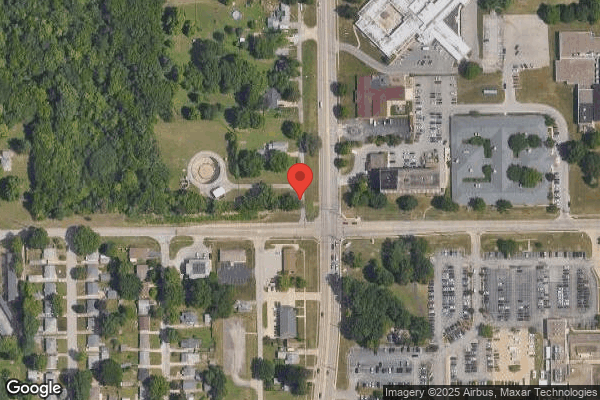

2530 NORTH MONROE STREET, DECATUR, IL 62526 (217) 875-0920
For profit - Corporation 195 Beds THE LOFT REHABILITATION AND NURSING Data: November 2025 1 Immediate Jeopardy citation
Trust Grade
0/100
#570 of 665 in IL
Last Inspection: March 2025

Within standard 12-15 month inspection cycle. Federal law requires annual inspections.

Overview

Loft Rehab of Rock Springs has received a Trust Grade of F, indicating significant concerns about the quality of care provided. They rank #570 out of 665 nursing homes in Illinois, placing them in the bottom half of facilities statewide, and they are the lowest-ranked option in Macon County. Although the facility is improving, with a decrease in issues from 32 to 24 over the past year, there are still serious concerns, including a critical incident where a resident eloped from the facility for over 20 hours without staff knowledge. Staffing is a relative strength with a turnover rate of 39%, better than the state average, but they have less RN coverage than 99% of Illinois facilities, which could impact care quality. Additionally, the facility has faced $159,045 in fines, which raises concerns about compliance and care standards.

Trust Score
F
0/100
In Illinois
#570/665
Bottom 15%
Safety Record
High Risk
Review needed
Inspections
Getting Better
32 → 24 violations
Staff Stability
○ Average
39% turnover. Near Illinois's 48% average. Typical for the industry.
Penalties
○ Average
$159,045 in fines. Higher than 73% of Illinois facilities. Some compliance issues.
Skilled Nurses
⚠ Watch
Each resident gets only 9 minutes of Registered Nurse (RN) attention daily — below average for Illinois. Fewer RN minutes means fewer trained eyes watching for problems.
Violations
⚠ Watch
95 deficiencies on record. Higher than average. Multiple issues found across inspections.
★☆☆☆☆
1.0
Overall Rating
★☆☆☆☆
1.0
Staff Levels
★☆☆☆☆
1.0
Care Quality
★☆☆☆☆
1.0
Inspection Score
Stable
2024: 32 issues
2025: 24 issues

The Good

  • Full Sprinkler Coverage · Fire safety systems throughout facility
  • No fines on record
  • Staff turnover below average (39%)

    9 points below Illinois average of 48%

Facility shows strength in fire safety.

The Bad

1-Star Overall Rating

Below Illinois average (2.5)

Significant quality concerns identified by CMS

Staff Turnover: 39%

Near Illinois avg (46%)

Typical for the industry

Federal Fines: $159,045

Well above median ($33,413)

Significant penalties indicating serious issues

Chain: THE LOFT REHABILITATION AND NURSING

Part of a multi-facility chain

Ask about local staffing decisions and management

The Ugly 95 deficiencies on record

1 life-threatening 6 actual harm
Apr 2025 1 deficiency
CONCERN (D) 📢 Someone Reported This

A family member, employee, or ombudsman was alarmed enough to file a formal complaint

Potential for Harm - no one hurt, but risky conditions existed

Pressure Ulcer Prevention (Tag F0686)

Could have caused harm · This affected 1 resident

**NOTE- TERMS IN BRACKETS HAVE BEEN EDITED TO PROTECT CONFIDENTIALITY** Based on observation, interview, and record review the facility failed to implement pressure relieving interventions and re-eval...

Read full inspector narrative →
**NOTE- TERMS IN BRACKETS HAVE BEEN EDITED TO PROTECT CONFIDENTIALITY** Based on observation, interview, and record review the facility failed to implement pressure relieving interventions and re-evaluate the effectiveness of a pressure ulcer treatment when the wound did not improve for one of three residents (R2) reviewed for pressure ulcers in the sample of five. Findings include: The facility's Pressure Injury Prevention and Management policy revised 2/10/2025 documents, the facility is committed to the prevention of avoidable pressure injuries, and to provide treatment and services to heal pressure ulcer/injury, prevent infection and the development of additional pressure ulcers/injuries. The same policy documents the facility will monitor interventions and revise as appropriate. R2's admission Record documents R2 was admitted to the facility on [DATE] after sustaining a fall at home and developing Rhabdomyolysis. R2's Braden Scale for Predicting Pressure Sore Risk assessment dated [DATE] (Admission) documents R2 is at risk of developing a pressure ulcer due to limited mobility. R2's MDS (Minimum Data Set) assessment dated [DATE] documents R2 is cognitively impaired and had no pressure ulcers on admission [DATE]). This same MDS documents R2 is dependent on staff for mobility. R2's Initial Wound Evaluation and Management Summary dated 2/5/25 documents a new unstageable pressure ulcer to R2's coccyx measuring 3.5 centimeters (cm) x 3 centimeters (cm) with adherent yellow and black dead tissue on the surface of the wound. The same evaluation includes a new order to apply Santyl (debridement ointment) to wound surface daily and cover with an adhesive bandage for 30 days and to offload the wound, reposition R2 per facility protocol, place R2 on a Low Air Loss Mattress, start Vitamin C 500 milligrams (mg) twice daily by mouth, Zinc Sulphate 220 mg once daily by mouth for 14 days and Multivitamin once daily by mouth, and consult dietary regarding protein supplements. R2's current Care Plan documents R2 should be on a low air loss mattress for her wounds. R2's Wound Evaluation and Management Summary dated 2/12/25 documents R2's Coccyx Pressure Ulcer as a Stage 3 measuring 5.5 cm x 3.8 cm and wound bed is soft. V4 Nurse Practitioner documents to continue the same treatment order to the pressure ulcer daily. R2's Wound Evaluation and Management Summary dated 2/19/25 documents R2's stage 3 coccyx pressure ulcer measurements are 5.5 cm x 4.5 cm x 2.2 cm. V4 documents the wound had moderate foul-smelling drainage and documents she manually removed a moderate amount of dead fat tissue from R2's pressure ulcer and that R2 appears to be declining. V4 documents new orders to apply Santyl once daily for 16 days to the wound bed; Sodium hypochlorite solution (Dakin's) apply to the wound bed twice daily for 30 days. Soak gauze dressing with .0125% Dakin's solution, wring out the gauze and apply to the wound bed only, twice daily for one week, until 2/26/25. If the wound is improved by 2/26/25, stop Dakin's and apply alginate silver once daily to the wound bed. R2's Wound Evaluation and Management Summary dated 2/25/25 documents R2's coccyx pressure ulcer is now a Stage 4 pressure ulcer measuring 3.7 cm x 3.2 cm x 2.5 cm. This same evaluation documents to discontinue the order for Santyl daily to the coccyx and start a new order for Sodium hypochlorite solution (Dakin's) apply to the wound bed twice daily for 30 days. Soak gauze dressing with .0125% Dakin's solution, wring out the gauze and apply to the wound bed only, twice daily. This evaluation further documents a new order for Tetracycline 500 milligrams twice a day, for 14 days for treatment of cellulitis to the coccyx wound. R2's Wound Evaluation and Management Summary dated 3/5/25 documents R2's coccyx pressure ulcer measurements were 3.4 cm x 4.2 cm x 1.5 cm with 6 cm of tunneling in the wound bed. The same evaluation further documents R2's coccyx wound is odorous, with heavy drainage and the wound tunneling has worsened with grayish/black drainage. V4 documents to continue with the same wound treatment order and oral antibiotics. This same evaluation further documents V4 manually removed black, dead tissue from the wound bed with a surgical blade. R2's Wound Evaluation and Management Summary dated 3/12/25 documents R2's coccyx pressure ulcer measurements were 2.9 cm x 3 cm x 1.5 cm with 4 cm of tunneling. V4 further documents a moderate amount of odorous drainage from wound bed. The same evaluation documents V4 manually removed dead tissue from the wound bed using a blade during assessment. V4 documents to continue the same treatment order to R2's coccyx pressure ulcer. R2's Wound Evaluation and Management Summary dated 3/19/25 documents R2's coccyx pressure ulcer measurements were 4.5 cm x 4.5 cm x 1.5 cm with 5.5 cm of tunneling. This same assessment documents R2's wound has heavy, grey, foul-smelling drainage coming from the wound with increased black, dead tissue to the wound bed which was manually removed with a blade. V4 documents to continue with the same treatment to the pressure ulcer and start Ciprofloxacin 500 milligrams by mouth, for 14 days for wound infection, and Flagyl 500 milligrams, crush and sprinkle into wound base, twice daily with dressing changes. R2's Wound Evaluation and Management Summary dated 3/26/25 documents R2's coccyx pressure ulcer measurements were 3 cm x 5 cm x 1 cm with 6.1 cm of tunneling. V4 documents R2's coccyx pressure ulcer still has moderate amounts of black dead tissue covering the wound bed, heavy drainage, and the wound tunneling is now opened at sacral area as well. V4 documents V4 manually removed dead skin tissue using a blade. This same evaluation documents to continue with the same wound treatment started on 2/19/25. On 4/2/25 at 10:00 AM, R2 is lying supine in bed on a perimeter mattress with no low air loss mattress, wearing a hospital gown. On 4/2/25 at 12:13 PM, R2 is lying in her bed supine with a hospital gown on. R2 stated she often has pain in her coccyx area and her feet. R2 stated she has a wound on her buttocks but was not sure how it started. On 4/2/25 at 1:15 PM, R2 has two separate stage four pressure ulcers on coccyx that are merging into one pressure ulcer. The original coccyx pressure ulcer is open and covered in yellow/gray tissue over the wound bed. The second pressure ulcer is on the left upper buttocks and is open with a red wound bed. Between the two wounds is a small layer of skin. The wound tunnels into R2's coccyx. V4 measured the tunneling to be 6 cm. There was a large amount of yellow and pink drainage on the adhesive bandage that was removed from R2's wound. On 4/2/25 at 1:05 PM, V4 stated R2 is supposed to be on a low air loss mattress to help with pressure distribution for wound healing. V4 stated R2 could probably benefit from having Negative Pressure Wound Therapy due to the increased amount of drainage from the wound, but V4 does not have much knowledge with using Negative Pressure Wound Therapy (wound vac). R2's Wound Evaluation and Management Summary dated 4/2/25 documents R2's coccyx pressure ulcer measurements were 4.5 cm x 8.3 cm x 2.5 cm with 6 cm of tunneling. V4 manually removed yellow colored dead skin with a blade that was covering the wound bed and documents a new order to place a Negative Pressure Wound Therapy on R2's coccyx due to increased amount of drainage to the wound site. On 4/2/25 at 1:00 PM, V3 Wound Nurse stated R2 is supposed to be on a low air loss mattress and the mattress she is on currently is not correct. V3 further stated that R2 had moved rooms over the weekend and the staff didn't move R2's low air loss mattress. On 4/2/25 at 2:00 PM, V1 Administrator and V2 Director of Nursing stated they would expect after two weeks of a wound not making progress that a new treatment would be ordered.
Mar 2025 15 deficiencies
CONCERN (D)

Potential for Harm - no one hurt, but risky conditions existed

Transfer Notice (Tag F0623)

Could have caused harm · This affected 1 resident

**NOTE- TERMS IN BRACKETS HAVE BEEN EDITED TO PROTECT CONFIDENTIALITY** Based on interview and record review the facility failed to provide notifications of discharge for two (R20 & R101) of two resid...

Read full inspector narrative →
**NOTE- TERMS IN BRACKETS HAVE BEEN EDITED TO PROTECT CONFIDENTIALITY** Based on interview and record review the facility failed to provide notifications of discharge for two (R20 & R101) of two residents reviewed for discharge from a total sample list of 35 residents. Findings include: 1.) R20's undated census report documents discharges to the hospital on 8/14/25, 10/15/25, and 2/6/25. R20's medical record does not contain a bed hold or documentation of a transfer notification. 2.) R101's undated census report documents discharge to the hospital on [DATE]. R101's medical record does not include a bed hold, nor documentation of a transfer notification. On 3/25/24 at 9:00 AM, V1 Administrator stated that the facility did not notify the Ombudsman of discharge for R20, nor R101 on the above hospitalization dates. On 3/26/25 at 12:00PM, V30 Social Services Director stated that she is responsible for notifying the Ombudsman of resident discharges but was unaware that the notification included hospitalizations. I will start doing that.
CONCERN (D)

Potential for Harm - no one hurt, but risky conditions existed

Deficiency F0625 (Tag F0625)

Could have caused harm · This affected 1 resident

**NOTE- TERMS IN BRACKETS HAVE BEEN EDITED TO PROTECT CONFIDENTIALITY** Based on interview and record review the facility failed to provide bed hold notices for two (R20 & R101) of two residents revie...

Read full inspector narrative →
**NOTE- TERMS IN BRACKETS HAVE BEEN EDITED TO PROTECT CONFIDENTIALITY** Based on interview and record review the facility failed to provide bed hold notices for two (R20 & R101) of two residents reviewed for transfers from a total sample list of 35 residents. Findings include: 1.) R20's undated census report documents discharges to the hospital on 8/14/25, 10/15/25, and 2/6/25. R20's medical record does not contain a bed hold notice or documentation of a refusal. 2.) R101's undated census report documents discharge to the hospital on [DATE]. R101's medical record does not include a bed hold, nor documentation of a refusal. On 3/25/24 at 9:00AM, V1 Administrator stated that the facility did not provide bed holds (notices) for R20, nor R101 on the above hospitalization dates. On 3/26/25 11:45AM V30 Social Services Director stated that the process for the facility is that the nurses on the floor are supposed to fill out the bed hold when a resident is discharged and then they get collected and scanned in. Our process isn't working. I know that we didn't get them for R20 nor R101 and we should have.
CONCERN (D)

Potential for Harm - no one hurt, but risky conditions existed

Deficiency F0645 (Tag F0645)

Could have caused harm · This affected 1 resident

**NOTE- TERMS IN BRACKETS HAVE BEEN EDITED TO PROTECT CONFIDENTIALITY** Based on interview and record review the facility failed to complete a Pre-admission Screening and Resident Review (PASARR) leve...

Read full inspector narrative →
**NOTE- TERMS IN BRACKETS HAVE BEEN EDITED TO PROTECT CONFIDENTIALITY** Based on interview and record review the facility failed to complete a Pre-admission Screening and Resident Review (PASARR) level I for one (R45) resident out of one resident reviewed for PASARR level I in a sample list of 35 residents. Findings include: R45's undated Face Sheet documents R45 admitted to the facility on [DATE]. This same face sheet documents medical diagnoses of Major Depressive Disorder, Anxiety and Schizoaffective Disorder which all have an initial date of 7/5/2021. R45's Minimum Data Set (MDS) dated [DATE] documents R45 as moderately cognitively intact. R45's Electronic Medical Record (EMR) does not document a PASARR level I completed. On 3/24/25 at 2:30 PM V1 Administrator stated the facility is unable to provide the Pre-admission Screening and Resident Review (PASARR) level I for R45. V1 stated, We (facility) looked for it and cannot find it. V1 Administrator stated the facility is obtaining a PASARR level I now. V1 Administrator stated the facility does not have a policy for PASARR's.
CONCERN (D)

Potential for Harm - no one hurt, but risky conditions existed

Pressure Ulcer Prevention (Tag F0686)

Could have caused harm · This affected 1 resident

**NOTE- TERMS IN BRACKETS HAVE BEEN EDITED TO PROTECT CONFIDENTIALITY** 3. R6's undated Face Sheet documents medical diagnoses of Cerebral Infarction, Hemiplegia and Hemiparesis following Cerebral Inf...

Read full inspector narrative →
**NOTE- TERMS IN BRACKETS HAVE BEEN EDITED TO PROTECT CONFIDENTIALITY** 3. R6's undated Face Sheet documents medical diagnoses of Cerebral Infarction, Hemiplegia and Hemiparesis following Cerebral Infarction, Diabetic Mellitus, Chronic Multifocal Osteomyelitis, Sacral Pressure Ulcer Stage 4, Anemia, Neuromuscular Dysfunction of Bladder, Urinary Incontinence and Hypokalemia. R6's Physician Order Sheet (POS) dated March 2025 documents a physician order to cleanse R6's Sacrum with wound cleanser, apply moistened (antibacterial foam) and cover with foam three times per week and as needed. R6's Minimum Data Set (MDS) dated [DATE] documents R6 as severely cognitively impaired. This same MDS documents R6 as being dependent on staff for eating, toileting, bathing, dressing, personal hygiene and transfers. R6's Pressure Ulcer Risk assessment dated [DATE] documents R6 as being at risk for pressure ulcers. On 3/25/25 at 11:30 AM V6 Licensed Practical Nurse (LPN) completed R6's Sacral Stage 4 Pressure Ulcer dressing change. R6 did not have a dressing in place over her Stage 4 Pressure Ulcer on her Sacrum. R6's quarter sized Sacral Pressure Ulcer had a very dark red center with white edges and minimal yellow drainage. R6's Sacral wound was in direct contact with her incontinence brief overly saturated with urine. R6's bedside table was cleared of items but had several dry liquid spills and unknown pieces of debris. V6 LPN placed R6's wound supplies directly on R6's contaminated bedside table. V6 LPN used the contaminated wound supplies to place directly on R6's open Stage 4 Pressure Ulcer. V6 LPN did not disinfect her scissors prior to cutting R6's Hydrofera Blue to the size of her wound. On 3/25/25 at 11:50 AM V22 Certified Nurse Aide (CNA) stated R6's Sacral dressing fell off during R6's shower at 8:00 AM that morning (3/25/25) and V22 let V6 LPN know that R6 needed a new dressing. On 3/25/25 at 12:00 PM V6 Licensed Practical Nurse (LPN) stated she should have disinfected her scissors prior to cutting R6's wound dressing. V6 LPN stated she contaminated R6's wound supplies by not providing a clean field prior to completing wound care for R6. On 3/25/25 at 1:15 PM V8 Licensed Practical Nurse (LPN)/Wound Nurse stated R6 should always have a clean covering over her Stage 4 Sacral Pressure Ulcer. V8 LPN/Wound Nurse stated the staff should always have a clean field to work off of to help prevent cross contamination. V8 LPN/Wound Nurse stated R6's wound could get infected if it is not covered and protected. V8 LPN stated V6 LPN should have applied another dressing directly after R6 was given a shower and the dressing was found to come off during the shower. The facility policy titled Clean Dressing Change dated implemented 8/05/2019 documents the staff should set up a clean field on the overbed table with needed supplies for wound cleansing and dressing application if the table is soiled, wipe clean, place a disposable cloth or linen saver on the overbed table. Based on observation, interview, and record review the facility failed to prevent two stage two pressure ulcers from developing, failed to prevent cross contamination during pressure ulcer care, and failed to implement dietary interventions for wound healing timely for three (R41, R6, & R352) of seven residents reviewed for pressure ulcers from a total sample list of 35 residents. Findings include: The facility policy dated 2/10/25 documents the facility will establish and utilize a systemic approach for pressure injury prevention and management, including prompt assessment and treatment; intervening to stabilize, reduce or remove underlying risk factors; monitoring the impact of the interventions and modifying the interventions as appropriate. 1.) R41's undated diagnosis sheet documents diagnoses including: Morbid Obesity. R41's Minimum Data Set, dated [DATE] documents R41 as cognitively intact. R41's admission skin assessment dated [DATE] documents no skin issues in the inguinal areas. R41's skin assessment dated [DATE] documents a skin issue on the left side of the inguinal area with no mention of the right side. On 3/24/25 at 3:28PM, V13 Certified Nursing Assistant and V14 Licensed Practical Nurse provided R41 perineal care and a stage two wound approximately four inches in length was observed on both the left and right sides of the groin. On 3/23/25 at 8:36AM, R41 stated she has sores on the inside of her legs because her briefs are too tight and have caused sores. R41 stated this has been going on for several weeks. On 3/24/25 at 3:30PM, V14 LPN stated the briefs that R41 is wearing are too small. You can see where they are cutting into her skin. V13 CNA stated, Those are the largest briefs we have. On 3/24/25 at 3:31PM, R41 stated the briefs hurt her skin and when they wipe her the open areas of the groin sting. On 3/25/25 at 11:00AM, V2 Director of Nursing stated she is ordering larger bariatric briefs for R41. 2.) R352's Physician Wound Notes dated 2/5/25 document R352 has an Unstageable Deep Tissue Injury (DTI) to the left buttock with undetermined thickness and an Unstageable DTI to the left heel with undetermined thickness. The DTI on the left buttock measured 3.5 centimeters (cm) by 3 cm and the DTI to the left heel measured 6 cm by 4.4 cm. On 3/25/25 at 01:54 PM, V26 Nurse Practitioner (NP)/Wound Care stated that she saw R352 for the first time on 2/5/25 and recommended the following: Vitamin C 500 milligrams (mg); Zinc Sulphate 220 mg once daily by mouth for fourteen days; Multivitamin once daily by mouth; and consultation with dietician regarding protein. R352's Medication Administration Record (MAR) dated 2/1/25 through 2/28/25 documents R352 did not received the multivitamin until 2/12/25, the Zinc until 2/12/25, and the Vitamin C until 2/11/2025. R352's medical record documents R352 was not seen by the dietician until 3/7/2025. This dietary note recommended that R352 have liquid protein 30 milliliters two times per day. On 3/25/25 at 3:32 PM, V20 Registered Nurse/Regional Clinical Consultant stated staff should be entering and implementing orders as soon as possible after receiving the providers notes and orders. On 3/26/25 at 8:12 AM, V2 Director of Nursing (DON) stated that when orders are received the expectation is for orders to be implemented within one or two days. V2 stated it was unusual for an order to go longer than two days without it being initiated.
CONCERN (D)

Potential for Harm - no one hurt, but risky conditions existed

Accident Prevention (Tag F0689)

Could have caused harm · This affected 1 resident

**NOTE- TERMS IN BRACKETS HAVE BEEN EDITED TO PROTECT CONFIDENTIALITY** 2. R40's undated Face Sheet documents Cerebral Infarction, Tracheostomy status, Metabolic Encephalopathy, Altered Mental Status,...

Read full inspector narrative →
**NOTE- TERMS IN BRACKETS HAVE BEEN EDITED TO PROTECT CONFIDENTIALITY** 2. R40's undated Face Sheet documents Cerebral Infarction, Tracheostomy status, Metabolic Encephalopathy, Altered Mental Status, Abnormal Posture, Unsteady on Feet, Reduced Mobility, Muscle Weakness, Intellectual Disabilities and presence of Gastrostomy Tube (G-Tube). R40's Minimum Data Set (MDS) dated [DATE] documents R40 is moderately cognitively impaired. This same MDS documents R40 is dependent on staff for toileting, dressing, personal hygiene, bathing and bed mobility. R40's Fall Risk Evaluation dated 2/22/25 documents R40 as a fall risk. R40's Nurse Progress Note dated 1/22/25 at 9:00 PM documents R40 was found lying on his stomach on the floor beside his bed. R40 was assisted back to bed per staff. R40's Fall Investigation dated 1/23/25 documents R40 stated he slid out of bed. This same investigation documents, It appears (R40) did not realize (R40) was too close to the edge of the bed. On 3/25/25 at 2:15 PM V2 Director of Nurses stated R40 was positioned too close to the edge of his bed. V2 DON stated R40 was using a low air loss mattress at the time of his fall on 1/22/25. V2 DON stated the staff positioned R40 too close to the edge of his bed which caused him to roll out of bed. V2 DON stated R40 did have complaints of pain to his Right Wrist and an X-Ray was completed with negative findings. Based on interview and record review the facility failed to ensure a resident's personal electric fan was assessed for safety before use and failed to ensure a resident was safely positioned in bed to prevent a fall for two of two residents reviewed for accidents in the sample list of 35. Findings include: 1. The facility Electrical Safety Policy dated 2/11/25 documents that the intent of the policy is to provide staff with information about the facility's method for ensuring safety as it relates to electrical wiring and equipment. The Maintenance Director or designee is responsible for the inspection and testing of electrical components. This includes receptacles, power strips, extension cords, and equipment. A resident's personal electronic equipment shall be visually inspected prior to use. Nursing personnel are responsible for reporting new equipment to the Maintenance Director. R20's undated diagnosis sheet documents the following diagnoses: Quadriplegia, Urinary Tract Infections, Type II Diabetes Mellitus, Acquired Absence of the Left Upper Limb, Schizophrenia, Depression, Anxiety, Antibiotic Resistance and Multi-Drug Resistant Organisms. R20's progress notes dated 8/7/24 document that at 1:11AM the facility notified management of a fire in R20's resident room. R20's care plan dated 10/21/21 documents R20 is dependent on staff for all cares. The facility investigation dated 8/7/24 documents V24 Certified Nursing Assistant (CNA) heard R20 yell fire and when she entered R20's room saw R20's fan on fire on R20's bed. R20 was pulled away from the flame and the fire was extinguished. On 3/25/25 at 9:00 AM, R20 stated that the fan was his and was next to his head in the bed where he liked it. He woke up to smoke and yelled fire. R20 stated that his fan was old, and he could not recall anyone ever inspecting it. On 3/25/25 at 1:31 PM, V24 CNA stated she was on duty with a nurse and the night of the fire she was on the floor and saw R20's call light go off. She was walking toward his room when he started to yell FIRE! That made her run into his room where she saw the flames on his bed. V24 stated that R20 had an old electric fan that he had had for a long time. I grabbed him and moved him onto my knees, the nurse brought in the fire extinguisher, and we covered his head while it was in use. The fire department came and that was it. On 3/26/25 at 9:32 AM, V16 Maintenance Director stated he was not aware that he needed to check resident electrical equipment before it goes into service.
CONCERN (D)

Potential for Harm - no one hurt, but risky conditions existed

Incontinence Care (Tag F0690)

Could have caused harm · This affected 1 resident

**NOTE- TERMS IN BRACKETS HAVE BEEN EDITED TO PROTECT CONFIDENTIALITY** Based on observation, interview and record review the facility failed to prevent cross contamination during perineal care for on...

Read full inspector narrative →
**NOTE- TERMS IN BRACKETS HAVE BEEN EDITED TO PROTECT CONFIDENTIALITY** Based on observation, interview and record review the facility failed to prevent cross contamination during perineal care for one (R6) resident out of one resident reviewed for perineal care in a sample list of 35. Findings include: R6's undated Face Sheet documents medical diagnoses of Cerebral Infarction, Hemiplegia and Hemiparesis following Cerebral Infarction, Diabetic Mellitus, Chronic Multifocal Osteomyelitis, Sacral Pressure Ulcer Stage 4, Anemia, Neuromuscular Dysfunction of Bladder, Urinary Incontinence and Hypokalemia. R6's Minimum Data Set (MDS) dated [DATE] documents R6 as severely cognitively impaired. This same MDS documents R6 as being dependent on staff for eating, toileting, bathing, dressing, personal hygiene and transfers. On 3/25/25 at 11: 00 AM V21 and V22 Certified Nurse Aides (CNA) completed perineal care for R6. V22 CNA did not provide a clean field for R6's perineal cleansing supplies. V22 CNA placed R6's wet washcloth and dry washcloth directly on R6's soiled bedside table. R6's bedside table was cleared of items but had several dry liquid spills and unknown pieces of debris. V22 CNA then used the same wet and dry washcloths to cleanse R6's perineal area. On 3/25/25 at 11:20 AM V22 Certified Nurse Aide (CNA) stated she cross contaminated R6's perineal area by not cleaning off R6's bedside table prior to placing the washcloths on it. On 3/25/25 at 2:50 PM V2 Director of Nurses (DON) stated cross contamination during perineal care could cause an infection. V2 DON stated V22 CNA reported to her that V22 had cross contaminated during R6's perineal care. V2 DON stated she gave V22 CNA perineal cleansing education at that time. The facility policy revised 02/12/2025 documents residents who are incontinent of bladder will receive appropriate treatment to prevent infections.
CONCERN (D)

Potential for Harm - no one hurt, but risky conditions existed

Tube Feeding (Tag F0693)

Could have caused harm · This affected 1 resident

**NOTE- TERMS IN BRACKETS HAVE BEEN EDITED TO PROTECT CONFIDENTIALITY** Based on observation, interview and record review the facility failed to check the placement of a Gastrostomy tube prior to admi...

Read full inspector narrative →
**NOTE- TERMS IN BRACKETS HAVE BEEN EDITED TO PROTECT CONFIDENTIALITY** Based on observation, interview and record review the facility failed to check the placement of a Gastrostomy tube prior to administering fluids and medication for one of one resident (R40) reviewed for Gastrostomy tubes in a sample list of 35 residents. Findings include: R40's undated Face Sheet documents diagnoses of Cerebral Infarction, Tracheostomy status, Metabolic Encephalopathy, Altered Mental Status, Abnormal Posture, Unsteady on Feet, Reduced Mobility, Muscle Weakness, Intellectual Disabilities and presence of Gastrostomy Tube (G-Tube). R40's Minimum Data Set (MDS) dated [DATE] documents R40 as moderately cognitively impaired. This same MDS documents R40 is dependent on staff for toileting, dressing, personal hygiene, bathing and bed mobility. R40's care plan intervention dated 11/20/24 instructs staff to check the placement of R40's G-Tube for gastric contents/residual volume per facility protocol. On 3/24/25 at 8:05 AM V8 Licensed Practical Nurse (LPN) did not check the placement of R40's Gastrostomy Tube (G-Tube) prior to administering 95 milliliters (ml) of water and protein powder. V8 LPN attempted to use a syringe to administer R40's protein powder which would not flow. V8 LPN attempted to use the syringe to push the protein powder through the G-Tube with no success. V8 LPN then removed the syringe and wasted the protein powder. V8 LPN then checked the placement of R40's G-Tube. On 3/24/25 at 8:30 AM V8 Licensed Practical Nurse (LPN) stated she should have checked the placement of R40's G-Tube prior to administering any type of fluid or medication.
CONCERN (D)

Potential for Harm - no one hurt, but risky conditions existed

Deficiency F0740 (Tag F0740)

Could have caused harm · This affected 1 resident

**NOTE- TERMS IN BRACKETS HAVE BEEN EDITED TO PROTECT CONFIDENTIALITY** Based on observation, interview and record review the facility failed to develop a behavioral plan to address self-harming behav...

Read full inspector narrative →
**NOTE- TERMS IN BRACKETS HAVE BEEN EDITED TO PROTECT CONFIDENTIALITY** Based on observation, interview and record review the facility failed to develop a behavioral plan to address self-harming behaviors for one (R20) of one resident reviewed for behavioral health services from a total sample list of 35 residents. Findings include: The facility provided Behavioral Health Services Policy dated 2/10/25 documents it is the policy of this facility to ensure all residents receive necessary behavioral health services to assist them in reaching and maintaining their highest level of mental psychosocial functioning. Additionally, the resident plan of care will maximize the resident's dignity, autonomy, privacy, socialization, independence, and safety. The plan will be reviewed and revised as needed, such as when interventions are not effective or when there is a change of condition. R20's undated diagnosis sheet documents the following diagnoses: Quadriplegia, Urinary Tract Infections, Type II Diabetes Mellitus, Acquired Absence of the Left Upper Limb, Schizophrenia, Depression, Anxiety, Antibiotic Resistance and Multi-Drug Resistant Organisms. R20's Minimum Data Set, dated [DATE] documents R20 as cognitively intact. R20's care plan dated 10/21/21 documents R20 is dependent on staff for all cares. R20's care plan dated 10/20/21 documents R20 has a history of chewing on his right hand and fingers until they bleed. Interventions include antibiotic administration when infection occurs, gloves to hand, education to resident, and placing R20's hand in a sleeve. R20's behavior documentation for the past 28 days documents no chewing behaviors. R20's physician order dated 3/15/25 documents to cleanse the right fingers with soap and water and then dry them thoroughly. Apply a tubular stocking over the hand at bedtime. R20's 2025 psychiatry visits dated 1/13/25 and 2/24/25 do not document anything about R20 self-harming by chewing on his hand. R20's medical record does not contain a level two pre-admission screening and resident review. On 3/23/25 at 10:00 AM, R20's right arm was contracted with the right hand being accessible to R20's mouth. R20 had blood on his right cheek from his cheek to his mouth and the tubular sock has been pulled off and is lying next to R20's hand with blood on it. On 3/25/25 at 9:30AM, V19 CNA stated R20 can still get to the skin with a tubular sock on it. Sometimes they will tie the end in a knot and that makes it even easier for him to pull it off. I got him up this morning, so I know it didn't have a wrap on it. Sometimes he has blood all over his face from chewing it. On 3/23/25 at 1:22 PM, R20's right hand was uncovered and bleeding. On 3/23/25 at 1:24 PM, V14 Licensed Practical Nurse (LPN) stated R20 chews his hand all the time and that he's supposed to have a covering on it. On 3/24/25 at 9:10AM, R20's right hand was uncovered with thumb and three fingers bloody and ragged from chewing. No dressing was on R20's hand or fingers and blood was noted on R20's cheek. On 3/24/25 at 9:11AM, V4 Certified Nursing Assistant (CNA) stated that R20 chews on his hand all the time. He can't feel it. On 3/24/25 at 9:14 AM, V3 LPN stated she is unaware of any psych services addressing R20's behavior of biting and that she has told R20 that if he doesn't stop, he will end up having to have his right hand amputated like the left one. On 3/25/25 at 9:35 AM, R20 stated he did not know why he chewed his fingers and that he had never discussed the reason that he chewed his fingers with a doctor, they just tell him not to do it. On 3/25/25 at 2:18 AM, V2 Director of Nursing stated that they currently have no plan for R20's chewing behaviors. On 3/25/25 at 9:00 AM, V2 Director of Nursing stated that she should have been notified of R20's increased behavior of chewing his fingers and that the delay in finding the cause and stopping R20's chewing behaviors has caused R20 harm because he continues to chew on his fingers. On 3/25/25 at 12:08 PM, V23 Nurse Practitioner stated he was aware of R20's chewing but hadn't heard anything about it so he thought it was better. V23 stated, The hand should be covered so that he can't get to it. We didn't really have a plan for it other than covering it and reminding him not to do it. I need to talk to (V31) Medical Doctor and get him a psychiatry referral regarding his chewing so that maybe they can do something about it. Yes, had I known that he was chewing more, I could have done something sooner. He is at risk for infection and if his hand is open that could contribute to his hospitalizations and sepsis.
CONCERN (D)

Potential for Harm - no one hurt, but risky conditions existed

Unnecessary Medications (Tag F0759)

Could have caused harm · This affected 1 resident

**NOTE- TERMS IN BRACKETS HAVE BEEN EDITED TO PROTECT CONFIDENTIALITY** Based on observation, interview and record review the facility failed to administer medications according to the physician order...

Read full inspector narrative →
**NOTE- TERMS IN BRACKETS HAVE BEEN EDITED TO PROTECT CONFIDENTIALITY** Based on observation, interview and record review the facility failed to administer medications according to the physician order for one of seven residents (R90) reviewed for medication administration in the sample list of 35 residents. The facility had three medication errors out of 28 opportunities resulting in a 10.71% error rate. Findings include: R90's Minimum Data Set (MDS) dated [DATE] documents R90 as moderately cognitively impaired. R90's Physician Order Sheet (POS) dated March 2025 documents physician orders for Paroxetine 30 milligrams (mg), Mirtazapine 15 mg and Atorvastatin 40 mg to be administered every bedtime. R90's Medication Administration Record (MAR) dated March 2025 documents R90's Paroxetine 30 milligrams (mg), Mirtazapine 15 mg and Atorvastatin 40 mg were scheduled to be administered at 5:00 PM. On 3/24/25 at 3:20 PM V9 Licensed Practical Nurse (LPN) administered R90's Paroxetine 30 milligrams (mg), Mirtazapine 15 mg and Atorvastatin 40 mg at 3:20 PM. On 3/24/25 at 3:29 PM V9 LPN stated she administered R90's medications early because the two nurses on the fifth floor have to share a laptop computer to use when administering all the resident's medications. On 3/25/25 at 10:15 AM V2 Director of Nurses (DON) stated resident medications should be administered by the physician order. V2 DON stated there was a transcription error when the order was entered into the Electronic Medical Record (EMR). V2 DON stated medications ordered at bedtime should be scheduled at 8:00 PM. The facility policy titled Medication Administration dated 01/04/2025 documents staff are to administer medications according to the physician order. Administer medications within 60 minute prior to or after scheduled time unless otherwise ordered by physician.
CONCERN (D)

Potential for Harm - no one hurt, but risky conditions existed

Deficiency F0883 (Tag F0883)

Could have caused harm · This affected 1 resident

Based on interview and record review the facility failed to offer a pneumonia vaccine for one (R352) of five residents reviewed for immunizations from a total sample list of 35 residents. Findings in...

Read full inspector narrative →
Based on interview and record review the facility failed to offer a pneumonia vaccine for one (R352) of five residents reviewed for immunizations from a total sample list of 35 residents. Findings include: The facility Pneumococcal Vaccine Policy dated 12/19/22 documents that it is the policy of the facility to offer immunization against pneumococcal disease. Each resident will be assessed, educated and offered the pneumococcal immunization upon admission. R352's medical record does not document any pneumonia vaccine offered, refused, or given. On 3/26/25 at 10:00AM, V20 Regional Nurse stated that they did not have documentation of R352 being offered, refused or provided a pneumonia vaccine and that was supposed to occur at admission.
CONCERN (E)

Potential for Harm - no one hurt, but risky conditions existed

Safe Environment (Tag F0584)

Could have caused harm · This affected multiple residents

Based on observation, interview and record review the facility failed to provide clean and debris free heaters and a clean and hole free privacy curtain for five (R7, R17, R20, R36 and R41) of five re...

Read full inspector narrative →
Based on observation, interview and record review the facility failed to provide clean and debris free heaters and a clean and hole free privacy curtain for five (R7, R17, R20, R36 and R41) of five residents reviewed for a clean, homelike environment from a total sample list of 35 residents. Findings include: The facility Resident Rights policy dated 2/12/25 documents that the resident has a right to a safe, clean, comfortable and homelike environment. 1.) On 3/23/25 at 10:39 AM, R41's resident room heater was dirty with chipping paint. On 3/23/25 at 10:40 AM, R41 stated that she would like her heater to be cleaned. 2.) On 3/23/25 at 10:51 AM, R17's resident room heater was dirty and had paint chipping off of it. On 3/23/25 at 10:52 AM, R17 stated, My heater needs to be cleaned and painted. 3.) On 3/23/25 at 8:23 AM, R20's resident room heater was dirty with dust and chipping paint. R20 stated, They need to fix my heater. 4.) On 3/23/25 at 8:32 AM, R36's resident room heater had chipping paint and was dirty. On 3/23/25 at 8:32 AM, R36 stated, I would like it to be clean. 5.) On 3/24/25 at 3:00PM, R41's resident room curtain had a large hole in it and was soiled with an unknown brown and red substance and it would not slide when V13 CNA attempted to provide privacy. R41 stated, I don't like how dirty that is. On 3/24/25 at 3:01 PM, V13 CNA stated, I can't get it to slide, and it is dirty. On 3/25/25 at 9:30AM, V2 Director of Nursing stated that dirty, paint chipping heaters with bent combs and privacy curtains that have holes and are dirty are not homelike and need to be fixed.
CONCERN (F)

Potential for Harm - no one hurt, but risky conditions existed

Food Safety (Tag F0812)

Could have caused harm · This affected most or all residents

Based on observation, interview and record review the facility failed to ensure utensils, dishes, and cookware were sanitized prior to serving foods to residents, failed to prevent cross contamination...

Read full inspector narrative →
Based on observation, interview and record review the facility failed to ensure utensils, dishes, and cookware were sanitized prior to serving foods to residents, failed to prevent cross contamination of foods from staff clothing during meal service, and failed to maintain a cooking environment free from debris. This failure has the potential to affect 107 residents residing in the facility. Findings include: The Daily Resident Roster dated 3/23/25 documents 107 reside in the facility. On 3/24/25 at 11:15 AM V29 [NAME] plated resident meals and then passed the plates of food across the food line to the dietary aides. V29's shirt grazed the food in the warmer trays several times when V29 would lean over to pass the plated meal to the dietary aides. On 3/24/25 at 11:30 AM the wall behind and above the food prep area, cooking and fry area had two areas approximately one foot wide and long of peeling paint that was hanging from the wall. These same areas had several pieces of debris that fell into the fryer oil and on top of the food prep area. On 3/24/25 at 11:45 AM V27 [NAME] tested the Ph balance of the facility low temperature dish washing machine three times in a row by placing the litmus strip on the inside wall of the dishwasher during the wash/detergent cycle, prior to the sanitizing cycle. The facility dishwasher sanitizer tubing was connected but not running through the machine. V28 Dietary Manager primed the tubing on the sanitizer. The dishwasher was run again and had the sanitizer circulate through without any difficulty. V28 Dietary Manager then educated V27 [NAME] on how to properly test the Ph balance of the dishwasher and how to test if the sanitizer if working properly. On 3/24/25 at 11:50 AM V27 [NAME] stated he tests the Ph balance of the dishwasher several times per week regularly but was never trained on how to test the PH balance. V27 [NAME] stated he did not know how to see if the sanitizer was running or not. On 3/24/25 at 11:55 AM V28 Dietary Manager stated many of the kitchen staff are newly hired and have not been trained on how to use all the equipment. V28 stated she will provide in servicing on the equipment to all the kitchen staff. V28 Dietary Manager stated all the breakfast dishes were washed without being sanitized prior to serving the residents their lunch meal. V28 Dietary Manager stated serving food on non-sanitized dishes and cookware could cause resident illness. V28 Dietary Manager stated the facility has plans to remodel the facility kitchen including replacing the walls with stainless steel portions behind and above the cooking area. V28 Dietary Manager stated she will have V16 Maintenance Director fix the peeling paint as soon as possible. V28 Dietary Manager stated she will put up plastic guards to protect the foods from being contaminated by staff clothing. V28 stated she will also create a new line system so that the cook does not have to pass the plated meal across the food line. On 3/25/25 at 7:50 AM V16 Maintenance Director stated he is aware that the kitchen wall above the food prep and cooking areas has peeling paint. V16 stated he has already reached out to the facility's corporate office and is waiting for a response to be able to purchase the supplies to fix the wall in the kitchen.
CONCERN (F)

Potential for Harm - no one hurt, but risky conditions existed

Deficiency F0868 (Tag F0868)

Could have caused harm · This affected most or all residents

Based on interview and record review the facility failed to hold one quarterly Quality Assurance Performance Improvement (QAPI) meeting for the 2024 year and failed to include the facility's Infection...

Read full inspector narrative →
Based on interview and record review the facility failed to hold one quarterly Quality Assurance Performance Improvement (QAPI) meeting for the 2024 year and failed to include the facility's Infection Preventionist in all QAPI meetings. This failure has the potential to affect all 107 residents in the facility. Findings include: The facility QAPI sign in sheets dated 2/4/25, 7/12/24 and 4/5/24 does not include an Infection Preventionist documented as attending the QAPI quarterly meeting. The facility is unable to provide documentation of a QAPI meeting being completed for the third quarter (July, August, September) of 2024. On 3/25/25 at 4:00 PM V1 Administrator stated the QAPI meeting is supposed to happen at least quarterly and include the Infection Preventionist. V1 stated she was unable to find any documentation of the facility having a third quarter QAPI meeting for 2024.
CONCERN (F)

Potential for Harm - no one hurt, but risky conditions existed

Infection Control (Tag F0880)

Could have caused harm · This affected most or all residents

2. R79's Physician Order Sheet (POS) dated March 2025 documents a physician order to administer Azelastine 0.05% eye drops one in each eye twice daily. On 3/23/25 at 3:40 PM V15 Licensed Practical Nu...

Read full inspector narrative →
2. R79's Physician Order Sheet (POS) dated March 2025 documents a physician order to administer Azelastine 0.05% eye drops one in each eye twice daily. On 3/23/25 at 3:40 PM V15 Licensed Practical Nurse (LPN) administered R79's Azelastine 0.05% eye drops to R79's eyes. V15 LPN did not wear gloves when administering R79's eye drops. V15 LPN used a tissue to wipe R79's eyes after administering the eye drops then laid the tissue on R79's contaminated bed sheets. V15 LPN stated she did not think R79 got all of his eye drops. V15 LPN then administered another drop to each of R79's eyes and then used the same contaminated tissue to wipe R79's eyes again. On 3/23/25 at 3:50 PM V15 Licensed Practical Nurse (LPN) stated she should have performed hand hygiene and worn gloves prior to administering R79's eye drops. V15 LPN stated she should not have used a soiled tissue to wipe the excess eye drops from R79's eyes. V15 LPN stated these errors could cause an infection in R79's eyes. On 3/25/25 at 10:10 AM V2 Director of Nurses (DON) stated nurses should wear gloves when administering eye drops and use a clean tissue to avoid causing an infection. The facility policy titled Eye Drop Administration dated 10/25/2014 documents staff are to wear gloves when administering eye drops. Wipe off tears or excess solution with clean gauze, cotton ball or tissue. Based on observation, interview, and record review the facility failed to complete a risk assessment plan for Legionella and failed to prevent cross contamination during medication administration. These failures have the potential to affect all 107 residents who reside in the facility. Findings include: The Long Term Care Facility Application for Medicare and Medicaid dated 3/23/25 documents 107 residents reside in the facility. 1.) The facility provided water management program dated 2/1/25 documents it is the policy of this facility to establish water management plans of reducing the risk of Legionella and other opportunistic pathogens in the facility's water systems. The facility's Maintenance Director maintains documentation that describes the facility's water system, and a risk assessment will be conducted by the water management team annually to identify where Legionella and other opportunistic waterborne pathogens could grow and spread in the facility's water systems. The risk assessment will consider the following elements: Premise plumbing, clinical equipment, at-risk population and the supporting documentation of any areas will be kept in the binder. Based on the risk assessment, control points will be identified. Control measures will be applied to address potential hazards at each point. Testing protocols and control measures will be established for each control measure and the effectiveness of the water management plan will be evaluated at least annually. On 3/26/25 at 9:11AM, V16 Maintenance Director stated he does not have a risk assessment or plan for Legionella, nor any documentation indicating the areas of risk for Legionella growth in the entire facility. He does not have a map of the facility plumbing or testing logs other than on one floor of the building because he was told to do that. V16 stated he is unaware of any Legionella testing in the past year and stated that he has been told that an outside company is going to take over the Legionella program at the facility.
CONCERN (F)

Potential for Harm - no one hurt, but risky conditions existed

Deficiency F0882 (Tag F0882)

Could have caused harm · This affected most or all residents

Based on observation, interview and record review the facility failed to employ an Infection Preventionist (IP). This failure has the potential to affect all 107 residents residing in the facility. F...

Read full inspector narrative →
Based on observation, interview and record review the facility failed to employ an Infection Preventionist (IP). This failure has the potential to affect all 107 residents residing in the facility. Findings include: The facility Daily Census dated 3/23/25 documents 107 residents reside in the facility. The Facility Assessment updated 3/17/25 documents the facility resources will include an Infection Preventionist. On 3/23/25-3/26/25 at various times there was no Infection Preventionist on site during the survey timeframe. On 3/25/25 at 4:00 PM V1 Administrator stated the facility does not have anyone in the Infection Preventionist role. On 3/25/25 at 4:05 PM V2 Director of Nurses (DON) stated V2 DON and V20 Regional Director of Clinical Services are both managing the Infection Control Program and neither V2 nor V20 have their IP certificate. V2 DON stated the facility has hired a new IP who will start April 1, 2025 but has not had anyone in the IP role since December 2024.
Mar 2025 7 deficiencies 2 Harm
SERIOUS (G) 📢 Someone Reported This

A family member, employee, or ombudsman was alarmed enough to file a formal complaint

Actual Harm - a resident was hurt due to facility failures

Quality of Care (Tag F0684)

A resident was harmed · This affected 1 resident

**NOTE- TERMS IN BRACKETS HAVE BEEN EDITED TO PROTECT CONFIDENTIALITY** Based on observation, interview, and record review the facility failed to implement a physician order STAT (immediate) for ortho...

Read full inspector narrative →
**NOTE- TERMS IN BRACKETS HAVE BEEN EDITED TO PROTECT CONFIDENTIALITY** Based on observation, interview, and record review the facility failed to implement a physician order STAT (immediate) for orthopedic consult appointment, in a timely manner, for a resident (R1) with a right Humerus fracture. This failure resulted in a six day delay, which caused severe pain and swelling before the application of a cast could occur. This failure affected one of three residents (R1) reviewed for falls/physician orders on the sample list of six. Findings include: R1's Minimum Data Set (MDS) dated [DATE] documents the following: Brief Interview of Mental Status (BIMS) score of 15, out of a possible 15, indicating no cognitive impairment. R1's Health Status Note dated 2/18/25 at 11:05 am, signed by V21, Licensed Practical Nurse (LPN) documents the following: Note Text: Writer approached by CNA (Certified Nursing Assistant) stating that on the way to the bathroom resident had trouble pulling her legs forward and fell to her knees. Writer performed full body assessment. Resident able to move all extremities but did c/o (complained of) pain to her R (right) arm during this assessment. Resident denied pain anywhere else. The same Health Status Note documents Writer notified MD (Physician), resident (R1) notified her emergency contact. R1's Health Status Note dated 2/18/2025 at 1:54 pm, documents the following: Note Text: Resident assessed by NP (V22, Facility, Nurse Practitioner) after fall. STAT (immediately) X- rays ordered for Right Elbow and Forearm. R1's Medical Practitioner Note (Physician/Nurse Practitioner) Note dated 2/19/2025 at 3:15 pm, with the date of service as 02/18/25 (the day of R1's fall), (unknown time) documents the following: R1 was assessed by V22, NP for a complaint of right elbow pain rating her pain intensity as eight out of ten (severe). The same report documents swelling in R1's right elbow, with moving it makes it worse, rest make it better. Tylenol (analgesic pain medication) is not making it better. The same note documents: Right elbow pain -- Will start Tramadol for pain 50 mg PRN. R1's Health Status Note dated 2/18/2025 at 1:55 pm, documents the following: Note Text: Resident c/o pain NP (V22, Nurse Practitioner) made aware NO (new order) rec'd (received) for Tramadol (Tramadol, narcotic pain medication) q (every) 12hrs (twelve hours), PRN (as needed). R1's X-Ray results dated 2/18/25 at 9:48 pm documents the following: PROCEDURE: ELBOW 2V (views) Interpretation: Reason for Study: Acute Pain Due to Trauma. Elbow 2V, right. FINDINGS: Acute transverse fracture involving right humeral condyles with modest displacement. There is associated joint effusion. CONCLUSION: Acute transverse fracture involving right humeral condyles with modest displacement. R1's Health Status Note dated 2/19/2025 at 00:30 am documents: Note Text: (V8, Medical Director/Physician) notified of res (R1's) X-ray results at this time. R1's Health Status Note dated 2/19/2025 at 05:22 am documents the following: Note Text: N.O. rec'd per MD to send to Orthopedic Stat (immediately) for rt arm fx (fracture). Res cont (continues) fall status. Res c/o (complained of) pain. N. O's rec'd to increase Tramadol (50 milligrams) to q 4hrs PRN for pain, and ice packs to Rt elbow q 4hrs. R1's Health Status Note dated 2/19/2025 at 11:34 am documents: Note Text: called and spoke with (V30, Orthopedic Office Staff) DOC (Local Orthopedic Center) and resident has appt (appointment) on 2/24/2025 at 1:45 pm for f/u (follow up) with RT elbow fracture. This appointment was not a follow-up appointment, this was the initial appointment. This was not the physician ordered STAT (immediate) appointment, post- fall 2/18/25. R1's Health Status Note dated 2/20/2025 at 1:28 pm documents the following: Note Text: (V8, Medical Director) gave N.O. for sling to right upper extremity r/t (related to the) fall. R1's Controlled Drug Receipt/Record/Disposition /Form count sheet documents R1 was administered 12 doses of Tramadol HCL, 50 milligram tablet used for moderate to severe pain, between 2/19/25 and 2/24/25 while waiting for her initial appointment with the Orthopedic Center on 2/24/25. R1' February 1-28, 2025 Medication Administration Record does not document R1 was administered R1's available Tylenol 1000 mg, every four hours for mild pain. R1's (Local) Orthopedic Center, Encounter Date report dated 2/24/25 and signed by V20, Orthopedic Nurse Practitioner documents the following: History of Present Illness: The patient (R1) is a (specific age) female who presents for an evaluation of elbow pain. She states that she fell a week ago on 02/18/2025. She landed directly on her right elbow. She states that she has been in severe pain ever since. She had X-rays done at her nursing home (the facility) that revealed a fracture in her elbow. She states that they have been icing it, and they put her on pain meds. These have given her moderate relief. However, whenever she moves her right arm, she has severe pain. She has her right arm in a sling. She has very noticeable swelling in her right arm compared to her left arm. The same report documents: Assessment & Plan, Fracture of Humerus, distal, right, closed. Today's Impression: (R1) is a (specific aged) female who presents today for evaluation of right elbow pain. She fell sustaining a distal Humerus fracture nearly one week ago. Her x-rays from today confirm a displaced, distal Humerus fracture. I discussed her treatment options. The patient has a multitude of risk factors upon consideration for surgery. The patient is morbidly obese as well as diabetic. We discussed that this could put her at increased risk for infection and delayed wound healing. The patient also uses a walker for assistance with ambulation at baseline. I discussed my concern that her hardware could easily be removed if she is putting all of her weight through her upper extremities when she is ambulating with a walker. Because of these multiple factors, I think it is best to treat this patient conservatively. She verbalized understanding and is agreeable with this. At today's visit, we placed the patient into a posterior splint. I would like for her to work on hand and finger range of motion of at the (facility). I would also like the (facility) to aggressively ice. I am hopeful these things will help her swelling. I would like to see her back in two weeks for re-evaluation. The same Report documents: Application of Long Arm Splint Routine and Cast Supplies, Long Arm Cast Plaster, Routine. On 3/13/25 at 3:20 pm R1 was lying in bed watching television. R1 had a cast on her full right arm, and a faint fading bruise on the right side of her nose caused by the fall 2/18/25. R1 stated, They did an X-ray later that day (2/18/25). I did not get the results until the next day. I don't know why I wasn't sent to the emergency room. I don't know why there was a delay in getting an appointment to see the doctor in the orthopedics department. At first, I did not know I had a fracture. I just knew my arm hurt a hell of a lot, every time I moved it. I tried to keep it still to keep my pain level down. It was twelve, on the scale of one to ten when I moved it. The pain never went away. I tried to keep my arm elevated on a pillow and placed ice on it, to reduce the swelling. It is hard to keep it still, if you can even get to sleep. The pain would wake me several times a night, before I got this cast. I consistently received a pain pill which helped very little with the pain. A couple days later, someone brought in a sling. I did not like the sling; it did not fit right or something. It made my arm pain worse. My arm was more comfortable without it (arm sling) on, if I kept it elevated and kept taking the pain medication. My arm had really swelled up over the next couple of days. I thought that person (unidentified) was going to bring in a larger one (sling) that fit. That did not happen. Several more days past, I ended up with this cast (full right arm cast). My pain went down from an average of seven or eight to a two or a three once, I got the cast. I still take the pain medications. Between the cast and the pain pill, I am relatively comfortable. Not pain free that is for sure. I have not been out of my bed except for the doctor's appointments. It is not worth it. I am somewhat comfortable now and want to stay that way while my arm heals. The CNA's (unidentified) have been washing me up in bed, so I don't have to get up. On 3/14/25 at 1:15 pm V2, Director of Nursing (DON) confirmed after V8, Physician reviewed R1's X-ray, V8, Physician gave R1's STAT order for R1 to be seen by Orthopedic Specialist. V2 stated, The Orthopedic office gave (R1) their first available appointment 2/24/25. (R1) should have been seen right away. I assumed the Ortho (Orthopedic Center) office knew this was a STAT order. I can see now the progress note documents this was a follow-up, but it was the first time (R1) was seeing them for her arm fracture. I guess we really should have let (V8, Physician) know they (Orthopedic Center) couldn't get her (R1) in until the 24th. He may have sent her to the ER (Hospital, Emergency Room) had he known it would be that long (six days). (R1) has had a lot of pain. We had her Tramadol increased. She had a lot of pain and swelling in her arm, as you can imagine. Once she got the cast on at that appointment (2/24/25) she has finally had some relief from the pain. On 3/14/25 at 2:10 pm V20, Orthopedic Office Nurse Practitioner (NP) stated V20 had seen R1 for the first time on 2/24/25. V20, NP stated she was very frustrated when R1 came to V20's Orthopedic Center on 2/24/25, because R1's fractured arm was not positioned well in a sling. There was nothing to stabilize (R1's) arm and prevent the possibility of further damage. V20, Nurse Practitioner stated, (R1) had a significant displaced Humerus fracture. (R1) should have gone immediately to the emergency room (ER) after she fell. V20, NP stated the Orthopedic office had not been told of the Stat (immediate) order to be seen by us (Orthopedic Specialist), instead of waiting six days for the appointment. The office protocol for a STAT consult, is to have the X-ray sent to the office immediately for review and not wait for the first available appointment. (R1) had a significant displaced fracture. I would have reviewed the X-ray and sent (R1) to ER (Emergency Room), immediately. V20, Orthopedic Nurse Practitioner confirmed the facility caused the delay in treatment, by failing to follow the STAT (immediate) referral for Orthopedic treatment. This failure resulted in a six day delay without a properly placed sling to prevent further damage. V20 stated, (R1's) arm was extremely swollen by the time I (V20, Orthopedic Nurse Practitioner) saw her (R1). She was in a lot a pain. How in the world did this situation slip through the cracks. They (the facility) knew she had fallen, and the X-ray showed the immediate need for treatment. She should have gone to ER. On 3/18/25 at 2:30 pm V8, Physician/Medical Director (MD) stated the facility should have known to call V8, if an appointment was not available until six days after R1 fell and fractured R1's right Humerus on 2/18/25. V8, MD stated R1 was not a good candidate for surgery with all R1's comorbidities. V8, MD was confident the sling would be effective to maintain stability of R1's fractured arm. V8, MD stated the swelling and pain would be the only complication, in waiting for the Orthopedic consult. V8, MD stated V8, MD had to increase R1's Tramadol to maintain R1 comfort while R1 waited for that appointment 2/24/25.
SERIOUS (G) 📢 Someone Reported This

A family member, employee, or ombudsman was alarmed enough to file a formal complaint

Actual Harm - a resident was hurt due to facility failures

Accident Prevention (Tag F0689)

A resident was harmed · This affected 1 resident

**NOTE- TERMS IN BRACKETS HAVE BEEN EDITED TO PROTECT CONFIDENTIALITY** 2). R1's multi-dated Diagnoses Sheet documents the following: Weakness, Cellulitis of Left Lower Limb, Cellulitis of Right Lower...

Read full inspector narrative →
**NOTE- TERMS IN BRACKETS HAVE BEEN EDITED TO PROTECT CONFIDENTIALITY** 2). R1's multi-dated Diagnoses Sheet documents the following: Weakness, Cellulitis of Left Lower Limb, Cellulitis of Right Lower Limb, Essential (Primary) Hypertension, Paroxysmal Atrial Fibrillation, Anemia in Chronic Kidney Disease, Diabetes Mellitus Type II with Hyperosmolarity With Coma, and Body Mass Index 45.0-49.9, Adult (Morbid Obesity). R1's Minimum Data Set (MDS) dated [DATE] documents the following: Brief Interview of Mental Status (BIMS) score of 15, out of a possible 15, indicating no cognitive impairment. The same MDS documents R1 requires substantial to maximum assist with toileting, is dependent on staff positioning, and had no impairment of the upper or lower extremities range of motion. R1's Witnessed Fall report dated 2/18/25, signed by V21, Licensed Practical Nurse (LPN) documents R1 was ambulatory with assistance. Nursing Description: Writer approached by CNA (Certified Nursing Assistant/unidentified) stating that on the way to the bathroom resident had trouble pulling her legs forward and fell to her knees. Resident Description: Resident stated that her leg wouldn't move as she was walking to the bathroom, and she went down. Immediate Action Taken Description: Writer performed full body assessment. Resident able to move all extremities but did c/o (complained of) pain to her R (right) arm during this assessment. Resident denied pain anywhere else. Writer obtained vital signs b/p (blood pressure): 153/97, P (pulse) :94 R (respirations) :18 T (temperature):97.9. Writer then assisted two CNA's with a (full-body mechanical) lift to get resident off of the floor and into the bed. Writer notified MD (Physician) resident (R1) notified her emergency contact. Predisposing Environmental Factors: None (observation and interviews documented below identified there was a damaged, metal, sharp threshold strip that caused R1's foot to get stuck) Predisposing Physiological Factors: Gait imbalance and recent illness. Predisposing Situation Factors: Ambulating with assist during transfer, standing and using walker. V13, Certified Nursing Assistants (CNA) statement as follows: I was walking resident (R1) to the bathroom and resident foot got stuck. Resident fell to the floor on her side and sat back up on her bottom, writer called for help and nurse (V21, LPN) and CNA came. Nurse did full body assessment and we obtained vitals. We then use (full-body mechanical lift) lift and got resident off the floor and into the bed. The facility State Report prepared by V1, Administrator, documents R1's fall incident occurred on 02/18/25. The same report documents the following: BRIEF DESCRIPTION OF INCIDENT: Resident had witnessed fall going to bathroom. Resident c/o (complained of) pain to right shoulder and antecubital space. X-Ray ordered to Rt. (right) Elbow and Rt. Forearm. XR(X-Ray) results stated acute transverse fracture involving rt. Humeral condyles with modest displacement. R1's fall investigation results as follows: Summary of the Investigation: At 09:36 (a.m.), 02-18-25 resident (R1) was observed falling to the ground landing on her right side. Resident stated her leg wouldn't move as she was walking to her bathroom, and she went down. Staff stated her foot got stuck causing resident to go down on her right side. Resident c/o (complained of) right extremity pain mainly in right antecubital space. Residents' pain was managed with Tramadol (narcotic, pain medication). Portable X-ray was done in facility and MD (Physician) ordered to see Ortho (Orthopedic Specialist). Resident saw Ortho on 2-24-25. Resident has soft cast in place on Right arm. Plan of care was updated. R1's X-Ray results dated 2/18/25 at 9:48 pm documents the following: PROCEDURE: ELBOW 2V (views) Interpretation: Reason for Study: Acute Pain Due to Trauma. Elbow 2V, right. FINDINGS: Acute transverse fracture involving right humeral condyles with modest displacement. There is associated joint effusion. CONCLUSION: Acute transverse fracture involving right humeral condyles with modest displacement. On 3/13/25 at 11:05 am R1 was asleep in bed with a cast on her full right arm. R1 also has R1's bilateral lower legs wrapped in compression type wraps. On 3/13/25 at 3:20 pm R1 was lying in bed watching television. R1 had a cast on her full right arm, and a faint fading bruise on the right side of her nose. R1 stated, The day I fell (2/18/25), someone I did not know (later identified as V13, Certified Nursing Assistant), answered my call light and walked me to the bathroom. I think it was a nurse, but it might have been a CNA (later identified as V13, Certified Nursing Assistant). That day was the only time I ever saw that girl. She did not use a gait belt like the other CNA do. I was using my walker. She just walked beside me and did not do anything to try to keep me stable. I am weak and it is obvious. My left legs always have these bandages on them. I was wearing my slippers the day I fell. As I walked through the bathroom door my left foot got struck on the raised, sharp part of the metal strip across the doorway floor. R1 pointed towards the bathroom. The damaged metal strip could be seen from R1's bed. This surveyor observed the quarter inch metal strip threshold adjoining the bathroom floor and bedroom floor. Six inches from the left side of the bathroom open doorway was a sharp bent section of metal sticking up. R1 stated, I asked that girl (V13, CNA) to help me get it loose, maybe lift my foot or bump it a little with her foot. That girl told me 'You will have to do it; I can't I am pregnant.' I tried and could not get it to move. I tried several times, for several minutes, I could not get the strip to release my house shoe. I was feeling weak from trying on my own. I lost my balance, and my right knee gave out. I did not feel this was abuse. I did feel this was an unnecessary fall. Had one of my routine CNA's been helping me, they would have done everything they could to keep me from falling. They would have had to bump my foot or pull it up off that strip. Almost every time I go to the bathroom, my foot gets caught there. I went down, hitting my face my walker and the whole right side of my body on the floor. It could have been prevented if she (V13, CNA) had even tried to break my fall. Since I did not have on a gait belt, she did nothing to break my fall or catch me. I get she was pregnant, but it was not safe for her to help me alone. On 3/14/25 at 11:25 am V13, Certified Nursing Assistant (CNA) confirmed she was with R1 when R1 fell. V13 stated, It was the first time I had taken care of (R1). (R1) used a walker to get to the bathroom. I was standing close to her while she walked. (R1) barely lifted her feet, took small steps, and kind of slid her feet across the floor on the way to the bathroom. (R1) was not able to lift her feet or slide her feet very well when we got to the bathroom doorway. I usually have a gait belt on residents when I walk with them (residents). I can't remember if I put a gait belt on (R1) or not. I am pretty sure I did. I am not positive, but I know we are supposed to (use a gait belt). (R1) asked me to scoot her foot for her, because it was stuck on the metal (threshold strip) in the doorway. I could not bend over, because I am pregnant. I told her to keep trying on her own. I did not know what to do. I couldn't reach the bathroom call light because her walker took up the whole doorway. I held on to the walker thinking that might help. She kept trying (to un-stick her shoe from the metal strip), several times and said she was getting worn out. I did not want to leave her, so I just kept holding onto her walker. (R1), all of the sudden, lost her balance and fell hard to the right. I couldn't help her because she weighs a lot. I am pregnant and have to be careful. She hit her face on the walker, and then hit her body on the floor. I went for help right away. (V17, CNA) and (V18, CNA) came right away. Then a nurse (unidentified) came in. I felt bad, but I couldn't stop the fall. After the nurse (later identified as V21, Licensed Practical Nurse) did an evaluation, they (V17, V18, CNA's and the nurse) used the (full body mechanical lift) to get her off the floor and back in bed. (R1) said her arm was hurting her really badly. I heard later her arm was fractured from the fall. I felt awful that I could not stop her from falling. On 3/14/25 at 11:50 am V17, Certified Nursing Assistant (CNA) stated, I take care for (R1) frequently. R1 has been weaker since she readmitted from the hospital in January. We can't get her wheelchair into the bathroom. The bathroom is too small. (R1) walks with a walker, real slow, because of the cellulitis in her legs and her increased weakness. She should not be rushed. I always use a gait belt. We are supposed to (use a gait belt) with all residents. (V13, CNA) did not have a gait belt on (R1) when she (R1) fell. I was here, I went in to help immediately, and I helped transfer her right after the fall. (R1) did not have a gait belt on. We used the (full-body mechanical lift) to get her off the floor. (R1) was in a lot of pain. She said it was in her right arm. Her (R1's) face was already starting to bruise a little by her nose. She said she hit her face on the walker on her way down to the floor. (V13, CNA) is big and pregnant. She did not know (R1) needed a little help to move her foot over the metal strip. I usually just give her shoe a little nudge. That metal strip has a sharp edge, and it is right where you have to walk in there. It does not take much to un-stick her house shoe. It does not always get stuck, but it happens often. She (R1) asks for help if she is having a hard time lifting or sliding over the strip in the doorway. It only takes a second to give her shoe a nudge. On 3/14/25 at 1:15 pm V2, Director of Nursing (DON) confirmed V13, Certified Nursing Assistant was the CNA who assisted R1 to the bathroom when R1 fell. V2 stated V2, DON had not been informed R1 asked V13 to raise R1's foot or scoot it over a damaged strip on the floor. V2 also stated she was not aware V13 did not use a gait belt for R1's transfer to the bathroom, 'as she should have'. On 3/18/25 at 11:25 am V21, LPN confirmed V21, LPN was R1s nurse on 2/18/25 when R1 fell. V21 stated, I don't remember (R1) having the gait belt on when she fell. I would have documented it, had one been on. I helped the CNA's transfer (R1) back to bed. We used the (full -body mechanical lift). (V13, CNA) is pregnant. Had I known she could not adequately assist (R1), I would not have had (R1) on (V13, CNA's) list. We change assignments for a variety of reasons. (R1) should have had on a gait belt and should have been provided full assistance to the bathroom. V21, LPN stated, I did not see that she hit her face on the walker, and I did not realize R1's foot was stuck on the metal strip in the doorway. I was focused on getting her comfortable and calling the provider for an X-ray (order). On 3/18/25 at 12:00 pm V18, CNA stated, (R1's) fall I can tell you that strip in her bathroom door has been a problem. Even the (mechanical stand lift) and wheelchairs get stuck on the rough edges of that thing (metal threshold strip). (R1's) foot gets stuck all the time and I either bend over or give her foot a little nudge. (V13, Certified Nursing Assistant) does not usually have that group. (V13,CNA) is also eight months pregnant. She did not know her (R1). I know (R1) can't stand very long. She leans on her walker after a couple minutes, (R1's) legs would give out. (V13, CNA) probably did not realize that. She (R1) will tell you is she is feeling weak. Knowing (R1), I am sure she told (V13, CNA that. We are supposed to wear gait belts with all transfers. I don't recall if (R1) had one or not. I don't remember seeing one. We were all rushing around trying to figure out how we would get (R1) off the floor. I may have just missed it (seeing the gait belt). I would do anything to prevent a resident from falling. Gait belts help stabilize people. Putting on the call light if we need extra help makes the most sense. (V13, CNA) probably couldn't fit through the bathroom doorway, to turn on the call light and ask somebody else for help. From seeing (R1) on the floor in the bathroom, I can see how (V13, CNA) would have a problem turning on the call light. (R1) is a large woman, her walker is pretty big, (V13, CNA) is big pregnant, and the bathroom is very small. On 3/19/25 at 8:58 am V26, Maintenance Director entered R1's room to assess the metal threshold strip in R1's bathroom doorway. R1 stated she was glad to see V26 is going to fix her walking path to the bathroom. Though R1 has not been out bed since her fall, she fully intends to be up and around as her therapy is going to make her strong enough to go home. She will be using that bathroom soon, she hopes. V26 swiped the metal strip and stated, It is rough and has a sharp edge. I will replace this with a rubber strip. Had I known it needed repair I would have already done it. I usually hear about issues in morning meeting. No one said anything. The staff also know they just need to let me know throughout the day as things come up. I'm here and make myself available right away if it is a safety issue like this. R1 stated once she starts getting out of bed and walking, she 'will have some peace about going into the bathroom'. R1 stated she is getting her leg dressings changed this morning and surveyor can observe. On 3/14/25 at 2:10 pm V 20 Orthopedic Office, Nurse Practitioner (NP) stated R1 is alert and oriented and had given the fall details to V20, NP at the appointment with V20, NP on 2/24/25. V20 stated, (R1) told (V20) she needed assistance from the staff member to lift her foot over a strip on the floor, and did not receive assistance, which resulted in the fall. It sounded like this fall, that caused (R1's) fracture (right Humerus), could have been prevented had she received the assistance she needed. Based on observation, interview, and record review the facility failed to provide a safe environment and implement fall interventions which resulted in R3 falling out of bed and hitting her head on the bedside dresser on two separate occasions, both required emergency medical attention for head lacerations requiring closer with staples. The facility also failed to provide adequate assistance and a safe environment during resident ambulation, resulting in R1 sustaining a right arm fracture. These failures affected two of three residents (R1, R3) reviewed for falls on the sample list of six. Findings Include: 1. R3's Medical Diagnosis List dated March 2025 documents R3 is diagnosed with Hemiplegia and Hemiparesis following Cerebral Infarction affecting Left non-dominate side, Restlessness and Agitation, Anxiety, Restless Leg Syndrome, and Insomnia. R3's Minimum Data Set, dated [DATE] documents R3 is cognitively intact and requires moderate assistance from staff for safe transfers. R3 is wheelchair bound. R3's State Report dated 2/24/25 documents on 2/24/25 R3 rolled out of bed and hit her head on the bedside dresser, sustaining a head laceration. R3 was sent to the emergency room where the laceration was closed with five staples. R3's Post Fall Evaluation dated 2/25/25 documents on 2/24/25 R3 was found lying on the floor beside her bed with her head against the bedside dresser. R3 had rolled from her bed onto the floor. R3 sustained a laceration to the back of her head and was sent to the emergency room where she received five staples to close the laceration. Contributing factors related to the fall and subsequent injury are documented as no floor mats in place, poor lighting, and bed was at an improper height. R3's Fall Interdisciplinary Team Note dated 2/25/25 documents on 2/24/25 R3 was found on the floor in her room beside her bed. R3 stated she was reaching for something and rolled onto the floor. R3 sustained a laceration to the back of her head, went to the emergency room and received five staples to the laceration for closure. It was determined that R3 hit her head on the bedside dresser when she rolled out of bed. New interventions regarding the fall include to ensure frequently used items are within easy reach and to modify the furniture layout in the room for safety. R3's Hospital Records dated 2/4/25 document R3 was seen in the emergency room for laceration to the back of her head after a fall to the floor which required five staples to close. R3's State Report dated 3/2/25 documents on 3/2/25 R3 again hit her head on the bedside dresser and sustained another head laceration. R3 was sent to the emergency room where this time the laceration was closed with four staples. R3 stated upon returning to the facility that she hit her head on the corner of the bedside dresser when she laid back in bed. New interventions regarding the R3's safety include to pad the corners of the bedside dresser and place two assist rails on R3's bed. R3's Emergency Department records dated 3/2/25 document R3 was seen in the emergency room after hitting her head and sustaining a laceration to the left side of her head requiring four staples for closure. R3's Care Plan last updated on 3/2/25 documents R3 is at risk for falls due to her medical conditions and requires staff assistance with transfers. The same Care Plan documents the following fall interventions for R3: Scooped mattress to help identify bed parameters, fall mats when in bed, call light extension cord, ensure frequently used items are within easy reach, modify furniture for safety, place bed in the lowest position, and pad the corners of the bedside dresser (nightstand), etc. On 3/14/25 at 12:30 PM V14 Licensed Practical Nurse (LPN) stated she was the nurse for R3 when she was injured on 3/2/25. V14 LPN stated she was aware R3 had hit her head on the bedside dresser previously on 2/24/25 and after that fall, the bedside dresser was moved and kept away from R3's bed. Instead, it was on the wall close to the door. V14 stated she in not sure who moved the dresser but when she observed R3's head bleeding on 3/2/25 the bedside dresser was positioned right up next to R3's bed. V14 stated other interventions not in place were the scoop mattress and R3's bed was not in the lowest position. V14 stated R3 has fallen out of bed and from her wheelchair many times and has poor safety awareness. V14 LPN confirmed if the bedside dresser would have been kept away from R3's bed like it was supposed to be, R3 would not have hit her head on the bedside dresser causing a laceration. On 3/13/25 at 3:45 PM R3 was lying in bed. There was no scoop mattress on the bed, no call light extension cord in place, no padding on the bedside dresser, and the dresser was close to R3's head of bed. R3 stated she has never had a scoop mattress or call light extension cord. R3 stated at the time of her fall on 2/24/25 her bed was not at its lowest position and fall mats were not in place. R3 stated on 3/2/25 she went to lay back in her bed and she hit her head on the bedside dresser. R3 stated she is not sure who moved the dresser back to beside her bed, but she knew they had previously moved it away for her safety. On 3/14/25 at 1:45 PM V2 Director of Nurses confirmed R3 is a very big fall risk due to her unsafe ability to get up on her own, he medical diagnoses, her poor safety awareness, and her resistance to asking for help. V2 stated on 2/24/25 when R3 rolled out of bed, there should have been a scoop mattress on the bed, fall mats on the floor, bed at the lowest position, and a call light extension in place. V2 confirmed when R3 rolled out of bed she sustained a right head laceration which required five staples to close. V2 stated after the 2/24/25 fall, R3's bedside dresser was to be moved and kept away from her bedside and placed towards to door. V2 confirmed on 3/2/25, R3's bedside dresser was somehow moved back next to the head of R3's bed. V2 is unsure of who moved the dresser back but stated they in-serviced all staff to not move residents' furniture around without verifying it is not a safety/fall intervention. V2 confirmed on 3/2/25, R3 laid back in bed and hit her head on the corner of the bedside dresser, sustaining a head laceration which required four staples to close. V2 stated all R3's fall/safety interventions should be in place at all times. Staff should be aware of what they are and ensure they are in place to prevent falls or injuries. The facility's Fall policy 2/12/25 documents, each resident will be assessed for fall risk and will receive care and services in accordance with their individualized level of risk to minimize the likelihood of falls. Staff are to implement universal environmental interventions that decrease the risk of resident falling, including, but not limited to clear pathway to the bathroom and bedroom doors, bed is locked and lowered to a level that allows the resident's feet to be flat on the floor when the resident is sitting on the edge of the bed. Bed should always be in low position when the resident is sleeping, call light and frequently used items are within reach and adequate lighting.
CONCERN (D) 📢 Someone Reported This

A family member, employee, or ombudsman was alarmed enough to file a formal complaint

Potential for Harm - no one hurt, but risky conditions existed

Deficiency F0561 (Tag F0561)

Could have caused harm · This affected 1 resident

**NOTE- TERMS IN BRACKETS HAVE BEEN EDITED TO PROTECT CONFIDENTIALITY** Based on observation, interview, and record review the facility failed to honor a resident's right to choose when to have a show...

Read full inspector narrative →
**NOTE- TERMS IN BRACKETS HAVE BEEN EDITED TO PROTECT CONFIDENTIALITY** Based on observation, interview, and record review the facility failed to honor a resident's right to choose when to have a shower and when the administration of a wound dressing would be changed. This failure affects one of three (R1) residents reviewed for resident rights/wound dressings on the sample list of six. Findings include: R1's Diagnoses Sheet updated 2/18/25, documents the following: Displaced Transcondylar Fracture of Right Humerus, Sequela (dated 2/18/25), Weakness, Cellulitis of Left Lower Limb, Cellulitis of Right Lower Limb, Essential (Primary) Hypertension, Paroxysmal Atrial Fibrillation, Anemia in Chronic Kidney Disease, Diabetes Mellitus Type II with Hyperosmolarity With Coma, and Body Mass Index 45.0-49.9, Adult (Morbid Obesity). R1's Minimum Data Set (MDS) dated [DATE] documents the following: Brief Interview of Mental Status (BIMS) score of 15, out of a possible 15, indicating no cognitive impairment. The same MDS documents R1 is totally dependent on staff for bathing/showers. R1 Physician Order Sheet (POS) dated March 2025 documents the following: Cleanse area to lt. (left) shin and lt. lower, medial leg with wound cleaner, apply (name brand medicated gauze material), (name brand of thick layered absorbent cotton pad), wrap with (name brand gauze wrap) and (name brand compression wrap) QD (every day) and PRN (as needed) every day shift for wound care. The same POS documents: Wrap RLE (right lower extremity) with (name brand gauze wrap) and (name brand compression wrap) and QD and PRN every day shift for wound care. On 3/13/25 at 3:20 pm R1 was lying in bed watching television. R1 had a cast on her full right arm, and a faint fading bruise on the right side of her nose. R1 also had compression ace wrap left lower leg and foot. R1 stated As far as my leg bandage, they are pretty good about changing it every day. It has not been changed today (3/13/25), because I asked them (V18, Certified Nursing Assistant/CNA, and an unidentified nurse) to wait until I get a shower tomorrow (3/14/25) morning. I have a doctor's appointment and I want the dressing changed before I go. They usually change the dressing late afternoon or evening. I asked a nurse (unidentified) to hold off and have the day nurse do it. It appears they have enough staff. My needs are met, except showers. I don't know that I am ever scheduled to get one. No one has told me, or offered a shower since I moved back in her in January. The bed baths since I fell (2/18/25) are ok. Now that I have the cast on my arm (from the fall), I am back to asking (V18, CNA) every week. (V18, CNA) will come from wherever she is working at and give me one (a shower). I have not been on her assignment load, but I know her from when I was staying here (in the facility) last year. She works me in to her schedule, because no one has ever offered to give me a shower. On 3/14/25 at 11:20 am R1 was seated in a wheelchair next to the nurse's station and across from the elevator. R1 stated she was going downstairs to wait for her ride to a doctor appointment. R1 stated, I never got that shower this morning. I had to tell my CNA to make sure she cleaned my private area really good. It is not the same as a shower, but it is better than nothing. (V18, CNA) was not here to give me a shower. The girl I had; I don't know. She said she did not have time. I did not get a shower, so needless to say, my leg dressing did not get done. The evening staff knew I wanted a shower and my leg bandage changed this morning before my appointment. Apparently, there was a breakdown in communication. Makes me wonder if they even pay attention to what I asked. I guess I have to wait for (V18, CNA) to work again. When I asked other CNA's they either don't have time or say I am not on their list for a shower that day. I sure the hell would like to know if I am even on a list. On 3/14/25 at 11:35 am V16, Licensed Practical Nurse (LPN) confirmed she is R1's nurse today. V16 stated, It had not been passed on to me in report that (R1) wanted a shower. She may have said something to a CNA (Certified Nursing Assistant). They would pass that on in their report. I don't remember anybody say she wanted her leg treatment done before her appointment. I was only told she had a doctor's appointment. If she asked a CNA for a shower, I was not aware. I know she is supposed to gets a shower on second shift. If she wanted one today (Friday), we were short one CNA due to a call off, but we would have found a way to get it done sometime today. I would have done her treatment had I known she wanted it ahead of her appointment. On 3/14/25 at 11:45 am, V14, LPN was seated at the nurse's station and provided the shower schedule sheets. The sheet listed all room numbers and no resident names, except one previous resident's name was handwritten on the form. V14, LPN stated that R1 has not been a resident in the facility for a quiet awhile. V14 stated, That is the process if someone wants their shower on a different day or shift. Otherwise, they get their showers based on what room they are in. If the CNA's are busy with the other resident showers that are scheduled for today, they would give her one. I don't think that have time today. On 3/14/25 at 1:55 pm V2, Director of Nursing stated, The showers are provided to the residents based on their room number, unless the residents prefer another time. It should be on the shower schedule if they prefer another time. I am not sure if the resident preference is asked on admission but we usually ask if they want another shower time, once admitted to the facility. I was not aware (R1) did not know when her shower days were. I was not aware she did not get her requested shower before her appointment today. The Nurses and CNA know to accommodate the residents with the cares when they request. It is totally up to the resident if they want treatments or showers done at a specific time. On 3/18/25 at 12:00 pm V18, CNA stated, I frequently worked with (R1) when she was here (a resident in the facility) before. She is not usually in my group now. I know her well. She asked for me to give her a shower, even when another CNA is her Aide. She may not know when her shower days are. She requests me. I give them anyway. V18, CAN stated, I was the CNA that worked last Thursday (3/13/25) when (R1) asked me give her shower so she could have it done before her appointment Friday (3/14/25). She told me she had talked to a nurse and told them she wanted her dressing changed after her shower. I called in (did not work her shift) on Friday. That is probably why she didn't get her shower. I know her and I am sure she asked whoever her CNA was. She (R1) should have gotten it (a shower), even if I am not here. It was important to her to have it before her appointment, that much I know. As far as her dressing changed to her legs, she told me she asked a nurse. I am sure she did. She doesn't have any kind of Dementia or memory problem. She knows what is going on. I can't speak to why that dressing change didn't happen. That would be a question for the nurses. The facility pamphlet Illinois Long-Term Care OMBUDSMAN PROGRAM RESIDENTS' RIGHTS for People in Long-Term Care Facilities dated November 2018 documents the following: Your rights to dignity and respect. * You have a right to make your own choices. * Your facility must treat you with dignity and respect and must care for you in a manner that promotes your quality of life. The same Pamphlet documents the following: Your rights to participate in your own care. * You have the right to choose activities and schedules (including sleeping and waking times).
CONCERN (D) 📢 Someone Reported This

A family member, employee, or ombudsman was alarmed enough to file a formal complaint

Potential for Harm - no one hurt, but risky conditions existed

Free from Abuse/Neglect (Tag F0600)

Could have caused harm · This affected 1 resident

**NOTE- TERMS IN BRACKETS HAVE BEEN EDITED TO PROTECT CONFIDENTIALITY** Based on interview and record review, the facility failed to protect residents' right to be free from verbal abuse when a staff ...

Read full inspector narrative →
**NOTE- TERMS IN BRACKETS HAVE BEEN EDITED TO PROTECT CONFIDENTIALITY** Based on interview and record review, the facility failed to protect residents' right to be free from verbal abuse when a staff member (V12) refused to assist a resident (R4) with a requested transfer, ambulation, and toileting hygiene. This failure affects one of three residents (R4) reviewed for abuse on the sample list of six. Findings include: R4's Census Detail dated 3/14/25 documents R4 was admitted to the facility 1/18/25 and discharged [DATE]. R4's Diagnoses List documents R4 experiences medical conditions including Post-procedural Partial Obstruction of the Colon, Ataxia (lack of coordination, clumsy movements), and Dizziness. R4's Care Plan dated 1/18/25 documents R4 has impaired vision, requires assistance for transfers and ambulation, and assistance with other activities of daily living as needed. This care plan documents R4 is at risk of abuse, a new intervention initiated 1/29/25. R4's Minimum Data Set, dated [DATE] documents R4 has highly impaired vision, is cognitively intact, experiences no mood or behavior disturbances, requires moderate assistance for toileting hygiene, and maximum assistance for lower body dressing and sitting to standing transfers. On 3/14/25 at 10:05 AM, V11, Certified Nursing Assistant, stated she had been present during the latter portion of an interaction between R4 and V12, Certified Nursing Assistant, on 1/20/25. V11 stated she came into R4's room and saw V12 standing outside the bathroom door. V11 stated R4 asked for help to get cleaned up after an incontinent bowel episode. V11 stated that V12 told R4 she had given him a washcloth and towel which was right next to him. V11 stated V12 told R4 he could clean himself and left the room. V11 stated she had been a Certified Nursing Assistant for 26 years and when V12 told R4 he could clean himself, that was not right and she had never, and would never, speak to a resident in that manner. On 3/14/25 at 10:17 am, V1, Administrator, stated at first, she did not think of the allegation between R4 and V12 as abuse, but then when she found out V12 told R4 he could just clean himself, then that was abusive. V1 stated she would not want to be spoken to like that. V1 stated she had terminated V12 over this incident. On 3/14/25 at 11:02 AM, R4 stated he had requested assistance to get out of bed and go to the bathroom because he had an experience of bowel incontinence. R4 stated V12 had come in the room, and she didn't appear to really want to help him. R4 stated V12 had placed his quad cane beside him and told him he could get himself to the bathroom. R4 stated he told V12 he needed assistance to balance when he stood up and when he walked. R4 stated he did manage to get up, get to the bathroom, but was very unsteady standing and walking, and sat down on the toilet. R4 stated he told V12 he needed assistance to get cleaned up but V12 told him the towel was right there and he could clean himself up. R4 stated V12 then put his cane down on the floor and left the room. R4 stated V12 did not return until he pushed the call light from the bathroom [ROOM NUMBER] times. R4 stated it was a bad experience and he was actually trying hard to forget about it. The facility policy Abuse, Neglect, and Exploitation dated 6/8/20, revised 2/11/25, documents the facility will develop and implement procedures that prohibit abuse, neglect, exploitation, and misappropriation. This policy defines abuse as the deprivation of services needed for residents to attain the highest physical, mental, and psychological well-being. This policy defines neglect as a failure of the facility or its employees to provide services to a resident necessary to avoid physical harm, mental anguish, or emotional distress.
CONCERN (D) 📢 Someone Reported This

A family member, employee, or ombudsman was alarmed enough to file a formal complaint

Potential for Harm - no one hurt, but risky conditions existed

ADL Care (Tag F0677)

Could have caused harm · This affected 1 resident

**NOTE- TERMS IN BRACKETS HAVE BEEN EDITED TO PROTECT CONFIDENTIALITY** Based on observation, interview and record review the facility failed to provide a dependent residents shower and wound dressing...

Read full inspector narrative →
**NOTE- TERMS IN BRACKETS HAVE BEEN EDITED TO PROTECT CONFIDENTIALITY** Based on observation, interview and record review the facility failed to provide a dependent residents shower and wound dressing change, prior to a doctor's appointment. This failure affected one of three residents (R1) reviewed for shower/wounds on the sample list of six. Findings include: R1's Diagnoses Sheet updated 2/18/25, documents the following: Displaced Transcondylar Fracture of Right Humerus, Sequela (dated 2/18/25), Weakness, Cellulitis of Left Lower Limb, and Cellulitis of Right Lower Limb. R1's Minimum Data Set (MDS) dated [DATE] documents the following: Brief Interview of Mental Status (BIMS) score of 15, out of a possible 15, indicating no cognitive impairment. The same MDS documents R1 is totally dependent on staff for bathing/showers. On 3/13/25 (Thursday) at 3:20 pm R1 stated she requested staff provide a shower and a dressing change to her lower legs, before going to a doctor's appointment on Friday 3/14/25. It appears they have enough staff. My needs are met, except showers. I don't know that I am every scheduled to get one (shower). No one has told me, or offered a shower since I moved back in here in January. The bed baths, since I fell (2/18/25) are ok. Now that I have the cast on my arm (from the fall), I am back to asking (V18, CNA) every week. (V18, CNA) will come from wherever she is working at and give me one (a shower). I have not been on her assignment load, but I know her from when I was staying here (in the facility) last year. She works me in to her schedule, because no one has ever offered to give me a shower. On 3/14/25 at 11:20 am R1 was seated in a wheelchair next to the nurse's station and across from the elevator. R1 stated she was going downstairs to wait for her ride to a doctor appointment. R1 stated, I never got that shower this morning. I had to tell my CNA to make sure she cleaned my private area, really good. It is not the same as a shower, but it is better than nothing. (V18, CNA) was not here to give me a shower. The girl I had; I don't know. She said she did not have time. I did not get a shower, so, needless to say, my leg dressing did not get done. The evening staff knew I wanted a shower, and my leg bandage changed this morning before my appointment. Apparently, there was a breakdown in communication. Makes me wonder if they even pay attention to what I asked. I guess I have to wait for (V18, CNA) to work again. When I asked other CNA's they either don't have time or say I am not on their list for a shower that day. I sure the hell would like to know if I am even on a list. The facility Bath Schedule documents R1's by room number only. A handwritten entry documents R1 is to receive a shower on Monday and Thursday. There is no documentation that R1 received a shower this week, on R1's scheduled days Monday 3/10/25 or Thursday 3/13/25 or on 3/14/25 before R1's doctor's appointment. On 3/14/25 at 11:35 am V16, Licensed Practical Nurse (LPN) confirmed she is R1's nurse today and did not complete R1's leg dressing change before R1 left for R1's doctor's appointment. On 3/14/25 at 1:55 pm V2, Director of Nursing stated, The showers are provided to the residents based on their room number, unless the residents prefer another time. It should be on the shower schedule if they prefer another time. I am not sure if the resident preference is asked on admission. But we usually ask if they want another shower time, once admitted to the facility. I was not aware (R1) did not know when her shower days were. I was not aware she did not get her requested shower before her appointment today. The Nurses and CNA know to accommodate the residents with the cares when they request. It is totally up to the resident if they want treatments or showers done at a specific time. On 3/18/25 at 12:00 pm V18, CNA stated I frequently worked with (R1) when she was here (a resident in the facility) before. She is not usually in my group now. I know her well. She asked for me to give her a shower, even when another CNA is her Aide. She may not know when her shower days are. She requests me. I give them anyway. V18, CNA also stated I was the CNA that worked last Thursday (3/13/25) when (R1) asked me give her shower, so she could have it done before her appointment Friday (3/14/25). She told me she had talked to a nurse (unidentified) and told them she wanted her dressing changed after her shower. I called in (did not work her shift) on Friday. That is probably why she didn't get her shower. I know her (R1), and I am sure she asked whoever her CNA was. She (R1) should have gotten it (a shower), even if I am not here. It was important to her to have it before her appointment, that much I know. As far as her dressing changed to her legs, she told me she asked a nurse. I am sure she did. She doesn't have any kind of Dementia or memory problem. She knows what is going on. I can't speak to why that dressing change didn't happen. That would be a question for the nurses.
CONCERN (E) 📢 Someone Reported This

A family member, employee, or ombudsman was alarmed enough to file a formal complaint

Potential for Harm - no one hurt, but risky conditions existed

Medical Records (Tag F0842)

Could have caused harm · This affected multiple residents

**NOTE- TERMS IN BRACKETS HAVE BEEN EDITED TO PROTECT CONFIDENTIALITY** Based on observation, interview and record review the facility failed repeatedly to maintain accurate and complete medical recor...

Read full inspector narrative →
**NOTE- TERMS IN BRACKETS HAVE BEEN EDITED TO PROTECT CONFIDENTIALITY** Based on observation, interview and record review the facility failed repeatedly to maintain accurate and complete medical records for one of five residents (R1) reviewed for documentation on the sample list of six. Findings include: R1's Minimum Data Set, dated [DATE] documents the following: Brief Interview of Mental Status score of 15, out of a possible 15, indicating no cognitive impairment. R1's X-Ray results dated 2/18/25 at 9:48 pm documents the following: PROCEDURE: ELBOW 2V (views) Interpretation: Reason for Study: Acute Pain Due to Trauma. Elbow 2V, Right, FINDINGS: Acute transverse fracture involving right humeral condyles with modest displacement. There is associated joint effusion. CONCLUSION: Acute transverse fracture involving right humeral condyles with modest displacement. R1's Medical Practitioner Note (Physician/Nurse Practitioner) Note dated 2/19/2025 at 3:15 pm, with the date of service as 02/18/25 (the day of R1's fall), (unknown time) documents the following: R1 was assessed by V22, NP for a complaint of right elbow pain rating her pain intensity as eight out of ten (severe). The same report documents swelling in R1's right elbow, with moving it makes it worse, rest makes it better. Tylenol (analgesic pain medication) is not making it better. The same note documents: Right elbow pain - Will start Tramadol for pain 50 mg PRN (as needed). R1's Physician Order Sheets (POS) dated February 01-28, 2025, documents the following: Tramadol HCl (narcotic pain medication, administered for moderate to severe level of pain) Oral Tablet 50 MG (milligrams), Give one tablet by mouth, every 12 hours as needed for pain -Start Date- 02/18/2025 (at) 1400 (2:00 pm). -D/C (discontinued, this 12 hour frequency) Date- 02/19/2025 (at) 06:33 am. The same POS documents: Tramadol HCl Oral Tablet 50 MG, give one tablet by mouth every four hours (increased frequency to every 4 hours), as needed for pain -Start Date- 02/19/2025 (at) 06:45 am. R1's Controlled Drug Receipt/Record/Disposition /Form dated 2/19/2025 - 3/1/25 (at 12:00 pm) count sheet documents Tramadol HCL, 50 milligram tablets were removed from the narcotic supply 27 times, for R1 was administration. R1's correlating Medication Administration Records (MAR) dated 2/01/25-2/28/25 and 3/1/25-3/31/25 incongruent with R1's Controlled Drug Receipt/Record/Disposition /Form documents R1 was administered Tramadol HCl Oral Tablet 50 MG, 13 times, for a difference of 14 doses. R1's Controlled Drug Receipt/Record/Disposition /Form dated 3/1/25 (at 4:00 pm) - 3/11/25 count sheet documents Tramadol HCL, 50 milligram tablets were removed from the narcotic supply 30 times, for R1 was administration. R1's correlating MAR dated 3/01/25-3/31/25 incongruent with R1's Controlled Drug Receipt/Record/Disposition/Form documents R1 was administered Tramadol HCl Oral Tablet 50 MG, again 13 times, for a difference of 16 doses. R1's Same POS's February and March 2025 documents the following pain assessment order: Pain Evaluation, four times a day for monitoring of patient's pain 'level (scale of 1-10, 10 being the highest level of pain), pain of RT (right) elbow - Start Date - 02/19/2025 (at) 1200 pm. R1's correlating MAR's dated 2/19/25 - 3/13/25, does not document R1's right elbow pain level (scale 1-10) score was assessed, to determine the intensity of R1's pain on 61 occasions, out of 90 opportunities. R1's Health Status Note dated 2/20/2025 at 1:28 pm documents the following: Note Text: (V8, Physician /Medical Director) gave N.O. (new order) for sling to right upper extremity r/t (related /to) fall. R1's POS dated 2/1/25-2/1/28, 2025 does not document R1's 2/20/25, above sling order was ever transcribed to R1's POS. R1's MAR dated 2/01- 2/28, 2025 documents the R1's physician ordered sling, was not documented on R1's MAR on 2/20/25, as the physician ordered on the above Health Status Note. R1's same MAR documents: Ensure sling to RUE (right upper extremity) is in place at all times, as resident will allow, every shift, -Start Date- 02/25/2025. This Physician Order 2/20/25 was not added to R1's same MAR until 5 days after the sling was ordered. The same MAR documents the sling ordered was discontinued 2/25/25, the same day it was added to the MAR, five days late. Therefore, there is no documented signature to indicate R1 right arm sling application occurred. On 3/13/25 at 3:20 pm R1 confirmed she has received Tramadol for the pain numerous times daily, for her right arm fracture, and had a right arm sling that she tried prior to when her right arm cast was applied 2/24/25. R1 stated she requested to wait to have her bandages changed on her lower leg on 3/14/25 instead of 3/13/25. On 3/14/25 at 11:20 am R1 confirmed she not did get her 3/13/25 dressing, as she was waiting this am to have it completed prior to a doctor's appointment. R1's Medication and Treatment Administration record for 3/13/25's leg wound dressing change was signed off by a nurse, as if completed. On 3/14/25 at 1:55 pm V2, Director of Nursing stated, I sure did not know her leg dressing was signed off but not completed. That is wrong and the nurses know it. Documentation is part of their job and should be accurate. There is a code they should record, directing to see the progress notes, indicating the treatment was not completed. I think it is number nine (code). I can see in (R1's) chart (electronic) that did not happen. It is signed off as if it was completed. I will look at (R1's) narcotic sheets to see why they (Tramadol tablets) were signed out but never recorded on (R1's) MAR. The nurses are not recording (R1's) right arm pain level, or the sling she was supposed to be wearing before she got the cast (2/24/25). I am sure she (R1) had a lot of pain, and she wore her sling sometimes, by her choice. Those are documentation errors also. Let me go look at the narc (narcotic) sheets. They are hand written and not in PCC (electronic medical records). The facility policy Documentation in Medical Records dated as revised 9/1/24 documents the following: Policy: Each resident's medical record shall contain an accurate representation of the actual experiences of the resident and include enough information to provide a picture of the resident's progress through complete, accurate, and timely documentation.
MINOR (C) 📢 Someone Reported This

A family member, employee, or ombudsman was alarmed enough to file a formal complaint

Minor Issue - procedural, no safety impact

Safe Environment (Tag F0584)

Minor procedural issue · This affected most or all residents

Based on observation, interview, and record review the facility failed to ensure residents' right to a clean, comfortable, environment and quality of care by failing to maintain an adequate supply of ...

Read full inspector narrative →
Based on observation, interview, and record review the facility failed to ensure residents' right to a clean, comfortable, environment and quality of care by failing to maintain an adequate supply of towels and washcloths to meet the needs of the residents. This failure has the potential to affect all 104 residents that reside in the facility. Findings include: On 3/13/25 at 3:20 pm R1 stated, Linens are hit and miss. There have been times they couldn't give me a shower because they had no towel or wash clothes. If (V18, Certified Nursing Assistant) is here, she usually finds some. It may take several hours, but she finds them. On 3/14/25 at 11:50 am V17, Certified Nursing Assistant (CNA) walked with this surveyor down the fourth floor resident hallway. There was a linen cart in the hallway. The linen cart had multiple hospital gowns, no wash clothes and no towels. V17 continued to walk to the fourth floor linen closet. There were four shelves approximately three feet long and 18 inches deep. Three of the linen closet shelves had nothing on them. The top shelf had one bath blanket and two hospital gowns. There were no towels, wash clothes, or bed sheets. V17, CNA stated, We constantly run out. Some residents have had to wait for towels to come up from laundry (department) to get their showers. As I just said, linen is hard to come by. We run out a lot on this floor and go check the laundry room and other floors. We find there is none on any floor, or in laundry (in the laundry room), frequently. Especially this last month. I don't know why they can't buy more. We need them and (V1, Administrator) knows it and has not ordered anything. I don't know how they expect us to clean the residents. On 3/14/25 at 1:55 pm V2, Director of Nursing (DON) stated, There are times when linen is short on the floor. The laundry department can't keep up. When we have an extra CNA, I have sent them down to wash some on night shift, after residents are in bed. I am not sure if it has affected residents getting showers. I see how it could if none of the floors or laundry (department) had no clean towels. (V1, Administrator) is aware towels and wash clothes run low. I don't know if she has ordered any, but she is aware. On 3/18/25 at 9:40 am During tour of the laundry room, with V27, Laundry Aide, V27 identified two commercial multi -load washers and two multi load dryers for this facility to complete all 104 residents laundry and the facility sheets, linen savors, towels, wash clothes and hospital gowns. V27 stated the other commercial washer, and two commercial dryers belong to the sister facility next door. V27 stated V27 has worked for the facility for 17 years. V27 stated, The last month or so, we have not had two laundry staff. I worked on residents' personal laundry and the second person worked on facility laundry. Now, I have to do both linens and towels as well as resident laundry. It is hard to stay caught up, but I do it. It is my job. I take personal laundry up to each floor day shift. We only have two shifts now. We had three shifts and could stay pretty well caught up. We really need three (shifts) to keep up with laundry. I take facility laundry linens and towels up in the morning. Floor staff take care of distributing the personals. In the afternoon, I take linens and towels again. I think a lot of towels get thrown away by CNA's during care, when they are really soiled. We can always use more towels and wash clothes, for this many residents. I don't think that is in the budget now. We have had budget cuts since the new company took over. I was also sick for a week. Our Laundry Manager (V4) is off sick now. I would say for about a month we have run behind so linen towels and personals (resident clothing) did not get done as they should have. On 3/18/25 at 12:00 pm V18, CNA stated, Usually when we get here at 6:00 am, we have literally nothing. We have to share about 12 towels and no wash cloths between four CNA's, and there are 36 resident on our floor. We don't usually get towels until about 8:30 or 9:00 am. We have to go down (to laundry department) to get towels and wash clothes. We are always short. Wash rags (clothes) are really hard to come by. Sometimes I will use one towel and use each corner for the parts of a resident body. Sometimes we will have to wait to do showers because we don't have towels and wash clothes. We still give the showers by the end of the shift. Resident should not have to wait like that though. On 3/19/25 at 1:20 pm V1, Administrator stated, The laundry has been a problem for a while. Two issues with that really. We had a third shift person that made a big difference in clean laundry making it to the floors. The CNA's are throwing soiled wash clothes away instead of putting them in laundry to be washed. I will order more, now that I know it is an ongoing problem. We had let the Laundry Supervisor go about a month ago. We have a new one (V4, Laundry Supervisor) that has been off sick. She came back today. The facility pamphlet Illinois Long-Term Care OMBUDSMAN PROGRAM RESIDENTS' RIGHTS for People in Long-Term Care Facilities dated November 2018 documents the following: Your rights to safety. *Your facility must provide services to keep your physical and mental health, at their highest practical levels. *Your facility must be safe, clean, comfortable and homelike. The Resident (census) List dated March 13, 2025 documents 104 residents reside in the facility.
Jan 2025 1 deficiency
MINOR (C) 📢 Someone Reported This

A family member, employee, or ombudsman was alarmed enough to file a formal complaint

Minor Issue - procedural, no safety impact

Safe Environment (Tag F0921)

Minor procedural issue · This affected most or all residents

Based on observation and interview the facility failed to ensure utility rooms and nurses stations were clean, in good repair, and free of debris. This failure has the potential to affect all 105 resi...

Read full inspector narrative →
Based on observation and interview the facility failed to ensure utility rooms and nurses stations were clean, in good repair, and free of debris. This failure has the potential to affect all 105 residents residing in the facility. Findings include: On 1/7/25 at 12:30 PM V8, Housekeeping supervisor, stated that housekeeping staff are to clean, sweep and mop the nurses station and clean clean/soiled utility rooms daily. On 1/7/25 at 1:15 PM V8 opened the door to the 3rd floor soiled utility room. The sink and cabinet were falling away from the wall and collapsing in the front. Upon closer inspection, opening the cabinet doors under the sink the floor of the cabinet was covered in a black substance and pulling away from the cabinet. V8 turned on the water at the sink, the water immediately drained into the under sink compartment not down the drain. V8 stated V8 filled out a maintenance request form two weeks ago. On 1/7/25 at 1:18 PM V9 Maintenance Director came to the 3rd floor soiled utility room. V9 confirmed the sink and cabinet are pulling away from the wall, that the sink leaks water under the cabinet, there is a black substance under the sink on the cabinet floor, and the toe kick board is wet and collapsed under the front of the cabinet and covered with the same black substance as inside the cabinet. V9 confirmed knowing the sink/cabinet needed repaired and a maintenance request had been reported. On 1/7/25 at 1:20 PM V8 opened the door to the 3rd floor clean utility room. V8 confirmed the floor had dirt and debris on it and had not been cleaned in a substantial amount of time. On 1/7/25 at 1:23 PM V8 opened the door to the 4th floor soiled utility room. V8 confirmed the sink caulking securing the sink to the counter was in disrepair, missing in some parts and had a black substance on it. V8 confirmed the back splash was in disrepair and coming apart. V8 confirmed the floor under the sink was discolored, contained dirt and debris, and that tile was in disrepair around the edges and had not been cleaned in a substantial amount of time. On 1/7/25 at 1:25 PM V8 opened the door to the 4th floor clean utility room. V8 confirmed the floor had dirt and debris on it and had not been cleaned in a substantial amount of time. On 1/7/25 at 1:28 PM V8 confirmed the baseboards and toe kick boards around the fourth floor nurses station contain dirt and debris and looked like it had not been cleaned in a substantial amount of time. On 1/7/25 at 1:55 PM V5, [NAME] President of Clinical Services opened the door to the 3rd floor soiled utility room. The sink and cabinet were falling away from the wall and collapsing in the front. Upon closer inspection, opening the cabinet doors under the sink the floor of the cabinet was covered in a black substance and pulling away from the cabinet. The front toe kick board was wet, collapsed and covered in the same black substance that was under the sink on the cabinet floor. On 1/7/25 at 2:00 PM V5 opened the door to the 3rd floor clean utility room. V5 confirmed the floor had dirt and debris on it and had not been cleaned in a substantial amount of time. On 1/7/25 at 2:03 PM V5 opened the door to the 4th floor soiled utility room. V5 confirmed the sink caulking securing the sink to the counter was in disrepair, missing in some parts and had a black substance on it. V5 confirmed the back splash was in disrepair and coming apart. V5 confirmed the floor under the sink was discolored, contained dirt and debris, and that tile was in disrepair around the edges and had not been cleaned in a substantial amount of time. On 1/7/25 at 2:10 PM V5 opened the door to the 4th floor clean utility room. V8 confirmed the floor had dirt and debris on it and had not been cleaned in a substantial amount of time. On 1/7/25 at 2:20 PM V5 confirmed the baseboards and toe kick boards around the fourth floor nurses station contain dirt and debris and looked like it had not been cleaned in a substantial amount of time. V5 stated that the facility employed a full time floor person to clean the floors and it appeared that he has not been completing his job and needs some training. On 1/7/25 at 2:55 PM V1 administrator and V5 confirmed staff will be cleaning the areas of concern and maintenance will be fixing the sink and cabinet. The Resident Roster dated 12/24/24 documents 105 residents reside in the facility.
Nov 2024 5 deficiencies
CONCERN (E) 📢 Someone Reported This

A family member, employee, or ombudsman was alarmed enough to file a formal complaint

Potential for Harm - no one hurt, but risky conditions existed

Safe Environment (Tag F0584)

Could have caused harm · This affected multiple residents

Based on observation, interview, and record review the facility failed to ensure resident rooms are clean and free of debris and the walls are in good repair. This failure affects five (R6, R7, R2, R8...

Read full inspector narrative →
Based on observation, interview, and record review the facility failed to ensure resident rooms are clean and free of debris and the walls are in good repair. This failure affects five (R6, R7, R2, R8, R4) of eight residents reviewed for environment on the sample list of eight. Findings include: The facility's Resident Council Meeting minutes dated 9/9/24 document residents would like for housekeeping to clean their rooms better and take out their trash. The Resident Council Meeting minutes for 10/14/24 document residents would like housekeeping to clean their rooms and not complain when they are doing their jobs. The Resident Council Meeting minutes for 11/11/24 document residents would like housekeeping to clean their rooms better and not complain when they are doing their job. On 11/25/24 at 9:10 AM, R6's room contained piles of unfolded blankets and full black trash bags piled on top of each other in corner of the room. The room was cluttered with boxes of cereal, shoes, and other items along the wall. The bedside table was covered with books, soda cans, and other items. On 11/25/24 at 9:12 AM, beside R7's bed, blankets and clothes were piled up along the floor. Seven empty Styrofoam cups, two empty soda cans and a pile of empty candy wrappers mixed with candy were on the top of R7's bedside table. On 11/25/24 at 10:30 AM, cases of tea were under R2's bed. Food items, bags of chips, piles of full grocery bags, clothes, and laundry baskets were stacked between the bed and the wall. An Oxygen concentrator was sitting in the middle of these piles. The windowsill was packed with drinks, food, perfumes, lotions, and sprays. There was no clear pathway on the side of bed between the bed and the heater in the room. A large package of toilet paper was lying on the floor in the room. R2's care plan dated 9/21/24 documents R2 is at risk for falls and poor safety awareness. On 11/26/24 at 9:30 AM, the walls in R8's room were scuffed with black marks around the base of the walls and paint was chipping off the walls in the corners, the doorways, and the windowsills. On 11/25/24 at 10:00 AM, R4 stated the staff don't always do the best job at cleaning the way R4 feels his room needs cleaned. There was a plate covered with dried food on a bed on the other side of the room and there was a cup with curdled orange juice sitting on the windowsill. On 11/25/24 at 1:30 PM, V2 Director of Nursing stated she does not feel housekeeping is cleaning rooms like they are supposed to be cleaned and many rooms have clutter. On 11/26/24 at 10:00 AM, V10 Maintenance Director confirmed that the walls in the resident rooms need fixed and painted because they are not in good repair. On 11/25/24 at 12:30 PM, V8 Director of Housekeeping stated that housekeeping staff are supposed to sweep and mop the rooms, sweep and mop under the beds, wipe down all surfaces in the rooms, and ensure they are free of trash and clutter. The Facility's Room Change Cleaning and Disinfection policy dated 12/06/2022 documents consistent surface cleaning and disinfection will be conducted with a detailed focus on high touch areas, and windowsills and surface flooring in routine resident-care areas should be cleaned routinely and when spills occur.
CONCERN (F) 📢 Someone Reported This

A family member, employee, or ombudsman was alarmed enough to file a formal complaint

Potential for Harm - no one hurt, but risky conditions existed

Deficiency F0727 (Tag F0727)

Could have caused harm · This affected most or all residents

Based on observation, interview, and record review the facility failed to ensure services were provided by a Registered Nurse for eight consecutive hours per day. This failure has the potential to aff...

Read full inspector narrative →
Based on observation, interview, and record review the facility failed to ensure services were provided by a Registered Nurse for eight consecutive hours per day. This failure has the potential to affect all 108 residents residing in the facility. Findings include: The facility's Facility Assessment with a revision date of 9/30/24 documents the facility's average census is 92. This assessment documents the facility requires direct care by a Registered Nurse daily. This assessment documents that the facility will have three Registered Nurse's available to provide direct care. During this investigation on 11/25/24 and 11/26/24 from 9:00 AM to 3:00 PM, there was not a Registered Nurse providing resident cares. The facility's November 2024 staffing sheets did not document that a Registered Nurse was scheduled for the dates of 11/11/24, 11/12/24, 11/15/24, 11/16/24, 11/17/24, 11/20/24, 11/21/24, or 11/25/24. V13's (Assistant Director of Nursing) name is written on the top corner of the staffing sheets dated 11/21/24, 11/20/24, 11/17/24, 11/16/24, 11/12/24, and 11/11/24. V14's (Assistant Director of Nursing) name is written on the top corner of the staffing sheets dated 11/15/24 and 11/25/24. On 11/26/24 at 2:00 PM, V13 stated she does not provide direct cares to the residents eight hours a day. V13 stated she maybe out on the floor for an hour or so per day but then works in her office. On 11/25/24 at 1:30 PM, V2 Director of Nursing confirmed that V13 and V14 were the only Registered Nurse's in the building on 11/11/24, 11/12/24, 11/15/24, 11/16/24, 11/17/24, 11/20/24, 11/21/24, or 11/25/24 besides herself. V2 stated V13 and V14 are not nurses who work on the floor providing direct care to the residents. V2 confirmed that on 11/11/24, 11/12/24, 11/15/24, 11/16/24, 11/17/24, 11/20/24, 11/21/24, or 11/25/24 a Registered Nurse did not provide direct care to the residents for eight consecutive hours per day. The facility's resident roster dated 11/25/24 documents there are 108 residents residing in the facility.
CONCERN (F) 📢 Someone Reported This

A family member, employee, or ombudsman was alarmed enough to file a formal complaint

Potential for Harm - no one hurt, but risky conditions existed

Deficiency F0801 (Tag F0801)

Could have caused harm · This affected most or all residents

Based on observation, interview, and record review, the facility failed to provide the services of a clinically qualified Director of Food and Nutrition Services. This failure has the potential to aff...

Read full inspector narrative →
Based on observation, interview, and record review, the facility failed to provide the services of a clinically qualified Director of Food and Nutrition Services. This failure has the potential to affect all 108 residents residing in the facility. Findings include: On 11/25/24 at 10:45 AM V3 stated V3 is the dietary manager and is required to manage all aspects of the dietary department. This includes regulatory oversight in regard to local, state and federal requirements as they pertain to safe food handling. V3 stated V3 is not certified and must enroll to begin the Certified Dietary Manager Course. V3 stated V3 will be enrolling in the class today (11/25/24). On 11/25/24 at 11:00 AM V3, Dietary Manager, was actively managing kitchen personnel and directing the food sanitation and preparation activities in the facility's kitchen. On 11/25/24 at 2:30 PM V1 Administrator stated V3 is the Dietary Manager and is not certified. On 11/26/24 at 11:15 AM V1 provided the dietary personnel schedule for 11/13/24 thru 12/10/24 that states V3 is the Dietary Manager across the bottom of the schedule. On 11/26/24 at 11:45 AM V3 stated V3 is the dietary manager. V3 stated V3 is not a Certified Dietary manager but manages and trains the newly hired staff. The facility's resident roster dated 11/25/24 documents there are 108 residents residing in the facility.
CONCERN (F) 📢 Someone Reported This

A family member, employee, or ombudsman was alarmed enough to file a formal complaint

Potential for Harm - no one hurt, but risky conditions existed

Deficiency F0802 (Tag F0802)

Could have caused harm · This affected most or all residents

Based on observation, interview, and record review, the facility failed to provide sufficient support personnel to effectively carry out the functions of the food and nutrition service. This failure h...

Read full inspector narrative →
Based on observation, interview, and record review, the facility failed to provide sufficient support personnel to effectively carry out the functions of the food and nutrition service. This failure has the potential to affect all 108 residents residing in the facility. Findings include: On 11/25/24 at 10:45 AM V3 stated V3 is the dietary manager and is required to manage all aspects of the dietary department. This includes regulatory oversight in regard to local, state and federal requirements as they pertain to safe food handling as well as daily staffing/scheduling of the dietary department. On 11/25/24 at 11:00 AM V3, Dietary Manager, was actively managing kitchen personnel and directing the food sanitation and preparation activities in the facility's kitchen including the dietary staff that is on duty. V3 was acting as cook due to lack of support personal. On 11/26/24 at 11:15 AM V1 Administrator provided the dietary personnel schedule for 11/13/24 thru 12/10/24 that showed a schedule of two staff members to perform essential dietary services 11/13/24, 11/16/24, 11/17/24, 11/18/24, 11/20/24, 11/25/24 for daytime dietary personnel. On the following days 11/16/24, 11/17/24, 11/18/24, 11/19/24, 11/20/24, 11/21/24, 11/25/24, 11/26/24 there are only two afternoon dietary staff scheduled. On 11/26/24 at 11:45 AM V3 stated V3 is the dietary manager. V3 stated V3 hired new staff to start soon and that two (2) staff members are not enough staff to complete the essential dietary functions in a timely manner. The facility's resident roster dated 11/25/24 documents there are 108 residents residing in the facility.
CONCERN (F) 📢 Someone Reported This

A family member, employee, or ombudsman was alarmed enough to file a formal complaint

Potential for Harm - no one hurt, but risky conditions existed

Menu Adequacy (Tag F0803)

Could have caused harm · This affected most or all residents

Based on observation, interview, and record review, the facility failed to follow posted/printed menus. This failure has the potential to affect all 108 residents residing in the facility. Findings i...

Read full inspector narrative →
Based on observation, interview, and record review, the facility failed to follow posted/printed menus. This failure has the potential to affect all 108 residents residing in the facility. Findings include: On 11/25/24 at 10:15 AM the posted menu outside of the kitchen on the bulletin board for residents/visitors to read documented the lunch menu as Herb Roasted Pork Loin, Candied Sweet Potatoes, Buttered Cabbage, Apple Cobbler, Dinner Roll/margarine and beverage for lunch. On 11/25/24 at 12:15 PM V3, dietary manager, was serving a pork chop onto the plates from the steam table not a piece of pork loin as documented on the posted menu. V12, dietary aide/cook, placed a sliced bread onto the trays in a plastic bag, not a dinner roll as documented on the posted menu. On 11/25/24 at 12:40 PM V12, Dietary aide/cook, stated to V3 they are out of apple cobbler. V3, dietary manager, stated they shouldn't be out of apple cobbler, V3 then instructed V12, dietary aide/cook, to get two cans of apple slices and add cinnamon to the apples and serve that for dessert. V12 gathered two five pound cans of apple slices from the pantry and put the apple slices in a large mixing bowl and added cinnamon to the apple slices and mixed by hand until mixed then served into a bowl and put the apple slices on resident trays. On 11/25/24 at 10:45 AM V3, Dietary Manager, stated V3 is the dietary manager and is required to manage all aspects of the dietary department. This includes regulatory oversight in regard to local, state and federal requirements as they pertain to safe food handling and preparation of food according to the menu. On 11/25/24 at 10:45 AM V3, dietary manager, stated the menu for lunch is roasted pork loin, sweet potatoes, buttered cabbage, dinner roll and for dessert apple cobbler. V3 stated the vendor was out of pork loin when V3 attempted to order the pork loin, pork chops will be substituted for lunch. On 11/26/24 at 10:04 AM R4 stated the kitchen hardly follows the posted menu and provides a lot of substitutions for meals. On 11/25/24 at 10:50 AM V3, Dietary manager, provided the four week menu for review. V3 stated they are on day 16 of the menu. Day 16 documents Herb Roasted Pork Loin, Candied Sweet Potatoes, Buttered Cabbage, Apple Cobbler, Dinner Roll/margarine and beverage for lunch. On 11/25/24 at 10:00 AM V1 Administrator provided a resident/family complaint form dated 10/30/24 that documents the food served does not match menus that are handed out each month. On 11/25/24 at 10:00 AM V1 provided Resident council minutes dated 8/12/24 documenting that residents voiced they would like the dietary staff to follow the meal menu better. The facility's resident roster dated 11/25/24 documents there are 108 residents residing in the facility.
Jun 2024 1 deficiency
CONCERN (D) 📢 Someone Reported This

A family member, employee, or ombudsman was alarmed enough to file a formal complaint

Potential for Harm - no one hurt, but risky conditions existed

Pressure Ulcer Prevention (Tag F0686)

Could have caused harm · This affected 1 resident

Based on observation, interview, and record review the facility failed to provide nutritional supplements as ordered for wound healing and failed to apply wound treatments for two (R1, R3) of three re...

Read full inspector narrative →
Based on observation, interview, and record review the facility failed to provide nutritional supplements as ordered for wound healing and failed to apply wound treatments for two (R1, R3) of three residents reviewed for pressure ulcers on the sample list of three. Findings include: The facility's Pressure Injury Prevention and Management policy with a review date of 12/6/22 documents that evidence based interventions will be implemented for residents who have a pressure injury present. This policy documents interventions to maintain or improve nutrition and hydration status maybe utilized. This policy also documents that treatments will be provided for all residents who have a pressure injury (ulcers). 1. On 6/3/24 at R1 was lying in bed. A 3 inch by 1.5 inch pressure ulcer was present on R1's sacral area. R1's Care Plan with a review date of 4/2/24 documents R1 has a stage four pressure ulcer on the sacrum. This care plan includes an intervention to administer treatments as ordered. This care plan also documents an intervention to provide supplements as ordered. R1's Nurse's note dated 4/3/2024 at 2:17 PM written by V3 Assistant Director of Nursing documents, (R1) has new dietary recommendations. R1's Nurse's note dated 4/4/24 at 7:16 AM documents an order for Arginaid (protein nutritional supplement) two times a day for wound healing, one serving twice a day. This note documents the Arginaid is on order. R1's nurse's notes written by V8 Licensed Practical Nurse (LPN) documents the Arginaid was not given on 4/2/23, 4/3/24, 4/4/24, 4/7/24, 4/8/24, 4/9/24, 4/12/24, 4/13/24, 4/14/24, 4/19/24, 4/22/24, 4/23/24, 4/27/24, 4/28/24, 5/1/24, 5/2/24, 5/6/24, 5/7/24, 5/10/24, 5/11/24, 5/12/24, 5/13/24, 5/14/24, 5/15/24, 5/16/24, 5/18/24, 5/19/24, 5/20/24, and 5/22/24 due to being on order. On 6/3/24 at 12:51 PM, V8 stated the Arginaid was ordered at the beginning of April, and it has never come in. V8 stated R1 has never received the Arginaid and continues not to have it. On 6/3/24 at 1:43 PM, V6 Dietitian stated V6 ordered the Arginaid to increase R1's protein intake to help with healing R1's pressure ulcer. V6 stated the facility never called her to tell her R1 wasn't getting it. V6 stated she thought R1 was getting the Arginaid. R1's Treatment Administration Record (TAR) dated 5/1/24 through 5/31/24 documents an order dated 4/22/24 for Gentamicin Sulfate External Cream 0.1 %, apply to Sacrum topically every day and evening shift for wound care and to cover entire wound bed. This record documents to see progress notes for 5/4/24 and 5/23/24. R1's Nurse's Notes dated 5/4/2024 at 5:26 PM written by V7 Licensed Practical Nurse (LPN) documents, Unable to get to dressing due to time constraints. R1's Nurse's Note dated 5/23/2024 at 5:20 PM written by V7 LPN documents, Unable to complete dressing. R1's TAR dated 4/1/24 through 4/30/24 documents an order dated Cleanse sacrum, apply collagen sheet and gauze soaked with betadine, apply ABD (abdominal) pad and secure with retention tape daily every day and night shift. This record documents see progress note for the dates of 4/6/24 and 4/20/22. This treatment is not signed out as completed on 4/11/24. R1's Nurse's Note dated 4/6/2024 at 1:03 PM written by V7 LPN documents, Unable to get to dressing. R1's Nurse's Note dated 4/20/2024 at 5:35 PM written by V7 LPN documents, unable to get to dressing due to time constraints. On 6/3/24 at 1:51 PM, V7 LPN stated when she charted that she didn't have time, she didn't do the treatments because she did not have enough time. On 6/3/24 at 12:39 PM, V2 Director of Nursing confirmed that R1 was not getting Arginaid as ordered. V2 confirmed that V7 did not complete R1's treatment as ordered. 2. R3's treatment order dated 4/29/24 documents an order to, Cleanse sacrum and apply 0.1% Gentamicin pack wound and tunnel with single betadine soaked gauze and ABD (abdominal) pad every shift for open area. R3's Treatment Administration Record dated 5/1/24 through 5/31/24 documents that R3's sacrum treatment was not completed on 5/4/24, 5/20/24, 5/23/24, and 5/27/24. R3's treatment order dated 4/10/24 documents an order to, Cleanse area to right shoulder apply calcium alginate/double foam every day shift for wound healing. R3's Treatment Administration Record dated 5/1/24 through 5/31/24 documents that R3's shoulder treatment was not completed on 5/4/24, 5/6/24, 5/17/24, 5/20/24, 5/23/24, and 5/27/24. On 6/3/24 at 1:51 PM, V7 LPN stated she didn't do R3's treatments because she did not have enough time. On 6/3/24 at 12:39 PM, V2 Director of Nursing confirmed that V7 did not complete R3's treatment as ordered.
May 2024 1 deficiency
CONCERN (D) 📢 Someone Reported This

A family member, employee, or ombudsman was alarmed enough to file a formal complaint

Potential for Harm - no one hurt, but risky conditions existed

Respiratory Care (Tag F0695)

Could have caused harm · This affected 1 resident

**NOTE- TERMS IN BRACKETS HAVE BEEN EDITED TO PROTECT CONFIDENTIALITY** 3. R5 admitted to facility on 5/21/24 and discharged [DATE] to acute care hospital after going to a physician appointment with f...

Read full inspector narrative →
**NOTE- TERMS IN BRACKETS HAVE BEEN EDITED TO PROTECT CONFIDENTIALITY** 3. R5 admitted to facility on 5/21/24 and discharged [DATE] to acute care hospital after going to a physician appointment with family. R5's admission orders from acute care hospital dated 5/21/24 state for R5 to have oxygen at 2 liter per nasal cannula continuous. R5's respiratory assessment dated [DATE] at 13:42 (1:42PM) indicates R5 arrived with oxygen at 2 liters per nasal cannula. R5's facility admission orders dated 5/21/24 do not contain an order to administer oxygen. R5's progress note dated 5/22/2024 at 4:55AM state R5 had oxygen at 3 liters per nasal cannula. R5's SPO2 (Oxygen Saturation) record dated 5/21//24-5/22/24 states oxygen was administered on both days. On 5/23/24 at 12:30 PM V3 Assistant Director of Nursing stated R5 admitted to facility on 5/21/24, agrees that resident came in wearing oxygen via nasal cannula. V3 reviewed admission orders and agrees there is no admission orders for oxygen for R5 listed in the medical record. V3 agrees that there is oxygen orders in the discharge orders from the acute care hospital for R5. V3 reviewed progress notes and agrees it states R5 was wearing oxygen while a resident of this facility. Based on observation, interview, and record review the facility failed to have physician orders for oxygen use for three (R1,R2, and R5) of five residents reviewed for oxygen in the sample list of five. Findings include: The facility's Oxygen Administration policy dated 5/10/21 documents: Oxygen is administered under orders of a physician, except in the case of an emergency. In such case, oxygen is administered and orders for oxygen are obtained as soon as practicable when the situation is under control. The resident's care plan shall identify the interventions for oxygen therapy, based upon the resident's assessment and orders, such as, but not limited to: a. The type of oxygen delivery system. b. When to administer, such as continuous or intermittent and/or when to discontinue. c. Equipment setting for the prescribed flow rates. d. Monitoring of SpO2 (oxygen saturation) levels and/or vital signs, as ordered. e. Monitoring for complications associated with the use of oxygen. 1.) R1's Hospital Progress Note dated 5/3/24 documents use of oxygen per nasal cannula at 2 liters per minute (l/min). R1's Minimum Data Set (MDS) dated [DATE] documents R1 is cognitively intact and uses oxygen. R1's Care Plan dated 5/15/24 documents R1 admitted on [DATE], R1 is at risk for shortness of breath, and includes an intervention to administer oxygen as ordered. This care plan does not identify the oxygen delivery system, flow rate, and frequency. This care plan documents R1's diagnoses include Heart Failure and Chronic Obstructive Pulmonary Disease (COPD). R1's Order Summary Report dated 5/21/24 does not document an order for oxygen administration. On 5/23/24 at 10:26 AM R1 was at the hospital. R1 stated R1 used oxygen off and on as needed while residing at the facility. On 5/23/24 at 1:14 PM V2 Director of Nursing stated the floor nurses are responsible for entering oxygen orders and confirmed there should be a physician's order for oxygen use. V2 stated the care plan should specify oxygen flow rate, oxygen frequency, oxygen tubing changes, and monitoring of SpO2 levels. 2.) R2's MDS dated [DATE] documents R2 is cognitively intact and uses oxygen. R2's Order Summary Report dated 5/23/24 does not document an order for oxygen administration. This report documents R2's diagnoses include COPD with acute exacerbation and acute respiratory failure with hypoxia, and R2 admitted on [DATE]. R2's Practitioner Progress Note dated 4/26/24 at 3:13 PM documents R2 continues to use Oxygen at 2 l/min and R2 discharged home. R2's Progress Note dated 5/22/24 at 5:24 PM documents R2 admitted to the facility after being hospitalized for shortness of breath and generalized weakness, and today R2 reports still having trouble catching R2's breath, especially when moving. This note documents that R2 reported the nebulizer treatments and supplemental oxygen are helping, and includes an order to continue using supplemental oxygen to prevent shortness of breath. On 5/23/24 at 9:42 AM R2 was wearing oxygen at 2 l/min per nasal cannula. R2 stated R2 uses Oxygen all of the time at a rate of 2 l/min.
May 2024 1 deficiency
CONCERN (F) 📢 Someone Reported This

A family member, employee, or ombudsman was alarmed enough to file a formal complaint

Potential for Harm - no one hurt, but risky conditions existed

Deficiency F0727 (Tag F0727)

Could have caused harm · This affected most or all residents

Based on interview and record review, the facility failed to provide sufficient Registered Nursing (RN) hours on two of sixteen days reviewed for RN staffing. This failure has the potential to affect ...

Read full inspector narrative →
Based on interview and record review, the facility failed to provide sufficient Registered Nursing (RN) hours on two of sixteen days reviewed for RN staffing. This failure has the potential to affect all 95 residents in the facility. Findings include: The facility Nursing Schedule (April 22, 2024 through May 7, 2024) document on 5/3/24 and 5/5/24, the facility scheduled zero (0) hours of RN coverage for a 24 hour period. On 5/7/24 at 12:05pm, V1 Administrator confirmed the hours listed on the facility nursing schedule were correct and the facility failed to have RN coverage on 5/3/24 and 5/5/24. The facility Resident Midnight Census dated 5/6/24 documents 95 residents reside in the facility.
Feb 2024 12 deficiencies
CONCERN (D)

Potential for Harm - no one hurt, but risky conditions existed

Deficiency F0554 (Tag F0554)

Could have caused harm · This affected 1 resident

Based on observation, interview, and record review the facility failed to assess the safety of self-administration of medications for two of two residents (R58, R44) reviewed for self-administration o...

Read full inspector narrative →
Based on observation, interview, and record review the facility failed to assess the safety of self-administration of medications for two of two residents (R58, R44) reviewed for self-administration of medication on the sample list of 46. Findings Include: The facility's Resident Self Administration of Medication policy with a revision date of 1/24/23 states, It is the policy of this facility to support each resident's right to self-administer medication. A resident may only self-administer medications after the facility's interdisciplinary team has determined which medications may be administered safely. This policy also states, The results of the interdisciplinary team assessment are recorded on Medication Self-Administration form, which is placed in the resident's medical record. 1. R44's Physician's Order Summary printed 2/29/24 includes an order for Sevelamer Carbonate 800 milligrams one tablet three times a day with meals on Tuesday, Thursday, and Saturday. This order documents that it may be left at bedside and given according to dialysis schedule. R44's medical record does not document an assessment for self-medication. On 02/27/24 at 1:40 PM V4, Assistant Director of Nursing stated, You should never leave a medication with any resident unattended unless there is a physician's order to self-administer medication. 2. On 2/26/24 at 3:47 PM, V18 Licensed Practical Nurse placed a cup of medications and a buccal narcotic on R58's bedside table. The medication cup contained a 20 milligram tablet of Famotidine and a 1000 milligrams tablet of Metformin. V18 left R58's room and went to the medication cart. V18 was out of the visual control of the medication. V18 then to drew up R58's dose of Humulin Insulin. Upon returning to R58's room the pills were not on the bedside table with the narcotic patch. R58 stated she had dropped the cup of pills. V18 located the pills on the floor and discarded the dropped pills and replaced them. V18 stated, I should not have left the meds in the room and went to the cart. R58's Physician's Order Summary printed 2/29/24 does not include a physician's order to self-administer medication. R58's medical record does not document an assessment for self-medication. On 02/27/24 at 1:40 PM V4, Assistant Director of Nursing stated, You should never leave a medication with any resident unattended unless there is a physician's order to self-administer medication .
CONCERN (D)

Potential for Harm - no one hurt, but risky conditions existed

Deficiency F0604 (Tag F0604)

Could have caused harm · This affected 1 resident

**NOTE- TERMS IN BRACKETS HAVE BEEN EDITED TO PROTECT CONFIDENTIALITY** Based on observation, interview, and record review the facility failed to assess for the use of a restraint, obtain physician or...

Read full inspector narrative →
**NOTE- TERMS IN BRACKETS HAVE BEEN EDITED TO PROTECT CONFIDENTIALITY** Based on observation, interview, and record review the facility failed to assess for the use of a restraint, obtain physician orders, and develop a care plan for restraint use for one of one resident (R70) reviewed for restraints in the sample list of 46. Findings include: The facility's Restraint Free Environment policy dated 1/5/23 documents: Physical Restraint refers to any manual method or physical or mechanical device, material, or equipment attached or adjacent to the resident's body that the individual cannot remove easily which restricts freedom of movement or normal access to one's body. Physical restraints may include but are not limited to: Applying leg or arm restraints, hand mitts, soft ties, or vests that the resident cannot remove. Using bed rails to keep the resident from voluntarily getting out of bed. Tucking in a sheet tightly so that the resident cannot get out of bed, or fastening fabric or clothing so that a resident's freedom of movement is restricted. Falls do not constitute self-injurious behavior or a medical symptom that warrants the use of a physical restraint. The facility is responsible for the appropriateness of the determination to use a restraint. Medical symptoms warranting the use of restraints should be documented in the resident's medical record. The resident's record needs to include documentation that less restrictive alternatives were attempted to treat the medical symptom but were ineffective, ongoing re-evaluation of the need for the restraint, and the effectiveness of the restraint in treating the medical symptom. The care plan should be updated accordingly to include the development and implementation of interventions, to address any risks related to the use of the restraint. On 2/25/24 at 8:43 AM, R70 was lying in bed. Along the left side of R70's raised edge mattress, a long pillow was positioned underneath of the fitted sheet. The other side of R70's bed was positioned up against the wall. V19 Certified Nursing Assistant stated R70 uses the pillow because R70 moves around a lot and the pillow keeps R70 from falling out of bed. V19 stated R70 is not able to remove the pillow himself, but at times R70 moves around enough that the pillow will fall out. R70's Minimum Data Set, dated [DATE] documents R70 has short and long term memory loss. R70 requires partial/moderate assist for rolling in bed and is dependent on staff for sitting to standing and chair/bed transfers. R70's medical record does not contain an assessment, order, or care plan for the use of this pillow. On 2/26/24 at 1:33 PM, V19 stated R70 hasn't used the pillow today. V19 was not sure why. V19 stated someone took the pillow from R70's room yesterday after V19's shift ended. V19 stated staff had been using the pillow for a while to keep R70 from rolling out of bed. On 2/27/24 at 11:01 AM, V2 Director of Nursing stated the only devices the facility uses that could be considered restraints are siderails, there would be an assessment for the device to determine if it is a restraint, and restraints should have an order and care plan. V2 stated That shouldn't have been there (referring to R70's pillow usage). V2 stated V2 was not aware that the staff were using the pillow, so there is no assessment, order, or care plan for it.
CONCERN (D)

Potential for Harm - no one hurt, but risky conditions existed

Quality of Care (Tag F0684)

Could have caused harm · This affected 1 resident

Based on observation, interview, and record review the facility failed to monitor and record daily weights as ordered for one (R64) of 24 residents reviewed for physician's orders in the sample list o...

Read full inspector narrative →
Based on observation, interview, and record review the facility failed to monitor and record daily weights as ordered for one (R64) of 24 residents reviewed for physician's orders in the sample list of 46. Findings include: On 2/25/24 at 8:24 AM, R64 was sitting in a wheelchair and R64's left arm and hand were swollen. R64's February 2024 Physician's Orders documents an order dated 2/3/24 for daily weights due to retention and to notify the physician of three pound (lb.) weight gain in 24 hours or five lb. gain in a week. This order is transcribed onto R64's February 2024 Treatment Administration Record, but the daily weight amounts are not recorded. R64's X-Ray dated 2/7/24 documents F64 has a non united transverse supracondylar fracture of the left distal humerus with displacement of osseous fragments. R64's Weight Summary documents R64 weight as 100.6 lbs. on 2/26/2024, 100.6 lbs. on 2/25/24, 102 lbs. on 2/5/24, and 98.2 lbs. on 2/2/24. On 2/25/24 at 11:31 AM, V14 Licensed Practical Nurse stated daily weights are documented on the Medication Administration Record (MAR) or under the weight section of the electronic medical record. V14 confirmed R64's MAR and weight summary do not document that daily weights are recorded. V14 stated V14 will need to fix R64's physician's order, and R64 has had dependent edema (swelling) since R64's fracture. On 2/27/24 at 11:01 V2 Director of Nursing stated daily weights should be documented on the MAR or vitals section of the electronic medical record. V2 confirmed R64's daily weights are not recorded.
CONCERN (D)

Potential for Harm - no one hurt, but risky conditions existed

Deficiency F0685 (Tag F0685)

Could have caused harm · This affected 1 resident

**NOTE- TERMS IN BRACKETS HAVE BEEN EDITED TO PROTECT CONFIDENTIALITY** Based on observation, interview, and record review the facility failed to accurately complete a vision assessment and provide vi...

Read full inspector narrative →
**NOTE- TERMS IN BRACKETS HAVE BEEN EDITED TO PROTECT CONFIDENTIALITY** Based on observation, interview, and record review the facility failed to accurately complete a vision assessment and provide vision services for one (R76) of 24 residents reviewed for vision on the sample list of 46. Findings include: On 2/25/24 at 9:30 AM, R76 was lying in bed. R76 stated she enjoys reading but can't because she can't see with her glasses. R76 stated her glasses are not the right prescription. R76's glasses were sitting on her bedside table. R76 stated the prescription has been bad for six months to a year. R76's admission Minimum Data Set (MDS) assessment dated [DATE] documents R76's vision is adequate with glasses. R76's Quarterly MDS dated [DATE] documents R76's vision is adequate with glasses. On 2/26/24 at 9:53 AM, V16 Social Service Director stated he does not use the Resident Assessment Instrument (RAI) manual instructions to complete the vision assessment or to code the Minimum Data Set assessments. V16 stated he usually just asks the residents how they are seeing and asks the staff if the residents are having a hard time seeing. V16 stated R76 is alert and oriented when she is wearing her oxygen. V16 stated he does not do an actual assessment when reviewing the residents vision. V16 stated V16 has not assessed R76's vision or obtained vision services for R76. The Resident Assessment Instrument manual dated October 2023 documents, 1. Ask family, caregivers, and/or direct care staff over all shifts, if possible, about the resident's usual vision patterns during the 7-day look-back period (e.g., is the resident able to see newsprint, menus, greeting cards?). 2. Then ask the resident about their visual abilities. 3. Test the accuracy of your findings: Ensure that the resident's customary visual appliance for close vision is in place (e.g., eyeglasses, magnifying glass). Ensure adequate lighting. Ask the resident to look at regular-size print in a book or newspaper. Then ask the resident to read aloud, starting with larger headlines and ending with the finest, smallest print. If the resident is unable to read a newspaper, provide material with larger print, such as a flyer or large textbook. When the resident is unable to read out loud (e.g., due to aphasia, illiteracy), you should test this by another means such as, but not limited to: - Substituting numbers or pictures for words that are displayed in the appropriate print size (regular-size print in a book or newspaper). The facility's Hearing and Vision Services policy dated 12/5/22 documents the facility will utilize the comprehensive assessment process to identify vision and hearing abilities.
CONCERN (D)

Potential for Harm - no one hurt, but risky conditions existed

Pressure Ulcer Prevention (Tag F0686)

Could have caused harm · This affected 1 resident

**NOTE- TERMS IN BRACKETS HAVE BEEN EDITED TO PROTECT CONFIDENTIALITY** Based on interview and record review the facility failed to implement interventions to prevent pressure ulcers for one (R26) of ...

Read full inspector narrative →
**NOTE- TERMS IN BRACKETS HAVE BEEN EDITED TO PROTECT CONFIDENTIALITY** Based on interview and record review the facility failed to implement interventions to prevent pressure ulcers for one (R26) of four residents reviewed for pressure ulcers in a sample list of 46. Findings include: R26's Minimum Data Set, dated [DATE] documents R26 is cognitively intact. R26's Care Plan updated 1/1/24 documents, (R26) is at risk for skin breakdown related to diagnosis of quadriplegia, immobility, Left arm amputation, Incontinence, Bedfast, and Chair fast. (R26) needs staff assistance for turning and repositioning every two hours. R26's progress note dated 9/11/23 at 11:52 AM documents, CNA (Certified Nurse's Aide) called nurse to (R26's) room to find a bedpan shaped bruise across (R26's) bottom on both his left and right cheek. The area is not open but red in color. R26's progress note dated 9/13/23 at 6:36 AM documents, CNA called Nurse to (R26's) room. (R26) reports being on the bedpan since second shift 9/12/2023. (R26) does have a bedpan shaped bruise at (this) time. On 2/27/24 at 10:00 AM, R26 stated, I remember being left on the bed pan for a whole shift twice. I think it was in September. I am a quadriplegic, and I can't feel it, so I just slept through it. I didn't like it because I have had a lot of pressure sores and I don't want to get them again. I've had infections and it could kill me. The facility's policy Pressure Injury Prevention and management revised 12/6/22 states, This facility is committed to the prevention of avoidable pressure injuries, unless clinically unavoidable, and to provide treatment and services to heal the pressure ulcer/injury, prevent infection and the development of additional pressure ulcer/injuries.
CONCERN (D)

Potential for Harm - no one hurt, but risky conditions existed

Incontinence Care (Tag F0690)

Could have caused harm · This affected 1 resident

Based on observation, interview, and record review the facility failed to obtain catheter orders, provide routine catheter care, maintain a urinary catheter drainage bag in a sanitary manner, follow u...

Read full inspector narrative →
Based on observation, interview, and record review the facility failed to obtain catheter orders, provide routine catheter care, maintain a urinary catheter drainage bag in a sanitary manner, follow up on a urinary tract infection, and develop a care plan to address isolation related to a urinary tract infection for two (R65, R76) of five residents reviewed for urinary care in the sample list of 46. Findings include: 1.) The facility's Catheter Care policy dated 1/24/23 documents catheter care will be performed every shift and as needed, document catheter care, and urinary catheter drainage bags will be covered at all times with a privacy bag. On 2/25/24 at 12:49 PM, R65 was lying in a bed that was positioned low to the floor and R65's urinary catheter drainage bag was hanging on the bed frame, not in a privacy bag, and touching the floor. On 2/26/24 at 11:48 AM, V19 and V28 Certified Nursing Assistants (CNAs) entered R65's room to provide catheter care. R65's urinary drainage bag was touching the floor and not in a privacy bag. There was a dried brown substance on the urinary catheter confirmed by V19. V19 wiped R65's perineal area with disposable wipes and there was a brown substance noted after each time V19 cleansed the area. V19 used a disposable wipe to cleanse the urinary catheter and scrubbed to remove the dried substance. At 11:56 AM, V28 stated V28 had not provided urinary catheter care this shift for R65 and R65 had not had a bowel movement during V28's shift. On 2/26/24 at 10:54 AM, V28 stated catheter care is done each time the resident has a bowel movement and at least once per shift. V28 stated this is not documented anywhere as part of CNA charting. R65's Care Plan dated 1/31/24 documents R65 has a urinary catheter due to obstructive uropathy and includes interventions to store the collection bag inside a protective privacy bag, cleanse the catheter every shift and as needed, maintain urinary catheter size 16 French/10 cubic centimeter balloon, and replace the catheter per orders or facility policy. R65's Order Summary Report dated 2/25/24 does not document orders for R65's catheter, size, frequency of changing, or catheter cleaning. R65's medical record does not document routine catheter cleaning or changing since June 2023. R65's February 2024 Treatment Administration Record (TAR) documents to record R65's urinary catheter output start date 12/21/23. On 2/26/24 at 10:15 AM, V29 Licensed Practical Nurse stated R65 has had the catheter for a while now and the CNAs should do catheter care when performing perineal cares. V29 stated the nurses document catheter care and changes on the TAR. V29 confirmed R65 has no current orders for catheter care, changing, and size. On 2/27/24 at 11:01 AM, V2 Director of Nursing stated residents should have orders for catheter size and changes, catheters are changed every 30 days, and this should be documented on the TAR. V2 stated catheter care is performed by the CNAs and documented each shift as part of the CNA's tasks. V2 stated the catheter collection bag should be in a dignity bag and off the floor. 2. On 2/25/24 at 9:32 AM, R76 was lying in bed. There was a contact isolation sign on the door. R76's care plan with a created date of 8/11/22 does not include that R76 is in isolation or that R76 has an infection. R76's urine culture results dated 12/18/23 documents R76's urine contained Escherichia Coli, Enterococcus Faecalis, and Klebsiella Pneumoniae. R76's medical record does not document that another urine culture was obtained after the urine culture on 12/18/24. On 2/27/24 at 8:24 AM, V4 Infection Preventionist stated we usually re-culture urine seven to ten days after antibiotic therapy. V4 stated R76 was treated with an antibiotic in December of 2024. V4 stated it was completed in December of 2024. V4 stated it must have been missed for a re-culture. V4 confirmed that V4 remains in isolation for ESBL (Extended spectrum beta-lactamases) but is unsure if R76 still has an infection.
CONCERN (D)

Potential for Harm - no one hurt, but risky conditions existed

Tube Feeding (Tag F0693)

Could have caused harm · This affected 1 resident

3.) On 2/25/24 at 9:16 AM, R65 was lying in bed and R65's gastrostomy tube (g-tube) feeding was not infusing. At 11:19 AM, at 11:51 AM, and at 12:07 PM, R65 was lying in bed and the tube feeding pump ...

Read full inspector narrative →
3.) On 2/25/24 at 9:16 AM, R65 was lying in bed and R65's gastrostomy tube (g-tube) feeding was not infusing. At 11:19 AM, at 11:51 AM, and at 12:07 PM, R65 was lying in bed and the tube feeding pump was turned off. There was a 1000 milliliter (ml) bottle of Osmolite 1.5 Cal (calorie) dated 2/25/24 at 9:00 AM connected to the feeding pump. At 12:22 PM, Osmolite 1.5 Cal was infusing at 50 ml/hr. (ml per hour) and the pump showed 12 ml as the volume infused. On 2/25/24 at 12:24 PM, V13 Licensed Practical Nurse (LPN) stated V13 started R65's feeding was restarted about 30 minutes ago since the feeding pump was beeping (indicating infusing problem) prior. V13 stated V14 LPN had turned the feeding pump off since it wouldn't infuse. V13 stated V13 changed the feeding tubing, and it was fine. At 12:27 PM, V13 entered R65's room and R65's pump showed 16 ml as administered. V13 confirmed that this is the amount of feeding administered so far this shift. V13 stated night shift is responsible for clearing the pump at the end of each shift. At 12:32 PM, V14 LPN stated V14 turned off R65's feeding pump around 10:00 AM because the machine kept beeping and saying, fast flow. V13 LPN stated V13 will have to let the night shift nurse know to extend R65's feeding to make up for the missed amount. At 12:42 PM, R65's feeding pump was beeping and indicated fast flow. V13 entered the room and stated V13 had never seen the error fast flow message before, and V13 was going to change out R65's feeding pump tubing. At 12:49 PM, V13 flushed R65's gastrostomy tube with water, primed the feeding tubing, and initiated R65's feeding pump. 26 ml was the volume administered noted on the pump. On 2/26/24 at 10:02 AM, R65 was lying in bed with Osmolite 1.5 cal. infusing at 50 ml/hr. and the Osmolite bottle was dated 2/26/24 at 9:10 AM. At 11:34 AM, 110 ml was the volume administered per R65's feeding pump. On 2/26/24 at 10:28 AM, V35 LPN stated R65's tube feeding was stopped on night shift prior to the start of V35's shift at 6:00 AM, and V35 initiated R65's feeding today at 9:10 AM. At 11:42 AM, V35 LPN stated tube placement is checked by checking residual volume prior to initiating tube feeding and R65 does not usually have any residual. V35 stated these checks and residual volume should be documented on the Medication/Treatment Administration Records (MAR/TAR). V35 reviewed R65's MAR/TAR and confirmed there is no documentation to check and record R65's residual volume. V35 stated R65 used to have orders to check residual that must have dropped off once R65 went hospice care. On 2/26/24 from 11:48 AM until 11:56 AM, V28 and V19 Certified Nursing Assistants provided R65's urinary catheter care with the head of the bed flat and R65's tube feeding infusing. At 12:00 PM, V28 confirmed R65's head of bed was not elevated and should have been during R65's catheter care. On 2/26/24 at 1:04 PM, V20 Registered Dietitian stated R65 receives nothing by mouth and 100 % of nutrition comes from tube feeding. V20 stated V20 looks at the tube feeding orders, water flush orders, and resident weight to evaluate the resident's nutritional needs. R65's Order Summary Report dated 2/25/24 documents to administer Osmolite 1.5 Cal at 50 ml/hr. on at 9:00 am and off at 5:00 PM, and to clear the feeding pump every 12 hours and recording the volume administered. There are no documented orders to check for tube feeding placement or residual. R65's February 2024 MAR records 600 ml on 2/26/24 at 5 AM. There are a total of 14 entries documented by this same nurse noting 600 ml as the amount administered. There is no documentation in R65's record that R65's feeding was extended or increased to account for the missed volume infused on 2/25/24. On 2/27/24 at 11:01 AM, V2 Director of Nursing stated there should be orders to check for g-tube placement and residual and the nurses should be documenting the feeding amounts administered when clearing the pump, which should be done every shift. V2 stated V2 was not aware there were problems with R65's tube feeding pump. V2 stated the head of the bed should be elevated when CNAs are providing cares while tube feeding is infusing, or the CNAs should alert the nurse so that the feeding can be paused during the care. 2.) On 2/25/24 at 9:39 AM, R28 states that he wants to be able to eat. R28 lifted his shirt, and a feeding tube was present. R28's Physician Progress note written by V22 Physician documents R28 has a feeding tube and can have pleasure feedings of pudding and applesauce four times a day. R28's care plan dated 1/24/24 documents R28 requires tube feeding related to Dysphagia. This care plan documents R28 is alert and oriented, can make needs known, and has voiced understanding of the order for no food by mouth. This care plan documents R28 will drink water from the bathroom sink and that R28 will eat roommates' snacks. On 2/26/24 at 1:31 PM, V7 Dietary Manager stated R28 is NPO (nothing by mouth) with no orders for pleasure feedings. On 2/26/24 at 1:34 PM, V11 Licensed Practical Nurse stated she has worked in the facility since November of 2023 and R28 has been NPO. V11 stated R28 does not get pleasure feeds. V11 is not sure if he has ever gotten speech therapy. V11 stated R28 wants to eat so bad. V11 stated R28 will sometimes get ahold of things to eat. On 2/26/24 at 1:38 PM, R28 stated he does not get pudding or applesauce. R28 stated he is always hungry. R28 stated it makes him sad that he can't eat. R28 stated he has not been on speech therapy. On 2/26/24 at 2:02 PM, V21 Director of Rehab stated R28 has not been on Speech Therapy since November/December of 2021. V21 stated R28 was NPO with pleasure feeds and then he went to the hospital recently and came back as NPO only. V21 stated R28 has not had a swallow study or was not put on therapy after he came back to the facility NPO. On 2/26/24 at 2:11 PM, V22 Physician stated he was under the impression R28 was still receiving his pleasure feedings. V22 stated the Dietitian may have more information. On 2/26/24 at 2:30 PM, V20 Registered Dietitian stated she last saw R28 about two weeks ago. V20 stated she did not see R28 in person. V20 stated she didn't talk to R28. V20 stated she reviews R28's notes for the month. V20 stated V20 did not look at restarting R28's pleasure feeds. V20 stated she just have assessed R28 by the chart. V20 stated V20 could have recommend a swallow study. V20 stated she did not ask R28 about his preferences or choices. Based on observation, interview, and record review the facility failed to evaluate and attempt to restore eating skills, administer G-tube (Gastrostomy tube) feedings per physician's orders, check G-tube placement prior to use, document feeding intakes, and ensure the head of the bed was elevated when administering feeding for three of three residents (R49, R65, R28) in the sample list of 46. Findings include: The facility's Care and Treatment of Feeding Tubes with a Reviewed/Revised date of 12/19/22 documents, It is the policy of this facility to utilize feeding tubes in accordance with current clinical standards of practice, with interventions to prevent complications to the extent possible. 1. Feeding tubes will be utilized according to physician orders, which typically include: the kind of feeding and it caloric value, volume, duration, mechanism of administration, and frequency of flush. 4. The facility will utilize the Registered Dietitian in estimating and calculating a resident's daily nutritional and hydration needs. 6. In accordance with facility protocol, licensed nurses will monitor and check that the feeding tube is in the right location (e.g. {example}, stomach or small intestine, depending on the tube): a. Tube placement will be verified before beginning a feeding and before administering medications. b. The enteral retention device will be checked daily to assure it is properly approximated to the abdominal wall and that the surrounding skin is intact. 7. Direction for staff on how to provide the following care will be provided: b. The importance of, and frequency of, providing personal, skin, oral, and nasal care to the resident. 10. Direction for staff regarding how to manage and monitor the rate of flow will be provided: c. Periodic evaluation of the amount of feeding being administered for consistency with practitioner's orders. 11. Psychosocial factors will be considered and addressed in the resident's plan of care to minimize the negative psychosocial impact that may occur as a result of tube feeding. The facility's Enteral Tube Feeding policy with a Reviewed/Revised date of 12/5/22 documents, The dietitian will complete a comprehensive nutrition assessment determining the appropriateness of the tube feeding order to maintain acceptable nutrition parameters. 1.) R49's Order Summary dated 2/26/24 documents diagnoses including Cerebral Infarction due to Thrombosis of Basilar Artery, Unspecified Dementia, Dysphagia, Unspecified Sever Protein-Calorie malnutrition, Aphasia, Hemiplegia and Hemiparesis Following Cerebral Infarction Effecting Right Dominant Side, Acute Respiratory Failure with Hypoxia, Adult Failure to Thrive, Encounter for Attention to Gastrostomy and Senile Degeneration of Brain. This Order Summary documents an order for R11 to be NPO (nothing by mouth) with a start date of 11/15/23. R11's Physician's Order Summary dated 2/25/24 documents an order for Enteral Feed continuous Osmolyte 1.5 cal. (calorie) infuse 50 ml/hr. (hour), turn feeding off at 6:00 AM and on at 10:00 AM. There is no order to document the total infused amount per shift. R11's Medication Administration Record and Treatment Administration Record dated 2/26/24 documents a total amount infused on 2/4/24 of 568, 2/9/24 of 566, 2/14/24 of 528 and 2/18/24 of 599. There are no other amounts documented from 2/1/24 to 2/26/24. On 2/26/24 at 1:08 PM, V20 Registered Dietitian stated that there is no way for her to know the amount infused unless they document it in the progress notes.
CONCERN (D)

Potential for Harm - no one hurt, but risky conditions existed

Medication Errors (Tag F0758)

Could have caused harm · This affected 1 resident

**NOTE- TERMS IN BRACKETS HAVE BEEN EDITED TO PROTECT CONFIDENTIALITY** Based on observation, interview, and record review the facility failed to document targeted behaviors and nonpharmacological int...

Read full inspector narrative →
**NOTE- TERMS IN BRACKETS HAVE BEEN EDITED TO PROTECT CONFIDENTIALITY** Based on observation, interview, and record review the facility failed to document targeted behaviors and nonpharmacological intervention responses to support the use of psychotropic medications, periodically assess for the use of psychotropic medications, complete AIMS (Abnormal Involuntary Movement Scale) assessments, and attempt gradual dose reductions (GDRs) or document clinical rational to justify maintaining the dose for five of five residents (R78, R92, R8, R10, R11) reviewed for unnecessary medications in the sample list of 46. Findings include: The facility's Use of Psychotropic Medication policy dated 9/27/23 documents: Residents are not given psychotropic drugs unless the medication is necessary to treat a specific condition, as diagnosed and documented in the clinical record, and the medication is beneficial to the resident, as demonstrated by monitoring and documentation of the resident's response to medication(s). The indications for initiating, withdrawing, or withholding medications, as well as the use of non-pharmacological approaches, will be determined by: a. Assessing the resident's underlying condition, current signs, symptoms, expressions, and preferences and goals for treatment. b. Identification of underlying causes (when possible). The indications for use of any psychotropic drug will be documented in the medical record. Psychotropic medications shall be initiated only after medical, physical, functional, psychosocial, and environmental causes have been identified and addressed. Non-pharmacological interventions that have been attempted, and the target symptoms for monitoring shall be included in the documentation. Residents who use psychotropic drugs shall receive gradual dose reductions, unless clinically contraindicated, in an effort to discontinue these drugs. Residents who receive an antipsychotic medication will have an Abnormal Involuntary Movement Scale (AIMS) test performed on admission, quarterly, with significant change in condition, change in antipsychotic medication, PRN or as per facility policy. PRN orders for all psychotropic drugs shall be used only when the medication is necessary to treat a diagnosed specific condition that is documented in the clinical record, and for a limited duration (i.e., 14 days). a. If the attending physician or prescribing practitioner believes that it is appropriate for the PRN order to be extended past beyond 14 days, he or she shall document their rationale in the resident's medical record and indicate the duration for the PRN order. The effects of the psychotropic medications on a resident's physical, mental, and psychosocial well-being will be evaluated on an ongoing basis such as: a. Upon physician evaluation (routine and as needed), b. During the pharmacist's monthly medication regimen review, c. During MDS (Minimum Data Set) review (quarterly, annually, significant change), and d. In accordance with nurse assessments and medication monitoring parameters consistent with clinical standards of practice, manufacturer's specifications, and the resident's comprehensive plan of care. 1.) On 2/25/24 at 8:34 AM and at 9:33 AM, R78 was in a wheelchair asleep at the dining room table. At 9:48 AM, R78 was still asleep in the dining room, R78 was leaning over the side of the wheelchair with R78's head resting on the armrest. At 12:07 PM, R78 was in a wheelchair asleep in the dining room. R78's head was falling forward onto R78's lap and touching the table. On 2/25/24 at 12:34 PM, V15 Certified Nursing Assistant (CNA) was feeding R78 lunch. R78 had R78's eyes closed with R78's head down. V15 stated staff must feed R78, and R78 started being this way (sleepy with head down) a few months ago. R78 had faded bruising to R78's right eye. V15 stated R78's eye bruising was due to a recent fall on night shift. On 2/26/24 at 10:25 AM, R78 was asleep in a wheelchair in the dining room with R78's head was almost in R78's lap and against the edge of the table. On 2/27/24 at 9:53 AM, R78 was in a wheelchair in the hallway near the nurse's desk. R78 was asleep and R78's head was resting on R78's knees. V29 Licensed Practical Nurse stated R78 yells out unconsolably at times and activities don't seem to help. V29 stated we try to redirect R78 and just spend time with R78. V29 stated R78 is also combative with care and has been sleepy like that for a while now. R78's MDS dated [DATE] documents R78 has cognitive impairment and had no behaviors during the lookback period. R78's Care Plan revised 2/21/24 documents R78 uses antianxiety medications related to anxiety disorder due to dementia and includes interventions to monitor for side effects of medications, monitor/record targeted behaviors, and provide nonpharmacological interventions of redirection, offer another activity, validate feelings, assess/treat for pain, re-approach, remove from stimuli/situation, active listening, distraction, offer snack, provide emotional support, and have near the nurse's station or medication cart. R78's Care Plan revised 8/31/22 documents R78 takes antipsychotic medication for yelling out to the point of distress and episodes of crying. When asked a question R78 is easily upset and begins to cry. This care plan includes interventions to monitor for side effects, talk to R78 about R78's daughter, and monitor/record targeted behaviors. R78's Order Summary Report dated 2/26/24 documents Lorazepam (antianxiety) 1 milligrams (mg) by mouth three times daily since 11/29/22, Lorazepam 0.5 mg by mouth every two hours as needed for anxiety since 6/5/23, and Seroquel (antipsychotic) 100 mg by mouth at bedtime since 2/4/24 and 50 mg in the morning since 5/3/23. This order summary includes orders to monitor for psychotropic medication side effects including lethargy, sedation, and drowsiness; and behavior tracking every shift for yelling with interventions of redirection, one on one, bring to nurse's station, activity, return to room, toileting, give food/fluids, repositioning, adjust room temperature, back rub, remove stimuli, and to follow up with any behaviors in a progress note detailing what happened. R78's June 2023, January 2024, and February 2024 Behavior Tracking Reports and December 2023, January 2024, and February 2024 Medication Administration Records (MAR) do not document nonpharmacological intervention responses to R78's behaviors. R78's February 2024 MAR documents Seroquel was increased from 50 mg twice daily to 50 mg in am and 100 mg in PM on 2/4/24. R78's AIMS were completed on 5/17/23 and 1/11/24. There are no documented AIMS assessments between these dates. R78's last Psychoactive Medication Monitoring assessment was completed on 5/17/23 and assesses for the use of Seroquel 50 mg daily and Ativan 1 mg every eight hours. The Note to Attending Physician/Prescriber dated 11/7/23 documents a pharmacy recommendation for a GDR in R78's Lorazepam from 1 mg three times daily to 0.5 mg in am, 1 mg in PM, and 1 mg at bedtime. The form documents disagree and per hospice MD (medical doctor) but is not signed by a physician or document the clinical rational as to why the dose reduction is contraindicated as the form directs. On 2/27/24 at 3:07 PM, V2 Director of Nursing stated the floor nurses are to complete psychotropic medication assessments, but V2 was unsure how often these assessments should be completed. V2 referred to the facility's policy which does not identify the frequency of these assessments and V2 confirmed R78's last documented Psychoactive Medication Monitoring was completed in May 2023. V2 stated V2 completed R78's January AIMS, and the prior AIMS was completed in May 2023. On 2/28/24 at 9:36 AM, V2 stated the AIMS are to be completed every six months and the facility's policy is incorrect and needs to change the time frame from quarterly to every six months. V2 confirmed R78's June and January Behavior Tracking Reports do not document nonpharmacological interventions that were used to respond to R78's documented behaviors of crying and yelling. V2 stated Psychoactive Medication Monitoring assessments are only completed upon admission. V2 confirmed R78's pharmacy recommendation for Lorazepam GDR is not signed by the physician and does not identify the clinical rational as to why the GDR was declined. V2 stated we are working with our physician's on getting better at documenting on these forms. 2. R92's R92's Order summary printed 2/28/24 includes the following physician's order for psychotropic medications: Alprazolam Oral Tablet 0.25 Milligrams by mouth every eight hours as needed for Prophylaxis related to anxiety disorder. R92's medical record does not document periodic assessments for psychotropic medications and no resident specific targeted behaviors are identified or tracked. There is no documentation of resident's response to nonpharmacological interventions. On 2/28/24 at 2:00PM V2, Director of Nursing Verified The facility Only does Psychotropic assessments when a resident is admitted . 3.) R11's Order Summary dated 2/25/24 documents diagnoses including Suicidal Ideations, Schizoaffective Disorder, Generalized Anxiety Order and Traumatic Hemorrhagic of Cerebrum. This Order Summary documents orders for Lorazepam (antianxiety) 1 mg (milligram) twice a day for Generalized Anxiety Disorder, Remeron 15 mg every day for appetite support, Risperidone (antipsychotic) 2 mg every day for schizoaffective disorder and Valproate Sodium 250 mg/5 ml (milliliters) give 10 ml (500 mg) twice a day for Dementia with Behavioral Disturbances. R11's medical record does not document an attempted Gradual Dose Reductions (GDR). R11 Minimum Data Sets dated 12/29/23, 10/5/23, 7/5/23, 4/8/23 and 3/30/23 document no GDRs attempted. R11's Psychiatry notes dated 2/13/24 and 1/9/24 both document R11 is no longer having behavioral issues and sleeps most of the time. R11's medical record documents the last Psychoactive Medication Monitoring form was completed on 6/3/23. On 2/28/24 at 9:56 AM, V2 Director of Nursing stated that there is no other psychotropic assessments and there no GDR attempts documented for R11.
CONCERN (E)

Potential for Harm - no one hurt, but risky conditions existed

Deficiency F0552 (Tag F0552)

Could have caused harm · This affected multiple residents

**NOTE- TERMS IN BRACKETS HAVE BEEN EDITED TO PROTECT CONFIDENTIALITY** 4.) R78's Minimum Data Set, dated [DATE] documents R78 has short and long term memory impairment. R78's Order Summary Report dat...

Read full inspector narrative →
**NOTE- TERMS IN BRACKETS HAVE BEEN EDITED TO PROTECT CONFIDENTIALITY** 4.) R78's Minimum Data Set, dated [DATE] documents R78 has short and long term memory impairment. R78's Order Summary Report dated 2/26/24 documents an order dated 6/5/23 for Lorazepam (antianxiety) 0.5 milligrams (mg) by mouth every two hours as needed and an order dated 11/29/22 for Lorazepam 1 mg by mouth every eight hours. R78's Psychotropic Informed Consent dated 11/29/22 documents V26 (R78's Family) consented to Ativan. This form does not document the dosage as indicated on the form. There are no other Ativan consents after this date documented in R78's medical record. On 2/27/24 at 1:41 PM V4 Assistant Director of Nursing (ADON) confirmed R78's Ativan consent form does not document the dosage and should. V4 stated the floor nurses are responsible for completing the consent forms. On 2/27/24 at 3:07 PM V2 DON confirmed R78 should have a consent for the Ativan order that was added in June 2023. On 2/28/24 at 9:36 AM V2 DON confirmed there were no other documented Ativan consents in R78's medical record. The facility's Use of Psychotropic Medication policy dated 9/27/23 documents Residents and/or representatives shall be educated on the risks and benefits of psychotropic drug use, as well as alternative treatments/non-pharmacological interventions. This should be documented in the form of consent. Based on observation, interview, and record review the facility failed to allow participation in a dietary assessment, failed to allow participation with an advance directive choice, and failed to obtain consent for psychotropic medications for four (R28, R198, R78, and R11) of 24 residents reviewed for choices on the sample list of 46. Findings include: 1. On 2/26/24 at 1:38 PM, R28 was sitting in his room. R28 had a gastrostomy tube. R28 stated he wants to eat and that he used to get pudding or applesauce. R28 stated no one has asked him about his diet. R28's Dietitian assessment dated [DATE] at 3:10 PM documents R28 receives tube feeding and receives nothing by mouth. This assessment documents R28 is tolerating the feeding well and R28's weight is stable. This assessment does not document R28 was involved in the assessment or that R28 had a desire to eat. On 2/26/24 at 2:30 PM, V20 Registered Dietitian stated she last assessed R28 about two weeks ago. V20 stated she assesses R28 every month. V20 stated she did not see him in person or talk to V20 during her assessments. V20 stated R28's diet was changed after an emergency room visit in September 2023. V20 stated he had pleasure feedings before that emergency room visit. V20 stated if she knew R28 wanted to eat she could have recommended a swallow study but stated V20 just assessed him by the chart. V20 stated she did not ask R28 about his preferences or choices. 2. R198's medical record did not include an advance directive. R198's admission paperwork dated 2/19/24 documents R198 was admitted to the facility on [DATE] and R198 signed his own paperwork. R198's Brief Interview for Mental Status (BIMS) assessment dated [DATE] documents R198's BIMs as a 12 (mild impairment). On 2/26/24 at 9:30 AM, V16 Social Service Director stated R198 does not have an advance directive in his chart because V16 called his family member and sent them a form. V16 stated he did not ask R198 about his advance directive wishes. 3.) R11's Order Summary dated 2/25/24 documents R11's diagnoses includes Suicidal Ideations, Schizoaffective Disorder, Traumatic Hemorrhage of Cerebrum and General Anxiety Disorder. R11 was admitted on [DATE]. R11's Order Summary dated 2/25/24 documents orders for Lorazepam (antianxiety)1 mg (milligram) by mouth twice a day for Generalized Anxiety with a start date 3/22/23, Remeron (antidepressant) 15 mg by mouth every day for appetite support with a start date of 8/17/23, Risperidone (antipsychotic) 2 mg by mouth every day for Schizoaffective Disorder with a start date of 8/17/23 and Valproate Sodium Solution (anticonvulsant) 250 mg/ml (milliliters) give 10 ml twice a day for Unspecified Dementia with Behavioral Disturbances with a start date of 7/22/22. R11's Consent for Psychotropic Medications dated 8/17/22 documents Ativan (Lorazepam) 1 mg for anxiousness, Risperdal 2 mg for Schizoaffective Disorder, Valproic Acid (Valproate Sodium Solution) 250 mg for Dementia with Behaviors. This form does not document consent for Remeron 15 mg daily nor does it document the correct dosage for the Valproic Acid. On 2/28/24 at 9:36 AM, V2 Director of Nursing confirmed that there is no consent signed for Remeron and the dosage for the Valproic Acid is incorrect.
CONCERN (E)

Potential for Harm - no one hurt, but risky conditions existed

ADL Care (Tag F0677)

Could have caused harm · This affected multiple residents

**NOTE- TERMS IN BRACKETS HAVE BEEN EDITED TO PROTECT CONFIDENTIALITY** 4.) On 2/25/24 at 8:56 AM, R13 stated R13's toenails are long and need to be trimmed and R13 has told the staff. R13 stated R13 ...

Read full inspector narrative →
**NOTE- TERMS IN BRACKETS HAVE BEEN EDITED TO PROTECT CONFIDENTIALITY** 4.) On 2/25/24 at 8:56 AM, R13 stated R13's toenails are long and need to be trimmed and R13 has told the staff. R13 stated R13 was told the facility uses a podiatrist, but R13 has never seen the podiatrist. R13 pulled up R13's bed sheet to expose R13 toenails that were thick and long, past the tips of R13's toes. R13's Minimum Data Set (MDS) dated [DATE] documents R13 is cognitively intact and is dependent on staff for personal hygiene needs. R13's census report documents R13 discharged from hospice care on 1/15/24. On 2/27/24 at 11:01 AM, V2 Director of Nursing (DON) stated the Certified Nursing Assistants (CNAs) should be trimming toenails routinely unless the resident sees the podiatrist. V2 stated V2 will have to see if R13 has seen the podiatrist. On 2/27/24 at 1:10 PM, V2 spoke to V16 Social Service Director and V2 stated R13 was just added to the podiatrist list today. V2 stated R13 has not been evaluated by a podiatrist since R13 discharged from hospice and hospice was responsible for providing podiatric care while R13 was on hospice. 5.) On 2/25/24 between 9:16 AM and 9:19 AM, R65 was lying in bed. V27 (R65's Family) stated the staff do not get R65 out of bed, but V27 would like for R65 to be gotten up. V27 stated V27 is not sure that staff provide R65 mouth care as often as they should, R65's mouth is always dry and R65 does not consume any fluids by mouth. V27 provided R65's mouth care with an oral swab and R65 sucked on the swab. On 2/25/24 at 11:19 AM, 11:51 AM, 12:07 PM and 12:49 PM, R65 was in bed. On 2/26/24 at 10:02 AM, 11:34 AM and 11:48 AM, R65 was in bed. On 2/26/24 at 10:02 AM, V28 CNA was in R65's room and stated V28 had just checked R65 for incontinence. On 2/26/24 from 11:48 AM until 11:56 AM, V28 and V19 CNAs provided R65's urinary catheter care and did not offer or provide R65 with oral care. R65's enteral gastrostomy tube feeding was infusing. At 11:56 AM, V28 stated mouth care with moistened oral swab sponge should be done every time we provide R65's cares. V28 confirmed V28 did not provide mouth care during R65's catheter care and V28 stated V28 had not yet provided R65 with mouth care during V28's shift. V28 and V19 stated R65 is not transferred out of bed and were unsure why. R65's MDS dated [DATE], documents R65 has memory impairment and is dependent on staff for chair/bed transfers. R65's Pressure Risk assessment dated [DATE] documents R65 is bedridden. R65's Care Plan revised 2/2/24 documents R65 transfers with a full mechanical lift and assist of two staff. On 2/25/24 at 11:01 AM, V2 DON stated staff should be getting R65 out of bed at least on dayshift unless R65 refused and V2 did not see a documented reason as to why R65 should not be transferred out of bed. The facility's Activities of Daily Living policy dated 12/5/22 documents Care and services will be provided for the following activities of daily living: 1. Bathing, dressing, grooming and oral care; 2. Transfer and ambulation; 3. Toileting; 4. Eating to include meals and snacks; and 5. Using speech, language or other functional communication systems. 6. Assisting with coordinating other care and physician services. A resident who is unable to carry out activities of daily living will receive the necessary services to maintain good nutrition, grooming, and personal and oral hygiene. Based on observation, interview, and record review the facility failed to provide assistance with personal hygiene, a transfer out of bed, and set up help at a meal for five (R28, R37, R198, R13, and R65) of 24 residents reviewed for activities of daily living on the sample list of 46. Findings include: 1. On 2/25/24 at 9:39 AM, R28's fingernails were long and jagged with accumulated dirt underneath them. R28 had a moustache with over growth of cheek and chin hair. R28 stated he likes to keep the sides and chin on his face shaved. On 2/27/24 at 11:54 AM, R28's fingernails were long with accumulated dirt underneath them. R28 was not shaven. R28 stated he would like to have his fingernails trimmed and would like to be shaved. R28 stated he needs help with his fingernails and face. R28's care plan with a review date of 1/10/24 documents R28 has a diagnosis of hemiplegia/hemiparesis following cerebrovascular disease. This care plan includes interventions to assist resident as needed with activities of daily living. 2. On 2/25/24 at 9:52 AM, R37 was sitting in the dining room. [NAME] dried flakes covered R37's black hair. R37's fingernails long, jagged, and had accumulated dirt underneath them. R37's eyes had matting in the corners of his eyes and in his eyelashes. On 2/26/24 at 8:11 AM, the white dried flakes were still in R37's black hair and his fingernails were still long, jagged, and dirty. 3. On 2/28/24 at 11:48 AM, R198 was lying in bed. A lunch tray was sitting on his bedside table and was out of his reach. The plate on the tray was covered with a dome lid. A bowl of apple crisp was spilled on the floor. R198 stated he knocked it off trying to reach it. R198 stated they put the lunch tray on my table but didn't put it where I could reach it or take the lid off the plate, and then they left. R198 stated I would have also liked to have help to my wheelchair so he could sit up and eat.
CONCERN (E)

Potential for Harm - no one hurt, but risky conditions existed

Accident Prevention (Tag F0689)

Could have caused harm · This affected multiple residents

**NOTE- TERMS IN BRACKETS HAVE BEEN EDITED TO PROTECT CONFIDENTIALITY** B. 1.) On 2/25/24 at 8:24 AM, R64 was sitting in a wheelchair near the nurse's desk. R64's right eye and cheek were bruised and ...

Read full inspector narrative →
**NOTE- TERMS IN BRACKETS HAVE BEEN EDITED TO PROTECT CONFIDENTIALITY** B. 1.) On 2/25/24 at 8:24 AM, R64 was sitting in a wheelchair near the nurse's desk. R64's right eye and cheek were bruised and R64's left arm and hand were swollen. R64 was unable to explain R64's injuries. On 2/25/24 at 9:06 AM, R64's left arm and hand were swollen and R64's arm was in a sling. At that time, V14 Licensed Practical Nurse (LPN) stated R64 admitted on [DATE] and fell on 2/3/24 and has a small hairline fracture of R64's arm. V14 stated R64 fell on 2/20/24 which caused the eye bruising. R64's Minimum Data Set (MDS) dated [DATE] documents R64 has severe cognitive impairment, is frequently incontinent of urine, and requires substantial/maximal assistance of staff for sitting to standing and chair/bed transfers. R64's Nursing Note dated 2/3/2024 at 7:53 AM, documents this nurse (V18, Licensed Practical Nurse) was on the 4th floor passing medications and was notified by another nurse (V29 Licensed Practical Nurse) that R64 was found sitting Indian style on the dining room floor next to the loveseat. R64 was not able to state how R64 fell. R64's Fall IDT (Interdisciplinary Team) Note dated 2/8/24 at 12:01 PM documents a review of R64's 2/3/24 unwitnessed fall. R64 was sitting in the recliner in the small dining room and appears she attempted to self-transfer to the wheelchair, lost balance, and fell. R64 was toileted approximately one hour prior to the fall. The post fall intervention was to position the recliner in the small dining room so it can be easily visualized and physical/occupational therapy evaluation. On 2/6/24 R64 was guarding R64's left arm and an x-ray was ordered. The facility's investigation of this fall only documents written statements from V18 and V29 and does not identify what time R64 was last observed prior to the fall. R64's Nursing Note dated 2/13/24 at 9:35 AM, documents an unidentified Certified Nursing Assistant (CNA) found R64 sitting on the floor of the dining room with R64's back against the chair. R64's Fall IDT Note dated 2/14/24 at 11:43 AM documents a review of R64's 2/13/24 unwitnessed fall. This note documents R64 was found sitting next to R64's wheelchair and R64 reported that R64 slid out of the wheelchair. R64 was toileted approximately 45 minutes prior to the fall. The root cause was R64 attempted to self-transfer and lost balance, R64 has impaired cognition, poor safety awareness, and Dementia. A nonskid mat was applied as the new intervention. The facility's investigation for this fall only documents a written statement from V29 LPN (Licensed Practical Nurse) and does not identify when R64 was last observed prior to the fall and R64's activity at that time. R64's Nursing Note dated 2/20/2024 at 8:35 PM documents V30 CNA called the nurse to the room, R64 was lying in bed and had a hematoma (bruising/swelling) to the right forehead. R64 reported that R64 had fallen, and self-transferred into bed. R64's IDT Note dated 2/21/24 at 11:16 AM documents a review of R64's 2/20/24 unwitnessed fall and R64 was last toileted an hour prior to the fall. The root cause is documented as it appeared that R64 attempted to self-transfer out of bed and into R64's wheelchair, lost balance, and fell; and the post fall intervention was to place floor mats next to R64's bed. The facility's investigation for this fall documents information was only obtained from V31 LPN and V30 CNA but does not identify when R64 was last observed prior to the fall and R64's activity at that time. R64's x-ray dated 2/7/24 documents non united transverse supracondylar fracture of the left distal humerus with displacement of osseous fragments. On 2/26/24 at 12:29 PM, V18 LPN stated V18 was R64's assigned nurse on 2/3/24 and was working on another floor of the facility when R64 fell. V18 stated we tried to check on R64 and toilet R64 frequently and keep R64 in the common area to observe R64 prior to R64's fall. On 2/26/24 at 3:41 PM, V29 LPN stated V29 did not see if R64 was sitting in the recliner prior to R64's fall on 2/3/24. V29 stated V29 found R64 sitting on the floor in front of the recliner and V29 assumed R64 attempted to self-transfer from the recliner based on how R64 was found with R64's wheelchair next to R64. On 2/27/24 at 9:47 AM, V29 stated both of R64's falls (2/3/24 and 2/13/24) were in the dining room/lounge area and there were no staff present in the area when the falls occurred. V29 stated at 7:53 AM staff would have been getting residents up and serving meal trays, and at 9:35 AM staff would have still been assisting residents in the dining rooms. V29 was not sure who the CNA was that found R64 on the floor on 2/13/24. On 2/26/24 at 3:43 PM, V30 CNA stated the day R64 told me R64 fell (2/20/24), V30 had assisted R64 to bed after dinner that day and at that time R64 did not have any signs of injury to R64's head. V30 stated V30 returned a couple hours later to do R64's bed check, R64 told V30 that R64 had fell out of bed and R64 had a goose egg to the right side of R64's head. V30 stated other staff report that R64 would have been able to self-transfer back into bed after a fall. On 2/26/24 at 9:37 AM, V2 Director of Nursing (DON) states her humerus fracture was from a fall. This failure resulted in two deficient practice statements. A. Based on observation, interview, and record review the facility failed to provide supervision while smoking for eight of eight (R91, R53, R48, R2, R9, R43, R63, and R6) residents reviewed for smoking on the sample list of 46. B. Based on observation, interview, and record review the facility failed to thoroughly investigate falls to determine root cause and implement post fall interventions for two (R64, R78) of four residents reviewed for falls in the sample list of 46. Findings include: A. 1. On 2/27/24 at 9:10 AM, R91, R53, R48, R2, R9, R43, R63, and R6 were outside smoking. No staff was present on the patio where the residents smoke. V31 Housekeeper was standing inside of the building with her back up against the door not facing the residents. At that time, V31 stated she was waiting for the residents who smoke to be finished so that she could let them back in the door. V31 then walked out to the patio where the residents were smoking; when exiting the facility R53 had a cigarette in his mouth that was smoked down to the butt. R53 with the cigarette still in his mouth stated that he needed help getting it out of his mouth. V31 then took the cigarette out of his mouth and put it out. R53 was not wearing a smoking apron. On 2/27/24 at 9:15 AM, V31 stated that she will take the residents who smoke outside and help them light their cigarettes and then go back inside and wait for them to finish. V31 stated no one wears an apron. V31 stated R53 shakes a lot, and she must put the cigarette in his mouth and light it. V31 stated she works full time and when she works, she takes the residents outside to smoke every day at 9:00 AM. V31 stated she does not stay outside with them. V31 stated she is not sure about the smoking protocol. On 2/27/24 at 10:00 AM, R53 stated he has Parkinson's Disease and sometimes he can light his own cigarettes and sometimes he can't. R53 stated he has knocked the cherry (burning part) off the end of the cigarette before and burnt his jacket. R53 stated he is not sure if he is supposed to be wearing an apron. On 2/27/24 at 10:10 AM, V16 Social Service Director stated R53 is supposed to be wearing an apron when he is smoking and the staff who takes the residents outside to smoke should be outside with them, supervising them. V16 stated all the residents have been assessed as needing supervision when smoking. R53's Smoking assessment dated [DATE] documents R91 requires proper staff supervision, and a smoking apron due to his Parkinson's Disease. R91's Smoking assessment dated [DATE] documents R91 requires staff supervision when smoking. R48's Smoking assessment dated [DATE] documents R91 requires staff supervision when smoking. R2's Smoking assessment dated [DATE] documents R91 requires staff supervision when smoking. R9's Smoking assessment dated [DATE] documents R91 requires staff supervision when smoking. R43's Smoking assessment dated [DATE] documents R91 requires staff supervision when smoking. R63 Smoking assessment dated [DATE] documents R91 requires staff supervision when smoking. R6's Smoking assessment dated [DATE] documents R91 requires staff supervision when smoking. The Resident Smoking policy with a revision date of 12/8/22 documents all residents who smoke will be assessed to determine if a resident requires supervision with smoking.
CONCERN (E)

Potential for Harm - no one hurt, but risky conditions existed

Respiratory Care (Tag F0695)

Could have caused harm · This affected multiple residents

4. On 02/25/24 at 11:59 AM R92 was resting in bed. A nebulizer machine was on the over bed table with the tubing and mask and chamber attached. The mask was covered with crusty white material and was ...

Read full inspector narrative →
4. On 02/25/24 at 11:59 AM R92 was resting in bed. A nebulizer machine was on the over bed table with the tubing and mask and chamber attached. The mask was covered with crusty white material and was not in any protective container. R92 stated, They don't clean that, and I've had pneumonia. On 2/25/24 at 3:00 PM V2 Director of Nursing stated, The nebulizer mask should be washed off after use and placed in a plastic bag. Based on observation, interview, and record review the facility failed to store respiratory equipment in a sanitary manner, have orders for oxygen, and replace respiratory equipment per facility policy for four (R76, R198, R92, R11) of five residents reviewed for respiratory equipment on the sample list of 46. Findings include: The facility's Oxygen Administration policy dated 1/15/24 documents the following, Oxygen is administered under orders of a physician. Change oxygen tubing and mask/cannula weekly and as needed if it becomes soiled or contaminated. If applicable, change nebulizer tubing and delivery devices weekly and as needed if it becomes soiled or contaminated. and Keep delivery devices covered in a plastic bag when not in use. 1. On 2/25/24 at 9:34 AM, R76's Oxygen tubing was lying on the floor. At that time, V11 Licensed Practical Nurse came in and asked R76 why she wasn't wearing her oxygen and she stated it had water in the line. V11 picked up the tubing and stated the tubing was labeled for 2/15/24 and stated she was going to replace it. R76's care plan dated 12/8/22 documents R76 is at risk for respiratory infection and has a diagnosis of Congestive Obstructive Pulmonary Disease (COPD), Acute Respiratory Failure, and Asthma. This care plan documents R76 requires the use of oxygen therapy. R76's oxygen order dated 3/4/24 documents an order for Oxygen at three liters per nasal cannula every shift related to COPD. R76's medical record does not document when to change R76's oxygen tubing. 2. On 2/25/24 at 9:18 AM, R198 was lying in bed. A nebulizer mask and tubing lying was lying directly on top of the bedside table next to the bed. The bedside table had spots of dried liquid and desk on the surface. At that time, R198 stated he has used the nebulizer for shortness of breath. R198's Medication Administration Record dated 2/1/24 through 2/29/24 documents an order for dated 2/19/2024 for Ipratropium-Albuterol Inhalation Solution 0.5-2.5 (3) milligrams/3 milliliters inhale orally every 6 hours as needed for Shortness of Breath/Wheezing. 3.) R11's Order Summary Report dated 2/25/24 documents diagnoses including Acute and Chronic Respiratory Failure with Hypoxia, Pneumonitis Due to Inhalation of Food and Vomit and Unspecified Cerebrovascular Disease. These orders do not document any orders for oxygen administration or orders to change the oxygen tubing. On 2/25/24 at 9:08 AM, R11 was in bed with a mattress on the floor next to the bed R11 had oxygen on via nasal cannula with the oxygen concentrator set on 3 liters. On 2/26/24 at 10:29 AM, R11 was in bed with the oxygen concentrator running and the oxygen tubing and nasal cannula were laying on the floor. R11 was lying in bed sleeping. R11's Care Plan with an initiated date of 11/23/23 documents R11 has oxygen therapy related to diagnoses of Acute/Chronic Respiratory Failure with Hypoxia with an intervention of oxygen via nasal cannula per Physician order. On 2/28/24 at 9:36 AM, V2 Director of Nursing confirmed there was no Physician's Order for oxygen in the computer on 2/25/24.
Feb 2024 4 deficiencies 1 IJ
CRITICAL (J) 📢 Someone Reported This

A family member, employee, or ombudsman was alarmed enough to file a formal complaint

Immediate Jeopardy (IJ) - the most serious Medicare violation

Accident Prevention (Tag F0689)

Someone could have died · This affected 1 resident

**NOTE- TERMS IN BRACKETS HAVE BEEN EDITED TO PROTECT CONFIDENTIALITY** Based on observation, interview, and record review the facility failed to implement a facility wide system to account for reside...

Read full inspector narrative →
**NOTE- TERMS IN BRACKETS HAVE BEEN EDITED TO PROTECT CONFIDENTIALITY** Based on observation, interview, and record review the facility failed to implement a facility wide system to account for residents exiting and returning to the facility and failed to provide adequate supervision for two residents (R1, R2) of three residents reviewed for elopement in a sample list of three residents. These failures resulted in (R1) eloping from the facility without knowledge of facility staff as to (R1's) whereabouts for over 20 hours. R1 was located at (R1's) former residence, 0.3 Miles (per Internet Map) from the facility, which required R1 to cross an undivided four-lane roadway. The Immediate Jeopardy began on 2/1/24 at 9:29PM when R1 left the facility, unattended, in the dark and in the cold. V1, Administrator was notified of the Immediate Jeopardy on 2/13/24 at 4:53PM. The surveyor confirmed by observation, interview and record review that the Immediate Jeopardy was removed on 2/14/24, but noncompliance remains at Level Two because additional time is needed to evaluate the implementation and effectiveness of the in-service training. Finding Include: The facility's policy Elopements and Wandering Residents reviewed 12/6/22 states, Elopement occurs when a resident leaves the premises or a safe area without authorization (i.e., an order for discharge or leave of absence) and/or any necessary supervision to do so. Policy Explanation and compliance guidelines: 1. The facility is equipped with door locks/alarms to help avoid elopements. 2. Alarms are not a replacement for supervision. Staff are to be vigilant in responding to alarms in a timely manner. 3. The facility shall establish and utilize a systemic approach to monitoring and managing residents at risk for elopement and unsafe wandering, including identification and assessment of risk, evaluation and analysis of hazards and risks, implementing interventions to reduce hazards and risks, and monitoring for effectiveness and modifying interventions when necessary. 4. Monitoring and managing residents at risk for elopement and unsafe wandering: a. Residents will be assessed for unsafe wandering upon admission and throughout their stay by the interdisciplinary care plan team b. The interdisciplinary team will evaluate the unique factors contributing to the resident's risk, develop a person-centered care plan. c. Interventions to increase staff awareness of the resident's risk, modify the resident's behavior, or minimize risks associated with hazards will be added to the resident's care plan and communicated to appropriate staff. d. Adequate supervision will be provided to help prevent accidents or elopements. e. Charge Nurses and Unit Managers will monitor the implementation of interventions, response to interventions, and document accordingly. f. The effectiveness of interventions will be evaluated, and changes will be made as needed. Any changes or new interventions will be communicated to relevant staff. 5. Procedure for locating Missing Resident: a. Any staff member becoming aware of a missing resident will alert personnel using facility approved protocol (e.g., Internal alert code) b. The designated staff will look for the resident. c. If the resident is not located in the building or on the grounds, Administrator or designee will notify the police department and serve as the designated liaison between the facility and the police department. The administrator or designee should also notify the company's corporate office. d. DON or designee shall notify the physician and family member or legal representative. e. Police will be given a description and information about the resident; include any photos. f. All parties will be notified of the outcome once the resident is located. g. All appropriate reporting to the State Survey Agency will be conducted. 1. R1's Medical Diagnoses List printed 2/7/24 at 4:25PM includes the following diagnoses: Left Femoral Fracture with Hip Replacement, Type II Diabetes Mellitus, Chronic Kidney Disease Stage IV with Hemodialysis, and bipolar disorder. R1's Minimum Data Set (MDS) dated [DATE] documents R1 is moderately cognitively impaired with decreased range of motion to one lower extremity. R1's Hospital History and Physical dated 11/10/23 documents R1 was discharged home from the hospital against medical advice on 11/10/23 and R1 had been hospitalized for Uncontrolled Hypertension and Worsening Kidney Function. The History and Physical states R1 returned to the hospital 11/10/23 after experiencing a fall while walking home from the hospital resulting in a hip fracture requiring a hip replacement. R1's progress note dated 11/20/23 at 2:00PM documents R1 was admitted the facility on 11/20/23. R1's psychiatry note dated 12/29/23 documents, Social Worker feels (R1) is not safe to go home. R1's progress note by V18, Nurse Practitioner dated 1/25/24 documents, (R1) was seen in the facility today for routine monthly evaluation. Patient is in long-term care due to her not being able to care for herself at home due to her chronic medical conditions. TheWeatherChannel.com documents the temperature in (city) on 2/1/24 at 9:54 PM was 42 degrees Fahrenheit. The facility's Incident Documentation for (R1) dated 2/2/24 documents the security cameras were reviewed with the following timeline/information: 2/1/24 at 8:20PM (R1) was sitting in the lobby in wheelchair with a duffel bag on lap. (R1) appeared to be waiting on someone as (R1) kept looking at the door. (R1) was on her phone periodically as (R1) waited. 2/1/24 at 8:25PM (V9) Receptionist is seen taking (R1) to the elevator. 2/1/24 at 8:27PM (V9) arrives on third floor with (R1). (Certified Nurse's Aides) CNAs (V10, V11, V12) were present near the Nurse's Station. However, (V9) is seen walking down the hall to look for (V8). (V9) located (V8) next to room (Room Number) and appears to be having a conversation with (V8). (R1) is seen sitting by the Nurse's station and (V11) walks over to (R1) and hands (R1) something and they exchange words. A few minutes later (V9) gets on the elevator to leave. 2/1/24 at 8:37PM No staff is in the vicinity and (R1) gets self on the elevator and goes down to the first floor. 2/1/24 at 8:38PM (V10) Certified Nurse's Aide (CNA) passes (R1) as (R1) is getting off the elevator (on first floor) and (V10) is getting on it. (R1) makes way down to the lobby where (R1) sits in wheelchair and waits. 2/1/24 from 8:38 PM until 9:28PM (R1) remains in the lobby. (R1) alternates between sitting in wheelchair and getting up to walk around the lobby and continues looking out both doors. (R1) is seen on phone a few times and looks around on the front desk. 2/1/24 at 9:29PM (R1) picks up her Duffel bag and walks out [NAME] door facing (Street Name) Street. The Incident Documentation states, (V2) is unable to see if someone picks up (R1) or if (R1) takes off walking due to the angle/view of the camera. The facility's Incident Documentation states: 2/2/24 at 6:55PM to 7:10PM (V2) attempted to call (R1's) phone numerous times. 2/2/24 at 7:15PM (V2) Director of Nursing (DON) spoke with (V7, R1's Family Member) and asked if (V7) had any updates or if (V7) had been able to get hold of (R1). (V7) said 'no it just rings. no answer' (V2) asked if (V7) had any idea where (R1) could be. (V7) stated (V7) had no idea. On 2/8/23 at 9:00AM V2 reviewed the above dates and times and verified that the timeline documented in the facility's incident documentation dated 2/2/24 is correct per time stamped recordings. V2 stated, (R1) came to us from the hospital for rehabilitation after (R1) broke a hip. On 2/8/24 at 2:46PM V11, Certified Nurse's Aide (CNA) stated, I was working the night (R1) left the facility. I saw (R1) after (V9) brought (R1) back to third floor. (R1) was in the dining area watching TV. I then went to do my rounds and get everyone to bed. (V10) and (V12) (Also CNAs) were working the floor with me and they were down the hall. V8 the nurse was also down the hall, and I guess that is when (R1) just slipped out. I wondered why (R1) had her dialysis bag. (R1) was confused and had dialysis. (R1) used a wheelchair when (R1) got tired. I don't think (R1) was safe to cross (Street Name) Street in the dark. I really don't know how (R1) made it that far without getting hurt. On 2/8/24 at 3:00PM V8, Licensed Practical Nurse (LPN) stated, I was working 6:00PM to 6:00AM the night (R1) left the facility. (V9) Receptionist brought (R1) back up to the floor when (V9) locked the lobby doors. (V9) told me (R1's) family had not picked (R1) up. When I noticed (R1) was not on third floor later in the shift, I just assumed (R1's) family had picked (R1) up. I did not call family or the physician. I reported to the shift the next morning (R1) was with (R1's) daughter. (R1) was confused and used a wheelchair for distance but could walk short distances. I do not feel (R1) was safe to leave the facility alone, at night. On 2/8/24 at 3:15PM (V14), Certified Nurse's Aide (CNA) stated, I was told when I came to work 2/2/24 (R1) was out with (V7). I called (V7) and found out (R1) was not with family and (V7) did not know where (R1) was and could not reach (R1) by phone. I reported this to the nurse, and we became aware (R1) was missing. The nurse reported this to Administration, and they started to look for (R1). In no way do I think (R1) was safe to leave here alone at night. (R1) is weak after dialysis and she is recovering from a broken hip and can't walk that well. (R1) is pretty confused. On 2/8/24 at 12:11PM V22, Social Services Director stated, When psychiatry saw (R1) I told them (R1) was not safe to go home alone because (R1) was moderately cognitively impaired and did not show good judgement because of her mental illness. When asked if R1 had changed significantly between 12/29/23 and discharge V22 stated No. On 2/8/24 at 9:00AM V1, Administrator stated, The security cameras are only able to be monitored in real time from my office. When I'm not here my office is locked, and the floor staff do not have access to the camera images. On 2/8/2024 at 11:58AM, V21 (Licensed Practical Nurse) reported the first-floor entrance door alarms are not audible on the third floor. V21 reported residents who live on the third floor are free to access the third-floor elevator independently and go to the first floor whenever they want. V21 denied reception staff, who are in the lobby on the first floor adjacent to the facility entry doors, notify third floor staff when residents leave or return to the facility. On 2/8/2024 at 1:25PM, V16 (Receptionist) reported first floor reception staff do not notify staff on the third or fourth floors when a resident leaves or returns to the facility. On 2/9/2024 at 11:50AM, V16 (Receptionist) reported residents who reside on the third and fourth floors can access the lobby area near the facility exit doors independently. On 2/9/2024 at 11:50AM, V16 (Receptionist) reported the main facility exit doorways are only alarmed audibly in the immediate vicinity and do not have any visual alarm anywhere in the facility. On 2/9/2024 at 11:50AM, V16 (Receptionist) stated, As far as I know (staff are unable to hear the activated facility exit door alarms after 8:00PM because staff are no longer present on the first floor near the lobby after 8:00PM). On 2/9/2024 at 11:50AM, V16 (Receptionist) reported the facility has residents that know the exit doorway alarm disarm code because they see staff enter the code when residents are taken outside to smoke and hear staff shout out the code to vendors exiting the facility. On 2/7/24 at 7:20AM V7 stated, (R1) was gone (from facility) all night Thursday (2/1/24) and no one knew where (R1) was until the next day 2/2/24. (R1) lost her phone somewhere when (R1) was walking to the apartment complex where we finally found (R1). We were frantic. I told (V2) to call the police but they didn't, they went to where (R1) was staying and found (R1). Then I went over, and (R1) had a lot of swelling in (R1's) legs and feet but was OK. (R1) had dialysis the day (R1) left and that left (R1) weak. (R1) did not have any medications, not even insulin. Nobody let us know (R1) left alone and didn't return. (V9) helped (R1) call me (2/1/24). I made it clear that there was no family emergency, and we wouldn't be coming to pick (R1) up. On 2/7/24 at 1:27PM V18, Nurse Practitioner stated, (R1) was definitely not safe or mobile enough given her chronic medical conditions to be allowed to leave the facility unattended on 2/1/24 at night without the benefit of a wheelchair or a walker. I do not believe (R1) had the safety awareness or judgement to make the decision to leave the facility. 2. On 2/8/2024 at 10:29AM, R2, who resides on the third floor, reported routinely leaving the facility for outside visits with R2's spouse. R2 reported never signing any type of sign out sheet or log when R2 leaves or returns to the facility. R2 reported staff sometimes help R2 get on the third-floor elevator to go to the first floor to leave the facility and other times R2 accesses the elevator independently without staff present and R2 goes to the first floor alone to exit the facility through the lobby area where the main entrance doors to the facility are located. R2 reported R2 sometimes forgets to tell staff on the third floor when leaving to go to the first floor to exit the facility. R2 reported when R2 returns to the facility and third floor, staff will ask her where have you been?. R2 stated knowing R2 is, in trouble (for leaving the facility without informing third floor staff). Residents were observed independently accessing the first-floor lobby area adjacent to the facility entrance/exit doorways throughout the duration of the survey from 2/7/2024 and 2/8/24 on first and second shifts. On 2/7/24 to 2/8/24 third, fourth, and fifth floor residents were observed routinely using common areas on the first floor, including the main lobby area where the main entrance doorways to the facility are located. The Immediate Jeopardy that began on 2/1/24 was removed on 2/14/24 when the facility took the following actions to remove the immediacy. 1. On 2/13/2024 and 2/14/2024 V1 Administrator in-serviced all staff in the facility regarding Policies and Procedures on Elopement, Missing Resident, and Policies and Procedures for Residents Leaving the Facility for Appointments and/or Non-Medical Outings. In-servicing will continue to include all staff prior to next scheduled shift. 2. On 2/13/2024, V22 Social Service Director and V3 MDS Coordinator conducted audits to ensure all current residents at moderate to high risk for wandering and elopement have a care plan in place and interventions in place to ensure their safety. 3. On 2/13/2024 and 2/14/2024 V1 Administrator and V23 Director of Operations revised and updated the policy and procedure for Residents Leaving Facility for Appointments and/or Non-Medical Outings. 4. On 2/13/2024, V1 Administrator reviewed the communication book to ensure that it is updated with all residents at moderate to high risk of wandering. 5. V1 Administrator confirmed the Manager on duty will audit the communication book daily for 4 weeks to ensure procedure is fully implemented. 6. On 2/13/2024, V1 Administrator instructed V17 Maintenance Director to change the code on all exit doors. 7. On 2/13/2024, V17 Maintenance Director changed the code on all exit doors and ensured the alarms were working properly on all doors. 8. On 2/14/2024 Staff in the facility were educated on not giving the door codes out to any residents or visitors. In-servicing will continue to include all staff prior to next scheduled shift. 9. On 2/14/2023, V1 Administrator provided in-service to V3 MDS Coordinator regarding assessing all residents quarterly who wander/exit seek and with any changes in behavior. IDT (Interdisciplinary Team) will review 24/72-hour notes to assess for changes in behavior and possible completion of a current Wandering Risk assessment. 10. On 2/10/2024 V7, R1's POA came to the facility and picked up R1's medications 11. On 2/13/2024 V7, R1's POA was contacted, and facility staff offered to provide a walker for R1 to use at her home, POA accepted offer. [NAME] provided 2/14/2024. 12. On 2/13/2024 V7, R1's POA was called, and V22 Social Services Director offered to assist with referrals for transportation to Dialysis Center and home health services. Dialysis transportation has been arranged with public transportation. The facility presented an abatement plan to remove the immediacy on 2/14/24. The survey team reviewed the abatement plan and was unable to accept the plan to remove the immediacy. The abatement plan was returned to the facility for revisions. The facility presented a revised abatement plan on 2/14/24 and the survey team accepted the abatement plan on 2/14/24.
CONCERN (D) 📢 Someone Reported This

A family member, employee, or ombudsman was alarmed enough to file a formal complaint

Potential for Harm - no one hurt, but risky conditions existed

Transfer Requirements (Tag F0622)

Could have caused harm · This affected 1 resident

Based on interview and record review, the facility failed to have a physician document in R4's medical record at the time of transfer from the facility to the hospital R4's specific needs the facility...

Read full inspector narrative →
Based on interview and record review, the facility failed to have a physician document in R4's medical record at the time of transfer from the facility to the hospital R4's specific needs the facility could not meet, the facility attempts to meet R4's needs, and how the receiving facility could meet R4's needs. This failure affects one resident (R4) of three reviewed for discharge in the sample of three. Findings include: R4's Progress Notes (2/15/2024) document R4 was transferred from the facility to the hospital on 1/27/2024. R4's care plan printed 2/20/24 documents R4 was admitted to the facility 9/26/23. Behavioral and emotional disorders, anxiety disorder, borderline personality disorder, and depression are documented diagnosis on R4's care plan. Behavioral focus areas with interventions and goals are documented on R4's care plan initiated 9/26/23. R4's medical record documents the following: 12/29/2023 diagnosis of PTSD (post-traumatic stress disorder), ADHD (attention deficit hyperactivity disorder), Depression, Borderline Personality Disorder, GAD (generalized anxiety disorder) 1/20/2024 15:01 Patient Name: (R4) Facility: (name) DOB (listed) DOS (date of service):01/16/2024 CC: confusion, behavior issues, HPI: (age)-year-old female resident was seen in facility for increasing confusion and behavioral issues. Patient has been increasingly confused for the past 4-5 days. She (R4) has also been refusing medications, and aggressive toward staff. When staff has tried to reorient pt, she (R4) has refused it. Due to the confusion, pt has also had multiple falls in the past 1 month, due to refusal to follow instructions for self-care and ambulation. On 2/14/2024 at 10:00AM, R4's electronic medical record (undated) does not document any physician notes about R4's specific needs could not be met in the facility, how the facility attempted to meet R4's needs, or how the receiving hospital could meet R4's needs. On 2/14/2024 at 2:38PM, V1 (Administrator) reported not being aware if the required documentation was included in R4's medical record. V1 was asked what attempts the facility made to meet R4's needs in the facility prior to transfer. V1 replied, Placement outside of the facility.
CONCERN (D) 📢 Someone Reported This

A family member, employee, or ombudsman was alarmed enough to file a formal complaint

Potential for Harm - no one hurt, but risky conditions existed

Safe Transfer (Tag F0626)

Could have caused harm · This affected 1 resident

**NOTE- TERMS IN BRACKETS HAVE BEEN EDITED TO PROTECT CONFIDENTIALITY** Based on interview and record review, the facility failed to follow their bed hold policy allowing a resident to return to the f...

Read full inspector narrative →
**NOTE- TERMS IN BRACKETS HAVE BEEN EDITED TO PROTECT CONFIDENTIALITY** Based on interview and record review, the facility failed to follow their bed hold policy allowing a resident to return to the facility following hospitalization. This failure affects one resident (R4) of three reviewed for discharge. Findings include: R4's Census sheet ([DATE]) documents R4 admitted to the facility on [DATE] with Medicaid as R4's payor source for the duration of R4's stay in the facility. R4's Progress Notes ([DATE]) document R4 was transferred from the facility to the hospital on [DATE]. R4's Bed Hold Notice (signed by R4 on [DATE]) documents R4 requested the facility hold R4's bed during R4's hospitalization. R4's admission Contract (signed by R4 on [DATE]) section titled Bed Hold Policy Notification documents the following: The Nursing Home Care Act requires a nursing facility to hold a bed for a maximum of ten days when you are hospitalized . The facility must hold a bed (not necessarily your specific bed) for up to 10 days during a hospitalization. On the 11th day there is no requirement to hold a bed, but you are still a resident and will receive the next available bed when you are ready to return, even if there is a waiting list. On [DATE] at 11:02AM, V1 (Administrator) reported informing the hospital that the facility had discharged R4 due to the expiration of R4's bed hold. V1 denied issuing any discharge notice to R4 between R4's transfer to the hospital on [DATE] and R4's discharge on [DATE] following the expiration of R4's bed hold. On [DATE] at 11:43AM, V24 (Hospital Social Worker) reported the hospital had contacted the facility every day to plan R4's return to the facility but nobody from the facility returned any calls until the hospital attempted to discharge R4 back to the facility on [DATE] (the same day R4's bed hold expired). V24 reported V1 had informed the hospital that R4 could not return to the facility. V24 reported R4 wanted to return to the facility and R4's medical provider wanted R4 to return to the facility. On [DATE] at 11:42AM, V25 (R4's psychiatry medical provider at both the facility and the hospital) reported the hospital had not yet received any notification R4 had been discharged from the facility. V25 reported V25 was not aware at all the facility was not planning to have R4 return to the facility following R4's hospitalization on [DATE]. V25 reported V25's plan was for R4 to return to the facility and R4 wanted to return to the facility.
CONCERN (F) 📢 Someone Reported This

A family member, employee, or ombudsman was alarmed enough to file a formal complaint

Potential for Harm - no one hurt, but risky conditions existed

Deficiency F0730 (Tag F0730)

Could have caused harm · This affected most or all residents

Based on interview and record review the facility failed to complete Certified Nursing Assistant performance reviews/evaluations to identify training needs and implement training. This failure has the...

Read full inspector narrative →
Based on interview and record review the facility failed to complete Certified Nursing Assistant performance reviews/evaluations to identify training needs and implement training. This failure has the potential to affect all 95 residents who reside in the facility. Findings Include: The facility's midnight census report dated 2/7/24 documents 95 residents reside at the facility. The Facility's Assessment tool (not dated) documents, Skills competencies are completed upon hire and annually to ensure all employees have and maintain necessary skills to provide high quality care to residents in all departments. The nursing department complete competencies on their personnel monthly on various topics to ensure all skills are maintained throughout the year. On 2/7/24 V1, Administrator stated, We do not do annual evaluations of our staff. We do in-services with all staff, but do not do individual skills assessments. No individual skills assessments were provided by the facility.
Jan 2024 4 deficiencies 1 Harm
SERIOUS (G) 📢 Someone Reported This

A family member, employee, or ombudsman was alarmed enough to file a formal complaint

Actual Harm - a resident was hurt due to facility failures

Deficiency F0697 (Tag F0697)

A resident was harmed · This affected 1 resident

**NOTE- TERMS IN BRACKETS HAVE BEEN EDITED TO PROTECT CONFIDENTIALITY** Based on interview and record review, the facility failed to administer prescribed pain medication to a resident in a timely man...

Read full inspector narrative →
**NOTE- TERMS IN BRACKETS HAVE BEEN EDITED TO PROTECT CONFIDENTIALITY** Based on interview and record review, the facility failed to administer prescribed pain medication to a resident in a timely manner. This failure affects one resident (R1) on the sample of eleven residents reviewed for abuse/medications. This failure resulted in R1 experiencing excruciating pain for twelve hours in the facility following a partial foot amputation requiring hospitalization for pain management and medical treatment. Findings include: R1's Nurses Notes dated 1/12/24 document R1 was admitted to the facility on [DATE] from (local hospital) at 6:49 PM. R1 had his left toes removed due to a prior bone infection and poor blood circulation in his foot. R1's Physician Order Sheet dated for 1/12/24 and 1/13/24 (printed 1/30/24) documents R1 was admitted to the facility with physician orders for pain medications including Oxycodone- Acetaminophen 10- 325 milligrams (mg) every 8 hours as needed for pain, and Hydrocodone- Acetaminophen 10- 325 mg every 6 hours as needed for pain. R1's (local hospital) History and Physical documented R1 had a surgical procedure to remove the front portion of R1's left foot and toes by cutting through the bones connecting the toes to the bones on top of the heel area (trans metatarsal amputation). On 1/30/24 at 10:38 AM, V10, Licensed Practical Nurse, stated, I was on duty and took care of (R1) the day he was admitted (1/12/24). The normal process for new admissions is the nurse faxes the medication orders to our pharmacy, then pharmacy delivers the medications that night but the medications doesn't get to us until around 5:00 AM or 6:00 AM the following morning. (R1) did ask for pain medicine but we didn't have it there yet. I tried to access the CAPSA (pharmacy back-up emergency supply system), but my code wasn't working. I called the pharmacy and was on the phone with them for 15 minutes, but still couldn't get into the system, so I didn't have anything to give him. (R1) did say he was in pain, I know it was nerve pain from the amputation, and he did look like the pain was excruciating. On 1/30/24 at 11:03 AM, R1 stated, In a nutshell, exactly the way it happened was that the nurse didn't give me any pain medication. I had just had my foot amputated. The nurse said a doctor was the only one who could prescribe it and she offered me a Tylenol, but Tylenol doesn't work for anything and especially not the pain I was having that night. The nurse told me she didn't have any pain medication and couldn't get any. I am out of the hospital now but I didn't want to go back there and my sister didn't want me to go back there, so I am at (alternative local nursing home) and getting therapy and pain medication like I am supposed to. On 1/30/24 at 11:26 AM, V2, Director of Nursing, stated, The way our pharmacy system is supposed to work is when a resident gets admitted here, all of the medication orders from the hospital get faxed to our pharmacy, then the pharmacy fills the orders and sends us the medications which get here typically around 5:00 AM or 6:00 AM the next morning. If a nurse needs a certain medication before the pharmacy delivers it, the nurse can get into the CAPSA emergency box to get it. I did speak with (V10) the night (R1) was admitted . I guess (V10) was having some trouble accessing the CAPSA box so I told her she needed to call the pharmacy, and if she still couldn't get into the CAPSA, then one of the other nurses could access the CAPSA for her with their code. We also have some local pharmacies that are good about delivering something we need quickly. I then told (V10) that if she couldn't get (R1's) pain managed and under control, she needed to send him back to the hospital. I found that (R1) didn't get any pain medication through the night until around 5:52 AM on the 13th (1/13/24), so that is the unfortunate part, then he ended up needing to go back to the hospital. R1's Medication Administration Record dated for January 2024 (printed 1/30/24), and R1's Nurses Progress Notes dated 1/13/24, confirm R1 did not receive any pain medication from his admission on [DATE] at 6:49 PM until 5:52 AM on 1/13/24. R1's Nursing Progress Notes dated 1/13/24 at 7:02 AM, document R1 told the facility nursing staff, Something isn't right with my foot. I shouldn't be having this much pain and look at the swelling. Something isn't right. R1's Nursing Progress Notes dated 1/13/24 at 11:16 AM, document R1 was being admitted to (local hospital) for pain management and intravenous antibiotics. The facility's Pain Management policy dated 7/1/21 documents, The facility must ensure that pain management is provided to residents who require such services, consistent with professional standards of practice, the comprehensive person-centered care plan, and the residents' goals and preferences. R1's Minimum Data Set, dated [DATE] (section J) documents R1 was experiencing frequent pain which was frequently interfering with sleep and limiting daily activities. This same Minimum Data Set section documents R1 rated his pain at 10 out of a possible 10, the worst pain ever felt. This same Minimum Data Set (section C) documents R1 has no long term nor short term memory problems and is independent with decision making. On 1/30/24 at 1:07 PM, V1, Administrator, stated, I agree with that (R1 could have been and should have been treated for pain much earlier than 12 hours after admission) and I don't have any argument for that.
CONCERN (E) 📢 Someone Reported This

A family member, employee, or ombudsman was alarmed enough to file a formal complaint

Potential for Harm - no one hurt, but risky conditions existed

Deficiency F0804 (Tag F0804)

Could have caused harm · This affected multiple residents

Based on observation, interview, and record review, the facility failed to serve meals at an appropriate temperature to residents eating meals in their own rooms. This failure affects nine residents (...

Read full inspector narrative →
Based on observation, interview, and record review, the facility failed to serve meals at an appropriate temperature to residents eating meals in their own rooms. This failure affects nine residents (R3, R5, R7, R8, R9, R10, R11, R12, and R13) out of eleven interviewed for meal temperatures in a total sample of 13. Findings include: On 1/26/24 at 11:52 AM, R2 declined to be interviewed about the meal temperatures. On 1/26/24 at 11:54 AM, R3 stated, The food is not hot, it might be hot when they serve it out of the kitchen or it might be hot when it gets up to the floors, but by the time it gets here it isn't hot. The food is supposed to be covered with plastic lids but a lot of times it is covered with foil, maybe the oatmeal stays hot but nothing else. On 1/26/24 at 12:02 PM, R5 stated, The food is not bad, it is never hot, always warm to cold. I don't think they have the storage to keep it hot, it all comes on open carts and trays. On 1/26/24 at 12:15 PM, R7 stated, The food is not hot. I go to resident council meetings, and they (facility staff) know about it. They were supposed to start bringing the steam tables up to the floors so they would be serving the food from that and bringing it right to us, but I don't know when that is supposed to start. On 1/26/24 at 12:19 PM, R8 stated, The food is cold pretty regularly. I try to go to the resident council, so they know about it, but whatever they are doing to fix it doesn't seem to fix it. On 1/26/24 at 12:24 PM, R9 stated, We get cold food, it's a pretty regular problem. I worked in dietary in the hospital in (distant town in the state) and we used to put the hot food on plates, put the plates on trays, put the trays on a cart and then take it up to the rooms and I don't ever remember getting a complaint about cold food. On 1/26/24 at 12:28 PM, V8, Family Member of R10, stated, Well, what I see when I am here is the food carts sit out there in the hall for 15 minutes or more before they serve them. Usually, they serve the people that go into the dining room first and sometimes they sit and help feed the ones that need help before they bring the trays to the rooms. My mom (R10) was getting pureed food until about a month ago and I have stuck my finger in the food a couple of times, and it was never hot, at best I would call it warm. I have had care plan conferences and complained about the cold food in those meetings, and they told me the staff could heat it up in the microwave, but whenever I ask the staff, they say they are too busy to reheat it in the microwave. I wish they would just let me go reheat it, but they won't. On 1/26/24 at 2:45 PM, R11 stated, The food is hardly ever anything more than warm by the time it gets to us. On 1/26/24 at 2:56 PM, R12 stated, The food could be hotter. I don't know what they need to do to fix but it needs fixed. On 1/30/24 at 1:40 PM, R13 summoned (surveyor) from the hallway for an unsolicited interview. R13 stated, I don't think this food is right, it is cold and there isn't any salt or pepper on it. The facility's Resident Council Meeting Minutes dated 1/15/24 documented under old business, the residents were happy with all departments except dietary. The food is cold. This same Council Meeting documents under new business that the residents would like staff to pass out the meals in a timely manner. The facility's Resident Council Meeting Minutes dated 12/11/23 documents under new business the residents would like bigger portions of food, alternative choice for breakfast, and the food is cold when they receive it. The facility's Resident Council Meeting Minutes dated 11/13/23 documents under new business that the (former) Dietary Manager had held a dietary council meeting with the residents to address food concerns.
CONCERN (F) 📢 Someone Reported This

A family member, employee, or ombudsman was alarmed enough to file a formal complaint

Potential for Harm - no one hurt, but risky conditions existed

Food Safety (Tag F0812)

Could have caused harm · This affected most or all residents

Based on observation, interview, and record review, the facility failed to maintain the kitchen dishwashing room in a sanitary manner. This failure has the potential to affect all 100 residents residi...

Read full inspector narrative →
Based on observation, interview, and record review, the facility failed to maintain the kitchen dishwashing room in a sanitary manner. This failure has the potential to affect all 100 residents residing in the facility. Findings include: On 1/26/24 at 9:15 AM, along the twelve foot long junction between the stainless steel table and leading towards the dishwasher and the wall behind the table, there was an inch high and quarter-inch thick accumulation of a blackened unidentified substance. On the wall behind the water sprayer section, there was an accumulation of unidentified blackened substance in an arch shape approximately two and one-half feet diameter and two and one-half feet high. On 1/26/24 at 9:24 AM, V4, Dietary Aide, reached out and manually pulled a chunk of the blackened material from the wall behind the water sprayer area approximately three-eighths of an inch diameter and stated, I think that's dirt. On 1/26/24 at 9:30 AM, V3, (Acting) Dietary Manager, observed the wall in the facility dishwashing room and stated, That could use a good cleaning. V3 stated a likely identification of the blackened substance would be Food and grease splatters that get left wet. The facility's (undated) Cleaning Matrix, provided by V1, Administrator, documents the kitchen cleaning schedule with a checklist line item to wipe down walls in the dish area. This Cleaning Matrix documents the walls in the dish area are to be wiped down every Wednesday. There is a warning at the bottom of the cleaning schedule documents, These are daily requirements and failure to complete the cleaning matrix will result in disciplinary action. If you see something at any time that needs to be cleaned, you are expected to do so and not wait until it is listed on the cleaning matrix. On 1/26/24 at 10:50 AM, V1, Administrator, stated, There is some kind of daily or weekly cleaning of the wall in the dishwasher room that would keep it clean. V1 further stated, They know they are supposed to keep it clean. On 1/26/24 at 10:27 AM, V6, Maintenance Assistant, stated, No one has mentioned to me anything about black walls in the kitchen. At 1:54 PM, V6 confirmed, No one has mentioned to me about the dishwasher room walls being black. On 1/30/24 at 2:37 PM, V7, Maintenance Director, stated, No one has ever said anything to me about black stuff on the walls in the dishwasher room. The facility's Form 802 Resident Matrix, and current resident roster, both dated 1/26/24 documents 100 residents reside in the facility.
CONCERN (F) 📢 Someone Reported This

A family member, employee, or ombudsman was alarmed enough to file a formal complaint

Potential for Harm - no one hurt, but risky conditions existed

Room Equipment (Tag F0908)

Could have caused harm · This affected most or all residents

Based on observation, interview, and record review, the facility failed to maintain their industrial dryers in a safe operating condition. This failure has the potential to affect all 100 residents re...

Read full inspector narrative →
Based on observation, interview, and record review, the facility failed to maintain their industrial dryers in a safe operating condition. This failure has the potential to affect all 100 residents residing in the facility. Findings include: On 1/26/24 at 9:50 AM, there were layers and piles of accumulated lint on the font tops of the four industrial clothes dryers, up to two inches thick in places. The backsides of the dryers had accumulations of lint all around the gas burner compartments and around the motor enclosures up to one inch thick. There were also scattered piles approximately one-quarter inch of lint accumulations along the lengths of the burner supply tubes. On 1/26/24 at 10:27 AM, V6, Maintenance Assistant, was actively cleaning the lint accumulations from the facility dryers. V6 stated, I have been trained to clean the lint once per week, but mainly to make sure the motors and walls are kept clean of lint. We usually hire someone to come in and clean the burner areas. I have been working about one month so I don't feel like I have been trained yet on everything I am supposed to be doing. I personally have never cleaned the burner compartment areas of the lint. The facility's Dryer Cleaning Instructions, dated 1/26/24, document this instruction sheet was for this facility specifically. The first instruction on this form documents, Confirm the lint is removed from the stack and inside the dryer, it is a fire hazard and a code violation if this is not maintained. This instruction sheet documents, Be sure to blow/ suck all the lint away from the burners and motors, be sure all the vents leading out of the dryer are clean and free of lint, pull the front covers off the dryers and clean around the drums, pull the back covers off the dryers and clean the entire area, a shop vac or air compressor works best for this. On 1/30/24 at 2:37 PM, V7, Maintenance Director, stated, All of our maintenance duties come through a system we call 'TELS'. The TELS system lists out all the duties and maintenance items and it is tailored specific to our facility. The dryer cleaning comes up as a weekly item and they want it cleaned inside and out. I know (V6) said he cleaned the walls and fronts of the dryers this past Saturday, but I was thinking back to Saturday and we were looking for a way to get a heat duct into the laundry room so I am not sure if it got cleaned last Saturday or not. The facility's Form 802 Resident Matrix, and Resident Roster, both dated 1/26/24, document 100 residents reside in the facility.
Jan 2024 1 deficiency
CONCERN (F) 📢 Someone Reported This

A family member, employee, or ombudsman was alarmed enough to file a formal complaint

Potential for Harm - no one hurt, but risky conditions existed

Accident Prevention (Tag F0689)

Could have caused harm · This affected most or all residents

Based on observation, interview, and record review, the facility failed to prevent the potential for fire and burn hazards by utilizing portable space heaters throughout the facility. This failure has...

Read full inspector narrative →
Based on observation, interview, and record review, the facility failed to prevent the potential for fire and burn hazards by utilizing portable space heaters throughout the facility. This failure has the potential to affect all 94 residents in the facility. Findings include: On 1/16/24 at 8:55am, a push cart containing portable space heaters was observed in the main lobby of the facility. On 1/16/24 at 9:17am, V1 Administrator stated the facility lost heat yesterday afternoon (1/15/24) around 3-3:30pm. V1 stated a pipe to one of the boilers burst causing the heat loss. V1 stated the facility placed four portable space heaters on each of the resident floors in dining areas/hallways in case the facility had to start evacuating and to maintain the temperature. On 1/16/24 at 9:58am, V7 Licensed Practical Nurse (LPN) stated the space heaters were placed in the common areas on the floor when the heat went out on 1/15/24. V7 stated V7 was not provided any training on safety precautions regarding the use or placement of the space heaters. On 1/16/24 at 10:00am, V6 Housekeeping stated the space heaters were placed on the 3rd, 4th, and 5th residential floors when the heat went out on 1/15/24. V6 stated the heaters were placed in each dining area and one in each hallway for a total of four space heaters on each residential floor. V6 confirmed that these areas are residential common areas. On 1/16/24 at 11:16am, V10 Maintenance stated the facility is on a hot water boiler system and a rusty pipe with a small drip became larger over the weekend. V10 stated maintenance staff had to drain the system to fix the leak. V10 stated V10 made the decision to utilize portable space heaters to avoid pipes freezing and to avoid chaos if entire system went down. V10 stated, I wanted to make sure we didn't lose too much heat. On 1/16/24 at 12:51pm, V11 Regional Nurse Consultant stated the facility utilized portable space heaters due to time to evacuate entire building and/or shelter in place if it came down to that and for the safety of residents to keep them warm and safe. On 1/17/24 at 10:12am, V13 Certified Nursing Assistant stated the space heaters were still in place when V13 arrived to work on the 5th floor at 6:00am on 1/16/24. V13 stated the heaters were in both dining rooms and hallways. V13 stated V13 did not receive any training related to using the space heaters and safety precautions. V13 stated space heaters could be a fire or burn hazard due to the residents that reside on the 5th floor having poor safety awareness. On 1/17/24 at 12:00pm, V10 Maintenance turned on one of the portable space heaters and set the heater to 82 degrees Fahrenheit. The heating elements of the heater were glowing orange and the front radiating surface of the heater measured 100.2 degrees Fahrenheit by Illinois Department of Public Health thermometer. A warning label was attached to the space heater stating WARNING - TO REDUCE THE RISK OF FIRE, KEEP COMBUSTIBLE MATERIAL SUCH AS FURNITURE, PAPERS, CLOTHES, AND CURTAINS AT LEAST 3 FEET (0.9M) FROM THE FRONT OF THE HEATER AND AWAY FROM THE SIDES AND REAR. V10 was asked if was asked if V10 thought the space heaters were a burn hazard and V10 replied, (it) could be if touched. V10 was asked if V10 thought the space heaters in resident common areas were a fire hazard and V10 stated, there is always a potential risk. The facility Midnight Census Report (1/15/24) documents 94 residents reside in the facility.
Jan 2024 3 deficiencies
CONCERN (D) 📢 Someone Reported This

A family member, employee, or ombudsman was alarmed enough to file a formal complaint

Potential for Harm - no one hurt, but risky conditions existed

Investigate Abuse (Tag F0610)

Could have caused harm · This affected 1 resident

Based on interview and record review, the facility failed to thoroughly investigate and document an allegation of resident-to-resident physical abuse. This failure affects one resident (R1) of three r...

Read full inspector narrative →
Based on interview and record review, the facility failed to thoroughly investigate and document an allegation of resident-to-resident physical abuse. This failure affects one resident (R1) of three reviewed for abuse in the sample of five. Findings include: The facility Abuse, Neglect and Exploitation Policy dated 12/5/22 documents the following: When suspicion of abuse or reports of abuse occur, an investigation is immediately warranted. Once the resident is cared for and initial reporting has occurred, an investigation should be conducted. Interview the involved resident, if possible, and document all responses. If resident is cognitively impaired, interview the resident several times to compare responses. Interview all witnesses separately. Include roommates, residents in adjoining rooms, staff members and visitors in the area. Obtain witness statements. Document the entire investigation chronologically. Notify the attending physician and the resident's family/legal representative. Monitor and document the resident's condition, including the response to medical treatment or nursing interventions. The facility abuse investigation file dated 12/20/23 documents V14 Licensed Practical Nurse reported to V1 Administrator and V2 Director of Nursing that R1 reported R2 hit R1. This same record documents V14 reported R2 was on R1's side of R1 and R2's room when V14 heard R1 state R2 hit R1. On 1/2/24, the above facility abuse investigation failed to document the time of the incident between R1 and R2, failed to document the date and time of required notifications (Police, Physician, Legal Representative/Family), failed to document what staff and residents were interviewed, the results of those interviews, and the date/time of those interviews. The same record failed to document the investigation chronologically and failed to document any subsequent monitoring or assessment of potential resident psychosocial outcomes following R1 and R2's incident on 12/20/23. On 1/2/24 at 1:10pm, V1 stated the 12/20/23 facility abuse investigation file was the complete investigation for the incident between R1 and R2.
CONCERN (D) 📢 Someone Reported This

A family member, employee, or ombudsman was alarmed enough to file a formal complaint

Potential for Harm - no one hurt, but risky conditions existed

Deficiency F0657 (Tag F0657)

Could have caused harm · This affected 1 resident

Based on interview and record review, the facility failed to update and revise resident care plans following a resident-to-resident altercation. This failure affects two residents (R1 and R2) of three...

Read full inspector narrative →
Based on interview and record review, the facility failed to update and revise resident care plans following a resident-to-resident altercation. This failure affects two residents (R1 and R2) of three reviewed for abuse in the sample of five. Findings include: The facility abuse investigation file dated 12/20/23 documents V14 Licensed Practical Nurse reported to V1 Administrator and V2 Director of Nursing that R1 reported R2 hit R1. This same record documents V14 reported R2 was on R1's side of R1 and R2's room when V14 heard R1 state R2 hit R1. On 1/2/24 at 11:41am, R1 stated R2 was mad at me [R1] and yelling. R1 stated R2 hit R1 on the back of the head for being on R2's side of the room. On 1/2/24 at 11:52am, R2 stated R2 and R1 had been roommates for a long time. R2 stated R1 would not stay on own side of room and kept kicking R2's bed. R2 stated R2 told R1 go on own side of room and leave me alone. R2 stated, I pushed [R1's] wheelchair back to [R1's] side of the room because [R1] kept messing with my bed by kicking it. R2 stated R1 started swinging R1's arms and R2 put up R2's right arm to prevent R1 from hitting R2 causing R1 contact R2's right forearm. On 1/2/24 at 1:10pm, V1 (Administrator) confirmed that no abuse risk assessments were completed for either R1 or R2. R1's Care Plan (current) does not document any care planning related to R1 and R2's 12/20/23 incident until 1/2/24. R2's Care Plan (current) does not document any care planning related to R1 and R2's 12/20/23 incident.
CONCERN (D) 📢 Someone Reported This

A family member, employee, or ombudsman was alarmed enough to file a formal complaint

Potential for Harm - no one hurt, but risky conditions existed

Medical Records (Tag F0842)

Could have caused harm · This affected 1 resident

Based on interview and record review, the facility failed to fully document the details of a resident-to-resident physical abuse allegation and investigation in residents' medical records. This failur...

Read full inspector narrative →
Based on interview and record review, the facility failed to fully document the details of a resident-to-resident physical abuse allegation and investigation in residents' medical records. This failure affects two residents (R1 and R2) of three reviewed for abuse in the sample of five. Findings include: The facility abuse investigation file dated 12/20/23 documents V14 Licensed Practical Nurse reported to V1 Administrator and V2 Director of Nursing that R1 reported R2 hit R1. This same record documents V14 reported R2 was on R1's side of R1 and R2's room when V14 heard R1 state R2 hit R1. On 1/2/24 at 11:41am, R1 stated (R2) was mad at me [R1] and yelling. R1 stated R2 hit R1 on the back of the head for being on R2's side of the room. On 1/2/24 at 11:52am, R2 stated R2 and R1 had been roommates for a long time. R2 stated R1 would not stay on own side of room and kept kicking R2's bed. R2 stated R2 told R1 go on own side of room and leave me alone. R2 stated, I pushed [R1's] wheelchair back to [R1's] side of the room because [R1] kept messing with my bed by kicking it. R2 stated R1 started swinging R1's arms and R2 put up R2's right arm to prevent R1 from hitting R2 causing R1 to contact R2's right forearm. R1's electronic medical record (undated) and nursing progress notes (12/20/23-present) do not document the above incident and do not document who reported the physical abuse allegation to V1, when the allegation was reported, the specific nature of the allegation, any witnesses to the altercation, immediate actions facility staff undertook to prevent the potential for further abuse, or resident outcomes of the abuse or facility investigation. R2's electronic medical record (undated) and nursing progress notes (12/20/23-present) do not document who reported the physical abuse allegation to V1, when the allegation was reported, the specific nature of the allegation, any witnesses to the altercation, immediate actions facility staff undertook to prevent the potential for further abuse, or resident outcomes of the abuse or facility investigation. On 1/2/24 at 1:10pm, V1 Administrator stated the facility investigation file was the complete investigation for the incident. V1 confirmed R1 and R2's medical records did not document who reported the allegation, when it was reported, the nature of the 12/20/23 incident between R1 and R2, any potential witnesses to the altercation, or the immediate actions the facility took to prevent the potential for further resident abuse.
Dec 2023 3 deficiencies
CONCERN (D) 📢 Someone Reported This

A family member, employee, or ombudsman was alarmed enough to file a formal complaint

Potential for Harm - no one hurt, but risky conditions existed

Resident Rights (Tag F0550)

Could have caused harm · This affected 1 resident

**NOTE- TERMS IN BRACKETS HAVE BEEN EDITED TO PROTECT CONFIDENTIALITY** Based on interview and record review the facility failed to ensure the dignity of two (R1, R4) of four residents reviewed for ab...

Read full inspector narrative →
**NOTE- TERMS IN BRACKETS HAVE BEEN EDITED TO PROTECT CONFIDENTIALITY** Based on interview and record review the facility failed to ensure the dignity of two (R1, R4) of four residents reviewed for abuse. Findings include: The State of Illinois Ombudsman Program, Resident Rights in Long Term Care Facilities dated November 2018 documents that all residents have a right to dignity and respect. The facility Abuse, Neglect and Exploitation Policy dated 12/5/22 documents that all residents have the right to be free from abuse and mistreatment. Additionally, when a suspicion of abuse, neglect or exploitation or reports of abuse, neglect or exploitation occur, an investigation is immediately warranted. Once the resident is cared for and initial reporting has occurred, an investigation should be conducted including interviewing the resident, interviewing all witnesses separately including residents and staff and documenting the investigation chronologically. The facility must supervise staff to identify inappropriate behaviors such as using derogatory language, rough handling or ignoring residents while giving care, directing residents who need toileting assistance. 1.) The facility's undated, alleged abuse log does not document any abuse allegation involving R1. R1's undated diagnosis sheet documents the following diagnoses: History of Stroke, Type II Diabetes, Hypertension, Atherosclerosis, Cerebellar Stroke Syndrome, and Depression R1's Minimum Data Set, dated [DATE], documents R1 as cognitively intact and a two plus assist for toileting. The facility census dated 12/2/23 documents that R1 was moved rooms on the same date. On 12/19/23 at 11:01AM, R1 stated, A few weeks ago, (V10 Certified Nursing Assistant, CNA) came into my room and told my roommate that she would change her and get her up and then she had to pass trays. After breakfast, I told her that I was still wet and she said, 'Why didn't you tell me?' I was upset and crying and (V11 Registered Nurse, RN) said that she would handle it. (V11 RN) moved me to this room so that I wouldn't be in (V10 CNA's) section. I was ok with moving. I just felt like if she was going to change my roommate, she should change me too and I didn't deserve her talking that way to me. I don't feel like I was respected. On 12/19/23 at 2:40PM, V11 RN stated, I got off the elevator and the staff were telling me that there was a problem, so I went to talk to (R1). She told me that she was made to feel bad by (V10 CNA) because (V10 CNA) asked (R1) why she didn't tell her sooner that she had been wet for a while. So, I called the powers that be, (V1 Administrator and R1's Power of Attorney) to let them know what had happened and I asked R1 if she was interested in moving. R1 said that she wanted to move and so I helped her move. On 12/19/23 at 3:00PM, V1 Administrator said that the nurse called her and told her what had happened and that she wanted to move R1 because R1 was unhappy with her roommate and with V10 CNA. 2.) The facilitys undated abuse log does not document any abuse allegations involving R4. R4's diagnoses include: Atherosclerosis, Heart Disease, Type II Diabetes, Morbid Obesity, Osteoarthritis, CKD 3, HTN, Depression, Anxiety, Schizophrenia, Pulmonary Hypertension, and Bilateral Cellulitis. R4's Minimum Data Set, dated [DATE] documents R4 as cognitively intact. On 12/19/23 at 11:30AM, R4 stated, (V10) was my CNA when I returned to the facility from the hospital, in the room that I was put into, they had a toilet riser that kept me from being able to wipe on my own. I asked (V10 CNA) for help and she told me that they told her that I could do it myself. It happened twice. I didn't tell the nurse. I don't know why. I felt like she was really rude and disrespectful. On 12/19/23 at 11:45AM, V1 Administrator stated she would begin an investigation into R4's allegation of verbal abuse and that V10 CNA was not currently working but would be suspended pending the investigation. On 12/20/23 at 3:55PM, V1 Administrator and V2 Director of Nursing said that dignity and respect were expected toward all residents and there seemed to be an educational need by the staff that they would be addressing to prevent further incidents. On 12/20/23 at 4:00PM, V1 Administrator said all residents receive a copy of the Ombudsman resident rights on admission.
CONCERN (D) 📢 Someone Reported This

A family member, employee, or ombudsman was alarmed enough to file a formal complaint

Potential for Harm - no one hurt, but risky conditions existed

Investigate Abuse (Tag F0610)

Could have caused harm · This affected 1 resident

**NOTE- TERMS IN BRACKETS HAVE BEEN EDITED TO PROTECT CONFIDENTIALITY** Based on interview and record review the facility failed to complete a thorough investigation of an abuse allegation for one (R1...

Read full inspector narrative →
**NOTE- TERMS IN BRACKETS HAVE BEEN EDITED TO PROTECT CONFIDENTIALITY** Based on interview and record review the facility failed to complete a thorough investigation of an abuse allegation for one (R1) of four residents reviewed for abuse. Findings include: The facility Abuse, Neglect and Exploitation Policy dated 12/5/22 documents that all residents have the right to be free from abuse and mistreatment. Additionally, when a suspicion of abuse, neglect or exploitation or reports of abuse, neglect or exploitation occur, an investigation is immediately warranted. Once the resident is cared for and the initial reporting has occurred, an investigation should be conducted including interviewing the resident, interviewing all witnesses separately including residents and staff and documenting the investigation chronologically. The undated, facility provided abuse log does not document any abuse allegation involving R1. R1's undated diagnosis sheet documents the following diagnoses: History of Stroke, Type II Diabetes, Hypertension, Atherosclerosis, Cerebellar Stroke Syndrome, and Depression R1's Minimum Data Set, dated [DATE], documents R1 as cognitively intact and a two plus assist for toileting assistance. The facility census dated 12/2/23 documents that R1 was moved rooms on the same date. On 12/19/23 at 11:01AM, R1 stated, A few weeks ago, (V10 Certified Nursing Assistant, CNA) came into my room and told my roommate that she would change her and get her up and then she had to pass trays. After breakfast, I told her that I was still wet and she said, 'Why didn't you tell me?' I was upset and crying and (V11 Registered Nurse, RN) said that she would handle it. (V11 RN) moved me to this room so that I wouldn't be in (V10 CNA's) section. I was ok with moving. I just felt like if she was going to change my roommate, she should change me too and I didn't deserve her talking that way to me. I don't feel like I was respected. On 12/19/23 at 2:40PM, V11 RN stated, I got off the elevator and the staff were telling me that there was a problem, so I went to talk to (R1). She told me that she was made to feel bad by (V10 CNA) because (V10 CNA) asked (R1) why she didn't tell her sooner that she had been wet for a while. So, I called the powers that be, (V1 Administrator and R1's Power of Attorney) to let them know what had happened and I asked R1 if she was interested in moving. R1 said that she wanted to move and so I helped her move. On 12/19/23 at 3:00PM, V1 Administrator said the nurse called her and told her what had happened and that she wanted to move R1. This happened on a Saturday, and I didn't talk to R1 until the following Monday. I don't have any write up or interviews. I didn't suspend (V10 CNA), but she is suspended now. V1 Administrator said that she didn't investigate the allegation as abuse, but that she should have as the abuse coordinator. On 12/19/23 at 3:11PM, V1 Administrator stated that she did not follow the facility abuse policy when she failed to investigate the allegation.
CONCERN (E) 📢 Someone Reported This

A family member, employee, or ombudsman was alarmed enough to file a formal complaint

Potential for Harm - no one hurt, but risky conditions existed

Infection Control (Tag F0880)

Could have caused harm · This affected multiple residents

Based on interview and record review the facility failed to properly screen employees for illnesses affecting four (R1, R2, R4 and R8) of four residents reviewed for infection control. Findings includ...

Read full inspector narrative →
Based on interview and record review the facility failed to properly screen employees for illnesses affecting four (R1, R2, R4 and R8) of four residents reviewed for infection control. Findings include: The facility Coronavirus Surveillance Policy dated 12/18/22 documents that an outbreak refers to any one positive case traced to the facility, either staff or resident. Additionally, staff who report or signs and symptoms of a respiratory infection or (Sars-Co-V2) shall not report to work. Any staff that develop signs and symptoms while on-the-job shall immediately stop work, put on a facemask and isolate at home. They will also inform the infection preventionist and communicate those individuals, equipment and locations they had had contact with and contact and follow the local health department recommendations for next steps such as testing and locations for treatment. R1's undated diagnosis sheets documents the following diagnoses: Asthma, History of Stroke, Type II Diabetes, Hypertension, Atherosclerosis, Cerebellar Stroke Syndrome and Depression. R2's undated diagnosis sheets documents the following diagnoses: Chronic Obstructive Pulmonary Disease, Encephalopathy, Essential Tremors, Type II Diabetes, Chronic Kidney Disease Stage 3, Morbid Obesity, Schizoaffective Disorder, Depression, Anxiety, Depression, Congestive Heart Failure, and Osteoarthritis R4's undated diagnosis sheets documents the following diagnoses: Pulmonary Hypertension, Atherosclerosis, Heart Disease, Type II Diabetes, Morbid Obesity, Osteoarthritis, Chronic Kidney Disease stage 3, Hypertension, Depression, Anxiety, Schizophrenia, and Cellulitis. R8's undated diagnosis sheets documents the following diagnoses: Alzheimer's Disease, Aphasia status post Stroke, Cognitive Communication Disorder, Hypertension, Stage 2 Pressure Ulcer, and bipolar disorder. On 12/20/23 at 10:55AM, V17 Housekeeping Supervisor stated V15 Housekeeper tested positive for Sars-Co-V2 on 10/19/23, after working on the floor for a while. On 12/20/23 at 11:45AM, V15 Housekeeper stated, I came in and I just wasn't feeling good. I was nauseated, off balance and had a runny nose. After I finished my morning jobs in the rooms on my floor, (4th floor) I told the nurse that I didn't feel good and so she told me to test. It was positive and that's when I put on a mask. She told me to go down to V16 Minimum Data Set Coordinator and test again. It was positive and they told me to go home and that they would tell me when to come back. I don't know if they told us not to come to work sick. I just don't know. V15's timecard documents that V15 clocked into work on October 19, 2023, at 6:51AM and clocked out on October 19, 2023, at 8:30AM. On 12/20/23 at 11:45AM, V2 Director of Nursing (DON) said that she was the acting infection preventionist on October 19, 2023, and that she was not aware of V15 Housekeeper having (Sars-Co-V2). On 12/20/23 at 12:30PM, V1 Administrator stated, (V15) Housekeeper worked and I didn't even know she was positive. That should not have happened. On 12/20/23 at 1:33PM, V2 DON said that in the month of October she was the acting infection preventionist and there was no documentation of staff or residents tested, nor were any outbreak investigations completed in October. We have to change the way that we are screening and documenting employee testing. They shouldn't be testing themselves or going on the floors with symptoms.
Oct 2023 1 deficiency
CONCERN (E) 📢 Someone Reported This

A family member, employee, or ombudsman was alarmed enough to file a formal complaint

Potential for Harm - no one hurt, but risky conditions existed

ADL Care (Tag F0677)

Could have caused harm · This affected multiple residents

**NOTE- TERMS IN BRACKETS HAVE BEEN EDITED TO PROTECT CONFIDENTIALITY** Based on observation, interview and record review, the facility failed to provide feeding assistance for lunch for four resident...

Read full inspector narrative →
**NOTE- TERMS IN BRACKETS HAVE BEEN EDITED TO PROTECT CONFIDENTIALITY** Based on observation, interview and record review, the facility failed to provide feeding assistance for lunch for four residents (R8, R9, R10, R11) of four residents reviewed for feeding assistance in the sample list of 16. Findings include: 1. R8's undated Face Sheet documents R8's diagnoses as unspecified Dementia, mild, without Behavioral Disturbance, Psychotic Disturbance, Mood Disturbance; Type 2 Diabetes Mellitus without complications; and Anxiety and Major Depressive Disorder, recurrent, unspecified. R8's Care Plan dated 7/10/23, documents Dietary Altered Nutritional status and to provide diet as ordered, and resident (R8) needs assistance with activities of living (ADL's) due to diagnosis of malnutrition. R8's Minimum Data Set (MDS) dated [DATE], documents R8 is severely cognitively impaired and disorganized thinking continuously. This same Care Plan documents R8 requires one person physical assist with eating. 2. R9's undated Face Sheet documents R9's diagnoses as Anorexia; Alzheimer's Disease, unspecified, Major Depressive Disorder, recurrent, unspecified; anxiety disorder due to unknown physiological condition; unspecified protein-calorie Malnutrition; and need for assistance with personal care. R9's Care Plan dated 8/22/23, documents R9 is at risk for altered nutritional status as evidenced by diagnoses of major depressive disorder, anxiety, dementia, Alzheimer's and mechanically altered foods. R9's MDS dated [DATE], documents R9 is severely cognitively impaired and has continuous disorganized thinking. This same MDS documents R9 requires extensive assistance with one person physical assist with eating. On 10/15/23 at 1:01 PM, R8 was sitting at a dining room table for lunch and took a bite of chocolate ice cream that was setting on R8's left. R8 then put the ice cream back down on the table and within seconds, R9 sitting to the left of R8, grabbed this same chocolate ice cream and took a bite with R9's spoon. V7 Certified Nursing Assistant (CNA) was sitting to right of R8 assisting another resident and when asked whose ice cream it was, V7 stated it was R9's. V7 was then asked if the residents should be sharing ice cream, V7 stated no. V7 stated sometimes they eat other's food. V7 did not remove the ice cream or say anything to either resident. 3. R10's undated Face Sheet documents R10's diagnoses as Alzheimer's Disease; unspecified Protein calorie Malnutrition; Anxiety Disorder, unspecified; schizoaffective disorder, unspecified; and Depression, unspecified. R10's Care Plan dated 7/25/23, documents R10 is at risk for altered Nutritional status and to provide diet as ordered. R10's MDS dated [DATE], documents R10 is severely cognitively impaired and requires supervision with eating. On 10/15/23 at 1:05 PM, R10 was sitting at the dining room table for lunch and was using R10's fingers to eat mashed potatoes. No one was assisting R10. 4. R11's undated Face Sheet documents R11's diagnoses as unspecified Dementia, unspecified severity, without behavioral disturbance, psychotic disturbance, mood disturbance and anxiety; unspecified Psychosis not due to a substance or known physiological condition; Major Depressive Disorder, single episode, unspecified; Alzheimer's Disease; Moderate Protein-Calorie Malnutrition, need for assistance with personal care; Altered Mental Status; Disorientation, unspecified. R11's Care Plan dated 10/11/23, documents R11 is at risk for altered nutritional status and to provide diet as ordered. R11's MDS dated [DATE], documents, R11 is severely cognitively impaired and has continuous disorganized thinking. This same MDS documents R11 requires extensive assistance with one-person physical assist with eating. On 10/15/23 at 1:08 PM, R11 was sitting at the dining room table for lunch and every time R11 put food on R11's spoon and brought it to R11's mouth. The food dropped off and R11 did not get the food in R11's mouth. No one was assisting R11 at this time. On 10/15/23 at 2:09 PM, V2 Director of Nursing stated, residents who need assist with eating should be getting it. On 10/16/23 at 10:59 AM, V1 stated the expectation is if a resident cannot feed themselves, they should be getting whatever kind of assistance they need. The facility's Activities of Daily Living (ADL) Policy dated Revised 12/5/22, documents care and services will be provided for eating, to include meals and snacks and a resident who is unable to carry out activities of daily living will receive the necessary services to maintain good nutrition.
Aug 2023 2 deficiencies
CONCERN (D) 📢 Someone Reported This

A family member, employee, or ombudsman was alarmed enough to file a formal complaint

Potential for Harm - no one hurt, but risky conditions existed

Pressure Ulcer Prevention (Tag F0686)

Could have caused harm · This affected 1 resident

Based on interview and record review the facility failed to send a dietary recommendation for wound healing to the physician for one (R2) of three residents reviewed for wounds on the sample list of s...

Read full inspector narrative →
Based on interview and record review the facility failed to send a dietary recommendation for wound healing to the physician for one (R2) of three residents reviewed for wounds on the sample list of seven. Findings include: R2's Dietary Assessment, written by V12 Former Dietitian dated 6/1/23, documents R2 requires increased protein needs due to stage two pressure ulcer to the sacrum. This assessment includes a recommendation for liquid protein twice a day and fortified foods twice a day. R2's medical record does not document R2's recommendation was sent to the physician or that R2 received liquid protein until 6/22/23. R2's Dietary note written by V4 Dietitian dated 6/21/2023, documents R2 has a sacrum and left heel pressure area. This note documents a recommendation to add liquid protein 30 milliliters twice a day. On 8/9/23 at 1:00 PM, V3 Assistant Director of Nursing stated, V12 did make a recommendation of liquid protein and fortified foods. V3 stated the facility did not send the recommendation to the physician. V3 stated the recommendation for liquid protein was made again on 6/21/23. V3 stated the recommendation was made for wound healing.
CONCERN (D) 📢 Someone Reported This

A family member, employee, or ombudsman was alarmed enough to file a formal complaint

Potential for Harm - no one hurt, but risky conditions existed

Deficiency F0692 (Tag F0692)

Could have caused harm · This affected 1 resident

Based on observation, interview, and record review the facility failed to provide enteral feedings per physician orders for one (R1) of three residents reviewed for tube feedings on the sample list of...

Read full inspector narrative →
Based on observation, interview, and record review the facility failed to provide enteral feedings per physician orders for one (R1) of three residents reviewed for tube feedings on the sample list of seven. Findings include: On 8/9/23 at 9:20 AM, R1 was lying in bed. Osmolite 1.5 was infusing in R1's gastrostomy tube at 30 milliliters per hour. The bottle of Osmolite contained 550 milliliters of enteral feeding. The bottle of Osmolite was a 1,000-milliliter bottle. The date of 8/7/23 and time of 9 was written on the bottle. At that time, V3 Licensed Practical Nurse was standing outside of the door. V3 stated she worked yesterday and did not need to hang a new bottle. V3 stated the bottle of Osmolite was the same bottle as yesterday. V3 stated it runs for 20 hours at a time. V3 stated the bottle should have been almost empty. At that time, V3 confirmed that there were 550 milliliters of feeding in the bottle. R1's Enteral Feed Order dated 8/1/23 through 8/7/23 documents Osmolite 1.5 at a rate of 30 milliliters per hour for twenty hours. This order documents the feeding start time as 9:00 AM and stop time of 5:00 AM. (30 milliliters per hour for 20 hours = a total of 600 milliliters to be infused per day) On 8/9/23 at 9:40 AM, V2 Director of Nursing was in R1's room. V2 stated she was in the room when a new bottle of feeding was hung on 8/7/23 at 7:00 PM. V2 stated the 9 on the bottle should documented 7:00 PM instead of 9. V2 stated the feeding would have run from 7:00 PM on 8/7/23 to 5:00 AM (30 milliliters per 10 hours = 300 milliliters) on 8/8/23; and then from 9:00 AM on 8/8/23 until 5:00 AM on 8/9/23 (30 milliliters per 20 hours = 600 milliliters). V2 stated the feeding bottle should have been almost empty.
Jun 2023 2 deficiencies
CONCERN (D) 📢 Someone Reported This

A family member, employee, or ombudsman was alarmed enough to file a formal complaint

Potential for Harm - no one hurt, but risky conditions existed

Deficiency F0692 (Tag F0692)

Could have caused harm · This affected 1 resident

Based on observation, interview and record review the facility failed to provide physician ordered double protein for one of three residents (R3) reviewed for nutrition on the total sample list of thr...

Read full inspector narrative →
Based on observation, interview and record review the facility failed to provide physician ordered double protein for one of three residents (R3) reviewed for nutrition on the total sample list of three. Findings include: R3's diet order documents, Low Concentrated Sweets/No Added Salt, Regular texture, Thin consistency add double protein at meals, no double entrée On 6/27/23 at 12:32 PM, the facility had served R3 Jello cake in a small bowl with whipped cream, Italian tossed salad, buttered fettuccini noodles, and one breaded pork chop. R3 was not given double protein. R3 did not receive cottage cheese as extra protein. R3 stated, they did not send cottage cheese today. On 6/28/23 at 12:30 PM, the facility had served R3 a Salisbury steak patty, baked potato with sour cream, corn and a brownie. R3 did not receive cottage cheese or an extra protein. R3 stated, last night for dinner they did not give me cottage cheese or extra protein either, I had a single patty cheeseburger, french fries and pudding. R3's dietary meal ticket documents, Diet: LCS, Regular texture, Diet other: No added salt, double protein at meals, no double entrée. Notes: send cottage cheese, send lactose milk. On 6/28/23 at 1:30 PM V4 Certified Dietary Manger confirmed R3 is to receive the cottage cheese at meals for the extra (double) protein.
CONCERN (D) 📢 Someone Reported This

A family member, employee, or ombudsman was alarmed enough to file a formal complaint

Potential for Harm - no one hurt, but risky conditions existed

Deficiency F0806 (Tag F0806)

Could have caused harm · This affected 1 resident

Based on observation, interview, and record review, the facility failed to serve preferred food items to a resident. This failure affects one resident (R1) of three reviewed for food preferences on th...

Read full inspector narrative →
Based on observation, interview, and record review, the facility failed to serve preferred food items to a resident. This failure affects one resident (R1) of three reviewed for food preferences on the total sample list of three. Findings include: On 6/27/23 at 12:36 PM, the facility served R1 a bowl with garlic buttered fettuccini noodles with zucchini, cauliflower and carrot pieces, a slice of bread, and Jello cake. R1 stated, I do not like their (the facility's) zucchini. R1's dietary meal card documents, Diet: Low Concentrated Sweets, texture: Regular, Diet other: No added salt, vegetarian, renal precautions - no banana, no oranges, no orange juice, no prune juice. Dislikes: banana, brussel sprouts, cottage cheese, meat, orange juice, oranges, potatoes, prune juice, squash, strawberries, tomatoes, zucchini. Notes: Double Protein, No tomatoes, oranges, potatoes. On 6/28/23 at 1:15 PM V4 Certified Dietary Manager stated, R1 does not like zucchini.
May 2023 26 deficiencies 2 Harm
SERIOUS (G)

Actual Harm - a resident was hurt due to facility failures

Pressure Ulcer Prevention (Tag F0686)

A resident was harmed · This affected 1 resident

**NOTE- TERMS IN BRACKETS HAVE BEEN EDITED TO PROTECT CONFIDENTIALITY** Based on observation, interview and record review the facility failed to complete accurate and thorough wound assessments, notif...

Read full inspector narrative →
**NOTE- TERMS IN BRACKETS HAVE BEEN EDITED TO PROTECT CONFIDENTIALITY** Based on observation, interview and record review the facility failed to complete accurate and thorough wound assessments, notify physician of wound development, obtain treatment orders, administer physician ordered treatments and implement pressure ulcer prevention measures for three of six residents (R303, R7 and R8) reviewed for pressure ulcers on the total sample list of 62. This failure resulted in R303 not receiving any treatment measures to a Stage IV pressure ulcer for 3 days, then developing a wound infection. Findings include: The facility's policy, with a revision date of 9/5/22, titled Pressure Ulcer Prevention and Management documents, Policy- the facility is committed to the prevention of avoidable pressure injuries, unless clinically unavoidable and to provide treatment and services to heal the pressure ulcer/injury, prevent infection and the development of additional pressure ulcers/injuries. 1- There are multiple term used to describe this type of skin damage, including pressure ulcer, pressure injury, pressure sore, decubitus ulcer and bed sore. For the purpose of this policy, pressure injury, as the current standard terminology, will be used. 2- The facility shall establish and utilize a systematic approach for pressure injury prevention and management, including prompt assessment and treatment, intervening to stabilize, reduce or remove underlying risk factors; monitoring the impact of the interventions, and modifying the interventions as appropriate. 3- Assessment of Pressure Injuries- c- licensed nurses will conduct a full body skin assessment on all residents upon admission/readmission, weekly and after any newly identified pressure injury. Findings will be documented in the medical record. d- Assessment of pressure injuries will be performed by a licensed nurse, and documented on the Skin Assessment, staging of pressure injuries will be clearly identified to ensure correct coding on the MDS. 4- Interventions for prevention and promote healing: a- After completing a thorough assessment/evaluation, the interdisciplinary team shall develop a relevant care plan that includes measurable goals for prevention and management of pressure injuries with appropriate interventions. c- Evidence-based interventions for prevention will be implemented for all residents who are assessed at risk or who have a pressure injury present. d- Evidence based treatment in accordance with current standards of practice will provided for all residents who have a pressure injury present. ii- treatment decisions will be based on the characteristics of the wound, including the stage, size, exudate, presence of pain, signs of infection, wound bed, wound edge and surrounding tissue characteristics. 5- Monitoring- b- the attending physician will be notified of: i- the presence of a new pressure injury upon identification. The facility's policy, with a revision date of 12/6/22, titled Wound Treatment Management documents, 1- Wound treatments will be provided in accordance with physician orders, including the cleansing method, type of dressing and frequency of dressing changes. 2- In the absence of treatment orders, the licensed nurse will notify the physician to obtain treatment orders. This may be the treatment nurse or the assigned licensed nurse in the absence of the treatment nurse. 7- Treatments will be documented on the Treatment Administration Records. R303's medical record documents a readmission back to the facility on 4/7/23. R303's hospital records documents on 4/4/23, patient has a stage IV pressure injury to coccyx measuring 3 centimeters by 3 centimeters by 0.5 centimeters. Wound base is whitish gray in center and pink edges, bone palpable. R303's admission summary note documents on 4/7/2023 3:15 PM, Resident arrived at facility per ambulance on stretcher and re-admitted to room. R303's Braden skin risk assessment completed on 4/7/23 documents a risk score of 6, indicating at very high risk for skin breakdown. R303's Admit/Readmit Screener assessment form documents under section C: Skin integrity- Site Coccyx (sacrum), Type: Pressure. Length, Width, Depth are blank, Stage: III (3). Site: Right Heel, Type: Pressure. Length, Width and Depth are blank, Stage is blank. Site: Left Heel, Type: Pressure. Length, Width and Depth are blank, Stage is blank. R303's medical record does not document physician notification was completed upon the identification of R303's pressure injury wound on 4/7/23. R303's medical record does not document wound assessments, measurements or descriptions from readmission on [DATE] through 4/9/23. R303's physician order summary does not document treatment orders were received for R303's pressure injury to the coccyx/sacrum area and bilateral heels until 4/10/23. R303's Treatment Administration Records do not document the completion of treatments to R303's Coccyx/Sacral pressure injury area until 4/10/23. R303's medical record documents on 4/10/23, seen during wound rounds, new orders given. R303's Wound Weekly Observation tool dated 4/10/23 Sacrum, Stage IV, 3.5 by 4 by 1.5 centimeters. Right Heel, Unstageable Deep Tissue Injury, 2 x 2. Left Heel, Unstageable Deep Tissue Injury. R303's medical record documents on 4/11/23 at 12:41 PM, resident noted to be running temp for shift, temp running 101-101.5 degrees Fahrenheit, Tylenol given throughout shift, seen by Nurse Practitioner, orders given to culture wound, possible infection noted to wound, wound cultured today. R303's medical record documents on 4/11/22 at 9:30 AM by V22 Advanced Practice Nurse. Chief Complaint: Initial visit, to establish care with provider, and readmit from hospital 4/7/2023, with new onset of lethargy. HPI (history of present illness): Patient admitted to facility 2/9/2020 for delusional disorders and unspecified dementia, and readmitted [DATE] for surgical aftercare following gastrostomy placement, after 3/10/23 hospitalization for COVID pneumonia. PEG (percutaneous endoscopic gastrostomy) tube was inserted for patient's nourishment while ill with COVID and it remains in place. Patient also developed a stage 4 decubitus ulcer on her sacrum while in the hospital. She was seen 4/10/23 by Wound care and the ulcer was cleaned and debrided. ADON (assistant director of nursing) requested visit to assess patient's alertness. Patient was alert and confused prior to hospitalization and is barely responsive today. Wound cultured today. ASSESSMENT/PLAN: Patient is lethargic and weak but seems to be tracking minimally. Heart sounds are tachy with normal S1, S2. Skin is hot and patient has a temp of 101.76 F. Gastrostomy tube is nicely healed. Decubitus has a foul odor. R303's Wound Culture Lab report collected on 4/11/23 documents, Final results on 4/16/23- Moderate Proteus Mirabilis, Moderate Escherichia coli, Extended Spectrum Cephalosporin. Isolation for: Extended Spectrum Cephalosporin Resistant (ESCR) is required. On 5/02/23 10:20 AM Wound Care observations were conducted with V24 Wound Nurse. V24 removed R303's old dressing. R303's wound had a foul odor. R303 had an open area approximately 6 centimeters by 3 centimeters with a 2 centimeter depth, wound bed was beefy red tissue with a scant amount of yellow slough present in the wound, the wound had macerated white edges surrounding the area. V24 stated, when a resident admits with an area, the floor nurses do the initial wound assessment (including measurements and description) and if they do not have a treatment order, then notify the doctor for a treatment order, sometimes they will notify me, but I am newer to the position so not everyone knows that. They (staff) most definitely should have measured R303's pressure areas and gotten a treatment order. R303 was seen by V23 Wound physician on 4/10/23, V23 wanted to wait a week for the treatment to be effective and then get a wound culture, but then R303 got the temperature, and the Nurse Practitioner ordered the wound culture. It showed the ESCR (infection) in the wound. On 5/03/23 at 8:30 AM V24 confirmed not able to locate measurements or physician orders 4/7/23 through 4/9/23. On 5/4/23 V22 APN stated, I saw R303's wound on 4/11/23, the wound had a foul odor, you could tell the wound had recently been debrided, it was a Stage 4, you could see muscle. I think the nursing staff could have documented wound care better with R303. 3. R8's admission Record dated 5/4/23 documents R8's diagnoses including Adult Failure to Thrive, Cerebral Palsy, Disorder of the skin and subcutaneous tissue, Contracture to the Right Ankle, and a history of multiple different Pressure Ulcers. R8's Wound Evaluation and Management Summary dated 10/17/22 documents R8's pressure ulcers including a Stage 1 pressure wound with partial thickness to the right ankle with recommendations for R8 to wear a heel protector while in bed. This summary documents R8 also has a Stage 3 pressure wound of the right proximal dorsal foot deteriorated due to larger and deeper, full thickness with recommendation of heel protector while in bed. R8's Hospice orders dated 10/27/22 document R8 does not need seen by a wound physician per V52, R8's Guardian. R8's Care Plans dated 3/24/23 document R8 has a Stage 1 pressure wound of the right lateral ankle and an Unstageable pressure wound of right proximal dorsal foot related to rubbing. These Care Plans document to administer treatment per physician's order and monitor for effectiveness. These Care Plans also document R8 is at risk for skin breakdown related to friction and shear and requires extensive assist of ADLs (Activities of Daily Living) and transfers with interventions to maintain adequate nutrition & hydration and to provide R8 with any and all treatments/dressings if ordered by the physician. The facility's wound log documents date of 4/17/23 with R8 having the following wounds: trauma/injury to R8's right foot with measurements of 0.4 x 0.3cm (centimeters), and no change in the wound. This wound log also documents R8 has a trauma/injury to R8's right ankle with measurements of 0.2 x 0.2cm, and no change in the wound. This wound log does not document these wounds are pressure related. R8's Registered Dietician (RD) assessment dated [DATE] and 3/23/23 document R8 has multiple diagnoses including a history of skin breakdown, but that R8 is no longer on the facility's wound report. This assessment documents R8 requires increased calories related to weights as evidenced by review including history of skin breakdown and that R8 has multiple supplements ordered for additional protein and calories. R8's RD assessment dated [DATE] and 4/20/23 that document R8 has a treatment to the right foot and right ankle. R8's Order Summary Report dated 5/4/23 documents R8 is to have bilateral heel protectors on when in bed and while up in wheelchair. This summary documents an order dated 4/5/23 to cleanse R8's Right Dorsal Foot with Normal Saline solution and apply Petroleum gauze and bordered gauze daily and as needed. These orders document R8 is to receive a fortified frozen nutritional treat twice daily for decreased diet. These orders document R8 is to receive a regular diet, mechanical soft texture, thin consistency with double protein for all meals, offer magic cups x 2 daily and fortified soup at lunch. On 5/1/23 at 09:04 AM R8's meal tray was delivered to R8 by V20, Certified Nursing Assistant (CNA). This tray contains a tray ticket that documents R8 is to receive double protein at all meals, and one carton of whole milk. There was one thin slice of French toast, sugar free syrup, oatmeal and a small portion appeared around the size of a half dollar of mechanically ground sausage with gravy. V20, CNA stated there have been multiple on-going issues with portions mechanical soft/mechanically ground meats, and that dietary is aware. V20 stated the facility consistently serves very small portions, and this has been going on for a while. V20 confirmed R8 did not receive the carton of whole milk. R8 did not receive a frozen nutritional supplement at this time. On 5/1/23 at 9:20am, V20, Certified Nursing Assistant (CNA) assisted to remove R8's covers to R8's feet. R8's right foot and ankle were covered with a rolled gauze dressing with the outside of the gauze dated as 4/28/23. V20 confirmed the date on the dressing to R8's right ankle. R8 did not have heel protectors on at this time. There is no documentation R8's dressing to R8's right foot had been changed daily as ordered on 4/29/23 or 4/30/23. On 5/3/23 at 4:25pm, V2, Director of Nursing stated R8's wounds were classified at one time by V23, Wound Physician as traumatic injury. V2 stated the hospice company refused to allow the wound physician to treat R8 anymore. V2 stated R8's wound documentation would be updated to accurately reflect they are pressure related. V2 stated the facility should be providing R8's double portions and diet as ordered and agreed these dietary interventions would benefit R8's pressure ulcer wounds. 2.) R7's April Physician Orders documents an order to cleanse R7's sacrum, apply a Bacteriostatic Foam Wound Dressing (cut to size, and pack into wound cavity), then apply 2-3 dry woven gauze pads over the Bacteriostatic Foam, then cover with a thick absorbent pad and secure dressing with retention tape daily and PRN (as needed) for wound healing. R7's Wound Notes dated 5/1/23 by V23 Wound Physician document R7 has a stage IV pressure ulcer to the sacrum measuring 3.5 cm (centimeters) by 2 cm by 0.5 cm that is covered in 15% slough and 55% viable tissue (muscle). On 5/02/23 at 11:40 AM, V24 Wound Nurse and V35 CNA (Certified Nursing Assistant) both entered R7's room to complete the ordered dressing change. R7 was lying in bed on R7's left side with an undated thick absorbent dressing to the sacrum. R7 also had an uncovered full thickness open wound to the upper left posterior thigh. V24 removed the dressing and the inner dressing consisted of gauze pads, that were saturated in a greenish drainage. The ordered Bacteriostatic Foam primary dressing to pack the wound was not in place. V24 confirmed the dressing in place was not what was ordered and that it was not dated. V24 completed the treatment as ordered. At this time, V24 confirmed R7 had an additional pressure ulcer/shear that V24 was not aware of, which did not have a dressing on it. V24 stated, V24 would guess it was 0.5 cm by 1 cm. V24 explained R7 use to have a pressure ulcer in that same location which has since healed. V35 CNA stated V35 noticed the wound this morning while performing cares around 9:00 am and that V35 reported it to V25 RN (Registered Nurse), who is R7's primary nurse. At this time, V24 stated that when a new wound is observed, the primary nurse should assess the wound, measure it and obtain a treatment order. V24 left the new pressure ulcer uncovered and left the room. As of 5/02/23 at 12:46 pm, there is no documentation of R7's new pressure ulcer in R7's Progress Notes and no new wound assessment completed.
SERIOUS (G)

Actual Harm - a resident was hurt due to facility failures

Deficiency F0740 (Tag F0740)

A resident was harmed · This affected 1 resident

**NOTE- TERMS IN BRACKETS HAVE BEEN EDITED TO PROTECT CONFIDENTIALITY** Based on observation, interview and record review the facility failed to provide behavioral services to meet the emotional and p...

Read full inspector narrative →
**NOTE- TERMS IN BRACKETS HAVE BEEN EDITED TO PROTECT CONFIDENTIALITY** Based on observation, interview and record review the facility failed to provide behavioral services to meet the emotional and psychosocial needs of one (R4) of 21 residents reviewed for behavioral services from a total sample list of 62. This failure resulted in R4 inconsolably screaming, crying, and preventing care for herself for the past year without effective intervention. Findings include: R4's electronic medical record dated 7/1/21 documents admission to the facility. R4's Minimum Data Set, dated [DATE] documents that R4 is severely cognitively impaired with the following diagnoses include: congestive obstructive pulmonary disease, lack of normal childhood development, paranoid schizophrenia, Barrett's esophagus, diabetes and dementia. R4's progress notes dated from 8/12/21 through 4/30/23 document R4 screaming at staff, sobbing uncontrollably, preventing cares, preventing maintenance of her room and threatening staff with physical harm. On 4/30/23 at 10:00AM, R4 was lying in bed screaming, Get out! Get out! I'm gonna kill you! R4's face was angry and posture was defensive. On 4/30/23 at 10:10AM, R4 was sitting at the nurse's station screaming and sobbing. This behavior continued for another 15 minutes with R4 saying, They are going to kill me! On 4/30/23 at 10:05AM, V16 Licensed Practical Nurse (LPN) stated that R4 has exhibited the behaviors of uncontrolled screaming and crying since admission. R4's physician orders dated 8/4/21 document Risperidone (antipsychotic) 1 milligram per milliliter to be given twice a day. R4's physician orders dated 2/15/23 document Risperidone 1 milligram per milliliter to be decreased and given once a day. On 5/1/23 at 3:36PM, V50 Certified Nursing Assistant (CNA) stated, I have worked here for four years and during this time, (R4) has been difficult to handle. She yells at people, hits and has stabbed a staff member with a butter knife. She has to be left alone when she doesn't want to do something. Only V51 CNA can get her to do things. On 5/2/23 at 10:00AM, V31 Licensed Practical Nurse stated, (R4) just calmed down from really getting upset. She was screaming and crying because we just took her meal tray out of the room. We have to hide her medications in her food and if she sees them, she won't take her medicine. On 5/2/23 at 12:00PM, V33 CNA stated, (R4) has a meltdown at least 3 x a week. She screams and gets really upset; she will threaten to kill you. On 4/30/23 at 10:00AM, V48 guardian/family member stated that there is only one employee who can get (R4) to do anything. R4's electronic medical record documents that R4 has only seen behavioral health one time in the last year, dated 3/16/23. On 5/1/23 at 2:25PM, V21 Social Services Director said, When I came into this role in September 2022, there was no one providing psychiatric services to the residents. I reinstituted the program. I don't know how long that the residents had been without psychiatric services before that. On 4/30/23 at 10:52AM, V48 guardian/family member stated, My sister is slow, she always has been. She only went through sixth grade and she just doesn't like to be bothered. She is worse now; she didn't used to be like this. She just yells all the time. I'm not aware of her having psychiatric services but if she needs them, I want her to have them. I don't want her to be miserable. The facility Behavioral Health Services policy dated 12/5/22 documents the behavioral health care plans shall be reviewed and revised as needed, such as when interventions are not effective.
CONCERN (D)

Potential for Harm - no one hurt, but risky conditions existed

Resident Rights (Tag F0550)

Could have caused harm · This affected 1 resident

**NOTE- TERMS IN BRACKETS HAVE BEEN EDITED TO PROTECT CONFIDENTIALITY** Based on observation, interview and record review, the facility failed to maintain dignity while assisting residents with eating...

Read full inspector narrative →
**NOTE- TERMS IN BRACKETS HAVE BEEN EDITED TO PROTECT CONFIDENTIALITY** Based on observation, interview and record review, the facility failed to maintain dignity while assisting residents with eating meals. This failure affects two residents (R8, R251) reviewed during dining observations on the sample of 62. Findings include: 1. R8's Minimum Data Set, dated [DATE] documents R8 requires extensive assistance of one staff member for eating. On 5/1/23 at 9:04am, V20, Certified Nursing Assistant (CNA) stood to R8's left side of R8's bed while assisting R8 with eating/feeding R8 breakfast. On 5/3/23 at 4:25pm, V2, Director of Nursing (DON) stated the staff should not stand while feeding residents. 2. R251's Electronic Medical Diagnoses document R251's diagnoses including Hemiplegia and Hemiparesis following Cerebral Infarction affecting left dominant side. On 05/01/23 09:24 AM V17, Licensed Practical Nurse (LPN) was standing while assisting R251 with eating/feeding R251 breakfast. On 5/3/23 at 4:25pm, V2, Director of Nursing (DON) stated the staff should not stand while feeding residents.
CONCERN (D)

Potential for Harm - no one hurt, but risky conditions existed

Report Alleged Abuse (Tag F0609)

Could have caused harm · This affected 1 resident

**NOTE- TERMS IN BRACKETS HAVE BEEN EDITED TO PROTECT CONFIDENTIALITY** Based on observation, interview and record review the facility failed to report an injury of unknown origin in one (R49) of two ...

Read full inspector narrative →
**NOTE- TERMS IN BRACKETS HAVE BEEN EDITED TO PROTECT CONFIDENTIALITY** Based on observation, interview and record review the facility failed to report an injury of unknown origin in one (R49) of two residents reviewed for abuse from a total sample list of 62. Findings include: The facility abuse policy dated 12/5/22 documents that injuries of unknown source are reported immediately to the administrator of the facility and to other officials (including the State Survey Agency and adult protective services where state law provides for jurisdiction in long-term care facilities) in accordance with State law. R49's progress notes do not document any injuries sustained in the past 30 days. On 4/30/23 at 9:45AM R49's left forehead had an approximately one inch laceration that was slightly red, straight, approximating and open to air. On 4/30/23 at 9:46AM, R49 stated that she sustained the laceration from a fall but could not recall when she fell. R49's Minimum Data Set, dated [DATE] documents moderate cognitive impairment. On 5/1/23 at 10:55AM, V31 Licensed Practical Nurse stated that she did not know how R49 got the wound and that she did not know of it being reported. On 5/1/23 at 10:55AM, R38 Certified Nursing Assistant (CNA) stated that weeks ago she was told that it was from a fall. On 5/2/23 at 3:00PM, V2 Acting Director of Nursing said (R49's) injury should have been investigated and reported. There should be some documentation of what it is from or how it happened.
CONCERN (D)

Potential for Harm - no one hurt, but risky conditions existed

Investigate Abuse (Tag F0610)

Could have caused harm · This affected 1 resident

**NOTE- TERMS IN BRACKETS HAVE BEEN EDITED TO PROTECT CONFIDENTIALITY** Based on observation, interview and record review the facility failed to investigate an injury of unknown origin in one (R49) of...

Read full inspector narrative →
**NOTE- TERMS IN BRACKETS HAVE BEEN EDITED TO PROTECT CONFIDENTIALITY** Based on observation, interview and record review the facility failed to investigate an injury of unknown origin in one (R49) of two residents reviewed for abuse from a total sample list of 62. Findings include: On 4/30/23 at 9:45AM R49's left forehead had an approximately one inch laceration that was slightly red, approximating and open to air. On 4/30/23 at 9:46AM, R49 stated that she sustained the laceration from a fall but could not recall when she fell. R49's Minimum Data Set, dated [DATE] documents moderate cognitive impairment. On 5/1/23 at 10:55AM, V31 Licensed Practical Nurse (LPN) stated that she did not know how R49 got the wound. On 5/1/23 at 10:55AM, R38 Certified Nursing Assistant (CNA) stated that weeks ago she was told that it was from a fall but didn't know anything more than that. On 5/1/23 at 11:00AM, R15 LPN stated that she did not know how R49 got the wound on her head. R49's progress notes do not document any falls in the last thirty days, nor injuries sustained. On 5/2/23 at 3:00PM, V2 Acting Director of Nursing said (R49's) injury should have been investigated and reported. There should be some documentation of what it is from or how it happened. The facility abuse policy dated 12/5/22 documents that the facility must have evidence that all alleged violations are thoroughly investigated.
CONCERN (D)

Potential for Harm - no one hurt, but risky conditions existed

ADL Care (Tag F0677)

Could have caused harm · This affected 1 resident

**NOTE- TERMS IN BRACKETS HAVE BEEN EDITED TO PROTECT CONFIDENTIALITY** Based on observation, interview and record review, the facility failed to ensure a resident received hygiene care for the presen...

Read full inspector narrative →
**NOTE- TERMS IN BRACKETS HAVE BEEN EDITED TO PROTECT CONFIDENTIALITY** Based on observation, interview and record review, the facility failed to ensure a resident received hygiene care for the presence of facial hair. This failure affects one of one resident (R8) reviewed for activities of daily living on the sample list of 62. Findings include: R8's Minimum Data Set (MDS) dated [DATE] documents R8 requires extensive assist of one staff member for personal hygiene. R8's Care Plans dated 4/4/22 document R8 receives hospice care and the facility is to work cooperatively with hospice team to ensure the resident's spiritual, emotional, intellectual, physical and social needs are met. These care plans do not document the level of physical assistance R8 requires for hygiene. On 04/30/23 at 09:15 AM R8 was laying in R8's bed in R8's room with hair/whiskers observed above R8's upper lip and on R8's chin. On 5/1/23 at 9:04am, R8's chin and above R8's upper lip continued to be observed to have hair/whiskers. At this time, R8 was noted to have contracture's to R8's hands. On 5/3/23 at 4:25pm, V2, Director of Nursing (DON) stated staff usually ask and should ask residents about shaving/trimming facial hair for all residents. The nurse should document refusals for shaving/trimming facial hair in the progress notes. The facility should assist with/complete facial hair hygiene as needed.
CONCERN (D)

Potential for Harm - no one hurt, but risky conditions existed

Deficiency F0688 (Tag F0688)

Could have caused harm · This affected 1 resident

Based on observation, interview and record review, the facility failed to follow physician orders for a splint restorative for a hand contracture for one of four residents (R7) reviewed for limited ra...

Read full inspector narrative →
Based on observation, interview and record review, the facility failed to follow physician orders for a splint restorative for a hand contracture for one of four residents (R7) reviewed for limited range of motion on the sample list of 62. Findings Include: R7's April 2023 Physician Orders document an order obtained on 7/28/21 for a restorative program to apply a splint to the left upper extremity daily for two hours or as tolerated, release and check skin routinely. R7's Care Plan dated Care Plan 4/16/23 documents R7 is at risk for developing and/or has an actual contracture related to generalized weakness, and history of CVA (Cerebrovascular Accident) with left sided hemiplegia with an intervention to apply a splint to the left upper extremity every day for two hours or as tolerated, release and check skin routinely. R7's MDS (Minimum Data Set) dated 4/9/23 documents R7 is alert with moderately impaired cognition, limited ROM (Range of Motion) on one upper extremity and both on lower extremities and is not receiving a splint/brace restorative program. On 4/30/23 at 10:19 AM, R7 was lying in bed. R7's left hand and both legs were contracted. R7 stated they have been like that for years due to having a CVA. R7 was not wearing a splint to the left upper extremity and R7's fingers on the left hand were curling into R7's left palm. On 5/01/23 at 12:26 PM, R7 was lying in bed, with V49 (R7's family) at the bedside. R7 was not wearing a splint to the left upper extremity. At this time, R7 stated R7 use to have a brace for R7's left hand but that R7 hasn't worn it for several months, maybe a year due to not being able to find the brace. V49 stated V49 hasn't ever seen R7 in a brace, R7 never wears it when I'm (V49) here but R7 will occasionally have a wash rag in R7's hand. On 5/01/23 at 12:27 PM, V35 CNA (Certified Nursing Assistant) stated R7 won't wear the brace, but it's in R7's top drawer V35 explained R7 hasn't worn it in a very long time, so V35 normally put a wash rag in R7's hand to keep it open. V35 confirmed R7 doesn't have a splint or wash cloth in R7's hand at this time. V35 checked R7's drawers and didn't find the ordered hand splint, stating, I (V35) don't know where it is. The facility Restorative Nursing Programs Policy dated 12/20/22 documents a Restorative Nursing Program refers to nursing interventions that promoted the resident's ability to adapt and adjust to living as independently and safely as possible. This concept actively focuses on achieving and maintaining optimal physical, mental and psychosocial functioning. Facility staff should assist residents in adjustment to their disabilities and use of any assistive devices. Residents, as identified during the comprehensive assessment process, will receive services from restorative aides when they are assessed to have a need for restorative nursing services that include splint or brace assistance.
CONCERN (D)

Potential for Harm - no one hurt, but risky conditions existed

Accident Prevention (Tag F0689)

Could have caused harm · This affected 1 resident

b.) R25's medical record documents on 2/16/23 at 9:25 AM, Writer went to look for resident, resident was found lying on floor beside bed. When asked res stated I'm trying to put my shoes on. Resident ...

Read full inspector narrative →
b.) R25's medical record documents on 2/16/23 at 9:25 AM, Writer went to look for resident, resident was found lying on floor beside bed. When asked res stated I'm trying to put my shoes on. Resident was observed with shoes already on. R25's Fall Interdisciplinary Team note documents, Time of fall: 9:25 AM, Date of fall: 2/16/2023, Location of fall & position found: Lying on floor in resident's room, Resident/Staff (if witnessed) description of fall: Resident stated, I'm trying to put my shoes on. Root Cause: At time of fall resident was trying put on his shoe and slid out of chair. Description of actions/interventions taken: Ensure and remind proper footwear. R25's medical record documents on 2/18/23 at 11:50 AM, found resident in dining room, lying on floor on his back, 5-10 minutes before fall resident was sitting up in wheel chair resting his eyes in dining room. R25's Fall Interdisciplinary Team note documents, Time of fall: 11:50 AM, Date of fall: 2/18/2022, Location of fall & position found: Lying on the floor in the dining room. Root Cause: At time of fall resident was trying to self-transfer from his wheelchair to a regular chair and lost his balance during transfer. Description of actions/interventions taken: Transfer to a regular (chair) for meals. On 4/30/23 at 8:45 AM and 12:45 PM and 5/1/23 at 8:30 AM R25 was in R25's wheelchair in dining room consuming meal. R25 was not in a dining room chair. R25 had a tray table in front of him while eating. R25's medical record documents on 4/18/23 at 11:15 AM, Patient found on floor in room. Large risen area at Left side of forehead. R25's Fall IDT note documents, Time of fall: 11:44 AM, Date of fall: 4/18/23, Activity at time of fall: walking unassisted in room. Resident/Staff (if witnessed) description of fall: resident states he was trying to tie his shoe. Root Cause: Attempting to put on his own shoes independently, lost balance and fell forward. Description of actions/interventions taken: Staff to assist resident with putting on shoes at all times, continue to encourage resident to request assistance. R25's Fall Interdisciplinary Team note documents, Time of fall: 7:15 AM, Date of fall: 4/26/23. Location of fall & position found: Hallway of fifth floor lying on his right side Root Cause: res without shoes. Description of actions/interventions taken: staff educated to ensure res has proper footwear on when out of bed. R25's care plan documents Category: Falls, Resident at risk for falling related to history of falls, weakness and Seizures, muscle weakness, muscle wasting and atrophy, lack of coordination, abnormalities of gait and mobility, weakness, DM, anxiety, anemia, psychological development. Resident alert et oriented, able to voice needs, noted to transfer without assist, non-compliant with safety devices, combative and aggressive at times, crawls on floor at times, refuses to come out of room, likes to spend long periods of time in bathroom without any purpose, curses at staff at times, self-transfers at times, refuses assist with ADL's (activities of daily living), thinks he is able to do more for himself than he actually can, non-compliant with requesting for assist with functional mobility, no safety awareness or awareness of own deficits. Noted to place shoes on wrong foot and take off after staff places shoes on. Staff assist with ADLs. Interventions: 2/18/23 - Transfer to regular chair in dining room for meals. 2/16/23 - Ensure and remind proper footwear in place. 4/18/23 - Staff to assist with putting residents shoes. 4/26/23- encourage not to remove shoes after staff put on, staff to redirect as needed. On 5/03/23 08:43 AM V2 Acting Director of Nursing stated the intervention on 2/18/23 was for R25 is to be placed in a regular chair in the dining room. V2 stated the intervention on 4/18/23 was for staff to ensure R25 is wearing shoes at all times, on 4/26/23 R25 was attempting to put shoes on and fell. The facility's policy, with a revision date of 1/5/23, titled Accidents and Supervision documents, Policy- The resident environment will remain as free of accident hazards as possible. Each resident will receive adequate supervision and assistive devices to prevent accidents. This includes: 3- implementing interventions to reduce hazards and risks. Failures at this level required more than one deficient practice statement. A. Based on observation, interview and record review, the facility failed to ensure a wall heating unit in a room where two residents (R51, R68) reside had the front cover secured in place to prevent the electrical wires and heating elements from being exposed and/or accessible to residents for two of two residents reviewed for wall heating units on the sample list of 62. B. Based on observation, interview and record review the facility failed to implement fall prevention measures for one of five residents (R25) reviewed for falls on the sample list of 62. Findings include: a. The facility's Electronic Medical Record system documents R51 and R68 reside in the same room. On 04/30/23 09:00 AM the heating unit in R51 and R68's room was open/front cover off, leaning against the front of the unit with heating and electrical components exposed. This heating unit is located next to R68's bed within a foot of the heating unit. On 05/01/23 09:00 AM the heating unit in R51 and R68's room remains open with front cover not secured with the heating and electrical components exposed. On 5/2/23 at 11:30am, the heating unit front cover remained uncovered, exposing electrical wires and heating components. At this time, V29, Maintenance Director observed the front panel/cover to the heating unit in R68's room. V29 stated the front covers can pop off when they are bumped and do so. V29 stated the facility is to notify maintenance of this so they can be secured back in place to prevent resident access to the heating and electrical components.
CONCERN (D)

Potential for Harm - no one hurt, but risky conditions existed

Incontinence Care (Tag F0690)

Could have caused harm · This affected 1 resident

Based on observation, interview and record review, the facility failed to ensure a residents urinary catheter bag was covered with a protective bag/pouch. This failure affects one of three residents (...

Read full inspector narrative →
Based on observation, interview and record review, the facility failed to ensure a residents urinary catheter bag was covered with a protective bag/pouch. This failure affects one of three residents (R8) reviewed for urinary catheters on the sample list of 62. Findings include: R8's Care Plans dated 4/8/23 document R8 requires a urinary catheter related to Neurogenic Bladder. These care plans document to store R8's urinary collection bag inside a protective dignity pouch. On 04/30/23 08:45 AM R8's urinary catheter collection bag was visible from hall with dark amber urine in the bag. On 5/3/23 at 4:25pm, V2, Director of Nursing (DON) stated residents with a urinary catheter should have a protective cover/pouch covering the urinary catheter collection bag as it is standard of practice. The facility's Catheter Care policy dated 1/24/23 documents the facility is to ensure residents with indwelling catheters receive appropriate catheter care and maintain their dignity and privacy when indwelling catheters are in use. This policy documents privacy bags will be available and catheter drainage bags will be covered at all times while in use.
CONCERN (D)

Potential for Harm - no one hurt, but risky conditions existed

Respiratory Care (Tag F0695)

Could have caused harm · This affected 1 resident

2) R63's physician order sheet dated 3/9/23 documents oxygen per nasal cannula to be delivered at two liters for congestive obstructive pulmonary disease. On 4/30/23 at 12:12PM, R63 was lying in bed,...

Read full inspector narrative →
2) R63's physician order sheet dated 3/9/23 documents oxygen per nasal cannula to be delivered at two liters for congestive obstructive pulmonary disease. On 4/30/23 at 12:12PM, R63 was lying in bed, wearing a nasal cannula attached to an oxygen concentrator that was turned off. On 5/1/23 at 1:02PM, R63 was lying in bed, wearing a nasal cannula with the oxygen concentrator connected and providing four liters of oxygen. On 5/1/23 at 1:04PM, V16 Licensed Practical Nurse stated that the order for R63's oxygen was for two liters of oxygen per nasal cannula. On 5/2/23 at 2:30 PM, R63 was sleeping in her bed wearing four liters of oxygen. On 5/3/23 at 9:24AM, R63 was sitting in the activity room on the 3rd floor with oxygen being delivered at four liters per nasal cannula. The facility provided oxygen policy documents that oxygen is to be administered under the order of a physician. Based on observation, interview and record review, the facility failed to keep oxygen tubing off the floor to prevent contamination and failed to ensure oxygen tubing was attached to the concentrator for proper oxygen delivery for two of two residents (R50, R63) reviewed for oxygen on the sample list of 62. Findings Include: 1.) R50's April 2023 Physician Orders document an order for oxygen at 2 liters per nasal cannula to maintain an oxygen saturation level of greater than 90% with a diagnosis of COPD (Chronic Obstructive Pulmonary Disease). R50's Care plan dated 4/14/23 documents R50 requires oxygen therapy related to Respiratory Failure with Hypoxia, and COPD with an intervention to administer oxygen as ordered. On 4/30/23 at 9:34 AM, R50 was sitting up in a recliner in R50's room wearing an oxygen nasal cannula. At this time, R50 stated R50 was short of breath and that V18 RN (Registered Nurse) is aware and had told R50 it would take a few minutes for R50's oxygen levels to elevate after V18 turned R50's oxygen up. R50's oxygen concentrator was turned on and set at 4 Liters however the nasal cannula that R50 was wearing was not attached to the oxygen concentrator, it was lying on the floor. At this time, R50 activated R50's call light. On 4/30/23 at 9:38 AM, V19 CNA (Certified Nursing Assistant) answered R50's call light, confirmed the oxygen tubing was not attached to the oxygen concentrator. V19 picked the tubing up off the floor and connected it to the concentrator and stated, V19 would get V18. On 4/30/23 at 9:41 AM, V18 RN entered R50's room and checked R50's oxygen saturation level, which was at 97% with oxygen running at 4 liters. V18 stated, earlier when V18 was in R50's room, R50 was short of breath and R50's oxygen saturation level was in the low 80's percentile so V18 bumped R50's oxygen up from 2 liters to 4 liters at that time.
CONCERN (D)

Potential for Harm - no one hurt, but risky conditions existed

Pharmacy Services (Tag F0755)

Could have caused harm · This affected 1 resident

Based on interview and record review the facility failed to document the administration of Physician ordered intravenous medication for one of two residents (R301) reviewed for intravenous treatment o...

Read full inspector narrative →
Based on interview and record review the facility failed to document the administration of Physician ordered intravenous medication for one of two residents (R301) reviewed for intravenous treatment on the total sample list of 62. Findings include: R301's Physician order summary documents, Cefepime Hydrochloride Intravenous Solution (antibiotic) 2 grams/100 milliliters, 2 grams intravenously every 12 hours for infection for 45 days. Start date 4/27/23 at 8:00 AM and 8:00 PM. R301's Medication Administration Records document, Cefepime Hydrochloride Intravenous Solution (antibiotic) 2 grams/100 milliliters, 2 grams intravenously every 12 hours for infection for 45 days at 8:00 AM and 8:00 PM. These same MAR's do not document staff initials after the administration at 8:00 PM on 4/27/23, 4/29/23 and 4/30/23. On 5/3/23 at 1:10 PM V2 Acting Director of Nursing stated, the nurses did not sign out the doses of Cefepime administered at 8:00 PM on 4/27/23, 4/29/23 and 4/30/23, not sure why, they may have forgotten. The facility's policy, with a revision date of 1/4/23 titled Medication Administration documents, 15. Administer medications as ordered in accordance with manufacturer specifications, 18- Sign the Medication Administration Record after administered. The facility's Intravenous Therapy policy documents 11- IV documentation is recorded in the nurses notes and/or Medication Administration Record.
CONCERN (D)

Potential for Harm - no one hurt, but risky conditions existed

Medication Errors (Tag F0758)

Could have caused harm · This affected 1 resident

**NOTE- TERMS IN BRACKETS HAVE BEEN EDITED TO PROTECT CONFIDENTIALITY** 3. R86's Physician order summary documents orders for Seroquel (anti-psychotic) tablet 50 milligrams, give one tablet by mouth t...

Read full inspector narrative →
**NOTE- TERMS IN BRACKETS HAVE BEEN EDITED TO PROTECT CONFIDENTIALITY** 3. R86's Physician order summary documents orders for Seroquel (anti-psychotic) tablet 50 milligrams, give one tablet by mouth two times a day, start date 12/31/22 and Lorazepam (anti-anxiety) tablet 1 mg by mouth every eight hours, start date: 11/29/22. R86's medical record contained a Psychoactive Medication Monitoring form dated 4/15/22. No other Psychoactive/Psychotropic medication assessment were located in R86's medical record. R86's medical record contained an AIMS (abnormal involuntary movement scale) assessment form dated 8/31/22. No other AIMS assessments were located in R86's medical record. On 5/2/23 at 12:01 PM V2 stated, psychotropic medication assessments are to be completed on admission, quarterly and with the initiation or increase of psychotropic medications, AIMS should be done every 6 months. V2 confirmed R86 did not have any other Psychoactive/Psychotropic medication assessment completed after 4/15/22 and no other AIMS assessments could be located in R86's medical record. R86 did not have a care plan for the use of Lorazepam. The facility's policy, with a revision date of 12/20/22, titled Use of Psychotropic Drugs documents, 1- A psychotropic drug is any drug that affects brain activities associated with mental processes and behaviors. Psychotropic drugs include but are not limited to the following categories: antipsychotics, antidepressants, anti-anxiety and hypnotics. 2- The indications for initiating, withdrawing or withholding medications as well as the use on non-pharmacological approaches, will be determined by: a- assessing the residents underlying condition, current signs, symptoms, expression and preferences and goals for treatment. b- Identification of underlying causes. 4- The indications for use of any psychotropic drug will be documented in the medical record. a- Pre-admission screening and other pre-admission data shall be utilized for determining indications for the use of medications ordered upon admission to the facility, documentation shall include the specific condition as diagnosed by the physician. i- Psychotropic medications shall be initiated only after medical, physical, functional, psychosocial, and environmental causes have been identified and addressed. ii- non-pharmacological interventions that have been attempted, and the target symptoms for monitoring shall be included in the documentation. 9- the effects of the psychotropic medications on a residents physical, mental and psychosocial well-being will be evaluated on an ongoing basis. Based on interview and record review, the facility failed to complete psychotropic medication assessments, identify targeted behaviors and appropriate diagnosis for the justification of use for medications and monitor behaviors for three of five residents (R7, R9 and R86) reviewed for unnecessary medications on the sample list of 62. Findings Include: 1.) R7's ongoing Diagnosis Listing documents the following diagnoses: Depressive Disorder, Unspecified Schizophrenia, and Anxiety. R7's ongoing Census documents R7 was readmitted to the facility, from the hospital, on 4/7/23. R7's April 2023 Physician Orders document the following orders: 4/9/23 -Clonidine {Sedative} 0.5 mg (milligrams); administer one tablet BID (two times a day) for recurrent Depressive Disorder. 4/8/23 - Haloperidol Tablet {Antipsychotic} 5 mg; administer half a tablet by mouth one time a day for Schizophrenia 4/8/23 - Trazodone {Antidepressant} 100 mg; administer one tablet by mouth at bedtime for Insomnia 4/8/23 - Lamictal {Anticonvulsant} 25 mg; administer one tablet by mouth BID for Schizophrenia and Anxiety The only Psychotropic Medication Assessment in R7's medical record is dated 9/30/21 and documents R7 is on these medications for Schizoaffective Disorder, Depression and Insomnia. This assessment does not identify any specific behaviors. R7's Progress Notes from 4/7/23 - 5/2/23 does not document any behaviors. On 5/01/23 at 1:36 PM, after reviewing R7's medical record, V3 Nurse Manager confirmed R7 has not had a psychotropic medication assessment completed since 2021 and stated, they are to be completed upon admission and quarterly. On 5/01/23 at 1:39 PM, after reviewing R7's medical record, V1 Administrator stated R7 has no behavior monitoring on file. 2.) R9's ongoing Diagnosis Listing documents the following diagnoses: Anxiety, Bipolar, and Recurrent Major Depressive Disorder. R9's ongoing Census documents R9 was admitted to the facility on [DATE]. R9's April 2023 Physician Order Sheets document the following orders: 3/11/22 - Trazodone {Antidepressant}100 mg (milligrams); administer one tablet at bedtime related to Depression 3/12/22 - Aripiprazole {Antipsychotic} 10 mg; administer one tablet daily for Depression, Anxiety, and Bipolar 3/11/22 - Trileptal {Anticonvulsant} 300 mg; administer one tablet at bedtime for Depression 3/12/22 - Prozac {Selective Serotonin Reuptake Inhibitor} 40 mg; administer one capsule every morning for depression. R9's computerized medical record does not contain any psychotropic medication assessments or behavior charting. On 5/01/23 at 1:36 PM, after reviewing R9's medical record, V3 Nurse Manager confirmed R9 did not have a psychotropic medication assessment completed at the time of admission, prior to starting the ordered medications. On 5/01/23 at 1:39 PM, after reviewing R9's medical record, V1 Administrator stated R9 has no behavior monitoring on file.
CONCERN (D)

Potential for Harm - no one hurt, but risky conditions existed

Unnecessary Medications (Tag F0759)

Could have caused harm · This affected 1 resident

Based on observation and record review, the facility failed to administer medications per manufacturer's instructions and physician's orders for two residents (R3, R65) reviewed for medication adminis...

Read full inspector narrative →
Based on observation and record review, the facility failed to administer medications per manufacturer's instructions and physician's orders for two residents (R3, R65) reviewed for medication administration. The facility had two errors out of 25 opportunities for a medication error rate of 8%. Findings include: The facility's Medication Administration policy dated 1/4/23 documents medications are administered by licensed nurses or other legally authorized staff as ordered by the physician and in accordance with professional standards of practice. This policy documents to compare medication with the medication administration record (MAR) to verify resident name, medication name, form and dose. This policy documents if other than oral route, administer in accordance with facility policy for the relevant route. This policy documents to identify the expiration date and administer the medication as ordered in accordance with manufacturer specifications. 1. R65's Order Summary Report dated May 4, 2023 documents R65's medication orders including Anoro Ellipta 62.5-25mcg (micrograms)/ACT (actuation) Aerosol powder, breath activated, give 1 puff by mouth in the morning for Chronic Obstructive Pulmonary Disease (COPD). On 4/30/23 at 8:15am, V16, Licensed Practical Nurse (LPN) prepared medications for R65. V16 took R65's Anoro Ellipta inhalation device out of the medication cart. This device did not document a date when the tray containing the medication was opened, nor did it document a discard date. The box to this medication was not dated with a tray open or discard date. V16 took R65 the medication, told R65 to inhale deep. R65 was not instructed to fully exhale and did not exhale and inhaled the medication. R65 was not instructed to hold R65's breath for 3 to 4 seconds and R65 exhaled immediately after inhaling this medication. The manufacturer's package insert for Anoro Ellipta for oral inhalation dated August 2020 documents to Anoro Ellipta exactly as prescribed. This insert documents to write the tray opened and discard dates on the inhaler label. The discard date is 6 weeks from when you open the tray. This insert documents while holding inhaler away from the mouth, exhale fully, place the mouthpiece between lips and take one long steady deep breath in through the mouth. This insert documents to remove the inhaler from the mouth and hold breath for about 3 to 4 seconds and breathe out slowly and gently. The facility's Administration of Dry Powder Inhalers dated 2/28/23 documents medications are administered as prescribed in accordance with nursing principles and practices. This policy documents to gather equipment and check expiration date on the medication. This policy documents to instruct the resident to exhale away from the device, seal lips around the mouthpiece and to hold breath for as long as possible to ensure deep instillation of medication. 2. R3's Order Summary Report dated 5/4/23 documents R3's medication orders including Carbidopa/Levodopa 25-100mg (milligrams) give two tablets orally three times daily for Neuroleptic Induced Parkinsonism. On 5/3/23 at 12:07pm, V46, Licensed Practical Nurse (LPN) prepared medications for R3. V46 took R3's medication supply card labeled Carbidopa-Levodopa 25-100 mg Tablet, take 2 tablets to administer 50/200mg by mouth three times daily and placed one tablet in R3's medication cup. V46 administered the one tablet of the Carbidopa-Levodopa medication to R3, instead of two tablets. When questioned, V46 stated V46 was sure the dose of R3's medication was one tablet and not two tablets. V46 reviewed R3's Electronic Medical Record Orders and stated R3 is supposed to receive two tablets and confirmed the order documents this.
CONCERN (D)

Potential for Harm - no one hurt, but risky conditions existed

Deficiency F0760 (Tag F0760)

Could have caused harm · This affected 1 resident

Based on interview and record review the facility failed to administer a physician ordered intravenous antibiotic for one of two residents (R301) reviewed for intravenous therapy on the total sample l...

Read full inspector narrative →
Based on interview and record review the facility failed to administer a physician ordered intravenous antibiotic for one of two residents (R301) reviewed for intravenous therapy on the total sample list of 62. Findings include: R301's physician order summary documents, Daptomycin (antibiotic) Intravenous Solution, 700 milligrams one time a day for infection for 42 days at 12:00 PM, start date: 4/27/23 and Contact isolation for persistent skin infections. R301's Medication Administration Records document a 9 (indicating to see progress notes) for Daptomycin 700 milligrams on 5/1/23 at 12:00 PM. R301's progress notes documents, Orders - Administration note: Daptomycin Intravenous Solution Reconstituted, use 700 mg intravenously one time a day for infection for 42 Days, omitted during med pass. R301's BIMS (Brief Interview of Mental Status) score of 14 dated 5/3/23, indicates R301 is cognitively intact. On 5/02/23 at 9:30 AM R301 stated, I have gotten my IV antibiotic three times a day, every day except yesterday (5/1/23), I did not get one of the doses, I was going to ask the nurse if the doctor changed my orders. On 5/03/23 at 11:10 AM V2 Acting Director of Nursing stated, R301 did not receive noon dose of antibiotics (Daptomycin) on 5/1/23, not sure why, have notified the physician. The facility's Medication Administration Policy, with a revision date of 1/4/23, documents, Medications are administered by licensed nurses, or other staff who are legally authorized to do so in this state, as ordered by the physician in accordance with professional standards of practice.
CONCERN (E)

Potential for Harm - no one hurt, but risky conditions existed

Safe Environment (Tag F0584)

Could have caused harm · This affected multiple residents

Based on observation, interview and record review the facility failed to have a safe, functioning homelike environment for eight of 62 (R26, R86, R49, R55, R351, R52, R11 and R56) residents reviewed f...

Read full inspector narrative →
Based on observation, interview and record review the facility failed to have a safe, functioning homelike environment for eight of 62 (R26, R86, R49, R55, R351, R52, R11 and R56) residents reviewed for environment on the total sample list of 62. Findings include: On 4/30/23 at 10:06 AM R26 stated, the paper towel holder in my bathroom is on the floor. It has been broken for a while now. There was a hole in the wall where it was and they fixed that but never hung it back up. My daughter brought in paper towels for me, I can't reach them and get them out of the holder on the floor. On 4/30/23 at 10:10 AM R26's bathroom had a void in the wall approximately 12 inches wide by 20 inches long, beside the sink, with broken pieces of dry wall inside the wall on the floor and water pipes exposed. There was a lever activated paper towel dispenser sitting on the floor beside the sink area. On 4/30/23 at 10:15 AM there were 3 ceiling tiles on the fifth floor, located by the entrance of R86's room that were bulging and sagging with a liquid substance dripping. There was a trash can located on the floor directly under the ceiling tiles with liquid substance inside. On 5/1/23 at 8:41 AM the ceiling tiles were discolored brown and sagging. On 5/02/23 10:15 AM ceiling tiles on first floor of the facility by the bistro area had a liquid substance on them and were dripping water onto floor in main hallway. Ceiling tiles surrounding the area were wet, with discoloration. R49, R55, R351, R52 and R11 were observed sitting in this area prior to going outside to smoking area. On 5/01/23 at 8:42 AM at the entrance of R56's room there was no base board on the floor, covering the lower wall area. The exposed wall area had dry wall chipping off and marring. On 5/2/23 at 10:30am- V29 Maintenance stated, the whole hallway, on the 1st floor is leaking, the knuckles on the boiler system are starting to go bad, it started in January. V29 stated V29 noticed the leaks are still there. V29 stated that from what V29 understands it has been going on a long time, and they should be replacing the ceiling tiles once daily. V29 stated the knuckles that connect the pipes are old and just need replaced. The baseboards are in process of being replaced but they are expensive, so the facility cannot replace them all at once. V29 stated I was not aware of the hole in the bathroom wall in R26's room, I knew the paper towel dispenser needed put back up. The ceiling tiles on the fifth floor are wet because of the rain, I will have them replaced. The ceiling on the fifth floor is going to be repaired. Facility Supervisor Daily Floor Round sheets dated 2/14/23 documents, Room (number)- Floor boarder off wall. Written below is need baseboard supply.
CONCERN (E)

Potential for Harm - no one hurt, but risky conditions existed

Comprehensive Care Plan (Tag F0656)

Could have caused harm · This affected multiple residents

**NOTE- TERMS IN BRACKETS HAVE BEEN EDITED TO PROTECT CONFIDENTIALITY** Based on interview and record review the facility failed to develop comprehensive plans of care for three of 30 residents (R25, ...

Read full inspector narrative →
**NOTE- TERMS IN BRACKETS HAVE BEEN EDITED TO PROTECT CONFIDENTIALITY** Based on interview and record review the facility failed to develop comprehensive plans of care for three of 30 residents (R25, R303 and R36) reviewed for care plans on the total sample list of 62. 1). R25's progress notes document on 2/16/2023, Spoke with Power of Attorney regarding current condition. Family aware of resident need for hospice services and is in agreement with pursuing hospice. R25's progress notes also document on 2/20/2023, Spoke with (hospice) and resident will be admitted to hospice effective 2/20/23. R25's comprehensive care plan did not document R25 is receiving hospice services. On 5/03/23 at 11:10 AM V2 Acting Director of Nursing confirmed R25 did not have care plan for hospice. 2). R303's medical record documents R303 readmitted to the facility on [DATE]. R303's physician orders dated 4/7/23 document, NPO (nothing by mouth), Tube feeding only. R303 did not have comprehensive care plan after the placement of R303's enteral feeding tube. On 5/03/23 at 11:10 AM V2 Acting Director of Nursing confirmed R303 did not have a care plan for enteral feeding tube. 3.) R36's Smoking assessment dated [DATE] documents R36 is alert and oriented, and safe to smoke but needs supervision. On 4/30/23 at 9:26 AM, R36 stated the facility keeps R36's smoking materials and gives them to the residents when they go outside to smoke. R36 stated that staff usually go outside with the residents, including R36 when they are smoking, but not always. R36's Comprehensive Care Plan dated 3/13/23 does not document that R36 smokes and/or that R36 requires supervision while smoking.
CONCERN (E)

Potential for Harm - no one hurt, but risky conditions existed

Deficiency F0657 (Tag F0657)

Could have caused harm · This affected multiple residents

**NOTE- TERMS IN BRACKETS HAVE BEEN EDITED TO PROTECT CONFIDENTIALITY** 4. R4's Minimum Data Set, dated [DATE] documents R4 as severely cognitively impaired. On 4/30/23 at 10:52AM, V48 (R4's guardian/...

Read full inspector narrative →
**NOTE- TERMS IN BRACKETS HAVE BEEN EDITED TO PROTECT CONFIDENTIALITY** 4. R4's Minimum Data Set, dated [DATE] documents R4 as severely cognitively impaired. On 4/30/23 at 10:52AM, V48 (R4's guardian/family member) stated she did not get called for care conferences and that she wanted to be included in them. Since Covid, they just don't call me and I always return the form and mark that I want a telephone care conference. The facility provided care conference letters document on 5/31/22, 10/5/22, 1/11/23 and 3/22/23 letters were sent to V48 guardian/family member and returned with the guardian/family member's signature indicating that a phone conference was preferred. Care plan meeting review sheets provided by the facility document that the guardian/family member were not included in the care plans on the above dates. On 5/2/23 at 8:55AM, V37 Care Plan Coordinator (CPC) said that she tried to communicate with R4's guardian/family member quarterly, but that she didn't answer the call at the time and date of the appointment. On 5/4/23 at 10:23 AM, V37 CPC stated, Maybe I need to try to call her from my cell phone. I will check the number I have and I'm going to try to call her right now. I haven't talked to (V48 guardian/sister) in a long time. The undated facility Care Planning-Resident Participation policy documents, The facility will discuss the plan of care with the resident and /or representative at regularly scheduled care plan conferences, and allow them to see the care plan, initially and at routine intervals and after significant changes. The facility will make an effort to schedule the conference at the best time of the day for the resident's representative. The facility will obtain a signature from the resident and /or resident representative after discussion or viewing of the care plan. 3. R8's Care Plans dated 4/8/23 were reviewed on 4/30/23 and document R8 requires a urinary catheter related to Neurogenic Bladder. These care plans document to store R8's urinary collection bag inside a protective dignity pouch. On 04/30/23 08:45 AM R8's urinary catheter collection bag was visible from hall with dark amber urine in the bag. On 5/1/23, R8's urinary catheter collection bag was covered with a protective covering. On 5/1/23 at 9:00am, R8's Care Plans were reviewed and the intervention to store R8's urinary collection bag had been removed from R8's Care Plans. On 5/3/23 at 4:25pm, V2, Director of Nursing (DON) stated residents with a urinary catheter should have a protective cover/pouch covering the urinary catheter collection bag as it is standard of practice and that this information should be included on the care plan. V2 stated R8's intervention for the protective urinary catheter bag/pouch should not have been removed during review/revision of R8's Care Plans. Based on observation, interview and record review, the facility did not revise resident care plans to ensure they accurately reflected resident needs for four of 30 residents (R4, R7, R8, and R62) reviewed for care plans on the sample list of 62. Findings Include: 1.) R7's Care Plan dated 4/16/23 documents R7 is at risk for developing and/or has an actual contracture related to generalized weakness, history of CVA (Cerebrovascular Accident) with left sided hemiplegia, with an intervention to apply a splint to the left upper extremity every day for two hours or as tolerated then release it and check skin routinely. On 4/30/23 at 10:19 AM, R7 was lying in bed. R7's left hand and both legs were contracted. R7 stated they have been like that for years due to having a CVA. R7 was not wearing a splint to the left upper extremity and R7's fingers on the left hand were curling into R7's left palm. On 5/01/23 at 12:26 PM, R7 was lying in bed, with V49 (R7's family) at the bedside. R7 was not wearing a splint to the left upper extremity. At this time, R7 stated R7 use to have a brace for R7's left hand but that R7 hasn't worn it for several months, maybe a year due to not being able to find the brace. V49 stated V49 hasn't ever seen R7 in a brace, R7 never wears it when I'm (V49) here but R7 will occasionally have a wash rag in R7's hand. On 5/01/23 at 12:27 PM, V35 CNA (Certified Nursing Assistant) stated R7 won't wear the brace, but it's in R7's top drawer V35 explained R7 hasn't worn it in a very long time, so V35 normally put a wash rag in R7's hand to keep it open. V35 confirmed R7 doesn't have a splint or wash cloth in R7's hand at this time. V35 checked R7's drawers and didn't find the ordered hand splint, stating, I (V35) don't know where it is. 2.) On 4/30/23 at 9:02 AM, R62 was lying in bed and appeared emaciated. At this time, R62 stated R62 use to weigh about 140 pounds but now weighs in the 80's. R62's ongoing Census documents R62 was admitted to the facility on [DATE]. R62's ongoing computerized weight history documents at the time of admission, R62 weighed 70 pounds. In March 2023, R62's weight had increased to 80.2 pounds but then in April 2023, R62's weight was down to 71 pounds. R62's April Physician Order Sheet documents an order obtained on 4/16/23 for Liquid Protein BID (twice a day) for weight monitoring. R62's Care Plan dated 2/17/23 documents R62's current weight is below BMI (Body Mass Index) with interventions to monitor for any significant weight loss or gain and have the RD (Registered Dietician) evaluate and make recommendations. The care plan does not contain any updates regarding R62's weight loss or the ordered nutritional supplement.
CONCERN (F)

Potential for Harm - no one hurt, but risky conditions existed

Deficiency F0761 (Tag F0761)

Could have caused harm · This affected most or all residents

Based on observation, interview and record review, the facility failed to ensure medication storage/supply areas were kept clean. The facility also failed to ensure medications were labeled. These fai...

Read full inspector narrative →
Based on observation, interview and record review, the facility failed to ensure medication storage/supply areas were kept clean. The facility also failed to ensure medications were labeled. These failures affect all 95 residents who reside in the facility. Findings include: On 05/01/23 at 9:33am, the 5th floor medication storage room had a medication refrigerator that contained a box labeled Acetaminophen Suppository 650mg suppositories containing four suppositories labeled with the expiration date of January 2023. This refrigerator contained a large amount of ice accumulation in the freezer section located inside this refrigerator. V13, Licensed Practical Nurse (LPN) stated V13 thinks the medication refrigerators are defrosted monthly but was unsure of when the 5th floor medication storage refrigerator was defrosted last. V13 observed the ice accumulation with ice pack noted in the freezer section. This refrigerator freezer section is missing the cover to the freezer section. 05/01/23 09:42 AM the 4th floor medication room was observed. The locked electronic medication supply cart preparation surface has dark, dingy debris on it. The 4th floor medication area countertop was unclean with multiple areas of dried brown substances. There was a chemical free bug trapping and zapping device positioned upside down in the outlet between the hand soap dispenser and the sink. There was an accumulation of a white/clear substance with small insects. This medication storage/preparation area had a vent located on the wall near the ceiling above the medication preparation area and sink that had debris accumulation between the vent grill openings. There was a black spore like substance accumulation below the sink on the board of the shelf. This shelf board also showed expansion damage of approximately an inch thick of the shelf. This medication area's medication refrigerator padlock was unlocked and contained R301's Intravenous Antibiotic medications including Cefepime and Daptomycin, Stock box labeled Acetaminophen 650mg suppositories with the box warped with dried brown substance on the box. At this time, V14, LPN confirmed the box was soiled and that V14 would dispose of the box containing the Acetaminophen medication. V14 stated V14 was unsure of how often the refrigerator is defrosted or when it was defrosted last. 05/01/23 10:00 AM the third-floor medication room was observed. At that time, V15, Licensed Practical Nurse (LPN) got up from sitting at the nurses station as the surveyor went in to the medication room and began moving supplies and cleaning up the top of the refrigerator where R80's Intravenous medications were being stored as well as additional Intravenous medications being stored on top of the counter of the medication room. A drawer under the medication preparation counter contained Intravenous Administration infusion tubing sets with dried yellow substances. There was a syringe in this drawer labeled as Heparin lock solution in this drawer that was stuck to a packet labeled mayonnaise. The medication storage refrigerator contained six doses of Bisacodyl 10mg suppositories labeled with the expiration date of January 2023. There was also a warped box of Acetaminophen 650mg suppositories with 10 doses inside the warped/damaged box. The freezer section located in the upper right corner inside the refrigerator contained a 3-inch accumulation of ice to the rear right corner of the freezer section. The cover to the freezer was open positioned on top of the freezer. At 10:15am, V16, LPN stated night shift defrosts the medication refrigerator/freezers but V16 was unsure the last time it was done. There was a bottle of Aspirin 325mg tablets labeled with the expiration date of September 2022 in the cabinet containing stock medication supply ready for use. V16 stated V16 would discard the warped/damage box of Acetaminophen suppositories. V16 stated the Bisacodyl suppositories were stock supply and that V16 threw the box away on 4/30/23 but forgot to throw the rest of the supply that were not in the box away. The facility's Medication Storage policy dated 4/28/23 documents to ensure all medications housed on premises will be stored in the medication rooms according to the manufacturer's recommendations and sufficient to ensure proper sanitation, ventilation, moisture control and security. This policy documents unused medications are routinely inspected by the pharmacy for discontinued, outdated, defective or deteriorated medications with worn, illegible or missing labels. These medications are destroyed. On 4/30/23 at 8:15 am V3 Nurse Manager stated all residents in the facility reside on the 3rd, 4th or 5th floors of the building. The facility's Resident Census and Conditions of Residents dated 4/30/23 document 95 residents reside in the facility.
CONCERN (F)

Potential for Harm - no one hurt, but risky conditions existed

Deficiency F0801 (Tag F0801)

Could have caused harm · This affected most or all residents

Based on observation, interview, and record review, the facility failed to employ a clinically qualified Director of Food and Nutrition Services. This failure has the potential to affect all 95 reside...

Read full inspector narrative →
Based on observation, interview, and record review, the facility failed to employ a clinically qualified Director of Food and Nutrition Services. This failure has the potential to affect all 95 residents residing in the facility. Findings include: On 4/30/2023 at 11:30AM, V5 (Dietary Manager) was actively supervising dietary operations in the facility kitchen. V5 reported being the full-time manager of the facility food service and reported not being a clinically qualified Certified Dietary Manager or having the equivalent training. Throughout the duration of the survey from 4/30/2023-5/4/2023, the facility failed to serve menus as planned, failed to ensure planned portion sizes for pureed diets, failed to maintain sanitary food preparation surfaces and other kitchen areas (floors, walls, equipment surfaces), failed to properly label time and temperature control for safety foods, failed to ensure sanitary dishwashing areas, failed to effectively sanitize dishes, failed to provide sufficient staff for dietary operations, failed to exclude flying insect pests and direct cross-contamination of food contact surfaces, failed to ensure sanitary dishwashing areas, and failed to effectively sanitize dishes. The Resident Census and Conditions of Residents report (4/30/2023) documents 95 residents reside in the facility.
CONCERN (F)

Potential for Harm - no one hurt, but risky conditions existed

Deficiency F0802 (Tag F0802)

Could have caused harm · This affected most or all residents

Based on observation, interview, and record review, the facility failed to employ sufficient dietary staff to maintain effective food service sanitation and serve timely and palatable meals. This fail...

Read full inspector narrative →
Based on observation, interview, and record review, the facility failed to employ sufficient dietary staff to maintain effective food service sanitation and serve timely and palatable meals. This failure has the potential to affect all 95 residents residing in the facility. Findings include: On 4/30/2023 at 7:55AM, V9 (Cook) was preparing resident breakfast trays in the main kitchen of the facility, located on the first floor. No other staff were present in the kitchen at this time. V9 reported the only other dietary employee present was V6 (Cook), who was currently passing resident meal trays on the third, fourth, and fifth floors. V9 reported residents only reside on the third, fourth, and fifth floors of the facility. V9 reported the facility does not currently have enough staff to assemble resident meals in the kitchenettes located adjacent to the resident dining rooms located on each of the above floors. V9 reported all resident meal trays are assembled in the main kitchen on the first floor and then transported to the resident floors with a cart. On 4/30/2023 at 8:22AM, V6 (Cook) reported the kitchen is currently low on staff and as a result has to assemble resident meal trays in the main kitchen instead of in the kitchenettes located adjacent to each of the resident dining rooms on the third, fourth, and fifth floors of the facility. On 4/30/2023 at 11:45AM, V5 (Dietary Manager) reported the facility food service is currently low on staffing. On 5/1/2023 at 10:15AM, V12 (Cook) reported the dietary department is low on staffing and getting all the needed food service cleaning and food preparation tasks completed is difficult because the facility does not employ enough dietary staff. On 5/1/2023 at 10:27AM, V5 (Dietary Manage) was preparing food in the main kitchen area and reported also being the cook today due to staffing issues. On 4/30/2023 at 9:19AM, R36 reported the food is always cold, staff don't serve what is on the menu, and the food tastes terrible. R36 reported the facility also runs out of food all of the time including peanut butter, salt, and ketchup. On 4/30/2023 at 10:14AM, R47 reported food is always cold. On 4/30/2023 at 11:25AM, R9 reported the facility food is generally always cold. On 5/02/2023 at 10:06AM, R47 reported supper has been as late as 6:30pm and food is cold. Resident Council Meeting minutes document the following: 8/5/2022--Many residents complained about the food being cold 12/2022--food late and cold, not getting all of the food listed on the meal ticket. 3/2023--food is cold and residents reported wanting kitchen staff to serve their meals directly from the resident floors (instead of from tray carts transported from the main kitchen on the first floor). 4/14/203--residents reported not being able to order from the alternative menu, food is cold, and wanting kitchen staff to serve their meals directly from the resident floors (instead of from tray carts transported from the main kitchen on the first floor). Throughout the duration of the survey from 4/30/2023-5/4/2023, the facility failed to serve menus as planned, failed to maintain sanitary food preparation surfaces and other kitchen areas (floors, walls, equipment surfaces), failed to properly label time and temperature control for safety foods, failed to ensure sanitary dishwashing areas, and failed to effectively sanitize dishes. The Resident Census and Conditions of Residents report (4/30/2023) documents 95 residents reside in the facility.
CONCERN (F)

Potential for Harm - no one hurt, but risky conditions existed

Menu Adequacy (Tag F0803)

Could have caused harm · This affected most or all residents

Based on observation, interview, and record review, the facility failed to serve menu items as planned resulting in missed menu items for all residents and undersized food portions during multiple mea...

Read full inspector narrative →
Based on observation, interview, and record review, the facility failed to serve menu items as planned resulting in missed menu items for all residents and undersized food portions during multiple meals for residents receiving puree and mechanical soft diets. These failures have the potential to affect all 95 residents in the facility. Findings include: On 4/30/2023 at 9:19AM, R36 reported the facility does not serve what is on the menu and the facility runs out of food all of the time. On 4/30/2023 at 10:14AM, R47 reported the facility does not serve what is on the menu, but serves whatever food the kitchen has. On 4/30/2023 at 11:45AM, V5 (Dietary Manager) was assisting dietary staff with preparing resident lunch meal trays for the third, fourth, and fifth floors of the facility. V5 reported residents only reside on those floors in the building, and the third floor meal tray cart had already left the kitchen and facility staff were currently serving those trays to residents. No bread and margarine was observed on any resident tray prepared for lunch. V9 (cook) was present and reported not making any puree bread for the noon meal service. When questioned if the kitchen was serving any bread or margarine today for residents, V5 did not respond and immediately directed dietary staff, including V9, to retrieve bread and margarine to begin serving to residents. V9 then resumed preparing resident meal trays, but did not fully fill the food scoops, including pureed pulled pork and pureed vegetable blend, when plating each resident's food. V9 served very small pureed portions of pulled pork and vegetables to residents who receive puree diets, with each portion appearing about one ounce total in volume. On 4/30/2023 at 12:00PM, R53 did not receive any pureed bread or margarine and R53's portion sizes of pureed food (pulled pork and vegetable blend) appeared very small (about one ounce in volume) and R53 fully consumed each served food item with no leftovers remaining on R53's plate. On 4/30/2023 at 12:25PM, V9 (Cook) reported not following any recipe for puree food preparation during the noon meal service and reported taking a bunch of pulled pork and pureeing the unmeasured pork quantity with an unmeasured amount of liquid from the cooking process to prepare the pureed pulled pork. On 4/30/2023 at 12:30PM, residents eating lunch on the fourth floor did not have any bread or margarine and R11's pureed food portion sizes appeared very small, about one ounce in total volume, before R11 began eating R11's lunch. V7 (Activity Aide) was present and looked at R11's pureed pulled pork serving located in R11's bowl and stated Oh my God, the cup should be full! On 4/30/2023 at 12:40PM, residents who received a pureed diet on the fifth floor did not have any portion of pureed bread/margarine. Portion sizes of pureed pulled pork appeared very small, about one ounce in total volume. V8 (Licensed Practical Nurse) was present and stated I agree (pureed portions sizes of pulled pork were undersized). The facility Week At a Glance menus (4/30/2023-5/6/2023) documents the facility should serve residents one slice of bread and one teaspoon of margarine during the noon meal on 4/30/2023. The same record documents the facility should serve residents receiving pureed diets four ounces of pureed pulled pork and two and two-thirds ounces of pureed vegetable blend during the lunch meal on 4/30/2023. On 5/1/2023 at 9:04AM, V20 (Certified Nurse Aide) served a breakfast meal tray to R8. R8's meal tray included a printed diet order slip documenting facility staff should serve R8 double protein at all meals, and one carton of whole milk. R8's breakfast tray included one slice of french toast, sugar free syrup, oatmeal, and a small, single portion of ground sausage with gravy. V20 stated the dietary service in the facility has had multiple ongoing issues with puree foods, including inadequate puree and mechanical soft food portion sizes. V20 reported the facility consistently serves very small portions and the issue is ongoing. On 5/1/2023 at 12:10PM, V9 (Cook) was preparing resident meals in the kitchen including pureed spinach, pureed chicken breast, and pureed potatoes. V9 was using a two ounce scoop to portion ground chicken for residents who receive mechanical soft diets, instead of a four ounce scoop as directed by the facility menu. V5 (Dietary Manager) was present and reported not using recipes for preparation of pureed food items. V5 was unable to describe the process V5 used to prepare the pureed menu items. V5 reported always using a two and two-thirds ounce scoop for measuring puree meat portions and a three ounce scoop for measuring pureed vegetable portions when making resident plates. The facility Week At a Glance menus (4/30/2023-5/6/2023) documents dietary staff should have served residents who eat a mechanically soft diet four ounces of ground chicken during the noon meal on 5/1/2023. Resident Council Meeting minutes document the following: 8/5/2022--not big enough portions to feed one person. 12/2022--small food portions; not getting all of the food listed on the meal ticket. 3/2023--food portions not big enough to feed one person Resident Concern Form (April 2023) documents: residents have voiced concern they are not receiving enough food to eat and reported people in jail get better food. The facility Diet Type Report (5/2/2023) documents R7, R8, R20, R22, R25, R31, R45, R56, R68, R70, R71, R75, R95, and R251 receive mechanical soft diets. The same record documents R5, R11, R12, R13, R28, R44, R53, R57, R76, R77, R78, R86, and R97 receive puree diets and R19 and R21 receive both mechanical and puree food items during each meal. On 4/30/2023 at 8:00AM, V9 (Cook) reported the food in the kitchen is available for all residents to eat. On 5/4/2023 at 2:00PM, V54 (Corporate Dietary Consultant) reported the facility should be serving residents the amount of food planned on the facility menus. The Resident Census and Conditions of Residents report (4/30/2023) documents 95 residents reside in the facility.
CONCERN (F)

Potential for Harm - no one hurt, but risky conditions existed

Deficiency F0804 (Tag F0804)

Could have caused harm · This affected most or all residents

Based on observation, interview, and record review, the facility failed to serve palatable resident meals. This failure has the potential to affect all 95 residents in the facility. Findings include:...

Read full inspector narrative →
Based on observation, interview, and record review, the facility failed to serve palatable resident meals. This failure has the potential to affect all 95 residents in the facility. Findings include: On 4/30/2023 at 9:19AM, R36 reported food is always cold and tastes terrible. R36 stated Half the time, if they (the facility dietary service) would serve me a can of (commercial national brand) dog food, I'd rather eat that. On 4/30/2023 at 10:14AM, R47 reported food is always cold. On 4/30/2023 at 11:25AM, R9 reported food is generally always cold. On 5/2/2023 at 10:06AM, R47 reported supper has been as late as 6:30pm and food is cold. On 5/2/2023 at 10:06AM, R60 reported residents are supposed to eat supper at 5:00pm, but meals are coming real late. Resident Council Meeting minutes document the following: 8/5/2022--Many residents complained about the food being cold 12/2022--food late and cold, not getting all of the food listed on the meal ticket. 3/2023--food is cold and residents reported wanting kitchen staff to serve their meals directly from the resident floors (instead of from tray carts transported from the main kitchen on the first floor). 4/14/203--residents reported not being able to order from the alternative menu, food is cold, and wanting kitchen staff to serve their meals directly from the resident floors (instead of from tray carts transported from the main kitchen on the first floor). On 5/2/2023 at 12:16PM, a test tray was requested from facility staff and sent on the routine lunch tray meal cart to the fifth floor from the kitchen located on the first floor. The meal tray contained a China plate with a baked pork chop in gravy and noodles and was covered with a plastic lid. The tray was removed from the tray cart upon arrival to the fifth floor and food temperatures were immediately measured Illinois Department of Public Health thermometer. The pork temperature measure 120 degrees Fahrenheit and the noodles measure 115 degrees Fahrenheit. The pork was very tough to cut and chew and tasted lukewarm. The noodles were chewy and tasted lukewarm. Throughout the duration of the survey from 4/30/2023-5/4/2023, resident meals were plated on uncovered China plates stored on an open cart in the kitchen and not in a plate warmer. Nearby kitchen windows were open when dietary staff assembled resident plates, and a constant breeze of cool air blew across the plates, pans of resident food, and assembled meal trays. On 4/30/2023 at 8:00AM, V9 (Cook) reported the food in the kitchen is available for all residents to eat. The Resident Census and Conditions of Residents report (4/30/2023) documents 95 residents reside in the facility.
CONCERN (F)

Potential for Harm - no one hurt, but risky conditions existed

Deficiency F0809 (Tag F0809)

Could have caused harm · This affected most or all residents

Based on observation, interview, and record review, the facility failed to serve evening or bedtime snacks to residents as required. This failure has the potential to affect all 95 residents in the fa...

Read full inspector narrative →
Based on observation, interview, and record review, the facility failed to serve evening or bedtime snacks to residents as required. This failure has the potential to affect all 95 residents in the facility. Findings include: On 5/2/2023 at 10:06AM, R72 reported the facility is not passing any evening or bedtime snacks for anyone in the facility. Resident Council Meeting minutes document the following: 8/5/2022--not big enough portions to feed one person. 12/2022--small food portions; not getting all of the food listed on the meal ticket. 3/2023--food portions not big enough to feed one person 4/2023--residents concerned about not getting snack trays On 5/2/2023 at 10:50AM, V53 (Activities Director) reported the facility does not pass evening or bedtime snacks to residents and the facility serves supper at 5:00PM and breakfast is served at 7:30AM, a period of 14.5 hours between meals. On 4/30/2023 at 8:00AM, V9 (Cook) reported the food in the kitchen is available for all residents to eat. No resident snacks were observed anytime in the facility throughout the duration of the survey from 4/30/2023-5/4/2023. The Resident Census and Conditions of Residents report (4/30/2023) documents 95 residents reside in the facility.
CONCERN (F)

Potential for Harm - no one hurt, but risky conditions existed

Food Safety (Tag F0812)

Could have caused harm · This affected most or all residents

Based on observation, interview, and record review, the facility failed to maintain sanitary food service areas (floors, walls, equipment surfaces), failed to maintain sanitary food contact surfaces, ...

Read full inspector narrative →
Based on observation, interview, and record review, the facility failed to maintain sanitary food service areas (floors, walls, equipment surfaces), failed to maintain sanitary food contact surfaces, failed to properly label time and temperature control for safety foods, failed to effectively sanitize dishes, and failed to maintain functional food equipment. These failures have the potential to affect all 95 residents in the facility. Findings include: On 4/30/2023 the following dietary service observations were made: 8:00AM--equipment surfaces throughout the kitchen and dish room areas were excessively soiled with accumulations of food debris, grease, staining, splatters, and liquid leaks. Affected equipment included preparation tables, coolers, freezers, fryers, ovens, range tops, and the dishwasher. 8:01AM--the flooring surfaces in the kitchen and adjacent dishwasher room areas were soiled throughout with accumulations of food debris, paper waste, single-use condiment packets, and grease deposits. The fryer area was excessively soiled with heavy grease deposits below and surrounding the fryer floor areas. 8:01AM--the juice dispenser nozzles were soiled with accumulations of dried, sticky juice deposits and a long human hair dangled from one of the nozzles. When opened, the juice dispensing machine was soiled with accumulations of dried juice deposits around the perimeter of the door seal to the machine. 8:05AM--a two basin sink was integral to a main food preparation table surface in the main kitchen. The sink faucet continuously dripped water with both the hot and cold valves turned off. The table-mounted can opener and receiver were soiled with accumulations of food debris. The range top griddle was heavily soiled with grease and oil accumulations and food debris. 8:06AM--A water supply line located beneath the dishwasher was continuously leaking water onto the floor creating a puddled floor area beneath and in front of the dishwasher measuring 5x6 feet in area. The adjacent hand sink basin was soiled with unidentifiable debris. 8:15AM-- The upright reach-in cooler in the cooler room had multiple metal pans of food with no date and no label, including ground meat (cooked), pulled pork, and baked potatoes. An unopened box of garlic bread was located directly on the floor. 8:17AM--Resident dishes were stored on an open cart in the main kitchen area. The cart was soiled with food debris directly in contact with the dishes. 8:20AM-- The upright reach-in cooler in the main kitchen area had multiple undated/unlabeled stored food products including a partial bag of cooked meat crumbles, partially used 2.5 pound plastic package of turkey deli meat, and five homemade deli meat sandwiches tightly wrapped with plastic wrap. 11:40AM--V5 (Dietary Manager) was present and reported the two-basin sink integral to the food preparation countertop is used for hand washing. V5 looked down and noticed food was located in the sink and reported the sink was being used for food at the moment. When asked if dietary staff also use the hand washing sink for food preparation, V5 stated I would assume so. 11:45AM--The same box of garlic bread from above was still located directly on the floor in the cooler room. On 5/1/2023 the following dietary service observations were made: 10:05AM--the upright reach-in cooler from above still contained unlabeled/undated pans of food. Additionally, a one-pound package of sliced deli meat was now located in the cooler and had no date. 10:05AM-the upright reach-in cooler in the main kitchen area still contained the unlabeled food items from above. 10:05AM--floor areas throughout the kitchen and dish rooms remain soiled, wall surfaces and equipment surfaces all remain soiled with accumulations of food debris, grease, single serve condiments, plastic debris, and paper debris, 10:06AM--the juice dispenser from above remained soiled. 10:07AM--the can opener and receiver from above remained soiled. 10:07AM--the dish cart from above where clean resident dishes are stored remains soiled with food debris and also has one fly resting on the eating surface of a resident plate. 10:08AM--the two-basin sink from above remains continuously dripping water. 10:08AM--V5 (Dietary Manager) reported being unaware of the box of garlic bread from above. 10:11AM--the box of garlic bread from above was now located in a reach-in freezer in the cooler room and was labeled Keep Frozen. 10:15AM--V12 (Cook) was washing dishes in the dish room using a mechanical chemical sanitizing dishwasher. V12 reported the food grinder integral to the dishwasher drainboard was not operational and had been broken for seven months and staff have to use a plunger to get accumulated food debris to go down the food grinder drain. V12 reported the leaking water supply line from above had been leaking onto the floor for the last year. The dishwasher chemical bucket of sanitizer was empty, and the operating dishwasher tested zero sanitizer (chlorine) concentration using a facility chemical test strip. V12 reported the dishwasher did not have the required amount of sanitizer to effectively sanitize dishes. 10:21AM--V5 (Dietary Manager) reported the bucket of dishwasher sanitizer should not be empty and staff should be keeping an eye on it. V5 reported the food grinder in the dish room is broken. 11:57AM-the dishwasher manufacturer nameplate documents 50 parts per million chlorine concentration as the minimum level of sanitizer needed to effectively sanitize dishes. On 5/1/2023 the following dietary service observations were made: 1:50PM--V5 observed the unlabeled food items from above in the cooler room and reported not knowing at all how old the food was in the pans or when the sliced deli meat package was first opened. V5 reported staff should most definitely be labeling food stored for later use and also labeling opened food packages. V5 observed the box of garlic bread from above located in the reach-in freezer and stated most definitely the box of bread should not have been stored on the floor on Sunday. 1:56PM--V5 viewed the soiled juice dispenser from above and reported it was disgusting. V5 then viewed the two-basin sink from above and reported the sink is used for hand washing and food prep. V5 then observed the soiled can opener from above and reported it needed cleaned. On 4/30/2023 at 8:00AM, V9 (Cook) reported the food in the kitchen is available for all residents to eat. The Resident Census and Conditions of Residents report (4/30/2023) documents 95 residents reside in the facility.
CONCERN (F)

Potential for Harm - no one hurt, but risky conditions existed

Infection Control (Tag F0880)

Could have caused harm · This affected most or all residents

Failures at this level required more than one deficient practice statement. A) Based on observation, interview and record review the facility failed to develop a water management plan that included a ...

Read full inspector narrative →
Failures at this level required more than one deficient practice statement. A) Based on observation, interview and record review the facility failed to develop a water management plan that included a detailed assessment of the facility's water system, identification of specific control measures and limits, system monitoring, and interventions including testing protocols when control limits are not met to reduce the risk of growth of Legionella and other pathogens in the facility's water system. This failure has the potential to affect all 95 residents in the facility. B) Based on observation, interview and record review the facility failed to separate and launder contaminated isolation gowns from non-isolation resident clothing. This failure has the potential to affect all 95 residents in the facility. Findings include: a. On 5/2/23 at 3:00PM the facility provided Water System Infection Control Risk Assessment that was blank. The facility water management program dated 3/30/22 documents that the facility will establish water management plans for reducing the risk of Legionella and other opportunistic pathogens in the facility's water systems, perform a risk assessment to determine opportunistic areas where waterborne pathogens can grow and obtain data for a facility water schematic and water temperature logs. On 5/3/23 at 9:00AM, V2 Acting Director of Nursing stated that the facility does not currently have a comprehensive Legionella program including; a risk assessment, identified areas of concern in the building and a testing plan and map of the facility water system. V2 Acting Director of Nursing also reported the above plan was all the facility had for their Legionella and waterborne infection policy. Throughout the duration of the survey, the entire second floor of the facility was not occupied by residents and most of the plumbing fixtures located within the unit were not operational. b. On 5/3/23 at 9:15AM, yellow isolation gowns were being dried with resident clothing in the facility dryer. On 5/3/23 at 9:20AM, V45 Laundry Aid stated, We wash and dry the isolation gowns with all the clothes. They are only separated out if they come down in isolation bags and the gowns don't, they come with regular clothes. They get washed on the regular cycle, not the isolation one. On 5/3/23 at 9:34AM, V44 Laundry Supervisor stated, The isolation gowns were not washed on the Reclaim setting. Reclaim is our isolation setting. On 5/3/23 at 9:25AM, V2 Acting Director of Nursing said that the isolation gowns should not be washed with regular clothes to prevent the spread of infection. The facility provided Infection Prevention and Control Program dated 12/6/22 documents, Laundry and direct care staff shall handle, store, process and transport linens to prevent spread of infection. The facility Resident Census and Conditions of Residents report (4/30/23) documents 95 residents reside in the facility.
CONCERN (F)

Potential for Harm - no one hurt, but risky conditions existed

Deficiency F0925 (Tag F0925)

Could have caused harm · This affected most or all residents

Based on observation, interview, and record review, the facility failed to maintain an effective pest control program by failing to exclude and prevent flying insects in the facility food service area...

Read full inspector narrative →
Based on observation, interview, and record review, the facility failed to maintain an effective pest control program by failing to exclude and prevent flying insects in the facility food service areas resulting in direct cross-contamination of resident dishes and cooking utensils. This failure has the potential to affect all 95 residents in the facility. Findings include: On 4/30/2023 at 8:04AM, six or more winged insects resembling fruit flies were flying around and resting on the kitchen three-basin sink. A utensil storage rack was located directly above the sink, and two flies were at rest on a spatula hanging from the storage rack. On 4/30/2023 at 8:06AM, five or more winged insects resembling fruit flies were flying around and resting on all areas of the dish room including the floors, walls, floor drains, and drainboard surfaces of the dishwasher. On 5/1/2023 at 10:04AM a winged insect resembling a fruit fly was flying around the kitchen cooler room. On 5/1/2023 at 10:07AM, an open storage cart containing resident dishes was located in the main kitchen galley. A winged insect resembling a fruit fly was resting directly on the food contact surface of a resident dinner plate. On 5/2/2023, V5 (Dietary Manager) was present in the facility kitchen and observed the above insects at the three-basin sink and stated I would say so (that flies were a problem in the kitchen). On 4/30/2023 at 8:00AM, V9 (Cook) reported the food in the kitchen is available for all residents to eat. The Resident Census and Conditions of Residents report (4/30/2023) documents 95 residents reside in the facility.
Mar 2023 2 deficiencies
CONCERN (D) 📢 Someone Reported This

A family member, employee, or ombudsman was alarmed enough to file a formal complaint

Potential for Harm - no one hurt, but risky conditions existed

Deficiency F0687 (Tag F0687)

Could have caused harm · This affected 1 resident

Based on interview and record review, the facility failed to ensure a resident received podiatry care for one of three residents (R1) reviewed for podiatry care on the sample of three. Findings inclu...

Read full inspector narrative →
Based on interview and record review, the facility failed to ensure a resident received podiatry care for one of three residents (R1) reviewed for podiatry care on the sample of three. Findings include: R1's Order Summary Report dated 2/28/23 documents R1's diagnoses including Diabetes. This report documents R1 may be seen by podiatrist as needed. R1's medical records do not document R1 has been seen by a podiatrist while at the facility. On 2/28/23 at 8:30am, V4, R1's Family stated R1 has not been seen by a podiatrist at the facility as V4 requested. V4 stated V4 requested R1 see a podiatrist multiple times due to foot pain. On 3/1/23 at 12:23pm, V5, Social Services stated R1 was to be put on the list of residents to see the podiatrist in November 2022. V5 stated V5 thought V5 notified the podiatry group R1 needed to be seen, but R1 is still not on the list of residents to be seen/receive podiatry services at the facility. V5 stated V5 must fax the information over so R1 can be seen in March 2023 by the podiatry group that comes to the facility to see the residents. The facility's copy of the podiatry list with next date of service of 3/16/23 does not document R1 is on the list to be seen as of 3/1/23.
CONCERN (D) 📢 Someone Reported This

A family member, employee, or ombudsman was alarmed enough to file a formal complaint

Potential for Harm - no one hurt, but risky conditions existed

Deficiency F0790 (Tag F0790)

Could have caused harm · This affected 1 resident

Based on observation, interview and record review, the facility failed to ensure a dental referral was made within three days of notification of missing dentures. This failure affects one of three res...

Read full inspector narrative →
Based on observation, interview and record review, the facility failed to ensure a dental referral was made within three days of notification of missing dentures. This failure affects one of three residents (R1) reviewed for dental services on the sample of three. Findings include: R1's Order Summary Report dated 2/28/23 documents R1 may be seen by a dentist as needed. On 2/28/23 at 10:00am, R1 was up in the chair in the dining room. R1 was noted to not have dentures in R1's mouth at this time. On 3/1/23 at 2:30pm, V5, Social Services stated V5 thought V5 notified V8, Dental Hygienist January of 2023 of R1 needing to see a dentist due to missing dentures, but when V5 contacted V8, V5 had not notified V8 until later. V5 stated it had to have been February 22 or February 23 of 2023 when V5 notified V8. V5 stated right now V8 is checking to see if R1's dentures will be covered by R1's insurance. R1 is not scheduled/does not have an appointment to see a dentist as of this time. V5 stated V5 did not know a referral was required within 3 days after facility is notified of missing dentures. The facility's Dental Services Policy dated 12/5/22 documents the facility will refer the resident for dental services within three days for residents with lost or damaged dentures. Direct care staff are responsible for notifying supervisors or Social Services Director of the loss or damage of dentures during the shift that the loss or damage was noticed, or as soon as practicable. The Social Services Director, or designee, shall make appointments and arrange transportation. The Nursing Department will assist in making appointments as needed. The resident and/or resident representative shall be kept informed of all arrangements. In the case of an acute dental condition or loss/damage of dentures, the facility will take measures to ensure residents are still able to eat and drink while awaiting dental services. All actions and information regarding dental services, including any delays related to obtaining dental services, will be documented in the resident ' s medical record.
Feb 2023 1 deficiency 1 Harm
SERIOUS (G) 📢 Someone Reported This

A family member, employee, or ombudsman was alarmed enough to file a formal complaint

Actual Harm - a resident was hurt due to facility failures

Accident Prevention (Tag F0689)

A resident was harmed · This affected 1 resident

**NOTE- TERMS IN BRACKETS HAVE BEEN EDITED TO PROTECT CONFIDENTIALITY** Based on record review, observation and interview the facility failed to monitor a resident during wheelchair transport and fail...

Read full inspector narrative →
**NOTE- TERMS IN BRACKETS HAVE BEEN EDITED TO PROTECT CONFIDENTIALITY** Based on record review, observation and interview the facility failed to monitor a resident during wheelchair transport and failed to ensure post fall interventions were in place for one of three residents (R2) reviewed for falls in a sample list of three residents. Failing to monitor R2 during transport resulted in R2 falling out of the wheelchair and obtaining a head laceration which required sutures. Findings include: R2's undated Face Sheet documents medical diagnoses of Parkinson's Disease, Muscle Wasting and Atrophy, Abnormal Posture, Lack of Coordination, History of Falling, Difficulty in Walking, Cognitive Communication Deficit and Need for Assistance with Personal Care. R2's Minimum Data Set (MDS) dated [DATE] documents R2 as severely cognitively impaired. This same MDS documents R2 as requiring extensive assistance of one person for bed mobility, transfers, locomotion on unit, dressing, eating, toileting and personal hygiene. R2's Fall Risk assessment dated [DATE] documents R2 as a high fall risk. R2's Final Incident Report to Illinois Department of Public Health (IDPH) dated 2/3/23 documents, (R2) was observed laying on ventral side in (R2's) room near doorway. (R2) had on proper footwear, no obstacles were noted on floor and the floor was clean and dry. At the time of fall, (R2) was being pushed in wheelchair by (V9) Certified Nurse Aide (CNA), (R2's) foot slipped off the foot pedal and (R2) lunged forward. (V9) CNA was unaware that (R2's) foot slipped off. (R2) was seen in emergency room with a diagnosis of Laceration of Forehead. (R2) received three sutures and returned to facility. R2's Care Plan documents fall interventions reviewed on 12/29/22 of Do not rush (R2). Allow extra time to complete Activities of Daily Living (ADL). Anticipate and meet (R2's) needs. R2's Post Fall Observation dated 1/25/23 documents, While being pushed to room in wheelchair, (R2) put foot down upon coming into room and tumbled forward. R2's Nurse Progress Note dated 1/25/23 at 7:25 PM documents, (V9) Certified Nurse Aide (CNA) was pushing (R2) and (R2's) feet got tangled in foot pedals and (R2) stumbled over hitting forehead on floor. (R2) received laceration to forehead. Emergency services called and transported (R2) on stretcher. R2's Hospital After Visit Summary dated 1/25/23 documents R2's reason for visit as Head Injury and Diagnosis of Laceration of Forehead. R2's Hospital Record dated 1/25/23 documents R2's Chief Complaint: Head Injury. This same record documents [AGE] year-old female brought to hospital per emergency services for evaluation after falling. (R2) has an injury to (R2's) head. This same report documents Procedures: The wound was cleaned and irrigated with Normal Saline. Wound edges were infiltrated with 1% Lidocaine. Using sterile technique wound edges were approximated with 4.0 Nylon three sutures. R2's Computerized Tomography (CT) of Head without Contrast results dated 1/25/23 document, Impression: Subcutaneous soft tissue swelling and emphysema in a bifrontal distribution, left greater than right crossing the midline. R2's Fall Interdisciplinary Team Note dated 1/26/23 at 11:00 AM documents, Root Cause: (R2) was being pushed in wheelchair by (V9) CNA, (R2's) foot slipped off foot pedal and resident lunged forward. (V9) CNA was unaware that resident foot slipped off. On 2/10/23 at 4:10 PM V3 Licensed Practical Nurse (LPN) stated, (R2) fell while (V9) Certified Nurse Aide (CNA) was pushing (R2) back to her room. (V9) CNA was not watching (R2's) feet. (R2) had foot pedals on that day but (R2) put her feet down on the ground while she was being pushed into her room by (V9). (R2's) feet got caught up under the wheels of the wheelchair and (R2) got thrown out of the wheelchair straight on her head. (R2) got stitches from that fall. (V9) felt so bad about that. (V9) was crying saying 'it was all (V9's) fault (R2) fell'. (V9) should have been paying closer attention to (R2) and that would not have happened. On 2/10/23 at 4:50 PM R2 was sitting in a wheelchair in the dining room with no foot buddy in place. On 2/10/23 at 4:55 PM V3 Licensed Practical Nurse (LPN) stated, (R2) is supposed to have foot pedals with a foot buddy in place. I do not know where they are. I looked in (R2's) room and they are not there. (R2's) CNA should have put her foot pedals and foot buddy on. That is supposed to keep (R2) from falling like that again. On 2/10/23 at 5:00 PM V5 Certified Nurse Aide (CNA) stated, I did not know (R2) was supposed to have foot pedals and the foot buddy. I guess I will have to go find those and put them on (R2's) wheelchair. On 2/14/23 at 11:30 AM V2 Director of Nurses (DON) stated, (V9) Certified Nurse Aide (CNA) was pushing (R2) in her wheelchair down the hall heading into (R2's) room. (V9) must have been going too fast when turning into (R2's) room because that is when (R2) put her feet down. (V9) was not paying attention to (R2). (V9) should have been going at a slower pace and watching the body mechanics of (R2). That would have prevented that fall to begin with. Because (V9) was not watching (R2), (R2) got her feet caught in the front wheels, fell forward landing on her face and ended up getting stitches on her forehead. That fall was absolutely preventable. (V9) CNA felt so bad but really, she could have avoided the whole thing if she were only watching (R2). I don't know what (V9) was thinking or maybe she wasn't. V2 DON stated facility staff have been educated on R2's fall interventions. V2 DON stated, I went to the floor 2/10/23 after you (surveyor) left and saw that (R2) was not even in her right wheelchair. (R2) did not have the foot pedals or foot buddy on either. I took the staff aside right then, educated them and then had to go get all the correct things for (R2). Communication in this facility is a real problem and unfortunately as in the case of (R2) the residents suffer for it. The facility policy titled 'Fall Prevention Program' revised 1/24/23 documents the following: Each resident will be assessed for fall risk and will receive care and services in accordance with their individualized level of risk to minimize the likelihood of falls. Monitor for changes in resident's cognition, gait, ability to rise/sit and balance.
Jan 2023 2 deficiencies
CONCERN (D) 📢 Someone Reported This

A family member, employee, or ombudsman was alarmed enough to file a formal complaint

Potential for Harm - no one hurt, but risky conditions existed

Pressure Ulcer Prevention (Tag F0686)

Could have caused harm · This affected 1 resident

Based on interview and record review the facility failed to provide wound care to one (R3) of three residents reviewed for wound care from a sample list of seven. Findings include: R3's 1/2/23 wound n...

Read full inspector narrative →
Based on interview and record review the facility failed to provide wound care to one (R3) of three residents reviewed for wound care from a sample list of seven. Findings include: R3's 1/2/23 wound note documents a full thickness pressure wound of the right buttock, size 7x1.8x0.1cm, and a full thickness pressure wound of the left buttock size, 7x1.2x0.1cm. V12 wound physician orders of the same date document Apply calcium alginate with a hydrocolloid over it and then apply skin protectant around the wound for 30 days. R3's treatment administration record dated 1/10/23 and 1/15/23 does not document wound care being provided. Nor, are these treatments documented in any other location in R3's medical record. On 1/19/23 at 9:10AM, V3 Director of Nursing stated that R3 was in the facility on 1/10/23 and 1/15/23 and stated that the nurse providing care on 1/10/23 and 1/15/23 should have documented the wound care and that if it wasn't documented, it wasn't done. The facility Wound Treatment Management policy date revised 12/6/22 documents, To promote wound healing of various types of wounds, it is the policy of this facility to provide evidence-based treatment in accordance with current standards of practice and physician orders. 1. Wound treatments will be provided in accordance with physician orders, including the cleansing method, type of dressing and frequency of change.
CONCERN (D) 📢 Someone Reported This

A family member, employee, or ombudsman was alarmed enough to file a formal complaint

Potential for Harm - no one hurt, but risky conditions existed

Deficiency F0919 (Tag F0919)

Could have caused harm · This affected 1 resident

Based on observation, interview and record review, the facility failed to have an operating and reliable call light system in one (R1) of seven resident restrooms reviewed for call lights from a total...

Read full inspector narrative →
Based on observation, interview and record review, the facility failed to have an operating and reliable call light system in one (R1) of seven resident restrooms reviewed for call lights from a total sample list of seven. Findings include: On 1/18/23 at 10:55AM the restroom call light in R1's restroom was pulled and did not light up. V9 Housekeeper stated, The call light shouldn't be like that. It looks like it is coming off the wall. V5 LPN stated, Oh that isn't right, when pulling the cord and seeing that it did not light up. On 1/18/23 at 1:30PM, V6 Maintenance Director observed the call light in R1's restroom and then stated, I need to fix that. I will do that right now. On 1/18/23 at 8:55AM, V6 Maintenance Director stated, The call bell system is a problem and I've called the vender to come out and look at it and they stood me up twice. I do what I can with the light bulbs and cords. On 1/18/23 at 9:10AM, V7 Maintenance Assistant stated, We've had trouble with the 2nd and 3rd floor call lights. They just keep blowing fuses and it has to be the system. On 1/3/23, V13, visitor, complained in a documented grievance form completed by V2 Assistant Director of Nursing and provided by the facility that R1's restroom call light was not working. On 1/19/23 at 8:29AM, V7 Maintenance Assistant stated, I had tried to fix the bathroom light in (R1's) room. I thought maybe it was the wiring. I didn't know. On 1/19/23 at 12:10 PM, V6 Maintenance Director stated, I am going to go up to the third floor and make sure that they have an alternative system to get ahold of staff now. At 12:15PM, V1 Administrator stated, Last night I saw the light and we took that bathroom out of service until it is fixed. I will get the vendor here to get this fixed permanently in the next 24 hours. The facility provided Call Lights: Accessibility and Timely Response policy date reviewed 12/6/22 documents, The purpose of this policy is to assure the facility is adequately equipped with a call light at each resident's bedside, toilet and bathing facility to allow residents to call for assistance. Call lights will directly relay to a staff member or centralized location to ensure appropriate response.
Understanding Severity Codes (click to expand)
Life-Threatening (Immediate Jeopardy)
J - Isolated K - Pattern L - Widespread
Actual Harm
G - Isolated H - Pattern I - Widespread
Potential for Harm
D - Isolated E - Pattern F - Widespread
No Harm (Minor)
A - Isolated B - Pattern C - Widespread

Questions to Ask on Your Visit

  • "What changes have you made since the serious inspection findings?"
  • "Can I speak with families of current residents?"
  • "What's your RN coverage like on weekends and overnight?"

Our Honest Assessment

Strengths
  • • 39% turnover. Below Illinois's 48% average. Good staff retention means consistent care.
Concerns
  • • Multiple safety concerns identified: 1 life-threatening violation(s), 6 harm violation(s), $159,045 in fines, Payment denial on record. Review inspection reports carefully.
  • • 95 deficiencies on record, including 1 critical (life-threatening) violation. These warrant careful review before choosing this facility.
  • • $159,045 in fines. Extremely high, among the most fined facilities in Illinois. Major compliance failures.
  • • Grade F (0/100). Below average facility with significant concerns.
Bottom line: Trust Score of 0/100 indicates significant concerns. Thoroughly evaluate alternatives.

About This Facility

What is Loft Rehab Of Rock Springs, The's CMS Rating?

CMS assigns LOFT REHAB OF ROCK SPRINGS, THE an overall rating of 1 out of 5 stars, which is considered much below average nationally. Within Illinois, this rating places the facility higher than 0% of the state's 100 nursing homes. A rating at this level reflects concerns identified through health inspections, staffing assessments, or quality measures that families should carefully consider.

How is Loft Rehab Of Rock Springs, The Staffed?

CMS rates LOFT REHAB OF ROCK SPRINGS, THE's staffing level at 1 out of 5 stars, which is much below average compared to other nursing homes. Staff turnover is 39%, compared to the Illinois average of 46%. This relatively stable workforce can support continuity of care.

What Have Inspectors Found at Loft Rehab Of Rock Springs, The?

State health inspectors documented 95 deficiencies at LOFT REHAB OF ROCK SPRINGS, THE during 2023 to 2025. These included: 1 Immediate Jeopardy (the most serious level, indicating potential for serious harm or death), 6 that caused actual resident harm, 86 with potential for harm, and 2 minor or isolated issues. Immediate Jeopardy findings are rare and represent the most serious regulatory concerns. They require immediate corrective action.

Who Owns and Operates Loft Rehab Of Rock Springs, The?

LOFT REHAB OF ROCK SPRINGS, THE is owned by a for-profit company. For-profit facilities operate as businesses with obligations to shareholders or private owners. The facility is operated by THE LOFT REHABILITATION AND NURSING, a chain that manages multiple nursing homes. With 195 certified beds and approximately 106 residents (about 54% occupancy), it is a mid-sized facility located in DECATUR, Illinois.

How Does Loft Rehab Of Rock Springs, The Compare to Other Illinois Nursing Homes?

Compared to the 100 nursing homes in Illinois, LOFT REHAB OF ROCK SPRINGS, THE's overall rating (1 stars) is below the state average of 2.5, staff turnover (39%) is near the state average of 46%, and health inspection rating (1 stars) is much below the national benchmark.

What Should Families Ask When Visiting Loft Rehab Of Rock Springs, The?

Based on this facility's data, families visiting should ask: "What changes have been made since the serious inspection findings, and how are you preventing similar issues?" "Can you walk me through typical staffing levels on day, evening, and night shifts?" "Can I visit during a mealtime to observe dining assistance and food quality?" "How do you handle medical emergencies, and what is your hospital transfer rate?" These questions are particularly relevant given the facility's Immediate Jeopardy citations and the below-average staffing rating.

Is Loft Rehab Of Rock Springs, The Safe?

Based on CMS inspection data, LOFT REHAB OF ROCK SPRINGS, THE has documented safety concerns. Inspectors have issued 1 Immediate Jeopardy citation (the most serious violation level indicating risk of serious injury or death). The facility has a 1-star overall rating and ranks #100 of 100 nursing homes in Illinois. Families considering this facility should ask detailed questions about what corrective actions have been taken since these incidents.

Do Nurses at Loft Rehab Of Rock Springs, The Stick Around?

LOFT REHAB OF ROCK SPRINGS, THE has a staff turnover rate of 39%, which is about average for Illinois nursing homes (state average: 46%). Moderate turnover is common in nursing homes, but families should still ask about staff tenure and how the facility maintains care continuity when employees leave.

Was Loft Rehab Of Rock Springs, The Ever Fined?

LOFT REHAB OF ROCK SPRINGS, THE has been fined $159,045 across 3 penalty actions. This is 4.6x the Illinois average of $34,669. Fines at this level are uncommon and typically indicate a pattern of serious deficiencies, repeated violations, or failure to correct problems promptly. CMS reserves penalties of this magnitude for facilities that pose significant, documented risk to resident health or safety. Families should request specific documentation of what issues led to these fines and what systemic changes have been implemented.

Is Loft Rehab Of Rock Springs, The on Any Federal Watch List?

LOFT REHAB OF ROCK SPRINGS, THE is not on any federal watch list. The most significant is the Special Focus Facility (SFF) program, which identifies the bottom 1% of nursing homes nationally based on persistent, serious quality problems. Not being on this list means the facility has avoided the pattern of deficiencies that triggers enhanced federal oversight. This is a positive indicator, though families should still review the facility's inspection history directly.