CRITICAL
(J)
Immediate Jeopardy (IJ) - the most serious Medicare violation
Free from Abuse/Neglect
(Tag F0600)
Someone could have died · This affected 1 resident
Deficiency Text Not Available
Read full inspector narrative →
Deficiency Text Not Available
CRITICAL
(J)
Immediate Jeopardy (IJ) - the most serious Medicare violation
Accident Prevention
(Tag F0689)
Someone could have died · This affected 1 resident
**NOTE- TERMS IN BRACKETS HAVE BEEN EDITED TO PROTECT CONFIDENTIALITY** Based Based on observation, interview, and record review, the facility failed to ensure residents at risk for elopement were acc...
Read full inspector narrative →
**NOTE- TERMS IN BRACKETS HAVE BEEN EDITED TO PROTECT CONFIDENTIALITY** Based Based on observation, interview, and record review, the facility failed to ensure residents at risk for elopement were accurately assessed and incidents of elopement were appropriately identified and thoroughly investigated for 2 (R59 and R24) of 6 reviewed for accidents and supervision in the sample of 40. This failure resulted in R59, who has a diagnosis of dementia with severe cognitive impairment, eloping from the facility on 12/29/23.
Findings Include:
1. R59's Face Sheet documented R59 is a [AGE] year-old male, who admitted to the facility on [DATE] at 5:30 PM. Diagnoses listed on this document in their entirety are: Unspecified Dementia, Unspecified Atrial Fibrillation, Anxiety Disorder, Vitamin D Deficiency, Constipation, Dextrocardia, Essential (primary) Hypertension, Dorsalgia, and other Amnesia. V25 (Physician) is listed as being R59's Primary Care Physician. The only contacts listed for R59 on this document are V21 (Family Member & Power of Attorney/POA) and V22 (Family Member).
R59's Minimum Data Set with an assessment reference date of 1/4/24 documented a Brief Interview of Mental Status (BIMS) score of 5, indicating severe cognitive impairment. Section E0900 documents 0, indicating the behavior was not exhibited to the question has the resident wandered.
R59's (Name of town) Primary Care record found in R59's Electronic Health Record, documented a visit on 12/7/23 with a chief complaint being to establish care. This document stated, Patient has been here in the past. It has been over 4 years since he was last seen in this clinic. He is here today with his sister to reestablish care. Over the past 2 years, she has noted a decrease in his mental status. He seems to be having problems with short-term memory. There is a family history of dementia in their father. The history of stroke is uncertain. He was hit by a semi several years ago in front of the (Store Name) here in town. He did sustain a significant head injury at that time .He does have some problems with his vision. This seems to be a problem when trying to watch TV as he cannot use his remote. He also likes to walk around town. He reports almost being hit by a semi couple days ago. According to his sister, approximately 18 months ago she became involved with his care when he showed up at her house and was quite disheveled. Since then she has worked on getting him help set up He does tend to sleep from 5 or 6:00 PM until 4:30 in the morning. At that time he does like to get up and walk around town .
Local hospital Emergency Department (ED) notes dated 12/28/23 at 10:38 AM, documented R59 was seen for chief complaints of altered mental status and hallucinations. This document stated R59 was brought to the ED by family members and friends who stated R59's complaint symptoms had been going on for the last 18 months but worsened over the last 2 weeks. After workup, the Clinical Impression listed is Thoracic aortic aneurysm, unspecified part, unspecified whether ruptured; and Cardiac arrhythmia, unspecified cardiac arrhythmia type. A case management note documented report included family concerns with R59's current living apartment arrangements which state R59 has been found outside his apartment multiple times, locked out, and ultimately confused how to operate a key fob to get into the apartment. Not eating as he should and suspected hallucinations.
Both R59's (Name of Town) Primary Care document and Local hospital ED documents as listed above were observed to be scanned into R59's Electronic Health Record in a folder titled, Referral Documents.
R59's Elopement Risk Tool, documented as being completed by V2 (Director of Nursing/DON) on 12/28/23 at 8:14 PM, stated R59's Elopement Risk Summary was determined to be, Resident has not been found to be at risk for elopement at this time. Entries included on this same tool documented: Yes for the question, Has the family communicated that the resident has eloped or attempted to elope from home, or shared concerns that the resident may have wandering/elopement tendencies? Yes, Additional Details: Early onset of dementia for the question, Does the resident display cognitive deficits, disorientation, intermittent confusion, or any other cognitive impairments that contribute to poor decision-making skills? No for the question, Does the resident's wandering behavior affect his/her safety and well-being?
R59's Departmental Notes notations include the following entries:
-12/28/23 6:03 PM, Resident arrived per private auto with sister (V22). Resident went to dining room for pm meal. Alert and oriented x3 with intermittent confusion. Resident is independent in his care. Denies pain, no home meds. Was in ER today at (local hospital) and DX (diagnosis) of Afib (atrial fibrillation) but no new meds. Resident is cooperative at this time. Signed by V2 (DON)
-12/29/23 6:21 AM, Resident awake and alert at 4 AM walking around asking about the exits. Approximately 5:30 during med pass got a phone call from staff stating that resident went out of backhall door. Staff (initials) (V26, Licensed Practical Nurse/LPN) stayed beside resident encouraging him to return to facility at this time resident kept walking down the street, 2nd staff (initials) (V27, Certified Nurse Assistant/CNA) ran out and assisted other staff with encouraging resident to return to facility. This point this nurse got into personal vehicle and drove down road to assist and pick up resident and other staff at which time, resident was already to his house and still refusing to return. Son (name of V20 - Family member) came outside and confirmed it was residents' home, this nurse contacted DON and returned to facility to call son (name of V21 - Family Member/POA) and inform him of residents' elopement. Signed by V28 (Licensed Practical Nurse/LPN).
-12/29/23 7:23 AM, Resident returned to facility through side exit. Signed by V33 (LPN).
-12/29/23 8:29 AM, Son (Name of V21) and Sister (Name of V22-Family Member) in the facility this am and discussed residents leaving the facility this AM, both agree that if he continues this behavior to leave facility they will need to consider a lock down unit and residents house is only 2 block away from the facility and he is use to walking 6 miles a day in the community. Resident voices remorse for leaving this AM and states he will not leave the facility unless one of his family members is here to sign him out. Signed by V2 (DON).
-12/29/23 12:22 PM, Resident frequently up walking. Pleasant and cooperative. Alert to person and place, reorienting often. Family has been visiting and bringing belongings in throughout the day. Vital signs obtained 98% (room air), 166/82 bp (blood pressure), 97.3 F (Fahrenheit), 70 bpm (beats per minute), 19 rr (respirator rate). Resident often goes to bed early and gets up early. The resident can go out on leave with (name of V21) or (name of V22). (Name of V21) requests to be called in the morning to prevent elopements and reorient the resident. No c/o (complaints of) pain or discomfort. Continuing with the plan of care. Signed by V33 (LPN).
-12/31/23 2:38 PM, .This morning he did well with adjusting to facility however became slightly restless towards the afternoon. He did not make any attempts to leave the facility but did gesture towards leaving the facility stating he was getting his warm clothes on . Signed by V35 (Registered Nurse/RN).
-1/3/24 10:28 AM, Was able to speak with (Name of V21) today for resident's initial care plan meeting. Signed by V7 (LPN/MDS and Care Plan Coordinator/CPC).
-1/3/24 10:40 AM, Resident has been pacing in hallways. Asking to go outside did show him the courtyard which he only walked through and returned. Is thinking that the facility is kicking him out and he has to pack his belongings. Was reassured that he is to stay here . Signed by V36 (LPN).
-1/3/24 11:56 AM, Resident continues to walk in hallway and go into other residents' room. Is redirected and he states you just don't understand. Signed by V36 (LPN).
-1/7/24 3:59 AM, Resident in coat and hat made 1 exit attempt within past hour, out front door facility, approached by staff redirected back into facility with 1 to 1 interaction. Signed by V37 (RN).
-1/22/24 2:57 PM, Resident has been up and down hallway looking and entering other resident's room. Did explain that he does not need to be going into others rooms stated I was just looking around. Signed by V36 (LPN).
-1/22/24 3:43 PM, Door alarm sounding resident was leaving building staff did approach immediately and resident did agree to re-enter the building. Was given lemonade and did sit with other residents in dining room. Signed by V36 (LPN).
-1/23/24 5:30 PM, Resident was seen going out old side door alarm sounding was redirected and assisted to his room where he then watch (sic) tv. Has been pacing up and down hallway looking into other residents' room. Encouraged not to enter these rooms. Did attempt to help another resident stand was asked not to help him due to possible hurting himself or other resident. Signed by V36 (LPN).
-1/26/24 11:46 AM, This DON (V2) spoke with (name of V22) residents sister. (Name of V22) and (Name of V21) who is health care POA continue to request all concerns for residents care while here at (facility initials) go through (Name of V21) or (Name of V22). Resident can speak and visit with other family members however (Name of V21) request that his father only leave the facility with (V22 or V21) . Signed by V2 (DON).
-1/27/24 11:11 AM, Resident has been on and off exit seeking this morning and has been redirected multiple times by staff. Resident has not found his way outside of building. Signed by V38 (LPN).
The National Weather Service documented the temperature on 12/29/23 between 4-8am was 33-34 degrees Fahrenheit with precipitation of snow.
On 2/7/24 at 10:11 PM, V29 (Certified Nurse Assistant/CNA) stated that R59's cognition varies. V29 confirmed she was working the night (shift) when R59 eloped. V29 stated that herself and V30 (CNA) were doing bed checks when they heard the door alarm going off. V29 stated both herself and V30 went to the door, and saw R59 outside wearing a heavy coat, beanie, jeans, and shoes. V29 stated it was snowing, cold outside and the time they first viewed R59, he was approximately 15 feet from the facility. V29 stated herself and V30 both were trying to talk R59 into coming back into the facility, but he refused and just kept walking, stating he was going home. V29 stated staff could not get to him as R59 had squeezed through a gap and was on the other side of a fence, which they could not fit through. V29 stated she went back in the building and exited out the door near the staff time clock. V29 stated by that point R59 was halfway across the parking lot, so she ran to catch up with him. V29 stated she just kept trying to convince R59 to come back to the facility, telling him it was cold, and she was out of shape, in which R59 responded by laughing that he wasn't cold and to keep up, he was used to walking 6 miles a day. V29 stated she stayed with R59 who was not combative, but just kept walking and refusing to go back to the facility. V29 stated she had hollered at V30 as they were walking away to call V28 (LPN) and tell her to come help. V29 stated that V27 (CNA) had also ran to help and walked with herself and R59, also trying to convince R59 to return. V29 stated she is familiar with R59's family, as she went to school with them, so knows the home R59 was going to. V29 stated it was R59's home, who V20 (Family Member) now resides at, which is 2-3 blocks from the facility. V29 stated as they were approaching the house, V28 pulled up in her car and R59 walked right in the front door of the home. V29 stated V20 didn't seem upset and tried to convince R59 to return with staff, but finally stated it was fine if he stayed. V29 stated she believed that V28 (LPN) called V2 (DON) who said staff couldn't force him back, so they left R59 with V20, in the home and returned to the facility. V29 stated prior to this, also the morning of 12/29/23 around 5 AM, she witnessed R59 dressed in his coat and hat, exiting out the front door. V29 stated the alarm was sounding and R59 went out the door, stated it was cold, and came right back in the facility without redirection. When questioned about actions taken after, V29 stated she did not go report this occurrence to anyone and continued working. V29 stated R59 made a comment to her about there being all these exit signs and nowhere to go. V29 stated it was probably 10-15 minutes after she had witnessed R59 go out the front door and come back in, when the back door alarm was going off and R59 was out and walking away from the facility. V29 stated also later that morning, following R59's elopement (12/29/23), at approximately 6:15 AM, she was leaving work from her shift and saw R59 walking alone, down the road heading back towards the facility. V29 stated R59 was wearing the same attire he had left the facility in. V29 stated she called the facility and cannot recall who she spoke with but told them it looked like R59 was headed back, and they said they would go out to keep an eye out for him, so she left.
On 2/7/24 at 10:29 PM, V30 (CNA) stated that she was working the front hall the night R59 eloped but was helping V29 (CNA) with her bed checks when they heard the back hall door alarm go off. V30 stated that herself and V29 went to check and R59 was observed outside, a few steps away from the door, on the other side of the fence, which staff could not fit through the tight area. V30 stated they were attempting to talk R59 back into the facility but R59 continued walking away stating 'the door says exit .that means someone can exit.' V30 stated R59 was wearing a sock hat, black winter coat, boots, and jeans. V30 stated it was cold outside that day. V30 stated she went back in the building to watch the halls and V29 ran to go out another door and catch up with R59 telling V30 to call V28 (LPN) and tell her what was going on, which she did. V30 stated she stayed outside the door watching R59 until V29 got out the other door of the facility and could catch up to R59.
On 2/7/24 at 9:58 PM, V28 (LPN) described R59 as being confused when admitted , with some intermittent improvement to his cognition since being at the facility. V28 stated she was a nurse on duty when R59 eloped from the facility. V28 stated she believed R59 eloped the first night he was admitted . V28 stated she did not witness R59 leave, but from her understanding, R59 exited through the back hall door. V28 stated there is an alarm on that door and although she wasn't there to witness it sounding herself, assumes it was, since staff were with R59 outside. V28 stated she believed R59 had slept good that night (12/28/23), until he woke up around 4am (12/29/23). V28 stated R59 was walking around the facility saying things like there's a whole lot of exit's and nowhere to go. V28 said she believed it wasn't abnormal for R59 to wake up around 4am though, and that was his normal time to rise for the day. V28 stated she believes R59 was admitted to the facility with a diagnosis of a heart condition and his sister (V22) and son (V21) wanted him in a facility for his health with his diagnoses and history of walking the streets of (town name). V28 stated the night R59 eloped, she believes she received a call from V29 who stated to hurry up and get out here, that R59 had left and they couldn't get him to come back to the facility. V28 stated it was cold, so she got in her car to go try and coax him back. V28 stated V29 and V27 were both with him at the time she caught up to them and described R59 as definitely having some place he wanted to go. V28 stated V20's (Family Member) house was approximately 2 blocks behind the facility and that is where R59 went.
On 2/7/24 at 11:23 PM, V28 (LPN) clarified that the V26's initials in her progress note dated 12/29/23 at 6:21 AM should have read V29's initials. V28 also stated that by the time she drove to meet R59 and staff, they were already by the house which sits on a corner. V28 stated that by the time she parked, R59 was already in the house. V28 stated that staff, along with V20 (Family Member), who was present at the time R59 entered the house were unable to coax R59 back to the facility. V28 stated she called V2 (DON) to find out what to do. V28 stated V2 called V32 (Former Administrator). V28 stated she was told they could not force R59 to come back, and it was (family) V20 he was with. V28 stated at that time, she did not reach out to R59's resident representative (V21) and is unsure if V2 or V32 reached out to (V21) to get permission for R59 to stay with V20, as V20 was not the representative for R59. V28 stated she was not present when R59 returned to the facility, but believed he walked back himself before 7 AM the same day that he had eloped.
On 2/7/24 at 10:21 PM, V27 (CNA) stated that R59's cognition varies. V27 described R59's normal status as being that he will wander into other resident's rooms, bathrooms, and we will find him sleeping in other's recliners, etc. V27 stated R59 had eloped the first night he was at the facility she believes. V27 does not recall being told that R59 was any sort of elopement risk at that time. V27 stated residents are viewed at least every 2 hours during bed checks, but if (she) is walking down the halls, she looks in rooms while walking by too. V27 stated she was alerted of a resident outside by V31 (Laundry), who was coming in for her shift and saw a man she didn't recognize outside walking and wasn't sure if it was a resident. V27 stated she went to check and saw R59 and V29 halfway up the road, walking away from the facility, so she ran to them to try and help. V27 stated R59 was not being combative, was just saying over and over that he wasn't coming back. V27 stated R59 walked directly to (V20's) house which was a couple blocks from the facility. V27 stated (V20) said it was ok if R59 stayed there with him since he was refusing to return. V27 stated that R59 had been up and down a few times that night prior to eloping but was re-directable until 4am when he was wide awake and got himself dressed.
On 02/08/24 at 11:54 AM, V31 (Laundry) stated that she recalls coming into work early one morning in which she observed a man outside the building that she didn't recognize. V31 stated she thought he was a predator, so she came in the facility and was talking to a co-worker about the man when she then saw two staff following behind him, making her realize it was a resident and not a predator.
On 02/08/24 at 11:11 AM, V20 (Family Member) stated he believed it was approximately 3 AM when he heard a knock at his front door. V20 stated he answered the door and observed R59 standing there appearing anxious. V20 stated he saw 3 staff also with him. V20 stated he didn't know who the staff were, as he didn't realize R59 had been admitted to the facility. V20 stated that R59 used to live with him, which was originally R59's house. V20 stated that R59 had recently moved to an apartment 2-3 weeks prior to him showing up at his door with staff. V20 stated that R59 had been moved to the apartment due to his increased confusion. V20 stated that he doesn't know if R59 was experiencing any problems while residing at the apartment. V20 stated he had been told by (V22) that R59 was having continued confusion at the apartments as V20 had been told R59 was going into other people's apartments that were not his. V20 stated the morning R59 had left from the facility, R59 stayed with V20, as he was refusing to return to the facility with staff. V20 stated that he talked to R59 and reminded him of past family members who had lived at the facility and coaxed him to return. V20 stated he did not accompany R59 back to the facility or call the facility to let them know R59 was leaving his home. V20 stated that R59 walked out the front door and headed in the direction back toward the facility and he saw or heard nothing further. V20 stated he had called V22 to let her know what had happened and that he had talked R59 into heading back towards the facility.
On 02/08/24 at 10:27 AM, V21 (Family Member/POA) stated that he is the Power of Attorney for R59. V21 stated that R59 was admitted to the facility after having a decline in mental status, which causes R59 anxiety. V21 stated that R59 responds to anxiety by walking and walking and walking. V21 stated R59 was continuously walking all over town which causes worry for R59's safety. V21 stated he was notified via phone that R59 had eloped from the facility. V21 cannot recall the time he was notified or by who, he just recalls the facility telling him that R59 had left and staff stayed with him the whole time. V21 stated he was told R59 walked to V20's house. V21 stated he cannot recall if the facility asked him if it was ok that R59 was left with V20 at the home, he just knows that they said they were unable to get him to come back to the facility. V21 stated he wasn't surprised knowing R59's stubbornness and assumes it would have taken physical restraint or a familiar voice to coax him back. V21 stated once he was notified of the elopement, he jumped in his car to head towards the facility, which was about an hour away to try and assist with the situation. V21 stated he believes he was close to the facility when he had received a call that R59 had returned to the facility on his own. V21 stated that he would assume knowing V20 that V20 was probably not aware that R59 had left the house and returned to the facility. V21 stated he considers the elopement an accident since he knows it was R59's first night at the facility, R59's anxiety would have been high and R59 has his normal routine history of walking.
On 2/8/24 at 9:47 AM, V33 (LPN) stated that she was the nurse on duty and was also the staff member who witnessed R59 return to the facility. V33 stated R59 entered back into the facility through the side door. V33 stated she was passing medications on the hall near the door he came in. V33 stated she saw R59 walking towards the facility, alone to the door, in which he opened the door and came back in the facility. V33 stated R59 did not appear to be in any physical or emotional distress but was upset apologizing for leaving. V33 stated she believes it was around 7:15 AM, when R59 arrived back. V33 stated she notified the DON (V2) that R59 was back. V33 stated she did not notify the POA of R59's return. V33 confirmed that she is not aware of what the facility's protocol is for elopement returns, as she is newer to nursing. V33 stated that she did not conduct any head-to-toe assessment or notify the physician of R59's elopement return. During this interview, V33 stated she had not received any training or direction following R59's elopement on areas to be trained or improve on.
On 2/8/24 at 12:09 PM, V22 (Family member) stated she is involved in R59's care routinely. V22 stated R59 would vent to her as R59 and V20 were fighting and to cope, R59 would take off walking and just walk around town. V22 stated that V20 was struggling with an addiction to meth and ended up incarcerated after having possession of meth with prior felony charges. V22 stated that problems seemed to escalate with V20 as R59's cognition declined. V22 stated that she determined the best option she felt at that point was to reach out to Adult Protective Services in which V24 (Adult Protective Services Caseworker) was the staff member assigned to R59's case. V22 stated that V24 got an apartment set up for R59 to get him out of the environment with V20, but that living situation also didn't work. V22 stated that R59's cognition was too poor and R59 was leaving the apartment, locking himself out, going into wrong apartments, etc. V22 stated that 4 AM seems to be R59's worst time of the day for cognition as he becomes anxious and just wants to walk. V22 stated that she became scared to death that R59 was going to get hit as he would walk around town and across busy roads. V22 stated herself and V21 met with V32, who was the administrator at the facility during that time, which was approximately 1-2 weeks prior to R59's admission to the facility. V22 stated they wanted to meet with the facility to express concerns and a plan for R59 as his cognition varied, he was walking all over and also express the history with R59 and V20. V22 stated that V32 was instructed that R59 was not to leave the facility with V20 as R59 has a history being made upset by V20. V22 stated V21 also expressed that although he is the POA, information may be shared with V22. V22 verified that she was notified of R59's elopement from the facility, in which R59 went to V20's house. V22 stated she cannot recall what time she was notified or who it was that notified her but just remembers it was the morning. V22 stated that since R59's elopement, she has not received any meeting or conference with the facility to discuss any changes in R59's plan of care. V22 stated that she did have a phone conversation with V1 (Administrator) who stated activities such as karaoke were available and maybe an activity R59 would like to participate in.
On 2/8/24 at 2:45 PM, V2 (DON) described R59 as being confused intermittently with short term memory loss, easy to redirect, ambulates constantly. V2 stated that prior to R59 admitting to the facility, he walked around town a lot. V2 stated she was also told by V21 and V22 that they were to be R59's only contacts for medical information and the only contacts that R59 could leave the facility with. V2 stated that R59 has another son (V20), who lives close to the facility who they said could visit R59 at the facility or call. V2 stated approximately 1 1/2 months prior to R59 being admitted to the facility, she believes R59 had been removed from living in his home with V20 by Adult Protective Services due to financial exploitation with V20 using R59's money and not paying for utilities. V2 stated that after R59 was admitted to the facility, she slowly found out more from V22 (Family Member) that R59 did not like strangers in his house, which were frequently there with V20. This would cause R59 anxiety, so he would leave the home and just walk around town. V2 stated prior to R59 admitting to the facility, V22 and V21 had come to the facility to talk with V32 and herself about wanting to put R59 in the facility. V2 stated R59's chore girl infrequently was able to provide care services for R59 who was living in an apartment at the time, due to R59 being out walking. V2 described the chore girl as someone who had been set up to provide R59 assistance in the apartment. V2 stated the family was afraid he was not getting meals, being kept clean, and confusion was increasing which caused worry for them of him being out walking. V2 stated the family felt like if he was in the facility, he would be less lonely and respond better to care offered. V2 stated at the time of R59's admission, the family placed signs on R59's door and in his room, telling him not to leave the facility, which they thought would help remind him not to leave. V2 stated the family stated they had also placed signs such as these posted in his apartment where he lived prior to admitting the facility. V2 stated that she had approved R59's admission to the facility off of her prior conversations with R59's family (V21 & V22) along with reviewing the ER (Emergency Room) documents that R59 admitted with. V2 stated that these documents didn't say much and diagnosed R59 with A-fib. V2 stated that she completed the Elopement risk tool upon R59's admission to the facility and deemed him not to be an elopement risk, because it wasn't like he had daily routines of running or hiding. V2 confirmed she was notified of R59's elopement by V28 (LPN), who was R59's nurse that night. V2 stated that R59 had just been admitted to the facility. V2 stated an investigation of the incident was complete with all staff interviewed and stated there was no fence where he left the facility at. V2 stated that she would expect any time a resident was viewed leaving the facility, despite if they immediately returned back in, she would expect the nurse to be notified and the incident documented in the resident's record. V2 stated it would give the staff a heads up that the resident maybe trying to leave. A specific example was given to V2, which included a resident is viewed independently leaving out of the facility, but once through the door, turns around and comes back in due to reported cold temperatures. V2 confirmed the resident should be redirected back inside the facility and the nurse immediately notified. V2 stated in the incident with R59, 2 staff members, a nurse and V20 could all not convince R59 to return to the facility with staff. V2 stated she can't really say she made the call to allow R59 to stay with V20 in the home at that time and have the staff return to the facility, but V20 did say R59 could stay there and we just knew where he was at. V2 stated in reviewing her phone log, she had called V32 (Former Administrator) at 5:54 AM, which she assumes was the call where she informed V32 that R59 was at the house with V20, and again at 7:20 AM, which she assumes was the call she made to V32 that R59 was back in the facility. V2 stated that she cannot say if R59 returned to the facility alone, as she didn't see him come back, a CNA just reported to her that R59 had come back in a side door. V2 stated V33 (LPN) was R59's nurse upon his return to the facility and a head-to-toe assessment should have been conducted and assumes V33 probably did one. V2 stated that R59 came to her right away upon his arrival back to the facility and apologized for leaving. V2 stated that shortly after R59's return to the facility V21 and V22 also arrived at the facility and assumes they had come to the facility that quickly due to R59 being reported at V20's house. V2 described there being poor family dynamics. V2 stated facility staff met with V21 and V22 in which they were apologetic for what had happened. V2 stated at the time R59 returned to the facility, a 1:1 staffing status was implemented, with herself being the 1:1 until the behaviors were determined to have ceased, which would have been about 5:30 PM - 6 PM that night when she left the facility. V2 stated that elopement would have been triggered on R59's baseline care plan at the time of admission due to wandering. V2 also stated that the Minimum Data Set personnel were notified of R59's elopement on 12/29/23 as the facility holds a daily meeting with all department heads to discuss incidents which have occurred or concerns. V2 stated that Section E of R59's MDS would be a section completed by social services.
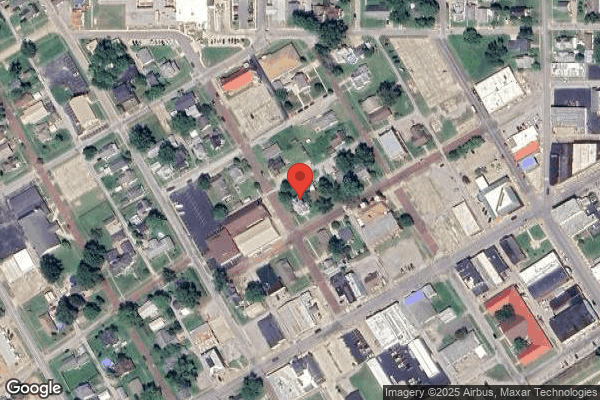
On 2/8/24 at 3:25 PM, V2 (DON) was asked to show the door of the facility in which R59 exited from on 12/29/23. V2 led surveyors to a door at the end of 600 hall, which R59 resides on. The door was observed as opening into a parking lot area, butting up to two roads with no fence in the very immediate vicinity visualized. V2 was asked what door would be described as the back hall door, in which she stated oh and took surveyors to another door which is also near the employee entrance door. V2 stated that some staff refer to a hallway in the facility as the back hall. Upon exiting the back hall door from inside the building, a chain link fence was to the immediate right of the door. The fence ended at an area which adjoins to an area with concrete blocks, broken concrete, trash, down tree debris, lumber and a creek bed. There was a matted down pathway between the end of the fence post and tall weeds with a wire welded fence slanted on its side creating an uneven surface. On the other side of the slanted wire fence was the creek bed. Once on the other side of this fence you could see the employee entrance door, s[TRUNCATED]
CONCERN
(D)
Potential for Harm - no one hurt, but risky conditions existed
Deficiency F0553
(Tag F0553)
Could have caused harm · This affected 1 resident
Based on interview and record review the facility failed to provide person-centered care plan meetings for 1 (R11) of 17 residents reviewed for care planning in a sample of 40.
Findings Include:
On 2...
Read full inspector narrative →
Based on interview and record review the facility failed to provide person-centered care plan meetings for 1 (R11) of 17 residents reviewed for care planning in a sample of 40.
Findings Include:
On 2/8/2024 at 9:15 AM, R11 was alert and oriented and stated she has never been invited to a care plan meeting, verbally or in writing. R11 stated, being here almost 3 years and have not been to a meeting, and I do not have a primary medical representative.
R11's electronic medical record care plan meeting for quarterly and annual conferences documents that care plan letters were mailed to the patient medical representative with no response.
On 02/08/24 at 08:49 AM, V7 (Care Plan/ Minimum Data Set Coordinator) stated, R11 was verbally notified of care plan meetings but nothing was given to R11 on paper, but R11 was reminded of the date and time of meetings. V7 states, the care plan letters were mailed to family, but family never responded.
R11's MDS (Minimum Data Set) with Assessment Reference Date of 11/3/2023 documents a BIMS (Brief Interview for Mental Status) score of 15, indicating R11 has no cognitive impairment. Quarterly care plan conference notes document IDT (Interdisciplinary Team) members in attendance for meetings dated 4/20/23, 7/12/2023, 10/17/2023 and annual care plan conference dated 11/7/2023 with R11 not noted to be in attendance.
The facility policy titled Care plans, Comprehensive Person-Centered Policy Statement documents 1. The Interdisciplinary Team (IDT), in conjunction with the resident and his/her family or legal representative, develops and implements a comprehensive, person-centered care plan for each resident .4. Each resident's comprehensive person-centered care plan will be consistent with the resident's rights to participate in the development and implementation of his or her plan of care, including the right to: a. Participate in the planning process; b. Identify individuals or roles to be included; c. Request meetings;d. Request revisions to the plan of care; e. Participate in establishing the expected goals and outcomes of care f. Participate in determining the type, amount frequency and duration of care; g. Receive the services and/or items included in the plan of care; and h. See the care plan and sign it after significant changes are made.
CONCERN
(D)
Potential for Harm - no one hurt, but risky conditions existed
Deficiency F0558
(Tag F0558)
Could have caused harm · This affected 1 resident
Based on observation, interview, and record review, the facility failed to provide unconflicted lunch meal and smoking schedules for one resident (R21) of 17 residents reviewed for accommodation of ne...
Read full inspector narrative →
Based on observation, interview, and record review, the facility failed to provide unconflicted lunch meal and smoking schedules for one resident (R21) of 17 residents reviewed for accommodation of need in the sample of 40.
Findings include:
R21's Face Sheet documented an admission date of 7/27/17, and listed diagnoses including History of Cerebral Infarction, Hypertension, and Nicotine Dependence.
The facility's Meal Schedule documented the lunch meal service begins at 12:00pm.
On 02/06/24 at 11:15am, R21 was alert and oriented to person, place, and time. R21 stated she always eats in her room, and her lunch meal is frequently cold by the time she eats it. R21 stated she gets her tray as late as 1:00pm, which interferes with the 1:00pm scheduled smoking time.
On 02/06/24 at 12:52pm, R21 was observed waiting by the exit to go outside to smoke. R21 stated staff had just informed her they probably won't go out until about 1:30pm.
On 02/06/24 at 1:03pm, R21's lunch tray was observed sitting on her overbed table. The plate was covered with a metal plate cover.
On 02/06/24 at 01:28pm, R21 walked back into her room. R21 tasted her lunch, stated it is still a little warm and she will eat it as is.
The Smoking Schedule documented resident smoking times as 9:00am, 1:00pm, and 6:00pm. The facility's Smoking/Tobacco Policy stated,The facility offers a structured smoking program for all residents who smoke. The facility will make all attempts to guard the rights of the smoker and non- smoker.
On 02/13/24 at 11:02am, V1, Administrator, stated some of the residents have complained about feeling they need to rush through lunch so as not to miss their 1:00pm smoke break. V1 stated within the past two weeks, the facility had identified the need to re-evaluate the smoking schedule and have not yet done so.
CONCERN
(D)
Potential for Harm - no one hurt, but risky conditions existed
Deficiency F0578
(Tag F0578)
Could have caused harm · This affected 1 resident
**NOTE- TERMS IN BRACKETS HAVE BEEN EDITED TO PROTECT CONFIDENTIALITY** Based on interview and record review, the facility failed to ensure Practitioner Orders for Life-Sustaining Treatment (POLST) st...
Read full inspector narrative →
**NOTE- TERMS IN BRACKETS HAVE BEEN EDITED TO PROTECT CONFIDENTIALITY** Based on interview and record review, the facility failed to ensure Practitioner Orders for Life-Sustaining Treatment (POLST) status reflected resident wishes as desired throughout the Electronic Health Record for one (R58) of one residents reviewed for advanced directives in the sample of 40.
Findings Include:
R58's Face Sheet documented an admission date to the facility as [DATE]. This document also listed R58's diagnoses including, but not limited to: Acute kidney failure, Dysphagia, Parkinson's disorder without dyskinesia.
R58's POLST form, scanned into R58's Electronic Health Record, with a [DATE] signature date by R58, documented a Do Not Resuscitate status.
Review of the Advanced Directive tab, as well as the informational screen heading listed in R58's Electronic Record documented R58's status as being attempt CPR (Cardiopulmonary Resuscitation).
On [DATE] at 2:59 PM, V1 (Administrator) verified that the Advanced Directive status listed for R58 do not correlate. V1 confirmed that the code status should match and consistently reflect the resident's POLST wishes throughout the Electronic Health Record.
The Advance Directives policy with a revision date of [DATE] documented, Advanced directives will be respected in accordance with state law and facility policy 7. Information about whether or not the resident has executed an advanced directive shall be displayed prominently in the medical record .10. The plan of care for each resident will be consistent with his or her documented treatment preferences and/or advance directive.
CONCERN
(D)
Potential for Harm - no one hurt, but risky conditions existed
Deficiency F0604
(Tag F0604)
Could have caused harm · This affected 1 resident
Based on observation, interview, and record review, the facility failed to identify and assess adaptive equipment in order to ensure safety and freedom for normal movement for one (R24) of one residen...
Read full inspector narrative →
Based on observation, interview, and record review, the facility failed to identify and assess adaptive equipment in order to ensure safety and freedom for normal movement for one (R24) of one residents reviewed for physical restraints in the sample of 40.
The Findings Include:
Review of R24's Face Sheet documents an admission date to the facility as 6/1/22 and includes the diagnosis other reduced mobility, major depressive disorder, spinal stenosis, sciatica, and anxiety disorder.
R24's current month of February 2024 Physician Orders does not have an order for the use of a self-releasing seatbelt.
R24's Annual Minimum Data Set (MDS) with assessment reference date as 1/12/2024 documents a Brief Interview for Mental Status score of 3, indicating significant cognitive impairment. This same assessment documents R24 is dependent on staff for chair/bed transfer, sit to stand, and sit to lying position. Review of section GG0115 documents no range of motion impairment in her upper or lower extremities.
R24's current care plan has a category for fall with the interventions as follows all with a start date of 6/2/22: introduce to call light, keep adaptive devices within reach, keep personal items in reach (call light, remote, water glasses, etc.), observe for unsafe actions and intervene, wheelchair for locomotion, bed in lowest position, ensure room is clutter free, remind resident not to ambulate without assistance, physical and occupational therapy to evaluate and assist with transfers. R24's current Care Plan does not include any reference to a self-releasing seat belt used as an intervention for falls
On 2/6/24 at 9:05 AM, R24's wheelchair was observed to have a cord coming out of the back of the wheelchair not connected to anything.
On 2/07/24 at 1:50 PM, V10 (Certified Nurse Assistant/CNA) stated that she is familiar with R24. V10 described R24 as being confused, which is her normal status. V10 went on to state that R24 utilizes a seatbelt as a fall prevention. V10 stated that R24 is able to release her seatbelt herself and that is usually connected to a box on the back of her chair, which alarms when undone. V10 stated that R24's box is broken, and she believes a new one has been ordered, so the seatbelt does not currently sound.
On 2/8/24 at 12:15 PM, V2 (Director of Nursing) stated that the seatbelt for R24 is a fall prevention and not a restraint and that a little black bag should be on the wheelchair with an alarm box in it. V2 stated at this time that R24 has intermittent times of confusion, but she wouldn't call her confused all the time.
On 2/8/24 at 12:30 PM in the dining room, R24 was observed sitting at a table with her lunch tray in front of her. R24 did not have a black bag with an alarm box in it, nor was it observed anywhere else on her chair. At this time, V2 confirmed there was not an alarm box, but that since it is not a restraint she does not need an alarm box and that R24 is able to remove the seatbelt at any time and on command. At this time, R24 was prompted by V2 (Director of Nursing) to release her seatbelt and she was unable to do so on her own accord. V2 attempted to assist her with removal of the seatbelt and then stated this is not adjusted properly on her. V2 confirmed at the time that R24 was unable to release her seatbelt.
On 2/8/24 at 12:30 PM, V15 (Family Member) stated that R24 has not had an alarm box to her seatbelt for quite some time now, so she doesn't know why they have the seatbelt on her when up in the wheelchair. V15 went on to state that R24 can release it and they won't know when she is getting up, so if it is to help prevent falls it is useless. V15 stated that when they started using the seatbelt it was attached to an alarm.
On 2/9/24 at 2:00 PM, V7 (Minimum Data Set Coordinator/Care Plan Coordinator) stated that the self-releasing seat belt is not on the care plan.
A facility pre-restraining evaluation dated and completed on 9/26/22 by V19 (Director of Clinical Operations) documents under the recommendations that: 'the IDT (Interdisciplinary team) has reviewed with the input of the family and primary care physician and V45 (Power of Attorney) approved the use of a seat belt after discussion of risk/benefit and he approved and expressed wish for her to use. It was explained to his (sic) that she was able to demonstrate removal of seat belt at this time so it was not considered a restraint. He verbalized understanding.'
The facility's physical restraint assessment for R24 has a start date of 2/7/24, a complete date of 2/7/24 and a print date of 2/8/24. This assessment documents that a device used is a self-releasing seat belt as a fall intervention. This assessment documents that R24 is confused all the time and that the resident is able to open the seat belt with no assistance from staff at this time. This assessment documents that the device is not a restraint.
Review of the facility policy Resident Rights with a revision date of December 2016 documents in part .d. be free from corporal punishment or involuntary seclusion, and physical or chemical restraints not required to treat the resident's symptoms.
Review of the facility policy titled Use of Restraint with a revision date of February 2017 states, Restraints shall only be used for the safety and well-being of the resident(s) and only after other alternatives have been tried unsuccessfully. Restraints shall only be used to treat the resident's medical symptom(s) and never for discipline or staff convenience, or for the prevention of falls. When the use of restraints is indicated, the least restrictive alternative will be used for the least amount of time necessary, and the ongoing re-evaluation for the need for restraints will be documented. 1. Physical Restraints are defined as any manual method or physical or mechanical device, material or equipment attached or adjacent to the resident's body that the individual cannot remove easily, which restricts freedom of movement or restricts normal access to one's body. 2. The definition of a restraint is based on the functional status of the resident and not the device. If the resident cannot remove a device in the same manner in which the staff applied it given that resident's physical condition (i.e., side rails are put back down, rather than climbed over), and this restricts his/her typical ability to change position or place, that device is considered a restraint. 3. Examples of devices that are/may be considered physical restraints include leg restraints, arm restraints, hand mitts, soft ties or vest, wheelchair safety bars, geri-chairs, and lap cushions and trays that the resident cannot remove.
Review of an article titled, Use of physical restraint in nursing homes: clinical-ethical considerations dated March 2006 and found at https://www.ncbi.nlm.nih.gov/pmc/articles/PMC2564468/ states, Physical restraint can be defined as any device, material or equipment attached to or near a person's body and which cannot be controlled or easily removed by the person and which deliberately prevents or is deliberately intended to prevent a person's free body movement to a position of choice and/or a person's normal access to their body. Examples of physical restraint include vests, straps/belts, limb ties, wheelchair bars and brakes, chairs that tip backwards, tucking in sheets too tightly, and bedside rails.
V1 (Administrator) when asked for the self-releasing seat belt guidelines provided the TL-2109 and TL 2109V Chair belt manufacturer guidelines on 2/8/24 at 3:00 PM. These guidelines document under the 'Quick Start Instructions' to 1. Install batteries, 2. Seat belt installation, 3. Mount the Fall Monitor, 4. Connect the seat belt to the fall monitor, and 5. Test the system.
CONCERN
(D)
Potential for Harm - no one hurt, but risky conditions existed
Abuse Prevention Policies
(Tag F0607)
Could have caused harm · This affected 1 resident
Deficiency Text Not Available
Read full inspector narrative →
Deficiency Text Not Available
CONCERN
(D)
Potential for Harm - no one hurt, but risky conditions existed
Investigate Abuse
(Tag F0610)
Could have caused harm · This affected 1 resident
Deficiency Text Not Available
Read full inspector narrative →
Deficiency Text Not Available
CONCERN
(D)
Potential for Harm - no one hurt, but risky conditions existed
Assessment Accuracy
(Tag F0641)
Could have caused harm · This affected 1 resident
**NOTE- TERMS IN BRACKETS HAVE BEEN EDITED TO PROTECT CONFIDENTIALITY** Based on interview and record review, the facility failed to ensure accurate Minimum Data Set (MDS) coding for one (R59) of 17 r...
Read full inspector narrative →
**NOTE- TERMS IN BRACKETS HAVE BEEN EDITED TO PROTECT CONFIDENTIALITY** Based on interview and record review, the facility failed to ensure accurate Minimum Data Set (MDS) coding for one (R59) of 17 reviewed for Minimum Data Sets in the sample of 40.
Findings Include:
R59's Face Sheet documented R59 is a [AGE] year-old male, who admitted to the facility on [DATE] at 5:30 PM. Diagnoses listed on this document in their entirety are: Unspecified Dementia, Unspecified Atrial Fibrillation, Anxiety Disorder, Vitamin D Deficiency, Constipation, Dextrocardia, Essential (primary) Hypertension, Dorsalgia, and other Amnesia. V25 (Physician) is listed as being R59's Primary Care Physician. The only contacts listed for R59 on this document are V21 (Family member/Power of Attorney/POA) and V22 (Family member).
R59's (Name of town) Primary Care record found in R59's Electronic Health Record, documented a visit on 12/7/23 with a chief complaint being to establish care. This document stated, Patient has been here in the past. It has been over 4 years since he was last seen in this clinic. He is here today with his sister to reestablish care. Over the past 2 years, she has noted a decrease in his mental status. He seems to be having problems with short-term memory. There is a family history of dementia in their father. The history of stroke is uncertain. He was hit by a semi several years ago in front of the (Store Name) here in town. He did sustain a significant head injury at that time .He does have some problems with his vision. This seems to be a problem when trying to watch TV as he cannot use his remote. He also likes to walk around town. He reports almost being hit by a semi couple days ago. According to his sister, approximately 18 months ago she became involved with his care when he showed up at her house and was quite disheveled. Since then she has worked on getting him help set up He does tend to sleep from 5 or 6:00 PM until 4:30 in the morning. At that time he does like to get up and walk around town .
Local hospital Emergency Department (ED) notes dated 12/28/23 at 10:38 AM, documented R59 was seen for chief complaints of altered mental status and hallucinations. This document stated R59 was brought to the ED by family members and friends who stated R59's complaint symptoms had been going on for the last 18 months but worsened over the last 2 weeks. After workup, the Clinical Impression listed is Thoracic aortic aneurysm, unspecified part, unspecified whether ruptured; and Cardiac arrhythmia, unspecified cardiac arrhythmia type. A case management note documented report included family concerns with R59's current living apartment arrangements which state R59 has been found outside his apartment multiple times, locked out, and ultimately confused how to operate a key fob to get into the apartment. Not eating as he should and suspected hallucinations.
R59's Resident Incident Report dated 12/29/23 at 5:31 AM documented the incident type as, Wander from grounds. This report documented a narrative of incident and description of injuries: Resident left building out the Exit door on back hall to walk 2 blocks down the road to his house. Resident was full dressed with shoes and a heavy coat on. 2 CNA's escorted resident to his house on foot and a nurse followed in the car. Resident went to his home where his son (name of V20) also lived and (name of V20) agreed that resident could stay there at that time and he would try to get him to come back. V2 (DON) is documented as being notified on 12/29/23 at 5:30 AM, V21 (POA) on 12/29/23 at 5:45 AM, and V25 (Physician) at 8:00 AM. This report documented exam by physician as no. Immediate action taken is listed as, Escorted by staff to home. Alarm were checked on facility doors and the (sic) were working properly. frequent visual checks by all staff attempts will put 1:1 sitter with him until behavior ceases. The following Medical risk factors possibly related to incident are documented on this incident report as Confusion/Disorientation, and Other: Afib (atrial fibrillation). This form includes no printed names, signatures, or dates of completion for this report. The Incident Investigation, Narrative of investigation completed by V2 stated, IDT (Interdisciplinary Team) investigation resident left building escorted by staff to home 2 blocks down the street. Temp was 39 outside and he had on a heavy coat on. Alarms were checked on facility doors and they were working properly. Frequent visual checks by all staff. If resident attempts will put 1:1 sitter with him until the behavior ceases as resident did Returned (sic) to facility that same AM and apologized to DON and stated he would stay in the building and only leave with someone with him. Family also spoke with DON and Admin they also spoke with resident about leaving the building alone.
Review of R59's Minimum Data Set with an assessment reference date of 1/4/24 documented a Brief Interview of Mental Status (BIMS) score of 5, indicating severe cognitive impairment. Section E0900 documents 0, indicating the behavior was not exhibited to the question has the resident wandered.
On 02/09/24 at 09:56 AM, V34 (Social Services Director) stated that she did complete Section E of R59's Minimum Data Set care plan with the reference date of 1/4/24. V34 stated that she was not aware that R59 wandered or had exited the building when she completed the assessment, which is why she marked section E0900 as wandering behavior not exhibited. V34 stated due to her entry of 0 in this section, the system automatically disables further question entries in this section. V34 stated she is new to this job and acknowledges the coding error. V34 stated she would be notified of incidents with residents that have occurred in morning meeting or if she's just randomly looking in the charts.
CONCERN
(D)
Potential for Harm - no one hurt, but risky conditions existed
Deficiency F0642
(Tag F0642)
Could have caused harm · This affected 1 resident
Deficiency Text Not Available
Read full inspector narrative →
Deficiency Text Not Available
CONCERN
(D)
Potential for Harm - no one hurt, but risky conditions existed
Deficiency F0657
(Tag F0657)
Could have caused harm · This affected 1 resident
**NOTE- TERMS IN BRACKETS HAVE BEEN EDITED TO PROTECT CONFIDENTIALITY** Based on interview and record review, the facility failed to provide individualized plan of care revisions to meet the needs for...
Read full inspector narrative →
**NOTE- TERMS IN BRACKETS HAVE BEEN EDITED TO PROTECT CONFIDENTIALITY** Based on interview and record review, the facility failed to provide individualized plan of care revisions to meet the needs for one (R59) of 17 residents reviewed for care plans in the sample of 40.
Findings Include:
R59's Face Sheet documented R59 is a [AGE] year-old male, who admitted to the facility on [DATE] at 5:30 PM. Diagnoses listed on this document in their entirety are: Unspecified Dementia, Unspecified Atrial Fibrillation, Anxiety Disorder, Vitamin D Deficiency, Constipation, Dextrocardia, Essential (primary) Hypertension, Dorsalgia, and other Amnesia. V25 (Physician) is listed as being R59's Primary Care Physician. The only contacts listed for R59 on this document are V21 (Family Member/Power of Attorney/POA) and V22 (Family Member).
R59's Minimum Data Set with an assessment reference date of 1/4/24 documented a Brief Interview of Mental Status (BIMS) score of 5, indicating severe cognitive impairment.
R59's (Name of town) Primary Care record found in R59's Electronic Health Record, documented a visit on 12/7/23 with a chief complaint being to establish care. This document stated, Patient has been here in the past. It has been over 4 years since he was last seen in this clinic. He is here today with his sister to reestablish care. Over the past 2 years, she has noted a decrease in his mental status. He seems to be having problems with short-term memory. There is a family history of dementia in their father. The history of stroke is uncertain. He was hit by a semi several years ago in front of the (Store Name) here in town. He did sustain a significant head injury at that time .He does have some problems with his vision. This seems to be a problem when trying to watch TV as he cannot use his remote. He also likes to walk around town. He reports almost being hit by a semi couple days ago. According to his sister, approximately 18 months ago she became involved with his care when he showed up at her house and was quite disheveled. Since then she has worked on getting him help set up He does tend to sleep from 5 or 6:00 PM until 4:30 in the morning. At that time he does like to get up and walk around town .
Local hospital Emergency Department (ED) notes dated 12/28/23 at 10:38 AM, documented R59 was seen for chief complaints of altered mental status and hallucinations. This document stated R59 was brought to the ED by family members and friends who stated R59's complaint symptoms had been going on for the last 18 months but worsened over the last 2 weeks. After workup, the Clinical Impression listed is Thoracic aortic aneurysm, unspecified part, unspecified whether ruptured; and Cardiac arrhythmia, unspecified cardiac arrhythmia type. A case management note documented report included family concerns with R59's current living apartment arrangements which state R59 has been found outside his apartment multiple times, locked out, and ultimately confused how to operate a key fob to get into the apartment. Not eating as he should and suspected hallucinations.
R59's Resident Incident Report dated 12/29/23 at 5:31 AM documented the incident type as, Wander from grounds. This report documented a narrative of incident and description of injuries: Resident left building out the Exit door on back hall to walk 2 blocks down the road to his house. Resident was full dressed with shoes and a heavy coat on. 2 CNA's escorted resident to his house on foot and a nurse followed in the car. Resident went to his home where his son (name of V20) also lived and (name of V20) agreed that resident could stay there at that time and he would try to get him to come back. V2 (DON) is documented as being notified on 12/29/23 at 5:30 AM, V21 (POA) on 12/29/23 at 5:45 AM, and V25 (Physician) at 8:00 AM. This report documented exam by physician as no. Immediate action taken is listed as, Escorted by staff to home. Alarm were checked on facility doors and the (sic) were working properly. frequent visual checks by all staff attempts will put 1:1 sitter with him until behavior ceases. The following Medical risk factors possibly related to incident are documented on this incident report as Confusion/Disorientation, and Other: Afib (atrial fibrillation). This form includes no printed names, signatures, or dates of completion for this report. The Incident Investigation, Narrative of investigation completed by V2 stated, IDT (Interdisciplinary Team) investigation resident left building escorted by staff to home 2 blocks down the street. Temp was 39 outside and he had on a heavy coat on. Alarms were checked on facility doors and they were working properly. Frequent visual checks by all staff. If resident attempts will put 1:1 sitter with him until the behavior ceases as resident did Returned (sic) to facility that same AM and apologized to DON and stated he would stay in the building and only leave with someone with him. Family also spoke with DON and Admin they also spoke with resident about leaving the building alone.
On 02/09/24 at 09:37 AM, R59's care plan as V7 (Care Plan Coordinator) confirmed was in its entirety, was reviewed with V7. V7 confirmed that although the care plan category stated Baseline CP (Care Plan) Elopement this is also the comprehensive care plan for R59's elopement too. V7 stated the baseline wording is just there to let staff know that this area was also part of his baseline plan. V7 confirmed that no new interventions for elopement have been added to his Care Plan since the plan start date of 12/28/23. Each intervention listed includes the start date of 12/28/23. Interventions listed on this plan of care for the category of elopement are as follows in the plan's entirety, Ask family about elopement history; Observed for wandering behaviors and intervene as needed; Photo taken and added to elopement book; Social Services notified for behavior management; Inform staff of elopement risk.
The policy titled Care Plans, Comprehensive Person-Centered with a revision date of December 2016 documented, A comprehensive, person-centered care plan that includes measurable objectives and timetables to meet the resident's physical, psychosocial and functional needs is developed and implemented for each resident. The policy stated, 1. The Interdisciplinary Team (IDT), in conjunction with the resident and his/her family of legal representative, develops and implements a comprehensive, person-centered care plan for each resident .13. Assessments of residents are ongoing and care plans are revised as information about the residents and the residents' condition change.
Review of the not dated document titled MDS/Care Plan Coordinator Job Description documents the General Purpose of the position is, To oversee and facilitate the completion and management of resident assessments and resident care plans in accordance with current federal, state and local standards governing the facility and as may be directed by the Administrator or Director of Nursing.
CONCERN
(D)
Potential for Harm - no one hurt, but risky conditions existed
Deficiency F0676
(Tag F0676)
Could have caused harm · This affected 1 resident
Based on observation, interview, and record review the facility failed to provide services to improve or maintain Range of Motion status and functioning for one (R11) of 17 residents reviewed for Rang...
Read full inspector narrative →
Based on observation, interview, and record review the facility failed to provide services to improve or maintain Range of Motion status and functioning for one (R11) of 17 residents reviewed for Range of Motion in the sample of 40.
Findings Include:
The Resident Profile section of R11's Electronic Record documents an admission date to the facility of 8/20/21 with diagnoses listed but not limited to type 2 diabetes mellitus, cerebral infraction, unspecified, Hemiplegia, unspecified affecting left nondominant side, hyperkalemia, history of falls, weakness.
On 2/06/24 09:26, R11 was observed with a brace to the left lower extremity. R11 stated she had a stroke in 2011. R11 stated, aides do not do any range of motion program, other than 2 times a week when in the shower. The certified nursing assistants will move left hand fingers to clean hand. R11 stated after being discharged from therapy she was told she would be put in a restorative program, but never was and she would like to be.
R11's Physical Therapy Plan of Care dated 2/13/2023 documents a referral for skilled physical therapy orders for decline in strength, balance, transfers, and safety requiring an increased in care.
R11's MDS (Minimum Data Set) dated 11/3/23 documents in Section GG that R11 has Functional Limitation in Range of Motion to the upper and lower extremity with impairment on one side, uses a wheelchair for mobility devices, requires setup or clean up assistance with eating, and is dependent on staff for assistance with lying to sitting on bed side, sit to stand, and chair/bed-to-chair transfers.
On 2/07/24 at 01:25 PM, V10 (Certified Nurse's Aide) stated that she has worked at the facility since the Fall of 2020. V10 stated, she is very familiar with the residents at the facility. V10 stated, that she works both 8- and 12-hour shifts, almost always on the 100 hall. V10 stated, that she has not witnessed any residents receiving any restorative program therapy recently. V10, stated that she knows V16 (Certified Nursing Assistant/Transportation Aide) used to do restorative nursing, but got pulled to be the transportation aide, and she's not aware of anyone who took over the restorative duties.
On 2/08/24 at 10:09am, V16 (Certified Nurse's Aide/CNA) acknowledges being the prior restorative aide but has not been for a long time. V16 states, the restorative aide would walk residents per restorative plan and Certified Nurse's Aide would complete the range of motion plans. V16 said that documentation of the restorative activities would be logged in the restorative book. V16 stated, she has been the transportation aide and has not seen a restorative aide for 3-4 months in the facility.
On 2/08/24 at 10:29 AM, V14 (therapy manager) stated, the process for the therapy department is to screen residents to see if they need therapy. V14 stated, once resident is on therapy and meets goals, the resident will be discharged back to facility for restorative therapy, and that is managed by the facility. V14 stated, the restorative aide position for this facility is vacant at this time and has been for 1-2 months. V14 stated, in his opinion, R11 would need range of motion interventions based on her discharge summary from 4/26/2023.
R11's Therapist Progress and Discharge Summary dated 4/26/2023 documents on Page 3 End of Goal Status as of 4/26/2023 The patient will improve AAROM (Active Assisted Range of Motion) left knee extension to -10 degrees in order to return to prior level function. **Goal Not Met- on 4/26/2023 ** The patient demonstrates P/AAROM (Passive/ Active assisted Range of Motion) of L LE (Left Lower Extremity) Knee extension to -15 degrees. Strength: General - The patient will improve muscle strength to 3+/5 fair plus (full ROM against gravity and takes minimal resistance but then breaks suddenly) of L LE grossly in order to return to prior level of function. End of Goal Status as of 4/26/2023. **GOAL NOT MET- **The patient demonstrates muscle strength of 3-/5 fair minus (less than full ROM (more than 50%) against gravity) of L LE grossly. Discharge Plans and Instructions: discharge to RNP (Restorative Nursing Plan).
The Managed Care Resident Task Menu in R11's electronic record documents a current task list of Restorative AROM (Active Range of Motion) and Special Needs: AROM R UE/LE (Right Upper Extremity/ Lower Extremity) x 20 reps x 2 sets. PROM (Passive Range of Motion) LUE/LE (Left Upper Extremity/ Lower Extremity) x 20 reps x 1 set.
On 2/08/2024 at 11:49am, V2 (Director of Nursing) stated the therapy department manages the restorative aide position, but at this time the CNA's are responsible for restorative care.
On 2/09/2024 8:42am, R11's Restorative Plan in the electronic record was reviewed with V7 (Care Plan/ MDS Coordinator) and V6 (Director of Nursing). V7 acknowledged and attempts to run a report to review restorative task being completed. There was no report generated.
On 2/09/2024 at 8:46am, V7 stated and acknowledged that R11 had restorative interventions listed under Special Needs with AROM R UE/LE x 20 reps x 2 sets. PROM LUE/LE x 20 reps x 1 set. listed under completed care with no documentation that range of motion interventions were being completed.
The facility policy titled Restorative Nursing Services (revision date of July 2017) documents 1. Restorative nursing care consists of nursing interventions that may or may not be accompanied by formalized rehabilitative services (e.g., physical, occupational, or speech therapies) 3. Restorative goals and objectives are individualized and resident-centered, and are outlined in the resident's plan of care .
CONCERN
(D)
Potential for Harm - no one hurt, but risky conditions existed
Incontinence Care
(Tag F0690)
Could have caused harm · This affected 1 resident
Based on interview, observation, and record review, the facility failed to provide aseptic catheter care for one resident with a history of Urinary Tract Infections (R9) of three residents reviewed fo...
Read full inspector narrative →
Based on interview, observation, and record review, the facility failed to provide aseptic catheter care for one resident with a history of Urinary Tract Infections (R9) of three residents reviewed for catheters in the sample of 40.
The findings include:
R9's Face Sheet documented an admission date of 11/23/22 and listed diagnoses including Benign Prostatic Hypertrophy (BPH) with Lower Urinary Tract Symptoms and History of Urinary Tract Infection. R9's Care Plan dated 12/22/23 documented a problem area, readmission to the facility following hospitalization following diagnoses of Sepsis, Pneumonia, (and) UTI (Urinary Tract Infection). An 8/31/23 Urinalysis with Reflex Culture documented, Culture result: Organism identification: Enterococcus Faecium.
On 02/08/24 at 09:25am, V2 (Director of Nurses) stated R9 has an indwelling catheter due to BPH with urinary retention. V2 stated R9 has a history of UTIs.
On 02/08/24 at 11:41am, staff were observed providing catheter care for R9. R9 was alert to himself only. A clean field with clean linens and clean trash bags had been set up on the residents overbed table. The trash bags fell off the table and onto the floor, and V13 (Registered Nurse/Infection Control Preventionist) picked the bags up and placed them back onto the clean field. V17 (Certified Nursing Assistant/CNA), while wearing gloves, placed the bags onto the bed to receive trash and dirty linens, thereby contaminating her gloves. V17 then provided catheter care while wearing the contaminated gloves, additionally contaminating a bottle of perineal spray cleanser. During the procedure, V17 did not retract the foreskin of the penis to clean under it. After the procedure, V10 (CNA) while wearing gloves, picked up the contaminated perineal spray bottle and placed it onto the clean linen cart in the hall.
On 02/13/24 at 11:14am, V13 acknowledged the above referenced breaches in infection control.
A Catheter Care, Urinary Policy dated 9/14 documented, The purpose of this procedure is to prevent catheter associated urinary tract infections. Infection control: 2. Maintain clean technique when handling or manipulating the catheter, tubing, or drainage bag. Steps in the procedure: 7.Wash the residents genitalia and perineum thoroughly with soap and water. Rinse the area well and towel dry.
CONCERN
(D)
Potential for Harm - no one hurt, but risky conditions existed
Deficiency F0692
(Tag F0692)
Could have caused harm · This affected 1 resident
**NOTE- TERMS IN BRACKETS HAVE BEEN EDITED TO PROTECT CONFIDENTIALITY** Based on observation, interview, and record review, the facility failed to provide a residents protein of choice for one residen...
Read full inspector narrative →
**NOTE- TERMS IN BRACKETS HAVE BEEN EDITED TO PROTECT CONFIDENTIALITY** Based on observation, interview, and record review, the facility failed to provide a residents protein of choice for one resident with weight loss (R7) of four residents reviewed for weight loss in the sample of 40.
Findings include:
R7's Face Sheet documented an admission date of 12/3/16 and listed diagnoses including Parkinson's Disease, Gastro-Esophageal Reflux Disease, and Diabetes Type 2. R7's Physicians Orders documented an order for a carbohydrate controlled diet of regular consistency and thin liquids, fortified milk at breakfast, butter to hot vegetables at lunch and supper, fortified juice at lunch, and double protein at breakfast. R7's Weight Record documented the following weights:
02/04/2024 153 lbs(pounds)
01/14/2024 153 lbs
01/03/2024 156 lbs
12/03/2023 154.7 lbs
11/12/2023 153 lbs
11/07/2023 149.2 lbs
10/29/2023 149 lbs
10/22/2023 142.2 lbs
10/01/2023 149 lbs
09/22/2023 157.2 lbs
09/03/2023 159.4 lbs
A Registered Dietician Note for Annual (Assessment) dated 1/22/24 stated,Resident is a [AGE] year old female. PMH(Pertinent Medical History) includes Hypothyroidism, HLD(Hyperlipidemia) GERD(Gastroesophageal Reflux Disease), T2DM(Type 2 Diabetes), HTN(Hypertension), HF(Heart Failure), Depression, Anxiety, (and)Parkinson's Disease. Medications and labs reviewed. No open wounds or pressure ulcers noted. She is on a controlled carbohydrate diet with regular textures and thin liquids. Receives double protein with breakfast, fortified milk with breakfast, fortified juice with lunch, extra butter with hot (vegetables at) lunch and dinner, and is allowed to have hot cocoa as desired. No indications of poor oral intake. Weight over the past 6 months trending between 142-159lb., suspect changes may be related to fluid status. Current weight is 153 lbs, BMI (Body Mass Index) 25.5 overweight but appropriate for age. Estimated needs for weight maintenance: 1739 kcals(kilocalories), 70 grams protein, and 2086 milliliters fluids. Recommend continue controlled carbohydrate diet. Will monitor weight and by mouth intakes, may be able to discontinue some of the fortified foods if weight remains stable and intakes (are) 75 percent or more.
On 02/06/24 at10:07 AM, R7 was alert to person and place but not time. R7 stated she has lost some weight because she has a diminished appetite.
On 02/06/24 at 12:32 PM, R7 was observed eating lunch in the dining room. R7's intake was poor, and R7 stated she is just not hungry.
On 02/08/24 at 07:46 AM, R7 was observed eating breakfast in the dining room. R7's diet card read, Double protein at breakfast. R7's tray contained cold cereal, fortified milk, apple juice, and a double portion of scrambled eggs. R7 ate 100 percent of the cereal with the milk and all the juice. R7's eggs were untouched, and R7 stated, I do not like scrambled eggs. They (staff) all know this but they keep serving them to me. I like fried eggs over easy.
On 02/08/24 at 08:08 AM, V3, Dietary Manager, stated R7 at times does not have a very good appetite. V3 stated R7 has had some weight loss, but her weight has been picking back up recently. V3 stated R7 likes soft cooked eggs but the facility cannot provide them due to the possibility of food borne illness. When asked, V3 stated the facility uses pasteurized eggs. V3 asked the Surveyor if that meant V3 could serve soft cooked eggs.
On 02/08/24 at 8:45 AM, R7 was observed in the dining room eating two fried eggs with good appetite.
On .02/08/24 at 10:06 AM, V40, Regional Director of Culinary Services, stated V3 had approached her about serving soft cooked eggs, and V40 clarified R7 can have them. V40 stated she updated R7's diet card to reflect this.
A Therapeutic Diet Policy dated 10/17 stated, Therapeutic diets are prescribed by the attending Physician to support the resident's treatment and plan of care, and in accordance with his or her goals and preferences. 1. Diet will be determined in accordance with the resident's informed choices, preferences, treatment goals, and wishes. An undated Weight Assessment and Intervention Policy stated,The multidisciplinary team will strive to prevent, monitor, and intervene for undesirable weight loss for our residents. Interventions: 1. Interventions for undesirable weight loss shall be based on careful consideration of the following: A. Resident choice and preferences. A Use of Shell Eggs and Pasteurized Egg Products Policy dated 2016 documented, 5. Pasteurized eggs or egg products shall be used when eggs are served undercooked and for fried eggs. Waivers to allow undercooked unpasteurized eggs for resident preference are not acceptable since pasteurized eggs are available and allow for safe consumption.
CONCERN
(D)
Potential for Harm - no one hurt, but risky conditions existed
Medication Errors
(Tag F0758)
Could have caused harm · This affected 1 resident
3. Review of R24's Face Sheet documents an admission date to the facility as 6/1/22 and includes the diagnoses of other reduced mobility, major depressive disorder, spinal stenosis, sciatica, and anxi...
Read full inspector narrative →
3. Review of R24's Face Sheet documents an admission date to the facility as 6/1/22 and includes the diagnoses of other reduced mobility, major depressive disorder, spinal stenosis, sciatica, and anxiety disorder.
R24's most recent annual Minimum Data Assessment with an assessment reference date of 1/12/2024 Section C documents a Brief Interview of Mental Status score of 3, indicating she is cognitively impaired.
R24's current care plan has a category of behaviors with the following interventions listed all with the start date of 6/28/2022: do not argue with resident, talk in calm voice, refer to social services for evaluation, reinforce unacceptability of verbal cues, remove from public area when behavior is disruptive and unacceptable, praise for demonstrating desire behavior, monitor and document target behaviors, identify causes for behavior and reduce factors that may provoke aggressive behaviors, discuss options for channeling anger, assist in selection of appropriate coping mechanisms, administer behavior medications as ordered by physician, provide diversional activities. A category for medication is listed as of 6/2/22 with the following interventions listed with the same start date as 6/2/22: administer box medications as ordered by physician, medication list reviewed routinely with resident/resident representative/power of attorney, residents's medications are reviewed routinely by pharmacist and physician and pharmacy consultant review of medication use and potential side effects.
Observations of R24 are as follows: on 2/6/24 at 10:00 AM in her room resting in bed quietly, on 2/8/23 at 12:15 PM in the dining room eating lunch quietly in the dining room, and on 2/9/23 at 1:32 PM resident was napping in her bed.
On 2/8/24 at 9:24 AM, V17 (Certified Nurse Assistant)(CNA) and V24 (CNA) stated that R24 really only gets verbally aggressive on bath day because she gets hot/cold and wet. They both stated that R24 is not verbally aggressive towards anyone other than staff and that is rare (typically shower days only.) V17 and V24 stated that R24 only gets up for meals and activities and remains in bed most other times.
R24's current physician orders include an order for Seroquel 50mg daily with a start date of 7/6/2022 and no indication of use.
On 2/8/24 at 2:30 PM, V19 (Director of Clinical Operations) stated that R24 is on Seroquel due to major depression disorder.
On 2/9/24 at 1:32 PM, R24's roommate R212, who is alert to person, place, and time, stated that R24 is not verbally aggressive or have any problematic behaviors other than occasionally calling for help and not really needing anything, or sometimes she called the staff bad names when they need her to do something she doesn't want to.
During the survey, there were no pharmacist recommendations with gradual dose reduction recommendations/ physician signature to agree/disagree were provided after several requests.
Review of R24's behavior tracking for Seroquel for the last 3 months documents the problem as: resident is attention seeking when she doesn't get her way. Resident climbs out of her recliner/bed. The November 2023-January 2024 behavior tracking documents that this behavior has not occurred.
A facility document titled (Facility Name) Psychoactive Medication Quarterly Evaluation was provided for R24. The date listed on this evaluation as being completed was 7/3/23. The drug reviewed was Seroquel 50mg daily regarding major depressive disorder diagnosis. The targeted behavior for this drug is listed as tearfulness with agitation/combative. The comments/recommendation section states the following: the primary care provider has reviewed medication regimen and the pharmacy consultant with no changes at this time as resident is stable with symptoms and changes could be detrimental to residents mental health which would decrease her quality of life. The power of attorney is aware and approves after discussion of risk/benefits. This document was completed by V19 (Director of Clinical Operations) on 7/3/23 at 8:59 PM.
Based on interview, observation, and record review, the facility failed to ensure residents medication regimens were free from unnecessary medication for three (R18, R50 R24) of five residents reviewed for unnecessary medications in the sample of 40.
Findings include:
1. R50's Face Sheet documented an admission date of 10/27/22 and listed diagnoses including Unspecified Dementia without Behavior Disturbance, and Bipolar Disorder. R50's Physicians Orders documented orders for Citalopram 20 mg (milligrams) one tablet daily with a start date of 10/28/22, Risperdal 0.5mg one tablet twice daily with a start date of 11/15/22, Benztropine 0.5mg one tablet twice daily with a start date of 7/25/23,and Lorazepam 1mg one tablet three times daily with a start date of 11/15/22. R50's Behavior Tracking for February 2024 documented that R50 is being monitored for the behaviors of daily exit seeking and wandering, being sad about her family not visiting, and being resistive to personal care. A Consultant Pharmacists Medication Regimen Review Communication dated 6/23/23 documented Route to (Physician): Please assess risk versus benefit and if your patient would benefit from a dose reduction of the following psychiatric medications: Citalopram 20mg daily, Lorazepam 0.5mg every 8 hours, and Risperdal 0.5mg twice daily. The Physician Response portion of the form was blank. A Consultant Pharmacists Medication Regimen Review Communication dated 11/27/23 documented,Route to (Physician): Please assess risk versus benefit and if your patient would benefit from a dose reduction of the following psychiatric medications: Citalopram 20mg daily, Loazepam 0.5mg every 8 hours, and Risperdal 0.5mg twice daily. The handwritten statement in the Physician Response portion stated, I disagree. GDR (Gradual Dose Reduction) would be detrimental to patient well being. There was no rationale documented as to the nature of potential adverse effects, or risk versus benefit analysis of continued therapy.
On 02/06/24 at 09:45am, R50 was lying in bed, alert only to self. R50 was observed to have involuntary side to side jaw movement and tongue tremor.
According to the Physicians Desk Reference, https://www.pdr.net/drug-summary/?drugLabelId=977, Risperdal and other atypical antipsychotics, Are not approved for the treatment of dementia-related psychosis in geriatric adults and use of Risperidone should be avoided if possible due to an increase in morbidity and mortality in elderly adults with dementia receiving antipsychotics. The Beers Criteria consider antipsychotics to be potentially inappropriate medications (PIMs) in elderly patients except for treating schizophrenia, bipolar disorder, and nausea/vomiting during chemotherapy. The Beers panel recommends avoiding antipsychotics in geriatric patients with delirium, dementia, or Parkinson's disease. Non-pharmacological strategies are first-line options for treating delirium- or dementia-related behavioral problems unless they have failed or are not possible and the patient is a substantial threat to self or others. According to the federal Omnibus Budget Reconciliation Act (OBRA) regulations in residents of long-term care facilities, antipsychotic therapy should only be initiated in a patient with behavioral or psychological symptoms of dementia (BPSD) when the patient is a danger to self or others or has symptoms due to mania or psychosis. For acute conditions persisting beyond 7 days, appropriate non-pharmacologic interventions must be attempted, unless clinically contraindicated and documented. OBRA provides general dosing guidance for antipsychotic treatment of BPSD. Antipsychotics are subject to periodic review for effectiveness, medical necessity, gradual dose reduction (GDR), or rationale for continued use. Refer to the OBRA guidelines for complete information. Further guidance at https://www.pdr.net/drug-summary/?drugLabelId=1940, indicates Benztropine is prescribed, For the treatment of drug-induced extrapyramidal symptoms, with potential side effects including constipation, confusion, hallucinations, dizziness, drowsiness, and weakness.
2. R18's Face Sheet documented an admission date of 3/10/22 and listed diagnoses including Unspecified Dementia without Behavior Disturbance, Major Depressive Disorder, Recurrent, Difficulty in Walking, Unsteadiness on Feet, and Diabetes Type 2. R18's Physicians Orders documented orders for Amitripyline 10mg one tablet at bedtime with a start date of 3/10/22, Mirtazepine 7.5mg one tablet daily with a start date of 10/14/23, representing a decrease from 15mg one tablet daily, and Olanzapine 2.5mg one tablet at bedtime with a start date of 3/10/22. R18's Behavior Tracking for 2/24 indicated R18 is being monitored for wandering around the facility asking where she is, showing little or no pleasure in life or activities, and self isolating in her room for days at a time. A Consultant Pharmacists Medication Regimen Review Communication dated 3/26/23 documented, Route to (Physician): Please assess risk versus benefit and if your patient would benefit from a dose reduction of the following psychiatric medications: Olanzapine 2.5mg at bedtime, Mirtazepine 15mg one tablet daily, and Amitriptyline 10mg one tablet at bedtime. The Physician Response portion of the form was blank. A Consultant Pharmacists Medication Regimen Review Communication dated 9/26/23 documented, Route to (Physician): Please assess risk versus benefit and if your patient would benefit from a dose reduction of the following psychiatric medications: Olanzapine 2.5mg at bedtime, Mirtazepine 15mg one tablet daily, and Amitriptyline 10mg one tablet at bedtime. The Physician Response portion of the form was blank. Guidance at https://www.pdr.net/drug-summary/?drugLabelId=2269, documented, Antipsychotics are not approved for the treatment of dementia-related psychosis in geriatric patients and use of olanzapine in this population should be avoided if possible due to an increase in morbidity and mortality in geriatric patients with dementia receiving atypical antipsychotics. Deaths have typically resulted from heart failure, sudden death, or infections (primarily pneumonia). An increased incidence of cerebrovascular adverse events (e.g., stroke, transient ischemic attack), including fatal events, has also been reported. The Beers Criteria consider antipsychotics to be potentially inappropriate medications (PIMs) in elderly patients except for treating schizophrenia, bipolar disorder, and nausea/vomiting during chemotherapy.
On 02/09/24 at 10:54am, V2, Director of Nurses, stated she is not sure how often psychotropic medications should be reviewed for gradual dose reductions, but she thinks it might be twice a year. V2 stated most of their Physicians don't respond to gradual dose reduction requests. V2 stated residents on psychotropic medications are managed by their primary care physicians, and the facility does not utilize the services of a psychiatrist or mid level provider specializing in psychiatry.
An Antipsychotic Medication Use Policy dated 12/16 documented, Antipsychotic medications will be prescribed at the lowest possible dosage for the shortest period of time and are subject to gradual dose reduction and re-review. 8. Diagnoses alone do not warrant the use of antipsychotic medication. 11. Antipsychotic medications will not be used if the only symptoms are one or more of the following: Wandering, poor self-care, restlessness, impaired memory, mild anxiety, insomnia, inattention or indifference to surroundings, sadness or crying alone that is not related to depression or other psychiatric disorders, fidgeting, nervousness, or uncooperativeness. 19. The facility will follow CMS (Centers for Medicare/Medicaid Services) regulations in regard to gradual dose reductions.
CONCERN
(D)
Potential for Harm - no one hurt, but risky conditions existed
Deficiency F0805
(Tag F0805)
Could have caused harm · This affected 1 resident
**NOTE- TERMS IN BRACKETS HAVE BEEN EDITED TO PROTECT CONFIDENTIALITY** Based on observation, interview, and record review, the facility failed to provide therapeutic diets per physician's orders for ...
Read full inspector narrative →
**NOTE- TERMS IN BRACKETS HAVE BEEN EDITED TO PROTECT CONFIDENTIALITY** Based on observation, interview, and record review, the facility failed to provide therapeutic diets per physician's orders for two (R18, R48) residents of four residents reviewed for therapeutic diets in the sample of 40.
Findings include:
R18's Face Sheet documented an admission date of 3/10/22 and listed diagnoses including Dementia, Hypertension, and Type 2 Diabetes. R18's Physicians Orders documented a diet order for a regular diet with regular consistency and thin liquids.
R48's Face Sheet documented an admission date of 10/27/23 and listed diagnoses including Dementia, Hypertension, and Multiple Sclerosis. R48's Physicians Orders documented a diet order for regular diet with mechanical soft texture with extra gravy/sauce and thin liquids. R48's Speech Therapy Plan of Care dated 10/30/23 documented, Reason for referral: Patient is a [AGE] year old female admitted to this facility post hospitalization for Covid-19, Pneumonia, and Acute on Chronic Respiratory Failure. Patient has a history of Dementia and is a poor historian. Requires skilled services to focus on: 92526 (procedure billing code), treatment of swallowing dysfunction and/or oral function for feeding, (and) 92610, evaluation of oral and pharyngeal swallowing function.
A Week at a Glance Dietary Spreadsheet for Tuesday day 17 specified the regular diet lunch menu for 2/6/24 called for fiesta spiced chicken, Mexican rice, elote corn, breadstick, snickerdoodle cookie, and milk/beverage. The mechanical soft diet called for ground fiesta spiced chicken with sauce, Mexican rice with sauce or gravy, creamed corn, bread with margarine, soft snickerdoodle cookies, and milk/beverage.
On 2/6/24 at 12:40pm, lunch service was observed in the facility's dining room. V39 (Housekeeping Staff Member) was observed passing resident trays. R18 and R48 were sitting at the same table, along with V41 and V42, (Family Members of R18) R48 was alert and oriented to person and place but not time, and R18 was alert only to self. V39 brought R18's tray and then within a minute, brought R48's tray. The diet card on R18's tray specified regular diet with regular consistency and R48's diet card specified regular mechanical soft diet with extra sauce/gravy. The chicken on R48's tray was ground and had red sauce on the chicken and the rice, and the tray also held creamed corn. R18's tray contained a boneless chicken breast and whole kernel corn. V41 cut R18's chicken breast into chunks. R48 looked at R18's tray and said R18 had sauce on her chicken, and R48 wanted sauce on her chicken. R18 offered to trade R48 trays, and V41 asked V39 if it was ok. V39 stated, I guess so, so V41 swapped the trays, and R18 began eating . R48 picked up her fork and put a piece of chicken on it and began to raise it to her mouth. The Surveyor asked V39 if it was acceptable for R18 and R39 to swap trays since the residents were on to different diets. V39 did not respond to the question. V39 started to remove R48's tray, and R48 began arguing that it was ok for R48 to have a regular texture tray. V39 then took the tray and the fork with chicken from R48 and returned at 12:55pm with another mechanical soft tray for R48. V39 did not replace R18's tray nor check R18's diet card.
On 02/08/24 at 09:30 AM, V2 (Director of Nurses) stated R48 is on a mechanical soft diet due to issues with Dysphagia. V2 stated physicians diet orders should be followed at all times.
A Therapeutic Diet Policy dated 19/17 documented, Therapeutic diets are prescribed by the attending physician to support the resident's treatment and plan of care and in accordance with his or her goals and preferences . 4. A therapeutic diet is considered a diet ordered by a physician, practitioner, or dietician as part treatment for a disease or clinical condition, to modify specific nutrients in the diet, or to alter the texture of a diet, for example: D. Altered consistency diet.
CONCERN
(D)
Potential for Harm - no one hurt, but risky conditions existed
Deficiency F0806
(Tag F0806)
Could have caused harm · This affected 1 resident
**NOTE- TERMS IN BRACKETS HAVE BEEN EDITED TO PROTECT CONFIDENTIALITY** Based on observation, record review and interview the facility failed to ensure that residents had alternative meal options simi...
Read full inspector narrative →
**NOTE- TERMS IN BRACKETS HAVE BEEN EDITED TO PROTECT CONFIDENTIALITY** Based on observation, record review and interview the facility failed to ensure that residents had alternative meal options similar or equivalent nutritive value of the main meal selection for three of three residents (R10, R11 and R46) reviewed for meal alternatives in a sample of 40.
The Findings Include:
On 2/6/24 at 11:00 AM, V3 (Cook/Dietary Manger) stated that he did not have an alternate made today, but that he usually just makes a grilled cheese, peanut butter sandwich or turkey sandwich if the residents do not like what they have on the menu. V3 stated there is not a planned alternate meal option and he just uses what is quick and available. V3 stated that the steam table today for lunch would have the following: Fiesta chicken (regular, mechanical soft, and pureed), Mexican rice (regular and pureed), elote corn and creamed corn, breadstick/bread, and snickerdoodle cookie. The only items observed on 2/6/24 at 12:00 PM during [NAME] meal observation were of the main meal selection while lunch was being served.
On 2/7/24 at 12:45 PM, R46 and R11 were sitting together at at table in the dining room. Both residents stated that they asked for a hamburger for lunch today because they do not like the spices they put on the pulled pork. R11 received her tray and did not receive a hamburger. She received the pulled pork but stated the pork was ok because they did not put the sauce on it they usually do. R46 stated at this time that she did not get the hamburger wither, but was ok with the pulled pork because it did not have the sauce on it and she could put her own on.
On 2/7/24 at 2:00PM, The Always Available List of foods was provided by V19 (Director of Culinary Services) and these were the foods listed were as follows: Chicken Strips, Hamburger, Peanut Butter, Grilled Cheese, Deli Sandwich, [NAME], Soups, Bananas, Applesauce, and Chips.
On 02/07/2024 at 2:34 P.M., R46 stated that staff pass out the menu ahead of time usually in the morning time. R46 stated that you tell the staff you want something different and they will tell the kitchen. R46 replied that if the meal is already in front of you and you want something different, you may have to wait until they are completely finished serving all trays to get a substitute. R46 stated that she has never seen the Always Available Menu.
On 02/07/2024 at 02:50 P.M., R11 stated that the facility staff pass out a menu in the morning time or they will write on the board in the dining room what the meal will be for the day. R11 did state that she will have staff tell the kitchen if she wants something different for a meal, then they will relay the message to the kitchen staff. R11 did state that if you do not tell the kitchen staff that you want something different before the meal time, you will have to wait till they are done serving to receive a substitute. R11 was shown the Always Available List and has never seen it before. R11 did say that she heard that they are suppose to get the Always Available List today.
On 02/07/2024 at 02:39 P.M., V8 (CNA) (Certified Nurse Assistant) stated that each morning the menu comes out and is handed out to the residents. The residents then let the staff know if they want a substitute. V8 had never seen the Always Available List, although the items on the list can be asked for as a substitute. V8 said if the resident does not get the substitute request in before the meal starts, they do have to wait until everyone has been served.
On 02/07/2024 at 02:54 P.M., V9 (CNA) stated that the residents usually have the menu by 10:00 A.M. or 10:30 A.M. The staff then usually tell the kitchen staff the resident and what they change is. V9 had never seen the Always Available List. V9 also stated that the substitutes sometimes take longer than someday's, that it all depends on who is working in the kitchen that day.
On 2/7/2024 at 3:30 PM, R10 stated that she has never been told nor seen a list of always available food. R10 stated that she eats in her room by choice and that when she gets her food if she doesn't like it, she just doesn't eat it.
CONCERN
(D)
Potential for Harm - no one hurt, but risky conditions existed
Medical Records
(Tag F0842)
Could have caused harm · This affected 1 resident
Deficiency Text Not Available
Read full inspector narrative →
Deficiency Text Not Available
CONCERN
(D)
Potential for Harm - no one hurt, but risky conditions existed
QAPI Program
(Tag F0867)
Could have caused harm · This affected 1 resident
**NOTE- TERMS IN BRACKETS HAVE BEEN EDITED TO PROTECT CONFIDENTIALITY** Based on interview and record review, the facility failed to identify and systematically investigate an adverse event as part of...
Read full inspector narrative →
**NOTE- TERMS IN BRACKETS HAVE BEEN EDITED TO PROTECT CONFIDENTIALITY** Based on interview and record review, the facility failed to identify and systematically investigate an adverse event as part of their Quality Assurance and Performance Improvement (QAPI) meetings/plan for 1 (R59) of 17 residents reviewed for QAPI in the sample of 40.
Findings Include:
R59's Face Sheet documented R59 is a [AGE] year-old male, who admitted to the facility on [DATE] at 5:30 PM. Diagnoses listed on this document in their entirety are: Unspecified Dementia, Unspecified Atrial Fibrillation, Anxiety Disorder, Vitamin D Deficiency, Constipation, Dextrocardia, Essential (primary) Hypertension, Dorsalgia, and other Amnesia. V25 (Physician) is listed as being R59's Primary Care Physician. The only contacts listed for R59 on this document are V21 (Family Member & Power of Attorney/POA) and V22 (Family Member).
R59's Minimum Data Set with an assessment reference date of 1/4/24 documented a Brief Interview of Mental Status (BIMS) score of 5, indicating severe cognitive impairment. Section E0900 documents 0, indicating the behavior was not exhibited to the question has the resident wandered.
R59's Resident Incident Report dated 12/29/23 at 5:31 AM documented the incident type as, Wander from grounds. This report documented a narrative of incident and description of injuries: Resident left building out the Exit door on back hall to walk 2 blocks down the road to his house. Resident was full dressed with shoes and a heavy coat on. 2 CNA's (Certified Nursing Assistants) escorted resident to his house on foot and a nurse followed in the car. Resident went to his home where his son (name of V20) also lived and (name of V20) agreed that resident could stay there at that time and he would try to get him to come back. V2 (DON) is documented as being notified on 12/29/23 at 5:30 AM, V21 (POA) on 12/29/23 at 5:45 AM, and V25 (Physician) at 8:00 AM. This report documented exam by physician as no. Immediate action taken is listed as, Escorted by staff to home. Alarm were checked on facility doors and the (sic) were working properly. frequent visual checks by all staff attempts will put 1:1 sitter with him until behavior ceases. The following Medical risk factors possibly related to incident are documented on this incident report as Confusion/Disorientation, and Other: Afib (atrial fibrillation). This form includes no printed names, signatures, or dates of completion for this report. The Incident Investigation, Narrative of investigation completed by V2 stated, IDT (Interdisciplinary Team) investigation resident left building escorted by staff to home 2 blocks down the street. Temp was 39 outside and he had on a heavy coat on. Alarms were checked on facility doors and they were working properly. Frequent visual checks by all staff. If resident attempts will put 1:1 sitter with him until the behavior ceases as resident did Returned (sic) to facility that same AM and apologized to DON and stated he would stay in the building and only leave with someone with him. Family also spoke with DON and Admin they also spoke with resident about leaving the building alone.
On 2/08/24 at 07:51 PM, V32 (Former Facility Administrator) stated that her last day at the facility was 1/3/24. V32 stated she recalls R59 and the night he got out of the facility. When asked if she considered the incident where R59 got out to be an elopement, V32 stated, I made sure to ask the girls if they stayed with him, and they said they did. V32 stated that V22 (R59's family member) had met with V32 a week or two before R59 admitted to the facility to convey concerns and ensure he would be a good fit. V32 stated she believed it sounded like R59 was having a drastic decline in cognition and was driving the family nuts calling them. V32 stated that V22 expressed they had attempted to place R59 in an apartment, but he couldn't clean or cook for himself, was forgetful of where he was, walking all around, and even hesitant and confused to let his assistant the family had set up for him come in to help. V32 stated she was notified by V2 (DON) on 12/29/23 via phone that R59 had walked out of the facility, was at the home where he raised his kids and his son currently lived and was refusing to come back. V32 stated the staff had attempted to get R59 to come back to the facility multiple times. V32 stated she believed V28 (Licensed Practical Nurse/LPN) had called R59's POA while at R59's home to make sure it was ok that R59 stay with V20 for now. V32 stated that V20 was saying it was ok for him to stay there and he could probably talk R59 into coming back to the facility. V32 stated that V28 probably got R59's POA's phone number by having one of the staff back at the facility send her the number. V32 stated that V21 (Family Member/POA) does not get along with V20. V32 stated that V21 responded to the call notifying him that R59 was at V20's house by saying he would be right there and lived about an hour away. V32 said that R59 ended up bringing himself back to the facility by walking and believes he came back alone. V32 stated it was cold that day she remembers because he was teasing one of the girls walking with him about not having a coat. V32 stated that V21 and V22 arrived at the facility shortly after R59 had returned. V32 stated that in meeting with V21 and V22, they spoke about how R59 had become routine to going to bed early and waking up about 4 AM. V32 stated she was at the facility at 6:30 AM that morning as they already had a meeting scheduled, not related to R59, but ended up talking about him. V32 stated that R59 was placed on 1:1 or visual observation, she cannot recall exactly, for staff to keep an eye on him and make sure he didn't leave again. V32 stated that she encouraged staff to try to get R59 to stay up later in the evenings after supper so he wouldn't get up so early. V32 stated she also set her own alarm at home too for 4 AM and would call the facility and remind them to go look at R59 and make sure he was sleeping or in the facility. V32 described R59's normal status as being confused.
On 2/9/24 at 8:10 AM, V1 (Administrator) stated he has worked at the facility since 1/3/24. V1 stated his first day at the facility was V32's last day. V1 stated V32 relayed no problems occurring in the facility that had been QA'd (Quality Assurance) or PIP'ed (Performance Improvement Plan). The only thing V1 stated he recalls is V32 was finishing a reportable report that he is unsure what the nature of that report was. V1 stated V32 relayed no information of a recent elopement or any high-risk elopement residents. V1 stated he figured out by himself that a resident, R59, was potentially high risk by viewing the sign on V59's door reminding him to stay in the facility. V1 stated that he met R59 and R59 expressed to him his back story and how he enjoyed walking, even significant lengths of 6 miles a day. V1 stated he would consider R59 to be confused. V1 stated that he considers elopement to be if a resident leaves the facility property without staff intervention. V1 stated in reviewing R59's 12/29/23 incident, he does not consider that an elopement. V1 stated it is the expectation for staff to follow facility policy for elopement. V1 stated since the 12/29/23 incident, R59 has had no further actual or attempts of elopement that he is aware of. V1 stated there was a day where R59 was observed as being more active than normal and kept speaking about needing to go to the bank. V1 stated redirection was implemented with success when R59 was observed heading towards the door with intent but did not even reach the door before being redirected to stay inside the facility. V1 stated had any further occurrences or attempts of elopement occurred with R59, a meeting would have been set up with the family to discuss possible concerns and need for placement on a locked unit, elopement risk assessment to be completed, physician and family notification and review of the case. V1 stated an incident investigation is completed after an incident occurs. V1 defined an incident as an out of normal facility function occurrence. V1 stated that the incident with R59 on 12/29/23 fits these criteria and is why an incident investigation was completed. V1 stated that the nurse on duty at the time of the incident should be the staff member who initiates the investigation immediately in the computer system and along with initiating new interventions if applicable. V1 stated once the nurse completes their portion, the IDT (Interdisciplinary) team which consists of the Administrator, DON, Social Services, and depending on the scenario any other pertinent department heads. V1 stated that he would expect the incident to be investigated thoroughly and would expect the investigation to include interviews of all staff involved in the situation, as well as determining which door a resident would have gone out, if exiting the facility was involved in the incident. V1 stated that staff refer to a hallway which houses 400 room number halls in in the facility as back hallway. V1 stated staff refer to the hallway that houses 600 room numbers as old side. V1 stated since the 12/29/23 incident, he has not been involved in any quality assurance (QA) meetings regarding R59. V1 stated he would be a key component to the QA meeting and would be involved in that meeting should one have taken place during his employment at the facility.
On 2/9/24 at 2:30 PM, V1 stated that he is not able to find any documentation of Quality Assurance meeting minutes or attendance sheets prior to January 2024.
On 2/09/24 at 11:15 AM, V1 provided hard copies of the complete investigation documents that were not initially provided to survey staff and that could not be viewed by survey staff in the resident's electronic record. These documents were provided in a purple folder and included a policy titled Elopements with a revision date of December 2007 and Incident Witness Statements from V28 (LPN), and V27, V29, and V30 (all CNA's) regarding R59's 12/29/23 incident. V27's Incident Witness Statement was dated 12/29/23. The space where the time would be entered was blank and the Witness line at the bottom of the page that appears to be where a signature would go, was left blank. This statement was not signed by V27 and the only signature on this statement was V2's at the very bottom of the page. V28's Incident Witness statement was dated 1/29/23 with the time and Witness line also blank and not signed by V28. V28's statement was only signed by V2. Both V29 and V30's Incident Witness Statements were dated 12/29/23, with the time and Witness lines left blank and was also signed only by V2. The folder also contained a Skin Observation: Comprehensive CNA Shower Review with R59's name written in and a date/time of 12/29/23 at 7:50 AM. The CNA signature line on this form was blank, but the Charge Nurse Signature was signed by V33 (LPN) and dated 12/29/23. The DON signature line was signed by V2 and also dated 12/29/23 at 7:50. Another document in the folder with no title has R59's name at the top with a date of 12/29/24 and is a 1 ½ page typed questionnaire regarding the incident but has no staff name listed as to who completed the questionnaire.
On 2/9/24 at 11:30 AM, V29 (CNA) stated that she cannot recall what time but was contacted by phone on 2/8/24 by V2 and the regional lady for a statement of what occurred with R59 on 12/29/23. V29 stated that this was the first time she had been asked to provide a statement of the occurrences. V29 confirmed the door R59 exited on 12/29/23 was at the end of the 400 hall.
On 2/09/24 at 11:53 AM, V33 (LPN) was shown the document titled Skin Observation: Comprehensive CNA Shower Review, noted to be signed by V33 and dated 12/29/23. V33 stated that she was asked to sign this document today. When questioned as to who asked her to sign the document, she stated she wasn't sure of her name but it starts with an A. V33 was asked if it was V19 (Director of Clinical Operations) and V33 responded yes. V33 confirmed that she did not do a head-to-toe assessment upon R59's return to the facility. V33 was questioned if she was asked to make a statement on 12/29/23 regarding R59's elopement and V33 stated no, she was asked today to make a statement for the first time but was not asked to sign it.
On 2/09/24 at 12:08 PM, V1 stated that he and V19 have now initiated their own investigation and have been calling people to figure out what is going on and why this is such a big deal. When asked why the incident witness statements are dated 12/29/23 (while showing V1 the purple folder he provided), V1 stated he has nothing to do with that and was not working at the facility on that date. V1 also asked, my name is not in there, is it?
On 2/09/24 at 12:27 PM, V19 stated that she began getting statements from staff regarding the incident that occurred with R59 last night because she wanted to find out what was going on and why we were looking at it so hard. V19 stated that the statements that she obtained are all dated for the time she obtained them. V19 stated that V2 got the staff interviews provided with the investigation (purple folder) as V2 was there that night. V2 was also present at this time and stated that she had gotten interviews from the staff at the time of the occurrence. V2 stated that herself and V32 (Former Administrator) had done the head-to-toe assessment on R59 when he returned to the facility. When asked why V33 (LPN) had been asked to sign the head-to-toe assessment, V2 stated because V33 was the charge nurse on the hall that day. When asked why V32 did not sign if she was present for the assessment, V2 could give no answer and again just repeated V33 was the charge nurse. V2 confirmed that V33 was asked to sign the skin observation assessment despite, not conducting the assessment.
On 2/9/24 at 12:30 PM, V19 stated she would provide the investigation of events she has been working on. A document titled Follow up investigation dated 2/8/24 includes the following entries regarding R59: 12/29/23: Resident exited door @ (at) 5:30 AM. Interview with (V29): 2/8/24. (V29) stated that she was providing care to another resident when the door alarm sounded. She stated she immediately went to the door and saw (R59) walking around the fence . Interview with (V30): 2/8/24. (V30) said that her and (V29) were providing care to another resident when the door alarm sounded. She said that (V29) left to check the door and saw that (R59) had walked out the door and was walking around the fence. Interview with (V33). (V33) stated that at approximately 7:30 AM on 12/29/24, the resident entered the facility through the side door on 600 hall. She said she reported it to (V2) who arrived at the facility about 7:40 AM. She stated that she did not see anyone with him such as family.
Behavior Tracking Record for R59 documented a start date of Dec. (December) 29 2023 for (R59) will exit seek. Entries for the December 2023 log documented from 6 AM - 2 PM, 1 entry of exit seeking behavior on 12/29/23. Entries for the January 2024 log document tracking of the same behavior (R59) will exit seek from 6 AM - 2 PM: frequency of 2 on 1/3/24, frequency of 1 on 1/8/24, and frequency of 1 on 1/27/24. From 2 PM - 10 PM: 1/5/24- blank, 1/7/24- blank, 1/8/24- blank, 1/13/24- blank, 1/19/24- blank, 1/21/24- blank, frequency of 3 on 1/22/24, frequency of 1 on 1/23/24, 1/24/24- blank, 1/25/24- blank, 1/30/24- blank. From 10 PM - 6 AM: 1/6/24- blank, frequency of 1 on 1/7/24, 1/11/24- blank, 1/13/24- blank, 1/18/24- blank, 1/25/24- blank, 1/27/24- blank. The February Behavior Tracking Record is blank except for one entry on 2/12/24 10P-6A shift and handwritten in at the bottom of the page is per discussion w/ (with) staff no issues and 2nd copy, first copy misplaced.
On 2/09/24 at 09:37 AM, V7 (Care plan coordinator) confirmed R59's care plan provided to survey staff was in its entirety. V7 confirmed that although the care plan category stated Baseline CP (Care Plan) Elopement this is also the comprehensive care plan for R59's elopement too. V7 stated the baseline wording is just there to let staff know that this area was also part of his baseline plan. V7 confirmed that no new interventions for Elopement have been added to his Care Plan since the plan start date of 12/28/23. Each intervention listed includes the start date of 12/28/23. Interventions listed on this plan of care for the category of elopement are as follows in the plan's entirety, Ask family about elopement history; Observed for wandering behaviors and intervene as needed; Photo taken and added to elopement book; Social Services notified for behavior management; Inform staff of elopement risk.
Review of the Qapi (Quality Assurance and Performance Improvement) Plan (town) Design & Scope) is documented as being reviewed by V19 (Director of Clinical Operations) on November 20, 2023. The plan stated, Our organization's mission is to provide resident-centered healthcare services, excellence in clinical care, and to promote caregiver engagement and empowerment to better serve the resident, family, and the community. Guiding Principles included: In our organization, the outcome of QAPI is the quality of care and the quality of life of our resident; Our organization uses QAPI to make decisions and guide our day-to-day operations; Our QAPI program focuses on our organization's systems and processes rather than on the performance of individuals, and we strive to identify and improve system gaps rather than to place blame; Our organization makes QAPI decisions based on data gathered from the input and experience of caregivers, residents, health care practitioners, families, and other stakeholders.; Our organization supports performance improvement by encouraging our employees to support each other as well as to be accountable for their own professional performance and practice; Our organization maintains a culture that encourages, rather than punishes, employees who identify errors or system breakdowns.
The undated Administrator / Assistant Administrator Job Description documented the General Purpose of the position is To direct the day-to-day functions of the facility in accordance with current federal, state and local standards governing long-term care facilities to ensure that the highest degree of quality care can be provided to the residents at all times; ability to remain calm; ability to evaluate and interpret information and make independent decisions .
The undated Director of Nursing Services Job Description documented the General Purpose of the position is To plan, organize, develop and direct the overall operation of the Nursing Services Department in accordance with current federal, state, and local standards governing the facility, and as may be directed by the Administrator, to ensure that the highest degree of quality care is maintained at all times.
The undated Regional Nurse Consultant Job Description documented the General Purpose of this position is To support, audit, train and assist the Director of Nursing & Nursing Services Department, in accordance with current federal, state, and local standards governing the facility, and as may be directed by the (Company Name) Support Team, to assist in ensuring that the highest degree of quality care is maintained at all times.
CONCERN
(D)
Potential for Harm - no one hurt, but risky conditions existed
Infection Control
(Tag F0880)
Could have caused harm · This affected 1 resident
Based on observation, interview, and record review the facility failed to maintain infection control professional standards when completing wound care for one (R45) of seven residents reviewed for inf...
Read full inspector narrative →
Based on observation, interview, and record review the facility failed to maintain infection control professional standards when completing wound care for one (R45) of seven residents reviewed for infection control out of a sample of 40.
Findings include:
1. R45's face sheet documented an admission date of 5/5/22 with diagnoses including: unspecified dementia without behavioral disturbance, dysphagia, anxiety disorder, vitamin B12 deficiency, hemiplegia, atrial fibrillation.
R45's Physician Orders List documented a 2/2/24 order . Cleanse area left 5th toe with normal saline (then) paint with betadine apply (calcium alginate) to wound bed cover with (absorbent bandage) do not use adhesive dressing wrap first with kerlix and then with coban for protection .
On 2/9/24 at 9:49 AM V33 (Licensed Practical Nurse/ LPN) provided wound care for R45. V33 completed hand hygiene and donned gloves. V33 removed R45's left foot dressing. V33 changed her gloves but did not perform hand hygiene. V33 cleaned R45's wound with normal saline and painted with betadine. V33 changed her gloves but did not perform hand hygiene. V33 covered R45's wound with calcium alginate and covered with absorbent dressing and wrapped R45's left foot with kerlix and coban. V33 tied up the trash bag and picked up the roll of coban, package of 4x4 gauze, and scissors placed on bedside table. V33 doffed a gown, mask, and gloves and used hand sanitizer for hand hygiene, donned gloves and picked up the roll of coban, package of 4x4 gauze, scissors, and bottle of normal saline. V33 placed the roll of coban, package of 4x4 gauze, scissors, and bottle of normal saline on the treatment cart. V33 verified she did not perform hand hygiene during R45's wound treatment.
On 2/13/24 at 1:05 PM, V2 (Director of Nursing/ DON) said she expected staff to complete hand hygiene as written in the facility's Treatment/ Wound Care policy.
The facility's revised October 2010 Treatment/ Wound Care policy documented in part . Steps in the Procedure . 4. Put on exam glove. Loosen tape and remove dressing if applicable. 5. Pull gloves over dressing and discard into appropriate receptacle. Wash and dry haves thoroughly or use hand sanitizer. 6. Put on gloves . 11. Wash tissue around wound that is usually covered by the dressing, tape or gauze with antiseptic or soap and water. Remove gloves, preform hand hygiene, and replace gloves . 16. Discard disposable items into the designated container. Discard all soiled laundry, linen, towels and washcloths into the laundry container. Remove gloves and discard into designated container. Wash and dry hands thoroughly .
CONCERN
(E)
Potential for Harm - no one hurt, but risky conditions existed
Deficiency F0679
(Tag F0679)
Could have caused harm · This affected multiple residents
Based on observation, interview, and record review the facility failed to provide activities that met resident goals and preferences for five (R7, R13, R14, R26, and R27) of five residents reviewed fo...
Read full inspector narrative →
Based on observation, interview, and record review the facility failed to provide activities that met resident goals and preferences for five (R7, R13, R14, R26, and R27) of five residents reviewed for activities out of a sample of 40.
Findings include:
1. The facility's February 2024 activities calendar documented 2/8/24 10:00 AM sensory, 10:30 AM Valentine's Day crafting, and 11:00 AM social gathering.
On 2/8/24 at 10:16 AM, V5 (Activities Director) was in the main dining room directing the sensory activity. 3 residents were in their wheelchairs around the table. 1 of the residents was asleep, 1 of the residents did not have an activity device but was scrolling on her phone, and 1 was using a fidget board.
On 2/8/24 at 10:19 AM, another resident was wheeled into the dining room to participate in the activity and fell asleep in her wheelchair.
On 2/8/24 at 10:22 AM, 5 residents were sitting around the table in the dining room with 3 of them asleep in their wheelchairs, 1 blankly staring at nothing, and 1 was with a fidget board in front of her.
On 2/8/24 at 10:30 AM, V5 placed a plastic container of dry macaroni noodles with plastic ducks in it in front of R26.
On 2/8/24 at 10:28 AM V5 (Activities Director) asked a resident if she would like to decorate a Valentine's Day box. 1 Valentine's Day box was presented and only 1 resident participated in decorating it.
On 2/8/24 at 10:38 AM, R14 was sitting in his wheelchair in the dining room in front of the television and was asleep in his wheelchair. R13 was asleep in her wheelchair with a plastic football on the table in front of her. V5 gave R26 some paint on a paper plate, a paint brush, and piece of paper. R26 had difficulty holding the paint brush and attempted to put paint on the paper.
On 2/8/24 at 10:55 AM, R14 was sitting in his wheelchair in the dining room watching television. 4 residents were sitting around a table in the dining room asleep in their wheelchairs and 2 were staring out the windows with no activity materials in front of them.
On 2/8/24 at 11:04 AM V5 told the residents sitting in the dining room she was going to start putting any activity materials back in the closet because lunch would be coming soon.
On 2/8/24 at 11:13 AM, V5 wheeled the sleeping residents to different tables in the dining room where they usually sat for meals. Several of the residents were asleep in their wheelchairs.
2. The facility's February 2024 activities calendar documented 2/9/24 10:00 AM sensory, 10:30 AM music circle, 11:00 AM daily delights.
On 2/9/24 at 10:07 AM, V5 placed a container with dry macaroni noodles in it and plastic football on the table in the dining room with several residents sitting around it asleep in their wheelchairs.
On 2/9/24 at 10:11 AM, V5 attempted to wake R13 by repeatedly asking if R13 could hear V5. V5 asked R13 if R13 would like to touch the macaroni or the football and R13 said no and closed her eyes. R7 was asleep in her wheelchair.
On 2/9/24 at 10:15 AM, V5 turned the television in the dining room off and got out a purple speaker to play music. Several of the residents were asleep in their wheelchairs.
On 2/9/24 at 11:08 AM, several residents were asleep in their wheelchairs in the dining room while V5 sorted through shirts preparing to iron on vinyl designs. V5 had very little interaction with the residents in the dining room.
On 2/9/24 at 11:24 AM, three residents in the dining room were asleep in their wheelchairs.
On 2/9/24 at 11:43 AM, V43 (Activity Aide) said the daily sensory activity was designed for residents who are wheelchair bound and can't get up to participate in activities. V43 said for this activity staff would have a fidget board or things with different textures for the residents to touch. V43 said Valentine's Day crafting was supposed to be for residents to paint Valentine's Day boxes if they wanted. V43 said social gathering was supposed to be residents gathering in the dining room to talk and listen to music. V43 said daily delights was a packet of papers contain news and puzzles. V43 said the facility was not able to print the daily delight packets because the activity's computer was not functioning.
On 2/9/24 at 12:22 PM, V26 (Licensed Practical Nurse/ LPN) said bingo was the most attended activity with usually 10 to 13 residents attending.
3. R27's face sheet documented an admission date of 7/23/22 with diagnoses including anxiety disorder, spinal stenosis, insomnia, anemia, gout.
R27's 11/24/23 Minimum Data Set (MDS) documented a Brief Interview for Mental Status (BIMS) score of 10, indicating R27 was moderately cognitively impaired.
R27's 5/26/23 annual MDS section F Preferences for Customary Routine and Activities documented it was very important to listen to music, be around animals, and do things with groups of people.
R27's full care plan printed 2/13/24 documented no activity care plan.
On 2/6/24 at 11:25 AM, R27 said the facility did not have activities every day. R27 said she thought the facility had an activity every other day. R27 said she was not sure if there was an activity calendar posted in the facility because she had never seen one.
The facility's February 2024 activities calendar documented:
2/8/24 10:00 AM sensory, 10:30 AM Valentine's Day crafting, 11:00 AM social gathering.
2/9/24 10:00 AM sensory, 10:30 AM music circle, 11:00 AM daily delights.
R27 was not seen participating in any activities on 2/8/24 or 2/9/24.
4. R7's face sheet documented an admission date of 12/3/16 with diagnoses including: heart failure, major depressive disorder, anxiety disorder, Parkinson's disease.
R7's full care plan printed 2/13/24 documented no activity care plan.
R7's 1/12/24 MDS documented a BIMS score of 12, indicating R7 was moderately cognitively impaired. This same MDS documented it was very important to listen to music, keep up with the news, and do thing with groups of people.
5. R13's face sheet documented an admission date of 9/5/12 with diagnoses including: malaise, major depressive disorder, anxiety disorder, Alzheimer's disease, mutism, dementia, dysphagia.
R13's 12/1/23 MDS documented a BIMS score of 00, indicating R13 was not cognitively intact.
R13's full care plan printed 2/13/24 documented a 7/18/23 care area for attention: has difficulty focusing on what is going on around her during meals and focus activities around her with interventions of provide smaller group activities to decrease distraction and give verbal cues to help prompt; but no activity care area.
6. R14's face sheet documented an admission date of 11/30/21 with diagnoses including: major depressive disorder, chronic obstructive pulmonary disorder, hypertension, Parkinson's disease with dyskinesia.
R14's full care plan printed 2/13/24 documented a 12/17/23 care area for behavior: physically aggressive behavior toward peers with a 12/17/23 intervention to provide diversional activities; but no activity care area.
R14's 12/1/23 MDS documented a BIMS score of 7, indicating R14 was severely cognitively impaired. This same MDS documented it was very important to listen to music, be around animals such as pets, and somewhat important to do things with groups of people.
7. R26's face sheet documented an admission date of 8/14/18 with diagnoses including: dementia, chronic obstructive pulmonary disease, abnormalities of gait and mobility, chronic kidney disease stage 3.
R26's full care plan printed 2/13/24 documented no activity care plan.
R26's 1/5/24 MDS documented a BIMS score of 11, indicating R26 was moderately cognitively impaired. This same MDS documented it was very important to listen to music, keep up with the news, and do things with groups of people.
On 2/13/24 at 11:59 AM, V5 said the facility's morning activities were different every day. V5 said sometimes she would play music or just talk to the residents. V5 was asked why there were very few residents participating in the group activities and V5 said she did not know. V5 was asked what activity had the most participation by residents and V5 said bingo had the most resident interest and would usually have 10 to 15 residents in attendance.
The facility's revised June 2018 Activity Evaluation policy documented in part .1. An activity evaluation is conducted as part of the comprehensive assessment to help develop an activities plan that reflects the choices and interests of the resident. 2. The resident's activity evaluation is conducted by Activity Department personnel, in conjunction with other staff who evaluate related factors such as functional level, cognition and medical conditions that may affect activities participation . 6. The activity evaluation is used to develop an individual activities care plan (separate from or as part of the comprehensive care plan) that will allow the resident to participate in activities of his/ her choice and interest. 7. Each resident's activities care plan relates to his/ her comprehensive assessment and reflects his/ her individual needs. 8. Through the interdisciplinary process, the activity evaluation and activities care plan identify if a resident is capable of pursuing activities independently, or if supervision and assistance are needed .
CONCERN
(F)
Potential for Harm - no one hurt, but risky conditions existed
Safe Environment
(Tag F0584)
Could have caused harm · This affected most or all residents
Based on observation, interview and record review, the facility failed to keep resident care areas and equipment clean and in a good state of repair. This has the potential to affect all 60 residents ...
Read full inspector narrative →
Based on observation, interview and record review, the facility failed to keep resident care areas and equipment clean and in a good state of repair. This has the potential to affect all 60 residents living in the facility.
Findings include:
On 02/06/24 at 12:14 PM, Dining room observed having brown ceiling tiles around ceiling vent area.
On 02/08/24 at approximately 9:59 A.M., V4 (Maintenance Supervisor) and V11 (Regional Maintenance) were asked about the vent in the dining room with discolored tiles around it. V4 stated that he was aware of the discoloration of the ceiling tiles around the vent. V4 stated that it was on his list to do he has just been busy and it hasn't been that way long. V11 asked V4 if he had tiles available and V4 replied yes.
On 02/06/2024 at 09:00 AM, observation in R10's room revealed the following: cove base in the bathroom ripped, dry wall exposed and ripped, dust and debris noted where the cove based stopped.
On 02/06/2024 at 09:04 AM, observation in R24 and R212's room revealed the following: bathroom sink dripping, mildew build up around faucet and chipped/bent fixture by hot water handle.
On 02/06/2024 at 09:35 AM observation in R52's room revealed a quarter bed rail loose, able to be shaken.
On 02/06/2024 at 09:38 AM observation in R11's room revealed the following: on the right side of the wheelchair, the arm rest is tattered and torn, and the personal fan in the room had a gray / brown debris noted on it.
On 02/06/2024 at 10:11 AM observation in R34's room: the faucet in the resident bathroom dripped and had a mildew like substance built up around faucets, paint chips, and a toilet riser that appears to be a bed side commode place over the toilet, not affixed to anything.
On 02/06/2024 at 10:21 AM observation in R6's room revealed the following: personal fan running with grey / brown dust debris observed to cover. Quarter rail observed to left upper side of bed, loose.
On 02/06/2024 at 11:16 AM observation in R17's room revealed the following: Paint chips along with a small hole near the baseboard observed in room. Bathroom nonskid strip peeling in front of toilet. Mildew buildup observed on sink faucet.
On 02/06/2024 at 11:41 AM observation in R44 and R12's room revealed the following: brown stained ceiling tiles x 6.
On 02/08/2024 at approximately 10:00 A.M. an interview and tour with V4 and V11 was conducted. V4 stated that most of the items were on his list to do he has just been busy and hasn't gotten around to it. V11 stated that he expected all items to be corrected as soon as possible. V11 stated the fans with debris should be cleaned by housekeeping. V11 instructed V4 to start fixing the items immediately. Interview of V4 about the procedure of being notified of maintenance issues, V4 stated that when a maintenance issue arises there is a work order for that is filled out. After the work order form is filled out, V4 then puts them on a list to be completed.
On 02/08/2024 at 11:13 AM, V12 (Housekeeping Manager) stated that housekeeping staff should be cleaning the personal fans.
On 2/6/24 at 8:52 AM, the men's bathroom on the 600 hall had a crack in the floor between the sink and the urinal and another crack in the floor between the urinal and the toilet. The base boards around the urinal were peeling off the wall. The flooring below the urinal was stained yellowish. The sink had approximately 8 sharp edged areas where pieces of the front bottom edge of the sink was broken. Three ceiling tiles were discolored yellowish from water damage.
On 2/6/24 at 8:55 AM, the 600 hallway walls had multiple vertical lines of wallpaper peeling up from the wall. Approximately 6 areas of peeling wall paper had a piece of clear tape at the bottom of the wall where the wall paper started.
On 2/9/24 at 10:48 AM, V11 (Regional Maintenance) said he was not aware of the wall paper peeling off the wall on the 600 hallway. V11 said he was not aware of the men's bathroom on the 600 hall having a crack in the floor, the base boards peeling off the wall, the stained flooring under the urinal, or the water damaged ceiling tiles.
The facility provided a list of male residents who were able to use the men's bathroom on the 600 hall indicating R28, R32, R49, R51, R57, and R59.
The facility's Census List printed 2/6/24 documented residents residing on the 600 hall include: R13, R27, R32, R33, R45, R49, R51, R53, R56, R59, R262.
The facility's revised May 2017 Quality of Life - Homelike Environment documented in part . 2. The facility staff and management shall maximize, to the extent possible, the characteristics of the facility that reflect a personalized, homelike setting. These characteristics include: a. Clean, sanitary and orderly environment;
The Long Term Care Facility application for Medicare and Medicaid dated 2/6/24, documents 60 residents reside in the facility.
CONCERN
(F)
Potential for Harm - no one hurt, but risky conditions existed
Food Safety
(Tag F0812)
Could have caused harm · This affected most or all residents
Based on observation, interview and record review the facility failed to ensure that food items in the kitchen were properly stored/labeled and equipment was properly cleaned and maintained. This fail...
Read full inspector narrative →
Based on observation, interview and record review the facility failed to ensure that food items in the kitchen were properly stored/labeled and equipment was properly cleaned and maintained. This failure has the potential to affect all 60 residents residing in the facility.
The Finings Include:
During the initial tour of the facility on 2/6/24 at 8:40 AM the following concerns were noted:
1. A one gallon container of milk was in the refrigerator without a lid and not dated/labeled.
2. An open bag of shredded white and yellow cheese was found in the reach in refrigerator opened and not dated. The white shredded cheese was not sealed open to air in original bag.
3. A tray of drinks not labeled, not dated and uncovered were found in the reach in refrigerator. V40 (Corporate Director of Culinary Services) stated that they are drinks for the day for the residents.
4. The deep fryer located next to the oven was found to have food crumbs on the edges of it and floating in oil.
5. The walk-in freezer was found with the door not latched and ice accumulation on the floor under the bottom rack directly under the condenser unit approximately 12 inches deep and sloping out into the walking space. Ice was also found accumulating directly under the condenser unit forming a thick ice covering an electrical cord and outlet inside the walk in freezer unit.
On 2/6/24 at 9:43 AM, V3 (Dietary Manager) stated, that he just started cooking last Wednesday and he noticed the ice then but did not report it to anyone. V3 stated that the ice looks the same as it did last Wednesday. V3 went on to state that the deep fryer is cleaned every couple weeks, but they do not keep a log of when it is to be cleaned. V3 thinks the deep fryer was cleaned at least a couple weeks ago.
On 2/6/24 at 9:50 AM, V4 (Maintenance Supervisor) did not know of any issues with the freezer having ice buildup. V4 stated that he has not been notified of any issues with the freezer until now, but will start to work on it now.
On 2/6/24 at 11:21 AM, V6 (Cook) stated that she is the afternoon cook and noticed the ice build up about 2 days ago, and it has been growing. V6 stated that she has not told anyone because she leaves after her shift about 8 PM and no one is around and she doesn't think about it when she gets here in the afternoon.
On 2/8/24 at 1:32 PM, V11 (Regional Maintenance) stated that he has called a local heating and cooling company to verify that he has fixed the problem with the walk-in freezer.
On 2/9/24 at 8:51AM, V11 stated that the local heating and cooling company found the unit had a leak in it and they filled it with freon.
The Long Term Care Facility application for Medicare and Medicaid dated 2/6/24, documents 60 residents reside in the facility.
The Labeling and Dating Foods (Date Marking) policy from contracted dietary company dated 2016 documents: All foods stored will be properly labeled according to the following guidelines .2. Date marking for refrigerated storage food items .once opened, all ready to eat, potentially hazardous food will be re-dated with a use by date according to current safe food storage guidelines or by the manufacturers expiration date.
CONCERN
(F)
Potential for Harm - no one hurt, but risky conditions existed
Deficiency F0865
(Tag F0865)
Could have caused harm · This affected most or all residents
Based on record review and interview the facility failed to maintain documentation of holding quarterly Quality Assurance and Performance Improvement meetings (QAPI). This has the potential to affect ...
Read full inspector narrative →
Based on record review and interview the facility failed to maintain documentation of holding quarterly Quality Assurance and Performance Improvement meetings (QAPI). This has the potential to affect all 60 residents residing in the facility.
The Findings Include:
During the investigation and review of facility records no evidence of quarterly QAPI meeting attendance or meeting information was found or produced by the facility.
On 2/9/24 at 2:30 PM, V1 (Administrator) stated that he is not able to find any documentation of minutes or attendance sheets prior to January 2024 for the facility's quarterly QAPI meeting. V1 went on to state that he started his employment at this facility in January 2024 and no QA information is able to be accessed prior to that.
The Long Term Care Facility application for Medicare and Medicaid dated 2/6/24, documents 60 residents reside in the facility.