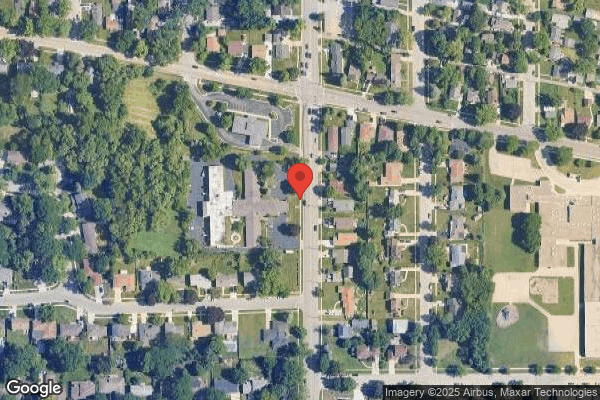

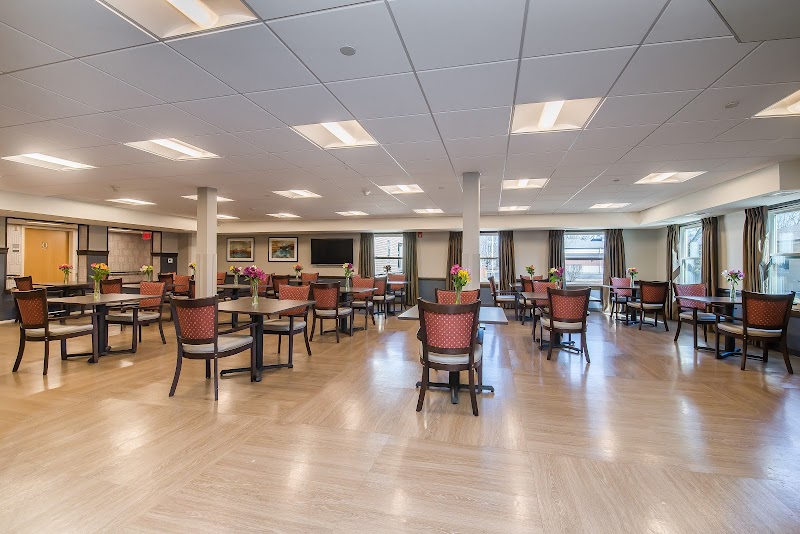
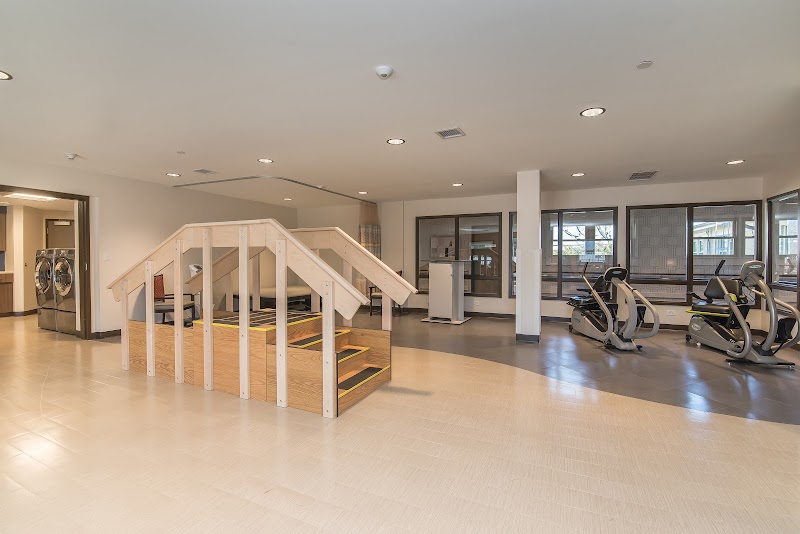
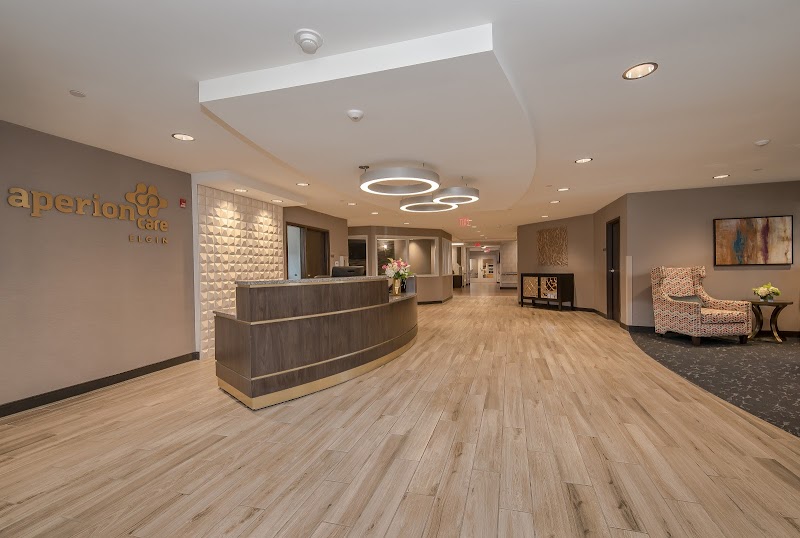
APERION CARE ELGIN

134 NORTH MCLEAN BOULEVARD, ELGIN, IL 60121 (847) 742-8822
For profit - Individual 101 Beds APERION CARE Data: November 2025 1 Immediate Jeopardy citation
Trust Grade
8/100
#322 of 665 in IL
Last Inspection: April 2025

Within standard 12-15 month inspection cycle. Federal law requires annual inspections.

Overview

Aperion Care Elgin has received a Trust Grade of F, indicating significant concerns about the quality of care provided at the facility. Ranking #322 out of 665 nursing homes in Illinois means they fall in the top half, but their ranking of #16 out of 25 in Kane County suggests there are several better local options available. The facility is experiencing a worsening trend, with the number of issues increasing from 11 in 2024 to 14 in 2025. Staffing is rated 2 out of 5 stars, and turnover is at 48%, which is average but indicates a lack of stability among staff. There have been concerning fines totaling $46,953, and while RN coverage is better than 84% of Illinois facilities, specific incidents, like a resident being discharged unsafely and suffering severe injuries, highlight serious care deficiencies that families should carefully consider.

Trust Score
F
8/100
In Illinois
#322/665
Top 48%
Safety Record
High Risk
Review needed
Inspections
Getting Worse
11 → 14 violations
Staff Stability
⚠ Watch
48% turnover. Above average. Higher turnover means staff may not know residents' routines.
Penalties
✓ Good
$46,953 in fines. Lower than most Illinois facilities. Relatively clean record.
Skilled Nurses
✓ Good
Each resident gets 47 minutes of Registered Nurse (RN) attention daily — more than average for Illinois. RNs are trained to catch health problems early.
Violations
⚠ Watch
36 deficiencies on record. Higher than average. Multiple issues found across inspections.
★★☆☆☆
2.0
Overall Rating
★★☆☆☆
2.0
Staff Levels
★★★☆☆
3.0
Care Quality
★★☆☆☆
2.0
Inspection Score
Stable
2024: 11 issues
2025: 14 issues

The Good

  • Full Sprinkler Coverage · Fire safety systems throughout facility
  • No fines on record

Facility shows strength in fire safety.

The Bad

2-Star Overall Rating

Below Illinois average (2.5)

Below average - review inspection findings carefully

Staff Turnover: 48%

Near Illinois avg (46%)

Higher turnover may affect care consistency

Federal Fines: $46,953

Above median ($33,413)

Moderate penalties - review what triggered them

Chain: APERION CARE

Part of a multi-facility chain

Ask about local staffing decisions and management

The Ugly 36 deficiencies on record

1 life-threatening 2 actual harm
Sept 2025 1 deficiency
CONCERN (D) 📢 Someone Reported This

A family member, employee, or ombudsman was alarmed enough to file a formal complaint

Potential for Harm - no one hurt, but risky conditions existed

Free from Abuse/Neglect (Tag F0600)

Could have caused harm · This affected 1 resident

**NOTE- TERMS IN BRACKETS HAVE BEEN EDITED TO PROTECT CONFIDENTIALITY** Based on interviews and record reviews, the facility failed to prevent the verbal/mental abuse of a resident. This applies to 1 ...

Read full inspector narrative →
**NOTE- TERMS IN BRACKETS HAVE BEEN EDITED TO PROTECT CONFIDENTIALITY** Based on interviews and record reviews, the facility failed to prevent the verbal/mental abuse of a resident. This applies to 1 of 3 (R1) reviewed for abuse in a sample of 17. The findings include:On 9/15/25 at 12:30 PM, R1 stated V4 (CNA- Certified Nursing Assistant) and V5 (CNA) were harassing him at the facility. R1 alleged V4 called him Honey Bunn7 and came into his room uninvited in a threatening manner making threatening comments such as her father purchased her a gun and telling R1 he had not better be talking about V4. R1 stated one day V4 was standing in the hall and pointed to R1 and began a hoola dance. R1 stated he reported the harassment to V1 (Administrator) and V1 prohibited V4 and V5 from working near the unit on which R1 was residing. R1 stated on 9/13/25, R1 left his room to warm up food and saw V4 and V5 at the nursing stating in his hall. R1 stated he told his nurse that V4 and V5 were not to be near his hall and to call V1 to confirm they needed to leave. R1 stated he began recording the episode on his phone. At 12:32 PM R1 played the video he recorded on the phone which showed R1 continuously telling the nurse on his hall that the two staff were not supposed to be present in the back of the building near his hall, that V1 gave the two staff a stern warning, that they would not receive any more warnings, and to call V1 and confirm the information. The video showed as R1 repeatedly told the nurse the staff were not to be on his unit, V4 and V5 remained near R1 and eventually the floor nurse began to move the staff toward the front of the building. The video showed the floor nurse on the phone walking behind V4 and V5 and the staff were walking toward the front of the building. At 6 minutes and 6 seconds of the recording s the staff walked away from R1, a female voice off camera stated, That's what he is. A little bitch! R1 immediately replied, Oh I'm a little bitch, huh? Thank you! R1 stated he previously showed V1 the video and V1 was going to address the behavior with the staff. Facility Email, dated 9/14/25, shows R1 told V1 on 9/13/25 V4 was on his wing in spite of V1 telling V4 that she was only work in another part of the building. The email shows R1 brought his concern to the attention of the nurse on duty. The email shows R1 recorded the interactions and V4 stated to R1, You are just a little bitch. On 9/15/25, V4 denied calling R1 any names and stated R1 was harassing V4 for some time including following her around the building and calling her a bitch and racial slurs. V4 stated on 9/13/25, she arrived at the facility and went to the back to look for her assignment. V4 stated she did not call R1 a bitch but that she was on the phone with her dad and told her dad R1 called V4 a bitch. V4 stated R1 then followed V4 and V5 to the front of the building and continued to harass them. On 9/15/25 at 11:33 PM, V5 stated she did not hear V4 swear at R1. V5 stated she was taking her break and performing charting at the back nursing station when she saw R1. V5 stated V4 was also at the back nursing station putting her personal belongings down. V5 stated she did not say anything to R1 and R1 did not say anything to V4 or V5. On 9/15/25 at 10:00 AM, V1 (Administrator) stated he received an email from R1 alleging V4 and V5 were present in the back of the building near R1 and V4 swore at R1. V1 stated V4 and V5 were previously instructed to remain in the front of the building because of conflicts between R1 and V4 and V5. On 9/15/25 at 1:39 PM, V6 (Registered Nurse) stated she was on duty 9/13/25 when R1 came out of his room and told her V4 and V5 should not be working on his unit. V6 stated I needed to speak with administration which she did and administration told V6 the staff needed to move to the front of the building. V6 stated V4 and V5 moved away from the unit in 5 to 10 minutes of R1 initially stating they should not be on his unit. When asked if V6 felt the staff were lingering at the nursing station after they were told they should not be there, V6 stated, Yeah, a little bit but not that much. On 9/15/25, V7 (CAN) stated on 9/13/25 R1 was telling the nurse in the hall that V4 and V5 could not be in the back of the building, and they were warned not to be in the back. V6 stated the nurse told the staff they needed to go to the front hall nursing station and there was much talking back and forth and one of the nurses was trying to calm it down. V7 stated V4 and V5 stayed at the back hall nursing station 10-20 minutes before they went to the front of the building. Nursing note written by V6 (Registered Nurse) and effective 9/13/25, showed The nurse was passing the medication; the resident come to the nurse and was complaining about staff CNA. He wants the CNA out of the unit. The CNA and the resident were arguing each other. Facility email, dated 9/7/25, shows R1 expressed concern to V1 that V4 walked into his room in a threatening way without his permission. Facility email, dated 9/5/25, shows R1 expressed concern to V1 that V4 entered his room in a threatening way, allegedly called R1 Honey bunny, and R1 requested that V4 not be anywhere near him in the future. Facility email by V8 (Human Resources), dated 9/16/25, shows the facility outcome of investigation proves that R1 violated the facility's abuse policy. The email shows the violation of the policy leads to automatic termination. Concern/complaint forms, dated 8/23/25, show R1 had concerns regarding staff attentiveness. The form shows the staff were assigned to a different unit. Final Abuse Investigation, submitted 9/16/25, shows, Profanity was used in the environment shared between [V4] and R1, however the intention was unclear. Employee is not longer employed at facility for customer service purposes. Facility document Abuse Prevention and Reporting - Illinois, revised 10/24/22, shows, This facility affirms the right of our residents to be free from abuse, neglect, exploitation, misappropriation of property, deprivation of goods and services by staff or mistreatment. This facility therefore prohibits abuse, neglect, exploitation, misappropriation of property, and mistreatment of residents. In order to do so, the facility has attempted to establish a resident sensitive and resident secure environment. The document shows, Verbal abuse may be considered to be a type of mental abuse. Verbal abuse includes the use of oral, written, or gestured communication, or sounds, to residents within hearing distance, regardless of age, ability to comprehend or disability. On 9/15/25 at 12:30 PM, R1 stated V4 (CAN- Certified Nursing Assistant) and V5 (CAN) were harassing him at the facility. R1 alleged V4 called him Honey Bunn7 and came into his room uninvited in a threatening manner making threatening comments such as her father purchased her a gun and telling R1 he had not better be talking about V4. R1 stated one day V4 was standing in the hall and pointed to R1 and began a hoola dance. R1 stated he reported the harassment to V1 (Administrator) and V1 prohibited V4 and V5 from working near the unit on which R1 was residing. R1 stated on 9/13/25, V4 R1 left his room to warm up food and saw V4 and V5 at the nursing stating in his hall. R1 stated he told his nurse that V4 and V5 were not to be near his hall and to call V1 to confirm they needed to leave. R1 stated he began recording the episode on his phone. At 12:32 PM R1 played the video he recorded on the phone which showed R1 continuously telling the nurse on his hall that the two staff were not supposed to be present in the back of the building near his hall, that V1 gave the two staff a [NAME] warning, that they would not receive any more warnings, and to call V1 and confirm the information. The video showed as R1 repeatedly told the nurse the staff were not to be on his unit, V4 and V5 remained near R1 and eventually the floor nurse began to move the staff toward the front of the building. The video showed the floor nurse on the phone walking behind V4 and V5 and the staff were walking toward the front of the building. At 6 minutes and 6 seconds of the recording s the staff walked away from R1, a female voice off camera stated, That's what he is. A little bitch! R1 immediately replied, Oh I'm a little bitch, huh? Thank you! R1 stated he previously showed V1 the video and V1 was going to address the behavior with the staff. Facility Email, dated 9/14/25, shows R1 told V1 on 9/13/25 V4 was on his wing in spite of V1 telling V4 that she was only work in another part of the building. The email shows R1 brought his concern to the attention of the nurse on duty. The email shows R1 recorded the interactions and V4 stated to R1, You are just a little bitch. On 9/15/25, V4 denied calling R1 any names and stated R1 was harassing V4 for some time including following her around the building and calling her a bitch and racial slurs. V4 stated on 9/13/25, she arrived at the facility and went to the back to look for her assignment. V4 stated she did not call R1 a bitch but that she was on the phone with her dad and told her dad R1 called V4 a bitch. V4 stated R1 then followed V4 and V5 to the front of the building and continued to harass them. On 9/15/25 at 11:33 PM, V5 stated she did not hear V4 swear at R1. V5 stated she was taking her break and performing charting at the back nursing station when she saw R1. V5 stated V4 was also at the back nursing station putting her personal belongings down. V5 stated she did not say anything to R1 and R1 did not say anything to V4 or V5. On 9/15/25 at 10:00 AM, V1 (Administrator) stated he received an email from R1 alleging V4 and V5 were present in the back of the building near R1 and V4 swore at R1. V1 stated V4 and V5 were previously instructed to remain in the front of the building because of conflicts between R1 and V4 and V5. On 9/15/25 at 1:39 PM, V6 (Registered Nurse) stated she was on duty 9/13/25 when R1 came out of his room and told her V4 and V5 should not be working on his unit. V6 stated I needed to speak with administration which she did and administration told V6 the staff needed to move to the front of the building. V6 stated V4 and V5 moved away from the unit in 5 to 10 minutes of R1 initially stating they should not be on his unit. When asked if V6 felt the staff were lingering at the nursing station after they were told they should not be there, V6 stated, Yeah, a little bit but not that much. On 9/15/25, V7 (CAN) stated on 9/13/25 R1 was telling the nurse in the hall that V4 and V5 could not be in the back of the building, and they were warned not to be in the back. V6 stated the nurse told the staff they needed to go to the front hall nursing station and there was much talking back and forth and one of the nurses was trying to calm it down. V7 stated V4 and V5 stayed at the back hall nursing station 10-20 minutes before they went to the front of the building. Nursing note written by V6 (Registered Nurse) and effective 9/13/25, showed The nurse was passing the medication; the resident come to the nurse and was complaining about staff CNA. He wants the CNA out of the unit. The CNA and the resident were arguing each other. Facility email, dated 9/7/25, shows R1 expressed concern to V1 that V4 walked into his room in a threatening way without his permission. Facility email, dated 9/5/25, shows R1 expressed concern to V1 that V4 entered his room in a threatening way, allegedly called R1 Honey bunny, and R1 requested that V4 not be anywhere near him in the future. Facility email by V8 (Human Resources), dated 9/16/25, shows the facility outcome of investigation proves that R1 violated the facility's abuse policy. The email shows the violation of the policy leads to automatic termination. Concern/complaint forms, dated 8/23/25, show R1 had concerns regarding staff attentiveness. The form shows the staff were assigned to a different unit. Final Abuse Investigation, submitted 9/16/25, shows, Profanity was used in the environment shared between [V4] and R1, however the intention was unclear. Employee is not longer employed at facility for customer service purposes. Facility document Abuse Prevention and Reporting - Illinois, revised 10/24/22, shows, This facility affirms the right of our residents to be free from abuse, neglect, exploitation, misappropriation of property, deprivation of goods and services by staff or mistreatment. This facility therefore prohibits abuse, neglect, exploitation, misappropriation of property, and mistreatment of residents. In order to do so, the facility has attempted to establish a resident sensitive and resident secure environment. The document shows, Verbal abuse may be considered to be a type of mental abuse. Verbal abuse includes the use of oral, written, or gestured communication, or sounds, to residents within hearing distance, regardless of age, ability to comprehend or disability.
Apr 2025 5 deficiencies
CONCERN (D)

Potential for Harm - no one hurt, but risky conditions existed

ADL Care (Tag F0677)

Could have caused harm · This affected 1 resident

**NOTE- TERMS IN BRACKETS HAVE BEEN EDITED TO PROTECT CONFIDENTIALITY** Based on observation, interview, and record review, the facility failed to provide assistance to residents requiring moderate as...

Read full inspector narrative →
**NOTE- TERMS IN BRACKETS HAVE BEEN EDITED TO PROTECT CONFIDENTIALITY** Based on observation, interview, and record review, the facility failed to provide assistance to residents requiring moderate assistance with grooming. This applies to 1 of 5 residents (R75) reviewed for ADLs (Activities of Daily Living) in the sample of 18. The findings include: R75's EMR (Electronic Medical Record) showed R75 was admitted to the facility on [DATE], with diagnoses that included multiple sclerosis, weakness, and pseudobulbar affect (condition that causes inappropriate laughing or crying). R75's MDS (Minimum Data Set) date January 21, 2025, showed R75 had moderate impaired cognition and required moderate staff assistance for grooming. R75's care plan showed R75 had an ADL self-care/mobility performance deficit that may fluctuate with activity throughout the day related to fatigue, multiple sclerosis, and a need for assistance with personal care. On April 21, 2025, at 10:14 AM, R75 said she cannot remember when she had her last shower but thought is was at least a week ago. R75 said she needs to be shaved. R75 had whiskers that were approximately 1/4 on chin, and also had whiskers above her upper outer lip on both sides. R75 said she is not allowed to have a razor and would like to be shaved but no one has offered. Her hair was stringy and matted to her head. On April 22, 2025, at 11:26 AM, R75 said she thinks her shower day is on Mondays but did not get one yesterday. R75 said she did not refuse, no one offered. On April 23, 2025, at 8:36 AM, R75 was lying in her bed, her hair was stringy and matted to her head. Whiskers are still on her chin and upper lateral lip. Her face was very shiny, R75 said no one has assisted her with oral care, shaving, or washing her face and hands. At 11:05 AM, R75's appearance was the same as earlier. R75 said no one has offered to shower her or help her get cleaned up. On April 23, 2025, at 12:05 PM, V2 (DON/Director of Nursing) said when it is not a resident's shower day, the expectation is that the CNAs (Certified Nursing Assistants) provide grooming care which includes oral care, washing face and hands, getting dressed, and incontinence care/toileting. On shower days, they provide showers, nail care, shaving, oral care, and comb hair. R75 refuses showers frequently. V2 was asked to provide documentation of refusals and provided one shower sheet dated April 3, 2025, that showed R75 refused a shower but had a bed bath instead. There were no other refusals documented. On April 23, 2025, at 1:18 PM, V14 (CNA) said on shower days she will wash the resident's hair unless they refuse to get hair wet, wash their body, apply lotion or Vaseline, check toenails, notify social services to put resident on list to see podiatrist list, get resident dressed, and get resident up out of bed or back to bed if they refuse to stay up. V14 said she showered R75 on Monday afternoon. Facility provided their revised policy dates January 31, 2018, titled Shower and Tub Bath. The policy showed the purpose was to ensure resident's cleanliness to maintain proper hygiene and dignity .Equipment: . shampoo . Facility provided undated policy titled, Shaving Male and Female Residents. The policy showed the Purpose: To provide cleanliness, comfort, and improved morale . Important Information on Frequency and Method of Shaving 1. male residents will be assessed for daily shaving .2. Female residents will be asked regarding preference to give consent for the method of removing facial hair such as clipping with scissors, electric razor or safety razor, and information added to the plan of care. 3. Female residents will be assessed weekly, and assistance provided in accordance with the resident's preference.
CONCERN (D)

Potential for Harm - no one hurt, but risky conditions existed

Deficiency F0692 (Tag F0692)

Could have caused harm · This affected 1 resident

**NOTE- TERMS IN BRACKETS HAVE BEEN EDITED TO PROTECT CONFIDENTIALITY** Based on interview and record review, the facility failed to follow their policy to quarterly assess a resident's nutritional st...

Read full inspector narrative →
**NOTE- TERMS IN BRACKETS HAVE BEEN EDITED TO PROTECT CONFIDENTIALITY** Based on interview and record review, the facility failed to follow their policy to quarterly assess a resident's nutritional status. This applies to 1 of 4 residents (R63) reviewed for nutrition in the sample of 18. The findings include: The EMR (Electronic Medical Record) showed R63 was admitted to the facility on [DATE], with multiple diagnoses including polyosteoarthritis, legal blindness, vitamin D deficiency, chronic gastritis, and nicotine dependence. R63's MDS (Minimum Data Set) dated April 8, 2025, showed R63 was cognitively intact. R63's nutrition care plan dated November 3, 2023, showed I have a nutritional problem or potential nutritional problem secondary to HIV (Human Immunodeficiency Virus), cannabis dependence, legally blind, vitamin D deficiency, hypertension, history or COVID-19, and medications which may affect appetite and/or weight. The care plan continued to show a goal revised on October 21, 2024, I will maintain stable weight plus/minus 5% (percent) through next review. On April 21, 2025, at 9:46 AM, R63 said he is blind. R63 said he thinks he has been losing weight. On April 21, 2025, at 12:13 PM, R63 was sitting in the dining room eating lunch. R63 was eating unassisted and was dropping food onto his lap, on the table, and on his meal tray. R63 was not assisted by facility staff. R63 got up from the lunch table and left the dining room. R63's Weights and Vitals Summary dated April 23, 2025, showed the following weights for R63: On November 5, 2024, 151.8 pounds; On December 3, 2024, 151.4 pounds; On January 2, 2025, 148.8 pounds; On February 3, 2024, 146.3 pounds; On March 1, 2025, 144 pounds and; On April 3, 2025, 140.8 pounds. On April 23, 2025, at 1:14 PM, V3 (Dietary Manager) said he performs quarterly nutrition assessments on residents who are not being seen by the dietitian. V3 continued to say he documents his assessments in the EMR. The EMR showed V3 documented a nutrition assessment for R63 on October 29, 2024. As of April 23, 2025, at 1:00 PM, the EMR does not show R63 had a nutrition assessment since October 29, 2024. On April 23, 2025, at 1:18 PM, V2 (DON/Director of Nursing) said V11 (Dietitian) does not evaluate a resident unless the resident has a significant weight loss. V2 continued to say V11 told V2 she did not need to see R63 because he did not have significant weight loss. On April 23, 2025, at 2:51 PM, V2 said R63's nutrition assessment by V3 was on October 29, 2024, and R63's last nutritional assessment by V11 was on August 1, 2024. On April 23, 2025, at 3:24 PM, V1 (Administrator) said residents should have a nutritional assessment completed at least quarterly. The facility's policy titled Routine Nutritional Documentation and Assessment dated 2020, showed Guideline: After admission the resident is assessed and monitored in accordance with the MDS schedule and evaluation of need determined at admission. High-Risk residents at admission are placed on the high-risk roster and followed as indicated. Residents at nutritional risk or with current nutritional concerns are referred to the Registered Dietician for a comprehensive nutritional assessment. The MDS schedule will screen for nutritional triggers which may indicated a nutritional problem or opportunity for improvement. Nutrition screening may also be used to monitor for nutritional risk. Ongoing comprehensive nutritional assessments are updated as needed by the Registered Dietitian for residents screened or trigger on the MDS with nutritional concerns. Some communities choose to complete a baseline nutritional assessment on each resident annually. Procedure: 1. The MDS schedule is used to define the time frame for documentation. The Dining Service Manager is responsible for observing the resident at meal times, reviewing the MDS, completing section K of the MDS, and signing the MDS . 3. Progress notes will be used by the Dining Services Manager and Registered Dietitian as needed to record observations, progress towards nutritional goals, and incidental information related to the nutritional care of the resident. A progress note will be entered into the health record by the Dining Services Manager in accordance with the MDS schedule, no [NAME] than quarterly. In circumstances where the resident is being followed by the Registered Dietitian due to a nutritional risk, the quarterly note by the Dining Services Manager may be deemed unnecessary. 4. The care plan will be updated as changes are made to individualized nutritional interventions and reviewed at least quarterly.
CONCERN (D)

Potential for Harm - no one hurt, but risky conditions existed

Deficiency F0694 (Tag F0694)

Could have caused harm · This affected 1 resident

**NOTE- TERMS IN BRACKETS HAVE BEEN EDITED TO PROTECT CONFIDENTIALITY** Based on observation, interview, and record review, the facility failed to monitor and care for a midline peripheral intravenous...

Read full inspector narrative →
**NOTE- TERMS IN BRACKETS HAVE BEEN EDITED TO PROTECT CONFIDENTIALITY** Based on observation, interview, and record review, the facility failed to monitor and care for a midline peripheral intravenous catheter. This applies to 1 of 1 residents (R48) reviewed for intravenous catheters in the sample of 18. The findings include: R48's electronic medical record showed R48 was admitted to the facility on [DATE] with diagnoses that included stable burst fracture of second lumbar vertebra, subsequent encounter for fracture with routine healing, dependence on renal dialysis, gait abnormalities, and need for assistance with personal care. On April 21, 2025 at 10:10 AM, R48 stated that she is receiving intravenous antibiotics. R48 showed the surveyor, her right arm intravenous catheter which had a transparent dressing that was dated April 14, 2025. Underneath R48's transparent dressing, there was a gauze dressing which was stained with dried blood and was covering the insertion site. On April 21, 2025 at 1:24 PM with V2 (Director of Nursing/DON), observed R48 right upper arm intravenous catheter and V2 confirmed that there was a gauze dressing underneath the transparent dressing that had dried blood on it and was covering the insertion site. R48 had the following order dated April 6, 2025: Insertion of midline catheter. Sent for imaging on April 6, 2025 at 10:01 AM. R48's progress note dated April 6, 2025 showed the following: A vascular nurse was in the facility at approximately 8 PM to open vascular access to right midline catheter. R48's medication administration record showed administrations of Ceftriaxone Sodium (Antibiotic) Reconstituted 1 Gram for 6 days starting on April 6, 2025 through April 11, 2025. On April 23, at 2:00 PM, V2 stated when central or midline intravenous catheters are placed, she expects the nurses to check for signs and symptoms of infection and bleeding every shift. V2 stated nurses are supposed to chart their assessments in the resident's progress notes. V2 stated that from the moment the midline is inserted, there should be monitoring every shift for infection, redness and warmth, bleeding, and swelling and the nurses should also be monitoring every shift the circumference of the resident's arm where the catheter line is inserted. V2 stated she expects the nurse to change midline intravenous dressing after the first 24 hours of insertion. V2 stated with a gauze dressing, the dressing should be changed every 2 days. V2 stated she believes R48 midline catheter was inserted on April 6, 2025, therefore R48's dressing should have been changed on April 8, 2025, as needed, and weekly. As of April 23, 2025 at 11:15 AM, the facility did not have a care plan for the care of R48's midline intravenous line. There was also no documentation to show that the circumference of the R48's right arm was being measured. Prior to April 20, 2025 there was no documentation in the MAR (Medication Administration Record) or the TAR (Treatment Administration Record) that the midline intravenous line was being flushed or monitored every shift. The facility's Intravenous Access Line Maintenance Protocol policy dated February 7, 2020 showed the following: Site Maintenance: Transparent dressing changes should be done on admission or 24 hours post insertion, then weekly and as needed. Measure upper arm circumference and exterior catheter length with each dressing change and as needed. Gauze dressing changes should only be used if patients are sensitive to clear transparent dressings and must be changed every 2 days.
CONCERN (F)

Potential for Harm - no one hurt, but risky conditions existed

Food Safety (Tag F0812)

Could have caused harm · This affected most or all residents

Based on observation, interview and record review, the facility failed to follow sanitary practices in the facility kitchen and during meal service in the dining room. This applies to all 84 residents...

Read full inspector narrative →
Based on observation, interview and record review, the facility failed to follow sanitary practices in the facility kitchen and during meal service in the dining room. This applies to all 84 residents that received foods prepared in the facility kitchen. The findings include: Facility's CMS (Centers for Medicare and Medicaid Services) Form 671 dated April 21, 2025 showed that the facility census was 86 residents. Facility provided information that two residents are NPO (nothing by mouth) status. On April 21, 2025 at 09:19 AM, the initial tour of facility kitchen was done in presence of V3 (Dietary Manager). V5 (Dietary Aide) was washing dishes at a low temperature dish machine. On request, V5 ran a test strip through the dish machine and the tip turned from white to orange showing 200 ppm (parts per million) per instructions for chlorine test strip guidance on the dispenser bottle. When asked, V5 stated that he did not test the dish machine earlier with test strips and that the sanitizer range should be 100-200 ppm. Guidance for chlorine test strips posted on the wall showed the ppm should range between 50-100 ppm. Facility was requested for policy guidance for chlorine test strips. On April 22, 2025 at 12:20 PM, V3 stated that V5 misspoke and that the chlorine should be 50-100 ppm as posted on guidance poster near the dish machine. V3 stated that the dish machine servicing contractor was notified that morning as the test strips continued to show 200 ppm. V3 added that the dish machine service representative came in that morning and replaced something in the dish machine and stated that they will be back. V3 added that the facility has two different kind of chlorine test strips from two dish service companies and the current dish service contractor told him that it is okay to use both test strips. On April 22, 2025 at 3:43 PM, V1 (Administrator) stated that the dish machine servicing company is coming back to the facility later this evening to install a part into the dish machine as the cycle (to turn off water) would not stop running. On April 23, 2025 at 1:50 PM, V12 (Dish machine Service Representative) stated that he replaced two contactors as one of them was sticky and the other one looked old. V2 stated that the contactors are control components that turn the wash or rinse pump on. V12 stated that if he does not change the contactors, the machine will not work well and only intermittently. V12 also added that he does not know what test strips that the facility was using to test the chlorine sanitizer and that they should use the test strips that turns from white to light purple (registering between 50-100 ppm). Customer Service Report dated April 22, 2025 for dish machine included that two bad (single pole) contactors were replaced. Facility policy and procedure titled Dishwashing: Machine Operation included as follows: Guideline: The Dining Services staff shall maintain the operation of the dishwashing machine according to established procedure and manufacturer guidelines posted or contained in this guideline to ensure effective cleaning and sanitizing of all tableware and equipment used in the preparation and service of food. Procedure: 2. Check the dishwashing machine before first use. If the dishwashing machine has not been used for several hours, it is generally recommended to allow the dishwashing machine to cycle for one or two cycles to allow dishwashing machine to come up to proper function. 4. If the machine is found to be out of the acceptable range for either final rinse temperature or proper chemical sanitizing concentration, do not proceed to wash dishes. Manufacturer's chlorine sanitizer test procedure showed as follows: Remove a 1.5 inch strip of clean, dry test paper from container below. At the end of the rinse cycle, dip strip of test paper into the final rinse water from the dish machine. Chlorine papers are dip, blot and read at once. Immediately compare test paper strip to the color chart on the test strip dispenser. Test range must be in the range shown below: test paper reading 50-100 ppm. 2. On April 21, 2025 at 12:27 PM, room meal service was observed in the D-wing of the facility. The resident meal trays were placed on free standing cart in the D-wing with uncovered juice and water cups. These room trays were platted in the main dining room (located in another area) from the steam table and placed on the cart. This cart was then wheeled to the unit and meal trays passed out to the residents in their room by staff. Visitors, staff, and residents were seen in transit in hallway where the cart with meal trays were stationed. When V6 (Social Service Designee) who was assisting in passing room trays, was asked why the juices and water are not covered, V6 responded that she doesn't know why and that she works in social services. R30, R44, R56, R80, and R385 received room trays with the juice and water uncovered. Facility policy and procedure titled 'In-Room Dinning for Infection Control (2020) included as follows: Guideline: In order to control the spread of infectious disease, it may be necessary to implement in-room dining operations. Procedure: 3. All foods should be covered during transport. 3. On April 22, 2025 at 12:23 PM, V4 (Cook), was platting food at the steam table and noted to have her gloves soiled and dripping with pureed Brussels sprouts and gravy. V4 proceeded to take a hamburger bun from a plastic bag with the same gloves and added a slice of hamburger patty with tongs on one side of the bun and added lettuce and tomato on top with the same soiled gloves. This meal was prepared for R50 who had placed an order for a substitute meal. V3, who was in the vicinity, and V4 were notified of the unsanitary practices. Facility menu for Week 1 Tuesday lunch meal included oven roasted turkey with gravy and Brussels sprouts.
CONCERN (F)

Potential for Harm - no one hurt, but risky conditions existed

Infection Control (Tag F0880)

Could have caused harm · This affected most or all residents

**NOTE- TERMS IN BRACKETS HAVE BEEN EDITED TO PROTECT CONFIDENTIALITY** 5. On April 22, 2025, at 8:33 A.M., V7 (Licensed Practical Nurse) retrieved a blood pressure monitoring device from the top of t...

Read full inspector narrative →
**NOTE- TERMS IN BRACKETS HAVE BEEN EDITED TO PROTECT CONFIDENTIALITY** 5. On April 22, 2025, at 8:33 A.M., V7 (Licensed Practical Nurse) retrieved a blood pressure monitoring device from the top of the medication cart and brought it into R48's room to check R48's blood pressure. Upon completing the blood pressure check, V7 returned the device to the top of the medication cart and proceeded to retrieve multiple medications from the cart for administration. At this time, the blood pressure device remained on top of the cart, posing a risk of cross-contamination with medication cards and other supplies being used for medication administration. V7 failed to disinfect the blood pressure device both prior to and following its use. Additionally, V7 did not perform hand hygiene after assessing R48's blood pressure and before preparing or administering medications. V7 continued with the medication pass to other residents without disinfecting the blood pressure device. Review of the Physician Order Sheet (POS) for April 2025 indicated a medical order dated March 31, 2025, specifying that R48 is on Enhanced Barrier Precautions (EBP) due to the presence of a peritoneal dialysis catheter. R48 was also receiving intravenous antibiotics for treatment of leukocytosis. The care plan dated April 1, 2025, reaffirmed that EBP measures must be maintained for R48. 6. On April 22, 2025, at 9:00 A.M., V8 (Registered Nurse) utilized a blood pressure monitoring device to check the blood pressure of R20. Following the assessment, V8 returned the device to the top of the medication cart and retrieved multiple medications from the cart, while the device remained on the cart, risking cross contamination of the medication cards and supplies. V8 did not disinfect the blood pressure device before or after use and continued the medication administration process without cleaning the equipment. V8 subsequently used the same contaminated blood pressure device to assess the blood pressure of R6 without performing any disinfection in between uses. Review of the Electronic Medical Record (EMR) for R20, an [AGE] year-old resident, showed diagnoses including cellulitis of the left lower limb, pruritus, edema, and urinary tract infection (UTI). The EMR for R6 documented diagnoses including emphysema, asthma, dysuria, disorders of skin and subcutaneous tissue, spontaneous ecchymoses, dementia, and bipolar disorder. On April 22, 2025 at 11:26 A.M., V2 (Director of Nursing) stated that facility protocol requires blood pressure monitoring devices to be disinfected with bleach wipes between uses on different residents, regardless of whether residents are under Enhanced Barrier Precautions or Standard Precautions. Review of the facility's Infection Control Policy dated November 28, 2012, states: Handwashing/hand hygiene is the single most important precaution to prevent contamination of infection from one person to another. Wash hands before and after each resident contact and contact with resident belongings and equipment . When use of common medical equipment or items is unavoidable, then adequately clean and disinfect them before use for another resident. 3. R53's had multiple diagnoses on face sheet including sepsis, unspecified organism, urinary tract infection, site not specified, flaccid hemiplegia affecting left nondominant side, unsteadiness on feet, unspecified abnormalities of gait and mobility, cellulitis of right lower limb, need for assistance with personal care. R53's quarterly MDS (minimum data set) dated March 31, 2025 showed that R53 was cognitively intact and was frequently incontinent of urine. R53's POS (physician order summary) showed Macrobid Oral Capsule 100 mg (milligram), Give 100 mg by mouth two times a day for UTI (urinary tract infection) for 7 Days (start date April 21, 2025 5:00 PM). R53's POS also showed Contact Isolation for ESBL (extended spectrum beta-lactamases) in urine until resolved (start date April 21, 2025). On April 22, 2025 at 9:30 AM, R53 was lying in bed and stated that he ate breakfast in the dining room and plans to go for therapy in the therapy room. R53's door had a posting for contact isolation. On April 22, 2025 at 9:58 AM, R53 was seen self controlling his motorized wheelchair to the reception desk where he placed an order for his lunch with V17 (Receptionist). On April 22, 2025 at 10:30 AM, R53 was seated at a table with R29 and R41 in the main dining room and was drinking coffee. R4, R6, R25, R44, and R386 were also seated in close proximity to R53. R53 remained in the dining room to participate in bingo during activities. On April 22, 2025 at 10:36 AM, V2 (Director of Nursing) stated that R53 is on contact isolation for ESBL urine and as long as it is contained, he can go outside his room. V2 stated that R53 uses the urinal by himself. On April 23, 2025 at 9:18 AM, R53 was in his motorized wheelchair and was seen entering the therapy room by touching the door handle and opening the door. Within a few minutes, R385 was seen coming into the therapy room by touching the same door handle. R80, who was already in the therapy room riding the bicycle, also touched the same door handle when she left the therapy room. Both R80 and R385 were ambulatory and R80 used a walker. R53 was participating in therapy with V9 (Physical Therapy) and was handling common weights and a walker that were used by other residents. V9 was seen touching R53's back and walker during therapy. V9 was not wearing gloves and gown. On April 23, at 9:22 AM, V2, who had come to the vicinity, was asked if R53 is allowed to participate in therapy in a common room with other residents and whether V9 should be wearing any gloves or gown. V2 stated that as long as V9 washes hands in between patients, V9 does not have to wear any gowns or gloves. V2 stated They (V9) are not touching the source. On April 23, 2025 at 9:50 PM, V9 stated that she did not know that R53 was on contact isolation. When asked how she knows whether a resident is on contact isolation or not, V9 stated that normally she gets the residents for therapy from their room and will see the signage of contact precautions on the door. V9 stated that R53 brought himself into therapy so she was unaware that he was on contact precautions. V9 stated that therapy is done in the resident's room for residents with contact precautions and wearing gown and gloves. R53's care plan initiated on April 21, 2025 showed that R53 is on antibiotic therapy related to ESBL in urine. Interventions for the same included contact isolation for ESBL in urine until resolved. Facility's infection precaution policy and procedure revised on May 15, 2023, shows as follows: It is the policy of this facility to, when necessary, prevent the transmission of infections within the facility through the use of Isolation Precautions. The 2007 Centers for Disease Control and Prevention (CDC) Guidelines for Isolation Precautions will be utilized in this facility with some modifications Transmission-based precautions: 3. Contact Precautions: In addition to Standard Precautions, use Contact Precautions for residents known or suspected to be infected with microorganisms that can be easily transmitted by direct or indirect contact, such as handling environmental surfaces or resident-care items. In some instances, residents colonized with these organisms may also require Contact Precautions, for example, when a draining wound cannot be contained, when a resident exhibits noncompliant behaviors with stool or other body fluids, or when a resident has very poor perianal hygiene, etc.[etcetera] . Points to remember: -Handwashing (hand hygiene) is the single most important precaution to prevent the transmission of infection from one of person to another. Wash hands with soap and water before and after each resident contact, and after contact with resident belongings and equipment -In general, contact precautions are not required in the LTC [long term care] setting for MDRO's [multi drug resistant organism] if the source of the infection can be contained or if the infection is colonized. Examples include wounds infections where the drainage is contained by dressings, urinary infections that are contained by a catheter that does not leak, infections of the blood stream, etc. -All faucets and handles are considered to be contaminated, as are sinks and hoppers. -Gather all equipment and supplies needed before going into the room. Only take needed supplies into the room. When possible dedicate the use of noncritical resident-care equipment to a single resident or cohort of residents infected or colonized with the pathogen requiring precautions. When use of common equipment or items is unavoidable, then adequately clean and disinfect them before use for another resident . 4. On April 21 2025 at 10:41 AM, R3 stated to the nurse-on-duty she needed to be changed because she had been having diarrhea since last night. R3 stated her medication was making her sick. After the nurse left the room, R3 vomited into the garbage can and onto the floor. V13 (CNA/Certified Nursing Assistant) came into the room with an incontinence brief and wipes to assist R3 with incontinence care. V13 put on gloves and helped R3 onto her back and cleaned her from the front to the back with wet wipes. V13 then helped R3 onto her right side and cleaned the stool she had on her bottom. V13 then removed his gloves and without performing hand hygiene started going through R3's personal drawers looking for barrier cream. R3 stated I don't have any cream. V13 left the room without performing hand hygiene and went into the clean utility room to get some barrier cream. V13 came back with the barrier cream, he went into the bathroom and washed his hands with soap and water. He put on gloves, and started to place barrier cream on R3's buttocks. While V13 was applying the white barrier cream. R3 stated, I'm going again. Loose stool began to pour out of R3. V13 started cleaning R3 and then stopped, V13 then took off his gloves, and put on new gloves. V13 did not perform hand hygiene. V13 waited and then started cleaning R3 once she had finished having a bowel movement. Once R3 was clean, V13 took the gloves off and put on new gloves without performing hand hygiene. V13 applied barrier cream to R3's buttocks. V13 removed his gloves and put on new gloves without performing hand hygiene. V13 helped R3 onto her left side by holding R3's torso and buttocks to the side while he pulled the right side of the incontinent brief around to R3's right side. After V13 finished cleaning R3 up, V13 started cleaning the vomit off of the floor next to R3's bed. V13 stated he needed to get some disinfectant for the floor. V13 removed the gloves he had just cleaned the vomit with and opened R3's door without performing hand hygiene. V13 then went down the hall to the housekeeper's cart and grabbed a can of disinfectant. V13 then put on a pair of new gloves, again without performing hand hygiene. V13 sprayed the disinfectant on the floor and wiped it up. V13 grabbed the garbage bag that had the soiled incontinence brief in it and put it on the floor next to R3's room door and went out of the room and rolled the linen cart down the hall to R3's room. V13 removed his gloves and donned new gloves without performing hand hygiene and put the dirty linens in the linen cart. R3 took the gloves off, and without performing hand hygiene, grabbed R3's wheelchair and put it closer to her bedside. V13 put some additional linens in the linen cart then took the trash he had by the entry, left the room with it, and threw it away in the hallway trash cart. On April 23, 2025 at 2:00 PM, V2 (Director of Nursing) stated staff should wash hands before providing care, after providing care, after removing gloves, and before touching other surfaces. V2 stated staff should perform hand hygiene to prevent transmission of infection. The facility's Hand hygiene/handwashing policy revised July 30, 2024 showed the following; when to perform hand hygiene: at room entry, before exiting the room, before and after having direct contact with a patient's intact skin, after contact with blood, body fluids, or excretions, mucous membranes, non-intact skin or wound dressings, after contact with inanimate objects in the immediate vicinity of the patient, if hands will be moving from a contaminated-body site to a clean-body site during patient care, and after glove removal. Based on observation, interview, and record review, the facility failed to follow their Water Management Plan for Legionella. The facility also failed to follow their policies for handling soiled laundry, contact isolation, hand hygiene during provisions of care, and cleaning medical devices between residents. This applies to all 86 residents residing in the facility. The findings include: The facility's Long-term Care Application for Medicare and Medicaid dated April 21, 2025, showed the facility's census was 86 residents. 1. On April 22, 2025, at 4:00 PM, V10 (Maintenance Director) said for the facility's Water Management Plan for Legionella, V10 does not do anything because there is no risk for Legionella in the facility. V10 said there is one eye wash station in the facility, in the kitchen, and V10 activates the eye wash station once a month. V10 demonstrated activating the eye wash station, V10 turned the eye wash station on, the water pushed the eye wash covers off, and V10 immediately turned off the eye wash station water. V10 said once a week V10 obtains water temperatures in five resident rooms and the shower rooms. V10 said he does not obtain any other water temperatures in the facility. V10 said he does not document the hot water tanks temperature. On April 23, 2025, at 1:20 PM, V1 (Administrator) said the facility does not have documentation to show V10 was monitoring water temperatures prior to April 16, 2025. On April 23, 2025, at 2:20 PM, V16 (Regional Consultant) said V10 should be following the facility's Water Management Plan for Legionella and documenting the control measure monitoring. The facility's policy titled Water Management Program Guidelines revised on March 24, 2025, showed, Purpose: To identify and reduce the risk of Legionella and other opportunistic pathogens growth and spread in the facility water system. Guidelines The facility shall develop and implement a facility water management program plan to identify potential hazards and reduce the risk of growth and spread of Legionella and other opportunistic pathogens in the facility water system in accordance with current recommendations from ASHRAE (American Society of Heating, Refrigerating, and Air-Conditioning Engineers) standard 514: .Control Measures- Determine locations where control measures shall be applied and maintained to stay within established control limits. Monitoring/Corrective Actions- Establish procedures for monitoring whether control measures are operating within established limits and if not, take corrective actions. Confirmation- Establish procedures to confirm the following: program is being implemented as designed- verification; Program controls the hazardous conditions throughout the building water systems- validation. Documentation- Establish documentation and communication procedures for all activities of the program . Environmental Services shall be responsible for monitoring the identified areas of risk per and implementing corrective action as indicated and established by the water management program/plan. The facility will perform an assessment of their water system to identify risk areas and determine corrective actions to be taken when control measures are identified to be outside of the parameters established by the facility . Examples of internal factors that increase the risk of Legionella growth: .Water temperature fluctuations: Provide conditions where Legionella grows best (77 degrees Fahrenheit to 113 degrees Fahrenheit); Legionella can still grow outside this range. Many things can cause the hot water temperature to drop into the range where Legionella can grow, including low settings on water heaters, heat loss as water travels through long popes away from the heat source, mixing cold and hot water within the plumbing system, heat transfer (when cold and hot water pipes are too close together), or heat loss due to water stagnation. In hot weather, cold water in pipes can heat up into this range . The facility's Water System Assessment for Legionella Risk dated January 3, 2025, showed .2. Cold Water Distribution: Eyewash stations- List all locations: Kitchen and Utility Room . Comments: Any areas of risk identified such as potential stagnation, dead legs, etc.? If yes please describe below: Eye was stations: Potential stagnation due to infrequent use. Intervention: flush weekly for five minutes . Heating: Water Heaters- List location of each water heater: East boiler room and [NAME] boiler room . Potential risk for improper temperature settings. Intervention: Temperature settings of water heater and/or storage tank (if applicable) will be checked weekly and logged to confirm temperature is set between 140 to 160 degrees Fahrenheit . Hazard Analysis: .Processing Step: 2. Hot Water Tank Heater and/or Hot Water Storage, Mixing Valve. Potential Hazard: Potential growth of microorganisms in heating system. Scalding potential if temperatures are greater than 100 degrees Fahrenheit at the fixture. Risk: Yes. Risk Basis: High Risk: There is potential for microbiological growth at the heating step. This is reduced at temperatures greater than 124 degrees Fahrenheit. Elevated temperature targets also present a noticeable scalding hazard. There factors provide further reason why maintenance of the target temperatures are an essential control measure. Control Measures: 1. Adjust temperature to provide further microbiological control and prevent scalding . Processing Step: 6. Emergency Eye Wash Stations. Potential Hazard: Potential growth of microorganisms which could be propagated and transmitted via cold water distribution piping system and aerosolized. Risk: Yes. Risk Basis Medium Risk: The Emergency Eye Wash and Showers are usually classified as medium risk due to the rarity of their use and the specific situation when they are used. Control Measures: 1. Weekly testing, flushing and cleaning of Emergency Eye Washes . Control Limits and Monitoring: Processing Step: Hot Water Heater and Storage: Domestic Hot Water Tanks, Kitchen Hot Water Tank. Critical Control Limit: Water Heater/Storage Tank set to not less than 140 degrees Fahrenheit (recommended 140 to 160 degrees Fahrenheit. Monitoring: Verify temperature settings of water heater(s)/storage tanks. Frequency: Weekly . Processing Step: Cold Water Distribution: Check disinfectant level (chlorine or chloramine), temperature, and pH (potential of Hydrogen). Critical Control Limit: Potable Water: Cold Water temperature less than 68 degrees Fahrenheit; Residual chlorine of chloramine 0.2 to 0.4 ppm (parts per million); pH 6.5 to 8.5. Monitoring: Check cold water critical control limit in at least three locations: sample a point closest to entry point of water into the facility and at least two fixtures located in areas of the facility most distal from water entry point. Frequency: Weekly. Limit Deviation Corrective Action Suggestion: Contact municipal water department . Processing Step: Plumbed Eye Wash Stations. Critical Control Limit: Preventative maintenance, flushing and cleaning. Monitoring Flush all plumbed eye was stations for five minutes and clean nozzles and equipment. Frequency: Weekly . The facility does not have documentation to show Control Measures were being monitored as shown in the Water Management Plan for Legionella. 2. On April 23, 2025, at 1:24 PM, during a tour of the facility's laundry with V1 and V15 (Housekeeping), V15 said she receives the facility's soiled laundry through a laundry chute and brings the bags of soiled laundry to the washing machine. V15 said when she loads the soiled laundry into the washing machine, V15 wears gloves. V15 continued to say she does not wear a gown or apron when handling the soiled laundry. No apron or gown was observed in the laundry room. On April 23, 2025, at 1:51 PM, V1 said V15 should be wearing an apron when handling soiled laundry. The facility's policy titled Linen Handling- Laundry Department revised on January 11, 2018, showed Purpose: To ensure the proper handling, storage, processing, and transport of all linens and laundry in accordance with accepted national standards in order to produce hygienically clean laundry and prevent the spread of infection to the extent possible. Guidelines: The facility staff should handle all used laundry as potentially contaminated and use standard precautions (i.e., gloves) . 6. Laundry personnel shall wear aprons and utility or non-sterile gloves when handling linens soiled with blood or body fluids .
Apr 2025 2 deficiencies
CONCERN (D) 📢 Someone Reported This

A family member, employee, or ombudsman was alarmed enough to file a formal complaint

Potential for Harm - no one hurt, but risky conditions existed

Report Alleged Abuse (Tag F0609)

Could have caused harm · This affected 1 resident

**NOTE- TERMS IN BRACKETS HAVE BEEN EDITED TO PROTECT CONFIDENTIALITY** Based on interview and record review, the facility failed to report a suspicion of a crime to law enforcement and the survey age...

Read full inspector narrative →
**NOTE- TERMS IN BRACKETS HAVE BEEN EDITED TO PROTECT CONFIDENTIALITY** Based on interview and record review, the facility failed to report a suspicion of a crime to law enforcement and the survey agency in a timely manner in accordance to the facility policy. This applies to 1 of 3 (R1) residents reviewed for incidents in sample of 5. The findings include: R1's EMR (Electronic Medical Record) showed R1 was admitted to the facility on [DATE], and discharged from the facility on March 29, 2025. R1 had multiple diagnosis including cachexia, severe protein -calorie malnutrition, dysphagia oropharyngeal phase, unsteadiness on feet, and cognitive communication disorder, adult failure to thrive, and cognitive communication deficit. R1's MDS (Minimum Data Set) dated March 5, 2025, showed R1 was severely cognitive impaired, and required assistance for ADLs including partial assistance with eating, substantial assistance with oral hygiene, bed mobility, and upper body dressing, and dependent on staff assistance for toileting, bathing, lower body dressing and transfer. On March 30, 2025, at 10:13 AM, V1 (Administrator) stated there had been a firearm in a purse in the facility on March 12 or 13th, 2025. V1 explained V4 (R1's daughter) called the facility and spoke to V6 (RN) and stated she had left her purse in R1's room after her visit and did not realize it until she got home. V1 stated V6 took the purse to V5 (Social Services Director). V5 took the purse to V1's office and locked it in a drawer of the desk and locked the door to V1's office. V1 stated V4 had stated she was unable to come back to the facility that day. V1 stated he locked the purse in the basement office in the facility safe after talking to V4. V1 stated he did not contact law enforcement, nor report to IDPH (Illinois Department of Public Health) that there was a firearm in the facility, in violation of the facility sign on the door for no firearms allowed in violation of the Illinois Concealed Carry Firearms Act. V1 stated V4 came to the facility to pick up her purse the next day. V1 stated he received a text message on March 13, 2025, at 4:36 PM from V5 (Social Services Director) informing him of the purse that had a firearm inside it. V1 stated he was not in the facility at that time and returned to the facility around 7:30 PM to lock the purse inside the safe. On March 30, 2025, at 12:11 PM, V1 provided a copy of initial report to IDPH, dated March 30, 2025, and called the local police department (incident 25-2003) after surveyor inquired if there was a report made to law enforcement or IDPH. On March 30, 2025, at 1:16 PM, V4 stated she visits R1 daily but does not always remember to sign in and out of the visitor log. V4 stated she was visiting on March 13, 2025, and left in a hurry by ride share car because the driver will not wait longer than 3 minutes. V4 stated she had a concealed carry firearms license and did have a firearm in her purse when she entered the facility. V4 could not remember the time she left the facility or even the time that she arrived at the facility that day, but did state as soon as she arrived home, she called the facility and talked to a nurse to explain the purse needed to be locked away for safety. On March 31, 2025, at 2:50 PM, V6 (RN) stated she was assigned to R1 on the evening shift of March 13, 2025, and received a call from V4 at 4:16 PM according to the caller ID on the telephone. V6 stated V4 told her she left her purse at R1's bedside and just realized it when she arrived home and immediately called the facility. V6 stated V4 said the purse needed to be locked in a safe because it contained a firearm. V6 stated she went to retrieve the purse from R1's room and brought the purse to V5 who was the manager in the facility at the time. V6 stated the purse was black, medium sized, was closed and she did not look inside the purse. V6 stated she did not think to call local law enforcement because she had a manager in the facility, and she would leave that decision to management. On March 30, 2025, at 10:56 AM, V5 (Social Services Director) stated she was in the facility on March 13, 2025, around 4:30 PM when V6 brought her a purse. V6 told her V4 had called and informed her that there was a firearm in the purse and V5 stated she contacted V1 by text. V5 stated she did not call local law enforcement because she was not instructed to do so. V5 stated she took the purse. Locked it in a desk drawer and locked the office and made the key to the office unavailable by putting the key in the freezer of the refrigerator in V1's office and locked the door. R1 was in the hospital during this investigation and unable to be interviewed. R2 (R1's roommate) stated she had no knowledge of a purse being left in their room and neither R1 or R2 would have been capable of picking up the purse due to immobility. V3 (Nurse Consultant) provided a document titled Resident Rights and Responsibilities that was signed by V4 on March 4, 2025, on behalf of R1. The document showed 14. Residents are prohibited from keeping any weapons in their possession, i.e. gun, knife, razor blade, stick, etc. that may cause bodily injury. The Illinois Concealed Carry Firearm Act, 430 ILCS 66/1 showed Concealed firearm means a loaded or unloaded handgun carried on or about a person completely or mostly concealed from the view of the public. 430 ILCS 66/65 showed Prohibited areas (a) A licensee under this act shall not knowingly carry a firearm on or into: (7) Any building, real property, and parking area under the control of a public or private hospital or hospital affiliate, mental health facility or nursing home. 430 ILCS 66/70 showed A licensee in violation (e) Except as otherwise provided, a licensee in violation of this Act shall be guilty of a class B misdemeanor. The facility's policy titled Abuse Prevention and Reporting-Illinois, Reporting of Crimes revision October 24, 2022, showed External Reporting .Informing Local Law Enforcement. The facility shall also contact local law enforcement authorities (i.e. telephoning 911) in the following situations .When there is a reasonable suspicion that a crime has been committed in the facility by a person other than a resident. and If there is a reasonable suspicion that a crime has been committed and does not involve serious bodily injury then a report to local law enforcement and Department of Public Health as soon as possible but within 24 hours of when the suspicion was formed.
CONCERN (D) 📢 Someone Reported This

A family member, employee, or ombudsman was alarmed enough to file a formal complaint

Potential for Harm - no one hurt, but risky conditions existed

Investigate Abuse (Tag F0610)

Could have caused harm · This affected 1 resident

**NOTE- TERMS IN BRACKETS HAVE BEEN EDITED TO PROTECT CONFIDENTIALITY** Based on interview and record review the facility failed to investigate an incident of a suspicion of a crime in accordance with...

Read full inspector narrative →
**NOTE- TERMS IN BRACKETS HAVE BEEN EDITED TO PROTECT CONFIDENTIALITY** Based on interview and record review the facility failed to investigate an incident of a suspicion of a crime in accordance with their policy. This applies to 1 of 3 (R1) residents reviewed for incidents in the sample of 5. The findings include: R1's EMR (Electronic Medical Record) showed R1 was admitted to the facility on [DATE], and discharged from the facility on March 29, 2025. R1 had multiple diagnosis including cachexia, severe protein -calorie malnutrition, dysphagia oropharyngeal phase, unsteadiness on feet, and cognitive communication disorder, adult failure to thrive, and cognitive communication deficit. R1's MDS (Minimum Data Set) dated March 5, 2025, showed R1 was severely cognitive impaired, and required assistance for ADLs including partial assistance with eating, substantial assistance with oral hygiene, bed mobility, and upper body dressing, and dependent on staff assistance for toileting, bathing, lower body dressing and transfer. On March 30, 2025, at 10:13 AM, V1 (Administrator) stated there had been a firearm in a purse in the facility on March 12 or 13th, 2025. V1 stated he did not have an investigation for the incident nor any documentation regarding the occurrence. V1 stated V4 (R1's daughter) called the facility when she realized she forgot her purse in the facility at R1's bedside. V1 stated he did not report the occurrence at the time to either law enforcement or Department of Public Health because he thought V4 had no malicious intent. V1 stated he was notified by V5 (Social Services Director) by text that V4's purse was found and V5 locked the purse in V1's desk and locked V1's office door. V1 stated he later came to the facility the same day around 7:30 PM and locked the purse in the basement of the facility in a safe and directed staff not to open the safe. V1 stated V4 came and retrieved her purse from the facility the next day. On March 30, 2025, at 12:11, V1 provided an initial incident to IDPH (Illinois Department of Public Health) dated March 30, 2025, and contacted law enforcement on March 30, 2025, for the occurrence of March 13, 2025. V1 stated he did not have a policy regarding what to do with a firearm discovered in the facility but followed Illinois State Police guidelines. During this investigation, V1 did not provide documentation of the State Police guidelines for firearm safety. There was a sign on the front door of the facility that showed firearms were banned from the facility. V1 did not provide an investigation, timeline of events, interviews held, or preventative measures taken for the occurrence of a firearm being left in a purse at R1's bedside, as requested during this investigation. The Illinois Concealed Carry Firearm Act, 430 ILCS 66/65 showed that a licensee was prohibited from knowingly entering a nursing home with a firearm on or about their person. The facility's policy titled Abuse Prevention and Reporting-Illinois, Reporting of Crimes revision October 24, 2022, showed The facility affirms the right of our residents to be free from abuse, neglect . and mistreatment of residents .In order to do so the facility has attempted to establish a resident sensitive and resident secure environment . Internal Investigation .All incidents will be documented .Investigation Procedures: The appointed investigator will at a minimum attempt to interview the person who reported the incident, anyone likely to have direct knowledge of the incident, .The administrator or designee is then responsible for forwarding a final written report of the results of the investigation and any corrective action taken to the Department of Public Health within 5 working days of the reported incident.
Mar 2025 5 deficiencies
CONCERN (D) 📢 Someone Reported This

A family member, employee, or ombudsman was alarmed enough to file a formal complaint

Potential for Harm - no one hurt, but risky conditions existed

Quality of Care (Tag F0684)

Could have caused harm · This affected 1 resident

**NOTE- TERMS IN BRACKETS HAVE BEEN EDITED TO PROTECT CONFIDENTIALITY** Based on interview and record review, the facility failed to schedule neuropsychological testing for a resident as ordered by th...

Read full inspector narrative →
**NOTE- TERMS IN BRACKETS HAVE BEEN EDITED TO PROTECT CONFIDENTIALITY** Based on interview and record review, the facility failed to schedule neuropsychological testing for a resident as ordered by the neurology physician. This applies to 1 of 3 residents (R1) reviewed for improper nursing care in the sample of 6. The findings include: The EMR (Electronic Medical Record) shows R1 was admitted to the facility on [DATE] with multiple diagnoses including convulsions, abnormal gait and mobility, cognitive communication deficit, diarrhea, chronic pain syndrome, nontraumatic intracerebral hemorrhage, cerebral infarction, generalized anxiety disorder, bipolar disorder, major depressive disorder, mild vascular dementia with agitation, violent behavior, and low back pain. R1's MDS (Minimum Data Set) dated December 23, 2024 shows R1 has severe cognitive impairment, requires setup assistance with eating, partial/moderate assistance with showering, and supervision with all other ADLs (Activities of Daily Living). R1 is occasionally incontinent of bowel and bladder. On March 3, 2025 at 11:55 AM, R1 was sitting on the edge of his bed, eating his lunch. R1 was not able to answer questions due to his cognitive status. On July 15, 2024 at 10:00 AM, V10 (Neurologist) documented R1 was seen in his office to address R1's partial symptomatic epilepsy with complex partial seizures. V10's discharge instructions show multiple orders, including, Neuropsychological testing referral. As of March 4, 2025, the facility does not have documentation to show the neuropsychological testing appointment was made for R1 or that R1 was seen by a neuropsychologist. On November 25, 2024, V10 (Neurologist) documented R1 was seen in his office. V10's documentation shows R1 Not oriented to month or year. Unable to name things like phone, keyboard, mouse. Can name glasses and watch. Repeats phrase. V10 continued to document, [R1's] presentation and findings are consistent with a diagnosis of left parieto-occipital lobe epilepsy. Plan: Neuropsychological testing ordered previously. The following tests were ordered: None this visit, all ordered previously. On March 4, 2025 at 12:03 PM, V8 (Psychological NP-Nurse Practitioner) said she has been working with R1 for about six months. V8 said, A neuropsychological examination cannot be done by me. It is a completely different assessment. Not every psychologist can do that type of testing. It requires a neuropsychologist who is trained in that. With that type of testing, we can get a better picture of what is going on in the brain and it helps us to plan the resident's care. On March 4, 2025 at 10:02 AM, V2 (DON-Director of Nursing) said, [V10] (Neurologist) ordered neuropsychological testing. We did not make that appointment. The facility's policy entitled Physician Orders - Entering and Processing revised 1-31-18 shows, Purpose: To provide general guidelines when receiving, entering, and confirming physician or prescriber's orders (a prescriber is noted as physician, nurse practitioner, and a physician's assistant). Guidelines: 5. Following a physician visit, a licensed nurse will check for any orders that require confirmation under Clinical orders pending orders. The orders will be confirmed by the nurse and the instructions for the order will be completed.
CONCERN (D) 📢 Someone Reported This

A family member, employee, or ombudsman was alarmed enough to file a formal complaint

Potential for Harm - no one hurt, but risky conditions existed

Deficiency F0685 (Tag F0685)

Could have caused harm · This affected 1 resident

**NOTE- TERMS IN BRACKETS HAVE BEEN EDITED TO PROTECT CONFIDENTIALITY** Based on interview and record review, the facility failed to schedule an ophthalmology appointment for a resident as ordered by ...

Read full inspector narrative →
**NOTE- TERMS IN BRACKETS HAVE BEEN EDITED TO PROTECT CONFIDENTIALITY** Based on interview and record review, the facility failed to schedule an ophthalmology appointment for a resident as ordered by the neurologist. This applies to 1 of 3 residents (R1) reviewed for improper nursing care in the sample of 6. The findings include: The EMR (Electronic Medical Record) shows R1 was admitted to the facility on [DATE] with multiple diagnoses including convulsions, abnormal gait and mobility, cognitive communication deficit, diarrhea, chronic pain syndrome, nontraumatic intracerebral hemorrhage, cerebral infarction, generalized anxiety disorder, bipolar disorder, major depressive disorder, mild vascular dementia with agitation, violent behavior, and low back pain. R1's MDS (Minimum Data Set) dated December 23, 2024 shows R1 has severe cognitive impairment, requires setup assistance with eating, partial/moderate assistance with showering, and supervision with all other ADLs (Activities of Daily Living). R1 is occasionally incontinent of bowel and bladder. On March 3, 2025 at 11:55 AM, R1 was sitting on the edge of his bed, eating his lunch. R1 was not able to answer questions due to his cognitive status. On July 15, 2024 at 10:00 AM, V10 (Neurologist) documented R1 was seen in his office to address R1's partial symptomatic epilepsy with complex partial seizures. V10's discharge instructions show multiple orders, including, Ophthalmology referral. As of March 4, 2025, the facility does not have documentation to show the ophthalmology appointment was made for R1 or that R1 was seen by an ophthalmologist. On November 25, 2024, V10 (Neurologist) documented R1 was seen in his office. V10's documentation shows R1 Not oriented to month or year. Unable to name things like phone, keyboard, mouse. Can name glasses and watch. Repeats phrase. V10 continued to document, [R1's] presentation and findings are consistent with a diagnosis of left parieto-occipital lobe epilepsy. Plan: Visual impairment - referral to neuro-ophthalmology placed previously. The following tests were ordered: None this visit, all ordered previously. On March 4, 2025 at 10:02 AM, V2 (DON-Director of Nursing) said, [V10] (Neurologist) ordered an ophthalmology referral. We did not make that appointment. The facility's policy entitled Physician Orders - Entering and Processing revised 1-31-18 shows, Purpose: To provide general guidelines when receiving, entering, and confirming physician or prescriber's orders (a prescriber is noted as physician, nurse practitioner, and a physician's assistant). Guidelines: 5. Following a physician visit, a licensed nurse will check for any orders that require confirmation under Clinical orders pending orders. The orders will be confirmed by the nurse and the instructions for the order will be completed.
CONCERN (D) 📢 Someone Reported This

A family member, employee, or ombudsman was alarmed enough to file a formal complaint

Potential for Harm - no one hurt, but risky conditions existed

Deficiency F0776 (Tag F0776)

Could have caused harm · This affected 1 resident

**NOTE- TERMS IN BRACKETS HAVE BEEN EDITED TO PROTECT CONFIDENTIALITY** Based on interview and record review, the facility failed to ensure a resident received an MRI (Magnetic Resonance Imaging) as o...

Read full inspector narrative →
**NOTE- TERMS IN BRACKETS HAVE BEEN EDITED TO PROTECT CONFIDENTIALITY** Based on interview and record review, the facility failed to ensure a resident received an MRI (Magnetic Resonance Imaging) as ordered by the neurologist. This applies to 1 of 3 residents (R1) reviewed for improper nursing care in the sample of 6. The findings include: The EMR (Electronic Medical Record) shows R1 was admitted to the facility on [DATE] with multiple diagnoses including convulsions, abnormal gait and mobility, cognitive communication deficit, diarrhea, chronic pain syndrome, nontraumatic intracerebral hemorrhage, cerebral infarction, generalized anxiety disorder, bipolar disorder, major depressive disorder, mild vascular dementia with agitation, violent behavior, and low back pain. R1's MDS (Minimum Data Set) dated December 23, 2024 shows R1 has severe cognitive impairment, requires setup assistance with eating, partial/moderate assistance with showering, and supervision with all other ADLs (Activities of Daily Living). R1 is occasionally incontinent of bowel and bladder. On March 3, 2025 at 11:55 AM, R1 was sitting on the edge of his bed, eating his lunch. R1 was not able to answer questions regarding his MRI due to his cognitive status. On July 15, 2024 at 10:00 AM, V10 (Neurologist) documented R1 was seen in his office to address R1's partial symptomatic epilepsy with complex partial seizures. V10's discharge instructions show multiple orders, including, MRI Brain Epilepsy with and without contrast. Schedule this appointment to take place on or around July 15, 2024. The facility does not have documentation to show the MRI was scheduled for R1 as ordered by V10 (Neurologist). On November 25, 2024, V10 (Neurologist) documented R1 was seen in his office. V10's documentation shows R1 Not oriented to month or year. Unable to name things like phone, keyboard, mouse. Can name glasses and watch. Repeats phrase. V10 continued to document, [R1's] presentation and findings are consistent with a diagnosis of left parieto-occipital lobe epilepsy. Plan: MRI Brain epilepsy with/without contrast ordered previously.The following tests have been ordered MRI Epilepsy protocol (call [phone number] to set this up). On March 4, 2025 at 10:02 AM, V2 (DON-Director of Nursing) said, [V10] (Neurologist) ordered an MRI for [R1] on July 15, 2024. The MRI was supposed to be completed before his next visit on November 25, 2024. That was never done. When [R1] returned to the [V10] office on November 25, 2024 and the MRI was not completed, [V10] ordered it himself, and we finally got the MRI done on December 30, 2024. The facility's policy entitled Physician Orders - Entering and Processing revised 1-31-18 shows, Purpose: To provide general guidelines when receiving, entering, and confirming physician or prescriber's orders (a prescriber is noted as physician, nurse practitioner, and a physician's assistant). Guidelines: 5. Following a physician visit, a licensed nurse will check for any orders that require confirmation under Clinical orders pending orders. The orders will be confirmed by the nurse and the instructions for the order will be completed.
CONCERN (D) 📢 Someone Reported This

A family member, employee, or ombudsman was alarmed enough to file a formal complaint

Potential for Harm - no one hurt, but risky conditions existed

Deficiency F0778 (Tag F0778)

Could have caused harm · This affected 1 resident

**NOTE- TERMS IN BRACKETS HAVE BEEN EDITED TO PROTECT CONFIDENTIALITY** Based on interview and record review, the facility failed to ensure transportation arrangements were made for a resident with a ...

Read full inspector narrative →
**NOTE- TERMS IN BRACKETS HAVE BEEN EDITED TO PROTECT CONFIDENTIALITY** Based on interview and record review, the facility failed to ensure transportation arrangements were made for a resident with a scheduled physician follow-up appointment. This applies to 1 of 3 residents (R1) reviewed for improper nursing care in the sample of 6. The findings include: The EMR (Electronic Medical Record) shows R1 was admitted to the facility on [DATE] with multiple diagnoses including convulsions, abnormal gait and mobility, cognitive communication deficit, diarrhea, chronic pain syndrome, nontraumatic intracerebral hemorrhage, cerebral infarction, generalized anxiety disorder, bipolar disorder, major depressive disorder, mild vascular dementia with agitation, violent behavior, and low back pain. R1's MDS (Minimum Data Set) dated December 23, 2024 shows R1 has severe cognitive impairment, requires setup assistance with eating, partial/moderate assistance with showering, and supervision with all other ADLs (Activities of Daily Living). R1 is occasionally incontinent of bowel and bladder. On March 3, 2025 at 11:55 AM, R1 was sitting on the edge of his bed, eating his lunch. R1 was not able to answer questions due to his cognitive status. On November 25, 2024, V10 (Neurologist) documented R1 was seen in his office. V10's documentation shows R1 Not oriented to month or year. Unable to name things like phone, keyboard, mouse. Can name glasses and watch. Repeats phrase. V10 continued to document, Future appointments: March 17, 2025 11:00 AM - V10 (Neurology). On March 4, 2025 at 10:34 AM, V1 (Administrator) presented the facility's Transportation Log. The Transportation Log showed residents with appointments for the period of March 3, 2024 to March 26, 2025. The Transportation Log did not show R1's scheduled appointment for March 17, 2025 at 11:00 AM to see V10 (Neurologist), or that transportation had been set up for R1 to attend the appointment. On March 4, 2025 at 2:47 PM, V6 (Transportation Coordinator) said, It is the nurse's job to set up the appointments. Then the nurse for each resident fills out a piece of paper to tell me the resident has an appointment and then I set up the transportation. [R1] was not on the transportation list because I did not set up transportation for an appointment on March 17, 2025. I was not aware he needed transportation. If the resident is not on the transportation list, the resident will miss the appointment because no transportation was set up for the resident.
CONCERN (E) 📢 Someone Reported This

A family member, employee, or ombudsman was alarmed enough to file a formal complaint

Potential for Harm - no one hurt, but risky conditions existed

Deficiency F0657 (Tag F0657)

Could have caused harm · This affected multiple residents

**NOTE- TERMS IN BRACKETS HAVE BEEN EDITED TO PROTECT CONFIDENTIALITY** Based on interview and record review, the facility failed to hold care plan conferences with residents and their representatives...

Read full inspector narrative →
**NOTE- TERMS IN BRACKETS HAVE BEEN EDITED TO PROTECT CONFIDENTIALITY** Based on interview and record review, the facility failed to hold care plan conferences with residents and their representatives and failed to invite residents and their representatives to participate in the care planning process. This applies to 6 of 6 residents (R1, R2, R3, R4, R5, and R6) reviewed for administration in the sample of 6. The findings include: 1. The EMR (Electronic Medical Record) shows R1 was admitted to the facility on [DATE] with multiple diagnoses including convulsions, abnormal gait and mobility, cognitive communication deficit, diarrhea, chronic pain syndrome, nontraumatic intracerebral hemorrhage, cerebral infarction, generalized anxiety disorder, bipolar disorder, major depressive disorder, mild vascular dementia with agitation, violent behavior, and low back pain. R1's MDS (Minimum Data Set) dated December 23, 2024 shows R1 has severe cognitive impairment, requires setup assistance with eating, partial/moderate assistance with showering, and supervision with all other ADLs (Activities of Daily Living). R1 is occasionally incontinent of bowel and bladder. On March 3, 2025 at 11:55 AM, R1 was sitting on the edge of his bed eating his lunch. R1 was not able to answer questions regarding care plan meetings due to his cognitive status. Facility documentation shows R1's MDS assessments were completed on June 22, 2024, September 22, 2024, and December 23, 2024. Facility documentation shows a multidisciplinary care plan meeting was held with R1 and V5 (POA-Power of Attorney for R1) on July 9, 2024 and September 23, 2024. The facility does not have documentation to show a care plan meeting has been held with R1, R1's family member, and the IDT (Interdisciplinary Team) since September 23, 2024. 2. The EMR shows R2 was admitted to the facility on [DATE]. The EMR continues to show R2 was transferred to the local hospital on January 2, 2025 for a surgical procedure and returned to the facility on January 18, 2025. R2 was transitioned to hospice care on January 28, 2025. R2 has multiple diagnoses including malignant neoplasm of the border of the tongue, abnormal gait, lack of coordination, cognitive communication deficit, dysphagia, alcohol abuse, convulsions, alcoholic hepatitis without ascites, celiac disease, depressive episodes, and malignancy of the colon. R2's MDS dated [DATE] shows R2 is cognitively intact. The facility did not attempt to provide eating assistance to R2 due to her medical condition, and she requires supervision for all other ADLs. R2 is always continent of bowel and bladder. Facility documentation shows R2's MDS assessments were completed on September 3, 2024, October 25, 2024, January 24, 2025, and February 7, 2025. Facility documentation shows a care plan conference was held on September 10, 2024. The facility does not have documentation to show another care plan meeting has been held for R2 since September 10, 2024. 3. The EMR shows R3 was admitted to the facility on [DATE]. R3 was transferred to the local hospital on June 2, 2024, and returned to the facility on June 9, 2024. R3 has multiple diagnoses including, polyosteoarthritis, diabetes, abnormal gait, lack of coordination, dysphagia, skin cancer, heart failure, psychosis, delusional disorders, major depressive disorder, OCD (Obsessive Compulsive Disorder), hoarding disorder, and generalized anxiety. R3's MDS dated [DATE] shows R3 is cognitively intact, requires supervision with eating and oral hygiene, partial/moderate assistance with personal hygiene, substantial/maximal assistance with toilet hygiene, showering, bed mobility, and transfers between surfaces, and is dependent on facility staff for dressing. Facility documentation shows R3's MDS assessments were completed on June 13, 2024, July 23, 2024, August 27, 2024, September 16, 2024, October 25, 2024, January 22, 2025, and February 27, 2025. Facility documentation shows a care plan conference was held on December 11, 2018, and on November 18, 2024. The facility does not have documentation to show any other care plan meetings have been held for R3. 4. The EMR shows R4 was admitted to the facility on [DATE] with multiple diagnoses including, adjustment disorder, hypertensive heart and chronic kidney disease with heart failure, atrial fibrillation, emphysema, and dependence on supplemental oxygen. Facility documentation shows R4's MDS assessments were completed on September 13, and December 2, 2024. Facility documentation shows an initial care plan meeting was held on September 16, 2024. The facility does not have documentation to show a care plan meeting was held with R4, R4's family member, and the IDT (Interdisciplinary Team) since September 16, 2024. 5. The EMR shows R5 was admitted to the facility on [DATE] with multiple diagnoses including, major depressive disorder, asthma, abnormal gait and mobility, lack of coordination, suicidal ideations, obstructive sleep apnea, lymphedema, and hypertension. Facility documentation shows R5's MDS assessments were completed on May 18, 2024, August 15, 2024, November 15, 2024, and December 18, 2024. Facility documentation shows an initial care plan meeting was held on May 28, 2024. The facility does not have documentation to show a care plan meeting was held with R5, R5's family member, and the IDT since May 28, 2024. 6. The EMR shows R6 was admitted to the facility on [DATE] with multiple diagnoses including, dementia, abnormal gait, cognitive communication deficit, depression, and history of cerebral infarction. Facility documentation shows R6's MDS assessments were completed on March 3, 2024, March 10, 2024, June 7, 2024, September 7, 2024, and December 8, 2024. Facility documentation shows an initial care plan meeting was held on March 12, 2024. The facility does not have documentation to show a care plan meeting was held with R6, R6's family member, and the IDT since March 12, 2024. On March 4, 2025 at 2:22 PM, V2 (DON-Director of Nursing) said the facility does not have a care plan coordinator and no staff member has been assigned to ensure care plans are taking place. V2 continued to say care plan meetings should be held with the IDT, the resident, and the family members after each MDS review which is quarterly, or if there is a significant change with the resident. V2 said the facility is not currently holding care plan meetings quarterly or following significant changes with residents. On March 4, 2025 at 10:15 AM, V1 (Administrator) said the facility does not have a policy regarding care plan meetings. V1 also said the facility does not have a care plan coordinator at this time. V1 provided a copy of the facility's undated admission contract, entitled IL admission Packet. The facility's admission Packet shows, Family and Resident Participation in Care Plan Conferences: This facility conducts care planning conferences at regular intervals in order to develop the interdisciplinary approach to the care that is delivered. Members of each professional discipline attend care planning meetings and every aspect of care is addressed at these meetings. Care plan meetings are utilized to discuss any changes in condition or developments related to the Resident's well-being. This facility encourages the participation of both Residents and families in the care planning process. In fact, participation by the Resident and family is considered to be vital to the staff understanding the needs of the Resident and family. At a designated time prior to the care planning conference, both the Resident and family/authorized representative will be informed of the time and place of this scheduled meeting.
Feb 2025 1 deficiency 1 Harm
SERIOUS (G) 📢 Someone Reported This

A family member, employee, or ombudsman was alarmed enough to file a formal complaint

Actual Harm - a resident was hurt due to facility failures

Respiratory Care (Tag F0695)

A resident was harmed · This affected 1 resident

**NOTE- TERMS IN BRACKETS HAVE BEEN EDITED TO PROTECT CONFIDENTIALITY** Based on observation, interview, and record review the facility failed to ensure emergency sized tracheostomy tubes for a reside...

Read full inspector narrative →
**NOTE- TERMS IN BRACKETS HAVE BEEN EDITED TO PROTECT CONFIDENTIALITY** Based on observation, interview, and record review the facility failed to ensure emergency sized tracheostomy tubes for a resident (R1) who required tracheostomy care were available. This failure resulted in R1 experiencing acute respiratory distress and requiring an emergency hospitalization for acute respiratory failure. R1 had to be connected to mechanical ventilation for emergency respiratory support. The facility also failed to ensure licensed nurses were trained on how to change tracheostomy tubes and to dispose of expired tracheostomy inner cannulas. This applies to 1 of 3 residents (R1) reviewed for respiratory care. The findings include: R1's EMR (Electronic Medical Record) showed R1 was admitted to the facility on [DATE] with multiple diagnoses including nontraumatic subarachnoid hemorrhage from an intracranial artery, ruptured aneurysm, acute respiratory failure with hypoxia, tracheostomy, obstructive sleep apnea, and hypertension. R1's EMR showed he was transferred to the hospital on [DATE] and was not readmitted . On [DATE] at 3:15 PM, V3 (Licensed Practical Nurse/LPN) said R1 was transferred to the hospital in the morning for acute respiratory distress. V3 said R1 was admitted with tracheostomy with a size 6 cuffed trach tube and was receiving supplement oxygen of 6 L (liters) via a trach collar with humified 28% of FiO2 (fraction of inspired oxygen). V3 was asked to assess R1's beside respiratory supplies. There was a box of size 6DIC inner disposable cannulas containing 10 cannulas with an expiration date of [DATE]. V3 said tracheostomy equipment should be checked and disposed of when expired. V3 was unable to locate any emergency tracheostomy exchange kits for R1. V3 said residents with tracheostomies required emergency tracheostomy exchange tube kits with an obturator (tracheostomy stoma insertion [NAME]) for emergency situations at the bedside. V3 said he was R1's nurse on [DATE] when his entire trach tube had decannulated (expelled out). V3 said he was unsuccessful when he attempted to reinsert a new trach tube for R1. V3 said R1 was then transferred to the hospital and returned the same day with a new trach tube. On [DATE] at 8:10 AM, V4 (Registered Nurse/RN) said she was R1's overnight nurse on [DATE]. V4 said that around 11:25 PM R1 was having low oxygen levels. V4 said she administered a nebulizer treatment and then attempted to suction R1 but was unsuccessful. V4 said R1 continued to have low oxygen levels. V4 said she then attempted to change R1's inner trach cannula but had resistance when she attempted to insert a new inner cannula. V4 said she was not trained in changing entire tracheostomy tubes. V4 said she then contacted R1's physician and received an order to transfer R1 to the hospital. V4 said the emergency paramedics arrived at 11:55 PM and requested for R1's emergency tracheostomy supplies. V4 said she provided V7 (Emergency Paramedic) with a size 7 tracheostomy exchange tube kit without an obturator because that was the only kit she had available at the bedside. V4 said R1 was then transferred to the hospital and admitted for acute hypoxemic respiratory failure. On [DATE] at 8:35 AM, V7 (Emergency Paramedic) said that when the emergency response team arrived at the facility R1's oxygen levels were worsening. V7 said they attempted to ventilate and suction R1 but were also met with resistance. V7 said the protocol for when resistance is met with patients with tracheostomies is to change the entire trach tube. V7 said he asked V4 if she had attempted to change R1's trach tube, V4 responded no because she was not trained to change entire trach tubes. V7 said V4 then provided him with a new trach tube kit. V7 said the kit contained an uncuffed trach tube without an obturator. V7 said R1's trach tube was changed and then R1 was ventilated with a bag valve mask and transferred to the hospital. On [DATE] at 11:40 AM, V10 (Respiratory Therapist Manager) said her company provided the facility with as-needed external respiratory consulting services including tracheostomy care. V10 said residents with tracheostomies required specific emergency equipment at bedside including trach tube kits with the same type of trach tube and an obturator. V10 said the kits should include one of the same size and a downsized one. V10 said tracheotomy equipment should be checked routinely to ensure safe trach care is being provided. V10 continued to say licensed nurses could change trach tubes if there was a doctor's order and if they were trained appropriately. On [DATE] at 11:20 AM, V11 (Pulmonary Nurse Practitioner/NP) said she expected the facility staff to ensure all appropriate emergency tracheostomy equipment and supplies are maintained and kept at bedside according to the facility's policy to ensure safe tracheostomy care could be provided for residents with tracheostomies. On [DATE] at 1:30 PM, V2 (Director of Nursing/DON) said she confirmed that when R1 returned on [DATE] with a new trach tube, it was replaced with a size 4. V2 said the facility expects nursing staff to ensure that residents with a tracheostomy have the required emergency tracheostomy supplies at bedsides, including tracheostomy kits with a trach tube of the same size and a downsized tube, and an obturator. V2 said she also expects licensed nurses to follow the facility's tracheostomy policies to ensure they can respond safely to emergencies. V2 continued to say that she expects nurses to be able to change entire trach tubes monthly as ordered and during emergencies. R1's tracheostomy care plan initiated on [DATE] had multiple interventions including TUBE OUT PROCEDURES: Keep extra trach tube and obturator at bedside. R1's progress note dated [DATE] said O2 sat checked: 86%, Pulse: 75, RR: 20. Suctioning done but resistance noted. Nebulization done. At 11:25 PM, Resident is breathing with O2 sat: 86%, but still unable to advance suction catheter. Notified PCP and called 911. At 11:55 PM, EMS came and assessed the resident. At 12:05 AM, EMT notified the nurse/writer that they will try to change the trach in the facility. R1's Emergency Response report dated [DATE], said Nurse stated she tried to pass a suction tube down the patient's trach, but could not. Crew asked if the nurse had tried changing the trach and the nurse stated she was not authorized to change the trach .Crew asked nurse for a new trach tube and was given one. Crew attempted to ventilate with a bag valve mask and were met with resistance, not able to ventilate. Crew attempted to suction and met with resistance unable to suction. Patient's SpO2 reading was falling .Once tube was prepped, patient's tracheostomy was removed and replaced with new. Crew was now able to ventilate with a bag valve mask . R1's hospital note dated [DATE] said R1 was admitted for acute on chronic hypoxic respiratory failure. The note said EMS attempted to change the inner cannula, but they did not have the proper equipment; however after the clogged inner cannula was removed his SpO2 improved .Upon arrival to the ED he presented with stable and appropriate vitals but he quickly became hypotensive and hypoxic. His trach was connected to mechanical ventilation. R1's hospital note dated [DATE] said R1 was treated for a trach misplacement. The note said he came with a 6 french ET tube. However, there was some resistance on arrival, he had minimal blood. Here, a 4 french trach was placed and XR confirmed placement. R1's Order Summary Report dated [DATE] showed orders for Trach: Licensed nurse may re-insert trach tube, as needed for dislodgment and Trach: Change Trach tube every day shift every 1 month(s). The facility's admission Data Form: Tracheostomy Patient said the equipment needed included one same size trach and one downsized trach at the bedside at all times. The facility's Tracheostomy Care policy dated [DATE] did not indicate if licensed nurses were responsible for reinserting entire trach tubes nor did it provide instructions on how to perform the procedure. The policy states Emergency Care: If outer tube comes out, stay with resident and summon assistance. A rubber tipped hemostat maybe used to maintain opening. If necessary, suction the resident through the opening. Physician generally responsible for reinserting new tube.
May 2024 10 deficiencies
CONCERN (D)

Potential for Harm - no one hurt, but risky conditions existed

Incontinence Care (Tag F0690)

Could have caused harm · This affected 1 resident

**NOTE- TERMS IN BRACKETS HAVE BEEN EDITED TO PROTECT CONFIDENTIALITY** Based on observation, interview and record review, the facility failed to provide timely incontinence care to a resident depende...

Read full inspector narrative →
**NOTE- TERMS IN BRACKETS HAVE BEEN EDITED TO PROTECT CONFIDENTIALITY** Based on observation, interview and record review, the facility failed to provide timely incontinence care to a resident dependent on toileting and failed to keep indwelling catheter drainage bag off the floor. This applies to 2 out of 2 residents (R46 and R48) observed for incontinence care and indwelling catheter care in a sample of 26. 1. On 4/30/2024 at 11:29 PM, R48 had a strong smell of urine. On 4/30/2024 at 11:32 AM, skin check with V13 (CNA-Certified Nurse Assistant) showed R48's incontinent brief was soaked with urine. R48's shirt and bed pad were soaked with urine. R48's coccyx was observed to be red. V13 provided incontinence care but did not apply barrier cream. On 5/2/2024 at 11:22 AM, V2 (DON-Director of Nursing) said she expects staff to check for incontinence care frequently at least every two hours. She said she expects staff to provide timely incontinence care to prevent skin breakdown and infection. R48 was admitted to the facility on [DATE]. MDS (Minimum Data Sheet) dated 3/27/2024 documents R49 has moderately impaired cognitive functions, dependent for toileting hygiene and is frequently incontinent of bladder and always incontinent of bowel. Review of R48's EHR (Electronic Health Record) shows he had a urinary tract infection on 10/27/2023. R48's care plan dated shows he has an ADL (Activity of Daily Living) deficit and one of the interventions documents the following: TOILET USE: Check frequently for incontinence. Provide peri-care after each incontinence episode. Provide barrier as needed/ordered. Facility's Incontinence Care Policy dated 11/28/2012 and revised on 1/16/2018 states the following: Purpose: To prevent excoriation and skin breakdown, discomfort and maintain dignity.Guidelines: Incontinent resident will be checked periodically in accordance with the assessed incontinent episodes or every two hours and provided perineal and genital care after each episode. 2. R46 is a [AGE] year-old male admitted on [DATE] with moderately impaired cognition as per the Minimum Data Set (MDS) dated [DATE]. On 4/30/24 at 10:45 AM, R46 was observed on his bed with his indwelling catheter bag on the floor with no privacy bag to contain. On 4/30/24 at 10:45 AM, V12 (Licensed Practical Nurse/LPN) stated, The indwelling catheter bag shouldn't be on the floor. The facility provided urinary catheter care policy revised on 2/14/19 documents the following: .7. Urinary drainage bags and tubing shall be positioned to prevent either from touching the floor directly. May place drainage bag and excess tubing in a secondary vinyl bag or other similar device to prevent primary contact with floor or other surfaces.
CONCERN (D)

Potential for Harm - no one hurt, but risky conditions existed

Respiratory Care (Tag F0695)

Could have caused harm · This affected 1 resident

**NOTE- TERMS IN BRACKETS HAVE BEEN EDITED TO PROTECT CONFIDENTIALITY** Based on observation, interview, and record review the facility failed to follow its oxygen and respiratory equipment changing/c...

Read full inspector narrative →
**NOTE- TERMS IN BRACKETS HAVE BEEN EDITED TO PROTECT CONFIDENTIALITY** Based on observation, interview, and record review the facility failed to follow its oxygen and respiratory equipment changing/cleaning policy by not changing respiratory tubing and humidifier on weekly basis and not storing nasal cannula and nebulizer mask in a plastic bag with zip loc. This applies to 3 of 3 residents reviewed (R10, R40, R46) for respiratory care in a sample of 26. The Findings Include: 1. R46 is a [AGE] year-old male admitted on [DATE] with moderately impaired cognition as per the Minimum Data Set (MDS) dated [DATE]. On 4/30/24 at 10:45 AM, R46 was observed on his bed with his nasal cannula on the floor with no date/label. The humidifier was observed to be dirty and had no date/label. On 4/30/24 at 10:45 AM, R46 stated, They don't care about the tubing change. I filled the humidifier water chamber a couple of times. 04/30/24 at 10:51 AM, V4 (Licensed Practical Nurse/LPN), The night shift is supposed to change tubing, date, and label tubing, and fill the water reservoir. Oxygen tubing should be contained in a plastic bag. Record review on R46's current Physician Order Sheet (POS) documents that R46 is on oxygen therapy with a nasal cannula at 3 liters per minute (L/M) as needed. 2. R40 is a [AGE] year-old female admitted on [DATE] with cognition intact as per the MDS dated [DATE]. On 04/30/24 at 11:11 AM, R40 was observed on her bed with a nasal cannula hanging from the drawer knob at her bedside. On 4/30/24 at 11:11 AM, R40 stated, I am the one who hung it on my drawer knob. They didn't give me a plastic bag to keep my nasal cannula in. Record review on R40's current POS documented that R40 is on oxygen therapy with a nasal cannula at 2 L/M as needed for shortness of breath (SOB). 3. R10 is a [AGE] year-old female admitted on [DATE] with mild cognitive impairment as per the MDS dated [DATE]. On 4/30/24 at 11:03 AM, R10 was observed in her bed with a nebulizer mask on the floor. On 04/30/24 at 11:20 AM, V12 (Licensed Practical Nurse/LPN) stated, The residents should be getting a plastic bag to keep their nebulizer mask in. The nebulizer mask shouldn't be on the floor. The machine and mask should be inside the drawer. Record review on R10's current POS document that R10 is on Ipratropium/Albuterol nebulizer treatment every 8 hours as needed for SOB. The facility presented the Oxygen and Respiratory Equipment -Changing/Cleaning policy revised on 1/7/19 document: Procedure: 1. Hand Held Nebulizer (HHN) and Mask a.The handheld nebulizer should be changed weekly and as needed (PRN). b. A clean plastic bag with a zip-loc or drawstring, etc, will be provided with each new setup and will be marked with the date the setup was changed. 2. Nasal Cannula a. Nasal Cannulas are to be changed once a week, as well as PRN. c. A clean plastic bag with a zip loc or draw string, etc will be provided to store the cannula when it is not in use. It will be dated with the date the tubing was changed. 4. Oxygen Humidifier. a. The oxygen humidifier should be changed weekly or as needed and will be dated when it is changed.
CONCERN (D)

Potential for Harm - no one hurt, but risky conditions existed

Deficiency F0740 (Tag F0740)

Could have caused harm · This affected 1 resident

**NOTE- TERMS IN BRACKETS HAVE BEEN EDITED TO PROTECT CONFIDENTIALITY** Based on observation, interview, and record review, the facility failed to monitor and document behaviors; and failed to develop...

Read full inspector narrative →
**NOTE- TERMS IN BRACKETS HAVE BEEN EDITED TO PROTECT CONFIDENTIALITY** Based on observation, interview, and record review, the facility failed to monitor and document behaviors; and failed to develop and update plan of cares with interventions for residents (R1 and R61) with known behaviors related to mental disorders. This applies to 2 out of 2 residents (R1, R61) reviewed for behaviors in a sample of 26. Findings include: 1. R61's Electronic Medical Record (EMR) showed R61 admitted to the facility on [DATE]. R61's EMR showed multiple diagnoses including psychosis, paranoid delusions, and dementia. R61's MDS (Minimum Data Set) dated 3/20/2024 showed R61 was cognitively intact. R61's MDS continued to show R61 did not show any behaviors of potential indicators of psychosis, including delusions. On 4/30/2024 at 10:34 AM, R61 was in his room and his privacy curtain was pulled. R61 had an untouched old meal tray with a ham sandwich, brussels sprouts, potatoes, a carton of milk, and a [NAME] Krispie treat on his bedside table. R61 said the facility staff was trying to poison him by putting chemicals in his food and he was refusing to eat yesterday's lunch. R61 continued to say the facility was spying on him because he believed there were cameras and devices transmitting information in his room. R61 continued to exhibit disorganized speech patterns with accelerated speech during the interview. On 5/01/2024 at 3:15 PM, V4 (Licensed Practical Nurse/LPN) said he was familiar with R61. V4 said R61 has behaviors including believing he is being poisoned and refusal of care. V4 said nurses document behavior episodes in the resident's EMR Behavioral/Mood Charting assessment forms. V4 searched in R61's EMR system and said the last Behavior/Mood Charting assessment completed was on 12/06/2023 for verbal aggression. On 5/02/2024 at 9:47 AM, V1 (Administrator) said R61 had intense paranoia of being poisoned and aggressive behaviors towards staff. V1 said R61 was recently transferred to an inpatient psychiatric hospital for behavior management. V1 said he believed R61 was not aware he had a paranoid schizophrenia condition. R61's inpatient psychiatric hospital discharge report dated 9/22/2023 showed he received treatment for aggressive behavior. The report showed a new problem with MDD (Major Depressive Disorder), and the discharge care plan goal said, stabilize mood and behaviors; maintain focus on reality. The report also included discharge instructions/education on schizophrenia and psychosis. R61's Care Plan dated 5/02/2024 showed multiple focuses for behavioral symptoms with interventions to Observe for behavior episodes, if observed, document appropriately. If possible, attempt to determine underlying cause/reason for behavior .Report to MD any changes or frequencies in behaviors. R61's Care Plan did not include the intervention of maintaining focus on reality as recommended nor focus problems for his diagnosis of MDD or schizoaffective disorder. 2. R1's EMR showed R1 admitted to the facility on [DATE]. R1's EMR showed multiple diagnoses including schizoaffective disorder bipolar type, insomnia, generalized anxiety disorder, and vascular dementia with behaviors. R1's MDS dated [DATE] showed R1 was severely cognitively impaired. R1's MDS continued to show R1 did not show any behaviors such as screaming, or throwing or smearing food or bodily wastes. On 4/30/2024 at 10:07 AM, R1 was in bed with his pants unzipped and partially exposed. The room had a strong foul urine smell. R1's roommate said R1 frequently urinated on the floor. R1 was unable to engage in the interview. On 5/01/2024 at 3:10 PM, V6 (Registered Nurse/RN) said he was familiar with R1. V6 said R1 had behaviors related to his schizophrenia diagnosis. V6 said R1 screamed a lot all the time. V6 said nurses document behavior episodes in the resident's EMR Behavioral/Mood Charting assessment forms. V6 searched in R1's EMR system and said he was unable to find any assessment documentation for behaviors. R1's Care Plan dated 5/02/2024 showed multiple focuses for behavioral symptoms with interventions to Monitor/record occurrence of any mood/behavior changes . R1's Care Plan did not include a focus problem for the behavior of urinating on the floor. On 5/01/2024 at 3:30 PM, V2 (Director of Nursing/DON) said she expected nurses to document resident behavior episodes in the resident's EMR progress notes or complete a Behavioral/Mood Charting assessment form. On 5/02/2024 at 11:16 AM, V2 (DON) said the facility did not have a policy for behavioral monitoring, V2 said she confirmed with the facility's corporate staff. V2 said residents with behaviors should have an order for behavior monitoring every shift and behavioral occurrence episodes should be documented in the residents' EMAR (Electronic Medical Administration Record). R1's and R61's EMRs did not show an order for behavior monitoring every shift and their progress notes for the past 30 days did not show nursing documentation for any behaviors.
CONCERN (D)

Potential for Harm - no one hurt, but risky conditions existed

Unnecessary Medications (Tag F0759)

Could have caused harm · This affected 1 resident

Based on observation, interview, and record review, the facility failed to administer medications as ordered. There were 25 opportunities with 3 errors resulting in a 12% error rate. This applies to 2...

Read full inspector narrative →
Based on observation, interview, and record review, the facility failed to administer medications as ordered. There were 25 opportunities with 3 errors resulting in a 12% error rate. This applies to 2 out of 2 (R29, R77) residents in a sample of 26. Findings include: 1. On 5/01/2024 at 8:10 AM during medication administration, V5 (Licensed Practical Nurse/LPN) said R77 had scheduled 11 units of Aspart (insulin). V5 turned R77's Aspart FlexPen dose knob to 11 units then administered it on R77's right arm and quickly removed the pen from the injection area. R77's Medication Review Report (MRR) dated 5/01/2024 showed an order for Insulin Aspart FlexPen Subcutaneous Solution Pen-injector 100 UNIT/ML (Insulin Aspart) Inject 11 unit subcutaneously with meals for DM2. 2. On 5/01/2024 at 8:38 AM during medication administration, V5 said R29 had scheduled 12 units of Humalog (insulin). V5 turned R29's Humalog Kwikpen dose knob to 12 units then administered it to R29's right mid abdominal area and quickly removed the pen from the injection area. 3. Then V5 continued to say R29 had 2 units of Lymjev (insulin) ordered per sliding scale. V5 turned R29's Lymjev Kwikpen dose knob to 2 units then administered it on R29's right lower abdominal area and quickly removed the pen from the injection area. R29's MRR dated 5/01/2024 showed orders for HumaLOG KwikPen 100 UNIT/ML Solution pen-injector Inject 12 units subcutaneously with meals related to type 2 diabetes mellitus and Lyumjev KwikPen 100 UNIT/ML Solution pen-injector Inject as per sliding scale. V5 did not prime R77 and R29's insulin pens before administering their scheduled doses of insulin and did not continue to press down the pens after injecting the administered doses before removing the needles. Insulin pen injection manufacture instructions document with revised date 8/2023 showed Priming your Pen Prime before each injection. Priming your Pen means removing the air from the Needle and Cartridge that may collect during normal use and ensure that the Pen is working correctly. If you do not prime before each injection, you may get too much or too little insulin Step 6: To prime your Pen, turn the Dose Knob to select 2 units .Step 11: Insert the Needle into your skin. Push the Dose Knob all the way in. Continue to hold the Dose Knob in and slowly count to 5 before removing the Needle .
CONCERN (D)

Potential for Harm - no one hurt, but risky conditions existed

Deficiency F0760 (Tag F0760)

Could have caused harm · This affected 1 resident

Based on observation, interview, and record review, the facility failed to administer the correct doses of insulin medications to residents (R29 and R77) and scheduled pain medication to a resident (R...

Read full inspector narrative →
Based on observation, interview, and record review, the facility failed to administer the correct doses of insulin medications to residents (R29 and R77) and scheduled pain medication to a resident (R26). This applies to 3 out of 3 (R26, R29, R77) residents in a sample of 26. Findings include: 1. On 4/30/2024 at 2:46 PM during medication cart check, V4 (Licensed Practical Nurse/LPN) said he signed off R26's scheduled 9 AM Tramadol medication in the MAR (Medication Administration Record) but forgot to administer it that morning. R26's Tramadol 50 MG TAB medication punch card showed R26's 9 AM scheduled dose for 4/30/2024 was not removed. R26's Medication Review Report (MRR) dated 5/01/2024 showed an order for Tramadol HCI Oral Tablet 50 MG (Tramadol HCI) Give 1 tablet by mouth one time a day for Chronic pain. 2. On 5/01/2024 at 8:10 AM during medication administration, V5 (LPN) said R77 had scheduled 11 units of Aspart (insulin). V5 turned R77's Aspart FlexPen dose knob to 11 units then administered it on R77's right arm and quickly removed the pen from the injection area. R77's MRR dated 5/01/2024 showed an order for Insulin Aspart FlexPen Subcutaneous Solution Pen-injector 100 UNIT/ML (Insulin Aspart) Inject 11 units subcutaneously with meals for DM2. 3. On 5/01/2024 at 8:38 AM during medication administration V5 said R29 had scheduled 12 units of Humalog (insulin). V5 turned R29's Humalog Kwikpen dose knob to 12 units then administered it to R29's right mid abdominal area and quickly removed the pen from the injection area. V5 continued to say R29 had scheduled 2 units of Lymjev (insulin) ordered per sliding scale. V5 turned R29's Lymjev Kwikpen dose knob to 2 units then administered it to R29's right lower abdominal area and quickly removed the pen from the injection area. R29's MRR dated 5/01/2024 showed orders for HumaLOG KwikPen 100 UNIT/ML Solution pen-injector Inject 12 units subcutaneously with meals related to type 2 diabetes mellitus and Lyumjev KwikPen 100 UNIT/ML Solution pen-injector Inject as per sliding scale. V5 did not prime R77 and R29's insulin pens before administering their scheduled doses of insulin and did not continue to press down the pens after injecting the administered doses before removing the needles. On 5/01/2024 at 10:48 AM, V2 (Director of Nursing/DON) said nurses administering insulin with the use of an insulin pen should prime the pen before administering and slowly remove the pen once administered to assure the resident received the correct dose of insulin as ordered. V2 continued to say that the facility did not have a medication administration policy, but she expected the nurse to administer medications as ordered and sign them off in MAR (Medication Administration Record) once completed. Insulin pen injection manufacture instructions document with revised date 8/2023 showed Priming your Pen Prime before each injection. Priming your Pen means removing the air from the Needle and Cartridge that may collect during normal use and ensure that the Pen is working correctly. If you do not prime before each injection, you may get too much or too little insulin Step 6: To prime your Pen, turn the Dose Knob to select 2 units .Step 11: Insert the Needle into your skin. Push the Dose Knob all the way in. Continue to hold the Dose Knob in and slowly count to 5 before removing the Needle .
CONCERN (D)

Potential for Harm - no one hurt, but risky conditions existed

Deficiency F0761 (Tag F0761)

Could have caused harm · This affected 1 resident

Based on observation, interview, and record review, the facility failed to dispose of expired medications. This applies to 2 of 2 (R34, R47) residents in a sample of 26. Findings include: 1. On 4/30/2...

Read full inspector narrative →
Based on observation, interview, and record review, the facility failed to dispose of expired medications. This applies to 2 of 2 (R34, R47) residents in a sample of 26. Findings include: 1. On 4/30/2024 at 3:12 PM, the medication storage task was done with V3 (Registered Nurse/RN) in the facility's [NAME] Hall medication room. The medication storage refrigerator had multiple medications stored including two bottles of R34's Vancomycin liquid solution with liquid solutions inside with expiration labels date of 4/01/2024. The Vancomycin bottle's labels said Use this bottle for dispensing after reconstitution. Contents MUST be used within 14 days, discard if hazy. R34's Medication Record Report (MRR) dated 5/01/2024 did not show an order for Vancomycin. 2. The medication storage refrigerator also had an opened hospice kit box with R47's medications. R47's box kit had one bottle of Lorazepam oral solution with liquid solution inside and an expiration label date of 3/02/2024, two needless syringes of Scopolamine gel with solution inside and they had an expiration label date of 3/01/2024, and a bottle of Vancomycin liquid solution with liquid solution and an expiration label date of 12/31/2023. The Vancomycin bottle label said, Discard remainder after 10 days. R47's MRR dated 5/01/2024 showed an order for LORazepam Oral Concentrate 2 MG/ML (Lorazepam) Give 0.25 ml by mouth every 4 hours as needed for agitation and restlessness. The MRR did not show an order for Scopolamine and Vancomycin. On 5/01/2024 at 10:48 AM, V2 (Director of Nursing/DON) said expired and discontinued medications should be removed from the medication storage room and returned to the pharmacy for disposal. The facility's policy titled Medication Storage with a revision date of 7/02/2019 showed Purpose: To ensure proper storage, labeling and expiration dates of medications, biologicals, syringes and needles.
CONCERN (E)

Potential for Harm - no one hurt, but risky conditions existed

Deficiency F0554 (Tag F0554)

Could have caused harm · This affected multiple residents

**NOTE- TERMS IN BRACKETS HAVE BEEN EDITED TO PROTECT CONFIDENTIALITY** Based on observation, interview, and record review, the facility failed to assess residents for self-administration and storage ...

Read full inspector narrative →
**NOTE- TERMS IN BRACKETS HAVE BEEN EDITED TO PROTECT CONFIDENTIALITY** Based on observation, interview, and record review, the facility failed to assess residents for self-administration and storage of medication, as well as notifying and ordering medications for residents who were self-administering. The facility also failed to ensure residents took their medications during medication pass. This applies to 4 of 4 residents (R12, R25, R34, R71) reviewed for administration and storage of medications in a sample of 26. The findings include: 1. On April 30, 2024 at 10:40 AM, R25 had a 245-milliliter bottle of generic day time severe cold and cough medicine which contained acetaminophen, dextromethorphan hydrobromide, and phenylephrine hydrochloride on the bedside table. R25's bottle of cough medicine appeared half empty. R25 was admitted to the facility with diagnoses including chronic obstructive pulmonary disease, abnormalities of gait and mobility, chronic respiratory failure, chronic pulmonary edema, hyperlipidemia, and muscle wasting. R25's MDS (Minimum Data Set) dated April 18, 2024 showed R25 was cognitively intact. R25 required supervision for eating and moderate assistance from staff for oral hygiene, upper body dressing, and personal hygiene. R25 required maximal assistance from staff for showering/bathing, and was dependent on staff for toileting hygiene, lower body dressing, and putting on/taking off footwear. R25's POS (Physician Order Sheet) did not show an order for the generic day time severe cold and cough medicine. R25's care plan was reviewed, and there were no care plans prior to the beginning of the survey showing R25 was allowed to self-administer or store medications at bedside. 2. On April 30, 2024 at 11:08 AM, during initial tour, R71's bedside table and boxes had several bottles of medications. R71 had one bottle of iron 28 mg (Milligrams), one bottle of Vitamin C 500 mg, one bottle of fish oil 1000 mg, one bottle of apple cider vinegar tablets, and three bottles of pineal XT gold. R71 said he took his medications every day but did not consistently take fish oil. V71 said when he does remember to take the fish oil, he would take three of them. R71 was admitted to the facility with diagnoses including congestive heart failure, hypothyroidism, hypertension, alcohol abuse, nicotine dependence, bipolar disorder, and anxiety disorder. R71's MDS dated [DATE] showed R71 was cognitively intact. R71 required supervision for all activities of daily living. R71's POS was reviewed, and no orders were found for self-administration of medications. R71's POS did not have any orders for the medications found at bedside. R71's care plan was reviewed, and a care plan was initiated on May 1, 2024 (during the survey) regarding self-administration of medications. 3. On April 30, 2024 at 10:15 AM, R34 had a medicine cup with 20 ml (Milliliters) of red liquid. R34 said the medicine was there since last night and she was supposed to have drank it as it was for wound healing. R34 was admitted to the facility with diagnoses including rhabdomyolysis, multiple sclerosis, seizures, peripheral vertigo, pressure ulcers of the sacral region and right heel, osteoporosis, and neuromuscular dysfunction of the bladder. R34's MDS dated [DATE] showed R34 had moderate cognitive impairment. R34 required supervision for eating, moderate assistance from staff for upper body dressing, maximal assistance from staff for oral hygiene and personal hygiene, and was dependent on staff for toileting hygiene, shower/bathing, lower body dressing, and putting on/taking off footwear. R34's POS did not show an order to self-administer medications. R34's care plan was reviewed, and a care plan was initiated on May 1, 2024 (during the survey) regarding self-administration of medications. On May 1, 2024 at 04:28 PM, V2 (DON/Director of Nursing) said there was only one resident who was allowed to self-administer medications, and R25, R71, and R34 were not supposed to self-administer. V2 said if a resident wanted to self-administer medications, they should be cognitively intact and alert. V2 said there would be an assessment completed and it would go into their medical record and a care plan would be initiated. V2 said the doctor would be notified and the medications should be ordered so they can be tracked upon administration. V2 said if a resident was cleared to self-administer, they would need to tell their nurse when they took their medicine, and the nurses should also be asking when they round. V2 said the medications should be stored in a locked space in the resident's room for safety, as there were other residents around. V2 also said the nurses should be watching the residents take their medications prior to leaving the room. 4. On 4/30/2024 at 1:27 PM, a full bottle of Milk of Magnesia was noted on top of R12's drawer. The medication had no labels. R12 said she takes Milk of Magnesia when she feels constipated. She said she follows the instructions on the bottle. R12 said she buys the medication from the store. On 5/1/2024 at 9:05 AM, unlabeled bottle of Milk of Magnesia was still on top of R12's drawers. On 5/2/2024 at 12:13 PM, V2 (DON-Director of Nursing) said only one resident has an order to self-administer medication in the facility. V2 said medications should be labeled and come from the pharmacy. For medications from outside, she expects the nurses to take the medication from the resident, inform the physician and obtain order to administer. She said if resident is able, the resident will be assessed for self-administration, educate on medication administration, do return demonstration, and obtain order for self-administration. Review of R12's POS (Physician Order Sheet) shows she has no order for medication at bedside and has no order for Milk of Magnesia. There was no order to self-administer medication. There is no assessment for self-administration of medication in R12's EHR (Electronic Health Record). Facility's Policy on Self Administration of Medication dated 04/2014 stated the following: General Guidelines: 1. A resident may not be permitted to administer or retain any medication in his/her room unless so ordered, in writing, by the attending physician.
CONCERN (E)

Potential for Harm - no one hurt, but risky conditions existed

Accident Prevention (Tag F0689)

Could have caused harm · This affected multiple residents

**NOTE- TERMS IN BRACKETS HAVE BEEN EDITED TO PROTECT CONFIDENTIALITY** Based on observation, interview, and record review, the facility failed to assess and care plan residents that smoke per facilit...

Read full inspector narrative →
**NOTE- TERMS IN BRACKETS HAVE BEEN EDITED TO PROTECT CONFIDENTIALITY** Based on observation, interview, and record review, the facility failed to assess and care plan residents that smoke per facility policy. The facility also failed to ensure smoking materials were kept in the designated secure location. This applies to 5 of 9 residents (R46, R62, R71, R74, and R387) reviewed for safe smoking in the sample of 26. The Findings Include: 1. R46 is a [AGE] year-old male admitted on [DATE] with moderately impaired cognition as per the Minimum Data Set (MDS) dated [DATE]. R46 was observed on 4/30/24 at 10:45 AM in his room with an opened pack of cigarettes and matches on the bedside table. R46 stated, I have cigarettes and matches with me to go for smoking. I may go for a smoke after lunch. Record review on smoking safety risk assessment for R46 dated 1/15/24 document: All smoking materials will be kept locked in the facility designated area. A review of the care plan documents that R46 was care planned for smoking non-compliance with interventions, including smoking materials, will be in the social service office and distributed to him during designated smoking times. 2. R74 is a [AGE] year-old male admitted on [DATE] with cognition intact as per the MDS dated [DATE]. R74 stated during interview of 4/30/24 that, I smoke cigarettes, and I have my cigarette and lighter in my pocket. 3. On 4/30/2024 at 11:35 AM, R62 was observed to have cigarette and lighter in the drawer of his nightstand. The nightstand had a keyhole but was not locked. R62 said the drawer could not be locked because the facility did not give him keys. R62's Smoking Safety Risk assessment dated [DATE] stated R62's smoking materials will be kept locked in facility designated area. 4. R71 was observed on April 30, 2024 at 11:08AM in his room. A carton of cigarettes was noted on R71's bedside table. R71 was admitted to the facility with diagnoses including congestive heart failure, hypothyroidism, hypertension, alcohol abuse, nicotine dependence, bipolar disorder, and anxiety disorder. R71's MDS (Minimum Data Set) dated February 6, 2024 showed R71 was cognitively intact. R71 required supervision for all activities of daily living. R71's care plan was reviewed, and there were no care plans addressing R71 being a smoker, level of assistance needed, and whether R71 was allowed to store his smoking material in his room. R71's Smoking Safety Risk assessment dated [DATE] showed R71 was both an independent smoker and resident is able to go out in the court yard with supervision. R71 did not have any quarterly assessments completed from June 5, 2023 until May 2, 2024 (during the survey). 5. On April 30, 2024 at 11:03 AM, R387 was asleep in bed with the door partially open. R387 had a carton of cigarettes on her bedside table. At 02:58 PM, R387 was observed with her cigarettes on the bedside table, visible upon entry to her room. On May 1, 2024 at 12:13 PM, R387 was sleeping in bed with the door slightly ajar. R387's cigarettes and lighter were on the dresser table next to the doorway. R387 was admitted to the facility with diagnoses including major depressive disorder, abnormalities of gait and mobility, generalized anxiety disorder, polyneuropathy, hypertension, gout, polyarthritis, and acute kidney failure. R387's MDS dated [DATE], showed R387 was cognitively intact and required supervision for all activities of daily living. R387's record lacked a smoking assessment and smoking care plan. R387 was noted with smoking material in the room. On May 2, 2024, at 10:03 AM, V7 (Social Services Director) stated that if a resident wanted to smoke or vape, a safe smoking assessment and a care plan were completed. V7 added that the residents are expected to put smoking materials in their bedside table drawer. V7 continued and stated that she had to remind residents to place the smoking materials in their drawers and not leave them out on top of the tables. V7 said residents who smoke should have a yearly smoking assessment, as well as quarterly assessments to review whether they still have the skills to smoke independently. V7 said there should also be a smoking care plan in place, which should address whether they are allowed to have their smoking materials in their room or not.
CONCERN (E)

Potential for Harm - no one hurt, but risky conditions existed

Pharmacy Services (Tag F0755)

Could have caused harm · This affected multiple residents

Based on observation, interview, and record review, the facility failed to verify the counting logs accuracy for residents with controlled medications (R28, R47, and R52) and failed to dispose of cont...

Read full inspector narrative →
Based on observation, interview, and record review, the facility failed to verify the counting logs accuracy for residents with controlled medications (R28, R47, and R52) and failed to dispose of controlled medications (R43) per facility policy. This applies to 4 out of 4 (R28, R47, R43, and R52) residents in a sample of 26. Findings include: 1. On 4/30/2024 at 2:45 PM, R28's Pregabalin 100 mg (milligrams) medication punch card was observed with #27 through #30 pill slots punched out with no medications. R28's Control Drug Administration Record sheet did not show any entries for medication removal. V4 (Licensed Practical Nurse/LPN) was present during the observation and said he was not sure why the medications removed were not logged in R28's sign-off sheet. R28's Medication Review Report (MRR) dated 5/01/2024 did not show an order for Pregabalin. 2. On 4/30/2024 at 2:46 PM, R43's Hydrocodone-APAP 5-325 mg medication punch card was observed with the #3 through #6 pill slots punched open, with tape over them with a pill inside each slot. V4 (LPN) was present during the observation and said they tape pill slots when there are tears in the punch card slots. R43's MRR dated 5/01/2024 showed an order for HYDROcodone-Acetaminophen Tablet 5-325 MG Give 1 tablet by mouth every 6 hours as needed for pain. 3. On 4/30/2024 at 2:44 PM, R52's filled Lorazepam Oral Concentrate 2mg/mL (milliliter) bottle was in the East Hall medication room refrigerator. R52's Lorazepam Controlled Drug Administration Record sheet was wrapped around the medication (not in the unit's narcotic control counting log binder). R52's MRR dated 5/01/2024 did not show an order for Lorazepam. 4. On 4/30/2024 at 3:12 PM, R47's filled Lorazepam 2 mg/ml Oral Solution bottle was opened in the [NAME] Hall medication room refrigerator. R47's Lorazepam Individual Controlled Substance Record sheet was wrapped around the medication (not in the unit's narcotic control counting log binder). R47's MRR showed an order for LORazepam Oral Concentrate 2 MG/ML (Lorazepam) Give 0.25 ml by mouth every 4 hours as needed for agitation and restlessness. V3 (Registered Nurse/RN) was present during R52 and R47's observations. V3 said he was not sure why the controlled medication sheets were not in the units' narcotic control counting binders for counting. On 5/01/2024 at 10:48 AM, V2 (Director of Nursing/DON) said she expected all individually controlled administration sheets to be kept in each medication cart's narcotic control sign-off binder and for nurses to verify the correct count for controlled medications during the change of shifts to prevent any discrepancies. V2 continued to say nurses should sign off the residents' individual controlled administration sheets when removing medications to maintain the accuracy of controlled medications and controlled medications should be disposed of accordingly if discontinued and not be placed back into the punch card slots with tape. The facility's policy titled Narcotic/Controlled Substances-Counting with a revised date of 11/26/2017 showed Purpose: 1. To count controlled substances with a partner and to verify the accuracy of the log sheets. 2. Knowledge of correct response should an error be discovered in the controlled substance count. General Guidelines: 1. Always participate in the counting of the controlled substances at the beginning and ending of your shift .2. Always note the integrity of any liquid form of controlled substance to ensure that the bottle has NOT been tampered .3. When observing the cards of medication, make certain and visually scan the entire card for any medication that may be popped out, out of order .Also, look at the back of each card to ensure the card has not been tampered with. Be observant for use of tape to cover an area where a pill has been popped out, replaced with another type of pill, and then re-taped for closure .General Procedure for Counting Controlled Substances .9. Observe the appearance of the pills to identify if they are correct and ensure there has been no tampering or substitution of medications. 10. Determine amount of liquid medication, if appropriate .25. Report the incorrect count to nursing supervisor, Director of Nursing, or administrative staff present.
CONCERN (F)

Potential for Harm - no one hurt, but risky conditions existed

Food Safety (Tag F0812)

Could have caused harm · This affected most or all residents

Based on observation, interview, and record review, the facility failed to discard expired food items from the dry storage. The facility also failed to follow its dishwashing machine operation guideli...

Read full inspector narrative →
Based on observation, interview, and record review, the facility failed to discard expired food items from the dry storage. The facility also failed to follow its dishwashing machine operation guidelines by not checking the dishwashing machine before its first use to ensure sanitization. This applies to all 87 residents consuming food from the kitchen. The Findings Include: On 4/30/24 at 10:12 AM, during an initial tour of the kitchen, the kitchen dry storage was observed with two one-gallon Worcestershire sauces used by the date of 12/13/2022. On 4/30/24 at 10:15 AM, V11 (Dietary Manager) stated that the expired sauce shouldn't be there and that he would discard it. The facility presented food storage guidelines and procedural Manual (2020) document: c. Discard food that has passed the expiration date, and discard food that has been prepared in the facility after seven days of storing it under proper refrigeration. On 5/1/24 at 9:48 AM, the kitchen was observed with V10 (Dietary Aide) running the dish machine after breakfast. As per the surveyor's request, V10 reran the machine with a test strip, and the test strip was not sanitizing, with no color change with the test strip. On 5/1/24 at 10:00 AM, V11 reran the dish machine, and the test strip was again with no color change. On 5/1/24 at 10:07 AM, V11 stated, We have a low-temperature machine with a chlorine-based sanitization agent. Apparently, I have a white test strip after running it through the dish machine with no color change. It should be between 50 and 100 parts per million (ppm). I am trying to figure out why it is not sanitizing. On 5/1/24 at 10:07 AM, the surveyor observed the dishwashing sanitization log with no entry for 5/1/24. The facility presented Guidelines and Procedural Manual (2020) document: 2. Check the dishwashing machine before first use. If the dishwashing machine has not been used for several hours. 3. Record log documents twice daily for either final rinse temperature (High-temperature dishwashing machine) or sanitizer concentration (Low-temperature dishwashing machine with chemical sanitizer).
Apr 2024 1 deficiency 1 IJ
CRITICAL (J) 📢 Someone Reported This

A family member, employee, or ombudsman was alarmed enough to file a formal complaint

Immediate Jeopardy (IJ) - the most serious Medicare violation

Accident Prevention (Tag F0689)

Someone could have died · This affected 1 resident

**NOTE- TERMS IN BRACKETS HAVE BEEN EDITED TO PROTECT CONFIDENTIALITY** Based on interview and record review, the facility failed to ensure a resident with substance use disorder was safe for independ...

Read full inspector narrative →
**NOTE- TERMS IN BRACKETS HAVE BEEN EDITED TO PROTECT CONFIDENTIALITY** Based on interview and record review, the facility failed to ensure a resident with substance use disorder was safe for independent community access after being hit by a car the previous day while out in the community. This failure resulted in R2 being found on the side of the road by a bystander and requiring hospitalization. Hospital records show R2 had fractures of the left fourth through 12th ribs, and an elevated blood alcohol level. This applies to 1 of 3 residents (R2) reviewed for accidents in the sample of 6. The Immediate Jeopardy began on March 24, 2024 at 9:14 AM when R2 signed out of the facility without being assessed to be safe for independent community access after presenting to the nurse with alcohol on his breath, and after being hit by a car the previous day while out on community pass. V1 (Administrator) and V2 (DON-Director of Nursing) were notified of the Immediate Jeopardy on April 17, 2024 at 10:28 AM. The facility presented an abatement plan to remove the immediacy on April 17, 2024 at 1:51 PM. The survey team reviewed the abatement plan and was unable to accept the plan to remove the immediacy. The abatement plan was returned to the facility for revisions. The facility presented a revised abatement plan on April 17, 2024 at 3:56 PM. The survey team reviewed the abatement plan and was unable to accept the plan to remove the immediacy. The abatement plan was returned to the facility for revisions. The facility presented a revised abatement plan on April 17, 2024 at 6:03 PM. The survey team reviewed the abatement plan and was unable to accept the plan to remove the immediacy. The abatement plan was returned to the facility for revisions. The facility presented a revised abatement plan on April 18, 2024 at 9:07 AM, and the survey team accepted the abatement plan on April 18, 2024 at 10:14 AM. The surveyor confirmed by observation, interview, and record review that the Immediate Jeopardy was removed on April 18, 2024 at 10:14 AM, but noncompliance remains at Level Two because additional time is needed to evaluate the implementation and effectiveness of the in-service training. The findings include: The EMR (Electronic Medical Record) shows R2 was admitted to the facility on [DATE]. R2 has multiple diagnoses including, mild osteopenia of the right lower leg, low back pain, chronic pain syndrome, multiple rib fractures of the left side, alcohol use, repeated falls, and multiple wedge compression fractures of the spine. R2's MDS (Minimum Data Set) dated March 15, 2024 shows R2 is cognitively intact and requires supervision for all ADLs (Activities of Daily Living). R2 is always continent of bowel and bladder. On April 15, 2024 at 9:51 AM, V3 (LPN) said, When [R2] came back to the facility on March 23, 2024, he smelled like he was drinking. He did not come to me and tell me he was hit by a car. He told the therapist, who came to me. I notified [V4] (Physician). We called the paramedics, and [R2] signed a paper to refuse to go with them. He would not let us do X-rays either. They came and he refused. I worked a double shift on March 23, and was in the building from 7:00 AM to 11:30 PM. I returned the next day at 7:00 AM and was assigned to care for [R2] again. He came to me to get his medications before 9:00 AM, and he smelled of alcohol. He said he was going to leave the facility and go out in the community. It is not my call to keep him in the facility. At that time, I did not notify anyone. I did not call [V4] (Physician) to notify him [R2] wanted to go out or to check if it was okay since he was hit by a car the day before. I did not complete a community access assessment to determine if he was able to go out into the community without supervision. Later, I received a call from the hospital, and they told me they had [R2]. He was picked up from the street by emergency response. On April 15, 2024 at 10:44 AM, V5 (Police Officer) said, The driver of a vehicle hit [R2] on March 23, 2024, while he was in the crosswalk, approximately one half mile from the facility. The driver was making a turn at the stop sign and [R2] happened to be in her blind spot, and she hit him in his wheelchair. He was bleeding from his forehead. He fell out of the wheelchair onto the ground, and someone helped him get back into his wheelchair and sit until the fire department came. The street he was on is one of our busier streets. It is a four-lane road with a turn lane. We tried to get him to go to the hospital, but he refused. On April 15, 2024 at 12:17 PM, V4 (Physician) said, [R2] drinks every day. He went out on Saturday (March 23, 2024) and he was hit by a car. [V3] (LPN) must have assessed him to be safe in the community before he went out on Sunday (March 24, 2024). [R2] doesn't follow the rules. He still insists to go out. It was a possibility that he could have had supervision while out in the community on Sunday (March 24, 2024) but I was not contacted regarding that. I don't think he likes being supervised. V4 continued to say he was not contacted by V3 (LPN) for an order for R2's independent community pass on March 24, 2024. On April 15, 2024 at 12:34 PM, V1 (Administrator) reviewed R2's care plan that was in place on March 23, and 24, 2024. V1 reviewed R2's care plan interventions which show that the resident is aware of the rules and regulations associated with accessing to the community and that the resident understands that access to the community is a privilege which may be revoked at any time due to engaging in prohibited activities and/or behaviors. V1 also reviewed the care plan intervention which shows to obtain a physician's order for outside pass privilege and inform if there have been any restrictions to the resident's community access placed by the physician. After reviewing R2's care plan, V1 said, I don't know the rules and regulations associated with accessing the community. I do not know what the prohibited activities are. V1 continued to say the facility does not have a list of rules or regulations for residents with independent community access. On April 11, 2024 at 12:00 PM, R2 was self-propelling his wheelchair down the hallway towards his room. R2 had noticeable bruising around his right eye and faded bruising across the bridge of his nose and across his forehead. R2 had a scab on the top of his left hand. R2 said the hand injury and bruising were caused by injuries he sustained while out on pass in the community on March 23, 2024. R2 said he was out in the community in his wheelchair on March 23, 2024, when he was hit by a car. The car hit his wheelchair, causing his wheelchair to tip over. R2 said bystanders stopped and helped him get off the ground and back into his wheelchair before the police and paramedics arrived. On April 11, 2024 at 12:00 PM, R2 said he could not recall the events of March 24, 2024 that led to his hospitalization from March 24, 2024 to April 2, 2024. On April 11, 2024 at 12:21 PM, V8 (NP) said, Anyone who is under the influence of alcohol or intoxicated cannot make decisions to be safe. On April 11, 2024 at 1:00 PM, V6 (SSD-Social Service Director) said, [R2] does not understand the consequences of his actions because he has been drinking his whole life. The Illinois Traffic Crash Report number 2024-00017709 shows R2 was struck by an automobile in a four-lane street on March 23, 2024 at 9:15 AM. V13 (Vehicle Driver) failed to yield the right of way to R2 in a crosswalk and struck R2. The facility's resident sign out sheet dated March 24, 2024 shows R2 signed himself out of the facility at 9:14 AM. Local fire department documentation dated March 24, 2024 shows EMS (Emergency Medical Services) was notified on March 24, 2024 at 1:27 PM and had contact with R2 on March 24, 2024 at 1:32 PM. The EMS provider documented: [EMS Crew] dispatched for male with back pain from being struck by a vehicle 2 days ago. Upon arrival on scene [Local Police] stated that they were called for a check on the wellbeing. [Local Police] stated that patient wheelchair had gone off the sidewalk and he was already assisted back to the sidewalk by a passerby. [Local Police] stated that patient had refused any need for [Police] or EMS. Police stayed on scene to see if [R2] could make it back to [the Facility]. Police stated they called for EMS as patient was unable to navigate broken wheelchair back to [the Facility]. Patient stated that he had no medical complaints and refused to be seen at the hospital. EMS offered to get him back to [the Facility] via courtesy ambulance ride. Patient initially refused and then agreed as his wheelchair was broken. When EMS brought cot to patient, he complained of back pain from the accident. EMS advised that if he was still in pain to be seen at the ER. Patient kept refusing ER transport. After a few minutes of assisting patient to cot, patient agreed to be transported to [local hospital] ER due to his back pain as long as we brought his broken wheelchair with. BLS (Basic Life Support) assessment and care provided On March 25, 2024 at 3:28 AM, V7 (Hospital NP-Nurse Practitioner) documented R2 Presented to the emergency department at [local hospital] on March 24, 2024 after bystanders found him on the side of the road inside of his wheelchair unable to get up and called 911.Patient is very poor historian and was unable to recall the events that took place for him being on the side of the road.A chest CT revealed fractures of the left fourth through 12th ribs. There is also bibasilar atelectasis predominantly in the left lower lobe with mild left effusion and hemarthrosis (bleeding) but no evidence of pneumothorax. He was seen the following morning on the medical unit. He was tremulous in upper and lower extremities. His speech was slurred. He had evidence of intoxication and possible early withdrawals of alcohol which is a chronic issue for him. He had multiple hospitalizations regarding injuries associated with alcoholism.On March 23, 2024 he was in his wheelchair when he was struck on his right side apparently by a driver who was using her phone at the time. He was knocked out of the wheelchair, landed on his left side which is where the injuries are present. Police were called to the scene, and he refused transport against medical advice and was given an incident report at that time with the exchange of driver information. R2's blood alcohol level, collected at the local hospital on March 24, 2024 at 4:15 PM shows, Abnormal: 337 mg/dl (milligrams/deciliter). The report shows the normal/flag reference level is less than 10 mg/dl. On March 24, 2024 at 1:19 PM, V3 (LPN) documented: Resident alert and oriented, signed out the facility this AM at approximately 0914 (9:14 AM). [R2] was encouraged to be cautious while out of the facility since he was involved in an accident just yesterday to what [R2] responded in aggressive manner using profane language. He was noticed to have alcohol breath at the time. At approximately 1420 (2:20 PM) received a call from [local hospital] to notify of [R2] been brought to the ER by [local] paramedics as per ER nurse. [R2] was reported to be sleeping on the grass on the side of the street then found by [local police department] who contacted emergency staff and transported [R2] to the emergency room as reported by ER nurse. [R2] appears alcohol intoxicated on arrival to ER. PCP and POA made aware. On March 23, 2024 at 3:35 PM, V3 (LPN-Licensed Practical Nurse) documented: Resident alert and oriented reported to have been involved on an accident where he was hit by a car at a near intersection, resident refused to provide any information to this writer but states to therapist,, I was hit by a car while I was crossing the street. PCP (Primary Care Physician) and administration informed of the occurrence. MD gave order to send [R2] to the ER for evaluation and treatment. [Ambulance Company] was contacted to transport resident to nearest ER. EMTs (Emergency Medical Technicians) arrived at approximately 3:25 PM but resident refused to be transported at the time and signed a refusal of care form provided by ambulance service. PCP and POA (Power of Attorney) made aware of incident and refusal of care by [R2]. He was up in his wheelchair. He complains of discomfort to left side rib cage. No skin discoloration or any swelling noted to area. The facility does not have documentation to show R2 has a physician's order to consume alcohol. The facility does not have documentation to show R2 was reassessed to be safe in the community without supervision on March 24, 2024, after being hit by a car on March 23, 2024. The facility's Elopement Risk and Community Survival Skills Assessment shows nine community survival skills assessment questions with yes or no answers. The assessment continues to show: Community Survival Skills - If one or more is marked NO then resident is at risk in community and a supervised pass is indicated. R2's quarterly Elopement Risk and Community Survival Skills Assessment, completed by V12 (ADON-Assistant Director of Nursing) on January 26, 2024 shows two of the nine community survival skill questions were answered no. Based on the Elopement Risk and Community Survival Skills Assessment completed on January 26, 2024, R2 did not meet the criteria for independent pass privileges. V12 (ADON) selected, Appears to be capable of outside independent pass privileges at this time. A care plan for outside pass privileges including risk factors for non-compliance for adhering to pass policies and parameters is indicated. The facility does not have documentation to show why R2 received independent pass privileges when he did not meet the criteria for independent pass privileges. The facility does not have documentation to show R2 had another Elopement Risk and Community Survival Skills Assessment completed between January 26, 2024 and March 24, 2024. As of March 24, 2024, the facility did not have documentation to show R2 had a physician's order to leave the facility without supervision. On March 3, 2024 at 5:20 PM, V9 (RN-Registered Nurse) documented, Resident's behavior/mood noted at this shift. Resident's behavior noted as was socially inappropriate.Resident was observed to have alcohol in his possession which rolled out from his jacket, and he appears to be drunk . On January 30, 2024 at 11:00 PM, V3 (LPN) documented, Resident continues to be noted to have strong alcohol breath this evening. He was noticed to be loud while speaking to peers, residents, and staff. On January 25, 2024 at 10:41 AM, V3 (LPN) documented, Resident was witnessed to have alcohol breath and behaving erratically, using profane language towards staff. On January 24, 2024 at 4:09 PM, V10 (RN) documented, Resident alert and oriented, appears intoxicated at this time. Resident has a strong smell of alcohol. Resident asking for alcohol test but this resident knows how to make the result of alcohol test negative. Alcohol serum was ordered STAT by PCP, narcotic medications discontinued. On January 24, 2024 at 3:42 PM, V3 (LPN) documented, Resident alert and oriented was noticed to be verbally aggressive and disruptive after he was made aware PRN (as needed) Norco can't be administered due to apparent alcohol intoxication. [R2] appears to have strong alcohol breath and was noticed to have erratic movements and slurred speech while interacting with staff, very argumentative when questioned as to whatever he is been drinking or not. Verbal education provided in regards of opioids and alcohol interaction to what [R2] responded on a very offensive way towards staff providing education. PCP made aware of behavior and suspects alcohol intoxication. MD gave an order for alcohol serum tomorrow and d/c (discontinue) order for PRN Norco. [R2] had an encounter with MD in which PCP made [R2] known of Norco been d/c. On January 24, 2024 at 2:00 PM, V4 (Physician) documented, Plan: Alcohol intoxication. He claims he does not drink. Last time tricked on alcohol saliva test. Will do blood test. Now he is refusing blood test. On January 23, 2024 at 1:09 PM, V3 (LPN) documented, Resident alert and oriented appears to be argumentative with staff and peer. Resident is demanding to have PRN Norco, but unable to state the origin of his pain. [R2] was made aware his last administration was less than 6 hours ago and he must wait until his next scheduled time, but he will be able to get PRN Tylenol or ibuprofen. [R2] was also noticed to have strong alcohol smell during assessment, but resident denied having drank alcohol. This nurse provided verbal education in regards of risks of mixing opioids and alcohol to what [R2] responded on an aggressive manner, using profane language. PCP made aware of behavior. On January 22, 2024 at 7:15 PM, V3 (LPN) documented, Resident was noticed to have strong alcohol breath, with slurred speech and loud voice, he was noticed to be argumental with peer residents and staff. Resident approached this nurse to request PRN Norco. This nurse verbally educated [R2] on risks of taking opioid medications while alcohol intoxicated, to which [R2] replied, My doctor knows and its okay just give it to me. [R2] was made aware of order been written to hold medication if suspected to be intoxicated. [R2] became angry and started using foul language towards staff. On January 18, 2024 at 11:59 AM, V3 (LPN) documented, Resident was noticed to have alcohol breath, slurred speech, and also appears argumental with peer residents and staff. On January 18, 2024 at 7:30 PM, V9 (RN) documented, Resident appears to be intoxicated, smells like alcohol with slurry speech and talking loudly in the hallway. Insisting to get his Norco pill. Explained to him that writer is unable to give medication for his own safety. Displayed an angry attitude and verbalized, I will call [V4] (Physician), I want to get out of this place. On January 8, 2024 at 11:30 PM, V3 (LPN) documented, Resident was noticed to have alcohol breath and slurred speech. No medication due at this time. On January 3, 2024 at 2:57 PM, V3 (LPN) documented, Resident was noticed to be highly alcohol intoxicated, strong alcohol breath during lunch meal. [R2] was encouraged to stop drinking as is unsafe and he has history of injuries related to alcohol intoxication. Resident denied feeling intoxicated and left the site. On January 3, 2024 at 6:57 PM, V10 (RN) documented, Resident noted to be alcohol intoxicated and has strong alcohol breath before dinner time. Female CNA approached writer that the resident tried to grab her in the dining room. Staff CNA redirected the resident and went away, encouraged to stop drinking as is unsafe and he has history of injuries related to alcohol intoxication. Resident denied feeling intoxicated and got agitated and left. On January 2, 2024 at 11:24 PM, V3 (LPN) documented, Resident was noticed to have strong alcohol breath and acting oddly using profane language to address staff, slurred speech, PCP made aware. R2's care plan for community access, initiated on August 23, 2023, and in effect on March 23 and 24, 2024 shows: Community Access - Independent. Goals: [R2] will be agreeable to access the community under facility policy governing community pass privileges, through next review. Interventions initiated August 23, 2023 show: Explain that receiving and maintaining an on-going pass privilege will be contingent upon compliance with my care/treatment plan. Make sure that I am aware of the rules and regulations associated with accessing to the community and that I understand that access to the community is a privilege which may be revoked at any time due to engaging in prohibited activities and/or behaviors. Obtain a physician's order for outside pass privilege and inform if there have been any restrictions to my community access placed by my physician. The facility's policy entitled Community Pass Guidelines, revised 11-17-17 shows: Purpose: To define the facility and the resident's responsibility when a resident leaves the facility with the consent of the facility. Guidelines: The resident has the right to community access with the consent of the facility and the residents' cooperation with the standards described within. If the resident refuses to adhere to the standards, he or she may be restricted from independent pass privileges. 1. A Community Skills Assessment will be completed by Social Services upon Admission, Quarterly, or as appropriate with changes in cognitive or functional ability. If appropriate, the resident will be given independent community access. 2. The Resident/Representative will be provided with medications and instructions for the duration of the visit. 3. Residents returning from passes that are suspected to be under the influence of alcohol, or illegal drugs will agree to drug testing and/or treatment programming. 4. Residents returning from passes that have resulted in injuries caused by falls, or bruising of unknown origin may have the Overnight Community Passes restricted until the facility reassess the resident's safety in the community. The Immediate Jeopardy that began on March 24, 2024 was removed on April 18, 2024 at 9:07 AM when the facility took the following actions to remove the immediacy: All staff were in-serviced on community pass/Substance abuse policy and signs and symptoms of alcohol and substance abuse. Training included reporting suspected alcohol or substance to the direct supervisor, DON (Director of Nursing), NP, and MD. The in-service was validated with a quiz. Staff that are on FMLA (Family Medical Leave Act) or vacation will receive the in-service prior to returning to work. Any agency staff will receive education prior to start of shift. New hires will receive education during orientation prior to starting on the floor. House-wide community access assessments have been reassessed. Residents with independent access will have corresponding physician orders and corresponding care plan. R2 has been reassessed for community access, and R2's care plan was updated. A new community access will be completed after a resident has a fall or incident in the community. The reassessment will be conducted as soon as the resident returns to the facility. The DON will monitor falls and risk management for compliance. Residents with independent community access have been educated on community access and substance abuse. A QA (Quality Assurance) tool has been implemented to ensure residents have appropriate community access, physician orders, and care plan interventions. The QA tool will be completed five times a week for 1 month, and then weekly for six months. An emergency QAPI (Quality Assurance Performance Improvement) plan was implemented. Any IDT (Interdisciplinary Team) member unavailable will be called via telephone. All staff have had comprehensive community access quiz. Any staff on FMLA or vacation will complete the quiz prior to returning to work. Any agency staff will complete prior to starting their shift. [The facility] out on pass privileges is based on an individual resident-centered care. Any restrictions for a resident that has out on pass privileges is assessed, and care planned on individual needs.
Nov 2023 1 deficiency
CONCERN (D) 📢 Someone Reported This

A family member, employee, or ombudsman was alarmed enough to file a formal complaint

Potential for Harm - no one hurt, but risky conditions existed

Free from Abuse/Neglect (Tag F0600)

Could have caused harm · This affected 1 resident

**NOTE- TERMS IN BRACKETS HAVE BEEN EDITED TO PROTECT CONFIDENTIALITY** Based on observation, interview, and record review, the facility failed to ensure a resident was free from physical abuse. This ...

Read full inspector narrative →
**NOTE- TERMS IN BRACKETS HAVE BEEN EDITED TO PROTECT CONFIDENTIALITY** Based on observation, interview, and record review, the facility failed to ensure a resident was free from physical abuse. This applies to 2 of 3 residents (R8 and R9) reviewed for abuse in the sample of 11 The findings include: 1. On 11/02/2023 at 11:23 AM, R8 was wheeling his wheelchair and showed where R7 hit him to his right arm. R8 did not provide details and said he was fine now. R8 said he entered R7's room, and he did not like it. On 11/02/2023 at 11:28 AM, R7 was sitting in his wheelchair and said he had a sign on by his door not to enter his room and R8 did anyway. R7 said he was wrong, apologized to R8, and it's all good now. On 11/03/2023 at 3:37 PM, V12 (Certified Nursing Assistant) said that on 10/21/23, she heard a call light in R8's room, and when she checked, he was not there, and at the same time, yelling was coming from R7's room. V12 said R7 was swinging his cane towards R8 who was by the door, and R8 had a skin tear in his right chin and discoloration in his arm. R8 said R7 was talking bad about him and swinging his cane. V12 said R7 told her R8 came to his room and grabbed his stuff. V12 said she separated them and called V13 (Registered Nurse). On 11/03/2023 at 3:45 PM, V13 (Registered Nurse) said he went to the residents' room, assessed both of them, and R7 admitted to swinging his cane. V13 said when a resident hits another resident, that is abuse, and V13 said the facility does not tolerate abuse. V13 said R8 wanted to press charges against R7, and the incident was reported to the police. They visited the facility and spoke with R8. The Facility Reported Incident-Final sent to the state agency on 10/27/2023 showed the incident date as 10/21/2023. R8 was a [AGE] year-old resident with diagnoses including hemiplegia, cerebral infarction, diabetes type 2, and major depression. Ombudsmen, state agencies, and law enforcement departments were notified. Both residents were separated, R7 was referred for psychiatric evaluation, and care plans were updated. 2. On 11/02/2023 at 12:00 PM, R9 said one of the residents who was not here anymore came to his room and talked to his roommate. R9 asked him to leave, but the resident grabbed his arm and caused skin tear. R9 further said it's almost four months, and he forgot about it. On 11/02/2023 at 2:37 PM, V2 (Director of Nursing) said R9 asked a resident who was discharged to leave his room, and he got upset and grabbed R9's arm and the residents were separated immediately for their safety. V2 stated a skin assessment was done and a treatment to R9's left forearm skin tear was done per MD's order. V2 said the ombudsman and the resident's family were notified about the incident. V2 further said the incident was reported to the Police, who created a report. The Facility Reported Incident-Final sent to the state agency on 06/23/2023 showed the date of the incident as 06/23/2023. R9 is a [AGE] year-old resident with diagnoses including cardiac diseases and bipolar disorder. On 11/02/2023 at 2:30 PM, V1 (Administrator) said he was notified of the incidents in a timely manner, the facility takes any abuse seriously, it is not tolerated at the facility, and the facility ensures all residents are safe and should be free from physical abuse. The facility's abuse prevention and reporting reviewed policy dated 12, 2021 shows in part the facility affirms the right of residents free from abuse and prohibits abuse.
Jun 2023 9 deficiencies
CONCERN (D) 📢 Someone Reported This

A family member, employee, or ombudsman was alarmed enough to file a formal complaint

Potential for Harm - no one hurt, but risky conditions existed

Transfer Notice (Tag F0623)

Could have caused harm · This affected 1 resident

Based on interviews and record review, the facility failed to wait at least 30 days before discharging the resident, after providing resident with involuntary notice of discharge. This applies to 1 o...

Read full inspector narrative →
Based on interviews and record review, the facility failed to wait at least 30 days before discharging the resident, after providing resident with involuntary notice of discharge. This applies to 1 of 1 resident reviewed for involuntary discharge in a sample of 20. Findings include: On 6/07/23 at 09:36 AM, V2 (DON-Director of Nursing) stated, R76 was admitted to the local hospital on 5/16/23. V2 stated, R1 was handed the IVD (Notice of Involuntary Discharge) on 5/16/23. This notice of discharge was communicated to the staff at the local hospital via phone. A copy of the IVD was provided to the local hospital. V2 stated, on 5/17/23, the psychiatrist from the local hospital called facility requesting to send R1 back. V2 (DON) stated, she informed the psychiatrist that R76 is no longer a resident at the facility. The facility does not have documentation to show R76 was readmitted to the facility since he was sent out to the local hospital on 5/16/23. Facility policy on 'Notice of transfer or discharge' dated 3/22/17 showed, 'except otherwise specified below, the notice of transfer or discharge will be made at least 30 days before the resident is transferred or discharged .'
CONCERN (D)

Potential for Harm - no one hurt, but risky conditions existed

Pressure Ulcer Prevention (Tag F0686)

Could have caused harm · This affected 1 resident

**NOTE- TERMS IN BRACKETS HAVE BEEN EDITED TO PROTECT CONFIDENTIALITY** Based upon observation, interview, and record review, the facility failed to follow physician orders for wound treatment and fai...

Read full inspector narrative →
**NOTE- TERMS IN BRACKETS HAVE BEEN EDITED TO PROTECT CONFIDENTIALITY** Based upon observation, interview, and record review, the facility failed to follow physician orders for wound treatment and failed to provide pressure redistribution wheelchair cushion for a facility acquired pressure ulcer per physician orders. This applies to 1 of 5 residents (R14) reviewed for pressure ulcer prevention and treatment in the sample of 20. The findings include: The EMR (Electronic Medical Record) shows that R14 was admitted to the facility on [DATE]. R14's diagnoses include heart failure, peripheral vascular disease, bipolar II disorder, fibromyalgia. The EMR also shows that on June 23, 2022, R14 acquired an unstageable pressure ulcer on the left posterior thigh at the facility. The MDS (Minimum Data Set) dated March 13, 2023, shows that R14 was cognitively intact, needed limited assistance for transfer from bed to wheelchair, and used a wheelchair for mobility. The MDS shows R14 independently propelled her wheelchair. Initial wound note, dated June 23, 2022, shows V22 (Wound Care Physician) identified an unstageable pressure ulcer acquired at the facility to R14's posterior thigh. R14's intervention recommendations included providing a gel cushion to her chair, a low air loss mattress, and for R14 to be repositioned per facility protocol. V22's (Wound Care Physician) wound notes of March 30, 2023, showed R14's left posterior thigh pressure ulcer was resolved and recommendations included continuing the use of the low air loss mattress, gel cushion in the wheelchair and off-loading per facility protocol. V22's wound care note of April 27, 2023, showed R14's left posterior thigh pressure ulcer reopened and was assessed as a Stage 3 with a surface area which measured 10.21 cm.(centimeter). R14's POS (Physician Order Sheet) printed June 6, 2023, shows a physician order for wheelchair gel cushion every shift initiated August 11, 2022, and Vaseline petrolatum gauze eternal pad apply to left post. (posterior) upper thigh topically every evening for wound tx (treatment). Cleanse site with NSS, pat dry then apply Vaseline gauze and cover daily and PRN (as needed), [NAME]/castor oil to peri wound zinc oxide to peri wound daily initiated May 25, 2023. On June 5, 2023, at 2:36 P.M., R14 was observed in her room sitting in her wheelchair and was wearing shorts. R14 stated she acquired a pressure ulcer on her thigh because she was sitting on a cushion with cracked plastic cover that scratched the back of her leg and rubbed when she propelled her wheelchair. R14 stood up and was observed with a pressure ulcer to her left posterior thigh. R14 was sitting on a foam cushion covered by a linen pad and the linen pad had a reddish- brown drainage on the area under the left thigh. There was no gel cushion on the resident's wheelchair. The pressure ulcer was exposed and there was no wound dressing. The pressure ulcer was observed to have 3 open areas ranging in size from a quarter to a dime. There was also discolored, dry, peri wound skin and scar tissue covering 2/3 of the back of her thigh. V12 (Nurse) was made aware that there was no dressing on R14's thigh at the time of the observation. On June 6, 2023, at 8:20 AM, R14 was observed sitting in her wheelchair in the dining room, and there was no gel cushion in her wheelchair. On June 6, 2023, at 1:15 PM, V7 (Wound Care Nurse) performed a wound care treatment on R14. R14 was lying prone in her bed, and her wheelchair was positioned next to her bed. An imprint of R14's buttocks and upper thigh remained in the foam wheelchair cushion on R14's wheelchair seat, and the linen pad that covered the foam cushion had a reddish-brown drainage on the left thigh area. Prior to beginning the wound care, there was no wound dressing in place on the left posterior thigh. V7 did not apply the [NAME]/castor oil or zinc oxide to the peri wound skin during the wound care treatment as ordered. On June 6, 2023, at 2:49 PM V13 (Medical Records/Central Supply Clerk) reviewed the foam cushion product information and stated that was the cushion R14 had been using. According to the product information, the foam cushion used was to help the prevention of pressure ulcers and has a weight capacity of 250 pounds. According to R14's EHR (electronic health record), R14's weight between March and June 2023 ranged between 289 and 279 pounds, which exceeded the weight capacity of the product. The foam cushion product information does not show it is to be used in the treatment of active pressure ulcers. On June 7, 2023, at 11:30 AM, R14 stated she does not recall ever having a gel wheelchair cushion. There was no gel cushion in R14's wheelchair. On June 6, 2023, 12:41 PM, V7 (Wound Care Nurse) stated he hadn't paid attention to the current order for a wheelchair gel cushion. V7 stated R14 tried a gel cushion awhile back. The facility did not provide any documentation regarding the resident's refusal to use a gel wheelchair cushion or produce the gel cushion upon request. The facility did not provide any documentation as requested, regarding the purchase of a gel cushion for R14 prior to June 7, 2023. On June 6, 2023, at 1:50 PM, V3 (CNA- Certified Nursing Assistant) stated R14 gets up daily before breakfast and is in her wheelchair for the rest of the shift and was unaware regarding any wound on R14. On June 6, 2023, at 1:55 PM, V12 (Nurse) stated R14 is up in her wheelchair during her shift (7:00 am-3:30 PM). V12 further stated she does not remind R14 to stand and off load the pressure on her thighs, but she can transfer and stand unassisted. On June 6, 2023, at 4:30 PM, V22 (Wound Care Physician) stated he did not know that the gel cushion for the wheelchair was not in place as ordered or that R14's weight exceeded the weight capacity for the foam cushion which has been in use. V22 further stated that off-loading the wound was important for healing and R14 should not be sitting for more than two hours. The facility policy titled Pressure Ulcer Prevention dated January 15, 2018, shows, Use pressure reducing pads in chairs (all types) to protect boney prominences for residents identified as moderate/high/severe risk. The policy shows, Whenever possible encourage resident to change position at regular intervals as able to promote circulation. Wheelchair residents may be instructed to shift weight from one buttock to another. R14's weekly skin observation notes from February 7, 2023, until June 5, 2023, do not include the use of a low air loss mattress, gel cushion for the wheelchair or any offloading techniques as required by their policy. The Facility Policy titled Pressure Injury and Skin Condition Assessment, dated January 17, 2018, shows Physician ordered treatments shall be initialed by the staff on the electronic treatment administration record after each administration. Other nursing measures not involving medications shall be documented in the weekly wound assessment or nurses' notes.
CONCERN (D)

Potential for Harm - no one hurt, but risky conditions existed

Accident Prevention (Tag F0689)

Could have caused harm · This affected 1 resident

**NOTE- TERMS IN BRACKETS HAVE BEEN EDITED TO PROTECT CONFIDENTIALITY** The Physician Order Sheet (POS), printed 6/7/23, shows R54's diagnoses included dysthymic disorder, dysarthria, anarthria, psych...

Read full inspector narrative →
**NOTE- TERMS IN BRACKETS HAVE BEEN EDITED TO PROTECT CONFIDENTIALITY** The Physician Order Sheet (POS), printed 6/7/23, shows R54's diagnoses included dysthymic disorder, dysarthria, anarthria, psychosis, depressive disorder, adjustment disorder, anxiety disorder, agoraphobia, osteoarthritis, and history of falling. Resident Fall Care Plan, initiated on 12/2021 and revised 2/28/23, shows R54 fell on [DATE] and interventions implemented at the time of his 12/16/22 fall included providing two staff to assist him with ADLs (Activities of Daily Living). The care plan shows R54 also fell on 2/23/23. Nursing progress note, dated 2/23/23, show R54 fell from bed when R54 began flailing arms and his CNA (Certified Nursing Assistant) stepped away from resident to avoid being hit. The progress note does not indicate two staff were assisting R54 at the time of the fall. Witnessed Fall 2/23/23 Investigation, dated 2/23/23, shows, The CNA (Certified Nursing Assistant) was helping change the resident's [incontinence brief] and he began to flail his arms which caused the CNA to move back to prevent from being hit and then the resident fell out of bed on the floor and landed on his back. Review of the investigation shows only one CNA was assisting R54 during ADL (Activities of Daily Living) care at the time of the fall. R54 received a scratch mark and abrasion on left inner elbow. The investigation shows the intervention added to R54's care plan included staff were educated on proper bed mobility and resident behaviors. Fall Interdisciplinary Team Note, dated 2/28/23, shows R54's CNA was giving him care when he began to flail arms, the CNA moved back to avoid being hit, and resident rolled from bed. Root cause of the fall was determined to be R54 exhibited spastic movement (often kicking and flailing arms.) The intervention provided to prevent further falls included staff were provided education on proper bed mobility and resident behaviors. On 6/6/23 at 2:10 PM, V6 (Restorative Nurse) stated she investigated R54's 2/28/23 fall. V6 stated at the time of the fall only one agency CNA was assisting R54 during his ADL care and not two per R54's plan of care to prevent falls. V6 stated the expectation was that R54 was to have two staff providing ADL care to R54. V6 stated the agency staff have access to the electronic medical record which show resident care needs. V6 stated the education provided to the staff as an intervention for the 2/28/23 included that there should be two staff providing ADL care to R54 at all times. Facility Fall Prevention Program, revised 11/21/17, shows, Standards: .Safety interventions will be implemented for each resident identified at risk All assigned nursing personnel are responsible for ensuring ongoing precautions are put in place and consistently maintained. Accident/Incident Reports involving falls will be reviewed by the Interdisciplinary Team to ensure appropriate care and services were provided and determine possible safety interventions Based on interview and record review, the facility failed to implement fall prevention interventions for R54 when providing personal care. This applies to 1 (R54) of 3 residents reviewed for accidents and supervision in the sample of 20.
CONCERN (D)

Potential for Harm - no one hurt, but risky conditions existed

Deficiency F0692 (Tag F0692)

Could have caused harm · This affected 1 resident

Based on observation, interview, and record review, the facility failed to provide physician-ordered weight loss prevention interventions for a resident who experienced significant weight losses. This...

Read full inspector narrative →
Based on observation, interview, and record review, the facility failed to provide physician-ordered weight loss prevention interventions for a resident who experienced significant weight losses. This applies to 1 of 2 residents (R54) reviewed for weight loss in the sample of 20. The findings include: POS (Physician Order Sheet), printed 6/7/23, shows R54's diagnoses included dysthymic disorder, dysarthria, anarthria, psychosis, depressive disorder, adjustment disorder, anxiety disorder, agoraphobia, osteoarthritis, and history of falling. The POS shows R54 had physician orders for pureed diet, whole milk with all meals, fortified mashed potatoes and ice cream with all meals, super cereal daily with breakfast, and house nutrition supplement four times a day for supplement. Nutrition care plan, revised 6/5/23, shows R54 experienced a 9.8% weight loss from March 2023 to May 2023. Nutrition interventions included monitoring oral nutrition intake, documenting intake every meal, and providing nutrition supplements as ordered. Review of resident diet tickets show R54 was to receive ice cream at all meals. On 6/6/23 at 12:15 PM during lunch service, V3 (CNA- Certified Nursing Assistant) was feeding R54 his lunch in the dining room. R54's tray ticket showed R54 was to be provided ice cream, but no ice cream was served to R54. R54 at 100% of his lunch that was served. V3 stated she usually works with R54 and did not know why R54 would be losing weight because he usually eats 100% of his food at meals. On 06/06/23 at 2:15 PM, V6 (Restorative Nurse) stated she feds R54 often and he usually ate 100% of his foods served at meals. On 6/07/23 at 12:09 PM during lunch service with V6 (Restorative Nurse), R54 was served lunch tray by V6, and no ice cream was provided on tray. R54's tray ticket showed ice cream was to be served on his lunch tray. On 6/07/23 at 12:21 PM during lunch service, V4 (Food Service Manager) stated they did have ice cream in stock in the kitchen. On 6/07/23 at 1:14 PM, V23 (Dietitian) stated she expected R54 to be served ice cream at every meal as part of his nutritional supplement interventions to prevent further significant weight loss. Nutrition note, dated 4/6/23, shows R54 was receiving nutrition supplements five times a day, nutritional ice cream supplement twice a day at lunch and dinner, Super Cereal every day, and whole milk with all meals. Nutrition note, dated 5/22/23, shows R54 experienced weight loss of 8% in the prior three months. The note shows R54 was previously provided multiple nutritional supplements, including a nutritional ice cream supplement with lunch and dinner, whole milk with all meals, super cereal with breakfast and nutritional supplements four times a day. V23 recommended to discontinue the nutritional ice cream supplement because V54 did not always consume the product, or the product was not always available. V23 recommended R54 receive regular ice cream and fortified mashed potatoes at lunch and dinner to promote weight stability and prevent further significant weight losses. Review of R54's weights in his clinical record showed R54 experienced the following weight losses: 6/2/23 140.2 pounds - 9.5% weight loss over previous three months 5/2/23 142.4 pounds - 9.4% weight loss over previous three months 4/5/23 144.6 pounds 3/1/23 155.4 pounds 11/8/23 157.2 pounds Facility Unintentional Weight Loss document, dated 2017, shows, If it is determined that the individual requires additional calories and/or protein, the Registered Dietitian or Dining Services Manager assesses the individual with unintentional weight loss to determine the goal for calories and/or protein . The Registered Dietitian or Dining Services Manager will work with the individual to determine the food or foods that the person might enjoy and be willing to consume. It is very important that an individualized plan of care be developed The plan should be documented in the individual's medical record and care plan
CONCERN (E)

Potential for Harm - no one hurt, but risky conditions existed

ADL Care (Tag F0677)

Could have caused harm · This affected multiple residents

**NOTE- TERMS IN BRACKETS HAVE BEEN EDITED TO PROTECT CONFIDENTIALITY** 4. POS, printed 6/7/23, shows R54's diagnoses included dysthymic disorder, dysarthria, anarthria, psychosis, depressive disorder...

Read full inspector narrative →
**NOTE- TERMS IN BRACKETS HAVE BEEN EDITED TO PROTECT CONFIDENTIALITY** 4. POS, printed 6/7/23, shows R54's diagnoses included dysthymic disorder, dysarthria, anarthria, psychosis, depressive disorder, adjustment disorder, anxiety disorder, agoraphobia, osteoarthritis, and history of falling. The POS shows R54 had the following physician order: Keep dry and clean. Apply barrier cream after each incontinent episode every shift. Incontinence Care Plan, revised 10/21/21, shows R54 had bowel and bladder incontinence and interventions included incontinence checks frequently and as needed, cleaning his peri-area and applying barrier cream with each incontinence episode. Skin Integrity Care Plan, revised 6/2/21, shows R54 had a potential for skin impairment related to fragile skin, impaired mobility, and incontinence. The care plan shows staff were to check R54 for incontinence frequently and change his incontinence brief as necessary. ADL (Activities of Daily Living) Care Plan, revised 11/8/22, shows R54 had an ADL self-care performance deficit and interventions included utilizing two staff to assist R54 for ADLs including bed mobility and R54 was dependent on staff for transfers utilizing a mechanical lift. On 6/6/23 at 12:15 PM, V3 (CNA) was feeding R54 his lunch in the dining room. At 12:41 PM after his lunch, R54 was reclined in his reclining wheel chair and sitting in the television room after he finished his lunch. V3 stated she placed R54 in the television room after he finished lunch because she wanted to shave him. V3 stated she last toileted R54 at approximately 7:30 AM before he ate breakfast. Incontinence Care document, revised 1/16/18, shows, Incontinent resident will be checked periodically in accordance with assessed incontinent episodes or every two hours and provided perineal and genital care after each episode. Based on observation, interview, and record review, the facility failed to provide nail, facial care and transfer for toilet needs to residents needing assistance with ADLs (Activities of Daily Living). This applies to 4 of 8 (R16, R25, R19 and R76) residents reviewed for ADL in the sample of 20. The findings include: 1. On 06/05/23 at 10:00 A.M., R16 was in her room. R16 was sitting in her reclining wheelchair. R16 was observed with long, jagged fingernails. There was black substance under R16's fingernails. During this observation, V11 (CNA/Certified Nurse Assistant) came in to R16's room and proceeded to take R16 to the dining room. On 06/06/23 at 11:42 A.M., R16 was in the main dining room. R16 was still observed with long, jagged edges fingernails and black substance under her nails. On 06/07/23 at 10:58 A.M., R16 was in the hallway being propelled by her brother-in-law. R16 was observed with same long fingernails. V18 (LPN/Licensed Practical Nurse) was present during this observation. V18 said that R16 is a palliative /hospice care and needed total assistance with ADLs. V18 also said he will have a CNA provide nail care to R16. The EMR (Electronic Medical Record) shows that R16, a [AGE] year-old with diagnoses that included but not limited to diabetes mellitus type 2, asthma, epilepsy, major depressive disorder, vascular dementia, COPD (chronic obstructive pulmonary disease) and on palliative care. The MDS (Minimum Data Set) dated 5/7/2023 shows R16's BIMS (Brief Interview Mental Status) score 00/15 (cognition was severely impaired). The MDS shows that R16 's functional assessment were extensive to total assistance for ADL such as bed mobility, transfer, dressing, toileting, and hygiene. The care plan dated 5/7/2023 for ADL shows that R16 has ADL self-care performance deficit related to COPD, asthma, vascular dementia, cognitive deficits, and impaired mobility. The care plan shows to ensure that R16 be assisted with her ADL. The intervention includes to check nail length and trim and clean on bath day and as necessary. 2. On 06/05/23 at 01:36 P.M., R19 was in the dining room. R19 was sitting in her wheelchair. R19 was observed with long fingernails with edges that were jagged. There was also black substance under the fingernails. R19 was wearing a foam boot to her feet. R19's toenails were visible for observation. R19's toenails were long, thick, edges were jagged and black substance under the toenails. R19 was also wearing a left arm brace due to contracture. R19's left hand was also contracted but was able to open slightly. It was noted that R19's left hand fingernails were embedded into her palm due to the length of her nails. On 06/07/23 at 10:43 A.M., R19 was observed during the wound dressing change done by V7 (LPN/Wound Care Nurse) and was assisted by V19 (Restorative CNA). During this time of observation, R19, was lying in bed. R19 was wearing a left arm brace, left hand contracted. fingernails embedded to her palm. R19's fingernails were long, and edges were jagged. R19 said can you cut my nails, it is digging into my chest when I scratch and when my contracted hand (left hand) is place on top of my chest. I also need a podiatrist, my toenails were long, it's been months when the podiatrist cut my toenails. V19 said, I will cut your long fingernails and make sure you are on the list for the podiatry's visit. V19 said that R19 needed assistance for most part of her ADLs including hygiene and nail care. The EMR shows that R19, a [AGE] year-old with diagnoses of DM2, hemiplegia and hemiparesis due to cerebral infarction, anxiety disorder, bipolar disorder, depression, history of falling, and malignant neoplasm of uterus. The MDS dated [DATE] shows R19's BIMS (Brief Interview Mental Status) score 7/15 (cognition was severely impaired). The MDS shows that R19's functional assessment were extensive to total assistance for ADL such as bed mobility, transfer, dressing, toileting, and hygiene. The care plan for ADL dated 4/10/2023 shows that R19 have an ADL self-care performance deficit. The care plan shows to ensure that R16 be assisted with her ADL. The intervention includes to check nail length and trim and clean on bath day and as necessary. 3. On 06/05/23 at 01:02 P.M., R25 was sitting in his wheelchair. R25 was in the main dining room. R25 was observed with unkempt moustache and beard. The facial hair was long and knotted. V10 (R25's wife) requested that R25 be shaven and maintain hygiene regarding facial hair. On 06/07/23 at 10:53 A.M., R25 was in the dining room. V10 was also present and visiting with R25. It was also observed that R25's facial hair remained unkempt and unshaven. R25's fingernails were also long; edges were jagged and black substance under the nails. This observation was pointed to V18 (LPN). V18 said R25 needs assistance with ADL and that V18 will inform a CNA to assist R25 with facial and nail care. The EMR shows that R25, a [AGE] year-old with diagnoses of dementia, Alzheimer's disease, major depressive disorder, anxiety disorder, epilepsy, hemiplegia, and hemiparesis to dominant side (right side) due to cerebral infarction and contracted right hand. The MDS 5/4/2023 shows R25's BIMS (Brief Interview Mental Status) score 00/15 (cognition was severely impaired). The MDS shows that R25's functional assessment were extensive assistance for ADL such as bed mobility, transfer, dressing, toileting, and hygiene. The care plan for ADL dated 5/4/2023 shows that R25 have an ADL self-care performance deficit related to contracture, hemiparesis, and hemiplegia. The care plan shows to ensure that R25's be assisted with his ADL. The intervention includes to check nail length and trim and clean on bath day and as necessary. The care plan also shows that R25 requires assistance from staff with personal hygiene. The facility's policy regarding ADL dated 1/31/2018 shows that Ensure residents' cleanliness to maintain proper hygiene and dignity. The facility's policy regarding Nail Care dated 1/25/2028 shows observe condition of resident nails during each time of bathing. Note cleanliness, length, uneven edges, and hypertrophied nails. Perform hand hygiene and trim nails.
CONCERN (F)

Potential for Harm - no one hurt, but risky conditions existed

Deficiency F0804 (Tag F0804)

Could have caused harm · This affected most or all residents

Based on observation, interview, and record review, the facility failed to serve palatable meals to the facility residents. This applies to all 91 residents residing in the facility. The findings incl...

Read full inspector narrative →
Based on observation, interview, and record review, the facility failed to serve palatable meals to the facility residents. This applies to all 91 residents residing in the facility. The findings include: Facility Resident Census and Conditions of Residents, dated 6/5/23, shows the facility census was 91 residents. On 6/6/23, V4 (Food Service Director) stated all residents in the facility were receiving oral diets and there were no residents with physician orders for NPO (Nothing by Mouth). On 6/05/23 at 12:21 PM during lunch service, a test tray of a regular diet was performed. The food was being served from the steam table in the main dining room onto room-temperature plates and the plated food was being covered with an insulated cover and placed on a tray rack for service to resident rooms. The room trays were delivered to the resident hallway and at 12:33 PM, the facility staff finished serving the room trays to the facility residents in the hallway. The food temperatures of the test tray were tested, and the pork entree measured 101.6 degrees F (Fahrenheit), the vegetables measured 118 degrees F. The pork entree tasted only lukewarm, and the vegetables tasted only luke warm. On 6/05/23 at 12:41 PM, the food service staff were plating lunch trays in the main dining room and ran out of insulated lids to cover the resident hot lunch plates. The staff served fourteen resident lunch plates and covered the food with a styrofoam plate instead of an insulated cover including the plates of R34, R241, R84, R18, R63, R64. On 6/6/23 at 11:56 AM in the main dining room at the beginning of lunch service, there were only 49 insulated plate lids available for use during lunch for 91 resident trays. V4 (Food Service Director) stated the 49 lids were the only lids available in the facility for use on resident hot lunch plates during meals. At 12:28 PM, the food service staff ran out of insulated plate lids and began using Styrofoam plates to cover 15 resident hot plated meals including the plates of R34, R241, R84, R18, R63, R64, R80 and R51 which were served to the residents eating in their rooms. On 6/6/23 at 12:35 PM, R241 was served her lunch tray in her room, tasted her meal, and stated, The chicken is lukewarm - room temperature. On 6/6/23 at 12:30 PM, R51 stated the food served at the facility is never hot. On 6/6/23 at 9:53 AM, R441 stated the food at the facility is not served hot. On 06/05/23 at 10:19 AM, R64 stated the facility food was not served hot. R64 also stated the food quality at the facility was not good, the toast was served soggy, and she was often served 2% milk instead of whole milk which she requested. On 6/05/23 at 10:40 AM, R43 stated she was very unhappy with the food and the food was often served lukewarm and not hot. On 06/05/23 at 11:12 AM, R6 stated the facility food was often served to her cold. On 6/05/23 at 11:28 AM, R29 (Resident Council President) stated the food quality at the facility was not good. On 6/7/23 at 8:53 AM, R59 was lying in bed, and R59's breakfast tray was on the over the bed table. R59's orange juice had a frozen portion of orange juice floating in the orange juice. The frozen orange juice was approximately the size of a golf ball. On 6/6/23 at 1:30 PM during the facility group meeting, R29, R43, R46, R66, R80, R14, and R22 all stated they are often served orange juice that is still frozen, and they are often sent food on styrofoam plates with plastic forks and spoons. Facility Menu Planning and Requirements Procedure, dated 2020, shows, Menus are planned to provide nourishing, palatable, attractive meals that meet the nutritional needs of residents served
CONCERN (F)

Potential for Harm - no one hurt, but risky conditions existed

Food Safety (Tag F0812)

Could have caused harm · This affected most or all residents

Based on observation, interview, and record review, the facility failed to store, prepare, and serve food in a sanitary manner. This applies to all 91 residents residing at the facility receiving oral...

Read full inspector narrative →
Based on observation, interview, and record review, the facility failed to store, prepare, and serve food in a sanitary manner. This applies to all 91 residents residing at the facility receiving oral diets. The findings include: 1. On 6/05/23 at 10:00 AM during initial tour of the kitchen the following concerns regarding sanitation were identified: There were dried food streaks down left side of fry top and down left side of stove top. V26 (Cook) was standing at the cook prep table utilizing the chemical sanitizing solution wiping cloth from the sanitizing bucket located at the cook station to wipe/sanitize the prep table in front of stove. V26 measured the chemical sanitation solution in the bucket at cook station measured 100 ppm (parts per million). V26 walked to the three-compartment sink and replaced the chemical sanitizing solution in the sanitizing bucket. V26 measured the concentration of the sanitizing solution which measured 100 ppm. Facility sanitizing chemical manufacturer information, dated 2018, shows the quaternary sanitizer test paper reading was expected to read between 150-400 ppm (Parts Per Million). Facility procedure Sanitizing and Disinfectant Solutions, dated 2020, shows Employees shall refer to the manufacturer guidelines for the proper use of sanitizer and disinfection solutions. Procedure: 1. The employee will prepare sanitizer solution or disinfectant solution in accordance with manufacture guidelines. 2. If a dispensing system is used, appropriate concentration level will be tested at least daily 7. Sanitizing solutions are changed in accordance with manufacturer instructions or when they become visibly soiled. In general, each shift should prepare fresh solutions. A cup with a handle was lying directly in the flour product of the flour bin. At the back door in the kitchen leading outside the facility there were 28 broken/cracked/pitted tiles on the floor causing the tiles floor to be rough, porous, and increase the risk of retaining debris when swept/mopped. There were large chips of paint peeling from the wall next to the kitchen window located above the countertop stand mixer. In the dry food storage area, the overhead air ducts were wrapped with a tape-like material which was peeling, and insulation was falling out of holes in the tape-like material. On 6/7/23 at 10:45 AM, V5 (Maintenance Director) stated they have been slowly trying to replace the tiles in the kitchen and was unaware of the chipping paint, the peeling tape-like material on the overhead ducts, or the ductwork insulation debris falling out of the tape-like material in the kitchen. 2. On 6/7/23 at 8:56 AM, V27 (Dietary Aide) was washing dishes at the mechanical ware washing machine. V27 had gloves on his hands, loaded soiled dishes on a dish rack and pushed them into the dish machine. With the same gloves, V27 walked to the clean side of the ware washing machine and removed clean/sanitized dishes from the rack and placed them into a storage rack. V27 failed to change his gloves or perform hand hygiene after touching soiled dishes and before touching clean/sanitized dishes. Facility Dishwashing: Machine Operation document, dated 2020, shows, f. Use clean, washed hands to pull out clean racks 3. On 06/06/23 at 10:00 AM, V5 (Activities) walked into the kitchen without a hairnet and asked kitchen staff for ice and the staff directed V5 to the ice machine. V5 walked to the ice machine in the back of the kitchen without a hairnet. V4 (Food Service Manager) stated she saw V5 had no hairnet when he walked through the kitchen to get ice and stated V4 should have worn a hairnet in the kitchen. Facility Procedure Hair Restraints, dated 2020, shows Staff shall wear hair restraints in all food production, dishwashing, and serving areas. Facility Cleaning Instructions: Conventional Oven, dated 2020, shows, 6. Wash outside of door, door handles and frame with hot, soapy water.
CONCERN (F)

Potential for Harm - no one hurt, but risky conditions existed

Infection Control (Tag F0880)

Could have caused harm · This affected most or all residents

**NOTE- TERMS IN BRACKETS HAVE BEEN EDITED TO PROTECT CONFIDENTIALITY** Based on observation, interview, and record review, the facility failed to follow their water management program for prevention ...

Read full inspector narrative →
**NOTE- TERMS IN BRACKETS HAVE BEEN EDITED TO PROTECT CONFIDENTIALITY** Based on observation, interview, and record review, the facility failed to follow their water management program for prevention of legionella growth. The facility also failed to follow their policy for hand hygiene during R69 and R88's wound care. This applies to all 91 residents residing in the facility. The Resident Census and Conditions of Residents report dated June 5, 2023, shows the facility census as 91 residents. The findings include: 1. On June 5, 2023, at 4:05 PM, V1 (Administrator) said V15 (Maintenance Director) is in charge of the water management prevention program. On June 5, 2023, at 4:08 PM, V15 said, I do not do anything for the water management program for legionella. I do not believe we can have legionella here because it comes from water towers. On June 6, 2023, at 4:23 PM, V15 said, I check the hot water temperatures once a week. I do not keep a log of the water temperatures. The facility has an eye washing station in the kitchen, and monthly I turn them on to make sure the covers come off. On June 6, 2023, at 5:19 PM, V1 said the expectation is V15 should be following the water management program and testing water temperatures five times a week and flushing the eye wash station weekly. The facility's policy titled, Water Management Program for Prevention of Legionella Growth, revised on 7-19-19, shows Purpose: To identify and reduce the risk of Legionella growth and spread. Guidelines: .Preventative maintenance will be performed as applicable: Hot water temperatures will be obtained at the domestic hot water boiler and at the mixing valve at least five times per week. Eye wash stations will be inspected and cleaned internally at least monthly and as needed for leakages and contamination . Environmental Services will monitor the identified areas of risks per guidelines above and implement corrective action as indicated . 2. On June 6, 2023, at 9:52 AM, V7 (Wound Nurse) performed wound care on R88's sacral wound. V7 cleaned R88's wound with gauze and wound cleanser. With the same soiled gloves, V7 applied R88's wound treatment medications and clean dressings to R88's sacral wound. The EMR (Electronic Medical Record) shows R88 was admitted to the facility on [DATE], with multiple diagnoses including sepsis, diabetes, heart disease, anxiety, and morbid obesity. The MDS dated [DATE], shows R88 is cognitively intact and requires extensive assistance from facility staff for bed mobility, transfers, dressing, toilet use, and personal hygiene. 3. On June 6, 2023, at 9:46 AM, V7 performed wound care to R69's left lower leg wound. V7 cleaned R69's left lower leg wound with gauze and wound cleanser. With the same soiled gloves, V7 applied R69's wound treatment and clean dressing to R69's left lower leg wound. The EMR shows R69 was admitted to the facility on [DATE], with multiple diagnoses including diabetes, heart disease, and spastic hemiplegia affecting the right dominant side. The MDS dated [DATE], shows R69 is cognitively intact and requires extensive assistance of facility staff for bed mobility, transfers, dressing, toilet use, and personal hygiene. On June 7, 2023, at 2:04 PM, V2 (DON/Director of Nursing) said staff should be changing their gloves and performing hand hygiene when they are moving from a dirty site to a clean site. V2 continued to say V7 should change his gloves and perform hand hygiene after cleaning a wound and before applying the clean dressing. The facility policy titled, Hand Hygiene/Handwashing, revised on 1-10-18 shows, Definition: Hand Hygiene means cleaning your hands by using either handwashing (washing hands with soap and water), antiseptic hand wash, or antiseptic hand rub (i.e., alcohol-based hand sanitizer including foam or gel). Guidelines: . Examples of When to Perform Hand Hygiene: . If hands will be moving from a contaminated-body site to a clean-body site during patient care.
MINOR (C)

Minor Issue - procedural, no safety impact

Deficiency F0565 (Tag F0565)

Minor procedural issue · This affected most or all residents

Based on observation and interview, the facility failed to provide a private area for the Resident Council to meet without staff proximity to the meeting. This applies to all the residents in the fac...

Read full inspector narrative →
Based on observation and interview, the facility failed to provide a private area for the Resident Council to meet without staff proximity to the meeting. This applies to all the residents in the facility. Findings include : On 6/6/23 at 1:30pm, members of the resident council met in the rear dining room. The rear dining room has an open arch entrance that is next to the Nurses Station for the C and D Halls and the rear dining room is exposed to the staff and activities in and around the Nurses Station. On 6/6/23 at 1:30pm, R29 (President of Resident Council) stated they have had no room to meet in since the facility was remodeled. R29, speaking for the Resident Council, stated the main dining is open to staff and resident traffic and cannot be closed, and there is no other room large enough for the resident council to meet. The Main dining room, indeed, is open on two sides and cannot be closed.
Feb 2023 1 deficiency 1 Harm
SERIOUS (G) 📢 Someone Reported This

A family member, employee, or ombudsman was alarmed enough to file a formal complaint

Actual Harm - a resident was hurt due to facility failures

Accident Prevention (Tag F0689)

A resident was harmed · This affected 1 resident

**NOTE- TERMS IN BRACKETS HAVE BEEN EDITED TO PROTECT CONFIDENTIALITY** Based on interview and record review, the facility failed to ensure a resident was safely transferred by using a mechanical lift...

Read full inspector narrative →
**NOTE- TERMS IN BRACKETS HAVE BEEN EDITED TO PROTECT CONFIDENTIALITY** Based on interview and record review, the facility failed to ensure a resident was safely transferred by using a mechanical lift and two staff assistance to prevent injuries. As a result, R1 sustained an acute distal femur fracture and was admitted to the hospital. This applies to 1 of 3 residents (R1) reviewed for safe transfers in the sample of 7 Findings include: On 02/10/2023 at 10:30 AM and 3:30 PM, V2 (Director of Nursing/DON) said R1 uses a mechanical lift with two staff assistance and on 02/08/2023 around 9:00 AM V6 (Certified Nursing Assistant/CNA/Hospice) transferred R1 from wheelchair to shower chair without using a mechanical lift and asking for help. V2 said after the shower, when V6 got R1 back to her room, V6 noticed swelling in R1's knee and reported it to V3 (Registered Nurse/RN). V2 said R1 complained of pain upon assessment and x-ray was taken per the physician's order. R1 had a distal femur fracture per radiology report and was transferred to the hospital for further evaluation. V2 said the hospice provider creates a binder for each resident, and hospice staff is expected to use the binder and sign in and out in the visitation log, which is kept in the binder. On 02/10/2023 at 3:40 PM, V8 (R1's Physician and Medical Director) said a nurse from the facility reported to him that R1 was fine with no new problems and complained of pain after the transfer. V8 said that V6 (CNA) should have used the mechanical lift with two staff assistance to transfer R1. V8 said, The fracture must have happened during the transfer. A review of the face sheet showed that R1 was a [AGE] year-old admitted to the facility on [DATE] with diagnoses including gout, dementia, cerebral atherosclerosis, type 2 diabetes, chronic obstructive pulmonary disease, and an encounter for palliative care. R1's Minimum Data Set, dated [DATE] showed R1's cognitive abilities were severely impaired, and R1 required a mechanical lift with extensive two assists for transfer. A review of the care plan dated 06/18/2022 and the current care plan showed R1 required a mechanical lift and two staff assistance for transfer. The radiology report dated 02/08/2023 showed R1 had an acute distal femur fracture. R1's care profile in the hospice binder was highlighted for transfer mechanical with two staff assistance under special instructions. The visitation log showed in and out signatures of other hospice staff and was missing V6's signatures. The facility phone investigation report with V6 witnessed by V10 (RN Case Manager-Hospice) showed R1 was calm with no complaints of pain or discomfort and no noticeable swelling upon undressing R1 before the shower. V6 stated in the report, I have been caring for R1 for a long time, and she transfers by herself. On 02/10/2023 at 12:10 PM and 12:28 PM during interview, V4 (CNA) and V3 (RN) said they were assigned to R1 on 12/08/2023. V4 (CNA) arrived to work around 6:00 AM, and R1 was in a wheelchair sitting in the dining room. V4 said after R1's breakfast, she wheeled R1 to her room, and V4 did not notice any distress or no complaint from R1. V3 (RN) said that R1 did not complain of any pain and was not in distress when she made her rounds at 8:00AM. V3 said V6 (CNA) notified her (V3) that R1 had some swelling and asked her to assess R1. V3 said she assessed R1 and R1 told her Dolor meaning pain in Spanish, and R1 had swelling in her right knee. V3 said she notified R1's physician, applied cold compresses, and administered pain medication. V3 said R1 had an acute distal femur fracture after a stat x-ray. V3 and V4 said R1 requires mechanical lift with two staff assist for transfer, and V6 did not call them for assistance. V3 said she was not aware that V6 transferred R1 by herself. On 02/10/2023 at 3:07 PM V6 (CNA) was interviewed in the presence of V9 (Hospice Executive Director/Hospice RN Case Manager). V6 said she was taking care of R1 for a month, twice a week by herself and never used the mechanical lift since she was unaware that R1 needed the mechanical lift and two assistances. V6 said she never knew the facility had a hospice binder for R1. A facility's Transfers - Manual Gait Belt and Mechanical Lift policy included: PURPOSE: To protect staff and residents' safety and wellbeing and promote quality care, this facility will use a mechanical lift for lifting and movements of residents. GUIDELINES: Mechanical lifting devices shall be used for any residents needing two staff assistance or who cannot transfer comfortably and/or safely by normal transfer technique.
Understanding Severity Codes (click to expand)
Life-Threatening (Immediate Jeopardy)
J - Isolated K - Pattern L - Widespread
Actual Harm
G - Isolated H - Pattern I - Widespread
Potential for Harm
D - Isolated E - Pattern F - Widespread
No Harm (Minor)
A - Isolated B - Pattern C - Widespread

Questions to Ask on Your Visit

  • "What changes have you made since the serious inspection findings?"
  • "What safeguards are in place to prevent abuse and neglect?"
  • "Can I speak with families of current residents?"
  • "What's your RN coverage like on weekends and overnight?"

Our Honest Assessment

Strengths
  • • Licensed and certified facility. Meets minimum state requirements.
Concerns
  • • Multiple safety concerns identified: Federal abuse finding, 1 life-threatening violation(s), 2 harm violation(s), $46,953 in fines. Review inspection reports carefully.
  • • 36 deficiencies on record, including 1 critical (life-threatening) violation. These warrant careful review before choosing this facility.
  • • $46,953 in fines. Higher than 94% of Illinois facilities, suggesting repeated compliance issues.
  • • Grade F (8/100). Below average facility with significant concerns.
Bottom line: This facility has a substantiated abuse finding. Extreme caution advised. Explore alternatives.

About This Facility

What is Aperion Care Elgin's CMS Rating?

CMS assigns APERION CARE ELGIN an overall rating of 2 out of 5 stars, which is considered below average nationally. Within Illinois, this rating places the facility higher than 0% of the state's 100 nursing homes. A rating at this level reflects concerns identified through health inspections, staffing assessments, or quality measures that families should carefully consider.

How is Aperion Care Elgin Staffed?

CMS rates APERION CARE ELGIN's staffing level at 2 out of 5 stars, which is below average compared to other nursing homes. Staff turnover is 48%, compared to the Illinois average of 46%.

What Have Inspectors Found at Aperion Care Elgin?

State health inspectors documented 36 deficiencies at APERION CARE ELGIN during 2023 to 2025. These included: 1 Immediate Jeopardy (the most serious level, indicating potential for serious harm or death), 2 that caused actual resident harm, 32 with potential for harm, and 1 minor or isolated issues. Immediate Jeopardy findings are rare and represent the most serious regulatory concerns. They require immediate corrective action.

Who Owns and Operates Aperion Care Elgin?

APERION CARE ELGIN is owned by a for-profit company. For-profit facilities operate as businesses with obligations to shareholders or private owners. The facility is operated by APERION CARE, a chain that manages multiple nursing homes. With 101 certified beds and approximately 84 residents (about 83% occupancy), it is a mid-sized facility located in ELGIN, Illinois.

How Does Aperion Care Elgin Compare to Other Illinois Nursing Homes?

Compared to the 100 nursing homes in Illinois, APERION CARE ELGIN's overall rating (2 stars) is below the state average of 2.5, staff turnover (48%) is near the state average of 46%, and health inspection rating (2 stars) is below the national benchmark.

What Should Families Ask When Visiting Aperion Care Elgin?

Based on this facility's data, families visiting should ask: "What changes have been made since the serious inspection findings, and how are you preventing similar issues?" "What safeguards and monitoring systems are in place to protect residents from abuse or neglect?" "Can you walk me through typical staffing levels on day, evening, and night shifts?" "Can I visit during a mealtime to observe dining assistance and food quality?" These questions are particularly relevant given the facility's Immediate Jeopardy citations, the substantiated abuse finding on record, and the below-average staffing rating.

Is Aperion Care Elgin Safe?

Based on CMS inspection data, APERION CARE ELGIN has documented safety concerns. The facility has 1 substantiated abuse finding (meaning confirmed case of resident harm by staff or other residents). Inspectors have issued 1 Immediate Jeopardy citation (the most serious violation level indicating risk of serious injury or death). The facility has a 2-star overall rating and ranks #100 of 100 nursing homes in Illinois. Families considering this facility should ask detailed questions about what corrective actions have been taken since these incidents.

Do Nurses at Aperion Care Elgin Stick Around?

APERION CARE ELGIN has a staff turnover rate of 48%, which is about average for Illinois nursing homes (state average: 46%). Moderate turnover is common in nursing homes, but families should still ask about staff tenure and how the facility maintains care continuity when employees leave.

Was Aperion Care Elgin Ever Fined?

APERION CARE ELGIN has been fined $46,953 across 3 penalty actions. The Illinois average is $33,548. While any fine indicates a compliance issue, fines under $50,000 are relatively common and typically reflect isolated problems that were subsequently corrected. Families should ask what specific issues led to these fines and confirm they've been resolved.

Is Aperion Care Elgin on Any Federal Watch List?

APERION CARE ELGIN is not on any federal watch list. The most significant is the Special Focus Facility (SFF) program, which identifies the bottom 1% of nursing homes nationally based on persistent, serious quality problems. Not being on this list means the facility has avoided the pattern of deficiencies that triggers enhanced federal oversight. This is a positive indicator, though families should still review the facility's inspection history directly.