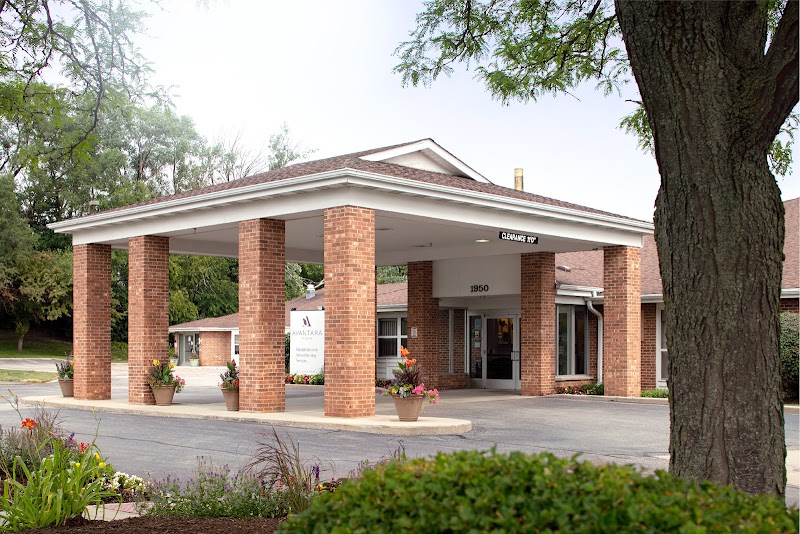

AVANTARA OF ELGIN

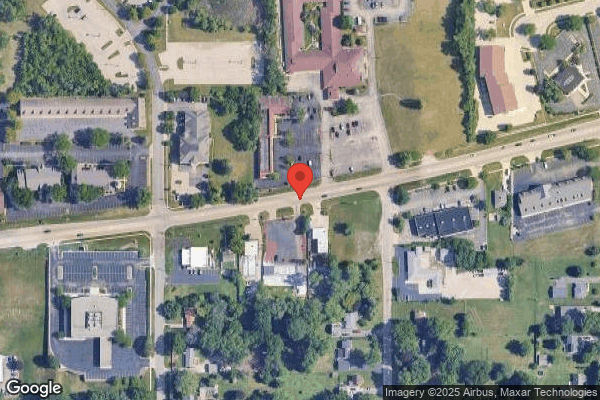
1950 LARKIN AVENUE, ELGIN, IL 60123 (847) 742-7070
For profit - Limited Liability company 112 Beds LEGACY HEALTHCARE Data: November 2025 2 Immediate Jeopardy citations
Trust Grade
6/100
#220 of 665 in IL
Last Inspection: July 2024

Within standard 12-15 month inspection cycle. Federal law requires annual inspections.

Overview

Avantara of Elgin has received a Trust Grade of F, which indicates significant concerns about the facility’s care and practices. Ranking #220 out of 665 facilities in Illinois puts them in the top half, but the low trust score raises serious red flags. The facility is on an improving trend, having reduced issues from 21 in 2023 to 8 in 2024, but they still have a concerning number of fines totaling $162,560, which is higher than 78% of facilities in the state. Staffing is average, with a 48% turnover rate, and while they have good RN coverage, there have been critical incidents, including one where a resident was physically abused by a staff member and another where residents eloped due to failures in supervision and alarm systems. Families should weigh these strengths and weaknesses carefully when considering care for their loved ones.

Trust Score
F
6/100
In Illinois
#220/665
Top 33%
Safety Record
High Risk
Review needed
Inspections
Getting Better
21 → 8 violations
Staff Stability
⚠ Watch
48% turnover. Above average. Higher turnover means staff may not know residents' routines.
Penalties
✓ Good
$162,560 in fines. Lower than most Illinois facilities. Relatively clean record.
Skilled Nurses
✓ Good
Each resident gets 76 minutes of Registered Nurse (RN) attention daily — more than 97% of Illinois nursing homes. RNs are the most trained staff who catch health problems before they become serious.
Violations
⚠ Watch
39 deficiencies on record. Higher than average. Multiple issues found across inspections.
★★★☆☆
3.0
Overall Rating
★★★☆☆
3.0
Staff Levels
★★★☆☆
3.0
Care Quality
★★★☆☆
3.0
Inspection Score
Stable
2023: 21 issues
2024: 8 issues

The Good

  • Full Sprinkler Coverage · Fire safety systems throughout facility
  • No fines on record

Facility shows strength in fire safety.

The Bad

3-Star Overall Rating

Near Illinois average (2.5)

Meets federal standards, typical of most facilities

Staff Turnover: 48%

Near Illinois avg (46%)

Higher turnover may affect care consistency

Federal Fines: $162,560

Well above median ($33,413)

Significant penalties indicating serious issues

Chain: LEGACY HEALTHCARE

Part of a multi-facility chain

Ask about local staffing decisions and management

The Ugly 39 deficiencies on record

2 life-threatening 3 actual harm
Nov 2024 2 deficiencies
CONCERN (D) 📢 Someone Reported This

A family member, employee, or ombudsman was alarmed enough to file a formal complaint

Potential for Harm - no one hurt, but risky conditions existed

Drug Regimen Review (Tag F0756)

Could have caused harm · This affected 1 resident

**NOTE- TERMS IN BRACKETS HAVE BEEN EDITED TO PROTECT CONFIDENTIALITY** Based on interview and record review, the pharmacist's Medication Regimen Review (MRR) failed to identify the transcription omis...

Read full inspector narrative →
**NOTE- TERMS IN BRACKETS HAVE BEEN EDITED TO PROTECT CONFIDENTIALITY** Based on interview and record review, the pharmacist's Medication Regimen Review (MRR) failed to identify the transcription omission of a resident's thyroid medication for her hypothyroidism diagnosis at the time of her readmission. This applies to 1 of 3 (R1) residents reviewed for pharmacy services. The finding includes: R1's EMR (Electronic Medical Record) showed R1 was discharged from the facility on 8/16/2024 and readmitted on [DATE] after she had an ER (Emergency Room) visit. R1's admission Record sheet showed R1 had an active diagnosis of hypothyroidism identified on 6/17/2024. On 11/15/2024 at 10:45 AM, R1 was interviewed regarding her medications. During the interview, R1 had difficulty expressing her thoughts and became frustrated at times. R1 said she felt confused, and tired and had trouble seeing close objects like her call light. R1 said she was worried because her community physician (V25) informed her she had not been receiving her thyroid medication and now her levels were too high. R1 said she was not sure why her thyroid medication had been missed because she had been taking it for a long time. R1's ER visit documents dated 8/19/2024 showed R1 was discharged back to the facility with the facility's Transfer/Discharge Report dated 8/16/2024. The report included R1's active medications, including Levothyroxine Sodium Tablet 150 MCG. Directions: Give 1 tablet by mouth in the morning for low thyroid hormone. R1's hospital documents were uploaded in her EMR on 8/19/2024. V25's (Physician) 11/8/2024 Physician Report showed R1's elevated TSH (thyroid-stimulating hormone) level of 120 was evaluated. The report said She is on half the dose that I had her listed on my medication list. She is feeling tired fatigue confused and is having some ocular issues and I think a lot of the symptoms could be related to her thyroid. The report showed V25 restarted R1's prior dose of Levothyroxine on 11/8/2024, 79 days later. On 11/19/2024 at 1:00 PM, V19 (Pharmacist Manager Consultant) said Pharmacists performed Medication Regimen Reviews (MRRs) for new admissions and readmissions, and then monthly to review the most recent hospital discharge medication lists and current electronic medical records. V19 said MRRs are done to try to catch medication errors and irregularities. V19 said he reviewed R1's MRRs dated 8/21/2024 when she readmitted , and then performed the following monthly MRRs dated 9/5/2024 and 9/22/2024, and R1's hospital discharge documents dated 8/19/2024. V19 confirmed R1's Levothyroxine medication was missed when she was readmitted on [DATE] and it was omitted from her medication list. V19 said it was unfortunate that R1's thyroid medication irregularity was also missed again during her MRR on 8/21/2024 and the following months. V19 said he was not sure if her hospital documents with her most recent medication list were reviewed by the pharamcists. R1's Pharmacist-Medication Regimen Review report dated 8/21/2024 said R1's Medication Review Results showed No irregularities. R1's Pharmacist-Medication Regimen Review report dated 9/5/2024 continued to show no irregularities were identified regarding R1's missing thyroid medication. R1's Pharmacist-Medication Regimen Review report dated 9/22/2024 said R1's Medication Review Results showed No irregularities. The facility's policy titled Medication Regimen Review dated 8/16/2024 said The Consultant Pharmacist shall provide pharmaceutical care consultation including the medication regimen review at least once a month for each resident residing in certified areas of a skilled long term care facility .Federally mandated standards of care as well as other applicable standards serve as the basis for review to ensure that resident's medications are promoting or maintain the resident's highest level of function in congruence with the resident's therapeutic goals and to identify clinically significant risks and/or adverse medication reactions .
CONCERN (D) 📢 Someone Reported This

A family member, employee, or ombudsman was alarmed enough to file a formal complaint

Potential for Harm - no one hurt, but risky conditions existed

Deficiency F0760 (Tag F0760)

Could have caused harm · This affected 1 resident

**NOTE- TERMS IN BRACKETS HAVE BEEN EDITED TO PROTECT CONFIDENTIALITY** Based on interview and record review the facility failed to transcribe a resident's medications as ordered, resulting in the ori...

Read full inspector narrative →
**NOTE- TERMS IN BRACKETS HAVE BEEN EDITED TO PROTECT CONFIDENTIALITY** Based on interview and record review the facility failed to transcribe a resident's medications as ordered, resulting in the original does of thyroid medication not being administered for 79 days. This applies to 1 of 5 (R1) residents reviewed for medications. The finding includes: R1's EMR (Electronic Medical Record) showed R1 was discharged from the facility on 8/16/2024 and readmitted on [DATE] after she had an ER (Emergency Room) visit. R1's admission Record sheet showed R1 had an active diagnosis of hypothyroidism identified on 6/17/2024. On 11/15/2024 at 10:45 AM, R1 was interviewed regarding her medications. During the interview, R1 had difficulty expressing her thoughts and became frustrated at times. R1 said she felt confused, and tired, and she was having trouble seeing close objects like her call light. R1 said she was worried because her Community Physician (V25) informed her she had not been receiving her thyroid medication and now her levels were too high. R1 said she was not sure why her thyroid medication had been missed because she had been taking it for a long time. R1's ER visit documents dated 8/19/2024 showed R1 was discharged back to the facility with the facility's original Transfer/Discharge Report from 8/16/2024. The report showed R1's active medications, including Levothyroxine Sodium Tablet 150 MCG. Directions: Give 1 tablet by mouth in the morning for low thyroid hormone. R1's hospital documents were uploaded in her EMR on 8/19/2024. R1's lab results dated 11/4/2024 showed R1's TSH (thyroid-stimulating hormone) level was 120.542 H (high). (TSH reference value range is 0.550-4.780 uIU/mL.) R1's physician visit report from V25 (Physician) dated 11/8/2024 showed R1's elevated TSH (thyroid-stimulating hormone) level of 120 was evaluated. The report said She is on half the dose that I had her listed on my medication list. She is feeling tired fatigue confused and is having some ocular issues and I think a lot of the symptoms could be related to her thyroid. The report showed V25 restarted R1's prior dose of Levothyroxine. On 11/15/2024 at 2:55 PM, V2 (Director of Nursing/DON) said R1's in-house Physician (V11) had ordered routine labs, including a TSH level, on 11/4/2024, and then started R1 on Levothyroxine medication for her thyroid because it was extremely elevated. V2 said then R1's daughter informed him that V25 (R1's Community Physician) reviewed her medications and informed them that R1's thyroid medication was omitted when she was readmitted , and that R1 was restarted at a lower dose. V2 said he expected nursing staff to review the most current medication list at the time of admission, and readmission, and to clarify any discrepencies with the Physician to ensure medication safety. R1 said he was unsure why R1's Levothyroxine was not reordered when she was readmitted and continued to be missed. R1's care plan had a focus problem for R1's diagnosis of hypothyroidism initiated on 9/19/2024. The care plan's goals included [R1's] Thyroid function tests will be within normal limits .will be compliant with thyroid replacement therapy . R1's EMAR (Electronic Medication Record) for August 2024 showed R1 last received Levothyroxine Sodium (thyroid hormone medication) 150 mcg (micrograms) on 8/16/2024, prior to her discharge. R1's EMAR did not show R1's Levothyroxine being restarted when she was readmitted on [DATE]. R1's EMAR for September 2024 showed R1's original Levothyroxine Sodium dosage was not restarted. R1's EMAR for October 2024 showed R1's Levothyroxine Sodium was still not restarted. R1's EMAR for November 2024 showed R1 was started on Levothyroxine Sodium 75 mcg on 11/6/2024 and then increased to 150 mcg on 11/9/2024. R1's lab results dated 11/11/2024 showed R1's TSH level was 104.958 H. The facility's policy titled admission and readmission Policy dated 7/12/2024 said, It is the policy of this facility to ensure that the facility complies with federal regulations in terms of admission and readmission of resident. Procedures: 2) Verify orders from the hospital with physician or on-call physician. 3) Obtain physician orders based on resident needs. 4) Carry out physician orders. The facility's policy titled Physician Orders dated 8/16/2024 said, The facility shall ensure to follow physician orders as it is written in the POS. 1. Upon admission and readmission, the facility will verify transfer orders from the hospital with the resident's attending physician or physician on call .The nurse may question and clarify physician orders that are not clear and are questionable .
Jul 2024 6 deficiencies 1 Harm
SERIOUS (G) 📢 Someone Reported This

A family member, employee, or ombudsman was alarmed enough to file a formal complaint

Actual Harm - a resident was hurt due to facility failures

Accident Prevention (Tag F0689)

A resident was harmed · This affected 1 resident

**NOTE- TERMS IN BRACKETS HAVE BEEN EDITED TO PROTECT CONFIDENTIALITY** Based on observation, interview and record review, the facility failed to ensure safe transport of resident to the shower room w...

Read full inspector narrative →
**NOTE- TERMS IN BRACKETS HAVE BEEN EDITED TO PROTECT CONFIDENTIALITY** Based on observation, interview and record review, the facility failed to ensure safe transport of resident to the shower room when a shower chair was utilized for the transfer in place of a wheelchair. This failure resulted in R24 falling from the chair and fracturing both of her legs. This applies to 1 of 4 residents (R24) reviewed for accidents in the sample of 26. The findings include: R24 is a [AGE] year-old female admitted to the facility on [DATE], with diagnoses that include Multiple Sclerosis, Chronic pain, and Polyneuropathy. R24's MDS (Minimum Data Set) assessment dated [DATE], documents that resident requires substantial to maximal assistance with lying to sitting on side of bed: The ability to move from lying on the back to sitting on the side of the bed and with no back support. R24 was also assessed to be cognitively intact as evidenced by a BIMS (Brief Interview of Mental Status) score of 15/15. The Facility Reported Incident dated June 13, 2024, stated that at approximately 6:30 AM Certified Nursing Assistant (CNA) was transporting R24 to the shower room via shower chair. The report documents the chair suddenly stopped at the metal transition strip on the floor. This caused the chair to become unstable and the resident to lose balance and fall to the floor. Resident complained of pain to bilateral legs and knees. The resident was sent to the hospital and sustained a fracture of the right femur and fracture of the left tibia and fibula. On July 8, 2024, at 10:36 AM, R24, stated that on June 13, 2024, at about 6:20 AM, V10 (CNA) helped her into a Polyvinyl Chloride pipe (PVC) shower chair via a full body mechanical lift and wheeled her towards the shower room. R24 stated the shower chair was made of PVC pipe and had a footrest board. R24 stated the shower room closet to her room was occupied so he started to wheel her to the next closet shower room. R24 stated that when they got to the metal strip on the floor, the wheels locked, and the chair stopped abruptly, and she kept going and landed on her legs and knees. R24 stated when the staff is pushing you in the shower chairs the wheels lock and the shower chair jerk you forward then you see black marks on the floor behind you. R24 stated she has been complaining the shower chairs were not in good repair for 2.5 years. R24 stated she has told CNA's V18, V23, V24, and V26 that the shower chairs are in poor repair, stop abruptly, and the chairs jerks you forward. On July 9, 2024, at 9:02 AM, V9 (CNA) stated she has been working at the facility for 3 years. V9 stated the shower chairs are hard to move. They lock on their own while you are pushing them. V9 stated it is hard to get over the metal strips with the residents in the shower chairs. V9 stated when you go over the strips, with residents in the shower chair, the chairs tilt. V9 stated You have to push slowly so they don't tilt over. Observed 3 shower chairs 2 with PVC pipe and one gray metal one to be hard to push and pull with the locks on or off. They were very stiff with brown substance around the wheels. On July 9, 2024, at 2:12 PM, V10 (CNA) stated, the day of the incident, he lifted R24 into a shower chair with a whole-body mechanical lift, then proceeded to wheel R24 to the shower room. V10 stated when the chair reached the metal transition strip on the floor, the chair abruptly stopped and tipped forward. V10 stated he is not sure if it was the wheels that locked, the shower chair got caught on something, or her feet were dangling that caused the shower chair to stop and tip forward. V10 stated the transitions where higher at the time of the accident. V10 stated the chair he used to transport R24, is no longer in the facility. V10 stated, the shower chair was made of PVC pipe with a gray seat and a foot stand that was not movable but part of the chair. V10 stated some of the chairs stop abruptly and are hard to push. V9 stated there were no straps on the chair to hold the resident. On July 9, 2024, at 2:49 PM, V2 (Director of Nursing, DON) stated it could be multiple factors that caused R24 accident. V2 stated that it could have been that the resident's feet could have stopped the chair, the chair could have locked, and there may have been a problem with transition strip on the floor. V2 stated they ordered new chairs, pounded the metal strips down, and took the particular chair out of circulation and trashed it. V2 stated that the best practice for transporting residents to the shower room is to transfer them from bed to wheelchair, use the wheelchair to wheel the resident to the shower room, and then transfer the resident back to wheelchair before transporting the resident back to their room. On July 11, 2024, at 8:53 AM, V22 (Occupational Therapist) stated transporting residents in a shower chair would not be safe if the chair abruptly stopped or tilted while resident is in it. R24's Hospital imaging report dated June 13, 2024, showed fractures to her left tibia and fibula and her right femur. The facility's provided manufacture's owner's manual for the shower chairs and it shows the following: Do not use device if it appears wobbly or unstable, the casters are rusted or fail to move easily, the fabric appears torn or weak, cracks are observed in the fittings, or the device appears to be compromised in anyway. If you suspect a device is not functioning as intended, do not use device, and contact your distributor for assistance. Do not abruptly turn or stop the device. Do not abruptly turn or stop the device.
CONCERN (D)

Potential for Harm - no one hurt, but risky conditions existed

Pressure Ulcer Prevention (Tag F0686)

Could have caused harm · This affected 1 resident

**NOTE- TERMS IN BRACKETS HAVE BEEN EDITED TO PROTECT CONFIDENTIALITY** Based on interview and record review, the facility failed to obtain treatment orders for a newly admitted resident with pressure...

Read full inspector narrative →
**NOTE- TERMS IN BRACKETS HAVE BEEN EDITED TO PROTECT CONFIDENTIALITY** Based on interview and record review, the facility failed to obtain treatment orders for a newly admitted resident with pressure ulcers. This applies to 1 of 3 residents (R256) reviewed for pressure ulcers in the sample of 26. The findings include: R256's EMR (Electronic Medical Record) showed R256 was admitted to the facility on [DATE], with multiple diagnoses including encephalopathy, pressure ulcer of right buttock, pressure ulcer of left buttock, pressure ulcer of right heel, chronic kidney disease, and urinary tract infection. R256's MDS (Minimum Data Set) dated July 4, 2024, showed R256 had moderate cognitive impairment. The MDS continued to show R256 had two stage three pressure ulcers, two unstageable pressure ulcers, and one deep tissue pressure injury present on admission to the facility. On July 8, 2024, at 10:33 AM, R256 said she has wounds on her buttocks. On July 10, 2024, at 9:44 AM, V28 (Wound Care Nurse) said R256 was admitted to the facility on [DATE], with multiple pressure ulcers. V28 continued to say she saw R256 on July 1, 2024, and assessed R256's pressure ulcers and received treatment orders for R256's pressure ulcers. V28 said before July 1, 2024, R256 did not have any orders for treatment for her pressure ulcers and V28 does not see documentation of R256 receiving pressure ulcer treatment from facility staff. V28 said upon admission to the facility, the admitting nurse should notify the physician if the resident has pressure ulcers to receive treatment orders. On July 10, 2024, at 11:08 AM, V2 (DON/Director of Nursing) said when a resident is admitted to the facility, the nurse should assess the residents, specifically for wounds. V2 continued to say as soon as the nurse identifies a pressure ulcer, the nurse should notify the physician for treatment orders and enter the orders into the medical record. V2 said R256's admitting nurse should have entered treatment orders for R256's pressure ulcers. V2 said facility staff are expected to document pressure ulcer treatments. On July 10, 2024, at 11:14 AM, V16 (Regional Nurse Consultant) said the nurse should enter treatment orders for pressure ulcers on admission. V16 continued to say if the treatment order is to leave the wound open to air, the nurse should enter that as an order in the medical record. R256's Order Summary Report dated July 11, 2024, showed the first treatment orders for R256's pressure ulcers was ordered on July 1, 2024. The facility does not have documentation to show R256 received pressure ulcer treatment on June 28, June 29, and June 30, 2024. The facility's policy titled Wound Care Guidelines revised on January 24, 2024, showed, .10. Pressure Injuries Treatment: a. Initiate wound care treatment upon identification of the wound with physician's order .
CONCERN (D)

Potential for Harm - no one hurt, but risky conditions existed

Incontinence Care (Tag F0690)

Could have caused harm · This affected 1 resident

**NOTE- TERMS IN BRACKETS HAVE BEEN EDITED TO PROTECT CONFIDENTIALITY** Based on observation, interview, and record review the facility failed to provide indwelling catheter care in a manner that woul...

Read full inspector narrative →
**NOTE- TERMS IN BRACKETS HAVE BEEN EDITED TO PROTECT CONFIDENTIALITY** Based on observation, interview, and record review the facility failed to provide indwelling catheter care in a manner that would prevent infection. The facility also failed to ensure indwelling urinary catheter is kept secured to prevent from pulling and tugging and prevent catheter related skin trauma. This applies to 3 of 5 residents (R1, R70 and R86) reviewed for indwelling catheter care in the sample of 26. The Findings include: 1. R1, a [AGE] year-old with diagnoses of hemiplegia and hemiparesis; lack of coordination; flexion deformity, UTI (urinary tract infection), presence of urogenital implant and epilepsy. R1 was admitted to the facility on [DATE]. On July 08, 2024, at 10:00 A.M, R1 was sitting in his wheelchair by the hallway next to the shower room R1 was with V18 (CNA-Certified Nursing Assistant). V18 was observed placing R1's indwelling catheter tubing and drainage bag to the other side of R1's wheelchair arm rest. R1 was indwelling catheter tubing was cloudy with yellowish sediments and the tubing and drainage bag was discolored with bluish color. On July 08, 2024 at 2:24 P.M. R1 was sitting in his wheelchair by the 300 nurse's station. R1's still with same condition regarding his indwelling catheter with urine being cloudy and with yellow sediments. On July 09, 2024, at 1:30 P.M., R1 was sitting in his wheelchair by the lounge area. R1's indwelling catheter still with cloudy sediments in the tubing. On July 10,2024 at 9:35 A.M., R1 was sitting in his wheelchair in his room. V15 (CNA) was providing a 1:1 supervision to R1. V15 was repositioning R1. The indwelling catheter was still with cloudy urine and with sediments in the tubing. The care plan dated June 6,2024 showed interventions for the indwelling catheter to prevent infection and catheter-related skin trauma. The intervention included but not limited to catheter care every shift and as needed, change indwelling catheter drainage bag as needed, change the indwelling catheter per facility's protocol or physician order. 2. R70, a [AGE] year-old with diagnoses of Parkinson's' disease, urine retention, UTI, obstructive and reflux uropathy. R70 was admitted to the facility on [DATE]. On July 8, 2024, at 11:53 A.M., R70 was lying in bed. R70 was observed with an indwelling catheter. The urine in the indwelling catheter tubing was cloudy and noted with yellowish sediments. On July 9,2024 at 12:45 P.M., R70 was lying in bed. R70 noted with same condition of the indwelling catheter that had the cloudy urine with sediments. On July 10, 2024 at 9:23 A.M, R70, was in bed. R70's cloudy urine with sediments was pointed to V14 (RN/Registered Nurse). V14 said that she would have to call the physician to either change the entire catheter or just change the tubing or irrigate the tubing first, but something needs to be done due to the cloudiness of the urine and clumps of sediments. The care plan dated July 2,2024 showed interventions for R70's indwelling catheter that included but not limited to R70's potential for infection related to indwelling catheter and that assessment for signs and symptoms of infection and catheter care every shift and as needed were to be implemented. 3. R86, an [AGE] year-old with diagnoses that included ventricular tachycardia, protein-calorie malnutrition, dementia, obstructive and reflux neuropathy, diabetes mellitus type 2, chronic kidney disease, and benign prostatic hyperplasia. On July 8, 2024, at 2:08 P.M., R86 was lying in bed. R86 was noted with an indwelling catheter. The urine in the catheter tubing was cloudy and full of sediments. On July 10,2024 at 9:25 A.M., together with V14 (RN/Registered Nurse), R86's indwelling catheter was checked. R86 was noted to try playing/pulling the catheter tubing. There was no device to secure the tubing in place. V14 said she will apply an anchor device to ensure that indwelling catheter will be secured and not be pulled or tugged and prevent catheter related trauma. R86 was also noted with cloudy urine full of sediments. V14 said that she will call the physician and the catheter need to be irrigated or change the indwelling catheter. The care plan October 18,2023 showed interventions for R86's indwelling catheter that included but not limited to R86's potential for infection related to indwelling catheter and that assessment for signs and symptoms of infection and catheter care every shift and as needed were to be implemented. On July 10, 2024 at 11:30 A.M., V2 (DON/Director of Nursing) said that if the indwelling catheter tubing was cloudy with sediments, then an irrigation of the tubing was indicated and calling the physician for further interventions. V2 also said that irrigation was indicated to ensure patency of urine flow and prevent UTI. V2 said that the indwelling catheter tubing should be secured with an anchor device to prevent the indwelling catheter from being pulled or tugged and prevent catheter related trauma. On July 10, 2024, at 11:50 A.M., V16 (Nurse Consultant) said that she will discuss with corporate to revise policy to ensure there was a secured device for the indwelling catheter to prevent pulling and tugging. The facility's policy and procedure dated June 6, 2024, and titled Urinary Catheter Care showed Catheter irrigation may be ordered to prevent obstruction in residents at risk for obstruction.Secure catheter . The facility's policy for indwelling catheter dated January 5, 2026 showed an indwelling catheter maybe changed as needed.
CONCERN (E)

Potential for Harm - no one hurt, but risky conditions existed

Grievances (Tag F0585)

Could have caused harm · This affected multiple residents

Based on interview and record review, the facility failed to document and promptly resolve resident's stated concerns. This applies to 5 of 5 residents (R29, R43, R85, R38 and R24) reviewed for grieva...

Read full inspector narrative →
Based on interview and record review, the facility failed to document and promptly resolve resident's stated concerns. This applies to 5 of 5 residents (R29, R43, R85, R38 and R24) reviewed for grievances in the sample of 26. The findings include: 1.During the resident meeting on July 9, 2024, at 1:00 PM, V11 (Ombudsman) asked the resident group if residents' prior concerns had been resolved. R29 (RCP-Resident Council President) stated the previous concern raised regarding R1(confused peer) wandering into other resident's rooms had not been resolved. R43 (resident who regularly attends resident council) stated R1 continues to wander into other resident's rooms after his visitors leave. R43 stated R1 will cuss at other residents if residents tell R1 to leave their room and some residents will cuss at R1 when he tries to enter their rooms. R85 and R38 (residents who regularly attend resident council meetings) also agreed R1 continues to wander into other resident's rooms remains a concern that has not changed since initially brought up in the May 20, 2024, Resident Council Meeting. The Resident Council Meeting Minutes dated May 20, 2024, showed under New Business, showed Resident requesting another resident does not go into their room and staff asked Ombudsman questions on how to respond if a resident is swearing at staff, other residents in the hallway, and discussed swearing at staff and residents. The scribe listed on the meeting minutes was staff member, V12 (Activity Director). On July 10, 2024, at 9:21 AM, V12 stated she does attend the Resident Council Meeting and takes the meeting minutes and stated the resident who wanders into other residents' room was identified as R1. V12 stated she did not create a concern form for the resident's concern regarding R1. On July 10, 2024, at 9:41 AM, V1 (Administrator) stated she was aware of the resident's concerns regarding R1 wandering into other resident's rooms. V1 stated the expectation for staff is to complete the grievance form when a resident raises a concern or a grievance. V1 stated that R1 was placed on 1:1 monitoring on July 9, 2024, in the afternoon after the surveyor made the facility aware of the continued concerns regarding R1, from the resident meeting. 2.On July 8, 2024, at 10:36 AM, R24 stated she had been complaining about the condition of the shower chairs for the last two and one-half years. R24 stated she had complained about the poor condition of the shower chairs, that they stop abruptly, and the chair jerks forward. R24 stated she reported the shower chair concerns to V18 (CNA- Certified Nursing Assistant), V23 (CNA), V24, (CNA) and V26 (CNA). A review of the facility concern/response/compliment forms, provided by the facility, from January 1, 2024, through July 4, 2024, showed there were no concern forms generated on behalf of R1 and R24 during that time frame. The facility's grievance policy revised June 6, 2024, showed 3. The notification will include the name, address, and phone number, of the grievance official, a reasonable time frame to investigate the grievance, and the resident's right to obtain a written copy of the grievance investigation if requested .5. During the investigation the facility will put in place immediate action to prevent potential violation of resident's rights .7. All written grievance decisions will include the date the grievance was received, a summary statement of the resident's grievance, the steps taken to investigate the grievance, a summary of the pertinent findings or conclusions regarding the resident's concerns, a statement as to whether the grievance was confirmed or not confirmed, any corrective action taken or to be taken by the facility as a result of the grievance and the date the written decision was issued.
CONCERN (E)

Potential for Harm - no one hurt, but risky conditions existed

Quality of Care (Tag F0684)

Could have caused harm · This affected multiple residents

**NOTE- TERMS IN BRACKETS HAVE BEEN EDITED TO PROTECT CONFIDENTIALITY** Based on interview and record review, the facility failed to obtain resident weights in accordance with physician orders. This a...

Read full inspector narrative →
**NOTE- TERMS IN BRACKETS HAVE BEEN EDITED TO PROTECT CONFIDENTIALITY** Based on interview and record review, the facility failed to obtain resident weights in accordance with physician orders. This applies to 5 of 5 residents (R21, R60, R14, R37, R61) reviewed for weight documentation in the sample of 26. The findings include: 1.R21 was admitted to the facility on [DATE], with multiple diagnoses including, heart failure unspecified, atrial fibrillation, chronic kidney disease stage 3, and type 2 diabetes according to R21's face sheet. R21's physician order summary showed an order initiated on May 28, 2024, to obtain daily weights (on the same scale)-record weight and scale if weight differences is 2 pounds from prior day, reweigh and document every day shift. R21's weight record showed R21 was weighed on May 29, 2024, June 10, 2024, June 18, 2024, and June 26, 2024, and July 6, 2024. There were no daily weights documented. The record showed the weights as follows: May 29, 2024, 262 lbs.(pounds) (Mechanical Lift) June 10, 2024, 255.2 lbs. (Mechanical Lift) June 18, 2024, 258 lbs. (Mechanical Lift June 26, 2024, 254.2 lbs. (Mechanical Lift) July 06, 2024, 260.2 lbs. (Mechanical Lift) R21's care plan for fluid retention/overload initiated on May 16, 2024, intervention included weight will be obtained as ordered by the MD and Monitor/record/report to MD PRN (as needed) situations leading to increased food consumption, reasons for weight gain, significant wt changes. 2.R60 was admitted to the facility on [DATE], with multiple diagnoses including chronic venous hypertension with ulcer of bilateral lower extremity, lymphedema, type 2 diabetes, and chronic diastolic congestive heart failure according to R60's face sheet. R60's physician order summary showed an order for daily weight initiated on June 13, 2024. R60's weight and vital record showed weights were documented on June 15, 2024, June 18, 2024, July 5, 2024, July 9, 2024, and July 10, 2024. R60's weights were not documented daily as ordered. R60's care plan for CHF (Congestive Heart Failure), lymphedema, and diuretic use dated June 23, 2023, interventions showed weight will be obtained as ordered by MD. 3. R14's EMR (Electronic Medical Record) showed R14 was admitted to the facility on [DATE], with multiple diagnoses including Parkinson's disease, dysphagia, dementia, and clostridium difficile. R14's nutrition care plan dated May 13, 2024, showed, [R14] is at risk for alteration in nutritional status related to Parkinson's, Urinary Tract Infection, clostridium difficile, atrial fibrillation, hypothyroidism, ulcerative pancolitis, altered mental status, dementia, anxiety, depression, type 2 diabetes mellitus, hyperlipidemia, and hypertension. The care plan continued to show multiple interventions dated May 13, 2024, including Obtain weight as ordered. R14's Order Listing Report dated July 10, 2024, showed an order dated May 8, 2024, for Weight Daily, every day shift for monitoring. R14's May MAR (Medication Administration Record) showed R14 was not weighed or refused to be weighed on seven days. R14's June MAR showed R14 was not weighed or refused to be weighed on 12 days. R14's July MAR showed R14 was not weighed on three days. 4. R37's EMR showed R37 was admitted to the facility on [DATE], with multiple diagnoses including spinal fracture, dysphagia, hypertension, and chronic obstructive pulmonary disease. R37's nutrition care plan dated June 7, 2024, showed, [R37] is at risk for alteration in nutritional status related to: depression, hypertension, type 2 diabetes mellitus, arthritis, chronic obstructive pulmonary disease, recent surgical procedure, recent decrease in appetite, obesity. The care plan continued to show multiple interventions dated June 7, 2024, including Obtain weight as ordered. R37's Order Listing Report dated July 10, 2024, showed, an order dated June 6, 2024, for Weight upon admission/readmission, weekly times four, then monthly, every day shift every seven days for 28 days weekly times four. R37's June 2024 Monitoring Record showed R37 was not weighed or refused to be weighed weekly on June 13, June 20, and June 27, 2024. 5. R61's EMR showed R61 was admitted to the facility on [DATE], with multiple diagnoses including stroke, pneumonia, hypertension, and congestive heart failure. R61's nutrition care plan dated July 1, 2024, showed [R6] is at risk for alteration in nutritional status related to type 2 diabetes mellitus, traumatic brain injury, history of craniectomy, hemiplegia, history of dysphagia, vitamin D deficiency, congestive heart failure, hyperlipidemia, hypertension, anxiety. The care plan continued to show multiple interventions dated October 18, 2023, including Obtain weight as ordered. R61's Order Listing Report dated July 10, 2024, showed an order dated June 27, 2024, for Daily weights, every day shift for congestive heart failure. R61's June 2024 MAR showed R61 was not weighed or refused to be weighed on June 27, June 28, and June 29, 2024. R61's July 2024 MAR showed R61 was not weighed or refused to be weighed on July 2, July 3, and July 6, 2024. On July 10, 2024, at 11:55 AM, V2 (DON/Director of Nursing) said resident weights should be obtained as ordered by the physician. V2 continued to say it is the expectation of facility staff to follow the physician's order and document in the medical record if a resident refused to be weighed. The facility's policy titled Weights revised on June 6, 2024, showed Policy Statement: It is the facility's policy to obtain resident's monthly weight unless otherwise ordered differently by the physician. For a resident who is on dialysis, the resident's dry weight will be also obtained monthly .
CONCERN (E)

Potential for Harm - no one hurt, but risky conditions existed

Deficiency F0805 (Tag F0805)

Could have caused harm · This affected multiple residents

Based on observation, interview and record review, the facility failed to puree foods to a smooth consistency. This applies to 6 of 6 residents (R1, R56, R66, R68, R99 and R406) reviewed for pureed di...

Read full inspector narrative →
Based on observation, interview and record review, the facility failed to puree foods to a smooth consistency. This applies to 6 of 6 residents (R1, R56, R66, R68, R99 and R406) reviewed for pureed diets. The findings include: On July 8, 2024 at 12:30 PM, R66 was sitting in wheelchair and eating her lunch in her room. R66's meal ticket, dated 7/8/24, showed R66 was to receive a pureed diet including a serving of pureed beef top round roast beef. The pureed beef on R66's meal plate looked very lumpy with solid particles of beef visible in the serving. On July 8, 2024 at 12:34 PM in R66's room during lunch, V21 (Food Service Director) observed R66's pureed beef and stated it appeared to need more thickener. On July 8, 2024 at 12:38 PM in the kitchen after lunch service, V21 tasted the leftover pureed beef from the steam table line that was served to the pureed residents. V21 stated the pureed beef was not completely pureed and should be pureed further. The pureed beef tasted lumpy and had a large amount of small pieces of unpureed beef that required some chewing. On July 10, 2024 at 11:52 AM, V21 stated the pureed foods should be a smooth consistency with no solid particles. Facility Diet Census, dated July 8, 2024, shows R1, R56, R66, R68 and R99 and R406 all receive pureed diets at the facility. Facility policy Kitchen, reviewed June 6, 2024, shows, During pureed preparation, as the consistency of the pureed food changes with how the food is cooked the cook may add thickener to the food items being pureed, until the right consistency (pudding or mashed potato consistency) is reached. Meal Tray ticket, dated July 8, 2024, shows R66 was served pureed beef top round roast beef.
Dec 2023 1 deficiency
CONCERN (D) 📢 Someone Reported This

A family member, employee, or ombudsman was alarmed enough to file a formal complaint

Potential for Harm - no one hurt, but risky conditions existed

ADL Care (Tag F0677)

Could have caused harm · This affected 1 resident

**NOTE- TERMS IN BRACKETS HAVE BEEN EDITED TO PROTECT CONFIDENTIALITY** Based on interview and record review the facility failed to ensure incontinence care was provided per a resident's request for 1...

Read full inspector narrative →
**NOTE- TERMS IN BRACKETS HAVE BEEN EDITED TO PROTECT CONFIDENTIALITY** Based on interview and record review the facility failed to ensure incontinence care was provided per a resident's request for 1 of 4 residents (R10) reviewed for incontinence care in the sample of 10. The findings include: R10's face sheet showed she was admitted to the facility on [DATE] with diagnoses to include radiculopathy of the sacral and sacrococcygeal region, rash and other nonspecific skin eruption, atherosclerotic heart disease, morbid obesity, major depressive disorder, chronic pain, and candidiasis. R10's facility assessment dated [DATE] showed she has no cognitive impairment. R10's care plan initiated 10/9/19 showed, [R10] displays frequent bladder incontinence related to medication side effects . [R10] will remain free from skin breakdown due to incontinence and brief use through next review . Incontinence: I would like the staff to check me for incontinence episode every two hours and as needed. I would also need assistance to wash, rinse, and dry my perineum . R10's care plan initiated 12/10/19 showed, [R10] requires assistance with ADLs (activities of daily living) (bed mobility, transfers, dressing . personal hygiene .toileting . [R10] will be assisted with ADL's as needed . R10's care plan initiated 11/29/20 showed, [R10] has potential for impairment to skin integrity related to . braden (skin breakdown risk assessment) score of 13 (high risk) . [R10] will be free from any redness, blisters, or discoloration to skin through next review date . [R10] is assisted by staff to keep skin clean and dry . R10's 12/12/23 NP (Nurse Practitioner) visit note showed, . Still has groin/pannus (lower abdominal above the pubis area) rash that is improving but itches at times . Urinary Incontinence: Continue meticulous hygiene . On 12/16/23 at 1:28 PM, V10 was sitting in her wheelchair in her room. R10 said she has difficulty when some of the agency staff are working. R10 said on 12/15/23 she put her call light on due to being incontinent and needing her brief changed. R10 said her call light was not answered until about 10:15 PM when the next shift came in. R10 said she has been having problems with being sore, itchy, and needing creams for her skin due to being in wet incontinence briefs for extended periods of time. On 12/16/23 at 2:15 PM, V6 RN (Registered Nurse) said incontinence briefs should be changed as needed to prevent the resident from experiencing moisture and burning. On 12/16/23 at 3:36 PM, V7 RN (Registered Nurse) said incontinence care should be provided at least every two hours and as needed to prevent skin breakdown and urinary tract infections. The facility's policy and procedure titled Incontinent and Perineal Care showed, . Policy Statement: It is the policy of the facility to provide perineal care to ensure cleanliness and comfort to the resident, to prevent infection and skin irritation, and to observe the resident's skin condition .
Nov 2023 3 deficiencies 1 IJ
CRITICAL (J) 📢 Someone Reported This

A family member, employee, or ombudsman was alarmed enough to file a formal complaint

Immediate Jeopardy (IJ) - the most serious Medicare violation

Free from Abuse/Neglect (Tag F0600)

Someone could have died · This affected 1 resident

**NOTE- TERMS IN BRACKETS HAVE BEEN EDITED TO PROTECT CONFIDENTIALITY** Based on observation, interview and record review, the facility failed to ensure that R10 was free from physical, mental, and em...

Read full inspector narrative →
**NOTE- TERMS IN BRACKETS HAVE BEEN EDITED TO PROTECT CONFIDENTIALITY** Based on observation, interview and record review, the facility failed to ensure that R10 was free from physical, mental, and emotional abuse from an agency staff, V15 (CNA/Certified Nurse Assistant). The facility also failed to implement its policy to keep R10 free from further abuse. This failure resulted in Immediate Jeopardy on 11/5/2023 at 9:00 A.M., when R10 had sustained physical, emotional harm and mental distress from abusive care provided by V15. The facility also failed to implement their abuse policy by not reporting and investigating V15's inappropriate behavior such as yanking resident's bed rail, abrupt with care, ignoring call lights, that had occurred on 11/1/2023, and this had led to physical abuse on 11/5/2023 when V15 jerked R10's arm. The facility also failed to protect other residents from potential abuse when V15 was not suspended from work after the incident with R10. V1 (Administrator), V2 (Director of Nursing) and V28 (Vice President of Operations) were notified of the immediate jeopardy on 11/27/2023 12:15 P.M. The surveyor confirmed by observation, interview, and record review that immediate jeopardy was removed on 11/29/2023 at 12:40 P.M., but noncompliance remains at Level Two because additional time is needed to evaluate the implementation and effectiveness of the removal plan. This applies to one of three residents (R10) reviewed for injuries of unknown origin and abuse. The findings include: The EMR (Electronic Medical Record) showed that R10, an [AGE] year-old, was admitted to the facility on [DATE]. R10's diagnoses included but not limited to atrial fibrillation, thrombocytopenia, S/P (status post) CABG (coronary artery bypass graft), history of DVT (deep vein thrombosis), iron deficiency anemia, myocardial infarction, obsessive-compulsive disorder, CAD (coronary artery disease), anxiety and depression. The MDS (Minimum Data Set) dated 9/21/2023 showed that R10 was moderately impaired in cognition with BIMS (Brief Interview Mental Status) and score of 12/15. R10's functional status showed she required one-person physical assistance with ADLs (Activities of Daily Living). The MDS showed that R10 was not delusional, no psychosis, no negative behavior and was not rejecting care. The care plan dated 9/21/2023 showed that R10 had no negative behavior such as being hostile, aggressive and or combative. The progress notes dated 11/7/2023 at 6:00 P.M. documents Bruising noted to left inner forearm from base of wrist to elbow and on left bicep area. Head to toe assessment done .Family member made aware (R1's MD) made aware. Order given to obtain x-ray to left arm and PT/INR in morning 11/8/23. Review further of the progress notes showed that last documentation of the progress notes before 11/7/2023 was 11/2/2023. The documentation for 11/2/2023 was related to medication order. The EMR/progress notes showed that there was no documentation regarding the bruise not until 11/7/2023. The facility's incident report dated 11/7/2023 at 4:57 P.M. showed there was an allegation of resident abuse that occurred 11/5/2023. The resident referred to was R10 and V15 (CNA/Certified Nurse Assistant) as the perpetuator. The incident report showed that on a 11/7/2023 at around 4:00 P.M., V25 (Transportation Coordinator/Unit Clerk) reported that R10 had stated that (V15) was rough during patient care. On 11/8/2023 at 10:30 A.M., together with V2 (Director of Nursing), R10 was observed and interviewed. R10 was alert and oriented and had responded to questions coherently. R10 was aware of time, name and place and current events. R10 showed her left arm. R10's left forearm was observed with a bruise that extended from her wrist to the elbow, the bruise was irregular in shape, the color was dark purple/blue. There was no other visible bruise noted on R10's extremities. R10 said this bruise was caused by rough handling from (V15, CNA from staffing agency), I was pulled from my left arm by (V15) with force on 11/5/2023 around 9:00 A.M. I thought (V15) was not to take care of me because of an incident that occurred on 11/1/2023 when (V15) took care of me during the evening shift. (V15) had a nasty attitude, very abrupt when she talked, no respect, and she broke and yanked my bed rail. R10 pointed her bed's left upper rail that was tied with a rope. R10 said I told everyone (staff) I don't remember each of their names but told (V19/nurse) since he runs the ship regarding (V15) not to return to facility anymore because she had handled me roughly, with nasty attitude, and (V15) even said she doesn't care, she can be assigned anywhere because she is from staffing agency. R10 continued to state that on 11/5/2023, (V15) came in early morning, with nasty attitude like she does not want to be at work, verbally abrupt when questions were asked, or she does not answer at all, and will not listen to my request that I wear a blue color brief and not yellow and (V15) insisted on putting the yellow brief. I am scared of her (V15) and I do not want her to take care of me. R10 said she called V20 (Receptionist on Duty) in the morning of 11/5/2023 that V15 should not be assigned to her because V15 was rough handling her and R10 might get hurt. However, R10 said that she was told by V20 that she will inform V21 (RN/MOD/Manager of the Day) when she comes in that day. R10 continued to state that (V15) pulled my left arm with force when she was getting me out of bed, I felt the pain, then few hours later, I saw this big bruise on my left forearm. (V21) came in around 9:30 A.M. and she acted like she was a MEDIATOR and advised me to say PLEASE when asking for care. (V15) continued to give me care, and other residents (R4, R6, R14) and they saw me how upset I was because they also complained how (V15) treated them. I know (V15) did hurt me intentionally because she jerked my arm. On 11/8/2023 at 2:00 P.M., R10 was sitting in the activity department and was interviewed again about the incident involving V15. R10 repeated the same account of events as stated during the earlier interview. During this time of interview, V23 (Police Officer) came in and said he had to ask R10 for few more questions. R10 had agreed. V23 said he saw R10 the day before (11/7/2023) for initial investigation of physical abuse by V15. V23 and R10 gave permission for the surveyor to stay during V23's interview. R10 was consistent with her statement stating that V15 had rough handled her during care in the morning of 11/5/2023. After the interview, R10 was assisted back by a staff to the activity department and R10 was seen sobbing, tears flowing down her cheeks, was shaking, and said, I am scared of (V15) she might come back again, and I do not want other residents to go through what I have been through with her (V15). During this time R10 was noted to be shaken and other residents came to comfort her. R12 was holding R10's hands continuously consoling her, R8, R13 and R14 also tried to console R10. V2 then removed R10 from activity room and once again, R10 stated, I want to make sure (V15) she will not take care of me again. R10 was noted to keep asking V2 who would take care of her and that she did not want V15 to provide care since she was afraid of V15. The following residents were assigned to V15 on 11/5/2023 during the day shift. They were interviewed on 11/8/2023 from 11:00 A.M. to 2:30 P.M. at an intermittent time: R14 said I filed a grievance on 11/5/2023 regarding (V15's) that she has bad attitude causing us mental and emotional distress, but up to now, I have not heard from the management. (V15) told me on 11/5/2023 I am not your CNA, I cannot take care of you, you are so fat. R14 also said that she needs help with transfers and uses a mechanical transfer lift device. R14 also said that she was incontinent of bladder function and that V15 refused to change her incontinence brief and that R14 wore the soaked brief at least 5-6 hours. R4 said she requested V15 to pick up condiments that was dropped off from her lunch tray on 11/5/2023. R4 said that V15 responded I am not your C.N.A. R4 said (V15) then left the room and does not care at all. On 11/8/2023 at 4:52 P.M., V20 (Receptionist) said that on 11/5/2023 at around 9:00 A.M., R10 called her via phone and informed that V15 was rough handling her. V20 also said that she that she could tell from R10's voice that R10 was upset. V20 added that R10 was crying and stating that V15 was rough with her and had a nasty attitude. V20 said she told R10 that she will inform V21 as soon as she arrives at the facility since V21 was the assigned MOD (manager on duty) for the day. On 11/8/2023 at 4:30 P.M., V21 (RN/Registered Nurse) said that when she arrived at the facility on 11/5/2023 at around 9:30 A.M., she was informed by V20 that R10 was upset due to V15 being rough with care and with a bad attitude. V21 said she went to R10's room around 9:45 A.M. V20 said she saw R10 lying in bed, and V15 pulling up R10's pants. V21 said I can tell that there was an argument between the two, I saw R10 crying and visibly upset. I helped (V15) get (R10) up and stayed with (R10) for a while since she was crying. Surveyor asked V21 what the argument was, and the reason of R10 being upset and crying. Surveyor also asked if it makes sense for V15 to pull up R10's pants if V15 can do it while R10 was standing up. V21 had no explanation or answer what the argument was and why R10 was upset. V21 said she did not remove V15 from work and V15 continued to work until the end of the shift (10:00PM). V21 also said she did not report this incident to the administrator, nor had she initiated an investigation for potential abuse. On 11/8/2023 at 3:45 P.M., V19 (Nurse) said R10 had informed him regarding V15 that she has a nasty attitude and that V15 broke R10's bed rail on 11/1/2023. V19 added that he saw the bed rail on the floor and was detached from R10's bed on 11/1/2023 evening shift. V19 also said that he also worked on 11/5/2023 and that V15 had ignored residents' call lights and will not answer for 35 minutes. V19 showed to surveyor a monitor screen that showed V15 had not responded to residents' call light for 35 minutes. V19 said that V15 had bad attitude, abrupt, not motivated to work. V19 added that she had texted V16 (staffing scheduler) on 11/5/2023 for V15 not to return to facility since V15 was from staffing agency. On 11/11/2023 at 8:30 A.M., V16 (staffing scheduler) had validated that V15 had worked double shift (6:00 A.M. through 10:00 P.M.) on 11/5/2023. V16 also confirmed that V15 took care of R10 on 11/1/2023 for the evening shift and morning shift on 11/5/2023. On 11/8/2023, at 3:00 P.M., V1 (Administrator) said she was only informed regarding alleged physical abuse by V15 towards R10 by V25 (Transportation Coordinator) on 11/7/2023 at 4:00 P.M. On 11/27/2023 at 10:30 A.M., V20 was asked again regarding the phone call that she had received from R10 on 11/5/2023 in the morning. V20 had verbalized the same statement when first interviewed on 11/8/2023. V20 said R10 called around 9:00 A.M. on 11/5/2023, and that R10 said she does not want V15 to take care of her because V15 was rude, and rough when handling R10. V15 also said that R10 was crying and upset. V20 said she told R10 that she will inform V21 as soon as she arrives at the facility. V20 said that she had reported this to V21 as soon as V21 arrived at the facility around 9:30 A.M. V20 added that she had not received abuse training provided by the facility when asked on 11/28/2023. On 11/27/2023 at 2:35 P.M., V21 was again interviewed. V21 had said that V15 has bad attitude/loud talking to residents and that she had reported this to V2 on 11/8/2023. When asked to verify the date, since facility had in initiated the abuse allegation investigation on 11/7/2023 due to a report made by V25 to V1, V21 responded oh, I must have reported on 11/5/2023 to (V2). On 11/27/2023 at 3:00 P.M., V1 and V2 were asked about V21's statement that she had reported to V2 regarding V15's bad attitude/loud talking to residents. V1 answered that (V2) would have reported to me immediately if (V21) had reported this to him (V2). V2 said that V21 had never mentioned anything regarding V15's inappropriate behavior, bad attitude /loud talking to residents. V2 added that he would have reported this to V1 immediately if V21 had informed him. V1 said she only found out the abuse allegation by R10 towards V15 when V25 had reported to her on 11/7/2023. On 11/27/2023 at 11:30 A.M., V25 (Unit Secretary/Transportation Clerk) said that on 11/7/2023 around 4:00 P.M., R10 had informed her that on 11/5/2023 during the morning care, V15 had roughly handled her, grabbed her left arm with force that had caused a huge bruise from the wrist all around the elbow. V25 said she immediately informed nurse supervisor and they both informed V1 on 11/7/2023 at around 4:00 P.M. regarding the allegation of physical abuse by V15 towards R10. On 11/27/2023 from 4:30 P.M. to 5:30 P.M., at an intermittent time, the following residents were interviewed again. V2 was present during the interview except with R8: R14, lying in bed in her room. R14 said I remember you; you are the investigator from the state. I tell you, other staff here are nice, but no way in H*LL that (V15) should come back here nor work in a facility where residents are subjected to abuse. (V15's) licensed to work in a nursing home should be removed, she has a nasty behavior, does not provide care, ignore our needs, have to wait 5-6 hours before our brief be changed, told me to find another nurse or CNA to care for me because I am F*T. (V15) gave me so much aggravation that she is a bully to us, she does whatever she wants and does not listen to our needs. I don't want her here and I hope she goes to jail. R4, sitting in her chair in her room. R4 said that V15 ignored their needs, she waited prolong hours for her meal and when it was given to her, the food was cold. R4 also said that (V15) does her own thing, and she does not care to attend to our needs because she said she works from agency, and she can go anywhere. R8, requested that V2 not present during the interview. R8 said that (V15) was no good, bad attitude, and intimidating. I am a big man, but she was also a big woman, and with her bad attitude she was a bully. The way she (V15) talks to us, and her approach was bad. The staff knows how she was (V15), but she came back and had worked again here. R10, sitting in her wheelchair in her room. R10 said she remember the surveyor. R10 said so many people were asking me about this abuse, I am already overwhelmed with questions. The main issue here was that (V15) had jerked my arm, grabbed me roughly (pointed her left arm), and she should have not come back here when she did this to me Sunday (11/5/2023). (V15) was here before that (Wednesday) and broke by bed rail. I told the staff, showed to (V19/Nurse) that my bed rail on the floor because (V15) broke it. I was seen by a shrink because of this but was not seen by the social worker. On 11/29/2023 at 10:30 A.M., R10 was in her room. R10 was sitting in her wheelchair. R10 said her left arm was still sore from being jerked and grabbed by (V15). She should be in jail; I would like to pursue criminal charges against her (V15). Review of the police report dated 11/7/2023 showed that V15 was charged for aggravated battery and warrant of detention was processed. The facility's abuse policy dated 7/14/2023 showed It is the facility's policy to provide professional care and services in an environment that is free from any type of abuse, corporal punishment, misappropriation of property, exploitation, neglect, or mistreatment. The facility follows the federal guidelines dedicated to prevention of abuse and timely and through investigations of allegations Abuse is willful infliction of mistreatment, injury, unreasonable confinement, intimidation, or punishment. Abuse assumes intent to harm, but inadvertent or careless behavior done deliberately that results in harm maybe considered abuse. Types of abuse: 1. Physical 2. Verbal 3. Mental 9. Injury of unknown origin Prevention of abuse: Identify, correct, and intervene in situations in which abuse, neglect .is more likely to occur .Establish a safe environment Supervision of staff to identify inappropriate behaviors, such as derogatory language, rough handling, ignoring residents while giving care .Employee accused must be suspended pending investigation . Reporting . must be reported to the administrator immediately . The Immediate Jeopardy that began on 11/5/2023 at 9:00 A.M. was removed on 11/29/2023 at 12:40 P.M. when the facility took the following actions to remove the immediacy: 1) R10 remains in the facility in stable condition. 2) R10 was seen by a psychotherapist on 11/9/23, and wellness checks by the social services department have been ongoing from 11/9/23 and will continue 3x/week for 30 days. 3) V15 agency CNA was removed and placed on the do not return list on 11/7/23 and has not returned to the facility since. 4) On 11/27/23, Administrator notified [NAME] Agency that V15 was asked not to return due to an abuse allegation that IDPH has substantiated. 5) V15's background check was obtained from [NAME] agency and is clear. 6) On 11/27/23, the facility re-opened the abuse allegation related to R10 due to new information available. This investigation is ongoing and will be concluded in five business days. 7) All new agency staff will be provided onboarding training (facilities policies and procedures including Abuse) prior to the start of their shift by the DON or designee. Any new agency staff scheduled to start on off hours (weekend or night shift), the nurse in charge at the time will provide the onboarding training. Compliance will be audited 3x/week for the first month and reviewed weekly for compliance and a plan will be reviewed and discussed until compliance. 8) The facility has contracts with agencies, and it is the agency's responsibility to conduct background checks in accordance with the Illinois regulations. The facility will make every effort to obtain a copy of the background checks for agency employees prior to the start of their shift, if the facility is unable to obtain the background check prior to the start of the shift, then the facility will obtain the background check at its earliest possible time. 9) Staff were re-educated on the facility Abuse and Neglect policy by the Administrator and/or designee on 11/15/23. This re-education will continue and be completed by 11/28/23. Return demonstration of understanding provided by way conducting an audit questionnaire. Re-education emphasis on identifying staff behaviors such as being rude & rough during care AND reporting abuse immediately to the Administrator. if any resident would present signs of crying, anxiety and any form of mental distress, to provide comfort and re-assurance and to immediately report it to Abuse coordinator. Staff will be re-educated prior to their next shift. Agency staff will be re-educated prior to start of their shifts also by the DON (Director of Nursing) or designee. Compliance will be audited 3x/week for the first month and reviewed weekly for compliance and a plan will be reviewed and discussed until compliance. 10) Facility will request abuse training proof showing that agency staff have been educated on the facility's abuse policy and procedure. The facility abuse education materials will be sent to the contracted agencies. This will start on 11/28/23 and anticipated completion is 11/28/23. 11) Residents who are alert and oriented were also re-educated on the facility's abuse policy and procedures and provided reassurance of their safety, and comfort to be able to verbalize any abuse related concerns to staff immediately on 11/27/23, this is ongoing and will be completed by 11/27/23. 12) All residents that V15 took care from 11-1-23 to 11-7-23, an audit will be conducted to ensure abuse did not occur with anyone else. This was completed on 11/27/23 and there were no reports of abuse. 13) Quality assurance audit will be conducted daily by the Administrator and/or designee to ensure staff are identifying any abuse and reporting it timely. This will start on 11/27/23 and continue for the first month. All identified trends will be reviewed by the monthly QAPI committee, and a plan will be discussed and implemented until resolution. 14) The incident and abatement plan will be discussed and reviewed with the facility medical director on 11/28/23 at 3pm. 15) Emergency QAPI meeting was conducted on 11/27/23 at 4:45pm.
SERIOUS (G) 📢 Someone Reported This

A family member, employee, or ombudsman was alarmed enough to file a formal complaint

Actual Harm - a resident was hurt due to facility failures

Report Alleged Abuse (Tag F0609)

A resident was harmed · This affected 1 resident

**NOTE- TERMS IN BRACKETS HAVE BEEN EDITED TO PROTECT CONFIDENTIALITY** Based on observation, interview and record review, the facility failed to implement their abuse policy regarding immediate repor...

Read full inspector narrative →
**NOTE- TERMS IN BRACKETS HAVE BEEN EDITED TO PROTECT CONFIDENTIALITY** Based on observation, interview and record review, the facility failed to implement their abuse policy regarding immediate reporting and investigation of an alleged abuse. The delay in reporting and investigating meant that V15(CNA/Certified Nursing Assistant) staff continued to work after R10 made allegation of inappropriate behavior, yanking R10's bed rail and was abrupt with care. This failure resulted in R10 sustaining bruises, emotional harm and mental distress from abusive care provided by V15. This applies to one of three residents (R10) reviewed for injuries of unknown origin and abuse. The findings include: The EMR (Electronic Medical Record) showed that R10, an [AGE] year-old, was admitted to the facility on [DATE]. R10's diagnoses included but not limited to atrial fibrillation, thrombocytopenia, S/P (status post) CABG (coronary artery bypass graft), history of DVT (deep vein thrombosis), iron deficiency anemia, myocardial infarction, obsessive-compulsive disorder, CAD (coronary artery disease), anxiety and depression. The MDS (Minimum Data Set) dated 9/21/2023 showed that R10 was moderately impaired in cognition with BIMS (Brief Interview Mental Status) and score of 12/15. R10's functional status showed she required one-person physical assistance with ADLs (Activities of Daily Living). The MDS showed that R10 was not delusional, no psychosis, no negative behavior and was not rejecting care. The care plan dated 9/21/2023 showed that R10 had no negative behavior such as being hostile, aggressive and or combative. The progress notes dated 11/7/2023 at 6:00 P.M. documents Bruising noted to left inner forearm from base of wrist to elbow and on left bicep area. Head to toe assessment done .Family member made aware (R1's MD) made aware. Order given to obtain x-ray to left arm and PT/INR in morning 11/8/23. Review further of the progress notes showed that last documentation of the progress notes before 11/7/2023 was 11/2/2023. The documentation for 11/2/2023 was related to medication order. The EMR/progress notes showed that there was no documentation regarding the bruise not until 11/7/2023. The facility's incident report dated 11/7/2023 at 4:57 P.M. showed there was an allegation of resident abuse that occurred 11/5/2023. The resident referred to was R10 and V15 (CNA/Certified Nurse Assistant) as the perpetuator. The incident report showed that on a 11/7/2023 at around 4:00 P.M., V25 (Transportation Coordinator/Unit Clerk) reported that R10 had stated that (V15) was rough during patient care. On 11/8/2023 at 10:30 A.M., together with V2 (Director of Nursing), R10 was observed and interviewed. R10 was alert and oriented and had responded to questions coherently. R10 was aware of time, name and place and current events. R10 showed her left arm. R10's left forearm was observed with a bruise that extended from her wrist to the elbow, the bruise was irregular in shape, the color was dark purple/blue. There was no other visible bruise noted on R10's extremities. R10 said this bruise was caused by rough handling from (V15, CNA from staffing agency), I was pulled from my left arm by (V15) with force on 11/5/2023 around 9:00 A.M. I thought (V15) was not to take care of me because of an incident that occurred on 11/1/2023 when (V15) took care of me during the evening shift. (V15) had a nasty attitude, very abrupt when she talked, no respect, and she broke and yanked my bed rail. R10 pointed her bed's left upper rail that was tied with a rope. R10 said I told everyone (staff) I don't remember each of their names but told (V19/nurse) since he runs the ship regarding (V15) not to return to facility anymore because she had handled me roughly, with nasty attitude, and (V15) even said she doesn't care, she can be assigned anywhere because she is from staffing agency. R10 continued to state that on 11/5/2023, (V15) came in early morning, with nasty attitude like she does not want to be at work, verbally abrupt when questions were asked, or she does not answer at all, and will not listen to my request that I wear a blue color brief and not yellow and (V15) insisted on putting the yellow brief. I am scared of her (V15) and I do not want her to take care of me. R10 said she called V20 (Receptionist on Duty) in the morning of 11/5/2023 that V15 should not be assigned to her because V15 was rough handling her and R10 might get hurt. However, R10 said that she was told by V20 that she will inform V21 (RN/MOD/Manager of the Day) when she comes in that day. R10 continued to state that (V15) pulled my left arm with force when she was getting me out of bed, I felt the pain, then few hours later, I saw this big bruise on my left forearm. (V21) came in around 9:30 A.M. and she acted like she was a MEDIATOR and advised me to say PLEASE when asking for care. (V15) continued to give me care, and other residents (R4, R6, R14) and they saw me how upset I was because they also complained how (V15) treated them. I know (V15) did hurt me intentionally because she jerked my arm. On 11/8/2023 at 2:00 P.M., R10 was sitting in the activity department and was interviewed again about the incident involving V15. R10 repeated the same account of events as stated during the earlier interview. During this time of interview, V23 (Police Officer) came in and said he had to ask R10 for few more questions. R10 had agreed. V23 said he saw R10 the day before (11/7/2023) for initial investigation of physical abuse by V15. V23 and R10 gave permission for the surveyor to stay during V23's interview. R10 was consistent with her statement stating that V15 had rough handled her during care in the morning of 11/5/2023. After the interview, R10 was assisted back by a staff to the activity department and R10 was seen sobbing, tears flowing down her cheeks, was shaking, and said, I am scared of (V15) she might come back again, and I do not want other residents to go through what I have been through with her (V15). During this time R10 was noted to be shaken and other residents came to comfort her. R12 was holding R10's hands continuously consoling her, R8, R13 and R14 also tried to console R10. V2 then removed R10 from activity room and once again, R10 stated, I want to make sure (V15) she will not take care of me again. R10 was noted to keep asking V2 who would take care of her and that she did not want V15 to provide care since she was afraid of V15. The following residents were assigned to V15 on 11/5/2023 during the day shift. They were interviewed on 11/8/2023 from 11:00 A.M. to 2:30 P.M. at an intermittent time: -R14 said I filed a grievance on 11/5/2023 regarding (V15's) that she has bad attitude causing us mental and emotional distress, but up to now, I have not heard from the management. (V15) told me on 11/5/2023 I am not your CNA, I cannot take care of you, you are so fat. R14 also said that she needs help with transfers and uses a mechanical transfer lift device. R14 also said that she was incontinent of bladder function and that V15 refused to change her incontinence brief and that R14 wore the soaked brief at least 5-6 hours. -R4 said she requested V15 to pick up condiments that was dropped off from her lunch tray on 11/5/2023. R4 said that V15 responded I am not your CAN. R4 said (V15) then left the room and does not care at all. On 11/8/2023 at 4:52 P.M., V20 (Receptionist) said that on 11/5/2023 at around 9:00 A.M., R10 called her via phone and informed that V15 was rough handling her. V20 also said that she that she could tell from R10's voice that R10 was upset. V20 added that R10 was crying and stating that V15 was rough with her and had a nasty attitude. V20 said she told R10 that she will inform V21 as soon as she arrives at the facility since V21 was the assigned MOD for the day. On 11/8/2023 at 4:30 P.M., V21 (RN/Registered Nurse) said that when she arrived at the facility on 11/5/2023 at around 9:30 A.M., she was informed by V20 that R10 was upset due to V15 being rough with care and with a bad attitude. V21 said she went to R10's room around 9:45 A.M. V20 said she saw R10 lying in bed, and V15 pulling up R10's pants. V21 said I can tell that there was an argument between the two, I saw R10 crying and visibly upset. I helped (V15) got (R10) up and stayed with (R10) for a while since she was crying. Surveyor asked V21 what the argument was, and the reason of R10 being upset and crying. Surveyor also asked if it makes sense for V15 to pull up R10's pants if V15 can do it while R10 was standing up. V21 had no explanation or answer what the argument was and why R10 was upset. V21 said she did not remove V15 from work and V15 continued to work until the end of the shift (10:00PM). V21 also said she did not report this incident to the administrator, nor had she initiated an investigation for potential abuse. On 11/8/2023 at 3:45 P.M., V19 (Nurse) said R10 had informed him regarding V15 that she has a nasty attitude and that V15 broke R10's bed rail on 11/1/2023. V19 added that he saw the bed rail on the floor and was detached from R10's bed on 11/1/2023 evening shift. V19 also said that he also worked on 11/5/2023 and that V15 had ignored residents' call lights and will not answer for 35 minutes. V19 showed to surveyor a monitor screen that showed V15 had not responded to residents' call light for 35 minutes. V19 said that V15 had bad attitude, abrupt, not motivated to work. V19 added that she had texted V16 (staffing scheduler) on 11/5/2023 for V15 not to return to facility since V15 was from staffing agency. On 11/11/2023 at 8:30 A.M., V16 (staffing scheduler) had validated that V15 had worked double shift (6:00 A.M. through 10:00 P.M.) on 11/5/2023. V16 also confirmed that V15 took care of R10 on 11/1/2023 for the evening shift and morning shift on 11/5/2023. On 11/8/2023, at 3:00 P.M., V1 (Administrator) said she was only informed regarding alleged physical abuse by V15 towards R10 by V25(Transportation Coordinator) on 11/7/2023 at 4:00 P.M. On 11/27/2023 at 11:30 A.M., V25 (Unit Secretary/Transportation Clerk) said that on 11/7/2023 around 4:00 P.M., R10 had informed her that on 11/5/2023 during the morning care, V15 had roughly handled her, grabbed her left arm with force that had caused a huge bruise from the wrist all around the elbow. V25 said she immediately informed nurse supervisor and they both informed V1 on 11/7/2023 at around 4:00 P.M. regarding the allegation of physical abuse by V15 towards R10. On 11/27/2023 at 5:15 P.M., R10, sitting in her wheelchair in her room. R10 said she remember the surveyor. R10 said so many people were asking me about this abuse, I am already overwhelmed with questions. The main issue here was that (V15) had jerked my arm, grabbed me roughly (pointed her left arm), and she should have not come back here when she did this to me Sunday (11/5/2023). (V15) was here before that (Wednesday) and broke by bed rail. I told the staff, showed to (V19/Nurse) that my bed rail on the floor because (V15) broke it. I was seen by a shrink because of this but was not seen by the social worker. On 11/29/2023 at 10:30 A.M., R10 was in her room. R10 was sitting in her wheelchair. R10 said her left arm was still sore from being jerked and grabbed by (V15). She should be in jail; I would like to pursue criminal charges against her (V15). Review of the police report dated 11/7/2023 showed that V15 was charged for aggravated battery and warrant of detention was processed. The facility's abuse policy dated 7/14/2023 showed It is the facility's policy to provide professional care and services in an environment that is free from any type of abuse, corporal punishment, misappropriation of property, exploitation, neglect, or mistreatment. The facility follows the federal guidelines dedicated to prevention of abuse and timely and through investigations of allegations Abuse is willful infliction of mistreatment, injury, unreasonable confinement, intimidation, or punishment. Abuse assumes intent to harm, but inadvertent or careless behavior done deliberately that results in harm maybe considered abuse. Types of abuse: 1. Physical 2. Verbal 3. Mental 9. Injury of unknown origin Prevention of abuse: Identify, correct, and intervene in situations in which abuse, neglect .is more likely to occur .Establish a safe environment Supervision of staff to identify inappropriate behaviors, such as derogatory language, rough handling, ignoring residents while giving care .Employee accused must be suspended pending investigation . Reporting . must be reported to the administrator immediately .
CONCERN (D) 📢 Someone Reported This

A family member, employee, or ombudsman was alarmed enough to file a formal complaint

Potential for Harm - no one hurt, but risky conditions existed

Investigate Abuse (Tag F0610)

Could have caused harm · This affected 1 resident

**NOTE- TERMS IN BRACKETS HAVE BEEN EDITED TO PROTECT CONFIDENTIALITY** Based on observation, interview and record review, the facility failed to implement the facility's abuse policy and report and i...

Read full inspector narrative →
**NOTE- TERMS IN BRACKETS HAVE BEEN EDITED TO PROTECT CONFIDENTIALITY** Based on observation, interview and record review, the facility failed to implement the facility's abuse policy and report and investigate an allegation of physical abuse. This applies to one of three residents (R10) reviewed for injuries of unknown origin. The findings include: The facility's abuse policy dated 7/14/2023 showed It is the facility's policy to provide professional care and services in an environment that is free from any type of abuse, corporal punishment, misappropriation of property, exploitation, neglect, or mistreatment. The facility follows the federal guidelines dedicated to prevention of abuse and timely and through investigations of allegations Abuse is willful infliction of mistreatment, injury, unreasonable confinement, intimidation, or punishment. Abuse assumes intent to harm, but inadvertent or careless behavior done deliberately that results in harm maybe considered abuse. Types of abuse: 1. Physical 2. Verbal 3. Mental 9. Injury of unknown origin Prevention of abuse: Identify, correct, and intervene in situations in which abuse, neglect .is more likely to occur .Establish a safe environment Supervision of staff to identify inappropriate behaviors, such as derogatory language, rough handling, ignoring residents while giving care .Employee accused must be suspended pending investigation . Reporting . must be reported to the administrator immediately . The EMR (Electronic Medical Record) showed that R10, an [AGE] year-old, was admitted to the facility on [DATE]. R10's diagnoses included but not limited to atrial fibrillation, thrombocytopenia, S/P (status post) CABG (coronary artery bypass graft), history of DVT (deep vein thrombosis), iron deficiency anemia, myocardial infarction, obsessive-compulsive disorder, CAD (coronary artery disease), anxiety and depression. The MDS (Minimum Data Set) dated 9/21/2023 showed that R10 was moderately impaired in cognition with BIMS (Brief Interview Mental Status) and score of 12/15. R10's functional status showed she required one-person physical assistance with ADLs (Activities of Daily Living). The MDS showed that R10 was not delusional, no psychosis, no negative behavior and was not rejecting care. The progress notes dated 11/7/2023 at 6:00 P.M. documents Bruising noted to left inner forearm from base of wrist to elbow and on left bicep area. Head to toe assessment done .Family member made aware (R1's MD) made aware. Order given to obtain x-ray to left arm and PT/INR in morning 11/8/23. Review further of the progress notes showed that last documentation of the progress notes before 11/7/2023 was 11/2/2023. The documentation for 11/2/2023 was related to medication order. The EMR/progress notes showed that there was no documentation regarding the bruise not until 11/7/2023. The facility's incident report dated 11/7/2023 at 4:57 P.M. showed there was an allegation of resident abuse that occurred 11/5/2023. The resident referred to was R10 and V15(CNA/Certified Nurse Assistant) as the perpetuator. The incident report showed that on a 11/7/2023 at around 4:00 P.M., V25 (Transportation Coordinator/Unit Clerk) reported that R10 had stated that (V15) was rough during patient care. On 11/8/2023 at 10:30 A.M., R10 was observed with the V2 (Director of Nursing). R10 was alert and oriented noted to respond to questions appropriately. R10 showed her left arm. R10's left forearm was observed with a bruise that extended from her wrist to the elbow, the bruise was irregular in shape, the color was dark purple/blue. There was no other visible bruise noted on R10's extremities. R10 said this bruise was caused by rough handling from (V15, CNA from staffing agency), I was pulled from my left arm by (V15) with force on 11/5/2023 around 9:00 A.M. I thought (V15) was not to take care of me because of an incident that occurred on 11/1/2023 when (V15) took care of me during the evening shift. (V15) had a nasty attitude, very abrupt when she talked, no respect, and she broke and yanked my bed rail. R10 pointed her bed's left upper rail that was tied with a rope. R10 said I told everyone (staff) not remember each of their names but told (V19/nurse) since he runs the ship regarding (V15) not to return to facility anymore because she had handled me roughly, with nasty attitude, and (V15) even said she doesn't care, she can be assigned anywhere because she is from staffing agency. R10 continued to state that on 11/5/2023, (V15) came in early morning, with nasty attitude like she does not want to be at work, verbally abrupt when questions were asked, or she does not answer at all, and will not listen to my request that I wear a blue color brief and not yellow and (V15) insisted on putting the yellow brief. I am scared of her (V15) and I do not want her to take care of me. R10 said she called V20 (Receptionist on Duty) in the morning of 11/5/2023 that V15 should not be assigned to her because V15 was rough handling her and R10 might get hurt. However, R10 said that she was told by V20 that she will inform V21 (RN/MOD/Manager of the Day) when she comes in that day. R10 continued to state that (V15) pulled my left arm with force when she was getting me out of bed, I felt the pain, then few hours later, I saw this big bruise on my left forearm. (V15) continued to give me care, I know (V15) did hurt me intentionally because she jerked my arm. On 11/8/2023 at 4:52 P.M., V20 (Receptionist) said that on 11/5/2023 at around 9:00 A.M., R10 called her via phone and informed that V15 was rough handling her. V20 added that V20 could tell from R10's voice that R10 was upset. V20 added that it sounded like R10 was crying and stating that V15 was rough with her and had a nasty attitude. V20 said she told R10 that she will inform V21 as soon as she arrives at the facility since V21 was the assigned MOD for the day. On 11/8/2023 at 4:30 P.M., V21 (RN/Registered Nurse) said that when she arrived at the facility on 11/5/2023 at around 9:30 A.M., she was informed by V20 that R10 was upset due to V15 being rough with care and with a bad attitude. V21 said she went to R10's room around 9:45 A.M. V20 said she saw R10 lying in bed, and V15 pulling up R10's pants. V21 said I can tell that there was an argument between the two, I saw R10 crying and visibly upset. I helped (V15) got (R10) up and stayed with (R10) for a while since she was crying. V21 said she did not remove V15 from work and V15 continued to work until the end of the shift (10:00PM). V21 also said she did not report this incident to the administrator nor had any abuse investigation been started. On 11/8/2023 at 3:45 P.M., V19(Nurse) said R10 had informed him regarding V15 that she has a nasty attitude and that V15 broke R10's bed rail. V19 added that he saw the bed rail on the floor and was detached from R10's bed. V19 also said that on 11/5/2023, V15 had ignored residents' call lights and will not answer for 35 minutes. V19 said that V15 had bad attitude, abrupt, not motivated to work. V19 added that she had texted V16 (staffing scheduler) on 11/5/2023 for V15 not to return to facility since V15 was from staffing agency. On 11/11/2023 at 8:30 A.M., V16 (staffing scheduler) said V15 had worked double shift (6:00 A.M. through 10:00 P.M.) on 11/5/2023. V16 also confirmed that V15 took care of R1 on 11/1/2023 for the evening shift and morning shift on 11/5/2023. V15 was allowed to continue working a double shift and was not removed from providing residents after an allegation of abuse. The allegation was not investigated or reported as per the facility policy. On 11/8/2023, at 3:00 P.M., V1 (Administrator) said she was only informed regarding alleged physical abuse by V15 towards R10 by V25(Transportation Coordinator) on 11/7/2023.
Nov 2023 1 deficiency
CONCERN (D) 📢 Someone Reported This

A family member, employee, or ombudsman was alarmed enough to file a formal complaint

Potential for Harm - no one hurt, but risky conditions existed

Deficiency F0887 (Tag F0887)

Could have caused harm · This affected 1 resident

**NOTE- TERMS IN BRACKETS HAVE BEEN EDITED TO PROTECT CONFIDENTIALITY** Based on interview and record review, the facility failed to provide Covid 19 vaccine for a resident who did request to be vacci...

Read full inspector narrative →
**NOTE- TERMS IN BRACKETS HAVE BEEN EDITED TO PROTECT CONFIDENTIALITY** Based on interview and record review, the facility failed to provide Covid 19 vaccine for a resident who did request to be vaccinated. This affects 1 resident (R1) of 3 reviewed for vaccination in the sample of 3. According to the facility face sheet, R1 was admitted to the facility 9/19/21 with multiple cardiac diagnoses and other diagnoses. R1 was [AGE] years old at the time of the investigation. On 11/21/22 at 11:44 am, V10 (family to R1) stated she had asked the infection control Nurse (V4) as early as October 1st for the latest vaccine for Covid 19 prevention and the request was not fulfilled and no explanation was given. On 11/21/23 at 1:15pm, V4 stated she was the infection control and preventionist (ICP) until she was let go by the facility one month ago. V4 stated she did receive a request for Covid 19 vaccine from the family of R1 but it was before the vaccine was available, to her knowledge. V4 stated she did inform the facility of the requests for vaccine before leaving the position. On 11/22/23, the Pharmacy sent information saying they had the current vaccine available for individual doses beginning on 9/25/23. The facility provided the line list record of infections in the current Covid 19 outbreak in the facility. The line list shows the first positive Covid 19 test was on 11/7/23. The same list shows 48 infected persons and R1 is not included. On 11/21/23 at 10:40am, V2 (ICP at the time of the investigation) stated she had been ICP for one month and started training in the position at that time. V2 stated she was not aware of any request by any resident who did not already have Covid 19. V2 stated there was a mass vaccination clinic scheduled for 12/18/23 and the pharmacy could not do it sooner. R2 stated she was not aware the pharmacy could provide individual doses on request before the mass clinic vaccination.
Aug 2023 8 deficiencies
CONCERN (D)

Potential for Harm - no one hurt, but risky conditions existed

Grievances (Tag F0585)

Could have caused harm · This affected 1 resident

Based on interview and record review the facility failed to ensure resident grievances/concerns were responded to in a timely manner for 2 of 5 residents (R18, R28) reviewed for grievances in the samp...

Read full inspector narrative →
Based on interview and record review the facility failed to ensure resident grievances/concerns were responded to in a timely manner for 2 of 5 residents (R18, R28) reviewed for grievances in the sample of 18. The findings include: On 8/15/23 at 10:30 AM, during the resident council meeting R28 said she filed a grievance 5 weeks ago with social services about some missing clothing items and until yesterday when You guys came no one had gotten back to me about any of them. R28 said she kept a copy of the grievances she had filed. R28 gave the surveyor copies of her grievance/concern forms and those are dated 7/8/23 and indicate she was missing clothing items, a mechanical lift sling she had personally purchased, and also about clothing that was damaged in the laundry. During the same resident council meeting R18 said she also has filed a grievance form that no one had followed up on. On 8/16/23 at 8:15 AM, R18 said she had filed a grievance/concern form about missing remote controls and clothing a few weeks ago back in July 2023 and no one has yet talked with her about any of it. R18 said she left the concern form up front as they are instructed to, and did not make a copy of it. The facility provided grievance forms show a new form was completed by V1 (Administrator) for R28's concerns (from 7/8/23) on 8/14/23. There was no concern form in the binder for R28's 7/8/23 grievance. There was no concern form in the binder for R18's grievance she filed about the missing clothing and remote controls. On 8/15/23 at 1:30 PM, V2 (Director of Nursing) said the facility procedure on grievances is that once a grievance form is completed it is given to the responsible department head to follow up on and this should be done timely probably within 3-5 days, and if the department head is not able to resolve it the grievances are forwarded to V1. On 8/15/23 at 1:41 PM, V3 (Maintenance Director) said he does receive the grievances about missing laundry items and responds to them and if they cannot find the missing items they forward their concern form on to social services. V3 said he has no current grievances in his office. On 8/15/23 2:39 AM, V4 (Social Services designee) said she received a copy of the concern form that R28 had previously filed (about a month ago) she gave it to (V3) and never received the form back from him. V4 also said when she gets the completed forms back she tears them up. On 8/16/23 at 8:55 AM, V1 said she was not aware of R28's grievance that she filed on 7/8/23 until 8/14/23 and 5 weeks is too long for a resident to wait for a response back from the facility. The facility provided grievance policy revised on 7/28/23 states, It is the facility's policy to comply with the federal regulations regarding grievance process and resolution . All written grievance decisions will include the date the grievance was received, a summary statement of the resident's grievance, the steps taken to investigate the grievance, a summary of pertinent findings or conclusions regarding the resident's concerns(s), a statement as to whether the grievance was confirmed or not confirmed, any corrective actions taken or to be taken by the facility as a result of the grievance, and the date the written decision was issued.
CONCERN (D)

Potential for Harm - no one hurt, but risky conditions existed

Deficiency F0676 (Tag F0676)

Could have caused harm · This affected 1 resident

**NOTE- TERMS IN BRACKETS HAVE BEEN EDITED TO PROTECT CONFIDENTIALITY** Based on observation, interview and record review the facility failed to assist a resident with ambulation and accurately docume...

Read full inspector narrative →
**NOTE- TERMS IN BRACKETS HAVE BEEN EDITED TO PROTECT CONFIDENTIALITY** Based on observation, interview and record review the facility failed to assist a resident with ambulation and accurately document his progress to ensure his ability to ambulate did not diminish. This applies to 1 of 8 residents (R41) reviewed for restorative services in the sample of 18. The findings include: On 8/14/23 at 10:00 AM R41 was lying in bed, dressed in a gown. Resident stated that he has not been up to walk in a long time and would like to be able to walk more. On 8/16/23 at 8:20 AM V15 (Occupational Therapist) stated, He was walking when he was working with us in May. You will have to talk to restorative about what he is doing now. On 8/16/23 at 8:45 AM V16 (CNA-Restorative) stated, We walk with him with the prosthesis or he rides the bicycle. He goes at least twice a week. He is doing ok. He is very forgetful and he says we are not seeing him but we are. On 8/16/23 at 10:00 AM R41 was dressed in a gown, hair uncombed. Resident states he was not walked yesterday or today. R41 stated, No I haven't walked. They ask me if I want to get up and I tell them, for what? to sit in another chair, No, I don't want to do that, but I want to walk. R41's Follow-Up Question Report showing R41's restorative ambulation and range of motion program printed at 9:04 AM on 8/16/23 shows that on 8/16/23 at 6:58 AM, V12 (CNA- Restorative) spent 15 minutes doing active range of motion with R41 and 15 minutes of ambulation. While ambulating, R41 was able to walk 100 feet with extensive assist of 2 staff. On 8/16/23 at 10:35 AM V12 (CNA- Restorative) stated, I haven't seen him yet today. I always document on my people I am going to see first thing in the morning and then I usually walk with him after breakfast. We can go see him now. On 8/16/23 at 10:41 AM R41 was approached by V12 and told he was going to go for a walk. R41 stated to V12, This is very strange. Someone keeps asking me if I want to get up and I tell them for what? V12 stated, We are going to walk, it is Wednesday. After pericare and dressing V12 and V13 (CNA) assisted R41 to stand into his prosthetic right leg. When the leg was secure V12 and V13 explained to R41 how to turn and sit in his wheelchair. V12 seemed unaware of R41's visual impairment. V12 took R41 in his wheelchair to the hallway. Using a gait belt V12 assisted R41 to stand and R41 began to walk down the hallway very slowly. V12 asked R41 several times if he wanted to sit down and stated to R41 that he seemed very weak today. R41 stated, I am so weak because I have not done this is so long. V12 did not respond to R41's statement. R41 was able to walk with assistance of 1 staff (V12) for about 25 ft with 3 rest breaks. V12 offered to take R41 to the therapy room to use the bike and R41 agreed. V12 stated, When we give him the option a lot of times he does not even try to walk. I will go back and strike out the charting that I already put in and re-enter it. On 8/16/23 at 11:49 AM V10 (RN- MDS/Acting Restorative RN) stated, (R41) is alert and oriented but forgetful. I looked and he should be walked and have ROM 3-6 times a week. We probably need to update his care plan- right now I am only helping with the Restorative. The Managers (us) we should be overseeing the restorative CNAs. The restorative aids or the restorative nurse will let me know if something is not working for a resident. We have been having problems with regular CNAs doing the Restorative programs. The documentation should be done after the care is provided. About 3 weeks ago, the Restorative person quit. I was the restorative nurse about 1 year ago. We do Quarterly assessments for restorative or as needed but I looked and (R41's) last assessment was in January. R41's Physical Therapy Discharge summary dated [DATE] shows that R41 was able to walk 150 feet with supervision or touching assistance. R41's Minimum Data Set assessment dated [DATE] shows that R41 has no cognitive impairment. R41's Care Plan dated 5/18/23 states, Nursing Rehab: Able to walk 100-125 feet with supervision to one person limited assist using Front Wheeled [NAME] 3-6- days/week as tolerated. The facility policy entitled Restorative Nursing Program last reviewed on 7/28/23 shows, Appropriate nursing and restorative services consistent to the resident's functional needs must be provided . This same policy shows, The Restorative Programs shall be evaluated on a quarterly basis.
CONCERN (D)

Potential for Harm - no one hurt, but risky conditions existed

Quality of Care (Tag F0684)

Could have caused harm · This affected 1 resident

Based on observation, interview and record review the facility failed to ensure that a resident's non-pressure wound dressings were applied as ordered. This applies to 1 of 4 residents (R63) reviewed...

Read full inspector narrative →
Based on observation, interview and record review the facility failed to ensure that a resident's non-pressure wound dressings were applied as ordered. This applies to 1 of 4 residents (R63) reviewed for for non-pressure wounds in the sample of 18. The findings include: On 8/14/23 at 10:34 AM R63 was siting in his recliner in his room watching television. R63 had his legs elevated on the foot rest. R63's lower legs (below his knees) were swollen and red and had multiple scabs and areas of open skin. R63 stated, I have one complaint. I took a shower on Friday night and the nurse refused to wrap my legs. She said it was not her job and the girl could do it on Monday. My legs have not been wrapped all weekend. On 8/14/23 at 11:38 AM V9 (Wound Nurse LPN) stated, The nurse texted me this morning and I just saw the text. We changed the dressings on Friday so unless they showered him after that, we changed them. At 11:45 AM Surveyor entered R63's room with V9 and V14 (Wound Tech-CNA). R63 repeated the same story about the nurse refusing to wrap his legs on Friday and told him they can do it on Monday so therefore he sat all weekend with no dressings on his legs. R63 stated that his legs were very red and stated that his legs feel much better when they are wrapped. V9 did not respond to R63's comments. V9 cleansed R63's legs with normal saline then applied a calcium alginate to the open areas, covered 2 areas with abdominal pads, wrapped the legs with kerlix gauze and then applied ace wraps to both legs. V9 stated the Ace wraps were to hold the dressings in place and to help with the swelling in the R63's legs. R63 then repeated his story again and V9 assured R63 that she would look into what happened on Friday and find out why the dressings were not applied. On 8/14/23 at 12:25 PM V9 stated, I found out that he refused to have anyone change the dressings but me. They tried to do it on Friday and he thought I would do it the next day (Saturday). (V9 works Monday -Friday) I went in and talked to him and explained that he can't refuse to have his dressings done just because I am not here and he said he wouldn't do that again. On 8/15/23 at 8:45 AM R63 stated, I didn't refuse anything. No one said a word to me. The CNA took the dressings off before my shower and the nurse refused to put them back on. On 8/14/23 R63's EMR (Electronic Medical Record) was reviewed and there was no documentation of R63's refusal to have his dressings done. R63's Treatment Administration Record also showed that his wound dressings were not signed out as completed on Saturday 8/12 or Sunday 8/13. R63's Treatment Administration Record for August 2023 shows that R63 is to have daily dressing changes to his Left ankle, Left dorsal foot distal, left lower anterior leg, right dorsal foot, right lateral foot, right lower leg, right medial ankle, right medial foot and right medial lower leg. R63's Minimum Data Set Assessment of 6/26/23 shows that R63 has minimal cognitive impairment. The facility policy entitled Skin Care Treatment Regimen last reviewed on 7/28/23 states, Routine daily wound care treatment/ dressing change is administered by the wound care nurse or designee daily unless otherwise indicated by the patient's attending physician.
CONCERN (D)

Potential for Harm - no one hurt, but risky conditions existed

Pressure Ulcer Prevention (Tag F0686)

Could have caused harm · This affected 1 resident

**NOTE- TERMS IN BRACKETS HAVE BEEN EDITED TO PROTECT CONFIDENTIALITY** Based on observation, interview and record review the facility failed to identify and assess two resident's pressure wounds prio...

Read full inspector narrative →
**NOTE- TERMS IN BRACKETS HAVE BEEN EDITED TO PROTECT CONFIDENTIALITY** Based on observation, interview and record review the facility failed to identify and assess two resident's pressure wounds prior to them being a Stage 3 and Stage 4 pressure wound. This applies to 2 of 6 residents (R64 and R1) reviewed for pressure wounds in a sample of 18. The findings include: 1. On 8/15/23 at 2:29 PM, R64 was lying in bed, dressed in a gown, asleep. V9 (Wound Care LPN) entered the room to assess R64's sacral wound and change the dressing with the wound care physician and V14 (Wound Tech- CNA). R64 was assisted to turn onto her right side and V9 removed the old dressing. R64 has a baseball sized open wound on her sacrum. The area appeared clean with no signs of infection. The area was red with a beefy appearance and upon physician assessment also showed to have undermining. Resident does not appear to have pain with assessment or dressing change. The area was cleaned with normal saline and a clean dressing was applied. R64's Progress Notes dated 5/31/23 states, Resident is alert in bed with stage 2 on buttock, treatment applied. Endorsed to Am nurse to have treatment team to follow-up. R64's Wound Evaluation and Management Summary dated 6/6/23 shows that R64 has a Stage 4 Pressure Wound to her sacrum- full thickness. The wound is described as 8.4 x 13.8 x 0.4cm with 80% thick adherent devitalized necrotic tissue, 10% Granulation tissue and 10% Skin with Moderate Serous Exudate. This document also shows that the wound required surgical excisional debridement was completed on 6/6/23. R64's Initial Wound assessment dated [DATE] shows that R64's wound is a facility acquired pressure ulceration identified on 5/31/23. The wound is described as unstageable, 25% bright pink or red and 75% Necrotic, hard, firm, adherent. The wound measurements show the wound as 8 x 12.5 x unknown cm. This note states, It was reported to the writer that resident was noted with skin alteration. Cleansed and treated. Wound care MD made aware R64's Physician's Order Sheet for 8/2023 shows that she was admitted to the facility on [DATE] with diagnoses including Dementia, Protein- Calorie Malnutrition, Heart Failure and Major Depression. R64's Minimum Data Set assessment dated [DATE] shows that she has severe cognitive impairment and requires extensive assist from 1-2 staff for bed mobility, personal hygiene, dressing, eating and toilet use. R64's Care Plan dated 1/4/23 shows that she was admitted to hospice on 12/31/22 for Protein- Calorie Malnutrition. On 8/16/23 at 12:43 PM, V9 stated, The CNAs do showers every week and they document on the shower sheet if they see any open skin areas and then they are supposed to report it to the nurse and then the nurse reports to me. In these 2 cases they were not reported to me. They are my front lines and I need them to report to me when they see something. I have talked to them in our Skills fair and I have tried to educate the nurses about letting me know. I can't look at the residents everyday so I really rely on the CNAs. 2. On 8/15/23 at 9:00 AM, R1 stated, I got it (wound on left buttocks) from staying in one position for too long. I got it here. R1's Initial Wound assessment dated [DATE] shows that R1 has a facility acquired Stage 2 Pressure wound identified on 2/22/23 on her left ischium. The wound measure 3.0 x 1.7 x 0.10 cm and is described as 100% pink or red non-granulating( tissue). This same document states, Resident noted with skin alteration with wound care interventions in place. (Wound Physician) made aware. R1's Wound Evaluation and Management Summary also dated 2/24/23 describes R1's wound as a Stage 3 Pressure wound of the left buttock- full thickness. The wound measures 2 x 4.7 x 0.2 cm, 30% granulation tissue, 30% dermis and 40% skin with light serous drainage. R1's Wound Evaluation and Management Summary dated 8/8/23 shows that R1's wound measured 1.5 x 2 x 0.2 cm, 30 % thick adherent devitalized necrotic tissue and 70% granulation tissue with moderate serous drainage. The wound progress states: Not improved. R1's Physician's Order Sheet for 8/2023 shows that R1 was admitted to the facility on [DATE] with diagnoses including Paraplegia, Peripheral Vascular Disease and Multiple Sclerosis. R1's Minimum Data Set assessment dated [DATE] shows that R1 has no cognitive impairment and requires extensive assist of 1 staff for personal hygiene, dressing and toilet use. R1's Skin Risk assessment dated [DATE] shows that R1 scored a 14 (Moderate Risk). On 8/16/23 at 12:43 PM, V9 (Wound Care LPN) stated Her wounds were found during her skin assessment with the wound MD. The facility policy entitled Skin Care Treatment Regimen last reviewed on 7/28/23 states, It is the policy of this facility to ensure prompt identification, documentation and to obtain appropriate topical treatment for residents with skin breakdown.
CONCERN (D)

Potential for Harm - no one hurt, but risky conditions existed

Unnecessary Medications (Tag F0759)

Could have caused harm · This affected 1 resident

Based on observation, interview and record review the facility failed to administer medications ordered. There were 30 opportunities with 2 errors resulting in a 6.67% error rate. This applies to 1 o...

Read full inspector narrative →
Based on observation, interview and record review the facility failed to administer medications ordered. There were 30 opportunities with 2 errors resulting in a 6.67% error rate. This applies to 1 of 3 residents (R58) observed during the medication pass in a sample of 18. The findings include: On 8/15/23 at 7:46 AM, V11 (RN) prepared medications to administer to R58. V11 administered 12 medications. V11 then moved on to prepare medications for another resident. V11 was asked to return to the computer screen containing R58's medications. Upon doing this V11 saw that she had missed 2 medications Calcium and Novolog Insulin. R58's Medication Administration Record for 8/2023 shows that R58 has orders for Calcium 500 + D3 tablet 500-600mg-unit 1 tablet by mouth 2 times a day at 9:00 AM and 5:00PM and Novolog Solution 100 units/ml 18 units subcutaneously before meals ordered at 8:00 AM, 11:00 AM and 4:00PM. V11 reviewed the medications, removed a bottle of Calcium 600 + D3 oral tablet 500-200mg/mcg from the medication cart and prepared to administer 1 tablet to R58. Surveyor pointed out the difference between R58's order and the medication bottle and V11 stated, This is what we have and administered the medication to R58. V11 then reviewed the order for the Novolog Insulin and stated, That is supposed to be given before meals- that is not me. V11 did not administer the Novolog insulin to R58. On 8/15/23 at 11:00 AM, R58 confirmed that she did not receive her Novolog Insulin before breakfast on 8/15/23. The facility policy entitled Medication Pass last reviewed on 7/28/23 states, It is the policy of the facility to adhere to all Federal and State regulations with medication pass procedures.
CONCERN (D)

Potential for Harm - no one hurt, but risky conditions existed

Deficiency F0760 (Tag F0760)

Could have caused harm · This affected 1 resident

Based on observation, interview and record review the facility failed to ensure that a resident received her insulin as ordered. This applies to 1 of 3 residents (R58) reviewed for significant medica...

Read full inspector narrative →
Based on observation, interview and record review the facility failed to ensure that a resident received her insulin as ordered. This applies to 1 of 3 residents (R58) reviewed for significant medication errors in a sample of 18. The findings include: On 8/15/23 at 7:46 AM V11 (RN) prepared medications to administer to R58. V11 administer 12 medications. V11 then moved on to prepare medications for another resident. V11 was asked to return to the computer screen containing R58's medications. Upon doing this V11 saw that she had missed R58's Novolog Insulin order. R58's Medication Administration Record for 8/2023 shows that R58 has orders for Novolog Solution 100 units/ml 18 units subcutaneously before meals ordered at 8:00 AM, 11:00 AM and 4:00PM. V11 reviewed the order for the Novolog Insulin and stated, That is supposed to be given before meals- that is not me. V11 did not administer the Novolog insulin to R58. On 8/15/23 at 11:00 AM R58 confirmed that she did not receive her Novolog Insulin before breakfast on 8/15/23. The facility policy entitled Medication Pass last reviewed on 7/28/23 states, It is the policy of the facility to adhere to all Federal and State regulations with medication pass procedures.
CONCERN (D)

Potential for Harm - no one hurt, but risky conditions existed

Infection Control (Tag F0880)

Could have caused harm · This affected 1 resident

**NOTE- TERMS IN BRACKETS HAVE BEEN EDITED TO PROTECT CONFIDENTIALITY** Based on observation interview and record review the facility failed to ensure housekeeping staff wore the correct Personal Prot...

Read full inspector narrative →
**NOTE- TERMS IN BRACKETS HAVE BEEN EDITED TO PROTECT CONFIDENTIALITY** Based on observation interview and record review the facility failed to ensure housekeeping staff wore the correct Personal Protective Equipment (PPE) when cleaning a contact isolation room which applies to 1 of 18 residents (R61) reviewed for infection control in a sample of 18. The findings include: R61's Face sheet printed on 8/16/23 showed R61 was admitted to the facility on [DATE] with diagnoses which includes non-pressure chronic ulcer of other part of left foot with necrosis of muscle and Methicillin Resistant Staphylococcus Aureus (MRSA) infection. R61's Physician Order Sheet printed on 8/16/23 showed R61 has an order for contact isolation precautions for MRSA wound left foot with a start date of 8/5/23. On 8/14/23 at 8:45 AM, V8 Registered Nurse stated R61 was on contact isolation due to having a MRSA infection of R61's left ankle/foot wound. V8 referred to the contact isolation sign and PPE cart next to doorway. On 8/15/23 at 2:10 PM, V6 Housekeeper was in R61's room cleaning without wearing a gown. On 8/16/23 at 8:45 AM, V5 Infection Control Preventionist stated staff entering a room with contact isolation need to wear the correct PPE when entering the room to provide care or clean the room. When cleaning an isolation room, the correct PPE needs to be worn even if the resident is not in the room when the cleaning is being performed. On 8/16/23 at 9:30 AM, V7 (3rd party housekeeping supervisor) stated when cleaning an isolation room, the housekeepers should wear the correct PPE for the type of isolation the resident is on. The facility's Infection Prevention and Control Policy revised on 6/1/23 showed A gown and gloves are necessary for all interactions in a contact isolation room.
CONCERN (E)

Potential for Harm - no one hurt, but risky conditions existed

Deficiency F0761 (Tag F0761)

Could have caused harm · This affected multiple residents

Based on observation, interview and record review the facility failed to ensure resident medications were stored at the required temperature for 4 of 4 residents (R2, R31, R34, R57) reviewed for medic...

Read full inspector narrative →
Based on observation, interview and record review the facility failed to ensure resident medications were stored at the required temperature for 4 of 4 residents (R2, R31, R34, R57) reviewed for medication storage in the sample of 18. The findings include: On 8/15/23 at 10:50 AM, On the 100 south hall in the medication room/south cubex room behind the nurses station was a black refrigerator with two different thermometers inside the refrigerator. One showed 50 degrees and the other showed 56 degrees Fahrenheit. Items stored in the refrigerator were the facilities Ativan E-Kit with contents of Lorazepam injections solution (anti anxiety medication). Aplisol TB solution multi use vial, R2's and R34's lorazepam solution, R31's Humalog kwik pen insulin and R57 Aspart kwik pen insulin. When the thermometers were observed by this surveyor and V5 (Infection Preventionist) IP and when asked about the temperatures V5 said Oh that is a pretty high temperature for the fridge it should be at 40 degrees. It is pretty warm in there for a fridge. The facilities refrigerator logs for the south cubex room on the 100 hall showed for June 2023 there were 13 of 30 days, July 2023 there were 14 of 31 days, and August 2023 there were four days including the 15th of the month with no documentation of the refrigerators temperatures being checked and recorded. The facility's refrigerator log showed daily temperatures must be +/-2 of normal, refrigerator range 33-40 degrees . The facility's medication storage, labeling, and disposal policy showed it is the facility's policy to comply with federal regulations in storage .of medications. 3. Medications will be stored safely under appropriate environmental controls.
May 2023 4 deficiencies
CONCERN (D) 📢 Someone Reported This

A family member, employee, or ombudsman was alarmed enough to file a formal complaint

Potential for Harm - no one hurt, but risky conditions existed

Deficiency F0573 (Tag F0573)

Could have caused harm · This affected 1 resident

Based on interview and record review, the facility failed to provide medical records to a resident representative as requested per facility policy. This applies to 1 of 3 residents (R3) reviewed for m...

Read full inspector narrative →
Based on interview and record review, the facility failed to provide medical records to a resident representative as requested per facility policy. This applies to 1 of 3 residents (R3) reviewed for medical record requests in a sample of 9. The findings include: Authorization to Release Protected Health Information, dated 12/30/22, shows V17 (Family) requested R3's medical records from the facility for the following dates: 3/2022 to 12/30/22. On 5/24/23 at 11:24 AM, V17 (Family) stated she requested medical records for R3 from the facility at the beginning of 2023. V17 stated she had not received the medical records and thought the facility was backed up on their requests for copies of medical records. V17 stated she would still like to receive the medical records. On 5/24/23 at 10:42 AM, V1 (Administrator) stated R3's requested medical records were not provided by the facility to V17 as requested. Facility Medical Records Request and Access Policy/Procedure, effective 7/28/22, shows, If the resident or legal representative makes a valid request to make copies of the medical record, the facility will furnish the record upon request and two days advance notice to the facility.
CONCERN (E) 📢 Someone Reported This

A family member, employee, or ombudsman was alarmed enough to file a formal complaint

Potential for Harm - no one hurt, but risky conditions existed

Grievances (Tag F0585)

Could have caused harm · This affected multiple residents

**NOTE- TERMS IN BRACKETS HAVE BEEN EDITED TO PROTECT CONFIDENTIALITY** Based on interview and record review, the facility failed to conduct, respond to, and file grievance investigations for resident...

Read full inspector narrative →
**NOTE- TERMS IN BRACKETS HAVE BEEN EDITED TO PROTECT CONFIDENTIALITY** Based on interview and record review, the facility failed to conduct, respond to, and file grievance investigations for residents reporting concerns to the facility. This applies to 4 of 5 residents (R1, R2, R7 and R10) reviewed for facility communication in a sample of 10. The findings include: 1. On 5/22/23 at 2:53 PM, V3 (Family) stated they left V1 (Administrator) phone messages on 5/20/23 and 5/21/23 regarding concerns about R1's care they witnessed on R1's in-room camera. V3 stated V4 (Family) had also left messages with V1 and had not received any call backs. V3 stated they frequently leave messages with concerns at the facility and do not receive any communication back from V1 or the facility regarding their concerns. V3 stated she did not know what a grievance was or what the process was. On 5/23/23 at 11:47 AM with V2, V1 stated she had just picked up phone messages on her office phone from the weekend from R1's family regarding their concerns with care. V1 stated V3 expressed a concern that R1 was not changed for approximately eight hours on 5/20/23. Review of facility Complaint/Concern forms as of 5/24/23 at 4:00 PM showed no Form was initiated at the facility regarding R1's family grievance. V2 stated there was only one in process Complaint/Concern Form being investigated at the facility at that time which was for R6. On 5/25/23 at 4:19 PM, V1 (Administrator) stated there was no actual time frame in which grievances were expected to be investigated and responses were to be provided. V1 stated the time frame depended on the nature of the grievance. Facility document How to File a Grievance Grievance Official, undated, shows, You or your advocate may file a complaint orally or in writing Our staff members are trained to assist residents and their advocates infilling out a Concern Form Facility Grievance Policy/Procedure, revised 7/28/21, shows, 1. The facility will establish a Grievance Policy that will be made available to the resident upon request. 2. The facility will notify the resident individually or through postings in prominent location of the facility the right to file grievance orally, in writing or anonymously. 3. The notification will include the name, address and phone number of the grievance official, a reasonable time frame to investigate the grievance, and the resident's right to obtain a written copy of the grievance investigation if requested 7. All written grievance decisions will include the date the grievance was received, a summary statement of the resident's grievance, the steps taken to investigate the summary statement of the resident's grievance, the steps taken to investigate the grievance, a summary of pertinent findings or conclusions regarding the resident's concern(s), a statement as to whether the grievance was confirmed or not confirmed, any corrective action taken or to be taken by the facility as a result of the grievance, and the date the written decision was issued. 8. If grievance is confirmed, the facility will take appropriate corrective action. 9. The facility will maintain results of grievances for three years. 2. MDS (Minimum Data Set), dated 5/6/23, showed R7's cognitive status was intact. On 5/24/23 at 1:56 PM, R7 stated he had concerns about his care from staff over the past weekend including long call light waits and lack of nursing/CNA (Certified Nursing Staff) staff. R7 stated he spoke to V1 and V2 on 5/22/23 regarding his concerns about the weekend. R7 stated approximately two weeks prior he called and left several messages for V1 (Administrator) regarding concerns a staff bumped his injured leg on a dresser but V1 did not return his calls. R7 stated he became frustrated he could not reach V1 after several attempts and messages so he wheeled to the receptionist and asked her to call V1 but was unsuccessful in reaching her. R7 stated he then left out of the front door of the facility after being told by receptionist not to leave and R7 said that moments later V1 was following him in the parking lot. R7 stated he expressed his concerns about waiting too long to receive help toileting, his concerns about lack of staff, and other concerns. R7 stated he asked V1 why she had not responded to the several messages he left her and R7 stated V1 responded, I don't listen to messages. R7 stated he spoke to V1 as recently as 5/22/23 about his concerns about lack of staff and not having assistance. R7 stated V1 told R7 she would investigate and get back to R1 however V1 was unable to provide a timeframe in which he could expect a response. Review of facility Complaint/Concern forms as of 5/24/23 at 4:00 PM showed no Complaint Concern Form was initiated at the facility regarding R7's grievance. V2 stated there was only one in process Complaint/Concern Form being investigated at the facility which was for R7. 3. MDS, dated [DATE], shows R10 was cognitively intact. On 5/23/23 at 10:16 AM, R10 stated she had concerns about her nurse not providing her insulin on 5/21/23. On 5/23/23 at 2:15 PM, V2 stated he was aware of R10's concerns about not receiving insulin and he was investigating her concerns. Review of facility Complaint/Concern forms as of 5/24/23 at 4:00 PM showed no Complaint Concern Form was initiated at the facility regarding R10's grievance. V2 stated there was only one in process Complaint/Concern Form being investigated at the facility which was for R6. 4. On 5/23/23, V13 (Family) and V14 (Family) stated on 5/20/23 while they were in the room with R2 visiting, R2 sat in his bed from 11:00 AM to 6:00 PM and no staff checked/changed his incontinence brief. V13 stated at 6:00 PM she had to leave the facility and asked a staff to check/change his incontinence brief. On 5/23/23 at 1:53 PM, V13 and V14's lack of ADL assistance concerns for R2 were reported to V1. Review of facility Complaint/Concern forms as of 5/24/23 at 4:00 PM showed no Complaint Concern Form was initiated at the facility regarding R2's family grievance. V2 stated there was only one in process Complaint/Concern Form being investigated at the facility which was for R6.
CONCERN (E) 📢 Someone Reported This

A family member, employee, or ombudsman was alarmed enough to file a formal complaint

Potential for Harm - no one hurt, but risky conditions existed

ADL Care (Tag F0677)

Could have caused harm · This affected multiple residents

**NOTE- TERMS IN BRACKETS HAVE BEEN EDITED TO PROTECT CONFIDENTIALITY** Based on observation, interview and record review, the facility failed to provide ADL (Activities of Daily Living) care to resid...

Read full inspector narrative →
**NOTE- TERMS IN BRACKETS HAVE BEEN EDITED TO PROTECT CONFIDENTIALITY** Based on observation, interview and record review, the facility failed to provide ADL (Activities of Daily Living) care to residents who required staff assistance for toileting and repositioning. This applies to 5 of 5 residents (R1-R4, R7) reviewed for ADL care in a sample of 9. The findings include: 1. Face sheet, dated 5/23/23, shows R1's diagnoses included urinary tract infection, hematuria, hemiplegia and hemiparesis following cerebral infarction affecting her left non-dominant side, malignant neoplasm of brain, non-traumatic intracerebral hemorrhage, unspecified psychosis, anxiety, depression, and adult failure to thrive. MDS (Minimum Data Set), dated 2/22/23, shows R1's cognition was severely impaired, R1 required the extensive assistance from two staff for bed mobility/toileting, and R1 was always incontinent of bowel/bladder Review of R1's care plan showed R1 required two staff assistance with ADLs such as toileting and repositioning, and R1 was incontinent. The care plan showed staff were to monitor for incontinence every two hours and as needed. On 5/23/23 at 9:50 AM, R1 was lying on her back in her bed with her head of bed elevated approximately 45 degrees. On 5/23/23 during continuous observation between 9:50 AM and 1:12 PM, R1 remained in the same position and no staff attempted to check/change R1's incontinence brief or reposition R1 in her bed. On 5/23/23 at 11:58 AM, V5 (CNA-Certified Nursing Assistant) stated she last changed R1's incontinence brief that morning at approximately 9:00 AM. At 12:40 PM, V5 stated she had not gone into R1's room or repositioned R1 since she repositioned R1 around/before 10:00 AM that morning. On 5/22/23 at 2:53 PM, V3 (Family) stated the family placed a camera in R1's room and on 5/22/23 they witnessed R1 remain in her bed for almost eight hours (between 5:00 AM and 12:30 PM) without staff checking or changing her brief. V3 stated the video camera showed on both 5/19/23 and 5/20/23 R1's incontinence brief was not checked/changed for 7.5 hours. V3 stated on 5/21/23 R1 waited 12 hours for staff to change her incontinence brief. On 5/23/23 at 11:58 AM, V5 stated she worked with R1 on 5/21/23 and V5 stated she checked/changed R1's incontinence brief twice during her shift - at approximately 9:30 AM and then again at approximately 1:30-2:00 PM. On 5/23/23 at 2:15 PM, V2 (Director of Nursing) stated it was his expectation for staff to round every two hours or as needed on residents which included repositioning the residents and checking/changing incontinence briefs. Facility General Care policy, revised 7/28/22, shows, It is the facility's policy to provide care for every resident to meet their needs 2. The facility will assist the resident to meet these needs 2. Face sheet, dated 5/23/23, shows R3's diagnoses included dementia, anorexia, heart failure, malnutrition, and depression/anxiety. MDS, dated [DATE], shows R3's cognition was severely compromised, R3 required the extensive assistance of staff for bed mobility, transfers, eating, toileting and personal hygiene, and R3 was always incontinent of bowel and bladder. Review of R3's care plan showed R3 had impaired cognitive function/dementia, required staff assistance for toileting and turning and repositioning as needed. On 5/23/23 R3 was lying on her back in her bed with her head of bed raised at approximately 45 degrees. On 5/23/23 during continuous observation between 9:51 AM and 1:31 PM, R1 remained in the same position in her bed with no staff checking/changing her incontinence brief or repositioning her. On 5/23/23 at 12:49 PM, V5 (CNA) stated she last checked/changed R3's incontinence brief and repositioned R3 in bed was at approximately 9:30 AM. 3. Face sheet, dated 5/23/23, shows R4's diagnoses included fracture of right humerous, malignant neoplasm, urinary incontinence, colitis and gastroenteritis, depression and anxiety. MDS, dated [DATE], shows R4's cognition was moderately impaired, required extensive assistance from staff for bed mobility, toileting and personal hygiene, and was always incontinent of bowel/bladder. Care plan shows R4 required assistance with ADLs including toileting. On 5/23/23 at 12:40 PM, R4 was lying in bed. V5 stated the last time she checked/changed R4's incontinence brief was approximately 9:00 AM. V5 stated R4 was incontinent of urine but may call her to be changed if she had a bowel movement. V5 stated she would change R4 after lunch service was finished. As of 1:23 PM, R4 had not had her incontinence brief changed since 9:00 AM. 4. Face sheet, dated 5/23/23, shows R2's diagnoses included Parkinson's disease, neurocognitive disorder with lewy bodies, altered mental status, cognitive communication deficit, and low back pain. MDS, dated [DATE], shows R2 was severely cognitively impaired, required total dependence on staff for transfers/toileting, extensive assistance for bed mobility/dressing/personal hygiene and R2 was always incontinent of bowel/bladder. On 5/23/23, V13 (Family) and V14 (Family) stated on 5/20/23 while they were in the room with R2 visiting, R2 sat in his bed from 11:00 AM to 6:00 PM and no staff checked/changed his incontinence brief. V13 stated at 6:00 PM she had to leave the facility and asked a staff to check/change his incontinence brief. 5. Face sheet, dated 5/25/23, shows R7's diagnoses included displaced bicondylar fracture of left tibia, depression, and autonomic neuropathy. MDS, dated [DATE], shows R7 was cognitively intact, was totally dependent on two staff for transfers, required extensive assistance for toileting/dressing, and was assessed as occasionally incontinent of urine and frequently incontinent of bowel. On 5/24/23 at 1:56 PM, R7 stated on the evening of 5/19/23 or 5/20/23, he had his call light on to be toileted because he had a brace on his leg and could not go to the bathroom by himself. R7 stated a CNA walked in and stated he needed another staff to help him and he would be right back. R7 stated he waited one and a half hours for the CNA to return. R7 stated he yelled at the CNA and told the CNA he had already urinated in his pants. R7 stated the CNA told R7 next time to just ring the bell and he would be there quickly. R7 stated he later had to urinate again, he put his call light on, and R7 waited one hour and forty five minutes and no staff assisted him. R7 stated he had to wheel out in the hall and yell for his CNA. R7 stated he CNA came out of the room next door to R7's and the CNA stated he was working with another resident.
CONCERN (E) 📢 Someone Reported This

A family member, employee, or ombudsman was alarmed enough to file a formal complaint

Potential for Harm - no one hurt, but risky conditions existed

Deficiency F0725 (Tag F0725)

Could have caused harm · This affected multiple residents

**NOTE- TERMS IN BRACKETS HAVE BEEN EDITED TO PROTECT CONFIDENTIALITY** Based on observation, interview and record review, the facility failed to provide sufficient staffing to care for residents who ...

Read full inspector narrative →
**NOTE- TERMS IN BRACKETS HAVE BEEN EDITED TO PROTECT CONFIDENTIALITY** Based on observation, interview and record review, the facility failed to provide sufficient staffing to care for residents who required staff assistance for toileting and repositioning. This applies to 5 of 5 residents (R1-R4, R7) reviewed for staffing in a sample of 9. The findings include: 1. Face sheet, dated 5/25/23, shows R7's diagnoses included displaced bicondylar fracture of left tibia, depression, and autonomic neuropathy. MDS, dated [DATE], shows R7 was cognitively intact, was totally dependent on two staff for transfers, required extensive assistance for toileting/dressing, and was assessed as occasionally incontinent of urine and frequently incontinent of bowel. On 5/24/23 at 1:56 PM, R7 stated This place is severely understaffed! R7 stated on the evening of 5/19/23 or 5/20/23, he had his call light on to be toileted because he had a brace on his leg and could not go to the bathroom by himself. R7 stated a CNA walked in and stated he needed another staff to help him and he would be right back. R7 stated he waited one and a half hours for the CNA to return. R7 stated he yelled at the CNA and told the CNA he had already urinated in his pants. R7 stated the CNA told R7 next time to just ring the bell and he would be there quickly. R7 stated he later had to urinate again, he put his call light on, and R7 waited one hour and forty five minutes and no staff assisted him. R7 stated he had to wheel out in the hall and yell for his CNA. R7 stated he CNA came out of the room next door to R7's and the CNA stated he was working with another resident. On 5/23/23 at 2:15 PM, V2 (Director of Nursing) stated it was his expectation for staff to round every two hours or as needed on residents which included repositioning the residents and checking/changing incontinence briefs. On 5/23/23 at 1:53 PM, V1 (Administrator) stated her expectations for staffing the facility at an average census of 95-96 was seven CNAs on the AM and PM shifts and five CNAs on the night shifts. On 5/23/23 V1 (Administrator) provided an updated Facility Assessment Plan, dated 5/23/23, which showed the average daily census at the facility was 96 residents. The Plan showed CNA staffing ratios for AM/PM shifts were expected to be 1:13 and Night ratios to be 1:19. On 5/24/23 at 10:00 AM during review of the facility's schedule, V1 stated the facility assessment tool again needed to be updated and V1 hand wrote in new staffing ratios the Facility Assessment. The new, handwritten CNA to resident ratios showed 1:14 on Day/Evening shifts and 1:20 on Night shifts. Review of facility schedules, dated 4/25/23 to 5/23/23, show 21 of 78 shifts were short staffed at the facility when assessed using the Facility Assessment and V1's verbalized staffing expectations. 2. Face sheet, dated 5/23/23, shows R2's diagnoses included Parkinson's disease, neurocognitive disorder with lewy bodies, altered mental status, cognitive communication deficit, and low back pain. MDS, dated [DATE], shows R2 was severely cognitively impaired, required total dependence on staff for transfers/toileting, extensive assistance for bed mobility/dressing/personal hygiene and R2 was always incontinent of bowel/bladder. On 5/23/23, V13 (Family) and V14 (Family) stated on 5/20/23 while they were in the room with R2 visiting, R2 sat in his bed from 11:00 AM to 6:00 PM and no staff checked/changed his incontinence brief. V13 stated at 6:00 PM she had to leave the facility and asked a staff to check/change his incontinence brief. V13 and V14 stated the facility seemed understaffed especially on the weekends. 3. Face sheet, dated 5/23/23, shows R3's diagnoses included dementia, anorexia, heart failure, malnutrition, and depression/anxiety. MDS, dated [DATE], shows R3's cognition was severely compromised, R3 required the extensive assistance of staff for bed mobility, transfers, eating, toileting and personal hygiene, and R3 was always incontinent of bowel and bladder. Review of R3's care plan showed R3 had impaired cognitive function/dementia, required staff assistance for toileting and turning and repositioning as needed. On 5/23/23 R3 was lying on her back in her bed with her head of bed raised at approximately 45 degrees. On 5/23/23 during continuous observation between 9:51 AM and 1:31 PM, R1 remained in the same position in her bed with no staff checking/changing her incontinence brief or repositioning her. On 5/23/23 at 12:49 PM, V5 (CNA) stated she last checked/changed R3's incontinence brief and repositioned R3 in bed was at approximately 9:30 AM. 4. MDS (Minimum Data Set), dated 2/22/23, shows R1's cognition was severely impaired, R1 required the extensive assistance from two staff for bed mobility/toileting, and R1 was always incontinent of bowel/bladder. Review of R1's care plan showed R1 required two staff assistance with ADLs such as toileting and repositioning, and R1 was incontinent. The care plan showed staff were to monitor for incontinence every two hours and as needed. On 5/23/23 at 9:50 AM, R1 was lying on her back in her bed with her head of bed elevated approximately 45 degrees. On 5/23/23 during continuous observation between 9:50 AM and 1:12 PM, R1 remained in the same position and no staff attempted to check/change R1's incontinence brief or reposition R1 in her bed. On 5/23/23 at 11:58 AM, V5 (CNA-Certified Nursing Assistant) stated she last changed R1's incontinence brief that morning at approximately 9:00 AM. At 12:40 PM, V5 stated she had not gone into R1's room or repositioned R1 since she repositioned R1 around/before 10:00 AM that morning. On 5/22/23 at 2:53 PM, V3 (Family) stated the family placed a camera in R1's room and on 5/22/23 they witnessed R1 remain in her bed for almost eight hours (between 5:00 AM and 12:30 PM) without staff checking or changing her brief. V3 stated the video camera showed on both 5/19/23 and 5/20/23 R1's incontinence brief was not checked/changed for 7.5 hours. V3 stated on 5/21/23 R1 waited 12 hours for staff to change her incontinence brief. On 5/23/23 at 11:58 AM, V5 stated she worked with R1 on 5/21/23 and V5 stated she checked/changed R1's incontinence brief twice during her shift - at approximately 9:30 AM and then again at approximately 1:30-2:00 PM. 5. Face sheet, dated 5/23/23, shows R4's diagnoses included fracture of right humerous, malignant neoplasm, urinary incontinence, colitis and gastroenteritis, depression and anxiety. MDS, dated [DATE], shows R4's cognition was moderately impaired, required extensive assistance from staff for bed mobility, toileting and personal hygiene, and was always incontinent of bowel/bladder. Care plan shows R4 required assistance with ADLs including toileting. On 5/23/23 at 12:40 PM, R4 was lying in bed. V5 stated the last time she checked/changed R4's incontinence brief was approximately 9:00 AM. V5 stated R4 was incontinent of urine but may call her to be changed if she had a bowel movement. V5 stated she would change R4 after lunch service was finished. As of 1:23 PM, R4 had not had her incontinence brief changed since 9:00 AM.
May 2023 3 deficiencies 1 Harm
SERIOUS (G) 📢 Someone Reported This

A family member, employee, or ombudsman was alarmed enough to file a formal complaint

Actual Harm - a resident was hurt due to facility failures

Deficiency F0692 (Tag F0692)

A resident was harmed · This affected 1 resident

**NOTE- TERMS IN BRACKETS HAVE BEEN EDITED TO PROTECT CONFIDENTIALITY** Based on observation, interview, and record review, the facility failed to follow their policy to assess and address significant...

Read full inspector narrative →
**NOTE- TERMS IN BRACKETS HAVE BEEN EDITED TO PROTECT CONFIDENTIALITY** Based on observation, interview, and record review, the facility failed to follow their policy to assess and address significant weight losses in residents, failed to notify the physician and resident representative of significant weight loss, and failed to implement interventions to prevent future weight loss. This failure resulted in R1 and R4 experiencing significant weight loss. This applies to 2 of 3 residents (R1, R3) reviewed for improper nursing in the area of weight loss in the sample of 5. The findings include: 1. On April 26, 2023 at 3:44 PM, R1 was lying in bed. R1 was not able to answer questions due to her cognitive status. On April 27, 2023 at 9:15 AM, R1 was sitting up in her bed. Her breakfast tray was sitting on top of her bedside table. A hard-boiled egg, toast, and oatmeal was on the plate and appeared untouched. V15 (CNA-Certified Nursing Assistant) said R1 had not eaten any breakfast. V15 attempted to feed R1 food off of her breakfast tray. R1 refused to eat anything and V15 removed the tray from the room. The EMR (Electronic Medical Record) shows R1 was admitted to the facility on [DATE] and transferred to the local hospital on April 18, 2023. R1 returned to the facility on April 27, 2023. The EMR continues to show R1 has multiple diagnoses including, cerebral infarction, myocardial infarction, heart disease, occlusion and stenosis of the right carotid artery, chronic congestive heart failure, PVD (Peripheral Vascular Disease), anxiety disorder, diabetes, bradycardia, dementia, and aphasia. R1's MDS (Minimum Data Set) dated January 17, 2023 shows R1 has severe cognitive impairment, requires supervision with bed mobility, transfers between surfaces, locomotion on the unit, eating and personal hygiene, limited assistance with walking in the room and corridor, locomotion off of the unit, and dressing, and extensive assistance with toilet use and bathing. R1 is frequently incontinent of urine, and occasionally incontinent of stool. Facility documentation shows R1 had a significant weight loss of 7.86 percent between October 24, 2022 and January 13, 2023, when R1's weight declined from 136.2 pounds on October 24, 2022 to 125.5 pounds on January 13, 2023. The facility does not have documentation to show care plan interventions were initiated to address R1's significant weight loss on January 13, 2023. The facility's records show R1 continued to experience monthly weight loss. On April 14, 2023, R1 weighed 112.9 pounds, a 17.11 percent weight loss between October 24, 2022 and April 14, 2023. The facility does not have documentation to show care plan interventions were initiated to address R1's ongoing, significant weight loss. The facility does not have documentation to show R1's physician or family member were notified of R1's significant weight losses. On April 26, 2023 at 9:05 AM, V10 (Sister of R1) said, No one notified me about her significant weight loss. I only found out when she was hospitalized on [DATE]. The EMR shows the following order for R1 dated March 22, 2023: Fortified cereal daily for supplement. The March 2023 and April 2023 MARs (Medication Administration Records) show the following intake documentation for R1's fortified cereal: March 31, 2023 - Ate 0 percent April 1, 2023 - Ate 0 percent April 2, 2023 - Ate 0 percent April 3, 2023 - Ate 0 percent April 4, 2023 - Refused April 5, 2023 - Ate 0 percent April 6, 2023 - Refused April 7, 2023 - Refused April 8, 2023 - Ate 10 percent April 9, 2023 - Ate 0 percent April 10, 2023 - Refused April 11, 2023 - Refused April 12, 2023 - Ate 0 percent April 13, 2023 - Ate 0 percent April 14, 2023 - Sleeping April 16, 2023 - Ate 0 percent April 17/2023 - Ate 0 percent The EMR shows the following order for R1 dated March 22, 2023: Sugar Free Health Shake two times a day for supplement, 4 ounces BID (Twice Daily), or Glucerna 8 ounces BID. The April 2023 MAR shows the following intake for R1's health shake: April 2, 2023 at 9:00 AM - Drank 50 percent April 5, 2023 at 9:00 AM - Drank 40 percent April 5, 2023 at 5:00 PM - Drank 10 percent April 6, 2023 at 9:00 AM - Drank 40 percent April 7, 2023 at 9:00 AM and 5:00 PM - Refused April 8, 2023 at 9:00 AM - Drank 0 percent April 10, 2023 at 9:00 AM - Refused April 11, 2023 at 9:00 AM - Drank 50 percent April 11, 2023 at 5:00 PM - Refused April 12, 2023 at 9:00 AM - Drank 50 percent April 12, 2023 at 5:00 PM - No administration documentation present April 13, 2023 at 9:00 AM - Drank 50 percent April 14, 2023 at 9:00 AM - Drank 80 percent April 14, 2023 at 5:00 PM - Drank 50 percent April 15, 2023 at 5:00 PM - Drank 40 percent April 17, 2023 at 5:00 PM - Drank 50 percent April 18, 2023 at 9:00 AM - Drank 50 percent On April 26, 2023 at 1:45 PM, V7 (Dietitian) said, I have not gotten to see [R1] yet this month. When I saw her a month or so ago, she was very happy. Her meal intake is not as good. She feeds herself but needs encouragement to eat. I am not sure how my dietary recommendations from my notes get to the staff, so they know what needs to be done for her. I did not see the documentation in the medical record about her not eating the fortified cereal or health shake. I have not contacted the family regarding the resident's weight loss. That is nursing's job. I did not update [R1's] care plan. That is my job, but I have not done it. On May 1, 2023 at 12:30 PM, V16 (Physician) said, I was never notified of [R1's] significant weight loss. With her dementia, there needed to be more close oversight. She needs one-to-one assistance with feeding. Had I been notified of her weight loss; I would have been more hands on in the oversight of her care. The facility has to ensure the person who is not eating is assisted in order to restore weight gain. I am the Medical Director of the facility, and it is the facility's responsibility to notify the physicians of their resident's significant weight loss. They must do that. 2. On April 26, 2023 at 3:58 PM, R3 was lying in bed sleeping. R3 appeared very thin, with protruding cheek bones and collar bones. An open nutritional shake bottle was sitting on R3's bedside table, next to R3. The bottle was open, and a straw was in the bottle. The liquid contents of the shake were visible up to the top of the bottle opening and it did not appear any of the shake had been consumed by R3. On April 27, 2023 at 12:35 PM, R3 was lying in bed. R3 was not able to be interviewed due to his cognitive status. V11 (Spouse of R3) said she was concerned because R3 appeared to have lost a lot of weight and no one had contacted her regarding his weight loss or possible interventions to prevent further weight loss. He was eating pureed food for a while, and he did not like that. I brought in my own diet supplement drinks and meal bars for him because those are his favorite. I did tell someone that he really likes ice cream, but they don't always bring it to him. The EMR shows R3 was admitted to the facility on [DATE]. R3 has multiple diagnoses including, non-traumatic subdural hemorrhage, depression, altered mental status, dysphagia, unsteadiness on feet, abnormal gait, lack of coordination, abnormal posture, cognitive communication deficit, aphasia, falls, atrial fibrillation, dementia, and elevated white blood cell count. R3's MDS (Minimum Data Set) dated March 21, 2023 shows R3 has severe cognitive impairment, is totally dependent on facility staff for dressing and personal hygiene and requires extensive assistance with all other ADLs (Activities of Daily Living). R3 is always incontinent of bowel and bladder. On March 17, 2023 at 10:58 AM, V7 (Dietitian) documented R3's admission weight of 124.7 pounds, classified R3 as underweight, and recommended a house supplement twice a day. Facility documentation shows the following weights for R3: 124.7 pounds - March 13, 2023 107.2 pounds - March 22, 2023 111.4 pounds - March 29, 2023 106.4 pounds - April 12, 2023 The facility's documented weights reflect a 14.68 percent weight loss between March 13, 2023 and April 12, 2023. The facility does not have documentation to show R3's physician or family were notified of R3's significant weight loss. The EMR shows the following order for R3 dated March 17, 2023: House supplement, two times a day, 4 ounces BID, may have Ensure, MedPass, or Two Cal. The April 2023 MAR (Medication Administration Record) shows the following amounts consumed of the supplement by R3: March 17, 2023 9:00 PM - Drank 50 percent March 18, 2023 9:00 AM - Drank 40 percent March 18, 2023 at 9:00 PM - Drank 25 percent March 19, 2023 at 9:00 AM - Drank 30 percent March 19, 2023 at 9:00 PM - Drank 15 percent March 20, 2023 at 9:00 AM - Drank 30 percent March 20, 2023 at 9:00 PM - Drank 0 percent March 21, 2023 at 9:00 AM - Drank 50 percent March 22, 2023 at 9:00 PM - Drank 0 percent March 26, 2023 at 9:00 PM - Drank 50 percent March 27, 2023 at 9:00 PM - Drank 40 percent March 28, 2023 at 9:00 PM - Drank 30 percent April 5, 2023 9:00 PM - Drank 50 percent April 14, 2023 9:00 AM - Drank 50 percent April 15, 2023 9:00 AM and 9:00 PM - Drank 0 percent April 17, 2023 9:00 PM - Drank 50 percent April 18, 2023 900 PM - Drank 50 percent April 19, 2023 9:00 PM - Drank 0 percent April 21, 2023 at 9:00 PM - Drank 25 percent April 23, 2023 at 9:00 AM - Drank 0 percent April 23, 2023 at 9:00 PM - Drank 50 percent April 24, 2023 at 9:00 AM - Drank 50 percent April 29, 2023 at 9:00 AM and 9:00 PM - Drank 50 percent April 30, 2023 at 9:00 PM - Drank 25 percent R3's care plan initiated on March 17, 2023 shows, Resident is at risk for alteration in nutritional status. R3's care plan has multiple interventions initiated March 17, 2023, including consider finger foods, elevate head of bed during feeding or meals if indicated, monitor for signs and symptoms of dehydration and weight loss, monitor resident with difficulty of chewing or swallowing, assess for signs of choking and/or aspiration, obtain labs as ordered, obtain weight as ordered, offer extra fluids if not contraindicated, provide assistance for meals if indicated, provide diet and supplements as ordered, and provide good oral hygiene. As of April 26, 2023 at 3:37 PM, the facility did not have documentation to show new care plan interventions were initiated following R3's significant weight loss. On April 26, 2023 at 1:45 PM, V7 (Dietitian) said, she was not aware R3 was not drinking his nutritional shake as ordered and she does not review the MAR to check for the resident's amount consumed of the nutritional shakes. V7 continued to say she has not attended any meetings at the facility regarding resident's significant weight loss. The facility's Weights Policy revised 5/19/2022 shows: Policy Statement: It is the facility's policy to obtain resident's monthly weight unless otherwise ordered differently by the physician. For a resident who is on dialysis, the resident's dry weight will be also obtained monthly. Procedures: .3. The significant weight changes (monthly 5%, quarterly 7.5%, and every 6 months 10%) will be assessed and addressed by the IDT (Interdisciplinary Team) which includes but not limited to the Dietitian, Physician, Medical Specialist, Speech Therapist, Nutritionist, and Nurses.
CONCERN (D) 📢 Someone Reported This

A family member, employee, or ombudsman was alarmed enough to file a formal complaint

Potential for Harm - no one hurt, but risky conditions existed

Deficiency F0657 (Tag F0657)

Could have caused harm · This affected 1 resident

**NOTE- TERMS IN BRACKETS HAVE BEEN EDITED TO PROTECT CONFIDENTIALITY** Based on interview and record review, the facility failed to ensure residents and resident's representatives were invited to car...

Read full inspector narrative →
**NOTE- TERMS IN BRACKETS HAVE BEEN EDITED TO PROTECT CONFIDENTIALITY** Based on interview and record review, the facility failed to ensure residents and resident's representatives were invited to care plan conferences to develop and revise comprehensive care plans with the facility's interdisciplinary team. The facility also failed to initiate and update care plans to address resident's significant weight loss and episodes of refusing care. This applies to 3 of 3 residents (R1, R3, R4) reviewed for policy and procedure in the area of care plan coordination in the sample of 5. The findings include: 1. On April 26, 2023 at 3:44 PM, R1 was lying in bed. R1 was not able to answer questions due to her cognitive status. The EMR (Electronic Medical Record) shows R1 was admitted to the facility on [DATE] and transferred to the local hospital on April 18, 2023. R1 returned to the facility on April 27, 2023. The EMR continues to show R1 has multiple diagnoses including, cerebral infarction, myocardial infarction, heart disease, occlusion and stenosis of the right carotid artery, chronic congestive heart failure, PVD (Peripheral Vascular Disease), anxiety disorder, diabetes, bradycardia, dementia, and aphasia. R1's MDS (Minimum Data Set) dated January 17, 2023 shows R1 has severe cognitive impairment, requires supervision with bed mobility, transfers between surfaces, locomotion on the unit, eating and personal hygiene, limited assistance with walking in the room and corridor, locomotion off of the unit, and dressing, and extensive assistance with toilet use and bathing. R1 is frequently incontinent of urine, and occasionally incontinent of stool. On December 6, 2022, V3 (Social Service Assistant) documented a care plan meeting was held with the facility's IDT (Interdisciplinary Team), R1 and V10 [Sister of R1]. The facility does not have documentation to show a care plan meeting was held for R1 after December 6, 2022. Facility documentation shows R1 had a significant weight loss of 7.86 percent between October 24, 2022 and January 13, 2023, when R1's weight declined from 136.2 pounds on October 24, 2022 to 125.5 pounds on January 13, 2023. The facility does not have documentation to show care plan interventions were initiated to address R1's significant weight loss on January 13, 2023. The facility's records show R1 continued to experience monthly weight loss. On April 14, 2023, R1 weighed 112.9 pounds, a 17.11 percent weight loss between October 24, 2022 and April 14, 2023. The facility does not have documentation to show care plan interventions were initiated to address R1's ongoing, significant weight loss. Shower sheets for R1 show R1 received a shower on February 8, 9, and March 23, 2023. R1 refused showers and/or bed baths on the following dates: February 2, 15, 23, 26, 2023, March 6, 11, 20, 27, 2023, and April 3, 6, and 10, 2023. The facility does not have documentation to show a care plan to address R1's refusal of care, specifically showers. The facility does not have documentation to show V10 [Sister of R1] was notified of R1's refusal of care or possible interventions to address R1's refusal of showers. On April 26, 2023 at 9:05 AM, V10 (Sister of R1) said, I have not had a care plan meeting at the facility since December 2022. No one notified me about her significant weight loss. I only found out when she was hospitalized on [DATE]. I do not believe she has had a shower since she was admitted in October 2022. No one has ever contacted me regarding her refusal of showers or how we can brainstorm for ideas to get her to shower or to eat more. We should have had a care plan meeting to address all of these concerns. 2. On April 27, 2023 at 12:35 PM, R3 was lying in bed. R3 was not able to be interviewed due to his cognitive status. V11 (Spouse of R3) was sitting in a chair next to R3. V11 said she had not been invited to a care plan meeting regarding R3's care needs since his admission on [DATE]. V11 continued to say she was concerned because R3 appeared to have lost a lot of weight and no one had contacted her regarding his weight loss or possible interventions to prevent further weight loss. He was eating pureed food for a while, and he did not like that. I brought in my own diet supplement drinks and meal bars for him because those are his favorite. I did tell someone that he really likes ice cream, but they don't always bring it to him. The EMR shows R3 was admitted to the facility on [DATE]. R3 has multiple diagnoses including, non-traumatic subdural hemorrhage, depression, altered mental status, dysphagia, unsteadiness on feet, abnormal gait, lack of coordination, abnormal posture, cognitive communication deficit, aphasia, falls, atrial fibrillation, dementia, and elevated white blood cell count. R3's MDS (Minimum Data Set) dated March 21, 2023 shows R3 has severe cognitive impairment, is totally dependent on facility staff for dressing and personal hygiene and requires extensive assistance with all other ADLs (Activities of Daily Living). R3 is always incontinent of bowel and bladder. On March 17, 2023 at 10:58 AM, V7 (Dietitian) documented R3's admission weight of 124.7 pounds, classified R3 as underweight, and recommended a house supplement twice a day. Facility documentation shows the following weights for R3: 124.7 pounds - March 13, 2023 107.2 pounds - March 22, 2023 111.4 pounds - March 29, 2023 106.4 pounds - April 12, 2023 The facility's documented weights reflect a 14.68 percent weight loss between March 13, 2023 and April 12, 2023. R3's care plan initiated on March 17, 2023 shows, Resident is at risk for alteration in nutritional status. R3's care plan has multiple interventions initiated March 17, 2023, including consider finger foods, elevate head of bed during feeding or meals if indicated, monitor for signs and symptoms of dehydration and weight loss, monitor resident with difficulty of chewing or swallowing, assess for signs of choking and/or aspiration, obtain labs as ordered, obtain weight as ordered, offer extra fluids if not contraindicated, provide assistance for meals if indicated, provide diet and supplements as ordered, and provide good oral hygiene. As of April 26, 2023 at 3:37 PM, the facility did not have documentation to show new care plan interventions were initiated following R3's significant weight loss. As of April 27, 2023, the facility did not have documentation to show a care plan meeting was held with R3, V11 (Spouse of R3), and the facility's IDT. On April 26, 2023 at 1:45 PM, V7 (Dietitian) said, I am responsible for updating care plan interventions for residents with weight loss. I did not update the care plans for [R1] and [R3]. I have not been to a care plan meeting for either of those residents. 3. On April 26, 2023 at 3:45 PM, R4 was sitting up in her bed in her room. R4 was very confused and unable to answer questions due to her cognitive status. The EMR shows R4 was admitted to the facility on [DATE] with multiple diagnoses including diabetes, major depressive disorder, psychosis, dementia, obstructive sleep apnea, anemia, and anxiety disorder. R4's MDS dated [DATE] shows R4 has severe cognitive impairment, requires limited assistance for toilet use and bathing, and supervision for all other ADLs (Activities of Daily Living). R4 is always continent of bowel and bladder. On May 25, 2021 at 4:22 PM, V12 (Social Services) documented, Left voicemail for POA (Power of Attorney) to schedule care plan meeting. The facility does not have documentation to show further care plan meetings were held for R4 after May 25, 2021. The facility does not have documentation to show R4 received a bed bath or shower for the period February 1, 2023 to April 19, 2023. Facility documentation shows R4 has refused every shower or bed bath offered between February 4, 2023 and April 19, 2023. As of May 1, 2023 at 12:47 PM, the facility does not have documentation to show a care plan to address R4's refusal of care, specifically showers. The facility does not have documentation to show V13 (POA of R4) was notified of R4's refusal of care or possible interventions to address R4's refusal of showers. On April 27, 2023 at 1:36 PM, V1 (Administrator) said, [V3] (Social Service Assistant) was scheduling care plan meetings. It is the social worker's responsibility to initiate care plan meetings. There was a period of time that care plan meetings were not taking place. The facility's Standardized admission Packet, revised January 2022 shows, Family and Resident Participation in Care Plan Conferences: This facility conducts care planning conferences at regular intervals in order to develop the interdisciplinary approach to the care that is delivered. Members of each professional discipline attend care planning meetings and every aspect of care is addressed at these meetings. Care plan meetings are utilized to discuss any changes in condition or developments related to the Resident's well-being. This facility encourages the participation of both residents and families in the care planning process. In fact, participation by the resident and family is considered to be vital to the staff understanding the needs of the resident and family. At a designated time prior to the care planning conference, both the resident and family/authorized representative will be informed of the time and place of this scheduled meeting.
CONCERN (D) 📢 Someone Reported This

A family member, employee, or ombudsman was alarmed enough to file a formal complaint

Potential for Harm - no one hurt, but risky conditions existed

ADL Care (Tag F0677)

Could have caused harm · This affected 1 resident

**NOTE- TERMS IN BRACKETS HAVE BEEN EDITED TO PROTECT CONFIDENTIALITY** Based on interview and record review, the facility failed to ensure facility staff provided assistance with showers and/or possi...

Read full inspector narrative →
**NOTE- TERMS IN BRACKETS HAVE BEEN EDITED TO PROTECT CONFIDENTIALITY** Based on interview and record review, the facility failed to ensure facility staff provided assistance with showers and/or possible interventions when residents with cognitive impairment refused showers. This applies to 2 of 3 residents (R1, R4) reviewed for improper nursing in the area of showers in the sample of 5. The findings include: 1. On April 26, 2023 at 3:44 PM, R1 was lying in bed. R1 was not able to answer questions due to her cognitive status. The EMR (Electronic Medical Record) shows R1 was admitted to the facility on [DATE] and transferred to the local hospital on April 18, 2023. R1 returned to the facility on April 27, 2023. The EMR continues to show R1 has multiple diagnoses including, cerebral infarction, myocardial infarction, heart disease, occlusion and stenosis of the right carotid artery, chronic congestive heart failure, PVD (Peripheral Vascular Disease), anxiety disorder, diabetes, bradycardia, dementia, and aphasia. R1's MDS (Minimum Data Set) dated January 17, 2023 shows R1 has severe cognitive impairment, requires supervision with bed mobility, transfers between surfaces, locomotion on the unit, eating and personal hygiene, limited assistance with walking in the room and corridor, locomotion off of the unit, and dressing, and extensive assistance with toilet use and bathing. R1 is frequently incontinent of urine, and occasionally incontinent of stool. Facility documentation for the period February 1, 2023 to April 26, 2023 shows R1 received a shower on February 8, 9, and March 23, 2023. Shower sheets for R1 show R1 refused showers and/or bed baths on the following dates: February 2, 15, 23, 26, 2023, March 6, 11, 20, 27, 2023, and April 3, 6, and 10, 2023. The facility does not have documentation to show V10 [Sister of R1] was notified of R1's refusal of care or possible interventions to address R1's refusal of showers. On April 26, 2023 at 9:05 AM, V10 (Sister of R1) said, I do not believe she has had a shower since she was admitted in October 2022. No one has ever contacted me regarding her refusal of showers or how we can brainstorm for ideas to get her to shower or to eat more. 2. On April 26, 2023 at 3:45 PM, R4 was sitting up in her bed in her room. R4 was very confused and unable to answer questions due to her cognitive status. The EMR shows R4 was admitted to the facility on [DATE] with multiple diagnoses including diabetes, major depressive disorder, psychosis, dementia, obstructive sleep apnea, anemia, and anxiety disorder. R4's MDS dated [DATE] shows R4 has severe cognitive impairment, requires limited assistance for toilet use and bathing, and supervision for all other ADLs (Activities of Daily Living). R4 is always continent of bowel and bladder. The facility does not have documentation to show R4 received a bed bath or shower for the period February 1, 2023 to April 19, 2023. Facility documentation shows R4 has refused every shower or bed bath offered between February 4, 2023 and April 19, 2023. The facility does not have documentation to show V13 (POA-Power of Attorney of R4) was notified of R4's refusal of care or possible interventions to address R4's refusal of showers. On April 26, 2023 at 11:00 AM, V2 (DON-Director of Nursing) said residents should receive showers twice a week and facility staff document showers on the shower sheets. The facility's undated shower schedule shows R1 should receive showers on Monday/Thursday in the AM and R4 should receive showers on Wednesday/Saturdays in the PM. The facility's Shower and Hygiene Policy, revised on 7/28/22 shows, Policy Statement: It is the policy of this facility to ensure that resident shower/hygienic care is provided by the nursing staff to promote cleanliness, provide comfort to the resident and observe the condition of the resident's skin. Procedures: Procedures: 1. Administer resident shower once weekly and/or as often as necessary. Any resident who needs hygienic care will be provided care to promote hygiene (facial, body, perineal care, etc.).3. Shower refusal by the resident shall be relayed by the assigned CNA (Certified Nursing Assistant) to the charge nurse. 4. Nursing staff to provide bed bath daily and PRN (As Needed) as needed.11. Documentation (Shower Log/CNA Assignment Sheet): .d. If the resident refused the shower and/or if shower was not administered and interventions taken e.g., bed bath/res-scheduling the shower schedule consistent to facility protocol.
Apr 2023 1 deficiency 1 IJ
CRITICAL (J) 📢 Someone Reported This

A family member, employee, or ombudsman was alarmed enough to file a formal complaint

Immediate Jeopardy (IJ) - the most serious Medicare violation

Accident Prevention (Tag F0689)

Someone could have died · This affected 1 resident

**NOTE- TERMS IN BRACKETS HAVE BEEN EDITED TO PROTECT CONFIDENTIALITY** Based on observation, interview and record review, the facility failed to supervise residents with wandering and elopement risks...

Read full inspector narrative →
**NOTE- TERMS IN BRACKETS HAVE BEEN EDITED TO PROTECT CONFIDENTIALITY** Based on observation, interview and record review, the facility failed to supervise residents with wandering and elopement risks. The facility also failed to provide adequate supervision to prevent elopement from the facility. The facility failed to ensure all facility's exit door alarm systems (9 exit doors) were maintained in functioning order to alert staff and able to respond to residents exiting the facility. The facility also failed to follow its elopement policy by not determining the cause of the triggered alarms, failing to monitor safety alarm systems to ensure they function, and assessing residents for risk of elopement behavior. This failure resulted in Immediate Jeopardy when R1 and R2 had eloped from the facility without being witnessed by facility staff on 4/11/2023 at 4:30 P.M. This applies to 6 of 6 residents (R1, R2, R3, R4, R5, R6) reviewed for supervision/elopement risk in the sample of 19. The Immediate Jeopardy began on 4/11/2023 at 4:30 P.M., when R1 and R2 eloped from the facility. R1 and R2, a husband and wife, both confused, with diagnoses of dementia, were wandering and unsupervised along well-traveled community roads when found by police officers due to a call from a concern citizen. R1 and R2 were a mile away from the facility when they were found. R1 and R2 were outside on a 4 lane well-traveled road with major intersections. This road included a hospital on one side of the road and a school on the opposite side and R1 and R2 also passed through roads that were elevated and hilly areas, with no walkways between pedestrians and vehicles. The police report shows that R1 and R2 were unsupervised and away from the facility caretakers for a period of approximately 90 minutes. The facility failed to report R1 and R2 were missing to the police department. The police determined which facility R1 and R2 resided. The clinical record dated 4/11/2023 shows that R1 and R2 was last seen by facility staff at 4:30 P.M., overhead paged for CODE YELLOW ALERT (missing residents) at 5:45 P.M. and police officer called facility at 6:25 P.M. to informed them they found R1 and R2. This was a two-hour duration that R1 and R2 was without supervision from staff. R1 refused to go back to the facility, hence, was taken to the hospital, but later was returned to the facility. R2 was picked from the location where she was found by a facility staff and returned to the facility at 7:30 P.M. The Immediate Jeopardy was identified on 4/17/2023. V1 (Administrator) was notified of the immediate jeopardy on 4/17/2023 at 11:24 A.M. The surveyor confirmed by observation, interview, and record review that the immediate jeopardy was removed on 4/18/2023 at 11:49 A.M., but noncompliance remains at Level Two because additional time is needed to evaluate the implementation and effectiveness of the removal plan, including in-service training of staff on elopement drills and door alarm response, panel system of alarm exit doors replaced, and monitoring safety alarm device be in functioning order, to ensure that a resident wearing this device can be detected when enters the perimeter of the exit alarm exit door. The findings include: R1, an [AGE] year-old with diagnoses of dementia with behavioral symptoms, encephalopathy, cognitive communication deficit, PTSD (post-traumatic stress syndrome), paranoid personality disorder, altered mental status, anxiety disorder, depression, CKD (chronic kidney disease), gout, unsteadiness of feet, and lack of coordination. R1 was admitted to the facility on [DATE] from hospital admission on [DATE] due to aggressive, belligerent behavior, confusion and change in mental status. The MDS (Minimum Data Set) dated 3/9/2023 shows R1's BIMS (Brief Interview Mental Status) score of 3/15 (severely impaired); with moods of feeling down, trouble falling asleep, feeling tired, poor appetite that were exhibited in 12 out of 14 days duration. R1 was also assessed with poor balance when moving around from surface to surface, transfers, and walking. R1's primary locomotion was a wheelchair. The EMR (Electronic Medical Record) of R1 have multiple physician progress notes that show the following: -3/13/2023; R1's dementia is getting worse -3/15/2023; R1 with aggressive behavior; will need Long Term Care Memory Care Unit. -3/15/2023; R1 was looking for papers to take to the bank -3/17/2023. R1's initial psychiatric visit in the facility: HISTORY OF PRESENT ILLNESS: (R1) is an [AGE] year-old male, with past medical history of: HTN (hypertension), HLD (hyperlipidemia), Gout, Colon Cancer s/p Colon Resection, CKD3, mild Dementia, Depression, left hip fracture with repair 9/2022, who present to (hospital) on 2/23/23 from PCP (primary care physician) office with confusion. (R1) was initially sent to ED (Emergency Department), due to altered mental status. (R1) was transferred to another hospital for further evaluation. (R1) was very belligerent and uncooperative, requiring Haldol (antipsychotic medication to treat schizophrenia and help rebalances and improve thinking, mood and behavior). (R1) was seen by Psychiatry and was diagnosed with dementia with behavioral disturbance. (R1) was started on Depakote, Risperdal, Trazodone, Donepezil (antipsychotic/mood stabilizers medications) -3/27/2023: R1 with aggressive behavior -4/3/2023: There were 2 notes on same day that R1 continues to ask to go home -4/6/2023; R1 was fixated going home -4/7/2023; R1 needed a secured unit due to dementia -4/10/2023; Further notes showing that R1 was fixated going home Review of R1's elopement risk assessment log shows that comprehensive elopement assessment was not done until R1 had eloped on 4/11/2023. Despite of the multiple notes from physician provider that R1 was fixated of going home with worsening dementia, the facility failed to assess R1 and provide preventative measure to prevent elopement. The care plan also shows that it was only on 4/13/2023 that interventions which included a monitoring alarm safety device to be applied, which obviously will not work since the facility was not equipped with detecting this monitoring alarm device. The EMR shows that R2, an [AGE] year-old female, wife of R1, was originally admitted to the facility on [DATE]. R2's diagnoses included but not limited to Alzheimer's disease, worsening dementia, anxiety disorder, major depressive disorder, lack of coordination, abnormality of gait and mobility, unsteadiness of feet, bilateral hearing loss, malignant neoplasm of breast, and gastrointestinal bleed. R2 was sent out to the hospital and was admitted from 3/22-27/2023. R2 returned to the facility on 3/27/2023. The MDS dated [DATE]; 3/17/2023; and 3/29/2023 shows that R2's BIMS (Brief Interview Mental Status) score of 5/15 (severely impaired); with moods of feeling down, trouble falling asleep, feeling tired, poor appetite that were exhibited in 12 out of 14 days duration. R2 was also assessed with poor balance when moving around from surface to surface, transfers, and walking. R2 was ambulatory and does not use assistive devices for ambulation. R2 was assessed requiring assistance from staff for her ADLs (Activities of Daily Living). The EMR of R2 have multiple physician progress notes that show the following: -3/5/2023; R2's insight was poor -3/14/2023; wander guard (monitoring alarm safety device ) -3/15/2023: needs memory care unit -3/30/2023: (R2) wants to go home with [NAME] (R1, the husband) -4/3/2023: (R2's) dementia is getting worse; has extreme short memory loss, need memory care unit placement, is Elopement Risk -3/27/2023: has order for monitoring alarm safety device received by V10 (RN). The assessment log from 3/9/2023 through 4/13/2023 shows that Elopement Risk was not done until 4/11/2023 after R2 had eloped. The care plan dated 3/10/2023 shows that R2 was to be applied a monitoring safety alarm device on 3/27/2023. The order was obtained by V10 (RN/Nurse). There was no documentation that the device was applied, monitored, or checked whether the exit door can detect the alarm device if R2 passes by. When interviewed on 4/14/2023 at 1:48 P.M., V10 said he does not remember if R2 wears the device nor had check if it was applied. The incidental progress note report dated 4/11/2023 shows at about 1630 (R1 and R2) not being seen in the facility, resulted in massive searching, in the building and around. patient was later found by the police and taken to the hospital for assessment. The social service notes dated 4/11/2023 shows that (R1 and R2) was last seen by facility staff at 4:30 P.M., overhead paged for CODE YELLOW ALERT (missing residents) at 5:45 P.M. and police officer called facility at 6:25 P.M. to informed them they found (R1 and R2). On 4/13/2023 at 10:45 A.M. R1 and R2 were observed in their room. R1 was sitting in his wheelchair. When asked his name, R1 did not response. R1 was asked what his current location was, R1 responded with a loud voice HELL! R1 continued to yell saying he was on his way TO HELL when he left the placed with his wife (R2). For the meantime, R2 was telling R1 to shut up, this lady is trying to help us. R2, knows her name, but does not know her location, time and no idea of the staff around her. When R2 was asked why they left the faciity on 4/11/2023, R2 had no response and have a confuse look on her face what the surveyor was talking about. On 4/13/2023 at 11:00 A.M. V2 (Director of Nursing) showed to surveyor the exit door where R1 and R2 had exited. The exit door was called Southwest (SW) Exit door. This exit door was about 15 feet away from the SW nurses' station. There was also a wall that faces the exit door and was blocking the visibility whoever is entering or exiting the SW exit door. It is only through an alarm system to alert staff and detect anyone opening this exit door. The 300 residents' hallway connects vertically to the SW nurses' station and 200 hallway connects perpendicular to same nurse's station. The panel for the alarm system was located attached to the wall in the SW nurse' station. The panel for the alarm system was to help identify which exit door the alarm was triggered. During this observation, V2 had open the SW exit door, and alarm was triggered. There was no staff who came to check for the panel system nor check the SW exit door. Furthermore, the alarm sound was not audible to 200 and 300 hallways. These are the hallways that are of proximity to the SW exit door. After V2 had turned off the alarm, V6 (LPN/License Practical Nurse) came to the SW nurse' station. V6 said that the SW exit door alarm was not audible and if you are next to the SW exit door, you are lucky to hear that faint alarm. The alarm sound is also confusing because it sounded like an oxygen being administered or a gastric tube pump that was beeping. V6 said that she had worked around 300 hallway when R1 and R2 had eloped, but she did not hear the alarm sound. Together with V2, staff that had worked on 4/11/2023 when R1 and R2 had eloped were identified. Interviews were held with these staff on 4/14/2023 and 4/15/2023. -at 1:48 P.M, V10 (Registered Nurse/RN) said he was assigned to R1 and R2 the evening shift of 4/11/2023. V10 said he saw R1 and R2 wandering around the hallways of all units of the facility with R2, pushing R1 in a wheelchair. V10 said that he was not aware of their elopement risk. V10 said he was not aware that R2 wears a monitoring safety device and nor had checked if she has one. V10 said that he last saw them around 4:00 P.M. when he was passing medications. -at 2:08 P.M., V11(CNA/Certified Nurse Assistant) said that she was the assigned CNA for both R1 and R2 on 4/11/2023 for the evening shift. V11 said that she saw them wandering around all units of the facility. V11 said that she found out they were missing when R1 and R2's dinner trays were left in the dinner cart after she passed trays for her assigned residents. V11 said she then started to look and asked other staff if they saw R1 and R2 since she cannot find them. V11 said that this was 5:00 P.M. when she was done passing dinner trays and realized that R1 and R2 were nowhere to be found. V11 said she did not hear an alarm from any exit door. V11 also said that she did not know that R2 wears the monitoring safety device nor had checked R2 is she wears one. V11 said she did not know that R1 and R2 were elopement risk. V11 said that she last saw them at 4:00 P.M. on 4/11/2023. Interviews continued with other staff that worked at time of R1 and R2's elopement. They were V7 (LPN), V8 (RN), V9 (LPN), V12 (CNA), V13 (CNA), V14 (CNA), V15 (CNA), V16 (CNA), V17 (CNA), V18 (Receptionist), V19 (RN Supervisor), and V20 (Activity Director). All of them said that both R1 and R2 wanders around all the units, don't keep tract of their whereabouts, not knowing the time they left the facility and they do not know what time they last saw R1 and R2 the evening of 4/11/2023. Furthermore, they also said they did not hear the alarm sound off from any of the exit door nor had heard the alarm from R2's monitoring safety alarm device. There were 16 staff that were interviewed who worked the evening of 4/11/2023. They all said they did not hear any alarm that sounded off. Except one staff V7 (LPN) who said he heard a faint alarm when he was inside room [ROOM NUMBER] (300 hallway). V7 said that he came out of room [ROOM NUMBER] and a faint alarm sound was coming from the SW exit door. V7, said he started to walk towards the middle of hallway approaching the SW nurse's station and SW exit door. V7 continued to state that when he reached the middle of the hallway (room [ROOM NUMBER]), the alarm sound had stopped. V7 said from where he was at, he can view the SW nurse station where the panel was located. However, V7 said he did see who turned off the alarm from the panel system. V7 also said he did not attempt to find out who turned off the alarm, nor find out what caused the SW exit door alarm to be triggered. V7 said someone must have turned off the alarm from the panel system, otherwise the alarm will not shut off by itself, but when I'm on the middle of the hallway (room [ROOM NUMBER]), all of a sudden, the alarm had stopped, so someone had turned the alarm off. V7 also said that he did not check the SW exit door. V7 said he did not check the vicinity of the SW exit door to see possible elopement of resident(s). After the interview with V7, V2 accompanied the surveyor on 4/14/2023 at 2:45 P.M. and checked the distance and visibility between the location of where V7 was (room [ROOM NUMBER], 312), the panel system for alarm, SW nurse station and SW exit door. It shows that room [ROOM NUMBER] was the same hallway that extends all the way to the panel alarm system, which was approximately 15 feet away from the SW exit door. V2 asked V3 (Director of Maintenance) to measure the distance of these locations. The distance of room [ROOM NUMBER] to the SW nurse' station was 175 feet; from room [ROOM NUMBER] to the SW nurse' station was 115 feet. V2 stated that it was impossible for V7 not to see the individual that had turned off the alarm since it was of visible view where V7's location was. V2 said that nevertheless it was still expected that V7 should have checked the SW exit door and determine what cause the alarm to trigger. V2 also said that it was also expected that V7 should have check the vicinity around the exit door for possible elopement of resident(s). On 4/13/2023 at 1:20 P.M., V1 (Administrator), V2, V3 have all said that someone must had turned off the alarm without checking what had caused the alarm to trigger and failed to check if any residents had eloped. If someone had checked, (R1 and R2) would have been seen immediately after they exited the door. V1 said this is a serious matter and I do not get a straight answer from the staff. The alarm will not shut off by itself, it must be manually shut off from the panel system in the SW nurse's station to stop the alarm. V3 said if they did what they (staff) were supposed to do and check, this would have not happened that (R1 and R2) eloped. On 4/13/2023, at 1:40 P.M., V5 (Technician from an online communication company contracted by the facility) was interviewed with V2 and V3 present. V5 said the alarm system in the facility is old, not capable to alert/send signal to the staff when the alarm sound off. The staff might hear if near to the exit door that was triggered, but if the staff is far beyond 6 residents' room, the staff might not hear the alarm. We are waiting for the parts to replace the whole alarm/panel system and install new alarm system to all (9) exit doors of the facility. This is why the staff barely hear the alarm. It needed replacement. V3 commented he checks the 9 exit doors for lapse time required to close the door but did not ask staff if it was audible for all units. V3 also said that he does not check the monitoring alarm safety device if it was functioning. V3 said all I do is order the device but not check them if they were functioning. Anyway, there were only 2 doors that were supposed to trigger (the front and SW exit doors) when a resident wearing the monitoring alarm safety device passed by these doors. V3 added that the front and SW exit doors were nonfunctioning and do not detect the monitoring alarm safety device. Surveyor asked what the facility's current implementation since their exit doors alarm and monitoring alarm safety device was not detectable. V1, V2, V3 have all said that currently they do not have a plan to monitor their exit doors to ensure that their residents that are confused and have the potential for elopement be prevented from eloping. On 4/14/2023 at 9:30 A.M., V2 said that it is the responsibility of V3 to check the 2 doors (front and SW) if they were functional and can detect alarm for the monitoring alarm safety device. V3 was called and he said, I fixed the alarm on the SW exit door today, because the alarm system was bent down, and it was not producing an audible sound that alert staff. On 4/13/2023, together with V1, V2 and surveyor, the facility's video surveillance was reviewed for 4/11/2023 from 4:30 P.M. to 4:50 P.M. The video surveillance shows R1 and R2 had exited the SW exit door at 4:46 P.M. R2 was pushing R1 while seated in his wheelchair. The video shows that R1 and R2 headed to south parking lot of the facility. They headed to a direction that the only way out from the facility was to go to the main road. This main road has 2 opposite traffic lanes. There was also an adjacent building to this parking lot, however, the only way out from this adjacent building was to go to the same main road. The police report dated 4/11/2023 shows that R1 and R2 were unsupervised and away from the facility caretakers for a period of approximately 90 minutes. The facility failed to report R1 and R2 were missing, and with police investigation, they found out which facility R1 and R2 resides. The clinical record dated 4/11/2023 shows that R1 and R2 was last seen by facility staff at 4:30 P.M., overhead paged for CODE YELLOW ALERT (missing residents) at 5:45 P.M. and police officer called facility at 6:25 P.M. to informed them they found R1 and R2. This was a two-hour duration that R1 and R2 was without supervision from staff. R1 refused to go back to the facility, hence, was taken to the hospital, but later was returned to the facility. R2 was picked from the location where she was found by a facility staff and returned to the facility at 7:30 P.M. On 4/13/2023 at 3:00 P.M., V20 (Activity Director) said that she had picked R2 from the location where she and R1 were found. V20 said she had picked R2 on 4/11/2023 and returned to the facility at 7:30 P.M. On 4/13/2023 at 5:00 P.M., V20, V2, and surveyor drove and checked the roads and location where R1 and R2 were found. It was determined that it was one mile away from the facility. The route to the location shows that R1 and R2 must passed by main roads that encompasses 2 opposite traffic lanes, 2 traffic lights in major road intersections, 2 four way stop signs and a well-traveled areas as there was a hospital on one side of the road and a school on the opposite side. R1 and R2 also must passed through some roads that were elevated, hilly areas, with no walkways between pedestrians and vehicles. R1 and R2 was transferred on 4/13/2023 to another facility that has a secured/locked unit designated for residents with diagnosis of dementia. On 4/13/2023 at 11:34 A.M., V4 (Social Service Director) said that she did not do comprehensive elopement risk assessment for R1 and R2 until after they have eloped on 4/11/2023. V4 also said that R3 is an elopement risk, wanders around, exit seeking, and was applied a monitoring alarm safety device. When V4 and surveyor went to R3's room after the interview, R3 was sitting in a lounge chair in her room. V4 had checked R3's monitoring alarm safety device on R3's ankles and wrists and found none. V26 (R3's husband) was visiting. V26 was not aware that R3 was supposed to have the monitoring alarm safety device. V4 said to V26 that (R3) wanders around and was sundowning so we put the monitoring alarm safety device, but it does not work so we removed it already. V4 said that R3 is provided 1:1 supervision. However, on 4/14/2023 at 1:30 P.M., together with V2, the monitoring log for the morning shift of 4/14/2023 was blank and no documentation that sitter was provided. V27 (R3's 1:1 monitoring staff) said that when she came in at 11:00 A.M., there was no one providing 1:1 to R3. On 4/14/2023 at 3:00 P.M., V4 was asked for other residents who were at risk for elopement. V4 said the aside from R1 and R2, the other residents at risk for elopement were R3, R4, R5 and R6. On 4/14/2023 at 5:00 P.M., V21 (Social Service Director from sister company of the facility) said she is helping V4 to ensure accuracy and completeness of residents' assessment for the elopement risk. V21 said that for the total census of 102 residents/ 79 were so far reviewed for elopement risk. V21 also said that she had 10 residents that needed to have an extra look for elopement risk. V21 said that out of this 10, 4 residents (R12, R13, R14 and R5) do not have a completed BIMS. V21 also said that R5 is identified as an existing wanderer. V21 also said that 6 other residents were looked and reassessed because they are ambulatory and have lower BIMS score (R3, R15, R16, R17, R18, R19). The EMR of the following residents shows: -R3 is [AGE] year-old who was admitted to the facility on [DATE]. R3's diagnoses included but not limited to metabolic encephalopathy, dementia, altered mental status, cognitive communication deficit, unsteady gait and mobility, and lack of coordination. The MDS dated [DATE] shows that R3's BIMS score was 99 (meaning interview not completed). The assessment continued and showed R3's cognitive skill for decision making was moderately impaired, with short-term and long-term memory problem. R3 was assessed with moods of feeling down, depressed, hopeless, trouble falling asleep, feeling tired, poor appetite that were exhibited in 12 out of 14 days duration. R3 was also assessed with poor balance when moving around from surface to surface, transfers, and walking. R3 was ambulatory and does not use assistive device for ambulation. R3 requires assistance from staff for her ADLs. The assessment log from 3/9/2023 through 4/14/2023 shows that R3's Elopement Risk was not done until 4/14/2023. The assessment was inaccurately assessed since the it was not coded correctly. It was coded as 3 (low risk elopement) versus 4 (high risk elopement). The facility policy was not followed since the elopement assessment was not done timely. It was done on 4/14/2023 wherein R3 was admitted on [DATE]. The care plan dated 3/15/2023 shows that R3 was identified as elopement risk and with exit seeking behavior. The intervention shows that a monitor alarm safety device was the intervention. However, this intervention was not appropriate since the facility's exit door cannot detect the monitoring alarm safety device. On 4/13/2023 at 11:34 A.M., R3 was in her room. V4 checked R3's monitoring alarm safety device on ankles and wrist and none was found. R4 is a [AGE] year-old with diagnoses that includes but not limited to hydrocephalus, pre-diabetes, and benign neoplasm. R4 was admitted to the facility on [DATE]. The MDS dated [DATE] shows that R4's BIMS score was 3/15 (severely impaired). R4 was assessed with moods of feeling down, depressed, hopeless, trouble falling asleep, feeling tired, poor appetite that were exhibited in 12 out of 14 days duration. R4's primary locomotion was a wheelchair. R4 was able to propel his own wheelchair. The assessment log shows that R4's Elopement Risk were done on 11/16/2022 and 4/14/2023. The elopement risk was not done quarterly as per facility policy. R4 was a high risk for elopement. R5 is a [AGE] year-old admitted to the facility on [DATE]. R5 with multiple diagnoses included but not limited unsteadiness of feet, lack of coordination, diabetes mellitus, depression, repeated falls, and anxiety disorder. The elopement risk log shows that R5 was assessed for elopement on 1/11/2023 (high risk), 4/13/2023 (low risk) and 4/14/2023 (low risk). The facility policy was not followed by not assessing R5 timely. The MDS dated [DATE] and 2/3/2023 shows that R5 was assessed with moods of feeling down, depressed, hopeless, trouble falling asleep, feeling tired, poor appetite that were exhibited in 11-12 out of 14 days duration. R6, a [AGE] year-old with diagnoses that includes but not limited to rhabdomyolysis, history of falling, unsteadiness of feet, gait and mobility abnormality, lack of coordination, cognitive communication deficit, depression, seizures, and benign neoplasm of meninges. The MDS dated [DATE] and 3/27/2023 shows that R6 was assessed with moods of feeling down, depressed, hopeless, trouble falling asleep, feeling tired, poor appetite that were exhibited in 12 out of 14 days duration. The elopement risk log from shows that R6 was assessed for elopement on 4/14/2023 in which policy was not followed since it was untimely done. The progress notes from the physician dated 3/7/2023 shows that R6 planning to move to a long-term facility .will discuss with social services. HPI: 76 y/o admitted to hospital on [DATE] after fall, after he lost consciousness, he believes both are related to seizure, last seizure 9 years ago, it is believed that (R6) had been on the floor for 3 to 4 days. CT (Computerized Tomography) of the head showed Carotid Calcifications .MRI (Magnetic Imaging Reasoning) of the brain showed 1.5cm mass at level of cribriform plate without extension, meningioma. On 4/14/2023 at 1:45 P.M., V9 (LPN) stated that she noted R6 wandering around the facility with no direction where to go. The POS (Physician Order Sheet) for the month of March and April 2023 shows that there was no order for R6 to leave the facility unsupervised. On 4/13/2023 at 10:35 A.M., R6 was at the front lobby of the facility. R6 was waiting for the ambulance for a medical appointment. R6 was ambulatory. R6 was accompanied by a sitter. At 2:50 P.M., R6 was seen lying in his bed. R6 was asked about his appointment. R6 responded what appointment. V2 was present during this observation. The facility's policy regarding elopement dated 11/01/2016, revised 7/27/2022 shows: It is the policy of this facility that all residents are afforded adequate supervision to provide the safest environment possible. All residents will be assessed for behaviors, or conditions that put them at risk for wandering/elopement. All residents identified will have these issues addressed in their individual plan of care Procedure. 1. Residents who have been assessed at risk for elopement /wandering shall be provided at least one of the following safety precautions by the facility; a) An adult electronic monitoring safety device will be used to notify /alert staff by sounding an alarm when the resident enters the perimeter around the alarmed door.b) Door alarms placed on facility exits.2) As part of preventative Maintenance Program, all doors will be checked for proper function daily by maintenance department 3. Residents with an adult electronic monitoring device will be checked every shift to ensure device is in place. 4. Adult electronic monitoring device will be checked weekly to ensure the device is functioning properly.5. At no time shall a door be TURNED OFF, without the continual supervision of the exit. If the alarm must be turned off, it is the responsibility of the person disarming it to make sure it is functioning properly once the alarm is turned back on .All residents shall be reviewed for safety awareness impairment and elopement /wandering concerns upon admission, readmission, quarterly, and significant change in condition and as needed. Residents identified at risk for elopement/wandering will have a plan of care implemented to address their elopement/wandering behaviors . When a door alarm sounds, staff members shall immediately respond to determine the cause of the alarm. The staff person responding to the alarm will check outside of the building/vicinity of the area to determine if a resident has exited the building. On 4/18/2023 at 11:00 A.M. V1, V2 and V3 (Regional Operation Manager) have all stated that comprehensive elopement risk assessment was supposed to be done within 48-72 hours upon admission and as needed to determine a specific plan of care to prevent elopement. V2 and V3 also said that the admission assessment done by the admitting nurse have few questions regarding elopement, but it was not considered a comprehensive elopement assessment that would determines an elopement risk. The Immediate Jeopardy that began on 4/11/2023 at 4:30 P.M. was removed on 4/18/2023 at 11:49 A.M. when the facility took the following actions to remove the immediacy: 1) R1 and R2 were located without any injuries within approximately two hours. Facility staff immediately arrived where the residents were found by the police approximately one mile away from the facility, she (V20) stayed onsite until R2 was brought back to the facility in stable condition at approximately 7:30p by the facility staff member, R1 was transported to the ED by [NAME] police and returned to the facility at approximately 1am in stable condition, neither had any injuries. 2) A head count was conducted on 4/11/23 immediately following the elopement incident with R1 and R2 on 4/11/23 and all residents were accounted for. Total census of 101 residents, all accounted for. 3) R1 & R2 were re-assessed for risk of elopement and care plan was initiated on 4/11/23. 4) R1 & R2 were placed on a 1:1 staff monitor until 4/13/23 and were discharged to a facility with a locked unit on 4/13/23. 5) All current residents were re-assessed for elopement risk by social service department and completed by 4/14/23. Care plans were revised as needed. 6) R3 and R4 are the only identified residents who are at risk for elopement at this time. Both R3 and R4 remain on a 1:1 staff monitor since 4/14/23 and this will continue until the new door alarms are upgraded. 7) R6 has a BIMS of 15/15 and therefore not an elopement risk per the MDS assessment on 3/27/23. Updated assessment competed on 4/14/23. R5 had a significant change on 2/3/23 and is no longer an elopement risk. Updated assessment and care plan completed on 4/14/23. 8) New admissions will be assessed for elopement risk upon admission by the nurse and/or designee and an interim care plan will be initiated. Social services department will update the elopement risk assessment for all new admissions within 72 hours of admission and update the care plan. Nurses who identify new admissions at risk for elopement will notify the Administrator and provide 1:1 staff monitoring until the new wander guard system/Door Alarm is installed. Nurse's including
Nov 2022 1 deficiency
CONCERN (D) 📢 Someone Reported This

A family member, employee, or ombudsman was alarmed enough to file a formal complaint

Potential for Harm - no one hurt, but risky conditions existed

Deficiency F0692 (Tag F0692)

Could have caused harm · This affected 1 resident

**NOTE- TERMS IN BRACKETS HAVE BEEN EDITED TO PROTECT CONFIDENTIALITY** Based on observations, interviews, and record reviews the facility failed to implement their policy and physician orders for wei...

Read full inspector narrative →
**NOTE- TERMS IN BRACKETS HAVE BEEN EDITED TO PROTECT CONFIDENTIALITY** Based on observations, interviews, and record reviews the facility failed to implement their policy and physician orders for weight monitoring and meal intake records for a resident with significant weight loss. This applies to 1 of 3 residents (R1) reviewed for excessive weight loss. The findings include: R1's Electronic Health Record (EHR) showed R1 is a [AGE] year-old male admitted on [DATE], and has diagnoses including Parkinson's disease, dysphagia, hypertension, prediabetes, anxiety disorder, major depressive disorder, and mild intellectual disabilities. R1's Minimum Data Set (MDS) dated [DATE], showed that R1 has moderate cognitive impairment and that R1 requires extensive assistance eating. The MDS also showed that R1 is five foot five inches tall and 127 pounds. R1's Care Plan dated September 7, 2022, showed R1 needs extensive assist with feeding. The Care Plan showed R1 has medical and mental health conditions that could affect his nutritional status in the future. The Care Plan showed to encourage and praise the R1's attempts to follow the prescribed diet and provide dietary supplements, as ordered. The care plan showed weight will be obtained as ordered by the doctor. On November 8, 2022, V23 (R1's family member) stated, in June 2022, prior to going to the hospital and this facility, R1's normal weight was about 155 pounds and alleged R1 had a drastic weight loss since admission to the facility and was not weighed as he should be. V23 stated, she was concerned R1 did not get every meal or was not allowed to eat until he is finished. R1's Physician Order Sheet (POS) documents an order dated September 7, 2022, to weigh upon admission and on day shift every seven days for 28 days (four weeks); then day shift every 28 days (monthly). A review of R1's weight log for September 7, 2022, to November 9, 2022, and showed R1's weight was not taken upon admission and every seven days for the first 28 days. The weight log showed weights taken on September 11, 2022; October 4, 2022; and November 6, 2022. R1's weight log showed R1 went from a weight of 127.0 pounds on September 11, 2022, to 110.0 pounds on November 6, 2022, a weight loss of 13.4 percent. R1's Nutrition Intake logs (which showed the percentage of each meal eaten) reviewed for September 8, 2022, to November 7, 2022, showed for September - out of 70 meals, only 27 were logged; October - out of 93 meals, only 21 were logged; and November - out of 21 meals, only five meals were logged. On November 9, 2022, V2 (Director of Nursing) stated, residents that need assistance with eating should be provided assistance with each meal and their intake logged. V2 stated, weights should be taken and monitored per doctor's order. V2 stated, the logged weights will trigger the dietician if there is a significant loss, so it can be addressed. On November 9, 2022, V4 (Registered Dietician) stated, she started at the facility on October 1, 2022 and provides nutritional consultation three days per week. V4 stated, she followed R1 because of weight loss and the need for feeding assistance. V4 stated, R1 should be assisted with every meal and the percentage eaten indicated. V4 stated, she follows the meal tracker and R1 is doing poorly. V4 stated, there might be concern of meals being missed or the amount eaten may not be logged or represented correctly. Progress notes dated November 9, 2022, written by V4, showed R1 was triggered for weight loss and is underweight. The note showed R1 was prescribed weekly weights, needs excessive help with feeding, and showed goals; 1. Assistance with feeding. 2. Diet compliance feed 3. Weight gain. 4. No skin breakdown. 5. Improve current nutritional status. On November 10, 2022, V21 (Facility Doctor) stated, it is the expectation for staff to obtain weights per doctor's order and notify him of significant weight loss. V21 stated, R1 has a significant weight loss. V21 stated, when there is significant weight loss, the resident should be monitored closely by dietary, with the addition of supplements and maybe do a caloric intake count over several days, to see where changes are necessary. The facility policy titled, Weights (Revised May 19, 2022) showed: Policy Statement: It is the facility's policy to obtain resident's monthly weight unless otherwise ordered differently by the physician .Procedure: .3. The significant weight changes .will be assessed and addressed by the Interdisciplinary Team (IDT), which includes, but not limited to the Dietician, Physician, Medical Specialist, Speech Therapist, Nutritionist, and Nurses. The facility policy titled Meal Monitor and Assistance (Revised July 2022) showed: Policy: Food intake is monitored for residents who may be at risk for weight loss due to decreased in appetite and/or weight changes. Procedure: 1. Nursing staff member assigned to the resident will monitor the meal intake and hydration consumption of the resident, which may include all meals, supplements, and nourishments received over all shifts 3. The information may be used by the dietician and/or by the physician for estimating food and hydration intake as it relates to the resident's overall nutritional status. 4. Functional assistance with meals will be provided by the nursing personnel in accordance to the Multiple Data Set (MDS) and/or restorative nursing assessment.
Aug 2022 9 deficiencies
CONCERN (D)

Potential for Harm - no one hurt, but risky conditions existed

Deficiency F0554 (Tag F0554)

Could have caused harm · This affected 1 resident

Based on observation, interview, and record review, the facility failed to follow their policy to assess a resident for self-administration of medication. This applies to 1 of 1 residents (R88) revie...

Read full inspector narrative →
Based on observation, interview, and record review, the facility failed to follow their policy to assess a resident for self-administration of medication. This applies to 1 of 1 residents (R88) reviewed for self-administration in a total sample of 18. The findings include: 1. R88's EMR (Electronic Medical Record) showed R88's diagnoses including hypothyroidism, hyperlipidemia, hypertension, metabolic encephalopathy, gastro-esophageal reflux disease, anemia, bipolar disorder, major depressive disorder, generalized anxiety disorder, attention-deficit hyperactivity disorder, and a history of alcohol and opioid dependence in remission. R88's annual MDS (Minimum Data Sheet) dated July 26, 2022 showed R88 was cognitively intact. On August 2, 2022 at 12:28 PM, R88 had two different optic medications (Ketorolac Tromethamine 0.5% and Prednisolone Acetate 1%) and a nasal spray (Fluticasone Propionate Suspension 50mcg/ACT) at her bedside. At 12:42 PM, V16 (Agency RN - Registered Nurse) stated R88 did not have an order to self-administer her medications and was not supposed to have them at bedside. V16 reported that during medication pass, R88 told V16 I took them this morning. At 12:44 PM, V16 explained to R88 that medications for self-administration needed to be approved by the physician and an order needed to be in the charting system for the resident to keep medications at bedside. V16 requested the medications be taken out of the room until an order had been received, and R88 responded by stating ok but let me just use this one real quick, proceeded to administer her prednisolone eye drop medication, and then handed medications to V16. On August 3, 2022 at 02:03 PM, V17 (RN) reported that she had taken care of R88 for a while and would routinely ask her if she took her drops when she saw R88 ambulating in the hallway. V17 reported that R88 had self-administered her eye drops that morning. On August 3, 2022 at 01:40 PM, V2 (Director of Nursing) stated in order for residents to be able to self-administer medications, nurses first talk to the doctor to get an order for residents to self-administer, then an assessment form is completed to assess the resident for the ability to self-administer, and then the resident may self-administer medications if assessed safe and appropriate to do so. The facility policy titled Self-Administration of Medication revised July 28, 2022 showed Policy Statement: It is the policy of the facility to ensure that resident's right to self-administer medications is observed. A resident who requests to self-administer medications will be assessed to determine if resident is able to safely self-medicate. Procedures: The IDT will assign a staff to evaluate resident's ability to safely administer medication. A Self-Administration Evaluation will be filled out to determine capability. A return demonstration will be done to accurately evaluate resident's ability after the health teaching. R88's current POS (Physician's Order Sheet) shows to administer the following medication: 1) Ketorolac Tromethamine (Acular Solution 0.5%): Instill 1 drop in both eyes four times a day for treatment 2) Fluticasone Propionate Suspension 50mcg/ACT: 1 spray in both nostrils two times a day for allergy symptoms 3) Prednisolone Acetate (Pred Forte Suspension 1%): instill 1 drop in left eye every 3 hours for prophylaxis Further review of R88's POS showed R88 had no physician order to self-administer and/or store nasal sprays and eye drop medication at her bedside prior to August 2, 2022 at 12:28 PM. Review of R88's clinical record fails to show R88 was evaluated for medication self-administration prior to August 2, 2022 at 12:28 PM.
CONCERN (D)

Potential for Harm - no one hurt, but risky conditions existed

Pressure Ulcer Prevention (Tag F0686)

Could have caused harm · This affected 1 resident

**NOTE- TERMS IN BRACKETS HAVE BEEN EDITED TO PROTECT CONFIDENTIALITY** Based on interview and record review the facility failed to provide pressure ulcer treatment as ordered by the physician. This a...

Read full inspector narrative →
**NOTE- TERMS IN BRACKETS HAVE BEEN EDITED TO PROTECT CONFIDENTIALITY** Based on interview and record review the facility failed to provide pressure ulcer treatment as ordered by the physician. This applies to 1 of 1 resident (R54) reviewed for pressure ulcers in a sample of 18. The findings include: 1. R54's July Treatment Administration Record (TAR) showed the order: Xeroform Petrolatum Roll 4 x 9 External Miscellaneous (Bismuth Tribromophenate-Petrolatum) Apply to coccyx topically every day shift for wound treatment . was not completed from July 5, 2022 to July 12, 2022; Xeroform Petrolatum Roll 4 x 9 External Miscellaneous (Bismuth Tribromophenate-Petrolatum) Apply to left buttocks topically every day shift for wound treatment was not completed from July 5, 2022 to July 12, 2022; and Xeroform Petrolatum Roll 4 x 9 External Miscellaneous (Bismuth Tribromophenate-Petrolatum) Apply to right buttock topically every day shift for wound treatment .was not completed from July 5, 2022 to July 12, 2022. R54's Electronic Health Record (EHR) showed R54 was admitted on [DATE] and has multiple diagnoses including polyosteoarthritis, type 2 diabetes, pain in right/left hip, unsteadiness on feet, hypertension, peripheral venous insufficiency, sepsis, other bacterial infections, elevated white blood cell count, morbid obesity, pain right/left lip, and polyneuropathy. R54's Minimum Data Set (MDS), dated [DATE], Brief Interview for Mental Status (BIMS) showed R54 has moderate cognitive impairment. The MDS showed R54 has and is at risk for pressure ulcers. R54's Care Plan, dated July 4, 2022, showed to apply wound treatment as ordered by the physician. A Surgical Note dated July 13, 2022 and August 3, 2022, by V9 (Wound MD), showed V9 is providing management of a pressure injury/ulcer to the buttocks area. V9 noted, R54 has a chronic wound which may or may not heal and may worsen due to chronic comorbidities and restricted ability and requires continued topical wound dressing therapy as noted. On August 4, 2022 at 10:02 AM, V2 (Director of Nursing - DON) stated, V3 (Infection Prevention Nurse - IPN) was acting as the wound care nurse during July 2022. On August 4, 2022 at 11:05 AM, V2 stated, there was no Xeroform available during the dates in question. V2 stated, if a treatment is not available, the expectation is for the nurse to call the wound doctor to see if a substitute treatment should be ordered. On August 4, 2022 at 2:12 PM, V3 (Infection Prevention Nurse - IPN) stated, she is not sure why the treatments are not signed off. V3 stated, if a treatment is not available, she should call the doctor and get a substitute. On August 4, 2022 at 12:22 PM, V8 (Wound Nurse) stated, treatments should be provided as ordered and if it is not available, the wound doctor should be called to get temporary orders or a change treatment. V8 stated, if a Xeroform treatment is not used for a period of time, there is a chance for skin breakdown, worsening of the wound, or infection. The facility policy titled Skin Care Treatment Regimen, Revised July 28, 2022, showed under Procedures 2) Routine daily wound care treatment/dressing change is administered by the wound care nurse or designee daily, unless otherwise indicated by the patient's attending physician 4) TAR (Treatment Administration Record) Nursing Documentation: a) Routine wound care completed by wound care nurse or designee .
CONCERN (D)

Potential for Harm - no one hurt, but risky conditions existed

Accident Prevention (Tag F0689)

Could have caused harm · This affected 1 resident

Based on observation, interview and record review, the facility failed to implement SLP (Speech Language Pathologist) recommendations for a resident with a history of dysphagia. This applies to 1 of 2...

Read full inspector narrative →
Based on observation, interview and record review, the facility failed to implement SLP (Speech Language Pathologist) recommendations for a resident with a history of dysphagia. This applies to 1 of 2 residents (R50) reviewed for accidents/hazards in a sample of 18. The findings include: POS (Physician Order Sheet), dated 8/4/22, shows R50's diagnoses included dysphagia, malignant neoplasm of the brain, hemiplegia and hemiparesis following cerebral infarction, and psychosis. MDS (Minimum Data Set), dated 7/3/22, shows R50's cognition was severely impaired. Cognitive care plan, initiated 7/21/20, shows R50 had impaired cognitive function/dementia or impaired thought processes related to a history of alcoholism, and hemiplegia and hemiparesis following cerebral infarction. Nutrition care plan, initiated 10/18/19, shows R50 was receiving a mechanically altered diet with thickened liquids and R50's goals included not having any episodes of choking. Interventions included Follow recommendations of the SLP (Speech Language Pathologist) for safe swallowing Make modifications as necessary to make the environment conducive to proper intake. On 8/2/22 at 11:32 PM, R50 was lying in her bed with her head of bed raised to approximately 15 degrees. A hand written sign above R50's bed showed, Do not put [R50's] bed down. She cannot eat laying down flat. That's a choking hazard!! R50 had popcorn and cheese puffs in front of her sitting on the bedside table that was positioned across and above her abdomen. R50 repeatedly picked up cheese puffs from the bedside table and placed them in her mouth, chewed and swallowed while not positioned in an upright position. On 8/2/22 at 11:45 AM, V7 ADON (Assistant Director of Nursing) walked into the room and stated the head of R50's bed was positioned at approximately 15 degrees. V7 stated R50's head of bed should have been elevated to at least 45 degrees upright while R50 was eating. Speech Therapy Evaluation and Plan of Treatment, dated 12/9/202, shows R50 required compensation strategies/positions to facility safety and efficiency during oral intake: 1. alternation of liquid/solids, 2. Bolus size modifications, 3. Rate modification and no straws, 4. Upright posture during meals.
CONCERN (D)

Potential for Harm - no one hurt, but risky conditions existed

Incontinence Care (Tag F0690)

Could have caused harm · This affected 1 resident

**NOTE- TERMS IN BRACKETS HAVE BEEN EDITED TO PROTECT CONFIDENTIALITY** 2. During observations on August 2nd and August 3rd, 2022, R89 had an indwelling catheter in place. R89's Physician Order Sheet ...

Read full inspector narrative →
**NOTE- TERMS IN BRACKETS HAVE BEEN EDITED TO PROTECT CONFIDENTIALITY** 2. During observations on August 2nd and August 3rd, 2022, R89 had an indwelling catheter in place. R89's Physician Order Sheet (POS) showed an order dated July 25, 2022: Okay to discontinue Indwelling catheter per Hospice nurse. Notify Hospice for urine retention. R89's Electronic Health Record (EHR) showed R89 was admitted on [DATE], was hospitalized on [DATE] and re-admitted on [DATE] and has multiple diagnoses including type 2 diabetes, bacteremia, obstructive and reflux uropathy, acute kidney failure, congestive heart failure, chronic stage 3 kidney disease, benign prostatic hyperplasia with lower urinary tract symptoms, and hypertension. The EHR showed R89 was admitted to hospice on July 15, 2022. R89's Minimum Data Set (MDS), dated [DATE], showed R89 has moderate cognitive impairment. The MDS showed R89 has an indwelling urinary catheter. R89's Care Plan, dated July 28, 2022, showed R89 is at risk for alteration of bladder functioning related to Indwelling catheter use. During interviews on August 4, 2022, V2 (Director of Nursing - DON) stated, he was unaware of the order and would follow up on the matter. V2 later stated, he had the catheter removed. On August 5, 2022 at 1:45 PM, V2 stated, via email, the Indwelling catheter should have been removed the day of the order (July 25, 2022). A progress note dated August 4, 2022 at 1:01 PM showed the catheter was removed. The facility policy titled Indwelling Catheter, Revised July 28, 2022, showed under Policy Statement) It is the facility's policy to ensure that no resident will have indwelling catheter, unless condition shows that there is a medical reason to justify the use of the indwelling catheter Procedures) 3) a physician order must be obtained. The facility policy titled Physician Orders, Revised July 28, 2022, showed under Policy Statement) .The facility shall ensure to follow physician orders as it is written in the POS. Procedures) 6) Physician orders will be carried out at a reasonable time. Based on observation, interview and record review, the facility failed to implement their policy for care and management of an indwelling catheter to prevent infection. The facility also failed to follow physician order to remove and justify the continued use of an indwelling catheter. This applies to 2 of 2 (R84 and R89) residents reviewed for indwelling catheter in the sample of 18. The findings include: 1. The EMR (Electronic Medical Record) shows that R84 has diagnoses that includes but not limited to type 2 diabetes mellitus, major depressive disorder, cancer of the thyroid gland and bone, pathological fracture in neoplastic disease, and a stage 2 pressure ulcer of the sacral region. On 8/02/22 at 1:15 P.M., R84 was prepared for transfer from bed to shower chair by V4 and V5 (CNAs/Certified Nurse Assistants). R84 was lying in bed. R84 was noted with an indwelling urinary catheter. There was urine noted flowing via gravity from the indwelling catheter, through the transparent drainage tube into the reservoir drainage bag. The reservoir bag was on the floor level under R84's bed. There was approximately 200 cc of cloudy urine in the bag. There was also urine in the transparent drainage tube. The urine was cloudy and with sediments. V5 took the reservoir urine bag, lifted it above R84's bladder and placed the bag with urine on top of R84's abdominal area. The cloudy urine in the transparent drainage tube was noted to flow back into the indwelling catheter. Both V4 and V5 continued to transfer R84, with the urine bag on top of R84's abdominal area. The POS (Physician Order Sheet) for the month of August 2022 shows an order dated 4/29/2022 for R84's indwelling catheter care. The care plan dated 4/30/2022 shows that R84 has alteration of bowel and bladder and uses an indwelling catheter. The care plan shows a goal for R84 be free from infection and catheter related trauma. On 8/4/2022 at 11:15 A.M., V2 (Director of Nursing) stated that expectation for standard of care was for the urine bag should be position below bladder to prevent backflow of urine and prevent urinary infection. The facility's policy for indwelling catheter with revision date of 7/28/2022 shows the intent of the policy was to prevent catheter-associated urinary tract infections. The policy also shows that the urinary drainage bag must be held or positioned lower than the bladder at all times to prevent the urine in the tubing and drainage bag flowing back into the urinary bladder.
CONCERN (D)

Potential for Harm - no one hurt, but risky conditions existed

Deficiency F0692 (Tag F0692)

Could have caused harm · This affected 1 resident

Based on interview and record review, the facility failed to notify the physician regarding the dietician's recommendation for a resident receiving enteral nutrition. This applies to 1 of 1 residents...

Read full inspector narrative →
Based on interview and record review, the facility failed to notify the physician regarding the dietician's recommendation for a resident receiving enteral nutrition. This applies to 1 of 1 residents (R37) reviewed for enteral nutrition in a sample of 18. The findings include: 1. R37's EMR (Electronic Medical Record) showed R37's diagnoses including Sjogren syndrome, Parkinson's disease, hypertension, arthropathy, rheumatoid arthritis, dysphagia, and gastrostomy tube dependence. R37's annual MDS (Minimum Data Sheet) dated July 1, 2022 showed R37 had moderate cognitive impairment. POS (Physician Order Sheet), dated June 22, 2022, showed R37 had a physician order for enteral tube feeding for Nephro at 60 ml (milliliters) per hour starting at 6 AM for a total volume of 1100ml. A nutrition note, dated July 20, 2022, showed V15 (Registered Dietitian) recommended increasing R37's tube feeding volume to 65ml per hour until 1300ml total volume is infused daily in response to R37's lab irregularities and significant weight loss of 9.40% since admission. Review of R37's clinical record on August 3, 2022 showed no physician's order which reflected V15's recommendation to increase R37's tube feeding. The clinical record failed to show R37's physician declined V15's recommendation to increase R37's tube feeding. POS, printed August 4, 2022, showed no increase in volume for R37's tube feeding was ordered from July 20, 2022 through August 3, 2022, based on the recommendation made by V15. On August 4, 2022 at 12:02 PM, V15 stated she had recommended to increase the tube feeding volume and her expectation was the nurse on duty would call the physician to approve the order. V15 reported that she did not check to see if the order was approved after requesting the tube feeding change. On August 5, 2022 at 2:02 PM, V1 (Administrator) stated there was no written policy on addressing dietary recommendations, but the expectation was for the dietician to call the physician with recommendations within 24-48 hours.
CONCERN (D)

Potential for Harm - no one hurt, but risky conditions existed

Deficiency F0694 (Tag F0694)

Could have caused harm · This affected 1 resident

Based on observation, interview and record review, the facility failed to implement their policy, and follow physician order for the care of a PICC line (Peripherally Inserted Central Catheter) to pre...

Read full inspector narrative →
Based on observation, interview and record review, the facility failed to implement their policy, and follow physician order for the care of a PICC line (Peripherally Inserted Central Catheter) to prevent infection and ensure PICC line did not migrate from the intended site. This applies to 2 of 2 residents (R52 and R90) reviewed for PICC line care in the sample of 18. The findings include: 1. The EMR (Electronic Medical Record) shows that R52 has diagnoses that included but not limited to type 2 diabetes mellitus, cancer of the bladder, and Alzheimer's disease. R52, currently has treatment for daily chemotherapy using her PICC line as the mode for administering chemotherapy treatment. The POS (Physician Order Sheet) shows a physician order dated 7/2/2022 to measure R52's PICC line external catheter from the insertion site to the tip of the external catheter and to be done once a week. The POS also shows an order dated 8/4/2022 for R52's right upper arm circumference (PICC line site) to be measured once a week. On 8/04/22 at 9:30 A.M., together with V2 (Director of Nursing), R52, was observed. R52 was in her room sitting in her wheelchair. R52 had a PICC line on the right upper arm. The PICC line had a gauze dressing covering the insertion site. Then a clear adhesive dressing was applied on top of this gauze dressing. The date label that the dressing was last change was on 7/30/2022. V2 said that facility changes R52's PICC line dressing. Review of the MAR (Medication Administration Record) for the month of July and August 2022 shows the measurement of R52's right upper arm circumference was not done. The measurement of the PICC line external catheter was measured 1 cm (centimeter). On 8/4/2022 at 10:00 A.M., together with V2, R52's MAR for July and August 2022 were reviewed. V2 said that measurement for the right arm circumference, the site of the PICC line was not done. V2 also said that it does not make sense that the length as measured was only 1 cm. since the measurement of the external catheter should be from the insertion site all the way to the tip of the external catheter. V2 said that if the measurement was done accurately, then it should show approximately 5-6 cm. and should not 1 cm. as documented. V2 and V12 (nurse consultant, was present during this interview with V2) said that reason for measurement of both arm circumference and external line of the PICC was to ensure that intended site for PICC line (which was the superior vena cava) had not migrated. V2 and V12 also said the gauze dressing on top of the insertion site is not allowed. V2 and V12 also said that the facility policy shows clear dressing should be in place and not gauze dressing to prevent infection. 2. The EMR shows that R90 has diagnoses that includes but not limited to multiple sites of different stages of pressure ulcers including a stage 4 of the sacral area, major depressive disorder, dementia, and MRSA (Methicillin Resistant Staphylococcus Aureus) infection of the stage 4 pressure ulcer. The EMR shows that R90 receives antibiotic therapy via the PICC line due to MRSA infection. On 8/03/22 at 10:00 A.M., R90 was lying in bed. R90 was on isolation precaution due to infected stage 4 pressure ulcer. R90 had a PICC line on the left upper arm. There was a date label on the PICC line dressing that it was last changed on 7/30/2022. The PICC line has a gauze dressing covering the insertion site. Then a clear adhesive dressing was applied on top of this gauze dressing. V6 (Registered Nurse) was present during this observation. V6 said that date label shows that the PICC dressing was last change on 7/30/2022. The POS (Physician order sheet) for the month of August shows a physician order dated 7/24/2022 to measure R90's PICC line external length catheter. On 08/04/22 9:35 A.M., together with V2, R90's PICC line on the left upper arm was checked. R90 had the same PICC line dressing observed on 8/3/2022 with date label of 7/30/2022. There was a gauze dressing covering the insertion site, then a clear adhesive dressing was applied on top of this gauze dressing. Review of the MAR (Medication Administration Record) for the month of July and August 2022 shows the measurement of R90's arm circumference was not done. The measurement of the PICC line external catheter was 1 cm. On 8/4/2022 at 10:00 A.M., together with V2, R90's MAR for July and August 2022 were reviewed. V2 said that measurement of the left upper arm circumference was not done. V2 also said that it does not make sense that the length of the external catheter was only 1 cm. since the measurement of the external catheter should be from the insertion site all the way to the tip of the external catheter. V2 and V12 (nurse consultant, was present during this interview with V2) said that reason for measurement of both arm circumference and external line of the PICC was to ensure that intended site for PICC line (which was the superior vena cava) had not migrated. V2 and V12 also said the gauze dressing on top of the insertion site is not allowed. V2 and V12 also said that the facility policy shows clear dressing should be in place and not gauze dressing to prevent infection. The facility policy dated regarding Intravenous Therapy with revision date of 7/28/2022 shows that a transparent sterile will be applied over the central line catheter insertion site. Length of external catheter and arm circumference will be measured weekly to monitor movement.
CONCERN (D)

Potential for Harm - no one hurt, but risky conditions existed

Unnecessary Medications (Tag F0759)

Could have caused harm · This affected 1 resident

Based on observation, interview, and record review the facility failed to administer medications as ordered by the physician and implement facility policy regarding inhalers. There were 26 opportuniti...

Read full inspector narrative →
Based on observation, interview, and record review the facility failed to administer medications as ordered by the physician and implement facility policy regarding inhalers. There were 26 opportunities with 2 errors, resulting in a 7.69 % medication error rate. This applies to 1 resident (R62) observed during medication pass. The findings include: On 8/02/2022 at 10:35 A.M., V6 (Registered Nurse) said that she will be administer R62's scheduled 9:00 A.M. medications to R62. The following medications were observed as given by V6 on 8/2/2022 at 10:40 A.M.: 1) Multivitamin 1 tablet 2) Aspirin EC (Enteric Coated) 81 mg. 1 tablet 3) Calcium 500 plus 520 D3 500-600 mg. 1 tablet 4) Synthroid 12 mcg. 1 tablet 5) Senna 8.6 mg. 1 tablet 6). Norco 5/325 mg. 1 tablet 7). Ativan 0.5 mg. 1 tablet Above medications in tablet form were administered orally. V6 also administered 2 inhalers as follows: 1) Wixella in Hub 100/mcg/dose aerosol powder breath activated 1 puff 2) Incruse Ellipta Aerosol Powder breath Activated 62.5 mg. /inhaler. V6 administered 2 puffs of 2 different inhalers without time interval between administration to ensure optimum absorption of medication inhaler. The MAR (Medication Administration Record) for the month of August 2022 shows that V6 administered R62 her Deep See Nasal Spray at 9:00 A.M. This was not observed as administered during the scheduled morning medication administration. The POS (Physician Order Sheet) for the month of August 2022 shows R62's diagnoses including but not limited to COPD (chronic obstructive pulmonary disease), acute and chronic respiratory failure, anxiety disorder and dependence on supplemental oxygen. The POS also shows ordered medications for Wixella inhaler dated 7/8/2021; Incruse Ellipta Aerosol Powder Breath Activated Inhaler dated 7/9/2021 and Deep See Nasal Spray Solution 0.65% for 2 sprays in both nostrils two times a day for sinus disorder. The facility's policy for medication administration regarding inhalers with a revision date of 7/28/2022 shows it there are two different inhalers to be given at the same time, make sure there is at least 30-60 seconds interval in between inhalers.Rinse mouth with water afterwards The manufacture's specification for the Wixella and Ellipta inhalers shows to always rinse mouth with water after using the inhaler to help prevent thrush which is a fungal infection of the mouth and throat.
CONCERN (E)

Potential for Harm - no one hurt, but risky conditions existed

ADL Care (Tag F0677)

Could have caused harm · This affected multiple residents

**NOTE- TERMS IN BRACKETS HAVE BEEN EDITED TO PROTECT CONFIDENTIALITY** 2. R5's EMR (Electronic Medical Record) showed R5 was admitted to the facility on [DATE], with multiple diagnoses including: met...

Read full inspector narrative →
**NOTE- TERMS IN BRACKETS HAVE BEEN EDITED TO PROTECT CONFIDENTIALITY** 2. R5's EMR (Electronic Medical Record) showed R5 was admitted to the facility on [DATE], with multiple diagnoses including: metabolic encephalopathy, acute respiratory failure, chronic kidney disease, urinary tract infection, and cervical disc degeneration. R5's MDS (Minimum Data Set) dated May 13, 2022, showed R5 was moderately cognitive impaired, and required physical help for bathing. The MDS continued to show R5 required extensive assistance of facility staff with transfers. R5's ADL (Activities of Daily Living) Care Plan dated May 10, 2022, showed, Resident requires assistance with ADLs (bed mobility, transfers, dressing, walking, personal hygiene, eating, and toileting). R5's care plan showed multiple interventions initiated on May 7, 2022, including assist resident with shower/bathing per schedule. On August 3, 2022, at 10:33 PM, R5 said, The CNAs (Certified Nursing Assistants) push off our showers and we don't get them. The facility's undated Shower Schedule showed R5 should receive two showers a week. One shower should be given on Saturday evenings, and a second shower on Wednesday evenings. Review of facility documentation entitled, Shower Sheet/Skin Audit Form, for the period of June 1, 2022 to August 2, 2022, showed R5 received showers on June 1, June 5, June 8, June 15, June 19, June 22, June 29, July 3, July 13, July 17, July 22, July 24, and July 27. For the period of June 1, 2022 to August 2, 2022, R5 did not receive 5 of the 18 showers for the period. 3. R28's EMR showed R28 was admitted to the facility on [DATE], with multiple diagnoses including: osteomyelitis of thoracic and lumbar vertebra, surgery on the nervous system, low back pain, and anxiety. R28's MDS dated [DATE], showed R28 was cognitively intact and required physical help to transfer when bathing. The MDS showed R28 required limited assistance of facility staff for transfers. R28's ADL Care Plan dated March 7, 2022, showed, [R28] has an ADL self-care performance deficit and impaired mobility related to recent surgery. R28's care plan showed multiple interventions initiated on March 7, 2022, including, Bathing: I require assistance extensive with bathing/showering (2 times a week) and as necessary. On August 3, 2022, at 10:34 AM, R28 said, The CNAs don't give us showers all the time. The facility's undated Shower Schedule showed R28 should receive two showers a week. One shower should be given on Monday evenings, and a second shower on Thursday evenings. Review of facility documentation entitled, Shower Sheet/Skin Audit Form, for the period of June 1, 2022 to August 2, 2022, showed R28 received showers on June 2, June 9, June 13, June 16, June 20, June 27, July 5, July 7, July 11, July 14, July 21, July 18, July 25, and July 28. For the period of June 1, 2022 to August 2, 2022, R28 missed 4 of the 18 showers scheduled for the period. 4. R64's EMR showed R64 was admitted to the facility on [DATE], with multiple diagnoses including: chronic kidney disease, anxiety disorder, depression, hypertension, bipolar, diabetes, autistic disorder, and benign prostatic hyperplasia. R64's MDS dated [DATE], showed R64 was cognitively intact, and required physical help with bathing. The MDS continued to show R64 required extensive assistance with transfers. R64's ADL Care Plan dated July 7, 2020, showed, [R64] has an ADL self care performance deficit and impaired mobility related to weakness. The care plan showed multiple interventions dated July 10, 2020, including, bathing: [R64] require(s) one staff participation with bathing. On August 3, 2022, at 10:30 AM, R64 said, Sometimes I go a week without a shower. The facility's undated Shower Schedule showed R64 should receive two showers a week. One shower should be given on Saturday mornings and a second shower on Wednesday mornings. Review of facility documentation entitled, Shower Sheet/Skin Audit Form, for the period of June 1, 2022 to August 2, 2022, showed R64 was offered showers on June 1, June 8, June 15, June 22, June 28, June 29, July 9, July 16, July 20, July 27, and July 30. For the period of June 1, 2022 to August 2, 2022, R64 missed 7 of the 18 showers scheduled for the period. 5. R68's EMR showed R68 was admitted to the facility on [DATE], with multiple diagnoses including: multiple sclerosis, urinary tract infections, extended spectrum beta lactamase resistance, and methicillin resistant staphylococcus aureus. R68's MDS dated [DATE], showed R68 was cognitively intact and required physical help with transfer with bathing. The MDS continued to show R68 required extensive assistance of facility staff with transfers. R68's ADL Care Plan dated March 23, 2022, showed, [R68] requires assistance with ADLs (bed mobility, transfers, dressing, walking, personal hygiene, eating, and toileting). The care plan showed multiple interventions dated March 23, 2022, including, assist resident with shower/bathing per schedule. On August 3, 2022, at 10:29 AM, R68 said, I didn't get showers for over a week. The facility's undated Shower Schedule showed R68 should receive two showers a week. One shower should be given on Tuesday mornings, and a second shower should be given on Friday mornings. Review of facility documentation entitled, Shower Sheet/Skin Audit Form, for the period of June 1, 2022 to August 2, 2022, showed R68 received showers on June 2, June 7, June 14, June 21, June 24, June 28, July 1, July 5, July 12, July 19, and August 2. For the period of June 1, 2022 to August 2, 2022, R68 missed 7 of the 18 scheduled showers for the period. 6. R76's EMR showed R76 was admitted to the facility on [DATE], with multiple diagnoses including: urinary tract infection, seizures, gastrostomy status, and critical illness myopathy. R76's MDS dated [DATE], showed R76 was cognitively intact and required physical help with bathing. The MDS continued to show R76 required limited assistance of facility staff for transfers. R76's ADL Care Plan dated June 3, 2021, [R76] requires assistance with ADL's (bed mobility, transfers, dressing, walking, personal hygiene, eating, and toileting). The care plan had multiple interventions dated August 28, 2021, including, assist resident with shower/bathing per schedule. On August 3, 2022, at 10:29 AM, R76 said, I did not get a shower for a week and a half. The facility's undated Shower Schedule showed R76 should receive two showers a week. One shower should be given on Tuesday evenings, and a second shower should be given on Friday evenings. Review of facility documentation entitled, Shower Sheet/Skin Audit Form, for the period of June 1, 2022 to August 2, 2022, showed R76 received showers on June 3, June 7, June 10, June 14, June 17, June 24, July 5, July 12, July 22, and August 2. For the period of June 1, 2022 to August 2, 2022, R76 missed 8 of the 18 scheduled showers for the period. On August 4, 2022, at 12:08 PM, V12 (Consultant) said, If the resident's care plan says the resident should have showers per their schedule then that is how often the resident should receive showers. If a resident refuses a shower there should be a shower sheet to show documentation of the refusal. 7. On August 2, 2022 at 11:15 AM, R54 was sitting in bed, with greasy hair. R54 stated, they wash R54's hair when R54 gets a bed bath, but R54 was not sure how often that is, but thought at least one time a week. R54's Electronic Health Record (EHR) showed R54 was admitted on [DATE] and has multiple diagnoses including polyosteoarthritis, type 2 diabetes, essential tremor, pain in right/left hip, unsteadiness on feet, hypertension, peripheral venous insufficiency, and polyneuropathy. R54's Minimum Data Set (MDS), dated [DATE], Brief Interview for Mental Status (BIMS) showed R54 has moderate cognitive impairment. The MDS showed R54 was totally dependent on staff for bathing. R54's Care Plan, dated July 4, 2022, showed to assist R54 with shower/bathing per schedule. R54's shower sheets provided from the date of admission, July 4, 2022, to present, showed: one bed bath completed on July 9, for the week of July 4-July 9; no shower/bed bath for the week of July 10-July 16; one bed bath completed on July 23, for the week of July 17-July 23; and no shower or bed bath for the week of July 24-July 30. The facility shower schedule showed R54 should receive two showers per week, on Saturday PM and Wednesday PM. 8. On August 3rd, 2022, R89 stated, R89 prefers showers and did not get one for three weeks. R89's Electronic Health Record (EHR) showed R89 was admitted on [DATE], was hospitalized on [DATE] and re-admitted on [DATE] and has multiple diagnoses including left sided lumbago with sciatica, paint in right/left arm, cognitive communication deficit, congestive heart failure, dyspnea, chronic obstructive pulmonary disease, type 2 diabetes, unsteadiness on feet, transient ischemic attack, dependence on supplemental oxygen, morbid obesity, and hypertension. R89's Minimum Data Set (MDS), dated [DATE], Brief Interview for Mental Status (BIMS) showed R89 has moderate cognitive impairment. The MDS showed R89 requires total assistance with bathing. R89's Care Plan, dated July 28, 2022, showed to assist R89 with shower/bathing per schedule. R89's shower sheets provided from June 1, 2022 to present, showed: R89 did not have a shower/bed bath the week of June 5-June 11; one shower completed on June 20, for the week of June 19-June 25; R89 did not have a shower/bed bath the week of July 3-July 9; one shower sheet dated July 11, for the week of July 10-July 16 that did not have shower, bed bath or refused circled; one shower sheet dated July 18 and July 21, for the week of July 17-July 23 that did not have shower/bed bath, completed yes/no/refused circled; and one shower sheet dated July 21, for the week of July 24-July 30 that did not have shower/bed bath, completed yes/no/refused circled. The facility shower schedule showed R89 should receive two showers per week on Saturday PM and Wednesday PM. During separate interviews on August 3, 2022, V18 and V19 (both certified Nursing Assistants - CNAs) stated, a bed bath, shower or refusal is documented on a shower sheet and signed off by the nurse. Based on observation, interview and record review, the facility failed to provide residents showers as scheduled on the facility shower schedule. This applies to 8 of 8 residents (R5, R28, R54, R64, R68, R76, R80, and R89) reviewed for shower assistance in a sample of 18. The findings include: 1. Face sheet, dated 8/4/22, shows R80's diagnoses include Parkinson's disease, morbid obesity, hemiplegia, hemiparesis, dementia, and congestive heart failure. MDS (Minimum Data Set), dated 7/18/22, shows R80's cognition was intact. The MDS shows R80 required extensive assistance from staff for personal hygiene, was totally dependent on staff for transfers, and required physical help in part from staff for bathing activity. On 8/2/22 at 12:40 PM, R80 was in bed in her room and stated she did not get consistent showers at the facility. R80 stated she required a mechanical lift to transfer for her showers and stated, I'm a lot of work because I am a [mechanical lift]. R80 stated because she required more help from staff to give her a shower, she did not get showers as scheduled. On 8/4/22 at 9:27 AM with V2 (Director of Nursing) at the nursing station, the shower schedule showed R80 was scheduled to have two showers every week every Monday and Thursday on the AM shift. V2 (Director of Nursing) stated the shower schedule was the schedule the staff were currently utilizing to give resident showers. Review of R80's shower sheets provided by the facility, dated 6/1/22 to 8/1/22, showed R80 had only one shower per week except for on 7/11/22 when R80 refused a shower and during the week of 7/17/22-7/23/22 during which R80 had zero showers. The shower sheets show R80 only had showers on 6/2/22, 6/6/22, 6/16/22, 6/20/22, 6/30/22, 7/7/22, 7/11/22, 7/14/22, and 7/28/22. On 8/4/22 at 9:25 AM, V10 (CNA-Certified Nursing Assistant) stated the CNA staff were expected to offer two showers a week for each residents. On 8/4/22 at 9:14 AM, V1 (Administrator) and V2 stated their expectation of the staff was to offer two showers to each resident every week. V2 stated the residents were scheduled to have two showers weekly on the facility shower schedule. On 8/03/22 at 3:26 PM, V1 (Administrator) stated her expectation was the staff should reschedule a shower or offer a bed bath to any resident who refuses a shower at the time the shower is offered. Shower and Hygiene Policy, reviewed 7/28/22, shows, 1. Administer resident shower once weekly and/or as often as necessary 3. Shower refusal by the resident shall be relayed by the the assigned CNA to the charge nurse.
CONCERN (E)

Potential for Harm - no one hurt, but risky conditions existed

Quality of Care (Tag F0684)

Could have caused harm · This affected multiple residents

**NOTE- TERMS IN BRACKETS HAVE BEEN EDITED TO PROTECT CONFIDENTIALITY** 3. R89's July Treatment Administration Record (TAR) showed the order: Xeroform Petrolatum Roll 4 x 9 External Miscellaneous (Bis...

Read full inspector narrative →
**NOTE- TERMS IN BRACKETS HAVE BEEN EDITED TO PROTECT CONFIDENTIALITY** 3. R89's July Treatment Administration Record (TAR) showed the order: Xeroform Petrolatum Roll 4 x 9 External Miscellaneous (Bismuth Tribromophenate-Petrolatum) Apply to left ischium topically every day shift for wound treatment . was not completed from July 5, 2022 to July 12, 2022; and Xeroform Petrolatum Roll 4 x 9 External Miscellaneous (Bismuth Tribromophenate-Petrolatum) Apply to sacrum topically every day shift for wound treatment . was not completed from July 5, 2022 to July 12, 2022. R89's Electronic Health Record (EHR) showed R89 was admitted on [DATE], was hospitalized on [DATE] and re-admitted on [DATE] and has multiple diagnoses including type 2 diabetes, bacteremia, atrial fibrillation, congestive heart failure, peripheral vascular disease, chronic stage 3 kidney disease, supplemental oxygen, morbid obesity, major depressive disorder, unsteadiness on feet, peripheral neuropathy, chronic viral hepatitis C, and hypertension. R89's Minimum Data Set (MDS), dated [DATE], Brief Interview for Mental Status (BIMS) showed R89 has moderate cognitive impairment. R89's Care Plan, dated July 28, 2022, showed to apply wound treatment as ordered by the physician. A Surgical Note dated July 13, 2022 by V9 (Wound MD), showed R89 is being treated for dermatitis to the buttocks and inner thighs. During interviews on August 4, 2022, V2 (Director of Nursing - DON) stated, V3 (Infection Prevention Nurse - IPN) was acting as the wound care nurse during July 2022. V2 stated, there was no Xeroform available during the dates in question and, if a treatment is not available, the expectation is for the nurse to call the wound doctor to see if a substitute treatment should be ordered. On August 4, 2022 at 2:12 PM, V3 stated, she is not sure why the treatments are not signed off. V3 stated, if a treatment is not available, she should call the doctor and get a substitute. On August 4, 2022 at 12:22 PM, V8 (Wound Nurse) stated, treatments should be provided as ordered and if it is not available, the wound doctor should be called to get temporary orders or a change in treatment. V8 stated, if a Xeroform treatment is not used for a period of time, there is a chance for skin breakdown, worsening of the wound, or infection. 4. On August 3, 2022 at 9:00 AM, V16 (Agency RN) administered medications to R4 via g-tube. V16 brought R4's medication into R4's room and set the medication on the bedside table and performed hand hygiene. V16 stated, she forgot a measuring cup and left the room to retrieve one. Upon returning to the room, V16 did not perform hand hygiene and put on a pair of gloves, proceeded to enter R4's restroom, touching the door and turned on the sink faucet to get water for the g-tube medications and flush. With the same gloves, V16 proceeded to administer R4's medications and bolus feeding, via the g-tube. On August 3, 2022 at 10:00 AM, V16 stated, she will pay more attention and do better with hand hygiene and gloving. R4's Electronic Health Record (EHR) showed R4 was re-admitted to the facility on [DATE] and has multiple diagnoses including hemiplegia, gastrostomy, anorexia and dysphagia. R4's Minimum Data Set (MDS), dated [DATE], showed R4 has severe cognitive impairment. The MDS showed R4 has a feeding tube. R4's Care Plan, dated July 27, 2022, showed R4 requires a g-tube due to dysphagia. R4's Physician Order Sheet (POS) sheet showed the scheduled medications to be given through the g-tube. The policy titled Medication Pass, revised July 28, 2022, showed under Procedures 1) a) Perform hand hygiene before and after administration of meds. 5. On 8/02/22 at 1:15 P.M., V4 (CNA/Certified Nurse Assistant), with gloves on was observed providing incontinence care to R84's buttocks area. There was a smear of stool. V4 wiped R84's buttocks with moistened disposable towelettes, then V4 removed her gloves, failed to wash her hands or perform hand hygiene, and proceeded to place a sling for the transfer mechanical lift device under R84's back area. V4 took the garbage bag where the soiled disposable brief was disposed and throw the garbage bag in the dirty utility room near the nurse's station. V4 proceeded to provide incontinence care to R56, who was following V4 to assist him to the bathroom. V4 assisted R56 inside the bathroom of R56's room, assisted R56 back to wheelchair, then V4 picked up the garbage bag where the soiled incontinence brief of R56 was disposed. V4, again walked the hallway towards the utility room near the nurse's station and threw the garbage bag. V4 went back to R84. This time V4 donned on gloves without handwashing and proceeded to transfer R84 via the transfer lift device with assistance from V5 (CNA). 6. The EMR shows that R90 has diagnoses that includes but not limited to multiple sites of different stages of pressure ulcers including a stage 4 of the sacral area, major depressive disorder, dementia, and MRSA (Methicillin Resistant Staphylococcus Aureus) infection of the stage 4 pressure ulcer. The EMR shows that R90 receives antibiotic therapy via the PICC line due to MRSA infection. On 8/04/22 at 9:00 AM, R90 was provided wound dressing change by V8 (LPN/License Practical Nurse/Wound Care Nurse). V13 (CNA/ wound care technician) assisted V8. V8 donned a new pair of gloves, and removed the soiled dressing from R90's stage 4 pressure ulcer on the sacrum. V8 proceeded to cleanse R90's large stage 4 pressure ulcer that had undermining with a saline soaked gauze. V8 failed to wash her hands or perform hand hygiene after removal of the soiled dressing and prior to cleansing the wound. V8 failed to ensure there was a clean field that surrounds R90's exposed large pressure ulcer wound, and V13 used a used bed sheet to cover R90's wound that was exposed while V8 went to bathroom to wash her hands this time. V8 then donned a new pair of gloves, removed R90's soiled dressing on the left ischial pressure ulcer wound. V8 proceeded to cleanse the wound with a saline soaked gauze and cover the wound with Xerofoam and 3x3 foam dressing. V8 failed to wash her hands or perform hand hygiene after removing her gloves following the removal of the soiled dressing and don a new pair of gloves prior to cleansing the wound, and also failed to perform hand hygiene and also don a new pair of gloves prior to application of the wound dressing. The care plan dated 7/15/2022 shows that R90 has MRSA infection of the sacral wound. The care plan has a goal for R90 not to develop signs and symptoms of infection on the wound site. The facility's policy dated 11/5/2021 regarding clean dressing change /wound treatment shows that proper handwashing should be implemented after removing of soiled dressing and soiled gloves and provide a clean field under the area of the wound to be dressed. It also shows to wash hand after removing the gloves and before donning a new pair of gloves. The facility's policy for hand hygiene with revision date of 7/28/2022 shows to perform hand hygiene before and after direct resident contact, before and after assisting a resident with toileting, and after removal of gloves during wound dressing change. Based on observation, interview and record review, the facility failed to provide ongoing monitoring, reassessment, and further evaluation and treatment for a resident's chronic rash with no signs of healing. The facility failed to follow physician orders to treat skin conditions.The facility failed to perform proper hand hygiene during a dressing change, incontinence care, and a gastrointestinal tube (g-tube) medication administration, as well as proper gloving during g-tube medication administration. This applies to 7 of 7 residents (R1,R4,R56 R71,R84, R89 and R90) reviewed for skin conditions in a sample of 18. The findings include: 1. On 8/2/22 at 12:03 PM, R71 was sitting on the edge of his bed with no pants or shirt and had bandages on both lower extremities from below his knees to above his ankles. R71 stated his lower leg wound dressings were not consistently changed daily Monday through Friday per his physician orders. R71 stated staff only attempt to change his lower leg dressings approximately two times per week. R71 stated his right lower leg had an open wound which required daily dressing changes and his left leg required compression wrapping daily. R71 stated he had a physician order for a Unna dressing to be placed on his legs every Friday and to be removed every Monday. R71 stated the facility only provided the Unna dressing treatment approximately once in the last five weeks. R71 stated he asked the staff to come place the Unna treatment on his legs on Fridays, but the staff do not show to perform the treatment. R71 also had splotchy-red, [NAME]-like raised rash on back, chest, upper and some parts of lower arms. R71 stated his rash began last year and he had not seen a dermatologist to assess the rash. R71 stated the rash itched at times and R71 requests Benadryl and the rash disappears somewhat. On 8/04/22 at 9:37 AM, R71 was sitting on his bed without a shirt or pants and had a very red, raised [NAME]-rashes across chest, shoulders and upper back as well as down both upper arms. R71 stated he has never had a consultation with a dermatologist for his rash. TAR (Treatment Administration Record), printed 8/2/22, shows R71 had physician treatment orders, (ordered 9/22/21) for Tx (Treatment) on L (left) lower leg with NSS (Normal Saline Solution), pat dry. Apply moisturizing lotion, Kerlix and Ace wrap. Every evening shift. The nursing documentation fails to show treatment was provided on 7/4/22, 7/8/22, 7/10/22, 7/14/22, 7/15/22, 7/18/22, 7/21/22, 7/24/22, and 7/30/22. TAR, printed 8/2/22, shows R71 had physician treatment orders, ordered 7/6/22, for Tx to right lower leg - apply triad and antifungal barrier cream, with antifungal powder to the wound bed, cover with ABD (Abdominal Pad). Apply ammonium lactate to dry scaly skin. Wrap in Kerlix and Coban (Self Adherent Wrap), daily. Unna boots apply on Friday, remove on Monday . The TAR fails to show treatment was performed as ordered on 7/11/22, 7/19/22, 7/24/22, and 7/26/22. TAR, printed 8/2/22, shows R71 had treatment orders, ordered 6/18/22, for bilateral posterior thighs - cleanse with bath wipes, apply triad, and antifungal powder daily and PRN (as needed) as needed. The TAR fails to show the treatment was performed as ordered on 7/11/22, 7/19/22, 7/24/22, and 7/26/22. TAR, printed 8/2/22, shows R71 had no physician-prescribed treatments for R71's rashes. On 08/03/22 at 1:05 PM, V8 (Wound Nurse) stated she was the temporary wound nurse for the recent two months. V8 stated she performed dressing changes Monday thru Friday during the day shifts on the days she worked. V8 stated she did work as a floor nurse on the weekends to assist with nursing coverage and took days off during the week. V8 stated on her days off during the week the shift nurse would perform the dressing changes ordered for the evenings or on the weekends. V8 stated on the days she was off during the week, the responsibility of the daily wound changes were delegated to the residents' shift nurse. V8 reviewed R71's missing leg wound dressing documentation on R71's TAR and stated she could not verify R71's wounds received the physician-ordered dressing changes on days the wound care was not signed off by the shift nurse. V8 also stated there were a few Fridays she did not work as the wound nurse and the shift nurses would have taken over the Unna dressing applications for V8. Wound Report, dated 8/1/22, shows R71 had two wounds documented on the report. The report showed R71 had a wound on his left thigh back, identified 6/16/22, which was acquired at the facility, classified as denuded MASD (Moisture Associated Skin Damage)/Incontinence measuring 15 cm (Centimeters) length, 15 cm width, and 0 cm depth with maceration and 100% blanchable erythema. The wound report also showed R71 had a wound on his right lower leg, identified 5/25/21, which was acquired at the facility, classified as other/infectious measuring 2 cm length, 16.5 cm width, and 0.30 depth with maceration, moderate serosanguineous exudate, 90% epithelial and 10% loosely adherent slough. On 8/03/22 at 1:40 PM, V2 (Director of Nursing) stated if a resident refused a dressing treatment, the nurse should document the refusal and inform the physician that he refused. V2 reviewed R71's TAR and stated the days failing to show documentation of R71's wound treatments did not reflect resident refusals of treatment. V2 stated he could not assume the physician-ordered treatments were performed on the days the TAR failed to show documentation of R71's wound care. On 8/04/22 at 11:26 AM, V8 stated V11 (Infectious Disease Nurse Practitioner) prescribed the last/most recent treatment for R71's rashes on 10/8/21 which was the last time R71's rashes were assessed by a physician/nurse practitioner. V8 reviewed V9's (Wound Physician) progress notes and stated V9's assessment of R71's rashes on 10/8/21 was the last time R71's rashes were assessed and a treatment was prescribed. Infections Disease progress note, dated 10/8/21, shows R71 completed a Medrol dose pack and Lotrisone cream on 9/17/21. The note shows a dermatology consult was ordered on 9/3/21 for persistent rash. Review of R71's clinical record showed R71 had no followup to see a dermatologist to assess his rashes. Review of R71's clinical record showed R71 had no rash treatments or physician assessments of his rash since 10/8/21. Review of the clinical record showed no refusal of R71 to see a dermatologist. On 8/04/22 at 9:14 AM, V1 (Administrator) stated R71 had not seen a dermatologist regarding his rashes. On 8/04/22 at 11:41 AM, V2 (DON) stated R1 never received the recommended dermatology consult and R1 did not have any treatment orders for his rash since 10/2021. V2 stated when a resident has a condition change, the nurse should assess the change, call the physician to report the change, and carry out any orders a physician may provide for the resident. Care plan, initiated 10/2/20, shows R71 had a venous stasis ulcer on his right posterior leg and was at risk for impairment to skin integrity related to his history of cellulitis to his bilateral lower extremities. Interventions included treatment to right lower leg by cleansing wound with NSS, pat dry, apply oil emulsion gauze on wound bed then cover with Unna boots, Kerlix, and Coban wrap Fridays through Mondays. The care plan shows treatment on R71's right lower leg included cleansing wound with NSS, pat dry, apply oil emulsion gauze on wound bed then cover with ABD (abdominal) pad on heel, Kerlix and ace wrap on Tuesdays through Thursdays. The care plan shows treatment on R71's left leg included apply ABD pad on heel, Kerlix and ace wrap which should be changed every three days to relieve pressure. R71's care plan fails to show treatment regarding R71's skin rash. Facility Skin Care Treatment Regimen, revised 7/28/22, shows 2. Routine daily wound care treatment/dressing change is administered by the wound care nurse or designee daily unless otherwise indicated by the patient's attending physician 4. TAR Nursing Documentation: a. Routine wound care completed by wound care nurse or designee 2. On 8/02/22 at 11:55 PM, R1 was lying in his bed and had two bright red abrasions across the right side of his forehead. R1's lower eye lid was red and swollen. The abrasions appeared dry and appeared to be healing. R1 stated, I heard I fell and got a scrape. Review of R1's clinical record showed no documentation identifying, assessing, or treating R1's forehead wounds or reddened eye as of 8/2/22. Review of R1's documentation fails to show R1's physician was notified regarding R1's forehead wounds or reddened eye. On 8/03/22 at 10:00 AM, V2 (DON) stated there had been no identification of R1's forehead wounds or reddened eye by nursing and no investigation of the conditions by management. On 08/03/22 at 10:37 AM, V2 stated the PM nurse noticed the abrasions on 8/2/22 and cleaned them but did not document an assessment of the abrasions. V2 stated he believed R1's abrasions were inflicted prior to 8/2/22 and estimated the abrasions were approximately 2-3 days old. V2 stated he conducted an investigation of the abrasions on 8/3/22 and R1 stated he scratched himself which caused the abrasions. R1's eye redness was identified by V2. Facility investigation, dated 8/3/22, shows on 8/3/22 at 4:00 PM an abrasion was noted to the right side of R1's forehead. The investigation shows R1 stated he scratched himself. The investigation fails to show documentation or investigation of R1's eye redness. On 8/4/22 at 2:00 PM, V2 stated it was a nursing standard of practice that a nurse should identify any new wounds on a resident, assess the wounds, notify the physician, and apply any physician-ordered treatments. On 8/04/22 at 10:08 AM, V12 (Consultant) stated the facility staff should have assessed R1's abrasions and notified the physician when the abrasions occurred. At 11:38 AM, V12 V12 stated she examined R1's eye and stated it appeared as if R1 had conjunctivitis. V12 stated the nurse was calling the physician for treatment for the eye. Facility Notification for Change of Condition policy/procedure, revised 7/28/22, shows, The facility will provide care to residents .On 8/02/22 at 1:15 P.M., V4 (CNA/Certified Nurse Assistant), with gloves on was observed providing incontinence care to R84's buttocks area. There was a smear of stool. V4 wiped R84's buttocks with moistened disposable towelettes, then V4 removed her gloves, failed to wash her hands or perform hand hygiene, and proceeded to place a sling for the transfer mechanical lift device under R84's back area. V4 took the garbage bag where the soiled disposable brief was disposed and throw the garbage bag in the dirty utility room near the nurse's station. V4 proceeded to provide incontinence care to R56, who was following V4 to assist him to the bathroom. V4 assisted R56 inside the bathroom of R56's room, assisted R56 back to wheelchair, then V4 picked up the garbage bag where the soiled incontinence brief of R56 was disposed. V4, again walked the hallway towards the utility room near the nurse's station and threw the garbage bag. V4 went back to R84. This time V4 donned on gloves without handwashing and proceeded to transfer R84 via the transfer lift device with assistance from V5 (CNA). 7. The EMR shows that R90 has diagnoses that includes but not limited to multiple sites of different stages of pressure ulcers including a stage 4 of the sacral area, major depressive disorder, dementia, and MRSA (Methicillin Resistant Staphylococcus Aureus) infection of the stage 4 pressure ulcer. The EMR shows that R90 receives antibiotic therapy via the PICC line due to MRSA infection. On 8/04/22 at 9:00 AM, R90 was provided wound dressing change by V8 (LPN/License Practical Nurse/Wound Care Nurse). V13 (CNA/ wound care technician) assisted V8. V8 donned a new pair of gloves, and removed the soiled dressing from R90's stage 4 pressure ulcer on the sacrum. V8 proceeded to cleanse R90's large stage 4 pressure ulcer that had undermining with a saline soaked gauze. V8 failed to wash her hands or perform hand hygiene after removal of the soiled dressing and prior to cleansing the wound. V8 failed to ensure there was a clean field that surrounds R90's exposed large pressure ulcer wound, and V13 used a used bed sheet to cover R90's wound that was exposed while V8 went to bathroom to wash her hands this time. V8 then donned a new pair of gloves, removed R90's soiled dressing on the left ischial pressure ulcer wound. V8 proceeded to cleanse the wound with a saline soaked gauze and cover the wound with Xerofoam and 3x3 foam dressing. V8 failed to wash her hands or perform hand hygiene after removing her gloves following the removal of the soiled dressing and don a new pair of gloves prior to cleansing the wound, and also failed to perform hand hygiene and also don a new pair of gloves prior to application of the wound dressing. The care plan dated 7/15/2022 shows that R90 has MRSA infection of the sacral wound. The care plan has a goal for R90 not to develop signs and symptoms of infection on the wound site. The facility's policy dated 11/5/2021 regarding clean dressing change /wound treatment shows that proper handwashing should be implemented after removing of soiled dressing and soiled gloves and provide a clean field under the area of the wound to be dressed. It also shows to wash hand after removing the gloves and before donning a new pair of gloves. The facility's policy for hand hygiene with revision date of 7/28/2022 shows to perform hand hygiene before and after direct resident contact, before and after assisting a resident with toileting, and after removal of gloves during wound dressing change.
Understanding Severity Codes (click to expand)
Life-Threatening (Immediate Jeopardy)
J - Isolated K - Pattern L - Widespread
Actual Harm
G - Isolated H - Pattern I - Widespread
Potential for Harm
D - Isolated E - Pattern F - Widespread
No Harm (Minor)
A - Isolated B - Pattern C - Widespread

Questions to Ask on Your Visit

  • "What changes have you made since the serious inspection findings?"
  • "Can I speak with families of current residents?"
  • "What's your RN coverage like on weekends and overnight?"

Our Honest Assessment

Strengths
  • • Licensed and certified facility. Meets minimum state requirements.
Concerns
  • • Multiple safety concerns identified: 2 life-threatening violation(s), 3 harm violation(s), $162,560 in fines. Review inspection reports carefully.
  • • 39 deficiencies on record, including 2 critical (life-threatening) violations. These warrant careful review before choosing this facility.
  • • $162,560 in fines. Extremely high, among the most fined facilities in Illinois. Major compliance failures.
  • • Grade F (6/100). Below average facility with significant concerns.
Bottom line: Trust Score of 6/100 indicates significant concerns. Thoroughly evaluate alternatives.

About This Facility

What is Avantara Of Elgin's CMS Rating?

CMS assigns AVANTARA OF ELGIN an overall rating of 3 out of 5 stars, which is considered average nationally. Within Illinois, this rating places the facility higher than 99% of the state's 100 nursing homes. This mid-range rating indicates the facility meets federal standards but may have areas for improvement.

How is Avantara Of Elgin Staffed?

CMS rates AVANTARA OF ELGIN's staffing level at 3 out of 5 stars, which is average compared to other nursing homes. Staff turnover is 48%, compared to the Illinois average of 46%.

What Have Inspectors Found at Avantara Of Elgin?

State health inspectors documented 39 deficiencies at AVANTARA OF ELGIN during 2022 to 2024. These included: 2 Immediate Jeopardy (the most serious level, indicating potential for serious harm or death), 3 that caused actual resident harm, and 34 with potential for harm. Immediate Jeopardy findings are rare and represent the most serious regulatory concerns. They require immediate corrective action.

Who Owns and Operates Avantara Of Elgin?

AVANTARA OF ELGIN is owned by a for-profit company. For-profit facilities operate as businesses with obligations to shareholders or private owners. The facility is operated by LEGACY HEALTHCARE, a chain that manages multiple nursing homes. With 112 certified beds and approximately 100 residents (about 89% occupancy), it is a mid-sized facility located in ELGIN, Illinois.

How Does Avantara Of Elgin Compare to Other Illinois Nursing Homes?

Compared to the 100 nursing homes in Illinois, AVANTARA OF ELGIN's overall rating (3 stars) is above the state average of 2.5, staff turnover (48%) is near the state average of 46%, and health inspection rating (3 stars) is at the national benchmark.

What Should Families Ask When Visiting Avantara Of Elgin?

Based on this facility's data, families visiting should ask: "What changes have been made since the serious inspection findings, and how are you preventing similar issues?" "Can I visit during a mealtime to observe dining assistance and food quality?" "How do you handle medical emergencies, and what is your hospital transfer rate?" "Can I speak with family members of current residents about their experience?" These questions are particularly relevant given the facility's Immediate Jeopardy citations.

Is Avantara Of Elgin Safe?

Based on CMS inspection data, AVANTARA OF ELGIN has documented safety concerns. Inspectors have issued 2 Immediate Jeopardy citations (the most serious violation level indicating risk of serious injury or death). The facility has a 3-star overall rating and ranks #1 of 100 nursing homes in Illinois. Families considering this facility should ask detailed questions about what corrective actions have been taken since these incidents.

Do Nurses at Avantara Of Elgin Stick Around?

AVANTARA OF ELGIN has a staff turnover rate of 48%, which is about average for Illinois nursing homes (state average: 46%). Moderate turnover is common in nursing homes, but families should still ask about staff tenure and how the facility maintains care continuity when employees leave.

Was Avantara Of Elgin Ever Fined?

AVANTARA OF ELGIN has been fined $162,560 across 4 penalty actions. This is 4.7x the Illinois average of $34,704. Fines at this level are uncommon and typically indicate a pattern of serious deficiencies, repeated violations, or failure to correct problems promptly. CMS reserves penalties of this magnitude for facilities that pose significant, documented risk to resident health or safety. Families should request specific documentation of what issues led to these fines and what systemic changes have been implemented.

Is Avantara Of Elgin on Any Federal Watch List?

AVANTARA OF ELGIN is not on any federal watch list. The most significant is the Special Focus Facility (SFF) program, which identifies the bottom 1% of nursing homes nationally based on persistent, serious quality problems. Not being on this list means the facility has avoided the pattern of deficiencies that triggers enhanced federal oversight. This is a positive indicator, though families should still review the facility's inspection history directly.