RIVER VIEW REHAB CENTER
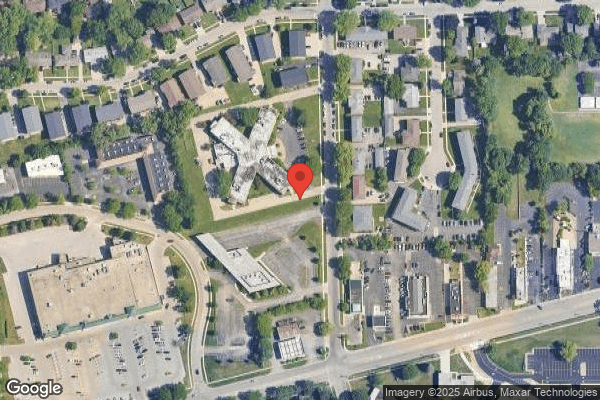
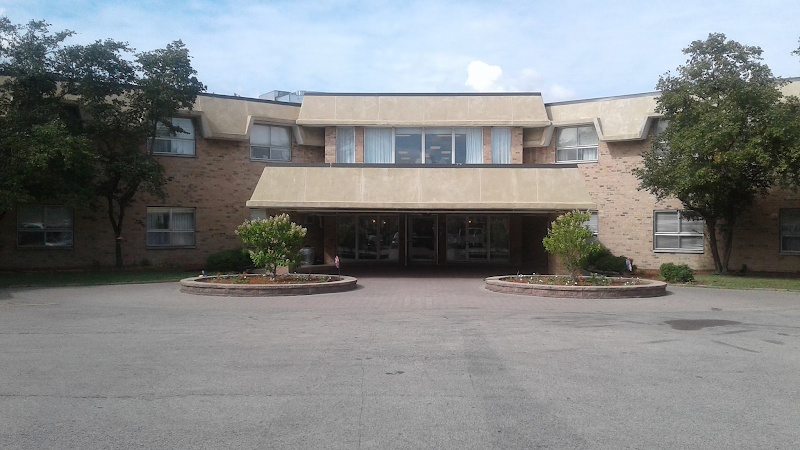
50 NORTH JANE, ELGIN, IL 60123 (847) 697-3750
For profit - Corporation 203 Beds ICARE CONSULTING SERVICES Data: November 2025 5 Immediate Jeopardy citations
Trust Grade
0/100
#619 of 665 in IL
Last Inspection: October 2024

Within standard 12-15 month inspection cycle. Federal law requires annual inspections.

Overview

Riverview Rehab Center has a Trust Grade of F, indicating significant concerns about the quality of care provided. It ranks #619 out of 665 facilities in Illinois, placing it in the bottom half, and #23 out of 25 in Kane County, which means options for better care are limited nearby. The facility is showing some improvement, reducing issues from 13 in 2024 to 10 in 2025, but it still faces serious problems. While staffing has a 2/5 star rating and a turnover rate of 42%, which is slightly better than the state average, the center has received $665,817 in fines, suggesting ongoing compliance issues. There are critical incidents reported, such as a resident being physically abused by untrained agency staff and another case where allegations of sexual abuse were not thoroughly investigated, raising red flags about safety and care practices.

Trust Score
F
0/100
In Illinois
#619/665
Bottom 7%
Safety Record
High Risk
Review needed
Inspections
Getting Better
13 → 10 violations
Staff Stability
○ Average
42% turnover. Near Illinois's 48% average. Typical for the industry.
Penalties
✓ Good
$665,817 in fines. Lower than most Illinois facilities. Relatively clean record.
Skilled Nurses
✓ Good
Each resident gets 45 minutes of Registered Nurse (RN) attention daily — more than average for Illinois. RNs are trained to catch health problems early.
Violations
⚠ Watch
39 deficiencies on record. Higher than average. Multiple issues found across inspections.
★☆☆☆☆
1.0
Overall Rating
★★☆☆☆
2.0
Staff Levels
★★★☆☆
3.0
Care Quality
★☆☆☆☆
1.0
Inspection Score
Stable
2024: 13 issues
2025: 10 issues

The Good

  • Full Sprinkler Coverage · Fire safety systems throughout facility
  • No fines on record
  • Staff turnover below average (42%)

    6 points below Illinois average of 48%

Facility shows strength in fire safety.

The Bad

1-Star Overall Rating

Below Illinois average (2.5)

Significant quality concerns identified by CMS

Staff Turnover: 42%

Near Illinois avg (46%)

Typical for the industry

Federal Fines: $665,817

Well above median ($33,413)

Significant penalties indicating serious issues

Chain: ICARE CONSULTING SERVICES

Part of a multi-facility chain

Ask about local staffing decisions and management

The Ugly 39 deficiencies on record

5 life-threatening 1 actual harm
Apr 2025 1 deficiency
CONCERN (D) 📢 Someone Reported This

A family member, employee, or ombudsman was alarmed enough to file a formal complaint

Potential for Harm - no one hurt, but risky conditions existed

Quality of Care (Tag F0684)

Could have caused harm · This affected 1 resident

Based on interview and record review, direct care staff member failed to follow the facility's policy and procedures and immediately notify the nurse after a resident fall. This failure led to a delay...

Read full inspector narrative →
Based on interview and record review, direct care staff member failed to follow the facility's policy and procedures and immediately notify the nurse after a resident fall. This failure led to a delay of assessment by the nursing staff for the resident within the required time frame. This applies to 1of 3 residents (R1) reviewed for falls in a sample of 8. The findings include: On 4/16/25 at 10:13 AM, V4 (CNA-Certified Nursing Assistant) stated, On 4/7/25 between 10 AM to 10:15 AM, I brought (R1) to the shower room in his wheelchair. I put him on the shower chair. I had (R1) stand up and grab the handlebars. I scrubbed his back and butt with soap and a washcloth. Then I told (R1) to sit back down on his shower chair. Within 1 to 2 seconds, (R1) slides off. I picked him up and put him back on the chair. I asked (R1), does it hurt. He said no and that he has no pain. There were no injuries. I continued the shower. I asked (R1) if he wants me to tell anyone. (R1) said, Na, don't tell anyone right away. I dried him and put him in his gown and wheeled him back to his room. When I got to his room, I dressed (R1) in his regular clothes. I again asked him if he's okay and he said Yeah, I'm okay. I said do you want me to tell anyone about the fall. He said no. I forgot the name of the nurse who was working that day. I didn't tell the nurse. I should have reported it to her because she needed to assess him. I left his room and went to take care of my other residents. After work, I had class. V2 (DON-Director of Nursing) called me on the phone. She asked me what happened with (R1) in the shower room. I told her (R1) fell. She asked me why I didn't tell the nurse. She said she has to discipline me and she wrote me up. I know I should have reported the fall to the nurse. On 4/16/25 at 10:47 AM, V1 (Administrator) stated, (V4) should have reported (R1)'s fall to the nurse right away. (V4) has to call the nurse and she has to do the assessment before he can be picked up from the floor. In the evening, (R1) told (V12--R1's sister) about the fall that happened in morning shift when she came to visit him. Then (V12) told the evening nurse (V6-RN/Registered Nurse) about the fall. (V6) then did the assessment. There were no injuries. On 4/16/25 at 11:20 AM, R1 stated, (V4) gave me a shower. I was sitting on the shower bench. I stood up and grabbed the bar. (V4) scrubbed me with soap. Then I sat down in the middle of the bench. I sprayed myself with water. I think I may have dozed off. I slid off the bench. (V4) tried to pick him up. Then he put me back on the bench. He told me if I was gonna say anything to anyone. I said no. No nurse came and saw me in the morning. Then in the evening I told my sister (V12). Then she told the nurse. I don't know her name. The nursed asked me my name. They didn't do any vitals. I had no pain or injuries. On 4/16/25 at 12:06 PM, V6 (RN) stated, I worked on 4/7/25. I picked up a shift and started at 3 PM. The morning nurse never told me that (R1) fell because (V4) never told her about the fall. After I was done with the medication pass, (V12-R1's sister) came to the nursing station and wanted to talk to me. She told me that (R1) told her that he fell in the morning. I told her that the morning nurse never told me that. I checked the risk management in the computer to see if a fall happened. Nothing was there. I went to (R1)'s room. I asked (R1) what happened. He told me that he fell. I assessed him. (R1) told me that he didn't want to make a big deal about it and that's why he didn't tell the nurse. He told me he landed on his buttocks. He said (V4) helped or assisted him back to the chair. He was confused and and then said he thought (V4) pushed him. He had no pain during the time of the fall and when I assessed him. He had no injuries. When I gave (R1) his medication and checked his blood sugar at 4 PM, he didn't tell me anything about the fall then. I then notified nurse practitioner and the psychiatric nurse practitioner, (V1) and (V2). Yes, when a resident has a fall, the CNA has to report it to the nurse right away. On 4/16/25 at 12:40 PM, V7 (RN) stated, I worked in the morning on Monday 4/7/25 on the 400 unit from 7 AM To 3:30 PM. I was the nurse for (R1). (V4) was my CNA and he was assigned to (R1). (V4) never told me that (R1) fell. (R1) never told me that he fell also. If a resident falls, the CNA or whoever saw the fall has to call the nurse immediately. The nurse has to watch and see the position of the resident. The nurse has to assess for pain and range of motion. On 4/16/25 at 2:33 PM, V2 (DON-Director of Nursing) stated, (V4) was supposed to leave (R1) on the floor for safety reason when he fell in the shower room. Then he was supposed to inform the nurse, so the nurse could assess (R1) and determine if he could be safely transferred back to the shower chair and then his wheelchair. I talked to him on the phone. He told me that (R1) fell in the shower room, but he never reported it to the nurse. I did counseling over the phone. On 4/16/25 at 2:48 PM, V3 (ADON-Assistant Director of Nursing) stated she did a disciplinary with V4). She confirmed that V4 should have notified the nurse right away after the fall. V3 submitted the corrective action form dated 4/11/25 for V4. It shows he received counseling for not reporting a fall incident to the nurse in a timely manner and that it was an informal warning. R1's face sheet shows diagnoses of: cerebral infarction, adjustment disorder with depressed mood, and hemiplegia and hemiparesis following cerebral infarction affecting left non-dominant side. R1's MDS (Minimum Data Set) dated 2/19/25 shows a BIMS (Brief Interview for Mental Status) score of 12 which means moderate cognitive impairment. R1 has impairments on one side of his upper and lower extremities. For showers, R1 was assessed as a 3, which means he needs partial/moderate assistance. For tub/shower transfer, he was assessed as a 2, which means he needs substantial/maximal assistance. R1's care plan dated 12/4/24 shows he is at risk for falls related to used of antidepressants, decreased safety awareness, and left sided weakness. Intervention: Anticipate and intervene to prevent recurrence. R1's progress notes and incident report dated 4/7/25 shows the following: Writer reported by (R1)'s sister that (R1) had fall this morning in 300 hall shower room. Per CNA who was with giving shower to (R1), CNA was soaping (R1)'s back while (R1) was standing and holding the grab bar. (R1) proceeded to sit down on the shower chair and slid off the chair because (R1) was not seated right and was still soapy. (R1) told CNA to pick him up from the floor and continue with the shower and not make a big deal about it. (R1) stated, After applying soap, I slid off from my wheelchair and landed on my buttocks, assigned CNA assisted me back to wheelchair. I didn't report it to my morning nurse. (R1) doesn't remember the exact time of fall incident. Writer assessed (R1) from head to toe with limited range of motion in lower and upper extremities; left side weakness as per usual due to CVA, denied hitting his head, no injuries were noted. Denied any pain and discomfort. Vitals done .Reminded (R1) to ask for help if needed and pull the call light for help. Facility's policy titled Falls (Undated) shows: Observed or unobserved and reported by staff member. Licensed nurse should conduct assessment immediately, including events leading up to the fall to determine when possible and causative factors 1. Observe positioning and overall conditioning. If head and neck are bent forward or backward in an extreme degree, do not move until seen by a physician .CNA: 1. Call for nurse and stay with resident. 3. Do not move.
Mar 2025 3 deficiencies 1 IJ
CRITICAL (J) 📢 Someone Reported This

A family member, employee, or ombudsman was alarmed enough to file a formal complaint

Immediate Jeopardy (IJ) - the most serious Medicare violation

Free from Abuse/Neglect (Tag F0600)

Someone could have died · This affected 1 resident

**NOTE- TERMS IN BRACKETS HAVE BEEN EDITED TO PROTECT CONFIDENTIALITY** Based on observation, interview and record review the facility failed to ensure residents were free from mental abuse for 3 of 8...

Read full inspector narrative →
**NOTE- TERMS IN BRACKETS HAVE BEEN EDITED TO PROTECT CONFIDENTIALITY** Based on observation, interview and record review the facility failed to ensure residents were free from mental abuse for 3 of 8 residents (R2, R3, R6) reviewed for abuse in the sample of 14. This failure resulted in R2 feeling fearful of R1 and socially isolating due to R1's threats against him. This failure resulted in R6 suffering mental anguish related to R1's threats to physically harm and kill R6. This failure resulted in R3 being fearful of physical and mental retaliation from R1. These failures resulted in an Immediate Jeopardy. The Immediate Jeopardy began on 3/17/25 when R2 reported to V1 Administrator that sometime late February (2025) R1 had threatened to kill him. These failures resulted in R2, R3, and R6 experiencing psychosocial harm. The Immediate Jeopardy was identified on 3/31/25. V1 Administrator was notified of the Immediate Jeopardy on 3/31/25. This surveyor confirmed by observation, interview and record review the Immediate Jeopardy was removed on 3/31/25 however, noncompliance remains at a Level 2 because additional time is needed to evaluate the implementation and effectiveness of the in-service training. The findings include: An initial facility abuse investigation report dated 3/17/25 showed R2 reported to V1 Administrator that R1 had threatened to kill and strangle him if R2 told facility staff that R1 had sold R2 marijuana. The final facility abuse investigation report dated 3/24/25 showed, on 3/18/25, R6 reported to V1 Administrator that R1 had offered R6 drugs in the facility. When R6 refused the drugs from R1, R1 became angry and told R6 that he would knock out his teeth if R6 reported to anyone that R1 had offered him drugs. R6 stated R1 threatened to break R6's neck and throw you out the window to make it look like a suicide. Per the report, R6 stated, on another occasion, R1 came into R6's room and told R6, I will kill you if you snitch on me. I have no one to lose. I will kill you and make it look like you are having a seizure. The final facility abuse investigation report showed, on 3/18/25, R3 reported to V1 Administrator that he too was afraid of R1. R3 stated R1 hid alcohol bottles in R3's room. R3 stated R1 is very threatening and intimidating. I don't want to be here if he is here. Once he threatened to beat me . I am terrified and want to be left alone . He (R1) knows a lot of people on the street, if he finds out I can get killed easily. The report showed R3 was visibly shaking, when speaking about R1, to V1 Administrator on 3/18/25. The facility's final abuse investigation report dated 3/24/25 showed abuse was substantiated related to the actions of R1. A police report was filed. R1's admission Record showed R1 was admitted to the facility on [DATE] for rehabilitation therapy services due to his diagnosis of low back pain. R1's current care plan showed R1 was cognitively intact, ambulatory, and needed no staff assistance to complete his activities of daily living. The plan showed R1 had a history of verbally aggressive behaviors towards others. The plan showed R1 was an identified offender due to his criminal history of attempted armed violence. R1's progress and nursing notes dated November 2024-March 2025 were reviewed. These notes showed multiple documented episodes of R1 having alcohol, drugs, and drug paraphernalia in the facility. The notes showed incidents of R1 being verbally aggressive and threatening towards residents and staff. The notes showed incidents of R1 repeatedly disobeying facility rules and leaving the facility despite his community pass privileges being revoked due to his behaviors. They showed multiple incidents of the local police being called to the facility due to R1's behaviors. A note dated 2/6/25 showed the facility served R1 a 30-day discharge notice due to his behaviors and R1 no longer needing skilled nursing services. R1 appealed his discharge. A note dated 3/3/25 showed a coat, belonging to R1, was found in the facility containing 9 bags of marijuana, a scale and a pipe. A note dated 3/11/25 showed R1 was sent to a local behavioral health hospital due to R1 threatening to shoot V1 Administrator and V2 Assistant Administrator. R1 was allowed to return to the facility on 3/19/25 pending the appeal related to his discharge. Upon return from the hospital, R1's notes dated 3/20/25-3/31/25 showed R1's behaviors continued. On 3/21/25, R1 walked out of the facility and did not return until noon on 3/22/25. On 3/23/25, R1 was verbally aggressive with staff. On 3/23/25, it was reported to facility staff that R1 had been smoking crack with another resident. On 3/25/25, R1 was found in another resident's room. R1 took food from the resident's room, and left. On 3/27/25 at 8:45 AM, R1 was in his room, lying in bed. R1 denied selling drugs to any residents in the facility. When this surveyor asked R1 about his interactions with R2 and if he had ever threatened R2, R1 began to get upset and his voice became louder. He immediately stood up from his bed, took a step towards this surveyor and stated, I have already told this story before. I already talked to the police. R1's voice continued to raise his voice as he spoke. R1 began walking towards the door of his room. R1 very loudly asked this surveyor to leave his room. This surveyor exited R1's room. 1. R2's admission Record dated 12/5/24 showed R2 was admitted to the facility with diagnoses of autism, developmental delays and a heart transplant. R2's admission nurse practitioner note dated 12/30/24 showed R2 was cognitively intact. On 3/27/25 at 8:30 AM, R2 was in his room, lying in bed, with the lights off. R2 stated R1 threatened to kill R2 sometime in late February if I snitched and told anyone where I got my pot (marijuana) from. R2 stated he had bought marijuana from R1 in February. R1 stated, After I bought pot from him, there were a couple of times when (R1) would just come into my room (unannounced). I was definitely scared of him then. He never asked to come in my room . after that, I finally told on him because I was angry from what he said to me and I was also a little scared of him . Now that (R1) is back from the hospital, I just stay away from him. I stay in my room to avoid him. I know he has other people (residents) watching me so he knows who I talk to. I am still a little scared of him . On 3/27/25, V5 Social Services stated R2 had reported to V5 in the past that R2 did not feel safe around R1 because R1 had threatened to choke him (R2) out if R2 told anyone he bought marijuana from R1. V5 stated when R1 returned from the hospital, R2 reported feeling afraid because of (R1). (R2) has been spending more time in his room to avoid conflicts . V5 stated, (R1) is very intimidating. He becomes verbally aggressive. Staff are afraid he will hit them if they try to enforce the rules. I worry that (R1) will attack me or other staff . I don't feel comfortable with (R1) and he intimidates me. The dilemma is that we don't know what to do with him when he acts out other than call the police . A social service noted for R2, dated 3/25/25, showed R2 reported to social services that a co-resident came into his room when he wasn't present and the he doesn't want this co-resident to come into his room anymore . On 3/27/25 at 12:27 PM, V4 Social Services was asked about the resident referenced in R2's social service note dated 3/25/25. V4 stated, The resident in (R2's) room was (R1). (R2) came to me and told me that the day before (3/24/25), (R2) walked into his room and found (R1) standing in his room, talking to (R2's) roommate. (R2) reported to me that he immediately felt uncomfortable and walked back out of his room. I think he was a little fearful when he saw (R1) in his room. Since his return from the hospital, we try to monitor where (R1) is at when he is in the building but he goes where he wants. We have tried to revoke (R1's) community pass privileges due to his behaviors but he doesn't care. He feels like he's above the rules and leaves anyway. On 3/27/25 at 9:13 AM, V1 Administrator stated on 3/17/25, R2 reported to V1 that R1 had threatened to kill R2 if he told anyone R1 had sold him marijuana. V1 stated all staff and many residents are afraid of R1 due to his behaviors. V1 stated, We were finally able to send (R1) out to the hospital after he threatened to kill me, (V2 Assistant Administrator), and our families but he was allowed to return. When he came back, we tried to put him (R1) in a private room, but he refused. We tried to move him to a room on the first floor, but he refused. We revoked his community pass privileges but he doesn't care, he still leaves the facility. We try to monitor where he is every hour that he is in the facility . V1 stated facility staff are afraid to enforce the facility's rules with R1 because they are afraid he will try to hurt and physically assault them. 2. On 3/27/25 at 10:45 AM, R6 was asked about his interactions with R1. R6 was initially hesitant to speak with this surveyor, stating, I don't want to get involved. If I say something, there is nothing you can do. I already made my statement (during the abuse investigation) . R6 continued to talk and then stated he had been threatened by R1 in the past. R6 stated, One night, when he (R1) wasn't sober, he came into my room and threatened to break my neck and throw me out a window. He said he could break my neck and tell staff it was a seizure since there is no cameras in my room. I started yelling and a CNA (certified nursing assistant) came and got him out of my room . Many residents are afraid of him. He has power and no one can stop him. He is big and intimidates people . It would be better if he left and never came back. The police just bring him back and he does whatever he wants . (R1) has said before he can leave people crippled in a wheelchair or a vegetable, what are they waiting for? Someone to die or get hurt? On 3/27/25 at 9:13 AM, V1 Administrator stated on 3/18/25, R6 reported to V1 that he was scared of R1 because R1 had threatened to break R6's neck. 3. On 3/27/25 at 11:10 AM, R3 refused to speak to this surveyor about R1. On 3/27/25 at 11:10 AM, R4 stated R3 won't come down and talk to you guys because he's fearful of his safety. (R1) is big and has threatened (R3) before. I have seen (R1) drinking (alcohol) in (R3's) room before. (R3) is timid and shy .He doesn't want to get beat up by (R1) . R4 stated she was the resident that reported R1 had threatened to kill V1 Administrator and V2 Assistant Administrator. R4 stated, (R1) was pissed off because he thought (V2) was trying to get him kicked out of the facility. He told me that he could be sitting in a bar and have someone shoot (V1) and (V2) and their families so I reported that to (V2). R4 stated she has seen R1 smoke weed and drink alcohol in the facility. A social service note dated 3/19/25 for R3 showed, Resident is upset and scared that a co-resident (R1) got admitted back to the facility . On 3/31/25 at 10:24 AM, V7 Social Services was asked about the note she documented on 3/19/25 for R3. V7 stated R3 said he was scared because R1 had been readmitted to the facility. On 3/27/25 at 9:13 AM, V1 Administrator stated on 3/18/25, (R3) told me he felt terrible. He said he was afraid of (R1). He said (R1) was very threatening. He said (R1) hides alcohol and drugs in (R3's) room. (R3) can't tell on him because (R3) is scared of him. On 3/27/25 at 10:20 AM, V2 Assistant Administrator stated, I spoke with (R3). He told me he is afraid of (R1). (R3) said his room is where (R1) hides his drugs and alcohol. (R3) is afraid that if he snitches and tells on (R1), (R1) will have people come and get (R3) and kill him .(R4) came to me and told me (R1) threatened to kill me and my family . Since then, I don't stay home alone . V2 became tearful during the interview. V2 stated, We are all afraid that (R1) is back. We are sitting ducks right now . On 3/27/25 at 1:00 PM, V6 Psychiatric Nurse Practitioner stated he has been treating R1 for a mood disorder but recently also for substance abuse and his threatening behaviors. V6 stated, (R1) doesn't follow the rules. When staff try to enforce the rules, he gets upset and starts threatening staff and residents. It's a big deal. That is why we sent him to the hospital and then he was allowed to come back. He's threatened to hurt staff and residents. I am very concerned about his behaviors. His behaviors are worsening. I am not sure if that's related to his substance abuse or there is something else going on. Staff and residents are fearful of him. He is a risk. His homicidal threats are a big deal. The facility's Abuse Prevention-Program Policy revised 2/26/25 showed, Residents have the right to be free from abuse, neglect, exploitation, misappropriation of property or mistreatment . Abuse means any physical or mental injury or sexual assault inflicted upon a resident other than by accidental means. Abuse is also the willful infliction of injury, unreasonable confinement, intimidation, or punishment with resulting physical harm, pain, or mental anguish to a resident . Mental abuse includes, but is not limited to, humiliation, harassment, threats of punishment or deprivation . Mental abuse is also the use of verbal or nonverbal contact which causes or has the potential to cause the resident to experience humiliation, intimidation, fear, shame, agitation, or degradation . The facility presented an abatement plan to remove the immediacy on 3/31/25. The survey team reviewed the abatement plan and was unable to accept the plan to remove the immediacy. The abatement plan was returned to the facility for revisions. The facility presented a second revised abatement plan on 3/31/25. The abatement plan was returned to the facility for revisions. The facility presented a third revised abatement plan on 3/31/25 and the survey team accepted the abatement plan on 3/31/25. The Immediate Jeopardy that began on 3/17/25 was removed on 3/31/25 when the facility took the following actions to remove the immediacy: 1. On 3/31/25, R1 was placed on 1:1 monitoring. 2. On 3/31/25, the police will be called for assistance every time R1 violates community restriction. R1 will be discharged in 10 days per court order. 3. On 3/31/25, an order of protection will be filed on R1, by R2, R3, and R6 pending their consent. 4. On 3/31/25, recent abuse in-services/education will be continued on all newly hired employees and agency nurses. 5. On 3/31/25, the resident admission process was reviewed with the Admissions Director and Social Services and will be implemented per facility guideline. It will ensure that resident background checks are being completed on time. The background checks will also be reviewed to ensure that appropriate interventions are put into place for the safety of all residents. 6. On 3/31/25, it was decided that should a resident become noncompliant with facility protocols and guidelines, the resident will be counseled by staff. If the resident continues to be noncompliant, he/she will be sent out for psychiatric evaluation and will be served a 30-day discharge notice as deemed appropriate. Should he/she become harmful to other residents, he/she will be placed on 1:1 monitoring. V1 Administrator will be responsible for overall compliance to the plan of correction in conjunction with the Social Services Director by making sure that the above plan is being implemented. A QA (quality assurance) will be used to monitor for compliance by checking if the monitoring sheet is followed. The Quality Assurance/Quality Improvement (QAQI) Team meets monthly. The event will also be brought to the next monthly QAQI meeting for discussion and re-evaluation of interventions. If further interventions are needed at that time, they will be implemented accordingly.
CONCERN (D) 📢 Someone Reported This

A family member, employee, or ombudsman was alarmed enough to file a formal complaint

Potential for Harm - no one hurt, but risky conditions existed

Deficiency F0660 (Tag F0660)

Could have caused harm · This affected 1 resident

**NOTE- TERMS IN BRACKETS HAVE BEEN EDITED TO PROTECT CONFIDENTIALITY** Based on interview and record review the facility failed to initiate discharge planning for 1 of 3 residents (R1) reviewed for d...

Read full inspector narrative →
**NOTE- TERMS IN BRACKETS HAVE BEEN EDITED TO PROTECT CONFIDENTIALITY** Based on interview and record review the facility failed to initiate discharge planning for 1 of 3 residents (R1) reviewed for discharge planning in the sample of 14. The findings include: R1's admission Record showed R1 was admitted to the facility on [DATE] for rehabilitation therapy services due to his diagnosis of low back pain. R1's current care plan showed R1 was cognitively intact, ambulatory, and needed no staff assistance to complete his activities of daily living. R1's progress and nursing notes dated November 2024-March 2025 were reviewed. These notes showed multiple documented episodes of R1 having alcohol, drugs, and drug paraphernalia in the facility. The notes showed incidents of R1 being verbally aggressive and threatening towards residents and staff. The notes showed incidents of R1 repeatedly disobeying facility rules and leaving the facility despite his community pass privileges being revoked due to his behaviors. They showed multiple incidents of the local police being called to the facility due to R1's behaviors. A note dated 2/6/25 showed the facility served R1 a 30-day discharge notice due to his behaviors and R1 no longer needing skilled nursing cares. R1 appealed his discharge. R1's physician progress note dated 2/26/25 showed, The resident has demonstrated sufficient stability and independence in their current condition, with no ongoing medical needs requiring skilled nursing services. (R1) is now safe and capable of transitioning to the PAD program (program for homeless persons)/shelter. The resident no longer requires the specialized care provided by a skilled nursing facility and is suitable for the next level of care. R1's social service notes dated 2/6/25-3/31/25 were reviewed. These notes showed no documentation of any discharging planning for R1, including no referrals for R1's placement after his discharge or documentation of R1's discharge needs or goals. On 3/27/25 at 8:45 AM, this surveyor attempted to interview R1 in his room. R1 became verbally aggressive towards this surveyor. R1 asked this surveyor to leave his room and surveyor exited R1's room. This surveyor was unable to interview R1 on his discharge plans or goals. On 3/31/25 at 12:03 PM, V4 Social Services stated he was R1's case worker in the facility. V4 stated he had not initiated any discharge planning for R1. V4 stated he had not made any referrals for R1's placement after being discharged from the facility. V4 stated he had not done any discharge planning for R1 because R1 had not expressed any desire to leave. On 3/31/25 at 11:55 AM, V5 Social Services stated had not initiated any discharge planning for R1. V5 stated social services is responsible for discharge planning, however, social services does not begin discharge planning for a resident until we know a discharge plan is in place. On 3/31/25 at 10:24 AM, V7 Social Services stated she had not initiated any discharge planning for R1 because he doesn't want to leave. V7 stated if a resident is issued a 30-day discharge notice, we should help that resident find placement for when he is discharged . The facility's Discharge/Transfer of Resident policy dated November 2018 showed, Purpose: To provide safe departure from the facility. To provide continuity of care and treatment . Procedure: Explain discharge procedure to resident and family . Inform all departments of anticipated and actual discharge .
CONCERN (E) 📢 Someone Reported This

A family member, employee, or ombudsman was alarmed enough to file a formal complaint

Potential for Harm - no one hurt, but risky conditions existed

Abuse Prevention Policies (Tag F0607)

Could have caused harm · This affected multiple residents

**NOTE- TERMS IN BRACKETS HAVE BEEN EDITED TO PROTECT CONFIDENTIALITY** Based on interview and record review the facility failed to follow their abuse policy by not completing pre-admission screening ...

Read full inspector narrative →
**NOTE- TERMS IN BRACKETS HAVE BEEN EDITED TO PROTECT CONFIDENTIALITY** Based on interview and record review the facility failed to follow their abuse policy by not completing pre-admission screening of residents to ensure resident safety for 6 of 6 residents (R4, R10, R11, R12, R13, R1) reviewed in the sample of 14. The failure has the potential to affect all 179 residents in the facility. The findings include: The Facility Data Sheet form dated 3/27/25 showed a resident census of 179. 1. R4's admission Record showed R4 was admitted to the facility on [DATE]. R4's electronic medical records dated 2/19/25-3/31/25 showed no IDOC (Illinois Department of Corrections), Illinois Sex Offender Registry, or National Sex Offender Registry website checks had been completed on R4. 2. R10's admission Record showed R10 was admitted to the facility on [DATE]. R10's National Sex Offender Registry check was not completed until 3/31/25. 3. R11's admission Record showed R11 was admitted to the facility on [DATE]. R11's electronic medical records dated 3/17/25-3/31/25 showed no IDOC, Illinois Sex Offender Registry, or National Sex Offender Registry website checks had been completed on R11. 4. R12's admission Record showed R12 was admitted to the facility on [DATE]. R12's electronic medical records dated 1/27/25-3/31/25 showed no IDOC, Illinois Sex Offender Registry, or National Sex Offender Registry website checks had been completed on R12. R12's Criminal History Information Response Process (CHIRP) report dated 1/27/25 showed R12 was an identified offender due to his convictions of aggravated battery resulting in great bodily harm, theft, possession of drug paraphernalia, criminal damage to state property, and resisting a peace officer. R12's fingerprint-based criminal history background check was not completed until 2/4/25. 5. R13's admission Record showed R13 was admitted to the facility on [DATE]. R13's National Sex Offender Registry check was not completed until 3/31/25. R13's CHIRP dated 1/8/25 showed R13 was an identified offender due to his convictions of obstructing justice, theft, deceptive practice, resisting a peace officer, and endangering life/health of a child. R13's fingerprint-based criminal history background check was not completed until 2/4/25. On 3/31/25 at 11:00 AM, V1 Administrator stated, A CHIRP should be run on a resident within 24 hours of their admission. If the CHIRP shows the resident is an identified offender, fingerprints should be ordered and done on that resident immediately. V1 Administrator stated all criminal history background checks, for newly admitted residents, are to be completed within 24 hours of a resident's admission. On 3/31/25 at 11:05 AM, V7 Social Services stated the ISP, IDOC, and National Sex Offender Registry website checks had never been completed on R4, R11, or R12. V7 she had just completed the National Sex Offender Registry website checks on R10 and R13 today (3/31/25). 6. R1's admission Record showed R1 was admitted to the facility on [DATE]. R1's, name based, Criminal History Information Response Process report (CHIRP) dated 9/19/24 showed R1 was an identified offender due to his conviction of attempted armed violence. R1's fingerprint-based criminal history background check was completed on 9/26/24. An email dated 11/18/24 from the State Identified Offenders program showed the program had received all of the required information on R1 to process his criminal analysis security report. The email stated if the facility did not receive R1's security report within 45 days of the email, the facility was to contact the State police. On 3/31/25 at 8:04 AM, V1 Administrator stated the facility had never received the results of R1's criminal analysis security report from November 2024. V1 stated, We don't know if (R1) is a low, medium, or high risk identified offender. I don't think we ever followed up on this. V1 stated it was important for the facility to know the risk level, for any identified offender resident in the facility, so they can initiate an appropriate care plan for the offender and safety interventions for residents as needed. The facility's Resident Background Checks policy dated October 2024 showed, When a resident is admitted to the facility, an electronic name-based background check must be ordered within 24 hours . If the background check response contains convictions that match the Identified Offender offenses, the resident is an identified offender . Once the facility determines the resident is an Identified Offender, the facility must arrange for the resident to undergo a live scan State and FBI (national) fingerprint-based Fee Applicant criminal history check within 72 hours . The facility's Abuse Prevention Program-Policy revised 2/26/25 showed, The residents have the right to be free from abuse, neglect, exploitation, misappropriation of property or mistreatment . The purpose of this policy and the Abuse Prevention Program is to describe the process for identification, assessment, and protection of residents from abuse, neglect, misappropriation of property, and exploitation. This will be accomplished by: conducting pre-employment screening of employees and pre-admission screening of residents .
Mar 2025 3 deficiencies 1 IJ (1 affecting multiple)
CRITICAL (K) 📢 Someone Reported This

A family member, employee, or ombudsman was alarmed enough to file a formal complaint

Immediate Jeopardy (IJ) - the most serious Medicare violation

Free from Abuse/Neglect (Tag F0600)

Someone could have died · This affected multiple residents

**NOTE- TERMS IN BRACKETS HAVE BEEN EDITED TO PROTECT CONFIDENTIALITY** Based on observations, interviews, and record reviews, the facility failed to: 1. Protect a resident's right to be free of sexua...

Read full inspector narrative →
**NOTE- TERMS IN BRACKETS HAVE BEEN EDITED TO PROTECT CONFIDENTIALITY** Based on observations, interviews, and record reviews, the facility failed to: 1. Protect a resident's right to be free of sexual and mental abuse from staff and other residents. This failure resulted in R1 being inappropriately touched by V8 (CNA-Certified Nursing Assistant) in the shower and being subjected (verbally and via phone message) to inappropriate and lewd comments of a sexual nature about R1's body. This failure also resulted in R1 being exposed to R6, who formerly sexually abused R1. R6 was in close proximity to R1 without supervision. These failures caused R1 to experience emotional distress and feel unsafe in the facility and caused her to discharge herself AMA (against medical advice). 2. Protect a resident's right to be free from physical abuse by a resident and failed to protect residents from further abuse from the abusive resident. This failure resulted in R5 hitting R7, R5 hitting R4 twice within two days, and R5 hitting R6 between 2/5/25 and 2/20/25. This failure also resulted in R2 being hit by R3. This failure resulted in Immediate Jeopardy. The Immediate Jeopardy began on 2/16/25 when R1 was sexually and mentally abused by V8. V1 (Administrator) was notified of the Immediate Jeopardy on 2/26/25 at 9:45 AM. The surveyor confirmed by observation, interviews, and record review that the Immediate Jeopardy was removed on 2/27/25, but noncompliance remains at Level Two because additional time is needed to evaluate the implementation and effectiveness of the interventions and in-service training. This applies to 5 of 5 residents (R1, R2, R4, R6, and R7) reviewed for abuse in a sample of 16. The findings include: 1. Facility Final Investigation Report Form, submitted 8/26/24, shows the facility substantiated that R6 sexually abused R1. R1's Face sheet, dated 2/20/25, shows R1's diagnoses include Huntington's disease, major depressive disorder, and suicide ideation and attempt. The face sheet shows R1 was admitted to the facility on [DATE] and discharged on 2/18/25. MDS (Minimum Data Set), dated 2/5/25, shows R1 was cognitively intact and required supervision or touching assistance for bathing, hygiene, and lower body dressing. Face sheet, dated 2/25/25, shows R6's diagnoses include alcohol abuse, depression, and chronic obstructive pulmonary disease. MDS, dated [DATE], shows R6 was cognitively intact and was able to independently ambulate. Care plan, initiated 8/22/24, shows R6 was admitted to the facility with a history of a Class 4 felony, was at moderate risk, and requires closer supervision and more frequent observation than standard or routine for most residents in an open facility. Care plan, initiated 9/5/24, shows R6 is to remain on his designated floor (2nd floor) and is not to enter other residents' rooms. [R6] will be escorted to and from floors if he is to participate in the designated smoke times, attend activities or go to therapy. Interventions include educating the resident on appropriate behavior redirect resident if seen on the first floor other than to smoke or participate in activities and monitor resident when in community areas to make sure actions are appropriate. 2. Facility Final Incident Investigation Report Form, provided 2/22/25, shows the facility substantiated R1 was abused by V8. The report shows the abuse occurred on 2/16/25 and R1 left the facility AMA on 2/18/25 at approximately 10:30 PM. Facility abuse investigation documents show V8 was interviewed and stated he assisted R1 with a shower, stood outside her curtain, assisted R1 as she stumbled, and then only washed her back and lower legs for R1. V8 denied touching R1 in inappropriate ways. V8 stated he and R1 connected on Facebook on 2/16/25 and messaged each other on the application. On 2/20/25 at 9:56 AM, V4 (PRSC- Psychiatric Rehabilitation Services Coordinator) stated R1 showed her a message from V8 on R1's phone regarding V8 becoming sexually aroused when V8 was near R1. V4 stated she was shocked and felt the messages were very inappropriate. V4 stated R1 told her that R1 kept the conversation going via the messages because she wanted proof of how V8 was talking to R1. On 2/20/25, V3 (assistant admininstrator) stated she was informed on 2/17/25 that V8 was messaging R1 via phone in a sexual nature. V3 stated she interviewed R1, R1 read V3 some of the messages, and V3 read messages which showed V8 was referring to becoming sexually aroused when he saw R1. V3 stated, I saw enough- they were very concerning. V3 stated by the time the police arrived, V8 deleted the messages on the messaging application. On 2/20/25 at 1:13 PM with V25 (R1's Friend), stated, R1 stated V8 would often bring R1 food from outside the facility including the day V8 inappropriately touched R1. R1 stated, Then as we were showering, he ended up washing my [internal reproductive area] and then my [buttocks]. R1 stated she almost fell prior in the shower and V8 steadied her but then continued washing areas of R1's body that she did not need assistance washing. R1 stated V8 never asked if he could wash R1's body. R1 stated after the shower R1 and V8 were in R1's room and V8 stated, Nice butt. R1 stated V8 stated, Could I tell you something without getting fired? You have a really nice butt and nice boobs. R1 stated after the comments, V8 asked to connect on Facebook with R1 and V8 used R1's phone to add V8 as her friend. R1 stated at that time they were sitting next to each other in her room and V8 stated, He told me how cute I was, that I had a cute butt and boobs again, and then he left. R1 stated V8 later messaged R1 telling her that V8 was sexually aroused, suggested he could have sexual intercourse with her while she was in the shower, and referenced the size of his sexual organ. R1 stated all of the administrative staff left the facility because it was late on a Sunday, so R1 reported the interactions the next day to V4 (PRSC- Psychiatric Rehabilitation Services Coordinator). R1 stated she showed V4 and V3 (Assistant Administrator) the messages from V8 before V8 deleted the messages on the application. R1 stated she didn't initially mention her concerns about the shower because R1 thought V8 was helping her but after R1 told her children about the interaction, they told R1 no staff should be helping her in the shower and R1 was capable of washing herself even if she became off balance. R1 stated she told V26 (Restorative CNA) about V8 washing her peri area in the shower and R1 stated V26 told R1 that R1 did not need assistance from staff to perform those tasks. R1 stated V26 never washed R1's peri area in all the times V26 provided R1 assistance in the shower. R1 stated she experienced prior sexual assault at the facility by a resident and stated, Hence I am no longer there. I am not safe at all at that facility Nobody asked me if I felt safe at the facility this time. I had friends come and get me on Tuesday because I don't feel safe! On 2/20/25 at 3:15 PM, V26 (Restorative CNA) stated R1 could independently wash herself in the shower. V26 stated R1 could sit on a shower bench and wash all of their body in the shower. V26 stated R1 only needed supervision to help her get set up and regulate the water temperature in the shower. V26 stated she assisted R1 with a shower on 2/18/25 and R1 did not require assistance to physically wash R1. On 2/20/25 at 11:54 AM, V23 (R1's Daughter) stated R1 was sexually assaulted at the facility in the past and V23 stated R1 was sexually abused a second time by facility staff. V23 stated the facility staff did not need to assist R1 to walk to the shower but recently a male CNA was allowed to wash her body and her privates. V23 stated on 2/17/25 at 12:44 AM, R1 messaged V23 stating she had to report a male CNA because he helped R1 in the shower and made verbal and written sexual comments toward R1 via phone, and suggested R1 allow V8 have sexual intercourse while being showered by V8. R1 identified the staff as V8. V23 stated she called the facility at approximately 2:15 PM on 2/17/25 and spoke to V4 (PRSC- Psychiatric Rehabilitation Services Coordinator). V23 stated she told V4 she was aware of V8 sexually messaging R1 as well as touching R1 inappropriately in the shower. V23 stated she called the police at 2:30 PM to report the allegation that V8 touched R1 inappropriately in the shower and the inappropriate messages because V4 stated they were not going to call the police but instead would handle it in house. V23 stated she pulled R1 out of the facility and sent R1 to the hospital to be examined on 2/18/25. On 2/20/25 at 12:53 PM, V24 (R1's Friend) stated she was with R1 at the hospital on 2/17/25 and R1 told the staff V8 asked R1 if she needed help with her shower and R1 told him she did not because she was fully capable of washing herself. V24 stated R1 told the staff V8 proceeded to wash her vaginal and buttocks areas which shocked R1. V24 stated on 2/16/25 evening, R1 messaged V24 stating V8 made verbal sexual comments toward R1. On 2/20/25 at 4:00 PM, V9 (Police Officer) stated V3 told her that V3 did see some of the messages and described the messages as very disturbing. At 7:00 PM, V9 stated V8 came to the police station to do an interview but would not speak with the police officers and requested a lawyer. On 2/20/25 at 11:15 AM, V5 PRSD (Psychiatric Rehabilitation Services Director) stated she spoke with V8 who stated he stood outside the shower curtain during R1's shower until R1 stumbled. V8 stated he helped R1 and then helped R1 wash her legs and back. V5 stated V8 was very short with his answers and not forthcoming. On 2/20/25 at 9:15 AM. V1 (Administrator) stated on 2/17/25 he received report that R1 alleged V8 (CNA) sent sexual messages via phone to R1. V1 stated the messages included phrases such as you are hot or you are sexy. V1 stated when he asked to see the messages, the messages were deleted. V1 stated he spoke with V8 who admitted to messaging R1 but denied ever physically touching R1. V1 stated V8 resigned from facility employment. V1 stated later in the day on 2/17/25, R1 contacted V1 and informed V1 she spoke with her daughter who informed R1 that V8 assisting R1 in the shower was sexual abuse because R1 did not require physical assistance with her showers. V1 stated R1 told V1 that V8 unnecessarily wiped R1's peri area and buttocks during her shower. On 2/25/25 at 12:38 PM with V27 (R1's Friend), stated, R1 stated since R6 sexually abused R1, R1 experienced R6 in close physical proximity and unsupervised to her several times and as recent as January 2025. R1 stated, I was freaked out and stated she told a staff member. R1 stated R6 would visit the table at which she was sitting for approximately 10 minutes and talk to all of the residents at the table other than her. R1 stated R6 at times pushed a resident around the first floor in his wheelchair unsupervised where she resided. R1 stated R6 was not supposed to be on the first floor and was supposed to remain on the second floor where he resided because of the sexual abuse she experienced by R6. R1 stated R6 came down to the first floor unsupervised other than during designated smoking breaks. On 2/20/25, V23 (R1's Daughter) stated R1 messaged her on 1/26/25 at 11:25 AM telling V23 that R6 was walking by R1. V23 stated R1 pressed charges against R6 last year after R6 sexually assaulted her and R1 recently went to court on the case and there was an upcoming court date in April of 2025. V23 stated R1 left the facility because R1 was not safe at the facility. On 2/20/25 at 1:13 PM with V25 (R1's Friend), R1 stated she was sexually assaulted by R6 the prior year and she was in disbelief she was sexually assaulted again the facility recently by staff. R1 stated she no longer felt safe at the facility because she experienced sexual abuse twice and she chose to discharge AMA from the facility to a friend's home until she could find a different facility in which to live. On 2/24/25 at 3:55 PM, R6 stated he travels up and downstairs by himself to smoke breaks at the facility. On 2/25/25 at 1:35 PM on the first floor, R6 walked off the elevator with female resident and independently walked into the dining room. R6 then began walking around the dining room talking to residents with no direct supervision from staff. V28 (Social Services) was sitting at a table with a resident engaged 1:1 in an interview of the resident. R6 stood at R14's table talking to residents with no direct supervision and then walked to R9's table and then back to R14's table. At 1:40 PM, an announcement was made overhead the facility that the smoking patio would be opened in five minutes. R6 continued to walk around the dining room speaking to R9 and other residents. There were 11 females and 11 males in the dining room in addition to R6. On 2/26/25 at 9:45 AM, V1 stated R6 did not need any kind of supervision at the facility. V1 stated R6 was moved to the second floor because of his isolated behavior of sexual abuse toward R1 (which was substantiated) and to reduce interactions with R1 when the incident was new. V1 stated he did not deny R6 was coming down to the first floor unsupervised. On 2/24/25 at 3:47 PM, V31 (CNA- Certified Nursing Assistant) stated R6 travels back and forth on the elevator to the first floor independently without supervision. On 2/24/25 at 3:45 PM, V30 (Registered Nurse) stated R6 was not allowed to go downstairs due to an incident a year ago which was why R6 was moved to the second floor. V30 stated R6 did travel back and forth on the elevator without an escort to the first floor. 2. Face sheet, dated 2/22/25, shows R5's diagnoses included Huntington's disease and mood disorder. R5 was admitted to the facility on [DATE]. MDS, dated [DATE], shows R5 was cognitively intact and R5 was able to propel in a wheelchair once set up in the wheelchair. Care plan, dated 4/23/24, shows R5 was admitted to the facility on [DATE] with a criminal history of violating an order of protection and domestic battery. Approaches include, Review of my past behavior and evaluate the potential for me to engage in inappropriate / high risk behavior, provide R5 with supportive group intervention and/or 1:1 via a qualified provider, to promote safety intervene when I am observed to be engaging in inappropriate behavior, teach me impulse control strategies and communicate to me that I am responsible for all my actions/behavior and must therefore exercise control over my impulses and behavior. Care plan, dated 10/17/24, shows R5 had a history of a hit and run accident and may have flashbacks, become upset, and become aggressive verbally and physically with staff. Care plan, dated 11/4/24, shows R5 was observed with manipulative behaviors and approaches included providing educations to not fabricate stories, perform check-ins with residents, and providing 1:1 interaction with R5 to help find solutions towards issues. Behavioral care plan, initiated 2/10/25, shows R5 displayed verbal and physical aggressive behaviors toward others, uncontrolled behavior outbursts and requires the use of non-pharmacological and pharmacological interventions to address and mitigate behaviors. Interventions included Social Services will continue to educate resident on aggressive behaviors and encourage resident to utilize healthier ways to communicate thoughts and feelings. Social services will work with resident to establish better communication and mechanisms. Delusions/paranoia care plan, dated 2/14/25, shows R5 was diagnosed with Huntington's disease and believes everyone is making fun of his disability. Interventions include psychiatric management, minimizing risk factors through interventions such as assessment, team, consultation, supervision, observation, structured environment, peer-buddy system, contracting and medication management. Other interventions include teaching stress/anxiety management techniques, discussing benefits of therapy with physicians, encouraging resident to follow mental health treatment plans and encouraging resident to attend groups. Illinois State Police report, dated 1/2/24, shows R5 was convicted of domestic battery/bodily harm, revisiting a peace officer, criminal trespassing, possession of drug paraphernalia, manufacturing/delivering controlled substances. Facility Final Incident Investigation Report Form, dated 2/10/25, shows on 2/6/25 R5 stood up and attempted to hit R7 in the face. The report shows R5 was sent to the hospital and R7 declined to press charges. The report shows R5 has a history of dwelling in the past which leads him to become physically aggressive with co-residents. The report shows R5 was educated on the facility policy and proper way of communicating. R7 was educated on the proper way to speak to his co-residents. Investigation witness statement, shows R7 reported R5 repeatedly came into R7's room and when R7 asked if R5 had a problem, R5 stood up and started punching R7. The statement shows R7 covered his head while R5 swung but R5 missed which caused R7 to fall. Investigation witness statement shows V17 (Registered Nurse) heard R7 was calling R5 the n word and R7 told R5 to get away from R7. The statement shows R5 stood, leaned into R7 and hit him in the left side of the face. The statement shows R7 pushed R5 off of him and R5 lost his balance and fell. Investigation witness statement shows V11 (Registered Nurse) saw R7 and R5 arguing, R5 stood and hit R7, and R5 fell to the floor. The report shows the facility did not substantiate the abuse because R5 stood up from his wheelchair and attempted to hit [R7], but has an unsteady gait, which caused him to lose balance and fall into [R7]. Nursing note, dated 2/5/25, shows, Writer was standing near nursing station, turned around to note this resident standing up and using profanity towards a co-resident. As soon as writer began to approach the situation, this resident stood up, leaned into co-resident and was physically aggressive. Co-resident pushed this resident to the ground. The writer and other staff members separated the resident from each other. On 2/25/25 at 2:59 PM, R7 stated he had a previous altercation with R5 approximately a year ago when the two were roommates and R5 hit (R7) in the head several times. R7 stated the most recent altercation happened a few weeks ago when R5 hit him in the head several times and R7 stated he had several knots on his head. Social Services note, dated 2/5/25, shows the PRSD was informed that R5 and another co-resident got into a physical altercation by the nursing station, R5 hit another co-resident, and R5 was being sent out for a psychiatric evaluation. Social Services note, dated 2/5/25, shows R5 got in a physical altercation with co-resident as resident claimed that this co-resident had insulted him. PRSC explained to resident that he cannot get physical with co-residents whatsoever. PRSC explained to resident that if he has an issue with co-resident, he must find a PRSC to intervene. Resident was therefore educated on facility policy and proper communication. Will continue to monitor. Review of R5's clinical record showed no interventions were put into place to prevent further physical aggression by R5. Progress note, dated 2/6/25, shows R5 angrily knocked on R7's door to get in, entered R7's room, and knocked R7's belongings around the room and was verbally aggressive. The note shows R5 hit R7 the day prior and R5 was told to stay away from R7. The progress notes show R5 was sent to the hospital for evaluation and returned the same day to the facility. Review of R5's clinical record showed no interventions were put into place to prevent further physical aggression by R5. 3. Face sheet, dated 2/20/25, shows R4's diagnoses included schizoaffective disorder, epilepsy, convulsions, post-traumatic stress disorder, and cocaine/cannabis abuse. MDS, dated [DATE], shows R4 was cognitively intact and could independently ambulate at the facility. Care plan note, dated 1/28/25, shows R4 was reported to be making inappropriate remarks, becoming aggressive with staff, and verbally aggressive with co-residents. Care plan notes, dated 1/28/24, show R4 experiences auditory and visual hallucinations and paranoia when discussing his symptoms. Progress note, dated 2/9/25, shows R5 was in a second physical altercation at the facility. The note shows, Writer was notified that [R5] was fighting with other resident at the end of the hallway 400. We proceeded to separate them, assess them, and place them in different areas. I notified [Psych Nurse Practitioner], who ordered to send the resident to the [Psychiatric Hospital] for a psychiatric evaluation Facility Final Incident Investigation Report form, submitted 2/14/25, shows on 2/9/25 in the 400 hallway, R5 stood up and hit R4 in the face after R4 was speaking with V14 (Housekeeping). V14's statement shows R4 did nothing to provoke R5 to hit R4 and V14 was hit during the altercation. The investigation shows R4 stated R5 caught R4 off guard and R5 smacked [R4] on the lips. The investigation showed R4 was protecting his head because of his seizures and was trying to run away but was not able to do so because of his clinical condition. The statement shows staff assisted to stop R5 and staff assisted R4 up off the floor and took him upstairs. The report shows R4 was educated not to go to the first floor, R5 was sent to the hospital for a psychological evaluation, local police were called, and R5 was educated on facility policies and the proper way of communicating. The report shows the facility substantiated R5 physically abused R4. Progress notes, dated 2/9/25, shows R5 was sent to the psychiatric hospital and returned to the facility the same day. Review of R5's clinical record showed no interventions were put into place to prevent further physical aggression by R5. Social Services note, dated 1/24/25, shows R4 was reported to have called a co-resident in a wheelchair a vegetable. The note shows R4 had a history of bullying co-residents and was told he could not bully residents. Social Services note, dated 2/10/24, shows R4 was educated to stay away from R5 and R4 was encouraged to stay on the second floor during meal times. The note shows R4 verbalized understanding. 4. Progress notes, dated 2/13/25, show R5 was in a third physical altercation at the facility (R5's second altercation with R4 within two days), 911 was called, the police and fire department arrived at the facility and R5 was escorted from the facility by the police. The progress notes show R5 was being involuntarily admitted to the psychiatric hospital with diagnoses including aggression/mood disorder. Facility Final Incident Investigation Report Form, dated 2/18/25, shows on 2/13/25 at approximately 7:40 AM, R5 again hit R4 which was witnessed by staff. Witness statement by V15 (Registered Nurse) shows R5 suddenly got up from his wheelchair and pushed [R4] against the wall, [R4] hit his head to the wall and fell on the floor. [V15] immediately ran towards and separated [R5] from [R4], [R4] was on the floor, he was unconscious [V11] called 911 while we were monitoring[R4]. R5's statement stated R4 was picking on R5 so R5 got up from his wheelchair to try to hit [R4] but lost his balance and grabbed onto his sweatshirt instead to gain back balance. R4's statement shows R4 briefly spoke to R5 when he walked past R5 with nice words and when walking away from R5 R5 pulled his sweatshirt and fell to the floor, and R4 thought he fell to the floor because he had a seizure. Investigation witness statement by V11 (Nurse) shows V11 saw R5 and R4 next to each other and V11 immediately told R4 to move. The statement shows R4 began to walk away and then R5 suddenly got up from his chair and tried to walk toward R4 but because of R5's disease R5 fell. The witness statement shows R4 had a seizure and the police removed R5. The report summary shows the facility concluded that the allegation of physical abuse by R5 was substantiated. The report shows R4 was educated to keep his distance from R5, was told not wander to the first floor during mealtimes and wait until mealtimes are over to go to the first floor. The report shows R5 was educated to not use physical violence towards co-resident and to speak to case workers to resolve issues with residents. The report shows R5 believed people are against him and residents make fun of him even if they are not. R5 was sent to the hospital for psychological evaluation and returned to the facility, the residents were separated by floors, and plans were made to move R5 to a private room. On 2/20/25 at 11:27 AM, V16 (PRSC) stated R5 felt like residents like R4 make fun of R5's disability and that was why R5 hit R4. Social Services Note, dated 2/14/25, shows, Resident is no longer a part of the work program due to numerous aggressive incidents in past week. Progress note, dated 2/14/25, shows the facility spoke with [V12 (Psychiatrist)] to place [R5] in a different nursing due to increase aggressive behaviors. [V12] is working with hospital caseworkers to find a appropriate placement. Progress note, dated 2/18/25, shows R5 was readmitted to the facility from the psychiatric hospital. Review of R5's clinical record showed no interventions were put into place to prevent further physical aggression by R5. 5. Progress note, dated 2/20/25, shows R5 was in a fourth physical altercation at the facility with a co-resident in the back patio of the facility. Facility Final Incident Investigation Report Form, submitted 2/25/25, shows the facility substantiated the allegation that R5 physically abused R6. The report shows R6 was punched unprovoked by R5 and the altercation was witnessed by R8-R11. Witness statements shows R8 stated he intervened to try to prevent R5 from hitting a staff member and fell, R9 was talking to R6 and R5 began hitting R6 without provocation, R10 stated R5 got up and grabbed R6, and R11 stated R5 got out of his chair and swung at R6. Staff witness statements show V18 (Activities) stated R5 started swinging at R6 and R8 tried to intervene. On 2/21/25, V22 (Hospital Case Manager), stated when R5 was admitted to the hospital emergency department, there was no medical necessity to admit R5 to the hospital, but the facility would not allow R5 to return to the facility. V22 stated R5 reported to hospital staff that he was constantly being placed near a resident that constantly bullied and harassed him and R5 felt like he needed to defend himself. V22 stated while R5 had been in the hospital R5 had not shown any aggression. V22 stated, While he has been at the hospital, he has been fine. Maybe they aren't moving him away from this person like he is asking! Hospital Nurse Practitioner note, dated 2/21/25, shows, R5 was previously admitted to the inpatient psychiatric unit between 2/13/25 and 2/18/25. The note shows R5 was returned to the emergency room on 2/20/25 with the facility stating he was not welcome back to the facility. The note shows R5 was discharged previously from the facility to a different hospital for the same reason and returned to the facility at that time. During this admission, R5 was unable to be admitted to inpatient psychiatry due to not meeting criteria. The note shows the facility stated R5 was aggressive and injured six other residents and the facility would not allow him to return. On 3/325 at 12:30 PM, V12 (Physician) stated when R5 arrived at the hospital R5 was appropriate and there was no sign of aggression from R5. V12 stated there was no reason to admit R5 to the hospital however the hospital was forced to take R5 because the facility would not accept R5 back. 6. MDS, dated [DATE], shows R2 was cognitively intact. Review of R2's care plan showed no concerns with aggressive behaviors. MDS, dated [DATE], shows R3 was cognitively intact. Care plan, initiated 9/11/24, shows R3 displayed verbal aggressive behaviors toward others, uncontrolled outbursts, and changes his story to make himself look like the victim. On 2/20/25 at 3:30 PM, R3 stated he was attempting to wake his friend, who was sleeping on a table, so he began banging on the table. R2 told R3 he was going to go to the hospital and R2 hit R3. R3 stated he was hit first by R2, but R3 hit him back. On 2/20/25 at 3:00 PM R2 stated R3 began messing with a resident and R3 threw a punch at R2. R2 had a healed scratch on his left upper cheek. R2 stated if he had not slipped, he would have fought back and hit R3. Social Services note, dated 2/13/25, shows at 3:55 PM in the first-floor dining room, R3 was having a conversation with another co-resident when he alleged another resident interrupted him. R3 alleged that the other resident then punched R3 in the side of the head and R3 responded by punching him and knocking him to the ground and then hit him again. Final Incident Investigation Report Form, dated 2/18/25, shows on 2/13/25 R3 hit R2 after a verbal argument in the first-floor dining room. The Form shows V6 (Registered Nurse) witnessed the end of the occurrence and R2 sustained a scratch on his left check. The report shows the police were called, R3 was sent to the hospital for a psychiatric evaluation, and R2 was treated at the facility. The Form shows R3 was educated on not using physical violence toward other residents and the facility substantiated R2 was physically abused by R3. Abuse Prevention Program - Policy, dated 11/22/17, shows, Residents have the right to be free from abuse, neglect, exploitation, misappropriation of property or mistreatment The facility prohibits abuse, neglect, misappropriation of property, and exploitation of its residents including verbal, mental, sexual or physical abuse .The facility has a no tolerance philosophy; persons found to have engaged in such conduct will be terminated. Definitions: Abuse means any physical or mental injury or sexual assault inflicted upon a resident other than by accidental means Abuse is also the willful infliction of injury Willful, as used in this definition of abuse, means the individual must have acted deliberately, not that the individual must have intended to inflict injury or harm. Physical abuse is the infliction of injury on a resident that occurs other than by accidental means and that requires medical attention Sexual abuse is non-consensual sexual contact of any type with a resident Mental abuse includes, but is not limited to, humiliation, harassment, threats of punishment or deprivation, or offensive physical contact by a licensee, employee or agent. Mental abuse is also the use of verbal or nonverbal conduct which causes or has the potential to cause the resident to experience humiliation, intimidation, fear, shame, agitation, or degradation Facility Abuse Prevention Training Program, dated 11/22/17, shows, .Protection - The facility will remove any alleged perpetrator(s) of abuse or neglect from any further contact with residents pending an investigation . If the perpetrator is a resident, the residents will be separated from the alleged victim The facility presented an abatement plan to remove the immediacy on 2/19/25. The survey team reviewed the abatement plan and was unable to accept the plan to remove the immediacy. The abatement plan was returned to the facility for revisions. The facility presented a revised abatement plan on 2/19/25, and the survey team accepted the abatement plan on 2/19/25. The Immediate Jeopardy that began on 2/16/25 was removed on 2/20/25 when the facility took the following actions to remove the immediacy. - On 2/20/2025 R5 was given an immediate discharge to St [NAME] Hospital, R5 no longer a resident of River View. - On 2/26/25, R6 was reassessed on Screening Assessment for Ind[TRUNCATED]
CONCERN (D) 📢 Someone Reported This

A family member, employee, or ombudsman was alarmed enough to file a formal complaint

Potential for Harm - no one hurt, but risky conditions existed

Investigate Abuse (Tag F0610)

Could have caused harm · This affected 1 resident

Based on interview and record review, the facility failed to report and thoroughly investigate resident allegations of abuse per facility policy. This applies to 2 of 5 residents (R1 and R7) reviewed ...

Read full inspector narrative →
Based on interview and record review, the facility failed to report and thoroughly investigate resident allegations of abuse per facility policy. This applies to 2 of 5 residents (R1 and R7) reviewed for abuse in a sample of 16. The findings include: 1. On 2/20/25 at 1:15 PM, R1 stated on 2/17/25 she told V23 (R1's Daughter) that on 2/16/25 V8 made verbal and written inappropriate comments regarding her body and also inappropriately washed her periarea and buttocks while showering R1. R1 stated V8 did not wash any other parts of her body and stated she should be washing herself. R1 stated she spoke with V26 (CNA) the next day about V8 washing her peri area and buttocks and R1 stated V26 told R1 did not require any staff to wash her body because R1 could do that independently. On 2/20/25, V23 (R1's Daughter) stated R1 reported to her on 2/17/25 that while in the shower, V8 allowed R1 to wash all of her body but when R1 began to wash her peri area and buttocks, V8 insisted on touching her and washing R1. V23 stated R1 told V23 that V8 also made several verbal comments regarding her breasts and buttocks and began messaging R1 sexual messages via her phone. V23 stated she spoke to R1 and R1 told her V8 touched her inappropriately in the shower in addition to verbalizing/messaging R1 sexual messages. V23 stated she called the facility at approximately 2:25 PM on 2/17/25 and spoke with V4 (PRSC- Psychiatric Rehabilitation Services Coordinator). V23 stated she asked if V4 was aware V8 inappropriately messaged and touched R1 inappropriately in the shower and also asked if the police were informed. V23 stated V8 told V23 that the facility was aware of the messages and the shower allegation and the facility was going to handle it in house. V23 stated she contacted the police herself on 2/17/25 at 2:30 PM to report R1 was inappropriately touched in the shower and the police told her no one had yet reported R1 was touched inappropriately in the shower. V23 stated she asked the police to go to the facility and investigate because she did not want the investigation handled in house at the facility. V23 stated R1 was not sent to the hospital by the facility after her allegation or sexual abuse in the shower and V23 removed R1 from the facility on 2/18/25 AMA (Against Medical Advice) and sent R1 to the hospital with a friend to be examined related to her allegations.V23 stated, After seeing this, I sent my mom to the hospital - I pulled her out and she went to the hositpal. On 2/20/25, V9 (Police Officer) stated it was V23 (R1's Daughter) who informed the police regarding the allegation R1 was touched inappropriately in the shower by V8 on 2/17/25 at 2:35 PM. V23 stated the facility called the police prior on 2/17/25 regarding R1 being harassed by V8 via phone messages, but no mention was made regarding V8 touching R1 inappropriately in the shower the time the facility called the police. Preliminary Incident Investigation Report Form, submitted to IDPH (Illinois Department of Public Health) on 2/17/25 at 1:16 PM, shows the facility reported an allegation of Verbal or Mental Abuse of R1 committed by V8 (CNA- Certified Nursing Assistant). The report shows, It was reported that a CNA was flirting with [R1] through text messages. There were no injuries, and a full investigation is to follow. The report shows the date of the alleged incident was 2/17/25, the time of the alleged incident was 1:00 PM, and the time of the report was 2:40 PM. Preliminary Incident Investigation Report Form, submitted to IDPH on 2/20/25, shows the facility reported an allegation of Sexual Abuse of R1 committed by V8. The report shows, Addendum 2/20/25: Resident later reported that she was helped by CNA [V8] in the shower, she reported that CNA [V8] inappropriately touched her while assisting with the shower. The report shows the date of the alleged incident was 2/17/25, the time of the alleged incident was 12:00 PM, and the time of the report was 1:30 PM. On 2/20/25 at 9:15 AM, V1 (Administrator) stated on 2/17/25 he received an allegation that on 2/16/25 R1 was receiving messages sexual in nature via her phone from V8 (CNA- Certified Nursing Assistant). V1 stated at the time of R1's initial allegation, R1 denied that any physical in nature occurred between R1 and V8. V1 stated later in the day on 2/17/25, R1 contacted V1 and informed V1 that V8 sexually abused her while he was assisting her with her shower on 2/16/25. V1 stated R1 reported she did not require any physical assistance to clean herself in the shower and V8 unnecessarily wiped R1's periarea and buttocks during her shower. On 2/20/25 at 2:25 PM, V1 stated he submitted his initial abuse allegation report regarding the inappropriate messages to R1 within two hours of receiving the allegation. V1 stated when he received the allegation R1 was inappropriately touched in the shower, he intended to put that information in his final report regarding the initial allegation of verbal/mental abuse he submitted on 2/17/25. On 2/20/25, V5 (PRSD- Psychiatric Rehabilitation Services Director) stated she spoke with R1 on 2/18/25 and R1 stated in addition to receiving inappropriate sexual messages via phone from V8, R1 stated she was sexually abused by V8 because she only required supervision in the shower and V8 washed her inappropriately. On 2/22/25, V1 stated in informed the police regarding R1's sexual abuse allegation on 2/20/25 at approximately 4:00 PM and informed R1's physician on 2/21/25 at approximately 12:00 PM. Facility Final Incident Investigation Report Form, provided 2/22/25, shows Based on the investigation, it is substantiated that [V8] touched [R1] inappropriately. The report fails to show record of R1 alleging that V8 inappropriately touched her periarea and buttocks while he showered R1 and that R1 did not require assistance to wash her body in the shower. The report fails to show V3 (Assistant Administrator) and V4 both personally witnessed the inappropriate phone messages on R1's phone sent by V8. On 2/20/25 at 1:13 PM, R1 stated she showed V8's sexually inappropriate phone messages to V3 and V4 on 2/18/25. On 2/20/25 at 10:38 AM, V4 stated she witnessed sexually inappropriate sexual messages on R1's phone from V8 before V8 deleted the messages. On 2/20/25 at 9:56 AM, V3 stated she witnessed sexually inappropriate sexual messages on R1's phone from V8 before V8 deleted the messages. Review of R1's clinical record shows the facility did not send R1 to the hospital after R1 alleged she was sexually abused in the shower by V8 on 2/16/25. 2. On 2/25/25 at 2:59 PM, R7 stated he had a previous altercation with R5 and in the most recent altercation a few weeks prior R5 hit him in the head several times. Facility Final Incident Investigation Report Form, dated 2/10/25, shows on 2/5/25 R5 stood up and attempted to hit [R7] in the face. The report shows the facility did not substantiate the abuse because R5 stood up from his wheelchair and attempted to hit [R7], but has an unsteady gait, which caused him to lose balance and fall into [R7]. Abuse investigation witness statement provided by the facility shows R7 reported R5 repeatedly came into R7's room and when R7 asked if R5 had a problem, R5 stood up and started punching R7. The statement shows R7 covered his head while R5 swung but R5 missed which caused R7 to fall. Abuse investigation witness statement provided by the facility shows V17 (RN- Registered Nurse) reported R5 stood, leaned into R7 and hit him in the left side of the face. The statement shows R7 pushed R5 off of him and R5 lost his balance and fell. Abuse investigation witness statement provided by the facility shows V11 (RN) saw R7 and R5 arguing and R5 stood and hit R7. POS (Physician Order Sheet), dated 2/5/25 shows a physician order for R5 to Send to ER for physical aggression Nursing note, dated 2/5/25, shows R5 stood up, leaned into co-resident and was physically aggressive. Social Services note, dated 2/5/25, shows the PRSD was informed that R5 and another co-resident got into a physical altercation and R5 hit another co-resident. Social Services note, dated 2/5/25, shows R5 got in a physical altercation with co-resident as resident claimed that this co-resident had insulted him. PRSC explained to resident that he cannot get physical with co-residents whatsoever. PRSC explained to resident that if he has an issue with co-resident, he must find a PRSC to intervene. Resident was therefore educated on facility policy and proper communication. Will continue to monitor. Facility Abuse Prevention Training Program, dated 11/22/17, shows, . The resident's physician and representative, if necessary, shall be notified of any incident or allegation of abuse, neglect, exploitation, mistreatment or misappropriation of resident property Physicians will be notified of any incident and any medical treatment will be done as ordered Reporting & Response - .The administrator or designee will notify the resident's representative and physician of the alleged incident and the investigation The administrator or designee shall notify the local police of any suspicion of a crime or in the event of resident death other than by disease process An initial report to the State licensing agency, Illinois Department of Public Health, shall be made immediately after the resident has been assessed and the alleged perpetrator has been removed Final Report & Follow Up. Within five days after the report of the occurrence, a complete written report of the conclusion of the investigation, including steps the facility has taken to respond to the allegation, will be sent to the Department of Public Health. i. Report Contents. The final report shall include the following, as appropriate: .the original allegation (note day, time, location, the specific allegation, the alleged perpetrator, witnesses to the occurrence, circumstances surrounding the occurrence and any noted injuries); a summary of facts determined during the process of the investigation, review of the medical record and interview of witnesses; and conclusion of the investigation based on known fact The document shows, .Immediately is defined as as soon as possible after being made aware of an allegation of abuse, neglect, misappropriation of resident property or exploitation but is not more than 2 hours if the events that cause the suspicion result in serious bodily injury or involve an allegation of abuse or not later than 24 hours if the events that cause the suspicion to don result in bodily injury Facility Abuse Policy Investigation and Reporting document, dated 11/22/17, shows, The Interview Process: Determine if written statements will be taken of the interviewee. If statements are taken, ensure that the statement is factual and not conclusatory (i.e. no assumptions, only facts observed or known to the interviewee) Physical Abuse Incident Response Guide - Definition Physical Abuse is the infliction on a resident that occurs other than by accidental means and that requires medical attention Physical abuse includes hitting, slapping, pinching, kicking, and controlling behavior through corporal punishment Sexual Abuse Incident Response Guide - Definition: Sexual abuse is non-consensual sexual contact of any type with a resident Determine if the allegation involves verbal sexual harassment or physical sexual contact with or without penetration. If the allegation involves verbal sexual harassment, refer to the Verbal Abuse Investigative Path. If an allegation of sexual contact is involved: Immediately contact local law enforcement authorities (e.g. telephoning 911 where available) as required in Section 300.695 in the following situations: For sexual abuse - sexual penetration, intentional sexual touching or fondling, or sexual exploitation (i.e. use of an individual for another person's sexual gratification, arousal, advantage, or profit or For sexual abuse of a resident by a staff member, another resident, or a visitor. Call an ambulance provider and move the survivor, as quickly as possible, to a private environment to ensure privacy and ensure safety while waiting for emergency or law enforcement personnel to arrive. The facility will ensure the welfare and privacy of the survivor, including the use of an identity code to avoid embarrassment Take all reasonable steps to preserve evidence of alleged sexual assault Follow the directions and cooperate with law enforcement. If the facts indicate the sexual contact occurred, proceed with the investigation and interviews in cooperation/consultation with local law enforcement. Ensure notification to the Department of Public Health within 2 hours of the report Mental Abuse includes, but is not limited to, humiliation, harassment, threats of punishment or deprivation, or offensive physical contact by a licensee, employee or agent Mental abuse is also the use of verbal or nonverbal conduct which causes or has the potential to cause the resident to experience humiliation, intimidation, fear, shame, agitation or degradation. This includes,, but is not limited to, harassing a resident; mocking, insulting, or ridiculing; yelling or hovering over a resident, with the intent to intimidate; threats of deprivation; and isolation
CONCERN (D) 📢 Someone Reported This

A family member, employee, or ombudsman was alarmed enough to file a formal complaint

Potential for Harm - no one hurt, but risky conditions existed

Safe Transfer (Tag F0626)

Could have caused harm · This affected 1 resident

**NOTE- TERMS IN BRACKETS HAVE BEEN EDITED TO PROTECT CONFIDENTIALITY** Based on interviews and record reviews, the facility failed to permit a resident to return to the facility after he was transfer...

Read full inspector narrative →
**NOTE- TERMS IN BRACKETS HAVE BEEN EDITED TO PROTECT CONFIDENTIALITY** Based on interviews and record reviews, the facility failed to permit a resident to return to the facility after he was transferred to the hospital. This applies to 1 of 3 residents (R5) reviewed for involuntary discharge in a sample of 16. The findings include: Face sheet, dated 2/22/25, shows R5's diagnoses included Huntington's disease and mood disorder. R5 was admitted to the facility on [DATE]. MDS, dated [DATE], shows R5 was cognitively intact and R5 was able to propel in a wheelchair once set up in the wheelchair. Care plan, dated 4/23/24, shows R5 was admitted to the facility on [DATE] with a criminal history of violating an order of protection and domestic battery. Approaches include, Review of my past behavior and evaluate the potential for me to engage in inappropriate / high risk behavior, provide R5 with supportive group intervention and/or 1:1 via a qualified provider, to promote safety intervene when I am observed to be engaging in inappropriate behavior, teach me impulse control strategies and communicate to me that I am responsible for all my actions/behavior and must therefore exercise control over my impulses and behavior. Care plan, dated 10/17/24, shows R5 had a history of a hit and run accident and may have flashbacks, become upset, and become aggressive verbally and physically with staff. Care plan, dated 11/4/24, shows R5 was observed with manipulative behaviors and approaches included providing educations to not fabricate stories, perform check-ins with residents, and providing 1:1 interactions with R5 to help find solutions towards issues. Behavioral care plan, initiated 2/10/25, shows R5 displayed verbal and physical aggressive behaviors toward others, uncontrolled behavior outbursts and requires the use of non-pharmacological and pharmacological interventions to address and mitigate behaviors. Interventions included Social Services will continue to educate resident on aggressive behaviors and encourage resident to utilize healthier ways to communicate thoughts and feelings. Social services will work with resident to establish better communication and mechanisms. Delusions/paranoia care plan, dated 2/14/25, shows R5 was diagnosed with Huntington's disease and believes everyone is making fun of his disability. Interventions include psychiatric management, minimizing risk factors through interventions such as assessment, team, consultation, supervision, observation, structured environment, peer-buddy system, contracting and medication management. Other interventions include teaching stress/anxiety management techniques, discussing benefits of therapy with physicians, encouraging resident to follow mental health treatment plans and encouraging resident to attend groups. Illinois State Police report, dated 1/2/24, shows R5 was convicted of domestic battery/bodily harm, revisiting a peace officer, criminal trespassing, possession of drug paraphernalia, manufacturing/delivering controlled substances. Review of R5's clinical record shows R5 hit R6 on 2/20/25 and was sent to the hospital as a result of the aggressive behavior. Progress note, dated 2/20/25, shows no injuries were identified regarding either resident in the altercation, the physicians were notified, and R5 was sent to the hospital. Nursing progress note, dated 2/20/25 at 10:39 AM, shows R5 left the facility with paramedics and a bed hold policy was in place. Late entry social services note, dated 2/20/24 effective 10:57 AM and written 2/21/25 at 12:23 PM, shows staff provided the medical transportation staff petition forms for R5 and the marketing director dropped discharge papers to the hospital. Late entry progress note written by V1 (Administrator), dated 2/20/25 effective 2:31 PM and written 2/21/25 at 14:33, shows R5 was provided immediate discharge notice due to increased aggression towards other residents. Progress note written by V20 (RN), dated 2/20/25 at 6:00 PM, shows the hospital emergency department nurse stated R5 had a 30 day notice. The note shows, case worker and Admin were made aware, per 'immediate discharge form' was sent with the resident. Per Admin and case worker, [V12] was made aware of the incident and cannot accept the resident due to an increase in physical altercation incidents with co-residents and to reach out to [V12] for more. Per ER (Emergency Room) nurse, case worker from [hospital] would like to speak to Admin, left message. Per case worker, to arrange residents belongings to be picked up. Progress note, dated 2/20/25 at 11:34 PM, R5 was admitted to the hospital with a diagnosis of social case. Notice of Involuntary Transfer or Discharge and Opportunity for Hearing for Nursing Home Residents, dated 2/20/25, shows R5 was transferred or discharged to a psychiatric hospital due to The safety of individuals in this facility is endangered. On 2/22/25 at 3:25 PM, V22 (Hospital Case Manager) stated the hospital attempted to contact the facility to transfer R5 back to the facility and the facility refused to accept R5. V22 stated there was no medical necessity to admit R5. V22 stated R5 was sent to the hospital with no belongings, no identification, and no wheelchair. V22 stated the hospital previously admitted R5 for medication adjustments. V22 stated she attempted calling facility administration but she was unable to reach any staff. V22 stated R5 reported that facility staff frequently place R5 near a resident who constantly bullies and harasses R5 and R5 feels like he has to defend himself. V22 stated, While he has been at the hospital, he has been fine. Maybe they aren't moving him away from this person like he is asking! Hospital physician note, dated 2/20/25, shows, At the facility today, patient states he got into a fight with another resident who 'picks on me.' Patient was originally brought to [Hospital] for same and discharged back. Per [Facility], patient is kicked out and not welcome back Patient sent with paperwork 'notice of involuntary transfer or discharge and opportunity for hearing for nursing home residence.' The records show R5 did not meet the criteria for psychiatric or medical admission and case management was consulted. The note shows multiple attempts to call the facility were made and R5 was sent to the hospital with no belongings including no wheelchair, prescription medication, or identification. Hospital Nurse Practitioner note, dated 2/21/25, shows, R5 was previously admitted to the inpatient psychiatric unit between 2/13/25 and 2/18/25. The note shows R5 was returned to the emergency room on 2/20/25 with the facility stating he was not welcome back to the facility. The note shows R5 was discharged previously from the facility to a different hospital for the same reason and returned to the facility at that time. During this admission, R5 was unable to be admitted to inpatient psychiatry due to not meeting criteria. The note shows the facility stated R5 was aggressive and injured six other residents and the facility would not allow him to return. The note shows [V12] (Psychiatrist) was consulted who was managing R5 on inpatient psychiatric floor and who gave medication modifications to manage R5's admission. Hospital note, dated 2/21/25, shows the hospital spoke to V3 who stated R5 became aggressive in the past 10 days and injured 6 residents. The note shows R5 returned from a psychiatric admission and again attacked another resident. The note shows the facility provided an involuntary discharge and would not accept the resident back at the facility. On 2/22/25, V1 stated R5 was sent to the hospital with the following paperwork: 1. Face sheet, 2 POS, and 3 petition. V1 provided additional document not provided on 2/21/25: Petition for Involuntary/Judicial Admission, dated 2/20/25, shows R5 was a person with mental illness who: because of his or her illness is reasonably expected, unless treated on an impatient bases, to engage in conduct placing such person or another in physical harm or in reasonable expectation of being physically harmed. The form shows R5 was petitioned for need of immediate hospitalization for the prevention of such harm. Nursing note, dated 2/5/25, shows R5 initiated a physical aggression toward another resident and was sent to the hospital for evaluation. Review of R5's progress notes show R5 was sent to the psychiatric hospital with an involuntary transfer petition and returned to the facility from the hospital on 2/6/25. R5's clinical record showed R5 was educated not to physically harm other residents. Nursing note, dated 2/9/25, shows R5 fought with another facility resident and R5 was sent to the psychiatric hospital for evaluation. Review of R5's progress notes show R5 was involuntarily petitioned to transfer to the hospital and returned to the facility on 2/9/25. R5's clinical record showed R5 was educated not to physically harm other residents. Nursing note, dated 2/13/25, shows R5 again fought with a facility resident and was involuntarily transferred to the hospital for psychiatric evaluation. POS shows a physician order, dated 2/13/25, for, Send to [Hospital] for involuntary admission. Progress note, dated 2/14/25, shows Bed hold policy in place for 10 days. Progress note, dated 2/14/25, shows the facility spoke with V12 (Psychiatrist) regarding placing R5 in a different nursing facility due to aggressive behaviors and that hospital caseworkers were working to find appropriate placement for R5. Social Services Note, dated 2/18/25, shows, The facility received a call from psychiatrist at [hospital] that stated this resident is not aggressive, but rather has a movement disorder due to his Huntington's diagnoses; resident has been educated on his disease and to stay in his wheelchair so he does not fall/use other residents to catch his balance as it can cause harm to other co-residents and staff . le R5 was admitted to the psychiatric hospital after fighting with another resident. R5's clinical record shows R5 was readmitted to the facility on [DATE]. Social Services Note, dated 2/18/25, shows R5 was readmitted to the facility and educated to not use physical violence at the facility. The note shows a behavior contract was to be created. R5's clinical record showed R5 was educated not to physically harm other residents. As of 3/6/25, the facility was unable to provide a copy of a contract between the facility and R5 regarding R5's behavior. Facility Policy/Procedure, Involuntary Discharge or Transfer, undated, shows, Policy: The facility will provide proper procedure and notification of any involuntary transfer or discharge pursuant to the regulations A resident can be transferred or discharged from the facility based on one of the following reasons: a. The resident's welfare cannot be met at the facility C. The health and/or safety of individuals in the facility are endangered. This would include residents, facility staff, or facility visitors The resident's record must include the (1) reasons for the transfer/discharge (2) needs that cannot be met by the facility, steps taken to meet those needs, and needs that can be met by new facility as documented by resident's physician. Documentation in the notice must (1) demonstrate the condition which warrants the transfer (2) effective date of the discharge / transfer (3) location where the resident will be discharged / transferred, (4) name, mailing address and phone number of the person responsible for supervising the transfer (5) name, mailing address and phone number of the Office of the State Long Term Care Facility Ombudsman and (6) if the person has intellectual/developmental disabilities or serious mental illness, the name, mailing address, email address and phone number of Equip for Equality. B. The resident's physician must document in the record if the reason for discharge is either the resident's welfare cannot be met or the resident's health has improved sufficiently, or any physician can document in the resident's record when the safety or other individuals are endangered. The explanation and discussion of the transfer or discharge with the resident and his representative shall be summarized in the resident record REMINDERS 5. C. The resident's record must include descriptive ongoing documentation to demonstrate the need for transfer / discharge. D. The resident record should include descriptive documentation of all actions taken with dates and times. The record should include all attempts to assist the resident in the transfer/discharge. E. The resident's record should include all attempts made through care planning or other means to assess the resident's needs prior to issuing a thirty (30) day notice F. The facility shall assist the resident in the arranging alternative living arrangements. All assistance will be documented in the resident record.
Jan 2025 3 deficiencies
CONCERN (D) 📢 Someone Reported This

A family member, employee, or ombudsman was alarmed enough to file a formal complaint

Potential for Harm - no one hurt, but risky conditions existed

Grievances (Tag F0585)

Could have caused harm · This affected 1 resident

**NOTE- TERMS IN BRACKETS HAVE BEEN EDITED TO PROTECT CONFIDENTIALITY** Based on observation, interview, and record review, the facility failed to follow their policy for grievance resolution and fail...

Read full inspector narrative →
**NOTE- TERMS IN BRACKETS HAVE BEEN EDITED TO PROTECT CONFIDENTIALITY** Based on observation, interview, and record review, the facility failed to follow their policy for grievance resolution and failed to ensure a grievance was resolved within 72 hours. This applies to 1 of 3 residents (R1) reviewed for grievances in the sample of 6. The findings include: The EMR (Electronic Medical Record) shows R1 was admitted to the facility on [DATE]. R1 has multiple diagnoses including, multiple sclerosis, dementia, osteopenia, depressive disorders, cerebral infarction, seborrheic dermatitis, history of falling, bipolar disorder, and convulsions. R1's MDS (Minimum Data Set) dated October 30, 2024 shows R1 has moderate cognitive impairment, requires supervision with eating, partial/moderate assistance with oral hygiene, personal hygiene, and bed mobility, and substantial/maximal assistance with toilet hygiene, showering, lower body dressing, and transfers between surfaces. R1 is frequently incontinent of bowel and bladder. On January 9, 2025 at 9:25 AM, R1 was lying in bed, covered with multiple blankets. R1 was unable to answer questions due to her cognitive status. R1 was unable to say the day of the week, the month, the year, or where she was currently residing. V7 (CNA-Certified Nursing Assistant) was in the room and said she frequently cares for R1. V7 turned R1 to her left side. R1's entire back, from her shoulders to her waistline was covered in a pinpoint red rash. V7 said R1 has had the rash for a while. R1's cognitive status prevented her from saying if the rash bothered her or had any symptoms such as itchiness or pain. On January 9, 2025 at 1:07 PM, V4 (Daughter of R1) said family members brought R1 home on Christmas Eve after making prior arrangements with the facility. When R1 arrived at their home, the family found multiple issues concerning R1's care, including long toenails and dirty feet, improper incontinence care, and a rash covering R1's entire back. V4 said, I sent an email to [V6] (PRSD-Psychiatric Rehabilitation Services Director) on December 26, 2024. I was expecting the facility to have [R1] assessed by a doctor for her rash. They said her feet looked fine. Of course they looked fine, I cut her toenails while she was home, and I applied lotion to her dry skin after cleaning her feet. I asked to schedule a meeting. I was told our concerns were forwarded to [V2] (DON-Director of Nursing). [V2] (DON) never called me back. Instead, she had [V3] (RN-Registered Nurse) call us to tell us they did an X-ray of my mom's leg as we requested. They have not done anything about our other concerns that I am aware of. Our email to the facility specifically asked for a meeting to discuss my mom's care and if her placement is appropriate for that facility. As of today, I have not heard a word about a meeting. We are still waiting to hear something. It has been two weeks since we sent our email with our multiple concerns. As of January 9, 2025 at 10:39 AM, the facility did not have documentation to show R1 had been assessed by a physician for the rash on her back. The facility also did not have documentation to show R1's family was contacted regarding the meeting they requested regarding R1. V6 (PRSD) provided a copy of the email she received from V4 (Daughter of R1) on December 26, 2024 at 8:50 PM. V6 showed that she forwarded the email with V4's concerns to V2 (DON), and V14 (Assistant Administrator) on December 28, 2024 at 10:18 AM. The email sent to V6 (PRSD) by V4 (Daughter of R1) shows, [R1] was taken out on December 24 to spend time with her family for the holiday. While being out of [the facility] a few concerns were brought to our attention that need to be addressed immediately. V6's email shows multiple concerns, including R1 not being bathed properly, long toenails, improper incontinence care, dry skin on her feet with yellow, brown, back dead skin between her toes, making a horrendous smell, and giving her pain//discomfort. V6 continued to write in her email R1's physical hygiene was concerning with body odor and a rash/red bumps all over R1's back. V6 also wrote, Is [R1] not a good candidate for [the facility] anymore with all of her physical/mental changes? We feel that her needs are falling to the wayside and need to be handled according to the facility and family's standards. V6 ended her email correspondence asking to schedule a meeting, within the next week, with the appropriate person to handle all of the family's concerns. The facility does not have a copy a grievance form filled out by V6 (PRSD), V2 (DON), or V14 (Assistant Administrator) showing V4's (Daughter of R1) concerns or the resolution of V4's concerns. The facility does not have documentation to show a grievance meeting was held to address the concerns regarding R1. The facility does not have documentation to show the concerns were reviewed and signed by V1 (Administrator). On January 9, 2025 at 1:26 PM, V6 (PRSD) said, The family saw me walking in the hallway after they returned to the facility with [R1]. They asked for my email address. I received an email from [R1's] family showing multiple concerns, and I forwarded that email to [V2] (DON) and [V14] (Assistant Administrator). I did not fill out a grievance form. Should I have? I do not know if her grievances were resolved. On January 9, 2025 at 2:53 PM, V2 (DON) said, There is no grievance form for [R1]. I had another nurse call the family about her X-ray results. I did not speak to the family. V2 continued to say a meeting with the family has not been set up to discuss the family's concerns, as requested in the email. The facility's policy entitled Grievance dated 6/14 shows: Purpose: To establish a formal method for documentation of grievances and system of resolution. Protocol: The facility will establish a formalized Grievance Meeting following the following criteria: 1. The Director of Social Services will coordinate the Grievance Meeting. 2. The Director of Social Services will utilize the written concern form method to document concerns.4. All concerns will be documented in writing. 5. The Director of Social Services will review and maintain concern through resolution. 6. All departments and facility staff members are required to participate in the investigation and follow up that is required to resolve each concern. 7. The facility concerns will be maintained in the Concern/Grievance Binder, maintained in the Social Services Office. 8. All concerns will be reviewed and signed by Administrator. 9. Concern resolutions are expected within 72 hours.
CONCERN (D) 📢 Someone Reported This

A family member, employee, or ombudsman was alarmed enough to file a formal complaint

Potential for Harm - no one hurt, but risky conditions existed

Quality of Care (Tag F0684)

Could have caused harm · This affected 1 resident

**NOTE- TERMS IN BRACKETS HAVE BEEN EDITED TO PROTECT CONFIDENTIALITY** Based on observation, interview, and record review, the facility failed to ensure a resident received assessment and treatment f...

Read full inspector narrative →
**NOTE- TERMS IN BRACKETS HAVE BEEN EDITED TO PROTECT CONFIDENTIALITY** Based on observation, interview, and record review, the facility failed to ensure a resident received assessment and treatment for a rash identified four months ago. This applies to 1 of 3 residents (R1) reviewed for improper nursing care in the sample of 6. The findings include: The EMR (Electronic Medical Record) shows R1 was admitted to the facility on [DATE]. R1 has multiple diagnoses including, multiple sclerosis, dementia, osteopenia, depressive disorders, cerebral infarction, seborrheic dermatitis, history of falling, bipolar disorder, and convulsions. R1's MDS (Minimum Data Set) dated October 30, 2024 shows R1 has moderate cognitive impairment, requires supervision with eating, partial/moderate assistance with oral hygiene, personal hygiene, and bed mobility, and substantial/maximal assistance with toilet hygiene, showering, lower body dressing, and transfers between surfaces. R1 is frequently incontinent of bowel and bladder. On January 9, 2025 at 9:25 AM, R1 was lying in bed, covered with multiple blankets. R1 was unable to answer questions due to her cognitive status. R1 was unable to say the day of the week, the month, the year, or where she was currently residing. V7 (CNA-Certified Nursing Assistant) was in the room and said he frequently cares for R1. V7 turned R1 to her left side. R1's entire back, from her shoulders to her waistline, and the entire width of her back was covered in a pinpoint red rash. V7 (CNA) said R1 has had the rash for a while. R1's cognitive status prevented her from saying if the rash bothered her or had any symptoms such as itchiness or pain. On August 27, 2024 at 4:03 PM, V9 (RN-Registered Nurse) documented, Received [R1] from [local hospital] at 12:35 PM, accompanied by ambulance. Resident is alert, oriented x 1 to 2. On antibiotics for pneumonia for 3 days. Assessment done. Red rashes noted on the face and back. Called and informed [V10] (Physician), [V11] (NP-Nurse Practitioner), and [V12] (NP). Orders carried out. The facility does not have documentation to show R1's back rash was assessed by a physician or if R1 received treatment for the rash. On January 9, 2025 at 1:07 PM, V4 (Daughter of R1) said, We brought [R1] home for Christmas. We had made the arrangements with the facility ahead of time. While she was home with us, she needed to use the restroom. V4 continued to say while assisting R1 with using the toilet, they discovered R1's back was completely covered in a pinpoint red rash that the family was unaware of. V4's (Daughter of R1) email to V6 (PRSD-Psychiatric Rehabilitation Services Director) dated December 26, 2024 shows R1's family's concerns regarding the rash on R1's back. V6 provided documentation to show the concerns regarding R1's rash were forwarded to V2 (DON-Director of Nursing) and V14 (Assistant Administrator) on December 28, 2024. As of January 9, 2025 at 10:39 AM, the facility did not have documentation to show R1's rash was assessed by nursing staff or a physician. On January 9, 2025 at 11:17 AM, V13 (WCN/RN-Wound Care Nurse/Registered Nurse) said, The rashes on [R1's] back have been there since I started in June 2024. [R1] has never been seen by a physician for her rash. V13 continued to say R1 told her several months ago that her rash was caused due to a corn syrup allergy. V13 said she was unsure if R1 receives any foods with corn syrup or if the dietary staff were notified of R1's possible corn syrup allergy. V13 continued to say she was unsure if a physician should assess R1's rash.
CONCERN (D) 📢 Someone Reported This

A family member, employee, or ombudsman was alarmed enough to file a formal complaint

Potential for Harm - no one hurt, but risky conditions existed

Deficiency F0687 (Tag F0687)

Could have caused harm · This affected 1 resident

**NOTE- TERMS IN BRACKETS HAVE BEEN EDITED TO PROTECT CONFIDENTIALITY** Based on interview and record review, the facility failed to ensure a resident received foot care, including toenail clipping, a...

Read full inspector narrative →
**NOTE- TERMS IN BRACKETS HAVE BEEN EDITED TO PROTECT CONFIDENTIALITY** Based on interview and record review, the facility failed to ensure a resident received foot care, including toenail clipping, and failed to ensure a resident was examined by a podiatrist as shown in the facility's foot care policy. This applies to 1 of 3 residents (R1) reviewed for foot care in the sample of 6. The findings include: The EMR (Electronic Medical Record) shows R1 was admitted to the facility on [DATE]. R1 has multiple diagnoses including, multiple sclerosis, dementia, osteopenia, depressive disorders, cerebral infarction, seborrheic dermatitis, history of falling, bipolar disorder, and convulsions. R1's MDS (Minimum Data Set) dated October 30, 2024 shows R1 has moderate cognitive impairment, requires supervision with eating, partial/moderate assistance with oral hygiene, personal hygiene, and bed mobility, and substantial/maximal assistance with toilet hygiene, showering, lower body dressing, and transfers between surfaces. R1 is frequently incontinent of bowel and bladder. On January 9, 2025 at 9:25 AM, R1 was lying in bed, covered with multiple blankets. R1 was unable to answer questions due to her cognitive status. R1 was unable to say the day of the week, the month, the year, or where she was currently residing. V7 (CNA-Certified Nursing Assistant) was in the room and said he frequently cares for R1. V7 removed R1's foam boots and R1's toenails looked clean and cut to a short length. V7 said, Someone has cut her toenails, but it was not me. V7 (CNA) said R1 had very long toenails before Christmas. V7 described R1's toenails as growing over the tops of her toes. V7 said CNAs are not allowed to cut resident's toenails and either nursing or podiatry cuts the toenails of residents. On January 9, 2025 at 1:26 PM, V6 (PRSD-Psychiatric Rehabilitation Services Director) said, [R1's] family was here and asked me for my email address so they could voice concerns. I received the email and forwarded her concerns to [V2] (DON-Director of Nursing). The email had pictures of [R1's] feet and long toenails. The toenail pictures made me nauseous, and her toes weren't tidy looking at all. Her nails were long, and there was a lot of debris between her toes. Definitely, based on the pictures they sent, she needed someone to come in and cut her toenails. V6 provided the email and pictures she received from V4 (Daughter of R1) with the pictures of R1's long toenails and foot debris. The email is dated December 26, 2024 at 8:50 PM. In the picture attached to the email, R1's second toe was long and curved over the top of R1's second toe. R1's other toenails appeared long and jagged. The skin on R1's foot was flaky and the debris between her toes was darker than R1's skin tone and was flaky as well. On January 9, 2025 at 1:07 PM, V4 (Daughter of R1) said, We brought [R1] home for Christmas. We had made the arrangements with the facility ahead of time. While she was home with us, she needed to use the restroom, and when we removed her shoes, we noticed her toenails were severely overgrown. Her nails were at least an inch over the top of her big toe. The skin on her foot was dry and scaly. There was a nasty odor, and so much debris between her toes, it looked like she had webbing between her toes. I cut her toenails in the bathroom of our home to get them to look normal. I cleaned all the debris out from under her toenails, and from between her toes. Of course they look fine now, I cut her toenails and cleaned her feet, on Christmas! On January 9, 2025 at 12:49 PM, V2 (DON) said, The podiatrist comes to the facility monthly. Our policy shows every resident should be seen by the podiatrist, at minimum, yearly. On January 9, 2025 at 2:00 PM, V2 (DON) provided documentation from V8 (Facility Service Representative Podiatry Group) showing podiatry visits for R1, for the period of December 1, 2023 to January 9, 2025. V8's email shows R1 was not seen by the podiatrist during the two-year period of December 1, 2023 to January 9, 2025. V8's email shows, [R1]: We do not have a chart on file for an individual with this name. No service notes or dates seen available. The facility provided podiatry notes for every resident in the facility for the period of June 1, 2024 to present. The facility does not have documentation to show podiatry notes for R1. The facility does not have documentation to show R1 was provided with toenail care by nursing staff. The facility's policy entitled Foot Care dated 6/14 shows: Purpose: To provide comfort and prevent infection of the feet. Procedure: 1. Explain procedure to resident. 2. Wash feet using mild soap and water. 3. Rinse soapy solution from feet with clear water. 4. Dry feet thoroughly, especially between toes. 5. Remove excess dried skin around heels, toes, and soles of feet by rubbing carefully with towel. 6. Apply lubricating lotion sparingly as needed for skin dryness. 7. Do not cut the nails of residents with diabetes or peripheral blood vessel disease, if nails are ingrown or have signs of inflammation or infection. Licensed nurse must assess carefully and provide for nail cutting. Schedule Podiatry exam minimally yearly. Resident/Staff may require/request treatment by a podiatrist PRN (As Needed). 8. Leave resident comfortable. 9. Document time, date, treatment, and include pertinent observations and description of feet.
Oct 2024 8 deficiencies
CONCERN (D)

Potential for Harm - no one hurt, but risky conditions existed

ADL Care (Tag F0677)

Could have caused harm · This affected 1 resident

**NOTE- TERMS IN BRACKETS HAVE BEEN EDITED TO PROTECT CONFIDENTIALITY** Based on observation, interview, and record review the facility failed to ensure a dependent residents fingernails were trimmed ...

Read full inspector narrative →
**NOTE- TERMS IN BRACKETS HAVE BEEN EDITED TO PROTECT CONFIDENTIALITY** Based on observation, interview, and record review the facility failed to ensure a dependent residents fingernails were trimmed and hands cleaned for 1 of 1 residents (R20) reviewed for activities of daily living in the sample of 35. The findings include: R20's face sheet showed he was admitted to the facility on [DATE] with diagnoses to include Chronic Obstructive Pulmonary Disease, Type 2 Diabetes, hypertension, hyperlipidemia, vascular dementia without behavioral disturbance, dysphagia, cerebral atherosclerosis, and paranoid schizophrenia. R20's facility assessment showed he has moderate cognitive impairment and requires substantial to maximum assistance with all cares. On 10/29/24 at 10:27 AM, R20 was lying in bed. R20's left hand was contracted. R20's fingernails on his left hand were very long and discolored from residue under his nails and his nails were pushing into the palm of his hand. On 10/29/24 at 10:34 AM, V5 (Wound Care Nurse) assessed R20's left hand. V5 said, This is not good, these finger nails are long, the podiatrist is scheduled to come. They cut the residents nails. V5 was using wound care spray and spraying R20's palm and wiping away debris that was in R20's hand. V5 said it appeared to be dried food that was in R20's hand. On 10/31/24 at 9:02 AM, V15 CNA (Certified Nursing Assistant) said, These are too long. CNAs can trim the resident's finger nails. They should trim them anytime they get long. V15 said R20's fingernails need cleaned and trimmed because they collect dirt and he could scratch himself. On 10/31/24 at 12:54 PM, V2 DON (Director of Nursing) said she expects resident fingernails should be checked, cleaned, and trimmed with showers. The facility's policy and procedure dated 4/14 showed, Care of Nails . Purpose: To provide cleanliness. To prevent infection. To promote safety . Procedure: 1. Observe condition of resident nails during each time of bathing . Note cleanliness, length, uneven edges, hypertrophied nails .
CONCERN (D)

Potential for Harm - no one hurt, but risky conditions existed

Quality of Care (Tag F0684)

Could have caused harm · This affected 1 resident

**NOTE- TERMS IN BRACKETS HAVE BEEN EDITED TO PROTECT CONFIDENTIALITY** Based on observation, interview, and record review the facility failed to ensure a fluid restriction was in place for 1 of 2 res...

Read full inspector narrative →
**NOTE- TERMS IN BRACKETS HAVE BEEN EDITED TO PROTECT CONFIDENTIALITY** Based on observation, interview, and record review the facility failed to ensure a fluid restriction was in place for 1 of 2 residents (R30) reviewed for fluid restrictions in the sample of 35. The findings include: R30's face sheet showed he was admitted to the facility 7/2/2018 with diagnoses to include spina bifida, Type 2 Diabetes, iron deficiency anemia, hyperlipidemia, hypokalemia, neuromuscular dysfunction of bladder, Major Depressive Disorder, need for assistance with personal care, and hypo-osmolality and hyponatremia. R30's facility's assessment dated [DATE] showed he has no cognitive impairment and requires supervision through maximal assistance for cares. R30's 10/17/24 acute care hospital documents showed, . After Visit Summary . admission Diagnoses: . Hyponatremia; Cystitis . Fluid Restriction . 1800 ml . R30's physician order sheet showed an order dated 10/17/24 for Fluid Restriction: 1800 ml/day every shift for hyponatremia . On 10/29/24 at 9:43 AM, R30 said, Right now I got a limit on liquids but it is too hard to for them to watch and I don't think they are paying attention to it either. It started due to a salt level being too high I think . On 10/31/24 at 10:59 AM, V7 CNA (Certified Nursing Assistant) said R30 has no fluid restrictions. R30 said, If it's not on their meal card it would be in the system as their diet order. It should show on our [NAME] (resident care information card) in the computer and I see no fluid restriction at all. R30's dietary card showed no fluid restriction. On 10/31/24 at 11:04 AM, V14 RN (Registered Nurse) said R30 is on a fluid restriction and the dietary department was informed. On 10/31/24 at 11:13 AM, V17 (Dietary Manager) said R30 had a fluid restriction but after R30 went to the hospital they removed it. V17 said if there was a fluid restriction, it would show on the resident's dietary card and the Dietitian gives the break down of the restriction. On 10/31/24 at 12:43 PM, V2 said the breakdown of R30's fluid restriction was that he went to the hospital and when he came back the order was renewed and the dietary supervisor said this time he did not get the copy of the fluid restriction. V2 said the dietary department would usually receives a copy of the order from the nurse and they would update the resident's dietary card. The risks of not following a fluid restriction for R30 would be hyponatremia because that is the reason he was sent out to the emergency department before. The order should have been relayed immediately after order was verified and confirmed. The facility's policy and procedure dated 6/14 showed, Fluid Restriction . The nursing department and dietary department will ensure that the resident receives the prescribed amount of fluid . Inform all appropriate facility staff . Dietary documentation must reflect the number of cc (ml) intake ordered from the physician and the amount of cc (ml) intake the resident is receiving from the dietary department and the nursing department .
CONCERN (D)

Potential for Harm - no one hurt, but risky conditions existed

Pressure Ulcer Prevention (Tag F0686)

Could have caused harm · This affected 1 resident

**NOTE- TERMS IN BRACKETS HAVE BEEN EDITED TO PROTECT CONFIDENTIALITY** 2. R20's face sheet showed he was admitted to the facility on [DATE] with diagnoses to include Chronic Obstructive Pulmonary Dis...

Read full inspector narrative →
**NOTE- TERMS IN BRACKETS HAVE BEEN EDITED TO PROTECT CONFIDENTIALITY** 2. R20's face sheet showed he was admitted to the facility on [DATE] with diagnoses to include Chronic Obstructive Pulmonary Disease, Type 2 Diabetes, hypertension, hyperlipidemia, vascular dementia without behavioral disturbance, dysphagia, cerebral atherosclerosis, and paranoid schizophrenia. R20's facility assessment showed he has moderate cognitive impairment and requires substantial to maximum assistance with all cares. R20's care plan initiated 9/30/2014 showed, The resident has potential for pressure ulcer development related to immobility; incontinence . Interventions: . Foam boots bilateral feet while on bed for preventative . Follow facility policies/protocols for the prevention of skin breakdown . On 10/29/24 at 10:27 AM, R20 was lying in bed. R20's legs were both contracted and his heels were directly on his mattress and there were no pillows placed between R20's knees and ankles. R20's left hand was contracted and his finger nails were pushing into his palm. On 10/29/24 at 10:34 AM, V5 (Wound Care Nurse) assessed R20's heels and left hand. R20's left heel was reddened. V5 confirmed R20's fingernails were pressed into his palm. On 10/31/24 AM at 9:02 AM, V15 CNA said R20 should have heel protector boots to prevent pressure ulcers. On 10/31/24 at 10:57 AM, V7 CNA (Certified Nursing Assistant) said R20 is turned every two hours either on back or towards the window and they make sure he is clean and dry. On 10/31/24 at 1:04 PM, V2 DON (Director of Nursing) said R20's heels should be floated or heel boots should be in place for pressure prevention. The facility's policy and procedure dated 9/14 showed, Pressure Ulcer Prevention; Purpose: To prevent and treat pressure sores . 11. Use positioning devices to relieve the pressure from heels, toes, knees, and ankles. Prevent direct contact between bony prominences . Based on observation, interview, and record review the facility failed to ensure pressure relieving interventions were in place for 2 of 6 residents (R57, R20) reviewed for pressure ulcers in the sample of 35. The findings include: 1. R57's face sheet printed on 10/31/24 showed diagnoses including but not limited to multiple sclerosis, diabetes mellitus, protein-calorie malnutrition, peripheral vascular disease, stage 4 pressure ulcer to the sacral region, left leg above the knee amputation, and history of osteomyelitis. R57's facility assessment dated [DATE] showed severe cognitive impairment and requiring total staff assistance with all activities of daily living. The same assessment showed the use of an indwelling catheter and R57 is always incontinent of bowel. The assessment showed the use of a feeding tube for nutrition. R57's physician order report showed she was admitted to hospice on 10/13/24. R57's wound evaluation report dated 10/17/24 showed stage four pressure ulcers to the sacrum, right hip, and left buttock. R57's weight summary noted provided by the facility on 10/31/24 showed a weight of 75.4 pounds. On 10/29/24 at 11:25 AM, R57 was lying in bed and asleep. A pressure reducing mattress was under her and the control box was hung on the foot of the bed. The dial on the box was set just below the 320 mark. At 11:28 AM and 1:56 PM the dial was in the same position. On 10/30/24 at 10:46 AM, R57 was in bed and the control dial was in the same position, just under 320. At 1:48 PM, catheter care was performed by V8 (CNA-Certified Nurse Aide). The dial was still in the same position. V8 stated he checks on R57 and repositions her every two hours. V8 stated R57 has pressure ulcers on her back side and needs the air mattress to help with healing. On 10/31/24 at 8:34 AM, V5 (Wound Care Nurse) and V7 (CNA) performed dressing changes to R57's pressure ulcers. V5 (WCN) stated R57 has the dressings changed each day and as needed. V7 (CNA) stated hospice set up R57's pressure reduction mattress and decides where the control dial should be set. V7 observed the dial near the 320 mark and said that usually represents the resident's weight. V7 said it was unclear why it was currently set so high and R57 definitely does not weigh 320 pounds. On 10/31/24 10:19 AM, V18 (Registered Nurse) performed a feeding tube flush for R57. V19 (Hospice CNA) was at the bedside and finishing nail care with R57. The air mattress control dial was set just under the 320 mark. On 10/31/24 at 9:45 AM, V9 (Wound Physician) stated he sees R57 weekly until the recent hospice admission. He now sees her every other week. V9 said R57 is steadily declining and has chronic wounds to her back side. V9 stated the air mattress should be set according to the resident's weight and 320 seems too high for her. There is the potential for delayed wound healing or development of more open skin areas. V9 stated she has a lot of other health issues, so it is doubtful the incorrect dial setting is affecting her much, but the potential is there. On 10/31/24 at 10:05 AM, V2 (Director of Nurses) stated pressure reduction mattresses should be checked by the restorative and floor CNAs. Aides should be inspecting the mattress daily and during all cares. Aides should ensure the control box lights are on and the settings are appropriate. Any concerns should be reported right away. If the dial is set too low or too high, the mattress is not providing the correct amount of pressure relief. All resident air mattresses should be checked and set according to each individual's current weight. The facility supplied an undated operation manual related to R57's air mattress. The manual stated: Pressure set up-Users can adjust the pressure level of the air mattress to a desired firmness by themselves or according to the suggestion from a health care professional.
CONCERN (D)

Potential for Harm - no one hurt, but risky conditions existed

Deficiency F0688 (Tag F0688)

Could have caused harm · This affected 1 resident

**NOTE- TERMS IN BRACKETS HAVE BEEN EDITED TO PROTECT CONFIDENTIALITY** Based on observation, interview, and record review the facility failed to accurately assess a resident with contractures and fai...

Read full inspector narrative →
**NOTE- TERMS IN BRACKETS HAVE BEEN EDITED TO PROTECT CONFIDENTIALITY** Based on observation, interview, and record review the facility failed to accurately assess a resident with contractures and failed to ensure a hand splint was in place for a dependent resident with contractures for 1 of 1 residents (R20) reviewed for splints in the sample of 35. The findings include: R20's face sheet showed he was admitted to the facility on [DATE] with diagnoses to include Chronic Obstructive Pulmonary Disease, Type 2 Diabetes, hypertension, hyperlipidemia, vascular dementia without behavioral disturbance, dysphagia, cerebral atherosclerosis, and paranoid schizophrenia. R20's facility assessment showed he has moderate cognitive impairment and requires substantial to maximum assistance with all cares. On 10/29/24 at 10:27 AM, R20 was lying in bed. R20's left hand was contracted. R20 had no splint on his left hand/wrist. On 10/29/24 at 10:34 AM, V5 (Wound Care Nurse) and V20 CNA (Certified Nursing Assistant) was assessing R20. When V5 was attempting to open R20's hand to clean dried up food from his palm R20 was complaining of pain and saying ouch ouch. V5 and V20 were having difficulty repositioning R20 and when they would try to move his legs he complained of pain. R20's bilateral knees and left hand were contracted. On 10/31/24 at 9:02 AM, R20 was lying in bed. R20 said he does not have a splint for his hand or boots. R20 said he had a splint before and he wore it. On 10/31/24 AM at 9:02 AM, V15 CNA said R20 used to have a splint and she thinks the therapy department is trying to figure out where it went. R20's 10/5/24 Restorative Assessment signed 10/5/24 showed all range of motion was within normal limits and showed R20 did not use a splint or brace. R20's 10/5/24 Restorative Assessment signed 10/31/24 (during the annual survey) showed R20 had mild to moderate loss of range of motion to his left shoulder, left elbow, left wrist and fingers, left hip, right hip, left knee, and right knee. R20's complete care plan was reviewed and showed no evidence of his left upper extremity splint. R20's 7/3/24 Physician Progress note showed, . Impaired ADLs . generalized weakness and LUE (left upper extremity) and BLE (bilateral lower extremity) contractures: LUE resting hand splint functional position . R20's 10/18/24 Physician Progress note showed, . LUE Resting hand splint functional position/reordered today . R20's October 2024 Physician Order Sheet showed an order dated 10/16/24 for, LUE Resting hand splint/functional position. Dx: LUE contracture . The facility's faxed order to the company that provides the splint was reviewed and showed an order was written 10/16/24 and faxed to the company 10/29/24 (while the surveyors were in the facility). The last 3 months of splint application documentation was requested and none was available. On 10/31/24 at 9:14 AM, V16 (Restorative Aide) said they are ordering R20 a splint because his has been missing for 1-2 months. V16 said she or V21 (Restorative Nurse) would be the one ordering the splint. V16 said the order would be entered into the resident's record and then faxed to the company that provides the splints. V16 said the splint for R20 would be for management of his left hand contracture. On 10/31/24 at 9:18 AM, V21 (Restorative Nurse) said he does a hands on assessment of each resident quarterly to identify any changes in their functioning. V21 said he documents his assessment in the electronic record. V21 said, The thing is we found it before and then it got lost again so we have to order a new one . On 10/31/24 at 12:54 PM, V2 DON (Director of Nursing) said the splint application should be documented in the record by the CNA's. V2 said the Restorative Assessments are done quarterly and are meant to direct restorative programs suited for each individual resident and their capabilities. The facility's policy and procedure dated 9/14 showed, Restorative Nursing Policy & Procedure . To prevent further loss of independence . To promote wellness and prevent debilitation. Includes but is not limited to, programs in walking/mobility, dressing and grooming . splint or brace assistance . A licensed nurse supervises the restorative nursing programs . Documentation of the interventions and the resident's response will be completed with each implementation . The facility's policy and procedure dated 4/14 showed, Activities of Daily Living . To preserve ADL function, promote independence and increase self-esteem and dignity .Upper Extremity Orthotic (splint) . Apply splint safely and with correct positioning . follow schedule for application and removal.
CONCERN (D)

Potential for Harm - no one hurt, but risky conditions existed

Accident Prevention (Tag F0689)

Could have caused harm · This affected 1 resident

**NOTE- TERMS IN BRACKETS HAVE BEEN EDITED TO PROTECT CONFIDENTIALITY** Based on observation, interview, and record review the facility failed to accurately assess a resident for smoking safety, faile...

Read full inspector narrative →
**NOTE- TERMS IN BRACKETS HAVE BEEN EDITED TO PROTECT CONFIDENTIALITY** Based on observation, interview, and record review the facility failed to accurately assess a resident for smoking safety, failed to implement safe smoking interventions, and failed to accurately assess a resident for community pass. This applies to 3 of 10 residents (R33, R90, R91) reviewed for safety in the sample of 35. The findings include: 1. R33's admission Record (Face Sheet) showed an admission date of 1/8/2020. The face sheet showed a diagnosis of paranoid schizophrenia. R33's 9/26/24 Quarterly Minimum Data Set (MDS) showed severe cognitive impairment with a Brief Interview for Mental status score of 5 out of 15. The MDS showed he had disorganized thinking, hallucinations, delusions, physical behavioral symptoms directed toward others (1 to 3 days a week), and verbal behavioral symptoms directed toward others (1 to 3 days a week). On 10/30/24 at 9:36 AM, the front desk sign-out sheet showed R33 had signed himself out on pass at 8:55 AM and returned at 9:27 AM. R33's 10/19/24 Nursing Note from 9:38 AM showed, Was informed by PRSC (Psychiatric Rehabilitation Services Coordinator) resident was drinking out of bleach bottle. This writer and PRSC went promptly to resident room and tried to take the bleach bottle but refused. He said it is cola. He poured it into a cup and drink it. He said that he rinsed it first before putting the cola [in the bottle]. Educated resident that drinking cola out of bleach bottle is not safe. He was aggressive and continues not to listen . On 10/31/24 at 8:56 AM, V12 PRSC stated she responded to R33 drinking out of a bleach bottle. V12 said R33 can be aggressive, and he refused to hand over the bleach bottle. V12 said R33 is allowed to sign himself out on day pass and leave the facility. V12 said R33 is known to dig through garbage cans. V12 stated she believed R33 found the bleach bottle in a community garbage can while he was out of the facility. V12 said the community assessment, in the facility's electronic health record system, and the Minimum Data Set's (MDS) Brief Interview for Mental Status (BIMS) score (a measure of cognitive ability) are tools used to determine if residents are safe to exit the facility on community pass. V12 said the assessment provides a score which is used to determine their level of safety. V12 said the assessments are done quarterly and whenever there is a change in the residents' condition. V12 said the purpose of the assessments are to ensure the residents are safe in the community and they are not a hazard to themselves or others. The facility's Preliminary Incident Investigation Report Form showed R33 assaulted his roommate on 9/12/24. The report showed R33 punched R28 in the head and R28 suffered laceration to his left and right eyebrow. On 10/31/24 at 11:39 AM, R28 stated he was urinating and he had missed the toilet. R28 said R33 then poured water on the urine, and without provocation, began punching him in the face. R33 stated R28 is an aggressive person and has attempted to punch him before. R33's 10/3/24 Nursing Note from 9:57 PM showed, Resident broke the glass in the dining area of the first floor. He is redirected and he is sitting quietly in the corner of the dining room R33's 10/2/24 Nursing Progress Note from 12:01 AM, showed This writer and the 2300 NOC (11:00 PM Night) nurse went inside the elevator going to the second floor and this resident went up with us and started calling this writer and the other nurse bastard . R33's Community Survival Skills assessment dated [DATE] (last documented assessment as of 10/30/24) showed, 1. The resident is sufficiently alert, oriented, coherent, and knowledgeable allowing him/her to be considered for independent outside pass privileges. (If Yes continue with assessment and you must answer questions 2-10; if No skip question 2-10 and proceed to the recommendations section and check 'Not Capable' The report showed, 4. The resident appears able to refrain from self-harmful and/or socially inappropriate behavior while in the community. The report continued, 6. The resident has knowledge of potentially dangerous situations, such as walking alone after dark, straying into an alley, accepting ridge from strangers, carrying valuable items where they are easily seen. The tenth and final question in the assessment showed, The resident sufficiently follows rules addressing medication compliance, participation in his/her treatment plan, appropriate hygiene and grooming, and treats others with respect. Question 1, 4, 6, and 10 were answered in the affirmative indicating he had met the requirement. The assessments finding was, The resident appears to be capable of outside pass privileges at this time. On 10/31/24 at 12:01 PM, V14 Registered Nurse stated R33 is difficult to redirect, he is easily agitated, and aggressive at times. V14 said he has been sent out of the facility for evaluation for hitting staff and residents. On 10/31/24 at 11:05 AM, V4 PRSC stated he is assigned to R33, and he completed the community pass assessment. V4 stated residents are allowed to leave the facility on community pass based on their assessment and BIMS score. V4 said the BIMS score of 5 would indicate poor cognition; however, it may not fully describe a resident's cognition if they refuse to answer. V4 said, he was not in the facility when the incident with the bleach bottle occurred, and he was just made aware of the incident. (V4 stated, on 10/31/24 at 2:18 PM, he was not aware of R33 drinking out of a bleach bottle.) V4 said R33 is known to be aggressive and not easily redirected. V4 said R33 has hit a resident as well as CNAs (Certified Nursing Assistants). V4 said R33 is also known to dig through garbage. V4 stated the purpose of the community assessment is to determine if a resident is safe in the community. V4 stated, based on R33's behaviors, he should have answered some of the community pass assessment questions differently. V4 said the facility is responsible for R33's safety while he is outside the facility and the purpose of the community assessment is to determine if residents are safe in the community. On 10/30/24 at 1:44 PM, R33 was outside the conference room window smoking unattended. He was stumbling on the uneven ground and using the brick facade of the building as support. R33's Smoking Risk Review from 9/23/24 at 4:18 PM showed the assessment is scored as follows, 0 equals no problems; 1 is minimal problems; 2 is moderate problems; and 3 is severe problems. The Orientation/Cognition question of the assessment showed, If the resident is cognitively impaired and 2 or 3 is coded the resident should be placed on supervision or not permitted to smoke. R33's orientation score was a 2. R33's total score for the assessment was an 8. The Recommendation and Outcome section of the assessment showed residents who score between 4-18 May not be capable of handling/carrying any smoking materials and requires supervision when smoking. The assessment showed a free-text comment box which stated, Resident is compliant with smoking rules at this time. R33's Smoking Risk Review from 4/8/24 and 7/3/24 showed identical answers, identical scores, identical comments, and identical recommendations as the 9/23/24 assessment. On 10/30/24 at 2:18 PM, V4 stated he completes the smoking assessments for his assigned residents. V4 stated R33 is not well open to redirection and he doesn't have a good thought process, he's not open to redirection, and he can become aggressive if you try to redirect him. V4 said, It's not worth the risk to try and take away his smoking materials and place him on supervision; it's not feasible with his aggressive behaviors. If we said (told R33), you can only smoke at certain times and with supervision then he would probably have an episode at that point. The purpose of the assessment is to determine if they are safe or not to have smoking materials and smoke without supervision. I would agree, based on the assessment, he is not safe to have his smoking materials or smoke unsupervised. Interviews with R33 were attempted on 10/29/24 at 2:00 PM and 10/31/24 at 11:45 AM; R33 refused. The facility's Smoking Policy (Revised 6/20/23) showed, All residents will be assessed for compliance at minimum of every three months and with renewal of contracts/forms as needed. The facility's Community Pass Policy (dated 4/2014) showed, Purpose: To define the facility and resident's responsibility when a resident leaves the facility with the consent of the facility. The policy showed, A 'Community Skills Assessment' will be completed by Social Services upon Admission, Quarterly, or as appropriate with changes in cognitive or functional ability. If appropriate, the resident will be given an overnight pass. 3. R91's face sheet showed he was admitted to the facility on [DATE] with diagnoses to include alcoholic cirrhosis of liver, hypothyroidism, recurrent depressive disorders, anxiety disorder, insomnia, chronic pain, and hepatic encephalopathy. R91's facility assessment dated [DATE] showed he had no cognitive impairment. On 10/29/24 at 10:16 AM, R91 he is a smoker and he keeps his own smoking materials because he can go down and smoke whenever he wants. On top of R91's nightstand there was a package of cigars and a lighter. R91's 6/13/24 Smoking Risk Assessment showed, . Resident has reports of smoking in his room . R91's 9/4/24 Smoking Risk Assessment showed, Resident has reports of smoking in his room .May not be capable of handling/carrying any smoking materials and requires supervision when smoking. (score 4-18) - Resident's score 14. R91's 9/3/24 Care Plan Note showed, Resident has history of smoking in room. None reported this quarter. Social services holds on to cigarettes for resident. R91's 7/1/24 Social Service Note showed, There was a report of resident smoking in bathroom .asked resident who denied having smoked in bathroom. There was a slight smoke smell in bathroom. Room search was conducted and no smoking materials were found. Will continue to monitor. R91's 6/28/24 Social Service Note showed, . got a report that the resident was smoking in his room . did a room search but found nothing, room had a light scent of smoke. Resident denied smoking. Will continue to monitor and revise if needed. R91's 3/14/24 Nursing Progress Note showed, Resident got agitated when he got caught smoking in his room . The facility's policy and procedure with revision 6/20/23 showed, Smoking Policy - Residents . Facility will require holding smoking materials for all residents who are not considered to be independent smokers . 2. On 10/30/24 at 1:48 PM, R90 was sitting outside in a chair on the back patio. Where R90 was sitting was around the corner and behind the building. R90 had a long, brown, thin cigar in his hand that was lit and he was smoking. V4 PRSC (Psychiatric Rehabilitation Services Coordinator) was outside with two containers with tobacco products and lighters. V4 stated stated some residents cigarettes/cigars are labeled and in here. V4 stated they hand the smoking materials out. V4 stated R90 was not someone they have deemed as needing to have them hold onto his thin cigars. V4 stated R90 came outside with his cigar. V4 was asked if R90 has been caught smoking in his room and V4 replied he didn't know anything about that but is sounded right. V4 stated when a resident is caught smoking in their room the smoking materials are taken away and education is given. V4 stated education really wouldn't work for R90. The Social Service Note dated 7/30/24 at 4:22 PM, for R90 showed, resident was caught smoking inside his bathroom; two packs of cigarettes and a lighter were confiscated from this residents room; resident was educated on the smoking policy and how dangerous it is to smoke inside the facility; resident is already on restricted community access; resident will continue to be educated and monitored. The MDS (Minimum Data Set) dated 9/25/25 for R90 showed, a BIMS (brief interview of mental status) score of 4 - severe cognitive impairment. The Smoking Risk Review dated 9/25/24 for R90 showed a score of 8. A score of 4-18 showed, may not be capable of handling/carrying and smoking materials and requires supervision when smoking. The comments on the form showed, Resident is a smoker. Resident has a history of smoking in his room. The Care Plan Note dated 9/25/24 written by V4 showed, resident is a smoker and has many reports of smoking inside his room. Will continue with goal. R90's Care Plan dated 10/17/24 showed, resident is an independent or appropriate smoker with no smoking policy violations in the past 3 months or more (level 1). Maintenance of following facility smoking policy, remaining safe, and not endangering self, other residents or staff. Resident will not be allowed to hold his own smoking materials. The Face Sheet dated 10/31/24 for R90 showed diagnoses including dementia, severe protein calorie malnutrition, hyperlipidemia, iron deficiency, chronic ischemic heart disease, major depressive disorder, hypertension, bipolar disorder, and non-ST elevation. The facility's Smoking Policy - Residents (6/20/23) showed, facility will require holding smoking materials for all residents who are not considered to be independent smokers. All smokers who have violated the smoking policies will be required to meet with caseworkers to discuss safety issues regarding smoking and placed on the smoking program. All smokers will be care planned to allow for consistency in consequences associated with inappropriate smoking or violating facility's policies (including giving, selling, or buying of smoking materials for other individuals). All residents will be assessed for compliance at a minimum of every three months and with the renewal of contracts/forms as needed. Every resident will be educated, counseled, and trained in safe smoking and will be placed on the least restrictions as possible while maintaining safety to self and others.
CONCERN (D)

Potential for Harm - no one hurt, but risky conditions existed

Incontinence Care (Tag F0690)

Could have caused harm · This affected 1 resident

**NOTE- TERMS IN BRACKETS HAVE BEEN EDITED TO PROTECT CONFIDENTIALITY** Based on observation, interview, and record review the facility failed to provide catheter care for a resident with a suprapubic...

Read full inspector narrative →
**NOTE- TERMS IN BRACKETS HAVE BEEN EDITED TO PROTECT CONFIDENTIALITY** Based on observation, interview, and record review the facility failed to provide catheter care for a resident with a suprapubic catheter for 1 of 3 residents (R30) reviewed for catheters in the sample of 35. The findings include: R30's face sheet showed he was admitted to the facility 7/2/2018 with diagnoses to include spina bifida, Type 2 Diabetes, iron deficiency anemia, hyperlipidemia, hypokalemia, neuromuscular dysfunction of bladder, Major Depressive Disorder, need for assistance with personal care, and hypo-osmolality and hyponatremia. R30's facility's assessment dated [DATE] showed he has no cognitive impairment and requires supervision through maximal assistance for cares. R30's care plan initiated 1/11/2019 showed, Indwelling Catheter . Interventions: (1/11/2019)Catheter care every shift during routine CNA care . 7/15/21 Educate resident on catheter care and maintenance . (4/15/2019 Monitor suprapubic site for drainage, redness, pain . (7/15/21) [R30] may change the foley rain bag per himself as per his request . R30's October 2024 Physician Order Sheet showed an order dated 10/17/24 for Catheter: clean suprapubic catheter site daily on 11-7 shift and as needed. R30's October 2024 eMAR (electronic Medication Administration Record) showed an order for Bactrim DS to be given two times a day for a UTI (urinary tract infection) starting 10/18/24 through 10/25/24. On 10/29/24 09:43 AM, R30 said he has a catheter and takes care of it himself most of the time. R30 said the staff are supposed to take care of he does it to try and help them. R30 said he washes the catheter with soap and water every day. On 10/31/24 at 10:51 AM, V21 CNA (Certified Nursing Assistant) said R30 usually takes care of emptying his catheter himself and cleaning it throughout the day. V21 CNA said if staff notice his catheter bag is too full they will dump it. On 10/31/24 at 10:58 AM, V7 CNA said R30 self manages his catheter for them. V7 said they make sure R30 puts it in a privacy bag but otherwise that's it. V7 said R30 empties his catheter himself. On 10/31/24 at 11:07 AM, V14 RN (Registered Nurse) said R30's catheter needs to be changed the 15th of every months and the night nurse is supposed to change the dressing to the catheter site. V14 said the CNAs should empty the catheter. He does most of the care himself. The CNAs see to it that he is in the shower and that he is safe there. On 10/31/24 at 12:35 PM, V2 DON (Director of Nursing) said, For the most part, he wants to take care of the catheter himself, he wants to maintain his independence. Its not all the time that he does it but the staff still pretty much does it for him. That is the first I have heard of him cleaning it himself. If he does it, it is on his time and I'm not aware of that. We leave it open to air after cleaning. We discourage him from doing that but he still does it. I have talked to him personally myself not to touch it himself . No training has taken place, I wouldn't approve of that. The facility's policy and procedure for Urinary Catheters was requested and not received.
CONCERN (D)

Potential for Harm - no one hurt, but risky conditions existed

Respiratory Care (Tag F0695)

Could have caused harm · This affected 1 resident

Based on observation, interview, and record review the facility failed to ensure the oxygen tubing was connected to the oxygen concentrator for the delivery of as needed oxygen to 1 of 1 resident (R48...

Read full inspector narrative →
Based on observation, interview, and record review the facility failed to ensure the oxygen tubing was connected to the oxygen concentrator for the delivery of as needed oxygen to 1 of 1 resident (R48) reviewed for oxygen in the sample of 35. The findings include: On 10/29/24 at 10:13 AM R48 was sitting bed with the head of her bed elevated. R48 complained of being a little short of breath. R48's nasal cannula as hanging off the side of the bed and was not attached to the oxygen concentrator that was turned on. R48 stated she removed it to blow her nose. V3 RN (Registered Nurse) checked R48's oxygen saturation and it was 89% on room air. V3 placed the nasal cannula back in R48's nose and stated she would be back to check her oxygen saturation and left the room. V3 never checked R48's oxygen/concentrator to ensure the resident received the oxygen via nasal cannula. V3 was asked to check R48's oxygen; she returned to the resident's room. V3 was shown R48's nasal cannula and it not being attached to the oxygen concentrator. V3 stated the only way R48 would get any oxygen was if the cannula was plugged into the concentrator. The Physician Order Summary Report dated 10/31/24 for R48 showed, oxygen 3 liters/minute via nasal cannula as needed to keep oxygen saturation above 92%. On 10/31/24 at 8:35 AM, V3 DON (Director of Nursing) stated, if a residents needs oxygen or has an as needed order for oxygen it is usually to keep the oxygen saturation greater than 92%. If a resident is short of breath staff should administer oxygen. The nurse should check to see if the oxygen is working or not. They should make sure the nasal cannula is plugged into the concentrator. The resident's head of bed should be elevated and staff should check the appearance of the resident for example their color, nail beds, etc. The Care Plan dated 8/23/24 for R48 showed, the resident presents with altered respiratory function secondary to: chronic obstructive pulmonary disease. Observe & report signs of congestion, lethargy, labored breathing, wheezing, etc. Give 3L oxygen NC (nasal cannula) to keep O2 (oxygen) above 92% as ordered by physician. The facility's Oxygen Therapy policy (9/19) showed, give oxygen per physician order.
CONCERN (D)

Potential for Harm - no one hurt, but risky conditions existed

Pharmacy Services (Tag F0755)

Could have caused harm · This affected 1 resident

Based on observation, interview, and record the facility failed to ensure medications were not left at a residents bedside and medications were given on time for 3 of 7 residents (R133, R153, & R90) r...

Read full inspector narrative →
Based on observation, interview, and record the facility failed to ensure medications were not left at a residents bedside and medications were given on time for 3 of 7 residents (R133, R153, & R90) reviewed for medications in the sample of 35. The findings include: 1. On 10/29/24 at 9:44 AM, R133 was asleep on his right side in bed. There was a medication cup with 4 oblong pills in it sitting on the dresser at the end of his bed. On 10/29/24 at 9:50 AM, V3 stated she was going to give R133 his medications right now and has not given him any medications today. V3 stated they are to watch the resident take their medications to make sure they take the medication. V3 stated medications can't be left at the bedside. V3 stated the nurse needs to make sure the resident takes the medication and they take it at the right time. On 10/30/24 at 9:44 AM, V2 DON (Director of Nursing) stated medications should not be left at bedside because it is not safe, other residents could take it. V2 stated that also means the resident did not take the medication. The Face Sheet dated 10/31/24 for R133 showed diagnoses including intracranial injury, morbid obesity, depressive disorders, anxiety disorder, cerebral infarction, chronic obstructive pulmonary disease, and history of falling. The MDS (Minimum Data Set) dated 9/4/24 showed moderate cognitive impairment. The Care Plan dated 9/6/24 for R133 showed, the resident requires psychotropic medication to help manage and alleviate. The present psychotropic medication regimen related to other recurrent depressive disorders and anxiety disorders, unspecified. Carry out all medication management regimen as prescribed. Alteration in comfort secondary to chronic leg pain. Give medications as ordered. R133's Care plan did not show a plan in place for self-administration of medications. The facility's Medication Administration Policy (8/15) showed, medications must be administered in accordance with the physicians' order at his/her discretion, e.g., the right resident, right medication, right dosage, right route, and right time. Medications should always be prepared, administered, and recorded by the same licensed nurse. Resident's may self-administer medication if the interdisciplinary team has determined that this practice is safe. 2. On 10/29/24 at 10:00 AM, V3 RN (Registered Nurse) gave R153 gabapentin 400 mg and depakote 500 mg by mouth. The October 2024 MAR (Medication Administration Record) for R153 showed the depakote was scheduled to be given at 8:00 AM and 8:00 PM. The Face Sheet dated 10/31/24 for R153 showed diagnoses including major depressive disorder, bipolar disorder, anxiety disorder, attention-deficit hyperactivity disorder, and unspecified convulsions. On 10/29/24 at 10:04 AM, V3 RN gave R133 xanax 1 mg, depakote 500 mg, gabapentin 600 mg by mouth. The October 2024 MAR for R133 showed his xanax 1 mg, depakote 500 mg, and gabapentin 600 mg was to be given at 8:00 AM, 2:00 PM, & 10:00 PM. The Face Sheet dated 10/31/24 for R133 showed diagnoses including intracranial injury, morbid obesity, depressive disorders, anxiety disorder, cerebral infarction, chronic obstructive pulmonary disease, and history of falling. On 10/29/24 at 10:13 AM, V3 RN gave R48 gabapentin 600 mg and dicyclomine hcl 10 mg by mouth. The October 2024 MAR for R48 showed the gabapentin 600 mg and dicyclomine hcl 10 mg was to be given at 8:00 AM, 12:00 PM, and 4:00 PM. The Face Sheet dated 10/31/24 for R48 showed diagnoses including cerebral infarction, left side hemiplegia/hemiparesis, osteoarthritis, rheumatoid arthritis, depression, anxiety, insomnia, emphysema, asthma, irritable bowel syndrome, history of pulmonary embolism, chronic respiratory failure with hypoxia, and history of other venous thrombosis and embolism. On 10/30/24 at 9:44 AM, V2 DON (Director of Nursing) stated medications can be given one hour before or one hour after the scheduled time. V2 stated this was important to make sure the efficacy is maintained. V2 stated medications should not be given two hours late. The Medication Administration Policy (8/15) showed, medications must be administered in accordance with the physicians' order at his/her discretion, e.g., the right resident, right medication, right dosage, right route, and right time.
Oct 2024 2 deficiencies 1 Harm
SERIOUS (G) 📢 Someone Reported This

A family member, employee, or ombudsman was alarmed enough to file a formal complaint

Actual Harm - a resident was hurt due to facility failures

Free from Abuse/Neglect (Tag F0600)

A resident was harmed · This affected 1 resident

**NOTE- TERMS IN BRACKETS HAVE BEEN EDITED TO PROTECT CONFIDENTIALITY** Based on interview and record review, the facility failed to protect R1 from physical abuse from R2. This failure resulted in R1...

Read full inspector narrative →
**NOTE- TERMS IN BRACKETS HAVE BEEN EDITED TO PROTECT CONFIDENTIALITY** Based on interview and record review, the facility failed to protect R1 from physical abuse from R2. This failure resulted in R1 needing emergency medical care and treatment after R1 was assaulted by R2. This applies to 1 of 5 residents (R1) reviewed for abuse. The findings include: The Electronic Health Record (EHR) showed that R1 had diagnoses including Schizophrenia, Bipolar, and anxiety disorder. The Minimum Data Set (MDS) dated [DATE] showed R1's cognition intact. The EHR showed that R2 had a diagnosis of paranoid schizophrenia. The MDS dated [DATE] showed R2's mental status of inattention and disorganized thinking behavior fluctuated and would come and go with changes in severity. The Brief Interview for Mental Status could not be completed. A care plan showed R2 was an Identified Offender with interventions including closer supervision and more frequent observation than standard or routine for most residents in an open facility. 1. A Facility Reported Incident reportable dated 9/12/24 documented a physical altercation between R1 and R2. On 9/25/24 at 9:40 AM, R1 was observed in his room with a small, glued laceration on the outer edge of his left eyebrow. R1 stated, he had a fight with R2 approximately a week ago. R1 didn't know why R2 hit him. R2 said there was urine on the floor in the bathroom. When R1 said there wasn't, R2 started hitting him. R1 went to the nurse's station to tell the nurse. R1 was sent to the hospital for a small left eyebrow laceration which was glued in the hospital and had a right eyebrow skin tear. On 9/25/24 at 3:46 PM, V5 (Registered Nurse/RN) stated that she was the night nurse on 9/12/24 caring for both R1 and R2 when R2 hit R1. R1 came to the nurse's station with blood on his forehead, a left eyebrow laceration and a right eye eyebrow scratch. R2 accused R1 of urinating on the bathroom floor. R1 was sent to the hospital and returned before the end of my shift with his left eyebrow laceration glued. V5 stated R2 has had an altercation with staff of pushing or slapping them. R2 has pushed me with both his both hands on my shoulder when V5 was trying to give R2's medication. V5 also stated R2's behavior is unpredictable and V5 would instruct the CNAs to check on R2 for aggressive behaviors. V5 stated all the residents should be monitored for their behaviors every two-to-three hour with no specific timing on how often they should be monitored. V5 said there was no extra monitoring for someone being readmitted from the hospital after having behavior issues. On 9/26/24 at 11:21 AM, V20 (CNA) stated he was on break and the incident was already happened when V20 came back from break. V20 was told R2 walk up to R1 and punched R1. R2 was aggressive at times, and he hit a CNA (V6) in his face. On 9/25/24 at 3:20 PM, V15 (CNA) stated on 9/12/24, R1 came to the nurse's station and said his roommate R2 punched him. V15 saw a cut on his R1's left eye, right lip and right forehead. V15 stated R2 was not right in the head. V15 was not aware of having any previous incidents/altercations with other residents or staff. V15 also stated R2 was not on any special supervision/monitoring than any other residents. V15 added that R2 did not have any special supervision or monitoring. On 9/26/24 at 10:25 AM, V7 (Nurse Practitioner/NP) stated R2 was very psychotic. V7 said for the last few weeks, R2 has refused to talk to V7. V7 stated R2 has decompensated significantly and probably required a higher level of care and supervision. On 9/26/24 at 3:30 PM, V22 (CNA) stated R2 can be aggressive at times and sometimes he threw his trays, slam the trays on the rack, and take the hand sanitizers off from the wall. V22 said they monitor residents every two hours. V22 said he doesn't know of any residents who need more frequent supervision except for those who need one-to-one monitoring. On 9/26/24 at 3:00 PM, V17 (RN) stated R2 was not able to be redirected all the time when he does have behaviors. V17 said R2 was laughing, singing, and making noises to be distracting to other residents. Sometimes R2 would throw water on the floor. V17 also stated R2's cognition was moderately impaired and wasn't aware of any care plan with interventions to monitor R2's behaviors more frequently than other residents. On 9/26/24 at 2:24 PM, V23 (Psychiatric Rehab Services Coordinator/PRSC) stated R2 has had an incident of aggressive behavior; most recently with R1. R2's behavior has been escalating over the past several months. V23 also stated R2 sometimes acknowledge what we were said to him about his behaviors and respond O.K, but V23 doesn't know if R2 understands what he is agreeing to. 2. A Nursing Progress Notes by V8 (RN) dated 7/15/24 at 12:55 AM, documented that R2 was walking in the hallway with no underpants on; V8 was trying to persuade the resident to wear a gown, but he refused. R2 walked to a co-resident sitting in the dining area and attempted to kiss the co-resident. V8 tried to re-direct the resident, and the resident took his shirt off and was completely naked. The resident walked into the 2500 hallway and entered one of the resident's rooms. Staff tried to stop him from entering the room; then, he punched the male CNA (V6) in the face. On 9/26/24 at 3:10 PM, V8 (RN) stated that she saw the incident where R2 was going to kiss R5 on 7/15/24. On 9/26/24 at 3:50 PM, V6 (CNA) stated that on 7/15/24 at around midnight, R2 hit him in V6's face when V6 prevent him to enter another resident's room. The facility's Abuse Prevention Program Policy dated 11/22/2017 includes: Residents have the right to be free from abuse, neglect, exploitation, misappropriation of property or mistreatment.
CONCERN (E) 📢 Someone Reported This

A family member, employee, or ombudsman was alarmed enough to file a formal complaint

Potential for Harm - no one hurt, but risky conditions existed

Report Alleged Abuse (Tag F0609)

Could have caused harm · This affected multiple residents

**NOTE- TERMS IN BRACKETS HAVE BEEN EDITED TO PROTECT CONFIDENTIALITY** Based on the interview and record review, the facility failed to report abuse allegations to the state agency. This applies to 2...

Read full inspector narrative →
**NOTE- TERMS IN BRACKETS HAVE BEEN EDITED TO PROTECT CONFIDENTIALITY** Based on the interview and record review, the facility failed to report abuse allegations to the state agency. This applies to 2 of 5 residents (R5 and R6) reviewed for abuse in a sample of 5. The findings include: 1. On 9/25/24 at 2:55 PM, V21 (Certified Nursing Assistant/CNA) stated during evening shift in June 2024, V21 was on one-to-one supervision with R5 in the dining room. R2 entered the dining room and held up some sugar packets for R5. When R5 reached sugar packet, R2 grabbed R5's buttocks. V21 said he was about to eight feet away from the direct observation of this incident. V21 said he reported it to V17 (Registered Nurse/RN), and she said she would report it. On 9/26/24 at 12:34 PM, V17 stated she couldn't recall any incidents between R2 and R5 in June 2024. A review of facility reportable incidents failed to show that this incident was reported to the state agency. The Electronic Health Record (EHR) showed R5 had diagnoses including dementia and major depression. The Minimum Data Set (MDS) dated [DATE] showed R5's cognition was severely impaired. The EHR showed that R2 had a diagnosis of paranoid schizophrenia. The MDS dated [DATE] showed R2's mental status of inattention and disorganized thinking behavior fluctuated and would come and go with changes in severity. The Brief Interview for Mental Status could not be completed. 2. A Nurse Practitioner (NP) progress note dated 6/23/24 by V7 (NP) documents R2 was found touching a peer in their room. Notably, R2 is reported to be in a relationship with this peer. On 9/26/24 at 10:10 AM, V7 (NP) stated she didn't witness R2 touching his peer, but the facility staff reported it to her. V7 did not know who the peer was R2 had been touching. V7 did not know why the nurse would have reported it to her if the two residents were in a relationship. V7 could not recall who the nurse was who reported the information to her. V7 was unaware of any relationships R2 was in and said it would not have been up to her to determine if R2 was capable of being in a relationship with another resident. 3. The Nursing Progress Note dated 7/13/24 at 22:55, written by V19 (Registered Nurse/RN), documented that R2 was observed hugging another male resident (R5), then moving his hands down and clutching his buttocks. On 9/27/24 at 1:50 PM, V19 (RN) stated they were the nurse for R2 on 7/13/24. V19 said when she returned from break, V8 (RN) told her about the incident of R2 hugging and groping R5's buttocks. V19 said she did not report the inappropriate touching to the administrator since it was reported to her by V8, and she felt it was V8's responsibility to report it. On 9/27/24 at 2:10 PM, V8 (RN) stated that she couldn't recall the incident of R2 inappropriately touching R5. V8 said that since V19 was R2's nurse, she should have been the one to report it to V1(Administrator/abuse coordinator). 4. A Nursing Progress Note by V8 (RN) dated 7/15/24 at 12:55 AM documented that R2 was walking in the hallway with no underpants on; V8 was trying to persuade the resident to wear a gown, but (R2) refused. R2 walked to R5, who was sitting in the dining area and attempted to kiss the co-resident. V8 tried to re-direct the resident, and the resident took his shirt off and was completely naked. The resident walked into and entered R6's room. When V6 (Certified Nursing Assistant/CNA) tried to stop R2 from entering the room, R2 punched (V6) in the face. On 9/26/24 at 3:10 PM, V8 (RN) stated she saw the incident where R2 was going to kiss R5 on 7/15/24. V8 said she stopped R2 before he made contact with R5 and separated them. V8 said, she reported it to V1. On 9/26/24 at 3:50 PM, V6 (CNA) stated that on 7/15/24 at around midnight, R2 came out of his room without having on any underpants, took off his shirt, walked down the 2500 hallway, and tried to enter R6's room. V6 stated he first tried to cover R2 with a sheet. When V6 tried to stop R2 from entering the R6's room, R2 pushed V6 out of the way causing V6 to fall to the floor. When V6 was on the floor, R2 started swinging at V6 and hit him in the face. R2 began pointing and yelling at R6 saying R6 took something from him, but didn't say what it was. V6 said R2 was difficult to understand and could not discern what he was talking about. V6 said it was reported to the nurse and the police were called. On 9/26/24 at 9:00 AM, V1 (Administrator/Abuse Coordinator) stated he didn't report the inappropriate touching from R2 to another unknown resident on 6/23/24, 7/13/24, and 7/15/24 to public health until 9/26/2024. V1 said in reference to V7's progress note dated 6/23/24, V7 should have reported the incident to him. V1 stated his staff should have reported all these abuse allegations. The facility's Abuse Prevention Program Policy dated 11/22/2017 includes employees are required to report any allegation of potential abuse, neglect, exploitation, mistreatment, or misappropriation of resident property they observe, hear about, or suspect to the administrator immediately, to an immediate supervisor who must then immediately report it to the administrator. Reports will be documented and a record kept of the documentation. Should an act of aggression or violent behavior occur in the facility, a facility internal incident reports must be completed in accordance with the facility's policy. In cooperation with his or her supervisor, the internal incident report must be filed by the person who experienced the act of aggression.
May 2024 1 deficiency
CONCERN (D) 📢 Someone Reported This

A family member, employee, or ombudsman was alarmed enough to file a formal complaint

Potential for Harm - no one hurt, but risky conditions existed

Free from Abuse/Neglect (Tag F0600)

Could have caused harm · This affected 1 resident

**NOTE- TERMS IN BRACKETS HAVE BEEN EDITED TO PROTECT CONFIDENTIALITY** Based on observation, interview and record review, the facility failed to ensure a resident was free from physical abuse by a fa...

Read full inspector narrative →
**NOTE- TERMS IN BRACKETS HAVE BEEN EDITED TO PROTECT CONFIDENTIALITY** Based on observation, interview and record review, the facility failed to ensure a resident was free from physical abuse by a facility staff member. This applies to 1 of 3 residents (R1) reviewed for abuse in the sample of 3. The findings include: The EMR (Electronic Medical Record) shows R1 was admitted to the facility on [DATE]. The EMR continues to show R1 was sent to the local hospital on May 3, 2024 and returned to the facility on May 10, 2024. R1 has multiple diagnoses including, paraplegia, sepsis, UTI (Urinary Tract Infection), ESBL (Extended Spectrum Beta Lactamase) resistance, open wound of the scrotum and testes, multiple stage four pressure ulcers, PVD (Peripheral Vascular Disease), long-term use of antibiotics, urine retention, left leg above the knee amputation, and hypertension. R1's MDS (Minimum Data Set) dated May 17, 2024 shows R1 is cognitively intact, is able to eat independently, requires supervision with bed mobility, partial/moderate assistance with oral hygiene, toilet hygiene, showering/bathing, dressing, and transfers between surfaces, uses a motorized wheelchair for mobility, has an indwelling urinary catheter, and is frequently incontinent of stool. R1's care plan for behaviors, initiated February 15, 2024 and revised on February 19, 2024 shows: [R1] has multiple reports of him intimidating the staff. Examples may include verbal aggression, recording staff without proper authorization, making staff members cry, and other various manipulative behaviors. Multiple interventions initiated February 15, 2024 include: Encourage resident to attend behavioral groups to help assist with mood or behavioral issues and have 1:1s with resident to help find solutions that can help with any behavioral issues. On May 20, 2024 at 8:20 PM, V8 (RN) documented, [R1] called the police regarding the incident that happened last Saturday morning 5/18/24. Police Officer came this evening and that internal investigation is being started in the facility. Per resident, it happened early Saturday morning, when the said nurse grabbed his phone while holding it with his left hand. This writer and co-nurse do an assessment immediately. No sustained injury, no bruises, no swelling noted. Able to move his left hand per usual. Resident denied any pain or discomfort on his left hand. Resident is alert. On May 22, 2024 at 10:18 AM, R1 was lying in bed in his room. R1 said, On May 18, 2024 at around 7:30 AM, [V3] (RN-Registered Nurse) came into my room to give me IV (Intravenous) antibiotics. She put the IV tubing across my chest after she disconnected it from the bag of antibiotics and left it across my chest, still connected to my PICC (Peripherally Inserted Central Catheter) line. I was worried germs were somehow going to go through the tubing into my PICC line because she just left it on my chest. I used my cell phone to take a video of the tubing attached to my PICC line and bunched up on top of my chest. I was feeling very nervous that this would somehow do me harm. [V3] asked me if I was using the camera to record her and I explained I was recording the tubing across my bed and bunched up on my chest, not her. She left the room and then came back into the room, ranting and raving and I turned the camera towards her as she was screaming at me, Don't video me! That is very rude! That is inappropriate! [V3] then reached for the phone in my hand and tried to take the phone away from me. I told her I was recording the tubing coiled up on my chest and still connected to my PICC line, but now I am recording you because you are scaring me, and I don't know what your intentions are towards me. She physically touched me. She grabbed my hand. I thought about it for a while and then I went and took a bus to the police station and filed a report. R1 showed the video described in his statement to this surveyor. The video was dated, and time stamped as May 18, 2024 at 7:19 AM. The video on R1's telephone shows IV tubing draped across R1's chest, still connected to his PICC line as described by R1. The video also shows V3 (RN) loudly speaking to R1, saying Don't video me! That is very rude! That is inappropriate! The video continues to show V3's hand coming towards R1's telephone, the screen obscured by a hand, and then the video stopped. R1 demonstrated V3's gesture of attempting to grab the phone from his hand to show V3 made contact with his hand and telephone. R1 denied being injured by V3. On May 18, 2024 at 7:34 AM, V3 (RN) documented, [R1] is videoing the writer (V3) this morning while disconnecting the IV. Writer was shouting stop videoing me. The facility's Preliminary Incident Investigation Report Form dated May 20, 2024 at 6:45 PM shows, [R1] reported to V4 (PRSD-Psychiatric Rehab Services Director) on May 20, 2024 at 6:45 PM that V3 (RN) smacked his cell phone off his hand on May 18, 2024. On May 22, 2024 at 9:41 AM, V4 (PRSD) said R1 reported the allegation of abuse to her on May 20, 2024. He is not satisfied with the level of care they are providing for him. He likes to video tape our staff. He is doing this because he wants them to do the job correctly. He has the right to do so, but he does it excessively. He told me what happened, and on May 21, 2024, he showed me videos of [V3] (RN) providing care. I saw her yelling to the resident, why are you taking a video of me. The nurse got upset and he said he was going to put in her face, and she put her hand to the phone, and she said her hand touched his hand. On May 22, 2024 at 12:42 PM, V3 (RN) said, [R1's] IV was done and I put the IV tubing over him, and I was going to throw it in the trash, and I explained that to him. I said this will not give you an infection, we just need to scrub the port with alcohol. I said I would show him I was scrubbing it. I was trying to disconnect him from the tubing, and he was video recording it. The tubing was connected to his PICC line port. He was worried it was going to give him an infection. He took his phone and put it in my face. He doesn't listen. I was blocking the phone because I didn't want him to record my face. I did not know it was part of his care plan to video. Nobody gave me that information. I would have been prepared for the video if I knew it was in his care plan. I thought no one could video tape me. On May 22, 2024 at 2:33 PM, V1 (Administrator) said he is the abuse coordinator. I am the abuse coordinator. I did not see the video. I told the social worker to go and get the police report. I was not aware there was a city ordinance ticket given to [V3] (RN). On May 21, 2024 at 2:30 PM, V6 (Police Officer) said, [R1] filed a complaint with the police department. I interviewed [V3] (RN) about the situation. I watched the video on [R1's] telephone. [V3] was trying to block her face from being filmed, and she asked him several times to stop filming. I had to go interview her and see what she had to say. She wouldn't openly admit to it, but I had seen the video. She said she was trying to block her face. I told her, she did hit his phone, I saw it. [R1] wanted us to press charges. I charged her with a city ordinance ticket. She was not arrested. She has to talk to a judge at the city's branch court. On May 23, 2024 at 10:40 AM, V6 (Police Officer) said the city ordinance ticket that was issued to V3 (RN) was for battery. V6 continued to say, It is essentially the same thing as the battery charge done through the county court system, but we don't have to arrest her for it. It is a legal thing, but it is through the city. She will go in front of the [local] branch court. In terms of severity, it is a $50 fine, and the judge might let it go. He might give her a couple hours of community service. It will be part of the public record. She knows she has to show up in court. I talked to [V1] (Administrator) before I interviewed her. I told him we were going to talk to her. He knew there was going to be a consequence for her actions. The facility's Abuse Prevention Program Policy adopted 1/20 shows: Resident have the right to be free from abuse, neglect, exploitation, misappropriation of property or mistreatment. This includes but is not limited to corporal punishment, involuntary seclusion, and any physical or chemical restraint not required to treat the resident's medical symptoms.
Jan 2024 2 deficiencies 2 IJ (1 facility-wide)
CRITICAL (J) 📢 Someone Reported This

A family member, employee, or ombudsman was alarmed enough to file a formal complaint

Immediate Jeopardy (IJ) - the most serious Medicare violation

Free from Abuse/Neglect (Tag F0600)

Someone could have died · This affected 1 resident

**NOTE- TERMS IN BRACKETS HAVE BEEN EDITED TO PROTECT CONFIDENTIALITY** Based on interview and record review, the facility failed to protect the resident's right to be free from physical abuse by V3 (...

Read full inspector narrative →
**NOTE- TERMS IN BRACKETS HAVE BEEN EDITED TO PROTECT CONFIDENTIALITY** Based on interview and record review, the facility failed to protect the resident's right to be free from physical abuse by V3 (Agency LPN-Licensed Practical Nurse). This failure resulted in R1 experiencing physical abuse by a staff member (V3). This applies to 1 of 3 residents (R1) reviewed for staff-to-resident abuse in the sample of 3. The Immediate Jeopardy began on January 7, 2024 when V3 (Agency LPN) worked at the facility without receiving abuse training and physically abused R1. V1 (Administrator) was notified of the Immediate Jeopardy on January 25, 2024 at 2:12 PM. The surveyor confirmed by observation, interview, and record review that the Immediate Jeopardy was removed on January 25, 2024, but noncompliance remains at Level Two because additional time is needed to evaluate the implementation and effectiveness of the in-service training. The findings include: On January 22, 2024 at 10:00 AM, R1 was sitting in a chair in her room. R1 said she was physically abused by V3 (Agency LPN) on January 7, 2024. R1 said, It started over medications that I normally get at 8:00 AM. It was 1:00 in the afternoon, and I had not received my medications for the day. [V10] (CNA-Certified Nursing Assistant) said we had a temporary nurse, and she was sitting in the lobby area at the nurse's station, and if you wanted your medications, you had to line up for the medications, and those who could not line up were disregarded. It is my preference to take my medications in my room. I walk with a cane, and it is hard for me to walk to the nurse's station. Also, I am a high risk for falls, so I usually stay in my room all day. When I stand up I get dizzy and I fall easily, so I did not walk to the nurse's station to get my medications. At 2:00 PM, [V3] (Agency LPN) finally came to my room with my morning medications. She came to the doorway and said, Come and get your medications. She said it very rudely. I did not get up, so she then said, Did you hear me say come get your medications? Come and get them! I told her she needed to bring the medications to me. She handed me the medications and turned to leave the room. I was yelling to her that some of my medications were missing. She continued walking out of the room and slammed the door. I got up after she did not come back and stood in the doorway of my room. When she came out of the room across the hall, she looked at me and made another smart remark. I threw my pills down and she ran up in my face, pointing at my face and yelling at me. She was shaking her hand at me with a pointed finger and hitting the tip of my nose with her finger. I said stop hitting my nose and I put my hand up to block her from hitting my nose. When I made that motion, she grabbed my hair and my hands and threw me down to the floor and hit me. She said, Are you going to stop? Are your going to stop? She was screaming it loudly and trying to make people think I was attacking her. I have never seen [V3] working at this facility before. She left me there in the room and walked out. I went over to my telephone and called 911. I explained to the operator that I had been attacked and where I was at. She assured me the police were on their way. [V10] (CNA) could back up the problems we were having with getting our medications that day, but she did not witness the altercation. [V11] (CNA) came and saw me crying when it was all over. I told the police I wanted to press charges because [V3] threw me to the floor by the hair. The police kept asking me if I wanted to go the hospital, and I said no. I had just been in the hospital recently, and the last place I wanted to go was the hospital. Later in the evening I had chest pain, and I went to the hospital. The paramedics said my blood pressure was over 200. I went to the hospital and came back the same night. It happened two weeks ago, and I still have some neck pain, back pain, and a headache. On January 23, 2024 at 2:45 PM, V3 (Agency LPN) said, The first time I worked at the facility was around December 31, 2023. The second time was on January 7, 2024. I did not receive any abuse training from the facility. I did not receive any training from the facility regarding dealing with resident behaviors. They never pointed out an agency binder or did any education with me. When you come into a facility, they give you an assignment, and they put you to work. I know when you are working at a facility with residents with mental illness, you are at risk as a caregiver. I learned some techniques to restrain residents, not to hurt the person. As you restrain them, you are putting them in a compromising position. [R1] was aggressive and combative. She struck me and she grabbed me by the hair. I said she should let go and she did not. This was all because she was not happy with her medications. My main thought was to get her loose. I know I cannot hit her, but I don't want to be hurt either. Earlier she was verbally aggressive towards me. I walked away, closed the door, and went about my business. I did not call the doctor. I did not ask another nurse to help me or to give [R1] her pills. [R1] came out of the room and threw her pills. I asked her, Why did you throw your pills? That's your health. She struck me in the face and pulled me in. She got my hair, and I asked her to let go. I grabbed both of her hands over my head, while lowering her down to the ground. Once I got her down to the floor I put her hands on her chest and held them there and I said I am going to let go of your hands if you promise to let go. I asked her if she wanted me to help her get up, and she said no. I left the room and went and gave medications to two other residents. Then I went to the bathroom to fix my hair. I went over to the nurse's station and said what do I do, [R1] just attacked me, and the nurse said she didn't know. Before I could ask what to do, the resident had called 911 and the police were there. This is normal for these type of residents to curse at you and call you names. This is a psych facility. I did not see [R1's] diagnoses so I don't know if she has any psychiatric issues. No one gave me a heads up about the resident and if she had behaviors. All of this was because of her medications. On January 22, 2024 at 10:45 AM, V8 (RN-Registered Nurse) said, [R1] has never tried to hit me. She cannot chase anyone down. There are times she will refuse her medications but will take them later. She will say I prefer later. On January 22, 2024 at 10:49 AM, R2 said, [V3] did not give me my medications. She said they weren't important. She only gave me one pill. When I asked for my other medications, she had a lousy attitude and said I would be last. On January 22, 2024 at 10:55 AM, R3 said, [V3] had an attitude. Usually, the nurses go room to room to give medications. She came to work around 9:00 AM. She said, You have to line up at the medication cart,, do you see these other people, they are all in line, you have to wait. I asked for medication, and she gave me attitude. On January 22, 2024 at 12:48 PM, V9 (CNA-Certified Nursing Assistant) said, I saw [V3] (Agency LPN) was rude to the residents and wasn't very respectful. She was that way to everybody, all of the residents. She was irritated. She kept giving a reason why she was busy. I have never seen [R1] get physical and grab someone's hair. She really does not come out of her room. She cannot run after anyone. She uses a cane. On January 22, 2024 at 1:06 PM, V10 (CNA) said, I worked here that day. It was a busy day. We were short a CNA, and that nurse (V3) came late. I never met [V3] before. It would be out of character for [R1] to hit someone. She can be angry but be respectful. She can use her words sometimes, and say she's upset. She has a limp and walks with a cane. [V3] (Agency LPN) was expecting the residents to come to the desk to get their medications. I was actually on my break when the incident happened. When I got back, a police officer was here. I saw [R1] right after the incident. She was bawling and said, I don't know why she would do this to me. She told me that [V3] pulled her hair and pushed her on the ground. [R2] was asking for anti-nausea medication and [V3] was rude and said you have to hold on, you have to give me a second. On January 22, 2024 at 1:26 PM, V11 (CNA) said, I was here that day (January 7, 2024). That was my assigned hallway. I was on my lunch break. I did not hear about it until I came back. When I came back, there was an ambulance, and the police were here. [R1] called me over and told me what happened. She said the nurse tried to give her medicine and [R1] told [V3] (Agency LPN) she had waited quite some time and the nurse got upset, and [R1] threw her medication. I was surprised because [R1] has never been rude or aggressive towards me. I have never seen her hit or scratch someone. She was crying. The EMR (Electronic Medical Record) shows R1 was admitted to the facility on [DATE]. R1 has multiple diagnoses including, acute respiratory failure with hypoxia, COPD (Chronic Obstructive Pulmonary Disease), cerebral infarction, heart disease, traumatic subarachnoid hemorrhage, muscle weakness, cognitive communication deficit, abnormal gait and mobility, lack of coordination, abnormal posture, need for assistance with personal care, falls, hypertension, anxiety disorder, and major depressive disorder. R1's MDS (Minimum Data Set) dated January 4, 2024 shows R1 is cognitively intact, has a lower extremity functional limitation in range of motion on one side and uses a cane for mobility. R1 is able to eat and dress her upper body independently, requires supervision with transfers between surfaces and walking, and partial/moderate assistance with oral hygiene, toilet hygiene, showering, lower body dressing, and personal hygiene. R1 is occasionally incontinent of bowel and bladder. R1's care plan, initiated July 24, 2023, shows R1 is high risk to be susceptible to abuse and/or neglect. This is determined by the resident's comprehensive assessment revealing a history of abuse, resident's physical and mental condition and/or compromised medical health. Interventions initiated on July 24, 2023 include: Assure resident that she is in a safe and secure environment with caring professionals to help, assure resident that staff members are here to help, explain that psychological adjustment is often facilitated by developing a trusting relationship with another person (i.e., social worker, nurse and/or CNA) and by verbalizing thoughts, needs, and feelings. Observe resident for signs of fear and insecurity during delivery of care. Take steps to calm resident to make her feel safe. The facility's undated Final Incident Investigation Report Form, received by the State Agency on January 12, 2024 shows: Upon further investigations, the incident was substantiated as the nurse [V3] (Agency LPN) was acting unprofessional to a point that it escalated this incident where the resident (R1) needs to be physically controlled and lowered down to floor for her safety. The police, NP/MD (Nurse Practitioner/Medical Doctor) and family members were informed, and the Resident was assessed by the nurses for injuries and was sent to the local hospital for evaluation. No injury was noted. The Final Incident Investigation Report Form continues to show the facility substantiated R1 was abused by V3 (Agency LPN). The local police department Field Case Report dated January 7, 2024 shows, On arrival, I went to [R1's room]. [R1] was crying, incredibly emotional, and unable to speak clearly. [R1] had a red mark on her left cheek, which appeared to be bleeding . On January 22, 2024 at 3:37 PM, V12 (Police Officer) said, We arrested [V3] (Agency LPN). I was present for the arrest part. [V3] was charged with aggravated battery. It was because she hit the resident. Aggravated means because the victim was over 65 or disabled. [V14] (Police Officer) must have had probable cause to arrest [V3]. There had to be video surveillance or marks on the victim (R1). I am reading the notes of the police report. [R1] had a red mark on her left cheek which appeared to be bleeding. In the report it is noted [V3] had called a supervisor and told the supervisor she had engaged physically with [R1] because of some aggression. It says [V3] had also stated she had to go hands-on after a scuffle with the patient. The probable cause would have been the admission of the physicality of the incident, the marks on the victim, and advised to pursue charges. On January 22, 2024 at 9:24 AM, and on January 22, 2024 at 3:54 PM, V1 (Administrator) said, R1 does not have a history of violent outbursts or attacking staff or residents. V1 continued to say the facility does not have behavior tracking for R1. V1 said, I substantiated the allegation as physical abuse based on the interview, and that [V3] physically held [R1] and put her down on the ground. On January 25, 2024 at 10:29 AM, V17 (NP-Nurse Practitioner) said she examined R1 on January 8, 2024. V17 said, I am familiar with [R1]. I have never known her to be physically aggressive with anyone. When I saw her she complained of scalp and neck soreness. I documented the resident had a neck sprain based on what [R1] was saying. No resident should be abused while residing in a facility. The facility's policy entitled; Abuse Prevention Program - Policy adopted 1/20 shows: Residents have the right to be free from abuse, neglect, exploitation, misappropriation of property or mistreatment. This includes but is not limited to corporal punishment, involuntary seclusion, and any physical or chemical restraint not required to treat the resident's medical symptoms. The Immediate Jeopardy that began on January 7, 2024 was removed on January 25, 2024 when the facility took the following actions to remove the immediacy: On January 7, 2024, once the abuse allegation was reported, V3 (Agency LPN) was removed immediately from residents' presence and sent home pending investigation, but subsequently arrested in the parking lot by the local police, who were called by the facility. On January 7, 2024, resident was examined by Charge Nurse who notified the Attending Physician and transferred resident to the local hospital for evaluation of injuries. She returned to facility the same evening. On January 7, 2024, Charge Nurse notified V18 (Daughter of R1) of incident and need for hospital visit. On January 8, 2024, R1 was examined in facility by V17 (NP-Nurse Practitioner). On January 25, 2024, the facility began re-educating the current staff, including agency staff on abuse prevention. This re-education will continue until all staff have been re-educated by January 27, 2024. Focus of re-education includes: • Managing residents with behaviors/agitation • Abuse • Burn-out • Identifying triggers • Screening • Types • Reporting • Investigating • Consequences/Discipline • Post-Test Beginning January 25, 2024 and ongoing, all future staff, including agency staff, will be mandated to receive abuse training from Administrator or Designee prior to caring for residents. Training will include the information listed above. Beginning January 25, 2024 and ongoing, all future agency nurses will be mandated to arrive at facility prior to start of their shift for general orientation. Beginning January 25, 2024 and ongoing, Human Resources Director will obtain the healthcare background check and license lookup on all future agency staff nurses prior to starting orientation. As of January 25, 2024 and ongoing, R1 is being followed by in-house caseworkers and Social Service Department. R1's pain is continually being managed by medication as prescribed by Attending Physician. On January 26, 2024, R1 was seen by the psychiatrist. V1 (Administrator) will be responsible for overall compliance to plan of correction in conjunction with V2 (DON) by actively participating in the general orientation process, ensuring all mandated in-services are completed prior to resident care. The general orientation checklist and abuse post-test will be maintained in the employees' files for future reference. The QAQI (Quality Assurance Quality Improvement) Team meets monthly. This event will also be brought to the next monthly QAQI Team meeting for discussion and re-evaluation of interventions. If further interventions are needed at that time, they will be implemented accordingly.
CRITICAL (L) 📢 Someone Reported This

A family member, employee, or ombudsman was alarmed enough to file a formal complaint

Immediate Jeopardy (IJ) - the most serious Medicare violation

Abuse Prevention Policies (Tag F0607)

Someone could have died · This affected most or all residents

⚠️ Facility-wide issue

**NOTE- TERMS IN BRACKETS HAVE BEEN EDITED TO PROTECT CONFIDENTIALITY** Based on interview and record review, the facility failed to have a process in place to ensure agency staff receive abuse traini...

Read full inspector narrative →
**NOTE- TERMS IN BRACKETS HAVE BEEN EDITED TO PROTECT CONFIDENTIALITY** Based on interview and record review, the facility failed to have a process in place to ensure agency staff receive abuse training during orientation to the facility as shown in the facility's Abuse Prevention Training Program. This failure resulted in V3 (Agency LPN-Licensed Professional Nurse) working at the facility without receiving abuse training and physically abusing R1. This failure has the potential to affect all 156 residents residing in the facility. The Immediate Jeopardy began on January 7, 2024 when V3 (Agency LPN) worked at the facility without receiving abuse training and physically abused R1. V1 (Administrator) was notified of the Immediate Jeopardy on January 25, 2024 at 2:12 PM. The surveyor confirmed by observation, interview, and record review that the Immediate Jeopardy was removed on January 25, 2024, but noncompliance remains at Level Two because additional time is needed to evaluate the implementation and effectiveness of the in-service training. The findings include: The Facility Data Sheet dated January 22, 2024 shows the resident census as 156 residents. On January 22, 2024 at 10:00 AM, R1 was sitting in a chair in her room. R1 said she was physically abused by V3 (Agency LPN) on January 7, 2024. R1 said, It started over medications that I normally get at 8:00 AM. It was 1:00 in the afternoon, and I had not received my medications for the day. [V10] (CNA-Certified Nursing Assistant) said we had a temporary nurse, and she was sitting in the lobby area at the nurse's station, and if you wanted your medications, you had to line up for the medications, and those who could not line up were disregarded. It is my preference to take my medications in my room. I walk with a cane, and it is hard for me to walk to the nurse's station. Also, I am a high risk for falls, so I usually stay in my room all day. When I stand up I get dizzy and I fall easily, so I did not walk to the nurse's station to get my medications. At 2:00 PM, [V3] (Agency LPN) finally came to my room with my morning medications. She came to the doorway and said, Come and get your medications. She said it very rudely. I did not get up, so she then said, Did you hear me say come get your medications? Come and get them! I told her she needed to bring the medications to me. She handed me the medications and turned to leave the room. I was yelling to her that some of my medications were missing. She continued walking out of the room and slammed the door. I got up after she did not come back and stood in the doorway of my room. When she came out of the room across the hall, she looked at me and made another smart remark. I threw my pills down and she ran up in my face, pointing at my face and yelling at me. She was shaking her hand at me with a pointed finger and hitting the tip of my nose with her finger. I said stop hitting my nose and I put my hand up to block her from hitting my nose. When I made that motion, she grabbed my hair and my hands and threw me down to the floor and hit me. She said, Are you going to stop? Are your going to stop? She was screaming loudly and trying to make people think I was attacking her. I have never seen [V3] working at this facility before. She left me there in the room and walked out. I went over to my telephone and called 911. I explained to the operator that I had been attacked and where I was at. She assured me the police were on their way. [V10] (CNA) could back up the problems we were having with getting our medications that day, but she did not witness the altercation. [V11] (CNA) came and saw me crying when it was all over. I told the police I wanted to press charges because [V3] threw me to the floor by the hair. The police kept asking me if I wanted to go the hospital, and I said no. I had just been in the hospital recently, and the last place I wanted to go was the hospital. Later in the evening I had chest pain, and I went to the hospital. The paramedics said my blood pressure was over 200. I went to the hospital and came back the same night. It happened two weeks ago, and I still have some neck pain, back pain, and a headache. On January 23, 2024 at 2:45 PM, V3 (Agency LPN) said, The first time I worked at the facility was around December 31, 2023. The second time was on January 7, 2024. I did not receive any abuse training from the facility. I did not receive any training from the facility regarding dealing with resident behaviors. They never pointed out an agency binder or did any education with me. When you come into a facility, they give you an assignment, and they put you to work. The EMR (Electronic Medical Record) shows R1 is [AGE] years old and was admitted to the facility on [DATE]. R1 has multiple diagnoses including, acute respiratory failure with hypoxia, COPD (Chronic Obstructive Pulmonary Disease), cerebral infarction, heart disease, traumatic subarachnoid hemorrhage, muscle weakness, cognitive communication deficit, abnormal gait and mobility, lack of coordination, abnormal posture, need for assistance with personal care, falls, hypertension, anxiety disorder, and major depressive disorder. R1's MDS (Minimum Data Set) dated January 4, 2024 shows R1 is cognitively intact, has a lower extremity functional limitation in range of motion on one side and uses a cane for mobility. R1 is able to eat and dress her upper body independently, requires supervision with transfers between surfaces and walking, and partial/moderate assistance with oral hygiene, toilet hygiene, showering, lower body dressing, and personal hygiene. R1 is occasionally incontinent of bowel and bladder. The facility's undated Final Incident Investigation Report Form, received by the State Agency on January 12, 2024 shows: Upon further investigations, the incident was substantiated as the nurse [V3] (Agency LPN) was acting unprofessional to a point that it escalated this incident where the resident (R1) needs to be physically controlled and lowered down to floor for her safety. The police, NP/MD (Nurse Practitioner/Medical Doctor) and family members were informed, and the Resident was assessed by the nurses for injuries and was sent to the local hospital for evaluation. No injury was noted. The Final Incident Investigation Report Form continues to show the facility substantiated R1 was abused by V3 (Agency LPN). On January 22, 2024 at 9:24 AM, and on January 22, 2024 at 3:54 PM, V1 (Administrator) said, We do not train agency staff on abuse. That is done by the agency. On January 23, 2024 at 9:32 AM, V15 (Staffing Coordinator) said the facility continues to use agency staff, including nurses and CNAs to fill staffing shortages. On January 24, 2024 at 6:28 PM, V1 (Administrator) said V3 (Agency LPN) worked at the facility on December 31, 2023 from 11:00 PM to 7:00 AM and on January 7, 2024 from 9:45 AM to 3:00 PM. The facility does not have documentation to show the facility provided abuse training to V3 (Agency LPN). On January 23, 2024 at 3:34 PM, V2 (DON-Director of Nursing) said agency staff are given an orientation upon entering the facility, and the facility does not have formal abuse training for agency staff prior to caring for residents. We do not have training binders on the units specifically for agency staff. We do abuse in-services sometimes, but for agency we mostly teach them who to report to. Agency staff should know how to handle these situations. We are told by the agencies that they are trained individuals. On January 23, 2024 at 1:38 PM, V6 (Regional [NAME] President-Staffing Agency) said, Our company is basically a computer portal where facilities can look for staff who are willing to work. The facilities post their needs, and staff reply and pick up the shifts. The staff are not employed by us. We do criminal background checks and make sure they are licensed if they need to be, but that is it. We do not train the staff. It is the responsibility of the facility to educate the staff regarding abuse training. We tell our buildings to in-service them on abuse and neglect, have that packet, and have them sign it and keep a soft copy in your facility. We do not keep that information. We leave that to the facility to train for abuse. The Client Service Agreement between the staffing agency and the facility, signed by V1 (Administrator) on September 22, 2022 shows the facility is named as the Client: Whereas [staffing agency] is a software company that provides a technology platform for healthcare facilities/healthcare service companies and self-employed or independent contractor health care service providers (hereinafter known as Professional Providers) to find one another for the purposes of engaging in a business-to-business arrangement whereby the two may contract for services needed by the healthcare Client . 5.0 Client Responsibilities: 5.3 Client acknowledges and agrees that it will comply with all applicable healthcare laws and regulations, including but not limited to, the provision of personal protective equipment (PPE) and posters The facility's policy entitled; Abuse Prevention Training Program adopted 1/20 shows: D. Orientation and Training: During orientation and annually thereafter, staff and volunteers will receive education about resident mistreatment, neglect, and abuse, including injuries of unknown source, exploitation, and misappropriation of property. On an annual basis, supervisory personnel will also receive training on their obligations under law when receiving an allegation of abuse, exploitation, neglect, or misappropriation of resident property, and how to monitor and correct inappropriate or insensitive staff actions, words or body language. The Abuse Prevention Training Program continues to show multiple handouts. Handout C: Causes, Prevention and Management of Angry or Agitated Resident Behaviors shows: • Predict and prevent the situation, if possible, by recognizing situations that may bring on a violent outburst. Respond to the person's needs or distract the person's attention with an activity. • If a person becomes aggressive, assess the situation, your role, and the effect on the person and other people in the area. • Never threaten a person. • When reacting to an aggressive person, always respond in a calm, but determined manner. Speak slowly and make eye contact with the person. • Remind the person of who you are and of his or her behavior. • If possible, keep your arms at your side, but be prepared to protect yourself if the person becomes violent. Be sure that you stand between the person and the door, if possible. The facility's Abuse Prevention Training program continues to show Handout E: Abuse Prevention Training Program Post Test with ten true and false questions. The facility's policy entitled; Abuse Prevention Program - Policy adopted 1/20 shows: Residents have the right to be free from abuse, neglect, exploitation, misappropriation of property or mistreatment. This includes but is not limited to corporal punishment, involuntary seclusion, and any physical or chemical restraint not required to treat the resident's medical symptoms. The Immediate Jeopardy that began on January 7, 2024 was removed on January 25, 2024 when the facility took the following actions to remove the immediacy: On January 7, 2024, once the abuse allegation was reported, V3 (Agency LPN) was removed immediately from residents' presence and sent home pending investigation, but subsequently arrested in the parking lot by the local police, who were called by the facility. On January 7, 2024, resident was examined by Charge Nurse who notified the Attending Physician and transferred resident to the local hospital for evaluation of injuries. She returned to facility the same evening. On January 7, 2024, Charge Nurse notified V18 (Daughter of R1) of incident and need for hospital visit. On January 8, 2024, R1 was examined in facility by V17 (NP-Nurse Practitioner). On January 25, 2024, the facility began re-educating the current staff, including agency staff on abuse prevention. This re-education will continue until all staff have been re-educated by January 27, 2024. Focus of re-education includes: • Managing residents with behaviors/agitation • Abuse • Burn-out • Identifying triggers • Screening • Types • Reporting • Investigating • Consequences/Discipline • Post-Test Beginning January 25, 2024 and ongoing, all future staff, including agency staff, will be mandated to receive abuse training from Administrator or Designee prior to caring for residents. Training will include the information listed above. Beginning January 25, 2024 and ongoing, all future agency nurses will be mandated to arrive at facility prior to start of their shift for general orientation. Beginning January 25, 2024 and ongoing, Human Resources Director will obtain the healthcare background check and license lookup on all future agency staff nurses prior to starting orientation. As of January 25, 2024 and ongoing, R1 is being followed by in-house caseworkers and Social Service Department. R1's pain is continually being managed by medication as prescribed by Attending Physician. On January 26, 2024, R1 was seen by the psychiatrist. V1 (Administrator) will be responsible for overall compliance to plan of correction in conjunction with V2 (DON) by actively participating in the general orientation process, ensuring all mandated in-services are completed prior to resident care. The general orientation checklist and abuse post-test will be maintained in the employees' files for future reference. The QAQI (Quality Assurance Quality Improvement) Team meets monthly. This event will also be brought to the next monthly QAQI Team meeting for discussion and re-evaluation of interventions. If further interventions are needed at that time, they will be implemented accordingly.
Sept 2023 5 deficiencies
CONCERN (D)

Potential for Harm - no one hurt, but risky conditions existed

Accident Prevention (Tag F0689)

Could have caused harm · This affected 1 resident

**NOTE- TERMS IN BRACKETS HAVE BEEN EDITED TO PROTECT CONFIDENTIALITY** Based on observation, interview, and record review, the facility failed to ensure safe handling and storage of an oxygen tank. ...

Read full inspector narrative →
**NOTE- TERMS IN BRACKETS HAVE BEEN EDITED TO PROTECT CONFIDENTIALITY** Based on observation, interview, and record review, the facility failed to ensure safe handling and storage of an oxygen tank. This applies to 1 resident (R78) in a sample of 32. Findings include: On 09/05/23 at 10:21 AM, in R78's room three cylindrical oxygen tanks were in the corner of his room. One tank was standing upright directly on the floor not in a tank holder. On 09/07/23 at 02:28 PM, V2 DON (Director of Nursing) stated if the oxygen tank is in a residents room it needs to be in a holder because if it falls it could explode and cause injuries. R78's Face Sheet showed diagnoses of chronic obstructive pulmonary disease, heart failure, Parkinson's disease, alcohol dependence, major depressive disorder, generalized anxiety disorder, borderline personality disorder, polyneuropathy, convulsions, bipolar disorder, suicidal ideations and hypertension. R78's September 2023 Physician Orders include oxygen at 3 liters /minute via nasal cannula to keep O2 saturation greater than 92%. The Minimum Data Set, dated [DATE] shows R78 is cognitively intact and R78 has hallucinations without exhibited behaviors. The MDS showed R78 requires limited staff assistance with ADL (Activities of Daily Living), including transfers. R78's care plan interventions for altered respiratory function showed R78 is to transfer into a separate wheelchair that does not have oxygen attached to it when he goes outside to smoke. On 09/07/23 at 03:18 PM, R78 stated he put the oxygen tank on the bed he did not put it on the floor. R78 did not recall staff being available to assist him to transfer to his smoking wheelchair. R78 stated he has watched videos for using oxygen tanks and knows there is a hazard, like the tank shooting like a rocket if it falls. On 09/07/23 at 03:35 PM, V2 DON verified she had gone in R78's room on 09/07/23 and found the oxygen tank on the bed. Review of the facility Oxygen Therapy policy dated 9/19 states E-tanks (oxygen tank) must be stored in holders or chained and not stored directly on floor.
CONCERN (D)

Potential for Harm - no one hurt, but risky conditions existed

Deficiency F0692 (Tag F0692)

Could have caused harm · This affected 1 resident

Based on observation, interview, and record review, the facility failed to ensure a resident with a malnutrition diagnosis and weight loss received his diet as ordered. This applies to 1 of 3 residen...

Read full inspector narrative →
Based on observation, interview, and record review, the facility failed to ensure a resident with a malnutrition diagnosis and weight loss received his diet as ordered. This applies to 1 of 3 residents (R57) reviewed for portion sizes. The findings include: On 09/05/2023 at 11:44 AM, R57 was in his room, alert and interviewable. R57 appeared emaciated and weak. R57 said he does not get served what he wants. R57's face sheet showed diagnoses of unspecified severe protein-calorie malnutrition, anemia, type 1 diabetes mellites with diabetic nephropathy, chronic ulcer of left foot, chronic kidney disease, disorders of phosphorus metabolism, gastroesophageal reflux disease, depression, and bipolar disorders. R57's physician order dated 03/26/2023 showed double portions of all meals, skim milk with every meal, and banana with lunch on Mondays and Wednesdays. On 09/06/2023 (Wednesday), R57 was in line to receive his lunch tray. R57's Wednesday meal card read, Double Portion with skim milk and a banana. V9 (Dietary Aide) served a regular portion (three meatballs) with two extra meatballs, and no banana. R57 asked for another meatball, and V9 refused to serve it. R57 said he did not care about the other food except the meatballs and banana. R57's 04/26/2023 weight showed 115.6 pounds, and on 09/01/2023, R57's weight listed 104.9 pounds, equaling a 9.26 % loss in five months. R57's weight record also showed an 8/1/23 weight of 108.4, a 3.3% weight loss in one month. R57's nutrition/dietary note dated 06/01/2023 showed R57's body mass index (BMI) was 18.0 (underweight), and the double portion was to promote weight gain towards ideal body weight. R57's BMI had decreased from 18 to 16.9 on 09/01/2023. On 09/06/2023 at 11:59 AM, V9 said one portion of the meal should have three meatballs, and verified R57's double portion only contained five. On 09/07/2023 at 10:00 AM, V10 (Dietary Manager) said a double portion of meatballs is six meatballs and R57 should have received his portion size food and banana in his meal tray. On 9/07/23 at 11:27 AM, V12 (Dietician) stated that R57 has a history of protein-calorie malnutrition and he should have received his double portion as ordered to prevent further weight loss. R57's care plan for nutrition showed a focus area of risk for malnutrition, as indicated by the nutritional assessment done on 06/01/2023. The care plan initiated on 01/27/2023 showed double portions at all meals, skim milk with every meal, and banana with lunch on Mondays and Wednesdays. The facility's undated Physician Order Policy showed Any orders given by Physician are carried out.
CONCERN (E)

Potential for Harm - no one hurt, but risky conditions existed

ADL Care (Tag F0677)

Could have caused harm · This affected multiple residents

**NOTE- TERMS IN BRACKETS HAVE BEEN EDITED TO PROTECT CONFIDENTIALITY** 6. On 09/05/2023 at 10:48 AM, R14 was observed with very long and full facial hair. R14 was touching his facial hair and shaking...

Read full inspector narrative →
**NOTE- TERMS IN BRACKETS HAVE BEEN EDITED TO PROTECT CONFIDENTIALITY** 6. On 09/05/2023 at 10:48 AM, R14 was observed with very long and full facial hair. R14 was touching his facial hair and shaking his head. R14 said he does not like having long facial hair and wanted it shaved off. He said he needs help shaving and is not able to do it by himself, but nobody helps him. On 09/07/2023 at 09:33 AM, a care plan initiated on 11/11/2021 and revised on 08/31/2023 showed R14 has self-care deficit and required assistance with ADLs to maintain the highest possible level of functioning. An intervention from 11/11/21 showed Explain all tasks prior to performing the ADL assistance. Use task segmentation and verbal cues as needed. Undated Policy on Activities of Daily Living stated the following: . Purpose: To preserve ADL function, promote independence, and increase self-esteem and candidates.Grooming- maintaining personal hygiene, including planning the task and gathering supplies, combing and/or styling hair, face, and hands, brushing teeth, shaving or applying makeup, oral hygiene, self-manicure (safety awareness with nail care), and/or application of deodorant or powder. Based on observation, interview, and record review, the facility failed to assist residents with nail care and shaving. This applies to 6 of 32 residents (R14, R22, R33, R44, R125, R137) reviewed for ADL's (Activities of Daily Living) in a sample of 32. The findings include: 1. On 09/05/2023 at 10:05 AM, R125 was lying in bed. R125 had long fingernails with an accumulation of a black substance underneath them. His hair was not combed and he had a beard. R125 voiced that he would like his nails cut and would like to be shaved. R125's face sheet documents the following diagnoses: essential tremor, other recurrent depressive disorders, anxiety disorder, post traumatic stress disorder, muscle wasting and atrophy. R125's MDS (Minimum Data Set) dated 08/09/2023 showed he was cognitively intact and needs extensive assistance of one person for personal hygeine. R125's care plan dated 12/08/2021 show a focus of self-care deficit and requires assistance with ADL's to maintain the highest possible level of functioning. Potential contributing factors are muscle wasting and atrophy. On 09/06/2023 at 11:55 AM, V2 (DON-Director of Nursing) stated, Residents cannot cut their own fingernails. Only the CNA (Certified Nursing Assistant) can cut them for residents. Only staff can shave for them or supervise them. 2. On 09/05/2023 at 10:12 AM, R137 was lying in bed. R137's fingernails were long and he stated he wants them cut. R137 stated he told a CNA (Certified Nursing Assistant) last week to cut his nails and she said she would come back and do it, but never came back. R137's face sheet documents the following diagnoses: recurrent depressive disorders, dementia in other diseases classified elsewhere, unspecified severity, without behavioral disturbance, psychotic disturbance, mood disturbance, catatonic disorder due to known physiological condition, and anxiety. R137's 06/14/2023 MDS showed he was unable to complete the interview for cognition. The MDS showed he requires supervision with set-up for personal hygeine. R137's care plan dated 06/09/2023 documents that R137 shows a focus of having a self-care deficit and requires assistance with ADL's to maintain the highest possible level of functioning with potential contributing factors as dementia and depressive disorder. A 6/9/23 care plan intervention showed Provide assistance with all ADLs as required per the resident's need dependence . 3. On 09/05/2023 at 10:32 AM, R44 was watching TV in his room. His fingernails were long and they had an accumulation of a black substance underneath them. R44 stated that he would like his nails cut. R44's face sheet documents the following diagnoses: bipolar disorder, schizoaffective disorder, obsessive-compulsive disorder, major depressive disorder, and anxiety disorder. R44's MDS dated [DATE] showed he was cognitively intact. The MDS showed he needs supervision and set-up for personal hygeine. R44's care plan dated 09/05/2023 shows a focus of requiring therapy services as evidenced by decline in ADL's (hygiene and grooming). 4. On 09/05/2023 at 10:45 AM, R22 was lying in bed. His hair was greasy and was not combed. He had a beard and stated he wanted to be shaved. R22's face sheet documents the following diagnoses: Paranoid Schizophrenia, other specific disorders of the muscle, spinal muscular atrophy, adjustment disorder with depressed mood, major depressive disorder, and extrapyramidal and movement disorder. R22's MDS dated [DATE] showed he was cognitively intact and requires extensive assistance of one person for hygeine. R22's care plan dated 09/07/2021 shows a focus of having a self-care deficit related to generalized weakness and requires assistance with dressing and grooming. A 9/27/21 intervention showed Explain all tasks prior to performing ADL assistance. Use task segmentation and verbal cues as needed. 5. On 09/05/2023 at 11:00 AM, R33 was lying on his bed and he had long fingernails with an accumulation of a black substance underneath. He stated he wanted his fingernails cut. R33's face sheet included a diagnosis of paranoid schizophrenia. R33's MDS dated [DATE] showed he is cognitively intact and he requires supervision with personal hygeine. R33's care plan dated 08/04/2023 shows he has a self-care deficit and requires assistance with ADL's to maintain highest level of functioning. Contributing factors are paranoid schizophrenia. A 10/28/21 intervention showed Provide assistnace with all ADLs as required per the resident's need dependence: eating, transferring, bed mobility, bathing, dressing, personal hygeine .
CONCERN (E)

Potential for Harm - no one hurt, but risky conditions existed

Deficiency F0813 (Tag F0813)

Could have caused harm · This affected multiple residents

Based on observation, interview, and record review, the facility failed to ensure thermometers were in residents' personal refrigerators, to monitor and record temperatures daily, sanitize, and remove...

Read full inspector narrative →
Based on observation, interview, and record review, the facility failed to ensure thermometers were in residents' personal refrigerators, to monitor and record temperatures daily, sanitize, and remove expired food items from resident refrigerators. This applies to 5 of 5 residents (R26, R33, R74, R83, R118) in a sample of 32. The findings include: On 9/5/23 at 10:00 AM, initial tour of the second floor was conducted. The following observations were made: 1. At 10:15 AM, inside R26's fridge, there were six (1/2 pint) cartons of milk that expired on 9/2/23 (three days earlier). There was no thermometer inside the fridge. R26's fridge was cluttered with different foods that were not labeled or dated and it was dirty inside. The freezer was full of ice build-up and food items. There were spilled food stains in the freezer. R26 stated, They (staff) don't check my fridge on a daily basis. 2. At 10:25 AM, inside of R74's fridge, there were 2 pieces of pie in container and a plastic container with a black substance that had a foul smell. It was not labeled or dated. 3. At 10:34 AM, inside R83's fridge there was soda, salad dressing, and hot sauce. R83's refrigerator had no thermometer. Surveyor asked R83 if the facility checks his fridge and R83 stated he wasn't sure. 4. At 10:43 AM, there was no thermometer inside R118's fridge. 5. At 10:50 AM, inside R33's fridge, there were 3 cartons of milk. R33's refrigerator had no thermometer and R33 stated the facility staff never check his fridge. On 9/5/23 at 1:32 PM, V2 (DON) stated, The dietary supervisor is in charge of the resident refrigerators, and he is responsible for doing the temperature logs. On 9/5/23 at 2:11 PM, V10 (Food Service Supervisor) stated, I check temperatures once a month. There should be thermometers in the refrigerators. We (Dietary staff) have to remove expired items. And if it needs cleaning, housekeeping is notified, and they have to clean it. V10 submitted the temperature logs. V10 was only taking temperatures of resident refrigerators only once a month. As per facility's policies, temperatures should be checked daily. Not all of the residents mentioned above had their temperatures taken. Facility's policy titled Food Storage-Outside Sources (4/23) documents the following: Procedure: 2. Foods or beverages brought in from the outside will be labeled and dated with the resident's name, room number, and the date the item was brought into the facility for consumption/storage. 3. Cooked or prepared foods brought in for a resident will be stored in the resident's personal refrigerator or in the facility's appropriate pantry or refrigerator. They will be appropriately labeled and dated when accepted for storage and discarded after 48 hours. No home prepared food items that have been canned or preserved will be permitted. Note: Facility prepared left overs can be stored 72 hours. Then they will be discarded. Staff will be responsible for checking resident personal refrigerator daily for proper labeling, temperature recording, and storage maintaining 36 to 46 degrees. 4. Facility staff will monitor resident rooms, resident personal refrigerators, unit pantries as well as facility refrigerators and freezers for food and beverage disposal needs for safety. 6. All refrigerators in use in the facility have an internal thermometer to monitor temperature. All refrigerators have their internal temperatures recorded daily. Facility's policy titled Food Brought in by Family or Visitors Personal Refrigerators (2017) documents: Personal refrigerator temperatures are maintained at 41 degrees Fahrenheit or below. Refrigerators are cleaned regularly to maintain a safe and sanitary environment for food storage. Refrigerated foods that have been opened or left-over foods that are stored in the refrigerator will be marked with use-by date. The use-by date is six days from the day the food was opened or the day the left-over food was put in the refrigerator. Perishable foods are discarded on the sixth day after preparation/opening or on the expiration date.
CONCERN (F)

Potential for Harm - no one hurt, but risky conditions existed

Food Safety (Tag F0812)

Could have caused harm · This affected most or all residents

Based on observation, interview, and record review, the facility failed to properly label and date food items and practice proper sanitation of ice machine scooper in the kitchen. This applies to all...

Read full inspector narrative →
Based on observation, interview, and record review, the facility failed to properly label and date food items and practice proper sanitation of ice machine scooper in the kitchen. This applies to all residents who receive oral nutrition and foods prepared in the facility kitchen and use ice from kitchen ice machine. Findings include: The Facility Resident Census and Condition of Residents (Form CMS--Centers for Medicare and Medicaid Services-672) dated 9/6/23 documents the total census was 147 residents. V10 said all 147 residents eat from the facility kitchen. On 9/5/23 starting at 10:10 AM, the facility kitchen was toured in the presence of V10 (Dietary Manager). At 10:21 AM, an opened, unlabeled, and undated bag of frozen breaded items (V10 stated the frozen items were fish sticks) were found inside the walk-in freezer. At 10:25 AM, an unlabeled and undated large frozen roast was found inside the walk-in freezer. The outside of the roast package had a reddish brown sticky substance on it. At 10:33 AM, an unlabeled and undated plastic pitcher with a thick reddish-orange liquid in it was noted on the bottom shelf inside the kitchen refrigerator. V10 stated the liquid was French dressing. On 9/6/23 at 12:18 PM, V13 (Dietary Aide) was observed refilling R139's used water pitcher and water cup with ice. V13 went into the kitchen and removed a large scoop of ice from the kitchen ice machine. V13 brought the scoop of ice out into the dining room to refill R139's used water pitcher and used cup with ice. V13 first placed the ice scooper against the lip of R139's used water pitcher and let the ice slide down into the pitcher. V13 then placed the ice scoop on the lip of R139's used cup and let the ice slide down into the cup. V13 took the ice scoop back into the kitchen and placed the scoop in its holder on the wall next to the ice machine. On 9/6/23 at 12:20 PM, the Surveyor began to ask V13 about ice scoop use. V10 (Dietary Manager) came over and joined the conversation and V13 (Dietary Aide) told V10 after she gave R139 ice, she came back into the kitchen and replaced the ice scoop in its holder on the wall. V10 (Dietary Manager) then told V13 (Dietary Aide) that the ice scoop and holder on the wall are contaminated and need to be cleaned. V10 said what V13 did with the ice scoop is considered cross-contamination. On 9/6/23 at 3:29 PM, V10 (Dietary Manager) said all foods in the kitchen are supposed to be labeled and dated to prevent food borne illness. V10 said cross-contamination with the ice machine is a problem because it can cause residents to get sick. V10 said if the contamination of the ice scoop was not witnessed, it could have led to the contamination of all of the ice in the ice machine and potentially caused residents to get sick who used that ice. The facility's policy titled, Labeling and Dating Foods dated 2017 states, Policy: To decrease the risk of food borne illness and to provide the highest quality, foods is labeled with the date received, the date opened and the date by which the item should be discarded .Procedure: Refrigerated Food- Refrigerated food prepared in the healthcare community is labeled with the date to discard or use by .If opened, the cold food item is labeled with the date opened and the date by which to discard or use by. The facility's policy titled, Storage of Frozen Foods revised 2017 states, .Procedure: .Appropriate storage procedures are followed .If taken out of original container, food is tightly wrapped and labeled with the name of the item and the use by date .
Jun 2023 3 deficiencies 1 IJ (1 facility-wide)
CRITICAL (L) 📢 Someone Reported This

A family member, employee, or ombudsman was alarmed enough to file a formal complaint

Immediate Jeopardy (IJ) - the most serious Medicare violation

Investigate Abuse (Tag F0610)

Someone could have died · This affected most or all residents

⚠️ Facility-wide issue

**NOTE- TERMS IN BRACKETS HAVE BEEN EDITED TO PROTECT CONFIDENTIALITY** Based on interview and record review, the facility failed to implement their policy to thoroughly investigate an allegation of e...

Read full inspector narrative →
**NOTE- TERMS IN BRACKETS HAVE BEEN EDITED TO PROTECT CONFIDENTIALITY** Based on interview and record review, the facility failed to implement their policy to thoroughly investigate an allegation of employee to resident sexual abuse. The facility also failed to investigate an allegation of resident-to-resident abuse. This failure resulted in R1 reporting V3 (Maintenance Director) sexually abused R1 and the facility not conducting a thorough investigation including assessing R1 for injuries and immediately contacting emergency services. This has the ability to affect all 139 residents residing in the facility. This failure resulted in Immediate Jeopardy on June 7, 2023, when the facility failed to implement their abuse policy for sexual abuse, and unsubstantiated an allegation of abuse prior to completing a thorough investigation. V1 (Administrator) and V2 (DON/Director of Nursing) were notified of the Immediate Jeopardy on June 22, 2023, at 9:53 AM. The surveyor confirmed by interview and record review that the Immediate Jeopardy was removed on June 23, 2023, but noncompliance remains at Level Two because additional time is needed to evaluate the implementation and effectiveness of the in-service training and abuse investigations are being reviewed. The findings include: The Facility Data Sheet dated June 20, 2023 shows the facility's census of 139 residents. 1. R1's EMR (Electronic Medical Record) shows R1 was admitted to the facility on [DATE], with multiple diagnoses including diabetes, anxiety, and hypertension. R1's MDS (Minimum Data Set) dated May 10, 2023, shows R1 is cognitively intact. The facility's Final Incident Investigation Report Form submitted to IDPH (Illinois Department of Public Health) on June 12, 2023, shows Based on the known facts from medical record review and interviews, the following conclusions have been determined about the original allegation: Abuse is unsubstantiated, as follows: [R1] states that maintenance man, [V3 (Maintenance Director)] dropped off a bed and wheelchair to her room. After the bed and wheelchair, [R1] stated [V3] walked over to the bed where she was laying and touched her breast and kissed her on the lips. [R1] pushed [V3] away and told him to stop but says [V3] tried kissing her another time but was unsuccessful. [V3] then walked out of the room. PRSD (Psychiatric Rehabilitation Services Director) conducted an internal investigation and found no other residents or staff that accuse [V3] of being sexually inappropriate with them. There were no reported injuries and no witnesses to the occurrence. [V3] denies all claims that he was inappropriate with [R1]. The report continues to show a full head to toe assessment was not completed, R1's physician was not notified of the allegation, and R1 was not offered or received counseling/social services. On June 20, 2023, at 3:50 PM, R1 said, On June 7, 2023, I was laying on my bed. Someone knocked at the door and I said come in. I thought it would be the nurse. [V3] came in and asked if he could put a bed and wheelchair in my room, and I said sure because that part of the room is not my space. He brought them in the room, and I was laying on my bed listening to music. I looked over and he was standing by the curtain and was just staring at me. I asked him what he wanted. He then came over and touched my breasts and kissed me. I told him to stop and was pushing him away. I told him if he didn't stop, I would scream, then he left the room. I was so scared and nervous. I eventually got up and looked out my door and saw [V8 (NP/Nurse Practitioner)] so I asked her to come in my room. I told her what happened. I felt bad and started crying because I was sexually abused when I was little. [V8] asked if she could tell [V6 (Social Services Director)] and I said that was fine. [V6] talked to me and the police came. The police asked me if I wanted to press charges and I said yes. They let me know I will have to see him in court. I don't want to see him in court, but I want to press charges. Nobody from social services has been meeting with me. I am hoping [V3] does not come back because I am scared. I haven't seen him since it happened, but I don't know if he is coming back so I am always looking around for him. The bed and the chair in the room are a constant reminder of [V3] and I wish they could be out of my room. I told [V6] I was scared. I leave the facility on pass more often now because I am scared to be here. I told them it felt like he was in here for 15 minutes, but I wasn't paying attention to the time because I was pushing him away. There is not a clock in my room, and I couldn't look at my phone to see what time it was because I was using both of my hands to push him away. It might have only been two minutes, but to me it felt like 15 minutes or even longer. Nobody looked at me for injuries or asked if I wanted to go to the hospital. I lived in this facility two to three years ago and [V3] bothered me then. He touched me a couple years ago, and I told a staff member then, but nothing happened so that is why I left the facility. The facility does not have documentation to show an investigation was completed for R1's abuse allegation from her previous admission in the facility. On June 21, 2023, at 10:20 AM, V8 (NP) said, I have been seeing [R1] because she is in therapy for leg pain. On June 7, 2023, I was in the hallway and [R1] said she wanted to talk to me. We went to her room and we were talking. At the end of our conversation, [R1] became teary eyed and said someone is bothering her and came into her room and touched her. I asked who touched her and she said [V3]. I have seen [V3], but I have never talked to him. She knew he was the head of maintenance and knew him from the last time she was here. I encouraged her to talk to the social workers, but [R1] said her case manager was a guy and she was uncomfortable with that. I told [R1] she could speak with [V6], but [R1] said nothing is going to happen if she tells them. It seemed like she wasn't going to talk about it, so I asked permission to talk to [V6]. I went straight to [V6]'s office and told her what happened. I only examined her leg while we were in her room because she has neuropathy, I did not do a head-to-toe assessment. I see [R1] once or twice a week. [R1] has never made allegations like this before to me. She is cognitively intact. On June 20, 2023, at 1:10 PM, V6 (Social Services Director) said, I was told about [R1]'s abuse allegation by [V8]. I started talking to a few staff and other residents. I looked at the security camera footage to see if the story correlated. [R1] had told us at first that [V3] was in her room for 15 minutes, but the camera showed it was two minutes. That was the only discrepancy in her story. I had called the [local police] and they came out soon after I called. I do not think [V3] should come back to work in this facility. [R1] is here for a heart condition and diabetes. [R1] is not here for mental health issues. She is very alert and aware and independent. The other residents I interviewed for the investigation are scattered between the first and second floor. I just made a random selection of residents. I chose some residents that are alert and aware, I tried to get a variety of residents. There have been previous allegations against [V3] in the past, one by a staff member and one by [R9] this past December. The allegation by [R9] came out unsubstantiated because it was in the resident room and there was no other proof, no roommate, and no video footage of it happening. [R1]'s allegation is unsubstantiated because we could not find any hard proof evidence of sexual abuse occurring. After the allegation by [R9], [V3] was told not to go into resident rooms alone, but I don't know if he was following that. [V3] was by himself the day he went into [R1]'s room. On June 21, 2023, at 12:30 PM, V6 said, I went to [V1]'s office around noon on June 7 to notify him about [R1]'s allegation. After I spoke with [V1], I went to speak with [R1], but she was eating lunch, so I let her finish lunch. I spoke with [R1] in her room after she finished lunch. On June 21, 2023, at 2:22 PM, V6 said, I would assume one of the nurses assessed [R1] following her allegation, but I am not sure if anyone did. I wrote in the report [R1] had no injuries because she told me she did not have any injuries. I am not sure if the nurses checked [R1]. This allegation would have been substantiated if there was video evidence or a witness of it. I don't think unsubstantiated means it didn't happen, but there is no concrete proof to show it did happen. When I finish my final investigation reports, I send them to [V1] to review, he gives me the go ahead to submit the report to IDPH. I called the non-emergency police number to report [R1]'s allegation. We did not call an ambulance. I typed the interviews I conducted with the staff and residents. I interviewed three case workers, three CNAs (Certified Nursing Assistants) working the day of the incident. I also interviewed the receptionist, she is the one sitting behind the glass at the front door. The last person I interviewed was the scheduler, she works upstairs, but walks around the facility a lot. I never interviewed [V7(LPN/Licensed Practical Nurse)], [R1]'s nurse at the time of the incident. Before I started working here, there was an incident with a nurse and [V3]. [V3] attempted to kiss her in a storage or supply room. The nurse does not work here anymore. On June 20, 2023, at 3:03 PM, V3 said I usually take [V14 (Maintenance)] in resident rooms with me, but I needed to move this bed right away, so I went in without him. I was told before to have someone go in resident rooms with me. It was because of the previous abuse allegation with another resident that I was supposed to have someone with me when I was going into resident rooms. On June 20, 2023, at 3:11 PM, V1 (Administrator) said [V3] was told be careful with female residents. [R1]'s abuse allegation was unsubstantiated because we do not have any witnesses. [R1] did say [V3] was in her room for more than 15 minutes, but it was about two minutes. The abuse allegation was unsubstantiated because of the time discrepancy. I have not brought [V3] back to work because I did not feel comfortable. Just because the allegation was unsubstantiated doesn't mean it didn't happen. I cannot substantiate abuse based on just one statement. On June 21, 2023, at 1:37 PM, V13 (Police Officer) said, This allegation is considered battery, and [R1] is pressing charges against [V3]. I got to the facility on June 7, 2023, at about 2:45 PM. I arrived shortly after they called the police department. They waited hours to call, they usually call right away. On June 21, 2023, at 10:45 AM, V9 (NP) said, I was not aware of [R1]'s allegation of sexual abuse. This is the first I am hearing about this. I saw her last week. Nobody from the facility contacted me about this. [R1] is cognitively intact. [R1] has never made allegations about anybody. [R1] does not regularly make false statements. On June 21, 2023, at 10:52 AM, V10 (Physician) said, I am [R1]'s physician. I am unaware of [R1]'s sexual abuse allegations. I would expect the facility to inform me of this. I have not heard from anyone from the facility. It is my expectation [R1] is free from abuse. Her wellbeing is my priority. On June 21, 2023, at 2:07 PM, V2 (DON) said, I was only a part of the second questioning during the investigation. That was before the final report was submitted. I spoke with [R1] with [V6] on June 12, 2023. I did not perform a physical assessment on [R1]. I do not think anyone assessed [R1]. On June 20, 2023, at 12:58 PM, V7 (LPN) said, I was not aware of [R1]'s abuse allegation until [R1] told me about it days later. I was [R1]'s nurse on June 7, 2023. I was never interviewed by anyone about [R1]'s allegation. I did not perform a head-to-toe assessment of [R1] on June 7, 2023. On June 20, 2023, at 3:47 PM, V12 (RN/Registered Nurse) said, I am unaware of the allegation of abuse regarding [R1] and [V3]. I have only heard rumors. I was [R1]'s nurse on June 7, 2023 for second shift. I did not do a head-to-toe assessment on [R1] on June 7, 2023 because she did not require one. The facility does not have documentation to show a facility staff member completed a head-to-toe assessment of R1 following her allegation of sexual abuse. The facility does not have documentation to show R1's primary physician was notified of her sexual abuse allegation. On June 26, 2023, at 4:33 PM, V1 said V3's job duties included maintenance throughout the entire building. The facility's job description for maintenance director, signed by V3 on February 11, 2020, shows main duties of assuring proper maintenance throughout the facility including resident rooms. Facility documentation shows V6 interviewed 16 residents on June 8, 2023 between 1:00 PM and 2:00 PM and June 9, 2023, from 10:45 AM to 11:30 AM. The EMR shows two of the residents interviewed (R10 and R11) are male residents residing on the second floor of the facility (R1 resides on the first floor of the facility). R3 was interviewed on June 8, 2023. R3's MDS dated [DATE], shows R3 has moderate cognitive impairment. R12 was interviewed on June 9, 2023. R12's MDS dated [DATE] shows R12 has moderate cognitive impairment. R13 was interviewed on June 8, 2023. R13's MDS dated [DATE], shows R13 has moderate cognitive impairment, and has inattention and disorganized thinking. R14 was interviewed on June 8, 2023. R14's MDS dated [DATE], shows R14 has moderately impaired cognitive skills for daily decision making, and has short term and long term memory problems. 2. R4's EMR shows a progress note dated June 13, 2023, at 2:42 PM, by V11. V11 documented, Resident is being accused by another resident of entering room without authorization and kissing same resident without consent (spoke to co-resident about issue). PRSC (Psychiatric Rehabilitation Services Coordinator) attempted to speak to resident about issue but refused to talk. Will continue to work on issue. On June 21, 2023, at 11:11 AM, R3 said, [R4] came into my room and kissed me when I didn't want him to. I told a social worker about it. On June 20, 2023 at 4:49 PM, V6 said, I am unaware of [R3] saying [R4] kissed her. [V11] never reported that to me. This is something that would be investigated. On June 21, 2023, at 12:16 PM, V11 (Case Worker) said, My director told me is [R4] was going into [R3]'s room and we didn't know why. On June 13, I went to [R3] and she said [R4] would come into her room and give her snacks. The part we found inappropriate was [R4] would kiss [R3] and it had been going on for a while. I reported this to [V6] on either June 13 or the day after. I informed [V6] because I didn't want it to become a bigger issue. I am not aware if anything has been put in place to ensure this doesn't happen again. On June 21, 2023, at 2:21 PM, V6 said, I don't remember [V11] telling me about [R3] and [R4]. I don't remember this coming up. I have not started an investigation on this. As of June 22, 2023, at 9:53 AM, the facility does not have documentation to show an investigation was initiated or a report was sent to IDPH regarding R4 kissing R3. R3's EMR shows R3 was admitted to the facility on [DATE], with multiple diagnoses including paranoid schizophrenia, insomnia, and asthma. R3's MDS dated [DATE], shows R3 has moderate cognitive impairment. R4's EMR shows R4 was admitted to the facility on [DATE], with multiple diagnoses including paranoid schizophrenia and hypothyroidism. R4's MDS dated [DATE], shows R4 is cognitively intact. R4's Identified Offender care plan dated on December 29, 2021, shows [R4] is a [AGE] year old male who admitted on [DATE]. Criminal history consisted of convictions for criminal trespass/remain on land; and unlawful window peeping. He was sentenced to 12 months conditional discharge. He is diagnosed with a major psychiatric disorder and has a history of alcohol/drug abuse. Facility personnel reported no incidents of aggression since admission, although, he has hallucinations, becomes easily agitated, and may be difficult to redirect. His compliance with psychiatric treatment and abstinence from alcohol/drug use should be closely monitored. In view of his psychiatric condition, frequent agitation, and current legal circumstances (conditional discharge) a moderate risk supervision status is recommended. When discharged , the identified offender program will be notified. The care plan continues to show multiple interventions dated December 29, 2021, including, [R4] is determined to be a moderate risk and requires closer supervision and more frequent observation than standard or routine for most residents in an open facility. Regular monitoring should be attentive to behavioral changes that may signal a need for closer observation or sustained visual monitoring on the time limited basis. Periodic assessments should ascertain whether the level of supervision is sufficient. 3. R5's EMR shows R5 was admitted to the facility on [DATE], with multiple diagnoses including: lung cancer, diabetes with chronic kidney disease, chronic obstructive pulmonary disease, anxiety disorder, and major depressive disorder. R5's MDS dated [DATE], shows R5 is cognitively intact The facility's undated Final Incident Investigation Report Form submitted to IDPH on May 12, 2023, completed by V6 shows, The incident happened on 5/10/2023 at approximately 1:00 PM in the resident's room. The alleged perpetrator is [V16 (CNA)]. The report was written on 5/10/2023 at approximately 2:00 PM after PRSD was made aware of allegation. There are no witnesses to the occurrence and no injuries were noted. Resident stated that [V16] yelled at her to 'be patient' and kicked over her trash can. Based on the known facts from medical record review and interviews, the following conclusions have been determined about the original allegation: Verbal abuse is unsubstantiated as follows: Upon investigation it was found that [V16] did not kick [R5]'s garbage can or yell at her. [R5] pulled her call light because she needed to use the bathroom. [V16] answered resident's call like and asked what she could do to help her. [V16] helped resident use the bathroom and asked if there was anything else she could do. Resident stated no and [V16] then grabbed the trash can to throw things away and walked out of the room. PRSD did not see trash can spilled over on floor when talking to resident about incident and no one heard [V16] yelling . On June 26, 2023, at 9:46 AM, V6 said, I was really busy, and didn't have time for investigating [R5]'s allegation. I know I am supposed to do interviews, but I did not have the time. The facility does not have documentation to show staff were interviewed during the investigation of R5's allegation. 4. R6's EMR shows R6 was admitted to the facility on [DATE], with multiple diagnoses including: major depressive disorder, schizoaffective disorder, and hypertension. The EMR continues to show R6 was discharged from the facility on May 31, 2023. R6's MDS dated [DATE], shows R6 is cognitively intact. The facility's undated Final Incident Investigation Report Form submitted to IDPH on January 21, 2023, completed by V6 shows, Resident reported the allegation on Tuesday 1/17/2023 at approximately 1:00 PM to [V6]. Time of report was 1:40 PM. Time of the incident is unknown. The incident happened in the resident's room. The alleged perpetrator is a staff member, [V16]. There were no other witnesses to this incident and no injuries noted. Based on the known facts from medical record review and interviews, the following conclusions have been determined about the original allegation: mistreatment is unsubstantiated, as follows: [R6] stated that staff member, [V16], was verbally inappropriate with her in her room. [V16] walked into resident's room and noticed a strong scent of urine. [V16] then asked [R6] if she wet herself. [R6] replied confirming she urinated her pants. [V16] asked [R6] why she wet herself and stated that she was not able to go to the bathroom on her own. [R6] did not reply so [V16] started to change resident. While CNA was changing [R6], she started to urinate again. [V16] again explained to [R6] that she is capable of using the bathroom on her own and was unsure why she was urinating all over herself. [V16] denied being disrespectful to [R6]. CNA was trying to educate resident on being independent and there was a misunderstanding in communication. [V16] has been educated on professionalism and using appropriate language when talking to residents . On June 26, 2023, at 9:46 AM, V6 said, In January, I did not know I was supposed to be conducting interviews during investigations. The facility does not have documentation to show interviews were conducted during the investigation of R6's allegation. The facility's Abuse Prevention Program - Toolkit dated November 17, 2017, shows, Investigation Procedures: Regardless of the specific nature of the allegation (physical, sexual, verbal/mental abuse, theft, neglect, unreasonable confinement/involuntary seclusion or exploitation), the investigation shall consist of: . Interview of staff members having contact with the alleged victim and alleged perpetrator during the period of the alleged incident; If the alleged perpetrator is an employee, interview of the other residents the alleged perpetrator provided care on the same shift as the alleged incident; If the alleged perpetrator is an employee, interview of other employees who worked the same shift of the alleged incident . Sexual Abuse Incident Response Guide Definition: Sexual abuse is non-consensual contact of any type with a resident. Determine if the allegation involves verbal sexual harassment or physical sexual contact with or without penetration. If the allegation involves verbal sexual harassment, refer to the Verbal Abuse Investigative Path. If an allegation of sexual contact is involved: Immediately contact local law enforcement authorities (e.g. telephoning 911 where available) as required in Section 300.695 in the following situations: for sexual abuse- sexual penetration, intentional sexual touching or fondling, or sexual exploitation; or for sexual abuse of a resident by a staff member, another resident, or a visitor. Call an ambulance provider and move the survivor, as quickly as possible, to a private environment to ensure privacy and ensure safety while waiting for emergency or law enforcement personnel to arrive . If the facts do not indicate that sexual contact occurred after a thorough investigation, proceed to submit the Final Incident Investigation Report. Document the specific reasons sexual harassment or sexual contact is not suspected. Ensure notification to the Department of Public Health within two hours of the report . The facility's undated Abuse Prevention Program Facility Procedures shows, . V. Internal Reporting Requirements and Identification of Allegations Employees are required to report any incident, allegation or suspicion of potential abuse, neglect or misappropriation of property they observe, hear about, or suspect to the administrator or the person in charge of the facility acting on behalf of the administrator. Or an immediate supervisor who must then immediately report it to the administrator . VI. Internal Investigation of Abuse, Neglect or Misappropriation Allegations and Response 1. All incidents will be documents, whether or not abuse occurred, was alleged or suspected. 2. Any incident or allegation involving abuse, neglect or misappropriation will result in an abuse investigation . The Immediate Jeopardy that began on June 7, 2023, was removed on June 23, 2023, when the facility took the following actions to remove the immediacy: On June 22, 2023, re-education was immediately started with facility staff members on abuse policy, identifying abuse, reporting abuse, and keeping professional relationship with residents and coworkers. Re-education included: Assess and Identify residents at risk for Abuse. Completion date: 6/22/2023 Report any form of abuse and any suspicious behaviors of staff members or residents immediately to the administrator or the designee. Completion Date: 6/22/2023 Administrator, Assistant Administrator, DON, ADON (Assistant Director of Nursing) and PRSD were in-serviced by Corporate Legal Advisor on prevention, identification, reporting and thorough investigation of abuse. Completion Date: 6/22/2023 V3 was immediately suspended on the day of incident 6/08/2023 and remains off the schedule. He will be terminated. Completion Date:6/22/2023 An initial report was submitted to IDPH regarding abuse allegation on R4. R4 was sent to ER for psychiatric evaluation. Completion Date: 6/22/2023 A QA (Quality Assurance) tool was developed to monitor that there's no further abuse and that a thorough investigation is being done for every abuse allegation. QA tool will be used daily for 30 days then weekly for 3 months. QA will do 5 resident random interviews daily to identify behaviors. After 3 months facility will reevaluate the need of frequency and need for continuation of the QA tool. This QA tool will be done by Administrator or designee. In the case of an abuse allegation, the Administrator or designee will do the investigation and the VP of Operations or Director of Clinical Services will do the QA of specific abuse allegation before submission of final report to IDPH to ensure that thorough investigation of abuse allegation is being done. Date: 6/22/2023 This education will be conducted by Assistant Administrator, ADON and PRSD to staff members and agency staff and will be completed by the end of 06/22/2023. Administrator/assist administrator will in-service all staff members including off-hour staff members and agency staff. Anyone not reached out today will be in-serviced prior to their next schedule and will be ongoing. Abuse in-service will continue to be presented during the orientation period for all new hires and agency staff. Administrator will be responsible for the overall compliance of this plan of correction in conjunction with PRSD and Assistant Administrator. The Quality Assurance Quality Improvement Team meets monthly, in addition to the Emergency QA addressing prevention, identification, reporting and thorough investigation of abuse which was done today 6/22/2023. This event will also be brought to the next monthly Quality Assurance / Quality Improvement meeting for discussion and possible re-evaluation to determine any needed revisions to policy and/or interventions. If revisions of the policy and/or interventions are needed at that time, they will be made accordingly.
CONCERN (D) 📢 Someone Reported This

A family member, employee, or ombudsman was alarmed enough to file a formal complaint

Potential for Harm - no one hurt, but risky conditions existed

Free from Abuse/Neglect (Tag F0600)

Could have caused harm · This affected 1 resident

**NOTE- TERMS IN BRACKETS HAVE BEEN EDITED TO PROTECT CONFIDENTIALITY** Based on interview and record review, the facility failed to keep R3 free from abuse from R4 when R4 kissed R3 without permissio...

Read full inspector narrative →
**NOTE- TERMS IN BRACKETS HAVE BEEN EDITED TO PROTECT CONFIDENTIALITY** Based on interview and record review, the facility failed to keep R3 free from abuse from R4 when R4 kissed R3 without permission. This applies to one resident (R3) out of 4 reviewed for abuse from a total sample of 14. Findings include the following: R4's EMR (Electronic Medical Record) shows a progress note dated June 13, 2023, at 2:42 PM, by V11(Case Worker). V11 documented, Resident is being accused by another resident of entering room without authorization and kissing same resident without consent (spoke to co-resident about issue). PRSC (Psychiatric Rehabilitation Services Coordinator) attempted to speak to resident about issue but refused to talk. Will continue to work on issue. On June 21, 2023, at 11:11 AM, R3 said, [R4] came into my room and kissed me when I didn't want him to. I told a social worker about it. On June 20, 2023 at 4:49 PM, V6 (Director of Social Services) said, I am unaware of [R3] saying [R4] kissed her. [V11] never reported that to me. This is something that would be investigated. On June 21, 2023, at 12:16 PM, V11 (Case Worker) said, My director told me is [R4] was going into [R3]'s room and we didn't know why. On June 13, I went to [R3] and she said [R4] would come into her room and give her snacks. The part we found inappropriate was [R4] would kiss [R3] and it had been going on for a while. I reported this to [V6] on either June 13 or the day after. I informed [V6] because I didn't want it to become a bigger issue. I am not aware if anything has been put in place to ensure this doesn't happen again. On June 21, 2023, at 2:21 PM, V6 said, I don't remember [V11] telling me about [R3] and [R4]. I don't remember this coming up. I have not started an investigation on this. As of June 22, 2023, at 9:53 AM, the facility does not have documentation to show an investigation was initiated or a report was sent to IDPH regarding R4 kissing R3. R3's EMR shows R3 was admitted to the facility on [DATE], with multiple diagnoses including paranoid schizophrenia, insomnia, and asthma. R3's MDS dated [DATE], shows R3 has moderate cognitive impairment. R4's EMR shows R4 was admitted to the facility on [DATE], with multiple diagnoses including paranoid schizophrenia and hypothyroidism. R4's MDS dated [DATE], shows R4 is cognitively intact. R4's Identified Offender care plan dated on December 29, 2021, shows [R4] is a [AGE] year old male who admitted on [DATE]. Criminal history consisted of convictions for criminal trespass/remain on land; and unlawful window peeping. He was sentenced to 12 months conditional discharge. He is diagnosed with a major psychiatric disorder and has a history of alcohol/drug abuse. Facility personnel reported no incidents of aggression since admission, although, he has hallucinations, becomes easily agitated, and may be difficult to redirect. His compliance with psychiatric treatment and abstinence from alcohol/drug use should be closely monitored. In view of his psychiatric condition, frequent agitation, and current legal circumstances (conditional discharge) a moderate risk supervision status is recommended. When discharged , the identified offender program will be notified. The care plan continues to show multiple interventions dated December 29, 2021, including, [R4] is determined to be a moderate risk and requires closer supervision and more frequent observation than standard or routine for most residents in an open facility. Regular monitoring should be attentive to behavioral changes that may signal a need for closer observation or sustained visual monitoring on the time limited basis. Periodic assessments should ascertain whether the level of supervision is sufficient.
CONCERN (E) 📢 Someone Reported This

A family member, employee, or ombudsman was alarmed enough to file a formal complaint

Potential for Harm - no one hurt, but risky conditions existed

Abuse Prevention Policies (Tag F0607)

Could have caused harm · This affected multiple residents

**NOTE- TERMS IN BRACKETS HAVE BEEN EDITED TO PROTECT CONFIDENTIALITY** Based on interview and record review, the facility failed to implement their abuse policy to thoroughly investigate allegations ...

Read full inspector narrative →
**NOTE- TERMS IN BRACKETS HAVE BEEN EDITED TO PROTECT CONFIDENTIALITY** Based on interview and record review, the facility failed to implement their abuse policy to thoroughly investigate allegations of abuse. This applies to 4 of 4 residents (R1, R3, R5, and R6) reviewed for abuse in the sample of 14. The findings include: 1. R1's EMR (Electronic Medical Record) shows R1 was admitted to the facility on [DATE], with multiple diagnoses including diabetes, anxiety, and hypertension. R1's MDS (Minimum Data Set) dated May 10, 2023, shows R1 is cognitively intact. The facility's Final Incident Investigation Report Form submitted to IDPH (Illinois Department of Public Health) on June 12, 2023, shows Based on the known facts from medical record review and interviews, the following conclusions have been determined about the original allegation: Abuse is unsubstantiated, as follows: [R1] states that maintenance man, [V3 (Maintenance Director)] dropped off a bed and wheelchair to her room. After the bed and wheelchair, [R1] stated [V3] walked over to the bed where she was laying and touched her breast and kissed her on the lips. [R1] pushed [V3] away and told him to stop but says [V3] tried kissing her another time but was unsuccessful. [V3] then walked out of the room. PRSD (Psychiatric Rehabilitation Services Director) conducted an internal investigation and found no other residents or staff that accuse [V3] of being sexually inappropriate with them. There were no reported injuries and no witnesses to the occurrence. [V3] denies all claims that he was inappropriate with [R1]. The report continues to show a full head-to-toe assessment was not completed, R1's physician was not notified of the allegation, and R1 was not offered or received counseling/social services. On June 20, 2023, at 3:50 PM, R1 said, On June 7, 2023, I was laying on my bed. Someone knocked at the door and I said come in. I thought it would be the nurse. [V3] came in and asked if he could put a bed and wheelchair in my room, and I said sure because that part of the room is not my space. He brought them in the room, and I was laying on my bed listening to music. I looked over and he was standing by the curtain and was just staring at me. I asked him what he wanted. He then came over and touched my breasts and kissed me. I told him to stop and was pushing him away. I told him if he didn't stop, I would scream, then he left the room. I was so scared and nervous. I eventually got up and looked out my door and saw [V8 (NP/Nurse Practitioner)] so I asked her to come in my room. I told her what happened. I felt bad and started crying because I was sexually abused when I was little. [V8] asked if she could tell [V6 (Social Services Director)] and I said that was fine. [V6] talked to me and the police came. The police asked me if I wanted to press charges and I said yes. They let me know I will have to see him in court. I don't want to see him in court, but I want to press charges. No body from social services has been meeting with me. I am hoping [V3] does not come back because I am scared. I haven't seen him since it happened, but I don't know if he is coming back so I am always looking around for him. The bed and the chair in the room are a constant reminder of [V3] and I wish they could be out of my room. I told [V6] I was scared. I leave the facility on pass more often now because I am scared to be here. I told them it felt like he was in here for 15 minutes, but I wasn't paying attention to the time because I was pushing him away. There is not a clock in my room, and I couldn't look at my phone to see what time it was because I was using both of my hands to push him away. It might have only been two minutes, but to me it felt like 15 minutes or even longer. Nobody looked at me for injuries or asked if I wanted to go to the hospital. I lived in this facility two to three years ago and [V3] bothered me then. He touched me a couple years ago, and I told a staff member then, but nothing happened so that is why I left the facility. On June 20, 2023, at 1:10 PM, V6 (Social Services Director) said, I was told about [R1]'s abuse allegation by [V8]. I started talking to a few staff and other residents. I looked at the security camera footage to see if the story correlated. [R1] had told us at first that [V3] was in her room for 15 minutes, but the camera showed it was two minutes. That was the only discrepancy in her story. I had called the [local police] and they came out soon after I called. I do not think [V3] should come back to work in this facility. [R1] is here for a heart condition and diabetes. [R1] is not here for mental health issues. She is very alert and aware and independent. The other residents I interviewed for the investigation are scattered between the first and second floor. I just made a random selection of residents. I chose some residents that are alert and aware, I tried to get a variety of residents. There have been previous allegations against [V3] in the past, one by a staff member and one by [R9] this past December. The allegation by [R9] came out unsubstantiated because it was in the resident room and there was no other proof, no roommate, and no video footage of it happening. [R1]'s allegation is unsubstantiated because we could not find any hard proof evidence of sexual abuse occurring. After the allegation by [R9], [V3] was told not to go into resident rooms alone, but I don't know if he was following that. [V3] was by himself the day he went into [R1]'s room. On June 21, 2023, at 12:30 PM, V6 said, I went to [V1]'s office around noon on June 7 to notify him about [R1]'s allegation. After I spoke with [V1], I went to speak with [R1], but she was eating lunch, so I let her finish lunch. I spoke with [R1] in her room after she finished lunch. On June 21, 2023, at 2:22 PM, V6 said, I would assume one of the nurses assessed [R1] following her allegation, but I am not sure if anyone did. I wrote in the report [R1] had no injuries because she told me she did not have any injuries. I am not sure if the nurses checked [R1]. This allegation would have been substantiated if there was video evidence or a witness of it. I don't think unsubstantiated means it didn't happen, but there is no concrete proof to show it did happen. When I finish my final investigation reports, I send them to [V1] to review, he gives me the go ahead to submit the report to IDPH. I called the non-emergency police number to report [R1]'s allegation. We did not call an ambulance. I typed the interviews I conducted with the staff and residents. I interviewed three case workers, three CNAs (Certified Nursing Assistants) working the day of the incident. I also interviewed the receptionist, she is the one sitting behind the glass at the front door. The last person I interviewed was the scheduler, she works upstairs, but walks around the facility a lot. I never interviewed [V7(LPN/Licensed Practical Nurse)], [R1]'s nurse at the time of the incident. Before I started working here, there was an incident with a nurse and [V3]. [V3] attempted to kiss her in a storage or supply room. The nurse does not work here anymore. On June 21, 2023, at 1:37 PM, V13 (Police Officer) said, This allegation is considered battery, and [R1] is pressing charges against [V3]. I got to the facility on June 7, 2023, at about 2:45 PM. I arrived shortly after they called the police department. They waited hours to call, they usually call right away. On June 21, 2023, at 2:07 PM, V2 (DON) said, I was only a part of the second questioning during the investigation. That was before the final report was submitted. I spoke with [R1] with [V6] on June 12, 2023. I did not perform a physical assessment on [R1]. I do not think anyone assessed [R1]. On June 20, 2023, at 12:58 PM, V7 (LPN/Licensed Practical Nurse) said, I was not aware of [R1]'s abuse allegation until [R1] told me about it days later. I was [R1]'s nurse on June 7, 2023. I was never interviewed by anyone about [R1]'s allegation. I did not perform a head-to-toe assessment of [R1] on June 7, 2023. On June 20, 2023, at 3:47 PM, V12 (RN/Registered Nurse) said, I am unaware of the allegation of abuse regarding [R1] and [V3]. I have only heard rumors. I was [R1]'s nurse on June 7, 2023 for second shift. I did not do a head-to-toe assessment on [R1] on June 7, 2023 because she did not require one. Facility documentation shows V6 interviewed 16 residents on June 8, 2023 between 1:00 PM and 2:00 PM and June 9, 2023, from 10:45 AM to 11:30 AM. The EMR shows two of the residents interviewed (R10 and R11) are male residents residing on the second floor of the facility (R1 resides on the first floor of the facility). R3 was interviewed on June 8, 2023. R3's MDS dated [DATE], shows R3 has moderate cognitive impairment. R12 was interviewed on June 9, 2023. R12's MDS dated [DATE] shows R12 has moderate cognitive impairment. R13 was interviewed on June 8, 2023. R13's MDS dated [DATE], shows R13 has moderate cognitive impairment, and has inattention and disorganized thinking. R14 was interviewed on June 8, 2023. R14's MDS dated [DATE], shows R14 has moderately impaired cognitive skills for daily decision making, and has short term and long term memory problems. 2. R4's EMR shows a progress note dated June 13, 2023, at 2:42 PM, by V11. V11 documented, Resident is being accused by another resident of entering room without authorization and kissing same resident without consent (spoke to co-resident about issue). PRSC (Psychiatric Rehabilitation Services Coordinator) attempted to speak to resident about issue but refused to talk. Will continue to work on issue. On June 21, 2023, at 11:11 AM, R3 said, [R4] came into my room and kissed me when I didn't want him to. I told a social worker about it. On June 20, 2023 at 4:49 PM, V6 said, I am unaware of [R3] saying [R4] kissed her. [V11] never reported that to me. This is something that would be investigated. On June 21, 2023, at 12:16 PM, V11 (Case Worker) said, My director told me is [R4] was going into [R3]'s room and we didn't know why. On June 13, I went to [R3] and she said [R4] would come into her room and give her snacks. The part we found inappropriate was [R4] would kiss [R3] and it had been going on for a while. I reported this to [V6] on either June 13 or the day after. I informed [V6] because I didn't want it to become a bigger issue. I am not aware if anything has been put in place to ensure this doesn't happen again. On June 21, 2023, at 2:21 PM, V6 said, I don't remember [V11] telling me about [R3] and [R4]. I don't remember this coming up. I have not started an investigation on this. As of June 22, 2023, at 9:53 AM, the facility does not have documentation to show an investigation was initiated or a report was sent to IDPH regarding R4 kissing R3. R3's EMR shows R3 was admitted to the facility on [DATE], with multiple diagnoses including paranoid schizophrenia, insomnia, and asthma. R3's MDS dated [DATE], shows R3 has moderate cognitive impairment. R4's EMR shows R4 was admitted to the facility on [DATE], with multiple diagnoses including paranoid schizophrenia and hypothyroidism. R4's MDS dated [DATE], shows R4 is cognitively intact. R4's Identified Offender care plan dated on December 29, 2021, shows [R4] is a [AGE] year old male who admitted on [DATE]. Criminal history consisted of convictions for criminal trespass/remain on land; and unlawful window peeping. He was sentenced to 12 months conditional discharge. He is diagnosed with a major psychiatric disorder and has a history of alcohol/drug abuse. Facility personnel reported no incidents of aggression since admission, although, he has hallucinations, becomes easily agitated, and may be difficult to redirect. His compliance with psychiatric treatment and abstinence from alcohol/drug use should be closely monitored. In view of his psychiatric condition, frequent agitation, and current legal circumstances (conditional discharge) a moderate risk supervision status is recommended. When discharged , the identified offender program will be notified. The care plan continues to show multiple interventions dated December 29, 2021, including, [R4] is determined to be a moderate risk and requires closer supervision and more frequent observation than standard or routine for most residents in an open facility. Regular monitoring should be attentive to behavioral changes that may signal a need for closer observation or sustained visual monitoring on the time limited basis. Periodic assessments should ascertain whether the level of supervision is sufficient. 3. R5's EMR shows R5 was admitted to the facility on [DATE], with multiple diagnoses including: lung cancer, diabetes with chronic kidney disease, chronic obstructive pulmonary disease, anxiety disorder, and major depressive disorder. R5's MDS dated [DATE], shows R5 is cognitively intact The facility's undated Final Incident Investigation Report Form submitted to IDPH on May 12, 2023, completed by V6 shows, The incident happened on 5/10/2023 at approximately 1:00 PM in the resident's room. The alleged perpetrator is [V16 (CNA)]. The report was written on 5/10/2023 at approximately 2:00 PM after PRSD was made aware of allegation. There are no witnesses to the occurrence and no injuries were noted. Resident stated that [V16] yelled at her to 'be patient' and kicked over her trash can. Based on the known facts from medical record review and interviews, the following conclusions have been determined about the original allegation: Verbal abuse is unsubstantiated as follows: Upon investigation it was found that [V16] did not kick [R5]'s garbage can or yell at her. [R5] pulled her call light because she needed to use the bathroom. [V16] answered resident's call like and asked what she could do to help her. [V16] helped resident use the bathroom and asked if there was anything else she could do. Resident stated no and [V16] then grabbed the trash can to throw things away and walked out of the room. PRSD did not see trash can spilled over on floor when talking to resident about incident and no one heard [V16] yelling . On June 26, 2023, at 9:46 AM, V6 said, I was really busy, and didn't have time for investigating [R5]'s allegation. I know I am supposed to do interviews, but I did not have the time. The facility does not have documentation to show staff were interviewed during the investigation of R5's allegation. 4. R6's EMR shows R6 was admitted to the facility on [DATE], with multiple diagnoses including: major depressive disorder, schizoaffective disorder, and hypertension. The EMR continues to show R6 was discharged from the facility on May 31, 2023. R6's MDS dated [DATE], shows R6 is cognitively intact. The facility's undated Final Incident Investigation Report Form submitted to IDPH on January 21, 2023, completed by V6 shows, Resident reported the allegation on Tuesday 1/17/2023 at approximately 1:00 PM to [V6]. Time of report was 1:40 PM. Time of the incident is unknown. The incident happened in the resident's room. The alleged perpetrator is a staff member, [V16]. There were no other witnesses to this incident and no injuries noted. Based on the known facts from medical record review and interviews, the following conclusions have been determined about the original allegation: mistreatment is unsubstantiated, as follows: [R6] stated that staff member, [V16], was verbally inappropriate with her in her room. [V16] walked into resident's room and noticed a strong scent of urine. [V16] then asked [R6] if she wet herself. [R6] replied confirming she urinated her pants. [V16] asked [R6] why she wet herself and stated that she was able to go to the bathroom on her own. [R6] did not reply so [V16] started to change resident. While CNA was changing [R6], she started to urinate again. [V16] again explained to [R6] that she is capable of using the bathroom on her own and was unsure why she was urinating all over herself. [V16] denied being disrespectful to [R6]. CNA was trying to educate resident on being independent and there was a misunderstanding in communication. [V16] has been educated on professionalism and using appropriate language when talking to residents . On June 26, 2023, at 9:46 AM, V6 said, In January, I did not know I was supposed to be conducting interviews during investigations. The facility does not have documentation to show interviews were conducted during the investigation of R6's allegation. The facility's Abuse Prevention Program - Toolkit dated November 17, 2017, shows, Investigation Procedures: Regardless of the specific nature of the allegation (physical, sexual, verbal/mental abuse, theft, neglect, unreasonable confinement/involuntary seclusion or exploitation), the investigation shall consist of: . Interview of staff members having contact with the alleged victim and alleged perpetrator during the period of the alleged incident; If the alleged perpetrator is an employee, interview of the other residents the alleged perpetrator provided care on the same shift as the alleged incident; If the alleged perpetrator is an employee, interview of other employees who worked the same shift of the alleged incident . Sexual Abuse Incident Response Guide Definition: Sexual abuse is non-consensual contact of any type with a resident. Determine if the allegation involves verbal sexual harassment or physical sexual contact with or without penetration. If the allegation involves verbal sexual harassment, refer to the Verbal Abuse Investigative Path. If an allegation of sexual contact is involved: Immediately contact local law enforcement authorities (e.g. telephoning 911 where available) as required in Section 300.695 in the following situations: for sexual abuse- sexual penetration, intentional sexual touching or fondling, or sexual exploitation; or for sexual abuse of a resident by a staff member, another resident, or a visitor. Call an ambulance provider and move the survivor, as quickly as possible, to a private environment to ensure privacy and ensure safety while waiting for emergency or law enforcement personnel to arrive . If the facts do not indicate that sexual contact occurred after a thorough investigation, proceed to submit the Final Incident Investigation Report. Document the specific reasons sexual harassment or sexual contact is not suspected. Ensure notification to the Department of Public Health within two hours of the report . The facility's undated Abuse Prevention Program Facility Procedures shows, . V. Internal Reporting Requirements and Identification of Allegations Employees are required to report any incident, allegation or suspicion of potential abuse, neglect or misappropriation of property they observe, hear about, or suspect to the administrator or the person in charge of the facility acting on behalf of the administrator. Or an immediate supervisor who must then immediately report it to the administrator . VI. Internal Investigation of Abuse, Neglect or Misappropriation Allegations and Response 1. All incidents will be documents, whether or not abuse occurred, was alleged or suspected. 2. Any incident or allegation involving abuse, neglect or misappropriation will result in an abuse investigation .
Mar 2023 1 deficiency
CONCERN (E) 📢 Someone Reported This

A family member, employee, or ombudsman was alarmed enough to file a formal complaint

Potential for Harm - no one hurt, but risky conditions existed

Deficiency F0919 (Tag F0919)

Could have caused harm · This affected multiple residents

Based on observation, interview and record review, the facility failed to maintain functional call lights for residents at the facility. This applies to 14 of 16 residents (R1-R4, R-R15) reviewed for ...

Read full inspector narrative →
Based on observation, interview and record review, the facility failed to maintain functional call lights for residents at the facility. This applies to 14 of 16 residents (R1-R4, R-R15) reviewed for call lights in a sample of 16. The findings include: On 3/23/23 at 9:17 AM, V2 (Director of Nursing) and V3 (Assistant Director of Nursing) stated the call lights for several of the residents in the 2400 and 2500 hallways were not functioning and had been not working on and off for some time. V2 stated Maintenance had a part on order and meanwhile staff were rounding on all residents in the hallway every 15 minutes to assess the residents for need of assistance. On 3/23/23 at 9:20 AM, V5 (Assistant Administrator) stated some of the call lights in the 2400 and 2500 hallways were not functioning but residents had cell phones to call the front desk and staff were rounding on the residents regularly. On 3/23/23 at 10:27 AM, V4 (Maintenance) stated all of the room call lights were functioning properly at the time. V4 stated he never left the building with call lights still needing repair. On 3/23/23, between 10:45 AM and 11:18 AM, the following resident's call lights were checked and found not to be functioning properly: R1- at 10:45 AM R2 and R4 - at 11:03 AM R3 - at 11:14 AM R6 and R7 - at 10:57 AM R8 and R9 - at 10:59 AM R10 and R11 - at 11:00 AM R12 - at 11:01 AM R13 - at 11:20 AM R14 and R15 - at 11:18 AM Face sheet, dated 3/23/23, shows R1's diagnoses included vascular dementia, schizophrenia, cognitive impairment, amputation of lower leg, and injury of the head. MDS (Minimum Data Set), dated 3/22/23, shows R1's cognition was moderately compromised, R1 required the extensive assistance from staff for bed mobility, transfers, dressing, toileting, and personal hygiene, and R1 was occasionally incontinent of urine and frequently incontinent of bowel. Review of R1's care plans showed R1 was at risk for falls. On 3/23/23 at 10:45 AM, R1 stated, In an emergency situation I don't know what to do. Staff come and check me, but in an emergency, I don't know what to do. R1 stated the call light had not been working for a while but could not specify a time frame. Face sheet, dated 3/23/23, shows R2's diagnoses included paranoid schizophrenia, vascular dementia, dysphagia, Type 2 diabetes, and chronic obstructive pulmonary disease. MDS (Minimum Data Set), dated 3/8/23, shows R2's cognition was moderately compromised, R2 required the extensive assistance from staff for bed mobility, transfers, dressing, eating, toilet use, and personal hygiene and R2 was frequently incontinent of bowel and bladder. Review of R2's care plans show R2 had a history of uncontrolled anger and verbal/physical aggression, delusions, paranoia, hallucinations, and R2 was at high risk for falls. On 3/23/23 at 11:03 AM, R2 stated he was not aware that the call light was not working in his room. Face sheet, dated 3/23/23, shows R3's diagnoses included bipolar disorder, intellectual disability, and cardiac pacemaker. On 3/23/23 at 11:14 AM, regarding his call light R3 stated It has been working but now something is wrong with it On 3/23/23 at 11:00 AM, regarding his call light R10 stated, It hasn't been working in at least a month! On 3/23/23 at 9:20 AM, V8 (CNA - Certified Nursing Assistant) stated the call lights on the two hallways of the second floor had not been working for approximately a month. V8 stated the CNAs are checking on the residents every 15 minutes because the call lights were not functioning properly. On 3/23/23 at 10:04 AM, V9 (CNA) stated some of the call lights do not ring at the desk, some light up very dimly over the door. V9 stated she thought the call lights had not been working for a few weeks. On 3/23/23 at 10:27 AM, V4 (Maintenance) stated he first repaired the call lights in November of 2022 when the box at the nursing station had a wire that was disconnected. V4 stated he called a service company that day and the connections were fixed that day. V4 stated he repaired the call lights on 1/5/23 and 1/9/23 as well as 2/20/23. V4 stated the facility obtained a quote to replace the malfunctioning call lights on 1/11/23 but no decision had been made to move forward on the quote. Review of facility work orders and maintenance receipts shows the facility call light system in the 2400 and 2500 halls required repairs on 11/9/22, Call light repair service invoice, dated 11/11/22, shows, Need to replace call lights this hallway. The records show the call light repair service again repaired facility call lights on 1/5/23. ON 1/9/23, a maintenance request was place due to call lights not working in the 2400 and 2500 hallways. Call light repair service invoice, dated 1/12/23, shows, This call light need to replace. Maintenance request, dated 2/2/23, shows the call lights were again not working in the 2400 and 2500 hallways. The comments on the request show that V4 was told by the call light repair service that they would not return to the facility to repair the call lights because the old system needed to be replaced. Review of follow up maintenance documents show the call lights were repaired by the facility and the lights were back in service. Facility work order, dated 2/20/23, shows several call lights were again malfunctioning in the 2400 hallway. Facility work order, dated 3/14/23, shows call lights were again not working in the 2400 and 2500 hallways. The work order shows the call lights were not functioning after the fuses were replaced the prior week. Call Light Policy/Procedure, undated, shows that call bell system defects will be reported promptly to the Maintenance Department for servicing.
Feb 2023 1 deficiency
CONCERN (D) 📢 Someone Reported This

A family member, employee, or ombudsman was alarmed enough to file a formal complaint

Potential for Harm - no one hurt, but risky conditions existed

Quality of Care (Tag F0684)

Could have caused harm · This affected 1 resident

**NOTE- TERMS IN BRACKETS HAVE BEEN EDITED TO PROTECT CONFIDENTIALITY** Based on interview and record review, the facility failed to ensure a diabetic reisdent was fed in a timely manner after receivi...

Read full inspector narrative →
**NOTE- TERMS IN BRACKETS HAVE BEEN EDITED TO PROTECT CONFIDENTIALITY** Based on interview and record review, the facility failed to ensure a diabetic reisdent was fed in a timely manner after receiving insulin to prevent a hypoglycemic reaction and failed to monitor a resident with a change in condition for 1 of 3 residents (R1) reviewed for a change in condition in the sample of three. The findings include: The Physician Progress Note dated 2/18/23 at 9:36 AM for R1 showed, Patient glucose elevate this am, previously glucose readings majority below 200. Patient had significant decrease in ketones on UA (urinalysis) to 15 from 80, still has glucose in urine. Specific gravity in urine elevated possibly from glucose or dehydration, will need to increase fluid intake. Plan: Push fluids and repeat UA on Monday. Continue novalog 4 units with ss (sliding scale), glipizide, metformin, and flatus. Monitor mental status and any changes please send to ER (Emergency Room). Discussed with bedside nurse. The Nurse's Notes dated 2/18/23 at 7:25 PM showed, Writer noted resident was on the floor in supine position close to his bed. Noted very weak and unable to walk. Resident is unable to explain about the incident. Normally resident is alert, oriented x 1 (to person). Assessment done. Noted seizure kind of activities. Called paramedics and send to hospital for evaluation. On 2/24/23 at 3:27 PM, V15 (Paramedic) stated they (emergency medical services) arrived at the facility at 7:05 PM on 2/18/23. V15 stated he was told by staff at the nursing home that R1 was found on the floor at 6:15 PM and was put back to bed after being found on the floor. V15 stated staff said they saw R1 shaking before the ambulance got there. V15 stated when they arrived R1 was cold to the touch and when his temperature was checked by the paramedic it read 89 degrees Fahrenheit via a tympanic thermometer. V15 stated R1's blood sugar level was checked and it was 58 (low). V15 stated glucagon was given because they couldn't get an intravenous line started to give R1 intravenous fluids with dextrose. V15 stated when they got R1 into the ER (emergency room) the nurse checked R1's temperature and it was really low, 92 degrees Fahrenheit. V15 stated the nurse put a Bair Hugger (warming device) on R1. V15 stated his main concern was how cold R1 was in a heated facility and how long R1 may have been on the floor. V15 stated he was also concerned about R1's blood sugar being low. The February 2023 MAR (Medication Administration Report) for R1 showed on 2/18/23 R1's blood sugar was checked at 4:00 PM and was 313. There were no blood sugars documented after 4:00 PM on 2/18/23. R1's MAR showed on 2/18/23 he received 8 units of novalog insulin per sliding scale plus an additional 4 units of novalog insulin that was scheduled. R1's MAR did not show that R1 received glucagon. R1's Physican Orders dated February 2023 did not show an order for glucagon or that it was administered. On 2/25/23 at 12:04 PM, V8 CNA (Certified Nursing Assistant) stated R1 has to be fed. V8 stated she took R1's dinner tray to his room between 5:45 PM - 6:00 PM. V8 left to get something to put across his chest and when she came back he was on the floor. V8 stated V9 RN was in R1's room, they checked his vital signs, got him dressed and up into a wheelchair. V8 stated R1 was then taken to the nurses station. V8 stated V9 checked R1's blood sugar and gave him orange juice. V8 stated when R1 was at the nurses station in his chair he started shaking and he was taken back to his room. V8 stated R1 was put in bed until the ambulance arrived. V8 stated R1 did not have his dinner yet when all of this happened. On 2/25/23 at 12:13 PM, V9 RN (Registered Nurse) stated she was in the hallway going to see another resident when she saw R1 on the floor at 6:15 PM. V9 stated it was after dinner that R1 was on the floor. V9 stated she checked R1 and he was responding but not that much. V9 stated R1's vital signs were normal. V9 stated she checked R1's blood sugar and it was 64 (low). V9 stated she tried to give R1 orange juice but he couldn't drink it so she gave a glucagon injection. V9 stated after she gave the glucagon R1 was fine. V9 did not state that she re-checked R1's blood sugar after giving the glucagon. V9 stated R1 was put in bed, was trying to get out of bed so he was put in a wheelchair and brought to the nurses station. V9 stated R1 started to have seizure like activity at the nurses station. V9 stated R1's body was shaking and his hand was turned outward. V9 stated she called 911 and he was taken to the hospital. V9 stated R1 was back to normal after the seizure, they put R1 to bed and the ambulance was already on the way. V9 stated it was after dinner when this happened. V9 stated R1 ate dinner and that the CNA feeds him. V9 stated she documented R1's low blood sugar in the computer. V9 stated her documentation in R1's chart was done later in the day; the actual times were in a risk management documentation. On 2/25/23 at 12:25 PM, V10 (Hospital Registered Nurse) stated when R1 was brought into the ER his temperature was 92.5 degrees Fahrenheit. V10 stated R1's admitting diagnoses were hypothermia and lactic acidosis. V10 stated the EMS (Emergency Medical Services) report to the ER nurse on duty stated at 6:15 PM R1 was on the floor at the facility. R1 was observed to be shivering and shaking and they were concerned for a possible seizure. When EMS arrived R1 was not having a seizure but was shivering. V10 stated EMS gave R1 glucagon and narcan. V10 stated the diagnoses in ER was lethargy and hypothermia. V10 stated the intensivist's (doctor) note showed R1's lactic acid was 6.0 (very high) and went down to 2.3 after R1 received intravenous fluids containing dextrose. V10 stated R1 had a normal white blood cell count. V10 stated R1's temperatures in degrees Fahrenheit were as follows: 92.5 upon arrival to ER on [DATE]; 96.4 at 11:30 PM on 2/18/23; 96.7 at 4:00 AM on 2/19/23; and 98 at 8:00 AM on 2/19/23. V10 stated an EEG (electroencephalogram) was done for R1 and came back normal (no seizures). V10 stated V11 (R1's mother) stated R1 had been eating very little at the nursing home and needed full assistance to eat. V10 stated R1 was poorly responsive now and the family was discussing a feeding tube and palliative care. On 2/25/23 at 12:46 AM, V12 (R1's brother) stated R1 was in the hospital because he had a brain seizure from the low blood sugar. V12 stated R1 was confused at the facility and had forgotten how to use his utensils. V12 stated R1 was unable to take care of himself. V12 stated some of the staff at the nursing home were not aware that R1 needed to be fed. On 2/25/23 at 1:35 PM, V3 DON (Director of Nursing) stated R1 had altered mental status and was in and out of that. V3 sated R1 had seizure like activity in the wheelchair and was put in bed. V3 stated V9 RN had mentioned that R1 had a low blood sugar and she gave glucagon because R1 was not tolerating orange juice. V3 stated R1's blood sugar should have been checked a few minutes after giving the glucagon and documented in the progress notes. V3 stated if the blood sugar is not re-checked then the resident could go into a further hypoglycemic state. V3 stated it is the nurse's responsibility to monitor the resident's blood sugar and that should be in the facility's policy. V3 stated in a hypoglycemic state, R1 could go into a coma, be cold, have shivers and be hypothermic. V3 stated V9 wrote one progress note on what happened. V3 stated a low blood sugar is considered anything less than 60 mg/dl. V3 stated if a resident receives insulin and then doesn't eat it would cause hypoglycemia. On 2/25/23 at 2:33 PM, V5 LPN (Licensed Practical Nurse) stated if she had a resident with a low blood sugar she would give the resident orange juice. V5 stated she would wait 15 minutes and recheck the resident's blood sugar and notify the provider. V5 stated if the residents blood sugar was too low she would giver orange juice and some carbohydrate. V5 stated she would recheck the blood sugar again. V5 stated she would give glucagon if someone's blood sugar was really low. V5 stated a low blood sugar could be 70 for one person or under 50 for another person. V5 stated if a resident normally had high blood sugar levels and they dropped down in the 60's for their blood sugar level then that could be to low for that person. V5 stated a low blood sugar could cause a change in a residents level of consciousness. V5 stated the resident could become cold and clammy. V5 stated that is a 911 emergency and the resident should be sent out right away. V5 stated if a resident was given a rapid acting insulin at 4:00 PM and they don't eat until 5:00 PM or 6:00 PM then the blood sugar can drop rapidly causing hypoglycemia. The admission Record printed on 2/25/23 for R1 showed he was admitted to the facility on [DATE] and had diagnoses including type 2 diabetes mellitus, hyperlipidemia, glaucoma, hypertension, gastroesophageal reflux disease, benign prostatic hyperplasia, and schizoaffective disorder, bipolar type. The Physician Order Sheet dated 2/25/23 for R1 showed the active orders as of 2/18/23 for R1 which included blood glucose monitoring before meals and at bedtime for diabetes; call the doctor if blood sugar is less than 70 and greater than 400. R1 had the following diabetic medications ordered: Glipizide oral tablet 10 mg daily; lantus insulin -19 units at bedtime; metformin HCL oral tablet 1000 mg twice a day; novolog insulin - inject 4 units before meals; novalog insulin per sliding scale, 180 - 220 = 2 units; 221 - 260 = 4 units; 261 - 300 = 6 units; 301 - 350 = 8 units; 351 - 400 = 10 units - give subcutaneously before meals for diabetes. If blood sugar is greater than 400, give 12 units and call the doctor. R1's Care Plan dated 1/25/23 showed he has a diagnosis of diabetes and was unable to give his own insulin shots at home. The interventions included assessing for signs of hyperglycemia or hypoglycemia. R1's Care Plan showed he has a self care deficit, requires assistance with activities of daily living to maintain his highest possible level of functioning. The interventions included to provide assistance with activities of daily living as required per the resident's needs. This included assistance with eating, transferring, bed mobility, bathing, dressing, personal hygiene, and ambulation. The facility's Change in Condition Physician Notification Overview Guidelines (4/14) showed, All significant changes in resident status are thoroughly assessed and physician notification is based on assessment findings and is to be documented in the medical record. Any calls to or from the physician will be documented in the nurse's notes indicating information conveyed and received. The facility's Blood Glucose Monitoring policy (4/14) showed one of the objectives was to provide an immediate glucose value for treatment of hypoglycemia and hyperglycemia. The facility's Diabetes Mellitus - Routine Care policy (4/14) showed, An abnormal lab or blood glucose must be called to the physician. Results are to be recorded in the nurse's notes. Insulin needs to be given 30 minutes before the scheduled meal, unless specifically ordered otherwise by the physician. Reactions to insulin or oral agents; Procedure - 1. Observe for signs of hypoglycemia. Document signs/symptoms. Symptoms develop rapidly, and vary wit the individual. Rapid onset: excessive sweating; faintness; headache; pounding of heart, trembling; impaired vision; hunger; irritability; personality change; stupor; numbness of lips or tongue; pale color; complaints of coldness; and slurred speech/loss of coordination; 2. If resident complains or shows symptoms of hypoglycemia, begin blood glucose measurements. Perform a finger stick. Enter on Physician's Order Sheet, STAT (immediate) blood sugar per Policy and Procedure and Hypoglycemic Reaction. Perform test, then check pulse. Administer appropriate treatment option Brittle diabetics may develop severe symptoms in a very short period and may need a special ordered protocol for hypoglycemia with and without symptoms. If resident is seizuring, semiconscious or unconscious, obtain order for glucagon or intravenous 50% dextrose. Do not attempt oral treatment. If physician cannot be reached, contact alternate physician on call for order or send to ER.
Dec 2022 1 deficiency
CONCERN (D) 📢 Someone Reported This

A family member, employee, or ombudsman was alarmed enough to file a formal complaint

Potential for Harm - no one hurt, but risky conditions existed

Deficiency F0742 (Tag F0742)

Could have caused harm · This affected 1 resident

**NOTE- TERMS IN BRACKETS HAVE BEEN EDITED TO PROTECT CONFIDENTIALITY** Based on observations, interviews and record reviews, the facility failed to ensure residents with mental health disorders and p...

Read full inspector narrative →
**NOTE- TERMS IN BRACKETS HAVE BEEN EDITED TO PROTECT CONFIDENTIALITY** Based on observations, interviews and record reviews, the facility failed to ensure residents with mental health disorders and psychosocial adjustment issues recieve treatment for these issues. This applies to 2 (R2 and R3) of 7 residents reviewed for mental health disorders. Findings include the following: 1. Face sheet, dated 12/14/22, shows R2's diagnoses included cellulitis or fight lower limb, osteoarthritis, long term antibiotic use, and osteomyelitis. The face sheet shows R2 was admitted to the facility on [DATE] and discharged from the facility on 12/12/22. MDS(Minimum Data Set) dated 12/8/22 shows R2's cognitive status was moderately compromised. State police criminal history report, undated, shows R2 had a criminal history of criminal trespassing, burglary, theft, robbery, aggravated battery, carry/possession of firearm in public, aggravated battery with great bodily harm, and armed violence. On 12/14/22 at 10:50 PM, V9 (Wound Nurse) stated he was caring for R2's wound dressings on his leg when R2 raised his left arm implying he was going to hit V9. V9 stated he told R2 not to hit him. V9 stated he was warned previously by V10 (Registered Nurse) that R2 attempted to hit her. On 12/14/22 at 10:57 PM, V10 (Registered Nurse) stated R2 became violent with her while she was with a Nurse Practitioner and was trying to care for R2's intravenous line. V10 stated R2 brought his fist back behind his shoulder but did not strike her. V10 stated she flinched as she was scared, was afraid, but R2 did not hit her. On 11/15/22 at 11:54 PM, V12 (Licensed Practical Nurse) stated R2 became upset and cussed at V12 while providing care for R2. Nurse practitioner note, dated 12/9/22, shows V5 (Nurse Practitioner) saw R2 regarding increased aggressiveness and physically assaulting a staff member (throwing V3 - admission Director to the ground). The note shows R2 was heard swearing loudly in his room throughout the week, had been aggressive with several staff on several occasions, and indicated that he would hit a nurse however did not follow through until he hit V3. Facility progress notes, dated 12/1/22 - 12/9/22 show R2 had documented episodes of yelling behaviors, including disturbing other residents, on 12/5/22, 12/6/22, 12/7/22, 12/8/22, and 12/9/22. The progress notes show R2's behaviors included yelling and swearing alone in his room, becoming verbally abusive toward staff, raising his fist towards nurses rendering care, two documented instances of R2 walking into residents' rooms without permission, and refusing his mood medications. Review of R2's facility care plan, closed 12/10/22 shows R2 had no care plans/interventions in place related to yelling behaviors, aggressive behaviors or his criminal history of battery or monitoring of R2's behaviors. Care plan, initiated 12/7/22, shows R2 may have been potentially experiencing physical and cognitive problems which inhibit his ability to adjust to the new facility surroundings. Notice of Involuntary Discharge, submitted to IDPH (Illinois Department of Public Health) on 12/9/22, shows R2 was involuntarily transferred or discharged from the facility after throwing V3 to floor. 2. Face sheet, dated 12/14/22, shows R3's diagnoses included recurrent depressive disorders, cannabis use unspecified with psychotic disorder, anxiety disorder, and morbid obesity. The face sheet shows R3 was admitted to the facility on [DATE]. MDS, dated [DATE], shows R3's cognition was moderately impaired. State police criminal history report, undated, shows R3's criminal record included aggravated battery with a victim greater than [AGE] years old, domestic battery with bodily harm, and domestic battery. On 12/14/22 at 2:56 PM, R3 was interviewed regarding her behavior in the facility. R3 stated she had previous arguments with other residents. R3 stated, I have an explosive temper. I have a felony for that. R3 stated, They never told me to keep distance from residents. R3 stated she had not had a therapist at the facility with which to speak. Review of Facility Reported Incidents indicate that R3 was involved in 4 incidents with other residents dated: October 26, November 8, 9 and December 14, 2022. On 12/13/22 at 4:00 PM, V2 (Director of Nursing) and V3 (Admissions) were interviewed about R3. V3 stated the visiting facility psychologist quit in 10/2022 and the facility did not have a psychologist available since to provide counseling services. On 12/14/22 at 3:50 PM, V1 (Administrator) stated the facility had not been conducting psychosocial groups for approximately two months and there was no psychologist coming to the building to offer psychological counseling services to residents. On 12/19/22 at 9:27 AM, V15 (Psychiatric Nurse Practitioner) stated, [R3's] behaviors of hitting people are the result of anger problems and she is in a controlled environment (a nursing facility) and is frustrated. She has difficulty managing her anger. V15 stated that R3 should maybe be in a more calm environment and avoid stimulation and maybe should not be part of the main dining room environment to avoid over-stimulation. V15 stated R3 required individual and group psychotherapy in addition to the medications she was prescribing. Review of R3's care plan as of 12/14/22 shows no care plan/interventions in place to address R3's aggressive behaviors, history of criminal behavior including domestic battery, aggravated battery with bodily harm, and aggravated battery with a victim greater than [AGE] years old, for staff monitoring of R3's interactions with residents, or for improving R3's emotional responses. The care plan fails to show any monitoring of R3 regarding R3's aggressive behaviors. Progress note, dated 8/18/22, shows [R3] is in the identified offenders program. No criminal activity since admission.
Oct 2022 5 deficiencies
CONCERN (D)

Potential for Harm - no one hurt, but risky conditions existed

Deficiency F0568 (Tag F0568)

Could have caused harm · This affected 1 resident

**NOTE- TERMS IN BRACKETS HAVE BEEN EDITED TO PROTECT CONFIDENTIALITY** Based on observation, interview, and record review the facility failed to ensure a resident account was managed per facility pol...

Read full inspector narrative →
**NOTE- TERMS IN BRACKETS HAVE BEEN EDITED TO PROTECT CONFIDENTIALITY** Based on observation, interview, and record review the facility failed to ensure a resident account was managed per facility policy for 1 of 1 resident (R24) reviewed for personal funds in the sample of 29. The findings include: R24's face sheet showed he was admitted to the facility on [DATE] with diagnoses to include Type 2 Diabetes, hypertension, schizophrenia, and atrial fibrillation. R24's facility assessment dated [DATE] showed he has no cognitive impairment. On 10/11/22 at 11:22 AM, R24 said his brother sends him $200 each month and he thinks maybe the previous social worker did not give him all his money. R24 said, They have me sign the check each month and then I think they may take it and put it in a funeral fund or something. On 10/13/22 at 11:00 AM, V2 (Assistant Administrator) said R24's brother does send him $200 each month. V2 said she just received a $200 check this month for R24. V2 said when the previous social services person left she showed her how she was handling R24's money from his brother. V2 said the previous social services person had an envelope that she kept R24's money in and would give it to him as he needed it. V2 said there was no documentation kept when R24 would receive some of the money from the envelope. V2 said R24 has a history of poor money management and an arrangement was made between the facility and R24's brother to divide his $200 out weekly so R24 would not run out of money before the end of the month. V2 said the facility should have had a way to track R24's funds. V2 said there would be no way to know how much money R24 had used because there is no documentation. At 1:05 PM, V2 said she spoke with the previous employee and she directed her to an envelope that contained some receipts for R24's money and that she would go to the store and pick things up for R24. V2 said when she heard how R24's money was being managed she said, Oh no, that's not the right way to do that. V2 said, We have to keep track of the money. We should have been putting in his trust before. V2 provided a copy of the front of the envelope for R24 which showed handwritten on the front of the envelope, January through May, $200 given and showed 10/5/22, $200, trust fund. V2 provided a copy of the receipts that were in the envelope that was labeled for R24's money. The envelope contained: 1 receipt dated 12/2/21 (10 months prior) for a purchase of $44.43, 1 undated receipt for a purchase of $26.39, and 1 receipt dated 2/13/22 (8 months prior) for $5.75. V2 provided a copy of R24's trust fund statement dated 6/1/22 through 10/31/22 which showed a balance of $0.08. The statement showed R24 receiving $30 each month and withdrawing $30 each month. The facility's policy and procedure titled Resident funds with review date of 05/14 showed, Our facility manages the personal funds of residents when such request is made by the resident d. The resident may choose to have the facility hold, safeguard, and manage his/her personal funds . Resident funds are deposited into an interest bearing resident trust fund account which is different from the facility's banking account .
CONCERN (D)

Potential for Harm - no one hurt, but risky conditions existed

Quality of Care (Tag F0684)

Could have caused harm · This affected 1 resident

**NOTE- TERMS IN BRACKETS HAVE BEEN EDITED TO PROTECT CONFIDENTIALITY** Based on observation, interview, and record review the facility failed to ensure incontinence care was provided in a manner to p...

Read full inspector narrative →
**NOTE- TERMS IN BRACKETS HAVE BEEN EDITED TO PROTECT CONFIDENTIALITY** Based on observation, interview, and record review the facility failed to ensure incontinence care was provided in a manner to prevent cross contamination for one of one resident (R86) reviewed for infection control in the sample of 29. The findings include: R86's face sheet printed 10/13/22 showed diagnoses including but not limited to congestive heart failure, diabetes mellitus, chronic kidney disease, and dementia. R86's facility assessment dated [DATE] showed moderate cognitive impairment and extensive staff assistance needed for bed mobility, transfers, toilet use, and personal hygiene. The same assessment showed R86 is always incontinent of urine and bowel. R86's skin/wound note dated 10/8/22 showed: Skin to buttocks area moist, denuded with mild redness to site. Resident incontinent with bowel and bladder. House barrier cream applied. Reinforced to staff to keep skin dry and clean, observe proper incontinent care to prevent further skin damage. On 10/13/22 at 8:49 AM, R86 was lying in bed and V9 (CNA-Certified Nurse Aide) gathered supplies to perform incontinence care. V9 put on gloves, removed the wet incontinence brief, and began cleansing the penis/groin area. R86 began heavily urinating while saturating V9's gloves and the bed pad underneath him. V9 continued wearing the wet gloves to roll R86 on his side, repeatedly reached into the periwipe container, and cleansed R86's buttocks. R86 had a grapefruit size reddened area on his buttocks with a dime size denuded area in the center. V9 continued wearing the urine-soaked gloves to replace the wet bed pad, put on a fresh brief, cover R86 with the bed blankets, and work the remote to lower the bed. V9 stated R86 wets himself a lot and we need to clean him up many times each shift. We check him at least every 30 minutes because he needs changing so often. On 10/13/22 at 9:25 AM, V9 (CNA) stated she changes her gloves when she is all done with a resident, just before moving onto someone else. V9 said she keeps the same gloves on the entire time during incontinence care. V9 said she only removes her gloves when she is completely done with incontinence care. V9 said, I only remove my gloves before coming out to the hall. I don't want to bring germs to other residents. If my gloves are wet with urine or dirty with bowel movement, I could spread it to other areas and people. On 10/13/22 at 12:20 PM, V10 (Certified Nurse Aide) said gloves are changed whenever they are dirty and before going onto a clean area. V10 said gloves with urine or bowel movement on them should be changed before touching anything else. V10 said wet gloves can cause smells and spread bacteria to open areas in the skin. On 10/13/22 at 12:10 PM, V3 (Director of Nurses) stated staff should be changing gloves right after touching any area that is soiled. Urine contaminated gloves should be changed before going onto the rear or buttocks area. Urine is considered a contaminated substance and can spread contamination of germs to other body parts or other items. Glove changes stop the spread of infection. Good incontinence care is especially important for (R86). He has history of skin breakdown and open areas on his buttocks. He has a high risk for more breakdown and currently has denuded skin. Open skin areas are at an especially high risk of infection. The facility Glove Use-Nursing policy dated 6/14 states under the non-sterile section: 5. Gloves used for contact shall be removed and discarded after contact with each person, fluid item, or surface.
CONCERN (D)

Potential for Harm - no one hurt, but risky conditions existed

Accident Prevention (Tag F0689)

Could have caused harm · This affected 1 resident

**NOTE- TERMS IN BRACKETS HAVE BEEN EDITED TO PROTECT CONFIDENTIALITY** 2. R115's face sheet showed he was admitted to the facility on [DATE], with diagnoses including unspecified dementia, Psychotic ...

Read full inspector narrative →
**NOTE- TERMS IN BRACKETS HAVE BEEN EDITED TO PROTECT CONFIDENTIALITY** 2. R115's face sheet showed he was admitted to the facility on [DATE], with diagnoses including unspecified dementia, Psychotic disturbance, mood disturbance and anxiety. R115's Facility assessment dated [DATE] showed he had moderate cognitive impairment (Brief Interview for Mental Status Score 11). The assessment showed R115 requires supervision and oversight with Activities of Daily Living (ADLs) like bathing, transfer, toilet use, dressing and that he can walk with a walker. R115's Care Plan initiated on 9/16/22 showed, Resident has been purchasing/selling cigarettes to co-residents who have cognitive impairments . The same care plan also has another goal of resident will comply with facility smoking policy. R115's Smoking Risk Review dated 9/12/22 showed, Resident at times gives cigarettes to peers despite reminders that this is not an acceptable behavior . May not be capable of handling/carrying any smoking materials and requires supervision when smoking. R115's Community Survival Skills assessment dated [DATE] showed, resident has community access, had his pass revoked and was re-granted community access in last quarter . On 10/12/22, at 10:42 AM, R115 was resting in bed. R115 had a cigarette packet & a lighter in his shirt pocket. R115 said that he has 5 cigarettes with him. V8, Registered Nurse (RN), came into R115's room & verified the observation. V8 said, (R115) has a green card, so he can keep the cigarette and lighter with himself and also go outside the building by himself and smoke. On 10/12/22, at 1:30 PM, during an interview with V7, Psychiatric Rehabilitation Service Coordinator (PRSC), V7 said that none of the residents hold smoking material with them - neither cigarette nor lighter. V7 said that smoking materials are held by the monitor or activity staff or the PRSC staff. Monitor & the PRSC staff holds it for those residents who have community access. These residents can go out of the building to the community & smoke outside. When they return from the community, they return the smoking materials back to the person from whom they took it before leaving the building. V7 stated that for R115, he should be going out with the activity aide & smoke under supervision. V7 affirmed that as of 10/12/22, there has been no change in R115's status since 9/12/22, when his last smoking assessment was done. V7 confirmed the fact that resident holding a pack of cigarettes & lighter with himself is unsafe and that it is against the facility policy. On 10/13/22, at 11:52 AM, R115 was sitting in the dining room eating lunch. R115 still had a pack of cigarettes in his pocket. The facility Smoking Policy with a revision date of 5/10/21, states that Facility will require holding smoking materials for all residents. Based on observation, interview and record review the facility failed to follow aspiration precautions, ensure a resident was monitored for smoking materials and supervised for safe smoking for 2 of 2 residents (R136, R115) reviewed for resident safety in the sample of 29. The findings include: 1. On 10/11/22 at 10:43 AM, a sign was posted at the head of R136's bed that stated, feeding staff please read and it covered another sign. When the top sign was flipped up it showed, swallow precautions: upright 90 degrees for all meals; general supervision for all oral intake; small bites/sips; slow rate; remain up right for at least 30-45 minutes after meal. On 10/12/22 at 11:40 AM, R136 was awake, laying flat in bed and had not been fed his lunch. R136 stated staff had not gotten him up yet today and he would at least like to get up to his wheelchair for meals. At 12:02 PM, R136 was laying flat in bed. At 12:10 PM, On 10/12/22 at 12:02 PM, R136 was laying on his left side in bed with his head of bed flat. At 12:10 PM, R136 was laying in bed with the head of his bed flat. On 10/12/22 at 12:15 PM, V6 CNA (Certified Nursing Assistant) stated, I fed R136 at 12:05 PM today. R136 was the last person I took a tray to. I make sure everyone eats and then I feed him. R136 is supposed to sit upright for 30 min after eating so his food can digest. R136 is on a mechanical diet. R136 eats pretty well. On 10/13/22 at 12:15 PM, V6 CNA was at R136's bedside feeding him tacos. The head of R136's bed was not at 90 degrees while she fed the resident. R136 head of the bed was at 60 degrees. On 10/13/22 at 1:42 PM, V4 ADON (Assistant Director of Nursing) stated, R136 has swallowing precautions posted above his bed so the CNA's know what to do. He has a history of gastroesophageal reflux, esophagitis and dysphagia. R136 needs to be upright at 90 degrees when eating. He is supposed to have general supervision while eating, take small bites and sips. R136 is supposed to remain upright 30-45 minutes after eating to make sure he is okay; R136 has dysphagia so we don't want him to aspirate. The Care Plan dated 10/6/22 for R136 showed, I demonstrate some or high risk to potentially choke, aspire foods or liquids. This problem is related to dysphagia. Upright 90 degrees for all meals; general supervision for all oral intake; small bites/sips; slow rate; remain upright for at least 30 - 45 minutes after meal; Provide diet consistency ordered by the physician/ as per manufacturer's specifications. R136's Physician Orders dated 10/13/22 showed, Swallow precautions: Upright 90 degrees for all meals. General Supervision for all oral intake. Small bites/sips. Slow rate. Remain upright for at least 30-45 minutes after meal. NCS (No Concentrated Sweets) diet, Mechanical Soft, ground meat texture, Thin consistency R136's Face Sheet printed 10/13/22 showed diagnoses including COPD (chronic obstructive pulmonary disease), type 2 diabetes mellitus, hypertension, hyperlipidemia, disorders of the brain, GERD (gastroesophageal reflux disease) with esophagitis, diaphragmatic hernia with obstruction, dysphagia - oropharyngeal phase, unspecified convulsions, cerebral atherosclerosis, vascular dementia and paranoid schizophrenia.
CONCERN (D)

Potential for Harm - no one hurt, but risky conditions existed

Incontinence Care (Tag F0690)

Could have caused harm · This affected 1 resident

Based on observation, interview and record review the facility failed to ensure tubing of an indwelling urinary catheter was not laying on the floor for 1 of 7 residents (R119) reviewed for catheters ...

Read full inspector narrative →
Based on observation, interview and record review the facility failed to ensure tubing of an indwelling urinary catheter was not laying on the floor for 1 of 7 residents (R119) reviewed for catheters in the sample of 29. The findings include: On 10/12/22 at 12:03 PM, R119 was sitting in his wheelchair in the dining room. The tubing to his indwelling urinary catheter was laying on the floor under his wheelchair. On 10/12/22 at 12:08 PM, V4 ADON (Assistant Director of Nursing) went over to R119, looked under his wheelchair and saw his indwelling urinary catheter tubing laying on the floor. V4 stated, His catheter tubing is dragging; it is on the floor and it should not be. It is an infection control problem. The facility's Catheter Care policy (5/2014) showed, Urinary drainage bags and tubing shall be positioned to prevent either from touching the floor. R119's Care Plan dated 10/7/22 showed he has an indwelling urinary catheter due to a neurogenic bladder and to educate the resident on catheter care and maintenance. The MDS (Minimum Data Set) dated 10/5/22 showed supervision is needed for activities of daily living. The Resident Information Sheet dated 10/13/22 for R119 showed diagnoses including retention or urine, spina bifida, neuromuscular dysfunction of the bladder, major depressive disorder, and diabetes mellitus.
CONCERN (E)

Potential for Harm - no one hurt, but risky conditions existed

Pharmacy Services (Tag F0755)

Could have caused harm · This affected multiple residents

Based on observation, interview and record review, the facility failed to make sure medications were administered on time for 8 of 8 residents (R31, R50, R63, R69, R116, R122, R125, R129) reviewed for...

Read full inspector narrative →
Based on observation, interview and record review, the facility failed to make sure medications were administered on time for 8 of 8 residents (R31, R50, R63, R69, R116, R122, R125, R129) reviewed for pharmacy services in the sample of 29. The findings include: On 10/12/22 at 9:26 AM, 3 residents (R31, R125 and R63) were standing in line by the medication cart that was located on the 2300 hall. V12 (Licensed Practical Nurse-LPN/Agency Nurse) was at the cart, preparing R31's medications. R125 and R63 were shaking their heads. R125 looked at her watch twice while standing in line for medications. R125 was telling other residents that were walking by that they were still waiting for their morning medications. R63 asked R125 if they should get a chair and sit down. At 9:30 AM, R31 received her 8:00 AM scheduled medications. At 9:38 AM, two more residents (R69 and R129) joined the line to get their medications. At 9:39 AM, R125 received her 8:00 AM scheduled medications. At 9:41 AM, R63 received his 8:00 AM scheduled medications. At 9:46 AM, more residents joined the line for medications. At 9:46 AM, R129 received his 8:00 AM scheduled medications. At 9:51 AM, R50 received his 8:00 AM scheduled medications. At 9:54 AM, R69 received her 8:00 AM scheduled medications. At 9:58 AM, R116 received his 8:00 AM scheduled medications. As V12 was verifying who each resident was and bringing up their electronic Medication Administration Record, this surveyor checked to make sure they were receiving their 8:00 AM medications at that time. This surveyor had informed V12 earlier that morning that she wanted to watch her pass 8:00 AM medications for R122. At 10:03 AM, V12 informed this surveyor that she still had other residents to do before giving R122 her AM medications and said she would call this surveyor before getting R122's medications ready. At 11:20 AM, V12 said was preparing medications for R122. V12 said she is agency staff. V12 said this was only the second time she had worked in this facility and it was her first time on that hall. V12 said she did not know any of the residents. At 11:31 AM, R122 received most of her 8:00 AM scheduled medications (there were four medications that V12 had to verify the dosage prior to giving). At 3:09 PM, R122 said she received the medications that V12 had to verify the dosage on about five minutes after this surveyor watched her pass the medications. R122 said when V12 brought her the four medications she also put R122's noon pill (Dicyclomine Hydrochloride 10 mg capsule-a medication used to treat irritable bowel syndrome) in the cup with the other medications. R122 said she asked V12 why she put that in there and R122 said that V12 said because she has an order for it at 12:00 PM. R122 said she told V12 that she just gave her one about five minutes before that with her AM medications. R122 said she has an order to get it three times a day. R122 said she refused the 12:00 PM dose of Dicyclomine Hydrochloride because she had just taken the 8:00 AM dose five minutes prior to that. On 10/12/22 at 2:16 PM V11 (Registered Nurse/Infection Control Nurse) said medications should be given an hour before or an hour after scheduled times. It is important to give medications within that time for therapeutic effect of medication, for proper absorption, and if receiving a medication multiple times a day, to space out the medication. On 10/13/22 at 9:25 AM, V3 (Director of Nursing-DON) said the residents medications should be administered within one hour before or one hour after they are scheduled for therapeutic effect and to space out medications, if they receive more than one dose of the same medication daily. The document titled Medication Pass Time/Medication Room/Medication Carts, provided by the facility on 10/12/22, showed medication pass times were 8:00 AM, 12:00 noon, 4:00 PM and 8:00 PM. R31, R50, R63, R69, R116, R122, R125, R129's October 2022 Medication Administration Records were reviewed showing they all had medications scheduled for 8:00 AM daily. The facility's Medication Administration Policy, dated 8/15, showed II Administration of Medications. Medications must be administered in accordance with a physician's order, e.g., the right resident, right medications, right dosage, right route, and right time.
Understanding Severity Codes (click to expand)
Life-Threatening (Immediate Jeopardy)
J - Isolated K - Pattern L - Widespread
Actual Harm
G - Isolated H - Pattern I - Widespread
Potential for Harm
D - Isolated E - Pattern F - Widespread
No Harm (Minor)
A - Isolated B - Pattern C - Widespread

Questions to Ask on Your Visit

  • "What changes have you made since the serious inspection findings?"
  • "What safeguards are in place to prevent abuse and neglect?"
  • "Can I speak with families of current residents?"
  • "What's your RN coverage like on weekends and overnight?"

Our Honest Assessment

Strengths
  • • 42% turnover. Below Illinois's 48% average. Good staff retention means consistent care.
Concerns
  • • Multiple safety concerns identified: Federal abuse finding, 5 life-threatening violation(s), 1 harm violation(s), $665,817 in fines, Payment denial on record. Review inspection reports carefully.
  • • 39 deficiencies on record, including 5 critical (life-threatening) violations. These warrant careful review before choosing this facility.
  • • $665,817 in fines. Extremely high, among the most fined facilities in Illinois. Major compliance failures.
  • • Grade F (0/100). Below average facility with significant concerns.
Bottom line: This facility has a substantiated abuse finding. Extreme caution advised. Explore alternatives.

About This Facility

What is River View Rehab Center's CMS Rating?

CMS assigns RIVER VIEW REHAB CENTER an overall rating of 1 out of 5 stars, which is considered much below average nationally. Within Illinois, this rating places the facility higher than 0% of the state's 100 nursing homes. A rating at this level reflects concerns identified through health inspections, staffing assessments, or quality measures that families should carefully consider.
How is River View Rehab Center Staffed?

CMS rates RIVER VIEW REHAB CENTER's staffing level at 2 out of 5 stars, which is below average compared to other nursing homes. Staff turnover is 42%, compared to the Illinois average of 46%. This relatively stable workforce can support continuity of care.

What Have Inspectors Found at River View Rehab Center?

State health inspectors documented 39 deficiencies at RIVER VIEW REHAB CENTER during 2022 to 2025. These included: 5 Immediate Jeopardy (the most serious level, indicating potential for serious harm or death), 1 that caused actual resident harm, and 33 with potential for harm. Immediate Jeopardy findings are rare and represent the most serious regulatory concerns. They require immediate corrective action.
Who Owns and Operates River View Rehab Center?

RIVER VIEW REHAB CENTER is owned by a for-profit company. For-profit facilities operate as businesses with obligations to shareholders or private owners. The facility is operated by ICARE CONSULTING SERVICES, a chain that manages multiple nursing homes. With 203 certified beds and approximately 176 residents (about 87% occupancy), it is a large facility located in ELGIN, Illinois.
How Does River View Rehab Center Compare to Other Illinois Nursing Homes?

Compared to the 100 nursing homes in Illinois, RIVER VIEW REHAB CENTER's overall rating (1 stars) is below the state average of 2.5, staff turnover (42%) is near the state average of 46%, and health inspection rating (1 stars) is much below the national benchmark.

What Should Families Ask When Visiting River View Rehab Center?

Based on this facility's data, families visiting should ask: "What changes have been made since the serious inspection findings, and how are you preventing similar issues?" "What safeguards and monitoring systems are in place to protect residents from abuse or neglect?" "Can you walk me through typical staffing levels on day, evening, and night shifts?" "Can I visit during a mealtime to observe dining assistance and food quality?" These questions are particularly relevant given the facility's Immediate Jeopardy citations, the substantiated abuse finding on record, and the below-average staffing rating.

Is River View Rehab Center Safe?

Based on CMS inspection data, RIVER VIEW REHAB CENTER has documented safety concerns. The facility has 1 substantiated abuse finding (meaning confirmed case of resident harm by staff or other residents). Inspectors have issued 5 Immediate Jeopardy citations (the most serious violation level indicating risk of serious injury or death). The facility has a 1-star overall rating and ranks #100 of 100 nursing homes in Illinois. Families considering this facility should ask detailed questions about what corrective actions have been taken since these incidents.

Do Nurses at River View Rehab Center Stick Around?

RIVER VIEW REHAB CENTER has a staff turnover rate of 42%, which is about average for Illinois nursing homes (state average: 46%). Moderate turnover is common in nursing homes, but families should still ask about staff tenure and how the facility maintains care continuity when employees leave.

Was River View Rehab Center Ever Fined?

RIVER VIEW REHAB CENTER has been fined $665,817 across 4 penalty actions. This is 16.8x the Illinois average of $39,737. Fines at this level are uncommon and typically indicate a pattern of serious deficiencies, repeated violations, or failure to correct problems promptly. CMS reserves penalties of this magnitude for facilities that pose significant, documented risk to resident health or safety. Families should request specific documentation of what issues led to these fines and what systemic changes have been implemented.

Is River View Rehab Center on Any Federal Watch List?

RIVER VIEW REHAB CENTER is not on any federal watch list. The most significant is the Special Focus Facility (SFF) program, which identifies the bottom 1% of nursing homes nationally based on persistent, serious quality problems. Not being on this list means the facility has avoided the pattern of deficiencies that triggers enhanced federal oversight. This is a positive indicator, though families should still review the facility's inspection history directly.