


WESTMINSTER PLACE

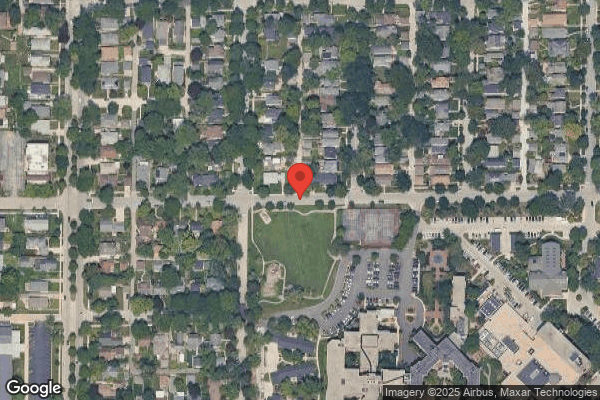
3200 GRANT STREET, EVANSTON, IL 60201 (847) 492-4800
Non profit - Corporation 105 Beds Independent Data: November 2025
Trust Grade
90/100
#91 of 665 in IL
Last Inspection: October 2024

Within standard 12-15 month inspection cycle. Federal law requires annual inspections.

Overview

Westminster Place in Evanston, Illinois, holds an impressive Trust Grade of A, indicating excellent care and service, and ranks #91 out of 665 facilities statewide, placing it in the top half for Illinois. However, the facility has seen a worsening trend in issues, increasing from 2 in 2023 to 4 in 2024, which is concerning. Staffing is a strong point, with a turnover rate of 0%, well below the Illinois average, and it offers greater RN coverage than 93% of state facilities. While there have been no fines reported, there are some weaknesses to note, including incidents where staff failed to provide necessary signage and equipment for wound care, and lapses in proper incontinence care, suggesting that improvements are needed in adherence to protocols. Overall, while Westminster Place has notable strengths, families should be aware of the recent increase in concerns and the need for vigilance in care practices.

Trust Score
A
90/100
In Illinois
#91/665
Top 13%
Safety Record
Low Risk
No red flags
Inspections
Getting Worse
2 → 4 violations
Staff Stability
○ Average
Turnover data not reported for this facility.
Penalties
✓ Good
No fines on record. Clean compliance history, better than most Illinois facilities.
Skilled Nurses
✓ Good
Each resident gets 117 minutes of Registered Nurse (RN) attention daily — more than 97% of Illinois nursing homes. RNs are the most trained staff who catch health problems before they become serious.
Violations
○ Average
7 deficiencies on record. Average for a facility this size. Mostly minor or procedural issues.
★★★★★
5.0
Overall Rating
★★★★☆
4.0
Staff Levels
★★★★☆
4.0
Care Quality
★★★★★
5.0
Inspection Score
Stable
2023: 2 issues
2024: 4 issues

The Good

  • 4-Star Staffing Rating · Above-average nurse staffing levels
  • 4-Star Quality Measures · Strong clinical quality outcomes
  • Full Sprinkler Coverage · Fire safety systems throughout facility
  • No fines on record

Facility shows strength in staffing levels, quality measures, fire safety.

The Bad

No Significant Concerns Identified

This facility shows no red flags. Among Illinois's 100 nursing homes, only 0% achieve this.

The Ugly 7 deficiencies on record

Oct 2024 4 deficiencies
CONCERN (D)

Potential for Harm - no one hurt, but risky conditions existed

Pressure Ulcer Prevention (Tag F0686)

Could have caused harm · This affected 1 resident

**NOTE- TERMS IN BRACKETS HAVE BEEN EDITED TO PROTECT CONFIDENTIALITY** Based on observation, interview, and record review the facility failed to limit layers of linens when using a low air loss (LAL)...

Read full inspector narrative →
**NOTE- TERMS IN BRACKETS HAVE BEEN EDITED TO PROTECT CONFIDENTIALITY** Based on observation, interview, and record review the facility failed to limit layers of linens when using a low air loss (LAL) mattress for residents with pressure ulcers. The facility also failed to follow a physician's order and failed to implement a wound prevention intervention. This deficiency affects two (R108 and R110) of three residents in the sample of 14 reviewed for Wound Care management. Findings include: 1.) On 10/15/24 at 10:16AM, Observed R108 lying in bed on Low air loss (LAL) mattress. R108 has fitted sheet covering the LAL mattress. V6 (Wound Care Nurse/WCN) lifted the top sheet linen to check the LAL mattress. Observed cloth pad and folded linen in quarters underneath R108. R108 wears disposable brief. V6 said that R108 should have only a flat sheet over the LAL mattress, no cloth pad, and folded linens. V6 said that multi layers of linen over the LAL mattress will impede its function and purpose. R108 does not have bilateral heel protectors. On 10/15/24 at 11:06AM, V13 (Certified Nursing Assistant/CNA) said that he is assigned to R108, but he has not seen and provided care to R108. V13 said, R108 has private care giver who provides care and makes the bed for her. R108 left around 8AM or 9AM. Reviewed R108's wound care plan with V6 (WCN). There was no documentation in care plan indicating R108's caregiver noncompliance with wound care treatment and prevention. There was no documentation of caregiver education in the chart. On 10/14/24 at 11:09AM, Observed V6 (WCN) and V13 (CNA) preparing to provide wound care to R108. Observed thick pad lining inside the disposable brief. V13 CNA said that R108's caregiver has been applying the pad lining inside the disposable brief because R108 poops a lot. V13 said that he did not report this to his nurse and to V6 WCN. V6 said that V13 should report to the floor nurse of R108's caregiver noncompliance to wound care management because they don't allow pad lining inside the disposable brief in the facility. The CNA should be checking the resident every 2 hours for incontinence. On 10/15/24 at 11:16AM, V6 (WCN) checked R108's disposable brief while V13 (CNA) assisting R108 to left side lying position. Observed large amount of soft brown fecal matter. V6 took the wet disposable wash cloth and wiped R108's rectal to perineum (back to front). V6 continued to wipe several times from rectal to perineum. Surveyor informed observation to both V6 and V13. V13 (CNA) said that it should be wipe from front to back to avoid infection (UTI). V6 asked V13 to clean R108, and they switched position. On 10/15/24 at 11:20AM, V6 (WCN) removed the foam dressing on sacral area. V6 said that R108 has moderate yellowish wound drainage from sacrum and has blood stained from left buttocks. V6 cleansed left buttocks and sacrum with wound cleanser. V6 said that R108 has unstageable pressure ulcer on sacrum due to 100% yellowish slough formation. Stage 3 on left buttocks covering with dried blood. She applied (brand name ointment) to sacrum and left buttocks and cover with foam dressing. Observed non-blanchable redness on entire sacral area. V6 applied zinc cream to affected area. On 10/16/24 at 9:12AM, V18 (R108's Private Caregiver) said that they have been in the facility for more than 1 month. V18 said he does not do incontinence care to R108. V18 said, he called the CNA for incontinence care as needed. V18 said that R108's son is a lawyer, and he was told to let the staff do the care for R108 for liability issues. V18 said the staff is aware that he is applying pad lining inside the disposable brief to R108, and the staff is aware, and they are using it too. On 10/16/24 at 11:49AM, Informed V2 (Director of Nursing) of above concerns. V2 said, LAL mattress recommendation of using flat sheet over the mattress. V2 said, the floor nurse should check resident on LAL appropriate cover when making rounds or during medication administration. V2 said that they follow physician's orders in wound care prevention and management. V2 provided Medication Administration general guidelines policy. V2 said that they used the same policy for Treatment administration. On 10/16/24 at 1:58PM, Review R108's wound assessment dated [DATE] with V6 (WCN). V6 said that she completed the wound assessment, and she did the measurement. Informed V6 that her wound assessment dated [DATE] has worsened compared to wound observation made with surveyor on 10/15/24. V6 said, it will still have the same treatment. Informed V6 (WCN) that R108 does not have bilateral heel protectors as ordered by physician. R108 is admitted on [DATE] with diagnosis listed in part but not limited to Pneumonia, Gastrostomy due to dysphagia, Alzheimer's disease, Dementia, Transient Ischemic attack, and Cerebral infarction. Active physician order sheet indicates: Bilateral heel protectors while in bed. LAL mattress, Sacrum and Left Buttocks- cleanse with NSS (normal saline solution). Apply (brand name ointment) cover with 4x4 foam daily and as needed. Most recent Braden scale for predicting pressure ulcer risk assessment done on 9/25/24 indicated at high risk. Most recent wound assessment dated [DATE] indicated: Sacrum- date identified 9/5/24, present on admission, Pressure ulcer Stage 3 measures 1cm x 0.4cm x 0.2cm, Red and yellow color wound bed, granulation 40%, 60% pink non-granulated, erythema on surrounding tissue, small serosanguineous drainage, wound edge distinct and attached. Left buttocks- date identified, present on admission, Pressure ulcer, unstageable, measures 2cm x 1.5cm x 0cm, red and yellow tissue wound bed, 30% slough non adherent, 70% red beefy granulation, erythema tissue surrounding, small serosanguineous drainage, distinct and attached wound edge. Peri anal area- 9/5/24, present on admission, MASD (moisture associated skin damage), excoriation, measures 0cm x 0cm x 0.1cm, red wound bed, 100% non-blanchable erythema, erythema on surrounding tissue. Comprehensive care plan indicates R108 has multiple pressure ulcer: Stage 3 to sacrum, UTS (unstageable) to left buttock and or potential for pressure ulcer development related disease process, Braden scale, contractures, and immobility. R108 has potential impairment to skin integrity related to reduced mobility, incontinence, generalized body weakness secondary to COVID, Pneumonia, Dysphagia status post PEG tube placement. Interventions: Low air loss (LAL) mattress. Heel protectors. 2.) On 10/15/24 at 10:49AM, Observed R110 lying in bed on LAL mattress. V6 (WCN) lifted R110 top sheet linen to check the mattress. Observed flat sheet and cloth pad over the mattress. R110 is wearing disposable adult brief. V6 said that R110 should have only flat sheet over the LAL mattress. R110 is admitted on [DATE] with diagnosis listed in part but not limited to Fracture of base skull, Intracranial injury, History of falling, Nontraumatic subarachnoid hemorrhage, Moderate protein calorie malnutrition. Active physician order sheet indicates LAL mattress. Sacrum-cleanse with NSS. Apply skin prep around wound. Santyl and wet gauze packing in undermining area. Then cover with 4x4 gauze or abdominal pad then secure with med fix daily and as needed. Most recent Braden scale for predicting pressure ulcer risk assessment done on 8/8/24 indicated at high risk. Most recent wound report dated 10/14/24 indicated: Sacrum- dated identified 7/18/24, present on admission, Stage 4 pressure ulcer, measures 4cm x 3cm x 0.3cm, red and yellow wound bed tissue, 100% granulation, 12 o'clock to 12 o'clock undermining with 1.3 depth, erythema on surrounding tissue, small serous drainage, distinct and attached wound edge. Comprehensive care plan indicates he has pressure injuries, sacrum unstageable, 10/4/24 knee abrasion, 107/24 sacrum unstageable to stage 4. R110 is at risk for further skin impairment related to pressure injuries upon admission, generalized body weakness, reduced mobility, on and off pain, abrasion on left knee secondary to subarachnoid, subdural, intraventricular hemorrhage, left temporal bone fracture due to unwitnessed fall, hypertension, ETOH. Intervention: LAL mattress. Facility's policy on Use of Support Surfaces Policy: Support surfaces will be in accordance with evidence-based practice for residents with or at risk for pressure injuries. Facility's policy on Prevention and Healing of Pressure injuries and non-pressure related injuries review date: 3/31/24. Provides care and services to: *Promote the prevention of pressure injury development *Prevent infection and promote the healing of pressure injuries that are present *Prevent development of additional pressure injuries *Residents with Non-pressure-related Skin injury/wound. B. Plan/Intervention: a. Prevention iii. Provide appropriate, pressure-redistributing, support surfaces. Facility's policy on Medication Administration-General Guidelines March 2021 indicates: B. Administration 2) Medications are administered in accordance with written orders of the prescriber.
CONCERN (D)

Potential for Harm - no one hurt, but risky conditions existed

Incontinence Care (Tag F0690)

Could have caused harm · This affected 1 resident

**NOTE- TERMS IN BRACKETS HAVE BEEN EDITED TO PROTECT CONFIDENTIALITY** Based on observation, interview, and record review the facility failed to ensure proper perineal care is provided during inconti...

Read full inspector narrative →
**NOTE- TERMS IN BRACKETS HAVE BEEN EDITED TO PROTECT CONFIDENTIALITY** Based on observation, interview, and record review the facility failed to ensure proper perineal care is provided during incontinence care. This deficiency affects one (R108) of three residents in the sample of 14 reviewed for Incontinence care. Findings include: On 10/15/24 at 11:09AM, Observed V6 (Wound Care Nurse/WCN) and V13 (Certified Nursing Assistant/CNA) preparing to provide wound care to R108. Observed thick pad lining inside the disposable brief. V13 said that the caregiver has been applying the pad lining inside the disposable brief because R108 poops a lot. V13 said that he did not report this to the floor nurse and to V6 (WCN). V6 said that V13 should report noncompliance of R108's caregiver to the nurse because they don't allow pad lining inside the disposable brief in the facility. CNA should be is checking resident every 2 hours for incontinence. On 10/15/24 at 11:16AM, V6 (WCN) checked R108's disposable brief while V13 (CNA) assisting R108 to left side lying position. Observed large amount of soft brown fecal matter. V6 took the wet disposable wash cloth and wiped R108's rectal to perineum (back to front). V6 continued to wipe several times from rectal to perineum. Surveyor informed observation to both V6 and V13. V13 (CNA) said that it should be wipe from front to back to avoid infection (UTI- urinary tract infection). V6 asked V13 to clean R108, and they switched position. On 10/15/24 at 11:30AM, V6 (WCN) said that she should clean from front to back when performing incontinence care to R108. Requested for policy. On 10/16/24 at 1:30PM, Informed V2 (Director of Nursing) of above concern. R108 is admitted on [DATE] with diagnosis listed in part but not limited to Pneumonia, Gastrostomy due to dysphagia, Alzheimer's disease, Dementia, Transient Ischemic attack, and Cerebral infarction. Comprehensive care plan indicates she has bladder and bowel incontinence related to impaired cognition, poor safety awareness, generalized body weakness, decreased mobility secondary to COVID, Pneumonia, Dysphagia status post PEG tube placement. She has an ADL self-care performance deficit related impaired cognition, poor safety awareness, generalized body weakness, decreased endurance, and activity tolerance, reduce dynamics balance and coordination, on and off pain. She has impaired ability to perform or complete activities of daily living for oneself, such as feeding, dressing/grooming, bathing, toileting, bed and or wheelchair mobility, transfers, and ambulation secondary to COVID, Pneumonia, Dysphagia status post PEG tube placement. Facility's policy on Perineal Care indicates: Policy: It is the practice of this facility to provide perineal care to all incontinent resident's routine bath, and as needed in order to promote cleanliness and comfort, prevent infection to the extent possible and to prevent and assess for skin breakdown. Definition: Perineal care refers to care of the external genitalia and the anal area. Policy explanation and compliance guidelines: 9. If perineum is grossly soiled, turn resident on side, remove any fecal material with toilet paper, then remove and discard. a. Cleanse buttocks and anus, front to back; vagina to anus in females, scrotum to anus in males, using a separate washcloth or wipes. b. Thoroughly dry.
CONCERN (D)

Potential for Harm - no one hurt, but risky conditions existed

Pharmacy Services (Tag F0755)

Could have caused harm · This affected 1 resident

Based on observation, interview, and record review the facility failed to document count verification of controlled substances during nurses' shift change for one of three medication carts reviewed fo...

Read full inspector narrative →
Based on observation, interview, and record review the facility failed to document count verification of controlled substances during nurses' shift change for one of three medication carts reviewed for Medication storage of controlled substances. Findings include: On 10/15/24 at 9:35AM, Checked medication cart with V11 (Registered Nurse/RN). Observed controlled substances count verification form for October 2024 has several missing initials of nurses dated 10/1/24, 10/2/24, 10/3/24, 10/11/24, and 10/15/24. V11 said that incoming nurse and outgoing nurse will sign the controlled medication verification form after counting the medications. V11 RN said that she counts the narcotic medications with the 11-7 shift nurse this morning around 7:30AM but she forgot to sign after counting. On 10/15/24 at 12:08PM, V14 (Nursing Supervisor) informed of above observation. V14 said that at each shift change, both nurses incoming and outgoing should sign the controlled medication verification form after counting the medications. Requested for policy. On 10/16/24 at 11:49AM, Informed V2 (Director on Nursing) of above concern. V2 said, the incoming and outgoing nurses during shift change should sign the controlled substance count verification after counting the medications. Facility's policy on Medication Storage in the facility: Controlled Substance Storage Policy: Medications included in the drug enforcement administration (DEA) classification as controlled substances are subject to special handling, storage, disposal, and record keeping in the facility in accordance with federal, state, and other applicable laws and regulations. Procedures: E. At each shift change, or when keys are transferred, a physical inventory of all controlled substances (CII-CV) that are stored in locked compartments, including refrigerated items as conducted by two licensed nurses and is documented.
CONCERN (E)

Potential for Harm - no one hurt, but risky conditions existed

Infection Control (Tag F0880)

Could have caused harm · This affected multiple residents

**NOTE- TERMS IN BRACKETS HAVE BEEN EDITED TO PROTECT CONFIDENTIALITY** 4.) On 10/15/2024 at 10:50 AM, during initial round R45's room did not have Enhance Barrier Precaution (EBP) signage, set-up, an...

Read full inspector narrative →
**NOTE- TERMS IN BRACKETS HAVE BEEN EDITED TO PROTECT CONFIDENTIALITY** 4.) On 10/15/2024 at 10:50 AM, during initial round R45's room did not have Enhance Barrier Precaution (EBP) signage, set-up, and Personal Protective Equipment (PPE) available to the staff and visitors. R45 was in the room, sitting down on a chair. R45 said he has a wound on his back and staff comes to treat and do his dressing daily. On 10/15/2024 at 10:52 AM, V4 (Infection Preventionist) said there should be a set-up, PPE, and EBP signage outside R45 room for staff and visitors' information. On 10/16/2024 at 1:50 PM, V2 (DON) said there should have been a set-up, PPE, and EBP signage on R45's room. This should have been done on admission. Order Summary Report: Diagnoses: Sepsis, Unspecified Organism, Type 2 Diabetes Mellitus without Complications, Multiple Sclerosis Enhanced Barrier Precautions: Complex Wound every shift Enhanced barrier precaution R/T multiple wounds. Care Plan: Focus: (R45) has multiple stage 3's to Torso, left lateral aspect and multiple pressure ulcers to left hip, left lateral thigh, left knee. lateral aspect and or potential for pressure ulcer development r/t Immobility, poor appetite. Intervention: Observe enhanced barrier precaution per protocol Based on observation, interview, and record review the facility failed to implement its protocol on Enhanced barrier precaution. This deficiency affects all four (R42, R45, R108, and R110) residents in the sample of 14 reviewed for Infection Control Management. Findings include: 1.) On 10/15/24 at 9:34AM, Observed V12 (Certified Nursing Assistant/CNA) came out from the room donning off gown, gloves and face shield then disposed it to the garbage container outside the room. The he performed hand hygiene. Observed isolation set up outside the R42's room. On 10/15/24 at 9:37AM, V11 (Registered Nurse/RN) said that R42 is on Enhanced Barrier Precaution (EBP), but she does not know the reason. V11 is wearing surgical mask, she donned gown and gloves. V11 administered medications to R42 orally and subcutaneous injection. After administration of medication. V11 removed the gown and placed it on garbage outside the door. V11 removed her gloves and placed it in her medication garbage cart. Then she performed hand hygiene. On 10/15/24 at 9:49AM, V4 (Infection Preventionist) said that Personal Protective Equipment (PPE) use inside the EBP room should be disposed inside the room garbage container not outside. Hand hygiene should be performed inside the room after removing the PPE. V4 said, staff should follow their infection control protocol. Requested for policy. R42 was admitted on [DATE] with diagnosis listed in part but not limited to Fracture of Right lower leg, Dislocation on right ankle, History of falling. Active physician order sheet indicates that she is on Enhanced Barrier Precautions due to history of MRSA (Methicillin-Resistant Staphylococcus Aureus) nares. 2.) On 10/15/24 at 12:03PM, Observed R110 on Enhanced Barrier Precaution. V11 (RN) was wearing a surgical mask. She donned gown and gloves, then administered medications to R110. After medication administration, V11 removed the gown outside the room and disposed the gown to the garbage container located outside the room. V11 removed gloves and discarded it into the medication cart garbage. Then she performed hand hygiene. On 10/16/24 at 1:00PM, V4 (Infection Preventionist) said, there should be an order in R110's chart for resident on enhanced barrier precaution. R110 was admitted on [DATE] with diagnosis listed in part but not limited to Fracture of base skull, Intracranial injury, History of falling, Nontraumatic subarachnoid hemorrhage, Moderate protein calorie malnutrition. Active physician order sheet indicates daily wound care and as needed on sacrum due to pressure ulcer. There was not an enhanced barrier precaution order found in medical record. 3.) On 10/16/24 at 9:12AM, Observed R108 is on Enhanced Barrier Precaution. Observed V18 (R108's Private Caregiver) performing personal hygiene to R108 without using PPE- no mask, gown, and gloves. He was cleaning R108's face using wash cloth. He said that he was informed by the staff to wear PPE when providing care to R108, but he forgot. On 10/17/24 at 11:41AM, V2 (Director of Nursing/DON) said that per V1 (Administrator) they won't allow surveyor to access R108's paper hospital transfer record from the admission of 9/4/24. Surveyor inquired about history of UTI (urinary tract infection) or if a urinalysis and/or urine culture was done at the hospital. V2 said R108 does not have history of UTI, no urinalysis and urine culture were done at the hospital. R108 was admitted on [DATE] with diagnosis listed in part but not limited to Pneumonia, Gastrostomy due to dysphagia, Alzheimer's disease, Dementia, Transient Ischemic attack, and Cerebral infarction. Active physician order sheet indicates that she is on daily wound care and as needed for pressure ulcers on sacrum and left buttocks. Bolus G-tube feeding. R108 has order for Enhanced Barrier Precaution. There was no documentation in R108's care plan of V18 (Private caregiver) non-compliance on infection control management to her care. Facility's policy on Enhanced Barrier Precaution (EBP) revision dates: 9/3/24 indicates: Purpose: EBP are an infection control intervention designed to reduce transmission of resistant organism that employs targeted gown and glove use during high contact resident care activities. Procedures: 6. Ensure an order for EBP is written on the chart. 8. Post clear signage on the door or wall outside of the resident room indicating the type of precautions and required PPE (e.g., gown and gloves) 9. Make PPE, including gowns and gloves, available immediately outside of the resident room. 11. PPE, gloves, and gowns will be required for all staff providing high contact care activities 12. Position a trash can inside the resident room and near the exit for discarding PPE after removal prior to exit of the room or before providing care for another resident in the same room.
Nov 2023 2 deficiencies
CONCERN (D)

Potential for Harm - no one hurt, but risky conditions existed

Quality of Care (Tag F0684)

Could have caused harm · This affected 1 resident

**NOTE- TERMS IN BRACKETS HAVE BEEN EDITED TO PROTECT CONFIDENTIALITY** Based on observation, interview and record review the facility failed to ensure ongoing assessment, identifying, and reporting o...

Read full inspector narrative →
**NOTE- TERMS IN BRACKETS HAVE BEEN EDITED TO PROTECT CONFIDENTIALITY** Based on observation, interview and record review the facility failed to ensure ongoing assessment, identifying, and reporting of new skin impairment for a resident that is at risk. The facility also failed to follow manufacturer recommendation when using a low air loss mattress. This deficiency affects one (R12) of three residents in the sample of 20 reviewed for Wound/Skin Prevention Management. Findings include: On 10/31/23 at 11:50AM, observed R12 lying in low air loss (LAL) mattress bed. R12 said that his buttocks hurt. Called V9 (Registered Nurse/RN) to check and assess resident's back. Observed multi-layer linen over the LAL mattress. There was a flat sheet, folded linen in quarter, 2 cloth pads and disposable chucks over the LAL mattress. R12 is wearing disposable brief. V9 said that R12 should only be on flat sheet over the LAL mattress. There should not be multi-layers of linen because it depletes the purpose of the LAL mattress. On 10/31/23 at 12:07pm, informed V2 (Director of Nursing/DON) of above observation. V2 said that R12 should only be on a flat sheet over the LAL mattress. There should not be multi layers of linen. Requested the policy on wound care prevention and LAL mattress protocol. On 11/1/23 at 10:30AM, V14 (Wound Care Nurse/WCN) said that R12 has history of MASD (Moisture Associated Skin Disorder) that was healed months ago. Observed V13 (Certified Nursing Assistant/CNA) reposition R12 so V14 could do a skin assessment on the sacral area. Observed R12 had MASD with open wounds on both the right and left buttocks with white paste medication applied. V14 cleansed the sacral area, assessed, and measured the open wounds. V14 said that R12 has MASD with open wound on left para sacral measures 6cm x 3.5cm x 0.2cm and right para sacral measures 4cm x 3.5cm x 0.2cm. V14 said that both has superficial open wound. V14 said that he was not aware that R12 had re-opened his MASD. He has not seen him since he healed the MASD months ago. V14 said that nurses and CNAs should notify him if they observed the open wound or any skin impairment. Any skin impairment should be assessed, notify the physician to obtain appropriate treatment and update family member for wound treatment and management. On 11/1/23 at 10:35AM, V13 (CNA) said that she did not report it to the nurse because she has seen R12 with the open wound on sacral area since last week. On 11/2/23 at 10:22AM V14 (WCN) said that he is responsible for skin assessment to all residents, to prevent and treat wound, and to implements wound care interventions. V14 said that R12 was initially admitted on [DATE] with admission Braden scale/skin assessment indicating at high risk for skin impairment. R12 had facility acquired MASD on 3/29/23. It was healed on 5/26/23. R12's most recent Braden scale/skin assessment done on 10/26/23 indicating at high risk for skin impairment. V14 has not seen and assessed R12 since wound healed. He did not do weekly skin assessment for R12 because he does not have skin impairment. He only does weekly assessment if resident has active wound. Weekly skin assessment should be done be nursing and documented in progress notes. There was no skin impairment reported to him by the nurses and CNAs for R12. He only found out about R12's re-opened MASD when the surveyor asked him to do the skin assessment. V14 said that nurses and CNAs should notify him if they observed open wound or any skin impairment. Any skin impairment should be assessed, notify the physician to obtain appropriate treatment and update family member for wound treatment and management. V14 said that there should be no multilayers of linen over the LAL mattress. Only a flat sheet and 1 cloth pad. V14 is not sure if they have policy or protocol for using LAL mattress. On 11/2/23 at 10:57AM, V2 (DON) said that when CNAs observe any open wound or skin impairment, they notify the nurse. The nurse then should assess the skin impairment, call the physician or Nurse Practitioner, and update the family member. R12 is admitted on [DATE] with diagnosis listed in part but not limited to Muscle weakness, Post polio syndrome, Noncompliance with medical treatment regimen, Malignant neoplasm of prostate. Active physician order sheet indicates: Remedy Phytophex Z-Guard (Zinc Oxide)17-57% topical paste applies to sacral/buttocks/groin/perineal/scrotal areas post soap and water wash two times daily and as needed. Weekly skin assessment. Low air loss mattress by shift. Care plan indicates: R12 is at risk for pressure ulcer related to weakness, impaired mobility, incontinence, history of comminuted fracture of posterolateral aspect of humeral head and a fracture line at anatomic neck of left humerus, history of polio lifelong with left side weakness/flaccid. He prefers to stay in bed and refused to get out of bed when encouraged. R12's wound assessment completed by V14 (WCN) on 11/1/23 indicates: Left para sacral MASD measures 6cm x3.5cm x0.2cm, 75% bright red, 25% non-granulating tissues. Right para sacral MASD measures 4cmx 3.5cmx 0.2cm, 80% bright red, 20% non-granulating tissues. Facility's policy on Prevention and healing of pressure injuries and non-pressure related injuries indicates: I. Purpose: Residents at this facility will not develop clinically avoidable pressure injuries. Resident admitted with pressure injuries will receive care and services to promote healing and prevent further injuries. Residents with non-pressure related injuries will receive care and services according to current standards of practice. II. Statement of policy: Provides care and services to: *Promote the prevention of pressure injury development Procedure: c. Weekly physical assessment of skin throughout stays. C. Monitor/evaluate: a. Nursing assistant observes and reports alteration in skin integrity. Notify nurse of any change in skin condition. b. Nurse evaluate skin condition weekly or more often if indicated. Facility's policy on Use of Support Surfaces indicates: Policy explanation and compliance guidelines: 6. Support surfaces will be utilized in accordance with manufacturer recommendation. 8. Limit the amount of linen and pads placed on the bed.
CONCERN (D)

Potential for Harm - no one hurt, but risky conditions existed

Infection Control (Tag F0880)

Could have caused harm · This affected 1 resident

Based on observation, interview and record review the facility failed to use appropriate PPE (Personal protective equipment) for a resident on droplet and contact isolation. The facility also failed t...

Read full inspector narrative →
Based on observation, interview and record review the facility failed to use appropriate PPE (Personal protective equipment) for a resident on droplet and contact isolation. The facility also failed to perform hand hygiene after removing and donning gloves during incontinence care. This deficiency affects one (R42) of three residents in the sample of 20 reviewed for infection control. Findings include: On 11/1/23 at 10:00am observed R42's door with a posting of Special Droplet/contact precautions. On 11/1/23 at 10:20AM, observed V13 (Certified Nursing Assistant/CNA) after providing incontinence care to R42. V13 rolled the soiled linen toward R42 and tucked it underneath her while V14 (Wound Care Nurse/WCN) was holding R42 in a side lying position. V13 removed her soiled gloves, took a clean flat sheet, and covered the mattress with her bare hands. V13 realized that she was not wearing gloves. She donned gloves without hand hygiene. On 11/1/23 at 10:35AM, informed V13 (CNA) and V14 (WCN) of the observation made while observing incontinence care and wound care to R42. V13 said that she should wear gloves when making the bed for a resident on isolation precaution. She should have washed her hands after removing and before wearing gloves during incontinence care. On 11/1/23 at 10:55AM conducted an interview with V3 (Infection Preventionist). Informed V3 of the observation made with V13 (CNA). V3 said that V13 should perform hand hygiene after removing gloves and donning gloves during incontinence care. Facility's policy on Isolation for Infectious Diseases 7/18/23 indicates: Purpose: To prevent transmission of infectious disease. Special Droplet/contact precaution- Residents who are suspected to be infected with microorganism transmitted by droplets (large-particle droplets) that can be generated by the resident coughing, sneezing talking or procedures such as suctioning: 11. Sets up isolation equipment as follows: c. Places bedside cabinet or isolation cart outside resident's room and ensures stock of clear garbage bags, red plastic infectious waste bags, yellow or blue plastic linen bags (depending on color used at community), gloves, gowns, eye protection, and masks and single use thermometers, stethoscope, and sphygmomanometer as appropriate. Facility's poster for Special droplet/contact precautions from CDC posted outside R12's door indicates: In addition to standard precautions. Only essential personnel should enter this room. If you have questions, ask nursing. Everyone must: including visitors, doctors, and staff. 1. Clean hands when entering and leaving the room. 2. Wear Mask. (Fit tested N95 or higher required when performing aerosol-generating procedures) 3. Wear eye protection. (Face shield or goggles) 4. Gown and glove at the door. 5. Keep door closed. 6. Use patient dedicated or disposable equipment. Clean and disinfect shared equipment. Facility's policy on Hand hygiene 9/21/21 indicates: I. Purpose: To prevent the spread of infection and to maintain asepsis. II. Statement of policy: Hand hygiene is essential for preventing the spread of infectious organism in health care settings. The center for Disease Control and Prevention (CDC) and Illinois Department of Public Health (IDPH) recommend the routine use of alcohol- based hand rubs (ABHR) over soap and water due to improved adherence, effectiveness, and accessibility except in situations where soap/water handwashing is specifically recommended. This table below provided by the CDC summarizes the recommended uses of the two forms of hand hygiene.
Oct 2022 1 deficiency
CONCERN (D)

Potential for Harm - no one hurt, but risky conditions existed

Quality of Care (Tag F0684)

Could have caused harm · This affected 1 resident

**NOTE- TERMS IN BRACKETS HAVE BEEN EDITED TO PROTECT CONFIDENTIALITY** Based on observation, interview, and record review the facility failed to follow physician's order to apply medicated cream to r...

Read full inspector narrative →
**NOTE- TERMS IN BRACKETS HAVE BEEN EDITED TO PROTECT CONFIDENTIALITY** Based on observation, interview, and record review the facility failed to follow physician's order to apply medicated cream to relieve discomfort and itching for one (R15) of one resident reviewed for quality of care in the sample of 18. Findings include: R15 was admitted to the facility on [DATE] with diagnosis including but not limited to Essential Hypertension, Primary Osteoarthritis, Muscle Weakness, Open-Angle Glaucoma Left Eye, and Bilateral Hearing Loss. According to MDS (Minimum Data Set) dated 09/07/2022 under section C, R15 has BIMS (Brief Interview of Mental Status) score of 11 indicating moderately impaired cognition. On 10/24/22 at 11:08 AM the surveyor observed R15 lying in bed, dressed in a hospital gown. The surveyor asked if R15 usually stays in bed past breakfast. R15 stated, I usually stay in the common area and participate in activities, but I have had a rash in my private area for months now and it itches terribly. I stayed in bed because of it in the last two days because it gets worse when I'm sitting down. I would like to know more about it. V7 (Certified Nursing Assistant) told me that I talk about it too much. Nobody cares about what I say here. This condition keeps me up at night and it causes pain and itchiness. On 10/24/22 at 11:38 AM V7 (CNA) stated, I didn't see any rash on her skin. I changed her this morning, around 7.30 AM. I usually change her every two hours. Surveyor asked if R15 usually stays in bed at this time. V7 stated, R15 wasn't feeling good yesterday, so today she still didn't feel good and wanted to stay in bed. Surveyor clarified if V7 discouraged R15 from talking about itchiness in her private area. V7 stated, I never told her to stop talking about itching, when she mentions something, I always tell her that the nurse will put some medication on. On 10/24/22 at 11:45 AM V7 changed R15's briefs and called V6 (Register Nurse) to apply skin barrier cream into affected area. The surveyor did not note any rash in R15's private area. V7 washed and dressed R15 and put her into a wheelchair. V7 proceeded to propel R15 into a common area for upcoming lunch. On 10/24/22 at 12:07 PM V6 (RN) stated, R15 just told me about the itching this morning. I'll notify the doctor when they do rounds on the unit. We've been using skin barrier cream every time R15 gets her briefs changed. V6 indicated that she forgot that there was an order of antipruritic cream for R15 private area itchiness. On 10/24/2022 at 02:05 PM Surveyor observed V8 (Nurse Practitioner) at R15's bedside. V8 completed assessment and inquired about the discomfort in R15's private area. Upon completion of R15's assessment, surveyor asked V8 about R15's private area itchiness. V8 stated, This has been an on and off going issue. R15 has an order for antipruritic cream to relieve itching in her private area. It has been ordered for a while. V8 indicated that she is not sure why V6 did not offer it to R15 for symptom relief. Point of Service plan dated 02/24/2022 reads in part, Estradiol 0.01% (0.1mg/gram) vaginal cream (Cream with Applicator) Notes: Dx Vaginal Dryness. Frequency: as needed. R15's Medication Administration Record for October 2022 shows that antipruritic cream was applied only once, on 10/24/2022 at 12:32 PM, after surveyor interaction with R15, V6 (RN) and V7 (CNA).
Understanding Severity Codes (click to expand)
Life-Threatening (Immediate Jeopardy)
J - Isolated K - Pattern L - Widespread
Actual Harm
G - Isolated H - Pattern I - Widespread
Potential for Harm
D - Isolated E - Pattern F - Widespread
No Harm (Minor)
A - Isolated B - Pattern C - Widespread

Questions to Ask on Your Visit

  • "Can I speak with families of current residents?"
  • "What's your RN coverage like on weekends and overnight?"

Our Honest Assessment

Strengths
  • • Grade A (90/100). Above average facility, better than most options in Illinois.
  • • No major safety red flags. No abuse findings, life-threatening violations, or SFF status.
  • • No fines on record. Clean compliance history, better than most Illinois facilities.
Concerns
  • • No significant concerns identified. This facility shows no red flags across CMS ratings, staff turnover, or federal penalties.
Bottom line: Generally positive indicators. Standard due diligence and a personal visit recommended.

About This Facility

What is Westminster Place's CMS Rating?

CMS assigns WESTMINSTER PLACE an overall rating of 5 out of 5 stars, which is considered much above average nationally. Within Illinois, this rating places the facility higher than 99% of the state's 100 nursing homes. This rating reflects solid performance across the metrics CMS uses to evaluate nursing home quality.

How is Westminster Place Staffed?

CMS rates WESTMINSTER PLACE's staffing level at 4 out of 5 stars, which is above average compared to other nursing homes.

What Have Inspectors Found at Westminster Place?

State health inspectors documented 7 deficiencies at WESTMINSTER PLACE during 2022 to 2024. These included: 7 with potential for harm.

Who Owns and Operates Westminster Place?

WESTMINSTER PLACE is owned by a non-profit organization. Non-profit facilities reinvest revenue into operations rather than distributing to shareholders. The facility operates independently rather than as part of a larger chain. With 105 certified beds and approximately 59 residents (about 56% occupancy), it is a mid-sized facility located in EVANSTON, Illinois.

How Does Westminster Place Compare to Other Illinois Nursing Homes?

Compared to the 100 nursing homes in Illinois, WESTMINSTER PLACE's overall rating (5 stars) is above the state average of 2.5 and health inspection rating (5 stars) is much above the national benchmark.

What Should Families Ask When Visiting Westminster Place?

Based on this facility's data, families visiting should ask: "Can I visit during a mealtime to observe dining assistance and food quality?" "How do you handle medical emergencies, and what is your hospital transfer rate?" "Can I speak with family members of current residents about their experience?"

Is Westminster Place Safe?

Based on CMS inspection data, WESTMINSTER PLACE has a clean safety record: no substantiated abuse findings (meaning no confirmed cases of resident harm), no Immediate Jeopardy citations (the most serious violation level indicating risk of serious injury or death), and is not on the Special Focus Facility watch list (a federal program monitoring the lowest-performing 1% of nursing homes). The facility has a 5-star overall rating and ranks #1 of 100 nursing homes in Illinois. While no facility is perfect, families should still ask about staff-to-resident ratios and recent inspection results during their visit.

Do Nurses at Westminster Place Stick Around?

WESTMINSTER PLACE has not reported staff turnover data to CMS. Staff turnover matters because consistent caregivers learn residents' individual needs, medications, and preferences. When staff frequently change, this institutional knowledge is lost. Families should ask the facility directly about their staff retention rates and average employee tenure.

Was Westminster Place Ever Fined?

WESTMINSTER PLACE has no federal fines on record. CMS issues fines when nursing homes fail to meet care standards or don't correct problems found during inspections. The absence of fines suggests the facility has either maintained compliance or corrected any issues before penalties were assessed. This is a positive indicator, though families should still review recent inspection reports for the full picture.

Is Westminster Place on Any Federal Watch List?

WESTMINSTER PLACE is not on any federal watch list. The most significant is the Special Focus Facility (SFF) program, which identifies the bottom 1% of nursing homes nationally based on persistent, serious quality problems. Not being on this list means the facility has avoided the pattern of deficiencies that triggers enhanced federal oversight. This is a positive indicator, though families should still review the facility's inspection history directly.