ARC AT HICKORY POINT
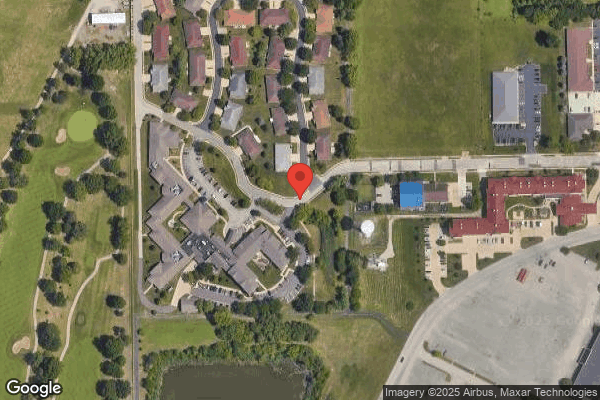
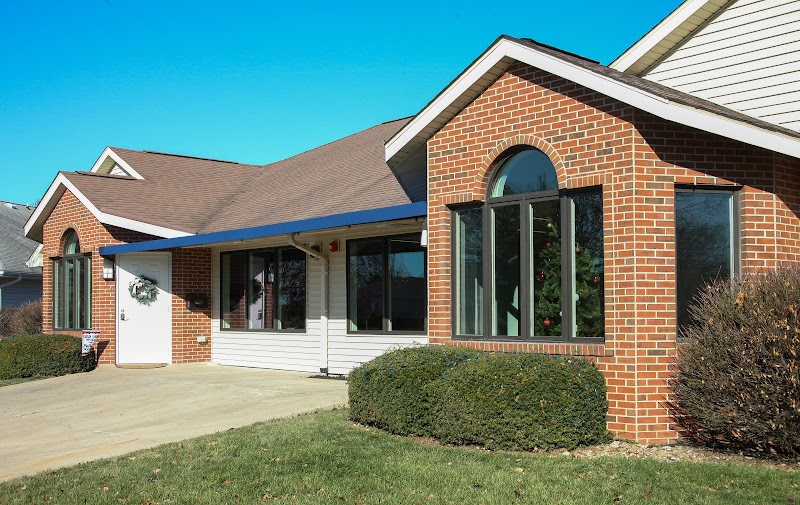
565 WEST MARION AVENUE, FORSYTH, IL 62535 (217) 872-1122
For profit - Corporation 64 Beds Independent Data: November 2025 1 Immediate Jeopardy citation
Trust Grade
0/100
#326 of 665 in IL
Last Inspection: April 2025

Within standard 12-15 month inspection cycle. Federal law requires annual inspections.

Overview

ARC at Hickory Point has received a Trust Grade of F, indicating significant concerns about the quality of care provided. Ranked #326 out of 665 facilities in Illinois, they are in the top half, but the grade suggests serious issues that need addressing. The facility is worsening, with the number of reported issues increasing from 8 in 2024 to 11 in 2025. Staffing is a moderate concern, with a 3/5 rating but a high turnover rate of 59%, which is above the state average. The facility has incurred $254,770 in fines, higher than 97% of Illinois facilities, indicating repeated compliance problems. RN coverage is also a concern, as it is lower than 95% of state facilities, which may impact resident care. Specific incidents include a resident developing a severe infected pressure sore due to a lack of intervention and another resident suffering multiple rib fractures from a fall when proper safety measures were not followed. While the facility has some average staffing metrics, the overall picture is concerning due to the critical and serious nature of the care deficiencies observed.

Trust Score
F
0/100
In Illinois
#326/665
Top 49%
Safety Record
High Risk
Review needed
Inspections
Getting Worse
8 → 11 violations
Staff Stability
⚠ Watch
59% turnover. Above average. Higher turnover means staff may not know residents' routines.
Penalties
⚠ Watch
$254,770 in fines. Higher than 91% of Illinois facilities. Major compliance failures.
Skilled Nurses
⚠ Watch
Each resident gets only 26 minutes of Registered Nurse (RN) attention daily — below average for Illinois. Fewer RN minutes means fewer trained eyes watching for problems.
Violations
⚠ Watch
24 deficiencies on record. Higher than average. Multiple issues found across inspections.
★★☆☆☆
2.0
Overall Rating
★★★☆☆
3.0
Staff Levels
★★☆☆☆
2.0
Care Quality
★★☆☆☆
2.0
Inspection Score
Stable
2024: 8 issues
2025: 11 issues

The Good

  • Full Sprinkler Coverage · Fire safety systems throughout facility
  • No fines on record

Facility shows strength in fire safety.

The Bad

2-Star Overall Rating

Below Illinois average (2.5)

Below average - review inspection findings carefully

Staff Turnover: 59%

13pts above Illinois avg (46%)

Frequent staff changes - ask about care continuity

Federal Fines: $254,770

Well above median ($33,413)

Significant penalties indicating serious issues

Staff turnover is elevated (59%)

11 points above Illinois average of 48%

The Ugly 24 deficiencies on record

1 life-threatening 5 actual harm
Sept 2025 1 deficiency
CONCERN (D) 📢 Someone Reported This

A family member, employee, or ombudsman was alarmed enough to file a formal complaint

Potential for Harm - no one hurt, but risky conditions existed

Safe Environment (Tag F0921)

Could have caused harm · This affected 1 resident

Based on observation and interview, the facility failed to maintain a resident bathroom/shower in clean condition for two residents (R1,R2) of four residents reviewed for environment in a sample list ...

Read full inspector narrative →
Based on observation and interview, the facility failed to maintain a resident bathroom/shower in clean condition for two residents (R1,R2) of four residents reviewed for environment in a sample list of seven residents. Findings Include:On 9/18/25 at 9:00AM in R1's and R2's room private bath with shower, there was an area above the shower head on the grout line approximately 5 inches by a half inch and an area above the shower where the ceiling meets the drywall approximately 12 inches by 6 inches that were covered by a slimy, fuzzy, black material with the appearance of black mold. On 9/18/25 at 9:05AM, V5, Housekeeper, stated, That black stuff has been in the shower for quite a while. I have turned in a work order and maintenance knows about it. On 9/18/25 at 9:15AM, V1, Administrator, and V7, Corporate Administrator, verified a slimy, fuzzy, black material was present above the shower in R1's and R2's room. V7 stated, This will be taken care of immediately. We will close off the bathroom until it can be fixed. On 9/18/25 at 11:00AM, V1, Administrator, stated, I have looked back for three months and I can't see where there has been a work order for this.
Sept 2025 1 deficiency 1 Harm
SERIOUS (G) 📢 Someone Reported This

A family member, employee, or ombudsman was alarmed enough to file a formal complaint

Actual Harm - a resident was hurt due to facility failures

Accident Prevention (Tag F0689)

A resident was harmed · This affected 1 resident

Based on interview and record review, the facility failed to ensure fall interventions were in place for one (R1) of three residents reviewed for falls on a sample list of seven. This failure resulted...

Read full inspector narrative →
Based on interview and record review, the facility failed to ensure fall interventions were in place for one (R1) of three residents reviewed for falls on a sample list of seven. This failure resulted in R1 falling and sustaining multiple left-sided rib fractures, a collection of blood in the chest cavity, and a left sided collapsed lung. Findings include: The facility's Fall Prevention Program policy provided by V1, Administrator, does not contain a date. This documents the purpose of this policy is to assure the safety of all residents in the facility, when possible. The program will include measures which determine the individual needs of each resident by assessing the risk of falls and implementation of appropriate interventions to provide necessary supervision and assistive devices are utilized as necessary. Quality Assurance Programs will monitor the program to assure ongoing effectiveness. Guidelines for the Fall Prevention Program included the following components: methods to identify risk factors, methods to identify residents at risk, educate resident and resident representative to fall prevention program at time of admission, throughout residents stay, and when changes occur, assessment time frames, use and implementation of professional standards of practice, immediate change in interventions that were successful, notification of physician, family/legal representative, communication with direct care staff members, documentation requirements, adherence to manufacturer's recommendation in us of alarm and medical devices and special care equipment. The policy documents the resident's Care Plan will incorporate the following: identification of all risk/issue, addresses each fall, interventions are changed with each fall, as appropriate, and preventative measures. This policy documents the following standards: a Fall Risk Assessment will be performed by a licensed nurse at the time of admission. The assessment tool will incorporate current clinical practice guidelines, safety interventions will be implemented for each resident identified at risk, the admitting nurse and assigned CNA are responsible for initiating safety precautions at the time of admission, all assigned nursing personnel are responsible for ensuring ongoing precautions are put in place and consistently maintained, and the Director of Nursing or Designee is responsible for monitoring the Fall Prevention Program, including further staff educations programs, purchase of additional equipment, or other appropriate environmental alterations.R1's profile sheet, dated 6/30/25, documents a medical diagnosis of repeated falls.R1's Fall Risk Assessment, dated 06/29/25, documents R1's assessment score was 13.0 on a scale of zero (low risk) to fourteen (high risk). R1's Care Plan, dated 7/01/25, documents R1 is at risk for falls related to weakness and partial paralysis on one side of R1's body following a stroke that affected R1's left non-dominant side.R1's MDS (Minimum Data Set) admission Assessment, dated 7/08/25, documents R1 requires partial to moderate assistance with toileting hygiene including the ability to maintain perineal hygiene, adjust clothes before and after voiding or having a bowel movement.R1's Nursing Note, dated 7/09/25, documents a Certified Nursing Assistant (CNA) found R1 on the bathroom floor while doing rounds at 8:35 PM. This note documents the nurse assessed R1 and found there to be a red mark on her left upper back (by the rib cage) and found there to be a displacement or a deformity in her rib cage. Computed Tomography (CT) scan of R1's chest, dated 7/10/25, documents R1 had multiple left-sided rib fractures, a collection of blood in the chest cavity, and a left sided collapsed lung. A follow-up X-ray of R1's chest, dated 7/10/25, documents R1's left-sided collapsed lung had worsened, was moderate in size, and had an increase in bleeding and bruising. This x-ray also documents multiple rib fractures.On 9/03/25 at 9:45 AM, V10, Licensed Practical Nurse, stated she was the nurse caring for R1 at the time of R1's fall. V10 stated R1 was a known fall risk and R1 didn't have any fall interventions in place. On 9/03/25 at 12:48 PM, V11, CNA, stated R1 was a known fall risk, and the only intervention she knew of was to put R1's bed in the low position.On 9/3/25 at 1:35 PM, V14, MDS/Care Plan Coordinator, stated she did a Baseline Care Plan for R1 on admission, and it included falls as a problem. V14 stated the only intervention that was marked on the Care Plan was for staff to ensure R1 was wearing appropriate footwear. V14 stated other fall interventions should have been on the R1's Care Plan for the prevention of falls.On 9/03/25 at 2:27 PM, V15, CNA, stated she knew R1 was a fall risk and there were no fall interventions in place that she was aware of.On 9/03/25 at 2:38 PM, V16, CNA, stated she didn't know R1 was a fall risk, but some of the CNA's would put R1's bed in the low position. V16 stated there were no other fall interventions.On 9/03/25 at 1:40 PM, V13, Assistant Director of Nursing/LPN, confirmed R1's fall risk assessment was completed on 6/29/25, and R1's score was 13, indicating she was at a high risk for falls. V13 stated fall risk assessments are completed to determine a resident's risk for falls and to develop appropriate interventions according to the resident's risk.On 9/03/25 at 2:54 PM, V12, Regional Nurse Consultant, stated they have an IT (Information Technology) issue with Care Plans, and fall interventions should have been in place.On 9/03/25 at 1:35 PM, V2, Director of Nursing, stated R1 was pleasantly confused and easily redirected. V2 stated R1 was a fall risk, and that having fall interventions in place could have changed R1's outcome. On 9/03/25 at 3:47 PM, V17, Physician (former Medical Director), stated if there had been proper fall protocols and precautions in place for R1 it might have changed R1's outcome.
May 2025 2 deficiencies 1 Harm
SERIOUS (G) 📢 Someone Reported This

A family member, employee, or ombudsman was alarmed enough to file a formal complaint

Actual Harm - a resident was hurt due to facility failures

Pressure Ulcer Prevention (Tag F0686)

A resident was harmed · This affected 1 resident

**NOTE- TERMS IN BRACKETS HAVE BEEN EDITED TO PROTECT CONFIDENTIALITY** Based on observation, interview, and record review, the facility failed to identify one (R4) resident's Sacral Deep Tissue Injur...

Read full inspector narrative →
**NOTE- TERMS IN BRACKETS HAVE BEEN EDITED TO PROTECT CONFIDENTIALITY** Based on observation, interview, and record review, the facility failed to identify one (R4) resident's Sacral Deep Tissue Injury, failed to obtain and provide treatment orders, failed to updat careplan timely, and failed to implement pressure reducing interventions out of three residents reviewed for pressure ulcers in a sample list of eight residents. As a result of these failures, R4 had pain from her Stage 3 Sacral pressure ulcer which was acquired and worsened under the care of the facility. Findings include: R4's undated Face Sheet documents R4 admitted to the facility on [DATE]. This same face sheet documents R4 has medical diagnoses of Pressure Ulcers, Paraplegia, Urinary Tract Infection (UTI), and Osteomyelitis. R4's Electronic Medical Record (EMR) documents R4 admitted to the facility with a Stage Four Pressure Ulcer to her Right Ischium and Stage Four Pressure Ulcer to her Left Knee. R4's Minimum Data Set (MDS), dated [DATE], documents R4 as cognitively intact. This same MDS documents R4 is dependent on staff for bed mobility, toileting, dressing, and requires maximum assistance with bathing and personal hygiene. R4's Physician Order Sheet (POS), dated May 2025, documents a physician order starting 4/11/25 and ending 5/7/25 to cleanse R4's Sacrum Pressure Ulcer, apply Calcium Alginate and cover with bordered foam daily. R4's POS does not include any orders for the treatment of R4's Sacral Stage Four Pressure Ulcer prior to 4/11/25. R4's Careplan, initiated 4/11/25, does not document R4's Stage Four Sacral Pressure Ulcer. R4's Pressure Ulcer Risk Assessment, completed 4/21/25, documents R4 as being high risk for obtaining a pressure ulcer. R4's initial facility Wound Summary report, dated 4/7/25, documents R4's Sacral Stage Two Pressure Ulcer as facility acquired, with dated identified as 4/7/25 measuring 5.0 centimeters (cm) long by 3.0 cm wide by undetermined depth. R4's Initial Wound Evaluation and Management Summary dated: -4/9/25 documents R4's Sacral Pressure Ulcer as an Unstageable pressure ulcer measuring 12.0 centimeters (cm) long by 6.0 cm wide with undetermined depth. This same summary documents R4 should have her Left Lateral Stage Four pressure ulcer off-loaded with two pillows above the wound. This same summary documents a physician order starting 4/9/25 for 30 days to apply Calcium Alginate and foam daily to R4's Sacral pressure ulcer. -4/17/25 documents R4's Sacral pressure ulcer as an open Unstageable pressure ulcer due to necrosis, full thickness wound with moderate serous drainage. -4/23/25 documents R4's Sacral pressure ulcer as a Stage Four with 80% thick adherent devitalized necrotic tissue measuring 9.0 cm long by 6.0 cm wide by undetermined depth. This same summary documents R4's Stage Four Pressure Ulcer is not at goal. -4/30/25 documents R4's Sacral pressure ulcer as a Stage Four with 80% thick adherent devitalized necrotic tissue measuring 9.0 cm long by 6.0 cm wide by 1.5 cm deep. This same summary documents R4's Stage Four Pressure Ulcer is not at goal. -5/5/25 documents R4's Sacral pressure ulcer as a Stage Four with 85% muscle, fascia and subcutaneous tissue measuring 9.0 cm long by 6.0 cm wide by 1.5 cm deep. This same summary documents R4's Stage Four Pressure Ulcer is not at goal. On 5/7/25 at 11:30 AM-2:00 PM, R4 was laying on her back in her bed, with no pillows/blankets used for off loading pressure areas. On 5/8/25 at 11:40 AM, V4, Licensed Practical Nurse (LPN)/Wound Nurse, completed wound care for R4's Left Knee Stage Four Pressure Ulcer. After V4 completed R4's Left Knee dressing change, R4 declined to have her Sacral pressure ulcer dressing changed, due to R4 having pain in her Sacral area. R4 was laying on her back in her bed with no pillow/blankets for support. There were two extra pillows sitting in the chair in the corner. V4 stated R4 should have the pillows placed under her back and knee to off -load the pressure to her current pressure areas. R4 was grimacing with her dressing change to her Left Knee. R4 stated after the dressing change, she is a Paraplegic and has little feeling in her legs. R4 stated, I can feel my butt though. And it hurts a lot most of the time, especially when they (staff) change that dressing. On 5/7/25 at 11:35 AM, V6, Agency Licensed Practical Nurse (LPN), stated residents are having to wait to be turned and positioned for more than the two hours, due staff being busy. V6, LPN, stated R4 requires the staff assistance for turning and positioning. On 5/8/25 at 12:00 PM, V4, LPN/Wound Nurse, stated R4 should be propped on pillows to help alleviate pressure. V4, LPN, stated R4's Left Knee Stage Four Pressure Ulcer showed slough, Fascia, Tendon, and bone, with yellow serous drainage. V4, LPN/wound nurse, stated she did have to soak off the previous dressing because it had adhered to the wound due to the excess drainage. V4 stated R4's Stage Four Sacral Pressure Ulcer started at the facility. V4, LPN, stated she was made aware on 4/7/25, but forgot to obtain and implement the dressing orders. V4, LPN, stated V23, Wound Physician, saw R4's Sacral Stage Four Pressure Ulcer on 4/9/25, and documented it as an Unstageable pressure ulcer. V4, LPN, stated V23, Wound Physician, ordered Calcium Alginate with an absorbent pad and wrapped in gauze on 4/9/22, but those orders were not entered into the EMR until 4/11/25. V4, LPN/Wound Nurse, stated R4's Sacral wound deteriorated in that time, because no one was treating it, due to there were no updates to the careplan and no physician orders were entered. V4, LPN/Wound Nurse, stated the floor nurses were dressing R4's Right Ischium Stage Four Pressure Ulcer twice daily prior to 4/7/25, and should have known to tell V4, LPN/Wound Nurse, about R4's Sacral area. V4, LPN/Wound Nurse, stated the floor nurses failed to communicate to V4 that R4 had a new Sacral wound until 4/7/25. V4 stated the facility is unable to provide any documentation that R4's Sacral pressure ulcer was provided any kind of treatment prior to 4/11/25. The facility policy titled Pressure Ulcer Prevention, effective April 2025, documents dependent residents should be turned approximately every two hours or as needed. Position dependent residents with pillow or pads protecting bony prominences as needed. Use positioning devices or pillows, rolled blankets etc. to reduce pressure and/or friction/shearing as indicated.
CONCERN (D) 📢 Someone Reported This

A family member, employee, or ombudsman was alarmed enough to file a formal complaint

Potential for Harm - no one hurt, but risky conditions existed

Accident Prevention (Tag F0689)

Could have caused harm · This affected 1 resident

**NOTE- TERMS IN BRACKETS HAVE BEEN EDITED TO PROTECT CONFIDENTIALITY** Based on observation, interview, and record review, the facility failed to provide a safe transfer for two (R3, R7) residents ou...

Read full inspector narrative →
**NOTE- TERMS IN BRACKETS HAVE BEEN EDITED TO PROTECT CONFIDENTIALITY** Based on observation, interview, and record review, the facility failed to provide a safe transfer for two (R3, R7) residents out of three residents reviewed for transfers in a sample list of eight residents. Findings include: 1. R3's undated Face Sheet documents R3 admitted to the facility on [DATE]. This same face sheet documents R3's medical diagnoses as Hemiplegia and Hemiparesis affecting Left non-dominant side, Frontal Lobe and Executive function deficit following non-traumatic Intracerebral Hemorrhage, Left Foot Drop, Left side Sciatica, Syncope, and Collapse. R3's Electronic Medical Record (EMR) documents R3 as cognitively intact. R3's Physician Order Sheet (POS), dated May 2025, documents a physician order starting 4/24/25, with no end date to monitor skin tears on bilateral lower extremities for signs of infection and healing three times per day. This same POS documents a physician order starting 4/16/25, with no end date, to complete a weekly skin assessment. R3's Nurse Progress Note, dated 4/20/25, does not document any skin injury, notifications of injury, nor assessment of bilateral lower leg skin tears. R3's Careplan, initiated 4/11/25, does not include a focus area, goal, nor interventions for R3's bilateral lower extremity skin tears. On 5/7/25 at 12:05 PM, R3 was sitting in her wheelchair in her room. R3 stated V22, Certified Nurse Aide (CNA), came into her room on 4/20/25, and assisted her from her bed to her wheelchair without using a gait belt. R3 stated V22 was by herself when transferring R3. R3 stated V22 was talking on her cellular phone through earbuds when V22, CNA, was transferring her. R3 stated R3 yelled out and told V22 to stop because R3 had obtained a skin tear to her Left Lower Leg, but V22 couldn't hear her because V22 had her earbuds in talking to someone else. R3 stated V22 caused her skin tear on her Left Lower Leg. On 5/8/25 at 2:05 PM, V22, Certified Nurse Aide (CNA), stated she transferred R3 by herself on the morning of 4/20/25. V22, CNA, stated she does not like to wear her gait belt because it is uncomfortable. V22, CNA, stated she was told by the previous shift that R3 was considered to be a one assist. V22, CNA, stated she did not have time to review R3's careplan that morning, due to low staffing issues. V22, CNA, stated R3 did receive a skin tear from her wheelchair. V22, CNA, stated she does wear earbuds, but does not remember if she had them in that particular morning. V22, CNA, stated she remembers R3 yelling out about V22 causing her skin tear, so she told the nurse about it. On 5/9/25 at 2:50 PM, V1, Administrator, stated staff should review the resident careplan if they are not sure about a resident's transfer status. V1, Administrator, stated staff are not supposed to be wearing ear buds and should always use a gait belt when transferring a resident. On 5/8/25 at 3:20 PM, V4, Wound Nurse/Licensed Practical Nurse (LPN), stated R3 is supposed to have two staff members assist with her transfers. V4, Wound Nurse, stated she was not aware R3 had received a skin tear, so that skin injury was not updated on the careplan. 2. R7's undated Face Sheet documents R7's medical diagnoses as Emphysema, Chronic Obstructive Pulmonary Disease (COPD), Osteoarthritis, Repeated Falls, Tremors, Muscle Weakness, Abnormal Posture, and Dementia with Psychotic Disturbances. R7's Minimum Data Set (MDS), dated [DATE], documents R7 as severely cognitively impaired. This same MDS documents R7 is dependent on staff for toileting, bathing, dressing, personal hygiene, bed mobility, and transfers. R7's careplan, initiated 3/13/24, documents R7 requires the assistance of two staff and a total body mechanical lift for transfers. R7's Nurse Progress Note, dated 5/8/25 at 10:46 AM, documents R7 complained of painful buttocks. This same note documents R7's reddened areas on bilateral buttocks, groin, and inner thighs that look 'fungal'. On 5/8/25 from 9:45 AM-10:30 AM, R7 was sitting in his room yelling out 'Help me!', 'My butt hurts!', 'Come and help me to bed!' and 'Please help me!' repeatedly. R7 was yelling loud enough he could be heard three rooms down at the nurses station. On 5/8/25 at 10:30 AM, V15, V21, Certified Nurse Aides (CNA), and V4, Wound Nurse/Licensed Practical Nurse (LPN), transferred R7 from his wheelchair to his bed, and then provided perineal care for R7. V15 and V21, CNA's, used the mesh shower sling that R7 was sitting on in his wheelchair to transfer R7. R7's mesh sling had the long ends of the sling at R7's head end, and the short ends of the sling at his buttock/thighs area. When V15 and V21, CNA's, positioned R7 over his bed, R7 was laying in the sling in a flat position, with his head slightly lower than his buttocks. V15 and V21 CNA's lowered R7 onto his bed without incident. R7's Sacrum, bilateral Buttocks, and upper thighs were dark red, with uneven edges with multiple pinpoint open areas. On 5/8/25 at 10:45 AM, V4, LPN/Wound Nurse, stated R7 could have fallen out of his total body mechanical lift during his transfer because V15 and V21, CNA's, used the wrong sling. V4 stated the long end of that sling should be crossed between R7's legs, not around his head. V4, LPN, stated she saw R7's buttocks on 5/5, and he was red and blanchable at that point, but now R7's buttocks looks like he has a yeast infection. V4 stated that could be caused by his incontinence and sitting in urine for long periods of time. V4 stated she was unaware that R7's buttocks had worsened. On 5/8/25 at 3:20 PM, V19, Licensed Practical Nurse (LPN), stated R7 was assisted up for breakfast and was eating in the dining room by 7:45 AM-8:00 AM. V19, LPN, stated V15 and V21, CNA's, have been busy the entire day, but are not able to keep up with resident demand. V19 stated, (R7) yelled and yelled earlier this morning to be laid down after breakfast. By the time he laid down, it was almost time for lunch. (R7) requires two people to transfer him using a mechanical lift, and unfortunately those residents who use a lift sometimes have to wait longer because many times there are not two people available to help those residents. V19, LPN, stated R7 was sitting up in his wheelchair for almost three hours this morning, which could lead to incontinence and skin breakdown. The undated facility policy titled Transfers-Manual Gait Belt and Mechanical Lifts states the use of a gait belt for all physical transfers is mandatory. This same policy documents staff will use a mechanical lift for any resident needing a two person assist.
Apr 2025 7 deficiencies 2 Harm
SERIOUS (G)

Actual Harm - a resident was hurt due to facility failures

Pressure Ulcer Prevention (Tag F0686)

A resident was harmed · This affected 1 resident

**NOTE- TERMS IN BRACKETS HAVE BEEN EDITED TO PROTECT CONFIDENTIALITY** Based on observation, interview, and record review, the facility failed to identify, assess, intervene, and treat pressure wound...

Read full inspector narrative →
**NOTE- TERMS IN BRACKETS HAVE BEEN EDITED TO PROTECT CONFIDENTIALITY** Based on observation, interview, and record review, the facility failed to identify, assess, intervene, and treat pressure wounds for three (R171, R183, and R1) of four residents reviewed for pressure ulcers from a total sample list of 27 residents. These failures resulted in R171 and R1 developing facility acquited unstageable wounds underneath immobilizers. Findings include: The facility provided Skin Condition Assessment and Monitoring-Pressure and Non-Pressure Policy, dated 4/2025, documents the purpose of the policy is to establish guidelines for assessing, monitoring, and documenting the presence of skin breakdown, pressure injuries, and other non-pressure skin conditions and assuring interventions are implemented. Each resident will be observed for skin breakdown daily during care and on the assigned bath day by the Certified Nursing Assistant (CNA). Changes shall be promptly reported to the charge nurse who will perform the detailed assessment. If the resident receives a shower, it will be necessary to have the resident stand or be returned to bed to visualize the buttock area and groin. Care givers are responsible for promptly notifying the charge nurse of skin breakdown. Changes in the wound requires physician notification. The resident's care plan will be revised as appropriate, to reflect alteration of skin integrity, approaches, and goals for care. A licensed nurse will observe the condition of a wound with dressing changes and these observations will be documented in the nurse's notes. If observations are acute, the physician, resident and resident's responsible party will be notified and notification will be documented in the medical record. 1a.) R171's Minimum Data Set, dated [DATE], documents R171 is cognitively intact. R171's wound assessment, dated 3/24/25, documents a facility acquired unstageable pressure ulcer on the right calf with an area of .50 centimeters (CM), first identified on 3/21/25. On 4/15/25 at 10:23AM, R171 had an immobilizer on his right leg. On 4/15/25 at 10:23AM, R171 stated he has a wound on his leg from the immobilizer. On 4/16/25 at 11:30AM, R171's wound dressing change was observed on the right posterior calf. The wound size was approximately that of a quarter requiring a daily treatment of Calcium Alginate and a foam boarder dressing. On 4/16/25 at 11:35AM, V5, Wound Nurse, stated R171 developed a stage three wound under an immobilizer while in the facility because the immobilizer was not removed, and that daily skin checks should be completed. On 4/16/25 at 3:00PM, V26, Physical Therapy Assistant, stated daily skin checks should always be done with immobilizers to prevent skin breakdown. 1b.) On 4/15/25 at 10:16AM, R171 stated he has a wound on his buttock and it has been there for a couple of weeks. On 4/16/25 at 11:45AM, R171 stood up with the assistance of V5, Wound Nurse, and displayed an open wound on his left buttock, approximately the size of a pencil eraser. On 4/16/25 at 11:47AM, V5, Wound Nurse, stated she did not know R171 had a wound on his buttock, because no one had ever told her about it. R171's medical record has no documentation of R171's buttock wound. 2.) R183's wound assessment, dated 3/24/25, documents R183 admitted to the facility with an unblanchable area of skin on his right buttock that appeared to be a deep tissue injury with an area of .75 CM. R183's wound assessment, dated 4/1/25, documents R183's right buttock deep tissue injury remains with an area of .75CM. R183's wound assessment, dated 4/7/25, documents R183's right buttock deep tissue injury remains a size of .75CM. R183's wound assessment, dated 4/14/25, documents R183's right buttock deep tissue injury remains a size of .75CM. R183's April treatment administration record documents the use of zinc paste for incontinence. On 4/16/25 at 9:30AM, observed a wound the size of a half dollar, with slough covering the wound. On 4/16/25 at 9:09AM, V4, Certified Nursing Assistant (CNA), stated R183 has an open area on his bottom that has been there for at least a week. On 4/16/25 at 9:35AM, V5, Wound Nurse, applied Zinc paste over the wound mashing the paste into the slough and over the open wound bed. On 4/16/25 at 9:40AM, V5, Wound Nurse, stated she had not notified the physician of R183's wound change, nor had she asked for a treatment order for the wound. R183's physician orders, dated 4/18/25, document the first treatment orders for a wound. 3.) R1's hospital discharge records, dated 1/8/25, documents R1 was readmitted to the facility with a right leg immobilizer following inpatient surgery to repair a right distal femur fracture following a mechanical fall at the facility. R1's Physician Orders, dated 1/30/25, documents to perform skin checks under leg immobilizer every shift. R1's Braden Score Assessment, dated 2/6/25, documents R1 is high risk for developing pressure ulcers. R1's current Minimum Data Set (MDS), dated [DATE], documents R1 is dependent on staff for activities of Daily Living. The same assessment documents R1 is severely cognitively impaired. R1's Wound Assessment, dated 2/20/25, documents a facility acquired pressure ulcer on R1's right lower extremity measuring 4 centimeters cm x 1 centimeter cm, and depth is unknown. The same assessment further documented moderate amounts of serosanguinous drainage and redness to wound edge. R1's Wound Assessment, dated 4/14/25, documents a facility acquired pressure ulcer on R1's right lower extremity measuring 2 cm x .7 cm x .3 cm (depth) with moderate serous drainage. This wound is documented as unstageable. R1's February 2025 Treatment Administration Record (TAR), does not contain documentation of skin checks on 2/4/25, 2/8/25, 2/9/25, 2/10/25, and 2/14. The facility census documents R1 was in the building on these dates. On 4/16/25 at 1:00 PM, V5, Wound Nurse, stated the facility nurses could have not noticed R1's pressure ulcer developing because it was on back of leg under the immobilizer. V5 further stated she did not review R1's treatment record to see if staff were signing off on skin checks, and was not aware there were days skin checks were not completed.
SERIOUS (G)

Actual Harm - a resident was hurt due to facility failures

Deficiency F0697 (Tag F0697)

A resident was harmed · This affected 1 resident

Based on observation, interview, and record review, the facility failed to ensure pain medication was effective, available, and provided when pain was present for one (R179) of two residents reviewed ...

Read full inspector narrative →
Based on observation, interview, and record review, the facility failed to ensure pain medication was effective, available, and provided when pain was present for one (R179) of two residents reviewed for pain on the sample size of 27. These failures resulted in R179 going without pain medication, canceling his doctors appointment due to pain, and reporting pain of 8 out of 8. Findings include: The facility's pain management program policy, dated 4/2025, documents the facility will manage a resident's pain by developing an optimal pain management plan. This policy also documents the facility will use pharmacological and nonpharmacological interventions which will be included in the resident's care plan. R179's Care Plan, dated 4/11/2025, documents R179 is at risk for pain. This care plan includes interventions to administer pain medications and evaluate the effectiveness of pain interventions. On 4/15/25 at 8:59 AM, R179 was lying in bed in a slouched upright position, with the head of the bed slightly elevated. R179 stated, I have to stay in this position or else I am in pain. R179 then attempted to move in bed to reach the breakfast tray, and began to scrunch eyebrows together and grimace. R179's physician order, dated 4/11/25, documents an order for one to two 37.5-325 milligram tablets of Tramadol-Acetaminophen every 8 hours as needed for moderate pain. On 4/16/25 at 8:57 AM, R179 was lying flat on his back in his bed. R179 stated, I hurt all over, but especially in my back. I'd say its 100% hurting. R179's Controlled Substance Proof of Use sheet, dated 4/12/25, documents one tablet of Tramadol-Acetaminophen 37.5-325 milligrams was given on 4/15/25 at 7:00 AM. This sheet documents this tablet as the last dose of this medication. On 4/16/25 at 10:30 AM, V7, Licensed Practical Nurse, stated she just met R179 this morning. V7 stated she was informed by the night shift nurse that R179 came to the facility with an order for Tramadol for pain relief, but he ran out and agency nurses did not request a refill or new orders. V7 stated R179 canceled his appointment with his doctor this morning because he was in so much pain. V7 stated she gave R179 Tylenol this morning, but he is going to need something stronger. V7 stated she is going to reach out to R179's primary doctor today to see if he can give an order for pain relief. V7 stated R179 said he would just lay in a certain position to stay comfortable. On 4/16/25 at 11:15 AM, V16 (R179's granddaughter) stated R179 called her, and V17 (R179's daughter) at 2:00 am and 3:00 am this morning because he was in pain and he couldn't reach his call light. V16 stated they ran out of his pain medication, which had helped with his pain. On 4/16/25 at 2:40 PM, V2, Director of Nursing, confirmed R179 was out of Tramadol/Acetaminophen, and stated the pharmacy dispersed six tablets on 4/11/25. V2 stated R179 rated his pain as an eight out of eight today. V2 stated a prescription should be refilled when there are four doses left. V2 stated the facility did not attempt to refill it until yesterday (4/15/25).
CONCERN (D)

Potential for Harm - no one hurt, but risky conditions existed

Deficiency F0578 (Tag F0578)

Could have caused harm · This affected 1 resident

**NOTE- TERMS IN BRACKETS HAVE BEEN EDITED TO PROTECT CONFIDENTIALITY** Based on observation, interview, and record review, the facility failed to obtain a Do Not Resuscitate (DNR) order, ensure a POL...

Read full inspector narrative →
**NOTE- TERMS IN BRACKETS HAVE BEEN EDITED TO PROTECT CONFIDENTIALITY** Based on observation, interview, and record review, the facility failed to obtain a Do Not Resuscitate (DNR) order, ensure a POLST (physician orders for life-sustaining treatment) form was part of the medical record, and failed to update the care plan after deciding Advance Directives wishes for one (R179) of 24 residents reviewed for Advance Directives on the sample list of 27. Findings include: The facility's Advance Directives policy, with a revision date of 3/2024, documents upon admission residents will be asked about their Advance Directives and a POLST(physician orders for life-sustaining treatment) form will be completed. This policy states a written physician's order is required in response to the resident's Advance Directives and will be included in the resident's care plan. This policy also states that in the event a resident has no Advance Directive(s) relative to CPR (cardiopulmonary resuscitation) the nursing staff will provide emergency and ongoing nursing care and basic life support. On [DATE] at 09:30 AM, R179 stated when he was admitted , he signed an Advanced Directive form and his wishes were to be a Do Not Resuscitate. On [DATE] at 9:30 AM, V16 and V17 confirmed R179's wishes were to be a Do Not Resuscitate. R179's electronic health record documents R179 was admitted to the facility on [DATE]. R179's physician's orders do not include orders for an Advanced Directive. R179's care plan does not include R179's wishes for his Advanced Directives. On [DATE] at 9:23 AM, V3, Registered Nurse, stated, To find a residents code status, we go to the electronic health record, and go to the Advanced Directives under their name, and click on it, and it takes you to their POLST form. If it isn't there, then we go to the code status binder and find it in there. On [DATE] at 1:30 PM, R179's medical record did not contain an Advanced Directive or a POLST form. R179's electronic health record did document R179's code status as a DNR on the profile information section under the resident's name, however, when the Advanced Directive button was pushed, there was not an Advanced Directive uploaded into the system. On [DATE] at 1:30 PM, a code status/POLST binder was on a cart at the nurse's station. This binder did not contain an Advanced Directive or a POLST form for R179. On [DATE] at 12:41 PM, V2, Director of Nursing (DON), stated on admission, R179 stated he wished to be a DNR, and a POLST form was signed and faxed to R179's doctor for his signature. On [DATE] at 1:02 PM, V2 stated she checked, and they hadn't received the POLST back from the doctor yet. V2 stated after a resident and physician signs a POLST form, it gets uploaded into the electronic medical record, and a second hard copy is kept in a binder at the nurses' station for easy access. V2 stated there is no code status form in the binder for R179 currently, and he would be considered a full code and would be given CPR.
CONCERN (D)

Potential for Harm - no one hurt, but risky conditions existed

Accident Prevention (Tag F0689)

Could have caused harm · This affected 1 resident

**NOTE- TERMS IN BRACKETS HAVE BEEN EDITED TO PROTECT CONFIDENTIALITY** Based on observation, interview, and record review, the facility failed to provide a safe transfer by not utilizing two staff me...

Read full inspector narrative →
**NOTE- TERMS IN BRACKETS HAVE BEEN EDITED TO PROTECT CONFIDENTIALITY** Based on observation, interview, and record review, the facility failed to provide a safe transfer by not utilizing two staff members for a mechanical lift transfer as indicated in his plan of care for one (R16) of three residents reviewed for transfers from a total sample list of 27 residents. Findings include: R16's current care plan, last revised 2/5/25, documents R16 requires two staff members for sit-to-stand mechanical lift transfers. R16's Minimum Data Set (MDS), dated [DATE], documents R16 is severely cognitively impaired and is dependent on staff for transfers. On 4/14/25 at 10:48 AM, R16 was connected to a sit to stand mechanical lift hovering over the toilet in the bathroom, while V19, Certified Nursing Assistant, was cleaning R16's bottom after having a bowel movement. V19 transferred R16 off the toilet and to the wheelchair without assistance from another staff member. On 04/15/25 at 10:22 AM, V21, Licensed Practical Nurse, and V22, Licensed Practical Nurse, stated R16 should have two staff members when being transferred with the sit to stand mechanical lift. On 4/16/25 at 10:12 AM, V11, Certified Nursing Assistant, stated sit to stand mechanical lifts require two staff members for transfers.
CONCERN (D)

Potential for Harm - no one hurt, but risky conditions existed

Medication Errors (Tag F0758)

Could have caused harm · This affected 1 resident

**NOTE- TERMS IN BRACKETS HAVE BEEN EDITED TO PROTECT CONFIDENTIALITY** [NAME] Based on observation, interview, and record review, the facility failed to assess, consent, care plan, intervene, and com...

Read full inspector narrative →
**NOTE- TERMS IN BRACKETS HAVE BEEN EDITED TO PROTECT CONFIDENTIALITY** [NAME] Based on observation, interview, and record review, the facility failed to assess, consent, care plan, intervene, and communicate changes to the prescribing physician for two (R16, R50) of five residents reviewed for psychotropic medications out of a sample list of 27 residents. Findings include: The facility provided Behavior Health Services Program Policy, dated 4/2025, documents the purpose of behavioral health management is to establish a system for identifying behaviors and implementing appropriate interventions consistent with the individualized plan of care and to ensure that each resident receives appropriate treatment and services to attain the highest practicable mental and psychosocial well-being. The facility will obtain consent for any new psychotropic medications prior to administration. All interventions attempted including medication administered and the resident's response to medical interventions will be documented. Monitoring of behaviors and effectiveness of interventions will include reviewing resident behaviors, and reviewing the care plan which should include measurable goals, resident responses to therapy, and the rationale for psychotropic medication use with specific targeted behaviors, monitoring for efficacy and or adverse consequences and plans for gradual dose reductions, if appropriate. 1.) R16's Medical Diagnosis List documents a diagnosis of Dementia. R16's Minimum data Set (MDS), dated [DATE], documents R16 does not have any behaviors. The same MDS documents R16 is cognitively impaired. R16's Behavior Tracking task, dated 3/17/25-4/15/25, does not document any behaviors for R16. R16's current care plan does not contain non-pharmacological interventions for R16's behaviors. R16's medical record does not document any behaviors except for yelling out at night on these dates 3/31/25, 4/1/25, and 4/5/25. R16's nurse Progress Note, dated 3/31/25, documents R16 just hollers for staff to respond. R16's Physician Orders, dated 4/14/25, documents a new order for Seroquel 25 milligrams (mg) twice a day for Dementia, and a separate order for Zyprexa 5 milligrams (mg) for anxiousness. R16's Current Physician orders also document to monitor side effects of psychotropic medications every shift, and notify V12, Physician, of increased sedation and lethargy. R16's Nurse Progress Note, dated 4/15/25 at 12:40 PM, documents V28, R16's Family Member, spoke with nurse and stated V28 is concerned about R16 not holding his head up. On 04/16/25 at 10:07 AM, R16 was sitting in a high back wheelchair very lethargic, leaning to R16's left side asleep. On 4/16/25 at 10:10 AM, V10, Physical Therapist, stated in R16's previous therapy notes, R16 can normally stand with a walker and assistance. V10 stated, This a big difference. (R16) normally walks 20 feet with assistance and a walker. (R16) can't even hold himself up. V10 placed a pillow on R16's left side to prop R16 up in the wheelchair. On 04/16/25 at 10:12 AM, V11, Certified Nursing Assistant, stated, Normally, (R16) can bear weight and stand pivot. (R16) is not normally this out of it. On 04/16/25 at 10:42 AM, R16 is sitting in the therapy room in a high back wheelchair with platform foot pedals on chair. R16 is sleeping and not participating in therapy. On 4/16/25 at 11:30 AM, V2, Director of Nursing, stated for the last week, R16 has been more emotional and crying and not sleeping at night. V2 stated R16 was on Zyprexa 2.5 milligrams (mg) before bed for anxiety and Melatonin 5 mg at night for insomnia. V2 stated R16 was not sleeping well, so that's why V12, Physician, changed R16's medications. On 04/16/25 at 11:40AM, V6, Regional Nurse Consultant, stated V6 did an audit last week, and R16's medical chart did not contain an assessment prior to start of the psychotropic medication on 4/14/25. On 04/16/25 at 11:47 AM, V12, Physician, stated R16 starts yelling out if he is in his room alone, if you take him to the nurse's station he sits quietly and doesn't yell. V12 stated he doesn't want R16 zonked out, but wants more control of behaviors. V12 further stated most of R16's episodes are when R16 goes into his room and is alone, so V12 decided to be harsher than normal, and started R16 on Seroquel and increased his Zyprexa. V12 stated no facility staff have contacted V12 regarding R16 since the start of the medications. V12 stated, I told the facility if (R16) becomes too lethargic, I want to be notified so I can adjust the medications. R16's medical record does not contain documentation of physician notification of R16's increased lethargy and decreased functional ability. [NAME] 2.) R50's undated census report documents R50 was originally admitted to the facility on [DATE], and then re-admitted to the facility on [DATE]. R50's undated diagnosis sheet documents the following diagnoses: Fracture of Left Femur, Diabetes Mellitus Type II, Fracture of T11 and T12 vertebra, Chronic Obstructive Pulmonary Disease, Unspecified Atrial Fibrillation, Hyperlipidemia, Pleural Effusion, Anemia, Urinary Device Placement, Ventricular Tachycardia, and Syncope. R50's physician order sheet, dated 2/13/25, documents an order for Mirtazapine 15 milligrams (MG) daily for depression. R50's behavior tracking does not document any signs or symptoms of depression. R50's medical record does not include any diagnoses of depression. R50's undated care plan does not document any diagnosis of depression, behaviors requiring depression management (pharmacological nor non-pharmacological) goals for depression management, nor the use of anti-depressants. R50's April 2025 Medication Administration Record documents Mirtazapine 15MG was administered before bed daily. On 4/16/25 at 12:48PM, V6, Regional Clinical Director, confirmed there is no consent, assessment, diagnosis, or documented indication for the administration of Mirtazapine 15MG for R50.
CONCERN (E)

Potential for Harm - no one hurt, but risky conditions existed

Deficiency F0761 (Tag F0761)

Could have caused harm · This affected multiple residents

Based on observation, interview, and record review, the facility failed to properly store medications by pre-pouring medications and leaving them at the bedside and in the cart, unlabeled, without any...

Read full inspector narrative →
Based on observation, interview, and record review, the facility failed to properly store medications by pre-pouring medications and leaving them at the bedside and in the cart, unlabeled, without any identifiers for four (R31, R173, R175, and R185) of four residents reviewed for medication storage from a total sample list of 27 residents. Findings include: The facility Medication Administration Policy, dated 4/2025, documents medications may not be pre-poured. 1.) On 4/15/25 at 10:13AM, R31's medications were left at R31's bedside, R31 stated, I couldn't take them all, but I will. 2.) On 4/15/25 at 10:55AM, R173's medication was sitting at R173's bedside. V18, Family Member, stated, He didn't take his pain medication; it is his Norco. R173's April medication administration record documents Hydrocodone-Acetaminophen Oral Tablet 10-325 MG was administered by V19, Registered Nurse, at 10:17AM. 3.) On 4/15/25 at 9:22AM, R175's medications were left at R175's bedside. 4.) On 4/16/25 at 12:30PM, the 100 A cart was observed with pre-poured medications in a medication cup, with no name or label. V9, Licensed Practical Nurse (LPN), stated the medication was for R185,, and she had gone to therapy, so she was going to give them to R185 after she returned. On 4/16/25 at 12:35 PM, V9, LPN, stated the pills were R185's morning medications, but she could not recall what specific medications were in the cup. R185's April 2025 medication administration record documents the following morning medications include: Amlodipine (blood pressure) 10 milligrams (MG), Lasix (diuretic) 20MG, Losartan (blood pressure) 50MG, Pantoprazole (gastroesophageal reflux disease) 40MG, Spirolactone (diuretic) 25 MG, and Carvedilol (blood pressure) 2.5MG. On 4/17/25 at 8:45AM, V3, Registered Nurse, confirmed he left medications at the bedsides of R31, R173, and R175 on 4/15/25, and he knew he was supposed to watch the residents take the medications. On 4/16/25 at 2:55PM, V2, Director of Nursing, stated she would expect medications to be administered as they are poured, and not left at the bedside, nor in the medication cart.
CONCERN (F)

Potential for Harm - no one hurt, but risky conditions existed

Deficiency F0882 (Tag F0882)

Could have caused harm · This affected most or all residents

Based on interview and record review, the facility failed to have a comprehensive Infection Prevention and Control Program, including infection monitoring and surveillance. This failure has the potent...

Read full inspector narrative →
Based on interview and record review, the facility failed to have a comprehensive Infection Prevention and Control Program, including infection monitoring and surveillance. This failure has the potential to affect all 63 residents residing at the facility. Findings Include: The facility Infection Prevention and Control Program Policy, dated effective 10/2024, documents the facility will identify, monitor, track and report infections and monitor adherence to infection control practices. Infection surveillance for compliance may include but is not limited to review of laboratory/microbiology reports and results, observing for trends and monitoring to ensure appropriate precautions were initiated as appropriate. Infection Tracking includes but is not limited to completing Infection Tracking Log for all residents with an infection and/or treated with antibiotics, track physician antibiotic prescribing practices as appropriate, monitor for trends by unit/location, clusters of same infection types/organisms, outbreaks, and employee illnesses. The facility Infection Prevention and Control Program Policy documents on line 2. The Infection Control Program meets the guidelines of the US Department of Health and Human Services Centers for Disease Control and Prevention, HCFA, the Occupational Health and Safety Administration, local, state and federal rules. The facility's Long-Term Care Facility application for Medicare and Medicaid, dated 4/14/25, documents there are 63 residents residing in the facility. 1.) On 4/14/25 at 10:00 AM, V1, Administrator, identified V2 (Director of Nursing, DON) as the Infection Preventionist. On 4/14/25 at 10:10 AM, V2 (DON) stated V2 was not the Infection preventionist. V2 stated there was a nurse from another facility (V29) who completes the Infection Prevention and Control Program one day a week. V2 stated V2 has not completed an infection control program, and does not have an Infection Preventionist Certificate at this time. On 4/14/25 at 1:45 PM, V15's current physicians orders document an order for Bactrim Oral Tablet 400-80 MG (Sulfamethoxazole-Trimethoprim) started on 7/13/23. Give 0.5 tablet by mouth in the morning for urinary tract infection prophylaxis. R15's current care plan documents R15 was admitted to the facility on a prophylactic antibiotic to prevent reoccurring UTIs. On 4/16/25 at 2:00 PM, V29, Infection Preventionist, stated V29 started working at the facility last month. V29 stated she is currently working as an Administrator at another facility, so V29 is only able to make it to the facility one day a week. V29 stated she is trying to review progress notes, attend daily meetings, and look at lab results and hospital information. V29 further stated V29 tries to piece things together the best V29 can. V29 stated she is unable to complete staff education because V29 doesn't have time with only being at the facility one day a week; it makes it hard to do the job appropriately. V29 stated she is not aware of any residents in the facility on prophylactic antibiotics. 2. R3's physician order, dated 2/27/25, documents an order to give one 250 milligram tablet of Cephalexin (antibiotic) everyday at bedtime for prophylactic. R3's medical record does not contain an assessment or care plan for the use of a prophylactic antibiotic. On 4/16/25 at 12:45 PM, V6, Regional Nurse Consultant, stated she couldn't find any documents to support the reason R3 is on a prophylactic antibiotic.
Sept 2024 4 deficiencies 1 IJ
CRITICAL (J) 📢 Someone Reported This

A family member, employee, or ombudsman was alarmed enough to file a formal complaint

Immediate Jeopardy (IJ) - the most serious Medicare violation

Pressure Ulcer Prevention (Tag F0686)

Someone could have died · This affected 1 resident

**NOTE- TERMS IN BRACKETS HAVE BEEN EDITED TO PROTECT CONFIDENTIALITY** Based on interview and record review, the facility failed to implement pressure relieving interventions, assess, monitor, and tr...

Read full inspector narrative →
**NOTE- TERMS IN BRACKETS HAVE BEEN EDITED TO PROTECT CONFIDENTIALITY** Based on interview and record review, the facility failed to implement pressure relieving interventions, assess, monitor, and treat a pressure sore, notify the physician of a reopened pressure sore/worsening pressure sore, and notify the physician of a facility acquired deep tissue injury for two of seven residents (R1, R4) reviewed for pressure sores in the sample list of seven residents. These failures resulted in R1's left elbow pressure sore progressing to an infected stage 4 pressure sore requiring hospitalization, surgery, a wound vacuum, and intravenous antibiotic theray and R4's right heel deep tissue injury deteriorating to an open unstageable pressure sore. The Immediate Jeopardy began on 8/13/24, when R1 obtained an open wound to her left elbow that was not reported to V14 (R1's) Physician/Medical Director. R1's left elbow wound progressed to an infected stage 4 pressure sore requiring hospitalization, intravenous antibiotics, surgical removal of R1's left elbow hardware and wound vacuum post surgery. The Administrator was notified of the Immediate Jeopardy on 9/6/24 at 3:03 PM. The surveyor confirmed by observation, interview, and record review, the Immediate Jeopardy was removed on 9/10/24, but noncompliance remains at Level Two because additional time is needed to evaluate the implementation and effectiveness of the in-service training through ongoing Quality Assurance Performance Improvement (QAPI) review. Findings include: 1.R1's undated Face Sheet documents R1's medical diagnoses as Alzheimer's Disease, Parkinson's Disease, Dementia, Tremors, Presence of Left Artificial Shoulder Joint, Iron Deficiency Anemia, Vitamin D Deficiency, Osteoporosis, and history of Urinary Tract Infections. R1's Minimum Data Set (MDS), dated [DATE], documents R1 as severely cognitively impaired. This same MDS documents R1 as requiring maximum assistance with eating and dependent on staff for toileting, bathing, dressing, personal hygiene, bed mobility and transfers. R1's Care plan intervention, dated 4/27/22, documents R1 transfers with one person assist, roller walker, and gait belt. This same careplan documents a focus area of R1's left elbow pressure sore, dated 8/15/24. R1's Careplan did not include goal and interventions for R1's left elbow pressure sore until 8/21/24. R1's Pressure Ulcer Risk Assessment, dated 8/1/24, documents R1 as moderate risk for skin breakdown. R1's Physician Order Sheet (POS), dated August 2024, documents physician orders: -starting 4/26/24 and ending on 8/8/24 to monitor left elbow for redness, swelling, pain and warmth every shift. -starting 4/27/24 and ending 8/29/24 to ensure left elbow protection is in place at all times every shift. -starting 7/3/24 and ending 8/8/24 to apply border gauze daily to left elbow. R1's Skin Evaluation, dated 8/13/24, documents an open wound on R1's left elbow. This same evaluation documents V14, Physician, nor V5, R1's Power of Attorney (POA), were notified. R1's Electronic Medical Record (EMR) does not document an assessment of R1's new left elbow wound noted on 8/13/24. R1's Skin Evaluation, dated 8/15/24, documents R1 has a new facility acquired unstageable pressure ulcer on her left elbow that shows slough and eschar measuring 1.6 centimeter (cm) long by 1.3 cm deep with no measurable depth. This same evaluation does not document R1's Physician (V14) nor Power of Attorney (POA) (V5) being notified of R1's new pressure ulcer. The facility provided documentation, dated 8/16/24, documents V14, Medical Director, was faxed notification of R1's left elbow pressure sore. R1's Nurse Progress Notes dated: -8/13/24-8/19/24 there were no nurse progress notes addressing R1's left elbow pressure sore during this time period. -8/20/24 at 3:07 PM, documents, On 8/16/24 a facsimile was sent to (V14, Physician) to inform of (R1's) left elbow wound. (V14) responded asking if wound physician was following (R1). Response sent to inform (V14) that wound physician no longer follows (R1) due to left elbow wound healing in the past. Awaiting response. -8/21/24 at 7:26 PM, documents, (V23, Wound Physician) to follow up on Monday (9/2/24). (R1's) Left Elbow wound is open and pin in elbow is exposed. Wet to dry applied, management notified of worsening of wound. -8/24/24 at 12:05 PM, documents, Noted that (R1's) left elbow wound is worsening. Wound is red and warm to the touch. Wound is open and has exposed bone and internal hardware present and visible. (R1) sent to the emergency room. R1's Hospital Record, dated 8/24/24, documents R1 was admitted to the hospital with Cellulitis of the Left Elbow and Altered Mental Status secondary to Left Elbow prosthetic joint infection. This same record documents R1 underwent Left Prosthetic hardware removal and Incision and Drainage (I and D) of Left Elbow followed by a Wound Vacuum placement on R1's left elbow on 8/27/24. This same record documents, Discussed wet to dry dressings and applying support to avoid putting any pressure on the wound as this occurred from chronic pressure on the left elbow most likely. R1's Final Report to the State Agency, dated 8/29/24, documents, (R1) had an area to her left elbow that is a result of an Olecranon fracture with surgical repair with hardware placement prior to her admission to the facility on 4/25/22. From the time of admission, (R1) had a chronic area to her left elbow that will frequently open and resolve. The area to the left elbow most recently resolved as of 7/29/24. This same report documents V21, Registered Nurse (RN), visualized (R1's) Left elbow and it appeared to be the same as usual, the area was linear and there was a small amount of dried drainage on the dressing, no changes from usual for (R1). This same report documents R1 had a left elbow wound that required monitoring and dressing changes. R1's X-Ray report, dated 8/24/24, documents, Findings: Post surgical change to the Olecranon noted with a pin and wire construct. There is separation of the hardware from the native bone posterior with protrusion through the skin surface. No significant lucency is noted at the hardware/bone interface. The fracture is healed. The radiocapitellar and ulnar trochlear joints are anatomic in alignment. On 9/4/24 at 8:00 AM, V5, R1's Power of Attorney (POA), stated, I saw (R1's) left elbow wound for the first time on 8/24/24 and it was horrible. I could see (R1's) bone. It was just awful. It had a bad odor and yellow/green drainage. I was never informed of (R1's) left elbow wound getting so bad. Now (R1) is on Intravenous (IV) antibiotics for the next four to six weeks. (R1) is in terrible shape now because of this facility. On 9/5/24 at 10:20 AM, V19, Certified Nurse Aide (CNA), stated R1 had an open wound on her left elbow that was being treated by the nursing staff. V19 stated, The long-term area where (R1) lived was using agency nurses. Those (agency) nurses did not attend to (R1's) left elbow wound like they should have. The dressing was never on. (R1) like to lean on her Left side when she sat up in her wheelchair. (R1's) left elbow would sit directly on her arm of her wheelchair when it wasn't dressed or padded with anything. That was about half of the time. I told the agency nurses about this, but they didn't do anything. On 9/5/24 at 11:00 AM, V15, Orthopedic Surgeon, stated R1 had hardware placed in R1's left elbow 10 years ago. V15 stated V15 took over R1's care on 8/24/24. V15 stated R1's hardware removal could have been caused by her pressure ulcer or her infection. V15 stated, It is difficult to tell if (R1's) pressure ulcer or her infection caused the removal of the hardware, but the hardware itself did not cause the infection. V15 stated the facility nursing staff should have notified the Physician (V14) on 8/13/24 when noting R1's left elbow had an open wound. V15 stated R1's infection could have addressed at that time and was not. On 9/5/24 at 11:30 AM, V1, Administrator, stated the facility staff should have obtained a treatment order and made notifications to R1's Physician and Power of Attorney (POA) on 8/13/24 when R1's open wound on her left elbow had re-opened. V1 stated an open wound would cause an infection. V1 stated the nursing staff treated R1's open wound off and on for the entire length of R1's stay. V1 stated the nursing staff did not obtain orders for treatment due to This was a common problem for (R1). The nursing staff would apply an absorbent pad when her wound would drain off and on. It was the general thought from the nurses that the order to apply elbow protectors meant to provide treatment. (R1's) open left elbow pressure ulcer should have had a separate physician order for treatment. On 9/6/24 at 9:30 AM, V14, Medical Director, stated R1 admitted to the facility with a known medical history of having a left elbow hardware placed 10 years prior to admission. V14 stated after reviewing R1's hospital records from her 8/24/24 admission, R1 did not have a deep infection due to her C-Reactive Protein (CRP) level not being extremely high. V14 stated R1's infection was in her left elbow pressure ulcer. V14 stated, The facility nurses should have been more aggressive in contacting me due to (R1's) wound was open and draining. I would have provided orders until the wound Physician could take over her care. Apparently, the facility sent a fax to my office after hours on a Friday (8/16/24) which was not received until 8/19/24. They (facility) should have called me to get the necessary orders. They (facility) did not give proper care for (R1). V14, Medical Director, stated the facility should have contacted him on 8/13/24 when R1's left elbow pressure ulcer was first noted as open with drainage. V14 stated, (R1's) infection in her left elbow pressure ulcer could have been prevented from getting so bad if it would have been treated earlier. The undated facility policy titled Change in Condition documents it is the policy of the facility that a licensed staff member will notify the attending physician and responsible party of change in the resident's condition. The physician/responsible party will be notified when there is a marked changed in relations to usual signs and symptoms and/or the signs and symptoms are unrelieved by measures already prescribed. The physician/responsible party notification is to include but is not limited to onset of pressure ulcers. If the physician cannot be reached the Medical Director will be contacted to report the change in condition until the attending physician can be contacted. Calls will be made to the family/responsible party until they are reached. A message may be left on an answering machine that does not give specifics but leaves a request for the community to be called. The nurse will document in the clinical record. Documentation and assessment will be ongoing until condition has stabilized. The Immediate Jeopardy that began on 8/13/24 and was removed on 9/10/24 when the facility took the following actions to remove the immediacy: 1. The facility completed skin audits of 100% of the residents on 8/24/24, 8/30/24, and an audit of the skin audits on 9/5/24. These audits were completed by V2, Interim Director of Nurses (DON), V3, Senior [NAME] President of Operations, V4, Regional Director of Operations, V17, V31, Minimum Data Set (MDS)/Registered Nurse (RN), and V6, former Assistant Director of Nurses (ADON)/wound nurse. The skin audit on 8/24/24 showed R4 had a previously unidentified facility acquired deep tissue injury (DTI) to her right heel. R4's right heel pressure sore was not reported to V14, Physician, until 9/10/24. R4's careplan intervention to apply heel protectors was initiated on 9/10/24. R4's Electronic Medical Record (EMR) was updated with a treatment order on 8/27/24. 2. V1, Administrator, and the Interdisciplinary Nursing Team inserviced licensed nursing staff starting 9/2/24 on Wound Protocols, Change of Condition, Skin Evaluations, Pressure Ulcer Risk Evaluations, Wound assessment and management and Skin Check Policy. On 9/10/24, V31, Agency Registered Nurse (RN,) was observed actively working with her assigned residents, passing medications, managing staff, and providing direct care to residents. On 9/10/24, V31, Agency RN, stated she had already completed R5's Moisture Associated Skin Damage (MASD) treatment. V31 stated she did not know what R5's skin interventions were, due to she had not received any training and was not able to find R5's careplan. On 9/10/24, V22, Clinical Documentation Specialist/Licensed Practical Nurse (LPN), showed V31, Agency RN, how to find a resident's careplan and abatement inservicing was provided to V31. 3. V1, Administrator, and the Interdisciplinary Team inserviced Certified Nurse Aides (CNA) starting on 9/2/24 and ending on 9/5/24 on Skin Checks and following the resident careplan. 4. A Quality Assurance Performance Improvement (QAPI) Ad hoc meeting was held on 9/3/24 for QAPI team to discuss concerns and plan of action. 5. On 9/3/24, V3, Senior [NAME] President of Operations, who is wound care certified, provided training to V16, current Wound Nurse/Licensed Practical Nurse (LPN). 6. Weekly assessments of all skin conditions and pressure injuries were completed, started on 8/24/24. V23, Wound Physician, completed weekly wound assessments/treatments, started on 8/19/24. 7. V22, Clinical Documentation Specialist, confirmed daily clinical meetings have occurred and will continue. V22 stated V1, Administrator, V2, Interim DON, V17, V31, Minimum Data Set/MDS RN, all attend daily meetings. V22 stated resident Treatment Administration Records (TAR), Physician Order Set (POS), Nurse Progress Notes and 24-hour reports are all reviewed. V2, Interim DON, stated she has reviewed all residents with skin alterations and V23, Wound Physician, will review all residents with any kind of skin alteration i.e., skin tear, abrasion, pressure ulcer, surgical wound, diabetic wounds, etc. on an ongoing basis. 8. V2, Interim DON, stated R4's right heel wound should have been provided a treatment, and V14, Physician, should have been notified. V2, Interim DON, stated R4 has had Interdisciplinary Team meetings twice after R4's wound was identified on 8/24/24 and prior to V14, Physician, being notified. V2, Interim DON, stated, This should have been caught and it wasn't. We (facility) are looking closely at everyone now who has a risk for skin alterations. 9. V1, Administrator, stated daily and weekly clinical meetings have been completed and will be ongoing. 10. Audits of five residents per week for pressure interventions have been completed and will be ongoing. Audits of three residents per week for any skin conditions have been completed and will be ongoing. Monthly skin audits were initiated on 8/24/24 and will be ongoing. All resident audits were completed by V2, Interim DON, V17, V31 Minimum Data Set (MDS) nurses, V16, Wound Nurse, V8, Infection Preventionist, and V22, Clinical Documentation Specialist. V4, Regional Director of Operations, stated she has been reviewing all audits and will continue to review future audits. V4 stated V4 is not aware of any new skin conditions, other than R4 that had been identified through the auditing process. 11. All new agency and/or new hire nursing staff were to be provided training. On 9/10/24, V31, Agency Registered Nurse (RN), was assigned a group of patients to provide nursing care for, and stated she had not been trained prior to starting her shift. 12. Annual and as needed training conducted by V16, Wound Nurse, and/or V2, Interim DON, will be ongoing. The facility presented an abatement plan to remove the immediacy on 9/6/24. The survey team reviewed the abatement plan and was unable to accept the plan to remove the immediacy. The abatement plan was returned to the facility three separate times on 9/10/24 for revisions. The facility presented revised abatement plans on 9/10/24 and the survey team accepted the abatement plan on 9/10/24. 2. R4's undated Face Sheet documents R4 admitted to the facility on [DATE]. This same Face Sheet documents R4's medical diagnoses of Intertrochanteric fracture of Right Femur, Falls, UTI's, COPD, Iron Deficiency Anemia, Disorders of Bone Density and Structure, and neuromuscular dysfunction of bladder. R4's admission assessment, dated 8/13/24, does not include any pressure areas. This same assessment documents R4's skin as intact. R4's Minimum Data Set (MDS), dated [DATE], documents R4 as severely cognitively impaired. This same MDS documents R4 requires maximum assistance with bed mobility, bathing, dressing, personal hygiene and is dependent on staff assistance for toileting. R4's Pressure Ulcer Risk Evaluation, dated 8/20/24, documents R4 is a high risk for obtaining a pressure ulcer. R4's Nurse Progress Note, dated 8/24/24 at 10:46 PM, documents, (R4's) Right Heel discoloration with discomfort noted. Foam dressing applied to protect the area and heel lifted to reduce pressure, which provided relief. Power of Attorney (POA) and on-call manager were informed. Ongoing monitoring will continue and (V25, Registered Nurse/RN) dayshift nurse will follow up with the (V23) wound Physician for further evaluation and treatment. R4's Skin Evaluation, dated 8/25/24, documents R4's new facility acquired deep tissue injury (DTI) to R4's right heel. This same evaluation documents R4 had discoloration and discomfort noted and measures 1.2 centimeters (cm) long by 1.9 cm wide by immeasurable depth. R4's Physician Order Sheet (POS), dated September 2024, documents a physician order starting 8/27/24 to apply skin prep and foam every shift and as needed to R4's right heel. R4's Careplan intervention, dated 8/29/24, documents R4's facility acquired deep tissue injury (DTI). This same careplan, dated 9/11/24, instructs staff to apply heel protectors. R4's Initial Wound Evaluation and Management Report, dated 9/9/24, documents R4's Unstageable Full Thickness Right Heel Pressure Ulcer measuring 2.0 centimeters (cm) long by 3.0 cm wide by immeasurable depth due to necrosis. This same evaluation documents R4's Right Heel Unstageable Pressure Ulcer as an open ulceration. R4's Nurse Progress Note, dated 9/10/24 at 9:45 AM, documents, (V14, Physician) states to follow up with (V23, wound Physician/(V16), wound nurse) to evaluate and treat coccyx in addition to the (right) heel. On 9/10/24 at 11:30 AM, R4 was sitting in wheelchair in her room. R4 was wearing non-skid socks with her feet directly on foot pedals. On 9/12/24 at 12:15 PM, R4 sitting up in her wheelchair with her feet on the foot pedals by her bed in her room. R4's heel protectors were laying on the opposite side of R4's bed on the floor. On 9/12/24 at 12:20 PM, V10, Certified Nurse Aide (CNA), stated R4 should have her heel protectors on at all times. V10, CNA, confirmed R4 did not have her heels floated, and was not wearing her heel protectors. V10, CNA, stated, They (facility) just got those heel protectors for (R4) two days ago. (R4) didn't have them before. On 9/10/24 at 12:00 PM, V4, Regional Director of Operations, stated the facility identified R4's right heel deep tissue injury (DTI) on 8/24/24, during a whole house skin sweep. V4 stated R4's facility nurse should have notified the Physician on 8/24/24 when the new facility acquired right heel pressure sore was identified. V4 stated, There should have been a skin assessment completed, order obtained, and the Physician should have been notified. We (facility) are working through training our nursing staff on all of these things. There was a delay in treatment for (R4) for three days. That should have never happened. V4 stated the delay in treatment for R4's right heel may have contributed to its deterioration. On 9/11/24 at 2:00 PM, V25, Registered Nurse (RN), stated V25 was the dayshift nurse for R4 on 8/25/25. V25 RN stated, I am so sorry. I was endorsed that information and must have forgotten to notify (V14, Physician). I should have called (V14, Physician) to obtain orders for the treatment of (R4's) right heel pressure ulcer. On 9/11/24 at 2:45 PM, V14, Physician, stated the facility should have notified the on-call system about R4's new facility acquired right heel pressure sore on 8/24/24. V14 stated, This is the second time in the recent past that this has happened. The nurses need to notify the Physician so that an order can be obtained. (R4's) right heel is now open which could have been prevented. If they (facility) are unable to contact the Physician on call system, then they need to reach out to me as the Medical Director. V14, Physician, stated V14 was notified of R4's right heel pressure sore on 9/10/24, per the nurse progress note documented in R4's Electronic Medical Record (EMR). The facility policy titled Wound Assessment, revised 7/1/2019, documents new wounds and/or other skin impairments/abnormalities will be assessed and documented using the skin and wound program in the electronic medical record upon being observed. The designated wound nurse will ensure that all wounds have a weekly assessment completed and monitor all wounds for improvement, deterioration or healing.
CONCERN (D) 📢 Someone Reported This

A family member, employee, or ombudsman was alarmed enough to file a formal complaint

Potential for Harm - no one hurt, but risky conditions existed

Notification of Changes (Tag F0580)

Could have caused harm · This affected 1 resident

**NOTE- TERMS IN BRACKETS HAVE BEEN EDITED TO PROTECT CONFIDENTIALITY** Based on interview and record review, the facility failed to notify the physician and resident's Power of Attorney (POA) of pres...

Read full inspector narrative →
**NOTE- TERMS IN BRACKETS HAVE BEEN EDITED TO PROTECT CONFIDENTIALITY** Based on interview and record review, the facility failed to notify the physician and resident's Power of Attorney (POA) of pressure sores/worsening pressure sores for two of three residents (R1, R4) reviewed for notifications in the sample list of seven residents. Findings include: 1. R1's undated Face Sheet documents R1's medical diagnoses as Alzheimer's Disease, Parkinson's Disease, Dementia, Tremors, Presence of Left Artificial Shoulder Joint, Iron Deficiency Anemia, Vitamin D Deficiency, Osteoporosis, and history of Urinary Tract Infections. R1's Minimum Data Set (MDS), dated [DATE], documents R1 as severely cognitively impaired. This same MDS documents R1 as requiring maximum assistance with eating and was dependent on staff for toileting, bathing, dressing, personal hygiene, bed mobility, and transfers. R1's Skin Evaluation, dated 8/13/24, documents R1's Left Elbow has an open wound. This same evaluation documents V14, Physician, and V5, R1's Power of Attorney (POA), were not notified. On 9/4/24 at 8:00 AM, V5, R1's Power of Attorney (POA), stated, I saw (R1's) left Elbow wound for the first time on 8/24/24 and it was horrible. I could see (R1's) bone. It was just awful. It had a bad odor and yellow/green drainage. I was never informed of (R1's) left Elbow wound getting so bad. On 9/5/24 at 1:00 PM, V1, Administrator, stated the facility should have notified V14, Physician, on 8/13/24 of R1's new Left Elbow Pressure Ulcer. On 9/6/24 at 9:30 AM, V14, Medical Director, stated R1 admitted to the facility with a known medical history of having a left elbow hardware placed 10 years prior to admission. V14, Medical Director, stated the facility should have contacted him on 8/13/24 when R1's left elbow pressure ulcer was first noted as open with drainage. V14 stated R1's infection in her left elbow pressure ulcer could have been prevented from getting so bad if it would have been treated earlier. 2. R4's undated Face Sheet documents R4 admitted to the facility on [DATE]. This same Face Sheet documents R4's medical diagnoses of Intertrochanteric fracture of Right Femur, Falls, UTI's, COPD, Iron Deficiency Anemia, Disorders of Bone Density and Structure, and neuromuscular dysfunction of bladder. R4's admission assessment, dated 8/13/24, does not include any pressure areas. This same assessment documents R4's skin as intact. R4's Minimum Data Set (MDS), dated [DATE], documents R4 as severely cognitively impaired. R4's Nurse Progress Note, dated 8/24/24 at 10:46 PM, documents (R4's) right heel discoloration with discomfort noted. Foam dressing applied to protect the area and heel lifted to reduce pressure, which provided relief. (R4's)Power of Attorney (POA) and on-call manager were informed. Ongoing monitoring will continue and (V25) Registered Nurse (RN) dayshift nurse will follow up with the (V23) wound Physician for further evaluation and treatment. R4's Skin Evaluation, dated 8/25/24, documents R4's new facility acquired Deep Tissue Injury (DTI) to R4's right heel. This same evaluation documented R4 had discoloration and discomfort noted and measures 1.2 centimeters (cm) long by 1.9 cm wide by immeasurable depth. This same evaluation does not document V14, Physician, as being notified. On 9/10/24 at 12:00 PM, V4, Regional Director of Operations, stated the facility identified R4's right heel Deep Tissue Injury (DTI) on 8/24/24 during a whole house skin sweep. V4 stated R4's the facility nurse should have notified the Physician on 8/24/24 when the new facility acquired right heel pressure ulcer was identified. On 9/11/24 at 2:00 PM, V25, Registered Nurse (RN), stated V25 was the dayshift nurse for R4 on 8/25/25. V25 RN stated, I am so sorry. I was endorsed that information and must have forgotten to notify (V14, Physician). I should have called (V14, Physician) to obtain orders for the treatment of (R4's) right heel pressure ulcer. On 9/11/24 at 2:45 PM, V14, Physician, stated the facility should have notified the on-call system about R4's new facility acquired right heel pressure ulcer on 8/24/24. V14 stated, This is the second time in the recent past that this has happened. The nurses need to notify the Physician so that an order can be obtained. If they (facility) are unable to contact the Physician on call system, then they need to reach out to me as the Medical Director. V14, Physician, stated V14 was notified of R4's right heel pressure ulcer on 9/10/24, per the nurse progress note documented in R4's Electronic Medical Record (EMR). The undated facility policy titled Change in Condition documents it is the policy of the facility that a licensed staff member will notify the attending physician and responsible party of change in the resident's condition. The physician/responsible party will be notified when there is a marked changed in relations to usual signs and symptoms and/or the signs and symptoms are unrelieved by measures already prescribed. The physician/responsible party notification is to include but is not limited to onset of pressure ulcers. If the physician cannot be reached the Medical Director will be contacted to report the change in condition until the attending physician can be contacted. Calls will be made to the family/responsible party until they are reached. A message may be left on an answering machine that does not give specifics but leaves a request for the community to be called. The nurse will document in the clinical record. Documentation and assessment will be ongoing until condition has stabilized.
CONCERN (F) 📢 Someone Reported This

A family member, employee, or ombudsman was alarmed enough to file a formal complaint

Potential for Harm - no one hurt, but risky conditions existed

Deficiency F0940 (Tag F0940)

Could have caused harm · This affected most or all residents

Based on interview and record review, the facility failed to implement a staff training program to ensure Certified Nurse Aides completed required training on Communication, Resident Rights, Abuse, Qu...

Read full inspector narrative →
Based on interview and record review, the facility failed to implement a staff training program to ensure Certified Nurse Aides completed required training on Communication, Resident Rights, Abuse, Quality Assurance Performance Improvement (QAPI), Infection Control, Compliance and Ethics, and Behavioral Health. This failure has the potential to effect all 55 residents residing in the facility. Findings include: The facility daily midnight roster, dated 9/4/24, documents 55 residents residing in facility. The facility Course Completion History, dated 9/11/24, does not document the required trainings in Communication, Resident Rights, Abuse, Quality Assurance Performance Improvement (QAPI), Infection Control, Compliance and Ethics, and/or Behavioral Health as being completed for five Certified Nurse Aides (CNA) (V26, V27, V28, V29, V30). The facility provided documentation of employee hire dates and inservices for the following: -V26 Certified Nurse Aide (CNA) was hired on 11/1/2018. V26, CNA, was not documented as completing training in Resident Rights, Abuse, Quality Assurance Performance Improvement (QAPI), Infection Control, and Behavioral Health in the past twelve months. -V27, CNA, was hired on 8/30/2022. V27, CNA, was not documented as completing training Communication, Resident Rights, Abuse, Quality Assurance Performance Improvement (QAPI), Compliance and Ethics and Behavioral Health in the past twelve months. -V28, CNA, was hired on 10/31/2017. V28, CNA, was not documented as completing training in Communication, Resident Rights, Abuse, Quality Assurance Performance Improvement (QAPI), Infection Control, and Behavioral Health in the past twelve months. -V29, CNA, was hired on 6/13/2016. V29, CNA, was not documented as completing training in Communication, Resident Rights, Abuse, Quality Assurance Performance Improvement (QAPI), Infection Control, Compliance and Ethics and Behavioral Health in the past twelve months. -V30, CNA, was hired on 6/14/2022. V30, CNA, was not documented as completing training in Communication, Resident Rights, Abuse, Quality Assurance Performance Improvement (QAPI), Infection Control, Compliance and Ethics and Behavioral Health in the past twelve months. On 9/11/24 at 3:05 PM, V1, Administrator, stated the facility is unable to provide documentation of V26, V27, V28, V29, V30, Certified Nurse Aides (CNA), required trainings. V1 stated V26, CNA, V27, CNA and V30, CNA have all recently worked at the facility providing direct cares for residents. V1 stated V28, CNA, and V29, CNA, had not worked for two months, but prior to that were working at the facility regularly providing direct care for residents. V1, Administrator, stated V26, CNA-V30, CNA all had access to all of the residents. V1, Administrator, confirmed the staff trainings are important for the staff to know to take better care of the residents. V1, Administrator, stated the facility does not have a specific policy for this training, but expects the staff to be trained to better understand the resident care model.
CONCERN (F) 📢 Someone Reported This

A family member, employee, or ombudsman was alarmed enough to file a formal complaint

Potential for Harm - no one hurt, but risky conditions existed

Deficiency F0947 (Tag F0947)

Could have caused harm · This affected most or all residents

Based on interview and record review, the facility failed to ensure five Certified Nurse Aides (CNA) had a minimum of twelve hours of required education annually. This failure has the potential to aff...

Read full inspector narrative →
Based on interview and record review, the facility failed to ensure five Certified Nurse Aides (CNA) had a minimum of twelve hours of required education annually. This failure has the potential to affect all 55 residents residing in facility. Findings include: The Daily Midnight Census report, dated 9/4/24, documents 55 residents residing in facility. The Facility Assessment, reviewed 8/23/24, documents, Required in-service training for nurse aides must be sufficient to ensure the continuing competence of nurse aides, but must be no less than 12 hours per year, include Dementia training, abuse prevention. The facility provided documentation of employee hire dates and inservices for the following: -V26, Certified Nurse Aide (CNA), was hired on 11/1/2018 and has completed five hours of required inservices in the past twelve months. -V27, CNA, was hired on 8/30/2022 and has completed four hours of required inservices in the past twelve months. -V28, CNA, was hired on 10/31/2017 and has completed four hours of required inservices in the past twelve months. -V29, CNA, was hired on 6/13/2016 and has completed zero hours of required inservices in the past twelve months. -V30, CNA, was hired on 6/14/22 and has completed zero hours of required inservices in the past twelve months. On 9/11/24 at 3:00 PM, V1, Administrator, stated the facility is unable to provide documentation of V26, V27, V28, V29, V30, Certified Nurse Aides (CNA), required twelve hours of educational trainings. V1, Administrator, stated the CNA trainings are monitored by the Human Resources (HR) role. V1 stated there was a change in the HR position that caused a lapse of monitoring the CNA trainings. V1, Administrator, stated, We (facility) now have a new HR person and are trying to get all the staff caught up on their trainings. I know they (staff) are behind, but now we are working towards getting the problem fixed. V1, Administrator, confirmed the staff trainings are important for the staff to know to take better care of the residents.
May 2024 3 deficiencies
CONCERN (D)

Potential for Harm - no one hurt, but risky conditions existed

Pressure Ulcer Prevention (Tag F0686)

Could have caused harm · This affected 1 resident

Based on observation, interview, and record review, the facility failed to prevent cross contamination during pressure ulcer/wound treatment for one of two residents (R6) reviewed for pressure ulcers/...

Read full inspector narrative →
Based on observation, interview, and record review, the facility failed to prevent cross contamination during pressure ulcer/wound treatment for one of two residents (R6) reviewed for pressure ulcers/wounds on the sample 27. Findings included: R6's Physician Order Sheet (POS), dated 5/15/24, documents the following: Cleanse wound to sacrum with generic wound cleanser, pat dry, apply medihoney to wound, cover with sacral foam dressing daily and PRN (as needed) every evening shift. The same POS documents: Cleanse open area to left heel, pat dry, apply medihoney and cover with bordered gauze daily and PRN every day shift, for skin integrity. The same POS documents: Cleanse open area to right heel, pat dry, apply medihoney and cover with bordered gauze daily and PRN, every day shift. R6's Specialty Physician Wound Care Follow-up Assessments, dated 5/9/24, documents R6's wounds as follows: Sacrum Stage III pressure Ulcer, Left Heel Stage II pressure ulcer, and Right Heel Deep Tissue Injury. On 5/16/24 at 10:22 am, V8, Registered Nurse (RN), stated she was notified the wound dressings on R6 Stage III sacrum pressure ulcer, Stage II Right Heel ulcer, and Right Heel Unstageable Deep Tissue Injury, came off during morning care. V9, Licensed Practical Nurse (LPN) assisted R6 in maintaining his right side lying position. R6's Sacrum Stage III pressure ulcer was open, red, raw, with scant yellowish colored drainage. R6 had red, fresh blood quarter sized spot noted on R6's incontinence brief. After cleansing, V8, RN, measured R6's sacrum pressure ulcer as follows: Length 2.5 centimeters (cm) by Width 1.5 cm by Depth .1 cm. V8, RN, applied medi-honey wound and burn ointment without using an applicator swab or tongue depressor. V8 squeezed the ointment directly into R6's opened, red, raw, Sacrum Stage III pressure ulcer wound and touched the wound bed and edges of the pressure ulcer with the open nipple tip of the ointment tube. V8 mashed the ointment with repetitive movement to pack the ointment into R6's Pressure ulcer with the open nipple tip contaminating the open nipple tip of the ointment tube. During the same pressure ulcer treatment, V8, RN, repeated the same cleaning process, then measured and applied the now contaminated medihoney ointment into the cavity of R6's Left Heel Stage II pressure ulcer and Right Heel Unstageable Pressure ulcer. On 5/16/24 at 10:42 am V8, RN, stated, This was such a silly mistake. I realize I should have used a (name brand cotton tip applicator) to apply the medi-honey. I was being pretty careful. I wanted to make sure I got a good amount into the wound beds (mashed contaminated ointment). I did contaminate the medihoney tube and continued treatment the treatments to (R6's) heels. On 5/16/24 at 11:58 am, V4, Regional Clinical Consultant Nurse, stated V8 should have used a separate applicator for each wound when applying the medihoney, to prevent cross contamination. The facility policy Skills Assessment Checklist, Aseptic Treatments/Dressing Changes dated 07/01/19 documents the following: Standard: Using accepted standards of practice, the nurse ensures the wound is cleansed and protected with a dressing; ensuring prevention of contamination, trauma to wound or periwound areas and promoting resident comfort during the procedure. The sameSkills Assessment Checklist, Aseptic Treatments/Dressing Changes protocol documents: Competency Assessed number 16 as follows: Performs treatment per physician's order; applying any topicals with a tongue depressor; loosely filling wound as required and covering wound with appropriate primary, secondary or tertiary dressing as ordered.
CONCERN (E)

Potential for Harm - no one hurt, but risky conditions existed

Incontinence Care (Tag F0690)

Could have caused harm · This affected multiple residents

**NOTE- TERMS IN BRACKETS HAVE BEEN EDITED TO PROTECT CONFIDENTIALITY** Based on observation, interview, and record review, the facility repeatedly failed to document fluid intake and output according...

Read full inspector narrative →
**NOTE- TERMS IN BRACKETS HAVE BEEN EDITED TO PROTECT CONFIDENTIALITY** Based on observation, interview, and record review, the facility repeatedly failed to document fluid intake and output according to facility policy and residents plan of care, for one of one resident (R156) reviewed for indwelling urinary catheters on the sample list of 27. Finding include: R156's Face Sheet documents R156 admitted to the facility on [DATE]. R156's Diagnoses Sheet, dated as revised 5/16/24, documents the following: Chronic Kidney Disease Stage 3, Encounter for Fitting and Adjustment of Urinary Device, Bladder Neck Obstruction, and Diabetes Mellitus With Diabetic Chronic Kidney Disease. On 05/14/24 at 10:17 am, R156 had an indwelling urinary catheter and bedside drainage bag containing approximately 200 cc of clear, straw colored urine. V12, R156's Family Member, stated R156 had a urinary tract infection and was in a local and distant hospital before admission to this facility on 5/6/24. R156 (Distant Hospital) Neurocritical Care admission History and Physical Note, Impression and Plan, dated 5/3/2,4 documents the following: Presentation included: R156 reported bothersome obstructive urinary tract symptoms and hematuria that spontaneously resolved upon admission with noted 51-150 count red blood cells. Urology consulted for assessment and treated. Due to cloudy urine in the indwelling urinary drainage bag with urine cultures obtained. R156's Care Plan, dated intervention 5/8/24, documents the following: The resident (R156) has 16Fr (French) /10cc (cubic centimeters) Indwelling Catheter (urinary): Bladder neck obstruction. The resident will remain free from complications through review date. Monitor and document intake and output. R156 Medication Administration Record 5/1/24- 5/31/24 and Treatment Administration Record, dated 5/1/24- 5/31/24, does not document fluid intake or output for R156's indwelling urinary catheter. R156's Nurse Progress Notes since admission fail to document fluid intake and output each shift. R156's Certified Nursing Assistants Task Sheet documents fluid output measurement were only documented 6 of 36 shifts since R156's admission 5/6/24. There was no documentation of R156's fluid intake. On 5/16/24 at 10:50 am, V6, Licensed Practical Nurse, confirmed R156 electronic medical record does not document fluid intake or output each shift. On 5/17/24 at 11:40 am, V2, Director of Nursing, stated fluid intake and output for residents with indwelling urinary catheters is expected to be recorded each shift. The facility policy Intake and Output Measurement, dated 10/3/2011, documents the following: Policy: It is the policy of Christian Horizons to obtain accurate measurements of the resident's intake and/or output to assess fluid balance using the following guidelines. Procedure: Resident Requiring I/O (Input and Output) The following residents require measurement and general documentation guidelines of intake and/or output every eight hours, including a 24-hour total and weekly evaluation. 1. All residents with indwelling catheters for a minimum of the first 14 days or as clinically indicated. (Output required) 2. All residents receiving enteral nutritional therapy. (Intake required) 3. All residents receiving hypodermoclysis or intravenous therapy. (Intake required) 4. All residents with specific physician's orders for measurement of intake and/or output. 5. All resident with an order for specific fluid management. (Intake required) Intake Measurement 1. Measure and record all liquids ingested. 2. Estimate and record all ice and food(s) that become liquid at room temperature. 3. When enteral nutritional therapy, or intravenous fluid is administered, record amount on individual record. 4. Intake is totaled every twenty-four hours. Output Measurement 1. Instruct resident to urinate in bedpan, urinal, or specimen container in toilet, and notify nurse. Measure urine and record amount on individual record. 2. If any bleeding, emesis, diarrhea or drainage occurs, measure and record as output. 3. Output is totaled every twenty-four hours.
CONCERN (F)

Potential for Harm - no one hurt, but risky conditions existed

Infection Control (Tag F0880)

Could have caused harm · This affected most or all residents

Based on interview and record review, the facility failed to review their Infection Control policies annually. This failure has the potential to affect all 60 residents residing in the facility. Findi...

Read full inspector narrative →
Based on interview and record review, the facility failed to review their Infection Control policies annually. This failure has the potential to affect all 60 residents residing in the facility. Findings include: The facility's policy 'Infection Surveillance' was dated as approved 11/1/17. There were no further review or revision dates. The 'Guidelines for Infection Surveillance Procedures for Infection Preventionist' are dated (copied) 2020 (month unspecified). The facility's policy 'Antibiotic Stewardship' was dated as approved 11/1/17. There were no further review or revision dates. The facility's policy 'Antibiotic Stewardship and MDRO's' (Multi-drug Resistant Organisms) was dated as updated January 2023. The facility email provided by V1, Administrator, documents a Home Office review dated 3/31/23. The facility's policy 'Pneumococcal Vaccines' was dated 3/2022. There were no further review or revision dates. The facility's policy 'Covid Vaccination' was dated as approved 11/29/21. The email provided by V1, Administrator, documents a Home Office review for resident immunizations dated 2/15/23. On 05/16/24 at 11:20 am, V10, Infection Preventionist, stated, I asked (V1) Administrator and (V3) Regional Clinical Director regarding the infection control policy reviews but (V3) sent me the same policies that I already gave you, so no I do not have any documented proof that the policies are reviewed annually at the QA meetings. On 05/17/24 at 09:49 am, V1, Administrator, stated, Yes, (V10, Infection Preventionist) did make us aware of the concern about the Infection Control policy reviews and the only one we had located was the one influenza policy review, but the others we cannot locate a more recent review date. We are scheduling a QA (Quality Assurance) meeting for next week to do the reviews, but unfortunately I cannot make it happen any sooner. The facility's CMS (Centers for Medicare and Medicaid Services) Form 671, Long Term Care Facility Application for Medicare and Medicaid, dated 5/14/24, documents 60 residents reside in the facility.
Feb 2024 1 deficiency 1 Harm
SERIOUS (G) 📢 Someone Reported This

A family member, employee, or ombudsman was alarmed enough to file a formal complaint

Actual Harm - a resident was hurt due to facility failures

Incontinence Care (Tag F0690)

A resident was harmed · This affected 1 resident

Based on observation, interview, and record review, the facility failed to develop a plan of care for a catheter and monitor urine output after catheter removal for two (R2, R8) of three residents rev...

Read full inspector narrative →
Based on observation, interview, and record review, the facility failed to develop a plan of care for a catheter and monitor urine output after catheter removal for two (R2, R8) of three residents reviewed for catheters on the sample list of eight. This failure resulted in R2 requiring emergency medical treatment where R2 was found to have Urinary Retention, Bacteremia, Acute Kidney Injury, and Sepsis. Findings include: 1. R2's Progress notes, dated 1/17/24 at 4:25 PM, documents R2 was admitted to the facility from the hospital with an indwelling catheter. R2's Hospital Discharge Summary. dated 1/17/24, documents R2 was experiencing urinary retention. and an indwelling catheter was placed on 1/12/24 and R2's renal function improved. This Summary documents an order for routine indwelling catheter care. R2's Progress note written by V13, Registered Nurse, dated 1/24/2024 at 7:04 AM, documents, CNA (V6, Certified Nurse's Assistant) was getting (R2) up for the day to dress and bathe (R2) when she noticed that (R2's) (indwelling) catheter was not inserted in the penis. The tip of catheter was just free floating in (R2's) pajama pants. (R2) was dry. (V6) toileted (R2) and (R2) voided independently. Writer notified (V12, Physician) of (R2's) (catheter) being out and am currently awaiting new orders at this time. On 2/14/24 at 1:41 PM, V13 stated R2's indwelling catheter came out on 1/24/24. V13 stated she notified V12, R2's physician. V13 stated V12 stated the catheter could be left out and to monitor his voiding. V13 stated she did not put in an order, and did not ask how to specifically how his voiding should be monitored. R2's plan of care, dated 1/17/24, included a care plan for a catheter. R2's catheter care plan was discontinued after R2's catheter came out on 1/24/24. R2's plan of care did not contain interventions for R2's diagnosis of urinary retention or interventions to monitor R2's urinary output. R2's nurse's notes, dated 1/25/24, does not document that R2's voiding was monitored. R2's nurse's notes, dated 1/26/24, documents R2 is able to urinate freely. This note does not document the amount of the urine that R2 urinated. R2's Bladder Continence documentation, dated 1/26/24, documents R2 voided dark urine with a strong odor at 5:54 PM. R2's Nursing Progress note written by V8, Registered Nurse, dated 1/26/24 at 5:41 PM, documents, (R2) displaying unusual behavior, less alert, less responsive, sweaty, (blood pressure) low 82/46, and increased weakness. 911 contacted and (R2) currently being transported to (hospital) for evaluation. On 2/14/24 at 1:47 PM, V8, Registered Nurse, stated on 1/25/24 and 1/26/24, she was R2's Nurse. V8 stated R2 was more weak than the day before and was sliding in his recliner. V8 stated she does not know how much R2 voided. V8 stated one of his Certified Nurse's Assistants stated he was urinating. R2's hospital records, dated 1/26/24, documents R2 presented to the emergency room with increased confusion. This record documents R2 has a history of urinary retention requiring the use of an indwelling catheter. This records documents R2's indwelling catheter came out at the facility and was not replaced. This records documents R2 was experiencing a mental status change, chest pain, palpitations, nausea, vomiting, fever, sweating, and chills. This record documents R2's bladder was scanned and showed urinary retention. This record documents a catheter was placed, and one liter of urine containing pus was released. This record documents R2 was diagnosed with Septic Shock, Acute Kidney Injury, and Bacteremia. On 2/14/24 at 1:01 PM, V12 (R2's Physician) stated the facility called to say R2's catheter was out. V12 stated he told the facility to monitor R2's urine output. V12 stated, They have a bladder scanner in the facility and should have used it to see if (R2) was retaining urine. (R2's) retention of urine could contribute to (R2's) Urinary Tract Infection, Acute Kidney Injury, and Sepsis. 2. On 2/13/24 at 1:40 PM, R8 was lying in bed. R8 had an indwelling urinary catheter. R8's admission Assessment, dated 12/28/23, documents R8 was admitted to facility on 12/28/2023 with an indwelling Urinary Catheter, diagnosis of Neuromuscular Dysfunction of Bladder and Urinary Tract Infection. R8's plan of care did not contain a plan of care for R8's indwelling catheter.
Apr 2023 5 deficiencies
CONCERN (D)

Potential for Harm - no one hurt, but risky conditions existed

Pressure Ulcer Prevention (Tag F0686)

Could have caused harm · This affected 1 resident

**NOTE- TERMS IN BRACKETS HAVE BEEN EDITED TO PROTECT CONFIDENTIALITY** 2) R29's Diagnoses List includes the following diagnoses: Parkinson's Disease, Palliative Care, Gastrostomy, admitted with Stage...

Read full inspector narrative →
**NOTE- TERMS IN BRACKETS HAVE BEEN EDITED TO PROTECT CONFIDENTIALITY** 2) R29's Diagnoses List includes the following diagnoses: Parkinson's Disease, Palliative Care, Gastrostomy, admitted with Stage II Pressure Ulcer. R29's Physician's Orders Sheet (POS) for 4/1/23 through 4/30/23 includes an active physician's order to Cleanse areas on coccyx with wound wash, pat dry with gauze, apply antifungal cream or ointment and cover with foam dressing. Change every 3 days and PRN (as needed). On 4/11/23 at 9:00AM V8 Registered Nurse (RN) completed wound care to R29's Coccyx . V8 did not cleanse wound as ordered. V8 stated The wound was clean when I removed the dressing so I wouldn't necessarily have to cleanse the wound. On 4/11/23 at 9:05AM V2 Director of Nursing (DON) stated The physician's order does include the need to cleanse the wound and pat dry prior to applying the new dressing. Based on observation, interview and record review the facility failed to complete weekly wound measurements, quarterly skin risk assessments and failed to follow Physician's Orders and cleanse a wound prior to completing a treatment for two of five residents (R37, R29) reviewed for pressure ulcers in the sample list of 28. Findings include: The facility's Skin/Pressure Ulcer Risk Evaluation policy with a revision date of 1/16/14 documents, It is the policy of this facility to evaluate all residents for additional factors that place them at risk for developing pressure ulcers. Procedure 1. Using a valid pressure ulcer risk evaluation tool (skin risk assessment), all residents will be evaluated for pressure ulcer risk by a licensed nurse on admission to the facility. 2. All residents will be re-evaluated weekly for the first four weeks and then quarterly or with a significant change in cognition or functional ability. The facility's Wound Assessment policy with a revised date of 7/1/19 documents, It is the practice of Christian Horizons to provide ongoing wound assessment at least weekly or more often when indicated by wound complication or changes in wound characteristics. 6. The designated wound nurse will ensure that all wound have a weekly assessment completed and monitor al wounds for improvement, deterioration or healing. The facility's Wound Management policy with a revised date of 1/14/14 documents, 5. Providing Local Wound Care. The wound will be treated according to physician orders. 1.) R37's Physician's Order Summary Report dated 4/3/23 documents diagnoses including Type 2 Diabetes Mellitus Alzheimer's Disease With Late Onset, Anxiety Disorder and Restlessness and Agitation. This Order Summary documents a treatment order for the Left Hip to cleanse open wound with generic wound cleanser, apply calcium alginate, cover with an abdominal pad dressing and tape. Change every three days and as needed with a start date of 9/23/22. R37's Minimum Data Set (MDS) dated [DATE] documents R37 has a pressure ulcer/injury. This MDS documents R37 has an Unstageable pressure ulcer. R37's Care Plan dated 5/13/22 documents R37 has an unstageable pressure injury to left trochanter related to immobility with an intervention of weekly skin checks. R37's hospital Discharge summary dated [DATE] documents R37 had a pressure ulcer of the Left Greater Trochanter Pressure Injury with a start date of 5/5/22. R37's medical record does not document consistent quarterly skin risk assessments. R37 has a skin risk assessment dated [DATE] which documents a score of 9 which placed R37 at a very high risk of skin impairment. The next skin risk assessment for R37 is dated 8/16/22 with a score of 12 which placed R37 at high risk for skin impairment. The next skin risk assessment that was completed for R37 was dated 8/24/22 with a score of 12 which placed R37 at a high risk for skin impairment. Then the next skin risk assessment for R37 was not completed until 2/16/23 with a score of 13 which placed R37 at a moderate risk for skin impairment. There is no quarterly skin risk assessment between 8/24/22 and 2/16/23. R37's Skin and Wound Evaluation reports document measurements and assessments of R37's Left Trochanter wound. R37's Wound Evaluation report dated 12/23/22 documents the wound measured 3.7 cm (centimeters) x (by) 1.8 cm x 2.8 cm and was an Unstageable Pressure wound. The next Wound Evaluation report is dated 10 days later on 1/2/23 with measurements of 1.7 cm x 1.1 cm x 1.8 cm. R37's medical record has the next Wound Evaluation dated 1/9/23 with measurements of 2.8 cm x 1.5 cm x 2.7 cm. Then the next Wound Evaluation report is not dated until 11 days later on 1/20/23 with measurements of 2.6 cm x 1.2 cm x 2.6 cm. R37 has weekly wound reports for the next two weeks on 1/27/23 and 2/4/23. Then the next Wound Evaluation report for R37 is not dated until 9 days later on 2/13/23 with measurements of 4.4 cm x 1.6 cm x 3.7 cm. R37 has a Wound Evaluation report dated 2/20/23 and then the next Wound Evaluation report is not dated until 10 days later on 3/2/23 with measurements of 5.4 cm x 1.8 cm x 4 cm. Then the next Wound Evaluation report for R37 is not dated until 12 days later on 3/14/23 with measurements of 5.3 cm x 1.8 cm x 4.0 cm. The next Wound Evaluation report is dated 3/22/23 with measurements of 7.2 cm x 2.1 cm x 4.5 cm. The next Wound Evaluation report is dated 9 days later on 3/31/23 with measurements of 3.1 cm x 1.2 cm x 3.1 cm. On 4/12/23 at 9:00 AM V1 Administrator confirmed R37 did not have measurements completed every seven days. V1 stated that V8 Assistant Director of Nursing is the Wound Nurse and V1 stated that V1 is aware that the measurements were not being completed every 7 days. On 4/12/23 at 11:28 AM, V8 Assistant Director of Nursing/Wound Nurse stated that the floor nurses complete the skin risk assessments and the computer triggers the assessments to be completed.
CONCERN (D)

Potential for Harm - no one hurt, but risky conditions existed

Tube Feeding (Tag F0693)

Could have caused harm · This affected 1 resident

Based on observation, interview, and record review the facility failed to verify placement of a gastrostomy tube prior to medications/flush for one resident (R29) reviewed for gastrostomy tubes of one...

Read full inspector narrative →
Based on observation, interview, and record review the facility failed to verify placement of a gastrostomy tube prior to medications/flush for one resident (R29) reviewed for gastrostomy tubes of one resident reviewed for gastrostomy tubes in a sample list of 28 residents Findings Include: The facility's policy Enteral Feedings dated 9/3/16 states Check placement prior to any type of feeding, medication administration, or flush. With a 60 Cubic Centimeter syringe verify tube placement by checking for residual gastric contents by aspirating on the syringe. Reinsert gastric contents back into the tube. R29's Diagnoses List includes the following diagnoses: Parkinson's Disease, Palliative Care, Gastrostomy, admitted with Stage II Pressure Ulcer. On 4/11/23 at 11:30AM V14 Registered Nurse (RN) accessed R29's Gastrostomy Tube to administer medication and flushes. R14 did not verify placement of the tube by aspirating stomach contents prior to administration. V14 stated Oh I forgot to aspirate stomach contents before I gave the medications. On 4/11/23 at 11:45AM V2 Director of Nursing (DON) stated, It is the facility's policy to verify tube placement by aspirating stomach contents prior to medications and/or flushes.
CONCERN (D)

Potential for Harm - no one hurt, but risky conditions existed

Respiratory Care (Tag F0695)

Could have caused harm · This affected 1 resident

Based on observations, interviews, and record reviews the facility failed to ensure a resident received the correct oxygen flow rate as ordered by the physician for one of one resident (R38) reviewed ...

Read full inspector narrative →
Based on observations, interviews, and record reviews the facility failed to ensure a resident received the correct oxygen flow rate as ordered by the physician for one of one resident (R38) reviewed for oxygen administration in the sample list of 28. Findings include: The facility's Oxygen Administration policy dated 6/2/09 documents, It is the policy of (the facility) that nursing staff will provide oxygen to residents as needed and as ordered by their attending physician. Orders are to be noted in the MAR (Medication Administration Record) or TAR (Treatment Administration Record). R38's Physician Order Summary dated 4/12/23 documents diagnoses including Chronic Respiratory Failure with Hypoxia, Hypertension, Dependence on Supplemental Oxygen, Atherosclerotic Heart Disease, Personal History of COVID-19 (Human Coronavirus) and Chronic Obstructive Pulmonary Disease. This Order Summary documents an order to Administer O2 (oxygen) at 2L (liters)/Min (minute) via NC (nasal cannula) continuous inhalation as needed for difficulty breathing or SOB (shortness of breath) to maintain stats (saturation) > (greater than) 88% (percent) with a start date of 11/30/22. On 4/10/23 at 11:56 AM, R38 was in R38's bed with oxygen on via a nasal cannula with the oxygen concentrator set on 3 liters. On 4/11/23 at 1:19 PM, R38 was in R38's wheelchair with oxygen on via nasal cannula with the oxygen concentrator set on 3.5 liters. On 4/12/23 at 10:58 AM, R38 was in R38's room in R38's wheelchair with the oxygen on via nasal cannula with the oxygen concentrator set at 2 liters. On 4/12/23 at 12:00 PM, V1 Administrator provided a Physician's Order dated 11/30/22 which documents R38 is supposed to be on oxygen at 3.5 liters and V1 confirmed R38 should be getting 3.5 liters of oxygen through the oxygen concentrator.
CONCERN (D)

Potential for Harm - no one hurt, but risky conditions existed

Deficiency F0726 (Tag F0726)

Could have caused harm · This affected 1 resident

Based on observation, interview, and record review the facility failed to ensure a Licensed Nurse working at the facility possesses sufficiently competent skills to safely administer medications to on...

Read full inspector narrative →
Based on observation, interview, and record review the facility failed to ensure a Licensed Nurse working at the facility possesses sufficiently competent skills to safely administer medications to one resident (R34) in a sample of seven residents reviewed for medication administration in a sample list of 28 residents. Findings Include: R34's Diagnoses List includes a diagnosis of Parkinson's Disease. R34's Physician's Order Sheet (POS) for April 1, 2023 through April 30, 2023 includes a current physician's order for hospice care. R34's Care Plan reviewed 3/10/23 documents Monitor/Document/Report any signs/Symptoms of aspiration or dysphagia: choking, Fever, coughing. On 04/12/23 at 3:10PM V17, Registered Nurse (RN) entered R34's room to give medications (Carbodopa/Levodopa and Colace) crushed in apple sauce as ordered. R34 was unable to respond, swallow or close mouth. V17 Placed medications in residents mouth, R34 was still unable to close mouth or swallow. V17 attempted to get R34 to use straw, R34 was not able. V17 placed three spoons full of water in R34's mouth, R34 was unable to close mouth or swallow. V17 did not attempt to remove medications/water from resident's mouth. V17 left the room and delegated to a CNA (certified nursing assistant) to clean R34's mouth. V2 Director of Nursing (DON) was sitting outside R34's room at nurse's station. Surveyor inquired if there was suction available. V2 brought in suction machine and gave it to V17. V17 was not aware of how to turn on suction or use suction device. Approximately five minutes later V13, Registered Nurse (RN) came into the room and assisted V17 and the medication and water was cleared from R34's mouth. V13 completed an assessment including pulse oximetry, vital signs and chest auscultation. On 4/12/23 at 3:30 PM V17 stated (R34) couldn't swallow the medication. I should have removed it from (R34's) mouth. On 4/12/23 at 3:40PM V2 verified when R34 was unable to swallow medications they should have been removed from his mouth immediately to avoid choking. The facility policy Orientation dated 1/31/07 states Job Specific Education 1. The supervisor is responsible for implementing training appropriate for the level of employee hired. 2. The supervisor of designee will periodically review the progress of the employee and ensure that all necessary training has been completed within the 30 day training window. On 4/12/23 at 4:00PM V1, Administrator stated (V17) has been employed at (the facility) for approximately three months. V1 provided a blank Competency Validation Checklist the facility utilizes for licensed nurses. V1 verified there is no documented checklist for V17.
CONCERN (E)

Potential for Harm - no one hurt, but risky conditions existed

Notification of Changes (Tag F0580)

Could have caused harm · This affected multiple residents

Based on interview and record review the facility failed to report abnormal blood pressure values in one (R45) of one residents reviewed for a change in condition from a total sample list of 28 reside...

Read full inspector narrative →
Based on interview and record review the facility failed to report abnormal blood pressure values in one (R45) of one residents reviewed for a change in condition from a total sample list of 28 residents. Findings include: R45's medical record dated 1/31/23 documents an admission blood pressure of 81/49. R45's medical record documents R45's blood pressure readings on the following dates: 2/1/23: 112/58, 2/2/23: 115/47, 2/3/23:106/37, 2/4/23: 91/58, 2/5/23:104/41, 2/7/23:85/35, 2/8/23: 77/33 then 99/43, 2/9/23: 81/31, 2/10/23: 93/38, 2/12/23: 93/38, 2/13/23:104/41, 2/15/23:100/40, 2/16/23: 83/31, 2/17/23:81/44, 2/19/23: 62/34. On 4/11/23 at 3:00PM, V2 IDON (Interim Director Of Nursing) stated, Blood pressures that low should have been called to the physician. The staff receive an alert for blood pressures outside of normal parameters on (the electronic medical record) and they didn't pay attention to it. I am now reviewing all blood pressures outside of parameters to make sure that this doesn't happen again.
Understanding Severity Codes (click to expand)
Life-Threatening (Immediate Jeopardy)
J - Isolated K - Pattern L - Widespread
Actual Harm
G - Isolated H - Pattern I - Widespread
Potential for Harm
D - Isolated E - Pattern F - Widespread
No Harm (Minor)
A - Isolated B - Pattern C - Widespread

Questions to Ask on Your Visit

  • "What changes have you made since the serious inspection findings?"
  • "Why is there high staff turnover? How do you retain staff?"
  • "Can I speak with families of current residents?"
  • "What's your RN coverage like on weekends and overnight?"

Our Honest Assessment

Strengths
  • • Licensed and certified facility. Meets minimum state requirements.
Concerns
  • • Multiple safety concerns identified: 1 life-threatening violation(s), 5 harm violation(s), $254,770 in fines. Review inspection reports carefully.
  • • 24 deficiencies on record, including 1 critical (life-threatening) violation. These warrant careful review before choosing this facility.
  • • $254,770 in fines. Extremely high, among the most fined facilities in Illinois. Major compliance failures.
  • • Grade F (0/100). Below average facility with significant concerns.
Bottom line: Trust Score of 0/100 indicates significant concerns. Thoroughly evaluate alternatives.

About This Facility

What is Arc At Hickory Point's CMS Rating?

CMS assigns ARC AT HICKORY POINT an overall rating of 2 out of 5 stars, which is considered below average nationally. Within Illinois, this rating places the facility higher than 0% of the state's 100 nursing homes. A rating at this level reflects concerns identified through health inspections, staffing assessments, or quality measures that families should carefully consider.

How is Arc At Hickory Point Staffed?

CMS rates ARC AT HICKORY POINT's staffing level at 3 out of 5 stars, which is average compared to other nursing homes. Staff turnover is 59%, which is 13 percentage points above the Illinois average of 46%. High turnover can affect care consistency as new staff learn residents' individual needs. RN turnover specifically is 81%, which is notably high. RNs provide skilled clinical oversight, so turnover in this role can affect medical care quality.

What Have Inspectors Found at Arc At Hickory Point?

State health inspectors documented 24 deficiencies at ARC AT HICKORY POINT during 2023 to 2025. These included: 1 Immediate Jeopardy (the most serious level, indicating potential for serious harm or death), 5 that caused actual resident harm, and 18 with potential for harm. Immediate Jeopardy findings are rare and represent the most serious regulatory concerns. They require immediate corrective action.

Who Owns and Operates Arc At Hickory Point?

ARC AT HICKORY POINT is owned by a for-profit company. For-profit facilities operate as businesses with obligations to shareholders or private owners. The facility operates independently rather than as part of a larger chain. With 64 certified beds and approximately 54 residents (about 84% occupancy), it is a smaller facility located in FORSYTH, Illinois.

How Does Arc At Hickory Point Compare to Other Illinois Nursing Homes?

Compared to the 100 nursing homes in Illinois, ARC AT HICKORY POINT's overall rating (2 stars) is below the state average of 2.5, staff turnover (59%) is significantly higher than the state average of 46%, and health inspection rating (2 stars) is below the national benchmark.

What Should Families Ask When Visiting Arc At Hickory Point?

Based on this facility's data, families visiting should ask: "What changes have been made since the serious inspection findings, and how are you preventing similar issues?" "How do you ensure continuity of care given staff turnover, and what is your staff retention strategy?" "Can I visit during a mealtime to observe dining assistance and food quality?" "How do you handle medical emergencies, and what is your hospital transfer rate?" These questions are particularly relevant given the facility's Immediate Jeopardy citations and the facility's high staff turnover rate.

Is Arc At Hickory Point Safe?

Based on CMS inspection data, ARC AT HICKORY POINT has documented safety concerns. Inspectors have issued 1 Immediate Jeopardy citation (the most serious violation level indicating risk of serious injury or death). The facility has a 2-star overall rating and ranks #100 of 100 nursing homes in Illinois. Families considering this facility should ask detailed questions about what corrective actions have been taken since these incidents.

Do Nurses at Arc At Hickory Point Stick Around?

Staff turnover at ARC AT HICKORY POINT is high. At 59%, the facility is 13 percentage points above the Illinois average of 46%. Registered Nurse turnover is particularly concerning at 81%. RNs handle complex medical decisions and coordinate care — frequent RN changes can directly impact care quality. High turnover means new staff may not know residents' individual needs, medications, or preferences. It can also be disorienting for residents, especially those with dementia who rely on familiar faces. Families should ask: What is causing the turnover? What retention programs are in place? How do you ensure care continuity during staff transitions?

Was Arc At Hickory Point Ever Fined?

ARC AT HICKORY POINT has been fined $254,770 across 2 penalty actions. This is 7.2x the Illinois average of $35,627. Fines at this level are uncommon and typically indicate a pattern of serious deficiencies, repeated violations, or failure to correct problems promptly. CMS reserves penalties of this magnitude for facilities that pose significant, documented risk to resident health or safety. Families should request specific documentation of what issues led to these fines and what systemic changes have been implemented.

Is Arc At Hickory Point on Any Federal Watch List?

ARC AT HICKORY POINT is not on any federal watch list. The most significant is the Special Focus Facility (SFF) program, which identifies the bottom 1% of nursing homes nationally based on persistent, serious quality problems. Not being on this list means the facility has avoided the pattern of deficiencies that triggers enhanced federal oversight. This is a positive indicator, though families should still review the facility's inspection history directly.