GILMAN HEALTHCARE CENTER
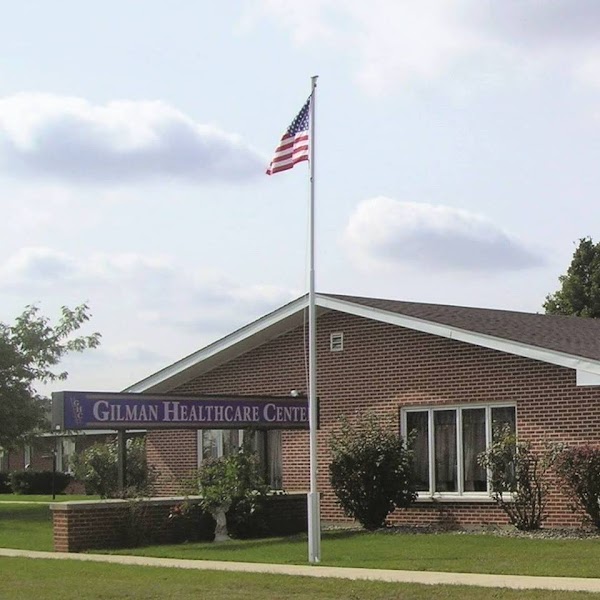
1390 SOUTH CRESCENT STREET, BOX 307, GILMAN, IL 60938 (815) 265-7208
For profit - Corporation 99 Beds PREMIER HEALTHCARE OF ILLINOIS Data: November 2025 1 Immediate Jeopardy citation
Trust Grade
23/100
#241 of 665 in IL
Last Inspection: May 2024

Within standard 12-15 month inspection cycle. Federal law requires annual inspections.

Overview

Gilman Healthcare Center has received a Trust Grade of F, indicating significant concerns about the facility's operations and care quality. It ranks #241 out of 665 facilities in Illinois, placing it in the top half, but its county rank of #3 out of 4 suggests limited local options for better care. The facility is showing improvement, having reduced the number of issues from 14 in 2023 to 4 in 2024. Staffing is a weakness with a rating of 2 out of 5 stars, and a turnover rate of 50%, which is average but can affect the consistency of care. There are concerning fines totaling $175,607, indicating compliance issues, and while RN coverage is average, specific incidents, such as a resident developing a severe pressure ulcer due to inadequate care planning and a fall resulting from equipment failure, highlight serious care deficiencies.

Trust Score
F
23/100
In Illinois
#241/665
Top 36%
Safety Record
High Risk
Review needed
Inspections
Getting Better
14 → 4 violations
Staff Stability
⚠ Watch
50% turnover. Above average. Higher turnover means staff may not know residents' routines.
Penalties
✓ Good
$175,607 in fines. Lower than most Illinois facilities. Relatively clean record.
Skilled Nurses
✓ Good
Each resident gets 47 minutes of Registered Nurse (RN) attention daily — more than average for Illinois. RNs are trained to catch health problems early.
Violations
⚠ Watch
24 deficiencies on record. Higher than average. Multiple issues found across inspections.
★★★☆☆
3.0
Overall Rating
★★☆☆☆
2.0
Staff Levels
★☆☆☆☆
1.0
Care Quality
★★★★☆
4.0
Inspection Score
Stable
2023: 14 issues
2024: 4 issues

The Good

  • Full Sprinkler Coverage · Fire safety systems throughout facility
  • No fines on record

Facility shows strength in fire safety.

The Bad

3-Star Overall Rating

Near Illinois average (2.5)

Meets federal standards, typical of most facilities

Staff Turnover: 50%

Near Illinois avg (46%)

Higher turnover may affect care consistency

Federal Fines: $175,607

Well above median ($33,413)

Significant penalties indicating serious issues

Chain: PREMIER HEALTHCARE OF ILLINOIS

Part of a multi-facility chain

Ask about local staffing decisions and management

The Ugly 24 deficiencies on record

1 life-threatening 2 actual harm
May 2024 4 deficiencies
CONCERN (D)

Potential for Harm - no one hurt, but risky conditions existed

Resident Rights (Tag F0550)

Could have caused harm · This affected 1 resident

**NOTE- TERMS IN BRACKETS HAVE BEEN EDITED TO PROTECT CONFIDENTIALITY** 2. R25's Medical Diagnoses List dated May 2024 documents R25 is diagnosed with Palliative Care, Depression, Alzheimer's Disease,...

Read full inspector narrative →
**NOTE- TERMS IN BRACKETS HAVE BEEN EDITED TO PROTECT CONFIDENTIALITY** 2. R25's Medical Diagnoses List dated May 2024 documents R25 is diagnosed with Palliative Care, Depression, Alzheimer's Disease, Dementia, Mood Disorder, and Restlessness and Agitation. R25's Physician Order Sheet dated May 2024 documents R25 is to have a regular diet with a thin/regular consistency and fortified foods: cereal in the AM, mashed potatoes at noon, and pudding in the PM. R25's Minimum Data Set, dated [DATE] documents R25 is severely cognitively impaired and requires partial/moderate assistance with eating. R25's Care Plan dated 5/21/24 documents R25 is at risk for altered risk of nutrition and had a poor appetite. R25's Care Plan does not address her refusal to use utensils and that R25 routinely feeds herself with her fingers. On 5/21/24 at 12:09 PM R25 was eating cooked carrots, cooked cabbage, meat, and pudding with her fingers. She had food all over her fingers and routinely dropped food debris on her chest and chin. On 5/21/24 at 12:09 PM V17 Licensed Practical Nurse stated R25 always eats with her fingers. V17 stated R25 refuses assistance with eating and refuses to use silverware. On 5/24/24 at 10:45 AM V3 Registered Nurse confirmed R25 eats with her fingers and doesn't like to use silverware. V3 confirmed the staff should attempt to encourage R25 to use silverware or assist her with eating if she will allow them .V3 confirmed R25's eating preferences should be documented in her Care Plan with relevant interventions and her diet should be updated to include food items that are more finger friendly. The facility's Quality of Life - Dignity policy dated October 2009 documents each resident shall be cared for in a manner that promotes and enhances quality of life, dignity, respect and individuality. Each resident will be treated with dignity and respect at all times. Treated with dignity means the resident will be assisted in maintaining and enhancing his or her self-esteem and self-worth. Based on observation, interview and record review the facility failed to provide Activities of Daily Living (ADL's) assistance, to maintain residents dignity for two of 25 residents (R25 and R46) reviewed for dignity on the sample list of 25. Findings include: 1.) R46's Diagnoses Sheet dated 3/19/24 documents the following diagnoses: Unspecified Dementia, Unspecified Severity With Agitation, Cognitive Communication Deficit, Unspecified Lack of Coordination, and Difficulty in Walking Not Elsewhere Classified. R46's Minimum Data Set (MDS) dated [DATE] documents R46's Brief Interview of Mental status score of four out of a possible 15, which indicates severe cognitive impairment. The same MDS does not document any behaviors directed to self or others. R46's Care Plan dated 3/19/24 documents the following: Resident has an ADL (Activity of Daily Living) Deficit, Self-care performance deficit r/t (related/to) impaired balance. Intervention: Encourage the resident to participate to the fullest extent possible with each interaction. R46's Task Certified Nursing Assistants sheet dated May 11- May 23, 2024 documents: Dressing Self Performance - How resident puts on, fastens and takes off all items of clothing, including donning/removing a prosthesis or (name brand compression) hose. Dressing includes putting on and changing pajamas and housedresses. There was no documentation on 5/21/24, on any shift. R46 had extensive assistance with dressing 11 shifts of 19. R46's same Task documentation has a column for resident refusal of assistance. There are no refusals with dressing documented. R46's Restorative Nursing Evaluation dated 5/24/24 documents the following: Self-Care: Code the resident's need for assistance with bathing, dressing, using the toilet, or eating prior to the current illness, exacerbation, or injury. Needed Some Help - Resident needed partial assistance from another person to complete activities. On 5/21/24 at 11:35, R46 was seated in a stationary chair in clear view of the hallway. R46 had no pants on. R46 had bare legs. R46's incontinence brief was on full display of anyone that passed R46's wide-opened door. On 5/21/24 at 11:38 am V7, Certified Nursing Assistant (CNA) acknowledged R46 did not have on pants and was in clear view of other residents and staff in the hall. V7, stated R46 should have on pants, but laundry department never have pants for R46. On 05/21/24 at 12:00 pm, R46 remains seated in a stationary chair in her room. R46 has no pants on. R46 remained seated in only an incontinence brief. R46's bedroom door remained wide opened. R46 was in clear view of unidentified residents that were being assisted by unidentified staff, down past R46's room and into the dining room. On 5/21/24 at 1:20 pm as unidentified residents returned to their rooms from the dining room, they passed R46's room. R46 bedroom door remained wide open. R46 was visible to the hall with only an incontinence brief on, and legs bare. R46 had no pants on. V9, Activities Assistant, entered R46's room with V10 and V11, Facility Visitors and a dog. R46 remained seated in stationary chair with incontinence brief on, no pants and bare legs. On 5/21/24 at 1:25 pm, as V10 and V11, Visitors exited R46's room, V2, Director of Nursing (DON) entered R46's room. V2, DON confirmed R46 had no pants in her closet, room or bathroom, and was in clear view of the hall way while seated in R46's bedroom stationary chair. V2 confirmed it is a dignity issue to set in clear view people in the hall, without appropriate clothes on. On 5/21/24 at 1:35 pm V7 and V8, CNA's were together in R46's room to assist R46 with toileting and dressing. V7 and V8 stated they provided incontinence care for R46 before lunch around 11:30 am, but did not have pants to put on R46. V7, CNA then stated (R46) has no pants because laundry service is terrible here. We did not have pants to put on her.
CONCERN (D)

Potential for Harm - no one hurt, but risky conditions existed

ADL Care (Tag F0677)

Could have caused harm · This affected 1 resident

**NOTE- TERMS IN BRACKETS HAVE BEEN EDITED TO PROTECT CONFIDENTIALITY** Based on observation, interview, and record review the facility failed to routinely provide oral hygiene for one of one resident...

Read full inspector narrative →
**NOTE- TERMS IN BRACKETS HAVE BEEN EDITED TO PROTECT CONFIDENTIALITY** Based on observation, interview, and record review the facility failed to routinely provide oral hygiene for one of one resident (R25) reviewed for oral care on the sample list of 25. Findings Include: The facility's Oral Care policy dated 4/2/24 documents it is the facility's practice to provide oral care to residents in order to prevent and control plaque-associated oral disease. R25's Medical Diagnoses List dated May 2024 documents R25 is diagnosed with Palliative Care, Depression, Alzheimer's Disease, Dementia, Mood Disorder, and Restlessness and Agitation. R25's Minimum Data Set, dated [DATE] documents R25 is severely cognitively impaired and requires substantial/maximum assist for oral hygiene. R25's Care Plan dated 5/23/24 documents R25 is not accepting of oral care and is verbally and physically abusive towards staff during this task. On 5/21/24 at 12:09 PM R25's teeth appeared filled with food debris. Her gums were reddened and appeared inflamed. On 5/23/24 at 11:49 PM R25's teeth appeared filled with food debris. Her gums were reddened and appeared inflamed. On 5/23/24 at 11:45 AM V21 Certified Nurses Assistant stated R25 often refuses to have her teeth brushed. R25 will bite down on the toothbrush. V21 stated she has not brushed R25's teeth today because she refused. On 5/24/24 at 10:45 AM V3 Registered Nurse confirmed R25 refuses to get teeth brushed but staff should document accordingly and document refusals for care. Staff should be attempting to brush R25's teeth and assist with oral hygiene. Staff should re-approach R25 and attempt to use alternative methods to get the job done.
CONCERN (D)

Potential for Harm - no one hurt, but risky conditions existed

Accident Prevention (Tag F0689)

Could have caused harm · This affected 1 resident

Based on observation, interview, and record review, the facility failed to maintain a resident toilet and bed position remote control cable in a safe and repaired condition. These failures have the po...

Read full inspector narrative →
Based on observation, interview, and record review, the facility failed to maintain a resident toilet and bed position remote control cable in a safe and repaired condition. These failures have the potential to affect three residents (R4, R14, R31) of four reviewed for safety in the sample list of 25. Findings include: 1. R4's diagnosis list (5/24/2024) documents diagnoses including: Difficulty in Walking, Intellectual Disabilities, Morbid Obesity, and Dementia. R4's quarterly assessment (3/28/2024) documents R4 uses a walker for mobility and is frequently incontinent of bowel and bladder. R4's Fall Risk Assessment (3/28/2024) documents R4 has poor vision, is ambulatory, and has balance problems when standing. R4's Care Plan (5/23/2024) documents R4 is at risk for falling. On 5/21/2024 at 1:35PM, R4 reported using the shared toilet located between R4's room and the adjacent resident room. R4 reported being concerned about the toilet moving around when R4 sits on the toilet and R4 reported having to sit very still while using the toilet to keep the toilet from moving. R4 reported the toilet had been moving around on the floor for a long time. 2. R31's diagnosis list (5/14/2024) documents diagnoses including: Abnormality of Gait and Mobility, Epilepsy, Convulsions, History of Falling, and Intellectual Disabilities. R31's Physician Orders (5/24/2024) documents R31 takes blood thinner medication daily. R31's quarterly assessment (3/19/2024) documents R31 is frequently incontinent of bowel and bladder. R31's Fall Risk Assessment (3/19/2024) documents R31 has a history of falls, has poor vision, is ambulatory, and has balance problems while standing or walking. R31's Care Plan (5/24/2024) documents R31 is at risk for falls and at risk for bleeding due to blood thinner medication use. On 5/23/2024 at 12:25PM, R31 was non-verbal. R31 nodded R31's head in a yes motion when asked if R31 used the toilet in the bathroom attached to R31's room. When asked if the toilet was moving around on the floor surface during use, R31 nodded yes. When asked if the toilet had been unstable for a long time, R31 again nodded yes. On 5/21/2024 at 1:35PM, R4 and R31's bathroom toilet appeared crooked and poorly fastened to the floor. When the base of the toilet was gently nudged, the entire toilet basin and attached tank easily rotated on the floor 20 or more degrees to the left or right of center. The toilet easily tipped forward and backwards when light to moderate pressure was applied to the front of the toilet basin. On 5/21/2024 at 12:40PM, V14 (Certified Nurse Aide) reported R4 will use the above toilet independently. V14 observed the toilet and stated Oh my and reported the toilet was not safe for resident use. V14 reported R31 also uses the same toilet independently and is at risk for falls. On 5/24/2024 at 11:50AM, V22 (Maintenance Director) reported the the bracket attaching the above toilet to the floor was partially rusted out, allowing the the toilet to move around on R4 and R31's bathroom floor. 3. R14's comprehensive assessment (2/26/2024) documents R14 has severe cognitive impairment, upper/lower extremity impairment limiting range of motion, is always incontinent of bladder, and has the diagnosis of Epilepsy (seizure disorder). On 5/21/2024 at 1:25PM, R14 was sleeping in bed with R14's remote bed control adjacent to R14's body. The bed remote cable was badly damaged with the outer cable insulation missing on several sections of the cable and unraveling electrical tape was partially wrapped around one portion of the missing wire insulation. On 5/22/2024 at 11:44 AM, the above cable remained damaged on R14's bed remote and the sharp corner of a plastic cable tie was protruding through a portion of the unraveling electrical tape. On 5/24/2024 at 11:50, V22 (Maintenance Director) viewed the damaged cable and reported the cable for sure needed to be repaired.
CONCERN (F)

Potential for Harm - no one hurt, but risky conditions existed

Deficiency F0868 (Tag F0868)

Could have caused harm · This affected most or all residents

Based on record review and interview the facility repeatedly failed to ensure that a designated key member (Infection Control Preventionist) of the committee was present at their quarterly Quality Ass...

Read full inspector narrative →
Based on record review and interview the facility repeatedly failed to ensure that a designated key member (Infection Control Preventionist) of the committee was present at their quarterly Quality Assurance (QA) meeting. This has the potential to affect all 56 residents that reside in the facility. Findings include: On 5/21/24 at 3:25 pm the facility provided an undated facility Quality Assurance and Performance Improvement Program (QAPI) policy that documents the following: The facility Administration is responsible to oversee that the facility to ensure Quality Assurance and Performance Improvement Committee (QAPI) , meet monthly at minimum and includes the following key members: The facility Director of Nursing, Medical Director or other designated Physician, Infection Control Preventionist, Staff responsible for the facility plant and three additional staff member responsible for direct patient care and services. The facility provided the attendance sign-in sheets with the QAPI policy noted above. The sign in sheets included all QA committee meetings held since last annual 7/14/24. The facility QA meeting sign-in sheets were dated 7/28/23, 9/15/23, 11/03/23, 12/08/23, 1/26/24, 2/23/24, 3/22/24, and 4/26/24. The signatures on the QA meeting sign-in sheets, did not include the required (V3, Registered Nurse) Infection Control Preventionist. On 05/22/24 at 09:20 am V3, Registered Nurse/Infection Control Preventionist stated V3 has been the Infection Control Preventionist for one year. V3 provided V3's Nursing Home Infection Preventionist Training Course Certificate dated 6/21/23. V3 stated she has not attended the QA committee meetings, because she did not know she was required to do so. On 5/22/24 at 9:25 am V1, Administrator acknowledged V3, Infection Control Preventionist did not attend any QA committee meeting in the past year as required. The facility Long-Term Care Facility Application for Medicare and Medicaid dated 5/21/24 documents the facially total resident census as 56.
Oct 2023 3 deficiencies
CONCERN (D) 📢 Someone Reported This

A family member, employee, or ombudsman was alarmed enough to file a formal complaint

Potential for Harm - no one hurt, but risky conditions existed

Resident Rights (Tag F0550)

Could have caused harm · This affected 1 resident

Based on observation, interview and record review, the facility failed to answer a call light timely for one of four residents (R4) reviewed for call lights/delay in care on the sample list of six. F...

Read full inspector narrative →
Based on observation, interview and record review, the facility failed to answer a call light timely for one of four residents (R4) reviewed for call lights/delay in care on the sample list of six. Findings Include: R4's MDS (Minimum Data Set) dated 8/21/23 documents R4 is alert and oriented. On 10/18/23 at 10:32 am, R4 stated it takes a long time for staff to answer R4's call light and explained that R4 had waited as long as an hour in the past for the call light to be answered. On 10/19/23 at 8:23 am, R4's call light was activated. At 8:30 am, V10 Scheduler walked by R4's room and did not answer the call light. R4 can be heard across the hall and approximately 20 feet away breathing hard and grunting. At 8:34 am, V10 then walked past R4's room again without stopping and entered the office next door to R4's room, grabbed a wheelchair and then exited the office, again walking past R4's room without answering the call light. At 8:38 am, V10 and V2 DON (Director of Nursing) both walked past R4's activated call light without answering it. At 8:39 am, V10 and V2 both walked by active R4's activated call light without answering it. At 8:40 am and 8:43 am, V17 Regional Nurse walked by R4's room with the call light activated without answering it. At 8:48 am, V11 CNA (Certified Nursing Assistant) entered R4's room to answer call light, turned it off then exited the room. At 8:50 am, R4 stated R4 was waiting for staff to take R4 to the bathroom and stated the call light had been on since 8:10 am (38 minutes). The facility Call Lights: Accessibility and Timely Response Policy dated 5/1/22 documents all staff members who see or hear an activated call light are responsible for responding. If the staff member cannot provide what the resident desires, the appropriate personnel should be notified.
CONCERN (D) 📢 Someone Reported This

A family member, employee, or ombudsman was alarmed enough to file a formal complaint

Potential for Harm - no one hurt, but risky conditions existed

ADL Care (Tag F0677)

Could have caused harm · This affected 1 resident

Based on observation, interview and record review, the facility failed to perform timely toileting assistance for one of three residents (R4) reviewed for toileting on the sample list of six. Finding...

Read full inspector narrative →
Based on observation, interview and record review, the facility failed to perform timely toileting assistance for one of three residents (R4) reviewed for toileting on the sample list of six. Findings Include: R4's MDS (Minimum Data Set) dated 8/21/23 documents R4 is alert and oriented and requires assistance with toileting. On 10/19/23 at 8:23 am, R4's call light was activated. At 8:48 am, staff answered R4's call light then left the room. At 8:50 am, R4 stated, R4 was waiting for staff to toilet R4 explaining, I (R4) have to go bad and I have been waiting for them to take me since 8:10 am (40 minutes). At 8:55 am, V11 and V12 CNA's (Certified Nursing Assistant's) returned to R4's room to toilet R4. Both stated 40 minutes is a long time to wait to use the restroom however there was only three staff on the unit providing cares and that R4 requires two staff due to using a mechanical lift.
CONCERN (D) 📢 Someone Reported This

A family member, employee, or ombudsman was alarmed enough to file a formal complaint

Potential for Harm - no one hurt, but risky conditions existed

Incontinence Care (Tag F0690)

Could have caused harm · This affected 1 resident

Based on observation and interview, the facility failed to properly perform incontinence care for one of three residents (R2) reviewed for toileting and incontinence care on the sample list of six. F...

Read full inspector narrative →
Based on observation and interview, the facility failed to properly perform incontinence care for one of three residents (R2) reviewed for toileting and incontinence care on the sample list of six. Findings include: On 10/18/23 at 12:40 pm, V6 and V7 CNA's (Certified Nursing Assistant's) entered R2's room to provide incontinence care. R2 was lying in bed. R2 was incontinent of urine. V7 performed cares, using a soapy washcloth, wiping R2 from back to front multiple times, then repeated the same motion with a rinse cloth and towel. After incontinence care was completed, V7 stated V7 always wipes residents from back to front. The facility Perineal Care Policy dated 6/1/23 documents it is the practice of this facility to provide perineal care to all incontinent residents to promote cleanliness and comfort, prevent infection to the extent possible, and to prevent and assess for skin breakdown. Staff are to clean buttocks and anus, wipe front to back; vagina to anus in females using a separate washcloth or wipes.
Sept 2023 1 deficiency 1 IJ
CRITICAL (J) 📢 Someone Reported This

A family member, employee, or ombudsman was alarmed enough to file a formal complaint

Immediate Jeopardy (IJ) - the most serious Medicare violation

Pressure Ulcer Prevention (Tag F0686)

Someone could have died · This affected 1 resident

**NOTE- TERMS IN BRACKETS HAVE BEEN EDITED TO PROTECT CONFIDENTIALITY** Failures at this level required more than one deficient practice statement. A. Based on observation, interview, and record revi...

Read full inspector narrative →
**NOTE- TERMS IN BRACKETS HAVE BEEN EDITED TO PROTECT CONFIDENTIALITY** Failures at this level required more than one deficient practice statement. A. Based on observation, interview, and record review, the facility failed to develop a care plan and interventions for a resident (R4) who is at high risk for developing pressure ulcers and has a history of pressure ulcers. The facility failed to implement pressure relieving interventions, routinely assess resident's skin, identify a pressure ulcer, assess a pressure ulcer upon identification, report a pressure ulcer to the wound nurse and physician, implement a treatment, and ensure open wounds were covered for one (R4) of five residents reviewed for pressure ulcers and repositioning in the sample list of five. These failures resulted in R4 developing a pressure ulcer of the right buttock that deteriorated into a Stage 4 pressure ulcer without treatment nor interventions. The Immediate Jeopardy began on (8/17/23) when R4 developed a pressure ulcer that was not identified, evaluated, and treated. V1 (Administrator) was notified of the Immediate Jeopardy on 8/30/23 at 4:16 PM. The surveyor confirmed by observation, interview, and record review, that the Immediate Jeopardy was removed on 8/31/23, but noncompliance remains at a Level Two because additional time is needed to evaluate the implementation and effectiveness of the in-service training and Quality Assurance reviews. Findings include: a.) The facility's Wound Report dated 8/22/23 documents R4 admitted to the facility with a left hip wound on 6/29/23 that measures 1.4 centimeters (cm) long by 1.2 cm wide by 0.1 cm deep, and R4 has a left inner knee facility acquired Stage 2 Pressure Ulcer that measures 0.8 cm by 1 cm by 0.1 cm. On 8/29/23 at 9:59 AM, 11:35 AM, 1:15 PM, 1:21 PM, 1:53 PM, and 2:31 PM, R4 was sitting in a reclining back wheelchair in R4's room. R4's legs were contracted with R4's knees near R4's chest and R4's heels/feet against R4's buttocks. There was a cushion in R4's wheelchair and an air mattress on R4's bed. At 9:59 AM, R4 stated R4 has a wound on R4's buttocks that has been there a few days and the wound does not receive daily treatments. At 1:53 PM, V10 (Certified Nursing Assistant/CNA) positioned R4 onto R4's right side in the wheelchair, removed the wedge cushion between R4's knees, and placed the cushion between R4's right leg and the armrest of the wheelchair. V10 did not replace a pillow or wedge cushion between R4's knees prior to leaving R4's room. At 2:31 PM, R4 did not have a pillow or wedge cushion between R4's knees. On 8/29/23 at 3:32 PM, R4 was lying in bed on R4's right side. R4's legs were contracted and R4's heels were near R4's buttocks. R4 was not wearing any pressure relieving boots and R4's heels were not floated. V5 (Registered Nurse/RN) removed a dressing from R4's left hip. There was a large pink, scarred area, approximately the size of a softball, with a small open area near the center. R4's left inner knee had an open red wound that was not covered with a dressing. V5 stated the wound treatment is barrier cream and V5 does not cover it with a dressing. R4's right buttock had an uncovered deep, open wound, approximately quarter size, that contained yellow and red wound tissue. V5 (RN) and V6 (Certified Nursing Assistant/CNA) had to reposition R4's legs in order to observe the wound. V5 and V6 stated they were not aware of this wound and were unsure how long R4 has had the wound. R4's Diagnoses List dated 8/29/23 documents R4 has Multiple Sclerosis, Multiple Muscle Contractures, and Severe Protein Calorie Malnutrition. R4's admission Minimum Data Set, dated [DATE] documents R4 is cognitively intact, requires extensive assistance of at least two staff for bed mobility/transfers/toileting, is dependent on two staff for bathing, is frequently incontinent of bowel, has impaired range of motion to bilateral upper and lower extremities, and admitted to the facility with a Stage 4 pressure ulcer. R4's Braden Assessments dated 7/4/23, 8/15/23, and 8/22/23 document a score of 11, indicating R4 is at high risk for developing pressure ulcers. R4's Care Plan dated 7/4/23 documents a problem Wound Management and interventions to monitor for signs of infection, and administer wound treatment as ordered, but does not identify the type or location of these wounds. This care plan does not document a problem area, goals, or interventions identifying that R4 is high risk for developing pressure ulcers or any pressure relieving interventions. R4's Order Summary Report dated 8/30/23 documents orders for pressure-relieving boots when in bed, turn/reposition every 2 hours, float heels when in bed, and a low air loss mattress initiated on 6/29/23, apply barrier cream to bilateral buttocks every shift initiated on 8/8/23, and a wound treatment for the left knee including use of a pillow between knees initiated on 8/23/23. There are no other documented pressure-relieving interventions in R4's medical record. There is no documentation in R4's medical record that the orders for floating heels and the use of pressure-relieving boots were implemented routinely or that R4 refuses these interventions. R4's Treatment Administration Record documents the nurses signed out the treatment for barrier cream to R4's buttocks every shift as ordered. R4's Wound Assessment and Plans recorded by V4 (Wound Physician) document: On 7/4/23 recorded by V4 (Wound Physician) documents R4's left hip Stage 4 Pressure Ulcer measured 6.5 cm by 4.8 cm by 0.1 cm. On 7/18/23, R4 had a left buttock Stage 2 Pressure Ulcer that measured 0.9 cm by 2.6 cm by less than 0.1 cm deep and notes that R4 has limited positioning options due to severe bilateral hip and knee joint contractures and current difficult-to heal ulcer left lateral hip (greater trochanter.) On 8/8/23 R4's left buttock wound healed. On 8/22/23, R4's left medial knee Stage 2 Pressure Ulcer measured 0.8 cm by 1.3 cm by less than 0.1 cm and includes orders to use a pillow between R4's knees and a daily treatment for a barrier cream covered with a foam dressing. R4's left hip pressure ulcer measured 1.4 cm by 1.2 cm by 0.1 cm. There is no documentation in R4's medical record that routine skin assessments are completed (besides wound assessments), or that R4's right buttock wound was identified, assessed, reported to V3 (RN/Wound Nurse) and V4 (Wound Physician), and treatment orders were administered prior to 8/29/23. R4's Skin Evaluation Note dated 8/29/2023 at 8:21 AM recorded by V3 documents assessment of R4's left hip and left inner knee pressure ulcers. This note does not document that a full skin assessment was conducted and does not identify that R4 has a right buttock wound. Interventions listed are encouraging R4 to frequently shift weight, raise buttocks when sitting in chair, treatments as ordered, and turn/move R4 at least every two hours. R4's Nursing Note dated 8/29/2023 at 5:05 PM documents R4's right medial buttock wound was assessed and measured 4 cm by 3 cm by 2 cm with undermining from 7 to 12 o'clock, and the deepest part measured 4 cm. The wound contained black eschar (dead tissue) and yellow slough. The wound was cleansed, and a calcium alginate treatment was applied. V3 (RN/Wound Nurse) was notified and will assess R4 in the morning. On 8/29/23 at 1:21 PM, V10 (Certified Nursing Assistant/CNA) stated R4 is supposed to be repositioned every two hours and V10 lays R4 down towards the end of dayshift. V10 stated V10 uses a drawsheet and wedge cushion and reclines the back of the wheelchair to reposition R4 in R4's chair. V10 confirmed R4 has been in the wheelchair since around 10:00 AM. On 8/29/23 at 3:26 PM, V11 (Regional Clinical Nurse) confirmed care plans should be updated to include current pressure ulcers, pressure ulcer risk, and pressure relieving interventions. V11 stated R4's care plan will be updated today. On 8/29/23 at 3:46 PM, V5 (RN) stated, I'm embarrassed by that referring to R4's right buttock wound. At 4:14 PM, V5 stated V5 did not apply the barrier cream or assess R4's buttocks yesterday, because R4's left buttock wound had healed. V5 stated no one had reported R4's wound to V5. On 8/29/23 at 4:11 PM, V9 (Registered Nurse/RN) stated R4 has an air mattress, and we turn and reposition R4. V9 confirmed no pressure-relieving interventions for bilateral lower extremities, and stated we tried to use a roll to prevent pressure at one time. V9 stated V9 was not aware of R4's right buttock wound. V9 confirmed V9 worked 8/26/23 and 8/27/23 and did not assess R4's buttocks. On 8/29/23 at 4:30 PM, V7 (Certified Nursing Assistant/CNA) stated V7 works on R4's hallway and provided care for R4 over the weekend (8/26/23-8/27/23). V7 stated R4 had an open wound to R4's right buttock that was not covered with a dressing. V7 stated the wound should have been covered and V7 had previously reported the wound to the nurses. V7 stated the wound had been there for a few weeks. V7 stated the nurses tell V7 they don't have a treatment for R4's buttock wound, only a treatment for R4's hip wound. V7 stated R4 primarily lays on R4's right side and R4 has never had or used pressure-relieving boots. On 8/29/23 at 4:38 PM, V8 (Certified Nursing Assistant/CNA) stated V8 provides care for R4 on evenings and night shifts and last cared for R4 this past weekend. V8 stated that over the weekend R4 had a wound on R4's bottom and hip. V8 described the wound as being a hole on R4's right buttock, that was not covered with a dressing. V8 stated we had been applying barrier cream, and V8 was not sure how long the wound had been there. V8 stated there was a sore there a week ago Thursday (8/17/23), but it was not as bad. V8 stated V8 has told the nurses about R4's wound, but they just give cream to apply. V8 confirmed R4 has never had or used pressure-relieving boots. On 8/29/23 at 3:51 PM, V2 (Director of Nursing/DON) stated skin assessments are to be completed on shower days and documented on the shower sheets which are not part of the resident's Electronic Medical Record. V2 stated the CNAs are to immediately report any skin issues to the nurses. At 4:01 PM, V2 confirmed V2 was unaware of R4's right buttock wound. V2 stated R4 was listed on today's wound report and confirmed it does not document a right buttock wound. At 4:26 PM, V2 provided R4's bath sheet dated 8/29/23 and stated that is the only documented shower/skin sheet V2 could find. V2 stated V2 is going to assess R4's wound and implement treatment orders. On 8/29/23 at 4:04 PM, V3 (RN/ Wound Nurse) stated R4 had a wound to the left buttock that healed approximately two weeks ago and V3 was not aware that R4 currently has a right buttock wound. V3 stated V3 looked at R4's bottom on Monday 8/28/23 and could have missed the wound, because V3 rolled R4 by herself. V3 stated R4 admitted with an order and still has an active order to wear pressure-relieving boots, but R4 refuses to wear them. V3 stated there is no documentation that heel pressure relieving interventions are implemented. V3 stated R4 has an order for a wedge or pillow between R4's knees. On 8/30/23 at 8:09 AM, V3 stated V3 did not document R4's refusal to wear pressure relieving boots, and V3 assumed the order was transcribed to R4's Medication Administration Record (MAR) for the nurses to implement and document. V3 stated staff should have documented refusals in the nursing note or MAR. V3 stated R4 only admitted to the facility with the left hip wound, R4 has a long-standing history of wounds, and has very fragile skin. V3 stated the staff should have told V3 about R4's right buttock wound. V3 stated the nurses should report new wounds to V3 and the physician and measure the wound. V3 stated V3 notifies V4 (Wound Physician) to obtain wound orders, or the primary physician if unable to reach V4. V3 stated the CNAs should be showering the residents and reporting the skin issues. V3 documents in a progress note when a full body skin sweep is done by V3/V4. V3 confirmed V3 did not conduct a full body skin check on R4 on 8/29/23. V3 stated a treatment order was initiated yesterday for R4's right buttock wound and previously the treatment was for barrier cream, but that would have changed once it was identified to be open. V3 stated R4 is contracted and R4's feet rest there (referring to the location of R4's buttock wound) and refusing to wear the boots. V3 stated R4 likes to wear shoes when sitting in the wheelchair, so it is uncertain if the wound was caused from a shoe or heel. V3 confirmed R4's left knee wound should be covered with a dry dressing. On 8/30/23 at 10:25 AM, V1 (Administrator) stated V1 was not aware of R4's right buttock wound prior to 8/29/23. On 8/30/23 at 9:30 AM, V4 (Wound Physician), V3 (RN/ Wound Nurse), and with assistance of V12 (CNA) turned R4 in bed to assess R4's skin and wounds. V4 measured R4's left hip wound and V3 administered the treatment. V4 measured R4's open right buttock wound and stated R4's right buttock wound measures 2.5 cm by 2.7 cm by 1.1 cm deep, with undermining 0.7 cm at 1 o'clock and 3 o'clock. Silver calcium alginate and two by two gauze was packed into the wound and covered with a bordered adhesive dressing. V4 stated R4's right buttock wound is a Stage 4 pressure ulcer since V4 could feel bone. During R4's full body skin check, R4 had scarring from previous wounds to the penis, right heel, right outer foot, sacrum, right hip, and right/left buttocks. R4's right knee wound was not covered with a dressing. On 8/30/23 at 9:26 AM, V4 (Wound Physician) stated V4 has been treating R4 since October 2022 when R4 resided at a former facility. V4 stated R4's muscle volume is very low and due to R4's contractures R4's skin is stretched over R4's buttocks. Wounds can progress quickly for R4. At 10:02 AM V4 stated if R4 had been wearing pressure-relieving boots it may have prevented R4's right buttock wound from developing. V4 stated V4 is not sure if the wound was caused from R4's heel pressure or the chair. V4 last assessed R4 on 8/22/23 when the left knee wound was discovered, and the buttock wound was not there at that time. V4 stated V4 was ashamed that the wound was missed during that assessment and V4 should have done a more thorough skin assessment. It would take probably less than a week for R4 to develop that kind of wound. R4's shoes could have caused pressure to the area as well, and it absolutely would have been better for R4 not to wear shoes. V4 stated therapy could have also helped with R4's mobility and joint flexion. V4 stated V3 and V4 depend on the CNAs to assess skin and report when wounds are found. V4 stated the barrier cream is more for prevention and confirmed this treatment would not be appropriate for open wounds. V4 stated R4's wound being left open puts it at risk for contamination. V4 stated it concerns V4 that the nurses documenting the barrier cream administration should have been looking at and assessing the area. V4 confirmed that if R4's wound had been reported and assessed immediately, monitored, and a treatment implemented it could have prevented R4's wound from deteriorating to a Stage 4. V4 stated in hindsight this wound could have been prevented. R4's Physician Order dated 8/31/23 documents administer Keflex (antibiotic) 500 milligrams one capsule via gastrostomy tube three times daily for 15 days for wound. The facility's undated Pressure Ulcer/Skin Breakdown-Clinical Protocol documents the following: Significant risk factors for developing pressure ulcers such as immobility, weight loss, and a history of pressure ulcers need to be identified. Pressure ulcers will be assessed and documented and include wound characteristics and measurements. Treatments and support surfaces will be documented. The physician will order wound treatments including pressure reduction surfaces and the application of topical agents; will help identify medical interventions for wound management; and help staff alter the care plan as appropriate including when new wounds develop despite current interventions. The facility's undated Pressure Ulcer Risk Assessment documents the following: Purpose: The purpose of this procedure is to provide guidelines for the assessment and identification of residents at risk of developing pressure ulcers. Preparation: 1. Review the resident's care plan to assess for any special needs of the resident. General Guidelines: 1. Pressure ulcers are usually formed when a resident remains in the same position for an extended period of time causing increased pressure or a decrease of circulation (blood flow) to that area, which destroys the tissues. 4. If pressure ulcers are not treated when discovered, they quickly get larger, become very painful for the resident, and often times become infected. 5. Pressure ulcers are often made worse by continual pressure, heat, moisture, irritating substances on the resident's skin (i.e. (for example), perspiration, feces, urine, wound discharge, soap residue, etc. (etcetera), decline in nutrition and hydration status, acute illness and/or decline in the resident's physical and/or mental condition. 6. Once a pressure ulcer develops, it can be extremely difficult to heal. 10. Routinely assess and document the condition of the resident's skin per facility wound and skin care program for any signs and symptoms of irritation or breakdown. Immediately report any signs of a developing pressure ulcer to the supervisor. Assessment: 2. Skin Assessment. Skin will be assessed for the presence of developing pressure ulcers on a weekly basis or more frequently if indicated. 3. Monitoring: a. Staff will maintain a skin alert, performing routine skin inspections daily or every other day as needed. b. Nurses are to be notified to inspect the skin if skin changes are identified. c. Nurses will conduct skin assessments at least weekly to identify changes. 4. Because a resident at risk can develop a pressure ulcer within 2 to 6 hours of the onset of pressure, the at-risk resident needs to be identified and have interventions implemented promptly to attempt to prevent pressure ulcers. The admission evaluation helps define those initial care approaches. Documentation: The following information should be recorded in the resident's medical record: 1. The type of assessment conducted. 2. The date and time and type of skin care provided, if appropriate. 5. Any change in the resident's condition. 6. The condition of the resident's skin (i.e. (for example), the size and location of any red or tender areas). The Immediate Jeopardy that began on 8/17/23 was removed on 8/31/23 when the facility took the following actions to remove the immediacy: 1a. R4's physician and family were notified of R4's new wound to the right ischium on 8/29/23. 1b. A treatment order was obtained from the physician and implemented to R4 on 8/29/23. 1c. R4 received a skin assessment on 8/29/23, a Braden scale assessment (pressure ulcer risk assessment) on 8/29/23, and R4's care plan was updated on 8/30/23. 2a. A full body skin assessment was conducted for every resident residing in the facility, completed on 8/30/23. 2b. Newly identified skin alterations were reported to respective physicians, and treatment orders were obtained and implemented on 8/30/23. 2c. Newly obtained physician orders were transcribed into the Physician Order Sheet and Treatment Administration Record. Resident's care plans were updated to reflect the new skin conditions, monitoring, assessments, education, and orders on 8/30/23. 3a. An in-service training was completed for the Director of Nursing and Wound Care Nurse for pressure ulcer prevention, interventions, skin assessments, identification, reporting, and treatments on 8/30/23. 3b. An in-service training was completed for licensed nursing staff for pressure ulcer prevention, interventions, skin assessments, physician notifications, obtaining treatments orders, transcribing orders, and monitoring wounds on 8/30/23. 3c. An in-service training was conducted for certified nursing staff for completing and documenting shower sheets and reporting to licensed nurses any skin conditions and skin issues without a dressing on 8/30/23. 3d. V1 confirmed facility staff nor agency staff will be allowed to work until these required in-service trainings are completed on 8/30/23. On 9/1/23 at 10:17 am, V1 (Administrator) stated all facility staff had received the in-service trainings. V1 stated the facility only works with one agency and has conducted the in-service trainings with the agency staff who have worked in the facility, and scanned the in-service trainings to the agency who will require any additional staff to complete the in-service training prior to being sent to the facility. 3e. The facility policies for pressure injury prevention, preventative skin care, nutrition and hydration, repositioning, and pressure relieving devices were reviewed and revised on 8/30/23. 3f. In-service training was completed for all direct care staff regarding identification of high-risk residents and how the direct care staff are informed of these residents on 8/31/23. 4a. i. ii. iii. iv. v. While the facility began the monitoring and auditing procedures on 8/30/23, these measures will be ongoing for 4 weeks, then a minimum of 3 months, and reviewed and evaluated weekly by the facility Quality Assurance program and facility administration. B. Based on observation, interview, and record review, the facility failed to develop and update care plans to include pressure ulcer risk, interventions, and pressure ulcers, complete pressure ulcer risk assessments, implement pressure relieving interventions and preventative treatments for four (R1, R2, R3, R5) of five residents reviewed for repositioning/pressure ulcers in the sample list of five. Findings include: The facility's undated Pressure Ulcer Risk Assessment policy documents to complete pressure ulcer risk assessments on admission, quarterly, annually, and with significant changes. b.1) R1's MDS dated [DATE] documents R1 is cognitively intact, requires assistance of one staff person for transfers and bed mobility, and is at risk for developing pressure ulcers. R1's Care Plan dated 1/18/23 documents R1 has impaired skin integrity of the right heel and includes interventions to follow facility protocol for treatment and apply pressure relieving boots. R1's Physician Order dated 2/22/23 documents to wear a pressure-relieving boot to the left foot when in wheelchair and offload heel in bed. R1's Physician Order dated 5/17/23 documents to cleanse R1's right heel and apply a skin protectant daily. R1's August 2023 Medication Administration Record (MAR) does not document R1's right heel skin protectant was administered on 5 days and R1's left heel boot is documented as applied three times daily except for 6 refusals. The skin protectant entries for 8/1/23 and 8/5/23 refers to the nursing notes. R1's Order Administration Notes document: On 8/5/2023 at 2:49, out of time. On 8/1/2023 at 2:27 PM, shift over out of time. There is no documentation R1's treatments were administered on the next shift. On 8/29/23 at 12:39 PM, 1:08 PM and 2:32 PM, R1 was sitting in a wheelchair in R1's room and was not wearing a pressure relieving boot. At 12:39 PM, R1 stated R1 used to wear a pressure-relieving boot, but the wounds on R1's feet have healed, and staff told R1 that R1 no longer has to wear the boot. At 2:32 PM, R1 stated they no longer apply the skin protectant to my heels since R1's wounds have healed. On 8/29/23 at 10:08 AM, V19 (Licensed Practical Nurse/LPN) reviewed R1's order administration notes and stated V19 did not have time to administer R1's skin protectant treatments on 8/1/23 and 8/5/23, so it fell onto the next shift to administer. At 3:14 PM, V19 stated R1 refuses to wear the pressure relieving boot because R1's wound has healed. b.2) On 8/29/23 at 8:11 AM, R2 was sitting on R2's bed wearing a walking boot on the left foot. R2's Diagnoses List dated 8/30/23 includes Diabetes Mellitus. R2's Care Plan dated 6/8/22 documents R2 is at risk for skin breakdown and includes interventions to assist with toileting and repositioning. R2's Physician Order dated 8/16/23 documents to wear a short walking boot due to an ankle sprain. There are no documented Braden Assessments in R2's electronic medical record after 9/8/22. R2's Census Report documents R2 admitted to the facility on [DATE]. b.3) On 8/29/23 at 8:14 AM, 9:52 AM, 10:43 AM, and 1:58 PM, R3 was sitting in a wheelchair in R3's room. R3's Diagnoses List dated 8/30/23 includes Conversion Disorder with seizures/convulsions, Diabetes Mellitus, COVID-19 (8/21/23) and Dementia. R3's MDS dated [DATE] documents R3 has short- and long-term memory impairment, requires extensive assistance of one person for bed mobility, transfers, and toileting, is always incontinent of bowel and bladder, and is at risk for developing pressure ulcers. R3's Care Plan dated 6/18/23 documents R3 is at risk for developing pressure ulcers due to decreased mobility, lethargy, and moisture; and includes pressure relieving interventions and monitoring. R3's electronic medical record documents R3's last Braden Assessment was completed on 4/9/23. This assessment documents a score of 13, indicating R3 is at moderate risk for developing pressure ulcers. b.4) On 8/29/23 at 9:26 AM, R5 was lying in bed with R5's right foot on a foot cradle. R5 states R5 has a wound to R5's right heel. At 11:00 AM, R5 was sitting in the hallway and had a pressure-relieving boot on the right foot. On 8/29/23 at 1:45 PM, V3 (Wound Nurse) administered R5's right heel wound treatment. There was a golf ball sized red/open wound to R5's right heel. The facility's Wound Report dated 8/22/23 documents R5 has a right heel unstageable pressure ulcer that developed on 8/1/23 and measured 1.8 centimeters (cm) long by 3.2 cm wide by 0.1 cm deep. R5's MDS dated [DATE] documents R5 is cognitively intact, requires extensive assistance of two for transfers/bed mobility/toileting, and is at risk for developing pressure ulcers. R5's Physician Order dated 12/28/22 documents to wear pressure relieving boots at all times. R5's Physician Order dated 8/23/23 documents to cleanse the right heel wound and apply silver calcium alginate and cover with a dry dressing daily. R5's Care Plan revised on 4/10/23 documents R5 is at risk for pressure ulcers and includes interventions for skin assessments weekly, provide incontinence care, use pressure relieving cushion and mattress, and float heels under calves when in bed. This care plan has not been updated to include R5's right heel pressure ulcer, foot cradle, and pressure relieving boots. There are no documented Braden Assessments in R5's electronic medical record after 1/4/23 until 8/1/23. R5's Braden score was 20 on 1/4/23. On 8/1/23 R5's Braden score was 16, indicating R5 was at risk of developing pressure ulcers. On 8/29/23 at 11:26 AM, V3 (Wound Nurse) stated pressure ulcer risk is determined by the Braden Assessment, which is done quarterly by V3 and the MDS Coordinator. V3 stated interventions and risk are documented on the care plan. V3 stated R5 is noncompliant with floating R5's heels and wearing pressure relieving boots. On 8/29/23 at 3:26 PM, V11 (Regional Clinical Nurse) confirmed care plans should be updated to include current pressure ulcers, pressure ulcer risk, and pressure relieving interventions.
Jul 2023 6 deficiencies 1 Harm
SERIOUS (G)

Actual Harm - a resident was hurt due to facility failures

Accident Prevention (Tag F0689)

A resident was harmed · This affected 1 resident

Based on interview and record review the facility staff failed to provide safety for one resident (R21) when using the mechanical lift for transfer for one (R21) of four residents reviewed for acciden...

Read full inspector narrative →
Based on interview and record review the facility staff failed to provide safety for one resident (R21) when using the mechanical lift for transfer for one (R21) of four residents reviewed for accidents in a sample of 23. This failure resulted in R21 falling onto the floor out of of a mechanical lift sling during a transfer requiring a emergency department evaluation and sustaining a facial laceration. Findings include: The Physician's Orders dated July 2023 list the following diagnosis for R21: Obstructive Hydrocephalus, Unspecified Dementia with Behavior Disturbance, Bipolar and Seizures. Facility incident report dated 6/19/2023 documents R21 was being transferred with a mechanical lift by V7, CNA (Certified Nursing Assistant). R21 was up in the air above the bed in the mechanical sling and the strap broke which caused R21 to fall out of the sling and was assisted to the floor by V7. R21 hit his head, left temple area on the leg of the mechanical lift and received a laceration to left eyebrow and skin tear to left hand along with a large area of bruising the the left hand and arm. R21's progress notes dated 6/19/23 documents the ambulance was called and transferred R21 to the Emergency Department and R1 returned to the facility at 6:30 AM on 6/20/23. R21's Emergency Department provider notes dated 6/19/23 documents presenting to ED for evaluation of fall, head trauma. Staff was assisting patient with a (Mechanical lift transfer) and patient fell off (mechanical lift) and hit his head. Physical exam: Skin- 2 centimeter jagged laceration noted lateral to the left eyebrow, skin tear to dorsum left hand. Laceration repair: Repair method- Tissue adhesive. V7, CNA stated in interview at 2:48 PM One of the straps that was on the the mechanical lift hooks broke which caused (R21) to fall out of the sling and V7 assisted (R21) to the floor and (R21) hit his head on the leg of the mechanical lift. V7 stated (R21) was still in the sling above the bed in the air and this is when the sling's strap broke causing ( R21) to fall and hit his head. V2, DON (Director of Nurses) stated in interview on 7/14/23 at 10:05 AM. The CNA V7 hooked the sling up wrong when transferring (R21). We have two slings one is complete full body sling for transfers and the other sling is one that covers the body under the buttocks area. V2 stated this sling you have to criss cross the sling straps in order to use it correctly. V7 did not have the sling applied appropriately and V7 was educated on the proper placement of sling usage, also always have 2 staff when using mechanical lift for transferring residents. The care plan for R 21 dated 5/21/23 states R21 must be transferred with 2 staff and a mechanical lift. The facility policy titled Safe Lifting and Movement of Residents revision date October 2009, documents The Policy Statement is In order to protect the safety and well-being of staff and residents, and to promote quality care, this facility uses appropriate techniques and devices to lift and move residents.
CONCERN (D)

Potential for Harm - no one hurt, but risky conditions existed

Deficiency F0625 (Tag F0625)

Could have caused harm · This affected 1 resident

**NOTE- TERMS IN BRACKETS HAVE BEEN EDITED TO PROTECT CONFIDENTIALITY** Based on interview and record review the facility failed to notify a resident's representative in writing of the facility's Bed ...

Read full inspector narrative →
**NOTE- TERMS IN BRACKETS HAVE BEEN EDITED TO PROTECT CONFIDENTIALITY** Based on interview and record review the facility failed to notify a resident's representative in writing of the facility's Bed Hold Policy when a resident was transferred to the hospital. This failure affected one of two residents (R16) reviewed for hospitalizations on the sample list of 23. Findings Include: On 7/13/23 at 4:00 PM V1 Administrator and V2 Director of Nurses both confirmed the facility attaches the Bed Hold Paperwork to the Resident Transfer paperwork and sends them with a resident when they are sent to the emergency room however, when applicable they do not provide a written copy of either document upon transfer to the resident's representative. The Nurses Note dated 6/16/2023 documents R16 was transported to the emergency room for altered mental status via ambulance. The facility could not provide documentation that R16's representative (V8) was provided a written copy of the Bed Hold Policy when R16 was transferred to the emergency room on 6/16/23. R16's Medical Diagnoses dated July 2023 document R16 is diagnosed with Autistic Disorder. R16's Minimum Data Set, dated [DATE] documents R16 is severely cognitively impaired. R16's Clinical Resident Profile dated July 2023 documents V8 is R16's Sister, Responsible Party, and Emergency Contact.
CONCERN (D)

Potential for Harm - no one hurt, but risky conditions existed

Tube Feeding (Tag F0693)

Could have caused harm · This affected 1 resident

Based on observation, interview, and record review, the facility failed to administer enteral tube feeding in a safe manner to resident. The facility failed to label an enteral tube feeding with resid...

Read full inspector narrative →
Based on observation, interview, and record review, the facility failed to administer enteral tube feeding in a safe manner to resident. The facility failed to label an enteral tube feeding with resident name, product name, date and time prepared, in accordance with facility policy. This failure affects one resident (R209) out of one reviewed for gastrostomy tube feedings on the sample list of 23. Findings include: On 7/11/23 at 9:34 am, R209 was in bed in R209's own private room. R209 was receiving a gastrostomy tube feeding through a delivery pump. The feeding product being administered to R209 had no identification, nor was there a label on the product bag to indicate which resident this product was to be administered to, the type of product being administered, nor was the product bag labeled with the date and time the product was prepared to be administered. On 7/12/23 at 8:57 am, R209 was in bed in R209's own private room. R209 was receiving a gastrostomy tube feeding through a delivery pump. There was no identification on the product bag, and there was no label on the product bag to indicate which resident the product was to be administered to, the type of product being administered, nor the date and time the product was prepared to be administered. On 7/12/23 at 10:08 am, V2 Director of Nursing, exhibited the gastrostomy feeding product in a 1,500 milliliter plastic bag which had the manufacturer identification Fibersource HN. V2 stated, Our nursing staff are pouring the product from the original bag (approximately 1 foot by 1 foot square shape bag) into the smaller bags (approximately 4 inches wide by 16 inches long) so we can use the pump. V2 further stated, We are going to be switching to Jevity 1.5 (gastrostomy feeding) product this Friday (7/14/23) and we do have the Jevity here at the facility right now. V2 continued to state, When we buy the feeding product, we buy it in cases so there are no labels with any resident's name like there would be from a pharmacy. The facility policy Enteral Tube Feeding via Continuous Pump dated December 2011 documents, General Guidelines: Check the enteral nutrition label against the order before administration. Check the following information: resident name, type of formula, date and time formula was prepared, route of delivery, access site, method (pump, gravity, syringe), rate of administration. Steps in the Procedure: Check the label on the enteral formula against the physician order. On the formula label document initials, date and time the formula was hung/ administered, and initial that the label was checked against the order. On 7/12/23 at 10:46 am, V2, Director of Nursing, stated, According to the policy we should be labeling the tube feeding bags. V2 acknowledged there was no way to know what type of feeding product was in the bag except for what is on the physician orders. V2 could not confirm the product in the tube feeding bag was the currently ordered Fibersource HN. R209's Progress Note dated 7/10/23, documented by V6, Registered Dietician, documents, Per DON (Director of Nursing) the Fibersource HN is not expected to be available, however, Jevity 1.5 is available. Rec (recommend) when Fibersource is not available, switch to Jevity. On 7/12/23 at 12:19 pm, V2, Director of Nursing, stated, We can't keep any product, it has to be discarded after 24 hours once it is opened.
CONCERN (D)

Potential for Harm - no one hurt, but risky conditions existed

Respiratory Care (Tag F0695)

Could have caused harm · This affected 1 resident

**NOTE- TERMS IN BRACKETS HAVE BEEN EDITED TO PROTECT CONFIDENTIALITY** Based on observation, interview, and record review the facility failed to obtain a physician's order for a CPAP (Continuous Posi...

Read full inspector narrative →
**NOTE- TERMS IN BRACKETS HAVE BEEN EDITED TO PROTECT CONFIDENTIALITY** Based on observation, interview, and record review the facility failed to obtain a physician's order for a CPAP (Continuous Positive Airway Pressure) treatment for one (R50) of one resident reviewed for CPAP/BIPAP treatments in the sample list of 23. Findings include: The Facility's CPAP (Continuous Positive Airway Pressure) /Bi-Level (Bi-PAP) (Bilevel Positive Airway Pressure), Support Policy dated 3/2020 documents.: Obtain a physician order for the use of BIPAP/CPAP, information should include the level of IPAP (inspiratory positive airway pressure) in cmH20, and the level of EPAP (expiratory positive airway pressure) in smH20, FI02, and humidification, if needed. On 7/12/23 at 8:22am R50 was in R50's room sitting in R50's wheelchair, next to a bed side table with a CPAP (Continuous Positive Airway Pressure) device on it. On 7/12/23 at 8:22am R50 said, R50 was admitted to the facility on [DATE]. R50 said, R50 has asthma and breathing issues, and uses a CPAP machine at bedtime. R50 said, R50 has been using a CPAP machine since admission into the facility. R50 said, R50 can apply the CPAP mask at bedtime and remove it in the morning without staff assistance. On 7/13/23 at 1:56pm V2 Director of Nursing (DON) said, V50 was admitted from an assisted care facility with R50's CPAP machine. V2 said, V50 has been using it since admission, and doesn't need help from staff to put it on or remove it. V2 said, on 6/2/23 the facility received a fax from the CPAP provider with V50's CPAP settings. V2 said, the facility never notified V5 R1's Physician to obtain an order for R50 to receive CPAP treatments. V2 said, the facility should have obtained an order prior to administering R50 CPAP treatments and should have had a care plan with interventions for the use of R50's CPAP machine. R50's Order Summary Report dated 7/14/23 documents diagnoses Asthma with (Acute) Exacerbation, Obstructive Sleep Apnea (Adult), Chronic Obstructive Pulmonary Disease, Sleep Apnea, Shortness of Breath, Acute Bronchiolitis Due to Respiratory Syncytial Virus and Bronchiectasis. R50's Care Plan updated on 6/6/23 does not document R50's use of a positive airway pressure device. R50's Facility Medical Record has no documentation regarding R50's CPAP (Continuous Positive Airway Pressure Device) mask, tubing, or humidifier.
CONCERN (F)

Potential for Harm - no one hurt, but risky conditions existed

Deficiency F0801 (Tag F0801)

Could have caused harm · This affected most or all residents

Based on observation, interview, and record review, the facility failed to designate a qualified director of food and nutrition services. This failure has the potential to affect 59 out of 60 resident...

Read full inspector narrative →
Based on observation, interview, and record review, the facility failed to designate a qualified director of food and nutrition services. This failure has the potential to affect 59 out of 60 residents residing in the facility. Findings include: On 7/11/23 at 9:35 am, 11:49 am, and 3:36 pm, V3, Dietary Manager was observed actively supervising the routines and services of the facility's kitchen. On 7/11/23 at 9:35 am, V3 stated, I do not yet have my CDM (Certified Dietary Manager) certificate. I started the CDM course in March of 2022 and I had a completion date that was scheduled for 6/11/23 but I qualified for a 3 month extension. I have completed 3 out of 7 modules in the course, so I am basically at the mid-term. V3 further stated, I do have the CFPM (Certified Food Protection Manager) certificate (not Certified Food Protection Professional). On 7/11/23 at 4:10 pm, V1, Administrator, stated, I have a CDM certificate and I am serving as (V3's) proctor (preceptor) for (V3's) course. V1, Administrator, further stated, I do not work 40 hours supervising the kitchen. On 7/13/23 at 3:18 pm, V3, Dietary Manager, stated, I do not yet have the CDM, but I am scheduled to be completed September of 2023, I have to have it completed by September or the course expires. I do have the Certified Food Protection Manager (CFPM, food sanitation manager, not certified food service manager). I do not have an associates degree in anything for food service. I do have more than the 2 years experience, I started in the kitchen 3 or 4 years ago in 2017 or 2018. I worked directly under the supervisor and I filled in when she was on vacation, and I do have the food safety (sanitation) certificate. V3 further acknowledged not meeting the state requirements and definitions for a Dietetic Service Supervisor (admin code 300.330 Dietetic Service Supervisor definitions, and 300.2010 Director of Food Services) by stating, I am not a registered Dietician. I have not graduated from any school course or program. I was born in 1989 so I didn't graduate from a 90 hour course prior to 1990. I am currently in the CDM (Certified Dietary Manager) course which is also gives me the CFPP (Certified Food Protection Professional) certificate. I do not have any military experience. The facility's Resident Census and Conditions of Residents dated 7/11/23 documents 60 residents reside in the facility, all of whom with one exception (R209 receives nothing by mouth) consume food prepared by the facility kitchen.
CONCERN (F)

Potential for Harm - no one hurt, but risky conditions existed

Food Safety (Tag F0812)

Could have caused harm · This affected most or all residents

Based on observation, interview, and record review, the facility failed to implement procedures to protect food products from cross contamination by leaving utensils inside bulk food storage tubs. Thi...

Read full inspector narrative →
Based on observation, interview, and record review, the facility failed to implement procedures to protect food products from cross contamination by leaving utensils inside bulk food storage tubs. This failure has the potential to affect 59 out of 60 residents residing in the facility. Findings include: On 7/11/23 at 8:57 am, in the facility's dry storage room were two 3-gallon tubs of a dry powder thickening agent (used to thicken liquid drinks), and one 3-gallon tub of rice. Inside one of the tubs of thickening agent were 2 small plastic cups (approximately 6 ounces capacity), both cups in direct contact with the thickening agent. Inside the second tub of thickening agent was one small plastic cup in direct contact with the thickening agent. Inside the tub of rice was one small plastic cup in direct contact with the rice. On 7/11/23 at 9:40 am, V3, Dietary Manager, acknowledged the small plastic cups should not be left inside the food containers and stated, We will get those out of there. The facility's policy Storage of Dry Goods/ Foods dated revised 2017 documents, Food stored in bins (e.g. flour or sugar) are removed from their original packaging. Bins are labeled and dated. Scoops are stored in scoop holders or in a clean designated place. The facility's Resident Census and Conditions of Residents dated 7/11/23 documents 60 residents reside in the facility, all of whom with one exception (R209 receives nothing by mouth) consume food prepared by the facility kitchen.
Mar 2023 1 deficiency
CONCERN (D) 📢 Someone Reported This

A family member, employee, or ombudsman was alarmed enough to file a formal complaint

Potential for Harm - no one hurt, but risky conditions existed

Accident Prevention (Tag F0689)

Could have caused harm · This affected 1 resident

**NOTE- TERMS IN BRACKETS HAVE BEEN EDITED TO PROTECT CONFIDENTIALITY** Based on observation, interview and record review, the facility failed to provide supervision during a shower to prevent a fall...

Read full inspector narrative →
**NOTE- TERMS IN BRACKETS HAVE BEEN EDITED TO PROTECT CONFIDENTIALITY** Based on observation, interview and record review, the facility failed to provide supervision during a shower to prevent a fall and failed to implement appropriate interventions to prevent residents from having unassisted access to the shower room for one of three residents (R1) reviewed for falls on the sample list of three. Findings include: R1's undated Face Sheet documents the following Diagnoses: Repeated Falls, Other Specified Mental Disorder due to known Physiological Condition, History of Traumatic Brain Injury (TBI), and Hemiplegia, Unspecified, affecting the Left Non-dominant Side. R1's Fall Risk assessment dated [DATE] documents R1 is at risk for falls. R1's MDS (Minimum Data Set) dated 7/14/22 documents R1 is alert and oriented, requires physical help of one staff for bathing and is at risk for falls, having two or more falls since the prior assessment. R1's Care Plan initiated on 6/24/21 with targeted date of 5/18/23 documents R1 has the potential for falls and injuries and has a self-care deficit requiring assistance with ADLs (Activities of Daily Living) related to having unsteady balance, Traumatic Brain Injury with impaired ROM (Range of Motion) and voluntary movement to R1's left side. This care plan documents R1 receives a shower twice a week and requires extensive to total assist. R1's Post Fall Evaluation dated 9/2/22 documents R1 fell while in the shower room after bending forward to wash R1's hair on 9/2/22 at 3:14 pm. This Evaluation documents R1 was bare foot, and the floor was wet. Witness statements from V11 (Certified Nursing Assistant/CNA) on duty document V11 was getting vital signs on other residents and did not witness R1 fall. V10's (Agency Licensed Practical Nurse/ Agency LPN) witness statement documents V10 and another unidentified nurse were at the medication cart when V10 heard a resident yelling for help in the shower room, and upon entering, V10 assessed R1 and then assisted R1 in transferring back into the wheelchair. On 3/23/23 at 1:15 pm, V7 (Certified Nursing Assistant/CNA) stated R1 is very independent and refuses to call for help. At this time, the shower room door was propped open and R1 was propelling self into the shower room. V7 told R1 to wait a minute, but R1 continued to propel self into the shower room. V7 stated, R1 pretty much bathes (R1's self), but staff have to be in the shower room with everyone, not just R1, for supervision for safety reasons. On 3/23/23 at 1:35 pm, V8 (Licensed Practical Nurse/LPN) described R1 as very impulsive, non-compliant with everything, won't call for assistance or wait for assistance, that is why/how R1 falls so much. V8 stated even though V1 has had a stroke and is very weak on the one side, R1 does everything independently. It isn't because R1 doesn't need the help or that R1 couldn't use the help, R1 just refuses. V8 (LPN) confirmed V7's (CNA) statement regarding R1 needing to be supervised while in the shower stating all residents are to be supervised in there. On 3/27/23 at 9:28 am, V2 (Director of Nursing/DON) explained R1 does a lot of stuff independently and that is why R1 falls, it is part of R1's TBI. R1 doesn't think R1 needs help. V2 stated when R1 fell in the shower room on 9/2/22, V2 believes R1 was in the shower room alone. V2 stated staff are supposed to be in the shower room with residents, even if they are independent with showering but that R1 could have easily taken R1's self into the shower room as the shower room door is not locked. V2 stated the facility is not able to put a lock on the door to prevent R1 from entering the shower room unassisted due to other residents taking their soiled linen into the shower room, and they don't place residents on increased supervision, so they just reminded R1 that he needed assistance with showers. On 3/27/23 at 10:03 am, R1 stated several months ago, R1 leaned forward to rinse R1's hair while in the shower and fell out of the shower chair. R1 stated staff had taken R1 into the shower and assisted R1 into the chair but then left the room, they do that a lot.
Jan 2023 3 deficiencies 1 Harm
SERIOUS (G) 📢 Someone Reported This

A family member, employee, or ombudsman was alarmed enough to file a formal complaint

Actual Harm - a resident was hurt due to facility failures

Deficiency F0698 (Tag F0698)

A resident was harmed · This affected 1 resident

Based on observation, interview, and record review, the facility failed to ensure nurses were trained in peritoneal dialysis, monitor and record weights and dialysis volume intake/output, and communic...

Read full inspector narrative →
Based on observation, interview, and record review, the facility failed to ensure nurses were trained in peritoneal dialysis, monitor and record weights and dialysis volume intake/output, and communicate with the dialysis center to coordinate care for two (R1, R2) of two residents reviewed for peritoneal dialysis in the sample list of four. This failure resulted in R1 experiencing an 18-pound weight gain in 4 days and being hospitalized for fluid volume overload. Findings include: The facility's Peritoneal Dialysis (Continuous Ambulatory) policy dated as revised October 2010 documents: This procedure must be performed by a nurse who has been specifically trained in peritoneal dialysis procedures, complications, and infection control for dialysis. Observe for signs and symptoms of fluid volume overload (hypervolemia) including, labored breathing, increased blood pressure, edema, and neck vein distension. Verify the dialysate solution/concentration, number of exchanges and infusion, dwell, and drain times. Dwell times are generally three to six hours during the day. Obtain and record the resident's weight and vital signs before and after administering peritoneal dialysis. Record the amount of dialysate infused and drained, drained peritoneal fluid characteristics, start and stop time of the infusion, and communication with physician/dialysis center. Notify the physician of any discrepancies between the fluid intake and output. The facility's Facility Assessment Tool dated 10/4/22 documents the facility provides dialysis services and has an average of 3 residents who receive dialysis. The dialysis In-Service Sign In Sheets dated 3/25/22, 4/6/22, 9/9/22, and 12/23/22 does not document V5 and V17 Licensed Practical Nurses (LPNs) were in attendance. 1.) R1's Order Summary Reports dated 4/10/22 and 4/16/22 document: R1's diagnoses include Chronic Kidney Disease Stage 3, End Stage Renal Disease (ESRD), and Dependence on Renal Dialysis. R1's orders dated 4/6/22 and 4/26/22 document peritoneal dialysis administration - use three 2.5 % (dialysis solution) bags at night with cycler for 10.5 hours, 3000 milliliters (ml) times 4 bags (for a total of 12,000 ml), and a last fill of 2800 ml twice daily on at 6:00 PM and off at 4:30 AM, and to obtain daily weights. The order dated 4/16/22 documents peritoneal dialysis daily Manual drain; fill with 2500 cc (cubic centimeters/milliliters) with 2.5% solution, dwell. This order does not indicate duration for the dwell time. R1's April 2022 Medication Administration Record (MAR) does not document R1's dialysis volume output after peritoneal dialysis administrations, and the dialysis administration is not signed out as stopped at 4:30 AM as ordered on 4/8, 4/9, and 4/10/22. This MAR documents to obtain R1's weight daily, but the entries are blank and do not document R1's weight was obtained. R1's dialysis volume intake/output is not recorded in R1's medical record. There are only two weights recorded in R1's medical record, an admission weight of 205 pounds (lbs) on 4/6/22 and 223 lbs on 4/10/22 (an 18-lb weight gain in 4 days.) R1's Nursing Notes document: On 4/9/22 at 3:28 AM and on 4/10/22 at 3:19 AM R1 had an expiratory wheeze, R1's abdomen was firm/distended, and R1 had no urinary output so far on this shift. On 4/10/22 at 9:07 AM, R1 had shortness of breath and was tired, and attempts were made to contact peritoneal dialysis provider with no feedback. R1's primary provider was notified, and orders received for CBC (complete blood count) and CMP (complete metabolic panel). On 4/10/22 at 10:39 AM ,V8 (Registered Nurse/RN) and an unidentified Certified Nursing Assistant were transferring R1 back to bed after obtaining R1's weight, and R1 became unresponsive. R1's carotid pulse was very weak and thready. Emergency transport services were notified. R1 was assisted to bed and regained consciousness. R1's breathing was labored, R1 had an expiratory wheeze, R1's blood pressure was 72/40 and pulse was 101 beats per minute. Weight gain was also noted. R1 was transferred to the local hospital. R1 was readmitted to the facility on the evening of 4/15/22. There is no documentation that the facility communicated with R1's dialysis center or Nephrologist upon R1's return to the facility on 4/15/22 to coordinate R1's care/orders. On 4/16/22 at 1:21 AM, R1's family informed the nurse that the dialysis cycler was alarming low drain, and the family contacted the company who instructed the family to disconnect R1's dialysis and notify the dialysis center in the morning. The nurse notified the dialysis center and the dialysis nurse instructed to administer dialysis at next scheduled time and last night's dialysis will be considered a missed dialysis. On 4/16/22 at 2:57 PM, R1's inhaler was administered for wheezing, and R1 had 3 cc output from R1's noon dialysis exchange. There is no documentation that the dialysis center or Nephrologist were notified of R1's 3 cc output after 2500 ml solution was administered. On 4/17/22 at 8:21 PM, R1 was transferred to the hospital per the request of R1's family and dialysis center, and due to excess fluid and dialysis complications. R1's Chest x-ray dated 4/10/22 documents Findings: Moderate cardiomegaly. Minimal perihilar pulmonary vascular congestion. Mild interstitial edema. No pneumothorax. Mild degenerative changes. Impression: Changes suggestive of volume overload. R1's Hospital Discharge Summary Report dated 4/15/22 documents R1 hospital course diagnoses include acute heart failure with preserved ejection fraction, atrial fibrillation, and elevated troponin, likely from ESRD. R1's Emergency Department Physician Report dated 4/17/22 documents: R1 presented with shortness of breath and weight gain since discharged two days previously. R1 reported increased edema, discomfort, and shortness of breath. R1 had pitting edema throughout R1's extremities. Primary Impression: ESRD on peritoneal dialysis Additional Impressions: Shortness of breath, Elevated troponin, Elevated brain natriuretic peptide (BNP) level, Edema, Volume Overload. R1's History and Physical dated 4/18/22 documents R1 had issues with receiving peritoneal dialysis at the nursing home and R1's family reported that the nursing home staff were not trained to handle peritoneal dialysis. On 1/17/23 at 11:48 AM, V3 (Registered Nurse/RN) stated daily weights are recorded on the Medication Administration Record (MAR) or the vitals section of the electronic medical record. On 1/17/23 at 2:03 PM, V8 (RN) stated: Peritoneal dialysis input/output volumes are recorded on the resident's dialysis logs kept in a binder in their room. R1 became unresponsive (on 4/10/22) during a transfer after R1's weight was obtained, R1 had a weight gain and was transferred to the hospital. Weights should be recorded daily on the MAR, and we would notify the physician and dialysis for the same weight parameters for Congestive Heart Failure, greater than 3 lbs in 1 day or greater than 5 lbs in one week. Notify the physician and dialysis of complications/changes in condition and record in the nursing notes. On 1/17/23 at 1:04 PM, V2 (Director of Nursing/DON) stated V2 was unable to locate R1's dialysis logs. On 1/17/23 at 2:43 PM, V16 (Dialysis Center Registered Nurse) stated the nurses should be monitoring residents on peritoneal dialysis for fluid retention by monitoring daily weights, blood pressures, assessing for swelling/edema and shortness of breath. V16 stated signs of fluid volume overload would include weight gain and increase in blood pressure, and V16 expects the facility to notify the dialysis center with any changes or signs of fluid volume overload, including a weight gain of 2 lbs or more in 24 hours. The facility should have been monitoring R1's weight daily, notified us of R1's weight gain, and we would have ordered a different type of dialysis solution of 4.5 % to help treat and reduce R1's fluid retention. On 1/18/23 at 9:22 AM, V16 stated the facility should have reviewed/clarified R1's peritoneal dialysis orders with R1's Nephrologist when R1 readmitted from the hospital. On 1/18/23 at 8:54 AM, V17 (LPN) stated V17 has not had any formal training on peritoneal dialysis, and V2 had ran through peritoneal dialysis training with V17 a few years ago. V17 stated V17 vaguely recalls R1 and V17 had to contact an unidentified nurse who formerly worked for the facility to guide V17 and another unidentified nurse on how to administer R1's peritoneal dialysis. Neither V17 nor the unidentified nurse working night shift knew how to do R1's peritoneal dialysis. V17 remembers when R1 went to the hospital (4/17/22) and stated R1 was swollen. V17 confirmed R1 was sent in for excess fluid and dialysis complications per V17's nursing note. On 1/18/23 at 10:36 AM, V1 (Administrator) stated R1's weights and peritoneal dialysis solution volume intakes/outputs should have been recorded on R1's dialysis logs, and R1's family may have taken the logs home when R1 was discharged . At 11:38 AM, V1 (Administrator) stated V2 had provided peritoneal dialysis training for V17 (LPN), but V1 has no documentation of that training. 2.) R2's Order Summary Report dated 1/17/23 documents R2's diagnoses include End Stage Renal Disease with dependence on Renal Dialysis. R2's orders include peritoneal dialysis exchanges two times daily - dwell 12 hours, use 7.5% extraneal 2000 ml at 6:00 PM and 2.5 % dianeal at 6:00 am. Fill and drain every 12 hours. R2's December 2022 and January 2023 MAR and nursing notes document V5 (LPN) administered R2's peritoneal dialysis. On 1/17/23 at 10:01 AM, R2 had an abdominal peritoneal dialysis catheter. R2 stated R2 receives peritoneal dialysis 7.5 % 2000 ml at night and 2.5 % 2000 ml in the morning. R2 stated the nurses tell R2 they have been doing dialysis for years if R2 asks questions such as draining the dialysis line. On 1/18/23 at 8:54 AM, V17 (LPN) stated: V17 has administered R2's peritoneal dialysis, and R2 explains the procedure step by step to V17. V17 has not had any formal training on peritoneal dialysis, and V2 had ran through peritoneal dialysis training with V17 a few years ago. On 1/17/23 at 3:09 PM, V2 (DON) stated V2 was unable to locate documentation that V5 (LPN) had received peritoneal dialysis training.
CONCERN (D) 📢 Someone Reported This

A family member, employee, or ombudsman was alarmed enough to file a formal complaint

Potential for Harm - no one hurt, but risky conditions existed

Quality of Care (Tag F0684)

Could have caused harm · This affected 1 resident

Based on observation, interview, and record review, the facility failed to correctly transcribe and implement physician orders for laboratory draws and weight monitoring for one (R3) of three resident...

Read full inspector narrative →
Based on observation, interview, and record review, the facility failed to correctly transcribe and implement physician orders for laboratory draws and weight monitoring for one (R3) of three residents reviewed for physician orders in the sample list of four. Findings include: R3's Medical Diagnosis List dated 1/18/23 documents R3's diagnoses include Acute on Chronic Congestive Heart Failure, Atrial Fibrillation, and Chronic Kidney Disease. R3's Hospital Discharge Orders dated 1/13/23 document administer Warfarin (anticoagulant) 4 milligrams by mouth daily, obtain Basic Metabolic Panel (BMP) and Protime (PT)/International Normalized Ratio (INR) in 2 days, monitor weight daily, report weight gain of 3 or more pounds (lbs) in 24 hours and 5 or more lbs in one week. R3's January 2023 Medication Administration Record documents R3 received Warfarin 4 mg daily 1/14-1/16/23 and obtain R3's weight weekly (not daily as ordered.) There is no documentation in R3's medical record that a BMP and PT/INR was drawn as ordered or that R3's weight is obtained daily. R3's 1/13/23 admission weight of 229 lbs. is the only documented weight in R3's medical record. On 1/17/23 at 1:23 PM, R3 stated the facility has weighed R3 one time since R3's admission. At 1:52 PM, R3 was lying in bed and had nonpitting, generalized edema from R3's calves to R3's feet. On 1/17/23 at 1:27 PM, V3 (Registered Nurse/RN) stated R3 has nonpitting edema to bilateral lower extremities, and there is no documentation that R3 has had labs drawn since admission. V3 stated Tuesdays and Thursdays are the facility's routine laboratory days. V3 stated R3 is to be weighed weekly for 4 weeks per physician's order. V3 reviewed R3's hospital discharge orders and confirmed order for weekly weight monitoring. V3 stated the weight order must have been missed. On 1/17/23 at 1:57 PM, V2 (Director of Nursing/DON) stated V2 transcribed R3's admission orders, and V2 did not enter R3's weight order. V2 stated the floor nurses should have entered the daily weight order. V2 stated R3 has not had any labs drawn since R3 was admitted . V3 confirmed R3's hospital discharge order documents to draw BMP and PT/INR in 2 days. The facility's Heart Failure - Clinical Protocol dated revised October 2010 documents The physician will review and make recommendations for relevant aspects of the nursing care plan; for example, what symptoms to expect, how often and what (weights, renal function, digoxin level, etc (etcetera) to monitor, when to report findings to the physician, etc.
CONCERN (D) 📢 Someone Reported This

A family member, employee, or ombudsman was alarmed enough to file a formal complaint

Potential for Harm - no one hurt, but risky conditions existed

Deficiency F0760 (Tag F0760)

Could have caused harm · This affected 1 resident

Based on interview and record review, the facility failed to accurately transcribe a physician order resulting in a significant medication error for one (R3) of three residents reviewed for physician ...

Read full inspector narrative →
Based on interview and record review, the facility failed to accurately transcribe a physician order resulting in a significant medication error for one (R3) of three residents reviewed for physician orders in the sample list of four. Findings include: R3's Hospital Discharge Orders dated 1/13/23 documents to administer Digoxin (controls heart rate/rhythm) 0.25 milligrams (mg) (equivalent to 250 micrograms) by mouth daily. R3's Order Summary Report dated 1/16/23 documents to administer Digoxin 125 micrograms (mcg) by mouth daily, and not 250 mcg as ordered on 1/13/23. R3's January 2023 Medication Administration Record documents R3 received Digoxin 125 mcg by mouth daily 1/14-1/17/23. On 1/17/23 at 1:27 PM, V3 (Registered Nurse/RN) confirmed R3's hospital discharge orders include Digoxin 250 mcg daily. V3 stated R3's current orders are for Digoxin 125 mcg daily. On 1/17/23 at 1:57 PM, V2 (Director of Nursing/DON) stated V2 transcribed R3's admission orders and V2 thought V2 correctly converted the Digoxin order from mg to mcg. V2 confirmed R3 has been getting 125 mcg daily, not 250 mcg, and the order was transcribed incorrectly. The facility's Reconciliation of Medications on admission policy revised December 2012 documents: 1. Medication reconciliation is the process of generating a master list of the resident's current medications. 2. Medication reconciliation reduces medication errors and enhances resident safety by ensuring that the medications the resident needs and has been taking continue to be administered without interruption, in the correct dosages and routes, during the admission/transfer process. Information needed to reconcile medications include the discharge summary from the referring facility.
Nov 2022 1 deficiency
CONCERN (D) 📢 Someone Reported This

A family member, employee, or ombudsman was alarmed enough to file a formal complaint

Potential for Harm - no one hurt, but risky conditions existed

Incontinence Care (Tag F0690)

Could have caused harm · This affected 1 resident

**NOTE- TERMS IN BRACKETS HAVE BEEN EDITED TO PROTECT CONFIDENTIALITY** Based on observation, interview, and record review, the facility failed to provide timely incontinence care for one (R2) of four...

Read full inspector narrative →
**NOTE- TERMS IN BRACKETS HAVE BEEN EDITED TO PROTECT CONFIDENTIALITY** Based on observation, interview, and record review, the facility failed to provide timely incontinence care for one (R2) of four residents reviewed for incontinence care in the sample list of 10 residents. Findings include: R2's Undated Diagnosis List documents R2's diagnoses include Severe Intellectual Disabilities and Cerebral Palsy. R2's Minimum Data Set, dated [DATE] documents R2 requires extensive assistance of two or more staff for transfer and toileting assistance. R2's Care Plan, revised on 11/10/22, documents R2 received antibiotics for Urinary Tract Infection ending on 10/28/22 and indicated on 11/7/22. R2's Care Plan revised on 8/8/22 documents R2 has bladder incontinence and includes interventions to cleanse perineal area with each incontinence episode. R2's Nursing Notes, dated 11/11/22 and 11/15/22, document R2 is incontinent of urine and R2 has a nephrostomy tube. On 11/23/22 at 11:30 AM and 12:07 PM, R2 was sitting in a wheelchair in the dining room. At 1:32 PM, R2 was in a wheelchair in R2's room. On 11/23/22 at 2:07 PM, V14 and V5 Certified Nursing Assistants (CNAs) transferred R2 from the wheelchair into the bed using a full mechanical lift. V14 and V5 provided R2's incontinence care. R2's brief was saturated with urine and R2's buttocks were pink. R2 had a right nephrostomy tube. V14 (CNA) stated R2 was last toileted around 10:00-10:15 AM (4 hours prior). V14 stated, We toilet residents before lunch, but we have a lot of residents to get up and change, so we have to start early. On 11/23/22 at 2:25 PM, V14 stated residents are supposed to be checked/provided incontinence care every two hours. On 11/23/22 at 2:44 PM, V2 (Director of Nursing/DON) stated residents should be checked for incontinence every two hours. The facility's Incontinent - Peri (perineal) Care policy dated as reviewed on 11/23/22 documents nursing staff are to provide incontinence care at least every 2 hours to residents who are incontinent.
May 2022 5 deficiencies
CONCERN (D)

Potential for Harm - no one hurt, but risky conditions existed

Safe Environment (Tag F0584)

Could have caused harm · This affected 1 resident

**NOTE- TERMS IN BRACKETS HAVE BEEN EDITED TO PROTECT CONFIDENTIALITY** Based on observation, interview, and record review the facility failed to ensure a clean, homelike environment by leaving feces...

Read full inspector narrative →
**NOTE- TERMS IN BRACKETS HAVE BEEN EDITED TO PROTECT CONFIDENTIALITY** Based on observation, interview, and record review the facility failed to ensure a clean, homelike environment by leaving feces on the floor and toilet, and soiled linens on the floor for two (R49, R303) of two residents reviewed for a homelike environment in a sample list of 27. Findings include: 1. R49's undated Face Sheet documents medical diagnoses of Epilepsy, Intellectual Disabilities, Scoliosis, Cerebral Palsy, Dysphagia, and Unsteady on Feet. R49's Minimum Data Set (MDS) dated [DATE] documents R49's decision making skills as moderately impaired. This same MDS documents R49 requires extensive assistance of one person for bed mobility, transfers, dressing, toileting, and personal hygiene. R49's Care Plan intervention dated 9/14/21 instructs staff to assist with toileting and toileting needs at least every two hours. On 5/24/22 at 10:00 AM, R49 was making grunting sounds and pointing towards the center of R49's room. Several small piles of feces were scattered over R49's room floor. Dried feces were splattered over the floor in multiple areas spreading from between the resident beds to both opposite sides of room. On 05/24/22 at 10:29 AM, there was a very strong foul odor of old urine and feces coming from R49's room. A large pile of linen including a fitted sheet, flat sheet, blanket, comforter, and washcloths were sitting in a two feet tall by three feet wide pile on R49's bathroom floor. These soiled linens were not in a bag. The linens had dark yellow stains and were soiled with urine and feces. Several small pieces of brown feces like substances were scattered on the floor of the bathroom and bedroom. On 05/24/22 at 10:13 AM, V3 (Licensed Practical Nurse/LPN), confirmed R49's room had a very strong foul odor. V3 stated, The linen should have been picked up and put into a plastic bag. Putting soiled linen on the floor is a real infection control problem. That is why we (staff) are not supposed to do that. On 5/24/22 at 10:20 AM, V10, (Certified Nurse Aide/CNA), stated V10 was getting R49 cleaned up from R49's earlier mess of feces and left all the saturated and soiled linen directly on the floor of the bathroom. V10 stated, I should have put all the soiled linen directly in a bag and taken it to the soiled utility room. It has been there for a while because I got busy taking care of other residents. V10 stated those bad smells tend to make the hallway smell if they are left to set too long. V10 stated the feces and urine on the soiled linen sat directly on the floor and without cleaning the floor, the next resident that uses the bathroom could get that on them. V10 stated I should have done better. 2. R303's undated Face Sheet documents medical diagnoses of Cellulitis of Right Lower Limb, Edema, Asthma, and Chronic Atrial Fibrillation. R303's Brief Interview for Mental Status dated 5/17/22 documents a score of 14 out of 15 possible points indicating no cognitive impairment. R303's Clinical admission assessment dated [DATE] documents R303 uses a manual wheelchair and walker for assistive devices. R303's Care Plan intervention dated 5/17/22 instructs staff to assist with toileting and toileting care needs. On 5/24/22 at 12:25 PM, R303 was sitting in wheelchair in R303's room wearing a nasal cannula with oxygen running at two liters per minute. R303's bathroom toilet had an approximately eight to ten-inch area covered with feces on the front of the stool just below the lid. On 5/24/22 at 12:26 PM, R303 stated look at that toilet. It is gross. Why can't they (staff) clean that up? It has been there since breakfast, and it stinks. All I (R303) can smell is s***. I bet they don't live like that. On 5/24/22 at 12:40 PM, V10 Certified Nurse Aide (CNA), stated a resident's room should be clean. If there is feces stuck on the toilet like that, it can cause bad odors or (R303) could sit on that and have it all over (R303) and that would be awful. We (staff) do not want (R303) to have to go through that. Whoever left that mess, should have cleaned it up. On 5/25/22 at 2:30 PM, V2 (Director of Nursing/DON), stated there is no reason our staff should leave resident's rooms in such a mess. This is their (residents) homes. That is just unacceptable.
CONCERN (D)

Potential for Harm - no one hurt, but risky conditions existed

Comprehensive Care Plan (Tag F0656)

Could have caused harm · This affected 1 resident

Based on record review and interview, the facility failed to address the use of antipsychotic medications in a resident's plan of care. This failure affects one resident (R48) out of five reviewed for...

Read full inspector narrative →
Based on record review and interview, the facility failed to address the use of antipsychotic medications in a resident's plan of care. This failure affects one resident (R48) out of five reviewed for unnecessary medications on the sample list of 27. Findings include: R48's Physician Order Sheet dated 5/25/22, documents R48 is on two prescriptions for Quetiapine (Seroquel, antipsychotic medication), one for 12.5 milligrams every bedtime, and one for 25 milligrams every evening for a diagnosis of Psychosis Related to Dementia. This same Physician Order Sheet documents R48's order for the 12.5 milligrams was documented with a start date of 2/21/22, and the order for the 25 milligrams was documented with a start date of 4/14/22. On 5/25/22 and 5/26/22, R48's Care Plan did not include any reference that R48 was being administered an antipsychotic medication. On 5/26/22 at 1:50 PM, V14(Care Plan Coordinator) stated, I do not see anything about antipsychotic medications on R48's Care Plan. That should be addressed on the Care Plan being that it (Quetiapine) is an antipsychotic.
CONCERN (D)

Potential for Harm - no one hurt, but risky conditions existed

Accident Prevention (Tag F0689)

Could have caused harm · This affected 1 resident

Based on observation, interview and record review the facility failed to implement fall prevention interventions according to a resident's care plan. This failure affects one resident (R28) out of six...

Read full inspector narrative →
Based on observation, interview and record review the facility failed to implement fall prevention interventions according to a resident's care plan. This failure affects one resident (R28) out of six reviewed for accidents on the sample list of 27. Findings include: R28's Electronic Medical Record Census Details and Medical Diagnoses List, both dated 5/26/22, document R28 was admitted to the facility 9/30/21 with a fracture of the right femur due to experiencing a fall at home prior to admission. R28's Nurses Notes (4/22/22, 1/10/22, and 12/19/21), Fall Risk Assessments (4/22/22, 1/10/22, and 12/19/21), and Post-Fall Assessments (4/22/22, 1/10/22, and 12/19/21), document R28 had experienced falls while residing in the facility on each of these dates. R28's current Care Plan dated as initiated 9/30/21, documents R28 requires fall prevention interventions including, resident (R28) will be provided with non-skid footwear, assist resident (R28) to regular chair in DR (dining room), and apply non-skid material to the wheelchair. On 5/24/22 at 11:13 AM, R28 was seated in a wheelchair in the facility's main dining room awaiting the lunch service. On 5/25/22 at 11:31 AM, R28 was seated in a wheelchair in the main dining room assisted by staff to eat lunch. On 5/26/22 at 11:39 AM, R28 was seated in a wheelchair in the main dining room assisted by staff to eat lunch. On 5/26/22 at 11:39 AM, V14 (Care Plan Coordinator) acknowledged R28 is supposed to be transferred to a regular dining chair for fall prevention, and stated, As far as I am aware, that intervention has not changed but I need to check with V2 (Director of Nursing/DON) to make sure. On 5/26/22 at 12:34 pm, V2 (DON) stated, The intervention to transfer R28 to a regular chair in the dining room is still supposed to be in effect. That intervention was put in place because of a fall R28 had back in January,2022. With this being May (2022), there are a lot of new faces in our staffing so I am going to have to re-iterate to the staff about R28's interventions. On 5/26/22 at 8:57 AM, R28 was transferred into in bed after breakfast wearing regular white fabric socks. There was not any kind of non-slip material in the seat of R28's wheelchair. On 5/26/22 at 9:12 AM, V2 (DON) stated, Yes those are regular socks, we can get some non-skid socks for R28. V2 also confirmed there was not any non-slip material in R28's wheelchair seat and stated, It probably must have gotten dirty and someone took it to be cleaned and didn't replace it.
CONCERN (D)

Potential for Harm - no one hurt, but risky conditions existed

Medication Errors (Tag F0758)

Could have caused harm · This affected 1 resident

Based on interview and record review, the facility failed to ensure a PRN (as needed) anti-anxiety medication was discontinued after 14 days per the physician's directions. This failure affects one re...

Read full inspector narrative →
Based on interview and record review, the facility failed to ensure a PRN (as needed) anti-anxiety medication was discontinued after 14 days per the physician's directions. This failure affects one resident (R48) out of five reviewed for unnecessary medications on the sample list of 27. Findings include: R48's Progress Notes dated 4/8/22 documents V15 (facility Pharmacist) conducted a Medication Regimen Review (MRR) for R48 on 4/8/22 with recommendations and provided these recommendations to V2 (Director of Nursing/DON). On 5/26/22 at 8:49 AM, V1 (Administrator) provided R48's MRR dated 4/8/22. This MRR documents that V15 (facility Pharmacist) recommended that V16 (Physician) evaluate R48's PRN order for the anti-anxiety medication Lorazepam and to choose to either discontinue, or add a stop date to PRN for short-term use (max 14 days) and evaluate use, or no change at this time- if current order is necessary > (greater than) 14 days, please provide a duration as part of medication order, indication for use, and document reason- risk/ benefit to assist facility with regulatory compliance. This MRR did not have any of the selections indicated nor was it signed by any physician On 5/26/22 at 9:24 AM, V2 (DON) stated, I sent the MRR from 4/8/22 to R48's Physician (V16), and I sent it to R48's Psychiatrist (V17). Neither has addressed the PRN dose of Lorazepam as of yet. I am aware that the PRN orders can only last 14 days unless the doctor gives a rationale to continue it, but I guess this one slipped through the cracks. I just picked up responsibility for the psychotropic medications a couple of weeks ago. On 5/26/22 at 10:25 AM, V2 (DON) stated, This was sitting in my email. V2 provided another copy of R48's MRR dated 4/8/22. This copy of the MRR did have the selection indicated Add stop date to PRN for short-term use (max 14 days) and evaluate use. This copy of this MRR also indicated the duration of R48's PRN Lorazepam should be 14 days and the medical diagnosis was Anxiety. This same MRR indicated that the Physician agreed with the recommendations as selected and clarified stop date 4/30/22. This MRR was signed by R48's Physician dated 4/18/22. R48's Medication Administration Record dated for May 2022 documents R48 was administered a 1 milligram dose of Lorazepam on 5/8/22 at 8:14 pm by V5 (Registered Nurse/RN).
CONCERN (E)

Potential for Harm - no one hurt, but risky conditions existed

Food Safety (Tag F0812)

Could have caused harm · This affected multiple residents

Based on observation and interview, the facility failed to ensure packaged food items (milks) were not expired when served to residents. This failure affects four residents (R26, R46, R48, and R51) ou...

Read full inspector narrative →
Based on observation and interview, the facility failed to ensure packaged food items (milks) were not expired when served to residents. This failure affects four residents (R26, R46, R48, and R51) out of 10 reviewed for dining on the sample list of 27. Findings include: On 5/24/22 at 9:37 AM, the facility's walk-in refrigerator contained a plastic crate, approximately one-third full, of individual whole milk cartons (red cartons, 236 milliliters/ 8 ounces) with an expiration date of 5/23/22. On 5/24/22 during the lunch service beginning at 11:30 am, R26, R46, R48, and R51 were served the whole milk cartons with the expiration date of 5/23/22. On 5/24/22 at 11:50 PM, R46 stated, They (the staff) served it to me. On 5/24/22 at 12:18 PM, V9 (Dietary Manager) stated to V12 (Dietary Aide) We cannot serve the red (whole) milk, it is expired. V9 then acknowledged as a service professional We need to be more careful and pay more attention. On 5/24/22 at 12:50 PM, R26 stated, The red carton of milk tasted bad.
Understanding Severity Codes (click to expand)
Life-Threatening (Immediate Jeopardy)
J - Isolated K - Pattern L - Widespread
Actual Harm
G - Isolated H - Pattern I - Widespread
Potential for Harm
D - Isolated E - Pattern F - Widespread
No Harm (Minor)
A - Isolated B - Pattern C - Widespread

Questions to Ask on Your Visit

  • "What changes have you made since the serious inspection findings?"
  • "Can I speak with families of current residents?"
  • "What's your RN coverage like on weekends and overnight?"

Our Honest Assessment

Strengths
  • • Licensed and certified facility. Meets minimum state requirements.
Concerns
  • • Multiple safety concerns identified: 1 life-threatening violation(s), 2 harm violation(s), $175,607 in fines. Review inspection reports carefully.
  • • 24 deficiencies on record, including 1 critical (life-threatening) violation. These warrant careful review before choosing this facility.
  • • $175,607 in fines. Extremely high, among the most fined facilities in Illinois. Major compliance failures.
  • • Grade F (23/100). Below average facility with significant concerns.
Bottom line: Trust Score of 23/100 indicates significant concerns. Thoroughly evaluate alternatives.

About This Facility

What is Gilman Healthcare Center's CMS Rating?

CMS assigns GILMAN HEALTHCARE CENTER an overall rating of 3 out of 5 stars, which is considered average nationally. Within Illinois, this rating places the facility higher than 99% of the state's 100 nursing homes. This mid-range rating indicates the facility meets federal standards but may have areas for improvement.
How is Gilman Healthcare Center Staffed?

CMS rates GILMAN HEALTHCARE CENTER's staffing level at 2 out of 5 stars, which is below average compared to other nursing homes. Staff turnover is 50%, compared to the Illinois average of 46%.

What Have Inspectors Found at Gilman Healthcare Center?

State health inspectors documented 24 deficiencies at GILMAN HEALTHCARE CENTER during 2022 to 2024. These included: 1 Immediate Jeopardy (the most serious level, indicating potential for serious harm or death), 2 that caused actual resident harm, and 21 with potential for harm. Immediate Jeopardy findings are rare and represent the most serious regulatory concerns. They require immediate corrective action.
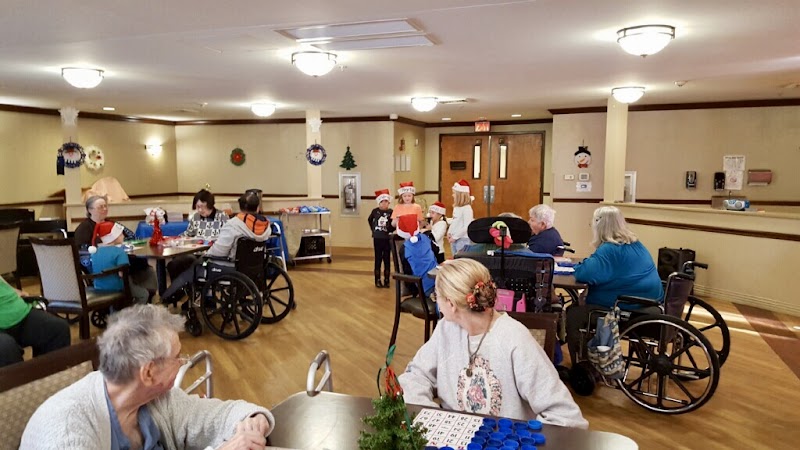
Who Owns and Operates Gilman Healthcare Center?

GILMAN HEALTHCARE CENTER is owned by a for-profit company. For-profit facilities operate as businesses with obligations to shareholders or private owners. The facility is operated by PREMIER HEALTHCARE OF ILLINOIS, a chain that manages multiple nursing homes. With 99 certified beds and approximately 51 residents (about 52% occupancy), it is a smaller facility located in GILMAN, Illinois.
How Does Gilman Healthcare Center Compare to Other Illinois Nursing Homes?

Compared to the 100 nursing homes in Illinois, GILMAN HEALTHCARE CENTER's overall rating (3 stars) is above the state average of 2.5, staff turnover (50%) is near the state average of 46%, and health inspection rating (4 stars) is above the national benchmark.

What Should Families Ask When Visiting Gilman Healthcare Center?

Based on this facility's data, families visiting should ask: "What changes have been made since the serious inspection findings, and how are you preventing similar issues?" "Can you walk me through typical staffing levels on day, evening, and night shifts?" "Can I visit during a mealtime to observe dining assistance and food quality?" "How do you handle medical emergencies, and what is your hospital transfer rate?" These questions are particularly relevant given the facility's Immediate Jeopardy citations and the below-average staffing rating.

Is Gilman Healthcare Center Safe?

Based on CMS inspection data, GILMAN HEALTHCARE CENTER has documented safety concerns. Inspectors have issued 1 Immediate Jeopardy citation (the most serious violation level indicating risk of serious injury or death). The facility has a 3-star overall rating and ranks #1 of 100 nursing homes in Illinois. Families considering this facility should ask detailed questions about what corrective actions have been taken since these incidents.

Do Nurses at Gilman Healthcare Center Stick Around?

GILMAN HEALTHCARE CENTER has a staff turnover rate of 50%, which is about average for Illinois nursing homes (state average: 46%). Moderate turnover is common in nursing homes, but families should still ask about staff tenure and how the facility maintains care continuity when employees leave.

Was Gilman Healthcare Center Ever Fined?

GILMAN HEALTHCARE CENTER has been fined $175,607 across 5 penalty actions. This is 5.0x the Illinois average of $34,835. Fines at this level are uncommon and typically indicate a pattern of serious deficiencies, repeated violations, or failure to correct problems promptly. CMS reserves penalties of this magnitude for facilities that pose significant, documented risk to resident health or safety. Families should request specific documentation of what issues led to these fines and what systemic changes have been implemented.

Is Gilman Healthcare Center on Any Federal Watch List?

GILMAN HEALTHCARE CENTER is not on any federal watch list. The most significant is the Special Focus Facility (SFF) program, which identifies the bottom 1% of nursing homes nationally based on persistent, serious quality problems. Not being on this list means the facility has avoided the pattern of deficiencies that triggers enhanced federal oversight. This is a positive indicator, though families should still review the facility's inspection history directly.