SHAWNEE SENIOR LIVING

1901 13TH STREET, HERRIN, IL 62948 (618) 942-7391
For profit - Limited Liability company 159 Beds Independent Data: November 2025 5 Immediate Jeopardy citations
Trust Grade
0/100
#631 of 665 in IL
Last Inspection: June 2025

Inspected within the last 6 months. Data reflects current conditions.

Overview

Shawnee Senior Living has received a Trust Grade of F, indicating significant concerns about the quality of care provided. They rank #631 out of 665 facilities in Illinois, placing them in the bottom half, and #5 out of 5 in Williamson County, meaning there is no local competition that ranks lower. The facility has shown an improving trend, with issues decreasing from 32 in 2024 to just 3 in 2025. However, the staffing rating is only 2 out of 5, and while turnover is 42%, which is better than the state average, the overall level of care is still below average. The facility has faced serious compliance issues, including a resident developing a Stage 3 pressure ulcer due to neglect and another resident with a history of elopement leaving the facility unsupervised. Additionally, they have incurred $303,682 in fines, which is concerning as it exceeds the fines of 85% of Illinois facilities. On a positive note, the RN coverage is average, suggesting some level of oversight that could help catch issues early. However, families should weigh these significant weaknesses carefully when considering care options.

Trust Score
F
0/100
In Illinois
#631/665
Bottom 6%
Safety Record
High Risk
Review needed
Inspections
Getting Better
32 → 3 violations
Staff Stability
○ Average
42% turnover. Near Illinois's 48% average. Typical for the industry.
Penalties
⚠ Watch
$303,682 in fines. Higher than 77% of Illinois facilities, suggesting repeated compliance issues.
Skilled Nurses
○ Average
Each resident gets 34 minutes of Registered Nurse (RN) attention daily — about average for Illinois. RNs are the most trained staff who monitor for health changes.
Violations
⚠ Watch
60 deficiencies on record. Higher than average. Multiple issues found across inspections.
★☆☆☆☆
1.0
Overall Rating
★★☆☆☆
2.0
Staff Levels
★★☆☆☆
2.0
Care Quality
★☆☆☆☆
1.0
Inspection Score
Stable
2024: 32 issues
2025: 3 issues

The Good

  • Full Sprinkler Coverage · Fire safety systems throughout facility
  • No fines on record
  • Staff turnover below average (42%)

    6 points below Illinois average of 48%

Facility shows strength in fire safety.

The Bad

1-Star Overall Rating

Below Illinois average (2.5)

Significant quality concerns identified by CMS

Staff Turnover: 42%

Near Illinois avg (46%)

Typical for the industry

Federal Fines: $303,682

Well above median ($33,413)

Significant penalties indicating serious issues

The Ugly 60 deficiencies on record

5 life-threatening 9 actual harm
Jun 2025 2 deficiencies
CONCERN (E)

Potential for Harm - no one hurt, but risky conditions existed

Food Safety (Tag F0812)

Could have caused harm · This affected multiple residents

**NOTE- TERMS IN BRACKETS HAVE BEEN EDITED TO PROTECT CONFIDENTIALITY** Based on observation and interview the facility failed to ensure proper hand hygiene was performed before assisting dependent re...

Read full inspector narrative →
**NOTE- TERMS IN BRACKETS HAVE BEEN EDITED TO PROTECT CONFIDENTIALITY** Based on observation and interview the facility failed to ensure proper hand hygiene was performed before assisting dependent residents with eating and while serving residents glasses for 4 of 8 residents (R10, R58, R72, and R88) observed for dining in a sample of 51. Findings include: On 06/10/25 at 12:30PM, V7 (Certified Nurse Assistant/CNA) was noted to be assisting R88 with eating. V7 used her right hand and would pick up R88's spoon and give him a few bites. V7 then put down R88's spoon she then touched her face then both of her hands and then she picked up R58's spoon with her right hand and started to give R58 a couple of bites of her food. V7 then put down R58's spoon and then picked up R88's spoon and started assisting R88 with several bites. No hand hygiene was observed at anytime during this observation. 1. R88's admission record dated 06/12/25, documents an admission date of 04/01/25 with diagnoses in part of critical illness myopathy, chronic motor or vocal disorder, gastro-esophageal reflux disease without esophagitis, age-related physical debility, personal history of traumatic brain injury, unspecified abnormal involuntary movements, and lack of coordination. R88's MDS (Minimum Data Set) dated 04/07/25 documents in Section C a BIMS (Brief Interview for Mental Status) score of 14 which indicates cognitively intact. Section GG documents eating as dependent. R88's Care Plan with a revision date of 04/22/25 documents a focus of R88 has a ADL (Activities of Daily Living) self-care performance deficit r/t (related to) a traumatic brain injury. This focus area includes a intervention of: Eating R88 is dependent on staff for eating during meals. On 06/12/25 at 1:00PM, R88 stated that the CNA's (Certified Nurse Assistant's) must assist him for all meals. R88 stated that the CNA' s will usually assist him with eating along with another resident at the same time. R88 stated that he has never seen a CNA perform hand hygiene of any kind such as washing hands or using a hand sanitizer after they assist the other resident with a bite and then switch over to give him a bite. 2. R58's admission record dated 06/12/25, documents an admission date of 05/02/25 with diagnoses in part of zoster without complications, paroxysmal atrial fibrillation, dysphagia, need for assistance with personal hygiene, and anorexia. R58's MDS dated [DATE] documents in Section C a BIMS score of 01 which indicates R58 is cognitively impaired. Section GG documents supervision or touching assist with eating. R58's Care plan with a revised date of 04/21/25 documents a focus area of, R58 has a ADL self-care performance deficit activity intolerance fatigue. This focus has an intervention of: Eating R58 is able to eat with supervision/cues. On 06/10/25 at 12:50PM, V7 (CNA) stated that she did not perform hand hygiene at anytime when she was assisting R88 and R58. V7 said that anytime you touch anything or switch from assisting one resident to the other that you should perform hand hygiene such as washing hands or using a hand sanitizer. V7 said she forgot to bring her hand sanitizer and that she was more worried about assisting R88 and R58 with their meals and she forgot all about hand hygiene. On 06/10/25 at 12:29pm, R72 and R10 were being assisted by V4 (Restorative CNA). V4 was continuously observed from 12:29pm to 12:38pm, no hand hygiene was observed being performed by V4. V4 was alternating between assisting R72 and R10 with eating. V4 was also grabbing their glasses by the rim and continue to assist them with eating and did not perform hand hygiene. V4 was observed touching the table and touching the residents during this observation. 3. R10's admission record documents an admission date of 01/22/2020, with the following diagnoses: senile degeneration of the brain, Parkinson's disease, and unspecified dementia. R10's Minimum Data Set (MDS) dated [DATE] documents a Brief Interview for Mental Status (BIMS) of 3, indicating R10 is severely cognitively impaired. Section GG-Functional Abilities documents that R10 requires substantial/Maximum assistance for eating. R10's current care plan documents, requires assist with all adls (activities of daily living) r/t (related to) cerebral vascular accident, Parkinson's and dementia. 4. R72's admission record documents an admission date of 09/18/2024 with the following diagnoses: unspecified dementia and lack of coordination. R72's Minimum Data Set (MDS) dated [DATE] documents a Brief Interview for Mental Status (BIMS) of 2, indicating R72 is severely cognitively impaired. Section GG-Functional Abilities documents that R72 requires supervision or touching assistance for eating. R72's current care plan documents, The resident has an ADL self-care performance deficit r/t (related to) activity intolerance, confusion, dementia, fatigue. With an intervention of, .requires supervision from staff for eating during mealtimes. On 06/11/25 at 12:37pm, V4 (Restorative CNA) stated she did not recall whether she sanitized in between residents while assisting with lunch. On 06/12/25 at 11:23am, V15 (Dietary Manager) stated staff should not grab cups by the top where residents drink from. On 06/12/25 at 03:13pm, V2 (DON/Director of Nursing) stated her expectation would be for staff to perform hand hygiene in-between direct contact with residents. Facility policy titled, Handwashing/Hand hygiene with a revision date of August 2008 documents in general guidelines, use of an alcohol-based hand rub for all of the following situations: . before direct contact with residents .
CONCERN (F)

Potential for Harm - no one hurt, but risky conditions existed

Pharmacy Services (Tag F0755)

Could have caused harm · This affected most or all residents

**NOTE- TERMS IN BRACKETS HAVE BEEN EDITED TO PROTECT CONFIDENTIALITY** Based on interview, observation, and record review the facility failed to dispose of expired medications. This has the potential...

Read full inspector narrative →
**NOTE- TERMS IN BRACKETS HAVE BEEN EDITED TO PROTECT CONFIDENTIALITY** Based on interview, observation, and record review the facility failed to dispose of expired medications. This has the potential to affect all 91 residents living in the facility. Findings include: The Long-Term Care Facility Application for Medicare & Medicaid (CMS 671) dated 6/9/25, documents there are 91 residents living in the facility. 1. R61's admission Record documents an admission date of 10/27/2022 with diagnoses including in part type 1 diabetes, heart failure, and chronic pain syndrome. R61's Minimum Data Set (MDS) dated [DATE] documents a Brief Interview of Mental Status (BIMS) of 12 indicating moderately impaired cognition. R61's Order Summary Report documents Zofran Oral Tablet 4 MG (Ondansetron HCl) Give 1 tablet by mouth every 8 hours as needed for nausea with a start date of 12/26/2023. On 06/11/25 at 3:01 PM, there was an expired card of Ondansetron 4 mg for R61 found in the medication cart. Medication card had 26 pills left in it and the medication card documented an expiration date of 12/27/24, instructions on the card were take 1 tab PO (by mouth) Q8 hours (every 8 hours) as needed for nausea. Medication card was dispensed to the facility on [DATE]. On 06/11/25 at 3:15 PM, V5 (Registered Nurse) confirmed the medication was expired and stated the pharmacy frequently checks the medication carts for expired medication. V5 stated she usually checks expiration dates on medications before she gives the medication. R61's Medication Administration Record dated January 2025 documents Zofran oral tablet 4mg (Ondansetron HCl) Give 1 tablet by mouth every 8 hours as needed for nausea was given on 1/29/25. R61's Medication Administration Record dated April 2025 documents Zofran oral tablet 4mg (Ondansetron HCl) Give 1 tablet by mouth every 8 hours as needed for nausea was given on 4/11/25. 2. On 06/11/25 at 9:03 AM, there were two bottles of Aspirin 325 milligrams (mg) with a documented expiration date of September 2024. On 06/11/25 at 9:03 AM, V6 (Licensed Practical Nurse) confirmed the 2 bottles of Aspirin 325 mg expired in September of 2024. V6 stated pharmacy checks the medication storage rooms for expired medication. V6 stated it is the night shift nurse's responsibility to return expired medications to the pharmacy. V6 stated the Asprin bottles were stock meds and not resident specific. On 06/12/25 at 12:36 PM, V2 (Director of Nursing) stated the pharmacy checks the medication storage room and the medication carts monthly. On 06/12/25 at 02:06 PM, V1 (Administrator) stated the nursing staff should be checking expiration dates for medications in the medication storage room and medication cart. V1 stated the pharmacy does not provide any documentation stating they checked for expired medications, and she just found out they only spot check the medication cart and medication storage room for expired medications. A facility policy dated 10/27/2014, titled Consultant Pharmacist Services Provider Requirements documents under Procedures, F. Specific activities that the consultant pharmacist performs includes, but is not limited to: 4) Ensure that the medication storage areas are examined monthly, and the medication carts quarterly for proper storage and labeling of medications, cleanliness, and removal of expired medications.
Jan 2025 1 deficiency
CONCERN (E) 📢 Someone Reported This

A family member, employee, or ombudsman was alarmed enough to file a formal complaint

Potential for Harm - no one hurt, but risky conditions existed

Accident Prevention (Tag F0689)

Could have caused harm · This affected multiple residents

**NOTE- TERMS IN BRACKETS HAVE BEEN EDITED TO PROTECT CONFIDENTIALITY** Based on observation, interview, and record review the facility failed to provide safe transfers with mechanical lifts, implemen...

Read full inspector narrative →
**NOTE- TERMS IN BRACKETS HAVE BEEN EDITED TO PROTECT CONFIDENTIALITY** Based on observation, interview, and record review the facility failed to provide safe transfers with mechanical lifts, implement interventions for falls, and follow facility policy to complete assessments and investigations post resident fall for 4 (R1, R2, R3, and R6) of 6 residents reviewed for accidents int the sample of 6. Findings include: 1. R1's admission Record documented an admission date of 11/13/24 with diagnoses that included: muscle weakness, chronic pain syndrome, morbid obesity, osteoarthritis of left and right knees. R1's Minimum Data Set (MDS) with Assessment Reference Date (ARD) of 11/20/24 documented a Brief Interview for Mental Status (BIMS) score of 15, indicating R1 was cognitively intact. R1's MDS also documented R1 was dependent on staff for transferring. On 1/15/25 at 9:48 AM, R1 said he had fallen out of the sit to stand mechanical lift twice. R1 said the first fall happened when a Certified Nursing Assistant (CNA) was transporting R1 to the shower room from R1's room. R1 said he told the CNA prior to being transported R1 did not think his knees could hold him up long enough to transport him to the shower room. R1 said when he was almost to the door in his room he told the CNA his knees were going to give out and his knees buckled and R1 fell out of the sit to stand mechanical lift. R1 said the second fall out of the sit to stand mechanical lift was during a transfer from the bedside commode to his wheelchair. R1 said he did not recall how the second fall happened. R1 said once they had lifted R1 off the bedside commode the next thing he knew he was in the floor lying on top of a CNA. R1 said he had not sustained any injuries from either of his falls. On 1/16/25 at 2:46 PM, V18 (CNA) stated that on 12/2/24, she was caring for R1. V18 said she was transporting R1 from his room to the shower room on the sit to stand mechanical lift. V18 said she was comfortable transporting R1 to the shower room in the mechanical lift because a few days prior to 12/2/24 she had used the sit to stand mechanical lift to transport R1 from his room to the shower room. V18 said after getting R1 on the sit to stand mechanical lift she transported R1 to the door of his room and when she turned around to open the door, she heard R1 scream, turned to see R1 throw his arms into the air, slide out of the lift's sling falling onto the floor on his buttocks then rolling to his side. V18 said she yelled for help and V19 (CNA) and V20 (Licensed Practical Nurse/LPN) came into R1's room. V18 said V20 assessed R1 and told V19 and V18 it was safe to get R1 up. V18 said she and V19 used the sit to stand mechanical lift to lift R1 out of the floor and transfer R1 to his wheelchair. V18 said after R1 was back in his wheelchair she went to the front office and informed V1 (Administrator) and V2 (Director of Nursing/DON) of R1's fall from the sit to stand mechanical lift. V18 said V1 and V2 told V18 residents were not supposed to be transported around the facility in the sit to stand mechanical lift. V18 said she had worked previously as a CNA and was familiar with the sit to stand mechanical lift but had not received any training on how to use the sit to stand lift in the facility. V18 said she was hired in the facility to work in the activities department but had transitioned to working in the nursing department. R1's Electronic Medical Record (EMR) did not document any progress notes, post fall assessments, or updates to R1's care plan for R1's 12/2/24 fall from the sit to stand mechanical lift. R1's 12/2/24 Occupational Therapy Treatment Encounter Note(s) documented in part . (V2/DON) entered therapy room asking if patient could be 2 assist transfer with walker as (R1) is requesting this. (V2) states (R1) had fall off of sit to stand lift earlier this date . went to room to train CNAs with transfer training during toileting, when entering (R1's) room he is sitting edge of bed, (R1) visibly upset, due to being upset (R1) is not listening to safety education . (R1) stated throughout that the fall off of the sit to stand happened due to the CNAs attempting to transfer him too far instead of just putting him back into the wheelchair they attempted to bring him into the hallway to bring him to the shower and he took himself out of the sit to stand sling due to his knees unable to hold him up anymore and lowered himself to the floor, (V2) is aware of this and has provide education to CNAs that this is unsafe to do . On 1/16/25 at 11:39 AM, V20 (LPN) said she was the nurse caring for R1 on 12/2/24. V20 said she did not recall R1 falling out of the sit to stand mechanical lift. V20 said she did not recall any CNAs reporting to her any residents falling off the sit to stand mechanical lift. On 1/16/25 at 12:34 PM, V2 (DON) said a post fall assessment and a fall risk assessment should have been completed by V20. V2 said R1 should have had a fall risk care plan and a new intervention should have been put in place after the 12/2/24 fall. V2 said she was not sure why a post fall assessment, fall risk assessment, or fall risk care plan with fall interventions was not completed for R1's 12/2/24 fall. V2 said the facility did not have an investigation for the root cause of R1's 12/2/24 fall or interventions. V2 said due to V18 (CNA) being hired in the activities department and transitioning to the nursing department V18 had not received training on the sit to stand mechanical lift because this training was supposed to be completed on hire. V2 said all staff should receive training on all the mechanical lifts in the facility prior to the staff using the lift. The facility's mechanical lift training log documented V18 did not receive any training on mechanical lifts until 12/18/24. R1's Care Plan includes a focus area with a date initiated of 12/13/24 that documented (R1) has, had an actual fall with no injury during sit to stand transfer due to poor communication/comprehension and unsteady gait. R1's Care Plan also documented a Created on date of 1/15/25 for this focus area. Corresponding interventions included to Monitor/document/report PRN (as needed) x (times) 72h (hours) to MD (medical doctor) for s/sx (signs/symptoms): Pain, bruises, change in mental status, new onset: confusion, sleepiness, inability to maintain posture, agitation, with a date initiated of 12/13/24; Nursing to monitor and report any behaviors of not following proper transfer technique. Report to nursing supervisor and or MD as needed, with date initiated of 12/15/24; PT (physical therapy) consult for strength and mobility, with date initiated of 12/13/24; and Resident and staff educated on proper transfer technique, with a date initiated of 1/15/25. Although the initiation date of the focus area and 3 of the 4 interventions were all listed as being initiated in December 2024, the Created on dates of the focus area and interventions were all listed with a date of 1/15/25. On 1/16/25 at 1:20 PM, V1 (Administrator) said R1 did not have a baseline care plan completed on R1's admission and did not have a care plan for fall prevention or safe transferring until she created one on 1/15/25. V1 said R1 should have had a baseline care plan completed on admission for fall prevention and transfer. V1 said R1 should have also had a revised resident centered care plan for fall prevention and for transfer safety. On 1/16/25 at 11:33 AM, V8 (CNA) said she was caring for R1 on 12/13/24 with V7 (CNA). V8 said on 12/13/24, V7 and V8 were transferring R1 from the bed side commode to his wheelchair when R1 started to slide out of the sit to stand mechanical lift. V8 said V7 tried to keep R1 in the mechanical lift but was not strong enough to hold R1 up. V8 said R1 let go of the mechanical lift and slid out of the sling and landed on top of V7. The facility produced a typed and signed statement by V7 dated 12/13/24 that documented in part . Around 2:30 PM (V8) and I (V7) went to get (R1) off the bedside commode . After using soap and water to clean him, while drying his bottom off, he started to stop standing as well, so we were hurrying to get him to the wheelchair and I used my legs to brace him from behind, just to get to the chair and right before we could turn into the chair he let go of the (sit to stand mechanical lift), so I lowered him to the floor with my body underneath his . R1's Post Fall Evaluation dated 12/13/24 documented R1 had a staff witnessed fall in his room while using the sit to stand mechanical lift and did not sustain any injuries and was not transferred to the hospital. R1's Post Fall Evaluation for 12/13/24 was not completed with the following areas left blank: Provider notified, contributing factors, medication changes, vital signs, skin, physical findings, MDS, care planning, clinical suggestions. R1's fall investigation incident description dated 12/13/24 documented Resident was being transferred from BSC (bed side commode) to w/c (wheelchair) by sit to stand, with 2 staff present. He became weak and raised his arms causing the sling to raise and he started sliding down, when CNA got behind him and supported to to (sic) the floor, He denied injury, ROM WNL (range of motion within normal limits). The report further documents Summary of events: Res (resident) was using sit to stand with 2 staff members who were transferring him from the bedside commode back to his chair when he got upset and let himself fall. Root cause: resident raised his arms up and slid out of the sit to stand. Resident was aware that this would happen. New intervention: Educated resident on sit to stand directions. The facility's sit to stand mechanical lift's undated Owner's Operator and Maintenance Manual documented in part / . Section 1 - General Guidelines . The (company name) patient lift is NOT a transportation device. It is intended to transfer an individual from one resting surface to another (such as a bed or wheelchair). Moving a person suspended in a sling over ANY distance in NOT recommended . The facility's revised August 2008 Safe Lifting and Movement of Residents policy documented in part . 2. Staff responsible for direct resident care will be trained in the use of mechanical lifting devices. The manufacturer of purchased equipment shall provide initial staff training on the use of mechanical lifts, as well as on the routine checks and long-term maintenance of equipment. Subsequent trainings and retraining of staff on the use of mechanical lifting devices shall be conducted by designated team leaders. 3. Staff competency and the use of mechanical lift shall be assessed at least annually . 7. The transferring needs of residents shall be assessed on an ongoing basis. Resident transferring and lifting needs shall be documented in the care plan. Assessment of the residents transferring needs shall include: a. Mobility of the resident . b. Size of the resident c. Weight-bearing ability d. Cognitive status . 2. R6's admission Record documented an admission date of 11/11/24 with diagnoses including: metabolic encephalopathy, muscle weakness, morbid obesity, Alzheimer's Disease, dementia, and psychosis. R6's MDS assessment with ARD date of 11/18/24 documented a BIMS score of 9, indicating R6 was moderately cognitively impaired. The MDS Section J Health Conditions indicated R6 had a history of falls prior to admission. R6's 12/1/24 fall investigation documented in part . Root Cause: Resident attempted to stand up and (wheelchair) rolled out from under him . Intervention: Anti-Roll backs to w/c (wheelchair) . R6's Fall Risk assessment dated [DATE] documented R6 was at high risk for falls. R6's Care Plan includes a focus area initiated on 11/21/24 that documented (R6) has a history of falls and has had an actual fall here since admission, no injuries sustained. Other risk factors includes impaired mobility, incontinence, antipsychotic use, (diabetes mellitus), Alzheimer dementia. One of the corresponding interventions listed for this focus area documents 12/1/24: Anti-Roll backs to w/c (wheelchair) with a date initiated of 12/18/24. On 1/17/25 at 11:40 AM, R6 was sitting in the dining room in a wheelchair that did not have anti-roll backs present. On 1/17/25 at 11:45 AM, V4 (Nursing Supervisor/LPN) stated she was not sure if R6 was supposed to have anti-roll backs on his wheelchair. V4 said she would have to look at R6's Care Plan to know if R6 was supposed to have anti-roll backs on his wheelchair. Upon checking, V4 said R6's Care Plan did document R6 was supposed to have anti-roll backs on his wheelchair and she was not sure why it didn't. V4 said she would put in a work order to have anti-roll backs on R6's wheelchair. 3. R3's admission Record documents an admission date of 7/17/2023 including diagnoses of Type 2 Diabetes Mellitus, Dementia, Parkinson's Disease, Polyneuropathy, Chronic Obstructive Pulmonary Disease, and Hypertension. R3's MDS with Assessment Reference Date (ARD) of 10/11/24 includes a BIMS score of 00, indicating severe cognition impairment. R3's MDS Section J, Health Conditions documents R3 has had falls resulting in injury since admission/entry or prior assessment. R3's Care Plan includes a Focus Area of R3 is at risk for falls related to: Confusion, Gait/balance problems, poor safety awareness, constantly removes 1 shoe and sock. Corresponding interventions included (but not limited to): 11/17/24 Anti-Roll backs to w/c (initiated 11/25/24) and 5/28/24 Maintenance to place anti slip floor strips to exit side of bed (initiated 6/5/24). On 1/16/2025 at 12:40 PM, R3 was propelling self in wheelchair up and down the hall. There were no anti-roll backs noted to be on R3's wheelchair at this time. On 1/17/2025 at 10:40 AM, R3's room was observed to have no anti slip floor strips beside exit side of bed. On 1/17/2024 at 10:42 AM, V15 (CNA) stated she cares for R3 most of the time. V15 stated I have never seen anti-skid strips placed by R3's bed. V15 stated sometimes R3 lays down after meals, R3 will usually lay down if we ask him to. V15 stated R3 wanders all over the facility in his wheelchair and stated she was not aware of the intervention of anti-roll backs on R3's wheelchair. On 1/17/2025 at 10:46 AM, V16 (Registered Nurse/RN) stated she was caring for R3 today. V16 stated she was not aware that R3 needed nonskid strips beside his bed. V16 stated that is probably an old intervention and the care plan needs updated. V16 stated she is notified of new interventions when she is told about them and after the meetings of the department heads who make the interventions. V16 stated after a resident falls the nurses are supposed to do a fall risk assessment in risk management. V16 stated this must be done after every single fall. On 1/17/2025 at 11:00 AM, R3 was propelling self in wheelchair down the hallway and there were again no anti-tippers noted to be on R3's wheelchair. A facility document titled Incidents lists R3's falls occurring on 10/25/2024, 11/17/2024 (2 occurrences on this date), 12/6/2024, 12/7/2024, and 12/11/2024. The only Fall Risk Assessment provided by the facility for R3 was dated 12/7/2024. The facility was unable to provide fall assessments completed for R3's other falls listed above. On 1/17/2025 at 12:10 PM, V1 (Administrator) verified there were no other fall risk assessments completed for R3's fall occurrences on 10/25/2024, the two falls on 11/17/2024, 12/6/2024, and 12/11/2024. R3's Care Plan did not include any new interventions for the falls that occurred on 10/25/24 and 12/6/24. 4. R2's admission Record documents an admission date of 6/12/2024. R2's MDS with ARD of 11/30/24 documents a BIMS score of 7, indicating severe cognitive impairment. Section GG documents R2 requires supervision with sit to stand and chair to chair transfer, and is substantial/maximal assistance with toileting/bathing, and walking 10 feet, 50 feet, and 150 feet. Section J, Health conditions documents R2 has had two or more falls with no injury since the prior assessment. A facility document titled Incident by incident documents R2 had falls on 11/15/2024, 11/25/2024, and 1/3/2025, 1/6/2025, and 1/12/2025. Electronic fall assessments dated 11/15/24 and 11/25/24 were found, however there were no fall assessments completed for the falls that occurred on 1/3/2025, 1/6/2025, and 1/12/25. R2's incident report dated 1/3/25 documents an immediate intervention of keep wheelchair at bedside with leg pedals off. R2's Care plan includes a Focus Area initiated on 6/13/24 of (R2) is at risk for falls related to confusion, psychoactive drug use, unsteadiness. Corresponding Interventions to the fall dates listed above included 1/6/2025: Tag alarm to be in place when (R2) is in bed as well as when in chair (date initiated 1/8/2025), 11/15/24: med review with family and provider, specifically her Haldol (date initiated 11/25/2024), and 11/25/2024: Assess for readiness to get up for meals (date initiated 12/18/2024). No interventions were added to the care plan regarding the falls that occurred on 1/3/24 or 1/12/24. On 1/17/2024 at 10:00AM V1 stated I cannot find any other fall assessments that were completed post falls for this resident. The facility's revised May 2024 Falls - Clinical Protocol policy documented in part, Under the heading Assessment and Recognition . 2. Fall Risk Assessment shall be completed . after a fall, and as clinically indicated . 6. The staff will evaluate and document falls that occur while the individual is in the facility; for example, when and where they happen, any observations of the events, etc. a. falls should be categorized as a) those that occur while trying to rise from a seated or lying to an upright position, b) those that occur while upright and attempting to ambulate, c) other circumstances, such as sliding out of the chair or rolling from a low bed to the floor. They should be identified as witnessed or unwitnessed events. Under the heading Cause Identification . 1. For an individual who has fallen, staff will attempt to define possible causes within 24 hours of the fall. a) Causes refer to factors that are associated with or that directly result in a fall; for example, a balance problem caused by an old or recent stroke. b) Often, multiple factors in varying degrees contribute to a falling problem. C) After a first fall, the staff (And physician, if possible) Should watch the individual rise from a chair without using his or her arms, walk several paces, and return to sitting. If the individual has no difficulty or unsteadiness, further evaluation may not be needed. If the individual has difficulty or is unsteady in performing the test, additional evaluation should occur. 2. If the cause of a fall is unclear, if the fall may have a significant medical cause, such as a stroke or an adverse drug reaction (ARD), or if the individual continues to fall despite attempted interventions, a physician will review the situation and help identify contributing causes. a. After more than one fall, the physician should review the resident's gate, balance, and current medications that may be associated with dizziness or falling . 3. The staff and physician will continue to collect and evaluate information until either the cause of the falling is identified, or it is determined that the cause cannot be found or that finding a cause would not change the outcome or the management of falling and fall risk. Under the heading Monitoring and Follow-Up . 4. If the individual continues to fall, the staff and physician will reevaluate the situation and consider other possible reasons for the resident's falling (besides those that have already been identified) and will re-evaluate the continued relevance of current interventions .
Aug 2024 21 deficiencies 1 IJ
CRITICAL (J) 📢 Someone Reported This

A family member, employee, or ombudsman was alarmed enough to file a formal complaint

Immediate Jeopardy (IJ) - the most serious Medicare violation

Accident Prevention (Tag F0689)

Someone could have died · This affected 1 resident

**NOTE- TERMS IN BRACKETS HAVE BEEN EDITED TO PROTECT CONFIDENTIALITY** 3. R259s Face sheet documents an admission date of 07/30/24, with diagnoses of unspecified dementia severe with agitation, alter...

Read full inspector narrative →
**NOTE- TERMS IN BRACKETS HAVE BEEN EDITED TO PROTECT CONFIDENTIALITY** 3. R259s Face sheet documents an admission date of 07/30/24, with diagnoses of unspecified dementia severe with agitation, altered mental status, anxiety disorder, unspecified osteoarthritis, benign prostatic hyperplasia with lower urinary tract symptoms, insomnia, acute cystitis with hematuria and atherosclerotic heart disease of native coronary artery without angina pectoris. R259's Minimum Data Set (MDS), dated [DATE], documented a Brief Interview for Mental Status (BIMS) score of 00, which indicates severely impaired cognition. This MDS also documented R259 was dependent with eating, oral hygiene, toileting, and dependent with transfers. Under Fall History, R259's MDS documented on Admission/Entry or Reentry: R529 has had a fall within the last month. R259's Care plan, dated 07/31/24, documents a focus area of, '(R259) is at risk for falls related to: confusion, deconditioning, incontinence, psychotropic drug use, unaware of safety needs, dementia with agitation.' Interventions for this focus area include: 07/31/24 be sure call light is within reach and encourage to use it for assistance as needed. Needs prompt response to all requests for assistance, 07/31/24 ensure wearing appropriate footwear when transferring or mobilizing in w/c (wheelchair), 07/31/24 keep furniture in locked position, 07/31/24 keep needed items, water, etc, in reach, 07/31/24 maintain a clear pathway in room, free of obstacles, 07/31/24 monitor position in wheelchair to prevent sliding, 08/01/24 transfer require max assist of two. There were no further fall prevention interventions added after 08/01/24. R259's Fall Risk Evaluation, dated 08/11/24, documents a score of 15 which indicated R259 was at risk for falls. R259's untitled Fall report, dated 08/11/24 at 9:20AM, documented under incident Description: Nursing Description. Approached by (V37, Certified Nurse Assistant) who stated that resident fell from the bed. (V37) had gone into the room to help (R259) off the floor after seeing him crawl to the fall mat. (V37) stated that she got (R259) back in the bed facing toward the wall and stepped to the door to ask for assistance, when she did that, she said she looked back and (R259) threw his legs away from the wall and fell from the bed to his knees on the fall mat. (No injury) R259's untitled Fall report, dated 08/16/24 at 6:03PM, documented under Incident Description: Nursing Description. The nurse was called to the room by (R259's) roommate's family upon entering the room this writer observed (R259) lying in the floor on his left side. (No Injury) On 08/19/24 at 1:38PM, V38 (New MDS/Care Plan Nurse) stated she doesn't see any new fall prevention interventions put in place for R259 after his recent falls on 08/11/24 and 08/16/24. V38 said that has been one of the problems at the facility; lately there hasn't been new interventions put in place for anything. V38 said she was getting ready to take over the Minimum Data Set (MDS) position. V38 said no one at the facility gets trained correctly on their positions, and this is a problem because no one knows what they are supposed to be doing. On 08/19/24 at 2:05PM, V50 (MDS/Care Plan Nurse) stated there have been no new fall prevention interventions put in place for at least 2-3 weeks. V50 said they usually have a fall meeting to talk about causative factors and put new interventions in to place on all falls, but they have been busy with surveys and over half of the IDT (Interdisciplinary team) have been working on the floor or just not showing up to work. V50 said the floor nurses don't usually put any fall interventions in to place. V50 said she doesn't feel like they have enough staff right now to be able to care for the residents properly. V50 said that she was usually notified of any new falls, wounds, elopements, and any abuse. V50 said that since they have been short of staff that she thinks it has caused a negative impact on residents with them having increased behaviors. The Facility Policy titled Falls- Clinical Protocol, dated May 2024, documents in part under Treatment/Management 1. Based on the preceding assessment, the staff and physician will identify pertinent interventions to try to prevent subsequent falls and to address risks of serious consequences of falling. If underlying causes cannot be readily identified or corrected, staff will try various relevant interventions, based on assessment of the nature of category of falling, until falling reduces or stops or until a reason is identified for its continuation. (for example, if the individual continues to try to get up and walk without waiting for assistance). 2. R85's face sheet documents an admission date of 10/23/23, with diagnoses including: hypoglycemia, cerebral palsy, other seizures, weakness, severe intellectual disabilities, unspecified psychosis not due to a substance or known physiological condition, anxiety disorder, and intermittent explosive disorder. R85's Minimum Data Sheet (MDS), dated [DATE], documents no brief interview of mental status (BIMS) should be conducted due to resident is rarely/never understood. Section GG - Functional abilities and goals documents: for roll left and right R85 needs substantial/maximal assistance. For the abilities of: sit to lying, lying to sitting on side of bed, sit to stand, and toilet transfer R85 is documented as: not applicable; not attempted and the resident did not perform this activity prior to the current illness, exacerbation, or injury. R85's care plan documents a focus area of: R85 is at risk for falls related to: confusion, deconditioning, gait/balance problems, psychoactive drug use, unaware of safety needs, and spasticity with an initiated date of 11/22/23. R85's interventions include: keep bed in lowest position at all times, second mattress placed beside bed and fall mat on other side of mattress with a initiated date of 10/26/23. On 08/13/24 at 2:11 PM, R85 was in bed, there was a fall mat by his bed. There was no mattress between his bed and the fall mat. On 08/14/24 at 2:01 PM, R85 was in bed, there was a fall mat by his bed. There was no mattress between his bed and the fall mat. On 08/15/24 at 1:42 PM, R85 was in his bed, there was a fall mat by his bed. There was no mattress between his bed and the fall mat. On 08/15/24 at 1:44 PM, V7 (Care Plan Coordinator) stated, she has only been at the facility for a couple of weeks. she stated R85 is supposed to have a mattress by his bed, then a fall mat by the mattress. V7 stated, he does not currently have the mattress by his bed, and he should since he is in bed. Deficiencies at this level require more than one deficient practice statement. A. Based on interview and record review, the facility failed to ensure residents assessed as being at risk for elopement were supervised and interventions were implemented to prevent elopement for 2 of 3 (R96 and R162) residents reviewed for accidents and supervision in the sample of 51. This failure resulted in R96, who had a history of elopement, and was assessed as being at risk of elopement, exiting the facility when a visitor entered, without staff knowledge, walking half the length of the facility and re-entering through the kitchen door that is located at the end of the facility, and R162 exiting the facility through a window, crossing a busy highway, and walking approximately 1.3 miles without staff knowledge. These failures resulted in an Immediate Jeopardy, which was identified to have begun on 8/3/24 when R96 exited the facility without staff knowledge. On 8/3/24 when a visitor entered the facility through the front door, R96 exited the facility without staff knowledge. R96 walked half the length of the facility and re-entered through the kitchen door. On 8/9/24, R162 left the facility through a window, without staff knowledge. The local police notified the facility R162 was at a local business located across a busy highway and approximately 1.3 miles from the facility. V1 (Administrator) was notified of the Immediate Jeopardy on 08/20/2024 at 1:18 PM. The surveyors confirmed by observations, interview, and record review, the Immediate Jeopardy was removed on 08/12/2024, but the noncompliance remains at Level Two due to additional time needed to evaluate implementation and effectiveness of training. Findings Include: 1. R96's admission Record, with a print date of 8/16/24, documents R96 was admitted to the facility on [DATE], with diagnoses that include dementia, anxiety disorder, weakness, cognitive communication deficit, conduct disorder, delirium, major depressive disorder, and insomnia. R96's MDS (Minimum Data Set), dated 7/12/24, documents a BIMS (Brief Interview for Mental Status) score of 04, which indicates a severe cognitive deficit. R96's current Care Plan documents a Focus area of, Is an elopement risk/wanderer related to: Disoriented to place, History of attempts to leave facility unattended, Impaired safety awareness. Date Initiated: 07/01/2024. This Focus area documents the following interventions: (electronic monitoring device) (wandering ) management system at all times. Date Initiated: 07/01/2024 .Resident to be seen by Geri-psych (geriatric psychiatry). Date Initiated: 07/31/2024. Psych NP (Psychiatric Nurse Practitioner) to do med review (medication review) and medication adjustment one on one care till (until) able to rest and sleep. Date Initiated: 07/15/2024.Initiate monitoring of change of behaviors after family visits. Date Initiated: 07/18/2024. Implement one to one observation anytime resident begins wandering hallways, displaying anxiety after family visits and attempts exit seeking. Date Initiated 07/16/24. Front door to remain locked, and sign posted for visitors to ring doorbell and visitors can now only enter with staff assistance. Date Initiated: 08/08/24. Sign to be posted at front and back entrance for all staff and visitors to look behind them before opening door and re-direct (R96) away from doorway before entering or exiting. Date Initiated: 08/08/2024.Check (electronic monitoring device) battery function weekly and PRN (as needed). Date Initiated: 07/01/2024.Check (electronic monitoring device) placement every shift and PRN (as needed). Date Initiated: 07/01/2024. Distract resident from wandering by offering pleasant diversions, structured activities, food, conversation, television, book. Date Initiated: 07/01/2024.Monitor for fatigue and weight loss. Date Initiated: 07/01/2024.Offer a warmed blanket. Date Initiated: 07/01/2024.Offer reassurance appropriate to the concern. Dated Initiated: 07/01/2024. Offer to take to a scheduled or planned activity. Date Initiated: 07/01/2024.Offer to take to the toilet or assist with continence care. Date Initiated: 07/01/2024. Provide structured activities: toileting, walking inside and outside, reorientation strategies including signs, pictures, and memory boxes. Date Initiated: 07/01/2024 .Redirect resident when wandering or exit seeking. Date Initiated: 07/01/2024. Resident is to be one on one anytime the resident starts to wander, and exit seek. Resident is to remain one on one until behavior resolves. One on One is to be implemented every time this behavior occurs. Date Initiated: 8/15/2024. Return to bed for additional rest or comfort. Date Initiated: 07/01/2024. Scan (electronic monitoring device) every shift for battery percentage, ensure placement and skin integrity. Location: LLE (left lower extremity). Date Initiated 08/05/2024. Use distraction to change thought pattern. Date Initiated: 07/01/2024. R96's Elopement Evaluation, dated 7/10/24, documents a score of 04, indicating R96 is at risk of elopement. R96's Elopement Evaluation, dated 8/6/24, documents a score of 08, which indicates R96 is at risk of elopement. R96's Elopement Evaluation, dated 8/14/24, documents a score of 09, which indicates R96 is at risk of elopement. R96's Progress Notes, dated 8/3/24, documents, (V21, LPN/Licensed Practical Nurse) advises resident had left the building and no alarm sounded. Found the (electronic monitoring device) was malfunctioning r/t (related to) placement and extra socks. Contacted ADON (Assistant Director of Nurses - V2 RN/Registered Nurse) and reported resident leaving the building. Awaiting further direction at this time. POA (Power of Attorney) aware. One on one direct supervision with resident directly after occurrence until confirmed wanderguard placement and activation. A Facility Incident Report regarding R96, dated 8/3/24, documents, IDT (Interdisciplinary Team) met and reviewed incident. Complete head count was conducted. NP (Nurse Practitioner) and POA (Power of Attorney) notified. Investigations immediately conducted. Staff, resident and visitor interviews conducted. (R96) was seen ambulating the long-term care hallways on video camera. Then (R96) was seen at (name) nursing station with (V32, CNA/Certified Nursing Assistant). At 3:15 pm a visitor was entering front entrance facility when (R96) exited the facility. Visitor told (R96) she is not supposed to be outside. (R96) told visitor 'well I am going outside'. Visitor proceeded down to his father's room and did not inform the facility staff that a resident had exited the facility. (R96) walked out the front entrance and immediately re-entered the facility through the dietary door. The dietary staff took the resident to the (name) nurse station and informed the nurse that (R96) came into the dietary exit door from outside the facility. When the staff started checking (R96) (electronic monitoring device) the visitor stated I forgot to tell you that she went outside when I was coming in. (R96) (electronic monitoring device) transmitter was checked, and the red light was blinking. Blinking light indicates transmitter is active. When the transmitter was checked with the transmitter tester it indicated the transmitter was active. All resident (electronic monitoring device) transmitters were checked for the red blinking light, checked with transmitter tester and at each exit door and all alarms sounded. All staff was in-serviced with elopement policy, checking transmitters for red blinking light and checking with transmitter tester. Visitors inserviced upon entering facility not to let residents out and to immediately notify staff if it occurs. Medication review was completed, NP (Nurse Practitioner) and POA (Power of Attorney) updated, Care Plan Updated. Front door was locked, and sign posted for visitors to ring doorbell and visitors can not only enter with staff assistance. 15 minute safety checks were initiated. NP and POA updated. Care Plan updated. On 8/14/24 at 10:01 AM, V21 (Licensed Practical Nurse/LPN) stated she didn't recall what happened on 8/3/24 when R96 left the facility without staff knowledge. R96's progress note, dated 8/3/24, was reviewed with V21 and she stated, No., when asked if she could recall the events. On 8/14/24 at 10:03 AM, V31 (CNA/Certified Nursing Assistant) stated she was in with another resident, and when she came out, a nurse (V21) was walking with R96, and stated the kitchen staff just let R96 in the back door. V31 stated she never heard the alarm sound. V31 stated they kept R96 with them after that, because they do 15-minute checks when R96 has elopement behaviors. V31 stated she was walking with a visitor to let them out the front door, when the visitor said R96 got out the door when they came in. V31 stated the visitor tried to stop R96, but she said she was going. V31 stated that is when they started locking the front door. When asked if the door alarm should sound even if it was opened by a visitor, V31 stated it should, and they had checked R96's (electronic monitoring device) and it was on, and the battery level was working. V31 stated she didn't know why the alarm didn't sound. V31 stated they have a little box they hold up to the bracelet, and it will say if it is on and check the battery level. V31 stated there is also a blinking light on the bracelet, and if it is blinking, it means the bracelet is working. When asked if there was a way to see if the alarm would sound, V31 stated they took R96 to the door to see if would sound. V31 stated she wasn't there when it was checked. V31 stated they check the bracelet daily, and have always checked placement, and if the light on the bracelet was blinking. V31 stated she had forgotten they could check the battery level with the box. V31 stated they were shown how to check it after R96 eloped on 8/3/24. V31 stated R96's wanderguard was working, and they have no idea what happened. On 08/14/24 at 12:28 PM, V33 (Dietary Aid/Cook) stated she was working on 8/3/24 between 3:00 and 3:30 PM, when R96 came into the kitchen. V33 stated they thought it was V30 (Dietary Manager) coming in the door, but when it opened it was R96. V33 stated the door she entered is down by the dumpsters, near the stop sign on the south side of the facility. V33 stated she took R96 to the unit, and she was unable to locate the nurse. V33 stated once she found V21 (LPN), she (V21) got an attitude and then came back into the kitchen and told them to mind their own business; she had gotten R96 another (electronic monitoring device). V33 stated she never heard an alarm sound. On 8/14/24 at 10:05 PM, V35 (Anonymous) stated she was down the hall doing treatments, when V21 stated to her the kitchen staff said R96 was outside, and knocked on the Dietary door. V35 stated V21 walked R96 up to the front door to see if the door would alarm, and it didn't. V35 stated R96 was then placed on one to one, and V21 left the floor. V35 stated she thought V21 was calling to report the elopement to management, but she didn't. V35 stated she called V2 (Assistant Director of Nursing/ADON) to report it. V35 stated she later found out, R96 pushed past a visitor that was entering the facility and was let outside. V35 stated R96 was placed on one to one after the incident. V35 stated she didn't go with V21 when she walked R96 to the front door to see if the alarm would sound. When asked why it wouldn't alarm, V35 stated it may be an equipment malfunction. V35 stated they had training after the incident on how to check the battery and how to check for placement. V35 stated they placed a new (electronic monitoring device) bracelet on R96 after the incident, and they verified everyone else's (electronic monitoring device)were working. V35 stated she knows now how to check the bracelets. V35 stated they have a device that checks the battery. V35 stated she didn't have any idea how to use it before the incident, but now she does. When asked if she was aware they could check the battery's prior to this incident, V35 stated, No, not a clue. V35 stated prior to this incident where they documented the checks, it said to check placement. V35 stated so they were checking placement, not to make sure it was working properly. On 8/14/24 at 1:56 PM, V34 (Plant Operations Manager) stated they check the (electronic monitoring device) weekly, and staff check each day. V34 stated maintenance checks all the door alarms, but doesn't check the individual bracelets. V34 stated the nurses check the individual bracelets. V34 stated the nurses have a tester on the med cart, and it reads the warranty date, serial number, and tells if the battery is good. V34 stated if the battery is not good, it says it is zero, and to replace it. V34 stated they should be tested daily. V34 stated he is sure it is a manufacturer recommendation. V34 stated they are getting ready to enhance the system they have. When asked why the alarm didn't sound, V34 stated they called him and he in-serviced everyone, but R96's alarm was functioning properly. V34 stated they figured out staff had put the code in for another resident, and there is a 30 second delay on the door alarm, and before that 30 seconds was up the visitor let R96 out. The (electronic monitoring device) manufacturer recommendations were provided by V34, and they document the following, Testing Tags Accutech Tags operate by internal battery. Over the course of normal operations, Tags (wanderguards) eventually lose battery power and the Tags will need to be replaced. The Tag battery is not replaceable. For maximum protection of residents or assets, Accutech recommends that tags be tested on a weekly basis. There are many ways that you can test Tags: Enter a monitored zone, With an S-TAD, the Keypad's Auxiliary LED (Yellow) will light when a Tag is detected (Optional: additional wire required). Check Visual Pulse LED if present. On 8/14/24 at 4:40 PM, V1 (Administrator) stated on 8/3/24, she got a call at home telling her R96 eloped, and they didn't know how she got out. V1 stated R96 left out the front door and came in the Dietary door. V1 stated she came to the facility and when she got there, they went through the entire building because the staff were all questioning the alarm system. V1 stated apparently a visitor came in, and R96 was trying to leave. V1 stated the visitor told R96 he didn't think she was supposed to leave, and she did anyway. V1 stated the visitor said he forgot to tell anyone she left, until he heard staff talking about it. V1 stated she checked the cameras, and R96 was seen wandering the hallway by the time clock around 3:00 PM. V1 stated R96 was with V32 (CNA) at the nurse's station and then the visitor was coming in around 3:15 PM. V1 stated based on when kitchen staff take their lunch breaks, R96 entered the kitchen right before 3:30 PM. V1 stated they took R96 to the nurse and she was assessed. V1 stated no one remembers hearing an alarm. V1 stated the facility staff checked R96's (electronic monitoring device) and told her it was working, and then took R96 to the door, and no alarm sounded. V1 stated they first checked the alarm by the blinking light that indicates it was working, then they checked it against the door once, and it didn't work and then again, and it did work. V1 stated they got a different (electronic monitoring device) bracelet for R96, and it alarmed as it should. V1 stated they checked every resident's bracelet against all three doors, and they all alarmed as they should. V1 stated she decided they needed to lock the doors because they can't have visitors letting people outside and staff not know they are gone. V1 stated it may have been a delay on the alarm after the code was put in for someone else, but they can't say for sure that is what happened. V1 stated before this incident, staff were checking placement and to ensure the red light was blinking on the bracelet. V1 stated after this incident, the staff were educated to use the tester to make sure the battery was full. V1 stated they didn't use the tester on R96's bracelet until she came into the facility, and when she checked it with the tester, it was working as it should. V1 stated she had R96 assessed by the psychiatric nurse, and they did medication adjustments. V1 stated she was diagnosed with a urinary tract infection, but it wasn't a bad one. V1 stated after the elopement on 8/3/24, R96 was placed on one to one. R96's Resident Safety Checks reviewed, and do not document safety checks were being done on 8/3/24. 2. R162's admission Record, with a print date of 8/16/24, documents R162 was admitted to the facility on [DATE], with diagnoses that include unspecified dementia, altered mental status, anxiety disorder, cognitive communication deficit, weakness, insomnia, and suicidal ideations. R162's MDS, dated [DATE], documents a BIMS score of 09, which indicates a moderate cognitive impairment. R162's Elopement Evaluation, dated 7/31/24, documents a risk for wandering/elopement was identified. R162's Elopement Evaluation, dated 8/9/24, documents a score of 07, which indicates R162 is at risk for elopement. R162's current Care Plan documents a Focus area of, Is an elopement risk/wanderer related to: Impaired safety awareness, dementia with mood disturbance. Date Initiated: 08/01/2024. The interventions documented for this Focus area are Check (electronic monitoring device) battery function weekly and PRN (as needed). Date Initiated: 08/01/2024. Check (electronic monitoring device) placement every shift and PRN. Date Initiated: 08/01/2024 .Distract resident from wandering by offering pleasant diversions, structured activities, food, conversation, television, book. Resident prefers watching television and being able to go out to smoke every couple of hours. Date Initiated: 08/01/2024 .Identify pattern of wandering: Is wandering purposeful, aimless, or escapist? Is resident looking for something? Does it indicated the need for more exercise: Intervene as appropriate. (R162) wanders purposefully looking for her family and wandering (sic) why she is here. Date Initiated: 08/01/2024. Offer a warmed blanket. Date Initiated 08/01/2024. Offer food or snacks. Date Initiated: 08/01/2024. Offer to take to a scheduled or planned activity. Date Initiated: 08/01/2024. Redirect resident when wandering or exit seeking. Date Initiated: 08/01/2024. Resident is to be one on one due to elopement out of the window. Date Initiated: 08/16/2024. Resident to be one to one at all times due to exit seeking behaviors. Date Initiated 08/16/2024. Use distraction to change thought pattern. Date Initiated: 08/01/2024. (electronic monitoring device) to be applied at all times. Date Initiated: 08/01/2024. R162's Facility Incident Report Form, dated 8/9/24, documents, Investigation conducted. IDT met and reviewed incident. Resident and staff interviews conducted. A visitor came to visit (R162) when it was discovered that (R162) could not be located. A full facility head count was conducted and determined (R162) was not in the building. All other residents were accounted for. Facility and facility grounds searched with no findings of (R162). While search was in process a staff member was notified by phone from the (local) Police department that (R162) was at the (name of business) on (name of road). Staff members then got into vehicle and went to collect (R162). (R162) was found safe with no injuries or any signs of distress. MD (physician) and Family member notified of resident elopement and safe entry back into the facility. Nurse completed full body assessment and vital signs upon reentry to facility with no abnormal findings. Safety checks initiated and (R162) was placed 1:1 at this time. (R162) admitted to kicking out the window screen and jumping out the window during interview which resulted in the alarm not sounding. Staff then assisted to check windows or any other possible site of exit. It was found on a closed Memory unit that a window was open with screen bent and had been kicked out. Upon these findings immediate interventions placed with placing a sign on the closed memory unit and placing an alarm on the closed doors that will sound anytime the doors are opened. Upon further investigation and interview with (R162) it is noted that (R162) was complaining of bilateral knee pain. Call placed to NP (Nurse Practitioner) (V5) with new orders for bilateral knee X-ray and UA (urinalysis) with culture if indicated. All labs and Xray results with negative findings. Staff continues to monitor resident for any changes in mood, status, or behavior. No changes noted. MD and family member updated on findings of investigation. Care plan updated. On 8/15/24 at 1:00 PM, V10 (Certified Nursing Assistant/CNA) stated she was working when R162 eloped. V10 stated R162 had called the police earlier that day. V10 stated she was working in the dining room, and everyone had been fed. V10 stated R162's family member came into the facility around 12:45 or 1:00 PM looking for R162 and they couldn't find her. V10 stated they searched each room and down the unit R162 lived on. V10 stated she didn't see R162 had opened a window. V10 stated V38 (MDS Coordinator) said the local police had pinged R162's phone and got her location. V10 stated they went to get her, and she was inside a place of business drinking water. V10 stated R162 was disoriented and confused. V10 stated she offered R162 a cigarette and told her they would call her family. V10 stated prior to his incident, R162 had never succeeded in eloping. V10 stated the window R162 went out was on the closed memory unit, and all the staff but one person was in the dining room, and that one person was passing meal trays. On 8/15/24 at 2:32 PM, V36 (CNA) stated she noticed right after lunch R162 was gone. V36 stated they looked through the whole building and outside, and there was a window on the closed memory unit that was open, and the screen was bent. V36 stated they assumed R162 went out the window because she was wearing a (electronic monitoring device) and no alarm went off. V36 stated they looked for approximately 20 minutes and was not able to locate R162. V36 stated R162 had been calling 911 all day that day. V36 stated V38 (MDS Coordinator) told her and V10 that R162 was on a nearby road. V36 stated then they got a call R162 was at a local business. V36 stated once they got to R162, she told them she went out a window. V36 stated R162 was very emotional, not angry or combative, just really sad. V36 stated they did a skin check when they got back to the facility. V36 stated she wasn't aware of R162 exiting the facility prior to this incident. V36 stated R162 had a (electronic monitoring device) on, and the light was blinking indicating that it was working. On 8/15/24 at 2:56 PM, V21 (Licensed Practical Nurse/LPN) stated she was working on the day R162 eloped, but she had no information related to it. V21 stated she knows nothing. On 08/15/24 at 4:05 PM, V3 (Infection Preventionist/Licensed Practical Nurse/LPN) stated she was working in the conference room, and sometime around 2:00 PM, she heard a page overhead that they needed a facility head count. V3 stated unknown staff told her R162 was missing. V3 stated they completed the head count and did not locate R162. V3 stated they had people searching outside the building and down the road. V3 stated they found an open window on the closed memory unit, with the screen bent, where it had been kicked out. V3 stated she thought V38 got a phone call stating they had R162 at a local business. V3 stated staff offered to go pick R162 up and bring her back to the facility. V3 stated R162 is a newer admission, they did an elopement risk assessment on her, and she was assessed as being at risk for elopement. V3 stated she wasn't aware of that risk prior to admission she thought she just had behavior/psychiatric issues. V3 stated when R162 got back to the facility they did an assessment, checked her vital signs, and called their corporate team, who had them place her on one to one observation. V3 stated she took R162's statement, and she was confused and didn't remember leaving. V3 stated she spoke with her later on and she said her knee was hurting. V3 stated when she asked her what she did to her knee, R162 stated it was probably when she kicked that thing out so she could escape. V3 stated they also placed an alarm on the closed memory units door so they would know if anyone entered the unit. When asked if she knew how long R162 had been gone, V3 stated she had been seen 30 minutes prior to them realizing she was missing. On 08/15/24 at 4:41 PM, V37 (CNA) stated around 11:30 AM, right before lunch, R162 came out of the activity room and handed her phone to her. V37 stated it was the local police, and R162 had called them and asked for help. V37 stated she explained to the police R162 was a confused resident. V37 stated R162 was sitting in the activities room. V37 stated she left and went to the dining room. V37 stated about 20 or 30 minutes later, after lunch the announcement went out for a head count. V37 stated she went out the back door with another CNA to look for R162. V37 stated she was checking windows, but didn't think to look on the closed memory unit. V37 stated her boyfriend, who also works at the facility, came to pick her up, so it was probably closer to 2:00 PM when they were looking for R162. V37 s[TRUNCATED]
SERIOUS (G)

Actual Harm - a resident was hurt due to facility failures

Free from Abuse/Neglect (Tag F0600)

A resident was harmed · This affected 1 resident

**NOTE- TERMS IN BRACKETS HAVE BEEN EDITED TO PROTECT CONFIDENTIALITY** Based on interview and record review, the facility failed to ensure residents were free from verbal/mental and physical abuse fo...

Read full inspector narrative →
**NOTE- TERMS IN BRACKETS HAVE BEEN EDITED TO PROTECT CONFIDENTIALITY** Based on interview and record review, the facility failed to ensure residents were free from verbal/mental and physical abuse for 1 of 2 (R45) residents reviewed for abuse in the sample of 51. This failure would cause a reasonable person to experience feelings of fear, anxiety, and insecurity while living in their home. Findings Include: R45's admission Record, with a print date of 8/20/24, documents R45 was admitted to the facility on [DATE], with diagnoses that include diabetes, dysphagia, osteoarthritis, brief psychotic disorder, delusional disorder, mild cognitive impairment, and depression. R45's MDS (Minimum Data Set), dated 8/20/24, documents R45 has a BIMS (Brief Interview for Mental Status) score of 10, which indicates a moderate cognitive impairment. R45's current Care Plan documents a Focus Area of, Resident is considered at risk for abuse/neglect (per assessment) due to anxiety, dependent on others, pain, displays behaviors, psychiatric hx (history). Date Initiated: 09/16/2021. The interventions documented for this Focus with an initiation date of 9/16/21 are, Address all complaints/concerns promptly with grievance policy and procedure . Advise resident of rights yearly and PRN (as needed) . Complete risk for abuse/neglect assessment quarterly Intervene if observing any resident-on-resident conflict to avoid potential abusive situation The interventions for this same Focus area, with an initiation date of 8/19/24 are, 8/16/2204 Daughter educated to inform administrator and/or DON (Director of Nurses) of any unusual comments made by (R45) so an investigation can be conducted to prevent any incidents of verbal or physical abuse by residents or staff R45's Facility Incident Report, dated 8/12/24, documents under Final, IDT (Interdisciplinary Team) met and reviewed incident. Staff and resident interviews conducted. Visitor reported witnessing a nurse striking (R45) in the face and or mouth area. (R45) denied any nurse or staff member striking her in the face or mouth area. (V49/RN-Registered Nurse) denied striking (R45) at any time. All staff and resident interviews also confirmed that (V49) has not been witnessed striking any resident. (Name of Local Police) was notified of incident. NP (Nurse Practitioner) and POA (Power of Attorney) updated. (R45) feels safe at the building. She has verbalized understanding of what to do if anyone makes her feel unsafe, uncomfortable or threatens her in any way. Her and her daughter will report any incident to staff, who, in turn, will notify the Abuse Prevention Coordinator for immediate investigation. There is insufficient evidence to substantiate abuse. Care Plan updated. R45's undated Abuse Investigation Summary documents, Resident Interviews: (R45) 8/13/2024: This writer (V1/Administrator) and (V38, MDS Coordinator) interviewed (R45) together. This writer asked (R45) if any resident or staff member hit her on the face or mouth. She stated no. This writer asked (R45) if she has been hit anywhere on her body. She stated yes on my head. Asked (R45) to point where on her head. She pointed to the back of the head. Asked (R45) who hit her on the back of the head she stated I don't know her name. Asked her if she works days or nights. She stated nights. Asked her if she knows the staff name. She stated no but she is not very nice. Asked her if her head hurts. She stated no I am ready for dinner now and took to the dinning (sic) room for supper. Employee interviews: (V6/LPN) (not dated): I have never seen a staff member hit a resident on my hall or anywhere in the building. I was not present when this incident was reported. I have seen the alleged staff member be mean or verbally aggressive with (R45). I have never seen her be verbally aggressive toward another resident. (R45) was trying to take other resident belongings and I heard (V49) tell her no do not do that you know better than that get over here and sit down and made her follow her from the start of med pass. Family Interviews if Applicable: (V57/Family Member/Visitor) 8/13/2024 reported to administrator that when she was in her (family members) room (V49) came in and gave meds to her (family members) roommate. When the resident that wanders the hallways with the walker and is constantly going in other resident rooms tried to come into my (family's) room, she heard (V49) tell her to go sit her ass down. Then about 30 minutes later she witnessed (V49) throw her hands up in the air and strike the same resident in the mouth or face area out in the hallway. She said she heard the resident state ouch you hit me. She said I was so shocked by what I saw I thought I would let you know. (V56/Family Member) 8/16/2024. I have never seen anyone mistreat my mom (R45) and she loves living there. She is happy there. (R45) did tell me about a month ago that someone hit her on the back of the head so I asked the CNA (Certified Nursing Assistant) about it, and nobody had ever seen anyone hit her so I started watching and talking to people, but I could never catch anyone, and nobody ever saw anyone hit her. I did not say anything to anyone in the front office or the DON (Director of Nurses) about it because I thought maybe (R45) was confused or telling stories but from now on if she says something strange or does not seem right, I will report it so you can investigate it. R45's Progress Notes document on 8/13/24 at 5:01 PM, Note Text: Visitor alleges, that RN was redirecting resident and told resident to 'sit her ass down.' Visitor also alleges that RN hit resident in the mouth. Resident then told RN 'You hit me' without crying and resident was not in pain. RN was suspended pending investigation. Investigation started. On 08/20/24 at 4:05 PM, V2 (Assistant Director of Nurses) stated a visitor (V57), whose family member had since passed away, said she saw a nurse (V49) hit R45 and told her to 'sit her ass down'. V2 stated this was reported to V1 (Administrator) and the nurse (V49) acted surprised, and said she didn't do it. V2 stated R45 said it happened all the time and described the nurse (V49). V2 stated the nurse had been suspended since the allegation was reported. On 8/21/24 at 9:58 AM, V57 (Visitor) stated she spent every day at the facility with her family member. V57 stated she was in her family's room one evening with the curtain partially pulled, sitting facing the window. V57 stated it was dark outside, so she could see the reflections of what was happening in the room, in the window. V57 stated a nurse (V49) was giving the roommate her medications, and a confused resident with dementia (R45) walked into the room. V57 stated she was talking with her son on the phone, and she wasn't really paying attention to what the nurse was saying, until the nurse said to the confused resident (R45) who had wandered into the room get your ass out of here. V57 stated then she saw the nurse take the back of her hand and pop the resident in the face. V57 stated it was nighttime, and she told V1 (Administrator) about it the next morning. V57 stated she had never witnessed anything like that before. V57 stated when it occurred the confused resident (R45) stated, you hit me. V57 stated R45 then just left the area. On 08/20/24 at 4:52 PM, V49 (Registered Nurse/RN) stated she had no answers. When asked if she had ever cursed at a resident, specifically R45, V49 stated, No ma'am. I don't curse. I have before, a time or two, but I make it a practice not to. When asked if she had ever hit a resident, V49 stated, One hundred percent absolutely not. I don't even know where or how this could come about. On 08/21/24 at 8:59 AM, V56 (Family Member) stated R45 was currently in the hospital with a diagnosis of a urinary tract infection. When asked if she was aware of an allegation of abuse, V56 stated, It wasn't an allegation, it happened. V56 stated a while back (date unknown), R45 reported to her someone had been hitting her in the head. V56 stated she talked with unknown staff, and they didn't know who she was asking about, from R45's description of the person who she reported had hit her. V56 stated since she couldn't find the person R45 described, she kept watching, and V56 stated after the visitor reported R45 had been hit by V49, R45 told V1 (Administrator) it was the same nurse who hit her before. V56 stated from now on, if R45 tells her someone is hitting her, she will assume that it is happening. V56 stated V1 assured her V49 wouldn't be back to work. V56 stated there was no physical injury, but R45 was distraught when she was telling her about it. V56 stated, Who wants to get hit in the head? V56 stated she felt bad because a part of her didn't believe R45 when she first reported it. V56 stated R45 had to go through it, and no one was doing anything about it. V56 stated it was upsetting for R45 because she was getting hit in the head. V56 stated she was not notified of the incident until the next day, and when she asked the unknown male nurse why they waited to notify her, she was told they had to do whatever they had to do before they called. On 8/21/24 at 9:15 AM, V6 (LPN/Licensed Practical Nurse) stated she didn't work with V49, and the only thing she witnessed was one day when V49 was coming in to relieve her, R45 was walking by. V6 stated V49 raised her voice and said, No don't walk that way. V6 stated she didn't like the way V49 talked to R45, but she didn't think it was abusive. V6 stated after the allegation was made and V49 was suspended, she found out that Certified Nursing Assistants said V49 made R45 follow her around during medication pass, and made R45 sit with her at the nurses station. On 8/22/24 at 1:30 PM, V8 (CNA/Certified Nursing Assistant) stated V49 was rough and hateful, but she didn't think it was abuse. On 8/24/24 at 11:25 PM, V59 (CNA) stated V49 was stern, but she was good with the residents, and she had never witnessed abuse. V59 stated if she had, she would notify V1 immediately. On 8/24/24 at 11:37 PM, V60 (CNA) stated she had worked with V49, and she was a little rude or pushy when R45 was non-compliant, going in and out of other resident rooms. V60 stated V49 would reprimand R45 and was a little loud with it, but didn't yell. V60 stated R45 had never reported abuse, but awhile back V56 (Family Member) said something to her about someone being rude to R45, but they didn't think anything of it. On 8/21/24 at 10:43 AM, when asked why the allegation wasn't substantiated, V1 (Administrator) stated she talked to multiple staff, R45, and V57 (Visitor), who told V1 she witnessed V49 smacking R45 in the face/mouth area and heard R45 say Ow you hit me. V1 stated when she interviewed V49, other staff, and R45, they all denied it. V1 stated R45 denied being hit in the face, but did say she had been hit in the back of the head before. V1 stated V56 (Family Member) stated at some time, maybe a month ago, R45 told V56 someone hit her in the back of the head, and they suspect it was V49. V1 stated V56 couldn't substantiate it had occurred, and thought R45 was confused. When asked how she was not substantiating the allegation of abuse when there was someone who witnessed the abuse, V1 stated an employee who works here is related to V57 (Visitor), and said V57 makes false allegations. V1 stated, So even though (V57) said she witnessed it, since (R45) stated she was hit in the back of the head instead of in the face, I can't substantiate it. V1 stated R45 did confirm being hit in the head at some point by V49, so they are still terminating the nurse and reporting it to the Department of Professional Regulation. The facility Abuse Policy, dated 10/2022, documents, This facility affirms the right of our residents to be free from abuse, neglect, exploitation, misappropriation of property, deprivation of goods and services by staff or mistreatment. This facility therefore prohibits abuse, neglect, exploitation, misappropriation of property, and mistreatment of residents. In order to do so, the facility has attempted to establish a resident sensitive and resident secure environment. The purpose of this policy is to assure that the facility is doing all that is within its control to prevent occurrences of abuse, neglect, exploitation, misappropriation of property, deprivation of goods and services by staff and mistreatment of residents.
SERIOUS (G)

Actual Harm - a resident was hurt due to facility failures

Quality of Care (Tag F0684)

A resident was harmed · This affected 1 resident

**NOTE- TERMS IN BRACKETS HAVE BEEN EDITED TO PROTECT CONFIDENTIALITY** 2. R68's face sheet documents R68 was admitted to the facility on [DATE], with diagnoses that include: unilateral primary osteoa...

Read full inspector narrative →
**NOTE- TERMS IN BRACKETS HAVE BEEN EDITED TO PROTECT CONFIDENTIALITY** 2. R68's face sheet documents R68 was admitted to the facility on [DATE], with diagnoses that include: unilateral primary osteoarthritis, left knee, pain in right knee, unspecified injury of right lower leg, sequela, polyneuropathy, morbid (severe) obesity due to excess calories, and unspecified abnormalities of gait and mobility. R68's MDS (Minimum Data Set), dated 5/01/2024, documents a BIMS (Brief interview for Mental Status) score of 15, indicating R68 is cognitively intact. Section GG-Functional Abilities and Goals documents V68 is dependent on staff for toileting hygiene, showering, and bathing. V68 is listed as partial/moderate assist for personal hygiene. R68's current Care Plan documents Care Areas of: R68 has skin impairment with risk for pressure injury development related to: Immobility. R68's interventions include: Administer treatments as ordered, monitor for effectiveness. Assess/record/monitor wound healing weekly. Measure length, width and depth where possible. Assess and document status of wound perimeter, wound bed and healing progress. Monitor for infection. Report improvements and declines to the MD. Needs assistance to turn/reposition approximately every 2 hours, more often as needed or requested. A document in R68's medical record, dated 07/18/2024, titled Specialty Physician Wound Evaluation & Management Summary, documents a skin tear to the right thigh and a rash to the right thigh. The wound to the right thigh was described as a skin tear, a surgical excisional debridement procedure was performed, and the following dressing treatment plan was ordered: Primary Dressing(s)-Alginate calcium apply once daily for 30 days; Collagen powder apply once daily for 30 days; Silver sulfadiazine, apply once daily for 30 days. Secondary Dressing(s)-Gauze Island with boarder apply once daily for 30 days. The rash to the right leg was diagnoses as Candidiasis rash of the right leg. The following treatment plan was ordered. Fluconazole 150mg orally. Repeat dose in 7 days, clotrimazole 1% as directed. A document in R68's medical record, dated 07/25/2024, titled Specialty Physician Wound Evaluation & Management Summary, documents a follow up for wound to the right thigh. It further documents the wound is resolved. There is no mention anywhere on this document about the rash to the right leg. R68's July Medication Administration Record (MAR) and the Physician's Order Sheet reveals the order for Fluconazole 150mg orally. Repeat dose in 7 days was not started or administered to R68. R68's July Treatment Administration Record (TAR) and Physician's Order Sheet reveals the order for the treatment to the skin tear to the right thigh and rash was not started or administered to R68. R68's shower sheets document she received a shower on 07/18/24, when areas of skin alteration were noted. R68 received a shower or bed bath on 07/22, 07/25, 08/01 and 08/12, and no areas of skin alteration were noted. On 08/13/2024 at 12:45 PM, V3 (LPN/Infection Prevention Nurse) stated V2 (Assistant Director of Nursing/ADON) takes care of wound rounds. V3 stated R68 last treatment orders that ended on 06/13/2024; her only current order was for Nystatin powder. V3 stated it would be her expectation the staff that receives these orders to put them in and start them. V3 stated she would immediately assess V68's skin today, and contact the doctor if there were any concerns. On 08/14/24 at 12:00 PM, V37 (Certified Nurse's Assistant/CNA) was providing incontinence care for R68. An area was observed on R69's right hip that was scabbed over with brown/red eschar; no signs of infection noted on surrounding tissue. R68 stated she wasn't sure how it got there, and then said she thought she got it from her wheelchair. R68 asked V37 to please wipe the area on her leg because some people forget to clean it when they provide care, and it burns. V37 lifted R68's right leg into the air and used a wipe to wipe what appeared to be a macerated/abrased area on upper inner thigh area. R68 stated staff aren't doing any current treatments to the area on her right leg, it has been there 3-4 weeks and the nurses were putting some kind of cream and a band aid on it at one time. R68 was not sure what the actual treatment was or exact dates of the treatment. On 08/20/2024 at 1:42 PM, V1 (Administrator) stated it is the responsibility of the DON (Director of Nursing) or ADON (Assistant Director of Nursing) in the DON'S absence to follow up on wound rounds and orders. V2 stated it is also the responsibility of all the nurses; the wound doctor informs the floor nurses of what the plan of care is. 3. R100's Face Sheet documents an admission date of 06/18/24, with diagnoses of UTI (Urinary Tract infection), Enterocolitis due to clostridium difficile, type 2 diabetes mellitus, and neuromuscular dysfunction of the bladder. R100's Minimum Data Set (MDS), dated [DATE], documents a BIMS (Brief Interview for Mental Status) score of 15, which indicates R100 is cognitively intact. R100's MDS also documents substantial/maximal assist with toileting, showers, and dressing. R100's Care Plan, dated 06/19/24, documents a Focus area of a foley catheter related to: urinary retention, neurogenic bladder. Interventions include in part, monitor/record/report to MD (Medical Doctor) for s/sx (signs and symptoms): pain, burning blood tinge urine, cloudiness, no output, deepening of urine color, increased pulse, increased temp (temperature), urinary frequency, foul smelling urine, fever, chills, altered mental status, change in behavior, or change in eating pattern. There is no care plan related to history or risk of Urinary Tract Infections. R100's local hospital discharge summary documents an admission date of 08/02/24, and a discharge date of 08/07/24, which documented in part under Active Issues requiring Follow-up Jardiance stopped due to fungal UTI (Urinary Tract Infection)/chronic foley. Hospital course documented R100 also had leukocytosis, Candida UTI, foley catheter exchange following admission. Home Jardiance discontinued. Treat with oral fluconazole. Under Discharge Medications the following is new medications are documented: Fluconazole 200 mg (milligrams), oral, daily, for Candida UTI: Quantity 11 tablets and Vancomycin 125 mg capsules 1 capsule two times a day orally, every 6 hours scheduled: Quantity 28 capsules. Stopped medications: Jardiance 25mg tablets. R100's current Physician Orders documents no fluconazole order. On 08/10/24, a new order was documented for Jardiance oral tablet 25mg give 1 tablet by mouth in the morning for DM (Diabetes Mellitus). On 08/14/24 at 12:10 PM, V4 (Licensed Practical Nurse/LPN) stated R100 was not on fluconazole and he was never started on it when he came back from the hospital on [DATE]. V4 said the Jardiance was stopped on return from the hospital, but was restarted on 08/10/24. V4 said there was no note in the progress notes to say why the Jardiance was restarted. On 08/14/24 at 12:43PM, V3 (Infection Preventionist) stated since she looked at the discharge summary today, she noticed R100 did have an order for fluconazole, and an order to stop the Jardiance. V3 said V4 (Licensed Practical Nurse/LPN) told her R100 had orders that didn't get transferred over when he returned on 08/07/24. V3 stated R100 should have been started on fluconazole for his UTI. V3 said it does say to stop the Jardiance related to the UTI. V3 stated it was stopped on 08/07/24, but was restarted on 08/10/24. V3 stated she does not know why the Jardiance was restarted. V3 said there is no progress notes stating why the Jardiance was restarted. V3 said she would have expected a progress note stating why the Jardiance was restarted. V3 stated R100 was in the hospital for a UTI from 08/02/24, until returning on 08/07/24. V3 stated she doesn't know why they missed the other orders because they did start the vancomycin that was ordered on the discharge summary. V3 stated because they did not start the fluconazole for R100, which was ordered for his urinary tract infection, it could have caused problems or even harm to R100, because he did not get the treatment for his UTI as ordered. V3 stated she was going to call V5 (Nurse Practitioner) to see what she wanted the facility to do, since they missed the new order from the hospital for fluconazole for R100's UTI. R100's Progress notes, dated 08/14/24 at 1:34 PM, documented, New order per V5. UA (Urinalysis) with culture if indicated. R100 agrees with new orders. R100's Urinalysis with Culture collected on 08/15/24. The Final Report, completed on 08/18/24, documented urine culture with Mixed Urogenital Flora. V5 (Nurse Practitioner) signed off on Urinalysis with culture on 08/19/24 with no new orders. On 08/20/24 at 1:40 PM, V48 (Medical Doctor) said, (R100) is in pretty bad shape. I was not aware that the facility did not follow the discharge instructions to start fluconazole for (R100's) UTI and to discontinue Jardiance. (R100) should have been started on the fluconazole when he returned from the hospital. I don't know why (R100) did not start the fluconazole. The medication would have been beneficial to treat (R100's) Urinary Tract Infection. I did see that the facility did a Urinalysis with culture for (R100) on 08/15/24. The final culture of the urinalysis and the results showed Mixed urogenital flora. V48 said he does agree no treatment is needed at this time related to the current urine culture. V48 said he saw on the hospital discharge they wanted to stop the medication Jardiance. V48 said he understands why the hospital would have wanted that medication stopped, because it removes the glucose from your body in your urine. V48 said the Jardiance should have been stopped until the urinary tract infection was resolved, then re-started, because Jardiance has a lot of other benefits such as cardiac benefits. V48 said he is glad R100 was restarted back on Jardiance, but it should have been at a later time. V48 said he agrees with the Nurse Practitioner starting him back on Jardiance. V48 said the vancomycin would not have altered the culture results of the urinalysis. On 08/20/24 at 3:52PM, V5 (Nurse Practitioner) said she was made aware of the order for fluconazole on 08/15/24, when one of the nurses told her the order got missed from the 08/07/24 discharge summary. V5 said she ordered a urinalysis to be done on 08/15/24 to see if R100 still had a UTI, and if he still needed the fluconazole or another medication. V5 stated the fluconazole should have been given as ordered from the hospital, but the nursing staff missed it. V5 said R100 needed the fluconazole for his UTI. V5 said when she found out R100 didn't get the fluconazole, they did a repeat UA with Culture, if indicated. V5 said they did get the urine back with the final culture and it showed Mixed urogenital flora. V5 said she did not order for R100 to have any new medication. V5 said the UTI did clear up. V5 said she did restart the Jardiance on 08/10/24. V5 said she wasn't made aware the reason the Jardiance was stopped, but she believes he needed the Jardiance for its other benefits. V5 said she wasn't given the full (hospital) discharge summary when R100 got back to the facility to know they stopped the Jardiance related to his Urinary Tract Infection. V5 said since R100's UTI is cleared, she would prefer that R100 continue the Jardiance. The facility policy titled Admissions to the Facility, revised 12/2006, documents the following under Physician admission Orders: Prior to or at the time of admission, the resident's attending physician must provide the facility with information needed for the immediate care of the resident, including orders covering at least, B. Medication orders, including (as necessary) a medical condition or problem with each medication. 4. R100's Care Plan, dated 06/19/24, with a Focus area of, (R100) has altered skin integrity and/or risk for pressure injury development related to disease process impaired mobility, weakness. Interventions for this focus area include in part: Weekly skin check. Notify nurse immediately of any new areas of skin breakdown: redness, blisters, bruises, or discoloration noted during bathing or daily care. R100's Progress notes document on 08/05/24 at 6:38AM, R100 is currently in the hospital. Progress note, dated 08/07/24 at 7:15PM, documents R100 returned from hospital. No skin assessment was noted on readmission from the hospital in R100's progress notes. R100's Specialty Physician Wound Evaluation and Management Summary, dated 08/08/24, documents under History chief complaint, (R100) has wounds on his sacrum, right groin, left foot, right elbow, left hand, right dorsal hand, right foot. At the request of the referring provider. A thorough wound care assessment and evaluation was performed today. On 08/15/24 at 11:30 AM, V21(Licensed Practical Nurse/LPN) and V41(LPN) were performing treatments to R100, when V21 stated all treatments were completed. Three dressings were noted to R100's left upper mid back that appeared older with exudate on them. V21 stated she was not aware of any treatment to R100's left upper mid back. V21 removed all three dressings, which had exudate on the dressings. All three dressings were dated 08/06/24, with no initials. V21 said she was not aware of any open areas to left mid upper back. V21 stated R100 does not have any treatment to those areas. R100's Physician Orders documents a order on 06/18/24 Skin checks every day shift every Mon (Monday), Thu (Thursday). An order, dated 06/18/24, skin assessment on shower days every day shift every Mon, Thu. No treatment order for upper left back was noted in Physician orders. R100's Bath and Skin Report Sheet for August 2024 documents on 08/08/24, a bed bath was given, with no new skin areas documented. 08/15/24 Bed bath documented with no new skin areas documented. On 08/20/24 at 1:06 PM, V21 stated after she discovered the three areas to R100's left upper mid back, she did call the wound doctor. V21 stated the wound doctor said he would come in and look at the new areas and decide what treatment is needed, if any. V21 said the wound doctor is aware R100 has a diagnosis of bullous pemphigoid. V21 said R100 gets blisters often. V21 said the wound care doctor did come in and evaluate the three areas to R100's left upper mid back, and did not want treatment started at this time, because the areas were drying up. The facility policy titled Pressure Ulcers/Skin Breakdown, dated 8/2008, documents the nurse shall assess and document/report the following: Full assessment of skin condition including but not limited to location, stage or partial/full thickness, length, width, and depth, presence of exudates or necrotic tissue. Based on interview, observation, and record review, the facility failed to provide medications and treatments as ordered by a physician, failed to document reassessments, and evaluate residents for advanced treatment needs for 3 (R63, R68, R100 ) of 3 residents reviewed for quality of care in a sample of 51. This failure resulted in R63 missing medication for approximately 30 days, suffering shortness of breath, and being admitted to the hospital for three days. Findings include: 1. R63's Face sheet documents an admission date of 03/07/24, with diagnoses including: chronic obstructive pulmonary disease (COPD), non-st elevation myocardial infarction, essential hypertension, dementia, anxiety disorder, atrial fibrillation, and type 2 diabetes mellitus. R63's current Care plan includes a focus area of: R63 has COPD r/t (related to) smoking: with an intervention dated: 07/01/24 of: give aerosol or bronchodilators as ordered. Monitor/document any side effects and effectiveness. R63's Order summery sheet, dated 06/06/24, documents medications were discontinued with a line drawn through them; Lasix oral tablet 40 MG (Furosemide), give 1 tablet by mouth in the morning for edema, does not have a line drawn through it. This indicates the Lasix should have been continued. R63's Medication Administration Record (MAR), dated June 2024, documents: Lasix oral tablet 40 MG (Furosemide) give 1 tablet by mouth in the morning for edema, with a start date of 03/08/2024 at 8:00 AM, and a D/C (discontinued) dated of 06/06/2024 at 3:05 PM. The MAR, dated June 2024, documents the Lasix was not administered after 06/06/24. The facility document titled, eINTERACT Change in Condition Evaluation, dated 06/30/24 at 2:29 PM, documents: A. Signs & Symptoms Identified .abnormal vital signs and shortness of breath checked. 2. This started on: 06/30/24 3. What time of day did this start? with afternoon marked . blood pressure: 122/68 .pulse: 88 (bpm) (beats per minute) date: 06/30/2024 14:32 (2:32 PM) pulse type: irregular - chronic . 7. Most recent O2 (oxygen) sats (saturations): 96% date: 06/30/2024 14:31 (2:31 PM) method: oxygen via nasal cannula List any medication changes made in the past week: d/c (discontinued) from hospice and Lasix . 2a. describe respiratory changes; shortness of breath is marked, 2a1a. describe shortness of breath; with abrupt onset of SOB (shortness of breath) with pain, fever, or respiratory distress .3a. describe cardiovascular changes: with edema marked . describe cardiovascular signs/symptoms: increased swelling of bilateral lower extremities Since the change in condition occurred have the symptoms or signs gotten: with 'better' marked, 1b. things that make the condition or symptoms better are: with 'applied oxygen' written in, 2. This condition, symptom or sign has occurred before: with 'yes' marked, 2a. treatment for the last episode: with 'duoneb and rescue inhaler' written in, 4. Summarize your observations, evaluation and recommendations: with 'contacted on call provider and received VO (verbal order) for duoneb q (quaque (every) 6' written in . Were the change in condition and notifications reported to primary care clinician: with 'yes' marked, 2. Date and time of clinician notification: with '06/30/2024 at 14:31 (2:31 PM) noted, 3. Recommendation of primary clinician: with 'follow up with primary provider tomorrow, call if condition becomes worse or does not improve, 5. Interventions: with 'new or change in medications' and 'oxygen' marked. R63's progress note, dated 06/30/24 at 2:31 PM, documents a pulse oximetry of 96%, method: oxygen via nasal cannula. R63's Physician order sheet documents an ordered date of 06/30/24 for ipratropium-albuterol 0.5 - 2.5 (3) MG/3ML solution with a status of 'on hand' documented with a start date of 07/08/2024, with no documentation of any administration of this medication. R63's order audit report documents an order for ipramtropium-albuterol 0.5 - 2.5 (3) mg/3ml, with the box next to 'confirmed' checked with a date of 06/30/24 at 2:28 PM noted. R63's oxygen saturation (SPO2) percentages are documented from 04/01/24 - 05/09/24 to be 96% or greater on room air. On 05/10/24 the SPO2 at 8:25 AM is documented to be 94% with oxygen via nasal cannula. On 05/27/24, 06/03/24+, 06/10/24, 06/17/24, and 06/24/24 have SPO2 of 96% or greater on room air documented. On 06/30/24 at 2:31 PM a SPO2 of 96% on oxygen via nasal cannula is documented. On 07/01/2024 at 11:15 PM a SPO2 of 96% on room air was documented. On 07/08/24 at 4:41 PM a SPO2 of 96% on oxygen via nasal cannula and 07/08/2024 at 8:52 PM a SPO2 of 96% on oxygen via nasal cannula is documented On 07/15/24 at 8:11 PM a SPO2 of 96% with oxygen via nasal cannula is documented. There are no SPO2s documented for 07/02, 07/03, 07/04, or 07/05/2024. A facility document for R63, dated 6/30/24, documents under problem/request, resident (R63) feet swollen family and resident request examination. This document is addressed to V5 (Nurse Practitioner/NP) with the response of: CBC (complete blood count), CMP (comprehensive metabolic panel), mag (magnesium), and Hgba1c (hemoglobin A 1 C) and Lasix 20 mg PO (per os (by mouth)) from V5, with the date of 07/01/24 noted. A facility document for R63, dated 07/03/24, documents: patient: (R63) date: 07/03/24, problem/request: SOB (short of breath) feeling bad. She (R63) was wearing 3L O2 (oxygen) & sating (saturating) @ 71%. Bumped her (R63) up to 5L but still not feeling well, with a response from V5 of chest x-ray and UA (urinary analysis) noted on the page. At the bottom of the page there is a not written in parentheses: Pt (patient) family took her to (local town) ER (emergency room) and was admitted . R63's progress note, dated 07/03/24 at 2:04 PM, documents: (local hospital lab) called, Res (R63) CO2 (carbon dioxide) is 42. V5 notified. No new orders at this time. R65's hospital records, dated 07/05/24 at 2:44 PM, document: Physical exam: constitutional: general: she (R63) is not in acute distress; appearance: she is not ill-appearing; Pulmonary: breath sounds: rales present, no wheezing; Abdominal: general: there is no distension. Review of Systems: Respiratory: positive for shortness of breath, negative for cough. Cardiovascular: positive for leg swelling, negative for chest pain and palpitations. Medical Decision Making: 64 y.o. (year old) female presents to the ER as described. Admit for COPD exacerbation and volume overload. Clinical Impression: as of 07/05/24 at 7:50 PM: pneumonia of lower lobe due to infectious organism, unspecified laterality, COPD exacerbation, and acute pulmonary edema. Chief complaint patient presents with: shortness of breath. R65 is a [AGE] year old female with pmh of COPD on 4 L O2, memory loss nursing home resident presented in ED (emergency department) for worsening sob, weight gain, leg swelling for last weeks. Recently she was admitted for cardiac arrest, was discharged to nursing home with hospice care, however patient/family declined hospice two weeks ago. Was not on Lasix for two weeks, however started on Monday. At 6:47 PM Review of Systems: No intake/output data recorded. I/O (input/output) this shift: In 300 (IV piggyback:300) out: -. Physical exam: Pulmonary: breath sounds: wheezing present. Abdominal: general: there is distension, musculoskeletal: right lower leg: edema present. Left lower leg: edema present. Laboratory results: collection time: 07/05/24 at 3:16 PM Carbon dioxide 45 (HH) reference range: 21-31 mmol/L (millimoles/liter), blood urea nitrogen 28 (H) reference range: 7 - 25 mg/dl (milligrams/deciliter), creatinine 1.50 (H) reference range 0.60 - 1.30 mg/dl, X-ray chest 1 view result date 07/05/24: impression: Bibasilar atelectasis or pneumonia. Intake/output summary (last 24 hours) at 07/06/2024 at 11:45 AM: gross per 24 hour: intake 700 ml output 600 ml net 100 ml. Physical exam: Respiratory: Lungs are diminished to auscultation bilaterally. Respiratory effort is normal. No accessory muscle use. Results from last 7 days: BNP B ( B-type natriuretic peptide) 07/05/24 at 3:16 PM - 375 pg/ml (picogram/milliliters) and 07/05/24 at 10:24 PM 281 pg/ml. Current facility administered medications: arformoterol-budesonide 15mcg - 0.5 mg combo (combination) neb (nebulizer) BID ( bis in die (twice a day)) on 07/06/24 at 7:35 AM, carvedilol tablet 3.125mg BID 07/06/24 at 9:43 AM. Furosemide (Lasix) injection 80 mg BID 07/06/24 at 9:59 AM prednisone tablet 50mg daily on 07/06/24 at 9:43 AM, and spironolactone tablet 25 mg daily at 07/06/24 at 9:43 AM. On 07/06/24 at 6:13 PM patient presents with: shortness of breath; subjective : sob better, objective: hypervolemic. I/O this shift: in 241 out: 1200. Physical exam: Pulmonary: breath sounds: wheezing present. Abdominal: general: there is distension, musculoskeletal: right lower leg: edema present. Left lower leg: edema present. Intake/output summary (last 24 hours) at 07/07/2024 at 10:44 AM gross per 24 hour: intake 799.43 ml, output 3100ml net -2300.57 ml. Physical exam: Neck: supple, mild but improved JVD (jugular vein distention) is present, Respiratory: lungs are diminished to auscultation bilaterally, respiratory effort s normal. There is no accessory muscle use. On 07/07/24 at 9:40 PM I/O last 3 completed shifts: in: 1479.4 out 4375. Intake/output summary (last 24 hours) at 07/08/2024 at 11:32 AM, gross per 24 hour: intake 1388 ml, output 1975 ml net -587ml. On 07/08/24 at 11:31 AM progress notes document: assessment: principle problem: pneumonia of lower lobe due to infectious organism, unspecified laterality. Assessment & plan: 1. Acute on chronic heart failure with preserved ejection fraction-appears well compensated on exam. Will decrease Lasix to 20 mg daily which should be continued at discharge, continue spironolactone 25 mg daily, low sodium diet and daily weights. 2. Acute on chronic hypoxic hypoxic respiratory failure secondary to COPD. 3. AKI (acute kidney injury) is improving, creatinine is 1.6 today. R65's hospital Discharge summary dated [DATE] at 12:09 PM documents: primary discharge diagnosis: pneumonia of lower lobe due to infectious organism, unspecified laterality and heart failure exacerbation (probably right heart). On 08/14/24 at 2:15 PM, V6 (LPN) stated if she had a resident that had a 71% SPO2, she would get a hold of V5 (Nurse Practitioner/NP) after she bumped up the oxygen, and see if she wanted the resident sent out. When R63 had the SPO2 of 71%, she contacted V5, and she gave an order for an in house x-ray on 07/03/24. The company that does the in-house x-ray is supposed to be same day, but now they are taking 2 to 3 days to get to the facility. (V5) is aware of the x-rays taking that long to be done. Usually, (R63's) oxygen will come back up. All the SPO2 levels are documented on the MAR. On 08/15/24 at 10:18 AM, V24 (family) stated she took R63 out to the ER (Emergency Room) on 07/05/24. V24 stated she came to visit and R63 was struggling to breathe; she had more shortness of breath than usual, she was a grayish color, and her feet were so swollen they would not fit into her shoes, and she has loose fitting sandals. A CNA (Certified Nurse Assistant) asked if she wanted R63 to see V5 because she was in the building, but she stated, no, she thought she needed to go to the hospital. V5 had not done anything yet, and R63 was having problems. V24 stated R63 came to the facility after being in the hospital with pneumonia and edema. It was the hospital that she was in prior to this facility that identified the heart concerns and gave her Lasix. She does not understand why they discontinued her Lasix. Then when they prescribed the Lasix again around the beginning of July, it was at half the dose she was on. On 08/15/24 at 12:58 PM, V6 (Licensed Practical Nurse/LPN) stated when V5 (Nurse Practitioner) gave the new orders after R63 was discontinued from hospice, she believes that could be when the Lasix was discontinued. She would not have been given a reason why it was discontinued. She is not sure how to look for the old orders, so that would just be her guess. On 08/19/24 at 2:12 PM, V47 (LPN) stated she can see where the order for Ipramtropium-albuterol was put in on 06/30/24, but it is not on the MAR for June, and she does not see where she received any in July, but the start date was 07/08/24. On 08/19/24 at 2:13 PM, V6 stated she has Ipramtropium-albuterol on the cart. She does not remember ever giving R63 the medication. V6 stated she can see the order from 06/30/24, but it is not on the June MAR. She does see the order on the July MAR, and the start date is 07/08/24. She believes it has a start date that is different than expected because the order was not confirmed; the order will not show up on the MAR until the order is confirmed. On 08/15/24 at 4:15 PM, V1 (Administrator) stated, From looking at (R63's) order sheet from when her hospice medications were discontinued, it appears the medications that were discontinued have a line through them. The Lasix order does not have a line through it, so following the pattern I see, I do not know why the Lasix order was discontinued; it does not appear it should have been. On 08/19/24 at 1:22 PM, V8 (CNA) stated she kind of remembers R63 in that timeframe before she went out to the hospital; she remembers her looking grayish. On 08/19/24 at 2:16 PM, V1 (Administrator) stated, If we had a resident that had a low oxygen saturation rate and her oxygen was increased and she was still feeling bad, especially at 71%, I would expect they would be sent out. V1 stated she would expect if an order for a chest x-ray was put in, stat, it would be done in 4 to 6 hours; a standard x-ray would be a day or two, so it would depend on the way the x-ray was ordered. V1 stated she does not know why the start date for the duoneb is not 06/30 for R63. On 08/20/24 at 3:35 PM, V5, Nurse Practitioner, stated she does not know anything about R63's Lasix being discontinued, or why it would be. She did not discontinue R63's medications after she was discontinued from hospice care, that would be V48 (Physician). V5 stated she did not get notified of R63 having a SPO2 of 71%; they could have notified the Nurse Practitioner on call. V5 stated she did not give the order for ipratropium-albuterol; it must have been one of the Nurse Practitioners on call. On 08/21/24 at 10:10 AM, V35 (Licensed Practical Nurse/LPN) stated she worked on 06/30/24. She stated someone came and got her from the dining room and told her, it's an emergency. She assessed R63, who was a gray blue color. V35 stated she took her SPO2 (oxygen level) and it was 88% with no oxygen. (R63) has COPD (Chronic Obstructive Pulmonary Disease); she has oxygen and a nebulizer in her room. V35 had an order for the duoneb (nebulizer treatment) before, so I called (V5) to get an order for the medication and gave it to her. If her SPO2 did not come up right away, I would have sent her out. On 08/21/24 at 1:26 PM, V48 (Physician) stated he does not have any notes from the end of May to July. Nothing in his notes is indicating that he discontinued the Lasix after R63 came off of hospice care. V48 stated, I am looking at her hospital notes and her creatinine was up a bit, but not bad, her CO2 runs in the high 30s typically with her history of smoking and COPD, so a CO2 of 42 would not be that alarming. (R63) does not have great kidney function, so we have to watch how much Lasix (R63) is given. I did not realize in house x-rays took that long, most of my facilities can get an x-ray on the same day, or at the latest the next morning. If I was only given the information of: a resident's oxygen saturation was 71% with 3 L of oxygen and it was raised to 5 L and the resident was still feeling bad, I would say they should have been sent out, without having any follow up oxygen saturations or information on status. On 08/21/24 at 1:40 PM, V2 (Assistant Director of Nursing/ADON) stated he would expect if the nurses had a resident that had a low oxygen saturation to apply oxygen or increase oxygen, and contact the Nurse Practitioner. V2 stated if the condition persists, he would expect the nurse to call 911. He would expect if the Nurse Practitioner was contacted, staff would document that they were contacted and what the response was. In the situation with R63, he would expect that a Nurse Practitioner would have been contacted, but he would not know that for sure without a progress note. On 08/21/24 at 3:25PM, V6 stated she did notify V5 via text message on 07/03/24 of R63's oxygen level. V6 stated V5 did respond back later to her, and ordered a chest x-ray. V6 stated V5 never ordered for a recheck of R63 oxygen saturation. V6 stated she was working two halls on that day and didn't have a lot of time. V6 stated she did check on R63, but didn't chart it, because she didn't have time, was short of staff, and was working two halls. V6 stated she put a late entry in today regarding R63 on 07/03/24. V6 stated she didn't have proof on her phone of the text message. V6 stated she erases all her messages daily.
SERIOUS (G)

Actual Harm - a resident was hurt due to facility failures

Deficiency F0692 (Tag F0692)

A resident was harmed · This affected 1 resident

**NOTE- TERMS IN BRACKETS HAVE BEEN EDITED TO PROTECT CONFIDENTIALITY** 2. R100's Face Sheet, dated 08/15/24, documents an admission date of 06/18/24, with diagnoses of acquired absence of other toes,...

Read full inspector narrative →
**NOTE- TERMS IN BRACKETS HAVE BEEN EDITED TO PROTECT CONFIDENTIALITY** 2. R100's Face Sheet, dated 08/15/24, documents an admission date of 06/18/24, with diagnoses of acquired absence of other toes, Enterocolitis due to clostridium difficile, type 2 diabetes mellitus, urinary tract infection, heart failure, iron deficiency anemia, gastrointestinal hemorrhage, and dysphagia. R100's Minimum Data Set (MDS), dated [DATE], documents in Section C a BIMS (Brief Interview for Mental Status) score of 15, which indicates R100 is cognitively intact. Section GG documents independent with eating and substantial/maximal assist with toileting, showers, R100's Progress note, dated 08/13/24 at 1:48PM from V30 (Registered Dietitian), documents, (R100) reported 20% WT (Weight loss)/1 mo. (Month). July 5 WT (Weight): 176# (Pounds) June WT: 221#. (R100)re-admitted to facility with DX (Diagnosis) C-diff (clostridium difficile), UTI (Urinary Tract Infection), continue with previous recommendations. Monitor WT's closely. Refer prn (as needed). On 08/14/24 at 12:45 PM, R100's tray was sitting on his bedside table covered with aluminum foil along with thickened cranberry juice and thickened water; both were also covered with saran wrap. R100 was sitting in bed. R100 stated he wasn't hungry and didn't want to eat. On 08/15/24 at 10:40 AM, R100 stated he has had a significant weight loss. R100 said he doesn't like the food at the facility. R100 said they don't ever offer him an alternative, but he doesn't ask for one either. R100 said he does like the oatmeal at breakfast, but that usually is one of the main meals he eats. R100 said the food they usually serve him he doesn't eat. R100 said he believes this is why he has lost so much weight because he doesn't like a lot of the food they serve him. On 08/19/24 at 8:40 AM, R100 had his plate in front of him with oatmeal and toast. R100 said he feels like he ate better this weekend then he usually does. R100 said the food was a little better this weekend, and he did not ask for an alternative. On 08/18/24 at 8:50 AM, V40 (Speech Language Pathologist) stated she feels like R100 does good with his thickened liquids and mechanical soft diet. V40 stated R100 is not coming out of his room into the dining room to be monitored right now because he is on contact isolation related to c-diff. V40 said R100 really didn't come out much when he wasn't on contact isolation, but he did come out on occasion. V40 said R100 said he doesn't like a lot of the things they serve at the facility. On 08/18/24 at 1:00 PM, R100's room tray had sauerkraut with polish sausage and vegetables, and one glass of cranberry juice thickened to honey constituency. R100 consumed his glass of cranberry juice and maybe 25% of his meal. R100 stated he fed himself a little bit, but didn't eat much. On 08/18/24 at 3:00 PM, V30 (Registered Dietitian) stated R100 could not have super cereal related to him being a diabetic. V30 said she knows R100 is on a supplement for wound healing. V30 stated she is not done reviewing charts for weight changes yet this month. V30 said next week she will look at R100's weight changes. V30 said she does remember charting on R100 on 08/13/24, and she said she knows R100 did have c-diff from his recent hospital stay. V30 said she didn't realize R100's weight loss was the month prior to him having c-diff. V30 said next week, she will look at adding double eggs and whole milk to R100's diet. V30 was not aware =R100 had the 20% weight loss from June to July until R100 notified her of the weight loss. V30 said nobody notified her of significant weight changes all the time. V30 said its hit and miss; usually when they do notify her, it's about a resident on a tube feeding or resident on dialysis. V30 said no one notified her of R100 having any weight loss. V30 said if they would have notified her sooner, it would of had an impact on the weight loss. V30 would have been able to start interventions earlier. V30 said with that much of a weight loss, he should have been added to daily weights, not monthly. V30 said she does have focus groups she works on; she runs a report when she comes in to see what all residents have had weight losses. V30 said when she notices a significant weight change, she sends a note to the Director of Nursing with recommendations she would recommend to help with the weight loss. V30 said the 20% weight loss on R100 should have been sent to her immediately. V30 said she does know ]R100 is on a supplement for his pressure ulcers. V30 said ]they did add a nutritional supplement with a vitamin supplement for his wounds. V30 said ]if they would have notified her sooner, she could have done more to help prevent further decline in weight and would have created a fax of recommendations to send to the medical director and director of nursing. On 08/21/24 at 12:03 PM, V12 (Dietary Manager) stated she was not aware of R100 having over a 20% weight loss in one month. V12 said she used to get a weight log monthly, or every other week, about who lost or gained weight. V12 said she hasn't got a weight log for resident who lost or gain in a long time. V12 doesn't even know who gained or lost anymore. V12 said V30 is usually pretty good about finding out who has gained or lost weight and will let her know. V12 said she thinks now maybe V30 did tell her recently about R100 saying he had a weight loss, but that she forgot about it. V12 said all residents should be offered alternatives, but that most of the time the CNA's (Certified Nurse Assistants) say no resident wants the alternative. V12 said she needs to go down and talk to R100 to see what is going on,and why he is losing weight. V12 said if she knew R100 had lost weight earlier,she might be able to prevent him from losing any more weight. V12 said she was not aware R100 had pressure ulcers or wounds,either. V12 said they should have given her a list of residents who have wounds as well, but they don't do that either. V12 said anyone with wounds need extra protein and more nutritional needs for wound healing. V12 said she thinks all the staff does not communicate as much as they used to about all areas of care. On 08/20/24 at 1:40 PM, V48 (Medical Doctor) stated he was not aware of R100 having over a 20% weight loss in one month. V48 said that R100 is in pretty bad shape. On 08/20/24 at 3:52 PM, V5 (Nurse Practitioner) said she wasn't aware of R100 having more than a 20% weight loss in one month. V5 said R100 did tell her he doesn't like the food at the facility much. V5 said she thinks this was about a week ago, so she recommended for him to have a nutritional supplement, because he needed the extra nutrients related to him having pressure ulcers and wounds. V5 said she did see him on 08/13/24. V5 said she knows his diet got changed to mechanical soft diet with honey thickened liquids. V5 stated she recommended for R100 to get the nutritional supplement three times a day. The facility policy,dated 08/2008, titled, Nutrition (Impaired)/Unplanned Weight loss - Clinical Protocol documents: 1. Monitor and document the weight and nutritional status of residents in a format which permits readily available month-to-month comparisons. Assess the individual's current nutritional status and identify individuals with anorexia, recent weight loss, and significant risk for subsequently impaired nutrition: for example, high risk residents with acute symptoms such as vomiting, diarrhea, fever, and infection, or those taking medications that may be causing or increasing the risk of anorexia or weight loss. 2. The physician will help identify conditions (cancer, renal disease, depression, dental problems, etc.) and medications that may be causing weight loss or increasing weight loss risk. Based on observation, interview, and record review, the facility failed to provide nutritional supplements, monitor weights, and implement interventions for 2 (R53 and R100) of 8 residents reviewed for nutrition in a sample of 51. This failure resulted in R53, who only weighed 76 pounds and had a recent 23% weight loss in 6 months, not receiving the ordered nutritional supplements to be able to maintain a healthy weight. Findings include: 1. R53's Face Sheet documents R53 is a female resident with diagnoses including: unspecified dementia unspecified severity with mood disturbance, anemia, chronic embolism and thrombosis of unspecified axillary vein, essential hypertension, underweight, tremor, cognitive communication deficit, acute embolism and thrombosis of unspecified deep veins of left lower extremity, acute embolism and thrombosis of right subclavian vein, and portal vein thrombosis. R53's Minimum Data Sheet (MDS), dated 05/2024, documents no BIMS (Brief Interview for Mental Status) was conducted due to resident is rarely/never understood. R53's MDS documents R53 is dependent for eating. R53's Order summary report documents a dietary order of regular diet with pureed texture, nectary consistency, offer fortified foods at all meals. Super cereal at breakfast, double eggs at breakfast, and offer thickened nutritional shakes TID (three times a day) use a straw with all drinks for nutrition, with an order date of 03/19/2024, and a start date of 03/19/2024, with no end date documented. R53's care plan documents a focus area, dated 09/06/24, of: R53 has potential nutritional problem (weight loss) related to: poor intake, underweight, dementia and interventions listed as: monitor wts (weights) as ordered dated 06/30/23, monitor/document/report to MD (Medical Doctor) PRN (as needed) for s/sx (signs/symptoms) of dysphagia: pocketing, chocking, coughing, drooling, holding food in mouth, several attempts at swallowing, refusing to eat, or appears concerned during meals dated 05/31/23, monitor/record/report to MD PRN s/sx of malnutrition: emaciation (cachexia), muscle wasting, significant weigh loss: >5% in 1 month, >7.5% in 3 months, > 10% in 6 months with a date initiated of 05/31/23, provide and serve diet as ordered. Monitor intake and record q (every) meal (03/19/24) pureed, nectar consistent fluids, fortified foods all meals, super cereal with breakfast double eggs at breakfast, ice cream @ (at) supper, use straws with all drinks dated 03/20/2024, provide and serve supplements as ordered with an initiated date of 06/05/23, and RD to evaluate and make diet change recommendations PRN, with a date initiated of 05/31/23. R53's progress note: dietary note, dated 07/16/24 at 10:40 AM, documents: RD (Registered Dietician) WT (weight)/wound note. (R53) has 23% weight loss for 6 months. (R53's) ht (height) is 67 inches and has a wt (weight) of 76 # (pounds) on July 2nd with a BMI (body mass index): of 12%. On June 11 (R53's) wt was 79 #, in April 82 pounds, and in January 99 #. (R53) has variable meal intakes as reported. (R53) is fed/assisted at meals. (R53) has severe dementia. She has treatments to wound on lt (left) buttock and skin tear lt sacrum. She is receiving MVI (multivitamin), Vit (vitamin) C, Zinc, (liquid protein medical food) and (arginine supplement drink) BID (twice a day) to help with healing. Continue pureed-NTL (nectar thick liquids) diet, fortified foods, SC (super cereal) at B (breakfast), double eggs at B (breakfast), thickened health shakes TID/(with) meals. Noted Res (resident) has been medically declining. Offering additional cals (calories)/pro (protein). Encourage intakes. Include extra [NAME] (margarine)/butter all meals. Monitor skin, WTs (weights) and further needs. R53's progress note: dietary note, dated 06/16/24 at 9:47 PM, documents: note text: RD WT/wound note. Res (R53) with 25% wt loss/6 months. Ht: 67 inches, June 11 wt:79# BMI: 12, March wt: 83#, Dec (December) wt: 106#. Variable meal intakes as reported. Res (R53) fed/assisted at meals. Has severe dementia. Tx: wound (lt) lat buttock/chronic ulcer and ABTX - cellulitis (Rt) elbow. receiving MVI, Vit C, Zn, (liquid protein medical food) and (arginine supplement drink) BID to help with healing. Continue pureed-NTL diet, fortified foods, SC at B, double eggs at B, thickened health shakes TID/meals. Noted Res (R53) has been medically declining. Offering additional cals/pro. Encourage intakes. Offer snacks between meals. Monitor skin, Wts, further needs. R53's progress note by V5 (Nurse Practitioner), dated 07/22/24, documents a visit date of 07/11/24, and a diagnosis of failure to thrive in adult, dated 07/22/24. On 08/12/24 at 12:16 PM, R53 did not receive a health shake with her lunch; she only had a glass with thickened water. R53 was being assisted by a staff member. On 08/13/24 at 12:14 PM, R53 did not receive a health shake with her lunch; she had one glass of an opaque thickened liquid in front of her. On 08/13/24 at 12:42 PM, V11 (Certified Nurse Aide/CNA) who was assisting R53 stated R53's drink was thickened water. On 08/14/24 at 8:04 AM, R53 did not receive a health shake with her breakfast; she had a thickened cranberry juice. She did not receive a double portion of eggs. There were no eggs observed on R53's meal tray. On 08/14/24 at 12:18 PM, R53 did not receive a health shake with her lunch. On 08/14/24 at 12:18 PM, V11, who was assisting R53, stated R53's only drink was thickened water. V11 stated, (R53) can eat good some days, and sometimes she will turn her head. On 08/15/24 at 8:01 AM, R53 did not receive a health shake with her breakfast or a double portion of eggs; she had one glass of thickened cranberry juice. On 08/15/24 at 8:07 AM, V9 (CNA) who was assisting R53, stated, (R53) had the hot cereal with the extra butter and sugar and stuff put in it, pureed sausage, and pureed pancakes, with thickened cranberry juice. On 08/15/24 at 12:11 PM, R53 did not receive a health shake with her lunch; she had one glass of thickened cranberry juice with lunch. On 08/15/24 at 1:16 PM, V9 (CNA) who was assisting R53 stated she has not seen R53 with a health shake, that would probably be a good thing for her because she drinks better than she eats. On 08/15/24 at 4:17 PM, V12 (Dietary manager) stated, If (R53) is ordered to have a health shake, she should have received a health shake, and she should have received it three times a day if that is what is ordered for her. The kitchen puts them in a pan to give out to the residents that are supposed to receive them. (R53) should have received the double eggs with every breakfast. They put thickener on the carts for every dining room, so the CNA's can thicken the drinks that need to be thickened. The fortified foods are made with powered milk, brown sugar, white sugar, or butter. On 08/19/24 at 2:44 PM, V30 (Registered Dietitian) stated R53 is about 77 pounds; she does not know if she has been over a 100 pounds; she would have to be able to see her chart. V30 stated she has ordered the health shakes three times a day for her to hope to maintain her weight; she does not know if she would gain weight. V30 stated she would expect her to be receiving all three health shakes a day and the double eggs for protein. She would expect all residents that she recommends health shakes or other supplements for to receive them. At this facility, the fortified foods are considered whole milk. On 08/20/24 at 3:35 PM, V5 (Nurse Practitioner) stated, (R53) should receive the supplements and diet as recommended by (V30).
CONCERN (D)

Potential for Harm - no one hurt, but risky conditions existed

Deficiency F0578 (Tag F0578)

Could have caused harm · This affected 1 resident

**NOTE- TERMS IN BRACKETS HAVE BEEN EDITED TO PROTECT CONFIDENTIALITY** Based on interview and record review, the facility failed to ensure resident rights were protected when they failed to ensure Ad...

Read full inspector narrative →
**NOTE- TERMS IN BRACKETS HAVE BEEN EDITED TO PROTECT CONFIDENTIALITY** Based on interview and record review, the facility failed to ensure resident rights were protected when they failed to ensure Advanced Directives were obtained and/or documented for 2 of 2 (R157 and R161) residents reviewed for advance directives in the sample of 51. Findings Include: 1. R157's admission Record, with a print date of [DATE], documents R157 was admitted to the facility on [DATE] with diagnoses that include gangrene, cellulitis, diabetes, peripheral vascular disease, atrial fibrillation, and edema. R157's undated current Care Plan does not document a Focus Area related to Advanced Directives or R157's end of life wishes. R157's medical record did not document a POLST (Physician's Orders for Life-Sustaining Treatment) form. R157's Order Summary Report Active Orders as of [DATE] documents a physician order with a start date of [DATE] of, Comfort Measures (Allow Natural Death): Treatment goal: Maximize comfort through symptom management. Relieve pain and suffering through the use of any medication by any route, positioning, wound care and other measure. Use oxygen, suction, and manual treatment of airway obstruction as needed for comfort. Patient prefers no transfer to hospital for life-sustaining treatments. Transfer to hospital only if comfort needs cannot be met in current location. On [DATE] at 2:53 PM, V3 (Infection Preventionist/LPN) provided this surveyor with the POLST form, dated [DATE], for R157 and stated, It is in the system now, but it wasn't done prior to today. R157's POLST form, dated [DATE], documents comfort focused treatment with R157's and V5 (Nurse Practitioner's) signature. 2. R161's admission Record, with a print date of [DATE], documents R161 was admitted to the facility on [DATE], with diagnoses that include osteomyelitis, diabetes, peripheral vascular disease, and hypertension. R161's current Care Plan does not document a Focus area for end of life wishes/code status. R161's medical record did not document a POLST form or documentation related to R161's end of life wishes. On [DATE] at 2:53 PM, V3 (Infection Preventionist/LPN) provided this surveyor with a POLST form, dated [DATE] for R161, and stated R161 did not have a POLST prior to today. V3 stated it had been corrected in R161's medical record. R161's POLST form, dated [DATE], documents R161 is a full code. R161's Order Summary Report with active orders as of [DATE] documents a physician order of, Full Code/Perform CPR (Cardiopulmonary Resuscitation) dated [DATE]. The facility Advance Directives policy, dated 12/2006, documents, Advanced Directives will be respected in accordance with state law and facility policy Prior to or upon admission of a resident to our facility, the Social Services Director or designee will provide information to the resident concerning his/her right to make decisions concerning medical care, including the right to accept or refuse medical or surgical treatment, and the right to formulate advance directives 3. Prior to or upon admission of a resident, the Nursing and/or Social Services Director or designee will inquire of the resident, and/or his/her family members, about the existence of any written advance directives. 4. Should the resident indicates that he or she has issued advance directives about his or her care and treatment, documentation must be recorded in the medical record of such directive and a copy of such directive must be included in the resident's medical record .
CONCERN (D)

Potential for Harm - no one hurt, but risky conditions existed

Notification of Changes (Tag F0580)

Could have caused harm · This affected 1 resident

Based on interview and record review, the facility failed to provide notification of a room change for one (R63) of one resident reviewed for notification of room change in a sample of 51. Findings in...

Read full inspector narrative →
Based on interview and record review, the facility failed to provide notification of a room change for one (R63) of one resident reviewed for notification of room change in a sample of 51. Findings include: R63's census documents a room change on 08/12/24. On 08/12/24 at 2:12 PM, R63 who was alert to person, place, and time, stated she wanted to know why her room was changed. On 08/14/24 at 3:12 PM, V1 (Administrator) stated she did not know why R63's room was changed; she will have to try to find out. On 08/15/24 at 9:03 AM, V1 stated she does not have any documentation on why R63 had a room change on 08/12/24. On 08/20/24 at 8:06 AM, V1 stated they do not have a policy for notification of room changes.
CONCERN (D)

Potential for Harm - no one hurt, but risky conditions existed

Report Alleged Abuse (Tag F0609)

Could have caused harm · This affected 1 resident

**NOTE- TERMS IN BRACKETS HAVE BEEN EDITED TO PROTECT CONFIDENTIALITY** Based on interview and record review, the facility failed report a bruise of unknown origin to the Administrator for one (R49) o...

Read full inspector narrative →
**NOTE- TERMS IN BRACKETS HAVE BEEN EDITED TO PROTECT CONFIDENTIALITY** Based on interview and record review, the facility failed report a bruise of unknown origin to the Administrator for one (R49) of two residents reviewed for abuse in a sample of 51. Findings include: R49's face sheet documents an admission date of 08/13/2020, with diagnoses including: hemiplegia and hemiparesis following cerebral infarction affecting right dominant side, severe protein calorie malnutrition, anxiety disorder due to known physiological condition, heart failure, dysarthria following cerebral infarction, essential hypertension, major depressive disorder, bipolar disorder, dysphagia, dementia, and duodenal ulcer. R49's Minimum Data Sheet (MDS), dated [DATE], documents a BIMS (Brief interview of mental status) of 00, indicating R49 is severely cognitively impaired. R49's Nursing note by V49 (Registered Nurse), dated 7/26/2024 at 5:55 AM, documents: Note Text: pt (patient) (R49) has what looks like a bruised eye from a couple of days ago from unknown reason given why or how?? On 08/14/24 at 4:14 PM, V1 (Administrator) stated no one had reported to her R49 had a bruised eye on 7/26/24, even though there was a note charted in R49's record. She confirmed she did not report this incident to anyone or conduct any investigation on it. The facility policy titled, Abuse Prevention Program, dated 10/2022, documents: Policy: The section titled, V. Internal Reporting Requirements and Identification of Allegations documents: The nursing staff is responsible for reporting the appearance of suspicious bruises, lacerations, or other abnormalities of an unknown origin as soon as it is discovered. The report is to be documented on a facility incident report and provided to the nursing supervisor, administrator or designated individual. Following the discovery of any suspicious bruises, lacerations or other abnormalities of an unknown origin, the nurse shall complete a full assessment of the resident for other bruises, laceration, or pain. The resident's physician and representative, if necessary, shall be notified of any incident or allegation of abuse, neglect, exploitation, mistreatment or misappropriation of resident property.
CONCERN (D)

Potential for Harm - no one hurt, but risky conditions existed

Investigate Abuse (Tag F0610)

Could have caused harm · This affected 1 resident

**NOTE- TERMS IN BRACKETS HAVE BEEN EDITED TO PROTECT CONFIDENTIALITY** Based on interview and record review, the facility failed to investigate a bruise of unknown origin and failed to provide assess...

Read full inspector narrative →
**NOTE- TERMS IN BRACKETS HAVE BEEN EDITED TO PROTECT CONFIDENTIALITY** Based on interview and record review, the facility failed to investigate a bruise of unknown origin and failed to provide assessments on this resident for 1 of 2 residents (R49) reviewed for abuse in the sample of 51. Findings include: R49's face sheet documents an admission date of 08/13/2020, with diagnoses including: hemiplegia and hemiparesis following cerebral infarction affecting right dominant side, severe protein calorie malnutrition, anxiety disorder due to known physiological condition, heart failure, dysarthria following cerebral infarction, essential hypertension, major depressive disorder, bipolar disorder, dysphagia, dementia, and duodenal ulcer. R49's Minimum Data Sheet (MDS), dated [DATE], documents a BIMS (Brief interview of mental status) of 00, indicating severely cognitively impaired. R49's Nursing note by V49 (Registered Nurse), dated 7/26/2024 at 5:55 AM, documents: Note Text: pt (patient) (R49) has what looks like a bruised eye from a couple of days ago from unknown reason given why or how?? On 08/14/24 at 4:14 PM, V1 (Administrator) stated none of the nurses reported to her that R49 had a bruised eye on 7/26/24. She asked V3 (Infection Preventionist) also, but she was not told about it either. They do not have any documentation on it or an investigation, and do not know how it happened. There were no assessments found in R49's Electronic Health Record regarding the bruised eye found on 7/26/24. The facility policy titled, Abuse Prevention Program, dated 10/2022, documents: V. Internal Reporting Requirements and Identification of Allegations documents: The nursing staff is responsible for reporting the appearance of suspicious bruises, lacerations, or other abnormalities of an unknown origin as soon as it is discovered. The report is to be documented on a facility incident report and provided to the nursing supervisor, administrator or designated individual. Following the discovery of any suspicious bruises, lacerations or other abnormalities of an unknown origin, the nurse shall complete a full assessment of the resident for other bruises, laceration, or pain. The resident's physician and representative, if necessary, shall be notified of any incident or allegation of abuse, neglect, exploitation, mistreatment or misappropriation of resident property. The section titled, VII. Internal Investigation documents: 3. For resident injuries not involving an allegation of abuse or neglect, the administrator will appoint a person to gather further facts to make a determination as to whether the injury should be classified as an injury of unknown source. An injury should be classified as an injury of unknown source when both of the following conditions are met: The source of the injury was not observed by any person of the source of the injury could not be explained by the resident, and the injury is suspicious because of the extent of the injury or the location of the injury (e.g., the injury is located in an area not generally vulnerable to trauma) or the number of injuries observed at one particular point in time or the incidence of injuries over time. If classified as an injury of unknown source, the person gathering facts will document the injury, the location and time it was observed, any treatment given and notification of the resident's physician, responsible party. 4. Investigation Procedures: The appointed investigator will, at a minimum, attempt to interview the person who reported the incident, anyone likely to have direct knowledge of the incident and the resident, if interviewable. Any written statements that have been submitted will be reviewed, along with any pertinent medical records or other documents. Residents to whom the accused has regularly provided care, and employees with whom the accused has regularly worked, will be interviewed. 8. Final Investigation Report: The investigator will report the conclusions of the investigation in writing to the administrator or designee within five working of the reported incident.
CONCERN (D)

Potential for Harm - no one hurt, but risky conditions existed

Deficiency F0625 (Tag F0625)

Could have caused harm · This affected 1 resident

Based on interview and record review, the facility failed to complete and provide bed hold documentation for one (R63) of one resident reviewed for bed hold documentation in a sample of 51. Findings i...

Read full inspector narrative →
Based on interview and record review, the facility failed to complete and provide bed hold documentation for one (R63) of one resident reviewed for bed hold documentation in a sample of 51. Findings include: R63's Face sheet documents an admission date of 03/07/24, with diagnoses including: chronic obstructive pulmonary disease, non-stemi elevation myocardial infarction, essential hypertension, dementia, anxiety disorder, atrial fibrillation, and type 2 diabetes mellitus. On 08/15/24 at 10:18 AM, V24 (Family) stated she did take R63 out to the ER (Emergency Room) on 07/05/24. R63's progress notes, dated 07/05/24 at 2:28 PM, documents, (V24) here to visit and she felt she needed to take (R63) to ER. (V39, Registered Nurse) attempted to stop her and told her she could be seen in house by (V5, Nurse Practitioner). (V24) felt she would be better off if she was seen in the ER (Emergency Room). (V39) called the daughter and let her know that (V24) had taken (R63) to the hospital. (V39) phoned (V24) and was told they were in the (local) ER. R63's progress note, dated 07/05/24 at 5:49 PM, documents: R63 was admitted to (local hospital). On 08/15/24 at 9:40 AM, V1 (Administrator) stated she will have to look for the bed hold documentation for R63. On 08/19/24 at 10:00 AM, V38 (Minimum Date Set Coordinator) stated, she could not find any bed hold information for R63's hospital visit on 07/05 - 07/08/24; they do not have it. The undated facility document titled, necessity of transfer form/notice of bed hold policy documents: Bed hold: a bed hold is an agreement between the community and you to keep your bed available while you are in the hospital or on therapeutic leave. If you are transferred to the hospital or take a therapeutic leave, you will receive this form and will be asked to notify us of your intent to return or be discharge from the community.
CONCERN (D)

Potential for Harm - no one hurt, but risky conditions existed

PASARR Coordination (Tag F0644)

Could have caused harm · This affected 1 resident

Based on interview and record review, the facility failed to do a PASARR II (Preadmission Screening and Resident Review) for 2 of 4 residents (R15 and R49) reviewed for screenings in a sample of 51. F...

Read full inspector narrative →
Based on interview and record review, the facility failed to do a PASARR II (Preadmission Screening and Resident Review) for 2 of 4 residents (R15 and R49) reviewed for screenings in a sample of 51. Findings include: 1. R15's face sheet documents an admission date of 08/10/21, with diagnoses including: dementia, type 2 diabetes mellitus, essential tremor, anxiety disorder, peripheral vascular disease, and bipolar disorder. R15's electronic medical record documents a diagnosis of bipolar disorder, dated 04/25/24. R15's electronic medical record does not contain a PASARR II for R15 after R15's diagnosis of bipolar disorder. On 08/14/24 at 3:40 PM, V1 (Administrator) stated they do not have anything that she can find for R15 for a PASARR II after she received the new diagnoses of bipolar disorder. 2. R49's face sheet documents an admission date of 08/13/24, with diagnoses including: sequelae of cerebral infarction, vascular dementia, hemiplegia and hemiparesis following cerebral infarction affecting right dominant side, unspecified severe protein calorie malnutrition, anxiety disorder due to known physiological condition, aphasia following cerebral infarction, heart failure, dysarthria following cerebral infarction, major depressive disorder recurrent, pseudobulbar affect, dysphagia following cerebral infarction, bipolar disorder, weakness, duodenal ulcer, and thyrotoxicosis. R49's electronic medical record documents diagnoses, dated 05/05/22, of bipolar disorder and major depressive disorder. R49's electronic medical record does not contain a PASSAR II for R49 after R49's diagnosis of bipolar disorder and major depressive disorder. On 08/14/24 at 3:40 PM, V1 stated they do not have anything that she can find for R49 for a PASARR II after she received the new diagnoses of bipolar disorder or major depressive disorder. On 08/14/24 at 3:45 PM, V1 stated the facility does not have a policy for PASSAR screenings.
CONCERN (D)

Potential for Harm - no one hurt, but risky conditions existed

Pressure Ulcer Prevention (Tag F0686)

Could have caused harm · This affected 1 resident

**NOTE- TERMS IN BRACKETS HAVE BEEN EDITED TO PROTECT CONFIDENTIALITY** Based on observation, interview, and record review, the facility failed to ensure newly identified pressure areas were assessed ...

Read full inspector narrative →
**NOTE- TERMS IN BRACKETS HAVE BEEN EDITED TO PROTECT CONFIDENTIALITY** Based on observation, interview, and record review, the facility failed to ensure newly identified pressure areas were assessed including measurements and descriptions of the area, and interventions were implemented for 1 (R27) of 7 residents reviewed for pressure ulcers in the sample of 51. Findings Include: R27's admission Record documents R27 was admitted to the facility on [DATE], with diagnoses that include diabetes, hypertension, chronic kidney disease, muscle wasting, and cognitive communication deficit. R27's Minimum Data Set (MDS), dated [DATE], documents R27 has a Brief Interview for Mental Status (BIMS) score of 12, which indicates a moderate cognitive deficit. This same MDS documents R27 requires partial to moderate assist for bed mobility and transfers, is at risk of developing pressure ulcers, and has a pressure reducing device for his chair and bed. R27's Braden Assessment, dated 7/1/24, documents R27 is at Very High Risk of skin breakdown. R27's current Care Plan documents a Focus area of, Has (specify: stage) pressure injury or risk for pressure injury development related to: Impaired mobility. 8/5/24 impaired skin to scrotum, 8/12/24 area to right outer thigh. Date Initiated: 07/02/24. The interventions documented for this Focus area are, Administer treatments as ordered and monitor for effectiveness. Date Initiated: 08/14/2024.Encourage/assist to float heels while in bed. Date Initiated 08/16/24. LAL (low air loss) mattress to bed. Date Initiated 08/16/2024.Monitor nutritional status. Serve diet as ordered, monitor intake and record. Date Initiated: 7/2/24. Needs assistance to turn/reposition approximately every 2 hours, more often as needed or requested. Date Initiated: 07/02/2024 Obtain and monitor lab/diagnostic work as ordered. Report results to MD (Physician) and follow up as indicated. Date Initiated: 7/2/24.Provide pressure reducing pad to wheelchair. Date Initiated: 08/16/2024. Weekly skin check. Notify nurse immediately of any new areas of skin breakdown: redness, blisters, bruises, or discoloration noted during bathing or daily care. Date Initiated: 7/2/24. On 08/12/24 at 12:02 PM, V31 (Family Member) stated R27 had a couple of bed sores that he got at the facility. V31 stated R27 was admitted on [DATE] for care while his wife had surgery. V31 stated R27 slept on an air mattress at home, and she had asked the facility about one last week; they said maintenance would have to bring one in, and he still doesn't have one. There was no air mattress observed on R27's bed on the date and time of this interview. R27's Progress Notes, dated 8/12/24, documents, Note Text: Resident has a darken area to right hip, new orders for betadine every shift, Daughter aware. R27's medical record does not document an assessment, measurements, or description of the area. R27's Order Summary Report with active orders as of 8/16/24 includes the following orders, Betadine External Solution 10% (Povidone-Iodine) Apply to Right hip topically every shift for pressure. R27's medical record was reviewed and does not document an initial skin assessment. R27's Treatment Administration Record (TAR), dated 7/1/24 to 7/31/24, documents weekly skin assessments with skin documented as intact. R27's TAR dated 8/1/24 to 8/31/24 documents a W for wound on 8/5/24. On 08/15/24 at 1:39 PM, V21 (Licensed Practical Nurse/LPN) administered treatments to R27's pressure area. V21 cleaned R27's right hip with wound cleanser and applied betadine. R27 appeared thin and the bone was very prominent under the pressure area. There was a scabbed area approximately the size of a silver dollar and the surrounding tissue was red/purplish in color. There was an air mattress observed on R27's bed and V21 stated it was put in place not even an hour ago. V21 stated they put it in place because of R27's hip and R27 not liking to lay on his left side. On 08/15/24 at 3:58 PM, V3 (Infection Preventionist/LPN) stated when a new area is identified, the nurse calls the wound specialist and gets orders for the area, and then the wound specialist comes in and does his assessment. V3 stated the nurses should document a progress note with an assessment and their notification of the physician. V3 stated she didn't see any assessments of the area and no admission skin assessment. V3 stated the pressure ulcer was acquired after R27 was admitted to the facility. V3 stated she wasn't aware an air mattress had been requested. The facility Pressure Ulcers/Skin Breakdown -Clinical Protocol policy, dated 8/2008, documents under Assessment and Recognition, 1. Document an individual's significant risk factors for developing pressure sores .2. In addition, the nurse shall assess and document/report the following: z. Full assessment of skin condition including but not limited to location, stage or partial/full thickness, length, width and depth, presence of exudates or necrotic tissue 3. Examine the skin of a new admission for skin conditions or indications of a Stage 1 pressure area that has not yet ulcerated at the surface
CONCERN (D)

Potential for Harm - no one hurt, but risky conditions existed

Deficiency F0697 (Tag F0697)

Could have caused harm · This affected 1 resident

**NOTE- TERMS IN BRACKETS HAVE BEEN EDITED TO PROTECT CONFIDENTIALITY** Based on interview and record review, the facility failed to ensure narcotics were available and administered as ordered to prev...

Read full inspector narrative →
**NOTE- TERMS IN BRACKETS HAVE BEEN EDITED TO PROTECT CONFIDENTIALITY** Based on interview and record review, the facility failed to ensure narcotics were available and administered as ordered to prevent pain for 1(R157) of 2 residents reviewed for pain in the sample of 51. Findings Include: 1. R157's admission Record, with a print date of 8/16/24, documents R157 was admitted to the facility on [DATE], with diagnoses that include gangrene, cellulitis, diabetes, peripheral vascular disease, atrial fibrillation, and edema. R157's Minimum Data Set (MDS), dated [DATE], documents a Brief Interview for Mental Status (BIMS) score of 14, which indicates R157 is cognitively intact. R157's current Care Plan documents the following Focus area of, Has .pain related to: Osteoarthritis, Peripheral vascular disease, Wounds. Date Initiated 7/29/24 The interventions for this Focus area initiated 7/29/24 are, Administer analgesia as per orders . Anticipate need for pain relief and respond to complaints of pain .Is able to call for assistance when in pain, reposition self, ask for medication, tell you how much pain is experienced, tell you what increases or alleviates pain Monitor/record pain characteristics and PRN (as needed): quality (e.g. sharp, burning) severity (1 to 10 scale), anatomical location, onset, duration (e.g. continuous, intermittent), aggravating factors, and relieving factors. Record pain with vitals Monitor/record/report to Nurse resident complaints of pain or requests for pain treatment Monitor/report to nurse any s/sx (signs/symptoms) of non-verbal pain: changes in breathing (noisy deep/shallow, labored, fast/slow), vocalizations (grunting, moans, yelling out, silence), mood/behavior (changes, more irritable, restless, aggressive, squirmy, constant motion), eyes (wide open/narrow slits/shut, glazed, tearing, no focus), face (sad, crying, worried, scared, clenched teeth, grimacing), or body (tense, rigid, rocking, curled up, thrashing) Notify physician if interventions are unsuccessful or if current complaint is a significant change from residents past experience of pain . R157's progress notes document the following: *7/26/24 at 8:52 PM, Note Text: Resident arrived via EMS (Emergency Medical Services) on stretcher. Placed into room . He immediately started refusing care. He did allow for us to obtain his vitals and weight. When it was time to reposition and examine wounds and skin, he screamed and said stop and leave me the hell alone. He was left alone and reapproached and continued to refuse any type of care. He believes being a DNR (Do Not Resuscitate) means that we will leave him lay and not preform (sic) care. When I educated him on the DNR, that either way he choose (sic), care still needed done, that he was here for us to help him and leaving him lay on wet, urine soaked linen was not caring for him. He continued to refuse. PCP (Primary Care Physician) will be notified by this nurse tomorrow morning. *7/27/24 at 12:13 AM, Note Text: Resident has multiple wounds hospital reported over 30 wounds, He currently has wound vacs (vacuums) to both feet that are not hooked up and refuses for them to be changed and hooked up. PICC (peripherally inserted central catheter) line to left upper arm that was changed on 7-23-24. *7/27/24 at 3:58 PM, Late Entry: Note Text: resident refused all care from staff this shift except for medicine. Would not allow cna's (Certified Nursing Assistants) to turn, check, change, or reposition him. refused wound care. stated 'i hurt too much and i do not want to be touch (sic).' this nurse spoke to son on residents phone at time of wound care refusal and notified him of above. sons response was okay. (V5-Nurse Practitioner/NP) notified and gave order to start norco (sic) 5/325 mg (milligrams) one po (by mouth) q6h (every 6 hours) prn (as needed). *7/27/24 at 9:24 PM, Note Text: resident states he is in severe pain and refuses tx (treatment) or to move. Resident refuses and verbalizes understanding of potential harmful outcomes up to and including death. *7/27/24 at 11:05 PM, Note Text: refuses for wound vac to be placed. *7/27/24 at 11:10 PM, Note Text: Resident has stated he is refusing care r/t (related to) being in pain, (V5/NP) notified and gave new orders for Norco 5-325 Q6 hr. resident stated that won't do anything, why did you even try to help. R157's Order Review Report, with a print date of 8/28/24, documents a physician order for Norco 5-325 milligrams one by mouth every six hours as needed for pain, with a start date of 07/27/24. R157's Medication Administration Record (MAR), dated 7/1/24 to 7/31/24, documents a physician order for Norco 5-325 milligrams, one tablet by mouth every 6 hours as needed for pain. This same MAR documents a dose of Norco was administered on 7/28/24 at 9:46 AM. There is no documentation on this MAR of Norco being administered prior to this dose. R157's Controlled Drug Receipt/Record/Disposition Form, dated 7/28/24, documents on 7/28/24 at 8:30 AM, R157 was administered 1 Norco 5/325 mg. On 08/12/24 at 11:50 AM, R157 stated his pain medications are given too early and when they do the treatments, he has pain. R157 was discharged prior to this surveyor noting there was a delay in starting his pain medication, so R157 was not able to be interviewed related to the delay. On 8/20/24 at 3:30 PM, V21 (Licensed Practical Nurse/LPN) stated R157 would refuse care because he would say it would hurt, but then he would refuse his pain medication because he would say if you just don't move me it won't hurt. V21 stated he did like to have lotion on his legs and his back rubbed, and she would do those things. When asked why there was an order for Norco on 7/27/24 at 3:58 PM and the first dose wasn't administered until 7/28/24 at 8:30 AM, V21 stated she wasn't sure why there was a delay in starting the pain medication. On 08/21/24 at 9:39 AM, V41 (LPN) stated she gave R157 the Norco on 7/28/24 at 8:30 AM. V41 stated she probably administered it during medication pass after asking R157 if he was in pain. When asked if she knew why R157 didn't get the pain medications sooner, V41 stated they could have filled it from the emergency kit if the pharmacy hadn't delivered them. On 8/12/24 at 1:12 PM, R157's MAR, narcotics sign out log, and progress notes were reviewed with V1 (Administrator) and asked why there was a delay in administering R157's Norco after they received the order for it. V1 stated it may not have been delivered from the pharmacy, and if it wasn't, the staff may have pulled it from the emergency kit to administer. V1 stated if they did pull it from the emergency kit, it may not have been documented on the MAR, and wouldn't have been documented on the narcotics sign out log. V1 contacted the pharmacy to determine if any narcotics had been pulled from the emergency kit for R157, and stated the pharmacist was not able to find that any narcotics had been administered to R157 from the emergency kit. V1 stated she was going to interview the nursing staff to determine why there was a delay in starting R157's pain medication. The facility undated Pain Management Program policy documents in part, Purpose: to establish a program that can effectively manage pain in order to remove adverse physiologic and physiologic effects of unrelieved pain and to develop an optimal pain management plan to enhance healing and promote physiological and psychological wellness. Policy: It is the policy of the facility to facilitate resident independence, promote resident comfort, preserve, and enhance resident dignity and facilitate life involvement. The purpose of this policy is to accomplish the goals through an effective pain management program 12. The resident's physician will be notified of the resident's complaints of pain which are not relieved by comfort measure, including pain medication. 13. Pain control will be assessed during routine medication passes .
CONCERN (D) 📢 Someone Reported This

A family member, employee, or ombudsman was alarmed enough to file a formal complaint

Potential for Harm - no one hurt, but risky conditions existed

Deficiency F0740 (Tag F0740)

Could have caused harm · This affected 1 resident

**NOTE- TERMS IN BRACKETS HAVE BEEN EDITED TO PROTECT CONFIDENTIALITY** Based on observation, interview, and record review, the facility failed to develop/revise and implement interventions to ensure ...

Read full inspector narrative →
**NOTE- TERMS IN BRACKETS HAVE BEEN EDITED TO PROTECT CONFIDENTIALITY** Based on observation, interview, and record review, the facility failed to develop/revise and implement interventions to ensure preventative measures were consistently implemented for pica (ingesting non-food items) behavior for 1 (R45) of 1 resident reviewed for behavioral health services in the sample of 51. Findings Include: R45's admission Record, with a print date of 8/20/24, documents R45 was admitted to the facility on [DATE], with diagnoses that include diabetes, dysphagia, osteoarthritis, brief psychotic disorder, delusional disorder, mild cognitive impairment, and depression. R45's MDS (Minimum Data Set), dated 8/20/24, documents R45 has a Brief Interview for Mental Status (BIMS) score of 10, which indicates a moderate cognitive impairment. R45's current Care plan documents a Focus area of, Resident has been caught eating cigarette butts, eating pages out of her bible, & and eating dirt. Resident may display episodes of eating other non-food items. The Focus area documents 10/19/2020 [NAME] DX (diagnosis).10/2/2023 tears pages from books in library in order to chew on them. Resident has a behavior of going into people's rooms and taking their snacks or other items. When asked she has the behavior of denying and hiding what she has taken, Date Initiated: 10/16/2020. This Focus area documents the following interventions, Allow her to keep a few snacks in her room. Date Initiated: 10/20/2023.Allow resident to sit at nurse's station for monitoring (ensure resident is wearing mask) Date Initiated: 02/18/2021. Anticipate and meet needs. Date Initiated: 10/16/2020. Encourage participation in activities of interest Date Initiated: 02/18/2021. If reasonable, discuss behavior. Explain/reinforce why behavior is inappropriate and/or unacceptable. Date Initiated: 10/16/2020.Monitor behavior episodes and attempt to determine underlying cause. Consider location, time of day, persons involved, and situations. Document behavior and potential causes. Date Initiated: 10/16/2020 .Offer a piece of candy, Date Initiated: 02/18/2021 .Offer a piece of gum Date Initiated: 02/18/2021.Offer a snack Date Initiated: 02/18/2021.Praise any indication of progress/improvement in behavior. Date Initiated: 10/16/2020.Snack box to be at nurses station to include various snacks that resident can choose from between smoke breaks and meals, Date Initiated: 02/18/2021. R45's Documentation Survey Report, dated July 2024, under Intervention/Task- putting non-food items in mouth documents R45 attempted to ingest non-food items on 7/3-7/7, 7/9, 7/10, 7/17-7/21, 7/25, and 7/31/24 (6 AM to 2 PM); 7/1, 7/3, 7/5, 7/7-7/9, 7/14, 7/17-7/21, 7/26, and 7/27/24 (2 PM to 10 PM); 7/2 and 7/18/24 (10 PM to 6 AM). R45 did not attempt to ingest non-food items on 7/1, 7/2, 7/8, 7/13, 7/15, 7/16, 7/22, and 7/26-7/29/24 (6 AM to 2 PM); 7/4, 7/6, 7/12, 7/16, 7/23, and 7/30/24 (2 PM to 10 PM); 7/1, 7/3, 7/4, 7/6- 7/9, 7/13-7/15, 7/17, 7/20, 7/22, 7/24-7/27, and 7/29-7/31/24 (10 PM to 6 AM). R45 was unavailable 7/10/24- 2 PM to 10 PM, 7/11/24- all three shifts, 7/12/24- 6 AM to 2 PM and 10 PM to 6 AM. There is no documentation for the other days and shifts. R45's Documentation Survey Report, dated Aug-24, under Intervention/Task- putting non-food items in mouth documents, R45 attempted to ingest non-food items on 8/1-8/7, 8/9, 8/14-8/16, and 8/22 (6 AM to 2 PM), 8/1, 8/4, 8/5, 8/7-8/12, 8/14-8/16, 8/21-8/23 (2 PM to 10 PM), and 8/1, 8/4, 8/8, and 8/10/24 (10 PM to 6 AM). R45 did not attempt to ingest non-food items on 8/3 24 (2 PM to 10 PM), and 8/3, 8/5, 8/6, 8/11-8/14, 8/16, 8/17, 8/21-8/23, and 8/25/24 (10 PM to 6 AM). R45 was unavailable 8/17/24- 2 PM to 10 PM and 10 PM to 6 AM, 8/18/24 - 6 AM to 2 PM and 2 PM to 10 AM, 8/19/24- all three shifts, 8/20/24- 6 AM to 2 PM, 8/21/24- 6 AM to 2 PM and 10 PM to 6 AM, and 8/25/24- 6 AM to 2 PM. There is no documentation for the other days and shifts. R45's POC (point of care) Response History, with a print date of 8/26/24, documents the following narratives related to R45's behavior tracking; 8/1/24 11:47 PM, resident is constantly taking things off carts to eat, also taking cups to eat. 8/4/24 8:26 PM, plastic paper 8/4/24 11:22 PM, paper and plastic and 8/5/24 8:51 PM, chewing on paper and gloves- redirected but unable to stop behavior. R45's Progress Note, dated 7/25/24 at 9:08 AM, documents, Note Text: Res (resident) was observed by (V8), CNA (Certified Nursing Assistant) chewing on mircro (sic) kill bleach wipes. (V8) took the wipes away from res and instantly reported the incident to this nurse (V6-Licensed Practical Nurse/LPN) and (V1), Administrator. This nurse called poison control to inform them of the incident and to see what further action should be taken. Per poison control: make sure the res drinks some fluids and eats a snack. Monitor res for dermological (sic) s/s (signs/symptoms) to her hands and face such as a small rash, burning, itching, irritation. Keep res at your facility at this time. No need to send her to the hospital. Call us back in 1 hour to give us an update on how res is doing. (V8), CNA washed res hands and face. Res is currently drinking a soda and eating a snack. No s/s of skin irritation, upset stomach, or nausea. (V5), NP (Nurse Practitioner) notified. Res daughter notified. Will continue to monitor res. R45's Progress Note, dated 7/25/24 at 10:30 AM, documents, Note Text: This nurse spoke c (with) poison control again to update them on res status. Res is showing no s/s of upset stomach, skin irritation, or feeling sick in any way. Res is at her normal baseline. Poison control said thank you for the update and that res should be completely fine then. R45's Progress Notes, dated 8/17/24 at 12:52 PM, documents R45 was transferred to the local hospital for evaluation after a syncopal episode and with abnormal vital signs. R45 was admitted to the hospital for evaluation. R45's Progress Notes document on 8/21/24 at 1:24 PM, RN (Registered Nurse) at (name of local hospital) called to give report. Report as follows: Pt (patient) was admitted to us c (with) syncope. Head CT (computerized tomography) negative. She has had a few hypoglycemic episodes since being here, so we changed her insulin orders. She had a mild UTI (urinary tract infection) that we treated c (with) Rocephin. She will not be coming back on an ATB (antibiotic). Her B/P (blood pressure) has slightly been elevated. Her last BM (bowel movement) was today. Staff observed what looked to be a plastic bag slightly protruding out of her anus. General surgery was consulted but pt was able to pass it c (with) the help of laxative. It ended up being a (name brand) bag. No new med orders except to stop Glipizide. R45's local hospital records, dated 8/17/24, documents R45 was evaluated at the local emergency room after a syncopal episode at the facility. The hospital records document R45 was admitted for evaluation and treatment for diagnosis of urinary tract infection. R45's hospital records documents on 8/18/24 under Hospitalist Cross Cover Note, Alerted by RN (Registered Nurse) to patient voicing need for bowel movement with PCT (patient care technician) observed suspected rectal FB (foreign body) that looks like a plastic bag Pt (patient) seen and assessed .remains confused. Unreliable historian. On external exam, stool noted however no visible FB. No abdominal tenderness. No bleeding . Response: KUB (kidney, ureter, bladder x-ray), trial lactulose, RN to monitor for bowel movement, Will consult surgery in AM, if FB observed by nursing staff does not pass with BM (bowel movement) may need surgical evaluation. R45's hospital records document under Acute Care Surgery Progress Note, dated 8/20/24, (R45) admitted after a syncopal episode. General surgery was consulted due to concern for rectal foreign body. Overnight RN reported patient voiced need to have a BM and observed what appeared to look like a plastic bag protruding from her rectum at times. Patient is a poor historian due to underlying dementia. RN at bedside reports patient has attempted to eat telemetry leads and IV (intravenous) tubing during admission .Interval HPI (history of present illness) Pt (patient) up in chair. Had bowel movement overnight which resulted in passing plastic foreign body, appeared similar to a (name brand) sandwich bag. Per PCT, pt seems hungry, asking about meals. VSS (vital signs stable) no acute events reported overnight Assessment/Plan Surgery service consulted for rectal FB. Pt passed foreign with stool overnight .Will obtain repeat imaging as pt ahs (sic) hx (history) of PICA, unable to give history No acute surgical intervention Rectal FB- passed plastic (name brand) baggie. No FB palpable on rectal exam Bowel regimen, Resume regular diet, Con't (continue) sitter and environment modifications to reduce ingestion of FB . R45's Progress Notes, dated 8/21/24 at 2:22 PM, documents R45 arrived back to the facility on 8/21/24 via ambulance. On 8/22/24 at 8:39 AM, V36 (Certified Nursing Assistant/CNA) stated R45 has PICA, and eats books and tried to eat the bandage off her roommate's wounds. V36 stated R45 has tried to eat the stuffing out of her adult brief and they have to take it from her. V36 stated they try to keep an eye on R45. V36 stated R45 has started eating (white foam) cups now, so they don't give them to her anymore. On 8/22/24 at 12:44 PM, this surveyor walked to R45's room, R45 was not in the room. Located in R45's hall, this surveyor observed a cart with linens, a (white foam) cup with straw, and gloves on top of the cart. Next to the open cart was a three-drawer stand. V62 (Activities Director) opened the drawers for this surveyor and noted activities of daily living supplies including toilet paper, rubber bands, razors, denture cleaner, room deodorizer, depends, and other care supplies. The nurses station desk located on R45's hall had several boxes of gloves on the counter. On 8/22/24 at 1:24 PM, V61 (CNA) stated R45 eats all types of paper, toilet paper, paper towels, and plastic. V61 stated R45's daughter brings in snacks in (name brand) bags and she has attempted to eat the bag, gloves, and adult diapers. When asked what they do to prevent R45 eating non-food items, V61 stated they take everything from her pockets, and ask her to remove items from her mouth. V61 stated she wasn't sure when R45's daughter had last visited, since she had recently had surgery and wasn't able to come to the facility. V61 stated every time R45 goes back to her room, they have to empty her pockets. V61 stated R45 is constantly chewing on stuff. On 8/22/24 at 1:24 PM, this surveyor walked with V61 to R45's room, and looked through the drawers on her bedside table and they were empty. V61 stated she heard R45 had a bleach wipe, but she wasn't working and wasn't sure how R45 got it. On 8/22/24 at 1:30 PM, V8 (CNA) stated anytime she sees R45 with a non-food item, she takes it away. V8 stated she was supervising R45 while smoking today (8/22/24), and she attempted to eat a cigarette, but she was able to stop her. V8 stated R45 puts the cigarette out, breaks it apart, and eats the tobacco and paper that is on the outside of the tobacco. V8 stated they had to call poison control a while back (date unknown) for her eating a bleach wipe someone had left on the handrail near her room. V8 stated she hadn't seen R45 eat plastic, but she had heard about the hospital report, and when they give R45 snacks at night they are in a bag, and she would almost guarantee that is where R45 got it. On 8/22/24 at 2:45 PM, V56 (Family Member) stated the hospital called (8/21/24) and told her R45 was returning to the facility. V56 stated R45 has been eating non-food items for a while now. V56 stated R45 moved to the facility over two years ago and it started after she was admitted . When asked if she knew what the facility did to prevent R45 from ingesting non-food items, V56 stated they watch her. V56 stated they don't let her have paper, but she will sneak and get stuff. V56 stated she had to stop bringing her cookies in a bag. V56 stated she thought the last time she brought something to her, something happened because they called her and asked her not to bring things in bags. V56 was not able to remember the exact date but stated it had been a while. V56 stated R45 had never gotten choked, but the hospital told her she had eaten plastic when they called her (8/21/24). On 8/22/24 at 4:16 PM, V1 (Administrator) stated she had heard about R45 ingesting a plastic bag. V1 stated they catch R45 eating paper multiple times a day, and when they do, they offer R45 a snack or a piece of gum. V1 stated R45 is care planned for eating non-food items. V1 stated she caught her today (8/22/24) trying to rip papers out of the books in the library and asked her if she was hungry and offered her a snack. V1 stated she wasn't aware of R45 eating plastic bags before, but was aware of her having bleach wipes in her mouth. V1 stated they called poison control when they found she had them in her mouth. V1 stated bleach wipes are not supposed to be accessible to the residents. V1 stated she went around and asked everyone how they were left out and no one could tell her. V1 stated they also checked all the medication carts which is where they keep them. V1 stated she wasn't sure if she documented what she did. When asked if they did anything else, V1 stated they checked the halls to make sure there weren't any more out. V1 stated V6 (LPN) was working at the time and stated R45 hadn't ingested the bleach wipes. V1 stated she asked V6 where R45 got them, and V6 didn't know. The Summary provided to this surveyor on 8/26/24 documents on 7/25/24, R45 was chewing on micro kill bleach wipes. Under Resident Interviews the Summary documents, (R45) 7/25/24 Asked (R45) where she got the wipes from, and she stated 'Over there' and pointed down the hall toward the nurse's station. Asked (R45) why she was chewing on the wipe. She stated 'I don't know'. Asked (R45) if she swallowed what she was chewing on and she stated no. Asked (R45) if she was hungry or wanted a snack. She stated no. Asked (R45) if she wanted anything to chew on, she stated no. Under Final Summary/conclusion the Summary documents, Called Poison control and NP (Nurse Practitioner). No new orders from NP. Followed Poison control directions. (V38 - MDS Coordinator) and this writer (V1) also went down al (sic) hallways and nursing station and looked for any chemicals or bleach wipes accessible to residents. All medication carts where bleach wipes are located were locked. Clean supply room was also locked. Checked (R45) room for any bleach wipes or chemical in room. None Found. On 8/24/24 at 11:25 PM, V59 (CNA) stated she provided care to R45 at times. V59 stated she had caught R45 chewing on paper towels, tissue, gloves, and would ask her to spit them out. V59 stated she never saw R45 eating anything else. V59 stated she would attempt to redirect R45 if she found anything in R45's possession. V59 stated they take any excess paper towels and toilet paper out of the adjoining bathrooms. On 8/24/24 at 11:30 PM, when asked if she had ever witnessed R45 eating non-food items, V58 (LPN) stated, All the time. V58 stated they stop R45 and take things away from her. V58 stated they are vigilant about taking things away and making sure R45 doesn't ingest unsafe things. When asked what they do to prevent R45 from ingesting non-food items, V58 stated, It is less of prevent and more try to stop before it makes it to her mouth. V58 stated she wasn't aware of R45 ingesting plastic. V58 stated it is mostly paper, paper towels, and cardboard from the boxes of gloves. V58 stated snacks are served in bags and R45 prefers sandwiches and graham crackers. V58 stated a couple of times, R45's family has brought in something in cardboard containers, but she had never seen R45 with a (name brand) bag. The bags the facility snacks are served in are the kind that fold over, not zip. V58 stated when she gives R45 snacks, she makes sure she takes them out of the wrapping first. On 8/24/24 at 11:37 PM, V60 (CNA) stated she had witnessed R45 eat non-food items. V60 stated it was usually paper towels, stuff off their carts, boxes of gloves, (white foam) cups, trash bags, and trash. When asked what they did to prevent R45 from ingesting non-food items, V60 stated they try to keep paper towels and the trash can out of the bathroom. V60 stated it is a constant battle with R45. V60 stated R45 tries to ingest items off their carts, and they try to get to her as quickly as possible. V60 stated R45 is quick, and she does it all night. V60 stated they have to keep the snacks in the med room because R45 will grab them. V60 stated they have sandwiches, vanilla wafers, and graham crackers. V60 stated it is all prepackaged, other than the sandwiches and vanilla wafers. V60 stated she hadn't seen R45 attempt to ingest plastic but said, I wouldn't put it past her. V60 stated she had never seen R45 eat plastic bags, but she had seen her eat gloves. On 8/26/24 at 9:33 AM, V6 (LPN) stated she didn't think R45 ingesting non-food items was being behavior tracked. V6 stated they have on the medication administration to offer her snacks at certain times. V6 stated they offer R45 food, drinks, and activities if they see her attempting to ingest non-food items. When asked what they do to prevent R45 from ingesting non-food items, V6 stated they have taken the trash can out of her bathroom and there are no paper towels in her bathroom. V6 stated there really is no preventing it. V6 stated R45 will go to the library and rip pages out of books. V6 stated they also follow her down the hall when they see her walking, which is another prevention they implement. V6 stated she was working when R45 got the bleach wipe. V6 stated (V8/CNA) reported R45 was chewing on it. V6 stated she called poison control and then talked with them again about an hour later. V6 stated she didn't know where R45 got the wipe. V6 stated R45 had no negative outcomes. V6 stated the snacks are served from the kitchen and depending on what the snack is, it may be served on a plate or in a bag. V6 stated she takes R45's snacks out of the bags if it is served in one. On 8/26/24 at 4:18 PM, when asked what the facility does to prevent R45 from ingesting non-food items, V2 (Assistant Director of Nursing/ADON) stated he knows they watch her when she goes to the library because she rips the papers out of the books and puts them in her pockets. V2 stated he watched R45 on Friday (8/23/24) put the napkin off her silverware in her pocket. V2 stated R45 will eat the paper off the nurse's station desk. V2 stated before R45 pilfers something off the linen cart she will look around to see if anyone is watching. V2 stated R45 will eat wipes and tell the staff she doesn't have anything in her mouth when they can clearly see it. When asked what they do to prevent her from ingesting non-food items, V2 stated he would check her medical record. V2 stated he would check her chart because he didn't know what they had in place at the moment. V2 stated, I honestly think she needs 1:1 care because she is going to end up eating something and hurting herself. I feel like it is only a matter of time. V2 stated R45 always wants to be in her room or out smoking. V2 stated if R45 isn't being monitored in her room, she would eat the wrapper if they gave her a snack to eat in her room. This surveyor reviewed R45's hospital notes with V2 related to R45 passing a (name brand) bag in her stool. V2 stated they leave snacks out at night, and it is possible R45 grabbed a snack and went to her room, and she could have eaten the bag the snack was wrapped in. V2 stated he didn't know how long it would take a bag to pass through the gastrointestinal system. This surveyor reviewed with V2 the items observed on R45's hall, and asked if there was any intervention related to ensuring items R45 had attempted to ingest were not readily available to her, and V2 stated he didn't know. V2 stated when staff are complaining about R45 he tells them to bring the linen cart to the other hall. V2 did not know where R45 got the bleach wipes she attempted to ingest. V2 stated maybe behind the nurse's station, because he knows she goes back there looking for items. When asked what his expectation would be for R45's care, V2 stated, I have asked to have a 1:1 for her. It was my concern on Friday or the day she got back. Because I literally watched her like five times having stuff in her pockets and trying to eat stuff in her room. On 8/26/24 at 4:33 PM, V1 (Administrator) stated R45 was diagnosed with [NAME] (ingesting non-food items) a few years ago. V1 stated she didn't remember if they did any labs when she was first diagnosed. V1 stated she recently asked for lab work, and she knows R45 had a full iron work up when she was in the hospital (8/17/24-8/21/24), and it was normal. V1 stated she reviewed the care plan with the Psychiatric Nurse Practitioner (V68), and the only thing she could think of was to do a pica basket and use it as a praise system. V1 stated they had tried the nicotine patch in the past, but then R45 started eating those. V1 stated nurses will take R45 with them when they do medication pass, because if they don't, R45 will be going into other resident rooms and going through their belongings and their garbage. V1 stated no one admitted to leaving the bleach wipes out. When asked if she had ever considered not having items R45 had ingested readily available on her hall, V1 stated she wasn't aware R45 was attempting to eat other items until recently. V1 stated she didn't know R45 was eating gloves, cups, and all that until she pulled the behavior tracking narratives for this surveyor today, 8/26/24. V1 stated they are going to do something different now. V1 stated the only thing facility staff reported R45 was attempting to ingest to her was the paper, cigarettes, and bags her daughter brought snacks in. When asked about the snacks the facility provides, V1 stated they are delivered to the nurses station. V1 stated staff told her they gave her the snacks to eat at the nurse's station. V1 stated if that is going to be an issue, then they will have to go back to locking the snacks up in the employee break room. When asked if she knew where R45 got the (name brand) bag she passed while at the hospital, V1 stated she would have to call V56 (Family Member) and see when she brought R45 something in a (name brand) bag. When asked when V56 last visited R45, V1 stated the last time she spoke with V56 on 8/16/24, V56 told her she had surgery and wouldn't be in for a while. V1 stated she believes it is a true [NAME] behavior and as far as she knows R45 has never choked on anything. V1 stated R45 used to smoke three packs of cigarettes a day, and the family asked them to reduce the amount she smoked due to the cost, and that is when R45 began eating cigarettes and paper. On 8/26/24 at 4:06 PM, V5 (Nurse Practitioner) stated she didn't know how long it would take a (name brand) bag to pass through the gastrointestinal system. V5 stated she didn't know what the cause of R45's [NAME] was, but she thought it was probably behavioral. V5 stated R45 always gets all kinds of lab work done at the facility, and there is no specific lab to do for Pica. When asked if there was any possible negative impact from attempting to ingest a bleach wipe, V5 stated she wasn't aware R45 was chewing on a bleach wipe. V5 stated unless R45 was vomiting or something, then there really isn't anything to do other than monitor her. When asked what her expectations would be to prevent R45 from ingesting non-food items, V5 stated the only thing they can do is offer R45 other things such as frequent snacks or suckers. V5 stated R45 is ambulatory, so they can't really chase her around the building. V5 stated she knew they did an iron work up at her last admission to the hospital (8/17-8/21/24) and it was normal. On 8/27/24 at 6:01 PM, V1 (Administrator) stated the facility did not have a pica policy.
CONCERN (D)

Potential for Harm - no one hurt, but risky conditions existed

Medication Errors (Tag F0758)

Could have caused harm · This affected 1 resident

**NOTE- TERMS IN BRACKETS HAVE BEEN EDITED TO PROTECT CONFIDENTIALITY** Based on record review and interview, the facility failed to ensure the attending physician documented a specific diagnosis in t...

Read full inspector narrative →
**NOTE- TERMS IN BRACKETS HAVE BEEN EDITED TO PROTECT CONFIDENTIALITY** Based on record review and interview, the facility failed to ensure the attending physician documented a specific diagnosis in the medical record for the use of a psychotropic medication for 1 of 5 residents (R96) reviewed for unnecessary medications in the sample of 51. The findings include: R96's Face Sheet, dated 08/16/24, documents an admission date of 06/12/24, with diagnoses of unspecified dementia, unspecified severity, with agitation, anxiety disorder, cognitive communication deficit, altered mental status, delirium due to known physiological condition, major depressive disorder, single episode, and insomnia. R96's Minimum Data Set (MDS), dated [DATE], documents a Brief Interview for Mental Status (BIMS) score of 03, which indicates that R96 has severely impaired cognition. Section GG documents partial/moderate assistance with toileting, shower, and lower body dressing. R96's Care Plan, with a review date of 07/01/24, documents a Focus area, Uses psychotropic medications (specify medication) related to: Behavior management. Interventions for this focus include in part: Consult with pharmacy, MD (Medical Doctor) to consider dosage reduction when clinically appropriate. R96's Physician Orders documents an order, dated 08/12/24, for Lorazepam 1mg by mouth three times a day related to unspecified dementia unspecified severity with agitation; an order, dated 06/13/24, for Celexa 20mg 1 tablet by mouth in the morning for depression/anxiety; an order, dated 08/08/24, for Quetiapine fumarate 50mg 1 tablet by mouth twice a day for mood take 2 tablets 100mg by mouth at bedtime for mood; an order, dated 06/12/24, of Mirtazapine 15mg 1 tablet at bedtime for depression; an order, dated 07/24/24, for Buspirone 15mg by mouth two times a day for anxiety. Review of document titled Note to Attending Physician/Prescriber, printed 06/24/24, documents to Physician/Prescriber, V48 (Medical Doctor), to please clarify supporting indication for use of Seroquel (Quetiapine Fumarate) Note Behavioral disturbance entered on the PO (Physician Orders)/MAR (Medication Administration Record) is not a FDA (Federal Drug Association) labeled indication. An antipsychotic medication should generally be used only for the following indication/diagnoses. Please check the appropriate indication for the use of this agent, acute and maintenance of treatment of schizophrenia, bipolar 1 disorder manic episodes, or bipolar disorder with depressive episodes. No diagnosis box was checked. Under Physician/Prescriber F32.9 Major depressive disorder, single episodes was typed in on 07/01/24. On 08/14/24 at 3:00 PM, V42 (Maintenance), who is R96's son, stated R96 has never had any mental health diagnosis of any kind. V42 said the only thing diagnosis R96 has had is dementia and some depression. V42 stated most of R96's behaviors are from her dementia. V42 said R96 started forgetting things and not acting not like herself around 4-5 years ago. V42 said R96 used to wander when she was at home. V42 said R96 would forget she is married, and they have been married for over 38 years. V42 said R96 was never like this until she got dementia. On 08/14/24 at 3:00 PM, V43 (Pharmacist) stated she did send a recommendation for an appropriate FDA approved diagnosis for the use of Quetiapine Fumarate, which is a antipsychotic medication. V43 stated the diagnosis of F32.9 Major Depressive Disorder, single episode, is not a FDA approve diagnosis for the use of the antipsychotic Quetiapine Fumarate. V43 said that she changed regions and did not know F32.9 Major Depressive Disorder, single episode, was the diagnosis they listed for R96's Quetiapine Fumarate antipsychotic medication use diagnosis. V43 said they should not be using Quetiapine Fumarate for the diagnosis they listed. The facility policy titled Psychotropic Medication Policy, dated 11/2017, documents under definitions: Antipsychotic drug: Neuroleptic drug that is helpful in treatment of psychosis and has a capacity to improve thought disorders. Policy specifications list under 2. Resident shall not be given antipsychotic drugs unless antipsychotic drug therapy is necessary to treat a specific or suspected condition as diagnosed and documented in the clinical record or to rule out the possibility of one of the conditions listed in guidelines of recognized external review agencies. Procedural specifications list under 2. The drug regimen will be reviewed during scheduled visitation by both the physician and the consultant Pharmacist. Section G list Use of Antipsychotic Drugs Antipsychotic drugs should not be used unless the clinical record documents that the resident has one of the following specific conditions Conditions other than Dementia: Schizophrenia, Schizo-Affective disorder, delusional disorder, Mood disorder (e.g. Bipolar disorder, severe depression refractory to other therapies and/or with psychotic features), Schizophreniform disorder, Tourette's disorder, Huntington Disease, nausea and vomiting associated with cancer or chemotherapy, hiccups (not induced by other medications), Medical Illnesses with psychotic symptoms (E.g. neoplastic disease or delirium) and/or treatment related to psychosis or mania (e.g. high-dose steroids) Section Behavioral or Psychological Symptoms of Dementia (BPSD) list in part Antipsychotic medications in persons with dementia should not be used if one or more of the following is/are the only indication: wandering, poor self-care, restlessness, impaired memory, and mild anxiety.
CONCERN (D)

Potential for Harm - no one hurt, but risky conditions existed

Deficiency F0805 (Tag F0805)

Could have caused harm · This affected 1 resident

**NOTE- TERMS IN BRACKETS HAVE BEEN EDITED TO PROTECT CONFIDENTIALITY** Based on observation, interview, and record review, the facility failed to provide thickened liquids as ordered by the physician...

Read full inspector narrative →
**NOTE- TERMS IN BRACKETS HAVE BEEN EDITED TO PROTECT CONFIDENTIALITY** Based on observation, interview, and record review, the facility failed to provide thickened liquids as ordered by the physician for 1 (R86) of 9 residents reviewed for diets prepared meet individual resident needs in the sample of 51. Findings Include: R86's admission Record, with a print date of 8/16/24, documents R86 was admitted to the facility on [DATE], with diagnoses that include other symptoms and signs concerning food and fluid intake, and chronic respiratory failure with hypoxia. R86's Minimum Data Set (MDS), dated [DATE], documents a Brief Interview for Mental Status (BIMS) score of 05, indicating R86 has a severe cognitive deficit. This same MDS documents R86 requires a Mechanically altered diet-require change in texture of food or liquids (e.g., pureed food, thickened liquids). R86's current Care Plan documents a Focus area, dated 6/28/24, of, Has nutritional problem or potential nutritional problem (specify) related to: poor intake, hospice care in place. The interventions documented on this same care plan for this Focus area are: Monitor/document/report to MD (Physician) PRN (as needed) for s/sx (signs/symptoms) of dysphagia: pocketing, choking, coughing, drooling, holding food in mouth, several attempts at swallowing, refusing to eat, or appears concerned during meals. Date Initiated 06/28/24 .Monitor/record/report to MD PRN s/sx of malnutrition: Emaciation (Cachexia), muscle wasting, significant weight loss .Date Initiated: 06/28/24 .Provide and serve diet as ordered. Monitor intake and record q (every) meal Date Initiated 06/28/24 RD (Registered Dietitian) to evaluate and make diet change recommendations PRN .Date Initiated 06/28/24 . Weigh (specify: frequency). Date Initiated: 06/28/24 . This same Care Plan documents a Focus area dated 6/28/24 of is at risk for dehydration or risk for fluid deficit related to: Poor intake, hospice care . The interventions documented for this Focus area all dated 6/28/24 are: Encourage to drink fluids of choice .Ensure access to (specify: type and consistency fluids i.e. cold water, thickened apple sauce) whenever possible . R86's current Care Plan does not document R86's specific diet orders. R86's hospice admission orders includes the order, Diet as tolerated. R86's IDG (Interdisciplinary Group) Report, dated 8/1/24, does not document any information related to R86's dietary needs. R86's Progress Notes, dated 7/16/24, documents, Note Text: RD (Registered Dietitian) Admit note. Completed nutritional assessment Level 3. Hospice Care. Continue Pureed-NTL (nectar thick liquids), monitor intakes/WTs.(weights) Refer prn (as needed). R86's Order Summary Report, active orders as of 8/16/24, document a physician order dated 6/28/24, regular diet, pureed texture, nectar consistency liquids, comfort/pleasure feedings as tolerated per (initials of hospice provider) for diet. On 8/12/24 at 12:40 PM, R86 was sitting at a table in the dining room. R86 ate ice cream and drank all but a quarter cup of chocolate milk that did not appear thickened. There was a cup of water sitting on the table near R86 that appeared to be thickened. This surveyor asked V16 (Licensed Practical Nurse/LPN) if R86's chocolate milk was thickened, and V16 picked the cup up, swirled it around, and said they don't thicken the chocolate milk. On 8/13/24 at 7:55 AM, R86 was in the dining room feeding herself a pureed diet and drinking chocolate milk. On 8/13/24 at 12:13 PM, R86 was served 2 cups of chocolate milk that was not thickened. On 8/13/24 at 12:17 PM, V28 (Certified Nursing Assistant) stated R86 was admitted to the facility with an order for thickened liquids, but she thought hospice gave an order for thin liquids. V28 stated R86 was served chocolate milk, and it wasn't thickened. On 8/13/24 at 12:26 PM, V29 (Assistant Cook) checked R86's diet card and stated R86's liquids should be thickened to a nectar consistency. On 8/13/24 at 12:28 PM, V12 (Dietary Manager) checked the liquids R86 had been served, and stated the liquids were not thickened, and they should have been. The facility Thickened Liquids policy, dated 2022, documents, Indications For Use: Thickened Liquids are often needed for individuals with difficulty swallowing. The individual is evaluated by a Speech Language Pathologist (SLP) and, after evaluation, the SLP orders the appropriate diet consistency and liquid consistency as needed If liquids are to be thickened by nursing or Dining Service staff, proper training on the use of the thickening product and specific product instruction should be conducted by the Dining Services Manager, Speech Language Pathologist or Registered Dietitian. Proper preparation of thickened liquids improves acceptance and safety for individuals requiring thickened liquids.
CONCERN (D)

Potential for Harm - no one hurt, but risky conditions existed

Deficiency F0808 (Tag F0808)

Could have caused harm · This affected 1 resident

**NOTE- TERMS IN BRACKETS HAVE BEEN EDITED TO PROTECT CONFIDENTIALITY** Based on interview, observation, and record review, the facility failed to provide diets as ordered for 2 (R67 and R73) of 14 re...

Read full inspector narrative →
**NOTE- TERMS IN BRACKETS HAVE BEEN EDITED TO PROTECT CONFIDENTIALITY** Based on interview, observation, and record review, the facility failed to provide diets as ordered for 2 (R67 and R73) of 14 residents reviewed for therapeutic diets in a sample of 51. Findings include: 1. R67's Face Sheet documents an admission date of 12/15/21, with diagnoses including: essential hypertension, chronic pain, type 2 diabetes mellitus without complications, vitamin D deficiency, and difficulty in walking. R67's Minimum Data Set (MDS), dated [DATE], documents a Brief Interview for Mental Status (BIMS) score of 15, indicating R67 is cognitively intact. R67's MDS section GG documents R67's eating abilities as independent. R67's Physician Order Sheet documents a dietary order of: regular diet, regular texture, regular consistency with directions of: double portions all meals for diet with a start date of 12/15/2021 and an end date listed as indefinite. The facility document titled, Diet Spreadsheet, dated Day: 9 - Monday documents: lunch: 3 oz (ounces) herb roasted chicken, 4 oz creamy noodles, 4 oz Brussel sprouts, and a substitution of strawberry ice cream for dessert. On 08/12/24 at 11:50 AM, R67 received one 3 oz piece of chicken, 4 oz creamy noodles, 4 oz Brussel sprouts and strawberry ice cream with his lunch. R67 did not receive double portions with his lunch. The facility document titled, Diet Spreadsheet, dated Day: 10 - Tuesday documents: lunch: 3 oz + gvy (gravy) pork chop with gravy, 1 potato + 2 Tbsp (tablespoon) + 2 tsp (teaspoon) Baked potato w (with)/sour cream & margarine, 4 oz vegetable medley, 1 ea (each)/1 tsp dinner roll/margarine, and 3 (inch) x (by) 2-1/2 crispy rice dessert bar. On 08/13/24 at 12:05 PM, R67 received one pork chop 3 oz, 1 baked potato with butter, 4 oz of vegetable medley, dinner roll and crispy rice dessert bar. R67 did not receive double portions at lunch. The facility document titled, Diet Spreadsheet, dated Day: 11 - Wednesday documents: breakfast: assorted juice 6oz, breakfast fruit of the day 4 oz, choice of hot or cold cereal 4 oz spdl (spoodle) hot or 6 oz spdl cold, scrambled eggs #16 dip (1/4 cup), sausage patty 1 each, toast 1 slice, margarine/jelly 1 each, milk/beverage 8 oz. Lunch: fiesta hamburger steak 3oz, Spanish rice #8 dip (1/2 cup), chuckwagon corn 4 oz spdl, cinnamon baked apples 4 oz spdl, and beverage 8 oz. On 08/14/24 at 12:02 PM, R67 received one portion of 3 oz hamburger steak, #8 dip of Spanish rice, 4 oz of chuckwagon corn, and 4 oz of cinnamon baked apples. R67 did not receive double portions at lunch. On 08/14/24 at 12:02 PM, R67 stated his lunch looks the same size as usual, he doesn't remember getting two pieces of chicken or two pieces of hamburger or anything like that. The facility document titled, Diet Spreadsheet, dated Day: 12 - Thursday documents: breakfast: assorted juice 6 oz, breakfast fruit of the day 4 oz, choice of hot or cold cereal 4 oz spdl (spoodle) hot or 6 oz spdl cold, sausage patty 1 each, pancakes 2 each, margarine/syrup 1 tsp/1oz, milk/beverage 8 oz. On 08/15/24 at 7:57 AM, R67 received one glass of juice, 4 oz of fruit, 4 oz of hot cereal, and 1 sausage patty and 2 pancakes. R67 did not receive double portions for breakfast. R67's Care Plan documents a focus area of: R67 has potential nutritional problem (wt (weight) loss) related to: pain, dated 12/06/2022, with an intervention of: provide and serve diet as ordered, monitor intake and record q (every) meal with a date initiated of 12/16/2021. 2. R73's Face Sheet documents an admission date 10/12/2022, with diagnoses including: chronic systolic heart failure, paroxysmal atrial fibrillation, peripheral vascular disease, type 2 diabetes mellitus with diabetic nephropathy, essential hypertension, hypotension, atherosclerotic heart disease of native coronary artery without angina pectoris, hyperlipidemia, gastro-esophageal reflux disease without esophagitis, hypothyroidism, muscle wasting and atrophy, non-pressure chronic ulcer of other part of left foot with fat layer exposed, and pneumonia. R73's MDS, dated [DATE], documents a BIMS score of 15, indicating cognitively intact. R73's MDS section GG documents R73's eating abilities as independent. R73's Physician Order Sheet documents a regular diet, regular texture, regular consistency with directions of: double protein portions all meals, with an order date of 07/16/24 and an end date of indefinite. The facility document titled, Diet Spreadsheet, dated Day: 9 - Monday documents: lunch: 3 oz (ounces) herb roasted chicken, 4 oz creamy noodles, 4 oz Brussel sprouts, and a substitution of strawberry ice cream for dessert. On 08/12/24 at 12:17 PM, R73 received one 3 oz piece of chicken, 4 oz creamy noodles, 4 oz Brussel sprouts and strawberry ice cream with his lunch. R73 did not receive another protein source or a double portion of chicken with his lunch. The facility document titled, Diet Spreadsheet, dated Day: 10 - Tuesday documents: lunch: 3 oz + gvy (gravy) pork chop with gravy, 1 potato + 2 Tbsp (tablespoon) + 2 tsp (teaspoon) Baked potato w (with)/sour cream & margarine, 4 oz vegetable medley, 1 ea (each)/1 tsp dinner roll/margarine, and 3 (inch) x (by) 2-1/2 crispy rice dessert bar. On 08/13/24 at 12:13 PM, R73 received one pork chop 3 oz, 1 baked potato with butter, 4 oz of vegetable medley, dinner roll, and crispy rice dessert bar. R73 did not receive a second protein source or a double portion of the pork chop at lunch. The facility document titled, Diet Spreadsheet, dated Day: 11 - Wednesday documents: breakfast: assorted juice 6oz, breakfast fruit of the day 4 oz, choice of hot or cold cereal 4 oz spdl (spoodle) hot or 6 oz spdl cold, scrambled eggs #16 dip (1/4 cup), sausage patty 1 each, toast 1 slice, margarine/jelly 1 each, milk/beverage 8 oz. Lunch: fiesta hamburger steak 3oz, Spanish rice #8 dip (1/2 cup), chuckwagon corn 4 oz spdl, cinnamon baked apples 4 oz spdl, and beverage 8 oz. On 08/14/24 at 12:26 PM, R73 received one portion of 3 oz hamburger steak, #8 dip of Spanish rice, 4 oz of chuckwagon corn, and 4 oz of cinnamon baked apples. R73 did not receive a second protein source or a double portion of the hamburger steak at lunch. The facility document titled, Diet Spreadsheet, dated Day: 12 - Thursday documents: breakfast: assorted juice 6 oz, breakfast fruit of the day 4 oz, choice of hot or cold cereal 4 oz spdl (spoodle) hot or 6 oz spdl cold, sausage patty 1 each, pancakes 2 each, margarine/syrup 1 tsp/1oz, milk/beverage 8 oz. On 08/15/24 at 8:01 AM, R73 received one glass of juice, 4 oz of fruit, 4 oz of hot cereal, 1 sausage patty, and 2 pancakes. R73 he did not receive a second source of protein or a double portions of the sausage patty. R73's Care Plan documents a focus area of: R73 is at risk for nutritional problem or potential nutritional problem (wt loss) related to: psychotropic med (medication) use, and dysphagia with a date of 12/07/2022 and interventions of: provide and serve diet as ordered. Monitor intake and record q meal dated 06/23/22 and RD (Registered Dietitian) to evaluate and make diet change recommendations PRN (as needed) with a date of 06/23/2022. On 08/15/24 at 2:45 PM, R73 stated his meals are about what they have been this week; he receives one serving of the meat, it looks the same as everyone else's plate; he does not receive double protein. On 08/15/24 at 3:30 PM, V12 (Dietary Manager) stated if any residents are supposed to receive double proteins or double portions they should receive them. On 08/19/24 at 2:44 PM, V30 (Registered Dietitian) stated she would expect residents with fortified foods to receive whole milk with meals and super cereal with breakfast if they are not diabetic. She would expect all residents that are recommended supplements, health shakes, double portions, ice cream, whole milk, or whichever to receive those supplements. V30 stated she recommends them for weight loss, wound healing, or weight maintenance. On 08/22/24 at 4:10 PM, V1 (Administrator) stated they do not have a policy for following a diet order.
CONCERN (E)

Potential for Harm - no one hurt, but risky conditions existed

Resident Rights (Tag F0550)

Could have caused harm · This affected multiple residents

**NOTE- TERMS IN BRACKETS HAVE BEEN EDITED TO PROTECT CONFIDENTIALITY** Based on interview and record review, the facility failed to promote dignity for while eating, recieving care, and waiting for c...

Read full inspector narrative →
**NOTE- TERMS IN BRACKETS HAVE BEEN EDITED TO PROTECT CONFIDENTIALITY** Based on interview and record review, the facility failed to promote dignity for while eating, recieving care, and waiting for care for 4 of 6 residents (R30, R53, R68, R259) reviewed for dignity in a sample of 51. Findings include: 1. R53's face sheet documents an admission date of 05/2/2023, which includes the following diagnoses of unspecified dementia, tremor, contracture of left hand, and weakness. R53's MDS (Minimum Data Set), dated 07/25/2024, documents a BIMS (Brief Interview for Mental Status) was not completed because R53 is rarely/never understood. Section GG-Functional Abilities and Goals documents R53 is dependent on staff for eating. R53's care plan documents she requires assist with all Activities of daily Living (ADL's) related to: Dementia, tremors and impaired mobility. She is dependent for eating. On 08/12/2024 at 12:43 PM, V23 (Certified Nurse's Assistant\CNA) and V27 (CNA) were observed to be standing while feeding R53 and other residents during lunch. On 08/13/2024 at 12:32 PM, V23 (CNA) and V15 (CNA) were observed to be standing while feeding R53 and other residents during lunch. On 08/13/2024 at 12:40 PM, V23 (CNA) stated she sometimes has too many people at once to feed and can't sit down next to everyone requiring assistance. V23 stated she knows she should sit to feed, but that sometimes staffing just does not allow for it. 2. R68's face sheet documents an admission date of 12/21/2021, which includes the following diagnoses: unilateral primary osteoarthritis, left knee, pain in right knee, unspecified injury of right lower leg, sequela, polyneuropathy, morbid (severe) obesity due to excess calories, unspecified abnormalities of gait and mobility. R68's MDS (Minimum Data Set), dated 05/01/2024, documents a BIMS (Brief interview for Mental Status) score of 15, indicating R68 is cognitively intact. On 08/14/24 at 12:00 PM, V37 (CNA) providing incontinence care on R68. V37 was observed to have not closed the blinds. R68 stated she would have preferred the blinds to be closed, but there is a fence between them and the neighbors. It was observed R68's window looks out into courtyard where residents go to smoke. 3. R259's face sheet documents an admission date of 07/30/2024, which includes the following diagnoses: severe dementia and altered mental status. R259's MDS (Minimum Data Set) documents a BIMS (Brief Interview for Mental Status) of 00, indicating R259 is severally cognitively impaired. On 08/13/2024 at 3:30 PM, R259 was observed from the hallway, lying on the side of the bed naked from the waist down, with his buttocks in the air covered in feces. R259 was yelling out. Staff were walking past R259's room. V37 (CNA) was alerted and went to provide care to the resident. On 08/13/2024 at 3:35 PM, V37 (CNA) stated, There is just not enough of us to go around to meet everyone's needs or to take the time we should, to do the little things these residents need and deserve.4. R30's face sheet documents an admission date 03/26/2019, with a date of birth of [DATE], with diagnoses including: Alzheimer's disease, age related osteoporosis without current pathological fracture, presence of cardiac pacemaker, cerebral infarction, dysphagia oropharyngeal phase, dementia, anxiety, and weakness. R30's Minimum data set (MDS), dated [DATE], documents a Brief Interview of Mental Status of 09, indicating R30's cognition is moderately impaired; section GG documents R30's eating status as needing: supervision or touching assistance - helper provides verbal cues or touching/steadying assistance as resident completes activity. R30's physician order sheet documents a dietary order for a regular diet with mechanical soft texture, fortified foods with all meals, with a start date of 01/16/23 and an end date listed of 'indefinite'. On 08/20/24 at 12:45 PM, R30 was attempting to eat her cake with her fork, and the cake kept falling off the fork onto her. She then dropped the fork onto her lap. R30 then started eating her cake with her fingers. She had cake covering her face and hands. R30 had eaten very little of her beef roast, mashed potatoes, or carrots. On 08/20/24 at 12:49 PM, When R30 was asked how she was. R30 stated, she is not ok, This is hard. I have cake all over me. iit's all over my face and my hands, they are all laughing at me, can't you help me? On 08/15/24 at 8:30 AM, V10 (CNA) stated R30 might do better if someone could help steady her hand.
CONCERN (E)

Potential for Harm - no one hurt, but risky conditions existed

ADL Care (Tag F0677)

Could have caused harm · This affected multiple residents

**NOTE- TERMS IN BRACKETS HAVE BEEN EDITED TO PROTECT CONFIDENTIALITY** Based on observation, interview, and record review, the facility failed to provide support for residents who require assistance ...

Read full inspector narrative →
**NOTE- TERMS IN BRACKETS HAVE BEEN EDITED TO PROTECT CONFIDENTIALITY** Based on observation, interview, and record review, the facility failed to provide support for residents who require assistance completing Activities of Daily Living, including personal hygiene and eating assistance for 7 out of 11 residents (R2, R16, R30, R49, R63, R68, R74) reviewed for Activities of Daily Living assistance in the sample of 51. Findings include: 1. R2's Face sheet documents an admission date of 08/04/2024, which includes the following diagnoses: sepsis, unspecified intracranial injury with loss of consciousness, unspecified dementia without behavioral disturbance, psychotic disturbance, mood disturbance, anxiety, muscle weakness, and abnormal posture. R2's MDS (Minimum Data Set), dated 07/25/2024, documents a BIMS (Brief Interview for Mental Status) was not completed. Section GG-Functional Abilities and Goals documents R2 is dependent for oral hygiene, toileting hygiene, showering, bathing, dressing, and personal hygiene. R2's current Care plan documents the following focus area: R2 has an Activities of Daily Living (ADL) self-care deficiency related to: R2 has a long history of traumatic brain injury (TBI). R2 has contractures of bilateral lower extremities. Dependent for Bathing requires assist of (2), Dressing, for Grooming and hygiene, and Toileting . Provide oral hygiene every AM, PM and PRN (as needed). Provide oral hygiene every shift. On 08/14/2024 at 8:48 AM, R2 appeared to have not received oral care recently. His teeth were covered in debris, and there was a thick yellow film on his tongue; his lips were flaky. On 08/15/2024 at 9:51 AM, R2 was observed to have still not received oral care. His teeth were covered in debris and there was a thick yellow film on his tongue; his lips were flaky. On 08/15/2024 at 11:12 AM, it appeared oral care had been performed on R2. On 08/15/2024 at 11:15 AM, V26 (Certified Nurse Aide/CNA) stated she performed oral care on R2 after breakfast; she stated she always tries to ensure those things get done. V26 stated she knows sometimes they are short staffed, and it may not get done timely by other staff. V26 stated she had not provided care for R2 the day before. On 08/20/2024 at 1:42 PM, V2 (Assistant Director of Nursing) stated the expectation was that oral care be given at least daily, but for some people it is specifically expected more frequently. 2. R49's Face sheet documents an admission date of 04/16/2024, which includes the following diagnoses: unspecified sequelae of cerebral infarction, vascular dementia, hemiplegia, hemiparesis following cerebral infarction affecting right dominant side, and weakness. R49's MDS (Minimum Data Set), dated 05/13/2024, documents a BIMS (Brief Interview for Mental Status) of 00, indicating R49 is severely cognitively impaired. Section GG-Functional Abilities and Goals documents R49 requires substantial/maximal assistance for shower and bathing, toileting hygiene and dressing. R49's current Care plan documents the following focus area: R49 requires assist with ADL's related to stroke. R49 has interventions including bathing, dressing grooming and hygiene requiring an assist of one. Facility documents titled bath and skin report sheet document R49 is to receive a shower or bath on Tuesdays and Fridays on the 2-10pm shift. According to these documents for R49, she received a shower or bed bath on 07/05, 07/12, and 08/06. There are documented refusals on 07/16 and 08/16. There is no record for any showers given or refused for R49's scheduled shower dates of 07/02, 07/09, 07/19, 07/23, 07/26, 07/30, 08/02, 08/09 or 08/13. All 2024. 3. R63's face sheet documents an admission date of 03/07/2024, which includes the following diagnoses: unspecified dementia, weakness, and anxiety. R63's MDS (Minimum Data Set), dated 06/11/2024, documents a BIMS (Brief Interview for Mental Status) 09, which indicates R63 is moderately cognitively impaired. Section GG-Functional Abilities and Goals documents R63 requires setup or clean-up assistance for oral hygiene, toileting hygiene, shower and bathing and dressing. R63's current Care plan documents the following focus area: R63 has an ADL self-care deficiency related to: Dementia, Fatigue, Musculoskeletal Impairment, Pain, SOB and terminal prognosis. R63 requires one assist with bathing, dressing, grooming, and hygiene. Facility documents titled bath and skin report sheet document R63 is to receive a shower or bath on Mondays and Thursdays. According to these documents for R63, she received a shower or bed bath on 06/06, 06/10, 06/13, 06/24, 06/27, 07/01, 07/18, 08/01, 08/05. There is no record for any showers given or refused on R63's scheduled shower dates of 06/16, 06/20, 07/08, 07/11, 07/15, 07/21, 07/25, 07/28, 08/08 or 08/11. All 2024. 4. R68's face sheet documents an admission date of 12/21/2021, which includes the following diagnoses: unilateral primary osteoarthritis, left knee, pain in right knee, unspecified injury of right lower leg, sequela, polyneuropathy, morbid (severe) obesity due to excess calories, and unspecified abnormalities of gait and mobility. R68's MDS (Minimum Data Set), dated 05/01/2024, documents a BIMS (Brief interview for Mental Status) score of 15, indicating R68 is cognitively intact. Section GG-Functional Abilities and Goals documents V68 is dependent on staff for toileting hygiene, showering and bathing. V68 is listed as partial/moderate assist for personal hygiene. R68 current Care plan documents the following focus, Requires assist with Activities of Daily Living related to: Activity Intolerance and Pain impaired. With interventions including; Bathing requires max assist. Prefers day shift showers. Bed mobility require max assist. Grooming and hygiene requires assist of one. On 08/12/2024 at 10:07 AM, R68 stated she has a few concerns. R68 stated there should be a CNA (Certified Nursing Assistant) on each hall on her wing, and one in between both halls. R68 stated at times there is one person covering both halls; with the halls combined it is approximately 45 residents to one CNA. R68 stated there are times she will wait one to two hours after hitting her call light to get changed. R68 stated sometimes they tell her there are this many people in front of her or offer some kind of explanation, and sometimes they do not even acknowledge her. R68 stated not long ago, she did not shower for two weeks because they tell her they do not have the staff to help them get her up, because she uses a mechanical lift that requires two people to transfer her. R68 stated they will give her a bed bath but that's just not the same as getting a shower and felt very unclean. R68 stated she has had sores on her bottom before from not being changed and it took her over a year to be seen by the wound doctor, and she stated she felt like it took forever for them to heal. R68 stated she understands that second shift staffing is terrible and sometimes things happen, and she stated she knows she isn't the only person here, but she feels like she is always waiting for hours. Facility documents titled bath and skin report sheet document R68 is to receive a shower or bath on Mondays and Thursdays. According to these documents for R68, she received a shower or bed bath on 07/04, 07/08 (bed bath), 07/11, 07/15, 07/18, 07/22 (bed bath), 07/25, 08/01 (bed bath), 08/12. There were no showers, bed baths, or refusals documented for her scheduled shower dates of 07/01, 07/29, 08/05, 08/08. 5. R74's Face sheet document's an admission date of 07\17\2023, which includes the following diagnoses: unspecified dementia and Parkinson's disease. R74's MDS (Minimum Data Set), dated 05/01/2024, documents a BIMS (Brief interview for Mental Status) score of 02, indicating R74 is severely cognitively impaired. Section GG-Functional Abilities and Goals documents V74 is dependent on staff for toileting hygiene, and Substantial/Maximal assistance for showering and bathing, oral hygiene, lower body dressing, and personal hygiene. R74's current Care plan documents he requires assist with ADL's related to Dementia and Impaired Balance, with interventions including, bathing requires max assist of 1. Facility documents titled bath and skin report sheet document R74 is to receive a shower or bath on Tuesdays and Fridays. According to these documents for R74, he received a shower on 07/02, 07/04, 07/07, 07/12, 07/16, 07/23, 08/06 and 08/13. There were no showers, bed baths, or refusals documented for R74's scheduled shower dates of 07/20, 07/ 27, 07/30, 08/02 or 08/09. On 08/13/2024 at 3:35 PM, V37 (CNA) stated, There is just not enough of us to go around to meet everyone's needs or to take the time we should to do the little things these residents need and deserve. On 08/15/24 at 2:32 PM, V36 (CNA) stated they don't have enough staff to meet the needs of the residents. V36 stated two aides to take care of 30 residents with behaviors isn't enough. V36 stated they can't give oral care, weights, vitals, showers aren't done timely, turning and positioning, and incontinence care can't be provided timely with the staffing they have. On 08/19/2024 at 1:45 PM, V38 (Registered Nurse/ RN) stated she was working as Social Services, Activities, and Business Office Manager from 11/2023 until 05/08/2024, and in May of 2024, Corporate added Marketing and Admissions to her duties due to layoffs. V38 Stated from May to the end of July 2024, she was Social Services, Activities, Business Office Manager, Marketing, and Admissions. V38 she was not trained in any of the positions. V38 stated Corporate started cutting hours; it started with floor staff, then Dietary, Housekeeping, and then management. V38 stated they had two CNA's working on their two hallways requiring the most assistance, and that isn't enough to meet the needs of the residents. On 08/20/2024 at 1:42 PM, V1 (Administrator) stated there is not a specific policy outlining how often showers should be given, however, residents are scheduled for showers two days a week, and her expectation is a shower or refusal be documented on those days. 6. R30's Face sheet documents an admission date 03/26/2019 with a date of birth of [DATE] with diagnoses including: Alzheimer's disease, age related osteoporosis without current pathological fracture, presence of cardiac pacemaker, cerebral infarction, dysphagia oropharyngeal phase, dementia, anxiety, and weakness. R30's Minimum data set (MDS) dated [DATE] documents a brief interview of mental status of 09 indicating R30's cognition is moderately impaired, section GG documents R30's eating status as needing: supervision or touching assistance - helper provides verbal cues or touching/steadying assistance as resident completes activity. R30's Physician order sheet documents a dietary order for a regular diet with mechanical soft texture, fortified foods with all meals with a start date of 01/16/23 and an end date listed of 'indefinite'. On 08/12/24 at 12:14 PM, R30 struggled to eat with her spoon, dropping her food and her spoon onto her clothing protector and her lap. After dropping her spoon, she started eating with her fingers. R30 had a large amount of her food over the front of her and down her shirt and all over her hands. There was no assistance observed by staff. On 08/13/24 at 8:02 AM, R30 struggled with her utensils and ate some of her breakfast with her fingers, ground ham and chopped up scrambled eggs, R30 had a large amount of food on her blanket and clothing protector for breakfast. During lunch at 12:10 PM, R30 was struggling with her silverware, her spoon, and stated she was hungry, but she was having troubles. R30 ate some of her food with her fingers. R30 had approximately 80% of her food left on her plate, there was no assistance observed by any staff. On 08/15/24 at 8:01 AM, R30's food was dropping food from her fork onto her lap and her arm that was held up against her. She then gave up and picked up the pieces of the pancakes and ate them with her fingers along with some of her ground sausage. On 08/15/24 at 8:02 AM R30 stated, it's hard to eat. On 08/15/24 at 8:05 AM, V10 (CNA) told R30 she needs to eat more. She assisted her with a bite of her food and then walked away to assist another resident with her meal. V10 was observed assisting several residents with a bite of their food, assisting with their drink or cueing them to eat. On 08/15/24 at 8:14 AM, R30 started eating pancakes pieces off of her clothing protector that she had dropped off of her fork. She had a large portion of her food on her clothing protector. On 08/15/24 at 8:30 AM, R30 was leaving the dining room with the assistance of V10, she had a large amount of food on her which V10 brushed off of her. V10 stated that was normal for her (R30). She stated she was trying to assist several residents with their meals. V10 stated, R30 might do better if someone could help steady her hand. On 08/20/24 at 12:45 PM, R30 was attempting to eat her cake with her fork and the cake kept falling off the fork onto her. She then dropped the fork onto her lap. R30 then started eating her cake with her fingers. She had cake covering her face and hands. R30 had eaten very little of her beef roast, mashed potatoes or carrots. On 08/20/24 at 12:49 PM R30 stated (when asked how she was by the surveyor), she is not ok, this is hard, I have cake all over me, it's all over my face and my hands, they are all laughing at me, can't you help me. V8 (certified nurse aide (CNA)) was asked if she could assist R30 when she finished assisting another resident to her room by the surveyor. R30 stated she liked beef and carrots, but not mashed potatoes. On 08/20/24 at 12:57 PM, V8 (CNA) came and assisted R30 with her lunch. 7. R16's Face sheet documents an admission date of 05/09/2021 and a date of birth of [DATE] with diagnoses including: chronic obstructive pulmonary disease, chronic diastolic heart failure, Alzheimer's disease, anemia, Parkinson's disease without dyskinesia, without mention of fluctuations, dementia, major depressive disorder, anxiety disorder, dysphagia oropharyngeal phase, chronic kidney disease, arthropathy, gastro-esophageal reflux disease without esophagitis, other idiopathic peripheral autonomic neuropathy, osteoarthritis, and type 2 diabetes mellitus. R16's MDS dated [DATE] documents a BIMS score of 03 indicating cognitively severely impaired with section GG documenting R16's eating abilities as helper provides verbal cues and/or touching/steadying and/or contact guard assistance as resident completes activity. Assistance may be provided throughout the activity or intermittently. R16's Physician order sheet documents a dietary order of a regular diet, pureed texture, nectar consistency with a start date of 04/04/2024 with no end date listed. Dietary supplements of health shakes three times a day for wt (weight) loss with a start date of 09/22/2023 and no end date listed. R16's care plan documents a focus area of: (R16) requires assist with ADLs (activity of daily living) due to weakness, impaired balance, Parkinson's, and dementia dated 08/05/2019 with interventions/tasks documenting: eating requires one assist dated 01/22/2021. On 08/13/24 at 12:28 PM, R16 had several spots of food on her clothing protector. R16's hand shook while attempting to bring the food to her mouth causing portions to all of the food to fall off of her spoon. No help was observed by staff. On 08/14/24 at 12:20 PM, R16 had her food and was attempting to eat. At 12:38 PM, R16 was attempting to drink her chocolate milk, her hand was shaking and approximately 50% of her chocolate milk spilled onto her clothing protector on her chest. R16 did not have a health shake. R16 was attempting to eat her food with her spoon, her hand shook causing the food to drop off of her spoon before she got it to her mouth. R16 hit the edge of her clothing protector up by her neck several times with her spoon causing the food to drop off of her spoon. On 08/14/24 at 12:57 PM, V11 (CNA) came over to assist R16 with the rest of her food. R16 ate the rest of her food when she was assisted. On 08/15/24 at 8:07 AM, R16 was struggling to reach her drinks and could only reach approximately one third of her plate. R16 would get a small portion of her food onto her spoon, she was very slow to get her hand up to where the spoon would reach her mouth. R16's hand shook during this time causing a large portion of the food she was attempting to eat to fall off of the spoon onto her. On 08/15/24 at 8:15 AM, R16 had a large portion of her food on her clothing protector. On 08/15/24 at 8:33 AM, V8 (CNA) finished assisting residents to their rooms from the dining room and started assisting R16 to finish her breakfast. On 08/26/24 at 9:33 AM, V38 (Minimum Data Set Coordinator) stated, with a MDS assessed as supervision/touching assistance the resident should be at the table with a CNA there to provide touching or guiding assistance when needed. The facility policy dated 12/2008 titled, Assistance with meals documents: residents shall receive assistance with meals in a manner that meets the individual needs of each resident.
CONCERN (E)

Potential for Harm - no one hurt, but risky conditions existed

Deficiency F0744 (Tag F0744)

Could have caused harm · This affected multiple residents

**NOTE- TERMS IN BRACKETS HAVE BEEN EDITED TO PROTECT CONFIDENTIALITY** Based on observation, interview, and record review, the facility failed to develop/implement individualized, person-centered int...

Read full inspector narrative →
**NOTE- TERMS IN BRACKETS HAVE BEEN EDITED TO PROTECT CONFIDENTIALITY** Based on observation, interview, and record review, the facility failed to develop/implement individualized, person-centered interventions to attain the highest practicable physical, mental, and psychosocial well-being for 5 of 7 residents (R15, R25, R49, R74, R96) reviewed for dementia care treatment and services in a sample of 51. Findings include: 1. R96's Face Sheet, dated 08/16/24, documents an admission date of 06/12/24, with diagnoses of unspecified dementia, unspecified severity, with agitation, anxiety disorder, cognitive communication deficit, altered mental status, delirium due to known physiological condition, major depressive disorder, single episode, and insomnia. R96's Minimum Data Set/MDS, dated [DATE], documents a BIMS score of 03, which indicates R96 has severely impaired cognition. Section GG documents partial/moderate assistance with toileting, shower, and lower body dressing. R96's Care Plan, with a review date of 07/01/24, documents a Focus area of, Has impaired cognitive function/dementia of impaired thought processes related to: dementia, impaired decision making, psychotropic drug use, short term memory loss. Interventions listed for this focus area include communicate with resident/family/caregivers regarding resident's capabilities and needs as indicated, initiated on 06/21/24, communication identify yourself at each interaction. When speaking and make eye contact. Reduce any distraction-turn off tv (television), radio, close door, etc. resident understands consistent simple, directive sentences, provide R96 with the necessary cues- stop and return if agitated-date initiated 06/21/24, engage in simple, structured activities that avoid overly demanding tasks-date initiated 06/21/24, monitor/document/report to MD (Medical Doctor) any changes in cognitive function, specifically changes in: decision making ability, memory, recall and general awareness, difficulty expressing self, difficulty understanding others, level of consciousness, or mental status as indicated-date initiated 06/21/24, needs supervision/assistance with all decision making-date initiated 06/21/24, and provide a homelike environment: visible clocks, a Calender, low glare light, consistent care routine, familiar objects, and reduced sensory noise- date initiated 06/21/24. There were no person-centered interventions listed specific to R96 regarding structured activities. R96's Physician Orders document an order, dated 08/12/24, for Lorazepam 1mg by mouth three times a day related to unspecified dementia unspecified severity with agitation; an order, dated 06/13/24, for Celexa 20mg 1 tablet by mouth in the morning for depression/anxiety; an order, dated 08/08/24, for Quetiapine fumarate 50mg 1 tablet by mouth twice a day for mood take 2 tablets 100mg by mouth at bedtime for mood; an order, dated 06/12/24, of Mirtazapine 15mg 1 tablet at bedtime for depression; an order, dated 07/24/24, for Buspirone 15mg by mouth two times a day for anxiety. On 08/14/24 at 3:00 PM, V42 (Maintenance/Family Member) stated R96 has never had any mental health diagnosis of any kind. V42 said the only diagnosis R96 has had is dementia and some depression. V42 stated most of R96's behaviors are from her dementia. V42 said R96 started forgetting things and not acting not like herself around 4-5 years ago. V42 said R96 used to wander when she was at home. V42 said R96 would forget that she is married and they have been married for over 38 years. V42 said R96 was never like this until she got dementia. R96's progress notes, dated 08/16/24 authored by V1 (Administrator) at 8:09PM, documents, This writer received a call from (Name of local hospital) ER (Emergency Room) (Name ER Physician) stating 'Just so you know, we evaluated (R96) and we sent her right back to you because we do not feel she needs to be evaluated by a psychiatric doctor. Her behavior is just part of her dementia. So, just wanted you to know that if you send her back to be seen we will just send her right back to you.' This writer stated 'Well I was thankful that the resident attacked me and not another resident. So when we think our resident are atrisk (sic) of harm to self or others then we have to have them evaluated for their safety and the safety of others. This writer also called (Name of Geriatric Psych Nurse Practitioner) to inform her of the situation and she gave a one time order of Haldol injection if (R96) becomes aggressive and may send back out to hospital if resident remains a harm to self or others. On 08/20/24 at 3:10 PM, R96 was in her room folding clothes while V65 (Activities/Transportation Aide) was sitting outside her door in a chair. R96 said that she loves to fold clothes and that she has to clean her room up, it was a mess. On 08/20/24 at 3:15 PM, V65 was observed sitting outside of R96's door. V65 stated she was doing one on ones with R96. V65 said they have been doing one on one for over a week due to R96 having increased behaviors and elopement attempts. V65 said they make sure R96 does not try to elope outside of the facility without supervision. V65 said they do activities with R96 to try to prevent her from having behaviors or trying to elope. V65 said staff will often take R96 to the dining room and do puzzles with her. V65 said staff is very good about trying different interventions with R96 to prevent her from getting agitated, or to try & stop her from eloping. V65 said she was waiting for someone to take over watching R96. V65 said they don't have a lot of help, and they are trying to find people to do one on ones with R96. V65 said she was waiting on V21 (Licensed Practical Nurse/LPN) to take over one on one with R96. On 08/20/24 at 3:20 PM, V21 (LPN) stated they always do all kinds of things with R96. V21 said they take R96 to activities, do puzzles with her, they braid R96's hair, and let her fold her own laundry because she loves to fold. V21 said R96 will go out to the courtyard and do some gardening with her. V21 said R96 has been on one on one's for over a week. V21 said if the Certified Nurse Assistants are the ones doing one on ones, they do routine care with R96 and make sure all her ADL (Activities of Daily Living) needs are taken care of. V21 said R96's granddaughter comes to visit, and her son works at the facility. V21 said they always try to get R96 involved in things to help her behaviors or elopement before they get worse. V21 said she was working the floor today and didn't think she was the one that was taking over one on ones with R96, and she was going to find someone to take over one on ones with R96. On 08/20/24 at 3:40 PM, V50 (MDS Coordinator) said she hasn't made any updates to R96 dementia care plan. V50 said she knows that they do extra stuff for R96, but haven't had time to care plan all the things they do to help R96 with her dementia. V50 said the main thing they focus on is R96's elopement. V50 said she knows she should have updated R96's dementia care plan to make it more person centered, but she just hasn't had time to do that. V50 said they have a lot of pre-written interventions that they select for a lot of the dementia care residents but that R96's dementia care plan is not person centered it's mainly a pre-selected template. 2. R74's face sheet documents an admission date of 07/17/2023, with the following diagnoses of unspecified dementia, Parkinson's disease with dyskinesia and cognitive communication deficit. R74's Minimum Data Set (MDS), dated [DATE], documented a Brief Interview for Mental Status (BIMS) score of 02, indicating R74 is severely cognitively impaired. R74's Care Plan, with a review date of 04/26/2024 documents a focus area of (R74) is an elopement risk/wanderer AEB (as evidenced by) Resident wanders aimlessly with interventions of Distract (R74) from wandering by offering pleasant diversions, structured activities, food, conversation, television, book. Resident prefers: (Resident preferences are left blank.) Initiated on 07/28/2023. Redirect resident when wandering or exit seeking initiated on 11/02/2023. In the focus area of I have (R74) has impaired cognitive function/dementia or impaired thought processes r/t (related to) Dementia with interventions including, keep routine consistent and try to provide consistent care givers as much as possible in order to decrease confusion, initiated on 07/28/2023. (R74) needs (Specify: supervision/assistance, this was left blank) with all decision making, initiated on 07/28/2023. In the focus area titled (R74) has episodes of bladder incontinence related to: Dementia when he needs to go to br (bathroom) he will seek different doors throughout building with the following intervention initiated on 08/23/2023, Assist and direct to br (bathroom) when seeking different doors. The focus area of (R74) has a behavior problem r/t forcefully handing silverware over to staff when asked. (R74) has a behavior problem with kissing a peer on the cheek unwanted. Interventions include, Intervene as necessary to protect the rights and safety of others. Approach/Speak in a calm manner. Divert attention. Remove from situation and take to alternate location as needed. Initiated on 09/05/2023. We will offer a distraction for (R74) if we see him wandering towards a peer. He likes snacks we will offer him a seat and a snack. Initiated on 09/18/2023. Another focus area documents (R74) a behavior problem related to urinating in trash cans and hallways he does have episodes of grabbing, hitting at, and wandering. refusing medication and showers at times, this was initiated on 10/16/2023 and the following interventions were initiated on the same date Anticipate and meet needs for toileting. Praise any indication of progress/improvement in behavior. On 07/14/2024 more interventions were added including Monitor behavior episodes and attempt to determine underlying cause. Consider location, time of day, persons involved, and situations. Document behavior and potential causes. A facility document titled POC Response History question 1, behavior symptoms, with a start date of 07/19/2024 through 08/15/2024. Documents R74 displayed wandering behaviors on 07/20 at 06:14AM, 07/21 at 02:32PM, 07/22 at 07:10AM, 07/24 at 07:55AM, 07/30 at 08:25PM, 07/31 at 06:23AM, 08/05 at 01:59PM, 08/09 at 08:44PM and 11:49PM, 08/12 at 11:37PM, 08/14 at 12:46AM and 09:23AM. Facility abuse investigations for the past six months were reviewed. There were five resident to resident abuse investigations involving allegations of R74 striking another resident. Incidents investigated on 05/06, 05/10, and 08/16 were witnessed by staff. Incidents investigated on 04/28 and 08/18 were unwitnessed. On 08/12/2024 at 10:30AM, R74 was observed standing above the chair in common area urinating on it. No staff were observed to be redirecting or implementing R74's care plan interventions at this time. On 08/12/2024 at 01:15PM, R74 was observed standing up front by the front door alone watching the door. No staff were observed to be redirecting or implementing R74's care plan interventions at this time. On 08/12/2024 at 03:30PM, R74 was observed upfront in the common area wearing only one sock, stacking the chair cushions in the chair. No staff were observed to be redirecting or implementing R74's care plan interventions at this time. On 08/13/2024 at 01:02PM, R74 was observed eating off of another resident's plate. No staff were observed to be redirecting or implementing R74's care plan interventions at this time. On 08/13/2024 at 02:45PM, R74 was observed standing by the front door with a fork in his hand and silverware in his pocket. No staff were observed to be redirecting or implementing R74's care plan interventions at this time. On 08/15/2024 at 09:49AM, R74 was observed sitting at the front of the building near the entrance, sleeping in a chair with silverware in his hand. No staff were observed to be redirecting or implementing R74's care plan interventions at this time. On 08/15/2024 at 02:20PM, R74 was observed standing in the corridor by the front door holding a plastic cup, a (white foam) cup, and two pieces of silverware. No staff were observed to be redirecting or implementing R74's care plan interventions at this time. On 8/15/24 at 2:32 PM,V36 (Certified Nurse's Assistant/CNA) stated they don't have enough staff to meet the needs of the residents. V36 stated two aides to take care of 30 residents with behaviors isn't enough. V36 stated they can't give oral care, weights, vitals, showers aren't done timely, turning and positioning, and incontinence care can't be provided timely with the staffing they have. V36 stated R74 has behaviors frequently. V36 stated she tries to redirect R74 as much as she can, but there is only so much she can do. V36 stated R74 is always wandering, but he gets aggressive with staff and other residents often. V36 stated she has reported R74 to administration more than once for hitting other residents. 3. R15's Face Sheet documents an admission date of 08/28/2023, and includes the following diagnoses: cerebral infarction, traumatic subdural hemorrhage without loss of consciousness, and unspecified dementia. R15's MDS, dated [DATE], documents a BIMS score of 02, indicating R15 is severely cognitively impaired. R15's current Care Plan, with a review date of 06/22/2024, documents the following focus area: (R15) has impaired cognitive function/dementia or impaired thought processes r/t Dementia, Difficulty making decisions, Disease Process (specify), impaired decision making, short termmemory loss with interventions including: (name) requires approaches that maximize involvement in daily decision making and activity limit choices, use cueing, task segmentation, written lists, instructions (Initiated on 10/01/2022). Keep (R15) routine consistent and try to provide consistent care givers as much as possible in order to decrease confusion. (Initiated on 01/01/2024). There were no person-centered interventions listed specific to R15's focus area for dementia care. 4. R49's Face Sheet documents an admission date of 04/16/2024, with the following diagnoses in part hemiplegia and hemiparesis following cerebral infarction affecting right dominant side, vascular dementia, unspecified severity with other behavioral disturbance. R49's MDS, dated [DATE], documents a BIMS score of 00, indicating R49 is severely cognitively impaired. R49's current Care Plan, with a review date of 05/27/2024, documents a focus area of, Has impaired cognitive function/dementia or impaired thought processes related to: Dementia & Cerebral infarction with the following interventions initiated on 4/22/21: Keep routine consistent and try to provide consistent care givers as much as possible in order to decrease confusion. Provide a program of activities that accommodates abilities. An intervention of: Encourage activities participation that promote brain engagement at her level was initiated on 09/12/2022. There were no person-centered interventions listed specific to R49's focus area for dementia care. 5. R25's Face Sheet documents an admission date of 01/10/2023, with diagnoses including unspecified dementia, moderate, without behavioral disturbance, Psychotic disturbance, mood disturbance, anxiety, and Major depressive disorder. R25's MDS, dated [DATE], documents a BIMS score of 08, indicating R25 is moderately cognitively impaired. R25's Care Plan documents the following focus area: (R25) has impaired cognitive function/dementia or impaired thought processes r/t (related to)Dementia. The following interventions were documented as initiated on 01/19/2023: Engage (R25) in simple, structured activities that avoid overly demanding tasks. Keep (R25's) routine consistent and try to provide consistent care givers as much as possible in order to decrease confusion. Provide a program of activities that accommodates (R25's) abilities. There were no person-centered interventions listed specific to R25's focus area for dementia care. On 08/19/24 at 1:38PM, V38 (Registered Nurse/RN) stated that has been one of the problems at the facility lately; there hasn't been new interventions put in place for anything. V38 stated she was getting ready to take over the Minimum Data Set position. V38 stated she was working as Social Services, Activities, and Business Office Manager from 11/2023, and in May, they added Marketing and Admissions. V38 stated from May to the end of July 2024, she was Social Services, Activities, Business Office Manager, Marketing and Admissions. V38 stated she was not trained in any of the positions. V38 stated they started cutting hours starting with floor staff, then Dietary, Housekeeping, then management. V38 said no one at the facility gets trained correctly on their positions, and this is a problem because no one knows what they are supposed to be doing. On 08/19/24 at 2:05PM, V50 (Minimum Data Set Coordinator /Care Plan Nurse) stated they usually have IDT (Interdisciplinary team) meetings more frequently to discuss falls, wounds, abuse, etc. but they have been so busy with surveys, and over half of the IDT (Interdisciplinary team) have been working on the floor or just not showing up to work. V50 stated she doesn't feel like they have enough staff right now to be able to care for the residents properly. On 08/20/24 at 3:40PM, V50 (Minimum Data Set Coordinator\Care Plan Nurse) said she hasn't made any updates to dementia care plans. V50 said they have a lot of prewritten interventions they select for a lot of the dementia care residents. The facility policy titled Dementia-Clinical Protocol, dated 4/2007, documents under assessments Identify individuals who have been diagnosed as having dementia or otherwise irreversibly impaired cognition. The treatment/management includes For the individual with confirmed dementia, the staff and physician will identify a plan to maximize remaining function and quality of life.
CONCERN (E)

Potential for Harm - no one hurt, but risky conditions existed

Menu Adequacy (Tag F0803)

Could have caused harm · This affected multiple residents

**NOTE- TERMS IN BRACKETS HAVE BEEN EDITED TO PROTECT CONFIDENTIALITY** Based on observation, interview, and record review, the facility failed to provide all items noted on the daily menu and ensure ...

Read full inspector narrative →
**NOTE- TERMS IN BRACKETS HAVE BEEN EDITED TO PROTECT CONFIDENTIALITY** Based on observation, interview, and record review, the facility failed to provide all items noted on the daily menu and ensure availability of substitutions for 4 (R73, R43, R31 and R7) of 4 residents reviewed for menus meeting resident choices in a sample of 51 . Findings include: 1. R73's Face Sheet documents an admission date of 10/12/2022, and includes diagnoses of peripheral vascular disease, hyperlipidemia and gastro-esophageal reflux disease. R73's Minimum Data Set (MDS), dated [DATE], documents a Brief Interview for Mental Status (BIMS) score of 15, indicating R73 is cognitively intact. R73's Physician Order Sheet documents a regular diet, regular texture, regular consistency with directions of: double protein portions all meals, with an order date of 07/16/24, and an end date of indefinite. The facility document titled, Diet Spreadsheet, dated Day: 9 - Monday documents: lunch: 3 oz (ounces) herb roasted chicken, 4 oz creamy noodles, 4 oz Brussel sprouts, and a substitution of strawberry ice cream for dessert. On 08/12/2024 at 12:25 PM, the meal posted on the wall in the dining room was herb roasted chicken, creamy noodles, brussel sprouts, creamed corn, dinner roll/margarine, and strawberry ice cream. The substitution was BBQ (barbeque) beef and potato wedges. No butter was observed to be served to residents unless requested. On 08/12/2024 at 12:41 PM, R73 stated he usually prefers the alternative meal and requests it often, but almost never gets it. R73 stated sometimes the meal isn't even what is posted on the menu. R73 stated they do not get butter unless they ask for it. The facility document titled, Diet Spreadsheet, dated Day: 10 - Tuesday documents: lunch: 3 oz + gvy (gravy) pork chop with gravy, 1 potato + 2 Tbsp (tablespoon) + 2 tsp (teaspoon) Baked potato w (with)/sour cream & margarine, 4 oz vegetable medley, 1 ea (each)/1 tsp dinner roll/margarine, and 3 (inch) x (by) 2-1/2 crispy rice dessert bar. On 08/13/2024 at 12:10 PM, the meal posted on the wall in the dining room was Pork Chop with gravy, baked potato with sour cream and margarine, vegetable medley, and [NAME] Krispy treat. On 08/13/2024 at 12:30 PM, residents were observed having to ask for butter for the rolls and baked potato. R73 also asked for sour cream, and was told that they were out of it. The facility document titled, Diet Spreadsheet, dated Day: 11 - Wednesday documents: Lunch: fiesta hamburger steak 3oz, Spanish rice #8 dip (1/2 cup), chuckwagon corn 4 oz spdl, cinnamon baked apples 4 oz spdl, and beverage 8 oz. On 08/14/2024 at 12:19 PM, R73 was given fiesta hamburger steak. R73 requested the substitute, which was Cheesy Sausage Bake, but stated he could not eat that, as it hurts his stomach. Dietary staff was called over to his table and they offered him a bowl of Cream of Celery Soup and crackers. R73 declined the crackers, but was served a single bowl of soup. R73 was not offerred a different substitute for the protein, even though he is ordered to receive double protein at meals. 2. On 08/12/2024 at 12:41 PM, R43 presented as alert and oriented, and stated a policy had recently come down from corporate, stating they were no longer allowed to be given menus before meals. R43 stated the menu is to be posted on the wall in the dining room, but sometimes it isn't even updated. R43 stated they do not ask residents anymore what they would prefer for a meal. R43 stated the only way you can get the alternative is if you check the menu on the wall and go tell the kitchen yourself, or sometimes the Certified Nursing Assistants/CNA's will write it down for you, but even then, you aren't guaranteed to get it. R43 stated they do not get butter unless they ask for it. R43 stated he usually prefers the alternative meal and requests it often, but he almost never gets it. R43 stated sometimes it isn't even what is posted on the menu, if you don't verbally ask for it, you won't get it. On 08/13/2024 at 12:10 PM, the meal posted on the wall in the dining room was Pork Chop with gravy, baked potato with sour cream and margarine, vegetable medley and [NAME] Krispy treat. On 08/13/2024 at 12:30 PM, residents were having to ask for butter for rolls and baked potato. R43 asked for sour cream, and was told that they were out of it. 3. On 08/12/2024 at 12:43 PM, R31 presented as alert and oriented and stated they do not receive any kind of printed menu. R31 stated half the time, what is on the wall either isn't updated or they aren't served what is posted for the day. R31 stated they aren't offered choices. R31 stated they are never offered butter with their rolls; they have to ask for it, if they even get a roll. 4. On 08/14/2024 at 12:14 PM, R7 presented as alert and oriented, and stated they took away their right to have a choice when they took away the papers where they get to choose their meals. R7 stated sometimes, if you aren't served first, you do not get a choice (for the alternative). On 08/20/2024 at 1:42 PM, V1 (Administrator) stated V12 (Dietary Manager) is really bucking about the corporate menu process. V12 has really struggled. V1 stated the way it works is that the facility uses a new program. V1 stated the program rotates menus per season, and there is a 4-week menu that rotates until the season is over. V1 stated the menu must be posted in all the dining rooms. V1 stated according to V12, the problem is when something doesn't come in on the truck, the menu must be changed, and that doesn't always happen. V1 stated the paper menus were supposed to have been gone a long time ago. V1 stated she was told by a family before Dietary staff told them they did not have the substitute. V1 questioned Dietary staff and they stated they were out of it, and V1 advised them to make something else. V1 stated she wasn't sure there was a specific policy regarding substitutions.
CONCERN (F)

Potential for Harm - no one hurt, but risky conditions existed

Deficiency F0725 (Tag F0725)

Could have caused harm · This affected most or all residents

**NOTE- TERMS IN BRACKETS HAVE BEEN EDITED TO PROTECT CONFIDENTIALITY** 3. R68's Face Sheet documents R68 was admitted to the facility on [DATE], with diagnoses that include: unilateral primary osteoa...

Read full inspector narrative →
**NOTE- TERMS IN BRACKETS HAVE BEEN EDITED TO PROTECT CONFIDENTIALITY** 3. R68's Face Sheet documents R68 was admitted to the facility on [DATE], with diagnoses that include: unilateral primary osteoarthritis, left knee, pain in right knee, unspecified injury of right lower leg, sequela, polyneuropathy, Morbid (severe) obesity due to excess calories, unspecified abnormalities of gait and mobility. R68's MDS, dated [DATE], documents a BIMS score of 15, indicating R68 is cognitively intact. Section GG-Functional Abilities and Goals documents R68 is dependent on staff for toileting hygiene, showering and bathing. R68 is listed as partial/moderate assist for personal hygiene. R68's current Care Plan documents a focus area of: R68 has skin impairment with risk for pressure injury development related to: Immobility. R68's interventions include: Needs assistance to turn/reposition approximately every 2 hours, more often as needed or requested. R68's Care Plan also has a focus area of Assist with ADL's (Activities of Daily Living) related to Activity Intolerance, Pain Impaired Mobility with an intervention of Bathing requires max (maximum) assist (assistance). Prefers day shift showers. R68's shower sheets document she is to receive showers on Mondays and Thursdays. R68's shower sheets document she received a shower on 07/18/24, a bed bath on 07/22/24, a shower on 07/25/24, a bed bath on 08/01/24 and shower 08/12/24. R68's shower sheet documents no showers were given on 7/29/24, 8/5/24 and 8/8/24, and no refusals were documented on these dates. On 08/12/2024 at 10:07 AM, R68 who is alert to person, place, and time, stated she has a few concerns. R68 stated there should be a CNA (Certified Nursing Assistant) on each hall on her wing, and one in between both halls. R68 stated at times there is one person covering both halls, and with the halls combined, it is approximately 45 residents to one CNA. R68 stated there are times she will wait one to two hours after hitting her call light to get changed. R68 stated sometimes they tell her there are this many people in front of her, or offer some kind of explanation, and sometimes they do not even acknowledge her. R68 stated not long ago, she did not shower for two weeks because they tell her they do not have the staff to help them get her up, because she uses a mechanical lift that requires two people to transfer her. R68 stated they will give her a bed bath, but that's just not the same as getting a shower and said she felt very unclean. R68 stated she has had sores on her bottom before from not being changed, and it took her over a year to be seen by the wound doctor, and she stated she felt like it took forever for them to heal. R68 stated she understands that second shift staffing is terrible and that sometimes things happen, and she stated she knows she isn't the only person here, but she feels like she is always waiting for hours. 4.R2's Face Sheet documents an admission date of 08/04/2024, which includes the following diagnoses: sepsis, unspecified intracranial injury with loss of consciousness, unspecified dementia without behavioral disturbance, psychotic disturbance, mood disturbance, anxiety, muscle weakness, and abnormal posture. R2's MDS, dated [DATE], documents a BIMS was not completed. Section GG-Functional Abilities and Goals documents that R2 is dependent for oral hygiene, toileting hygiene, showering, bathing, dressing, and personal hygiene. R2's current Care Plan documents the following focus area; R2 has an Activities of Daily Living (ADL) self-care deficiency related to: R2 has a long history of traumatic brain injury (TBI). R2 has contractures of bilateral lower extremities. Dependent for Bathing requires assist of (2), Dressing, for Grooming and hygiene, and Toileting. Provide oral hygiene every AM, PM and PRN. Provide oral hygiene every shift. On 08/14/2024 at 08:48 AM, R2 appeared to have not received oral care recently. His teeth were covered in debris; he had a thick yellow film on his tongue, and his lips were flaky. On 08/15/2024 at 09:51 AM, R2's teeth were again covered in debris, with thick yellow film on his tongue, and his lips were flaky. On 08/15/2024 at 11:12 AM, it appeared oral care had been performed on R2. On 08/15/2024 at 11:15 PM, V26 (CNA) stated she provided oral care to R2 after breakfast, and she always tries to ensure those things get done. V26 stated she knows sometimes they are short staffed, and it may not get done timely by other staff. On 08/13/2024 at 3:35 PM, V37 (CNA) stated there is just not enough of us to go around to meet everyone's needs or to take the time we should to do the little things these residents need and deserve. On 08/15/24 at 2:32 PM, V36 (CNA) stated they don't have enough staff to meet the needs of the residents. V36 stated two aides to take care of 30 residents with behaviors isn't enough. V36 stated they can't give oral care, weights, vitals, showers aren't done timely, turning and positioning, and incontinence care can't be provided timely with the staffing they have. Based on observation, interview, and record review, the facility failed to ensure staffing in adequate numbers to meet the needs of the residents. This failure has the potential to affect all 99 residents who currently reside at the facility. Findings Include: The facility untitled resident roster, dated 8/11/24, documents 99 residents currently reside at the facility. 1.R21's Face sheet, dated 08/22/24, documents an admission date of 03/30/3023 with diagnoses of unspecified dementia, type 2 diabetes mellitus, hypothyroidism, depression, anxiety, history of falling, weakness, muscle wasting, and atrophy. R21's Minimum Data Set (MDS), dated [DATE], documents in Section C a Brief Interview for Mental Status (BIMS) score of 10, which indicated moderately impaired cognition. Section GG documents partial/moderate assistance with toileting and transfers. R21's Care Plan, dated 06/06/24, with a Focus area of, (R21) requires assist with ADL's (Activities of Daily Living) r/t (related to) activity intolerance, dementia, impaired balance, pain, psychotropic med use. Interventions for this focus area included provide ample time and toileting requires one assist. On 08/13/24 at 1:12 PM, R21 stated the facility does not have enough staff. R21 said she has to wait long periods of time just to get assistance to go to the bathroom. R21 said by the time staff finally gets to her, she has already had an accident, and she has had to sit wet for a long period of time. R21 said they never answer the call lights in a timely manner and the weekends are even worse. R21 said, It is embarrassing to wet yourself and not be able to do anything about it. On 08/19/24 01:24 PM, V63 (Registered Nurse/RN) stated the facility is always short of staff; that is nothing new. V63 stated they absolutely do not have enough staff to adequately care for all the residents at the facility. V63 said the facility does have a big staffing shortage problem. 2. R259's Face sheet documents an admission date of 07/30/24, with diagnoses of unspecified dementia, severe with agitation, altered mental status, anxiety disorder, unspecified osteoarthritis, benign prostatic hyperplasia with lower urinary tract symptoms, insomnia, acute cystitis with hematuria, and atherosclerotic heart disease of native coronary artery without angina pectoris. R259's MDS, dated [DATE], documented a BIMS score of 00, which indicates severely impaired cognition. This MDS also documented R259 was dependent with eating, oral hygiene, toileting, and dependent with transfers. Under Fall History, R259's MDS documented on Admission/Entry or Reentry: R259 has had a fall within the last month. R259's Fall Risk Evaluation, dated 08/11/24, documents a score of 15, which indicated R259 was at risk for falls. R259's untitled Fall reports document falls on 08/11/24 and 8/16/24; no injuries noted. R259's Care plan, dated 07/31/24, documents a focus area of, (R259) is at risk for falls related to: confusion, deconditioning, incontinence, psychotropic drug use, unaware of safety needs, dementia with agitation. Interventions for this focus area include: 07/31/24 be sure call light is within reach and encourage to use it for assistance as needed. Needs prompt response to all requests for assistance, 07/31/24 ensure wearing appropriate footwear when transferring or mobilizing in w/c (wheelchair), 07/31/24 keep furniture in locked position, 07/31/24 keep needed items, water, etc, in reach, 07/31/24 maintain a clear pathway in room, free of obstacles, 07/31/24 monitor position in wheelchair to prevent sliding, 08/01/24 transfer require max assist of two. There were no further fall prevention interventions added after 08/01/24. On 08/19/24 at 1:38 PM, V38 (New MDS/Care Plan Nurse) stated she doesn't see any new fall prevention interventions put in place for R259 after his recent falls on 08/11/24 and 08/16/24. V38 said that has been one of the problems at the facility lately; there hasn't been new interventions put in place for anything. V38 said she was getting ready to take over the Minimum Data Set (MDS) position. V38 said no one at the facility gets trained correctly on their positions and this is a problem because no one knows what they are supposed to be doing. On 08/19/24 at 2:05 PM, V50 (MDS/Care Plan Nurse) stated there have been no new fall prevention interventions put in place for at least 2-3 weeks. V50 said they usually have a fall meeting to talk about causative factors and put new interventions in to place on all falls, but they have been busy with surveys, and over half of the IDT (Interdisciplinary team) have been working on the floor or just not showing up to work. V50 said the floor nurses don't usually put any fall interventions in to place. V50 said she doesn't feel like they have enough staff right now to be able to care for the residents properly. V50 said she was usually notified of any new falls, wounds, elopements, and any abuse. V50 said since they have been short of staff, she thinks it has caused a negative impact on residents with them having increased behaviors. The Facility Policy titled Falls- Clinical Protocol documents under Treatment/Management 1. Based on the preceding assessment, the staff and physician will identify pertinent interventions to try to prevent subsequent falls and to address risks of serious consequences of falling. If underlying causes cannot be readily identified or corrected, staff will try various relevant interventions, based on assessment of the nature of category of falling, until falling reduces or stops or until a reason is identified for its continuation. (for example, if the individual continues to try to get up and walk without waiting for assistance). 4. On 08/19/24 at 1:45 PM, V38 (MDS Coordinator) stated she was working as Social Services, Activities, and Business Office Manager from November 2023 until May 8th 2024. V38 stated in May 2024, she added Marketing and Admissions to the positions she was working. V38 stated from May 2024 to the end of July 2024, she was the facilities Social Services Director, Business Office Manager, Marketing, and Admissions, and helped in Activities. V38 stated the facility started cutting hours in November 2023. V38 stated they started with floor staff, Dietary, Housekeeping, and then management. V38 stated they had two CNA's working on Dream and Sleepy, and that isn't enough to meet the needs of the residents. The facility daily schedules reviewed and document on 7/8/24 -2-10 PM, 7/14/24 - 6 AM-2 PM, 7/19/24 - 2 PM to 10 PM, and 8/10/24 - 2 PM to 10 PM only two CNA's were working on Dream and Sleepy units. On 8/29/24 at 8:58 AM, V1 (Administrator) stated they have enough staff, but if there are call ins, then they have to pull administrative staff to cover the shift. V1 stated they now have agency they can use, and the regional corporate team will also help out. V1 stated, But if there is a call in, it is usually too late to cover the shift using agency, and the administrative staff will cover the shift, and then they are pulled from their duties.' This surveyor reviewed with V1 the schedules that documented one CNA each on Dream and Sleepy, and V1 stated they have more than one most of the time.
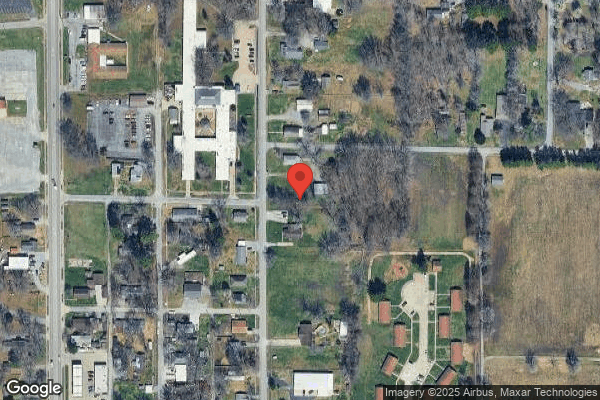
Jul 2024 4 deficiencies 2 IJ
CRITICAL (J) 📢 Someone Reported This

A family member, employee, or ombudsman was alarmed enough to file a formal complaint

Immediate Jeopardy (IJ) - the most serious Medicare violation

Free from Abuse/Neglect (Tag F0600)

Someone could have died · This affected 1 resident

**NOTE- TERMS IN BRACKETS HAVE BEEN EDITED TO PROTECT CONFIDENTIALITY** Failures at this level require more than one Deficient Practice Statement. A. Based on observation, interview, and record review...

Read full inspector narrative →
**NOTE- TERMS IN BRACKETS HAVE BEEN EDITED TO PROTECT CONFIDENTIALITY** Failures at this level require more than one Deficient Practice Statement. A. Based on observation, interview, and record review, the facility failed to ensure a resident was free from neglect when they failed to accurately assess, treat, and prevent a significant decline in condition for 1 (R1) of 3 residents reviewed for neglect in the sample of 24. This failure resulted in R1, who has a history of confusion with infections, experiencing altered mental status and refusing overall care after being diagnosed with a urinary tract infection. R1's refusals of care additionally led to R1 developing a Stage 3 pressure ulcer, an unstageable pressure ulcer with sepsis secondary to skin and soft tissue infection, subsequently requiring an 11-day hospitalization for IV antibiotic therapy. This failure resulted in an Immediate Jeopardy, which was identified to have begun on 6/19/2024 when R1 was readmitted to the facility from a hospitalization. R1 was on a physician ordered treatment for urinary tract infection, yet the facility failed to implement interventions to prevent worsening of infection. R1 endured confusion with delusions related to infection, which led to refusal of medications and refusal of care with activities of daily living. R1's refusal of care included care with incontinence and repositioning, which led to development of pressure ulcers. R1's facility acquired pressure ulcers were not treated, and led to hospitalization on 7/2/2024 for sepsis related to infection of skin and soft tissue in relation to the stage 3 pressure ulcer and unstageable pressure ulcer. V1 (Administrator) was notified of the Immediate Jeopardy on 7/11/2024 at 2:12 PM. The surveyors confirmed by observations, interview, and record review the Immediate Jeopardy was removed on 7/17/2024, but the noncompliance remains at a Level Two due to additional time needed to evaluate the implementation and effectiveness of in-service training. Findings Include: R1's admission Record documents R1 was admitted to the facility on [DATE]. R1's POS (Physician order sheet), dated 7/2024, list diagnoses that include angina pectoris, heart failure, GERD (Gastroesophageal Reflux Disease), unspecified dementia, unspecified severity with other behavioral disturbances, atrial fibrillation, type 2 diabetes mellitus, paranoid schizophrenia, chronic kidney disease stage 4, hypothyroidism, chronic peripheral disease, gout, and COPD (Chronic Obstructive Pulmonary Disease). R1's MDS (Minimum Data Set), dated 4/10/2024, documents a BIMS (Brief Interview for Mental Status) score of 15, which indicates R1 is cognitively intact. The same MDS section GG documents R1 requires substantial/maximal assistance with toileting/hygiene and with shower/bathing, and R1 requires assistance for sit to lying, sit to stand, chair/bed to chair transfer, toilet transfer, and tub/shower transfers. R1's care plan, dated 4/12/2024, documents R1 has risk for skin impairment and risk for pressure injury related to impaired mobility/use of assistive device, chronic kidney disease, and cardiac issues. Documented interventions include: minimize exposure to moistures and keep skin clean and dry especially fecal contaminant, assist with turning and positioning approximately every 2 hours and more often if needed or requested, and notify nurse immediately of any new areas of skin breakdown. R1's care plan also dated 4/12/2024 documents R1 is considered at risk for abuse/neglect (per assessment) due to depression, being dependent on others, Schizophrenia. Documented goals include R1 will be free from harm secondary to abuse/neglect through the review period with interventions including Report any suspected of abuse/neglect to Administrator immediately. R1's Progress Note, dated 6/19/2024 at 7:45 PM, documents, (R1) was returned to the facility via ambulance from local hospital with orders for Augmentin 875-125 mg (milligrams) twice daily for 10 days to treat urinary tract infection with ESBL (extended spectrum be-lactamase) in the urine. The same note documents R1 was alert and oriented to person, place, and time, refused a skin evaluation and was refusing to take medications as ordered. R1's Nursing Notes documents on 6/21/2024 at 5:11 PM, referral information faxed to a behavioral hospital for possible placement related to (R1's) delusions, refusal of care, and verbal behaviors. R1's Progress Note dated 6/21/2024 at 3:08 PM, documents, Resident refused to get up out of bed. He is mumbling to himself unable to understand what he is saying. He refused to take all meds. He would not allow writer to take his vitals. He did allow (blood glucose monitoring) to be done in thumb only but refused sliding scale coverage. He did eat about half of his breakfast and lunch. R1's Progress Note, dated 6/23/2024 at 5:27, PM documents, Resident has been in room talking to people that are not there all day he was heard telling people to get out of his room and mumbling under his breath. He refused to get up this shift has refused all meds. He did allow (blood glucose monitoring) but not insulin. R1's Progress Note, dated 6/24/2024 at 2:28 PM, documents, Res (resident) refusing to take meds and insulins. Refusing to get out of the bed as well as get dressed. Res educated on the importance of taking meds. Res became verbally aggressive and argumentative. Res non-compliant. (V26, Physician) notified. R1's Progress Note, dated 6/27/2024 at 4:13 AM, documents, refused meds and meals for past 1-2 weeks. R1's Progress Note, dated 6/28/2024 at 3:26 PM, documents, CNA (Certified Nursing Assistant) states that resident has been incontinent of stool and is lying in his bed with genitals exposed and refusing to be changed. V23 (Nurse Practitioner/NP) present for conversation and aware of continued behaviors. R1's Progress Notes, dated 6/28/2024 at 3:44 PM by V2, documents, this writer spoke with (V23), NP (Nurse Practitioner) regarding (R1's) continued behaviors, (V23) reports that she spoke with (V26, Physician) about (R1) and stated they both feel that IM (Intramuscular) medication is needed but they are fearful for the safety of staff if they were to attempt to administer an IM medication to resident and therefore feel that a placement in a behavioral health facility is the best option at this time. On 7/1/2024 an order was given by (V18, Psychiatric Nurse Practitioner) gave an order for Haldol solution three times a day with meals. R1's Progress Notes, dated 7/1/2024 at 2:55 AM, documents, All shift resident has refused to let staff change him. Resident's bed is saturated in urine and dripping into the floor. Resident has a puddle of urine under his bed and was trailing to the door. Resident let staff clean the urine from his bed to the door but refused to let staff change him or clean under the bed. When cleaning under the bed was mentioned, the resident started yelling 'no' at the staff. Resident has been pleasant since that interaction and calling for needs. R1's Progress Note, dated 7/2/2024, signed by V2 (DON/Director of Nursing) documents, spoke with (V23) about resident's altercation with (R9) and CNA. (V23) immediately called (V26) and reported to (V26) (R1's) aggressive behavior. (V26) and (V23) agree that (R1) must be sent to ER for evaluation. (V26) advises to send resident to ER and to call local police if needed to assist EMS (Emergency Medical Services) with the transfer. (V26) states At this point you have to get (R1) out of there. What he has done tonight is assault and it is not safe for (R1) or other residents for him to remain in the building. Floor nurse (V7 Licensed Practical Nurse) notified of order to send to ER and transfer process begun at this time. R1's Progress Notes, dated 7/2/2024 at 6:45 PM, documents, (R1) was transported out by way of local ambulance service to local hospital after an altercation with (R9). Noted local police contacted and sent an officer in case assistance was needed due to acts of violence. R1's Shower Sheets, dated June 2024, documents R1 refused showers on 6/24/24 and 6/25/2024. The last documented shower R1 received was on 6/11/2024. There were no other showers documented indicating R1 did not receive a shower for 22 days. R1's Medication Administration Record (MAR), dated June 2024, documents Augmentin 875-125 mg one tab every 12 hours for bacterial infection for 10 days, start date of 6/19/2024. This same MAR documents from the dates of 6/19/2024 through 6/29/2024, R1 refused Augmentin 875-125 mg, 16 out of 20 offered dosages. The same document contains a physician order for another antibiotic of Levaquin 500mg, give one tablet by mouth one time a day for urinary tract infection for 7 days with start date of 6/20/2024, the same MAR documents R1 refused Levaquin 500mg 5 out of 7 offered doses. R1's Treatment Administration Record (TAR), dated 6/1/2024-6/30/2024, documents a physician's order for skin checks scheduled every Monday and Thursday with a start date of 9/17/2020. The TAR documents R1 refused the skin checks on 6/20/2024, 6/24/2024, and 6/27/2024. The same TAR documents a physician order for antifungal powder under bilateral breast folds, bilateral abdominal folds and groin every bedtime, start date of 11/22/2023. The TAR documents R1 refused treatment from 6/19/2024 to 6/30/2024. R1's local hospital ER (Emergency Room) record, dated 7/2/2024, documents R1 reports he is here to have his wounds on his bottom addressed. This is the only area of pain that he has. No other complaints. Calm and cooperative at this time in ER. The ER's Impression and Disposition notes under clinical impression documents the following: 1. Sepsis due to unspecified organism, unspecified whether acute organ dysfunction present. 2. Altered mental status, unspecified altered mental status type. 3. Cystitis. Differential Diagnosis includes but not limited to, UTI (urinary tract infection), Electrolyte abnormality, medication induced psychiatric illness. Hospital Progress Notes on 7/3/2024 at 1:36 AM documents Sepsis secondary to skin and soft tissue infection. Hospital Wound Care Notes on 7/3/2024 at 10:00 AM documents, wound care consult completed at this time. Patient noted to have ITD (Intertriginous Dermatitis) to bilateral axilla's, bilateral chest folds, bilateral abdominal flanks, bilateral groin, and inner thighs and to scrotum and coccyx. Patient noted to have evolving DTPI (Deep Tissue Pressure Injury) to right buttocks and Stage 3 pressure injury to left buttocks. Left buttocks, stage 3 wound measuring 4 cm (centimeters) length, 2.5 cm width, 0.3 cm depth and wound surface area 10 cm. Right buttocks DTPI measuring 3 cm length, 2cm width, 0.3cm depth and 6 cm wound surface area. The hospital records from the ER on [DATE] at 1:36 AM, indicates R1 was given IV (Intravenous) antibiotics of Vancomycin 2 gm (grams) and Levofloxin 750 mg (milligrams) after blood cultures were obtained. On 7/10/2024 at 11:17 AM, V9 (Certified Nurse Assistant/CNA) stated she sometimes takes care of R1. V9 stated, I had noticed for the last 2 weeks or more (R1) had not been acting himself. He has been refusing care and having bad behaviors. (R1) did get sent to the hospital and he is still there. On 7/10/2024 at 11:25 AM, V6 (Licensed Practical Nurse/LPN) stated she had taken care of R1, as he is on her hall. V6 stated, I noticed a change with (R1) the last 2 weeks. (R1) had been more violent and was refusing care. (R1) was supposed to be taking antibiotics for a urinary tract infection, but he was refusing his medications. V6 stated the floor nurses do treatments on the residents except for Thursdays because that is the day that the wound doctor comes to the facility. V6 stated she was not aware of any wounds on R1, and he was not getting any treatments. V6 stated she heard of his behaviors when he tried to pull another resident out of the bed. On 7/10/2024 at 11:20 AM, V5 (CNA) stated she always works 6am to 2pm shift. V5 states she normally takes care of R1. V5 stated, (R1) was always fine until the last few weeks, and he started refusing care. V5 stated, I did not know of any wounds on (R1). We tried to provide care to him, but he would get upset. On 7/10/2024 at 12:00PM, V7 (Licensed Practical Nurse/LPN) stated she works all halls here, and she is familiar with R1, as she takes care of him when she works his hall. V7 stated the floor nurses do the treatments on the residents. V7 stated, I was here when (R1) tried to pull (R9) out of bed. (R1) had tried to go into (R9's) room several times on that day and we had to keep redirecting him. I moved my medication cart down the hall closer to (R9's) room so that I could keep an eye on the situation. (R1) went into (R9 's) room and started yelling that (R9) was causing electrical shock to his beard and something about black stuff, then (R1) grabbed (R9's) foot and tried to drag him out of bed. When the CNA tried to separate them, (R1) hit (V14, Certified Nurse Assistant) in the abdomen, and (R1) had earlier grabbed (R9's) over bed table and threw it. I witnessed (R1) trying to grab (R9) out of bed. V7 was asked if she felt this was considered abuse to R9, she replied, No because (R1) did not do that intentionally because he did not know what he was doing. V7 stated, Prior to 2 weeks or so ago, (R1) was so sweet and real easy going. I was unaware of any wounds on (R1) until right before I sent him out to the hospital the last time on 7/2/2024. (V12, CNA) was helping try to get (R1) ready to be transported to the hospital and she noted a large wound to (R1's) buttocks, (V12) reported it to me immediately, but when I went into the room to assess the wound (R1) refused, so I did not get to even look at it. V7 was asked how often they did skin checks on R1, and V7 stated weekly. V7 stated they document those on the (MAR) Medication Administration Record. On 7/10/2024 at 3:55 PM, V12, CNA, stated she works the hall where R1 resides. V12 stated, I had taken care of (R1) for a long while. (R1) was always nice up until the last month to month and a half. V12 stated, (R1) was refusing all care as of lately. One day we went in his room, and (R1) was drenched in urine, the floor had urine everywhere, and the mattress was leaking urine on the floor and under the bed. It was bad. (R1) allowed us to clean the urine off the floor, but would not let them clean under the bed, clean him up or change the mattress out. V12 stated, We offered care for days before (R1) went to the hospital, but he just refused. When V12 was asked about any skin issues with R1 she stated, I would apply powder to his groin area prior to his refusal of care because it was gaulded, but on the day we were getting ready to send him out to the hospital, I noticed a big circular area on (R1's) bottom and it was bleeding pretty good. I then went to (V7, LPN) and told her, but (R1) refused to let (V7) look at it and then the ambulance came. I was not aware the big area on (R1's) bottom was there until that day. V12 stated R1 is wheelchair bound, but R1 can walk a few steps. On 7/11/2024 at 2:59 PM, V18 (Psychiatric Nurse Practitioner) stated she started seeing R1 about 2 years ago. V18 stated R1 told her he first started having issues like delusions/hallucination when he got a UTI. V18 stated, I was asked to stop the Zyprexa a couple of years ago because he didn't have the proper diagnosis to support giving it. (R1) was a very pleasant and very knowledgeable man that was always alert and oriented x 4. V18 stated she was not aware of any psychiatric problems over the past 2 years until recently. V18 stated she had gotten a couple of calls from the facility about R1's behaviors lately and R1 refusing care. V18 stated she had talked with V23 (Nurse Practitioner/NP) and the staff about giving some medication IM (intramuscular) so they could get him better, and hopefully R1 would start taking his regular medications, antibiotics, and especially his insulin. V18 stated, The nurses would not give the medications IM due to it being unsafe for the nurses and I was told they could not hold him down to administer it. V18 stated she expressed concerns with him not getting his insulin, and she even offered to come to the facility and give the IM injections herself. V18 stated, The facility declined my offer because they stated he would refuse. V18 stated at this point, he was harmful to himself and others. V18 was asked if she felt the UTI could have caused the hallucinations/delusions, she replied, Due to the infection effects, it possibly started when (R1) refusing medications then refusing care and has had a definite effect on his well-being. V18 stated she feels R1 is misdiagnosed, and she feels he does not have Schizophrenia. V18 stated, First, Schizophrenia is a mental illness that is continuous, and he has been off medications for 2 years with no issues. V18 then stated she feels like he has bipolar, and that is why he can go for a while without medications before any issues come up. V18 stated, Sometimes any type of infection can cause confusion and that leads to other issues in people that are normally not confused. On 7/12/2024 at 8:01 AM, V27 (Healthcare Power of Attorney for R1) stated, I was not sure where (R1) was at this time. Before coming to the nursing home, (R1) was at another hospital because he wasn't taking his medications and got violent. This all started with a urinary tract infection. Once he got over the infection, he went back to his normal self and did good. (R1) has been a preacher for several years. (R1) never had his own church, but helped churches and filled in when a pastor was not available. I didn't know he was back in the hospital. V27 was asked if she was aware an Involuntary Discharge had been issued to the resident from the nursing home, and she stated, No, I didn't know. V28 (family member) was present on the phone call and stated, His behaviors are always triggered by infections. V27 was asked if she was aware of any skin issues like wounds and she stated, No, I didn't know anything about this either. On 7/12/2024 at 8:40 AM, R1 was visited at the local hospital. R1 was sitting up in bed watching television. R1 was alert and oriented x 4. R1 stated he is feeling much better. R1 stated his bottom is not hurting like it was so he thought his wounds were healing. R1 stated he got the wounds while at the facility. R1 stated, When I get any kind of infection it goes to my brain for some reason, and I am not right when I do get an infection. R1 stated he wants to go back to the facility. R1 was asked if he was aware of possibly not being able to return to the facility and he said, No, I don't know anything about that. R1 stated he is taking his medication and he is taking his insulin when he needs it. R1 stated he must take medications for his Neuropathy; he stated it is Gabapentin and it does help me. R1 also stated he has hypothyroidism, and he takes Levothyroxine for that as well. R1 stated he was tired and was going to take a nap at this time. R1 then stated, I miss my friends at the facility, and I teach Bible study classes there as well. On 7/12/2024 at 8:25AM, V29 (Case Manager at local hospital) stated (R1) is doing much better now that the infection is better. V29 stated, Facility said if he was seen by Psych (inpatient) that he could come back, but the behavioral hospital denied him after review of his hospital course, and said it was a medical issue. V29 stated R1 is taking his medications and his wounds are healing. V29 stated he is showing signs of sundown syndrome, as he tries to refuse medications at night, but is fine throughout the day. On 7/12/2024 at 11:07 AM, V3 (LPN/Licensed Practical Nurse/Infection Preventionist) was asked to describe R1 prior to 6/19/2024. V3 stated R1 was alert and oriented x4, he led Bible Study at the facility. V3 stated she noticed his behaviors when they moved a roommate in with R1. V3 stated, The resident we moved in was on Enhanced Barrier Precautions, and this set (R1) off. (R1) became withdrawn and was going to the dining room, but was observed talking back to himself, but it escalated. He was saying things about his family coming through the backdoor and threw stuff on him causing skin issues. This was definitely a change in condition. We know when (R1) starts acting off, he is afraid of an infection. I believe he was freaked out about the roommate that we had moved in, but we didn't leave that roommate in there very long at all. (R1) will come and ask us to do a urinalysis when he thinks he is getting a UTI because he is scared to get any kind of infection. We had received orders for urinalysis, but (R1) was refusing to give us a urinalysis for several days. He finally went to the ER because of his groin pain and cellulitis. V3 explained what happened once he returned from that hospitalization. V3 stated, Well, the hospital stated he was taking his medications, but we found out later that he did not take medications there either, and he had ripped out his IV's. V3 stated R1 returned 6/19/2024, with antibiotic orders for UTI. He was still having delusions and was refusing medications, and he was refusing care. When V3 was asked if the Healthcare Power of Attorney was called, she stated, I believe she was, but every time we talk to her, she is always saying (R1) wants attention, and he knows I am busy with my son who has cancer. V3 stated The hospital can do more than we can, he is a bigger guy. V3 was asked, since she was the Infection Control Preventionist Nurse, was she looking at R1 from an infection standpoint, V3 replied, I was focused on the behaviors more, but he wouldn't let me screen him about infections, and I believe half of his problems were stemming from infections. V3 was asked if she was aware of his wounds and she stated, No, I do not do skin checks or deal with wounds. V3 stated she was with V2 when they went to the hospital to give IVD (Involuntary Discharge) papers. V3 stated, (R1) was alert, but I questioned if he understood what all we were reading and telling him, about the appeal process. V3 was asked about the lack of care, especially from 6/19/2024 through 7/2/2024. She stated, We tried to do more for (R1), and we felt if we sent him to the hospital that they would just send him right back. When (R1) tried to pull another resident out of bed, this was an isolated incident besides hitting the CNA in the stomach. Again, we looked more at the psych and behaviors even though we knew he did this with infections. V3 stated, I am going to review the updates, but I did see the pictures of his wounds that were taken at the hospital, and they didn't look good, but I did not know he had those. On 7/12/2024 at 9:40 AM, V2 (Director of Nursing/DON) was asked to explain issues with R1, from the time of readmission from the hospital on 6/19/2024. V2 stated, (R1) had been having unusual behaviors like, refusing medications, he would say that he didn't need his medications, and he was refusing care up until he went back to the hospital on 7/2/2024. (R1) was sent out to the ER at his request on 6/16/2024 because he was having pain in his groin area. He was admitted for cellulitis of the groin area then noted to have a urinary tract infection (UTI). (R1) was being seen by the wound doctor for the yeast on his groin area, but had refused to allow the wound doctor to see him the last couple of times. (R1) came back on 6/19/2024, was refusing medications including antibiotics for UTI. We were trying to get him into a behavioral facility because of his Psych (psychiatric) issues. I was aware (R1) was refusing all care most of the time. V2 stated she received a call one night from the facility that (R1) had so much urine everywhere in his room, his mattress was saturated and leaking on the floor, the urine was even running out into the hallway. (R1) would only let the staff mop the hallway and barely in his room. V2 was asked if care was provided at that time to clean up R1 and change out the mattress, V2 stated, (R1) would not let the staff clean anything else. I was looking more at the Psych issues than I was the medical issues. During interview, V2 reviewed the shower sheet documentation for R1 from the time of readmission 6/19/2024 until R1 went back out to the hospital on 7/2/2024, and there were no showers given due to refusals. V2 stated, I was not aware of any wounds on (R1), and nobody reported wounds to me, and I do all the wounds in the facility and round with the wound doctor on Thursdays. V2 stated, We did call the EMS (Emergency Medical Services) on 6/10/2024 and for (R1) to go out to the ER, but EMS would not take him because he refused, and he was able to answer all their questions appropriately. V2 was asked how they got him to go to the hospital on 7/2/2024, she stated, He didn't have a choice; he tried to harm another resident. V2 was asked if she was aware there was documentation of talk between V23 (NP) and V26 (physician) about giving medications IM to help get R1 care, but there was concern with the safety for the staff. V2 replied, Yes, I made that entry, and I was worried that staff would get hurt because (R1) is a big strong guy, and I didn't want any staff to get harmed. When V2 was asked if R1 received care from 6/19/2024 through 7/2/2024, she stated, No, not really, he was refusing all care. We were documenting to try to get enough documentation to get him out to a behavioral facility to help with his Psych issues. On 7/12/2024 at 9:10 AM, V1 (Administrator) stated she was out of town the week of 7/2/2024, when she got the call from V2 (DON/Director of Nursing). V1 stated V2 had a report of abuse with R1 and another male resident. V1 stated V2 reported R1 was sent out to the hospital. V1 stated she received another call a little later from V2, who stated Corporate contacted her and said they had to give an Involuntary Discharge (IVD) to R1. V1 stated she told V2 that many others had to be contacted before an IVD could be given, including the Ombudsman, and it was too late in the night for all those calls. V1 stated someone called V2 and said R1 qualified for IVD because he was harmful to himself and others. V1 said on 7/3/2024, V2 and V3 (LPN/Licensed Practical Nurse/Infection Control Nurse) took IVD papers to R1 at the local hospital. V1 stated she was pretty sure V27 (Healthcare Power of Attorney for R1) was called about the IVD. V1 stated, I think it was an emergency discharge. We want (R1) back if he gets his infections taken care of because he goes over the deep end when he gets an infection. It's a cycle he has done before. (R1) is normally our best resident, he is [NAME] President of Resident Council, he teaches Bible Study classes, and he is our facility Santa Claus every year, and he does so well with the kids that the employees bring in to see him as Santa. When V1 was asked if she knew R1 had pressure ulcers that he acquired at the facility she stated, No, I did not know that. I get updates from the hospital, but I only look at Case Manager notes. V1 stated she hates that, but he was refusing all care for a while. V1 stated she was going to go see R1 at the hospital as she really wants to get him back to the facility. V1 stated, We all love (R1), and we want him here. On 7/12/2024 at 1:57 PM, V23 (Nurse Practitioner) stated, I have known and cared for (R1) for a long time. V23 stated normally R1 is a pleasant guy that is alert and oriented x4. V23 stated, I feel (R1) needs inpatient psych to get his meds regulated. V23 stated she had worked closely with V18 (Psych NP) regarding R1. V23 stated V18 ordered Haldol liquid and they tried giving it to R1 in a drink, and R1 wouldn't drink it. V23 stated, I was afraid someone would get hurt if they tried to give him an IM injection. V23 stated, That would only help for a little bit though. V23 stated, (R1) was urinating everywhere and was pouring urine all over himself, was laying in urine and feces, and refused care for long periods of time. V23 was asked if she was aware of the wounds on R1's buttocks and she stated, I didn't know anything about wounds, but have seen the pictures taken at the hospital. V23 stated, (R1) was always cautious about getting a UTI and (R1) would come and tell me that he needs a UA (urinalysis) because he may be getting a UTI. V23 stated, I ordered a UA when the staff told her that he was talking to himself, but (R1) refused it. V23 stated she would stop by and check on him and he would say, I am doing ok, then I would walk past the doorway and he would be talking to the television. V23 stated, I was there the night (R1) went out the last time and I had them to call the police to come because I was afraid R1 would hurt someone because he is a big strong guy. V23 was asked if she felt the infection caused the confusion and delusions and she stated, It is hard to say which came first the psych issues or the infection. V23 stated, I was aware (R1) was refusing care including personal care and refusing medications with most concerning medications of antibiotics. On 7/12/2024 at 12:50 PM, V26 (Physician/Medical Director) stated he was aware of R1's behaviors. V26 stated he was aware R1 tried to harm another resident and R1 went out to the hospital. V26 was asked if he was aware R1 was refusing all care from the staff, he stated, I was aware he was refusing medications, but was not aware of how long he was refusing. V26 was asked if he was aware R1 refused all care from 6/19/2024 through 7/2/2024 and he stated, (V18 Psych NP) has been dealing with him mostly, but I wasn't aware that he refused care for that many days. V26 was asked if he talked with V18 at one point about possibly giving medications IM so R1 would allow care or be sent to the ER, V26 stated, Yes, but I was told they were afraid someone would get hurt as he is a big guy, but I have been hit myself and I am sure you have too. V26 stated, My biggest concern was that (R1) was going to hurt himself or other residents. V26 stated, I am sure they tried to care for him, and I know (V18) was trying, sometimes it is just difficult. The tipping point is why they sent him out, when he tried to pull the other guy out of the bed. V26 was asked if he felt like R1 was harming himself by refusing care and medications, V26 replied, Of course he was. V26 stated, I know (V23) had gone to see him including the day they sent him out. V26 was asked if he knew about the wounds R1 had once he got to the ER, and he stated, No, nobody has told me about that. V26 was asked if he felt the infection could have caused the behaviors which led to the lack of care, which in turn caused the wounds and he stated, Well lack of care can cause wounds and infection of any kind can cause worsening of confusion. Infections are rough on some folks. V26 was asked if he felt R1 was causing harm to himself by refusing his medications including Insulin and antibiotics and refusal of care and he replied, Yes, he was not helping his situation. V26 stated R1 has been at the facility a long time and is usually very pleasant and active in different activities there. R1's Progress Note, dated 7/13/24 at 3:40 PM, documents R1 returned to the facility and is alert and oriented x 3, has no complaints, and is cooperative. The facility policy titled Pressure [TRUNCATED]
CRITICAL (J) 📢 Someone Reported This

A family member, employee, or ombudsman was alarmed enough to file a formal complaint

Immediate Jeopardy (IJ) - the most serious Medicare violation

Accident Prevention (Tag F0689)

Someone could have died · This affected 1 resident

**NOTE- TERMS IN BRACKETS HAVE BEEN EDITED TO PROTECT CONFIDENTIALITY** Based on observation, interview, and record review, the facility failed to ensure residents assessed as being at risk for elopem...

Read full inspector narrative →
**NOTE- TERMS IN BRACKETS HAVE BEEN EDITED TO PROTECT CONFIDENTIALITY** Based on observation, interview, and record review, the facility failed to ensure residents assessed as being at risk for elopement were supervised, interventions to prevent elopement were implemented, and incidents of elopement were thoroughly investigated for 1 of 3 (R16) residents reviewed for accidents and supervision in the sample of 24. This failure resulted in R16, who had a history of elopement and was assessed as being at risk of elopement, exiting the facility and walking approximately two tenths of a mile down a busy road without staff supervision. This failure resulted in an Immediate Jeopardy, which was identified to have begun on 6/13/24 when R16 was identified to be at risk for elopement and the facility did not implement interventions to prevent elopements. On 6/16/24, R16 attempted to exit the facility and while facility staff were looking for an elopement bracelet to put on R16, R16 left the facility and was located approximately 25 yards from the facility. R16 again exited the facility on 7/10/24. R16 walked approximately two tenths of a mile down the busy street before being joined by staff and approximately eight tenths of a mile down the same street before staff were able to convince R16 to return to the facility. V1 (Administrator) was notified of the Immediate Jeopardy on 7/11/24 at 2:12 PM. The surveyors confirmed by observations, interview, and record review the Immediate Jeopardy was removed on 07/17/24, but the noncompliance remains at a Level Two due to additional time needed to evaluate the implementation and effectiveness of in-service training. Findings Include: R16's admission Record, with a print date of 7/15/24, documents R16 was admitted to the facility on [DATE], with diagnoses that include unspecified dementia, cognitive communication deficit, altered mental status, and delirium. R16's Minimum Data Set, dated [DATE], documents a Brief Interview for Mental Status score of 03, which indicates a severe cognitive deficit. R16's Elopement Evaluation, dated 6/13/24, documents a score of 01, which indicates R16 is at risk of elopement. This same assessment documents R16 has a history of attempted elopement and wandering aimlessly. They were no interventions addressed as part of this evaluation. R16's Progress Notes document the following: 6/13/24 Elopement Score 1.0, History of elopement while at home. Yes . 6/16/24 6:29 PM, Resident noted attempted exit through back staff entrance at 1720 (5:20 PM), also witnessed by (V13/CNA-Certified Nursing Assistant). Upon entry resident resistant to moving away from door and had to be corralled back towards unit. Once she was back on the unit this nurse (V21/RN-Registered Nurse) and (V30, CNA) went looking for a wanderguard transponder. We looked on (unit name) with no success. Then went down to (unit name). While in the med (medication) room looking, I texted (V2/Director of Nurses/DON) to ask if there was an extra in her office or another location and then heard the front door alarm go off. I immediately headed in that direction walking very briskly. As I came through the main dining room, CNA (V31) said that it was (R16). I ran towards the front door. At the door, (name of family member) was frantically trying to get into the door to alert us that she (R16) was out of the building. Once getting out of the door the resident was noted down the road about 25 yards north of the building. Upon reaching her she was verbally combative and physically evasive. CNA (V31 and V32) were able to calm resident and get her to agree to come back into the building. DON (Director of Nursing) immediately notified. DON in at 1740 (5:40 PM) to address .NP (Nurse Practitioner) notified at 1814 (6:14 PM). Attempt made to contact resident's husband .No answer. Message left for call back. The facility Abuse Investigation Summary, dated 6/16/24, documents under Initial Allegation, A visitor was entering the building when (R16) attempted to go out the open front door. As the visitor was telling (R16) that she needed to stay inside, (R16) became verbally aggressive and went out the door. Visitor immediately ran to get staff for help. Abuse coordinator notified. Wanderguard placed on resident. Facility head count conducted, and all residents accounted for. NP (Nurse Practitioner) and spouse notified. All exit doors wander guard alarms checked. Investigation begun Final Summary/conclusion: Investigation conducted. IDT (Interdisciplinary) met and reviewed incident. Resident and staff interviews conducted. A visitor was entering the building when (R16) attempted to go out the open front door. As the visitor was telling (R16) that she needed to say inside, (R16) became verbally aggressive and went out the door. Visitor immediately ran to get staff for help. Another resident with a wanderguard alarm in place was near the front door at time of elopement which set off the wanderguard alarm causing more staff to come to the front door to assist. Resident was assisted back inside the building by nurse and CNA's (certified nursing assistants). Resident continued to be physically evasive and stated, I've got to go get my husband. Please my house is just right down the road here and I have to go get my husband! Abuse coordinator and DON notified. Wanderguard placed on resident. Facility head count conducted, and all residents accounted for. NP and spouse notified. All exit doors wander guard alarms checked. Staff continues to monitor resident for changes in mood, status, or behavior. No changes noted. MD (physician) and POA (power of attorney) updated on findings of investigation. Care plan updated. R16's Elopement Evaluation, dated 6/21/24, documents a score of 03, which indicates R16 is at risk of elopement. This assessment documents R16 has a history of or attempted leaving the facility without informing staff, verbally expressed desire to go home, packed belongings, and/or stayed near an exit door, wanders, wandering behavior likely to affect the safety or well-being of self/others, and is a recent admission. R16's Progress Notes, dated 6/26/24 at 11:00 PM, document, Employee entrance door alarming at 1940 (7:40 PM), (V22, Licensed Practical Nurse/LPN), went to check door and check outside for residents. Resident was urinating behind employee entrance. Resident was redirected and assisted back inside. Resident reports she was looking for husband and trying to go home. Resident was brought back inside, toileted and pajamas placed on. Resident then was assisted to bed. Said nurse (V22) administered HS (hour of sleep) medications, medications taken whole without difficulty. (V2/DON) notified .husband notified, and on-call MD (physician) notified. Resident diagnosed with unspecified dementia with agitation, altered mental status, cognitive communication deficit. (R16) is ambulatory and wanders throughout facility, staff redirects resident and brings her back to assigned hall. Resident agitated with staff at present time redirection attempt. The facility Abuse Investigation Summary, dated 6/26/24, documents under Initial allegation: Wander-guard alarm system alerted staff to the back door. Staff immediately responded and discovered (R16) right outside the doorway and escorted her back inside . Final summary/conclusion: Wander guard alarm system alerted staff to the back door. Staff immediately responded and discovered (R16) right outside the employee entrance door at the back of the building. When found resident was directly behind the employee door urinating. Staff escorted her back inside and to her unit. Head to toe assessment preformed with no abnormalities noted. IDT met and reviewed incident. Resident and staff interviews conducted. Abuse coordinator and DON notified. Wander guard in place and functioning properly. Facility head count conducted, and all residents accounted for. NP and spouse notified. All exit doors wander guard alarms checked. (V18/Psychiatric NP) contacted to complete a med (medication) review. Staff continues to monitor resident for changes in mood, status, or behavior. No changes noted. MD and POA updated on findings of investigation. Care plan updated. R16's Order Summary Report active orders as of 7/15/24 includes the following physician orders; Monitor Wander Guard each shift for placement, start date 6/28/24. R16's current Care Plan documents the Focus area dated 7/1/24 of Is an elopement risk/wanderer related to: Disoriented to place, History of attempts to leave facility unattended, Impaired safety . This same Focus area documents the following interventions all initiated on 7/1/24, Check wanderguard battery function weekly and PRN (as needed) .Check wanderguard placement every shift and PRN Distract resident from wandering by offering pleasant diversions, structured activities, food, conversation, television, book Monitor for fatigue and weight loss .Offer a warmed blanket Offer food or snacks .Offer reassurance appropriate to the concern .Offer to take to a scheduled or planned activity . Offer to take Thereto the toilet or assist with incontinence care .Provide structured activities: toileting, walking inside and outside, reorientation strategies including sings, pictures, and memory boxes .Redirect resident when wandering or exit seeking .Return to bed for additional rest or comfort .Use distraction to change thought pattern .Wanderguard applied at all times On 7/10/24 at 2:55 PM, R16 was sitting in the common area just outside the dining room. R16 appeared clean and well-groomed. R16 was alert, confused, but pleasant. R16 was saying she wanted to go home. R16 stated it is like being in jail because they won't let her leave. R16's Progress Note, dated 7/10/24 at 1650 (4:50 PM), documents, .This writer (V1/Adminstrator) heard wander guard alarm sound around 4:50 PM at front door. This writer watched (V17/RN) respond to alarm. At 1452 (V19/Corporate Chef) came into office and stated 'I think one of your residents went out the front door.' This writer out (sic) front door and witnessed (R16) walking across front parking lot and (V17) and the IDPH (Illinois Department of Public Health) surveyor (name of surveyor) walking behind her attempting to re-direct her. She became agitated with their attempts to re-direct and started running. She ran out into the road and started running north down the roadway. The IDPH surveyor (name of surveyor) and (V17) could not catch up to (R16) and she kept telling them to get away from them that she was going home. This writer ran past (V17) and (name of surveyor) and was able to catch up to (R16) and began walking side by side with (R16). This writer attempted to re-direct her back to facility and she said no I am going home. I just live down the road here. I have to get back to my kids. (R16) continued to walk with this writer approximately 5 blocks down the road. This writer told (V17/RN) to call 911 and family during the unsuccessful attempts to re-direct (R16) back to facility. (V17) did go back to facility to get vehicle in the event (R16) would be able to be re-directed back to facility. This writer and V17 stayed with (R16) until (name of local police) and family responded. The (name of local police) were unsuccessful in their attempts to re-direct (R16) back to facility also. The son (V20) was able to get (R16) into his vehicle and bring her back to facility. (R16) was taken back to room to have assessment and vital taken. This writer also notified (V18/Psychiatric Nurse Practitioner) for a medication review. (V18) reviewed medication list. New orders were reported to nurse and orders processed. The IDPH surveyor (as described above) reported to this surveyor on 7/10/2024 at 4:52PM the following occurred: The IDPH surveyor walked out the front door of the facility. When the IDPH surveyor approached the front door there was an elderly couple coming through the second set of double doors. The lady was in front and using a walker, the IDPH surveyor approached to help her with the door. As the lady was coming through the door, suddenly another female resident (R16) went through the lady in front of the gentleman that was coming in the door. The other female resident (R16) exited the facility and went through the second set of doors. The door alarm sounded. The IDPH surveyor went out the doors to the front parking lot of the facility and approached R16 and attempted to get her to go back into the facility. The IDPH surveyor was aware R16 was not supposed to be out of the facility since she had observed R16 being redirected earlier in the day. R16 stated, No I am going home. V19 (Regional Chef) pulled up close to the facility and stated he had come back to the facility to return a charger he took. The IDPH surveyor explained to V19 she had tried to get R16 back into the facility and she wouldn't go back in with her. V19 asked the resident to go in with him and she wouldn't go. When asked if he had her V19 replied, I will go in and get the administrator. R16 then started walking to the north end of the parking lot. The IDPH surveyor stayed with R16 attempting to redirect her back to the facility. R16 told the IDPH surveyor she was pregnant and needed to go home then went onto the main road heading north. The IDPH surveyor stayed with the resident, and she began running down the side of the road. V17 (RN) came and then stated she couldn't run. Then V1 came running up the road yelling at R16 to stop running but R16 kept running. Once V1 caught up to the resident the IDPH surveyor returned to the facility. The IDPH surveyor (as described above) reported to this surveyor on 7/10/24 at 5:27 PM R16, V20 (Family Member), and V1 (Administrator) came back into the facility. At that time, V1 stated they had to call the local police and V20 to get R16 to come back to the facility. V1 stated R16 got all the way to the end of the road. R16's hair was wet with sweat and V20 stated, I have to take her to the nurse and get her vital signs, she is hot. On 7/11/24 at 11:10 AM, V13 (CNA) stated R16 tried to get out of the facility a lot, about ten times a day. V13 stated R16 is always going to the back door and knows to hold the door for 15 seconds to get it to stop alarming because she used to work at the facility. V13 stated R16 left not more than a week ago but stopped herself. V13 stated there was four staff with her and they followed R16. When asked what interventions were in place to prevent R16 from eloping, V13 stated R16 didn't reside on the hall she typically worked on, but when R16 was with her, she would have her help fold laundry. V13 stated R16 will sit and talk to residents and likes to read magazines to them. V13 stated they just keep R16 busy. On 7/11/24 at 11:31 AM, V11 (CNA) stated R16 was fairly new to the facility. V11 stated she had met her and R16 was a busy body. V11 stated R16 didn't reside on the hall she typically worked on. V11 stated she wasn't familiar with R16's interventions, but today she combed R16's hair, took her out on the enclosed patio, and sometimes R16 goes into laundry and folds towels. V11 stated it is hard to keep R16 busy. When asked if she had any concerns with residents who wander, V11 stated she didn't think there was enough entertainment for them. V11 stated there is not enough staff to keep the residents who wander busy. On 7/12/2024 at 12:33 PM, V17 (RN) stated she responded to the door alarm on 7/10/24 and saw a female resident and her husband standing at the front window. V17 stated there was a male resident (R4) standing close to the doors, and he wears an elopement alert bracelet. V17 stated she thought R4's elopement alert bracelet set off the alarm due to him standing close to the doors. V17 stated R4 tends to go out the door, so she was trying to get him away from the door and she turned the alarm off. V17 stated, I suspected he (R4) was the one that set off the alarm. V17 stated she didn't go outside to see if another resident had exited. V17 stated, (V19/Corporate Chef) came in and told us that (R16) was outside, so I responded by going outside to get her. V17 stated when she looked out the window, she saw the state surveyor and R16 at the end of the parking lot and by the time she got there R16 was down the road. V17 stated she caught up with them and told the state surveyor she couldn't run, then V1 caught up with them. V17 stated, I was concerned because people fly down that road, I know because I live down that road and there are no sidewalks on either side of that road. V17 stated that once the Administrator was with the resident, she went back to get her car so she could turn on the flashers to slow down the cars so they wouldn't hit R16. V17 stated she also called the police and V20 (Family Member) to help get R16 safe and back to the facility. On 7/15/24 at 12:14 PM, V34 (Receptionist/Medical Records) stated R16 had been attempting to elope all day on 7/10/24. V34 stated when R16 would see someone come up to the door she would run up to it. V34 stated she was watching R16 and would keep her from going out. V34 stated she wasn't aware of R16 getting out of the facility prior to 7/10/24. V34 stated she didn't know what interventions were in place to keep R16 from eloping. On 7/15/24 at 3:37 PM, V2 (DON) stated she wasn't at the facility on 7/10/24 when R16 eloped. This surveyor reviewed with V2 the incident and V17's interview that she didn't go outside when she heard the alarm. V2 stated she believed it was the policy of the facility to look outside and call a full facility head count. On 7/16/24 at 8:28 AM, V21 (RN/Registered Nurse) stated R16 was not his resident, but he was called to her unit because she was attempting to exit the facility through the activity room door on 6/16/24. V21 stated her attempt to leave prompted him to look for an elopement alert bracelet. V21 stated while he was looking for the bracelet, he heard the alarm going off and went to the front door. V21 stated a family member was between the two sets of doors and said she had tried to stop her. V21 stated R16 was approximately 25 yards down the street when he got outside. V21 stated R16 was very resistant to coming back to the facility and became verbally combative. V21 stated they did eventually get R16 back to the building. V21 stated as far as he knew, it was the first time R16 had attempted to and/or eloped. V21 stated when he left R16 to look for the elopement alert bracelet, there were several staff members with R16, and he wasn't sure where R16 was while he was looking and/or how she got out of the facility without staff being aware. When asked if he could remember interventions that were in place to prevent elopement prior to 6/16/24, V21 stated there was no elopement alert bracelet in place, and he couldn't remember any specific interventions. When asked what current interventions were in place to prevent elopement, V21 stated he wasn't sure if they were care planned, but R16 liked to fold clothes and clean up after meals. V21 stated the facility setting makes R16 feel like she is working. V21 stated evening is worse, but R16 always wanders and is exit seeking. V21 stated they are short staffed, and he didn't feel like they had enough staff to meet the needs of the residents. V21 stated he felt like R16 needed to be 1:1. V21 stated 2 nurses and 2-3 CNA's are not enough eyes to keep an eye on her. V21 stated they don't have enough staff to implement person centered interventions to prevent behaviors. On 7/17/24 at 8:37 AM, V1 (Administrator) stated they did not have an elopement alert bracelet on R16 after she was assessed on 6/13/24 as being an elopement risk. V1 stated she talked with staff to determine who monitored R16 on 6/16/24 after she was exit seeking and before she eloped, and she was not able to find anyone who was responsible for ensuring R16 didn't elope while they were looking for the bracelet. V1 stated R1's Care Plan for elopement was not implemented until 7/1/24. According to this interview, there were no specific person-centered interventions implemented to prevent R16 from eloping from 6/13/24 when she was assessed as being at risk for elopement until 7/1/24 and there are no person-centered interventions currently in place. On 7/17/24 at 11:25 AM, V33 (LPN/Licensed Practical Nurse) stated she was working on 6/16/24. V33 stated R16 was attempting to leave, and she and V21 went to look for an elopement alert bracelet. V33 stated a staff member (unknown) stated R16 was on the parking lot by the front door. When asked if anything was put in place to keep R16 from eloping while they looked for the elopement alert bracelet, V33 stated, Not that I am aware of. On 7/17/24 at 2:35 PM, V30 (CNA) stated R16 does exit seek and she has exited the facility. V30 stated it gets worse in the evening, and she has learned that if she keeps R16 busy it is better. V30 stated she will find things for her to do such as talk to other residents, or help her with a task by walking with her when she is getting something. V30 stated she also calls R16's son to talk with her and that helps as well. On 7/18/24 at 12:54 PM, V32 (CNA) stated R16 has gotten out of the facility a couple of times. V32 stated there was one incident (6/16/24) when R16 got out and was walking down the road. V32 stated she, V31, and V21 were chasing R16, and they were able to redirect her back into the facility. R32 stated R16 didn't have an elopement alert bracelet on, and she believed the facility staff were looking for one to place when R16 exited the facility. When asked what happened between R16's attempt on 6/16/24 and R16 exiting the facility, V32 stated it was dinner time, they have family members come in through that time frame, and they told them R16 was outside. V32 stated she was not aware R16 was exit seeking before 6/16/24. V32 stated on some days they have enough staff and other days they don't. When asked if they had enough staff to monitor and implement interventions for residents who have exit seeking behaviors, V32 stated, No, I wouldn't say that. On 7/20/24 at 10:52 PM, V31 (CNA) stated she was working when R16 exited the facility on 6/16/24. V31 stated she is usually the one who responds to the door alarms when they go off. V31 stated R16 likes to slip through the doors when visitors come in. V31 stated R16 knows how to work the system and is very charming. V31 stated on 6/16/24 she responded to the front door alarm and V21 was right behind her. V31 stated the intervention in place on 6/16/24 was to respond to the door alarm and try to get her back in as quickly as possible. V31 stated they did not have interventions in place then like they do now. V31 stated she was not aware R16 was an elopement risk prior to her elopement on 6/16/24. On 7/22/24 at 1:18 PM, V22 (LPN) stated she was working on 6/26/24 when R16 exited the facility. V22 stated she heard the alarm and immediately went to check on it and she thought she saw R16 dart out the employee entrance door. V22 stated she followed her out and R16 was just outside the door, but not outside the building. V22 stated R16 had her pants down and was urinating. V22 stated she redirected R16 back into the facility. The facility Missing Resident and Elopement Policy and Procedure, dated 8/10/23, documents, It is the policy of this facility to provide a safe environment for all residents. We will properly assess residents and plan the care to prevent accidents related to wandering behavior or elopement. Procedure Assessment and Identification of Wandering Residents 1. History of behaviors, including wandering, will be obtained prior to admission. 2. A resident with Alzheimer's/Dementia that is ambulatory will be considered at risk for elopement and an appropriate care plan will be put in place Residents identified at risk of elopement: Residents whose assessment identified wandering behavior shall also be considered at risk for elopement. If a resident is identified at risk for elopement, the following steps will be taken.: 1. If clinically indicated, an alarm bracelet will be placed on the resident to audibly alert staff of attempts by the resident to exit, in facilities with this capability. 2. The residents care plan shall address behavior using resident specific goals and/or approaches as assessed by the interdisciplinary team .4. Facility staff will ensure that all exit alarms will be responded to immediately When a door alarm sounds: When any door alarm sounds, staff shall: 1. Check the alarm panel to determine which door has been opened. Do Not Assume someone else has already done this. 2. Check the exit door for any exiting resident by means of a visual check. Also perform search of building parameter (sic) for exited resident. 3. If a resident is discovered outside the facility inappropriately, staff will assist him/her back into the facility. Follow the confirmed elopement procedure. 4. Reset the door alarm after it is determined by visual check that no resident has exited the facility inappropriately or is returned to the facility. The Immediate Jeopardy that began on 6/13/24 was removed on 07/17/24 when the facility took the following actions to remove the immediacy: *R16 was safely brought back into building on 7/10/24, elopement evaluation completed on 7/10/24, medication review completed on 7/10/24, medications adjusted on 7/10/24. Initiated monitoring of change of behaviors after family visits on 7/11/24, on 7/15/24 monitored behavior after family visits and identified increased exit seeking behavior, care planned for increased safety checks during the evening hours after family visits until behavior resolves on 7/16/24. Also discussed with family potential activities for re-direction during increased anxiety periods on 7/17/24. *Residents who are wander risks are at potential risk to be affected by the same alleged deficit. An audit was completed by the administrator (V1) and (V36) MDS coordinator on 7/17/24 of all wandering residents and no issues were identified *The Administrator (V1) and Maintenance Director (V35) in-serviced staff on 7/16/24 and 7/17/24 on the facility Elopement and Search (Code Amber) policy. Inservice included the topics elopement assessment, placing wander guard alarm band immediately when identified at risk, physician orders and where to locate the wander guard bands. Inservice included location of wander guard exit doors, wander guard alarm panels. Inservice included topics who responds to alarms, search indoors and outdoor perimeter, announcing alarm and calling all clear when resident is returned safely to building. Inservice includes remaining with resident and completing safety checks until exit seeking behavior resolves. *All staff have been in serviced on the Elopement and search code amber policy and will be in serviced prior to their next scheduled shift. *In-services were initiated on 7/16/24 and 7/17/24 and will continue to be given by Administrator designee prior to the staff next scheduled shift until completed. *The administrator has ensured all residents who are at risk for elopement have been assessed and appropriate interventions have been implemented. *The Administrator (V1) has reviewed the policy and procedure Elopement and Search Code [NAME] Policy and no updates at this time. *Administrator (V1) and/or designee will complete one Elopement drill rotating shifts daily for 2 weeks. Any areas for improvement will be immediately addressed. *Director of Nursing/DON (V2) and or designee will audit all new admissions/re-admission 5 days a week for 4 weeks for Elopement evaluation, wander guard placement if applicable and interventions initiated, interventions on care plan. Any issues will be addressed immediately. *Administrator (V1) or designee will audit incidents of elopement 5 days a week for 4 weeks to ensure they were thoroughly investigated. *Results of all audits will be discussed at QAPI in meetings and any further recommendations of interdisciplinary team will be immediately implemented and audit until 100 percent compliance.
SERIOUS (G) 📢 Someone Reported This

A family member, employee, or ombudsman was alarmed enough to file a formal complaint

Actual Harm - a resident was hurt due to facility failures

Pressure Ulcer Prevention (Tag F0686)

A resident was harmed · This affected 1 resident

**NOTE- TERMS IN BRACKETS HAVE BEEN EDITED TO PROTECT CONFIDENTIALITY** Based on observation, interview, and record review the facility failed to identify, treat, and prevent the development of pressu...

Read full inspector narrative →
**NOTE- TERMS IN BRACKETS HAVE BEEN EDITED TO PROTECT CONFIDENTIALITY** Based on observation, interview, and record review the facility failed to identify, treat, and prevent the development of pressure ulcers for 1 of 3 residents (R1) reviewed for pressure ulcers in the sample of 24. This failure resulted in R1 developing a Stage 3 wound and an Unstageable wound to bilateral buttocks. Findings include: R1's admission Record documents R1 was admitted to the facility on [DATE]. R1's Physician's Order Sheet (POS), dated 7/2024, documents diagnoses including angina pectoris, heart failure, GERD (Gastroesophageal Reflux Disease), unspecified dementia, unspecified severity with other behavioral disturbances, atrial fibrillation, type 2 diabetes mellitus, paranoid schizophrenia, chronic kidney disease stage 4, hypothyroidism, chronic peripheral disease, gout, and COPD (Chronic Obstructive Pulmonary Disease). R1's MDS (Minimum Data Set), dated 4/10/2024, documents a BIMS (Brief Interview for Mental Status) score of 15, which indicates R1 is cognitively intact. The same MDS section GG documents R1 requires substantial/maximal assistance with toileting/hygiene and with shower/bathing, and R1 requires assistance for sit to lying, sit to stand, chair/bed to chair transfer, toilet transfer, and tub/shower transfers. Section M, Skin Conditions, of the same MDS does not document any unhealed pressure ulcers/ injuries, venous or arterial ulcers, or any other ulcers, wounds, or skin problems for R1. R1's Progress Note, dated 6/28/2024 at 3:26 PM, documents, CNA (Certified Nursing Assistant) states that resident has been incontinent of stool and is lying in his bed with genitals exposed and refusing to be changed. (V23, Nurse Practitioner) present for conversation and aware of continued behaviors. R1's Progress Note, dated 6/28/2024 at 3:44 PM, by V2 (Director of Nursing) documents, This writer spoke with (V23, Nurse Practitioner) regarding (R1's) continued behaviors. (V23) reports that she spoke with (V26, Physician) about (R1) and stated they both feel that IM (Intramuscular) medication is needed, but they are fearful for the safety of staff if they were to attempt to administer an IM medication to resident, and therefore feel that a placement in a behavioral health facility is the best option at this time. R1's Progress Note, dated 7/1/2024 at 2:55 AM, documents, All shift resident has refused to let staff change him. Resident's bed is saturated in urine and dripping into the floor. Resident has a puddle of urine under his bed and was trailing to the door. Resident let staff clean the urine from his bed to the door but refused to let staff change him or clean under the bed. When cleaning under the bed was mentioned, the resident started yelling 'no' at the staff. Resident has been pleasant since that interaction and calling for needs. R1's progress notes, dated 7/2/2024 at 6:45 PM, documents R1 was transported out by way of local ambulance service to local hospital after an altercation with R9. R1's local hospital ER (Emergency Room) record, dated 7/2/2024, documents R1 reports, he is here to have his wounds on his bottom addressed. This is the only area of pain that he has. No other complaints. Calm and cooperative at this time in ER. The ER's Impression and Disposition notes under clinical impression documents the following: 1. Sepsis due to unspecified organism, unspecified whether acute organ dysfunction present. 2. Altered mental status, unspecified altered mental status type. 3. Cystitis. Differential Diagnosis includes but not limited to, UTI (Urinary Tract Infection), Electrolyte abnormality, medication induced psychiatric illness. Hospital Progress Notes on 7/3/2024 at 1:36 AM documents Sepsis secondary to skin and soft tissue infection. Hospital Wound Care Notes on 7/3/2024 at 10:00 AM documents, wound care consult completed at this time. Patient noted to have ITD (Intertriginous Dermatitis) to bilateral axilla's, bilateral chest folds, bilateral abdominal flanks, bilateral groin, and inner thighs and to scrotum and coccyx. Patient noted to have evolving DTPI (Deep Tissue Pressure Injury) to right buttocks and Stage 3 pressure injury to left buttocks. Left buttocks, stage 3 wound measuring 4 cm (centimeters) length, 2.5 cm width, 0.3 cm depth and wound surface area 10 cm. Right buttocks DTPI measuring 3 cm length, 2cm width, 0.3cm depth and 6 cm wound surface area. The hospital records from the ER on [DATE] at 1:36 AM, indicates R1 was given IV (Intravenous) antibiotics of Vancomycin 2 gm (grams) and Levofloxin 750 mg (milligrams) after blood cultures were obtained. On 7/12/2024 at 8:40 AM, R1 was visited at the local hospital. R1 was sitting up in bed watching television. R1 was alert and oriented x 4. R1 stated he is feeling much better. R1 stated his bottom is not hurting like it was so he thought his wounds were healing. R1 stated he got the wounds while at the facility. R1 stated, When I get any kind of infection it goes to my brain for some reason, and I am not right when I do get an infection. On 7/10/2024 at 11:25 AM, V6 (Licensed Practical Nurse/LPN) stated she had taken care of R1, as he is on her hall. V6 stated, I noticed a change with (R1) the last 2 weeks. (R1) had been more violent and was refusing care. (R1) was supposed to be taking antibiotics for a urinary tract infection, but he was refusing his medications. V6 stated the floor nurses do treatments on the residents except for Thursdays, because that is the day that the wound doctor comes to the facility. V6 stated she was not aware of any wounds on R1, and he was not getting any treatments. V6 stated she heard of his behaviors when he tried to pull another resident out of the bed. On 7/10/2024 at 12:00PM, V7 (LPN) stated she works all halls here, and she is familiar with R1 as she takes care of him when she works his hall. V7 stated, Prior to 2 weeks or so ago, (R1) was so sweet and real easy going. I was unaware of any wounds on (R1) until right before I sent him out to the hospital the last time on 7/2/2024. V7 stated, (V12 Certified Nursing Assistant/CNA) was helping try to get (R1) ready to be transported to the hospital and she noted a large wound to (R1's) buttocks. (V12) reported it to me immediately, but when I went into the room to assess the wound, (R1) refused, so I did not get to even look at it. V7 was asked how often they did skin checks on R1, and V7 stated weekly. V7 stated they document those on the Medication Administration Record (MAR). On 7/10/2024 at 11:17 AM, V9 (CNA) stated she sometimes takes care of R1. V9 stated, I had noticed for the last 2 weeks or more (R1) had not been acting himself. He has been refusing care and having bad behaviors. (R1) did get sent to the hospital and he is still there. On 7/10/2024 at 11:20 AM, V5 (CNA) stated she always works 6am to 2pm shift. V5 states she normally takes care of R1. V5 stated, (R1) was always fine until the last few weeks, and he started refusing care. I did not know of any wounds on (R1). We tried to provide care to him, but he would get upset. On 7/10/2024 at 3:55 AM, V12 (CNA) stated she works the hall where R1 resides. V12 stated, I had taken care of (R1) for a long while. (R1) was always nice up until the last month to month and a half. When V12 was asked about any skin issues with R1 she stated, I would apply powder to his groin area prior to his refusal of care because it was gaulded, but on the day we were getting ready to send him out to the hospital, I noticed a big circular area on (R1's) bottom and it was bleeding pretty good. I then went to (V7, LPN) and told her, but (R1) refused to let (V7) look at it and then the ambulance came. I was not aware the big area on (R1's) bottom was there until that day. V12 stated R1 is wheelchair bound but R1 can walk a few steps. V12 stated R1's showers are scheduled for Tuesday and Saturdays on day shift. V12 stated she didn't ever give showers to him because she works evenings. On 7/12/2024 at 8:01 AM, V27 (Healthcare Power of Attorney for R1) was asked if she was aware of any skin issues like wounds and she stated, No, I didn't know anything about this either. On 7/12/2024 at 8:25AM, V29 (Case Manager at local hospital) stated, (R1) is doing much better now that the infection is better. V29 stated R1 is taking his medications and his wounds are healing. On 7/12/2024 at 9:10 AM, V1 (Administrator) was asked if she knew R1 had some wounds that he acquired at the facility, and V1 stated, No, I did not know that. I get updates from the hospital, but I only look at Case Manager's notes. On 7/12/2024 at 9:40 AM, V2 (Director of Nursing) was asked to explain issues with R1 from the time of readmission from the hospital on 6/19/2024. V2 stated R1 would say he didn't need his medications, and he was refusing care up until he went back to the hospital on 7/2/2024. V2 stated, (R1) was being seen by wound doctor for the yeast on his groin area, but had refused to allow the wound doctor to see him the last couple of times. I was not aware of any wounds on (R1), and nobody reported wounds to me, and I do all the wounds in the facility and rounds with the wound doctor on Thursdays. V2 stated she was aware R1 was refusing all care most of the time. V2 stated she received a call one night that R1 had so much urine everywhere in his room, his mattress was saturated and leaking on the floor, the urine was even running out into the hallway. V2 stated he would only let the staff mop the hallway and barely in his room. V2 stated he would not let the staff clean anything else. V2 stated, I was looking more at the Psych issues than I was the medical issues. On 7/12/2024 at 12:50 PM, V26 (Physician) was asked if he knew about the wounds R1 had when he got to the ER, and he stated No, nobody has told me about that. V26 was asked if he felt the infection could have caused the behaviors which led to the lack of care, which in turn caused these wounds, and he stated, Well lack of care can cause wounds and infection of any kind can cause worsening of confusion. Infections are rough on some folks. On 7/12/2024 at 1:57 PM, V23 (Nurse Practitioner) stated, I have known and cared for (R1) for a long time. Normally, (R1) is a pleasant guy that is alert and oriented x4. V23 was asked if she was aware of the wounds on R1's buttocks and she stated, I didn't know anything about wounds but have seen the pictures taken at the hospital. I was aware (R1) was refusing care including personal care and refusing medications with most concerning medications of antibiotics. V23 stated R1 was urinating everywhere and was pouring urine all over himself and was laying in urine and feces and refused care. R1's (TAR) Treatment Administration Record, dated 6/1/2024-6/30/2024, documents a physician order for skin checks scheduled every Monday and Thursda,y with a start date of 9/17/2020.The R1's TAR documents R1 refused the skin checks on 6/20/2024, 6/24/2024, and 6/27/2024. The same TAR document a physician order for antifungal powder under bilateral breast folds, bilateral abdominal folds and groin every bedtime, start date of 11/22/2023. The TAR documents R1 refused treatment from 6/19/2024 to 6/30/2024. R1's Medication Administration Record (MAR), dated June 2024, documents Augmentin 875-125 mg one tab every 12 hours for bacterial infection for 10 days, start date of 6/19/2024. This same MAR documents from the dates of 6/19/2024 through 6/29/2024, R1 refused Augmentin 875-125 mg, 16 out of 20 offered dosages. The same document contains a physician order for another antibiotic of Levaquin 500 mg, give one tablet by mouth one time a day for urinary tract infection for 7 days with start date of 6/20/2024, the same MAR documents R1 refused Levaquin 500mg 5 out of 7 offered doses. R1's Shower Sheets, dated June 2024, documents R1 refused showers on 6/24/24 and 6/25/2024. The last documented shower R1 received was on 6/11/2024. There were no other showers documented indicating R1 did not receive a shower for 22 days. The facility policy titled Pressure Ulcers/Skin Breakdown - Clinical Protocol (revision date August 2008) documents under section Assessment and Recognition 1. Document an individual's significant risk factors for developing pressure sores, for example immobility, recent weight loss, and a history of pressure ulcers. In addition, the nurse shall assess and document/report the following: A. Full assessment of skin condition including but not limited to location, stage or partial/full thickness, length, width, depth, presence of exudates or necrotic tissue. B. Pain assessment, C. Resident's mobility status, D. current treatments, including support surfaces, E. all active diagnosis. Under section titled Cause Identification documents, 1. Identify factors contributing or predisposing residents to skin breakdown; for example, medical comorbidities such as diabetes, congestive heart failure, overall medical instability, cancer, or sepsis, causing catabolic state, and macerated or friable skin. 2. Document any signs/symptoms of infection, skin condition assessment, the impact of comorbid conditions on wound healing, etc.
CONCERN (E) 📢 Someone Reported This

A family member, employee, or ombudsman was alarmed enough to file a formal complaint

Potential for Harm - no one hurt, but risky conditions existed

Investigate Abuse (Tag F0610)

Could have caused harm · This affected multiple residents

**NOTE- TERMS IN BRACKETS HAVE BEEN EDITED TO PROTECT CONFIDENTIALITY** Based on interview and record review, the facility failed to thoroughly investigate allegations of witnessed peer to peer abuse ...

Read full inspector narrative →
**NOTE- TERMS IN BRACKETS HAVE BEEN EDITED TO PROTECT CONFIDENTIALITY** Based on interview and record review, the facility failed to thoroughly investigate allegations of witnessed peer to peer abuse when they failed to substantiate that abuse occurred, and failed to investigate one allegation of abuse for 4 of 7 (R6, R7, R8, R9) residents reviewed for abuse in the sample of 24. Findings Include: The facility policy Abuse Prevention Program (dated 10/2022) documents, The purpose of this policy is to assure that the facility is doing all that is within its control to prevent occurrences of abuse, neglect, exploitation, misappropriation of property, deprivation of goods and services by staff and mistreatment of residents. This will be done by: .establishing an environment that promotes resident sensitivity, resident security and prevention of mistreatment; identifying occurrences and patterns of potential mistreatment .implementing systems to promptly and aggressively investigate all reports and allegations of abuse, neglect, exploitation, misappropriation of property and mistreatment, and making the necessary changes to prevent future occurrences .Definitions .Abuse: Abuse means any physical or mental injury or sexual assault inflicted upon a resident other than by accidental means .Abuse is willful infliction of injury, unreasonable confinement, intimidation, or punishment resulting physical harm, pain, or mental anguish to a resident Residents who allegedly abused another resident shall be immediately evaluated to determine the most suitable therapy, care approaches, and placement, considering his or her safety, as well as the safety of the other residents and employees of the facility. In addition, the facility shall take all steps necessary to ensure the safety of residents including, but not limited to, the separation of the residents Internal Investigation: 1. All incidents will be documented, whether or not abuse, neglect, exploitation, mistreatment or misappropriation of resident property occurred, was alleged or suspected. 2. Any incident or allegation involving abuse, neglect, exploitation, mistreatment or misappropriation of resident property will result in an investigation. 1. R8's admission Record, with a print date of 7/18/24, documents R8 was admitted to the facility on [DATE], with diagnoses that include Alzheimer's disease, dementia, diabetes, anxiety disorder, and obesity. R8's MDS, dated [DATE], documents R8 has a BIMS score of 07, which indicates R8 has a moderate cognitive deficit. R8's current Care Plan documents a Focus area of, (R8) is an Abuse risk of 2 due to being dependent on others as well as anxiety. Date Initiated: 08/17/2023. The intervention for the Focus area, dated 8/17/23, documents, We will monitor for any signs of abuse as well as keep an open line of communication open between staff and resident. R8's facility Progress Notes provided to this surveyor do not document any notes related to the allegations of peer-to-peer abuse. R4's admission Record, with a print date of 7/15/24, documents R4 was admitted to the facility on [DATE], with diagnoses that include dementia, diabetes, polyneuropathy, hypertension, cognitive communication deficit, and anxiety disorder. R4's Minimum Data Set (MDS), dated [DATE], documents a BIMS (Brief Interview for Mental Status) score of 01, which indicates R4 has a severe cognitive deficit. This same MDS documents under Behavior R4 does not have hallucinations but does have other behavioral symptoms not directed toward others (e.g., physical symptoms such as hitting or scratching self, pacing, rummaging, public sexual acts, disrobing in public, throwing or smearing food or bodily waste, or verbal/vocal symptoms like screaming, disruptive sounds). R4's current Care Plan documents a Focus area of, (R4) a behavior problem related to urinating in trash cans and hallways he does have episodes of grabbing, hitting at, and wandering. Date Initiated: 10/16/2024. This Focus area documents the following interventions, Administer medications as ordered. Monitor/document for side effects and effectiveness. Date Initiated 05/22/2024.Anticipate and meet needs for toileting. Date Initiated 10/16/2023. Praise any indication of progress/improvement in behavior. Date Initiated 10/16/2023. This care plan does not document specific person-centered interventions to prevent physical aggression against peers. The Facility Incident Report, dated 4/28/24, documents under Final: (R8) reported to nurse that while she was self-propelling from front lobby to (name of) unit, she was struck in head by open hand of (R4). In interview (R8) at first denied pain, but then later stated that she had a headache and requested Tylenol. Upon inspection of resident head, no marks or swelling noted. There is insufficient evidence to substantiate abuse. The facility Abuse Investigation Summary documents under Employee Interviews related to the 4/28/24 incident between R4 and R8, (V13/CNA-Certified Nursing Assistant)-4/29/24 1400 (2:00 PM) I was the CNA on (name of unit) today. My resident (R8) came to me and told me (R4) had hit her in the head with his hand when she was by the porch. I did not notice any marks on (R8), but she was upset and complained of her head hurting. I took (R8) to the nurse (V21/RN-Registered Nurse). The Facility Incident Report, dated 5/6/24, documents under Final: (V13/CNA) reported to DON (Director of Nurses/V2) that she had witnessed (R4) make contact with (R8)'s forehead with an open hand while both residents were in the dining room. There was no harm intended and no injury resulted. In interview (R8) initially reported that she had been hit in the head by a man but unable to recall when it had happened. Resident denied being in any pain. Upon inspection no marks or swelling noted. There is insufficient evidence to substantiate abuse. The facility Abuse Investigation Summary, dated 5/6/24, documents under Employee Interviews, (V13, CNA) 5/6/24 1500 (3:00 PM) reports that she witnessed (R4) smack (R8) in the forehead while both residents were in the dining room. (V13) reports that (R8) was trying to talk to (R4) and that (R4) told (R8), No! and tried to move away from her but (R8) continued to try to talk to (R4) and then (R4) lightly smacked (R8)'s forehead. (V13) then reported incident to DON (V2) and reports no other residents or staff were around for incident. On 7/11/24 at 9:21 AM, R8 stated she didn't have any serious issues with peers. R8 stated R4 was doing something, and she told him to be careful. R8 stated R4 hit her in the forehead twice. R8 stated she wasn't afraid of him or anyone else at the facility, but she does avoid him now. On 7/11/24 at 11:10 AM, V13 (CNA) stated she had witnessed R4 hit R8 in the dining room. V13 stated R8 was just talking to R4, and he got agitated and hit her in the forehead. V13 stated it was an open hand smack, R8 backed away, and she reported it. V13 stated that wasn't the first time he hit R8, and R4 also hit R7. V13 stated she wasn't sure why he hit them in the forehead. V13 stated it typically happens in the dining room or in the lobby. V13 stated there were no injuries and R4 doesn't usually hit them very hard. V13 stated R8 just tries to steer clear of (R4). On 7/18/24 at 9:28 AM, V25 (RN/Registered Nurse) stated they redirect R4, but they have to watch how they approach him, or he will get aggressive. V25 stated she had never witnessed R4 be aggressive with peers. V25 stated it seemed like R4 was targeting R8. V25 stated R4 had hit R8 on the head a couple of times in the dining room so she was steering clear of him. V25 stated R8 ate in a different dining room for a while but it seems to have gotten better. R7's admission Record, with a print date of 7/18/24, documents R7 was admitted to the facility on [DATE] with diagnoses that include unspecified dementia, hypertension, anxiety disorder, and cognitive communication deficit. R7's MDS, dated [DATE], documents a BIMS score of 03, which indicates a severe cognitive deficit. R7's current Care Plan documents a Focus area of (R7) is at risk for abuse related to depression, anxiety, dependent on others and behaviors. Date Initiated: 05/26/2024. The interventions for this Focus area, dated 5/26/2024, are documented as, Address all complaints/concerns promptly with grievances policy and procedure .Advise resident of rights yearly and PRN (as needed).Complete risk for abuse/neglect assessment quarterly. Ensure staff is educated on Abuse/Neglect. Intervene if observing any resident-on-resident conflict to avoid potential abusive situation.Observe for any s/s (signs/symptoms) of Abuse. Report any signs of abuse to Administrator) (abuse coordinator), DON, or Supervisor All Staff (sic) and follow all (name of survey agency) and facility protocols related to reporting suspected abuse . The facility Abuse Investigation Summary, dated 5/10/24, documents, Final: Receptionist (V34) witnessed (R4) strike (R7) on top of the head. No other staff or residents nearby to witness incident. Both residents with severe cognitive impact and alert only to self per baseline. (R7) was standing at the front door looking out the window which is where (R4) also likes to stand to look outside. There was no harm intended and no injury resulted. In interview (R7) denied being in any pain. Upon inspection no marks or swelling noted There is insufficient evidence to substantiate abuse. On 7/11/24 at 9:28 AM, R7 denied being afraid of anyone and denied abuse. R7 appeared confused and was not able to answer detailed questions appropriately. R7 did not have any signs of obvious distress. On 7/15/24 at 12:14 PM, V34 (Medical Records/Receptionist) stated she witnessed R4 hit R7 both times. V34 stated R4 didn't like R7 being there. V34 stated R4 said something to R7, and then started hitting her on top of the head with his fist. V34 stated R7 told R4 it hurt and to stop hitting her. V34 stated there weren't any apparent injuries. When asked how R4 appeared when he was hitting R7, V34 stated, He was angry. V34 stated she would consider it abuse. V34 stated she separated them and let the nurse know R4 had hit R7. V34 stated there was another time R4 hit R7. V34 stated it was at the front door and he was trying to get R7 to move. V34 stated R4 slapped R7 on top of the head. V34 stated R7 was upset and told R4 she wished he would quit hitting her. V34 stated R7 was angry and R4 appeared mad. V34 stated she wasn't sure what interventions were implemented to prevent the abuse. V34 stated anytime she sees R7 coming to the front door she redirects her away because she knows it would probably happen again. V34 stated R7 hardly ever comes to the front door now. On 7/15/24 at 11:00 AM, when asked if she was involved in the abuse investigations, V3 (LPN/Infection Preventionist) stated she helps at times. When asked why the peer-to-peer abuse that is witnessed is not substantiated, V3 stated that is something corporate told them to add on. On 7/15/24 at 3:37 PM, V2 (Director of Nurses) stated R7 is the resident R4 gets agitated with at the front door. V2 stated she it was like R4 got mad that R7 was able to stand there but he wasn't. When asked how that was a behavior and not abuse, V2 stated, That is a good question. On 7/16/24 at 8:54 AM, V1 (Administrator) stated R4 can't talk, so he tends to tap people to get their attention. V1 stated she didn't consider that a willful acts of abuse, but they have to type it up. V1 stated if the resident is confused, it is usually not substantiated. When asked where the second investigation on R7 was, V1 stated she wasn't aware of any other incident. Then V1 stated she spoke with V34, and they didn't do a report on the second incident because V1 and V2 were walking up to the front office and witnessed the event. V1 stated R7 was hanging on to the front door handle trying to stand up from her wheelchair when R4 walked up to her and tapped her on the shoulder. V1 stated R7 said 'stop hitting me' and they told R7 he wasn't hitting her that he was just trying to get her attention. V1 stated R4 knows the alarm goes off if they get too close to the door. V1 stated that is the second incident V34 was talking about, but they didn't write it up as an abuse investigation. V1 stated they didn't consider it abuse. On 7/22/24 at 10:28 AM, this surveyor reviewed with V34 her previous interview where she stated R4 had hit R7 on the head while at the front door on two separate occasions. When asked if that interview was still accurate, V34 stated, From where I was standing, he could have. V34 stated she knows V1 (Administrator) was there and said to whoever else was up there (unknown staff) that it wasn't a reportable because R4 was just trying to get R7 away from the door. Reviewed the interview again with V34, and asked if she saw R4 hit R7 in the head on both occasions. V34 stated, It might have been on the shoulder. V34 stated, I know (R7) said 'quit hitting me' or something like that. When asked if she was now saying R4 didn't hit R7 on the head, V34 stated he may have come down on her shoulders; he was just trying to get her away from the doors. 2. R9's admission Record, with a print date of 7/22/24, documents R9 was admitted to the facility on [DATE] with diagnoses that include anxiety disorder, chronic obstructive pulmonary disease, and weakness. R9's MDS, dated [DATE], documents a BIMS score of 15, which indicates R9 is cognitively intact. R9's current Care Plan documents a Focus area of ,(R9) is a 3 for risk of abuse due to being dependent on others as well as suffering from anxiety and behaviors. Date Initiated 02/10/2023. The intervention documented for this Focus area is, By monitoring for all signs of abuse and keeping an open communication between patient and staff, as well as keeping him involved in activities he enjoys. Date Initiated: 02/10/2023. R1's admission Record, with a print date of 7/15/24, documents R1 was admitted to the facility on [DATE] with diagnoses that include heart failure, diabetes, paranoid schizophrenia, conversion disorder with seizures, and unspecified dementia. R1's MDS, dated [DATE], documents a BIMS score of 15, indicating R1 is cognitively intact. R1's current Care Plan documents a Focus area of, Resident is considered at risk for abuse/neglect (per assessment) due to depression, being dependent on others, Schizophrenia. Date Initiated 09/23/2021. This Focus area includes the following interventions, dated 09/23/2021, Address all complaints/concerns promptly with grievance policy and procedure. Advise resident of rights yearly and PRN. Complete risk for abuse/neglect assessment quarterly.Intervene if observing any resident-on-resident conflict to avoid potential abusive situation Report any suspected of abuse/neglect to administrator immediately. R1's care plan does not document a focus area for physical aggression. The Facility Incident Report, dated 7/2/24, documents under Final Report, (R1) went into (R9's) room and grabbed (R9's) feet attempting to pull him out of bed claiming (R9) was shooting him with black stuff. (R1) punched CNA in stomach as she was attempting to separate residents. Residents immediately separated by staff. Head to toe assessments completed with no areas observed. Local police were notified. (R1) was transferred to ER via EMS (Emergency Medical Services) for psych evaluation. (R9) reports in his interview that (R1) entered his room and grabbed his left leg and was yelling at him. (R9) unable to recall exactly what (R1) was yelling. When (R9) was asked if he feels safe continuing to live here, he states, 'Yes, I feel safe here.' Staff continues to observe resident for changes in mood, status, or behavior. (R1) and his POA served with involuntary discharge notice and notified of his right to appeal and provided with a postage paid, pre-addressed envelope if he wishes to do so. Ombudsman and (name of survey agency) notified of involuntary discharge notice being served. Investigation determined there is insufficient evidence to substantiate abuse due to lack of physical or mental harm. R1's Progress Notes, dated 7/2/24 5:22 PM, documents, This writer spoke with (V23, Nurse Practitioner) about resident's altercation with other resident and CNA. (V23/Nurse Practitioner) immediately called medical director (V26) and reported to (V26) resident's aggressive behavior. (V26) and (V23) agree that resident must be sent to ER for evaluation. (V26) advises to send resident to ER and to call local police if needed to assist EMS with the transfer. (V26) stated, 'At this point you have to get him out of there. What he has done tonight is assault and it is not safe for (R1) or other residents for him to remain in the building.' On 7/10/24 at 11:00 AM, R9 stated, The man next door came in the other day and grabbed my feet, he was trying to drag me off the bed. The staff came right in and stopped him and he hit one of them. (R1) has gone to the hospital now and I don't think he is coming back. He didn't hurt me. He had come in here a few other times that day saying stuff I didn't understand. I do feel safe here now, but it was scary for a minute. On 7/10/24 at 12:00 PM, V7 (LPN/Licensed Practical Nurse) stated she works all halls here and she is familiar with R1 as she takes care of him when she works his hall. V7 stated she was working when R1 tried to pull another resident (R9) out of bed. V7 stated R1 had tried to go into R9's room several times on that day and they had to keep redirecting him. V7 stated she moved her medication cart down the hall closer to R9's room so that she could keep an eye on the situation. V7 stated R1 went into R9's room and started yelling that R9 was causing electrical shock to his beard and something about black stuff. V7 stated R1 grabbed R9's foot and tried to drag him out of bed. V7 stated when the V14 (CNA) tried to separate them, R1 hit the V14 in the abdomen. V7 was asked if she felt this was considered abuse to R9, she replied, No, because (R1) did not do that intentionally because he did not know what he was doing. On 7/17/24 at 1:42 PM, V14 (CNA) stated she was working when R1 attempted to pull R9 out of the bed by his feet. V14 stated they heard R9 screaming, when they got to his room, R9's feet were hanging out of the bed and R1 was saying R9 was going to hurt him. V14 stated the nurse was helping R9 and she attempted to push R1's wheelchair out of R9's room. V14 stated R1 was fighting her and saying he was going to get him. V14 stated R1 then hit her in the stomach. V14 stated she would consider it abuse. On 7/15/24 at 3:37 PM, V2 (DON/Director of Nurses) stated R1 was given an involuntary discharge after the incident occurred between R1 and R9. When this surveyor asked if she could explain how the incident was serious enough to issue an involuntary discharge, but they didn't substantiate abuse, V2 stated she couldn't explain it. On 7/16/24 at 8:54 AM, V1 (Administrator) stated she was out of town when the incident occurred, so she didn't have firsthand knowledge of what occurred. 3. R6's admission Record, with a print date of 7/18/24, documents R6 was admitted to the facility on [DATE], with diagnoses that include unspecified dementia, weakness, anxiety disorder, and atrial fibrillation. R6's MDS, dated [DATE], documents a BIMS score of 09, indicating R6 has a moderate cognitive deficit. R6's current Care Plan documents a Focus area of, (R6) is at low risk for abuse related to: dependent on others and anxiety. Date Initiated: 03/13/2024. This Focus area includes interventions, dated 3/13/24, of, Address all complaints/concerns promptly with grievance policy and procedure. Advise resident of rights yearly and PRN (as needed). Complete risk for abuse/neglect assessment quarterly. Ensure staff is educated on Abuse/Neglect. Intervene if observing any resident on resident conflict to avoid potential abusive situation. Observe for any s/s (signs/symptoms) of Abuse. Report any signs of abuse to Administrator (abuse coordinator), DON, or Supervisor All Staff and follow all (name of survey agency) and facility protocols related to reporting suspected abuse. R3's admission Record ,with a print date of 7/15/24, documents R3 was admitted to the facility on [DATE] with diagnoses that include Alzheimer's Disease, dementia, adult failure to thrive, heart disease, major depressive disorder, anxiety disorder, brief psychotic disorder, and convulsions. R3's MDS, dated [DATE], documents a BIMS score of 00, which indicates a severe cognitive deficit. This same MDS documents R3 has physical behavioral symptoms directed towards others. R3's current Care Plan documents a Focus area of, (R3) has the potential to demonstrate physical behaviors hitting grabbing, related to Dementia, anxiety, brief psychotic disorder, h/o (history of) behavior. Date Initiated: 01/06/2023. Interventions for this Focus area include the following: 1/1/23- monitor for changes in mood or behaviors.Send to ER (emergency room) for eval (evaluation) and treatment upon return, psych (psychiatric) med (medication) review. 1/5/24- med review, obtain labs and UA (urinalysis). 2/6/24- adm (administer) medications as ordered. 1/6/23- Administer medications as ordered. Monitor/document for side effects and effectiveness. Assess and anticipate residents needs: food, thirst, toileting needs, comfort level, body positioning, pain, etc. Assist (R3) to develop more appropriate methods of coping and interacting (R3) to express feelings appropriately. Communication: provide physical and verbal cues to alleviate anxiety, give positive feedback, assist verbalization of source of agitation, assist to set goals for more pleasant behavior, or encourage seeking out of staff member when agitated .Evaluate for side effects of medication. SS (social services) to assist with finding placement closer to family per family request .Use distraction to redirect train of thought.When agitated: intervene before agitation escalates, guide away from source of distress, and engage calmy in conversation. If response is aggressive, staff should remain calm and consider approaching at a later time . The Facility Incident Report, dated 7/3/24, documents under Final . Incident was witnessed by staff. Activity director witnessed (R3) wheel up to (R6) in the activity room and grab (R6's) right arm. (R3) then proceeded to hit (R6) on her right arm. No other staff report witnessing the incident. Residents were separated. (R6's) arm was assessed. There were no signs of injury noted. Medication review completed. Care plan updated. MD and POA updated. Investigation determined there is insufficient evidence to substantiate abuse due to lack of physical or mental harm. On 7/11/24 at 9:15 AM, when asked if any other resident had ever hurt or slapped her, R6 stated, Nothing major. R6 stated she was never hurt and was not afraid of anyone. On 7/11/24 at 9:11 AM, R3 was sitting in a chair in the hallway, near the nurses station. R3 appeared clean and well-groomed. This surveyor was talking with R3 when a nurse walked by and touched R3's blanket. R3 smacked her in the chest. R3 was not interviewable. On 7/15/24 at 8:25 AM, V16 (Activities Director) stated she witnessed R3 wheel up next to R6 and hit her multiple times in the arm. V16 stated she wasn't sure if something happened to provoke R3. V16 stated R3 had those behaviors, and she asks R3 to sit in the hallway during activities since there are more people in the room and R3 doesn't do well in crowded areas. When asked if R3 was able to do any activities, V16 stated she watches tv and comes to the music activities. V16 stated R6 was not hurt when R3 hit her. On 7/15/24 at 3:37 PM, when asked why all of the witnessed peer to peer abuse was not substantiated, V2 (Director of Nursing) stated when they do an investigation, they send it to corporate for approval before submitting their report. V2 stated corporate always has them add in Investigation determined there is insufficient evidence to substantiate abuse due to lack of physical or mental harm. V2 stated they say they can't substantiate abuse, and that it was more of a behavior related to dementia. On 7/16/24 at 8:54 AM, V1 (Administrator) stated abuse is willful and intentional, and with most resident-to-resident altercations the resident has dementia or is trying to get someone's attention. V1 stated if the resident is confused, abuse is not usually substantiated. V1 stated they can't say they are willfully and intentionally trying to harm someone if they have dementia.
Jun 2024 2 deficiencies 1 Harm
SERIOUS (G) 📢 Someone Reported This

A family member, employee, or ombudsman was alarmed enough to file a formal complaint

Actual Harm - a resident was hurt due to facility failures

Accident Prevention (Tag F0689)

A resident was harmed · This affected 1 resident

**NOTE- TERMS IN BRACKETS HAVE BEEN EDITED TO PROTECT CONFIDENTIALITY** Based on interview and record review, the facility failed to prevent an accident for 1 (R2) of 3 residents reviewed for accident...

Read full inspector narrative →
**NOTE- TERMS IN BRACKETS HAVE BEEN EDITED TO PROTECT CONFIDENTIALITY** Based on interview and record review, the facility failed to prevent an accident for 1 (R2) of 3 residents reviewed for accidents in the sample of 9. This failure resulted in R2 receiving a 2 cm (centieter) laceration to the right side of the forehead and being sent to the emergency room requiring 2 sutures. Findings Include: R2's admission Record documents R2 was admitted to the facility on [DATE], and is [AGE] years old. R2's admission Record documents diagnoses including but not limited to Diagnoses: Transient cerebral ischemic attack, unspecified, vascular dementia, unspecified severity, with other behavioral disturbance, other idiopathic peripheral autonomic neuropathy, chronic pain syndrome, unspecified glaucoma, unspecified macular degeneration, legal blindness, fibromyalgia, chronic pulmonary embolism, long term (current) use of anticoagulants, abnormal posture, weakness, and history of falling. R2's Minimum Data Set (MDS), with Assessment Reference date of 3/25/24, documents a Brief Interview for Mental Status (BIMS) score of 09, which indicates R2 has moderate cognitive impairment. R2's MDS for Functional Abilities and Goals documents R2 uses a manual wheelchair and was coded as dependent for the ability to wheel 50 feet with 2 turns or to wheel 150 feet in a small corridor or similar space. (Dependent is defined as the helper does all of the effort .resident does none of the effort to complete the activity. Or, the assistance of 2 or more helpers is required for the resident to complete the activity). R2's Care Plan includes a focus area documenting R2 is at risk for falls related to: Weakness/Recent Infections, Dementia, Hx (history) of falls at home, self transfers initiated on 11/15/19 and revised on 7/23/23. Interventions include 4/12/14 High Back w/c (wheelchair) initiated on 4/25/24 and 6/15/24 bilateral foot pedals to w/c initiated on 6/21/24. The State of Illinois - Illinois Department of Public Health Long Term Care Facility Serious Injury Incident Report submitted by the facility documented R2 sustained a fall with physical harm or injury on June 15, 2024 at 11:30 AM. The incident report documented the following under Detailed Incident Summary: Resident (R2) is alert with intermittent confusion. BIMS: 10 severe cognitive impact. Diagnosis: TIA (transient ischemic attack) vascular dementia, blindness, neuropathy. Resident transfers with assist x (times) 2, may use hoyer lift when weak. Requires assistance with long distance ambulation using high back wheelchair. On 6-15-2024 at approximately 11:30, CNA (Certified Nursing Assistant) was assisting resident with ambulation in w/c (wheelchair) when she unexpectedly put her feet down, causing her to become entangled and fall forward out of chair. Resident does not remember the incident so is unable to say why she put her feet down while being assisted in the wheelchair. Resident propels self short distances and has not required foot pedals until this incident. Previously, she was able to hold legs up without difficulty. A laceration was noted to right side of forehead. First aid applied. Resident neuro checks WNL (within normal limits), vital signs stable, resident unable to provide statement as to what happened. Neurochecks initiated, NP (Nurse Practitioner) and resident's daughter notified. Resident sent to ER (Emergency Room) for evaluation via EMS (Emergency Medical Service). 6-15-2024 at 15:55 (3:55 PM) resident returned from ER to facility via EMS. All CT's (computed tomography) are negative, two stitches to right forehead. Bruising to right side of head. Resident can have extra strength Tylenol for pain and was put on Macrobid 100mg BID (twice daily) x 5 days for UTI (urinary tract infection). Interventions include Med (medication) review, ABX (antibiotic) therapy for UTI and bilateral foot pedals. IDT (interdisciplinary team) met, Physician, POA (Power of Attorney), and care plan updated. R2's local hospital records include an ED (Emergency Department) Provider Note, dated 6/15/24, and documented Pt (patient) brought by EMS from (name of nursing facility). EMS states the staff was pushing her in the wheel chair and she fell forward and hit her head. She has this circular puncture wound noted to the right side of his forehead. They said there was nothing there that could have caused it. The ED Provider Note further documents a Clinical Impression of: Fall, initial encounter, Laceration of forehead, initial encounter, and Acute cystitis without hematuria. An ED Procedure Note documents a Laceration Repair to R2's forehead, laceration lengh of 2 cm (centimeters), repair type was sutures and number of sutures was documented as 2. New Prescriptions given were Acetaminophen 500 mg (milligram) 1 tablet as needed every 6 hours for pain and Nitrofurantoin Macrocrystalmonohydrate (Macrobid) 100 mg by mouth two times a day for 5 days. On 6/25/24 at 2:00 PM, V7 (Certified Nurse Aide/CNA) stated he was pushing R2 to the dining room for lunch and she put her feet down and fell forward. V7 said he tried to grab her to keep her from falling, but that didn't work. V7 said he did not have any foot rests on the wheelchair when he was pushing R2. V7 said it happened so fast. V7 said R2 had been able to hold her feet up prior to the incident, but after the incident, a couple of other CNA's told him that she would put her feet down at times. V7 stated he felt really bad. On 6/27/24 at 3:00 PM, V2 (Director of Nurses/DON) stated she did the reportable incident on R2. V2 said R2 did self propel short distances and was good about keeping her feet up on longer distances, but that day she just put her feet down and fell forward. The facility's Fall Policy titled Falls - Clinical Protocol documents a section of Assessment and Recognition which includes the following: 4. The staff will document risk factors for falling in the resident's record and discuss the resident's fall risk. a. Risk factors for subsequent falling include lightheadedness or dizziness, multiple medications, musculoskeletal abnormalities, peripheral neuropathy, gait and balance disorders, cognitive impainnent, weakness, environmental hazards, confusion, visual impainnent, and illnesses affecting the central nervous system and blood pressure. 5. The physician will identify medical conditions affecting fall risk (for example, a recent stroke or medications associated with increased falling risk) and the risk for significant complications of falls (for example, increased fracture risk in someone with osteoporosis or increased risk of bleeding in someone taking an anticoagulant).
CONCERN (D) 📢 Someone Reported This

A family member, employee, or ombudsman was alarmed enough to file a formal complaint

Potential for Harm - no one hurt, but risky conditions existed

ADL Care (Tag F0677)

Could have caused harm · This affected 1 resident

**NOTE- TERMS IN BRACKETS HAVE BEEN EDITED TO PROTECT CONFIDENTIALITY** Based on observation and interview, the facility failed to provide mouthcare for 1 (R9) of 3 residents reviewed for ADL's (Activ...

Read full inspector narrative →
**NOTE- TERMS IN BRACKETS HAVE BEEN EDITED TO PROTECT CONFIDENTIALITY** Based on observation and interview, the facility failed to provide mouthcare for 1 (R9) of 3 residents reviewed for ADL's (Activities of Daily Living) in the sample of 9. The findings include: R9's admission Record documents R9 was re-admitted to the facility on [DATE], and includes diagnoses of unspecified intracranial injury with loss of consciousness of unspecified duration, sequela, gastrostomy status, non-pressure chronic ulcer of buttock with fat layer exposed, pressure ulcer of left hip, stage 3, and pressure ulcer of other site, stage 3. R9's Minimum Data Set (MDS), with Assessment Refernce date of 4/25/24 ,documents a Brief Interview for Mental Status (BIMS) score of 03, which indicates R9 has severe cognitive impairment. R9's MDS documented R9's Swallowing/Nutritional Status as receiving a feeding tube. The MDS section for Functional Abilities and Goals documents R9 has impairment of both upper and lower extremities, is dependent for personal hygiene, oral hygiene, shower/bath, and requires a mechanical lift. (Dependent is defined as the helper does all of the effort .resident does none of the effort to complete the activity. Or, the assistance of 2 or more helpers is required for the resident to complete the activity). R9's Care Plan documents a Focus Area stating R9 has an ADL self-care deficiency related to: Res (resident) has long history of TBI (Traumatic Brain Injury). Family states he has had a gradual decline over past 20 years. Has contractures of BLE (bilateral lower extremities) with a date initiated of 07/02/2018. R9 has interventions listed of Dependent for Grooming/Hygiene initiated on 11/19/23 and revised on 5/1/24, Dependent on staff for tube feeding initiated on 5/1/24, and Provide oral hygiene every AM, PM and PRN (as needed) initiated on 11/19/23. On 6/26/24 at 10:00 AM, R9 was observed to have a gastrosomy tube. R9's hands were contracted, and R9's mouth was observed to have grayish colored patches on his front teeth and around the sides of his gums. R9's bottom lip had 3 areas of dry skin that were yellowish in color. This surveyor asked V19 (Certified Nurse Aide/CNA) about the state of R9's mouth, and V19 stated, Yes, (R9) needs some mouth care. V19 said it looked like it hadn't been done in a while. There were no mouth swabs/foam applicators, mouthwash solution or lubricant in R9's room or bathroom. V19 left the room to retrieve mouth care items. V19 returned and used 2-3 foam applicators dipped in water to swab R9's mouth. V9 then used a wet washcloth to moisten the dry skin on R9's lips and the dry skin patches came off leaving skin intact. On 6/26/24 at 11:10 AM, V15 (CNA) said she provides mouth care a couple times a day to her residents. V15 said R9 keeps phlegm in his mouth and his lips are usually dry. V15 said she has reported it to the nurse. On 6/27/24 at 3:00 PM, V2 (Director of Nurses/DON) said it is her expectation residents receive mouth care every shift. There was no documentation found or presented by the facility to show evidence of daily mouth care being provided to R9. The facility's Mouth Care policy (revised April 2007) documents, Purpose: the purposes of this procedure are to keep the resident's lips and oral tissues moist, to cleanse and freshen the resident's mouth and to prevent infections of the mouth. Under Steps in the Procedure: .7. Position the emesis basin on the towel under the resident's chin. 8. Gently open the resident's mouth. (Place one hand on the chin and gently press downward.) 9 .Inspect mouth for sores and other abnormal findings and report any findings to the nurse.10. With your free hand, moisten the applicators with the mouthwash solution. 11. Insert the applicator into the resident's mouth. 12. Thoroughly wipe the roof of the resident's mouth, inside the cheeks, the tongue, and the teeth with the applicator. (Note: Change the applicator frequently.) 13.Place all used applicators into the emesis basin. 14. Rinse the resident's mouth by using clear (fresh) water on the applicators. 15. Dry the resident's face and chin area. Remove the towel. 16. Moisten the inside of the resident's mouth, tongue and lips. Use a prepared swab or a water soluble lubricant . The policy further states under Documentation: The following information should be recorded in the resident's medical record, if applicable: 1. The date and time the mouth care was provided. The name and title of the individual(s) who provided the mouth care. All assessment data obtained concerning the resident's mouth. The certified nursing assistant should report to the licensed nurse to record in the medical record. 2. Complaints of pain or discomfort of mouth. The certified nursing assistant should report to the licensed nurse to record in the medical record. 3. If the resident refused the treatment, the reason(s) why and the intervention taken. 4. The signature and title of the person recording the data. Under Reporting: 1. Notify the supervisor if the resident refuses the mouth care. Notify the nurse of any moth (sic) sores or other abnormal findings. 2. Report other infonnation in accordance with facility policy and professional standards of practice.
May 2024 1 deficiency 1 Harm
SERIOUS (G) 📢 Someone Reported This

A family member, employee, or ombudsman was alarmed enough to file a formal complaint

Actual Harm - a resident was hurt due to facility failures

Quality of Care (Tag F0684)

A resident was harmed · This affected 1 resident

**NOTE- TERMS IN BRACKETS HAVE BEEN EDITED TO PROTECT CONFIDENTIALITY** Based on interview and record review, the facility failed to ensure thorough assessments for changes in condition were provided ...

Read full inspector narrative →
**NOTE- TERMS IN BRACKETS HAVE BEEN EDITED TO PROTECT CONFIDENTIALITY** Based on interview and record review, the facility failed to ensure thorough assessments for changes in condition were provided and documented (R1 and R8), and failed to identify, assess and treat wounds (R1) for 2 of 3 residents reviewed for quality of care in a sample of 21. These failures resulted in both R1 and R8 experiencing discomfort due to a delay in treatment. R1 experienced prolonged respiratory distress resulting in R1's transport to the local hospital, and R8 required transport to the local hospital with subsequent hospital stay for altered mental status, Urinary Tract Infection with hematuria, and acute pulmonary edema. Findings Include: 1. R1's Facility admission record documents an admission date of 04/19/2024, with diagnoses that include Chronic Obstructive Pulmonary Disease, unspecified cirrhosis of the liver, Heart failure, hypertension, Nonalcoholic steatohepatitis (NASH), chronic kidney disease, and Psoriasis. R1's MDS (Minimum Data Set), dated 05/06/2024, documents a BIMS (Brief Interview for Mental Status) score of 15, which indicates R1 was cognitively intact. R1's Weights and Vitals Summary, dated 05/14/2024, documents the following: On 05/04/2024 at 11:09pm, Blood Pressure (B/P) 126/84, pulse (P) 86, respirations (R) 16, temperature (T) 98.2. On 05/06/2024 at 05:49am B/P 126/84, P 88, R 16, T 97.7. There were no vital signs documented from 05/04/2024 at 11:09pm until 05/06/2024 at 05:49am. A review of R1's progress notes document R1 was administered a dose of her as needed pain relief medication at 01:29pm on 05/05/2024 for left lower quadrant pain. She was later administered a dose of her as needed anti-nausea medication at 8:44pm and 10:26pm on 05/05/2024. R1's progress notes do not document any assessments, including respiratory assessments or oxygen saturation, or notes from 05/05/2024 until 05/06/2024 at 10:33am when they document the following: Resident (R8) is being sent out to (local hospital) ER (emergency room) due to significant changes in Respiratory and responsiveness. Resident did appear lethargic at the beginning of the shift and was breathing deeply but had no complaints of pain and did respond no she wasn't hurting and when asked how she felt resident stated fine and shrugged her shoulders. This nurse was alerted around 10am that the patient is now not responding verbally. Resident is conscious and alert. Respirations have increased and breathing appears to be labored. Resident's urine is also discolored, and patient's vitals are BP 92/58, T=97.0, P= 99, O2= 80% on 3L (Liters) via NC (nasal cannula). V14 (NP/Nurse Practitioner) notified, and order given to send resident to the hospital. Daughter called and asked that she go to (name of larger hospital in another town) but could also go to (name of local hospital) if necessary. EMT (emergency medical technician) stated they preferred to take resident to (name of local hospital) d/t (due to) possible aspiration. This nurse attempted to call the daughter back twice to inform her of where the resident would be getting taken and got no answer from on the phone. Resident was transported via (name of ambulance service) to (name of local hospital) Hospital ER (emergency room). A review of a document titled Patient Care Record for R1 from (name of ambulance service), dated 05/06/2024, documents the following: dispatched immediate response to (facility name) in (town name) for a female who has an altered mental status. Upon arrival staff stated that this morning she did not want to take her medicine and that is not like her. They then stated that she ate breakfast and took her meds and when they came back to check on her, she was altered, and her oxygen saturation was 80% on her normal 3 liters via cannula. They stated that her normal baseline is alert and oriented x4. Currently the patient is awake but unresponsive to voice or pain. She is moderately cyanotic with use of accessory muscles.She has a hx (history) of diabetes and COPD. She was placed on a capnography cannula at 6lpm (liters per minute). Her oxygen saturation was 70%. Lung sounds assessed and there was a pleural rub noted on the right side with wheezing. Her airway was suctioned, and stomach contents were removed. Her oxygen began to rise after suctioning. Her breathing began to improve, and she was given an albuterol breathing treatment. Patient was transported to (local hospital) ER without incident. R1's hospital record ,dated 05/06/2024, documents, 71 yo (year old) wf (white female) is brought to ER (emergency room) for medical eval. Patient was found unresponsive, blue in color, patient has low sat on 70% at 3 liters. As per EMS (emergency medical services), patient vomited last night. Patient got better after suctioning and breathing treatment. Under Vital Signs it documents the following: temperature 94.7, heart rate 91, respiratory rate 26, blood pressure 91/63. R1's hospital record documents, Clinical Impressions 1. Acute on chronic respiratory failure with hypoxia and hypercapnia (HCC), 2. Pneumonia of left lung due to infectious organism, unspecified part of lung, 3. Mucus plug in respiratory tract, 4. Renal failure, unspecified chronicity, 5. Respiratory acidosis 6. Metabolic acidosis. R1's ED (Emergency Department) Triage Note from the local hospital dated 5/6/23 at 10:53 am, documents Pt (patient/R1) unresponsive to painful stimuli. Doctor in room on arrival. Pt (R1) has foley which has turbulent appearance in drainage bag. The Patient Expiration Pronouncement from R1's local hospital records documents a date of death of [DATE] and time of death of 9:34pm. A review of an incident report from the local police department documents a statement from V27 (Medical Doctor/MD performing autopsy) on 05/10/2024. This document states V27 confirmed the NASH (Nonalcoholic steatohepatitis) diagnoses and stated that R1 had end stage liver disease. V27 noted that most of R1's internal organs appeared to have been failing. V27 attributed the amount of fluid R1's body was retaining due to R1's organs failing and her lack of mobility. V27 attributed R1's death to be as a result of the poor condition of her organs. On 05/14/2024 at 10:01 am, V9 (Licensed Practical Nurse/LPN) stated R1 had some discomfort in her left lower quadrant on 05/05/2024. V9 stated she believed R1's vital signs were within normal limits for her. V9 stated R1 takes quite a few pills in the evening and on 05/05/2024, R1 was really having difficulty getting them down. V9 reported R1 always struggles with them, but that it was worse that night. V9 denied R1 had any episodes of emesis but stated R1 felt nauseated. V9 reported she administered a dose of R1's anti-nausea medication that was ordered as needed. V9 stated R1's nausea was resolved within an hour. V9 stated R1 requested her bed to be reclined more because V9 had R1 sitting straight up in bed. V9 stated she checked on R1 multiple times throughout her shift and did not notice anything abnormal about her. V9 stated she reported to the day shift nurse about R1's condition because she had never had this experience with her, and V12 (day shift LPN) said that it was a common occurrence for R1 on day shift. V9 reported she took R1's vital signs, but was not sure if she documented them. V9 further elaborated R1's blood pressure and pulse were typically pretty low on her shift, but does not specifically recall what they were on the night of 05/05/2024 going into the morning of 05/06/2024. V9 stated she does not recall if she did any assessments on R1. V9 stated she did not document assessment or vitals because she was not required to. On 05/14/2024 at 2:04pm, V13 (Certified Nurse's Assistant/CNA) stated she was not very happy when she came in and saw the condition R1 was in on the morning of 05/06/2024 at the start of her shift at 06:00am. V13 stated she could see R1's chest was going up and down hard before even entering her room. V13 reported R1 was lying flat in bed, her head was not elevated at all, and no one had given her any report. V13 noted R1 had brown stuff on her shirt and vomit in the basin that was also dark brown in color. V13 stated she reported all of this to V12 (Licensed Practical Nurse/LPN), and V12 stated she would keep an eye on her. V13 stated she gets R1 up for breakfast often and she knows that her feet can lay flat on the ground, but that morning her feet were so stiff, they wouldn't move, which she reported to V12, and V12 she stated it was just foot drop. V13 stated she was not able to take R1's vital signs because equipment is kept on the nurse's cart so they can take it. V13 stated she sat in R1's room with her and fed her breakfast in bed at approximately 08:00am. V13 reported R1 was not a big eater, but only took a few bites that morning. V13 did note that morning the little dots on R1's fingers and she reported it to V12. V13 reported she did provide incontinence care for R1 that morning and the stuff in her catheter was not a good color. V13 stated she reported it to V12 as well. V13 stated she was very concerned, and she continued to report it to V12, and she felt that it took hours for someone to do something. V13 stated she did have concerns about being brushed off or heard by some nurse's when they report concerns with residents to them. V13 stated R1 was communicating with simple yes or no responses that morning until around the time she took her tray away. V13 stated at that point, she started to check on R1 constantly, in between caring for other residents, and continued to report her concerns to V12 who was passing medications at that time. V13 said as soon as V15 (Infection Control Nurse) saw her standing at R1's door, she went and looked at R1 and got her vital signs. On 05/14/2024 at 12:27pm, V12 (LPN) stated she was working on 05/06/2024, and sent R1 out to the Emergency Room. V12 stated it was reported to her R1 was not taking her medications, which was unlike her. V12 reported that V13 (CNA) told her that she did not look good and she was not herself, but her vital signs were fine, so V12 told V13 there was nothing she could do. V12 stated her shift started at 6:00 AM, she stated that it was probably around 7:00 AM, R1 was breathing deeply with no pain and lethargic. V12 noted at that point in time, (R1) was not in respiratory distress, but was breathing deep. Not rapid, just looked comfortable and lethargic. V12 stated that is when she took the vitals and checked on her. V12 reported R1 was responding verbally. V12 recalled vital signs were within normal range; R1's blood pressure was on the lower end of normal, but within the normal range. V12 stated R1's blood pressure was on the lower end of normal for parameters, maybe not for her individually. V12 reported she was only R1's nurse twice, so she couldn't really say what was normal for her. V12 stated around 10:00am, V15 (Infection Control Nurse) grabbed her and said there were people in R1's room and she needed to check her out. So V12 went in there and R1 was alert and conscious. V12 stated she wouldn't say R1 had an altered level of consciousness, because she was awake, but not responsive. V12 reported she took vital signs on R1 and decided to send her out. V12 stated she did obtain vital signs on R1 at the beginning of the shift, but she did not document them as she was busy with her medication pass. V12 denies any concerns with the care R1 was provided the previous shift. V12 stated the previous shift had told her R1 wasn't herself and hadn't taken her meds as normal and she was nauseous. V12 denied anyone had told her R1 had an emesis. V12 stated on 05/06/2024, she didn't have an opportunity to put in any assessments on R1 because she was doing her medication pass. V12 denied having suctioned R1 on 05/06/2024. V12 stated she gave R1 medication that morning, and she was taking them a few at a time. V12 stated R1 shook her head no the last time, tried a few more drinks of water, said they went down, but V12 noted they were on her tongue. V12 reported she removed them with a spoon. V12 reported she made the hospital aware, she recalled she thought there were four pills. V12 stated R1 was responding by shaking her head, but not verbally responding. On 05/14/2024 at 4:11pm, V15 (Infection Control Nurse) stated when leaving morning meeting on 05/06/2024, she noticed a few Certified Nursing Assistants standing outside of the room of R1 and she asked them what was going on. They said R1 didn't seem to be doing well. V15 said she asked if they told their nurse and they said yes, they told V12 (LPN). V15 asked V13 (CNA) if R1 had any changes over the weekend and she said no, but she noticed it when she came on shift that morning. V15 reported V13 was really concerned and pretty upset. V15 stated she went in to check on R1 and you could tell something was wrong. V15 stated when she went to speak to R1, her eyes were open, but she wasn't responding. V15 noticed R1's urine didn't look good. V15 reported she went to V12 and asked about vital signs, V12 said she had done them, and they were within normal limits. V15 called V14 (On-call Nurse Practitioner) at 10:06 AM. V15 denied knowing whether V12 obtained vital signs at that time or not. On 05/14/2024 at 3:35pm, V14 (On call Nurse Practitioner) stated V15 called her at some point that morning (5/6/24) and told her R1 was less responsive and not herself. V14 told V15 to send R1 to the Emergency Room. V14 stated if someone has a change in condition that isn't emergent, they leave notes in her book so she can see the patient when she is at the facility. V14 stated she would expect staff to check vital signs. V14 stated there isn't anything in writing as to how often they should be assessing a resident or their vital signs with a change in condition, but V14 would expect they should just be using nursing judgement. On 05/15/2024 at 10:08pm, V2 (Director of Nurse's/DON) state, after a quick review of the events of the night of 05/05/2024 into the morning of 05/06/2024, she would expect to see documentation of reassessment and vital signs after administration of as needed medication for nausea and R1's reported symptoms and change in condition. V2 stated it would be her expectation staff would document vital sign values and assessments on residents for each encounter with them, and not in just one note. V2 stated it is her expectation staff would continue to reassess a resident that was in the condition that R1 was in, especially if staff continued to voice concerns about them. V2 said she would expect staff to assess a resident whether an assessment was scheduled or not if there were concerns and contact the physician even if vital signs were within normal limits. V2 recalled V12 (LPN) stopping her the morning of 05/06/2024 and asking if V14 (Nurse Practitioner) would be in house that day. V12 was hoping to have V14 take a look at R1 because she had been nauseous the night before, had spit her meds out and was lethargic that morning. Then at around 10am, V13 (CNA) stopped V15 (Infection Control Nurse) and asked her to take a look at R1. V2 couldn't say for sure if waiting until V14 came into facility was appropriate or not for R1's change in condition. V2 denied knowing if there was a facility protocol or standing order about the management of respiratory distress while waiting for an ambulance. V2 noted V14 would have given an order if she wanted any changes in the amount of oxygen R1 was receiving. On 05/15/2024 at 09:05am, V16 (Paramedic) stated when they walked into R1's room, she was blue. V16 stated R1's eyes were open, but she was not alert or responsive; he was told by someone there her baseline was A&O (alert and oriented) x4. V16 believes R1 was slightly moaning, but was working extensively to breathe. V16 stated he believed there was a delay in care, and R1 had likely been in distress for several hours. V16 reports he was almost certain they would be working a cardiac arrest before they arrived at the Emergency Room. V16 reported they received the call through the Ambulance service private number, and the report they received was R1 had an altered level of consciousness. V16 stated the report they received in no way depicted an accurate report of the condition R1 was in. V16 stated R1 was lying pretty flat in bed, with her normal dose of three liters of oxygen being delivered via nasal cannula. On 05/15/2024 at 09:05am, V17 (Paramedic) stated the facility reported R1's oxygen saturation was 80%, when they arrived, it was 73%. V17 stated R1 was still receiving her normal dose of oxygen of three liters via nasal cannula. V17 stated she suctioned R1, and she sounded a little better, but they also gave her a breathing treatment because she was still kind of restricted. V17 stated she absolutely believed there was a delay in care. V17 recalled she was really concerned this call was about to turn into a cardiac arrest. V17 denied R1 was alert when they arrived; her eyes were open, but she was not there. On 05/16/2024 at 2:06pm, V13, Infection Control Nurse, stated she did not see V12 take R1's vital signs at any point during the morning of 05/06/2024. V13 denied having taken her concerns to anyone besides V15 later that morning. V13 stated administration always tells them it is important for them to follow their chain of command. V13 commented she did not have this issue with all nurses, just two in particular, V12 being one of them. On 05/16/2024 at 02:07pm, V26 (emergency room Physician) confirmed from his progress note that R1 presented to the emergency room unresponsive, hypothermic, and hypotensive. V26 reviewed his clinical impression and agreed with his diagnosis of R1. V26 stated it is possible for someone in R1's poor condition of health to have normal vital signs and to decline so much from 06:00am to 10:00am. V26 stated he could not confirm or deny if R1 would have had a different outcome had she arrived at the hospital earlier. V26 stated he did not think it would have changed R1's outcome, but that it is really hard and dangerous for a practitioner to say in this situation. V26 further commented when diseases become more advanced, the ability to call for help becomes less and less. V26 further stated it is also not known if R1's vital signs were truly normal at 06:00am, and he cannot base his assessment on everything being normal at 06:00am and abnormal at 10:00am. A review of a facility policy titled Notification of Resident Change in Condition documents it is the policy of this facility to promptly notify the resident, their legal representative(s) and attending physicians of changes in the resident's health condition. Under the section titled Standards it documents in part the following: The licensed nurse is to use professional judgment in determining changes in condition based on assessment and findings or signs and symptoms of change which could lead to deterioration if not treated. Following assessment, observing signs and symptoms, and obtaining vital signs, the attending physician, family/guardian will be promptly notified of significant findings. 2. R8's admission Record, with a print date of 5/20/24, documents R8 was admitted to the facility on [DATE] with diagnoses that include unspecified dementia, Alzheimer's disease, diabetes, hypertension, chronic kidney disease, arthritis, and history of falls. R8's MDS (Minimum Data Set), dated 3/4/24, documents R8 has a BIMS (Brief Interview for Mental Status) score of 10, which indicates a moderate cognitive impairment. R8's current Care Plan documents a Care Area of (R8) requires assist with ADL's (activities of daily living) r/t (related to): Activity Intolerance, Pain, confusion, non-compliant with asking to help. The interventions for this Care Area document R8 requires assist of one for bathing and toileting, requires assist with bed mobility, dressing, eating, grooming, and hygiene. R8's Weights and Vitals Summary, dated 5/20/24, documents R8's vitals on 5/12/24 at 11:09 PM as blood pressure (B/P) 115/70, temperature (T) 98.3, pulse (P) 80, and respirations (R) 20. This same report documents R8's vital signs on 5/16/2024 at 1:49 PM as B/P 189/106- T- 97.4, P 95, R 16. There are no vital signs documented from 5/12/24 at 11:09 PM until 5/16/24 at 1:49 PM. R8's Progress Notes, dated 5/13/24, documents an assessment by V24 (Nurse Practitioner/NP) with no significant findings. R8's Progress Notes do not document any assessments or notes from 5/13/24 until 5/16/24 at 1:44 PM when V30 (LPN) documented the following. Res (R8) observed drooling from L (left) side of mouth. Res (resident) c/o (complains of) dizziness, lethargy, nausea/vomiting, some increased confusion, coughing, and congestion. Res (R8) B/P was taken twice. First time it was 175/108, second time it was 189/106. Pulse 95. This nurse notified (V14 Nurse Practitioner) who gave orders to send res to hosp (hospital). This nurse called (name of ambulance service) at 1315 (1:15 PM). Report was called to (name of local hospital) ER (emergency room) and given to (name of hospital staff), (Name of POA/Power of Attorney) was notified at 1320 (1:20 PM). (Name of ambulance) arrived at 1330 (1:30 PM). R8's hospital record, dated 5/16/24, documents, Pt (patient) arrives via EMS (Emergency Medical Services) with c/o (complaints of) cough, congestion, and periods of increased altered mental status Under Impression and Disposition R8's hospital record documents, Clinical Impression: 1. Altered mental status, unspecified altered mental status type. 2. Urinary tract infection with hematuria, site unspecified. 3. Acute pulmonary edema . R8's facility Progress Notes, dated 5/19/24, document, Pt readmitted from (name of local hospital) discharge r/t UTI. Nurse reported medication addition of ABT (antibiotic) of Levaquin 250mg (milligrams) PO (by mouth) BID (twice daily) and Coreg 3.125mg PO BID for HTN (hypertension). Nurse from (name of hospital) reports pt has not been ambulating since admission to (name of hospital). Pt arrived via BLS (Basic Life Support) ambulance and stretcher. Pt vital signs as follows blood pressure of 140/86, pulse regular 106, respirations 18 and non-labored on room air, temp 97.4 temporal, and weight of 120.6 lbs (pounds). Pt able to make needs known. Alert to self and place. Pt denies any pain at this time. Pt voids with clear amber urine. Pulse, movement and sensation noted to all extremities. Pt skin intact. No redness or open area noted. Call light within reach. Orders processed per policy. Dietary advised of pt return and order given. Will monitor. MD (physician) and on-call management advised. On 5/20/24 at 1:30 PM, R8 was in bed, appeared clean and well-groomed with no obvious signs of distress. R8 stated she did go to the hospital recently, and when asked if the facility sent her to the hospital in a timely manner, R8 stated, so- so. R8 was not able to tell this surveyor how long she was sick before the facility sent her to the hospital. On 5/20/24 at 10:09 AM, V33 (Family Member) stated she didn't have concerns with the care R8 received at the facility. V33 stated the nurse at the hospital told her R8 had advanced fluid in her lungs like it had been going on for a while. V33 stated she spoke with the physician at the hospital, and the physician said there was a little fluid in R8's lungs, but the physician was more worried about R8's blood pressure and the bad urinary tract infection R8 had. On 5/20/24 at 9:31 AM, V30 (LPN) stated she administered medications to R8 on the morning of 5/16/24. V30 stated later that same day, V32 and V37 (CNA's) reported to V30, R8 had a change in condition. V30 stated R8 had increased weakness, altered mental status, and was drooling. V30 stated she assessed R8, called the Nurse Practitioner (NP), and called an ambulance to transfer R8 to the local hospital. V30 stated R8 was admitted to the local hospital with a diagnosis of hematuria, altered mental status, and acute pulmonary edema. V30 stated R8 did not have any respiratory symptoms when she administered medications in the morning but was congested and had a cough when the CNA's reported the change in condition to her later in the day. On 5/20/24 at 9:55 AM, V32 (CNA) stated she provided care to R8 on 5/16/24. V32 stated R8 refused her shower and didn't want to wake up to eat breakfast. V32 stated that was normal for R8. V32 stated R8 didn't exhibit any symptoms until right after lunch when she vomited. V32 stated she reported it to V30 who assessed R8 and sent her to the hospital. When asked if she had any concerns with the care R8 received at the facility, V32 stated later, on 5/16/24, she was told by V34 (CNA) he had reported to his nurse on the evening of 5/15/24 that R8's skin color was not right and R8 wasn't acting her normal self. On 5/20/24 at 10:22 AM, V34 (CNA) stated he worked on 5/15/24 and 5/16/24. V34 stated he provided care for R8 on 5/15/24. V34 stated he reported to an unknown nurse on 5/15/24 that R8 was not looking like her normal self. V34 stated the unknown nurse asked what was wrong with R8, and he told her R8 was pale. V34 stated then V36 and V38 (CNA's) stated they thought R8 was having a stroke. V34 stated R8 wasn't eating and wasn't putting words together. V34 stated they all went to V35 (LPN) and V35 didn't really say anything and more or less pushed it to the back burner. V34 stated V35 told them she would get to it and would monitor R8. V34 stated this occurred between 2:00 PM and 3:30 PM. When asked if he checked R8's vital signs, V34 stated V35 didn't tell him to. V34 stated he is still new to the facility and didn't know where they kept everything. On 5/20/24 at 12:57 PM, V36 (CNA) stated she worked on 5/15/24 and provided care for R8. V36 stated she remembered R8 laying in her bed, not doing much. V36 stated she took R8 her dinner and she didn't eat it. V36 stated she gave this information to V35 (LPN) because R8 just wasn't her normal self. V36 stated V35 went into R8's room with V36 present, and asked R8 if she was alright. V36 stated V35 didn't check R8's vital signs or perform an assessment on R8. V36 stated V35 just stood and talked to R8. On 5/20/24 at 4:08 PM, V38 (CNA) stated she was working on 5/15/24 and provided care for R8. V38 stated R8 didn't seem to be her normal self on that night. V38 stated R8 was more confused. V38 stated they reported it to V35 (LPN). V38 stated V35 went to R8's room and looked at her and said R8 was ok and to just keep an eye on her. V38 stated V35 didn't check R8's vital signs and didn't have them check them. V38 stated she didn't recall V35 doing a physical assessment on R8. When asked if she had any issues with nurses not following up or doing assessments when she reports concerns to them, V38 stated, Yes, V35 doesn't seem to follow up. On 5/20/24 at 12:23 PM, V35 (LPN) stated she didn't remember if she provided care to R8 on 5/15/24 or 5/16/24. V35 stated she hadn't had any CNA's report a change in R8's condition to her. V35 stated the last time she saw R8, she was ok. V35 stated she didn't remember working with V34, V36, or V38. On this same date at 12:48 PM, V35 came back to this surveyor and stated she spoke with V30 (LPN), and now she remembered providing care to R8 on 5/15/24. V35 stated she thought V36 reported to her R8 wasn't feeling good. V35 stated she checked on R8, and she was up in her room, wheeling about in her wheelchair. V35 stated R8 was not coughing, and she didn't notice any concerns. When asked if she checked R8's vital signs, V35 stated, Probably because I usually do. When asked where she charted them, V35 stated, If they were fine, I wouldn't have. V35 stated if R8 was in distress she would have documented the vital signs. On 5/20/24 at 12:07 PM, V37 (CNA) stated she worked on 5/15/24 and 5/16/24. V37 stated she was not R8's primary CNA on those days but did see her. V37 stated R8 appeared more tired than normal. When asked if she had any issues with nurses responding or following up when they report changes in condition to them, V37 stated, sometimes. V37 was not able to provide this surveyor with any specific situations that this has occurred. V37 stated they (CNA's) get vital signs when they are asked to. When asked if they had access to vital sign equipment, V37 stated, No. V37 stated if they (CNA's) have to get vital signs, they get the equipment from the nurses who keep them on the medication carts. V37 stated they aren't always on the carts though and then they have to go find them on another cart on a different hall. On 5/20/24 at 4:44 PM, V30 (LPN) stated she had CNA's report to her other nurses were not following up when they reported concerns related to a resident's condition to them. V30 stated CNA's will get V30 when they report a concern to V12 (LPN) and/or V35 (LPN) and they don't do anything about it. On 5/20/24 at 4:34 PM, V2 (DON) stated if a resident had a change in condition, she would expect the nurse to assess them, see if it was a valid change in condition, document the assessment, and if there was a finding notify the nurse practitioner. On 5/20/24 at 5:01 PM, V1 (Administrator) stated after she spoke with this surveyor she talked to some CNA's, and they told her V12 and V35 don't respond when they take concerns to them. On 5/21/24 at 8:44 AM, V1 stated if there is a change in condition she would expect the nurse to assess the resident, address the concern, do vital signs if necessary, and document their assessment of the resident including the vital signs. 3. R1's Facility admission record documents an admission date of 04/19/2024 with diagnoses that include Chronic Obstructive Pulmonary Disease (COPD), Unspecified Cirrhosis of the Liver, Heart failure, Hypertension, Nonalcoholic Steatohepatitis (NASH), Chronic Kidney Disease, Psoriasis. R1's MDS (Minimum Data Set), dated 05/06/2024, documents a BIMS (Brief Interview for Mental Status) score of 15, indicating R1 was cognitively intact. R1's Care Plan with an initiation date of 04/22/2024 documents no care areas, goals or interventions related to R1's diagnoses of psoriasis that can lead to alterations in skin. R1's progress notes from R1's admission date of 04/19/2024 through 05/06/2024 documents no alterations in skin integrity, discoloration, bruising, redness, scratching, open areas, skin tears or pressure ulcers. R1's skin assessments and shower sheets from admission date of 04/19/2024 through 05/06/2024 document no areas of scratching, redness, discoloration, skin tears or open areas. R1's bowel movement and continence task responses from 04/19/2024 documents that R1 had frequent loose stools and was almost always incontinent of bowel. R1's Physician Order Sheet, dated 05/08/2024, documents an order for Hydroxyzine HCI 10mg tablet by mouth every four hours as needed for itching. There were no orders for treatments of any skin conditions noted on R1's May 2024 Medication Administration Record, Treatment Administration Record, or Order Summary Report dated 5/14/24. R1's hospital record, dated 05/06/2024, documents bruising, erythema, and rash (petechial rashes) present in V26's (emergency room Physician) assessment of R1's skin. The following areas are photographically documented in R1's hospital record, Discoloration to bilateral hands, feet and heels. Redness to R1's mid back, discoloration, and open areas to R1's sacrum and coccyx. Two small open areas to R1's left hip. A large area of discoloration to R1's left arm. On 05/08/2024 at 10:27 AM, V3 (emergency room Registered Nurse) stated R1's pressure ulcers were to her right hip, left heel, sacrum, and right foot. V3 stated she would say most of R1's wounds were at least a stage II except for the sacrum. V3 stated it was more like a stage III, although she stated that she was not a wound nurse and does not stage wounds. On 05/08/2024 at 10:29 AM, V4 (emergency room Registered Nurse) stated she would like to remark
Apr 2024 4 deficiencies
CONCERN (D) 📢 Someone Reported This

A family member, employee, or ombudsman was alarmed enough to file a formal complaint

Potential for Harm - no one hurt, but risky conditions existed

Deficiency F0602 (Tag F0602)

Could have caused harm · This affected 1 resident

**NOTE- TERMS IN BRACKETS HAVE BEEN EDITED TO PROTECT CONFIDENTIALITY** Based on interview and record review, the facility failed to ensure residents were free from misappropriation of medications for...

Read full inspector narrative →
**NOTE- TERMS IN BRACKETS HAVE BEEN EDITED TO PROTECT CONFIDENTIALITY** Based on interview and record review, the facility failed to ensure residents were free from misappropriation of medications for 3 of 3 residents (R1, R2, and R3) reviewed for misappropriation of property in the sample of 7. Findings Include: 1. R1's face sheet documented an admission date to the facility on [DATE], with diagnoses including: Type 2 Diabetes Mellitus with Diabetic Nephropathy, Osteoarthritis, Morbid Obesity, Chronic Gout, and Low Back Pain. R1's cumulative Physician Order Summary documents a 9/13/20 order for oxycodone-Acetaminophen 10-325 milligrams, take 1 tablet by mouth 4 times a day for pain. R1's Minimum Data Set (MDS), dated [DATE] Section C0500, documents a Brief Interview for Mental Status (BIMS) score of 15, indicating R1 is cognitively intact. 2. R2's face sheet documented an admission date of 03/14/2023, with diagnoses including: Chronic Pain and Wedge Compression Fracture of Third Lumbar Vertebra. R2's cumulative Physician Order Summary documents a 3/13/23 order for Hydrocodone-Acetaminophen 7.5-325 milligrams, take 1 tablet every 8 hours as needed for moderate pain. R2's MDS, dated [DATE], Section C0500, documents R2 has a BIMS score of 15, indicating R2 is cognitively intact. 3. R3's face sheet documented an admission date of 10/26/2019, with diagnoses including: Primary Osteoarthritis, Unspecified Dementia, Pain in Right Hip, and Weakness. R3's cumulative Physician Order Summary documents an 11/7/20 order for Tramadol 50 milligram tablet, give 100 milligrams by mouth three times a day for pain. R3's MDS, dated [DATE], section C0500, documents a BIMS score of 10, indicating R3 has moderate cognitive impairment. The facility document labeled Abuse Investigation Summary, with an incident date of 1/31/24, documents the following: .Initial Allegation: It was brought to the ADON (V6 Former Assistant Director of Nursing/ ADON) attention that there was a possible drug diversion from (V3 Licensed practical Nurse/ LPN) . .Resident Interviews: (R1) BIMS of 15 cognitively intact. Alert to person, place and time. Resident stated she has received her pain medication 4 times a day and she does not recall missing any of her medications. She states she would know if she did not get her medication, she would know it because she would not be able to go without it. (R2) BIMS of 15 cognitively intact. Alert to person, place and time. Resident states the nurses bring me my pain meds twice a day. I (R2) am supposed to ask for them, but they bring them to me when I do. They have never missed giving me the medicine. It might take them a little bit sometimes, but I always get it. (R3) BIMS score of 11 moderate impairments. (R3) is very hard of hearing and when asked if she gets her pain medication every day, she smiles at you and states well yes, I think so. I don't hurt. It is difficult to determine if she understands the questions because of her difficulty in hearing . .Employee Interviews: (V3, LPN) 1/31/2024 pulled into HR (Human Resources). Interviewed by (V2- Director of Nursing) and (V15, HR Director). (V3) immediately stated I am being set up before the (V2) DON and (V15) HR director could even explain to nurse why she was being interviewed. When (V3) was asked to report to work care for mandatory drug testing, she stated I will not take a drug test because I will pop positive for Tramadol, Norco, and Percocet. She stated she had old prescriptions for the Tramadol and Norco, but her mother gives her the Percocet. She also stated that what she does on her own time is her business . .1. (R1) resident A. On January8, 2024: 2 cards of 30 pills of oxycodone was delivered to the facility and signed into the narcotic binder and locked box. B. Medication administration times are 0800, 1300, 1700 and 2100. C. Oxycodone was given 4 times a day from 01/08 starting at 1700 through 01/15 at 2100 on eMar (electronic Medication Administration Record) which accounts for 1 card of 30 pills of oxycodone. D. On 01/15: 1 card of oxycodone was subtracted from the card count on narcotic record. E. Oxycodone was given on e[DATE] times a day from 01/16 starting at 0800 through 01/23 at 1300 which accounts for 1 card of 30 pills of oxycodone. F. On 01/23: 1 card oxycodone was subtracted from the card count on narcotic record which would account for the 2 cards that was delivered on January 8th. G. On 1/23 2 cards of 30 pills of oxycodone was delivered to the facility and signed into the narcotic binder and locked narc box. H. On 1/29/24 (V3) subtracted 1 card of oxycodone from the narcotic log. I. On eMar from 1/23 at 1700 through 1/28 at 2100- 22 doses of oxycodone was administered to (R1). J. On 1/29 (V3) started a new count sheet and administering oxycodone from a new card of 30. J. (sic) On 1/31 (V3) was questioned why she subtracted 1 card of oxycodone from the narcotic box and binder when there was supposed to be 8 pills left on the card according to the eMar. When (V6) went to the narcotic book and was not at medical records and or scanned into chart. 2. (R2) resident A. On 01/15 a card of hydrocodone was removed from count and a new card of 30 was started. B. 1/16 through 1/29 (R2) was administered 16 doses of Hydrocodone on eMar. B. (sic) On 1/29 (V3) removed the hydrocodone card from count. Which would have left 14 pills on card. C. On 1/31 (V3) was questioned why she subtracted 1 card of oxycodone from the narcotic box and binder. When (V6) went to narcotic book to pull the oxycodone pill count log it was missing from the narcotic book, and it was not in medical records or scanned into chart. 3. (R3) resident A. On 01/14 two cards of tramadol (30 pills per card) were delivered and signed into the narcotic binder and locked box. B. From 01/14 through 01/19 30 doses of tramadol are accounted for on the eMar and narcotic pill count sheet. C. From 01/19 through 01/25 30 doses of Tramadol are accounted for on eMar and narcotic count sheet. D. On 01/24 two cards of tramadol (30 pills per card) were delivered and signed into narcotic binder and narcotic locked box. E. On 1/26 through 1/29 11 doses of tramadol were given leaving 19 pills left on the card. F. On 1/29 (V3) removed 1 card of tramadol from the binder and narcotic locked box count. G. On 01/31 (V3) was questioned why she subtracted 1 card of Tramadol from the narcotic box and binder. When (V6) went to the narcotic book to pull the oxycodone pill count log, it was missing from the narcotic book, and it was also not in medical records or scanned into chart . .(V6, Former ADON) notified Administrator of potential drug diversion. Investigation conducted. Resident and staff interviews conducted. Investigation concluded that all residents received their pain medications as directed. Facility assumed the cost and replaced the medication from pharmacy. Investigation also concluded that nurse in question (V3) could not provide evidence that medications were destroyed after removing them from locked narcotic box and that the forms were removed from secure location by the nurse in question (V3). (V3) denied incident and stated she was being framed by coworkers. Nurse in question also refused to go for drug testing and admitted she would test positive for 3 drugs, naming the three drugs in question for possible diversion. Nurse in question stated that she did not have a script for the three drugs she would test positive for because she gets them from her mother. She also could not remember what she did with the missing narcotic count sheets. She denied taking the medications. (V3) stated the cards were empty when she removed them from the narcotic sheet and lock box. Nurse resigned effective immediately. Incident reported to IDPH (Illinois Department of Public Health). Interviewed residents and staff. Incident reported to the Illinois State Police Medicaid Fraud Control Unit Abuse/ Neglect Hotline .Incident reported to IDFPR (Illinois Department of Financial Professional Regulation) . Also submitted online complaint form through IDFPR . The Abuse Investigation Summary documents the name of the investigator as V1 (Administrator) and documents a date of 2/7/24. The facility's January 2024 Controlled Substance Package Inventory Log documented the addition and subtraction of cards of medications to the running count in the locked narcotic box in the medication cart as follows: 1/8/24 2 cards of Percocet (oxycodone) added for R1. 1/15/24 1 card of Percocet removed for R1. 1/22/24 1 card of Percocet removed for R1. 1/23/24 2 cards of Percocet added for R1. 1/29/24 1 card of Percocet removed for R1. 1/11/24 1 card of Norco (hydrocodone) added for R2. 1/15/24 1 card of Norco removed for R2. 1/29/24 1 card of Norco removed for R2. 1/3/24 1 card of tramadol removed for R3. 1/3/24 1 card of tramadol added for R3. 1/9/24 1 card of tramadol removed for R3. 1/13/24 1 card of tramadol removed for R3. 1/14/24 2 cards of tramadol added for R3. 1/19/24 1 card of tramadol removed for R3. 1/24/24 2 cards of tramadol added for R3. 1/25/24 1 card of tramadol removed for R3 1/29/24 1 card of tramadol removed for R3. The January 2024 Controlled Substance Package Inventory Log documented on 1/29/24, V3 (LPN) singed out R1's card of Percocet, R2's card of Norco (hydrocodone), and R3's card of Tramadol. Packing Slips from (Facility's Pharmacy) documented the facility received 2 cards of 30 oxycodone on 1/8/24 and 01/23/2024 for R1, 1 card of 30 hydrocodone on 1/11/24 for R2, and 1 card of 30 tramadol on 1/3/24 for R3 and 2 cards of 30 tramadol on 1/14/24 and 1/24/24 for R3. R1's January 2024 eMAR documented R1 received oxycodone 4 times a day from 01/23/2024 through 01/29/2024 (with a total of 22 doses administered). R2's January 2024 eMAR documented R2 received hydrocodone as needed from 01/22/2024 through 01/29/2024 (with a total of 9 doses given). R3's January 2024 eMAR was reviewed and documented R3 received tramadol 3 times a day from 01/24/2024 through 01/29/2024 (with a total of 17 doses given). On 03/22/2024 at 10:43 A.M., V1 (Administrator) stated V6 (Former ADON), who reported the narcotic incident, was no longer employed at the facility. V1 stated she thought one of the nurses following V3 thought the count was off and couldn't find the cards and the sign out sheets. V6 was the Assistant Director of Nursing (ADON) at that time and started the investigation. On 03/22/2024 at 1:30 P.M., V1 stated the facility hasn't really implemented any new processes since the drug diversion incident. V1 said she called the pharmacy to inquire about an automated medication dispensing cabinet. V1 said the pharmacy representative explained the facility cannot lock up over 10 narcotic medications in an automated medication dispensing cabinet. V1 stated all nursing staff will be educated on Monday 03/25/2024 for completing in-house random drug tests. V1 stated she did not report the allegation of the drug diversion incident to local law enforcement. V1 said she was not aware she had to. On 03/22/2024 at 1:41 P.M., V2 (Director of Nursing/DON) stated the diversion was reported to V6 (Former ADON). V2 stated she was not at work on the day it was reported. V2 said V1(Administrator) and V6 had completed the investigation. V2 said V3 (LPN) refused a drug screen, and she was the only employee the investigation was focused on. V2 stated the facility has strong nurses now who pay close attention to the narcotic logs, and all staff know the proper way to report anything that looks abnormal to herself or V1. V2 said the facility requires two employees to sign when narcotics are destroyed. On 03/28/2024 at 10:49 A.M., V4 (Licensed Practical Nurse/ LPN) stated on 01/29/2024, she came in at 2:00 P.M. V4 said she completed the narcotic count with V3 (LPN). V4 stated the count at that time was correct. V4 said later in the shift, she realized the count was wrong but couldn't figure out how. V4 thought the narcotic count sheets were missing for R1, R2, and R3. V4 said no cards with medications were left in the drawer for R2. V4 stated R2 did not have his narcotic pain medication in the medication cart, but was ok with taking Tylenol. V4 stated the facility has an emergency box of medications if the resident needed the PRN (as needed) narcotic medication, and it could have been obtained. V4 said she then reported the possible issue with R1, R2, and R3's pain medication missing to V5 (Infection Control Nurse/ LPN) later in the shift when she realized it. On 03/28/2024 at 11:45 A.M., V5 (Infection Control Nurse/ LPN) stated V4 reported that there were some narcotic sheets missing and it seemed odd. V5 said V4 reported it later in the day on 1/29/24. V5 stated when V5 and V6 (Former ADON) came in the next morning on 1/30/24, they started investigating the issue. V5 stated V3 (LPN) said the cards were empty and the sheets were placed in medical records. V5 stated they looked for missing narcotic sheet papers and could not find them. V5 stated she then reported it to V6. On 03/28/2024 at 11:57 A.M., V6 (Former ADON) said she was the Assistant Director of Nursing (ADON) at the time this incident occurred. V6 stated a nurse brought it to her attention that there were three narcotic signs out sheets missing. V6 said she could not recall who the nurse was that brought this to her attention. V6 said she then started talking to staff to determine when the sheets and potential medications went missing. V6 said she and V15 (Human Resources Director) spoke with V3 (LPN). V6 said V3 reported that V3 was scatter brained and was not sure where she placed the sheets when they were completed. V6 stated they should have been immediately placed in medical records, as it is near the nurse's station. V6 said at some point in the conversation with V3, she asked V3 to produce the sheets or take a drug test. V6 said V3 then became very defensive, and stated if she would take a drug test it would be positive for the medications that were in question. V6 said V3 stated her mother gave her the same medications that were in question. V6 said V3 did not have a prescription for those medications, and V3 refused drug test again because V3 would be positive, and the facility would fire her. V6 said V3 was offered by V6 to resign or take a drug test. V6 said V3 went back to the medication cart and came back to conference room a little bit later with a piece of paper. V6 said the paper stated V3 was being set up by other staff who work for the facility, and V3 had worked with those staff at other places and there were problems. V6 said V3 resigned effective immediately. V6 said R1, R2, and R3's narcotic sign out sheets were never found. V6 said she did not notify the police. V6 said she was not aware that the police had to be notified. On 03/28/2024 at 1:00 P.M., R1 stated she does not have any concerns getting pain medications. R1 stated she knows she must ask for the pain medications and the nurses bring them to her. R1 said she could not recall a time she couldn't get her pain medications as ordered. R1 stated she is unaware of any issues with the pharmacy delivering her medications. On 03/28/24 at 11:11 A.M., R2 stated he has no issues getting meds, and doesn't remember not getting or not having pain meds when he needs them. R2 stated when he receives his pain medications, it helps with the pain. R2 could not recall a time where there have been any issues getting medication when asked. On 03/28/2024 at 11:20 A.M, R3 was interviewed, and used a white board to communicate due to being hard of hearing. R3 was asked via white board if she has problems getting her pain medications. R3 replied - sometimes I do. R3 was then asked to explain and said she sometimes she has problems swallowing the medications. R3 was asked if the facility has medications when R3 needs them and R3 responded yes, they always have the medications that I need. R3 said she has no issues with her medications. The facility's 10/27/14 Controlled Substance Storage policy documented, . Medications included in the Drug Enforcement Administration (DEA) classification as controlled substances are subject to special handling, storage, disposal and record keeping in the facility in accordance with federal, state and other applicable laws and regulations . D. A controlled substance accountability record is prepared by the pharmacy/ facility for all Schedule II, III, IV, and V medications (See Forms: Controlled Substance Count Record .) Including those in the emergency kit, unless accountability is captured electronically. The following information is completed on the accountability form upon dispensing or receipt of a controlled substance .: 1) Name of resident, if applicable. 2) Prescription number, if applicable. 3) Name, strength, and dosage form of medication. 4) Date received. 5) Quantity received. 6) Name of nurse accessing the medication supply E. At each shift change, or when keys are transferred, a physical inventory of all controlled substances, including refrigerated items is conducted by two licensed nurses and is documented . F. Any discrepancy in controlled substance counts is reported to the director of nursing and pharmacy PIC (Pharmacist in Charge) immediately. The director of designee investigates and makes every reasonable effort to reconcile all reported discrepancies. The director of nursing documents irreconcilable discrepancies in a report to the administrator. 1) If a major discrepancy or a pattern of discrepancies occurs, or if there is apparent criminal activity, the director of nursing notifies the administrator and consultant pharmacist/ (Pharmacy Name) PIC immediately. 2) The administrator, consultant pharmacist . and/ or the director of nursing determine whether other action(s) are needed, e.g., notification of police or other enforcement personnel. 3) The medication regimen of residents using medications that have such discrepancies are review to assure the resident has received all medications ordered and the goal of therapy is met . 4) Controlled substance inventory is regularly reconciled to the Medication Administration Record (MAR) and Forms: Controlled Substance Count Record . G. Current controlled substance accountability records are kept in the MAR, or designated book. Completed accountability records are submitted to the director of nursing and kept on file for [5] years at the facility . A facility policy titled, Abuse Prevention Program, dated 10/2022, documents the following: .Policy: This facility affirms the right of our residents to be free from abuse, neglect, exploitation, misappropriation of property . the facility has attempted to establish a resident sensitive and resident secure environment. The purpose of this policy is to assure that the facility is doing all that is within its control to prevent occurrences of abuse, neglect, exploitation, misappropriation of property, deprivation of goods and services by staff and mistreatment of residents . Misappropriation of Resident Property means the deliberate misplacement, exploitation, or wrongful temporary, or permanent use of a resident's belongings or money without the resident's consent . Informing local law enforcement. The facility shall also contact local law enforcement authorities . in the following situations: . When there is a reasonable suspicion that a crime has been committed in the facility by a person other than a resident .
CONCERN (D) 📢 Someone Reported This

A family member, employee, or ombudsman was alarmed enough to file a formal complaint

Potential for Harm - no one hurt, but risky conditions existed

Abuse Prevention Policies (Tag F0607)

Could have caused harm · This affected 1 resident

Based on interview and record review, the facility failed to implement the facility's abuse policy for 3 of 3 residents (R1, R2, and R3) reviewed for misappropriation of property in a sample of 7. Fi...

Read full inspector narrative →
Based on interview and record review, the facility failed to implement the facility's abuse policy for 3 of 3 residents (R1, R2, and R3) reviewed for misappropriation of property in a sample of 7. Findings include: 1. R1's face sheet documented an admission date to this facility on 08/21/2018, with diagnoses including: Osteoarthritis, Morbid Obesity, Chronic Gout, and Low Back Pain. R1's cumulative Physician Order Summary documents a 9/13/20 order for oxycodone-Acetaminophen 10-325 milligram, take 1 tablet by mouth 4 times a day for pain. 2. R2's face sheet documented an admission date of 03/14/2023, with diagnoses including: Chronic Pain and Wedge Compression Fracture of Third Lumbar Vertebra. R2's cumulative Physician Order Summary documents a 3/13/23 order for Hydrocodone-Acetaminophen 7.5-325 milligram, take 1 tablet every 8 hours as needed for moderate pain. 3. R3's face sheet documented an admission date of 10/26/2019, with diagnoses including: Primary Osteoarthritis, Unspecified Dementia, Pain in Right Hip, and Weakness. R3's cumulative Physician Order Summary documents an 11/7/20 order for Tramadol 50 milligram tablet, give 100 milligrams by mouth three times a day for pain. The facility document labeled Abuse Investigation Summary with an incident date of 1/31/24 documents the following: .Employee Interviews: (V3 Licensed Practical Nurse/LPN) 1/31/2024 pulled into HR (Human Resources). Interviewed by (V2-Director of Nursing) and (V15 Human Resources Director). (V3) immediately stated I am being set up before the (V2) DON and (V15) HR director could even explain to nurse why she was being interviewed. When (V3) was asked to report to work care for mandatory drug testing, she stated I will not take a drug test because I will pop positive for Tramadol, Norco, and Percocet. She stated she had old prescriptions for the Tramadol and Norco, but her mother gives her the Percocet. She also stated that what she does on her own time is her business . .(V6 Former ADON) notified Administrator of potential drug diversion. Investigation conducted. Resident and staff interviews conducted . Investigation also concluded that nurse in question (V3) could not provide evidence that medications were destroyed after removing them from locked narcotic box and that the forms were removed from secure location by the nurse in question (V3). (V3) denied incident and stated she was being framed by coworkers. Nurse in question also refused to go for drug testing and admitted she would test positive for 3 drugs, naming the three drugs in question for possible diversion. Nurse in question stated that she did not have a script for the three drugs she would test positive for because she gets them from her mother. She also could not remember what she did with the missing narcotic count sheets. She denied taking the medications. (V3) stated the cards were empty when she removed them from the narcotic sheet and lock box . Incident reported to the Illinois State Police Medicaid Fraud Control Unit Abuse/ Neglect Hotline . On 03/22/2024 at 1:30 P.M., V1 stated she did not report the allegation of the drug diversion incident to local law enforcement. V1 said she was not aware she had to. V1 stated the facility hasn't really implemented any new processes since the drug diversion incident. V1 said she called the pharmacy to inquire about an automated medication dispensing cabinet. On 03/28/2024 at 11:57 A.M., V6 (Former ADON) said she was the Assistant Director of Nursing (ADON) at the time this incident occurred. V6 stated a nurse brought it to her attention that there were three narcotic signs out sheets missing. V6 said she could not recall who the nurse was that brought this to her attention. V6 said she then started talking to staff to determine when the sheets and potential medications went missing. V6 said she and V15 (Human Resources Director) spoke with V3 (LPN). V6 said V3 reported V3 was scatter brained and was not sure where she placed the sheets when they were completed. V6 stated they should have been immediately placed in medical records, as it is near the nurse's station. V6 said at some point in the conversation with V3, she asked V3 to produce the sheets or take a drug test. V6 said V3 then became very defensive, and stated if she would take a drug test it would be positive for the medications that were in question. V6 said V3 stated her mother gave her the same medications that were in question. V6 said V3 did not have a prescription for those medications, and V3 refused drug test again because V3 would be positive, and the facility would fire her. V6 said V3 was offered by V6 to resign or take a drug test. V6 said V3 went back to the medication cart and came back to conference room a little bit later with a piece of paper. V6 said the paper stated V3 was being set up by other staff who work for the facility, and V3 had worked with those staff at other places and there were problems. V6 said V3 resigned effective immediately. V6 said R1, R2, and R3's narcotic sign out sheets were never found. V6 said she did not notify the local police. V6 said she was not aware that the police had to be notified. A facility policy titled, Abuse Prevention Program, dated 10/2022 documents the following: .Policy: This facility affirms the right of our residents to be free from abuse, neglect, exploitation, misappropriation of property . the facility has attempted to establish a resident sensitive and resident secure environment. The purpose of this policy is to assure that the facility is doing all that is within its control to prevent occurrences of abuse, neglect, exploitation, misappropriation of property, deprivation of goods and services by staff and mistreatment of residents . Misappropriation of Resident Property means the deliberate misplacement, exploitation, or wrongful temporary, or permanent use of a resident's belongings or money without the resident's consent . Informing local law enforcement. The facility shall also contact local law enforcement authorities . in the following situations: . When there is a reasonable suspicion that a crime has been committed in the facility by a person other than a resident .
CONCERN (D) 📢 Someone Reported This

A family member, employee, or ombudsman was alarmed enough to file a formal complaint

Potential for Harm - no one hurt, but risky conditions existed

Report Alleged Abuse (Tag F0609)

Could have caused harm · This affected 1 resident

Based on interview and record review, the facility failed to operationalize its Abuse Policy by notifying local law enforcement when a reasonable suspicion of a crime has been committed in the facilit...

Read full inspector narrative →
Based on interview and record review, the facility failed to operationalize its Abuse Policy by notifying local law enforcement when a reasonable suspicion of a crime has been committed in the facility for 3 of 3 residents (R1, R2, and R3) reviewed for abuse in the sample of 7. Findings include: 1. R1's face sheet documented an admission date to this facility on 08/21/2018 ,with diagnoses including: Type 2 Diabetes Mellitus with Diabetic Nephropathy, Osteoarthritis, Morbid Obesity, Chronic Gout, and Low Back Pain. R1's cumulative Physician Order Summary documents a 9/13/20 order for oxycodone-Acetaminophen 10-325 milligram, take 1 tablet by mouth 4 times a day for pain. 2. R2's face sheet documented an admission date of 03/14/2023, with diagnoses including: Chronic Pain and Wedge Compression Fracture of Third Lumbar Vertebra. R2's cumulative Physician Order Summary documents a 3/13/23 order for Hydrocodone-Acetaminophen 7.5-325 milligram, take 1 tablet every 8 hours as needed for moderate pain. 3. R3's face sheet documented an admission date of 10/26/2019, with diagnoses including: Primary Osteoarthritis, Unspecified Dementia, Pain in Right Hip, and Weakness. R3's cumulative Physician Order Summary documents an 11/7/20 order for Tramadol 50 milligram tablet, give 100 milligrams by mouth three times a day for pain. The facility document labeled Abuse Investigation Summary, with an incident date of 1/31/24, documents the following: .Employee Interviews: (V3 LPN) 1/31/2024 pulled into HR (Human Resources). Interviewed by (V2-Director of Nursing) and (V15 HR Director). (V3) immediately stated I am being set up before the (V2) DON and (V15) HR director could even explain to nurse why she was being interviewed. When (V3) was asked to report to work care for mandatory drug testing, she stated I will not take a drug test because I will pop positive for Tramadol, Norco, and Percocet. She stated she had old prescriptions for the Tramadol and Norco, but her mother gives her the Percocet. She also stated that what she does on her own time is her business . .(V6 Former ADON) notified administrator of potential drug diversion. Investigation conducted. Resident and staff interviews conducted . Investigation also concluded that nurse in question (V3) could not provide evidence that medications were destroyed after removing them from locked narcotic box and that the forms were removed from secure location by the nurse in question (V3). (V3) denied incident and stated she was being framed by coworkers. Nurse in question also refused to go for drug testing and admitted she would test positive for 3 drugs, naming the three drugs in question for possible diversion. Nurse in question stated that she did not have a script for the three drugs she would test positive for because she gets them from her mother. She also could not remember what she did with the missing narcotic count sheets. She denied taking the medications. (V3) stated the cards were empty when she removed them from the narcotic sheet and lock box . Incident reported to the Illinois State Police Medicaid Fraud Control Unit Abuse/ Neglect Hotline . On 03/22/2024 at 1:30 P.M., V1 stated she did not report the allegation of the drug diversion incident to local law enforcement. V1 said she was not aware she had to. On 03/22/2024 at 1:41 P.M., V2 (Director of Nursing/DON) stated the diversion was reported to V6 (Former ADON). V2 stated she was not at work on the day it was reported. V1(Administrator) and V6 had completed the investigation. On 03/28/2024 at 11:57 A.M., V6 (Former ADON) said she was the Assistant Director of Nursing (ADON) at the time this incident occurred. V6 stated a nurse brought it to her attention that there were three narcotic signs out sheets missing. V6 said she could not recall who the nurse was that brought this to her attention. V6 said she then started talking to staff to determine when the sheets and potential medications went missing. V6 said she and V15 (Human Resources Director) spoke with V3 (LPN). V6 said V3 reported V3 was scatter brained and was not sure where she placed the sheets when they were completed. V6 stated they should have been immediately placed in medical records, as it is near the nurse's station. V6 said at some point in the conversation with V3, she asked V3 to produce the sheets or take a drug test. V6 said V3 then became very defensive, and stated if she would take a drug test it would be positive for the medications that were in question. V6 said V3 stated her mother gave her the same medications that were in question. V6 said V3 did not have a prescription for those medications and V3 refused drug test again because V3 would be positive, and the facility would fire her. V6 said V3 was offered by V6 to resign or take a drug test. V6 said V3 went back to the medication cart and came back to conference room a little bit later with a piece of paper. V6 said the paper stated V3 was being set up by other staff who work for the facility, and V3 had worked with those staff at other places and there were problems. V6 said V3 resigned effective immediately. V6 said R1, R2, and R3's narcotic sign out sheets were never found. V6 said she did not notify the police. V6 said she was not aware that the police had to be notified. The facility's 10/27/14 Controlled Substance Storage policy documented, .Medications included in the Drug Enforcement Administration (DEA) classification as controlled substances are subject to special handling, storage, disposal and record keeping in the facility in accordance with federal, state and other applicable laws and regulations . F. Any discrepancy in controlled substance counts is reported to the director of nursing and pharmacy PIC (Pharmacist in Charge) immediately. The director of designee investigates and makes every reasonable effort to reconcile all reported discrepancies. The director of nursing documents irreconcilable discrepancies in a report to the administrator. 1) If a major discrepancy or a pattern of discrepancies occurs, or if there is apparent criminal activity, the director of nursing notifies the administrator and consultant pharmacist/ (Pharmacy Name) PIC immediately. 2) The administrator, consultant pharmacist . and/ or the director of nursing determine whether other action(s) are needed, e.g., notification of police or other enforcement personnel . A facility policy titled, Abuse Prevention Program, dated 10/2022, documents the following: .Policy: This facility affirms the right of our residents to be free from abuse, neglect, exploitation, misappropriation of property . the facility has attempted to establish a resident sensitive and resident secure environment. The purpose of this policy is to assure that the facility is doing all that is within its control to prevent occurrences of abuse, neglect, exploitation, misappropriation of property, deprivation of goods and services by staff and mistreatment of residents . Misappropriation of Resident Property means the deliberate misplacement, exploitation, or wrongful temporary, or permanent use of a resident's belongings or money without the resident's consent . Informing local law enforcement. The facility shall also contact local law enforcement authorities . in the following situations: . When there is a reasonable suspicion that a crime has been committed in the facility by a person other than a resident .
CONCERN (D) 📢 Someone Reported This

A family member, employee, or ombudsman was alarmed enough to file a formal complaint

Potential for Harm - no one hurt, but risky conditions existed

Pharmacy Services (Tag F0755)

Could have caused harm · This affected 1 resident

**NOTE- TERMS IN BRACKETS HAVE BEEN EDITED TO PROTECT CONFIDENTIALITY** Based on interview and record review, the facility failed to maintain accurate records of narcotics and administer medications t...

Read full inspector narrative →
**NOTE- TERMS IN BRACKETS HAVE BEEN EDITED TO PROTECT CONFIDENTIALITY** Based on interview and record review, the facility failed to maintain accurate records of narcotics and administer medications to meet the needs of the residents for 3 of 3 residents (R1, R2, and R3) reviewed for pharmacy services in a sample of 7. Findings include: 1. R1's face sheet documented an admission date to this facility on 08/21/2018, with diagnoses including: Type 2 Diabetes Mellitus with Diabetic Nephropathy, Osteoarthritis, Morbid Obesity, Chronic Gout, and Low Back Pain. R1's cumulative Physician Order Summary documents a 9/13/20 order for oxycodone-Acetaminophen 10-325 milligram, take 1 tablet by mouth 4 times a day for pain. R1's Minimum Data Set (MDS), dated [DATE] Section C0500, documents a Brief Interview for Mental Status (BIMS) score of 15, indicating R1 is cognitively intact. 2. R2's face sheet documented an admission date of 03/14/2023, with diagnoses including: Chronic Pain and Wedge Compression Fracture of Third Lumbar Vertebra. R2's cumulative Physician Order Summary documents a 3/13/23 order for Hydrocodone-Acetaminophen 7.5-325 milligram, take 1 tablet every 8 hours as needed for moderate pain. R2's MDS dated [DATE], Section C0500, documents R2 has a BIMS score of 15, indicating R2 is cognitively intact. 3. R3's face sheet documented an admission date of 10/26/2019, with diagnoses including: Primary Osteoarthritis, Unspecified Dementia, Pain in Right Hip, and Weakness. R3's cumulative Physician Order Summary documents an 11/7/20 order for Tramadol 50 milligram tablet, give 100 milligrams by mouth three times a day for pain. R3's MDS dated [DATE], section C0500, documents a BIMS score of 10, indicating R3 has moderate cognitive impairment. On 03/22/2024 at 10:43, V1 (Administrator) stated V6 (Former Assistant Director of Nursing/ADON) who reported the narcotic issue is no longer here. V1 stated she thought one of the nurses following V3 (Licensed Practical Nurse/LPN) thought the count was off, and couldn't find the cards and the sign out sheets. V6 was the ADON at that time, and started the investigation. On 03/22/2024 at 1:41 P.M., V2 (Director of Nursing/DON) stated the diversion was reported to V6 (Former ADON). V2 stated she was not at work on the day it was reported. V1 and V6 had completed the investigation. V2 said V3 (LPN) refused a drug screen, and she was the only employee that the investigation was focused on. V2 stated the facility has strong nurses now who pay close attention to the narcotic logs, and all staff know the proper way to report anything that looks abnormal to herself or V1. On 03/28/2024 at 10:49 A.M., V4 (Licensed Practical Nurse/ LPN) stated on 01/29/2024, she came in at 2:00 P.M. V4 said she completed the narcotic count with V3 (LPN). V4 stated the count at that time was correct. V4 said later in the shift, she realized the count was wrong, but couldn't figure out how. V4 thought the narcotic count sheets were missing for R1, R2, and R3. V4 said no cards with medications were in the narcotic drawer in the medication cart for R2. V4 said R2 did not have his narcotic pain medication in the medication cart, but was ok with taking Tylenol. V4 stated the facility has an emergency box of medications; if the resident needed the PRN (as needed) narcotic medication it could have been obtained. V4 said she then reported the possible issue with R1, R2, and R3's pain medication missing to V5 (Infection Control Nurse/ LPN) later in the shift when she realized it. On 03/28/2024 at 11:45 A.M., V5 (Infection Control Nurse/ LPN) stated V4 reported there were some narcotic sheets missing and it seemed odd. V5 said V4 reported it later in the day on 1/29/24. V5 stated when V5 and V6 (Former ADON) came in the next morning on 1/30/24, they started investigating the issue. V5 stated V3 (LPN) said the cards were empty and the sheets were placed in medical records. V5 stated they looked for missing narcotic sheet papers and could not find them. V5 stated she then reported it to the V6. On 03/28/2024 at 11:57 A.M., V6 (Former ADON) said she was the Assistant Director of Nursing (ADON) at the time this incident occurred. V6 stated a nurse brought it to her attention there were three narcotic signs out sheets missing. V6 said she could not recall who the nurse was that brought this to her attention. V6 said she then started talking to staff to determine when the sheets and potential medications went missing. V6 said she and V15 (Human Resources Director) spoke with V3 (LPN). V6 said V3 reported V3 was scatter brained and was not sure where she placed the sheets when they were completed. V6 stated they should have been immediately placed in medical records, as it is near the nurse's station. V6 said R1, R2, and R3's narcotic sign out sheets were never found. The facility document labeled Abuse Investigation Summary, with an incident date of 1/31/24, documents the following: .Initial Allegation: It was brought to the ADON (V6 Former Assistant Director of Nursing/ ADON) attention that there was a possible drug diversion from (V3 Licensed practical Nurse/ LPN) . .1. (R1) resident A. On January8, 2024: 2 cards of 30 pills of oxycodone was delivered to the facility and signed into the narcotic binder and locked box. B. Medication administration times are 0800, 1300, 1700 and 2100. C. Oxycodone was given 4 times a day from 01/08 starting at 1700 through 01/15 at 2100 on eMar (electronic Medication Administration Record) which accounts for 1 card of 30 pills of oxycodone. D. On 01/15: 1 card of oxycodone was subtracted from the card count on narcotic record. E. Oxycodone was given on e[DATE] times a day from 01/16 starting at 0800 through 01/23 at 1300 which accounts for 1 card of 30 pills of oxycodone. F. On 01/23: 1 card oxycodone was subtracted from the card count on narcotic record which would account for the 2 cards that was delivered on January 8th. G. On 1/23 2 cards of 30 pills of oxycodone was delivered to the facility and signed into the narcotic binder and locked narc box. H. On 1/29/24 (V3) subtracted 1 card of oxycodone from the narcotic log. I. On eMar from 1/23 at 1700 through 1/28 at 2100- 22 doses of oxycodone was administered to (R1). J. On 1/29 (V3) started a new count sheet and administering oxycodone from a new card of 30. J. (sic) On 1/31 (V3) was questioned why she subtracted 1 card of oxycodone from the narcotic box and binder when there was supposed to be 8 pills left on the card according to the eMar. When (V6) went to the narcotic book and was not at medical records and or scanned into chart. 2. (R2) resident A. On 01/15 a card of hydrocodone was removed from count and a new card of 30 was started. B. 1/16 through 1/29 (R2) was administered 16 doses of Hydrocodone on eMar. B. (sic) On 1/29 (V3) removed the hydrocodone card from count. Which would have left 14 pills on card. C. On 1/31 (V3) was questioned why she subtracted 1 card of oxycodone from the narcotic box and binder. When (V6) went to narcotic book to pull the oxycodone pill count log it was missing from the narcotic book, and it was not in medical records or scanned into chart. 3. (R3) resident A. On 01/14 two cards of tramadol (30 pills per card) were delivered and signed into the narcotic binder and locked box. B. From 01/14 through 01/19 30 doses of tramadol are accounted for on the eMar and narcotic pill count sheet. C. From 01/19 through 01/25 30 doses of Tramadol are accounted for on eMar and narcotic count sheet. D. On 01/24 two cards of tramadol (30 pills per card) were delivered and signed into narcotic binder and narcotic locked box. E. On 1/26 through 1/29 11 doses of tramadol were given leaving 19 pills left on the card. F. On 1/29 (V3) removed 1 card of tramadol from the binder and narcotic locked box count. G. On 01/31 (V3) was questioned why she subtracted 1 card of Tramadol from the narcotic box and binder. When (V6) went to the narcotic book to pull the oxycodone pill count log, it was missing from the narcotic book, and it was also not in medical records or scanned into chart . .(V6, Former ADON) notified administrator of potential drug diversion. Investigation conducted. Resident and staff interviews conducted. Investigation concluded that all residents received their pain medications as directed. Facility assumed the cost and replaced the medication from pharmacy. Investigation also concluded that nurse in question (V3) could not provide evidence that medications were destroyed after removing them from locked narcotic box and that the forms were removed from secure location by the nurse in question (V3). (V3) denied incident and stated she was being framed by coworkers. Nurse in question also refused to go for drug testing and admitted she would test positive for 3 drugs, naming the three drugs in question for possible diversion. Nurse in question stated that she did not have a script for the three drugs she would test positive for because she gets them from her mother. She also could not remember what she did with the missing narcotic count sheets. She denied taking the medications. (V3) stated the cards were empty when she removed them from the narcotic sheet and lock box. Nurse resigned effective immediately. Incident reported to IDPH (Illinois Department of Public Health). Interviewed residents and staff. Incident reported to the Illinois State Police Medicaid Fraud Control Unit Abuse/ Neglect Hotline .Incident reported to IDFPR (Illinois Department of Financial Professional Regulation) . Also submitted online complaint form through IDFPR . The Abuse Investigation Summary documents the name of the investigator as V1 (Administrator) and documents a date of 2/7/24. The facility's January 2024 Controlled Substance Package Inventory Log documented the addition and subtraction of cards of medications to the running count in the locked narcotic box in the medication cart as follows: 1/8/24 2 cards of Percocet (oxycodone) added for R1. 1/15/24 1 card of Percocet removed for R1. 1/22/24 1 card of Percocet removed for R1. 1/23/24 2 cards of Percocet added for R1. 1/29/24 1 card of Percocet removed for R1. 1/11/24 1 card of Norco (hydrocodone) added for R2. 1/15/24 1 card of Norco removed for R2. 1/29/24 1 card of Norco was removed for R2. 1/3/24 1 card of tramadol removed for R3. 1/3/24 1 card of tramadol added for R3. 1/9/24 1 card of tramadol removed for R3. 1/13/24 1 card of tramadol removed for R3. 1/14/24 2 cards of tramadol added for R3. 1/19/24 1 card of tramadol removed for R3. 1/24/24 2 cards of tramadol added for R3. 1/25/24 1 card of tramadol removed for R3 1/29/24 1 card of tramadol removed for R3. The January 2024 Controlled Substance Package Inventory Log documented on 1/29/24 V3 (LPN) singed out R1's card of Percocet, R2's card of Norco (hydrocodone), and R3's card of Tramadol. Packing Slips from (Facility's Pharmacy) documented the facility received 2 cards of 30 oxycodone on 1/8/24 and 01/23/2024 for R1, 1 card of 30 hydrocodone on 1/11/24 for R2, and 1 card of 30 tramadol on 1/3/24 for R3 and 2 cards of 30 tramadol on 1/14/24 and 1/24/24 for R3. R1's January 2024 eMAR documented R1 received oxycodone 4 times a day from 01/23/2024 through 01/29/2024 (with a total of 22 doses administered). R2's January 2024 eMAR documented R2 received hydrocodone as needed from 01/22/2024 through 01/29/2024 (with a total of 9 doses given). R3's January 2024 eMAR was reviewed and documented R3 received tramadol 3 times a day from 01/24/2024 through 01/29/2024 (with a total of 17 doses given). The facility's 10/27/14 Controlled Substance Storage policy documented, . Medications included in the Drug Enforcement Administration (DEA) classification as controlled substances are subject to special handling, storage, disposal and record keeping in the facility in accordance with federal, state and other applicable laws and regulations . D. A controlled substance accountability record is prepared by the pharmacy/ facility for all Schedule II, III, IV, and V medications (See Forms: Controlled Substance Count Record .) . The following information is completed on the accountability form upon dispensing or receipt of a controlled substance .: 1) Name of resident, if applicable. 2) Prescription number, if applicable. 3) Name, strength, and dosage form of medication. 4) Date received. 5) Quantity received. 6) Name of nurse accessing the medication supply E. At each shift change, or when keys are transferred, a physical inventory of all controlled substances, including refrigerated items is conducted by two licensed nurses and is documented . F. Any discrepancy in controlled substance counts is reported to the director of nursing and pharmacy PIC (Pharmacist in Charge) immediately. The director of designee investigates and makes every reasonable effort to reconcile all reported discrepancies. The director of nursing documents irreconcilable discrepancies in a report to the administrator. 1) If a major discrepancy or a pattern of discrepancies occurs, or if there is apparent criminal activity, the director of nursing notifies the administrator and consultant pharmacist/ (Pharmacy Name) PIC immediately. 2) The administrator, consultant pharmacist . and/ or the director of nursing determine whether other action(s) are needed, e.g., notification of police or other enforcement personnel. 3) The medication regimen of residents using medications that have such discrepancies are review to assure the resident has received all medications ordered and the goal of therapy is met . 4) Controlled substance inventory is regularly reconciled to the Medication Administration Record (MAR) and Forms: Controlled Substance Count Record . G. Current controlled substance accountability records are kept in the MAR, or designated book. Completed accountability records are submitted to the director of nursing and kept on file for [5] years at the facility .
Sept 2023 1 deficiency
CONCERN (D) 📢 Someone Reported This

A family member, employee, or ombudsman was alarmed enough to file a formal complaint

Potential for Harm - no one hurt, but risky conditions existed

Deficiency F0919 (Tag F0919)

Could have caused harm · This affected 1 resident

**NOTE- TERMS IN BRACKETS HAVE BEEN EDITED TO PROTECT CONFIDENTIALITY** Based on interview, observation and record review, the facility failed to provide an operational call light system for 2 of the ...

Read full inspector narrative →
**NOTE- TERMS IN BRACKETS HAVE BEEN EDITED TO PROTECT CONFIDENTIALITY** Based on interview, observation and record review, the facility failed to provide an operational call light system for 2 of the 5 residents (R7, R8) reviewed for call lights in the sample of 5. The findings include: 1. R7's face sheet document R7 was admitted to the facility on [DATE]. R7 was admitted to a local hospice provider on 8/30/23. R7's MDS (Minimum Data Set), dated 9/8/23, notes R7 has a BIMS (Brief Interview of Mental Status) of 00, which indicates R7 has severe cognitive impairment. On 9/12/23 at 12:15pm, R7 was observed laying in her bed with V21 (family member) at her bedside. R7 was unable to use call light, however, V21 was at her bedside said, they have never used it. On 9/12/23 at 12:15pm, R7's call light was activated. The light outside of the room was not on, and no ringing of the system could be heard. The call light was activated a second time with the same outcome. V4 (LPN/Licensed Practical Nurse) was observed in the hall. V4 was asked if she was aware the call light for R7 was not working, and V4 responded no. V4 went in a room across the hall that was not occupied and brought the cord to see if it worked. V4 plugged the cord in the wall and it worked. 2. R8's face sheet note R8 was admitted to the facility on [DATE]. R8's MDS, dated [DATE], notes R8 has a BIMS of 03, which indicates R8 has severe cognitive impairment. Section G of the same MDS notes R8 has a functional limitation in range of motion with impairment on both lower extremities and requires two plus person physical assist for toilet use. On 9/12/23 at 12:30pm, the call light was activated in R8's room The light outside of the room and on the wall did not come on and there was no ringing sounds noted. R8 was not in her room at that time, but later attempts to interview were unsuccessful, with R8 not answering questions appropriately. On 9/12/23 at 12:30pm, V9 (Plant Operations Manager) said he was not aware there were call lights not working. V9 said he did not have any work orders for any non functioning call lights V9 said he checks all call lights including the button and the cord monthly. V9 said he did a check on the call lights after the one not working was found, and he found one more that was not working. V9 said he immediately fixed the call lights were broken. On 9/12/23 at 12:35pm, V1 (Administrator) said she was not aware there were any call lights not working. V1 said maintenance checks them every month. Document labeled Work History Report document a Nurse Call System test was completed last on 8/28/23, 7/21/23, 6/12/23. Facility Policy and Procedure: Call Light Systems, effective 5/23, notes it is the policy of this facility to provide a means of communication to meet the needs of each resident.
Aug 2023 1 deficiency
MINOR (C) 📢 Someone Reported This

A family member, employee, or ombudsman was alarmed enough to file a formal complaint

Minor Issue - procedural, no safety impact

Safe Environment (Tag F0584)

Minor procedural issue · This affected most or all residents

Based on observation, interview, and record review, the facility failed maintain floors in a clean and sanitary condition. This has the potential to affect all 94 residents living in the facility. The...

Read full inspector narrative →
Based on observation, interview, and record review, the facility failed maintain floors in a clean and sanitary condition. This has the potential to affect all 94 residents living in the facility. The findings include: On 8/16/23 at 10:30am, 2 hallways had debris such as dust, paper pieces all over the floors, mostly to the sides of the hallway. The were dried droplets of a liquid that were black in color all down the hallway. On 8/16/23 at 1:30pm, V1 (Administrator) said maintenance does the hallways and housekeeping does the resident rooms. V1 said maintenance cleans the hallways twice a week using a buffer type mop. V1 said she was not aware they were not done since last week. On 8/16/23 at 2:00pm, V14 (Housekeeping) said she mops resident rooms daily. V14 said if she sees a spill in the hallway she will clean it up. V14 said that maintenance takes care of the hallways. On 8/16/23 at 10:50am, V19 (Maintenance) said maintenance does mop the hallways twice a week. V19 said he has not had a chance to do it this week. V19 said the last time it had been moped was probably last week on Friday. V19 did say the floors did need mopped and were dirty. The facility's Housekeeping Services Policy, with no effective date, documents in part, The department shall routinely clean the environment of care, using accepted practices, to keep the facility free from offensive odors, the accumulation of dust, rubbish, dirt and hazards. The facility's Census sheet for 8/18/23 documents there are 94 residents currently living in the facility. .
May 2023 8 deficiencies
CONCERN (D)

Potential for Harm - no one hurt, but risky conditions existed

Resident Rights (Tag F0550)

Could have caused harm · This affected 1 resident

**NOTE- TERMS IN BRACKETS HAVE BEEN EDITED TO PROTECT CONFIDENTIALITY** Based on interview and record review, the facility failed to ensure residents rights were not restricted for 1 of 1 (R46) reside...

Read full inspector narrative →
**NOTE- TERMS IN BRACKETS HAVE BEEN EDITED TO PROTECT CONFIDENTIALITY** Based on interview and record review, the facility failed to ensure residents rights were not restricted for 1 of 1 (R46) residents reviewed for smoking in the sample of 48. This failure resulted in R46 having her smoking privileges suspended for 30 days, which caused R46 to feel as if she were climbing the walls, feeling fidgety, anxious, and cranky. Findings Include: R46's admission Record, with a print date of 5/18/23, documents R46 was admitted to the facility on [DATE], with diagnoses that include end stage renal disease, chronic obstructive pulmonary disease, heart failure, hypertension, major depressive disorder, diabetes, and insomnia. R46's MDS (Minimum Data Set), dated 2/16/23, documents R46 has a BIMS (Brief Interview for Mental Status) score of 15, which indicates R46 is cognitively intact. R46's current Care Plan documents a Focus area of Smoking privileges suspended for 30 days. Initiated 5/8/23 with a Goal of, To encourage her to follow the safety rules for smoking. She has been caught several times unsafely outside unsupervised against her smoking contract and policy. She has ignored all of our conversations with her on this subject. She (R46) may have her privileges back on June 9th 2023. Interventions for this same focus area are documented as, Removal of smoking privileges for 30 days. As well as monitoring for any signs of trying to get out side unsafely to smoke. R46's Smoking Assessment, dated 2/15/23, documents R46 has had burn holes in her clothes, does not have impaired short term memory, is safe lighting her own cigarettes, uses an ashtray, provides cigarettes to residents who are impaired, holds her own cigarette safely, has no history of smoking in undesignated areas, uses oxygen, has a history of unsafe smoking habits. This assessment documents interventions as supervised smoking. Under Other the assessment documents, Resident has been caught in her room hiding lighters and smoking items, due to holes in clothes and making unsafe choices she needs to be supervised and use a smoking apron. On 5/16/23 at 1:57 PM, R46 stated she had been put on a 30 day suspension for smoking. When asked why her smoking privileges had been suspended, R46 stated because she kept asking for cigarettes. On 05/18/23 at 10:27 AM, R46 stated she couldn't smoke for 30 days. R46 stated V1 (Administrator) and V21 (Social Services Director) suspended her smoking privileges, and she has a right to smoke if she wants to. R46 stated it happened the first of May, and she has gone two weeks without a cigarette. R46 stated she was about ready to climb the walls. When asked how it made her feel, R46 stated, I get fidgety, anxious, cranky. R46 stated V21 said she was asking for cigarettes, and that is why they suspended her privileges. R46 stated other residents knew she was out of cigarettes and they were offering them to her. R46 stated it had never happened before, and they sent two CNA's (Certified Nursing Assistants) to tell her she couldn't smoke. R46 stated she could smoke again on 6/9/23, but she didn't know if she could last that long. On 05/18/23 at 11:26 AM, V21 (Social Services Director) stated the facility smoking policy states smoking is a privilege that may be revoked if safety is threatened. V21 stated smoking privileges could be taken away per the facility policy. V21 stated R46 was begging for cigarettes, and R46 knows that is part of the policy, so R46 couldn't smoke for a while. V21 stated R46 had a BIMS score of 15, and was assessed to not be independent for smoking. When asked why she was assessed as needing supervision, V21 stated R46 had burn holes in her clothes, begging for cigarettes, and having cigarettes and a lighter in her room. When asked about nicotine withdrawls, V21 stated they had offered R46 the nicotine patch and R46 had refused it. When asked where that was documented, V21 stated she didn't document it, and she wasn't sure if anyone else had. On 05/18/23 at 1:58 PM, V1 stated she was aware of R46's smoking rights being suspended. V1 stated they assess the residents to make sure they are able to smoke independently, and the policy is read to the residents, and they sign saying they agree to the policy. V1 stated if a resident begs for cigarettes and if they don't meet certain guidelines, they will not be able to smoke. V1 stated they try to do a suspension first when the rules are not followed. The facility undated Smoking Policy documents, It is the policy of this facility to establish and maintain safe resident smoking practices .1. Smoking is a resident privilege, not a right. That privilege may be revoked by the physician an/or the facility if the health and/or safety of the individual, other residents or staff is threatened. 2. All residents who desire to smoke will have a smoking assessment performed by a qualified member of the Social Services Department to determine if they are safe to smoke. The assessments will be reviewed by an interdisciplinary team for determination of appropriate interventions, if needed as well as care plan development 4. All residents require supervision regardless of the smoking assessment, supervision may be provided by staff during delegated smoking times or by family/friends during visits in designated smoking areas .10. Residents' non-compliance with this policy/contract will lead to restriction of privileges. a. Residents who: a. Are unsafe in any way with smoking materials, b. Acquire smoking materials from under (sic) another resident. c. Smoke without staff or family/friend supervision. d. Collect discarded smoking materials. e. Attempt to take another residents smoking materials. f. Selling cigarettes to others. g. Intimidating others for cigarettes .
CONCERN (D)

Potential for Harm - no one hurt, but risky conditions existed

Quality of Care (Tag F0684)

Could have caused harm · This affected 1 resident

**NOTE- TERMS IN BRACKETS HAVE BEEN EDITED TO PROTECT CONFIDENTIALITY** Based on observation, interview, and record review, the facility failed to monitor antibiotic use for 1 of 1 (R78) resident revi...

Read full inspector narrative →
**NOTE- TERMS IN BRACKETS HAVE BEEN EDITED TO PROTECT CONFIDENTIALITY** Based on observation, interview, and record review, the facility failed to monitor antibiotic use for 1 of 1 (R78) resident reviewed for Quality of Care in a sample of 48. Findings include: R78's Transfer/Discharge Report, dated 5/18/23, documents R78 was admitted to the facility on [DATE], with diagnoses of anemia, depression, gastro-esophageal reflux disease (GERD), insomnia, non-pressure chronic ulcer of unspecified part of left lower leg limited to breakdown of skin, other idiopathic peripheral autonomic neuropathy, other symptoms and signs involving emotional state, peripheral vascular disease (PVD), personal history of other venous thrombosis and embolism, unspecified anemia, unspecified open wound to left lower leg, unspecified osteoarthritis, vitamin D deficiency, and weakness. R78's Minimum Data set 3.0 (MDS), dated [DATE], documents a Brief Interview for Mental Status (BIMS) score of 13, indicating R78 is cognitively intact. On 05/15/23 at 10:11 AM, R78 stated she was on an antibiotic for cellulitis. R78 said she has cellulitis to both legs. R78 also said she has a horrible wound to her left leg that she was admitted with. R78's Physician Order Sheet (POS), dated (5/18/23), documents an order, dated 5/6/23, for Bactrim DS (double strength) Tablet 800-160 milligrams (mg) give 1 tablet by mouth two times a day for Cellulitis to Right Lower Extremity (RLE) 1 tab two times a day for 7 days. The POS also documents an order, dated 5/8/23 at 9:55 AM, to discontinue Bactrim DS with a documented reason of discontinuation of resistant. A Progress Note for R78 documents on 05/05/23, Open wounds noted to LLE (left lower extremity). Redness noted to RLE (right lower extremity). Scabbing noted to top of scalp. R78 states the wounds to her LLE are chronic. Redness to RLE is new onset. Scabbing to scalp is caused by cancerous wound and res. (resident) receives cream to scalp. Call placed to (V5) (Wound Care Doctor) and treatment orders received for BLE (Bilateral Lower Extremities) Wounds to be assessed during next wound rounding. R78's Progress Note, dated 05/05/23 at 4:56 PM, states, Culture obtained from LLE ulcer site. Lab courier notified of needed pick up. Local hospital employee at outreach lab states Okay, they will pick it up on the next shift. A progress notes in R78's medical record, dated 5/06/23 at 2:35 PM, documents, (V14, Nurse Practitioner) notified of warmth and redness to RLE. A new order for Bactrim by mouth (PO) twice a day (BID) x (times) 7 days and a prophylactic probiotic x 21 days. R78's progress notes, dated 05/08/23 at 12:43 AM, documents R78 is on Bactrim related to cellulitis, no adverse reactions noted, and dressing to Left Lower Extremity (LLE) was done as ordered. A progress note, dated 05/08/23 at 12:57 PM, documents R78 is taking PO (oral) antibiotic (ATB) related to cellulitis with no complaints of pain or adverse side effects (ASE) noted at this time. There is no documentation in the progress notes of the discontinuation of Bactrim DS as documented on the POS on 5/8/23. A Wound Culture was obtained per progress notes on 05/05/23 at 4:56 PM. A lab report with a signed date of 5/08/23 comments, Heavy growth mixed gram-positive and gram-negative bacteria indicating contamination. Sterile recollection is recommended for further processing. There were no sensitivity results documented on the lab report to indicate a resistance to Bactrim DS on 5/8/23 when the Bactrim DS was discontinued. A Progress Note, dated 5/10/23 at 4:44 PM, documents, New wound culture obtained r/t (related to) results stating contamination due to mixed positives and negative gram bacteria. R78's May 2023 Medication Administration Record (MAR) documents R78 received a dose of Bactrim DS on 5/7/23 at 8:00 AM and 8:00 PM, again on 5/8/23 at 8:00 AM, and then documents the order was discontinued on 5/8/23. A new order was documented for Bactrim DS 1 tablet PO BID for cellulitis to the RLE for 7 days on 5/16/23 at 3:49 PM, and started on 5/17/23 at 8:00 AM. R78's Care Plan was currently being developed, with a completion target date of 5/18/23. R78 did have a care plan that documented a new problem of an infection of the RLE and an order for Bactrim DS 800-160mg BID x 7 days, dated 5/8/23. The Goal documents R78 will be free from complications related to infection through the review date. Interventions listed are to administer antibiotic as per MD (physician) orders, administer antipyretic as per MD orders, monitor/document/report to MD any s/sx (signs/symptoms) of delirium: change in behavior, altered mental status, wide variation in cognitive function throughout the day, communication decline, disorientation, periods of lethargy, restlessness and agitation and altered sleep cycle. On 05/18/23 at 9:45AM, V20 (Infection Preventionist) said she was aware R78's Bactrim DS was stopped on 05/08/23, and no new antibiotic was ordered. V20 said she was made aware of this on 5/16/23 by the floor nurse, who wanted to know what happened to R78's antibiotic. V20 said she saw that V3 (LPN/Licensed Practical Nurse) had written the order that showed V14 (Nurse Practitioner/NP) had ordered to stop the antibiotic related to resistance. V20 stated V14 told her that she did not write that order. When asked where V3 got that order from, V20 stated she didn't know, and she hadn't asked V3. V20 said when they noticed the Bactrim had been discontinued, they had the antibiotic reordered. On 05/18/23 at 10:56 AM, V14 (NP) said she did give the order to stop the Bactrim. V14 said it was stopped due to drug resistance. V14 said the Bactrim DS was for cellulitis to R78's right lower leg. V14 said there was some miscommunication. V14 said she reordered the Bactrim on 5/16/23, once she figured out the miscommunication. On 05/15/23 at 3:10 PM, V5 (Wound Care Nurse/LPN) was observed completing R78's dressing change to both lower extremities. R78's lower extremities appeared red and swollen. On 05/18/23 at 12:00 PM, R78 said her legs are about the same redness and have about the same swelling. R78 stated her legs have not gotten any worse or any better at this time. R78 said nursing staff did notify her that her Bactrim was stopped related to resistance, and she was notified when it was restarted.
CONCERN (D)

Potential for Harm - no one hurt, but risky conditions existed

Pressure Ulcer Prevention (Tag F0686)

Could have caused harm · This affected 1 resident

**NOTE- TERMS IN BRACKETS HAVE BEEN EDITED TO PROTECT CONFIDENTIALITY** Based on observation, interview, and record review, the facility failed to provide and implement recommended supplements to help...

Read full inspector narrative →
**NOTE- TERMS IN BRACKETS HAVE BEEN EDITED TO PROTECT CONFIDENTIALITY** Based on observation, interview, and record review, the facility failed to provide and implement recommended supplements to help heal a pressure ulcer for 1 (R18) of 4 residents reviewed for pressure ulcers in a sample of 48. Findings Include: R18's Face Sheet documents R18 is a female resident, with a birthdate of 11/01/1938, and an admission date of 05/20/22. R18's Face Sheet documents diagnoses including: Alzheimer's Disease, Dementia, Atrial Fibrillation, Type 2 Diabetes Mellitus, Atherosclerotic Heart Disease of Native Coronary Artery without Angina Pectoris, Essential Hypertension, Osteoarthritis, Restless Legs Syndrome, Major Depressive Disorder, Anxiety Disorder, Convulsions, Chronic Obstructive Pulmonary Disease, Presence of Cardiac Pacemaker, Peripheral Vascular Disease, Dysphagia, Cognitive Communication Deficit, Brief Psychotic Disorder, Overactive Bladder, Irritable Bowel Syndrome, and shortness of Breath. R18's Braden Scale for Predicting Pressure Sore Risk, dated 03/13/23, documents R18 is at a Moderate Risk for pressure sores, with a score of 14. R18's Care Plan documents: R18 is at a potential nutritional problem for weight loss related to : Psychotropic medication use, Dementia and Alzheimer's Disease. R18's Intervention dated 04/19/23 documents: Provide and serve diet as ordered. Monitor intakes. Mechanical soft diet with fortified foods with all meals. Another Focus on R18's Care Plan is (R18) is a risk for pressure injury development reated to: Alzheimer's/Dementia, impaired mobility, 4/19/23 Stage 3 to right buttock. Interventions include: Monitor nutritional status, serve diet as ordered, monitor intaked and record. R18's MDS, dated [DATE], documents R18's BIMS as a 04, indicating severely impaired cognition. R18's Functional Status for eating is documented as extensive assistance, with a one person physical assist. R18's Physician Order Sheet for May 2023 documents, Dietary diet: Regular diet mechanical soft texture, regular consistency, fortified foods all meals, health shake with breakfast with an order and start date of 4/19/23. The order was placed by V14 (Nurse Practitioner). R18's Progress Note, dated 4/14/2023 at 1:32 PM, documents: Dietary Note: (V7, Registered Dietician/RD) WEIGHT REVIEW: (R18's) weight is 140 pounds and she has a BMI of 21.9 %. (R18) is showing significant weight loss of 13% over 6 months (159 pounds on 10/13/22), 11.8% over 3 months (157 pounds on 1/13/23), and 9.3% for 1 month (152.6 pounds on 3/13/23). (R18) is on daily weights with pretty significant fluctuations noted. (R18's) weight range was between 137-146 pounds over the past 2 weeks and a range of 137-160 pounds over the past 6 months. (R18) has a recent history of falls and has increased lethargy with her medication being changed last month per (V14, Nurse Practitioner). Some change in her weight and intakes are expected due to acute issues. (R18) remains on a regular diet with thin liquids. For extra calories, (R18) gets fortified foods at all meals and ice cream daily. (R18) can feed herself at times, with set-up assistance but other times she needs more assistance. Meal intakes vary but average between 51-100%. To prevent further weight loss, (V7, RD) would recommend starting health shake each morning with breakfast and continue to provide assistance at meals as needed. Monitor weights and intakes and refer to (V7, RD) as needed. R18's Dietary note on 05/15/23 at 03:30 PM, documents: 5/12/2023 at 3:53 PM Dietary Note: Weight/Wound review:( R18's) weight is 137 pounds and she has a Body Mass Index (BMI) of 21.5 %. (R18) is showing significant weight loss of 13.7 pounds in 6 months (158.8 pounds on 11/10/22) and 12.7% for 3 months (157 pounds on 2/10/22). (R18) is on daily weights with fluctuations and stabilizing to a range of 135-143 pounds for 1 month. (R18's) pertinent diagnosis include: Alzheimer's, Dementia, and Dysphagia. She has stage 3 pressure ulcer to her right buttock that is improving as per the wound log. Resident has had an overall decline over the past few months. She remains on a regular, mechanical soft diet and is fed all of her meals. (R18's) appetite and intakes are pretty poor, 0-50%. For extra calories, she gets fortified foods at all meals, ice cream daily and health shake at breakfast. (V7, Registered Dietician) observed (R18) at lunch. She was being fed by staff and despite encouragement, ate less than 25%. To further support weight, recommend increase health shakes to all meals. Continue to provide assistance at meals. Monitor weights and intakes and refer to (V7, RD) as needed. R18's Initial Wound Evaluation & Management Summary, dated 04/20/23, documents: At the request of the referring provider, a thorough wound care assessment and evaluation was performed today. She has an unstageable (due to necrosis) of the right buttock for at least 2 days duration. There is moderate serous exudate. There is no indication of pain associated with this condition. The category titled, Focused Wound Exam (Site 1) documents: Unstageable (due to necrosis) of the right buttock full thickness. Etiology: Pressure, MDS 3.0 Stage: Unstageable Necrosis, Duration: greater than 2 days, Wound Size (Length \L x Width/W x Depth/D): 2 x 2 x 0.3 centimeters, Surface Area: 4.0 centimeters squared, Exudate: Moderate Serous, and Thick adherent devitalized necrotic tissue: 100%. The section titled, Surgical Excisional Debridement Procedure documents: Procedure Note: The wound was cleansed with normal saline and anesthesia was achieved using topical benzocaine. Then with clean surgical technique, curette was used to surgically excise 3.2cm² of devitalized tissue and necrotic subcutaneous level tissues were removed at a depth of 0.4 cm and healthy bleeding tissue was observed. As a result of this procedure, the nonviable tissue in the wound bed decreased from 100 percent to 20 percent. Hemostasis was achieved and a clean dressing was applied. Post operative recommendations and updates to the plan of care are documented in the Assessment and Plan section below. R18's Wound Evaluation & Management Summary, dated 05/11/23, documents: At the request of the referring provider a thorough wound care assessment and evaluation was performed today. She has an unstageable (due to necrosis) of the right buttock for at least 22 days duration. There is moderate serous exudate. There is no indication of pain associated with this condition. The category titled, Focused Wound Exam (Site 1) documents: Stage 3 Pressure Wound of the right buttock full thickness. Etiology: Pressure, MDS 3.0 Stage: 3, Duration: greater than 22 days, Wound Size (L x W x D): 1.5 x 1.8 x 0.3 centimeters, Surface Area: 2.7 centimeters squared, Exudate: Moderate Serous, and Thick adherent devitalized necrotic tissue: 100%, Wound Progress: Improved. The section titled, Surgical Excisional Debridement Procedure documents: Procedure Note: The wound was cleansed with normal saline and anesthesia was achieved using topical benzocaine. Then with clean surgical technique, curette was used to surgically excise 2.70 cm² of devitalized tissue and necrotic subcutaneous level tissues were removed at a depth of 0.4 cm and healthy bleeding tissue was observed. As a result of this procedure, the nonviable tissue in the wound bed decreased from 100 percent to 20 percent. Hemostasis was achieved and a clean dressing was applied. Post-operative recommendations and updates to the plan of care are documented in the Assessment and Plan section below. On 05/15/23, 05/16/23, and 05/17/23 at lunch time approximately 12:20 PM, R18 did not receive a health shake with her meal. On 05/16/23 and 05/17/23 at 7:55 AM, R18 did not receive a health shake at breakfast. On 05/18/23 at 7:45 AM, R18 stated she does not get health shakes. On 05/18/23 at 2:16 PM, surveyor observed R18's wound; the area was observed to be on right buttock round with yellow slough in the center and red outer area. On 05/18/23 at 2:22 PM, V6 (Physician) stated, The area to (R18's) buttock was facility acquired and was healing very slowly. V6 (Physician) stated he had ordered a culture and was starting gentamycin. When asked if it was avoidable he stated, Yes. V6 (Physician) stated the facility was doing treatments and communicating issues with him. V6 stated a pressure ulcer can develop overnight, so it is possible it could have developed quickly. V6 stated he has debrided it several times. When asked if not getting the nutritional supplement could have had an impact on it developing, he stated no, but it could impact healing. On 05/17/23 at 10:35 AM, V7 (Registered Dietician) stated R18 has had weight loss, but she has recommended interventions for her of fortified foods, ice cream and health shakes, in fact, her latest intervention was to increase the health shake because she does still have significant weight loss and a pressure ulcer. V7 (Registered Dietician) stated she would expect any recommendation she makes to be implemented in approximately four days, that would be giving the physician's office some time to sign off on it, because she will send all orders over to the physician's office the same day as she recommends them. V7 (RD) stated on 05/12/23, she recommended R18 to receive health shakes with all meals. On 05/17/23 at 4:00 PM, V7 (Dietary Manager) stated she does not have R18 on her list to receive a health shake at any meal. She was never given the information she was recommended a health shake. V12 (Dietary Manager) stated, After (V7, Registered Dietician) makes the recommendation, it will go to be signed off by a physician or (V14, Nurse Practitioner), then the nurse that creates the order would bring me that information. I have not received that information about (R18). I would expect that information to come to me the same day, or by the next day at the latest. The facility's Shake List for all meals, dated 5/09/2023, does not list R18 receiving mighty shakes at breakfast, lunch, or supper meal.
CONCERN (D)

Potential for Harm - no one hurt, but risky conditions existed

Accident Prevention (Tag F0689)

Could have caused harm · This affected 1 resident

**NOTE- TERMS IN BRACKETS HAVE BEEN EDITED TO PROTECT CONFIDENTIALITY** Based on observation, interview, and record review, the facility failed to implement interventions to prevent falls for 1 of 9 (...

Read full inspector narrative →
**NOTE- TERMS IN BRACKETS HAVE BEEN EDITED TO PROTECT CONFIDENTIALITY** Based on observation, interview, and record review, the facility failed to implement interventions to prevent falls for 1 of 9 (R61) residents reviewed for falls in the sample of 48. Findings Include: R61's admission Record, with a print date of 5/18/23, documents R61 was admitted to the facility on [DATE], with diagnoses that include dementia, Alzheimer's disease, anxiety disorder, insomnia, and need for assistance with personal care. R61's MDS (Minimum Data Set), dated 3/16/23, documents a BIMS (Brief Interview for Mental Status) score of 01, which indicates R61 has a severe cognitive deficit. R61's current care Plan documents a Focus Area of (R61) is at risk for falls related to: confusion, deconditioning, psychoactive drug use, with interventions that include 3/12/2023 apply non slip pad to w/c (wheelchair). R61's facility Fall Investigation, dated 3/12/23, documents, notified by CNA (certified nursing assistant) that resident was on floor. Upon entering the room resident was laying in floor on her right side with head leaning on isolation cart. Resident has small laceration above right eye and c/o (complains of) right shoulder pain. Wound cleansed and covered with DD (dry dressing). Management and on call notified with orders to send to ER (emergency room) for further evaluation and treatment. Tried to notify emergency contacts, no answer, report called to (local hospital). Neuro checks initiated. Under Notes this same report documents, .Root Cause: Slid from wheelchair. Intervention: Room change to move patient to more high traffic area per family request, non slip pad between wheelchair seat and cushion. On 5/17/23 at 9:30 AM, R61 was observed in the dining room with V8 (Certified Nursing Assistant/CNA) present. R61 was sitting in a geri chair with the foot rest down. V8 was attempting to put the foot rest up during this observation. V8 confirmed there was not a non slip pad in R61's chair. V8 stated they keep the foot rest up when R61 is in the chair, and R61 has not had a fall out of her chair in the past. On 5/17/23 at 4:22 PM, R61 was observed in the dining room, at the table, sitting in a geri chair. R61 was sitting straight up leaning over the table. The foot rest was down on the chair and R61's feet were flat on floor. On 05/18/23 at 11:00 AM, V19 (Assistant Director of Nurses/ADON) stated R61 should have a non slip pad in her chair. On this same date and time, this surveyor observed R61's chair sitting in the hallway with V19 present, and there was no non slip pad in the seat. V19 stated they switched R61 from a wheelchair to a geri chair, and the no slip pad didn't get moved to the new chair. V19 stated she would get one in place. The facility Falls - Clinical Protocol dated 8/2008 documents, For an individual who has fallen, staff will attempt to define possible causes within 24 hours of the fall Based on the preceding assessment, the staff and physician will identify pertinent interventions to try to prevent subsequent falls and to address risks of serious consequences of falling
CONCERN (D)

Potential for Harm - no one hurt, but risky conditions existed

Deficiency F0692 (Tag F0692)

Could have caused harm · This affected 1 resident

**NOTE- TERMS IN BRACKETS HAVE BEEN EDITED TO PROTECT CONFIDENTIALITY** Based on interview, observation, and record review, the facility failed to implement and provide nutritional supplements as reco...

Read full inspector narrative →
**NOTE- TERMS IN BRACKETS HAVE BEEN EDITED TO PROTECT CONFIDENTIALITY** Based on interview, observation, and record review, the facility failed to implement and provide nutritional supplements as recommended for 2 of 2 (R32, R18) residents reviewed for nutritional supplements in a sample of 48. Findings include: 1. R32's admission Record documents R32 was admitted to the facility on [DATE], with diagnoses of Unspecified Atrial Fibrillation. R32's Minimum Data Set (MDS) dated [DATE], Section C, documents Brief Interview for Mental Status (BIMS) score is 4, severe impairment, Section G, Functional Status documents Extensive assistance with one person physical assistance with eating, Dietary Nutritional Assessment dated 5/17/2023, documents Regular diet: Pureed texture, Nectar consistency, fortified foods, double pureed protein at all meals, health shakes at all meals. R32's Dietary Note, dated 12/19/2022, documents Registered Dietician Weight Review: Height 63, Weight 111, Body Mass Index (BMI) - 19.7. R32 is showing significant weight loss of 10.5% x 6 months (124 in June), 7.2% x 3 months, (119.6 in Sep), and 5.3% x 1 month (117.2 in Nov). R32 has a past medical history of vascular dementia, transient ischemic attack (TIA), dysphagia, falls, and muscle weakness. On oxygen therapy via nasal canula. (R32) is alert with confusion and requires assistance at mealtimes. (R32) is receiving a regular, pureed diet with nectar-thickened liquids. Meal intakes have declined lately, varied 0-100% with most falling around 50%. For extra calories, R32 gets fortified foods and 1 oz of extra pureed protein at meals. No wounds or skin issues. Labs from 11/28 show elevated blood urea nitrogen (BUN), glucose and below optimal albumin, hemoglobin, and hematocrit. Due to weight loss, recommend starting mighty shakes at all meals - thickened to nectar consistency. Monitor weights and intakes; refer to registered dietician as needed. R32's Dietary Nutritional Assessment, dated 5/17/23, documents R32's weight is 110.8 pounds. This assessment documents R32's weight is up for the last three months, but down the last six months and the past year. Additional comments include: R32 is [AGE] years old with vascular dementia. R32's weights have fluctuated over the past year but she is showing no significant weight change. Health weight per BMI. She continues to tolerate regular, pureed diet with nectar-thickened liquids. At times she feeds herself with set-up and encouragement, other times she needs more help. On multiple supplements to add extra calories to support her weight. R32's Weight Summary documents weights as follows: 12/5/22- 110 pounds 1/12/23- 109.9 pounds 2/3/23- 104.4 pounds 3/6/23- 106.5 pounds 4/14/23- 109.8 pounds 5/8/23- 110.8 pounds R32's Care Plan, with a start date of 3/10/2015 & edited on 5/12/2021, Risk for nutritional problem r/t impaired cognitive status , decline in condition, (R32) will have no significant weight changes noted through next review date with a start date of 3/10/2015 & edited on 2/14/2023, with a long term goal date of 7/23/2023 , Registered Dietician to evaluate and make diet change recommendations as needed with a start date of 3/10/2015 & edited on 10/01/2019. On 05/16/2023, at 12:00 PM., and on 5/17/2023, at 8:00 AM, R32 did not receive a mighty shake with her lunch meal and breakfast meal as recommended by V7 (Registered Dietician). On 5/16/2023, at 10:00 AM, V5 (Licensed Practical Nurse/LPN) stated the Dietician sends a report to the Interdisciplinary Team that displays any dietary recommendation or changes to be made for the residents. V5 stated he notifies V14 (Nurse Practitioner) by email any recommendations or changes to review, and if any new orders are received, they get implemented right away and he notifies V12 (Dietary Manger) what recommendations or changes that need to be made. V5 stated he would have to review the past dietary recommendations for December, and see if any new orders were received. On 5/17/2023, at 10:00 AM, V7 (Registered Dietician), stated she reviews her previous dietary notes before she makes a dietary recommendation, and then distributes her dining Registered Dietician report to the Administrator, Director of Nursing, Restorative, and an attached copy is sent by fax to the provider. V7 stated on 12/19/2022, she did make recommendations for mighty shakes at all meals for R32. V7 stated she would expect a dietary recommendation to be implemented within 4 days, and at least by her next visit. V7 stated she is at the facility 2-3 times a month. V7 stated R32 did continue to have weight loss since her recommendation to add mighty shakes at all meals. V7 stated could not say for sure if R32 did not receive her mighty shake as recommended, if it would have made a difference with her weight loss. On 5/17/2023, at 10:30 AM, V1 (Administrator) stated she receives a dining Registered Dietician report from V7 (Registered Dietician) that will list any recommendations or changes with the residents' diet orders and recommendations or changes are followed up with the provider and implemented. V1 stated she would have to research her records to see what happened to the recommendation from V7 (Registered Dietician), dated 12/19/2022, to add mighty shakes to all meals for R32. On 5/18/2023, this surveyor had not received any further documentation regarding follow-up to documentation for mighty shakes at all meals for R32 from V1. On 5/17/2023, at 10:45 AM, V5 (Licensed Practical Nurse/LPN) stated on 2/19/2022, R32 was readmitted to the facility from the hospital with orders to continue current diet. R32's Physician's Orders, with a start date of 2/19/2022, & revision date of 5/16/2023, documents, Regular diet: Pureed texture, Nectar consistency, Add fortified foods, double pureed protein at all meals, health shakes at all meals for nutrition. On 5/17/2023, at 10:50 AM, V5 (LPN) stated he would have to review R32's dietary orders to see what was revised on 5/16/2023. No further documentation was produced to explain what was revised on 5/16/2023 with R32's dietary orders from V5. On 5/17/2023, at 2:00 PM, V12 (Dietary Manager) stated she received notification on 5/16/2023 to add R32 to the shake list for all meals from V5 (LPN). V12 stated R32 has not been receiving any mighty shakes at her meals. V12 stated R32 is receiving fortified foods and double pureed protein at all meals. On 5/18/2023, at 10:45 AM, V14 (Nurse Practitioner) stated V5 (LPN) will email dietary recommendations to her for review. V4 stated she would have to look through her emails to see if she received a dietary recommendation for R32 for December 19, 2022, and also to see what revision was made to R32's diet order for 5/16/2023. No further documentation or notification was produced or received during this survey from V14. The facility's Shake List for all meals, dated 5/09/2023, does not list R32 receiving mighty shakes at breakfast, lunch, or supper meal. The facility's policy Weight Assessment and Intervention, with a revised date of 08/2008, documents under Policy Interpretation and Implementation, 10. Interventions for undesirable weight loss or gain should focus first on food (e.g., extra food, snacks, calorie-dense food, etc.) Liquid nutritional supplements, per facility formulary, may be considered if resident caloric intake remains inadequate to stabilize or increase weight. 2. R18's Face Sheet documents R18 has a birthdate of 11/01/1938, and an admission date of 05/20/22. R18's Face Sheet documents diagnoses including: Alzheimer's Disease, Dementia, Atrial Fibrillation, Type 2 Diabetes Mellitus, Atherosclerotic Heart Disease of Native Coronary Artery without Angina Pectoris, Essential Hypertension, Osteoarthritis, Restless Legs Syndrome, Major Depressive Disorder, Anxiety Disorder, Convulsions, Chronic Obstructive Pulmonary Disease, Presence of Cardiac Pacemaker, Peripheral Vascular Disease, Dysphagia, Cognitive Communication Deficit, Brief Psychotic Disorder, Overactive Bladder, Irritable Bowel Syndrome, and shortness of Breath. R18's MDS, dated [DATE], documents R18's BIMS as a 04, indicating severely impaired. R18's Functional Status for eating is documented as extensive assistance with a one person physical assist. R18's Care Plan documents: R18 is at a potential nutritional problem for weight loss related to : Psychotropic medication use, Dementia and Alzheimer's Disease. R18's Intervention dated 04/19/23 documents: Provide and serve diet as ordered. Monitor intakes. Mechanical soft diet with fortified foods with all meals. R18's Progress Note, dated 4/14/2023 at 1:32 PM, documents: Dietary Note: (V7, Registered Dietician/RD) WEIGHT REVIEW: (R18's) weight is 140 pounds and she has a BMI (Body Mass Index) of 21.9 %. (R18) is showing significant weight loss of 13% over 6 months (159 pounds on 10/13/22), 11.8% over 3 months (157 pounds on 1/13/23), and 9.3% for 1 month (152.6 pounds on 3/13/23). R18 is on daily weights with pretty significant fluctuations noted. R18's weight range was between 137-146 pounds over the past 2 weeks, and a range of 137-160 pounds over the past 6 months. R18 has a recent history of falls, and has increased lethargy with her medication being changed last month per (V14, Nurse Practitioner). Some change in her weight and intakes are expected due to acute issues. (R18) remains on a regular diet with thin liquids. For extra calories, (R18) gets fortified foods at all meals and ice cream daily. (R18) can feed herself at times, with set-up assistance but other times she needs more assistance. Meal intakes vary but average between 51-100%. To prevent further weight loss, (V7, RD) would recommend starting health shake each morning with breakfast and continue to provide assistance at meals as needed. Monitor weights and intakes and refer to (V7, RD) as needed. R18's Dietary note on 05/15/23 at 03:30 PM documents: 5/12/2023 at 3:53 PM Dietary Note: Weight/Wound review: (R18's) weight is 137 pounds and she has a Body Mass Index (BMI) of 21.5 %. (R18) is showing significant weight loss of 13.7 pounds in 6 months (158.8 pounds on 11/10/22) and 12.7% for 3 months (157 pounds on 2/10/22). (R18) is on daily weights with fluctuations and stabilizing to a range of 135-143 pounds for 1 month. (R18's) pertinent diagnosis include: Alzheimer's, Dementia, and Dysphagia. She has stage 3 pressure ulcer to her right buttock that is improving as per the wound log. Resident has had an overall decline over the past few months. She remains on a regular, mechanical soft diet and is fed all of her meals. (R18's) appetite and intakes are pretty poor, 0-50%. For extra calories, she gets fortified foods at all meals, ice cream daily and health shake at breakfast. (V7, Registered Dietician) observed (R18) at lunch. She was being fed by staff and despite encouragement, ate less than 25%. To further support weight, recommend increase health shakes to all meals. Continue to provide assistance at meals. Monitor weights and intakes and refer to V7 (RD) as needed. R18's Physician Order Sheet for May 2023 documents, Dietary diet: Regular diet mechanical soft texture, regular consistency, fortified foods all meals, health shake with breakfast with an order and start date of 4/19/23. R18's Weight Summary documents R18 was 138 pounds on 4/12/23 and weighed 140 pounds on 5/15/22. On 05/15/23, 05/16/23, and 05/17/23 at lunch time approximately 12:20 PM R18 did not receive a health shake. On 05/16/23 and 05/17/23 at 7:55 AM, R18 did not receive a health shake at breakfast. On 05/18/23 at 7:45 AM, R18 stated she does not get health shakes. On 05/17/23 at 10:35 AM, V7 (Registered Dietician) stated R18 has had weight loss but she has recommended interventions for her of fortified foods, ice cream and health shakes, in fact her latest intervention was to increase the health shake because she does still have significant weight loss. V7 (Registered Dietician) stated she would expect any recommendation she makes to be implemented in approximately four days, that would be giving the physician's office some time to sign off on it, because she will send all orders over to the physician's office the same day as she recommends them. V7 (RD) stated on 05/12/23, she recommended R18 to receive health shakes with all meals. On 05/17/23 at 4:00 PM, V7 (Dietary Manager) stated she does not have R18 on her list to receive a health shake at any meal. She was never given the information that she was recommended a health shake. V12 (Dietary Manager) stated, After (V7, Registered Dietician) makes the recommendation, it will go to be signed off by a physician or (V14, Nurse Practitioner), then the nurse that created the order would bring me that information. I have not received that information about (R18). I would expect that information to come to me the same day or by the next day at the latest. The facility's Shake List for all meals, dated 5/09/2023, does not list R18 receiving mighty shakes at breakfast, lunch, and supper meal.
CONCERN (E)

Potential for Harm - no one hurt, but risky conditions existed

ADL Care (Tag F0677)

Could have caused harm · This affected multiple residents

Based on interview and record review, the facility failed to provide dependent residents showers/baths for 4 of 7 (R6, R7, R81, and R86) residents reviewed for activities of daily living in a sample o...

Read full inspector narrative →
Based on interview and record review, the facility failed to provide dependent residents showers/baths for 4 of 7 (R6, R7, R81, and R86) residents reviewed for activities of daily living in a sample of 48. Findings include: 1. Per R86's face sheet in his EHR (electronic health record), R86 was admitted to this facility on 10/22/2022, with diagnoses of Stage 4 Pressure Ulcer of the Sacral Region and Right Heel, Diabetes Mellitus with nephropathy, Chronic Congestive Heart Failure, Acquired absence of right toes and left toes, and weakness, among others. Per R86's MDS (Minimum Data Set), Section C, D and G (dated 3/8/2023), R86 is alert and oriented, needs a minimum of 2 or more staff for transferring, physical assistance of 1 for showering/bathing, and does not refuse care. On 5/15/2023 at 9:45 AM, R86 stated he has not been receiving showers as scheduled for the past two months. R86 said he feels they are missing showers due to the facility being very low on care staff. R86 said he has only refused one shower due to not feeling well (3/27/2023), and has not refused any other showers that he remembers. R86 said he has missed so many showers he does not even know which days his shower is scheduled on. R86 said the facility needs more CNAs because they do not have enough and need more. According to a facility document titled (Hallway Name) shower list (undated), R86 is scheduled for showers on Mondays and Thursdays. In R86's EHR, Under section titled Task: Bathing, R86's bath/showers are documented for March, April and May of 2023. According to March 2023 bath records in this section, R86 received 4 of 9 scheduled showers, due to resident refusals. According to April 2023 bath records in this section, R86 received 7 of 8 scheduled showers, due to resident refusals. According to May 2023 (1st-18th) R86 received 3 of the 5 scheduled shower, due to resident refusal. A facility form titled Resident Shower Refusal Sheet, dated 3/27/2023, documented R86 refused his shower due to not feeling well. No Resident Shower Refusal Sheets could be located for the other 8 showers R86 was scheduled to receive. On 5/17/2023 at 9:45 AM, R86 again said he has not refused any showers except the one shower on 3/27/2023, due to feeling poorly. R86 said the staff are incorrectly documenting his missed showers as being refused, and this is not true. 2. Per R81's face sheet in her EHR, R81 was admitted to this facility on 12/21/2021, with diagnoses of Left Knee Osteoarthritis, Injury of right low leg, Right Knee Pain, Abnormalities or Gait and Mobility, Polyneuropathy, Body Mass Index 60-69 and Severe Morbid Obesity, among others. Per R81's MDS Sections C, D and G (dated 5/11/2023), R81 is alert, oriented, totally dependent on 2 or more staff for all transfers and showers/baths, and does not refuse care. On 5/15/2023 at 10:00 AM, R81 said she has not been receiving her showers as scheduled for the past two months. R81 said she feels they are missing showers due to the facility being very low on care staff. R81 said her showers are scheduled for Wednesday and Saturday, but for the past 2 Saturdays (5/6/23 and 5/13/23), she has not been given a shower due to only one CNA (Certified Nursing Assistant) working on their hallway. R81 said the facility needs more CNAs because they do not have enough and need more. According to a facility document titled (Hallway Name) shower list (undated), R81 is scheduled for a shower on Wednesday and Saturday. In R81's EHR, under section titled Task: Bathing, R81's baths/showers are documented for May 2023. R81's scheduled showers for Saturday 5/13/2023, Saturday, 5/6/2023 and Saturday 4/29/2023 area all left blank. On 5/17/2023 at 3:00 PM,V8, V9, V11 (all CNAs) and V13 (CNA Supervisor) all said V86 and V81 are alert, oriented, and able to answer questions appropriately. 3. Per R7's face sheet in her EHR, R7 was admitted to this facility on 12/26/2021, with diagnoses of Chronic Obstructive Pulmonary Disease, Cardiomyopathy, Cardiomegaly, Hearing loss, and Dementia without Behavioral Disturbance, among others. Per R7's MDS Sections C, D and G (dated 4/4/2023), R7 is dependent on 2 or more staff for all transfers, showers/baths, and does not refuse care. This same MDS documents R7's BIMS (Brief Interview for Mental Status) of 11 out of 15, which indicates R7 has moderate cognitive impairment. According to a facility document titled (Hallway Name) shower list (undated), R7 is scheduled for showers on Mondays and Thursdays. In R7's EHR, Under section titled Task: Bathing, R7's bath/showers are documented for March, April and May of 2023. R7's scheduled showers for Thursday 4/13/2023, Thursday 4/20/2023, Thursday 4/27/2023, Monday 5/8/2023 and Thursday 5/11/2023 were not given, due to resident refusal. V13 (CNA Supervisor) said she could not find any shower refusal sheets for these showers, but there should have been. 4. Per R6's face sheet in his EHR, R6 was admitted to this facility on 7/22/2022, with diagnoses of Chronic Obstructed Pulmonary Disease, Dementia without Behavioral Disturbance and Intracranial Injury with loss of Consciousness, among others. Per R6's MDS Sections C, D and G (dated 5/8/2023), R6 is dependent on 2 or more staff for all transfers, showers/baths and does not refuse care. This same MDS documents R6's BIMS of 06 out of 15, which indicates R7 has severe cognitive impairment. According to a facility document titled (Hallway Name) shower list (undated), R6 is scheduled for showers on Monday and Thursdays. In R6's HER, Under section titled Task: Bathing, R6's bath/showers are documented for March, April, and May of 2023. R6's scheduled showers for Thursday 4/6/23, Monday 4/10/23, Thursday 4/20/23, Monday 4/24/2023, Monday 5/1/23 and Monday 5/15/23 were all not given due to NA (not available). On 5/17/2023 at 2:10 PM, V8, V9, V10 and V11 (all Certified Nursing Assistants) said when a resident refuses to get a shower or bath, they complete a shower refusal form, including why refused, and the resident is supposed to sign it if possible. V9 said sometimes they cannot get all the scheduled showers completed due to not having enough help. On 5/17/2023 at 3:00 PM,V8, V9, V11 (all CNAs) and V13 (CNA Supervisor) all said if the shower is not documented it did not happen, or if the shower documentation says NA (not applicable) then it also means the shower was not given. On 5/17/2023 at 3:00 PM, V13 (Certified Nursing Assistant Supervisor) said residents are scheduled for showers twice per week. V13 said the CNAs (Certified Nursing Assistant) are to document in the resident's electronic health record whether or not the resident received their scheduled shower that day. V13 said if a resident refuses to get showered the CNAs are to complete a shower refusal form, which is to include the reason for refusal, have the resident sign the form if possible, and turn the completed refusal form into her for review. A facility policy titled Shower/Tub Bath, revised August 2002, documents the following: Document in the resident's medical record if the resident refused the shower/tub bath, the reason why and the intervention taken.
CONCERN (E)

Potential for Harm - no one hurt, but risky conditions existed

Deficiency F0807 (Tag F0807)

Could have caused harm · This affected multiple residents

**NOTE- TERMS IN BRACKETS HAVE BEEN EDITED TO PROTECT CONFIDENTIALITY** Based on observation, interview, and record review, the facility failed to provide fresh ice water to 4 of 4 residents (R3, R33,...

Read full inspector narrative →
**NOTE- TERMS IN BRACKETS HAVE BEEN EDITED TO PROTECT CONFIDENTIALITY** Based on observation, interview, and record review, the facility failed to provide fresh ice water to 4 of 4 residents (R3, R33, R28 and R11) reviewed for hydration in a sample of 48. Findings include: 1. R3's Minimum Data Set (MDS), dated [DATE], documents a Brief Interview of Mental Status (BIMS) score of 11, indicating a cognition level of moderate impairment. On 05/15/23 at 9:00 AM, R3 stated they do not get fresh water brought to them. If they want fresh ice water they will have to go to the nurse's station to get fresh ice water. The CNAs (Certified Nursing Assistants) just do not have enough time to bring it to them. On 05/15/23 at 9:00 AM, R3's water cup was observed to be empty. On 05/15/23 at 9:15 AM, R3 was observed at the nursing station asking for fresh water. On 05/15/23 at 2:45 PM, R3 stated they did not get any fresh water that afternoon. On 05/16/23 at 9:55 AM, R3 stated she has not received any fresh water yet, she will have to go down and ask for some. On 05/17/23 at 1:20 PM a foam cup was dated 05/16/23 was observed in R3's room. On 05/18/23 at 8:50 AM, R3 stated they are still not receiving fresh ice water and she would like some. On 05/18/23 at 8:50 AM a foam cup dated 05/17/23 was observed on R3's bedside table. 2. R33's MDS dated [DATE] documents a BIMS score of 15, indicating a cognition level of cognitively intact. On 05/15/23 at 9:00 AM, R33 stated they do not get fresh water brought to them; if they want fresh want ice water they will have to go to the nurse's station. The CNAs (Certified Nursing Assistants) just do not have enough time to bring it to them. On 05/15/23 at 9:00 AM, R33's water cup was observed to be empty. On 05/15/23 at 9:15 AM, R33 was observed at the nursing station asking for fresh water. On 05/15/23 at 2:45 PM, R33 stated they did not get any fresh water that afternoon. On 05/16/23 at 9:55 AM, R33 stated she has not received any fresh water yet, she will have to go down and ask for some. On 05/16/23 at 9:55 AM, R33's water cup was empty. On 05/17/23 at 1:20 PM a foam cup was dated 05/16/23 was observed in R33's room. On 05/18/23 at 8:50 AM R33 stated they are still not receiving fresh ice water. On 05/18/23 at 8:50 AM a foam cup dated 05/17/23 was observed on R33's bedside table. 3. R28's MDS, dated [DATE], documents a BIMS score of 15, indicating a cognition level of cognitively intact. On 05/15/23 at 9:05 AM, R28 stated they do not get fresh water brought to them; if they want fresh want ice water they will have to go to the nurse's station to get fresh ice water if they want it. The CNAs (Certified Nursing Assistants) just do not have enough time to bring it to them. On 05/15/23 at 9:15 AM, R28 was observed at the nursing station asking for fresh water. On 05/16/23 at 9:55 AM, R28 stated she has not received any fresh water yet, she will have to go down and ask for some. On 05/15/23 at 2:45 PM, R28 stated they did not get any fresh water that afternoon. On 05/15/23 at 2:45 PM, R28's cup had about an inch of water in it with no ice. On 05/17/23 at 1:20 PM a foam cup was dated 05/16/23 was observed in R28's room. On 05/18/23 at 8:50 AM a foam cup dated 05/17/23 was observed on R28's bedside table that was empty. On 05/18/23 at 8:50 AM, R28 stated they are still not receiving fresh ice water. 4. R11's MDS, dated [DATE], documents a BIMS score of 08, indicating a cognition level of moderate impairment. On 05/15/23 at 9:58 AM, R11 stated she does not have any ice water, she will have to go up there and get some. The CNAs do not have time to get it for them. On 05/15/23 at 9:58 AM, R11's cup was observed to be empty. On 05/15/23 at 10:10 AM, R11 was observed getting water up at the nurse's station. On 05/18/23 at 11:15 AM, V16 (Licensed Practical Nurse/LPN) stated they are supposed to give water at the beginning of their (the CNAs) shift. The shifts are 6:00 AM to 2:00 PM, 2:00 PM to 10:00 PM, and 10:00 PM to 6:00 AM. On 05/18/23 at 11:30 AM, V17 (Certified Nurse Aide /CNA) stated they try to give water between 9:00 AM and 10:00 AM if they can and have time; the second shift is suppose to give it when they get here if they can. On 05/18/23 at 11:40 AM, V18 (CNA) stated they are supposed to give water once a shift, at the beginning of the shift if they have time, but sometimes it is closer to lunch that they get the water to them. The facility policy, dated 08/2008, titled, Serving Drinking Water documents: The purposes of this procedure are to provide the resident with a fresh supply of drinking water and to provide adequate fluids for the resident.
CONCERN (F)

Potential for Harm - no one hurt, but risky conditions existed

Deficiency F0725 (Tag F0725)

Could have caused harm · This affected most or all residents

**NOTE- TERMS IN BRACKETS HAVE BEEN EDITED TO PROTECT CONFIDENTIALITY** Based on interview and record review, the facility failed to ensure sufficient staff to provide care to the residents residing a...

Read full inspector narrative →
**NOTE- TERMS IN BRACKETS HAVE BEEN EDITED TO PROTECT CONFIDENTIALITY** Based on interview and record review, the facility failed to ensure sufficient staff to provide care to the residents residing at the facility. This has the potential to affect all 99 residents residing at the facility. Findings Include: The facility Census and Condition Form, dated 5/16/23, documents 99 residents reside at the facility. 1. R86's facility admission Record, with a print date of 5/18/23, documents R86 was admitted to the facility on [DATE], with diagnoses that include pressure ulcers, peripheral vascular disease, diabetes, hypertension, weakness, and acquired absence of toes. R86's MDS (Minimum Data Set), dated 3/8/23, documents a BIMS (Brief Interview for Mental Status) score of 12, which indicates a moderate cognitive impairment. R86's MDS documents R86 requires assist of two staff for bed mobility, transfers, dressing, and assist of one staff for toilet use and personal hygiene. On 5/16/23 at 1:57 PM, R86 stated he had to wait an hour and a half for someone to come change my diaper. It is emasculating. When asked why it took that long for assistance R86 stated, They are short staffed. They have one CNA (Certified Nursing Assistant) taking care of 30 residents. On 5/15/2023 at 9:00 AM, R86 said he has not been receiving showers as scheduled for the past two months. R86 stated he feels he has been missing showers due to the facility being very low on care staff. R86 said he has missed so many showers he does not even know which days his shower is scheduled on. R86 stated the facility needs more CNA's because they do not have enough. According to a facility document titled (Hallway Name) shower list (undated), R86 is scheduled for showers on Mondays and Thursdays. In R86's EHR (Electronic Health Record), under section titled Task: Bathing, R86's bath/showers are documented for March, April and May of 2023. According to March 2023 bath records in this section, R86 received 4 of 9 scheduled showers due to resident refusals. According to April 2023 bath records in this section, R86 received 7 of 8 scheduled showers due to resident refusals. According to May 2023 (1st-18th) R86 received 3 of the 5 scheduled showers, due to resident refusal. A facility form titled Resident Shower Refusal Sheet, dated 3/27/2023, documented R86 refused his shower due to not feeling well. No Resident Shower Refusal Sheets could be located for the other 8 showers R86 was scheduled to receive. On 5/17/2023 at 9:45AM, R86 again said he has not refused any showers except the one shower on 3/27/2023 due to feeling poorly. R86 said the staff are incorrectly documenting his missed showers as being refused, and this is not true. 2. R46's admission Record, with a print date of 5/18/23, documents R46 was admitted to the facility on [DATE] with diagnoses that include end stage renal disease, chronic obstructive pulmonary disease, heart failure, diabetes, hypertension, muscle weakness, and history of falling. R46's MDS, dated [DATE], documents a BIMS score of 15, which indicates R46 is cognitively intact. This same MDS documents under Section G, R46 requires assist of two staff for bed mobility, and one staff for transfers, toilet use, and personal hygiene. On 05/16/23 at 2:04 PM, R46 stated she has had to wait a long time for assistance. R46 stated she had to wait almost five hours one day. R46 stated staff would come to assist her and tell her they would be right there, and then not come back, so she would put her call light on again, and the staff would answer the call light and tell her they would be right back. R46 stated, About the fifth time someone stayed and helped me. When asked why staff would leave after answering the call light R46 stated, Short staffed. 3. R22's admission Record, with a print date of 5/18/23, documents R22 was admitted to the facility on [DATE] with diagnoses that include heart failure, atrial fibrillation, diabetes, osteoarthritis, gout, schizophrenia, and chronic kidney disease. R22's MDS, dated [DATE], documents a BIMS score of 15, which indicates R22 is cognitively intact. This same MDS documents under Section G that R22 requires assist of one staff for bed mobility, transfers, and toilet use. On 05/16/23 at 2:05 PM, R22 stated they have had one CNA (Certified Nursing Assistant) on his unit for the last eight days. When asked if he had to wait for care, R22 stated he can take care of himself. 4. Per R81's face sheet in her EHR, R81 was admitted to this facility on 12/21/2021, with the diagnosis of left Knee osteoarthritis, injury of right low leg, right knee pain, abnormalities of gait and mobility, polyneuropathy, body mass index 60-69 and severe morbid obesity, among others. Per R81's MDS Sections C, D and G (dated 5/11/2023), R81 is alert, oriented, totally dependent on 2 or more staff for all transfers and showers/baths and does not refuse care. On 5/15/2023 at 9:15 AM, R81 said she has not been receiving showers as scheduled for the past two months. R81 said she feels she is missing showers due to the facility being very low on care staff. R81 said her showers are scheduled for Wednesday and Saturday, but for the past 2 Saturdays (5/6/23 and 5/13/23) she has not been given a shower due to only one CNA (certified Nursing Assistant) working on her hallway. R81 said the facility needs more CNA's. According to a facility document titled (Hallway Name) shower list (undated), R81 is scheduled for a shower on Wednesday and Saturday. In R81's EHR, under section titled Task: Bathing, R81's baths/showers are documented for May 2023. R81's scheduled showers for Saturday 5/13/2023, Saturday, 5/6/2023 and Saturday 4/29/2023 are all left blank. On 5/18/23 at 1:32 PM, V22, CNA (Certified Nursing Assistant) stated they have staffing problems. V22 stated she sometimes must work a hall by herself. V22 stated they can have enough staff scheduled, and then have call ins. When asked if they had enough staff to meet the needs of the residents, V22 stated, We do our best. When asked what care didn't get provided, V22 stated, showers. When asked if they had to wait longer for incontinence care, V22 stated, Sometimes. V22 stated they have residents who require assist of two to transfer and sometimes they can't get them out of bed for breakfast. V22 stated they don't often work like that, but the weekends are the worst. On 5/18/23 at 11:15 AM, V23 (CNA) stated there were enough staff to provide care for the residents. When asked if they were able to complete showers as scheduled V23 stated, Most of the time. On 5/18/23 at 3:20 PM, V1 (Administrator) stated the staffing has improved. V1 stated they have hired and are working on training the new hires. V1 stated the weekends are worse for staffing. V1 stated one staff on specific halls is enough.
Feb 2023 4 deficiencies 2 Harm
SERIOUS (G) 📢 Someone Reported This

A family member, employee, or ombudsman was alarmed enough to file a formal complaint

Actual Harm - a resident was hurt due to facility failures

Free from Abuse/Neglect (Tag F0600)

A resident was harmed · This affected 1 resident

**NOTE- TERMS IN BRACKETS HAVE BEEN EDITED TO PROTECT CONFIDENTIALITY** Based on observation, interview, and record review, the facility failed to protect a resident's right to be free from neglect by...

Read full inspector narrative →
**NOTE- TERMS IN BRACKETS HAVE BEEN EDITED TO PROTECT CONFIDENTIALITY** Based on observation, interview, and record review, the facility failed to protect a resident's right to be free from neglect by facility staff failing to provide assistance with incontinence care in a timely manner for 1 out of 5 residents (R1) reviewed for neglect in a sample of 34 residents. This failure resulted in R1 being left in a soiled urine soaked adult incontinent brief in a public area for approximately 5 hours and 52 minutes. This would cause a reasonable person to experience feelings of discomfort, shame, humiliation, and/or embarrassment. Findings include: 1. R1's face sheet documented an admission date of 7/15/22, and diagnoses including: Alzheimer's disease with late onset, dementia, atherosclerotic heart disease, hypertension, dysphasia, muscle weakness. R1's 12/16/22 Minimum Data Set (MDS) documented a Brief Interview for Mental Status (BIMS) score of 00, indicating R1 was severely cognitively impaired, and section G documented R1 required extensive two person assist with transfer and toilet use, and section H documented R1 is frequently incontinent of urine. R1's Care Plan documented in part, Focus (R1) has frequent episodes of incontinence noted r/t Alzheimer's. Will expose self when needing toilet Date initiated 07/18/22 Interventions/Tasks: Incontinence: Check and change as required for incontinence. Wash, rinse and dry perineum. Change clothing PRN (as needed) after incontinence episodes. Date initiated: 7/18/22. R1's Care Plan also documents, Focus (R1) has impaired skin integrity and is at risk for pressure r/t impaired mobility, incontinence . Date initiated: 7/18/22. Focus (R1) is at risk for falls r/t (related to) confusion, incontinence, impulsive, non complaint psychoactive drug use, poor safety awareness Date initiated: 7/18/22 Interventions/Tasks: 1/2/23 assist and offer toileting during rounds. Date initiated 01/10/23. Focus (R1) requires assist with ADL's (activities of daily living) r/t (related to) Alzheimer's, weakness, impaired balance, Date initiated: 07/18/22 Interventions/Task: Grooming and hygiene requires depended on staff Toileting requires ext (extensive) assist of 2. Date initiated: 07/18/22 On 2/8/23 at 5:40 AM, R1 was sleeping in a chair in the common area by the nurse's station and dining area, in full view of the hall, and had pulled his pants and incontinent brief down around his thighs. R1's incontinent brief was observed to be wet with yellow urine. V3 (Certified Nursing Assistant/CNA) and V7 (Agency Licensed Practical Nurse /LPN) were observed to assist R1 to stand, and pulled up the soiled incontinent brief and R1's pants, then assisted R1 back into the chair. At that time, V3 and V7 walked away from R1. On 2/8/23 at 5:53 AM, 7:20 AM, and 8:02 AM, R1 was again observed sitting in a chair in the common area by the nurse's station and dining area, in full view of the hall, and with his incontinent brief was bulging. Several staff walked by R1, due to the chair being placed in an area staff had to pass by to get to the nurse's station or into the dining room, and was in the direct line of site from the nurse's station. On 2/8/23 at 8:02 AM, R1 was served breakfast by unknown nursing staff sitting in a chair in the common area by the nurse's station and dining area, in full view of the hall and with his incontinent brief bulging. On 2/8/23 at 8:46 AM, 9:07 AM, and 9:16 AM, R1 was again observed sitting in a chair in the common area by the nurse's station and dining area in full view of the [NAME],l and with his incontinent brief bulging. On 2/8/23 at 9:56 AM, R1 was observed to be sitting in the chair by the nurse's station with the front of his incontinent brief bulging and hanging down the inside of his right pant leg. On 2/8/23 at 10:14 AM, R1 was observed to be sitting in the chair by the nurse's station with his pants wet with urine from his groin down to his ankles, and a puddle of urine on the floor under him. On 2/8/23 at 10:24 AM, V17 Licensed Practical Nurse (LPN) walked past R1 and sat down at the nurse's station. On 2/8/23 at 10:27 AM, V16 (CNA) pushed another resident in a wheelchair through R1's urine splattered on the floor. On 2/8/23 at 10:32 AM, an unknown facility staff member, alerted V17 (LPN) R1's pants were wet, and there was puddle of urine in the floor under R1. At that time, V17 found V16; both assisted R1 to the bathroom. Both stated at that time, they had not noticed R1 needed incontinence care. From the time of the first observation of R1 sitting in a soiled incontinence brief at 5:40 am, to 10:32 am when R1 was finally taken to be assisted in changing R1's soiled brief, R1 had been sitting in a soiled incontinence brief for approximately 5 hours and 52 minutes without assistance. During the times of these observations of R1, several staff including nursing and housekeeping were observed to be walking by R1 going about their duties. On 2/8/23 at 11:00AM, after a discussion with V1 (Administrator) about the observations made regarding R1, V1 stated she expected V3 and V7 to have assisted R1 with incontinence care when they saw R1 ' s incontinence brief was soiled. V1 said she expected staff to provide incontinence care for R1 every two hours or any time they saw or suspected he was soiled. V1 said R1 should not have been in need of incontinence care for almost six hours, and that was unacceptable. V1 then stated V3 (CNA) would be suspended for neglect for three days, due to putting the wet incontinence brief back on R1. V1 said V7 (LPN) was an agency nurse, and V1 was not able to suspend her, but would be notifying the staffing agency of her neglect. On 2/8/22 at 1:47 PM, when asked why V3 (CNA) did not offer R1 incontinence care at 5:40 AM when she assisted R1 to pull his pants and incontinent brief back up, she stated she did not see that his incontinence brief was soiled. On 2/8/23 at 1:47 PM, V3 (CNA) said there were two CNA's working on the hall in the facility where R1 resided on 2/7/23 at 6:00 PM to 2/8/23 at 6:00 AM. V3 said two CNAs are not able to complete all the care tasks residents require. V3 said during the 6PM to 6AM shift, residents should be assisted with incontinent care at 12:00 AM, 2:00 AM, and 4:00 AM, and that was it. On 2/8/23 at 12:45 PM, V8 (CNA) said residents should be assisted with incontinent care every two hours. V8 said the 6:00 PM - 6:00 AM shift should complete rounds on incontinent residents around 5:00 AM, and the 6:00 AM - 6:00 PM shift should complete rounds on incontinent residents around 7:00 AM, and every two hours throughout the day. V8 said residents should be assessed for incontinence on the odd hours throughout the day. V8 said if a resident can not tell you if they need incontinence care, staff have to check their incontinence product. On 2/14/23 at 4:12 PM, V2, Director of Nursing (DON), said she expected CNA's to round every two hours to provide toileting assistance or incontinent care for residents. V2 said if a resident is not interviewable, the staff should physically check the resident for being soiled. On 2/9/23 at 9:52 AM, V10 (Licensed Practical Nurse (LPN) / Wound Nurse) said a resident sitting in urine for almost six hours could cause skin breakdown. V10 said CNAs should be completing rounds every 2 hours checking resident's for incontinence and assisting with perineal care if needed. On 2/8/23 at 3:00 PM, V11 (Wound Physician) said a resident sitting in urine for long periods of time could cause skin irritation or dermatitis. The facility's November 22, 2017 Abuse Prevention Program - Policy documented in part . residents have the right to be free from . neglect . neglect is a facilities failure to provide, or willful withholding of, adequate medical care . personal care, or assistance with activities of daily living that is necessary to avoid physical harm, mental anguish, or mental illness of a resident . neglect is also the failure to provide goods and services to a resident that are necessary to avoid physical harm, pain, mental anguish, or emotional distress .
SERIOUS (G) 📢 Someone Reported This

A family member, employee, or ombudsman was alarmed enough to file a formal complaint

Actual Harm - a resident was hurt due to facility failures

ADL Care (Tag F0677)

A resident was harmed · This affected 1 resident

**NOTE- TERMS IN BRACKETS HAVE BEEN EDITED TO PROTECT CONFIDENTIALITY** Based on observation, interview, and record review, the facility failed to assist residents with incontinence care in a timely m...

Read full inspector narrative →
**NOTE- TERMS IN BRACKETS HAVE BEEN EDITED TO PROTECT CONFIDENTIALITY** Based on observation, interview, and record review, the facility failed to assist residents with incontinence care in a timely manner, and assist residents out of bed prior to meals for 2 out of 5 residents (R1 and R5) reviewed for activities of daily living in a sample of 34 residents. These failures resulted in R1 being left in a soiled urine soaked adult incontinent brief in a public area for approximately 5 hours and 52 minutes. This would cause a reasonable person to experience feelings of discomfort, shame, humiliation, and/or embarrassment. Findings include: 1. R1's face sheet documented an admission date of 7/15/22, and diagnoses including: Alzheimer's disease with late onset, dementia, atherosclerotic heart disease, hypertension, dysphasia, muscle weakness. R1's 12/16/22 Minimum Data Set (MDS) documented a Brief Interview for Mental Status (BIMS) score of 00, indicating R1 was severely cognitively impaired, and section G documented R1 required extensive two person assist with transfer and toilet use, and section H documented R1 is frequently incontinent of urine. R1's Care Plan documented in part, Focus (R1) has frequent episodes of incontinence noted r/t Alzheimer's. Will expose self when needing toilet Date initiated 07/18/22 Interventions/Tasks: Incontinence: Check and change as required for incontinence. Wash, rinse and dry perineum. Change clothing PRN (as needed) after incontinence episodes. Date initiated: 7/18/22. R1's Care Plan also documents, Focus (R1) has impaired skin integrity and is at risk for pressure r/t impaired mobility, incontinence . Date initiated: 7/18/22. Focus (R1) is at risk for falls r/t (related to) confusion, incontinence, impulsive, non complaint psychoactive drug use, poor safety awareness Date initiated: 7/18/22 Interventions/Tasks: 1/2/23 assist and offer toileting during rounds. Date initiated 01/10/23. Focus (R1) requires assist with ADL's (activities of daily living) r/t (related to) Alzheimer's, weakness, impaired balance, Date initiated: 07/18/22 Interventions/Task: Grooming and hygiene requires depended on staff Toileting requires ext (extensive) assist of 2. Date initiated: 07/18/22 On 2/8/23 at 5:40 AM, R1 was sleeping in a chair in the common area by the nurse's station and dining area, in full view of the hall, and had pulled his pants and incontinent brief down around his thighs. R1's incontinent brief was observed to be wet with yellow urine. V3 (Certified Nursing Assistant/CNA) and V7 (Agency Licensed Practical Nurse /LPN) were observed to assist R1 to stand, and pulled up the soiled incontinent brief and R1's pants, then assisted R1 back into the chair. At that time, V3 and V7 walked away from R1. On 2/8/23 at 5:53 AM, 7:20 AM, and 8:02 AM, R1 was again observed sitting in a chair in the common area by the nurse's station and dining area, in full view of the hall, and with his incontinent brief bulging. Several staff walked by R1 due to the chair being placed in an area staff had to pass by to get to the nurse's station or into the dining room, and was in the direct line of site from the nurse's station. On 2/8/23 at 8:02 AM, R1 was served breakfast by unknown nursing staff sitting in a chair in the common area by the nurse's station and dining area, in full view of the hall, and with his incontinent brief bulging. On 2/8/23 at 8:46 AM, 9:07 AM, and 9:16 AM, R1 was again observed sitting in a chair in the common area by the nurse's station and dining area, in full view of the hall, and with his incontinent brief bulging. On 2/8/23 at 9:56 AM, R1 was observed to be sitting in the chair by the nurse's station with the front of his incontinent brief bulging and hanging down the inside of his right pant leg. On 2/8/23 at 10:14 AM, R1 was observed to be sitting in the chair by the nurse's station with his pants wet with urine from his groin down to his ankles and a puddle of urine on the floor under him. On 2/8/23 at 10:24 AM, V17, Licensed Practical Nurse (LPN), walked past R1 and sat down at the nurse's station. On 2/8/23 at 10:27 AM, V16 (CNA) pushed another resident in a wheelchair through R1's urine splattered on the floor. On 2/8/23 at 10:32 AM, an unknown facility staff member alerted V17 (LPN) R1's pants were wet, and there was puddle of urine in the floor under R1. At that time, V17 found V16; both assisted R1 to the bathroom. Both stated at that time, they had not noticed R1 needed incontinence care. From the time of the first observation of R1 sitting in a soiled incontinence brief at 5:40 AM to 10:32 AM, when R1 was finally taken to be assisted in changing, R1's soiled brief R1 had been sitting in a soiled incontinence brief for approximately 5 hours and 52 minutes without assistance. During the times of these observations of R1, several staff including nursing and housekeeping were observed to be walking by R1 going about their duties. On 2/8/23 at 11:00AM, after a discussion with V1 (Administrator) about the observations made regarding R1, V1 stated she expected V3 and V7 to have assisted R1 with incontinence care when they saw R1 ' s incontinence brief was soiled. V1 said she expected staff to provide incontinence care for R1 every two hours, or any time they saw or suspected he was soiled. V1 said R1 should not have been in need of incontinence care for almost six hours, and that was unacceptable. V1 then stated V3 (CNA) would be suspended for neglect for three days, due to putting the wet incontinence brief back on R1. V1 said V7 (LPN) was an agency nurse, and V1 was not able to suspend her but would be notifying the staffing agency of her neglect. On 2/8/23 at 1:47 PM, V3 (CNA) said there were two CNA's working on the hall in the facility where R1 resided on 2/7/23 at 6:00 PM to 2/8/23 at 6:00 AM. V3 said two CNAs are not able to complete all the care tasks residents require. V3 said during the 6PM to 6AM shift, residents should be assisted with incontinent care at 12:00 AM, 2:00 AM, and 4:00 AM and that was it. On 2/8/23 at 12:45 PM, V8 (CNA) said residents should be assisted with incontinent care every two hours. V8 said the 6:00 PM - 6:00 AM shift should complete rounds on incontinent residents around 5:00 AM and the 6:00 AM - 6:00 PM shift should complete rounds on incontinent residents around 7:00 AM and every two hours throughout the day. V8 said residents should be assessed for incontinence on the odd hours throughout the day. V8 said if a resident can not tell you if they need incontinence care staff have to check their incontinence product. On 2/8/22 at 1:47 PM, when asked why V3 (CNA) did not offer R1 incontinence care at 5:40 AM when she assisted R1 to pull his pants and incontinent brief back up, she stated she did not see that his incontinence brief was soiled. On 2/14/23 at 4:12 PM, V2, Director of Nursing (DON), said she expected CNA's to round every two hours to provide toileting assistance or incontinent care for residents. V2 said if a resident is not interviewable, the staff should physically check the resident for being soiled. On 2/9/23 at 9:52 AM, V10 (Licensed Practical Nurse (LPN) / Wound Nurse) said a resident sitting in urine for almost six hours could cause skin breakdown. V10 said CNAs should be completing rounds every 2 hours checking resident's for incontinence and assisting with perineal care if needed. On 2/8/23 at 3:00 PM, V11 (Wound Physician) said a resident sitting in urine for long periods of time could cause skin irritation or dermatitis. The facility's August 2008 Perineal Care policy documented in part .Purpose . the purposes of this procedure are to provide cleanliness and comfort to the resident, to prevent infections and skin irritation, and to observe the resident's skin condition . Preparation . 1. review the resident's care plan to assess for any special needs of the resident . 2. R5's face sheet documented an admission date of 7/3/21, and diagnoses including: quadriplegia, fracture of neck, neuromuscular dysfunction of bladder, chronic embolism and thrombosis of unspecified deep veins of lower extremity bilateral, recurrent depressive disorders, anxiety disorder, need for assistance with personal care. R5's MDS, dated [DATE], documented a BIMS score of 15, indicating no cognitive impairment. This same MDS documented in section G that R5 was totally dependent for all Activities of Daily Living (ADLs), including transfers. R5's initially dated 7/19/21 care plan documented R5 .has ADL self-care deficiency related to: paralysis . On 2/8/23 at 8:22 AM, R5 was observed to be assisted by unknown nursing staff to eat breakfast in bed. On 2/8/23 at 11:44 AM, R5 said he prefers to be assisted out of bed around 5:00 AM - 5:30 AM. R5 said he required the use of a mechanical lift; he was not always able to be assisted out of bed until after breakfast because the mechanical lift needed two staff to operate. R5 said if there is not enough staff to assist him out of bed at 5:00 AM - 5:30 AM, he has to stay in bed until approximately 8:30 AM, when the staff have completed breakfast tasks. On 2/8/23 at 3:15 PM, V6 (CNA) said R5 prefers to be assisted out of bed around 5:00 AM. V6 said when staff start their shift in the morning, they are expected to get residents up, assist with any incontinence care, and assist them to the dining room if they choose. V6 said because of the workload, if R5 is not assisted out of bed before 6:00 AM, there is not enough time for staff to assist R5 out of bed before breakfast. V6 said there are several days R5 is not assisted out of bed before breakfast. On 2/8/23 at 1:47 PM, V3 (CNA) said she usually worked the hall R5 resided on. V3 said R5 preferred to be assisted out of bed around 5:00 AM. V3 said the facility had been changing the halls staff work on to educate staff on all the residents residing in the facility. V3 stated, it has been chaotic switching staff to different halls. V3 said when a staff works with the same residents regularly, staff will know the specific resident schedules and needs. On 2/14/23 at 4:12 PM, V2 (DON) said she expected staff to assist residents out of bed when they asked.
CONCERN (E) 📢 Someone Reported This

A family member, employee, or ombudsman was alarmed enough to file a formal complaint

Potential for Harm - no one hurt, but risky conditions existed

Infection Control (Tag F0880)

Could have caused harm · This affected multiple residents

**NOTE- TERMS IN BRACKETS HAVE BEEN EDITED TO PROTECT CONFIDENTIALITY** Based on observation, interview, and record review, the facility failed to don and doff appropriate Personal Protective Equipmen...

Read full inspector narrative →
**NOTE- TERMS IN BRACKETS HAVE BEEN EDITED TO PROTECT CONFIDENTIALITY** Based on observation, interview, and record review, the facility failed to don and doff appropriate Personal Protective Equipment (PPE) per current standards of practice. This affects 16 of 19 residents (R1, R9, R11 - R34) reviewed for infection control in a sample of 34 residents. Findings include: R9's face sheet documented an admission date of 8/14/18, and diagnoses including: chronic obstructive pulmonary disease, heart failure, overactive bladder, urinary incontinence, emphysema. R9's Minimum Data Set (MDS), dated [DATE], documented a Brief Interview for Mental Status (BIMS) score of 12, indicating moderate cognitive impairment. R9's Order Review Report, printed 2/9/23, documented an order Maintain Contact Isolation Precautions at all times related to ESBL (extended-spectrum beta-lactamases), with a start date of 1/23/23. On 2/8/23 at 8:16 AM, V4 (Certified Nursing Assistant/CNA) and V5 (CNA) were passing breakfast trays to resident's rooms. R9's door had signage posted Contact Precautions, and documented a gown and gloves should be donned before entering the room. R9's door had a yellow container of Personal Protective Equipment (PPE) hanging on it with gowns, gloves, masks, and face shields in it. V4 entered R9's room with R9's breakfast tray without donning a gown or gloves, set up R9's breakfast tray on R9's bedside table, exited R9's room and continued passing breakfast trays to other resident rooms. V5 entered R9's room with drinks, without donning a gown or gloves. V5 exited R9's room and continued to pass drinks to resident rooms. On 2/9/23 at 2:29 PM, V13 (Licensed Practical Nurse (LPN) / Infection Preventionist) said R9 was placed on contact isolation due to having ESBL. V13 said she expected facility staff to don a gown and gloves before entering R9's room per the posted signage. V13 said if facility staff did not don the appropriate PPE, they could potentially spread ESBL to other residents. V13 said V4 (CNA) and V5 (CNA) would potentially transmit ESBL to R1, R11 - R34 (15 residents). The facility's 2/7/23 roster documented 16 residents R1, R9, and R11 - R34 residing on the hall V4 (CNA) and V5 (CNA) were assigned. The facility's February 2020 Isolation - Categories of Transmission-Based Precautions policy documented in part . Contact Precautions . in addition to standard precautions, implement contact precautions for residents known or suspected to be infected with microorganisms that can be transmitted by direct contact with the resident or indirect contact with environmental surfaces or resident care items in the resident's environment . c. Gloves and Handwashing . wear gloves . when entering the room . remove gloves before exiting the room . d. Gown . wear a gown . when entering the room . remove the gown before leaving the resident's environment . The Center for Disease Control website https://www.cdc.gov/hai/organisms/ESBL.html documented in part .Enterobacterales are a large order of different types of bacteria (germs) that commonly cause infections both in healthcare settings and in communities. Examples of germs in the Enterobacterales order include Escherichia coli (E. coli) and Klebsiella pneumoniae. To survive the effects of antibiotics, germs are constantly finding new defense strategies, called resistance mechanisms. For example, some Enterobacterales can produce enzymes called extended-spectrum beta-lactamases (ESBLs). ESBL enzymes break down and destroy some commonly used antibiotics, including penicillins and cephalosporins, and make these drugs ineffective for treating infections . How are there germs spread? . they can be spread from one person to another in healthcare settings through contaminated hands and surfaces .
CONCERN (F) 📢 Someone Reported This

A family member, employee, or ombudsman was alarmed enough to file a formal complaint

Potential for Harm - no one hurt, but risky conditions existed

Deficiency F0725 (Tag F0725)

Could have caused harm · This affected most or all residents

Based on observation, interview, and record review, the facility failed to provide sufficient staffing to assist residents out of bed and assist residents to the dining room for meals. This has the po...

Read full inspector narrative →
Based on observation, interview, and record review, the facility failed to provide sufficient staffing to assist residents out of bed and assist residents to the dining room for meals. This has the potential to affect all 100 residents residing in the facility. Findings include: 1. R5's face sheet documented an admission date of 7/3/2,1 and diagnoses including: quadriplegia, fracture of neck, neuromuscular dysfunction of bladder, chronic embolism and thrombosis of unspecified deep veins of lower extremity bilateral, recurrent depressive disorders, anxiety disorder, need for assistance with personal care. R5's MDS (Minimum Data Set), dated 1/17/23, documented a BIMS (Brief Interview for Mental Status) score of 15, indicating no cognitive impairment. This same MDS documented in section G, R5 was totally dependent for all Activities of Daily Living (ADLs), including transfers. R5's initially dated 7/19/21 care plan documented R5 .has ADL self-care deficiency related to: paralysis . On 2/8/23 at 8:22 AM, R5 was observed to be assisted by unknown nursing staff to eat breakfast in bed. On 2/8/23 at 11:44 AM, R5 said he prefers to be assisted out of bed around 5:00 AM - 5:30 AM. R5 said he required the use of a mechanical lift; he was not always able to be assisted out of bed until after breakfast because the mechanical lift needed two staff to operate. R5 said if there is not enough staff to assist him out of bed at 5:00 AM - 5:30 AM, he has to stay in bed until approximately 8:30 AM, when the staff have completed breakfast tasks. On 2/8/23 at 3:15 PM, V6 (Certified Nursing Assistant/CNA) said R5 prefers to be assisted out of bed around 5:00 AM. V6 said when staff start their shift in the morning, they are expected to get residents up, assist with any incontinence care, and assist them to the dining room if they choose. V6 said because of the workload, if R5 is not assisted out of bed before 6:00 AM, there is not enough time for staff to assist R5 out of bed before breakfast. V6 said there are several days R5 is not assisted out of bed before breakfast. On 2/8/23 at 1:47 PM, V3 (CNA) said she usually worked the hall R5 resided on. V3 said R5 preferred to be assisted out of bed around 5:00 AM. V3 said the facility had been changing the halls staff work on to educate staff on all the residents residing in the facility. V3 stated it has been chaotic switching staff to different halls. V3 said when a staff works with the same residents regularly staff will know the specific resident schedules and needs. On 2/14/23 at 4:12 PM, V2 (Director of Nursing/DON) said she expected staff to assist residents out of bed when they asked. 2. R8's face sheet documented an admission date of 9/16/22, with diagnoses including: heart failure, proximal atrial fibrillation, diabetes type 2, kidney disease stage 3, acute kidney failure, major depressive disorder. R8's 1/16/23 MDS documented a BIMS score of 15, indicating R8 was cognitively intact. On 2/9/23 at 12:32 PM, R8 said he had concerns there was not enough nursing staff in the facility to care for him. R8 said all residents in the facility were forced to eat in their rooms on 2/4/23 and 2/5/23, due to the facility not having enough staff to get people up to the dining room. R8 said he preferred to eat in the dining room. On 2/8/23 at 12:36 PM, R7 who was alert to person, place, and time, stated on 2/4/23 and 2/5/23, she had to eat in her room due to the facility not having enough staff to allow residents to eat in the dining room. R7 said she preferred to eat in the dining room. On 2/9/23 at 12:55 PM, R6, who was alert to person, place, and time, stated on 2/4/23 and 2/5/23, she had to eat in her room due to the facility not having enough staff to get her up out of bed and to the dining room. R6 said she preferred to eat in the dining room. On 2/8/23 at 12:59 PM, V9 (CNA) said she was working in the facility on 2/5/23, and there were 5 CNAs in working in the facility on the 6:00 AM - 6:00 PM shift. V9 said with only 5 CNAs in the facility, residents cannot give the care needed to perform all ADLs for 100 residents. On 2/9/23 at 1:39 PM, V1 (Administrator) said the weekend days of 2/4/23 and 2/5/23, all the residents had to eat in their rooms because the facility did not have enough staff to assist residents to the dining room. V1 said she was unsure why facility staff did not call to alert her of the staff shortage. On 2/14/23 at 4:12 PM, V2 (DON) said she expected staff to assist residents to the dining room for meals if they choose. The facility's 11/3/21 staffing portion of the facility assessment documented direct care staffing ratios for CNAs was calculated by 2.26 hours multiplied by in house census, divided by 7.5 hour shifts, with 45% of the hours on day shift, 37% of the hours on evening shift, and 18% of the hours on night shift. The 2/7/23 resident roster documented a census of 100 residents in the facility. Per the facility assessment's calculation with a census of 100 residents the facility would require 13.56 CNAs on day shift, 11.49 CNAs on evening shift, and 5.424 CNAs on night shift. The facility produced the timecards of all the CNAs working in the facility on 2/4/23 and 2/5/23. The 2/4/23 timecards documented 5 CNAs working in the facility between the hours of approximately 6:00 AM - approximately 2:30 PM, and 3 CNAs working in the facility from approximately 2:30 PM - approximately 6:00 PM. The 2/5/23 timecards documented 5 CNAs working in the facility from approximately 6:00 AM - approximately 9:00 AM, 6 CNAs working in the facility from approximately 9:00 AM - approximately 6:00 PM.
Jan 2023 6 deficiencies 2 IJ
CRITICAL (J) 📢 Someone Reported This

A family member, employee, or ombudsman was alarmed enough to file a formal complaint

Immediate Jeopardy (IJ) - the most serious Medicare violation

Free from Abuse/Neglect (Tag F0600)

Someone could have died · This affected 1 resident

**NOTE- TERMS IN BRACKETS HAVE BEEN EDITED TO PROTECT CONFIDENTIALITY** Based on interview and record review, the facility failed to protect the residents right to be free from neglect by failing to a...

Read full inspector narrative →
**NOTE- TERMS IN BRACKETS HAVE BEEN EDITED TO PROTECT CONFIDENTIALITY** Based on interview and record review, the facility failed to protect the residents right to be free from neglect by failing to accurately assess, treat, document, and report a decline in condition to the physician and seek timely medical treatment for 1 of 5 residents reviewed for neglect in the sample of 25. These failures resulted in an Immediate Jeopardy, which was identified to have begun on 12/26/22, when the facility failed to monitor R2's vital signs and report a decline in condition to R2's physician and/or seek timely medical treatment. These failures resulted in R2 becoming unresponsive on 12/28/22, and being admitted to the local hospital for end-of-life care, and R2's subsequent death from septic shock due to Covid-19, acute hypoxemic respiratory failure, acute on chronic renal failure, severe hyperkalemia, and severe protein calorie malnutrition. V1, Administrator, was notified of the Immediate Jeopardy on 1/09/23 at 1:55 PM. This surveyor confirmed by interview and record review that the Immediate Jeopardy was removed on 1/10/23, but non-compliance remains at Level Two because additional time is needed to evaluate the implementation and effectiveness of the in-service training. Findings Include: 1. R2's facility admission Record, with a print date of 1/3/23, documents R2 was admitted to the facility on [DATE] with diagnoses that include fracture of right femur, diabetes, anxiety disorder, depression, heart failure, atrial fibrillation, chronic obstructive pulmonary edema, history of pulmonary embolism, and cognitive communication deficit. R2's MDS (Minimum Data Set), dated 10/27/22, documents a BIMS (Brief Interview for Mental Status) score of 04, which indicates a severe cognitive impairment. This same MDS documents R2 requires assistance of one staff for bed mobility, transfer, dressing, toilet use, eating, and personal hygiene. R2's local emergency services transport record, dated 12/28/22, documents, Upon arrival at scene EMS (Emergency Medical Services) met staff nurse who was unable to give much history of patient (R2). Nurse reported that (R2's) skin was cold, mottling at feet. Nurse reports (R2's) oxygen saturation was in mid-80's. (R2) was currently on oxygen at 4L (liters) nasal cannula .At patient (R2) contact (R2) found unresponsive in bed breathing independently. Other nurse present states that (R2) is normally vocal when being touched, crying out in pain. This writer attempted to wake (R2) but no response from (R2). Sternal rub performed without any response from (R2). Minimal pupil response when pupils were assessed . R2's local hospital record, dated 12/28/22, documents under Emergency Department Provider Notes, C/O: (complaints of) unresponsive. DNR (Do Not Resuscitate). Onset: unk (unknown). EMS (Emergency Medical Services) reports NH (nursing home) RN (registered nurse) was unfamiliar w/ pt (with patient/R2) and called family reporting (R2) was unresponsive. Family wanted (R2) sent in Family notified us (R2) was dx (diagnosed) w/ Covid on Thursday last week. Family did not know (R2) signed DNR (Do Not Resuscitate) form and stated she never discussed it w/them. They note (R2) had been slowly declining and not eating well. V26 (Physician) examined (R2) and d/w (discussed with) the family the prognosis. Family was given some time to think about it. Ultimately, we agreed to .provide comfort measures only Under History Provided by: EMS personnel documents, .(R2) to ED (Emergency Department) via EMS (Emergency Medical Services) from (name of facility). EMS states that patient has been increasingly less conscious the past couple of days . R2's local hospital records, dated 12/28/22, documents under Physical Exam, .Pt (patient/R2) was unresponsive to painful stimuli .no gag reflex .pupil is not reactive .diaper was dry .skin is mottled (at distal extremities) .She did start to make sounds and have small movements after approximately 500 ml (milliliters) of IVF (intravenous fluid) . R2's local hospital records documents under End of Life Care that R2's diagnoses include Covid positive, acute hypoxemic respiratory failure, anion gap metabolic acidosis, acute on chronic renal failure, severe protein calorie malnutrition, and elevated troponin. R2's local hospital record, dated 12/28/22, documents a chest x-ray with findings documenting, .No acute cardiopulmonary process. R2's local Hospital Discharge summary, dated [DATE], documents, .Primary Discharge Diagnosis Covid positive, acute hypoxemic respiratory failure, acute on chronic renal failure, severe hyperkalemia, anion gap metabolic acidosis, severe protein calorie malnutrition, and elevated troponin . R2's local hospital record, dated 12/28/22 to 12/30/22, documents under Hospital Course,(R2) presented to (name of local hospital) ER (emergency room) from her nursing facility after becoming unresponsive Family was present throughout most of her time and she was kept comfortable before she passed away peacefully at 8:02 AM on 12/30/2022. R2's Certificate of Death Worksheet documents R2's date of death as 12/30/2022, with cause of death documented as septic shock due to novel corona Covid-19 virus infection, acute hypoxemic respiratory failure, and acute on chronic renal failure. This same form documents significant conditions contributing to death as severe hyperkalemia and severe protein calorie malnutrition. R2's facility Progress Notes document the following: 12/22/22 10:50 AM, Family notified of resident (R2) being placed on isolation r/t (related to) (+) (positive) Covid test. Family thankful for the call. 12/22/22 3:40 AM, New orders per V27 (Nurse Practitioner) Vit C (Vitamin C) 500 mg (milligrams) PO (by mouth) BID (twice daily), Zinc 50 mg daily r/t Covid. 12/24/22 4:57 AM, res (R2) non-compliant with care, refuses to stay in contact isolation. No s/o (signs of) discomfort. Cont. (continue) to receive routine pain meds (medications) as ordered. Congested non prod (productive cough). Cont on abt (antibiotic) therapy as ordered. Hollering freq (frequently) throughout shift. R2's facility Nursing Progress Notes do not document a nursing assessment or update related to R2's physical status until 12/28/22, when R2's progress notes document the following: 12/28/22 2:09 PM, .Resident listless/nonresponsive .Gray color, mouth dry with tip of tongue black in coloration. Blue color noted to all extremities, cold to touch, v/s (vital signs) 96.4 (temperature), 90/50 (blood pressure), 24 (unknown), 26 (unknown), 88 (oxygen saturation) with O2 (oxygen) .Notifications made: (V27, Nurse Practitioner) and POA (power of attorney). 3:52 PM Hospital called report resident is admitted for end of life. Covid positive, hypoxia, family at side. R2's POC (Point of Care) Response, History Nutritional task, with a print date of 1/4/23, documents the following food intakes for R2, 12/25/22 8:46 AM 0-25%, 12:45 PM 26-50% and 12/26/22 12:00 PM 26-50, 12:29 PM 0-25%. There is no documentation of food intake for R2 on 12/27/22. R2's POC Response History, Fluid Intake with meals and outside of meals task, with a print date of 1/4/23, documents R2 had the following fluid intakes, 12/24/22- 1020 cc's (cubic centimeters), 12/25/22- 1000 cc's, 12/26/22- 965 cc's, and 12/27/22- 250 cc's. R2's POC Response History, documents under safety checks tasks, with a print date of 1/4/23, R2 was checked 16 times on 12/24/22, 8 times on 12/25/22, 14 times on 12/26/22, and 12 times on 12/27/22, with the last check documented at 11:40 PM on 12/27/22. R2's Facility Care Plan, last review date of 12/01/22, documents under the Fall focus area an intervention that R2 is to be checked every hour. R2's Order Summary Report, with an order date range of 12/01/22 to 12/31/22, documents the following orders, 12/22/22- 10-day Covid-19 Quarantine Contact and Droplet Precautions, Covid-19 Positive/symptomatic monitoring Q 4 (every 4 hours) .for Covid-19 daily monitoring for 10 days, and maintain droplet isolation precautions at all times r/t Covid + (positive). R2's TAR (Treatment Administration Record), dated 12/1/22 -12/31/22, documents the following physician order, with a start date of 12/22/22 6:00 AM, Covid-19 Positive/symptomatic monitoring Q4 (every four hours): Fever (T>99.9F/temperature greater than 99.9 Fahrenheit), Temp (temperature), P (pulse), RR (respiratory rate), O2 Sat (oxygen saturation) & (and) symptoms (Fever, SOB (shortness of breath), Cough, Sore Throat). R2's TAR documents R2 was monitored every four hours as ordered from 12/22/22 2:00 PM until 12/26/22 2:00 PM. There is no assessment and no vital signs documented on this form, from 12/26/22 2:00 PM until R2 was transferred to the local hospital on [DATE]. The vital signs documented for 12/25/22 at 10:00 AM, 2:00 PM, and 6:00 PM are all as follows, B/P (blood pressure) 130/66, P (pulse) 72, RR (respiratory rate) 18, T (temperature) 98.5, and O2 sat (oxygen saturation) 92%. R2's MAR (Medication Administration Record), dated 12/01/22 to 12/31/22, documents an order to monitor R2's vital signs every shift, with a start date of 10/20/22. R2's vitals are documented and within normal limits each shift on 12/24/22 and 12/25/22. There are no vital signs documented on 12/26/22. The following vital signs are documented on 12/27/22 6 am-6pm shift, B/P 102/58, P 70, R 16, T 97.1, and O2 sat of 93%. There are no vital signs documented on 12/27/22 6 pm - 6 am shift. This indicates R2's vital signs were to be monitored every four hours and the same vital signs were documented multiple times on 12/25/22, no vital signs were documented after 2:00 PM on 12/26/22, and vital signs were documented once on 12/27/22 6am-6pm shift with none documented on the 6pm-6am shift. On 1/4/23 at 3:21 PM, V31 (Registered Nurse (RN)/Agency Nurse) stated she worked on 12/28/22 beginning at 6:00 AM. V31 stated during the morning medication pass (approximately 8:00 AM), unknown Certified Nursing Assistants told her she needed to assess R2. V31 stated R2 appeared listless, her tongue was black, her legs were mottling, her fingertips were blue, her vital signs were not within normal range, but R2 was comfortable. V31 stated she notified the physician and the family, and the family wanted R2 evaluated at the local emergency room. V31 stated she does not remember being told anything in report on the morning of 12/28/22 regarding R2's condition. On 1/5/23 at 10:45 AM, V15 (Licensed Practical Nurse/LPN) stated she worked on 12/24 and 12/25/22, and R2 was her normal self. When asked why R2's vital signs are all the same readings at each time on 12/25/22, V15 stated the Certified Nursing Assistant's (CNA's) get the vital signs, and V15 was just using the last recorded in R2's electronic health record. When asked about the oxygen saturation of 92%, V15 stated R2 would take her oxygen off. When asked if R2's oxygen saturation was rechecked to determine if they improved after reapplying her oxygen, V15 stated it was continually being rechecked. (There is no documentation in R2's medical record of oxygen saturation rechecks). On 1/5/23 at 10:10 AM, V13 (Certified Nursing Assistant/CNA) stated she provided care to R2 on 12/25, 12/26, and 12/28/22. V13 stated she attempted to feed R2, but R2 wasn't eating. V13 stated R2 was taking fluids. When asked if she checked R2's vital signs, V13 stated she was still in orientation and couldn't do vital signs yet. When asked how R2 appeared on those days, V13 stated R2 appeared, Sick, really sick. V13 stated it was either 12/25 or 12/26/22 when she noticed R2 did not appear well. V13 stated R2 kept telling V13 she was dying. V13 stated she reported R2's appearance and condition to V15 (LPN/Licensed Practical Nurse). On 1/5/23 at 10:24 AM, V14 (Certified Nursing Assistant/CNA) stated she worked on 12/26-12/28/22. V14 stated she provided care to R2 and worked with V13 (CNA). V14 stated on 12/27/22, R2's tongue was going black, and R2's extremities were mottling. V14 stated R2 wouldn't eat anything, and R2 kept taking her oxygen off. V14 stated she made sure R2 stayed clean, dry, and comfortable throughout her shift. V14 stated R2 wouldn't swallow when she attempted to give her a drink, so the liquids would just run out of R2's mouth. V14 stated R2's oxygen saturation wasn't reading when R2 would take her oxygen off, but would go up to 92% when she had the oxygen on. V14 stated she didn't remember what nurse was working on 12/27/22, but she did report R2's condition to the nurse. V14 stated she checked R2's vital signs and kept her comfortable and in bed since she was so sick. When reviewed with V14, there were no vital signs documented, V14 stated when the vital signs are abnormal, she gives them to the nurse to review and document. V14 stated she didn't even think she could put abnormal results in the electronic record. V14 stated R2's blood pressure was low at one point and then high at another. On 1/5/23 at 11:43 AM, V17 (RN/Registered Nurse) stated she was an agency nurse and worked at the facility and provided care to R2 on 12/27/22. V17 stated she held R2's blood pressure medication on 12/27/22 because R2's blood pressure was soft. V17 stated V27 (Nurse Practitioner/NP) was at the facility, and she let her know R2's blood pressure was low and that she held the medication. There is no documentation in R2's medical record of V27 being notified. When asked if there was any follow up vital signs obtained after she held R2's blood pressure medication, V17 stated she was only able to get R2's vital signs one time during her 6 am-6 pm shift. V17 stated she had another resident who was critical that was being sent to the emergency room and four admissions that day. When asked if she notified administration that she couldn't provide the needed care, V17 stated, They are well aware of staffing issues. I don't think I could notify them every day. V17 stated the CNAs did not report a decline in R2's condition to her, and did not get any vital signs on 12/27/22. V17 stated she gave report to V18 (Licensed Practical Nurse/LPN) who worked the shift after her (6 PM-6 AM), and told him to watch R2 since her blood pressure was soft. R2's Facility Progress notes documents on 12/27/22, the following medications were Held r/t (related to) hypotension 8:39 AM-furosemide 40 mg (milligrams), 3:40 PM metoprolol tartrate 50 mg, lisinopril 5 mg, 3:41 PM- spironolactone 25 mg, and 5:33 PM- metoprolol tartrate 50 mg. On 1/6/23 at 1:29 PM, V11 (LPN) stated she worked on 12/27/22, but only saw R2 when she passed medications at 9:00 PM. V11 stated R2's lights were down, and she was going to bed. V11 stated she didn't get report of a decline in R2's condition. On 1/5/23 at 1:01 PM, V18 (Licensed Practical Nurse/LPN) stated worked from 12:00 AM to 6:00 AM on 12/28/22. V18 stated R2 was her normal self, and he had to reapply her oxygen when he would go into her room. V18 stated he administered medications to R2 at 5:00 AM on 12/28/22,, and she took them with no issues. V18 stated he forgot to chart R2's vital signs that were obtained during his shift. V18 stated he remembered R2's blood pressure was high, and R2's oxygen saturation was in the low 90's. V18 stated R2's respirations were in the 20's, not labored, but R2 had heavy breathing. V18 stated no one had reported to him R2's blood pressure was low or that she had a decline in her condition. On 1/5/23 at 2:31 PM, V28 (CNA) stated she took care of R2 beginning on the night of 12/27/22 until early morning on 12/28/22. V28 stated R2 was her normal self. V28 stated she did not check R2's vital signs because she did not have dedicated isolation vital sign equipment available. V28 stated she checked R2 every two hours. When asked if R2 ate or drank anything on her shift V28 stated, I think I gave her some water. On 1/6/23, this surveyor reviewed R2's medical record with V2 (Director of Nurses/DON). V2 confirmed R2 did not have Covid monitoring documented, including assessment and/or vital signs on 12/26/22 at 6:00 PM and 10:00 PM, and no monitoring was documented on 12/27/22. V2 confirmed R2's hourly checks were not completed hourly, and the last hourly check documented was at 11:40 PM on 12/27/22. V2 stated there was one set of vital signs documented on 12/27/22, and R2's blood pressure was 102/58, and her oxygen saturation was 93%. V2 stated there was no documentation in R2's facility progress notes of nursing assessments or physician notification of R2's condition from 12/25/22 until 12/28/22. V2 stated she would expect the nursing staff to notify the physician if a resident has a decline in condition including not eating/drinking, and abnormal vital signs. V2 stated she would expect vital signs to be monitored per current standards or practice, physician orders, and policy and procedure. V2 stated if the nursing staff had notified her of R2's decline she would have called the physician and gotten orders for labs and IV fluids. On 1/5/23 at 1:55 PM, V27 (NP/Nurse Practitioner) stated she believed she saw R2 on the afternoon of 12/27/22 and assessed her. V27 stated R2 was pretty much sleeping, very weak, ill appearing. V27 stated R2 was oxygen dependent, and she was able to get R2 to wake up and answer a couple of question. V27 stated she did not prescribe any new orders for R2. This surveyor reviewed with V27, R2's oxygen saturation of 92%-93% on 12/25 and 12/27/22, vital signs not being monitored, fluid and food intake, and that V17 had held R2's blood pressure medication on 12/27/22. V27 stated she was not aware of that information, and if she had been she would have ordered labs, a chest x-ray, and possibly intravenous fluids. V27 stated if a resident's oxygen is trending low, she typically sends them to the emergency room for evaluation. V27 stated she did a head-to-toe physical assessment of R2 and did not see any mottling. R2's Physician Progress note, dated 12/27/22 (not timed), documents, (R2) is seen today for Covid. She (R2) is resting in bed during exam. Confused per baseline and unable to aid in assessment. Oxygen intact via NC (nasal cannula). No distress noted. She is weak and ill appearing. No concerns reported by nursing. Under Objective the physician progress note, documents, Recent Vitals: Reviewed, Date/Time Vitals taken: today, Reviewed at the nursing home with staff. Physical Exam: Constitutional: General: She is not in acute distress. Appearance: She is well-developed. She is ill-appearing. She is not diaphoretic . Skin: General: Skin is warm and dry .Psychiatric: Speech: Speech normal. Behavior: Behavior is cooperative. Cognition and Memory: Cognition is impaired. Memory is impaired. Judgement: Judgement is inappropriate. There is nothing documented under Assessment/Plan. Under Diagnosis and all orders for this visit the physician progress note documents, Covid. This physician progress note, documents under Plan: Covid: Acute. Covid precautions/isolation per facility protocol: vitamin regimen, .if not already taking or other anticoag. Nursing staff will monitor temp and O2 sat each shift and prn (as needed). Supportive therapy. Will monitor for worsening systemic infections. Orders reviewed/signed. Pt (R2) instructed in importance of adequate fluid to stay hydrated. Pt (R2) instructed to inform nursing staff of questions, concerns, changes or concerns. On 1/10/23 at 1:54 PM, after reviewing V27 (NP) interview on 1/5/23 at 1:55 PM with V27 and V39 (Physician), V27 stated she couldn't say the outcome would have been different for R2 if she had known, R2's vitals were not being monitored as ordered, R2's oxygen saturation was trending down, R2 had a decline in food/fluid intake, R2's blood pressure was low, R2's medication had been held, and R2's extremities were reported as mottling, and been able to order labs, intravenous fluids, and chest x-ray. V39 stated, I don't think it would have, having read (R2's) record from the hospital, it may not have made a difference. On 1/5/23 at 8:50 AM, V25 (emergency room Physician) stated R2 was near dead when she was arrived at the emergency room on [DATE]. V25 stated R2's family was not aware R2 had signed a Do Not Resuscitate form, so V25 discussed with R2's family the potential outcomes, and they decided to admit her with comfort care measures only. V25 stated R2 appeared like someone who had been pretty sick for a few days. V25 stated if R2 had been assessed at the emergency room a few days before, it would have presumably been a better outcome. V25 stated R2 was mottling and the length of time for that depends on the disease process. V25 stated in his experience, it is a multi-day process. V25 stated fluid intake is incredibly important for someone who is acutely ill. V25 stated R2 was in multiorgan failure and hypoxic when she arrived at the emergency room. V25 stated in the 24 hours prior to her coming to the emergency department, someone should have noticed a decline in R2's condition. V25 stated the odds are good R2 would have made it through the hospitalization if she had been treated earlier. V25 stated at the very least, R2's primary physician should have been notified so they could have ordered labs, fluids, and/or determine if R2 needed evaluated at the emergency room. R2's Facility Care Plan, last review date of 12/01/22, documents a Focus area of (R2) is a risk for s/sx (signs/symptoms) of Covid-19. 12/22/2022 Covid + (positive). Interventions are documented as 10/21/22- Educate Staff, Resident, family and visitors of Covid-19 signs and symptoms and precautions. Follow facility protocol for Covid-19 screening/precautions, observe for s/sx of Covid-19-document and promptly report s/sx: coughing, sneezing, sore throat, respiratory issues, provide alternative methods of communications with family/visitors. 12/22/22- Maintain droplet isolation, maintain droplet precautions. And 12/27/22 - Administer medication as ordered. The facility Abuse Prevention Training Program, dated 11/22/2017, documents, The objective of the Abuse Prevention Program is to comply with the seven-step approach to abuse and neglect detection and prevention .Federal and state laws and regulations mandate that a nursing home resident has the right to be free from verbal, sexual, physical, and mental abuse, exploitation, corporal punishment, and involuntary seclusion. The following definitions for these actions are based on federal and state laws, regulations, and interpretive guidelines: . Neglect is a facility's failure to provide, or willful withholding of, adequate medical care, mental health treatment, psychiatric rehabilitation, personal care, or assistance with activities of daily living that is necessary to avoid physical harm, mental anguish, or mental illness of a resident (201 ILCS 45/1-117). Neglect is also the failure to provide goods and services to a resident that are necessary to avoid physical harm, pain, mental anguish, or emotional distress (42 C.F.R. § 483.5). The surveyor confirmed through interview, observation, and record review that the Immediate Jeopardy that began on 12/26/22 was removed on 1/10/2,3 when the facility took the following actions to remove the immediacy: *On 1/9/23, V1 (Administrator), V3 (Infection Control Preventionist), and V18 (Wound Certified Nurse Manager) assessed all residents that are COVID 19 positive or at risk for a decline in condition charts to ensure orders for vital signs and monitoring are in place per MD order. *Paper vital sign sheets were implemented with electronic charting for all residents that are COVID 19 positive or at risk for a decline in condition to ensure accuracy and compliance of all vital signs on 1/9/23. *All staff have been in-serviced by V1, V3, V18 on 1/9/23 regarding assessment, monitoring, acute change in condition, documentation, and implementation of orders timely. *All staff have been in-serviced by V1, V3, V18 on 1/10/23 regarding neglect policy and procedure *In-servicing was completed by V1, V3, V18 on 1/9/23 regarding assessment and monitoring of residents that are positive for COVID 19. *In-servicing was completed by V1, V3, V18 on 1/9/23 regarding notifying MD of acute change in condition and implementation of orders timely. *In-servicing was completed by V1, V3, V18 on 1/9/23 regarding documentation. *In-servicing was completed by V1, V3, V18 on 1/10/23 on neglect policy and procedure. *All employees that were not on duty were contacted by phone on 1/9/23 and 1/10/23 by V1, V3, V18 for verbal compliance of all in-services. *Policy review was completed regarding neglect, change in condition, physician notification, and documentation on 1/10/23. *The Administrator or designee will monitor the following 5 days a week for 6 weeks: The Quality Assurance Committee will monitor the facility's performance by monitoring all audits weekly to ensure the corrections are achieved. The first Quality Assurance Committee meeting will be held on Thursday January 12, 2023. All COVID 19 residents' vital signs are completed per MD orders. All COVID 19 residents' rounds for monitoring acute change in condition, notification to MD with any changes, and implementation of timely orders is being completed.
CRITICAL (J) 📢 Someone Reported This

A family member, employee, or ombudsman was alarmed enough to file a formal complaint

Immediate Jeopardy (IJ) - the most serious Medicare violation

Quality of Care (Tag F0684)

Someone could have died · This affected 1 resident

**NOTE- TERMS IN BRACKETS HAVE BEEN EDITED TO PROTECT CONFIDENTIALITY** Based on interview and record review, the facility failed to ensure care was provided per current standards of practice when the...

Read full inspector narrative →
**NOTE- TERMS IN BRACKETS HAVE BEEN EDITED TO PROTECT CONFIDENTIALITY** Based on interview and record review, the facility failed to ensure care was provided per current standards of practice when they failed to accurately assess, treat, document, and report a decline in condition to the physician and seek timely medical treatment for 3 of 5 residents (R2, R3, and R5) residents reviewed for quality of care in the sample of 25. These failures resulted in an Immediate Jeopardy, which was identified to have begun on 12/26/22, when the facility failed to monitor R2's vital signs, report a decline in condition to R2's physician, and/or seek timely medical treatment. These failures resulted in R2 becoming unresponsive on 12/28/22, being admitted to the local hospital for end-of-life care, and R2's subsequent death from septic shock due to Covid-19, acute hypoxemic respiratory failure, acute on chronic renal failure, severe hyperkalemia, and severe protein calorie malnutrition. V1, Administrator, was notified of the Immediate Jeopardy on 1/09/23 at 1:55 PM. This surveyor confirmed by interview and record review that the Immediate Jeopardy was removed on 1/10/23, but non-compliance remains at Level Two because additional time is needed to evaluate the implementation and effectiveness of the in-service training. Findings Include: The facility undated Covid-19 Line List documents R2 tested positive for Covid-19 on 12/22/22, R3 tested positive for Covid-19 on 12/19/22, and R5 tested positive for Covid-19 on 12/29/22. 1. R2's facility admission Record, with a print date of 1/3/23, documents R2 was admitted to the facility on [DATE], with diagnoses that include fracture of right femur, diabetes, anxiety disorder, depression, heart failure, atrial fibrillation, chronic obstructive pulmonary edema, history of pulmonary embolism, and cognitive communication deficit. R2's MDS (Minimum Data Set), dated 10/27/22, documents a BIMS (Brief Interview for Mental Status) score of 04, which indicates a severe cognitive impairment. This same MDS documents R2 requires assistance of one staff for bed mobility, transfer, dressing, toilet use, eating, and personal hygiene. R2's local emergency services transport record, dated 12/28/22, documents, Upon arrival at scene EMS (Emergency Medical Services) met staff nurse who was unable to give much history of patient (R2). Nurse reported that (R2's) skin was cold, mottling at feet. Nurse reports (R2's) oxygen saturation was in mid-80's. (R2) was currently on oxygen at 4L (liters) nasal cannula .At patient (R2) contact (R2) found unresponsive in bed breathing independently. Other nurse present states that (R2) is normally vocal when being touched, crying out in pain. This writer attempted to wake (R2) but no response from (R2). Sternal rub performed without any response from (R2). Minimal pupil response when pupils were assessed . R2's local hospital record, dated 12/28/22, documents under Emergency Department Provider Notes, C/O: (complaints of) unresponsive. DNR (Do Not Resuscitate). Onset: unk (unknown). EMS (Emergency Medical Services) reports NH (nursing home) RN (registered nurse) was unfamiliar w/ pt (with patient/R2) and called family reporting (R2) was unresponsive. Family wanted (R2) sent in Family notified us (R2) was dx (diagnosed) w/ Covid on Thursday last week. Family did not know (R2) signed DNR (Do Not Resuscitate) form and stated she never discussed it w/them. They note (R2) had been slowly declining and not eating well. V26 (Physician) examined (R2) and d/w (discussed with) the family the prognosis. Family was given some time to think about it. Ultimately, we agreed to .provide comfort measures only Under History Provided by: EMS personnel documents, .(R2) to ED (Emergency Department) via EMS (Emergency Medical Services) from (name of facility). EMS states that patient has been increasingly less conscious the past couple of days . R2's local hospital records, dated 12/28/22, documents under Physical Exam, .Pt (patient/R2) was unresponsive to painful stimuli .no gag reflex .pupil is not reactive .diaper was dry .skin is mottled (at distal extremities) .She did start to make sounds and have small movements after approximately 500 ml (milliliters) of IVF (intravenous fluid) . R2's local hospital records documents under End of Life Care that R2's diagnoses include Covid positive, acute hypoxemic respiratory failure, anion gap metabolic acidosis, acute on chronic renal failure, severe protein calorie malnutrition, and elevated troponin. R2's local hospital record, dated 12/28/22, documents a chest x-ray with findings documenting, .No acute cardiopulmonary process. R2's local Hospital Discharge summary, dated [DATE], documents, .Primary Discharge Diagnosis Covid positive, acute hypoxemic respiratory failure, acute on chronic renal failure, severe hyperkalemia, anion gap metabolic acidosis, severe protein calorie malnutrition, and elevated troponin . R2's local hospital record, dated 12/28/22 to 12/30/22, documents under Hospital Course,(R2) presented to (name of local hospital) ER (emergency room) from her nursing facility after becoming unresponsive Family was present throughout most of her time and she was kept comfortable before she passed away peacefully at 8:02 AM on 12/30/2022. R2's Certificate of Death Worksheet documents R2's date of death as 12/30/2022, with cause of death documented as septic shock due to novel corona Covid-19 virus infection, acute hypoxemic respiratory failure, and acute on chronic renal failure. This same form documents significant conditions contributing to death as severe hyperkalemia and severe protein calorie malnutrition. R2's facility Progress Notes document the following.: 12/22/22 10:50 AM, Family notified of resident (R2) being placed on isolation r/t (related to) (+) (positive) Covid test. Family thankful for the call. 12/22/22 3:40 AM New orders per V27 (Nurse Practitioner) Vit C (Vitamin C) 500 mg (milligrams) PO (by mouth) BID (twice daily), Zinc 50 mg daily r/t Covid. 12/24/22 4:57 AM, res (R2) non-compliant with care, refuses to stay in contact isolation. No s/o (signs of) discomfort. Cont. (continue) to receive routine pain meds (medications) as ordered. Congested non prod (productive cough). Cont on abt (antibiotic) therapy as ordered. Hollering freq (frequently) throughout shift. R2's facility Nursing Progress Notes do not document a nursing assessment or update related to R2's physical status until 12/28/22 when R2's progress notes document the following; 12/28/22 2:09 PM, .Resident listless/nonresponsive .Gray color, mouth dry with tip of tongue black in coloration. Blue color noted to all extremities, cold to touch, v/s (vital signs) 96.4 (temperature), 90/50 (blood pressure), 24 (unknown), 26 (unknown), 88 (oxygen saturation) with O2 (oxygen) .Notifications made: V27 (Nurse Practitioner) and POA (power of attorney). 3:52 PM Hospital called report resident is admitted for end of life. Covid positive, hypoxia, family at side. R2's POC (Point of Care) Response History Nutritional task, with a print date of 1/4/23, documents the following food intakes for R2: 12/25/22 8:46 AM 0-25%, 12:45 PM 26-50% and 12/26/22 12:00 PM 26-50%, 12:29 PM 0-25%. There is no documentation of food intake for R2 on 12/27/22. R2's POC Response History Fluid, Intake with meals and outside of meals task, with a print date of 1/4/23, documents R2 had the following fluid intakes: 12/24/22- 1020 cc's (cubic centimeters), 12/25/22- 1000 cc's, 12/26/22- 965 cc's, and 12/27/22- 250 cc's. R2's POC Response History documents under safety checks tasks, with a print date of 1/4/23, R2 was checked 16 times on 12/24/22, 8 times on 12/25/22, 14 times on 12/26/22, and 12 times on 12/27/22 with the last check documented at 11:40 PM on 12/27/22. R2's Facility Care Plan, last review date of 12/01/22, documents under the Fall focus area an intervention that R2 is to be checked every hour. R2's Order Summary Report, with an order date range of 12/01/22 to 12/31/22, documents the following orders: 12/22/22- 10-day Covid-19 Quarantine Contact and Droplet Precautions, Covid-19 Positive/symptomatic monitoring Q 4 (every 4 hours) .for Covid-19 daily monitoring for 10 days and maintain droplet isolation precautions at all times r/t Covid + (positive). R2's TAR (Treatment Administration Record), dated 12/1/22 -12/31/22, documents the following physician order, with a start date of 12/22/22 6:00 AM, Covid-19 Positive/symptomatic monitoring Q4 (every four hours): Fever (T>99.9F/temperature greater than 99.9 Fahrenheit), Temp (temperature), P (pulse), RR (respiratory rate), O2 Sat (oxygen saturation) & (and) symptoms (Fever, SOB (shortness of breath), Cough, Sore Throat). R2's TAR documents R2 was monitored every four hours as ordered from 12/22/22 2:00 PM until 12/26/22 2:00 PM. There is no assessment and no vital signs documented on this form, from 12/26/22 2:00 PM until R2 was transferred to the local hospital on [DATE]. The vital signs documented for 12/25/22 at 10:00 AM, 2:00 PM, and 6:00 PM are all as follows, B/P (blood pressure) 130/66, P (pulse) 72, RR (respiratory rate) 18, T (temperature) 98.5, and O2 sat (oxygen saturation) 92%. R2's MAR (Medication Administration Record), dated 12/01/22 to 12/31/22, documents an order to monitor R2's vital signs every shift, with a start date of 10/20/22. R2's vitals are documented and within normal limits each shift on 12/24/22 and 12/25/22. There are no vital signs documented on 12/26/22. The following vital signs are documented on 12/27/22 6 am-6pm shift, B/P 102/58, P 70, R 16, T 97.1, and O2 sat of 93%. There are no vital signs documented on 12/27/22 6 pm - 6 am shift. This indicates R2's vital signs were to be monitored every four hours and the same vital signs were documented multiple times on 12/25/22, no vital signs were documented after 2:00 PM on 12/26/22, and vital signs were documented once on 12/27/22 6am-6pm shift with no vital signs documented on the 6pm-6am shift. On 1/4/23 at 3:21 PM, V31 (Registered Nurse (RN)/Agency Nurse) stated she worked on 12/28/22, beginning at 6:00 AM. V31 stated during the morning medication pass (approximately 8:00 AM), unknown Certified Nursing Assistants told her she needed to assess R2. V31 stated R2 appeared listless, her tongue was black, her legs were mottling, her fingertips were blue, her vital signs were not within normal range, but R2 was comfortable. V31 stated she notified the physician and the family, and the family wanted R2 evaluated at the local emergency room. V31 stated she does not remember being told anything in report on the morning of 12/28/22 regarding R2's condition. On 1/5/23 at 10:45 AM, V15 (Licensed Practical Nurse/LPN) stated she worked on 12/24/22 and 12/25/22, and R2 was her normal self. When asked why R2's vital signs are all the same readings at each time on 12/25/22, V15 stated the Certified Nursing Assistant's (CNA's) get the vital signs, and V15 was just using the last recorded in R2's electronic health record. When asked about the oxygen saturation of 92%, V15 stated R2 would take her oxygen off. When asked if R2's oxygen saturation was rechecked to determine if they improved after reapplying her oxygen, V15 stated it was continually being rechecked. (There is no documentation in R2's medical record of oxygen saturation rechecks). On 1/5/23 at 10:10 AM, V13 (Certified Nursing Assistant/CNA) stated she provided care to R2 on 12/25, 12/26, and 12/28/22. V13 stated she attempted to feed R2, but R2 wasn't eating. V13 stated R2 was taking fluids. When asked if she checked R2's vital signs, V13 stated she was still in orientation and couldn't do vital signs yet. When asked how R2 appeared on those days, V13 stated R2 appeared, Sick, really sick. V13 stated it was either 12/25 or 12/26/22 when she noticed R2 did not appear well. V13 stated R2 kept telling V13 she was dying. V13 stated she reported R2's appearance and condition to V15 (LPN/Licensed Practical Nurse). On 1/5/23 at 10:24 AM, V14 (CNA) stated she worked on 12/26-12/28/22. V14 stated she provided care to R2 and worked with V13 (CNA). V14 stated on 12/27/22, R2's tongue was going black, and R2's extremities were mottling. V14 stated R2 wouldn't eat anything, and R2 kept taking her oxygen off. V14 stated she made sure R2 stayed clean, dry, and comfortable throughout her shift. V14 stated R2 wouldn't swallow when she attempted to give her a drink, so the liquids would just run out of R2's mouth. V14 stated R2's oxygen saturation wasn't reading when R2 would take her oxygen off, but would go up to 92% when she had the oxygen on. V14 stated she didn't remember what nurse was working on 12/27/22 day, but she did report R2's condition to the nurse. V14 stated she checked R2's vital signs and kept her comfortable and in bed since she was so sick. When reviewed with V14, there were no vital signs documented, V14 stated when the vital signs are abnormal, she gives them to the nurse to review and document. V14 stated she didn't even think she could put abnormal results in the electronic record. V14 stated R2's blood pressure was low at one point, and then high at another. On 1/5/23 at 11:43 AM, V17 (RN/Registered Nurse) stated she was an agency nurse and worked at the facility and provided care to R2 on 12/27/22. V17 stated she held R2's blood pressure medication on 12/27/22 because R2's blood pressure was soft. V17 stated V27 (Nurse Practitioner/NP) was at the facility, and she let her know R2's blood pressure was low, and that she held the medication. There is no documentation in R2's medical record of V27 being notified. When asked if there was any follow up vital signs obtained after she held R2's blood pressure medication V17 stated she was only able to get R2's vital signs one time during her 6 am-6 pm shift. V17 stated she had another resident who was critical that was being sent to the emergency room and four admissions that day. When asked if she notified administration that she couldn't provide the needed care, V17 stated, They are well aware of staffing issues. I don't think I could notify them every day. V17 stated the CNAs did not report a decline in R2's condition to her, and did not get any vital signs on 12/27/22. V17 stated she gave report to V18 (Licensed Practical Nurse/LPN) who worked the shift after her (6 PM-6 AM) and told him to watch R2 since her blood pressure was soft. R2's Facility Progress notes documents on 12/27/22 the following medications were Held r/t (related to) hypotension: 8:39 AM-furosemide 40 mg (milligrams), 3:40 PM metoprolol tartrate 50 mg, lisinopril 5 mg, 3:41 PM- spironolactone 25 mg, and 5:33 PM- metoprolol tartrate 50 mg. On 1/6/23 at 1:29 PM, V11 (LPN) stated she worked on 12/27/22, but only saw R2 when she passed medications at 9:00 PM. V11 stated R2's lights were down, and she was going to bed. V11 stated she didn't get report of a decline in R2's condition. On 1/5/23 at 1:01 PM, V18 (Licensed Practical Nurse/LPN) stated he worked from 12:00 AM to 6:00 AM on 12/28/22. V18 stated R2 was her normal self, and he had to reapply her oxygen when he would go into her room. V18 stated he administered medications to R2 at 5:00 AM on 12/28/22, and she took them with no issues. V18 stated he forgot to chart R2's vital signs that were obtained during his shift. V18 stated he remembered R2's blood pressure was high, and R2's oxygen saturation was in the low 90's. V18 stated R2's respirations were in the 20's, not labored, but R2 had heavy breathing. V18 stated no one had reported to him R2's blood pressure was low or that she had a decline in her condition. On 1/5/23 at 2:31 PM, V28 (CNA) stated she took care of R2 beginning on the night of 12/27/22 until early morning on 12/28/22. V28 stated R2 was her normal self. V28 stated she did not check R2's vital signs because she did not have dedicated isolation vital sign equipment available. V28 stated she checked R2 every two hours. When asked if R2 ate or drank anything on her shift V28 stated, I think I gave her some water. On 1/6/23, this surveyor reviewed R2's medical record with V2 (Director of Nurses/DON). V2 confirmed R2 did not have Covid monitoring documented, including assessment and/or vital signs on 12/26/22 at 6:00 PM and 10:00 PM, and no monitoring was documented on 12/27/22. V2 confirmed R2's hourly checks were not completed hourly, and the last hourly check documented was at 11:40 PM on 12/27/22. V2 stated there was one set of vital signs documented on 12/27/22, and R2's blood pressure was 102/58 and her oxygen saturation was 93%. V2 stated there was no documentation in R2's facility progress notes of nursing assessments or physician notification of R2's condition from 12/25/22 until 12/28/22. V2 stated she would expect the nursing staff to notify the physician if a resident has a decline in condition including not eating/drinking, and abnormal vital signs. V2 stated she would expect vital signs to be monitored per current standards or practice, physician orders, and policy and procedure. V2 stated if the nursing staff had notified her of R2's decline, she would have called the physician and gotten orders for labs and IV fluids. On 1/5/23 at 1:55 PM, V27 (NP) stated she believed she saw R2 on the afternoon of 12/27/22 and assessed her. V27 stated R2 was pretty much sleeping, very weak, ill appearing. V27 stated R2 was oxygen dependent, and she was able to get R2 to wake up and answer a couple of question. V27 stated she did not prescribe any new orders for R2. This surveyor reviewed with V27, R2's oxygen saturation of 92% and 93% on 12/25 and 12/27/22, vital signs not being monitored, fluid and food intake, and that V17 had held R2's blood pressure medication on 12/27/22. V27 stated she was not aware of that information, and if she had been she would have ordered labs, a chest x-ray, and possibly intravenous fluids. V27 stated if a resident's oxygen is trending low, she typically sends them to the emergency room for evaluation. V27 stated she did a head-to-toe physical assessment of R2, and did not see any mottling. R2's Physician Progress note, dated 12/27/22 (not timed), documents, (R2) is seen today for Covid. She (R2) is resting in bed during exam. Confused per baseline and unable to aid in assessment. Oxygen intact via NC (nasal cannula). No distress noted. She is weak and ill appearing. No concerns reported by nursing. Under Objective the physician progress notes documents, Recent Vitals: Reviewed, Date/Time Vitals taken: today, Reviewed at the nursing home with staff. Physical Exam: Constitutional: General: She is not in acute distress. Appearance: She is well-developed. She is ill-appearing. She is not diaphoretic . Skin: General: Skin is warm and dry .Psychiatric: Speech: Speech normal. Behavior: Behavior is cooperative. Cognition and Memory: Cognition is impaired. Memory is impaired. Judgement: Judgement is inappropriate. There is nothing documented under Assessment/Plan. Under Diagnosis and all orders for this visit the physician progress note documents, Covid. This physician progress note documents under Plan: Covid: Acute. Covid precautions/isolation per facility protocol: vitamin regimen, . if not already taking anticoag (anticoagulant). Nursing staff will monitor temp and O2 sat each shift and prn (as needed). Supportive therapy. Will monitor for worsening systemic infections. Orders reviewed/signed. Pt (R2) instructed in importance of adequate fluid to stay hydrated. Pt (R2) instructed to inform nursing staff of questions, concerns, changes or concerns. On 1/10/23 at 1:54 PM, after reviewing V27 (NP) interview on 1/5/23 at 1:55 PM with V27 and V39 (Physician), V27 stated she couldn't say the outcome would have been different for R2 if she had known R2's vitals were not being monitored as ordered, R2's oxygen saturation was trending down, R2 had a decline in food/fluid intake, R2's blood pressure was low, R2's medication had been held, and R2's extremities were reported as mottling, and she (V27) had been able to order labs, intravenous fluids, and a chest x-ray. V39 (Physician) stated, I don't think it would have, having read (R2's) record from the hospital, it may not have made a difference. On 1/5/23 at 8:50 AM, V25 (emergency room Physician) stated R2 was near dead when she was arrived at the emergency room on [DATE]. V25 stated R2's family was not aware R2 had signed a Do Not Resuscitate form, so V25 discussed with R2's family the potential outcomes, and they decided to admit her with comfort care measures only. V25 stated R2 appeared like someone who had been pretty sick for a few days. V25 stated if R2 had been assessed at the emergency room a few days before, it would have presumably been a better outcome. V25 stated R2 was mottling and the length of time for that depends on the disease process. V25 stated in his experience, it is a multi-day process. V25 stated fluid intake is incredibly important for someone who is acutely ill. V25 stated R2 was in multiorgan failure and hypoxic when she arrived at the emergency room. V25 stated in the 24 hours prior to her coming to the emergency department, someone should have noticed a decline in R2's condition. V25 stated the odds are good R2 would have made it through the hospitalization if she had been treated earlier. V25 stated at the very least, R2's primary physician should have been notified so they could have ordered labs, fluids and/or determine if R2 needed evaluated at the emergency room. R2's Facility Care Plan, last review date of 12/01/22, documents a Focus area of, (R2) is a risk for s/sx (signs/symptoms) of Covid-19. 12/22/2022 Covid + (positive). Interventions are documented as 10/21/22- Educate Staff, Resident, family and visitors of Covid-19 signs and symptoms and precautions. Follow facility protocol for Covid-19 screening/precautions, observe for s/sx of Covid-19-document and promptly report s/sx: coughing, sneezing, sore throat, respiratory issues, provide alternative methods of communications with family/visitors. 12/22/22- Maintain droplet isolation, maintain droplet precautions. And 12/27/22 - Administer medication as ordered. 2. R3's facility admission Record, with a print date of 1/11/23, documents R3 was admitted to the facility on [DATE], with diagnoses that include fracture, pleural effusion, heart failure, anemia, chronic kidney disease. R3's MDS, dated [DATE], documents a BIMS score of 10, which indicates R3 has a moderate cognitive impairment. R3's Care Plan, dated 12/28/22, documents a Focus Area of Covid + (positive) on 12/19/22 Resolved. This same care plan documents the following interventions 12/12/22- Educate staff, resident, family, and visitors of Covid-19 signs and symptoms and precautions. Follow facility protocol for Covid-19 screening/precautions. Observe for s/sx (signs/symptoms) of Covid-19-document and promptly report s/sx: coughing, sneezing, sore throat, respiratory issues. Provide alternative methods of communications with family/visitors. 12/20/22- Maintain droplet isolation as ordered. R3's Order Summary Report, dated 1/11/23, documents the following physician orders, Covid-19 Positive/Symptomatic monitoring Q4; Fever (T>99.9F) Temp, P, RR, B/P, O2 Sat & Symptoms (Fever, SOB, Cough, Sore Throat) ., Maintain Droplet Isolation precaution at all times r/t Covid +. R3's TAR (Treatment Administration Record), dated 12/1/22 to 12/31/22, documents a physician order to monitor for Covid-19 symptoms and monitor vital signs every four hours, with a start date of 12/22/22. R3's same MAR does not document Covid monitoring and/or vital signs were done on 12/26/22 at 10:00 PM, 12/27/22 at 2:00 PM, 6:00 PM, and 10:00 PM, and 12/28/22 at 6:00 PM. 3. R5's facility admission Record, with a print date of 1/10/23, documents R5 was admitted to the facility on [DATE]. R5's MDS, dated [DATE],2 documents a BIMS score of 06, which indicates R5 has a severe cognitive impairment. R5's Care Plan, with a review date of 12/19/22, documents a Focus Area of, (R5) is at risk for s/sx of Covid-19, Covid + 12/29/22. This same care plan documents the following interventions. 12/05/2022- Educate staff, resident, family and visitors of Covid-19 signs and symptoms and precautions. Follow facility protocol for Covid-19 screenings/precautions. Observe for s/sx of Covid-19-document and promptly report s/sx: coughing, sneezing, sore throat, respiratory issues. Provide alternative methods of communication with family/visitors. 1/03/23-maintain droplet precautions. R5's Care Profile, with a print date of 1/12/23, documents a physician order, dated 12/31/22, for, Covid-19 positive/symptomatic monitoring Q4: Fever (T>99.9 F), Temp, P, RR, B/P, O2 Sat & symptoms (Fever, SOB, Cough, Sore Throat) . R5's TAR, dated 12/1/22 to 12/31/22, documents an order to monitor vital signs and for Covid-19 symptoms every four hours for eight days, with a start date of 12/31/22 at 2:00 PM. The same TAR does not document vital signs and/or Covid monitoring was done at 10:00 PM at 12/31/22. R5's TAR, dated 1/1/23 to 1/31/23, documents an order to monitor vital signs and for Covid-19 symptoms every four hours for eight days, with a start date of 12/31/22 at 2:00 PM. The same TAR does not document vital signs and/or Covid monitoring were done as ordered on the following dates/times; 1/1/23 8:00 AM, 1/2/23 2:00 AM and 6:00 PM, 1/4/23 6:00 AM, and from 1/5/23 6:00 AM through 1/8/23. On 1/6/23 at 8:52 AM, V2 (DON) stated she would have expected vital signs/assessments to have been done as ordered and per current standards of practice. The facility undated Notification of Resident Change in Condition Policy documents, .It is the policy of this facility to promptly notify the resident, their legal representative(s) and attending physician of changes in the resident's health condition Standards: 1. A licensed nurse shall promptly inform the resident, consults with the resident's physician and if known, notify the resident's legal representative or an interested member of: .b. A significant change in the resident's physical, mental, or psychosocial status, i.e., deterioration in health, mental or psychosocial status in either life threatening conditions or clinical complications 2. The licensed nurse is to use professional judgment in determining changes in condition based on assessment and findings or signs and symptoms of change which could lead to deterioration if not treated. 3. Clinical change in condition is determined by resident visualization, medical record review, clinical assessment findings and care plan review. Review of high-risk clinical issues such as skin breakdown, falls, weight loss, dehydration and others are conducted on a daily basis. 4. Following the assessment, observing signs and symptoms, and obtaining vital signs, the attending physician, family/guardian will be promptly notified of significant findings 7. Changes in the resident's condition will be communicated to the direct care staff by verbal shift-to-shift report, revision in resident assignments and by use of the 24-hour written shift report .11. The licensed nurse will document in the nurse's notes all assessment findings and all attempts to notify physician(s). The facility Guidelines for Notifying Physicians of Clinical Problems, dated 4/2007, documents, Overview: These guidelines are to help ensure that 1) medical care problems are communicated to the medical staff in a timely , efficient and effective manner and 2) all significant changes in resident status are assessed and documented in the medical record .The Charge Nurse or supervisor should contact the Attending Physician at any time if they fell a clinical situation requires immediate discussion and management . The facility Policy and Procedure for SARS-CoV-2 (Covid-19), dated 3/22/22, documents under Residents with Confirmed Covid-19 .Monitor the resident every four hours for clinical worsening. Include an assessment of symptoms, vital signs, oxygen saturation via pulse oximetry, and respiratory exam to identify and to quickly manage serious infections. The surveyor confirmed through interview, observation, and record review that the Immediate Jeopardy that began on 12/26/22 was removed on 1/10/23 when the facility took the following actions to remove the immediacy: *On 1/9/23, the V1(Administrator), V3 (Infection Control Preventionist), and V18 (Wound Certified Nurse Manager) assessed all residents that are COVID 19 positive or at risk for a decline in condition charts, to ensure orders for vital signs and monitoring are in place per MD order. *Paper vital sign sheets were implemented with electronic charting for all residents that are COVID 19 positive or at risk for a decline in condition to ensure accuracy and compliance of all vital signs on 1/9/23. *All staff have been in-serviced by V1, V3, V18 on 1/9/23 regarding assessment, monitoring, acute change in condition, documentation, and implementation of orders timely. *In-servicing was completed by V1, V3, V18, on 1/9/23 regarding assessment and monitoring of residents that are positive for COVID 19. *In-servicing was completed by V1, V3, V18 on 1/9/23 regarding notifying MD of acute change in condition and implementation of orders timely. *In-servicing was completed by V1, V3, V18 on 1/9/23 regarding documentation. *All employees that were not on duty were contacted by phone on 1/9/23 and 1/10/23 by V1, V3, V18 for verbal compliance of all in-services. *Policy review was completed regarding neglect, change in condition, physician notification, and documentation on 1/10/23. *V1 or designee will monitor the following 5 days a week for 6 weeks: The Quality Assurance Committee will monitor the facility's performance by monitoring all audits weekly to ensure the corrections are achieved. The first Quality Assurance Committee meeting will be held on Thursday January 12, 2023. All COVID 19 residents' vital signs are completed per MD orders. All COVID 19 residents' rounds for monitoring acute change in condition, notification to MD with any changes, and implementation of timely orders is being completed .
SERIOUS (G) 📢 Someone Reported This

A family member, employee, or ombudsman was alarmed enough to file a formal complaint

Actual Harm - a resident was hurt due to facility failures

Deficiency F0692 (Tag F0692)

A resident was harmed · This affected 1 resident

**NOTE- TERMS IN BRACKETS HAVE BEEN EDITED TO PROTECT CONFIDENTIALITY** Based on observation, interview, and record review, the facility failed to ensure dietary recommendations were implemented for 2...

Read full inspector narrative →
**NOTE- TERMS IN BRACKETS HAVE BEEN EDITED TO PROTECT CONFIDENTIALITY** Based on observation, interview, and record review, the facility failed to ensure dietary recommendations were implemented for 2 of 3 (R1 and R2) residents reviewed for nutrition in the sample of 25. This failure resulted in R2 having a severe weight loss of 8.5% in less than one month, and R1 having a severe weight loss of 9.5% in one month and 9.3% in two months. Findings Include: 1. R2's facility admission Record, with a print date of 1/4/23, documents R2 was admitted to the facility on [DATE], with diagnoses that include fracture of right femur, urinary tract infection, diabetes, anxiety, depression, bipolar disorder, atrial fibrillation, chronic obstructive pulmonary disease, hypertension, cognitive communication deficit, and need for assistance with personal care. R2's MDS (Minimum Data Set), dated 10/27/22, documents a BIMS (Brief Interview for Mental Status) score of 04, which indicates a severe cognitive impairment. This same MDS documents R2 requires assistance of one staff for bed mobility, transfer, dressing, toilet use, eating, and personal hygiene. R2's Care Plan, with a review date of 12/01/22, documents the following Focus Area, with an initiation date of 10/21/22, (R2) is at risk for potential nutritional problem (wt/weight loss) related to anxiety, sob (shortness of breath). The interventions for this Focus Area are documented as 10/21/22- Monitor wts as ordered. Provide and serve diet as ordered. Monitor intake and record every meal. RD (Registered Dietician) to evaluate and make diet changes recommendations PRN (as needed). There are no new interventions documented after 10/21/22. R2's Care Plan further documents the following Focus Area, with an initiation date of 10/21/22, (R2) is at risk for dehydration related to: Diuretic use. The interventions for this focus area are documented as, 10/21/22- Administer medications as ordered. Monitor/document for side effects and effectiveness. Encourage and offer fluids to drink. Monitor vital signs as ordered/per protocol and record. Notify MD (Physician) of significant abnormalities. Monitor/document bowel sounds and frequency of BM (bowel movements): provide medication per orders. Monitor/document/report to MD PRN (as needed) s/sx (signs/symptoms) of dehydration: decreased or no urine output, concentrated urine, strong odor, tenting skin, cracked lips furrowed tongue, new onset confusion dizziness on sitting/standing, increased pulse, headache, fatigue/weakness, dizziness, fever, thirst, recent/sudden weight loss, or dry/sunken eyes. Obtain and monitor lab/diagnostic work as ordered. Report results to MD and follow up as indicated. This same Care Plan documents a Focus Area with an initiation date of 10/21/22, R2 requires assist with adl's (activities of daily living) r/t Fatigue, impaired balance, pain. The interventions for this Focus Area with a date of 10/21/22- Eating requires set up supervision. R2's Dietary Nutritional Assessment, dated 10/24/22, documents R2 is 64 inches tall with a weight of 150 pounds. This assessment documents R2 is on a regular, mechanical soft diet, and regular/thin liquids. Eating patterns are documented as 51-100%. Under Additional Comments this assessment documents, Wt. of 150# (pounds) was obtained from admitting paperwork. Resident was admitted to facility on 10/20 from the hospital .She is alert and feeds herself. This nutritional assessment documents a BMI (body mass index) of 18-26. R2's nutritional goal is documented as, Maintain weight and skin integrity. Tolerate current diet with meal intakes >50%. The assessment documents R2's nutritional needs as 68 grams of protein and 1909 ml (milliliters) of fluid. On 1/13/23 at 10:19 AM, V26 (Dietitian) stated when she did the assessment on 10/24/22, the facility had not weighed R2 yet. V26 stated she used the discharge weight documented on R2's hospital discharge records. V26 stated these weights tend to be inaccurate. R2's Progress Notes, dated 11/14/22, documents, RD (Registered Dietitian) Weight Review: Ht (height)-64 (inches), Wt -114.2# (pounds), BMI 19.6. Resident (R2) is showing a significant weight loss of 7.6% x 1 month (123.6# in Oct). PMH (Past Medical History) of CHF (Congestive Heart Failure) on diuretic therapy which can cause some weight fluctuations. Other PMH (Past Medical History) includes depression, anxiety, and bipolar disorder which makes resident increased risk of poor nutritional status and meal intakes. (R2) is receiving a Regular, mech (mechanical) soft diet with thin liquids. She feeds herself with set-up and is consuming 26-100% of her meals. Due to weight loss, recommends starting fortified foods at all meals and add ice cream cup daily with supper for extra calories. Monitor weights and intakes; Refer to RD as needed. R2's Progress Notes, dated 12/19/22, documents, RD Weight Review: Ht -64, Wt -106 # (pounds), BMI -17.9. Underweight. Resident showing significant weight loss of 7.2% x (times) 1 month (114.2# in Nov/November) and 14.2% since her admission ~(approximately) 2 months ago (123.6# in Oct/October). PMH includes UTI (urinary tract infection), anxiety, depression, COPD (Chronic Obstructive Pulmonary Disease), CHF, falls, muscle weakness, and others. Weighed daily and on chronic diuretic therapy which can cause weight fluctuations. R2 is receiving Regular, mech soft diet with thin liquids. RD's recs (recommendation) from last month were ordered 12/05 and continue-fortified foods at meals and ice cream daily with supper. Her meal intakes are varied 0-100%. Per discussed with staff and RD's observation, R2 is very emotional at times and does better when staff are present to encourage her and cue her to eat. Recommend starting mighty shake each morning with breakfast to prevent further weight loss. Monitor weights and intakes; Refer to RD as needed. R2's Weight Summary log documents the following weights: 10/27/22- 123.6 pounds, 11/2- 114.2, 11/27- 109.8, 11/30-108.0, 12/4- 106.0, 12/5- 106.3, 12/6- 106.0, 12/7- 106.0, 12/11- 105.9, 12/12- 104.5, 12/15- 104.2, 12/16- 103.4, 12/17- 104.2, 12/21- 103.2, 12/22 103.0, 12/23- 100.0, 12/24/22- 97.0 pounds. This indicates a severe weight loss of 8.5% from 11/27/22 to 12/24/22 and a severe weight loss of 21.5% in 3 months. R2's POC (Point of Care) Response History form, with a print date of 1/4/23, documents the types of assistance a resident may receive with eating as: Independent - No help or staff oversight at any time, Supervision - Oversight, encouragement or cueing, Limited Assistance- Resident highly involved in activity: staff provide guided maneuvering of limbs or other non-weight bearing assistance, Extensive Assistance- Resident involved in activity, staff provide weight-bearing support. This same form documents R2 received the following assistance with meals, 12/19-independent, 12/20- independent one meal limited assistance two meals, 12/20-independent 2 meals, supervision 1 meal, 12/21-independent 2 meals, supervision 1 meal, 12/22-independent 2 meals, supervision 1 meal, 12/23-independent 3 meals, 12/24-independent 2 meals, limited assistance 1 meal, 12/25 independent 2 meals, 12/26-independent 1 meal, extensive assistance 1 meal, 12/27/22-independent 1 meal. This same form does not document the type of assistance R2 received for a 3rd meal on 12/25 and 12/26 or for two meals on 12/27/22. R2's POC Response History form, with a print date of 1/4/23, documents under Question 2- How resident eats and drinks, regardless of skill . This same form documents R2 received set up help only, for three meals on 12/19, 12/21, 12/22, 12/23, for one meal on 12/20, two meals on 12/24, and one meal on 12/26/22. This form documents R2 received One Person Physical Assist on 12/20 for 2 meals, 12/24 for 1 meal, and 12/26 for 1 meal. This form documents R2 received no set up or physical help for one meal on 12/27, and does not document any type of support R2 received for the other two meals on 12/27/22. On 1/4/23 at 2:30 PM, V26 (Dietitian) stated staff had to be patient with R2, because R2 was tearful all the time. V26 stated she needed staff to make sure they spent time with R2 to encourage her to eat. V26 stated she wonders if that was happening, and if that was why R2's weight declined. V26 stated she expected staff to be with R2 when she ate, and that was why she made it a specific recommendation for staff to sit with R2 while she ate. On 1/4/23 at 11:15 AM, V20 (Dietary Manager) stated if a resident has a weight loss, they refer that resident to the Dietitian, who makes recommendations, and then the facility implements the interventions. V20 stated they do not have to wait for a physician order to implement the interventions and the floor nursing staff are the nurses who notify the physician of a weight loss. V20 stated the nurses administer the 2.0 cal (calorie) supplement and Boost supplements, and Dietary staff serve the mighty shakes. V20 stated she remembered R2, and that R2 was depressed and struggled to eat at times because of depression. V20 stated R2 was served mighty shakes, ice cream, and fortified foods. On 1/5/23 at 8:14 AM, V20 stated she believed R2 ate more meals in her room than in the dining room. V20 stated she couldn't remember the level of assistance R2 required. On 1/4/23 at 3:34 PM, V18 (LPN/Licensed Practical Nurse) stated the Dietitian sends him the dietary recommendations and he takes them to V27 (NP/Nurse Practitioner) to sign the orders for the recommendations. V18 stated he was responsible for monitoring the resident weights between the dietitians visits to the facility. V18 stated there had been a lot of inconsistencies in the facility weights, so they had recently started a new system. After reviewing R2's medical record (POC History) with V18, V18 stated R2 should have been receiving assistance at mealtimes. V18 stated he had seen CNA (Certified Nursing Assistant) staff redirecting R2 back to her table during mealtimes, but since R2 had been diagnosed with Covid-19, she had been isolated to her room and not eating in the dining room. On 1/5/23 at 9:35 AM, V23 (CNA Supervisor) stated R2 required assistance to eat at times. When asked if she was aware of a dietary recommendation for staff to sit with R2 and encourage her during meals, V23 stated she was not aware of that. V23 stated there are staff in the dining room to encourage residents to eat. When asked if R2 ate in the dining room after being diagnosed with Covid 19 on 12/22/22, V23 stated R2 would have been served her meals in her room while on isolation. On 1/5/23 at 9:50 AM, V12 (CNA) stated she was familiar with R2, and when asked what assistance R2 required to eat, V12 stated R2 fed herself. V12 stated they would put R2's food down and walk away, and R2 would eat. On 1/5/23 at 11:32 AM, V16 (CNA) stated R2 would sometimes eat independently, and other times would require different levels of assistance. On 1/6/23 at 8:52 AM, V2 (Director of Nurses/DON) stated she was not aware R2 had a significant weight loss. V2 stated she was not sure what type of assistance R2 required to eat. V2 stated she was not made aware of R2's decline in condition, including not eating or drinking until 12/28/22, when R2 was transferred to the local hospital for evaluation. This surveyor reviewed R2's POC History Response forms with V2, and V2 stated it appeared as if R2 was independent with eating a lot of December 2022, with some supervision and limited assistance documented. V2 stated she would have expected the nursing staff to notify R2's physician of her decline, including R2's decline in food and fluid intakes. On 1/5/23 at 1:55 PM, V27 (Nurse Practitioner) stated she was not notified R2 was not eating or drinking, and if she had been, she would have ordered lab work and intravenous fluids. V27 stated she would expect the nursing staff to notify her if a resident has a significant weight loss and that they would follow the dietitian's recommendations. On 1/10/23 at 1:54 PM, when asked if he thought implementing R2's dietary recommendations of having a staff member sit with her while she ate would have prevented R2's weight loss, V39 (Physician) stated, I can't imagine that would have made a tremendous difference. V39 then asked V27 (NP) what she thought, and V27 stated, I don't know that I saw anyone sit down with her (R2). I can't say that it would have made a difference though. 2. R1's facility admission Record, with a print date of 1/4/23, documents R1 was admitted to the facility on [DATE] with diagnoses that include vascular dementia, heart failure, major depressive disorder, chronic kidney disease, muscle weakness, and dysphagia. R1's MDS, dated [DATE], documents a BIMS score of 10, which indicates R1 has a moderate cognitive impairment. This same MDS documents R1 requires assist of staff to set up for meals. R1's Care Plan, review date 12/01/22, documents a Focus Area initiation date 10/24/22 of (R1) is at risk for nutritional problem (wt loss) related to: depression, pain, GERD (gastroesophageal reflux disease), dementia. The Interventions documented for this focus area are as follows: 10/24/22 Monitor wts as ordered .Monitor/document/report to MD (physician) PRN (as needed) for s/sx (signs/symptoms) of dysphagia: pocketing, choking, coughing, drooling, holding food in mouth, several attempts at swallowing, refusing to eat, or appears concerned during meals .Monitor/record/report to MD PRN s/sx of malnutrition: Emaciation (Cachexia), muscle wasting, significant weight loss > 5% in one month, >7.5% in 3 months, >10% in 6 months .Obtain and monitor lab/diagnostic work as ordered. Report results to MD and follow up as indicated .Provide served diet as ordered. Monitor intake and record q (every) meal .RD to evaluate and make diet change recommendations PRN. R1's weight summary documents the following weights, 10/21/22- 158.0, 10/23- 157.4, 11/2- 155.6, 12/13- 156.1, 12/22- 156.1, 12/23- 151.2, 12/24- 141.2, 12/30- 140.8, 12/31- 141.7, 1/3/23- 141.2, 1/4/23 144.4 pounds. This indicates a 9.5% weight loss in one month and a 9.3% weight loss in 2 months. R1's Request for Diet Change, dated 10/24/22, documents under Summary, RD Initial Assessment: Ht-75 (inches), Wt-157.4#, BMI-19.7. Resident (R1) was admitted to facility on 10/21 from (name of regional facility). Recent fall with 12 sutures to R (right) brow line on arrival. Another fall noted since admission. Resident (R2) is alert with confusion that is new per report. PMH of stroke, vascular dementia, CHF (Congestive Heart Failure), heart disease, HTN (hypertension), HLD (hypersensitivity lung disease), depression, anxiety, CKD3 (Chronic Kidney Disease Stage 3), spinal stenosis, dysphagia, and constipation. Meds reviewed. No recent labs available to review. He is receiving a regular diet with thin liquids. Feeds self with intakes 51-100%. Start fortified foods at all meals and 2.0 cal supplement 60 cc BID (twice daily) to support weight maintenance. Monitor weights and intakes. Refer to RD as needed. On 1/5/23 at 8:07 AM, V12 (CNA) was observed serving R1 breakfast. R1's room tray had scrambled eggs, ground sausage, toast, and orange juice. V12 stated R1 did not have any cereal on his tray, and would get it if he asked for it. On 1/5/23 at 9:50 AM, V12 stated she was not aware of any supplements R1 received with his meals. R1's undated dietary card documents R1 is served a regular mechanical soft diet. The card does not document R1 is served fortified foods. R1's Medication Administration Records (MAR) and Treatment Administration Records (TAR), dated 11/1/22 to 11/30/22, 12/1/22 to 12/31/22, and 1/1/22 to 1/31/22, do not document an order of administration of 2.0 cal 60 cc BID. R1's Care Profile, with a print date of 1/12/23 ,documents a physician order for Resource 2.0 Nutritional Supplement 60 ml (milliliters) two times daily with a start date of 1/9/23. R1's TAR/Treatment Order Administration Record, dated 1/1/23 to 1/31/23, documents a physician order to weigh R1 daily and call physician if weight is greater 3 pounds in one day, or 5 pounds in one week, with a start date of 12/21/22. On 1/5/23 at 10:45 AM, V15 (LPN/Licensed Practical Nurse) stated the floor nurse was responsible for notifying the physician of any significant weight loss, and it should be documented in the progress notes if they are notified. V15 reviewed R1's progress notes and was not able to locate a note documenting R1's physician was notified of R1's weight loss. V15 stated R1 had an order for 2.0 cal, and he didn't like it. This surveyor reviewed R1's physician orders with V15, and the order for 2.0 cal was not documented at this time. On 1/4/23 at 2:30 PM, V26 (Dietitian) stated she had a general concern about the facility getting residents weighed timely and accurately. V26 stated she pulls a monthly weight report to review when she makes her visits to the facility to assess residents. V26 stated she sends her report to V1 (Administrator), V18 (LPN) and pretty much everyone. V26 stated it is V18's responsibility to take her recommendations and get them signed off on by the physician. V26 stated she thinks there was a time V18 was behind in getting the orders put into the electronic health system. V26 stated when she ran the weight change report for R1, it did not show a weight loss since it is a monthly weight report and doesn't show the weights that are obtained daily/weekly. V26 stated the ten-pound drop should have been a trigger to notify the physician, especially with the physician order to do so. V26 was asked if there was anyone monitoring the weights and notifying her if anyone triggers a significant weight change, and V26 replied not that I am aware of. V26 stated she would have expected the recommendations of 2.0 cal and fortified foods to have been implemented, and it not being implemented could have had an impact on R1's weight loss. On 1/5/23 at 8:14 AM, V20 (Dietary Manager) stated she was not aware R1 should have been receiving fortified foods, and if R1 had been served that diet this morning, he would have been served oatmeal. On 1/6/23 at 8:52 AM, V2 (DON/Director of Nurses) stated she had heard R1 had a 10-pound weight loss. V2 stated she felt like it could be an error, and R1 should be reweighed. V2 stated V18 (LPN) is responsible for monitoring weights. V2 stated she would have expected V27 (NP/Nurse Practitioner) and V26 (Dietitian) to be notified of a significant weight loss, and for R1 to have been reweighed immediately. When asked why the Dietitian's recommendations of 2.0 cal and fortified foods weren't implemented, V2 stated V18 is supposed to be updating that. V2 stated the nurses could also get the orders from V27 and put the orders in. On 1/5/23 at 1:55 PM, when asked if she had been notified of R1's weight loss, V27 (NP) stated it would be hard to say. V27 stated weight losses usually go to the Dietitian. V27 stated she had not been notified of R1's weight loss because she would have done a visit if she had. V27 stated she would expect R1's weights would be done daily as ordered, she would be notified of any significant weight change, and the dietitian's recommendations would be sent to V27 for review. On 1/10/23 at 1:54 PM, when asked if implementing R1's dietary recommendations would have prevented his weight loss, V39 (Physician) deferred to V27 (NP) who was present for the interview, and V27 stated, It wouldn't have hurt but there is no way to predict the outcome. Both V27 and V39 stated they did not remember the facility staff notifying them of R1's weight loss. The facility Nutrition (Impaired)/Unplanned Weight Loss-Clinical Protocol, dated 8/2008, documents under Assessment and Recognition, 1. Monitor and document the weight and nutritional status of residents in a format which permits readily available month-to-month comparisons. Under Cause Identification the protocol documents, 1. The physician and/or designee will review possible causes of anorexia or weight loss with the nursing staff and/or dietitian before ordering interventions. a. For individuals with recent or rapid weight loss (for example more than a pound a day), the staff and physician should consider possible fluid and electrolyte imbalance as a cause Monitoring .1. The physician and staff will monitor the nutritional status, response to interventions, and possible complications of such interventions .of individuals with impaired nutritional status. 2. The physician will help staff adjust nutritional interventions and will modify the treatment of underlying causes of impaired nutritional status depending on the resident's responses, wishes, prognosis, complications, etc.
CONCERN (E) 📢 Someone Reported This

A family member, employee, or ombudsman was alarmed enough to file a formal complaint

Potential for Harm - no one hurt, but risky conditions existed

Accident Prevention (Tag F0689)

Could have caused harm · This affected multiple residents

**NOTE- TERMS IN BRACKETS HAVE BEEN EDITED TO PROTECT CONFIDENTIALITY** Based on interview and record review, the facility failed to implement fall interventions for 4 of 5 (R1, R2, R3, and R5) reside...

Read full inspector narrative →
**NOTE- TERMS IN BRACKETS HAVE BEEN EDITED TO PROTECT CONFIDENTIALITY** Based on interview and record review, the facility failed to implement fall interventions for 4 of 5 (R1, R2, R3, and R5) residents reviewed for falls in the sample of 25. Findings Include: 1. R2's facility admission Record, with a print date of 1/4/23, documents R2 was admitted to the facility on [DATE], with diagnoses that include fracture of right femur, dislocation of right toes, diabetes, anxiety disorder, atrial fibrillation, hypertension, history of pulmonary embolism, cognitive communication deficit, and history of falling. R2's MDS (Minimum Data Set), dated 10/27/22, documents a BIMS (Brief Interview for Mental Status) score of 04, which indicates a severe cognitive impairment. This same MDS documents under Section G, R2 requires assist of one staff for bed mobility, transfers, locomotion, and toilet use. R2's Fall Risk Evaluation, dated 11/21/22, documents a score of 15, which indicates R2 is At Risk for falls. R2's Care Plan, review date 12/01/22, documents a Focus Area of , (R2) is at risk for falls related to: Gait/balance problems, Psychoactive drug use, WBAT (weight bearing as tolerated) to RLE (right lower extremity), restless, impulsive, non-compliant with O2 (oxygen) use .Date initiated: 10/21/2022 This same care plan Focus Area documents the following interventions: 10/21/22 - Keep furniture in locked position. Keep needed items, water, etc., in reach. Monitor for decline in ADL/IADL's (Activities of Daily Living/Instrumental Activities of Daily Living). Monitor position in wheelchair to prevent sliding. OT and PT (Occupational and Physical Therapy) evaluate and treat as ordered. Ensure wearing appropriate footwear when transferring, ambulating, or mobilizing in wheelchair. Be sure call light is within reach and encourage to use it for assistance as needed. 10/28/22 - Transfer with two assists. Continue with current intervention, waiting on Preauthorization for therapies. 11/03/22 - Medication Review. Continue therapies. 11/17/22 - Sent to emergency room will assess upon readmission. 11/21/22 - Safety checks every one hour. 12/8/22 - Continue current interventions. R2's local emergency department History and Physical, dated 11/17/22, documents, Patient (R2) arrives via EMS (Emergency Medical Services) from (name of facility) after found on floor near patient (R2) bed. (R2) reports hitting head . The corresponding Care Plan Intervention listed above states, Sent to emergency room will assess upon readmission. There were no other progressive interventions documented in R2's medical record after this fall on 11/17/22. On 1/4/23 at 1:48 PM, V2 (Director of Nursing/DON) stated she was not able to find neurological checks for R2 after her fall after 11/17/22. A Fall report for R2, dated 11/21/22, documents, (R2) had witnessed fall this morning. (R2) was in wheelchair near nurses' station where (unit name) halls meet when she (R2) leaned forward and slowly toppled out of wheelchair (R2) states that she isn't sure what she was trying to accomplish, that she just fell .(R2) assessed for injuries. ROM (Range of Motion) and neuros started per facility protocol. (R2) assisted back into wheelchair by nurses and CNA .No injuries observed at time of incident. The corresponding Care Plan Intervention listed above for this fall documents Safety checks every one hour. R2's POC (Point of Care) Response History documents under safety checks tasks, with a print date of 1/4/23, R2 was checked 18 times on 12/15/22, 16 times on 12/17, 12/21, 12/22, 12/23, and 12/24/22, 8 times on 12/25/22, 14 times on 12/26/22, and 12 times on 12/27/22. On 1/4/23 at 10:39 AM, V2 (DON) stated the CNA's (Certified Nursing Assistants) document the hourly checks in the electronic record (POC/Point of Care). This surveyor reviewed R2's POC Response History safety check report with V2, and V2 confirmed hourly checks were not documented as done. A Fall Report for R2, dated 12/08/22, documents, This nurse called to res (R2) room .to find (R2) On floor next to bed . (R2) States she was trying to go to the bathroom and fell out of bed . (R2) Incontinent of bowel at time of fall. (R2) Assessed by this nurse Hematoma noted to R (right) side of head. VS (vital signs) WNL (within normal limits) Neuro checks initiated. The corresponding Care Plan Intervention listed above states, Continue current interventions. There were no other progressive interventions documented in R2's medical record after this fall on 12/8/22. R2's Neurological Assessment Flow sheet, with a start date of 12/08/22 at 10:00 AM, does not document neuro checks were completed from 12/8/22 10:00 AM until 12/8/22 2:45 PM. This same assessment does not document neuro checks were done on 12/8/22 at 6:45 PM, 8:45 PM, 10:45 PM, and 12/09/22 from 12:45 AM until 4:45 AM. On 1/5/23 at 9:35 AM V23, (CNA Supervisor) stated she wasn't with R2 when she fell. V23 stated R2 would get up and move around in her chair. V23 stated she knew R2's bed was low, but was unsure of any other fall precautions. On 1/5/23 at 9:50 AM, V12 (CNA) stated R2 had a mat by her bed and her bed in low position for fall precautions. On 1/4/23 at 10:39 AM, V2 (DON) stated R2's fall intervention that was implemented after the fall on 12/08/22 was to continue current interventions. V2 stated when a resident has an intervention of send to ER, they have therapy evaluate the resident upon their return to the facility. This surveyor reviewed the hourly safety checks with V2, and V2 confirmed the documentation did not reflect R2 had been checked hourly. 2. R1's facility admission Record, with a print date of 1/4/23, documents R1 was admitted to the facility on [DATE], with diagnoses that include vascular dementia, heart failure, major depressive disorder, anxiety, muscle weakness, and spinal stenosis. R1's MDS, dated [DATE], documents a BIMS score of 10, which indicates a moderate cognitive impairment. This same MDS documents R1 requires assist of two staff for bed mobility, transfer, dressing, and toilet use. R1's Fall Risk Evaluation, dated 10/23/22, documents a score of 15, which indicates R1 is At Risk of falls. R1's Care Plan, review date 12/1/22, documents a Focus Area of, (R1) is at risk for falls related to: Deconditioning, Poor Communication/comprehension, Psychoactive drug use, dizziness .Date initiated: 10/24/22 This same care plan Focus area documents the following interventions: 10/24/22- Administer medications as ordered. Be sure call light is within reach and encourage to use it for assistance as needed. Ensure wearing appropriate footwear when transferring or mobilizing in wheelchair. Keep furniture in locked position. Keep needed items water, etc. in reach. Maintain a clear pathway in room, free of obstacles. Monitor position in wheelchair to prevent sliding, Occupational therapy and physical therapy to evaluate and treat as ordered. 10/26/22- Monitor labs. 12/01/22- assess for readiness to lay down after meals. 12/09/22 - may use sit to stand if fatigued to assist with transfers. R1's Fall report, dated 10/23/22, documents .Resident (R1) found in bedroom floor on hands and knees, yelling for help .(R1) states he was looking for his cat and that there was a motor running and he wanted staff to turn it off .(R1) assessed for injury, ROM (range of motion), and neurological checks started per facility protocol. (R1) assisted back into bed by the nurse and CNA .No injuries observed at time of incident. R1's neurological assessment, with a start date of 10/23/22 at 11:30 PM, documents R1 did not have neurological assessments completed on 10/23/22 at 8:15 AM, 10:15 AM, 12:15 PM, 2:15 PM, and 4:15 PM. On 1/5/23 at 9:35 AM, V23 (CNA Supervisor) stated she knew R1 had a low bed, but she wasn't sure of his other fall precautions. On 1/5/23 at 9:50 AM, V12 (CNA) stated she knew R1's bed was low, but she wasn't aware of any other fall precautions in place for R1. On 1/5/23 at 10:24 AM, V14 (CNA) stated R1 was a fall risk, and she believed he had a mat on the floor by his bed, and his bed at the lowest position, and possibly an antiroll back chair. 3. R3's facility admission Record, with a print date of 1/10/23, documents R3 was admitted to the facility on [DATE], with diagnoses that includes fracture with routine healing, pleural effusion, acute kidney failure, need for assistance with personal care, and history of falling. R3's MDS, dated [DATE], documents R3 has a BIMS score of 10, which indicates R3 has a moderate cognitive impairment. This same MDS documents under Section G, R3 requires assist of two staff for bed mobility and one staff for transfers, walking, locomotion, and dressing. R3's Fall Risk Evaluation, dated 12/25/22, documents a score of 12, which indicates R3 is At risk for falls. R3's Care Plan, review date of 12/28/22, documents a Focus Area of, (R3) is at risk for falls related to: Deconditioning, hx (history) of fall at home, fx (fracture) of pelvis, pain to lower ext (extremity) . Date initiated: 12/12/2022. This same Care Plan Focus Area documents the following interventions: 12/12/22 - Transfers require assist of one. PT and OT evaluate and treat as ordered. Monitor position in wheelchair to prevent sliding. Maintain a clear pathway in room, free of obstacles. Keep needed items, water, etc., in reach. Keep furniture in locked position. Ensure wearing appropriate footwear when transferring, ambulating, or mobilizing in wheelchair. Be sure call light is within reach and encourage to use it for assistance as needed. Needs prompt response to all requests for assistance. 1/4/23 - Speech therapy to screen. Obtain UA (urinalysis). Educate resident on using call light to ask for assistance. Continue with therapies and current interventions. R3's Fall report, dated 12/25/22, documents, Summoned to resident (R3) room by CNA .stating (R3) had fallen. Upon entering room (R3) was observed sitting upright with weight shifted to the left, leaning against her bed with left shoulder. (R3) appears relaxed et (and) free of pain .stating I guess I just needed a little excitement in the day Resident (R3) states I had been sitting in my chair and decided I needed to get up to potty. I grabbed my things there (points to walker) and was headed to the bathroom when all of a sudden, I don't know I just got a little shaky and started to fall. I didn't fall hard or hit my head or anything. I don't know if I would even say I fell. I just ended up in the floor like this .(R3) assessed by this nurse. No abnormal positioning or shortening of extremities. ROM within normal limits with no c/o (complaints of) pain during movement by this nurse . On 1/3/23 at 9:33 AM, R3 stated she had falls while at the facility. R3 stated one time she fell onto the bed and the other time she didn't go all the way to the floor. R3 stated she didn't get hurt with either incident. On 1/5/23 at 9:50 AM, V12 (CNA) stated she was not aware of any fall precautions for R3. V12 stated R3 walks in her room all the time. On 1/4/23 at 10:39 AM, V2 (DON) stated R3 did not have an intervention documented after the fall on 12/25/22 because with the holidays, the IDT (Interdisciplinary Team) had not had time to meet. On 1/4/23 at 1:48 PM, V2 stated she put an intervention in place for the fall on 12/25/22. 4. R5's facility admission Record, with a print date of 1/10/23, documents R5 was admitted to the facility on [DATE], with diagnoses that include myocardial infarction, history of falling, weakness, and cognitive communication deficit. R5's MDS, dated [DATE], documents a BIMS score of 06, which indicates R5 has a severe cognitive impairment. This same MDS documents under Section G, R5 requires assist of two staff for bed mobility, transfer, locomotion, dressing, and toilet use. R5's Fall Risk Evaluation, dated 12/30/22, documents a score of 19, which indicates R5 is At Risk for falls. R5's Care Plan, review date of 12/19/22, documents a Focus Area of, (R5) is at risk for falls related to: h/o (history of) falls, poor safety awareness, impulsive, non-compliant, impaired cognition, weakness, Gait/balance problems .Date initiated: 12/05/22. This same Care Plan Focus Area documents the following interventions: 12/05/22 - Wedge to exit side of bed per family request. PT and OT to evaluate and treat. Monitor position in wheelchair to prevent sliding. Monitor for decline in ADL's/IADL's. Keep needed items, water, etc., in reach. Keep furniture in locked position. Ensure wearing appropriate footwear when transferring or mobilizing in wheelchair. Ensure fall mat is in place. 12/07/22 - Encourage him to participate in activities or visit at nurse's station for increased supervision. 12/12/22- Transfer with assist of one staff. 12/20/22 Send to Emergency Room. 12/21/22 - Send to Emergency Room. Refused to go to emergency room. Continue current interventions. R5's Fall report, dated 12/20/22, documents, Nurse was doing morning med pass when this resident (R5) was heard yelling. (R5) fell out of chair onto floor headfirst, hitting head onto floor. (R5) has skin tear to right temple (R5) states that his head hurts at this time .(R5) taken to ER (emergency room) via EMS (emergency medical services). (R5) not moved until EMS arrived. Ice placed on forehead . R5's Progress Notes, dated 12/20/22 7:10 AM, document, (R5) fell out of wheelchair onto head. (R5) is being taken to ER via EMS for eval. 12/20/22 11:15 AM, Called ER for update- resident (R5) is coming back to the facility today. All head scans negative. R5's Fall report dated 12/21/22 documents, Resident (R5) attempting to get out of bed and fell onto the floor while hitting his head on the table and then the floor .(R5) stated that his head hurts .EMS called for (R5) to be transferred to ER via ambulance. (R5) advised to stay on floor to wait on ambulance, but (R5) began sitting up despite education. Vitals obtained and WNL. Neuro check completed with no abnormalities. R5's Progress Notes, dated 12/21/22 4:58 PM, documents, resident (R5) sent to ER via EMS due to falling forward out of wheelchair in dining room. Resident (R5) smacked head off of table and landed in the floor . 12/21/22 6:15 PM, (R5) returned to facility via vehicle with son. Son states (R5) refused to be seen at the ER Neuro checks started at this time and WNL. Bruising noted to left eye, forehead, and nose. R5's fall interventions, dated 12/20/22 and 12/21/22, are documented in R5's care plan as 12/20/22, Send to Emergency Room and 12/21/22, Send to Emergency Room. Refused to go to emergency room. Continue current interventions. There are no individualized progressive interventions implemented to prevent future falls after R5's falls on 12/20 and 12/21/22. R5's Neurological Assessment Flow Sheet, beginning on 12/21/22 at 6:15 PM, documents neurological checks were not completed on 12/21 at 11:00 PM, 12/22 at 1:00 AM, and 7:00 AM - 11:00 PM and 12/23/22 from 7:00 AM until 10:00 PM. On 1/5/23 at 9:50 AM, V12 (CNA) stated she knew R5's bed was in the low position, and he had a mat on the floor by his bed, but she wasn't aware of any other fall precautions for R5. On 1/5/23 at 10:24 AM, V14 (CNA) stated R5 was a fall risk and she believed he had a mat on the floor by his bed, and his bed at the lowest position, and possibly an antiroll back chair. On 1/6/23 at 8:52 AM, V2 (DON) stated she would expect neuro checks to be completed per the facility policy/procedure. V2 stated she was not aware neurological checks were not being done. On 1/5/23 at 1:55 PM, V27 (NP/Nurse Practitioner) stated neuro checks and routine vital signs should be done after a fall and hitting their head. The facility Neurological Assessment policy, dated 8/2008, documents, Purpose: To establish a baseline neurological assessment. To recognize neurological trends and change in resident's condition. To provide an evaluation tool for reference when evaluating the resident's neurological status .Neurological Assessments should be performed as follows for a 72-hour period, unless otherwise ordered by the attending physician. Every 15 minutes x 4, Every 1-hour x 4, Every 2 hours x 8, Every 4 hours until 72-hour period is complete . The Falls-Clinical Protocol, dated 8/2008, documents, As part of the initial assessment, the physician will help identify individuals with a history of falls and risk factors for subsequent falls Based on the assessment, the staff and physician will identify pertinent interventions to try to prevent subsequent falls and to address risks of serious consequences of falling The staff and physician will monitor and document the individual's response to interventions intended to reduce falling or the consequences of falling .If interventions have been successful in preventing falling, the staff will continue with current approaches or reconsider whether these measures are still needed if the problem that required the interventions . has resolved. If the individual continues to fall, the staff and physician will re-evaluate the situation and consider other possible reasons for the resident's falling (besides those that have already been identified) and will re-evaluate the continued relevance of current interventions .
CONCERN (F) 📢 Someone Reported This

A family member, employee, or ombudsman was alarmed enough to file a formal complaint

Potential for Harm - no one hurt, but risky conditions existed

Deficiency F0729 (Tag F0729)

Could have caused harm · This affected most or all residents

Based on interview and record review, the facility failed to ensure licensed/certified staff had background checks and were checked against the registry prior to employment. This has the potential to ...

Read full inspector narrative →
Based on interview and record review, the facility failed to ensure licensed/certified staff had background checks and were checked against the registry prior to employment. This has the potential to affect all 102 residents currently residing at the facility. Findings Include: The facility provided resident roster, dated 1/2/23, documents there are 102 residents residing at the facility. The facility untitled and undated employee roster with hire dates listed, documents V47 (current position - Helping Hand) had a start date of 8/12/22, and was listed as a CNA/Certified Nursing Assistant. V47's Health Care Worker Registry Check, dated 12/30/22, documents under Certifications V47 was a no show for the CNA competency test on 8/19/21, failed the test on 8/23/21, failed the second attempt on 10/18/21, and failed the third attempt on 12/13/21. On 1/6/23 at 9:08 AM, V30 (Human Resources/HR) stated she was doing quarterly checks and found one of the CNA's (V47) wasn't certified. V30 stated she called V2 (Director of Nurses) and V23 (CNA Supervisor), and they pulled V30 from providing direct care to the residents. V30 stated V47 was hired on 8/12/22, and that was before V30 started in the HR position. V30 stated the person who previously had the HR position is no longer employed at the facility. V30 stated V47 was pulled from working with residents on 12/30/22, the same day she discovered it. V30 stated there was also no background check documented in V47's personnel file until she did the quarterly review on 12/30/22. On 1/12/23 at 3:27 PM, V1 (Administrator) stated V47 was hired when the previous HR person, who no longer works at the facility, should have completed the Healthcare Worker Registry check and background check on V47. V1 stated it was caught and corrected when V30 did the quarterly reviews of staffing.
CONCERN (F) 📢 Someone Reported This

A family member, employee, or ombudsman was alarmed enough to file a formal complaint

Potential for Harm - no one hurt, but risky conditions existed

Infection Control (Tag F0880)

Could have caused harm · This affected most or all residents

**NOTE- TERMS IN BRACKETS HAVE BEEN EDITED TO PROTECT CONFIDENTIALITY** Based on observation, interview, and record review, the facility failed to properly prevent and/or contain COVID-19 when they fa...

Read full inspector narrative →
**NOTE- TERMS IN BRACKETS HAVE BEEN EDITED TO PROTECT CONFIDENTIALITY** Based on observation, interview, and record review, the facility failed to properly prevent and/or contain COVID-19 when they failed to ensure staff donned/doffed and wore source control, Personal Protective Equipment (PPE) per current standards of practice. This has the potential to affect all 102 residents currently residing at the facility. Findings Include: The facility provided resident roster, dated 1/2/23, documents there are 102 residents residing at the facility. The facility Covid-19, line list documents the following positive Covid-19 test results reviewed from 12/01/22 to 1/11/23: 12/13/22 - R17 and R18, 12/16/22 - V42 (Maintenance Assistant) 12/19/22 - R3, R19, R20, and R21, 12/21/22 - R22 and V46 (Therapy) 12/22/22 - R2, V43 (CNA/Certified Nursing Assistant), and V44 (Licensed Practical Nurse/LPN) 12/26/22 - V45 (LPN/Licensed Practical Nurse) 12/29/22- R5 and V11 (LPN) 12/31/22- R4 1/2/23- V29 (CNA) 1/6/23- R8 1/7/23 - R16 1/8/23 - R23 1/9/23 - R9 and R11 1/10/23 - R12, R24, R25. R1's facility admission Record, with a print date of 1/4/23, documents R1 was admitted to the facility on [DATE] with diagnoses that include cerebral infarction, vascular dementia, heart failure, hypertension, chronic kidney disease and cognitive communication deficit. R1's MDS (Minimum Data Set), dated 10/28/22, documents a BIMS (Brief Interview for Mental Status) score of 10, which indicates R1 has a moderate cognitive impairment. R1's MAR (Medication Administration Record), dated 1/1/23 to 1/31/23, documents a physician order to, Maintain droplet precautions at all times r/t (related to) Covid + (positive) exposure, with a start date of 1/3/23. On 1/3/23 at 8:23 AM, this surveyor entered the facility with two (unknown) visitors also entering at the same time. V7 (Receptionist) was observed speaking with the visitors. The visitors and V7 were not wearing masks and/or eye protection, and V7 did not advise the visitors that they should wear a mask. The visitors left the reception area and continued into the facility. V8 (Business Office Manager) was observed in the front office with V7. V8 had a surgical mask on pulled down under her chin, but did pull it up over her nose when near this surveyor. V8 stated she wasn't sure if there were any Covid-19 positive residents in the facility at this time. On 1/3/23 at 8:27 AM, V9 (Licensed Practical Nurse/LPN) and V11 (LPN) were standing at the medication carts in the dining room on the short term rehab unit, with 11 residents present in the dining room finishing the breakfast meal. Both V9 and V11 had surgical masks on, but pulled down under their chins. At this same time, V16 (Certified Nursing Assistant/CNA) was observed walking down the hallway in front of the dining room with a surgical mask pulled down under his chin. V9, V11, and V16 were also not wearing eye protection. On 1/3/23 at 10:26 AM, V9 stated she was in the dining room at 8:27 AM, and she did have a surgical mask on, but had it pulled down under her chin. V11 was present during this same interview and stated she did not have a surgical mask and/or eye protection on in the dining room at 8:27 AM, and she should have. On 1/3/23 at 8:30 AM, V4 (Activities Director) and V5 (Activities Assistant) were observed in the Activities room on the Long-Term Care Unit, with residents present and within approximately 2 feet of V4 and V5. V5 did not have a surgical mask or eye protection on. V4 had a surgical mask on that was pulled down under her chin. When V4 saw this surveyor, she pulled the mask up over her nose. On 1/3/23 at 8:35 AM, V6 (Restorative Certified Nursing Assistant/CNA) was observed providing restorative services to residents in the main dining room, with a surgical mask on that was pulled down under her chin and no eye protection. On 1/3/23 at 10:20 AM, V9 (LPN) and V10 (CNA) were observed entering R1's room. R1's door had a sign on it indicating R1 was on Droplet Isolation Precautions. V9 and V10 were wearing surgical masks and eye protection. V9 and V10 donned gown, gloves, and booties, and entered R1's room. On 1/3/23 at 10:26 AM, V9 and V10 exited R1's room and doffed gloves, gown, and booties prior to exiting. V9 and V10 kept the same surgical mask and eye protection in place, and were not observed sanitizing/disinfecting the eye protection. At this same time, V9 (LPN) stated R1 was on isolation precautions due to Covid-19 exposure. V9 stated she wore a surgical mask and face shield, and as far as she knew, you could wear a surgical mask, if you wore a face shield with it. V9 stated she did not change her mask and/or clean/disinfect her face shield upon exiting R1's room. V9 stated they currently have Covid-19 positive residents in the facility and have had for about a month. On 1/3/23 at 10:30 AM, V10 (CNA) stated she did not change her mask and/or clean/disinfect her face shield when she exited R1's room. V10 stated they usually clean the face shields with alcohol, but the cart had just been set up outside R1's room and she didn't know if there was alcohol on it. On 1/3/23 at 2:00 PM, V5 was observed calling Bingo to residents in the activities room on the Long-Term Care unit. V5 had a face shield on and a surgical mask on, pulled down under her chin. On 1/3/23 at 3:40 PM, V19 (Hairstylist) confirmed she was the visitor that entered the facility with this surveyor at 8:23 AM. V19 was observed in the beauty shop wearing a face shield and a surgical mask. V19 stated she was aware the facility had Covid-19 residents the last time she was at the facility, but the facility staff did not say anything to her about it this week. V19 stated the facility staff brought a mask and face shield to her after she was in the beauty shop and told her she would need to wear both this week. On 1/3/23 at 11:45 AM, V3 (Infection Preventionist/LPN) stated the community transmission rate was currently high. V3 stated they currently have staff out with Covid-19 and Covid-19 positive residents in the facility. V3 stated since the community transmission level is high, staff should be wearing eye protection and a surgical mask when in the facility. V3 stated when staff enter a room with Droplet Precautions, they should wear an N95 mask, gowns, booties, and gloves. V3 confirmed staff should wear this same PPE in R1's room. V3 stated the face shields are disposable and can be discarded when the staff exit a room. V3 stated they have had a real issue with having to remind staff to wear PPE. V3 stated she had reminded and educated staff on this. V2 (Director of Nurses) was present during this same interview, and both V2 and V3 stated V9 and V10 should have donned an N95 when they entered R1's room, and should have changed their mask and cleaned/disinfected their face shields or got a new one when they exited R1's room. V2 and V3 stated all staff should be wearing a surgical mask and eye protection when in the facility. The facility Policy and Procedure for SARS-CoV-2 (Covid-19) dated 11/10/22 documents, It is the policy of this facility to minimize exposures to respiratory pathogens, promptly identify residents or healthcare personnel with signs or symptoms of Covid-19 and implement interventions based upon Federal and State/Local recommendations (to include Admissions, Visitation, Standard and Transmission-based Precautions, hand hygiene, universal source control, PPE use, resident placement and more) to prevent and/or mitigate the spread of Covid-19 5. Implement Source Control Measures-Source control refers to use of respirators or well-fitting face masks to cover a person's mouth and nose to prevent spread of respiratory secretions when they are breathing, talking, sneezing, or coughing. When SARS-CoV-2 Community Transmission is HIGH, a source control is recommended for everyone in a health care setting when they are in areas of the health care facility where they could encounter residents 6. Universal PPE for HCP (Healthcare Personnel). If a resident is suspected or confirmed to have Covid-19, HCP must wear an N95 respirator, eye protection, gown, and gloves .When Community Transmission is High. At a minimum, HCP must wear a well-fitted mask at all times while in areas of the facility where they may encounter residents. Eye protection (i.e., goggles or a face shield that covers the front and sides of the face) should be worn during all resident care The facility SARS-CoV-2 (Covid-19) Policy and Procedure: Source Control dated 11/16/22 documents, It is the policy of this facility to minimize exposures to respiratory pathogens, promptly identify residents or healthcare personnel with signs or symptoms of Covid-19 and implement interventions based upon Federal and State/Local recommendations (to include admissions, visitation, standard and transmission-based precautions, hand hygiene, universal source control, PPE use, resident placement, etc.) to prevent and/or mitigate the spread of Covid-19. Source control refers to use of respirators or well-fitting face masks to cover a person's mouth and nose to prevent spread of respiratory secretions when they are breathing, talking, sneezing, or coughing When SARS-CoV-2 Community Transmission is HIGH, source control is recommended for everyone in a health care setting when they are in areas of the health care facility where they could encounter residents. Visitors: This facility will offer a well-fitting masks as a source control options for visitors but will allow the use of a personal mask or respirator with a higher-level protection that is not visibly soiled by people who chose that option based on the individual preference HCP: Source control options for HCP include: a mask and eye protection .If used during the care of a resident for which a NIOSH-approved respirator or face mask is indicated for personal protective equipment (PPE) (e.g., NIOSH-approved particulate respirators with N95 filters or higher during the care of a resident with SARS-CoV-2 infections, face mask during care of a resident on Droplet Precautions), they should be removed and discarded after the resident care encounter and a new one should be donned. HCP could choose not to wear source control when they are in a well-defined area that are restricted from resident access (e.g., staff lounge, meeting rooms, kitchen area .
Nov 2022 1 deficiency
CONCERN (E) 📢 Someone Reported This

A family member, employee, or ombudsman was alarmed enough to file a formal complaint

Potential for Harm - no one hurt, but risky conditions existed

Accident Prevention (Tag F0689)

Could have caused harm · This affected multiple residents

**NOTE- TERMS IN BRACKETS HAVE BEEN EDITED TO PROTECT CONFIDENTIALITY** Based on observation, interview, and record review, the facility failed to maintain equipment in working condition to prevent ac...

Read full inspector narrative →
**NOTE- TERMS IN BRACKETS HAVE BEEN EDITED TO PROTECT CONFIDENTIALITY** Based on observation, interview, and record review, the facility failed to maintain equipment in working condition to prevent accidents for 1 of 4 (R1) residents reviewed for requiring mechanical lifts. This has the potential to affect all 15 (R1, R2, R3, R4, R8, R9, R10, R11, R12, R13, R14, R15, R16, R17, R18) of the residents in the facility that require a mechanical lift for transfers. The findings include: R1's admission record notes R1 was admitted to the facility on [DATE]. The same admission records notes a few of R1's diagnoses as morbid (severe) obesity due to excess calories and unilateral primary osteoarthritis, left knee. R1's MDS (Minimum Data Set), dated 8/22/22, notes R1 has a BIMS (Brief Interview of Mental Status) of 15, which indicates R1 is cognitively intact. Section G of the same MDS notes R1 has total dependence for transfers and requires 2 plus persons assist for transfers. R1's current Care Plan documents R1 is at risk for falls related to: Deconditioning, pain. One of the interventions listed is transfer with hoyer lift and 2 assist. On 11/22/22 at 11:45am, V4 (CNA/Certified Nursing Assistant) and V3 (CNA) were in R1's room using the hoyer lift to get R1 up. While in the process of transferring R1 from her bed to chair, V3 and V4 were talking about the leg hanging, and not opening properly when using the lift. V3 and V4 both said it works some of the time, and other times hangs, and will not open properly. Both V3 and V4 said the lift had not been functioning correctly for 1-2 weeks. V4 was operating the lift, and V3 was guiding the sling, V3 appeared to have difficulty with the lift's legs opening, having to pull and push the button several times to complete the transfer. On 11/22/22 at 11:45am, V3 (CNA/Certified Nursing Assistant) said the mechanical lift's legs were not working right. V3 said sometimes the legs will not spread and sometimes they will. V3 said she told the nurse on duty they were not working right a week or two ago, and doesn't remember who it was. V3 said she has been trained on using a mechanical lift and has been told if the lift is not working right, to take it out of operation and not to use until it can be checked out by maintenance. V3 said she did not fill out a maintenance request. V3 said they continued to use the lift and did not take it out of operation. On 11/22/22 at 11:50 am, V4 said they have had trouble with the legs of the lift hanging when they use it for about the past 1-2 weeks. V4 said they told someone, but she doesn't know who. V4 said she did not fill out a maintenance request. V4 said they continued to use the lift. On 11/23/22 at 10:00 am, V12 (Plant Operations Manager) said he checks the mechanical lifts every month. V12 said a while back, he had a report of one not working correctly, and he pulled it from use. V12 said he checked it internally and found the batteries were going bad. V12 said the batteries were less that 1 year old. V12 said he ordered 6. V12 said he checked all lifts on 11/8/22. V12 said he ordered different batteries that are supposed to have a longer life. V12 said he was called by his maintenance staff on 11/22/22, and informed him there was 1 lift not working right. V12 said it still worked, but the legs were jerking. V12 said the motor is going bad and the electronic leg split was catching. V12 said the lift was taken out of operation until it was fixed. V12 said that staff know to fill out a work order for anything that is not working correctly or needs to be fixed. V12 said to his knowledge, there was no work order for this lift not working. V12 said there is work orders at each nurses station and up front. On 11/22/22 at 12:05 pm, V1 (Administrator) said she has not been made aware of any issues with mechanical lifts being broken. V1 said she would call maintenance and have the mechanical lift in question looked at, and in the meantime it would not be used. V1 said they have not been training on use of the mechanical lift that she is aware of. V1 said that they have not checked employees off for training using a lift since COVID. On 11/23/22 1:30 pm, V1 said that there are forms for staff to fill out when something needs fixed and they are well aware of it. V1 said they are at each nurses station and up front. V1 said they have staff meetings monthly, and this is gone over each time, so they are well aware to fill out a maintenance request. On 11/22/22 at 2:00 pm, V2 (DON/Director of Nursing) said they have not done any training with employees on using a mechanical lift since August or September 2022. V2 said she had training's/inservices on using a gait belt, but not on use of a mechanical lift. V2 said she is not aware there was a mechanical lift that was not working correctly. An email from V1, dated 11/23/22, documents R1, R2, R3, R4, R8, R9, R10, R11, R12, R13, R14, R15, R16, R17, R18 as requiring a mechanical lift for transfers.
Nov 2022 4 deficiencies
CONCERN (D) 📢 Someone Reported This

A family member, employee, or ombudsman was alarmed enough to file a formal complaint

Potential for Harm - no one hurt, but risky conditions existed

Accident Prevention (Tag F0689)

Could have caused harm · This affected 1 resident

**NOTE- TERMS IN BRACKETS HAVE BEEN EDITED TO PROTECT CONFIDENTIALITY** Based on observation, interview, and record review, the facility failed to implement and/or revise care plan interventions to pr...

Read full inspector narrative →
**NOTE- TERMS IN BRACKETS HAVE BEEN EDITED TO PROTECT CONFIDENTIALITY** Based on observation, interview, and record review, the facility failed to implement and/or revise care plan interventions to provide required supervision for a resident with a known history of elopement attempts for 1 (R7) of 3 residents reviewed for elopement in a sample of 23. Findings Include: R7's admission record documents an admission date of 1/4/22. This record also documents R7 has the following diagnoses: Parkinson's Disease, Dementia, Other Lack of Coordination, and Depression. R7's most recent quarterly Minimum Data Set (MDS), dated [DATE], documents a wander/elopement band is placed on him daily. This same MDS documents a BIMS (Brief Interview of Mental Status) score of 12, indicating R7 has moderate cognitive impairment. R7's elopement evaluation completed on admission date of 1/4/22 documents him as an elopement risk. R7's care plan has a focus area listed and dated with a start date of 1/5/22, and a revision date of 10/28/22: R7 is an elopement risk/wander related to dementia and attempts to elope, he does remove (elopement band) himself. The goal has an initiation date of 1/5/22 and a target date of 12/12/22 that R7 will not leave the building without being escorted by staff and/or family through the next revision date. Interventions dated as 1/5/22 are as follows: check (elopement band) battery and function weekly and as needed, check (elopement band) every shift, monitor for fatigue and weight loss, offer a warm blanket, offer snacks, offer reassurance related to the concern, offer to take to the toilet, redirect resident when wandering or exit seeking, return to bed for additional rest, use distraction to change thought pattern and wander guard applied at all times. R7's nursing progress notes document on 11/9/22, R7 was last seen sitting by the dining room window at 1:45 AM facing the television. When bed checks were conducted, it was determined they were unable to find R7, and a search of the facility was conducted. The dining room window was found to have the screen kicked out and window opened and the police were notified. R7's nursing notes document on 11/7/22 while the power was off, R7 attempted to elope out the front door but was brought back in. R7's nursing notes document on 10/7/22, R7's (elopement band) was found in his room. The note further stated R7 did not have the (elopement band) on today, and it was replaced by CNA, along with a second on his wheelchair he uses to ambulate throughout the facility, and R7 has been exit seeking today. R7's nursing notes document on 9/30/22, R7 was able to open the emergency exit door and attempt to elope. Three nursing staff were able to get R7 back in the facility, while he was attempting to hit and kick them. On 11/10/22, R7 was observed to be sitting up by the front door in his wheelchair. At this time, R7 stated he did not have a 'bracelet' on and he does not like wearing them (referring to the (elopement band) device). R7 stated he is able to get them off most of the time. R7 further stated he has tried to leave the facility several times, but they have always caught him. R7 stated on the morning of 11/9/22, he got dressed in warm clothes and waited until the staff were busy with other residents, and he kicked out the screen and stepped out of the window, and started walking to the bank. R7 stated he left early because he knew it may take awhile for him to walk there so he wanted to have plenty of time. R7 stated he walked until the police found him, with no assisstive devices, and never had a fall or injury during his elopement. On 11/10/22 at 10:30 AM, V1 (Administrator) stated R7 is not confused and is very observant of his surroundings. V1 said R7 is able to get his wandering/elopement band off with scissors, finger nail clippers or anyway he can figure out how to do it. V1 stated on 11/9/22, R7 was able to kick the screen out and elope out of the window without anyone seeing it happen. V1 stated R7 had been denied placement at an assisted living facility the day prior to his elopement, and it is possible he was upset and that was the reason for him trying to leave. V1 stated he always wants to go to the bank to get money because he thinks it will be his way to get a different place to live other than a nursing home. On 11/10/22 at 11:00 AM, V12 (Registered Nurse/RN) stated she was an agency nurse and was working when R7 eloped out the window. V12 stated no one told her R7 was an elopement risk, so she had no idea that she should have monitored him more closely for exit seeking behaviors. On 11/10/22 at 12:20 PM, V11 (CNA) stated R7 needs to be watched and kept busy to keep him from trying to get out of the facility. R7 tends to go through periods where he tries to get out, and it is typically when things upset him or trigger him to want to leave the facility. On 11/10/22 at 1:00 PM, V15 (CNA) stated staff need to keep an eye on R7 due to his behaviors of trying to leave the facility, and he really needs more care than he is willing to admit. On 11/10/22 at 2:30 PM, V14 (Care Plan Coordinator) stated R7's (elopement band) is not going to work when he attempts to elope through a window. V14 confirmed there have been no additional interventions put in place on the care plan since R7's admission date. On 11/15/22 at 5:50 AM, V16 (Licensed Practical Nurse) stated she was working the morning of 11/9/22 that R7 eloped out of the dining room window. V16 stated R7 is quick with his movements, and was able to get out without anyone noticing. On 11/15/22 at 5:30 AM, V20 (RN) stated R7 is fast with his movements and needs to be monitored closely. R7 has tried in the past to get out of the facility.
CONCERN (E) 📢 Someone Reported This

A family member, employee, or ombudsman was alarmed enough to file a formal complaint

Potential for Harm - no one hurt, but risky conditions existed

Deficiency F0561 (Tag F0561)

Could have caused harm · This affected multiple residents

**NOTE- TERMS IN BRACKETS HAVE BEEN EDITED TO PROTECT CONFIDENTIALITY** Based on observation, interview, and record review, the facility failed to allow independent smokers the right to choose when to...

Read full inspector narrative →
**NOTE- TERMS IN BRACKETS HAVE BEEN EDITED TO PROTECT CONFIDENTIALITY** Based on observation, interview, and record review, the facility failed to allow independent smokers the right to choose when to smoke for 4 (R1, R2, R3, and R4) of 6 residents reviewed for self-determination of resident choices in a sample of 8. Findings include: An undated facility document titled, New Smoking Rules documents: Smoking times are as follows: 6:45 AM, 9:45 AM, 1:00 PM, 4:00 PM, 7:00 PM and 9:00 PM. Each resident that smokes is required to be by the door in the dining room at these times. These times will be enforced no exceptions. There will be a staff member out with you at each of these times and will be assigned per session. Each smoking session will be 20 minutes in length. No exception. Smoking will only be in the Gazebo area. We thank you in advance for you cooperation. 1. R1's Face Sheet documents an admission date of 07/08/2016, and includes a diagnosis of History of Falling. R1's Minimum Data Set (MDS), dated [DATE], documents a Brief Interview for Mental Status (BIMS) score of 15, indicating R1 is cognitively intact. R1's Care plan, initiated 10/01/201,8 documents: Currently smokes Tobacco. R1's smoking assessment, dated 10/01/1,8 documents no interventions are needed with smoking. The box for supervised smoking is not checked. R1's smoking assessment documents the following questions: are there burn holes in the resident's clothing, does resident have impaired short term memory, does the resident have a past history of poor judgement re: safety of self or others, does the resident light their own cigarette unsafely, does resident consistently forget to use ashtray for ashes and extinguishing cigarettes, does resident provide cigarettes to peers who are cognitively impaired or who needs supervision, does resident hold their own cigarette unsafely, does resident have history of smoking in non-designated areas, does resident use oxygen, does resident have any medical contraindications to smoking, and does resident have a history of smoking related incidents or unsafe smoking habits such as: burned clothing, falling asleep, burned furniture, smoking in bed, dropped ashes or cigarettes, throwing lit cigarettes in trash. All questions were answered no, documenting no safety issues with smoking, indicating R1 would be safe to smoke independently. On 11/07/22 at 1:05 PM, R1 was observed outside smoking while being supervised by V8 (Licensed Practical Nurse/LPN). R1 was able to hold her cigarette safely, she extinguished it properly, there were no burn holes in her clothing, and there was no needed assistance observed. On 11/07/22 at 3:05 PM, R1 was alert and oriented and stated she has been smoking independently, so wondered what had changed. R1 said she would prefer to smoke when she would like to and prefers to smoke right after she eats; the times they (the facility) have now are inconvenient. R1 said she doesn't want to feel like she is rushed. She does not know what happened to change it. R1 stated she does not need a babysitter. However, with everything that she has said she doesn't want to mess it up so that they do not get to smoke. R1 said she thought she heard if the scheduled smoking doesn't work, they will just go to non-smoking, and she wants to be able to smoke. R1's nursing note dated, 08/12/2022 at 1:18 PM documents: Note Text: R1 having difficulty with following smoking schedule. R1 educated on facility smoking times. R1 states that V28 (Certified Nursing Assistant/CNA) is mean and is violating her rights by reinforcing the smoking schedule. 2. R2's Face Sheet documents an admission date of 10/23/2020. R2's MDS, dated [DATE], documents a BIMS score of 15, indicating R2 is cognitively intact. R2's Face Sheet documents a diagnosis of Nicotine Dependence. R2's Care Plan, initiated 11/20/20, documents: facility is a smoke free environment, resident is a smoker. Resident rights and/or preferences. R2's smoking assessment, dated 05/17/22, documents no interventions are needed with smoking. The box for supervised smoking is not checked. The smoking assessment documents the following questions: are there burn holes in the resident's clothing, does resident have impaired short term memory, does the resident have a past history of poor judgement re: safety of self or others, does the resident light their own cigarette unsafely, does resident consistently forget to use ashtray for ashes and extinguishing cigarettes, does resident provide cigarettes to peers who are cognitively impaired or who needs supervision, does resident hold their own cigarette unsafely, does resident have history of smoking in non-designated areas, does resident use oxygen, does resident have any medical contraindications to smoking, and does resident have a history of smoking related incidents or unsafe smoking habits such as: burned clothing, falling asleep, burned furniture, smoking in bed, dropped ashes or cigarettes, throwing lit cigarettes in trash. All questions were answered no, documenting no safety issues with smoking, indicating R2 would be safe to smoke independently. On 11/07/22 at 1:00 PM, R2 was observed outside the facility smoking, V8 (Licensed Practical Nurse/LPN) was outside with R2 and other residents. R2 was observed lighting her own cigarette, holding her cigarette without any complications, extinguishing her cigarette in the proper receptacle and smoking without any problems or any potentially hazardous actions. On 11/07/22 at 1:40 PM, R2 was alert and oriented and stated the facility has recently changed their policy on smoking. You now even need a code to go outside. The facility keeps your cigarettes and lighter, they will give them to you when you get outside and collect them back when you come back inside. For a little while they would announce over the speaker when it was time to go smoke, but they have not been doing that recently. Now there are specific smoking times for 20 minutes each time and you have to be supervised. R2 stated she was told it was a new policy from the State. R2 would prefer to be able to smoke when she wants to go smoke, that way she could smoke after she eats or whenever she feels like it. R2 stated they eat breakfast around 7:30 AM but the smoke break is not until 9:45 AM. R7 said she does not need any assistance to smoke, she smoked independently before, but now she is not allowed to. R2 said she has not had any problems in relation to smoking or any accidents while smoking prior to the policy change, she believes the policy change was around 10/25/22. R2's New Smoking Rules document was reviewed and noted to be signed and dated by R2 on 10/25/22. 3. R3's Face Sheet documents an admission date of 08/25/2017. R3's MDS, dated [DATE], documents a BIMS score of 15, indicating R3 is cognitively Intact. R3's Care Plan, dated 11/08/22, documents: R3 Currently smokes tobacco with a date initiated of 08/28/2017. R3's goal for smoking is documented as: will smoke safely with a date of 08/28/2017. R3's smoking assessment dated [DATE] documents under the section, Smoking Interventions: Review of answers to above questions and make plan of care decisions based on assessment with an unchecked box for the intervention of Supervised Smoking. The smoking assessment documents the following questions: are there burn holes in the resident's clothing, does resident have impaired short term memory, does the resident have a past history of poor judgement re: safety of self or others, , does resident consistently forget to use ashtray for ashes and extinguishing cigarettes, does resident provide cigarettes to peers who are cognitively impaired or who needs supervision, does resident hold their own cigarette unsafely, does resident have history of smoking in non-designated areas, does resident use oxygen, does resident have any medical contraindications to smoking, and does resident have a history of smoking related incidents or unsafe smoking habits such as: burned clothing, falling asleep, burned furniture, smoking in bed, dropped ashes or cigarettes, throwing lit cigarettes in trash. All questions were answered no. The question: does the resident light their own cigarette unsafely was documented as yes. On 11/10/22 at 2:00 PM, R3 was alert and oriented and stated she misses being able to smoke more than you can know. R3 stated they now only get 20 minutes to smoke, and she feels rushed. R3 stated she cannot smoke too fast, it makes her sick. She does not care for the smoking times either. On 11/07/22 at 1:00 PM, R3 was observed outside smoking while being supervised by V8 (LPN). R3 displayed no unsafe behaviors during the smoking observation. 4. R4's Face Sheet documents an admission date of 07/03/21 and diagnoses including: Quadriplegia, fracture of neck, muscle spasms, and lack of coordination. R4's MDS, dated [DATE], documents a BIMS score of 15, indicating R4 is cognitively intact. R4's care plan, with a date initiated of 11/12/2021, documents: Facility is a smoke free environment and resident is a smoker. Resident rights and/or preferences. R4 utilizes a vape. R4's smoking assessment, dated 07/06/22, documents under the section, Smoking Interventions: Review of answers to above questions and make plan of care decisions based on assessment with an unchecked box for the intervention of Supervised Smoking. The box none is checked under this section. The smoking assessment documents the following questions: are there burn holes in the resident's clothing, does resident have impaired short term memory, does resident use oxygen, with no being answered to the questions. The following questions: does the resident have a past history of poor judgement re: safety of self or others, does resident have history of smoking in non-designated areas, does resident have any medical contraindications to smoking, have yes checked. The following questions were left blank: does the resident light their own cigarette unsafely, does resident consistently forget to use ashtray for ashes and extinguishing cigarettes, does resident provide cigarettes to peers who are cognitively impaired or who needs supervision, does resident hold their own cigarette unsafely, does resident have a history of smoking related incidents or unsafe smoking habits such as: burned clothing, falling asleep, burned furniture, smoking in bed, dropped ashes or cigarettes, throwing lit cigarettes in trash. On 11/07/22 at 1:00 PM, R4 was outside smoking while being supervised by V8 (LPN). R4 displayed no unsafe behaviors during the smoking observation. On 11/07/22 at 2:00 PM, R4 was alert and oriented and stated he does not think it is fair; they were previously able to smoke whenever they wanted to go out, and now they are restricted to specific supervised times they are allowed 20 minutes. R4 said he has missed the morning time before because he was not ready to get up yet at 6:45 AM, and he does like to smoke after he eats. The facility serves breakfast around 7:30 AM, and they do not smoke until 9:45 AM. R4 said sometimes he feels rushed while he is out smoking and that makes it not as enjoyable. On 11/10/22 at 10:17 AM, V6 (Certified Nurse Aide/CNA) stated, The residents are not happy with the new smoking policy. On 11/10/22 at 11:50 AM, V5 (CNA/CNA scheduler) stated, (R1), (R2), and (R3) are self-sufficient to smoke. Every now and then (R3) will ask for help lighting her cigarette for her. Otherwise, they pretty much smoke on their own. V5 stated these residents do not need supervision. V5 said R4 can vape independently if he has his (assistive) device to hold the vape, but someone needs to get the door for him as he is unable to get the door open to go outside. On 11/10/22 at 11:30 AM, V4 (Licensed Practical Nurse/LPN/Nurse Supervisor) stated, (R1) and (R2) are independent smokers. Once you hand them their cigarette and lighter, you do not have to do anything else. (R4) is fairly independent if he has his (assistive) device to hold his vape, then you just need to hold the door for him to be able to get outside. (R3) is fairly independent of a smoker, she has had a fall outside once. She may have had a fall inside also. On 11/10/22 at 3:10 PM, V27 (Social Service Director) stated, Most smokers could smoke independently. The facility has changed its smoking policy to supervised scheduled breaks. V27 said she was unaware the smoking assessments needed to be reassessed for the residents after a certain time period, and their smoking assessments need to be updated. V27 stated they are trying to keep the residents safe. V27 said R1 can be impulsive, she is not that way all of the time; R2 would be independent. V27 said she did not know tat R4 had a device that assisted him with holding his vape. The new smoking policy would just make it easier and safer for everyone. On 11/10/22 at 2:35 PM, V1 (Administrator) stated R3 has cigarette burn holes in her clothes. V1 (Administrator) stated she was unaware R3's smoking assessment documents R3 does not have any burn holes in her clothing. V1 stated she is trying to keep everyone safe at the facility. The facility has changed it's smoking policy to supervised scheduled breaks, and if she is not allowed to do that, she may just have to change it to a non-smoking facility.
CONCERN (E) 📢 Someone Reported This

A family member, employee, or ombudsman was alarmed enough to file a formal complaint

Potential for Harm - no one hurt, but risky conditions existed

Deficiency F0804 (Tag F0804)

Could have caused harm · This affected multiple residents

Based on observation, interview, and record review, the facility failed to serve hot foods at palatable hot temperatures for 4 (R7, R19, R20 and R21) of 4 residents reviewed for palatable food tempera...

Read full inspector narrative →
Based on observation, interview, and record review, the facility failed to serve hot foods at palatable hot temperatures for 4 (R7, R19, R20 and R21) of 4 residents reviewed for palatable food temperatures in a sample of 23. Findings Include: On 11/15/22, the lunch cart was delivered to the dining room at 12:10PM, and at 12:26 PM, a test tray was delivered. Temperatures of the food were taken with a metal stemmed thermometer calibarated on 11/15/22 at 11:00am using the ice point method. The temperature of foods were found to be as follows: Pork Chop 110 degrees Fahrenheit, [NAME] Beans: 120 degrees Fahrenheit, and Buttered Noodles: 112 Fahrenheit. The food was delivered in an insulated cart with foil covering the plates. Staff were delivering lunch trays 2-3 plates at a time to the residents sitting at a table. R7, R19, R20 and R21 were all in the dining room with their lunch trays delivered by 12:20PM. All were alert and oriented, and stated the food today was cold, but was the warmest it has been in a long time. R20 went on to state breakfast is the worst with food at that meal being the coldest. On 11/15/22 at 2:30 PM, V25 (Dietary Manager) stated the food is above recommended holding temperature on the steam table, but the staff passing trays do not always pass the trays quick enough, and the food loses heat from sitting too long. V25 said the trays are plated up in the main dining room and then placed on a cart and brought down to the dining room near the kitchen, then are supposed to be passed to the residents. Resident council minutes from October of 2022 document complaints the covered plates that are being served to the residents sit too long while the staff try to determine whose name is on the tray, where the person is to deliver the tray, and food is not being passed quick enough because the CNA's (Certified Nurse Assistants) won't help pass the trays, so they sit in the hallways and get cold.
CONCERN (F) 📢 Someone Reported This

A family member, employee, or ombudsman was alarmed enough to file a formal complaint

Potential for Harm - no one hurt, but risky conditions existed

Deficiency F0725 (Tag F0725)

Could have caused harm · This affected most or all residents

Based on observation, interview, and record review, the facility failed to provide adequate staff to meet care needs of residents. This failure has the potential to affect all 113 residents residing i...

Read full inspector narrative →
Based on observation, interview, and record review, the facility failed to provide adequate staff to meet care needs of residents. This failure has the potential to affect all 113 residents residing in the facility. The Findings Include: On 11/15/22 at 5:24 AM, V19 (Certified Nurse Assistant/CNA) stated she was the CNA assigned to the rehab unit. At this time, V19 stated she was caring for approximately 30 residents, with one nurse assigned on her hall. V19 stated while it is not impossible to care for the residents' needs, they (staff) are very busy and sometimes residents have to wait their turn. V19 stated she came in to work overtime today starting at 2AM to fill a gap in the schedule of CNA's. On 11/15/22 at 5:40 AM, R22 was observed in his room on the rehab unit, and was laying across the bed sliding out onto the floor. R22 yelled for help, and no call light was illuminated. R22's call light was unreachable due to the position he was in sliding out of the bed. This surveyor went to look for staff, however, no nursing staff could be found on this hall at the time. This surveyor went to a nearby hall and located V22 (Physical Therapist Assistant), who assisted R22 safely back up in bed and transferred R22 to a wheelchair. On 11/15/22 at 6:00 AM, V17 (CNA) stated she is currently caring for 22 residents with a nurse on her unit. V17 stated if she needs help with a resident that requires 2 people (for assistance), she has to ask her nurse to assist or find a CNA on another unit, which then leaves a unit without a CNA for a period of time. On 11/15/22 at 12:00 PM, R13 stated he is the Resident Council President, and it is brought up monthly in the meetings there are not enough CNA's during the evening and night shifts. On 11/15/22 at 2:00 PM, V2 (Director of Nursing) stated she has found through monitoring falls that most falls occur between 2 am and 6 am, when residents are starting to wake up and want to get out of bed. V2 further stated there is the gap in the schedule between 2:00 AM and 6:00 AM they need to adjust staffing for. The facility is hiring more CNA's on the units to potentially help reduce the workload and reduce falls. On 11/16/22 at 11:20 AM, V1 (Administrator) stated they are currently in the process of hiring new CNA staff to fill the lack of staff on the midnight shift. V1 stated there are 5 units, and all of them on the midnight shift have one nurse and one CNA assigned to them. A list provided by V2 documents 31 residents in the facility have rooms on 4 of the 5 units in the facility require a 2 person assist. The resident roster, dated November 13, 2022, documents 113 residents residing in the facility.
Understanding Severity Codes (click to expand)
Life-Threatening (Immediate Jeopardy)
J - Isolated K - Pattern L - Widespread
Actual Harm
G - Isolated H - Pattern I - Widespread
Potential for Harm
D - Isolated E - Pattern F - Widespread
No Harm (Minor)
A - Isolated B - Pattern C - Widespread

Questions to Ask on Your Visit

  • "What changes have you made since the serious inspection findings?"
  • "Can I speak with families of current residents?"
  • "What's your RN coverage like on weekends and overnight?"

Our Honest Assessment

Strengths
  • • 42% turnover. Below Illinois's 48% average. Good staff retention means consistent care.
Concerns
  • • Multiple safety concerns identified: 5 life-threatening violation(s), 9 harm violation(s), $303,682 in fines, Payment denial on record. Review inspection reports carefully.
  • • 60 deficiencies on record, including 5 critical (life-threatening) violations. These warrant careful review before choosing this facility.
  • • $303,682 in fines. Extremely high, among the most fined facilities in Illinois. Major compliance failures.
  • • Grade F (0/100). Below average facility with significant concerns.
Bottom line: This facility has 5 Immediate Jeopardy findings. Serious concerns require careful evaluation.

About This Facility

What is Shawnee Senior Living's CMS Rating?

CMS assigns SHAWNEE SENIOR LIVING an overall rating of 1 out of 5 stars, which is considered much below average nationally. Within Illinois, this rating places the facility higher than 0% of the state's 100 nursing homes. A rating at this level reflects concerns identified through health inspections, staffing assessments, or quality measures that families should carefully consider.

How is Shawnee Senior Living Staffed?

CMS rates SHAWNEE SENIOR LIVING's staffing level at 2 out of 5 stars, which is below average compared to other nursing homes. Staff turnover is 42%, compared to the Illinois average of 46%. This relatively stable workforce can support continuity of care.

What Have Inspectors Found at Shawnee Senior Living?

State health inspectors documented 60 deficiencies at SHAWNEE SENIOR LIVING during 2022 to 2025. These included: 5 Immediate Jeopardy (the most serious level, indicating potential for serious harm or death), 9 that caused actual resident harm, 45 with potential for harm, and 1 minor or isolated issues. Immediate Jeopardy findings are rare and represent the most serious regulatory concerns. They require immediate corrective action.

Who Owns and Operates Shawnee Senior Living?

SHAWNEE SENIOR LIVING is owned by a for-profit company. For-profit facilities operate as businesses with obligations to shareholders or private owners. The facility operates independently rather than as part of a larger chain. With 159 certified beds and approximately 95 residents (about 60% occupancy), it is a mid-sized facility located in HERRIN, Illinois.

How Does Shawnee Senior Living Compare to Other Illinois Nursing Homes?

Compared to the 100 nursing homes in Illinois, SHAWNEE SENIOR LIVING's overall rating (1 stars) is below the state average of 2.5, staff turnover (42%) is near the state average of 46%, and health inspection rating (1 stars) is much below the national benchmark.

What Should Families Ask When Visiting Shawnee Senior Living?

Based on this facility's data, families visiting should ask: "What changes have been made since the serious inspection findings, and how are you preventing similar issues?" "Can you walk me through typical staffing levels on day, evening, and night shifts?" "Can I visit during a mealtime to observe dining assistance and food quality?" "How do you handle medical emergencies, and what is your hospital transfer rate?" These questions are particularly relevant given the facility's Immediate Jeopardy citations and the below-average staffing rating.

Is Shawnee Senior Living Safe?

Based on CMS inspection data, SHAWNEE SENIOR LIVING has documented safety concerns. Inspectors have issued 5 Immediate Jeopardy citations (the most serious violation level indicating risk of serious injury or death). The facility has a 1-star overall rating and ranks #100 of 100 nursing homes in Illinois. Families considering this facility should ask detailed questions about what corrective actions have been taken since these incidents.

Do Nurses at Shawnee Senior Living Stick Around?

SHAWNEE SENIOR LIVING has a staff turnover rate of 42%, which is about average for Illinois nursing homes (state average: 46%). Moderate turnover is common in nursing homes, but families should still ask about staff tenure and how the facility maintains care continuity when employees leave.

Was Shawnee Senior Living Ever Fined?

SHAWNEE SENIOR LIVING has been fined $303,682 across 2 penalty actions. This is 8.4x the Illinois average of $36,116. Fines at this level are uncommon and typically indicate a pattern of serious deficiencies, repeated violations, or failure to correct problems promptly. CMS reserves penalties of this magnitude for facilities that pose significant, documented risk to resident health or safety. Families should request specific documentation of what issues led to these fines and what systemic changes have been implemented.

Is Shawnee Senior Living on Any Federal Watch List?

SHAWNEE SENIOR LIVING is not on any federal watch list. The most significant is the Special Focus Facility (SFF) program, which identifies the bottom 1% of nursing homes nationally based on persistent, serious quality problems. Not being on this list means the facility has avoided the pattern of deficiencies that triggers enhanced federal oversight. This is a positive indicator, though families should still review the facility's inspection history directly.