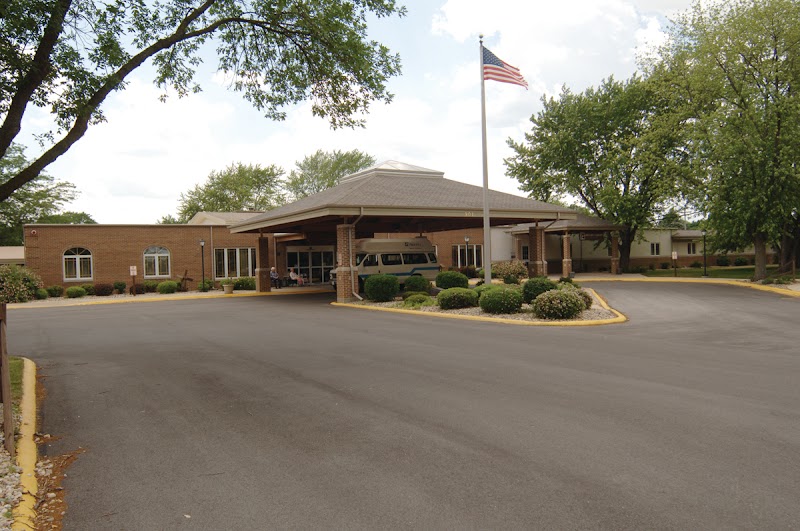

HERITAGE VILLAGE

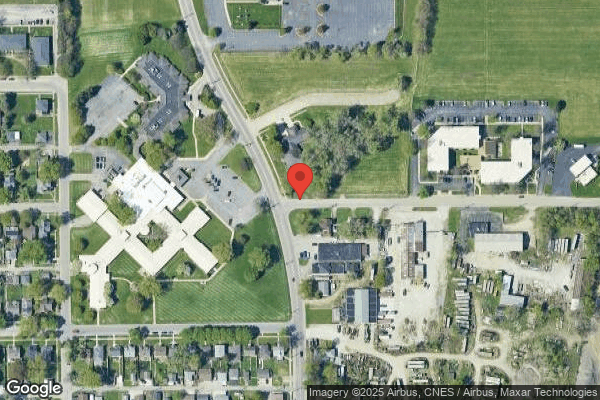
901 NORTH ENTRANCE AVENUE, KANKAKEE, IL 60901 (815) 939-4506
For profit - Limited Liability company 51 Beds ASCENSION LIVING Data: November 2025 1 Immediate Jeopardy citation
Trust Grade
13/100
#545 of 665 in IL
Last Inspection: May 2025

Inspected within the last 6 months. Data reflects current conditions.

Overview

Heritage Village in Kankakee, Illinois, has received a Trust Grade of F, indicating significant concerns about the quality of care provided, which is among the worst in the state. It ranks #545 out of 665 nursing homes in Illinois, placing it in the bottom half, and #5 out of 6 in Kankakee County, meaning there is only one local facility that performs worse. The situation appears to be worsening, with the number of reported issues increasing from 2 in 2024 to 6 in 2025. Staffing is a notable strength, with a turnover rate of 0%, well below the state average, suggesting stable staff who are familiar with the residents. However, the facility has incurred fines totaling $86,813, which is concerning and indicates ongoing compliance problems. Specific incidents of concern include a failure to initiate CPR for a resident, resulting in a potentially avoidable death, and a lack of timely communication regarding another resident's deteriorating condition, which also contributed to a fatal outcome. Overall, while there are some strengths in staffing stability, the serious deficiencies and high fines raise significant red flags for potential residents and their families.

Trust Score
F
13/100
In Illinois
#545/665
Bottom 19%
Safety Record
High Risk
Review needed
Inspections
Getting Worse
2 → 6 violations
Staff Stability
○ Average
Turnover data not reported for this facility.
Penalties
⚠ Watch
$86,813 in fines. Higher than 80% of Illinois facilities, suggesting repeated compliance issues.
Skilled Nurses
○ Average
RN staffing data not reported for this facility.
Violations
⚠ Watch
13 deficiencies on record. Higher than average. Multiple issues found across inspections.
★☆☆☆☆
1.0
Overall Rating
★☆☆☆☆
1.0
Staff Levels
★☆☆☆☆
1.0
Care Quality
★★★☆☆
3.0
Inspection Score
Stable
2024: 2 issues
2025: 6 issues

The Good

  • Full Sprinkler Coverage · Fire safety systems throughout facility
  • No fines on record

Facility shows strength in fire safety.

The Bad

1-Star Overall Rating

Below Illinois average (2.5)

Significant quality concerns identified by CMS

Federal Fines: $86,813

Well above median ($33,413)

Moderate penalties - review what triggered them

Chain: ASCENSION LIVING

Part of a multi-facility chain

Ask about local staffing decisions and management

The Ugly 13 deficiencies on record

1 life-threatening 2 actual harm
May 2025 5 deficiencies
CONCERN (D)

Potential for Harm - no one hurt, but risky conditions existed

Deficiency F0628 (Tag F0628)

Could have caused harm · This affected 1 resident

**NOTE- TERMS IN BRACKETS HAVE BEEN EDITED TO PROTECT CONFIDENTIALITY** Based on interview and record review, the facility failed to provide residents and/or their representatives written notification...

Read full inspector narrative →
**NOTE- TERMS IN BRACKETS HAVE BEEN EDITED TO PROTECT CONFIDENTIALITY** Based on interview and record review, the facility failed to provide residents and/or their representatives written notification of the reason for transfer to the hospital and failed to notify the ombudsman of the hospital transfer. This applies to 2 of 2 residents (R15 and R21) reviewed for discharge in a sample of 14. The findings include: 1. R15's Face Sheet showed R15 was admitted to the facility on [DATE]. R15 had multiple diagnoses which included cerebral infarction, aphasia, convulsions, occlusion and stenosis of right carotid artery, vascular dementia, and diabetes. R15's MDS (Minimum Data Set) dated 04/07/25 showed R15 had severe cognitive impairment. R15's Progress Note dated 01/27/25 at 8:23 PM, showed Approximately around noon, noted with change in mental status. Notified (Doctor), received order to send to ER (Emergency Room) for eval. R15 transferred to (Hospital) at approximately around 1:40 PM. Progress Note dated 02/03/25 at 11:57 PM, showed Assigned CNA (Certified Nursing Assistant) requested assistance in resident's room stating that resident was being verbally and physically aggressive with her. The CNA stated she told R15 that she needed to turn off his call light and R15 smacked her hand and pushed her. Writer spoke with (Doctor) and explained the situation with orders given to send resident to ER for further evaluation due to the physical and verbal aggression. Progress note dated 02/28/25 at 7:12 PM, showed Writer to resident's room at 3:00 PM, resident yelling for help. Writer observed resident speaking nonsensically. Stroke assessment performed, noted right side weakness. R15's EMR (Electronic Medical Record) contained no documentation of written notice for reason of transfer to the hospital provided to R15 and/or the representative. The EMR contained no documentation of notification of the ombudsman of the hospital transfers for February 2025. The facility was unable to provide documentation for written notification of the reason for transfers to the hospital and notification of the ombudsman for February 2025. 2. R21's Face Sheet showed R21 was admitted to the facility on [DATE]. R21 had multiple diagnoses which included encephalopathy, gait abnormalities, diabetes, depression, anxiety, and hypertensive heart disease. R21's MDS dated [DATE] showed R21 had moderate cognitive impairment. R21's Progress Note dated 03/07/25 at 7:50 AM, showed Called to resident's room by CNA. Resident pulled indwelling foley out. Noted with massive bleeding from his penis area, with blood clots. Progress Note dated 03/07/25 at 7:53 AM Wife and MD (Medical Doctor) notified with orders to send to (Hospital) ED (Emergency Department). R21's EMR contained no documentation of written notice for reason of transfer to the hospital provided to R21 and/or the representative. The facility was unable to provide documentation for written notification of the reason for transfers to the hospital. On 05/07/25 at 3:38 PM, V1 (Administrator) stated written notification of the reason for transfer to the hospital was not given to the residents and/or their representatives. V1 stated they were not aware that written notification should have been given. The ombudsman was not notified of the residents' transfers to the hospital for February 2025. The facility's Clinical Protocol: Transfer or Discharge Notice, last approved 06/2022 showed Policy Statement: Our community shall provide a resident and/or the resident's representative (sponsor) with a thirty (30) day written notice of an impending transfer or discharge. Exceptions to the 30-day requirement apply when the transfer or discharge is affected because of the following, in these cases, the notice is provided as soon as practicable and the notice to the ombudsman is sent when practicable. 1. The transfer or discharge is necessary for the resident's welfare and the resident's needs cannot be met in the community. 6. An immediate transfer or discharge is required by the resident's urgent medical needs.
CONCERN (D)

Potential for Harm - no one hurt, but risky conditions existed

Deficiency F0692 (Tag F0692)

Could have caused harm · This affected 1 resident

Based on observation, interview, and record review, the facility failed to implement dietician-recommended interventions for resident with significant weight loss. This applies to 1 resident (R13) rev...

Read full inspector narrative →
Based on observation, interview, and record review, the facility failed to implement dietician-recommended interventions for resident with significant weight loss. This applies to 1 resident (R13) reviewed for weight loss in a sample of 14 residents. The findings include: On 5/6/25 at 10:57 AM, R13 was asleep in bed with his mouth hanging open and his cheeks sunken in, appearing thin. R13's MDS (Minimum Data Set) dated 3/20/25 shows his cognition is severely impaired and he requires supervision with eating. R13's Nutrition note written on 5/6/25 by V12 (Dietician) states R13 has had a 14.5% weight loss in the last 6 months. V12 wrote R13 gets large portions, fortified pudding at lunch, and fortified ice cream with lunch and dinner. V12 noted that R13 has a pressure ulcer to his sacrum. V12 wrote that R13 is meeting majority of his nutrition needs with supplements and the rest of his nutrition is provided with meals. V12 wrote that R13's weight loss continues, despite multiple interventions. R13's weights documented in EHR (Electronic Health Record) as the following: 5/1/25- 141 pounds, down from 11/2/24- 165 pounds (14.55% in the last 6 months). On 5/8/25 at 12:34 PM, R13 was observed eating lunch in the facility dining room, sitting next to V11 (R13's wife). R13's lunch did not include a large portion, fortified pudding, or fortified ice cream. V11 said last she knew, R13 weighed right around 175 pounds. V11 said R13 did not get pudding or a fortified ice cream and R13's appetite fluctuates. R13 ate a slice of pie, about 25% of his sweet potatoes, 80% of his pea salad, and 20% of his BBQ pork. R13 did not eat any of his cornbread and he received regular sized portions of lunch items. Throughout lunch service, no staff were seen checking on R13 to see how much he had eaten, how his appetite was, or to encourage him to eat. At 12:57 PM, V11 unlocked R13's wheelchair and removed him from the dining room. Lunch had ended and R13 never received fortified pudding, a fortified ice cream, or a large portion. On 5/8/25 at 2:25 PM, V2 (Director of Nursing) said, if ordered, fortified pudding and fortified ice cream should be given by dietary staff. V2 said if dietician recommendations are not followed, there is a risk the resident will continue to lose weight. V2 said this is a concern because weight maintenance is important for preventing disease and illnesses and promoting wound healing. V2 said she knows R13 is supposed to be receiving double portions at mealtimes. On 5/8/25 at 2:42 PM, V6 (Food Service Director) said V12 (Dietician) emails V2 and V6 to let them know when she orders supplements for a resident. V6 said V12 (Dietician) will then put the recommendations directly into the menu system so the supplements/recommendations will print out on the resident's meal ticket for each meal. V6 said she then highlights on the meal ticket if it says double portion or fortified pudding. V6 said the kitchen staff just had a meeting about supplements in which she told the staff if any items are highlighted on the meal ticket, the resident must get those items. V6 said the server is responsible for giving the resident fortified pudding and fortified ice cream and the [NAME] is responsible for making sure the resident gets double, or large portions. V6 then provided surveyor with R13's meal ticket, which showed large portions with all meals and fortified pudding at lunch. V6 said residents with large portions ordered should get double scoops. V6 said V12 (Dietician) did not add fortified ice cream onto R13's meal ticket. V6 then spoke with V12 to verify and V12 told V6 that R13 is also supposed to be on fortified ice cream. When V6 was told R13 did not get fortified pudding, fortified ice cream, or large portion with lunch, V6 said she did not know what happened, but it is a concern that R13 didn't get the recommended supplements because he could lose more weight. V6 said weight maintenance is important for the resident's immune system, strength, and overall health. R13's Care Plan initiated on 10/6/22 states resident has a compromised nutritional status related to the diagnosis of weight loss, and interventions include provide supplements as ordered, monitor and document food intake at each meal, report any intake decline to physician, and provide diet as ordered. The facility's policy titled, Significant Weight Gain or Loss Policy last revised 2/24 states, Purpose: To ensure that insidious/significant weight gain or loss will be identified so that nutritional needs can be evaluated, and appropriate intervention provided. Responsibility: Licensed Nursing Personnel/Dietician/Dietary Manager. Guidelines: .2. Dietician/Nursing will determine significant weight changes: .c. gain or loss of 10% in the last six months. 3. Dietician will review these clients and document the change. 4. If recommendations are indicated, will be communicated to nursing to notify the provider of the significant weight changes and recommendation . The facility's policy titled, Weight Monitoring last revised 01/2023 states, Policy Statement: It is the policy . that appropriate nutritional care shall be provided to residents who have a significant weight change. A significant weight change is identified as a weight loss or gain of 5% in 30 days, 7.5% in 90 days, or 10% in 180 days. Policy Interpretation and Implementation: . E. The RD should make recommendations for nutritional interventions . RD recommendations should be reviewed and initiated by nursing associates .
CONCERN (D)

Potential for Harm - no one hurt, but risky conditions existed

Deficiency F0694 (Tag F0694)

Could have caused harm · This affected 1 resident

**NOTE- TERMS IN BRACKETS HAVE BEEN EDITED TO PROTECT CONFIDENTIALITY** Based on observation, interview, and record review the facility failed to follow the physician order to administer intravenous (...

Read full inspector narrative →
**NOTE- TERMS IN BRACKETS HAVE BEEN EDITED TO PROTECT CONFIDENTIALITY** Based on observation, interview, and record review the facility failed to follow the physician order to administer intravenous (IV) antibiotics. This applies to 1 of 1 resident reviewed (R225) for IV antibiotics in a sample of 14. The Findings include: R225 is an [AGE] year-old male admitted on [DATE] with an admitting diagnosis including infection and inflammatory reaction due to an indwelling urethral catheter. Record review on R225's Physician Order Sheet (POS) dated 5/6/25 indicates: Meropenem-Sodium Chloride intravenous solution reconstituted 1 gram in 50 milliliters (1gm/50ml). Use 1 gm IV every 8 hours for bacterial infection until 5/11/25 23:00. On 5/6/25 at 10:31 AM, R225 was observed in his bed with a 100 ml 0.9 NS reconstituted with 1-gram Meropenem infusing at 50 ml/hr. The infusion pump was programmed for Meropenem infusing at 50 ml/hr with only 50 ml as the volume to be infused. On 5/6/25 at 11:58 AM, V2 (Director of Nursing) stated, I am supposed to mix Meropenem 1 gram with 50 ml of 0.9 NS, but I didn't have 50 ml bag and that's why I mixed with a 100 ml bag After reconstituting 1 gm of Meropenem with 100 ml 0.9 NS, the resident is going to get only half the dose if I run it at 50 cc/hr for an hour. On 5/6/2025 at 11:58 AM, there was no documentation in R225's medical record that showed R225's Physician was notified that 50ml IV bags were not available and that 100ml would need to be infused for the full Meropenem dose, or if the 100ml with the full dose would require more time for the infusion, or if infusing 100ml over one hour was acceptable. The facility presented a policy on Administering Medications through Secondary IV tubing document (last approved 1/2024): Review physician order and confirm the 5 rights of medication (right resident, medication name, dose, route, rate). If no rate is ordered, calculate the rate according to dose, volume, and time ordered.
CONCERN (D)

Potential for Harm - no one hurt, but risky conditions existed

Infection Control (Tag F0880)

Could have caused harm · This affected 1 resident

**NOTE- TERMS IN BRACKETS HAVE BEEN EDITED TO PROTECT CONFIDENTIALITY** Based on observation, interview, and record review, the facility failed to follow Enhanced Barrier Precautions (EBP) during high...

Read full inspector narrative →
**NOTE- TERMS IN BRACKETS HAVE BEEN EDITED TO PROTECT CONFIDENTIALITY** Based on observation, interview, and record review, the facility failed to follow Enhanced Barrier Precautions (EBP) during high contact resident care activities and failed to perform hand hygiene during incontinent care. This applies to 3 of 3 residents (R6, R13, and R225) in a sample of 14. The findings include: 1. R6 is a [AGE] year-old female admitted on [DATE] with diagnoses including urinary tract infection and neuromuscular bladder dysfunction. On 5/6/25 at 10:39 AM, R6 was in her bed with an EBP sign on the entry door, requiring gloves and a gown to provide high-touch resident care activities. R5 was observed with an indwelling catheter bag on the floor with full of urine. On 5/6/25 at 10:40 AM, V5 (Certified Nursing Assistant/CNA) stated that she is not aware of the last time the bag was emptied, and it was supposed to be emptied every shift. V5 emptied 1600 milliliters (ml) of urine without wearing a gown and stated that the bag shouldn't be on the floor. 2. R225 is an [AGE] year-old male admitted on [DATE] with diagnoses including infection and inflammatory reaction due to an indwelling urethral catheter. On 05/06/25 10:35 AM, R225 was in his bed with an EBP sign at the entry door, requiring gloves and a gown when providing high-touch resident care activities. On 05/06/25 at 10:36 AM, observed V4 (Licensed Practical Nurse/LPN) touching the resident's linen and indwelling catheter tubing without wearing a gown. 05/08/25 10:38 PM V2 (Director of Nursing/DON) stated all of our staff are supposed to wear a gown and gloves when providing high touch resident care activities, including indwelling catheter care, for residents on EBP, and the indwelling catheter bag shouldn't be on the floor. The facility provided the Enhanced Barrier Precaution Guidelines dated 05/2024 document: 1. Enhanced Barrier Precautions (EBP) is an infection control intervention designed to reduce transmission of resistant organisms that employs targeted gown and glove use during high-contact resident care activities when contact precautions do not otherwise apply. 3. On 5/8/25 V14 (Wound Care Family Nurse Practitioner) and V13 (Registered Nurse) were observed providing incontinence care for R13 prior to performing wound care. V13 and V14 rolled R13 onto his right side. Then with gloved hands, V13 used a wipe to remove stool from R13's buttocks. After wiping away R13's stool, V13 did not change her gloves. V13 and V14 then switched sides of the resident so V14 could measure R13's sacral wound. When V13 arrived at the right side of R13's bed, she placed her left hand with the soiled glove on R13's left buttock and her soiled right gloved hand on R13's posterior thigh to hold R13 in place while V14 measured his wound. On 5/8/25 at 2:25 PM, V2 (DON) said after providing incontinence care and wiping away stool from a resident, the first thing the staff member should do is remove their gloves, wash their hands, and put on new gloves. V2 said the staff member should remove soiled gloves before touching a clean area of the resident for infection control purposes, to prevent cross contamination. The facility's policy titled, Hand Hygiene/Handwashing last revised 03/2023 states, Definition: Hand Hygiene means cleaning your hands by using either handwashing (washing hands with soap and water), antiseptic hand wash, or antiseptic hand rub .Guidelines: .Examples of When to Perform Hand Hygiene: . If hands will be moving from a contaminated body site to a clean body site during patient care .
CONCERN (F)

Potential for Harm - no one hurt, but risky conditions existed

Food Safety (Tag F0812)

Could have caused harm · This affected most or all residents

Based on observation, interview, and record review the facility failed to maintain the kitchen facility in a manner to prevent foodborne illness. This applies to 22 residents in the facility receiving...

Read full inspector narrative →
Based on observation, interview, and record review the facility failed to maintain the kitchen facility in a manner to prevent foodborne illness. This applies to 22 residents in the facility receiving dietary services. Findings include: On 05/06/25 at 10:30 AM, V6 (Dietary Manager) confirmed 22 residents in the facility receive food services from the kitchen. 1.) On 05/06/25 at 11:29 AM, V6 tested red sanitization bucket #3 at 500ppm (Parts Per Million). On 05/08/25 at 11:13 AM, V6 stated the red disinfecting bucket should be 200 to 400ppm. If the sanitizer level is too high could cause a chemical reaction to the skin. If it comes in contact with food, it may contaminate the food and cause illness. The facility policy Sanitizing Food Contact Surfaces dated 1/25 states the sanitizer solution must be at 200 ppm to 400 ppm. 2.) On 05/06/25 at 11:00 AM, the walk-in cooler contained a one-gallon bottle of barbeque sauce with no opened-on or use-by dates. A one-gallon bottle of barbeque sauce good thru 3/29/25. Hot dogs in a zippered bag good thru 4/23/25. A lump of grayish white meat in a silver facility metal pan, identified by V6 as turkey, had no contents label, opened on, or use by date. An opened one-gallon bottle of Balsamic vinaigrette without an opened on or use by date. A dented 6lb 6oz can of diced pears with a greenish gray furry substance growing on the can. A 6lb 12oz can of tapioca pudding with a greenish gray furry substance and white glaze-like substance on the can. Two factory sealed containers of rice pudding with a good-thru date of 4/8/25. Parmesan cheese in a zippered bag good-thru 4/24/25. Processed cheese block factory packaging half ripped off, with product open to air and did not have an opened on or use by date. American cheese in a zippered bag with a use by date of 5/1/25. Three 5lb bags of mozzarella good thru 3/17/25. A 1lb 14oz tub of basil pesto good thru 4/14/25. 3.) On 05/06/25 at 10:30 AM, the dry storage contained a zippered bag of white flakes identified by V6 as coconut flakes did not have a contents label opened on or use by date. Cherry pie filling 20 lbs. (pounds) no opened on or use by date. Quinoa 8lbs no opened on or use by dates. Two dented 6 lbs. 9oz. (ounce) cans of ground tomatoes. A dented 6lb. 10oz can of mandarin oranges. A dented 6lb 15oz can of kidney beans. A dented 6.6lb can of diced pears. A facility bin of penne pasta good thru date of 5/5/25 Egg noodles good thru 5/5/25. A 5lb bag of pepitas open to air. A box of gelatin agent 1lb ¼ oz open to air. Sliced strawberry topping 7lb 6oz that had been accessed. Manufacturer's label read to refrigerate after opening. Maraschino Cherries 4.5lbs did not have an opened-on or use-by date. The manufactures label read to refrigerate after opening. A 5lb bag of graham cracker crumbs that were accessed, did not have an opened-on or use-by date. A 25lb bag of panko Japanese breadcrumbs was open to air and had a good thru date of 1/10/25. Shelving with emergency food contained a 6.56lb can of pear halves good thru 4/1/23. A dented 3lb 2 oz can of chicken noodle soup good thru 4/1/25. Two 3lb 2oz cans of chicken noodle soup good thru 4/1/25. On 05/08/25 11:13 AM, V6 (Dietary Manager) stated, dented cans that arrive at the facility dented are rejected because we can't verify if it was packaged incorrectly or not properly sealed- they may have botulism. If we dent it the cans, we are ok to use them because we know we dropped it and there is nothing wrong with it. If the edges are dented even if we dropped the can, we would not use the can of food. Food should be labeled with an opened on and use by date, so we know when to pull it off the shelf. There is a safety risk using food that is outdated it could be spoiled and cause illness. Food items should be labeled with the contents in case someone has an allergy we don't want to serve it to them. Food items that should be refrigerated should not be stored in the dry storage area because it could start to grow bacteria. Food items should be securely sealed so no contaminates get inside- contaminates could cause illness. Outdated food items could be spoiled and cause residents to become sick. V6 stated I don't know how those cans got in the refrigerator- the stuff growing on top looked like mold. We wouldn't want it growing in the refrigerator because it could cause illness. The Facility policy Receiving (dated 1/25) showed to refuse dented cans. The facility did not provide a policy for dented cans stored in the facility. The facility policy Food Supply and Storage (dated 1/25) showed all food, non- food items, and supplies that will be used in food preparation shall be stored in such a manner as to prevent contamination to maintain the safety and wholesomeness of the food for human consumption. Foods past the use-by, sell by, best-by, or enjoy by date should be discarded. Cover, label, and date unused portions and open packages. Discard food past the use-by or expiration date. The facility Refrigerated Storage Life of Foods chart (dated January 2024) shows fruit purees, fillings and sauces are good for one month after opening and must be refrigerated. 4.) On 05/06/25 at 11:24 AM, the walk-in freezer was observed with V8 (Server). Meat patties in a clear plastic bag had no contents label, opened-on, or use-by date. Corned beef labeled good thru 3/21/25. Food in a clear bag identified by V8 as cut-up sausage was without a label to identify contents or use-by date. Food identified by V8 as potato wedges was in a clear bag without a label to identify contents or use-by date. 5.) On 05/06/25 at 11:35 AM, the reach in coolers were observed with V8. Reach in cooler #1 contained an unlabeled plastic bag with creamy white substance in a facility container identified by V8 as a multi-use container of yogurt. The container had no label to identify contents or any dates. 6.) On 05/06/25 at 11:40 AM, The kitchen shelving was observed with V6 (Dietary Manager.) A zippered bag of white powder identified by V6 as pureed bread had no label to identify contents, opened-on or use-by dates. A 4.5lb bag of pureed bread had no opened-on or use-by dates. On 05/07/25 at 12:10 PM, V9 (Cook) tested the food holding temperatures. Between temperature testing the dressing and ground turkey. V9 used the same small probe wipe. V9 then tested the gravy then the sliced turkey without wiping the probe in between. On 05/08/25 at 11:13 AM, V6 stated usually we use a new wipe for testing each food item. Not using a fresh wipe to temperature each food item could cause a cross contamination and negatively affect persons with food allergies. The facility policy Meal Quality and Temperature (dated 1/25) showed thermometers are cleaned and sanitized before use, between food items, and after use with approved sanitizer wipes or solutions.
Jan 2025 1 deficiency
CONCERN (D) 📢 Someone Reported This

A family member, employee, or ombudsman was alarmed enough to file a formal complaint

Potential for Harm - no one hurt, but risky conditions existed

Investigate Abuse (Tag F0610)

Could have caused harm · This affected 1 resident

**NOTE- TERMS IN BRACKETS HAVE BEEN EDITED TO PROTECT CONFIDENTIALITY** Based on interview and record review, the facility failed to investigate an allegation of potential abuse and report it the Stat...

Read full inspector narrative →
**NOTE- TERMS IN BRACKETS HAVE BEEN EDITED TO PROTECT CONFIDENTIALITY** Based on interview and record review, the facility failed to investigate an allegation of potential abuse and report it the State Agency within the timeframes. This applies to 1 of 1 resident (R1) reviewed for abuse. The findings include: On 12/13/24 at 2:35 PM, the facility submitted State Agency Serious Injury Incident and Communicable Disease Report (Initial Reportable) that documented the following: On 05/20/24, a resident's daughter reported witnessing staff being rough with ADL (Activities of Daily Living) Care, which was noted in our grievance log. The resident has since been discharged from the community. Upon discovery, investigation was started immediately. On 01/02/25 at 1:00 PM the Service and Recovery Form date completed 05/20/24 was reviewed. The form documented [R1's] daughter reports witnessing staff being rough with mother and other patients. Specific examples- dressing, getting out of bed. [R1's] daughter is concerned the rough handling is why mom's wound is bleeding today. More on back: [R1's] daughter reported one staff she is concerned with was [V10] (CNA/Certified Nursing Assistant) but said there have been others. [R1's] daughter also reports some staff have been very gentle. On 01/07/25 at 9:00 AM R1's progress notes were reviewed. The progress notes documented 05/20/24 at 9:55 AM Nurse was informed by staff that blood was leaking from resident's wheelchair. Writer inspected resident's body while sitting in wheelchair, noted copious amounts of dark red blood coming from wound of left hip. Resident placed in bed for wound cleansing. Pressure dressing applied. 05/20/24 at 10:15 AM Wound continues with excessive bleeding, uncontrolled. Another pressure dressing applied. 05/20/24 at 10:18 AM Doctor called, left message with on-call. 05/20/24 at 10:25 AM Doctor returned call with orders to send to ED (Emergency Department) for eval of wounds. 05/20/24 at 10:32 AM (Ambulance) called with ETA (Estimated Time of Arrival) of 20-30 minutes. 05/20/24 at 10:34 AM Daughter called and informed of resident's condition and pending transfer. 05/20/24 at 10:37 AM (Ambulance) arrived with three attendants to transfer resident to (Hospital) ED via stretcher. 05/20/24 at 10:38 AM (Doctor) attending MD (Medical Doctor) given report regarding patient. R1 was admitted to the facility on [DATE] with multiple diagnoses which included metabolic encephalopathy, dementia, acute embolism, hypertension, and cognitive communication. R1's progress note dated 05/11/24 at 12:30 PM documented Writer received resident from (Hospital) arrived via stretcher accompanied by 2 EMT's (Emergency Medical Technician). Complete body assessment performed. Several bruising on skin related to fall at home. Two wounds present on right hip and left hip covered with (dressing). Lives alone discovered by family lying on floor. Wound left hip debridement in hospital. On 01/07/25 at 10:30 AM a State Agency Serious Injury Incident and Communicable Disease Report (Follow-up Reportable) was reviewed. The Investigation Summary dated 12/17/24 documented the following: The grievance was given immediate, full attention to the bleeding wound and the DON (Director of Nursing) investigated. The same report documented it was determined that the new blood thinners caused spontaneous bleeding from the wound. The following written statements were attached to the report. V2 (DON) wrote I recall the grievance only from re-reading it. I do not recall when it was presented to me. I was off on May 21, 2024. The SSD (Social Services Director) signed it on 05/28/24 so I am assuming that is when I wrote in my part about the wound that was bleeding. I did not respond to the complaint of a CNA being rough. My concerns were focused on the wound. A written statement dated 12/11/24 documented Admin spoke with [former CNA V10] to receive a statement regarding the grievance of rough care back on 05/20/24. [V10] does not recall the incident. The initial and final reportables showed that the facility initiated the rough handling allegation investigation on 12/11/24, seven months after the incident. On 01/02/25 at 9:37 AM V7 (Former Administrator) stated She was on PTO (Paid Time Off) on 05/20/24 when the incident of alleged rough handling had taken place. V7 stated she did not report the incident to State Agency because she was not made aware of the incident until December 2024 when the consultant came to the facility to audit. V7 stated the allegation was not investigated in May. On 01/02/25 at 2:25 PM V2 (DON) stated on 05/20/24 she was not aware of R1 being rough handled. Stated she was only notified by the floor nurse that R1 was having bleeding from her wound, and she was being sent out to the hospital for evaluation. V2 stated she did not speak with R1's daughter that day (05/20/24). V2 stated R1's bleeding was being caused by the wound debridement on its own. The resident was taking Eliquis. After the resident was sent out for evaluation, she was admitted to the hospital but did not return to the facility. I only zoned into the bleeding wound; I did not address the rough handling. V2 stated on 05/28/24 she signed off on the grievance regarding the bleeding wound. I am not sure if the issue of rough handling was told to the abuse coordinator. The abuse coordinator was the administrator. The social services department handles the grievances. When there is an issue, it is their responsibility to notify the proper department manager. That is the normal process. All issues are handled from there. V2 stated V10 was not terminated, she left voluntarily for a position with better pay and closer to home. V2 stated V10 was not sent home pending investigation. I am not aware of an investigation regarding the rough handling. On 01/02/25 at 3:30 PM V1 (Administrator) stated he does not have any knowledge of the alleged rough handling because he was not working at the facility at the time. V1 stated he started as the administrator on 12/18/24. When I started, the investigation was completed. From what I read and heard; I see no evidence of any rough handling occurred. If I got a report of a resident being rough handled, I will follow the company and state guidelines. V1 stated he is the abuse coordinator for the facility. The facility's Abuse Investigation and Reporting Policy last approved 12/2024 showed: Policy statement: All reports of resident abuse, neglect, exploitation, misappropriation of resident property, mistreatment, electronic mail, social media, videotaping, photographing, and other imaging of resident, and/or injuries of unknown source ('abuse) shall be promptly reported to local, state and federal agencies (as defined by current regulations) and thoroughly investigated by community management. Conclusions of investigations will also be reported, as defined by the (Facility) Abuse Prevention policy. Policy Interpretation and Implementation: Role of the Administrator or designee: D. The administrator or designee will suspend immediately any employee who has been accused of resident abuse, pending the outcome of the investigation. E. The administrator or designee will monitor for any further potential abuse, neglect, exploitation, or mistreatment is prevented while the investigation is in progress. Reporting: A. All alleged violations involving abuse, neglect, exploitation, or mistreatment, including injuries of an unknown source and misappropriation of property will be reported to the Administrator or designee and to the following other officials or agencies: 1. The State licensing/certification agency responsible for surveying/licensing the community. E. The Administrator or his/her designee will provide the appropriate agencies or individuals listed above with a written report of the findings of the investigation within five (5) working days of the occurrence of the incident .
May 2024 1 deficiency
CONCERN (D) 📢 Someone Reported This

A family member, employee, or ombudsman was alarmed enough to file a formal complaint

Potential for Harm - no one hurt, but risky conditions existed

Notification of Changes (Tag F0580)

Could have caused harm · This affected 1 resident

**NOTE- TERMS IN BRACKETS HAVE BEEN EDITED TO PROTECT CONFIDENTIALITY** Based on observation, interview, and record review the facility failed to notify the physician of the inability to complete orde...

Read full inspector narrative →
**NOTE- TERMS IN BRACKETS HAVE BEEN EDITED TO PROTECT CONFIDENTIALITY** Based on observation, interview, and record review the facility failed to notify the physician of the inability to complete ordered testing timely. This applies to 1 of 4 residents (R1) reviewed for physician ordered testing in a sample of 4. Findings include: R1's Face Sheet documents R1 was admitted to the facility on [DATE] after a peri-prosthetic right hip fracture. On 5/17/2024 at 11:50 AM, R1 was sitting in a wheelchair with swelling to his right lower leg. R1 stated he fractured his right hip at home and since then his right lower leg has been swollen. R1 denied any recent increases or changes to the swelling or any additional symptoms. R1 stated he has been taking medications to prevent blood clots since he was admitted . R1's Orthopedic Treatment Note dated 5/9/2024 documents an order for a stat ultrasound of his right leg to rule out a deep vein thrombosis (DVT). R1's Right Lower Venous Ultrasound Report dated 5/13/2024 documents completion of the ultrasound and diagnosed R1 with a DVT involving the right mid superficial femoral vein. On 5/17/2024 at 12:05 PM, V2 (Director of Nursing) stated she was notified on 5/10/2024 by V4 (Nurse) that R1 needed an ultrasound. V2 stated she called their contracted radiology, and they were unable to get it completed on 5/10/2024 but were going to try to complete the testing over the weekend (5/11-5/12/2024). V2 stated the contract company did not come to complete the ultrasound until 5/13/2024. V2 stated the facility policy for stat orders is to complete as soon as possible and confirmed the timeframe in which R1's ultrasound was completed would not have met stat criteria. V2 stated she should have contacted the physician to determine next steps. R1's Brief Interview of Mental Status dated 5/11/2024 documents R1 as cognitively intact. R1's Electronic Health Record did not show that the physician was notified regarding the delay in completing the ordered stat ultrasound. The policy Clinical Protocol: Guidelines for Notifying Health Care Providers of Clinical Problems documents the guidelines are to ensure that medical care problems are communicated to the health care provider in an efficient and effective manner. These guidelines document that when the need arises the facility is to notify a health care provider regarding a change in medical conditions. The charge nurse or supervisor should contact the attending physician any time they feel a clinical situation requires immediate discussion and management.
Apr 2024 1 deficiency
CONCERN (F)

Potential for Harm - no one hurt, but risky conditions existed

Food Safety (Tag F0812)

Could have caused harm · This affected most or all residents

Based on observation, interview, and record review, the facility failed to properly label and date refrigerated items and remove expired food items in the kitchen. This applies to all 16 residents tha...

Read full inspector narrative →
Based on observation, interview, and record review, the facility failed to properly label and date refrigerated items and remove expired food items in the kitchen. This applies to all 16 residents that receive oral nutrition and foods prepared in the facility kitchen. Findings include: The facility's Long-Term Care Facility Application for Medicare and Medicaid (Form CMS-Centers for Medicare and Medicaid Services-671) dated 4/23/24 documents that the total census was 17 residents. On 4/23/24 at 11:14 AM, V3 (Dietary Manager) said there is 1 resident that does not eat from the facility kitchen. On 4/23/24 (starting at 10:01 AM), the facility kitchen was toured in the presence of V3 (Dietary Manager), and the following was found: In the walk-in cooler: 1. Quarter of a large processed turkey breast, opened 4/12/24, expiration date 4/18/24 (expired 11 days earlier). 2. Thawed ground beef sitting on a tray with juices leaking out of the bottom, wrapped in plastic wrap with no label or date. 3. 1.25 lbs. (pounds) Swiss cheese opened 3/13/24, not sealed with a good through date of 3/19/24. Expired. 4. 24-ounce provolone cheese with a received-on date of 12/29/23 on box, no expiration date on package. 5. Medium silver bin of approximately 20 hot dogs, not in original bag, undated. 6. Half of a large processed ham, opened, expiration date 4/20/24. Expired. 7. Medium silver bin labeled tomatoes with a good through date of 4/10/24. Expired. 8. 26 half pint lactose free low-fat milks with expiration date of 4/21/24. Expired. 9. 3 hard-boiled eggs with expiration date 4/22/24. Expired. 10. Opened 5 lb. bag of shredded mozzarella cheese, undated. 11. Opened 5 lb. bag of shredded cheddar cheese, undated. On 4/23/24 at 10:30 AM, V3 (Dietary Manager) said it is the cook's responsibility to go through the foods to check for expiration dates and throw away expired items, it is part of their daily checklist. On 4/24/24 at 10:39 AM, V3 said expired items should be thrown away right away. V3 said all food items should be labeled at least with a received-on date and when the food item is opened it should be labeled with an opened date and an expiration date. V3 said the risk with not throwing away expired items is that the food might accidentally be fed to the residents and make them sick. The facility's policy titled, Food and Supply Storage last revised 1/24 states Policies: All food, non-food items and supplies used in food preparation shall be stored in such a manner as to prevent contamination to maintain the safety and wholesomeness of the food for human consumption . Procedures: .Cover, label and date unused portions and open packages .Products are good through the close of business on the date noted on the label .Discard food past the use-by or expiration date .
Nov 2023 3 deficiencies 1 IJ (1 facility-wide)
CRITICAL (L) 📢 Someone Reported This

A family member, employee, or ombudsman was alarmed enough to file a formal complaint

Immediate Jeopardy (IJ) - the most serious Medicare violation

Deficiency F0678 (Tag F0678)

Someone could have died · This affected most or all residents

⚠️ Facility-wide issue

**NOTE- TERMS IN BRACKETS HAVE BEEN EDITED TO PROTECT CONFIDENTIALITY** Based on interview and record review the facility failed to initiate CPR (Cardiopulmonary Resuscitation) for a resident (R2) wit...

Read full inspector narrative →
**NOTE- TERMS IN BRACKETS HAVE BEEN EDITED TO PROTECT CONFIDENTIALITY** Based on interview and record review the facility failed to initiate CPR (Cardiopulmonary Resuscitation) for a resident (R2) with full code status. The facility also failed to have a system in place to ensure that Advance Directives were accurate and complete (R1, R5, R11, R12). These failures resulted in R2 not receiving CPR as desired; and R1 being sent to the hospital, intubated, and later compassionately extubated at the hospital. These failures have the potential to affect all 22 residents residing in the facility. Findings include: These failures resulted in an Immediate Jeopardy. The Immediate Jeopardy was noted to begin on [DATE] when the facility failed to initiate CPR for R2. V1 (Administrator) was notified of the Immediate Jeopardy on [DATE] at 11:45 AM. The surveyor confirmed by observation, record review, and interview that the immediacy was removed on [DATE]. Although the immediacy was removed on [DATE], the facility remains out of compliance at Severity Level II because additional time is needed to evaluate the implementation and effectiveness of the plan of correction, including the in-servicing of staff, the completion/accuracy of all resident Advance Directives, review of policies and Quality Assurance monitoring. The [DATE] Facility Data Sheet showed 22 residents reside at the facility. 1. R2's Face Sheet dated [DATE] identified R2 as a [AGE] year-old female admitted to the facility on [DATE] with diagnoses to include Rhabdomyolysis and DVT (Deep Vein Thrombosis). The Department of Public Health Practitioner Ordered for Life Sustaining Treatment Form (POLST), completed [DATE], documents R2 as a full code. R2's Nursing Notes dated [DATE], completed by V6 (Agency Registered Nurse), document, Received report from night nurse at 7:35 AM that resident expired in bed at 7:10 AM. Verified death at 7:45 AM, no respirations, no pulse, no BP (blood pressure). Notified MD (physician) of resident death that resident expired at 7:50 AM. On [DATE] at 12:48 PM, V8 (Certified Nursing Assistant) stated around 6 AM on [DATE] she observed R2 in her bed without any concerns, asleep and breathing. V8 stated sometime shortly after 7 AM she went back into R2's room and she noted R2 was not breathing. V8 stated R2 was newly admitted , and she was not aware of her code status, so she immediately alerted V7 (Agency Licensed Practical Nurse), also requesting V7 to check the code status. V8 stated V7 responded to the room, assessed R2, but did not start cardiopulmonary resuscitation (CPR) so she assumed R2 was a DNR. On [DATE] at 11:52 AM, V6 (Agency Nurse) stated, when she arrived to begin her shift on [DATE], V7 (Agency Nurse) reported to her that R2 had expired at 7:10 AM. On [DATE] 10:59 AM, V3 (Medical Director) stated he had reviewed R2's history and confirmed R2 was a [AGE] year-old with no apparent prior significant medical history, a full code status, and was living at home independently prior to her [DATE] hospitalization for DVT (Deep Vein Thrombosis) and Rhabdomyolysis. V3 stated he was aware an agency nurse failed to code R2 when she was found expired in bed on [DATE] and he expects them to initiate CPR if they are a full code status as she was. The facility's code blue policy dated 01/2023 documents, The Procedure: Cardiopulmonary Resuscitation (CPR) and Code Blue policy documents if an individual is found unresponsive and not breathing the staff member who is certified in CPR shall initiate CPR. The chances of surviving sudden cardiac arrest may be increased if CPR is initiated immediately upon collapse. The facility Serious Injury and Communicable Disease Report dated [DATE] documents at 7AM R2 was found unresponsive and not breathing. The investigation determined R2 was a full code status and CPR was not administered. 2. R1's Face Sheet dated [DATE] documents R1 as a [AGE] year-old admitted to the facility on this date at 9:42 PM with diagnoses to include herpes viral disease. R1's emergency contact is listed as V9 (R1's Daughter). R1's [DATE] Physician Ordered Sheet shows R1 with a Do Not Resuscitate Order (DNR/do no attempt CPR) dated [DATE]. On [DATE] at 9:20 AM, V4 (Registered Nurse Manager) stated on [DATE] she provided R1 medications at approximately 8:30 AM and R1 was talking and had no identified change. Approximately an hour later R1 was not responding but was breathing and had a pulse; 911 was called. During this event V4 was unable to locate R1's POLST form but there was a physician order in the electronic medical record (EMR) indicating R1 was a DNR. V4 stated without the POLST form the resident is always a full code and considered without advanced directives so the DNR order was not honored. V4 contacted R1's family who stated R1 was a DNR. A final Serious Injury and Communicable Disease Form dated [DATE] documents R1 was found unresponsive but was breathing and had a pulse. This form documents a POLST form could not be located and V9 (R1's Power of Attorney/POA) was contacted and confirmed R1's code status as no intubation or CPR; R1 was transferred to the hospital due to not having a POLST form. R1 was intubated at the hospital where she expired later that day. The facility investigation identified the POLST form had not been completed after admission on [DATE]. R1's Initial Emergency Department (ED) History and Physical dated [DATE] at 10:22 AM documents R1 with respiratory arrest and arriving in the emergency room biting at her intubation tube which was placed by emergency medical personnel prior to arriving to the ED. This report shows R1 was found with bradycardia (slow heart rate) and liver shock. R1's ED Triage Notes [DATE] at 10:13 AM show R1 arrived in the ED in respiratory distress, breathing over the intubation tube and fighting the placement of the tube. R1's Social Service/Case Manager Note, dated [DATE] at 12:27 PM, completed by V10 (Hospital Social Worker), documents V9 as R1's POA. This note documents V9 reporting to V10 on the phone, a DNR had been done previously at another hospital, but it was unsigned by the physician (invalid). V9 stated R1 was not supposed to be intubated. V10 made V9 aware that R1 was currently intubated, and V9 stated no treatment was to be discontinued until V9 arrived at the hospital to assess R1. V9 provided V10 with direction to include R1 was not to receive CPR and was to be provided comfort treatment only. V10 initiated the DNR per V9's wishes, had the physician sign and the advanced directive was implemented after the phone conversation. The ED Note [DATE] at 3:40 PM documents V9 agreed R1 could be extubated under comfort measures. The ED Notes Addendum [DATE] at 4:47 PM documents R1 expired at 4:38 PM. On [DATE] at 10:27 AM, V5 (Social Service Director) states upon admission the admitting nurse is to clarify advance directive status and V5 then additionally meets with resident and/or family to verify and discuss their advanced directive wishes. V5 stated R1 arrived at the facility on [DATE] late in the evening and V5 was busy on 10/26-27/2023 and unable to find time to meet with R1 and/or family to review R1's advanced directive status. V5 stated it is facility policy that all residents are a full code until a completed, signed POLST form is received. On [DATE] 10:45 AM, V5 further stated, advanced directives are completed within the first 24 hours except weekends, in which V5 then follows-up on the following Monday. V5 stated she is responsible to follow up with the resident's physician to obtain a signature to activate the POLST form. V5 verified on weekends no staff are available at the facility to finalize advanced directives. V5 stated she educates the resident and family at the time of completion of the POLST that it will not be in effect until the physician signs. [DATE] at 10:59 AM, V3 (Medical Director) stated he was aware R1 was admitted to the facility on [DATE] and her advanced directives were not obtained timely after her admission. V3 stated on [DATE] R1 was noted unresponsive, and the facility did not have her POLST form showing her as a DNR. V3 stated when the facility called him, he instructed them to send R1 to the emergency department (ED) and R1 was intubated. V3 stated he spoke with R1's family at the hospital and they were upset she had been intubated. V3 stated after further discussions in the ED, R1's family decided to extubate her where she passed away shortly after. V3 confirmed that the facility should have advanced directives put in place timely so R1's wishes (DNR) could have been addressed at the time she had a change in condition. V3 stated, Yes, she would have had a more peaceful death had she remained at the facility as a DNR status. V3 confirmed if her advanced directives had been in place R1 would not have experienced the trauma from insertion of the intubation tube, hospital transfer, and unnecessary treatments. 3. R11's Face Sheet dated [DATE] documents R11 admitted on this date. On [DATE] at 11:20 AM R11 stated, Today is the first time they (advanced directives) were discussed. R11's POLST form dated and signed by V3 on [DATE] shows R11 requests no intubation or mechanical ventilation. R11's BIMS dated [DATE] documents R11 as cognitively intact. 4. R5's Face Sheet dated [DATE] documents R5 admitted on this date. On [DATE] at 11:30 AM, R5 stated she has a POLST form completed through a lawyer years ago and requesting no intubation. R5's POLST form dated [DATE] shows R5 requests all treatment, including intubation. R5's BIMS dated [DATE] documents R5 as cognitively intact. 5. R12's Face Sheet dated [DATE] documents R12 admitted on this date. R12's POLST form signed on [DATE] shows R12 as a DNR. R12's November Physician Orders List shows R12's code status as full code dated [DATE]. [DATE] at 11:52 AM, V6 (Agency Registered Nurse) stated, It is not correct, I will fix that. R12's November Physician Orders form documents a new ordered dated [DATE] for R12 to be a DNR. The policy Advanced Directives dated 3/2023 states it is the policy of the facility to inform residents/residents representatives about Advanced Directives to assist those who wish to complete advanced directives, honor choices identified in the advanced directives and to maintain records of advanced directives. Upon admission, the resident will be provided with information concerning the right to refuse or accept treatment and to formulate an advanced directive if he or she chooses to do so. If the resident is incapacitated and unable to receive information about his or her right to formulate an advanced directive, the information may be provided to the resident's representative. Prior to or upon admission of a resident the Social Services Director or designees will inquire about the existence of any written advance directives. Advanced directives shall be displayed prominently in the medical record. If the resident indicates that he or she has not established advanced directives, the facility will offer assistance in establishing advanced directives. The plan of care for each resident will be consistent with his or her documented treatment preferences and/or advance directive. A resident will not be treated against his or her own wishes the Director of Nursing Services or designee will notify the Attending Physician of advanced directives so that appropriate orders can be documented in the resident's medial record. The Immediate Jeopardy that began on [DATE] and was removed on [DATE] when the facility took the following actions to remove the immediacy: 1. Corrective action for residents noted to have been affected by the deficient practice. a) R2 expired [DATE] after staff failed to initiate CPR when the resident was found unresponsive, and vital signs absent. No further resident follow up required at this time. b) R1 was transferred to the hospital with no POLST which resulted in intubation requiring compassionate extubation. 2. How will the facility identify other residents having the potential to be affected by the same deficient practice? a) Residents currently residing in the community on [DATE] have the potential to be affected by the identified practice. b) A review of all current resident's medical records was completed by DON/designee on [DATE] to ensure that a current and valid POLST was on the resident's file and coincides with the provider order and care plan updated. Any incomplete POLST forms will be updated and completed by the social services director or designee and provider orders updated by the DON or designee by [DATE]. c) Mock Code drills were performed on all shifts on 11/10, 11/11, 11/15 and [DATE]. Education was provided during drills to associates. 3. The measures the facility will take or systems the facility will alter to ensure that the problem will be corrected and will not recur. a) AdHoc QAPI meeting held by the interdisciplinary team on [DATE] and this plan of correction was developed and implemented. b) The Medical Director was notified by the Executive Director on [DATE] and the plan of correction was reviewed and approved. c) All direct care licensed nurses, all agency nurses and CNAs will be re-educated by the Director of Nursing or designee by [DATE] or prior to working the next scheduled shift on Do Not Resuscitate Order, POLST forms, and Cardiopulmonary Resuscitation and Protected Code Blue. d) Executive Director notified staffing agency of the incident on [DATE]. e) Interdisciplinary team has reviewed policies and procedures Do Not Resuscitate Order, POLST forms, and Cardiopulmonary Resuscitation and Protected Code Blue and is in compliance with CMS regulation F Tag 678. f) The nurse on duty will verify the presence of advance directives or the resident's wishes with regard to CPR, upon admission. If the resident's wishes are different than the admission orders, or if the admission orders do not address the resident's code status and the resident does not want to receive CPR, the admitting nurse will document the resident's wishes in the medical record and contact the physician to obtain the order. A verbal declination of CPR by a resident, or if applicable a resident's representative, should be witnessed by two staff members and documented. While the physician's order is pending, staff will honor the documented verbal wishes of the resident or the resident's representative, regarding CPR. g) Social Services Director or designee has been educated on the expectation to follow up and complete POLST forms within 72 hours of admission that coordinate with advance directive orders. h) Reviews of POLST, physician orders and care plans will be completed by the DON or designee weekly at Resident at Risk for all admissions and readmissions. Monthly reviews will be completed by the Executive Director or designee. i) Any nursing staff receiving any changes in provider's orders r/t change in CPR status will notify the Social Service Director to update the POLST form. 4. Quality Assurance Plans to monitor facility compliance to make sure that corrections are achieved and permanent. a) Monthly reviews of POLST forms to ensure any changes to advanced directives or new admission are completed and initiated in a timely manner will be completed by the Executive Director or designee and reported at QAPI. b) The DON or designee will interview 3 nurses per week to ensure they are able to verbalize the expectations on how to respond when finding a resident unresponsive and what to do when a change of condition was observed. c) The Director of Nursing, or designee, will complete 2 mock code drills weekly with all direct care staff on varying shifts for three months. d) A summary report of findings will be provided to the QAPI committee for review. The QAPI committee will review findings and trends monthly and will reevaluate if further monitoring is indicated.
SERIOUS (G) 📢 Someone Reported This

A family member, employee, or ombudsman was alarmed enough to file a formal complaint

Actual Harm - a resident was hurt due to facility failures

Notification of Changes (Tag F0580)

A resident was harmed · This affected 1 resident

**NOTE- TERMS IN BRACKETS HAVE BEEN EDITED TO PROTECT CONFIDENTIALITY** Based on interview and record review the facility failed to notify the physician of a resident's change of condition. This appli...

Read full inspector narrative →
**NOTE- TERMS IN BRACKETS HAVE BEEN EDITED TO PROTECT CONFIDENTIALITY** Based on interview and record review the facility failed to notify the physician of a resident's change of condition. This applies to 1 of 12 residents (R2) reviewed for advanced directives in a sample of 14. This failure resulted in a potentially avoidable death when R2's change in condition was not addressed and R2 expired unexpectedly. Findings include: R2's Face Sheet dated [DATE] identified R2 as a [AGE] year-old admitted to the facility on [DATE] with diagnoses to include Rhabdomyolysis and DVT (Deep Vein Thrombosis). On [DATE] at 12:50 PM V12 (Certified Nursing Assistant/CNA) stated around 8:20 PM [DATE] R2 was moaning and groaning like she was in pain and was breathing abnormal when she was moved. V12 stated she couldn't stand as she could the previously when V12 cared for her and V7 (Agency Licensed Practical Nurse) was informed that something was wrong. On [DATE] at 12:33 PM V4 (Registered Nurse Manager) stated a voicemail was left for V2 (Director of Nursing) by V7 on [DATE] at 8:25 PM. V4 stated she is covering while V2 is on vacation, therefore, V2 forwarded the voicemail to V4. V4 replayed the voicemail for the surveyor and the message heard included .(R2's) breathing was not stable .I do not know what to do V4 stated she called V7 at 8:35 PM and instructed V7 to contact V3 (Medical Director) for further instructions to address R2's shortness of breath. V4 stated she became aware the next morning V7 did not contact V3 as instructed. On [DATE] at 11:52 AM V6 (Agency Registered Nurse) stated, when she arrived to begin her shift on [DATE] at approximately 7:35 AM, V7 reported to her that R2 had expired at 7:10 AM. V6 stated V7 also reported around 8:30 PM on [DATE] R2 was short of breath, and she provided R2 a pain pill which seemed to help. On [DATE] V3 (Medical Director) stated he had reviewed R2's history and confirmed R2 was [AGE] years old with no apparent prior significant medical history, a full code status, and was living at home independently prior to her [DATE] hospitalization for DVT and Rhabdomyolysis. V3 stated the night before R2 passed, she was having difficulty breathing and the agency nurse was instructed by a facility nurse manager to call him, and the agency nurse did not. V3 stated, Unfortunately they didn't call me. I would have sent her to ED (Emergency Department). They would have completed a cardiac work-up and evaluated her symptoms. She had a DVT in the leg and it could have been a pulmonary embolus .One thing I do know is they should have called me. V3 confirmed R2's death was potentially avoidable, further stating, Yes, calling me to report her breathing the night before as instructed .could have potential changed the outcome. My job is to take care of my patients. They did not give me the opportunity to care for her. I cannot say she would have lived, but ED would have evaluated her and if they found something, treated it . R2's [DATE] EMAR (Administration Record) documents R2 received oxycodone-acetaminophen 10-325, 1 tablet, [DATE] at 8:48 PM. The policy Change in Resident's Condition or Status dated 2/2022 documents the facility shall promptly notify the residents healthcare provider of changes in the resident's medical condition or change in status.
SERIOUS (G) 📢 Someone Reported This

A family member, employee, or ombudsman was alarmed enough to file a formal complaint

Actual Harm - a resident was hurt due to facility failures

Free from Abuse/Neglect (Tag F0600)

A resident was harmed · This affected 1 resident

**NOTE- TERMS IN BRACKETS HAVE BEEN EDITED TO PROTECT CONFIDENTIALITY** Based on interview and record review the facility failed to keep a resident free from neglect when they failed to notify the phy...

Read full inspector narrative →
**NOTE- TERMS IN BRACKETS HAVE BEEN EDITED TO PROTECT CONFIDENTIALITY** Based on interview and record review the facility failed to keep a resident free from neglect when they failed to notify the physician of a change in condition, provide medications as ordered, and initiate cardiopulmonary resuscitation. This applies to 1 of 12 residents (R2) reviewed for advanced directives in a sample of 14. This failure resulted in a potentially avoidable death when R2's change in condition was not addressed. R2 was later observed unresponsive and resuscitation and/or emergency interventions were not initiated. Findings include: R2's Face Sheet dated [DATE] identified R2 as a [AGE] year-old admitted to the facility on [DATE] with diagnoses to include Rhabdomyolysis and DVT (Deep Vein Thrombosis). The Department of Public Health Practitioner Ordered for Life Sustaining Treatment Form (POLST), completed [DATE], documents R2 as a full code. R2's Hospital Discharge Instructions [DATE] documents R2 to receive Eliquis 10 milligrams twice daily for 7 days. R2's [DATE] EMAR (Administration Record) documents R2 did not receive Eliquis 10 milligrams on [DATE] at 4 PM and [DATE] at 8 AM and 4 PM. On [DATE] at 9:45 AM V2 (Director of Nurses) confirmed R2 did not receive her Eliquis as ordered for the treatment of her DVT and should have. V2 stated the first dose she received after admission was the morning of [DATE]. On [DATE] at 12:50 PM V12 (Certified Nursing Assistant) stated around 8:20 PM [DATE] R2 was moaning and groaning like she was in pain and was breathing abnormal when she was moved. V12 stated she couldn't stand as she could previously when V12 cared for her and V7 (Agency Licensed Practical Nurse) was informed that something was wrong. On [DATE] at 12:33 PM V4 (Registered Nurse Manager) stated a voicemail was left for V2 (Director of Nursing) by V7 on [DATE] at 8:25 PM. V4 stated she is covering while V2 is on vacation, therefore, V2 forwarded the voicemail to V4. V4 replayed the voicemail for the surveyor and the message heard included .(R2's) breathing was not stable .I do not know what to do V4 stated she called V7 at 8:35 PM and instructed V7 to contact V3 (Medical Director) for further instructions to address R2's shortness of breath. V4 stated she became aware the next morning V7 did not contact V3 as instructed. On [DATE] at 12:48 PM V8 (Certified Nursing Assistant) stated on [DATE], shortly after 7 AM, she went into R2's room and noted R2 was not breathing and immediately alerted V7. V8 stated V7 responded to the room, assessed R2, but did not start cardiopulmonary resuscitation (CPR). On [DATE] at 11:52 AM V6 (Agency Registered Nurse) stated, when she arrived to begin her shift on [DATE] at approximately 7:35 AM, V7 reported to her that R2 had expired at 7:10 AM. V6 stated she assessed R2 who was cold and was past resuscitation efforts. V6 stated V7 also reported around 8:30 PM on [DATE] R2 was short of breath, and she provided R2 a pain pill which seemed to help. R2's Nursing Notes dated [DATE], completed by V6, document, Received report from night nurse at 7:35 AM that resident expired in bed at 7:10 AM. Verified death at 7:45 AM, no respirations, no pulse, no BP (blood pressure). Notified MD (physician) of resident death that resident expired at 7:50 AM. On [DATE] V3 (Medical Director) stated he had reviewed R2's history and confirmed R2 was [AGE] years old with no apparent prior significant medical history, a full code status, and was living at home independently prior to her [DATE] hospitalization for DVT and Rhabdomyolysis. V3 stated the night before R2 passed, she was having difficulty breathing and the agency nurse was instructed by a facility nurse manager to call him, and the agency nurse did not. V3 stated, Unfortunately they didn't call me. I would have sent her to ED (Emergency Department). They would have completed a cardiac work-up and evaluated her symptoms. She had a DVT in the leg and it could have been a pulmonary embolus. Did the nurse really give her Eliquis? If they did, it was likely not a clot. Who knows? One thing I do know is they should have called me. V3 stated he was aware an agency nurse then failed to initiate CPR when R2 was found expired in bed on [DATE]. V3 stated he expects the nurses to initiate CPR if a resident is a full code status. V3 confirmed R2's death was potentially avoidable, further stating, Yes, calling me to report her breathing the night before as instructed and implementing CPR could have potentially changed the outcome. My job is to take care of my patients. They did not give me the opportunity to care for her. I cannot say she would have lived, but ED would have evaluated her and if they found something, treated it . R2's [DATE] EMAR (Administration Record) documents R2 received oxycodone-acetaminophen 10-325, 1 tablet, [DATE] at 8:48 PM. The facility's code blue policy dated 01/2023 documents, The Procedure: Cardiopulmonary Resuscitation (CPR) and Code Blue policy documents if an individual is found unresponsive and not breathing the staff member who is certified in CPR shall initiate CPR. The chances of surviving sudden cardiac arrest may be increased if CPR is initiated immediately upon collapse. The policy Change in Resident's Condition or Status dated 2/2022 documents the facility shall promptly notify the residents healthcare provider of changes in the resident's medical condition or change in status. The facility Abuse Prevention policy dated 6/2020 documents the failure of the community, its employees or service providers to provide goods and services to a resident that are necessary to avoid physical harm, mental anguish or emotional distress. The community's goal is to achieve and maintain an abuse free environment. As part of the resident abuse prevention program, the administration will provide a safe resident environment and protect the residents from abuse by anyone including, but not limited to community associates, other residents, consultants, volunteers, associates from other agencies, family members, legal representatives, friends, visitors, or any other individual.
Mar 2023 2 deficiencies
CONCERN (D)

Potential for Harm - no one hurt, but risky conditions existed

Incontinence Care (Tag F0690)

Could have caused harm · This affected 1 resident

Based on observation, interview, and record review, the facility failed to provide catheter care to prevent potential urinary tract infection (UTI) by having the catheter bag touching the floor, not m...

Read full inspector narrative →
Based on observation, interview, and record review, the facility failed to provide catheter care to prevent potential urinary tract infection (UTI) by having the catheter bag touching the floor, not maintaining the catheter bag below bladder level, and not maintaining a closed system of the indwelling catheter. This applies to 1 of 2 residents (R18) reviewed for indwelling catheter care in a sample of 14. Findings include: On 03/28/23 at 10:36 AM, R18 was sitting in his bedroom chair with an indwelling catheter bag touching the floor and the tubing was noted with cloudy urine and sediment. On 3/28/23 at 10:40 AM, R18 stated that his catheter was leaking. On 3/28/23 at 10:57 AM, V3 (Registered Nurse/RN) stated, R18's incontinent brief is wet with urine, and the catheter is leaking. It was leaking yesterday, but the night nurse reported to me that there was no leak. I called the physician (MD) to relay R18's urine sensitivity result that came out on 3/27/23 at 4:00 AM. We tried to reach him, but MD never answered our call. Finally, I could reach him today (3/28/23) after 8:00 AM. On 3/28/23 at 1:44 PM, V2 (Director of Nursing/DON) stated, They should notify MD as soon as possible (ASAP) when they found out the indwelling catheter was leaking. They should have called the medical director if the attending was not answering. I will educate them on that issue. The urine sensitivity final result should have been relayed to the physician ASAP to start antibiotics to manage the UTI. Indwelling catheter bags shouldn't be on the floor. On 3/28/23 at 11:02 AM, V3 stated that MD ordered Cipro 500 milligrams (mg) twice daily x 7 days for UTI. On 3/28/23 at 10:50 AM, V5 (Certified Nursing Assistant) placed R18's urinary catheter bag on the bed while V3 tried changing the catheter tubing. On 3/30/23 at 11:00 AM, V2 (DON) stated, The indwelling catheter bag should be maintained below bladder level to prevent backflow. The facility presented a urinary catheter care policy (last approved on 01/2022) document: The urinary drainage bag must always be held or positioned lower than the bladder to prevent the urine in the tubing and drainage bag from flowing back into the urinary bladder. Be sure the catheter tubing and drainage bag are kept off the floor.
CONCERN (F)

Potential for Harm - no one hurt, but risky conditions existed

Food Safety (Tag F0812)

Could have caused harm · This affected most or all residents

Based on observation, interview, and record review, the facility failed to store food items in a sanitary condition. This affects all 22 residents consuming food from the kitchen. Findings include: On...

Read full inspector narrative →
Based on observation, interview, and record review, the facility failed to store food items in a sanitary condition. This affects all 22 residents consuming food from the kitchen. Findings include: On 3/28/23 at 10:04 AM, during the initial tour with V4 (Dietary Manager), two corn grit packages (24 ounces each) showed an expiration date of 3/21/23. On 3/28/23 at 10:10 AM, the kitchen walk-in cooler had a five-pound sour cream container that expired on 3/26/23. On 3/28/23 at 10:15 AM, the dietary freezer was noted with ice build-up on a big opened cardboard box having 12 bags of 3-pound Okra inside. On 3/30/23 at 9:44 AM, V4 stated, I am the one who is supposed to check on expired food items to discard them. I missed a couple of food items that expired. I called the company to fix the condensation issue with our freezer. Food items shouldn't have ice built upon the box. On 3/29/23 at 11:16 AM, V2 (Director of Nursing) stated that all 22 residents were consuming food from the kitchen. The facility presented Food and Supply Storage policy revised on 1/21 document, Foods past the use by, sell by, best by, or enjoy by date should be discarded.
Understanding Severity Codes (click to expand)
Life-Threatening (Immediate Jeopardy)
J - Isolated K - Pattern L - Widespread
Actual Harm
G - Isolated H - Pattern I - Widespread
Potential for Harm
D - Isolated E - Pattern F - Widespread
No Harm (Minor)
A - Isolated B - Pattern C - Widespread

Questions to Ask on Your Visit

  • "What changes have you made since the serious inspection findings?"
  • "Can I speak with families of current residents?"
  • "What's your RN coverage like on weekends and overnight?"

Our Honest Assessment

Strengths
  • • Licensed and certified facility. Meets minimum state requirements.
Concerns
  • • Multiple safety concerns identified: 1 life-threatening violation(s), 2 harm violation(s), $86,813 in fines. Review inspection reports carefully.
  • • 13 deficiencies on record, including 1 critical (life-threatening) violation. These warrant careful review before choosing this facility.
  • • $86,813 in fines. Extremely high, among the most fined facilities in Illinois. Major compliance failures.
  • • Grade F (13/100). Below average facility with significant concerns.
Bottom line: Trust Score of 13/100 indicates significant concerns. Thoroughly evaluate alternatives.

About This Facility

What is Heritage Village's CMS Rating?

CMS assigns HERITAGE VILLAGE an overall rating of 1 out of 5 stars, which is considered much below average nationally. Within Illinois, this rating places the facility higher than 0% of the state's 100 nursing homes. A rating at this level reflects concerns identified through health inspections, staffing assessments, or quality measures that families should carefully consider.

How is Heritage Village Staffed?

CMS rates HERITAGE VILLAGE's staffing level at 1 out of 5 stars, which is much below average compared to other nursing homes.

What Have Inspectors Found at Heritage Village?

State health inspectors documented 13 deficiencies at HERITAGE VILLAGE during 2023 to 2025. These included: 1 Immediate Jeopardy (the most serious level, indicating potential for serious harm or death), 2 that caused actual resident harm, and 10 with potential for harm. Immediate Jeopardy findings are rare and represent the most serious regulatory concerns. They require immediate corrective action.

Who Owns and Operates Heritage Village?

HERITAGE VILLAGE is owned by a for-profit company. For-profit facilities operate as businesses with obligations to shareholders or private owners. The facility is operated by ASCENSION LIVING, a chain that manages multiple nursing homes. With 51 certified beds and approximately 22 residents (about 43% occupancy), it is a smaller facility located in KANKAKEE, Illinois.

How Does Heritage Village Compare to Other Illinois Nursing Homes?

Compared to the 100 nursing homes in Illinois, HERITAGE VILLAGE's overall rating (1 stars) is below the state average of 2.5 and health inspection rating (3 stars) is at the national benchmark.

What Should Families Ask When Visiting Heritage Village?

Based on this facility's data, families visiting should ask: "What changes have been made since the serious inspection findings, and how are you preventing similar issues?" "Can you walk me through typical staffing levels on day, evening, and night shifts?" "Can I visit during a mealtime to observe dining assistance and food quality?" "How do you handle medical emergencies, and what is your hospital transfer rate?" These questions are particularly relevant given the facility's Immediate Jeopardy citations and the below-average staffing rating.

Is Heritage Village Safe?

Based on CMS inspection data, HERITAGE VILLAGE has documented safety concerns. Inspectors have issued 1 Immediate Jeopardy citation (the most serious violation level indicating risk of serious injury or death). The facility has a 1-star overall rating and ranks #100 of 100 nursing homes in Illinois. Families considering this facility should ask detailed questions about what corrective actions have been taken since these incidents.

Do Nurses at Heritage Village Stick Around?

HERITAGE VILLAGE has not reported staff turnover data to CMS. Staff turnover matters because consistent caregivers learn residents' individual needs, medications, and preferences. When staff frequently change, this institutional knowledge is lost. Families should ask the facility directly about their staff retention rates and average employee tenure.

Was Heritage Village Ever Fined?

HERITAGE VILLAGE has been fined $86,813 across 1 penalty action. This is above the Illinois average of $33,947. Fines in this range indicate compliance issues significant enough for CMS to impose meaningful financial consequences. Common causes include delayed correction of deficiencies, repeat violations, or care failures affecting resident safety. Families should ask facility leadership what changes have been made since these penalties.

Is Heritage Village on Any Federal Watch List?

HERITAGE VILLAGE is not on any federal watch list. The most significant is the Special Focus Facility (SFF) program, which identifies the bottom 1% of nursing homes nationally based on persistent, serious quality problems. Not being on this list means the facility has avoided the pattern of deficiencies that triggers enhanced federal oversight. This is a positive indicator, though families should still review the facility's inspection history directly.