
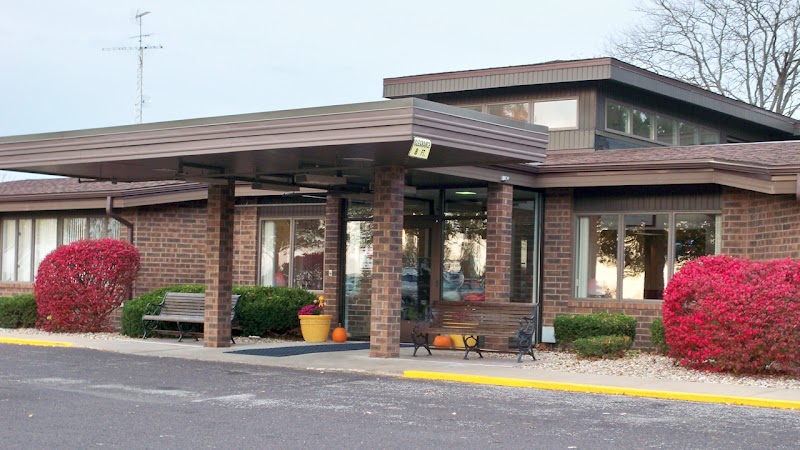
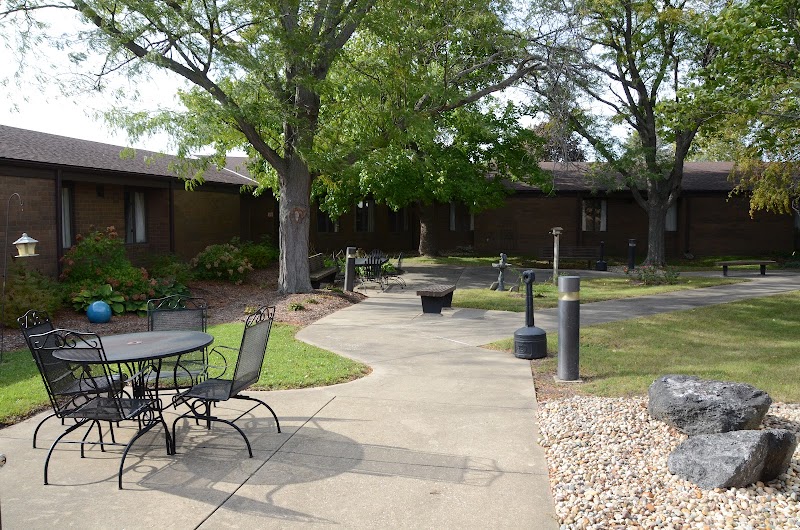
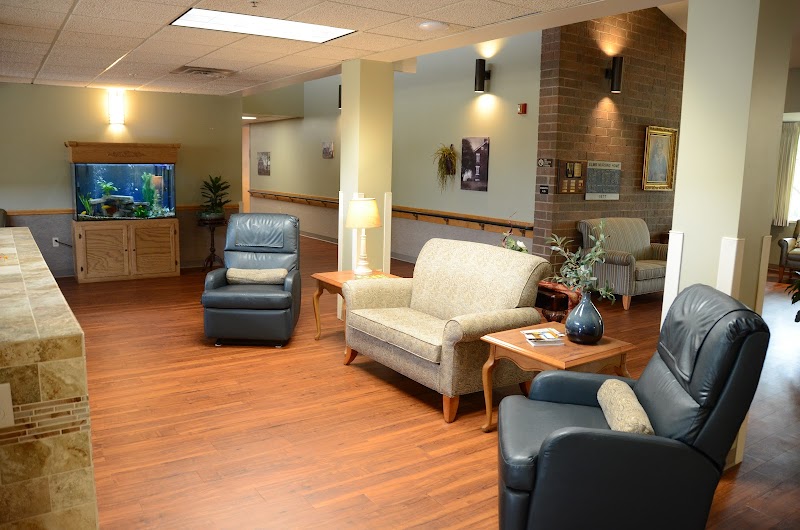
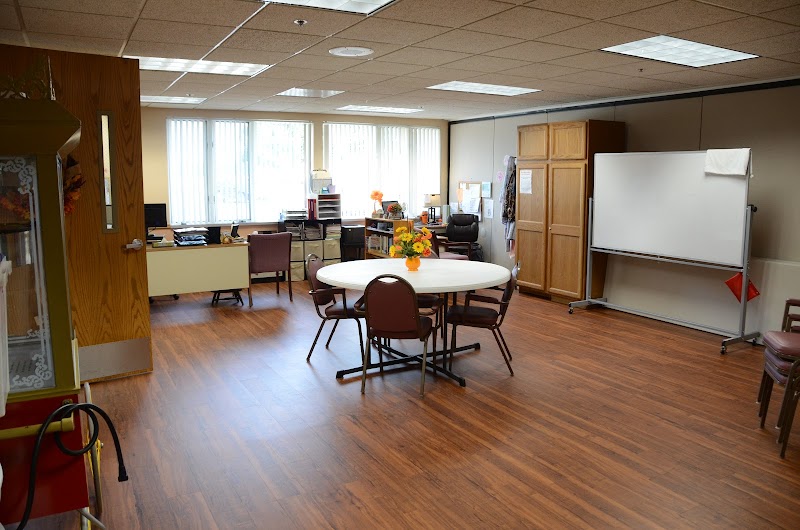
ELMS, THE

1212 MADELYN AVENUE, MACOMB, IL 61455 (309) 837-5482
Government - County 98 Beds Independent Data: November 2025
Trust Grade
83/100
#31 of 665 in IL
Last Inspection: March 2025

Within standard 12-15 month inspection cycle. Federal law requires annual inspections.

Overview

Elms, The in Macomb, Illinois has a Trust Grade of B+, which means it is above average and recommended for families considering care options. It ranks #31 out of 665 facilities in Illinois, placing it in the top half of the state, and #1 out of 4 in McDonough County, indicating it is the best choice locally. The facility is improving, with issues decreasing from 9 in 2024 to only 2 in 2025. Staffing is a strong point, rated 5 out of 5 stars with a turnover rate of 27%, well below the state average, suggesting that staff are experienced and familiar with the residents. However, there have been specific concerns, including a serious incident where a resident developed a painful pressure ulcer due to a lack of proper care planning and interventions, and failures in staff training related to food safety and infection control procedures. Overall, while Elms has excellent staffing and is improving, families should be aware of these weaknesses in care practices.

Trust Score
B+
83/100
In Illinois
#31/665
Top 4%
Safety Record
Moderate
Needs review
Inspections
Getting Better
9 → 2 violations
Staff Stability
✓ Good
27% annual turnover. Excellent stability, 21 points below Illinois's 48% average. Staff who stay learn residents' needs.
Penalties
✓ Good
No fines on record. Clean compliance history, better than most Illinois facilities.
Skilled Nurses
✓ Good
Each resident gets 67 minutes of Registered Nurse (RN) attention daily — more than 97% of Illinois nursing homes. RNs are the most trained staff who catch health problems before they become serious.
Violations
⚠ Watch
14 deficiencies on record. Higher than average. Multiple issues found across inspections.
★★★★★
5.0
Overall Rating
★★★★★
5.0
Staff Levels
★★☆☆☆
2.0
Care Quality
★★★★★
5.0
Inspection Score
Stable
2024: 9 issues
2025: 2 issues

The Good

  • 5-Star Staffing Rating · Excellent nurse staffing levels
  • Low Staff Turnover (27%) · Staff stability means consistent care
  • Full Sprinkler Coverage · Fire safety systems throughout facility
  • No fines on record
  • Staff turnover is low (27%)

    21 points below Illinois average of 48%

Facility shows strength in staffing levels, staff retention, fire safety.

The Bad

No Significant Concerns Identified

This facility shows no red flags. Among Illinois's 100 nursing homes, only 1% achieve this.

The Ugly 14 deficiencies on record

1 actual harm
Mar 2025 2 deficiencies
CONCERN (D)

Potential for Harm - no one hurt, but risky conditions existed

Medication Errors (Tag F0758)

Could have caused harm · This affected 1 resident

2. The Electronic Medical Record for R30 documents the following diagnoses for R30 as: Unspecified Dementia with other Behavioral Disturbance, Type 2 Diabetes, Anxiety Disorders, Affective Mood Disord...

Read full inspector narrative →
2. The Electronic Medical Record for R30 documents the following diagnoses for R30 as: Unspecified Dementia with other Behavioral Disturbance, Type 2 Diabetes, Anxiety Disorders, Affective Mood Disorder, Primary Insomnia, and cognitive Communication Deficit. The current Order Summary for R30 documents a Physician Order, dated 5/6/24, for Quetiapine (antipsychotic) 25 mg (milligrams) twice daily for Dementia with Behavioral Disturbance. The MAR (Medication Administration Record) for R30, dated 3/1/25 through 3/31/25, documents R30 has received Quetiapine 25 mg twice daily. This MAR includes a generalized listing of potential behaviors, however, does not include targeted behaviors for R30. The current Care Plan for R30 does not include targeting behaviors or clinical indication for R30 to receive Quetiapine. The Psychiatry Note for R30, dated 2/27/25, documents, Psychiatric History: Diagnosed Mental Illness: anxiety, insomnia, nicotine dependence, and dementia. Reports she was not aware she had ever been diagnosed with any mental health disorders. Patient denies previous mental health related hospitalizations. Patient denies previously followed mental health group. Patient denies failed psychotropic trials. Patient denies adverse reactions to psychotropic medications. Based on observation, interview, and record review, the facility failed to identify an appropriate indication for use of an antipsychotic medication, and failed to identify target behaviors for two residents (R30, R40) with a diagnosis of Dementia of five residents reviewed for unnecessary medications in the sample of 40. Findings include: Facility Policy/Psychotropic Drug Policy, dated 2/2018, documents: Resident's placed on Anti-psychotic medication will have target symptoms tracked every shift and non-pharmacological interventions tracked for effectiveness every shift by nursing staff in behavioral notes in (electronic medical record). Facility Policy/Anti-psychotic Medication Use, dated/revised 2022, documents: Residents will not receive medications that are not clinically indicated to treat a specific condition. Residents will only receive anti-psychotic medications when necessary to treat specific conditions for which they are indicated and effective. The attending physician and facility staff will identify acute psychiatric episodes, and will differentiate them from enduring psychiatric conditions. Antipsychotic medications shall generally be used only for the following conditions/diagnoses as documented in the record, consistent with the definition(s) in the Diagnostic and Statistical Manual of Mental Disorders: Schizophrenia Schizoaffective Disorder Schizophreniform Disorder Delusional Disorder Mood Disorders (Bipolar, Depression with Psychotic Features, and treatment refractory Major Depression) Psychosis in the absence of Dementia Medical Illnesses with psychotic Symptoms and/or treatment-related psychosis or mania (e.g. high dose steroids) Tourette's Disorder Huntington's Disease, Hiccups Nausea and vomiting associated with cancer or chemotherapy. Diagnoses alone do not warrant the use of anti-psychotic medication. In addition to the above criteria, antipsychotic medications will generally only be considered if the following conditions are also met: The behavioral symptoms present a danger to the resident or others; and --the symptoms are identified as being due to mania or psychosis (such as auditory, visual, or other hallucinations; delusions, paranoia or grandiosity); or --behavioral interventions have been attempted and included in the plan of care, except in an emergency. For enduring psychiatric conditions, antipsychotic medications will not be used unless behavioral symptoms are: not due to a medical condition or problem that can expected to improve or resolve as the underlying condition is treated; and persistent or likely to reoccur without continued treatment; and not sufficiently relieved by non-pharmacological interventions; and not due to environmental stressors that can be addressed to improve the psychotic symptoms or maintain safety; and not due to psychological stressors or anxiety stemming from misunderstanding related to his or her cognitive impairment that can be expected to improve or resolve as the situation is addressed. Antipsychotic medications will not be used if the only symptoms are one or more of the following: Wandering, Poor self care, Restlessness, Impaired Memory, Mild Anxiety, Insomnia, Inattention or indifference to surroundings, Sadness or crying alone that is not related to depression or other psychotic disorders, Fidgeting, Nervousness or Uncooperativeness. 1. On 3/25/24 at 10:20am, R40 was in bed, was social and appropriate. On 3/26/25 at 12:30pm, R40 was in bed sleeping. Current Physician Order Report indicates R40 has diagnoses that include Unspecified Moderate Dementia with Mood Disturbance, Unspecified Dementia with Behavioral Disturbance, Major Recurrent/Moderate Depressive Disorder and Primary Insomnia. Order Report indicates R40 receives Risperdal (antipsychotic) 0.5mg (milligrams) at bedtime related to Major Depressive Disorder (date initiated 12/20/24 and Risperdal 0.25mg daily related to Unspecified Dementia with Behavioral Disturbance. Psychoactive Medication Informed Consent Form, dated 4/18/24, indicates, Psychotropic Medication prescribed: Risperdal (no dosage documented) for Diagnosis of BPSD (Behavioral and Psychological Symptoms of Dementia). Form did not include the type of psychotropic medication (antipsychotic) being ordered. Specific condition(s) being treated include .: was left blank on the form. Psychiatry Note, dated 1/17/25 and 2/27/25, both indicate R40 receives Risperdal for Agitation related to Dementia. Note indicates R40 continues to have occasional episodes of verbal agitation and No symptoms of depression. Note also indicates no symptoms of psychosis or mania observed/reported. and no symptoms of auditory or visual hallucinations. Note, dated 1/17/25, indicates despite occasional episodes of verbal agitation, no specific episodes or behaviors have been charted thus far this month. Current MAR (Medication Administration Record) indicates to monitor for the following behaviors: Restlessness, agitation, hitting, increase in complaints, biting, kicking, spitting, cussing, racial slurs, elopement, stealing, delusions, hallucinations, psychosis, aggression, refusing care. No documented behaviors of any type, by R40, were noted to have occurred March 1 - March 26, 2025. February 2025 MAR indicates R40 had behavior on 2/11/25. MAR does not include a description of the behavior. MAR indicates when a behavior occurs - a progress note should be documented to describe the behavior in detail. Progress Note dated 2/11/25 at 7:34pm indicates Was a behavior observed? Yes. No description of the behavior was included in the note. January 2025 MAR indicates R40 had behavior on 1/19/25 and 1/24/25. MAR does not include a description of the behavior(s). Progress Note, dated 1/19/25 at 1:01pm, indicates, Yes, a behavior was observed. (R40) was cussing at staff because he requested noogies nicotine pouches. He just had some (earlier) and it is not time for him to have more. Current Care Plan indicates R40 takes an anti-psychotic for Dementia with BPSD/Mood/Behaviors/Disturbances (date initiated 4/19/24). Care Plan also indicates R40 uses psychotropic medications related to behavioral or psychological symptoms of Dementia and Risperdal added on 4/18/24 per (physician). Care Plan does not identify target behaviors or justification for use of an antipsychotic medication. On 3/27/25 at 1:35pm, V3, ADON (Assistant Director of Nursing) stated the behaviors listed on the MAR are not specific to R40, and R40 does not exhibit most of those behaviors. V3 stated the care plan should include target behaviors specific to R40. V3 stated the only behaviors she is aware of for R40 are often mimics other residents and can become agitated related to receiving his nicotine pouches-- Never physical. V3 stated the diagnosis should be consistent throughout the medical record.
CONCERN (E)

Potential for Harm - no one hurt, but risky conditions existed

Infection Control (Tag F0880)

Could have caused harm · This affected multiple residents

Based on observation, interview, and record review, the Facility failed to ensure contact precautions were maintained for one resident (R7) with a known MDRO (Multidrug-resistant organism). This failu...

Read full inspector narrative →
Based on observation, interview, and record review, the Facility failed to ensure contact precautions were maintained for one resident (R7) with a known MDRO (Multidrug-resistant organism). This failure had the potential to affect all 14 residents (R1, R6, R7, R8, R12, R14, R18, R32, R35, R48, R54, R60, R65 and R66) with assistancebeing provided by the same CNAs (Certified Nursing Assitants), and failed to perform hand hygiene/don gloves according to standards of practice while administering medications for two residents (R64 and R66) of seven residents reviewed for infection control in a total sample of 40. Findings Include: The Facility's undated Isolation-Categories of Transmission-Based Precautions Policy documents, Transmission-based precautions are initiated when a resident develops signs and symptoms of a transmissible infection; arrives for admission with symptoms of an infection; or has a laboratory confirmed infection; and is at risk of transmitting the infection to other residents. The Facility's Isolation-Categories of Transmission-Base Precautions policy documents, Contact precautions are implemented for residents known or suspected to be infected with microorganisms that can be transmitted by direct contact with the resident or indirect contact with environmental surfaces or resident-care items in the resident's environment. Contact precautions are also used in situations when a resident is experiencing wound drainage, fecal incontinence or diarrhea, or other discharges from the body that cannot be contained and suggest an increased potential for extensive environmental contamination and risk of transmission of a pathogen, even before a specific organism has been identified. Staff and visitors wear gloves (clean, non-sterile) when entering the room. While caring for the resident, staff will change gloves after having contact with infective material; gloves are removed, and hand hygiene performed before leaving the room; Staff and visitors wear a disposable gown upon entering the room and remove before leaving the room and avoid touching potentially contaminated surfaces with clothing after gown is removed. 1. On 3/25/25 at 9:30 AM, R6 and R7 were roommates. R6 and R7 were sitting side by side in their wheelchairs in the middle of the room speaking to each other. On the door outside of the room there was a sign that said, Enhanced Barrier Precautions. R6's Physician Order Sheet, dated March 2025, documents, Enhanced Barrier Precautions related to wounds. R7's Physician Order Sheet, dated March 2025, documents, Contact Precautions related to ESBL (Extended Spectrum Beta-Lactamase) in the urine. R7's Urinalysis with Culture and Sensitivity, dated 3/17/25, documents ESBL: Positive. R7's Physician Order Sheet, dated March 2025, documents an order dated 3/17/25 for an antibiotic Nitfrofurantoin 100 mg (milligrams) twice daily for ten days for ESBL in the urine. R7's MDS (Minimum Data Set), dated 1/23/25, documents R7 is frequently incontinent of urine. Throughout the day on 3/25/25, CNAs (Certified Nurse Aids) were noted to be walking in and out of R6 and R7's room for various different reasons with no PPE (Personal Protective Equipment) on. On 3/25/25 at 11:30 AM, V5 (Registered Nurse) stated she thought R6 was in Enhanced Barrier Precautions for wounds and, I don't believe (R7) has any (precautions in place.) On 3/25/25 at 1:30 PM, V6 (Certified Nurse Aid) stated both R6 and R7 were in Enhanced Barrier Precautions. V6 reported she wears a gown and gloves when giving cares for R6 and R7, but does not wear any PPE upon entering the room. V6 confirmed both R6 and R7 are incontinent of urine. On 3/26/25 at 10:00 AM, V4 (Registered Nurse/Infection Preventionist) stated, It got missed somehow that (R7) had an active infection of ESBL. (R6) and (R7) should not have been put in the same room. Contact Precautions would require (R7) to have her own room. On 3/25/25 at 1:30 PM, V6, CNA, stated the CNAs that are responsible for providing assistance to the room that R6 and R7 occupy would also be responsible for providing assistance throughout the day to the rooms that are occupied by R1, R6, R7, R8, R12, R14, R18, R32, R35, R48, R54, R60, R65 and R66. 2. On 03/26/25, at 8:20 AM, V5/Registered Nurse, without hand sanitizing/donning gloves, reached into R66's medicine cup, removed a pill capsule-Fluoxetine 10 mg/milligrams capsule x's 3 capsules for a total dose of 30 mg, twisted the capsules apart, and emptied the capsule contents in a cup of applesauce; then administered the medication to R66. On 3/26/25, at 8:30 AM, V5 confirmed, I should have worn gloves and probably should have hand sanitized prior to removing/pulling apart the capsules and dumping them into the applesauce. On 3/26/25, at 8:35 AM, V2/Director of Nursing confirmed V5 should have hand sanitized and worn gloves when touching R66's medication capsules and pulling them apart. On 03/27/25, at 8:05 AM, V7/Licensed Practical Nurse-LPN, without hand sanitation/donning gloves, opened an acetaminophen 325 mg bottle, poured 4 tablets into the cap, held two tablets down with her fingers, dumped the other two tablets in R64's medicine cup, and then dumped the two tablets V7 held with her fingers back into the container. On 3/27/25, at 8:30 AM, V7 confirmed V7 should have performed hand sanitation and worn gloves before touching R64's medication.
Apr 2024 8 deficiencies 1 Harm
SERIOUS (G)

Actual Harm - a resident was hurt due to facility failures

Pressure Ulcer Prevention (Tag F0686)

A resident was harmed · This affected 1 resident

**NOTE- TERMS IN BRACKETS HAVE BEEN EDITED TO PROTECT CONFIDENTIALITY** Based on observation, interview, and record review, the facility failed to develop and implement pressure relieving intervention...

Read full inspector narrative →
**NOTE- TERMS IN BRACKETS HAVE BEEN EDITED TO PROTECT CONFIDENTIALITY** Based on observation, interview, and record review, the facility failed to develop and implement pressure relieving interventions to prevent pressure wound development, develop a pressure relieving care plan, and implement a physician-ordered treatment for a deep tissue injury for one of two residents (R31) reviewed for facility acquired pressure ulcers in the sample of 28. These failures resulted in R31 developing a painful, unstageable right heel pressure ulcer and a deep tissue injury to the left great toe. Findings include: The facility's Support Surface Guidelines policy, dated 9/2013, documents, Purpose: The purpose of this procedure is to provide guidelines for the assessment of appropriate pressure reducing relieving devices for residents at risk for skin breakdown. Preparation: 1. Review the resident's care plan to assess for any special needs of the resident. Steps in the Procedure: Guidelines for Selecting Appropriate Pressure-Relieving Devices- 2. Use a pressure ulcer risk scale such as the Braden Scale to help determine need for an appropriate type of pressure-relieving devices. The facility's Prevention of Pressure Injuries policy, dated 4/2020, documents, Purpose: The purpose of this procedure is to provide information regarding identification of pressure injury risk factors and interventions for specific risk factors. Preparation: Review the resident's care plan and identify the risk factors as well as the interventions designed to reduce or eliminate those considered modifiable. Risk Assessment: 1. Assess the resident on admission (within eight hours) for existing pressure injury risk factors. Repeat the risk assessment weekly and upon any changes in condition. 2. Use a standardized pressure injury screening tool to determine and document risk factors. Skin Assessment: 1.Conduct a comprehensive skin assessment up (or soon after) admission, with each risk assessment, as indicated according to the resident's risk factors, and prior to discharge. Device-Related Pressure Injuries: 1.Review and select medical devices with consideration to the ability to minimize tissue damage, including size, shape, its application an ability to secure the device. 2.Monitor regular for comfort and signed of pressure-related injury. Monitoring: 2. Review the interventions and strategies for effectiveness on an ongoing basis. R31's Hospital Discharge Orders, dated 3/15/2024, documents R31 had surgery with orthopedics for a right hip repair and needed to be placed in a facility. R31's admission Record documents R31 was admitted on [DATE]. This same form documents R31 has the following, but not limited to, diagnoses: Fracture of Unspecified Part of Neck of Right Femur, Unsteadiness on Feet, Generalized Muscle Weakness, Difficulty in Walking, Repeated Falls, and Hypertension. R31's MDS (Minimum Data Set) Assessment, dated 3/22/24, documents R31 is cognitively intact. This same assessment documents R31 requires total assistance for bed mobility and transfers. R31's Admission/readmission Assessment, dated 3/15/24, documents R31 did not have any wounds upon admission to the facility, except for a right hip repair incision. This same assessment documents R31's initial Braden scale for skin integrity risk score of 15, indicating R31 is at risk for developing pressure ulcers. R31's Care Plan dated, 4/9/24, was not updated to indicate R1 was at a high risk of pressure ulcer development with pressure relieving interventions, after R1's initial Braden scale for skin integrity assessment, dated 3/15/24, indicated R1 was at risk for pressure ulcer development. R31's Wound Management note, dated 3/19/24, and signed by V23/Wound Physician documents, (R31) seen today for reports of a large blister to (R31's) right heel. Upon assessment (R31) has a large stage two PI (pressure injury) to her right heel presenting as a serous-filled blister. Stage two pressure ulcer to the right heel, Progress: Initial Exam, Wound Size: 6cm (centimeters) x 6cm x 0cm. Treatment orders updated 3/19. Recommend bilateral offloading bootie (heel protector) to right heel and floating heels with pillows while in bed. (R31) had a recent hip fracture. Encourage nutrition as appropriate. R31's Wound Management note, dated 4/2/24, and signed by V23/Wound Physician documents, (R31) seen today for large stage two PI (Pressure Injury) to her right heel previously presenting as a serous-filled blister that has erupted and is now open. Unstageable Pressure Ulcer to the right heel, Progress: Deteriorating, Wound Size: 5cm (Centimeter) x 6cm x 0.1cm. Treatment orders updated 4/2. Upon assessment 4/2, (R31's) wound bed is covered completely with unstable eschar, treatment orders updated. Please only cleanse wound with NS (normal saline) when using Santyl products. Recommend to continue bilateral offloading (heel protector) to right heel and floating heels with pillows while in bed. (R31) had a recent Right Hip Fracture. Nutritional consult recommended if not already completed, encourage high calorie high protein diet. R31's Wound Management note, dated 4/16/24, and signed by V23/Wound Physician documents, Unstageable Pressure Ulcer to the right heel, Wound Size: 3cm x 4.2cm x 0.1cm. Treatment Plan: Apply (Collagenase) once a day and wrap with (gauze roll). This same note documents a DTI (Deep Tissue Injury) to R31's left great toe, Etiology: Pressure, Progress: Initial Exam,Wound Size: 1cm x 1.5cm x 0cm. Treatment Plan: Apply (Povidone-iodine) to R31's left great toe once a day. Treatment orders updated 4/16. Presence of a new PI to R31's left great toe found upon assessment 4/16/24. Recommend continuing bilateral offloading (heel protectors) and floating heels with pillows while in bed. R31's TAR (Treatment Administration Record), dated April 2024, does not document a treatment order to R31's left great toe from 4/16/24 to 4/24/24. On 4/22/24 from 9:53 AM through 10:03AM, R31 was sitting in her wheelchair in her room. R31 was groomed and dressed appropriately with nonskid socks applied to both feet. R31's right heel was resting directly on the floor. R31's left foot was resting directly on her wheelchair pedal. R31 stated, Prior to coming back to (this facility) I was getting around great. I ended up falling and breaking my right hip and had to get surgery and had to be admitted at (the facility) for therapy.I just broke my left hip last month. I require assistance with everything now. That is why I got my sores after I admitted here. My right heel hurts pretty bad, especially when the staff changes my dressing. On 4/24/24 from 10:50 AM through 11:00AM, R31 was sitting in her wheelchair with non-skid socks applied to both feet. R31's right heel was resting directly on her wheelchairs foot pedal, and R31's left foot was resting directly on her other foot pedal. On 4/24/24 at 12:03 PM, V27/Registered Nurse lifted R31's right foot and assessed R31's right heel. R31's right heel had a golf-ball sized area that was soft and mushy. The area was black in color. V27 stated, We (the facility) are applying (Collagenase) to R31's right heel wound bed and wrapping it with (gauze roll). While V27 was applying R31's right heel pressure ulcer treatment, R31 was crying out in pain stating the area was extremely painful. V27 stated she had given R31 Tylenol 40 minutes prior to the wound treatment so it would lessen the pain during R31's wound care. V27 then assessed R31's left great toe. R31's left great toe had a black dime sized area noted with a small pinpoint area open in the center. V27 stated, We (the facility) are currently applying (Povidone-iodine) to the area. On 4/24/24 at 10:05AM, V3/Assistant Director of Nursing stated, We (the facility) did not implement any pressure relieving interventions prior to (R31) developing a facility acquired right heel pressure ulcer or left great toe deep tissue injury. (R31's) right heel and left great toe wound development was caused by pressure. (R31's) right heel and left great toe should always be offloaded. V3/Assistant Director of Nursing also verified that R31's plan of care was not updated with pressure relieving interventions after R31's Braden scale indicated R31 was at risk for pressure ulcer development. On 4/24/24 at 11:03AM, V23/Wound Physician stated, (R31's) right heel wound was avoidable and was caused by pressure after (R31) sustained a right hip fracture. The heels should always be offloaded with (heel protectors) as per my recommendations in (R31's) wound notes. The (heel protectors) would help assist to prevent the pressure ulcers from worsening or new pressure ulcers from developing. V23/Wound Physician also stated R31's left great toe deep tissue injury was avoidable and was also caused by pressure. On 4/25/24 at 11:00AM, V26/Infection Preventionist verified R31's physician order for betadine to be applied to R31's left great toe did not get processed correctly, therefore it was not on the TAR for the nurses to complete the treatment.
CONCERN (D)

Potential for Harm - no one hurt, but risky conditions existed

Quality of Care (Tag F0684)

Could have caused harm · This affected 1 resident

Based on interview, observation, and record review, the facility failed to assess, monitor, and document ongoing status of a venous stasis ulcer for one of one residents (R18) reviewed for non-pressur...

Read full inspector narrative →
Based on interview, observation, and record review, the facility failed to assess, monitor, and document ongoing status of a venous stasis ulcer for one of one residents (R18) reviewed for non-pressure wounds in the sample of 28. Findings Include: The facility's Wound Care policy (dated 2010) documents the following: The purpose of this procedure is to provide guidelines for the care of wounds to promote healing. This policy also documents, Documentation- The following information should be recorded in the resident's medical record: The type of wound care given; The date and time the wound care was given; The name and title of the individual performing the wound care; Any change in the resident's condition; All assessment data (i.e., wound bed color, size, drainage, etc.) obtained when inspecting the wound; Any problems or complaints made by the resident during the procedure; If the resident refused the treatment and the reason(s) why; The signature and title of the person recording the data. R18's current care plan documents the following focus: (R18) has a high risk for impaired skin integrity related to edema, obesity, fragile skin, limited mobility, use/side effects of medications, history of MASD (moisture-associated skin damage). She is currently being treated for stasis ulcer on right calf. R18's Current Physician's Order Sheet documents the following order: Cleanse RLE (right lower extremity) with soap and water and clean wounds with saline and gauze. Place Adaptic or (Non-adherent) Not Telfa, or Xeroform to wounds and then place silver calcium alginate over this, apply ABD (abdominal) pad, then wrap with kerlex clear to the toes. Change on Thursdays and Saturdays, and prn (as needed) when soiled. Assume treatment to right lateral ankle, also. Patient is to wear (pressure relieving) boots at all times. On 04/22/24 at 10:52 AM, R18 was lying in bed partially covered with a blanket. A dressing was in place on R18's right lower leg, and R18 stated she has a venous stasis ulcer, It started as a scratch. I've had it for a while. Several years now. R18 stated she is seen at the wound clinic weekly, and facility staff change her dressing, every few days. On 04/25/24 at 10:06 AM, V2 (Director of Nursing) and V3 (Assistant Director or Nursing) stated they are both working the floor providing direct patient care. V2 and V3 applied a gown and gloves prior to entering R18's room to perform a dressing change to her right lower leg wound. V2 assisted R18 to hold her right leg up while V3 removed the current dressing in place. R18 had scattered reddened areas with multiple open areas present around the circumference of the lower half of her lower leg. R18's right lower leg had a large open area extending up the duration of her lower calf with a moderate amount of sanguineous drainage noted. V3 then cleansed the intact skin on R18's right lower leg with soap and water, and cleaned R18's wounds with saline, and applied a new, clean dressing. R18 tolerated the dressing change well and physician orders were followed for the wound care and dressing change. R18 stated she has had her wound for several years, It started as just a little scratch. R18's medical record does not contain any wound measurements, wound assessments or wound progress notes documented by facility staff. On 04/24/24 at 2:10 PM, V3 (Assistant Director of Nursing) stated the facility does not conduct ongoing wound measurements or any type of wound assessment on R18's right lower leg venous stasis wound. V3 stated, (R18) is seen weekly at the local wound clinic. We just keep a copy of their documentation. On 04/25/24 at 09:55 AM, V2 (Director of Nursing) reviewed R18's medical record and confirmed the facility does not conduct ongoing assessments or wound measurements in R18's medical record. V2 stated, We do the dressing changes as scheduled, but do not document anything other than it was completed. The wound clinic does all of that.
CONCERN (D)

Potential for Harm - no one hurt, but risky conditions existed

Accident Prevention (Tag F0689)

Could have caused harm · This affected 1 resident

Based on observation, interview, and record review, the facility failed to ensure a gait belt was in place during a transfer of a resident who requires staff assistance with transfers for one of four ...

Read full inspector narrative →
Based on observation, interview, and record review, the facility failed to ensure a gait belt was in place during a transfer of a resident who requires staff assistance with transfers for one of four residents (R29) reviewed for ADL (activities of daily living) assistance in the sample of 28. Findings Include: The facility's Transfer Belt Policy, dated 12/2013, documents, Transfer belts are to be applied to any resident that requires hands on assist unless the careplan gives a reason not to use the belt. R29's current care plan, dated 3/29/24, documents, (R29) needs assistance with ADL's (Activities of Daily Living) and mobility related to decreased mobility, poor cognition, poor activity tolerance,behaviors, and balance deficits. I have ROM (Range of Motion) deficits bilateral upper and bilateral lower extremities. I also have dysphagia (difficulty swallowing). Restorative: Transfer Program: (R29) has the ability to move between surfaces with Substantial/Maximal Assistance, usual performance one person assistance. (R29) does not use an assistive device. Lock wheels on wheelchair, apply gait belt and stand in front of her and lift pivot transfer her. She does not bear weight well. Be aware (R29) is not always willing to participate and it may be necessary to re-approach or to get extra help for transfer. On 4/22/24 at 10:23 PM, V8 (Certified Nursing Assistant) was in R29's room and assisting R29 with making her bed. V8 asked R29 if she wanted to get into bed and R29 nodded her head yes. At this time, V8 placed her forearms under R29's armpits and lifted her up from her wheelchair then placed her in her bed. V8 then stated she doesn't use a gait belt (transfer belt) when she transfers R29. V8 stated, She doesn't usually get up on her own. I don't usually use a gait belt with (R29). She doesn't put much support on her legs. I just usually help her transfer like that (by carry, under arms). On 4/24/24 at 8:25 AM, V24 (Licensed Practical Nurse) stated, (R29) does not transfer herself. She requires the assistance of one staff usually to transfer. We do not use a machine to assist with her transfer, but we use a gait belt for her transfers.
CONCERN (D)

Potential for Harm - no one hurt, but risky conditions existed

Deficiency F0692 (Tag F0692)

Could have caused harm · This affected 1 resident

**NOTE- TERMS IN BRACKETS HAVE BEEN EDITED TO PROTECT CONFIDENTIALITY** Based on observation, interview, and record review, the facility failed to address a significant weight loss, develop, and imple...

Read full inspector narrative →
**NOTE- TERMS IN BRACKETS HAVE BEEN EDITED TO PROTECT CONFIDENTIALITY** Based on observation, interview, and record review, the facility failed to address a significant weight loss, develop, and implement interventions to prevent further weight loss, and to ensure dietitian assessment with significant weight loss for one of one resident (R9) reviewed for weight loss in the sample of 28. Findings include: The Facility's Nutritional Assessment, dated 10/2017, states, 1. The dietitian, in conjunction with the nursing staff and healthcare practitioners, will conduct a nutritional assessment for each resident upon admission and as indicated by a change in condition that places the resident at risk for impaired nutrition. 2. As part of the comprehensive assessment, the nutritional assessment will be a systematic, multidisciplinary process that includes gathering and interpreting data and using that data to help define meaningful interventions for the resident at risk for or with impaired nutrition. 4. The multidisciplinary team shall identify, upon the resident's admission and upon his or her change of condition, the following situations that place the resident at risk for impaired nutrition: a. Cognitive or functional decline; b. Chewing or swallowing abnormalities; c. Pain; d. Medication changes; e. Environmental factors; f. Increased need for calories and/or protein; g. Poor digestion or absorption; h. Fluid and nutrient loss; i. Inadequate availability of food or fluids. 7. Once current conditions and risk factors for impaired nutrition are assessed and analyzed, individual care plans will be developed that address or minimize to the extent possible the resident's risk for nutritional complications. Such interventions will be developed within the context of the resident's prognosis and personal preferences. 8. Individualized care plans shall address, to the extent possible: a. the identified causes of impaired nutrition; b. the resident's personal preferences; c. goals and benchmarks for improvement; and d. time frames and parameters for monitoring and reassessment. On 4/23/24 at 11:00 AM, R9 was in a reclining wheelchair in his room. R9 was alert with confusion. R9 appeared thin and frail. R9's Minimum Data Set assessment, dated 3/9/24, documents R9 is a [AGE] year-old resident with severely impaired cognition. R9 weighs 109 pounds; R9 had a significant weight loss and was not on a physician ordered diet. R9's current computerized Care Plan does not include any documentation of R9's significant weight loss, R9's risk for impaired nutrition, or any interventions to prevent further weight loss. R9's current computerized Physician Order's documents R9 is on a regular diet with nectar thick liquids and Ensure (nutritional supplement) three times per day (started 10/2023). R9's computerized weight record, dated 11/13/23 through 4/22/24, documents the following weights: 11/13/23=134 pounds, 12/18/23=122.3 pounds (8.7% loss in one month), 1/26/24=119.4 pounds, 2/19/24=107.2 (10.2% loss in one month/20% loss in three months), 3/18/24=117.4 pounds, 4/22/24= 113.2 pounds (15.5% in six months). R9's Nutritional Assessment, dated 11/21/23, states R9 is on a general diet and receiving Ensure three times per day. This same Assessment states, Would recommend offering a high protein milkshake, as a higher calorie alternative (once a day) to give (R9) variety and hopefully increase overall calorie and protein intake. Will continue to monitor, as (R9) is on the low end of a normal (Body Mass Index) for adults (older than) 65 years. (Dietitian) available (as needed) and will reassess according to review schedule. R9's Medical Record does not document any further documentation regarding R9's nutrition, including dietitian assessment/recommendations. R9's Physician Progress Notes, dated 12/2023 and 3/2024, do not address R9's significant weight loss. R9's situation(s) putting him at risk for impaired nutrition, or interventions to prevent further weight loss. On 4/24/24 at 2:30 PM, V3 (Assistant Director of Nursing) stated R9 has had a significant weight loss the past six months, and R9's medical record does not include any documentation/assessment of R9's significant weight loss since 11/21/23. V3 stated no additional interventions have been developed as R9 continues to lose weight. V3 stated the Dietitian should have been notified each month R9 had significant weight loss so a new assessment could be completed and recommendations given to prevent further weight loss. V3 did not know why the Dietitian had not been notified, and why R9's care plan did not document R9's significant weight loss and interventions to prevent further weight loss. On 4/25/24 at 1:34 PM, V28 (Registered Dietitian) stated the facility has not notified her of R9's weight loss since the last nutritional assessment in November 2023. V28 stated if she would have been notified of R9's weight loss, she would have recommended different interventions to try to improve his caloric and protein intake. V28 stated, There is no guarantee that anything we attempted would have worked, but it should have been attempted. V28 stated due to R9's age and overall declining health, she could not say that R9's weight loss was unavoidable.
CONCERN (D)

Potential for Harm - no one hurt, but risky conditions existed

Deficiency F0698 (Tag F0698)

Could have caused harm · This affected 1 resident

Based on interview, observation, and record review, the facility failed to provide ongoing communication with the dialysis center and ensure a care plan was implemented regarding monitoring, care and ...

Read full inspector narrative →
Based on interview, observation, and record review, the facility failed to provide ongoing communication with the dialysis center and ensure a care plan was implemented regarding monitoring, care and emergency management of a dialysis access site for one of one (R46) resident reviewed for dialysis in the sample of 28. Findings Include: R46's current medical record documents R46's diagnoses to include: End Stage Renal Disease and Dependence on Renal Dialysis. On 04/23/24 at 09:40 AM, R46 was sitting in a wheelchair in her room watching television. R46 stated she attends hemodialysis at a local dialysis facility on Mondays, Wednesdays, and Fridays. R46 pointed to her dialysis access site located in her left upper arm and stated that dialysis staff are the individuals that monitor and care for her access site. R46 stated the staff nurses at the facility, Don't really mess with it at all. R46's current care plan has no mention of R46's dialysis access site, or interventions in place regarding monitoring, care, or emergency management of R46's dialysis access site in her left upper arm. On 04/24/24, V3 (Assistant Director of Nursing) provided copies of R46's Hemodialysis Communication Forms (dated 02/01/24 - 04/19/24). V3 confirmed she could not provide record of the Hemodialysis Communication Forms for R46's dialysis appointments on the following dates: 02/14/24, 02/16/24, 02/21/24, 02/26/24, 02/28/24, 03/01/24, 03/04/24, 03/18/24, 03/29/24, 04/03/24, 04/10/24, and 04/15/24. V3 also confirmed R46 has not had a care plan in place regarding monitoring or emergency management of R46's dialysis access site in place since R46's date of admission to the facility.
CONCERN (D)

Potential for Harm - no one hurt, but risky conditions existed

Medication Errors (Tag F0758)

Could have caused harm · This affected 1 resident

Based on observation, interview, and record review, the facility failed to document and monitor residents target behaviors with the use of an antipsychotic medication for two of two residents (R8, R52...

Read full inspector narrative →
Based on observation, interview, and record review, the facility failed to document and monitor residents target behaviors with the use of an antipsychotic medication for two of two residents (R8, R52) reviewed for antipsychotic medications in the sample of 28. Findings include: The Facility's Psychotropic Drug Policy (undated) states, 6. Residents placed on Antipsychotic medication will have target symptoms tracked every shift and non-pharmacological interventions tracked for effectiveness every shift by nursing staff in behavioral notes in (the facility's medical record software). 1. R8's Minimum Data Set assessment ,dated 1/22/24, documents R8 has severely impaired cognition and a diagnosis of Dementia. R8's current computerized Physician Orders document R8 takes Zyprexa (Antipsychotic) 2.5 mg (milligrams) by mouth one time a day and Zyprexa 5 mg by mouth at bedtime for Severe Depressive Disorder. R8's current computerized Care Plan documents R8 has a behavior problem related to her diagnosis of Dementia. R8 can be verbally and physically aggressive at times. R8 has the potential to be verbally and physically aggressive due to her diagnosis of Dementia; R8 has periods of anger and frustration when she sees male visitors and believes they are her husband.; and R8 uses psychotropic medications (Zyprexa) related to behavioral or psychological symptoms of Dementia. R8's Psychiatric Note, dated 3/13/24, states, Staff report (R8's) behaviors have improved greatly overall. Denies feeling of harming self or others. Denies Auditory Hallucinations or Visual Hallucinations. R8's current electronic medical record does not document what R8's target behaviors are or monitor R8's behaviors every shift. R8's Behavioral Progress Notes, dated 1/22/24 through 4/11/24, do not document R8 has behaviors to justify the use of antipsychotic medication. On 4/24/24 at 10:38 AM, V2 (Director of Nursing) stated there is no specific behavior tracking forms completed by staff. V2 stated the nurses document resident behaviors in Behavior Progress Notes. V2 stated he didn't believe target behaviors were tracked every shift. V2 stated, I think they monitor them for 14 days when starting a new psychotropic medication, but I'm not sure after that. 2. R52's Minimum Data Set assessment, dated 4/11/24, documents R52 has moderately impaired cognition with a diagnosis of Dementia. This same assessment documented R52 had no behaviors. R52's most recent computerized Care Plan documents R52 has a Diagnosis of Dementia and uses psychotropic medications (Seroquel/Antipsychotic) related to disease process (Delusional Disorder). R52's current computerized Physician Orders document R52 receives Seroquel (Antipsychotic) 12.5 mg by mouth in the evening for Delusional Disorder. R52's medical record does not document R52's target behaviors for the use of an Antipsychotic medication. R52's Behavioral Progress Notes, dated 1/1/24-4/25/24, does not document R52 exhibits behaviors to warrant the use of the Antipsychotic medication. On 4/22/24 and 4/23/24, during random observations, R52 was observed with no behaviors exhibited. On 4/24/24 at 1:30 PM, V3 (Assistant Director of Nursing) stated the nurses document in the behavioral progress notes if a resident has a behavior. V3 stated Nurses are not documenting resident behaviors every shift. V3 stated the Certified Nurse Aides do not document resident behaviors. V3 stated R52 does not have any behaviors that justify the use of an antipsychotic medication.
CONCERN (D)

Potential for Harm - no one hurt, but risky conditions existed

Deficiency F0760 (Tag F0760)

Could have caused harm · This affected 1 resident

Based on observation, interview, and record review, the facility failed to ensure a medication to lower blood pressure was accurately administered according to the Physician's Order for one of five re...

Read full inspector narrative →
Based on observation, interview, and record review, the facility failed to ensure a medication to lower blood pressure was accurately administered according to the Physician's Order for one of five residents (R1) reviewed for medication administration in the sample of 28. Findings Include: The facility's Medication Administration policy, dated 4/2019, documents, It is the policy of (the facility) to ensure that medications are administered safely and accurately to residents for whom they are prescribed. The facility's Medications Errors policy, dated 10/2017, documents, It is the policy of (the facility) that all medications be given as ordered by the resident's physician. The resident will be closely monitored for negative effects. R1's Physician Order Sheet, dated 4/24/24, documents R1 has an order for, Labetalol Hydrochloride oral tablet 200 mg (milligrams): Give 1 tablet by mouth two times a day for HTN (Hypertension, high blood pressure). On 4/24/24 at 8:33 AM, V24 (Licensed Practical Nurse) prepared medications for R1's morning medication administration. V24 placed two 200 mg Labetalol tablets in the medication cup and stated, (R1) takes two Labetalol 200 mg. At this time, V24 was asked if R1 takes two tablets of the Labetalol in the morning, and V24 stated Yes. On 4/24/24 at 8:45 AM, V24 finished preparing the medications for R1 and closed her medication drawer and computer. As V24 turned to walk towards R1, the surveyor asked V24 to recheck R1's Labetalol order again. V24 then opened her computer and and confirmed R1 should receive one 200 mg tablet of Labetalol, not two as she had prepared. V24 removed the second tablet from the medication cup to discard and stated, It should be one tablet, not two like I prepared. V24 then confirmed if she was not asked to recheck R1's medication order for her Labetalol, she would have administered a double dose of R1's Labetalol, and completed a medication error.
CONCERN (D)

Potential for Harm - no one hurt, but risky conditions existed

Infection Control (Tag F0880)

Could have caused harm · This affected 1 resident

Based on observation, interview, and record review, the facility failed to apply gloves prior to providing high-contact care and ensure appropriate isolation precautions were in place for one of four ...

Read full inspector narrative →
Based on observation, interview, and record review, the facility failed to apply gloves prior to providing high-contact care and ensure appropriate isolation precautions were in place for one of four residents (R19) reviewed for infection control practices in the sample of 28. Findings include: The facility's Enhanced Barrier Precautions policy, dated 8/2022, documents, Enhanced barrier precautions (EBP's) are utilized to prevent the spread of multi-drug resistant organisms (MDROs). EBPs employ targeted gown and glove use during high-contact resident care activities when contact precautions do not otherwise apply. Examples of high-contact resident care activities requiring the use of gown and gloves for EBPs include: Dressing, Bathing/Showering, Transferring, Providing Hygiene, Changing Linens, Changing Briefs or assisting with toileting, Device care, Wound care. The facility's Isolation- Categories of Transmission- Based Precautions policy, dated 12/8/22, documents, Contact Precautions- In addition to Standard Precautions, Contact Precautions will be implemented for residents known to be infected with microorganisms that can be transmitted by direct contact with the resident of indirect contact with environmental surfaces or resident-care items in the resident's environment. The decision on whether contact precautions are necessary will be evaluated on a case-by-case basis. Examples of infections that may require Contact Precautions include, but are not limited to Infections with multi-drug resistant organisms. R19's Physician Order Sheet, dated 4/25/24, documents R19 has a medication order for, Macrobid (antibiotic) Oral Capsule 100 mg (milligrams), Give 1 capsule by mouth two times a day for ESBL (Extended Spectrum Beta-Lactamase) E. coli (Eschericha Coli) related to Urinary Tract Infection, for seven days and give one capsule by mouth at bedtime. (order implemented on 4/23/24). R19's current Care Plan, dated 3/14/24, documents, (R19) has a chronic indwelling (urinary catheter) with history of chronic urinary tract infections. Enhanced Barrier Precautions due to (urinary catheter): Wear gloves and gown for High-Contact Resident Care Activities. (Dressing, Bathing, Transfers, Linen changes, Hygiene, Toileting, Wound care, and/or device care such as catheter, feeding tube, tracheotomy, central line). On 4/22/24 at 11:00 AM, R19 was in his room sitting in a wheelchair. R19's door has a sign posted that documents he is on Enhanced Barrier Precautions. R19 had a indwelling urinary catheter bag hanging below his wheelchair in a dignity bag. On 4/24/24 at 1:08 PM, R19 was sitting in his wheelchair in his room. R19's entryway had a sign posted indicating Enhanced Barrier Precautions were in place. V15 and V25 (Certified Nursing Assistants) entered R19's room to provide cares, with gowns on. V15 applied a gait belt to R19's upper abdomen and transferred R19 to bed without ever applying gloves. On 4/25/24 at 9:25 AM, (V26 Registered Nurse/ Infection Control Preventionist) stated, With the new EBP precautions a resident should be in placed in those precautions if they have a (indwelling urinary catheter) or invasive line, wounds or any colonized MDRO's. Once we find out they have an active infection, we would switch them over to contact or whatever the isolation requires for the type of bacteria. When they are on enhanced barrier precautions, staff should wear a gown and gloves with high-touch cares like dressing, transferring and catheter care. For contact isolation precautions, they should be wearing a gown and gloves in the room always and mask if needed for splashes. (R19) should be in contact isolation precautions since he is actively infected. I haven't been here as much the last couple weeks, so I am not sure why it wasn't put into place for him.
Jan 2024 1 deficiency
CONCERN (D) 📢 Someone Reported This

A family member, employee, or ombudsman was alarmed enough to file a formal complaint

Potential for Harm - no one hurt, but risky conditions existed

Notification of Changes (Tag F0580)

Could have caused harm · This affected 1 resident

Based on interview and record review, the facility failed to notify the physician of low blood pressure for one of three residents (R3) reviewed for falls in a sample of three. Findings Include: The...

Read full inspector narrative →
Based on interview and record review, the facility failed to notify the physician of low blood pressure for one of three residents (R3) reviewed for falls in a sample of three. Findings Include: The Facility's undated Change in Resident's Condition or Status documents, Our facility promptly notifies the resident, his or her attending physician, and the resident representative of changes in the resident/s medical. Mental condition and/or status. The policy documents The nurse will notify the resident's attending physician or physician on call when there has been a (an) d.) significant change in the resident's physical/emotional/mental condition and specific instruction to notify the physician of changes in the resident's condition. The Facility's undated Change in Resident's Condition or Status policy defines significant change as a major decline or improvement in the resident's status that a. will not normally resolve itself without intervention by staff or by implementing standard disease-related clinical intervention b) impacts more than one area of the resident's health status c) requires interdisciplinary review and/or revision to the care plan and d) ultimately is based on the judgment of the clinical staff and the guidelines outlined in the Resident Assessment Instrument. R3's Physical Therapy Treatment Encounter Note, dated 1/2/at 4:40 PM, documents, Pre-Tx (Treatment) Vitals assessed = Systolic/Diastolic Blood Pressure at rest/sitting 73/59, seated 82/50, and 75/43 after standing. R3's Physical Therapy Treatment Encounter Note, dated 1/2/24 at 4:40 PM, documents, Response to Tx (Treatment) response to session interventions. Consultation with patient's nurse to see if TED (Thrombo-Embolic Deterrent) hose can be applied/ordered for patient to assist with raising blood pressures due to orthostatic hypotension (low blood pressure when upright and standing). Patients nurse to call doctor. On 1/25/24, V3 (Physical Therapy Aide) stated, I had to stop (R3)'s therapy because he was dizzy, and his blood pressure kept dropping. (R3)'s blood pressure was dropping with minimal movement. I took him to his nurse (V5/Licensed Practical Nurse) and told her. On 01/25/24 at 2:10 PM, V5 (Licensed Practical Nurse) had handwritten notes she was referring to and stated, I have it written down that (R3)'s blood pressure was low, and therapy wanted the doctor called and wanted (R3) to sit up more. V5 stated she would have told the charge nurse. V5 stated, I only do medications; I don't chart or call doctors or families. I can see where therapy did tell me, but that information would have gone to the charge nurse that day. On 01/25/24 at 1:30 PM, V4 (Registered Nurse/Charge Nurse) stated, I do not recall anyone reporting low blood pressure for (R3) to me on 01/2/24, I would have done an assessment. On 01/25/24 at 1:15 PM, V7 (R3's Doctor) stated, I was not notified of the orthostatic hypotension (R3) was having in therapy on 1/2/24. I can say at the very least I would have ordered some further testing for (R3) if I had been. I may have sent him to the hospital. I have told them (Facility Staff) multiple times to call me at the first sign of any trouble with this guy because he tends to get sick very quickly.
Feb 2023 2 deficiencies
CONCERN (D)

Potential for Harm - no one hurt, but risky conditions existed

Comprehensive Care Plan (Tag F0656)

Could have caused harm · This affected 1 resident

**NOTE- TERMS IN BRACKETS HAVE BEEN EDITED TO PROTECT CONFIDENTIALITY** Based on observation, interview and record review the facility failed to develop a plan of care for one of 17 residents (R1) rev...

Read full inspector narrative →
**NOTE- TERMS IN BRACKETS HAVE BEEN EDITED TO PROTECT CONFIDENTIALITY** Based on observation, interview and record review the facility failed to develop a plan of care for one of 17 residents (R1) reviewed for care plans in the sample of 26. Findings include: The facility's Care Plans, Comprehensive Person-Centered, revised March 2022, states, A comprehensive, person-centered care plan that includes measurable objectives and timetables to meet the resident's physical, psychosocial and functional needs is developed and implemented for each resident. 1. The Interdisciplinary Team (IDT), in conjunction with the resident and his/her family or legal representative, develops and implements a comprehensive, person-centered care plan for each resident. 7. The comprehensive, person-centered care plan: a. includes measurable objectives and timeframes; b. describes the services that are to be furnished to attain or maintain the resident's highest practicable physical, mental, and psychosocial well-being, including: 1. services that would otherwise be provided for the above, but are not provided due to the resident exercising his or her rights, including the right to refuse treatment d. builds on the resident's strengths; and e. reflects currently recognized standards of practice for problem areas and conditions. 11. Assessments of residents are ongoing and care plans are revised as information about the residents and the residents' condition change. The facility's Wandering and Elopements Policy, reviewed 7/2/21, states, 1. If identified as at risk for wandering, elopement, or other safety issues, the resident's care plan will include strategies and interventions to maintain the resident's safety. Elopement is considered off facility property. R1's Face Sheet documents R1 was admitted to the facility on [DATE] with diagnoses to include but not limited to: Major Depressive Disorder; History of Falling; Altered Mental Status; Anxiety Disorder; Unspecified Dementia, Unspecified Severity, with other Behavioral Disturbance. R1's Elopement Evaluation, dated 12/22/22, documents R1 as at risk for elopement. This same evaluation documents R1 wanders and has expressed the desire to go home, packed belongings to go home, or stayed near an exit door. R1's current Order Summary Report documents R1 an order, with a start date of 12/23/22 to check R1's electronic monitoring device and to test the battery every shift. On 2/21/23 and 2/24/23, R1 was observed sitting in R1's wheelchair with an electronic monitoring device noted to R1's right wrist. R1's Behavior Note on 12/21/22 at 10:39 PM documents R1 was found wandering in R1's wheelchair up by the business office. R1's Behavior Note on 12/22/22 at 9:55 PM documents that due to R1's wandering and behaviors, an electronic monitoring device was applied to R1's right wrist. R1's Behavior Note on 1/4/23 at 8:00 PM documents R1 wandering in R1's wheelchair and R1 being tearful and talking to self. R1's Behavior Note on 1/18/23 at 10:00 PM documents R1 got herself up and fully dressed and in R1's wheelchair. This same note documents R1 as being very anxious, thinks it is morning and thinks R1 is going home. R1's Behavior Note on 2/17/23 at 7:07 PM, states, (R1) exit seeking. (R1) told where her room is. (R1) went toward A-Hall Emergency Exit. (R1) states, 'I'm not staying here.' (R1) has angry/loud tone. R1's Health Status Note on 2/21/23 at 2:44 PM documents R1 told CNA/Certified Nursing Assistant that she is packing to leave in the morning and R1 asked for garbage bags to put her belongings in. As of 2/21/23 at 12:00 PM, R1's current Care Plan did not contain any documentation or interventions regarding R1's elopement risk, wandering behaviors, exit seeking behaviors or electronic monitoring device. On 2/23/23 at 12:47 PM, V2 (Director of Nursing) and V9 (Care Plan Coordinator) stated that R1's risk for elopement and history of wandering and exit seeking behavior was not added to R1's Care Plan prior to 2/21/23. V9 stated, I am just going to be honest, we added that to R1's Care Plan a couple days ago when we realized it got missed. V2 stated, It was right around the holidays, and we had COVID in the building, so it just got overlooked. It's on there now. At this time, V9 stated that R1's electronic monitoring device order was also updated on 2/21/23 because they realized the wrong number was written for which device R1 had. V9 stated that R1 has had the electronic monitoring device in place since 12/22/22.
CONCERN (D)

Potential for Harm - no one hurt, but risky conditions existed

Medication Errors (Tag F0758)

Could have caused harm · This affected 1 resident

**NOTE- TERMS IN BRACKETS HAVE BEEN EDITED TO PROTECT CONFIDENTIALITY** Based on observation, interview and record review the facility failed to provide an appropriate indication for use of an antipsy...

Read full inspector narrative →
**NOTE- TERMS IN BRACKETS HAVE BEEN EDITED TO PROTECT CONFIDENTIALITY** Based on observation, interview and record review the facility failed to provide an appropriate indication for use of an antipsychotic medication and failed to identify specific target behaviors for three residents (R33, R38, R42) with a diagnosis of Dementia of five residents reviewed for unnecessary psychotropic medications in the sample of 26. Findings include: Facility Policy/Antipsychotic Medication Use dated July 2022 documents: Antipsychotic medications will be prescribed at the lowest possible dosage for the shortest period of time and are subject to gradual dose reduction and review. Residents will only receive antipsychotic medications when necessary to treat specific conditions for which they are indicated and effective. Diagnosis alone does not warrant the use of antipsychotic medication, antipsychotic medications will generally only be considered if the following conditions are also met: The behavioral symptoms present a danger to the resident or others; and 1. the symptoms are identified as being due to mania or psychosis (such as auditory, visual or other hallucinations, delusions, paranoia or grandiosity; or 2. behavioral interventions have been attempted and included in the care plan, except in an emergency. 1. Current Physician's Order Summary Report indicates R33 is [AGE] years old and was admitted to the facility 9/07/17 with diagnoses that include Paranoid Schizophrenia, Age-Related Cognitive Decline, Bipolar Disorder and Dementia with other Behavioral Disturbance. Current Order Summary Report and Medication Administration Record indicate R33 receives Seroquel (antipsychotic) 75mg (milligrams) twice daily (date initiated 12/02/22) for Unspecified Dementia with Mood Disturbance and Schizophrenia. Psychoactive Medication Informed Consent dated 5/13/18 indicates consent was given for R33 to receive Seroquel 25mg at bedtime for hallucinations. Consent dated 9/16/18 indicates Seroquel was increased to an additional dose of 12.5mg every am for auditory hallucinations and yelling out. Pharmacy Review dated 11/21/22 indicates a recommendation was made for a GDR (Gradual Dose Reduction) of R33's Seroquel 25mg twice daily and 75mg at bedtime. Review indicates R33's physician declined the reduction due to Aggression and refusing care. Telehealth Psychiatry Nurse Practitioner progress note dated 11/30/22 indicates R33 has a history of Audio/Visual Hallucinations - mostly of a little boy, confusion, combativeness and wandering behaviors. Recent GDR (Gradual Dose Reduction) received and declined at this time. Note indicates R33 has ongoing reports of confusion and agitation, refuses care at times and has noted incident of hitting staff and yelling. Note indicates R33 stated This house is mine and staff reports R33 becomes agitated when there are communication issues between her and staff due to hearing difficulties. Current Comprehensive assessment dated [DATE] and 9/12/22 indicates R33 had no psychosis, delusions or hallucinations. On 2/21/23 and 2/23/23 R33 was seen in her room and in the milieu. R33 was unable to answer questions appropriately. On 2/23/23 R33 was sitting up in a chair near the nurses' station with eyes closed, fidgeting and occasionally mumbling. On 2/23/23 at 1:30pm both V10 (Licensed Practical Nurse/LPN) and V11 (Certified Nurse Assistant/CNA) stated that R33's main behavior is being verbal and physically resisting care, combative with staff. V11 stated that R33 may be having increased pain. Progress Notes dated 1/1/23 through 2/23/23 found no incidence of delusions or hallucinations. Multiple notes document combative with care - refusing to get out of bed, refusing meals, refusing medications. Current Care Plan indicates R33 takes Seroquel related to Schizophrenia for behavior management (hallucinations, delusions, paranoia) related to chronic Schizophrenia. Care Plan interventions include monitor/record occurrence of target behavior symptoms (paranoia, hallucinations, delusions, yelling) and document per facility protocol (date initiated 5/15/18). OBRA (Omnibus Budget Reconciliation Act) Screen Part V dated 9/12/17 indicates: Although an item was marked yes on the preceding page, the individual does not need a Level II assessment by this agency because: No treatment for Schizophrenia in 30-40 years; prescribed no medications for mental illness. On 2/21/23 at 12:30pm V12 (Social Service Director/SSD) stated that R33's family reported that R33 was given the Schizophrenia diagnosis many years ago after the birth of one of her children. 2. Current Physician's Order Summary Report indicates R38 was admitted to the facility 9/20/18 and has diagnoses that include Schizophrenia, Obsessive Compulsive Disorder and Dementia with other Behavioral Disturbance. Current Order Summary Report and Medication administration Record indicate R38 receives Olanzapine 7.5mg (milligram) at bedtime (date initiated 12/31/21). Psychoactive Medication Informed Consent dated 9/20/18 indicates consent was given for R38 to receive Olanzapine (antipsychotic) 10mg with diagnosis of Schizophrenia to improve mood. Psychoactive Medication Informed Consent dated 2/22/23 indicates consent was given for R38 to receive Olanzapine (no dosage indicated) with diagnosis of Schizophrenia with Proposed Course of Medication is approximately: Prolonged treatment/indefinite. Consent does not indicate target behaviors antipsychotic is being used to treat. Pharmacy Review dated 11/23/22 indicates a recommendation was made for a GDR (Gradual Dose Reduction) of R38's Olanzapine. Review indicates R38's physician declined the reduction due to hallucinations. Telehealth Psychiatry Nurse Practitioner progress note dated 1/30/23 indicates R38 has reported significant symptoms relating to dementia, psychosis, anxiety. Note indicates R38 has a history of auditory hallucinations and delusions in which she was hearing angels talking to her and also had compulsive behaviors of counting toilet papers. Note indicates R38 presented lying in bed pleasant, smiling with continued confusion noted. Note indicates R38 reported happy mood, not much sadness and no evidence of (R38) responding to internal stimuli. Note indicates R38 reports anxiety, memory loss and dementia but reports no depression, no sleep disturbances, no hallucinations and no suicidal thoughts. Telehealth Psychiatry Nurse Practitioner progress note dated 11/30/22 indicates R38 reports no hallucinations, no delusions. Telehealth Psychiatry Nurse Practitioner progress note dated 9/28/22 indicates R38 reports no recent occurrences of hearing angels talking to her and no compulsive behaviors of counting toilet papers. Note indicates R38 identified prayer as something that helps her cope. Current Comprehensive assessment dated [DATE], 10/25/22 and 7/26/22 indicates R38 had no delusions or hallucinations. On 2/21/23 and 2/23/23 R38 was seen in her room and in the milieu, was pleasant and appropriate. On 2/23/23 at 1:30pm both V10 (LPN) and V11 (CNA) stated that R38 really doesn't have any behaviors. Both stated R38 is pleasant and cooperative. Both stated that behaviors are reported to the nurse and only the nurse documents behaviors. Progress Notes dated 1/1/23 through 2/23/23 found no incidence of delusions, hallucinations, distress or any type of inappropriate behavior. Current Care Plan indicates R38 takes routine medication for Schizophrenia and that (R38's mood is managed with Olanzapine. Care Plan does not include target behaviors or non-pharmacological interventions attempted. 3. Current Physician's Order Summary Report indicates R42 was admitted to the facility 3/9/22 with diagnoses that include Anxiety Disorder and Dementia with other Behavioral Disturbance. Current Order Summary Report and Medication Administration Record indicate R42 receives Seroquel 37.5mg at bedtime for Unspecified Dementia with Mood Disturbance Psychoactive Medication Informed Consent dated 4/12/22 indicates consent was given for R42 to receive Seroquel (antipsychotic) 50mg every evening with diagnosis agitation and anxiety. No specific target behaviors are identified in the consent. Psychoactive Medication Informed Consent dated 2/23/23 indicates consent was given for R42 to receive Seroquel (no dose identified) for Expressions or indications of distress/behavioral and psychological symptoms of dementia. Pharmacy Reviews dated 5/2/22 and 11/30/22 indicates a recommendation was made for a GDR (Gradual Dose Reduction) of R42's Seroquel. Review indicates R38's physician declined the reduction due to: R42's target symptoms returned or worsened after most recent GDR attempt within facility thereby continuing to pose a danger to resident or others. No documentation was found or presented to indicate R42 was a danger to self or others. Current Comprehensive assessment dated [DATE], 11/1/22 and 9/6/22 indicates R42 had no delusions or hallucinations. On 2/21/23 and 2/23/23 R42 was seen in her room and in the milieu, was smiling, pleasant and appropriate. On 2/23/23 at 1:30pm both V10 (LPN) and V11 (CNA) stated that R42 really doesn't have any behaviors. Both stated R42 is pleasant and cooperative. Both stated that behaviors are reported to the nurse and only the nurse documents behaviors. On 2/23/23 at 9;45am V2 (Director of Nursing) stated that R42 had behaviors after being admitted to the facility from home. V2 stated that R42 had difficulty adjusting to the facility. Progress Notes dated 1/1/23 through 2/23/23 found no incidence of delusions, hallucinations, distress except for note dated 2/22/23 at 12:30am that indicates R42 was wandering around in/out of other resident rooms with increased confusion and disorientation. Current Care Plan indicates R42 uses Seroquel related to Dementia with Behavioral Disturbance. No target behaviors are identified in R42's care plan. On 2/23/23 at 11:15am V3 (Assistant Director of Nursing) stated that they thought the diagnoses were appropriate for the antipsychotic medications, however it has been difficult to get the reductions because the physicians don't want the medications to be reduced.
Dec 2022 1 deficiency
CONCERN (F) 📢 Someone Reported This

A family member, employee, or ombudsman was alarmed enough to file a formal complaint

Potential for Harm - no one hurt, but risky conditions existed

Deficiency F0801 (Tag F0801)

Could have caused harm · This affected most or all residents

Based on observation, interview and record review, the facility failed to ensure dietary workers completed a food handler training certification. This failure has the potential to affect all 62 reside...

Read full inspector narrative →
Based on observation, interview and record review, the facility failed to ensure dietary workers completed a food handler training certification. This failure has the potential to affect all 62 residents who consume food in the facility. Findings Include: The facility's Preventing Foodborne Illness - Food Handling policy revised 7/2014 documents 3. All employees who handle, prepare or serve food will be trained in the practices of safe food handling and preventing foodborne illness. Employees will demonstrate knowledge and competency in these practices prior to working with food or serving food to residents. The state agency website https://dph.illinois.gov/topics-services/food-safety/food-handler-training.html documents the following: Food employee or food handler means an individual working with unpackaged food, food equipment or utensils, or food-contact surfaces. This same website states, Food Handler Training: Food Handler Training is still required for ALL paid employees who meets the definition of a food handler in both restaurants and non-restaurants within 30 days of hire, unless that food handler has a valid Certified Food Protection Manager (CFPM) certification. The ANSI (American National Standards Institute) food handler training certificates are good for three years and those taking other types of trainings that work in restaurants and other non-restaurant facilities, such as nursing homes, licensed day care homes and facilities, hospitals, schools and long-term care facilities, are good for three years. The facility's dietary schedule dated 12/1/22 through 12/6/22 documents V6, Dietary Aide (DA) worked on 12/6/22 V7, DA through V10, DA, last worked on 12/5/22. On 12/6/22 at 11:17 AM, V6, (DA) observed preparing food for resident's lunch meal. On 12/6/22 at 11:37 AM, V5, Dietary Manager (DM), stated I didn't know the dietary aides had to have their food handlers certification within 30 days from their start date. (V2, Director of Nursing (DON)) just told me. (V6, DA through V10, DA) never completed their food handlers certification and they've been here more than 30 days. I had the administration verify their start date for me and I looked at the dietary schedule. (V6, DA) is here today working. She started on 5/23/22. (V7, DA) and (V8, DA) started 6/28/22 and both worked on 12/5/22. (V9, DA) started on 4/11/22 and worked on 12/5/22 and (V10, DA) started 2/4/22 and last worked 12/5/22. On 12/6/22 at 1:55 PM, V2 DON, stated I actually didn't know when they had to have the food handlers certification until you asked for the certifications today. I had to look it up and the (State Agency) website says within 30 days of hire. I let (V5, DM) know and we've decided moving forward to include the training in the new employee orientation training. On 12/6/22 at 2:30 PM, V2, DON, verified all 62 residents eat in the facility. The Resident Census and Condition of Residents signed and dated by V11, MDS (Minimum Data Set) Coordinator on 12/6/22 documents 62 residents residing in the facility.
Understanding Severity Codes (click to expand)
Life-Threatening (Immediate Jeopardy)
J - Isolated K - Pattern L - Widespread
Actual Harm
G - Isolated H - Pattern I - Widespread
Potential for Harm
D - Isolated E - Pattern F - Widespread
No Harm (Minor)
A - Isolated B - Pattern C - Widespread

Questions to Ask on Your Visit

  • "Can I speak with families of current residents?"
  • "What's your RN coverage like on weekends and overnight?"

Our Honest Assessment

Strengths
  • • Grade B+ (83/100). Above average facility, better than most options in Illinois.
  • • No fines on record. Clean compliance history, better than most Illinois facilities.
  • • 27% annual turnover. Excellent stability, 21 points below Illinois's 48% average. Staff who stay learn residents' needs.
Concerns
  • • 14 deficiencies on record, including 1 serious (caused harm) violation. Ask about corrective actions taken.
Bottom line: Generally positive indicators. Standard due diligence and a personal visit recommended.

About This Facility

What is Elms, The's CMS Rating?

CMS assigns ELMS, THE an overall rating of 5 out of 5 stars, which is considered much above average nationally. Within Illinois, this rating places the facility higher than 99% of the state's 100 nursing homes. This rating reflects solid performance across the metrics CMS uses to evaluate nursing home quality.

How is Elms, The Staffed?

CMS rates ELMS, THE's staffing level at 5 out of 5 stars, which is much above average compared to other nursing homes. Staff turnover is 27%, compared to the Illinois average of 46%. This relatively stable workforce can support continuity of care.

What Have Inspectors Found at Elms, The?

State health inspectors documented 14 deficiencies at ELMS, THE during 2022 to 2025. These included: 1 that caused actual resident harm and 13 with potential for harm. Deficiencies causing actual harm indicate documented cases where residents experienced negative health consequences.

Who Owns and Operates Elms, The?

ELMS, THE is owned by a government entity. Government-operated facilities are typically run by state, county, or municipal agencies. The facility operates independently rather than as part of a larger chain. With 98 certified beds and approximately 72 residents (about 73% occupancy), it is a smaller facility located in MACOMB, Illinois.

How Does Elms, The Compare to Other Illinois Nursing Homes?

Compared to the 100 nursing homes in Illinois, ELMS, THE's overall rating (5 stars) is above the state average of 2.5, staff turnover (27%) is significantly lower than the state average of 46%, and health inspection rating (5 stars) is much above the national benchmark.

What Should Families Ask When Visiting Elms, The?

Based on this facility's data, families visiting should ask: "Can I visit during a mealtime to observe dining assistance and food quality?" "How do you handle medical emergencies, and what is your hospital transfer rate?" "Can I speak with family members of current residents about their experience?"

Is Elms, The Safe?

Based on CMS inspection data, ELMS, THE has a clean safety record: no substantiated abuse findings (meaning no confirmed cases of resident harm), no Immediate Jeopardy citations (the most serious violation level indicating risk of serious injury or death), and is not on the Special Focus Facility watch list (a federal program monitoring the lowest-performing 1% of nursing homes). The facility has a 5-star overall rating and ranks #1 of 100 nursing homes in Illinois. While no facility is perfect, families should still ask about staff-to-resident ratios and recent inspection results during their visit.

Do Nurses at Elms, The Stick Around?

Staff at ELMS, THE tend to stick around. With a turnover rate of 27%, the facility is 19 percentage points below the Illinois average of 46%. Low turnover is a positive sign. It means caregivers have time to learn each resident's needs, medications, and personal preferences. Consistent staff also notice subtle changes in a resident's condition more quickly.

Was Elms, The Ever Fined?

ELMS, THE has no federal fines on record. CMS issues fines when nursing homes fail to meet care standards or don't correct problems found during inspections. The absence of fines suggests the facility has either maintained compliance or corrected any issues before penalties were assessed. This is a positive indicator, though families should still review recent inspection reports for the full picture.

Is Elms, The on Any Federal Watch List?

ELMS, THE is not on any federal watch list. The most significant is the Special Focus Facility (SFF) program, which identifies the bottom 1% of nursing homes nationally based on persistent, serious quality problems. Not being on this list means the facility has avoided the pattern of deficiencies that triggers enhanced federal oversight. This is a positive indicator, though families should still review the facility's inspection history directly.