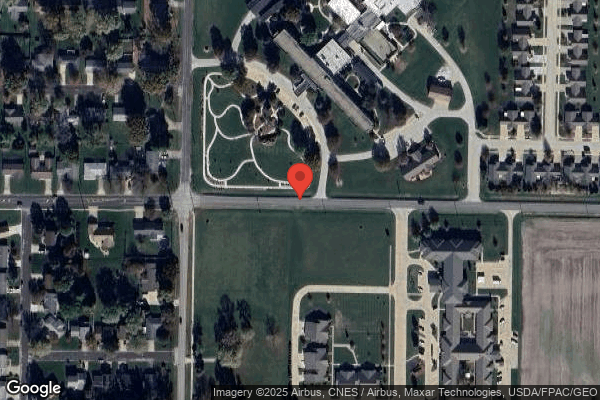


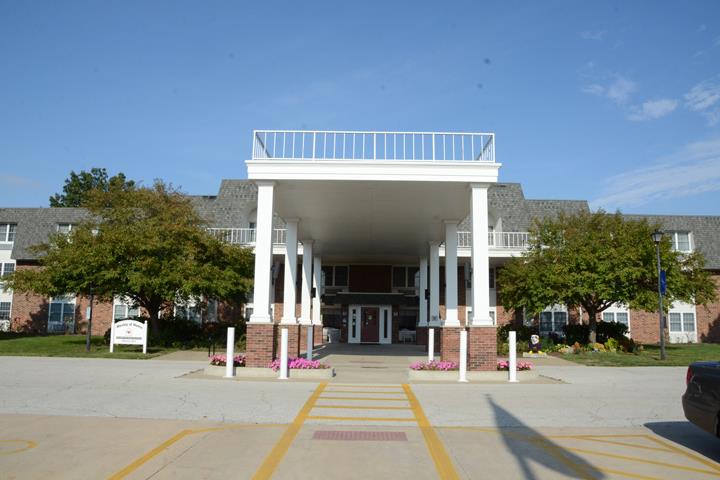

WESLEY VILLAGE

1200 EAST GRANT STREET, MACOMB, IL 61455 (309) 833-2123
Non profit - Church related 73 Beds Independent Data: November 2025
Trust Grade
80/100
#194 of 665 in IL
Last Inspection: February 2025

Within standard 12-15 month inspection cycle. Federal law requires annual inspections.

Overview

Wesley Village in Macomb, Illinois has a Trust Grade of B+, which means it is above average and recommended for families considering long-term care. It ranks #194 out of 665 facilities in Illinois, placing it in the top half, and #3 out of 4 in McDonough County, indicating only one local facility is rated higher. Unfortunately, the facility is experiencing a worsening trend, with issues increasing from 1 in 2024 to 5 in 2025. Staffing is a strength, with a 4-star rating and 0% turnover, meaning staff members tend to stay and are familiar with the residents' needs. On a positive note, Wesley Village has reported no fines, which is commendable. However, there are concerns, including failures to ensure safe kitchen conditions and proper infection control measures, which could potentially affect the health of residents. Additionally, there were instances where staff did not use required personal protective equipment when entering the rooms of COVID-positive residents, raising safety concerns. Overall, while Wesley Village has some strengths, families should be aware of the recent issues and ongoing challenges.

Trust Score
B+
80/100
In Illinois
#194/665
Top 29%
Safety Record
Low Risk
No red flags
Inspections
Getting Worse
1 → 5 violations
Staff Stability
○ Average
Turnover data not reported for this facility.
Penalties
✓ Good
No fines on record. Clean compliance history, better than most Illinois facilities.
Skilled Nurses
✓ Good
Each resident gets 58 minutes of Registered Nurse (RN) attention daily — more than average for Illinois. RNs are trained to catch health problems early.
Violations
○ Average
8 deficiencies on record. Average for a facility this size. Mostly minor or procedural issues.
★★★★☆
4.0
Overall Rating
★★★★☆
4.0
Staff Levels
★★★☆☆
3.0
Care Quality
★★★★☆
4.0
Inspection Score
Stable
2024: 1 issues
2025: 5 issues

The Good

  • 4-Star Staffing Rating · Above-average nurse staffing levels
  • Full Sprinkler Coverage · Fire safety systems throughout facility
  • No fines on record

Facility shows strength in staffing levels, fire safety.

The Bad

No Significant Concerns Identified

This facility shows no red flags. Among Illinois's 100 nursing homes, only 0% achieve this.

The Ugly 8 deficiencies on record

Feb 2025 5 deficiencies
CONCERN (D)

Potential for Harm - no one hurt, but risky conditions existed

PASARR Coordination (Tag F0644)

Could have caused harm · This affected 1 resident

Based on interview and record review, the facility failed to notify the state mental health authority to reevaluate a resident with a significant change in mental status for one of two residents (R20)...

Read full inspector narrative →
Based on interview and record review, the facility failed to notify the state mental health authority to reevaluate a resident with a significant change in mental status for one of two residents (R20) with a significant change in mental status in a sample of 31 residents. Findings include: The Preadmission Screening and Resident Review (PASRR) policy, no date, documented the policy was reviewed and updated annually to ensure compliance with CMS regulations and referenced the State Operations Manual, Appendix PP Guidance to Surveyors for Long Term Care Facilities and State-Specific PASRR regulations and guidelines. The policy documented the Level 1 screening was conducted by the nursing facility and did not include guidance for a reevaluation when a resident had a significant change in condition. R20's OBRA (PASRR) Initial Screen form dated 5/17/19 documented R20 was not suspected as having a mental illness and did not require a level 2 screening. R20's Medical Diagnosis record documented R20 was admitted from another Skilled Nursing Facility on 10/22/2019 with Unspecified Dementia, unspecified severity, without behavioral disturbance, psychotic disturbances, mood disturbances and anxiety, on 9/8/20 Unspecified Psychosis and on 10/27/21 Anxiety Disorder. R20's Minimum Data Set (MDS) section E-Behaviors dated 7/9/20 documented R20 developed physical and verbal behavior symptoms toward others; 8/20/21 documented R20 had delusions; 12/19/22 had physical symptoms such as hitting, scratching self, pacing, rummaging, public sexual acts, disrobing, throwing or smearing food or bodily waste or verbal symptoms like screaming or disruptive sounds and overall behaviors were worsening. R20's Care Plan documented on 5/10/23 R20 will be started on tracking for paranoid delusions noted by believing the facility is holding her hostage and family is trying to get rid of her. R20's medical record did not include documentation a new referral to the state mental health authority was made or a reevaluation was conducted by the state mental health authority for a significant change in mental status. On 2/20/25 at 2:27 PM, V2 (Director of Nursing) stated R20 was not referred or reevaluated by the state mental health and should have been revaluated with the change in R20's behavior.
CONCERN (D)

Potential for Harm - no one hurt, but risky conditions existed

Medication Errors (Tag F0758)

Could have caused harm · This affected 1 resident

Based on observation, interview, and record review the facility failed to have documented rationale or appropriate diagnosis for the use of an antipsychotic for one (R101) of five residents reviewed f...

Read full inspector narrative →
Based on observation, interview, and record review the facility failed to have documented rationale or appropriate diagnosis for the use of an antipsychotic for one (R101) of five residents reviewed for unnecessary medications in the sample of 31. Findings include: The Diagnosis Report for R101, documents the following diagnoses as: Dementia without behavioral disturbance, psychotic disturbance, mood disturbance, and anxiety and Major depressive disorder, single episode. R101's medical record does not include any other mental health diagnoses. The Medication Review Report for R101, dated 2/20/25, documents a physician order as of 2/14/25 for Quetiapine 25 mg (milligrams) one tablet by mouth at bedtime for depression. The current Care Plan for R101 documents (R101) is at risk for side effects to psychotropic medications. R101 was admitted with order for Quetiapine 25mg for depression. Interventions include to monitor for side effects, effectiveness and to notify physician of any pharmacy recommendations. Pharmacy to review medication at least monthly and give recommendations. On 2/18/25 through 2/20/25 between 9:30 am through 3:00 pm R101 exhibited no behaviors to support the use of an antipsychotic. R101 was pleasant, cooperative, and denied having any psychological issues. On 2/20/25 at 2:25 pm, V2 DON (Director of Nursing) confirmed R101 is receiving the antipsychotic medication Quetiapine (Seroquel) for Depression and the diagnosis of Depression is not a clinical rationale for the use of this medication. V2 DON stated R101 will be discharging tomorrow or (V2) would have called R101's physician for clarification of the medication. V2 DON stated the facility pharmacist has not yet reviewed R101's medications.
CONCERN (D)

Potential for Harm - no one hurt, but risky conditions existed

Deficiency F0849 (Tag F0849)

Could have caused harm · This affected 1 resident

Based on interview and record review, the facility failed to ensure the Hospice's coordinated communication and required documents were available and accessible to the facility staff. This deficiency ...

Read full inspector narrative →
Based on interview and record review, the facility failed to ensure the Hospice's coordinated communication and required documents were available and accessible to the facility staff. This deficiency affects one of one resident (R34) reviewed for Hospice care management in a sample of 31 residents. Findings include: The Nursing Facility Contract with the Hospice provider, dated 4/20/22, documented Information/Documentation provided to Facility on admission and on-going: Most recent hospice plan of care; Hospice election form and any advance directive specific to each patient; Physician certification and recertification of the terminal illness specific to each patient; Hospice medication information specific to each patient; Hospice physician and attending physician orders specific to each patient; Copies of clinical notes after each visit; Instructions on how to access Hospice's 24-hour on-call system; Name and contact information for hospice personnel involved in care of each patient. R34's Care Plan documented R34 was admitted to Hospice services on 10/11/24 with a diagnosis of Atherosclerotic heart disease and lacks specific Hospice responsibilities/interventions. R34's medical record lacked a Hospice plan of care, Election forms, Physician certification of terminal illness and/or copies of clinical notes. On 2/19/25 at 2:05 PM, V14 (Registered Nurse/RN) stated she was the second shift nurse for R34. While looking through R34's record, V14 stated there should be a Hospice sticker on the front of the chart and a tab labeled Hospice that has all the Hospice's documentation. V14 confirmed there was no sticker and no Hospice documentation in R34's medical record and did not know which company provided Hospice care to R34. On 2/19/25 at 2:15 PM, V13 (Licensed Practical Nurse/LPN) stated We don't keep Hospice documentation. On 2/20/25 at 9:55 AM, V4 (Registered Nurse) stated We call the Hospice and verbally give updates and notify them if there is a change in condition. The Hospice Nurse and Hospice Aide come together twice a week to give (R34) a bath. On 2/20/25 at 2:30 PM, V2 (Director of Nursing) stated the Hospice residents should have a Hospice binder with all the required information in it on the unit and available for staff.
CONCERN (E)

Potential for Harm - no one hurt, but risky conditions existed

Infection Control (Tag F0880)

Could have caused harm · This affected multiple residents

Based on observation, interview and record review the facility failed to ensure required Personal Protective Equipment was donned prior to entering a COVID Positive Resident (R33) Room. This failure h...

Read full inspector narrative →
Based on observation, interview and record review the facility failed to ensure required Personal Protective Equipment was donned prior to entering a COVID Positive Resident (R33) Room. This failure has the potential to affect all 12 residents (R1, R7, R8, R11, R17, R22, R23, R28, R3, R36, R38, R43) who reside in R33's Household Unit. The facility also failed to follow Enhanced Barrier Precautions and ensure required Personal Protective Equipment was donned during cares for two residents (R14 and R29) of 12 residents reviewed for direct cares in a total sample of 31. Findings include: 1. Facility Policy/COVID-19 Outbreak Investigation and Management dated 1/10/25 documents: It is the policy of this facility to recognize and contain COVID-19 outbreaks and outbreak measures will be instituted whenever there is evidence of an outbreak as outlined below. The Centers for Medicare and Medicaid Services indicates An outbreak is defined as a new COVID-19 infection in any healthcare personnel (HCP) or any nursing home-onset COVID-19 infection in a resident. To implement immediate response for resident confirmed COVID-19 positive: Isolation Full PPE (Personal Protective Equipment) to prevent spread of the COVID-19 outbreak: Gloves, Gown, Eye protection, N95 mask or higher respirator. Facility COVID-19 Response Plan dated 5/23/23 documents: If a resident is suspected or confirmed to have COVID-19, HCP must wear an N95 respirator, eye protection, gown, and gloves. Infection Control tracking line list dated 2/2025 indicates R33 was COVID-19 and Influenza A positive on 2/17/25. On 2/18/25 at 10:50 am V8, CNA (Certified Nurse Assistant) entered and exited R33's room with a surgical-style mask. Posted on the outside of R33's door were the following signs: Airborne Precautions - Everyone Must: Clean their hands, including before and when leaving room. Put on a fit-tested N95 or higher level respirator (mask) before room entry. Remove respirator after exiting room and closing door. Door to room must remain closed. Contact Precautions - Everyone Must: Clean their hands, including before and when leaving the room. Provider and Staff must also: Put on gloves before room entry. Discard gloves before room exit. Put on gown before room entry. Discard gown before room exit. Do not wear the same gown and gloves for the care of more than one person. On 2/18/25 at 12:45pm V8, CNA donned PPE to bring lunch food items into R33's room. V8 wore a surgical-style mask into and when exiting R33's room. PPE equipment hanging on the outside of R33's door did include a supply of N95 respirator masks for staff to utilize. After exiting R33's room V8 stated that all of the isolation rooms are positive for Influenza A except for R33 as she is both Influenza A and COVID-19 positive. V8 stated We do the same PPE for all of the isolation rooms. On 2/19/25 at 11:10am V7, RN (Registered Nurse) stated an N95 mask is required to enter R33's room because she has COVID. V7 stated the other residents in isolation have Influenza A and staff only need to wear a surgical mask. On 2/21/25 at 2:45pm V3, Infection Preventionist stated an N95 mask is required when entering R33's room. 2. The Facility's undated Enhanced Barrier Precautions policy documents It is the policy of this facility to implement enhanced barrier precautions for the prevention of transmission of multidrug-resistant organisms. Enhanced Barrier Precautions refer to an infection control intervention designed to reduce transmission of multidrug-resistant organisms that employs targeted gown and gloves use during high contact resident care activities. Initiation of Enhanced Barrier Precautions: a. enhanced barrier precautions will be initiated for residents with any of the following: ii. Chronic wounds (pressure ulcer stage III & IV, diabetic foot ulcers and venous ulcers) >6 weeks old, even if resident is not known to be infected or colonized with a MDRO. iii. Indwelling medical devices (Central Lines, Urinary Catheters, Gastronomy Tubes, and Tracheotomy), even if resident is not known to be infected or colonized with a MDRO. The Facility's undated Enhanced Barrier Precautions documents Implementing Contact versus Enhanced Barrier Precautions has wound or indwelling medical device, without secretions or excretions that are unable to be covered or contained and are not known to be infected or colonized with any MDRO: Contact Precautions: no; Enhanced Barrier Precautions: yes. High-contact resident care activities include: g. device care or use: central lines, urinary catheters, feeding tubes, tracheostomy/ventilator tubes h. Wound care: any skin opening requiring a dressing. Enhanced barrier precautions should be used for the duration of the affected resident's stay in the facility or until resolution of the wound or discontinuation of the indwelling medical device that placed them at higher risk. The facility's Enhanced Barrier Precautions signage documents everyone must: clean their hands, including before and entering and when leaving the room. Providers and staff must also: wear gloves and a gown for the following high-contact resident care activities: dressing, bathing/showering, transferring, changing lines, providing hygiene, changing briefs or assisting with toileting, device care or use: central line, urinary catheter, feeding tube, tracheostomy, wound care: any skin opening requiring a dressing. R29's Physician Order Sheet dated February 2025 documents Indwelling catheter for neurogenic bladder. On 2/19/2025 at 11:30 AM V5 (Certified Nurse Aid) performed catheter care. V5 only used gloves as PPE (Personal Protective Equipment) during catheter care. On 2/19/2025 at 1:00 PM V5 (Certified Nurse Aid) confirmed that R29 is in Enhanced Barrier Precautions and that she should have worn a gown while performing catheter care. R14's Physician Order Sheet dated February 2025 documents Silver hydrogel ointment to wound and cover with (gauze dressing) daily and PRN (as needed). On 2/19/25 at 2:00 PM V7 (Registered Nurse) performed wound care as ordered. V7 only used gloves as PPE (Personal Protective Equipment). On 2/19/25 at 2:10 PM V7 (Registered Nurse) confirmed that R14 is in Enhanced Barrier Precautions and that she (V7) should have worn a gown while performing wound cares.
CONCERN (F)

Potential for Harm - no one hurt, but risky conditions existed

Food Safety (Tag F0812)

Could have caused harm · This affected most or all residents

Based on observation, interview and record review, the facility failed to ensure safe and sanitary kitchens to prevent foodborne illnesses. This failure has the potential to affect 48 residents who re...

Read full inspector narrative →
Based on observation, interview and record review, the facility failed to ensure safe and sanitary kitchens to prevent foodborne illnesses. This failure has the potential to affect 48 residents who reside in the facility. Findings include: The Facility Resident Census Roster and Facility Matrix/802, dated 2/18/25, were reviewed. The Census Roster documented 48 Residents residing in the Facility. The 1st Shift and 2nd Shift Dietary Aide Responsibilities handout, not dated, instructed the Dietary Aides to record equipment (dishwashers, freezers and refrigerators) temperatures at 7:00 AM, 11:00 AM and between 4:30 PM and 4:45 PM. On 02/18/25 at 9:30 AM through 10:00 AM, Kitchen 1, Kitchen 2, Kitchen 3 and Kitchen 4 were toured with V5 (Food Service Advisor). The following dishwasher temperature logs, freezer logs and refrigerator logs indicated temperatures were not monitored three times daily: Kitchen 1 - December 2024, 15 of 31 days and January 14 of 31 days were missing temperatures; Kitchen 2 - January 2025, 2 of 31 days were missing temperatures; Kitchen 3 - December 2024, 6 of 31 days, January 2025, 10 of 31 days and February 2025, 10 of 17 days were missing temperatures; and Kitchen 4 - December 2024, 5 of 31days and January 2025, 1 of 31 days were missing temperatures. V5 agreed the logs should have been competed three times daily and had not been. On 2/20/25 at 1:00 AM, V10 (Dietary Manager) reviewed the dishwasher, freezer and refrigerator temperature logs for Kitchen 1, Kitchen 2, Kitchen 3 and Kitchen 4 and stated temperatures had not been monitored as required and should have been monitored three times daily by the Dietary Aide at 7:00 AM, 11:00 AM and between 4:30 PM and 4:45 PM.
Mar 2024 1 deficiency
CONCERN (F)

Potential for Harm - no one hurt, but risky conditions existed

Infection Control (Tag F0880)

Could have caused harm · This affected most or all residents

Based on record review and interview the facility failed to effectively monitor all infections in the facility. This failure has the potential to affect all 54 residents who currently reside in the fa...

Read full inspector narrative →
Based on record review and interview the facility failed to effectively monitor all infections in the facility. This failure has the potential to affect all 54 residents who currently reside in the facility. Finding Include: The Facility's Infection Control Policy dated 01/11/2024 documents The Infection Prevention and Control Program includes a system for preventing, identifying, reporting, investigating, and controlling infections and communicable diseases for all residents, staff, volunteers, visitors, and other individuals providing services under a contractual arrangement based upon the facility assessment conducted according to the regulatory requirements and follow accepted national standard. Surveillance: A system of surveillance designed to identify possible communicable disease or infections before they can spread to other persons in the facility. The Facility's October 2023, November 2023, December 2023, January 2024 and February 2024 Monthly infection control logs listed all infections for each respective month. None of these logs included information about whether or not the infection was community acquired or a house acquired infection. These logs also did not include when and if any of the listed infections were resolved. On 3/19/24 at 2:30 PM V4 (Registered Nurse/Infection Preventionist) confirmed that the infection surveillance logs do not indicate if the infections were community acquired or house acquired infections. V4 also confirmed that there were no resolution dates for the infections. V4 stated I know that there is a spot on the form that we should fill out if the infections are community based or house acquired, but I have never filled that part out. If there are no dates on the infection control logs for when those infections were resolved, I would have to go back through the charts of every resident who had an infection to get that information. I should put that on the form and start tracking it. The Resident Room Roster dated 3/17/24 lists 54 residents who currently reside in the facility.
Sept 2023 1 deficiency
CONCERN (E) 📢 Someone Reported This

A family member, employee, or ombudsman was alarmed enough to file a formal complaint

Potential for Harm - no one hurt, but risky conditions existed

Infection Control (Tag F0880)

Could have caused harm · This affected multiple residents

Based on observation, interview and record review, the facility failed to report, track and perform COVID-19 testing of an employee that displayed COVID-19 like symptoms prior to providing services to...

Read full inspector narrative →
Based on observation, interview and record review, the facility failed to report, track and perform COVID-19 testing of an employee that displayed COVID-19 like symptoms prior to providing services to 11 residents (R4 through R14) of 17 residents reviewed for COVID-19 in a sample of 14. Findings include: The facility's Infection Surveillance - Employee policy dated 4/2023 documents Infection prevention begins with ongoing surveillance to identify infections that are causing, or have the potential to cause, an outbreak. The facility closely monitors all employees who exhibit signs/symptoms of infection through ongoing surveillance and has a systematic method for collecting, consolidating, and analyzing data concerning the frequency and cause of a given disease or event, followed by dissemination of that information to those who can improve the outcomes. The intent of surveillance is to identify possible communicable diseases or infections before they can spread to other persons in the facility. In addition, surveillance is crucial in the identification of possible clusters, changes in prevalent organisms, or increases in the rate of infection promptly. The results should be used to plan infection control activities, direct in? service education, and identify individual resident problems in need of intervention The outcome surveillance process consists of collecting/documenting data on individual cases and comparing the collected data to standard written definitions (criteria) of infections. The Infection Preventionist, department supervisor or other designated staff record reports of symptoms on the Employee Infection List/Log and/or other diagnostic test results consistent with potential infections to detect clusters and trends and to be able to identify and report evidence of a suspected or confirmed HAI (Healthcare-Associated Infection) or communicable disease. Sources of relevant data that can be used for outcome surveillance for infections and susceptibility may include: Reporting of fever or signs that may indicate an infection. Reporting of illness; including symptoms. Reporting of diagnostic test results consistent with potential infections to detect clusters, trends, or susceptibility patterns. R5's medical record dated 8/26/23 documents Resident's daughter called back, and requested a COVID test, reporting that her mother generally does not run fevers with UTIs (Urinary Tract Infection). (V2, Director of Nursing (DON)) was on the unit and a rapid swab was obtained. COVID swab was positive. R4, and R6's medical record documents they tested positive for COVID-19 on 8/26/23. R7 through R14's medical record documents they all tested positive for COVID-19 on 8/28/23. The facility's employee COVID-19 tracking sheet documents V7, Cook, tested positive for COVID-19 on 8/25/23. The facility's August 2023 employee infection surveillance tracking log does not document V7's, Cook, symptoms of COVID-19 prior to 8/25/23. The facility's dietary schedule dated 8/24/23 documents V7, Cook, worked on the memory care unit. On 9/14/23 at 10:05 AM, V3, Certified Nursing Assistant (CNA) stated I can't speak to what other employees do, but if we have symptoms of COVID, were supposed to notify the nurse prior to coming into the building and they come out, test us for COVID and take our temperature. If we're cleared, we can work, but we have to test every day if symptomatic. Like right now I have stuffiness, but I test every day prior to coming in and have to have my temp checked. On 9/14/23 at 10:17 AM, V6, Registered Nurse (RN) stated The employees are supposed to notify us before coming into the building if they have symptoms. If they do come in, we immediately send them out to their car. We go out to their car, perform a COVID test, take their temperature and then document their symptoms. If they're negative, we contact the on call, DON (Director of Nursing) or the administrator to find out if they're cleared to come in to work. If they're positive, they have to go home, and we still have to contact the DON and administrator to let them know there's a positive employee. On 9/10/23 at 10:50 AM, V7, Cook, observed in the kitchen on the memory care unit preparing resident meals. V7, [NAME] stated I came to work on Tuesday (8/22) with a sore throat. I didn't think much of it because that happens. I'll have a sore throat in the morning, but then it goes away. When I got home, I tested for COVID, and it was negative. The next day (8/23) I was still sick, so I went to clinic and tested, and it was negative. On Friday (8/24) I came to work with a stuffy nose, sore throat and my ears were popping. I didn't test before coming into work. No, I didn't report my symptoms to anyone, but they kind of knew. I sounded like a frog. The next day (8/25/23) I tested at home and was positive and notified my supervisor. I did not report my symptoms on 8/22 or 8/24 to the facility. On 9/14/23 at 10:57 AM, V2, DON, stated Anytime an employee is sick, they have to call from the parking lot and inform the nurse they're symptomatic and the nurse will go out, take their temperature and give them a COVID test. They are not to be in the building working with symptoms unless cleared by one of the nursing supervisors. They are required to report symptoms prior to working. I was not aware that (V7, Cook) came to work sick without testing, she should have tested prior to working. On 9/14/23 at 12:38 PM, V2, DON stated (R5) was the first one to test positive on 8/26. We then tested everyone on the unit and her roommate (R6) and (R4) tested positive, but no one at that point. We do days one, three and five for testing and on day three of the testing the rest of the unit tested positive.
Mar 2023 1 deficiency
CONCERN (D)

Potential for Harm - no one hurt, but risky conditions existed

Medication Errors (Tag F0758)

Could have caused harm · This affected 1 resident

Based on observation, interview, and record review the facility failed document a diagnosis and clinical indication to warrant the initiation of an antipsychotic for R14; and failed to comprehensively...

Read full inspector narrative →
Based on observation, interview, and record review the facility failed document a diagnosis and clinical indication to warrant the initiation of an antipsychotic for R14; and failed to comprehensively evaluate and assess R34 for underlying conditions or stressors, non-pharmacological behavioral interventions, and psychotropic drug use prior to starting an anti-psychotic medication. These failures have the potential to affect two of six residents (R14, R34) reviewed for anti-psychotic medication use in the sample of 25. Findings include: The facility's Psychotropic Medication Policy undated documents, Procedure: Prior to the administration of a psychotropic medication, the following includes a process for the IDT (Inter-Disciplinary Team) and resident/resident representative to participate in the care process: b.) Antipsychotic Medication: Diagnoses alone do not necessarily warrant the use of an antipsychotic medication. Antipsychotic medications may be indicated if: Behavioral symptoms present a danger to the resident or others. Expression or indications of distress that are significant distress to the resident. If not clinically contraindicated multiple non-pharmacological approaches have been attempted but did not relieve the symptoms which present a danger or significant distress. If antipsychotic medications are prescribed, documentation must clearly show indication for the medication, multiple attempts to implement care planned, non-pharmacological approaches and ongoing evaluation of the effectiveness of these interventions. 2. A psychotropic drug assessment will be completed on admission, quarterly, and significant change in condition. The assessment will be reviewed by the IDT to help identify resident's needs, goals, comorbid conditions, and prognosis to determine factors that are affecting signs, symptoms, and test results. This evaluation process is important when selecting initial medications and/or non-pharmacological approaches and when deciding whether to modify or discontinue a current medication. Attempt to identify underlying cause for behavioral symptoms. This will include an evaluation of a resident's physical, behavioral, mental, and psychosocial signs and symptoms, to identify the underlying causes, including adverse consequences of medications. The evaluation will also consider each resident's goals and preferences, allergies to medications and foods, a history of prior and current medications and non-pharmacological interventions, recognition of the need for end-of-life or palliative care and the basis for declining care, medication, and treatment and the identification of pertinent alternative as well as documented indications of distress, delirium, or other changes in functional status. 3. Psychotropic medications may be used to treat an enduring condition. Before initiating or increasing a psychotropic medication for enduring conditions, the resident's symptoms and therapeutic goals must be clearly and specifically identified and documented. Not due to a medical condition or problem (example: pain, fluid or electrolyte imbalance, infection, constipation, medication side effect or polypharmacy) that can be expected to improve or resolve as the underlying condition is treated or the offending medication are discontinued. Not due to environmental stressors alone that can be addressed to improve the symptoms or maintain safety. Not due to psychological stressors alone that can be expected or improve or resolve as the situation is addressed. 1. On 03/06/23 at 11:41 AM, R14 was alert sitting up in her wheelchair in her room. R14 was pleasant and not displaying any behaviors. On 03/08/23 at 12:24 PM, R14 was alert sitting in dining room at the table for lunch. R14 was pleasant conversing with her table mates and not displaying any behaviors. R14's Order history, dated 3/8/23, documents that R14 was started on Abilify (aripiprazole) 2 mg (milligrams) by mouth daily every morning for Depression on 8/3/22. It also documents that R14's current dosage of Abilify continues to be 2 mg daily. R14's Medicare/Skilled Progress Note, dated 7/16/2022 at 11:27 a.m., documents, Alert and oriented with confusion and forgetfulness. R14 yells aloud often, every time she sees a person walking down the hall in front of her door, she screams help. She voices understanding on how to use call light but does not use it. Resident refuses to go to dining area for meals. Resident cries often and when asked to do something she screams at staff. R14's Nurses Note, dated 7/19/2022 at 9:38 p.m., documents, R14 very anxious about going home and not being able to take care of self. Tried reassuring her about being in the facility for staff to take care of her. Another staff member was able to redirect and get R14 ready for bed. R14's Medication Administration Note, dated 7/20/2022 at 03:27 a.m., documents, R14 was very confused earlier this shift. She was looking for her husband and wanted to go to the doctors because she was feeling dizzy. This nurse gave R14 as needed Meclizine for dizziness and as needed Ativan for anxiety. This nurse sat by R14 and talked with her a little while to help her calm down. This nurse also let R14 know that it was only 2 AM and the doctor's office was closed at this time. R14 thought it was daytime and once she knew what time it was, R14 wanted to go back to sleep. R14 is sleeping soundly at this time. R14's Behavior Note, dated 7/20/2022 at 11:59 a.m., documents, R14 is alert and oriented times 2-3 with confusion and forgetfulness noted at times. She is able to let her needs be known and she understands others. She is pleasant with staff. She was admitted for long term care as she can no longer care for herself. She was admitted with orders for Lexapro 20 mg daily, and Ativan 0.5 mg daily and PRN (as needed). She will be started on tracking for signs/symptoms/ of anxiety noted by anxiousness, restlessness and worrying. Interventions will be 1) Encourage her to participate in activities. 2)Encourage her to socialize with her peers. 3)Try a distracting conversation. Her goal is to have 30 or less episodes per month. According to tracking so far, she has had 71 episodes for the month of July. She will also be started on tracking for signs/symptoms of depression noted by down/depressed mood, making negative statements, lack of interest and tearfulness. Interventions will be 1) Assess for pain and report to nurse. 2)Encourage her to talk to her family. 3)Sit and talk about what is bothering her. Her goal will be to have 30 or less episodes of depression per month. According to tracking she has had 51 episodes so far in July. R14's Behavior tracking, dated 7/22, documents that R14 was being monitored for the following behaviors prior to the initiation of R14's Abilify: anxiousness, restlessness, worrying, down/depressed mood, making negative statements, lack of interest, and tearfulness. R14's Physician progress note, dated 7/22/22, documents, Plan: Major Depression: Start aripiprazole 2 mg daily. Due to notably worsening symptoms, we will augment with low-dose of aripiprazole 2 mg at night. I feel she would greatly benefit from individual counseling. I suspect of lot of her low mood is related to situational changes now being a resident in the nursing home. Subjective: There have been concerns about patient's mood. Nursing staff notes that she is quite upset and crying a fair amount of the time. R14 notes that she is 'ready to die.' Has no direct suicidal intentions, but notes that she is not sure why she is still here. Nursing staff notes that she is actually sleeping through most of the nights. Objective: Psych: Mood again is a bit labile, sometimes tearful. Affect is a bit flattened. There is some decreased psychomotor function, but no restlessness or tremor. Thought process is mostly linear. There is no psychoses. R14's Physician progress note, dated 9/18/22, documents, Subjective: Anxiety and Major depression. She is still having a fair amount of breakthrough anxiety, particularly midday. Nursing staff does feel that her lorazepam is being well-tolerated as well as giving her relief. Objective: Psych: Mood is a little anxious but overall pleasant. Thought process is not linear. She does confabulate a little bit in regards to things that she thinks have happened recently but there is no way that she could have attended. Does not have any active suicidal ideation but knows that she is ready to die whenever. Insight and judgement are impaired. R14's Psychiatric Encounter Summary, dated 12/19/22, documents, R14 has reported significant symptoms related to depression and anxiety. R14 is being treated for these associated signs and symptoms. R14 was previously at assisted living facility but due to a decline in R14's ability to care for herself, she was transferred to this facility. R14 was referred due to crying, anxiety, restlessness, agitation and exit seeking behaviors. R14 presented fatigued. Long pauses for responses. R14 stated that she was 'all right.' She shared of a 'good' mood. Denies any sadness. Staff reported ongoing confusion and noted increased incontinent and urgency/frequency. R14 had a recent UTI (Urinary Tract Infection). Currently receiving treatment. R14 has had noted tearful episodes. Review of symptoms: R14 reports weight loss. R14 reports change in appetite. She reports urinary loss of control. She reports depression, sleep disturbances, anxiety, memory loss, and agitation but reports no hallucinations. Psychiatric exam: Appears fatigued. Behavior: cooperative. Mood: euthymic. Affect: blunted. Thought process: attention wandered throughout interview, concentration impaired and shows circumferentially. R14's Psychotropic Assessment, dated 1/6/23, documents that R14 is receiving Abilify 2 mg daily for Major Depressive Disorder. It also documents that the target behaviors are tearfulness/crying and sad/down/depressed mood. R14's current electronic medical record has no documentation of any psychotropic assessments addressing R14's Abilify including prior to initiating the Abilify. R14's MDS (Minimum Data Set), dated 1/6/23, documents in Section E Behaviors that R14 does not have any behaviors nor any behaviors that put herself or others at risk for injury. On 03/08/23 at 12:12 PM, V2 (Director of Nursing) stated, We were surprised when (R14) got started on the Abilify by her doctor. We weren't expecting an antipsychotic. She has major depression and that's what it is treating. Her behaviors do not put her or other residents at risk for injury. V2 also confirmed that there was no assessment for R14's use of the Abilify prior to 1/6/23. 2. R34's Physician's Orders dated 5-12-22 document, Olanzapine (Zyprexa) 2.5 mg (milligrams) every day for diagnoses of Dementia with Behavioral Disturbance. R34's Physician's Orders dated 9-22-22 document, Discontinue Monday dose of Zyprexa 2.5 mg. R34's Physician's Orders dated 9-22-22 through 3-6-23 document R34 has received Zyprexa 2.5 mg every evening on Tuesdays, Wednesday, Thursdays, Fridays, Saturdays, and Sundays for the diagnosis of Dementia with Behavioral Disturbance. R34's Electronic Health Record does not include an evaluation by the IDT (Inter-Disciplinary Team) or Psychotropic Drug Assessment being completed prior to initiating the start of R34's Zyprexa. On 03/08/23 at 01:40 PM V2 (Director of Nursing) stated, There is no documentation of an evaluation by the IDT (Inter-Disciplinary Team) or Psychotropic Drug Assessment being completed prior to initiating the start of (R34's) Zyprexa
Understanding Severity Codes (click to expand)
Life-Threatening (Immediate Jeopardy)
J - Isolated K - Pattern L - Widespread
Actual Harm
G - Isolated H - Pattern I - Widespread
Potential for Harm
D - Isolated E - Pattern F - Widespread
No Harm (Minor)
A - Isolated B - Pattern C - Widespread

Questions to Ask on Your Visit

  • "Can I speak with families of current residents?"
  • "What's your RN coverage like on weekends and overnight?"

Our Honest Assessment

Strengths
  • • Grade B+ (80/100). Above average facility, better than most options in Illinois.
  • • No major safety red flags. No abuse findings, life-threatening violations, or SFF status.
  • • No fines on record. Clean compliance history, better than most Illinois facilities.
Concerns
  • • No significant concerns identified. This facility shows no red flags across CMS ratings, staff turnover, or federal penalties.
Bottom line: Generally positive indicators. Standard due diligence and a personal visit recommended.

About This Facility

What is Wesley Village's CMS Rating?

CMS assigns WESLEY VILLAGE an overall rating of 4 out of 5 stars, which is considered above average nationally. Within Illinois, this rating places the facility higher than 99% of the state's 100 nursing homes. This rating reflects solid performance across the metrics CMS uses to evaluate nursing home quality.

How is Wesley Village Staffed?

CMS rates WESLEY VILLAGE's staffing level at 4 out of 5 stars, which is above average compared to other nursing homes.

What Have Inspectors Found at Wesley Village?

State health inspectors documented 8 deficiencies at WESLEY VILLAGE during 2023 to 2025. These included: 8 with potential for harm.

Who Owns and Operates Wesley Village?

WESLEY VILLAGE is owned by a non-profit organization. Non-profit facilities reinvest revenue into operations rather than distributing to shareholders. The facility operates independently rather than as part of a larger chain. With 73 certified beds and approximately 49 residents (about 67% occupancy), it is a smaller facility located in MACOMB, Illinois.

How Does Wesley Village Compare to Other Illinois Nursing Homes?

Compared to the 100 nursing homes in Illinois, WESLEY VILLAGE's overall rating (4 stars) is above the state average of 2.5 and health inspection rating (4 stars) is above the national benchmark.

What Should Families Ask When Visiting Wesley Village?

Based on this facility's data, families visiting should ask: "Can I visit during a mealtime to observe dining assistance and food quality?" "How do you handle medical emergencies, and what is your hospital transfer rate?" "Can I speak with family members of current residents about their experience?"

Is Wesley Village Safe?

Based on CMS inspection data, WESLEY VILLAGE has a clean safety record: no substantiated abuse findings (meaning no confirmed cases of resident harm), no Immediate Jeopardy citations (the most serious violation level indicating risk of serious injury or death), and is not on the Special Focus Facility watch list (a federal program monitoring the lowest-performing 1% of nursing homes). The facility has a 4-star overall rating and ranks #1 of 100 nursing homes in Illinois. While no facility is perfect, families should still ask about staff-to-resident ratios and recent inspection results during their visit.

Do Nurses at Wesley Village Stick Around?

WESLEY VILLAGE has not reported staff turnover data to CMS. Staff turnover matters because consistent caregivers learn residents' individual needs, medications, and preferences. When staff frequently change, this institutional knowledge is lost. Families should ask the facility directly about their staff retention rates and average employee tenure.

Was Wesley Village Ever Fined?

WESLEY VILLAGE has no federal fines on record. CMS issues fines when nursing homes fail to meet care standards or don't correct problems found during inspections. The absence of fines suggests the facility has either maintained compliance or corrected any issues before penalties were assessed. This is a positive indicator, though families should still review recent inspection reports for the full picture.

Is Wesley Village on Any Federal Watch List?

WESLEY VILLAGE is not on any federal watch list. The most significant is the Special Focus Facility (SFF) program, which identifies the bottom 1% of nursing homes nationally based on persistent, serious quality problems. Not being on this list means the facility has avoided the pattern of deficiencies that triggers enhanced federal oversight. This is a positive indicator, though families should still review the facility's inspection history directly.