MACOMB POST ACUTE CARE CENTER
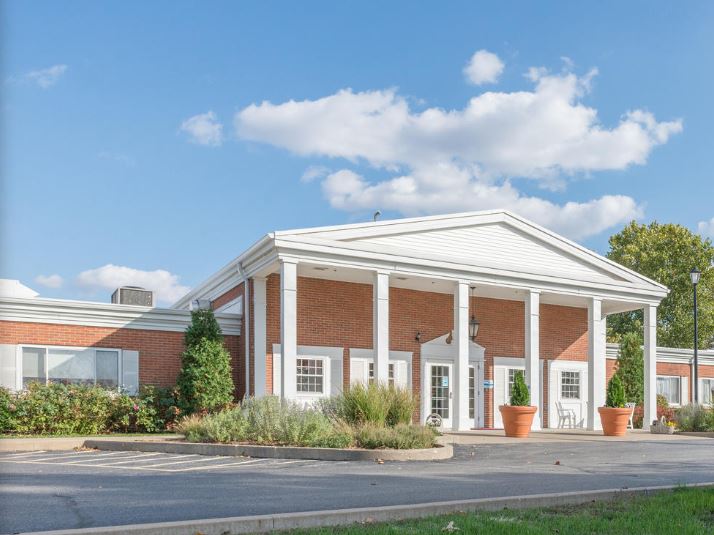
8 DOCTORS LANE, MACOMB, IL 61455 (309) 833-5555
For profit - Limited Liability company 80 Beds STERN CONSULTANTS Data: November 2025 1 Immediate Jeopardy citation
Trust Grade
43/100
#164 of 665 in IL
Last Inspection: April 2025

Within standard 12-15 month inspection cycle. Federal law requires annual inspections.

Overview

Macomb Post Acute Care Center has a Trust Grade of D, which means it is below average and raises some concerns about the quality of care. It ranks #164 out of 665 facilities in Illinois, placing it in the top half, and #2 out of 4 in McDonough County, indicating it is one of the better local options. The facility's trend is improving, with issues decreasing from 12 in 2024 to 4 in 2025. Staffing is rated average with a turnover rate of 46%, which is on par with the state average. While there have been no fines, the inspector findings reveal serious concerns, including a critical incident where a resident fell and sustained a hip fracture due to unsafe transport practices, as well as failures in pain management and fall prevention that resulted in injuries to residents. Overall, while there are some strengths, such as the lack of fines and an improving trend, families should be aware of the significant safety issues reported.

Trust Score
D
43/100
In Illinois
#164/665
Top 24%
Safety Record
High Risk
Review needed
Inspections
Getting Better
12 → 4 violations
Staff Stability
⚠ Watch
46% turnover. Above average. Higher turnover means staff may not know residents' routines.
Penalties
✓ Good
No fines on record. Clean compliance history, better than most Illinois facilities.
Skilled Nurses
✓ Good
Each resident gets 44 minutes of Registered Nurse (RN) attention daily — more than average for Illinois. RNs are trained to catch health problems early.
Violations
⚠ Watch
33 deficiencies on record. Higher than average. Multiple issues found across inspections.
★★★★☆
4.0
Overall Rating
★★★☆☆
3.0
Staff Levels
★★★★★
5.0
Care Quality
★★★☆☆
3.0
Inspection Score
Stable
2024: 12 issues
2025: 4 issues

The Good

  • 5-Star Quality Measures · Strong clinical quality outcomes
  • Full Sprinkler Coverage · Fire safety systems throughout facility
  • No fines on record

Facility shows strength in quality measures, fire safety.

The Bad

Staff Turnover: 46%

Near Illinois avg (46%)

Higher turnover may affect care consistency

Chain: STERN CONSULTANTS

Part of a multi-facility chain

Ask about local staffing decisions and management

The Ugly 33 deficiencies on record

1 life-threatening 3 actual harm
Apr 2025 4 deficiencies
CONCERN (D)

Potential for Harm - no one hurt, but risky conditions existed

Deficiency F0692 (Tag F0692)

Could have caused harm · This affected 1 resident

**NOTE- TERMS IN BRACKETS HAVE BEEN EDITED TO PROTECT CONFIDENTIALITY** Based on Observation, Interview and Record Review, the facility failed to ensure a resident with a Failure to Thrive diagnosis w...

Read full inspector narrative →
**NOTE- TERMS IN BRACKETS HAVE BEEN EDITED TO PROTECT CONFIDENTIALITY** Based on Observation, Interview and Record Review, the facility failed to ensure a resident with a Failure to Thrive diagnosis was provided with Physician ordered double meal portions for one of four residents (R52) reviewed for Nutrition in the sample of 38 Finding include: The facility's Therapeutic Diets policy, dated 12/30/24, documents Therapeutic diets shall be prescribed by the attending physician. The facility will strive for the fewest possible dietary restrictions. The food service manager will establish and use a tray identification system to ensure that each resident receives his or her diet as ordered. On 4/14/25 at 11:00 AM, R52 was in his room sitting up in bed. At this time R52 stated he has a note on all of his dietary meal slips that document Double portions and Cottage cheese with all meals. R52 stated I don't get this. I asked about it because I am not sure where that note came from. The dietary staff told me that when everyone is done being served, I can ask for a second portion. So, a lot of times I will wait and then ask and then there isn't any food left, so I don't get a second portion (double portion) of food most days. At this time R52's dietary slip was viewed and documents Cottage Cheese with lunch and supper four ounces, Double Portions and cottage cheese with Lunch and Supper. May have extra helping after the double portion if needed. R52's Physician Order Sheet, dated 4/15/25, documents a diet order, dated 2/15/25, for R52 to receive a Regular diet; may have double portions and seconds for double portions and cottage cheese with lunch and supper related to Adult Failure to Thrive. R52's current Care Plan dated, 2/21/25, documents R52 was admitted to the facility on [DATE] with diagnoses of Anorexia, Adult Failure to Thrive and Protein-Calorie Malnutrition. This same Care Plan documents (R52) is currently at nutritional risk related to Anorexia and Weight loss. On 4/14/25 at 11:52 AM, R52 was sitting at a table in the dining room and was served lunch. R52's plate contained a single portion of spaghetti, vegetables, bread, and cottage cheese. R52 consumed 100% of his meal. On 4/15/25 at 12:05 PM, R52 was sitting in the dining room eating lunch. R52's plate contained a single serving portion of the lemon pepper chicken and rice entree. After consuming 100% of his meal R52 reached over to a bowl of uneaten rice that was left from R22's tray and consumed all the contents. On 4/15/2025 at 2:00 PM, V7 (Cook) stated, We (dietary staff) do not give (R52) double portions with his meals. If (R52) asks for seconds, we would give them to him. I am not aware of (R52) having a physician's order to get double portions at meals. On 4/16/25 at 9:21 AM, V2 (Director of Nursing) confirmed R52's dietary order documents double portions with lunch and dinner meals and that those double portions should be served without R52 having to ask.
CONCERN (F)

Potential for Harm - no one hurt, but risky conditions existed

Deficiency F0761 (Tag F0761)

Could have caused harm · This affected most or all residents

Based on observation, interview, and record review, the facility failed to ensure a multidose tuberculin vial was dated when opened. This failure has the potential to affect all 60 residents residing ...

Read full inspector narrative →
Based on observation, interview, and record review, the facility failed to ensure a multidose tuberculin vial was dated when opened. This failure has the potential to affect all 60 residents residing in the facility. Findings include: The Facility's Storage, Labeling of OTC (over the counter) Medication, Destruction and Disposal of Medication policy, dated/revised November 9th, 2021, documents, Purpose: To ensure that medications and biological are stored in a safe, secure storage and safe handling. Medications requiring refrigeration should be stored in the refrigerator located in the drug room at the nurse's station. Medications should be stored separately from food and must be labeled. Please refer to package insert for specific temperature requirements of medication. On 4/16/25 at 9:30 AM V3 (LPN/Licensed Practical Nurse) opened the refrigerator located in the medication room. On the top shelf of the door in the refrigerator was one vial of Aplisol (Tuberculin) units/0.1 ml (milliliter). Vial was opened, one fourth of the way full, and was not dated when opened. V3 verified the vial was opened and not dated. V3 verified the vial of (Tuberculin) is used for all residents residing in the facility. On 4/15/25 at 9:40 AM V3 stated (Tuberculin) should be dated once opened and discarded after 30 days of opening. The facility's CMS (Centers for Medicare and Medicaid Services) Long Term Care Facility Application for Medicare and Medicaid Form 671 dated 4-14-25 and signed by V1/Administrator documents 60 residents currently reside within the facility.
CONCERN (F)

Potential for Harm - no one hurt, but risky conditions existed

Deficiency F0806 (Tag F0806)

Could have caused harm · This affected most or all residents

Based on observation, interview, and record review the facility failed to offer food substitutions of similar nutritive value. These failures have the potential to affect all 60 residents residing wit...

Read full inspector narrative →
Based on observation, interview, and record review the facility failed to offer food substitutions of similar nutritive value. These failures have the potential to affect all 60 residents residing within the facility. Findings include: The facility's CMS (Centers for Medicare and Medicaid Services) Long Term Care Facility Application for Medicare and Medicaid Form 671 dated 4-14-25 and signed by V1/Administrator documents 60 residents currently reside within the facility. The Substitution policy dated 12/30/24, documents Food Substitutions will be made as appropriate or necessary. Policy Interpretation and Implementation 1. The food services manager, in conjunction with the clinical dietitian, may make food substitutions as appropriate or necessary. The food services shift supervisor on duty will make substitutions only when unavoidable. 2. The food services manager will maintain an exchanged list identifying the seven (7) exchanges of food groups. When in doubt about an appropriate substitution, the food services manager will consult with the dietitian prior to making substitutions. 3. Resident' likes and dislikes will be considered when making substitutions. 4. All substitutions are noted on the menu and filed in accordance with established dietary policies. Notations of substitutions must include the reason for the substitutions. 6. The dietician will provide feedback on appropriate substitutions as necessary. The facility's Menus dated 4-13-25 through 4-19-25 document there is only one vegetable and one entree option daily for lunch and supper. The facility's Substitution Menu does not include a vegetable option. The Lunch/Dinner Substitute Menu only includes the option of applesauce, corn dog, hot dog, cottage cheese, or grilled cheese. On 4-14-25 at 12:01 PM V7 (Cook) was serving mixed vegetables and spaghetti with meat sauce to all residents. V7 stated, There are no substitutes offered in place of the mixed vegetables. We (facility) staff do not offer a substitution for vegetables. The only substitutes we offer every day for the main entrees are hot dogs, corn dogs, or grilled cheese. On 4-14-24 from 12:00 PM through 12:50 PM the lunch meal was observed in the main dining room. All residents were served mixed vegetables. On 4-14-25 at 12:05 PM R9 was served spaghetti and meat sauce, cake, mixed vegetables, and a bread stick. R9 pointed at the mixed vegetables and stated to V3 (LPN/Licensed Practical Nurse), I don't like those. V3 stated to R9, Let me turn your plate around so you don't have to look at them (mixed vegetables). On 4-14-25 at 12:35 PM R13, R27, R32, R36, R37, and R40 were in the dining room and ate everything on their plate except for the mixed vegetables. R13, R27, R32, R36, R37, and R40 all verified that they do not like mixed vegetables and are never offered a substitute for vegetables at meals. On 4-15-25 from 12:05 PM through 12:30 PM the lunch meal was observed in the main dining room. All residents were served steamed broccoli. R13, R32, R36, and R40 did not eat the broccoli and were not offered a substitute. R13, R32, R36, and R40 also verified they do not get substitutes offered for the main entree except for the same options of a corn dog, hot dog, or grilled cheese. On 4-15-25 at 1:40 PM during a resident group meeting, R1, R10, R13, R15, R17, R20 and R45 all stated they are given one choice for lunch and supper and then if they want something different, they can choose from a hot dog, corn dog, or grilled cheese. At this time all the residents confirmed there are not any vegetable substitutions or alternate choices. R45 stated he has watched residents just push their vegetables aside if they don't like them but there isn't ever a second option offered for vegetables. On 4-15-25 at 2:45 PM, R51 stated, (R51) does not feel like they have any options on the dietary menus. The institutional like food and canned vegetables are not enough. We are given one choice and if that is something you don't like they have a few options to choose from which is a corn dog, hot dog, or grilled cheese. I've had a corn dog a few times, you can only eat so much of that.
CONCERN (F)

Potential for Harm - no one hurt, but risky conditions existed

Food Safety (Tag F0812)

Could have caused harm · This affected most or all residents

Based on observation, interview, and record review the facility failed to complete and record cool down temperatures for meat that was prepared ahead and stored in the facility's refrigerator for futu...

Read full inspector narrative →
Based on observation, interview, and record review the facility failed to complete and record cool down temperatures for meat that was prepared ahead and stored in the facility's refrigerator for future use, ensure facial hair was appropriately restrained within a hair net while in the kitchen, ensure a gallon of milk's temperature was kept below 41 degrees Fahrenheit, and ensure the sanitation buckets had the appropriate amount of quaternary ammonium. These failures have the potential to affect all 60 residents residing within the facility. Findings include: The facility's CMS (Centers for Medicare and Medicaid Services) Long Term Care Facility Application for Medicare and Medicaid Form 671 dated 4-14-25 and signed by V1/Administrator documents 60 residents currently reside within the facility. The Food Temperature policy dated 12/30/24, documents Food will be stored in accordance with local, state, and federal guidelines. Policy Interpretation and Implementation 1. Food will be stored in accordance with local, state, and federal guidelines. 3. Food in refrigerators will be kept at 41-degrees F (Fahrenheit) or below. 6. Food items will be cooled from 135-70 degrees F within 2 (two) hours and from 70-41 degrees F or below within 4 (four) additional hours. 8. Food items being cooled will be checked and if food items do not meet the required cooling timeframe, will be heated to 135-degree F and the re-cooling process restarted. The Personnel Adherence to Sanitary Procedures policy dated 12/30/24, documents Food service personnel shall follow appropriate sanitary procedures. Policy Interpretation and Implementation 1. In addition to employee personnel policies, food services and dietary personnel will be required to adhere to the following sanitary standards: a. Hair nets or approved hats, covering all the hair, must be worn at all times while on duty. The Cleaning Dining Room Tables or Food Service Carts policy dated 3/23/24, documents To maintain sanitary dining room table and food surfaces. Policy Interpretation 3- Bucket Procedure 1. Prepare 3 (three) buckets: soapy water, plain water, and sanitizing solution. 2. Use a clean cloth in each bucket and keep cloth with the proper bucket. 3. After each meal, when dishes are removed, wipe table with soapy water, including edges. a. When cart is emptied, wipe with soapy water. 4. Rinse with plain water-if necessary, per manufacturer's guidelines. 5. Wipe with sanitizing solution diluted according to manufacturer's directions for food contact surfaces. 6. Permit to air dry. Cleaning of Dining Room Tables, Chairs, Food Surfaces, and Carts 1. Use detergent water and a clean cloth in each bucket and keep the cloth with the proper bucket. 2. Wipe tabletop, under side, top edges, and legs. 3. With another bucket, wipe chairs including seat, arm, and legs. 4. Rinse with plain water (if required per manufacture's guidelines) 5. Wipe with food safe sanitizing solution diluted according to manufacturer's directions for food contact surfaces for the appropriate amount of time. 6. Allow to air dry. The Manufacturer's instructions for Quat (Quaternary Ammonium Compounds) Sanitizer, (not dated) documents Direction for Use - Use Quat Sanitizer (200 ppm/parts per million active) for sanitizing and cleaning of equipment and utensils in food processing, dairy industry, bars, restaurants, institutional kitchens, meat and poultry processing plants. Prior to application, remove gross food particles and soil by a pre-wash, pre-scrape, or pre-flush, and when necessary, pre-soak. Thoroughly wash or flush equipment or utensils with a good detergent or compatible cleaner followed by a potable water rinse before applying sanitizer. Apply QUAT Sanitizer to pre-cleaned hard non-porous surfaces with cloth, mop sponges, or sprayer or by immersion. Surfaces must remain wet for 60 seconds. Drain thoroughly and allow to air dry before reuse. On 4-14-25 from 9:33 AM to 10:03 AM a tour was completed in the kitchen and dining room. During this tour, V5 (Dietary Aide) was washing all dining room tables with wash clothes that were submersed in a red sanitizing bucket of water. V5 tested the water within the sanitizing bucket for Quaternary Ammonium using a Quaternary Ammonia Strip. The strip read zero PPM of Quaternary Ammonium. The container holding the Quaternary Ammonia testing strips stated 200-400 PPM was the normal range of Quaternary Ammonia. V6 (Dietary Aide) was washing dishes and had a full beard that was not restrained with a hair net. On the top shelf of the three-drawer refrigerator there was a plastic bag dated 4-10-25 containing 12 cooked sausage patties, a plastic bag dated 4-13-25 containing 14 cooked chicken breasts, and a plastic bag dated 4-9-25 containing two cooked polish sausages. There were no cool-down logs located within the kitchen for the cooked sausage patties, cooked chicken breasts, or cooked polish sausages. On 4-14-25 at 9:45 AM (V5) stated, I did not fill the sanitizing bucket. (V6/Dietary Aide) filled the bucket. On 4-14-25 at 10:00 AM V6 stated, I did not add any sanitizer to the sanitizing bucket. I did not know I was supposed to. I did not know I have to wear a hair restraint over my beard. On 4-14-25 at 10:15 AM V4 (Dietary Manager) verified there are no cool-down logs for the cooked sausage, polish sausage, and chicken breasts located in the refrigerator. V4 stated, We (kitchen staff) do not do cool-down logs when storing leftovers. The health department gave me cool-down logs last week, but I have not started to do them yet. (V6) should be wearing a hair net over his beard while in the kitchen and the sanitizing bucket should have had sanitizer. On 4-14-25 at 12:13 PM V4 calibrated a thermometer and inserted the thermometer into a gallon of skim milk that was in a wash tub in the main dining room. The milk was sitting on top of ice. The temperature of the milk was 49 degrees Fahrenheit. V4 (Dietary manager) stated, Whoever put the milk out here should have put ice all the way up on the outside of the milk to keep the milk cool. The milk should have a temperature of 41 degrees (Fahrenheit) or below. On 4-15-25 at 2:10 PM V10 (Dietary Aide) was in the kitchen washing dishes and V11 (Dietary Aide) was prepping meals. Both V10 and V11 had full beards that were not restrained with hair nets.
Oct 2024 2 deficiencies 1 Harm
SERIOUS (G) 📢 Someone Reported This

A family member, employee, or ombudsman was alarmed enough to file a formal complaint

Actual Harm - a resident was hurt due to facility failures

Deficiency F0697 (Tag F0697)

A resident was harmed · This affected 1 resident

**NOTE- TERMS IN BRACKETS HAVE BEEN EDITED TO PROTECT CONFIDENTIALITY** Based on observation, interview and record review the facility failed to assess, document and provide pain management for one re...

Read full inspector narrative →
**NOTE- TERMS IN BRACKETS HAVE BEEN EDITED TO PROTECT CONFIDENTIALITY** Based on observation, interview and record review the facility failed to assess, document and provide pain management for one resident (R2) of three residents reviewed for change in condition. This failure resulted in no pain management provided for 7 hours after R2 fell and sustained a left hip fracture Findings include: Facility Policy/Pain Management and assessment dated [DATE] documents: Evaluation and Assessment: Comprehensive pain assessment tool will be completed upon admission, transfer or onset of new pain which includes: Quality of pain (e.g. burning, aching, numbness) Pain intensity (numeric, visual analog scale, or nonverbal behavior, changes in function observation) Changes in mood state (e.g. depression, anxiety) Location and/or radiation of pain Factors that palliate or provoke pain Characteristics of pain (i. e., stable, progressive, crescendo) Facility Policy/Change in Condition Procedure dated 9/21/2022 documents: The following guidelines will be utilized as appropriate to each situation and change in condition: Full assessment by nursing staff including but not limited to: Full Vital signs (Temperature, Pulse, Respirations, Blood Pressure and Oxygen Saturation) Level of consciousness; Respiratory status including last bowel movement and urine properties Functional status, Pain Glucose test if diabetic or decrease in level of consciousness. Progress Note dated 9/27/24 at 11:59pm indicates (R2) on floor, sitting on his bottom. (R2) claims he was looking for his remote. Vital signs within normal limits, no injuries, moves all extremities within normal limits. Progress Note dated 9/28/24 at 7am indicates R2 complained of hip pain 10/10 after fall last evening. Note indicates (R2) fell at 11:59pm 9/27/24, now complaining of pain and left leg appears to be externally rotated. No other progress notes or documentation regarding R2 was found between 9/27/24 at 11:59pm and 9/28/24 at 7am. Hospital ED (Emergency Department) Final Report Note dated 9/28/24 at 11:14am presented to the ED with left hip pain-swelling, stating he fell last night with pain persisting this AM. Note indicates R2 has a past surgical history of right hip fracture. Risk Management Incident Report dated 9/27/24 at 11:51pm indicates Level of Pain (post fall): Alert; wheelchair bound. Report does not include any actual documentation of R2's pain post fall. On 10/22/24 at 11:40am V6, CNA stated that she was sitting at the nurse station and heard a loud thud. V6 stated she left the nurses station and followed the sound of the thud and saw R2 on the floor in front of the sink. V6 stated R2's room is almost right next to the nurse station, R2's television is above the sink and R2 said he was trying to turn the television on. V6 stated she called V3, LPN who came in and barely did an assessment of R2 and then helped her get R2 back into his wheelchair. V6 stated she was holding the top half of R2 and V3 was holding his bottom half. V6 stated R2 was complaining of pain while they were trying to get him into the chair. V6 stated that night R2 would complain of pain and yell Ow! every time they turned and changed him when he was in bed, especially when turned to the left side. V6 stated R2 really couldn't roll onto the left side. V6 further stated When I found (R2) on the floor, he was completely on his left hip/side. He must have hit hard because the sound I heard from the nurses station was loud. V6 stated she did notify V3 about R2's pain throughout the night. On 10/22/24 at 12:30pm V3, LPN stated that she went to R2's room when she heard he was found on the floor. V3 stated that she and V6, CNA manually picked R2 up and put him in his wheelchair. V3 stated (R2) had no complaints of pain. V3 stated I rely on the CNA's to tell me. It was a busy night, I didn't reassess him. I gave (R2) meds in the morning (not for pain), he took it ok. There is not a spot to document pain on the Neuro sheet. I should've put in a progress note about R2's pain assessment. On 10/18/24 at 11:30am V5, LPN (Licensed Practical Nurse) stated she was told in report in the morning of 9/28/24 that R2 had an unwitnessed fall during the night (of 9/27/24) and was on neuro(logical) checks. V5 stated a CNA came to tell her that while she was providing cares to R2, he was complaining of pain on his left side. V5 stated the night nurse (V3) didn't say anything to her in report about R2 being in pain during the night. V5 stated she had another nurse (V8) came into R2's room and they both agreed R2 needed to go to the hospital for evaluation. V5 stated R2 was in a great deal of pain especially with any movement. No documentation of R2's pain at time of fall or anytime between time of fall at 11:59pm through 7am the following morning (9/28/24) was found or presented. No assessment or interventions to relieve R2's pain from after he fell was found or presented until the morning of 9/28/24 at 7am. Medication Administration Record (MAR) dated September 2024 indicates no pain medication was administered during the night of 9/27/24 through 9/28/24. Current Care Plan has no focus/problem area identifying R2's pain or interventions for pain management. On 10/22/24 at 10am R2 was sitting in his room in his wheelchair with a distressed facial appearance. R2 stated his back hurt and he wanted to lay down. R2 became teary-eyed while speaking. R2 stated this latest hip fracture was much more painful than his previous (right) hip fracture. R2 was unable to recall anything else from the night he fell (on 9/27/24) other than he was trying to turn on the television. At that time V5, LPN came in to assess R2 and stated that R2 is easily emotional especially when in pain. On 10/23/24 at 4:30pm V11, Medical Director stated there can be severe pain associated with a hip fracture, especially with movement. V11 stated there should be a policy to assess for pain after a fall and the policy should be followed.
CONCERN (D) 📢 Someone Reported This

A family member, employee, or ombudsman was alarmed enough to file a formal complaint

Potential for Harm - no one hurt, but risky conditions existed

Quality of Care (Tag F0684)

Could have caused harm · This affected 1 resident

Based on observation, interview and record review the facility failed to provide treatment to a scalp laceration post fall and failed to provide post fall neurological monitoring for one resident (R1)...

Read full inspector narrative →
Based on observation, interview and record review the facility failed to provide treatment to a scalp laceration post fall and failed to provide post fall neurological monitoring for one resident (R1) of three residents reviewed for change of condition. Findings include: Facility Policy/Fall/Accident/Incident Protocol dated 8/1/22 documents: The following guidelines will be utilized as appropriate to each situation and change in condition: Nursing evaluation on all resident falls, witnessed and unwitnessed Complete set of vital signs (temperature, pulse, respirations, blood pressure and oxygen saturation) including pulse oximetry Neuro-checks to be initiated with every un-witnessed fall and witnessed fall with head injury Contact On-call Nurse Notify physician Notify family Document progress note (May complete in Risk Management) Complete Risk Management Obtain complete vital signs including pulse oximetry at a minimum of every shift for 72 hours Document in chart minimum of 72 hours post fall. Progress Note dated 9/27/24 at 11:17pm indicates R1was found on the floor on his bottom. Note indicates a head to toe assessment was done and a small amount of blood was found on the top of R1's head Looked like a scab that he picked. Note indicates (V3, LPN/Licensed Practical Nurse) used a (tissue) to clean the area with no active bleeding noted. Progress Note dated 9/28/24 at 6:25am indicates at 6:05am report received from night nurse that R1 was in bed with no new or ongoing concerns. Note indicates at 6:25am dayshift V4, CNA (Certified Nurse Assistant) notified V8, LPN/(Licensed Practical Nurse) that R1 had a bump on his head that was bleeding. Note indicates V4, CNA stated he received in report from V6, CNA that R1's head was bleeding all night. Note indicates V8, Nurse immediately entered R1's room and assessed R1. Note indicates a palm-size raised bruise was noted to the back of R1's head with a laceration noted to the center of the bump with blood dripping. Note indicates quarter-size drops of blood were noted to multiple areas of R1's pillowcase. Note indicates when asked, R1 stated he fell last night at 10:30pm with complaints of pain to the back of his head. Note indicates R1 was then transferred to the hospital for evaluation. Hospital Emergency Department (ED) Report dated 9/28/24 at 6:52am indicates R1 was found to have a bruise on the back of his head that had a small amount of blood. Note indicates R1 stated he may have had a seizure and fallen last night. Hospital Report indicates R1 was diagnosed with a Scalp Contusion. On 10/18/24 at 11am V8, LPN stated during report from V3, LPN on the morning of 9/28/24, V3 stated I don't have anything new to tell you (regarding R1). V8 stated she was never told R1 fell or had bleeding from his head. V8 stated she didn't find out until V4, CNA told her about R1. On 10/22/24 at 10:10am R1 was sitting in his room watching television. R1 was able to recall falling and hitting his head. At that time a linear approximately 4cm (centimeter) dark pink, slightly scabbed area to the posterior top part of R1's head was noted. On 10/22/24 at 11:46am V6, CNA stated On Friday night (9/27/24) I found (R1) sitting on the floor leaning against his bed. When (R1) laid down I noticed a small amount of blood on his head. I told the nurse (V3) and she did somewhat of an assessment and wiped the blood away with one of R1's tissues. She said he was Ok. She never started neuro checks or anything else. V6 stated R1's head continued to bleed all night The other CNA (V7) noticed it too. The nurse was aware. It was not right. I told my boss (V1, Administrator) exactly what happened. On 10/22/24 at 11:22am V4, CNA stated he came on shift and got a brief report and was told R1 had hit his head when he fell the night before, but it stopped bleeding. V4 stated he went to see R1 and noticed blood scatted on his pillow case. V4 stated he saw swelling and a knot on R1's head and It was still dribbling blood at that time. V4 stated he immediately went and told the V8,LPN who also had just received morning report. V3 stated that she had received no information about R1 in report and had no idea what happened to R1. V3 stated that V6, CNA (from night shift) stated that she told the V3 (night nurse) R1's head was still bleeding. On 10/22/24 at 12:30pm V3, LPN stated that V10, CNA told her that R1 (on 9/27/24) was on the floor. V3 stated she went to R1's room and R1 said he didn't fall. V3 stated R1 has behaviors of putting himself on the floor. V3 stated a short while later V6, CNA told her there was a small amount of blood on R1's head. V3 stated shehad already looked at R1's head and there was no swelling, and that she wiped the area with one of R1's tissues. V3 stated she didn't believe R1 fell and thought it was R1's behaviors so she didn't do neurological checks. V3 stated she didn't notify the physician and didn't notify R1's family. V3 stated R1's POA (Power of Attorney) said she doesn't want to hear about his Bullcrap so she didn't bother her. V3 stated R1 denied falling, but could not explain how he got on the floor. V3 stated she was aware of R1's seizure diagnosis but believed it was one of R1's behaviors. V3 stated she didn't hear from R1 or the CNA's for the rest of the night so she didn't check on R1 again during the night. On 10/22/24 at 12:50pm V7, CNA stated that she went to see R1 shortly after he fell. V7 stated that R1 told her he fell but he seemed ok. V7 stated there was blood on his pillow and it looked like he hit his head. V7 stated that she reported what she saw to the nurse (V3) and told her there was blood and (V3) said she already assessed R1. V7 stated I don't think she (V3) went back in to see him. On 10/22/24 at 2:15pm V1, Administrator stated staff should not disregard and not follow the fall protocol just because someone has behaviors. On 10/23/24 at 4:32pm V11, Medical Director stated there should be a policy and the staff should follow the policy for what to do when someone falls and when someone hits there head. V11 stated Staff should not minimize or disregard incidents because someone has behaviors, but should actually do more to make sure they are ok.
Jun 2024 4 deficiencies
CONCERN (D) 📢 Someone Reported This

A family member, employee, or ombudsman was alarmed enough to file a formal complaint

Potential for Harm - no one hurt, but risky conditions existed

Quality of Care (Tag F0684)

Could have caused harm · This affected 1 resident

**NOTE- TERMS IN BRACKETS HAVE BEEN EDITED TO PROTECT CONFIDENTIALITY** Based upon observation, interview, and record review, the facility failed to remove soiled gloves and perform hand hygiene befor...

Read full inspector narrative →
**NOTE- TERMS IN BRACKETS HAVE BEEN EDITED TO PROTECT CONFIDENTIALITY** Based upon observation, interview, and record review, the facility failed to remove soiled gloves and perform hand hygiene before cleansing a wound, failed to wear gloves while touching wound dressing materials, and failed to wash hands before touching clean items after performing wound care for one of one resident (R1) reviewed for wound care in the sample of seven. Findings include: The facility's Clean Dressing Change Policy undated states, Policy: It is the policy of this facility to provide wound care in a manner to decrease potential for infection and/or cross-contamination. 9. Loosen the tape and remove the existing dressing .10. Remove gloves, pulling inside out over the dressing. Discard into appropriate receptacle. 11. Wash hands and put on clean gloves. 12. Cleanse the wound as ordered, taking care to not contaminate other skin surfaces or other surfaces of the wound. (i.e., clean outward from the center of the wound). Pat dry with gauze. 14. Wash hands and put on clean gloves. 15. Apply topical ointments or creams and dress the wound as ordered. R1's admission Record documents R1 admitted to the facility on [DATE] with diagnoses to include but not limited to: Osteomyelitis; Type 2 Diabetes Mellitus with Foot Ulcer; Arthritis due to other Bacteria, Left Ankle and Foot; and Necrotizing Fasciitis. R1's current Care Plan documents the following: R1 has an alteration to R1's Integumentary System due to surgical incision related to Necrotizing Fasciitis, Osteomyelitis; R1 currently has an infection due to Necrotizing Fasciitis, Osteomyelitis with an intervention of Emphasize good hand washing techniques to all direct care staff. R1's current Physician Order Sheet documents orders for Weekly Wound Documentation for R1's Left Foot Wound and Daily Dressing Change with Calcium Alginate (to the left foot wound). R1's Progress Note signed and dated by V13 (Advanced Nurse Practitioner) on 6/4/24 at 1:37 PM documents R1 is currently receiving intravenous antibiotics for treatment for recent diagnoses of Gangrene, Osteomyelitis, and Necrotizing Fasciitis to R1's left foot. On 6/4/24 at 1:53 PM, V8 (Registered Nurse) entered R1's bedroom to change R1's left foot wound dressing. Two foam border dressings were noted to the posterior portion of R1's left foot. Dark brown drainage was noted to have soaked through the center of both of R1's dressings. With gloved hands, V8 removed the soiled dressing from the bottom of R1's left foot. V8 removed the soiled glove from V8's right hand and disposed of the soiled dressing. V8 kept the same soiled glove on V8's left hand. V8 then proceeded to cleanse R1's left foot wound with wound cleanser and gauze wearing the same left hand soiled glove and an ungloved right hand. V8 then removed the left-hand glove and performed hand washing. Without donning gloves, V8 began to cut a piece of Calcium Alginate to fit the center of R1's open wound, touching the wound covering with V8's bare hands. V8 then placed a glove to V8's left hand, exited R1's room wearing the glove to V8's left hand, returned wearing the same glove to V8's left hand and then placed a glove on V8's right hand. No handwashing or glove changes occurred upon V8's return to R1's bedroom. V8 then proceeded to place the Calcium Alginate to R1's left foot wound and dress the wound. V8 then removed V8's soiled gloves and without handwashing, V8 adjusted R1's left foot, handed R1 R1's sock, and placed items in the trash. V8 exited R1's bedroom carrying the bottle of wound cleanser, walked up the hallway to the nursing station where V8 then performed hand hygiene. On 6/4/24 at 2:05 PM, V8 verified V8 did not change gloves or perform hand hygiene after removing R1's soiled left foot dressing and before cleaning R1's left foot wound. V8 stated, I don't think I should have because I was still touching a dirty wound. At this time, V8 verified V8 should not have touched R1's Calcium Alginate with V8's bare hands. V8 stated, I was trying to barely touch it, but I should have worn gloves. V8 verified V8 did not immediately wash V8's hands after performing wound care and before touching clean items in R1's room and should have. On 6/5/24 at 2:04 PM, V1 (Administrator/Registered Nurse) and V2 (Director of Nursing) in a joint interview, V1 and V2 both stated V8 should have immediately removed V8's soiled gloves and washed V8's hands before cleansing R1's wound. V1 and V2 stated V8 should not have touched R1's Calcium Alginate with V8's bare hands.
CONCERN (D) 📢 Someone Reported This

A family member, employee, or ombudsman was alarmed enough to file a formal complaint

Potential for Harm - no one hurt, but risky conditions existed

Incontinence Care (Tag F0690)

Could have caused harm · This affected 1 resident

**NOTE- TERMS IN BRACKETS HAVE BEEN EDITED TO PROTECT CONFIDENTIALITY** Based upon observation, interview, and record review, the facility failed to ensure a resident had physician orders and a diagno...

Read full inspector narrative →
**NOTE- TERMS IN BRACKETS HAVE BEEN EDITED TO PROTECT CONFIDENTIALITY** Based upon observation, interview, and record review, the facility failed to ensure a resident had physician orders and a diagnosis for use of an indwelling urinary catheter and failed to ensure a resident's indwelling urinary catheter did not come in direct contact with the ground for one of two residents (R4) reviewed for indwelling urinary catheters in the sample of seven. Findings include: The facility's Policy and Procedure: Indwelling Catheter dated 12/29/23 documents the physician's order for indwelling urinary catheters will note the size French and bulb inflation (milliliters). R4's Hospital Records Discharge Orders document R4 discharged from the hospital on 5/23/24 after management of a femur fracture with repair. These same Hospital Records do not document an order for R4 to admit to the skilled nursing facility with an indwelling urinary catheter. R4's admission Record documents R1 admitted to the facility on [DATE]. R4's current Physician Orders do not document an order for R4's indwelling urinary catheter, size French, or bulb inflation. R4's current Care Plan documents R4 with the presence of an indwelling urinary catheter and that R4 is currently on antibiotic therapy related to urinary tract infection. R4's Nursing Progress Note dated 5/29/24 states, Urine obtained and sent to lab. (R4) has been yelling out, attempting to hit staff, throwing items. R4's Urine Culture Result dated 5/31/24 documents an abnormal result of greater than 100,000 colony-forming unit per milliliter Escherichia coli. This same laboratory results documents an order for R4 to start Macrobid 100 milligrams twice a day for ten days. On 6/4/24 at 12:30 PM, R4 was sitting up in wheelchair in the front lobby of the skilled nursing facility. R4's indwelling urinary catheter drainage bag was noted in a dignity bag covering hanging from the underside of R4's wheelchair. The tubing of R4's indwelling urinary catheter was noted to be resting directly on the ground. Dark amber colored urine was noted in the tubing with thick brown sediment. On 6/4/24 at 12:46 PM, V6 (Certified Nursing Assistant) pushed R4 in R4's wheelchair out of the facility and across the parking lot to a nearby office for a scheduled appointment. R4's indwelling urinary catheter tubing remained directly touching the ground and was dragging across the pavement of the parking lot and the road. On 6/5/24 at 9:10 AM, R4 was lying in R4's bed in R4's room. R4's indwelling urinary catheter bag and tubing was resting directly on the floor to the left side of R4's bed. R4's urine remained a dark amber color. No dignity bag covering was in place on R4's catheter bag at this time. On 6/5/24 at 9:13 AM, V10 (Certified Nursing Assistant/CNA) entered R4's bedroom. V10 noted R4's indwelling urinary catheter bag and tubing resting directly on the floor. At this time, V10 picked R4's indwelling urinary catheter bag off the floor and hung it to the side of R4's bed and using a plastic clip that was located around the tubing of R1's catheter, clipped the tubing to the fitted sheet on R4's bed, so the tubing was not directly touching the ground. At this time, V10 stated R4's indwelling urinary catheter bag and tubing should not have any direct contact with the ground. V10 stated R4 does not like having the catheter and that R4 frequently attempts to pull it out. On 6/5/24 at 2:04 PM, V1 (Administrator/Registered Nurse) and V2 (Director of Nursing) in a joint interview, both stated R4's indwelling urinary catheter bag and tubing should never come into direct contact with the ground. V1 and V2 also stated they were looking into the reasoning for R4's indwelling urinary catheter. V1 verified R4 did not come to the facility with orders for an indwelling urinary catheter and R4 did not have a diagnosis to justify the use of an indwelling urinary catheter. V1 stated R4 is always attempting to pull her catheter out, so V1 is looking into getting it discontinued. V1 and V2 verified R4 is currently receiving antibiotic treatment for a urinary tract infection.
CONCERN (D) 📢 Someone Reported This

A family member, employee, or ombudsman was alarmed enough to file a formal complaint

Potential for Harm - no one hurt, but risky conditions existed

Infection Control (Tag F0880)

Could have caused harm · This affected 1 resident

Based upon observation, interview, and record review, the facility failed to implement Enhanced Barrier Precautions for residents with open wounds, indwelling urinary catheters, and peripherally inser...

Read full inspector narrative →
Based upon observation, interview, and record review, the facility failed to implement Enhanced Barrier Precautions for residents with open wounds, indwelling urinary catheters, and peripherally inserted central catheters/PICC for three of six residents (R1, R4 and R6) reviewed for Enhanced Barrier Precautions in the sample of seven. Findings include: The facility's Policy and Procedure Enhanced Barrier Precautions dated 3/27/24 states, Policy: It is the policy of this facility that Enhanced Barrier Precautions (EBP) are used to prevent transmission of infectious organisms spread by direct or indirect contact with the patient or the patient's environment. They are a strategy in nursing homes to decrease transmission of CDC (Centers for Disease Control and Prevention) targeted and epidemiologically important MDROs (Multidrug-Resistant Organisms) when contact precautions do not apply. EBP is used during high-contact care activities for residents with chronic wounds or indwelling medical device, regardless of MDRO status, in addition to residents who have an infection or colonization with a CDC-targeted or other epidemiologically important MDRO when contact precautions do not apply. The website https://www.cdc.gov/long-term-care-facilities/hcp/prevent-mdro/faqs.html states, What is the definition of indwelling medical device? An indwelling medical device provides a direct pathway for pathogens in the environment to enter the body and cause infection. Examples of indwelling medical devices include, but are not limited to, central vascular catheters (including hemodialysis catheters, peripherally-inserted central catheters/PICCs), indwelling urinary catheters, feeding tubes, and tracheostomy tubes. The guidance advises using Enhanced Barrier Precautions for the care and use of indwelling medical devices. How is 'care and use' defined? The presence of an indwelling device is a major risk factor for being colonized with or acquiring a MDRO. Therefore, the safest practice would be to wear a gown and gloves for any care (e.g., dressing changes) or use (e.g., injecting or infusing medications or tube feeds) of the indwelling medical device. The CDC's (Centers for Disease Control and Prevention) Enhanced Barrier Precautions door signage states, STOP. Everyone must: Clean their hands including before entering and when leaving the room. Providers and staff must also: Wear gloves and a gown for the following high-contact resident care activities: Device care of use of: central line, urinary catheter, feeding tube, tracheostomy; Wound Care: any skin opening requiring a dressing. On 6/4/24 at 9:15 AM, V1 (Administrator) stated that the facility only has one resident (R7) currently in the facility with Enhanced Barrier Precautions implemented. R1's Progress Note signed and dated by V13 (Advanced Nurse Practitioner) on 6/4/24 at 1:37 PM documents R1 is currently receiving intravenous (IV) antibiotics through a PICC Line for treatment of recent diagnoses of Gangrene, Osteomyelitis, and Necrotizing Fasciitis to R1's left foot. This same note documents R1 receives daily wound care to R1's left foot. R1's current Care Plan states, I (R1) have a PICC line and am at risk for opportunistic infection to enter my body and intervention of Educate resident on reason for Enhanced Barrier Precautions. R4's current Care Plan documents R4 with the presence of an indwelling urinary catheter and that R4 is currently on antibiotic therapy related to urinary tract infection. R6's Baseline Care Plan dated 5/25/24 documents R6 with the presence of an indwelling urinary catheter. On 6/4/24 at 12:30 PM, R4 was sitting up in wheelchair in the front lobby of the skilled nursing facility. R4's indwelling urinary catheter drainage bag was noted in a dignity bag covering hanging from the underside of R4's wheelchair. On 6/5/24 at 10:00 AM, R6 was observed coming inside from the smoking patio. R6's indwelling urinary catheter drainage bag was noted in a dignity bag covering hanging from the underside of R6's wheelchair. On 6/4/24 at 12:36 PM, R1, R4, and R6's bedrooms were observed. R1 and R6's rooms were next door to each other and R4's bedroom was directly across the hall from R1 and R6. At this time, R1, R4, and R6's bedroom doors did not contain the CDC's Enhanced Barrier Precautions door signage. No bins containing personal protective equipment were located outside R1, R4, or R6's bedroom. On 6/4/24 at 1:41 PM, R1 was sitting up in a chair in R1's room. R1 stated R1 has a Peripherally Inserted Central Catheter (PICC Line) that R1 is receiving IV (intravenous) antibiotics through for a wound infection to R1's left foot. At this time, R1 was receiving a dose of antibiotics through R1's right upper arm PICC line. R1 stated the staff has never worn a gown while performing treatments to R1's PICC Line or R1's left foot wound. On 6/4/24 at 1:48 PM, V7 (Registered Nurse) entered R1's room to respond to a beeping alarm coming from R1's IV pump. At this time, V7 disconnected R1's IV tubing from R1's PICC line and then proceeded to flush R1's PICC line with a Normal Saline 10 milliliter flush. V7 did not wear a gown during the care of R1's PICC line. On 6/4/24 at 1:53 PM, V8 (Registered Nurse) entered R1's bedroom to change R1's left foot wound dressing. V8 removed R1's soiled dressing. Dark brown drainage was noted to have soaked through the center of R1's dressing. A dime-sized open area was noted to the posterior lateral side of R1's left foot. V8 cleansed R1's wound with a spray cleanser and proceeded to place Calcium Alginate in R1's wound bed. V8 did not wear a gown during R1's entire wound care treatment. On 6/4/24 at 2:05 PM, V8 verified did not maintain Enhanced Barrier Precautions/EBP during R1's wound care. V8 stated R1 did not have enhanced barrier precautions ordered. V8 stated V8 did not know if R1 should have EBP implemented. On 6/5/24 at 9:13 AM, V10 (Certified Nursing Assistant/CNA) entered R4's bedroom. V10 noted R4's indwelling urinary catheter bag and tubing resting directly on the floor. At this time, V10 picked R4's indwelling urinary catheter bag off the floor and hung it to the side of R4's bed and using a plastic clip that was located around the tubing of R1's catheter, clipped the tubing to the fitted sheet on R4's bed. V10 stated R4 did not have Enhanced Barrier Precautions implemented and stated, The nurses order that. On 6/4/24 at 2:09 PM, V3 (Infection Preventionist) stated that R7 was the only resident in the facility with EBP implemented. V3(Assistant DON/Infection Preventionist) verified R1 currently had a PICC line and a wound to R1's foot. V3 stated V3 did not think R1's wound was open, and R1's PICC line alone wasn't a reason to implement EBP. At this time, V3 also verified R4 and R6 had indwelling urinary catheters but did not have EBP implemented because they did not have more than one reason for EBP to be implemented. V3 stated V3 did not think an indwelling urinary catheter alone was a reason to implement EBP. V3 stated you would know if a resident had EBP implemented by the sign posted on their door and the bin of personal protective equipment/PPE outside of their door. On 6/5/24 at 9:10 AM, R1, R4, and R6's bedroom doors remained without the CDC's Enhanced Barrier Precautions door signage and no bins containing personal protective equipment were located outside of their bedrooms. On 6/5/24 at 2:04 PM, V1 (Administrator/Registered Nurse) and V2 (Director of Nursing) in a joint interview verified R1, R4, and R6 did not have EBP implemented. V2 stated, Gowning every time they need catheter care or do wound dressings? I would have to talk to (V3) about that.
CONCERN (F) 📢 Someone Reported This

A family member, employee, or ombudsman was alarmed enough to file a formal complaint

Potential for Harm - no one hurt, but risky conditions existed

Food Safety (Tag F0812)

Could have caused harm · This affected most or all residents

Based on observation, interview, and record review, the facility failed to ensure walk-in coolers in the kitchen maintained a temperature of less than 40 degrees Fahrenheit/F and that food in refriger...

Read full inspector narrative →
Based on observation, interview, and record review, the facility failed to ensure walk-in coolers in the kitchen maintained a temperature of less than 40 degrees Fahrenheit/F and that food in refrigerators were kept at a temperature of 41 degrees Fahrenheit or below. This failure has the potential to affect all 50 residents residing in the facility. Findings include: The facility's Policy and Procedure Refrigerators and Freezers revised 11/15/21 states, Policy Statement: The facility will ensure safe refrigerator and freezer maintenance, temperatures, and sanitation, and will observe food expiration guidelines. Policy Interpretation and Implementation: 1. Acceptable temperatures should be 35 degrees F to 40 degrees F for refrigerators and less than 0 degrees F for freezers. 5. The supervisor will take immediate action if temperatures are out of range. Actions necessary to correct the temperatures will be recorded on the tracking sheet, including the repair personnel and/or department contacted. The facility's Policy and Procedure Food Temperatures revised 11/5/21 states, Policy Statement: Food will be stored in accordance with local, state, and federal guidelines. Policy Interpretation and Implementation: 2. Food in refrigerators will be kept at 41 degrees F or below. An Electronic/E-mail Communication from V1 (Administrator) to V14 (Chief Operating Officer) on 5/9/24 at 3:30 PM states, Our walk-in cooler is running at 45 degrees (F), and we just received both of our trucks today. They put coolant in it twice in the last two weeks, 4 lbs. (pounds) the first time and then 10 days later 3.5 lbs. We don't want our food to go bad. What do we do? On 5/9/24 at 4:42 PM, V14 responded that V16 (Corporate Maintenance Director) is off the rest of the week, but that V16 is working on someone to work up a repair quote. An Electronic/E-mail Communication from V16 on 5/14/24 at 10:03 AM documents that a (Name of Electrical, Plumbing, and Heating Company) had been contacted to get the facility on their schedule to look at walk-in (cooler). An Electronic/E-mail Communication from V1 to V14, V15 (Purchasing), V16, and V4 (Dietary Manager) on 5/15/24 at 2:53 PM states, Just an update our walk-in is running at 43 degrees (F) today. An Electronic/E-mail Communication response from V16 to V1, V4, V14, and V15 on 5/15/24 at 1:56 PM states, Why are we still trying to use it? (Name of Electrical, Plumbing, and Heating Company) is going to get us on the schedule as soon as possible. On 5/15/24 at 2:56 PM, V1 (Administrator) responded, We have no other option. Everything won't fit in the reach in and somethings we can't freeze. On 5/15/24 at 1:58 PM, A second Electronic/E-mail Communication from V16 stated, We can't keep throwing money away on putting freon (in) it. We are trying to get it fixed as soon as we can. On 5/15/24 at 3:07 PM, V1 responded, I understand that. I just don't know what to do. An Electronic/E-mail Communication from V16 on 5/16/24 at 10:18 AM states, (Name of Electrical, Plumbing, and Heating Company) is working on a quote to repair walk-in should have it today. An Electronic/E-mail Communication from V17 (Employee at Name of Hired Electrical, Plumbing, and Heating Company) on 5/17/24 at 11:31 AM states, That's good enough for me to schedule someone to look at it. I will work it into our schedule to check out the problem and price repairs next week, as soon as someone can get to it, probably the middle of next week is the soonest we could. Did you say it was a walk-on cooler? A Price Quote from (Name of Electrical, Plumbing, and Heating Company) dated 5/23/24, states, We are pleased to offer the following work to be done: We will remove the old evaporator coiled and condensing unit. We will install the following new equipment with new copper line set: (Name Brand) Condensing Unit and Air ECM (Electronically Commutated Motor) with Intelligen Controller. The total cost for all parts material and labor will be $10, 218.00 (dollars). Everything is in stock with our supplier and takes 3-5 (three to five) days to receive. On 6/4/24 at 10:04 AM, a tour of the kitchen was conducted with V4 (Dietary Manager). V5 (Temporary Maintenance Director) was also present in the kitchen. At this time, the walk-in coolers digital temperature outside the door was reading 44 degrees F. At this time, V4 stated, We just got done cleaning breakfast, so that door has been opened, so it's reading higher than normal. At this time, V4 and V5 were asked if there have been any known issues with any of the refrigerators or freezers not working as they should. V4, quietly responded, Oh, yeah. and V5, pointing to the walk-in cooler that was reading 47 degrees, stated, That one right there. V4 and V5 both stated the walk-in cooler has not been working correctly for at least a month and a half. V5 stated, They tried dumping freon in it over and over, but that was an easy fix and it's not working anymore. V4 stated, The walk-in freezer is on the other side of the walk-in cooler, so I keep the freezer door opened to keep the walk-in cooler at temperature. V4 stated, Once the door stays closed for a period of time, it will cool down. V5 stated, It (walk-in cooler) needs a new condenser. It's not working. At this time, a prepared cup of milk on a drink cart was observed. V4 checked the temperature of the milk and it read 44.1 degrees F. On 6/4/24 at 11:01 AM, a follow-up visit was made to the kitchen with V4. At this time, the walk-in cooler digital temperature read 47 degrees F. On 6/4/24 at 11:10 AM, V9 (Dietary Aide/Cook) toured the walk-in cooler with this writer. At this time, the walk-in cooler contained the following items: 55-four ounce/oz. containers of fruit yogurt; 123 eggs; A cardboard box of sliced cheese; Four-One Gallon containers of Mayonnaise; Six individual containers of pear fruit cups; One-Five Pound Vacuum sealed portion of Diced Beef; A metal pan containing leftover Tuna Noodle Casserole dated 5/31/24; One container of Thickened Dairy Supplement; One vacuum sealed 15 pound package of Corned Beef Brisket; a metal pan of gelatin dessert; one chocolate cream pie; four gallons of milk; a variety of drink pitchers labeled: Apple Juice, Lemonade; Cranberry Juice, and Tea; and two unopened boxes of ham. On 6/4/24 at 11:20 AM, V9 removed one yogurt cup, the pan of tuna noodle casserole, and poured a glass of milk into a plastic cup and set it on a counter in the kitchen. With a digital thermometer, V9 checked the temperature of the three items: The fruit yogurt cup read: 41.9 degrees F; The tuna noodle casserole read 42.6 degrees F; and the glass of milk read 41 degrees F. V9 stated, I am going to have to tell (V4) these temperatures are too high, we can't serve this. It has to be 41 degrees F or less, and it's not. On 6/4/24 at 11:26 AM, the walk-in cooler continued to read 47 degrees F. On 6/4/24 at 11:32 AM, the drink cart container one gallon of milk and the variety of fruit juices was removed from the walk-in cooler and brought out to the main dining room to be served. On 6/4/24 at 11:36 AM, V18 (Resident Aide/RA) poured three glasses of milk and gave them to R2. On 6/4/24 at 11:40 AM, R2 took a drink out of one of the milk glasses that were given to her. At this time, R2 stated, It is actually colder than it usually is. Months ago, I was given chocolate milk that was spoiled. On 6/4/24 at 11:52 AM, the digital temperature gage outside the walk-in cooler was reading 46 degrees F. At this time, V9 was observed disposing of the tuna noodle casserole into the trash and the yogurt cups had been disposed of as well. V9 stated, We have to get rid of this. We can't use that cooler anymore. We are taking everything out of there. On 6/4/24 at 1:29 PM, R1 stated, Oh, the food is disgusting. They serve warm milk. It's bad. On 6/5/24 at 9:22 AM, a tour of the kitchen was conducted. V4 (Dietary Managaer) stated, We have shut it down (walk-in cooler). It's not working. Everything is out of there. We shut it down last night. The digital thermometer outside the walk-in cooler read 51 degrees F. At this time, V4 was observed removing the vacuum sealed package of corned beef brisket from the walk-in cooler and placing it into the freezer. V4 stated, I still had this (corned beef brisket) in there (walk-in cooler). I just put it in the freezer to keep it cool until I can make room in the stand-up fridge. At this time, V4 stated V4 refused to check the internal temperature of the corned beef brisket due to its vacuum seal. V4 stated, I don't know when I am serving this. If I open the seal, I will have to serve it. I know the temperature is fine because I keep that freezer open, and I keep the meat in the back of the walk-in cooler. When asked why V4 was continuing to use a walk-in cooler that was not operating correctly, V4 stated, What do you want me to do? I don't have anywhere else to put all of this food. There is no room in the other refrigerators. No other food items were observed in the walk-in cooler. On 6/5/24 at 12:00 PM, V1 (Administrator) stated the Corned Beef Brisket was disposed of into the trash and would not be served to any residents. V1 stated the walk-in cooler will not be used until it is repaired. The Resident Room Roster dated 6/4/24 documents 50 residents currently reside in the facility.
Feb 2024 6 deficiencies
CONCERN (D)

Potential for Harm - no one hurt, but risky conditions existed

Comprehensive Care Plan (Tag F0656)

Could have caused harm · This affected 1 resident

3. R9's Physician Order Sheet/POS, dated 2/21/24, documents a Physician Order for Compression Stockings (TED Hose) on in the morning and off in the evening (on in AM and off in PM) every day and night...

Read full inspector narrative →
3. R9's Physician Order Sheet/POS, dated 2/21/24, documents a Physician Order for Compression Stockings (TED Hose) on in the morning and off in the evening (on in AM and off in PM) every day and night shift for Prophylaxis. R9's current Care Plan does not document R9's order for Compression Stockings (TED Hose). On 2/22/24 at 11:05 am, V2 (DON) stated, I do the Care Plans and I do not remember why these (antipsychotics and Compression Stockings) are not on their (R6, R9, R17) Care Plans. I have got too much going on and too much on my plate. Based on interview and record review the Facility failed to develop a Resident centered Care Plan for three Residents (R6, R9, R17) of 33 reviewed for Care Plans in a sample of 33. Findings include: Facility Comprehensive Care Plan Policy and Procedure, revised 6/25/20, documents: an individualized Comprehensive Care Plan that includes measurable objectives and timetables to meet the Resident's medical, nursing, mental and psychological needs is developed for each Resident; the Facility's Care Planning/Interdisciplinary Team (IDT), in coordination with the Resident/Family/Representative, develops and maintains a Comprehensive Care Plan for each Resident that identified the highest level of functioning for the Resident to be expected to attain; the IDT documents in the clinical record the Resident's status in triggered areas; each Resident's Comprehensive Care Plan has been designed to incorporate identified problem areas, risk factors, treatment goals, objectives, aid in preventing/reducing declines in functional status/levels and enhance optimal functioning; and Care Plans are revised as changes in Resident's condition dictate. The Facility's Psychotropic Medication Management policy dated 12/4/19, states 12. A plan of care will be developed to include precipitating factors, non-pharmacologic interventions and potential side effects. 1. R6's Physician Order's document R6 takes Risperdal (Antipsychotic medication) 0.25 mg (milligrams) by mouth two times a day and Abilify (Antipsychotic medication) 5 mg one time a day for a diagnosis of Bipolar Disorder. R6's Care Plan dated 11/29/22, documents R6 is on an Antipsychotic therapy (Ability and Risperdal) for Bipolar Disorder. This same Care Plan does not document R6's precipitating factors and target behaviors/symptoms to justify the use of antipsychotic medications or non-pharmacological interventions. 2. R17's Physician Order Sheet document R17 takes Risperdal (antipsychotic medication) 1 mg daily for the diagnosis of Major Depression without Psychotic Features. R17's Care Plan last updated on 2/16/24, does not document R17's use of an antipsychotic medication, precipitating factor and target behaviors for the use of antipsychotic medication or the target behaviors/symptoms to justify the use of antipsychotic medication or non-pharmacological interventions. On 2/22/24 at 11:50 a.m., V2 (Director of Nursing) stated the care plan content for psychotropic medications should follow the facility policy.
CONCERN (D)

Potential for Harm - no one hurt, but risky conditions existed

Quality of Care (Tag F0684)

Could have caused harm · This affected 1 resident

Based on observation, interview and record review the Facility failed to follow physician orders for compression stockings for one of 33 Residents (R9) reviewed for quality of care in a sample of 33. ...

Read full inspector narrative →
Based on observation, interview and record review the Facility failed to follow physician orders for compression stockings for one of 33 Residents (R9) reviewed for quality of care in a sample of 33. Findings include: Facility Physician Orders Policy and Procedure, revised 2/14/23, documents: to provide guidance to ensure physician orders are transcribed and implemented in accordance with professional standards; physician orders must be documented clearly in the medical record including the components of a complete order; clear and complete orders will be transcribed to the appropriate administration record; monthly review of physician orders will be completed to assure appropriateness, accuracy and completeness; adherence to Physician Orders will be reviewed quarterly by the Quality Assurance Committee for recommendations for sustaining professional standards; and the licensed nurse is required to record the order on the Physician Order Sheet and on the appropriate administration record and also do a progress noted. R9's Physician Order Sheet/POS, dated 2/21/24, documents R9's diagnoses including Hypertension, Atherosclerotic Heart Disease, Need for Assistance with Personal Care, Lack of Coordination, Unspecified Abnormalities of Gait and Mobility, Unsteadiness on Feet, Difficulty Walking and Acute Kidney Failure. R9's POS also documents a Physician Order for Compression Stockings (TED Hose) on in the morning and off in the evening (on in AM and off in PM) every day and night shift for Prophylaxis. On 2/20/24 at 10:10 am, 2/20/24 at 1:49 pm, 2/21/24 at 10:40 am and on 2/22/24 at 8:45 am, R9's was sitting in a wheelchair and R9's compression stockings were not on R9's lower extremities. R9's bilateral lower extremities were swollen/edematous and purple. On 2/20/24 at 10:10 am, R9 stated, I do not have any stockings on my legs and I do not know why, I do not know why they do not put them on. On 2/20/24, V2 (Director of Nursing/DON) stated, I am not sure why (R9) does not have on his compression stockings. I will check in to it. On 2/22/24 at 11:05 am, V2 (DON) stated, (R9) does not have TED Hose (Compression Stockings) on. (R9's) legs are swollen and discolored. I checked why (R9) does not have them on and they (Staff) told me that (R9) does not like to wear them, but nothing is documented anywhere and they have not notified (R9's) Doctor.
CONCERN (D)

Potential for Harm - no one hurt, but risky conditions existed

Pressure Ulcer Prevention (Tag F0686)

Could have caused harm · This affected 1 resident

**NOTE- TERMS IN BRACKETS HAVE BEEN EDITED TO PROTECT CONFIDENTIALITY** Based on observation, interview, and record review, the facility failed to assess a pressure ulcer on re-admission, to administe...

Read full inspector narrative →
**NOTE- TERMS IN BRACKETS HAVE BEEN EDITED TO PROTECT CONFIDENTIALITY** Based on observation, interview, and record review, the facility failed to assess a pressure ulcer on re-admission, to administer a physician ordered treatment for a pressure ulcer and provide timely incontinent care and pain management for a resident with a pressure ulcer for one of two residents (R6) reviewed for pressure ulcers in the sample of 33. Findings include: The Facility's Skin Prevention, Assessment and Treatment policy dated 5/2/22, states Purpose: To promote healing of existing pressure ulcers. Procedure: Interventions for prevention or active skin alterations may include but are not limited to: i. Keep skin clean and dry; j. Incontinence care after each incontinent episode. 3. Upon identification of the development of a wound, the wound assessments/treatment will be documented in the medical record and start the weekly Wound Log. 4. Wounds are treated based on the etiology of the wound. Factors relevant to the selection of treatments include: a. Ulcer location, size, and depth; b. Presence of undermining or tunneling; c. Presence of necrotic tissue; d. Type and amount of drainage; e. Presence of granulation or epithelialization; f. Presence of surrounding skin erythema, edema, or induration; and g. Presence and severity of ulcer-related pain. 8. Residents should be assessed for pain, related to skin alteration or its treatment. 10. Nursing staff should keep the attending physician aware of the progress of all ulcers, especially those in higher risk residents, those that do not heal as anticipated, and those that develop complications. On 2/21/24 at 1:00 p.m., R6 stated he has a sore bottom. R6 stated he has been really sick and was in the hospital for four or five days with COVID-19, Influenza, and Pneumonia. R6 stated the pressure ulcer on his coccyx developed at the hospital. R6 stated he is in a lot of pain right now because he was incontinent of urine and the urine is burning the sore on his coccyx area. R6 was grimacing and trying to get pressure off of his buttocks. R6 stated he was waiting to be changed. R6 stated this is a horrible feeling; it burns like crazy. R6's sweatpants were visibly saturated in urine. R6's Nursing admission Assessment form dated 2/18/24 and completed by V10 (Registered Nurse), documents R6 was re-admitted from the hospital with a pressure ulcer on the coccyx. This same form does not document the assessment of R6's pressure ulcer such as size, shape, color, odor, or drainage. R6's Nurses Note dated 2/18/24 at 6:38 p.m., and completed by V10 (Registered Nurse), documents R6 was re-admitted from the hospital with a pressure ulcer on the coccyx. This same nurse's note does not document an assessment of R6's pressure ulcer such as size, shape, color, odor, or drainage. R6's Hospital Discharge Orders dated 2/18/24, document to apply a pressure ulcer dressing (Mepilex) to R6's coccyx daily. R6's Treatment Administration Record (TAR) dated 2/2024, documents R6 did not receive the pressure ulcer dressing (Mepilex) as ordered by the physician. R6's TAR dated 2/19/24 documents R14 (Licensed Practical Nurse) completed R6's pressure ulcer dressing (Mepilex). R6's Progress Notes dated 2/18/24 through 2/22/24, do not document that R6's physician was notified that treatment (Mepilex) was not available. R6's Medical Record does not document R6's wound again until a Progress Note dated 2/20/24 at 8:47 a.m. R6's Progress Note dated 2/20/2024 at 8:47 a.m., states (R6) has a 10 cm (centimeter) by 6 cm pressure sore on his coccyx. It presented with greenish mucus like discharge today. Orange cream applied and a bordered gauze applied. Faxed doctor. R6's Medication Administration Record dated 2/18/24 through 2/21/24, documents no pain assessment or medications were given to R6. On 2/21/24 at 1:35 p.m., R6's pressure ulcer on the coccyx was 10 cm by 6 cm in size and irregular in shape. R6's coccyx wound had some bleeding around the edge of the wound. R6 stated It feels like raw meat when (urine) is on it. On 2/21/24 at 10:30 a.m., V9 (Licensed Practical Nurse) stated on 2/20/24 she was R6's nurses on day shift. V9 stated a Certified Nurse Aide came to V9 and reported R6 had an open wound on his coccyx. V9 stated V9 immediately went to assess R6's wound. V9 stated There was no dressing or treatment in place when I measured the wound on (R6's coccyx wound) and it was 10 centimeters by 6 centimeters. V9 stated R6's medical record documented R6 was re-admitted from the hospital on 2/18/24 with this wound to the coccyx. V9 stated there was an order for a pressure ulcer dressing (Mepilex) dressing but there are no Mepilex in the building to put on (R6's coccyx) wound. I put some triple antibiotic ointment and a border gauze dressing on it to help heal it. (R6) is incontinent and the urine burns his skin. On 2/23/24 at 9:35 a.m., V14 (Licensed Practical Nurse) stated she signed off the treatment for R19's wound on 2/19/24 but another (unknown) nurse was to complete the treatment for V14. V14 stated I can't wear an N95 mask and on 2/19/24, (R6) was in COVID-19 isolation and the nurses in the back had to do his cares for me but I signed them off. I have not seen (R6's) wound and I cannot say for sure if (R6's) treatment was actually completed on 2/19/24. On 2/22/24 at 10:15 a.m., V10 (Registered Nurse) stated on 2/18/24 when R6 was re-admitted from the hospital V10 was very busy and did not get a chance to observe or treat R6's pressure ulcer on the coccyx. V10 stated I can't give you any details about (R6's) wound because I haven't seen it yet. On 2/23/24 at 10:40 a.m., V1 (Administrator) stated she was not in the facility on 2/18/24 to assess R6's pressure ulcer. V1 stated I assessed his wound on 2/19/24. V1 verified there are no dressings (Mepilex) in the facility to use for R6's pressure ulcer as originally ordered by the physician on 2/18/24. V1 stated V10 should have assessed R6's pressure ulcer on re-admission. V1 stated the dressing (Mepilex) should have been ordered and the physician should have been notified that another treatment order was needed until the dressing (Mepilex) arrived. V1 stated R6 is frequently incontinent of urine and should be kept dry at all times to prevent pain and promote the healing of the pressure ulcer. On 2/22/24 at 9:50 a.m., V2 (Director of Nursing) stated she has not observed R6's pressure ulcer to the coccyx. V2 stated R6's treatment should have been completed per physician orders and the wound should have been assessed on re-admission on [DATE]. V2 stated R6's should be getting pain medications as needed to keep him comfortable. V2 stated staff should ensure R6 is kept clean and dry to keep urine off of his open area on the coccyx.
CONCERN (D)

Potential for Harm - no one hurt, but risky conditions existed

Accident Prevention (Tag F0689)

Could have caused harm · This affected 1 resident

Based on observation, interview and record review, the Facility failed to implement designated post-fall interventions for one of two Residents (R23) reviewed for Falls in a sample of 33. Findings inc...

Read full inspector narrative →
Based on observation, interview and record review, the Facility failed to implement designated post-fall interventions for one of two Residents (R23) reviewed for Falls in a sample of 33. Findings include: Facility Fall /Accident/Incident Protocol Policy and Procedure, revised 8/1/22, documents: it is the policy of this Facility to provide guidelines for the appropriate handling of a Resident's fall; we recognize that each situation is unique and must be handled in the manner that is most appropriate at the time and for the nature of the change of condition; a nursing evaluation on all Resident falls; and complete Risk Management. Facility Comprehensive Care Plan Policy and Procedure, revised 6/25/20, documents: an individualized Comprehensive Care Plan that includes measurable objectives and timetables to meet the Resident's medical and nursing needs is developed for each Resident; and each Resident's Comprehensive Care Plan has been designed to incorporate identified problem areas, risk factors, treatment goals, objectives, aid in preventing/reducing declines in functional status/levels and enhance optimal functioning. R23's current Care Plan documents R23's diagnoses including: Parkinson, Epilepsy, Unspecified Convulsions, Hemiplegia affecting Right Dominant side; Intellectual Disabilities, Abnormal Gait and Mobility, Lack of Coordination, Cognitive Communication Deficit, Glaucoma and Need for Assistance with Personal Care. R23's Care Plan also documents a non-slip adhesive pad to wheelchair and anti-roll backs to wheelchair. Facility Fall Tracking Form, dated 12/1/23 through 2/21/24, documents R23's falls on 12/6/23, 1/28/24, 1/29/24, 2/6/23 and 2/17/23. The Fall Tracking Form documents a fall intervention on 2/13/24 for anti-rollbacks to R23's wheelchair. Facility Interdisciplinary Team/IDT Review Form, dated 1/20/24, documents R23's fall out of R23's wheelchair and an intervention of an non-slip adhesive pad to R23's wheelchair seat. Facility Interdisciplinary Team/IDT Review Form, dated 2/13/24, documents R23's fall out of R23's wheelchair and an intervention of anti-roll back (stoppers) to R23's wheelchair. On 2/20/24 at 10:45 am, 2/20/24 at 12:40 pm and 2/21/24 at 1:20 pm, R23 was sitting in R23's wheelchair and anti-roll backs (stoppers) and non-slip adhesive pad were not placed on R23's wheelchair. On 2/22/24 at 8:45 am, R23 did not have a non-slip adhesive pad on R23's wheelchair seat. On 2/21/24 at 1:20 pm, R23 was sitting in R23's wheelchair, in room, and R23 stood up and a non-slip adhesive pad (Dysem) or anti-rollbacks (Stoppers) were on R23's wheelchair and R23 stated, I do not see any blue pad on my wheelchair cushion or any stoppers on the back of my wheelchair. I do get up a lot and have fallen quite a bit lately and I know I should not be doing that. On 2/21/24 at 1:05 pm, V2 (Director of Nursing/DON) stated, (R23) should have fall interventions of Dysem in (R23's) chair from R23's 1/20/24 fall, and anti-roll backs on R23's wheelchair from R23's 2/13/24 fall. I do not see them on (R23's) wheelchair, maybe his wheelchair got switched when he came out of COVID isolation last week. I will check on those.
CONCERN (D)

Potential for Harm - no one hurt, but risky conditions existed

Medication Errors (Tag F0758)

Could have caused harm · This affected 1 resident

**NOTE- TERMS IN BRACKETS HAVE BEEN EDITED TO PROTECT CONFIDENTIALITY** Based on observation, interview, and record review the facility failed to document the justification for duplicate antipsychotic...

Read full inspector narrative →
**NOTE- TERMS IN BRACKETS HAVE BEEN EDITED TO PROTECT CONFIDENTIALITY** Based on observation, interview, and record review the facility failed to document the justification for duplicate antipsychotic medication therapy, ensure resident behaviors/symptoms to justify the use of antipsychotic medications, attempt a gradual dose reduction on antipsychotic medications, accurately complete psychotropic medication consents, complete psychotropic assessments prior to the use of antipsychotic medications and document the residents response to non-pharmacological interventions to manage behaviors/symptoms for two of five residents (R6, R17) reviewed for unnecessary medications in the sample of 33. Findings include: The Facility's Psychotropic Medication Management policy dated 12/4/19, states 1. An assessment must be conducted to identify specific behaviors/symptoms, potential causative factors, and recommendations for managing behaviors. 2. The medical record documentation must reflect the specific behaviors/symptoms and the resident's response to non-pharmacological interventions to manage the behaviors/symptoms. 4. The physician should evaluate use of antipsychotic medication use if one or more of the following is/are the only indication: a. Wandering; b. Poor self-care; c. Restlessness; d. Impaired memory; e. Anxiety; f. Depression (without psychotic features); g. Insomnia; h. Unsociability; i. Indifference to surroundings; j. Fidgeting; k. Nervousness; l. Uncooperativeness; or m. Agitated behaviors which do not represent danger to the resident or others. 5. The resident or Durable Power of Attorney/Responsible Party will be advised on the non-pharmacological interventions attempted and the resident's response. The need for psychotropic medication, indication for use, and any potential side effects will be presented to assist them with making an informed decision. 8. After implementation of psychotropic medication, behavior/symptom and medication side-effects will be monitored and documented. 10. Residents will receive ongoing evaluation to identify possible causes that may be reduced or eliminated through care plan modification. 14. Within the first year in which a resident is admitted on or initiates antipsychotic medication therapy, a Gradual Dose Reduction (GDR) must be attempted in two separate quarters (with at least one month between the attempts), unless clinically contraindicated. 1. On 2/21/24 and 2/22/24, during random observations, R6 did not exhibit any type of behaviors. On 2/21/24 at 1:35 p.m., R6 was alert, oriented and cooperative during incontinence care and wound treatment. R6's electronic medical record documents R6 was admitted to the facility on [DATE] with diagnoses which include Bipolar Disorder and Alzheimer's Disease. R6's Physician Order's document R6 takes Risperdal (Antipsychotic medication) 0.25 mg (milligrams) by mouth two times a day and Abilify (Antipsychotic medication) 5 mg one time a day for a diagnosis of Bipolar Disorder. R6's Minimum Data Set assessment dated [DATE], documents R6 is cognitively intact with a Brief Interview for Mental Status of 15 out of 15; and R6 has no behaviors. R6's Care Plan dated 11/29/22, documents R6 is on an Antipsychotic therapy (Abilify and Risperdal) for Bipolar Disorder. This same Care Plan documents R6 has an alteration in behavior status of withdrawal, suicidal ideation, inappropriate comments towards staff, mood swings, anxiety, and depression. R6's Behavior Tracking dated 11/1/24 through 1/31/24, does not document what R6's target behaviors are. This same tracking documents R6 has had no behaviors to justify the continued use of antipsychotic medications. R6's electronic medical record does not document any attempts of a gradual dose reduction, failed gradual dose reductions or psychotropic assessments completed including R6's response to non-pharmacological interventions. A Facsimile dated 5/15/23, documents R6's physician declined a gradual dose reduction of R6's Risperdal and Ability due to exacerbation of previous symptoms likely. R6's Psychotropic Medication Informed Consent for Abilify 5 mg, documents no behaviors exhibited by R6 and incorrectly classifies Abilify as an anti-depressant medication. On 2/21/24 at 1:15 p.m , V9 (Licensed Practical Nurse) stated she has never seen R6 have any behaviors. V9 stated R6 is a character but very nice and no negative behaviors have been observed. On 2/21/24 at 1:35 p.m., V12 (Certified Nurse Aide) stated she is not aware of R6 having any behaviors. V12 stated she has no issues when caring for R6. On 2/22/24 at 11:10 a.m., V2 (Director of Nursing) stated she is responsible for psychotropic medications with the help of V1 (Administrator). V2 stated she is not aware of R6 having any behaviors to justify the continued use of antipsychotic medications. V2 stated she was not aware of any failed GDR on R6's antipsychotics that supports R6's physician decline of the GDR attempt. V2 stated R6 does not present a danger to himself or other residents. V2 stated she does not know of any type of psychotropic assessment that is being completed by the facility. V2 stated I'll have to check into that. V2 stated R6's Informed Consent form for Abilify was completed incorrectly by listing Abilify as an antidepressant and V2 will have a new consent completed with the correct classification. V2 stated a GDR should be attempted if there is no evidence of a prior failed attempt. V2 stated she is not aware of what R6's target behaviors are. 2. On 2/21/24 and 2/22/24, during random observations, R17 did not exhibit any type of behaviors. On 2/21/24 at 11:10 a.m., R17 was alert, oriented, and cooperative during the interview process. R17's electronic medical record documents R17 was admitted to the facility on [DATE] with a diagnosis of Major Depressive Disorder without Psychotic Features. R17's Physician Order Sheet document R17 takes Risperdal (antipsychotic medication) 1 mg daily for the diagnosis of Major Depression without Psychotic Features. R17's Minimum Data Set assessment dated [DATE], documents R17 is cognitively intact with a Brief Interview for Mental Status of 15 out of 15; R17 did not exhibit any behaviors and takes an antipsychotic medication, high risk medication, daily. R17's Behavior Tracking and Progress Notes dated 11/1/23 through 1/31/24, do not document R6 has any behaviors to justify the use of antipsychotic medication and does not specify what R17's target behaviors are. R17's medical record does not document any assessment has been completed regarding R17's use of an antipsychotic medication or R17's response to non-pharmacological interventions. On 2/22/24 at 1:10 p.m., V2, DON stated she is not aware of R17 having behaviors to justify the use of antipsychotic medications. V2 stated R17 was admitted on Risperdal, and it has not been changed to her knowledge. V2 stated R17 does not have behaviors that put him or others at risk for danger. V2 stated she is not aware of what R17's target behaviors are and that no psychotropic assessment was completed on R6's admission or since then.
MINOR (C)

Minor Issue - procedural, no safety impact

Deficiency F0847 (Tag F0847)

Minor procedural issue · This affected most or all residents

Based on interview and record review, the facility failed to explain the arbitration agreement to the resident, or their representative in a form or manner they could understand. This had the potentia...

Read full inspector narrative →
Based on interview and record review, the facility failed to explain the arbitration agreement to the resident, or their representative in a form or manner they could understand. This had the potential to affect all 49 residents residing in the facility. Findings include: The Binding Arbitration Agreement documents This Arbitration Agreement is entered into by and between the Resident the Resident Representative in his/her individual and representative capacity and (the Facility) (the Resident, Resident Representative, and Facility are referred to herein collectively as the Parties) in connection with that certain admission agreement (the admission Agreement), executed by the Parties simultaneously herewith. The Parties believe that it is in their mutual interest to provide for a less burdensome and more efficient and cost-effective manner for handling their respective disputes. Accordingly, the Parties agree as follows: 8. The Arbitration Agreement was explained to the Resident, his/her Resident Representative, or Guardian with legal authority to enter into the Arbitration Agreement in the case of a Resident without capacity signing below, in a form and manner that he or she understands, including in a language the Resident and his/her Resident Representative signing below understand. 9. This Arbitration Agreement is made part of the admission Agreement and is not a condition of admission to the Facility or as a requirement to continue to receive care at the Facility. The Arbitration Agreement has been explained to the Resident and his/her Resident Representative signing below in a form and manner that he or she understands, including in a language the Resident and his/her Resident Representative understands. On 2/21/24 at 2:25 PM, V4 (Social Services) stated that she does not explain the arbitration agreement to the resident or their representative. V4 gives the paperwork to them to read and return to her. V4 also stated she did not realize the resident was giving up their right to take legal action against the facility. V4 thought the agreement was only about the resident paying the facility. On 2/22/24 at 10:05 AM, V6 (Admissions) stated that when she started doing the admissions job, she was assigned the job of getting the arbitration agreement signed. No one explained what the arbitration agreement meant. V6 said that she read the contract and saw that it said the resident or representative did not have to sign the agreement and that is what V6 told them. V6 trained V4 and did not explain to V4 what the arbitration agreement meant because V6 did not understand it. On 2/22/24 at 9:15 AM, R5 confirmed he signed all his own paperwork. R5 stated that he did not know if he signed the arbitration and does not understand what an arbitration agreement is. On 2/2/24 at 9:20 AM, V13 (R105's Power of Attorney) stated that he signed the arbitration agreement for R105 but did not understand what it meant. V13 also stated that he wants the arbitration agreement torn up. R5's Arbitration Agreement dated 1/18/24, documents that R5 signed the binding arbitration agreement. R105's Arbitration Agreement dated 2/19/24, documents that V13 (R105's Power of Attorney) signed the binding arbitration agreement for R105. The facility's Centers for Medicare & Medicaid Services/CMS-671 Long Term Care Facility Application for Medicare and Medicaid signed by V1 (Administrator) and dated 2/20/24 documents 49 residents currently reside in the facility.
Dec 2023 3 deficiencies 1 Harm
SERIOUS (G) 📢 Someone Reported This

A family member, employee, or ombudsman was alarmed enough to file a formal complaint

Actual Harm - a resident was hurt due to facility failures

Accident Prevention (Tag F0689)

A resident was harmed · This affected 1 resident

**NOTE- TERMS IN BRACKETS HAVE BEEN EDITED TO PROTECT CONFIDENTIALITY** Based on observation, interview and record review the facility failed to establish appropriate fall interventions for one cognit...

Read full inspector narrative →
**NOTE- TERMS IN BRACKETS HAVE BEEN EDITED TO PROTECT CONFIDENTIALITY** Based on observation, interview and record review the facility failed to establish appropriate fall interventions for one cognitively impaired resident (R2) and failed to prevent falls with injury for two of three residents (R1 and R2) reviewed for fall with injuries in a sample of three. These failures resulted in R1 requiring hospitalization, sustaining scalp lacerations and a cervical fracture, and subsequently resulting in R1's death, and R2 requiring hospitalization and sustaining a scalp laceration. Findings include: Facility Fall Policy, dated [DATE], documents: it is the policy of the Facility to provide guidelines for the appropriate handling of a resident's fall, accident or incident; the Facility recognizes each situation is unique and must be handled in the manner is most appropriate at the time and for the nature of the change in the condition; guidelines will be utilized as appropriate to each situation and change in condition. Facility Resident Rights Policy, dated [DATE], documents: It is the policy of the Facility to respect the rights of the resident by providing comprehensive care with an approach aimed at maintaining dignity while respecting the core rights of patients and residents as outlined by the State of Illinois, Illinois Department of Public Health, Centers for Medicare and Medicaid/CMS; recognizing society is dynamic and the rights of residents are continually evolving; and strive to improve the quality of care through a multi-disciplinary approach recognizing each resident is an individual with unique needs; and the Facility develops policies and procedures to assist in the support of patient's rights. Facility Assessment, dated [DATE], documents: Nursing Services, the Facility much have sufficient nursing staff with the appropriate competencies and skill sets to provide nursing and related services to assure resident safety and attain or maintain the highest practicable physical wellbeing of each resident, as determined by resident assessments and individual plans of care and considering the number, acuity and diagnoses of the Facility's Resident population in accordance with the Facility Assessment required; the purpose of the Assessment is to determine what resources are necessary to care for residents competently during both day-to-day operations and emergencies and is used to make decisions and determine capabilities to provide services to residents in the Facility, to ensure each resident is provided care allows the resident to attain or maintain the highest practicable physical and mental well-being Facility Musculoskeletal System diseases/conditions of Muscle Weakness, Difficulty Walking, History of Falling and Fractures and Rheumatoid Arthritis, Compression Fractures and Joint Replacement (Hip and Knee); Specific Care or Practices with Mobility and Fall with Injury prevention with transfers, ambulation assistance ad Restorative Nursing; dealing with resident's Mental Health and Behavior by managing the medical condition and medication and identifying/implement interventions to help support individuals with issues such as dealing with Anxiety; assessment of medical conditions, early identification of complications and management of medical and psychiatric symptoms; provide support emotional and mental well-being; and identify hazards and risks for residents. Facility Registered Nurse/RN Job Description, undated, documents: direct the day-to-day functions of the nursing assistants in accordance with current rules, regulations and guidelines govern the long-term care facility; ensure all nursing personnel assigned to you comply with the written policies and procedures established by the Facility; responsible for complying with Facility policies and procedures and making recommendations for revisions; complete accident/incident reports and document appropriately; provide direct resident care as needed; implement and maintain established nursing objectives and standards; makes periodic rounds to observe and evaluate the resident's physical and emotional status to ensure continuing quality resident care; assures resident care delivery in accordance with Facility policies and procedures; responsible for competent administration of care; answers call lights promptly; ensures a safe environment; and reports incident's to the Director of Nursing/DON or Designee immediately. Facility Certified Nursing Assistant/CNA Job Description, undated, documents the purpose of this position is to assist the Nurses in providing of resident care primarily in the area of the daily living routine; knowledge of Department of Public Health (IDPH) regulations as related to duties; answer call lights promptly; check on all new resident and re-admissions; responsible for well-being and nursing care of all residents assigned to the his/her unit while on duty; and detect and report situations have a high probability of causing accidents or injuries to residents. 1. R1's Serious Injury Incident and Communicable Disease Report, dated [DATE] at 9:34 am, documents R1's fall with physical harm or injury. The report documents R1 was transported and admitted to the local hospital Emergency Department with a Grade Three Odontoid Fracture/Laceration. The report states R1 stood up from R1's recliner and reached for R1's walker and fell forward hitting R1's head on the bedside table. R1 was noted to have two lacerations to the scalp ad R1 complained of neck pain and right hip pain. R1 was sent to the local hospital for treatment and was noted to have a seven centimeter/cm laceration to R1's lateral scalp, a three cm laceration vertical in between eyebrows and a Grade Three Odontoid Fracture requiring sutures to the lacerations and a cervical fusion of the Cervical (C1-2). The report documents R1's Care Plan and interventions were updated. R1's Physician Order Sheet/POS, dated [DATE], documents R1 admitted to the facility on [DATE] with diagnoses including Anxiety Disorder, Unspecified Trochanteric Fracture of Right Femur, Subsequent Encounter for Closed Fracture with Routine Healing and Rheumatoid Arthritis. The POS also documents a Physician Order for Anxiety Medication (Alprazolam oral tablet 0.25 milligram/mg every eight hours for anxiety) and Anti-depressant Medication (Mirtazapine one tablet 7.5 mg at bedtime) and to monitor for side effects of falls, orthostatic hypotension, motor changes and behavior and mood changes. The POS also documents a Physician Order for Physical Therapy, Occupational Therapy and Speech Therapy. R1's Physical Therapy/PT Evaluation and Plan of Care, dated [DATE] through [DATE], document R1 was receiving PT Therapy for a Trochanteric Fracture of the Right Femur and was discharged on [DATE] with recommendations for independent transfers using an assistive device (walker) or requires supervision and/or cueing to complete the task without an assistive device. R1's current Care Plan does not document R1's Fall Interventions/Fall Risk, Activities of Daily Living level of assistance, therapy recommendation, assistive devices, R1's diagnoses, medications or R1's cognition. R1's Care Plan documents two areas of care (Do Not Resuscitation Code Status and Activity preference). R1's Minimum Data Set/MDS, Section GG, dated [DATE] and [DATE], documents R1's functional ability requires supervision/touching assistance (verbal cues and/or touching/steadying and/or contact guard assistance) for sit to stand position, chair/bed transfer and walking ten feet. R1's Fall Risk Assessment, dated [DATE], documents R1 is a High Fall Risk (11). The Fall Risk Assessment documents R1 has had no falls in the last three months, requires assistive devices, takes three/four high fall risk medications, and has three or more predisposing conditions increase R1's fall risk. R1's Nursing Note, dated [DATE] at 9:14 am, documents R1's medication administration of Alprazolam Oral Tablet 0.25 milligram/mg, one tablet by mouth, due to R1 being anxious and nervous about spouses' condition (spouse death). Facility Monthly Fall Tracking Forms, dated [DATE] through [DATE], were reviewed. The Fall Tracking Forms document a fall with injury for R1, in R1's room, on [DATE] at 9:34 am. R1 was admitted to the local Hospital. R1 had sustained a bone fracture (Cervical/C1 fracture) and laceration. The Tracking Form also documents R1 has a history of falls. No intervention was documented. R1's Nursing Note, dated [DATE] at 5:55 am, documents, (R1) was tearful this morning. Attentive listening provided with one on ones. States does not wish for anxiety medication at this time. R1's Nursing Notes, dated [DATE] at 10:08 am, document, Staff heard (R1) yelling for help. Upon entering room, noted (R1) lying semi-prone on right side on floor over the top of (R1's) bedside table. Moderate amount of bright red blood noted on head and on floor under (R1). Pressure held to lacerations (twice) on forehead. Repositioned to back and table removed from area. R1 complained of pain in neck and right hip. Emergency (911) called. Daughter called and informed of fall and transport to hospital. (V1/Administrator) notified of fall. R1's Nursing Note, dated [DATE] at 12:27 pm, documents, Family came into facility and stated (R1) has cervical fractures (C1 and C3) and is being transferred to (hospital) via air-evacuation. R1's Nursing Note, dated [DATE] at 12:47 pm, documents the local hospital was called and stated, (R1) was airlifted to hospital with Cervical (C1) fracture. R1's Hospital Record, dated [DATE], documents R1 presented to the Trauma Center with a Chief Complaint of Category Three Trauma and fall. admitted with Diagnoses including Odontoid Fracture, Fall, Closed Odontoid Fracture, Scalp Laceration and Facial Laceration. R1 required surgery (closed reduction of C1-C2 Dislocation). The record documents R1 was sitting in recliner and when standing up, R1 reached for walker and fell forward hitting a nearby table to R1's scalp/face. R1 presented to local hospital where imaging showed a Grade Three Odontoid Fracture. R1 was subsequently transferred to a higher level of care. The record documents a seven centimeter/cm scalp laceration was cauterized to reach metastasis and a three cm veridical laceration in between eyebrows, and multiple bruises to extremities. The record documents R1 had recent Right Hip surgery. The hospital timeline documents R1 admitted to Intensive Care on [DATE], transferred out of Intensive Care on [DATE] and then back to Intensive Care on [DATE] at midnight. On [DATE] at 6:58 pm, R1 was transferred out of Intensive Care and then expired on [DATE] at 3:21 am. R1's Certificate of Death, dated [DATE], documents R1's cause of death as Pneumonia, Odontoid Fracture and Ground Level Fall. On [DATE] at 9:15 am, V2 (Director of Nursing/DON) stated, (R1's) Care Plan is not completed and should document R1's Fall Risk status. (R1's) Fall Risk Assessment does document (R1) was identified as a High Risk for falls. V2 verified R1's Care Plan was incomplete and only had two areas of concerns, Activity and Code Status. On [DATE] at 9:15 am, V1 (Administrator/ADM) stated, (R1's) spouse died on [DATE], just two days before (R1) fell out of chair. Staff heard (R1) fall and went in to (R1's) room. (R1) was laying over the bedside table with lacerations to (R1's) head and was complaining of neck and hip pain. We sent (R1) to (local hospital) and then they life flighted (R1) to a hospital in [NAME]. R1 was independent and able to get up and move around (R1's) room by herself and without any assistance. (R1) was alert and oriented after the Cervical surgery and then all of the sudden (R1) ended up in Intensive Care and ended up dying days later, on [DATE]. On [DATE], at 2:00 pm, V1 (Administrator) stated, It makes sense how you should not just educate someone with memory problems for a fall intervention. R1's Care Plan does not document any level of assistance or care needs R1 requires. V1 verified R1 admitted to the facility on [DATE] with a Right Femur Fracture, Rheumatoid Arthritis and receiving medication for anxiety disorder. V1 verified R1 was receiving Physical and Occupational Therapy for the Right Femur Fracture and R1's current Care Plan did not have the required documentation to care for R1 and R1's medical record had conflicting documentation on R1's level of Cognition and Activities of Daily Living assistance needs. 2. R2's Serious Injury Incident and Communicable Disease Report, dated [DATE] at 10:00 am, documents R2's fall with physical harm or injury. The Report documents R2 was transported and admitted to the local hospital for a fall in R2's room. R2 fell and hit R2's head on roommates' bed and was found to have a scalp laceration. R2 leaned forward to grab something and fell out of R2's wheelchair hitting R2's head on roommate's bed. R2 was found to be laying on the floor beside roommate's bed and R2's wheelchair was sitting in the hallway. R2 received five staples to the laceration and admitted for observation of seizure activity, then re-admitted to facility on [DATE]. R2's Hospital Record, dated [DATE], documents R2's Chief Complaint as an unwitnessed fall from a wheelchair with head injury (struck head on floor), unknown loss of consciousness, staff states mental status is altered and R2 sustained a Right Posterior Scalp Laceration. The record documents R2 was alert upon arrival, does not answer questions appropriately and is confused at baseline. The record documents the Nursing Home staff stated R2 has frequent falls, is ambulatory minimally with staff assistance only and spends most of time in wheelchair. The record documents R2's Medical Diagnoses including Bipolar Disorder, Left Eye Blindness, Borderline Personality Disorder, Cerebral Vascular Accident/CVA, Pseudo seizures and Vascular Dementia. R2 received a Comminuted Tomography/CT scan showed evidence of scalp trauma in the Right Occipital Region. R2's current Care Plan documents R2 has blindness in the Left Eye, had a Right Humerus Fracture, orders for medication administration of an Anti-depressant and Anti-psychotic, alteration in ability to care for self and needs assistance, requires extensive one to two staff assistance with transfers and requires an assistive device. The Care Plan also documents R2 is a high risk for Falls. R2's Care Plan documents an intervention for R2's falls on [DATE] and [DATE] as Education; [DATE] and [DATE] falls as continue current Care Plan; and [DATE] fall as putting a sign on the mirror to remind R2 to stay seated when washing hands. R2's MDS, Section GG (Functional Abilities and Goals) documents R2 requires partial/moderate assistance with sit to stand, chair/bed-to chair transfer and walking ten feet. R2's Fall Risk Assessment, dated [DATE] and [DATE], documents R2 is disoriented to person, place and time, has had three or more falls in past three months, is chairbound and requires assistance, poor eyesight, balance problems, requires assistive devices, takes three/four high risk medications and has one/two predisposing Diagnosis and a Fall Risk Score of 20 (High Risk). R2's Fall Risk Assessment, dated [DATE], documents R2 has a Fall Risk Score of 22 (High Risk). Facility Monthly Fall Tracking Forms, dated [DATE] through [DATE], document falls for R2: in R2's room on [DATE] at 1:40 pm, no injury and the intervention was education resident ; in R2's room on [DATE] at 1:15 pm, no injury and the intervention was to continue current care plan; [DATE] at 2:15 pm in R2's bathroom, with no injury and the intervention was to keep R2 in areas of visualization unless in bed; [DATE] at 3:55 pm in 'other' location, no injury and the intervention was Occupational Therapy to evaluate and treat; [DATE] at 5:34 pm in hallway and R2 sustained a scratch to R2's face and the intervention was for staff to close R2's door when R2 leaves room; [DATE] at 4:45 pm in R2's room with no injury and the intervention was to put a sign on the mirror to remind resident to stay seated when washing hands; [DATE] at 10:55 pm in R2's bathroom with no injury and the intervention was to frequently toilet R2; [DATE] at 10:00 am in R1's room, R2 was admitted to the local Hospital and sustained a laceration and required five staples to the scalp and the intervention was to move closer to the nurses station; [DATE] at 6:26 pm in R2's room and R2 sustained remained in the Facility and sustained an abrasion to the scalp and the intervention was to educate R2 on asking for help; [DATE] at 3:00 pm in R2's room, with no injury and the intervention was to continue plan of care; and on [DATE] at 2:45 pm in R2's room, does not document any injury or fall intervention. On [DATE] at 11:20 am, R4 (R2's roommate) stated, (R2) falls a lot. She just fell a little while ago and bumped her 'noggin' and had to go to the hospital. They tell (R2) to sit down but she has a head injury from a long time ago and does not have good memory, she just does not understand all the time. On [DATE] at 11:29 am, R2, was sitting in wheelchair in dining room, with anti-tippers on wheelchair and stated, I have bad eyesight. Every time I fall, they tell me to put my call light on, but I do not always remember and honestly, they take too long to answer my call light. I get impatient, and they take too long to get to me, and I just get up and do it myself, and is usually when I fall. On [DATE], at 2:00 pm, V1 (Administrator) stated, I do not think some of the interventions, such as education, are appropriate for (R2's) falls, because she does have memory issues. (R2) has definitely had a lot of falls, but we are not always sure what are the best interventions. V1 verified R2's [DATE] fall resulted in a scratch to R2's face and on [DATE], R2's fall required emergent hospital care for five staples to a scalp laceration and R2's [DATE] fall resulted in an abrasion to R2's scalp.
CONCERN (D) 📢 Someone Reported This

A family member, employee, or ombudsman was alarmed enough to file a formal complaint

Potential for Harm - no one hurt, but risky conditions existed

Comprehensive Care Plan (Tag F0656)

Could have caused harm · This affected 1 resident

**NOTE- TERMS IN BRACKETS HAVE BEEN EDITED TO PROTECT CONFIDENTIALITY** Based on interview and record review the Facility failed to develop a Care Plan for one (R1) of three Residents reviewed for Car...

Read full inspector narrative →
**NOTE- TERMS IN BRACKETS HAVE BEEN EDITED TO PROTECT CONFIDENTIALITY** Based on interview and record review the Facility failed to develop a Care Plan for one (R1) of three Residents reviewed for Care Plans in a sample of three. Findings include: Facility Assessment, dated 8/23/23, documents: Nursing Services, the Facility much have sufficient nursing staff with the appropriate competencies and skill sets to provide nursing and related services to assure resident safety and attain or maintain the highest practicable physical wellbeing of each resident, as determined by resident assessments and individual plans of care. Facility Resident Rights Policy, dated 11/5/19, documents: it is the policy of the Facility to respect the rights of the resident by providing comprehensive care with an approach aimed at maintaining dignity while respecting the core rights of patients and residents as outlined by the State of Illinois, Illinois Department of Public Health, Centers for Medicare and Medicaid/CMS; recognizing that society is dynamic and the rights of residents are continually evolving; and strive to improve the quality of care through a multi-disciplinary approach recognizing that each resident is an individual with unique needs; and the Facility develops policies and procedures to assist in the support of patient's rights. R1's Physician Order Sheet/POS, dated 12/22/23, documents that R1 was admitted to the facility on [DATE] with diagnoses including Anxiety Disorder, Unspecified Trochanteric Fracture of Right Femur, Subsequent Encounter for Closed Fracture with Routine Healing and Rheumatoid Arthritis. The POS also documents a Physician Order for Anxiety Medication (Alprazolam oral tablet 0.25 milligram/mg every eight hours for anxiety) and Anti-depressant Medication (Mirtazapine one tablet 7.5 mg at bedtime) and to monitor for side effects of falls, orthostatic hypotension, motor changes and behavior and mood changes. The POS also documents a Physician Order for Physical Therapy, Occupational Therapy and Speech Therapy. R1's current Care Plan does not document R1's Fall Interventions/Fall Risk, Activities of Daily Living level of assistance, Assistive Devices, R1's Diagnoses, Grief of Loss of Spouse/Depression, Medications or R1's Cognition. R1's current two-page Care Plan documents two care areas (Code Status and Activities). On 12/22/23 at 9:15 am, V2 (Director of Nursing/DON) stated, (R1's) Care Plan is not completed and should document R1's Fall Risk status. V2 also verified R1's Care Plan was incomplete and only had two areas of cares (Activity and Code Status). On 12/22/23, at 2:00 pm, V1 (Administrator/ADM) stated, (R1's) Care Plan does not document any level of assistance or care needs that R1 requires. V1 stated R1's spouse passed away two days before (R1) fell and (R1) was grieving the loss of R1's husband. V1 verified that R1 was admitted to the facility on [DATE] with a Right Femur Fracture, Rheumatoid Arthritis and receiving medication for anxiety disorder. V1 verified R1 was receiving Physical and Occupational Therapy for the Right Femur Fracture and that R1's current Care Plan did not have the required documentation to care for R1's Activities of Daily Living assistance needs.
CONCERN (E) 📢 Someone Reported This

A family member, employee, or ombudsman was alarmed enough to file a formal complaint

Potential for Harm - no one hurt, but risky conditions existed

Resident Rights (Tag F0550)

Could have caused harm · This affected multiple residents

Based on interview and record review the facility failed to respond to resident call lights in a timely manner and comply with resident requests for assistance, for four of four residents (R2, R3, R4,...

Read full inspector narrative →
Based on interview and record review the facility failed to respond to resident call lights in a timely manner and comply with resident requests for assistance, for four of four residents (R2, R3, R4, R5 and R6) reviewed for call light response in a sample of four. Findings include: Facility Resident Rights Policy, dated 11/5/19, documents: It is the policy of the facility to respect the rights of the resident by providing comprehensive care with an approach aimed at maintaining dignity while respecting the core rights of patients and Residents as outlined by the State of Illinois, Illinois Department of Public Health, Centers for Medicare and Medicaid/CMS; recognizing that society is dynamic and the rights of Residents are continually evolving; and strive to improve the quality of care through a multi-disciplinary approach recognizing that each Resident is an individual with unique needs; and the Facility develops policies and procedures to assist in the support of patient's rights. Facility Assessment, dated 8/23/23, documents: Nursing Services, the Facility must have sufficient nursing staff with the appropriate competencies and skill sets to provide nursing and related services to assure Resident safety and attain or maintain the highest practicable physical wellbeing of each resident, as determined by Resident assessments and individual plans of care and considering the number, acuity and diagnoses of the Facility's Resident population in accordance with the Facility Assessment required; the purpose of the Assessment is to determine what resources are necessary to care for Residents competently during both day-to-day operations and emergencies and is used to make decisions and determine capabilities to provide services to Residents in the Facility, to ensure that each Resident is provided care that allows the Resident to attain or maintain the highest practicable physical and mental well-being Facility Musculoskeletal System diseases/conditions of Muscle Weakness, Difficulty Walking, History of Falling and Fractures and Rheumatoid Arthritis, Compression Fractures and Joint Replacement (Hip and Knee); Specific Care or Practices with Mobility and Fall with Injury prevention with transfers, ambulation assistance ad Restorative Nursing; dealing with Resident's Mental Health and Behavior by managing the medical condition and medication and identifying/implement interventions to help support individuals with issues such as dealing with Anxiety; assessment of medical conditions, early identification of complications and management of medical and psychiatric symptoms; provide support emotional and mental well-being; and identify hazards and risks for Residents Facility Resident Council Minutes, dated 9/6/23, document nine of eleven resident issues with call lights taking 40 minutes to an hour to get answered on third Shift because Certified Nursing Assistants/CNA's and Nursing Department are either smoking or playing on their phones. Facility Resident Council Minutes, dated 10/4/23, document issues with call lights taking 30 minutes to an hour to get answered because of staffing; the minutes dated 10/4/23, documents concerns with call lights taking 30 minutes to an hour to get answered because of we are short staffed. Facility Resident Council Minutes, dated 11/1/23, documents that all residents of resident council are concerned that call lights are taking 40 minutes to an hour on the weekends and after supper because staff is talking to other staff members on their phones. Facility Resident Council Minutes, dated 12/6//23, documents that all residents of resident council are concerned that call lights are taking 40 minutes to an hour on Second Shift because they are sitting on their phones. Facility Resident/Family Concern and Grievance Forms, dated 9/6/23, were reviewed. The Grievance Form, dated 9/6/23, documents that nine of eleven Resident Council members are concerned that call lights are taking 40 minutes to an hour to be answered on third shift because Certified Nursing Assistants/CNA's are either smoking or playing on their phones at the nurses station and a follow-up documents that it is still not getting better. Facility Resident/Family Concern and Grievance Forms, dated 10/4/23, document that all residents in attendance are concerned that call lights are taking 30 minutes to an hour to get answered because of staffing and that no follow-up was completed. Facility Resident/Family Concern and Grievance Forms, dated 11/1/23, document that all residents of Resident Council are concerned that call lights are taking 40 minutes to an hour on the weekends and after supper and the follow-up documents resident's new concerns with second shift call lights. Facility Resident/Family Concern and Grievance Forms, dated 12/6/23, document that all residents of Resident Council are concerned that call lights are taking 40 minutes to an hour on second shift because staff on their phones. Facility Registered Nurse/RN Job Description, undated, documents: direct the day-to-day functions of the nursing assistants in accordance with current rules, regulations and guidelines that govern the long-term care facility; ensure all nursing personnel assigned to you comply with the written policies and procedures established by the Facility; responsible for complying with Facility policies and procedures and making recommendations for revisions; complete accident/incident reports and document appropriately; provide direct resident care as needed; implement and maintain established nursing objectives and standards; makes periodic rounds to observe and evaluate the resident's physical and emotional status to ensure continuing quality resident care; assures resident care delivery in accordance with Facility policies and procedures; responsible for competent administration of care; answers call lights promptly; ensures a safe environment; and reports incident's to the Director of Nursing/DON or Designee immediately. Facility Certified Nursing Assistant/CNA Job Description, undated, documents the purpose of this position is to assist the Nurses in providing of resident care primarily in the area of the daily living routine; knowledge of Department of Public Health (IDPH) regulations as related to duties; answer call lights promptly; check on all new resident and re-admissions; responsible for well-being and nursing care of all Residents assigned to the his/her unit while on duty; and detect and report situations that have a high probability of causing accidents or injuries to residents. On 12/22/23 at 11:29 am, R2, was sitting in wheelchair in dining room, with anti-tippers on wheelchair and stated, I have bad eyesight. Every time I fall, they tell me to put my call light on, but I do not always remember and also, honestly, they take too long to answer my call light. I get impatient, and they take too long to get to me, and I just get up and do it myself, and that is usually when I fall. On 12/22/23 at 11:00 am, R3 stated, They take too long to answer the call lights, sometimes it can take up to over an hour to answer. On 12/22/23 at 11:20 am, R4 (R2's Roommate) stated, (R2) falls a lot. They tell her to sit down and use her call light, but they take forever to get here and answer it, so she just eventually gets up on her own. On 12/22/23 at 10:48 am, R5 stated, The call lights can take a long time, especially when they are changing shifts or its dinner time, we have waited for over 45 to an hour before for them to get answered. On 12/22/23 at 12:03 pm, R6 stated, They say that they are short staffed a lot and that is why it takes them so long to answer our call lights. On 12/22/23, at 2:00 pm, V1 (Administrator) stated, We are constantly in-servicing staff and educating them on the importance of answering the call lights more promptly, we are trying to fix the problem.
Oct 2023 1 deficiency
CONCERN (E) 📢 Someone Reported This

A family member, employee, or ombudsman was alarmed enough to file a formal complaint

Potential for Harm - no one hurt, but risky conditions existed

Deficiency F0558 (Tag F0558)

Could have caused harm · This affected multiple residents

Based on interview and record review the facility failed to answer resident call lights timely for five (R1, R2, R3, R4 and R5) of seven Residents reviewed for call lights in a sample of seven. Findin...

Read full inspector narrative →
Based on interview and record review the facility failed to answer resident call lights timely for five (R1, R2, R3, R4 and R5) of seven Residents reviewed for call lights in a sample of seven. Findings include: Facility Resident Call Bells Policy, revised 11/5/2020, documents: it is the Policy of the Facility to ensure Residents have a functioning call bell to alert staff to their needs and that calls are responded to timely; and any staff member that hears or sees a call bell on is responsible to answer within a reasonable time frame. Facility Certified Nursing Assistant Job Description, undated, documents to answer call lights promptly. Facility Resident/Family Concern/Grievance Log, 5/16/23, documents Resident concerns (three of thirteen Residents) that call lights are taking fifteen to twenty minutes to be answered on Second and Third Shift. Facility Resident/Family Concern/Grievance Log, 6/15/23, documents Resident concerns (six of thirteen Residents) that Certified Nursing Assistants (CNA's) are taking twenty to thirty minutes to answer call lights on Second Shift. Facility Resident/Family Concern/Grievance Log, 8/3/23, documents Resident concerns (five of ten Residents) that call lights are taking forty minutes to be answered. Facility Resident/Family Concern/Grievance Log, 9/18/23, documents Resident concerns (nine of eleven Residents) that call lights are taking forty minutes to an hour to be answered on Third Shift, because CNA's are either smoking or playing on their phones at the nurses' station. The Facility Resident Council Minutes, dated 5/10/23, document that three of fourteen Residents in attendance are complaining that call lights on Second Shift are taking fifteen to twenty minutes to be answered. The Facility Resident Council Minutes, dated 6/14/23, document that six of thirteen Residents in attendance are concerned that CNA's are taking twenty to thirty minutes to be answered on Second Shift. The Facility Resident Council Minutes, 7/5/23, document that seven of ten Residents in attendance are concerned that call lights are taking forty minutes to an hour to be answered on Third Shift. The Facility Resident Council Minutes, 8/2/23, document that five of ten Residents in attendance are concerned that call lights are taking forty minutes to be answered on all shifts. The Facility Resident Council Minutes, 9/6/23, document that nine of eleven Residents in attendance are concerned that call lights are still taking forty minutes to an hour to be answered on Third Shift and they are usually sitting behind the nurse's station on their phone. On 10/1/23 at 10:37 am, R1 stated, They are a little slow with the call lights. It usually takes them at least twenty to thirty minutes and Second Shift seems to be the worst. On 10/1/23 at 8:31 am, R2 stated, I have to wait a long time for my call light to be answered, sometimes it takes up to an hour and a half, to two hours. They have to reposition me in bed. I told (V1/Administrator) and (V1) told me that they never have call light problems. (V1) was supposed to look into the problems, but (V1) has never gotten back to me. It is funny that they do answer them faster and treat me better when my daughter is here though. On 10/1/23 at 8:10 am, R3 stated, They do not have enough staff, it usually takes them, at best, about twenty minutes to answer my call light, unless they are really busy, then it takes them way longer. It seems like it takes longer at the change of shift, so I just try and not put my call light on at that time. On 10/1/23 at 12:40 pm, R4 stated, The longest I have had to wait recently for my call light to be answered is about thirty minutes. The shift changes in the afternoon and at night are the worst. On 10/1/23 at 8:20 am, R5 stated, I know that they try their best with the call lights, but sometimes it can take them quite a bit of time to get here. On 10/1/23 at 12:02 pm, V2 (Director of Nursing) stated, We know that we have issues with the call lights. (V7/Social Service Director) and I have been doing audits. I will continue to educate my staff, because these complaints are way too long for them to wait for a call light to be answered. On 10/1/23 at 11:50 am, V1 (Administrator) stated, We know that the call lights are an on-going issue and we continue to try and fix them. We will see what we can do making them better. On 10/4/23 at 10:17 am, V1 (Administrator) stated, they tell us that call lights are a concern in the Resident Council meetings, but I never really find out much information other than that there are concerns. I do not know specifics like what shift or things like that.
Mar 2023 1 deficiency
CONCERN (F) 📢 Someone Reported This

A family member, employee, or ombudsman was alarmed enough to file a formal complaint

Potential for Harm - no one hurt, but risky conditions existed

Food Safety (Tag F0812)

Could have caused harm · This affected most or all residents

Based on observation, interview and record review, the facility failed to use spread sheets for special diets and serving sizes; failed to keep a supply of test strips and test to the Quaternary Ammon...

Read full inspector narrative →
Based on observation, interview and record review, the facility failed to use spread sheets for special diets and serving sizes; failed to keep a supply of test strips and test to the Quaternary Ammonia in the sanitation buckets and three compartment sink; failed to label all opened food and discard outdated food items; failed to maintain a clean kitchen, including floors, walls, appliances, range grease trays, fan, doors, sinks, racks, food carts, shelves and rust from shelving, racks, and doors. This has the potential to affect all 42 residents living in the facility. Findings: The policy and procedure, Refrigerator and Freezers, dated 11/01/15, states, The facility will ensure safe refrigerator and freezer maintenance, temperatures, sanitation, and will observe food expiration guidelines. All food shall be appropriately dated to ensure proper rotation. Expiration dates on unopened food will be observed and a three day expiration once food is opened. Production staff and supervisors will be responsible for ensuring food items in pantry, refrigerators and freezers are not expired or past perish dates. The policy and procedure, Food Storage Areas, dated 11/05/19, states, Food storage areas shall be maintained in a clean, safe and sanitary manner. Food services or other designated staff will maintain clean food storage areas at all times. Food service staff will store all foods on shelves, racks, dollies or other surfaces which facilitate thorough cleaning. Prepared food stored in the refrigerator until service shall be dated. The policy and procedure Sanitation, dated 11/05/21, states, The food service area shall be maintained in a clean and sanitary manner. All kitchens, kitchen areas and dining areas shall be kept clean, free from litter and rubbish and protected from rodents, roaches, flies and other insects. All counters, shelves and equipment shall be kept clean, maintained in good repair and shall be free from breaks corrosions, open seams cracks, and chipped areas that may affect their use of proper cleaning, Seals, hinges and fasteners will be kept in good repair. Kitchen surfaces shall be cleaned on a regular schedule and frequently enough to prevent accumulation of grime. The food services manager will be responsible for scheduling staff for regular cleaning of kitchen and dining areas. Food service staff will be trained to maintain cleanliness throughout their work areas during all tasks, and to clean after each task before proceeding to the next assignment. All food contact surfaces will be cleaned with a food grade sanitizer as frequently as necessary to prevent cross contamination. The sanitizer will be mixed per the manufacturer's instructions and changed as often as necessary to maintain the chemical at the appropriate dilution. The Sanitizing Bucket Log, dated 1/02/08, states, Check concentration of bucket. Must be 200 - 400 (of Quaternary Ammonia) parts per million (ppm). On 3/27/23 at 10:30 AM, these were the observations in the facility kitchen: the floors were sticky with a buildup of grease and food debris with larger amounts under the dish machine, tables, table legs, around the door frames of the entrances/exits walk-ins; the walls had unknown food/liquid splashes; fronts and inside of doors of large appliances with food/liquid splashes and sticky handles; rust on shelves and doors; both of the large grease trays under the grill on the range had large amounts of food particles, old black grease/grime; sinks had a buildup of dirt/grease/unknown substance; the ceiling has splashes of unknown substances; unable to test the sanitation bucket or the three compartment sink because test strips were not stocked; outdated food, a bowl of cottage cheese dated 3/15/23 and a tray of strawberries/cake, no label were dried out, off-color; a five pound bag of lettuce, half full, no open date and had the appearance of being wilted with visible red/orange slime; a five pound bag of shredded cheddar cheese, with one fourth remaining without an open date/label; scoop was stored in a large sugar bin; remains of numerous label stickers were on the lids of food storage containers that had not been removed prior to washing. V3, Dietary Manager, confirmed these issues. On 3/27/23 at 11:30 AM, V3, Dietary Manager, stated that they do not use spread sheets (universally utilized/which tell what each diet is to receive at a meal and how much they are to receive). When asked how to know which scoop to use for serving sizes, V5, Cook, stated, Well, I use the smallest scoop (#12 dipper,1/4 cup) for the pureed vegetables (#12, 1/3 cup should be used). When asked what amount of Chicken [NAME] (containing noodles) would be served, V5 said this (6 oz) scoop (a 6 oz scoop plus a 4 oz scoop should be used). V3 stated, We don't have any spread sheets in the kitchen. I've never seen any. We use the Menu at a Glance (which does not include special diets or serving sizes). On 3/28/23 at 11:00 AM, V3, Dietary Manager and V4, Dietary Manager from a sister facility, discussed the kitchen issues. V4 stated, We contacted the company that we get the menus from and they sent us the spread sheets so this facility has them now. The kitchen does need to be cleaned. I brought cleaning schedules for the kitchen to use that are daily, weekly and monthly. Staff have to initial the sheets so they take the responsibility of keeping the kitchen clean. We are going to get the Quaternary Ammonia test strips and I brought a log to be used for the sanitation bucket/three compartment sink. V3 stated, I've been doing most of the cleaning myself. We work short plus there are call offs. I can't keep up with it. I told the night staff to do a better job of sweeping and scrubbing last night but they didn't listen to me. They just left after they were through with the dishes and didn't clean up. The Central Management Services form, 802, Resident Matrix, indicates that on 3/27/23, 42 residents reside in the facility.
Feb 2023 2 deficiencies 1 Harm
SERIOUS (G) 📢 Someone Reported This

A family member, employee, or ombudsman was alarmed enough to file a formal complaint

Actual Harm - a resident was hurt due to facility failures

Accident Prevention (Tag F0689)

A resident was harmed · This affected 1 resident

**NOTE- TERMS IN BRACKETS HAVE BEEN EDITED TO PROTECT CONFIDENTIALITY** Based on observation, record review and interview the facility failed to implement appropriate person centered fall intervention...

Read full inspector narrative →
**NOTE- TERMS IN BRACKETS HAVE BEEN EDITED TO PROTECT CONFIDENTIALITY** Based on observation, record review and interview the facility failed to implement appropriate person centered fall interventions. This failure resulted in multiple falls with injuries for two residents (R1, R2) reviewed for falls in a sample of three. This failure resulted R2 requiring medical attention for head lacerations and hematomas at the local hospital on multiple occasions. Findings include: Facility Fall Policy, revised 8/1/22, documents: It is the policy of this Facility to provide guidelines for the appropriate handling of a resident's fall, accident or incident; and each situation must be handled in the manner that is most appropriate at the time and for the nature of the change in condition. Facility Fall Monthly Tracking Logs, dated 1/1/23 through 1/31/23, were reviewed. The Fall Log documents that R1 had falls two falls on 1/14/23, and one fall on 1/17/23 and 1/28/23. The Fall Log documents that R2 had two falls on 1/9/23, and one fall on 1/11/23, 1/12/23, 1/14/23 and 1/30/23. 1. R2's current Care Plan documents that R2 has diagnoses including Osteoarthritis, Chronic Obstructive Pulmonary Disease, Unspecified Abnormalities of Gait and Mobility. R2's Minimum Data Set/MDS dated [DATE], documents R2 has a Brief Intermittent Mental Status/BIMS (score of 13/15) showing that R2 has minimal cognitive impairment. R2's MDS also documents that R2 requires extensive staff assistance of two persons for bed mobility and transferring and extensive staff assistance of one person for toileting. R2's Fall Report, dated 1/7/23 at 2:45 pm, documents that R1 had an unwitnessed fall while self ambulating with a wheeled walker in R2's room. R2 stated, I caught the edge of the bed and I fell over. R2 sustained two skin tears, one on each leg, and the skin tears were cleansed and bandaged. R2's Medication Administration and Treatment Administration Record does not document Physician Orders for treatment or monitoring of R2's skin tears. R2's current Care Plan documents an intervention of ensure the call light is in reach. R2's Fall Report documents that R2 had an unwitnessed fall on 1/9/23 at 12:15 pm. R2 was found on the floor with buttocks with back against her bed, overhead table was over resident, and resident's legs were over the bottom bar of the overhead table. The intervention was educated on the need for calling for assistance. R2's Fall Report documents that R2 had an unwitnessed fall on 1/9/23 at 8:45 pm. R2 was taking self to bathroom and fell backwards in room. R2 was found lying on back with walker at bedside and bleeding noted under R2's head. R2 sustained a one centimeter/cm laceration to the posterior left side of the head with a golf ball size hematoma. R2 stated, I was going to the bathroom and fell backwards. R2 denied dizziness and R2's blood pressure was 150/86. The intervention was for orthostatic blood pressure checks for three days. R2 was sent to the local hospital for evaluation and treatment and returned to the facility with four staples to the laceration. The Facility Local Health Department Serious Incident Report, dated 1/10/23, documents that R2 sustained a fall on 1/9/23 at 8:45 pm. R2 was discovered on the floor of her room with her walker lying to her side and had a laceration to the back of her head. R2 was returning from the bathroom and fell backwards striking her head on the floor. R2 was sent out to the local Hospital's Emergency Department for evaluation and returned to the facility with four staples to the laceration to the back of R2's head. The Report documents that R2 has a secondary diagnosis including abnormalities of gait and mobility. R2's Hospital Emergency Department discharge instructions, dated [DATE], documents that R2 was evaluated for a head laceration due to a fall. R2 received staples to the head laceration. Orders were received that R2 should have the staples removed in seven to ten days and should be evaluated in one to two days for redness or drainage. R2's Fall Report, dated 1/11/23 at 6:30 am, documents that R2 sustained an unwitnessed fall while self transferring to the bathroom. R2 was noted to be laying on the left side with legs wrapped around the legs of R2's walker. R2 was wearing non-slip socks and R2's call light was not activated. No injuries were noted and R2's current Care Plan documents that R2 was moved closer to the nurses station for monitoring. R2's Fall Report, dated 1/11/23 at 3:15 pm, documents that R2 sustained a staff assisted lowering to the floor fall. R2 was ambulating with staff to the smoking break with a wheeled walker. R2 stated, My leg got weak and I could not make it any further. No injuries were noted and R2's current Care Plan documents an intervention of R2 using a wheelchair to go outside to smoke. R2's Fall Report, dated 1/14/23 at 11:10 pm, documents that R2 sustained an unwitnessed fall. A loud crash was heard and R2 was noted to be laying on the floor by the bathroom door. R2 was noted to have a laceration on the back of R2's head with a moderate amount of bleeding. R2 was sent to the local hospital for evaluation and treatment. R2 returned to the Facility with a treatment (Dermabond) to the laceration. A CT was performed and all results were negative. R2's current Care Plan documents an intervention of Call Don't Fall signs to be placed in R2's room. R2's Physician Order Sheet, Medication Administration and Treatment Administration Sheets and Nursing Notes do not document Physician Orders for treatment or monitoring of R2's laceration. The Facility Local Health Department Serious Incident Report, dated 1/15/23, documents that R2 sustained a fall on 1/14/23. R2 was noted to be on the floor by the bathroom. R2's walker was on the floor next to her and no other trip hazards were identified. (R2) was assessed and noted to have a small laceration to the upper posterior aspect of her head which was bleeding. R2 was sent to the local Hospital's Emergency Department for evaluation and treatment. R2's laceration was glued (Dermabond) and R2 returned to the facility. R2 had slipper socks on and R2's call light was not activated at the time of the incident. R2's Hospital Computed Tomography/CT Report, dated 1/15/23, documents that R2 had a CT and the impression was that R2 had a left posterior parietal scalp hematoma. R2's Hospital Emergency Department discharge instructions, dated [DATE], documents that R2 was evaluated for a ground level fall and a laceration of the occipital region of the scalp. R2's Fall Report, dated 1/30/23 at 10:35 am, documents that R2 sustained an unwitnessed fall. R2 was found sitting on buttock next to R2's bed. R2 stated, I was trying to get my phone charger. R2 stated that R2 hit head. R2 was sent to the local hospital for evaluation and treatment. A CT of the head was performed with no findings and returned to the Facility. R2's current Care Plan documents an intervention to make sure that items are within reach of resident. R2's Hospital Emergency Department discharge instructions, dated [DATE], documents that R2 was evaluated for a closed head injury due to a fall sustained on 1/30/23. The Commuted Tomography (CT) results show a scalp hematoma. On 1/31/23, at 12:05 pm, R2 had a laceration to the back of the head with dark brown appearance and matted uncombed hair. R2 stated, I have tripped over my walker and stuff before and had a few falls that sent me to the hospital. The last time I went I had to get another gash 'glued.' On 1/31/23, at 11:01 am, V5 (Assistant Director of Nursing/DON) stated, For (R2's) first fall on 1/7/23, the intervention was to make sure that the call light was in reach. Then (R2) had two falls on 1/9/23, and the intervention for the fall at 1/9/23 at 12:15 pm, we educated on the need for calling for assistance. Then for the 1/9/23 at 8:45 pm fall, we thought maybe (R2's) blood pressure was dropping when (R2) stood up, so the intervention was for orthostatic blood pressure's for three days. Obviously, the first two interventions did not work because (R2) was not asking for help or activating the call light. (R2's) legs would give out and that is why (R2) fell on 1/11/23. I am not sure why (R2) was not asking for help or putting on her call light. I am not sure if some of these interventions were right for her, because she kept falling. It is hard to do the right intervention. On 2/1/23 at 11:30 am, V5 (Assistant Director of Nursing/DON) stated, Some of the interventions were probably not the best but it is difficult to find the right intervention sometimes. I understand that you should not use things like education and stuff when finding an intervention for a confused person, that is probably not the best intervention. 2. R1's current Care Plan documents that R1 has diagnoses including Hemiplegia and Hemiparesis, unspecified Cerebrovascular Disease affecting Left Non-Dominant side; History of Falling, other Symptoms and Signs involving the Musculoskeletal System, other Symptoms and Signs involving Cognitive Functions and Awareness and Dementia. R1's Minimum Data Set/MDS dated [DATE], documents that R1 has a Brief Intermittent Mental Status/BIMS (score of 0/15) showing that R1 is rarely or never understood and has moderately impaired cognitive skills for daily decision making. The MDS also documents that R1 requires staff assistance of one person for bed mobility, transferring and toileting. R1's Fall Report, dated 1/14/23 at 3:15 pm, documents that R1 had an unwitnessed fall while transferring self to the bathroom and was noted sitting on her bathroom floor. R1's current Care Plan documents that the intervention was frequent checks. R1's Fall Report, dated 1/14/23 at 6:45 pm, documents that R1 had an unwitnessed fall while self transferring to bed. R1 was noted on the floor in front of wheelchair in between the bed and window. R1 was unable to recall the events. R1's Care Plan documents that Gripper strips were placed on the side of the bed on the door side. R1's Fall Report, dated 1/17/23 at 8:00 pm, documents that R1 had a witnessed fall. R1 was laying on left side with head on bedside table leg with bleeding noted above the left eye. R1 had support stockings on and R1's slipper socks were on the floor. Noted that R1's call light was not activated but within reach. R1's Nursing Note documents that on 1/18/23, at 2:46 pm, V7 (R1's Physician) was notified of R1 not extending the right lower extremity and grabbing right thigh in pain. Requesting an order for an X-Ray. V7 stated, It is okay to do an X-ray but X-rays usually do not show fractures. If the X-ray comes back okay and (R1) is still having pain, get a Commuted Tomography (CT) without contrast. R1's Nursing Notes and Medication Administration Records, dated 1/17/23 through 1/27/23 document R1 receiving pain medication. R1's Medical Record does not document an order for a CT or CT results. R1's Fall Report, dated 1/28/23 at 11:08 am, documents that R1 had an unwitnessed fall out of bed. R1 was noted to be on the floor next to R1's bed on the right side. R1's current Care Plan documents that R1 to be positioned in the center of the bed. On 2/1/23, at 11:44 am, V8 (Registered Nurse) stated, When a resident falls, we should try and put the right intervention in to place, sometimes it is hard, especially when someone falls a lot. We fax the Doctor and do a Risk Management Form that gets reviewed by the Department Heads for appropriate interventions. Sometimes we do not hear right back from the Doctor. On 2/1/23, at 10:26 am, V7 (Medical Director) stated, Sometimes I do not get notification of falls until many days later, we are trying to work on this. so that Residents can be treated and monitored adequately. Sometimes I do not get notification of a fall until days later. The Facility should be making the appropriate interventions on an individualized case by case. We are trying to work together to find the right cause of the falls, I have really been looking at the Gradual Dose Reductions of Medications that the Facilities keep wanting to put people on too.
CONCERN (D) 📢 Someone Reported This

A family member, employee, or ombudsman was alarmed enough to file a formal complaint

Potential for Harm - no one hurt, but risky conditions existed

Quality of Care (Tag F0684)

Could have caused harm · This affected 1 resident

**NOTE- TERMS IN BRACKETS HAVE BEEN EDITED TO PROTECT CONFIDENTIALITY** Based on observation, record review and interview the facility failed to monitor and document skin issues (lacerations and hemat...

Read full inspector narrative →
**NOTE- TERMS IN BRACKETS HAVE BEEN EDITED TO PROTECT CONFIDENTIALITY** Based on observation, record review and interview the facility failed to monitor and document skin issues (lacerations and hematomas) that were a result of falls sustained in the facility for two (R1 and R2) residents of three reviewed for skin issues resulting from a fall, in a sample of three. Findings include: Facility Skin Prevention, Assessment and Treatment Policy, revised 5/12/22, documents: that any skin impairments, non-pressure ulcer wounds, skin tears, abrasions, etc., should be assessed and documented weekly by the Wound Nurse, or designee, in the Medical Record; documentation should cover all pertinent characteristics including location, size, depth, maceration, color and surrounding tissues, and a description of any drainage, eschar, necrosis, odor, tunneling, or undermining; upon identification of the development of a wound, the wound assessments/treatments will be documented in the medical record and start the weekly Wound Log; the Wound Nurse, or designee, should track the residents who have been identified as high risk, and an assessment and documentation schedule. Facility Change in Condition Policy and Procedure, revised 9/21/22, documents that the Facility will provide guidelines for the appropriate handling of a Resident's change in condition and recognize that each situation is unique and must be handled in the manner that is most appropriate; complete a full assessment by nursing staff; and notify the Medical Director of change and give an assessment. 1. R1's Fall Report, dated 1/17/23 at 8:00 pm, documents that R1 had a witnessed fall. The Report documents that R1 was laying on left side with head on bedside table leg with bleeding noted above the left eye. There are no documented measurements or description of the laceration above the left eye. A treatment was applied (steri-strips and occlusive dressing). R1's Physician Order Sheet does not document an order for treatment or monitoring of the laceration. R1's Nursing Notes, Treatment Administration Records, Medication Administration Records or current Care Plan, dated 1/17/23 through 1/27/23 do not document a Physician ordered treatment or monitoring (size or wound description) of R1's left eye laceration. 2. R2's Fall Report, dated 1/7/23 at 2:45 pm, documents that R2 had an unwitnessed fall while self ambulating with a wheeled walker in R1's room and the walker. R1 stated, I caught the edge of the bed and I fell over. R2 sustained two skin tears, one on each leg. The skin tears were cleansed and bandaged. R2's Physician Order Sheet does not document an order for treatment or monitoring of the skin tear. R2's Nursing Notes, Treatment Administration Records, Medication Administration Records or current Care Plan, dated 1/17/23 through 1/27/23 do not document a Physician ordered treatment or monitoring (size or wound description) of R2's skin tears. R2's Fall Report documents that R2 had an unwitnessed fall on 1/9/23 at 8:45 pm. R2 was taking self to bathroom and fell backwards in room. R2 was found lying on back with walker at bedside and bleeding noted under R2's head. R2 sustained a one centimeter/cm laceration to the posterior left side of the head with a golf ball size hematoma. R2 was sent to the local hospital for evaluation and treatment and returned to the facility with four staples to the laceration. The Facility Local Health Department Serious Incident Report, dated 1/10/23, documents that R2 sustained a fall on 1/9/23 at 8:45 pm. R2 was discovered on the floor of her room with her walker lying to her side. R2 had a laceration to the back of her head. R2 was sent out to the local Hospital Emergency Department for evaluation and returned to the facility with four staples to the laceration to the back of R2's head. R2's Physician Order Sheet does not document an order for treatment or monitoring of the laceration. R2's Nursing Notes, Treatment Administration Records, Medication Administration Records or current Care Plan, dated 1/17/23 through 1/27/23 do not document a Physician ordered treatment or monitoring (size or wound description) of R2's laceration. R2's Hospital Emergency Department discharge instructions, dated [DATE], documents that R2 was evaluated for a head laceration due to a fall. R2 received staples to the head laceration. Orders were received that R2 should have the staples removed in seven to ten days and should be evaluated in one to two days for redness or drainage. R2's Fall Report, dated 1/14/23 at 11:10 pm, documents that R2 sustained an unwitnessed fall. A loud crash was heard and R2 was noted to be laying on the floor by the bathroom door. R2 was noted to have a laceration on the back of R2's head with a moderate amount of bleeding. R2 was sent to to the local hospital for evaluation and treatment and returned to the Facility with a treatment (Dermabond) to the laceration. The Facility Local Health Department Serious Incident Report, dated 1/15/23, documents that R2 sustained a fall on 1/14/23. R2 was noted to be on the floor by the bathroom. R2's walker was on the floor next to her and no other trip hazards were identified. (R2) was assessed and noted to have a small laceration to the upper posterior aspect of her head which was bleeding. R2 was sent to the local Hospital Emergency Department for evaluation and treatment. R2's upper posterior aspect of head laceration was treated (Dermabond/glue) and R2 returned to the facility. R2's Hospital Emergency Department discharge instructions, dated [DATE], documents that R2 was evaluated for a ground level fall and a laceration of the occipital region of the scalp. On 1/31/23, at 12:05 pm, R2 had a laceration to the back of the head with dark brown appearance and matted uncombed hair. R2 stated, I have tripped over my walker and stuff before and had a few falls that sent me to the hospital. The last time I went I had to get another gash 'glued.' R2's Hospital Emergency Department discharge instructions, dated [DATE], documents that R2 was evaluated for a closed head injury due to a fall sustained on 1/30/23. The Commuted Tomography (CT) results show a scalp hematoma. R2's Physician Order Sheet, Nursing Notes, Medication Administration Record or Treatment Record do not document the monitoring of R2's 1/9/23, 1/15/23 or 1/30/23 lacerations or hematoma. R2's records also do not document the removal of R2's staples from the 1/9/23 laceration. On 2/1/23, at 11:44 am, V8 (Registered Nurse) stated, We usually chart all injuries from the falls initially on the Risk Management Form, then fax the information to the Doctor and get a treatment order. We should get a Physician's order for any treatments and put them onto the Treatment Administration Record so that they can be monitored. Sometimes we do not hear right back from the Doctor or we get busy and forget. On 2/1/23 at 11:30 am, V5 (Assistant Director of Nursing) stated, We should have gotten a Physician Order for the treatments and the monitoring of the wounds, then they should have been added on the Treatment Sheets, or even in the Nursing Notes. We are working with the Regional to get a template together so we can avoid this problem. On 2/1/23, at 10:26 am, V7 (Medical Director) stated, Sometimes I do not get notification of falls until many days later, we are trying to work on this so that wounds can be treated and monitored adequately.
Jan 2023 9 deficiencies
CONCERN (D)

Potential for Harm - no one hurt, but risky conditions existed

Deficiency F0655 (Tag F0655)

Could have caused harm · This affected 1 resident

**NOTE- TERMS IN BRACKETS HAVE BEEN EDITED TO PROTECT CONFIDENTIALITY** Based on observation, interview and record review the facility failed to complete a baseline care plan for one (R91) of two resi...

Read full inspector narrative →
**NOTE- TERMS IN BRACKETS HAVE BEEN EDITED TO PROTECT CONFIDENTIALITY** Based on observation, interview and record review the facility failed to complete a baseline care plan for one (R91) of two residents reviewed for new admission interim care planning in the sample of 16. Findings include: The facility's Interim Care Plan Policy and Procedure, revised 11/6/2019, documents Policy Statement: It is the policy of this facility to develop an interim care plan for each resident admitted . The purpose of the interim care plan is to guide care until the comprehensive care plan is complete. Policy Interpretation and Implementation: 1. To assure that the resident's immediate care needs are met and maintained, a preliminary care plan is developed upon admission. 2. The interdisciplinary team reviews the attending physician's orders (i.e., diet, medications, treatments, etc.), and admitting assessments to develop and implement the interim plan of care. 3. The interim plan of care should be implanted within twenty-four (24) hours of admission. 4. The interim plan of care will reflect severity of the resident's condition and related diseases. R91's Face Sheet documents R91 was admitted to the facility on [DATE] and includes the following diagnoses: Alcohol Liver Disease, Alcohol Abuse, Alcoholic Cirrhosis of Liver with Ascites, and Hepatic Encephalopathy. The Order Summary Report for R91 documents R91 was admitted to the facility on Hospice Services. The Medical Record for R91 does not contain a Baseline Care Plan completed for R91. On 1/12/23 at 10:08 am, V4 CPC (Care Plan Coordinator) stated that she has been working on R91's Care Plan and she usually uses the resident Baseline Care Plan to help her complete the residents Comprehensive Care Plan, but the Nurses did not do a Baseline Care Plan for R91.
CONCERN (D)

Potential for Harm - no one hurt, but risky conditions existed

Comprehensive Care Plan (Tag F0656)

Could have caused harm · This affected 1 resident

**NOTE- TERMS IN BRACKETS HAVE BEEN EDITED TO PROTECT CONFIDENTIALITY** 2. On 1/10/23 at 10:38 AM, R33 was noted to be lying in bed with eyes closed. A pole was near the head of R33's bed where a tube...

Read full inspector narrative →
**NOTE- TERMS IN BRACKETS HAVE BEEN EDITED TO PROTECT CONFIDENTIALITY** 2. On 1/10/23 at 10:38 AM, R33 was noted to be lying in bed with eyes closed. A pole was near the head of R33's bed where a tube feeding bottle was hanging. An indwelling urinary catheter bag was noted to be hanging from the right side of R33's bed with yellow urine containing white strands. R33's current Physician Order Sheet documents the following orders: Change (urinary) Catheter drainage bag weekly every evening shift on Wednesday; Flush indwelling urinary catheter with 60 ml/milliliters 0.9% (percent) NS/Normal Saline BID (twice a day) for irrigation; Catheter Care every shift and as needed for infection control; Enteral feedings, Glucerna 1.2 at 75 milliliters/ml an hour and flush (water) 100 ml an hour for 16 hours a day through gastrostomy tube via feeding pump and Gentamicin Sulfate Ointment 0.1 % (percent). Apply to G-Tube (Gastrostomy Tube) site topically every day shift for preventative. Clean with soap and water, apply ointment, cover with split gauze. R33's Hospice Physician Interim Orders Sheet on 12/19/22 documents a clinical update of R33 to the physician for signs and symptoms of urinary tract infection/UTI to which an order for Cipro 500 milligrams/mg twice a day for seven days was received. R33's Medication Administration Record/MAR, dated 12/1/22-12/31/22 documents R33 received Ciprofloxacin HCL/Hydrochloride 500 mg two times a day for seven days for UTI. On 01/10/23 at 11:18 AM V8 (Registered Nurse) entered R33's room to perform indwelling urinary catheter care. V8 stated that R33 recently finished an antibiotic for a UTI and that R33's urine had an increased amount of mucous threads that was still clogging R33's catheter at times and the catheter was requiring irrigation. At this time, V8 irrigated R33's urinary catheter. On 1/10/23 at 12:08 PM, V8 (Registered Nurse) administered R33's afternoon medications via R33's Gastrostomy Tube. At this time, V8 stated that R33 receives tube feedings from 4:00 PM-8:00 AM every day. V8 stated that R33 can also take food orally, but R33 most always refuses. As of 1/10/23, R33's current Care Plan did not contain documentation that a care plan was developed with interventions for R33's indwelling urinary catheter or R33's Gastrostomy Tube. On 1/12/23 at 10:10 AM, V4 (Care Plan Coordinator) verified that a Care Plan area was not developed for R33's indwelling urinary catheter with recent history of UTI or R33's Gastrostomy Tube. V4 stated, It just got missed. It's on there now. 3. The facility's Wandering and Elopement Assessment and Prevention Policy and Procedure, revised 12/22/22, states, All residents in this facility shall be assessed for risk of elopement/unsafe wandering to ensure their safety and prevention from elopement. Procedure: Facility uses a multi-faceted approach to prevent elopement: 1. Environmental controls, such as but not limited to: b. Alarmed Bracelets. 4. Appropriate interventions per individualized plan of care based on the resident's assessment may include but are not limited to: b. (Electronic Wandering Monitoring Device) application c. Care Plan developed for elopement/unsafe wandering. On 1/12/23 at 10:00 AM, R1 was sitting in R1's room in a recliner chair. V8 (Registered Nurse) pulled down R1's sock, exposing an electronic wandering device monitor to R1's left ankle. V8 stated that R1 wanders throughout the facility and that R1 is confused. R1's current Order Summary Report documents an order for the following: (Name of electronic wandering monitor device) applied to left ankle every shift for safety. Notify DON/Director of Nursing/ADON/Assistant Director of Nursing if device is not working properly and to check electronic wandering monitor device's battery every night shift with an order start date of 9/23/22. R1's Wandering/Elopement Risk Assessment, dated 9/23/22, documents R1 is at high risk for wandering/elopement. This same form documents R1 is cognitively impaired, has a pertinent diagnosis that increases R1's risk for elopement, R1 persistently states in a hostile or aggressive manner that R1 wants to leave the unit or will find a way to leave, R1 wanders aimlessly and R1 has risk factors that increase R1's risk for elopement. As of 1/12/23, R1's current Care Plan did not contain documentation that a care plan was developed with interventions for R1's wandering/elopement risk or for R1's use of an electronic wandering monitoring device. On 1/12/23 at 10:10 AM, V4 (Care Plan Coordinator) verified that a Care Plan area was not developed for R1's wandering/elopement risk or for R1's use of an electronic wandering monitor device. V4 stated that V4 was not aware of R1's electronic wandering monitor device and stated that it should be on R1's Care Plan. Based on observation, interview, and record review the facility failed to develop a plan of care for three (R1, R28, and R33) of 16 residents reviewed for care planning in the sample of 16. Findings include: The facility's Comprehensive Care Plan Policy and Procedure, revised 6/25/2020, documents An individualized comprehensive care plan that includes measurable objectives and timetables to meet the resident's medical, nursing, mental and psychological needs is developed for each resident. 1. R28's Face Sheet, documents R28 was originally admitted to the facility on [DATE] and readmitted to the facility on [DATE]. Initial Smoking Evaluation was completed on 6/14/21 and was re-evaluated again on 9/14/22. On 1/11/23 at 10:56 am, R28 stated she does like to go outside and smoke sometimes. On 1/11/23 at 12:01 pm, V2 DON (Director of Nursing) stated the resident who smoke are all independent except for R28 who requires some assistance to get up and to go outside. On 1/12/23 at 9:35 am, R28 stated the staff got her up yesterday and took her outside to smoke. The current Care Plan for R28 does not document that R28 is a smoker or list any interventions for smoking. On 1/12/23 at 10:05 am, V4 CPC (Care Plan Coordinator) stated I must have missed that, it was before me, so I wasn't aware (R28) didn't have a Care Plan for smoking.
CONCERN (D)

Potential for Harm - no one hurt, but risky conditions existed

Deficiency F0657 (Tag F0657)

Could have caused harm · This affected 1 resident

**NOTE- TERMS IN BRACKETS HAVE BEEN EDITED TO PROTECT CONFIDENTIALITY** 2. The facility's Skin Prevention, Assessment and Treatment Policy and Procedure, revised [DATE], documents residents identified...

Read full inspector narrative →
**NOTE- TERMS IN BRACKETS HAVE BEEN EDITED TO PROTECT CONFIDENTIALITY** 2. The facility's Skin Prevention, Assessment and Treatment Policy and Procedure, revised [DATE], documents residents identified as high risk for pressure ulcer development should have appropriate interventions to manage the risks on the resident's Care Plan. This same policy also documents the Risk Management Committee should review residents with wounds weekly for progress, interventions, and care plan revision as appropriate. R33's Pressure Ulcer Risk Assessment Tool, dated [DATE], documents R33 is at moderate risk for developing pressure ulcers. R33's current Physician Orders documents wound treatment orders for R33's known pressure ulcers. The facility's Weekly Wound Tracking Wound Log documents R33 is being monitored for current pressure ulcer wounds to R33's bilateral hips, right shoulder, bilateral heels, coccyx and left foot. On [DATE] at 10:51, V8 (Registered Nurse) entered R33's room to provide cares. V8 began with changing R33's pressure ulcer wounds to R33's left foot, toes, heels and coccyx. R33's left foot was noted to have several open areas with thick tan drainage noted. R33's bilateral heels were noted to be blackened and scabbed. R33's current Care Plan documents R33 is at risk for alteration in skin integrity. As of [DATE], R33's Care Plan was not updated to include R33's current pressure ulcer wounds, interventions or treatments. On [DATE] at 10:10 AM, V4 (Care Plan Coordinator) verified that R33's Care Plan should have been updated to include R33's actual impaired skin integrity with interventions and it did not. V4 stated, They (wounds) should have been on there (R33's Care Plan). They are on there now. Based on observation, interview, and record review the facility failed to revise a plan of care for two (R28 and R33) of 16 residents reviewed for care planning in the sample of 16. Findings include: The Facility's Comprehensive Care Plan Policy and Procedure, revised [DATE], documents Care plans are revised as changes in the resident's condition dictate. Care plans are reviewed at least quarterly. The Facility's Quarterly Review Policy and Procedure for Care Plans, revised [DATE], documents Each resident's care plan shall be reviewed at least quarterly. The Care Planning/Interdisciplinary Team is responsible for maintaining care plans on a current status. The Care Planning/Interdisciplinary Team is responsible for the periodic review and updating of care plans. 1. The current Care Plan for R28 documents a Focus area for R28 initiated on [DATE] as Right elbow with blanchable redness and on [DATE] a Focus area was initiated as Denuded tissue on right and left buttocks related to shearing, thin skin, sliding up and down in bed, poor appetite, incontinence. This same Care Plan documents an initiated Focus area on [DATE] documenting (R28) chooses to be a full code and a Focus area initiated on [DATE] as: My current diet is CCHO (carbohydrate-controlled diet)/mechanical soft. The Order Summary Report for R28, dated [DATE] documents a physician's order for DNR (Do Not Resuscitate) and a signed POLST for DNR as of [DATE]. This same Report documents a physician order for Regular diet Mech (mechanical) soft: Chopped/Advanced/Soft and Bite Sized texture, Regular/Thin consistency, ice cream with lunch and supper as of [DATE]. On [DATE] at 11:10 am, R28 stated, I definitely don't want them to do anything (CPR-Cardiopulmonary Resuscitation) at this time. I had changed my mind last spring and I don't want them to do anything. R28 stated someone told her once what happens when CPR is performed, and she (R28) doesn't want any of that. On [DATE] at 9:35 am, R28 stated she does not have a sore on her buttock right now, but it does get sore from time to time. R28 stated the staff are good about keeping an eye on her buttocks and her elbows to make sure they don't get sores. R28 stated when her bottom gets sore, she turns onto her right side and so far, she has been good. R28 raised both of her arms up revealing no wounds and rolled to her right side and revealed no wounds to her buttocks. On [DATE] at 9:30 am, R28 was in bed with breakfast tray in front of her with a regular sausage patty on her plate that one fourth of had been eaten. R28 stated she cannot eat the sausage because it is too tough. R28 stated they are supposed to cut it up or grind it up but sometimes they don't. The Meal Ticket for R28, dated [DATE] Breakfast, documents Diet: Regular; Diet Texture: Dental Soft (Mech Soft); Diet Other: Gravy on all potatoes, magic cup with lunch and supper. This ticket documents R28 was to receive Ground Sausage with gravy. On [DATE] at 9:45 am, V2 DON (Director of Nursing) confirmed R28 should be receiving a mechanical soft diet with ground meat with gravy and should not have received a regular sausage patty. V2 also stated R28 does not have any wounds at this time but there was a time when R28 had redness to her elbows and her buttocks and have all resolved. On [DATE] at 10:05 am. V4 CPC (Care Plan Coordinator) confirmed R28's contains Focus areas for skin wounds, R28's diet order was incorrect, and R28's code status was documented as a Full Code. V4 CPC stated R28 does not currently have any wounds, R28's diet order was changed on July of 2021, and R28's code status was changed to a DNR on [DATE]. V4 CPC stated she did not start the CPC position until May and the corrections needing revised were before my time.
CONCERN (D)

Potential for Harm - no one hurt, but risky conditions existed

Pressure Ulcer Prevention (Tag F0686)

Could have caused harm · This affected 1 resident

Based on observation, interview and record review, the facility failed to ensure staff wash hands after removing soiled gloves and before placing clean gloves while performing pressure ulcer wound car...

Read full inspector narrative →
Based on observation, interview and record review, the facility failed to ensure staff wash hands after removing soiled gloves and before placing clean gloves while performing pressure ulcer wound care and failed to document weekly skin assessments per facility policy for one of two residents (R33) reviewed for pressure ulcers in the sample of 16. Findings include: The facility's Clean Dressing Change Policy, revised, 12/5/22, states, Policy: It is the policy of this facility to provide wound care in a manner to decrease potential for infection and/or cross-contamination. Physician's orders will specify type of dressing and frequency of changes. 7. Wash hands and put on clean gloves. 8. Place a barrier cloth or pad next to the resident, under the wound to protect the bed linen and other body sites. 9. Loosen the tape and remove the existing dressing. If needed to minimize skin stripping or pain, moisten with prescribed cleansing solution or use adhesive remover to remove tape. 10. Remove gloves, pulling inside out over the dressing. Discard into appropriate receptacle. 11. Wash hands and put on clean gloves. 12. Cleanse the wound as ordered, taking care to not contaminate other skin surfaces or other surfaces of the wound (i.e., clean outward from the center of the wound). Pat dry with gauze. 14. Wash hands and put on clean gloves. 15. Apply topical ointments or creams and dress the wound as ordered. Protect surrounding skin as indicated with skin protectant. 16. Secure dressing. [NAME] with initials and date. (Add time if dressing is more than once daily.) 17. Discard disposable items and gloves into appropriate trash receptacle and wash hands. 18. Return resident to a comfortable position. Place call light within reach. Open door, blinds, or curtains if desired by resident. The facility's Skin Prevention, Assessment and Treatment Policy, revised 5/2/22, states, 5. All residents should have their skin integrity examined thoroughly at least weekly by a licensed nurse to identify existing pressure ulcers. a. Findings from the weekly skin assessment should be documented by the licensed nurse on a skin progress note. The facility's Standard Precautions Policy, revised 1/6/21, states, Policy: It is the facility's policy that standard precautions will apply to the care of all residents in all situations regardless of their suspected or confirmed infection disease process. Standard Precautions assume all blood, body fluids and secretions/excretions, non-intact skin and mucous membranes may contain transmissible infectious agents. Procedure: Handwashing 1. After touching blood, body fluids, secretions, excretions, and contaminated items, whether or not gloves are worn; 2. Immediately after gloves are removed, between resident contacts and when otherwise indicated to avoid transfer of microorganisms to other residents or environments; and 3. Between tasks and procedures on the same resident to prevent cross-contamination of different body sites. Gloves Use: 1. Staff will wear clean non-sterile gloves: a. when touching blood, body fluids, secretions, excretions, and contaminated items; and b. before touching mucous membranes and broken skin. 3. Gloves will be removed promptly after use, before touching non-contaminated items and environmental surfaces and before going to another resident. 4. Hands should be washed immediately after removal of gloves to avoid transfer of microorganisms to other residents or environments. The facility's Hand Washing Policy and Procedure, revised 11/5/19, states, Hand washing is an integral part of an effective infection control program. Its purpose is to reduce the risk of blood borne illness and prevent cross contamination. 1. On 1/10/22 at 10:51, V8 (Registered Nurse) entered R33's room to provide cares. V8 began changing R33's pressure ulcer wounds to R33's left foot, toes, heel and coccyx. V8 removed R33's old wound dressing to R33's entire left foot which was noted with a tan drainage on the gauze and placed it in the trash receptacle. At this time, a half-dollar sized open area with a yellowish-gray center and reddened surrounding was noted to the top of R33's left foot. R33's left posterior toes and in between the toes were noted with reddened open areas. The pad of skin under the toes of R33's left posterior foot was noted to have an opened area with active red drainage. After removing the soiled dressing, V8 removed V8's soiled gloves and without hand washing prior, placed on new gloves. V8 then cleansed R33's wound at the top of R33's left foot with wound cleanser. V8 removed the soiled gloves and without hand washing, placed on clean gloves. V8 continued to clean R33's left foot, toes, and heel wounds. V8 again, removed V8's soiled gloves and without hand washing, placed on clean gloves. At this time, V8 milked a thick, tan creamy substance from the open wound on the top of R33's left foot. V8 stated R33 is on an antibiotic for a wound infection. V8 cleansed off the thick drainage, removed soiled gloves and without hand washing, placed on clean gloves. V8 then removed R33's wound packing from the packaging, placed it in R33's left foot and toes wound beds and removed soiled gloves. Without hand washing, R33 placed on clean gloves and applied skin protective wipes to R33's right and left heels which were noted to be fully blackened and scabbed. V8 then removed V8's soiled gloves, and without hand washing, moved R33's heel protection boots and opened R33's bedroom door to speak to a staff member on the other side. V8 then placed on clean gloves without hand washing. V8 placed a protective foam dressing over the wound packing, wrapped R33's left foot in a gauze roll, reached into V8's right front packet and pulled out a roll of tape. V8 removed V8's gloves, did not wash V8's hands and then secured the gauze roll with a piece of tape. Without hand washing, V8 placed a new pair of gloves on and secured R33's heel protection boots in place. At 11:06 AM, V7 (Certified Nursing Assistant) entered R33's room to assist V8. After V7 and V8 cleansed R33's buttocks and coccyx area of liquid incontinent stool, touched soiled incontinence brief and wipes, V8 removed V8's soiled gloves and placed a clean pair of gloves on with no hand washing prior. V8 then removed R33's coccyx wound dressing which was noted to have been soiled with stool. V8 changed V8's soiled gloves with no handwashing in between. V8 continued to cleanse R33's coccyx wound, remove soiled gloves, placed clean gloves, and place wound treatment to the center of R33's coccyx wound bed with no hand washing occurring at any time. V8 then removed V8's gloves and did not wash V8's hands. With V8's ungloved, unwashed hands, V8 placed a foam adhesive bandage over R33's coccyx wound, touching R33's surrounding skin that was just wiped of liquid stool with V8's bare hands. V8 then lowered R33's bed with the remote control and then performed hand hygiene. R33's Hospice Physician Interim Orders Sheet (undated) documents a clinical update on R33 to the physician for possible skin infection to toes and a request for an antibiotic to which a signed order for Keflex 500 milligrams/mg three times a day for seven days was received on 12/30/22. R33's December 2022 and January 2023 Medication Administration Record (MAR) document Cephalexin 500 mg tablet was given three times a day for infection from 12/31/22-1/10/23. On 1/10/23 at 11:38 AM, V8 verified that V8 did not wash V8's hands in between glove changes at any time during R33's wound dressing changes or after R33's incontinence care. V8 stated, I should have washed my hands before putting on new gloves each time. I was rushing. 2. R33's Pressure Ulcer Risk Assessment Tool, dated 12/20/22, documents R33 is at moderate risk for developing pressure ulcers. R33's current Physician Orders documents wound treatment orders for R33's known pressure ulcers. R33's Treatment Administration Record (TAR) for November 2022 documents an order for weekly skin checks every Tuesday for preventative care. This order has a start date of 7/12/22. R33's TAR for December 2022 documents an order for weekly skin checks every Tuesday for preventative care. This order has a start date of 7/12/22 and an end date of 12/26/22. R33's December 2022 TAR documents a new order for Body Audits daily for skin observation. This order has a start date of 12/27/22. R33's TAR for January 2023 documents an order for daily body audits with a start date of 12/27/22 and no end date. As of 1/11/23, R33's medical record did not contain weekly skin assessment notes for the following days: 11/8/22, 11/15/22, 11/22/22, 11/29/22, 1/3/23 or 1/10/23. On 1/11/23 at 12:00 PM, V2 (Director of Nursing) stated skin checks should be documented with an associated assessment in the resident's medical record, either in assessments or a progress note at least every week. At this time, V2 verified R33's weekly skin assessment documentation was not documented in R33's medical record and should be.
CONCERN (D)

Potential for Harm - no one hurt, but risky conditions existed

Incontinence Care (Tag F0690)

Could have caused harm · This affected 1 resident

Based on observation, interview and record review, the facility failed to change a resident's indwelling urinary catheter bag as ordered by the physician, failed to perform hand hygiene and wear glove...

Read full inspector narrative →
Based on observation, interview and record review, the facility failed to change a resident's indwelling urinary catheter bag as ordered by the physician, failed to perform hand hygiene and wear gloves during indwelling urinary catheter care and failed to flush an indwelling urinary catheter as ordered by the physician for one of one resident (R33) reviewed for urinary catheters in the sample of 16. Findings include: The facility's Catheter Flush Policy and Procedure, revised 1/13/22, states, It is the policy of this facility and to ensure catheter irrigation is performed with comfort for the resident. Procedure Interpretation and Implementation: Irrigation of the catheter will provide comfort for the resident and allows the bladder to drain. 1. Verify Physician Order. 13. Remove gloves and wash hands. The facility's Catheter Care Policy and Procedure, revised 1/13/22, states, Staff will maintain consistent and adequate hygiene standards for residents with an indwelling catheter in order to maintain comfort, function, and prevent infection and other complications. Procedures: 1. Gather Equipment. 5. Wash hands and apply clean gloves. 11. Dispose of contaminated items in designated containers. 12. Remove gloves and perform hand hygiene. The facility's Standard Precautions Policy, revised 1/6/21, states, Policy: It is the facility's policy that standard precautions will apply to the care of all residents in all situations regardless of their suspected or confirmed infection disease process. Standard Precautions assume all blood, body fluids and secretions/excretions, non-intact skin and mucous membranes may contain transmissible infectious agents. Procedure: Hand Washing 1. After touching blood, body fluids, secretions, excretions, and contaminated items, whether or not gloves are worn; 2. Immediately after gloves are removed, between resident contacts and when otherwise indicated to avoid transfer of microorganisms to other residents or environments; and 3. Between tasks and procedures on the same resident to prevent cross-contamination of different body sites. Glove Use: 1. Staff will wear clean non-sterile gloves: a. when touching blood, body fluids, secretions, excretions, and contaminated items; and b. before touching mucous membranes and broken skin. 3. Gloves will be removed promptly after use, before touching non-contaminated items and environmental surfaces and before going to another resident. 4. Hands should be washed immediately after removal of gloves to avoid transfer of microorganisms to other residents or environments. The facility's Hand Washing Policy and Procedure, revised 11/5/19, states, Hand washing is an integral part of an effective infection control program. Its purpose is to reduce the risk of blood borne illness and prevent cross contamination. R33's Hospice Physician Interim Orders Sheet on 12/19/22 documents a clinical update on R33 to the physician for signs and symptoms of urinary tract infection/UTI to which an order for Cipro 500 milligrams/mg twice a day for seven days was received. R33's Medication Administration Record/MAR, dated 12/1/22-12/31/22 documents R33 received Ciprofloxacin HCL/Hydrochloride 500 mg two times a day for seven days for UTI. R33's current Physician Order Sheet documents the following orders: Change (urinary) Catheter drainage bag weekly every evening shift on Wednesday; Flush indwelling urinary catheter with 60 ml/milliliters 0.9% (percent) NS/Normal Saline BID (twice a day) for irrigation; and Catheter Care every shift and as needed for infection control. On 01/10/23 at 11:18 AM V8 (Registered Nurse) entered R33's room to perform indwelling urinary catheter care. V8 stated that R33 recently finished an antibiotic for a UTI and that R33's urine had an increased amount of mucous threads that was still clogging R33's catheter at times and the catheter was requiring irrigation. At this time, V8 withdrew normal saline from a sterile bottle. The syringe was noted to filled with a little bit less than 50 ml of NS. At this time, V8 stated V8 was instilling 47 ml of saline into R33's urinary catheter to flush it. V8 removed the urinary catheter from the tubing/bag and connected the syringe to flush the catheter. After completing the flush, V8 reconnected the catheter and the tubing/bag and immediately removed the glove to V8's right hand. No hand hygiene was performed. V8 then manipulated R33's urinary catheter tubing with V8's ungloved, unwashed right hand to drain the urine from the catheter into the bag. A large return with approximately 700 ml of yellow urine with thick, white strands was noted in the catheter tubing and the catheter bag. At this time, V8 verified that R33's urinary catheter bag was dated 12/28/22 and R33's catheter securement device to R33's right thigh was dated 12/28/22. V8 stated that the catheter bags and securement devices are changed weekly at the same time. On 1/10/23 at 11:38 AM, V8 verified that V8 did not wash V8's hands after handling R33's urinary catheter and verified that V8 touched R33's urinary catheter bag and tubing with ungloved, unwashed hands. V8 stated that R33's urinary catheter was supposed to be flushed with 60 ml of Normal Saline, not 47 ml. V8 stated, All of the saline kept falling back into the bottle. We are supposed to use 60 ml. V8 stated that R33's urinary catheter bag and securement device was supposed to be changed last on 1/4/23 since it is every week. At this time, V8 verified the urinary bag was not changed as ordered.
CONCERN (D)

Potential for Harm - no one hurt, but risky conditions existed

Tube Feeding (Tag F0693)

Could have caused harm · This affected 1 resident

Based on observation, interview and record review the facility failed to perform hand hygiene and maintain glove use during Gastrostomy Tube Care and failed to cleanse a Gastrostomy Tube as ordered by...

Read full inspector narrative →
Based on observation, interview and record review the facility failed to perform hand hygiene and maintain glove use during Gastrostomy Tube Care and failed to cleanse a Gastrostomy Tube as ordered by the physician for one of one resident (R33) reviewed for Gastrostomy tubes in the sample of 16. Findings include: The facility's Feeding Tube Dressing Change Policy and Procedure, revised 1/13/22, states, It is the policy of this facility to provide Gastrostomy and Jejunostomy site care to decrease the risk of infection. 3. Wash hands and put on clean gloves. 4. Using gauze pads and ordered cleanser, gently clean the area immediately surrounding the tube and continue working outward in a circular fashion. Be sure to clean under the bolster. 6. Pat dry after cleaning. 7. Place a dressing around the site as ordered. 10. Remove gloves and wash hands. The facility's Standard Precautions Policy, revised 1/6/21, states, Policy: It is the facility's policy that standard precautions will apply to the care of all residents in all situations regardless of their suspected or confirmed infection disease process. Standard Precautions assume all blood, body fluids and secretions/excretions, non-intact skin and mucous membranes may contain transmissible infectious agents. Procedure: Handwashing 1. After touching blood, body fluids, secretions, excretions, and contaminated items, whether or not gloves are worn; 2. Immediately after gloves are removed, between resident contacts and when otherwise indicated to avoid transfer of microorganisms to other residents or environments; and 3. Between tasks and procedures on the same resident to prevent cross-contamination of different body sites. Gloves Use: 1. Staff will wear clean non-sterile gloves: a. when touching blood, body fluids, secretions, excretions, and contaminated items; and b. before touching mucous membranes and broken skin. 3. Gloves will be removed promptly after use, before touching non-contaminated items and environmental surfaces and before going to another resident. 4. Hands should be washed immediately after removal of gloves to avoid transfer of microorganisms to other residents or environments. The facility's Hand Washing Policy and Procedure, revised 11/5/19, states, Hand washing is an integral part of an effective infection control program. Its purpose is to reduce the risk of blood borne illness and prevent cross contamination. R33's current Physician Order Sheet documents the following order: Gentamicin Sulfate Ointment 0.1 % (percent). Apply to G-Tube (Gastrostomy Tube) site topically every day shift for preventative. Clean with soap and water, apply ointment, cover with split gauze. On 1/10/23 at 12:08 PM, V8 (Registered Nurse) administered R33's afternoon medications via R33's G-Tube. V8 washed hands and placed on gloves. V8 then squeezed a small amount of R33's Gentamicin ointment onto a gauze square and used the gauze to spread the Gentamicin ointment around R33's G-Tube site. V8 did not cleanse R33's G-Tube site with soap and water prior to placing the antibiotic ointment. V8 then removed V8's gloves and placed a clean, split gauze dressing over R33's G-Tube site with V8's unwashed, ungloved hands. On 1/10/23 at 12:15 PM, V8 stated, I should have washed my hands and put on gloves before placing (R33's) clean G-Tube dressing. Any time in between cares, you should wash your hands and I didn't. At this same time, V8 verified that R33's G-Tube site was not cleansed with soap and water before the topical medicine and dressing was applied. V8 stated, I should have.
CONCERN (D)

Potential for Harm - no one hurt, but risky conditions existed

Respiratory Care (Tag F0695)

Could have caused harm · This affected 1 resident

Based on observation, interview, and record review the facility failed to ensure oxygen tubing and humidifier bottle were dated when initiated and the humidifier bottle contained distilled water for o...

Read full inspector narrative →
Based on observation, interview, and record review the facility failed to ensure oxygen tubing and humidifier bottle were dated when initiated and the humidifier bottle contained distilled water for one (R91) of three residents reviewed for respiratory services in the sample of 16. Findings include: The facility's Oxygen Administration and Storage Policy and Procedure, revised 3/8/2022, documents: Purpose: To ensure staff follow safety guidelines and regulation for storage and use of oxygen. Procedure: 1. Verify provider's order for the procedure. 2. In cases of emergency, oxygen may be administered as a nursing intervention until a physician order may be obtained . 12. Label the tubing connected to the oxygen cylinder with time and date . 15. Be sure there is water in the humidifying jar and that the water level is high enough that the water bubbles as oxygen flows through . General Guidelines: 7. The humidifier bottle is to be labeled with the date of application and changed weekly if refillable. Emergency Oxygen Administration: It is the Nurse's responsibility to provide emergency administration of oxygen when it is necessary for the care of a resident . 3. The nurse will then call the provider as soon as reasonable to obtain a provider's order. There is no oxygen administration order on R91's Order Summary Report, dated 1/12/23. On 1/10/23 at 12:06 pm, R91 was lying in bed with oxygen being administered at 4L (liters per minute) via nasal cannula with small amount of water in humidifier bottle that was not bubbling. There was no date on the oxygen tubing or the humidifier bottle. On this same date at 2:00 pm, R91's oxygen tubing and humidifier bottle remained without a date and the humidifier bottle was empty. On 1/11/23 at 11:50 am R91's oxygen tubing and humidifier bottle remained undated, and the humidifier bottle remained empty. On 1/11/23 at 12:30 pm, R91's undated oxygen tubing had been removed and was hanging over R91's dresser and the undated empty humidifier bottle remained attached to the oxygen concentrator. On 1/12/23 at 9:15 am, R91 was sitting up in a recliner chair with oxygen on at 4 liters, the humidifier bottle remained empty, and the bottle and tubing were not dated. On 1/12/23 at 9:20 am, V5 LPN (Licensed Practical Nurse) stated R91 was sent out to the local hospital yesterday for an evaluation and returned later in the day and is still receiving 4 liters of oxygen. V5 LPN stated all the humidifier bottles and oxygen tubing are to be changed by third shift Nurses on Fridays, all oxygen tubing and bottles should be dated when they are placed, and the humidifier bottles should always have distilled water in them. During medication administration to R91, V5 LPN confirmed R91's humidifier bottle and tubing should have a date on them as to when they were placed and R91's humidifier bottle should have distilled water in it.
CONCERN (D)

Potential for Harm - no one hurt, but risky conditions existed

Deficiency F0808 (Tag F0808)

Could have caused harm · This affected 1 resident

Based on observation, interview, and record review the facility failed to serve a physician ordered diet to one (R28) of two residents reviewed for nutrition in the sample of 16. Findings include: T...

Read full inspector narrative →
Based on observation, interview, and record review the facility failed to serve a physician ordered diet to one (R28) of two residents reviewed for nutrition in the sample of 16. Findings include: The Face Sheet for R28, documents R28 was admitted to the facility with the following diagnoses: Type 2 Diabetes Mellitus, Atypical Facial Pain, Temporomandibular Joint Disorder, Articular Disc Disorder of Temporomandibular Joint, Dysphagia and Other Symptoms and Signs Concerning Food and Fluid Intake. The Order Summary Report for R28, dated 1/12/23, documents a Physician Order was obtained on 11/29/21 for R28 as Regular Diet, Mech Soft: Chopped/Advanced/Soft and Bite Sized Texture, Regular/Thin consistency, ice cream with lunch and supper. The Breakfast meal ticket for R28, dated 1/12/23, documents R28 breakfast menu including Ground Sausage w(with)/gravy. On 1/12/22 at 9:35 am, R28 was in her room eating breakfast. R28 had a plate with scrambled eggs and a whole sausage patty and no gravy. On 1/12/22 at 9:38 am, R28 stated she cannot chew the sausage because it is too tough and is supposed to have her meat ground and sometimes gets it with gravy. On 1/12/22 at 9:45 am, V2 DON (Director of Nursing) looked at R28's Breakfast meal ticket and stated R28 is supposed to have ground meats with gravy and should not have received a whole sausage patty.
CONCERN (D)

Potential for Harm - no one hurt, but risky conditions existed

Infection Control (Tag F0880)

Could have caused harm · This affected 1 resident

Based on observation, interview and record review the facility failed to wash hands after removing gloves during incontinence care for one of one resident (R33) reviewed for bowel and bladder in the s...

Read full inspector narrative →
Based on observation, interview and record review the facility failed to wash hands after removing gloves during incontinence care for one of one resident (R33) reviewed for bowel and bladder in the sample of 16. Findings include: The facility's Standard Precautions Policy, revised 1/6/21, states, Policy: It is the facility's policy that standard precautions will apply to the care of all residents in all situations regardless of their suspected or confirmed infection disease process. Standard Precautions assume all blood, body fluids and secretions/excretions, non-intact skin and mucous membranes may contain transmissible infectious agents. Procedure: Handwashing 1. After touching blood, body fluids, secretions, excretions, and contaminated items, whether or not gloves are worn; 2. Immediately after gloves are removed, between resident contacts and when otherwise indicated to avoid transfer of microorganisms to other residents or environments; and 3. Between tasks and procedures on the same resident to prevent cross-contamination of different body sites. Gloves Use: 1. Staff will wear clean non-sterile gloves: a. when touching blood, body fluids, secretions, excretions, and contaminated items; and b. before touching mucous membranes and broken skin. 3. Gloves will be removed promptly after use, before touching non-contaminated items and environmental surfaces and before going to another resident. 4. Hands should be washed immediately after removal of gloves to avoid transfer of microorganisms to other residents or environments. The facility's Hand Washing Policy and Procedure, revised 11/5/19, states, Hand washing is an integral part of an effective infection control program. Its purpose is to reduce the risk of blood borne illness and prevent cross contamination. On 1/10/23 at 11:06 AM, V7 (Certified Nursing Assistant) entered R33's room to assist V8 (Registered Nurse) with cares. At this time, R33 was noted to be incontinent of liquid stool. V7 cleansed R33's buttocks area of the liquid stool with wet wipes. V7 picked up the soiled incontinence brief and soiled wet wipes directly with V7's gloved hands, disposed of the items into the trash and then removed soiled gloves. Without handwashing, V7 placed on clean gloves. V7 noticed a single soiled wipe that had fallen out of R33's incontinent brief onto R33's bed pad. With V7's left, gloved hand, V7 picked up the stool covered wipe and placed it into the trash. V7 then removed the soiled glove from V7's left hand and without performing hand hygiene, placed a new glove onto V7's left hand. V7 then continued to cleanse the remaining stool from R33's buttocks, groins and scrotum. V7 removed V7's soiled gloves and placed on new gloves without performing hand hygiene. V7 then assisted in placing a clean incontinence brief under R33 and assisted V8 in turning R33 from side to side. V7 removed gloves and exited R33's room without performing hand hygiene. On 1/10/23 at 11:35 AM, V7 stated, I should have washed my hands (between glove changes and after cares) but I didn't.
Nov 2022 1 deficiency 1 IJ
CRITICAL (J) 📢 Someone Reported This

A family member, employee, or ombudsman was alarmed enough to file a formal complaint

Immediate Jeopardy (IJ) - the most serious Medicare violation

Accident Prevention (Tag F0689)

Someone could have died · This affected 1 resident

Based on observation, interview, and record review the facility failed to inform a supervisor prior to transporting a resident in the facility van; failed to educate staff members on safely securing a...

Read full inspector narrative →
Based on observation, interview, and record review the facility failed to inform a supervisor prior to transporting a resident in the facility van; failed to educate staff members on safely securing a resident in the facility van and procedure to follow in case of a fall/emergency while in the facility van; failed to secure a resident with a lap belt during transport in the facility van; failed to ensure a resident was assessed by a licensed nurse prior to moving resident; and failed to perform regular maintenance checks of the wheelchair securement system. These failures resulted in V4 (CNA-Certified Nursing Assistant) improperly utilizing facility van to transport R1 to the local parade on 10/22/22. Upon return, V4 hit a bump that caused R1 to 'fly' up in her wheelchair. As R1 came down, she fell onto the floor of the van. R1 was sent to the emergency room for evaluation where she was admitted with a left intertrochanteric hip fracture with excessive displacement, and a comminuted right distal tibia shaft fracture with associated fibular fracture. These failures apply to 1 resident (R1) reviewed for transport safety. These failures resulted in an Immediate Jeopardy. Findings include: While the immediacy was removed on 11/10/22, the facility remained out of compliance at a Severity Level 2. The facility is ensuring all staff are educated on the facility's policies and procedures regarding transporting residents; who is authorized to give permission for transports; who is eligible to drive residents in the facility van; and resident transportation schedule. The facility is also ensuring all authorized drivers are educated on the procedure of loading/unloading and securing a resident in the facility van. The drivers are being in-serviced on procedure if an emergency occurs while using the van. The facility is also developing tools to audit driver access, transportation logs, and safety inspections. The facility's Transportation of Residents policy dated 11/1/19, documents, Residents being transported from the facility to appointments must be done in a safe and efficient manner. An employee must obtain prior approval from his/her department director before the employee drives a vehicle for facility business purposes. An employee who drives any car for facility business purposes must exercise due diligence in so doing. The employee must comply with all traffic laws. Employee and their passengers who are driving/riding in a car on facility business purposes must wear seat belts at all times in which the car is being operated. The facility's Wheelchair Securement System Installation Manual, dated 2020, documents, The wheelchair securement system plus compliant shoulder and pelvic belt (Occupant restraint) make a complete wheelchair securement system. Complaint shoulder and pelvic belt restraint must go across occupant's shoulder and pelvis (lap), and not be worn twisted or held away from the occupant's body by wheelchair components. We recommend using both a pelvic and shoulder belt together and not individually since it will compromise the performance of the system. The wheelchair securement system and its components MUST be regularly inspected, cleaned, and maintained-reference the Maintenance and Care section in this manual. The wheelchair securement system should not be operated by anyone who does not have full comprehensive knowledge of how the system works or if the system is not working properly. The manual also documents, Maintenance and Care: The following items should be inspected and serviced by an experienced and trained technician during the scheduled maintenance of the wheelchair securement system. The facility's Transportation Job Description, no date available, documents, Main duties: Operates the vehicle per training. The facility's Fall/Accident/Incident Protocol, dated 2/25/21, documents, Nursing Evaluation on all resident falls, witnessed and unwitnessed. R1's Nursing Progress note, dated 10/22/22 at 11:45 a.m., documents, R1 was coming back to facility via facility van and staff (V4). Was reported that R1 slid out of wheelchair onto the floor of the van. R1 was brought back to facility and noted to have abrasions to bilateral lower extremities. R1 complains of right ankle pain and left leg pain 10/10 (Pain scale of 0-10). Alert and oriented. Right ankle swollen. 911 initiated. R1's Incident Investigation, dated 10/22/22, documents, Incident occurred on transport from parade. Interview of R1: I had the upper seat belt on, but not the one going across my lap. (V4) was not speeding, but we hit a really big bump, and the cushion that I was sitting on slid forward and then I slid out under the shoulder belt and fell to the floor. (V4) got me back in my chair and brought me back to the facility. My left leg was hurting above my knee and I had a couple of scrapes on my leg from the fall. Interview with V4: When asked about the lap belt she simply stated that she did not put it on, because she could not find it. The investigation also documents, No permission to go on outing had been given by any manager. Incident occurred on transport from parade. Interview with V4: When asked who gave her permission to take R1 to the parade, V4 stated that V8 (Transport) did. V4's written statement, dated 10/22/22 at 11:45 a.m., documents, I took (R1) to the local homecoming parade. On the way back there was a bumpy patch on the road and she slid forward out of her chair. I checked her then put her back in the chair. I noticed a skin tear on the bottom upper part of her left foot. One on top of her right foot and her right ankle looked swollen. She says her left leg hurts above the knee. I was going 25 mph. R1's Hospital Consultation, dated 10/22/22, documents, Chief Complaint: Left hip pain. History of Present Illness/consult note: (R1) who was being transported in a van at approximately 11:30 a.m. today, 10/22/22, when the van hit a bump and (R1) came out of her wheelchair injuring her right lower leg and left hip area. The van was apparently going 25 mph and the bump caused (R1) to fall out of a pillow padded wheelchair with one safety belt, which apparently was not enough to stop her from sliding. (R1) noted significant pain to her right lower leg and left hip immediately. Radiology: X-rays of the left leg show a left intertrochanteric hip fracture with excessive displacement. X-rays of the right lower leg show a comminuted right distal tibia shaft fracture with associated fibular fracture with mild displacement. R1's Hospital Physician Dictation, dated 10/22/22, documents, Patient's Chief Complaint is left hip pain. History of Present Illness: R1 presented to the hospital due to injury sustained after falling out of a wheelchair in a vehicle earlier today. R1 states that she is wheelchair bound and had been in a van traveling to a parade. She states that she had 1 restraint on her wheelchair, but it was not enough to keep her in place. She states that the van hit a big bump, causing R1 to fall forward out of the wheelchair. She sustained injury to both of her legs. She presented to local emergency room, where she was found to have a hip fracture on the left side as well as a tibia-fibula fracture on the right side. Assessment and Plan: Left intertrochanteric fracture: Orthopedics has been consulted for surgical evaluation, plan to undergo surgical repair tomorrow. Right sided tibia-fibula fracture: Per orthopedics, will likely continue to monitor this fracture, and brace as appropriate. The facility's Serious Injury Report, dated 10/24/22, documents, R1 traveling back in facility van from personal outing with V4 operating vehicle. V4 states that the vehicle was moving at approximately 25 mph (miles per hour) in a posted 30 mph when the van encountered a bump in the road enabling R1 to slide under applied safety harness. R1's statement concurs. R1 was evaluated by V6 (RN). Due to complaint of leg pain above the left knee and swelling to right ankle, R1 sent to ED for evaluation. Findings: Left femur fracture and right tibia/fibula fracture. Surgical repair of left hip performed on 10/23/22. Right leg cast placed on 10/23/22. V4's Personnel Disciplinary Notice, dated 10/24/22, documents, Incident/Issue Detail: 10/22/22 Took van with (R1) on outing without permission to do so. Did not fully secure resident in van during transport. Detail Action Taken: Immediate termination. On 11/7/22 at 9:00 a.m. V1 (Administrator) stated, this was a single person incident. (V4) acted alone. She didn't have permission to drive the van. Normally, we don't even do trips for individuals. We only do appointments and hospital transports. There was one other time that (V4) drove the van with (R1). (R1) wanted to go to a mural dedication ceremony that she had donated to, and I allowed it just the one time. I told (V4) I would not allow another personal trip like that for (R1) or any other residents. At the time (V4) transported (R1), the van keys were locked in the office. The nurse on duty has a key to get into the office to get those keys if needed. (V4) convinced (V5 RN) to give her keys. (V4) took (R1) to the parade, and on the way back hit a bump that caused (R1) to fall out of her wheelchair because (V4) put (R1's) shoulder harness on but not lap belt. (V4) picked (R1) up after she fell putting her back into her wheelchair, and then drove her back to the facility. (V6 RN) assessed (R1) and called 911 for her to be evaluated in the emergency room. (V4) was terminated because of this incident and for driving the facility van without permission. On 11/7/22 at 11:35 a.m., V1 stated, (V4's) date of hire was 4/26/22. V1 confirmed there was no documentation of V4 receiving training on the van prior to the incident. On 11/7/22 at 10:35 a.m., V4 (CNA) stated, Everyone knew (R1) wanted to go to the parade. I set it up to drive her to the local parade. That morning, (V5) gave me the van key that was locked in the main office. I made sure the wheelchair itself was secure, but I didn't use the lap belt. I had her arm through the shoulder belt only. When I came back from the parade, I hit some bumps and she fell out of the wheel chair. I pulled over and put (R1) back in her wheel chair. The chair was secured, but she did not have the lap belt on so she slid out from underneath of it. I thought that her right ankle looked messed up. (R1) said she was hurting. So as soon as I got her in the chair, I called the facility and told them to meet me at back door. The nurse (V5) met me at the door and said to just bring her in. I told (V5) she looked like she was in pain. We put (R1) in bed. (R1) told us her left leg hurt when we put her in bed. If a resident was to fall at the facility you get the nurse to assess the resident before getting them up. However, I was never trained on what to do if a resident falls in the van. I knew I had to call the facility as soon as I got her in the wheel chair, and I told them I thought she was hurt. The nurse told me to get her back to the facility. V4 also stated, I've drove (R1) before. We went to a mural dedication that she had donated to, and (V1) asked me to drive her to it. I think this was in June. The facility did not provide training on secure the wheel chair and what seatbelts to use. Both times I didn't use the lap belt when I transported (R1). On 11/7/22 at 11:00 a.m., R1 was alert sitting up in her wheelchair with her legs elevated on pillows. R1 had a cast on her right leg that started from her thigh down to her foot. R1 stated, We were on our way back from the parade. I didn't have the belt that went across my lap on. I don't know what road she went down but it was bumpy. All of a sudden, we hit something hard. I came up out of my wheelchair, and when I came down, I fell out of my wheelchair. When I hit the ground, I knew something was wrong. My whole body hurt all over. It wasn't a good pain. (V4) pulled over, got in the back, and lifted me up into my wheelchair. I was hurting pretty bad. She (V4) probably should have called an ambulance, but we went back to the facility. She (V4) got me back to the facility, and they put me in bed. Not long afterwards the ambulance came, and now this, pointing at her cast. R1 stated, (V4) drove me to the mural dedication that I was invited to back in June, pointing at an invitation that was taped to her wall that stated the ceremony was on 6/16/22. On 11/7/22 at 1:55 p.m., V9 (CNA) stated, When, (R1) came back I helped (V4) transfer her back into her bed, but I didn't know she had fallen. When we transferred her into bed she kept saying, 'Oh' and she said it was her hip hurting. On 11/7/22 at 2:50 p.m., V3 (Maintenance Director) demonstrated the use of the van and securing a wheelchair. Once the wheelchair is in the van, the wheelchair is tethered down at four different points. Then, the lap belt is latched. The shoulder belt then comes across the resident and hooks to the lap belt. V4 confirmed that if R1's lap belt wasn't latched then the shoulder belt would not have been utilized in a safe manner either. On 11/9/22 at 9:00 a.m., V3 stated, I'm not aware of the van needing any scheduled maintenance checks. On 11/9/22 at 11:20 a.m., V6 (RN) stated, In the middle of my medication pass, I got a phone call from (V4), and she was in a panic. At that point, (V4) had already gotten (R1) up into her wheelchair. I didn't know the extent of what had happened. If I was (V4) I would have called 911 and asked for assistance. When she returned (V5) and (V9) assisted (R1) back into the facility. On initial inspection just looking at her when she came in the building, (R1) had a small skin tear on her foot. She was escorted to her room and assisted to bed. I noticed she was having extreme amounts of pain in her right foot. She was displaying physical manifestations of extreme pain. (R1's) demeanor was just overall different she wasn't herself, she was wincing with movement, and we couldn't lift either of her legs without her crying out. At that time, I initiated 911 and contacted her on-call physician. Going 25 mph, not properly restrained, and an incident like this one occurs is going to cause someone significant injuries. V6 also stated, I have done resident transports for this facility. I have never received any type of training regarding the facility van. On 11/9/22 at 11:40 a.m., V2 (Director of Nursing) stated, (V4) shouldn't have been driving the van in the first place because she didn't have permission from any supervisors including myself. When (R1) fell (V4) should have immediately called 911 for assistance. She should not have gotten (R1) up into her wheelchair and then drove her to the facility. On 11/10/22 at 2:10 p.m., V8 stated that all the residents in the facility are able to be transported by the facility van. The facility's Midnight Census Report, dated 11/7/22, documents that 46 residents reside in the facility. On 11/10/22 at 9:05 a.m., V1 (Administrator) and V7 (Assistant Director of Nursing) were notified of the Immediate Jeopardy and substandard quality of care. On 11/10/22, the surveyor confirmed through observation, interview, and record review that the facility took the following actions to remove the Immediate Jeopardy: 1. All staff were in-serviced on 10/23/22 and 11/4/22 by V1 and V3 on the facility Transportation Policy including where residents are transported and who is authorized to give permission for transports. 2. All staff were in-serviced on R1's incident on 10/23/22 and 11/4/22 by V1. 3. All facility drivers were in-serviced on 11/10/22 by V3 on what to do in case of an accident while in the facility van. 4. All staff were notified on 10/23/22 and 11/4/22 by V1 that only authorized drivers, with training, may transport residents. 5. All facility drivers were retrained, including return demonstrations, on van safety including pre-inspection and properly securing passengers before transporting residents on 10/24/22 by V3. 6. A facility audit tool to ensure safety inspections are being performed per manufacturer's recommendations was created by V1 on 11/10/22. 7. All staff in-serviced on 10/23/22 and 11/4/22 by V1 and V3 on the resident transportation schedule and those staff that are authorized to use the facility vehicle to transport residents. 8. A facility audit tool to monitor facility driver access and the facility transportation log was created by V1 on 11/10/22. 9. All staff were in-serviced on 10/23/22 and 11/4/22 by V1 and V3 on access of the facility van keys being limited to authorized personnel and whom may have access to them.
Understanding Severity Codes (click to expand)
Life-Threatening (Immediate Jeopardy)
J - Isolated K - Pattern L - Widespread
Actual Harm
G - Isolated H - Pattern I - Widespread
Potential for Harm
D - Isolated E - Pattern F - Widespread
No Harm (Minor)
A - Isolated B - Pattern C - Widespread

Questions to Ask on Your Visit

  • "What changes have you made since the serious inspection findings?"
  • "Can I speak with families of current residents?"
  • "What's your RN coverage like on weekends and overnight?"

Our Honest Assessment

Strengths
  • • No fines on record. Clean compliance history, better than most Illinois facilities.
Concerns
  • • Multiple safety concerns identified: 1 life-threatening violation(s), 3 harm violation(s), Payment denial on record. Review inspection reports carefully.
  • • 33 deficiencies on record, including 1 critical (life-threatening) violation. These warrant careful review before choosing this facility.
  • • Grade D (43/100). Below average facility with significant concerns.
Bottom line: Trust Score of 43/100 indicates significant concerns. Thoroughly evaluate alternatives.

About This Facility

What is Macomb Post Acute's CMS Rating?

CMS assigns MACOMB POST ACUTE CARE CENTER an overall rating of 4 out of 5 stars, which is considered above average nationally. Within Illinois, this rating places the facility higher than 99% of the state's 100 nursing homes. This rating reflects solid performance across the metrics CMS uses to evaluate nursing home quality.

How is Macomb Post Acute Staffed?

CMS rates MACOMB POST ACUTE CARE CENTER's staffing level at 3 out of 5 stars, which is average compared to other nursing homes. Staff turnover is 46%, compared to the Illinois average of 46%. This relatively stable workforce can support continuity of care.

What Have Inspectors Found at Macomb Post Acute?

State health inspectors documented 33 deficiencies at MACOMB POST ACUTE CARE CENTER during 2022 to 2025. These included: 1 Immediate Jeopardy (the most serious level, indicating potential for serious harm or death), 3 that caused actual resident harm, 28 with potential for harm, and 1 minor or isolated issues. Immediate Jeopardy findings are rare and represent the most serious regulatory concerns. They require immediate corrective action.
Who Owns and Operates Macomb Post Acute?

MACOMB POST ACUTE CARE CENTER is owned by a for-profit company. For-profit facilities operate as businesses with obligations to shareholders or private owners. The facility is operated by STERN CONSULTANTS, a chain that manages multiple nursing homes. With 80 certified beds and approximately 55 residents (about 69% occupancy), it is a smaller facility located in MACOMB, Illinois.
How Does Macomb Post Acute Compare to Other Illinois Nursing Homes?

Compared to the 100 nursing homes in Illinois, MACOMB POST ACUTE CARE CENTER's overall rating (4 stars) is above the state average of 2.5, staff turnover (46%) is near the state average of 46%, and health inspection rating (3 stars) is at the national benchmark.

What Should Families Ask When Visiting Macomb Post Acute?

Based on this facility's data, families visiting should ask: "What changes have been made since the serious inspection findings, and how are you preventing similar issues?" "Can I visit during a mealtime to observe dining assistance and food quality?" "How do you handle medical emergencies, and what is your hospital transfer rate?" "Can I speak with family members of current residents about their experience?" These questions are particularly relevant given the facility's Immediate Jeopardy citations.

Is Macomb Post Acute Safe?

Based on CMS inspection data, MACOMB POST ACUTE CARE CENTER has documented safety concerns. Inspectors have issued 1 Immediate Jeopardy citation (the most serious violation level indicating risk of serious injury or death). The facility has a 4-star overall rating and ranks #1 of 100 nursing homes in Illinois. Families considering this facility should ask detailed questions about what corrective actions have been taken since these incidents.

Do Nurses at Macomb Post Acute Stick Around?

MACOMB POST ACUTE CARE CENTER has a staff turnover rate of 46%, which is about average for Illinois nursing homes (state average: 46%). Moderate turnover is common in nursing homes, but families should still ask about staff tenure and how the facility maintains care continuity when employees leave.

Was Macomb Post Acute Ever Fined?

MACOMB POST ACUTE CARE CENTER has no federal fines on record. CMS issues fines when nursing homes fail to meet care standards or don't correct problems found during inspections. The absence of fines suggests the facility has either maintained compliance or corrected any issues before penalties were assessed. This is a positive indicator, though families should still review recent inspection reports for the full picture.

Is Macomb Post Acute on Any Federal Watch List?

MACOMB POST ACUTE CARE CENTER is not on any federal watch list. The most significant is the Special Focus Facility (SFF) program, which identifies the bottom 1% of nursing homes nationally based on persistent, serious quality problems. Not being on this list means the facility has avoided the pattern of deficiencies that triggers enhanced federal oversight. This is a positive indicator, though families should still review the facility's inspection history directly.