ACCOLADE HEALTHCARE OF PEORIA
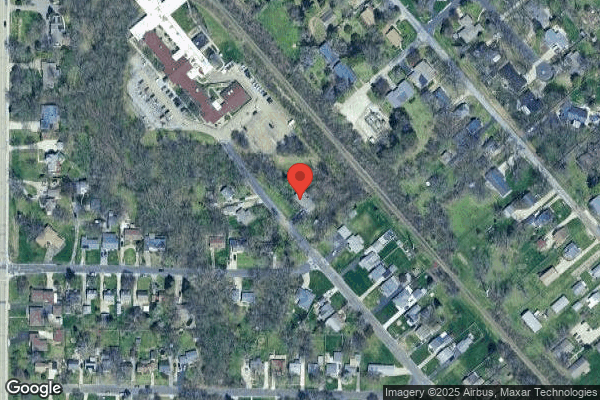
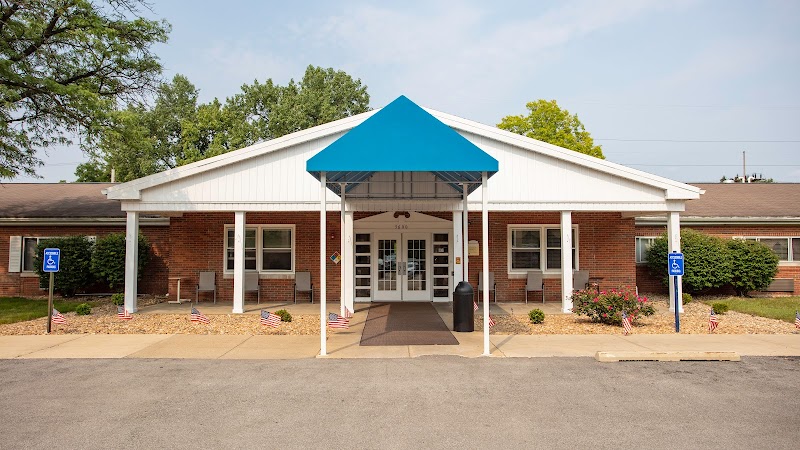
5600 GLEN ELM DRIVE, PEORIA, IL 61614 (309) 693-8777
For profit - Limited Liability company 138 Beds ACCOLADE HEALTHCARE Data: November 2025
Trust Grade
50/100
#200 of 665 in IL
Last Inspection: September 2024

Within standard 12-15 month inspection cycle. Federal law requires annual inspections.

Overview

Accolade Healthcare of Peoria has a Trust Grade of C, which means it is average and falls in the middle of the pack compared to other facilities. It ranks #200 out of 665 nursing homes in Illinois, placing it in the top half of the state's facilities, and #4 out of 10 in Peoria County, indicating only three local options are better. The facility is improving, with a significant reduction in issues from 14 in 2024 to just 1 in 2025. Staffing is a concern, with a below-average rating of 2 out of 5 stars and a turnover rate of 44%, slightly lower than the state average. While the facility has not received any fines, which is a positive sign, there have been serious incidents, including a failure to implement fall prevention measures that led to a resident sustaining facial injuries and another resident fracturing their leg during a transfer due to improper techniques. On the positive side, the facility has more RN coverage than many others, which can help catch issues early. Overall, families should weigh these strengths and weaknesses when considering this nursing home.

Trust Score
C
50/100
In Illinois
#200/665
Top 30%
Safety Record
Moderate
Needs review
Inspections
Getting Better
14 → 1 violations
Staff Stability
○ Average
44% turnover. Near Illinois's 48% average. Typical for the industry.
Penalties
✓ Good
No fines on record. Clean compliance history, better than most Illinois facilities.
Skilled Nurses
○ Average
Each resident gets 32 minutes of Registered Nurse (RN) attention daily — about average for Illinois. RNs are the most trained staff who monitor for health changes.
Violations
⚠ Watch
35 deficiencies on record. Higher than average. Multiple issues found across inspections.
★★★☆☆
3.0
Overall Rating
★★☆☆☆
2.0
Staff Levels
★★★☆☆
3.0
Care Quality
★★★☆☆
3.0
Inspection Score
Stable
2024: 14 issues
2025: 1 issues

The Good

  • Full Sprinkler Coverage · Fire safety systems throughout facility
  • No fines on record
  • Staff turnover below average (44%)

    4 points below Illinois average of 48%

Facility shows strength in fire safety.

The Bad

3-Star Overall Rating

Near Illinois average (2.5)

Meets federal standards, typical of most facilities

Staff Turnover: 44%

Near Illinois avg (46%)

Typical for the industry

Chain: ACCOLADE HEALTHCARE

Part of a multi-facility chain

Ask about local staffing decisions and management

The Ugly 35 deficiencies on record

2 actual harm
Jan 2025 1 deficiency
CONCERN (D) 📢 Someone Reported This

A family member, employee, or ombudsman was alarmed enough to file a formal complaint

Potential for Harm - no one hurt, but risky conditions existed

Infection Control (Tag F0880)

Could have caused harm · This affected 1 resident

Based on record review and interview the facility failed to follow enhanced barrier precautions during wound care for one of eight residents reviewed for wound care (R3) in the sample of eight. Findin...

Read full inspector narrative →
Based on record review and interview the facility failed to follow enhanced barrier precautions during wound care for one of eight residents reviewed for wound care (R3) in the sample of eight. Findings include: R3's medical record documents R3 is receiving daily wound care for an unstageable pressure ulcer of the left buttock. R3's physicians Order Sheet includes the following wound care order: WOUND: left buttock- Apply (medicated solution)-soaked gauze and pat dry, apply (medicated ointment) and pack with (medicated gauze) and island border dressing daily. On 1/15/24 at 7:30am sign on R3's door stated Enhanced Barrier Precautions were in place for R3, including donning a gown and gloves when providing close contact cares. On 1/15/25 at 7:30am V3 Wound Nurse entered R3's room to perform wound care for R3's left buttock pressure ulcer. V3 did not don a gown while performing R3's wound care. V3 completed R3's wound care without wearing a protective gown. On 1/15/25 at 1:50pm, V2 DON/Director of Nursing stated Nurses should wear gowns when providing wound care. V2 stated V3 had informed her she had not followed EBP protocol for R3's wound care. The facility's Enhanced Barrier Precautions policy, dated 10/21/22, documents: EBP (Enhanced Barrier Precautions) requires the use of gown and gloves during high-contact resident care activities that provide opportunities for transfer of MDROs (Multi-Drug Resistant Organisms) to staff hands and clothing. High-contact resident care activities requiring gown and glove use among residents that trigger EBP use include Wound care: any skin opening requiring a dressing.
Sept 2024 8 deficiencies
CONCERN (D)

Potential for Harm - no one hurt, but risky conditions existed

PASARR Coordination (Tag F0644)

Could have caused harm · This affected 1 resident

**NOTE- TERMS IN BRACKETS HAVE BEEN EDITED TO PROTECT CONFIDENTIALITY** Based on interview and record review the facility failed to notify the appropriate State Agency of a new diagnosis of bipolar di...

Read full inspector narrative →
**NOTE- TERMS IN BRACKETS HAVE BEEN EDITED TO PROTECT CONFIDENTIALITY** Based on interview and record review the facility failed to notify the appropriate State Agency of a new diagnosis of bipolar disorder for one resident (R81) of four residents reviewed for Preadmission Screening in the sample of 59. Findings include: Current Physician's Order Summary Report indicates R81 was admitted to the facility on [DATE] with Primary admission Diagnosis of Dementia with Other Behavioral Disturbance. R81's PASRR (Pre-admission Screening and Resident Review) dated 11/14/22 indicates PASRR Level I Determination: No Level II required. There is no evidence of a PASRR condition of an intellectual/developmental disability or a serious behavioral health condition. If changes occurs or new information refutes these findings, a new screen must be submitted. R81's medical record diagnosis list indicates a diagnosis of Bipolar was added on 12/12/22 and Bipolar/Hypomanic added on 5/12/23. No documentation was found or presented to indicate another Pre-admission screen was completed after addition of Bipolar diagnosis on 12/12/22 and 5/12/23. On 9/6/24 at 1:45pm V1, Administrator confirmed the State Agency should have been notified to complete a new screening based on R81's new Bipolar diagnosis.
CONCERN (D)

Potential for Harm - no one hurt, but risky conditions existed

Comprehensive Care Plan (Tag F0656)

Could have caused harm · This affected 1 resident

Deficiency Text Not Available

Read full inspector narrative →
Deficiency Text Not Available
CONCERN (D)

Potential for Harm - no one hurt, but risky conditions existed

Quality of Care (Tag F0684)

Could have caused harm · This affected 1 resident

Based on observation, interview, and record review, the facility failed to observe, assess, and document on a colostomy for one (R94) of one resident reviewed for colostomies in a sample of 59. Findin...

Read full inspector narrative →
Based on observation, interview, and record review, the facility failed to observe, assess, and document on a colostomy for one (R94) of one resident reviewed for colostomies in a sample of 59. Findings include: R94's medical record documents R94 has the following diagnoses: Ileostomy status. R94's Physician Orders for September 2024 documents the following: Ostomy: Monitor Colostomy, empty pouch when 1/3 full, change appliance every three to five days. On 9/04/24 at 2:55 PM, R94 stated I hope to get the colostomy reversed. At that same time R94 pulled down her covers and showed surveyor colostomy. R94's medical record including the TAR/treatment administration record, MAR/Medication administration record, and nurses' notes have no documentation of monitoring, assessing, or changing R94's colostomy. On 9/06/24 at 11:11AM, V1 Administrator stated, I have no documentation to give you for (R94's) outputs from her colostomy. On 9/6/24 at 12:02PM, V9 Care Plan Coordinator verified R94's medical record had no routine documentation on R94's monitoring, assessing, or changing of her colostomy.
CONCERN (D)

Potential for Harm - no one hurt, but risky conditions existed

Deficiency F0698 (Tag F0698)

Could have caused harm · This affected 1 resident

Based on observation, interview, and record review, the facility failed to have specific dialysis orders related to the type of dialyzer, flow rate, and length of time; nephrologist; target weights; a...

Read full inspector narrative →
Based on observation, interview, and record review, the facility failed to have specific dialysis orders related to the type of dialyzer, flow rate, and length of time; nephrologist; target weights; and care of the dialysis port for one (R265) of two residents reviewed for dialysis in a sample of 59. Findings include: Facility Dialysis Protocol, revised 9/23, documents To provide guidance to the facility on how to care for the dialysis resident within the facility. All residents who need dialysis will be properly cares for within the facility. It is the responsibility of nursing to provide care for the dialysis resident. Nursing will monitor the access site for signs and symptoms of infection or bleeding at the site. The residents care plan will reflect their dialysis needs. R265's medical record documents R265 has the following diagnoses: End Stage Renal Disease; and acquired absence of kidney. R265's medical record has no dialysis orders, no nephrologist listed, no post dialysis target weight, or orders to cares for R265's dialysis port. On 9/3/24 at 10:05 AM, R265 had a right chest dialysis catheter port. At that same time, R265 stated I am on dialysis. On 9/4/24 at 11:15 AM, V10 LPN/Licensed Practical Nurse stated she was unsure who (R265's) nephrologist was, all nurses need to monitor the dialysis site and document, all residents on dialysis should have orders for dialysis in their chart and should have a target weight in the chart for residents on dialysis. On 9/4/24 at 2:10 PM, V11 RN/Registered Nurse in Dialysis stated they are contracted by the facility, facility does not have access to their records for specific resident orders for dialysis, expect the staff to observe and be aware of any concerns with residents dialysis access sites and call if any concerns, should know the nephrologist to contact in case of an emergency, and have their target weight for post dialysis.
CONCERN (D)

Potential for Harm - no one hurt, but risky conditions existed

Deficiency F0761 (Tag F0761)

Could have caused harm · This affected 1 resident

Based on observation, interview, and record review, the facility failed to ensure medications were not left at a resident's bedside for one of 24 residents (R40) reviewed for medication storage in the...

Read full inspector narrative →
Based on observation, interview, and record review, the facility failed to ensure medications were not left at a resident's bedside for one of 24 residents (R40) reviewed for medication storage in the sample of 59. Findings Include: The Facility's Administration of Medications policy dated 8/2023 documents Residents shall receive their medications on a timely basis in accordance with state and federal guidelines and within established facility policies. Self-administration of medications is permitted when approved by the interdisciplinary team, with a written order from the primary attending physician. On 9/6/24 at 9:30 AM, R40 was lying in bed with R40's bedside table over his bed. A clear medicine cup containing 11 pills was noted on R40's bedside table. The medication cup had been tipped over with approximately half of the pills spilled out onto the table. R40 stated, This is what some of the nurses do. R40 was not able to name his medicine or state which pill was what. R40's Medical Record did not contain any assessments or physician orders for self-administration of medications. On 9/6/24 at 10:00 AM, V3 (License Practical Nurse) verified V3 gave R40 his morning medications on 9/6/24. V3 verified V3 did not stay with R40 until all R40's medications were consumed but should have. On 9/6/24 at 10:05 AM, V2 (Director of Nursing) stated that the medicine in front of R40 would have been his morning medicine. R40's Medication Administration Record for September documents that R40's morning medicines on 9/6/24 would include: Escitalopram 20 mg (milligrams), Multivitamin 1 tablet, Omeprazole 40 mg, Vitamin B6 100 mg, Vitamin C 500 mg, Vitamin D 1 tablet, Zinc 1 tablet, Zyrtec 10 mg, Tylenol 650 mg, Bupropion ER (Extended Release) 100 mg, Buspar 5 mg, and Carbidopa-Levodopa 25-100 mg.
CONCERN (E)

Potential for Harm - no one hurt, but risky conditions existed

Deficiency F0657 (Tag F0657)

Could have caused harm · This affected multiple residents

Based on observation, interview, and record review, the facility failed to revise care plans for six (R9, R22, R94, R110, R265, and R415) of 24 residents reviewed for care plan revision in a sample of...

Read full inspector narrative →
Based on observation, interview, and record review, the facility failed to revise care plans for six (R9, R22, R94, R110, R265, and R415) of 24 residents reviewed for care plan revision in a sample of 59. Findings include: Facility Care Planning, revised 6/24, documents Utilize the results of the comprehensive assessment to develop, revise and review resident's care plan. To provide a method for all staff to have needed information in caring for the residents. Each resident will have a plan of care to identify problems, needs and strengths that will identify how the team will provide care. Facility Dialysis Protocol, revised 9/23, documents The residents care plan will reflect their dialysis needs. 1. R9's medical record documents R9 has the following diagnoses: Depression and Paranoid Schizophrenia. R9's Physician Orders for September 2024 documents the following: Fluoxetine HCl/Hydrochloride Oral Capsule 20 MG/Milligram (Fluoxetine HCl) Give 2 capsule by mouth in the morning for depression related to Depression Unspecified; Quetiapine Fumarate Oral Tablet 300 MG (Quetiapine Fumarate) Give 350 mg by mouth at bedtime for Schizophrenia related to Paranoid Schizophrenia; and Olanzapine Oral Tablet 10 MG (Olanzapine) Give 1 tablet by mouth at bedtime related to Paranoid Schizophrenia. R9's current care plan has no documentation of nonpharmacological interventions for the above medications. On 9/6/24 at 12:02 PM, V9 Care Plan Coordinator verified there were no nonpharmacological interventions on R9's Care Plan and there should be. 2. R110's medical record documents R110 has the following diagnoses: Anxiety and Depression. R110's Physician Orders for September 2024 documents the following: Escitalopram Oxalate Oral Tablet 5 MG (Escitalopram Oxalate) Give 1 tablet by mouth in the morning for depression; Trazodone HCl Oral Tablet 100 MG (Trazodone HCl) Give 1 tablet by mouth at bedtime for depression; and Lorazepam Oral Tablet 0.5 MG (Lorazepam) Give 1 tablet by mouth three times a day related to Anxiety Disorder. R110's current care plan has no documentation of nonpharmacological interventions for the above medications. On 9/6/24 at 12:02 PM, V9 Care Plan Coordinator verified there were no nonpharmacological interventions on R110's Care Plan and there should be. 3. R265's medical record documents R265 has the following diagnoses: End Stage Renal Disease; and acquired absence of kidney. R265's current care plan has no documentation of who to contact for emergencies/complications; a target weight; an assessment and care of the right chest dialysis port; and resident specific dialysis orders on the care plan. On 9/3/24 at 10:05 AM, R265 had a right chest dialysis catheter port. At that same time, R265 stated I am on dialysis. On 9/6/24 at 12:02 PM, V9 Care plan Coordinator stated R265's Care Plan did not address complications, emergencies, target weight, nephrologist, or an assessment of the right chest catheter site. V9 also verified the care plan did not include resident specific dialysis orders. V9 stated R265's Care Plan, needs updated. 4. R94's medical record documents R94 has the following diagnoses: Ileostomy status. R94's Physician Orders for September 2024 documents the following: Ostomy: Monitor Colostomy, empty pouch when 1/3 full, change appliance every three to five days. On 9/04/24 at 2:55 PM, R94 stated I hope to get the colostomy reversed, and all stool comes out of the colostomy because I had to have my colon removed. R94's current care plan documents (R94) has constipation and ileostomy, with the interventions of Encourage resident to sit on toilet to evacuate bowels if possible. On 9/6/24 at 12:02 PM, V9 Care Plan Coordinator verified R94's care plan needed updated. 5. R415's Physician Order Sheet dated September 2024 documents that she takes Buspirone 5 mg (milligram) three times a day for anxiety, Duloxetine 60 mg every morning for panic disorder, anxiety disorder, and Quetiapine Fumarate 25 mg twice daily for depression. R415's current care plan documents (R415) has a behavior problem of yelling out when no assistance is needed. The Interventions/Tasks for this focus area documents administer medications as ordered, allow choices within individuals decision making abilities and anticipate and meet the resident's needs. The care plan does not document what R415's decision making abilities are. The care plan does not have any other nonpharmacological interventions in place. R415's current care plan documents (R415) receives an antidepressant medication. The interventions/tasks for this focus area documents Administer antidepressant medications as ordered by physician. There were no nonpharmacological interventions listed. R415's current care plan documents (R415) takes anti-anxiety medications. The interventions/tasks for this focus area documents Administer anti-anxiety medications as ordered by the physician. There were no nonpharmacological interventions listed. On 09/06/24 at 12:02 PM, V9/Care Plan Coordinator confirmed there aren't nonpharmacological interventions in place for R415. 6. R22's Order Summary Report dated 09/04/24 documents R22 has diagnoses which include Unspecified Dementia, Unspecified Severity with other behavioral disturbance, Bipolar Disorder, Major Depressive Disorder and Delusional Disorders. R22's Order Summary Report documents an order for Quetiapine Fumarate 25 milligrams by mouth two times daily. R22's Care Plan last revised on 06/14/24 documents R22 receives antipsychotic medications Quetiapine related to Bipolar Disorder. Listed interventions include: 1) Administer Antipsychotic medications as ordered by physician. Observe for side effects and effectiveness every shift. 2) Discuss with physician, family regarding ongoing need for use of medication. Review behaviors/interventions and alternate therapies attempted and their effectiveness as per facility policy. 3) Observe/document/report as needed any adverse reactions of psychotropic medications. R22's Care Plan did not have any nonpharmacological interventions in place. On 09/06/24 at 12:02 PM V9/Care Plan Coordinator verified there are no nonpharmacological interventions in place for R22's behaviors.
CONCERN (E)

Potential for Harm - no one hurt, but risky conditions existed

Medication Errors (Tag F0758)

Could have caused harm · This affected multiple residents

6. R9's medical record documents R9 has the following diagnoses: Depression and Paranoid Schizophrenia. R9's Physician Orders for September 2024 documents the following: Fluoxetine HCl/Hydrochloride O...

Read full inspector narrative →
6. R9's medical record documents R9 has the following diagnoses: Depression and Paranoid Schizophrenia. R9's Physician Orders for September 2024 documents the following: Fluoxetine HCl/Hydrochloride Oral Capsule 20 MG (Fluoxetine HCl) Give 2 capsule by mouth in the morning for depression related to Depression Unspecified; Quetiapine Fumarate Oral Tablet 300 MG (Quetiapine Fumarate) Give 350 mg by mouth at bedtime for schizophrenia related to Paranoid Schizophrenia; and Olanzapine Oral Tablet 10 MG (Olanzapine) Give 1 tablet by mouth at bedtime related to Paranoid Schizophrenia. R9's medical record has no documentation of nonpharmacological interventions and no identified indicators/behaviors for use for the above medications. On 9/6/24 at 12:02PM, V2 DON/Director of Nursing verified there were no nonpharmacological interventions and no identified indicators/behaviors for use for R9 and there should be. 7. R110's medical record documents R110 has the following diagnoses: Anxiety and Depression. R110's Physician Orders for September 2024 documents the following: Escitalopram Oxalate Oral Tablet 5 MG (Escitalopram Oxalate) Give 1 tablet by mouth in the morning for depression; Trazodone HCl Oral Tablet 100 MG (Trazodone HCl) Give 1 tablet by mouth at bedtime for depression; and Lorazepam Oral Tablet 0.5 MG (Lorazepam) Give 1 tablet by mouth three times a day related to Anxiety Disorder. R110's medical record has no documentation of nonpharmacological interventions and no identified indicators/behaviors for use for the above medications. On 9/6/24 at 12:02PM, V2 DON verified there were no nonpharmacological interventions and no identified indicators/behaviors for use for R110 and there should be. 8. R415's Physician Order Sheet dated September 2024 list diagnoses of disorientation, claustrophobia, unspecified dementia without behavioral disturbance, psychotic disturbance, anxiety disorder and panic disorder. R415's Physician Order Sheet dated September 2024 documents that R415 was started on Quetiapine Fumarate, an antipsychotic medication, for depression on 9/3/24. On 9/6/24 at 11:30AM V2 (Director of Nursing) stated An antipsychotic shouldn't have been ordered for depression. I need to educate our providers. (R145's) behaviors all seem to stem from her dementia and her anxiety. Based on observation, interview, and record review the facility failed to provide an appropriate indication for use of antipsychotic medications in seven residents (R22, R39, R70, R81, R102, R214, R415) with diagnosis of Dementia and failed to identify non-pharmacological interventions for two residents (R9, R110) receiving antidepressant medications of nine residents reviewed for unnecessary psychotropic medications in the sample of 59. Findings include: Facility Policy/Psychotropic Medications dated/revised 1/2024 documents: Residents will only be given antipsychotic drugs when clinically indicated according to appropriate diagnosis and physician's order. Duplicate Drug Therapy: Any drug therapy that duplicates a particular drug effect on the resident without any demonstrative therapeutic benefit. Any two or more drugs, whether from the same category or not, that have a sedative effect. Antipsychotic Drug: A neuroleptic drug that is helpful in the treatment of psychosis and has a capacity to ameliorate thought disorders. Psychotropic medications shall be used only after alternative methods have been tried unsuccessfully and only upon the written order of a physician and after informed consent has been received from the resident/representative. The resident's care plan will include objectives for gradual dose reduction as well as alternative interventions to assist in gradual dose reduction. 1) Current Physician Order Summary Report indicates R39 has orders for Risperdal (antipsychotic) 0.25mg (milligrams) at bedtime related to Unspecified Dementia with Anxiety (order date 7/18/24). R39's medical record indicates R39 has diagnoses of Dementia with Other Behavioral Disturbance and Anxiety with start date of 1/11/24. Consent for Psychotropic Medications indicates consent was given on 7/18/24 to receive Risperdal for Dementia with behaviors. Psychiatry Note dated 1/25/24 indicates Start Risperdal 0.5mg twice daily due to exhibits Dementia behaviors including physical and verbal aggression, refusal of care including refusal to get out of bed. Note indicates no audio/visual hallucinations, no symptoms of psychosis. R39's Care Plan indicates (R39) receives an antipsychotic medication related to Dementia without behavioral disturbance. R39's Care Plan also indicates R39's behaviors related to Dementia are yelling out and arguing with staff, looking for her grandson; has potential to be physically aggressive with staff related to Dementia. On 9/3/24, 9/4/24 and 9/6/24 R39 was seen in the memory care unit participating in activities during lunch meals. On 9/6/24 at 11:35am V12, Memory Care Unit Director stated R39's only behaviors are being resistive to care at times and putting herself on the floor. 2) R70's medical record indicates R70 has diagnoses of Dementia, Moderate with Mood Disturbance dated 10/1/23 and Alzheimer's Disease dated 8/1/23. R70's Current Physician Order Summary Report indicates R70 has orders for Olanzapine (antipsychotic)2.5mg twice daily for Dementia with Mood Disorder (date ordered 5/22/24). Consent for Psychotropic Medications indicates consent was given on 5/20/24 via telephone for R70 to receive Olanzapine. Consent does not include indication for use, diagnosis, or target behaviors. Psychiatry Note dated 8/8/24 indicates R70 continues to have sundowning behaviors almost daily, with behaviors starting around 4pm and sometimes continuing until 10pm. Note indicates no audio/visual hallucinations, no symptoms of psychosis or mania. Note indicates We will shift her Olanzapine today in hopes to better target her Dementia related behaviors and agitation. Note also indicates R70 receives the following psychotropic medications: Escitalopram and Mirtazapine (antidepressants) for Depression Melatonin for Insomnia, Depakote (Mood Stabilizer) for Mood. Current Care Plan indicates R70 receives antipsychotic medications related to Bipolar Disorder dated/revised 8/31/22. Care Plan indicates R70's behaviors are related to Dementia - packing belongings and going home, looking for a baby, interferes with other resident's care, looking for her sister and Physically aggressive to staff related to Dementia. On 9/3/24, 9/4/24 and 9/6/24 R70 was seen in the memory care unit participating in activities during lunch meals. On 9/3/24 and 9/6/24 V13, R70's Spouse stated he visits R70 every day and most of R70's behaviors are after he leaves for the day and R70 wants to go home. Behavior tracking 8/6/24 to 9/4/24 indicate R70's behaviors do not occur every day and are episodic. 3) Current Physician Order Summary Report indicates R81 has orders for Olanzapine (antipsychotic) 10mg in the evening and 5mg daily related to Bipolar Disorder (date ordered 5/10/24). Report also indicates R81 receives Haldol (antipsychotic) Decanoate injection 25mg weekly for Bipolar (order date 5/10/24). R81's medical record indicates R81 has the following diagnoses: Dementia with other Behavioral Disturbance 12/9/22 (admit), Unspecified Psychosis 12/9/22. Bipolar 12/12/22 and Bipolar Hypomanic 5/12/23 Consent for Psychotropic Medication(s) dated 5/10/24 indicates consent was received for R81 to receive Haldol 25mg weekly and on 5/2/24 for R81 to receive Olanzapine 10mg at bedtime and 5mg daily for Bipolar Disorder. Psychiatry Note dated 8/13/24 indicates R81 is now receiving Hospice Care, does continue to wander the halls, but has not been overly intrusive. Note indicates no symptoms of psychosis or mania. R81's Care Plan indicates R81 receives antipsychotic medication related to Bipolar. Care Plan indicates R81's behaviors are related to Dementia - refuses labs, wanders, resisting care and aggressive with staff; hovers over residents while they eat, removes utensils from their hands; refuses medications, refuses to eat. and is verbally aggressive with staff related to Dementia. Care Plan does not identify behaviors related to Bipolar Disorder. On 9/3/24, 9/4/24 and 9/6/24 R81 was seen in the memory care unit either sleeping in her bed or wandering the halls. On 9/6/24 at 11:40am V12, Memory Care Director stated that R81's behaviors are mainly pacing (R81) is unable to actively participate in activities. 4) R102's Medical Record indicates R102 has the following diagnoses: Dementia without Behavioral Disturbance, Mood or Anxiety dated 4/23/24 (admit) and Disorganized Schizophrenia 4/23/24. Current Physicians Order Summary Report indicates R102 receives Seroquel (antipsychotic) 50mg at bedtime for Disorganized Schizophrenia (date ordered 7/4/24). Psychiatry Note dated 7/25/24 indicates on that date R102 was pleasant and in good spirits. Note indicates R102 continues to respond to internal stimuli but does so quietly and pleasantly. Note indicates there is no evidence of auditory nor visual hallucinations and no symptoms of psychosis or mania. No substance cravings for nicotine dependence. R102's Care Plan indicates R102 receives antipsychotic medication related to Disorganized Schizophrenia (revised 5/23/24) and that R102 has a behavior problem related to Disorganized Schizophrenia - has a habit of refusing showers when out of cigarettes. No other behaviors of Dementia or Schizophrenia were identified in R102's care plan. Consent for Psychotropic Medication(s) dated 7/4/24 indicates consent was given on that date to increase R102's Seroquel from 25mg to 50mg at bedtime. Consent does not indicate reason for increase, diagnoses, or target behaviors. No progress notes were found or presented documenting the reason or justification for Seroquel ordered/increased on 7/4/24. On 9/3/24, 9/4/24 and 9/6/24 R81 was seen in the memory care unit in activities and during meals. On 9/6/24 at 11:40am V12, Memory Care Director stated that R102's behaviors are refusing showers when can't have a cigarette. I don't know of any other behaviors that (R102) has. 5) R214's Medical Record indicates R214 has the following diagnoses: Admitting Diagnosis: Dementia with Agitation/Psychotic Disturbance 8/20/24 Secondary Diagnosis: Bipolar Disorder 8/20/24 Current Physician Order Summary Report indicates R214 receives Haldol (antipsychotic) Injection 5mg every 8 hours as needed for agitation X 14 days (date ordered 8/29/24); Olanzapine (antipsychotic) 5mg daily for Bipolar Disorder date ordered 8/29/24; Quetiapine (antipsychotic) 50mg twice daily related to Bipolar Disorder date ordered 8/28/24 Psychiatry Note dated 8/22/24 indicates R214 is a new admit, combative, resisting care, hits, kicks, and fights. Note indicates R214 does not experience any psychotic symptoms, including auditory or visual hallucinations, no mania. Note indicates R214 has an underlying neurocognitive disorder that could be exacerbated by current medication regimen. Note indicates author of note recommends to add Olanzapine (as needed). Current Care Plan indicates R214 has Behavior of Resisting Cares and verbally and physically aggressive with staff related to Dementia, stands up from wheelchair without assist, makes inappropriate comments to staff - dated initiated 8/21/24/revised 8/28/24. No progress notes indicating circumstances/necessity of ordering multiple psychotropic medications for R214 including duplicate antipsychotic therapy were found or presented. No care plan was found or presented for any of R214's psychotropic/antipsychotic medications. On 9/3/24, 9/4/24 and 9/6/24 R214 was seen in the memory care unit in during meals and in her room with her spouse. On 9/4/24 at 10:30am V14, Spouse stated that R214 is confused and is resistive to care. V14 stated he was informed of the need for the (psychotropic) medications due to R214's behaviors. V14 stated he stays with R214 every day until about 630pm. On 9/6/24 at 11:50am V1, Administrator stated I agree there seems to be a lack of justification for these medications. We need to do better with this. 9. R22's Order Summary Report dated 09/04/24 documents R22 has diagnoses which include Unspecified Dementia, Unspecified Severity with other behavioral disturbance, Bipolar Disorder, Major Depressive Disorder and Delusional Disorders. R22's Order Summary Report documents an order for Quetiapine Fumarate 25 milligrams by mouth two times daily. R22's Care plan last reviewed 08/12/24 documents R22 has been verbally aggressive towards staff related to dementia. R2 is/has potential to be physically aggressive towards staff related to dementia, R22 is resistive to care, refuses medications related to dementia. R22 has impaired cognitive function/dementia or impaired thought processes related to dementia, cerebrovascular accident. R22's Behavior Tracking Report documents R22 had four behaviors between 03/01/24 and 06/30/24 which include: 03/23/24 Mood Changes, 03/24/24 Compulsive, 04/26/24 Uncooperative, and 06/07/24 Uncooperative. On 09/03/24 at 10:53 AM, R22 was in her wheelchair near the dining room. R22 appeared calm while sitting and watching other people. On 09/03/24 at 1:10 PM, R22 was sitting in her wheelchair in her room. R22 was alert, confused and appeared calm. On 09/04/22 at 11:10 AM, R22 was in the hallway speaking with staff. R22 appeared calm and was asking about lunch time. On 09/06/22 at 11:32 AM, R22 was receiving cares. R22 was alert, confused and appeared to be in a pleasant mood while interacting with staff. On 09/06/22 at 11:32 AM, V5/CNA and V6/CNA stated they were not aware of R22 having behaviors. V5 stated R22 was a real nice lady. On 09/06/24 at 10:33 AM, V1 verified the facility Behavior Tracking Tool (undated) did not list R22 as having any behaviors between 07/03/24 and 09/03/24.
CONCERN (F)

Potential for Harm - no one hurt, but risky conditions existed

Food Safety (Tag F0812)

Could have caused harm · This affected most or all residents

Based on observation, record review, and interview, the facility failed to follow its policy to use facial hair beard restraints while in the kitchen, and failed to ensure food items were labeled with...

Read full inspector narrative →
Based on observation, record review, and interview, the facility failed to follow its policy to use facial hair beard restraints while in the kitchen, and failed to ensure food items were labeled with identification and dates. This failure has the potential to affect 121 residents who reside at the facility. Findings include: Facility's Hair Restraints Policy, Undated, documents: Guideline: Hair restraints shall be worn by all dining services staff when in food production area, dishwashing areas, or when serving food. 2. Hair restraints, hats, and/or beard guards shall be used to prevent hair from contacting exposed food. Facility's Food Storage (Dry, Refrigerated, and Frozen) Policy, dated 2020, documents: Procedure: 1.a. All food items will be labeled. The label must include the name of the food and the date by which it should be sold, consumed, or discarded. On 9/3/24 at 9:10am, V8 Dietary Aide washed dishes in the facility's kitchen; V8 did not have his facial hair beard covered. V8 Dietary Aide stated, I just know about the hairnet for head; I do not know if my beard is supposed to be covered. At this same time, V7 Dietary Manager stated that she was not sure what the facility policy was for staff covering their beards while in the kitchen. On 9/3/24 at 9:05am in the facility's Walk-In Freezer, one bag of frozen mixed vegetables was not labeled or dated; 11 medium sized plastic bags filled with hot dog buns and one plastic bag filled with sliced loaf bread were not labeled or dated. On 9/3/24 at 9:05am, V7 Dietary Manager stated, Anyone who opens the boxes or containers are responsible for labeling and dating the food. These items should have labels and dates. The facility's Long-Term Care Facility Application for Medicare and Medicaid (Centers for Medicare and Medicaid Services/CMS 671) form, dated 9/3/24, documents 122 residents reside in the facility.
May 2024 5 deficiencies
CONCERN (D) 📢 Someone Reported This

A family member, employee, or ombudsman was alarmed enough to file a formal complaint

Potential for Harm - no one hurt, but risky conditions existed

Resident Rights (Tag F0550)

Could have caused harm · This affected 1 resident

Based on observation, record review and interview, it was determined the facility failed to ensure call lights were answered in a timely manner and responded to accommodate the residents needs for 2 o...

Read full inspector narrative →
Based on observation, record review and interview, it was determined the facility failed to ensure call lights were answered in a timely manner and responded to accommodate the residents needs for 2 of 2 residents (R3, R4) with mobility restrictions observed for call light accessibility. Findings include: On 4/24/24, R3 was admitted to the facility for rehabilitation services status post lumbar fusion surgery. On 4/24/24, R3's Care plan indicates limited physical mobility related to surgical aftercare and spinal stenosis. On 5/6/24 at 12:10 PM, R3 was observed sitting in a wheelchair with Spine brace on; R3 had a hand over forehead, head down and grimacing; pulling and moving brace around and complained of pain. R3 stated We (R3 and R5 (R3's roommate) put the call light on twice. They (Certified Nurse Aides/CNA) said they would be back. At 1:04 PM, R3 was sitting in wheelchair with a back brace on R5 stated I put on the call light. They had to go find a mechanical lift. At 3:08 PM, R3 stated I'm still waiting for the gals to come put me on my side. I've been on my back since I got back in bed. R5 put the light on once but I still haven't had anyone come back. I called V10 (Healthcare Power of Attorney) earlier when they left me up in the chair and told V10. V10 called the front desk and told them to put me back in bed. That's why they came in. On 5/7/24 at 8:48 AM, V10 stated Yesterday around 11:00 AM or so, R3 called me crying saying R3 was left in the wheelchair with the back brace on for a half hour. They (staff) said they would be right back, but they hadn't been back. R3 has called me about 3 or 4 other times and says R3 pushes the call button but no one comes, I have pushed the call light a couple of times, and no one has answered but I'll go out there and complain. On 8/1/23, R4 was admitted rehabilitation services related to weakness, muscle atrophy, abnormality of gait and mobility. R4's care plan dated 8/2/23 documented R4 was at risk for acute/chronic pain related to medical postoperative right lower leg fracture discomfort and an Activities of Daily Living self-care performance deficit related to displaced bi-malleolar fracture of right lower leg. The 4/25/24 through 5/7/24 Plan of Care Response History titled Toileting hygiene: The ability to maintain perineal hygiene, adjust clothes before and after voiding or having a bowel movement. If managing an ostomy, include wiping the opening but not managing equipment documented R4 requires partial/moderate, substantial/maximal assistance or dependent on helper assistance. On 5/6/24 at 12:20 PM, R4 stated I got up to the commode with help from the Certified Nurse Aide/CNA and I didn't see the CNA again. I can't wipe my butt. The CNA told me she didn't see my light on, but it was on for 2 hours. I have trouble breathing and I need assistance. I need help with getting up and I have trouble holding my bowels and bladder. I can't walk because I broke my ankle and tail bone. I am so upset (about being left on the commode). I'm not getting out of bed for the rest of the day.
CONCERN (D) 📢 Someone Reported This

A family member, employee, or ombudsman was alarmed enough to file a formal complaint

Potential for Harm - no one hurt, but risky conditions existed

Deficiency F0558 (Tag F0558)

Could have caused harm · This affected 1 resident

Based on observation, record review and interview, the facility failed to ensure call lights were available for resident use for 1 of 2 residents (R3) reviewed with mobility restrictions observed for ...

Read full inspector narrative →
Based on observation, record review and interview, the facility failed to ensure call lights were available for resident use for 1 of 2 residents (R3) reviewed with mobility restrictions observed for call lights. Findings include: The Daily Care policy, dated 8/2/17, documented the guidelines and procedures for daily cares to all residents. The policy documented to Place call light within reach. On 4/24/24, R3 was admitted to the facility for rehabilitation services status post lumbar fusion surgery. On 4/24/24, R3's Care plan indicated limited physical mobility related to surgical aftercare and spinal stenosis. On 4/24/24, The Physical Therapy and Occupational Therapy Evaluation and Plan of Treatment documented Precaution Details: ** Spine Brace to be worn while patient is up doing transfers and/or ambulating. Does not need to be worn while in bed or chair. SPINAL PRECAUTIONS- NO BLT (NO BENDING, LIFTING more than 7 pounds), OR TWISTING. FALL RISK, 8/10 pain in right hip and bilateral knees. The evaluation documented R3 required substantial/maximal assistance with bed mobility, partial/moderate assistance with transfers and was dependent on staff with ambulation. On 5/6/24 at 12:10 PM, R3 was sitting in a wheelchair with back brace on. R3's call light was draped over the bed and unreachable. At 1:04 PM, R3 was sitting in wheelchair with brace on. R3's roommate (R5) stated I put on the call light because R3 wanted to go back to bed, and she can't reach it (call light). At 1:06 PM, V13 (Certified Nurse Aide) was observed to enter R3's room, providing cares and exited to go get another staff member for assistance. The call light was draped over the bed and unreachable. At 1:20 PM, R3 was lying in bed with call light on nightstand and unreachable. At 3:08 PM, R3 stated I'm still waiting for the gals to come put me on my side. I've been on my back since I got back in bed. R5 put the light on once but I still haven't had anyone come back. I called V10 (Healthcare Power of Attorney) earlier when they left me up in the chair and told V10. V10 called the front desk and told them to put me back in bed. That's why they came in. On 5/7/24 at 8:48 AM, V10 stated Yesterday around 11:00 AM or so, R3 called me crying saying R3 was left in the wheelchair with the brace on for a half hour. They (staff) said they would be right back, but they hadn't been back. Sometimes when I get there, we can't find the call light. One time it was wrapped up and hung up on the wall. On 5/7/24 at 3:00 PM, V1 (Administrator) stated staff should ensure call lights are within reach of the residents prior to exiting the room.
CONCERN (D) 📢 Someone Reported This

A family member, employee, or ombudsman was alarmed enough to file a formal complaint

Potential for Harm - no one hurt, but risky conditions existed

Quality of Care (Tag F0684)

Could have caused harm · This affected 1 resident

**NOTE- TERMS IN BRACKETS HAVE BEEN EDITED TO PROTECT CONFIDENTIALITY** Based on observation, record review and interview, the facility failed to provide resident-centered care for one resident (R3) w...

Read full inspector narrative →
**NOTE- TERMS IN BRACKETS HAVE BEEN EDITED TO PROTECT CONFIDENTIALITY** Based on observation, record review and interview, the facility failed to provide resident-centered care for one resident (R3) who required rehabilitation services status post-surgical fusion of the lumbar spine, as evidenced by lack of physician orders for spinal precautions; no care plan intervention related to spinal precautions or back brace use; improper use of mobility devices and inadequate assessment of medication management. Findings include: R3 was admitted on [DATE] post a lumber fusion surgery and a history of Gastro Esophageal Reflux Disease (Heartburn/Indigestion/GERD). On 4/23/24, the facility received R3's Hospital Transfer Papers which documented Up to chair 3 (three) times per day. Spine brace (back brace designed to give support to thoracic and lumbar spine by preventing twisting and flexion (bending forward) to be worn while up ambulating. Does not need to be worn while up in chair or bed. On 4/24/24, The Physical Therapy and Occupational Therapy Evaluation and Plan of Treatment documented Precaution Details: ** Spine Brace to be worn while patient is up doing transfers and/or ambulating. Does not need to be worn while in bed or chair. SPINAL PRECAUTIONS- NO BLT (NO BENDING, LIFTING more than 7 pounds), OR TWISTING. FALL RISK, 8/10 pain in right hip and bilateral knees. The evaluation documented R3 required substantial/maximal assistance with bed mobility, partial/moderate assistance with transfers and was dependent on staff with ambulation. On 4/24/24, R3's Care plan documented R3 has limited physical mobility related to surgical aftercare, spinal stenosis and lacked interventions related to the Spinal Precautions and use of Spine brace. On 4/25/24, a Physician's Order for Spine Brace on when resident up every shift was implemented although lacked a physician's order for Spinal Precautions and to elevate the head of the bed to facilitate breathing. As of 5/6/24, the Order Summary lacked documentation of Spinal Precautions. On 4/25/24, a Physician's Order for WOUND: Back- Keep incision clean, dry and intact until follow up appointment, monitor for signs and symptoms of infection.' On 5/6/24 at 12:10 PM, R3 was sitting in a wheelchair with Spine brace on; R3 had a hand over forehead, head down and grimacing; pulling and moving brace around. R3 stated It (Spine brace) hurts. It's pushing on my belly, and I feel sick to my stomach. I'm not supposed to have this thing (brace) on when I'm in the wheelchair. It's just digging into me and hurting my back. At 12:38 PM, R3 was observed sitting in a wheelchair with brace on. At 1:04 PM, R3 was sitting in a wheelchair with brace on. At 1:10 PM, V13 (Certified Nurse Aide) was observed to enter R3's room. Upon entrance V13 had hooked R3's sling up to the mechanical lift. V13 stated I need to go get a spotter. R3 and R5 (R3's roommate) both stated V13 got R3 and R5 both up by V13 only this morning. At 1:20 PM, R3 was lifted into bed by V13 and V14 (Certified Nurse Aide) via mechanical lift with the Spine brace on. V13 stated to V14 V15 (Physical Therapy) took R3's brace off this morning and I put the brace (R3's Spine brace) back on wrong. R3 was positioned in bed in supine position without the head of the bed elevated. At 3:08 PM, R3 stated R3's pain level was at an eight (0- no pain and 10- worst pain). R3 stated The brace rubbed on my back incision. I'm still waiting for the gals to come put me on my side. I've been on my back since I got back in bed. I have indigestion so bad; I feel like there's a big heavy lump here (pointed to upper sternum). At home I drink milk and take Pepcid, but I've asked for some milk and haven't gotten anything yet. I called V10 (Healthcare Power of Attorney) earlier when they left me up in the chair and told V10. V10 called the front desk and told them to put me back in bed. That's why they (staff) came in (at 1:20 PM to put R3 back in bed). At 3:25 PM, V16 (Licensed Practical Nurse) was at the nurse's station and was informed that R3 was requesting to be turned and to conduct a dressing check/skin assessment. At 3:28 PM, V11 (Certified Nurse Aide Supervisor) told V16 that R3 requested something for R3's upset belly. At 3:35 PM, V16 walked into R3's room and proceeded to administer medication without identifying R3, asking about R3's symptoms, level of discomfort or explaining what the medication was for. At 3:40 PM, V16 proceeded to have R3 put R3's bent left leg over the top of the of the right leg and pushed R3 to R3's right side (twisting motion) and R3 cried out. The dressing covering the back incision was balled up at the top of R3's back and was not covering the incision. V16 peeled off plastic tape which was stuck to R3's skin and rolled up. V16 then left the room to go get supplies for the dressing change and left R3 rolled over on right side with the bed in a high position and with the incision not covered. During this time R3 stated that earlier in the day, R3 had been constipated and R3's belly was bloated. R3 stated I begged them (staff) to get me up to the toilet instead of going in my bed. R3 stated They just tell me to go in my briefs. Approximately 10 minutes later (3:50 PM) V16 enters R3's room and performed the dressing change. On 5/7/24 at 8:48 AM, V10 stated Some girls came in about the 4th day (after admission) and yanked on R3's leg. It really hurt R3. They are doing stuff they aren't supposed to do. This was a different surgery and it's way more painful. R3 should wear the brace when up and when R3 does therapy. They use that hoist (mechanical lift), and I don't think they are supposed to do that. They aren't walking R3 very much. Yesterday around 11:00 AM or so, R3 called me crying saying R3 was left in the wheelchair with the brace on for a half hour. They (staff) said they would be right back, but they hadn't been back. I wasn't very happy about that. R3 doesn't tolerate pain well. I called (the facility) and complained and apparently, they put her back in bed. On 5/6/24 at 3:33 PM, the Medication Administration Record/MAR documented V16 administered hydrocodone (opioid narcotic) for a pain level of 6 (0-no pain 10-worst pain). The record lacked an assessment of R3's complaints of indigestion or upset belly. The MAR lacked documentation medication for indigestion was administered on an as needed bases as ordered. On 5/7/24 at 12:30 PM, V15 (Physical Therapist) stated Orders come from the admission Orders and put into (medical record) by V12 (Assisting Director of Nursing.). We (Therapy) communicate with staff regarding weight bearing status and such. Today we changed R3's wheelchair to a high-backed reclining wheelchair so that R3 doesn't have the brace pushing into R3's groin/stomach and chest. V15 stated Therapist do not attend care plan meetings; R3's record lacked a Physician Order for Spinal Precautions; and the staff were not educated on Spinal Precautions and the use of the Spine brace. V15 stated staff should be utilizing the log roll technique (no twisting). V15 stated the Spine brace should have been removed while R3 was in the wheelchair and prior to mechanical lift. On 5/7/24 at 3:00 PM, V1 (Administrator) stated V15 has already been out to educate staff about the Spine brace and Spinal Precautions. V1 stated V15 was concerned about the lack of staff education. The Transfers policy, dated 8/2017, documented it was the duty of the Director of Nursing or Designee to ensure that adequate training is provided to all nursing staff on the proper use of (mechanical lifts). The policy stated a minimum of two staff members is recommended when transferring with a (mechanical lift) and to follow the Plan of Care to ensure the use of proper transfer technique. The Management of Pain policy, dated 8/2/17, documented to encourage residents to self-report pain; assess pain in non-verbal and cognitively impaired residents; and prevent and minimize anticipated pain when possible. The policy documents the licensed nurse will assess pain under any of the following circumstances: Resident is on routine pain medication and pain is not controlled, persistent, or worsening. A change in pain related behaviors, cognition, or mood occurs. Nursing Observation Pain may be indicated when there are changes in the following: Facial expressions. Body movements.
CONCERN (D) 📢 Someone Reported This

A family member, employee, or ombudsman was alarmed enough to file a formal complaint

Potential for Harm - no one hurt, but risky conditions existed

Pressure Ulcer Prevention (Tag F0686)

Could have caused harm · This affected 1 resident

Based on observation, record review and interview, the facility failed to ensure interventions were implemented to prevent the development of pressure ulcers or worsening of wounds for 1 of 1 resident...

Read full inspector narrative →
Based on observation, record review and interview, the facility failed to ensure interventions were implemented to prevent the development of pressure ulcers or worsening of wounds for 1 of 1 resident (R3) reviewed for wound and at high risk for a pressure ulcers. Findings include: On 4/18/24. R3 had a lumber fusion surgery and required Precaution Details:** Spine Brace (back brace designed to give support to thoracic and lumbar spine by preventing twisting and flexion (bending forward) to be worn while patient is up doing transfers and/or ambulating. Does not need to be worn while in bed or chair. SPINAL PRECAUTIONS- NO BLT (NO BENDING, LIFTING more than 7 pounds), OR TWISTING. FALL RISK, 8/10 pain in right hip and bilateral knees. On 4/24/24 R3's Braden Scale for Predicting Pressure Sore Risk Assessment was documented as a 12 (twelve), high risk. On 4/24/24, R3's Minimum Data Set (MDS) section M documented R3 had a stage 2 pressure ulcer (resolved as of 5/6/24), a surgical wound and was at risk for a pressure ulcer. On 4/24/24, R3's Careplan documented R3 has limited physical mobility related to surgical aftercare, spinal stenosis; has potential/actual impairment to skin integrity of the back and right buttock related to fragile skin and to encourage frequent repositioning. On 5/1/24, R3's Physician's order for Heel Protectors to bilateral heels every shift while in bed was obtained. On 5/6/24 at 12:10 PM, heel protectors were not observed in R3's room and the wheel chair lacked a pressure relieving pad. On 5/6/24 at 12:10 PM, R3 was observed sitting in a wheelchair without a pressure relieving pad On 5/6/24 at 1:10 PM, R3 was transferred from the wheelchair to the bed and was positioned in a supine position without heel protectors placed. On 5/6/24 at 3:08 PM, R3 rated R3's pain level at an eight (0- no pain and 10- worst pain). R3 stated I 'm still waiting for the gals to come put me on my side. I've been on my back since I got back in bed. and was observed to not have on heel protectors. On 5/6/24 at 3:25 PM, V16 (Licensed Practical Nurse) was asked to turn R3 and conduct a dressing check/skin assessment. On 5/6/24 at 3:40 PM, R3 was rolled to R3's right side and the dressing covering the back incision was balled up at the top of R3's back and was not covering the incision. V16 peeled off plastic tape which was stuck to R3's skin and rolled up. On 5/7/24 at 8:48 AM, V10 (R3's Healthcare Power of Attorney) Yesterday around 11:00 AM or so, R3 called me crying saying R3 was left in the wheelchair with the brace on for a half hour. They said they would be right back but they hadn't been back. I wasn't very happy about that. R3 doesn't tolerate pain well. I called (the facility) and complained. On 5/7/24 at 9:30 AM, heel protectors were observed in R3's bed. R3 stated they were new and had not seen them before. On 5/8/24 at 3:00 PM, V1 (Administrator) stated R3 did have heel protectors, although they were in the closet because R3 didn't like to wear them. The Formulized Turning and Positioning Program, dated 8/2017, documented residents at moderate to high risk on the Pressure Ulcer Risk Assessment and who are immobile are turned, toileted and repositioned in a formulized manner per the plan of care. The policy documented the turning schedule will occur every 2 (two) hours or when a resident asks. The Preventative Skin Care policy, dated 8/2017, documented that residents identified as being at increased risk for potential skin breakdown shall be repositioned as needed based on assessment and Pressure Redistribution Mattresses may be used in chairs.
CONCERN (D) 📢 Someone Reported This

A family member, employee, or ombudsman was alarmed enough to file a formal complaint

Potential for Harm - no one hurt, but risky conditions existed

Deficiency F0726 (Tag F0726)

Could have caused harm · This affected 1 resident

**NOTE- TERMS IN BRACKETS HAVE BEEN EDITED TO PROTECT CONFIDENTIALITY** Based on observation, record review and interview, the facility failed to ensure staff were competent to perform cares for a 1 o...

Read full inspector narrative →
**NOTE- TERMS IN BRACKETS HAVE BEEN EDITED TO PROTECT CONFIDENTIALITY** Based on observation, record review and interview, the facility failed to ensure staff were competent to perform cares for a 1 of 1 resident (R3) reviewed for specialized equipment and spinal precautions. Findings include: R3 was admitted to the facility on [DATE] post a lumber fusion surgery and spinal stenosis. On 4/23/24, the facility received R3's Hospital Transfer Papers which documented Up to chair 3 (three) times per day. Spine brace (back brace designed to give support to thoracic and lumbar spine by preventing twisting and flexion (bending forward) to be worn while up ambulating. Does not need to be worn while up in chair or bed. On 4/24/24, The Physical Therapy and Occupational Therapy Evaluation and Plan of Treatment documented Precaution Details: ** Spine Brace to be worn while patient is up doing transfers and/or ambulating. Does not need to be worn while in bed or chair. SPINAL PRECAUTIONS- NO BLT (NO BENDING, LIFTING more than 7 pounds), OR TWISTING. FALL RISK, 8/10 pain in right hip and bilateral knees. The evaluation documented R3 required substantial/maximal assistance with bed mobility, partial/moderate assistance with transfers and was dependent on staff with ambulation. On 4/24/24, R3's Care plan documented has limited physical mobility related to surgical aftercare, spinal stenosis and lacked interventions related to the Spinal Precautions and the Spine brace. On 4/25/24 R3's Order Summary documented a Physician's Order for Spine Brace on when resident up every shift and lacked documentation of Spinal Precautions or the application of the Spine brace. On 5/6/24 at 12:10 PM, R3 was sitting in a wheelchair with the Spine brace on; R3's hand was over forehead, head down and grimacing; pulling and moving brace around. R3 stated We (R3 and R5) put the call light on twice. It hurts. It's pushing on my belly, and I feel sick to my stomach. I'm not supposed to have this thing (brace) on when I'm in the wheelchair. It's just digging into me and hurting my back. R3's call light was draped over bed and unreachable. At 12:38 PM, R3 was observed sitting in a wheelchair with brace on. On 5/6/24 at 1:04 PM, R3 was sitting in a wheelchair with brace on. R3's roommate R5 stated I put on the call light. They had to go find a mechanical lift. On 5/6/24 at 1:10 PM, V13 (Certified Nurse Aide) was observed to enter R3's room. Upon entrance V13 had hooked R3's sling up to the mechanical lift. V13 stated I need to go get a spotter. R3 and R5 both stated V13 got R3 and R5 both up by V13 only this morning. On 5/6/24 at 1:20 PM, R3 was lifted into bed by V13 and V14 (Certified Nurse Aide) via mechanical lift with back brace on. V13 stated V15 took R3's brace off this morning and I put the brace (R3's Spine brace) back on wrong. R3 was left laying supine, flat on the bed with call light on nightstand. On 5/6/24 at 3:08 PM, R3 stated R3's pain level was at an eight (0- no pain and 10- worst pain). R3 stated The brace rubbed on my back incision. I'm still waiting for the gals to come put me on my side. I've been on my back since I got back in bed. R5 put the light on once but I still haven't had anyone come back. I have indigestion so bad; I feel like there's a big heavy lump here (pointed to upper sternum). I called V10 (Healthcare Power of Attorney) earlier when they left me up in the chair and told V10 how much pain I was in. V10 called the front desk and told them to put me back in bed. That's why they came in (at 1:10 PM to put R3 back into bed). On 3/6/24 at 3:25 PM, V16 (Licensed Practical Nurse) was asked to turn R3 and conduct a dressing check/skin assessment. On 5/6/24 at 3:40 PM, V16 proceeded to have R3 put a bent left leg on top of the right leg and pushed R3 to R3's right side (twisting motion). The dressing covering the back incision was balled up at the top of R3's back and was not covering the incision. V16 peeled off plastic tape which was stuck to R3's skin and rolled up. V16 then left the room to go get supplies for the dressing change and left R3 rolled over on right side with the bed in a high position and with the incision open to air. During this time R3 stated that earlier in the day, R3 had been constipated and R3's belly was bloated. R3 stated I begged them (staff) to get me up to the toilet instead of going in my bed. R3 stated They just tell me to go in my briefs. Approximately 10 minutes later (3:50 PM) V16 enters R3's room and performed the dressing change. On 5/7/24 at 8:48 AM, V10 stated Some girls came in about the 4th day and yanked on R3's leg. It really hurt R3. They are doing stuff they aren't supposed to do. This was a different surgery and it's way more painful. R3 should wear the brace when up and when R3 does therapy. They use that hoist (mechanical lift), and I don't think they are supposed to do that. R3 called me one day and told me R3 was in the hoist for a half hour. They aren't walking R3 very much. Yesterday around 11:00 AM or so, R3 called me crying saying R3 was left in the wheelchair with the brace on for a half hour. They (staff) said they would be right back, but they hadn't been back. I wasn't very happy about that. R3 doesn't tolerate pain well. I called (the facility) and complained and apparently, they put her back in bed. R3 has called me about 3 or 4 other times and says R3 pushes the call button but no one comes. Sometimes when I get there, we can't find the call light. One time it was wrapped up and hung up on the wall. I have pushed the call light a couple of times, and no one has answered but I'll go out there and complain. It gets done then. On 5/7/24 at 12:30 PM, V15 (Physical Therapist) stated Orders come from the admission Orders and put into (medical record) by V12 (Assisting Director of Nursing.). We (Therapy) communicate with staff regarding weight bearing status and such. Today we changed R3's wheelchair to a high-backed reclining wheelchair so that R3 doesn't have the brace pushing into R3's groin/stomach and chest. V15 stated Therapist do not attend care plan meetings, R3's record lacked Physician Orders for Spinal Precautions and the staff were not educated on Spinal Precautions and the use of the Spine brace and they should have had. V15 stated staff should be utilizing the log roll technique (no twisting). V15 stated the Spine brace should have been removed while in the wheelchair and prior to using the mechanical lift for transfer. On 5/7/24 at 3:00 PM, V1 (Administrator) stated V15 has already been out to educate staff about the Spine brace and Spinal Precautions. V1 stated V15 was concerned about the lack of staff education. The Transfers policy, dated 8/2017, documented it was the duty of the Director of Nursing or Designee to ensure that adequate training is provided to all nursing staff on the proper use of (mechanical lifts) lifts. The policy stated a minimum of two staff members is recommended when transferring with a mechanical lift and to follow the Plan of Care to ensure the use of proper transfer technique.
Apr 2024 1 deficiency
CONCERN (D) 📢 Someone Reported This

A family member, employee, or ombudsman was alarmed enough to file a formal complaint

Potential for Harm - no one hurt, but risky conditions existed

Deficiency F0694 (Tag F0694)

Could have caused harm · This affected 1 resident

**NOTE- TERMS IN BRACKETS HAVE BEEN EDITED TO PROTECT CONFIDENTIALITY** Based on record review and interview the facility failed to ensure the right resident received IV (intravenous) access hydration...

Read full inspector narrative →
**NOTE- TERMS IN BRACKETS HAVE BEEN EDITED TO PROTECT CONFIDENTIALITY** Based on record review and interview the facility failed to ensure the right resident received IV (intravenous) access hydration, micronutrient therapy and failed to obtain a physician's order to administer IV hydration and micronutrient (vitamin and mineral therapy) for one of three residents (R1) reviewed for IV therapy in the sample of three. Findings include: R1's Incident Report dated 1-17-24 at 1:23 PM and signed by V2 (Director of Nursing) documents, Incident Description: (IV therapy company) inserted an IV on (R1's) right wrist. (R1) did not receive much, maybe 100 ml (milliliter). (R1) pulled IV out and was waving it around. No injuries noted. Witnesses: V9 (IV Hydration RN/Registered Nurse) statement: I (V9) got the A and B (resident) bed mixed up and when I asked (R1) her name, she said yes. V8 (IV Hydration RN) statement: I had a trainee (V9) and (V9) mixed up the A and B bed. R1's Order Summary Report and Physician's Orders dated 1-1-24 through 1-31-24 do not include an order for R1 to receive IV hydration or micronutrient therapy, or for staff to obtain IV access. R1's Progress Notes dated 1-17-24 at 8:35 PM document R1 received a bruise to the right wrist due to an IV stick. On 4-12-24 at 10:10 AM V3 (R1's Power of Attorney) stated, I went to visit (R1) on 1-17-24 and I noticed (R1's) right arm had a bruise to the right wrist. I called the facility the next day and spoke to (V2/Director of Nursing) and she told me an outside group does vitamin infusions and a trainee for the vitamin infusion group gave (R1) an intravenous stick and infused some of a vitamin infusion in her right arm. On 4-12-24 at 10:30 V8 (Intravenous Hydration Registered Nurse) stated I was (V9's/Intravenous Hydration RN) preceptor and (V9) got the resident beds mixed up. I was down the hallway with another resident and (V9) asked (R1) her name and (V9) gave (R1) the infusion thinking (R1) was the right resident. (V9) came down to the room with me and (V2) came down and told me (R1) removed the IV. (V2) dressed the site so it was not bleeding anymore. I looked at our list and noticed (R1) was not supposed to get the IV and went and notified (V2). (R1) had gotten approximately 300 ml of our nutrition solution (vitamin C, b-complex, zinc, magnesium, calcium, amino acids). (V9) should have asked (R1) her first and last name, birthdate, and verified (R1's) picture in the medication administration record before administering the IV. The facility's IV Hydration and Micronutrient Therapy Guideline Contract dated 10/2023 documents, Nutrition Infusion: The nutrition infusion is an intervention for patients who are experiencing nutritional deficiencies, weight loss, decrease appetite, refusal to eat, or on weight management protocols. Ingredients: Vitamin C, B-Complex Vitamin, B-5 Vitamin, B-12 Vitamin, Calcium Gluconate, [NAME], Amino Acid Blends, and Branched-Chain Amino Acids (protein-based amino acids). V2 (Director of Nursing, V (Assistant Director of Nursing) or designee will contact the physician or nurse practitioner for review of the evaluation and recommendations and will secure specific orders for the specific type of IV infusion, fluid option, infusion rate, and administration route.
Oct 2023 11 deficiencies
CONCERN (D)

Potential for Harm - no one hurt, but risky conditions existed

Resident Rights (Tag F0550)

Could have caused harm · This affected 1 resident

Based on observation, interview, and record review, the facility failed to ensure resident preferred television programs were displayed on the unit television viewing area for one (R84) of 45 resident...

Read full inspector narrative →
Based on observation, interview, and record review, the facility failed to ensure resident preferred television programs were displayed on the unit television viewing area for one (R84) of 45 residents reviewed for dignity in the sample of 45. Findings include: Facility Policy/Resident Privacy and Dignity dated 8/2/17 documents: Provide all residents with a home-like environment that promotes dignity and respect to the residents of the facility. On 10/10/23 at 10:44am, R84 was sitting in the memory care television viewing area watching the television. The program on the television was a cartoon with violent and graphic content. At that time, R84 stated she did not like watching cartoons, and acknowledged the content was offensive. R84 also stated she would prefer to watch a program that didn't make her feel like a 4th grader. On 10/10/25 at 10:50am, V22 and V23 (R92's family members) entered the television viewing room with R92. At that time, V22 noted the cartoons on the television, looked over at R84, and asked her if she would rather watch a different program. R84 stated she would rather watch something else. V22 changed the television program to a black and white classic movie with dancing and singing. R84 stated Oh, I like that with a smile on her face. At 11:00am V22 and V23 stated that they visit every day and have often found inappropriate programs on the television and (with the residents permission) change the channel to a program the residents prefer. V22 and V23 stated they believe staff are changing the channels to programs the staff prefer, and not to the resident preference. R84's current Care Plan indicates she likes movies, watching golf/basketball/baseball, music, and singing.
CONCERN (D)

Potential for Harm - no one hurt, but risky conditions existed

Deficiency F0655 (Tag F0655)

Could have caused harm · This affected 1 resident

**NOTE- TERMS IN BRACKETS HAVE BEEN EDITED TO PROTECT CONFIDENTIALITY** Based on observation, interview, and record review, the facility failed to develop a baseline care plan for a resident's anticoa...

Read full inspector narrative →
**NOTE- TERMS IN BRACKETS HAVE BEEN EDITED TO PROTECT CONFIDENTIALITY** Based on observation, interview, and record review, the facility failed to develop a baseline care plan for a resident's anticoagulant and insulin medications (R359) and a resident's CPAP/continuous positive airway pressure machine (R309) for two of 25 residents (R309 and R359) reviewed for care plans in the sample of 45. Findings include: The facility's 24 Hour (Interim) Care Plan Policy revised 02/21 states, Purpose: To provide guidelines for completion of a 24-Hour (Interim) Plan of Care for newly admitted residents. A 24-Hour Care Plan guides provision of care from the time of the resident transfer/admission until the Interdisciplinary Care Plan is completed. Policy: Based on information obtained during the admission process an Interim care plan will be developed as soon as possible after admission. Responsibility: It is the responsibility of the Interdisciplinary Team (IDT) to develop the Interim Care Plan. It is the responsibility of the Charge Nurse/Care Plan Coordinator to complete an Interim Care Plan on all newly admitted residents. Procedure: 1. An Interim Care Plan will be developed as soon as possible after initial admission. 2. The Interim Care Plan will be based on Physicians Orders and Nursing admission Assessment. 3. The Interim Care Plan will guide all resident care until the Interdisciplinary Care Plan is developed. This same policy documents the Interim Care Plan should include resident medications. 1. R359's current admission Record documents R359 admitted to the facility on [DATE]. R359's current Medication Review Report documents an order for Insulin Aspart Subcutaneous Solution Pen-Injector 100 units/ml (per milliliter) per sliding scale with an order start date of 10/3/2023, and an order for the anticoagulant medication Warfarin Sodium 6 milligram tablet via Gastrostomy Tube with an order start date of 10/3/2023. R359's Baseline Care Plan, dated 10/3/2023, Section D documents Medications Resident is Taking. The boxes Insulin and Anticoagulants are not marked. On 10/11/23 at 9:00 AM, V14 (Licensed Practical Nurse) entered R359's bedroom and administered three units of insulin subcutaneously to R359's right lower quadrant. As of 10/11/23, R359's Interim Care Plan did not document R359's insulin, or anticoagulant medications. On 10/12/2023 at 11:29 AM, V2 (Director of Nursing) stated insulin and anticoagulant medications should be documented on the resident's baseline care plan by the admitting nurse. At this time, V2 verified R359's base line care plan did not document R359's insulin, or anticoagulant medications. 2. On 10/10/23 at 11:10am and 10/12/23 at 9:19am, R309's CPAP was on the right side of her bed. On 10/10/23 at 11:10am, R309 stated I take care of my own CPAP and wear it at night, I have had it since I got here. R309's current care plan does not have R309's CPAP documented. On 10/13/23 at 1:02 PM, V2 RN/Registered Nurse DON/Director of Nursing verified R309's care plan did not include her CPAP use.
CONCERN (D)

Potential for Harm - no one hurt, but risky conditions existed

Deficiency F0657 (Tag F0657)

Could have caused harm · This affected 1 resident

Based on record review and interview the facility failed to maintain an accurate Care Plan for one resident (R12) of 25 reviewed for care plan accuracy in a total sample of 45. Findings Include: The...

Read full inspector narrative →
Based on record review and interview the facility failed to maintain an accurate Care Plan for one resident (R12) of 25 reviewed for care plan accuracy in a total sample of 45. Findings Include: The Facility's Care Plan policy dated 6/23 documents each resident will have a plan of care to identify problems, needs and strengths that will identify how the interdisciplinary team will provide care. The resident care plan is the tool used to coordinate all care provided to the resident to be sure care is necessary, appropriate and planned to meet the individual needs of the resident consonant with the physicians plan of care. On 10/10/23 at 10:30 AM, R12 stated (Staff) don't ever get me up. I would like to be out and about more. They say I refuse but I have never refused to get up. I have never refused anything. R12's Current Care Plan, dated 8/15/22, documents (R12) has a behavior of refusing to be turned and to get up from bed. R12's medical record does not contain any documentation regarding R12 ever refusing to get out of bed or refusing to be turned while in bed. R12's MDS (Minimum Data Set), dated 8/11/23, documents R12's BIMS (Brief Interview for Mental Status) Score to be 15/15 indicating R12 is cognitively intact. R12's MDS also documents no mood or behavior problems. On 10/11/23 at 2:00 PM, V2 (Director of Nursing) confirmed that R12's medical record did not contain any documentation of refusal to get out bed or be turned and re-positioned in bed. R12's Current Care Plan, dated 8/15/22, documents (R12) has a behavior of refusing all supplements/enhanced foods, and has weight loss as a result. R12's Current Physician Order Sheet, dated October 2023, documents Enhanced cereal every breakfast, and enhanced potatoes every lunch time. R12's medical record does not contain any documentation regarding R12 ever refusing her enhanced foods or supplements. On 10/11/23 at 1:30 PM V7 (Dietary Manager) stated (R12) does not like protein shakes, other supplements she will accept. Her care plan is wrong. R12's Current Care Plan, dated 8/15/23, documents (R12) has a behavior of refusal of medications. R12's medical record does not contain any documentation regarding R12 ever refusing any medications. On 10/11/23 at 2:00 PM V2 DON confirmed that R12's medical record did not contain any documentation of R12's refusal to take medications. V2 stated I don't know where that came from. It needs to come off the care plan.
CONCERN (D)

Potential for Harm - no one hurt, but risky conditions existed

Deficiency F0688 (Tag F0688)

Could have caused harm · This affected 1 resident

Based on interview and record review, the facility failed to perform recommended exercises for one (R12) of four residents reviewed for mobility in a total sample of 45. Findings Include: The Facili...

Read full inspector narrative →
Based on interview and record review, the facility failed to perform recommended exercises for one (R12) of four residents reviewed for mobility in a total sample of 45. Findings Include: The Facility's Range of Motion dated 9/2018 documents the purpose of the policy is to provide resident with limited range of motion appropriate treatment and services to increase or prevent further decrease range of motion. Policy: all residents will be assessed on admission and quarterly, or more often as a change of condition warrants, for risk factors for development of contractures. A program will be developed based on the resident's unique risk factors and involving formalized therapy as applicable. Any ROM will be reflected in the interdisciplinary care plan and will be systematically and consistently followed. It is the responsibility of the CNA (Certified Nurse Aide) to perform exercises as identified. R12's Therapy to Nursing Recommendations, dated 8/25/22, documents Passive Range of Motion to (Both) Lower Extremities 2-3 times per week to prevent contracture formation. Encourage Active Range of motion to (Both) Upper Extremities as tolerated. R12's Electronic Medical Record, dated 9/30/23, documents under Task: Range of Motion. Nursing to encourage resident to participate in PROM (Passive Range of Motion) to (Both) LE (Lower Extremities) 3 times per week and AROM (Active Range of Motion) to (Both) UE (Upper Extremities). On 10/10/23, V16 (R12's Family Member/Health Care Power of Attorney) stated (R12)'s insurance only pays for her to get skilled therapy for so many days per year, otherwise she is dependent on (Facility Staff) to exercise her legs for her, and they do not do that on a regular basis. On 10/10/23 at 11:00 AM, R12 stated I need to be exercising my body, especially my legs because I have MS (Multiple Sclerosis). They (Staff) don't exercise me at all. On 10/11/23 at 10:15 AM, V17 (Certified Nurse Aide) stated (in the presence of R12) I can only do her exercises when we have enough staff, usually we do not. I don't have time today.
CONCERN (D)

Potential for Harm - no one hurt, but risky conditions existed

Tube Feeding (Tag F0693)

Could have caused harm · This affected 1 resident

Based on observation, interview, and record review, the facility failed to ensure Enhanced Barrier Precautions were maintained for a resident with a Gastrostomy Tube/G-Tube and the facility failed to ...

Read full inspector narrative →
Based on observation, interview, and record review, the facility failed to ensure Enhanced Barrier Precautions were maintained for a resident with a Gastrostomy Tube/G-Tube and the facility failed to wear gloves while administering medications through a G-Tube for one of three residents (R359) reviewed for gastrostomy tubes in the sample of 45. Findings include: The facility's Tube Feeding (Administration of Medication) Policy dated 8/2017 states, Procedure: 4. Wash hands. Apply gloves. The facility's Gloves (Use) Policy revised 8/20 states, Policy: Gloves will be used per Standard Precautions, isolation precautions, and according to the CDC/Centers for Disease Control and Prevention Guidelines. Gloves will be worn to prevent the spread of infection and disease to residents and employees, protect wounds from contamination, protect hands from potentially infectious materials, and to prevent exposure to the HIV/Human Immunodeficiency Virus (AIDS) acquired immunodeficiency syndrome and Hepatitis B viruses from blood or body fluids. Procedure: 4. Nonsterile gloves should be used primarily to prevent the contamination of the employee's hands when providing treatment or services to the resident and when cleaning contaminated surfaces. 7. When to Use Gloves: A. When touching excretions, secretions, blood, body fluids, mucous membranes, or non-intact skin. C. When cleaning up spills or splashes of blood or body fluids. The facility's Enteral Tube Feeding Policy dated 8/23 states, Procedure: 4. Wash hands. Apply gloves. The facility's Enhanced Barrier Precautions (EBP) policy dated 10/21/2022 states, General: EBP expand the use of PPE (Personal Protective Equipment) and refer to the use of gown and gloves during high-contact resident care activities that provide opportunities for transfer of MDROs (Multi Drug Resistant Organisms) to staff hands and clothing. MDROs may be indirectly transferred from resident-to-resident during these high-contact care activities. Nursing home residents with wounds and indwelling medical devices are at especially high risk of both acquisition of and colonization with MDROs. The use of gown and gloves for high-contact resident care activities is indicated, when Contact Precautions do not otherwise apply, for nursing home residents with wounds and/or indwelling medical devices, regardless of MDRO colonization, as well as, for residents with MDRO infection or colonization. Policy: EBP requires the use of gown and gloves during high-contact resident care activities that provide opportunities for transfer of MDROs to staff hands and clothing. Use of eye protection may be necessary when splash or spray may occur, but it is not necessary in other situations. High contact resident care activities requiring gown and glove use among residents that trigger EBP use include Device care or use: central line, urinary catheter, feeding tube, tracheostomy/ventilator. The Centers for Disease Control and Prevention/CDC's Enhanced Barrier Precautions Door Sign documents: STOP, everyone must clean their hands including before entering and when leaving the room; providers and staff must also wear gloves and a gown for following high-contact resident care activities including providing hygiene and device care (Feeding Tube). R359's admission Note, dated 10/03/2023, documents R359 is NPO (Nothing by Mouth) with continuous tube feedings. R359's Skilled Nursing Charting Note, dated 10/04/2023, documents R359 intakes calories via G-Tube. R359's current Physician Order Sheet documents the following: R359's NPO status, R359's G-Tube care, Jevity 1.5 at 60 milliliters/ml per hour continuously, and Enhanced Barrier Precautions in place during high-contact care activities that provides opportunities for transfer of MDROs from/to high risk residents with wounds and/or indwelling medical device that are at especially high risk for both acquisition of and colonization of MDROs. On 10/11/2023 at 9:20AM, The CDC's Enhanced Barrier Precautions sign was taped on the outside of R359's door. At this time, without wearing a gown or gloves V14 (Licensed Practical Nurse) entered R359's room to administer R359's prepared G-Tube (Gastrostomy Tube) medications. Without wearing a gown or gloves, V14 performed the following: disconnected R359's tube feeding, connected a bolus syringe to R359's G-Tube, aspirated for G-Tube contents, administered R359's medications flushing with water in between each one, primed the tubing of a new tube feeding bottle, and reconnected R359's tube feeding to R359's G-Tube. Upon V14 initially disconnecting R359's tube feeding, gastric contents splattered out of R359's G-Tube where V14 was holding the tube with an ungloved hand. On 10/11/2023 at 9:26AM, without handwashing, V14 swiped the hair from the left side of her face touching her cheek with V14's soiled hand. On 10/11/2023 at 9:39AM, V14 verified V14 did not wear gloves or gown while administering R359's G-Tube medications, or while connecting/disconnecting R359's tube feedings. V14 stated that V14 does not wear gloves when administrating G-Tube medications. On 10/12/2023 at 12:25PM, V4 (Registered Nurse/Infection Preventionist) verified V14 should have worn gloves and a gown prior to entering R359's room, and when managing R359's G-Tube.
CONCERN (D)

Potential for Harm - no one hurt, but risky conditions existed

Respiratory Care (Tag F0695)

Could have caused harm · This affected 1 resident

Based on observation, interview, and record review, the facility failed to obtain orders for a CPAP (Continuous Positive Airway Pressure) use for one (R309) of one residents reviewed for oxygen use in...

Read full inspector narrative →
Based on observation, interview, and record review, the facility failed to obtain orders for a CPAP (Continuous Positive Airway Pressure) use for one (R309) of one residents reviewed for oxygen use in a sample of 45. Findings include: Facility Oxygen Administration, revised 2/21, documents Oxygen therapy will be administered to the resident only upon the written order of a licensed physician. R309's facility record documents an admission date of 10/2/23, and R309 has the diagnosis of Obstructive Sleep Apnea. R309's Inventory of Personal Effects, undated, documents CPAP. R309's Medication Review Report dated 10/11/23 has no documented orders for R309's CPAP. On 10/10/23 at 11:10am and 10/12/23 at 9:19am, R309's room had an oxygen sign on door, and R309's CPAP was on the right side of her bed. On 10/10/23 at 11:10am, R309 stated I take care of my own CPAP and wear it at night, I have had it since I got here. On 10/12/23 at 9:40am, V11 Licensed Practical Nurse/LPN stated I don't work midnights so I would not sign off on the CPAP. There is no order for (R309's) CPAP. On 10/12/23 at 10:00am, V3 RN/Registered Nurse ADON/Assistant Director of Nursing stated, I don't have an order for (R309's) CPAP, it must be a home machine, and I will get the settings and get an order in for her.
CONCERN (D)

Potential for Harm - no one hurt, but risky conditions existed

Deficiency F0697 (Tag F0697)

Could have caused harm · This affected 1 resident

**NOTE- TERMS IN BRACKETS HAVE BEEN EDITED TO PROTECT CONFIDENTIALITY** Based on observation, interview, and record review, the facility failed to ensure a physician ordered narcotic medication for pa...

Read full inspector narrative →
**NOTE- TERMS IN BRACKETS HAVE BEEN EDITED TO PROTECT CONFIDENTIALITY** Based on observation, interview, and record review, the facility failed to ensure a physician ordered narcotic medication for pain control was available on admission for one (R260) of three residents reviewed for pain in a sample of 45. Findings include: The facility's Management of Pain policy, revised 8/19, documents Policy: Our mission is to facilitate resident independence, promote resident comfort and preserve resident dignity. The purpose of this policy is to accomplish that mission through an effective pain management program, providing our residents the means to receive necessary comfort, exercise greater independence, and enhance dignity and life involvement. We will achieve these goals through: Promptly and accurately assessing and diagnosing pain. Increasing comfort and reducing depression and anxiety in residents. On 10/10/23, at 10:15am, R260 is lying in bed with a cast noted to his right leg. R260 stated the following: (On admission) I had to wait for pain medication (Oxycodone) to get here. It is the only pain medicine that works for me. I came here last Monday (October 2) from the hospital after surgery on my fractured right ankle. My pain was at a six (out of 10). R260 stated I had to wait quite a while and felt like sh**. My pain went up to an eight. That night wasn't funny. R260's current Physician Order Sheet/POS includes a primary diagnosis of fracture of right lower leg, closed fracture, and a secondary diagnosis of fracture of upper and lower end of unspecified fibula, closed fracture. R260's Minimum Data Sheet/MDS, dated [DATE], documents R260 is cognitively intact. R260's After Visit Summary/AVS, dated 9/18/23 - 10/2/23, documents a physician order for Oxycodone 10mg two tablets every six hours as needed for pain. On 10/12/23, at 1:15pm, V1 Administrator confirmed the admission time for R260 was at 11:55am on 10/2/23. R260's Nursing admission Assessment, dated 10/2/23, documents R260 has pain in his right lower leg (front) rated 7/10. R260's Medication Administration Record/MAR, dated October 2023, documents R260's pain level was 8/10 on evening shift 10/2/23 and 8/10 on day shift 10/3/23. The facility's billing report from the medication dispensary, dated 10/12/23, documents that V4 Infection Control Preventionist retrieved Oxycodone 10mg four tablets from the dispensary to give to R260 on 10/3/23 at 11:09am. The facility's Proof of Delivery List Report dated 10/12/23, documents R260's Oxycodone 10mg tablets were delivered on 10/3/23 at 3:06pm. On 10/13/23, at 9:15am, V15 Licensed Practical Nurse/LPN confirmed that R260 admitted just before noon on 10/10/23 with a fractured leg. V15 stated the following: There was a hang up with the pharmacy receiving the script (for R260's Oxycodone). They have to have it physically in their hands. I faxed it as soon as (R260) got here, but for some reason they weren't receiving it. (R260) rated his pain a seven (on the pain scale 0-10). The hospital sent a script for the Norco (Hydrocodone) but didn't send any signed script for the Oxycodone. (R260) said that Tylenol would do nothing and said that the Norco (Hydrocodone) won't do much for his pain either. (R260) preferred Oxycodone which is the only thing that helps his pain. It wasn't until I read (R260's) AVS (After Visit Summary) that I saw (R260) had an order for Oxycodone, but no script for it .There is a lack of communication between the doctor, pharmacy and us when trying to get a signed script. (R260's) dose of 10mg two tablets was not in our (medication dispensary) so we had to get a doctor order for (R260's) dose in order to pull it from the (medication dispensary). By this time, it was the following day when (R260) got the Oxycodone. On 10/13/23, at 10:05am, V2 Director of Nursing/DON stated that a lot of times they have to fight with the doctor and the pharmacy and sometimes even the hospital to get signed scripts for narcotics. The doctor often won't sign it because they haven't seen the resident yet so will come in the next day and sign it. It shouldn't be this long of a wait time to get the signed script and the medication here especially for a noon admission. We try to get the liaison to be sure there are signed scripts, but it doesn't always happen.
CONCERN (D)

Potential for Harm - no one hurt, but risky conditions existed

Medication Errors (Tag F0758)

Could have caused harm · This affected 1 resident

**NOTE- TERMS IN BRACKETS HAVE BEEN EDITED TO PROTECT CONFIDENTIALITY** Based on observation, interview, and record review, the facility failed to provide an appropriate indication for use of an antip...

Read full inspector narrative →
**NOTE- TERMS IN BRACKETS HAVE BEEN EDITED TO PROTECT CONFIDENTIALITY** Based on observation, interview, and record review, the facility failed to provide an appropriate indication for use of an antipsychotic medication for one resident (R25) with a diagnosis of Dementia and failed to ensure prn (as needed) physician orders for an anti-anxiety medication did not exceed 90 days for one resident (R92) of five residents reviewed for unnecessary medications in the sample of 45. Findings include: Facility Policy/Antipsychotic Drugs dated 8/2017 documents: Residents will not receive antipsychotic medications unless they have one or more of the following specific conditions: Schizophrenia Schizo-Affective Disorder Delusional Disorder Psychotic Mood Disorders (including Mania and Depression with Psychotic features) Acute Psychotic Episodes Brief Reactive Psychosis Schizophreniform Disorder Atypical Psychosis Tourette's Syndrome Huntington's Disease Organic Mental Syndromes (Delirium, Dementia, Amnestic) with associated psychotic and/or agitated behaviors which: Have been qualitatively and objectively documented, are persistent, and not caused by preventable reasons. Causing the resident to present a danger to self or others, continuously scream, yell or pace, if these behaviors cause an impairment in functional capacity, or experience psychotic symptoms (hallucinations, paranoia, delusions) but not exhibited as dangerous behaviors. Facility Policy/Psychotropic Medication Protocol dated/revised 2/2021 documents: Residents shall only be given antipsychotic drugs when clinically indicated according to appropriate diagnosis and physician's order. 1. On 10/10/23 and 10/11/23, R25 was in the Memory Care dining room during activities and meals. R25 would periodically yell out vocalizations. Yelling behavior was not loud, was not constant, and did not appear to disrupt the milieu. Current Medical Diagnosis list indicates R25 has a diagnosis of Alzheimer's Disease dated 1/1/23, Dementia with Other Behavioral Disturbance dated 1/1/23, and Bipolar Disorder dated 8/24/22 (diagnosed at [AGE] years old). Current Physician Orders indicate R25 was admitted in 2018, is [AGE] years old, and receives quetiapine (antipsychotic) 25mg (milligrams) at bedtime for behaviors related to Dementia with Other Behavioral Disturbance, and Bipolar Disorder (Unspecified) dated 5/12/23. Consent for Psychotropic Medication(s), dated 9/6/22,1/30/23, and 5/12/23, for administration of quetiapine to R25 do not have a diagnosis or indication for use included in any of the consents. R25's Current Care Plan indicates R25 receives antipsychotic medications related to Bipolar disorder (date initiated 12/10/21) with a target date/revision for 12/20/23. R25's Care Plan does not include specific antipsychotic medication administered, or target behaviors requiring the use of an antipsychotic medication. R25's Current Care Plan also indicates R25 is at risk for a behavior problem related to Dementia, Bipolar Disorder, Depression, Anxiety, and Mood Affective Disorder. This same Care Plan indicates R25 has yelling behaviors related to Dementia, Bipolar disorder, Depression, Anxiety, and Mood Affective Disorder. R25's Psychiatric Progress Note, dated 8/17/23 and 9/18/23, indicates R25 is receiving hospice services and does not appear to respond to internal stimuli, and no other symptoms of psychosis were reported such as auditory or visual hallucinations. On 10/12/23 at 10:30am, V21 Memory Care Director/RN (Registered Nurse) stated (R25) can't see or hear. Her only behavior is yelling out she has no psychosis. 2. R92's Current Physician's Orders indicate R92 has orders to receive alprazolam (antianxiety) 0.5mg every eight hours as needed for GAD (Generalized Anxiety Disorder) related to Anxiety Disorder for 90 days, with a date ordered 9/15/23. R92's MAR (Medication Administration Record) indicates R92 received alprazolam 0.5mg on 10/2/23, 10/5/23, 10/6/23, 10/10/23 and 10/11/23. R92's Progress Notes also indicate alprazolam was given on the identified dates in October. R92's MAR or progress notes do not describe the behaviors R92 was exhibiting requiring the use of alprazolam. R92's Behavior tracking record indicates R92 was agitated on 10/9/23, 10/11/23 and 10/12/23; and angry on 10/12/23. R92's Current Care Plan indicates R92 receives an antianxiety medication related to anxiety disorder. This Care plan does not indicate specific behaviors requiring the use of antianxiety medication. On 10/12/23 at 10:40am, V12 Memory Care Director/RN stated that the nurse administering a prn (as needed medication) should be documenting the actual behaviors in the nurse progress notes. On 10/13/23 at 11:45pm, V3 ADON (Assistant Director of Nursing) stated We increased R92's alprazolam to every four hours today and I noticed the order was for 90 days. I knew that wasn't right so we changed the order (dated 10/13/23) to 14 days. V3 also stated that the nurse administering a prn should document in the progress note. V3 was unable to provide any documentation explaining the reason alprazolam was being administered to R92 and was unable to justify the increase to every four hours from every eight hours.
CONCERN (D)

Potential for Harm - no one hurt, but risky conditions existed

Laboratory Services (Tag F0770)

Could have caused harm · This affected 1 resident

Based on interview and record review, the facility failed to obtain physician ordered laboratory results for one of 25 residents (R359) reviewed for physician orders in the sample of 45. Findings inc...

Read full inspector narrative →
Based on interview and record review, the facility failed to obtain physician ordered laboratory results for one of 25 residents (R359) reviewed for physician orders in the sample of 45. Findings include: The facilities Anticoagulant Therapy Policy dated 08/02/2017, states, Policy; All residents on anticoagulant therapy shall have their medications monitored monthly, unless otherwise ordered by a physician. Procedure: 1. All residents on Coumadin should have an order for a monthly prothrombin time (unless ordered sooner by MD/Medical Doctor.) R359's current admission Record documents R359's diagnoses to included but not limited to: Permanent Atrial Fibrillation, Heart Failure, and Peripheral Vascular Disease. R359's Medication Review Report, dated 9/04/2023 to 10/31/2023, documents R359 is currently prescribed the blood thinning medication Warfarin Sodium daily for DVT (Deep Vein Thrombosis) prevention. This same report documents an order for an INR (International Normalized Ratio) to be obtained on 10/10/23. As of 10/11/2023 at 12:45PM, R359's PT (Prothrombin Time)/INR/Coumadin (Warfarin) Flowsheet did not document a PT/INR lab result for 10/10/23. On 10/11/2023 at 12:45PM, V4 (Registered Nurse) verified R359's PT/INR was not obtained on 10/10/23 and should have been. V4 stated V4 changed R359's order to be obtained on 10/11/23 since the order was not completed on 10/10/2023. V4 stated V4 would obtain R359's PT/INR result now. On 10/11/23 at 1:20 PM, after obtaining R359's PT/INR result, V4 stated that R359's PT/INR resulted back as high and R359's Coumadin will be held for two days. R359's PT (Prothrombin Time)/INR/Coumadin (Warfarin) Flowsheet on 10/11/23 documents a PT result of 49.9 seconds and documents a Normal PT equals 10-13 seconds. R359's INR result is documented as 4.8. This same sheet on 10/11/23, documents Dose Change: Hold times two days.
CONCERN (E)

Potential for Harm - no one hurt, but risky conditions existed

Deficiency F0809 (Tag F0809)

Could have caused harm · This affected multiple residents

Based on interview and record review, the facility failed to consistently offer/provide bedtime snacks to six residents (R8, R14, R27, R43, R63, R93) which include the Resident Council President (R8) ...

Read full inspector narrative →
Based on interview and record review, the facility failed to consistently offer/provide bedtime snacks to six residents (R8, R14, R27, R43, R63, R93) which include the Resident Council President (R8) of 16 residents reviewed for bedtime snacks in the sample of 45. Findings include: Facility policy/Bedtime Snacks dated 8/2017 documents: To ensure that residents are offered bedtime snacks daily. All residents within the facility shall be offered a snack at bedtime. Charge Nurse and Nursing Assistants will offer snacks to all residents every evening prior to bedtime. On 10/11/23 at 10am, Resident group meeting was held with 16 residents. Six residents (R8, R14, R27, R43, R63, R93) including the Resident Council President (R8) stated they were not consistently offered or provided with bedtime snacks. R8, R63 and R93 stated the kitchen puts out snacks at the nurse's station but the CNA's don't consistently offer or pass out. R63 stated there have been two residents who will take all of the snacks back to their room and the staff don't replace them. On 10/12/23 at 2:40pm, V19 CNA (Certified Nurse Assistant) identified herself as a 2nd shift CNA. At that time V19 stated she's usually on break when the snacks need to be passed I'm not usually around to do that. The snacks are set out at the nurse's station. If they ask, I'll bring it to them. On 10/12/23 at 2:45pm, V20 CNA stated certain residents automatically get snacks and the other snacks are saved for residents who might have blood sugar problems. On 10/12/23 at 2:50pm, V18 LPN (Licensed Practical Nurse) stated sometimes residents come from other units to get snacks before bed because there are a couple residents who will take all the snacks for themselves.
MINOR (C)

Minor Issue - procedural, no safety impact

Deficiency F0575 (Tag F0575)

Minor procedural issue · This affected most or all residents

Based on observation, interview and record review, the facility failed to post State Agency contact information. This failure has the potential to affect all 113 residents in the facility. Findings in...

Read full inspector narrative →
Based on observation, interview and record review, the facility failed to post State Agency contact information. This failure has the potential to affect all 113 residents in the facility. Findings include: On 10/11/23 at 10am, Resident group meeting was held with 16 residents. Six residents (R8, R14, R27, R43, R63, R93), including the Resident Council President (R8), all stated they did not know where the State Agency information was posted. On 10/11/23 and 10/12/23 State Agency information was only posted in the foyer area of the facility. The foyer access was only accessible by going through double doors to enter the foyer from within the facility, or entrance/exit doors on the other side of the foyer. On both days of observation, the foyer area was mostly accessed by visitors, vendors, and staff. This area was not consistently accessed by the majority of residents in the facility. On 10/12/23 at 1:15pm, V1 Administrator toured the facility and acknowledged that there were no other State Agency signs posted within the facility and stated The State Agency posters should be posted with the Ombudsman posters. At that same time, Ombudsman information posters were posted in several units throughout the facility. Resident Census and Conditions Report form, dated 10/10/23, indicates there are 113 residents in the facility.
Sept 2023 2 deficiencies
CONCERN (D) 📢 Someone Reported This

A family member, employee, or ombudsman was alarmed enough to file a formal complaint

Potential for Harm - no one hurt, but risky conditions existed

Deficiency F0554 (Tag F0554)

Could have caused harm · This affected 1 resident

**NOTE- TERMS IN BRACKETS HAVE BEEN EDITED TO PROTECT CONFIDENTIALITY** Based on observation, interview and record review, the facility failed to follow their facility policy, and ensure that a reside...

Read full inspector narrative →
**NOTE- TERMS IN BRACKETS HAVE BEEN EDITED TO PROTECT CONFIDENTIALITY** Based on observation, interview and record review, the facility failed to follow their facility policy, and ensure that a resident had a physician order for medications that were stored at the bedside along with an assessment for self-administration of medications for two of four residents (R2 and R3) reviewed for self-administration of medication in a sample of four. Findings include: The facility's Self-Administration of Medication Policy dated 8/2017 documents it is the responsibility of the Interdisciplinary Team/IDT to assess and determine if those residents who request to self-medicate can do so. This same policy states, Procedure: A resident may not be permitted to administer or retain any medication in his/her room unless so ordered by the physician. 2. Should the resident's attending physician permit the resident to administer his/her medications, the following conditions will apply: A. The IDT will evaluate the resident's cognitive, physical, and visual ability to self-medicate using the Assessment Form for Self-Administration of Medications. B. The Care Plan will reflect the program of each resident. C. Storage of medication may be in the resident's room or in the locked medication cart. D. Only the medications permitted for self-administration shall be left at the bedside. 1. R2's Medication Review Report documents R2 with a diagnosis of Chronic Obstructive Pulmonary Disease/COPD and an order with a start date of 7/17/23 for Symbicort Inhalation Aerosol 160-4.5 MCG/ACT (Micrograms per Actuation). Two puffs inhale orally two times a day for COPD. R2's Minimum Data Set/MDS assessment dated [DATE] documents R2 as cognitively intact. On 9/14/23 at 1:04 PM, R2 was sitting up in R2's bed with oxygen via nasal cannula in place. R2 was alert and able to answer questions well. R2's bedside table was pulled across the bed in front of R2. Lying on top of the bedside table was R2's Symbicort inhaler. At this time, R2 stated that R2 keeps R2's Symbicort inhaler in R2's room so that R2 can use the inhaler when needed. R2 stated R2 has always kept his inhaler in R2's room and that R2 notifies the nursing staff when R2 uses R2's inhaler. R2 stated R2 has COPD and stated the Symbicort Inhaler helps R2 breathe better. As of 9/14/23 at 1:00 PM, R2's medical records did not contain a physician order for R2 to keep medications at R2's bedside and did not contain an assessment for self-administration of medications. R2's Care Plan did not contain documentation regarding R2's ability to self-administer medications or to keep medications at R2's bedside. On 9/14/23 at 1:46 PM, V2 (Director of Nursing) verified the presence of R2's Symbicort Inhaler in R2's room on R2's bedside table. At this time, V2 informed R2 that R2 would need a physician order to continue to keep R2's inhaler at the bedside. R2 verbalized understanding. On 9/14/23 at 1:55 PM, V2 verified that R2 did not have a physician order for medications to be left at R2's bedside and that R2 did not have an assessment completed for self-administration of medications prior to 9/14/23. V2 stated V2 would get those now. 2. R3's Medication Review Report documents R3 with diagnoses of Chronic Obstructive Pulmonary Disease/COPD and Asthma. This same report documents orders for the following: Symbicort Inhalation Aerosol 160-4.5 MCG/ACT (Micrograms per Actuation). Two puffs inhale orally two times a day for COPD with an order start date of 5/14/23: Spiriva Respimat Inhalation Aerosol Solution 2/5 MCG/ACT. Two puff inhale orally one time a day for COPD with an order start date of 5/10/23; and Fluticasone Propionate Nasal Suspension 50 MCG/ACT. Two sprays in both nostrils one time a day for congestion with an order start date of 5/10/23. R3's Minimum Data Set/MDS assessment dated [DATE] documents R3 as cognitively intact. On 9/14/23 at 1:30 PM, R3 sitting up in bed in R3's room. R3 was alert and able to answer questions well. A bedside table was positioned to the left of R3's bed with a nightstand table directly behind the bedside table positioned against the wall. Lying on top the table were two inhalers and a bottle of nasal spray. At this time, R3 stated, That's my Symbicort and my Spiriva. I keep those here in my room and use them when I need to because I am with it. I know that I use my Symbicort twice a day and my Spiriva as a rescue inhaler once a day. I do the nasal spray myself too. I've always kept these here in my room. On 9/14/23 at 1:51 PM, V2 (Director of Nursing) verified the presence of R3's Symbicort and Spiriva Inhalers and R3's Nasal Spray in R3's room. At this time, V2 informed R3 that R3 would need a physician order to continue to keep R3's inhalers and nasal spray at R3's bedside. R3 stated, You better not take these from me. Upon V2's exit for R3's room, V2 left the medications in R3's room. As of 9/14/23 at 1:00 PM, R3's medical records did not contain a physician order for R3 to keep medications at R3's bedside and did not contain an assessment for self-administration of medications. R3's Care Plan did not contain documentation regarding R3's ability to self-administer medications or to keep medications at R3's bedside. On 9/14/23 at 1:55 PM, V2 verified that R3 did not have a physician order for medications to be left at R3's bedside and that R3 did not have an assessment completed for self-administration of medications prior to 9/14/23. V2 stated V2 would get those now.
CONCERN (D) 📢 Someone Reported This

A family member, employee, or ombudsman was alarmed enough to file a formal complaint

Potential for Harm - no one hurt, but risky conditions existed

Quality of Care (Tag F0684)

Could have caused harm · This affected 1 resident

**NOTE- TERMS IN BRACKETS HAVE BEEN EDITED TO PROTECT CONFIDENTIALITY** Based on interview and record review, the facility failed to follow its policy and obtain initial wound measurements, obtain phy...

Read full inspector narrative →
**NOTE- TERMS IN BRACKETS HAVE BEEN EDITED TO PROTECT CONFIDENTIALITY** Based on interview and record review, the facility failed to follow its policy and obtain initial wound measurements, obtain physician orders for treatment of a skin impairment and to ensure a wound was monitored for one of three residents (R1) reviewed for wounds in the sample of four. Findings include: The facility's Skin and Wound Management Guidelines dated 4/2023 states, The facility will initiate aggressive wound management for those residents who have pressure injuries, vascular or diabetic wounds, surgical wounds, etc. This same policy documents for residents who have a wound on admission, the staff/licensed nurse will ensure there is a treatment order in place to include: wound site, how the area will be cleansed, type of treatment, frequency of treatment/dressing change, and periwound orders if needed. This same policy states, Wound Care Nurse: Review new admissions and readmissions and assess, measure, photograph, and document in Wound Rounds on any wound identified. This includes Stage I, significant skin tears, rashes, and bruising. 3. Ensure the treatment order is in place and appropriate. 4. Initiate Care Plan for identified wounds. R1's admission Record documents R1 was admitted to the facility on [DATE] with diagnoses to include but not limited to: Left ankle/foot Osteomyelitis; End Stage Renal Disease with Dependence on Renal Dialysis; Type II Diabetes Mellitus; Morbid Obesity; and Anemia. R1's Hospital History and Physical (H&P) dated 6/17/23 documents an MRI/Magnetic Resonance Imaging of the left forefoot/midfoot with and without contrast on 6/9/23. This MRI documents an impression of soft tissue edema and marrow signal abnormality with periostitis within the proximal and middle phalanges of the fourth toe which may reflect reactive osteitis or early osteomyelitis. The probability of osteomyelitis increases if there is associated skin ulceration This same H&P states, Chronic left fourth toe diabetic ulcer/wound infection with early osteomyelitis evaluated by the podiatrist during the recent admission and continue the IV (Intravenous) Cefepime and Vancomycin post hemodialysis per ID (Infectious Disease) recommendations. R1's SNF (Skilled Nursing Facility) History and Physical dated 7/13/23 documents R1's Principal Problem: Left Fourth Toe Osteomyelitis. This same form documents R1 is currently being treated with antibiotics for R1's left fourth toe osteomyelitis due to stop 7/20/23. R1's Admission/readmission Nursing Assessment signed and dated 7/11/23 by V3 (Assistant Director of Nursing) documents a left fourth toe scab. R1's admission Skin assessment dated [DATE] and completed by V4 (Wound Nurse) does not document R1's left fourth toe scab or any measurements of the area. R1's Weekly Skin Assessments on the following dates do not contain any documentation regarding R1's left fourth toe wound: 7/18/23; 7/25/23; 8/1/23; or 8/8/23. R1's Skin/Wound Note on 8/11/23 at 7:23 AM signed by V4 (Wound Nurse) documents R1 has a scab noted to R1's left (fourth) toe measuring 2 (centimeters/cm) by 1.2 cm with no exudate, foam border applied, and wound physician will follow next visit. On 9/14/23 at 11:54 AM, V4 verified R1's wound was on the left fourth toe and was incorrectly documented as the third toe. R1's Initial Wound Evaluation and Management Summary signed and dated By V5 (Wound Physician) on 8/15/23 documents R1 with a diabetic wound to the left fourth toe for a duration of greater than 36 days measuring 1.1 cm by 1.1 cm. Betadine paint once daily treatments were ordered. On 9/14/23 at 11:54 AM, V4 (Wound Nurse) verified that wound measurements were not obtained upon R1's admission to the facility and wound treatments were not initiated for R1's left fourth toe wound until 8/11/23. V4 stated that V4 was not aware R1's wound was a healing diabetic foot ulcer with a history of osteomyelitis. V4 denied being aware that R1 admitted to the facility with physician orders for intravenous antibiotics for treatment of osteomyelitis of R1's left fourth toe. V4 stated R1's wound should have been assessed weekly including wound measurements and the physician should have been contacted for treatment orders. V4 stated, It was just a scab. We don't usually measure scabs. V4 stated V4 contacted V5 (Wound Physician) when R1's wound was assessed to have changed color and size. R1's medical record did not contain documentation that R1's left fourth toe wound was measured or monitored upon admission or weekly thereafter until 8/11/23. R1's medical record did not contain documentation that treatment orders for R1's left fourth toe were initiated prior to 8/11/23.
Jun 2023 1 deficiency 1 Harm
SERIOUS (G) 📢 Someone Reported This

A family member, employee, or ombudsman was alarmed enough to file a formal complaint

Actual Harm - a resident was hurt due to facility failures

Accident Prevention (Tag F0689)

A resident was harmed · This affected 1 resident

Based on observation, interview, and record review the facility failed to implement appropriate fall interventions for one of three residents (R1) reviewed for falls in a sample of three. This failure...

Read full inspector narrative →
Based on observation, interview, and record review the facility failed to implement appropriate fall interventions for one of three residents (R1) reviewed for falls in a sample of three. This failure resulted in R1 obtaining bilateral black eyes, fracturing her right nasal bone, and knocking out two natural teeth. Findings include: The facility's Fall Prevention Program, revised 1/21, documents to provide ongoing risk reducing interventions. This form also documents to provide ongoing evaluation of resident response to intervention. On 6/14/23 at 10:30am, R1 was in her wheelchair in activities. R1 had black yellowish bruising on her bilateral cheek bones. R1 also had a healing laceration under her chin. At 1:40pm, R1 stated that she does not remember what happened the night of the fall but knew that it hurt. R1's Fall Risk Assessment, dated 6/10/23, documents a score of 12, indicating R1 is at risk for falls. R1's current care plan documents that R1 requires the assist of one for toileting needs and transfers or ambulating. R1's Progress Notes, dated 6/10/23 at 8:15pm, R1 was observed laying on the floor in the prone position. R1's hands were curled to her side, legs together with her pants around her ankles, there was a small amount of blood on the floor at R1's head. V3, Registered Nurse, called out R1's name, with no response. V3 cradled R1's head and rolled her onto her right side. R1 had a facial injury with R1's lower mouth actively bleeding. R1's partial denture found on floor. Resident's eyes were open, pupils equal in size. R1 then responded when her name was called out. With concern for her safety, R1 was not moved again. R1 stated she thought her right hip was broken. Upon ambulance arrival, R1 stated she had pain in her back, neck, hip, and face. R1 was placed on a sheet and slid on the floor to make room for gurney. R1 was lifted off the floor and placed on the gurney. R1's emergency room notes, dated 6/10/23, documents that R1 presented with pain, laceration to face and puncture through her chin. R1 broke her dentures and possibly other teeth. R1's assessment documents that R1's upper dentures were broken and removed in three pieces. R1's upper lip has a skin abrasion, and her lower lip is diffusely swollen. R1 has a 1.5cm (Centimeter) laceration on the lower aspect of the external lower lip, near her chin. R1's Computed Tomography scan showed a chronic right nasal bone fracture. On 6/14/23 at 3:10pm, V6 CNA, (Certified Nursing Assistant), stated that R1 was standing in the bathroom holding on to the grab bar. V6 stated that she removed R1's brief, when R1 grabbed the brief away from V6. V6 stated that R1 threw the soiled brief at V6. V6 stated that R1 was agitated, started to yell, and curse at V6. V6 stated that she left R1 standing at the grab bar, with her pants down to her feet, to get help. V6 stated that R1 turned and attempted to walk to her bed and fell. V6 stated that R1's face smacked the floor. V6 stated that she then went to get V3. V6 stated that she should have yelled for assistance, instead of leaving R1 standing alone. On 6/14/23 at 1:40pm, V5, (R1's Family) stated that R1's upper dentures are shattered, and she also lost two of her own bottom teeth, during the fall. V5 stated that R1 should not have been unattended in the bathroom, due to R1's continued falls.
Apr 2023 1 deficiency 1 Harm
SERIOUS (G) 📢 Someone Reported This

A family member, employee, or ombudsman was alarmed enough to file a formal complaint

Actual Harm - a resident was hurt due to facility failures

Accident Prevention (Tag F0689)

A resident was harmed · This affected 1 resident

**NOTE- TERMS IN BRACKETS HAVE BEEN EDITED TO PROTECT CONFIDENTIALITY** Based on observation, record review and interview, the facility failed to utilize a mechanical lift to transfer a resident (R2) ...

Read full inspector narrative →
**NOTE- TERMS IN BRACKETS HAVE BEEN EDITED TO PROTECT CONFIDENTIALITY** Based on observation, record review and interview, the facility failed to utilize a mechanical lift to transfer a resident (R2) and failed to utilize a gait belt and ensure surfaces were dry when transferring a resident in the shower room (R1), for two of three residents (R1, R2) reviewed for falls in a sample of three. This failure resulted in R2 falling on 2/09/23 and sustaining a fracture of the right tibia and fibula, when V3 (Certified Nursing Assistant) attempted to pivot transfer R1 from the bed to the wheelchair. This past non-compliance, which involved R2, occurred from 2/09/23 to 3/16/23. Findings include: The facility policy, titled Transfers (revised 1/2020), documents Purpose: To provide guidelines to nursing assistant/nurse for proper technique for transferring residents. Policy: To promote safe transfer for the residents, as well as the staff, gait belts, (mechanical) lifts, and/or sit to stand will be used, unless otherwise specified. Responsibility: It is the responsibility of all nursing staff to ensure the use of safe transfer techniques when transferring a resident. Procedure: 1. Explain to resident what task you are going to be performing. Enlist their assistance with the task if they are able to provide it. 2. The transfer technique used for the resident will be evaluated and determined by therapy or nursing as appropriate. 3. A minimum of two staff members is recommended when transferring with a (mechanical) lift. 4. When using a (mechanical) lift, pay close attention to be sure that the (mechanical lift) sling is properly positioned. 5. When using a gait belt, apply the belt around the resident's waist over clothing. Never apply gait belt over bare skin. 6. If sit to stand is being used, ensure resident is able to stand. 7. Follow Plan of Care to ensure the use of proper transfer technique. The Electronic Medical Record documents R2 was admitted to the facility on [DATE] with the diagnoses of Lack of Coordination, Difficulty Walking, Unsteadiness on Feet, and Reduced Mobility. A Fall Risk Assessment, dated 2/02/23, documents R2 as high risk for falls. R2's Plan of Care, dated 12/19/22, documents (R2) has (Activities of Daily Living) self-care performance deficit (related to) Activity Intolerance, Confusion, Fatigue, Impaired Balance, Limited Mobility, Stroke and advises direct care staff that (R1) can transfer with extensive assist of two staff and at times requires mechanical lift by two staff to move between surfaces. A Minimum Data Set assessment, dated 2/03/23, documents R2 as having minimal cognitive impairment and requiring the extensive physical assistance of 2+ staff members for transfers. A Fall Report, dated 2/09/23, documents Incident Description - Nursing Description: Assisted fall to the floor by (V3/Certified Nursing Assistant) in resident room during bed to chair transfer. Resident Description: 'My legs buckled, and I couldn't stand so she lowered me to the floor.' The Fall Report further documents, under Notes, At approximately (7:00 am), (R2's) legs gave out during a transfer from her bed to her wheelchair. (R2) had no complaint of pain, and no physical abnormalities were noted. (R2) was assisted into her wheelchair and taken to therapy. (R2) was noted to have a bruise and (right lower extremity) was tender to touch. Physician and family representative were notified. Received a physician's order for x-ray of the right leg. X-ray results indicate acute to subacute fracture of the proximal tibia and fibula. Physician was notified of diagnostic results and gave new order to send the resident to the (emergency department) for evaluation and treatment. (R2) returned the same day with an immobilizer on and instructions to follow up with orthopedics. A Progressive Disciplinary Form, dated 2/10/23, documents V3 received a written discipline for pivot transferring R2 independently, when R2 was to be transferred with two staff and a mechanical lift. emergency room Records, dated 2/09/23, document R2 presented after sustaining a ground level fall and developing tenderness and swelling to the proximal right lower leg. Hospital x-ray results document R2 as having mildly displaced, comminuted and impacted proximal right tibial metaphysis fracture and probable mildly displaced fracture of the fibular head. On 4/17/23 at 12:14 pm, R2 was observed lying in bed with an immobilizer brace on her right leg. At that time, R2 explained on 2/09/23, V3 entered her room and had her sit on the side of the bed. V3 told R2 that they were going to stand and transfer to the wheelchair. R2 stated, I told (V3) I wasn't ready to transfer like that. Therapy hadn't cleared me to transfer that way, but (V3) insisted. I tried again to tell her 'No' and they use a lift, but everything went so fast. (V3) told me to put my hand on the arm of the wheelchair and (V3) pulled me up and I fell forward to my knees. R2 stated V3 was not using a gait belt. R2 indicated the nurse on duty assessed her leg. R2 stated she had some discomfort in the right lower leg, but it wasn't horrible, so she went on to her scheduled therapy session. R2 stated the Physical Therapist noticed bruising on her lower right leg and an x-ray was ordered that day, which found a fracture. On 4/18/23 at 10:55 am, V5 (Physical Therapist) confirmed on 2/09/23, when R2 presented to Therapy after her fall, R2 was complaining of pain in the right leg and there was bruising and swelling to the area below the right knee. V5 only worked R2's left leg that day and R2 was seen by the facility's Nurse Practitioner right after her Therapy Session. On 4/17/23 at 12:28 pm, V2 (Director of Nursing) stated they did determine that V3 had improperly transferred R2 on 2/09/23 and she should have been transferred from the bed to the wheelchair using a mechanical lift. V2 indicated V3 was disciplined for performing an improper transfer and received education. Prior to the survey date of 4/18/23, the facility had taken the following actions to correct the non-compliance: A. On 2/13/23, a facility wide audit was completed to ensure all resident's [NAME] reflected their correct current transfer status. B. On 2/10/23, all direct care staff received education regarding safety during transfers and the need to utilize the [NAME] to identify each resident's transfer status. C. On 2/16/23 and ongoing, Management has conducted random observations of direct care staff performing transfers to ensure proper technique and transfer status was followed. D. Beginning 2/16/23, Management will audit four residents weekly for four weeks to ensure all transfers are being performed as identified in the resident's [NAME]. This will be verified by interviews with staff and the residents on how the residents are being transferred in comparison to their transfer status in the Plan of Care and [NAME]. E. On 2/16/23, a monitoring system was implemented to ensure all new residents have a Clinical Mobility Assessment completed and their transfer status added to the [NAME] for staff to reference. The Electronic Medical Record documents R1 was admitted to the facility on [DATE] with the diagnoses of Cerebral Infarct, Lack of Coordination, Abnormal Gait and Mobility, Seizure Disorder and Abnormal Posture. A Minimum Data Set assessment dated [DATE], documents R1 is cognitively intact, requires the extensive assistance of one staff for transfers, is not steady and can only stabilize with staff assistance when moving from surface to surface/seated to standing. A Fall Risk Assessment, completed on 2/18/23, failed to identify R1 as a potential fall risk, despite R1's history of Seizure Disorder and Abnormal Gait/Mobility. Progress Notes, dated 3/9/2023, document R1 had a witnessed fall in the shower room after resident was reaching for item(s) at time of the fall. Progress Notes document R1 sustained a hematoma on her head as a result of the fall and was sent to the Emergency Room, with all testing results returning negative. A Fall Report, dated 3/09/23, documents (R1) was observed on floor in front of (wheelchair) in center of shower stall leaning on her left side/arm. (R1) was naked due to having just finished a shower. (R1) was wet and slid out of (wheelchair) onto the floor. (R1) was assessed and had hematoma to back of her head and abrasion to her left scapula. (R1) assisted back to (wheelchair) by two staff members and then into bed. (R1) was sent to the (emergency department) to (evaluate) and treat due to being on blood thinners. (R1) came back from the (emergency department) with (no new orders). Neuros (Neurological checks) and fall vitals started. Care Plan updated to shower with two assist. On 4/17/23 at 2:02 pm, R1 was sitting up in her wheelchair in her room. R1 had obvious impairment to the function of her left side as a result of a recent stroke. At that time, R1 explained what happened when she fell on 3/09/23 in the shower room. R1 stated V4 (Certified Nursing Assistant) helped shower her and when it was over, V4 was helping transfer her to her wheelchair from the shower chair. R1 indicated V4 did not use a gait belt at any point while transferring her in the shower room. R1 stated, I was still wet, and the floor was wet, and I slid right out of my wheelchair. R1 stated she hit the back of her head on the tile and her left arm was hurting afterwards. R1 stated the nurse working came into the shower room to help V4 get her up off the floor, which is when they pulled her up by her arms. R1 stated the staff did not use a gait belt when getting her up off the floor and she was naked at the time. R1 stated staff usually put towels on the ground if it is wet and dry her off better before transferring her to the wheelchair after a shower. On 4/17/23 at 1:52 pm, V6 (Registered Nurse) stated V4 had summoned her to the shower room on 3/09/23, as R1 had fallen. V6 stated, when she entered the shower room, R1 was on the floor, naked and still wet, in front of her wheelchair. V6 stated she could feel a bump on the back of R1's head immediately after the fall. On 4/17/23 at 2:57 pm, V7 (Care Plan Coordinator) stated she interviewed R1 after she fell on 3/09/23, to determine the circumstances behind the fall. V7 stated R1 told her that her bottom was still wet and she slid out of the wheelchair, hitting her head. V7 stated R1 was very concerned about hitting her head and indicated she had not been dried off before being transferred. V7 stated she interviewed V4 after the fall, as well. V7 indicated V4 told her R1 was leaning forward in her wheelchair, trying to grab a towel and fell. V7 stated she did not believe R1's hematoma to the back of the head was consistent with that scenario, but nothing more was questioned for the investigation of the fall. On 4/17/23 at 1:53 pm, V4 (Certified Nursing Assistant) stated R1 fell from her wheelchair in the shower on 3/09/23 when she was leaning forward to grab a towel that was on the shower bar. V4 described R1 sliding out of the wheelchair onto the floor as she leaned forward, and her wheelchair cushion sliding out with her. On 4/18/23 at 10:25 am, V4 was interviewed again for more details regarding R1's fall. V4 stated she was in the last shower stall of the shower room and had transferred R1 from her wheelchair to the shower chair for her shower. V4 indicated she did not use a gait belt to transfer R1 from one chair to the other, because R1 was naked. After showering R1, V4 stated she dried off R1, but indicated R1 was still a little wet. V4 then transferred R1, naked and without a gait belt, back to her wheelchair from the shower chair. V4 stated, as she was backing R1 out of the shower stall, R1 leaned forward and slid out of the wheelchair. V4 stated she was unsure how R1 hit the back of her head during the fall. V4 asked for help from V6 to get R1 up off the floor. V4 stated they did not use a gait belt to get R1 up, because she was naked and R1 has a stoma that was exposed on her abdomen. V4 was questioned as to what she could have done to possibly prevent R1's fall and make her environment safer. V4 concluded that she could have made sure R1 was totally dry and could have put a hospital gown on R1 to utilize a gait belt when transferring her and getting her up off the floor.
Nov 2022 1 deficiency
CONCERN (D) 📢 Someone Reported This

A family member, employee, or ombudsman was alarmed enough to file a formal complaint

Potential for Harm - no one hurt, but risky conditions existed

Pressure Ulcer Prevention (Tag F0686)

Could have caused harm · This affected 1 resident

**NOTE- TERMS IN BRACKETS HAVE BEEN EDITED TO PROTECT CONFIDENTIALITY** Based on interview and record review the facility failed to obtain physician orders for treatment of a pressure ulcer, failed to...

Read full inspector narrative →
**NOTE- TERMS IN BRACKETS HAVE BEEN EDITED TO PROTECT CONFIDENTIALITY** Based on interview and record review the facility failed to obtain physician orders for treatment of a pressure ulcer, failed to assess and monitor pressure ulcers, failed to complete pressure ulcer risk assessments as ordered and per facility policy and failed to implement pressure relieving interventions for one of three residents (R1) reviewed for pressure ulcers in the sample of three. Findings include: The facility's Wound Prevention, Identification and Treatment policy, revised 2021, states, Purpose: To provide guidelines that will assist nursing staff in prevention, identification, and appropriate treatment to wounds. Policy: Prevention Program will be utilized for all residents who have been identified of being at risk for developing wounds. The facility will initiate and aggressive treatment program for those residents who have pressure ulcers. Responsibility: It is the responsibility of the Charge Nurse/Designee to care for pressure areas and provide treatment as ordered. It is the responsibility of the Charge Nurse/Designee to measure and document on the pressure areas weekly. It is the responsibility of the Charge Nurse/Designee to monitor for healing progress, and ensure appropriate treatments are in use. It is recommended that the DON (Director of Nursing)/Designee make frequent pressure ulcer rounds with the charge nurse. Procedure: 1. All residents will have a Pressure Ulcer Risk Assessment completed upon admission then weekly times four weeks, then quarterly. 2. When a pressure ulcer is identified, whether in-house or upon a resident's admission, the area will be assessed using Skin and Wound Care Guidelines and initial treatment started per physician's orders. 4. If Pressure Ulcer is found, initiate a treatment sheet and complete the Skin Observation Note. Wound Nurse will complete the Weekly Wound Tracking Assessment. 5. Physician order for treatment will include: a. Specific Site b. How area is to be cleansed c. Type of treatment d. How often treatment is to be completed e. Include care of peri-wound (tissue surrounding wound.) 6. Documentation of the pressure ulcer must occur upon identification and at least once a week until healed. 7. The DON/Designee and nurses are to make pressure sore rounds every week and discuss each resident's progress and make necessary changes. 8. When the pressure area has healed, a prevention regimen is to remain in place. 9. A weekly skin report will be completed and turned into the Quality Assurance. R1's Face sheet documents R1 was admitted to the facility on [DATE] with diagnoses to include but not limited to: Polyneuropathy; Chronic Kidney Disease; ESRD/End Stage Renal Disease with dependence on Renal Dialysis; Hypertension; Obesity; and Iron Deficiency Anemia. R1's Census Report documents R1 was admitted to the facility on [DATE] and discharged from the facility on 8/18/22. R1's Minimum Data Set/MDS Assessment on 8/7/22 documents R1 as cognitively intact and documents that R1 requires extensive assistance of one-person physical assist for bed mobility, transfers, dressing, toilet use and personal hygiene. R1's General Note on 7/31/22 at 2:50 PM, documents R1 was admitted to the facility from the local area hospital with a surgical wound to the back of R1's neck, two open areas to R1's left shin and an open area developing on R1's sacrum. R1's Long Term Care Evaluation note on 7/31/22 at 6:42 PM, states, Skin Issue: Pressure Ulcer/Injury. Skin Issue location: Sacrum. Pressure Ulcer Stage: Stage I/One-non-blanchable erythema. Length (cm/centimeters): two. Width (cm): three; Skin Issue: Pressure Ulcer/Injury. Skin Issue location: Left Shin. Pressure Ulcer Stage: Stage II/two-partial thickness. Length (cm/centimeters): three. Width (cm): three. Wound Bed: Granulation; Pressure Ulcer/Injury. Skin Issue location: Left Shin. Pressure Ulcer Stage: Stage II/two-partial thickness. Length (cm/centimeters): two Width (cm): two. Wound Bed: Granulation. Wound Exudate: None. R1's Skin/Wound Note on 8/1/22 at 11:29 AM, states, (R1) assessed, surgical wound on back of neck, two wounds on left shin, wound on lower back. R1's Care Plan states, Focus: (R1) has potential/actual impairment to skin integrity r/t (related to) obesity and ESRD. (R1) has open wound to left leg; (R1) has wound to right fourth toe. This Focus Area has an initiation date of 8/1/22 and a revision date of 9/1/22. Interventions for this Focus area are documented as Keep skin clean and dry. Use lotion on dry skin. and Use caution during transfers and bed mobility to prevent striking arms, legs, and hands against any sharp or hard surface. No further pressure relieving interventions are documented as being implemented on R1's Care Plan. R1's Care Plan does not document R1's sacral wound. R1's Shower Sheet dated 8/10/22 documents a wound was observed to R1's right foot/toe. This same form states, Order placed for wound nurse to eval. (evaluate) 8/9 (2022) and documents the wound nurse was notified. R1's Order Summary Report for R1's 7/31/22-8/18/22 facility stay documents the following orders: Wound Nurse to evaluate wound on right toe with an order date of 8/9/22; Wound: Left leg-cleanse with Normal Saline or wound cleanser and pat dry. Apply Xeroform in layers to wound bed then cover with foam border dressing. Change every three days and PRN (as needed) with an order date of 7/31/22; Wound: Right great toe and fourth toe-Apply wound cleanser and pat dry. Apply Betadine daily with an order date of 8/10/22; Pressure Ulcer Risk Assessment on admission and Weekly times three more weeks on Sundays first shift for preventative for four administrations until finished. Refer to Assessment tab to complete with an order date of 7/31/22. This same Order Summary Report does not contain any treatment orders for R1's sacral wound. R1's Skin Conditions Report documents R1 was admitted with a left shin wound and a neck wound. This same report documents R1 with house acquired wounds to R1's right great toe and fourth toe. The area documenting wound length, width and depth measurements on the Skin Conditions Report form is blank. On 11/3/22 at 3:02 PM, V3 stated, There are no measurements on this form (Skin Conditions Report) because measurements were never taken of the areas. R1's medical record does not contain any orders for treatment of R1's sacral wound and does not contain any further wound measurements or assessments after 7/31/22 of R1's left shin wounds or R1's sacral wound. R1's medical record does not contain any measurements of R1's right great toe and fourth toe wounds. R1's medical record does not contain any documentation that R1 was seen by the wound physician. R1's medical record documents a completed Pressure Ulcer Risk Assessment upon R1's 7/31/22 admission. R1's medical record does not contain documentation that any further pressure ulcer risk assessments were completed on R1. On 11/3/22 at 2:50 PM, V3 Wound Nurse/Licensed Practical Nurse verified that no other Pressure Ulcer Risk Assessments for R1 could be provided. On 11/3/22 at 10:55 AM, R1 stated that R1 was never seen by a wound physician at the facility and that R1's wounds were not measured weekly. R1 stated, I asked the nurse to look at these black spots that were on my toes. She put a salve on it and then put my sock over it. No one did anything else with it. Recently, I had to have all five of my toes cut off on my right foot because that area kept getting worse. On 11/3/22 at 12:20 PM, V3 (Wound Nurse/License Practical Nurse) verified the following: R1 was never seen by the wound physician and should have been no treatment orders were obtained for R1's sacral wound and should have been; weekly wound measurements were not obtained of R1's left shin wounds or of R1's sacral wound and should have been; no measurements were obtained of R1's right toe wounds and should have been. V3 stated, I am not sure why the wound doctor (V4) never saw (R1). (R1) was on (V4's) list to be seen. V3 also stated that pictures are taken of all wounds and that the camera is able to measure the wounds. V3 stated V4 also measures wounds on V4's weekly visits. V3 denied that any pictures were ever taken of any of R1's wounds. V3 stated, I am not sure why (pictures were not taken). V3 stated that V3 recalls assessing a couple of black areas to R1's right toes but did not ever measure the areas. On 11/3/22 at 1:22 PM, V1 (Administrator) stated it is the Standard of Care that wounds are documented on and measured at least weekly. At this same time, V1 verified R1's Care Plan did not contain any pressure ulcer prevention interventions.
Sept 2022 4 deficiencies
CONCERN (D)

Potential for Harm - no one hurt, but risky conditions existed

Deficiency F0557 (Tag F0557)

Could have caused harm · This affected 1 resident

Based on observation, record review, and interview the facility failed to ensure a urinary drainage bag was placed in a privacy cover to maintain resident dignity for two of five residents (R18) and (...

Read full inspector narrative →
Based on observation, record review, and interview the facility failed to ensure a urinary drainage bag was placed in a privacy cover to maintain resident dignity for two of five residents (R18) and (R21) in a sample of 39. Findings Include: (R18's) Order Summary Report, dated 9/8/2022, documents Supra pubic catheter 16 French 10cc(Cubic Centimeters). (R21's) Order Summary Report, dated 9/8/2022, documents 16 French/10ml (Milliliter) Foley/catheter. On 9/6/2022, 9/7/2022 and 9/8/2022 (R18) and (R21's) urinary drainage bags were observed not to have a privacy cover over the urinary drainage bags. On 9/8/2022 at 10:30AM V10/LPN (Licensed Practical Nurse) stated, Yes, (R21's) urinary drainage bag should have a privacy cover on it. On 9/8/2022 at 10:40AM V11 (R21's) brother stated, I am here every day to visit, and I have never seen any kind of cover over (R21's) foley drainage bag. On 9/8/2022 at 11:00AM V3/ADON (Assistant Director of Nursing) stated, (R18's) urinary drainage bag should have a cover over it. On 9/8/2022 at 11:15AM (R18) stated, There has never been a cover over my foley drainage bag, not even when I go out to a doctor's appointment, staff doesn't cover it. It is so embarrassing.
CONCERN (D)

Potential for Harm - no one hurt, but risky conditions existed

Safe Environment (Tag F0584)

Could have caused harm · This affected 1 resident

Based on observation, interview, and record review, the facility failed to ensure resident wheelchairs were clean for one (R13) of 39 residents reviewed for homelike environment in the sample of 39. ...

Read full inspector narrative →
Based on observation, interview, and record review, the facility failed to ensure resident wheelchairs were clean for one (R13) of 39 residents reviewed for homelike environment in the sample of 39. Findings include: The Cleaning of Equipment (wheelchairs) policy dated 7/1/22, documents non-removable covers and fabrics on your wheelchair can be vacuumed and then wiped down with disinfectant wipes or a damp cloth and left to dry. In the case of accidental spills and stains, cleaning with disinfectant wipes or a damp cloth may help until a more thorough wash can be completed. There is shared accountability between Environmental Services (EVS) and nursing home-based unit staff to ensure that wheelchairs are appropriately and consistently cleaned. The Resident Council Minutes dated 6/27/22 at 1:30 PM, documents Housekeeping/Laundry - Residents stated concerns with cleanliness. On 9/6/22 at 10:45 AM, R13 was sitting in her room in her (reclining, high back) wheelchair. The front wheel on the resident's right side had a large amount of hair wrapped around the wheel where the wheel attaches to the frame of the chair. The hair was matted and dark in color. There was also a dark colored dried substance on the front leg and wheel of the wheelchair. There was light colored hair tangled around the other three wheels where they attach to the frame. The bars under the resident's wheelchair were covered in dust. 09/06/22 10:45 AM, V9 (R13's Family Member) stated that R13's wheelchair needs cleaning. It has hair wrapped around the wheels and something dark on the front right side wheel area. At times it is hard to push R13 because of the hair tangled around the wheels. V9 also stated that she thinks it is disgusting having the hair and dark substance on the wheelchair. On 9/8/22 at 11:00 AM, R13 was sitting in her wheelchair which continued to be soiled as described on 9/6/22 at 10:45 AM. The wheelchair also had toilet tissue that was stuck between the back left wheel and the wheel brake lever. On 9/8/22 at 11:05 AM, V8 (Activity/Certified Nursing Assistant/CNA) stated Housekeeping usually does the wheelchair cleaning. We (nursing staff) may wipe the wheelchairs down if we see something on them. V8 was asked if she saw anything on R13's wheelchair that she thought should be cleaned. V8 stated Absolutely, it should have been cleaned. On 9/8/22 at 11:10 AM, V8 (Activity/CNA) went to the left side of R13 to remove hair and toilet paper from the wheel area of the R13's wheelchair. V8 had a pair of scissors and bent over attempting to cut the hair and pry the toilet paper from the wheelchair where the wheels attach to the wheelchair frame and under the back brake area. The hair was tangled tightly around the area and V8 could not get the hair removed. V8 then got down on her hands and knees to try to remove the tangled hair. The hair was wrapped so tightly around the wheel areas that V8 finally had to sit on the floor to be able to cut and pull the hair and toilet paper out piece by piece. On R13's right side the front leg and wheel of the wheelchair had a dried brown substance on it. The brown substance was on the leg of the chair, around the wheel area and support bar. V8 then got a bucket with soapy water and used a white washcloth to wash the chair. V8 had to go over the soiled area several times, rinsing the washcloth each time using a scrubbing motion, to remove the brown substance from the soiled area. It took V8 around 13 minutes to get the handful of debris (hair and toilet paper), dust and stain removed from the chair. 9/8/22 at 11:43 AM, V1 (Administrator) stated that there is not a set schedule for cleaning the wheelchairs, but they should be kept clean. The wheelchairs should be cleaned whenever there is an identified concern. There are two departments that share the responsibility for cleaning the wheelchairs. The responsibility is shared between housekeeping and the nursing staff. V1 stated Someone should have cleaned it (the wheelchair). That is not acceptable!
CONCERN (D)

Potential for Harm - no one hurt, but risky conditions existed

Deficiency F0688 (Tag F0688)

Could have caused harm · This affected 1 resident

Based on interview, observation and record review, the facility failed to ensure a resident with limited range of motion was provided appropriate treatment and services to maintain and/or prevent a fu...

Read full inspector narrative →
Based on interview, observation and record review, the facility failed to ensure a resident with limited range of motion was provided appropriate treatment and services to maintain and/or prevent a further decrease for two of five residents (R36 and R106) reviewed for limited range of motion in the sample of 39. Findings include: 1. R36's Minimum Data Set Assessment (dated 06/15/22) Section G, Functional Status, documents R36 has impairment on one side of both her upper and lower extremities. R36's Contracture Risk Evaluation (dated 07/02/22) documents a score of 7, indicating R36 is a high risk for contracture development. R36's current medical record has no documentation of any type of restorative/range of motion program in place. On 09/07/22 at 1:15 PM, V2 (Director of Nursing) confirmed that R36 does not have any type of restorative/range of motion program in place and stated, We don't have a restorative program here. If a resident exhibits a decline, then therapy will pick them up. 2. On 09/06/22 at 1:15 PM, R106 was sitting in a wheelchair near his bed. R106 had a mechanical lift sling in place in his wheelchair. R106 stated, I just finished dialysis. I am waiting for them (staff) to put me to bed. They have to use a lift to move me because I can't stand and transfer myself. R106's Minimum Data Set Assessment (dated 07/27/22) Section G, Functional Status, documents R106 has impairment on one side of his lower extremities. R106's Contracture Risk Evaluation (dated 04/15/22) documents a score of 5, indicating R106 is a moderate risk for contracture development. R106's current medical record has no documentation of any type of restorative/range of motion program in place. On 09/07/22 at 1:15 PM, V2 (Director of Nursing) confirmed that R106 does not have any type of restorative/range of motion program in place and stated, We don't have a restorative program here. If a resident exhibits a decline, then therapy will pick them up. On 09/08/22 at 11:25 AM, V1 (Administrator) stated the facility does not have any type of policy pertaining to a restorative/range of motion program. V1 stated, Therapy screens a resident every 90 days and if a change/decline is identified, therapy will address it.
CONCERN (D)

Potential for Harm - no one hurt, but risky conditions existed

Deficiency F0692 (Tag F0692)

Could have caused harm · This affected 1 resident

**NOTE- TERMS IN BRACKETS HAVE BEEN EDITED TO PROTECT CONFIDENTIALITY** Based on interview and record review, the facility failed to recognize a severe weight loss, develop a care plan, implement new ...

Read full inspector narrative →
**NOTE- TERMS IN BRACKETS HAVE BEEN EDITED TO PROTECT CONFIDENTIALITY** Based on interview and record review, the facility failed to recognize a severe weight loss, develop a care plan, implement new interventions and notify a registered dietician or physician of a severe weight loss for one of three residents (R96) reviewed for weight loss in the sample of 39. Findings include: The facility's Weights policy, dated 7/2021, documents It is the responsibility of the Director of Nursing/ Designee to ensure that weights are obtained on a monthly basis, and to review weights for weight variances, and proper notification of physician and registered dietician if required. When a resident is noted to have a weight loss, there should be immediate intervention by Dietary. A house supplement of fortified foods can be offered to the residents who are receiving a Regular Diet, regardless of consistency, without obtaining a physician's order. This residents who are receiving a Therapeutic Diet (such as): Low Sodium, Low Fat, ADA (American Diabetes Association), Calorie Count, etcetera, require a physician order prior to initiating a house supplement, or fortifying foods. R96's current physician order sheet, dated 9/8/22, documents R96 was admitted to the facility on [DATE] and on 8/9/22 received a diet order of No added salt/ Low concentrated sweets diet. Regular texture, regular consistency. R96's Weights and Vital summary, dated 9/8/22, documents R96's admission weight on 8/4/22 was 204 pounds. This summary also documents the following weights after admission: [DATE] 191.8 pounds (6% severe weight loss), 8/24/22 189.6 pounds (7.1% severe weight loss), 8/31/22 180.6 pounds (11.5% severe weight loss) and 9/2/22 178.4 pounds (12.5% severe weight loss in one month). R96's current care plan does not document a plan of care for nutrition or weight loss and does not include any interventions to address R96's severe weight loss. R96's progress notes since admission do not document that R96 was evaluated by a Dietician for weight loss or that a Physician was notified of R96's severe weight loss. On 9/8/22 at 10:15 AM, V7 (Registered Nurse/ Locked Dementia Unit Coordinator) confirmed R96 resides in the facility's Dementia unit. V7 stated Dietary should be addressing (R96's) weight loss. The dietician (V12) is here a couple times a week. On 9/8/22 at 1:09 PM, V2 (Director of Nursing) confirmed R96 suffered a severe weight loss shortly after being admitted . V2 stated I was not aware (R96) was losing weight. Usually, I am aware of weight loss and catch those to put supplements and interventions in place. I was aware that at times he refused meals. Normally we look at weights weekly and check for declines or reasons why. I think somehow (R96) just got missed during those meetings. (R96) should be care planned for weight loss and have interventions put into place.
Understanding Severity Codes (click to expand)
Life-Threatening (Immediate Jeopardy)
J - Isolated K - Pattern L - Widespread
Actual Harm
G - Isolated H - Pattern I - Widespread
Potential for Harm
D - Isolated E - Pattern F - Widespread
No Harm (Minor)
A - Isolated B - Pattern C - Widespread

Questions to Ask on Your Visit

  • "Can I speak with families of current residents?"
  • "What's your RN coverage like on weekends and overnight?"

Our Honest Assessment

Strengths
  • • No fines on record. Clean compliance history, better than most Illinois facilities.
  • • 44% turnover. Below Illinois's 48% average. Good staff retention means consistent care.
Concerns
  • • 35 deficiencies on record, including 2 serious (caused harm) violations. Ask about corrective actions taken.
  • • Grade C (50/100). Below average facility with significant concerns.
Bottom line: Mixed indicators with Trust Score of 50/100. Visit in person and ask pointed questions.

About This Facility

What is Accolade Healthcare Of Peoria's CMS Rating?

CMS assigns ACCOLADE HEALTHCARE OF PEORIA an overall rating of 3 out of 5 stars, which is considered average nationally. Within Illinois, this rating places the facility higher than 99% of the state's 100 nursing homes. This mid-range rating indicates the facility meets federal standards but may have areas for improvement.
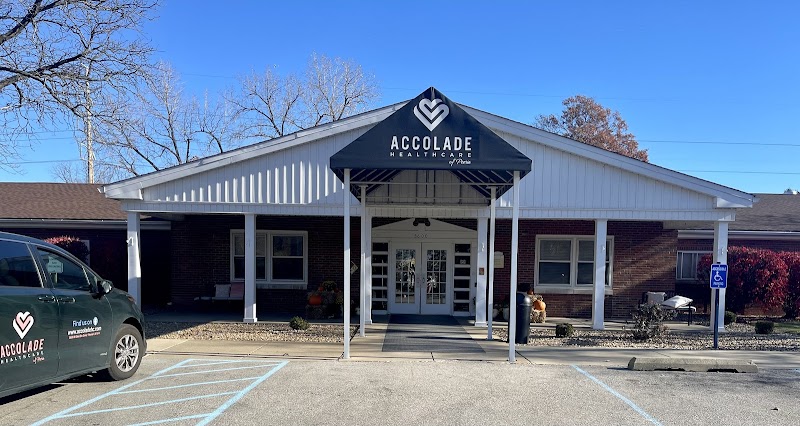
How is Accolade Healthcare Of Peoria Staffed?

CMS rates ACCOLADE HEALTHCARE OF PEORIA's staffing level at 2 out of 5 stars, which is below average compared to other nursing homes. Staff turnover is 44%, compared to the Illinois average of 46%. This relatively stable workforce can support continuity of care.

What Have Inspectors Found at Accolade Healthcare Of Peoria?

State health inspectors documented 35 deficiencies at ACCOLADE HEALTHCARE OF PEORIA during 2022 to 2025. These included: 2 that caused actual resident harm, 32 with potential for harm, and 1 minor or isolated issues. Deficiencies causing actual harm indicate documented cases where residents experienced negative health consequences.
Who Owns and Operates Accolade Healthcare Of Peoria?

ACCOLADE HEALTHCARE OF PEORIA is owned by a for-profit company. For-profit facilities operate as businesses with obligations to shareholders or private owners. The facility is operated by ACCOLADE HEALTHCARE, a chain that manages multiple nursing homes. With 138 certified beds and approximately 126 residents (about 91% occupancy), it is a mid-sized facility located in PEORIA, Illinois.
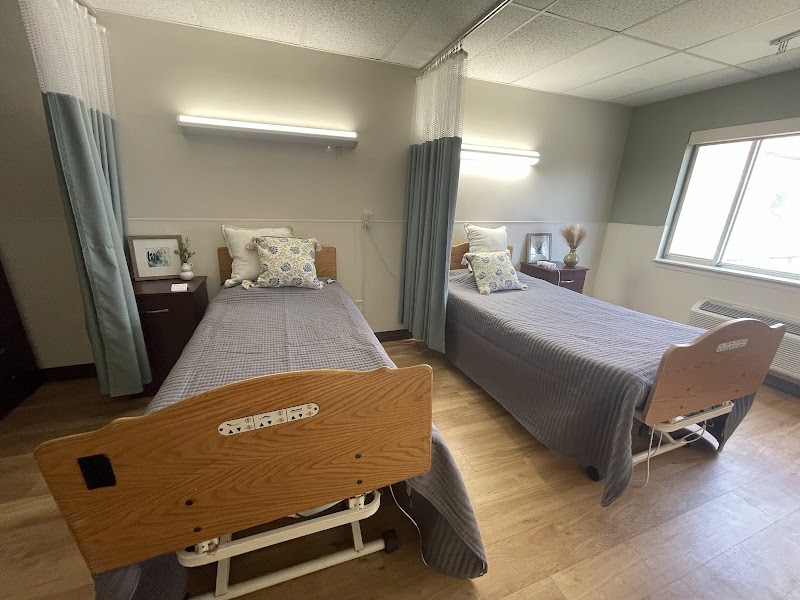
How Does Accolade Healthcare Of Peoria Compare to Other Illinois Nursing Homes?

Compared to the 100 nursing homes in Illinois, ACCOLADE HEALTHCARE OF PEORIA's overall rating (3 stars) is above the state average of 2.5, staff turnover (44%) is near the state average of 46%, and health inspection rating (3 stars) is at the national benchmark.

What Should Families Ask When Visiting Accolade Healthcare Of Peoria?

Based on this facility's data, families visiting should ask: "Can you walk me through typical staffing levels on day, evening, and night shifts?" "Can I visit during a mealtime to observe dining assistance and food quality?" "How do you handle medical emergencies, and what is your hospital transfer rate?" "Can I speak with family members of current residents about their experience?" These questions are particularly relevant given the below-average staffing rating.

Is Accolade Healthcare Of Peoria Safe?

Based on CMS inspection data, ACCOLADE HEALTHCARE OF PEORIA has a clean safety record: no substantiated abuse findings (meaning no confirmed cases of resident harm), no Immediate Jeopardy citations (the most serious violation level indicating risk of serious injury or death), and is not on the Special Focus Facility watch list (a federal program monitoring the lowest-performing 1% of nursing homes). The facility has a 3-star overall rating and ranks #1 of 100 nursing homes in Illinois. While no facility is perfect, families should still ask about staff-to-resident ratios and recent inspection results during their visit.

Do Nurses at Accolade Healthcare Of Peoria Stick Around?

ACCOLADE HEALTHCARE OF PEORIA has a staff turnover rate of 44%, which is about average for Illinois nursing homes (state average: 46%). Moderate turnover is common in nursing homes, but families should still ask about staff tenure and how the facility maintains care continuity when employees leave.

Was Accolade Healthcare Of Peoria Ever Fined?

ACCOLADE HEALTHCARE OF PEORIA has no federal fines on record. CMS issues fines when nursing homes fail to meet care standards or don't correct problems found during inspections. The absence of fines suggests the facility has either maintained compliance or corrected any issues before penalties were assessed. This is a positive indicator, though families should still review recent inspection reports for the full picture.

Is Accolade Healthcare Of Peoria on Any Federal Watch List?

ACCOLADE HEALTHCARE OF PEORIA is not on any federal watch list. The most significant is the Special Focus Facility (SFF) program, which identifies the bottom 1% of nursing homes nationally based on persistent, serious quality problems. Not being on this list means the facility has avoided the pattern of deficiencies that triggers enhanced federal oversight. This is a positive indicator, though families should still review the facility's inspection history directly.