MANOR COURT OF PEORIA
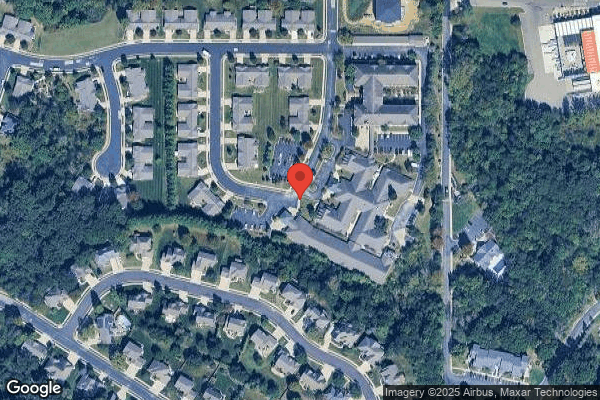
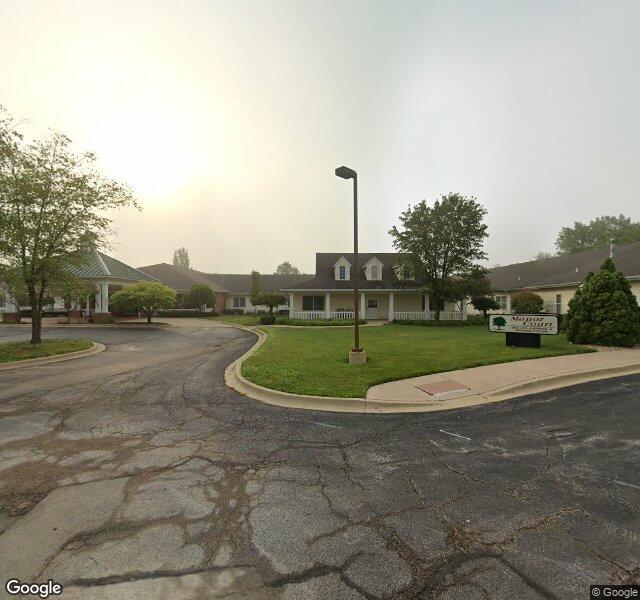
6900 NORTH STALWORTH, PEORIA, IL 61615 (309) 693-1400
Non profit - Corporation 50 Beds RESIDENTIAL ALTERNATIVES OF ILLINOIS Data: November 2025 4 Immediate Jeopardy citations
Trust Grade
0/100
#381 of 665 in IL
Last Inspection: May 2024

Within standard 12-15 month inspection cycle. Federal law requires annual inspections.

Overview

Manor Court of Peoria has received a Trust Grade of F, indicating significant concerns about the quality of care provided at this facility. Ranking #381 out of 665 in Illinois places it in the bottom half of nursing homes in the state, and #5 out of 10 in Peoria County means only four local options are worse. The facility is showing signs of improvement, as the number of issues reported decreased from 6 in 2024 to 2 in 2025. Staffing is rated average with a turnover rate of 61%, which is concerning compared to the Illinois average of 46%. However, the facility has accumulated $216,688 in fines, which is higher than 98% of Illinois facilities, indicating ongoing compliance problems. While there are some strengths, such as a good quality measure rating of 4 out of 5, there are serious weaknesses as well. The inspector found critical issues, including staff members working while symptomatic for COVID-19, which potentially exposed all residents to the virus. Additionally, a cognitively impaired resident ingested hazardous disinfectant due to a lack of adequate supervision, requiring emergency treatment. These incidents highlight serious safety concerns despite some areas of improvement.

Trust Score
F
0/100
In Illinois
#381/665
Bottom 43%
Safety Record
High Risk
Review needed
Inspections
Getting Better
6 → 2 violations
Staff Stability
⚠ Watch
61% turnover. Above average. Higher turnover means staff may not know residents' routines.
Penalties
⚠ Watch
$216,688 in fines. Higher than 86% of Illinois facilities, suggesting repeated compliance issues.
Skilled Nurses
✓ Good
Each resident gets 49 minutes of Registered Nurse (RN) attention daily — more than average for Illinois. RNs are trained to catch health problems early.
Violations
⚠ Watch
41 deficiencies on record. Higher than average. Multiple issues found across inspections.
★★☆☆☆
2.0
Overall Rating
★★★☆☆
3.0
Staff Levels
★★★★☆
4.0
Care Quality
★★☆☆☆
2.0
Inspection Score
Stable
2024: 6 issues
2025: 2 issues

The Good

  • 4-Star Quality Measures · Strong clinical quality outcomes
  • Full Sprinkler Coverage · Fire safety systems throughout facility
  • No fines on record

Facility shows strength in quality measures, fire safety.

The Bad

2-Star Overall Rating

Below Illinois average (2.5)

Below average - review inspection findings carefully

Staff Turnover: 61%

15pts above Illinois avg (46%)

Frequent staff changes - ask about care continuity

Federal Fines: $216,688

Well above median ($33,413)

Significant penalties indicating serious issues

Chain: RESIDENTIAL ALTERNATIVES OF ILLINOI

Part of a multi-facility chain

Ask about local staffing decisions and management

Staff turnover is elevated (61%)

13 points above Illinois average of 48%

The Ugly 41 deficiencies on record

4 life-threatening
Mar 2025 2 deficiencies 1 IJ (1 affecting multiple)
CRITICAL (K) 📢 Someone Reported This

A family member, employee, or ombudsman was alarmed enough to file a formal complaint

Immediate Jeopardy (IJ) - the most serious Medicare violation

Accident Prevention (Tag F0689)

Someone could have died · This affected multiple residents

**NOTE- TERMS IN BRACKETS HAVE BEEN EDITED TO PROTECT CONFIDENTIALITY** Based on observation, interview, and record review the facility failed to provide adequate supervision for cognitively impaired ...

Read full inspector narrative →
**NOTE- TERMS IN BRACKETS HAVE BEEN EDITED TO PROTECT CONFIDENTIALITY** Based on observation, interview, and record review the facility failed to provide adequate supervision for cognitively impaired residents and keep hazardous disinfectant, alcohol gel, and hazardous odor eliminating spray secured and out of the reach of cognitively impaired, self-mobile residents for seven of seven residents (R1, R2, R3, R4, R5, R6, R7) reviewed for accidents in the sample of eight. These failures resulted in, on 2-14-25 R1, a cognitively impaired resident, obtaining a bottle of hazardous disinfectant (BNC-15), R1 ingesting the hazardous disinfectant, and R1 requiring emergency room services for treatment. These failures resulted in an Immediate Jeopardy. While the immediacy was removed on 3-10-25, the facility remains out of compliance at a severity Level II as additional time is needed to evaluate the implementation and effectiveness of their removal plan and Quality Assurance monitoring. Findings include: The facility's Housekeeping Policy dated 1-2023 documents, Purpose: To assure proper housekeeping and facility cleanliness and to have proper guidelines for housekeeping standards. Supplies and Equipment: Cleaning supplies should be kept in locked cupboards or rooms for the protection of the residents. The Chemical BNC-15 Manufacturer's Safety Data Sheet/MSDS dated 4-1-21 documents, (32 ounce) BNC-15 (Disinfectant). Hazard Statements: Harmful if swallowed. Causes severe skin burns and serious eye damage. Response: Immediately call a poison center or physician. If on skin: Rinse cautiously with water for several minutes. Take off immediately all contaminated clothing and shoes. Rinse with water or shower for at least 15 minutes. Ingestion: Rinse mouth. Do not induce vomiting. Storage: Store locked up. Toxicology Information: Skin Contact: Pain, redness, blistering, and possible chemical burn. Ingestion: Damage or chemical burns to mouth, throat and stomach, pain, nausea, vomiting and diarrhea. The Manufacturer's Fresh Odor Eliminators Spray Safety Data Sheet dated 11-9-22 documents, Precautions for Safe Handling: Store at normal room temperature away from reach of small children. Keep container closed. Ingestion: Do not induce vomiting unless directed to do so by medical personnel. Never give anything by mouth to an unconscious person. If potentially dangerous quantities of this material have been swallowed, call a physician immediately. Acute Toxicity: Exposure to solvent vapor concentrations from the component solvents in excess of the stated occupational exposure limits may result in adverse health effects such as mucous membrane and respiratory system irritation and adverse effects on the kidneys, liver, and central nervous system. Symptoms may include headache, nausea, dizziness, fatigue, muscular weakness, drowsiness, and in extreme cases, loss of consciousness. Repeated or prolonged contact with the preparation may cause removal of natural fat from the skin resulting in dryness, irritation, and possible non-allergic contact dermatitis. Solvents may also be absorbed through the skin. Splashes of liquid in the eyes may cause irritation and soreness with possible reversible damage. The Manufacturer's Spectrum Advance Hand Sanitizer Gel dated 7-23-24 documents, Storage: Keep containers tightly closed in a dry, cool and well-ventilated place. Store locked up. Eye Contact: Rinse immediately with plenty of water, also under the eyelids, for at least 15 minutes. Remove contact lenses, if applicable, and continue flushing. If symptoms persist, call a physician. Skin Contact: In the case of skin irritation or allergic reactions see a physician. Inhalation: Move to fresh air. Get medical attention immediately if symptoms occur. If breathing has stopped, contact emergency medical services immediately and give artificial respiration. Ingestion: If swallowed do not induce vomiting. Clean mouth with water and afterward drink plenty of water. Never give anything by mouth to an unconscious person. Consult a physician if necessary. Most important symptoms/effects: Burning sensation. Itching. Rashes. Hives. Coughing and/or wheezing. May cause breathing difficulties if inhaled. The facility's current Centers for Medicare and Medicaid Services Form 802 documents R1-R7 have the diagnoses of either Alzheimer's or Dementia and can either self-propel a wheelchair or self-ambulate. R1's current Face Sheet documents R1 is an [AGE] year-old with the diagnoses of Dementia, mild, with Anxiety, Dysphagia, Anxiety Disorder, Alzheimer's Disease, Insomnia, Restlessness, and Agitation. R1's MDS (Minimum Data Set) assessment dated [DATE] documents R1 is severely cognitively impaired. R1's Progress Notes dated 2-14-25 at 7:06 PM and signed by V3 (RN/Registered Nurse) document, This writer was sitting at nurses' station when another resident (R8) alerted me to Stop him (R1). (R1's) going to drink that. This writer then stood up to see (R1) sitting in wheelchair at nurses' station with lid to purple disinfectant cleanser labeled BNC-15 in hand and liquid coming from (R1's) mouth. (R1) then asked for water and the writer immediately notified (R1's) nurse (V4/LPN/Licensed Practical Nurse) and located MSDS (Material Safety Data Sheet) for BNC-15 in MSDS manual in cabinet at nurses' station and followed sheet advice for ingestion of BNC-15. R1's Progress Notes dated 2-14-25 at 7:31 PM and signed by V4 (LPN) document, (V3) came up to writer and stated that (R1) was possibly observed drinking cleanser. (R1) alert to baseline not showing any signs of distress at this time. (V2/DON/Director of Nursing) immediately notified. EMS (Emergency Medical Services) called for further evaluation and MSDS sheet for cleanser (R1) ingested sent with paramedics. All emergency contacts were attempted to be notified with no response. Voicemail left to return call back to facility. (R1) taken to (local) hospital. R1's emergency room Provider Notes dated 2-14-25 and signed by V9 (emergency room Physician) document, Chief Complaint: (R1) present with accidental ingestion. (R1) presents to ED (Emergency Department) from (facility) after drinking about six oz (ounces) of a cleaning chemical, BNC-15 one step disinfectant cleaner, about 30 minutes ago. Accidental ingestion of caustic alkali (highly corrosive bases that can cause severe burns and damage to living tissues). (R1) has a history of Dementia. Chemical was left sitting on the counter. (R1) did not appear to do this in an attempt to harm himself but did not understand what he was doing. Discharge Instructions: Four to six hours observation. Strict NPO (Nothing by Mouth). GI (Gastro-intestinal) referral for EGD (Esophagogastroduodenoscopy) per poison control. R1's Report of Incident dated 2-14-25 and signed by V1 (Administrator) documents, On 2-14-25 around 7:07 PM, (V1) was notified by (V2) that the nurse on duty reported to her that (R1) long-term resident with a history of advanced Dementia was reported by (R2) to have something (R1) shouldn't have. Nurse (V3) stated that she was sitting at the nursing station when another resident (R8) said to her You better take that from (R1). (R1) is going to drink it. The nurse reports to have looked over the countertop and saw (R1) sitting in his wheelchair with the lid of a bottle of disinfectant in his hand. The nurse states (R1) did not have the bottle of cleaner in his hand, only the sprayer lid, which she reports (R1) took out of his mouth. (V3) immediately notified the nurse assigned to (R1) and they immediately assessed (R1). (R1) has advanced Dementia, very poor hand dexterity, and is unable to communicate clearly, therefore the clinical decision was made to error on the side of caution and send (R1) to the ER for evaluation since no one could say with certainty that (R1) did not ingest the disinfectant. The bottle was around 90 percent full. EMT transported (R1) to (hospital) emergency room where they observed (R1) for around four and a half hours and then returned (R1) to the facility around 2:00 AM on 2-15-25 with orders to follow-up with gastroenterology. R2's MDS assessment dated [DATE] documents R2 is severely cognitively impaired. R3's MDS assessment dated [DATE] documents R3 is moderately cognitively impaired. R4's MDS assessment dated [DATE] documents R4 is severely cognitively impaired. R5's MDS assessment dated [DATE] documents R5 is severely cognitively impaired. R6's MDS assessment dated [DATE] documents R6 is severely cognitively impaired. R7's MDS assessment dated [DATE] documents R7 is severely cognitively impaired. R8's MDS assessment dated [DATE] documents R8 is cognitively intact. On 3-7-25 from 9:45 AM through 11:00 AM a two-ounce bottle of fresh odor eliminators spray was located on top of a handrail in the middle of the hallway and two eight-ounce bottles of spectrum advanced hand sanitizer gel were sitting on top of a cart located in the hallway outside of room [ROOM NUMBER]. There were no staff present during these times, and R2 was walking aimlessly up and down the hallway. On 3-7-25 at 11:10 AM R2 was at a cart located in the hallway outside of room [ROOM NUMBER]. There were two eight-ounce bottles of spectrum advanced hand sanitizer gel and a box of tissues sitting on top of the cart. R2 was standing in front of this cart, pulling tissues out of the box, and placing them on top of the cart. R2 then picked up one bottle of the alcohol gel and sat it back down. On 3-7-25 at 11:15 AM R8 was lying in bed. R8 stated, On (2-14-25) I saw (R1) take the lid off of a cleaner and drink the cleaner. (R1) had the nozzle to the cleaner in his other hand. I was yelling at the nurse look! Look! Look! (R1) is drinking that! The nurse sent (R1) to the hospital and (R1) had to have his stomach pumped. On 3-7-25 at 10:05 AM V4 (LPN) stated, I was (R1's) nurse and was not at the desk when (R1) had drank the disinfectant. Another nurse told me (R1) drank the disinfectant. (V3) came into to me and reported it to me. I called (V2/Director of Nursing) and asked how much (R1) drank and I told (V2) I was not sure. (R1) had the cap off the disinfectant and drank some of it. There was at least a half of a cup of the disinfectant missing out of the container. I called 911 and all emergency contacts. I found the Safety Data Sheet and sent it with EMS. (R1) was being observed the entire time until the ambulance came. I did not rinse (R1's) mouth or skin. I just observed (R1) until EMS arrived. On 3-7-25 at 10:30 AM V7 (RN) stated, (R1) is extremely confused and would not know if he was drinking a chemical. (R1) gets up late every day and self-propels his wheelchair around the facility, using his hands to propel the wheelchair. (R1) is not aware of his surroundings. On 3-7-25 at 10:40 AM V5 (Housekeeper) stated, For some reason (V6/RN) would always ask me for the BNC-15 disinfectant. There were several days before (R1) got ahold of the disinfectant that (V6) would get the disinfectant when I was not aware and leave the disinfectant on top of the nurses' desk. No staff would be around when the disinfectant was being left on top of the nurses' desk. Every time I would find the disinfectant, I would lock it up. I would tell (V6) the disinfectant must be locked up. I know residents can drink the cleaners. That is why the cleaners have to be locked up at all times. On 3-7-25 at 11:56 AM V10 (Housekeeping Supervisor) stated, (V6/RN) asked for a chemical that day and was refused the chemical BNC-15. (V6) would ask for this chemical frequently and was the only nursing staff that would ask for that chemical. (V6) worked that day and (V6) left the BNC-15 chemical on top of the nurses' station and did not lock the chemical back up. All chemicals are to be locked up at all times and the housekeeping cart is to be always visible to keep residents from getting to the chemicals. (R2) observes the housekeeping carts frequently and could try to open a housekeeping cart. Staff should always pay attention to their surroundings. On 3-7-25 at 12:10 PM V6 (RN) stated, On 2-14-25 I got the disinfectant (BNC-15) to clean up a spill that had happened on the nurses' desk and floor. I got busy that day and I forgot to lock the disinfectant back up after I used it. I got told that was part of the reason why I was terminated. On 3-7-25 at 1:00 PM V11 (R1's Family Member) stated, (R1) has no idea what he is doing and is not safe around chemicals. On 3-7-25 at 2:40 PM V3 (RN) stated, On 2-14-25 around 7:00 PM, I heard (R8) yelling, Stop him (R1)! Stop him! I saw (R1) had the top off the chemical BNC-15 and had the tube that goes down into the chemical in his mouth, licking the chemical off the tube. (R8) yelled, (R1) drank that! I saw a very light purple liquid in (R1's) mouth and running out of (R1's) mouth. The BNC-15 chemical is a purple color. The bottle had about four to six ounces missing out of it. I immediately told (V4) and (R1) was sent to the hospital. Whoever left the chemical on top of the nurses' desk should know better. All chemicals should be locked up at all times. On 3-7-25 at 2:30 PM V2 (Director of Nursing) confirmed that all chemicals should be always locked up. V2 also confirmed R1-R7 are cognitively impaired and either self-propel a wheelchair or self-ambulate throughout the facility. The Immediate Jeopardy started on 2-14-25 when V6 (RN/Registered Nurse) left a bottle of BNC-15 hazardous disinfectant unsecured on top of the nurses' desk and R1, a cognitively impaired resident, obtained the bottle of BNC-15, ingested the disinfectant, and required emergency room services for treatment. V1 (Administrator), V2 (Director of Nursing), and V13 (Regional Manager) were notified of the Immediate Jeopardy on 3-10-25 at 10:30 AM. On 3-12-25 the surveyor confirmed through interview and record review that the facility took the following actions to remove the Immediate Jeopardy: 1. On 3-10-25 department heads conducted a facility wide walk through to assure all chemicals and hazardous materials were securely stored and out of reach of the residents. On 3-12-25 this surveyor conducted a facility wide walk through to assure all chemical and hazardous materials were securely stored in the housekeeping carts, clean storage utility room, and out of reach of the residents. 2. On 3-10-25 a list of identified residents who are cognitively impaired and self-mobile was placed as the nurses' station by V2 (Director of Nursing). 3. On 3-10-25 all care plans of residents who are cognitively impaired and self-mobile were revised. 4. On 3-10-25 V1 (Administrator), (V2 (Director of Nursing), and V14 (Human Resource Director) in-serviced all staff on which residents are cognitively impaired and self-mobile, where to find the list that indicates residents who are cognitively impaired and self-mobile, proper securement of chemicals and all other hazardous materials, location of the SDS (Safety Data Sheets) and how to read a SDS sheet. All new employees will be in-serviced by V14 prior to their first shift. 5. On 3-10-25 an audit tool was developed and implemented by V1 to track compliance of proper storage of chemicals and all other hazardous materials. Completion Date: 3-10-25.
CONCERN (D) 📢 Someone Reported This

A family member, employee, or ombudsman was alarmed enough to file a formal complaint

Potential for Harm - no one hurt, but risky conditions existed

Quality of Care (Tag F0684)

Could have caused harm · This affected 1 resident

Based on record review and interview the facility failed to follow physician's order to follow-up with gastroenterology following a resident who ingested a hazardous chemical for one of seven resident...

Read full inspector narrative →
Based on record review and interview the facility failed to follow physician's order to follow-up with gastroenterology following a resident who ingested a hazardous chemical for one of seven residents (R1) reviewed for accidents in the sample of eight. Findings include: The facility's Special Needs policy dated 11-28-17 documents, To address special needs, this facility will provide the necessary care and treatment, including medical and nursing care, consistent with professional standards of practice and in accordance with physician orders, the comprehensive person-centered care plan, and the resident's goals and preferences. If necessary, the facility will assist residents in making appointments with a qualified person or facility and arranging for transportation to and from such appointments. The facility will communicate relevant information with outside providers to ensure safe, continuous care of the resident. Medical conditions will be monitored and managed to prevent complications. The attending physician will assume responsibility for the overall care and treatment of the resident's medical conditions. RNs (Registered Nurses) and LPNs (Licensed Practical Nurses) will participate in the management of medical conditions by following physician orders, assessment of residents, and reporting changes in condition to the resident's physicians. R1's emergency room Provider Notes dated 2-14-25 and signed by V9 (emergency room Physician) document, Chief Complaint: (R1) present with accidental ingestion. (R1) presents to ED (Emergency Department) from (facility) after drinking about six oz (ounces) of a cleaning chemical, BNC-15 one step disinfectant cleaner, about 30 minutes ago. Accidental ingestion of caustic alkali (highly corrosive bases that can cause severe burns and damage to living tissues). (R1) has a history of Dementia. Chemical was left sitting on the counter. (R1) did not appear to do this in an attempt to harm himself but did not understand what he was doing. Discharge Instructions: Four to six hours observation. Strict NPO (Nothing by Mouth). GI (Gastro-intestinal) referral for EGD (Esophagogastroduodenoscopy) per poison control. R1's Progress Notes dated 2-15-25 at 1:08 AM and signed by V4 (LPN/Licensed Practical Nurse) document, (R1) arrived back from (local) hospital via AMT (Advanced Medical Transport). (R1) alert to baseline. Denies any pain at this time and ROM (Range of Motion) to baseline. (R1) has orders to follow-up with gastroenterology and to return (to emergency room) if resident exhibits any symptoms. R1's Electronic Medical Record dated 2-14-24 through 3-7-25 documents no evidence R1's follow-up with gastroenterology or EGD being completed. On 3-7-25 at 1:00 PM V11 (R1's Family Member) stated, We (R1's Family) want (R1) to go to the gastroenterology follow-up to make sure (R1) does not have any internal injuries from the chemical. I am not sure why the facility has not made the appointment yet. On 3-7-25 at 2:30 PM V2 (Director of Nursing) stated, (R1's) follow-up appointment with gastroenterology was missed and did not get scheduled.
May 2024 6 deficiencies
CONCERN (D)

Potential for Harm - no one hurt, but risky conditions existed

Deficiency F0578 (Tag F0578)

Could have caused harm · This affected 1 resident

**NOTE- TERMS IN BRACKETS HAVE BEEN EDITED TO PROTECT CONFIDENTIALITY** Based on interview and record review, the facility failed to have a Practitioner Order for Life-Sustaining Treatment/ POLST in t...

Read full inspector narrative →
**NOTE- TERMS IN BRACKETS HAVE BEEN EDITED TO PROTECT CONFIDENTIALITY** Based on interview and record review, the facility failed to have a Practitioner Order for Life-Sustaining Treatment/ POLST in the Medical Record one resident (R191) reviewed for Advanced Directives in the sample of 24. Findings include: The Advanced Directives policy dated 2/2018 documents Policy: The facility shall support the resident's right to request, refuse and/or discontinue treatment, to participate in or refuse to participate in experimental research, and to formulate an advance directive. Purpose: To ensure that the resident and/or representative has been informed and educated about the right to formulate an advance directive, and the facility's policy regarding these rights; and the resident has been assisted in exercising these rights; and the residents' choices regarding these rights have been incorporated into the treatment, care and services. Procedure: Staff will determine, at the time of admission, whether or not any advance directives are present, and make an effort to obtain pre-existing directives. Staff shall then ensure that they are placed in the resident's medical record. Pertinent facility staff and the physician shall be made aware of the existence of these directives. If no directives are in place, staff shall provide education, verbally and in writing, to the resident regarding their right to develop advance directives and to refuse medical or surgical treatment per State law. Assistance will be provided as necessary. Findings include: R191's current computerized medical record, documents R191 was admitted to the facility on [DATE] with a diagnosis of Acute Embolism and Thrombosis of Unspecified Deep Veins of Unspecified Lower Extremity (Primary), Permanent Atrial Fibrillation (Admission), Neuralgia and Neuritis, Other Lack of Coordination, Difficulty in Walking, Muscle Weakness (generalized), Muscle Wasting and Atrophy, Right Hand and Left Hands, Unsteadiness on Feet, Hyperlipidemia, Permanent Atrial Fibrillation, Parkinson's Disease, Hypothyroidism, Essential (Primary) Hypertension, and Heart failure. R191's MDS (Minimum Data Set) dated 5/16/24 documents a BIMS (Brief Interview for Mental Status) Score of 13/15, indicating R191 is cognitively intact. On 5/13/24 at 11:28 AM, there was no Advance Directive for R191 found in R191's Electronic Medical Record. On 5/14/24, V1/Administrator was asked what the code status was for R191. At 12:00 PM, V1 provided a Hospital discharge date d 5/10/24 for R191 that documents Shock OK, no compressions. Before V1 left the room, V1 was shown the Electronic Medical Record that documented R191 was a Full Code. V1 stated she did not know how that got put in the system. On 5/14/24 at 12:21 PM, V2/Director of Nursing stated that there has not been any paperwork signed by R191 or V4/R191's Power of Attorney for R191's Code Status. V2 also stated, Until there is paperwork signed the resident is a Full Code. I have nothing that pertains to the Code Status. On 5/14/24 at 12:35 PM, V3/Social Service Director stated that the POLST is signed when a resident is admitted . V3 stated she did not get the POLST signed when R191 admitted and V3 does not know what R191's Code Status is supposed to be. V3 also stated (R191's) cognition is fine but I didn't ask (R191) about her Code Status. On 5/14/24 at 1:01 PM, R191 stated, I thought they (the facility) already had it from the hospital. I don't want to have my ribs broke. I want a DNR (Do Not Resuscitate). V4/R191's Power of Attorney was in the room and stated, I would think you would want to be a Full Code, but it is your choice. V3/Social Service Director was also in the room and stated that there were other choices that could be made. V3 showed V4 the paperwork and the options. V4 stated to R191, You could do Full Code with selective treatments. R191 agreed and signed the paperwork. On 5/14/24 at 1:21 PM, V4 stated I was in here on Friday and was not asked about the code status. Then today I got a call (V4 pulled out her phone) at 11:24 AM, 11:31 AM, and 11:35 AM asking me to come in and sign the paperwork. On the third call I was yelling at them to stop harassing me and I would be in as soon as I could. If they had done this on Friday, they would not have to harass me. V4 also stated that R191 knows what she is doing and can make her own decisions. On 5/15/24, the facility provided R191's POLST dated 5/14/24, that was signed by R191 The POLST documents that R191 wants Cardiopulmonary Resuscitation with Selective Treatment. The POLST form was signed by R191's Primary Physician on 5/15/24.
CONCERN (D)

Potential for Harm - no one hurt, but risky conditions existed

Comprehensive Care Plan (Tag F0656)

Could have caused harm · This affected 1 resident

**NOTE- TERMS IN BRACKETS HAVE BEEN EDITED TO PROTECT CONFIDENTIALITY** Based on interview and record review, the facility failed to develop a Care Plan for two of 16 residents (R16 and R27) reviewed ...

Read full inspector narrative →
**NOTE- TERMS IN BRACKETS HAVE BEEN EDITED TO PROTECT CONFIDENTIALITY** Based on interview and record review, the facility failed to develop a Care Plan for two of 16 residents (R16 and R27) reviewed for care plans in the sample of 24. Findings Include: The Care Plan policy dated 6/1/22, documents It is the policy of this facility to develop and implement a Base Line Care Plan, a Comprehensive Person-Centered Care Plan and conduct Care Plan Meetings as appropriate for each resident, consistent with resident rights, that includes measurable objectives and timeframes to meet a resident's medical, nursing, and mental and psychosocial needs that are identified in the resident's comprehensive assessment. 1. R16's current computerized medical record, documents R16 was admitted to the facility on [DATE] with a diagnosis of Non-Pressure Chronic Ulcer of Buttock with Unspecified Severity (Primary); Type 2 Diabetes Mellitus with Unspecified Complications; Chronic Obstructive Pulmonary Disease; Essential (Primary) Hypertension; Anxiety Disorder; Vascular Dementia, unspecified severity, without behavioral disturbance, psychotic disturbance, mood disturbance, and anxiety; Other feeding difficulties; Dysphagia, Oropharyngeal Phase; Transient Cerebral Ischemic Attack; Vascular Dementia, Mild, with Agitation; Malignant Neoplasm of Bladder; Complete Traumatic Amputation of One Left Lesser Toe. R16's MDS (Minimum Data Set) dated 3/24/24 documents a BIMS (Brief Interview for Mental Status) Score of 11/15, indicating moderate cognitive impairment. On 5/14/24 at 11:12 AM, R16 stated that he has lost weight but doesn't know why. R16's Dietician Note dated 5/8/2024 at 12:44 PM, documents that R16 has recent weight changes. Current weight at 159 pounds, a decrease of 25 pounds in the past three months. R16's current Care Plan has no mention of R16's recent weight loss. R16's weight log documents R16's weight on 3/20/24 was 177.2 pounds, and R16's weight on 5/8/24 was 158.8 pounds. This is a 18.4 pounds lost, 10.38 percent in three months. On 5/16/24 at 11:11 AM, V2/Director of Nursing verified there is no Care Plan in place for R16's weight loss. 2. R27's current computerized medical record, documents R27 was admitted to the facility on [DATE] with a diagnosis of Alzheimer's Disease with Late Onset (Admission); Essential (Primary) Hypertension; Gastro-Esophageal Reflux Disease without Esophagitis; Other Specified Diseases of Anus and Rectum; Chronic Kidney Disease, Stage 2 (mild); Overactive bladder; Benign Prostatic Hyperplasia with Lower Urinary Tract Symptoms; Pain, Unspecified; Vitamin D deficiency; Hyperlipidemia; and Generalized Anxiety Disorder. R27's MDS (Minimum Data Set) dated 3/21/24 documents a BIMS (Brief Interview for Mental Status) Score of 14/15, indicating R27 is cognitively intact. On 5/15/24 at 1:15 PM, R27 stated that he has scrotal pain often and is given an ice pack and pain medication. R27's Nursing Note dated 5/4/24 at 5:41 AM documents that R27 complained of 10/10 sharp, needle-like pain to an isolated superficial/fleshy area of his scrotum. R27 stated that these abrupt painful episodes occur frequently and intermittently. There were no evident visual issues nor any palpable abnormalities. There was no redness, but antifungal cream was applied, and Tylenol 650 mg (milligrams) PO (by mouth) was given. R27's Nursing Note dated 5/4/24 at 3:08 PM, documents that R27 complained of throbbing pain to his scrotal area this morning. Pain was rated at 8/10. As needed Tylenol was given with minimal effectives. An icepack was applied to the area, R27 states pain is now 0/10. Scrotal pain is chronic for R27. R27's Base Line Care Plan dated 3/15/24 documents Pain management as needed. A Comprehensive Care Plan was not developed for R27 addressing R27's pain. R27's Medication Administration Record dated 5/1-5/15/24 documents R27 has experienced back and scrotal pain 12 of 15 days ranging from 2/10 to 8/10. On 5/16/24 at 11:15 AM, V2/Director of Nursing verified there is no Care Plan in place addressing R27's scrotal pain.
CONCERN (D)

Potential for Harm - no one hurt, but risky conditions existed

Deficiency F0676 (Tag F0676)

Could have caused harm · This affected 1 resident

**NOTE- TERMS IN BRACKETS HAVE BEEN EDITED TO PROTECT CONFIDENTIALITY** Based on observation, interview and record review, the facility failed to ensure showers and nail care were provided for two of ...

Read full inspector narrative →
**NOTE- TERMS IN BRACKETS HAVE BEEN EDITED TO PROTECT CONFIDENTIALITY** Based on observation, interview and record review, the facility failed to ensure showers and nail care were provided for two of two residents (R4 and R191) reviewed for activities of daily living in the sample of 24. Findings include: The Personal Care of Residents policy dated 12/2002, documents It is the policy of the facility to provide a plan of personal care for residents. To provide that residents of the facility receive adequate care. Procedure: 1. Each resident shall have proper daily personal attention and/or care, including skin, nails, hair and oral hygiene, in addition to treatment ordered by the physician. 2. Each resident shall have at least one complete bath and hair wash weekly, and as many additional baths and hair washes as necessary for satisfactory personal hygiene. 1. R4's current computerized medical record, documents R4 was admitted to the facility on [DATE] with a diagnosis of Chronic Kidney Disease, Stage 2 (mild)(Primary, Admission); Stiffness of Right and Left Shoulder; Other Reduced Mobility; Muscle weakness; Hereditary and Idiopathic Neuropathy; Tachycardia; Edema; Urinary Tract Infection; Acute Embolism and Thrombosis of Unspecified Deep Veins of Left Lower Extremity; Pain; Mild Cognitive Impairment of Uncertain or Unknown Etiology; Venous Insufficiency (Chronic) (Peripheral); Essential (Primary) Hypertension; Peripheral Vascular Disease; Congenital Hypothyroidism with Diffuse Goiter; Hypothyroidism; Hyperlipidemia; Hypo-Osmolality and Hyponatremia. R4's MDS (Minimum Data Set) dated 4/9/24 documents a BIMS (Brief Interview for Mental Status) Score of 15/15, indicating R4 is cognitively intact. R4 has upper extremity impairment on both sides and requires partial assistance for showering and is occasionally incontinent of bowel and bladder requiring set up/cleanup assistance. On 5/15/24 at 1:23 PM, R4's fingernails were observed and had pink fingernail polish on them that was chipped. The fingernails were dirty and all different lengths. The shorter nails were uneven with some sharp, jagged edges. R4's index finger fingernails were the longest and had a dark brown, black debris adhered underneath them. On 5/15/24 at 1:23 PM, R4 stated, My fingernails are all different lengths. I'd like my fingernails shorter than what they are. They need to be cut. They are too long and break. I have hangnails that bother me. They put paint on my nails but don't cut them. I have asked but it doesn't get done. On 5/16/24 at 11:18 AM, V2/Director of Nursing stated that the Certified Nursing Assistants are responsible for nail care when showers are given unless the resident is diabetic. If the resident is a diabetic, then a nurse should cut the nails or there is a Podiatrist that comes to the facility. 2. R191's current computerized medical record, documents R191 was admitted to the facility on [DATE] with a diagnosis of Acute Embolism and Thrombosis of Unspecified Deep Veins of Unspecified Lower Extremity (Primary); Permanent Atrial Fibrillation (Admission); Neuralgia and Neuritis; Other Lack of Coordination; Difficulty in Walking, Muscle Weakness (generalized); Muscle Wasting and Atrophy, Right Hand and Left Hands; Unsteadiness on Feet; Hyperlipidemia; Permanent Atrial Fibrillation; Parkinson's Disease; Hypothyroidism; Essential (Primary) Hypertension; and Heart failure. R191's MDS (Minimum Data Set) dated 5/16/24 documents a BIMS (Brief Interview for Mental Status) Score of 13/15, indicating R191 is cognitively intact, has lower extremity impairment on both sides and requires partial assistance for showering. On 5/14/24 at 1:26 PM, R191 stated I would sure like to have a shower. On 5/14/24 at 1:27 PM, V4/R191's Power of Attorney (in R191's room) stated (R191) came in on Friday and still has not had a shower. On 5/15/24 at 12:43 PM, V2/Director of Nursing stated that R191 did not get a shower on Friday because R191 came in late. On 5/15/24 at 1:13 PM, R191 stated I finally got a shower last night after supper. I came in on Friday and had not had a shower for five days before that in the hospital. I didn't ask for one on Friday, but I did on Saturday, Sunday, and Monday. They said they were too busy. (V4/R191's Power of Attorney) came in yesterday (Tuesday) and insisted I get a shower. R191's Nursing Note dated 5/10/24 at 3:16 PM, documents R191 was readmitted the facility from the local hospital at 2:50 PM (Friday). The facility Shower Schedule (not dated) documents that R191 is to have a shower on day shift on Tuesdays and evening shift on Fridays.
CONCERN (D)

Potential for Harm - no one hurt, but risky conditions existed

Medication Errors (Tag F0758)

Could have caused harm · This affected 1 resident

**NOTE- TERMS IN BRACKETS HAVE BEEN EDITED TO PROTECT CONFIDENTIALITY** Based on observation, interview, and record review the facility failed to complete psychotropic assessments prior to the use of ...

Read full inspector narrative →
**NOTE- TERMS IN BRACKETS HAVE BEEN EDITED TO PROTECT CONFIDENTIALITY** Based on observation, interview, and record review the facility failed to complete psychotropic assessments prior to the use of antipsychotic medications, document the resident's response to non-pharmacological interventions to manage behaviors/symptoms, and to ensure the resident has behaviors that warrant the use of antipsychotic medications for two of three residents (R5, R22) reviewed for antipsychotic medication use with the diagnosis of Dementia or Alzheimer's Disease in the sample of 24. Findings include: The Facility's Psychopharmacologic Drug Usage Procedure dated 10/18/17, states Documentation of behaviors and conditions requiring the use of these medications must be done on a routine basis, as well as medication response and adverse consequences. 1. On 5/13/24, 5/14/24, and 5/15/24, during random observations, R5 was confused but exhibited no behaviors. R5's electronic diagnosis list documents R5 has a diagnosis of Vascular Dementia. R5's current computerized Physician Orders document R5 receives Zyprexa (antipsychotic medication) 10 mg (milligrams) by mouth every morning and Zyprexa 2.5 mg by mouth every evening for a diagnosis of Bipolar Disorder. R5's Care Plan last updated 4/29/24, documents R5 has a diagnosis of Bipolar Disorder and takes Zyprexa twice a day. This same care plan does not document R5's target behaviors for the use of Zyprexa. R5's electronic medical record dated 1/1/24 through 5/15/24, does not document R5 has any behaviors to warrant the use of Zyprexa, a psychotropic medication assessment that was completed prior to initiating Zyprexa, or R5's response to non-pharmacological interventions. On 5/15/24 at 1:30 p.m., V8 (Certified Nurse Aide) stated R5 cusses and will hit at staff but not residents. V8 stated, (R5) only cusses at us or occasionally swings his arms when cares are being given. If you have a conversation with him, he is very pleasant. He has more behaviors in the late afternoon and evening time. On 5/15/24 at 1:35 p.m., V6 (Certified Nurse Aide) stated R5 has no behaviors that put him at risk for harming himself or another resident. V6 stated (R5) cusses a lot and he will get a little aggressive (with direct care staff) when providing cares. He doesn't want us to mess with him and wants to be left alone. Any other time he doesn't have behaviors. I think his cussing is just his normal way to talk. It's not really a behavior. It's just him. On 5/15/24 at 1:40 p.m., V7 (Certified Nurse Aide) stated R5 does not have any behaviors that put him at risk to harm himself or other residents. V7 stated R5, Really just cusses a lot. Not really at us, but in general. He will try swinging at staff when providing cares like toileting or getting him dressed. He's never aggressive with other residents. His behaviors are worse in the evening. I think it may be sundowners from his Dementia. 2. On 5/15/24 at 12:52 p.m., R22 was sitting in his wheelchair in the lounge. R22 was pleasant and talkative. R22 did not exhibit any negative behaviors. R22 watched television while peers around him participated in different activities. R22's electronic medical record documents R22 has a diagnosis of Vascular Dementia. R22's current computerized Physician Order Sheet documents R22 receives Seroquel (antipsychotic medication) 100 mg (milligrams) every morning and Seroquel 125 mg at bedtime for a diagnosis of Unspecified Psychosis. This same Care Plan does not document R22's target behaviors for the use of an antipsychotic medication. R22's MDS (Minimum Data Set) assessment dated [DATE], documents R22 has severely impaired cognition; no documented behaviors; and receives Antipsychotic medication on a regular basis. R22's electronic medical record dated 1/1/24 through 5/15/24, does not document R22 had any behaviors to warrant the use of Seroquel, a psychotropic medication assessment that was completed prior to initiating Seroquel, or R22's response to non-pharmacological interventions. On 5/15/24 at 1:00 p.m., V7 (Certified Nurse Aide) stated R22 had no behaviors to justify the use of an antipsychotic medication. V7 stated R22 was never aggressive or pose any harm to himself or others. On 3/15/24 at 12:40 p.m., V2 (Director of Nursing) stated the only behavior monitoring is done by the licensed nurses. V2 stated, The nurses monitor the resident each shift and if a behavior or side effect is noted, then they document the occurrence in the progress notes. There is no behavior tracking completed by the Certified Nurse Aides. We have no psychotropic medication assessment that we complete. I have not seen (R5 or R22) have behaviors to warrant the use of (antipsychotic medications). On 5/16/24 at 1:20 p.m., V1 (Administrator) stated the facility does not have a specific policy on Antipsychotic medication use.
CONCERN (F)

Potential for Harm - no one hurt, but risky conditions existed

Infection Control (Tag F0880)

Could have caused harm · This affected most or all residents

Based on interview and record review, the facility failed to perform infection surveillance regarding logging, tracking and trending of resident and employee illnesses and infections. This failure has...

Read full inspector narrative →
Based on interview and record review, the facility failed to perform infection surveillance regarding logging, tracking and trending of resident and employee illnesses and infections. This failure has the potential to affect all 38 residents residing in the facility. Findings include: The facility's Infection Control policy (12/17/19) documents the following: Infection Control Committee Members: Administrator, Director of Nursing, Infection Preventionist, Maintenance/Housekeeping Supervisor, Food Service Supervisor, Medical Director, and Facility Pharmacist. The Infection Control Committee: Shall be responsible for surveillance of any suspected or known nursing home potential infection, the review and analysis of actual infections, the promotion of a preventative and corrective program designed to minimize infection hazards. Also process surveillance and correction of infection potentials in all nursing facility departments. This policy also documents the following: The Infection Control Committee should do the following: Review system for reporting, evaluation and keeping records of infections among resident and personnel in order to provide an indication of the endemic level of all nosocomial infections, to trace the source of infection and to identify epidemic or potential epidemic situations; To accomplish our objectives, the committee shall meet on a quarterly basis and, when necessary, hold additional meetings to consider problems arising in this area of responsibility. This same policy documents, Data Collection by Surveillance: Person to be responsible for surveillance will be appointed by the Director of Nursing. This person will be responsible for gathering the (1) Who, (2) What, (3) When, (4) Where, and (5) How of the suspected infectious condition. Data to be collected will answer the above (5) requirements. General information may be obtained from the nurse's infection control sheet, obtaining the following data: Nursing staff will develop weekly reports on antibiotics, including review to ensure appropriate use of antibiotics; Residents with abnormal drainage or broken areas in the skin which may be media for infection, including surgical incisions; Residents complaining of upper respiratory difficulty which may be infectious in nature; Residents with indwelling catheters; Residents with IV's (intravenous access); Resident with gastro feeding tubes. From the information gathered, a visual observation of the resident should be made and evaluated. The above gathered information will be reviewed and compiled into numbers and types of infections. A report will be prepared with the total number, types, and severities or infection and will be submitted to the Infection Control Committee. The Infection Control Committee will review the information and try to establish a pattern of infection. Based on the information received, the Infection Control Committee will evaluate policies and procedures for the prevention and control of infections and recommend corrective measures when and where necessary. The surveillance data will be kept on file for future reference. On 05/16/24 at 02:30 PM, V11 (Registered Nurse/Infection Preventionist) stated she took on the role of the facility's Infection Preventionist in December 2023. V11 stated that she does not have a log of resident infections or a log of employee illnesses to provide for review. V11 confirmed that no infection logging, tracking or trending is being conducted at the facility. V11 stated, I do MDS (Minimum Data Set Assessments), Restorative, and I am also the Infection Preventionist. I did the Infection Preventionist training, but that's about it. I have not had the opportunity to start any of it. I have seen three different people in the roles for the Dietary Manager and Social Service Director, so I have been having to complete the areas of the MDS that they are typically responsible for. V11 confirmed that she is often pulled to work the floor providing direct resident care when there's a call in at the facility. V11 then stated although her portion of infection control and antibiotic use is supposed to be discussed at the facility's Quarterly Assurance Meetings, it has not been discussed at the past two meetings since she has been in the role as the Infection Preventionist. The facility's Daily Staffing Sheets (dated 04/29/24 - 05/12/24) document that V11 (Registered Nurse/Infection Preventionist) was assigned to work the floor providing direct resident care on nine of the 14 days. On 05/16/24 at 11:15 AM, V2 (Director of Nursing) confirmed that V11 does work on the floor often, It is not for her entire shift, but she does go work the floor when needed. V2 stated she was not aware that a log for resident infections and illness and an employee illness log was not being maintained and stated it should have been. The Long-Term Care Facility Application for Medicare and Medicaid form dated 05/13/24 and signed by V1 (Administrator), documents 38 residents currently reside in the facility.
CONCERN (F)

Potential for Harm - no one hurt, but risky conditions existed

Antibiotic Stewardship (Tag F0881)

Could have caused harm · This affected most or all residents

Based on interview and record review, the facility failed to ensure their antibiotic stewardship program was implemented. This failure has the potential to affect all 38 residents residing in the faci...

Read full inspector narrative →
Based on interview and record review, the facility failed to ensure their antibiotic stewardship program was implemented. This failure has the potential to affect all 38 residents residing in the facility. Findings include: The facility's Antibiotic Stewardship policy (Revised 12/18/19) documents the following: It is the policy of the facility to follow an Antibiotic Stewardship program, including the core elements as outlined by the CDC (Center for Disease Control and Prevention). The purpose of the program is to reduce inappropriate use of antibiotics, improve resident outcomes and lessen adverse events. Procedure: Antibiotic Stewardship is part of Infection Control Program, including standardized tools such as UTI (urinary tract infection) SBAR (situation, background, assessment, and recommendation) and McGreer Criteria. The facility will track antibiotic use daily. The facility will communicate with the physician(s) prescribing antibiotics with a Utilization report on a monthly bases and as needed. All nurses, upon hire and as needed, will be educated regarding proper assessment for infection prior to calling physician. The facility will ensure the pharmacy reviews all antibiotic usage for appropriateness. Antibiotic use will be calculated on a monthly basis for QAPI (quality assurance and performance improvement) purposes. The facility will monitor for all adverse reactions/outcomes related to antibiotic therapy. The facility will involve the laboratory in our QAPI meetings as applicable. Information gathered will be communicated to all staff. On 05/16/24 at 02:30 PM, V11 (Registered Nurse/Infection Preventionist) stated she took on the role of the facility's Infection Preventionist in December 2023. V11 stated that she does not have a log of resident infections, antibiotic use or employee illnesses to provide for review. V11 stated, We are supposed to follow McGreer's criteria. I am supposed to keep a log of antibiotic use, and it hasn't been done. Not all of the nurses are completing the form that is supposed to be completed for this, so forms are not being completed regularly and I have found some residents who were prescribed antibiotics, and I have had to complete the form after the fact. I am not logging any of it, so I have nothing I can show you. Antibiotic use was not discussed at the last two QA (Quality Assurance) meetings since I did not have the information compiled.' The facility's Daily Staffing Sheets (dated 04/29/24 - 05/12/24) document that V11 (Registered Nurse/Infection Preventionist) was assigned to work the floor providing direct resident care on nine of the 14 days. On 05/16/24 at 11:15 AM, V2 (Director of Nursing) confirmed that V11 does work on the floor often, It is not for her entire shift, but she does go work the floor when needed. V2 stated she was not aware that logs required for the facility's infection control program, specifically pertaining to resident infections/illnesses, antibiotic use, and employee illnesses was not being maintained, and stated it should have been. The Long-Term Care Facility Application for Medicare and Medicaid form, dated 05/13/24 and signed by V1 (Administrator), documents 38 residents currently reside in the facility.
Oct 2023 3 deficiencies
CONCERN (D) 📢 Someone Reported This

A family member, employee, or ombudsman was alarmed enough to file a formal complaint

Potential for Harm - no one hurt, but risky conditions existed

Deficiency F0808 (Tag F0808)

Could have caused harm · This affected 1 resident

Based on observation, interview, and record review the facility failed to provide a resident with pureed meat as ordered by the physician for one of four residents (R2) reviewed for meals in the sampl...

Read full inspector narrative →
Based on observation, interview, and record review the facility failed to provide a resident with pureed meat as ordered by the physician for one of four residents (R2) reviewed for meals in the sample of ten. Findings include: The facility's Pureed to Liquid Consistency Diet Order Procedure dated 05/2020 documents, All foods pureed to liquid consistency should be smooth with no lumps or particles. All food on the pureed to liquid consistency diet should be prepared in the kitchen. R2's Physician's Order Report dated 9-6-23 through 10-6-23 documents R2's diet order as puree. On 10-6-23 at 9:30 AM R2 was sitting in a high back padded wheelchair in the dining room. R2 was feeding herself a bowl of mechanical soft (crumbled pieces) of a sausage patty with gravy on top. V7 (CNA/Certified Nursing Assistant) was sitting next to R2 and stated, (R2) is supposed to have a pureed diet. (R2) always gets mechanical soft sausage. On 10-6-23 at 9:40 AM V9 (CNA) stated (R2) is always served mechanical soft sausage. On 10-6-23 at 10:00 AM V12 (Dietary Manager) stated, (R2's) sausage is mechanical soft and should have been pureed. When (V11/Cook) warmed the sausage up it turned the sausage into crumbles. (V11) should have ensured (R2's) sausage was pureed. On 10-6-23 at 12:55 PM V1 (Administrator) stated the machine blade used to make pureed meat was broken and that is why the meat was not pureed.
CONCERN (E) 📢 Someone Reported This

A family member, employee, or ombudsman was alarmed enough to file a formal complaint

Potential for Harm - no one hurt, but risky conditions existed

Deficiency F0558 (Tag F0558)

Could have caused harm · This affected multiple residents

Based on observation, interview, and record review the facility failed to ensure a call light was within reach for four of four residents (R1, R2, R3, R4) reviewed for accommodation of needs in the sa...

Read full inspector narrative →
Based on observation, interview, and record review the facility failed to ensure a call light was within reach for four of four residents (R1, R2, R3, R4) reviewed for accommodation of needs in the sample of ten. Findings include: The facility's Call Light policy dated 01/2004 documents, Objective: To respond to resident's request and needs. Offer further services before leaving resident's room. Be sure call light is within reach before leaving the room. 1. On 10-6-23 from 7:30 AM through 8:35 AM R1 was sitting in her wheelchair in her room. During this time R1's call light was on the floor next to the right side of R1's wheelchair. R1 stated, I cannot reach my call light on the floor. 2. On 10-6-23 from 7:30 Am through 8:35 AM R2 was lying in bed on her right side. During this time R2's call light was laying on the floor beside the right side of R2's bed and out of R2's reach. On 10-6-23 at 8:40 AM V9 (CNA/Certified Nursing Assistant) stated, The last time someone took care of (R2) was on third shift around 6:00 AM. I am not sure how long (R2's) call light has been on the floor. 3. On 10-6-23 from 7:20 AM through 8:15 AM R3 was lying in bed on his back. During this time R3's call light was laying on the floor on the right side of his bed and was out of R3's reach. R3 stated, My call light is always on the floor. On 10-6-23 at 8:20 AM V7 (CNA) and V8 (CNA) both stated they were taking care of R3 and had not attended to R3 since 6:00 AM when they made rounds with the third shift CNA's. V7 verified that R3's call light should not have been on the floor. On 10-7-23 from 2:25 AM through 4:00 AM R3 was lying in bed on his back. During this time R3's call light was laying in the chair next to R3's right side of the bed and out of R3's reach. On 10-7-23 at 4:00 AM V17 (CNA) verified that R3's call light was not within his reach from 2:25 AM through 4:00 AM. 4. On 10-6-23 from 7:25 AM through 8:35 AM R4 was lying in bed on her back and R4's call light was on the floor behind her headboard. At 8:35 AM R4 stated, I do not know how long my call light was on the floor. All I know is I could not reach it. The staff never brush my teeth. On 10-6-23 at 8:35 AM V7 (CNA) stated that R4's call light was on the floor and was unsure how long the call light was on the floor. On 10-6-23 at 12:55 PM V1 (Administrator) stated, All resident call lights should be within reach at all times.
CONCERN (E) 📢 Someone Reported This

A family member, employee, or ombudsman was alarmed enough to file a formal complaint

Potential for Harm - no one hurt, but risky conditions existed

ADL Care (Tag F0677)

Could have caused harm · This affected multiple residents

**NOTE- TERMS IN BRACKETS HAVE BEEN EDITED TO PROTECT CONFIDENTIALITY** Based on observation, interview, and record review the facility failed to provide oral care/personal care to four of four reside...

Read full inspector narrative →
**NOTE- TERMS IN BRACKETS HAVE BEEN EDITED TO PROTECT CONFIDENTIALITY** Based on observation, interview, and record review the facility failed to provide oral care/personal care to four of four residents (R1, R2, R3, and R4) reviewed for ADL (Activities of Daily Living) Care in the sample of ten. Findings include: The facility's Personal Care of Residents policy dated 12/2002 documents, Purpose: To provide that residents of the facility receive adequate care. Each resident shall have proper daily personal attention and/or care including skin, nails, hair, and oral hygiene. 1. R1's Care Plan dated 1-6-23 documents R1 needs one assistance of staff for mouth care. R1's MDS (Minimum Data Set) assessment dated [DATE] documents R1 is moderately cognitively impaired and requires extensive assistance of one staff physical assist for personal hygiene. On 10-6-23 at 8:35 AM R1's natural teeth were yellow stained. R1 stated, The staff never help me brush my teeth. I do not think I have toothpaste. 2. R2's Care Plan dated 9-9-23 documents, Mouth Care: Perform oral care before breakfast and before bed. R2's MDS (Minimum Data Set) assessment dated [DATE] documents R2 is severely cognitively impaired and requires extensive assistance of one staff physical assist for personal hygiene. On 10-6-23 from 8:35 AM through 8:40 AM V9 (CNA/Certified Nursing Assistant) provided morning care to R2. R2 had no false or natural teeth. R2 did not have mouthwash or swabs at the bedside or in her restroom. During these cares V9 did not provide oral cares to R2. On 10-6-23 at 8:40 AM V9 stated, I am not sure if (R2) has teeth or not. I do not think (R2) has teeth. (R2) does not have mouthwash or swabs in her room. 3. R3's Care Plan dated 9-20-23 documents staff must assist R3 with oral hygiene. R3's MDS assessment dated [DATE] documents R3 is moderately cognitively impaired and requires limited assistance of one staff of physical assist for personal hygiene. On 10-6-23 at 8:20 AM V7 (CNA/Certified Nursing Assistant) and V8 (CNA) both provided personal cares to R3 and then transferred R3 from the bed to the wheelchair. During these personal cares V7 and V8 did not provide oral care to R3. On 10-6-23 at 8:20 AM V7 stated she thinks third shift should be brushing R3's teeth. On 10-6-23 at 9:45 AM R3 stated, I never get my teeth brushed. 4. R4's MDS assessment dated [DATE] documents R4 is moderately cognitively impaired and requires extensive assistance of two staff physical assist for personal hygiene. On 10-6-23 at 8:35 AM V7 (CNA/Certified Nursing Assistant) and V8 (CNA) provided incontinence cares and grooming to R4. R4's natural teeth had food debris between the teeth R4 had two long curly facial hairs to the left side of her chin. V7 and V8 then transferred R4 from the bed to the wheelchair. V8 proceeded to push R4 in her wheelchair from her room down to the dining room. Both V7 and V8 did not provide oral cares during this time. V7 (CNA) stated, Third shift should be brushing (R4's) teeth. (R4) does not have a toothbrush, toothpaste, or mouth wash. (R4) has been back from the hospital for a couple days and I am not sure if anyone has gotten her a toothbrush or toothpaste or shaved her. On 10-6-23 at 8:40 AM R4 stated, The staff never brush my teeth. I prefer to be shaved and do not like having hair on my face. On 10-6-23 at 10:45 AM R4 still had two long curly facial hairs to the left side of her chin. (V8) stated, (R4's) hairs need to be shaved.
May 2023 11 deficiencies
CONCERN (D)

Potential for Harm - no one hurt, but risky conditions existed

Deficiency F0554 (Tag F0554)

Could have caused harm · This affected 1 resident

Based on observation, interview, and record review the facility failed to assess one resident (R6) for self-administration of medications of 16 residents reviewed for medications in the sample of 40. ...

Read full inspector narrative →
Based on observation, interview, and record review the facility failed to assess one resident (R6) for self-administration of medications of 16 residents reviewed for medications in the sample of 40. Findings include: Facility Policy/Self-Administration of Medications dated/revised 12/02 documents: Self-administration preference shall be noted in the resident's record. If the resident chooses to self-medicate, the interdisciplinary team shall meet and assess the resident's ability to self-medicate. This includes the resident's cognitive, physical, and visual ability to carry out this responsibility. The storage and documentation of self-administered medications shall be the responsibility of the nursing staff. Facility staff, with the direction of the Director of Nursing, shall exercise program oversight with guidance of residents in self-administration of medication. All medications used by the resident shall be properly recorded by the facility staff at the time of use on self-administration record. The MAR will indicate self-administration. The clinical record shall record the resident's response to the program. Current Physician's Order Report indicates R6 has diagnoses that include Unspecified Respiratory Disorder and Alzheimer's Disease. Physician Orders include orders for: Ipratropium-albuterol solution for nebulization 0.5mg-3mg (milligram)/3ml (milliliter) inhalation, four times per day as needed for wheezing/shortness of breath. Albuterol sulfate solution for nebulization 2.5mg/3ml (0.083%) inhalation three times per day. Ipratropium-albuterol solution for nebulization 0.5mg-3mg/3ml, amount 1 vial inhalation as needed three times per day. Current Medication Administration Record (MAR) indicates R6 received albuterol sulfate 2.5mg/3ml three times per day via nebulizer from 5/1/23 through 5/18/23. Current Comprehensive Assessment indicates R6 could not be interviewed for cognitive patterns due to R6 is rarely/never understood, has mild memory impairments and is modified independent. On 5/16/23 at 11am, R6 was in her room and stated she uses the nebulizer sometimes. Nebulizer machine was on the bedside table and had the medication chamber, mouthpiece and tubing were all connected. The medication chamber contained a small amount of clear liquid. On 5/17/23 at 1:45pm, R6's nebulizer chamber still contained liquid. On 5/18/23 at 9:50am, R6's nebulizer chamber had even more liquid than on the previous days of observation. At that time V10 (Licensed Practical Nurse/LPN) was questioned about R6's nebulizer. V10 stated that the liquid in the nebulizer chamber is Albuterol (bronchodilator), the medication used in the nebulizer. V10 stated that R6 wants to do it herself, so the nurses just put the medication in the chamber and R6 will use it when she wants. V10 stated she did not put the liquid into the chamber and didn't know when or who filled the chamber. Physician Order Report and Care Plan does not include orders for R6 to self-administer medications, including nebulizers. On 5/19/23 at 10:45am V2 (Director of Nursing/DON) stated she found the assessment form for residents who want to self-administer medications, but it had not been completed prior to R6 self-administering inhalation medications. V2 acknowledged the policy should have been followed.
CONCERN (D)

Potential for Harm - no one hurt, but risky conditions existed

Investigate Abuse (Tag F0610)

Could have caused harm · This affected 1 resident

**NOTE- TERMS IN BRACKETS HAVE BEEN EDITED TO PROTECT CONFIDENTIALITY** 3. On 5/17/23 at 2:40 PM R23 stated A CNA made me get out of bed one night to use the toilet and when I fell, she kept saying I ...

Read full inspector narrative →
**NOTE- TERMS IN BRACKETS HAVE BEEN EDITED TO PROTECT CONFIDENTIALITY** 3. On 5/17/23 at 2:40 PM R23 stated A CNA made me get out of bed one night to use the toilet and when I fell, she kept saying I did it on purpose. She said I (resident made air quotes) put myself on the ground. I told her (CNA) my leg would buckle and that I wanted to use the bedpan and she brought the lift in and sat me up and said stand up, so I did. When I stood up my leg buckled so I let myself slide very slowly to the ground. R18's Event Report dated 3/9/23 at 11:15 PM documents CNA alert this nurse (V9/LPN) to room where resident sitting on floor beside her bed with head on mattress resident report dizzy angry with CNA (V6) for make her get out of bed to go to the bathroom. On 5/18/23 at 11:30 AM, V2 (DON) stated, I have no knowledge of resident saying someone made her get out of bed. V2 confirmed she electronically signed Closed R18's Event Report on 4/17/23 at 4:16 PM. V2 confirmed the event report contained the allegation that a CNA made resident get out of bed. On 5/18/23 at 1:00 PM, V1 (Administrator) stated, I was not informed of R18 saying a staff member made her get out of bed when she did not want to. I would have investigated it immediately as an allegation of abuse. Based on observation, interview, and record review the facility failed to ensure a thorough investigation of an allegation of employee to resident abuse for one resident (R23) and failed to ensure thorough investigations were completed for two residents (R29, R140) with injuries of unknown origin of three residents reviewed for abuse in the sample of 40. Findings include: 1) Nurse Progress Note for R29, dated 3/29/23 at 2:12pm indicates swelling noted to right wrist, painful to touch; X-ray ordered. Radiology Report dated 3/29/23 indicates R29 had a non-displaced fracture of distal right (fracture). Serious Injury Incident Report (initial and final) for R29, dated 3/31/23 indicates date of last fall was 2/3/23 with no injury. Report indicates R29 experiences tremors and muscle spasms due to disease processes, striking forearms and wrist(s) against hard surfaces. Report indicates Incident Category as Right Wrist Fracture not Injury of Unknown Origin. The Current Care Plan did not include interventions to protect R29 from injury related to tremors and muscle spasms until wrist fracture on 3/30/23. No documentation was found or presented to indicate R29 had behaviors of striking forearms and wrists against hard surfaces. No documented interviews were provided as part of the incident file. A thorough investigation of R29's right wrist fracture was not included with the Incident Report. The only document that was part of the investigation was one page of brief, handwritten notes documented by V2 (Director of Nursing/DON). On 5/18/23 at 3:20pm V1 (Administrator) stated the incident was an injury of unknown origin and thought they had identified the source of R29's injury. V1 stated she was unaware of the extent of the investigation or lack of documented interviews. 2) Nurse Progress Note dated 4/13/23 at 7:32pm indicates R140 was admitted from assisted living dementia care unit. admission Skin assessment dated [DATE] at 6:51pm indicates no skin alterations; no petechiae (red/purple). Nurse Progress Note dated 4/15/23 at 10:53am indicates R140 was assessed to have top of left foot and up to ankle was a 12cm (centimeter) x 9.5cm black-blue bruise; top of right foot, along outer side of right foot up to right ankle was a 12cm x 11cm black-blue bruise; swelling to bilateral feet and ankles. Note indicates R120 reported moderate pain to affected areas. Note indicates X-rays were ordered at that time. Nurse Progress Note dated 4/16/23 at 9:31am indicates likely 5th metatarsal bone fracture. Nurse Progress Note dated 4/16/23 at 3:52pm indicates possible hairline fracture on left ankle. R140 was transferred to the hospital and admitted overnight for Urinary Tract Infection. Nurse Progress Note dated 4/20/23 10:48am indicates R140 has bruising to bilateral ankles and feet, bruising noted to back of both knees possible cause from (mechanical lift) net. Event Report dated 4/15/23 at 1:55pm indicates R140 has bruising and swelling to bilateral feet and ankles. Report indicates Cause unknown. R140 had a fall 4 days ago, it is possible a fall injury. Serious Injury Incident Report (final) dated 4/21/23 at 12pm indicates R140 sustained a 5th metatarsal fracture - does not identify injury as unknown origin. Incident Report Summary indicates hospital X-ray results showed no acute fracture. It was discovered that (R140) had two incidents of being lowered to the ground prior to (admission to the facility). No documented interviews were provided as part of the incident file. A thorough investigation of R140's right severe bilateral extremity bruising, and swelling was not included with the Incident Report. The only document that was part of the investigation was one page of brief, handwritten notes (timeline) documented by V2 (DON). No investigation was done to investigate the potential that the injuries were sustained during mechanical lift transfer as documented in nurse notes dated 4/20/23. On 5/18/23 at 3:20pm, V1 (Administrator) stated the incidents were an injury of unknown origin and thought they had identified the source of R29 and R140's injuries. V1 stated she was unaware of the extent of the investigation or lack of documented interviews. Facility Policy/Abuse Prohibition and Reporting dated/revised 3/18/19 documents: Investigations: 1. Interviews with all involved parties or potential witnesses will be completed. At least one interviewer shall take notes. 2. Signed statements from those persons who saw or heard information pertinent to the incident shall be obtained. Statements shall be taken from the suspect, person making the allegations, the resident abused or neglected (if cognitive level permits), other staff or residents who may have witnessed the incident, and any other person who may have information related to the incident. 3. The Administrator shall keep copies of all notes from the interviews conducted by the Administrator or other facility interviewer in the course of the investigation. 4. The Administrator shall be responsible for supervising the investigation and reporting the results to the State Agency.
CONCERN (D)

Potential for Harm - no one hurt, but risky conditions existed

Deficiency F0657 (Tag F0657)

Could have caused harm · This affected 1 resident

Based on observation, interview, and record review the facility failed to revise a nutrition and wound Care Plan for one (R4) of 16 residents reviewed for Care Planning in the sample of 40. Findings ...

Read full inspector narrative →
Based on observation, interview, and record review the facility failed to revise a nutrition and wound Care Plan for one (R4) of 16 residents reviewed for Care Planning in the sample of 40. Findings include: On 5/17/23 at 11:00 am, R4 was sitting up in a wheelchair with pressure relieving boots to his bilateral lower extremities. On 5/17/23 at 1:30 pm and on 5/18/23 at 1:30 pm, R4 was lying in bed with pressure relieving boots to his bilateral lower extremities. The current Care Plan for R4, documents (R4) has pressure ulcer to left heel with osteomyelitis of both feet. The Interventions include: Administer antibiotics as ordered. Monitor for side effects. Educate (R4) and family/representative on precautions needed related to osteomyelitis and handwashing. Monitor labs and/or cultures as ordered. The Wound Management Detail Report for R4, dated 3/29/23, documents Wound to left heel Closed/Resurfaced and left heel 1.4 x 4.0 pink epithelial tissue with dry scattered scabbed areas, area dark purple ecchymosis (bruising) vs (versus) DTI (deep tissue injury). On 5/18/23 at 10:00 am, R4 stated he does not have any other wounds than the ones on his toes. On 5/18/23 at 1:50 pm, V19 (Registered Nurse/RN) performed wound care to R4 wounds to right lateral ankle and toes to left foot. V19 RN raised R4's left leg revealing no wounds to R4's left heel. On 5/19/23 at 2:30 pm, V20 (RN Wound Nurse) stated R4's left heel wound resolved in March and R4 does not currently have any wounds to his heels. On 5/17/23 at 2:35 pm, V4 (Care Plan Coordinator/Minimum Data Set Coordinator/Infection Control Preventionist, CPC/MDS/ICP) confirmed R4's Care Plan should have been revised indicating R4's left heel wound was resolved. The facility's Care Plan policy and procedure, revised 06/01/22, documents In the event that the comprehensive assessment and comprehensive care plan identified a change in the resident's goals, or physical, mental, or psychosocial functioning, which was otherwise not identified in the baseline care plan, those changes shall be incorporated into, and updated summary provided to the resident and his or her representative, if applicable. The comprehensive care plan will be reviewed and revised by the interdisciplinary team after each comprehensive and quarterly MDS (minimum data set) assessment.
CONCERN (D)

Potential for Harm - no one hurt, but risky conditions existed

Deficiency F0676 (Tag F0676)

Could have caused harm · This affected 1 resident

**NOTE- TERMS IN BRACKETS HAVE BEEN EDITED TO PROTECT CONFIDENTIALITY** Based on observation, interview, and record review, the facility failed to continue a restorative mobility program as recommende...

Read full inspector narrative →
**NOTE- TERMS IN BRACKETS HAVE BEEN EDITED TO PROTECT CONFIDENTIALITY** Based on observation, interview, and record review, the facility failed to continue a restorative mobility program as recommended by Physical Therapy for one resident (R29) of 16 residents reviewed for mobility in the sample of 40. Findings include: Physical Therapy Discharge summary dated [DATE] indicates discharge recommendations for R29 include: Fitness Program - walk with staff when appropriate; restorative program established/trained. Summary Recommendations Prognosis is Current Level of Function - Excellent with strong family support, Excellent with consistent staff support. On 5/16/23 at 11:10am, V18 (Family) stated R29 had been walking with the walker but hasn't been for a while now. At that time, a walker with an arm tray on the right side of the walker was at R29's bedside. V18 stated the arm tray/support was put on the walker after R29 had the cast put on so he could still walk. On 5/18/23 at 12:55pm, V11 (Physical Therapy Assistant/ PTA) stated that R29 is on a Fitness Program now and V12 (Rehab Aide) took over. V11 stated that R29 should walk down to the therapy room and then ride the bike. V11 stated It's been a while now since he came down here - longer than a month ago. V11 stated only V12 is responsible for walking R29 - not the CNA's. V11 stated V12 has been educated on the therapy and exercise program for R29. V11 stated V12 has her own computer where she documents dates and times of R29's participation. On 5/18/23 at 1:10pm, V12 (Rehab Aide) stated she had not walked R29 since he got the cast on his arm because I didn't know if I should be walking him. I'll find out. I probably should have asked before. Maybe I could walk him if the arm tray is on his walker. V12 stated she was aware R29 had an arm support on his walker to support his arm that was in a cast. On 5/18/23 at 1:30pm, R29 was being assisted with the sit-to-stand lift from a wheelchair into bed. R29 had difficulty supporting weight on both legs during the transfer. At that time, V13 (Certified Nurse Assistant/CNA) stated R29 has been leaning more lately and has declined in his ability to stand. V14 (CNA) stated that R29 used to be able to stand and pivot with his walker but hasn't in a while because he's declined. Fitness Program tracking indicates the last time R29 walked was on 3/3/23. Progress Notes dated 3/31/23 indicate a cast was placed on R29's right wrist on that date. On 5/18/23 at 3:10pm, V11 (PTA) stated she took R29's arm support off the walker because he came back today without the cast. V11 stated she did put the arm support on the walker with the intent for R29 to still be able to use the walker and walk. V11 stated that V12 should have at least been trying to walk R29 and stated she wasn't aware R29 hadn't been walking, even prior to when the cast was put on. On 5/18/23 a policy for restorative therapy was requested from V1, Administrator and V2 (Director of Nursing/DON). No policy was provided.
CONCERN (D)

Potential for Harm - no one hurt, but risky conditions existed

Deficiency F0692 (Tag F0692)

Could have caused harm · This affected 1 resident

**NOTE- TERMS IN BRACKETS HAVE BEEN EDITED TO PROTECT CONFIDENTIALITY** Based on observation, interview, record review, the facility failed to monitor the weight of a new admission for one resident (R...

Read full inspector narrative →
**NOTE- TERMS IN BRACKETS HAVE BEEN EDITED TO PROTECT CONFIDENTIALITY** Based on observation, interview, record review, the facility failed to monitor the weight of a new admission for one resident (R18) of four residents reviewed for nutrition in a total sample of 40. This failure caused R18's significant weight loss to be undetected therefore not treated. Findings Include: R18's Medical Record documents she was admitted on [DATE] after a fall at home. R18's Medical Record documents on 3/17/23 R18 weighed 103 pounds. R18's medical record documents the next weight being done on 4/3/23 at 101 pounds. R18's medical record documents on 4/11/23, R18 was 102.4 pounds and on 4/17/23 R18 was 99.6 pounds. On 5/18/23 V4 (LPN/Infection Preventionist) stated R18 should have been weighed on 3/24/23 and 3/31/23. When R18 went from 102.4 pounds to 99.6 pounds in one week, we should have reweighed her. On 5/18/23, V16 (Registered Dietician) stated, I was not aware that (R18) had any weight loss or problems. I assessed her when she first came in on 3/29/23 but have not assessed her since then. I have been trying to reach out to the facility for the past couple days to get any weight concerns, and no one has gotten back to me. On 5/18/23, V4 (LPN/Infection Preventionist) weighed R18, and she was 95.4 pounds. V4 confirmed that neither she nor V2 (Director of Nursing/DON) were aware of any issues regarding R18's weight, therefore, the Registered Dietician has not reassessed the resident, nor has her family or doctor been notified of the significant weight loss. The Facility's Weight Monitoring Committee Policy dated 03/11 documents It is the policy of this facility to appropriately monitor the weights of the residents as needed and monitor intake to improve health status whenever possible. Purpose: to assure each resident is monitored by measurement of weight and intake on a periodic basis to assess and improve health status whenever reasonably possible. The Facility's Weight Monitoring Committee policy documents The weight monitoring meeting should be held in conjunction with the Infection Control Meeting held each week. The day prior to the Weight Monitoring meeting the shift coordinator will obtain a list of weights which are required for the meeting. Residents to be reviewed in the weight committee should be new admissions for four weeks plus admission weight and monthly weight, anyone assigned to daily weighs and residents with a new tube feeding.
CONCERN (D)

Potential for Harm - no one hurt, but risky conditions existed

Medication Errors (Tag F0758)

Could have caused harm · This affected 1 resident

2. R23's Current Physician Order Sheet documents Escitalopram 20 mg (milligrams) daily, Fluphenazine 5 mg twice daily and Alprazolam 0.25 mg twice daily. R23's Unsigned Psychotropic Medication Consent...

Read full inspector narrative →
2. R23's Current Physician Order Sheet documents Escitalopram 20 mg (milligrams) daily, Fluphenazine 5 mg twice daily and Alprazolam 0.25 mg twice daily. R23's Unsigned Psychotropic Medication Consent dated 2/2/23 documents Escitalopram 20 mg (milligrams) every day to decrease depression. R23's Medical Record did not contain any signed or unsigned consents for Fluphenazine 5 mg twice daily or Alprazolam 0.25 mg twice daily. R23's current Care Plan does not identify any target behaviors for any of R23's psychotropic medications. R23's care plan does not have any non-pharmacological interventions listed for any behaviors for psychotropic medications. On 5/18/23 at 9:30 AM, V2 (DON) confirmed that R23 had no target behaviors identified in her medical record nor did she have any behavior tracking or consents for the use of psychotropic medications. Stated, It looks like we are just monitoring for the side effects of psychotropic medications, no behaviors. Facility Policy/Psychopharmacologic Drug Usage procedure dated 10/18/17 documents: Psychopharmacologic medication usage must be addressed in the care plan, including appropriate goals, likely medication effects and potential for adverse consequences. Consent for use of psychopharmacologic medications must be given in writing by the resident and/or resident's representative. This consent form will also include the educational components of name of medication, condition/reason for its use, possible risks/side effects of the medication, and expected outcomes/benefits of the medication. Documentation of behaviors and conditions requiring the use of these medications must be done on a routine basis, as well as medication response and adverse consequences. Based on observation, interview, and record review, the facility failed to provide an appropriate indication for use, failed to monitor behaviors and failed to provide target behaviors on a consent for an antipsychotic medication for two residents (R23 and R140) with a diagnosis of Dementia receiving antipsychotic medications of five residents reviewed for unnecessary medications in the sample of 40. Findings include: 1. Psychotropic Medication Consent dated 4/15/23 indicates consent was signed for R140 to receive Seroquel (antipsychotic) 25mg (milligrams) daily for diagnosis of anxiety with agitation. Current Physician Order Report indicates R140 has orders to receive Seroquel (start date 4/13/23) 25mg (milligrams) each evening for Unspecified, Moderate Dementia with Anxiety. Current Care Plan/Behavioral Symptoms dated initiated 5/9/23 indicates R140 tends to scream and holler when cares a are being given. No care plan was developed and/or implemented to address psychotropic/antipsychotic medications (Seroquel) administered to R140. No behaviors were identified in R140's progress notes reviewed from 4/13/23 (admit) through 5/19/23. On 5/16, 5/17, 5/18 and 5/19, 2023, R140 was observed at random times throughout those dates. At all times of observation, R140 was calm, appropriate, and accepting of care. On 5/18/23 at 11am, V3 (Social Service Director/SSD) stated she is not aware of any behaviors displayed by R140 except she doesn't like to have cares done sometimes. V3 stated she has never observed or been told of any other behaviors for R140. On 5/18/23 at 2:30pm, V2 (Director of Nursing/DON) stated there is no behavior monitoring for R140.
CONCERN (E)

Potential for Harm - no one hurt, but risky conditions existed

Comprehensive Care Plan (Tag F0656)

Could have caused harm · This affected multiple residents

**NOTE- TERMS IN BRACKETS HAVE BEEN EDITED TO PROTECT CONFIDENTIALITY** 5. R18 R18's Physician Order Sheet dated May 2023 documents 16 FR (French) catheter with 10 cc (Cubic Centimeter) balloon for N...

Read full inspector narrative →
**NOTE- TERMS IN BRACKETS HAVE BEEN EDITED TO PROTECT CONFIDENTIALITY** 5. R18 R18's Physician Order Sheet dated May 2023 documents 16 FR (French) catheter with 10 cc (Cubic Centimeter) balloon for Neurogenic Bladder. R18's Physician Order for Life Sustaining Treatment Dated 3/17/23 documents Attempt Cardiopulmonary Resuscitation. R18's admission Nurse's Notes dated 3/18/23 documents Resident and family state that resident is here for therapy with plans to return to Assisted Living. R18's Care Plan dated 5/9/23 does not contain any information regarding R18's indwelling urinary catheter, Advance Directives, or her plans to discharge. On 5/18/23 at 9:06 AM, V3 (LPN/Infection Preventionist/Care Plan Coordinator) confirmed the information was not on R18's Care Plan. 6. R20's R20's Treatment Administration Record dated May 2023 documents Apply medi honey to sacral wound and cover with a hydrocolloid dressing every three days and as needed. R20's Physician Order for Life Sustaining Treatment dated 7/20/22 documents Attempt Cardiopulmonary Resuscitation. R20's Care Plan dated 7/21/22 did not contain any information regarding R20's sacral wound or her Advance Directives. On 5/18/23 at 9:06 AM, V3 (LPN/Infection Preventionist/ Care Plan Coordinator) confirmed the information was not on R20's Care Plan. 7. R23 R23's Physician Order Sheet dated May 2023 documents Toe-Touch Weight Bearing to RLE (Right Lower Extremity). R23's Physician Order Sheet dated May 2023 documents Letrozole 2.5 mg (milligram) once daily for Malignant neoplasm of central portion of breast. The 2022 Physician Desk Reference for Medications documents Letrozole is a hormone-based chemotherapy. R23's Physician Order Sheet dated May 2023 documents Flush PICC (Peripherally Inserted Central Catheter) (right arm) with 10 ml (milliliters) NS (Normal Saline) before and after IV (Intravenous) ATB (Antibiotic) administration. R23's Care plan dated 2/25/23 did not contain any information regarding R23's weight bearing status of her right leg, her oral chemotherapy medicine or her PICC line. On 5/17/23 at 2:00 PM, V2 (Director of Nursing/DON) stated, I didn't know R23 was on maintenance chemotherapy. On 5/18/23 at 8:50 AM, V3 (LPN/Infection Preventionist/ Care Plan Coordinator) confirmed the information regarding R23's weight bearing status, PICC line and chemotherapy medications were not on her care plan. Based on observation, interview the facility failed to develop care plans for multiple care areas and services for nine residents (R4, R6, R18, R20, R23, R28, R29, R35, R140) of 16 residents reviewed for care plans in the sample of 40. Findings include: 1. R6 Current Physician Orders for R6 include orders for: Ipratropium-albuterol solution for nebulization 0.5mg-3mg (milligram)/3ml (milliliter) inhalation, four times per day as needed for wheezing/shortness of breath. Albuterol sulfate solution for nebulization 2.5mg/3ml (0.083%) inhalation three times per day. Ipratropium-albuterol solution for nebulization 0.5mg-3mg/3ml, amount 1 vial inhalation as needed three times per day. Current Medication Administration Record (MAR) indicates R6 received albuterol sulfate 2.5mg/3ml three times per day via nebulizer from 5/1/23 through 5/18/23. On 5/16/23 at 11am, R6 was in her room and stated she uses the nebulizer sometimes. Nebulizer machine was on the bedside table and had the medication chamber, mouthpiece and tubing were all connected. The medication chamber contained a small amount of clear liquid. On 5/17/23 at 1:45pm R6's nebulizer chamber still contained liquid. On 5/18/23 at 9:50am R6's nebulizer chamber had even more liquid than on the previous days of observation. At that time, V10 (Licensed Practical Nurse/LPN) was questioned about R6's nebulizer. V10 stated that the liquid in the nebulizer chamber is Albuterol (bronchodilator), the medication used in the nebulizer. V10 stated that R6 wants to do it herself, so the nurses just put the medication in the chamber and R6 will use it when she wants. V10 stated she did not put the liquid into the chamber and didn't know when or who filled the chamber. Care Plan was not developed to include self-administration of medications, including nebulizers for R6. 2. R28 On 5/16/23 at 10:15am, R28 was sitting in a reclining chair in her room. R28 able to make eye contact when approached and shook head No when attempt made to verbally communicate. R28 had a frustrated, distressed facial appearance while trying to communicate. 5/18/23 at 9:40am, R28 was in bed, with a Hospice Nurse at bedside. At that time the Hospice Nurse stated R28 can understand but has profound hearing impairment. Hospice Nurse stated R28 communicates best with paper and black marker. Hospice Nurse stated she was told by the facility staff to communicate in writing with R28. Hospice Nurse then asked R28 if she was in pain by writing on a yellow pad with a black marker. R28 was able to read the question and shook her head No. On 5/18/23 at 12:17pm, V10 (LPN) stated R28 can communicate by reading lips, yelling loudly into right ear or by writing. R28's care plan did not include a communication or hearing impairment problem and did not identify the methods of communication identified by staff. 3. R29 Physical Therapy Discharge summary dated [DATE] indicates discharge recommendations for R29 include: Fitness Program - walk with staff when appropriate; restorative program established/trained. Summary Recommendations Prognosis is Current Level of Function - Excellent with strong family support, Excellent with consistent staff support. On 5/16/23 at 11:10am, V18 (Family) stated R29 had been walking with the walker but hasn't been for a while now. At that time, a walker with an arm tray on the right side of the walker was at R29's bedside. V18 stated the arm tray/support was put on the walker after R29 had the cast put on so he could still walk. On 5/18/23 at 12:55pm, V11 (Physical Therapy Assistant/PTA) - is stated R29 is on a Fitness Program now and V12 (Rehab Aide) took over. V11 stated that R29 should walk down to the therapy room and then ride the bike. V11 stated, It's been a while now since he came down here - longer than a month ago. V11 stated only V12 is responsible for walking R29 - not the CNAs. V11 stated V12 has been educated on the therapy and exercise program for R29. V11 stated V12 has her own computer where she documents dates and times of R29's participation. No care plan was developed to include restorative therapy for R29. 4. R140 Psychotropic Medication Consent dated 4/15/23 indicates consent was signed for R140 to receive Seroquel (antipsychotic) 25mg (milligrams) daily for diagnosis of anxiety with agitation. Current Physician Order Report indicates R140 has orders to receive Seroquel (start date 4/13/23) 25mg (milligrams) each evening for Unspecified, Moderate Dementia with Anxiety. Current Care Plan/Behavioral Symptoms dated initiated 5/9/23 indicates R140 tends to scream and holler when cares a are being given. No care plan was developed and/or implemented to address psychotropic/antipsychotic medications (Seroquel) administered to R140. 8. R4 On 5/17/23 at 11:00 AM, R4 was sitting in a wheelchair in the dining room for lunch with oxygen infusing at 2L (liters) via a nasal canula and had pressure relieving boots to his bilateral lower legs. On this same date at 1:30 PM, R4 was lying in bed, eyes closed, and oxygen infusing at 2L via nasal canula. On 5/18/23 at 10:00 am, R4 was sitting in a wheelchair in his room watching television. R4 had pressure relieving boots to his bilateral lower legs and oxygen infusing at 2L via nasal canula. On 5/18/23 at 10:00 am, R4 confirmed his weight fluctuates up and down and stated he has been trying to lose weight because he needs to, his heart doctor would be glad, and his physician is aware and helping him. R4 stated he has been in the hospital multiple times for having trouble breathing, having severe migraines, an infection in the bone in his left little toe requiring surgery, and just finished his IV (intravenous) antibiotics last night. On 5/18/23 at 11:48 AM, V2 (Director of Nursing/DON) stated R4 has circulatory issues in his lower extremities, has multiple wounds due to this, has osteomyelitis, and just completed the IV antibiotics for the infection last night. The POS for R4, dated 5/17/23 documents R4 is on a regular diet and there are no other special diets or supplement orders for R4. The Monthly Weight Report for R4, documents R4's weight fluctuations as follows: 1/17/23 at 226.0 pounds; 1/26/23 at 242.3 pounds; 2/1/23 at 243.5 pounds; 3/2/23 at 236.8 pounds; 3/15/23 at 257.2 pounds; 3/21/23 at 249.2 pounds; 4/1/23 at 254.0 pounds; and 5/1/23 at 250.5 pounds which is a weight increase of 24.5 pounds since 1/17/23. The RD (Registered Dietician) readmission Review for R4, dated 4/28/23, documents R4 was admitted to the hospital on [DATE] with a diagnosis of UTI (urinary tract infection), A-fib (atrial fibrillation), and Sepsis. During R4's hospitalization, he received a bone biopsy of his left lateral foot that indicated osteomyelitis and surgery of left 5th toe. R4 returned to the facility on 4/26/23. This same review documents R4 with significant weight gain of 7.3% in one month and potential for changes in weight related to hospitalization and history of significant weight gains. Intakes may have varied during hospital admission. R4's current Care Plan does not include a weight loss, hospitalization, or oxygen care plan. On 5/17/23 at 2:10 pm, V4 (Care Plan Coordinator/Minimum Data Set Coordinator/Infection Control Preventionist) confirmed R4's current Care Plan does not include a plan of care for R4's fluctuation in weights, multiple hospitalizations or an oxygen care plan, and stated she will get the areas added to R4's Care Plan. 9. R35 On 5/16/23 at 11:00 AM and 5/17/23 at 11:49 AM, R35 was lying in bed on his left side with a chest tube exiting R35's right chest. R35 appears thin and frail with dry lips and oral cavity. R35 stated, I think I have been losing weight. On 5/17/23 at 11:49 AM, R35 was lying in bed on his left side with a chest tube drain to his right chest with oxygen infusing at 3L (liters) via nasal cannula. R35 stated he gets Chemotherapy on Tuesdays, Wednesday, and Thursdays for his lung cancer, but the chemotherapy is on hold for now and does not know when it will start back up. R35 stated he gets antibiotics and medications through his IV (peripheral intravenous line). On 5/17/23 at 3:06 PM, V2 (DON) stated R35 has stage IV lung cancer with metastasis in multiple areas of his body. V2 stated R35 has been in the hospital multiple times for thoracentesis and was recently in the hospital with pneumonia, and the hospital put in a chest tube to drain the fluid. V2 stated R35's cancer doctor felt R35 was too week for chemotherapy at this time and put it on hold, and R35 is being followed by the local cancer center. The Physician's Orders for R35, dated 3/16/23 through 5/17/23, documents physician orders for oxygen 3L/min (3 liters per minute) per nasal cannula. Monitor coccyx, cleanse and apply [NAME] zyme every shift and prn (as needed). D/C (discontinue) when healed. Monitor for s/s (signs and symptoms) of infection from chest tube; report to PCP (primary care physician) for increased pain, swelling, warmth, redness, pus, fever, or red streaks leading from area every shift. Right chest tube drains daily if symptomatic, do not drain more than 1,000 ml (milliliters) everyday prn. The Monthly Weight Report for R25 documents on 4/17/23, R35 weighed 158.2 pounds. And on 5/9/23, R35 weighed 136.4 pounds, resulting in a 13.78% weight loss in less than one month. The RD Note for R35, dated 5/12/23 documents R35 readmission from a local hospital with a diagnosis of pleural effusion and pneumonia to his left lower lobe with a history of malignant neoplasm of lung. The recent weight for R35 on 5/9/23 was 136.4 pounds which indicates a 13.5% weight loss since residents' recent hospital visit. The RD Note for R35, dated 4/21/23 documents R35 has the Potential for weight changes r/t (related to) hx (history) of minimal PO (by mouth) intake and hx of significant weight loss. The RD Note for R35, dated 3/29/23, documents R35 receives chemotherapy at local cancer center for cancer. Noted resident refused many meals during hospital stay per speech eval (evaluation). R35's weight on 3/21/23 at 148.2 pounds; weight on 3/16/23 at 150.8 pounds; weight on 3/2/23 at 165.8 pounds, weight on 2/28/23 at 163.8 pounds. Significant weight loss since prior admission, which is likely r/t limited dietary intake and meal refusals at the hospital. Potential for weight changes r/t recent hx of minimal PO intake and significant weight loss since last admission. On 5/19/23 at 1:25 PM, V2 (DON) stated R35 has Stage 4 lung cancer with metastasis, and R35's cancer doctor is holding R35's chemotherapy right now due to him being so weak. V2 stated R35 has had multiple hospitalizations and thoracentesis (fluid removal from the chest cavity) done multiple times. V2 stated R35 had 1970 ml pulled of fluid removed in March and another 1610 ml and 1850 ml in April on two different occasions. The Doctor is aware of the fluctuations of R35's weight and feels some of the weight issues have to do with the fluid. V2 DON also stated R35 is also weak and doesn't always eat all of his meals if he is feeling poorly. On 5/17/23 at 2:09 PM, V4 (Care Plan Coordinator/Minimum Data Set Coordinator/Infection Control Preventionist) confirmed R35's current Care Plan does not include R35's Cancer status, chemotherapy, chest drain, IV, or significant weight loss. V4 stated she did not get the areas added on R35's Care Plan. Facility Policy/Care Plan Policy dated/revised 6/1/22 documents: It is the policy of this facility to develop and implement a Base Line Care Plan, a Comprehensive Person-Centered care Plan and conduct Care Plan Meetings as appropriate for each resident, consistent with resident rights, that includes measurable objectives and timeframes to meet a resident's medical, nursing, and mental and psychosocial needs that are identified in the resident's comprehensive assessment. In the event that the comprehensive assessment and comprehensive care plan identified a change in the resident's goals, or physical, mental, or psychosocial functioning, which was otherwise not identified in the baseline care plan, those changes shall be incorporated into an updated summary provided to the resident and his or her representative as applicable. The comprehensive care plan will describe, at a minimum, the following: --The services that are to be furnished to attain or maintain the resident's highest practicable physical, mental, and psychosocial well-being. --The comprehensive care plan will be reviewed and revised by the interdisciplinary team after each comprehensive and quarterly MDS (Minimum Data Set) assessment. --The comprehensive care plan will include measurable objectives and timeframes to meet the resident's needs as identified in the comprehensive assessment.
CONCERN (E)

Potential for Harm - no one hurt, but risky conditions existed

Deficiency F0883 (Tag F0883)

Could have caused harm · This affected multiple residents

Based on record review the facility failed to administer vaccinations per CDC (Center for Disease Control) guidelines for five residents (R16, R18, R23, R24 and R29) of five residents reviewed for imm...

Read full inspector narrative →
Based on record review the facility failed to administer vaccinations per CDC (Center for Disease Control) guidelines for five residents (R16, R18, R23, R24 and R29) of five residents reviewed for immunizations in a total sample of 39. Findings Include: The Facility's Immunizations policy dated 06/2017 documents It is the policy of the facility to provide immunizations in accordance with CDC (Center for Disease Control Control) recommendations, resident consent, and physician orders. Purpose: to reduce the overall incidence of influenza by offering immunizations to all residents and to reduce the overall incidence of pneumococcal pneumonia by providing the pneumonia vaccines to residents 65 years or older and to others at high risk. The Facility's Immunizations policy documents If a resident or responsible party refuses an immunization it should be documented in the permanent medical record on the Resident Immunization Record. The resident will be offered to receive the vaccine annually. R16's Medical Record documents Flu Immunization: 12/29/2021. R18's Medical Record did not document any information regarding R18's Pneumonia vaccination status. R23's Medical Record did not document any information regarding R23's Pneumonia vaccination status. R24's Medical Record did not document any information regarding R24's Pneumonia vaccination status. R9's Medical Record did not document any information regarding R9's Pneumonia vaccination status. On 5/18/23 at 1:45 PM, V2 (Director of Nursing/DON) stated, I don't know anything about these vaccinations, that information should be documented and it isn't.
CONCERN (F)

Potential for Harm - no one hurt, but risky conditions existed

Food Safety (Tag F0812)

Could have caused harm · This affected most or all residents

Based on observation, interview, and record review, the facility failed to ensure monitoring of high temperature sanitization of dishes. This failure has the potential to affect all 38 residents who r...

Read full inspector narrative →
Based on observation, interview, and record review, the facility failed to ensure monitoring of high temperature sanitization of dishes. This failure has the potential to affect all 38 residents who receive meals from the kitchen. Findings include: Facility Policy/Dish Machine High Temperature Recording Procedure dated (Adopted 08/19) documents: Hot Water is used for sanitizing in High Temperature Dish Machines, not chemical sanitizer. Therefore, it is important to record wash temperatures and final rinse temperatures Three Times per Day. ABC: After all, three meals, before you wash meal dishes, Check and record dish machine wash and final rinse temperatures. Procedure: 1. Record temperatures on a High Temperature Dish Machine Temperature Log. 2. Goal temperatures are located on the metal plate located on the front of the dish machine. Appropriate temperatures are as follows: Wash Temperature: 150-160 degrees F. Final Rinse Temperature: 180 degrees or higher. 3. Do not wash dishes from meals until you have checked the dish machine temperatures. Staff will test the dish machine periodically with 180-degree Fahrenheit test strips for accuracy. On 5/16/23 at 10:20am, V15 (Dietary Aide) was putting dirty breakfast dishes through the high heat dish machine. At that time, V15 stated he had not put test strip through the machine yet I didn't get here till 9 (am). V15 then placed a 180-degree test strip on a whisk and put it through the dish machine. The strip turned from blue to orange, the dish machine displayed digital temperature display of 156 degrees. Two Dish Machine Test Strip Logs were displayed on the bulletin board directly behind the dish machine. One of the logs had two dates 4/22/23 and 4/23/23 with strips attached. The High Temperature Dish Machine Temperature Log dated May 2023 did not have following dates entered at the time the dishwasher test strip was tested: May 8, 9th not entered for entire day. May 10th missing dinner (lunch) and supper. May 11th missing supper. May 15th missing dinner and supper. On 5/18/23 at 9:50am, V5 (Dietary Manager) stated V15 was only checking the digital temperature display on the dish machine, he was not used to using the strips. V15 should have checked and confirmed the digital temperature with the test strip prior to putting dishes through the dish washer. He's been educated now on the correct process. V15 stated both logs should include the digital display as well as the test strip result for each meal service. Resident Census and Conditions of Residents dated 5/16/23 indicates there are 38 residents in the facility who receive meals from the kitchen.
CONCERN (F)

Potential for Harm - no one hurt, but risky conditions existed

Antibiotic Stewardship (Tag F0881)

Could have caused harm · This affected most or all residents

Based on interview and record review, the facility failed to follow an Antibiotic Stewardship Program, this failure has the potential to affect all 39 residents who currently reside in the facility. ...

Read full inspector narrative →
Based on interview and record review, the facility failed to follow an Antibiotic Stewardship Program, this failure has the potential to affect all 39 residents who currently reside in the facility. Findings Include: The Facility's Antibiotic Stewardship Policy dated 12/18/19 documents It is the policy of the facility to follow an Antibiotic Stewardship Program, including the core elements as outlined by the CDC (Center for Disease Control). The Facility Antibiotic Stewardship policy documents Antibiotic use will be calculated on a monthly basis for QAPI (Quality Assurance and Performance Improvement). The CDC (Center for Disease Control) website documents As of November 2017 each (long term care) facility must have had an antibiotic stewardship program in place as part of their infection prevention and control program. The Antibiotic Stewardship program must include the use of antibiotic use protocols and a system to monitor antibiotic use. The Facility's unfinished Core Elements of Antibiotic Stewardship in Nursing Homes adopted 11/28/2017 documents Tracking Monitoring Antibiotic Prescribing, use and Resistance: 7. Does your facility monitor one or more measures of antibiotic use a. Adherence to clinical assessment documentation (signs/symptoms, vital signs, physical exam findings) b. Adherence to prescribing documentation (dose, duration, indications) c. Adherence to facility-specific treatment recommendations d. Performs point prevalence surveys of antibiotic use e. Monitors rates of new antibiotic starts/1,000 resident days f. Monitors antibiotic days of therapy/1,000 resident days. January 2023 through May 2023 Monthly Antibiotic/Infection Control Logs did not include clinical symptoms for antibiotic use, no calculations for QAPI (Quality Assurance and Performance Improvement), no point prevalence surveys to include where the resident's infection originated, and no facility specific treatments started prior to antibiotic use. On 5/18/23 at 10:00 AM, V4 (LPN/Infection Preventionist) confirmed that the monthly infection control logs from January 2023-May 2023 do not include signs and symptoms of infections. V4 confirmed monitoring did not include any point prevalence surveys to include if the infection was acquired in the community, hospital or the facility. V4 stated We have no facility specific treatments or recommendations for physicians. I just track what is prescribed. I don't know how to calculate antibiotic use for QAPI meeting. I don't feel like I have been trained very well on what I am doing. The Resident's Census and Condition Report dated 5/16/23 documents 39 residents currently reside in the facility.
CONCERN (F)

Potential for Harm - no one hurt, but risky conditions existed

Deficiency F0947 (Tag F0947)

Could have caused harm · This affected most or all residents

Based on interview and record review, the facility failed to ensure CNAs/Certified Nursing Assistants received twelve hours of required continuing competency training annually. This failure has the po...

Read full inspector narrative →
Based on interview and record review, the facility failed to ensure CNAs/Certified Nursing Assistants received twelve hours of required continuing competency training annually. This failure has the potential to affect all 39 residents residing in the facility. Findings include: The Administrator provided a binder that includes facility in-services that have been completed for 2023. None of these in-services document the 12 hours of required training for CNAs (Certified Nursing Assistants). There was no documentation for 2022 included in the binder. On 5/18/23 at 12:45 pm, V2 (Director of Nursing/DON) stated that she started working at the facility in the fall of 2022 and does not know if the required CNA training was completed in 2022 and has not yet completed the training for 2023. On 5/18/23 at 12:49 pm, V1 (Administrator) stated she only has in-service documentation for the CNAs that have been completed since she started working at the facility late last year and is unable to locate any of the required CNA training for 2022 and has just recently started the training for 2023. The Resident Census and Condition of Residents (Centers for Medicare and Medicaid Services/CMS 672) form dated 5/16/23 documents 39 residents reside in the facility.
Jan 2023 1 deficiency
CONCERN (D) 📢 Someone Reported This

A family member, employee, or ombudsman was alarmed enough to file a formal complaint

Potential for Harm - no one hurt, but risky conditions existed

Accident Prevention (Tag F0689)

Could have caused harm · This affected 1 resident

Based on interview and record review, the facility failed to do a proper transfer resulting in a bruise for one of three residents (R1) reviewed for accidents in the sample of three. Findings include...

Read full inspector narrative →
Based on interview and record review, the facility failed to do a proper transfer resulting in a bruise for one of three residents (R1) reviewed for accidents in the sample of three. Findings include: The facility Gait/Transfer Belt policy not dated, documents The gait belt is a very important tool for day-to-day safety of staff and resident in hospitals, skilled nursing, long-term care and rehabilitation settings. The belt is constructed of sturdy washable material with a safety buckle to provide a firm grasping surface for staff. When used correctly, the belt helps to protect the resident from accidental injury to the skin and would allow the staff to lower a resident to the floor in a safe and controlled manner, if necessary, without injuring self or the resident. Gait belts are a very inexpensive, simple safety measure we should use routinely to protect our residents and ourselves from injury. Use a palm-up grasp to hold the belt. General Guidelines-Decide on method of transfer to be used dependent on: patient's condition, patients ability to cooperate, your ability, and availability of other helpers. The facility Final Incident Report sent to the state agency dated 1/18/23 at 7:15 PM, documents that it was reported to V1 (Administrator) of an alleged allegation of abuse between V3 (Certified Nursing Assistant/CNA) towards R1. An investigation was done, and it was concluded that there was an improper transfer which caused V3 to use R1's arm to assist with lifting. On 1/19/23 at 9:50 AM, V1 (Administrator) stated On 1/13/23, V2 (Director of Nursing/DON) came and told me that V8 (Agency Registered Nurse/Agency RN) reported to her that R1 had a bruise on her upper left arm. Later, when I talked to R1, she said that V3 (CNA) was trying to help her transfer from the recliner to the wheelchair and had lifted up on her left arm. On 1/19/23 at 2:40 PM, V1 (Administrator) stated on 1/17/23, I had V3 come in and demonstrate how she did the transfers for R1. V2 (DON) sat in the recliner and V3 demonstrated the way she transferred R1. V3 had a hold of the gait belt with her left hand and V2's left arm with her right hand. We explained that was not the proper way to do a transfer. It was determined the bruise on R1's left arm was caused by an improper transfer. On 1/19/23 at 6:16 PM, V3 (CNA) stated I was taking care of R1 the night of 1/12/23. At around 4:00 AM, R1 needed to go to the bathroom. R1 was sitting back in her recliner, and I went to transfer (R1) to her wheelchair. R1 usually does good with transfers, but that night she wasn't helping as much as she usually did. I told R1 that I needed her to scoot up closer to the front of the recliner so I could get her up. R1 said that she couldn't scoot herself. I went to R1's left side and helped her stand up by holding the gait belt and her left arm. It was hard to lift her up because she is not a small lady. When she was standing, she said Ouch. I asked what was wrong, and she said that as I was lifting her by her arm and it hurt. I told her I was sorry I didn't mean to hurt her. A few days later, I showed V1 (Administrator) and V2 (DON) how I did the transfer and was told that I had done the transfer wrong. They said I should not have held onto R1's arm while trying to lift her. They told me I should have gotten help if I couldn't lift (R1) by the gait belt. On 1/23/23 at 10:15 AM, V8 (Agency RN) stated, I was working the morning of 1/13/23. I went to R1's room to do a dressing change on R1's leg. While I was in there, a CNA came in doing rounds and said she would come back later to take R1 to the bathroom. R1 said something like, I hope she does it better than the CNA last night. I asked what she meant and R1 said the night CNA pulled her up by her arm. I looked at R1's left arm, and there was a bruise on her upper left arm. On 1/19/23 at 11:39 AM, V14 (R1's Power of Attorney) stated that he had gone to visit R1, and R1 reported that an unknown CNA had got her up incorrectly. The CNA lifted under R1's arm while using the gait belt. R1 knew that was not the correct way to do a transfer because R1 was a nurse and taught nursing. R1's Nursing Note dated 1/11/23 at 6:18 PM, documents Called to R1's room to look at arm by V5 (Physical Therapy), bruise noted to arm, R1 stated that they tugged on her arm instead of using a gait belt.
Jun 2022 18 deficiencies 3 IJ (2 facility-wide)
CRITICAL (J)

Immediate Jeopardy (IJ) - the most serious Medicare violation

Accident Prevention (Tag F0689)

Someone could have died · This affected 1 resident

**NOTE- TERMS IN BRACKETS HAVE BEEN EDITED TO PROTECT CONFIDENTIALITY** Based on observation, interview and record review, the facility failed to interview the family of a confused resident to accurat...

Read full inspector narrative →
**NOTE- TERMS IN BRACKETS HAVE BEEN EDITED TO PROTECT CONFIDENTIALITY** Based on observation, interview and record review, the facility failed to interview the family of a confused resident to accurately assess elopement risk prior to admission, screen for supervision needs and develop an elopement care plan, failed to provide adequate supervision to prevent an elopement, failed to ensure all exit doors were secured and/or alarmed and the exit door alarm system was in working order, and failed to investigate an elopement for one of three residents (R27) reviewed for wandering in the sample of 27. These failures resulted in R27, a severely cognitively impaired resident with a diagnosis of Dementia, who is normally independent with ambulation and with a known history of eloping prior to admission to the facility, eloping from the facility on 5/30/22 and being found outside in the back of the building, walking across the grass heading towards the facility, from an unknown location. The facility was unaware that R27 was missing until V20 (Dietary Aide) observed R27 outside and notified facility staff. R27 was found and required extensive assistance of two staff members to return inside of the facility due to R27 being physically exhausted. These failures resulted in an Immediate Jeopardy. While the immediacy was removed on 6/15/22, the facility remains out of compliance at a severity Level II as the facility Maintenance Director and Administrator continue to monitor all exit doors to ensure they are alarmed and functioning. Residents identified as an Elopement Risk/identified as high risk for elopement were added to Quality Assessment and Assurance/Quality Assurance and Performance Improvement plan for ongoing monitoring. The facility is also awaiting a local electronic maintenance company that has been scheduled to provide service to evaluate and repair keypad and magnetic-locking door system on the fire door leading into the assisted living. In addition to this, parts have been ordered for adding an announcer speaker to sound the front door alarm when it is breached. This installation will be scheduled as soon as parts arrive. Findings include: The facility's Missing Resident policy dated 2/25/19, states, Purpose: To provide 24-hour supervision of the resident's safety. Staff responsible: 1. Administrator 2. Maintenance 3. Director of Nursing 4. All Staff; Missing Resident: the following criteria shall be met prior to determining whether a resident is missing: The resident is not capable of making safe decisions regarding their safety and welfare and they are unattended. Procedure: All exterior doors shall be equipped with a signal that will alert staff if a resident leaves the building. Any exterior door that is supervised during certain periods may have a disconnect device. 2. Residents at risk for wandering shall be assessed and addressed on the Care Plan. Immediately following the alarm signal, staff shall check the alarm panel and respond to the door indicated. Prevention: Check and test door alarms regularly, Identify and monitor residents at risk; Response to Resident Leaving the Building: Assist back to building, When resident returns to facility, a thorough exam should be completed, to assess for injuries; Missing Resident Protocol: The facility shall notify the resident's Physician and the legal representative or family member; Once the resident is found, an internal investigation will be conducted by the Administrator. R27's electronic medical record documents R27 was admitted to the facility on [DATE] with diagnoses which include, Dementia with behavioral disturbances, Cerebral Infarction with left sided weakness, Insomnia, Unsteadiness on feet, and Aphasia. R27's MDS (Minimum Data Set) assessment dated [DATE], documents the following: R27 has severely impaired cognition with short and long-term memory problems, wanders daily which places R27 at significant risk of getting to a potentially dangerous place (such as stairs, outside of the facility); and R27's wandering also significantly intrudes on the privacy or activities of others. This same MDS assessment documents R27 ambulated once or twice with one staff assistance. R27's Elopement Risk assessment dated [DATE] at 3:56 p.m., and completed by V13 (Activity Director), documents R27 is not at risk for elopement. R27's Care Plan initiated on 5/4/22, does not address R27 being a risk for elopement or wandering until it was revised on 6/1/22 (after R27 eloped on 5/30/22). This same Care Plan states, Activities: R27's barriers are cognitive decline due to Dementia, physical and verbal behaviors to other residents and staff when upset about wanting to go home or see husband. R27's Behavior Tracking dated 5/10/22 through 5/30/22, does not document R27's exit seeking/wandering. R27's Progress Notes dated 5/14/22 9:50 a.m., state R27 has continual supervision in waking hours. Unable to reorient. R27 does not remember fall occurring earlier in day. R27 self ambulates often raising her voice and cussing at staff. R27's Progress Notes dated 5/15/22 at 11:05 a.m., state, R27 has to have one-on-one supervision at almost all times (due to) her behaviors and fall risk. R27's Progress Notes dated 5/16/22 at 10:19 a.m., state, R27 states, 'My husband is not here yet. You hate me and I am not listening to you. I am tired of this bulls**t. I am leaving, maybe I will die'. On 6/06/22 at 12:53 p.m., V25 (R27's Husband) stated that R27 lived at home with him prior to her hospitalization and admission to the facility on 5/4/22. V25 stated R27's Dementia was progressing, and she was no longer safe to stay at home with V25. V25 stated R27, got lost three times in our hometown after she wandered off from home. Luckily, it's a small town and people knew who R27 was. R27 even went to (her old place of employment) and walked in like she was going to work. R27 can walk independently, and I take her on a lot of walks when I'm here. R27 has tried to leave this facility at least twice, according to staff. R27 says she wants to go home so she is frequently trying to get to an exit door. I can't remember the date that she tried to elope. R27's Nursing Progress Note dated 5/31/22 and completed by V2 (Director of Nursing) states, Spoke with V25 that (R27) is an elopement risk and R27 had wandered out of the facility on 5/30/22 at approximately 7:20 p.m. and found by (the apartments down the street) and brought back by dietary staff member. No injury noted. R27 placed on frequent checks by night shift nurse and wander guard placed. R27's Nursing progress Note dated 5/31/22 at 12:42 p.m., states Nursing implemented (wander management device) this morning. On 6/8/22 at 11:48 a.m., V20 (Dietary Aide) stated V20 was sitting outside of the service door (the exit door located by the kitchen) at the end of his shift on 5/30/22. V20 stated R27 came walking towards the facility, through the grass in the back of the building. V20 stated, I have no idea where R27 came from or how she got out of the facility. I knew she needed help, so I ran inside the building and got V21(Cook) to come outside to help me with R27. I quickly tried to call nursing staff when V21 headed outside but no one answered the phone, so I went back outside to help V21 get R27. R27 was walking but appeared exhausted. It took V21 and I both taking R27 by the arms to assist her back inside to the nurse's station. R27 was worn out. I'm glad I saw her when I did, or I don't know what would have happened to her. There were no alarms heard from the kitchen. The (service door exit) does not have an alarm on it. On 6/8/22 at 10:30 a.m., V21 (Cook) stated, I was in the kitchen when V20 came running in telling me that R27 was outside by herself. V20 tried to call nursing staff for help, and I ran outside to R27. When I got to R27 she was completely exhausted. I have no idea where all she had been or how long she was outside. It took both V20 and I to hang on to R27 and help her to get back inside to the nurse. I didn't ever hear any alarms. The service door (exit by the kitchen) is not alarmed. The door that comes from the hallways to the kitchen area is unlocked by kitchen staff in the morning and not locked until approximately 8:00 p.m. at night. On 6/8/22 at 9:34 a.m., V2 (Director of Nursing/DON) stated, I was notified on 5/30/22 at approximately 8:00 p.m., that R27 had somehow gotten outside of the facility. R27 has a diagnosis of Dementia and cannot make safe decisions. Her cognition is severely impaired. I did not do any type of investigation after R27's elopement on 5/30/22. I just had nursing staff attach a (wander management device) on her clothes the next morning. R27's nurse V22(Registered Nurse/RN) did not document R27's elopement, an assessment of R27 to check for any type of injuries, or that R27's Physician or husband were notified of the elopement. I don't recall hearing R27 verbalize that she wanted to go home or that she had made attempts to leave the facility. I did call V1 (Administrator) on 5/30/22, after I was notified of R27 being found outside. We (facility staff) had been trying to find her alternative placement due to her behaviors. I did not know that R27 had a history of eloping when she was still living at home. I don't do the elopement risk assessments. Those assessments are completed by the Activity Director in this facility. The elopement risk assessment should have been completed with the assistance of R27's husband since R27 is confused. I have no idea if R27's Care Plan addressed her risk for elopement prior to 5/30/22. I have not watched any video surveillance or conducted any interviews with the staff that found (R27) outside or any other staff on duty on 5/30/22. I cannot say where she exited the building or how long she was outside. I screened R27 for admission to the facility. I don't recall reading anything about her history of elopement. I don't have any documentation of my screening that was completed prior to accepting R27. I don't recall what all I reviewed from the hospital. There is no specific form that I follow. I probably wouldn't have taken (R27 as a resident) if I had known she had a history of eloping at home. We aren't a locked unit. I absolutely would have made sure R27 had a (wander management device) in place on admission at the very least. On 6/8/22 at 9:50 a.m., V13 (Activity Director) stated R27 is very impulsive and easily becomes agitated. V13 stated, I do a lot of one on one's with R27 and at times she is very hard to re-direct. I take her for a lot of walks because that seems to keep her content. She likes to be up moving. R27 was admitted on [DATE] and I completed her Elopement Risk Assessment. I don't know why this facility has the Activity Director doing those assessments. I don't have access to residents' medical records or anything like that. I was not formally trained on completing the Elopement Risk Assessments. I don't recall involving V25 while completing R27's Elopement Risk assessment. I wasn't aware that R27 escaped from her home prior to admission. I would have made her high risk for elopement if I had known that. I don't make the decision to put a (wander management device) on residents. R27 is always telling staff she wants to go home and asking where V25 (R27's Husband) is. I know she has tried to get out the exit doors and she has done a lot of wandering since she was admitted . On 6/8/22 at 11:20 a.m., V1 (Administrator) stated V2 notified her of R27's elopement from the facility on the night of 5/30/22. V1 stated V1 did not consider it an actual elopement because R27 was still on (facility owned property). V1 stated R27 has severely impaired cognition and is not safe to be outside of the facility without supervision. V1 stated, I thought V2 (DON) was handling the elopement issue. I told V2 to put a (wander management device) on R27 and do frequent checks. I have not completed any sort of investigation of R27's elopement on 5/30/22. I don't know what happened. V2 was responsible for the investigation at that point. We don't know what door R27 exited from or how long she was outside unsupervised. I do not have access to video surveillance and I'm not sure what is monitored by the video surveillance. I doubt the exit doors are on video. All exterior doors should be alarmed. Staff should have been aware of R27's history of elopement when she was admitted if they had interviewed V25 (R27's Husband) or properly screened R27 prior to admission. On 6/6/22, at 11:10 a.m., R27 was ambulating independently towards the nurses' station, with no staff supervision. On 6/7/22 at 9:50 a.m., R27 was ambulating independently in the main hallway. On 6/8/22 at 9:47 a.m., R27 ambulated into V2's office and sat at the table. On 6/8/22 at 10:07 a.m., R27 was up independently ambulating in the common area with only socks on her feet. A staff member assisted R27 back to the wheelchair and took R27 to her room. On 6/08/22 at 10:40 am, R27 was ambulating on the main hall of the facility with standby assistance from staff. R27 repeatedly stated get me out of this place and when am I going home. R27 had a small device attached with a clip to the hood of her sweatshirt. V2 (DON) was questioned as to what that device was. V2 stated the device was a wander guard that would alert staff if R27 passed through an exit door. V2 stated that the facility typically uses a wander guard that is placed on the resident's wrist or ankle as a bracelet, but they only have two of those devices and they are being used by other residents. On 6/8/22 at 3:30 p.m., R27 was walking outside with her husband. On 6/08/22 at 10:37 am, the facility was toured with V2 (DON) to identify all exterior doors and if they were secured and alarmed. The corridors that separate the Skilled Nursing side of the facility from the Assisted Living Side of the facility were not alarmed. V2 explained, at that time, that the only way a staff member would know if a resident went through those doors, was if they had a wander guard bracelet/alarm on. V2 then stated, R27 did not have a wander guard on when she eloped from the facility on 5/30/22, so R27 likely went through those doors into the Assisted Living portion of the facility. Once on the Assisted Living side of the building, the Service Entry door that leads to the Kitchen and another exterior door, was not locked, or alarmed. That exterior door led to the parking lot behind Assisted Living. At 10:45 am, V21 (Cook) stated that Service Entry door is unlocked and not alarmed from the time Kitchen staff arrive early in the morning, until they are gone at 8:00 pm. An additional exit door on the [NAME] Hall, which led directly to the parking lot in the front of the facility was able to be opened without an alarm sounding. V2 stated, at that time, that the exit door on [NAME] Hall should alarm when opened. The Immediate Jeopardy was identified on 6/8/22. The Immediate Jeopardy began on 5/4/22 (R27's admission date) upon admission when the facility failed to identify R27's risk for elopement and implement interventions to help prevent R27 from eloping from the facility. V1 (Administrator) was notified of the Immediate Jeopardy on 6/9/22 at 8:55 a.m. On 6-13-22 from 9:45 AM through 10:15 a.m., it was confirmed through interviews that V30 (Agency Licensed Practical Nurse/ Agency LPN), V31 (Physical Therapy Assistant), V32 (Occupational Therapy Assistant), and V33 (Housekeeper) had not been in-serviced as stated on the abatement plan, the facility's abatement plan was not completely executed. On 6/14/22 at 5:00am, the same fire doors that separate the Skilled Nursing Unit from the Assisted Living Unit were not alarmed, as outlined in the Abatement Plan for F689. On 6/14/22 at 5:05 am, V22 (Registered Nurse/RN) was the only Licensed Nurse working 3rd shift. V22 was unable to reiterate any of the education provided by V2 (DON) and V1 (Administrator) regarding the Immediate Jeopardies identified the week prior. V22 was unaware of the Elopement Book, that was outlined in the Abatement Plan for F689. Upon further interview, V22 (RN) explained that R27 had attempted to elope two times the evening of 6/13/22, once out the front door and once out of the corridor that connects the Assisted Living Unit to the Skilled Nursing Unit. V22 verified that R27 was supposed to be on one-to-one supervision due to the elopements throughout the evening; however, V22 stated that the facility did not have the staff to provide 1:1 supervision and R27 was not on 1:1 supervision at the time. At 5:15 am, two additional staff, V36 (Agency Certified Nursing Assistant/ Agency CNA) and V38 (Cook) stated they had not received education as identified in the Abatement Plans. On 6/14/22 from 6:35 a.m.-6:37 a.m., The fire doors that separate the Skilled Nursing Unit from the Assisted Living Unit did not alarm on two separate instances when one visitor and one staff member V11(Registered Nurse/RN) came through those doors. On 6/14/22 at 5:21 a.m., review of the Shift Door Check sheet dated 6/13/22, did not document any of the 19 listed doors were checked to ensure they were properly functioning on the 2nd and 3rd shift. On 6/14/22, R27, R119, and R194's Care Plans had not been revised with resident specific interventions related to their elopement risk. The surveyor confirmed through observation, interview, and record review that the facility took the following actions to remove the Immediate Jeopardy: 1. On 6/8 and 6/9/2022 V17 (Maintenance Director) verified that all exit doors were alarmed when opened and reported findings to V1 (Administrator). 2. On 6/13/22, R27s elopement investigation from 5/30/2022 completed by V1 (Administrator). 3. On 6/9/22, R27s Care plan and interventions were reviewed and updated by V24 (Minimum Data Set/MDS Care Coordinator) and the Interdisciplinary Team. 4. On 6/9/22, V2 (Director of Nursing) In-serviced all staff on R27's Elopement Interventions. Staff members not in attendance of in-servicing held on 6/9/22 will be in-serviced prior to the start of their next shift, by phone or in person by V1 or designee. 5. On 6/9/22, V2 (DON) and Department Heads In-serviced all staff on all residents at risk for elopement, individualized resident interventions, and monitoring needs, and Missing Resident Protocol. Staff members not in attendance of in-servicing held on 6/9/22 will be in-serviced prior to the start of their next shift, by phone or in person by V1 or designee. 6. On 6/9/2022, V2 (DON) and V24 (MDS Coordinator) completed new Elopement Risk Assessments on all residents. On 6/15/22, the Care Plans for those residents Identified as high risk for elopement were updated adding resident specific interventions to meet the resident's needs. 7. On 6/9/2022, all nursing staff, including V2 and V24 were in-serviced on Elopement Risk Assessments needed for all new admissions, to include reviews on a quarterly basis and with significant changes. Staff members not in attendance of in-servicing held on 6/9/22 will be in-serviced prior to the start of their next shift, by phone or in person by V1 or designee. 8. On 6/9/2022, V1 (Administrator) and V2 (Director of Nursing) verified that the appropriate information on residents with exit seeking behaviors were properly placed in binders and at designated locations. All staff were in-serviced on the locations of binders. 9. On 6/9/2022, V17 (Maintenance Director) activated an alarm on fire doors directly leading to the Assisted Living Facility. 10. On 6/9/2022, V17 (Maintenance Director) in-serviced exit doors needing checked by staff every shift to assure they are alarmed and functioning. These Logs will be reviewed by the Maintenance Director and presented to the Administrator daily with issues being addressed as they occur. 11. On 6/9/22, the residents identified as an Elopement Risk/identified as high risk for elopement were added to Quality Assessment and Assurance/Quality Assurance and Performance Improvement plan by V1 (Administrator) for ongoing monitoring. 12. On 6/14/22, all staff were provided additional in-servicing on the above-mentioned trainings by the Regional Nurses along with a post-test for proof of training and understanding. Abatement completion date: 6/15/2022 Based on observation, interview, and record reviews conducted on 6-15-22 the facility completed all measures including the in-servicing of working staff and updating care plans for high-risk elopement residents as stated on the abatement plan.
CRITICAL (L)

Immediate Jeopardy (IJ) - the most serious Medicare violation

Infection Control (Tag F0880)

Someone could have died · This affected most or all residents

⚠️ Facility-wide issue

Based on observation, interview, and record review, the facility failed to ensure all employees were screened upon entrance to the facility for COVID-19 (Coronavirus Disease 2019) every day before the...

Read full inspector narrative →
Based on observation, interview, and record review, the facility failed to ensure all employees were screened upon entrance to the facility for COVID-19 (Coronavirus Disease 2019) every day before their scheduled work shift, failed to remove a symptomatic employee from work immediately and quarantine this employee, and failed to isolate residents who are unvaccinated or not up to date with the COVID-19 vaccination immediately after exposure to COVID-19 positive employees. These failures resulted in V4 and V6 (CNAs/Certified Nursing Assistant) continuing to provide direct care to all of the residents within the facility for three to five days after exhibiting symptoms of COVID-19 and eventually testing positive for COVID-19. These failures have the potential to affect all 30 residents within the facility, which is located in a high COVID-19 transmission area according to the Centers for Disease Control and Prevention (CDC) COVID-19 data tracker. These failures resulted in an Immediate Jeopardy. While the immediacy was removed on 6-15-22, the facility remains out of compliance at a severity Level II as the facility continues to screen employees prior to their shift for COVID-19, test employees and residents who are symptomatic of COVID-19 immediately, remove employees from the facility immediately who have symptoms of COVID-19, isolate residents who are not up to date with the COVID-19 vaccination or are unvaccinated and have direct contact with anyone who is COVID-19 positive, in-service staff concerning the COVID -19 Screening Check List for Visitors, Vendors and Employees, and continue to audit employee screen forms for accuracy and to ensure staff are not working while symptomatic. Findings include: The Resident Census and Conditions of Residents, CMS (Centers for Medicare & Medicaid Services), Form 672 dated 6-7-22 documents 30 residents reside within the facility. The CDC COVID-19 Data Tracker dated 6-2-22 through 6-7-22 documents COVID-19 Community Level of contracting COVID-19 as High for Peoria County, Illinois (the county the facility is within). The facility's COVID-19 policy dated 1-19-22 documents, The infection control program at this facility recognizes novel Coronavirus (COVID-19) as a highly contagious virus and has a focus to reduce the risk of unnecessary exposures among residents, staff, and visitors. Measures are based on guidance from the Centers for Disease Control (CDC), Center for Medicare and Medicaid Services (CMS) and state and local authorities. Interventions focus on prevention of exposure, early detection of symptoms, effective triage, and isolation of potentially infectious residents. Screening: All people upon entering the facility must self-screen at designated area for signs and symptoms of COVID-19 based on the most current recommendations of CMS, CDC, and State Department of Public Health. Documented screening forms will be kept for at least 30 days. Facility will use the CDC COVID-19 Data Tracker Website to carefully monitor the color-coding, which depicts county community transmission levels. Staff who are not moderately to severely immunocompromised may return to work after ten days or may return to work after seven days if asymptomatic or have mild to moderate symptoms that are improving and fever-free for 24 hours. Must have one negative test completed within 48 hours before work shift begins or rapid antigen test prior to shift. Exposure Definition: Exposure is defined as being within six feet of a person with confirmed COVID-19 infection or having unprotected direct contact with infectious secretions or excretions of the person with confirmed COVID-19 infection. The CDC's Interim Infection Prevention and Control Recommendations for Healthcare Personnel During the Coronavirus Disease 2019 (COVID-19) Pandemic dated 2-2-22 documents, Establish a process to identify anyone entering the facility, regardless of their vaccination status, who has any of the following three criteria so that they can be properly managed: A positive viral test for SARS-CoV-2 (Severe Acute Respiratory Syndrome Coronavirus), symptoms of COVID-19, or close contact with someone with SARS-CoV-2 infection or a higher-risk exposure (for healthcare personnel (HCP). Options could include (but are not limited to): individual screening on arrival at the facility; or implementing an electronic monitoring system in which individuals can self-report any of the above before entering the facility. HCP should report any of the 3 above criteria to occupational health or another point of contact designated by the facility, even if they are up to date with all recommended COVID-19 vaccine doses. Recommendations for evaluation and work restriction of these HCP are in the Interim Guidance for Managing Healthcare Personnel with SARS-CoV-2 Infection or Exposure to SARS-CoV-2. The facility's COVID-19 Screening Checklist for Visitors, Vendors, and Employees dated 1-7-22 documents that if any visitor, vendor, or employee is experiencing any of the following symptoms, they are to be restricted from entering the building: fever, chills, fatigue, diarrhea, congestion, runny nose, nausea/vomiting, headache, sore throat, new/worsening cough, muscle/body aches, new loss of taste of smell, and shortness of breath, or difficulty breathing. The CDC (Centers for Disease Control and Prevention) Interim Infection Prevention and Control Recommendations to Prevent SARS-CoV-2 (Severe Acute Respiratory Syndrome Coronavirus) Spread in Nursing Homes & Long-Term Care Facilities Website dated February 2, 2022 documents, Manage residents who had close contact with someone with SARS-CoV-2 Infection: Residents who are not up to date with all recommended COVID-19 (Coronavirus Disease 2019) vaccine doses and who have had close contact with someone with SARS-CoV-2 infection should be placed in quarantine after their exposure, even if viral testing is negative. HCP (Health Care Personnel) caring for them should use full PPE (gowns, gloves, eye protection, and N95 or higher-level respirator). Residents can be removed from Transmission-Based Precautions after day 10 following the exposure if they do not develop symptoms. Residents can be removed from Transmission-Based Precautions after day 7 following the exposure if a viral test is negative for SARS-CoV-2 and they do not develop symptoms. On 06/06/22 at 2:00 PM, V6 (Certified Nursing Assistant/ CNA) stated, I was not tested for COVID-19 until 6-3-22 when I tested positive for COVID-19. I started feeling sick on Monday (5-30-22) and for the rest of the week. I had a runny nose, chills and a mucousy cough. I brought a space heater to work because I was chilling so bad. I did not do the pre-screening for COVID before my shifts. The screening is located in another building and that door is locked, so I cannot get to the screening. I took care of all of the residents in the building every day I worked last week. On 06/06/22 at 2:15 PM, V4 (Certified Nursing Assistant/CNA) stated, I tested myself for COVID-19 using a (Brand Name Covid 19 Antigen Rapid Test) rapid test on Saturday (6-4-22) around 10:30 AM when I went out to my car for break. The test came back positive. I had worked since 2:00 AM that morning. I worked until 2:00 PM that day and worked Sunday from 2:00 AM through 2:00 PM and worked Monday starting at 4:00 AM. On Monday (6-6-22) around 8:05 AM V2(Director of Nursing/DON) came in and swabbed me for COVID-19 again, and the rapid test V2 obtained was positive for COVID, so I was sent home. I had worked with all of the residents on every shift that I worked on Saturday, Sunday, and Monday. V6's Time and Attendance Employee Punch History dated 5-30-22 through 6-2-22 documents V6 worked on 5-30-22 from 10:03 PM through 6-1-22 at 6:08 PM, 6-1-22 from 10:15 PM through 6-2-22 at 6:20 AM, and 6-2-22 from 10:10 PM through 6-3-22 at 6:08 AM. V4's Time and Attendance Employee Punch History dated 6-4-22 through 6-6-22 documents V4 worked on 6-4-22 from 2:04 AM through 2:03 PM, 6-5-22 from 1:58 AM through 2:01 PM, and 6-6-22 from 3:59 AM through 8:05 AM. The facility's COVID-19 Screening Checklists for Visitors, Vendors, and Employees dated 5-1-22 through 6-4-22, do not include any screening checklists for V6 (CNA). The CDC COVID-19 webpage dated 5-24-22 documents: Vaccines: Primary Series: Doses of Pfizer-BioNTech given three to eight weeks apart. Fully Vaccinated: Two weeks after final dose in primary series. Boosters: One booster for most people at least five months after the final dose in the primary series. Second booster of either Pfizer-BioNTech or Moderna COVID-19 vaccine for adults ages 50 years and older at least four months after the first booster. Up to Date: Immediately after getting all boosters recommended for you. The facility's COVID-19 Vaccine Resident Tracking documents R8's initial COVID-19 vaccination two doses were finished on 10-30-21 and R8 refused the Pfizer boosters. This same tracking documents R30 refused the COVID-19 vaccinations. On 6-6-22 at 8:45 AM and 6-7-22 at 3:10 PM, R30 was lying in his bed in his room. R30 was not in isolation at these times. R30 stated he does not want the COVID-19 vaccination. On 6-6-22 at 12:10 PM, R8 was self-propelling her wheelchair up the hallway and into her room. R8 stated that she does not want a COVID-19 booster and has not been in isolation. R8 was not in isolation at this time. On 6-7-22 at 3:10 PM, R8 was in bed in her room. R8 was not in isolation at this time. On 06/06/22 at 2:30 PM, V2 (DON) stated, I did not know that V4 had symptoms of COVID-19, or that V4 was not screened for COVID-19 symptoms prior to her shifts. V4 should not have worked while having symptoms of COVID-19. All employees are supposed to screen themselves for COVID-19 prior to working their shifts and immediately upon entering the facility. R8 and R30 have not been put in isolation. The Immediate Jeopardy was identified on June 7, 2022 at 11:08 AM. The Immediate Jeopardy began on May 30, 2022, when the facility failed to screen, remove and test an employee V6 (CNA) for COVID-19 who was having active symptoms of COVID, resulting in V6 continuing to work with all residents from 5-30-22 through 6-3-22 (when V6 tested positive for COVID-19). V1 (Administrator) and V19 (Regional Nurse) were notified of the Immediate Jeopardy on 6-8-22 at 11:00 AM. The surveyor confirmed through observation, interview, and record review that the facility took the following actions to remove the Immediate Jeopardy: 1. V1 (Administrator) and V2 (Director of Nursing) were in-serviced on 6-8-22 by V19 (Regional Nurse) on COVID-19 testing requirements, screening employees prior the start of their shift, testing employees immediately who have symptoms and sending them home following the CDC/IDPH Guidance, ensuring COVID-19 POC (Point of Care) and PCR (Polymerase Chain Reaction) testing supplies are available for all licensed nurses on each shift and, ensuring licensed trained staff are performing the COVID-19 Testing and reviewing the manufacturer's directions for COVID-19 testing, and ensuring all residents who are unvaccinated or not up to date with COVID-9 boosters were isolated immediately after exposure to COVID-19. 2. V1 and V2 initiated all staff in-servicing on 6/7/2022, concerning the COVID -19 Screening Check List for Visitors, Vendors and Employees. Staff not currently working will be in-serviced prior to the beginning of their next scheduled shift. 3. Staff were actively screened prior to their scheduled shift by the front desk receptionist during normal business hours and by a licensed nurse assigned to the long hall on off hours including on second shift, third shift, and the weekend. Employees reporting or exhibiting any symptoms of COVID-19 were tested and sent home immediately. 4. Adequate testing supplies were located for licensed nurses to access during all shifts in the nurse's medication preparation room. 5. All licensed nurses were trained on the testing kits manufactures guidelines on how to appropriately use the POC (Point of Care) antigen rapid testing device, including when to follow-up with PCR test. 6. Employees are to report to the nurse immediately upon the onset of any signs or symptoms that occur during their shift and will then be COVID-19 tested, sent home, and the licensed nurse will report this or anyone testing positive to V1 and V2. 7. All residents who are unvaccinated or not up-to-date with the COVID-19 vaccinations were placed in isolation after being exposed to COVID-19. 8. V2 completed an audit on 6-7-22 and 6-8-22 to ensure that staff currently working were not symptomatic for COVID-19. 9. Facility wide testing was completed on 6-7-22 and no residents tested positive. One employee in dietary tested positive, who did not have a high- risk exposure to any resident and was sent home immediately. 10. All screening forms were being reviewed by the front desk receptionists or licensed nurses at the time of completion. On 6-9-22 at 2:00 PM, R30 was self-propelling up the hallway in her wheelchair and R8 was lying in bed. Neither R8 nor R30 were in contact/droplet isolation precautions. Due to R8 and R30 not being placed in isolation precautions as stated in the facility's abatement plan, the facility's abatement plan was not completely executed by 6-8-22 as documented by the facility. On 6-13-22 from 9:45 AM through 10:15 AM, V30 (Agency LPN), V31 (Physical Therapy Assistant), V32 (Occupational Therapy Assistant) and V33 (Housekeeper) stated that they had not been educated or in-serviced regarding anything within the past two weeks including COVID-19 pre-screening prior to work, performing COVID-19 testing, reporting signs and symptoms of COVID-19 immediately, and removing staff immediately with any signs and symptoms of COVID-19. On 6-14-22 from 5:05 am to 5:15 am, V22 (Registered Nurse/RN) could not reiterate any education provided by Administrative staff in the last week and V37 (Agency Certified Nursing Assistant) and V38 (Cook) stated they had not received any education or in-servicing regarding COVID -19 pre-screening prior to work, performing COVID-19 testing, reporting signs and symptoms of COVID-19 immediately, and removing staff immediately with any signs and symptoms of COVID-19. Based on observation, interview, and record reviews conducted on 6-16-22 the facility completed all measures on the abatement plan to remove the immediacy by 6-15-22.
CRITICAL (L)

Immediate Jeopardy (IJ) - the most serious Medicare violation

Deficiency F0886 (Tag F0886)

Someone could have died · This affected most or all residents

⚠️ Facility-wide issue

Based on record review and interview, the facility failed to test an employee who had symptoms of COVID-19 immediately, failed to follow the COVID-19 rapid tests manufacturer's recommendations for acc...

Read full inspector narrative →
Based on record review and interview, the facility failed to test an employee who had symptoms of COVID-19 immediately, failed to follow the COVID-19 rapid tests manufacturer's recommendations for accurate testing, failed to ensure COVID-19 testing supplies were readily available for staff to obtain testing on the designated testing days, and failed to utilize trained licensed staff to obtain the staff's COVID-19 tests. These failures resulted in one positive COVID-19 staff member V6 (Certified Nursing Assistant/CNA) working with residents due lack of testing supplies readily available upon entrance to the facility, and then testing positive for COVID-19. This also resulted in another staff V4 (Certified Nursing Assistant/CNA) continuing to provide direct care to all of the residents for two days after a nurse failed to follow the rapid COVID-19 test manufacturer's recommendations by not waiting the allotted time to complete a COVID-19 test resulting in the nurse erroneously reading the result as negative. These failures have the potential to affect all 30 residents within the facility. These failures resulted in an Immediate Jeopardy. While the immediacy was removed on 6-15-22, the facility remains out of compliance at a severity Level II as the facility continues to screen employees prior to their shift for COVID-19, test employees and residents who are symptomatic of COVID-19 immediately, remove employees from the facility immediately who have symptoms of COVID-19, in-service staff concerning the COVID -19 Screening Check List for Visitors, Vendors and Employees, in-service all licensed nurses on the testing kits manufacture's guidelines on how to appropriately use the antigen rapid testing device, and continue to audit employee screen forms for accuracy and to ensure staff is not working while symptomatic. Findings include: The Resident Census and Conditions of Residents, CMS (Centers for Medicare & Medicaid Services), Form 672 dated 6-7-22 documents 30 residents reside within the facility. The facility's Infection Control Communicable Disease Testing policy dated 3-15-22 documents, The facility shall conduct testing of residents and staff for the control or detection of communicable disease in the following situations: The facility is experiencing an outbreak. The facility is directed by the department or the certified local health department where the chance of transmission is high, including, but not limited to, regional outbreaks, pandemics, or epidemics. COVID-19 Testing: c. Facility may utilize rapid point of care tests if available and appropriate. Trained licensed staff will be utilized to obtain the tests. Routine testing for unvaccinated facility staff only will be based on the extent of the virus in the community using the level of community transmission in the past week. High (red)-minimum of twice a week testing. Facility staff will include employees, consultants, contractors, volunteers, and caregivers who provide care and services to residents. Facility will prioritize those individuals who are in the facility on a weekly basis. Any staff that has a fever or exhibit symptoms will be tested. The (Brand Name) COVID-19 Antigen Rapid Test Manufacturer's Instructions dated 12/2021 for use document, A positive result must show both a c (control) line and a t (test) line. A positive result means that viral antigens from COVID-19 were detected and the individual is positive for COVID-19. Persons who test positive should self-isolate and seek follow up care with their Physician or healthcare provider as additional testing and public health reporting may be necessary. The t line may be faint and is evidence of a positive test. The (Brand Name) COVID-19 Card Rapid Test Manufacturer's Instructions dated 12/2020 document, Peel off adhesive liner from the right edge of the test card. Close and securely seal the card. Read result in the window 15 minutes after closing the card. In order to ensure proper test performance, it is important to read the result promptly at 15 minutes, and not before. False negative results can occur if test results are read before the 15 minutes. On 06/06/22 at 2:00 PM, V6 (Certified Nursing Assistant/CNA) stated, I was supposed to test myself for COVID-19 last Thursday (6-2-22) at 10:00 PM but there were no rapid COVID tests available for me to test. All of the tests were locked up in V2's (Director of Nursing/DON) office. I worked that night from 10:00 PM through 6:00 AM (6-3-22). V2 came in at 6:00 AM on Friday (6-3-22) and I tested positive for COVID. I was sick all last week. I started feeling sick on Monday (5-30-22) and for the rest of the week. I had a runny nose, chills and a mucousy cough. I brought a space heater to work because I was chilling so bad. On 06/06/22 at 2:15 PM, V4 (Certified Nursing Assistant/CNA) stated, I tested myself for COVID-19 using a (Brand Name Covid 19 Antigen Rapid Test) rapid test on Saturday (6-4-22) around 10:30 AM when I went out to my car for break. That test requires three drops of solution. The test came back positive. I had worked since 2:00 AM that morning. I took the test into V3(Licensed Practical Nurse/LPN) and showed her it was positive. V3 took a different rapid test and re-tested me and (V3 told me it was negative and to go ahead and work. I worked until 2:00 PM that day and worked Sunday (6-5-22) from 2:00 AM through 2:00 PM and worked Monday (6-6-22) starting at 4:00 AM. On Monday (6-6-22) around 8:05 AM, V2 (DON) came in and said that the test V3 swabbed me with (on 6-4-22) had a positive result. V3 (LPN) had put my test result card in V2's office box. V2 noticed the test was positive and had me re-test. The rapid test V2 obtained on me was positive for COVID, so I was sent home. I had worked with all of the residents on every shift I worked on Saturday, Sunday, and Monday. I have had the Pfizer COVID vaccine and I have been boosted. V6's (CNA) Time and Attendance Employee Punch History dated 5-30-22 through 6-2-22 documents V6 worked on 5-30-22 from 10:03 PM through 6-1-22 at 6:08 AM, 6-1-22 from 10:15 PM through 6-2-22 at 6:20 AM, and 6-2-22 from 10:10 PM through 6-3-22 at 6:08 AM. V4's (CNA) Time and Attendance Employee Punch History dated 6-4-22 through 6-6-22 documents V4 worked on 6-4-22 from 2:04 AM through 2:03 PM, 6-5-22 from 1:58 AM through 2:01 PM, and 6-6-22 from 3:59 AM through 8:05 AM. On 06/06/22 at 1:45 PM, V3 (LPN) stated, V4 took a rapid COVID test out to her car and tested herself on (6-4-22). V4 brought the test to me showing me she had a faint line indicating she was positive for COVID. V4 had used the (Brand Name) antigen rapid COVID test. The staff are able to use either the (Brand Name A) rapid test or the (Brand Name B) COVID antigen rapid test. I took a (Brand Name B) test and re-tested V4. I waited five minutes to read the test and it was negative. I told V4 she was negative and let her stay at work. I took V4's test and placed it in a biohazard bag and placed it into V2's (DON) office box. I put all COVID tests that are done over the weekend in V2's box. The staff are able to test themselves for COVID. On 6/7/22 at 10:20 a.m., V10 (Housekeeper) stated she is tested for COVID-19 twice a week, and she is allowed to swab herself and wait about 15 minutes for results. On 6/7/22 at 10:30 a.m., V11 (Certified Nursing Assistant/CNA) stated she is tested for COVID-19 on Mondays and Thursdays, and she swabs herself. V11 stated, Whoever the nurse is will let us know if there is an issue with the test, like if it's positive. On 6/8/22 at 10:36 a.m., V12 (Certified Nursing Assistant/CNA) stated she is tested for COVID-19 twice a week and she swabs herself. V12 stated, I wait about five minutes for the results (of the COVID-19 test) then go to the floor. On 6/7/22 at 10:25 AM, V9 (Certified Nursing Assistant/CNA) stated, Right now, we are testing two times a week due to having some positive cases. I get here between two and four in the morning, and I get off at two in the afternoon. I am due to test today and I normally do that whenever V2 (DON) gets here. She is here now but I have not tested today. V2 will usually send a message and let us know when are to go to her office and test. When I am tested, I swab myself, and then V2 confirms the results. On the weekends, the on-duty nurse gets the test for me, and I swab myself and then the nurse verifies the results. On 06/06/22 at 2:30 PM, V2 (DON) stated, I did not know that V4 (CNA) had tested herself and was positive. V4 should have gone home as soon as, she was positive. I also did not know that (V3) did not do the COVID rapid test right by waiting 15 minutes before reading the result. When I got to work, I noticed (V4's) COVID test had a line showing it was positive, so I had (V4) do another test on that following Monday and it was positive. (V4) should not have worked while having symptoms of COVID-19 and while testing positive for COVID-19. (V6) did not have a COVID-19 rapid test available for her to test herself, and I live over 45 minutes away from the facility and was not going to come in to get a test for her. The employees are supposed to test every Monday and Thursday. The Immediate Jeopardy was identified on June 7, 2022 at 11:00 AM. The Immediate Jeopardy began on June 2, 2022, when the facility failed to have COVID-19 tests readily available to test V6 for COVID-19, as per the facility's scheduled test days to test facility staff, resulting in V6 continuing to work with all residents and testing positive for COVID-19 the following morning on June 3, 2022, and V4 continuing to work with residents for two days after testing positive for COVID-19 on June 4, 2022. V1 (Administrator) and V19 (Regional Nurse) were notified of the Immediate Jeopardy on 6-8-22 at 11:00 AM. The surveyor confirmed through observation, interview, and record review that the facility took the following actions to remove the Immediate Jeopardy: 1. V1 (Administrator) and V2 (Director of Nursing/DON) were in-serviced on 6-8-22 by V19 (Regional Nurse) on COVID-19 testing requirements, screening employees prior the start of their shift, testing employees immediately who have symptoms and sending them home following the CDC/IDPH Guidance, ensuring COVID-19 POC (Point of Care) and PCR (Polymerase Chain Reaction) testing supplies are available for all licensed nurses on each shift and, ensuring licensed trained staff are performing the COVID-19 Testing and reviewing the manufacturer's directions for COVID-19 testing, and ensuring all residents who are unvaccinated or not up to date with COVID-19 boosters were isolated immediately after exposure to COVID-19. 2. V1 and V2 initiated all staff in-servicing on 6/7/2022, concerning the COVID -19 Screening Check List for Visitors, Vendors and Employees. Staff not currently working will be in-serviced prior to the beginning of their next scheduled shift. 3. Staff were actively screened prior to their scheduled shift by the front desk receptionist during normal business hours and by a licensed nurse assigned to the long hall on off hours including on second shift, third shift, and the weekend. Employees reporting or exhibiting any symptoms of COVID-19 were tested and sent home immediately. 4. Adequate testing supplies were located for licensed nurses to access during all shifts in the nurse's medication preparation room. 5. All licensed nurses were trained on the testing kits manufacture's guidelines on how to appropriately use the POC antigen rapid testing device, including when to follow-up with PCR test. 6. Employees are to report to the nurse immediately upon the onset of any signs or symptoms that occur during their shift and will then be COVID-19 tested, sent home, and the licensed nurse will report this or anyone testing positive to V1 and V2. 7. All residents who are unvaccinated or not up-to-date with the COVID-19 vaccinations were placed in isolation after being exposed to COVID-19. 8. V2 (DON)completed an audit on 6-7-22 and 6-8-22 to ensure that staff currently working were not symptomatic for COVID-19. 9. Facility wide testing was completed on 6-7-22 and no residents tested positive. One employee in the dietary department tested positive, who did not have a high- risk exposure to any resident and was sent home immediately. 10. All screening forms were being reviewed by the front desk receptionists or licensed nurses at the time of completion. On 6-9-22 at 2:00 PM, R30 was self-propelling up the hallway in her wheelchair and R8 was lying in bed. Neither R30 nor R8 was in contact droplet isolation precautions. Due to R8 and R30 not being placed in isolation precautions as stated in the facility's abatement plan, the facility's abatement plan was not completely executed by 6-8-22 as documented by the facility. Therefore, the immediacy could not be removed on 6-8-22. On 6-13-22 from 9:45 AM through 10:15 AM, V30 (Agency Licensed Practical Nurse/Agency LPN), V31 (Physical Therapy Assistant), V32 (Occupational Therapy Assistant) and V33 (Housekeeper) stated that they had not been educated or in-serviced regarding anything within the past two weeks including COVID-19 pre-screening prior to work, performing COVID-19 testing, reporting signs and symptoms of COVID-19 immediately, and removing staff immediately with any signs and symptoms of COVID-19. On 6-14-22 from 5:05 am to 5:15 am, V22 (Registered Nurse/RN) could not reiterate any education provided by Administrative staff in the last week and V37 (Agency Certified Nursing Assistant/Agency CNA) and V38 (Cook) stated they had not received any education or in-servicing regarding COVID -19 pre-screening prior to work, performing COVID-19 testing, reporting signs and symptoms of COVID-19 immediately, and removing staff immediately with any signs and symptoms of COVID-19. Based on observation, interview, and record reviews conducted on 6-16-22, the facility completed all measures to remove the immediacy for F886 by 6-15-22.
CONCERN (D)

Potential for Harm - no one hurt, but risky conditions existed

Notification of Changes (Tag F0580)

Could have caused harm · This affected 1 resident

Based on interview and record review, the facility failed to notify the Physician and resident representative of an elopement for one of three residents (R27) reviewed for wandering in the sample of 2...

Read full inspector narrative →
Based on interview and record review, the facility failed to notify the Physician and resident representative of an elopement for one of three residents (R27) reviewed for wandering in the sample of 27. Findings include: The facility's Accidents and Incidents policy dated 8/2014, documents, All accidents and incidents should be documented, by creating an event and attaching progress notes. When completing event documentation, the Notifications needs to be done at the time of the event, waiting until the next shift cannot be done. R27's Nurses Note dated 5/31/22 at 12:01 p.m., documents, Spoke with V25(R27's family member) that R27 had wandered out of the facility on 5/30/22 at approximately (7:20 p.m.) and found by (an apartment building) and brought back by V20 (Dietary Aide) and V21(Cook). No injury noted. R27 placed on frequent checks by shift nurse and (wander management device) placed. On 6/8/22 at 11:48 a.m., V20 stated on 5/30/22 at approximately 7:45 p.m., V20 found R27 outside unattended, in the back parking lot area of the complex, walking through the grass back towards the facility. R27's Nurses Notes/electronic medical record dated 5/30/22, did not document that R27's family or Physician were notified of R27's elopement on 5/30/22. On 6/8/22 at 10:25 a.m., V2 (Director of Nursing/DON) stated that R27's medical record does not document that R27's family member or Physician were notified of R27's elopement on 5/30/22. V2 stated, I spoke with V25 when he came in the next day (5/31/22) and told him that R27 had wandered out of the facility the night before. R27's physician was never notified that I'm aware of. V2 stated that the nurse on duty at the time of the elopement (5/30/22) should have created an Event (incident report) and notified R27's family member and Physician at that time, once R27 was back in the facility and safe.
CONCERN (D)

Potential for Harm - no one hurt, but risky conditions existed

ADL Care (Tag F0677)

Could have caused harm · This affected 1 resident

**NOTE- TERMS IN BRACKETS HAVE BEEN EDITED TO PROTECT CONFIDENTIALITY** Based on observation, interview and record review, the facility failed to keep a resident's fingernails trimmed and clean for o...

Read full inspector narrative →
**NOTE- TERMS IN BRACKETS HAVE BEEN EDITED TO PROTECT CONFIDENTIALITY** Based on observation, interview and record review, the facility failed to keep a resident's fingernails trimmed and clean for one of one resident (R2) reviewed for Activities of Daily Living in the sample of 27. Findings include: The facility's Personal Care of Residents policy dated 12/2002, documents, It is a policy of the facility to provide a plan of personal care for residents. 1. Each resident shall have proper daily personal attention and/or care, including skin, nails, hair and oral hygiene, in addition to treatments ordered by the Physician. R2's Minimum Data Set assessment dated [DATE], documents R2 requires extensive assistance of staff for toilet use and personal hygiene. R2's Care Plan dated 1/28/22, documents the following: R2 requires moderate assistance of one staff for dressing and grooming; R2 has a colostomy and staff are to assist with the colostomy as needed to ensure hygiene. On 6/6/22 at 12:02 p.m. and 6/7/22 at 10:15 a.m., R2's fingernails on both hands were long and had a brown matter underneath all fingernails and around the nail bed of each finger. R2 stated staff need to cut his fingernails because R2 cannot do it independently. R2 stated he tries to take care of his colostomy independently but occasionally staff assist him. R2 stated R2 does not like his fingernails to be long like a girl or dirty. R2 stated the brown matter could be from when he takes care of his colostomy. On 6/8/22 at 10:40 a.m., V2 (Director of Nursing/DON) stated staff should be keeping R2's fingernails trimmed and clean. V2 stated R2 has a habit of digging in his stoma (artificial opening in his stomach, where bowel movements come out). V2 stated staff should definitely be helping R2 keep his hands washed and clean at all times.
CONCERN (D)

Potential for Harm - no one hurt, but risky conditions existed

Quality of Care (Tag F0684)

Could have caused harm · This affected 1 resident

Based on interview and record review, the facility failed to document a thorough assessment was completed after a resident elopement for one of three residents (R27) reviewed for wandering in the samp...

Read full inspector narrative →
Based on interview and record review, the facility failed to document a thorough assessment was completed after a resident elopement for one of three residents (R27) reviewed for wandering in the sample of 27. Findings include: The facility's Missing Resident policy dated 2/25/19, documents under the section, Response to Resident leaving the building: When resident returns to facility, a thorough exam should be completed, to assess for injuries. R27's Nurses Notes dated 5/31/22 at 12:01 p.m., document Spoke with V25 (R27's family member) that R27 had wandered out of the facility on 5/30/22 at approximately 7:20 p.m. and found by (an apartment building) and brought back by V20 (Dietary Aide and V21 (Cook). No injury noted. R27 placed on frequent checks by shift nurse and (wander management device) placed. R27's Nurses Note dated 5/30/22, does not document any information about R27's elopement from the facility, including a thorough head to toe assessment to ensure R27 had no injuries. On 6/8/22 at 11:48 a.m., V20 (Dietary Aide) stated V20 was sitting outside of the service door (the exit door located by the kitchen) at the end of his shift on 5/30/22. V20 stated R27 came walking towards the facility, through the grass in the back of the building. V20 stated, I have no idea where R27 came from or how she got out of the facility. I knew she needed help, so I ran inside the building and got V21(Cook) to come outside to help me with R27. I quickly tried to call nursing staff when V21 headed outside but no one answered the phone, so I went back outside to help V21 get R27. R27 was walking but appeared exhausted. It took V21 and I both taking R27 by the arms to assist her back inside to the nurse's station. R27 was worn out. I'm glad I saw her when I did, or I don't know what would have happened to her. On 6/8/22 at 10:25 a.m., V2 (Director of Nursing/DON) stated R27 eloped from the facility on 5/30/22 and was found by V20 (Dietary Aide) and assisted back into the facility and taken to R27's nurse V22 (Registered Nurse/RN) by V20 and V21 (Cook). V2 (DON) stated V22 should have documented a head-to-toe assessment of R27 when she was brought back in the building on 5/30/22 after being found outside alone. V2 stated R27's medical record has no documentation on 5/30/22, by V22, including a thorough assessment for potential injuries of R27. V2 stated due to R27's severely impaired mental status, R27 would not likely be able to report she was injured. On 6/14/22 at 5:05 a.m., V22 (RN) stated, I did not document anything on 5/30/22 in (R27's medical record) when she got out of the facility. According to V2 (DON), I should have charted R27's elopement and a head-to-toe assessment of R27.
CONCERN (D)

Potential for Harm - no one hurt, but risky conditions existed

Deficiency F0688 (Tag F0688)

Could have caused harm · This affected 1 resident

**NOTE- TERMS IN BRACKETS HAVE BEEN EDITED TO PROTECT CONFIDENTIALITY** Based on observation, interview, and record review, the facility failed to provide treatment/services for residents with limitat...

Read full inspector narrative →
**NOTE- TERMS IN BRACKETS HAVE BEEN EDITED TO PROTECT CONFIDENTIALITY** Based on observation, interview, and record review, the facility failed to provide treatment/services for residents with limitations of range of motion or document rationale for the services to not be provided for two of two residents (R4, R13) reviewed for range of motion in the sample of 27. Findings include: The facility's Range of Motion (Passive and Active) dated 3/2009, states, Range of motion may be defined as the extent of movement within a given joint, which is normally achieved through the action of muscles or groups of muscles. Purpose: 1. To prevent contractures; 2. To maintain normal range of motion; 3. To increase joint motion to the maximum possible range; 4. To maintain and build muscle strength; 5. To stimulate circulation; 6. To prevent deformities; 7. To prevent contractures from becoming worse if they are already present. The facility's Active Range of Motion Program policy dated 4/2014, states, 1. MDS (Minimum Data Set) Coordinator or nurse designee completes the Contracture Risk Assessment prior to the completion of the admission MDS and quarterly thereafter and/or with significant change. 2. MDS Coordinator or nurse designee completes Section G 0400 A or B according to the RAI (Resident Assessment Instrument) guidelines. 3. After reviewing Contracture Risk Assessment and Section G0400, the MDS Coordinator or nurse designee determines if the resident would benefit from (Passive Range of Motion) and/or (Active Range of Motion). The MDS Coordinator or nurse designee develops a program that includes objective, measurable goal(s), and approaches to address the identified voluntary loss or risk for voluntary loss. The program is Care Planned and the profile is activated on Point of Care. 4.g. A quarterly note is completed reflecting periodic reevaluation by the MDS Coordinator or nurse designee and attached to the contracture assessment. A quarterly note should include documentation of the resident's participation, response to treatment, and progress towards goal. 1. On 6/06/22 at 11:40 a.m., R4 was lying in his bed on his right side with his feet hanging over the edge of the bed. R4 had a fall matt on the floor, next to his bed. R4 was confused and complained of his back and legs hurting. R4's MDS assessment dated [DATE], documents the following: R4 has severely impaired cognition; R4 requires extensive assist of staff for transfers; R4 is unable to ambulate; R4 has impaired functional limitation of range of motion to one side of the lower extremities; R4 is not receiving any Therapy services and is not receiving any range of motion services. R4's Care Plan last updated 5/18/22, documents R4 requires a mechanical stand aide for transfers with assistance of two staff and assist of one with bed mobility. R4's Care Plan does not document R4's limitation of range of motion or any interventions to prevent further decline in his range of motion. R4's computerized medical record dated 12/6/21 through 6/9/22, does not document a Contracture Risk Assessment has been completed or that R4 is receiving any services to maintain or prevent further decline in range of motion. R4's current computerized medical record also does not include any documented rationale for R4 to not have services provided for the limitation of range of motion in his lower extremity. 2. On 06/06/22 at 11:44 a.m., 6/7/22 at 1:30 p.m. and 6/8/22 at 11:00 am., R13 was lying on her back in bed with no noted independent movement. R13's Minimum Data Set (MDS) assessment dated [DATE], documents the following: R13 has moderately impaired cognition; is unable to ambulate; requires extensive assistance of two staff for transfers and bed mobility; uses a wheelchair; has impairment of functional limitation of range of motion on one side of her lower extremities; and did not receive any therapy services or restorative/range of motion programs. R13's Care plan dated 12/30/21, documents R13 was admitted to the facility after falling at home and sustaining a left hip fracture; R13 requires the use of a full mechanical lift for transfers; R13's Care Plan does not address R13's limitation of range of motion or any interventions to prevent further decline in mobility/range of motion. R13's current computerized medical record, does not document a Contracture Risk Assessment has been completed since R13 was admitted on [DATE] or that R4 is receiving any services to maintain or prevent further decline in her range of motion. R4's current computerized medical record also does not include any documented rationale for R4 to not have services provided for the limitation of range of motion in her lower extremity. On 6/9/22 at 1:20 p.m., V1 (Administrator) stated R4 and R13 do not have any type of restorative/range of motion program in place for their documented limitation of range of motion. V1 stated that any resident with a limitation of range of motion should either be on some type of service to help improve, maintain/prevent further decline in range of motion or there should be documented rationale for not having a service is in place.
CONCERN (D)

Potential for Harm - no one hurt, but risky conditions existed

Respiratory Care (Tag F0695)

Could have caused harm · This affected 1 resident

**NOTE- TERMS IN BRACKETS HAVE BEEN EDITED TO PROTECT CONFIDENTIALITY** Based on observation, interview and record review, the facility failed to ensure oxygen was delivered according to the Physician...

Read full inspector narrative →
**NOTE- TERMS IN BRACKETS HAVE BEEN EDITED TO PROTECT CONFIDENTIALITY** Based on observation, interview and record review, the facility failed to ensure oxygen was delivered according to the Physician's order, for one of one resident (R31) reviewed with oxygen, in a sample of 27. Findings include: The facility policy, titled, Oxygen Therapy (revised 3/16/17), documents, Objective: 1. To provide a source of oxygen to persons experiencing an insufficient supply of same. The policy further documents, Procedure: 1. M.D. (Medical Doctor) order will provide: when to use, how often, liter flow, and whether to use a cannula or mask. A Physician's Order Sheet, dated 5/08/22, documents R31 was admitted to the facility on [DATE] with the diagnoses of Chronic Obstructive Pulmonary Disease and Centrilobular Emphysema, and orders for Oxygen to be administered at 3 - 6 Liters via nasal cannula continuously for shortness of breath, with, Special instructions: baseline 3 (Liters per minute) and with activity 6 (Liters per minute) continuous. On 6/06/22 at 11:46 am, R31 was in his room resting in bed with his Oxygen on at 6 Liters per minute via nasal cannula. R31 stated he was just relaxing before lunch. On 6/06/22 at 2:10 pm, R31 was in his room in bed with Oxygen on at 6 Liters per minute via nasal cannula. At that time, R31 stated he wears his oxygen at all times at 6 Liters per minute and staff do not lower it. On 6/06/22 at 2:32 pm, V11 (Registered Nurse/RN) stated R31's oxygen is usually set at 6 Liters at all times and should be set according to the Physician's order.
CONCERN (D)

Potential for Harm - no one hurt, but risky conditions existed

Medication Errors (Tag F0758)

Could have caused harm · This affected 1 resident

**NOTE- TERMS IN BRACKETS HAVE BEEN EDITED TO PROTECT CONFIDENTIALITY** Based on observation, interview and record review, the facility failed to attempt non-pharmacological interventions and obtain c...

Read full inspector narrative →
**NOTE- TERMS IN BRACKETS HAVE BEEN EDITED TO PROTECT CONFIDENTIALITY** Based on observation, interview and record review, the facility failed to attempt non-pharmacological interventions and obtain consent prior to initiating an antipsychotic medication, monitor targeted behaviors and complete psychotropic assessments for two of four residents (R10, R27) reviewed for psychotropic medications in the sample of 27. Findings include: The facility's Psychopharmacologic Drug Usage Procedure policy, dated 10/18/17, documents, Purpose: To provide appropriate assessment and monitoring of residents receiving these medications. To ensure residents receive gradual dosage reductions and behavioral interventions in an effort to discontinue these medications and minimize adverse consequences. Psychopharmacological medication usage must be reassessed at least every 90 days and include rationale for continuing the medication. Consent for use of Psychopharmacologic medications must be given in writing by the resident and/ or the resident's representative. This consent form will also include the educational components of: name of medication, condition/reason for its use, possible risks/ side effects of the medication, and expected outcome/ benefits of the medication. Documentation of behaviors and conditions requiring the use of these medications must be done on a routine basis, as well as medication response and adverse consequences. This policy also documents, Residents using psychopharmacological medications must have an initial assessment with quarterly reassessments to provide a data base for the Care Plan and Gradual Dose Reduction Program. 1. R10's current Physician Order Sheet dated 6/8/22, documents R10 has an order for Seroquel (antipsychotic medication) 25 milligrams daily and 50 milligrams at every bedtime. On 6/6/22 at 11:05 AM, R10 was observed self-propelling her wheelchair in the hall. R10 was holding a stuffed animal and had a blanket on her lap. R10 was not displaying any adverse behaviors. R10's electronic medical record does not document a consent for Seroquel, psychotropic medication assessments and does not document any interventions attempted prior to initiating R10's Seroquel. On 6/9/22 at 10:20 AM, V2 (Director of Nursing/DON) confirmed that R10 has behaviors related to Dementia and stated she isn't aware what interventions have been done prior to when she was placed on antipsychotic medications. V2 stated, I wasn't here then. R10 first started Seroquel on 8/23/21, and I cannot find a consent for that. It was then increased to two times daily on 11/24/21. If a verbal consent is obtained, it should be transferred onto a paper consent and I do not have any signed consents for (R10's) Seroquel. We only do an AIMS (Abnormal Involuntary Movement Scale). I do not have a psychotropic medication assessment for her Seroquel. 2. R27's Physician Orders dated 5/4/22 through 6/8/22, document R27 was admitted to the facility on [DATE], with an order for Seroquel (antipsychotic medication) 25 mg (milligrams) 1/2 tablet twice a day for Unspecified Dementia with behavioral disturbance. R27's Physician Orders dated 5/4/22 through 6/8/22, document R27's Seroquel was increased to 25 mg twice a day on 5/13/22. R27's Physician Orders dated 5/4/22 through 6/8/22, document R27's Seroquel was increased to 25 mg in the morning and 50 mg at bedtime. R27's current computerized medical record does not include the following: An assessment of R27's Seroquel use from admission or changes in Seroquel dosage; R27's target behaviors; non-pharmacological approaches that have been implemented; R27's history of prior and current use of Seroquel, including therapeutic effectiveness and any adverse consequences. R27's Observation Detail List Report dated 5/19/22, documents R27's new Physician orders for Seroquel and that V25 (R27's family member) signed the Denial of Consent for use of Medication-My signature indicates I am informed, but DO NOT consent to the use of the medication(s) listed above although I understand the reason for use and potential risks and benefits. R27's Medication Administration Record documents R27 continued to receive Seroquel 25 mg every morning and 50 mg at bedtime. R27's Behaviors Tracking dated 5/10/22 through 6/8/22, does not document daily consistent behavior monitoring by staff and does not identify R27's target behaviors for the use of an antipsychotic medication (Seroquel). R27's Behavior Tracking is not documented/completed by staff for the following days: 5/4/22-5/9/22 and 5/18/22-6/2/22. On 6/9/22 at 10:05 a.m., V2 (DON) stated that R27 has had, a couple of increases of her Seroquel dosage. V2 stated, I don't know if V25 (R27's Family) meant to sign the refusal portion of the consent or not. That might have been an accident. Regardless, it should have been fixed. V2 also stated that R27's medical record does not include assessment for the use of Seroquel or routine behavior tracking. V2 stated the Certified Nurse Aides are supposed to document whether the resident has behaviors or not on each shift. V2 stated, They have to mark no behaviors if there were none. There is not supposed to be any shift left blank. I don't know what R27's target behaviors are for using Seroquel. I can't see where that is documented in her chart. V2 also verified that R27's medical record does not include any documentation regarding non-pharmacological approaches that have been implemented; R27's history of prior and current use of Seroquel, including therapeutic effectiveness and any adverse consequences.
CONCERN (D)

Potential for Harm - no one hurt, but risky conditions existed

Deficiency F0919 (Tag F0919)

Could have caused harm · This affected 1 resident

Based on observation, interview and record review, the facility failed to ensure a resident's call light was in working order at all times for one of twelve residents (R24) reviewed for call lights in...

Read full inspector narrative →
Based on observation, interview and record review, the facility failed to ensure a resident's call light was in working order at all times for one of twelve residents (R24) reviewed for call lights in the sample of 27. Findings include: The facility's Call Light policy, dated 1/2004, documents, If the call light is defective, report immediately to maintenance. Check room frequently until call light is repaired. Fill out a maintenance work request form stating room number and take to maintenance immediately. The facility's Maintenance policy, dated 2/25/19, documents, It is the facility's policy to provide its' residents with an adequate maintenance service within the facility and maintaining Public Health rules and regulations. Any items that directly affects resident care will be given top priority and will be attended to as quickly as possible by appropriate maintenance worker. On 6/7/22 at 10:30 AM, R24 attended the Resident Council group meeting and stated that his call light in his room does not work. R24 stated that R24 has told staff and, They come down and wiggle it and say it's working but then it goes back to not working. On 6/8/22 at 9:50 AM, R24 was sitting in his room on the edge of the bed. R24 stated that his call light stopped working on Friday (6/3/22). R24 stated, I told a couple certified nursing assistants and when they came in, they would wiggle it and it might work one time but then goes right back to not working. I can't remember the names of staff I have told but I did tell more than one nursing assistant about this. At this time R24 hit his call light two times and it did not alarm or light up outside of his room. On 6/8/22 at 10:00 AM, V16 (Registered Nurse/RN) confirmed that R24's call light was not alarming. V16 then went into R24's room and wiggled the call light cord to push it back into the wall mount. V16 stated she was not aware of the issue and confirmed there is no work order for R24's call light to be fixed. On 6/8/22 at 10:05 AM, V2 (Director of Nursing/DON) confirmed that the call light should have been fixed immediately upon it being discovered not functioning. V2 stated, I was not made aware. V17 (Maintenance Director) was not aware and does not have a work order to fix R24's call light.
CONCERN (E)

Potential for Harm - no one hurt, but risky conditions existed

Comprehensive Care Plan (Tag F0656)

Could have caused harm · This affected multiple residents

**NOTE- TERMS IN BRACKETS HAVE BEEN EDITED TO PROTECT CONFIDENTIALITY** 4. R27's Physician Orders dated 5/4/22 through 6/8/22, document R27 has received Seroquel (antipsychotic medication) since she w...

Read full inspector narrative →
**NOTE- TERMS IN BRACKETS HAVE BEEN EDITED TO PROTECT CONFIDENTIALITY** 4. R27's Physician Orders dated 5/4/22 through 6/8/22, document R27 has received Seroquel (antipsychotic medication) since she was admitted on [DATE]. On 6/06/22 at 12:53 p.m. V25 (R27's family member) stated R27 lived at home with him prior to hospitalization/admission to this facility. V25 stated R27 had wandered away from their home at least three different times and got lost. V25 stated R27 is not safe to stay at home any longer due to her Dementia and severely impaired cognition. V25 stated that R27 has tried to get out the doors of the facility and stated that she wants to go home, since she was admitted on [DATE]. V25 stated, I'm sure the staff were aware of R27 getting away from me at home. V25 stated R27 has been exit seeking since the beginning of her stay at the facility. V25 stated R27 has tried to elope from here a couple of times according to staff. R27's Care Plan initiated on 5/4/22, does not address R27's history of elopement at home, wandering, exit seeking, risk for elopement or any interventions to help prevent R27 from eloping, until after she eloped on 5/30/22. Additionally, R27's current Care Plan does not address R27's Seroquel use or any interventions and goals. 5. R13's current computerized Physician orders, document R13 was admitted to Hospice on 1/6/22. R13's Care Plan last updated on 5/31/22, does not document that R13 is receiving Hospice Services or any interventions regarding the collaboration of care between the facility or R13's Hospice provider. R13's Minimum Data Set (MDS) assessment dated [DATE], documents R13 has limitation of range of motion in one side of her lower extremity. R13's Care Plan last updated on 5/31/22, does not address R13's limitation of range of motion or any interventions/goals. 6. R4's MDS assessment dated [DATE], documents R4 has limitation of range of motion in one side of his lower extremity. R4's Care Plan last updated on 5/18/22, does not document R4's limitation of range of motion or any interventions/goals. On 6/09/22 at 9:58 am, V24 (Care Plan Coordinator) stated resident specific primary care needs should be identified on a Plan of Care. V24 identified, for example, some of those care needs as: skin condition, Hospice services, fall risk, reason for admission, specialized diets, behaviors, Dementia Care, respiratory care needs, psychotropic medications, and restorative programming/range of motion. V24 stated all residents that are planning to return to home, which is the majority of their admissions, should have discharge planning included in their Plan of Care by the Social Service Coordinator. V24 stated the facility currently does not have a Social Service Coordinator, so discharge planning might be missing from some care plans. V24 confirmed that many of the resident's Care Plans might be missing some specific care needs, as she is new to her position and is working on improving the Care Plans that were in place. Based on observation, interview and record review, the facility failed to develop a resident centered comprehensive plan of care related to elopement risk, respiratory care, discharge, psychotropic medication use, impaired/limited range of motion and hospice services, for six of 15 residents (R4, R13, R27, R31, R40, R89) reviewed for care planning, in a sample of 27. Findings include; The facility policy, titled Care Plan Policy (revised 11/28/19), documents It is the policy of this facility to develop and implement a Base Line Care Plan, a Comprehensive Person-Centered Care Plan and conduct Care Plan Meetings as appropriate for each resident, consistent with resident rights, that includes measurable objectives and timeframes to meet a resident's medical, nursing, and mental and psychosocial needs that are identified in the resident's comprehensive assessment. The policy further documents, 7. The comprehensive Care Plan will describe, at a minimum, the following: a. The services that are to be furnished to attain or maintain the resident's highest practicable physical, mental, and psychosocial well-being. b. Any specialized services or specialized rehabilitation services the nursing facility will provide as a result of PASARR recommendations. c. The resident's goals for admission, desired outcome, and preferences for future discharge. d. Discharge plans, as applicable. e. Any individual cultural considerations as known/disclosed. f. any individual considerations related to trauma as known/disclosed. 1. R31's Physician's Orders, dated 5/08/22, document R31 has the diagnosis of Congestive Heart Failure (CHF) and includes orders to check R31's weight daily related to CHF, conduct a respiratory assessment every shift, use oxygen at 3-6 Liters per nasal cannula continuously for shortness of breath related to CHF, apply CPAP (Continuous Positive Airway Pressure) at night during hours of sleep, and administer Quetiapine (anti-psychotic) 25 mg (milligrams) at bedtime. Nursing notes, dated 6/06/22, document R31 was discharged back to his home. On 6/06/22 at 11:46 am, R31 was resting in bed with his oxygen on at 6 Liters per nasal cannula. R1's current Plan of Care, dated 5/02/22, identifies that he is at risk for falling, developing pressure ulcers and needs assistance with ADLs (Activities of Daily Living); however, the Plan of Care fails to identify any respiratory care needs related to CHF, the use of antipsychotics, or discharge plans. 2. The electronic medical record Face Sheet documents R40 was admitted to the facility on [DATE] for Therapy Services with the diagnosis of Partial Traumatic Amputation Between the Knee and Ankle of Right Lower Leg. Nursing Progress Notes, dated 3/15/22, document, Spoke with resident about NOMNC (Notice of Medicare Non-Coverage) getting issued by insurance, and discussed discharge plans. Resident will discharge home on Friday with (Home Health). Nursing Progress Notes, dated 3/18/22, document R40 was discharged to his home. R40's Plan of Care, dated 2/24/22, did not contain any documentation regarding discharge planning. 3. The electronic medical record Face Sheet documents R89 was admitted to the facility on [DATE] with a primary diagnosis of Hypertension. Nursing Progress Notes, dated 06/07/2022, document R89 discharged to home with daughter in stable condition with all belongings and medications. R89's Plan of Care, dated 5/23/22, did not contain any documentation regarding discharge planning.
CONCERN (E)

Potential for Harm - no one hurt, but risky conditions existed

Deficiency F0809 (Tag F0809)

Could have caused harm · This affected multiple residents

Based on interview and record review, the facility failed to ensure bedtime snacks were given to seven of eight residents (R2, R7, R18, R26, R29, R31, & R90) reviewed for receiving an evening snack, i...

Read full inspector narrative →
Based on interview and record review, the facility failed to ensure bedtime snacks were given to seven of eight residents (R2, R7, R18, R26, R29, R31, & R90) reviewed for receiving an evening snack, in a sample of 27. Findings include: The facility policy, titled Snack Procedure (10/2021), documents, Objective: To provide residents snacks of nourishing quality. Procedure: Snacks of nourishing quality will be available in the kitchen, satellite pantries, nourishment rooms and/or on a snack cart or nursing ice water pass cart throughout the day. All residents should be offered a bedtime snack. The Dining Services staff will supply snacks to each nurses' station for nursing to pass. Appropriate snacks for residents on mechanical diet will be sent. Snacks that require refrigeration will be placed in the satellite pantry or nourishment room. Nursing will be informed of the location of the bedtime snacks. On 6/07/22 at 10:00 am, during the group meeting with residents, R2, R26 and R7 all stated that they are not offered a snack before bedtime. On 6/06/22 at 2:10 pm, R31 stated staff do not offer him a snack before bedtime. R31 went on to say that he would enjoy a small snack if offered. On 6/06/22 at 1:45 pm, R18 stated she has never been offered a bedtime snack during her stay at the facility. On 6/07/22 at 1:02 pm, R90 stated the staff do not offer snacks before she goes to bed. On 6/07/22 at 2:05 pm, R29 stated staff have not offered her a snack before bed, but she would probably enjoy that. On 6/09/22 at 10:13 am, V23 (Dietary Manager) stated snacks are always available to residents and the CNAs (Certified Nursing Assistants) are supposed to go room to room and offer residents a snack.
CONCERN (F)

Potential for Harm - no one hurt, but risky conditions existed

Food Safety (Tag F0812)

Could have caused harm · This affected most or all residents

Based on observation, interview, and record review, the facility failed to cover, label, and date pans filled with cooked chicken, cooked pork and cooked rice, and failed to maintain the temperature o...

Read full inspector narrative →
Based on observation, interview, and record review, the facility failed to cover, label, and date pans filled with cooked chicken, cooked pork and cooked rice, and failed to maintain the temperature of milk below 41 degrees Fahrenheit. These failures had the potential to affect all 30 residents within the facility. Findings Include: The CMS (Centers for Medicare & Medicaid Services) Form 672 dated 6-7-22 documents 30 residents reside within the facility. The facility's Food Storage and Labeling Procedure dated 10/2021 documents, Objective: To provide staff with guidelines for food storage and labeling of foods. Food Storage: Keep all food covered in a resealable bag or container or the original container, if applicable. Labeling of Refrigerated Foods: The label should include: 1. Product Name: Even if you can see the product/leftover through the plastic wrap or lid, you must label the container or re-sealable bad with the product name. 2. Date: Document the date that the product is placed in the refrigerator. 3. Discard Date: Count seven days from the date you are placing the item in the refrigerator. Staff initials: Every label must include the initials of the staff member preparing the item/leftover to be refrigerated. The facility's Food Temperatures-Measuring Procedure dated 08/2019 documents, Objective: To provide guidelines for testing food temperatures and the proper temperatures for food preparation and holding. Proper Food Preparation/Holding Temperatures: 41 degrees Fahrenheit for cold handling (cold foods/milk). On 06/06/22 at 10:45 AM, the walk-in refrigerator contained an uncovered, unlabeled, undated, 12 inch by 20 inch by 4 inch metal steam table pan filled with chunks of pork that were covered in frost. This walk-in refrigerator also contained an uncovered, unlabeled, undated, 12 inch by 7 inch by 6 inch metal steam table pan of rice and an uncovered, unlabeled, undated, 6 inch by 10 inch by 4 inch metal steam table pan of chicken pieces. On 06/06/22 at 11:19 AM, V21 (Cook) stated, All foods in the refrigerator should labeled, covered and dated. On 06/06/22 at 12:00 PM, V7 (Cook) took the temperature of the individual glasses of milk. This temperature read 58 degrees Fahrenheit. The thermometer in the dining room refrigerator read 60 degrees Fahrenheit, which contained the gallons of milk used to fill these glasses of milk. V7 also took the temperature of a gallon of milk in this refrigerator. This temperature read 58 degrees Fahrenheit.
CONCERN (F)

Potential for Harm - no one hurt, but risky conditions existed

Administration (Tag F0835)

Could have caused harm · This affected most or all residents

**NOTE- TERMS IN BRACKETS HAVE BEEN EDITED TO PROTECT CONFIDENTIALITY** Based on observation, interview, and record review, the facility failed to properly screen a resident prior to admission to det...

Read full inspector narrative →
**NOTE- TERMS IN BRACKETS HAVE BEEN EDITED TO PROTECT CONFIDENTIALITY** Based on observation, interview, and record review, the facility failed to properly screen a resident prior to admission to determine safety needs, failed to administer, operate and implement policies and procedures in a manner that ensured the safety of residents identified as an elopement risk, and failed to have the ability to implement an effective Abatement Plan for Immediate Jeopardies identified during survey. These failures have the potential to affect all 30 residents residing in the facility. Findings include: The facility policy, titled, Job Description Administrator (revised 11/28/17), documents, Job Function: Responsible for directing the overall operation of the facility's activities with current applicable federal, state, local and corporate standards, guidelines and regulations ensuring the highest degree of quality resident care is provided at all times. Supervises: Department Heads and Office Staff. Reports To: Regional Manager. Primary Responsibilities: 1. Assure that the goals of the Nursing Home are being met - the provision of quality resident care in a highly respectful, highly regulated, well managed, and caring environment and billing collection for these services. 2. Complete duties as assigned by supervisor. The policy also documents that the Administrator is responsible for Developing and implementing Plans of Correction. The policy identifies that the Administrator is part of the Admissions Determination Committee, which includes, a. Have final say on whether Resident is to be admitted ; b. If necessary, complete the admission paperwork. The facility policy, titled Job Description Director of Nursing (revised 04/03/18), documents, Primary Responsibilities: 1. Implement and monitor Facility Policies and Procedures to ensure that the facility is in compliance with all Federal and State Minimum Standards as they apply to nursing and medical services. The CMS (Centers for Medicare & Medicaid Services) Form 672 dated 6-7-22 documents 30 residents reside within the facility. The State Survey team entered the facility on 6/06/22 for an annual Certification Survey. On 6/06/22, V19 (Regional Nurse/RN) joined V1 (Administrator) to assist in the survey process for the week. On 6/08/22, V39 (Licensed Nursing Home Administrator) joined V1 and V19 for survey assistance and remained present throughout the survey. During the course of the survey, Immediate Jeopardies at F880 and F886 were identified on 6/08/22 and at F689 on 6/09/22. The Abatement Plans for F880, F886 and F689 outlined that staff would receive education and training regarding the Immediate Jeopardy findings and the facility's plan to correct the immediacy of the issues identified by 6/09/22. V40 (Regional Nurse) arrived on 6/13/22, to assist V1, V19 and V39 with the Immediate Jeopardy Abatement Plans. R27's electronic medical record documents R27 was admitted to the facility on [DATE] with diagnoses which include, Dementia with behavioral disturbances, Unsteadiness on feet, and Aphasia. R27's Elopement Risk assessment dated [DATE] at 3:56 p.m., and completed by V13 (Activity Director), documents R27 is not at risk for elopement. R27's Care Plan initiated on 5/4/22, does not address R27 being a risk for elopement or wandering. On 6/06/22 at 12:53 p.m., V25 (R27's Husband) stated R27 lived at home with him prior to her hospitalization and admission to the facility on 5/4/22. V25 stated R27's Dementia was progressing, and she was no longer safe to stay at home with V25, as R27 had wandered off from their home on three separate occasions. V25 stated, R27 has tried to leave this facility at least twice, according to staff. R27 says she wants to go home so she is frequently trying to get to an exit door. I can't remember the date that she tried to elope. R27's Nursing Progress Note dated 5/31/22 and completed by V2 (Director of Nursing/DON) documents, Spoke with V25 that R27 is an elopement risk and R27 had wandered out of the facility on 5/30/22 at approximately 7:20 p.m. and found by the apartments down the street and brought back by dietary staff member. No injury noted. R27 placed on frequent checks by night shift nurse and wander guard placed. On 6/8/22 at 9:34 a.m., V2 (DON) stated she was notified on 5/30/22 at approximately 8:00 p.m., that R27 had left the facility and was found by dietary staff. V2 stated she did not do any type of investigation after R27's elopement on 5/30/22 and was unaware of how R27 exited the facility without staff knowing or how long R27 was even gone. V2 stated, I did call V1(Administrator) on 5/30/22, after I was notified of R27 being found outside. We (facility staff) had been trying to find her alternative placement due to her behaviors. I did not know that R27 had history of eloping when she was still living at home. I don't do the elopement risk assessments. Those assessments are completed by the Activity Director in this facility. The elopement risk assessment should have been completed with the assistance of R27's husband since R27 is confused. I have no idea if R27's Care Plan addressed her risk for elopement prior to 5/30/22. I have not watched any video surveillance or conducted any interviews with the staff that found R27 outside or any other staff on duty on 5/30/22. I cannot say where she exited the building or how long she was outside. I screened R27 for admission to the facility. I don't recall reading anything about her history of elopement. I don't have any documentation of my screening that was completed prior to accepting R27. I don't recall what all I reviewed from the hospital. There is no specific form that I follow. I probably wouldn't have taken (R27 as a resident) if I had known she had a history of eloping at home. We aren't a locked unit. I absolutely would have made sure R27 had a (wander management device) in place on admission at the very least. On 6/09/22 at 8:55 am, the State Survey team notified V1 (Administrator) that another Immediate Jeopardy had been identified due to the facility's failure to properly screen R27 prior to her admission, identify that R27 was an elopement risk, failure to implement interventions to prevent the 5/30/22 elopement and failure to investigate the elopement after it occurred. A final Abatement Plan for F-Tag 689 (Accidents/Supervision) was completed and signed by V19 on 6/09/22 at 3:21 pm. The Abatement Plan documented that all staff would receive education/training regarding door alarms, education on who is an elopement risk and how to identify those individuals, and which doors were to be alarmed by staff, with instructions on the monitoring of those doors by 6/09/22. Additionally, on 6/09/22, the Survey Team attempted to determine if the facility had completed the requirements as outlined in the Abatement Plan for the Immediate Jeopardies identified at F880 and F886. The Abatement Plans indicated that R30 and R8 would be placed on Contact Isolation effective 6/08/22. On 6/09/22 at 2:00 pm, R8 and R30 had yet to be placed on Contact Isolation. On 6/13/22 at 9:00 am, four staff members, V30 (Agency Certified Nursing Assistant/ Agency CNA), V31 (Physical Therapy Assistant), V32 (Certified Occupational Therapy Assistant), and V33 (Housekeeping) that were working stated during interviews that they had yet to receive any education regarding the Immediate Jeopardies found at F689, F880 & F886, the week prior. The fire doors that separate the Skilled Nursing Unit from the Assisted Living Unit, were not alarmed as outlined in the Abatement plan for F689. At 10:00 am, the fire doors that lead to the front entrance of the facility were not alarmed. The Plan of Care for the three residents identified as an elopement risk (R27, R94 & R119) had not been updated with resident specific interventions, including frequency of supervision by staff. On 6/13/22 at 11:32 am, V1 (Administrator) stated she was unaware V30 and V33 would be working in her facility on 6/13/22, and that was why they had not yet been educated. V1 was uncertain as to why V31 and V32 had not been educated. On 6/14/22, at 5:00 a.m., the same fire doors that separate the Skilled Nursing Unit from the Assisted Living Unit were not alarmed, as outlined in the Abatement Plan for F689. On 6/14/22 at 5:05 am, V22 (Registered Nurse/RN) was the only Licensed Nurse working 3rd shift. V22 was unable to reiterate any of the education provided by V2 (DON) and V1 (Administrator) regarding the Immediate Jeopardies identified the week prior. V22 was unaware of the Elopement Book, that was outlined in the Abatement Plan for F689. Upon further interview, V22 (RN) explained that R27 (who had been the focus of F689 for eloping on 5/30/22) had attempted to elope two times the evening of 6/13/22, once out the front door and once out of the corridor that connects the Assisted Living Unit to the Skilled Nursing Unit. V22 verified that R27 was supposed to be on one-to-one supervision due to the elopements throughout the evening; however, V22 stated that the facility did not have the staff to provide 1:1 supervision and R27 was not on 1:1 supervision at the time. At 5:15 am, two additional staff, V36 (Agency Certified Nursing Assistant/Agency CNA) and V38 (Cook) stated they had not received education as identified in the Abatement Plans. On 6/14/22 from 6:35 a.m.-6:37 a.m., the fire doors that separate the Skilled Nursing Unit from the Assisted Living Unit did not alarm on two separate instances when one visitor and one staff member V11(Registered Nurse/RN) came through those doors. On 6/14/22 at 6:50 am, Therapy Staff set off the front door alarm attempting to enter the facility. That staff member then turned around and left without entering the building and the alarm continued to sound for four minutes, with no staff response. After four minutes, the alarm was then turned off by the same Therapy Staff member that had attempted entrance, and she went into the Therapy Department. On 6/14/22 at 7:08 am, the fire doors that lead to the front entrance of the facility were not alarmed, again. On 6/14/22 at 8:35 am, V1 (Administrator) was interviewed regarding concerns identified upon entering the facility 6/14/22. V1 indicated resident Care Plans had not been revised with resident specific interventions related to elopement, as indicated in the facility's F689 abatement plan, because she had not had time to meet with the IDT team to do so. V1 stated, she again was unaware that agency staff V36 (Agency CNA) that would be working 3rd shift 6/13/22 and that was why V36 had not been educated regarding the Immediate Jeopardies. V1 went on to say she didn't even know what staffing agency V36 was working for. V1 then stated V22 had contacted her the evening of 6/13/22, informing her that R27 had attempted to exit the building multiple times. V1 instructed V22 to have staff provide 1:1 supervision with R27 during the night, as they had enough staff to do so. V1 was informed at that time, there was no observation of R27 with 1:1 staff supervision that morning. V1 was advised that both sets of fire doors were found to be unalarmed, after staff had been educated to alarm those doors as a part of their Abatement Plan for F689. V1 then admitted that they were relying on staff and/or visitors to manually alarm those doors each time they were used. The State Survey team then discussed concerns regarding 3rd shift staff not responding to the front door when it alarmed for four minutes at 6:50 am that morning. V1 went on to say she was aware that staff were unable to hear the front door alarms sound through the fire doors when they were closed. At that point, V1 confirmed that if the fire doors at the entrance of the facility were not alarmed, any resident with a wander guard on could exit through those doors and once the fire doors close behind them, staff would not be able to hear the alarm of the front entrance doors if the resident eloped. V1 indicated that had not been taken into consideration when the decision was made to keep the front entrance fire doors closed to be alarmed. On 6/14/22 at 10:05 am, the front door alarm was set off with the fire doors at the Skilled Unit entry way closed. The alarm sounded for five minutes, with no staff responding. The Surveyor then went onto the skilled unit with the fire door closed and confirmed that staff working on the skilled unit cannot hear the front door alarms if they sound. At that point, V1 (Administrator), V19 (Regional Nurse), V39 (Licensed Nursing Home Administrator) and V40 (Regional Nurse) began developing another plan regarding which doors should be alarmed/closed again.
CONCERN (F)

Potential for Harm - no one hurt, but risky conditions existed

QAPI Program (Tag F0867)

Could have caused harm · This affected most or all residents

Based on interview and record review, the facility failed to develop and implement a plan of action to correct identified quality of care related deficiencies and follow up on resident care areas iden...

Read full inspector narrative →
Based on interview and record review, the facility failed to develop and implement a plan of action to correct identified quality of care related deficiencies and follow up on resident care areas identified as a concern, through the Quality Assessment & Assurance Committee. This failure has the potential to affect all 30 residents living in the facility. Findings include: The facility's QAPI (Quality Assurance and Performance Improvement) Plan, effective 4/01/22, documents, (The facility) is committed to providing quality care to the customers it serves, in a home-like atmosphere. We attempt to deliver and maintain customers' functional status at the highest practicable physical, mental and psycho-social well-being; to promote human dignity; to provide person centered care that offers legitimate choices and control to customers to ensure quality of life; protect human dignity; and encourage staff engagement, competency and empowerment to better serve our customers and their families. We view QAPI as an integral role in management of our facility and board functions. Thou outcome of our QAPI program can be measured through the high level of resident and family satisfaction and the quality of care and life experienced by all at (the facility). In our organization, the outcome of QAPI is the quality of care and the quality of life for our residents. Our organization uses QAPI to make decisions and guide our day-today operations. Our QAPI program focuses on our organizations systems and processes, rather than on the performance of individuals. We strive to identify and improve system gaps, rather than place blame. Our organization sets goals for performance improvement and measures progress towards those goals. Our organization supports performance improvement by encouraging our employees to support each other, as well as to be accountable for their own professional performance and practice. Our organization maintains a culture that encourages, rather than punishes, employees who identify errors or system breakdown. The QAPI Plan further documents, QA&A Committee Reports to the executive leadership and Governing Body and responsible for: 1) Meeting, at a minimum, on a quarterly basis; more frequently if necessary 2) Coordinating and evaluating QAPI program activities 3) Developing and implementing appropriate plans of action to correct identified quality deficiencies 4) Regularly reviewing and analyzing data collected under the QAPI Program and data resulting from drug regimen review and acting on available data to make improvements 5) Determining areas for PIP (Performance Improvement Projects) and Plan-Do-Study-Act (PDSA) rapid cycle improvement projects 6) Analyzing the QAPI program performance to identify and follow up on areas of concern and/or opportunities for improvement. On 6/09/22 at 11:41 AM, V1 (Administrator) stated she started her position within the facility in 11/2021. V1 stated the facility has not has a QAA meeting since she started her position. V1 stated the QAA Committee had planned to meet in March of 2022, but that meeting was canceled. V1 stated there were multiple areas identified that needed to be discussed in March 2022 meeting, that the Board has not had the opportunity to follow up on or develop an improvement plan for. V1 identified the following areas as known concerns for the facility and the residents, that still need to be addressed: 1.) Use of Psychotropic Medications and the need for GDRs (Gradual Dose Reductions), obtaining appropriate referrals from the hospital, staff not documenting significant resident events according to protocol/policies, staff monitoring and documenting resident behaviors, poor staff retention, CNAs (Certified Nursing Assistants) professionalism during resident care and the dining process and timing, as the residents feel they have to wait too long to receive their food once they enter the dining room. V1 stated these are just some of the concerns that have come up since she started in November 2021, but no corrective action plan has been developed with the QAA Committee since being identified. The Resident Census and Condition Report, dated 6/07/22, and signed by V24 (Minimum Data Set/Care Plan Coordinator) documents 30 residents currently reside in the facility.
CONCERN (F)

Potential for Harm - no one hurt, but risky conditions existed

Deficiency F0882 (Tag F0882)

Could have caused harm · This affected most or all residents

Based on interview and record review, the facility failed to designate a qualified Infection Preventionist. This failure has the potential to affect all 30 residents residing in the facility. Findings...

Read full inspector narrative →
Based on interview and record review, the facility failed to designate a qualified Infection Preventionist. This failure has the potential to affect all 30 residents residing in the facility. Findings include: The Resident Census and Conditions of Residents, CMS (Centers for Medicare & Medicaid Services) Form 672, dated 6-7-22 documents 30 residents reside within the facility. The facility's Infection Preventionist Job Description dated 04/2022 documents, Job Function: Responsible for the facility infection prevention and control program which is designed to help prevent the development and transmission of communicable diseases and infections. On 06/06/2022 at 1:00 PM, the facility could not provide documentation that any employee of the facility had completed an Infection Preventionist Nursing Home Training Course Infection Course between the dates of 11-16-21 through 6-6-22. The facility was unable to provide documentation on who the facility's Infection Preventionist was. On 06/06/22 02:19 PM, V2 (Director of Nursing/DON) stated, The facility has not had an Infection Preventionist that I am aware of since I started in November, 2021. I just finished an Infection Preventionist course today. On 06/08/22 at 11:05 AM, V1 (Administrator) stated, I did not even know that the facility needed an Infection Preventionist.
CONCERN (F)

Potential for Harm - no one hurt, but risky conditions existed

Deficiency F0947 (Tag F0947)

Could have caused harm · This affected most or all residents

Based on record review and interview, the facility failed to ensure the Nursing Aides were provided with annual Dementia management training. This failure has the potential to affect all 30 residents ...

Read full inspector narrative →
Based on record review and interview, the facility failed to ensure the Nursing Aides were provided with annual Dementia management training. This failure has the potential to affect all 30 residents within the facility. Findings include: The Resident Census and Conditions of Residents, CMS (Centers for Medicare & Medicaid Services), Form 672, dated 6-7-22 documents 30 residents reside within the facility. The Facility's current CNA (Certified Nursing Assistant) Listing documents the following CNAs (V4, V5, V9, V26, V27, V28, V29) have worked for the facility for over one year. These same CNAs employee files did not contain evidence that these CNAs had the required annual Dementia management training. On 6-10-22 at 9:30 AM, V1 (Administrator) stated that V4, V5, V9, V26, V27, V28, and V29 have not received the annual Dementia management training.
MINOR (C)

Minor Issue - procedural, no safety impact

Deficiency F0868 (Tag F0868)

Minor procedural issue · This affected most or all residents

Based on interview and record review, the facility failed to ensure the Quality Assessment and Assurance (QAA) meetings were held at least quarterly. This failure has the potential to affect all 30 re...

Read full inspector narrative →
Based on interview and record review, the facility failed to ensure the Quality Assessment and Assurance (QAA) meetings were held at least quarterly. This failure has the potential to affect all 30 residents residing in the facility. Findings include: The facility's QAPI (Quality Assurance and Performance Improvement) Plan, effective 4/01/22, documents The QA&A Committee Reports to the executive leadership and Governing Body and responsible for: 1) Meeting, at a minimum, on a quarterly basis; more frequently if necessary. The facility's QAA Committee Meeting Minutes sign in sheets, provided by V1 (Administrator), document there were only two quarterly QAA meetings held in the past four quarters. Those documented meetings occurred on 7/20/21 and 10/26/21. On 6/09/22 at 12:28 pm, V1 (Administrator) stated the facility did not hold quarterly QAA meetings for the first and second quarter of 2022. The Resident Census and Condition Report (Centers for Medicare and Medicaid/CMS 672), dated 6/07/22, and signed by V24 (Minimum Data Set/Care Plan Coordinator) documents 30 residents currently reside in the facility.
Understanding Severity Codes (click to expand)
Life-Threatening (Immediate Jeopardy)
J - Isolated K - Pattern L - Widespread
Actual Harm
G - Isolated H - Pattern I - Widespread
Potential for Harm
D - Isolated E - Pattern F - Widespread
No Harm (Minor)
A - Isolated B - Pattern C - Widespread

Questions to Ask on Your Visit

  • "What changes have you made since the serious inspection findings?"
  • "Why is there high staff turnover? How do you retain staff?"
  • "Can I speak with families of current residents?"
  • "What's your RN coverage like on weekends and overnight?"

Our Honest Assessment

Strengths
  • • Licensed and certified facility. Meets minimum state requirements.
Concerns
  • • Multiple safety concerns identified: 4 life-threatening violation(s), $216,688 in fines. Review inspection reports carefully.
  • • 41 deficiencies on record, including 4 critical (life-threatening) violations. These warrant careful review before choosing this facility.
  • • $216,688 in fines. Extremely high, among the most fined facilities in Illinois. Major compliance failures.
  • • Grade F (0/100). Below average facility with significant concerns.
Bottom line: This facility has 4 Immediate Jeopardy findings. Serious concerns require careful evaluation.

About This Facility

What is Manor Court Of Peoria's CMS Rating?

CMS assigns MANOR COURT OF PEORIA an overall rating of 2 out of 5 stars, which is considered below average nationally. Within Illinois, this rating places the facility higher than 0% of the state's 100 nursing homes. A rating at this level reflects concerns identified through health inspections, staffing assessments, or quality measures that families should carefully consider.

How is Manor Court Of Peoria Staffed?

CMS rates MANOR COURT OF PEORIA's staffing level at 3 out of 5 stars, which is average compared to other nursing homes. Staff turnover is 61%, which is 15 percentage points above the Illinois average of 46%. High turnover can affect care consistency as new staff learn residents' individual needs. RN turnover specifically is 56%, which is notably high. RNs provide skilled clinical oversight, so turnover in this role can affect medical care quality.

What Have Inspectors Found at Manor Court Of Peoria?

State health inspectors documented 41 deficiencies at MANOR COURT OF PEORIA during 2022 to 2025. These included: 4 Immediate Jeopardy (the most serious level, indicating potential for serious harm or death), 36 with potential for harm, and 1 minor or isolated issues. Immediate Jeopardy findings are rare and represent the most serious regulatory concerns. They require immediate corrective action.

Who Owns and Operates Manor Court Of Peoria?

MANOR COURT OF PEORIA is owned by a non-profit organization. Non-profit facilities reinvest revenue into operations rather than distributing to shareholders. The facility is operated by RESIDENTIAL ALTERNATIVES OF ILLINOIS, a chain that manages multiple nursing homes. With 50 certified beds and approximately 43 residents (about 86% occupancy), it is a smaller facility located in PEORIA, Illinois.

How Does Manor Court Of Peoria Compare to Other Illinois Nursing Homes?

Compared to the 100 nursing homes in Illinois, MANOR COURT OF PEORIA's overall rating (2 stars) is below the state average of 2.5, staff turnover (61%) is significantly higher than the state average of 46%, and health inspection rating (2 stars) is below the national benchmark.

What Should Families Ask When Visiting Manor Court Of Peoria?

Based on this facility's data, families visiting should ask: "What changes have been made since the serious inspection findings, and how are you preventing similar issues?" "How do you ensure continuity of care given staff turnover, and what is your staff retention strategy?" "Can I visit during a mealtime to observe dining assistance and food quality?" "How do you handle medical emergencies, and what is your hospital transfer rate?" These questions are particularly relevant given the facility's Immediate Jeopardy citations and the facility's high staff turnover rate.

Is Manor Court Of Peoria Safe?

Based on CMS inspection data, MANOR COURT OF PEORIA has documented safety concerns. Inspectors have issued 4 Immediate Jeopardy citations (the most serious violation level indicating risk of serious injury or death). The facility has a 2-star overall rating and ranks #100 of 100 nursing homes in Illinois. Families considering this facility should ask detailed questions about what corrective actions have been taken since these incidents.

Do Nurses at Manor Court Of Peoria Stick Around?

Staff turnover at MANOR COURT OF PEORIA is high. At 61%, the facility is 15 percentage points above the Illinois average of 46%. Registered Nurse turnover is particularly concerning at 56%. RNs handle complex medical decisions and coordinate care — frequent RN changes can directly impact care quality. High turnover means new staff may not know residents' individual needs, medications, or preferences. It can also be disorienting for residents, especially those with dementia who rely on familiar faces. Families should ask: What is causing the turnover? What retention programs are in place? How do you ensure care continuity during staff transitions?

Was Manor Court Of Peoria Ever Fined?

MANOR COURT OF PEORIA has been fined $216,688 across 1 penalty action. This is 6.1x the Illinois average of $35,246. Fines at this level are uncommon and typically indicate a pattern of serious deficiencies, repeated violations, or failure to correct problems promptly. CMS reserves penalties of this magnitude for facilities that pose significant, documented risk to resident health or safety. Families should request specific documentation of what issues led to these fines and what systemic changes have been implemented.

Is Manor Court Of Peoria on Any Federal Watch List?

MANOR COURT OF PEORIA is not on any federal watch list. The most significant is the Special Focus Facility (SFF) program, which identifies the bottom 1% of nursing homes nationally based on persistent, serious quality problems. Not being on this list means the facility has avoided the pattern of deficiencies that triggers enhanced federal oversight. This is a positive indicator, though families should still review the facility's inspection history directly.