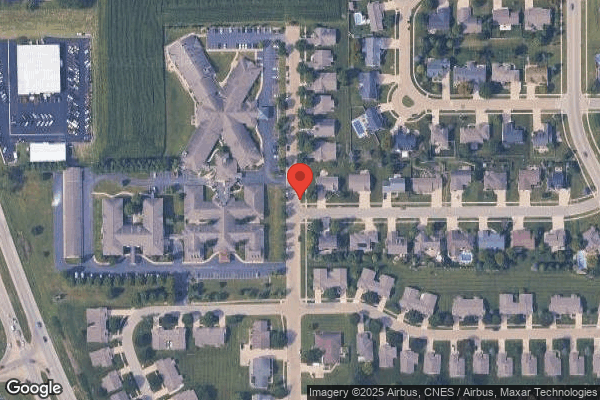
MANOR COURT OF PERU

3230 BECKER DRIVE, PERU, IL 61354 (815) 220-1400
Non profit - Corporation 130 Beds RESIDENTIAL ALTERNATIVES OF ILLINOIS Data: November 2025
Trust Grade
90/100
#60 of 665 in IL
Last Inspection: October 2024

Within standard 12-15 month inspection cycle. Federal law requires annual inspections.

Overview

Manor Court of Peru has received an impressive Trust Grade of A, indicating it is an excellent choice for families seeking care. Ranking #60 out of 665 facilities in Illinois places it in the top half, while being #1 of 9 in La Salle County means it outperforms all local competitors. However, the facility's trend is concerning as issues have increased from 4 in 2022 to 6 in 2024. Staffing is a relative strength with a turnover rate of 35%, lower than the state average, but RN coverage is only average. Notably, there have been specific incidents such as residents not having their call lights within reach, which could lead to safety risks, and a failure to properly label and date stored food, affecting all residents. Overall, while the facility has commendable strengths in its ratings and staffing stability, the rising number of concerns should be carefully considered by families.

Trust Score
A
90/100
In Illinois
#60/665
Top 9%
Safety Record
Low Risk
No red flags
Inspections
Getting Worse
4 → 6 violations
Staff Stability
○ Average
35% turnover. Near Illinois's 48% average. Typical for the industry.
Penalties
✓ Good
No fines on record. Clean compliance history, better than most Illinois facilities.
Skilled Nurses
✓ Good
Each resident gets 43 minutes of Registered Nurse (RN) attention daily — more than average for Illinois. RNs are trained to catch health problems early.
Violations
○ Average
10 deficiencies on record. Average for a facility this size. Mostly minor or procedural issues.
★★★★★
5.0
Overall Rating
★★★☆☆
3.0
Staff Levels
★★★☆☆
3.0
Care Quality
★★★★★
5.0
Inspection Score
Stable
2022: 4 issues
2024: 6 issues

The Good

  • Full Sprinkler Coverage · Fire safety systems throughout facility
  • No fines on record
  • Staff turnover below average (35%)

    13 points below Illinois average of 48%

Facility shows strength in fire safety.

The Bad

Staff Turnover: 35%

11pts below Illinois avg (46%)

Typical for the industry

Chain: RESIDENTIAL ALTERNATIVES OF ILLINOI

Part of a multi-facility chain

Ask about local staffing decisions and management

The Ugly 10 deficiencies on record

Oct 2024 5 deficiencies
CONCERN (D)

Potential for Harm - no one hurt, but risky conditions existed

Deficiency F0558 (Tag F0558)

Could have caused harm · This affected 1 resident

Based on observation, interview, and record review the facility failed to ensure a call light was within reach for two of 32 residents (R8 and R20) reviewed for call lights in a sample of 46. Findings...

Read full inspector narrative →
Based on observation, interview, and record review the facility failed to ensure a call light was within reach for two of 32 residents (R8 and R20) reviewed for call lights in a sample of 46. Findings include: The facility's Call Light policy, revised 01/04, documents to be sure call light is within reach before leaving the room. 1. On 10/28/24 at 11:30am, R20's call light was on the floor at the head of the bed. R20 was on the other side of the bed attempting to stand up. R20 stated that she wanted to go to bed but did not know where her call light was. 2. On 10/28/24 at 11:35am, R8 was in a reclining chair by the door to the room. R8's call light was hooked to the sheets, under the blanket, on the opposite side of her bed. R8 was unable to find her call light. On 10/28/24 at 11:35, V6, Certified Nursing Assistant, was stopped when walking down the hall and asked to assist R20. V6 verified that R20's call light was on the floor and should be within R20's reach. V6 also verified that R8's call light was not within her reach. On 10/29/24 at 1:45pm, V2, Director of Nursing, stated that it is the facility's expectation that the call light be within reach, prior to staff leaving the room.
CONCERN (D)

Potential for Harm - no one hurt, but risky conditions existed

PASARR Coordination (Tag F0644)

Could have caused harm · This affected 1 resident

**NOTE- TERMS IN BRACKETS HAVE BEEN EDITED TO PROTECT CONFIDENTIALITY** Based on interview and record review, the facility failed to ensure a resident with a new diagnosis of mental illness was referr...

Read full inspector narrative →
**NOTE- TERMS IN BRACKETS HAVE BEEN EDITED TO PROTECT CONFIDENTIALITY** Based on interview and record review, the facility failed to ensure a resident with a new diagnosis of mental illness was referred to the state agency for a level II PASARR (Preadmission Screening and Resident Review) evaluation for one of one resident (R3) reviewed for PASARR screening in the sample of 46. Findings include: R3's current electronic medical record profile and Face Sheet, documents R3 was admitted to the facility on [DATE] and diagnosed with Schizophrenia on 2/19/24. R3's most recent Level I PASARR evaluation, dated 3/17/22, documents at the time of evaluation R3 had mental health diagnoses of: Major Depression, Paranoid personality, and Anxiety. R3's medical record does not document that R3 has had any further PASARR screening or evaluation since R3's new diagnosis of Schizophrenia in February 2024. On 10/30/24 at 11:42 AM, V8 (Social Service Director) stated We switched over to a new system of PASARR screenings in 2022. (R3) had an onsite evaluation in March of 2022. At that time (R3) did not have the diagnosis of Schizophrenia. That diagnosis was added in February of 2024. I am not sure when I am supposed to redo her PASARR screen. I am going to have to call them and find out. I am thinking it should have been re-done in February with the new Schizophrenia diagnosis.
CONCERN (D)

Potential for Harm - no one hurt, but risky conditions existed

Accident Prevention (Tag F0689)

Could have caused harm · This affected 1 resident

Based on observation, interview, and record review, the facility failed to implement new fall prevention interventions after repeated falls for one of four residents (R60) reviewed for falls in the sa...

Read full inspector narrative →
Based on observation, interview, and record review, the facility failed to implement new fall prevention interventions after repeated falls for one of four residents (R60) reviewed for falls in the sample of 46. Findings include: R60's current medical record documents R60's diagnoses to include: Alzheimer's Disease; Repeated Falls; Muscle Weakness (generalized); and Other Abnormalities of Gait and Mobility. R60's Fall Risk Assessment (dated 10/14/24) documents a score of 25, indicating R60 is a high risk for falls. On 10/28/24 at 09:55 AM, R60 was reclined in a recliner in the day room near the television covered with a blanket. R60's eyes were closed at this time. V13 (Certified Nursing Assistant) stated R60 has declined some recently. I think there was talk about Hospice, but her husband is waiting to see if she'll bounce back any. V13 stated R60 has lost weight, has developed a pressure ulcer on her bottom and has a history frequent of falls. R60's Minimum Data Set Assessment (dated 07/30/24), Section C, documents a Brief Interview for Mental Status score of 0, indicating severely impaired cognition. This same assessment documents in Section GG, R60 requires supervision or touching assistance to walk 10 feet (Once standing, the ability to walk at least 10 feet in a room, corridor, or similar space); Walk 50 feet with two turns (Once standing, the ability to walk at least 50 feet and make two turns); and Walk 150 feet (Once standing, the ability to walk at least 150 feet in a room, corridor, or similar space). The facility's Fall Log documents that R60 has fallen 13 times at the facility on the following dates: 07/04/24, 07/05/24, 07/07/24, 08/01/24, 08/14/24, 08/18/24, 09/01/24, 09/07/24, 09/29/24, 10/03/24, 10/08/24, 10/12/24, and 10/17/24. R60's Fall Investigation (dated 08/01/24) documents R60 was found on the floor after ambulating unassisted in her room. This same investigation documents, Care plan reviewed and updated. R60's current care plan has no mention of R60's 08/01/24 fall, or a new intervention implemented following this same fall. R60's IDT (Interdisciplinary Team) Evaluation Note (dated 08/01/24) documents, (R60) had a fall with no complaints of pain or injuries sustained. She was ambulating unassisted in her room. (R60) continues to be impulsive, transfer and ambulate unassisted, and has repeated falls related to severe Alzheimer's Disease. She enjoys spending time in her room which already addressed in the problem and will frequently shut her door. Care Plan reviewed and remains appropriate, continue with plan of care. On 10/31/24 at 10:30 AM, V12 (Care Plan Coordinator) stated R60's care plan was reviewed after her 08/01/24 fall, however, no increase in supervision or additional fall prevention intervention was implemented at that time. R60's Fall Investigation (dated 08/14/24) documents R60, attempted to get out of bed unassisted when she lost her balance and fell. R60's current care plan has no mention of R60's 08/14/24 fall, or a new intervention implemented following this same fall. R60's IDT Evaluation Note (dated 08/14/24) documents, Care Plan reviewed and appropriate, continue with plan of care. On 10/31/24 at 10:35 AM, V12 stated R60's care plan was reviewed after her 08/14/24 fall, however, no increase in supervision or additional fall prevention intervention was implemented at that time. As of 10/31/24, R60's medical record did not contain documentation that new fall prevention interventions were implemented after R60's 8/1/24 or 8/14/24 fall.
CONCERN (D)

Potential for Harm - no one hurt, but risky conditions existed

Incontinence Care (Tag F0690)

Could have caused harm · This affected 1 resident

Based on observation, interview, and record review the facility failed to ensure a urinary collection bag was in a privacy cover and kept off the floor for one of three residents (R22) reviewed for ca...

Read full inspector narrative →
Based on observation, interview, and record review the facility failed to ensure a urinary collection bag was in a privacy cover and kept off the floor for one of three residents (R22) reviewed for catheters in a sample of 46. Findings include: The facility's Catheterization (Drainage Bag) policy, revised 01/04, documents that to attach the drainage bag to the frame, below the level of the resident's bladder, not touching the floor. On 10/28/24 at 10:00am, R22's urinary drainage catheter bag was hanging on the lower aspect of her reclining chair. R22's urinary drainage bag was uncovered and draining cloudy yellow urine. On 10/28/24 at 12:00pm, R22 was in the dining room in her reclining chair. R22's urinary drainage bag was hanging, uncovered, on the outer aspect of her reclining chair. V6, Certified Nursing Assistant, verified that R22's urinary drainage bag was not covered. On 10/29/24 at 8:45am, R22 was in the main dining area in her reclining chair. R22's urinary drainage bag was hanging, uncovered, under the reclining chair. At 12:30pm, R22 was in her room, with the urinary drainage bag, uncovered, under her reclining chair. During observations made on 10/29/24 R22's urinary drainage spout was unhooked from the collection bag and touching the floor. On 10/29/24 at 1:45pm, V2, Director of Nursing, stated that she did see R22's urinary drainage bag uncovered. V2 stated that it is the policy of the facility to cover all the urinary drainage bags with a privacy cover. V2 also verified that the urinary drainage bag is not to be touching the floor.
CONCERN (D)

Potential for Harm - no one hurt, but risky conditions existed

Medication Errors (Tag F0758)

Could have caused harm · This affected 1 resident

**NOTE- TERMS IN BRACKETS HAVE BEEN EDITED TO PROTECT CONFIDENTIALITY** Based on observation, interview and record review, the facility failed to document a diagnosis and identify target behaviors to ...

Read full inspector narrative →
**NOTE- TERMS IN BRACKETS HAVE BEEN EDITED TO PROTECT CONFIDENTIALITY** Based on observation, interview and record review, the facility failed to document a diagnosis and identify target behaviors to warrant the use of Seroquel (antipsychotic medication) and document a care plan to address behaviors and antipsychotic use for two of three residents (R6, R79) reviewed for antipsychotic medications in the sample of 46. Findings include: The facility's Psychopharmacologic Drug Usage Procedure policy, dated 10/18/17, documents A Psychopharmacologic Drug is any medication used for managing behavior, stabilizing mood, or treating psychiatric disorders. This includes the following types of drugs: antipsychotic, antidepressants, anti-anxiety medications, and sedatives/hypnotics. Procedure: Use of psychopharmacological medications requires assessment by the attending physician, and specific orders must be written by the attending physician with supporting diagnosis. Psychopharmacological medication usage must also be addressed in the Care Plan, including goals, likely medication effect and potential adverse consequences. This same policy documents Documentation of behaviors and conditions requiring the use of these medications must be done on a routine basis, as well as medication response and adverse consequences. 1. On 10/28/24 at 11:28 AM, R6 was sitting in the dining room in a wheelchair with a mechanical lift sling under him. Other residents were seated at the same table with R6. R6 was quiet and not exhibiting any behaviors. R6's current Physician Order sheet, dated 10/31/24, documents R6 has an order for Quetiapine (Seroquel, antipsychotic medication) 50 MG (milligrams), take 1 tablet by mouth two times a day. R6's current Care Plan, dated 5/30/24, documents R6 is [AGE] years old and has diagnoses including but not limited to; Dementia without behaviors, Abnormal weight loss, Depression and Mood Disorder. This same Care Plan documents (R6) has diagnoses of Depression, Anxiety, Insomnia, Attention-deficit hyperactivity disorder (ADHD) and Mood Disorder. Administer Quetiapine 50 MG twice a day as ordered related to Mood Disorder. Monitor for side effects, including boxed warnings. This Plan of Care does not list psychiatric behaviors or side effects to monitor for quetiapine use in elderly. R6's Behavior Analysis sheets, dated 4/29/24-10/29/24, document R6 has exhibited two physical behaviors and three verbal behaviors in the past six months. These behaviors list a date and time but no explanation as to what the behavior was. All five behaviors document staff was able to easily alter the resident's behavior with non-pharmacological interventions. On 10/29/24 at 2:00 PM, V9 (Certified Nursing Assistant) confirmed she has worked at the facility for a long time and works a shift from 3:00 AM until 2:00 PM. V9 stated (R6) hasn't been eating and needs assistance with meals. He is also more sleepy lately. No current behaviors that I can recall. He used to have behaviors but mostly it was if his roommate kept him up all night then he would be more moody, would cuss and had some falls. (R6) isn't harmful to other residents or himself. On 10/29/24 at 2:10 PM, V10 (Registered Nurse) stated (R6) has had no recent behaviors. He used to have some rejection of care, he would walk on his own and not ask for help or use a call light. He would then get upset when told to use it. (R6) is not harmful to other residents or himself. Maybe was harmful towards staff at one time. 2. On 10/28/24 at 11:50 AM, (R79) was sitting in her wheelchair in the dining room at table and was eating lunch independently. R79 was seated next to other residents and was not displaying any behaviors. R79's current Physician Order sheet, dated 10/30/24, documents R79 has an order for Quetiapine (Seroquel, antipsychotic medication) 25 MG (milligrams), take 1 tablet by mouth two times a day. R79's current Care Plan, dated 10/8/24, documents R79 is [AGE] years old and has diagnoses of Alzheimer's disease and Dementia. This Care Plan documents (R79) has Depression, Anxiety, Insomnia, and Mood Disorder. (R79) can be tearful at times. Administer Quetiapine 25 MG twice a day as ordered. Monitor for side effects, including boxed warnings. This Plan of Care does not list psychiatric behaviors or side effects to monitor for quetiapine use. R79's Psychotropic Medication consent, dated 9/17/24, documents R79 was prescribed Seroquel 25 MG two times a day for Mood Disorder. R79's Behavior Analysis sheets, dated 4/29/24-10/29/24, document R79 has exhibited two physical behaviors, two verbal behaviors, 17 behaviors of wandering and ten other behaviors in the past six months. These behaviors list a date and time but no explanation as to what the behavior entailed. R79's nursing progress notes for dates and times related to behavior sheets do not list details on what behaviors R79 has exhibited over the past six months. On 10/29/24 at 2:00 PM, V9 (Certified Nursing Assistant) stated (R79) has had no behaviors lately. Back in the day when she had them, (R79) would stand up and she broke her hip. (R79) has no other behaviors. She was in memory care (locked unit), but we moved out here after hip fracture. On 10/29/24 at 2:10 PM, V10 (Registered Nurse) stated (R79) usually in the evening time she has typical behaviors of sundowners (increased confusion in the evening). (R79) gets restless and has to be re-directed. (R79) is not harmful to herself or other residents though. On 10/30/24 at 11:13 AM, V2 (Director of Nursing) confirmed both R6 and R79 are taking Seroquel for Mood Disorder. V2 stated (R6) is verbal at times towards staff. Like if they are trying to help him with care or it is time to eat. He will direct profanity towards us. The physical behavior for him is usually if we're trying to help him, he will refuse because of the Dementia. He doesn't understand. Those physical behaviors are also towards staff. (R6) is not harmful towards other residents or himself. (R79) has some behaviors that are mostly agitation with staff. (R79) doesn't always like to be provided care that she needs. (R79) tries to stand unassisted and when we are trying to get her to sit back down, she will become agitated and strike out at us. (R79) is not harmful towards other residents or herself. V2 confirmed that both R6 and R79's care plans do not address the antipsychotic medication or behaviors adequately. V2 confirmed that both residents do not exhibit behaviors that are psychotic in nature or unrelated to dementia, to justify the use of Seroquel.
Apr 2024 1 deficiency
CONCERN (D) 📢 Someone Reported This

A family member, employee, or ombudsman was alarmed enough to file a formal complaint

Potential for Harm - no one hurt, but risky conditions existed

Quality of Care (Tag F0684)

Could have caused harm · This affected 1 resident

**NOTE- TERMS IN BRACKETS HAVE BEEN EDITED TO PROTECT CONFIDENTIALITY** Based on observation, interview and record review the Facility failed to provide supervision for one of three Physical Disabilit...

Read full inspector narrative →
**NOTE- TERMS IN BRACKETS HAVE BEEN EDITED TO PROTECT CONFIDENTIALITY** Based on observation, interview and record review the Facility failed to provide supervision for one of three Physical Disability/Intellectual Disability Residents (R1) reviewed for assistance to Doctor's appointments. Findings include: Facility Notice of Privacy Practices Policy, dated 10/23/17, documents: we will use your health information for regular operations; members of the medical staff, risk/quality improvement manager, or members of the quality improvement team may use information in your health record to assess the care and outcomes in your case; the information will then be in an effort to continually improve the quality and effectiveness of the health care and services we provide. Residents' Rights for People in Long-Term Care Facilities, revised 10/2014, documents: the Facility must provide services to keep your physical and mental health, and sense of satisfaction; and your Facility must make reasonable arrangements to meet your needs and choices. R1's Physician Order Sheet/POS, dated 4/12/24, documents that R1 admitted to the facility on [DATE]. R1's diagnoses include: Cerebral Infarction, Contusion of the Left Lower Leg, Hemiplegia and Hemiparesis, Cognitive Communication Deficit, Dysphagia, Muscle Weakness, Intellectual Disabilities, Pacemaker, Lack of Coordination and Abnormal Posture. R1's POS also documents Physician Orders for an Indwelling Suprapubic Urinary Catheter, Mechanical Soft/Thin Liquid diet and an Orthopedic office visit scheduled for 3/25/24 at 3:15 pm, with a local vehicle transport company to transport and pick up R1 from the Facility on 3/25/14 at 2:30 pm. R1's Minimum Data Set/MDS, dated [DATE], documents: Section B, R1 always needs assistance with reading instructions or written material; Section C, Brief Interview for Mental Illness/BIMS score documents R1 is Severely Cognitively Impaired (BIMS score is 0/15); Section F, R1 is rarely/never understood; Section GG, R1 unable to perform Activities of Daily Living, walk/step up or down stairs, unable to transfer in and out of a car on a passenger side. R1's current Care Plan, documents: R1 is at risk for pain related to recent Left Thigh Hematoma and staff to monitor for non-verbal signs and symptoms of pain,; Anxiety and Mild Depression; Risk for falling related to Intellectual Disability, Development Disorder of Speech and Language, Incontinence, Poor Mobility with Right Sided Weakness post Cerebral Infarct/Stroke; and has an indwelling suprapubic catheter that increases the risk for tripping; and is nonverbal except for occasional yes or no questions. R1's Nursing Notes, dated 3/25/24 at 1:02 pm, document a telephone conversation with V7 (R1's Nephew/Guardian). V7 stated V7 was unable to accompany R1 to appointment (on 3/25/24) and that R1's appointment needed to be rescheduled. R1's Nursing Note, dated 3/25/24 at 1:13 pm, documents a telephone conversation with R1's Orthopedic Doctor's Office, and the Doctor's Office still want to keep today's appointment, aware of (transportation service) set up. R1's Nursing Note, dated 3/25/24 at 6:01 pm, documents R1's return from the Doctor appointment back to the Facility. R1's letter from the Orthopedic Doctor office, dated 3/5/24, documents an appointment reminder for 3/25/24 at 3:15 pm. R1's General Physician Order, dated 3/5/24, documents an Orthopedic Doctor appointment scheduled for 3/25/24 at 3:15 pm, and a 2:30 pm transport pick up time. On 4/12/24 at 11:05 am, R1 was supine in bed and unable to follow commands and was non-verbal. On 4/12/24, at 10:01 am, V7 (R1's Guardian/Nephew) stated, I spoke with the Facility on 3/25/24 and told them that I was unable to go to my Uncle's appointment with him that day. I work swing shifts and my schedule conflicts with some of these appointments. I called them and told them that they were making appointments and not asking me when I was available to go with him. On 4/12/24 at 9:18 am, V4 (Orthopedic Doctor's Registered Nurse) stated, (R1) was sent to our office for a 3:15 pm appointment and was transported by a local transport company. The local transport companies just wheel the patient's in and leave them. (R1) was sitting in the waiting room and was non-verbal and unable to do anything for himself. We noticed (R1) trying to propel (R1's) legs in the wheelchair, and was kicking (R1's) legs off of the floor, and we thought (R1) was going to fall out of the wheelchair. So we had someone sit with him. (R1) also had a catheter bag, that was uncovered and dragging the floor. We did not know if (R1) was thirsty or needed bathroom assistance either. (R1) came for a follow-up appointment for an abscess on (R1's) left leg. (R1) did not have any paperwork on (R1) and when we called out for (R1's) name, (R1) could not respond or even help get himself in for the exam. Then, around 5:00 pm, the transport company called and told us that they were going to be late picking (R1) up, and at this point everyone had left the office and no one was in the building, so I had to stay with (R1) until they came to pick (R1) up. (R1) would have sat in our office for a couple hours with no supervision, had I not been there to help. I was worried something bad was going to happen to him. On 4/12/24 at 9:08 am, V6 (Registered Nurse) stated, (V7) forgets appointments a lot of times and when (V7) could not go to the 3/25/24 appointment with (R1), I called the Doctor's office and they told us to still send (R1). We did not even think about having someone go with (R1). On 4/12/24 at 8:50 am, V3 (Assistant Director of Nursing) stated, (R1) had an Orthopedic Doctor's appointment on 3/25/24 and (V7/R1's Nephew/Guardian) had told us that he was unable to go with (R1) to that appointment. So we called the Doctor's office and they told us to send (R1) anyway. Looking back we probably should have not sent (R1) alone. We normally send a Shift Coordinator or another staff member to Doctor appointments with Resident's that need assistance, that do not have a family member available to go with them. On 4/12/24 at 9:58 am, V1 (Administrator) stated, Once we found out (V7/R1's Nephew/Guardian) was not able to go that appointment, we should have probably sent one of our staff members to go with (R1). We normally will send staff to Doctor's appointments for the Residents that need supervision for safety, that are like (R1) that are non-verbal and cannot perform Activities of Daily Living (ADL's). I have plenty of staff available to go on appointments, especially knowing that (V7) missed a lot of (R1's) other appointments, we should have made different plans to have someone go with (R1).
Sept 2022 4 deficiencies
CONCERN (D)

Potential for Harm - no one hurt, but risky conditions existed

Deficiency F0558 (Tag F0558)

Could have caused harm · This affected 1 resident

Based on observation, interview, and record review, the facility failed to ensure a resident's room was set up for ease of moving around the room, getting in and out of the bathroom, and for finding f...

Read full inspector narrative →
Based on observation, interview, and record review, the facility failed to ensure a resident's room was set up for ease of moving around the room, getting in and out of the bathroom, and for finding frequently used items for one resident (R9) of 18 reviewed for environment in a sample of 33. Findings include: The facility's Residents' Rights for People in Long-term Care Facilities, undated, states You have the right to .participate in your own care .Your facility must make reasonable arrangements to meet your needs and choices. R9's current Care plan includes the following: R9 is blind, has a suprapubic catheter, bilateral nephrostomy tubes, bowel incontinence (wears brief), and staff are to ensure items are to be within R9's reach . On 9-28-22, at 10:07am, R9 sat in a wheelchair in R9's room. R9's bathroom door is currently held open by the wall light switch. A high-back reclining wheelchair is parked at the foot of the other (empty) bed in the room by the window. R9 stated I am totally blind and can't see light from dark. I have been blind since age six. On 9-28-22, between 10:15am and 10:45am, R9 stated the following: I wish my bathroom door would stay open. The light switch is what keeps it open. I've asked different people to get a door stop and nothing happens. I talked to maintenance yesterday and he said he'd look into it. I use the bathroom to put my teeth in, wash up. I've gotten caught with the door going in and it makes it difficult to get out and I have to fight the door. It is frustrating. R9 confirmed that R9 does not need the bathroom for toileting so privacy is not needed. I would prefer the door to stay open. R9 continued to state I wish they would get that other wheelchair out of here (my room). It is usually kept in my bathroom and in my way. It gets moved .I've gotten tangled up in the chair moving over there to get to the call light on the other side of my bed. On 9-28-22, at 2:05pm, V9 Certified Nursing Assistant/CNA confirmed that R9's high-back wheelchair was in R9's room over by the window and stated It is supposed to be placed neatly in (R9's) room. At times it is in (R9's) bathroom; (R9) will use the bathroom to put his dentures in or take them out and to wash his hands. On 9-29-22, at 8:50am, V5 Maintenance Director stated the following: (V5) is unaware of (R9) wanting (R9's) door kept open and (R9) did not speak to (V5) about that. All of the bathroom doors are on spring hinges and automatically close. They don't stay open unless blocked open, but then it is a privacy issue .I could just take the pin out of the hinge and would gladly remove it. At this time V5 looked for and didn't find any work orders. V5 verified that R9's door was currently propped open using the light switch. On 9-29-22, at 9:05am, V8 CNA stated We set (R9) up to clean his dentures and (R9) uses the bathroom to wash (R9's) hands. (R9) needs it (the bathroom door) open. We use the light switch to hold it open. I have told maintenance and so has (R9) .I did not put a work order in. On 9-29-22, at 9:30am, V4 Social Service Director/SSD stated that (R9) has not mentioned wanting (R9's) bathroom door always open, but that makes sense. (R9) likes to brush his teeth and is very independent. On 9-30-22, at 09:05am, R9 was self-propelling R9's wheelchair from the dining room to R9's room using the wall railing with R9's left hand to guide him. R9 came to a stop when R9 bumped into a mechanical lift that was parked along the same side of the hall where R9's room is located. V10 CNA called out for R9 to stop. V10 CNA stated that R9 usually will self-propel to R9's room .the (mechanical lift) is supposed to be on the other side of the hall. On 9-30-22, at 9:15am, R9 self-propelled over to the large garbage can by R9's door to the hall and emptied R9's razor out. Then R9 self-propelled to the far side of R9's bed and turned on the call light. R9 bumped into, then picked up a small waste can sitting in front of R9's bedside table, dragged it over to the other side of (R9's) bed, bumping into the foot of (R9's) bed several times while trying to maneuver around it. V10 CNA entered R9's room, asked what R9 needed, and asked R9 why he moved R9's waste can. R9 told V10 that R9 wanted to get in bed. R9 stated R9 didn't know why the waste can got moved over by the dresser and that it is supposed to be over here. On 9-30-22, at 9:30am, after putting R9 to bed, V10 CNA turned out (R9's) lights (per R9's request,) closed the bathroom door and left the room. V10 stated that when (R9) is out of bed they will open the door back up. V10 stated that R9 will go in and out of the bathroom to wash his hands and face so the bathroom door should be open. On 9-30-22, at 9:40am, R9 stated that R9 uses the small waste can to empty his razor in. I found it (the waste can) over by the dresser when I was looking for something else. When they move things in my room then it is lost to me. On 9-30-22, at 10:07am, V2 Director of Nursing/DON stated the following: (R9) can self-propel from the dining room to (R9's) room. (R9) may have to have help if (R9) gets too tired. We have to assist (R9) with knowing where things are. We don't like to move things so (R9) knows where they're at. V2 agrees that R9 wants to be more independent. Normally the hall is clear. The mechanical lift should not be on (R9's) side, it should be on the opposite side of the hall. (R9's) wheelchair is usually kept in the shower in (R9's) bathroom and out of (R9's) way. I'm not sure why it is at the end of the other bed. (R9) uses (R9's) bathroom; staff set (R9) up. (R9) doesn't need privacy since (R9's) not toileted. V2 agreed that R9 needs easier access to getting in/out of R9's bathroom and that it is not currently a good set up. We are looking into it.
CONCERN (D)

Potential for Harm - no one hurt, but risky conditions existed

Medication Errors (Tag F0758)

Could have caused harm · This affected 1 resident

**NOTE- TERMS IN BRACKETS HAVE BEEN EDITED TO PROTECT CONFIDENTIALITY** Based on observation, interview, and record review the facility failed to identify targeted behaviors for one (R1) of eight resi...

Read full inspector narrative →
**NOTE- TERMS IN BRACKETS HAVE BEEN EDITED TO PROTECT CONFIDENTIALITY** Based on observation, interview, and record review the facility failed to identify targeted behaviors for one (R1) of eight residents reviewed for psychotropic medication usage in the sample of 33. Findings include: The facility's Psychopharmacologic Drug Usage Procedure, revised 10/18/17, documents A Psychopharmacologic Drug is any medication used for managing behavior, stabilizing mood, or treating psychiatric disorders. This includes the following types of drugs: antipsychotic, antidepressants, anti-anxiety meds (medications), and sedatives/hypnotics. Documentation of behaviors and conditions requiring the use of these medications must be done on a routine basis, as well as medication response and adverse consequences. The Physician Order Report for R1, dated 09/01/2022 - 09/30/2022, documents R1 has the following diagnoses: Delusional Disorders, Major Depressive Disorder, and Generalized Anxiety Disorder. This same report documents the following dated physician orders for R1: Quetiapine 50 mg (milligrams) one tablet by mouth once an evening for Delusional Disorders; Lorazepam 1 mg (milligram) by mouth at bedtime for Generalized Anxiety Disorder; and Citalopram 40 mg (milligrams) one tablet by mouth daily for recurrent Major Depressive Disorder. The Behavior Committee Recommendation form, revised 6/27/19, documents Review Date for R1 as 8/30/22. This form documents R1 started Quetiapine 25 mg, Lorazepam 1 mg, and Citalopram 40 mg on R1's admission date of 6/8/22 and R1's Quetiapine was increased on 6/14/22 to 50 mg daily. This form also documents NONE for Behavioral Symptoms, Mood Symptoms, and Other indications. The Behavior Analysis Report for R1, dated 5/21/22 - 9/28/22 does not list any targeted behaviors for staff to be monitoring R1 for. This same Report does not document R1 having any behaviors between 5/21/22 - 9/28/22. On 9/27/22, 9/28/22, and 9/29/22, from 8:30 am through 4:00 pm, there were no exhibited behaviors observed and none reported for R1. On 9/28/22 at 8:30 am R1 stated that she takes the same medications that she took when she was at home and has taken these for a long time. R1 stated she has not had any problems. On 9/30/22 at 10:30 am, V2 DON (Director of Nursing) stated that R1 was admitted to the facility on [DATE] with physician orders for Quetiapine, Lorazepam and Citalopram. V2 stated R1's Quetiapine was increased after admission because (R1) said she took a higher dose at home. V2 DON stated she does not know what target behaviors R1 exhibited prior to admission and would have to check R1's hospital record to see if there was anything documented. V2 confirmed R1's Behavior Analysis Report does not document any targeted behaviors for staff to be monitoring for R1. On 9/30/22 at 11:00 am, V2 DON stated the facility's Electronic Health Record system was not set to include resident targeted behaviors for any of the residents. V2 DON stated that she does not have any other documentation to provide that shows targeted behaviors to be monitored for R1.
CONCERN (F)

Potential for Harm - no one hurt, but risky conditions existed

Food Safety (Tag F0812)

Could have caused harm · This affected most or all residents

Based on observation, interview, and record review, the facility failed to ensure stored food was labeled and dated. This failure has the potential to affect all 89 residents at the facility. Findings...

Read full inspector narrative →
Based on observation, interview, and record review, the facility failed to ensure stored food was labeled and dated. This failure has the potential to affect all 89 residents at the facility. Findings include: The facility's Food Storage and Labeling Procedure Policy (Revised 9/2022), documents The label should include: 1. Product name: Even if you can see the product/leftover through the plastic wrap or lid, you must label the container or re-sealable bag with the product name; 2. Date: Document the date that the product is placed in the refrigerator; 4. Staff initials: Every label must include the initials of the staff member preparing the item/leftover to be refrigerated; and Nonperishable items removed from the original container should be placed in a covered container and marked with the name of the product and date opened. On 9/27/22 at 9:30am, a clear plastic bag half filled with egg noodles in the facility's Dry Storage Room was not labeled or dated. V7 Certified Dietary Manager (CDM) stated that the egg noodles should have been labeled and dated when the product was first opened and was not sure when the bag was opened and left in the Dry Storage Room. On 9/27/22 at 9:30am, there were five serving bowls containing chopped peach fruit in the Walk-In Cooler, which did not have labels or dates. V7 CDM stated, These should have been labeled and dated. V7 stated that she did not know when the fruit bowls were placed in the Cooler. The Resident Census and Conditions of Residents (Centers for Medicare and Medicaid Services/CMS 672) form, dated 9/27/22, documents 89 residents reside in the facility.
MINOR (C)

Minor Issue - procedural, no safety impact

Staffing Information (Tag F0732)

Minor procedural issue · This affected most or all residents

Based on observation, interview and record review, the facility failed to post the current licensed staffing information with actual nursing staff working. This has the potential to affect all 89 resi...

Read full inspector narrative →
Based on observation, interview and record review, the facility failed to post the current licensed staffing information with actual nursing staff working. This has the potential to affect all 89 residents residing in the facility. Findings include: On 9-28-22, at 11:00am, the facility's Daily Staffing sheet was posted on a bulletin board near the nurse's station and dated 9-28-22. On 9-29-22, at 1:00pm, V3 Assistant Director of Nursing/ADON stated that V3 does the CNA (Certified Nursing Assistant) schedule, but it is not V3 who makes the changes to the Daily Staffing sheet. V3 believes it is (V6 Human Resource/HR Director) who does. On 9-29-22, at 1:10pm, V6 HR Director produced 18 months of the Daily Staffing sheets in a binder. V6 confirmed at this time that the Daily Staffing sheets do not show any indication of staffing changes. V6 stated that V6 creates each Daily Staffing sheet from the current schedule and does not make changes to it. On 9-29-22, at 1:12pm, V3 ADON stated that there were call offs on 9-28-22 that are not reflected on the Daily Staffing sheet dated 9-28-22. V3 confirmed that there are other dates with changes to the schedule also. On 9-29-22, at 1:15pm, V2 Director of Nursing/DON, V3 ADON, and V6 HR Director all confirmed that none of the Daily Staffing sheets reflect the actual staff working. V3 stated it does not reflect any call-offs or agency. V2 stated that V2 does not update it on a daily basis to reflect changes. The facility's Resident Census and Conditions of Residents Centers for Medicare and Medicaid Services (CMS) dated 9-27-22, documents 89 residents currently reside in the facility.
Understanding Severity Codes (click to expand)
Life-Threatening (Immediate Jeopardy)
J - Isolated K - Pattern L - Widespread
Actual Harm
G - Isolated H - Pattern I - Widespread
Potential for Harm
D - Isolated E - Pattern F - Widespread
No Harm (Minor)
A - Isolated B - Pattern C - Widespread

Questions to Ask on Your Visit

  • "Can I speak with families of current residents?"
  • "What's your RN coverage like on weekends and overnight?"

Our Honest Assessment

Strengths
  • • Grade A (90/100). Above average facility, better than most options in Illinois.
  • • No major safety red flags. No abuse findings, life-threatening violations, or SFF status.
  • • No fines on record. Clean compliance history, better than most Illinois facilities.
  • • 35% turnover. Below Illinois's 48% average. Good staff retention means consistent care.
Concerns
  • • No significant concerns identified. This facility shows no red flags across CMS ratings, staff turnover, or federal penalties.
Bottom line: Generally positive indicators. Standard due diligence and a personal visit recommended.

About This Facility

What is Manor Court Of Peru's CMS Rating?

CMS assigns MANOR COURT OF PERU an overall rating of 5 out of 5 stars, which is considered much above average nationally. Within Illinois, this rating places the facility higher than 99% of the state's 100 nursing homes. This rating reflects solid performance across the metrics CMS uses to evaluate nursing home quality.

How is Manor Court Of Peru Staffed?

CMS rates MANOR COURT OF PERU's staffing level at 3 out of 5 stars, which is average compared to other nursing homes. Staff turnover is 35%, compared to the Illinois average of 46%. This relatively stable workforce can support continuity of care.

What Have Inspectors Found at Manor Court Of Peru?

State health inspectors documented 10 deficiencies at MANOR COURT OF PERU during 2022 to 2024. These included: 9 with potential for harm and 1 minor or isolated issues.

Who Owns and Operates Manor Court Of Peru?

MANOR COURT OF PERU is owned by a non-profit organization. Non-profit facilities reinvest revenue into operations rather than distributing to shareholders. The facility is operated by RESIDENTIAL ALTERNATIVES OF ILLINOIS, a chain that manages multiple nursing homes. With 130 certified beds and approximately 105 residents (about 81% occupancy), it is a mid-sized facility located in PERU, Illinois.

How Does Manor Court Of Peru Compare to Other Illinois Nursing Homes?

Compared to the 100 nursing homes in Illinois, MANOR COURT OF PERU's overall rating (5 stars) is above the state average of 2.5, staff turnover (35%) is significantly lower than the state average of 46%, and health inspection rating (5 stars) is much above the national benchmark.

What Should Families Ask When Visiting Manor Court Of Peru?

Based on this facility's data, families visiting should ask: "Can I visit during a mealtime to observe dining assistance and food quality?" "How do you handle medical emergencies, and what is your hospital transfer rate?" "Can I speak with family members of current residents about their experience?"

Is Manor Court Of Peru Safe?

Based on CMS inspection data, MANOR COURT OF PERU has a clean safety record: no substantiated abuse findings (meaning no confirmed cases of resident harm), no Immediate Jeopardy citations (the most serious violation level indicating risk of serious injury or death), and is not on the Special Focus Facility watch list (a federal program monitoring the lowest-performing 1% of nursing homes). The facility has a 5-star overall rating and ranks #1 of 100 nursing homes in Illinois. While no facility is perfect, families should still ask about staff-to-resident ratios and recent inspection results during their visit.

Do Nurses at Manor Court Of Peru Stick Around?

MANOR COURT OF PERU has a staff turnover rate of 35%, which is about average for Illinois nursing homes (state average: 46%). Moderate turnover is common in nursing homes, but families should still ask about staff tenure and how the facility maintains care continuity when employees leave.

Was Manor Court Of Peru Ever Fined?

MANOR COURT OF PERU has no federal fines on record. CMS issues fines when nursing homes fail to meet care standards or don't correct problems found during inspections. The absence of fines suggests the facility has either maintained compliance or corrected any issues before penalties were assessed. This is a positive indicator, though families should still review recent inspection reports for the full picture.

Is Manor Court Of Peru on Any Federal Watch List?

MANOR COURT OF PERU is not on any federal watch list. The most significant is the Special Focus Facility (SFF) program, which identifies the bottom 1% of nursing homes nationally based on persistent, serious quality problems. Not being on this list means the facility has avoided the pattern of deficiencies that triggers enhanced federal oversight. This is a positive indicator, though families should still review the facility's inspection history directly.