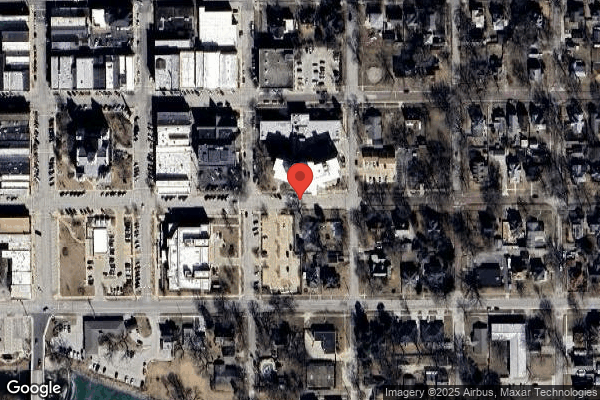
EVENGLOW LODGE

215 EAST WASHINGTON, PONTIAC, IL 61764 (815) 842-4613
Non profit - Corporation 48 Beds Independent Data: November 2025
Trust Grade
80/100
#32 of 665 in IL
Last Inspection: September 2024

Within standard 12-15 month inspection cycle. Federal law requires annual inspections.

Overview

Evenglow Lodge in Pontiac, Illinois, has a Trust Grade of B+, which means it is above average and recommended for families considering care options. It ranks #32 out of 665 facilities in Illinois, placing it in the top half, and is the highest-rated home among 6 in Livingston County. The facility is improving, with reported issues decreasing from 13 to 8 over the past year. Staffing is rated 4 out of 5 stars, indicating a good environment, although the turnover rate is 47%, which is around the state average. Notably, there have been no fines, which is a positive sign, but there are concerns regarding food safety practices and infection control measures, as well as medication storage incidents that could impact resident health.

Trust Score
B+
80/100
In Illinois
#32/665
Top 4%
Safety Record
Low Risk
No red flags
Inspections
Getting Better
13 → 8 violations
Staff Stability
⚠ Watch
47% turnover. Above average. Higher turnover means staff may not know residents' routines.
Penalties
✓ Good
No fines on record. Clean compliance history, better than most Illinois facilities.
Skilled Nurses
✓ Good
Each resident gets 52 minutes of Registered Nurse (RN) attention daily — more than average for Illinois. RNs are trained to catch health problems early.
Violations
⚠ Watch
21 deficiencies on record. Higher than average. Multiple issues found across inspections.
★★★★★
5.0
Overall Rating
★★★★☆
4.0
Staff Levels
★★★★★
5.0
Care Quality
★★★★☆
4.0
Inspection Score
Stable
2023: 13 issues
2024: 8 issues

The Good

  • 4-Star Staffing Rating · Above-average nurse staffing levels
  • 5-Star Quality Measures · Strong clinical quality outcomes
  • Full Sprinkler Coverage · Fire safety systems throughout facility
  • No fines on record

Facility shows strength in staffing levels, quality measures, fire safety.

The Bad

Staff Turnover: 47%

Near Illinois avg (46%)

Higher turnover may affect care consistency

The Ugly 21 deficiencies on record

Sept 2024 8 deficiencies
CONCERN (D)

Potential for Harm - no one hurt, but risky conditions existed

Notification of Changes (Tag F0580)

Could have caused harm · This affected 1 resident

**NOTE- TERMS IN BRACKETS HAVE BEEN EDITED TO PROTECT CONFIDENTIALITY** Based on interview and record review the facility failed to report a fall to the physician and resident representative for one (...

Read full inspector narrative →
**NOTE- TERMS IN BRACKETS HAVE BEEN EDITED TO PROTECT CONFIDENTIALITY** Based on interview and record review the facility failed to report a fall to the physician and resident representative for one (R12) of five residents reviewed for falls in the sample list of 24. Findings include: R12's Minimum Data Set, dated [DATE] documents R12 has moderate cognitive impairment. There is no documentation in R12's medical record that V21 (R12's Family) or V22 (R12's Physician) were notified on 5/5/24 that R12 was lowered to the floor during a staff assisted transfer. R12's Fall Report for fall on 5/5/24 documents R12's fall was not reported to V21 until 5/6/24 at 10:08 AM and V18 (Nurse Practitioner) until 5/6/24 at 8:08 AM. R12's Nursing Note dated 5/6/24 at 7:52 AM documents R12 complained of left toe discomfort and R12's left great toe and second toe were bruised/swollen. R12's Nursing Note dated 5/6/2024 at 3:47 PM documents V18 (Nurse Practitioner) evaluated R12 for toe bruising and pain and gave orders for Tylenol and foot x-ray. The Note documents R12's family was present and updated. The facility's Occurrence Report to the state surveying agency dated 5/10/24 documents the following: On 5/5/24 at 2:00 PM a Certified Nursing Assistant (identified as V17) transferred R12 from the recliner. R12 reported R12's knee gave out causing R12 to go down to the floor in a kneeling position, and R12's left foot slid underneath the recliner. R12's x-ray results received on 5/7/24 document an acute non-displaced fracture of the left great toe. On 9/03/24 at 1:05 PM V2 (Director of Nursing) stated R12's toe fracture was due to the fall on 5/5/24. At 3:21 PM V2 confirmed R12's fall on 5/5/24 should have been reported to R12's physician and family. V2 stated it wasn't reported until the following day when R12 reported the fall, since the agency nurse and CNA had not reported the fall. On 9/04/24 at 1:25 PM V18 (Nurse Practitioner) stated R12 told V18 on the morning of 5/6/24 that during a staff assisted transfer R12's foot bent underneath of R12, R12's knees buckled, and R12 was lowered to the floor. V18 stated V18 was not aware of this incident until she evaluated R12 on 5/6/24 for toe swelling and bruising. V18 stated V18 should have been notified of the incident and V18 is rarely notified by agency staff. The facility's undated Procedure for Resident Falls & Incidents documents to report falls/incidents to the resident's physician and family.
CONCERN (D)

Potential for Harm - no one hurt, but risky conditions existed

ADL Care (Tag F0677)

Could have caused harm · This affected 1 resident

**NOTE- TERMS IN BRACKETS HAVE BEEN EDITED TO PROTECT CONFIDENTIALITY** Based on observation, interview, and record review the facility failed to provide personal hygiene assistance for one (R3) of on...

Read full inspector narrative →
**NOTE- TERMS IN BRACKETS HAVE BEEN EDITED TO PROTECT CONFIDENTIALITY** Based on observation, interview, and record review the facility failed to provide personal hygiene assistance for one (R3) of one resident reviewed for Activities of Daily Living in the sample list of 24. Findings include: On 9/03/24 at 9:28 AM R3 was sitting in the dining room and was finished with breakfast. R3's lower eyelids were very red and there was green discharge in the corner of R3's left eye. R3 stated R3's eyes have been bothering her today. R3 was asked what has been done to address R3's eye discomfort/redness/drainage. R3 stated R3 receives eye drops daily. On 9/4/24 at 9:06 AM R3 was present for the resident council meeting. R3's eyes remained red and there was white/yellow drainage on R3's eyelids. R3's Minimum Data Set, dated [DATE] documents R3 has moderate cognitive impairment and requires partial/moderate staff assistance for personal hygiene. R3's Nursing Note dated 9/3/2024 at 9:51 PM documents R3 complained of eye discomfort/pain and there was increased redness noted to R3's eyes and lower eyelids. R3's eyes had clear drainage and a warm compress was applied. On 9/04/24 at 12:41 PM V10 (Registered Nurse) stated it is not unusual for R3's eyes to have drainage in the morning. V10 stated R3 gets herself ready in the morning, but staff does provide assistance as well. V10 confirmed R3's eyelids should be washed with a warm washcloth as part of morning cares. V10 stated she will have to talk to the Certified Nursing Assistants about that. On 9/04/24 at 1:28 PM V18 (Nurse Practitioner) stated R3 has chronic dry eyes and it is not uncommon for R3 to have eye discharge related to allergies.
CONCERN (D)

Potential for Harm - no one hurt, but risky conditions existed

Accident Prevention (Tag F0689)

Could have caused harm · This affected 1 resident

**NOTE- TERMS IN BRACKETS HAVE BEEN EDITED TO PROTECT CONFIDENTIALITY** 2. On 9/03/24 at 11:38 AM R12 was sitting in a wheelchair in the dining room. On 9/03/24 at 12:06 PM R12 was sitting in a wheelc...

Read full inspector narrative →
**NOTE- TERMS IN BRACKETS HAVE BEEN EDITED TO PROTECT CONFIDENTIALITY** 2. On 9/03/24 at 11:38 AM R12 was sitting in a wheelchair in the dining room. On 9/03/24 at 12:06 PM R12 was sitting in a wheelchair in his room. R12 stated R12 had previously self-transferred out of the recliner, his foot got tangled up, and somehow, he broke his toe. On 9/03/24 at 2:51 PM R12 was sitting in the recliner in his room. There was a pressure relieving cushion in R12's wheelchair. The wheelchair did not contain a nonskid mat. R12's Minimum Data Set, dated [DATE] documents R12 has moderate cognitive impairment. R12's Fall Risk and Intervention Assessment/Observation dated 7/3/24 documents R12 is at high risk for falls. R12's Care Plan dated 1/11/24 documents R12 is at risk for falls related to impaired balance, weakness, and Congestive Heart Failure. This care plan includes an intervention dated 7/2/24 to use a nonskid mat in R12's wheelchair. R12's Nursing Note dated 5/6/2024 at 3:47 PM documents V18 (Nurse Practitioner) evaluated R12 for toe bruising and pain and gave orders for Tylenol and foot x-ray. V21 (R12's Family) was present and updated. R12's Nursing Note dated 5/6/24 at 7:52 AM documents R12 complained of left toe discomfort and R12's left great toe and second toe were bruised/swollen. The Occurrence Report to the state surveying agency dated 5/10/24 documents the following: On 5/5/24 at 2:00 PM a Certified Nursing Assistant (identified as V17) transferred R12 from the recliner. R12 reported R12's knee gave out causing R12 to go down to the floor in a kneeling position, and R12's left foot slid under the recliner. R12's x-ray results received on 5/7/24 document an acute non-displaced fracture of the left great toe. R12's medical record does not contain documentation for the fall on 5/5/24 or that R12 was immediately assessed for injuries following the fall. R12's Fall Report dated 7/1/24 at 7:15 PM documents R12's alarm was sounding and R12 was found sitting on the floor in front of his wheelchair. R12 reported that he slipped out of his wheelchair. The facility's fall investigation dated 7/8/24 for R12's fall on 7/1/24 documents a nonskid mat was applied to R12's wheelchair as the post fall intervention. On 9/03/24 at 2:56 PM V16 (CNA) stated V16 has access to resident care plans and that is where she looks for fall interventions. On 9/03/24 at 3:00 PM V15 (Agency Licensed Practical Nurse) stated V15 has access to resident care plans and she looks there for fall interventions. At 3:15 PM V15 entered R12's room and verified R12's wheelchair seat did not contain a nonskid mat. V15 stated V15 will have to see if therapy staff is still in the building to obtain the nonskid mat. On 9/03/24 at 1:05 PM V2 (Director of Nursing) stated R12's toe fracture was due to the fall on 5/5/24. V2 confirmed R12's fall and post fall assessment should have been documented in R12's progress notes. V2 stated V17 (Agency CNA) transferred R12 from the recliner, R12's knee gave out and his foot bent underneath of him causing R12 to be lowered to the floor. On 9/03/24 at 3:21 PM V2 stated R12's fall was not reported until the following day when R12 reported the fall. V2 stated V2 completed the Fall Huddle form for R12's fall since it was not completed by the agency nurse working at the time. Based on observation, interview, and record review the facility failed to implement fall prevention interventions, failed to obtain an ordered X-ray in a timely manner, and failed to document fall and post fall assessment for two residents (R13, R12) of five residents reviewed for falls in a sample list of 24 residents. Findings Include: 1. R13's Current Diagnoses list includes the following diagnoses: Fractured Right Hip, Alzheimer's Dementia, Unsteadiness on Feet, Difficulty Walking, and Instability of Left Hip. R13's Fall Risk assessment dated [DATE] documents R13 is at moderate risk for falls. R13's Progress note dated 7/30/24 at 6:25AM by V11 (Licensed Practical Nurse/LPN) documents (R13) slid off edge of bed and was sitting next to bed. Denies any injury but complained of usual arthritic pain. Ambulated to bathroom and then out to breakfast. Narcotic pain reliever given as ordered. R13's Progress note dated 7/30/24 at 10:33 AM documents Continues to complain of pain in hips especially right and then complains of back as usual. In bed and moving lower extremities but complaints of pain. Examined and no deformities noted. (V18) Advanced Practice Nurse made aware of slip to floor. Orders for bilateral hip X-rays. Power of Attorney notified (POA). (contracted X-ray company) notified of orders. R13's Progress note dated 7/30/24 at 12:37PM documents (R13) Continued to yell out periodically and especially pain more prominent of right hip. No deformity noted and demonstrating Active Range of Motion to both hips. In bed for comfort. POA and V18 (notified) new orders for x-rays of both hips. (contracted X-ray company) notified and orders sent. R13's Progress Note dated 7/30/24 at 7:21PM documents (Nurse) called (X-ray Company) again to check on Estimated Time of Arrival and spoke with (representative). Order was changed from routine to As Soon As Possible after (representative) suggested it due to ASAP orders and STAT orders having to be completed before routine orders. R13's Progress Note dated 7/30/24 at 7:51PM documents (contracted X-ray company) called back at and stated the technician would be here to x-ray (R13) within an hour and 30 minutes. R13's Progress Note dated 7/30/24 at 9:46PM documents (X-ray Company) arrived and completed imaging. Upon completion of Bilateral Lower Extremity x-ray (technician) saw some displacement of Right hip with possible suspicion of fracture. (Nurse) called ambulance to transport (R13) to hospital for further evaluation. (Nurse) informed POA. (nurse) also informed on call nurse. (Nurse) attempted to notify Primary Care Physician and received busy signal. Ambulance arrived. A copy of the images completed have been given to Emergency Medical Services (EMS) via disc. Paperwork printed (face sheet, order summary, transfer sheet, POLST (Physician Orders for Life Sustaining Treatment) form, administration record of MAR (Medication Administration Record) and Living will) have been given to EMS. Subsequent Progress Notes document (R13) returned to the facility 8/9/24 after surgical repair of the fractured right hip. On 9/4/24 at 2:00PM V2 (Director of Nursing) stated We have trouble getting (contracted X-Ray provider) here to do X-Rays very quickly. On 9/4/24 at 1:17PM V18 (Nurse Practitioner) stated (R13) is very severely cognitively impaired. They did do surgery to repair (R13's) hip. That might have sped up (R13's) decline.
CONCERN (D)

Potential for Harm - no one hurt, but risky conditions existed

Respiratory Care (Tag F0695)

Could have caused harm · This affected 1 resident

2.) On 9/3/24 at 9:29 AM R3 was sitting in the dining room wearing Oxygen at 2 liters per minute per nasal cannula that was connected to a portable oxygen tank. This tubing was not labeled with a date...

Read full inspector narrative →
2.) On 9/3/24 at 9:29 AM R3 was sitting in the dining room wearing Oxygen at 2 liters per minute per nasal cannula that was connected to a portable oxygen tank. This tubing was not labeled with a date. On 9/3/24 at 3:08 PM V15 (Licensed Practical Nurse) stated oxygen tubing is changed weekly on Sundays. V15 confirmed oxygen tubing should be labeled with a date. V15 entered R3's room and verified R3's portable oxygen tubing was not labeled with a date. V15 stated the tubing will need to be changed and dated. R3's September 2024 Treatment Administration Record documents to change R3's oxygen tubing and humidifier weekly on Wednesdays and label with a date. Based on observation, interview, and record review the facility failed to label and properly store nebulizer mask and tubing. The facility also failed label oxygen tubing when changed for two of two residents (R16, R3) reviewed for respiratory care in the sample list of 24. Findings include: The facility's Oxygen Policy and Procedure with a reviewed date of 12/13/23 documents, The nasal cannula or mask, the extension tubing, the pre-filled humidifier bottle and the baggie are to be changed weekly and as needed. The baggie and the pre-filled humidifier bottle are to be dated. 1.) R16's Order Summary Report dated 9/5/24 documents diagnoses including Dyspnea, Dependence of Supplemental Oxygen, Chronic Respiratory Failure with Hypoxia, Other Specified Interstitial Pulmonary Diseases, Chronic Obstructive Pulmonary Disease and Acute Upper Respiratory Infection. This Order Summary Report documents an order for Ipratropium-Albuterol Inhalation Solution 0.5-2.5 (3) mg (milligrams)/3 ml (milliliters), 3 ml inhale orally every 6 hours as needed for wheezing/Shortness of Breath with a start date of 12/22/23. On 9/3/24 at 10:15 AM, R16's oxygen concentrator was running via a nasal cannula. R16's nebulizer mask was hanging on the drawer handle of the bedside stand and the medication cup portion of the mask was open to air and hanging on the side of the nebulizer machine. There was no date on the nebulizer mask or tubing to indicate when it was changed and was not stored in anything to protect from contamination. On 9/4/24 at 2:33 PM, R16 was in his room, in his recliner and the nebulizer mask and tubing were still hanging in the same place with no date and no covering. On 9/5/24 at 8:38 AM, R16 was in his room in his recliner and the nebulizer mask and tubing were still hanging in the same place with no date and no covering. On 9/5/24 at 9:34 AM, V2 (Director of Nursing) stated that nebulizer mask, tubing and the oxygen tubing are to be labeled with the date they were changed. V2 stated they are supposed to be changed weekly and stored inside a plastic bag.
CONCERN (D)

Potential for Harm - no one hurt, but risky conditions existed

Medication Errors (Tag F0758)

Could have caused harm · This affected 1 resident

Based on interview and record review the facility failed to complete an initial assessment prior to starting an antipsychotic medication for one of five residents (R28) reviewed for unnecessary medica...

Read full inspector narrative →
Based on interview and record review the facility failed to complete an initial assessment prior to starting an antipsychotic medication for one of five residents (R28) reviewed for unnecessary medications in the sample list of 24. Findings include: The facility's Nursing Service Procedure for Psychoactive Medication use policy with a revised date of 12/15/23 documents, Before considering the use of an anti-psychotic medication, staff will first determine whether there is an underlying medical, physical, functional, psychosocial, emotional, psychiatric, or environmental cause of the behavior(s). The pre-psychoactive medication assessment form will be completed. R28's Order Summary Report dated 9/4/24 documents diagnoses including Major Depressive Disorder, Generalized Anxiety Disorder, Alzheimer's Disease with Late Onset, Dementia in Other Diseases Classified Elsewhere and Unspecified Psychosis not Due to a Substance or Known Physiological Condition. This Order Summary Report documents an order for Seroquel Oral Tablet 25 mg (milligrams) (antipsychotic) one tablet by mouth one time a day for Atypical Psychosis with a start date of 6/17/24. R28's Medication Administration Record dated 6/1/24 through 6/30/24 documents R28 received the first dose of Seroquel on 6/17/24. R28's Psychotropic Medication and Behavior Assessment/Observation dated 6/19/24, 6/26/24 and 7/3/24 do not include the Seroquel in the assessments. R28's first assessment for the Seroquel 25 mg is not until the 7/10/24 Psychotropic Medication and Behavior Assessment/Observation. R28's Care Plan updated on 8/16/24 documents R28 takes psychoactive medications including the Seroquel. R28's MDS (Minimum Data Set) dated 8/8/24 documents R28 takes an antipsychotic medication. On 9/5/24 at 9:34 AM, V2 (Director of Nursing) confirmed that there was not an initial psychotropic medication assessment completed for R28 prior to starting an antipsychotic medication (Seroquel) and there should have been one completed.
CONCERN (D)

Potential for Harm - no one hurt, but risky conditions existed

Food Safety (Tag F0812)

Could have caused harm · This affected 1 resident

Based on observation, interview, and record review the facility failed to ensure food is handled in a sanitary manner for one (R12) of 16 residents reviewed for dining in the sample of 24. The facili...

Read full inspector narrative →
Based on observation, interview, and record review the facility failed to ensure food is handled in a sanitary manner for one (R12) of 16 residents reviewed for dining in the sample of 24. The facility's undated policy titled Handwashing, Glove Use, and Personal Standards for (facility) Foodservice, documents wear gloves when handling ready-to-eat foods. On 09/03/24 at 11:39 AM The noon meal was distributed on the second floor. V12 (Volunteer/R22's Family) was assisting staff in serving resident meal trays. R12 requested ketchup for his turkey burger. V12 touched R12's turkey burger bun with V12's bare hands and applied ketchup. On 9/03/24 at 12:00 PM V12 confirmed he volunteers at the facility and assists in serving meal trays. V12 stated V12 only wears gloves when prepping chicken on the bone. V12 confirmed V12 did not wear gloves when he touched R12's turkey burger. On 9/04/24 at 1:18 PM V6 (Dietary Manager) stated gloves should be worn when handling ready to eat foods.
CONCERN (E)

Potential for Harm - no one hurt, but risky conditions existed

Deficiency F0761 (Tag F0761)

Could have caused harm · This affected multiple residents

Based on observation, interview, and record review the facility failed to store resident's medications separately from food, failed to maintain a pharmacy label on medications and failed to discard/re...

Read full inspector narrative →
Based on observation, interview, and record review the facility failed to store resident's medications separately from food, failed to maintain a pharmacy label on medications and failed to discard/return medication for someone who was not a resident in the facility. This failure affects four residents (R11, R6, R8, R18) with medication in the medication room refrigerator in the sample list of 24. Findings include: The facility's Medication Storage Policy updated 11/1/16 documents, Medications and biologicals that are dispensed by a licensed nurse are stored in a locked cabinet/cart or locked in the medication room. On 9/3/24 at 2:38 PM, V3 (Registered Nurse) opened the medication storage room refrigerator and confirmed there is food stored in the refrigerator with resident's medications. At this time the medication storage room refrigerator contained: 1. R11's Lantus (insulin), 2. R6's Bisacodyl suppositories, 3. Two vials of Tuberculin solution, 4. Emergency stock supply of insulin and Lorazepam, 5. R8's Bisacodyl suppositories, 6. R18's Dorzolamide drops, 7. A clear plastic bag full of Acetaminophen suppositories with no label, name or identification on the bag, 8. R6's Acetaminophen suppositories, 9. Four pudding cups, several cups of applesauce, three bottles of nutritional drink, three boxes of fortified nutritional liquid supplement and 10. A locked controlled medication box. The medication storage room refrigerator also contained a Lantus pen for an unidentified name - not a resident of the facility and never has been a resident of the facility. This Lantus pen had this person's name on the pharmacy label with a dispensed date of 7/14/24. V3 stated she did not know who the resident was and stated that maybe they passed away. At this time, V4 (Registered Nurse) stated that she thinks this was a pharmacy delivery error, that it was not supposed to be delivered to this facility. V3 confirmed that the dispensed date was back in July 2024 and has been stored in the medication storage room refrigerator. R11's Order Summary Report dated 9/4/24 documents an order for Lantus Subcutaneous Solution 100 unit/ml (milliliters) inject 20 units subcutaneously one time a day related to Type 2 Diabetes Mellitus with a start date of 4/4/24. R6's Order Summary Report dated 9/4/24 documents an order for Bisacodyl Rectal Suppository, insert one suppository rectally every 24 hours as needed for Constipation with a start date of 4/24/24 and an order for Acetaminophen Rectal Suppository 650 mg (milligrams), insert one suppository rectally every four hours as needed for Mild Pain; Elevated Temperature with a start date of 4/24/24. R8's Order Summary Report dated 9/4/24 documents an order for Bisacodyl Suppository 10 mg, insert one suppository rectally every 24 hours as needed for Constipation or if no bowel movement after three days. R18's Order Summary Report dated 9/4/24 does not document any orders for Dorzolamide ophthalmic drops. On 9/4/24 at 12:07 PM, V2 (Director of Nursing) stated that the (unidentified resident's) Lantus pen belongs to a resident at one of the other facility's in town and she stated that she was surprised no one had sent it back to the pharmacy. On 9/5/24 at 9:34 AM, V2 confirmed that there should not be food stored in the refrigerator with medications.
MINOR (C)

Minor Issue - procedural, no safety impact

Staffing Information (Tag F0732)

Minor procedural issue · This affected most or all residents

Based on observation, interview, and record review the facility failed to post daily staffing and include total hours worked as part of the posted daily staffing. This failure affects all 30 residents...

Read full inspector narrative →
Based on observation, interview, and record review the facility failed to post daily staffing and include total hours worked as part of the posted daily staffing. This failure affects all 30 residents who reside in the facility. Findings include: On 9/05/24 at 9:22 AM V2 (Director of Nursing) stated posted staffing is usually located on the bulletin board by the first-floor nurse's station. V2 confirmed the bulletin board did not contain the daily posted staffing. V2 stated V14 (Scheduler) usually posts the staffing and V2 keeps the forms. V2 provided a copy of the form, which does not include the total hours worked for licensed and unlicensed staff. V1 (Administrator) stated there should be another form that is posted for daily staffing which includes the hours worked. On 9/05/24 at 9:27 AM V14 (Scheduler) stated V14 has not posted daily staffing for September 2024. V14 was completing the form, which did not include the total number of hours worked. V14 stated V14 wasn't aware that the daily posted staffing must include the hours worked. The Report of (facility) Nursing Staff Directly Responsible for Resident Care dated September 2024, provided by V14, documents total licensed and unlicensed nursing staff full time employees for days, evening, and night shifts. This form does not document total number of hours worked. The facility's Resident List Report dated 9/3/24 documents 30 residents reside in the facility.
Nov 2023 13 deficiencies
CONCERN (D)

Potential for Harm - no one hurt, but risky conditions existed

Deficiency F0554 (Tag F0554)

Could have caused harm · This affected 1 resident

Based on observation, interview and record review, the facility failed to complete a self-administration of medication assessment for residents to administer their own medication/treatments and ensure...

Read full inspector narrative →
Based on observation, interview and record review, the facility failed to complete a self-administration of medication assessment for residents to administer their own medication/treatments and ensure residents had an active order for the treatment for two of two residents reviewed (R1, R3) for self-administration of medications on the sample list of 25. Findings Include: The facility's Medication Administration Policy dated March 2022 documents after checking labels against the MAR (Medication Administration Record), select the appropriate medication for administration, identify the resident and observe the resident as they take the medication. 1. On 11/27/23 at 12:29 PM, R3 was sitting up in a wheelchair at the dining room table with V16 (R3's family) next to R3. R3 had a medication cup with 10 ml (milliliters) of a red liquid in the cup, without a nurse present. At this time, V16 stated that is (R3's) cough syrup that (R3) will take after (R3) is done eating. V16 also stated every time V16 is at the facility, the staff always leave it with R3 to take when R3 is done eating. On 11/27/23 at 12:35 PM, V17 (Registered Nurse/RN) stated when R3's family is here, V17 always leaves the cough medicine for R3 to take when R3 is finished with meals. R3's November 2023 POS (Physician Order Sheet) documents an order for Robafen DM (Dextromethorphan) {Cough Syrup} 100-10 mg (milligram)/5 ml - give 10 ml TID (three times a day). On 11/28/23 at 8:57 am, R3 was sitting up in the dining room with a medication cup in front of R3 that contained 10 ml of red liquid in it. There was no nurse next to or watching R3. At this time, V9 (RN) stated the medication cup of liquid was R3's cough medication and was not sure if R3 had taken it yet. R3's medical record did not contain a self-administration of medication assessment for R3. On 11/28/23 at 8:32 AM, V2 (Director of Nursing/DON) stated cough medication should not be left unattended with R3, staff should watch (R3) take it. 2. On 11/27/23 at 8:49 AM, R1 was sitting up in R1's recliner next to an overbed table that had a jar of (Brand name for cough suppressant/topical analgesic ointment) on it. R1 stated R1 puts the (Brand name for cough suppressant/topical analgesic ointment) below R1's nose daily. R1's November 2023 POS (Physician Order Sheet) does not document an order for (Brand name for cough suppressant/topical analgesic ointment) to be administered. R1's medical record does not contain a self-administration of medication assessment for R1. On 11/28/23 at 8:32 am, V2 DON (Director of Nursing) stated residents who can self-administer medications/treatments would have a physician order to do so, plus an assessment completed but we {facility} don't have any residents that self-administer at this time. V2 also stated if a (Brand name for cough suppressant/topical analgesic ointment) is being used, there should be an order for it.
CONCERN (D)

Potential for Harm - no one hurt, but risky conditions existed

Notification of Changes (Tag F0580)

Could have caused harm · This affected 1 resident

Based on interview and record review, the facility failed to notify the physician and resident representative with a change in condition for one of two residents (R4) reviewed for skin alterations on ...

Read full inspector narrative →
Based on interview and record review, the facility failed to notify the physician and resident representative with a change in condition for one of two residents (R4) reviewed for skin alterations on the sample list of 25. Findings Include: R4's Progress Notes dated 11/15/23 by V7 (Wound Nurse) document, noted resolving blood blister {on} right foot second toe/chronic gout toe. Area is dry and intact--will use skin prep Q (every) shift x (for) 2 weeks as preventative. R4's Progress Notes from 11/15/23 - 11/27/23 do not document that R4's physician or representative were notified of R4's skin alteration. On 11/29/23 at 10:10 AM, V7 (Wound Nurse) stated the Physician or Nurse Practitioner, and the resident family are normally notified of changes in condition and that is documented in the Progress Notes but V7 did not notify them of R4's blister. Instead, V7 just initiated a standing order for skin prep due to the blister already resolving. The facility's Notification for Change in a Resident's Condition Policy dated 7/28/17 documents the attending physician and the responsible party will be notified promptly of any change in the resident's condition. A change in condition may include but is not limited to a need to alter the resident's treatment. The facility's undated Wound Care Policy documents when a wound is identified, notify the resident's responsible party and physician and document that notification was made.
CONCERN (D)

Potential for Harm - no one hurt, but risky conditions existed

Deficiency F0645 (Tag F0645)

Could have caused harm · This affected 1 resident

Based on interview and record review the facility failed to ensure a level II PASARR (Preadmission Screening & Resident Review) was completed for one (R23) of one residents reviewed for PASARR screeni...

Read full inspector narrative →
Based on interview and record review the facility failed to ensure a level II PASARR (Preadmission Screening & Resident Review) was completed for one (R23) of one residents reviewed for PASARR screenings in the sample list of 25. Findings include: R23's undated Diagnoses List documents Unspecified Psychosis as of 11/1/21. R23's Interagency Certification of Screening Results dated 10/1/21 documents R23 admitted to the facility and was assessed on 10/1/21, R23 has formal diagnoses of mental illness including Chronic Depression and Panic Disorder, and a Level II Screening was not warranted or completed due to R23 being admitted for planned short term stay. There is no documentation that a Level II Screening was completed after R23 did not discharge home after R23 admitted to the facility. On 11/27/23 at 2:05 PM, V3 Social Services Director stated R23 admitted to the facility in October 2021. V3 confirmed R23's Mental Illness Diagnoses including psychosis and that R23 is a long term resident who has not discharged home after R23's admission. V3 confirmed a Level II PASARR was not completed and V3 will need to schedule the screening to be completed.
CONCERN (D)

Potential for Harm - no one hurt, but risky conditions existed

Deficiency F0657 (Tag F0657)

Could have caused harm · This affected 1 resident

Based on interview and record review the facility failed to update a care plan to include interventions to prevent reoccurring Urinary Tract Infections (UTIs) and address an active infection for one (...

Read full inspector narrative →
Based on interview and record review the facility failed to update a care plan to include interventions to prevent reoccurring Urinary Tract Infections (UTIs) and address an active infection for one (R16) of one resident reviewed for UTIs in the sample list of 25. Findings include: R16's Physician Order dated 11/22/23 documents to administer Keflex (antibiotic) 500 milligrams (mg) by mouth twice daily for 10 days for UTI. R16's Nursing Note dated 11/22/23 at 1:29 PM documents R16 had hematuria (blood-tinged urine) and abdominal discomfort. Keflex was initiated as ordered. R16's Care Plan revised 11/20/23 documents R16 has a history of frequent UTIs but does not include interventions to prevent UTIs or address R16's antibiotics for UTI treatment initiated on 11/22/23. On 11/28/23 at 12:52 PM, V8 (Minimum Data Set (MDS) Coordinator) stated V8 does not update the care plans for active infections and antibiotic use, unless it is within 30 days of the MDS completion date. V8 stated we encourage fluids as an intervention to prevent R16's reoccurring UTIs. V8 confirmed R16's care plan does not document interventions to address R16's frequent UTIs. The facility's Comprehensive Individualized Care Plan dated 11/20/17 documents: The objective is to use assessment data including but not limited to the MDS, resident interview, resident family/representative/legal guardian interview, staff interview, to develop a course of action that moves a resident towards a specific measurable goals utilizing individual resident strengths and interdisciplinary expertise. The care plan is ongoing and will be revised with every change in the resident's care. The care plan can be revised by any staff member with knowledge of the resident's specific needs.
CONCERN (D)

Potential for Harm - no one hurt, but risky conditions existed

Quality of Care (Tag F0684)

Could have caused harm · This affected 1 resident

Failures at this level required more than one deficient practice statement. A. Based on observation, interview and record review, the facility failed to complete weekly wound assessments, complete a ...

Read full inspector narrative →
Failures at this level required more than one deficient practice statement. A. Based on observation, interview and record review, the facility failed to complete weekly wound assessments, complete a wound treatment as ordered and prevent potential cross contamination of the wound for one of two residents (R4) reviewed for skin alterations/wounds on the sample list of 25. B. Based on interview and record review the facility failed to ensure the hospice plan of care and visit notes were part of a resident's medical record to ensure coordination of care for one (R16) of one resident reviewed for hospice in the sample list of 25. Findings Include: A.) R4's November 2023 POS (Physician Order Sheet) documents the following orders: 11/15/23 - Skin prep to the right second toe every shift for two weeks at the previous gout site which is now a resolving blister. 11/28/23 - Bacitracin Ointment 500 units/gm (gram) - apply to right second toe daily and cover with an adhesive bandage. The facility's Skin Care Record dated 11/15/23 documents Preventative care of monitoring R4's right second toe. The 11/23/23 Skin Care Record documents the same with an added treatment order for skin prep to the area. There is no assessment of the resolving blister or gout site upon observation of it on 11/15/23 (the date the treatment was obtained) that documents the size, specific location, or condition of the surrounding tissue. R4's medical record does not contain any assessments of R4's gouty right second toe or the wound on the right second toe. On 11/28/23 at 1:26 PM, R4 was reclined back in R4's recliner wearing slip on slippers. V9 (Registered Nurse/RN) entered R4's room and removed R4's right slipper to complete the ordered treatment of skin prep to the right second toe. Upon removal of the slipper, R4's toe presented with an open sore approximately 0.5 cm (centimeters) with a white/yellowish colored center located on the knuckle of the right second toe. The peri wound and entire toe was red, and the upper part of the toe was swollen. R4 stated ouch when the nurse cleansed the area with sterile water. After cleansing the toe wound, V9 then applied skin prep to the peri wound and stated, we aren't really treating the wound, just the area around the wound. At this time, V9 stated the toe has been open like this for several weeks but the V7 (Wound Nurse) assesses it weekly on Wednesdays so V9 will make sure V7 looks at it again on 11/29/23 to see if R4's treatment needs to be changed. On 11/29/23 at 8:15 AM, V7 entered R4's room to complete R4's right second toe treatment. R4 had an adhesive bandage in place and V7 stated that is from the new order from yesterday for TAO (Triple Antibiotic Ointment). V7 washed V7's hands, donned gloves and removed the adhesive bandage to reveal the above-described open area. V7 states the open area to the right second toe is gout and has been there for years and explained it flares up, will drain, then heal but that crater was left. V7 then proceeded to cleanse the toe with normal saline, applied TAO to the wound and rubbed it in with V7's gloved finger (the order is for Bacitracin Ointment), then applied an adhesive bandage, all without performing hand hygiene or changing gloves after removing the soiled initial adhesive bandage. At this time, V7 also stated V7 has not completed any assessments of the gout/open area, nor has V7 been assessing or documenting the crater that has been on the knuckle for years. On 11/29/23 at 12:11 PM, V2 (Director of Nursing/DON) stated it is not acceptable to apply ointment with your finger and hand hygiene should be completed after removing the soiled dressing prior to moving forward. The facility's undated Wound Care Policy documents the nurse who discovers or is told of the wound will assess the wound and document in the resident's clinical record the location, size, drainage, odor and cause of the wound. The wound will then be assessed weekly and as needed thereafter and the same documentation will be recorded. B.) R16's Physician Order dated 11/20/23 documents new admit to hospice and does not identify which hospice company R16 utilizes. R16's medical record was reviewed and did not include the hospice plan of care or hospice visit notes. On 11/28/23 at 10:25 AM, V9 (RN) stated R16 receives hospice nurse and Certified Nursing Assistant visits once per week. V9 stated usually the facility has a separate chart for the resident to file hospice documentation and visit notes. V9 was unable to locate R16's hospice documentation after V9 reviewed R16's medical record and searched the 2nd floor nurse's station. On 11/28/23 at 11:35 AM, V2 (DON) stated the hospice plan of care and hospice notes should be in the resident's paper chart. V2 reviewed R16's medical record and stated V2 was unable to locate any hospice documentation. At 12:01 PM, V2 provided R16's hospice notes. V2 stated V2 just obtained R16's hospice visits electronically and confirmed they were not part of R16's medical record or located at the nurse's station for staff to access prior to today. On 11/28/23 at 12:52 PM, V8 (Minimum Data Set Coordinator) stated V8 obtains the hospice plan of care and incorporates it into the resident's plan of care. V8 confirmed R16's hospice plan of care and documentation was not obtained until 11/28/23. The Patient Service Agreement between (hospice company) and (facility) dated 10/10/15 documents both hospice and the facility will prepare and maintain record keeping of the hospice patient's medical records in accordance with state and federal law/regulations. This agreement documents hospice will develop a resident's hospice plan of care and provide it to the facility.
CONCERN (D)

Potential for Harm - no one hurt, but risky conditions existed

Deficiency F0688 (Tag F0688)

Could have caused harm · This affected 1 resident

**NOTE- TERMS IN BRACKETS HAVE BEEN EDITED TO PROTECT CONFIDENTIALITY** Based on observation, interview, and record review the facility failed to implement physician ordered hand splints and implement...

Read full inspector narrative →
**NOTE- TERMS IN BRACKETS HAVE BEEN EDITED TO PROTECT CONFIDENTIALITY** Based on observation, interview, and record review the facility failed to implement physician ordered hand splints and implement restorative nursing services for range of motion and splint application following discharge from therapy services for one (R23) of one resident reviewed for range of motion in the sample list of 25. Findings include: On 11/27/23 at 11:15 AM, R23 was sitting in a wheelchair with R23's arms in a bent position, R23's hands were contracted and there was no washcloth or device in R23's palms. V18 (R23's Spouse) stated R23 has no functional movement of R23's hands. V18 demonstrated R23 required V18 to open R23's hands and R23's fingers and thumbs were stiff and contracted inward. V18 stated R23's left thumb stays in R23's palm and R23 used to use a ball in R23's palms to keep R23's hands open, but now the staff are supposed to use a rolled-up washcloth. V18 stated V11 (Restorative Certified Nursing Assistant/CNA) massages R23's hands and performs range of motion a few times per week. On 11/28/23 at 9:33 AM, R23 did not have a washcloth or device in R23's palms, and R23's hands were contracted. R23's undated Diagnoses List documents contractures of left- and right-hand muscles as of 7/14/22. R23's Minimum Data Set, dated [DATE] documents R23 has short- and long-term memory loss, does not have impaired range of motion to upper extremities, and restorative nursing program of active range of motion for at least 15 minutes was provided daily during the seven-day lookback period. There is no documentation in R23's medical record of restorative nursing programs provided with participation minutes between June 2023 and November 2023. R23's Care Plan updated 8/25/22 documents an intervention to wear bilateral hand splints when awake and as tolerated. R23's care plan does not address R23's arm/hand contractures or that R23 is provided restorative nursing programs. R23's Physician Order Sheets dated 1/19/23 document an order to apply braces to bilateral hands daily at breakfast and remove before lunch. R23's Occupational Therapy (OT) Evaluation & Plan of Treatment dated 6/6/23-7/5/23 documents the following: R23 was referred to therapy due to increased contractures of upper extremities with goals for good positioning of upper extremities while sitting to prevent position that encourages contracture development, device placement in left hand to maintain thumb in neutral position to avoid contracture development, and staff/family to change positioning of upper extremities when sitting to avoid elbow contracture development. R23 has impaired upper extremity function but has active control with inability to follow commands due to dementia. R23 has intrinsic plus type position (fingers contracted in downward position) as the resting state of hands, with the left thumb flexed into the palm. R23's Occupational Therapy Discharge summary dated [DATE] documents staff were educated on proper positioning when sitting in a chair and staff/family are independent in placement of device in left hand and includes recommendations to continue with staff and family education for positioning following discharge from therapy. The Restorative Resident Lists for November 2023 includes R23 as participating in bike, passive and active range of motion, but does not document R23's specific restorative nursing programs with goals and interventions including specified exercises/task, repetitions, and minutes of participation. On 11/27/23 at 2:12 PM, V12 (CNA) stated R23 used to use a ball in R23's hands, but it was stopped per R23's family request. V12 stated sometimes a washcloth is placed in R23's palms. V12 confirmed R23 did not have washcloths or devices applied to R23's palms today and this is not done on a routine basis. On 11/27/23 at 2:15 PM, V10 (CNA) stated a washcloth is only placed in R23's palms in the evening after R23's showers. On 11/28/23 at 10:48 AM, V20 (CNA) stated R23 has had hand contractures for at least a year. On 11/28/23 at 12:43 PM, V11 (Restorative CNA) stated R23 participates in restorative programs over the past year that include riding the bike and passive range of motion to arms, elbow, and fingers. V11 stated R23 has limited left shoulder mobility and R23's fingers are starting to curl so gentle flexion is provided. V11 stated some residents have a restorative program form where V11 documents the resident's participation that is filed in the resident's medical record. V11 stated V11 does not have this restorative program form for R23 to document R23's restorative programs and participation. At 12:57 PM, V11 stated V11 does not have any documentation to provide for range of motion programs for R23's upper extremities. On 11/28/23 at 10:50 AM, V19 (Director of Rehabilitation/Certified Occupational Therapy Assistant) stated R23 has been evaluated and treated by therapy two or three times for R23's hand contractures and they continue to develop/progress despite interventions and treatment. V19 stated R23 last received therapy services in June 2023. R23 admitted to the facility with arm/hand contractures, but they were not as bad as they are now. V19 stated a ball was used for R23's hands but R23 sometimes removed the balls. They were stopped/removed due to complaints of pain, and we switched to using a washcloth. V19 stated R23 should still be using washcloths in R23's palms, which is used for both range of motion and skin protection. V19 stated therapy provided range of motion with water and the CNAs should be doing this as part of restorative nursing services. At 11:19 AM, V19 provided and reviewed R23's therapy notes. V19 stated during R23's October 2021 therapy treatments R23 was instructed and provided hand over hand repetitions, and then R23 was able to continue with two to three repetitions on R23's own. V19 stated at that time R23 was able to remove goggles placed on R23 by therapy staff, confirming R23 had some active range of motion functioning to R23's hands. V19 stated R23's hands had a pill rolling type of posture and V19 demonstrated thumb to fingers position. V19 stated therapy was not focusing on the degree of hand/arm contractures until June 2023, because prior to that therapy was focusing on R23's functioning abilities including having R23 picking up items. V19 stated in June 2023, R23 had contractures of elbows, hands, wrists, and shoulders and would sit in a wheelchair with arms in a bent position. V19 stated therapy provides recommendations for restorative programs, and prior to June 2023 therapy recommended restorative programs for hand washing, grooming including holding a hairbrush and toothbrush, and reaching items during meals and utilizing a handled cup during mealtimes with hand over hand movements and cueing. V19 stated R23 was unable to maintain that functioning, and implementing restorative programs would not have prevented R23's contractures. On 11/28/23 at 10:58 AM, V8 (MDS Coordinator) stated V8 completes the MDS section for assessment for range of motion and contractures, and R23 is on restorative nursing programs. On 11/29/23 at 10:15 AM, V8 confirmed there are no formal restorative nursing programs with goals, interventions, and participation minutes to address R23's upper extremity range of motion for R23 between June 2023 and November 2023. V8 stated R23 has been coding restorative services on the MDS based on the CNAs providing routine cares such as dressing, and not based on an actual restorative program. On 11/28/23 at 11:45 AM, V2 (Director of Nursing) stated splint placement should be documented on the Treatment Administration Record and the nurses should be documenting resident refusals as a 9 or a checkmark to confirm application. V2 confirmed R23's active order for daily hand splint application. On 11/29/23 at 10:15 AM, V2 stated therapy communicates verbally to V11 recommendations to implement restorative programs.
CONCERN (D)

Potential for Harm - no one hurt, but risky conditions existed

Respiratory Care (Tag F0695)

Could have caused harm · This affected 1 resident

Based on observation, interview and record review, the facility failed to date oxygen tubing and humidifier bottles. The facility also failed to secure and store portable oxygen cylinders appropriatel...

Read full inspector narrative →
Based on observation, interview and record review, the facility failed to date oxygen tubing and humidifier bottles. The facility also failed to secure and store portable oxygen cylinders appropriately for one of one resident (R4) reviewed for oxygen on the sample list of 25. Findings Include: R4's November 2023 POS (Physician Order Sheet) documents the following orders: Check R4 after meals to ensure R4's oxygen is in use, change oxygen tubing weekly and check humidification bottle daily. On 11/27/23 at 9:21 AM, R4's oxygen tubing was draped over the top of oxygen concentrator, not covered. There was no label with a date on the tubing or humidifier. On 11/28/23 at 1:21 PM, R4 was reclined back in R4's recliner with R4's oxygen tubing lying next to R4 and the oxygen concentrator on at three liters per minute. At this time, V9 (Registered Nurse/RN) reapplied the oxygen tubing and cannula onto R4. The tubing and humidifier were not dated. V9 stated the tubing and humidifier are to be dated when they are changed. Also at this time, behind R4's room door, there was a portable transportation cart for oxygen cylinders with one cylinder in it and another oxygen cylinder sitting on the floor, outside of the cart and unsecured. V9 stated, oxygen cylinders should be in the cart and secured to prevent them from falling over. The facility's Oxygen Policy and Procedure dated 11/3/14 documents the nasal cannula or mask, extension tubing, the pre-filled humidifier bottle and the baggie are to be changed weekly and as needed. The baggie and the pre-filled humidifier are to be dated. Unused (empty or full) oxygen tanks are to be stored in the oxygen room.
CONCERN (D)

Potential for Harm - no one hurt, but risky conditions existed

Deficiency F0698 (Tag F0698)

Could have caused harm · This affected 1 resident

**NOTE- TERMS IN BRACKETS HAVE BEEN EDITED TO PROTECT CONFIDENTIALITY** Based on observation, interview, and record review the facility failed to monitor and record fluid intake for a physician ordere...

Read full inspector narrative →
**NOTE- TERMS IN BRACKETS HAVE BEEN EDITED TO PROTECT CONFIDENTIALITY** Based on observation, interview, and record review the facility failed to monitor and record fluid intake for a physician ordered fluid restriction for one (R5) of one resident reviewed for dialysis in the sample list of 25. Findings include: On 11/27/23 at 9:44 AM, R5 stated R5 receives dialysis on Tuesdays, Thursdays, and Saturdays, and R5 is on a fluid restriction. R5 stated R5's doctor tells R5 that R5 does not drink enough water. There was a water pitcher on R5's overbed table. On 11/28/23 at 9:39 AM, there was a water pitcher filled with water on R5's overbed table. On 11/29/23 at 12:17 PM, R5 was eating in the dining room. R5's meal included a disposable container of ice cream, a glass of water, and a glass of iced tea. R5's Minimum Data Set (MDS) dated [DATE] documents R5 as cognitively intact. R5's November 2023 Physician Orders document R5 has orders for a 1500 milliliter (ml) daily fluid restriction and routine dialysis. R5's Care Plan dated 9/12/23 documents R5 has Chronic Kidney Disease Stage Four and receives dialysis three times weekly and includes an intervention to provide regular No Added Salt diet with renal precautions and 1500 ml fluid restriction. There is no documentation in R5's medical record that R5's total daily fluid consumption is recorded or monitored. On 11/28/23 09:22 AM, V12 (Certified Nursing Assistant) stated fluid intakes are recorded by the CNAs as part of their electronic charting. On 11/28/23 at 9:27 AM, V9 (Registered Nurse) stated R5 receives dialysis three times weekly and R5 is on a 1500 ml daily fluid restriction. V9 stated fluid intake is not recorded, dietary just gives the assigned amount that dietary has written down. V9 entered the kitchenette and referenced the sign on the cabinet. The sign documents at breakfast give R5 150 ml coffee, 150 ml juice, and 100 ml water. At lunch give R5 150 ml water, 150 ml juice and 100 ice cream. At dinner give R5 ice cream 100 ml, iced tea 100 ml, and juice 100 ml. This sign notes that R5 is allowed to have 100 ml between meals. V9 stated the 100 ml between meals is the amount nursing gives. On 11/29/23 at 12:20 PM, V8 (MDS Coordinator) stated residents on dialysis with fluid restrictions do not have fluid intakes recorded since dietary is responsible for giving the allotted fluid amounts. V8 stated nursing is supposed to give medications with drinks served during meal times. V8 stated R5 should not have a water pitcher in R5's room, and confirmed the water pitcher amounts are not included in R5's designated fluid amounts.
CONCERN (D)

Potential for Harm - no one hurt, but risky conditions existed

Medication Errors (Tag F0758)

Could have caused harm · This affected 1 resident

**NOTE- TERMS IN BRACKETS HAVE BEEN EDITED TO PROTECT CONFIDENTIALITY** Based on observation, interview, and record review the facility failed to document behaviors and implement nonpharmacological in...

Read full inspector narrative →
**NOTE- TERMS IN BRACKETS HAVE BEEN EDITED TO PROTECT CONFIDENTIALITY** Based on observation, interview, and record review the facility failed to document behaviors and implement nonpharmacological interventions prior to administering psychotropic medications, failed to document clinical rational to extend an order for PRN (as needed) antianxiety medication, and failed to ensure appropriate justification for use of an antipsychotic for one (R12) of five residents reviewed for unnecessary medications in the sample list of 25. Findings include: On 11/29/23 at 9:18 AM, 9:30 AM and 10:40 AM R12 was asleep sitting in a recliner near the 2nd floor nurse's station. R12's undated Diagnoses List documents R12's diagnoses include Dementia without behavioral disturbances (5/5/16), unspecified psychosis (7/26/23), major depression, and anxiety disorder. R12's November 2023 Physician Order Summary documents orders for Celexa (antidepressant) 20 milligrams (mg) by mouth daily related to Anxiety Disorder, Lorazepam (antianxiety) 0.5 mg by mouth as needed twice daily for 120 days beginning 9/15/23, and Seroquel (antipsychotic) 25 mg by mouth twice daily for unspecified psychosis initiated on 10/30/23. R12's Physician Order with start date 7/26/23 and stop date 7/28/23 documents Seroquel 25 mg twice daily. R12's Physician Order with start date of 7/28/23 and stop date of 10/30/23 documents Seroquel 25 mg once daily. R12's active Electronic Profile documents special instructions- Medication: Lorazepam, Seroquel---DX (Diagnoses): Anxiety, Atypical Psychosis--- Target Behaviors: Restlessness, Bewildered, Whole Body Shaking, Unsteady of feet, SX (signs/symptoms) of Panic (wide eye, pale, reaching to staff), Freq (frequent) Need of Reassurance---Non-pharmacological Interventions: 1-1 (one to one) activities, walk with someone, family visits, hugging dolls in room, watching TV, lights on in room, offer drinks/food, check urostomy bag. R12's Minimum Data Set (MDS) dated [DATE] documents R12 has severe cognitive impairment and did not exhibit behaviors during the 7 days look back period. R12's Care Plan revised 10/30/23 documents R12 receives psychotropic medications and Seroquel was increased on 10/30/23 due to increased behaviors. R12's Social Services Note dated 10/20/2023 at 12:32 PM documents V3 (Social Services Director) attended the weekly behavior meeting and R12's medications were reviewed. R12 continues to have periods of anxiety and tearfulness and the PRN Lorazepam does not appear to be effective. R12's nonpharmacological interventions that work occasionally include group activities, one to one with staff, family visits, and coloring. The pharmacist recommended to increase Seroquel to 50 mg. R12's Nursing Note dated 10/23/2023 at 2:54 PM documents the pharmacy recommended to increase R12's Seroquel dosage and R12's family declined the recommendation at that time due to prior side effects of lethargy, inability to walk, inability to wake for meals when R12 was on this dose in July 2023. R12's Nursing Note dated 10/30/2023 at 2:01 PM documents R12's family agreed to the order to increase Seroquel to twice daily. R12's Behavior Tracking dated 7/1/23-11/29/23 documents the following R12's behaviors include repetitive movements, crying, and yelling/screaming, but does not document nonpharmacological interventions attempted in response to these behaviors. R12's Nursing Notes dated 7/1/23-11/29/23 do not consistently document R12's behaviors and nonpharmacological interventions that were attempted and unsuccessful prior to the administration of PRN Lorazepam. R12's Nursing Notes document the following: Lorazepam was administered 11 times between 7/1/23 and 7/24/23. R12's Progress Notes document Lorazepam was ineffective on 7/10/23 at 3:35 AM and 7/24/23 at 12:20 PM, and the remaining administrations are documented as effective. Lorazepam was administered with effective results five times during September. Lorazepam was administered 11 times in October, and 10 of those times are listed as effective results. Lorazepam was administered four times in November for anxiety/crying/calling out, and without documentation of nonpharmacological interventions that were used and unsuccessful prior to administering Lorazepam. R12's Consultant Pharmacist Communication to Physician dated 5/30/23 documents a stop date and rational is needed for R12's PRN Lorazepam Order. This form is signed by V5 Nurse Practitioner and documents an order for Lorazepam 0.5 mg by mouth every 4 hours as needed for 120 days but does not document the clinical rationale to extend this order past the 14-day time frame. On 11/29/23 at 9:12 AM V10 (Certified Nursing Assistant) stated R12 gets anxious when sitting and gets real shaky and this happens at various times of the day, but mostly in the evening. V10 stated sometimes R12 asks to go home, and staff tell R12 that R12 lives in the facility now and that the staff take care of R12, which helps R12 relax. V10 stated R12 has no other behaviors and staff walk with R12 which seems to calm R12. V10 stated sometimes the nurses must give R12's medication to calm R12. On 11/29/23 at 10:08 AM V2 (Director of Nursing) stated the nurses should document in a nursing note the behaviors and the nonpharmacological interventions that were attempted and failed prior to giving Lorazepam. V2 stated when PRN psychotropic medication orders are extended past the 14-day time frame we usually just update the order. On 11/29/23 at 10:15 AM V8 (MDS Coordinator) confirmed R12's Seroquel was started in August 2023 and R12's behaviors are a fear of being lost, calling out for R12's mom, gets shaky, has no safety awareness, seeks out staff, and gets up on R12's own. V8 stated R12 has unspecified psychosis diagnosis to warrant the use of Seroquel, and R12 did not admit to the facility with that diagnosis. V10 confirmed this diagnosis was added when Seroquel was ordered. V10 stated the nonpharmacological interventions that were attempted prior to starting Seroquel are listed at the top of R12's electronic profile, and it would help a lot if R12 could always have someone with R12 but that is not feasible. V10 confirmed the last time R12's Lorazepam was scheduled to give routinely was in May 2023. V10 stated R12's Seroquel was increased in October due to R12 having increased fear and crying and the Lorazepam was ineffective. V10 stated the facility has not had the physician/practitioner document a clinical rational when ordering PRN Lorazepam past the 14-day time frame. At 11:27 AM V10 stated R12's behavior tracking logs do not document nonpharmacological interventions used in response to R12's listed behaviors. The facility's undated Psychoactive Medication Use policy documents: Before considering the use of an anti-psychotic medication, staff will first determine whether there is an underlying medical, physical, functional, psychosocial, emotional, psychiatric, or environmental cause of the behavior(s). Documentation should include the reason the medication was given, any nonpharmacological interventions that were tried and ineffective, and the outcome after giving the medication.
CONCERN (D)

Potential for Harm - no one hurt, but risky conditions existed

Unnecessary Medications (Tag F0759)

Could have caused harm · This affected 1 resident

Based on observation, interview and record review, the facility failed to administer medications according to Physician Orders and Manufacture's Recommendations for two of six residents (R11, R34) rev...

Read full inspector narrative →
Based on observation, interview and record review, the facility failed to administer medications according to Physician Orders and Manufacture's Recommendations for two of six residents (R11, R34) reviewed for medication administration on the sample list of 25. The facility had two errors out of 33 opportunities for a medication error rate of 6.06%. Findings Include: 1. R11's November 2023 POS (Physician Order Sheet) documents an order for Carafate (Antiulcer) 1 gm (gram) - administer one tablet before meals and at bedtime. On 11/28/23 at 11:45 am, R11 was sitting at the dining room table eating lunch and stopped V17 (Registered Nurse/RN) stating, I (R11) haven't had my Carafate yet and I'm supposed to have it 30 minutes before I eat. R11 explained R11 was served lunch around 11:30 am and has been eating since that time. V17 stated V17 forgot, even though V17 had a reminder alarm set, but would get it for R11. At 11:48 am, V17 administered R11's Carafate. The Carafate Instructions for Use dated April 2004 document Carafate is to be given on an empty stomach. 2. R34's November 2023 POS (Physician Order Sheet) documents morning medications that include Advair Diskus (Corticosteroid) 10-50 mcg (micrograms) - one inhalation BID (twice a day). On 11/29/23 at 7:45 am, V17 (RN) entered R34's room with R34's ordered medication including the Advair. V17 handed the inhaler to R34 and instructed R34 how to activate the inhaler. R34 inhaled the medication then V17 instructed R34 how to close the inhaler, which R34 did. V17 then left R34's room without instructing or ensuring R34 rinsed R34's mouth out after using the inhaler. The Instructions for Use for Advair dated 2008 documents localized infections of Candida Albicans can occur in the mouth and throat due to the use of Advair therefore patients need to be advised to rinse their mouth following inhalation of the medication.
CONCERN (D)

Potential for Harm - no one hurt, but risky conditions existed

Antibiotic Stewardship (Tag F0881)

Could have caused harm · This affected 1 resident

Based on interview and record review the facility failed to implement its Antibiotic Stewardship Program for one (R23) of three residents reviewed for antibiotic use in the sample list of 25. Finding...

Read full inspector narrative →
Based on interview and record review the facility failed to implement its Antibiotic Stewardship Program for one (R23) of three residents reviewed for antibiotic use in the sample list of 25. Findings include: The facility's Antibiotic Stewardship policy with revised date 5/8/18 documents: It is the policy that this facility's Antibiotic Stewardship Program will promote the appropriate use of antibiotics for quality of care, successful resident outcomes and reduction of potential adverse consequences related to antibiotic use. Antibiotics will be prescribed for the correct indication, dose, and duration to appropriately treat the resident while attempting to reduce the development of antibiotic-resistant organisms or other adverse consequences or outcomes. The facility will monitor antibiotic use to identify appropriate use of antibiotics to improve resident outcomes and reduce antibiotic resistance. In the event that the prescribing physician orders an antibiotic without identification of infection criteria, the physician will be requested to identify rationale for ordered antibiotic. The Medical Director will be contacted for further direction. The Infection Preventionist will track antibiotic use and monitor adherence to evidence-based criteria, including a. Documentation related to antibiotic selection and use b. Tracking antibiotics used to review patterns of use and determination of the impact of the antibiotic stewardship interventions. During the quarterly QAA (Quality Assessment and Assurance) Committee Meeting, The Pharmacist, Medical Director, Infection Preventionist and IDT (Interdisciplinary Team) will analyze the antibiotic use in the facility to collaborate with nursing and clinical leaders for identification of potential QAPI (Quality Assurance Performance Improvement) process action plan related to analysis of the tracking and trending of data for quality outcomes. R23's Physician Order dated 10/2/21 documents Keflex (antibiotic) 500 milligrams (mg) by mouth once daily for chronic Urinary Tract Infections (UTIs). There is no documentation of an assessment for use of this medication or follow up with the physician regarding antibiotic stewardship and rationale for continued use of this medication. The facility's Healthcare-Associated Infection Summary Report by Resident Days dated July 2023-November 2023 does not include R23's antibiotic use. On 11/29/23 at 11:35 AM, V4 (Infection Preventionist) stated V4 reviews orders for antibiotics and completes a checklist form that documents symptoms to ensure appropriate use of antibiotics. V4 stated these forms are reviewed by the Director of Nursing and Medical Director and reviewed during the QA meetings. V4 stated prophylactic antibiotic use is not tracked or logged and there is no form/tool used to assess for the use of prophylactic antibiotics. V4 stated V4 has not followed up with R23's physician regarding the rational for continued use of Keflex as a prophylactic antibiotic for chronic UTIs.
CONCERN (F)

Potential for Harm - no one hurt, but risky conditions existed

Food Safety (Tag F0812)

Could have caused harm · This affected most or all residents

Based on observation, interview, and record review the facility failed to ensure proper food storage by failing to label foods with a date, ensure the walk-in cooler contained a thermometer, and ensur...

Read full inspector narrative →
Based on observation, interview, and record review the facility failed to ensure proper food storage by failing to label foods with a date, ensure the walk-in cooler contained a thermometer, and ensure foods were not expired prior to serving. These failures have the potential affect all 32 residents residing in the facility. Findings include: On 11/27/23 from 8:00 AM until 8:18 AM an initial tour of the kitchen was conducted. The walk-in cooler did not contain a thermometer inside the cooler. The temperature gauge on the wall located outside of the cooler next to the door was not functioning and read 0 degrees Fahrenheit (F.) The walk-in cooler contained a plastic container of mixed fruit that was covered with plastic wrap and was not labeled with a date. There were two boxes of prepared coleslaw with use by date of 11/24/23. There was an unopened plastic package of bologna lunchmeat that did not contain a use by or expiration date. Sliced ham was in a zipper locking plastic bag that was not dated. Sliced turkey was in metal roasting pans covered with plastic wrap and undated. There were two boxes of prepared pre-mixed pasta salad. One box was unopened with a use by date of 11/5/23. The other box with use by date of 11/5/23 was opened and contained a handwritten date 11/23/23. V13 (Dietary Manager) entered the walk-in cooler and stated the turkey was from Thanksgiving (11/23/23) and needs to be thrown out. V13 confirmed all foods in the cooler should be labeled with a date and expired items should be discarded and not used. V13 stated there should be a thermometer in the walk-in cooler. V13 searched the walk-in cooler for a thermometer and was unable to locate the thermometer. The facility's Week at a Glance Week 2 Menu documents on Thursday (11/23/23) pasta salad was part of the supper meal. The facility's Resident Listing Report dated 11/27/23 documents 32 residents reside in the facility. The facility's Dietary Services Policy dated as revised June 2008 documents: There is an accurate thermometer in each refrigerator and freezer and in storerooms for perishable foods. Dating and labeling of all foods not in original containers, opened to re-use, and foods dished for service will have a date when opened or dished up. A 3 day in/out policy for these foods is the accepted practice. In some instances, a use by date will be acceptable when written on tag or item. Daily salad bar/dessert items for service must be wrapped and dated by end of shift. Items not dated and labeled will be discarded.
CONCERN (F)

Potential for Harm - no one hurt, but risky conditions existed

Infection Control (Tag F0880)

Could have caused harm · This affected most or all residents

Based on record review and interview the facility failed to implement their infection control program by failing to complete infection control logs and by failing to track, trend, and analyze infectio...

Read full inspector narrative →
Based on record review and interview the facility failed to implement their infection control program by failing to complete infection control logs and by failing to track, trend, and analyze infection data within the facility. This failure has the potential to affect all 32 residents that reside within the facility. Findings include: The Infection Prevention and Control Program dated 5/18/2018 documents it will include a system for preventing, identifying, reporting, investigating, and controlling infections and communicable diseases for all residents. The facility provided their ongoing Infection Control binder that did not contain information on the culture and sensitivity of infections/pathogens, whether the infection was healthcare acquired or community acquired, nor any follow up labs after antibiotic completion. The infection control binder also did not contain a list of infections or tracking/trending data. On 11/29/23 at 1:35 PM, V4 (Infection Preventionist) stated V4 does not have any Culture and Sensitivity reports from any infection in the Infection Binder, nor did V4 have any tracking or trending information available at this time. The facility's Resident Listing Report dated November 27, 2023 documents 32 residents reside at the facility.
Understanding Severity Codes (click to expand)
Life-Threatening (Immediate Jeopardy)
J - Isolated K - Pattern L - Widespread
Actual Harm
G - Isolated H - Pattern I - Widespread
Potential for Harm
D - Isolated E - Pattern F - Widespread
No Harm (Minor)
A - Isolated B - Pattern C - Widespread

Questions to Ask on Your Visit

  • "Can I speak with families of current residents?"
  • "What's your RN coverage like on weekends and overnight?"

Our Honest Assessment

Strengths
  • • Grade B+ (80/100). Above average facility, better than most options in Illinois.
  • • No major safety red flags. No abuse findings, life-threatening violations, or SFF status.
  • • No fines on record. Clean compliance history, better than most Illinois facilities.
Concerns
  • • 21 deficiencies on record. Higher than average. Multiple issues found across inspections.
Bottom line: Generally positive indicators. Standard due diligence and a personal visit recommended.

About This Facility

What is Evenglow Lodge's CMS Rating?

CMS assigns EVENGLOW LODGE an overall rating of 5 out of 5 stars, which is considered much above average nationally. Within Illinois, this rating places the facility higher than 99% of the state's 100 nursing homes. This rating reflects solid performance across the metrics CMS uses to evaluate nursing home quality.

How is Evenglow Lodge Staffed?

CMS rates EVENGLOW LODGE's staffing level at 4 out of 5 stars, which is above average compared to other nursing homes. Staff turnover is 47%, compared to the Illinois average of 46%.

What Have Inspectors Found at Evenglow Lodge?

State health inspectors documented 21 deficiencies at EVENGLOW LODGE during 2023 to 2024. These included: 20 with potential for harm and 1 minor or isolated issues.

Who Owns and Operates Evenglow Lodge?

EVENGLOW LODGE is owned by a non-profit organization. Non-profit facilities reinvest revenue into operations rather than distributing to shareholders. The facility operates independently rather than as part of a larger chain. With 48 certified beds and approximately 26 residents (about 54% occupancy), it is a smaller facility located in PONTIAC, Illinois.

How Does Evenglow Lodge Compare to Other Illinois Nursing Homes?

Compared to the 100 nursing homes in Illinois, EVENGLOW LODGE's overall rating (5 stars) is above the state average of 2.5, staff turnover (47%) is near the state average of 46%, and health inspection rating (4 stars) is above the national benchmark.

What Should Families Ask When Visiting Evenglow Lodge?

Based on this facility's data, families visiting should ask: "Can I visit during a mealtime to observe dining assistance and food quality?" "How do you handle medical emergencies, and what is your hospital transfer rate?" "Can I speak with family members of current residents about their experience?"

Is Evenglow Lodge Safe?

Based on CMS inspection data, EVENGLOW LODGE has a clean safety record: no substantiated abuse findings (meaning no confirmed cases of resident harm), no Immediate Jeopardy citations (the most serious violation level indicating risk of serious injury or death), and is not on the Special Focus Facility watch list (a federal program monitoring the lowest-performing 1% of nursing homes). The facility has a 5-star overall rating and ranks #1 of 100 nursing homes in Illinois. While no facility is perfect, families should still ask about staff-to-resident ratios and recent inspection results during their visit.

Do Nurses at Evenglow Lodge Stick Around?

EVENGLOW LODGE has a staff turnover rate of 47%, which is about average for Illinois nursing homes (state average: 46%). Moderate turnover is common in nursing homes, but families should still ask about staff tenure and how the facility maintains care continuity when employees leave.

Was Evenglow Lodge Ever Fined?

EVENGLOW LODGE has no federal fines on record. CMS issues fines when nursing homes fail to meet care standards or don't correct problems found during inspections. The absence of fines suggests the facility has either maintained compliance or corrected any issues before penalties were assessed. This is a positive indicator, though families should still review recent inspection reports for the full picture.

Is Evenglow Lodge on Any Federal Watch List?

EVENGLOW LODGE is not on any federal watch list. The most significant is the Special Focus Facility (SFF) program, which identifies the bottom 1% of nursing homes nationally based on persistent, serious quality problems. Not being on this list means the facility has avoided the pattern of deficiencies that triggers enhanced federal oversight. This is a positive indicator, though families should still review the facility's inspection history directly.