TOWER HILL HEALTHCARE CENTER
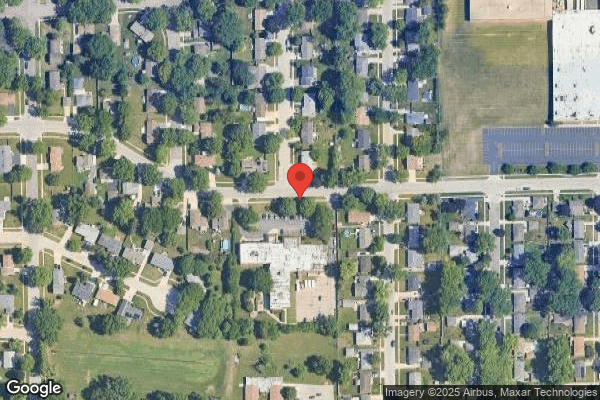
759 KANE STREET, SOUTH ELGIN, IL 60177 (847) 697-3310
For profit - Partnership 206 Beds Independent Data: November 2025 3 Immediate Jeopardy citations
Trust Grade
0/100
#656 of 665 in IL
Last Inspection: February 2025

Within standard 12-15 month inspection cycle. Federal law requires annual inspections.

Overview

Tower Hill Healthcare Center has received a Trust Grade of F, indicating significant concerns about the quality of care provided. They rank #656 out of 665 facilities in Illinois, placing them in the bottom half of nursing homes statewide, and #25 out of 25 in Kane County, meaning there are no better local options available. Although the facility is showing signs of improvement, with a reduction in issues from 23 in 2024 to 16 in 2025, they still have a troubling history, including serious incidents of alleged abuse where staff failed to protect residents from harm. Staffing is a relative strength, with a turnover rate of 29%, which is better than the state average, but the overall staffing rating remains below average at 2 out of 5 stars. Additionally, the home has accumulated fines totaling $57,365, which is typical for the area; however, families should be aware of these compliance issues when considering care options.

Trust Score
F
0/100
In Illinois
#656/665
Bottom 2%
Safety Record
High Risk
Review needed
Inspections
Getting Better
23 → 16 violations
Staff Stability
✓ Good
29% annual turnover. Excellent stability, 19 points below Illinois's 48% average. Staff who stay learn residents' needs.
Penalties
○ Average
$57,365 in fines. Higher than 53% of Illinois facilities. Some compliance issues.
Skilled Nurses
⚠ Watch
Each resident gets only 21 minutes of Registered Nurse (RN) attention daily — below average for Illinois. Fewer RN minutes means fewer trained eyes watching for problems.
Violations
⚠ Watch
48 deficiencies on record. Higher than average. Multiple issues found across inspections.
★☆☆☆☆
1.0
Overall Rating
★★☆☆☆
2.0
Staff Levels
★☆☆☆☆
1.0
Care Quality
★★☆☆☆
2.0
Inspection Score
Stable
2024: 23 issues
2025: 16 issues

The Good

  • Low Staff Turnover (29%) · Staff stability means consistent care
  • Full Sprinkler Coverage · Fire safety systems throughout facility
  • No fines on record
  • Staff turnover is low (29%)

    19 points below Illinois average of 48%

Facility shows strength in staff retention, fire safety.

The Bad

1-Star Overall Rating

Below Illinois average (2.5)

Significant quality concerns identified by CMS

Federal Fines: $57,365

Above median ($33,413)

Moderate penalties - review what triggered them

The Ugly 48 deficiencies on record

3 life-threatening 2 actual harm
Aug 2025 1 deficiency
CONCERN (D) 📢 Someone Reported This

A family member, employee, or ombudsman was alarmed enough to file a formal complaint

Potential for Harm - no one hurt, but risky conditions existed

Pharmacy Services (Tag F0755)

Could have caused harm · This affected 1 resident

**NOTE- TERMS IN BRACKETS HAVE BEEN EDITED TO PROTECT CONFIDENTIALITY** Based on interview and record review, the facility failed to ensure antidepressant medication was obtained from the pharmacy in ...

Read full inspector narrative →
**NOTE- TERMS IN BRACKETS HAVE BEEN EDITED TO PROTECT CONFIDENTIALITY** Based on interview and record review, the facility failed to ensure antidepressant medication was obtained from the pharmacy in a timely manner to prevent a resident from missing medication doses as ordered by the physician.This applies to 1 of 3 residents (R1) reviewed for quality of care in the area of missing antidepressant medications in the sample of 5.The findings include:The EMR (Electronic Medical Record) shows R1 was admitted to the facility on [DATE], and was discharged to home on July 1, 2025. R1 had multiple diagnoses including, traumatic brain injury with loss of consciousness, anoxic brain damage, other specified depressive episodes, Parkinsonism, psychoactive substance dependence, generalized anxiety disorder, depressive episodes, atrial fibrillation, and anemia. R1's MDS (Minimum Data Set) dated June 30, 2025 shows R1 had moderate cognitive impairment, required setup assistance with toilet hygiene and showering, and supervision with all other ADLs (Activities of Daily Living). R1 was always continent of bowel and bladder. A Plenary Letter of Office Guardian for Disabled Person shows R1 as a disabled person and V13 (Mother of R1) and V15 (Father of R1) as the permanent guardians for R1.The EMR shows the following order dated April 16, 2025: Venlafaxine Hydrochloride (Effexor) (antidepressant medication), Extended-Release 24-hour. Give 37.5 mg. (milligrams) by mouth one time a day for depression. The order was discontinued by facility staff on June 14, 2025 at 11:43 AM.The EMR shows the following order dated June 16, 2025: Venlafaxine HCL (Hydrochloride) ER (Extended-Release) 24-hour 37.5 mg, give 1 tablet by mouth one time a day for depression.On May 6, 2025, at 11:55 AM, V9 (RN-Registered Nurse) documented, Venlafaxine HCl ER Tablet Extended-Release 24-hour 37.5 mg. Give 1 tablet be mouth one time a day for depression. On Order.On May 21, 2025, at 9:30 AM, V8 (LPN-Licensed Practical Nurse) documented, Venlafaxine HCl ER Tablet Extended-Release 24-hour 37.5 mg. Give 1 tablet be mouth one time a day for depression. NA (Not Available).On June 11, 2025, at 9:24 AM, V9 (RN) documented, Venlafaxine HCl ER Oral Capsule Extended-Release 24-hour. Give 37.5 mg. by mouth one time a day for depression. Not available.On June 10, 2025, at 9:28 AM, V8 (LPN) documented, Venlafaxine HCl ER Oral Capsule Extended-Release 24-hour. Give 37.5 mg. by mouth one time a day for depression. NA.On June 13, 2025 at 1:57 PM, the facility's pharmacy sent the following notification to the facility dated June 13, 2025: Attention Medication Coordinator: The medication prescribed is not covered by insurance or may require a prior authorization. Resident: R1. Medication prescribed: Venlafaxine Tab 37.5 ER, Give 1 tablet by mouth daily for depression. The Resident's insurance prefers the following alternative medication(s): Venlafaxine Cap 37.5 ER. Please have the provider review alternative medications. If approved, discontinue order, and send a new order for the alternative medication. Please reply by email or fax if: No changes - reason. Please send prescribed medication. I am aware of the issue referenced above. Please note, facility may incur bill of $21.88. Admin/DON (Director of Nursing) Name and Signature. Please note lack of action may result in delays in receiving medication.On June 14, 2025, at 11:56 AM, V11 (LPN) documented, Venlafaxine HCl ER Oral Capsule Extended-Release 24-hour. Give 37.5 mg. by mouth one time a day for depression. Medication reorder to capsule instead of tablet.The facility's Order Audit Report dated June 14, 2025, at 11:41 AM shows V11 entered the following order for R1: Venlafaxine HCl ER Oral Capsule Extended-Release 24-Hour, Give 1 mg. by mouth one time a day for depression.The pharmacy sent a second notification to the facility regarding R1's Venlafaxine, dated June 14, 2025. The notification shows the medication order needed clarification because the Venlafaxine was ordered as 1 milligram by mouth one time a day. The above prescribed medication needs clarification from the prescriber: Verify dose, 1 mg. is not available in the market.On June 15, 2025, at 8:16 PM, V12 (RN) documented, Resident returned from pass with his parents.Mother (V13) also asked if Effexor had been received and as of yet, it has not been received. Mother would like [V14] (NP-Nurse Practitioner) to see [R1] in the morning regarding Effexor.The facility's Order Audit Report dated June 16, 2025, at 3:29 AM shows V19 (LPN) entered the following order for R1: Venlafaxine HCl ER Oral Capsule Extended-Release 24-Hour. Give 37.5 mg. by mouth one time a day for depression.On June 16, 2025, at 8:33 AM, V12 (RN) documented, Called pharmacy to follow-up on delivery of Effexor and per pharmacy they have it showing to be delivered today at 11:00 AM. Will check then to ensure delivery.On June 16, 2025 at 11:00 AM, V10 (LPN) documented: Venlafaxine HCl ER Oral Capsule Extended-Release 24-hour. Give 37.5 mg. by mouth one time a day for depression. NA. Ordered from pharmacy will be delivery today.Pharmacy documentation shows R1's Venlafaxine was delivered to the facility on June 16, 2025 at 3:44 PM. The facility does not have documentation to show R1 received his dose of Venlafaxine on June 16, 2025.On June 16, 2025 at 11:50 AM, V14 (NP) documented, The patient (R1) was seen and evaluated today. He appeared slightly anxious and expressed concern regarding his current care, specifically related to a lapse in his medication regimen. The patient reported that his Effexor was abruptly discontinued due to pharmacy complications, resulting in an unplanned cessation for approximately five days without tapering.On August 11, 2025 at 11:53 AM, V2 (DON) said, [R1's] parents brought medications from home when he was admitted . Our policy shows there must be a physician order to use home medications. We did not have a physician order to give medications from home to R1. At some point the family requested we obtain the medication for [R1] from our pharmacy. When it was time for us to get the medication from the pharmacy, the pharmacy was not covering the tablet form of the medication. Once we ordered the capsule form, we received the medication. I was not in the building at the time of this situation, and I am not sure who was handling the pharmacy notifications in my absence.On August 11, 2025 at 12:13 PM, V16 (Pharmacy Customer Service Representative) said, We sent the Venlafaxine capsules to the facility on June 16, 2025. We sent a 30-day supply. That was the first time we ever sent that medication to the facility.On August 11, 2025 at 12:21 PM, V18 (Pharmacist) said, the pharmacy sent a fax to the facility on June 13, 2025 for clarification of R1's Venlafaxine order due to R1's insurance refusing to pay for the tablet form of the medication and preferring to pay for the capsule form. The facility ordered the medication, but with the wrong dosage, and the pharmacy had to send a second form to the facility to clarify the Venlafaxine order since the order was sent to the pharmacy as 1 milligram and 1 milligram is not a dosage available in the market for Venlafaxine. V18 said, We had to wait to get a response from the facility before we filled the medication. The facility finally responded on June 16, 2025 with an order for the capsules, and then we filled the prescription that same day.The facility's policy entitled Medications Not Covered by Third-Party Payers, revised January 2018 shows: Policy: When a non-covered (non-formulary) medication is ordered for a resident eligible for medication-related benefits under Medicaid, Medicare, or other third-party payer programs, the provider pharmacy attempts to have the order changed to a covered (formulary) medication or to have the medication covered under a medical necessity waiver or other procedure, as state law allows. Payment coverage determinations shall not delay timely availability of medications unless the prescriber authorizes the medication to start when it becomes available. Procedures: A. When non-covered medications are ordered, the provider pharmacy or licensed nurse consults with the resident's physician to seek a change to a covered item. B. If the physician elects not to change the order, and if appropriate, the physician is asked to document medical necessity according to the process set forth by the third-party payer. The pharmacist then attempts to obtain coverage following third-party payer procedures. C. If coverage is not available and third-party rules permit, the pharmacy bills the resident or responsible party, or the facility, as allowed by state law and per the facility's pharmacy provider agreement.
Jul 2025 1 deficiency
CONCERN (D) 📢 Someone Reported This

A family member, employee, or ombudsman was alarmed enough to file a formal complaint

Potential for Harm - no one hurt, but risky conditions existed

Free from Abuse/Neglect (Tag F0600)

Could have caused harm · This affected 1 resident

**NOTE- TERMS IN BRACKETS HAVE BEEN EDITED TO PROTECT CONFIDENTIALITY** Based on interview and record review, the facility failed to prevent abuse between two residents. This applies to 2 of 4 residen...

Read full inspector narrative →
**NOTE- TERMS IN BRACKETS HAVE BEEN EDITED TO PROTECT CONFIDENTIALITY** Based on interview and record review, the facility failed to prevent abuse between two residents. This applies to 2 of 4 residents (R1, R2) reviewed for abuse in a sample of 5. The findings include: R1 and R2's initial report dated 6/9/25 that was reported to IDPH (Illinois Department of Public Health) shows the following: (R1) allegedly struck (R2) this morning near a common area. Both residents were immediately separated and assessed for any injuries. Police were called and report filed. Medical doctors and Power of attorneys were made aware of the alleged incident. Full investigation to follow. R1and R2's final report shows the following: On 6/9/25, (V4-CNA/Certified Nursing Assistant) was in another resident's room providing care to that resident. Upon exiting the room, she overheard (R1) and (R2) engaged in what appeared to be a physical altercation at the opposite end of the building (West Hallway). (V4) also witnessed (R2) who was standing out of his wheelchair and back to (V4) swinging his arms at (R2). (V4) yelled down the hall to V5 (LPN-Licensed Practical Nurse) and V7 (LPN) that there was an altercation. Both nurses were at the medication room located on the front of the west hallway getting ready to start their medication passes. Both (V5) and (V7) ran to the end of hallway to intervene and separate (R1) and (R2). As the nurses approached, (R1) was observed striking (R2) in the face. (R1) and (R2) were separated immediately and assessed for injuries. (R2) was noted with a small laceration and redness to the left eye/eyebrow area and a bruise to his left hand around his thumb. (R2) reported forearm pain. (R1) was not noted with any injuries and denied pain. (R1) and (R2) were placed on 1:1. The police were contacted along with medical doctors and POA (Power of Attorneys)/Guardian of each resident. (R2)'s doctor gave the order to send him to the hospital for evaluation. Medical doctor for (R1) gave order to send him to a behavioral health hospital for evaluation and treatment. (R1) and (R2) are not interviewable due to their cognitive impairments, however staff attempted to determine a root cause to the incident. (R2) had no recollection of being involved in an altercation and (R1) shrugged his shoulders in response to questioning. Findings: The facility is substantiating abuse as staff did witness (R1) strike (R2) in the face. (R2) has visible injuries while (R1) did not have any. On 6/24/25 at 9:53 AM, R2 stated he did not remember what happened to him and R1. R2's face sheet shows diagnoses of Parkinson's disease without dyskinesia, without mention of fluctuations, Alzheimer's disease, unspecified, and memory deficit following unspecified cerebrovascular disease. R2's MDS(Minimum Data Set) assessment dated [DATE] shows that R2 is severely cognitively impaired. On 6/24/25 at 9:59 AM, R1 was unable to be interviewed. R1 was very confused and severely cognitively impaired. R1's face sheet shows diagnoses of Alzheimer's disease, dementia in other diseases classified elsewhere, unspecified severity, without behavioral disturbance, psychotic disturbance, mood disturbance, and anxiety, delusional disorders, and anxiety disorder. R1's MDS (Minimum Data Set) 4/15/25 shows that he is severely cognitively impaired. On 6/24/25 at 10:25 AM, V3 (ADON-Assistant Director of Nursing) stated, On Monday 6/9/25, I was at home. The incident happened in the early morning hours during the night shift. Staff called me at home. They told him that (R1) hit (R2) near the common area. The staff separated them. The nurses did an assessment. (R2) was sent to the ER (Emergency Room). He had a laceration and redness to his left eye-brow area and a bruise to his left thumb area. (R2) had no pain or injuries. He was sent to the behavioral health unit of a hospital. (R1) and (R2) don't have a history of aggressive behaviors. We changed (R1)'s room to the first floor. It's our job to prevent abuse among our residents. On 6/24/25 at 11:00 AM, V1 (Administrator) stated, On 6/9/25, I was at home when I got the call. I think the incident happened between 5 AM and 5:10 AM. I was not at work yet. (V5-LPN/Licensed Practical Nurse) and (V7-LPN) were the nurses that day and they were getting medications ready. V4 (CNA-Certified Nursing Assistants) was coming out of another resident's room. She saw both (R1) and (R2) at the end of the hallway. She saw (R1) swinging at (R2). Contact was made. She yelled and both nurses responded. They all broke up the fight. (R1) hit (R2) in the face. Full assessments were done. (R2) had laceration on his left eye area and a bruise on his hand near his thumb. (R2) had no injuries. (R2) was sent to the ER for evaluation and returned 2 hours later. (R1) remained on 1:1 and then was sent to a different hospital for psychiatric evaluation and treatment. We did a room change for (R1). I came to the facility and started an investigation. The police were already gone when I got to the facility. (R1) is nonverbal. (R2) is nonsensical. None of them have a history of aggression. (R2) gets agitated with care. (R1) shrugged his soldiers when we tried to interview him and (R2) didn't recall. It is definitely the facility's job to prevent abuse. On 6/24/25 at 11:52 AM, V4 (CNA) stated, I was coming out of another resident's room. I had just provided care to the resident. In the furthest end of the hallway, I had seen (R1) fighting (R2). I called out for help. The nurses went first and separated them. I had to throw out the garbage from that resident's room. Then I joined them. (R2) had scratches to his face. I don't know about (R1). This is the first time I'm seeing aggressive behavior from (R1). I left for home before they went to the hospital. On 6/24/25 at 12:01 PM, V5 (LPN-Licensed Practical Nurse), Me and the other nurse (V7) heard (V4) yelling that (R1) and (R2) were fighting. We ran to the hallway where they were. We broke up the fight. On (R2)'s left temple, there was bleeding and redness. (R1) didn't have any injuries. They were both sent to different hospitals. (V6-Social Services Aide) filled out the involuntary petition paperwork. On 6/24/25 at 12:31 PM, V6 (Social Services Aide) stated, Yes, (R1) and (R2) had a physical altercation. (R1) punched (R2) in the face. Neither of them has a history of aggression. I did the involuntary petition. (R1) was sent to the hospital and had psychiatric treatment, while R2 was sent to the emergency room. We also moved (R1) to the first floor. R1's Petition for Involuntary/Judicial admission form dated 6/9/25 shows the following: (R1) who is asserted to be a person subject to involuntary in patient admission to a facility and for whom this petition is being initiated by reason of: Emergency inpatient admission by certificate. (R1) is a person with mental illness who because of his illness is reasonably expected, unless treated on an inpatient basis, to engage in conduct placing such person of another in physical harm or in reasonable expectation of being physically harmed. (R1) is in need of immediate hospitalization for the prevention of such harm. CNA came out of another resident's room and saw (R1) punching another peer in the face causing injury to his face and pain in his arm. (R1) is currently on 1:1. Facility Abuse Prevention Program, revised 1/2019, shows, The facility affirms the right of our residents to be free from abuse, neglect, exploitation, misappropriation of property or mistreatment. This facility therefore prohibits abuse, neglect, exploitation, misappropriation of property, and mistreatment of residents Physical abuse is the infliction of injury on a resident that occurs other than by accidental means and that requires medical attention (whether or not actually given) . Physical abuse includes hitting, slapping, pinching, kicking, and controlling behavior through corporal punishment
Apr 2025 1 deficiency
CONCERN (D) 📢 Someone Reported This

A family member, employee, or ombudsman was alarmed enough to file a formal complaint

Potential for Harm - no one hurt, but risky conditions existed

Quality of Care (Tag F0684)

Could have caused harm · This affected 1 resident

Based on interview and record review the facility failed to complete neurological assessments following a fall. This applies to 1 of 3 (R1) resident reviewed for falls. The findings include: On 4/28/...

Read full inspector narrative →
Based on interview and record review the facility failed to complete neurological assessments following a fall. This applies to 1 of 3 (R1) resident reviewed for falls. The findings include: On 4/28/2025 at 9:01AM, R1 was observed laying in his bed with the head of bed elevated watching his computer with headphones on. R1 did not appear to have any bruising or swelling on his head. On 4/28/2025 at 9:01AM, R1 said he fell out of bed a day or two after he arrived at the facility. R1 said he hit his head when he fell. R1 said he went out to the hospital and returned the same day. On 4/28/2025 at 12:13PM V7 Restorative Nurse said neuro checks are done for 72 hours post fall. V7 said neuro checks should have resumed when [R1] returned from the hospital. On 4/28/2025 at 11:36AM, V2 Director of Nursing (DON) said neuro checks are done for an unwitnessed fall or when a resident hits their head for 72 hours after the fall. V2 said neuro checks are important because they help identify changes in condition. V2 said neuro checks should be continued when a resident returns from the hospital. R1's Progress notes from 4/17/2025 state his fall occurred at 6:00AM and the resident returned from the hospital at 12:00PM. The facility provided Neurological Assessment does not show an initial incident time and does not begin charting beginning until 10:30PM on 4/17/2025. The Neurological Assessment sheet shows initial x1, every 15 mins x6, every 30 mins x4, every hour x4, and every shift until the checks are completed 72 hours post fall. R1's progress notes state the resident fell at 6:00AM and returning to the facility at 12:00PM. Two hourly checks were missed one at 12:30PM and the second one at 1:30PM.
Mar 2025 1 deficiency
CONCERN (D) 📢 Someone Reported This

A family member, employee, or ombudsman was alarmed enough to file a formal complaint

Potential for Harm - no one hurt, but risky conditions existed

Resident Rights (Tag F0550)

Could have caused harm · This affected 1 resident

Based on interview and record review the facility failed to maintain a residents dignity by not answering a call light in a timely manner for 1 of 3 residents (R1) reviewed for dignity and resident ri...

Read full inspector narrative →
Based on interview and record review the facility failed to maintain a residents dignity by not answering a call light in a timely manner for 1 of 3 residents (R1) reviewed for dignity and resident rights in the sample of 5. The findings include: On 3/18/25 at 10:00 AM, V15 (R1's great - granddaughter) stated her and a relative were visiting R1 on 3/9/25. When she arrived around 11:30 AM, R1 needed to use the bathroom and her call light was on. V15 stated they went to the nurse's station to get a staff member because no one came to help. V15 stated she went and asked again because no one had come to help R1 and was told they would be down in a few minutes. V15 stated no one came to R1's room to toilet her. V15 stated she went and asked for assistance again and was told they were in the middle of lunch, needed to pass trays, and had other people to help. V15 stated by the time she got back to R1's room, R1 had wet herself. V15 stated R1 had to sit like that for awhile (10-20 minutes) and that is not right. V15 stated no one should have to sit in it. V15 stated it took 40 minutes - 60 minutes for anyone to come and help her. V15 stated R1 gets embarrassed about things like this and it upsets her. V15 stated R1 has dementia so she would not remember the incident but it does embarrass R1. V15 stated R1 uses a bedpan for toileting and knows when she has to use the toilet. On 3/18/25 at 1:34 PM, V11 (R1's daughter/emergency contact) stated, it can take between 5 minutes - 45 minutes for R1's call light to be answered when R1 remembers to use it. Recently my brother and granddaughter were there to see R1. They said R1 had to go to the bathroom and it took three times asking for help before R1 got any help and by that time R1 had wet herself. On 3/18/25 at 2:02 PM, V16 (Activity Director) stated, at the February (2025) resident Council Meeting there were complaints about call lights. They said it takes longer for their call lights to be answered after meals. On 3/18/25 at 2:19 PM, V3 DON (Director of Nursing) stated, the facility does not have a system in place to track call light response time. V3 stated staff try to answer call lights as soon as possible and have a CNA (Certified Nursing Assistant) designated in each group to answer call lights. V3 stated on average it takes 3 minutes to 10-15 minutes to answer a call light. V3 stated there is a manager that walks the floor that can answer the call lights. V3 stated if a call light is not answered in 45 minutes or longer it is not acceptable. V3 stated when a call light goes off it should be answered right away. If staff say they are going to be there in a few minutes to help the resident then they should honor that. The Rehabilitation Nurse Practitioner Progress Note dated 3/13/25 for R1 showed R1 requires maximum assistance for bed mobility and transfers. R1 has impaired mobility, transfers, and activities of daily living. R1's Interim Care Care Plan (no date) for her admission date of 2/26/25 did not show a plan in place for activities of daily living including toileting needs and/or incontinence. The Face Sheet dated 3/18/25 for R1 showed diagnoses including encephalopathy, muscle weakness, unsteadiness on feet, repeated falls, hypothyroidism, hypertension, chronic kidney disease, bradycardia, heart failure, morbid obesity, and diverticulosis. The facility's Dignity policy (3/2024) showed, each resident shall be cared for in a manner that promotes and enhances quality of life, dignity, respect and individuality. Residents shall be treated with dignity and respect at all times. Demeaning practices and standards of care that compromise dignity is prohibited. Staff shall promote dignity and assist residents as needed by: promptly responding to the residents request for toileting assistance
Feb 2025 1 deficiency
CONCERN (D) 📢 Someone Reported This

A family member, employee, or ombudsman was alarmed enough to file a formal complaint

Potential for Harm - no one hurt, but risky conditions existed

Accident Prevention (Tag F0689)

Could have caused harm · This affected 1 resident

**NOTE- TERMS IN BRACKETS HAVE BEEN EDITED TO PROTECT CONFIDENTIALITY** Based on observation, interview, and record review, the facility failed to ensure residents were prevented from having access to...

Read full inspector narrative →
**NOTE- TERMS IN BRACKETS HAVE BEEN EDITED TO PROTECT CONFIDENTIALITY** Based on observation, interview, and record review, the facility failed to ensure residents were prevented from having access to a room where medical equipment in need of repair was being stored. This applies to 1 of 3 residents (R4) reviewed for accidents in the sample of 5. The findings include: The EMR (Electronic Medical Record) shows R4 was admitted to the facility on [DATE]. R4 has multiple diagnoses including, cerebral infarction, lack of coordination, reduced mobility, muscle weakness, unsteadiness on feet, abnormal gait, cognitive communication deficit, repeated falls, gastrostomy, right shoulder pain, fatty liver, dysphagia, hemiplegia and hemiparesis of the right dominant side, dizziness and giddiness, and dementia. R4's MDS (Minimum Data Set) dated November 27, 2024 shows R4 is cognitively intact, requires supervision with eating, oral hygiene, dressing, and personal hygiene, partial/moderate assistance with showering, and substantial/maximal assistance with toilet hygiene, bed mobility, and transfers between surfaces. R4 is occasionally incontinent of bowel and bladder. On February 26, 2025 at 11:50 AM, R4 was self-propelling her wheelchair in the hallway, just outside of an unlocked room with a sign posted on the wall that showed Ice Machine. No other signs were posted outside of the ice machine room. R4 had a large, empty plastic cup in her hand, and was asking for her cup to be filled with ice from the ice machine. R4 had an elastic compression wrap bandage on her right lower leg. The bandage had slid down her leg and was bunched up close to her ankle. R4 said, I will never go in that ice machine room again. I went in there to get ice and a pole fell on my leg and it really hurt me. R4 had difficulty remembering if the incident happened a week ago or yesterday. R4 demonstrated how she was able to open the door to the ice machine room by turning the door knob and pushing the door open. As R4 opened the door, she had to push hard against the door due to a self-closing device on the door. Inside the ice machine room was a large ice machine with a lid that opened from the bottom and swung upwards. The lid was approximately three feet wide by one foot, from the top of the lid to the bottom of the lid. Directly next to the ice machine were three IV (Intravenous) poles. The IV poles were approximately five feet in tall. Each pole was mounted to a stand with wheels. Three oxygen concentrators were also in the room, approximately four feet from the ice machine. R4 pointed to the IV pole and said, That pole fell and hit my leg when I came in to get ice. R4 pointed to an IV pole with a small IV pump attached to the pole. The IV pump was approximately four inches by four inches by one inch deep and was attached to the pole, approximately two feet from the top of the pole. Two of the three IV poles were extremely wobbly, including the IV pole with the IV pump attached to it, and the two IV poles swayed when moved or touched the slightest bit. The poles appeared loose at the point where the IV pole attached to the wheeled base. R4 said, when the incident happened, she had pushed the lid to the ice machine up so she could reach inside the machine to retrieve ice. R4 said as she lifted the ice machine lid, the lid to the ice machine hit one of the IV poles and caused the IV pole to fall and hit her right shin. On February 26, 2025 at 12:37 PM, R4 was sitting in her wheelchair in the hallway. V2 (DON-Director of Nursing) approached R4 and asked about the elastic compression bandage on R4's right lower leg. R4 said, Yesterday, I was in the ice machine room and a pole fell on my leg. R4 denied falling. V2 removed the elastic compression bandage from R4's right lower leg. The front of R4's right lower leg was bright red in color on her shin, approximately two inches wide, from just under her right knee to her ankle. No open skin areas were noted. V2 touched R4's right reddened shin area and said the area was not warm to the touch. R4 flinched when V2 touched her right shin. V2 rewrapped R4's right shin with the elastic compression bandage and asked R4's nurse to provide R4 with her ordered narcotic pain medication. V2 continued to say she heard commotion in the ice machine room the day before. V2 said she saw R4 come from the ice machine room but was not aware R4 had been injured. On February 26, 2025 at approximately 4:00 PM, R4 was sitting in her wheelchair in her room, sorting her colored pencils. R4 said the pain in her right lower leg had improved since she took the narcotic pain medication earlier. R4 again said, I did not fall. My leg got hurt in the ice machine room when a pole fell and hit my leg. R4's hospital discharge records dated February 25, 2025 show R4 was treated for a contusion to her lower extremity. The discharge instructions show to apply rest, ice, compression, and elevation to her lower extremity. R4's X-ray results of her right tibia and fibula dated February 25, 2025 show: Clinical indication: Bruising anterior mid-shaft right tibia. Findings: Two views right tibia and fibula were obtained. No fracture or dislocation is seen. Bones are intact. Hospital physician documentation shows: Right anterior shin tenderness and soft tissue swelling. There is ecchymosis. No erythema. No open wounds, bleeding, or lacerations. No palpable warmth. There is no obvious deformity. On February 26, 2025 at 1:42 PM, V14 (RN-Registered Nurse) said, I was the nurse on duty yesterday. I worked a double. I worked day shift and afternoon shift. [R4] came up to me and she told me she went into the ice room, and she bumped her leg on something. We offered to do an X-ray, but she said no, and the family called me after that. The family member called the doctor and the doctor said send her out. She went out to the hospital and when she came back from the hospital, the paperwork said she just had bruises. It looked like she bumped her leg. It was red. There were no black and blue marks. She did not fall. On February 27, 2025 at 8:07 AM, V20 (Maintenance Director) said, I was not aware there were any IV poles that were wobbly or needed to be repaired. That is a simple fix. There is a screw under the base that needs tightening to keep the pole from wobbling. Sometimes we have been running out of storage space, and temporarily we have been storing stuff in the ice machine room. There was an issue with the door knob, and I put a temporary one on the one door. The new door knob did not have a lock on it. The room is meant to be locked and residents are not supposed to access the room. On February 27, 2025 at 11:36 AM, V2 (DON) said, Residents are not supposed to go into the ice machine room. The room is usually locked, but the lock was broken. We should not have been storing equipment in that room.
Feb 2025 11 deficiencies
CONCERN (D)

Potential for Harm - no one hurt, but risky conditions existed

ADL Care (Tag F0677)

Could have caused harm · This affected 1 resident

**NOTE- TERMS IN BRACKETS HAVE BEEN EDITED TO PROTECT CONFIDENTIALITY** Based on observation, interview and record review, the facility failed to provide grooming assistance for residents that needed ...

Read full inspector narrative →
**NOTE- TERMS IN BRACKETS HAVE BEEN EDITED TO PROTECT CONFIDENTIALITY** Based on observation, interview and record review, the facility failed to provide grooming assistance for residents that needed extensive assistance from staff. This applies to 2 of 5 residents (R3, R58) reviewed for ADLs (activities of daily living) in the sample of 33. The findings include: R3's face sheet included diagnoses of cerebral infarction, functional quadriplegia, paraplegia, dysarthria following cerebral infarction, hemiplegia, unspecified affecting left nondominant side. R3's quarterly MDS (minimum data set) dated November 8, 2024 showed that R3 was moderately impaired in cognition and was dependent on staff for personal hygiene. On February 3, 2025 at 11:34 AM, R3 was seated in her bed and both her hands appeared contracted with the left hand more pronounced. R3's right hand fingernails appeared very long and thick with few curling in and rubbing against her palms. R3 was holding a washcloth on her left hand and the fingernails on the same hand was not visible. When asked, R3 stated that she would like her fingernails cut. On February 3, 2025 at 4:05 PM, V3 (Assistant Director of Nursing) was called to the room to view R3's finger nails on both hands and R3's right hand finger nails remained very long. V3 agreed that they were very long and needs to be cut. R3's care plan revised August 21, 2019 included that R3 has an actual ADL self care deficit related to impaired mobility and comorbidities. Interventions included that R3 will have the proper level of assistance provided with the following ADL needs: personal hygiene: extensive assistance, one person physical assist 2. R58's face sheet included diagnoses of need for assistance with personal care, other lack of coordination, cognitive communication deficit, difficulty in walking, not elsewhere classified. R58's annual MDS dated [DATE] showed that R58 was moderately impaired in cognition and required substantial maximal assistance for personal hygiene. On February 3, 2025 at 10:24 AM, R58 was noted to have long facial hair on chin and upper lip. Some of the nails on R58's contracted left hand had blackish substance underneath especially the thumb. V7 (R58's Power of Attorney) stated I have done it (cut nails and take off facial hair) before but they can do it if I can. R58 agreed with V7. R58's nursing care plan dated November 20, 2023 showed that R58 had self-care deficit, require assist with ADLS related to muscle weakness, unsteadiness on feet, difficulty in walking. Interventions included extensive- 1 person for personal hygiene. On February 5, 2025 at 2:53 PM, V2 (Director of Nursing) stated that the CNAs should provide assistance to the residents for personal hygiene every shift or as needed.
CONCERN (D)

Potential for Harm - no one hurt, but risky conditions existed

Deficiency F0694 (Tag F0694)

Could have caused harm · This affected 1 resident

**NOTE- TERMS IN BRACKETS HAVE BEEN EDITED TO PROTECT CONFIDENTIALITY** Based on observation, interview and record review, the facility failed to change residents' central venous catheter dressing in ...

Read full inspector narrative →
**NOTE- TERMS IN BRACKETS HAVE BEEN EDITED TO PROTECT CONFIDENTIALITY** Based on observation, interview and record review, the facility failed to change residents' central venous catheter dressing in a timely manner to prevent the spread of infection. This applies to 2 of 2 residents (R310 and R309) reviewed for intravenous catheter dressing changes in the sample of 33. The findings include: 1. R310's face sheet showed her to be an [AGE] year old female admitted to the facility on [DATE] with diagnoses that include Infection following a procedure, superficial incisional surgical site, subsequent Encounter, Presence of Left Artificial Hip Joint, and Unilateral Primary Osteoarthritis, Left hip. On February 4, 2025 at 12:35 PM during medication administration observation, V23 (Licensed Practical Nurse), observed R310's central line dressing was dated January 8, 2025, and was dingy, loosened, and detached from her skin on the top right side of her right arm. R310 stated that the dressing was placed on her arm on January 8, 2025 and no one has changed the dressing since then. R310 stated they just put another dressing on top. V23 stated there was a problem with R310's central line dressing not sticking to her skin and they reinforced it. V23 stated it is the responsibility of the night nurse to change the dressing and he did not know what the policy was for changing the central line dressings. R310 Intravenous Medication care plan dated January 13, 2025 showed the following: Check dressing at site daily. R310 has an physician order dated January 11, 2025 that showed the following: IV Therapy - check intravenous site every 8 hours for unusual redness, drainage, skin irritation, site pain, etc., and document it's condition every 8 hours. 2. R309's face sheet showed him to be a [AGE] year old male admitted to the facility on [DATE] with diagnoses that include Multiple Sclerosis, Sepsis, and Bacterial infections of unspecified site. On February 4, 2025 at 10:37 AM, R309 was observed with a right upper arm central line with a dressing that was dated February 3, 2025 and the dressing was loose and not attached to R309's arm on the right upper area of the dressing. On February 5, 2025 at 12:01 PM, R309 was observed in hallway and near the nursing station and his central line dressing was dated February 3, 2025 and the dressing was even more loose and detached from his right arm. The entire right side of the central line dressing was detached from his right arm. On February 5, 2025 at 3:39 PM, V2 (Director of Nursing) stated that central line catheter dressings should be changed every 7 days minimally and as needed to prevent infections. V2 stated for example, if the dressing comes undone or is soiled then the central line catheter dressing should be changed. R309 has an order dated February 2, 2025 to insert a midline central venous catheter to start antibiotic therapy. The facility's Care and Maintenance of Central Venous Catheters dated December 2024 showed the following: All vascular devices (peripheral and Central Venous) can be a source for blood stream and infection. Strict aseptic technique should be maintained at all times during insertion, dressing changes, medication administration and accessing of intravascular device: Guideline: 4. Replace semipermeable dressing every 7 days and as needed. 5. Replace gauze dressing every 2 days. 6. Replace the dressing if it becomes damp, loosened, or visibly soiled or when inspection of the site is necessary.
CONCERN (D)

Potential for Harm - no one hurt, but risky conditions existed

Deficiency F0697 (Tag F0697)

Could have caused harm · This affected 1 resident

**NOTE- TERMS IN BRACKETS HAVE BEEN EDITED TO PROTECT CONFIDENTIALITY** Based on observation, interview, and record review, the facility failed to manage a resident's complaint of severe pain. This a...

Read full inspector narrative →
**NOTE- TERMS IN BRACKETS HAVE BEEN EDITED TO PROTECT CONFIDENTIALITY** Based on observation, interview, and record review, the facility failed to manage a resident's complaint of severe pain. This applies to 1 of 3 residents (R41) reviewed for pain in the sample of 33. The findings include: R41 face sheet showed her to be an [AGE] year old female admitted to the facility on [DATE] with diagnoses including Fracture of shaft of right Tibia, subsequent Encounter for closed fracture with routine healing, Low back pain, , Pain in Left hip, chronic pain, pain in right hip, and Unspecified Osteoarthritis. As of February 5, 2025 at 10:25 AM, R41 did not have a care plan for pain. On February 3, 2025 at 10:33 AM, R41 stated she had pain in her right leg pain at 10 on a scale of 0 to 10 (0 being no pain and 10 being severe pain). R41 stated the facility does not give her pain medication timely. R41 stated she takes Hydrocodone and it helps if it is given on time. On February 3, 2025 at 10:40 AM, V23 (Nurse) stated that he already gave R41 pain medication this morning but he would check on her. Asked V23 what was R41's pain level at that time and V23 stated he could not recall. V23 then stated R41 is always in pain and the minute you give her some medication and the next time you see her, she is still in pain. Review of R41's medication administration record did not show any pain medication was administered to R41 on V23's shift that day before 10:43 AM. On February 4, 2025 at 3:10 PM, R41 stated her right leg pain was 10 out 10 (10/10). R41 stated V23 gave her pain medication around 11:00 AM today. On February 4, 2024 at 3:11 PM, surveyor informed V23 regarding R41's pain. V23 stated the doctor is aware that R41 is always in pain. V23 stated again, if you give her pain medication and go back to check on her she still says she is in pain all the time. Surveyor asked V23 had the doctor considered scheduling her medication. V23 stated he will contact the doctor about R41's pain medication. On February 5, 2025 at 11:54 AM, R41 had just arrived back from a dental appointment. R41 stated she is always in pain because they don't stay on top of her pain. R41 stated they say they will come but don't come. R41 stated she waited all day yesterday for pain medication. R41 stated yesterday they gave her pain medication around 11 AM and didn't give her another pain pill until 11:00 PM that night. R41 stated she kept asking the nurse for pain medication. R41's daughter (V24) was present and stated the facility has not been controlling her mother's pain. V24 stated she has been telling the staff and that they need to give her mother (R41) the pain medication she was prescribed. V24 stated R41 has hydromorphone 2 mg every 4 hours that they could give R41. V24 stated the doctors changed it in the hospital from 4mg every 8 hours to 2mg every 4 hours. V24 stated I told the staff she (R41) can handle the medication. R41 stated she was waiting for the nurse to give her (R41) some pain medication now. R41's Medication administration record showed R41 received Hydrocodone Acetaminophen 5-325 MG on February 4, 2025 at 12:06 PM and then not again until 11:10 PM. On February 5, 2025 at 1:49 PM, V10 (Licensed Practical Nurse) stated she gave R41 some Acetaminophen for a pain level of 6/10. V10 stated she gives hydrocodone or something stronger for pain of 7/10 and up. On February 5, 2025 at 1:52 PM, R41 (with V24 present) stated that when she got back from her dentist appointment today, she told V10 her pain level was an 8/10. R41 stated her pain level is now an 8/10 also and getting worse. On February 5, 2025 at 11:55 AM, Surveyor informed V10 (LPN) of R41's pain. Shortly after at 11:59 AM Surveyor and V10 entered R41's room. R41 daughter (V24) was still in the room. R41 told V10 that her pain was now 10/10 in her right leg. On February 5, 2025 at 3:11 PM, R41 stated that a tolerable level of pain is 4-5/10. R41 stated if they maintain her pain medication and give it around every 4 hours then the pain is not bad and it stays at a comfortable level, it's high because they don't consistently give her pain medication. R41 daughter was still present in the room. As of February 5, 2025 at 10:25 AM, R41 did not have a care plan for Pain Management R41 has orders for the following pain medication: 1) Acetaminophen 20.3 ml via G-tube every 6 hours as needed for pain dated November 19, 2024. 2) Hydrocodone-Acetaminophen 5-325 Milligrams (MG), give 1 tablet by mouth every 4 hours as needed for pain dated November 19, 2024. 3) Hydromorphone HCL oral tablet 2 MG, give 1 tablet by mouth every 4 hours as needed for pain. On February 5, 2025 at 3:39 PM, V2 (Director of Nursing) stated that staff should address a resident's pain right away. V2 stated that if a resident has pain level of over 5/10 then nurses should give the resident something stronger than an over the counter acetaminophen. The facility's Pain Management policy dated May 2024 showed the following: The pain management program is based on a facility-wide commitment to resident comfort. Pain Management is defined as the process of alleviating the resident's pain to a level that is acceptable to the resident and is based on his or her clinical and established treatment goals. Pain management is a multidisciplinary care process that includes the following: b. effectively recognizing the presence of pain, e. developing and implementing approaches to pain management, g. monitoring for the effectiveness of interventions; and h. Modifying approaches as necessary.
CONCERN (D)

Potential for Harm - no one hurt, but risky conditions existed

Deficiency F0698 (Tag F0698)

Could have caused harm · This affected 1 resident

**NOTE- TERMS IN BRACKETS HAVE BEEN EDITED TO PROTECT CONFIDENTIALITY** Based on observation, interview and record review, the facility failed to maintain central venous catheter dialysis access site ...

Read full inspector narrative →
**NOTE- TERMS IN BRACKETS HAVE BEEN EDITED TO PROTECT CONFIDENTIALITY** Based on observation, interview and record review, the facility failed to maintain central venous catheter dialysis access site in accordance with infection control standards and their policy. This applies to 1 of 4 residents (R119) reviewed for dialysis in the sample of 33. The findings include: R119 was admitted to the facility on [DATE], with multiple diagnoses including end stage renal disease with dependence on renal dialysis, diabetes, essential hypertension, chronic pain syndrome, and secondary and unspecified malignant neoplasm of lymph nodes, multiple regions. R119's MDS (Minimum Data Set) dated January 16, 2025, showed R119 was moderately cognitively impaired and required assistance with ADLs (Activities of Daily Living) including set up assistance with eating, personal, oral, toilet hygiene and toilet transfer. R119's care plan for dialysis created January 9, 2024, showed to monitor access site for signs of infection but did not address care of insertion site for the central venous catheter device. R119's physician order summary dated February 5, 2025, showed R119 has an order to administer hemodialysis through in facility vendor and to monitor access site dressing and change PRN (as needed). The order did not include the type of dressing that should be used. On February 3, 2025, at 11:26 AM, R119 was observed sitting in his wheelchair in his room, just coming out of the bathroom self-propelling his wheelchair. R119 stated he did not go to dialysis that day because he was having diarrhea and could not sit in the dialysis chair without having to use the bathroom. R119 moved his shirt to reveal his dialysis access catheter. It was a central venous catheter inserted in his right chest and there was not a dressing covering the insertion site. R119 was touching the catheter to manipulate it. V17 (LPN/Licensed Practical Nurse) was made aware that the R119 did not have a dressing over the catheter site. On February 4, 2025, at 11:40 AM, R119 was in his room sitting in his wheelchair and there was no dressing over the central venous catheter insertion site on the right chest. V15 (RN/Registered Nurse) was informed. At 11:50 AM, V15 stated she put a gauze dressing over the insertion site and at the end of the catheter tip because there was no cap. On February 5, 2025, at 9:30 AM, V13 (Dialysis RN) stated R119 came to dialysis that day with no dressing over the right chest central venous catheter access site. V13 stated it is very important to maintain a dressing over the catheter site to prevent infection. V13 stated R119 had come to dialysis many times without a dressing to the access site. V13 stated the access site dressing should be a border foam dressing covered with a transparent dressing to discourage R119 from picking at the site or removing the dressing. V13 provided documentation of the dialysis treatment. The dialysis treatment record dated February 5, 2025, showed under access site assessment, [R119] came with no dressing on catheter site. [R119] well aware of the dangerous situation of infection. The dialysis progress note dated November 1, 2024, showed [R119] came with no dressing on catheter site and [R119] was scratching the catheter site. [R119] was advised not to scratch the site, but still continued to scratch. MD (Medical Doctor) aware and will continue to monitor. The facility uses a communication tool to share clinical information between the facility nursing staff and the dialysis treatment staff for each dialysis treatment. Staff from the facility and staff from dialysis both document on the form, before dialysis and after dialysis. The communication form showed a statement regarding the care of CVC (Central Venous Catheters). The communication tool showed For Catheters CVC the dressing must remain intact and clean and dry at all times. If removed by the patient or is soiled, make sure the limb clamps are closed and catheter caps are in place. Cleanse the exit site with alcohol pad, chloral prep or betadine swab and apply sterile dressing after cleansing agent has dried. Promptly notify dialysis staff if this occurs. R119's hospital Discharge summary dated [DATE], showed R119 was treated for sepsis due to MRSA (Methicillin Resistant Staff Aureus) MDRO (Multidrug Resistant Organism) of the blood. On February 5, 2025, at 11:03 AM, V2 (DON/Director of Nursing) stated the CVC dialysis catheter insertion/exit site should always remain covered. V2 stated nurses need to monitor and reinforce or change the dressing as needed. The Facility's policy titled Dialysis Protocol dated 10/24, showed Guideline .4. Residents who have CVCs; the dressing must remain intact and clean and dry at all times. If removed by the resident or soiled, make sure the limb clamps are closed and catheter caps in place. Cleanse exit site with alcohol prep pad, Chlora prep pad or betadine swab and apply a sterile dressing after cleansing agent has dried. Promptly notify dialysis staff if this occurs .5. CVC dialysis dressing should be monitored every shift.
CONCERN (D)

Potential for Harm - no one hurt, but risky conditions existed

Drug Regimen Review (Tag F0756)

Could have caused harm · This affected 1 resident

**NOTE- TERMS IN BRACKETS HAVE BEEN EDITED TO PROTECT CONFIDENTIALITY** 2. R39's EMR (Electronic Medical Record) showed R39 was admitted to the facility on [DATE], with diagnoses that included vascula...

Read full inspector narrative →
**NOTE- TERMS IN BRACKETS HAVE BEEN EDITED TO PROTECT CONFIDENTIALITY** 2. R39's EMR (Electronic Medical Record) showed R39 was admitted to the facility on [DATE], with diagnoses that included vascular dementia, major depressive disorder, psychotic disorder with delusions due to known physiological condition, unspecified psychosis not due to a substance or known physiological condition, and anxiety. R39's MDS (Minimum Data Set) dated November 8, 2024, showed R39 had severe cognitive impairment. R39's care plan identified her use of anti-anxiety medication, anti-depressive medication, and anti-psychotic medication. Interventions included attempt dosage reduction gradually as able and pharmacy consultant review as indicated. R39's POS (Physician Order Set) showed Ativan 0.5 mg, give one tablet by mouth in the evening for anxiety. Mirtazapine 15 mg, give one tablet at bedtime for depression. Risperidone 0.25 mg, give 1 tablet by mouth at bedtime related to unspecified psychosis not due to a substance or known physiological condition. The Facility was unable to provide MRRs for May 2024, June 2024, July 2024, August 2024, September 2024, and October 2024. 3. R128's EMR showed R128 was admitted to the facility on [DATE], with diagnoses that included Alzheimer's Disease and major depressive disorder. R128's Psychiatrist note from October 2, 2024, showed R128 had major neurocognitive disorder without behavioral disturbances, anxiety disorder, unspecified psychotic disorder with delusions due to known physiological condition. R128's MDS dated [DATE], showed R128 had severely impaired skills for daily decision making. R128's care plan showed R128 uses anti-anxiety medication related to anxiety. R128 uses antidepressant medication related to major depressive disorder. R128 uses psychotropic medications related to psychosis. R128's POS showed Quetiapine (Seroquel) 50 mg, 1.5 tablet two times a day for antipsychotic. Bupropion (Wellbutrin) 150 mg ER (Extended Release), one tablet by mouth daily for antidepressant. Sertraline (Zoloft) 100 mg, two tablets by mouth daily for antidepressant. Clonazepam (Klonopin) 0.5 mg, one by mouth three times a day for anxiety, agitation. Mirtazapine (Remeron) 7.5 mg, give one tablet by mouth at bedtime for depression. Facility provided the pharmacy consultant regimen review for R128 from April 1, 2024, to present. On April 30, 2024, the MRR showed the pharmacist noted [R128] is receiving the following antipsychotic and an approved indication was not found at the time of review to support its use. Seroquel for antipsychotic .if indication is unknown, please assess for a dosage reduction trial and monitor for increased behaviors and/or psychiatric symptoms. There was no physician signature on form to indicate anyone had reviewed it. On June 30, 2024, the MRR showed, Indication for Seroquel is needed to support its use-is the indication Depression? There was no physician signature on form to indicate anyone had reviewed it. On August 31, 2024, the MRR showed, [R128] . Nursing, recommend updating the indication to support Seroquel with medication order in EMR, it currently reads 'for antipsychotic.' There was no documentation to show anyone reviewed the recommendation. The facility provided their undated policy titled Role of the Consultant Pharmacist. The policy showed Procedure: .2. The consultant pharmacist will complete Medication regimen Reviews at least monthly (as per agreement). Recommendations will be made based on the information available in the resident's health record at the time of the review .4. The consultant pharmacist will provide a report noting any irregularities to the Director of Nursing and/or Administrator at the completion of the review. The facility must ensure the attending physician and/or Medical Director are provided with copies of the recommendations and the response is timely in accordance with the accepted clinical practice. Based on interview and record review the facility failed to follow their policy to have the physician respond in a timely manner to the pharmacist's monthly Medication Regimen Review recommendations. The facility also failed to follow their policy to conduct monthly Medication Regimen Reviews for a resident. This applies to 3 of 5 residents (R39, R122, and R128) reviewed for unnecessary medications in the sample of 33. The findings include: 1. The EMR (Electronic Medical Record) showed R122 was admitted to the facility on [DATE], with multiple diagnoses including atrial fibrillation, depression, muscle weakness, and history of falling. R122's MDS (Minimum Data Set) dated November 29, 2024, showed R122 had moderate cognitive impairment. The MDS continued to show R122 had not received any as needed pain medication and did not have any pain present. R122's Order Summary Report dated February 5, 2025, showed an order dated April 2, 2024, for hydrocodone-acetaminophen (narcotic pain medication) oral tablet 5/325 mg (milligrams), give one tablet by mouth every six hours as needed for pain. R122's Consultant Pharmacist Recommendation to Prescriber dated November 30, 2024, showed Recommend discontinue of [as needed] [hydrocodone-acetaminophen] order due to no use in 30 plus days. The recommendation continued to show no physician addressed the pharmacist recommendation. The facility does not have documentation to show a physician was notified of the pharmacist recommendation. On February 4, 2025, at 3:24 PM, V2 (DON/Director of Nursing) said she does not have documentation to show R122's physician was notified of the pharmacist recommendation, or the recommendation was addressed by the physician. V2 continued to say the hydrocodone-acetaminophen order is still active on R122's order summary.
CONCERN (D)

Potential for Harm - no one hurt, but risky conditions existed

Medication Errors (Tag F0758)

Could have caused harm · This affected 1 resident

**NOTE- TERMS IN BRACKETS HAVE BEEN EDITED TO PROTECT CONFIDENTIALITY** 3. R128's EMR showed R128 was admitted to the facility on [DATE], with diagnoses that included Alzheimer's Disease and major dep...

Read full inspector narrative →
**NOTE- TERMS IN BRACKETS HAVE BEEN EDITED TO PROTECT CONFIDENTIALITY** 3. R128's EMR showed R128 was admitted to the facility on [DATE], with diagnoses that included Alzheimer's Disease and major depressive disorder. R128's Psychiatrist note from October 2, 2024, showed R128 had major neurocognitive disorder without behavioral disturbances, anxiety disorder, unspecified psychotic disorder with delusions due to known physiological condition. R128's MDS dated [DATE], showed R128 had severely impaired skills for daily decision making. R128's care plan showed R128 uses anti-anxiety medication related to anxiety. R128 uses antidepressant medication related to major depressive disorder. R128 uses psychotropic medications related to psychosis. R128's POS showed Quetiapine (Seroquel) 50 mg, 1.5 tablet two times a day for antipsychotic. Bupropion (Wellbutrin) 150 mg ER (Extended Release), one tablet by mouth daily for antidepressant. Sertraline (Zoloft) 100 mg, two tablets by mouth daily for antidepressant. Clonazepam (Klonopin) 0.5 mg, one by mouth three times a day for anxiety, agitation. Mirtazapine (Remeron) 7.5 mg, give one tablet by mouth at bedtime for depression. Facility provided the pharmacy consultant regimen review for R128 from April 1, 2024, to present. On April 30, 2024, the MRR (Medication Regimen Review) showed the pharmacist noted [R128] is receiving the following antipsychotic and an approved indication was not found at the time of review to support its use. Seroquel for antipsychotic .if indication is unknown, please assess for a dosage reduction trial . On August 31, 2024, the MRR showed, [R128] is due for a GDR (Gradual Dose Reduction) evaluation of psychotropic regimen. Currently the resident is receiving Seroquel, Klonopin, Zoloft, and Wellbutrin . Facility was unable to provide R128's GDR. The facility provided their undated policy titled, Medication Ordering and Prescribing Psychoactive Medication Use. The policy showed, Policy: I. A psychoactive medication will be prescribed only when necessary to treat a specific condition .1. General information .b. Within the first year in which a resident was admitted on a psychotropic medication or after the facility has initiated a psychotropic medication - GDR attempts in two separate quarters with at least one month between attempts. - The GDR must be attempted annually thereafter unless clinically contraindicated. 2. R91's EMR showed R91 was admitted to the facility on [DATE] with diagnoses that include Insomnia, Type 2 Diabetes Mellitus with Hyperglycemia, Muscle Weakness, and other Lack of Coordination. R91 had an order for Restoril (Temazepam) 15 milligrams once a day at night for insomnia dated October 27, 2023. R91 psychiatrist notes dated April 25, 2024, May 15, 2024 and October 22, 24 make no mention of a Gradual Dose Reduction (GDR) evaluation for Restoril. R91's Consultant Pharmacist Recommendation to Prescriber form dated October 30, 2023, April 30, 2024 and January 31, 2025 all recommended that R91 have a GDR evaluation for Restoril. On February 6, 2024 at 2:30 PM, V2 (Director of Nursing) stated the new psychiatrist had not seen the R91 yet. V2 also stated the facility does not have a GDR evaluation for R91. Based on interview and record review, the facility failed to follow their policy to attempt gradual dose reductions for residents receiving psychotropic medications. This applies to 3 of 5 residents (R73, R91, and R128) reviewed for unnecessary medications in the sample of 33. The findings include: 1. R73's EMR (Electronic Medical Record) showed R73 was admitted to the facility on [DATE], with multiple diagnoses including unspecified dementia with other behavioral disturbance, seizures, generalized anxiety disorder, major depressive disorder, and unspecified psychosis. R73's MDS (Minimum Data Set) dated November 7, 2024, showed R73 had severe cognitive impairment. The MDS continued to show R73 did not exhibit any behaviors of psychosis, physical behavior symptoms directed toward others, verbal behavioral symptoms directed toward others, or other behavioral symptoms not directed towards others. R73's Order Summary Report dated February 5, 2025, showed an order dated May 24, 2023, for clonazepam (antianxiety medication) tablet 1 mg (milligram), give one tablet by mouth three times a day for anxiety. The report continued to show an order dated August 17, 2023, for quetiapine (antipsychotic medication) oral tablet 25 mg, give 25 mg by mouth three times a day for anxiety/restlessness/agitation related to unspecified psychosis not due to a substance or known physiological condition. On February 4, 2025, at 3:00 PM, V2 (DON/Director of Nursing) provided documentation of R73's last GDR (Gradual Dose Reduction) dated June 14, 2023. The facility does not have documentation to show a GDR was attempted or contraindicated for R73 since June 14, 2023. R73's antipsychotic medication care plan dated March 5, 2022, showed [R73] uses antipsychotic medications [quetiapine] to manage psychosis diagnosis with agitation and aggression behaviors. GDR contraindicated June 6, 2023. The care plan continued to show multiple interventions dated March 5, 2022, including Consult with pharmacy, physician to consider dose reduction when clinically appropriate.
CONCERN (D)

Potential for Harm - no one hurt, but risky conditions existed

Menu Adequacy (Tag F0803)

Could have caused harm · This affected 1 resident

Based on observation, interview and record review, the facility failed to use scoop size as shown for pureed diets as shown on menu. This applies to 3 of 3 residents (R14, R65, R90) reviewed for dini...

Read full inspector narrative →
Based on observation, interview and record review, the facility failed to use scoop size as shown for pureed diets as shown on menu. This applies to 3 of 3 residents (R14, R65, R90) reviewed for dining in the sample of 33. The findings include: On February 3,2025 at 11:40 AM, the tray line was observed in the facility kitchen with V9 (Cook) serving the regular and mechanical soft consistencies and V8 (Dietary Manager) serving the pureed meals. V8 was using a #8 scoop to serve pureed chicken and pureed pasta and R14, R65 and R90 received the same. Menu spread sheet for fall/winter menu (week 2) that was posted on the wall at side of the tray line steam table, showed that the residents on pureed diets to receive pureed Chicken [NAME] #6 scoop =2 oz/ounce protein, pureed Penne #6 scoop. When asked why the #8 scoop was used instead of #6 scoop, V8 turned to V9 and stated that he was supposed to check the menu before placing the scoops. On February 5, 2025 at 11:37 AM, V12 (Dietitian) stated that the dietary staff should use the scoops that is called for on the menu spreadsheet. V12 added that this is to ensure that the proper portions are served to provide adequate calories and protein for the meal. Facility Portion Control Chart showed that #8 =4 oz and #6=5 1/3 oz Diet order listing showed that R14, R65 and R90 were on pureed diets.
CONCERN (D)

Potential for Harm - no one hurt, but risky conditions existed

Deficiency F0808 (Tag F0808)

Could have caused harm · This affected 1 resident

**NOTE- TERMS IN BRACKETS HAVE BEEN EDITED TO PROTECT CONFIDENTIALITY** Based on observation, interview, and record review, the facility failed to provide a resident with a pureed diet per physician o...

Read full inspector narrative →
**NOTE- TERMS IN BRACKETS HAVE BEEN EDITED TO PROTECT CONFIDENTIALITY** Based on observation, interview, and record review, the facility failed to provide a resident with a pureed diet per physician orders. This applies to 1 of 3 residents (R14) reviewed for pureed diets in the sample of 33. The findings include: On February 4, 2025, at 11:42 AM, R14 was sitting in the dining room with a meal tray on the table in front of her. The meal tray given to R14 was a regular texture meal with barbecue pulled pork, tater tots, and corn bread. The meal tray was not pureed texture. V18 (CNA/Certified Nursing Assistant) assisted R14 by cutting up the food on the tray. R14 started eating the lunch tray. V3 (ADON/Assistant Director of Nursing) said R14 had an order for a pureed diet, but the tray in front of R14 was a regular texture diet. V3 removed the tray and said the tray served to R14 was a different resident's tray and R14 should have been served the correct diet. The EMR (Electronic Medical Record) showed R14 was admitted to the facility on [DATE], with multiple diagnoses including stroke, dementia, dysphagia, and facial weakness following a stroke. R14's Order Summary Report dated February 4, 2025, showed an order dated May 18, 2024, for General diet, pureed texture, regular consistency, aspiration precautions - no straws. R14's nutrition care plan dated October 28, 2024, showed [R14] has a medical diagnosis of lack of coordination, generalized muscle weakness, abnormalities of gait and mobility, fracture of left pubis, chronic obstructive pulmonary disease, type 2 diabetes, peripheral vascular disease, hyperlipidemia, hypertension, gastritis, anemia, cognitive communication deficit, dysphagia, need for assistance with personal care. She receives a general puree diet with thin fluids. Weight 106 pounds, height 56 inches, body mass index 20.7. No known food allergies. Dentition is poor . The care plan continued to show multiple interventions including Provide diet as ordered. On February 5, 2025, at 2:24 PM, V2 (DON/Director of Nursing) said facility staff should be providing the correct meal trays to residents. V2 said R14 should not have been given the incorrect meal tray. V2 continued to say R14 was on a pureed diet for safety precautions.
CONCERN (D)

Potential for Harm - no one hurt, but risky conditions existed

Infection Control (Tag F0880)

Could have caused harm · This affected 1 resident

**NOTE- TERMS IN BRACKETS HAVE BEEN EDITED TO PROTECT CONFIDENTIALITY** 2. The EMR showed R124 was admitted to the facility on [DATE]. R124 had a physician order dated December 11, 2024 that showed th...

Read full inspector narrative →
**NOTE- TERMS IN BRACKETS HAVE BEEN EDITED TO PROTECT CONFIDENTIALITY** 2. The EMR showed R124 was admitted to the facility on [DATE]. R124 had a physician order dated December 11, 2024 that showed the following: Maintain enhanced barrier precautions to prevent infections related to urinary catheter and wound every shift. On February 5, 2025 at 8:57 AM. R124 had a sign on the door that showed the following: Enhanced Barrier Precautions: Providers and Staff must wear gloves and gown for the following High-Contact Resident Care Activities: Dressing, Transferring, Changing Linens, Providing Hygiene, and Wound Care: any skin opening requiring a dressing. V11 (Wound Care Nurse) and V18 (CNA) both entered R124's room without donning a gown. V11 placed the wound care dressing items on the bottom of the resident's bed. V11 and V18 repositioned R124 on her left side, and removed the cover from over her to reveal her left leg. Both V11 at times were touching and leaning onto R124's bed. V11 removed R124's left leg boot. V11 removed gloves and used hand sanitizer and donned new gloves. V11 then removed the dressing on R124's wound. V11 cleaned and dressed wound appropriately according to physician order, however, all without wearing a gown. V11 and V18 then covered R124. 3. The EMR showed R7 was admitted to the facility on [DATE]. R7 had physician orders dated February 3, 2025 that showed she was to be on contact isolation for Norovirus. On February 5, 2025 at 9:06 AM during medication administration, V10 (Licensed Practical Nurse) wheeled her medication cart outside of R7's room and took a blood pressure cuff from the top of her medication cart, entered R7's room, placed the cuff on R7's right arm and checked R7's blood pressure. R7 had a Contact Isolation sign on the door. There was also a large bin of isolation personal protective equipment (PPE) outside of the door. V10 did not perform hand hygiene and did not don a gown or gloves before entering R7's room. After taking R7 blood pressure, V10 exited the room, placed the blood pressure cuff on the top of her medication cart and then started preparing R7 medications. V10 prepared 5 medications for R7. V10 then closed all the drawers on her mediation cart, locked the cart and computer, then took the medications and a cup of water into the R7's room and administered them to her. Again, V10 did not perform hand hygiene or don a gown or gloves before entering into R7's room. V10 then exited the room without performing hand hygiene and then started looking in her medication cart for liquid supplement drink for R7. Surveyor asked V10 if she should have worn PPE before entering R7's contact isolation room. V10 stated oh yes, I didn't even pay attention to that. V10 then stated she should have performed hand hygiene and donned a gown and gloves before entering R7's room. V10 also stated that she should have performed hand hygiene before leaving the R7's room. On February 5, 2025 at 3:39 PM, V2 (Director of Nursing) stated that a gown and gloves should be donned before entering a resident's room who is on contact isolation precautions. V2 also stated that hand hygiene should be performed before entering the contact isolation room and after leaving the room. V2 stated the same should be done when providing wound care to a resident on enhanced barrier precautions. V2 stated that staff should perform hand hygiene and don personal protective equipment to prevent the spread of infection. On February 6, 2025 at 9:57 AM and 10: 40 AM, V2 (Director of Nursing) stated that R7 is still on isolation for Norovirus. V2 stated that R7 was put on isolation on February 1, 2025. V2 stated that R7's order for contact isolation was put into her medical record on February 3, 2025 and somehow dropped off yesterday. V2 stated R7 is still on contact isolation because she was still having symptoms. The facility's Enhanced Barrier Precautions (EBP) policy dated April 16, 2024 showed the following: EBP is an approach of targeted gown and glove use during high contact resident care activities, designed to reduce transmission of Staph aureus and Multidrug Resistant Organisms (MDRO). EBP may be applied to residents with any of the following: Wounds or indwelling medical devices, regardless of MDRO status. The facility's Standard and Transmission Based Precautions policy dated July 2024 showed the following: Hand hygiene is the most important technique utilized to stop the spread of infection. Hands must be washed: b. before and after direct guest contact, e. before preparing or administering medication, h. after removal of gloves, 5. C. for contact with non-intact skin. 7. Gowns are worn when moist body substances are likely to get on clothing. Perform hand hygiene following gown us. Based on observation, interview, and record review, the facility failed to follow their policies for norovirus, contact precautions, and enhanced barrier precautions. This applies to 3 of 33 residents (R7, R14, and R124) reviewed for infection control in the sample of 33. The findings include: 1. The EMR (Electronic Medical Record) showed R14 was admitted to the facility on [DATE], with multiple diagnoses including stroke, dementia, dysphagia, and facial weakness following a stroke. R14's Laboratory Result Report showed R14 had a stool specimen collected on January 31, 2025, and on February 2, 2025, it was reported norovirus was detected in the specimen. On February 3, 2025, at 11:35 AM, V17 (Licensed Practical Nurse) said R14 was not in her room and was in the therapy department. On February 3, 2025, at 12:21 PM, R14 was in the dining room eating lunch at a table with two other residents. On February 4, 2025, at 11:42 AM, R14 was sitting in the dining room, eating lunch at a table with three other residents. On February 4, 2025, at 11:55 AM, V4 (Infection Preventionist) said she was unaware R14 tested positive for norovirus. On February 4, 2025, at 12:12 PM, V4 said R14's laboratory test results came back positive on February 2, 2025. V4 continued to say R14 was not in contact isolation but should have been placed in contact isolation when the results were received. V4 said R14 should not be eating in the dining room and all care, including therapy, should take place in her room. V4 said R14 is currently roommates with R90, but R14 should be in a private room or cohorted with another resident who tested positive for norovirus. On February 5, 2024, at 2:27 PM, V2 (DON/Director of Nursing) said R14 was tested for norovirus on January 31, 2025, because R14 was experiencing diarrhea. V2 said facility staff should have placed R14 in contact isolation when R14's laboratory test results were received on February 2, 2025. V2 continued to say facility staff should notify V4 of positive norovirus results. The facility's policy titled Norovirus dated December 2024, showed .Policy: Key Infection Control Activities: rapid identification and isolation of suspected cases of norovirus gastroenteritis; communicating the presence of suspected cases to the Infection Preventionist; promoting adherence to hand hygiene, particularly the use of soap and water after contact with symptomatic patients; enhanced environmental cleaning; and promptly initiate investigation. Patient Cohorting and Isolation Precautions: Avoid exposure to vomitus or diarrhea; place patients on Contact Precautions in a single occupancy room with dedicated bathroom if they present with symptoms consistent with gastroenteritis; place patients with norovirus gastroenteritis on Contact Precautions for a minimum of 48 hours after the resolution of symptoms .
CONCERN (E)

Potential for Harm - no one hurt, but risky conditions existed

Deficiency F0805 (Tag F0805)

Could have caused harm · This affected multiple residents

Based on observation, interview, and record review, the facility failed to prepare mechanical soft consistency diets for residents that had a diet order for the same. This applies to 4 of 4 residents...

Read full inspector narrative →
Based on observation, interview, and record review, the facility failed to prepare mechanical soft consistency diets for residents that had a diet order for the same. This applies to 4 of 4 residents (R27, R108, R111, R136) reviewed for dining in the sample of 33. The findings include: Facility Fall/Winter Menu week at a glance for mechanical soft (week 2, Tuesday, February 4) showed ground BBQ (barbeque) pork shoulder as the main entrée for lunch meal. On February 4, 2025 at 9:41 AM, the preparation for mechanical soft consistency BBQ pork was observed in the facility kitchen. V9 (Cook) took several slices of cooked pre sliced pork and placed it on a cutting board and when asked if he is going to grind it, V9 stated that he is going to shred it into small pieces and add some broth and barbeque sauce which would make it soft. V9 then diced the pre sliced cooked pork into small pieces (about an inch) on a cutting board with a knife. V9 was notified that after preparation, the final consistency will be checked to see if appropriate for mechanical soft consistency. Prior to preparation for mechanical soft consistency, V9 was seen roughly chopping cooked BBQ pork into varying pieces and stated that it was for regular consistency diets. On February 4, 2025 at 11:15 AM, during tray line service, V9 was plating the food to the residents. When asked where the mechanical soft consistency BBQ pork was, V9 stated that he mixed it in with the regular consistency diets as he thought that it was all shredded. The mixed BBQ pork had varying sizes of meat and R27, R108, R111 and R136 received the same. V8 (Dietary Manager) who was present in the area, was notified that the consistency for mechanical soft diet called for ground meat on the menu spreadsheet. On February 5, 2025 at 11:37 AM, V12 (Dietitian) stated that the mechanical soft diets should receive ground meat as shown on the menu. Recipe for BBQ Pork Shoulder included to place BBQ pork in food processor and grind to appropriate consistency. Diet order listing showed that R27, R108, R111 and R136 were on mechanical soft diet.
CONCERN (F)

Potential for Harm - no one hurt, but risky conditions existed

Antibiotic Stewardship (Tag F0881)

Could have caused harm · This affected most or all residents

Based on interview and record review, the facility failed to have protocols in place to utilize an assessment tool or management algorithm for residents who may receive antibiotics. This applies to a...

Read full inspector narrative →
Based on interview and record review, the facility failed to have protocols in place to utilize an assessment tool or management algorithm for residents who may receive antibiotics. This applies to all 166 residents residing in the facility. The findings include: The facility's Long-Term Care Facility Application for Medicare and Medicaid dated February 3, 2025, showed the facility's census was 166 residents. On February 5, 2025, at 9:31 AM, V4 (Infection Preventionist) said when a resident has an infection and an antibiotic is used, V4 does not utilize an assessment tool or criteria when assessing if a resident is appropriately receiving an antibiotic. V4 said she reviews antibiotic orders with the providers to ensure there is an indication for use. On February 5, 2025, at 10:56 AM, V4 provided Infection Surveillance Monthly Reports for December 2024, January 2025, and February 2025. V4 said she did not have an assessment tool for any of the antibiotics prescribed during those months. V4 said she does not complete an assessment tool for any antibiotics prescribed to residents in the facility. V4 said since she does not complete an assessment tool for antibiotic use, she does not discuss inappropriate antibiotic use at Quality Assurance and Performance Improvement meetings. The December 2024 Infection Surveillance Monthly Report showed 34 antibiotics were prescribed to facility residents. The January 2025 Infection Surveillance Monthly Report showed 35 antibiotics were prescribed to facility residents. The February 2025 Infection Surveillance Monthly Report showed 14 antibiotics were prescribed to facility residents. The facility does not have documentation to show an assessment tool was used to monitor for if the prescribed antibiotics were indicated. On February 5, 2025, at 2:27 PM, V2 (DON/Director of Nursing) said V4 should be using an assessment tool when residents are prescribed antibiotics to ensure an antibiotic is required. V2 said the antibiotic stewardship program is to assess if antibiotics are required for a resident. The facility's policy titled Antibiotic Stewardship dated December 2016, showed Antibiotics will be prescribed and administered to residents under the guidance of the facility's Antibiotic Stewardship Program. Policy Interpretation and Implementation: 1. The purpose of our Antibiotic Stewardship Program is to monitor the use of antibiotics in our residents. 2. Orientation, training and education of staff will emphasize the importance of antibiotic stewardship and will include how inappropriate use of antibiotics affects individual residents and the overall community . 11. When a culture and sensitivity is ordered laboratory results and the current clinical situation will be communicated to the prescriber as soon as available to determine if antibiotic therapy should be started, continued, modified, or discontinued . The facility's policy does not contain a procedure for utilizing a standardized tool and criteria for assessing antibiotic use.
Dec 2024 2 deficiencies
CONCERN (D) 📢 Someone Reported This

A family member, employee, or ombudsman was alarmed enough to file a formal complaint

Potential for Harm - no one hurt, but risky conditions existed

Accident Prevention (Tag F0689)

Could have caused harm · This affected 1 resident

Based on interview and record review, the facility failed to safely transfer a resident through a mechanical lift from her wheelchair to her bed. This resulted in R1 having a fall. This applies to 1 o...

Read full inspector narrative →
Based on interview and record review, the facility failed to safely transfer a resident through a mechanical lift from her wheelchair to her bed. This resulted in R1 having a fall. This applies to 1 of 3 residents (R1) reviewed for transfers in a sample of 6. The findings include: On 12/10/24 at 11:15 AM, V2 (DON-Director of Nursing) stated, (R1) is no longer here. She was discharged AMA (Against Medical Advice). She was a 2 person assist with a (mechanical lift). She came to us on 11/4/24. On 11/11/24, (R1) was getting transferred from her wheelchair to the bed after dialysis in her room with the mechanical lift. (V4--Former CNA/Certified Nursing Assistant) and (V3) were the CNA's that were transferring her. (V3) no longer works here. (R1) was moving around in the sling while they were transferring her. She wouldn't stop. She slid off the sling and fell to the floor. She had no injuries. (R1) was sent to the hospital. X-rays were done and everything was normal. Falls are not supposed to happen when you transfer a resident using the (mechanical lift). On 12/10/24 at 11:55 AM, V3 (CNA) stated, On 11/11/24, (V4) was the assigned CNA for (R1). (V4) came to get me to help her transfer (R1) from her wheelchair to her bed with a (mechanical lift). (R1) can roll and move side to side very well. She doesn't walk. Her butt and her side were sore because she had a pressure sore. She was complaining of pain. (V4) was pulling and maneuvering the (mechanical lift), while I was guiding (R1)'s legs. She was moving around too much. I told her to stop moving around. She kept saying her leg was sore and she was having a lot of pain from her buttocks to her leg. We adjusted the sling. All 4 hooks were on there. Unfortunately, she just tipped out. The lift was not malfunctioning. We got V11 (LPN-Licensed Practical Nurse) who was (R1)'s nurse that day to come assess her. She had no injuries. 911 was called and she was sent to the hospital. On 12/11/24 at 11:58 AM, telephone interview was done with V11 (LPN). V11 stated, Another CNA who was in passing called me and told that (R1) fell from the (mechanical lift). I went there and (R1) was on the floor. (V3) and (V4) were next to her. She had a huge wound in her body. She was wiggling and it probably hurt her while she was in the sling. She was already in a high position in the air, so I don't think it was a good idea for the CNA's to stop. She just fell out of the sling. We didn't expect this to happen. There were no injuries. But, because she hit her head, we sent her out to the hospital. Everything, all the tests was normal at the hospital. R1's fall incident report dated 11/11/24 shows: During the transfer after dialysis, while in the air, hanging on the sling (Mechanical lift transfer), (R1) moved and slid from the sling down on the floor, hitting her head during the process. She stated that her wound was hurting, so she moved to release the pressure. Complete body assessment done. (R1) was having pain of the head. No lump/bump noted, but she did not hit the head. Pain during the movement of the lower extremities. She is on a blood thinner. MD (Medical doctor) notified with the order to send her to the ER (Emergency Room) via 911. 911 called, all in house parties notified. Daughter (POA/Power of Attorney) called multiple times. Message left to call us back because there was no answer. She stated that her wound was hurting, so she moved to release the pressure. Complete body assessment done. (R1) was having the pain of the head. No lump/bump noted, but she did hit the head. Pain during the movement of the lower extremities. She is on a blood thinner. MD notified with the order to send her to ER via 911. Patient was endorsed to 911 crew and was taken to the hospital. R1's progress note dated 11/11/24 at 9:05 PM shows: (R1) returned from the dialysis and during the transfer with mechanical lift and 2 person assist, (R1) was moving and slid out of the mechanical lift to the floor, hitting head in the process. Also complains of pain in her right hip. MD called with an order to send out via 911 for evaluation and treat. She went out to ER, returned with no new orders. No fractures. CT (Computerized Tomography) of the head done. Daughter/POA called. Message left to call us back because she did not pick up multiple calls. R1's progress note dated 11/18/24 shows she was discharged AMA (Against Medical Advice) with her two daughters. R1's fall risk screen dated 11/11/24 categorized R1 as a high risk for falls. R1 was unable to independently come to a standing position and has a decrease in muscle coordination. R1's face sheet shows an admission date of 11/4/24. R1's face shows diagnoses of cerebral infarction, cognitive communication deficit, other lack of coordination, muscle weakness (generalized), other reduced mobility, pressure ulcer of right buttock, stage 4, pressure ulcer of right buttock, unstageable, pressure ulcer of sacral region, pain in right leg, weakness, muscle spasm of back, disease of spinal cord, unspecified, paraplegia and spina bifida. R1's MDS (Minimum Data Set) shows 11/11/24 shows a BIMS (Brief Interview for Mental Status) score of 12, which means her cognition was moderately impaired. Section GG-Functional Abilities shows a score of 1: E. Chair/bed to chair transfer: The ability to transfer to and from a bed to a chair (or wheelchair). This means (R1) was dependent meaning the helper does all of the effort. (R1) does none of the effort to complete the activity. Or, the assistance of 2 or more helpers is required for the resident to complete the activity. R1's care plan dated 11/5/24 shows Focus: Potential for falls. Resident at risk for injury from falls. Goal: The facility will reduce the likelihood of (R1) experiencing a fall through next review. Interventions: Remind resident before transfers to not move while in mechanical lift sling. Educate the resident about safety. Get to know resident's habits to anticipate resident's needs. Encourage resident to transfer and change positions slowly. Facility's policy titled Transfers Using a Lift (7/2017) shows: Policy: Nursing staff will be able to operate a mechanical lift for transferring a guest, if necessary. Goal: 1. Transfer guest safely and comfortably with a hydraulic lift.
CONCERN (D) 📢 Someone Reported This

A family member, employee, or ombudsman was alarmed enough to file a formal complaint

Potential for Harm - no one hurt, but risky conditions existed

Infection Control (Tag F0880)

Could have caused harm · This affected 1 resident

Based on observation, interview, and record review, the facility failed to follow current standards of infection control during a pressure dressing change. This applies to 2 of 2 residents (R6, R7) re...

Read full inspector narrative →
Based on observation, interview, and record review, the facility failed to follow current standards of infection control during a pressure dressing change. This applies to 2 of 2 residents (R6, R7) reviewed for infection control in a sample of 7. The findings include: 1. On 12/10/24 at 2:01 PM, surveyor went with V9 (Wound Nurse/LPN-Licensed Practical Nurse) to R6's room. On R6's door, there was sign that said Contact Isolation/Precautions. V9 stated R6 had C-Diff (Clostridioides Difficile). On 12/10/24 at 2:08 PM, V9 washed her hands with soap and water. She put on gloves. V9 removed R6's heel boots, socks and pressure ulcer dressing. She then removed her gloves and used hand sanitizer to sanitize her hands. She put on gloves and then cleansed the wound with normal saline and gauze. V9 removed her gloves and washed her hands with soap and water. V9 put on gloves and applied medi-honey and a foam dressing with border onto R6's wound. Then she put R6's socks and heel boots on. V9 removed her gloves and washed her hands with soap and water while wearing her dirty gown. With her washed hands, she touched and removed her dirty gown. She then sanitized her hands with the hand sanitizer and left the room. V9 did not wash her hands with soap and water before leaving the room. On 12/10/24 at 2:52 PM, V2 (DON-Director of Nursing) stated, C-diff is contact precautions. (V9) should have washed her hands instead of using sanitizer when she removed (R6)'s dressing. She also should have washed her hands with soap and water instead of using hand sanitizer when she removed the dirty gown because only soap and water kills the C diff spores. R6's face sheet shows diagnoses of pressure ulcer of right heel, stage 3 and elevated white blood cell count, unspecified. R6's MDS (Minimum Data Set) dated 11/22/24 shows he has a BIMS (Brief Interview for Mental Status) score of 8 which means he is moderately impaired in cognition. R6's POS (Physician Order Sheet) shows the following orders: Cleanse right heel with normal saline. And medi-honey and dressing every day shift every Monday, Wednesday, and Friday. Contact isolation related to Cdiff Positive. All care needs provided in the room one time only until 12/18/24. V9's wound note dated 12/6/24 shows R6 has a stage 3 pressure sore to right heel that measure 2.00 x 1.50 x 0.00 CM (Centimeters) (Length x Width x Depth). Nursing note dated 12/5/24 shows R6 was diagnosed with C. Difficile and started on an antibiotic. R6 presented to the emergency room with a complaint of 4 to 6 weeks of diarrhea, weakness, and fever. R6's care plan (12/4/24) shows: Focus-(R6) has C. Difficile and has been started on Firvanq Oral Solution Reconstituted 25 MG/ML (Milligrams/Milliliters), 5 ML by mouth four times a day for C diff for 14 days. Intervention: Educate resident/family/staff regarding preventive measures to contain the infection. Facility's Multi-drug-Resistant Organism Isolation Guidelines for Long Term Care Facilities (Undated) shows C.difficile-infection is in stool and contact is the type of isolation. It's treated with antibiotics until diarrhea resolves. Comments: Hand hygiene with soap and water and clean surfaces and equipment. 2. On 12/10/24 at 2:15 PM, surveyor, V9, and V10 (LPN) went to R7s room. There was no enhanced barrier precaution sign posted outside of R7's room. V9 did a pressure dressing change on R7's left hip and right heel with the assistance of V10 who helped move R7 and reposition her. Both V9 and V10 did not wear a gown. On 12/10/24 at 2:48 PM, V2 stated she was under the impression that enhanced barrier precautions are utilized only when the wound was weeping during wound care. She stated that R7's wound was not weeping. She said that's why no signs were put up. R7's POS shows no order for enhanced barrier precautions. It shows orders of: Apply Betadine to right heel Monday, Wednesday and Friday and PRN (As Needed). Cleanse left hip with normal saline. Apply medi-honey and dressing Monday, Wednesday, and Friday and PRN. R7's does not have any care plans regarding enhanced barrier precautions. Facility's guidelines on Enhanced Barrier Precautions (Undated) shows .the use of gown and gloves is required during high resident care activities with an MDRO (Multi Drug Resistant Organism) such as wound care.
Nov 2024 1 deficiency
CONCERN (D) 📢 Someone Reported This

A family member, employee, or ombudsman was alarmed enough to file a formal complaint

Potential for Harm - no one hurt, but risky conditions existed

Free from Abuse/Neglect (Tag F0600)

Could have caused harm · This affected 1 resident

Based on interview and record review, the facility failed to prevent physical abuse of a resident residing at the facility. This applies to 1 of 6 residents (R3) reviewed for abuse. The findings incl...

Read full inspector narrative →
Based on interview and record review, the facility failed to prevent physical abuse of a resident residing at the facility. This applies to 1 of 6 residents (R3) reviewed for abuse. The findings include: On 10/29/24 at 10:46 AM, R3 said he was sitting in the dining room when R2 approached his table wanting to sit at his table. R3 said he told R2 that the space belonged to another resident. R3 said R2 got upset and started hitting him. R3 said he raised his arms up to block R2 from hitting him on his face, but R2 managed to hit him on the left side of the face and his face was red and it hurt. R2 said R3 punched him with two fists and was hitting his arms. R3 said he did not hit or touch R2. R3 said staff intervened at took R2 away. On 10/29/24, 10/30/24 and 10/31/24, R2 was observed several times resting in his room. R2 was not interviewable. R2's Face Sheet shows the following diagnoses of encephalopathy, dementia, and Alzheimer's disease. R2's Minimum Data Set (MDS) of 10/17/24 shows that R2's cognition skills for decision making was moderately impaired. R3's Face Sheet shows the following diagnoses of Alzheimer's disease, dementia, schizoaffective disorder, anxiety disorder and delusional disorders. R3's MDS of 8/5/24 shows that R3's cognition is moderately impaired. On 10/29/24 at 2:10 PM, V5 (Certified Nurse Aide/CNA) said while she was assisting other residents in the dining room; she saw R2 going towards R3's table. V5 said she saw R2 punch R3 with closed fist on the face, by the jaw. V5 said that R3 did not provoke R2. V5 said she called out for assistance and V6 (Licensed Practical Nurse/LPN) came to assist. On 10/30/24 at 9:08 AM, V6 (LPN) said the V5 (CNA) called out for assistance, and he ran to the dining room. When he got to the dining room, V6 said he saw R2 standing over R3. V6 said he stood between the two residents. V6 said R2 was agitated and R3 was upset because R2 had hit him. V6 said V5 (CNA) escorted R2 to his room while he stayed with R3. The facility's Abuse Investigation Report submitted to Illinois Department of Public Health of 10/17/24 states, On October 17, 2024, it was reported that [R3] was in the First Floor Dining room sitting at a table when [R2] approached the table and attempted to sit down. [R3] reportedly told [R2] that he does not sit there and attempted to have him go to another table. When [R2] provided directions to [R3], [R3] reportedly struck [R3] in the face. [R3] reported that he blocked his face however, [R2] was still able to make contact. Staff walked by at the time and witnessed the altercation and immediately separated the two residents immediately and assessed for injury. No injuries were noted on either resident. Police were contacted and came onsite to file a report. R2's Nursing progress notes of 10/17/24 at 6:50 am states resident struck another resident in the face unprovoked. R3's Nursing Progress notes of 10/17/24 at 6:46 am states resident was sitting at table in the dining room. Other resident came to sit at the table and when resident asked to leave, struck the resident in the face. The facility's Abuse Prevention Program (revised 1/2019) states the facility affirms the right of our residents to be free from abuse, neglect, exploitation, misappropriation of property or mistreatment. This facility therefore prohibits abuse, neglect, exploitation, misappropriation of property, and mistreatment of residents Physical abuse is the infliction of injury on a resident that occurs other than by accidental means and that requires medical attention (whether or not actually given) . Physical abuse includes hitting, slapping, pinching, kicking, and controlling behavior through corporal punishment
Oct 2024 1 deficiency
CONCERN (D) 📢 Someone Reported This

A family member, employee, or ombudsman was alarmed enough to file a formal complaint

Potential for Harm - no one hurt, but risky conditions existed

Free from Abuse/Neglect (Tag F0600)

Could have caused harm · This affected 1 resident

**NOTE- TERMS IN BRACKETS HAVE BEEN EDITED TO PROTECT CONFIDENTIALITY** Based on interview and record review, the facility failed to prevent the physical abuse of a resident residing at the facility p...

Read full inspector narrative →
**NOTE- TERMS IN BRACKETS HAVE BEEN EDITED TO PROTECT CONFIDENTIALITY** Based on interview and record review, the facility failed to prevent the physical abuse of a resident residing at the facility per facility policy. This applies to 1 of 3 residents (R1) reviewed for abuse in a sample of 3. The findings include: Face sheet, dated 10/9/24, shows R1's diagnoses included dementia, cognitive communication deficit, restlessness and agitation, and encephalopathy. MDS (Minimum Data Set), dated 7/3/24, shows R1's cognition was severely compromised. Face sheet, dated 10/9/24, shows R2's diagnoses included person injured in unspecified motor-vehicle accident and acquired absence of left leg above knee. MDS, dated [DATE], shows R2 was cogitatively intact. Final abuse investigation report, submitted to IDPH (Illinois Department of Public Health) on 10/4/24, shows, On 9/30/24, [R1] and [R2] were both residing on the 2nd floor in different rooms. Staff were in the dining area serving breakfast when they hear a disturbance/commotion. Staff observed [R1] and [R2] engaging in a physical altercation, [V3- Licensed Practical Nurse-LPN] stepped in between the two residents to stop the altercation. Staff immediately separated both residents to ensure their safety and assess the situation . [R1] was noted with scratch marks to his chest. [R2] was not noted with any injuries. Police were contacted and [V8-Police] arrived at the facility to take report Upon interviewing [R1], he informed staff and police that [R2] . punched him in the chin and grabbed his shirt. [R1] indicated that he was ok. When asked by police, [R1] stated that he wanted to press charges. Upon interviewing [R2], he informed staff and police that [R1] was attempting to take something off of his breakfast tray. When asked if he told him to stop and/or seek out help, [R2] stated that he did not and that he hit and grabbed [R1] Both [R1] and [R2] provided statements that do support a resident-on-resident altercation did occur. Per the [Police], [R2] was being charged with a Class A Misdemeanor for Battery. [R2] was provided with a notice to appear in court On 10/9/24 at 1:43 PM, R1 stated he recalled the altercation with R2 and stated he was not hurt, but R2 did grab his shirt on his upper torso and hit him near the chin during the incident. On 10/9/24 at 1:25 PM, R2 stated he overreacted when R1 began reaching over and eating food from R2's meal plate. R2 stated he grabbed R1 by the shirt at R1's chest and also hit him open-handed on his head. R2 stated he had a court date coming up because he was charged for hitting R1. On 10/9/24 at 12:08 PM, V3 (LPN) stated during breakfast in the dining room she heard a scuffle and yelling and saw R2 pulling at R1's ripped shirt and went to separate the residents. V3 stated both residents were seated at the same table for breakfast. V3 stated she assessed both residents and R1 had scratches to his upper chest area and by his neck. R1's shirt was ripped below the collar and ripped open. V3 stated R2 told her R1 reached for his food and R2 slapped R1's hand away. Nursing progress note by V3, dated 9/30/24, shows Resident were in the dining room when we heard residents screaming and a loud thumping noise. When I turned around residents noted to be in an altercation with one another. Resident stated that the other resident tried to reach for my food and I smacked his hand. Resident then retaliated with punching him back when he tore his shirt off. Nursing progress note by V3, dated 9/30/24, shows during breakfast V3 heard a large thumping noise and R1 yelling. The note shows when she turned around she saw R1 and R2 having an altercation and the nurse immediately separated the residents. R1 was identified as having scratches to his upper right side of his chest. The police and administration was notified as well as R1's responsible party and physician. Facility Abuse Prevention Program, revised 1/2019, shows, The facility affirms the right of our residents to be free from abuse, neglect, exploitation, misappropriation of property or mistreatment. This facility therefore prohibits abuse, neglect, exploitation, misappropriation of property, and mistreatment of residents Physical abuse is the infliction of injury on a resident that occurs other than by accidental means and that requires medical attention (whether or not actually given) . Physical abuse includes hitting, slapping, pinching, kicking, and controlling behavior through corporal punishment
Jul 2024 2 deficiencies
CONCERN (D) 📢 Someone Reported This

A family member, employee, or ombudsman was alarmed enough to file a formal complaint

Potential for Harm - no one hurt, but risky conditions existed

Safe Environment (Tag F0584)

Could have caused harm · This affected 1 resident

**NOTE- TERMS IN BRACKETS HAVE BEEN EDITED TO PROTECT CONFIDENTIALITY** Based on observation, interview, and record review, the facility failed to provide residents with a clean, comfortable, home-lik...

Read full inspector narrative →
**NOTE- TERMS IN BRACKETS HAVE BEEN EDITED TO PROTECT CONFIDENTIALITY** Based on observation, interview, and record review, the facility failed to provide residents with a clean, comfortable, home-like interior. This applies to 2 of 6 residents (R1 and R2) reviewed for the sanitary, comfortable, home-like environment. The findings include: R1 is a [AGE] year-old male admitted on [DATE] with mild cognitive impairment as per the Minimum Data Set, dated [DATE]. On 7/16/24 at 11:00 AM, R1 was observed in his clean room with a bed sheet with holes, window curtains with mold buildup on the bottom of the right curtain panel, and a bathroom plumbing leak, causing stains on the floor underneath the toilet and the wall behind the toilet. On 7/16/24 at 11:00 AM, R1 stated, They are cleaning my room daily, but not thoroughly. There is a stain on the toilet floor, and the window curtains have mold. I repeatedly mentioned it to nurses and nursing assistants, and nobody wanted to do anything. R2 is a [AGE] year-old male admitted on [DATE] with mild cognitive impairment as per the MDS dated [DATE]. On 7/16/24 at 11:10 AM, R2 (R1's roommate) was in bed with a clean fitted sheet with holes in the middle and mold, along with window curtains. On 7/16/24 at 11:50 AM, V7 (Housekeeping supervisor) stated, I have three housekeeping, one laundry, and one bedmaker on both floors. The bedmaker strips the bed, disinfects it, and makes it every day. They are not supposed to use linen with holes or stains. On 7/16/24 at 2:30 PM, V9 (Maintenance Director) stated, I check rooms monthly and address the issues immediately. Sometimes, I get a verbal report and fix it immediately, depending on the severity. The condensation of the air conditioner is causing mold on the window curtains. The housekeeping staff cleans residents' rooms every day. Anyone can report any maintenance issues or write them on the maintenance board, and I could address those issues the same day. It was not noticed previously. On 7/16/24 at 2:30 PM, V9 continued, Previously, I fixed the leak underneath R1's toilet seal. The recent issues with (stain from old wax) wall connector, I just fixed/tightened it. Nobody reported it earlier. The facility presented an undated Housekeeping Department Policies document: Housekeeping Standards: The facility provides a clean, safe, orderly, comfortable, and attractive environment. A review of the facility presented Housekeeping Policies document: II .The surroundings should be attractive to look upon and pleasing to touch.
CONCERN (F) 📢 Someone Reported This

A family member, employee, or ombudsman was alarmed enough to file a formal complaint

Potential for Harm - no one hurt, but risky conditions existed

Deficiency F0804 (Tag F0804)

Could have caused harm · This affected most or all residents

**NOTE- TERMS IN BRACKETS HAVE BEEN EDITED TO PROTECT CONFIDENTIALITY** Based on observation, interview, and record review, the facility failed to serve lunch palatable and at a safe and appetizing te...

Read full inspector narrative →
**NOTE- TERMS IN BRACKETS HAVE BEEN EDITED TO PROTECT CONFIDENTIALITY** Based on observation, interview, and record review, the facility failed to serve lunch palatable and at a safe and appetizing temperature. This applies to all 154 residents consuming food from the kitchen. The findings include: 1. R1 is a [AGE] year-old male admitted on [DATE] with mild cognitive impairment as per the Minimum Data Set, dated [DATE]. On 7/16/24 at 11:00 AM, R1 stated, The food is not edible. Even the family dog won't even eat it. 2. R3 is a [AGE] year-old female admitted on [DATE] with mild cognitive impairment as per the MDS dated [DATE]. On 7/16/24 at 10:15 AM, R3 stated, Majority of part, food is OK. I am not saying food is perfect. There are some issues like cold food and not appetizing. 3. R4 is a [AGE] year-old female admitted on [DATE] with moderate cognitive impairment as per the MDS dated [DATE]. On 7/1/24 at 10:45, R4 stated, Food is the same, not that warm, and is kind of cold. On 7/16/24 at 11:25 AM, the kitchen tray service was observed. The savory pork roast was observed to be watery and not appetizing. Record review on the food temperature (temp) log indicates that no temp was checked on food items prior to lunch service. On 7/16/24 at 11:25 AM, V8 (Cook/Acting Dietary Manager) stated, It looks like we didn't check the temp before lunch began to serve. The temp should have been checked before started serving. On 7/16/24 at 12:40 PM, V8 sent a test tray to the first floor as per the surveyor's request. V8 took the temp on the test tray and was 125F with mixed vegetables, 127F with pureed meat (pork), 123F with mashed potatoes, 127.7F with pureed vegetables, and 78.8F with cake. On 7/16/24 at 12:45 PM, V8 stated, As per the guidelines, the hot foods should be served at a minimum 135F and cold foods should be less than 41F. The facility presented Food Holding and Service Policy revised in 2017 document: Food is held and served using safe food handling methods which protect the food from contamination, prevent food-borne illness and preserve the nutritive value of the food. Holding: Hot food is held at a minimum temp of 135 F Time/Temperature Controlled for Safety (TCS) cold foods are held at 41F or below. On 7/18/23 at 9:42 AM, V2 (Director of Nursing) stated in an email communication that they have 154 residents eating from the Kitchen.
May 2024 1 deficiency 1 Harm
SERIOUS (G) 📢 Someone Reported This

A family member, employee, or ombudsman was alarmed enough to file a formal complaint

Actual Harm - a resident was hurt due to facility failures

Free from Abuse/Neglect (Tag F0600)

A resident was harmed · This affected 1 resident

**NOTE- TERMS IN BRACKETS HAVE BEEN EDITED TO PROTECT CONFIDENTIALITY** Based on interviews and record reviews, the facility failed to protect residents from abuse per their facility abuse prevention ...

Read full inspector narrative →
**NOTE- TERMS IN BRACKETS HAVE BEEN EDITED TO PROTECT CONFIDENTIALITY** Based on interviews and record reviews, the facility failed to protect residents from abuse per their facility abuse prevention program. This applies to 3 of 4 residents (R1, R3 and R4) reviewed for abuse in the sample of 6. The failure resulted in R1 experiencing ongoing head, neck and shoulder pain as a result of R2 hitting R1. The findings include: 1. Face sheet, dated 5/15/24, shows R2's diagnoses included dementia, psychosis, muscle weakness, malignant neoplasm of bladder, cognitive communication deficit, reduced mobility, and history of falling. The MDS (Minimum Data Set), dated 2/3/24, shows R2's cognition was severely compromised. Face sheet, dated 5/15/24, shows R1's diagnoses included dementia, cognitive communication deficit, mild cognitive impairment, abnormal gait/mobility, and unsteadiness on her feet. The MDS, dated [DATE], shows R1's cognition was severely impaired. On 5/16/24 at 11:46 AM, R1 stated a week ago Sunday R2 punched her in her chin. R1 stated her chin, neck, and shoulders continued to hurt for over a week and her neck continued to hurt. On 5/5/14 at 11:20 AM, V4 (Registered Nurse) stated she heard yelling between R1 and R2 but did not know what they were yelling about. V4 stated she walked over to R1 and R2 and moved R2 away because she was aware R2 could become aggressive and get physical. V4 stated R1 later told her that R2 punched R1 in the chin. V4 then interviewed R2 and R2 stated she did hit R1. On 5/5/24 at 4:44 PM, V5 (Nurse Practitioner) stated after R1 was hit by R2, R1 complained of moderate head and neck pain upon movement. V5 stated R1 was not complaining of head, neck or shoulder pain prior to R2 hitting R1 and the pain was the result of R2 hitting R1. V5 stated he monitored R1's pain for a few days to see if it would subside which it did not and V5 prescribed steroids to treat R1's pain. V5 stated if the steroids did not alleviate R1's pain, his next step would be to order imaging of R1's neck to evaluate the source of the pain. V5's (Nurse Practitioner) progress note, dated 5/6/24, shows R1 was seen and stated she was still upset about the encounter the other day however R1 expressed she was not in pain. V5's (Nurse Practitioner) progress note, dated 5/8/24, shows R1 expressed she was still upset regarding the encounter and stated she was experiencing neck and shoulder pain for which steroid treatment was discussed. The note shows R1 was prescribed steroid 20mg (milligrams) for 5 days for neck and shoulder pain related to recent encounter with other resident. V5's (Nurse Practitioner)progress note, dated 5/10/24, shows R1 expressed minor improvement in neck pain. When asked about pain patient discussed incident again and is still upset/angry about the encounter. Witness statement, dated 5/5/24, shows V7 (CNA- Certified Nursing Assistant) came to the nursing station to respond to the incident and help separate R1 and R2. The statement shows V7 wrote that R1 stated R2 punched R1 in the chin and that the incident began because R2 was taking too long in the bathroom and R1 was trying to get R2 out of the bathroom to take a turn. Progress note, dated 5/5/24, shows R1 had a verbal altercation with her roommate and R1 was removed from the area. The note shows shortly after the altercation, R1 informed the nurse on duty that R2 punched R1 in the chin. The note shows the nurse on duty asked R2 if she punched R1 in the face and R2 responded by saying yes. The note shows R1 later complained of neck pain shortly after the assault. Incident report, dated 5/5/24, shows R1 reported that R2 hit her on the chin however the incident was not witnessed by staff. The report shows R2 stated R1 was yelling at R2 to get out of the bathroom because R2 was taking too long and R2 swatted R1 to leave her alone. The report shows R2 admitted to striking R1 after a verbal altercation and the police were called. The report shows R2 was sent to the hospital for evaluation and remained on 1:1 supervision until she left the facility. Facility staff were interviewed and no other witnesses were identified. The report shows the allegation of the abuse was substantiated by the facility investigation. Police Violation Notice, date 5/5/24, shows R2 received a citation for Disorderly Conduct - fighting (assault or battery.) Facility Abuse Prevention Program document, reviewed 1/2019, shows, This facility affirms the right of our residents to be free from abuse, neglect, exploitation, misappropriation of property or mistreatment. The facility therefore prohibits abuse, neglect, exploitation, misappropriation of property, and mistreatment of residents. The document shows, Abuse means any physical or mental injury or sexual assault inflicted upon a resident other than by accidental means. Abuse is the willful infliction of injury, unreasonable confinement, intimidation, or punishment with resulting physical harm, pain, or mental anguish to a resident . This assumes that all instances of abuse of residents, even those in a coma, cause physical harm or pain or mental anguish . The term 'willful' in the definition of 'abuse' means the individual must have acted deliberately, not that the individual must have intended to inflict injury or harm Physical abuse includes hitting, slapping, pinching, kicking, and controlling behavior through corporal punishment 2. Face sheet, dated 5/15/24, shows R3's diagnoses included dementia, delirium, alcohol abuse, cannabis abuse, anxiety disorder, adjustment disorder with mixed anxiety and depressed mood, Alzheimer's disease, visual hallucinations, restlessness and agitation, aphasia, and apraxia. MDS, dated [DATE], shows R3's cognition was moderately impaired. Face Sheet, dated 5/15/24, shows R4's diagnoses included Wernicke's encephalopathy, psychosis, dementia, depression, altered mental status, and alcohol dependence. Progress note, dated 5/8/24, shows R4's diagnoses also included major neurocognitive disorder. MDS, dated [DATE], shows R4's cognition was moderately impaired. On 5/15/24 at 1:15 AM, V3 (CNA- Certified Nursing Assistant) stated she was assigned to be 1:1 supervising both R3 and R4 in their room. V3 stated R3 was confused, often walks around the facility, and V3 was having to redirect R3 while supervising him. V3 stated both R3 and R4 were ambulatory. V3 stated R3 attempted to get into R4's bed and R4 yelled, Get the f*** out of my bed [R3]! V3 stated she tried to get between R3 and R4 when R3 reached around V3 and hit R4 in the nose. V3 stated R4 then hit R3 in the chest. V3 stated staff then came to the room to assist and both residents were sent out to the hospital after the incident. V5's Nurse Practitioner note, dated 5/4/24, shows R3 was exhibiting aggressive behavior, struck a resident, and was sent out. Nursing note, dated 5/4/24, shows a CNA (Certified Nursing Assistant) reported to the nurse that R3 struck another resident on the nose and as a result the other resident struck back and hit R3 on the chest. The note shows R3 was unable to give a description of what happened. Nursing note, dated 5/4/24, shows a CNA (Certified Nursing Assistant) reported R4 was struck by a resident in the nose and R4 struck back at the resident on the chest. The progress note shows R4 stated, He hit me in my nose so I hit him back. Incident report, dated 5/4/24, shows R3 and R4 were roommates and the two residents were in their room with a sitter at the time of the incident. The report shows V3 (CNA) was assigned as R3 and R4's sitter. The report shows R3 then attempted to lay down in R4's bed, R4 yelled at R3 to get out of his bed, V3 attempted to get in between the two residents, and R3 struck R4 in the face/nose. R4 then reached around and struck R3 in the chest. The residents were then then separated and no injuries were identified. The report shows both residents were placed on 1:1 monitoring, police/physician/responsible parties were called, and R3 and R4 were sent out for evaluation. The report shows the police did not pursue any further action and both residents were sent to the hospital for evaluation. The report shows the allegation of abuse was substantiated.
Apr 2024 1 deficiency
CONCERN (D) 📢 Someone Reported This

A family member, employee, or ombudsman was alarmed enough to file a formal complaint

Potential for Harm - no one hurt, but risky conditions existed

Transfer Requirements (Tag F0622)

Could have caused harm · This affected 1 resident

**NOTE- TERMS IN BRACKETS HAVE BEEN EDITED TO PROTECT CONFIDENTIALITY** Based on interview and record review, the facility failed to have physician document the necessity of immediate transfer. This a...

Read full inspector narrative →
**NOTE- TERMS IN BRACKETS HAVE BEEN EDITED TO PROTECT CONFIDENTIALITY** Based on interview and record review, the facility failed to have physician document the necessity of immediate transfer. This applies to 1 of 5 residents (R4) reviewed for transfer/discharge in a sample of 5. The Findings Include: R4 was a [AGE] year-old male admitted on [DATE], with an admitting diagnosis, including dementia, anxiety, mental disorder, depression, and Alzheimer's. A record review of the clinical progress note, dated 3/14/24, documents R4 was involuntarily discharged to the hospital due to aggressive behavior towards another resident. A record review of the clinical documentation indicates there is no evidence of any physician documentation to reflect the necessity of the transfer on 3/13/24. On 4/5/24 at 12:10 PM, V17 (Nurse Practitioner/Attending) stated, The Psychiatrist is supposed to document the necessity of the immediate transfer. On 4/5/24 at 1:10 PM, V18 (Psychiatrist) stated, When (R4) was immediately transferred to the hospital on 3/14/24, I was unaware of the documentation I should have documented in the system reflecting the necessity of the immediate transfer.
Mar 2024 14 deficiencies 3 IJ
CRITICAL (J) 📢 Someone Reported This

A family member, employee, or ombudsman was alarmed enough to file a formal complaint

Immediate Jeopardy (IJ) - the most serious Medicare violation

Free from Abuse/Neglect (Tag F0600)

Someone could have died · This affected 1 resident

3. R52's 1/2/24 Minimum Data Set assessment shows her cognition and memory are intact. R52's active care plan shows she requires staff assistance with her activities of daily living, can become incon...

Read full inspector narrative →
3. R52's 1/2/24 Minimum Data Set assessment shows her cognition and memory are intact. R52's active care plan shows she requires staff assistance with her activities of daily living, can become incontinent of urine and is a stand by assist for toileting. The care plan also shows she can has the potential to be a victim of abuse. On 3/12/24 at 10:37 AM, R52 said she had a problem with the CNA (later identified as V8) last night who yelled at her. R52 said, I am mostly independent, but sometimes have a problem with incontinence, so last night I got up to use the bathroom and didn't grab a pull up on the way, so I put my light on for the CNA to get me one. The CNA got mad at me and started going off on me, saying I should have got the pad before I went to the bathroom and she didn't have time for my nonsense. She then tossed the pad at me, refused to get me new pants, slammed the door, and left. On 3/12/24 at 10:45 AM, V7 (Social Worker) said it was reported to her at 8:35 AM, that a potential abuse incident occurred between R52 and a CNA. She went and talked to her right away and started to obtain statements from the CNA and the resident and R52's roommate (R98). On 3/12/24 At 12:32 PM, R52 said she did file a report with her Social Worker who came right away to talk to her. R52 also said she felt totally disrespected by V8, and was so upset she cried herself to sleep. On 03/12/24 12:34 PM, R98 said she never saw the CNA (V8), but she heard the incident and she was very rude to R52 and slammed the door. On 3/12/24 at 1:56 PM, V7 said based on her interviews, she considers what V8 said and did to R52 a form of verbal abuse. V7 said yelling, downgrading, and disrespecting a resident is a form of abuse. V7 said V8's statement she refers as not being serious and joking about it. V7 said, In my opinion, this is grounds for termination, not just suspension. On 3/13/24 at 9:49 AM, V1 (Administrator) said she is still working on the investigation and has not yet determined if the abuse is substantiated. The facility provided witness statements from the investigation show V8 emailed V7 her statement which states exactly as written, So yesterday at around 7/8 O clock (R52) put her light on, I went to go answer her light. She was fine but I grabbed the pull up for her & as I'm handing it to her, I simply suggested/asked why she doesn't grab her (incontinence brief) before she goes into the bathroom & that it would be easier for her in case while others are on break & I happen to be with someone else so she is not waiting on the toilet for while. I don't know if she was having a bad day or something but she starting going on an entire rant of why does everyone ask her this all the time and why am everyone is so mean to her. I responded and told her it wasn't meant to be that serious & that it was just a question. The facility provided investigation submitted to the Illinois Department of Public Health (IDPH) on 3/14/24 by V1 (Administrator) states, The facility conducted a thorough investigation pertaining to an allegation of abuse. Staff members and residents were interviewed as part of the investigation. Based on conducted interviews and review of The Abuse Prevention Program-Policy, the facility is making the determination to substantiate the allegation of abuse. V8 was attempted to be contacted by phone during the survey with no return call. The facility provided Abuse policy reviewed 1/2019 identified verbal abuse as oral, written, or gestured language that willfully includes disparing and derogatory terms to residents or families. Mental abuse includes, humiliation, harassment, threats of punishment or deprivation by a licensee, employee or agent. Deficiencies at this level require more than one Deficient Practice Statement. A. Based on observation, interview, and record review, the facility failed to protect R102 from physical abuse, resulting in R102 having muscular skeletal pain to his left arm and redness and swelling to his left cheek for 1 of 32 residents (R102) reviewed for abuse in the sample of 32. The Immediate Jeopardy began on 03/09/2024 at 5:30AM, when V37, CNA-Certified Nursing Assistant, became aggressive with R102, by pinning R102's hands to his chest and bearing all his weight on to R102. V1, Administrator, was notified of the Immediate Jeopardy on 03/14/2024 at 4:00 PM. The surveyor confirmed by interview and record review that the Immediate Jeopardy was removed on 03/14/2024, but noncompliance remains at Level Two because additional time is needed to evaluate the implementation and effectiveness of the in-service training. The findings include: On 03/13/24 at 1:46 PM, R102 was lying in bed on his back, with the head of the bed elevated at a thirty-degree angle. R102 had a bruise to the left cheek. On 03/13/24 at 1:46 PM, R102 said, One man hurt me here. I was grabbed and my face went into the side rail and he punched me. I have pain to my left cheek and left arm. On 03/14/24 at 9:04 AM, V37, CNA, was contacted by phone. A message was left requesting V37, CNA, to call back. V37, CNA, has not returned call prior to exiting from the facility. On 03/14/24 at 9:06 AM, V38, CNA, said, (V37, CNA) had (R102) the night of Friday (03/08/24) to Saturday morning (03/09/2024). At 12:30AM, (V37) asked for assistance with a combative resident. I went in to change (R102). (R102) did throw his hand up, maybe he began to resist, I could not tell, because (V37) had already grabbed (R102) and pinned him down. He had the resident's hands balled up and pinned to (R102's) chest. (R102) can be angry, but I have never seen him combative. Most people know to walk away. The next incident happened at 5:30AM. (V37) asked for help. I went to (R102), and asked him to give me five minutes to change him. (R102) agreed. (R102) usually refuses the first bed check. We just report to the nurse, then in the morning, (R102) allows it. (R102) threw his hands up and said ok. I took his hands being up as (R102) submitting to be changed. (V37) then pinned (R102's) hands to this chest. It looked like he was choking him, except he was pushing (R102's) crossed hand onto (R102's) chest instead of being around his neck. Then (V37) put more weight on him. (V37) told (R102) to turn. I said, '(V37) let him go', then I said it again. I went to get (V40, LPN-Licensed Practical Nurse). (V37) was being too aggressive, too rough. (V37) should not take care of residents anymore. (R102) looked scared; I was scared also. He looked more scared the second time as (V37, CNA) tried to provide care than the first time. I think that is why (R102) threw his hands up. He was surrendering. I had never seen (R102) like that. During that time, (V40, LPN) was doing her med pass. The nurse did not know what the protocol was. (V40, LPN) said she was going to ask the other nurse. The other nurse said we need to talk to (V2, DON-Director of Nursing). I told the nurse (V37) put all his weight on (R102). (V37) became aggressive and put all his weight on (R102). If the patient says I don't want to be touched, we leave them alone. I reported the abuse to (V40, LPN-Licensed Practical Nurse). (V40, LPN) said she did not know the protocol. I then went to the first floor and reported the incident to (V39, Charge Nurse). The first time (V37) provided care to (R102) he was too aggressive, I thought I should say something. The second time I knew I needed to say something. On 03/15/24 at 10:01 AM, V35, CNA, said, I spoke with (R102) on 03/09/24. He told me (V37, CNA) came into his room and punched him in the face. The second time (V37, CNA) came in the room, he tossed him toward the side rail of the bed. On 03/14/2024 at 10:54 AM, V41, RN-Registered Nurse, said, (V40, LPN) told me there was an incident where (V37, CNA) was restraining a resident. (V35, CNA) and I went to see (R102). (R102) told me that he was punched with a closed fist. (R102) had redness and swelling to the left cheek, and his left arm was hurting. (R102) said (V37, CNA) was rough with care. (R102) never complained of forearm pain before. I would report a patient being pinned down; I would say that is abuse. R102's Progress Notes, dated 03/09/2024 at 7:40AM, created 03/11/2024 at 1:40AM, by V41, RN-Registered Nurse, shows, received resident at 7:00 AM. Informed by night shift LPN that an incident occurred between CNA and resident during early AM hours of care before 7:00 AM. Two police officers here in building doing an investigation and interviewing staff. Resident is alleging that he was struck in the left side of his face with a closed fist by the CNA and that he was being rough during care. Resident complained of pain to his left arm. Upon assessment left cheek looks slightly swollen with a small amount of redness. Assessed left arm pain. Resident continues to have AROM (Active Range of Motion) to both upper extremities. Able to flex and extend both arms without pain. Able to lift arms above head and squeeze RN fingers without pain. Only complaint of muscle pain to top of forearm. No swelling or redness noted at this time to either arm. Informed daughter of incident. Shortly after the daughter arrived and was at bedside. RN explained at this time we will manage pain with scheduled acetaminophen and if pain worsens or other symptoms arise the RN can obtain X-Ray for left arm but at this time it is not necessary. Informed Nurse Practitioner. R102's Aggravated Battery Police report, dated 03/09/2024 at 6:41AM, shows, responding officer spoke with (V37, CNA), who provided the following information. (V37, CNA) had his first encounter with (R102) at approximately 0030 (12:30AM) hours. (V37, CNA) was changing (R102's) diaper and in the process, (V37, CNA) requested help from (V38, CNA) since he knew the history of (R102) being combative. (R102) was pinned down in anticipation of being combative. On the second occasion, at approximately 0530 hours (5:30AM), (V37, CNA) changed (R102's) diaper. (V38, CNA) saw (V37, CNA) and assisted in the process. (V37, CNA) then held (R102) by the wrist to prevent from him being combative. Responding Officer then spoke with V38, CNA, who provided the following information. V38, CNA, was assisting V37, CNA, at approximately 0030 hours. V38, CNA, noticed V37, CNA, pinning down R102. She told V37, CNA, to get off R102, and not use that amount of force. She kept telling V37 numerous times to get off and she saw R102 look at her. She explained R102 looked at her in a manner that hinted that he was scared and if the excessive force of V37 CNA was justified. In the heat of the moment, V38, CNA, walked away since she was afraid of V37, CNA. The second incident occurred at approximately 0530 hours. V37, CNA and V38, CNA were changing R102`s diaper. As V38, CNA, was changing the diaper, V37, CNA, stepped in and held R102's down by the wrist against his bed while using the full weight of his body. V38, CNA, thought this was excessive due to R102 having both of his legs amputated and due to weighing 100 Lbs. or less. V38, CNA, stated that R102 was not combative and did not need to be restrained. Responding Officer spoke with R102 and was given the following information. R102 was having his diaper changed by V38, CNA, at approximately 0030 hours. During that time, he was pinned down with his arms crossed. R102 stated he did feel pain in his arms when being pinned down. In the second incident, R102 was having his diaper changed by V37, CNA and V38, CNA. As V38, CNA, was changing him, V37, CNA, stepped in and held R102 by the wrist on the bed. R102 advised responding officer he was punched by V37, CNA, in the upper torso. Responding Officer asked R102 what time frame that occurred between the two incidents, but R102 did not know an approximate time of when it happened. Responding Officer checked R102 for any signs of injuries including marks or bruises. Responding Officer did not notice any bruises, but did notice redness and a small cut on R102's left upper cheek. Responding Officer took pictures of the cut and both arms that were a result of being held down by V37, CNA. The facility's Final Report on R102's abuse allegation of 03/09/2024 shows abuse has been substantiated. The facility's Policy, dated 01/2019, shows, abuse is the willful infliction of injury, unreasonable confinement, intimidation, or punishment with resulting physical harm, pain, or mental anguish to a resident. The Immediate Jeopardy that began on 03/09/2024 was removed on 03/14/2024 when the facility took the following actions to remove the immediacy. 1. V37 was removed from the schedule on date of alleged incident pending investigation. 2. V37's employment from facility is terminated. 3. All staff will be educated on all types of abuse, 03/13/2024. 4. All staff will be educated on the standard of immediately reporting abuse, 03/13/2024. 5. All staff will be educated on protecting residents after an alleged abuse, 03/13/2024. 6. All staff will be educated on the components of the abuse policy, 03/14/2024. 7. All Residents will be re-evaluated for the potential at risk for abuse or neglect. 8. As all current staff are educated, new hires will be trained accordingly and an Abuse Prevention Training Program-Post Test will be completed to assess for comprehension, 03/14/2024. 9. Any/All allegations of abuse will be brought to the IDT in Morning Meetings and reviewed in detail at weekly IDT Meetings, 03/14/2024. 10. Any/All Abuse allegations will be reviewed and monthly QAPI/Quarterly QA. 2. On 3/12/24 at 9:04 AM, this surveyor was in the hall by the doorway of R125's room. V32 (Registered Nurse) went into R125's room to provide him with medication. R125 started yelling at V32 that he needed to see the doctor so he could go home. V32 exited the room and R125 followed her. When R125 got to his doorway, R80 walked to his doorway, which is across the hall from R125's room, and told R125 to be quiet. R125 then went around the nurse and into the hallway and stuck his middle finger up at R80 and stated, F**k you, mind your f***ing business. R80 was still standing in his doorway and put up both of his fists in a fighting position. V32 then went to R125 and directed him back to his room. At the same time, V28 (Certified Nursing Assistant) assisted R80 back into his room. When R125 got to inside his doorway, he stated, I'm going to tear his f***ing larynx out. R125's Nursing Notes, dated 3/12/24 at 9:21 AM, shows, Resident in hallway started to yell loudly saying he wants to go home, asking for doctor, other resident opposite to his from [sic] got irritated and started to talk back/yelled at this resident. Staffs tried to calm him down, redirect to his room but couldn't. After a while he himself went back to his room. NOD (Nurse on Duty) informed Social Services and DON (Director of Nursing) R125's Social Service Note, dated 3/12/24 at 2:33 PM, shows, Writer was informed about a verbal argument between 2 cognitively impaired male residents. Writer met with resident due to verbal aggression towards another male resident . On 3/12/24 at 12:20 PM, R80 was in his room laying in bed. R80 said that this morning he heard that guy yelling, so he went to the doorway and told him to be quiet. R80 said that R125 then started yelling at him and threatening him. R80 said that he (R125) is very violent and he gets ticked off by the smallest things and starts yelling. On 3/12/24 at 12:23 PM, V32 said R125 has a history of yelling when he is upset. V32 said she texted V15 (Memory Care Director) about the incident. (R80 and R125 do not reside on the secured Memory Care Unit). On 3/12/24 at 12:30 PM, V15 (Memory Care Director) said V32 texted her at 9:08 AM, but she did not see it until about 10:00 AM, and said the two residents had verbal aggression between each other that was initiated by R125. V15 said she told V32 to keep them separated and she would have R125 see the psychiatrist the next day. On 3/12/24 at 1:47 PM, V7 (Social Services) said some types of abuse include: physical, verbal, financial and sexual. V7 said abuse can happen between anyone, staff to residents or resident to resident. V7 said examples of verbal abuse include: yelling at someone, downgrading them, being very disrespectful to them or being aggressive towards them. On 3/13/24 at 9:49 AM, V1 (Administrator/Abuse Coordinator) said types of abuse include: physical, mental, sexual, involuntary seclusion, verbal and misappropriation of property. V1 said verbal abuse includes: derogatory remarks, verbal threats of physical harm or any verbal response that could cause mental anguish to someone. V1 said abuse can be between staff and residents or between a resident and resident. V1 said that even if a resident has dementia, they can still verbally abuse another resident. The facility's Abuse Prevention Program, reviewed on 1/2019, shows, This facility is committed to protecting our residents from abuse .by anyone including, but not limited to, facility staff, other residents .verbal abuse is the use of oral, written, or gestured language that willfully includes disparaging and derogatory terms to residents or families, or within hearing distance, regardless of an individuals age, ability to comprehend, or disability. B. Based on observation, interview, and record review, the facility failed to ensure a resident was free from sexual abuse (R61), and failed to ensure residents were free from verbal abuse (R80 and R52), for 3 of 32 resident reviewed for abuse in the sample of 32. 1. The Facility Reported Incident (FRI) as Final Report, dated 3/5/24 with date of incident as 3/1/24, shows (R61) was observed to have his hand on (R132's) breast. Both residents were on 2nd floor. (R132) was up and about, while (R61) was sitting in his wheelchair able to wheel himself around. Both were in the nurse station on 2nd floor, several staff were behind the nurses station documenting. Upon looking, it was observed that (R61) had his hand on (R132's) left breast. Upon observation, staff immediately intervened and separated the two residents. R132 is a 73 y/o female with diagnoses of Alzheimer's disease, hyperlipidemia, major depression recurrent, muscle weakness unsteadiness on feet . alert and oriented x1, with impaired memory judgement and decision making abilities. R132 is unable to make her wants and needs knows and relies on staff to anticipate needs. R132 does speak and mumbles but is generally non-.sensical. R132 has severe cognitive impairment as evidenced by her most recent BIMS and is a long term care resident since 11/23. R132's careplan shows Resident may be a potential risk for abuse related to behavior problems as evidenced by aimless wandering in and out of other resident rooms, and walking up closely to other residents, impaired safety awareness. R61 is a 73 y/o male with diagnoses of displaced fracture of left femur, hemiplegia, abnormalities of gait and mobility, alert and oriented x 2 with impaired memory judgement and decision making abilities. R61 has moderate cognitive impairment and is a long term care resident since 1/2023. On 3/11/24 at 9:15 AM, R132 was up and about in the hallways, mumbling to herself. When asked by this surveyor if she was ok, R132 smiled and continued to walk around the 2nd floor. On 3/11/24 at 12:30 PM, R61 was in his room with a sitter. R61 stated, I got the idea to touch her (R132) cause she lifted her shirt up and a I saw a bare breast. I am a man. Staff all saw it and got upset about it, but no one said the other resident got upset. I should have known this was wrong. We have to respect each other in a nursing home. Never done this before, no. After it happened, I was admitted to the hospital on a psych unit. I know it was wrong for me to do this, yes. I wasn't thinking the resident may not be in her right mind. This statement was witnessed by R61's sitter (V13, Restorative CNA) On 3/12/24 at 12:10 PM, V16 (License Practical Nurse-LPN) said she was the nurse working on 3/1/24 when the incident happened. V16, LPN, said she was sitting at the nurses station. R61 was sitting in his wheelchair, and R132 was standing by the nurses station. V16 said when she looked up, she saw R61's hand was under R132's shirt touching her left breast. V16 said she told R61 to take his hands off R132. R61 did not remove his hands. V16 stated, I had to get up and physically remove (R61's) hand from (R132's) breasts. (R132) did not react to what happened and seemed unaware. (R61) was provided 1:1 immediately. V16 said she reported the incident to V15 (Dementia Director), both families, and their physician. R61 was sent out to the psych ward. R61 was back at the facility but on a different floor. V16 said, When a resident touches another resident inappropriately, that is sexual abuse. On 3/11/24 at 11 AM, V15 (Dementia Unit Manager) said on 3/1/24, it was reported to her R61 touched R132's breast. Both residents were separated. R61 was provided 1:1 until he was sent out to the psych ward. V15 said she reported the incident to V1 (Administrator), the Abuse Coordinator. R132 was now back at the facility, but was moved to first floor with a sitter. On 3/13/24 at 9AM, V1 (Administrator) said she takes abuse seriously and abuse was not allowed at the facility. V1 said she was working on R61's discharge. The facility Policy entitled Abuse Prevention Program, date review of 1/2019, shows, Definitions: Abuse mans any physical or mental injury or sexual assault inflicted upon a resident other than by accident means. Abuse is the willful infliction of injury unreasonable confinement intimidation or punishment resulting in physical harm, pain, or mental anguish to a resident. This also includes deprivation by an individual, including caretaker of goods or services that are necessary to attain or maintain physical, mental, and psychosocial well-being. Sexual abuse- includes but is not limited to sexual harassment, sexual coercion, or sexual assault. Sexual abuse is non-consensual sexual contact of any type with a resident.
CRITICAL (J) 📢 Someone Reported This

A family member, employee, or ombudsman was alarmed enough to file a formal complaint

Immediate Jeopardy (IJ) - the most serious Medicare violation

Abuse Prevention Policies (Tag F0607)

Someone could have died · This affected 1 resident

Based on observation, interview, and record review, the facility failed to follow their abuse policy and procedure by not protecting R102 from abuse by not removing a staff members who's observed acti...

Read full inspector narrative →
Based on observation, interview, and record review, the facility failed to follow their abuse policy and procedure by not protecting R102 from abuse by not removing a staff members who's observed actions were suspected to be abusive, and not performing a full body assessment of a resident who was suspected of being abused for 1 of 36 residents (R102) reviewed for abuse in the sample of 36. The Immediate Jeopardy began on 03/09/2024 at 12:30AM, when V38, CNA-Certified Nursing Assistant, failed to report her suspicion of abuse when she observed V37, CNA, becoming aggressive, grabbing R102's hands and pinning them down to R102's chest, resulting in R102 being abused by V37, CNA, at 5:30AM. V1, Administrator, was notified of the Immediate Jeopardy on 03/14/2024 at 4:00 PM. The surveyor confirmed by interview and record review the Immediate Jeopardy was removed on 03/14/2024, but noncompliance remains at Level Two because additional time is needed to evaluate the implementation and effectiveness of the in-service training. The findings include: On 03/13/24 at 1:46 PM, R102 was lying in bed on his back, with the head of the bed elevated at a thirty-degree angle. R102 had a bruise to the left cheek. On 03/13/24 at 1:46 PM, R102 said, One man hurt me here. I was grabbed and my face went into the side rail, and he punched me. I have pain to my left cheek and left arm. On 03/14/24 at 9:06 AM, V38, CNA, said, (V37, CNA) had (R102) the night of Friday (03/08/24) to Saturday (03/09/2024). At 12:30AM. (V37) asked for assistance with a combative resident. I went in to change (R102). (R102) did throw his hands up, maybe he began to resist, I could not tell, because (V37) had already grabbed (R102) and pinned him down. He had the resident's hands balled up and pinned to (R102's) chest. (R102) can be angry, but I have never seen him combative. Most people know to walk away. The next incident happened at 5:30AM. (V37) asked for help. I went to (R102) and asked him to give me five minutes to change him. (R102) agreed. (R102) usually refuses the first bed check. We just report to the nurse, then in the morning, (R102) allows it. (R102) threw his hands up and said ok. I took his hands being up as (R102) submitting to be changed. (V37) then pinned (R102's) hands to this chest. It looked like he was choking him, except he was pushing (R102's) crossed hand onto (R102's) chest instead of being around his neck. Then (V37) put more weight on him. (V37) told (R102) to turn. I said, '(V37) let him go', then I said it again. I went to get (V40, LPN-Licensed Practical Nurse). (V37) was being too aggressive, too rough. (V37) should not take care of residents anymore. (R102) looked scared; I was scared also. He looked more scared the second time (V37, CNA) tried to provided care than the first time. I think that is why (R102) threw his hands up. He was surrendering. I had never seen (R102) like that. During that time, (V40, LPN) was doing her med pass. The nurse did not know what the protocol was. (V40, LPN) said she was going to ask the other nurse. I told the nurse he put all his weight on (R102). (V37, CNA) became aggressive and put all his weight on (R102). If the patient says I don't want to be touched, we leave them alone. I reported the abuse to (V40, LPN-Licensed Practical Nurse). (V40, LPN) said she did not know the protocol. I then went to the first floor and reported the incident to (V39, Charge Nurse). The first time (12:30AM) (V37, CNA) provided care to (R102) he was too aggressive, I thought I should say something. The second time (5:30AM), I knew I needed to say something. On 03/14/24 at 9:37 AM, V39, RN Charge Nurse, said, I am the charge nurse. (V38, CNA) let me know about the incident. The incident was reported to me (03/09/2024) between 6:15 AM to 6:30 AM, (approximately six hours after the first event was witnessed). Because it was abuse, I contacted (V1-Administrator). I followed her instruction. I called the police to make a report. I did not assess (R102). The nurse on the floor did the check, I think it was (V40, LPN). I did not make any changes to the assignment sheets. We pulled (V37, CNA) off the floor when I was told, and called the police so he could talk with police, and I could get a statement from him. I pulled him off the floor around 6:30 AM to 7:00 AM. (approximately one hour after allegation of abuse was reported), when we brought him to the office. On 03/14/24 at 9:55 AM, V40-LPN, R102's Nurse said, The incident was never brought to my attention. If I would have known, I would have charted it. I believe I was (R102's) nurse; I was (R102's) nurse; I cannot recall. I do not work there anymore. I quit Monday (03/11/2024). On 03/14/2024 at 10:54 AM, V41, RN-Registered Nurse said, (V40, LPN) told me there was an incident where (V37, CNA) was restraining a resident. (V35, CNA) and I went to see (R102). (R102) told me that he was punched with a closed fist. (R102) had redness and swelling to the left cheek and his left arm was hurting. (R102) said (V37, CNA) was rough with care. (R102) never complained of forearm pain before. I would report a patient being pinned down; I would say that is abuse. On 03/18/24 at 1:36 PM, V38, CNA, said, I started in November of 2023. I have never received new hire orientation. The facility never provided me with abuse training until after the incident between (R102) and (V37, CNA). The facility requested that I amend my report. I was told I could quit, or they would terminate me for abuse and report me to the state. The facility's assignment sheet, dated 03/08/2024 through 03/09/2024, shows V40, LPN, was assigned to R102. R102's Medical Record, dated 03/09/2024, shows, R102 was not assessed for injury until after 7:40AM. The assessment was not documented until 03/11/2024 at 1:40AM. R102's Progress Notes, dated 03/09/2024 at 7:40AM, created 03/11/2024 at 1:40AM, by V41, RN-Registered Nurse, shows, received resident at 7:00 AM. Informed by night shift LPN that an incident occurred between CNA and resident during early AM hours of care before 7:00 AM. Two police officers here in building doing an investigation and interviewing staff. Resident is alleging that he was struck in the left side of his face with a closed fist by the CNA and that he was being rough during care. Resident complained of pain to his left arm. Upon assessment left cheek looks slightly swollen with a small amount of redness. Assessed left arm pain. Resident continues to have AROM (Active Range of Motion) to both upper extremities. Able to flex and extend both arms without pain. Able to lift arms above head and squeeze RN fingers without pain. Only complaint of muscle pain to top of forearm. No swelling or redness noted at this time to either arm. Informed daughter of incident. Shortly after the daughter arrived and was at bedside. RN explained at this time we will manage pain with scheduled acetaminophen and if pain worsens or other symptoms arise the RN can obtain X-Ray for left arm but at this time it is not necessary. Informed Nurse Practitioner. The facility's Abuse Policy, dated 01/2019, shows, employees are required to report any incident, allegation or suspicion of potential abuse, neglect, exploitation, mistreatment, or misappropriation of resident property they observe, hear about, or suspect to the administrator immediately, to an immediate supervisor who must then immediately report it to the administrator. Employees of this facility who have been accused of abuse, neglect, exploitation, mistreatment, or misappropriation of resident property will be removed from resident contact immediately. Orientation and Training of Employees: during orientation of new employees, the facility will cover at least the following topics: What constitutes abuse, neglect, exploitation, and misappropriation of resident property; procedures for reporting incidents of abuse, neglect, exploitation or the misappropriation of resident property; how to assess, prevent and manage aggressive, violent and/or catastrophic reactions of residents in a way that protects both residents and staff; an employee's obligation under the law for reporting a suspected crime to the facility, the state survey agency and local law enforcement; the time frames for reporting; and management's obligation to prohibit retaliation against anyone who makes a report. Physical Abuse, Conduct a full body exam, particularly in areas of resident complaint. The facility's Final Investigation Report on R102's abuse allegation of 03/09/2024 shows abuse has been substantiated. The Immediate Jeopardy that began on 03/09/2024 was removed and the deficient practice corrected on 03/14/2024 when the facility took the following actions to remove the immediacy and correct the noncompliance. 1. All staff will be educated on all types of abuse, 03/13/2024. 2. All staff will be educated on the standard of immediately reporting abuse, 03/13/2024. 3. All staff will be educated on protecting residents after an alleged abuse, 03/13/2024. 4. All staff will be educated on the components of the abuse policy, 03/14/2024. All Residents will be re-evaluated for the potential at risk for abuse or neglect, 03/14/2024. 5. As all current staff are educated, new hires will be trained accordingly and an Abuse Prevention Training Program-Post Test will be completed to assess for comprehension, 03/14/2024. 6. Any/All allegations of abuse will be brought to the IDT in Morning Meetings and reviewed in detail at weekly IDT Meetings, 03/14/2024. 7. Any/All Abuse allegations will be reviewed and monthly QAPI/Quarterly QA, 03/14/2024.
CRITICAL (J) 📢 Someone Reported This

A family member, employee, or ombudsman was alarmed enough to file a formal complaint

Immediate Jeopardy (IJ) - the most serious Medicare violation

Report Alleged Abuse (Tag F0609)

Someone could have died · This affected 1 resident

Based on observation, interview, and record review the facility failed to immediately report a suspicion of physical abuse for 1 of 36 residents (R102), and failed to ensure and allegation of verbal a...

Read full inspector narrative →
Based on observation, interview, and record review the facility failed to immediately report a suspicion of physical abuse for 1 of 36 residents (R102), and failed to ensure and allegation of verbal abuse was immediately reported for 1 of 32 residents (R80) reviewed for abuse in the sample of 36. The Immediate Jeopardy began on 03/09/2024 at 12:30AM, when V38, CNA-Certified Nursing Assistant, failed to report her suspicion of abuse when she observed V37, CNA, becoming aggressive, grabbing R102's hands and pinning them down to R102's chest, resulting in R102 being abused by V37, CNA, at 5:30AM. V1, Administrator, was notified of the Immediate Jeopardy on 03/14/2024 at 4:00 PM. The surveyor confirmed by interview and record review that the Immediate Jeopardy was removed on 03/14/2024, but noncompliance remains at Level Two because additional time is needed to evaluate the implementation and effectiveness of the in-service training. The findings include: 1.On 03/13/24 at 1:46 PM, R102 was lying in bed on his back, with the head of the bed elevated at a thirty-degree angle. R102 had a bruise to the left cheek. On 03/13/24 at 1:46 PM, R102 said, One man hurt me here. I was grabbed and my face went into the side rail, and he punched me. I have pain to my left cheek and left arm. On 03/14/24 at 9:06 AM, V38, CNA, said, (V37, CNA) had (R102) the night of Friday (03/08/24) to Saturday (03/09/2024). At 12:30AM, (V37) asked for assistance with a combative resident. I went in to change (R102). (R102) did throw his hands up, maybe he began to resist, I could not tell, because (V37) had already grabbed (R102) and pinned him down. He had the resident's hands balled up and pinned to (R102's) chest. (R102) can be angry, but I have never seen him combative. Most people know to walk away. The next incident happened at 5:30AM. (V37) asked for help. I went to (R102), and asked him to give me five minutes to change him. (R102) agreed. (R102) usually refuses the first bed check. We just report to the nurse, then in the morning, (R102) allows it. (R102) threw his hands up and said ok. I took his hands being up as (R102) submitting to be changed. (V37) then pinned (R102's) hands to this chest. It looked like he was choking him, except he was pushing (R102's) crossed hand onto (R102's) chest instead of being around his neck. Then (V37) put more weight on him. (V37) told (R102) to turn. I said, '(V37) let him go', then I said it again. I went to get (V40, LPN-Licensed Practical Nurse). (V37) was being too aggressive, too rough. (V37) should not take care of residents anymore. (R102) looked scared; I was scared also. He looked more scared the second time as (V37, CNA) tried to provided care than the first time. I think that is why (R102) threw his hands up. He was surrendering. I had never seen (R102) like that. During that time, (V40, LPN) was doing her med pass. The nurse did not know what the protocol was. (V40, LPN) said she was going to ask the other nurse. The other nurse said, 'We need to talk to (V2, DON)'. I told the nurse he put all his weight on (R102). (V37) became aggressive and put all his weight on (R102). If the patient says 'I don't want to be touched', we leave them alone. I reported the abuse to (V40, LPN-Licensed Practical Nurse). (V40, LPN) said she did not know the protocol. I then went to the first floor and reported the incident to (V39, Charge Nurse). The first time (V37) provided care to (R102) he was too aggressive, I thought I should say something. The second time I knew I needed to say something. On 03/14/24 at 9:37 AM, V39, RN Charge Nurse, said, I am the charge nurse. (V38, CNA) let me know about the incident. The incident was reported to me (03/09/2024) between 6:15 AM to 6:30 AM, (approximately six hours after the first event was witnessed). Because it was abuse, I contacted (V1-Administrator). I followed her instruction. I called the police to make a report. I did not assess (R102). The nurse on the floor did the check, I think it was (V40, LPN). I did not make any changes to the assignment sheets. We pulled (V37, CNA) off the floor when I was told, and called the police so he could talk with police, and I could get a statement from him. I pulled him off the floor around 6:30 AM to 7:00 AM, (Approximately one hour after second allegation of abuse was observed and reported to (V40, LPN), when we brought him to the office. On 03/14/24 at 9:55 AM, V40-LPN said, The incident was never brought to my attention. If I would have known, I would have charted it. I believe I was (R102's) nurse; I was (R102's) nurse; I cannot recall. I do not work there anymore. I quit Monday (03/11/2024). On 03/14/2024 at 10:54 AM, V41, RN-Registered Nurse, said, (V40, LPN) told me there was an incident where (V37, CNA) was restraining a resident. (V35, CNA) and I went to see (R102). (R102) told me that he was punched with a closed fist. (R102) had redness and swelling to the left cheek and his left arm was hurting. (R102) said (V37, CNA) was rough with care. (R102) never complained of forearm pain before. I would report a patient being pinned down; I would say that is abuse. The facility's assignment sheet, dated 03/08/2024 at 11:00PM through 03/09/2024 at 7:00 AM, shows, V40, LPN, was assigned to R102. The facility's Abuse Policy, dated 01/2019, shows, employees are required to report any incident, allegation or suspicion of potential abuse, neglect, exploitation, mistreatment, or misappropriation of resident property they observe, hear about, or suspect to the administrator immediately, to an immediate supervisor who must then immediately report it to the administrator. The facility's Final Investigation Report on R102's abuse allegation of 03/09/2024 shows abuse has been substantiated. The Immediate Jeopardy that began on 03/09/2024 was removed and the deficient practice corrected on 03/14/2024 when the facility took the following actions to remove the immediacy and correct the noncompliance. 1. All staff will be educated on all types of abuse, 03/13/2024. 2. All staff will be educated on the standard of immediately reporting abuse, 03/13/2024. 3. All staff will be educated on protecting residents after an alleged abuse, 03/13/2024. 4. All staff will be educated on the components of the abuse policy, 03/14/2024. 5. All Residents will be re-evaluated for the potential at risk for abuse or neglect, 03/14/2024. 6. As all current staff are educated, new hires will be trained accordingly and an Abuse Prevention Training Program-Post Test will be completed to assess for comprehension, 03/14/2024. 7. Any/All allegations of abuse will be brought to the IDT in Morning Meetings and reviewed in detail at weekly IDT Meetings, 03/14/2024. 8. Any/All Abuse allegations will be reviewed and monthly QAPI/Quarterly QA, 03/14/2024. 2. On 3/12/24 at 9:04 AM, this surveyor was in the hall by the doorway of R125's room. V32 (Registered Nurse) went into R125's room to provide him with medication. R125 started yelling at V32 that he needed to see the doctor so he could go home. V32 exited the room and R125 followed her. When R125 get to his doorway, R80 walked to his doorway which is across the hall from R125's room and told R125 to be quiet. R125 then went around V32 who was still standing in his doorway and went into the hallway. R125 stuck his middle finger up at R80 and stated, F**k you, mind your f***ing business. R80 was still standing in his doorway, and put up both of his fists in a fighting position. V32 then went to R125 and directed him back to his room. At the same time, V28 (Certified Nursing Assistant) assisted R80 back into his room. When R125 got to inside his doorway, he stated, I'm going to tear his f***ing larynx out. V32 was standing in R125's doorway when it was stated. R125's Nursing Notes, dated 3/12/24 at 9:21 AM, shows, Resident in hallway started to yell loudly saying he wants to go home, asking for doctor, other resident opposite to his from [sic] got irritated and started to talk back/yelled at this resident. Staff tried to calm him down, redirect to his room but couldn't. After a while he himself went back to his room. NOD (Nurse on Duty) informed social services and DON (Director of Nursing) R125's Social Service Note, dated 3/12/24, at 2:33 PM shows, Writer was informed about a verbal argument between 2 cognitively impaired male residents. Writer met with resident due to verbal aggression towards another male resident. 03/12/24 10:12 AM, V1 (Administrator) said she has had one allegation of abuse reported to her about a resident alleged abuse from a CNA the night prior, but no other incidents were reported to her. On 3/12/24 at 12:20 PM, R80 was in his room laying in bed. R80 said that this morning he heard that guy yelling, so he went to the doorway and told him to be quiet. R80 said R125 then started yelling at him and threatening him. R80 said he (R125) is very violent and he gets ticked off by the smallest things and starts yelling. On 3/12/24 at 12:23 PM, V32 said R125 has a history of yelling when he is upset. V32 said she texted V15 (Memory Care Director) about the incident. (R80 and R125 do not reside on the secured Memory Care Unit). On 3/12/24 at 12:30 PM, V15 (Memory Care Director) said V32 texted her at 9:08 AM, but she did not see it until about 10:00 AM, and said that two residents had verbal aggression between each other that was initiated by R125. V15 said she told V32 to keep them separated and she would have R125 see the psychiatrist the next day. V15 said she did not let V1 (Administrator/Abuse Coordinator) know of the incident, because it was just verbal aggression, and was not a physical altercation. V15 said she had not had a chance to speak with R125 yet. On 3/12/24 at 1:47 PM, V7 (Social Services) said types of abuse include: physical, verbal, financial and sexual. V7 said all allegations or witnessed abuse needs to be investigated right away, so the story does not change. V7 said abuse can happen between anyone, staff to residents, or resident to resident. V7 said examples of verbal abuse include: yelling at someone, downgrading them, being very disrespectful to them or being aggressive towards them. V7 said if staff see or hear about abuse they should go and tell the manager on duty or the abuse coordinator right away. V7 said she just got wind of the incident that happened between R125 and R80 a few minutes ago, and V15 is working on an investigation. On 3/13/24 at 9:49 AM, V1 (Administrator/Abuse Coordinator) said types of abuse include: physical, mental, sexual, involuntary seclusion, verbal and misappropriation of property. V1 said verbal abuse includes: derogatory remarks, verbal threats of physical harm or any verbal response that could cause mental anguish to someone. V1 said abuse can be between staff and residents or between a resident and resident. V1 said even if a resident has dementia, they can still verbally abuse another resident. V1 said staff have been educated to report any allegation of abuse they see or hear about immediately to her or the manager on duty if she is not available, and the manager will notify her immediately. V1 said an investigation is initiated immediately, and a report is sent to the State Survey Agency with two hours. V1 said she heard about the incident between R125 and R80 after this surveyor had interviewed V15 (on 3/12/24 at 12:30 PM). V1 said at that time, she spoke to corporate, and they instructed her to do an abuse investigation. V1 said the initial incident report was sent to the State Survey Agency around 1:00 PM on 3/12/24. An email provided shows V1 received confirmation that a Facility Reported Incident was received on 3/12/24 at 1:32 PM regarding R125. The facility's Abuse Prevention Program reviewed on 1/2019 shows, This facility is committed to protecting our residents from abuse .by anyone including, but not limited to, facility staff, other residents .verbal abuse is the use of oral, written, or gestured language that willfully includes disparaging and derogatory terms to residents or families, or within hearing distance, regardless of an individual's age, ability to comprehend, or disability .Employees are required to report any incident, allegation or suspicion of potential abuse .they observe, hear about, or suspect to the administrator immediately, to an immediate supervisor who must then immediately report it to the administrator or to a compliance hotline or compliance officer .Any allegation of abuse will be reported to the Illinois Department of Public Health immediately, but not more than two hours of the allegation of abuse.
SERIOUS (G)

Actual Harm - a resident was hurt due to facility failures

Pressure Ulcer Prevention (Tag F0686)

A resident was harmed · This affected 1 resident

**NOTE- TERMS IN BRACKETS HAVE BEEN EDITED TO PROTECT CONFIDENTIALITY** 3. R31's admission Record shows an admission date of 1/24/2024. R31's MDS (Minimum Data Set) dated 1/31/2024 section GG - A. ro...

Read full inspector narrative →
**NOTE- TERMS IN BRACKETS HAVE BEEN EDITED TO PROTECT CONFIDENTIALITY** 3. R31's admission Record shows an admission date of 1/24/2024. R31's MDS (Minimum Data Set) dated 1/31/2024 section GG - A. roll left and right - The ability to roll from lying on back to left and right side and return to lying on back on the bed. admission performance coded as 02 - is listed as Substantial/maximal assistance - Helper does MORE THAN HALF the effort. Helper lifts or holds trunk or limbs and provides more than half the effort. R31's Progress Notes from 1/24/2024 states resident is alert and oriented x3. Progress note states resident needs extensive assistance with ADLs and toileting. R31's Initial Wound Evaluation and Management Summary, dated 1/31/2024, shows a sacral wound stage 3 measuring 1.0 x 0.8 x 0.1 cm (L x W x D). R31's Wound Evaluation and Management Summary measurements are as follows: 2/14/2024 shows a sacral wound stage 3 measuring 2.0 x 1.1 x 0.1 cm (L x W x D) 2/21/2024 shows a sacral wound stage 3 measuring 4.2 x 2.0 x 0.1 cm (L x W x D) 2/28/2024 shows a sacral wound stage 3 measuring 4.5 x 1.0 x 0.1 cm (L x W x D) 3/6/2024 shows a sacral wound stage 3 measuring 5.6 x 2.8 x 0.1 cm (L x W x D) On 3/13/2024 at 10:30AM, R31 said facility staff do turn her, but not always every two hours. R31 said the wound doctor was in to see her and said her wound is getting worse. R31 said the doctor told her she should be turned every two hours. On 3/13/2024 at 10:02AM, V21, Wound Doctor, said R31's sacral wound was acquired outside of the facility, and has gotten worse, increasing in size since admission. V21 said he couldn't say if the wound was avoidable or unavoidable. V21 said R31 is at risk for skin breakdown. On 3/12/2024 at 12:35PM, V17, Wound Nurse, said R31 does not refuse care, and is compliant with dressing changes. V17 said she does the dressing changes normally Monday - Friday, and the nurse on duty does the dressing changes on the weekends. V17 said she is unsure why there was no documented dressing change on 3/9/2024. V17 said R31's dressing change order was changed to daily dressing changes on 3/7/2024, and should be completed daily. 3/13/2024 at 10:26AM, V12, Registered Nurse (RN), said she is assigned to R31, and she doesn't refuse treatments or medications. The facility policy entitled Skin Management Program, dated 8/23/23, shows, it is the policy that a guest (resident) does not develop pressure injury unless clinically unavoidable. Based on observation, interview, and record review, the facility failed to assess and identify a sacral pressure injury for R13, failed to assess and identify a pressure injury to left heel and left elbow for R73,and failed to ensure a wound did not get worse to 3 of 7 residents (R13, R73 and R31) reviewed for pressure injury in the sample of 32. This failure resulted in R13 having a stage 3 acquired pressure injury, and R73 having a deep tissue injury (DTI). The findings include: 1.R13 face sheet shows R13 is [AGE] year old who was originally admitted to the facility on [DATE], with diagnoses that include dementia, diabetes, stroke and chronic kidney disease dependent on dialysis,. R13's Braden scale (predicting pressure score risk), dated 1/11/24 , shows R13 is at high risk for developing pressure. R13's skin admission assessment, dated 1/11/24 shows R13 had no pressure injury. R13's Wound Assessment details report, dated 3/8/24 show, wound sacrum, type pressure (injury), facility acquired, date identified 3/8/24 stage 3 measuring 3.0 centimeters (cm) x 1.8 cm x 0.10 cm. On 3/11/24 at 10:30AM, V17 (Wound Nurse) was in R13's room providing wound treatment to R13's sacral open wound. R13 said she has a sore in her bottom and does not how she got it. V17 said R13 was admitted to the facility with no skin irritations and no open areas. V17 said when she was informed R13 had an open area to her bottom, R13's open area was already a stage 3. V17 said she then ordered a low air loss mattress and reminded staff to turn and reposition R13. V17 confirmed there were no thorough skin assessments done to R13 prior to when R13's open area stage 3 was found. 2. R73's face sheet show R73 is [AGE] years old, who was admitted to the facility in 2019 with diagnoses that include stroke with left side paralysis hypertension and diabetes. R73's Braden scale, dated 2/16/24, shows R73 is high risk to develop pressure injury. R73's Wound Assessment details report shows, wound left heel type: pressure (injury), facility acquired, date identified 2/9/24 deep tissue injury measuring 4.0 centimeters (cm) x 2.5 cm x 0.10 cm Another R73's Wound Assessment details report shows, wound left elbow type: pressure (injury), facility acquired, date identified 3/8/24 deep tissue injury measuring 3.0 centimeters (cm) x 2.5 cm x 0.10 cm On 3/11/24 at 9:45 AM, R73 was in bed alert and pleasant. R73 said said she has wounds on both her left heel and left elbow. R73 said had pain and told the staff. The staff said the pain was due to her rubbing her heels in bed. R73 said she requested staff to check her heels, and was told she has a wound in her left heel. R73 stated, Last week when my left elbow was hurting, I requested staff to check my left elbow. Sure enough, I have a wound there too! R73 said her elbow rests in the bed since she can't move her left hand (contracted). V17 (Wound Nurse) showed this surveyor R73's left heel and left elbow that was both with deep purple discoloration, V17 said both wounds were already deep tissue injury (DTI) when discovered, and these wounds were facility acquired. R73's skin assessments for 2/24 and 3/24 did not identify R74's pressure injury until it was a DTI as confirmed by V17 (Wound Nurse) . On 3/13/24 at 9:15 AM V2 (Director of Nursing) said residents skin should be inspected daily Skin assessments should be documented in the residents medical records with the findings and not just initials. On 3/13/24 at 10AM, V21 (Wound Doctor) said, Residents that are immobile are prone to open areas. It was important to check their skin often and turn them side to side to prevent them from having pressure injuries.
CONCERN (D)

Potential for Harm - no one hurt, but risky conditions existed

ADL Care (Tag F0677)

Could have caused harm · This affected 1 resident

Based on interview and record review, the facility failed to provide oral care to a resident requiring extensive assistance with activities of daily living (ADLs). This applies to 1 of 32 (R31) review...

Read full inspector narrative →
Based on interview and record review, the facility failed to provide oral care to a resident requiring extensive assistance with activities of daily living (ADLs). This applies to 1 of 32 (R31) reviewed for ADLs in the sample of 32. The findings include: 1. R31's admission Record shows an admission date of 1/24/2024, and a medical diagnosis of Parkinson's Disease. R31's Progress Notes from 1/24/2024 states resident is alert and oriented x3. Progress note states resident needs extensive assistance with ADLs and toileting. R31's Progress Notes from 3/9/2024 state resident's POA came and requested oral care of resident as she is not able to do by herself. Progress notes also state resident is A&O x3 and able to make her needs known. R31's Task: GG - Oral Hygiene, date 3/11/2024, shows no oral hygiene data for 2/17/2024, 2/19/2024, 2/23/2024, and 3/4/2024. R31's Care Plan shows ADL self-care deficit, requiring extensive assist with ADLs related to Parkinson's disease. On 3/11/2024 at 10:45AM, R31 said her teeth haven't been getting brushed regularly. R31 said she would like her teeth brushed daily. R31 said she has Parkinson's, and knows her body is declining, but doesn't want her teeth to decline. R31 said her teeth were not brushed this morning. On 3/11/2024 at 10:50AM, V36 said he had not brushed R31's teeth yet. V36 said a resident's teeth should be brushed daily. V36 when R31 came in initially, she could help more with her teeth brushing, but now she can't do it on her own. On 3/11/2024 at 1:50PM, V5, Licensed Practical Nurse (LPN), said R31 could help brush her teeth when she was admitted , but not anymore. On 3/13/2024 at 8:30AM, V2, Director of Nursing (DON), said a resident's teeth should be brushed daily.
CONCERN (D)

Potential for Harm - no one hurt, but risky conditions existed

Quality of Care (Tag F0684)

Could have caused harm · This affected 1 resident

Based on observation, interview, and record review, the facility staff failed to assess, notify the physician, and implement treatment interventions for a resident with a new skin alteration for 1 of ...

Read full inspector narrative →
Based on observation, interview, and record review, the facility staff failed to assess, notify the physician, and implement treatment interventions for a resident with a new skin alteration for 1 of 27 residents (R392) reviewed for quality of care in the sample of 32. The findings include: On 3/11/24 at 2:36 PM, V30 (Assistant Director of Nursing) and V31 (Certified Nursing Assistant) provided care to R392. R392's right lateral knee was reddened and had a dime sized abrasion on it. R392's right lateral ankle had a small abrasion on it. V30 said they could have been from her fall she had a few days earlier. On 3/12/24 at 9:54 AM, V17 (Wound Nurse) observed R392's abrasions on her knee and ankle. V17 said she was not aware of the skin alterations, but she did have a couple of falls, so they are most likely from one of those. V17 said if a staff member notices a new skin alteration, they should report it to the nurse, and the nurse should do an assessment, chart the findings, and notify the physician to get treatment orders. V17 said it should be done as soon as the skin alteration is found. V17 reviewed R392's electronic medical record and said she could not find any documentation regarding the knee and ankle abrasion, so she would let the floor nurse know. On 3/13/24 at 8:25 AM, V2 (Director of Nursing) said if a Certified Nursing Assistant notices a skin alteration, they should notify the nurse of the alteration, and the nurse should do an assessment and call the physician for orders. V2 said it should be done as soon as the new skin alteration is found. R392's Progress Notes, dated 3/7/24, shows she had a fall out of bed with no injuries identified. R392's Progress notes, dated 3/10/24, shows she had a fall out of bed and received a left dorsal hand skin tear and no other injuries were identified. R392's Progress Notes from 3/11/24 (date the abrasions were observed) does not document any assessment or physician notification of the abrasions on her knee and ankle. R392's Nursing Notes, dated 3/12/24 at 1:23 PM, shows, CNA was giving direct care and upon assessment noticed resident has bruise/discoloration to right knee and lateral ankle .MD (Physician) and DON (Director of Nursing) notified. R392's Physician's Order Sheet printed on 3/13/24 shows an order dated 3/12/24 for, Apply skin prep to right knee and lateral ankle every day shift. R392's Wound Assessment Details Report, dated 3/12/24 at 2:35 PM, shows she has a facility-acquired skin tear to her right knee measuring 1.8 centimeters x 0.8 cm that was identified on 3/12/24 by V17 (Wound Nurse) and a facility-acquired skin tear to her right lateral ankle measuring 0.6 cm x 0.5 cm that was identified on 3/12/24 by V17. The facility's Skin Management Program Policy, dated 8/23/23, shows, Guests with wounds and/or pressure injury .are identified, assessed and provided appropriate treatment to promote healing The licensed nurse will monitor, evaluate and document changes reading skin condition (to include: dressing, surrounding skin, possible complication and pain) in the medical record The CNA will report any new skin impairments to the licensed nurse that is identified during daily care Treatment of Skin Tears .Upon occurrence, all skin tears will be reported to the licensed nurse .The licensed nurse is responsible for documenting skin tears upon occurrence and on a weekly basis until healed .Notify the Licensed Practitioner and resident's responsible part of the occurrence and initiate appropriate treatment based on orders.
CONCERN (D)

Potential for Harm - no one hurt, but risky conditions existed

Deficiency F0688 (Tag F0688)

Could have caused harm · This affected 1 resident

Based on observation, interview, and record review, the facility failed to ensure a device was applied to a contracted hand to 1 of 5 residents (R73) reviewed for range of motion in the sample of 32. ...

Read full inspector narrative →
Based on observation, interview, and record review, the facility failed to ensure a device was applied to a contracted hand to 1 of 5 residents (R73) reviewed for range of motion in the sample of 32. The findings include: R73's Physician Order Sheet (POS) show R73 has diagnoses that include left sided hemiplegia and hemiparesis due to stroke. R73's facility assessment, dated 1/27/24, shows R73 is alert and oriented and able to verbalize her needs. R73's Restorative Assessment, dated 1/22/24, under functional limitations shows left extremity show with impairment. R73's careplan undated shows, Resident has impaired range of motion related to impaired mobility associated with the disease processes/conditions of hemiplegia and hemiparesis affecting left non-dominant side, pain in left shoulder, and pain in left leg. Resident will maintain range of motion to joints of Left lower extremity and left upper extremity. On 3/11/24 at 9:30AM, R73 was in bed. R73's left hand drawn to her chest with closed fist. R73 said she used to have a splint to her left hand, but it has been missing. R73 said she was told that they ordered her splint, but it has not come. On 3/13/24 V14 (Restorative CNA) said, When (R73) was on therapy, (R73's) splint was applied daily, but when she was discharged from therapy her splint has been missing. (R73) also had a carrot, but is also missing. On 3/13/24 at 10:27 AM, V18 (Restorative Nurse) said R73 had an order for splint to her contracted left hand, but R73 was refusing so the order was removed. V18 said she did not call or update R73's physician. V18 said she will resume the order today.
CONCERN (D)

Potential for Harm - no one hurt, but risky conditions existed

Accident Prevention (Tag F0689)

Could have caused harm · This affected 1 resident

Based on interview and record review, the facility failed to safely transfer a resident resulting in a fall. This applies to 1 of 4 residents (R75) reviewed for safety in the sample of 32. The finding...

Read full inspector narrative →
Based on interview and record review, the facility failed to safely transfer a resident resulting in a fall. This applies to 1 of 4 residents (R75) reviewed for safety in the sample of 32. The findings include: 1. R75's Care Plan lists R75 as having an actual ADL self-care deficit related to impaired cognition, impaired mobility and comorbidities, initiated on 8/21/2019; Interventions include extensive assistance two-person physical assist. On 2/4/2024, R75's Fall record shows R75 had a fall during transfer. On 3/12/2024 at 2:37 PM, V19, Certified Nursing Assistant (CNA), said on 2/4/2024, she was working with R75. V19 said she was transferring R75 in the bathroom by herself with a gait belt. V19 said she stepped back to grab the wheelchair to reposition it while R75 was standing, and R75 started to sit down when the wheelchair wasn't completely behind her. V19 said she assisted R75 down to the floor to keep her from hitting her head. V19 said R75 was a 1 person assist for transfers. On 3/13/2024 at 8:30 AM, V2, Director of Nursing (DON), said 2 person transfers should be completed with 2 people or more depending on how much assistance the resident requires. The facility provided Safe Resident Policy states resident transfer status will be properly communicated with a resident Individual Care Service Plan. 2.On 03/11/24 at 10:33AM, V25, CNA-Certified Nursing Assistant, transferred R5 from an overstuffed chair in the television room to a wheelchair. V25 leaned forward at the hips with her back and legs straight while asking R5 to place her arms around her neck. V25 then reached under R5's shoulders and lifted her. R5's legs remined bend as V25 pivoted R5 to the wheelchair. V25 did not use a gait belt during the transfer. On 03/12/24 at 1:25PM, V18, Restorative Nurse, said, All assisted transfers should be performed with a gait belt. Every CNA is given a gait belt to use during transfers. The facility's Gait Belt policy, dated 10/21, shows gait belts should be used by all staff when ambulating or transferring a resident.
CONCERN (D)

Potential for Harm - no one hurt, but risky conditions existed

Deficiency F0692 (Tag F0692)

Could have caused harm · This affected 1 resident

Based on interview and record review, the facility failed to ensure dietary interventions were initiated for 1 of 5 residents (R243) reviewed for significant weight loss in the sample of 27. The find...

Read full inspector narrative →
Based on interview and record review, the facility failed to ensure dietary interventions were initiated for 1 of 5 residents (R243) reviewed for significant weight loss in the sample of 27. The findings include: On 3/11/24 at 11:17 AM, R243 said he has lost over 10 lbs at the facility and no one cares. The Dietician came and said I would start getting some shakes, but I haven't seen anything since. I even ordered my own (dietary supplement). A Dietary Note completed on 3/7/24 by V6 (Dietician) shows R243 has a current weight of 80 lbs. (pounds) which is a 25.2% and 27 lb. weight loss over 1 month time. The note lists interventions add two cal 237 milliliters ml. 2 times a day, and proheal 30 ml. three times a day. R243's active Physician Order Summary shows orders for ProMod and TwoCal to start on 3/7/24. On 3/12/24 -R243's Medication Administration Summary did not show ProMod or TwoCal listed. At 12:40 PM, V5 (Licensed Practical Nurse/LPN) said the supplements should be listed in a residents MAR (Medication Administration Record). She pulled up R243's electronic MAR, and said the reason his was not showing up was because they had it listed only under Dietary in the computer so it never went over to the MAR. V5 said she had not given the 2 supplements to R243 that morning because she did not know about them until now, but she will fix it in the MAR, so he will start to receive them. On 3/12/23 at 2:57 PM, V6 said she ordered the supplements for R243's weight loss and malnutrition and the intention was for those supplements to start right away. On 3/13/23 at 8:16 AM, V2 (Director of Nursing) said, The issues with (R243's) supplements being delayed was due to the nurse entering the order incompletely, and so it did not pop up on the MAR and nurses did not know it was supposed to be given.
CONCERN (D)

Potential for Harm - no one hurt, but risky conditions existed

Pharmacy Services (Tag F0755)

Could have caused harm · This affected 1 resident

Based on observation, interview, and record review, the facility failed to ensure a residents medication was received from pharmacy for 1 of 27 residents (R136) reviewed for pharmacy services in the s...

Read full inspector narrative →
Based on observation, interview, and record review, the facility failed to ensure a residents medication was received from pharmacy for 1 of 27 residents (R136) reviewed for pharmacy services in the sample of 27. The findings include: On 3/12/24 at 8:25 AM, V12 (Registered Nurse/RN) was administering morning medication to R136. She omitted to give him a oral packet of Relyvrio (a sodium based medication to treat liver disease and ALS). R136's Physician Order Summary shows an active order, with a start date of 3/9/24, for Relyvrio Oral Packet 3-1 GM (gram) by mouth 2 times a day for ALS. R136's Medication Administration Summary shows the medication was not given 3/9/24, one dose is initialed as given on 3/10/24, it was not given 3/11/24 or 3/12/24. The signatures are coded as 9 see progress note/ not given. On 3/12/24 at 1:15 PM, V12 said she had not given R136 his Relyvrio that morning because the medication is still not here from pharmacy, and she is not sure if anyone had followed up as to why it was not at the facility. On 3/13/24 at 8:09 AM, V2 (Director of Nursing/DON) said the expectation is for medication to be at the facility as soon as possible, but no later then 24 hours after it is ordered. V2 said there is a portal that nurses can communicate with pharmacy to find out why medication is not at the facility. V2 said she was not aware R136's medication was not at the facility or she would have communicated with them about it. V2 additionally said the nurse who documented the medication as given should not have done that, since it still is not at the facility.
CONCERN (D)

Potential for Harm - no one hurt, but risky conditions existed

Deficiency F0806 (Tag F0806)

Could have caused harm · This affected 1 resident

3. On 3/11/24 at 9:30 AM, R242's meal tray was sitting on her bedside table. She lifted the lid to show the surveyor she had coffee, scrambled eggs, and hot cereal still on the tray. R242 said no one ...

Read full inspector narrative →
3. On 3/11/24 at 9:30 AM, R242's meal tray was sitting on her bedside table. She lifted the lid to show the surveyor she had coffee, scrambled eggs, and hot cereal still on the tray. R242 said no one has honored her meal preferences at all, and she has continued to tell everyone who asks she does not eat scrambled eggs, hot cereal, and does not drink coffee, so all she had to eat was a piece of bacon and toast. R242 said she has repeatedly asked for cold cereal, but has yet to get it. R242's Physician Order Summary shows her diet order is a Regular Diet. R242's week 2 meal menu, dated 3/10/24-3/16/24, has a handwritten entry from R242 which states. Please no scrambled eggs, oatmeal. The menu gives the option for residents to circle if they would like the main entree or the alternative for lunch and dinner but not breakfast. On 3/12/24 at 1:30 PM, (V4) Dietary Manager said residents do get to circle their own meal menus to select options for lunch and dinner, but not for breakfast. She said there is no alternative option for breakfast the residents get served a well balanced diet. V4 verified the menu for R242 was written on by R242. Based on observation, interview, and record review, the facility failed to honor resident food preferences and provide an alternative based on their preferences for 3 of 27 residents (R50, R11 and R242) reviewed for food preferences in the sample of 27. The findings include: 1. On 3/11/24 at 12:15 PM, R50 was in the dining room for lunch. R50 said he wanted a burger and ice cream for lunch instead of what was served to him. V18 (Restorative Licensed Practical Nurse) stated, We ordered you a burger, but I don't know if you can get ice cream. R50 sat at the dining table until 12:50 PM. R50 then propelled himself to his bathroom. At that time, V29 (MDS Coordinator) brought a tray with a burger on it to his room. There was no ice cream on the tray. R50 refused the burger. R50 said he didn't have time to eat the burger because he had to get to his dialysis. At 12:57 PM, R50 was transported to dialysis. On 3/13/24 at 10:31 AM, V18 said she was at R50's table when he requested a burger and ice cream. V18 said she told V24 (Scheduler) to order him a burger. V18 said after it did not come, she asked V24 if it was ordered and she said that it was. V18 said that she eventually told V29 to go down to the kitchen to get his burger. On 3/12/24 at 1:06 PM, V4 (Dietary Manager) said the staff in the kitchen do not answer the phone during tray service. V4 said staff would have to come down to the kitchen if they needed something during meal service. V4 said a staff member did come down to the kitchen and get a burger for R50, but she is not sure what time it was. V4 said if they needed it before a certain time, they should have came down earlier. V4 said residents cannot have ice cream unless it is ordered by the Dietitian, or it is served with an activity. V4 said it is not available for anyone to just request if they want it. 2. On 3/11/24 at 9:52 AM, R11 was sitting in bed with a breakfast tray in front of her. The breakfast tray had hot oatmeal on it, and no dry/cold cereal was present. R11 had written on her meal ticket in large capital letters, Dry Cereal Only. The meal ticket had in the preference section, Fresh fruit, cold cereal, no eggs or hot cereal. On 3/11/24 at 9:52 AM, R11 said she has told the staff multiple times that she only wants cold cereal for breakfast, yet they always serve her hot oatmeal and no dry cereal. R11 stated, It's even on my meal ticket, but I still don't get it. On 3/12/24 at 12:55 PM, V4 (Dietary Manager) said all the residents get the same thing for breakfast and if they choose not to eat the hot cereal, that is their preference. V4 said cold cereal is always brought up from the kitchen during breakfast time, and it is the responsibility of the Certified Nursing Assistants to serve the cereal.
CONCERN (D)

Potential for Harm - no one hurt, but risky conditions existed

Deficiency F0825 (Tag F0825)

Could have caused harm · This affected 1 resident

**NOTE- TERMS IN BRACKETS HAVE BEEN EDITED TO PROTECT CONFIDENTIALITY** Based on interview and record review, the facility failed to complete an ordered speech therapy evaluation, and failed to offer ...

Read full inspector narrative →
**NOTE- TERMS IN BRACKETS HAVE BEEN EDITED TO PROTECT CONFIDENTIALITY** Based on interview and record review, the facility failed to complete an ordered speech therapy evaluation, and failed to offer therapy services to a newly admitted resident. This applies to 2 of 3 (R75, R242) reviewed for speech therapy services in the sample of 32. The findings include: 1. R75's Order Details shows an order for Speech Evaluation dx: possibly aspiration on 12/7/2023. On 3/12/2024 at 10:52AM, V22, Speech Therapy, said she saw R75 in July for a routine screening, but has not seen her since December. V22 said she was unaware of any request for eval. V22 said the therapy computer system does not cross over from the facility's computer system. On 3/13/2024 at 8:30AM, V2, Director of Nursing (DON), said speech evaluations should be completed when they are ordered by a physician. V2 said speech evaluations are normally completed within 24-48 hours. V2 said R75's speech evaluation was missed, and should have been completed. The facility failed to provide a completed speech evaluation prior to 3/13/2024 since 12/7/2023 for R75. 2.) R242's face sheet shows she was admitted to the facility on [DATE]. R242's 3/6/24 Minimum Data Set shows her cognition is intact. R242's Care Plan shows she requires skilled therapy with no interventions listed. R242's Physician Order Summary shows an active order dated 2/28/24 for Physical and Occupational Therapy Eval/Treat, if indicated. On 3/11/24 at 9:32 AM, R242 said she has been at the facility for about 2 weeks and came to get some additional therapy. R242 said no one from therapy has done anything with her, and she does not understand why. I have told anyone and everyone who will listen that I am waiting for therapy to come. On 3/12/24 at 9:54 AM, (V9) Director of Therapy said they did a screening on her and deemed her appropriate for therapy, so they are waiting for insurance benefits to be ran. V9 said she should have insurance benefits to cover her therapy, but he has not done a full assessment/evaluation, but she is on the schedule for tomorrow. V9 said upon clarification of insurance, therapy can begin in 24-48 hours. On 3/12/24 at 10:10 AM, V10 (Business Office Manager) said, Therapy runs a check to see if someone is deemed eligible for therapy or not. We then run the insurance verification and inform therapy. After the therapy assesses the resident we then call the insurance provider for precertification for therapy sessions. V10 said that process would not take 2 weeks to complete and they usually get answers back the same day from insurance. On 3/12/24 at 10:14 AM, V11 (Business Office) said she was asked by V9 on 2/29/24 to run insurance confirmation for R242, and she did and immediately send him the insurance verification, and has heard nothing further for a request to pre-certify R242 for therapy benefits or she would have done so the same day. V11 said R242 has a managed care company who seldom denies therapy benefits. A initial therapy payer verification form shows insurance provider information was initially ran on 2/29/24 per request of V9. On 3/12/24 at 10:18 AM, R242 said, I am not doing very well I am still laying here like a bump on a log in bed. No one has come from therapy still and I am paying $7500 a month to lay in bed. I have been out of bed 2 times since I got here one for a shower and one because I couldn't stand it any longer so I asked to sit in a chair and they got me up with a lift and put me in the chair. R242 said, I assume my insurance will pay for therapy, but if it will not, I am willing to pay out of pocket, but no one has even asked me that. On 3/12/24 at 12:58 PM, Physical Therapy were seen in R242's room doing a evaluation on her. On 3/13/24 at 11:54 AM, V9 said, We did do an evaluation on 3/12/24, and determined (R242) would benefit from therapy. However when insurance was ran today they denied her benefits. V9 said he was unaware R242 was willing to pay out of pocket, and he would go talk to her. At 12:10 PM, V9 said he had spoken with R242, who also told him she will pay out of pocket for therapy at the facility. An insurance authorization for R242's therapy was not sent to her insurance until 3/13/24 to verify if she had insurance coverage to pay for therapy or not.
CONCERN (F)

Potential for Harm - no one hurt, but risky conditions existed

Menu Adequacy (Tag F0803)

Could have caused harm · This affected most or all residents

Based on observation, interview, and record review, the facility failed to follow the facility's menu for pureed diets and failed to served the correct serving size for the lunch meal. This failure ha...

Read full inspector narrative →
Based on observation, interview, and record review, the facility failed to follow the facility's menu for pureed diets and failed to served the correct serving size for the lunch meal. This failure has the potential to affect all residents residing in the facility. The findings include: The facility's Application for Medicare and Medicaid application, dated 3/11/24, shows the facility census was 141. 1. The facility's Diet Type Report, dated 3/13/24, shows R20, R71, R35, and R67 are on a pureed diet. The facility's Spread Sheet Menu for the lunch meal on 3/11/24 shows pureed stuffed peppers, pureed rice, pureed mixed vegetable, and a purred sugar cookie is to be served for the lunch meal. On 3/11/24 at 11:25 AM, V50, Cook, was plating the meals for the lunch meal. There was no pureed rice on the steam table, nor was pureed rice served to the residents on pureed diets. On 3/21/24 at 12:40 PM, V4, Dietary Manager, said she did not know why the cook did not puree rice for the lunch meal. V4 said rice can be pureed, and the residents on pureed diet should have a grain portion, which was the rice. The facility Cycle Menu policy, dated 2017, shows, Cycle menus are planned to meet the nutritional needs of the clients in accordance with Nutrition Board of the Institute of Medicine Dietary Reference Intakes. 2. On 3/11/24 at 11:25 AM, V50, Cook, was plating the meals for the lunch menu. V50 served three ounces of mixed vegetables to the residents on a general diet, and served 1/3 cup of rice to the residents on general diet. V50 served 1/3 cup of pureed veggie mix to residents on a pureed diet. The facility's recipe for capri mixed vegetable shows the serving size to be 1/2 cup or four ounces, and the the facility served three ounces. The facility's recipe for steamed rice shows 1/2 cup of rice should be served and the facility served 1/3 cup of rice. The residents on pureed diet received 1/3 cup of pureed veggie mix, but should have received 1/2 cup of veggie mix. On 3/13/24 at 2:00 PM, V4, Dietary Manager, said if staff do not served the correct scoop size, then the residents are not getting what they need nutritionally. The facility's Serving Portions policy, dated 2017, shows, Food will be served in portions indicated on the cycle menu and on the standardized recipes. Prior to serving the meal, the director of food and nutrition services or person in charge will check the serving utensils to ensure that the correct ones will be used.
CONCERN (F)

Potential for Harm - no one hurt, but risky conditions existed

Food Safety (Tag F0812)

Could have caused harm · This affected most or all residents

Based on observation, interview, and record review, the facility failed to ensure a three compartment sink was maintained at the correct concentration and failed to ensure hair restraints were worn. T...

Read full inspector narrative →
Based on observation, interview, and record review, the facility failed to ensure a three compartment sink was maintained at the correct concentration and failed to ensure hair restraints were worn. This failure has the potential to affect all residents residing in the facility. The facility's Application for Medicare and Medicaid dated March 11, 2024 shows the facility census was 141. 1. On 3/11/24 at 9:48 AM, V51 was washing pots, pans, and other various dishes via a three compartment sink. At 10:11 AM, V51 used a test strip to test the sanitation level in the third compartment. The sanitizing solution measure 50 PPM. V51 said it should read 200 PPM. V51 said the water was too cold. V51 said the sanitizing solution won't read properly if the water is too cold. On 3/12/24 at 1:33 PM, V4, Dietary Manager, said the sanitizing solution should ready between 100-200 PPM. The facility's Manual Sanitizing in Three Compartment Sink policy, dated 2017, shows, After washing and rinsing utensils or equipment are sanitized in the third sink by immersion in either: Hot water or chemical sanitizing solution used according to manufacturer's instructions. In determining the correct concentration of the sanitizing solution and the length of immersion time, manufacturer's instructions are followed. 2. On 3/11/24 at 9:39 AM, V49 and V50 (Cooks) were cooking and preparing food for the lunch meal. Both V49 and V50 had mustaches and a full beard from ear to ear. Neither cook had hair restraints to their beards. On March 12, 2024 at 12:40 PM, V4 said if a staff members facial hair is very long, then they should have a hair net on. V4 said she thinks their facial hair can be one inch long without having to wear a hair net, as long as it is not hanging one inch from their chin. The facility's Hair Restraints/Jewelry/Nail Polish policy, dated 2017, shows, Food and nutrition services employees shall wear hair restraints and beard guards. Hairnets will be worn at all times in the kitchen. [NAME] guards or masks will be worn as indicated.
Jan 2024 1 deficiency
CONCERN (D) 📢 Someone Reported This

A family member, employee, or ombudsman was alarmed enough to file a formal complaint

Potential for Harm - no one hurt, but risky conditions existed

Deficiency F0687 (Tag F0687)

Could have caused harm · This affected 1 resident

**NOTE- TERMS IN BRACKETS HAVE BEEN EDITED TO PROTECT CONFIDENTIALITY** Based on interview and record review, the facility failed to follow podiatry recommendations for routine podiatry care for a res...

Read full inspector narrative →
**NOTE- TERMS IN BRACKETS HAVE BEEN EDITED TO PROTECT CONFIDENTIALITY** Based on interview and record review, the facility failed to follow podiatry recommendations for routine podiatry care for a resident. This applies to 1 of 3 residents (R1) reviewed for foot care in the sample of 5. The findings include: R1's EMR (Electronic Medical Record) showed R1 was admitted to the facility on [DATE], with multiple diagnoses including arthritis, dementia, Alzheimer's disease, dysphagia, heart failure, and pulmonary hypertension. R1's MDS (Minimum Data Set), dated October 13, 2023, showed R1 had severe cognitive impairment. The MDS continued to show R1 was dependent on facility staff for personal hygiene. Facility documentation showed R1 was seen by the podiatrist on August 8, 2023. The documentation continued to show Follow-up in two to three months or as needed for a more acute problem. Contact [podiatry group] with any concerns. Facility documentation showed the podiatry group provided services in the facility on October 10, 2023, October 30, 2023, December 12, 2023, and December 20, 2023. The documentation continued to show R1 was eligible for routine foot care during each visit. The facility does not have documentation to show R1 was seen by the podiatrist since August 8, 2023. On January 2, 2024, at 4:01 PM, V12 (Memory Care Director) said V12 is responsible for maintaining the list of residents to be seen by the podiatrist. V12 said R1 was last seen by the podiatrist on August 8, 2023, and the podiatrist was supposed to follow up in two to three months. V12 continued to say R1 is past due to be seen by the podiatrist, and V12 is unsure why R1 has not been seen by the podiatrist. The facility's policy titled Podiatric Services, dated October 2023, showed, General: To provide needed podiatric services to the residents . Guideline: .4. If the podiatric services needed are emergent, the podiatrist is contacted to see the resident. If the need is not urgent, the resident is placed on the podiatry list for the podiatrist to see at their next scheduled visit .
Jun 2023 7 deficiencies
CONCERN (D)

Potential for Harm - no one hurt, but risky conditions existed

ADL Care (Tag F0677)

Could have caused harm · This affected 1 resident

**NOTE- TERMS IN BRACKETS HAVE BEEN EDITED TO PROTECT CONFIDENTIALITY** 2. R83's Face Sheet showed an original admission date of 3/30/20, with diagnoses to include: legal blindness; lack of coordinati...

Read full inspector narrative →
**NOTE- TERMS IN BRACKETS HAVE BEEN EDITED TO PROTECT CONFIDENTIALITY** 2. R83's Face Sheet showed an original admission date of 3/30/20, with diagnoses to include: legal blindness; lack of coordination; muscle weakness (generalized); gait and mobility abnormalities. R83's 5/22/23 Nurse Practitioner Note showed R83 is alert and oriented to person, place, and time; however, she can be forgetful at times. R83's Care Plan showed she has an Activity of Daily Living (ADL) deficit related to blindness, weakness, and need for assistance with personal care. The care plan showed she required setup and supervision assistance with bathing. On 5/30/23 at 1:49 PM, R83 stated a majority of the time, she is only getting one shower a week. On 6/01/23 at 9:07 AM, R83 stated her shower days are Monday and Friday. R83 said she has dialysis in the morning on Monday, Wednesday, and Friday. R83 stated she believed she is not getting showered more than once a week because her shower days are Monday and Friday with the day shift, which conflicts with her dialysis. R83 said she would be willing to switch her shower day. R83 said, I like having two showers a week; it makes me feel good and clean. I need help to get into the shower chair and to get setup. Because of my blindness, I need assistance getting setup in the shower; getting to the shower room; and to get the water turned on. R83's shower documentation from 4/1/23 through 5/31/23, showed she received showers on: 4/7/23; 4/14/23; 4/17/23; 4/21/23; 4/28/23; 5/5/23; 5/8/23; 5/15/23; 5/22/23. (8 showers not documented as being done during this time period.) The facility's shower schedule showed all residents are on a two shower a week schedule. R83's shower schedule is Monday and Thursday. (Showers documented on shower sheets were done on either Monday or Friday despite the shower schedule.) On 6/1/23 at 10:32 AM, V12, Certified Nursing Assistant (CNA), stated R83 does need setup and supervision assistance for her showers. V12 said R83 is not known to refuse care. On 6/1/23 at 10:48 AM, V2, Director of Nursing, stated residents get two showers a week. V2 said showers are important for hygiene, to prevent infections, and for the mental health of the resident. The facility's Bathing policy (revised 5/2021) showed, All residents are given a bath or shower at least once per week, based on resident preference, by the Certified Nursing Assistant. The Resident Council minutes for 12/16/22; 1/20/23; 2/17/23; and 4/21/23 showed identify any concerns, suggestions for improvement .showers . Based on observation, interview, and record review, the facility failed to provide ADL (Activities of Daily Living) care to a resident who requires assistance, and failed to provide two showers a week as ordered. This applies to 2 of 3 residents (R13,R84) in the sample of 26 reviewed for ADL's. The findings include: 1. The face sheet for R13 shows diagnoses to include chronic pulmonary disease, Alzheimer's Disease and cellulitis. The facility assessment dated [DATE] shows R13 to severe cognitive impairment and requires the assistance of staff for all activities of living. On 5/30/23 at 10:35 AM, R13 was observed asleep in bed, with her uneaten breakfast in front of her. R13 was sitting up in bed, on her back. On 5/30/23 at 12:12 PM, R13 was observed in bed on her back, with her lunch tray in front of her. R13 was observed numerous times opening her eyes and attempting to grab her silverware and drinking glass in attempts to feed herself. R13 tipped over her drinking glass onto her plate. On 5/30/23 at 3:07 PM, R13 was still laying in the same position as the morning on her back in bed. On 5/31/23 at 9:15 AM, R13 was observed sitting up in her bed on her back with her untouched breakfast tray in front of her. No staff were observed checking on her or assisting her. At 11:45 AM her lunch tray was placed on her over the bed table for her to feed herself. No assistance was offered from the staff. On 6/1/23 at 9:00 AM, R13 was observed on her back in bed, with the same clothes on as the day before. On 6/1/23 at 11:28 AM, V8, CNA (Certified Nursing Assistant), said R13 needs help with all of her ADL's. On 6/01/23 at 11:30 AM, V9, CNA, said R13 needs assistance with all her ADL's. V9 said R13 was assisted up to her wheelchair once, and she kept sliding out of the chair. V9 said she never told anyone, so maybe a different type of wheelchair could be used. V9 said she changed R13 clothes this morning, and does not know how she is wearing the same shirt as yesterday. On 6/1/23 at 11:52 AM, V2, Director of Nursing, said she expects the staff to assist the residents with all ADL's. V2 said R13 should be getting up out of bed, cleansed, and clothing changed everyday. R13 should be turned and incontinence care provided every 2 hours. The facility policy, with a review date of 5/21 for Activities of Daily Living, shows ADL's are encouraged to prevent disability and return or maintain residents at their maximum level of functioning based on their diagnosis. ADL's include: hygiene, dressing, feeding, bed mobility, transfer and elimination.
CONCERN (D)

Potential for Harm - no one hurt, but risky conditions existed

Pressure Ulcer Prevention (Tag F0686)

Could have caused harm · This affected 1 resident

**NOTE- TERMS IN BRACKETS HAVE BEEN EDITED TO PROTECT CONFIDENTIALITY** Based on observation, interview, and record review, the facility failed to identify a pressure injury prior to becoming a stage ...

Read full inspector narrative →
**NOTE- TERMS IN BRACKETS HAVE BEEN EDITED TO PROTECT CONFIDENTIALITY** Based on observation, interview, and record review, the facility failed to identify a pressure injury prior to becoming a stage 2, failed to perform weekly assessments for a pressure injury, and failed to reposition residents with pressure injuries for 2 of 6 residents (R125, R23) reviewed for pressure injuries in the sample of 26. The findings include: 1. R125's admission record documents she was admitted to the facility on [DATE], with multiple diagnoses including Multiple Sclerosis and dementia. The facility's 4/22/23 quarterly assessment shows R125 to have severe cognitive impairment. The same assessment documents she requires extensive assistance with bed mobility and transfers between surfaces. The skin condition assessment shows she is at risk for developing pressure injuries. R125's current care plan documents she is at risk for breakdown in skin integrity related to impaired mobility, impaired cognition, incontinence, and comorbidities including: dementia, MS (Multiple Sclerosis), depression, and seizures. Interventions include turn and reposition as needed/tolerated. On 5/30/23, during observation of R125 at various times, she was found to be on her back, and not turned or repositioned to off load pressure to her buttocks. She had a catheter present, and was wearing an incontinence brief. The nursing progress note of 5/30/23 at 5:17 PM, documents R125 was found to have a stage 2 pressure injury to her left upper gluteal cheek measuring 2.5 cm x 1.5 cm. The assessment does not include any description of the wound bed, or wound edges, and if any drainage was present. On 6/1/23 at 8:57 AM, V4, LPN (Licensed Practical Nurse/Wound nurse) said a resident at risk for pressure injuries or skin breakdown should have interventions in place, including frequent turning. She said, Someone who is in bed most of the day, as (R125), they should be repositioned every 2 hours and keep their skin dry. Repositioning would be getting them off the same area and getting them off the bony areas by using pillows or wedges to use to move them off of the bed. V4 said a pressure should be identified immediately when the area is not blanchable or pink, and prior to becoming a stage 2, if someone is not turned for hours, it can cause a breakdown. She said, (R125) is a new pressure injury, and it was identified at a stage 2 on 5/30/23, it should have been found prior to a stage 2. On 6/01/23 at 9:31 AM, V9, CNA (Certified Nursing Assistant), said residents in bed should be turned every 15 minutes, so they do not get any bed sores. To reposition a resident, we use pillows to move them onto their side and get pressure off of the buttocks. She said R125 should be repositioned, she is on hospice, and spends a lot of time in bed, and that makes her a higher risk for skin breakdown. 2. The facility's 3/10/23 quarterly assessment for R23 documents she has moderate cognitive impairment and requires extensive assistance for bed mobility and transfers between surfaces. The same assessment shows she is at risk for developing pressure injuries and had an unstageable pressure injury at the time of the assessment. R23's care plan for 1/25/23 documents she is at risk for breakdown in skin integrity related to impaired mobility, incontinence, and comorbidites including: hypertension and fracture of right femur. On 5/30/23, R23 was observed to be in the same position, on her back without offloading, at 10:23 AM, 12:08 PM, 2:04 PM. R23 said she currently has a sore to her lower back, and does have some pain with the wound. On 6/01/23 at 9:11 AM, V4 said the wound doctor does not see R23, and she is responsible for the weekly assessments. She said R23's wound was initially identified on 5/10/23. V4 said her assessment on 5/31/23 was R23 having a stage 2 pressure injury to the lower back and upper coccyx and it measured 3 cm x 2.5 cm. V4 said she could not locate the initial assessment or measurements of the wound on 5/10/23. The 5/10/23 nursing progress note for R23 shows, open wound to coccyx dime size. Right buttocks open wound mid area about a quarter size. Erythema noted all over upper buttocks. The nursing progress notes were reviewed and show no completed weekly wound assessment or measurements. V4's assessment of 5/31/23 includes a stage 2 pressure injury with the measurements, and has no wound description. On 6/01/23 at 9:31 AM, V9 said R23 should be repositioned with pillows to keep her off of her buttocks. On 6/1/23 at 9:15 AM, V4 said residents with wounds are assessed and measured weekly. V4 said she documents her assessments in the nursing progress notes. On 6/01/23 at 10:58 AM V2, DON (Director of Nursing), said, When a wound is originally identified, it should have a full description of the wound. The wound nurse will do the measurements and assessment. Assessment includes describe size, any infection, description of wound bed. V2 said the computer documentation includes wound rounds, but V4 is not currently using them, so now she is using the progress notes. The progress notes should contain all details of the wounds. V2 said residents in bed at risk for skin breakdown should be turn and repositioned every 2 hours. The facility's 1/2022 policy for staging of pressure injuries documents a pressure injury occurs as a result of intense and/or prolonged pressure or pressure in combination with shear. The skin care prevention policy documents 5. Residents will be repositioned with consideration to the individual's level of activity, mobility and ability to independently reposition. Reposition/shift in body position, and /or encourage repositioning as needed per the individualized plan of care. The wound evaluation and documentation policy documents 6. Wounds will be evaluated, a photo taken, and the following areas documented every 7 days: location, stage, size, presence and location of undermining, exudate(drainage) type, color, odor and approximate amount, pain, wound bed: color and type of tissue/character including evidence of healing , and description of wound edges and surrounding tissue.
CONCERN (D)

Potential for Harm - no one hurt, but risky conditions existed

Deficiency F0688 (Tag F0688)

Could have caused harm · This affected 1 resident

Based on observation, interview, and record review, the facility failed to implement restorative therapy interventions. This applies to 1 of 3 (R83) residents reviewed for restorative services in the ...

Read full inspector narrative →
Based on observation, interview, and record review, the facility failed to implement restorative therapy interventions. This applies to 1 of 3 (R83) residents reviewed for restorative services in the sample of 26. The findings include: R83's Face Sheet showed an original admission date of 3/30/20, with diagnoses to include: legal blindness; lack of coordination; muscle weakness (generalized); gait and mobility abnormalities. R83's 5/22/23 Nurse Practitioner Note showed R83 is alert and oriented to person, place, and time; however, she can be forgetful at times. On 6/1/23 at 9:07 AM, R83 was in her wheelchair with her walker in the room. R83 was dressed and she was wearing walking shoes. R83 was alert, oriented, and answered questions appropriately. On 6/01/23 at 9:07 AM, R83 stated, They have run through a number of people who run restorative . I would like to eventually walk with a cane .I used to walk to the dining room, but I would do that on my own. I would walk down and back; that was very seldom with staff. R83 said she had been lightheaded with walking; however, it has improved significantly over the past month. R83 said, The lightheadedness has gotten a lot better, so I do feel safe to do some walking again, but no one has come to do that with me in a while; probably a month. Walking is important to me; I feel more independent and it maintains my abilities. R83's 4/18/23 Quarterly Restorative Progress Note showed, Resident will walk 150 to 200 feet with stand by assistance from staff and with the use of a gait belt and a front wheeled walker. R83's Care Plan showed, Resident will maintain her current level of function in ambulation by participating in restorative ambulation program and walk 150 to 200 feet with stand by assistance from staff and with the use of a gait belt and a front wheeled walker 6-7 days a week for 15 mins or as tolerated through the next review. On 6/1/23 at 12:05 PM, documentation of R83's walking program was requested. The facility provided Documentation Survey Report for May 2023 showed R83's Restorative Walking Program was not documented as being done for 18 out of 31 days. On 6/1/23 at 10:32 AM, V12, Certified Nursing Assistant (CNA), stated restorative personnel or therapy staff perform the residents' range of motion exercises and restorative walking program interventions. On 6/01/23 at 9:50 AM, V5, Restorative Nurse, stated the purpose of the restorative program is to assist residents in maintaining their optimal level of functioning. V5 said, ideally, the program will prevent a resident's decline in their physical abilities. V5 said she or the floor CNAs carry out the restorative nursing program. V5 said she does not have a Restorative Aide. V5 said CNA's are expected to document restorative interventions in the resident's electronic health record. V5 said she knows R83 a little. V5 said she is not aware of any reason why R83 should not be assisted with her restorative walking program. V5 said she would expect to be notified if the program was not able to be completed. I'm not aware of any reason she is not completing the walking program for her I would expect to be notified of her walking program. The facility's Restorative Nursing Program policy (dated 12/2021) showed, The facility's restorative nursing program is designed to assist each resident to achieve and maintain an optimal level of self-care and independence.
CONCERN (D)

Potential for Harm - no one hurt, but risky conditions existed

Deficiency F0692 (Tag F0692)

Could have caused harm · This affected 1 resident

Based on observation, interview, and record review, the facility failed to, following a resident's 40 pound weight loss, notify the resident's physician of the registered Dietitians recommendation to ...

Read full inspector narrative →
Based on observation, interview, and record review, the facility failed to, following a resident's 40 pound weight loss, notify the resident's physician of the registered Dietitians recommendation to increase her tube feeding rate; and failed to re-weigh a resident per the Dietitian's request. This applies to 1 of 8 residents (R27) reviewed for weight loss in the sample of 26. The findings include: R27's admission Record (Face Sheet) showed an original admission date of 5/7/22, with diagnoses to include: paralysis affecting the left side; dysphagia (difficulty swallowing); diabetes type II; stroke; and dementia. On 5/30/23 at 1:54 PM, R27 was in bed laying on her back with the head of her bed at 45 degrees. R27's feeding was running at 45 milliliters per hour. R27 was able to answer yes and no questions via head movement. R27 denied concerns with her tube feeding. On 6/01/23 at 10:14 AM, V16, Licensed Practical Nurse, stated R27 tolerates her current tube feeding. V16 states R27 is on a continuous feeding for 4 hours on then 2 hours off. V16 states she checks for residual (measures the contents of her stomach) prior to starting R27's feeding. V16 states R27 is most often 0 milliliters (indicating she has digested the previous feeding.) R27's documented weights as follows: 2/10/23 she weighed 176.8 Pounds; on 3/1//23 she weighed 176 pounds; on 4/13/23 she weighed 136.6 pounds; and on 5/12/23 she weighed 141.2 pounds. R27's 4/30/23 Nutritional Note showed, R27 had a Body Mass Index (ratio of a person's height to weight; higher number indicates a higher weight for a given height.) of 22.7 and her current body weight was 136.6 pounds. The note showed requested re-weight. (No weight was documented as being done until 5/12/23.) R27's 5/16/23 Nutritional Note showed, .Noted with new onset weight loss in Apr (April) which confirmed with May wt +5# (weight increased 5 pounds in May), unclear etiology (cause) of wt loss. Overall wt loss is unplanned. BMI WNL (Body Mass Index is Within Normal Limits) .Will continue to monitor and adjust TF (Tube Feeding) as needed. Intervention Increase [Tube Feeding formula] to 55 ml/hr x 16 hrs (55 milliliters per hour for a total of 16 hours per day) . (Note was authored by V15, Dietitian) On 6/01/23 at 12:14 PM, V15, Dietitian, stated she had requested a R27 be reweighed in April, following her 40 pound weight loss. V15 stated R27 weight did increase in May 2023; however, it has stabilized at the new lower weight. V15 said a normal BMI for R27 would be 23 to 29. V15 said in April 2023, she was below 23; however, in May she is at a BMI of 23. V15 stated on 5/16/23, her recommendation was to increase R27's tube feeding to 55 milliliters per hour which would increase her caloric intake. V15 stated she makes the recommendation, sends it to the Director of Nursing, then she notifies the resident's provider. V15 stated, I am a little surprised the doctor did not approve my recommendations. On 6/01/23 at 12:32 PM, V2, Director of Nursing (DON), stated she does receive the dietitian recommendations; however, she would have to determine what occurred with R27's 5/16/23 recommendation. On 6/1/23 at 1:05 PM, V2 stated she has no record of R27's provider being notified of the dietitian recommendation to increase the tube feeding rate as a result of R27's weight loss. V2 said the provider should have been notified. The facility's Weight policy (Review 6/2021) showed, .The DON or designee will determine a list of residents requiring reweights and will review all weight upon completion .Any resident experiencing a significant or insidious weight change, will be referred to the RD (Registered Dietitian) any resulting recommendations will be communicated to the Health Care Provider. The facility's Weight Change Policy (Review 6/2021) showed, a weight change investigation will be initiated for a 5 percent weight loss in a single month. The policy showed once the investigation is completed, the dietitian and Health Care Provider will be contacted for interventions. The intervention will be updated in the resident's chart .
CONCERN (D)

Potential for Harm - no one hurt, but risky conditions existed

Pharmacy Services (Tag F0755)

Could have caused harm · This affected 1 resident

2. The face sheet for R13 shows diagnoses to include chronic pulmonary disease, Alzheimer's Disease and cellulitis. The June 2023 Physician Order Sheet shows R13 is receiving hospice care. The May 202...

Read full inspector narrative →
2. The face sheet for R13 shows diagnoses to include chronic pulmonary disease, Alzheimer's Disease and cellulitis. The June 2023 Physician Order Sheet shows R13 is receiving hospice care. The May 2023 Medication Administration Record (MAR) shows R13 is to receive a pain medication at 9AM and 5 PM. The facility assessment, dated 4/11/23, shows R13 to severe cognitive impairment and requires the assistance of staff for all activities of living. On 5/30/23 at 12:12 PM, R13 is observed lying in her bed asleep. A tan capsule was observed lying on R13's chest. V6, Registered Nurse (RN), identified the medication as R13's pain medication. V6 said she had given the same medication to R13 at 9 AM, but she had crushed the medications to make it easier for R13 to take. V6 said R13 was having trouble taking the medications whole, so she decided to crush the medications. V6 said she does not know where this medication came from. On 6/1/23 at 10:30 AM, V7, RN, said the nurse needs to stay with the resident to make sure the medications are swallowed. On 6/01/23 at 11:52 AM, V2, Director of Nursing (DON), said she expects the nurses to observe the residents taking their medications to ensure they are being swallowed. R13's May MAR shows the dose of the pain medication was administered to R13 at 5 PM the night before, and 9 AM on 5/30/23. The facility policy, with a review date of 11/2021 for medication administration, shows all medications are administered safely and appropriately to aid residents to overcome illness, relieve and prevent symptoms and help in diagnosis. 17. remain with the resident to ensure that the resident swallows the medication. Based on observation, interview, and record review, the facility failed to ensure medications were administered before being signed out, and failed observe a resident to ensure medications were taken for 2 of 6 residents (R53, R13) reviewed for medication administration in the sample of 26. The findings include: 1. On 5/31/23 at 8:25 AM, V13 (Licensed Practical Nurse) was observed during the morning medication pass for R53. V13 dispensed six pills into a medication cup (acetaminophen, omeprazole, glipizide, lisinopril, metoprolol, and pramipexole). V13 documented in R53's electronic medical record that all six pills had been given to the resident. V13 then entered R53's room and gave her the pills to swallow. V13 exited the room and stated she charts the pills as given to the resident before giving them, because she knows R53 well, and she always takes them. V13 said she gives medication that way to all the residents; she knows will take them. V13 said she only waits to sign out medication after giving them if the resident is known to refuse them at times. On 5/31/23 at 9:06 AM, V10 (Licensed Practical Nurse) was observed during the morning medication pass and stated the medications shouldn't be charted as given until they are actually given. It is bad protocol and there is a big chance a resident could refuse the pills. It will already have been charted as being given when really it has not. On 6/1/23 at 10:07 AM, V2 (Director of Nursing) stated, Nurses should not be signing out medications before giving them. If a resident were to refuse, it would reflect they did take it. Our policy is not clear how it should be done but it is the standard way of administrating medications. The facility's Medication Administration policy, last reviewed dated 11/2011, does not address the timing of medication administration charting. The policy does state under the general section: All medications are administered safely and appropriately to aid residents .
CONCERN (D)

Potential for Harm - no one hurt, but risky conditions existed

Infection Control (Tag F0880)

Could have caused harm · This affected 1 resident

Based on observation, interview, and record review, the facility failed to ensure incontinence care was provided in a manner to prevent cross contamination for 2 of 26 residents (R53, R5) reviewed for...

Read full inspector narrative →
Based on observation, interview, and record review, the facility failed to ensure incontinence care was provided in a manner to prevent cross contamination for 2 of 26 residents (R53, R5) reviewed for infection control in the sample of 26. The findings include: 1. R53's facility assessment, dated 5/8/23, showed staff assistance required for personal hygiene and occasionally incontinent of urine and bowel. On 5/30/23 at 10:03 AM, V12 (CNA-Certified Nurse Aide) entered R53's bathroom and donned gloves. R53 stood up from the toilet. Bowel movement was on the toilet rim and in the toilet. R53 had urinated in the toilet. V12 cleansed 53's buttocks and groin area. V12 continued to wear the contaminated gloves to apply a zinc barrier cream to the buttocks. V12 wore the same gloves to put on a fresh brief, pull up her pants, maneuver the wheelchair out of the bathroom, and put the call light near R53. V12 exited the room wearing the contaminated gloves down the hallway. V12 finally disposed of them in the garbage can on the medication cart at the nurses' station. V12 did not perform hand hygiene. 2. R5's facility assessment, dated 5/15/23, showed staff assistance required for personal hygiene and always incontinent of urine and bowel. On 5/30/23 at 2:07 PM, V11 (CNA) donned gloves and rolled R5 to his side for incontinence care of loose, watery bowel movement. V11 cleansed R5 and reached for the zinc barrier cream on the roommate's nightstand. V11 continued to wear the contaminated gloves to apply the cream, put on a fresh brief, and put bed linens over R5. V11 doffed the gloves and exited the room. V11 dumped the soiled items into a hallway garbage bin. V11 did not perform hand hygiene. On 6/1/23 at 10:00 AM, V2 (Director of Nurses) stated, Gloves need to be changed after cleaning incontinent residents. Staff should take off the gloves and wash their hands before touching anything clean. It is important to avoid cross contamination. Cross contamination can lead to infections and spread germs. Gloves need to be disposed of and hand washing should be done prior to exiting rooms. The facility's Gloves policy last review dated 10/2021 states: 5. Gloves are discarded in the waste receptacle in the resident's room. 6. Staff should not walk in the hall or from room to room with the gloves on their hands. 7. Hand hygiene is performed after removing the gloves. 8. Gloves are a onetime use only item.
CONCERN (D)

Potential for Harm - no one hurt, but risky conditions existed

Deficiency F0883 (Tag F0883)

Could have caused harm · This affected 1 resident

Based on interview and record review, the facility failed to address the pneumonia vaccine for 1 of 5 residents (R28) reviewed for vaccines in the sample of 26. The findings include: R28's Face Sheet...

Read full inspector narrative →
Based on interview and record review, the facility failed to address the pneumonia vaccine for 1 of 5 residents (R28) reviewed for vaccines in the sample of 26. The findings include: R28's Face Sheet, dated 6/1/23, showed R28's original admission date was 9/13/22. R28 had diagnoses to include, but not limited to: diabetes; reduced mobility; unsteadiness on feet; generalized muscle weakness; cognitive communication deficit; vascular dementia; hypothyroidism; bipolar disorder; major depressive disorder; anxiety; insomnia; and spondylosis. R28's facility assessment, dated 4/26/23, showed she had severe cognitive impairment. R28's Immunization Report, printed 6/1/23 at 11:41 AM, did not contain information regarding R28's pneumonia vaccines. R28's Progress Notes did not contain any information regarding R28's pneumonia vaccination status. On 05/31/23 at 3:09 PM, the surveyor requested pneumonia vaccine information for R28. On 6/1/23 at 8:57 AM, V2 (DON - Director of Nursing) said she was unable to find R28's Pneumonia vaccination status in her record. V28 stated, I called [the pharmacy] and they looked it (R28's vaccination history) on iCare. The resident's immunization status should be obtained by the nurse and entered into her record. I couldn't find it in her chart. That information should be in the chart, so we know when the residents are due for their next vaccine. At 11:12 AM, V2 said the consents for vaccinations should be in the Assessments tab of the EMR (Electronic Medical Record). The vaccination status should be addressed within 1 week of admission (R28 was admitted 8 months prior to the survey). V2 said the facility has a contract with a local pharmacy and vaccine clinics are held every four months. The facility's Pneumococcal Vaccine, revised 2016, showed, All residents will be offered pneumococcal vaccines to aid in preventing pneumonia/pneumococcal infections. 1. Prior to or up admission, residents will be assessed for eligibility to receive the pneumococcal vaccine series . 2. Assessments of pneumococcal vaccination status will be conducted within 5 working days of the resident's admission if not conducted prior to admission .
May 2023 2 deficiencies
CONCERN (D) 📢 Someone Reported This

A family member, employee, or ombudsman was alarmed enough to file a formal complaint

Potential for Harm - no one hurt, but risky conditions existed

ADL Care (Tag F0677)

Could have caused harm · This affected 1 resident

**NOTE- TERMS IN BRACKETS HAVE BEEN EDITED TO PROTECT CONFIDENTIALITY** Based on observation, interview, and record review, the facility failed to provide a dependent resident with complete peri-care ...

Read full inspector narrative →
**NOTE- TERMS IN BRACKETS HAVE BEEN EDITED TO PROTECT CONFIDENTIALITY** Based on observation, interview, and record review, the facility failed to provide a dependent resident with complete peri-care after a bowel movement for one of nine residents (R1) reviewed for activities of daily living for dependent residents in the sample of nine. The findings include: On 05/10/23 at 12:13 PM, V9, Certified Nursing Assistant, and V8, ADON (Assistant Director of Nursing), provided peri-care to R1. Bowel movement was removed from R1's rectal area. A clean incontinent brief was applied to R1. R1 was rolled to his back. R1 had dry stool on his penis and scrotum. V9 and V8 closed R1's incontinent brief without completing R1's peri-care. On 05/10/23 at 2:30 PM, V2, DON (Director of Nursing), was asked, should dry bowel movement be left on a resident's penis and scrotum after per-care? V2, DON, said, No. R1's Minimum Data Set, dated [DATE], shows R1 is always incontinent of stool, requires extensive assist of two persons for bed mobility, and extensive assist of one person for cleansing after toileting.
CONCERN (E) 📢 Someone Reported This

A family member, employee, or ombudsman was alarmed enough to file a formal complaint

Potential for Harm - no one hurt, but risky conditions existed

Pressure Ulcer Prevention (Tag F0686)

Could have caused harm · This affected multiple residents

Based on observation, interview, and record review, the facility failed to ensure interventions and treatments were provided to residents with pressure ulcers, and ensure R1's care plan was updated wi...

Read full inspector narrative →
Based on observation, interview, and record review, the facility failed to ensure interventions and treatments were provided to residents with pressure ulcers, and ensure R1's care plan was updated with physician recommended interventions for four of seven residents (R1,R3,R6,R7) reviewed for pressure ulcers in the sample of seven. The findings include: 1. On 05/10/23 at 11:30AM, R1 was in bed lying on his back. R1 was not wearing Pressure Relieving Boots. On 05/10/23 at 12:28PM, V8, ADON-Assistant Director of Nursing, said, (R1) had a room change. The heel boots may have been lost during the move. On 05/10/23 at 12:29PM, V9, RN-Registered Nurse, said, I do not know where (R1's) heel boots are. R1's Wound Evaluation and Management Summary by V3, MD-Medical Doctor Wound Care, dated 05/03/23, shows, Stage four Pressure Wound Sacrum, Stage four Pressure Wound Right Heel, Stage four Pressure Wound Left Heel. RECOMMENDATIONS: Off-load wound; Sponge boot. R1's Current Care Plan on 05/10/23 shows the resident has a pressure ulcer, administer treatments as ordered and monitor for effectiveness. It did not show application of pressure relieving boots. R1's Pressure Ulcer Treatment record, dated April 2023, shows no sacral wound treatment was provided from April 19, 2023 to April 30, 2023. R1's Pressure Ulcer Treatment record, dated April 2023, shows,No pressure ulcer treatment provided to the left heel or right heel 04/21/23, 04/26/23 and 04/28/23. R1's Pressure Ulcer Treatment record, dated May 2023, shows Hydro gel External Gel Apply topically every day shift every Monday, Wednesday, and Friday to Left and Right heel treatments were not provided 05/04/23 and 05/08/23. 2. On 05/10/23 at 10:44AM, R3 was in bed laying on his back. R3's Wound Assessment, dated 04/14/23, shows Stage 3 pressure ulcer right buttock. R3's Pressure Ulcer Treatment record shows physician ordered pressure ulcer treatments were not provided on 04/19/23, 04/28/23, 05/5/23, 05/08/23. 3. R6's Wound Assessment, dated 04/17/23, shows Stage 4 pressure ulcer sacrum. R6's Pressure Ulcer Treatment record, dated April 2023, shows cleanse sacral wound with normal saline pat dry apply calcium alginate with silver cover with foam dressing every day shift Monday, Wednesday, Friday for promote wound healing. No sacral wound treatment provided on 04/19/23, 04/21/23, and 04/26/23. R6's Pressure Ulcer Treatment record, dated May 2023, shows cleanse sacral wound with normal saline pat dry apply calcium alginate with silver cover with foam dressing every day shift Monday, Wednesday, Friday for promote wound healing. No sacral wound treatment was provided on 5/03/23, 05/05/23, 05/08/23. 4. R7's Wound Assessment, dated 04/17/23, shows R7 has a stage 3 pressure ulcer to the left heel. R7's Pressure Ulcer Treatment record, dated May 2023, shows Cleanse left heel with normal saline pat dry, apply honey-based salve, cover with foam dressing every day shift Monday, Wednesday, Friday for promote wound healing. On 5/5/23 and 5/8/23 treatment was not performed. The facility's Pressure Injury Treatment Guidelines, reviewed January 2022, shows implement prevention protocol according to resident needs.
Understanding Severity Codes (click to expand)
Life-Threatening (Immediate Jeopardy)
J - Isolated K - Pattern L - Widespread
Actual Harm
G - Isolated H - Pattern I - Widespread
Potential for Harm
D - Isolated E - Pattern F - Widespread
No Harm (Minor)
A - Isolated B - Pattern C - Widespread

Questions to Ask on Your Visit

  • "What changes have you made since the serious inspection findings?"
  • "What safeguards are in place to prevent abuse and neglect?"
  • "Can I speak with families of current residents?"
  • "What's your RN coverage like on weekends and overnight?"

Our Honest Assessment

Strengths
  • • 29% annual turnover. Excellent stability, 19 points below Illinois's 48% average. Staff who stay learn residents' needs.
Concerns
  • • Multiple safety concerns identified: Federal abuse finding, 3 life-threatening violation(s), 2 harm violation(s), $57,365 in fines. Review inspection reports carefully.
  • • 48 deficiencies on record, including 3 critical (life-threatening) violations. These warrant careful review before choosing this facility.
  • • $57,365 in fines. Extremely high, among the most fined facilities in Illinois. Major compliance failures.
  • • Grade F (0/100). Below average facility with significant concerns.
Bottom line: This facility has a substantiated abuse finding. Extreme caution advised. Explore alternatives.

About This Facility

What is Tower Hill Healthcare Center's CMS Rating?

CMS assigns TOWER HILL HEALTHCARE CENTER an overall rating of 1 out of 5 stars, which is considered much below average nationally. Within Illinois, this rating places the facility higher than 0% of the state's 100 nursing homes. A rating at this level reflects concerns identified through health inspections, staffing assessments, or quality measures that families should carefully consider.
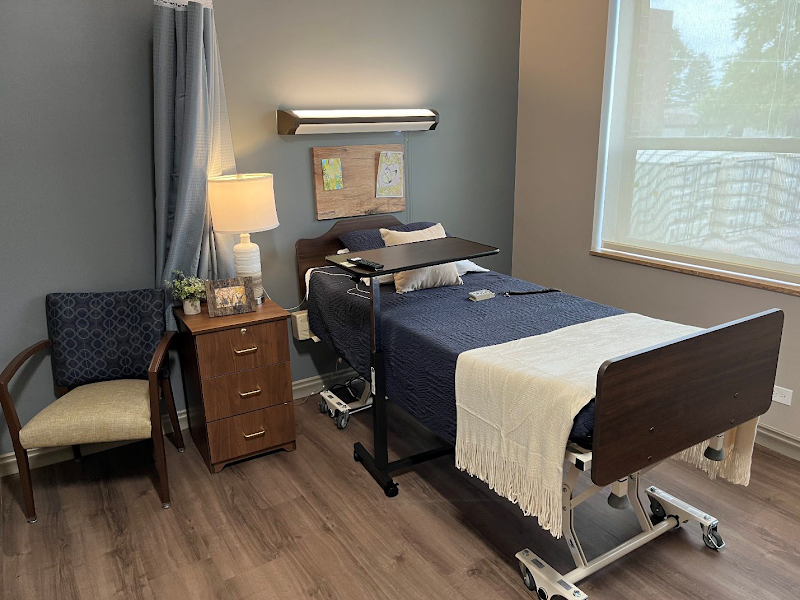
How is Tower Hill Healthcare Center Staffed?

CMS rates TOWER HILL HEALTHCARE CENTER's staffing level at 2 out of 5 stars, which is below average compared to other nursing homes. Staff turnover is 29%, compared to the Illinois average of 46%. This relatively stable workforce can support continuity of care.

What Have Inspectors Found at Tower Hill Healthcare Center?

State health inspectors documented 48 deficiencies at TOWER HILL HEALTHCARE CENTER during 2023 to 2025. These included: 3 Immediate Jeopardy (the most serious level, indicating potential for serious harm or death), 2 that caused actual resident harm, and 43 with potential for harm. Immediate Jeopardy findings are rare and represent the most serious regulatory concerns. They require immediate corrective action.
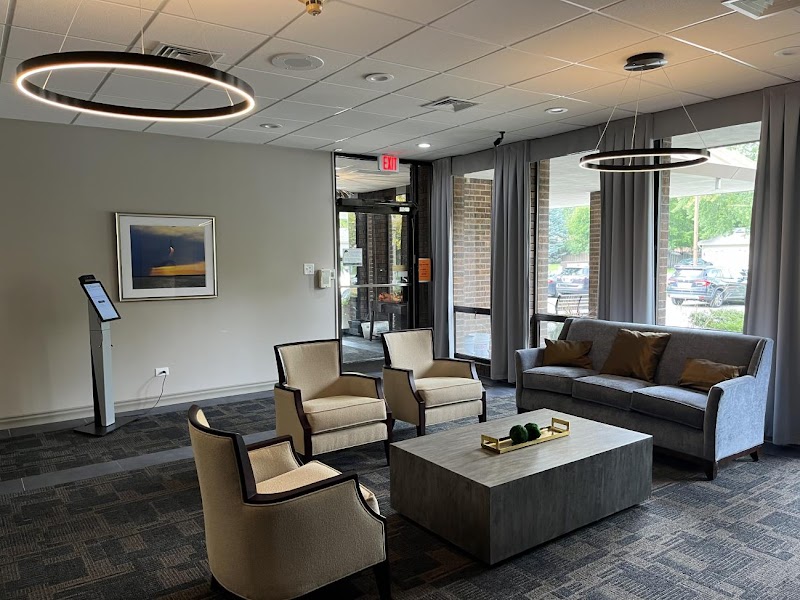
Who Owns and Operates Tower Hill Healthcare Center?

TOWER HILL HEALTHCARE CENTER is owned by a for-profit company. For-profit facilities operate as businesses with obligations to shareholders or private owners. The facility operates independently rather than as part of a larger chain. With 206 certified beds and approximately 167 residents (about 81% occupancy), it is a large facility located in SOUTH ELGIN, Illinois.
How Does Tower Hill Healthcare Center Compare to Other Illinois Nursing Homes?

Compared to the 100 nursing homes in Illinois, TOWER HILL HEALTHCARE CENTER's overall rating (1 stars) is below the state average of 2.5, staff turnover (29%) is significantly lower than the state average of 46%, and health inspection rating (2 stars) is below the national benchmark.

What Should Families Ask When Visiting Tower Hill Healthcare Center?

Based on this facility's data, families visiting should ask: "What changes have been made since the serious inspection findings, and how are you preventing similar issues?" "What safeguards and monitoring systems are in place to protect residents from abuse or neglect?" "Can you walk me through typical staffing levels on day, evening, and night shifts?" "Can I visit during a mealtime to observe dining assistance and food quality?" These questions are particularly relevant given the facility's Immediate Jeopardy citations, the substantiated abuse finding on record, and the below-average staffing rating.

Is Tower Hill Healthcare Center Safe?

Based on CMS inspection data, TOWER HILL HEALTHCARE CENTER has documented safety concerns. The facility has 1 substantiated abuse finding (meaning confirmed case of resident harm by staff or other residents). Inspectors have issued 3 Immediate Jeopardy citations (the most serious violation level indicating risk of serious injury or death). The facility has a 1-star overall rating and ranks #100 of 100 nursing homes in Illinois. Families considering this facility should ask detailed questions about what corrective actions have been taken since these incidents.

Do Nurses at Tower Hill Healthcare Center Stick Around?

Staff at TOWER HILL HEALTHCARE CENTER tend to stick around. With a turnover rate of 29%, the facility is 17 percentage points below the Illinois average of 46%. Low turnover is a positive sign. It means caregivers have time to learn each resident's needs, medications, and personal preferences. Consistent staff also notice subtle changes in a resident's condition more quickly.

Was Tower Hill Healthcare Center Ever Fined?

TOWER HILL HEALTHCARE CENTER has been fined $57,365 across 2 penalty actions. This is above the Illinois average of $33,653. Fines in this range indicate compliance issues significant enough for CMS to impose meaningful financial consequences. Common causes include delayed correction of deficiencies, repeat violations, or care failures affecting resident safety. Families should ask facility leadership what changes have been made since these penalties.

Is Tower Hill Healthcare Center on Any Federal Watch List?

TOWER HILL HEALTHCARE CENTER is not on any federal watch list. The most significant is the Special Focus Facility (SFF) program, which identifies the bottom 1% of nursing homes nationally based on persistent, serious quality problems. Not being on this list means the facility has avoided the pattern of deficiencies that triggers enhanced federal oversight. This is a positive indicator, though families should still review the facility's inspection history directly.